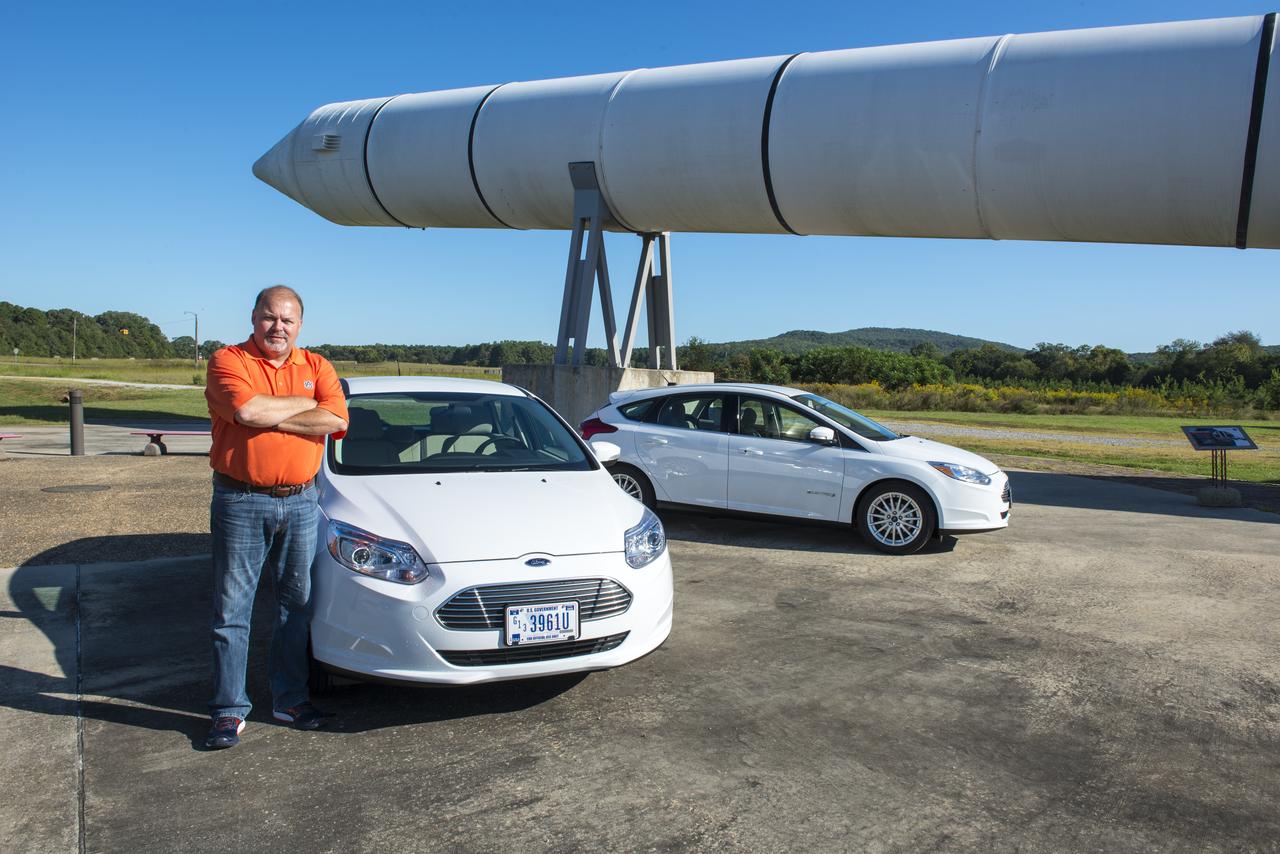
David Norris, Marshall transportation specialist, stands alongside two new, fully electric cars capable of traveling approximately 115 miles on a 5 1/2-hour charge using Marshall's 240-volt charging station. The electric cars join five "green" vehicles in use at Marshall since spring 2016.
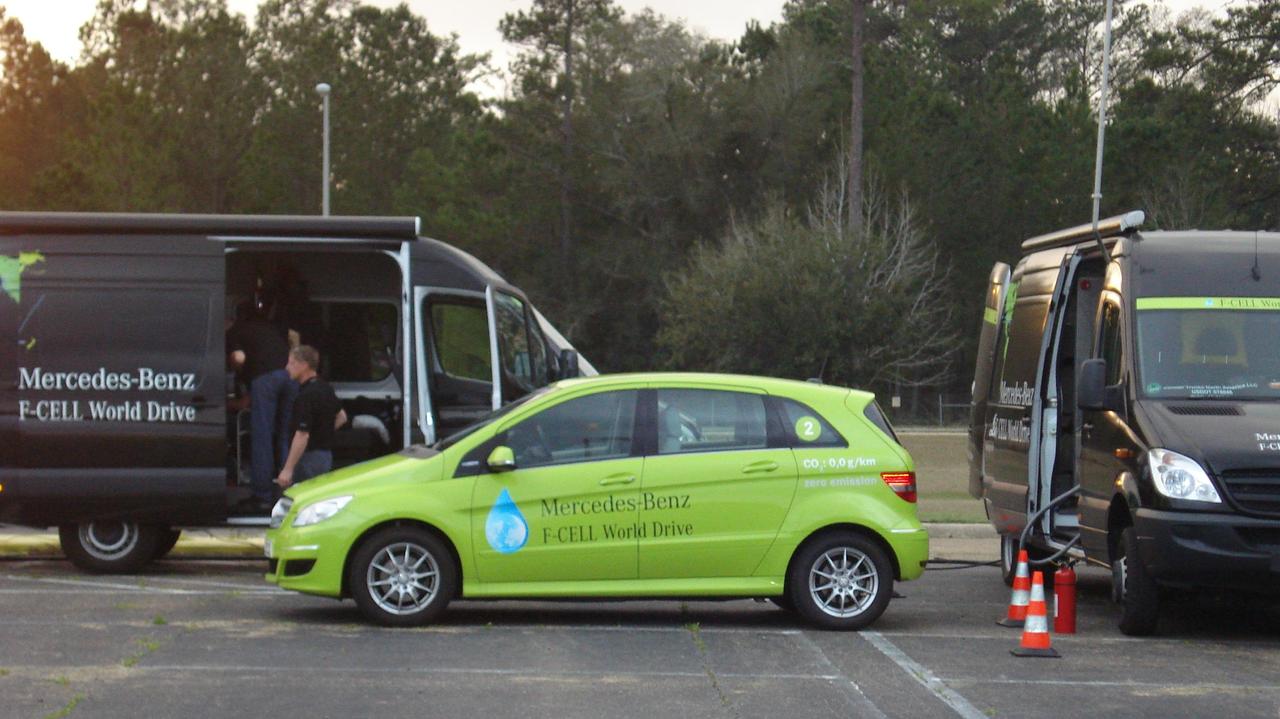
John C. Stennis Space Center, America's largest rocket engine test complex, and one of the country's leading consumers of liquid hydrogen, was the location Feb. 27 for a fuel stop of three Mercedes B-Class F-CELL vehicles. The B-Class F-CELL is an electric vehicle, which is powered by electricity produced on board the vehicle from hydrogen gas. The only emission by this unique vehicle is pure water vapor. Due to the limited number of existing hydrogen locations, Stennis Space Center provided a logical choice for a refueling location as the vehicle made its way across the United States as part of a worldwide tour.
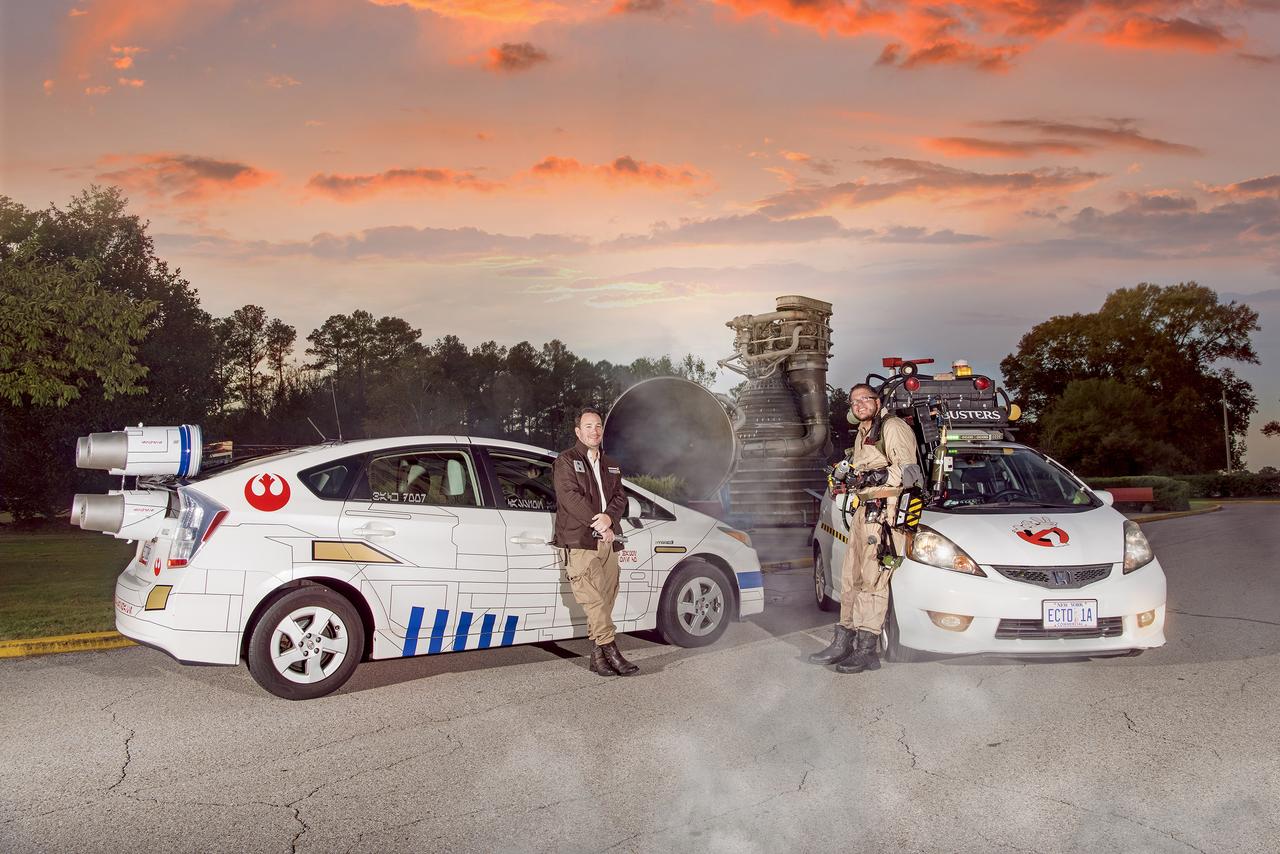
Andrew Denio, a Marshall information technology specialist in the Office of the Chief Information Officer, and Judson Hudson, a lab technician and computer-aided designer in Marshall’s Valve & Component Laboratory, show off their Ghostbusters and Star Wars themed vehicles in front of MSFC building 4200, for Halloween 2019.
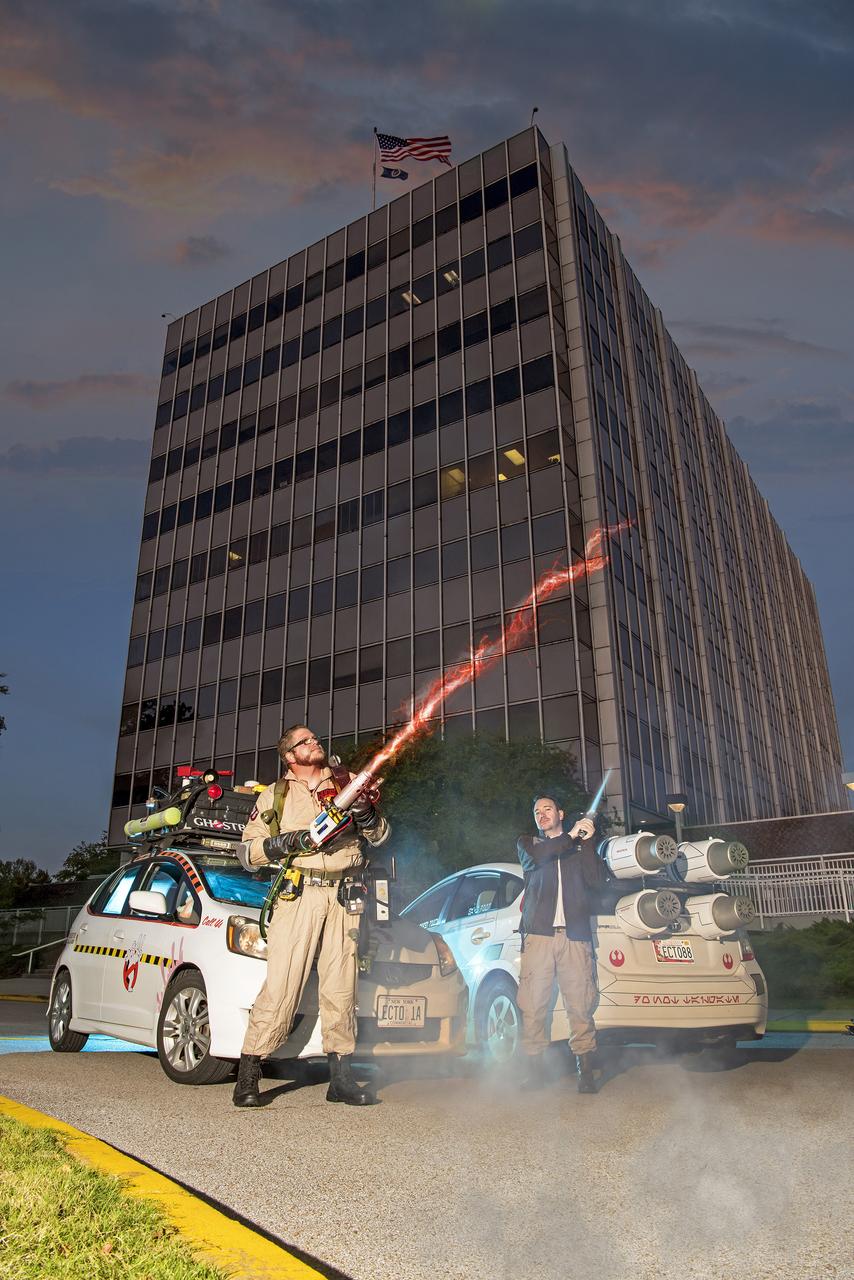
Andrew Denio, a Marshall information technology specialist in the Office of the Chief Information Officer, and Judson Hudson, a lab technician and computer-aided designer in Marshall’s Valve & Component Laboratory, show off their Ghostbusters and Star Wars themed vehicles in front of MSFC building 4200, for Halloween 2019.
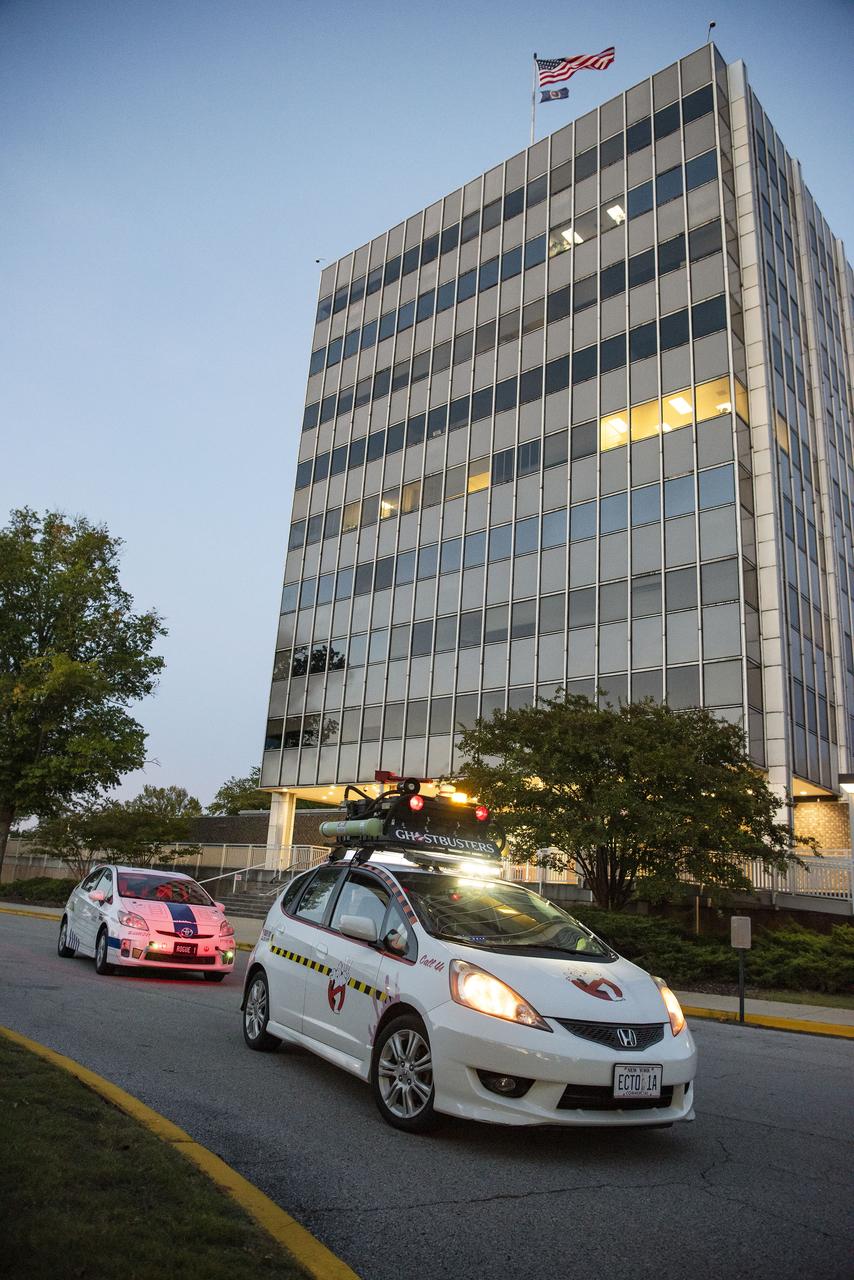
Andrew Denio, a Marshall information technology specialist in the Office of the Chief Information Officer, and Judson Hudson, a lab technician and computer-aided designer in Marshall’s Valve & Component Laboratory, show off their Ghostbusters and Star Wars themed vehicles in front of MSFC building 4200, for Halloween 2019.
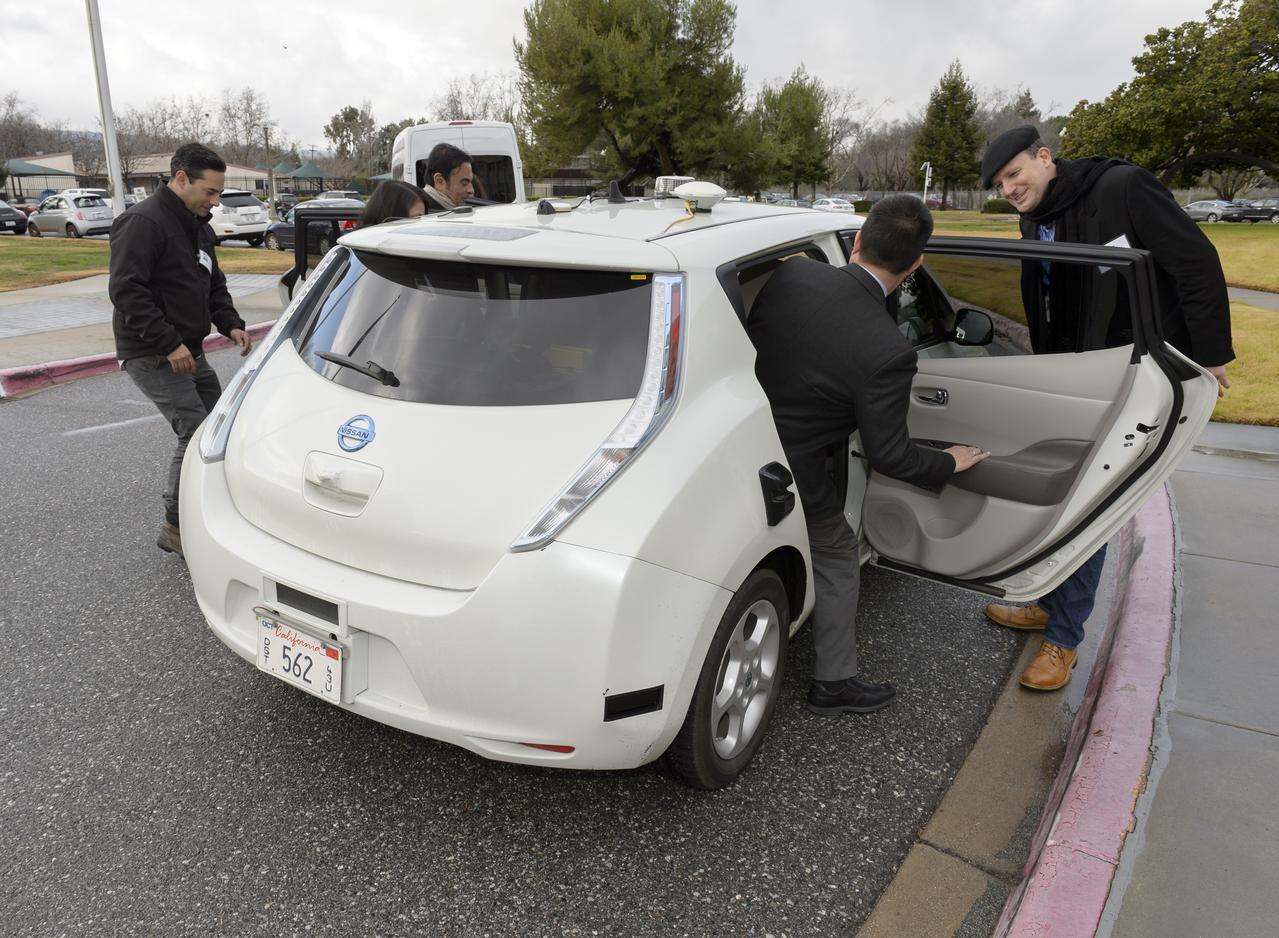
Senior executives from the Renault-Nissan Alliance, including Carlos Ghosn, chairman and CEO of Nissan, and Jose Munoz, chairman of Nissan North America, visited Ames for meetings and a showcase of the technical partnership between NASA and Nissan North America. The partnership allows researchers to develop and test autonomy algorithms, concepts, and integrated prototypes for a variety of vehicular transport applications – from rovers to self-driving cars. After briefings, a company of including Eugene Tu, Ames Center Director andLiam Pedersen, Nissan on right Carlos Ghosn, CE, Nissan on left climb into in the autonomous vehicle to observed testing of Nissan’s all-electric LEAF as it performed safe autonomous drives across the center.
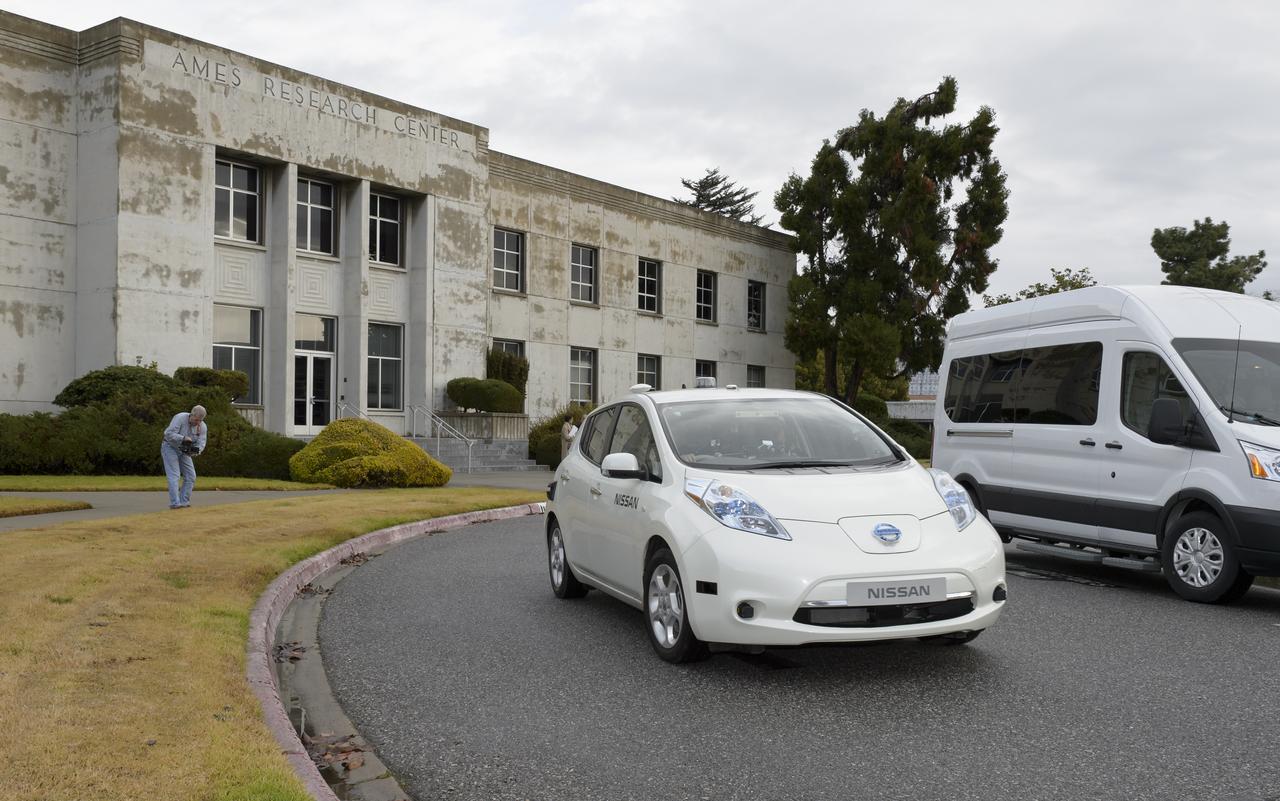
Senior executives from the Renault-Nissan Alliance, including Carlos Ghosn, chairman and CEO of Nissan, and Jose Munoz, chairman of Nissan North America, visited Ames for meetings and a showcase of the technical partnership between NASA and Nissan North America. The partnership allows researchers to develop and test autonomy algorithms, concepts, and integrated prototypes for a variety of vehicular transport applications – from rovers to self-driving cars. After briefings, a group take a ride in the autonomous vehicle to observed testing of Nissan’s all-electric LEAF as it performed safe autonomous drives across the center.
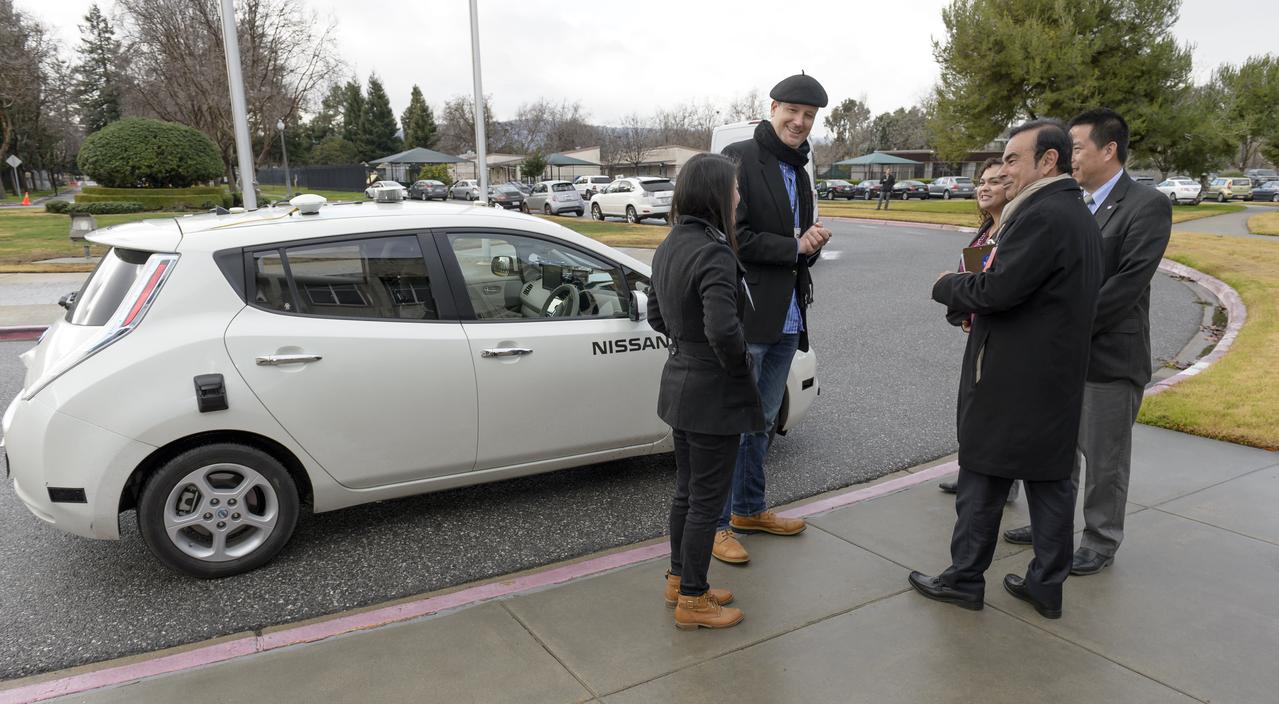
Senior executives from the Renault-Nissan Alliance, including Carlos Ghosn, chairman and CEO of Nissan, and Jose Munoz, chairman of Nissan North America, visited Ames for meetings and a showcase of the technical partnership between NASA and Nissan North America. The partnership allows researchers to develop and test autonomy algorithms, concepts, and integrated prototypes for a variety of vehicular transport applications – from rovers to self-driving cars. After briefings, the group on left from left to right Kathy Sun and Liam Pedersen, Nissan and on right from front to back Carlos Ghosn, CE, Nissan chatted before taking a ride in the autonomous vehicle to observed testing of Nissan’s all-electric LEAF as it performed safe autonomous drives across the center.
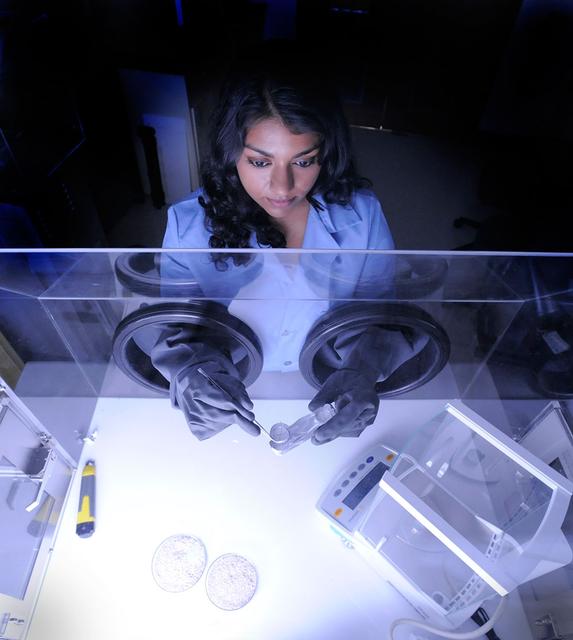
Goddard technologist Nithin Abraham, a member of the team that has developed a low-cost, low-mass technique for protecting sensitive spacecraft components from outgassed contaminants, studies a paint sample in her laboratory. To read this story go to: <a href="http://www.nasa.gov/topics/technology/features/outgas-tech.html" rel="nofollow">www.nasa.gov/topics/technology/features/outgas-tech.html</a> Credit: NASA/Pat Izzo <b><a href="http://www.nasa.gov/audience/formedia/features/MP_Photo_Guidelines.html" rel="nofollow">NASA image use policy.</a></b> <b><a href="http://www.nasa.gov/centers/goddard/home/index.html" rel="nofollow">NASA Goddard Space Flight Center</a></b> enables NASA’s mission through four scientific endeavors: Earth Science, Heliophysics, Solar System Exploration, and Astrophysics. Goddard plays a leading role in NASA’s accomplishments by contributing compelling scientific knowledge to advance the Agency’s mission. <b>Follow us on <a href="http://twitter.com/NASA_GoddardPix" rel="nofollow">Twitter</a></b> <b>Like us on <a href="http://www.facebook.com/pages/Greenbelt-MD/NASA-Goddard/395013845897?ref=tsd" rel="nofollow">Facebook</a></b> <b>Find us on <a href="http://instagram.com/nasagoddard?vm=grid" rel="nofollow">Instagram</a></b>
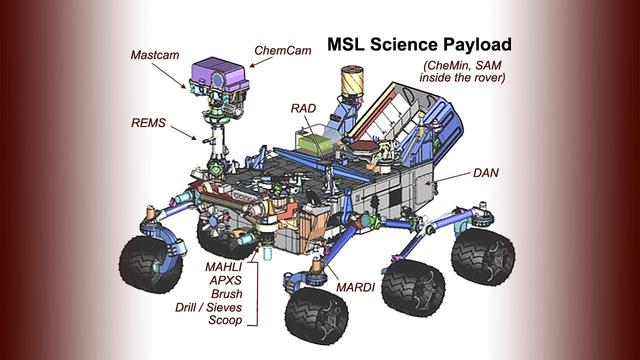
This drawing of the Mars Science Laboratory mission rover, Curiosity, indicates the location of science instruments and some other tools on the car-size rover.
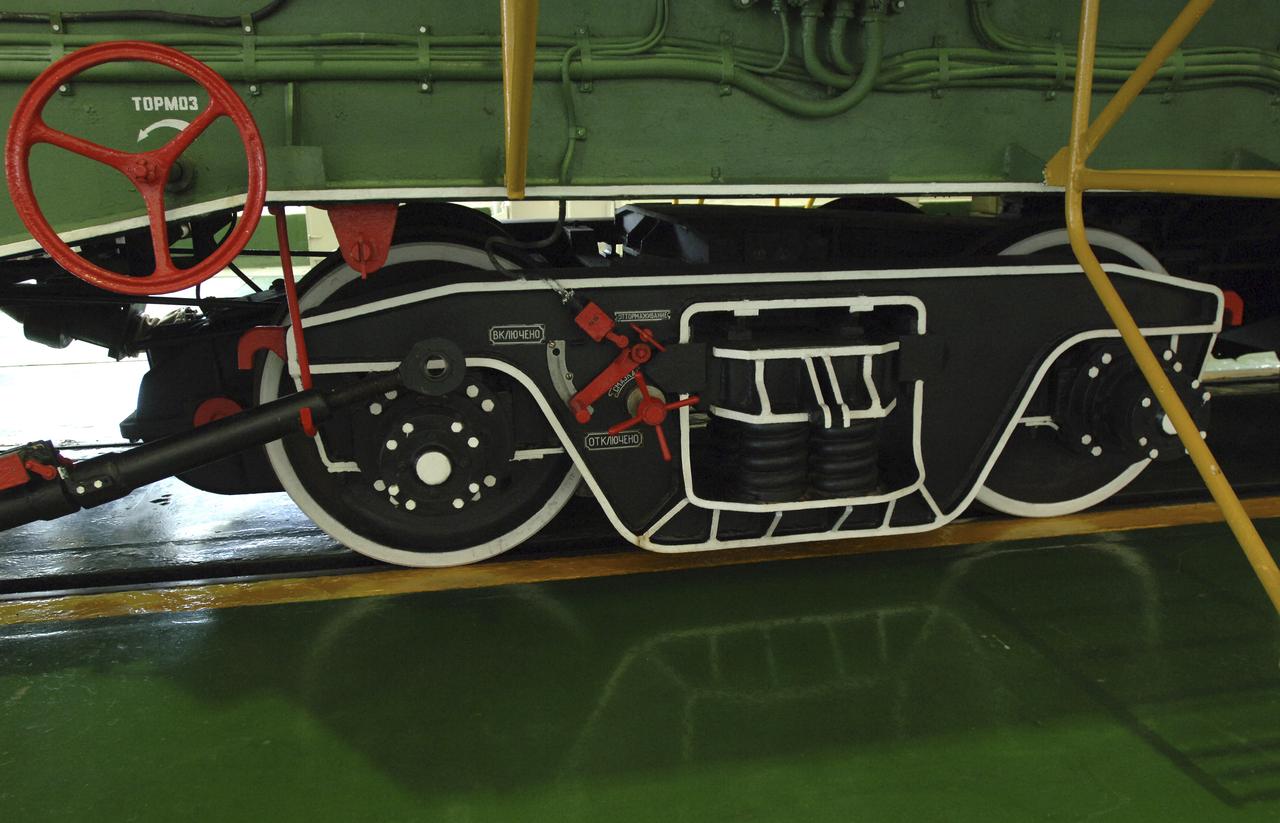
A detail of rail car wheels is seen, Tuesday, April 12, 2005, prior to transportation of the Soyuz TMA-6 spacecraft inside the integration facility at the Baikonur Cosmodrome in Kazakhstan as preparations continued for the April 15 launch of Expedition 11 with Commander Sergei Krikalev, Flight Engineer John Phillips and European Space Agency Astronaut Roberto Vittori, of Italy, to the International Space Station. The rocket mating operation occurred on the 44th anniversary of the launch of Yuri Gagarin from the same complex to become the first human in space. Photo Credit: (NASA/Bill Ingalls)
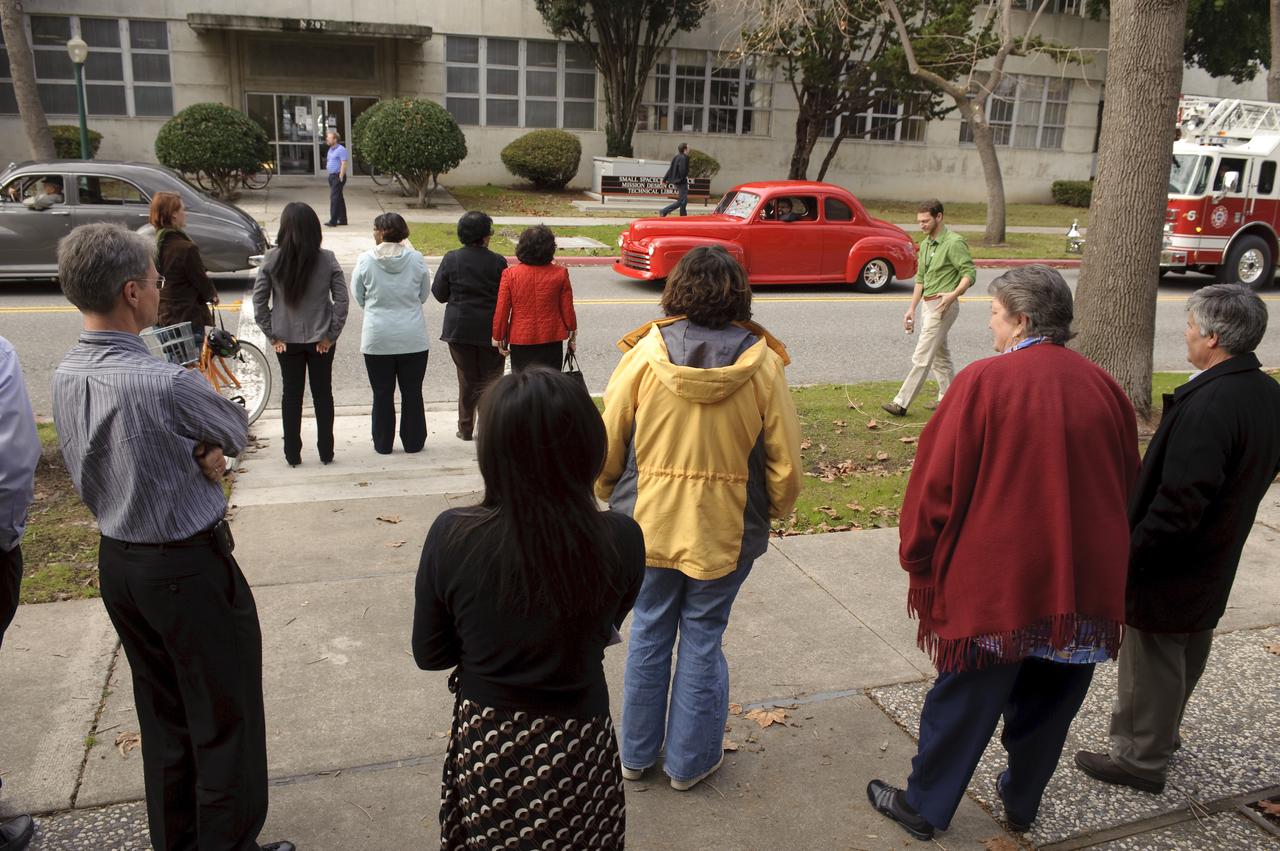
Ames 70th Anniversary Turn Back the Clock Day with antique Class Cars and Classic Car parade around the center.
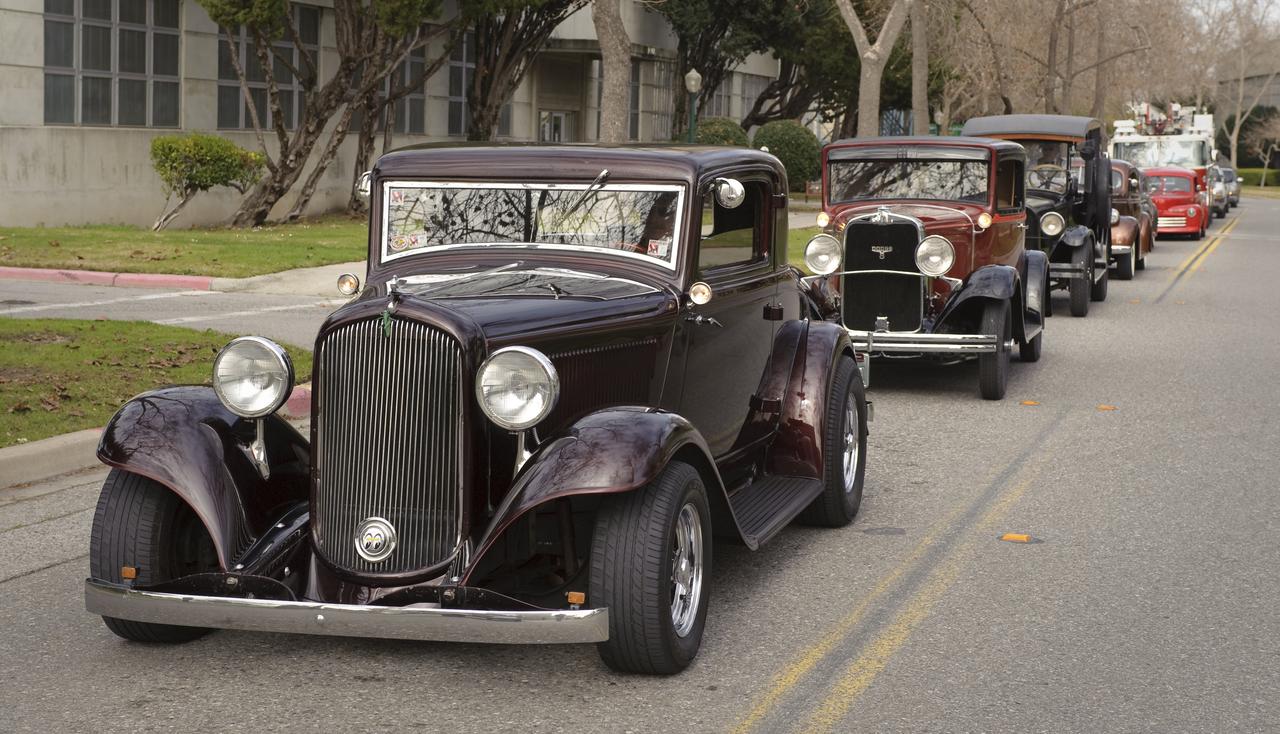
Ames 70th Anniversary Turn Back the Clock Day with antique Class Cars and Classic Car parade around the center.
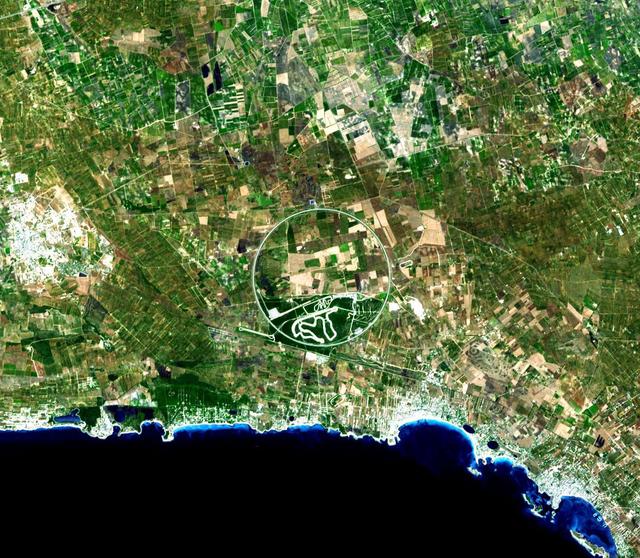
The Nardò Ring is a striking visual feature from space, and astronauts have photographed it several times. The Ring is a race car test track in Italy. This image was acquired by NASA Terra satellite on August 17. 2007.
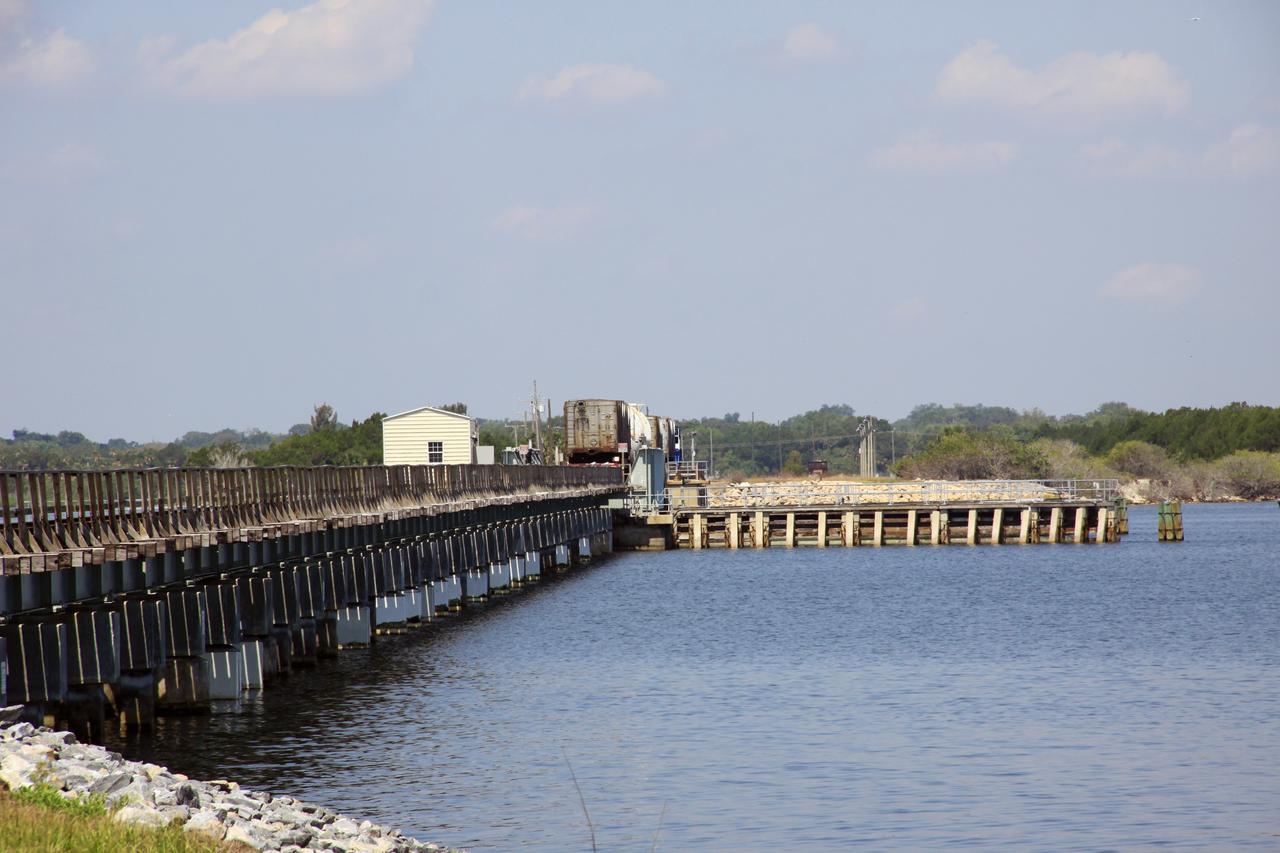
CAPE CANAVERAL, Fla. – A NASA Railroad train has crossed the Indian River on the railroad’s Jay Jay Railroad Bridge north of Launch Complex 39 at NASA’s Kennedy Space Center in Florida. The train is on its way to the Florida East Coast Railway interchange in Titusville, Fla., where the train’s helium tank cars, a liquid oxygen tank car, and a liquid hydrogen dewar or tank car will be transferred for delivery to the SpaceX engine test complex outside McGregor, Texas. The railroad cars were needed in support of the Space Shuttle Program but currently are not in use by NASA following the completion of the program in 2011. Originally, the tankers belonged to the U.S. Bureau of Mines. At the peak of the shuttle program, there were approximately 30 cars in the fleet. About half the cars were returned to the bureau as launch activity diminished. Five tank cars are being loaned to SpaceX and repurposed to support their engine tests in Texas. Eight cars previously were shipped to California on loan to support the SpaceX Falcon 9 rocket launches from Space Launch Complex-4 on Vandenberg Air Force Base. SpaceX already has three helium tank cars previously used for the shuttle program at Space Launch Complex-40 on Cape Canaveral Air Force Station in Florida. For more information, visit http://www.nasa.gov/spacex. Photo credit: NASA/Jim Grossmann
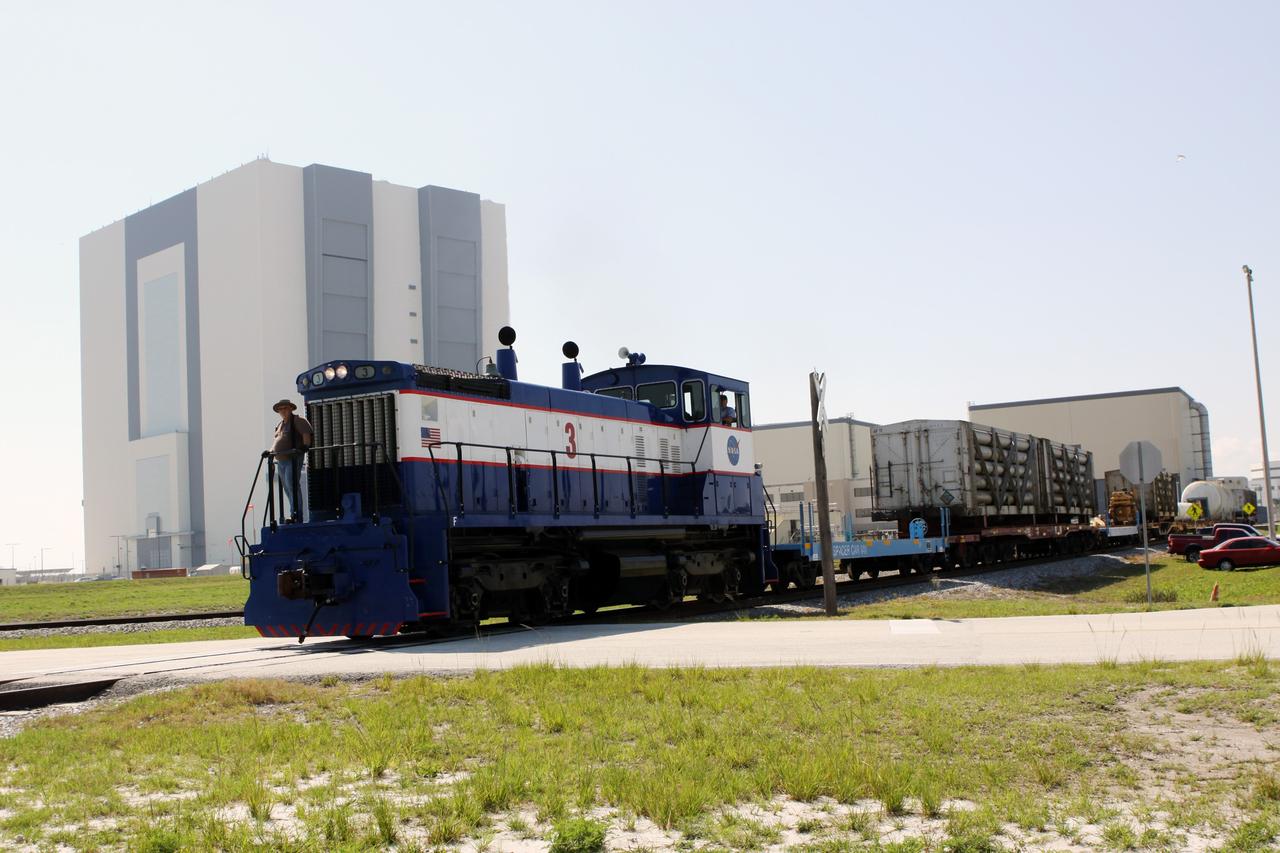
CAPE CANAVERAL, Fla. – A NASA Railroad train passes in front of the 525-foot-tall Vehicle Assembly Building, left, and the twin bays of the Orbiter Processing Facility, right, at NASA’s Kennedy Space Center in Florida. The train is on its way to the Florida East Coast Railway interchange in Titusville, Fla., where the train’s helium tank cars, a liquid oxygen tank car, and a liquid hydrogen dewar or tank car will be transferred for delivery to the SpaceX engine test complex outside McGregor, Texas. The railroad cars were needed in support of the Space Shuttle Program but currently are not in use by NASA following the completion of the program in 2011. Originally, the tankers belonged to the U.S. Bureau of Mines. At the peak of the shuttle program, there were approximately 30 cars in the fleet. About half the cars were returned to the bureau as launch activity diminished. Five tank cars are being loaned to SpaceX and repurposed to support their engine tests in Texas. Eight cars previously were shipped to California on loan to support the SpaceX Falcon 9 rocket launches from Space Launch Complex-4 on Vandenberg Air Force Base. SpaceX already has three helium tank cars previously used for the shuttle program at Space Launch Complex-40 on Cape Canaveral Air Force Station in Florida. For more information, visit http://www.nasa.gov/spacex. Photo credit: NASA/Jim Grossmann
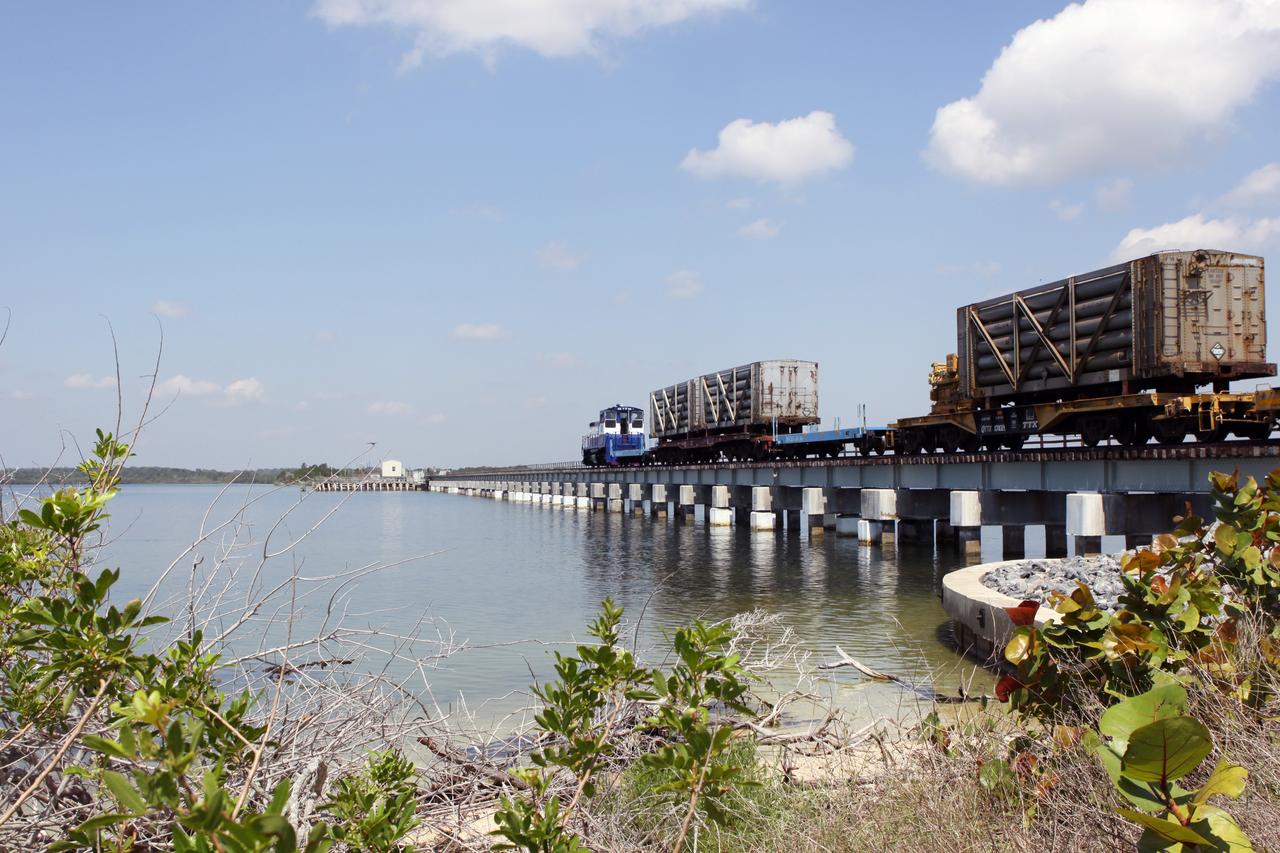
CAPE CANAVERAL, Fla. – A NASA Railroad train crosses the railroad’s Jay Jay Railroad Bridge north of Launch Complex 39 at NASA’s Kennedy Space Center in Florida. The train is on its way to the Florida East Coast Railway interchange in Titusville, Fla., where the train’s helium tank cars, a liquid oxygen tank car, and a liquid hydrogen dewar or tank car will be transferred for delivery to the SpaceX engine test complex outside McGregor, Texas. The railroad cars were needed in support of the Space Shuttle Program but currently are not in use by NASA following the completion of the program in 2011. Originally, the tankers belonged to the U.S. Bureau of Mines. At the peak of the shuttle program, there were approximately 30 cars in the fleet. About half the cars were returned to the bureau as launch activity diminished. Five tank cars are being loaned to SpaceX and repurposed to support their engine tests in Texas. Eight cars previously were shipped to California on loan to support the SpaceX Falcon 9 rocket launches from Space Launch Complex-4 on Vandenberg Air Force Base. SpaceX already has three helium tank cars previously used for the shuttle program at Space Launch Complex-40 on Cape Canaveral Air Force Station in Florida. For more information, visit http://www.nasa.gov/spacex. Photo credit: NASA/Jim Grossmann
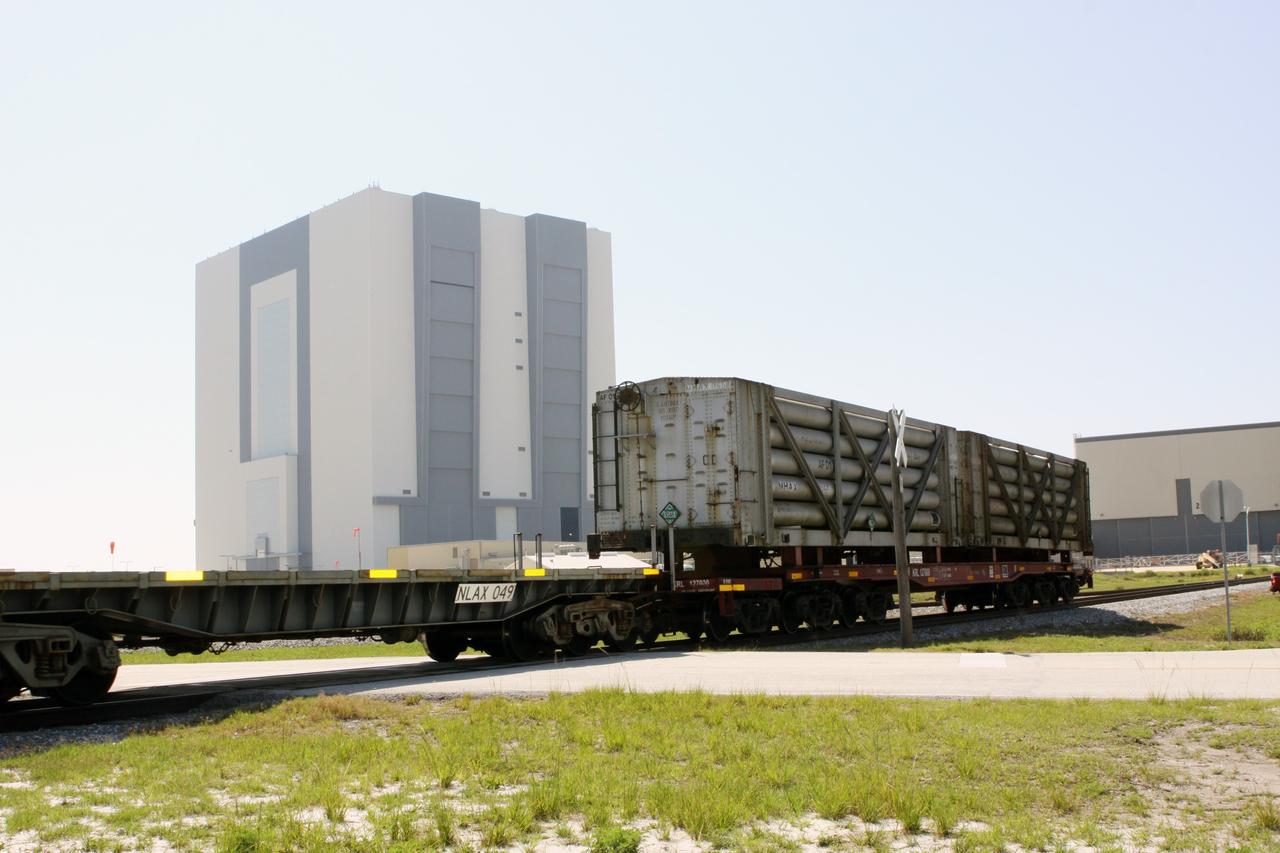
CAPE CANAVERAL, Fla. – A NASA Railroad train passes in front of the 525-foot-tall Vehicle Assembly Building at NASA’s Kennedy Space Center in Florida. At the far right is the Orbiter Processing Facility. The train is on its way to the Florida East Coast Railway interchange in Titusville, Fla., where the train’s helium tank cars, a liquid oxygen tank car, and a liquid hydrogen dewar or tank car will be transferred for delivery to the SpaceX engine test complex outside McGregor, Texas. The railroad cars were needed in support of the Space Shuttle Program but currently are not in use by NASA following the completion of the program in 2011. Originally, the tankers belonged to the U.S. Bureau of Mines. At the peak of the shuttle program, there were approximately 30 cars in the fleet. About half the cars were returned to the bureau as launch activity diminished. Five tank cars are being loaned to SpaceX and repurposed to support their engine tests in Texas. Eight cars previously were shipped to California on loan to support the SpaceX Falcon 9 rocket launches from Space Launch Complex-4 on Vandenberg Air Force Base. SpaceX already has three helium tank cars previously used for the shuttle program at Space Launch Complex-40 on Cape Canaveral Air Force Station in Florida. For more information, visit http://www.nasa.gov/spacex. Photo credit: NASA/Jim Grossmann
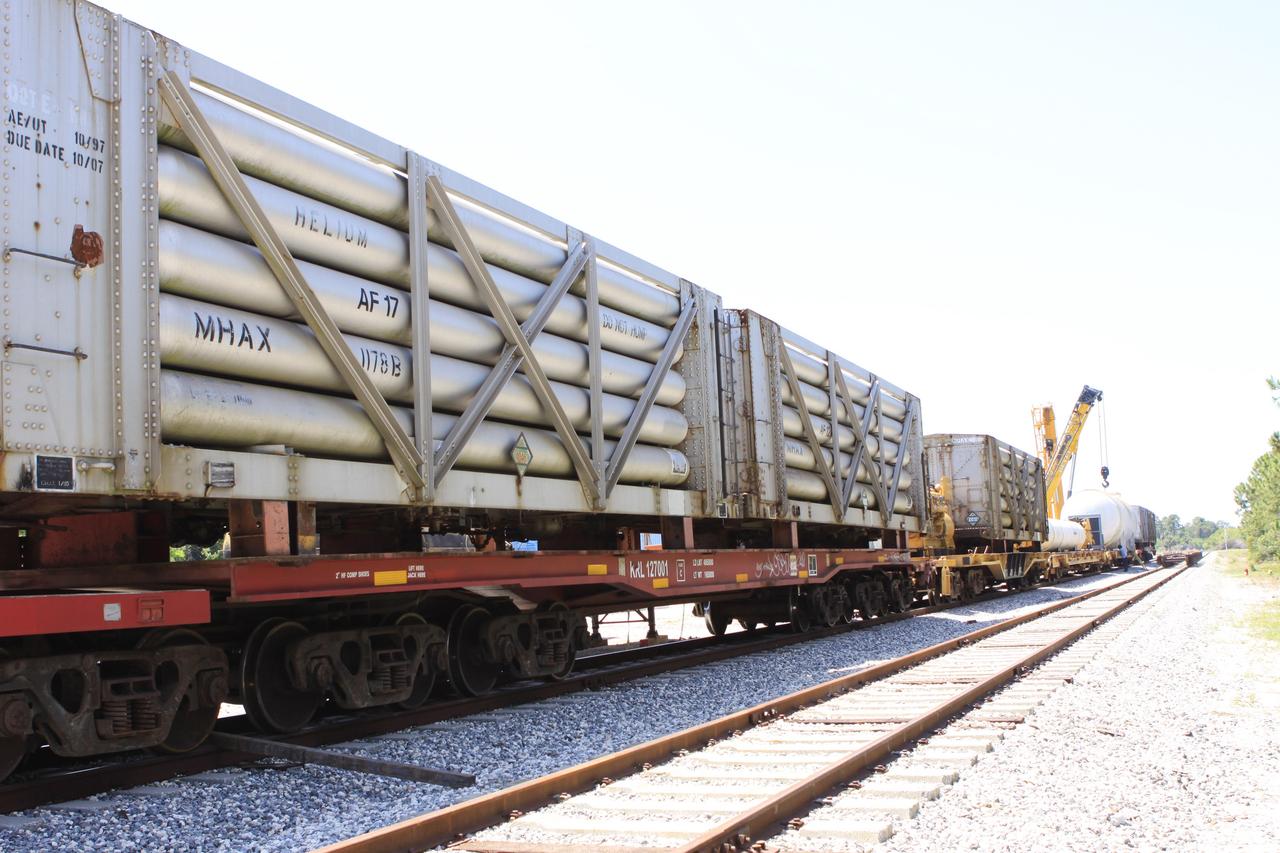
CAPE CANAVERAL, Fla. – At the NASA Railroad yard at Kennedy Space Center in Florida, helium tank cars have been removed from their trucks and loaded onto flat cars in preparation for a journey to the Florida East Coast Railway interchange in Titusville, Fla., where the train’s tank cars will be transferred for delivery to the SpaceX engine test complex outside McGregor, Texas. The railroad cars were needed in support of the Space Shuttle Program but currently are not in use by NASA following the completion of the program in 2011. Originally, the tankers belonged to the U.S. Bureau of Mines. At the peak of the shuttle program, there were approximately 30 cars in the fleet. About half the cars were returned to the bureau as launch activity diminished. Five tank cars are being loaned to SpaceX and repurposed to support their engine tests in Texas. Eight cars previously were shipped to California on loan to support the SpaceX Falcon 9 rocket launches from Space Launch Complex-4 on Vandenberg Air Force Base. SpaceX already has three helium tank cars previously used for the shuttle program at Space Launch Complex-40 on Cape Canaveral Air Force Station in Florida. For more information, visit http://www.nasa.gov/spacex. Photo credit: NASA/Jim Grossmann
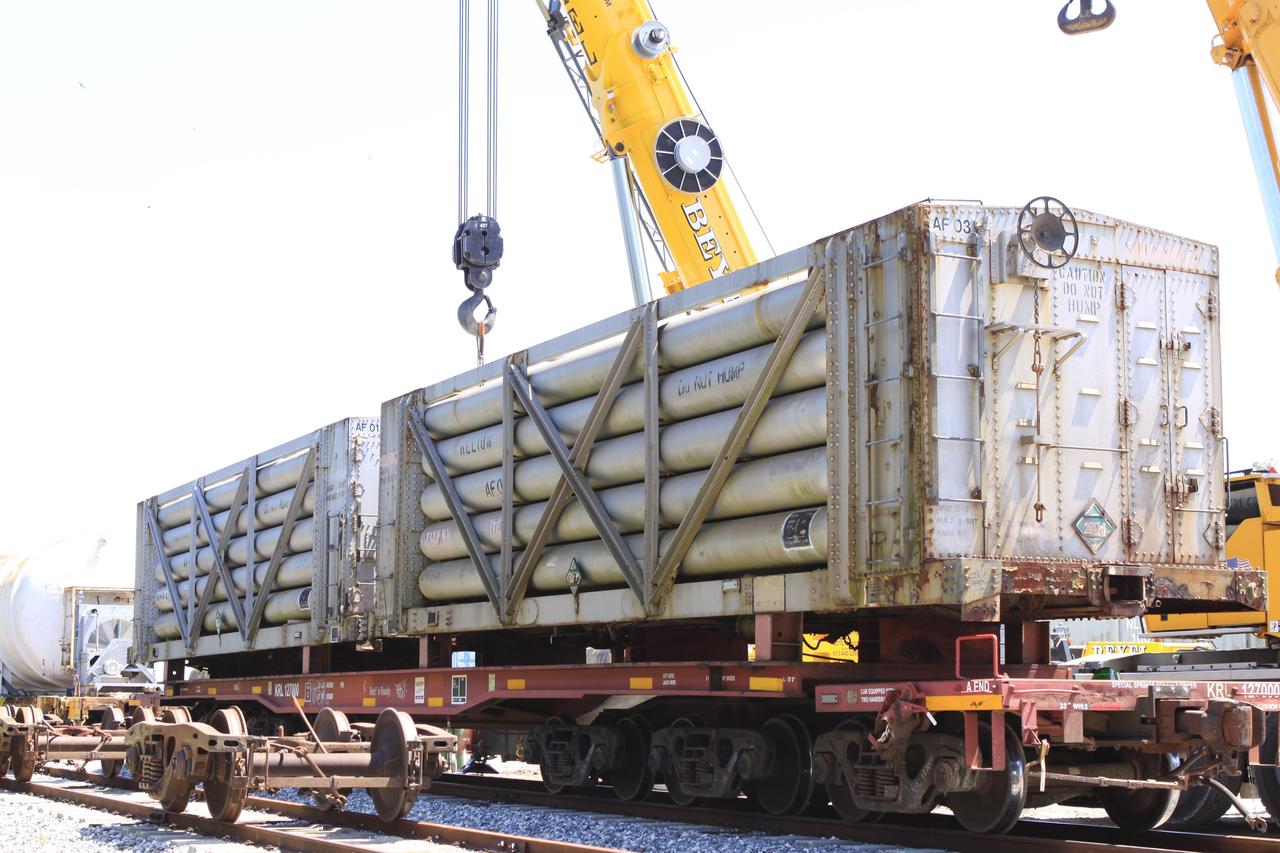
CAPE CANAVERAL, Fla. – At the NASA Railroad yard at Kennedy Space Center in Florida, cranes are enlisted to lift helium tank cars from their trucks onto flat cars in preparation for a journey to the Florida East Coast Railway interchange in Titusville, Fla., where the train’s tank cars will be transferred for delivery to the SpaceX engine test complex outside McGregor, Texas. The yard is located in Kennedy’s Launch Complex 39 near the 525-foot-tall Vehicle Assembly Building, in the background. The railroad cars were needed in support of the Space Shuttle Program but currently are not in use by NASA following the completion of the program in 2011. Originally, the tankers belonged to the U.S. Bureau of Mines. At the peak of the shuttle program, there were approximately 30 cars in the fleet. About half the cars were returned to the bureau as launch activity diminished. Five tank cars are being loaned to SpaceX and repurposed to support their engine tests in Texas. Eight cars previously were shipped to California on loan to support the SpaceX Falcon 9 rocket launches from Space Launch Complex-4 on Vandenberg Air Force Base. SpaceX already has three helium tank cars previously used for the shuttle program at Space Launch Complex-40 on Cape Canaveral Air Force Station in Florida. For more information, visit http://www.nasa.gov/spacex. Photo credit: NASA/Jim Grossmann
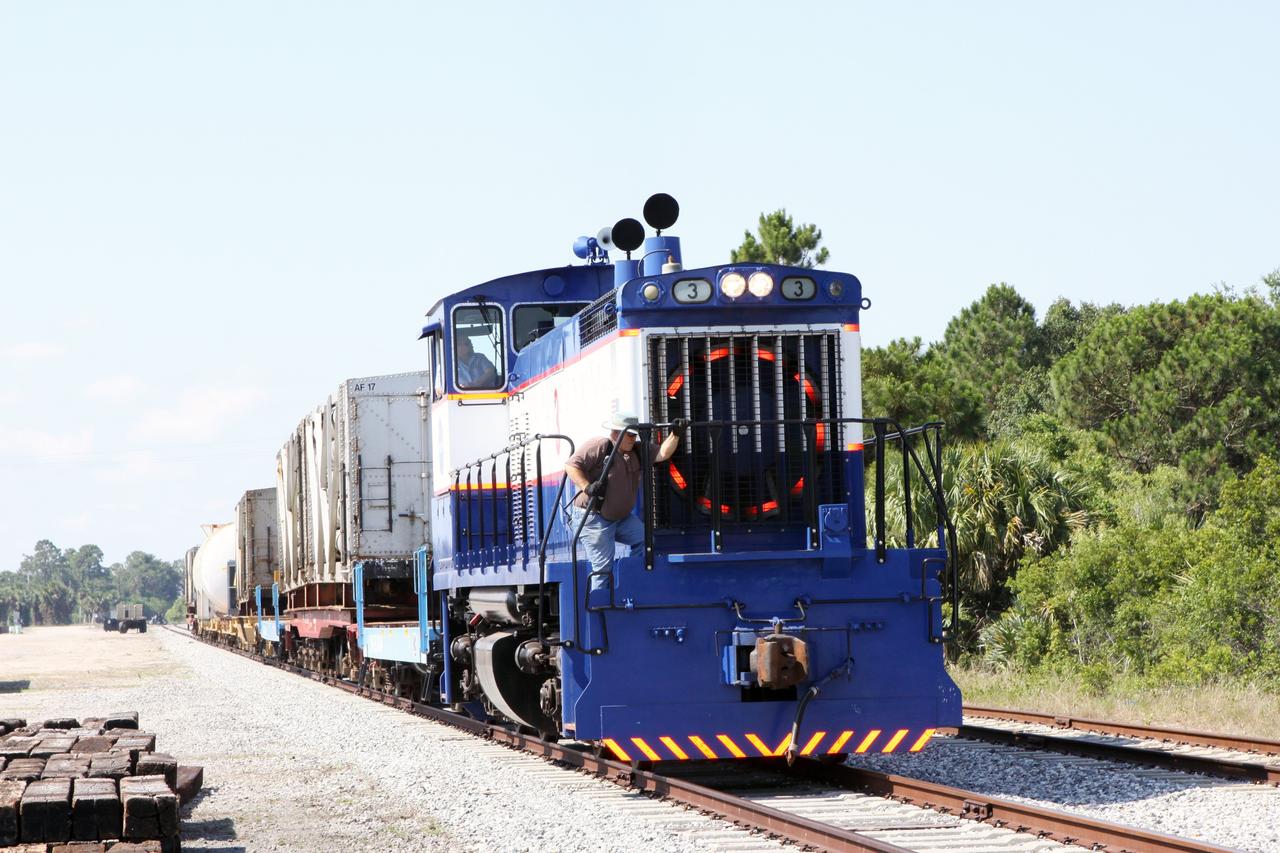
CAPE CANAVERAL, Fla. – Engineers board a NASA Railroad train in preparation for its departure from the NASA Railroad Yard at NASA’s Kennedy Space Center in Florida. The train is headed for the Florida East Coast Railway interchange in Titusville, Fla., where the train’s helium tank cars, a liquid oxygen tank car, and a liquid hydrogen dewar or tank car will be transferred for delivery to the SpaceX engine test complex outside McGregor, Texas. The railroad cars were needed in support of the Space Shuttle Program but currently are not in use by NASA following the completion of the program in 2011. Originally, the tankers belonged to the U.S. Bureau of Mines. At the peak of the shuttle program, there were approximately 30 cars in the fleet. About half the cars were returned to the bureau as launch activity diminished. Five tank cars are being loaned to SpaceX and repurposed to support their engine tests in Texas. Eight cars previously were shipped to California on loan to support the SpaceX Falcon 9 rocket launches from Space Launch Complex-4 on Vandenberg Air Force Base. SpaceX already has three helium tank cars previously used for the shuttle program at Space Launch Complex-40 on Cape Canaveral Air Force Station in Florida. For more information, visit http://www.nasa.gov/spacex. Photo credit: NASA/Jim Grossmann
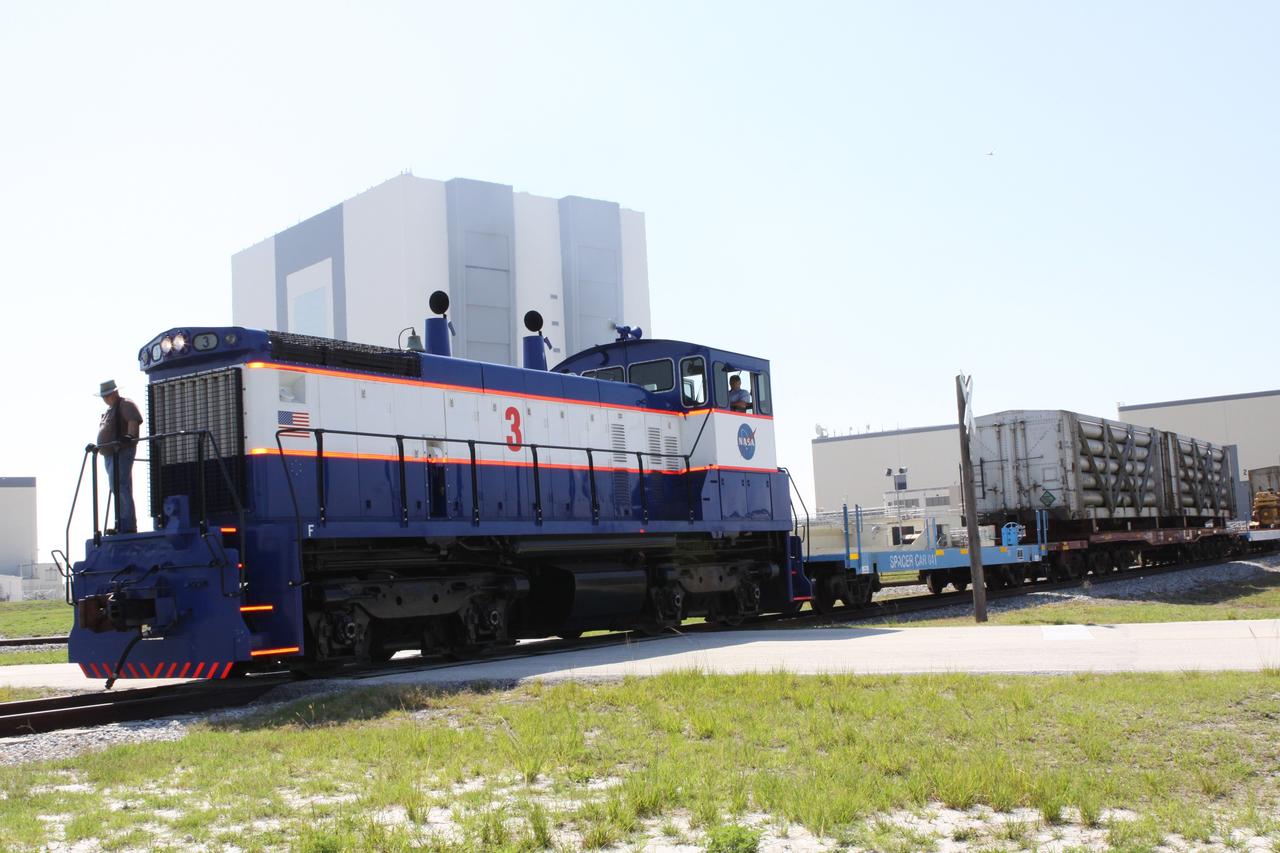
CAPE CANAVERAL, Fla. – A NASA Railroad train passes in front of the 525-foot-tall Vehicle Assembly Building, left, and the twin bays of the Orbiter Processing Facility, right, at NASA’s Kennedy Space Center in Florida. The train is on its way to the Florida East Coast Railway interchange in Titusville, Fla., where the train’s helium tank cars, a liquid oxygen tank car, and a liquid hydrogen dewar or tank car will be transferred for delivery to the SpaceX engine test complex outside McGregor, Texas. The railroad cars were needed in support of the Space Shuttle Program but currently are not in use by NASA following the completion of the program in 2011. Originally, the tankers belonged to the U.S. Bureau of Mines. At the peak of the shuttle program, there were approximately 30 cars in the fleet. About half the cars were returned to the bureau as launch activity diminished. Five tank cars are being loaned to SpaceX and repurposed to support their engine tests in Texas. Eight cars previously were shipped to California on loan to support the SpaceX Falcon 9 rocket launches from Space Launch Complex-4 on Vandenberg Air Force Base. SpaceX already has three helium tank cars previously used for the shuttle program at Space Launch Complex-40 on Cape Canaveral Air Force Station in Florida. For more information, visit http://www.nasa.gov/spacex. Photo credit: NASA/Jim Grossmann
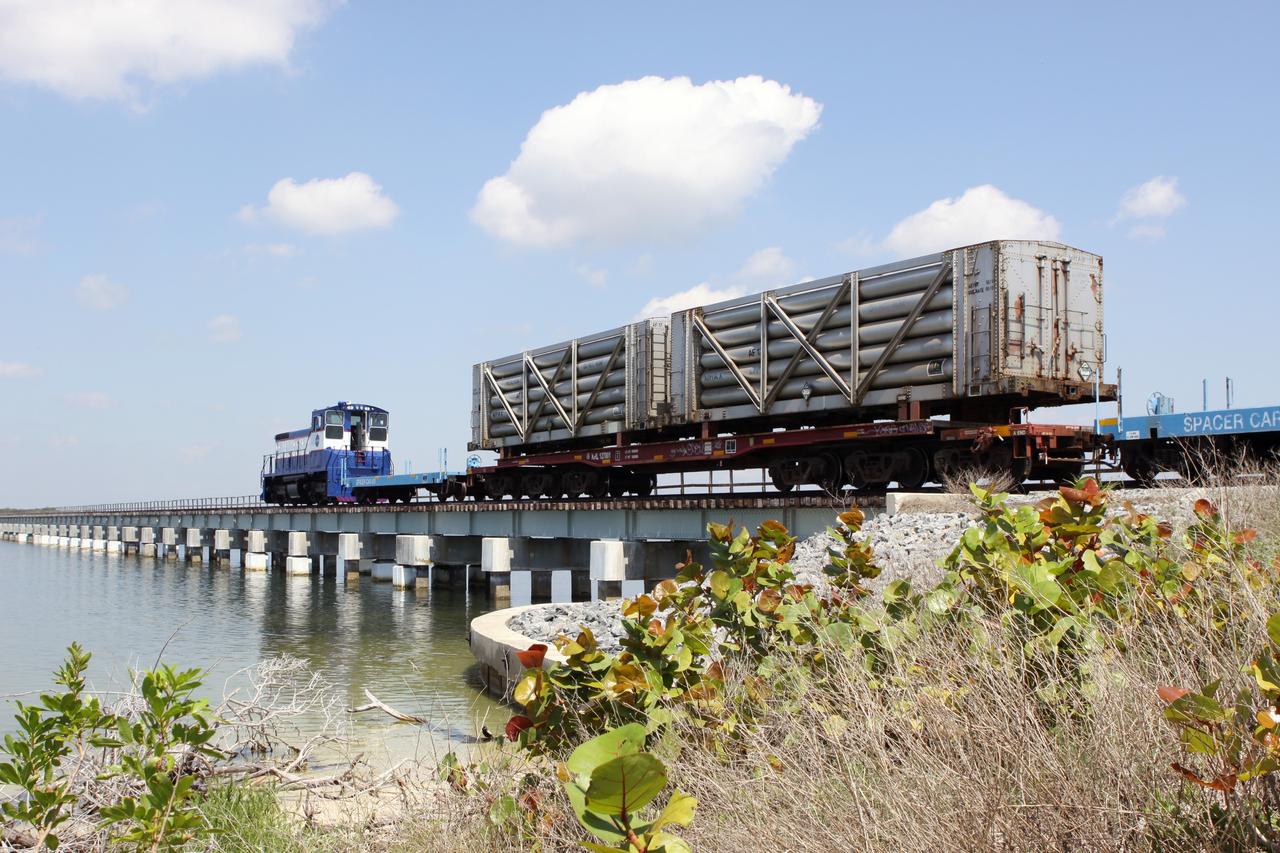
CAPE CANAVERAL, Fla. – A NASA Railroad train crosses the railroad’s Jay Jay Railroad Bridge north of Launch Complex 39 at NASA’s Kennedy Space Center in Florida. The train is on its way to the Florida East Coast Railway interchange in Titusville, Fla., where the train’s helium tank cars, a liquid oxygen tank car, and a liquid hydrogen dewar or tank car will be transferred for delivery to the SpaceX engine test complex outside McGregor, Texas. The railroad cars were needed in support of the Space Shuttle Program but currently are not in use by NASA following the completion of the program in 2011. Originally, the tankers belonged to the U.S. Bureau of Mines. At the peak of the shuttle program, there were approximately 30 cars in the fleet. About half the cars were returned to the bureau as launch activity diminished. Five tank cars are being loaned to SpaceX and repurposed to support their engine tests in Texas. Eight cars previously were shipped to California on loan to support the SpaceX Falcon 9 rocket launches from Space Launch Complex-4 on Vandenberg Air Force Base. SpaceX already has three helium tank cars previously used for the shuttle program at Space Launch Complex-40 on Cape Canaveral Air Force Station in Florida. For more information, visit http://www.nasa.gov/spacex. Photo credit: NASA/Jim Grossmann
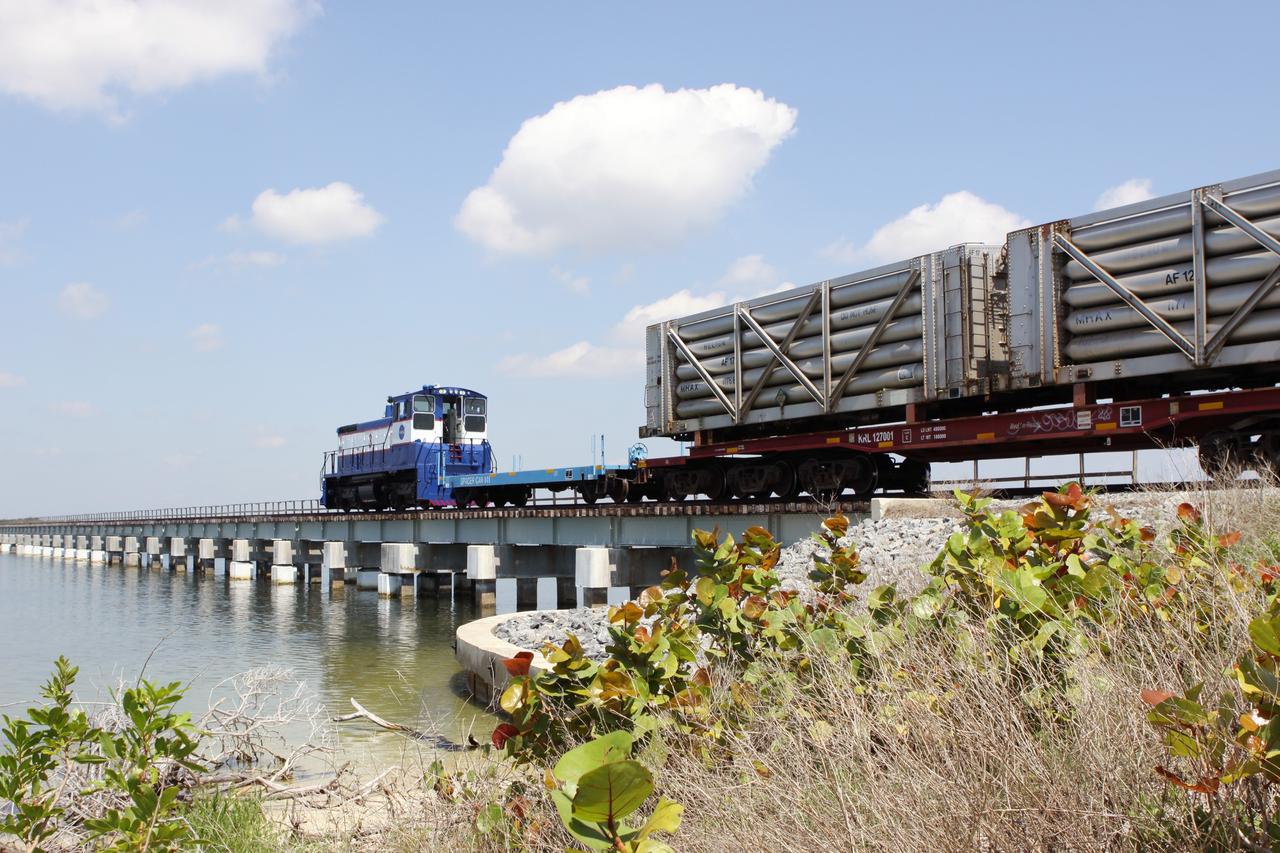
CAPE CANAVERAL, Fla. – A NASA Railroad train crosses the railroad’s Jay Jay Railroad Bridge north of Launch Complex 39 at NASA’s Kennedy Space Center in Florida. The train is on its way to the Florida East Coast Railway interchange in Titusville, Fla., where the train’s helium tank cars, a liquid oxygen tank car, and a liquid hydrogen dewar or tank car will be transferred for delivery to the SpaceX engine test complex outside McGregor, Texas. The railroad cars were needed in support of the Space Shuttle Program but currently are not in use by NASA following the completion of the program in 2011. Originally, the tankers belonged to the U.S. Bureau of Mines. At the peak of the shuttle program, there were approximately 30 cars in the fleet. About half the cars were returned to the bureau as launch activity diminished. Five tank cars are being loaned to SpaceX and repurposed to support their engine tests in Texas. Eight cars previously were shipped to California on loan to support the SpaceX Falcon 9 rocket launches from Space Launch Complex-4 on Vandenberg Air Force Base. SpaceX already has three helium tank cars previously used for the shuttle program at Space Launch Complex-40 on Cape Canaveral Air Force Station in Florida. For more information, visit http://www.nasa.gov/spacex. Photo credit: NASA/Jim Grossmann
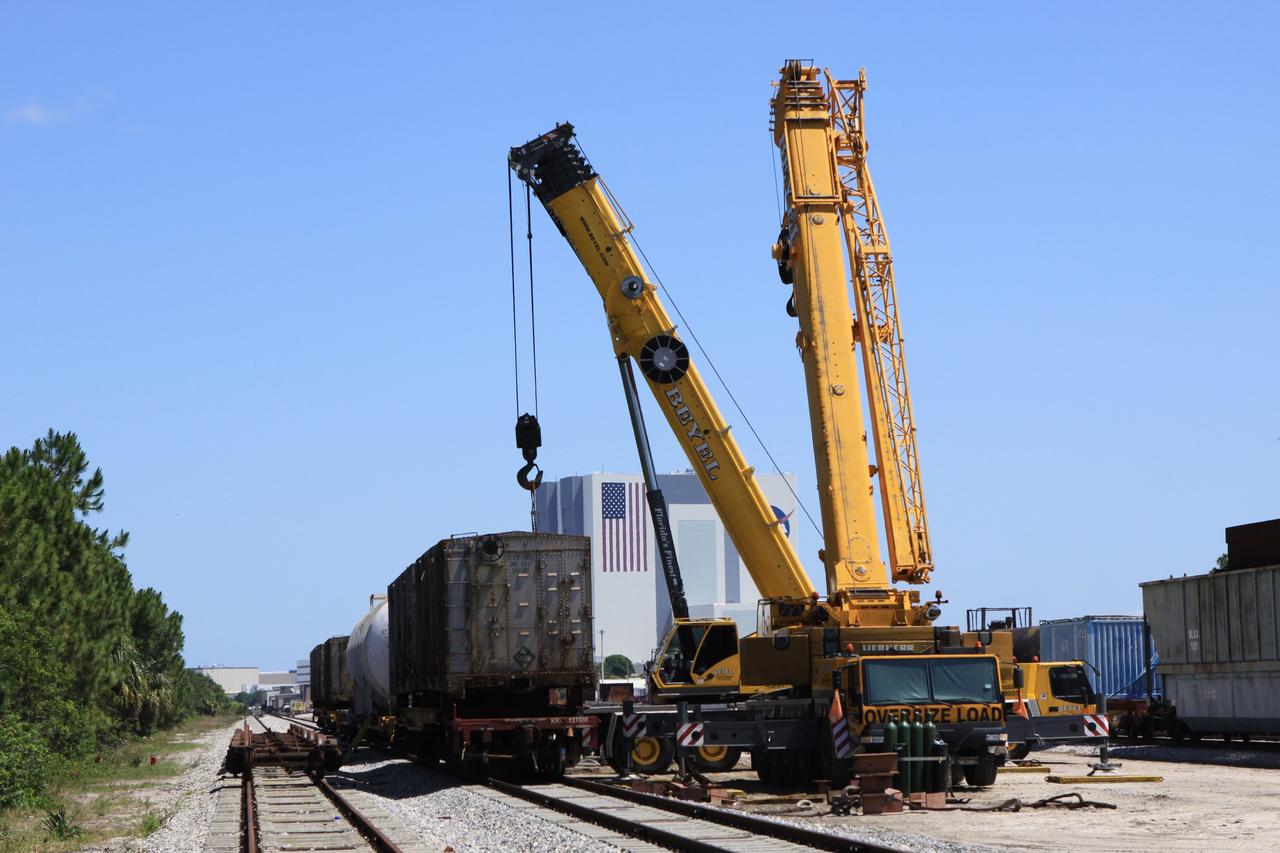
CAPE CANAVERAL, Fla. – At the NASA Railroad yard at Kennedy Space Center in Florida, helium tank cars are lifted from their trucks onto flat cars in preparation for a journey to the Florida East Coast Railway interchange in Titusville, Fla., where the train’s tank cars will be transferred for delivery to the SpaceX engine test complex outside McGregor, Texas. The railroad cars were needed in support of the Space Shuttle Program but currently are not in use by NASA following the completion of the program in 2011. Originally, the tankers belonged to the U.S. Bureau of Mines. At the peak of the shuttle program, there were approximately 30 cars in the fleet. About half the cars were returned to the bureau as launch activity diminished. Five tank cars are being loaned to SpaceX and repurposed to support their engine tests in Texas. Eight cars previously were shipped to California on loan to support the SpaceX Falcon 9 rocket launches from Space Launch Complex-4 on Vandenberg Air Force Base. SpaceX already has three helium tank cars previously used for the shuttle program at Space Launch Complex-40 on Cape Canaveral Air Force Station in Florida. For more information, visit http://www.nasa.gov/spacex. Photo credit: NASA/Jim Grossmann
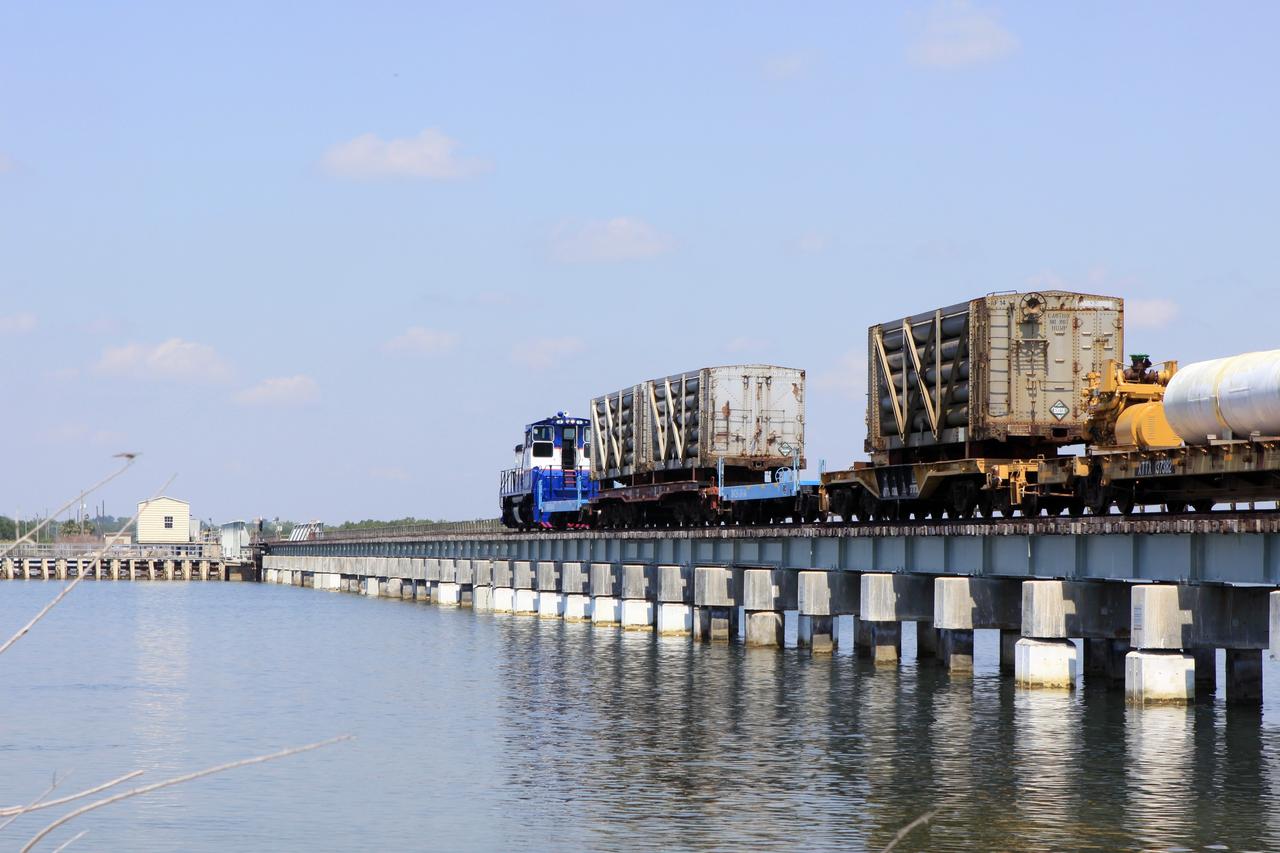
CAPE CANAVERAL, Fla. – A NASA Railroad train crosses the railroad’s Jay Jay Railroad Bridge north of Launch Complex 39 at NASA’s Kennedy Space Center in Florida. The train is on its way to the Florida East Coast Railway interchange in Titusville, Fla., where the train’s helium tank cars, a liquid oxygen tank car, and a liquid hydrogen dewar or tank car will be transferred for delivery to the SpaceX engine test complex outside McGregor, Texas. The railroad cars were needed in support of the Space Shuttle Program but currently are not in use by NASA following the completion of the program in 2011. Originally, the tankers belonged to the U.S. Bureau of Mines. At the peak of the shuttle program, there were approximately 30 cars in the fleet. About half the cars were returned to the bureau as launch activity diminished. Five tank cars are being loaned to SpaceX and repurposed to support their engine tests in Texas. Eight cars previously were shipped to California on loan to support the SpaceX Falcon 9 rocket launches from Space Launch Complex-4 on Vandenberg Air Force Base. SpaceX already has three helium tank cars previously used for the shuttle program at Space Launch Complex-40 on Cape Canaveral Air Force Station in Florida. For more information, visit http://www.nasa.gov/spacex. Photo credit: NASA/Jim Grossmann
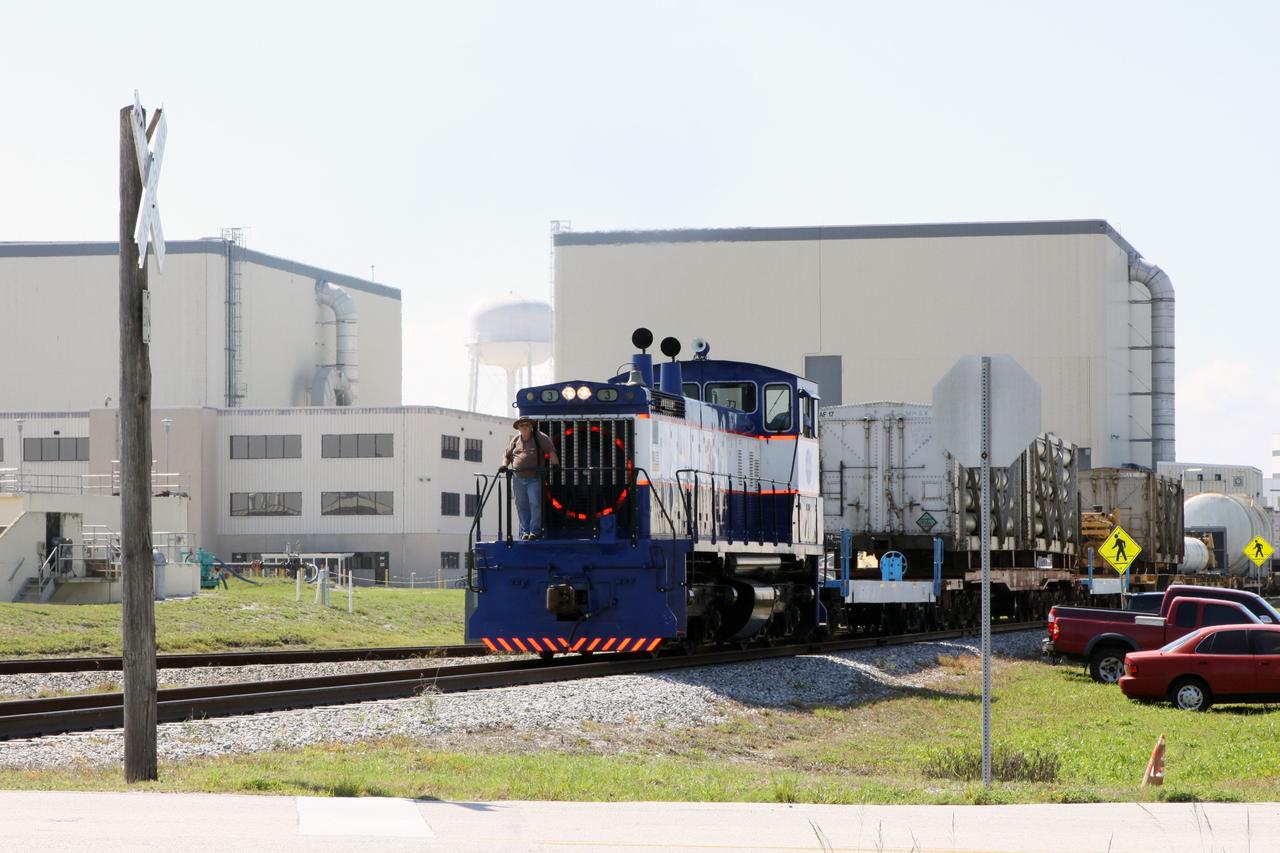
CAPE CANAVERAL, Fla. – A NASA Railroad train passes in front of the twin bays of the Orbiter Processing Facility at NASA’s Kennedy Space Center in Florida. The train is on its way to the Florida East Coast Railway interchange in Titusville, Fla., where the train’s helium tank cars, a liquid oxygen tank car, and a liquid hydrogen dewar or tank car will be transferred for delivery to the SpaceX engine test complex outside McGregor, Texas. The railroad cars were needed in support of the Space Shuttle Program but currently are not in use by NASA following the completion of the program in 2011. Originally, the tankers belonged to the U.S. Bureau of Mines. At the peak of the shuttle program, there were approximately 30 cars in the fleet. About half the cars were returned to the bureau as launch activity diminished. Five tank cars are being loaned to SpaceX and repurposed to support their engine tests in Texas. Eight cars previously were shipped to California on loan to support the SpaceX Falcon 9 rocket launches from Space Launch Complex-4 on Vandenberg Air Force Base. SpaceX already has three helium tank cars previously used for the shuttle program at Space Launch Complex-40 on Cape Canaveral Air Force Station in Florida. For more information, visit http://www.nasa.gov/spacex. Photo credit: NASA/Jim Grossmann
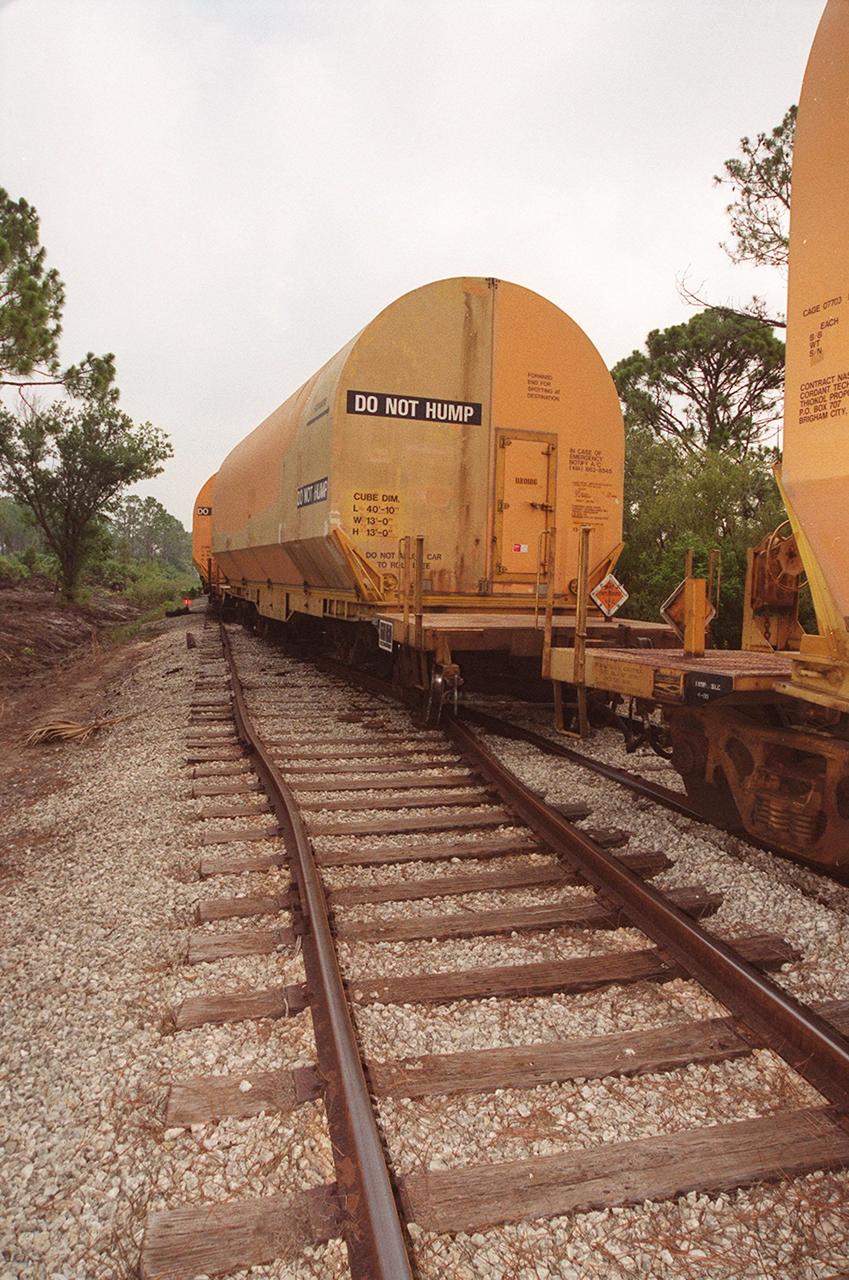
After being involved in a minor derailment incident during a routine movement on the tracks, rail cars carrying solid rocket booster segments sit idle. The rail cars were being moved as part of a standard operation to “order” the cars, placing them into a proper sequence for upcoming segment processing activities. The rear wheels of one car and the front wheels of the car behind it slid off the tracks while passing through a railway switch onto a siding. They were traveling approximately 3 miles per hour at the time, about normal walking speed. No damage occurred to the SRB segments, or to the devices that secure the segments to the rail cars. The incident occurred on KSC property, just north of the NASA Causeway in the KSC Industrial Area
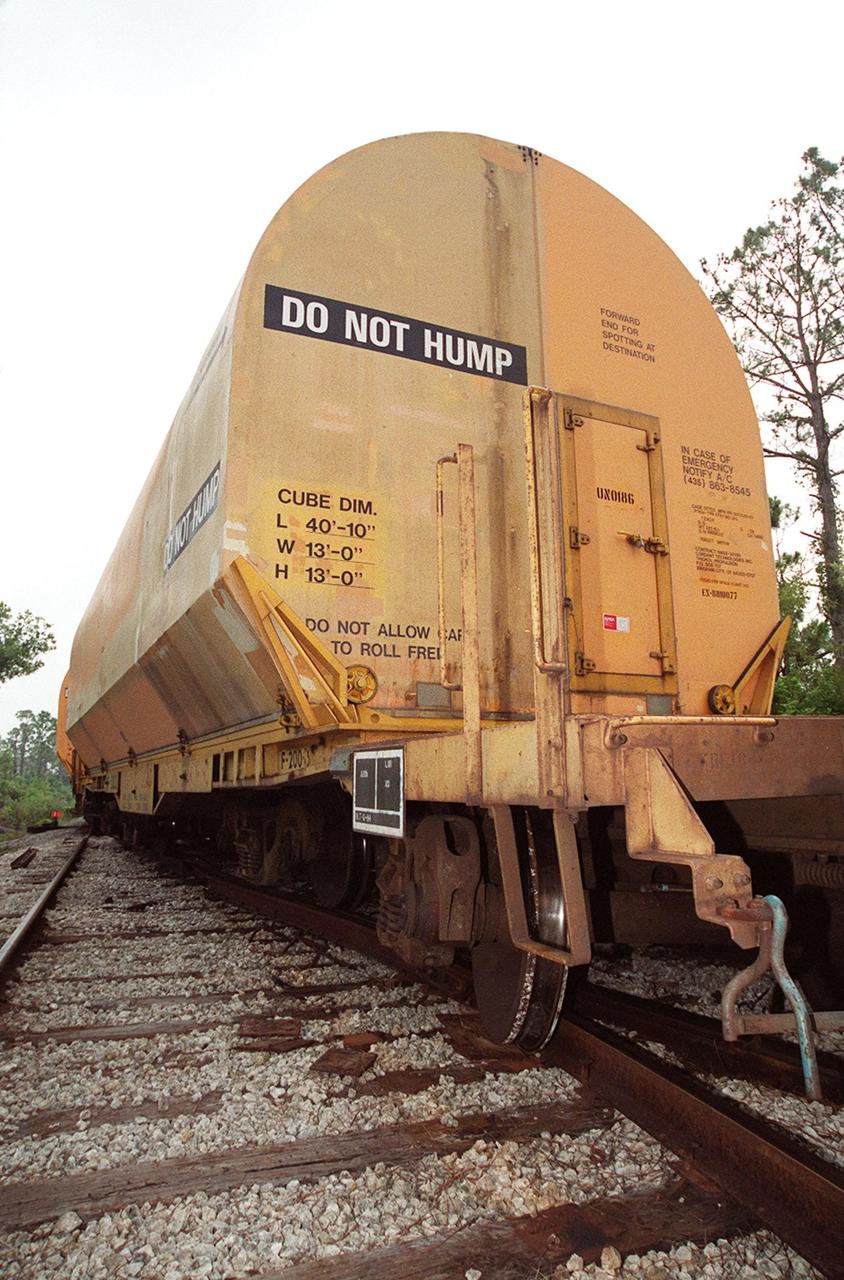
One of two solid rocket booster rail cars is off the track after being involved in a minor derailment incident during a routine movement on the tracks. The rail cars were being moved as part of a standard operation to “order” the cars, placing them into a proper sequence for upcoming segment processing activities. The rear wheels of one car and the front wheels of the car behind it slid off the tracks while passing through a railway switch onto a siding. They were traveling approximately 3 miles per hour at the time, about normal walking speed. No damage occurred to the SRB segments, or to the devices that secure the segments to the rail cars. The incident occurred on KSC property, just north of the NASA Causeway in the KSC Industrial Area
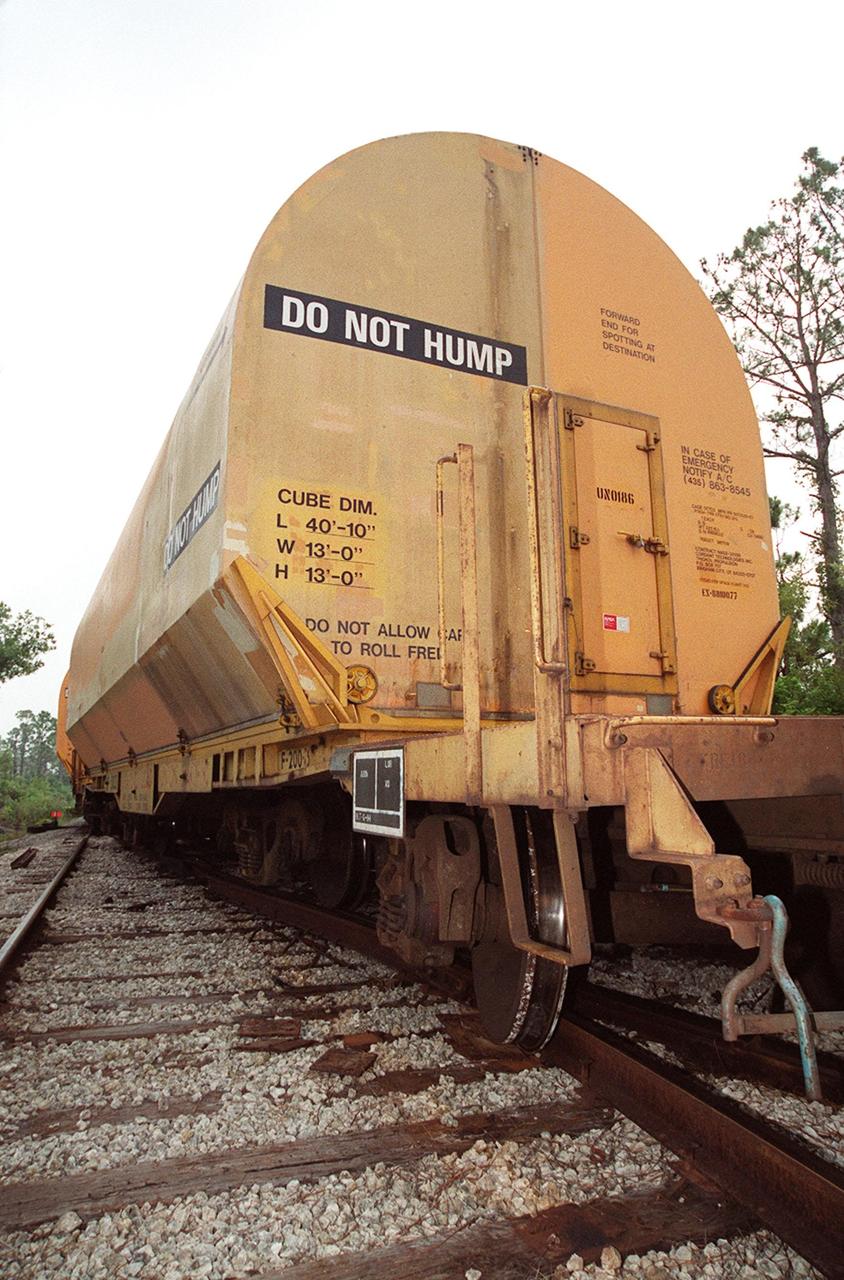
One of two solid rocket booster rail cars is off the track after being involved in a minor derailment incident during a routine movement on the tracks. The rail cars were being moved as part of a standard operation to “order” the cars, placing them into a proper sequence for upcoming segment processing activities. The rear wheels of one car and the front wheels of the car behind it slid off the tracks while passing through a railway switch onto a siding. They were traveling approximately 3 miles per hour at the time, about normal walking speed. No damage occurred to the SRB segments, or to the devices that secure the segments to the rail cars. The incident occurred on KSC property, just north of the NASA Causeway in the KSC Industrial Area

After being involved in a minor derailment incident during a routine movement on the tracks, rail cars carrying solid rocket booster segments sit idle. The rail cars were being moved as part of a standard operation to “order” the cars, placing them into a proper sequence for upcoming segment processing activities. The rear wheels of one car and the front wheels of the car behind it slid off the tracks while passing through a railway switch onto a siding. They were traveling approximately 3 miles per hour at the time, about normal walking speed. No damage occurred to the SRB segments, or to the devices that secure the segments to the rail cars. The incident occurred on KSC property, just north of the NASA Causeway in the KSC Industrial Area
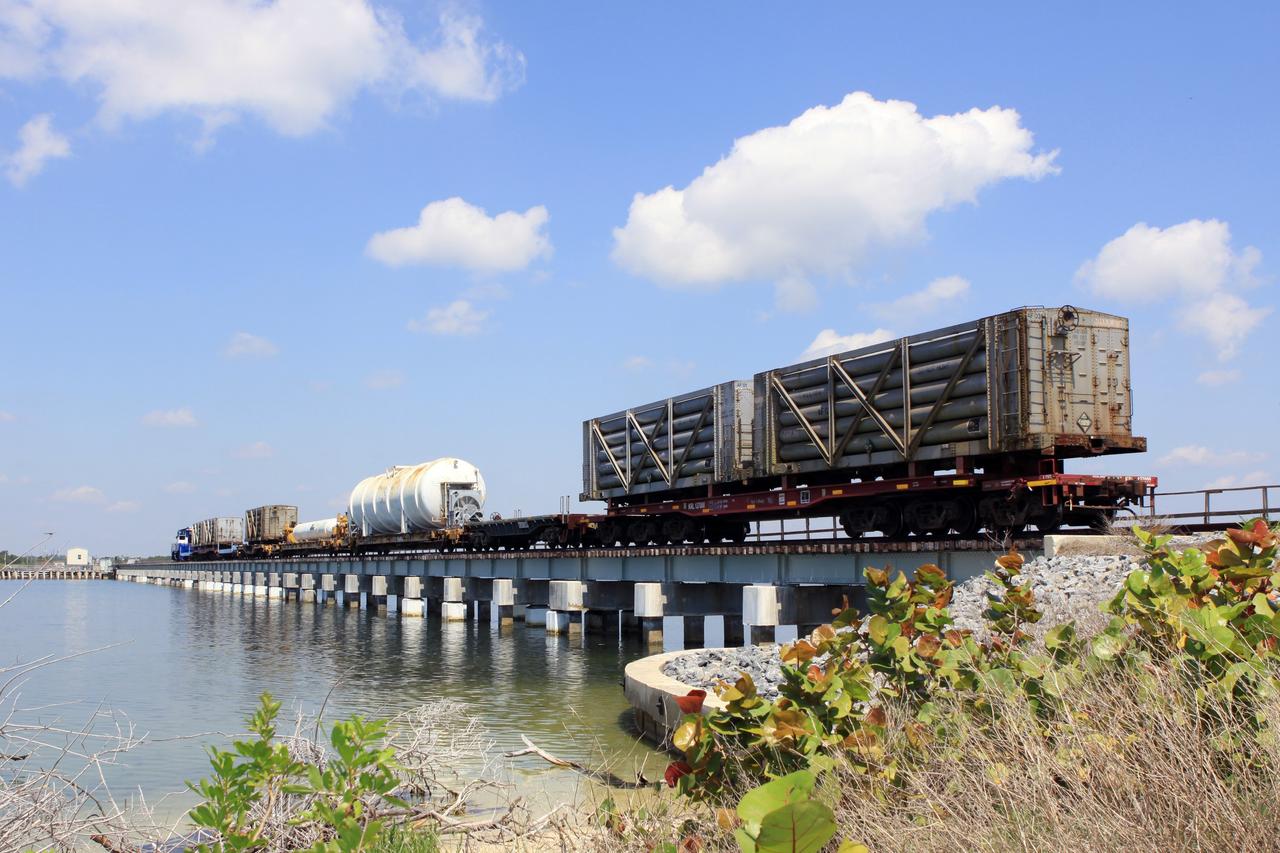
CAPE CANAVERAL, Fla. – A NASA Railroad train crosses the railroad’s Jay Jay Railroad Bridge north of Launch Complex 39 at NASA’s Kennedy Space Center in Florida. The train is on its way to the Florida East Coast Railway interchange in Titusville, Fla., where the train’s helium tank cars, a liquid oxygen tank car, and a liquid hydrogen dewar or tank car will be transferred for delivery to the SpaceX engine test complex outside McGregor, Texas. The helium tank cars are positioned in the front and rear of the train. The long, thin tank car in the middle was used for liquid hydrogen, followed by a much larger tank car used for liquid oxygen. The railroad cars were needed in support of the Space Shuttle Program but currently are not in use by NASA following the completion of the program in 2011. Originally, the tankers belonged to the U.S. Bureau of Mines. At the peak of the shuttle program, there were approximately 30 cars in the fleet. About half the cars were returned to the bureau as launch activity diminished. Five tank cars are being loaned to SpaceX and repurposed to support their engine tests in Texas. Eight cars previously were shipped to California on loan to support the SpaceX Falcon 9 rocket launches from Space Launch Complex-4 on Vandenberg Air Force Base. SpaceX already has three helium tank cars previously used for the shuttle program at Space Launch Complex-40 on Cape Canaveral Air Force Station in Florida. For more information, visit http://www.nasa.gov/spacex. Photo credit: NASA/Jim Grossmann
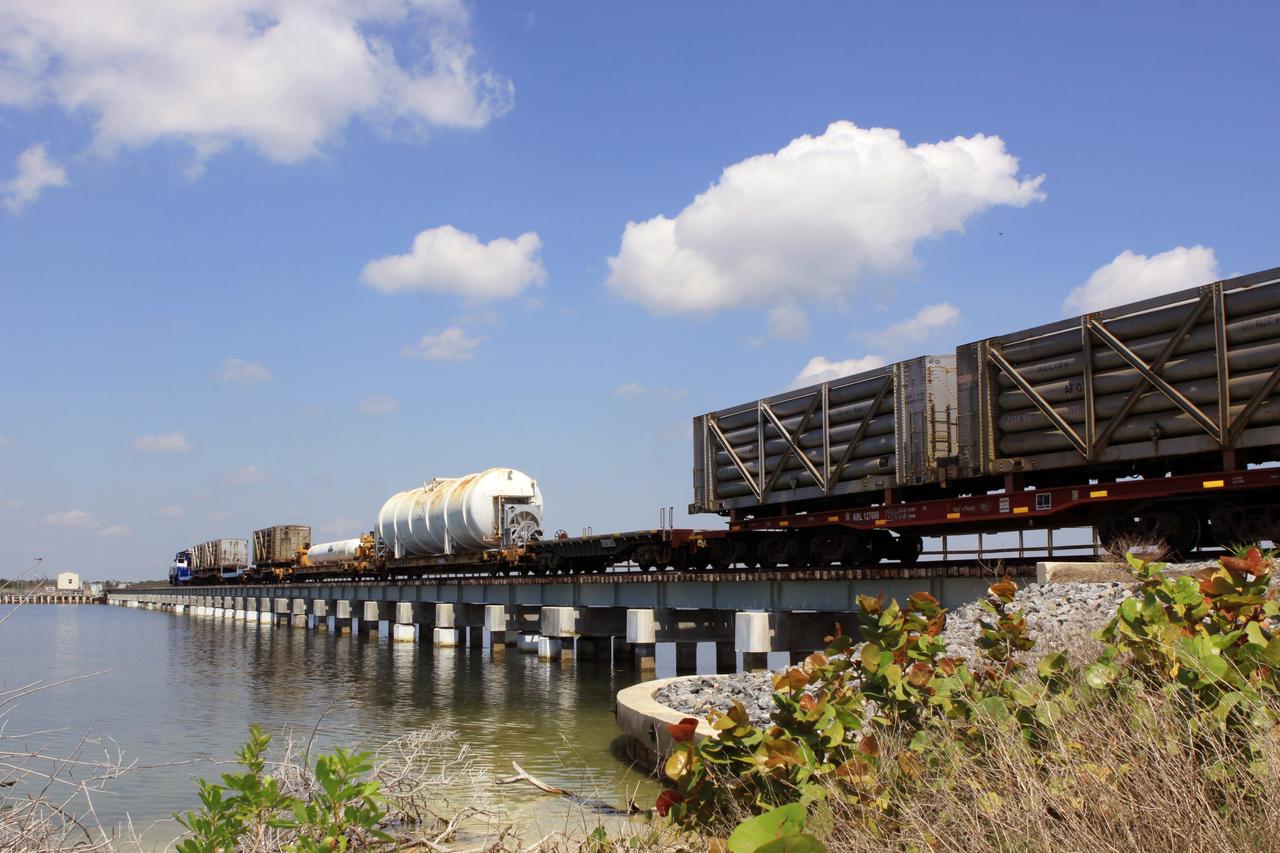
CAPE CANAVERAL, Fla. – A NASA Railroad train crosses the railroad’s Jay Jay Railroad Bridge north of Launch Complex 39 at NASA’s Kennedy Space Center in Florida. The train is on its way to the Florida East Coast Railway interchange in Titusville, Fla., where the train’s helium tank cars, a liquid oxygen tank car, and a liquid hydrogen dewar or tank car will be transferred for delivery to the SpaceX engine test complex outside McGregor, Texas. The helium tank cars are positioned in the front and rear of the train. The long, thin tank car in the middle was used for liquid hydrogen, followed by a much larger tank car used for liquid oxygen. The railroad cars were needed in support of the Space Shuttle Program but currently are not in use by NASA following the completion of the program in 2011. Originally, the tankers belonged to the U.S. Bureau of Mines. At the peak of the shuttle program, there were approximately 30 cars in the fleet. About half the cars were returned to the bureau as launch activity diminished. Five tank cars are being loaned to SpaceX and repurposed to support their engine tests in Texas. Eight cars previously were shipped to California on loan to support the SpaceX Falcon 9 rocket launches from Space Launch Complex-4 on Vandenberg Air Force Base. SpaceX already has three helium tank cars previously used for the shuttle program at Space Launch Complex-40 on Cape Canaveral Air Force Station in Florida. For more information, visit http://www.nasa.gov/spacex. Photo credit: NASA/Jim Grossmann
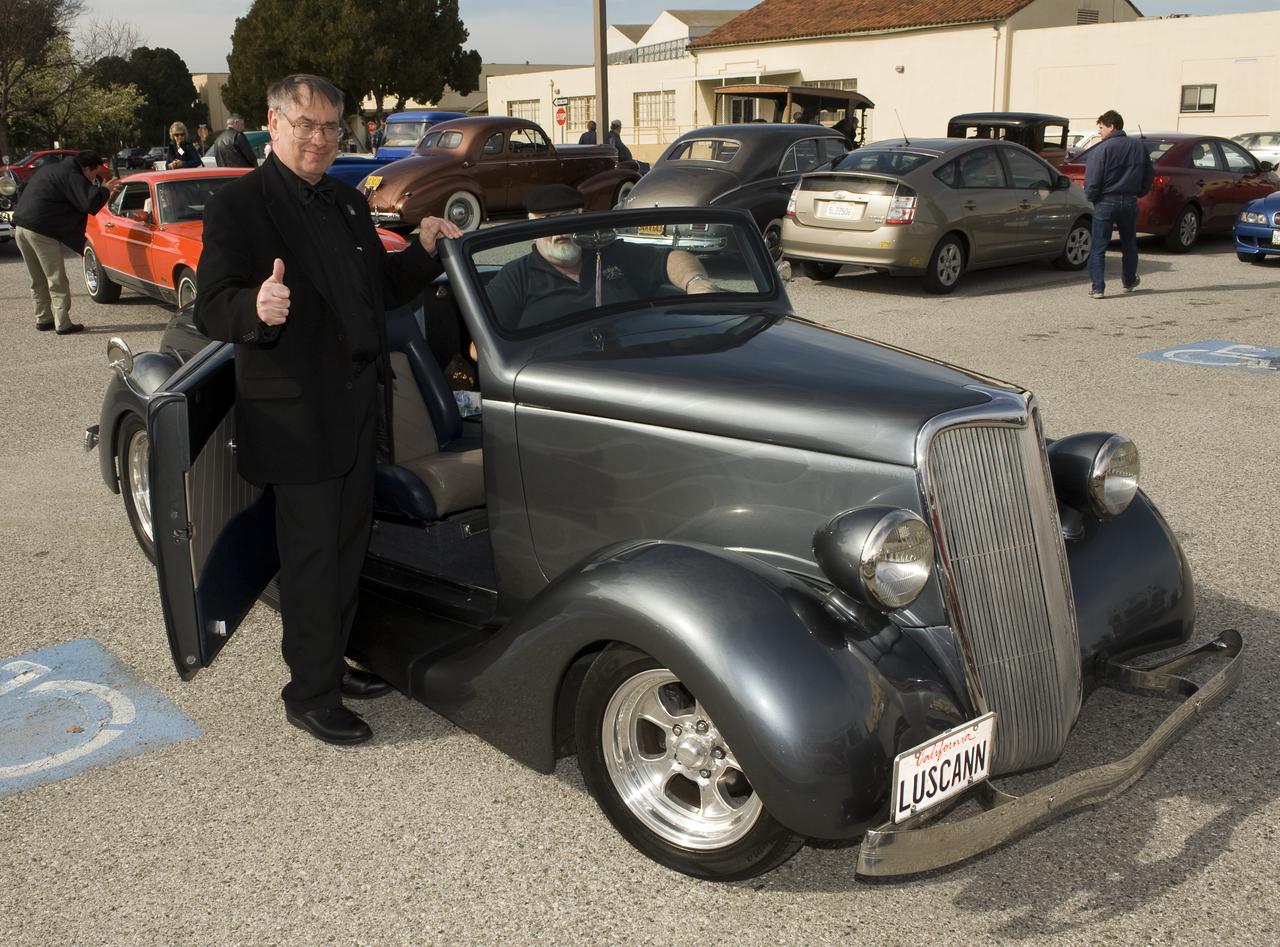
Ames 70th Anniversary Turn Back the Clock Day with antique Class Cars and Classic Car parade around the center. S. Pete Worden, Ames Center Director hopes onboard for a ride in the parade.
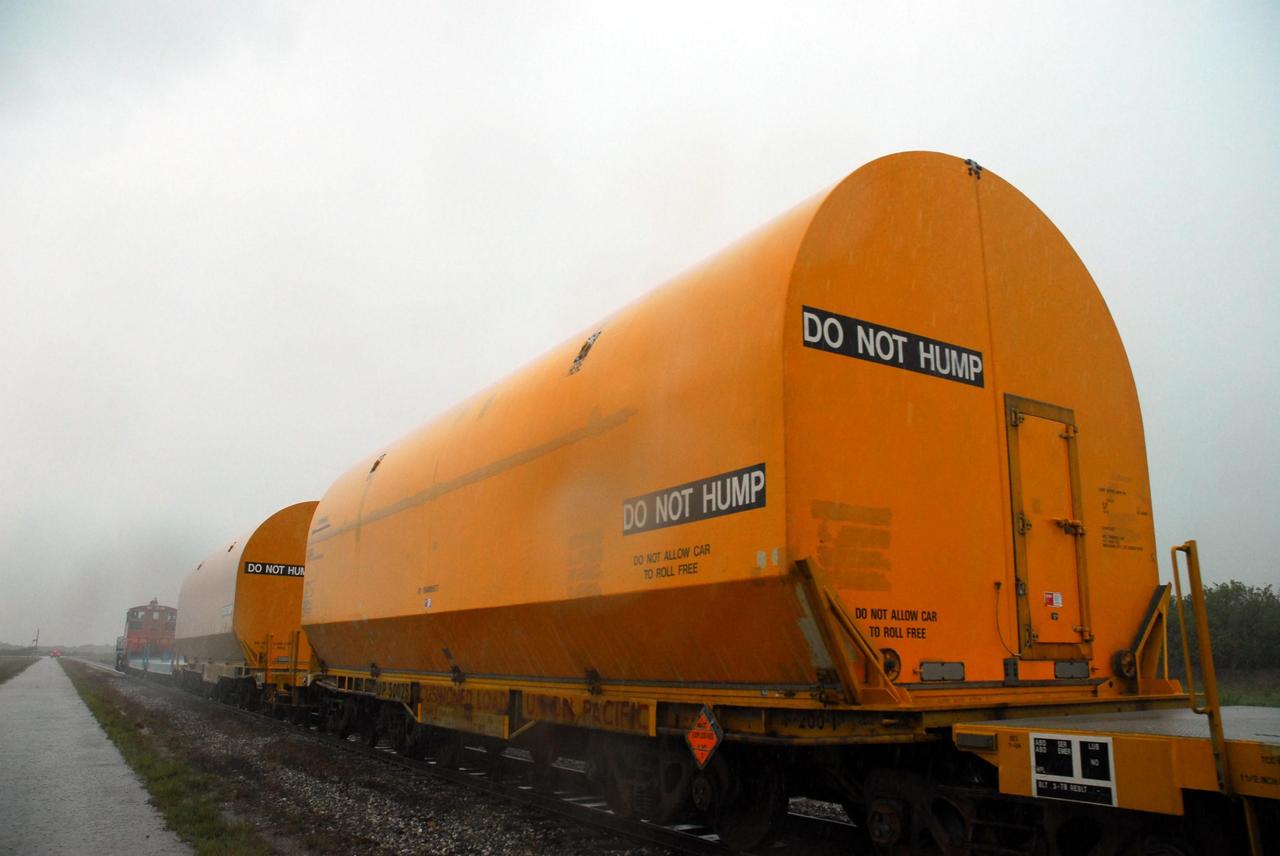
KENNEDY SPACE CENTER, FLA. -- The locomotive and rail cars carrying solid rocket booster motor segments and two aft exit cone segments cross a road on Kennedy Space Center. These cars are headed for the SRB Assembly and Refurbishment Facility. While enroute, solid rocket motor segments were involved in a derailment in Alabama. The rail cars carrying these segments remained upright and were undamaged. An inspection determined these segment cars could continue on to Florida. The segments themselves will undergo further evaluation at Kennedy before they are cleared for flight. Other segments involved in the derailment will be returned to a plant in Utah for further evaluation. Photo credit: NASA/George Shelton
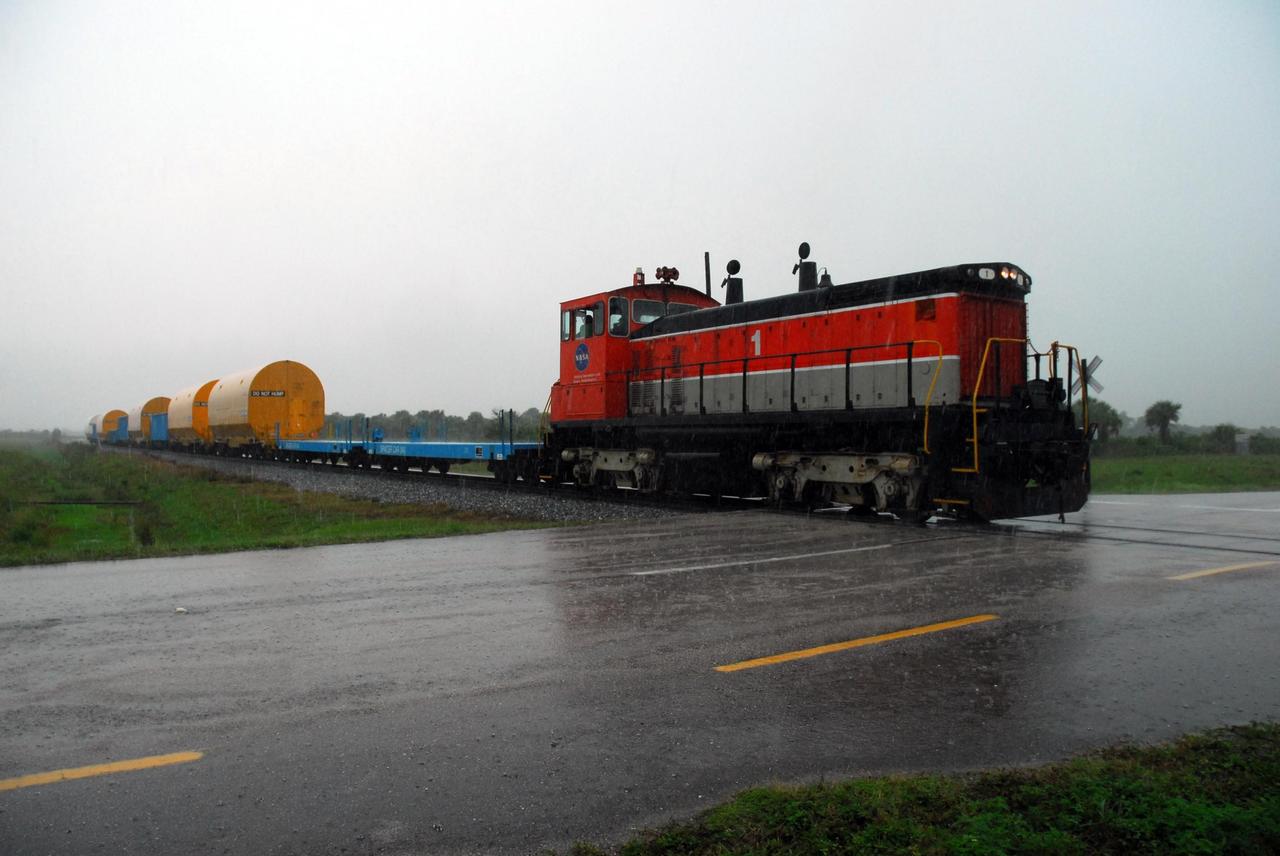
KENNEDY SPACE CENTER, FLA. -- The locomotive and rail cars carrying solid rocket booster motor segments and two aft exit cone segments cross a road on Kennedy Space Center. These cars are headed for the SRB Assembly and Refurbishment Facility. While enroute, solid rocket motor segments were involved in a derailment in Alabama. The rail cars carrying these segments remained upright and were undamaged. An inspection determined these segment cars could continue on to Florida. The segments themselves will undergo further evaluation at Kennedy before they are cleared for flight. Other segments involved in the derailment will be returned to a plant in Utah for further evaluation. Photo credit: NASA/George Shelton
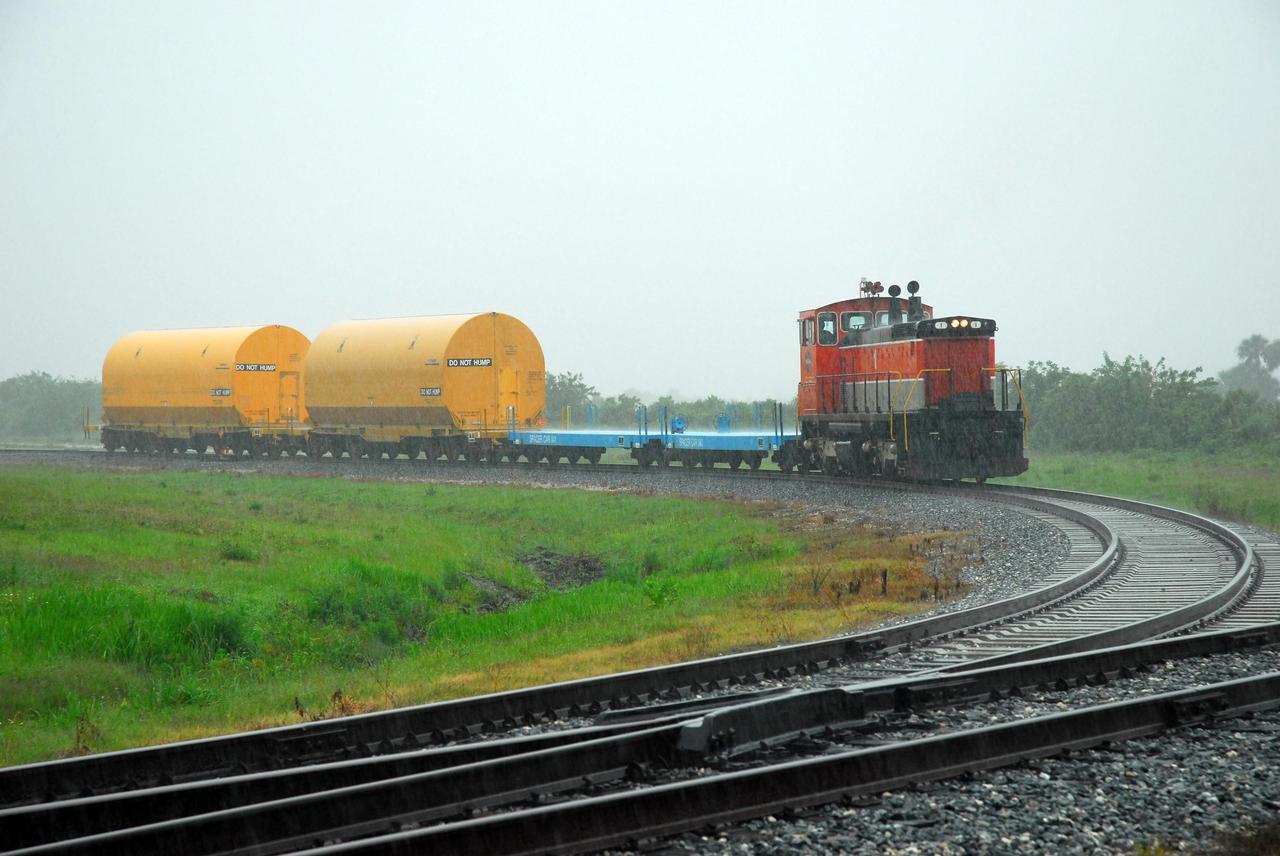
KENNEDY SPACE CENTER, FLA. -- The locomotive and rail cars carrying solid rocket booster motor segments and two aft exit cone segments cross a road on Kennedy Space Center. These cars are headed for the SRB Assembly and Refurbishment Facility. While enroute, solid rocket motor segments were involved in a derailment in Alabama. The rail cars carrying these segments remained upright and were undamaged. An inspection determined these segment cars could continue on to Florida. The segments themselves will undergo further evaluation at Kennedy before they are cleared for flight. Other segments involved in the derailment will be returned to a plant in Utah for further evaluation. Photo credit: NASA/George Shelton
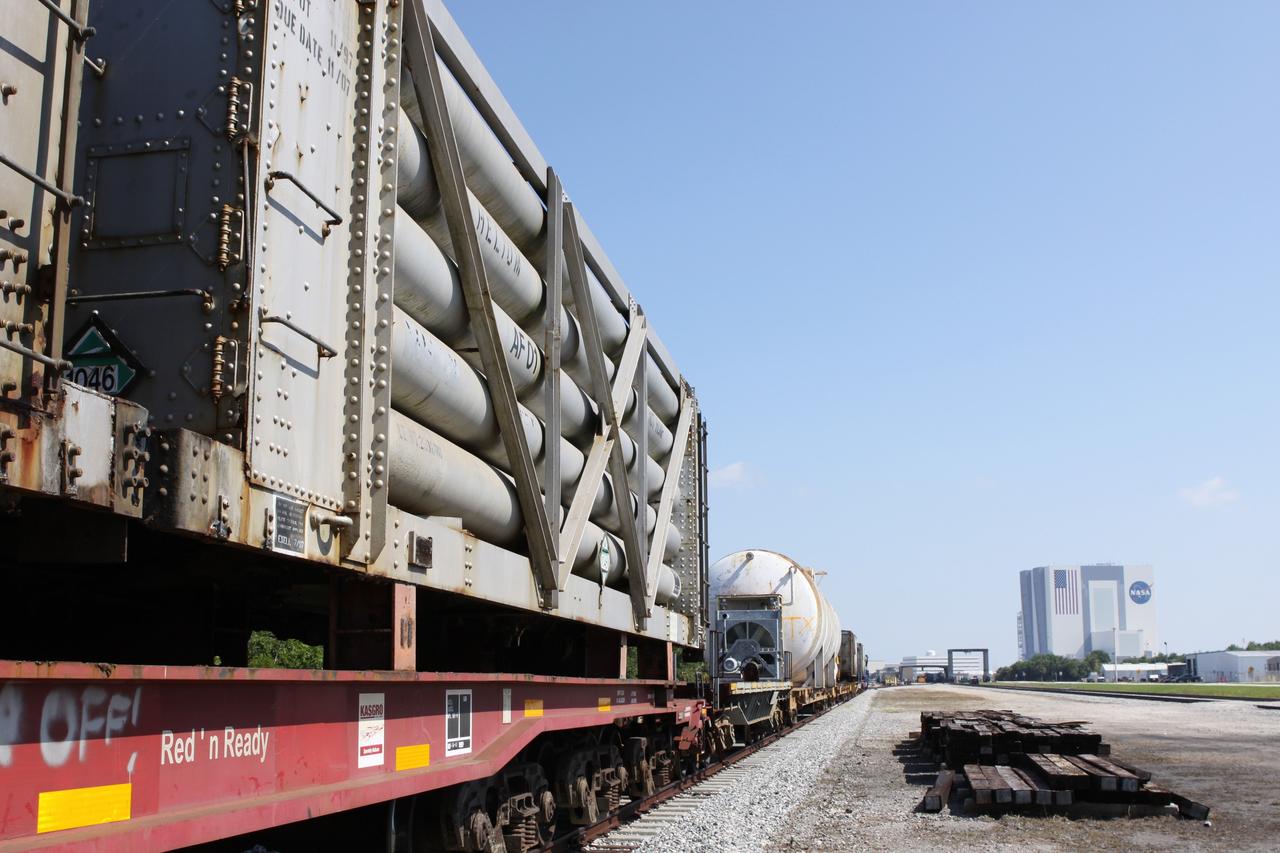
CAPE CANAVERAL, Fla. – At the NASA Railroad Yard at NASA’s Kennedy Space Center in Florida, preparations are under way for the departure of a train made up of tank cars. The railroad’s track runs past Kennedy’s 525-foot-tall Vehicle Assembly Building in the background. The train is headed for the Florida East Coast Railway interchange in Titusville, Fla., where the train’s helium tank cars, a liquid oxygen tank car, and a liquid hydrogen dewar or tank car will be transferred for delivery to the SpaceX engine test complex outside McGregor, Texas. The railroad cars were needed in support of the Space Shuttle Program but currently are not in use by NASA following the completion of the program in 2011. Originally, the tankers belonged to the U.S. Bureau of Mines. At the peak of the shuttle program, there were approximately 30 cars in the fleet. About half the cars were returned to the bureau as launch activity diminished. Five tank cars are being loaned to SpaceX and repurposed to support their engine tests in Texas. Eight cars previously were shipped to California on loan to support the SpaceX Falcon 9 rocket launches from Space Launch Complex-4 on Vandenberg Air Force Base. SpaceX already has three helium tank cars previously used for the shuttle program at Space Launch Complex-40 on Cape Canaveral Air Force Station in Florida. For more information, visit http://www.nasa.gov/spacex. Photo credit: NASA/Jim Grossmann
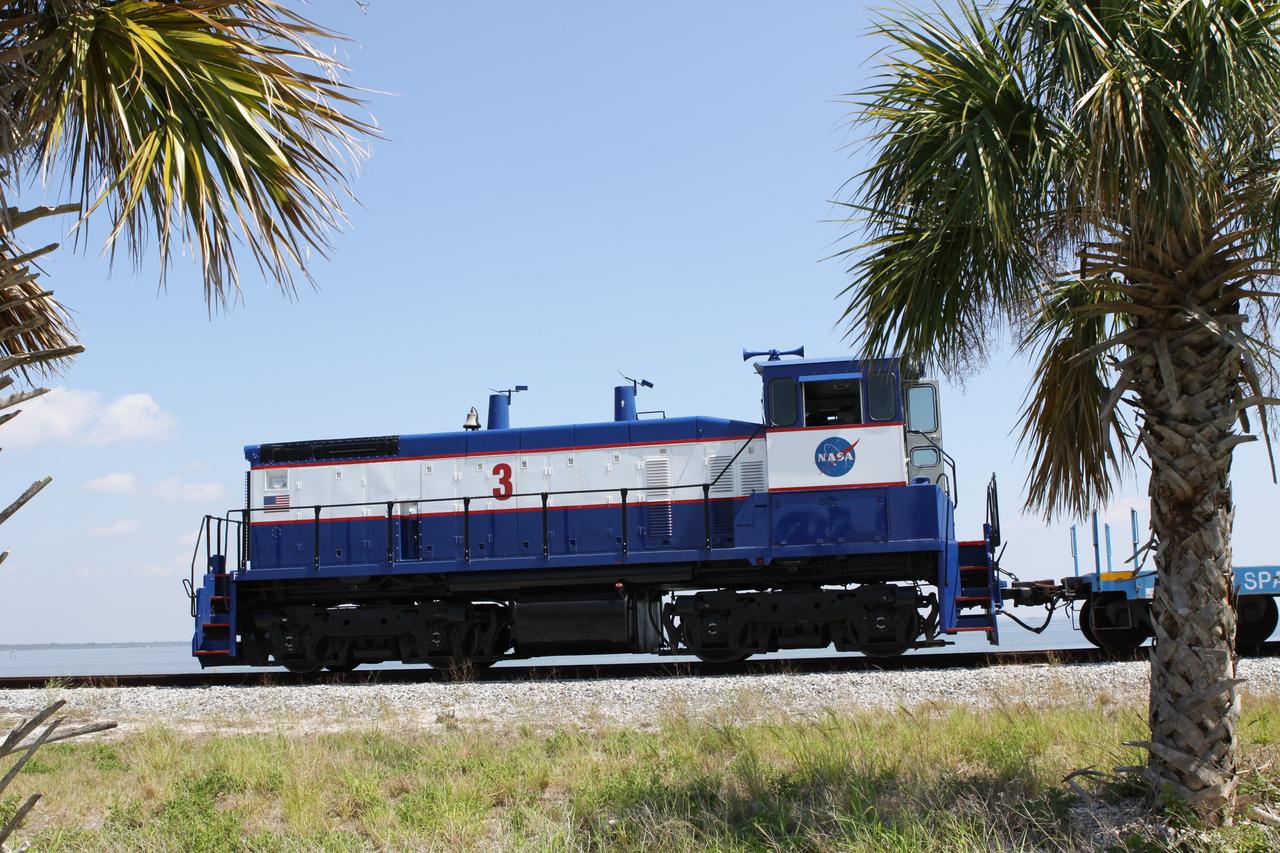
CAPE CANAVERAL, Fla. – NASA Railroad locomotive No. 3 delivers tank cars from NASA’s Kennedy Space Center in Florida to the Florida East Coast Railway interchange in Titusville, Fla. The locomotive is one of three NASA Railroad locomotives built for the Toledo, Peoria and Western, or TP&W, between 1968 and 1970. It is a GM Electromotive Division SW-1500 switcher. The locomotive was acquired by NASA from the TP&W in 1984 and painted in the NASA Railroad paint scheme. The power plant was completely overhauled in 2009. The locomotive will pull the train to the interchange in Titusville, where the train’s helium tank cars, a liquid oxygen tank car, and a liquid hydrogen dewar or tank car will be transferred for delivery to the SpaceX engine test complex outside McGregor, Texas. The railroad cars were needed in support of the Space Shuttle Program but currently are not in use by NASA following the completion of the program in 2011. Originally, the tankers belonged to the U.S. Bureau of Mines. At the peak of the shuttle program, there were approximately 30 cars in the fleet. About half the cars were returned to the bureau as launch activity diminished. Five tank cars are being loaned to SpaceX and repurposed to support their engine tests in Texas. Eight cars previously were shipped to California on loan to support the SpaceX Falcon 9 rocket launches from Space Launch Complex-4 on Vandenberg Air Force Base. SpaceX already has three helium tank cars previously used for the shuttle program at Space Launch Complex-40 on Cape Canaveral Air Force Station in Florida. For more information, visit http://www.nasa.gov/spacex. Photo credit: NASA/Jim Grossmann
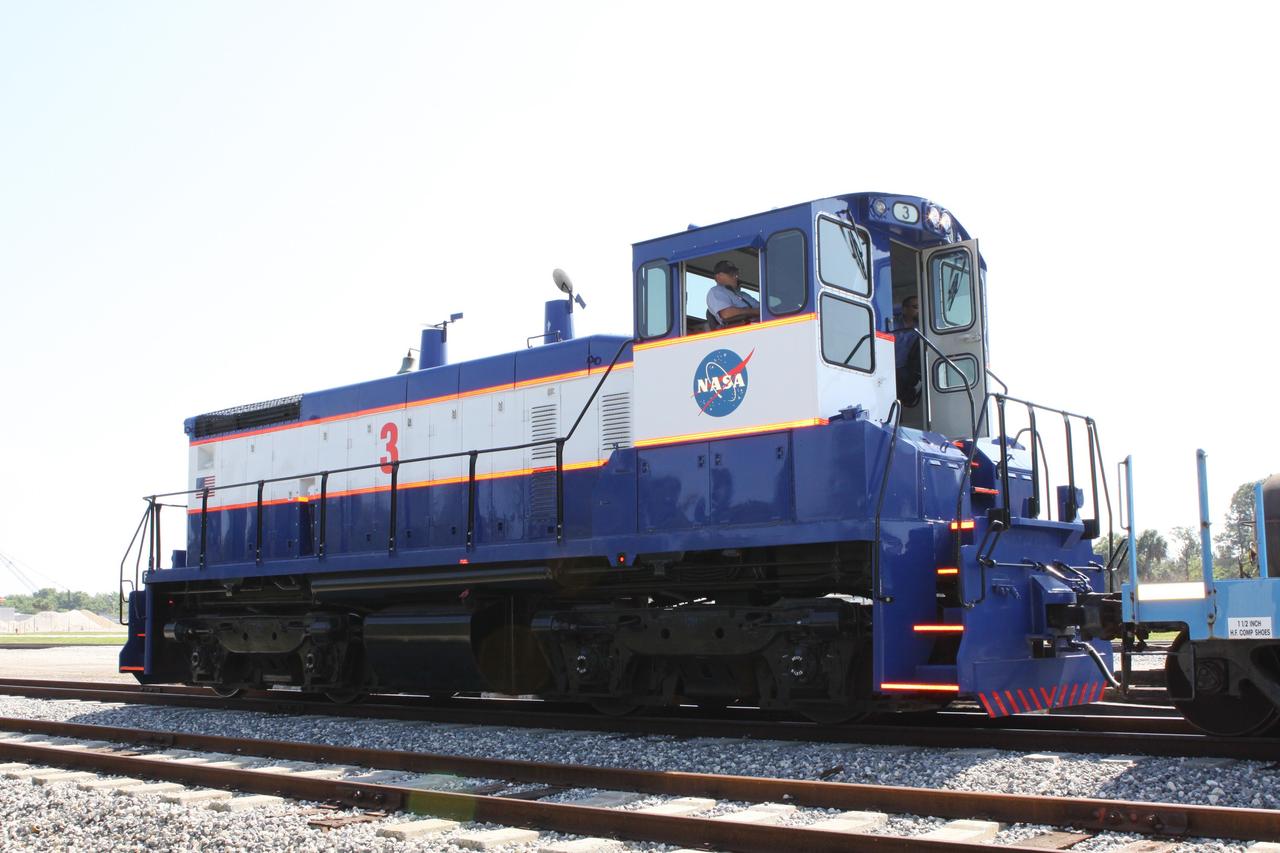
CAPE CANAVERAL, Fla. – NASA Railroad locomotive No. 3 is enlisted to deliver tank cars from NASA’s Kennedy Space Center in Florida to the Florida East Coast Railway interchange in Titusville, Fla. The locomotive is one of three NASA Railroad locomotives built for the Toledo, Peoria and Western, or TP&W, between 1968 and 1970. It is a GM Electromotive Division SW-1500 switcher. The locomotive was acquired by NASA from the TP&W in 1984 and painted in the NASA Railroad paint scheme. The power plant was completely overhauled in 2009. The locomotive will pull the train to the interchange in Titusville, where the train’s helium tank cars, a liquid oxygen tank car, and a liquid hydrogen dewar or tank car will be transferred for delivery to the SpaceX engine test complex outside McGregor, Texas. The railroad cars were needed in support of the Space Shuttle Program but currently are not in use by NASA following the completion of the program in 2011. Originally, the tankers belonged to the U.S. Bureau of Mines. At the peak of the shuttle program, there were approximately 30 cars in the fleet. About half the cars were returned to the bureau as launch activity diminished. Five tank cars are being loaned to SpaceX and repurposed to support their engine tests in Texas. Eight cars previously were shipped to California on loan to support the SpaceX Falcon 9 rocket launches from Space Launch Complex-4 on Vandenberg Air Force Base. SpaceX already has three helium tank cars previously used for the shuttle program at Space Launch Complex-40 on Cape Canaveral Air Force Station in Florida. For more information, visit http://www.nasa.gov/spacex. Photo credit: NASA/Jim Grossmann
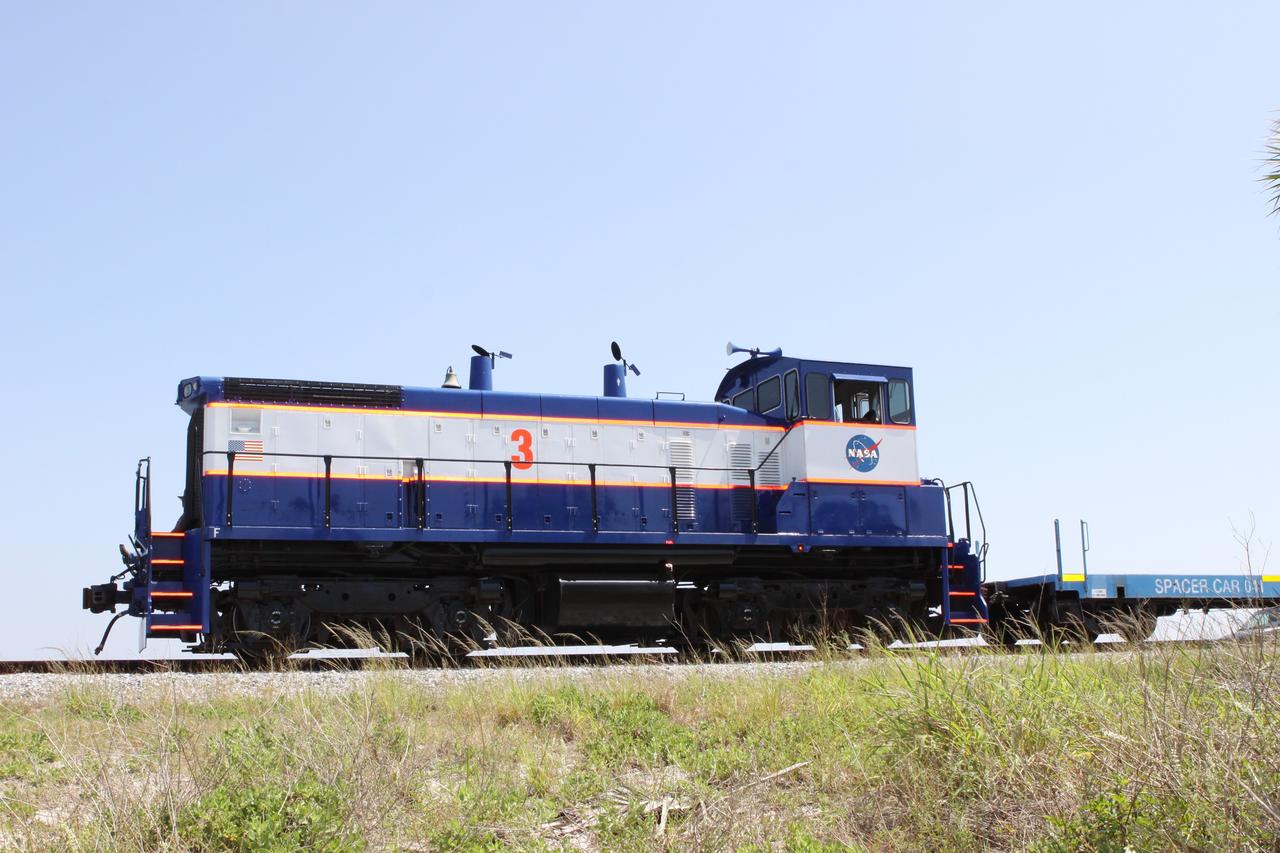
CAPE CANAVERAL, Fla. – NASA Railroad locomotive No. 3 delivers tank cars from NASA’s Kennedy Space Center in Florida to the Florida East Coast Railway interchange in Titusville, Fla. The locomotive is one of three NASA Railroad locomotives built for the Toledo, Peoria and Western, or TP&W, between 1968 and 1970. It is a GM Electromotive Division SW-1500 switcher. The locomotive was acquired by NASA from the TP&W in 1984 and painted in the NASA Railroad paint scheme. The power plant was completely overhauled in 2009. The locomotive will pull the train to the interchange in Titusville, where the train’s helium tank cars, a liquid oxygen tank car, and a liquid hydrogen dewar or tank car will be transferred for delivery to the SpaceX engine test complex outside McGregor, Texas. The railroad cars were needed in support of the Space Shuttle Program but currently are not in use by NASA following the completion of the program in 2011. Originally, the tankers belonged to the U.S. Bureau of Mines. At the peak of the shuttle program, there were approximately 30 cars in the fleet. About half the cars were returned to the bureau as launch activity diminished. Five tank cars are being loaned to SpaceX and repurposed to support their engine tests in Texas. Eight cars previously were shipped to California on loan to support the SpaceX Falcon 9 rocket launches from Space Launch Complex-4 on Vandenberg Air Force Base. SpaceX already has three helium tank cars previously used for the shuttle program at Space Launch Complex-40 on Cape Canaveral Air Force Station in Florida. For more information, visit http://www.nasa.gov/spacex. Photo credit: NASA/Jim Grossmann
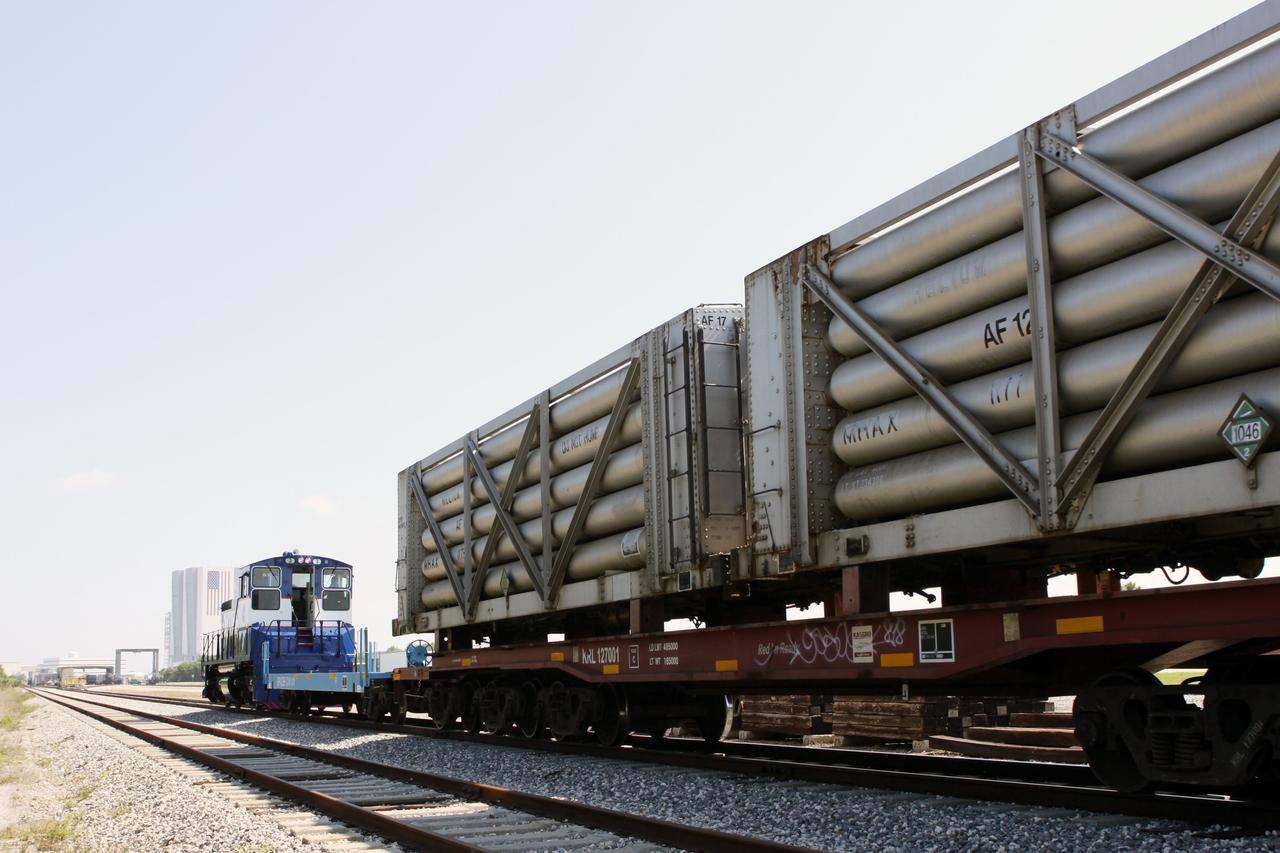
CAPE CANAVERAL, Fla. – At the NASA Railroad Yard at NASA’s Kennedy Space Center in Florida, preparations are under way for the departure of a train made up of tank cars. The train will pass by Kennedy’s 525-foot-tall Vehicle Assembly Building in the background. The train is headed for the Florida East Coast Railway interchange in Titusville, Fla., where the train’s helium tank cars, a liquid oxygen tank car, and a liquid hydrogen dewar or tank car will be transferred for delivery to the SpaceX engine test complex outside McGregor, Texas. The railroad cars were needed in support of the Space Shuttle Program but currently are not in use by NASA following the completion of the program in 2011. Originally, the tankers belonged to the U.S. Bureau of Mines. At the peak of the shuttle program, there were approximately 30 cars in the fleet. About half the cars were returned to the bureau as launch activity diminished. Five tank cars are being loaned to SpaceX and repurposed to support their engine tests in Texas. Eight cars previously were shipped to California on loan to support the SpaceX Falcon 9 rocket launches from Space Launch Complex-4 on Vandenberg Air Force Base. SpaceX already has three helium tank cars previously used for the shuttle program at Space Launch Complex-40 on Cape Canaveral Air Force Station in Florida. For more information, visit http://www.nasa.gov/spacex. Photo credit: NASA/Jim Grossmann
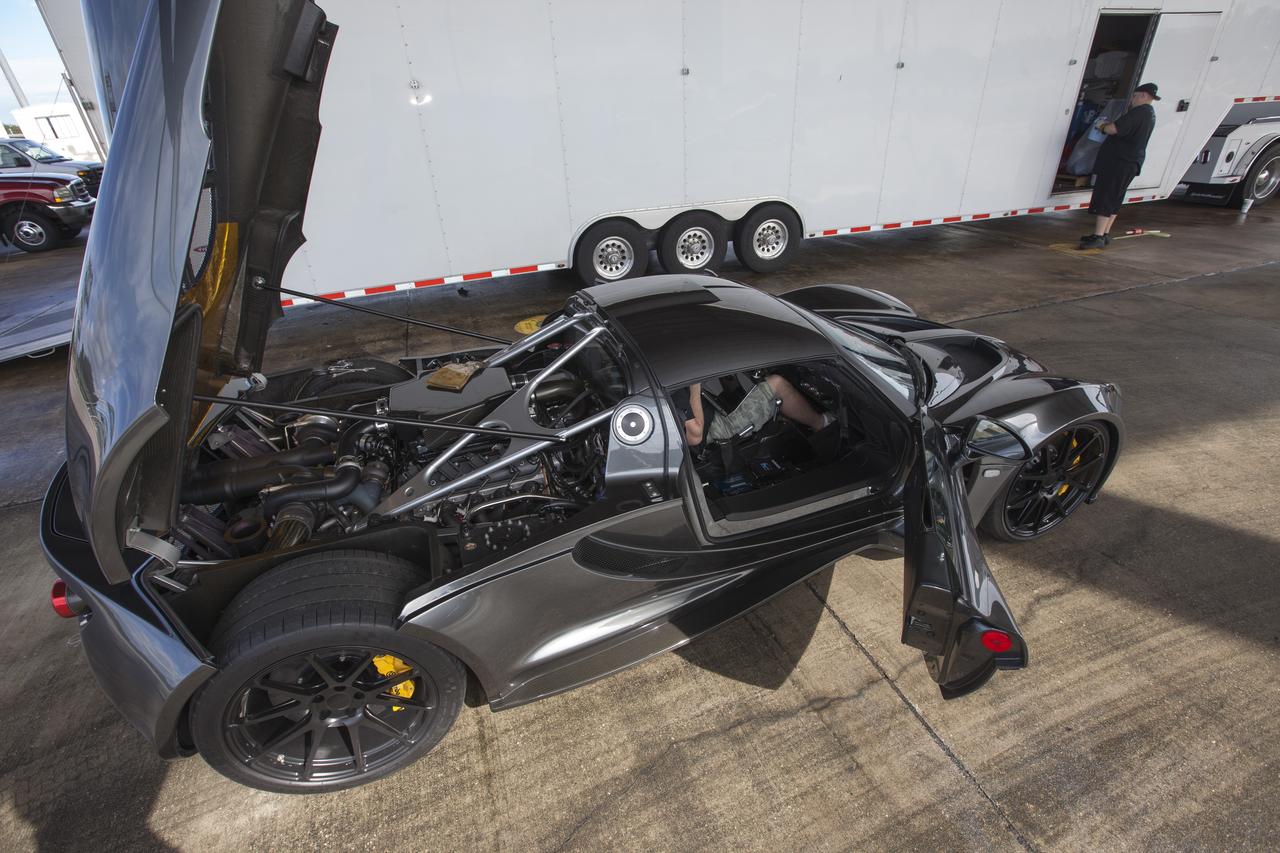
CAPE CANAVERAL, Fla. - An engineer readies a Hennessey Venom GT for test runs on the 3.5-mile long runway at the Shuttle Landing Facility at NASA's Kennedy Space Center in Florida. The flat concrete runway is one of the few places in the world where high performance automobiles can be tested for aerodynamic and safety designs. Hennessey Performance of Sealy, Texas, worked with Performance Power Racing in West Palm Beach to arrange use of the NASA facility. Performance Power Racing has conducted numerous engineering tests on the runway with a variety of vehicles. Photo credit: NASA/Kim Shiflett
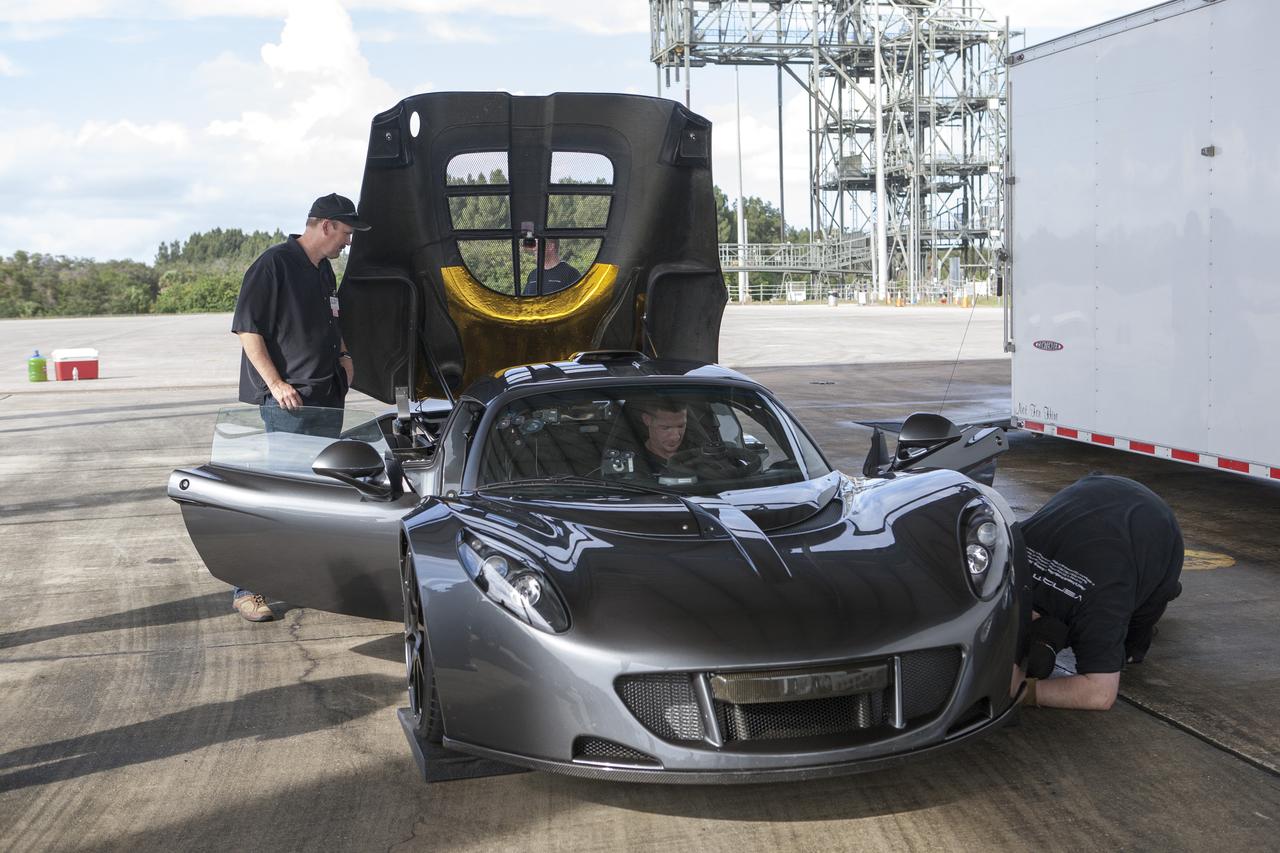
CAPE CANAVERAL, Fla. - Mechanics and engineers ready a Hennessey Venom GT for test runs on the 3.5-mile long runway at the Shuttle Landing Facility at NASA's Kennedy Space Center in Florida. The flat concrete runway is one of the few places in the world where high performance automobiles can be tested for aerodynamic and safety designs. Hennessey Performance of Sealy, Texas, worked with Performance Power Racing in West Palm Beach to arrange use of the NASA facility. Performance Power Racing has conducted numerous engineering tests on the runway with a variety of vehicles. Photo credit: NASA/Kim Shiflett
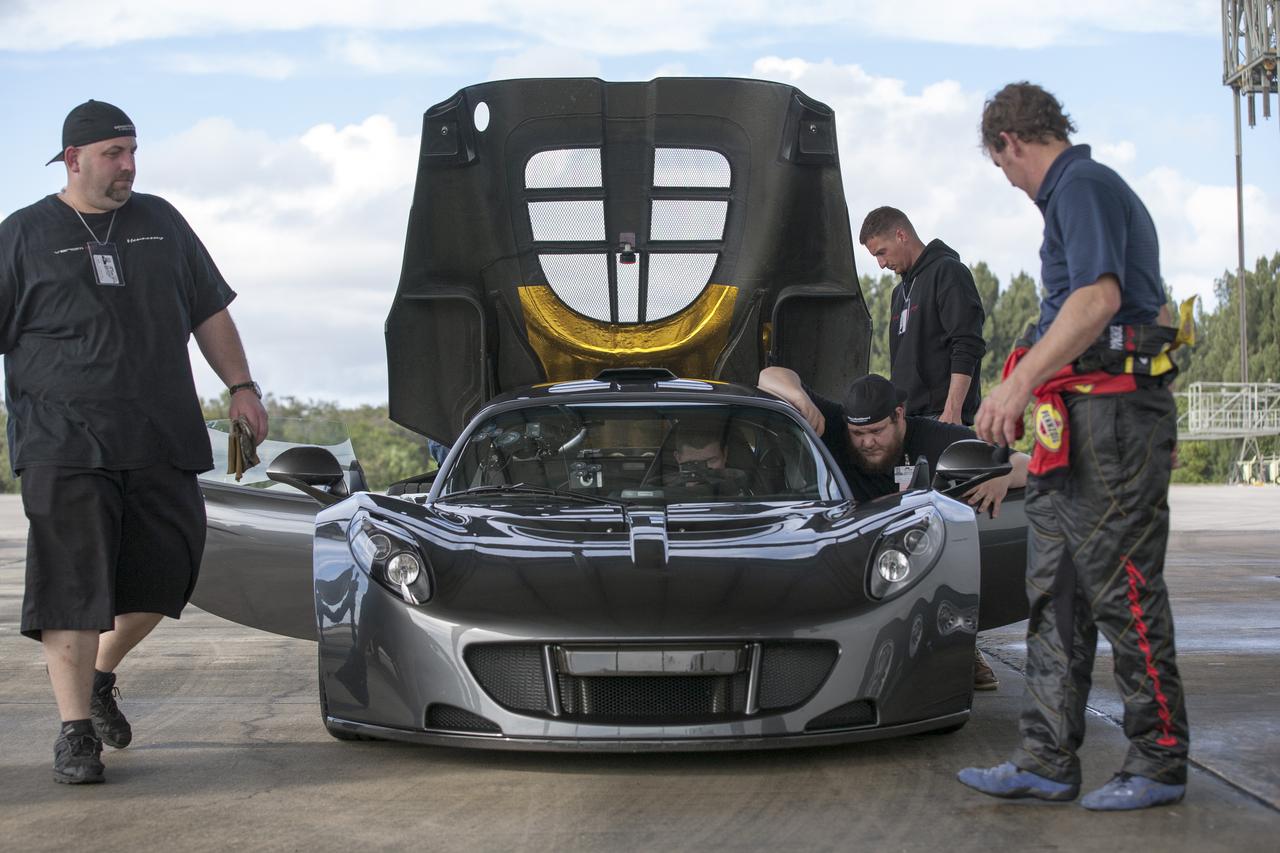
CAPE CANAVERAL, Fla. - Mechanics, engineers and Driver Brian Smith, in jumpsuit, ready a Hennessey Venom GT for test runs on the 3.5-mile long runway at the Shuttle Landing Facility at NASA's Kennedy Space Center in Florida. The flat concrete runway is one of the few places in the world where high performance automobiles can be tested for aerodynamic and safety designs. Hennessey Performance of Sealy, Texas, worked with Performance Power Racing in West Palm Beach to arrange use of the NASA facility. Performance Power Racing has conducted numerous engineering tests on the runway with a variety of vehicles. Photo credit: NASA/Kim Shiflett
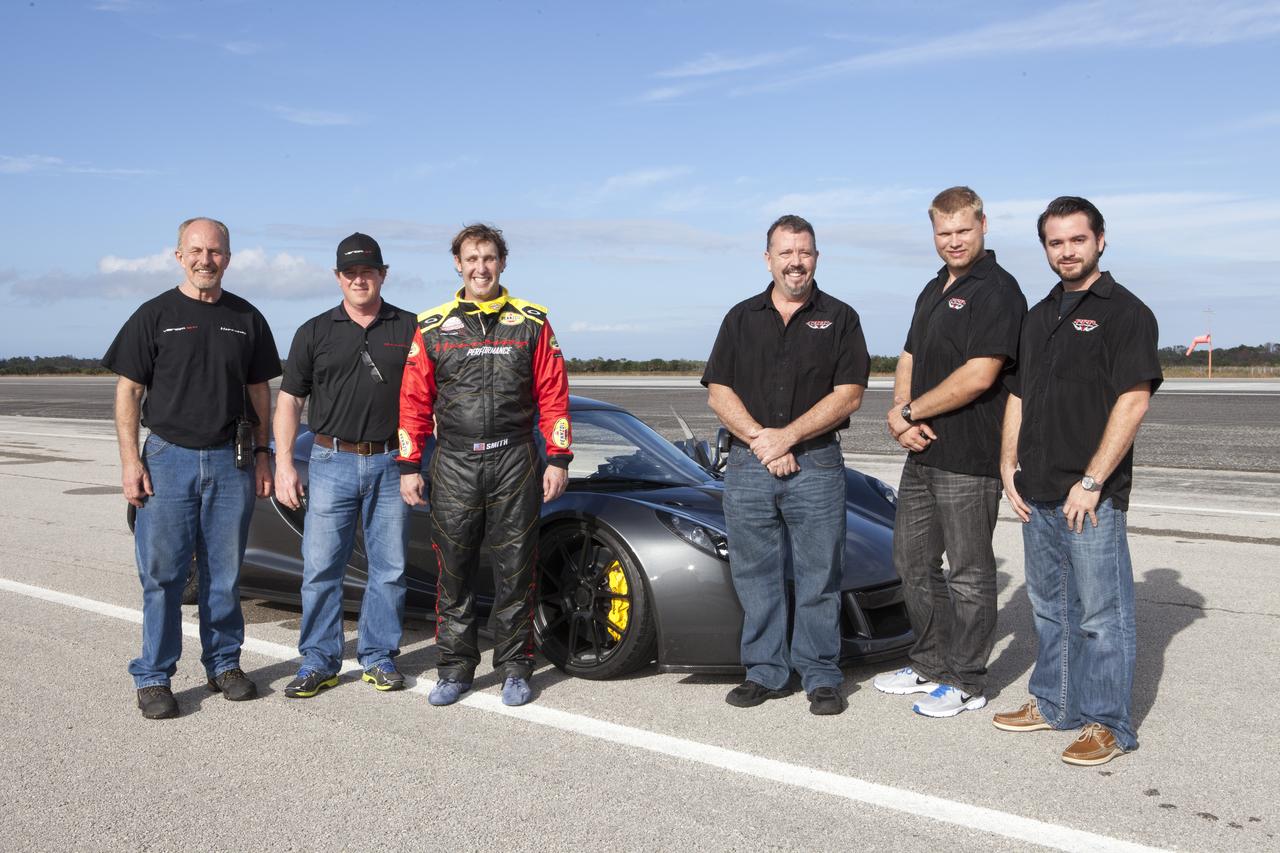
CAPE CANAVERAL, Fla. - The Performance Power Racing and Hennessey Performance teams pose with a Hennessey Venom GT at the 3.5-mile long runway at the Shuttle Landing Facility at NASA's Kennedy Space Center in Florida. The teams are, from left, Hennessey's John Heinricy, John Hennessey, Brian Smith, Performance Power Racing's Johnny Bohmer, Matt Lundy and Jeff McEachran. The flat concrete runway is one of the few places in the world where high performance automobiles can be tested for aerodynamic and safety designs. Hennessey Performance of Sealy, Texas, worked with Performance Power Racing in West Palm Beach to arrange use of the NASA facility. Performance Power Racing has conducted numerous engineering tests on the runway with a variety of vehicles.
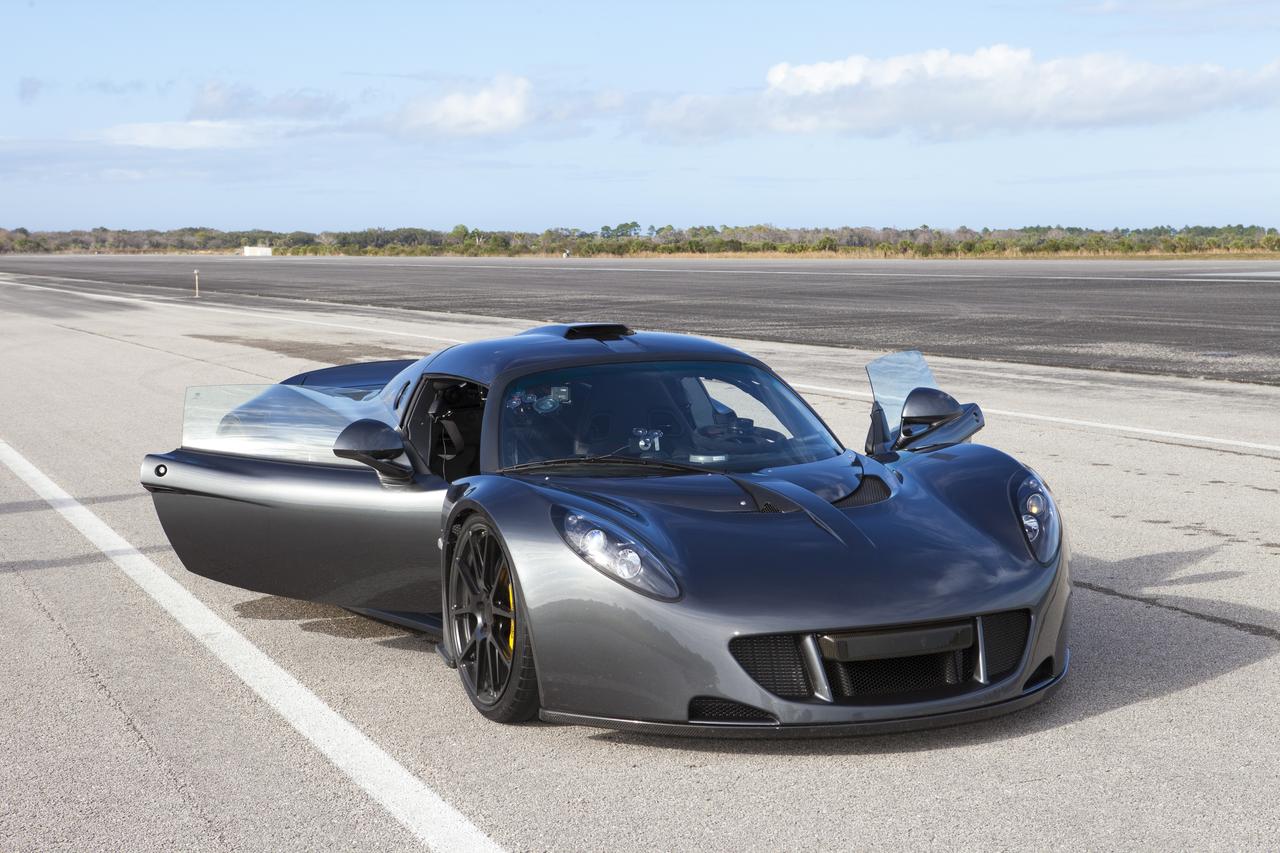
CAPE CANAVERAL, Fla. - A Hennessey Venom GT stands on the 3.5-mile long runway between test runs at the Shuttle Landing Facility at NASA's Kennedy Space Center in Florida. The flat concrete runway is one of the few places in the world where high performance automobiles can be tested for aerodynamic and safety designs. Hennessey Performance of Sealy, Texas, worked with Performance Power Racing in West Palm Beach to arrange use of the NASA facility. Performance Power Racing has conducted numerous engineering tests on the runway with a variety of vehicles. Photo credit: NASA/Kim Shiflett
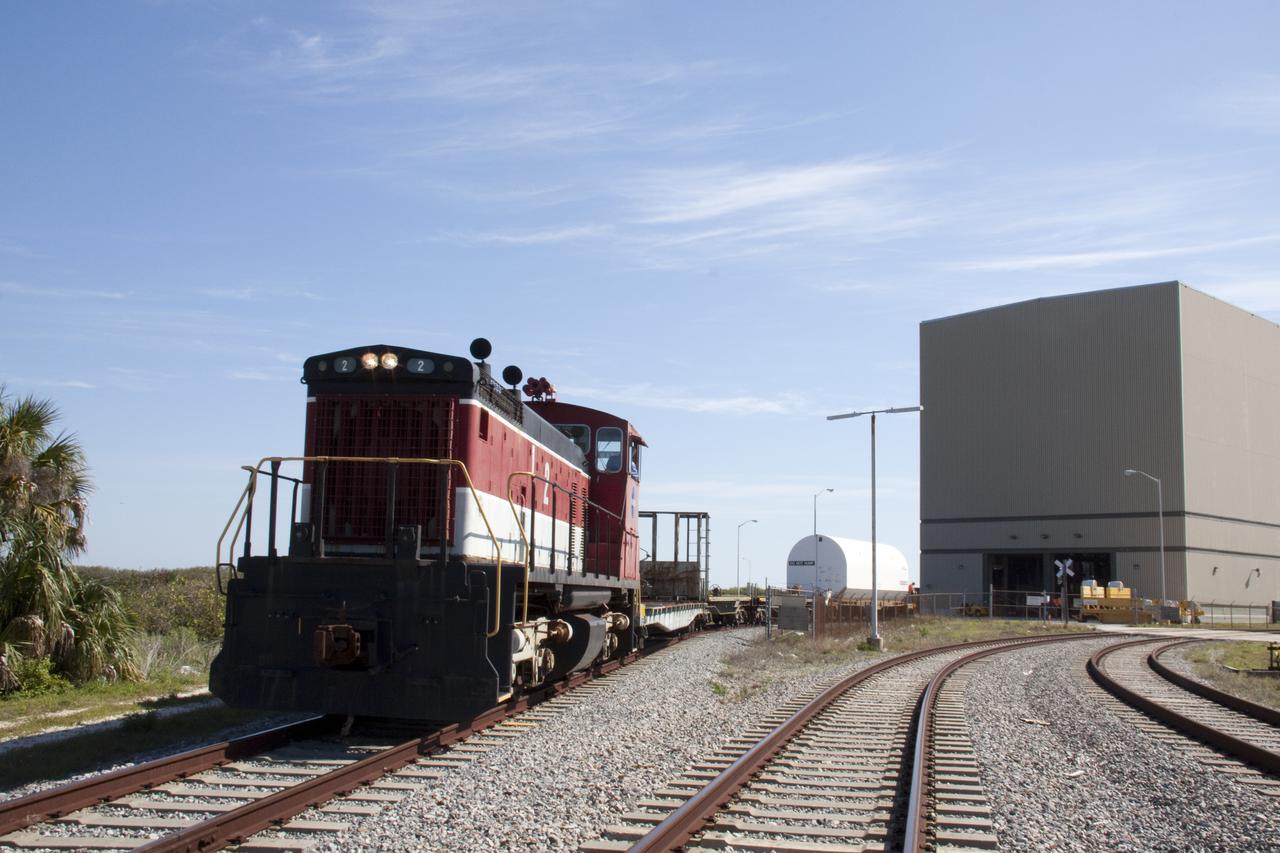
CAPE CANAVERAL, Fla. – Secured inside a railway car, a nozzle exit cone for a solid rocket booster that will be used on space shuttle Discovery's STS-133 mission is moved by locomotive no. 2 to the Rotation, Processing and Surge Facility at NASA's Kennedy Space Center in Florida. The boosters are manufactured by Alliant Techsystems Inc., or ATK. EGandG_URS runs Kennedy's railway system for NASA. The locomotive, one of three at Kennedy, will push the railway car into the facility, necessitating the use of spacer cars behind the locomotive as a safety measure. Photo credit: NASA_Troy Cryder
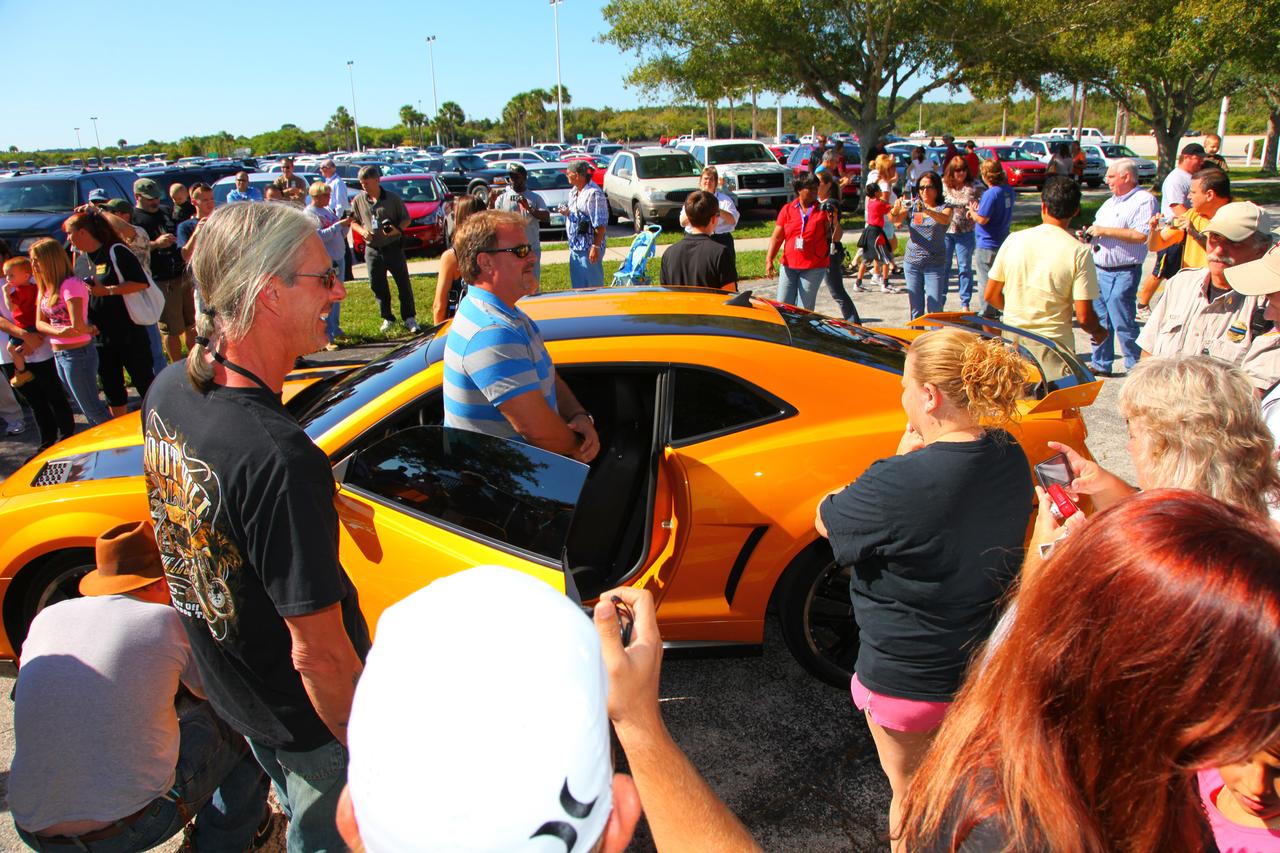
Transformers Cars at VIC During Employee Photo Op
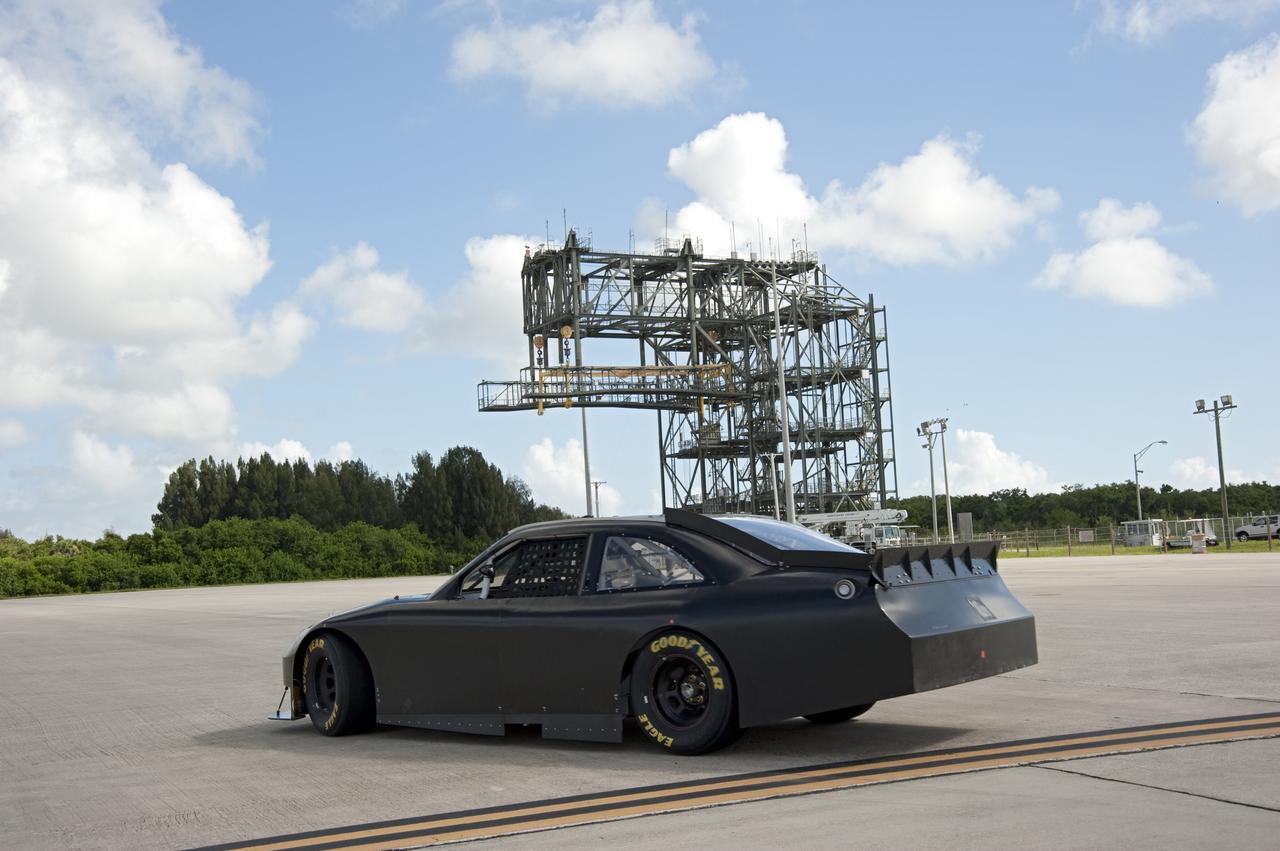
JOE GIBBS RACING TEAM - CAR TESTING
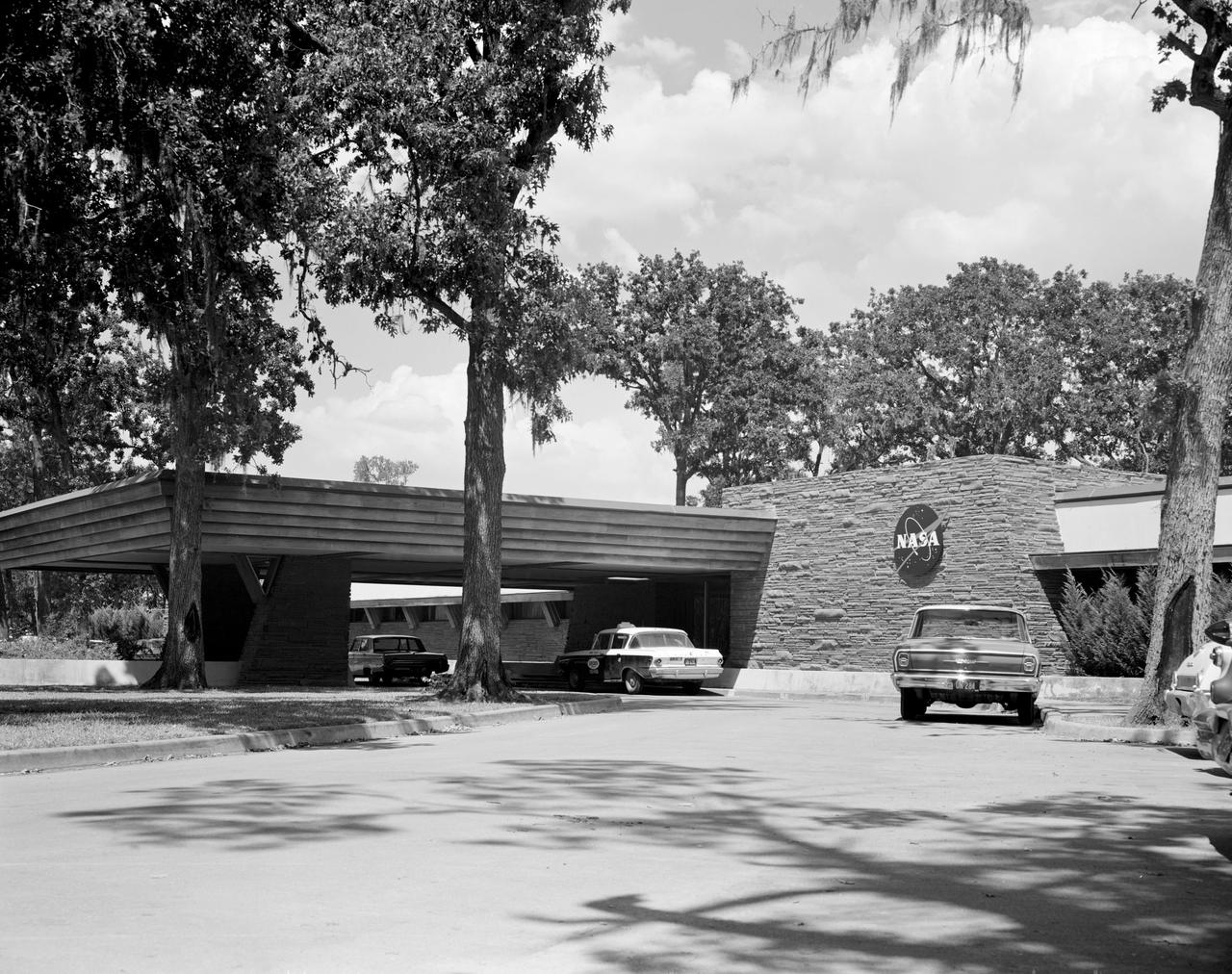
Farnsworth/Chambers Bldg with cars in the driveway at the front door
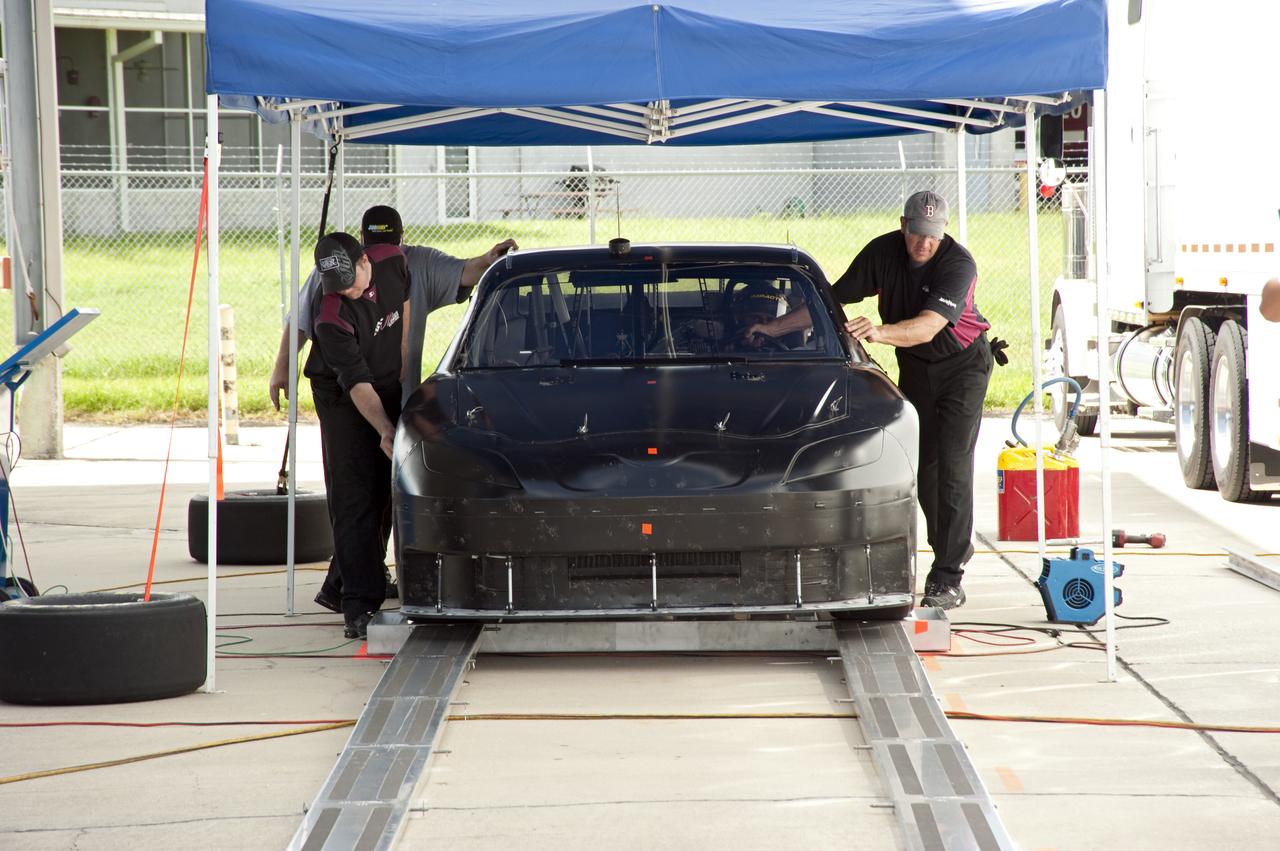
JOE GIBBS RACING TEAM - CAR TESTING
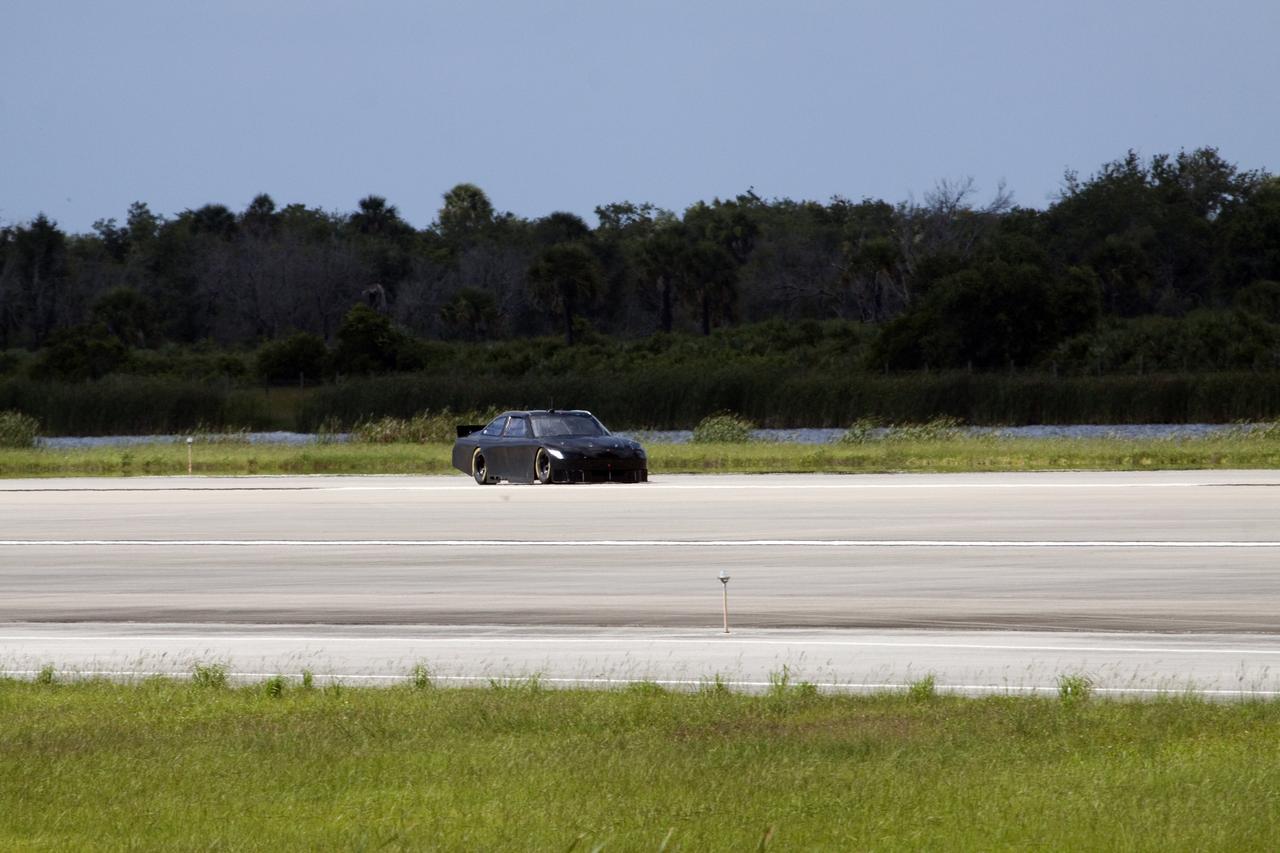
JOE GIBBS RACING TEAM - CAR TESTING
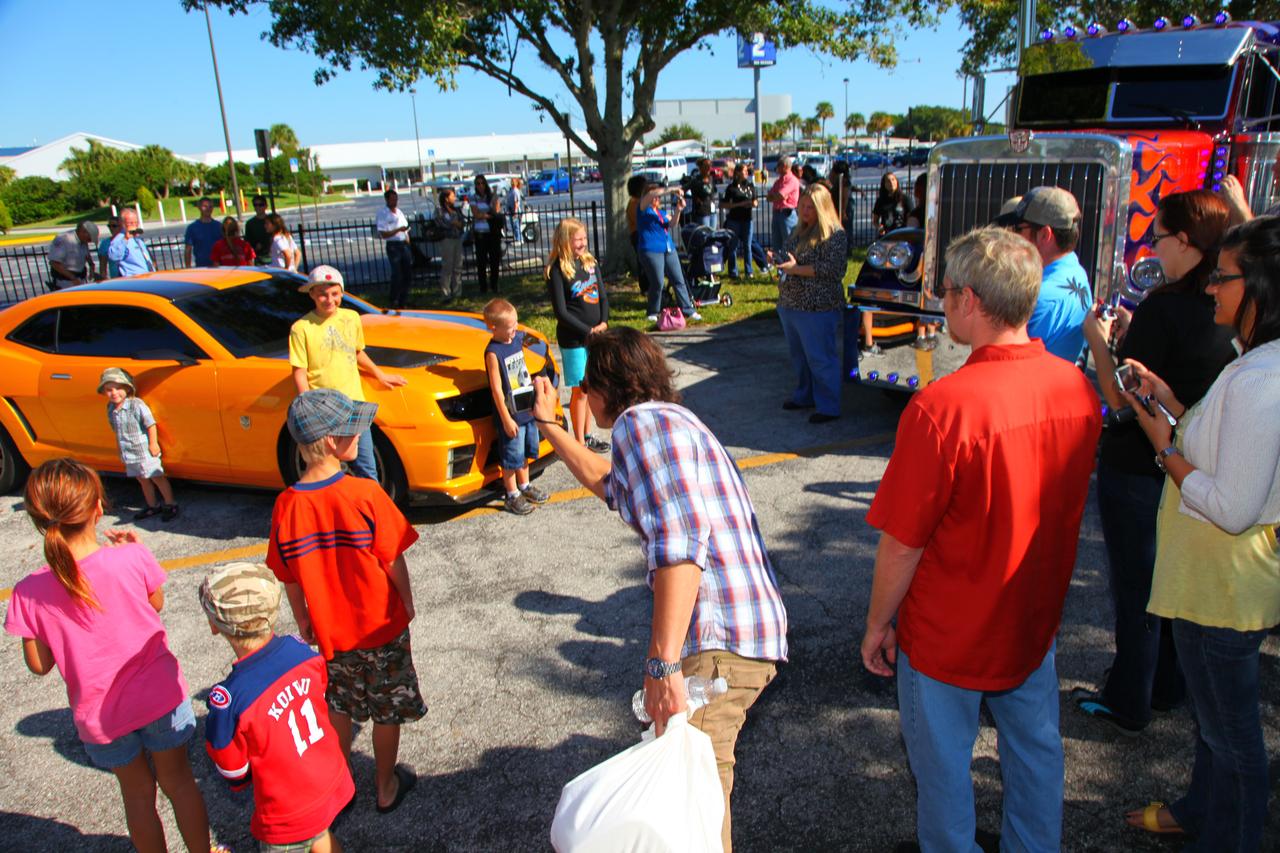
Transformers Cars at VIC During Employee Photo Op
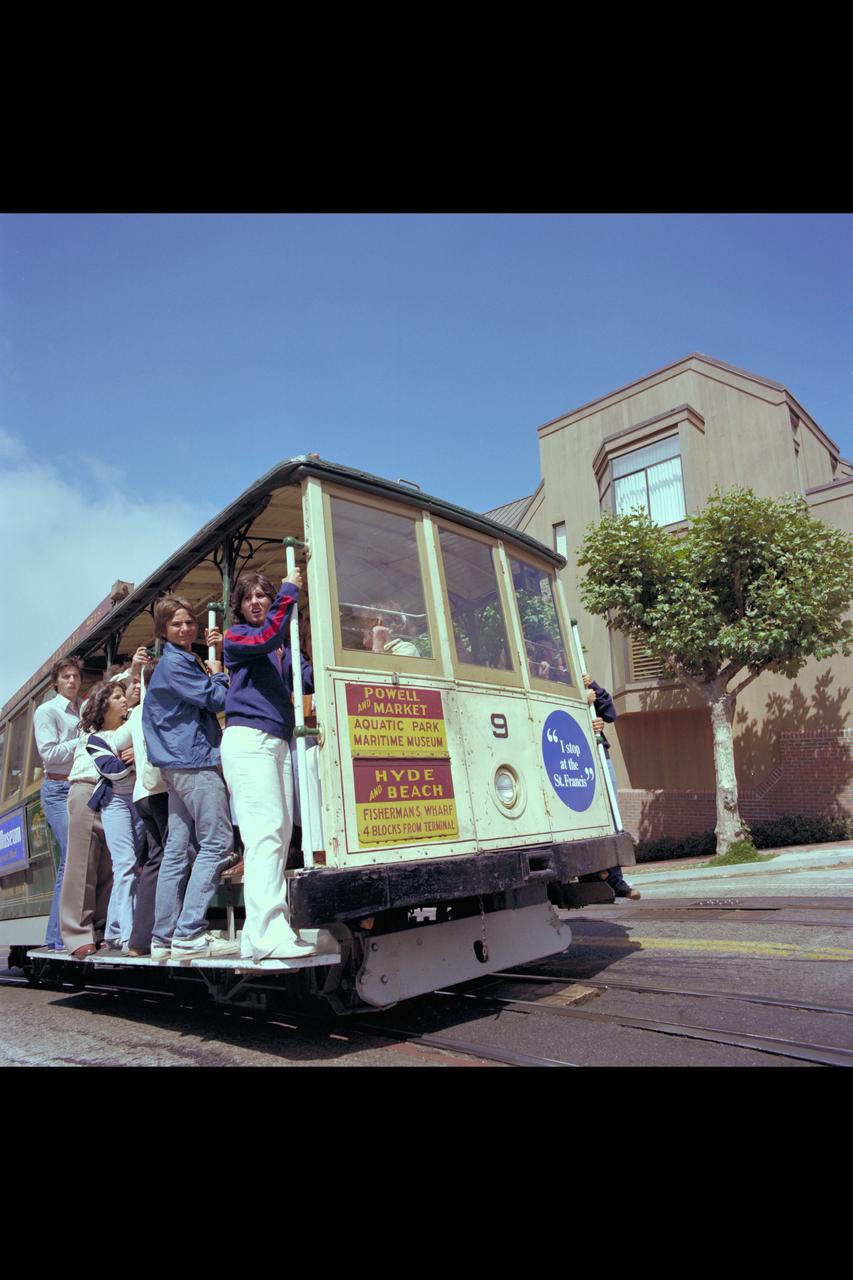
Recruiting Brochure: The San Francisco's Cable Car
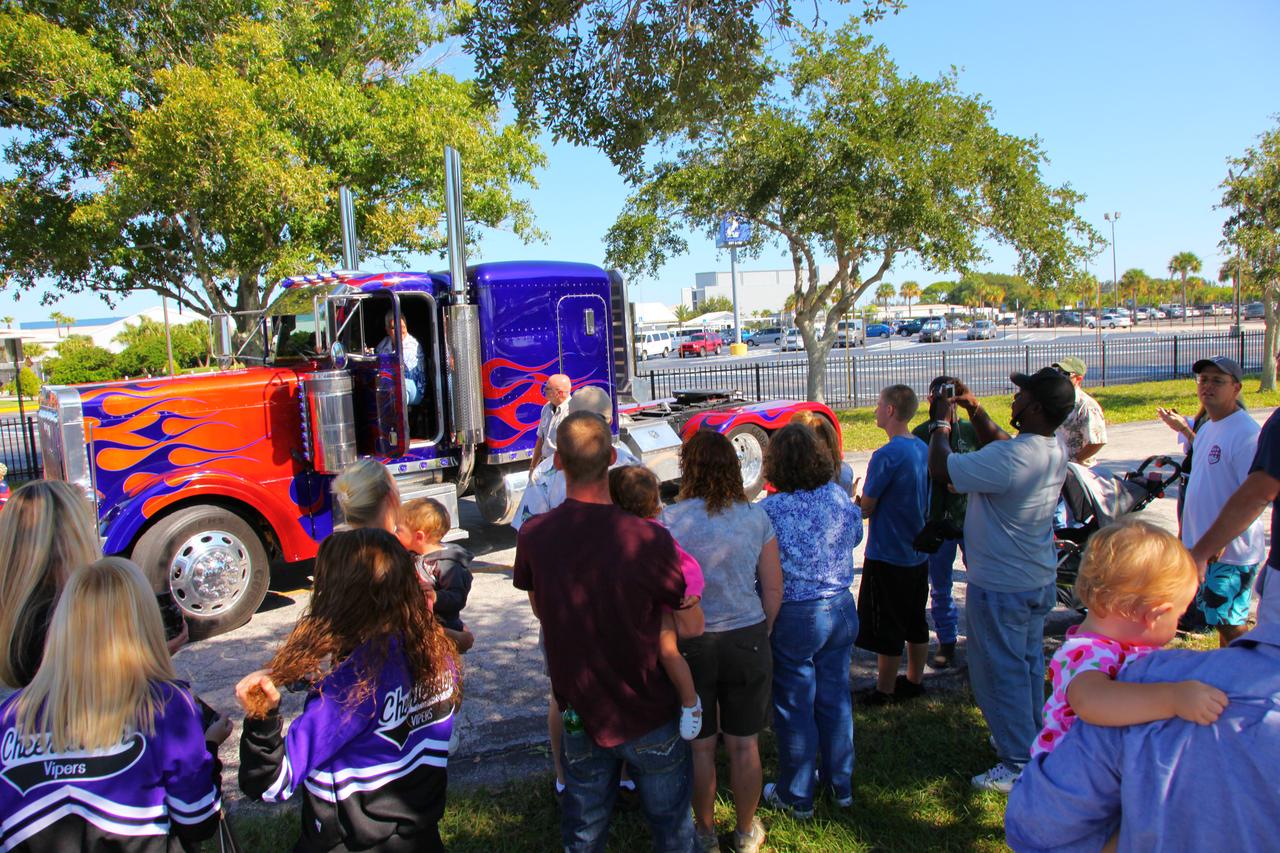
Transformers Cars at VIC During Employee Photo Op

Transformers Cars at VIC During Employee Photo Op
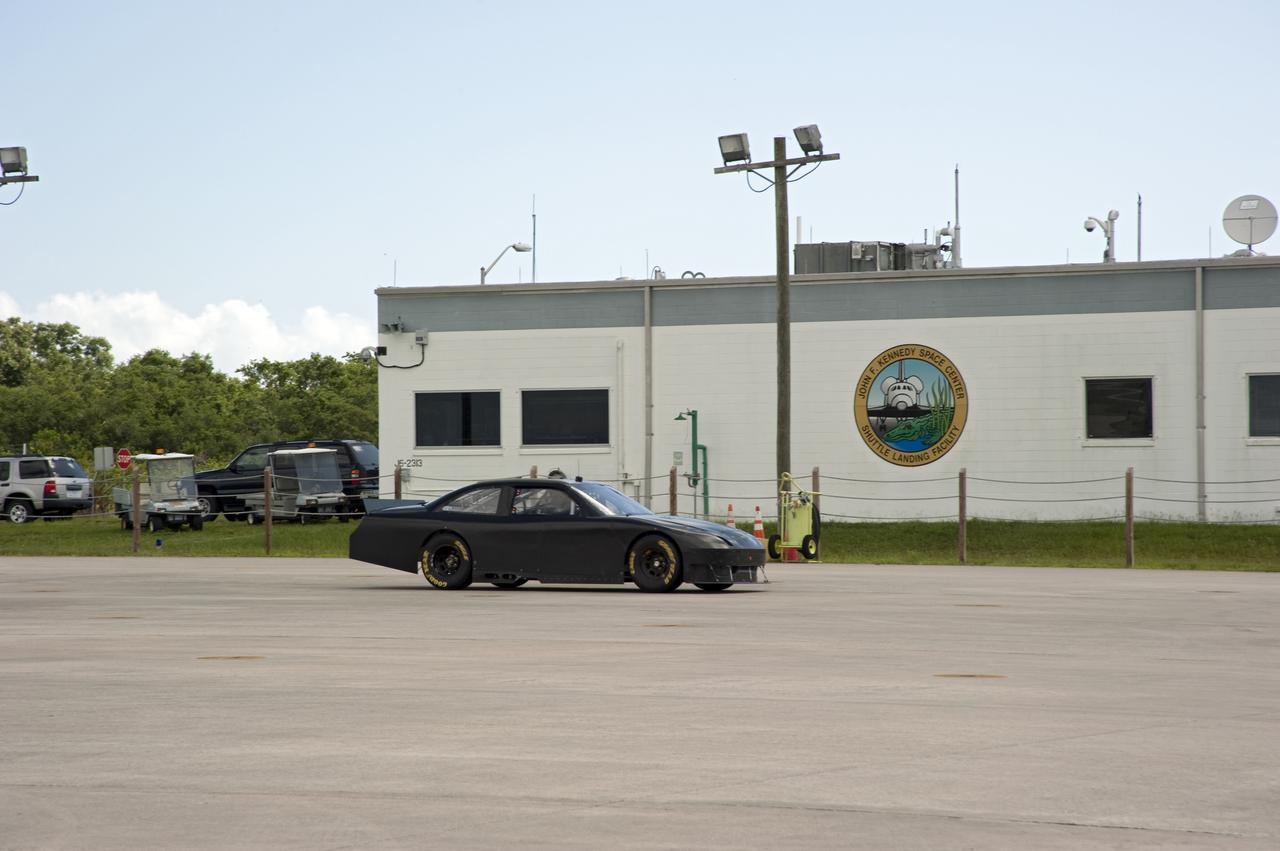
JOE GIBBS RACING TEAM - CAR TESTING
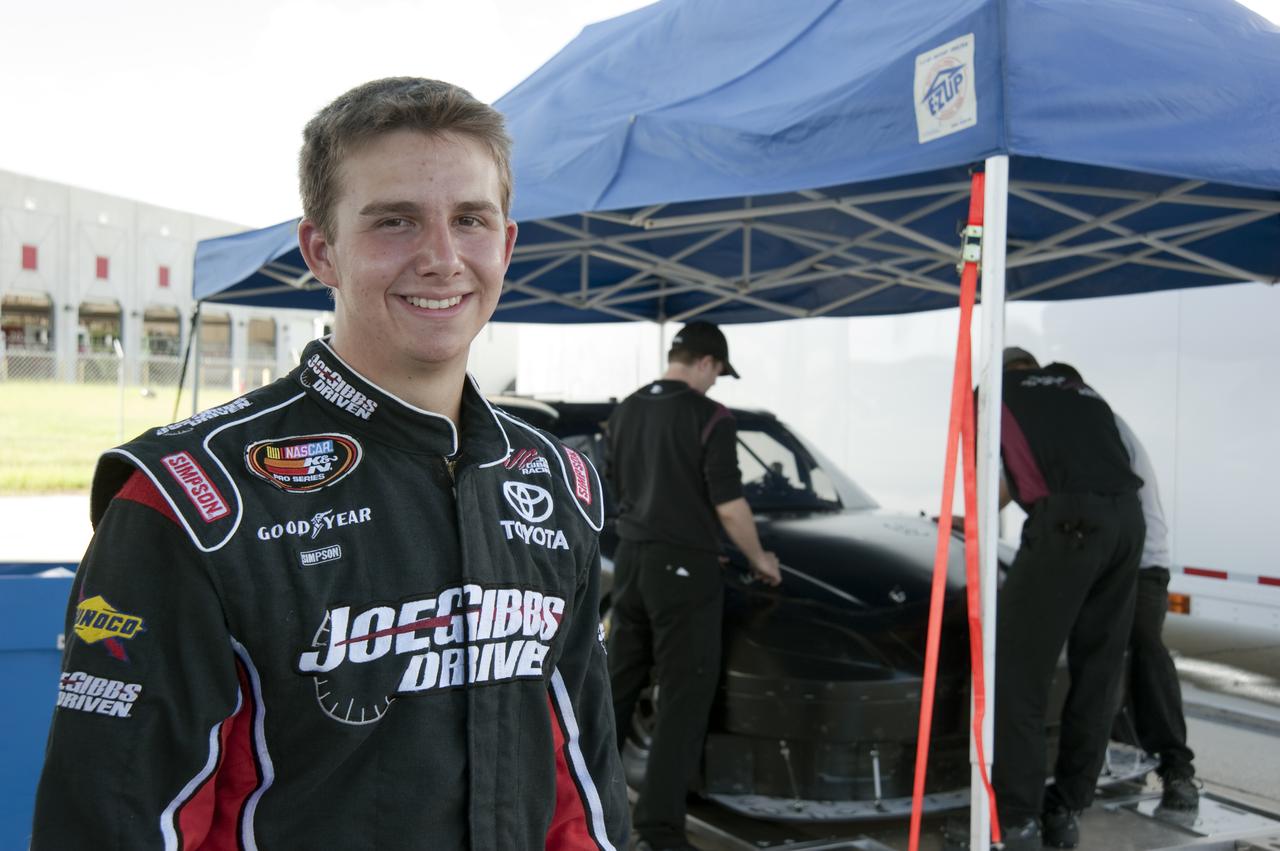
JOE GIBBS RACING TEAM - CAR TESTING

JOE GIBBS RACING TEAM - CAR TESTING
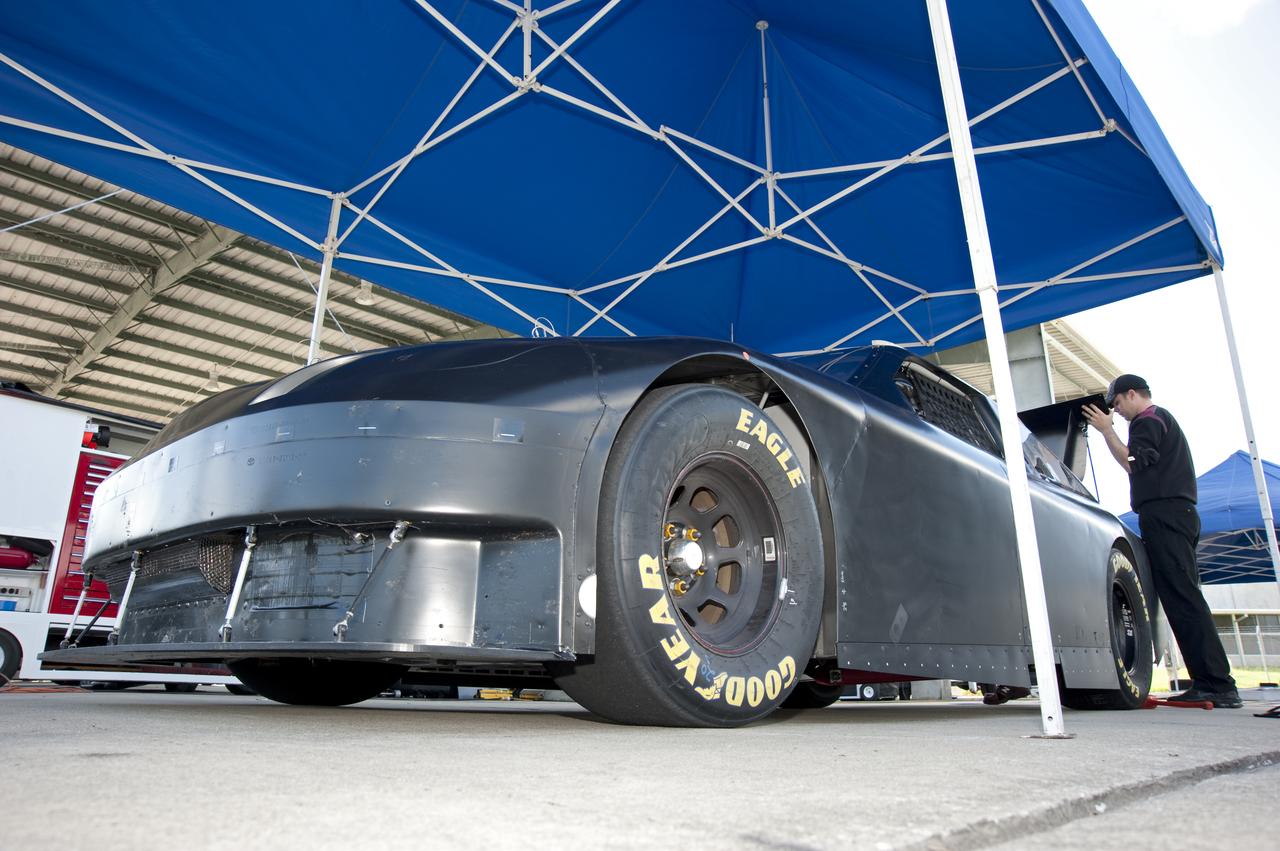
JOE GIBBS RACING TEAM - CAR TESTING
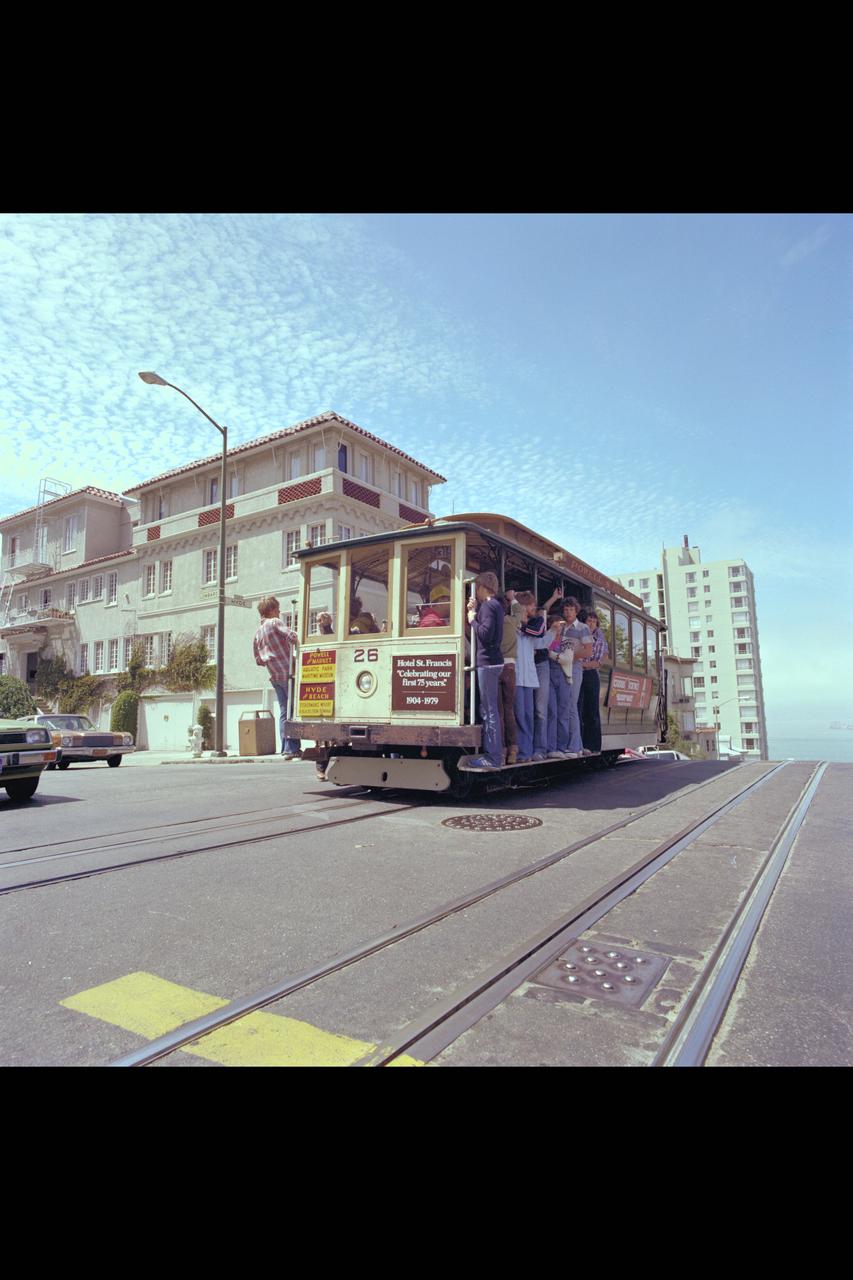
Recruiting Brochure: The San Francisco's Cable Car
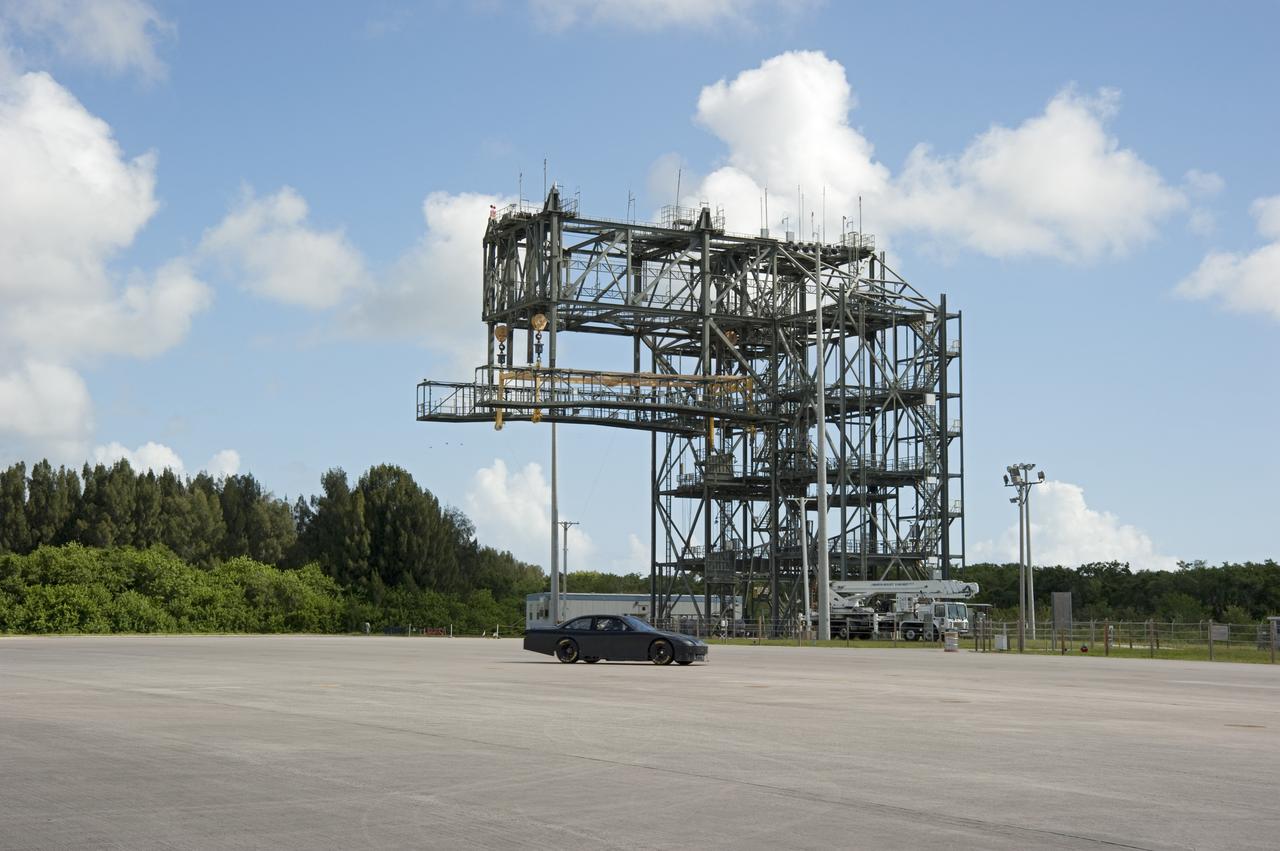
JOE GIBBS RACING TEAM - CAR TESTING

Recruiting Brochure: The San Francisco's Cable Car
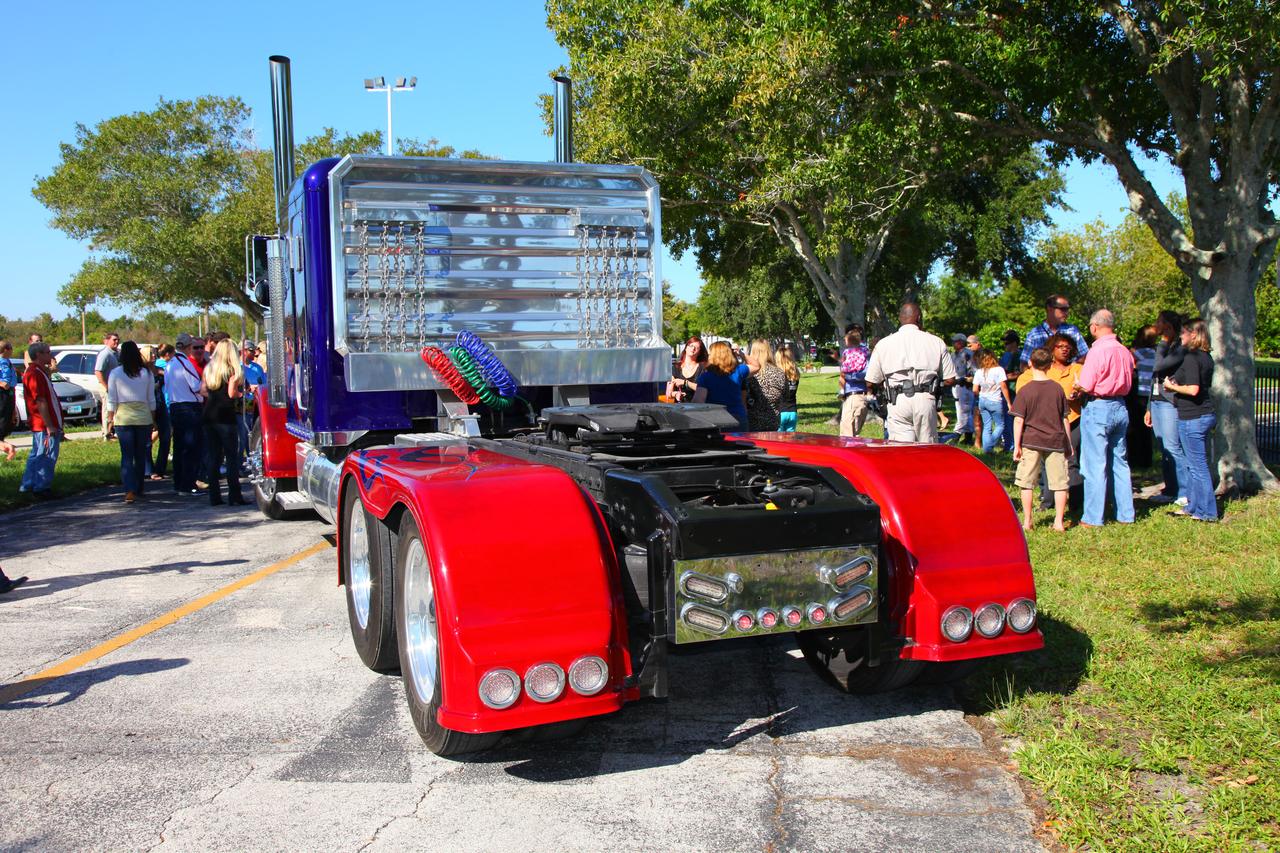
Transformers Cars at VIC During Employee Photo Op
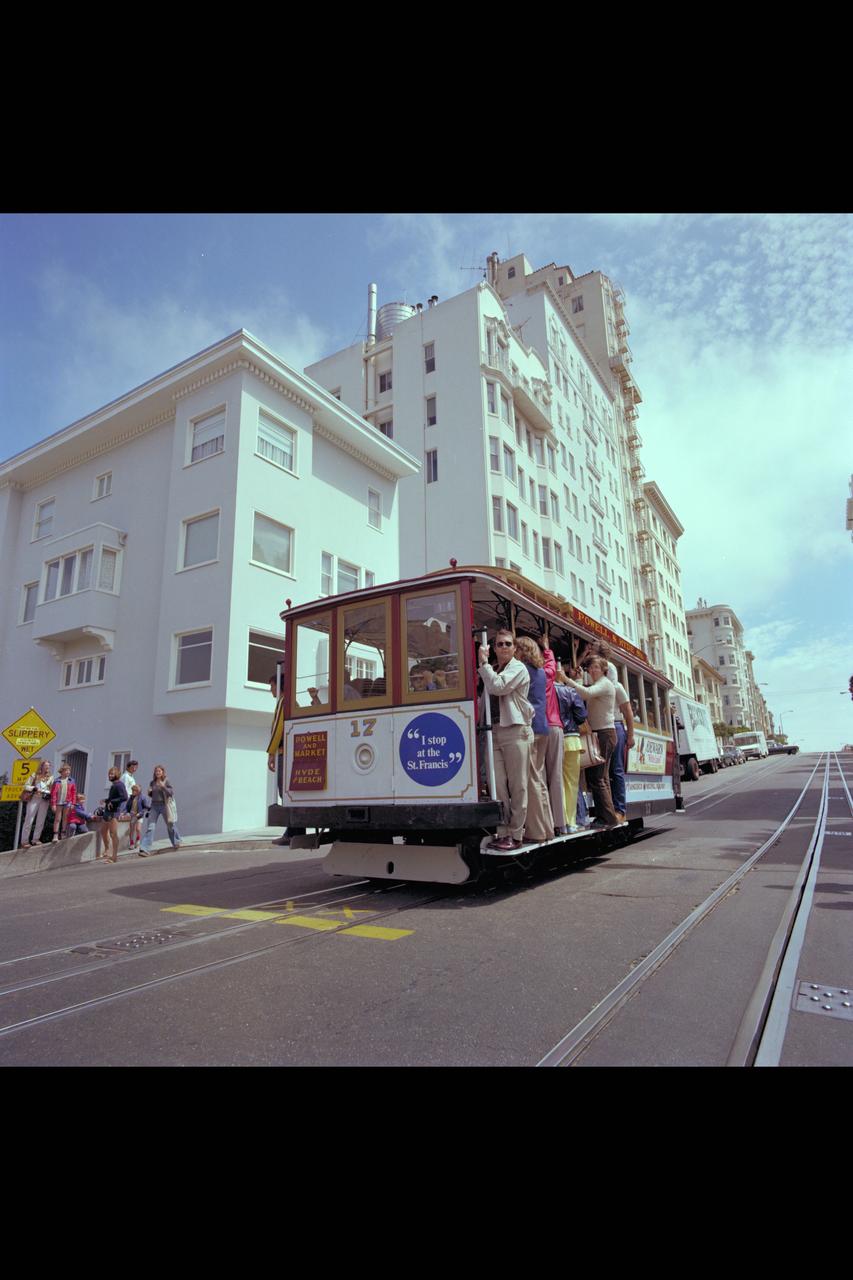
Recruiting Brochure: The San Francisco's Cable Car
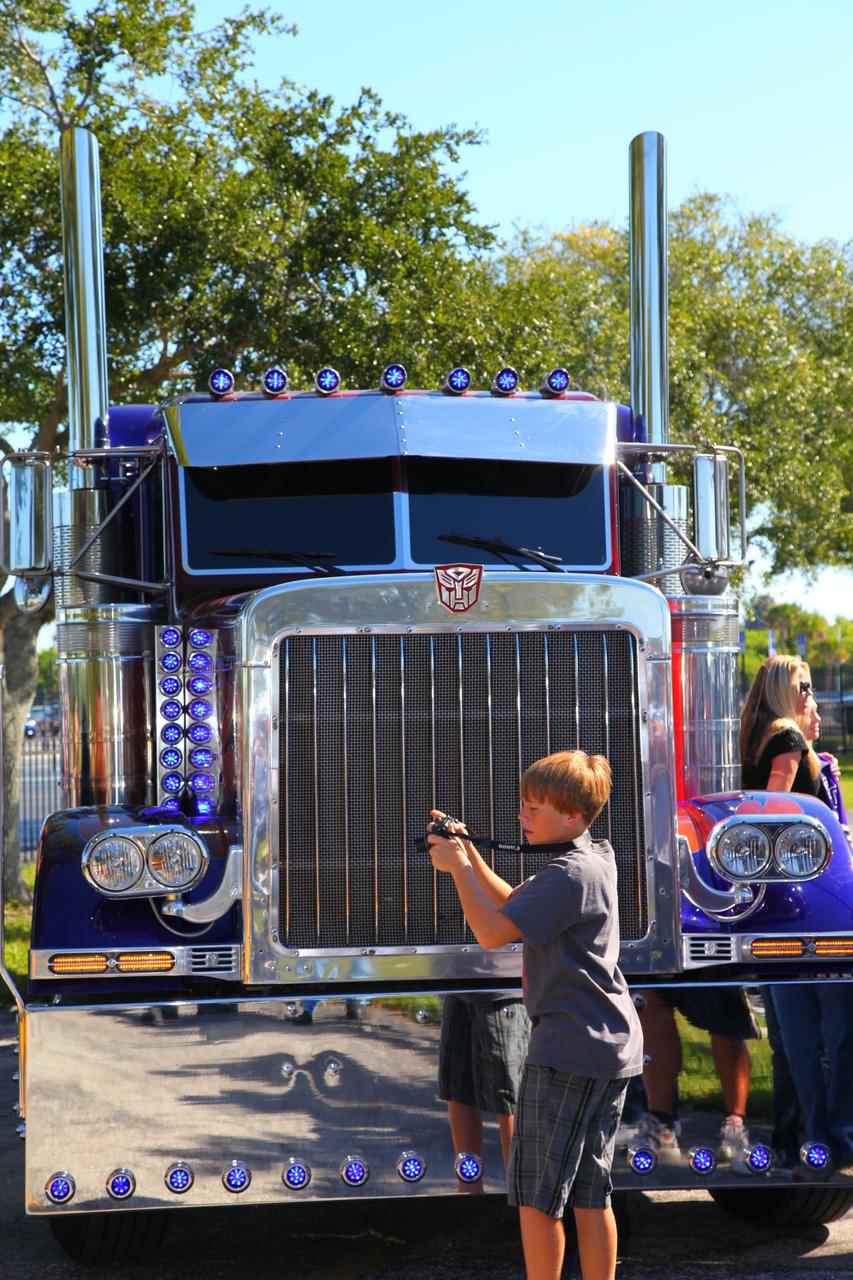
Transformers Cars at VIC During Employee Photo Op
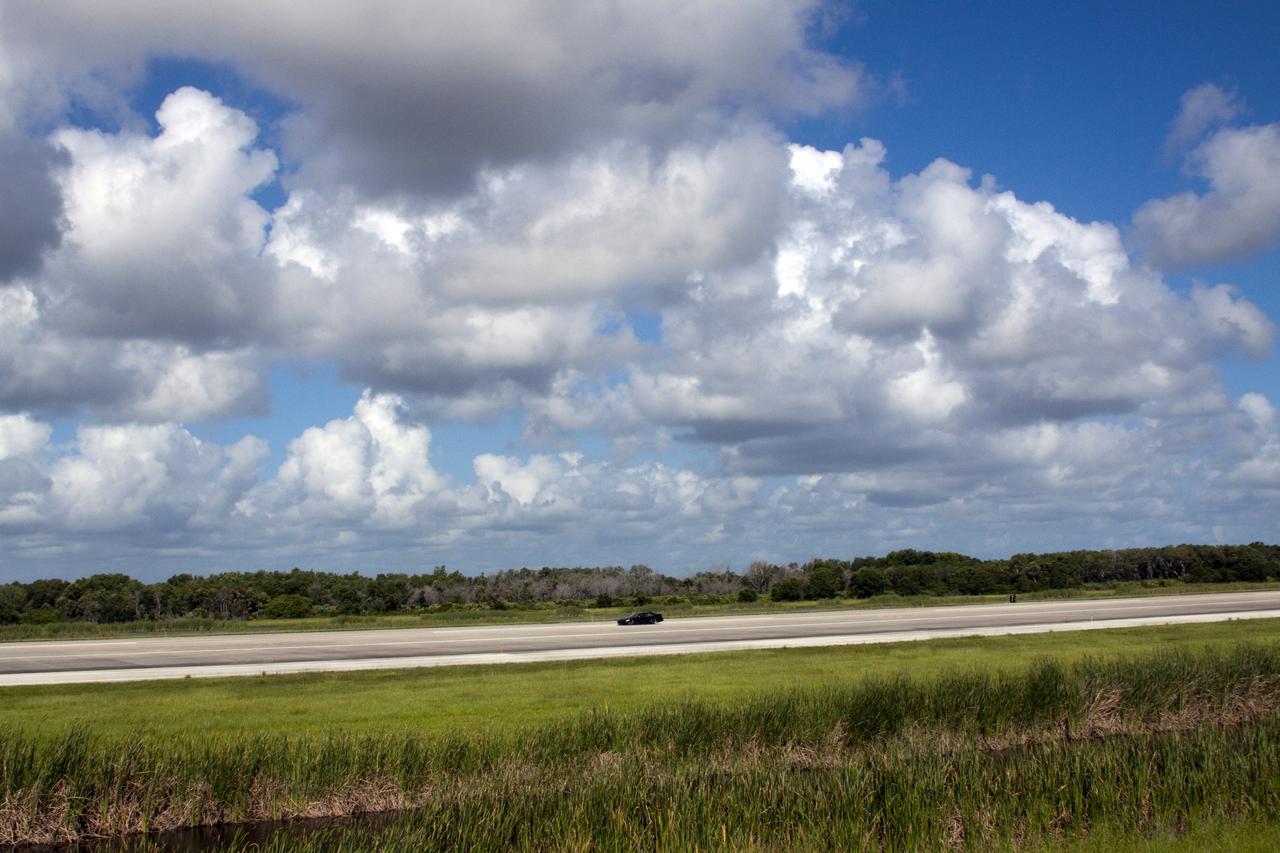
JOE GIBBS RACING TEAM - CAR TESTING
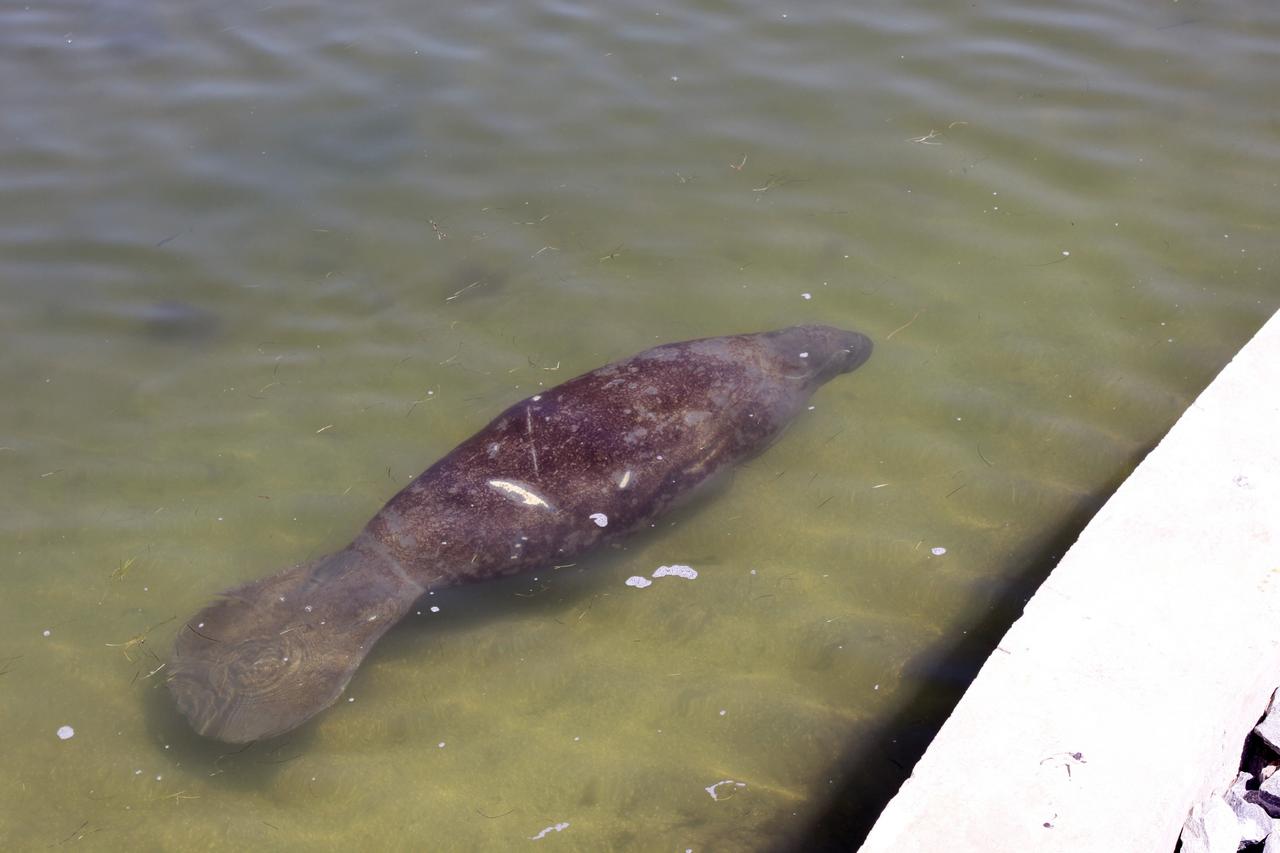
CAPE CANAVERAL, Fla. – A manatee relaxes in the Indian River near the NASA Railroad’s Jay Jay Railroad Bridge north of Launch Complex 39 at NASA’s Kennedy Space Center in Florida. The manatee was spotted by a cameraman on hand to photograph a NASA Railroad train on its way to the Florida East Coast Railway interchange in Titusville, Fla., where the train’s helium tank cars, a liquid oxygen tank car, and a liquid hydrogen dewar or tank car will be transferred for delivery to the SpaceX engine test complex outside McGregor, Texas. The railroad cars were needed in support of the Space Shuttle Program but currently are not in use by NASA following the completion of the program in 2011. Originally, the tankers belonged to the U.S. Bureau of Mines. At the peak of the shuttle program, there were approximately 30 cars in the fleet. About half the cars were returned to the bureau as launch activity diminished. Five tank cars are being loaned to SpaceX and repurposed to support their engine tests in Texas. Eight cars previously were shipped to California on loan to support the SpaceX Falcon 9 rocket launches from Space Launch Complex-4 on Vandenberg Air Force Base. SpaceX already has three helium tank cars previously used for the shuttle program at Space Launch Complex-40 on Cape Canaveral Air Force Station in Florida. For more information, visit http://www.nasa.gov/spacex. Photo credit: NASA/Jim Grossmann
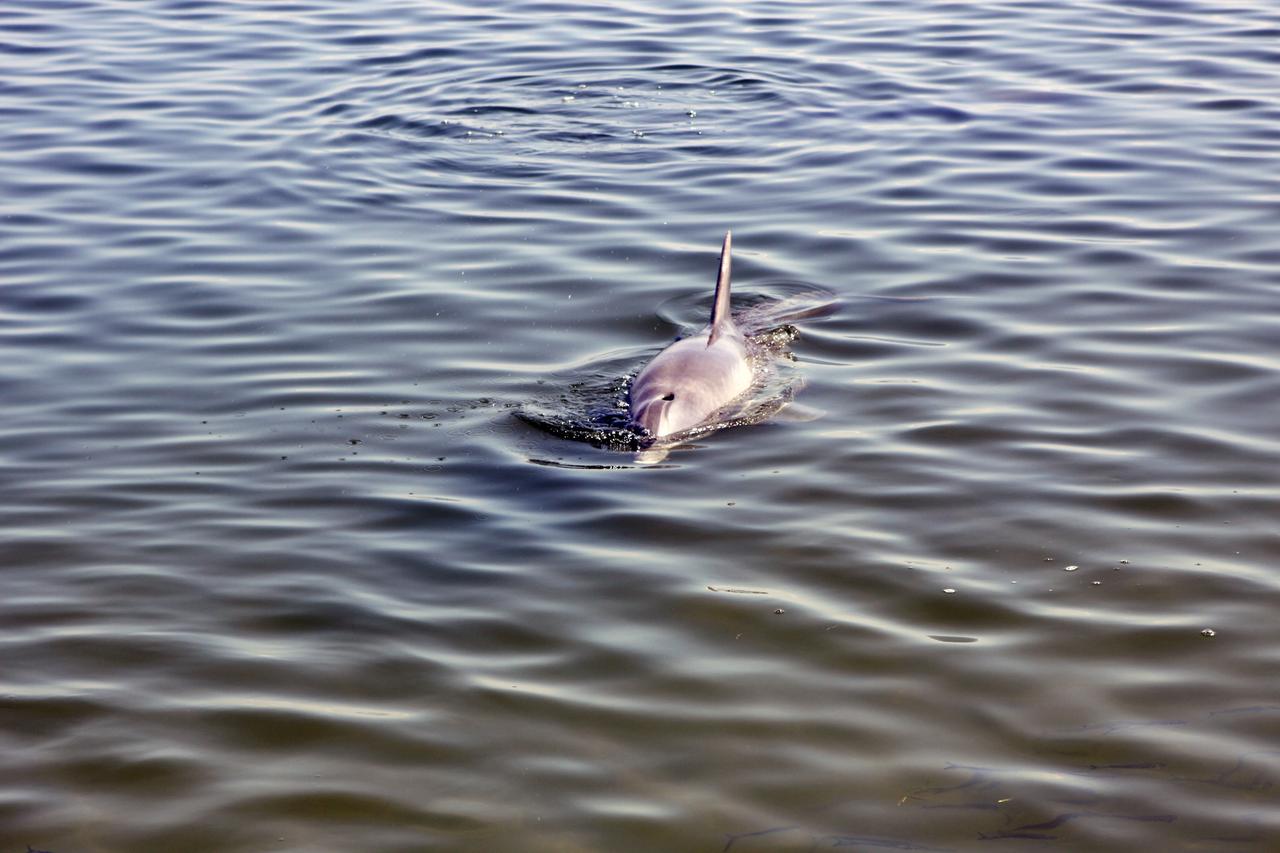
CAPE CANAVERAL, Fla. – Bubbles form around a dolphin splashing in the Indian River near the NASA Railroad’s Jay Jay Railroad Bridge north of Launch Complex 39 at NASA’s Kennedy Space Center in Florida. The dolphin was spotted by a cameraman on hand to photograph a NASA Railroad train on its way to the Florida East Coast Railway interchange in Titusville, Fla., where the train’s helium tank cars, a liquid oxygen tank car, and a liquid hydrogen dewar or tank car will be transferred for delivery to the SpaceX engine test complex outside McGregor, Texas. The railroad cars were needed in support of the Space Shuttle Program but currently are not in use by NASA following the completion of the program in 2011. Originally, the tankers belonged to the U.S. Bureau of Mines. At the peak of the shuttle program, there were approximately 30 cars in the fleet. About half the cars were returned to the bureau as launch activity diminished. Five tank cars are being loaned to SpaceX and repurposed to support their engine tests in Texas. Eight cars previously were shipped to California on loan to support the SpaceX Falcon 9 rocket launches from Space Launch Complex-4 on Vandenberg Air Force Base. SpaceX already has three helium tank cars previously used for the shuttle program at Space Launch Complex-40 on Cape Canaveral Air Force Station in Florida. For more information, visit http://www.nasa.gov/spacex. Photo credit: NASA/Jim Grossmann
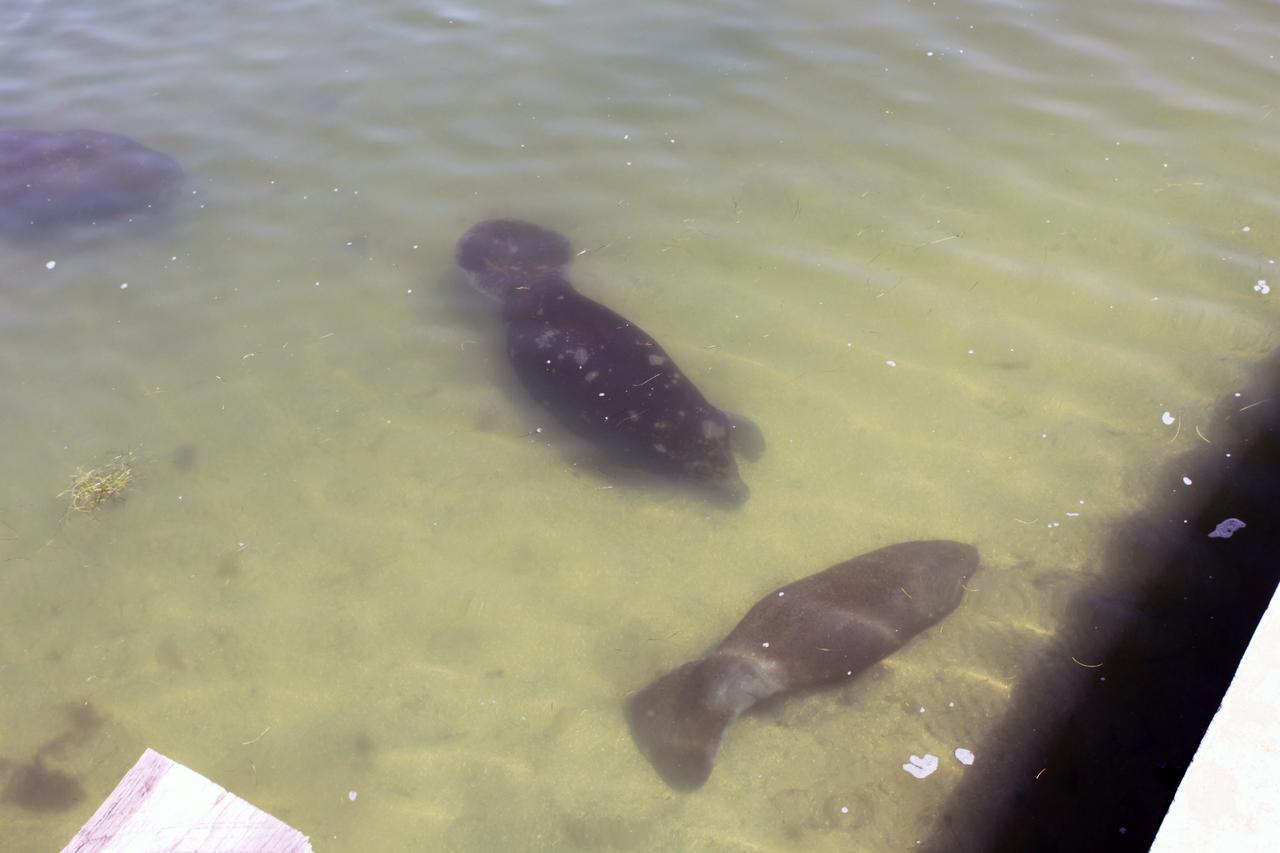
CAPE CANAVERAL, Fla. – Manatees relax in the Indian River near the NASA Railroad’s Jay Jay Railroad Bridge north of Launch Complex 39 at NASA’s Kennedy Space Center in Florida. The manatees were spotted by a cameraman on hand to photograph a NASA Railroad train on its way to the Florida East Coast Railway interchange in Titusville, Fla., where the train’s helium tank cars, a liquid oxygen tank car, and a liquid hydrogen dewar or tank car will be transferred for delivery to the SpaceX engine test complex outside McGregor, Texas. The railroad cars were needed in support of the Space Shuttle Program but currently are not in use by NASA following the completion of the program in 2011. Originally, the tankers belonged to the U.S. Bureau of Mines. At the peak of the shuttle program, there were approximately 30 cars in the fleet. About half the cars were returned to the bureau as launch activity diminished. Five tank cars are being loaned to SpaceX and repurposed to support their engine tests in Texas. Eight cars previously were shipped to California on loan to support the SpaceX Falcon 9 rocket launches from Space Launch Complex-4 on Vandenberg Air Force Base. SpaceX already has three helium tank cars previously used for the shuttle program at Space Launch Complex-40 on Cape Canaveral Air Force Station in Florida. For more information, visit http://www.nasa.gov/spacex. Photo credit: NASA/Jim Grossmann
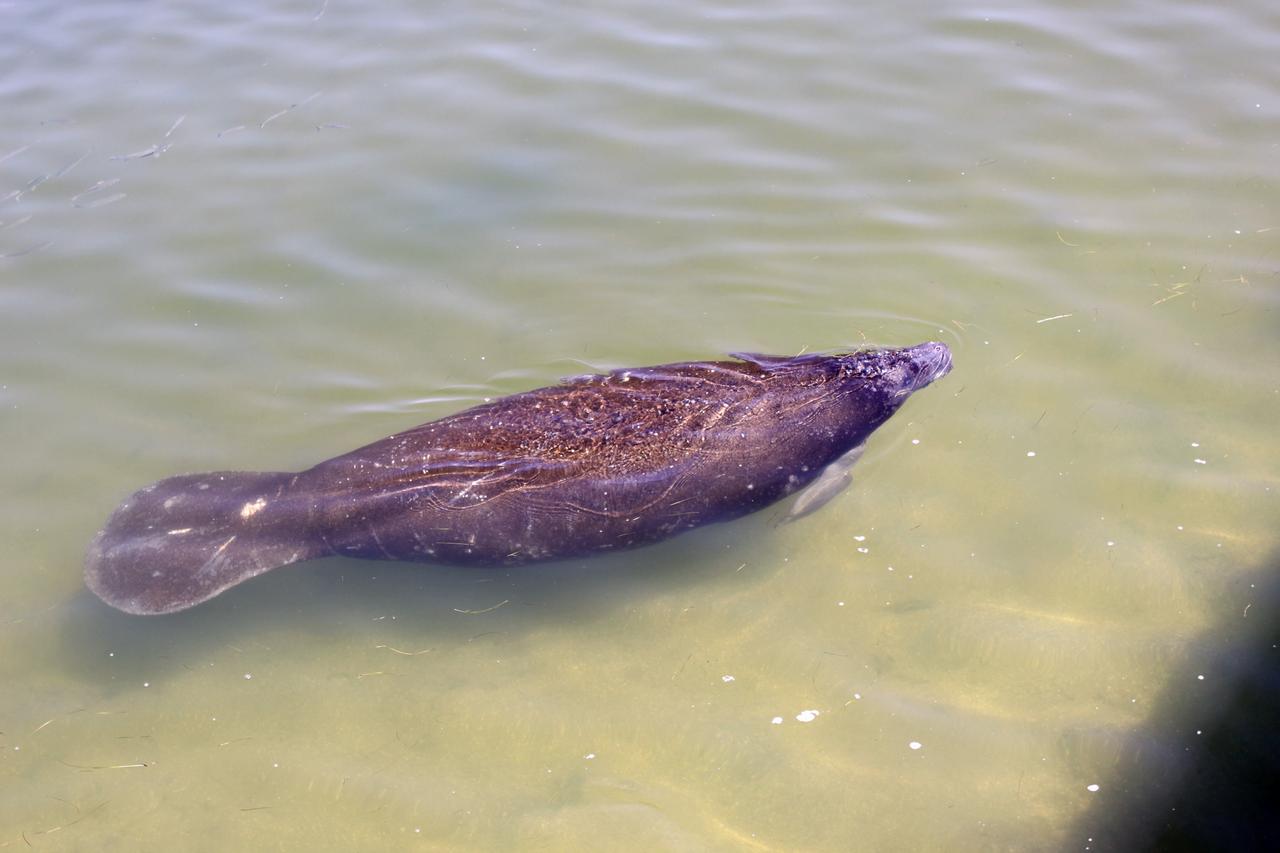
CAPE CANAVERAL, Fla. – A manatee relaxes in the Indian River near the NASA Railroad’s Jay Jay Railroad Bridge north of Launch Complex 39 at NASA’s Kennedy Space Center in Florida. The manatee was spotted by a cameraman on hand to photograph a NASA Railroad train on its way to the Florida East Coast Railway interchange in Titusville, Fla., where the train’s helium tank cars, a liquid oxygen tank car, and a liquid hydrogen dewar or tank car will be transferred for delivery to the SpaceX engine test complex outside McGregor, Texas. The railroad cars were needed in support of the Space Shuttle Program but currently are not in use by NASA following the completion of the program in 2011. Originally, the tankers belonged to the U.S. Bureau of Mines. At the peak of the shuttle program, there were approximately 30 cars in the fleet. About half the cars were returned to the bureau as launch activity diminished. Five tank cars are being loaned to SpaceX and repurposed to support their engine tests in Texas. Eight cars previously were shipped to California on loan to support the SpaceX Falcon 9 rocket launches from Space Launch Complex-4 on Vandenberg Air Force Base. SpaceX already has three helium tank cars previously used for the shuttle program at Space Launch Complex-40 on Cape Canaveral Air Force Station in Florida. For more information, visit http://www.nasa.gov/spacex. Photo credit: NASA/Jim Grossmann
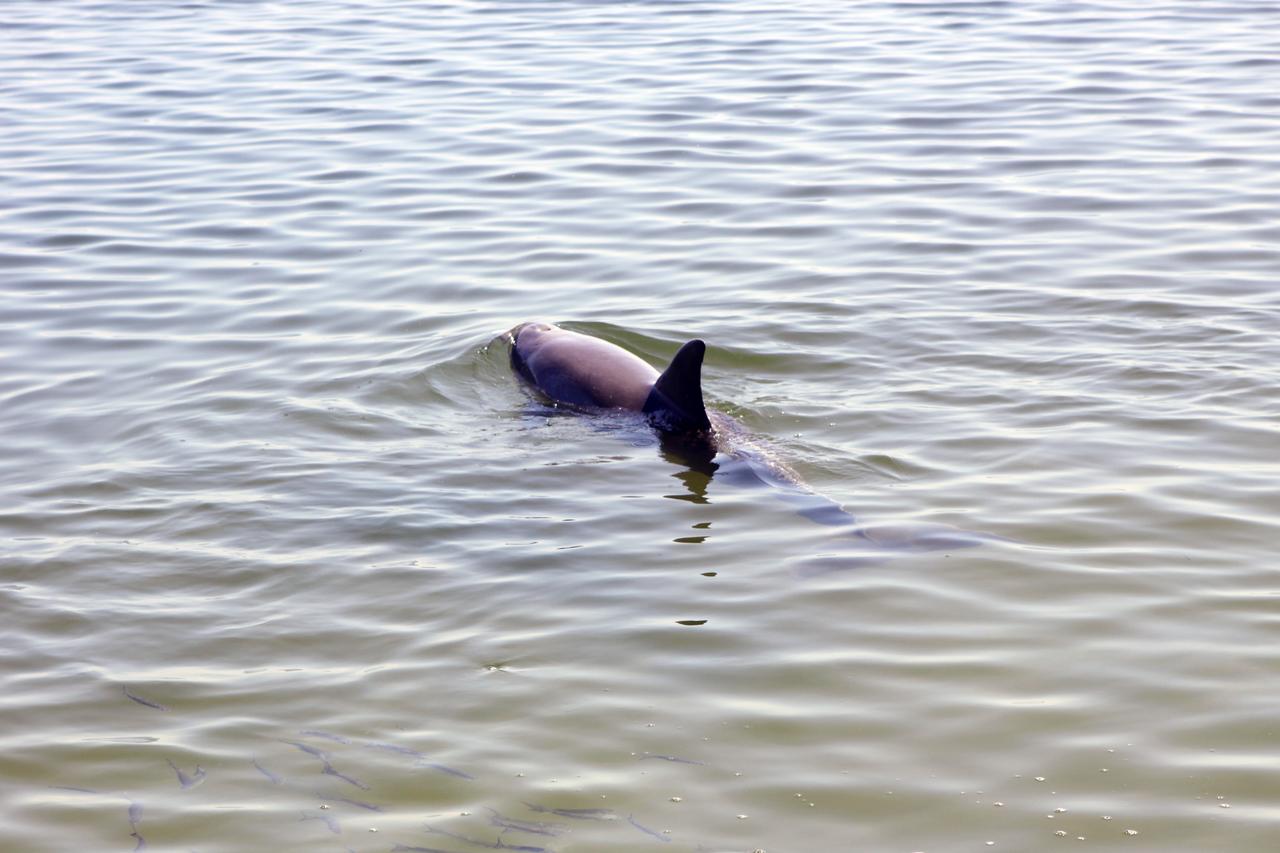
CAPE CANAVERAL, Fla. – A dolphin swims in the Indian River near the NASA Railroad’s Jay Jay Railroad Bridge north of Launch Complex 39 at NASA’s Kennedy Space Center in Florida. The dolphin was spotted by a cameraman on hand to photograph a NASA Railroad train on its way to the Florida East Coast Railway interchange in Titusville, Fla., where the train’s helium tank cars, a liquid oxygen tank car, and a liquid hydrogen dewar or tank car will be transferred for delivery to the SpaceX engine test complex outside McGregor, Texas. The railroad cars were needed in support of the Space Shuttle Program but currently are not in use by NASA following the completion of the program in 2011. Originally, the tankers belonged to the U.S. Bureau of Mines. At the peak of the shuttle program, there were approximately 30 cars in the fleet. About half the cars were returned to the bureau as launch activity diminished. Five tank cars are being loaned to SpaceX and repurposed to support their engine tests in Texas. Eight cars previously were shipped to California on loan to support the SpaceX Falcon 9 rocket launches from Space Launch Complex-4 on Vandenberg Air Force Base. SpaceX already has three helium tank cars previously used for the shuttle program at Space Launch Complex-40 on Cape Canaveral Air Force Station in Florida. For more information, visit http://www.nasa.gov/spacex. Photo credit: NASA/Jim Grossmann
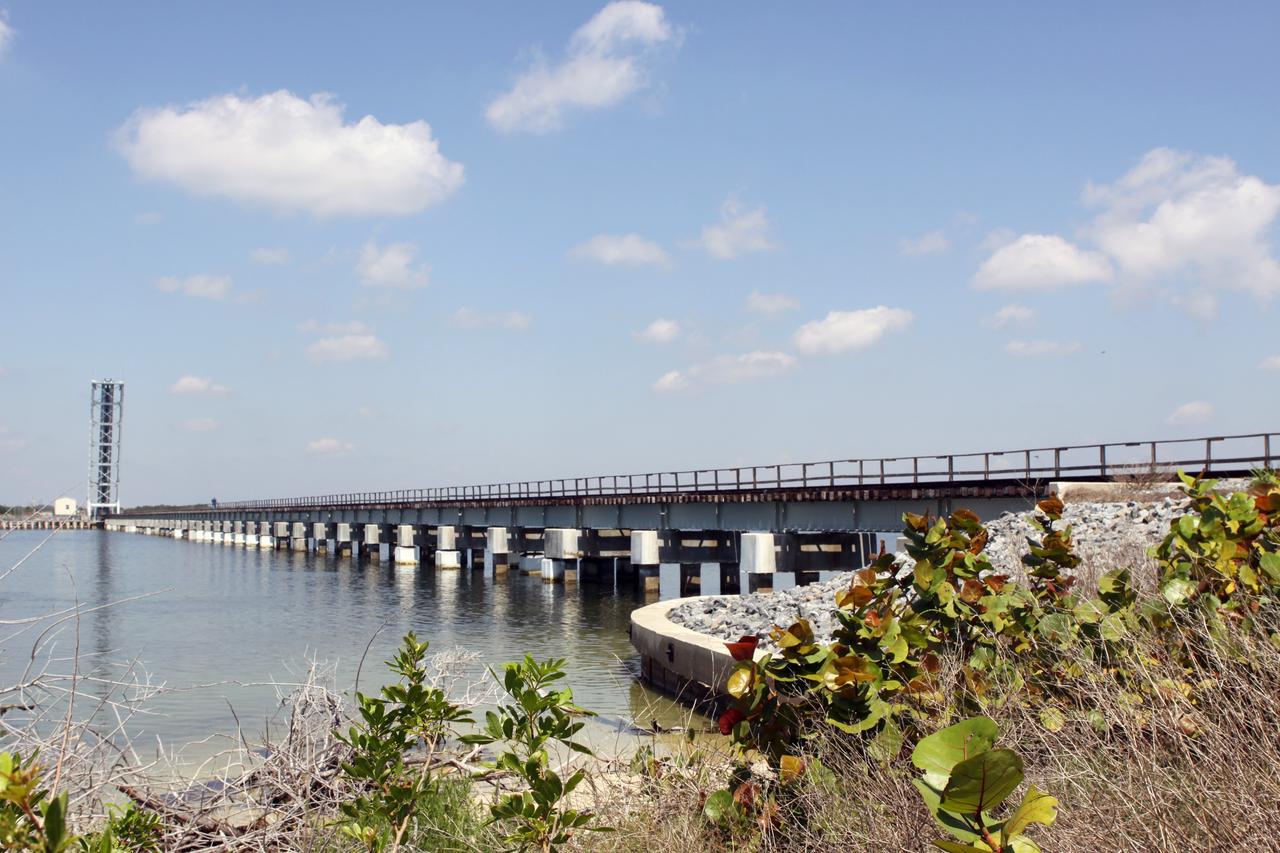
CAPE CANAVERAL, Fla. – Preparations are under way at the NASA Railroad’s Jay Jay Railroad Bridge north of Launch Complex 39 at NASA’s Kennedy Space Center in Florida for the passage of the NASA Railroad train on its way to the Florida East Coast Railway interchange in Titusville, Fla., where the train’s helium tank cars, a liquid oxygen tank car, and a liquid hydrogen dewar or tank car will be transferred for delivery to the SpaceX engine test complex outside McGregor, Texas. The permanent configuration of the drawbridge span is open, but the span will be lowered for a train to cross. The railroad cars were needed in support of the Space Shuttle Program but currently are not in use by NASA following the completion of the program in 2011. Originally, the tankers belonged to the U.S. Bureau of Mines. At the peak of the shuttle program, there were approximately 30 cars in the fleet. About half the cars were returned to the bureau as launch activity diminished. Five tank cars are being loaned to SpaceX and repurposed to support their engine tests in Texas. Eight cars previously were shipped to California on loan to support the SpaceX Falcon 9 rocket launches from Space Launch Complex-4 on Vandenberg Air Force Base. SpaceX already has three helium tank cars previously used for the shuttle program at Space Launch Complex-40 on Cape Canaveral Air Force Station in Florida. For more information, visit http://www.nasa.gov/spacex. Photo credit: NASA/Jim Grossmann
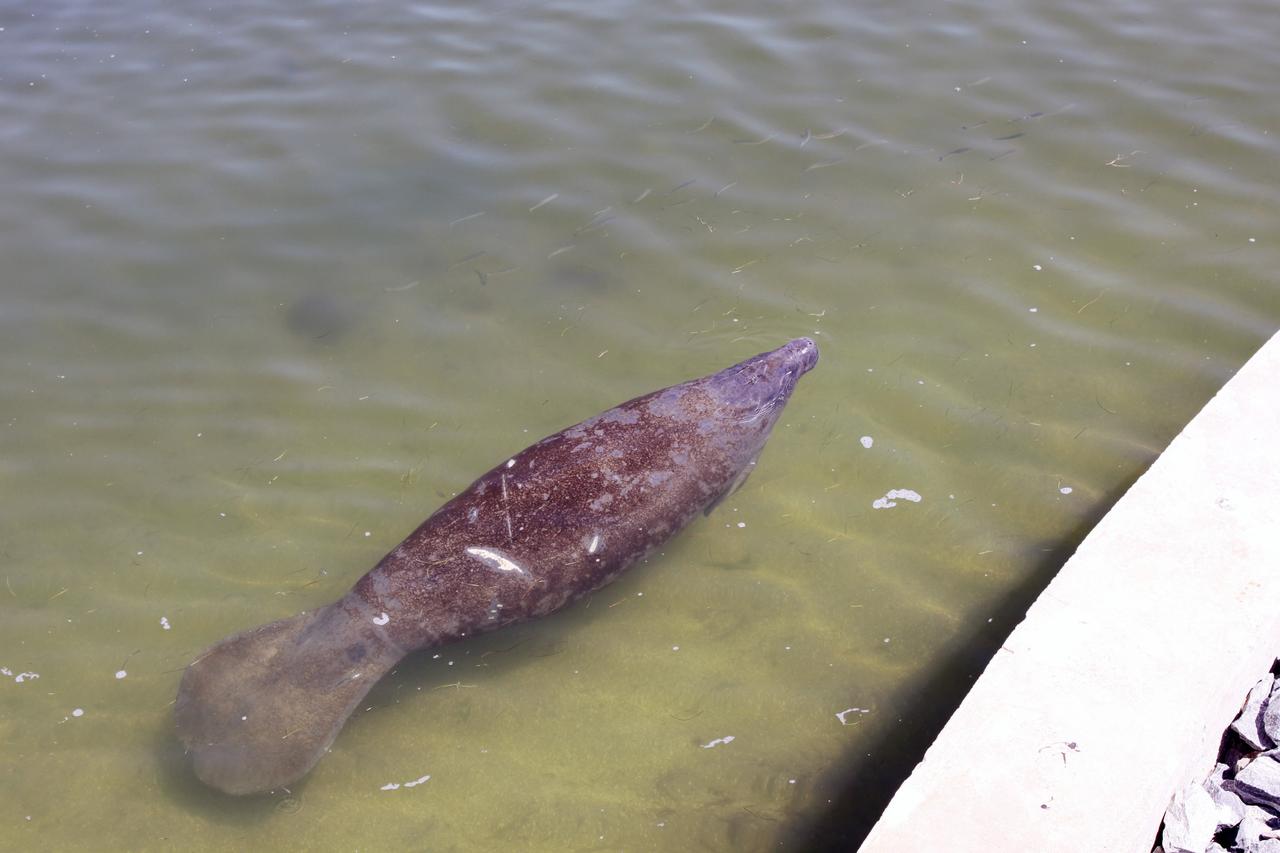
CAPE CANAVERAL, Fla. – A manatee swims in the Indian River near the NASA Railroad’s Jay Jay Railroad Bridge north of Launch Complex 39 at NASA’s Kennedy Space Center in Florida. The manatee was spotted by a cameraman on hand to photograph a NASA Railroad train on its way to the Florida East Coast Railway interchange in Titusville, Fla., where the train’s helium tank cars, a liquid oxygen tank car, and a liquid hydrogen dewar or tank car will be transferred for delivery to the SpaceX engine test complex outside McGregor, Texas. The railroad cars were needed in support of the Space Shuttle Program but currently are not in use by NASA following the completion of the program in 2011. Originally, the tankers belonged to the U.S. Bureau of Mines. At the peak of the shuttle program, there were approximately 30 cars in the fleet. About half the cars were returned to the bureau as launch activity diminished. Five tank cars are being loaned to SpaceX and repurposed to support their engine tests in Texas. Eight cars previously were shipped to California on loan to support the SpaceX Falcon 9 rocket launches from Space Launch Complex-4 on Vandenberg Air Force Base. SpaceX already has three helium tank cars previously used for the shuttle program at Space Launch Complex-40 on Cape Canaveral Air Force Station in Florida. For more information, visit http://www.nasa.gov/spacex. Photo credit: NASA/Jim Grossmann
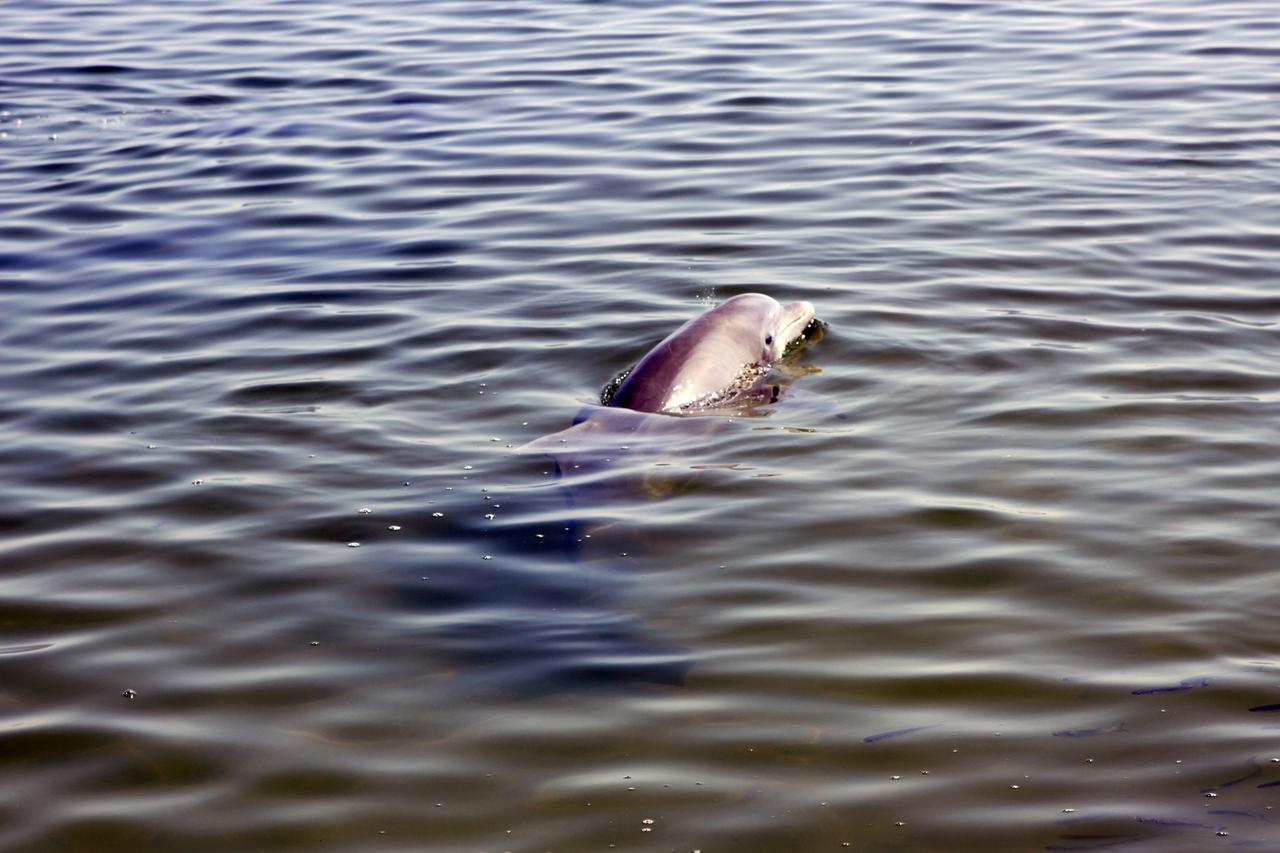
CAPE CANAVERAL, Fla. – A dolphin plays in the Indian River near the NASA Railroad’s Jay Jay Railroad Bridge north of Launch Complex 39 at NASA’s Kennedy Space Center in Florida. The dolphin was spotted by a cameraman on hand to photograph a NASA Railroad train on its way to the Florida East Coast Railway interchange in Titusville, Fla., where the train’s helium tank cars, a liquid oxygen tank car, and a liquid hydrogen dewar or tank car will be transferred for delivery to the SpaceX engine test complex outside McGregor, Texas. The railroad cars were needed in support of the Space Shuttle Program but currently are not in use by NASA following the completion of the program in 2011. Originally, the tankers belonged to the U.S. Bureau of Mines. At the peak of the shuttle program, there were approximately 30 cars in the fleet. About half the cars were returned to the bureau as launch activity diminished. Five tank cars are being loaned to SpaceX and repurposed to support their engine tests in Texas. Eight cars previously were shipped to California on loan to support the SpaceX Falcon 9 rocket launches from Space Launch Complex-4 on Vandenberg Air Force Base. SpaceX already has three helium tank cars previously used for the shuttle program at Space Launch Complex-40 on Cape Canaveral Air Force Station in Florida. For more information, visit http://www.nasa.gov/spacex. Photo credit: NASA/Jim Grossmann
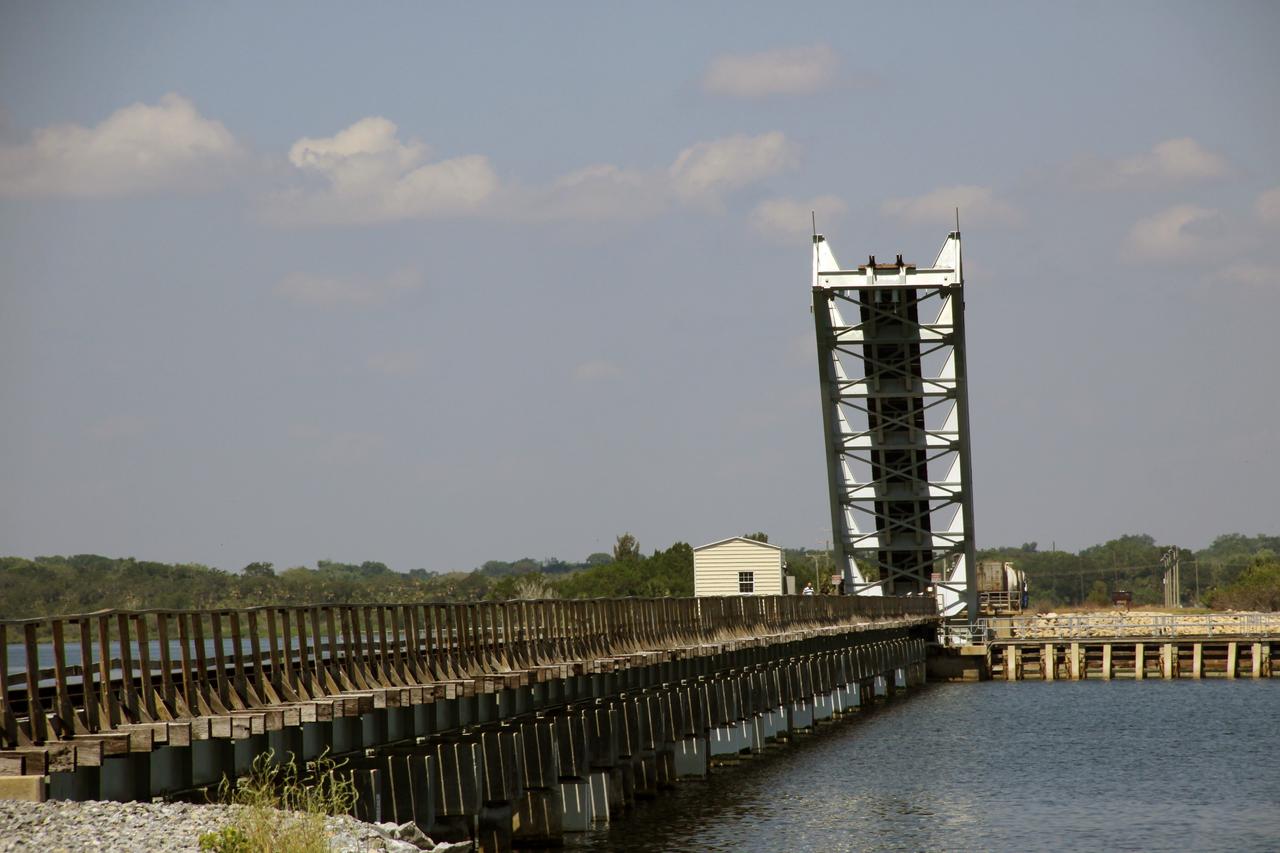
CAPE CANAVERAL, Fla. – The drawbridge span of the NASA Railroad’s Jay Jay Railroad Bridge over the Indian River north of Launch Complex 39 at NASA’s Kennedy Space Center in Florida is reopened following the passage of a NASA Railroad train. The permanent configuration of the bridge is open the span is lowered only for a train to cross. The railroad cars were needed in support of the Space Shuttle Program but currently are not in use by NASA following the completion of the program in 2011. Originally, the tankers belonged to the U.S. Bureau of Mines. At the peak of the shuttle program, there were approximately 30 cars in the fleet. About half the cars were returned to the bureau as launch activity diminished. Five tank cars are being loaned to SpaceX and repurposed to support their engine tests in Texas. Eight cars previously were shipped to California on loan to support the SpaceX Falcon 9 rocket launches from Space Launch Complex-4 on Vandenberg Air Force Base. SpaceX already has three helium tank cars previously used for the shuttle program at Space Launch Complex-40 on Cape Canaveral Air Force Station in Florida. For more information, visit http://www.nasa.gov/spacex. Photo credit: NASA/Jim Grossmann
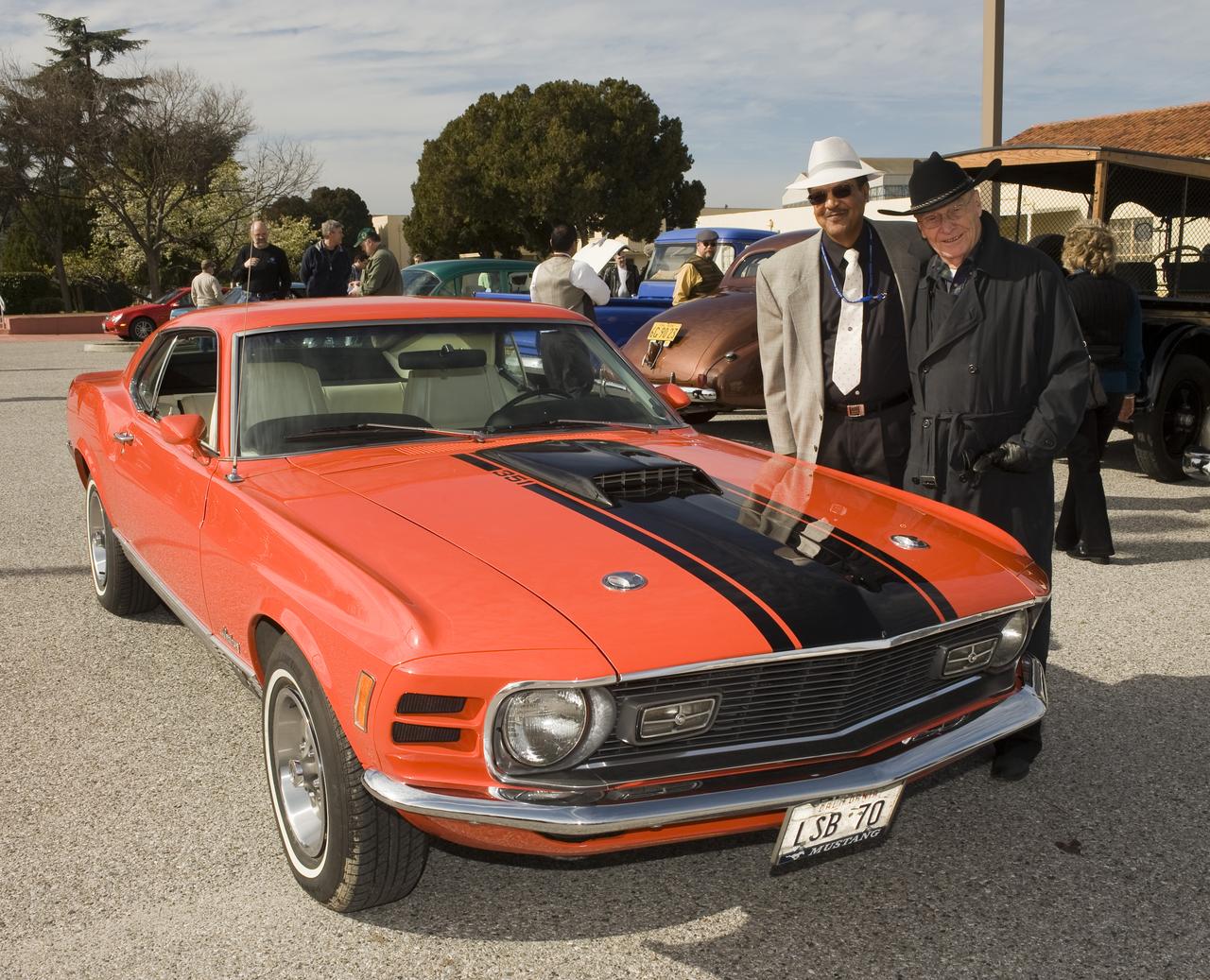
Ames 70th Anniversary Turn Back the Clock Day with antique Class Cars and Classic Car parade around the center. Lewis Braxton III, Ames Deputy Center Director and Jack Boyd, Ames Historian pose by Lew's Mustang before leading the parade.
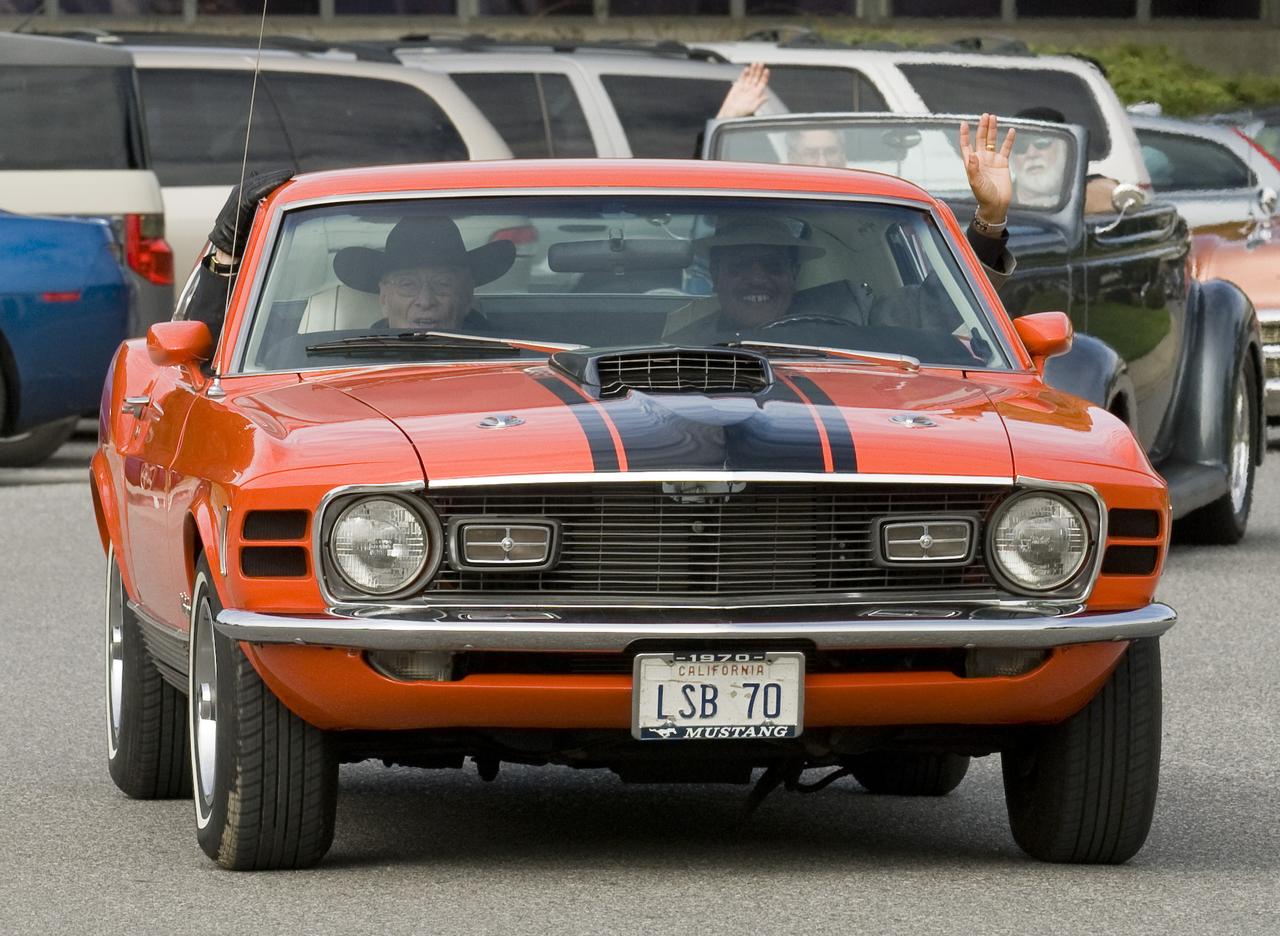
Ames 70th Anniversary Turn Back the Clock Day with antique Class Cars and Classic Car parade around the center. Lewis Braxton III, Ames Deputy Center Director and Jack Boyd, Ames Historian lead the parade in Lew's Mustang.
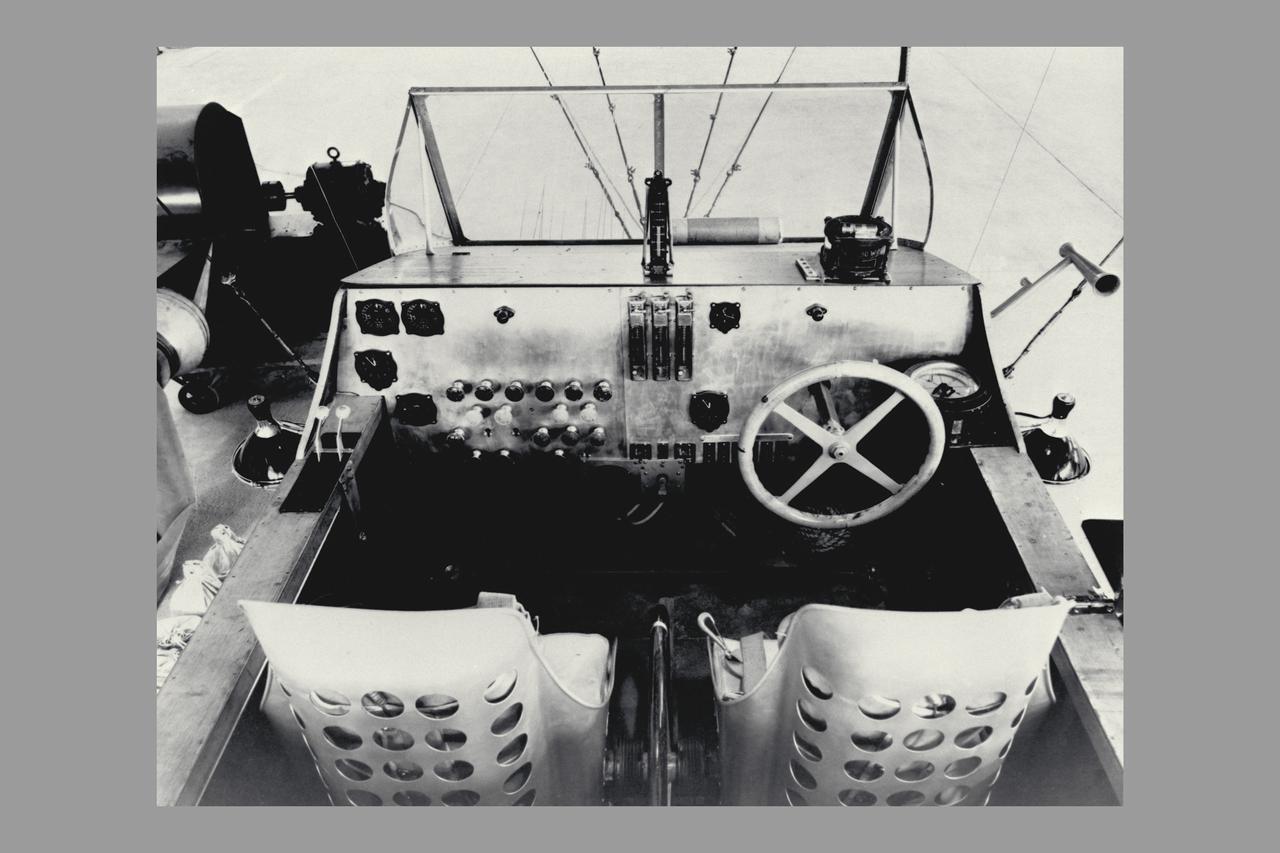
Blimp J-4 Car instrument panel (non-rigid air ship)

2009 Combined Federal Campaign (CFC) Car Show and Ice Cream Social
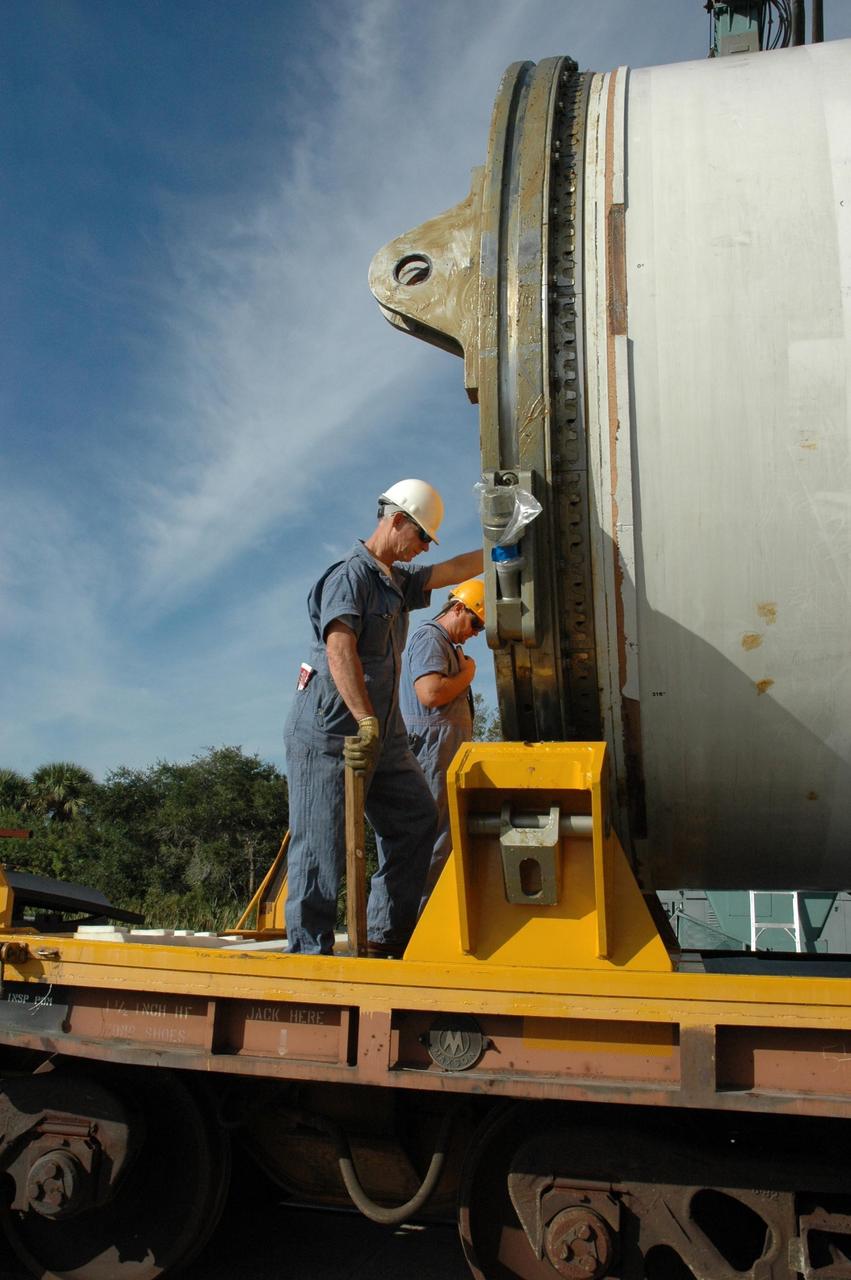
KENNEDY SPACE CENTER, FLA. -- Workers oversee the placement of a solid rocket booster segment onto a railroad car at the railroad yard at NASA's Kennedy Space Center. The spent segment is part of the booster used to launch space shuttle Discovery in October. The segment will be placed on the car and covered for the long trip back to Utah. After a mission, the spent boosters are recovered, cleaned, disassembled, refurbished and reused after each launch. After hydrolasing the interior of each segment, they are placed on flatbed trucks. The individual booster segments are transferred to a railhead located at the railroad yard at NASA's Kennedy Space Center. The long train of segments is part of the twin solid rocket boosters used to launch space shuttle Discovery in October. The NASA Railroad locomotive backs up the rail cars and the segment is lowered onto the car. The covered segments are moved to Titusville for interchange with Florida East Coast Railway to begin the trip back to Utah. Photo credit: NASA/Amanda Diller

KENNEDY SPACE CENTER, FLA. -- A train carrying space shuttle reusable solid rocket motor segments from the ATK Launch Systems manufacturing site in Brigham City,Utah, to NASA’s Kennedy Space Center in Florida was derailed May 2. At the site of the train mishap involving eight NASA solid rocket booster segment cars, a handling fixture has been attached to a box car being used as a spacer between the segment cars so that it can be removed from the rails. The solid rocket booster cars can be seen behind it. The train was traveling over the Meridian & Bigbee railroad near Pennington, Ala., at the time of the mishap.. The hardware was intended for use on shuttle Discovery's STS-120 mission in October and shuttle Atlantis's STS-122 mission in December. These segments are interchangeable, and ATK Launch Systems has replacement units that could be used for the shuttle flights, if necessary.
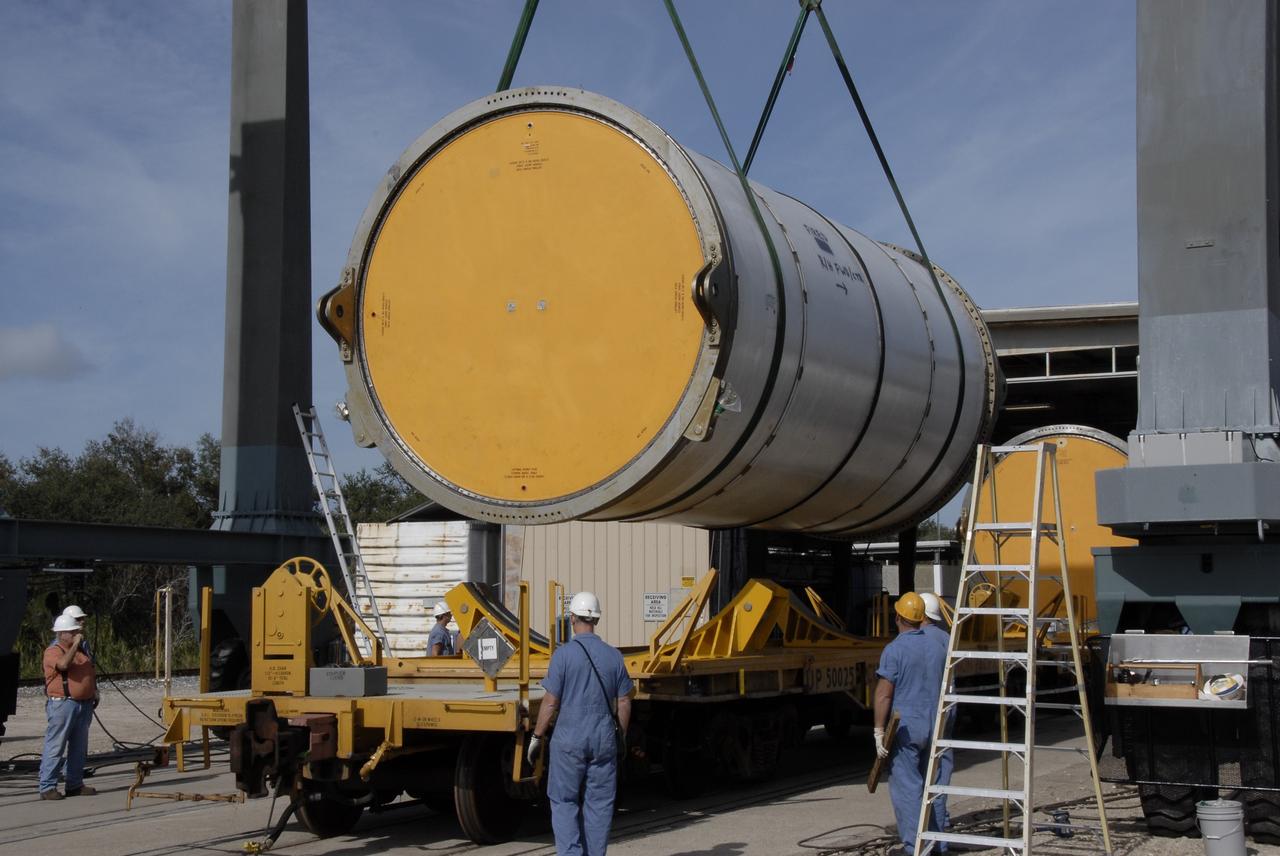
CAPE CANAVERAL, Fla. -- A solid rocket booster, or SRB, segment from the STS-126 launch is lowered onto a rail car at the NASA Railroad yard at NASA's Kennedy Space Center. The segment will be taken to Utah. After a mission, the spent boosters are recovered, cleaned, disassembled, refurbished and reused for another launch. After the segments are hydrolased inside, they are placed on flatbed trucks and transferred to the NASA Railroad yard. The NASA Railroad locomotive backs up the rail cars and the segments are lowered onto the car. After being covered for the trip, the segments will be moved to Titusville for interchange with Florida East Coast Railway to begin the trip back to Utah. Photo credit: NASA/Kim Shiflett
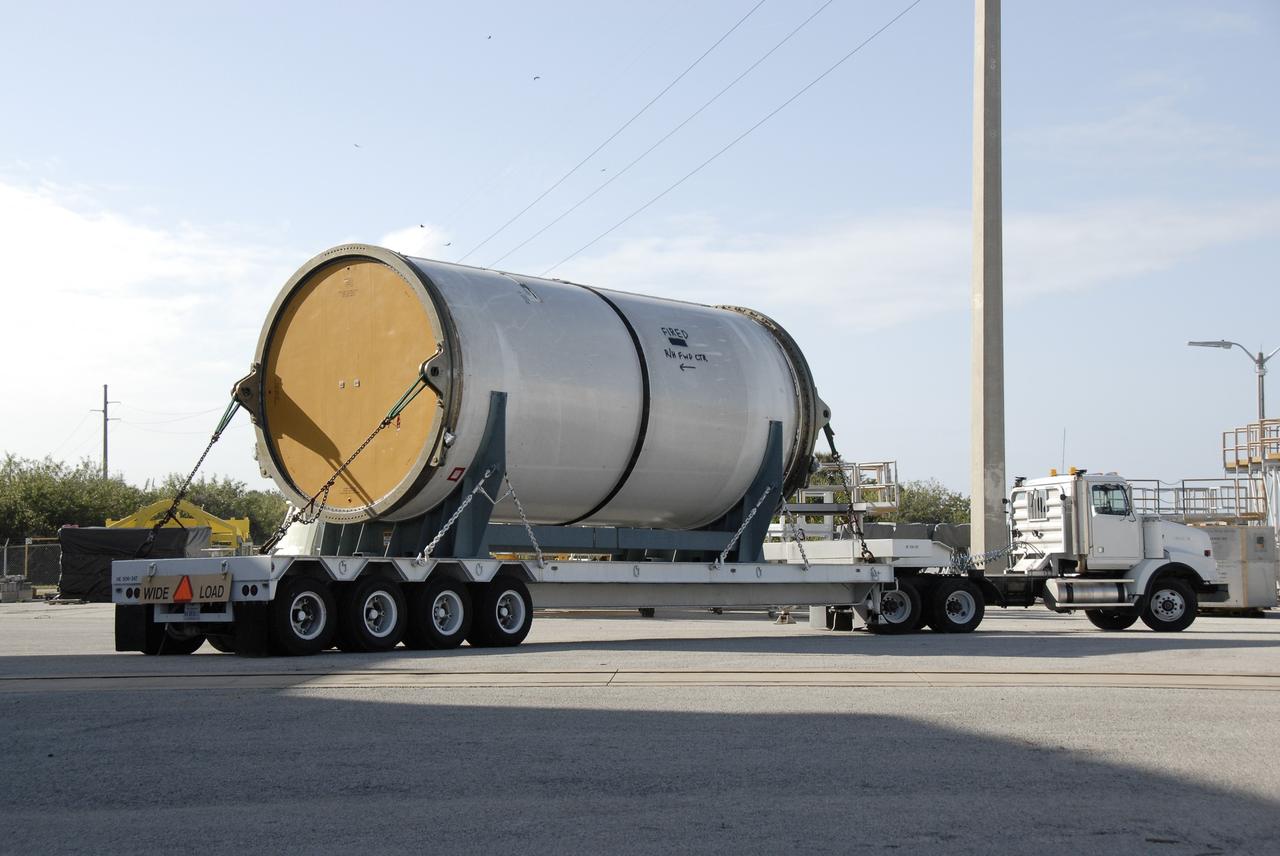
CAPE CANAVERAL, Fla. -- Solid rocket booster, or SRB, segments from the STS-126 launch are being taken to the NASA Railroad yard at NASA's Kennedy Space Center. There they will be transferred to a rail car and taken to Utah. After a mission, the spent boosters are recovered, cleaned, disassembled, refurbished and reused for another launch. After the segments are hydrolased inside, they are placed on flatbed trucks and transferred to the NASA Railroad yard. The NASA Railroad locomotive backs up the rail cars and the segments are lowered onto the car. After being covered for the trip, the segments will be moved to Titusville for interchange with Florida East Coast Railway to begin the trip back to Utah. Photo credit: NASA/Kim Shiflett
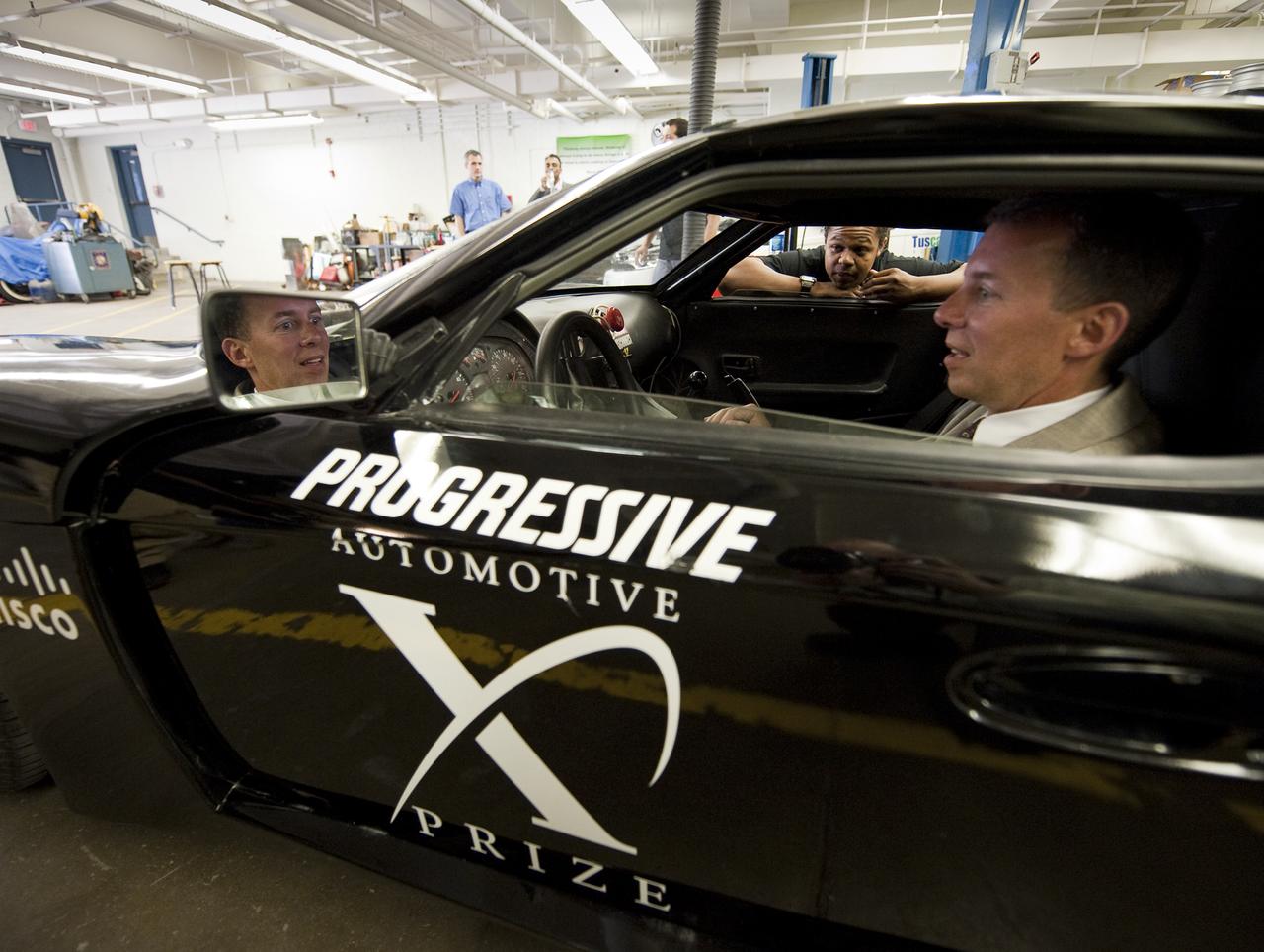
NASA Chief Technologist Bobby Braun sits in the West Philly X Prize hybrid sports car as Sowande Gay, a student member of the West Philly Hybrid Team at West Philadelphia High School, explains the modifications made to the car, in Philadelphia, Monday, June 7, 2010. The prize-winning West Philly Hybrid X Team has drawn international recognition as the only high school among 22 finalists in the Progressive Insurance Automotive X Prize (PIAXP) competition to develop cars that achieve over 100 MPG. Photo Credit: (NASA/Bill Ingalls)
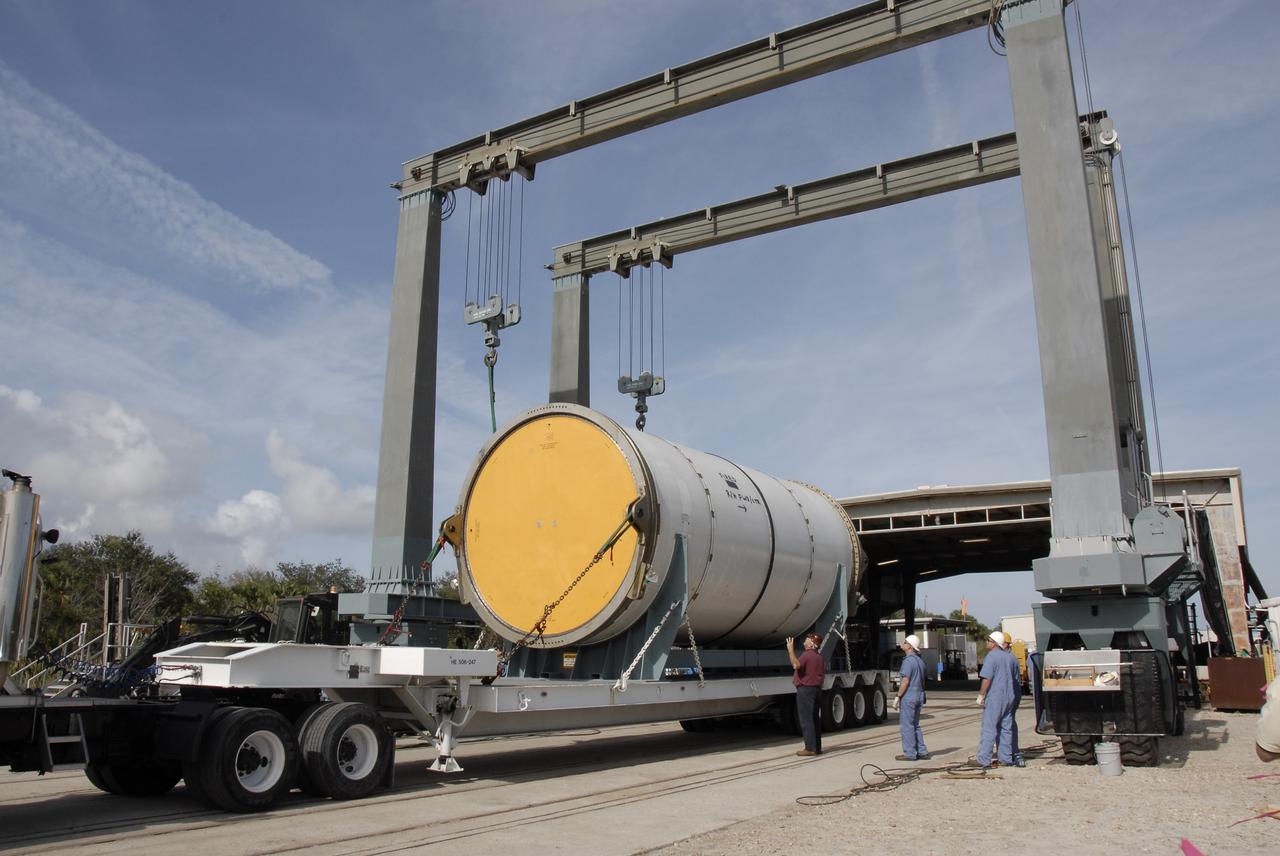
CAPE CANAVERAL, Fla. -- A solid rocket booster, or SRB, segment from the STS-126 launch is being lifted from a transporter to transfer it to a rail car at the NASA Railroad yard at NASA's Kennedy Space Center. The segment will be taken to Utah. After a mission, the spent boosters are recovered, cleaned, disassembled, refurbished and reused for another launch. After the segments are hydrolased inside, they are placed on flatbed trucks and transferred to the NASA Railroad yard. The NASA Railroad locomotive backs up the rail cars and the segments are lowered onto the car. After being covered for the trip, the segments will be moved to Titusville for interchange with Florida East Coast Railway to begin the trip back to Utah. Photo credit: NASA/Kim Shiflett
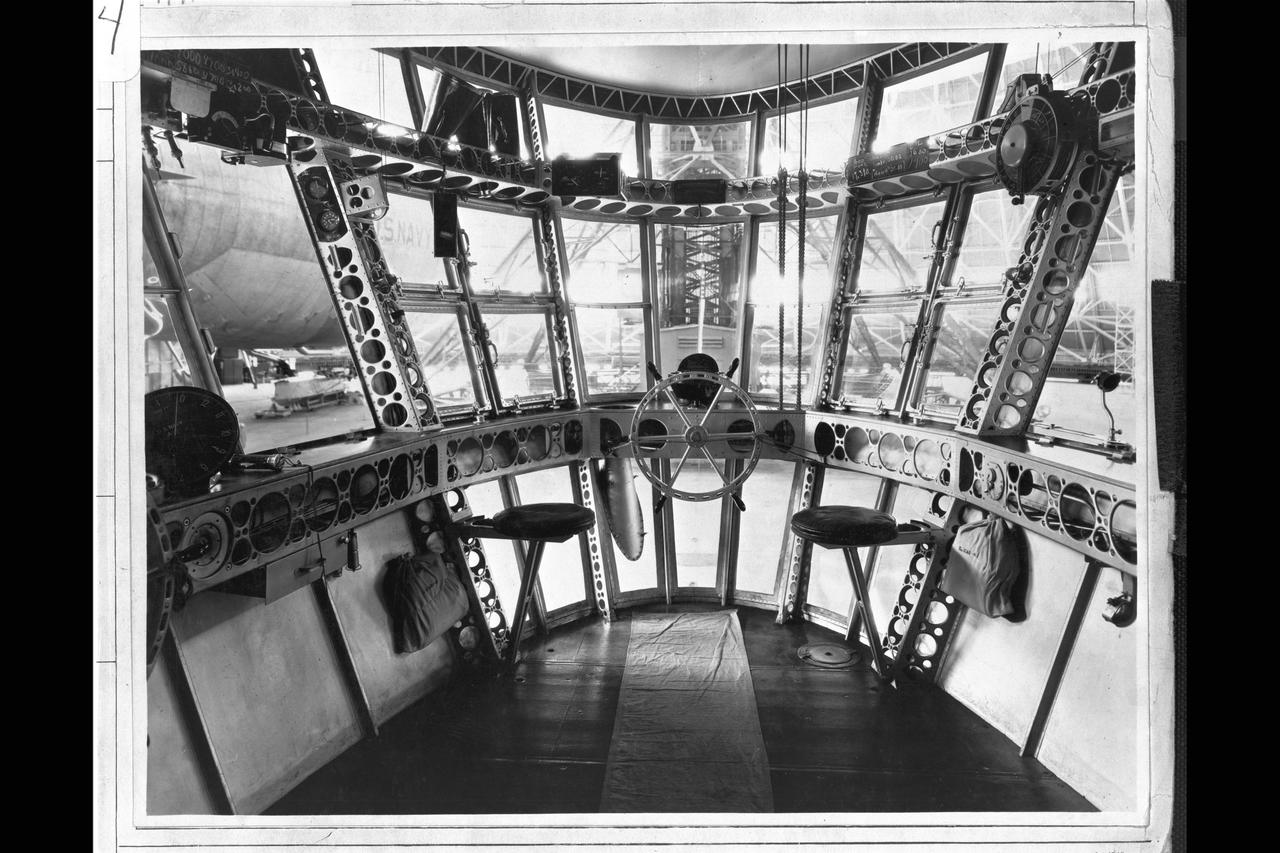
Navy Forward Compartment of control car, USS Macon at NAS Sunnyvale, Mt. View CA
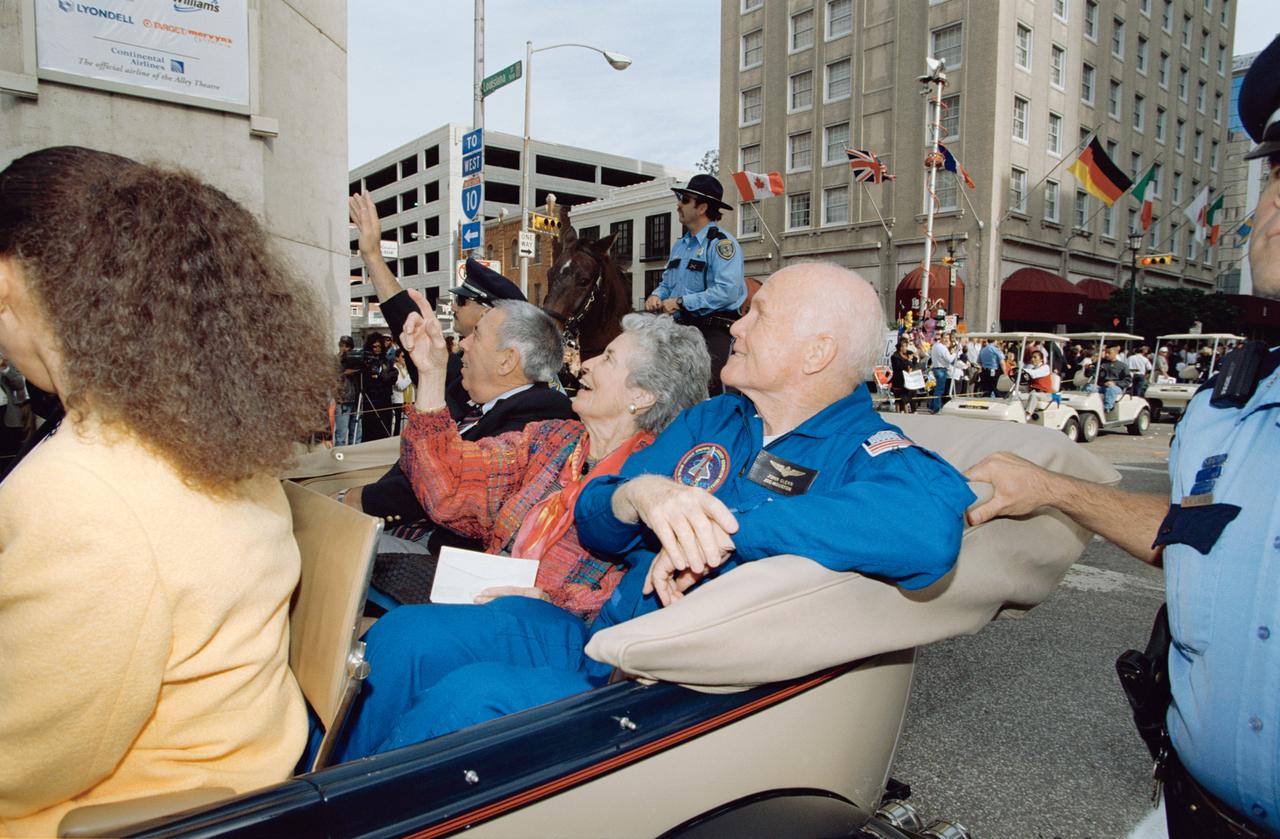
Downtown Houston parade honoring John Glenn and STS-95 crew.View is of Glenn and family in car being greeted by the crowd.
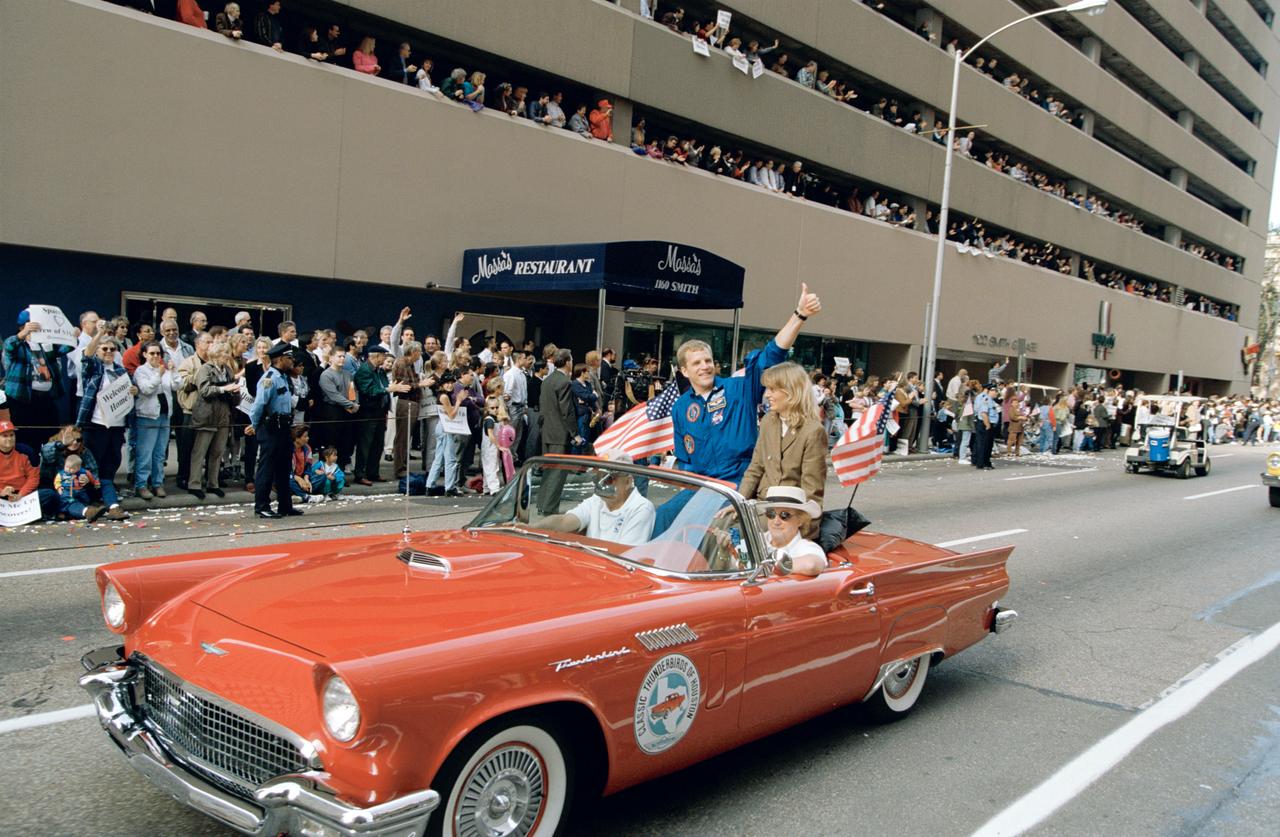
Downtown Houston parade honoring STS-95 crew. View is of Astronaut Scott Parazynski and family in car being greeted by crowd.
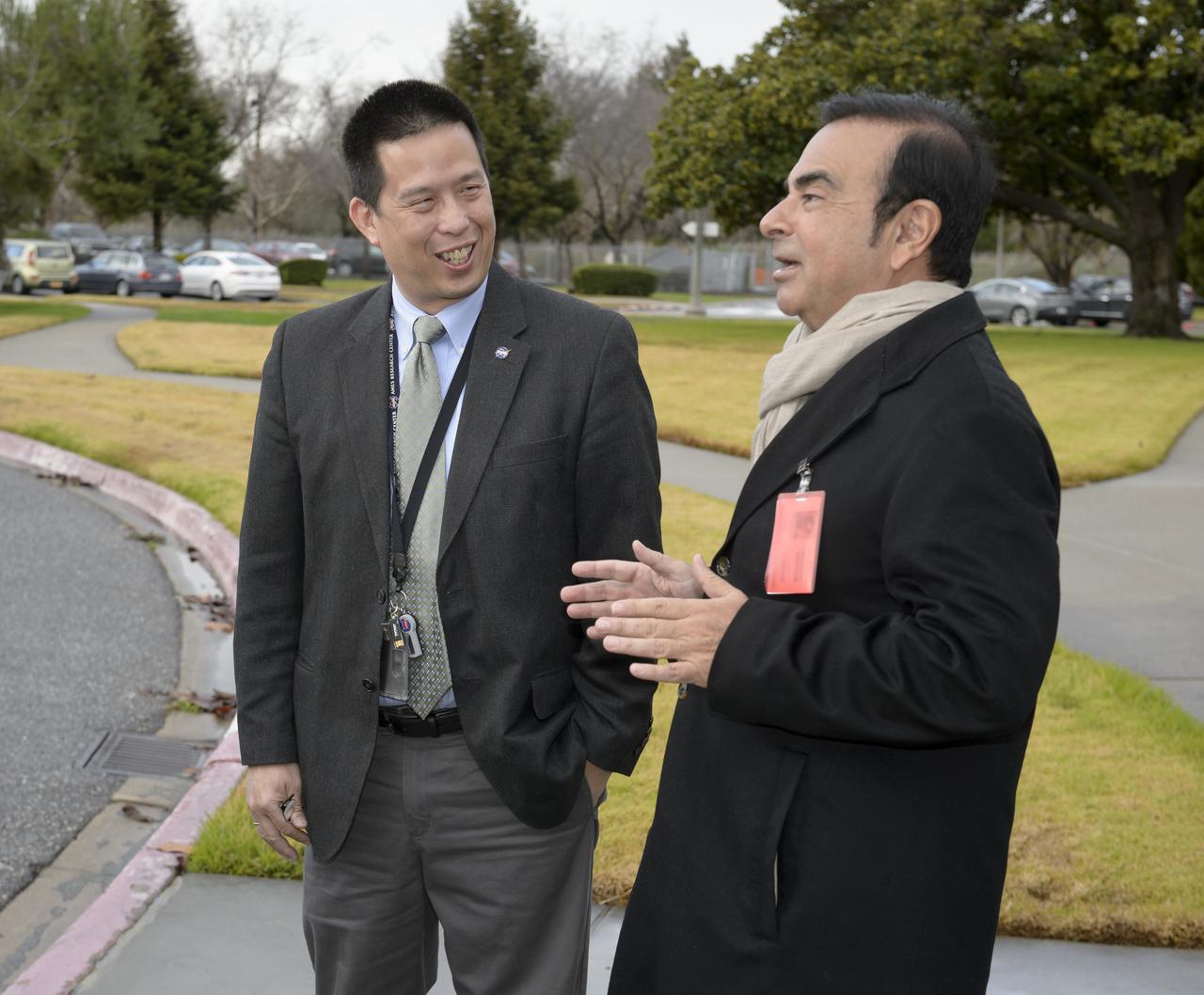
Senior executives from the Renault-Nissan Alliance, including Carlos Ghosn, chairman and CEO of Nissan, and Jose Munoz, chairman of Nissan North America, visited Ames for meetings and a showcase of the technical partnership between NASA and Nissan North America. Shown here on left is Eugene Tu, Ames Center Director on right is Carlos Ghosn, CEO, Nissan
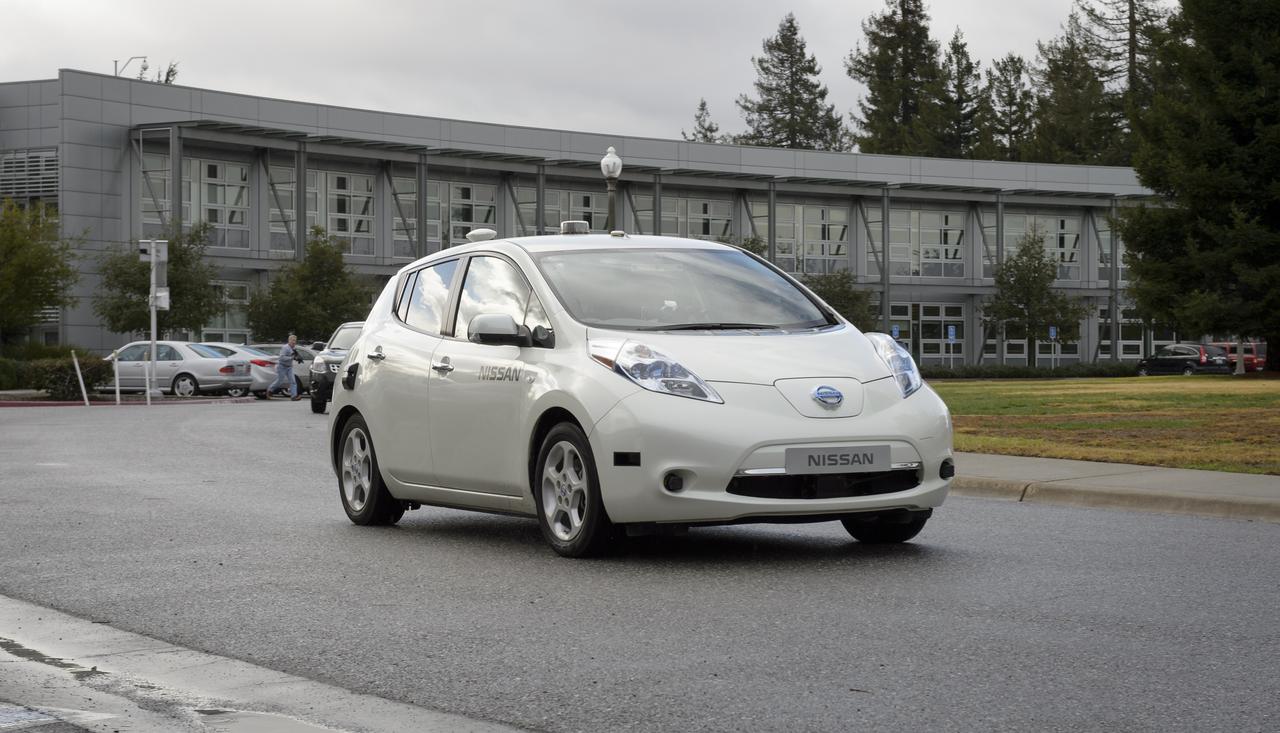
Senior executives from the Renault-Nissan Alliance, including Carlos Ghosn, chairman and CEO of Nissan, and Jose Munoz, chairman of Nissan North America, visited Ames for meetings and a showcase of the technical partnership between NASA and Nissan North America. After briefings, the group observed testing of Nissan’s all-electric LEAF as it performed safe autonomous drives across the center.
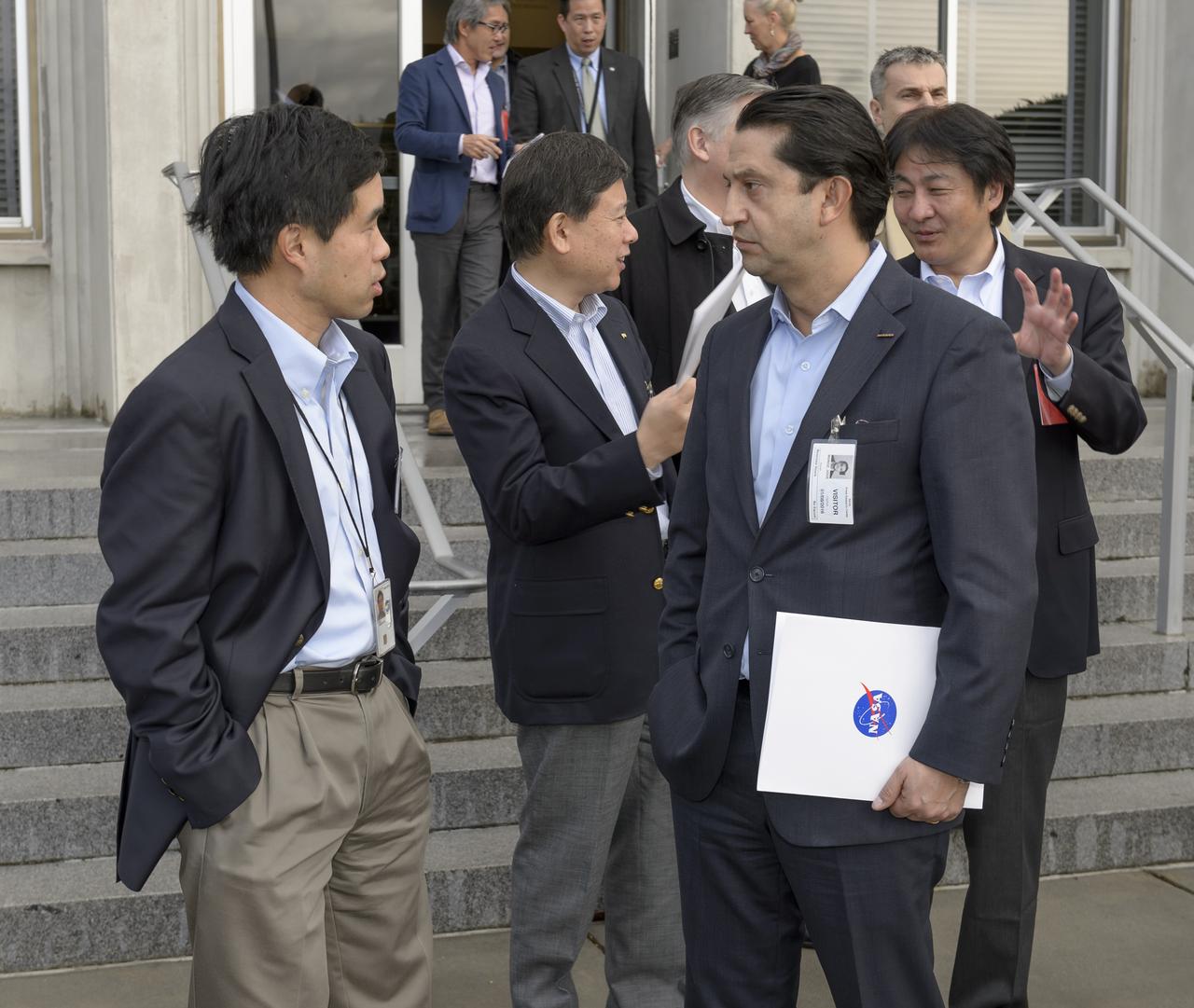
Senior executives from the Renault-Nissan Alliance visited Ames meet with Ames management and gather for a Autonomous Drive demo. Shown here left to right is Terry Fong, Ames Research Center and Jose Munoz, Chairman, Nissan North America.
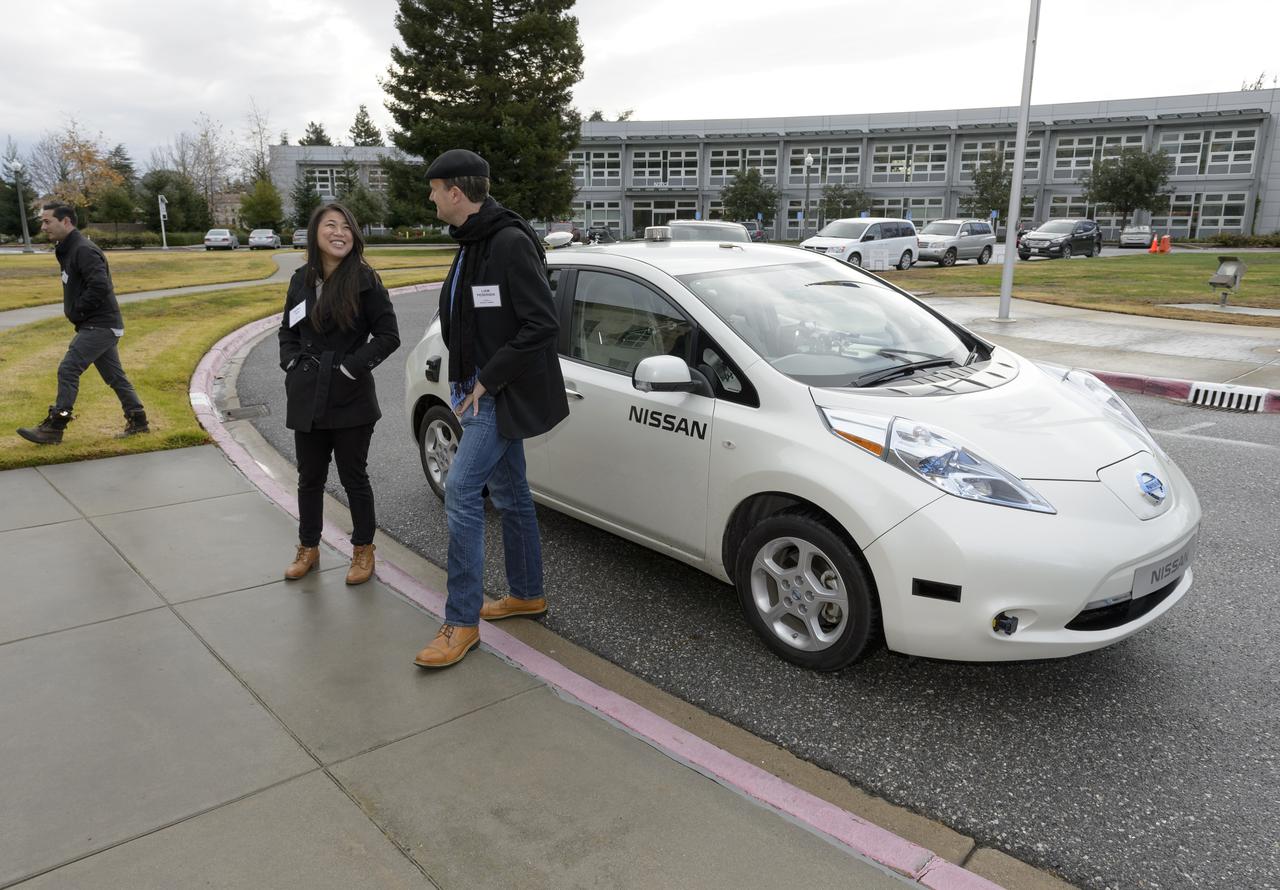
This Nissan LEAF vehicle being tested on the Ames campus is equipped with cameras, sensors and cellular data networking, and uses robotics software originally developed for Ames’ K-10 and K-REX planetary rovers to operate autonomously. Shown here are Kathy Sun and Liam Pedersen, Nissan who are awaiting the arrival of the visiting group from Renault-Nissan Alliance for a demo ride across Ames.
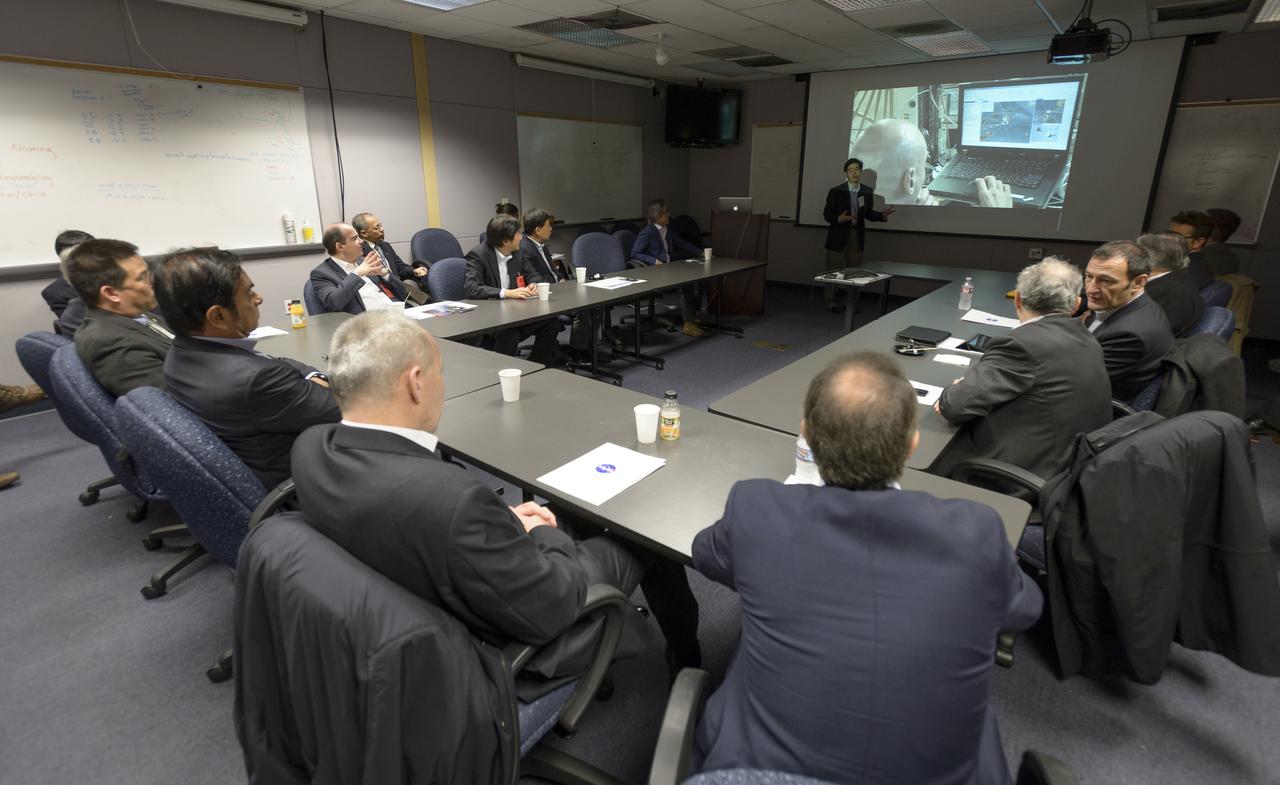
Senior executives from the Renault-Nissan Alliance visited Ames meet with Ames management. Here they are gathered for a Autonomous Drive demo presentation by Terry Fong, Ames Research Center.
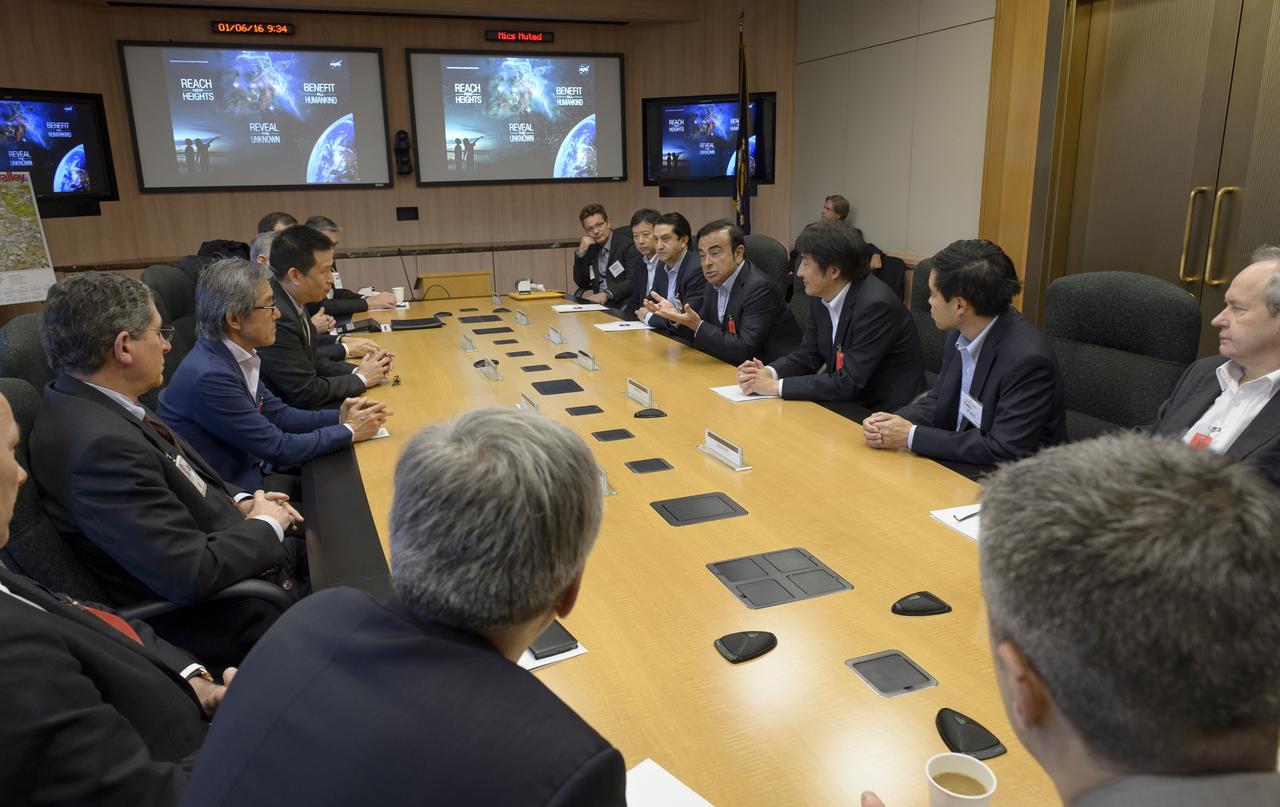
Senior executives from the Renault-Nissan Alliance, including Carlos Ghosn, chairman and CEO of Nissan, and Jose Munoz, chairman of Nissan North America, visited Ames for meetings with center management and a showcase of the technical partnership between NASA and Nissan North America.
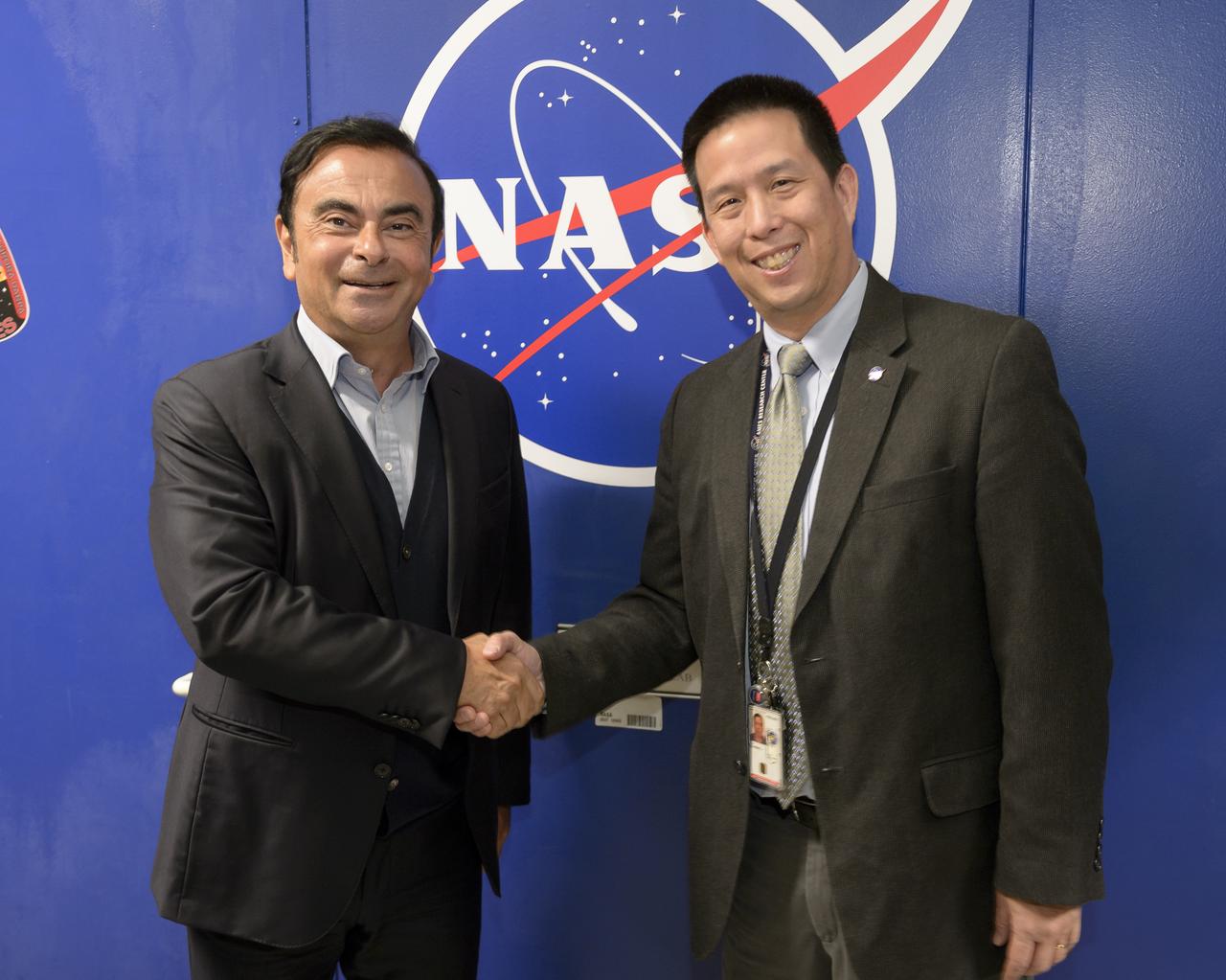
Senior executives from the Renault-Nissan Alliance, including Carlos Ghosn, chairman and CEO of Nissan, and Jose Munoz, chairman of Nissan North America, visited Ames for meetings and a showcase of the technical partnership between NASA and Nissan North America. Shown here on left is Carlos Ghosn, CEO, Nissan on right Eugene Tu, Ames Center Director in front to the NASA sign at the VMS Facility at Ames Research Center ,CA.
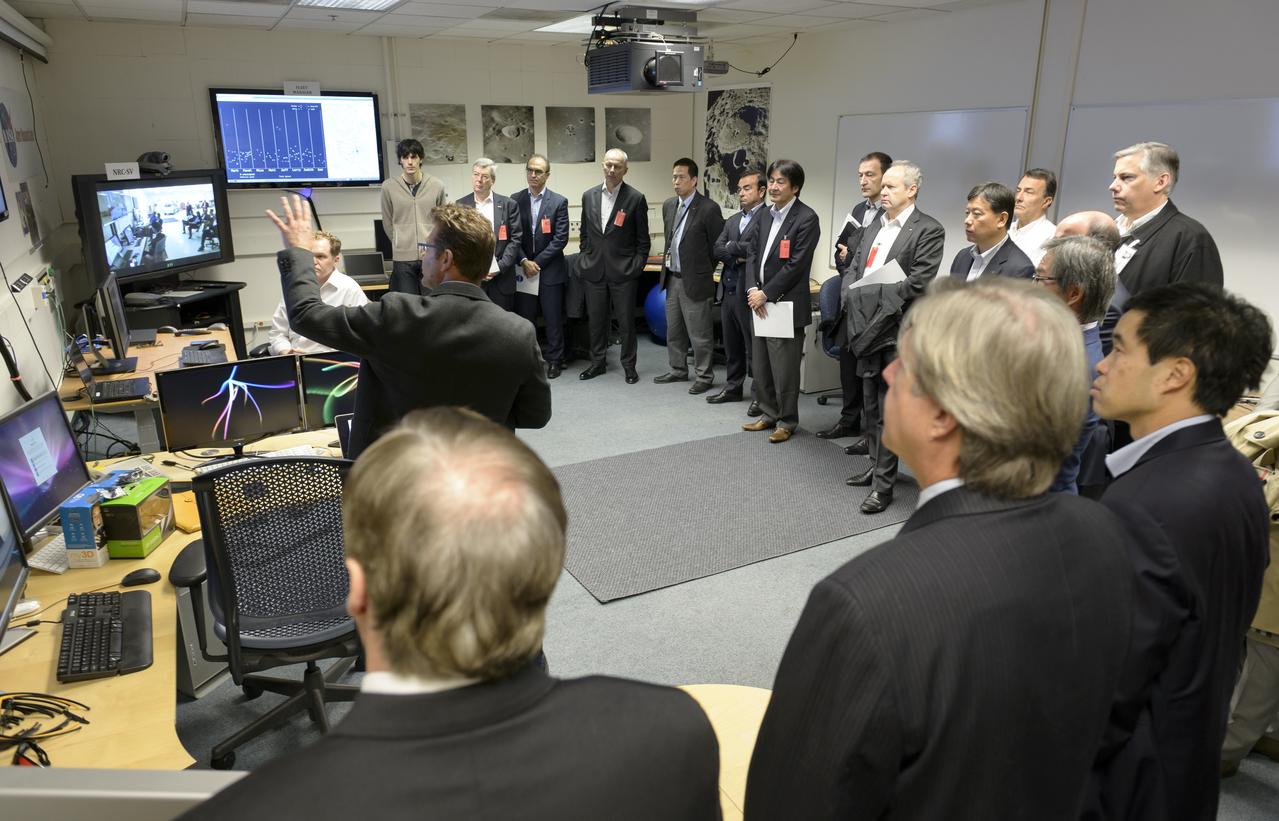
Senior executives from the Renault-Nissan Alliance, including Carlos Ghosn, chairman and CEO of Nissan, and Jose Munoz, chairman of Nissan North America, visited Ames for meetings and a showcase of the technical partnership between NASA and Nissan North America. After briefings, the group gathers in at the Autonomous Sciences Research Facility for a remote vehicle monitoring demo.
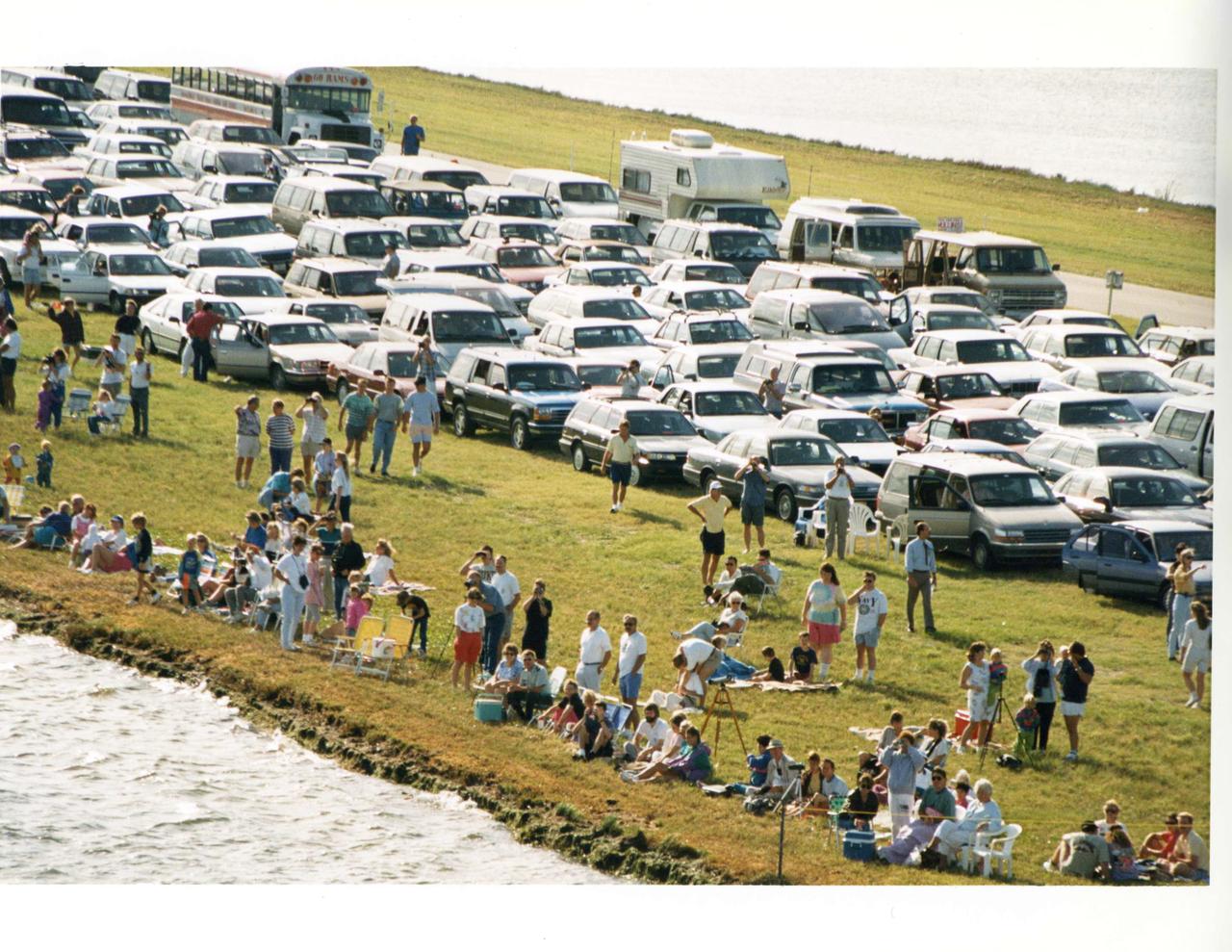
Aerial of the NASA Causeway East showing the viewing area set up for space shuttle launch viewers with car passes. Launch Complex 39 is to the north.
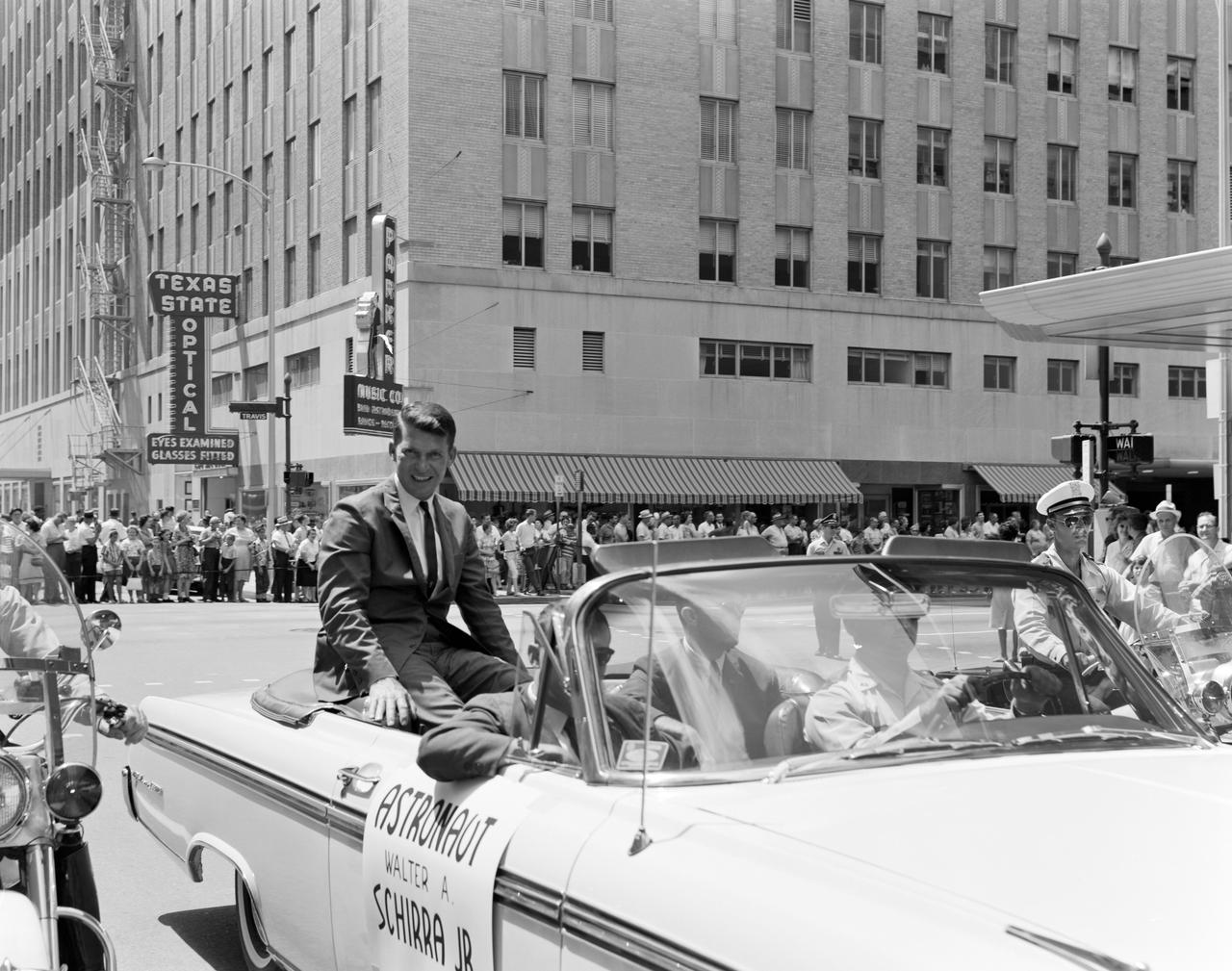
S62-03707 (1962) --- Astronaut Walter Schirra riding in back of a car during a welcome parade in Houston, Texas. Photo credit: NASA