
This image of the active galaxy Centaurus A was taken by NASA's Galaxy Evolution Explorer on June 7, 2003. The galaxy is located 30 million light-years from Earth and is seen edge on, with a prominent dust lane across the major axis. In this image the near ultraviolet emission is represented as green, and the far ultraviolet emission as blue. The galaxy exhibits jets of high energy particles, which were traced by the X-ray emission and measured by NASA's Chandra X-ray Observatory. These X-ray emissions are seen as red in the image. Several regions of ultraviolet emission can be seen where the jets of high energy particles intersect with hydrogen clouds in the upper left corner of the image. The emission shown may be the result of recent star formation triggered by the compression of gas by the jet. http://photojournal.jpl.nasa.gov/catalog/PIA04624
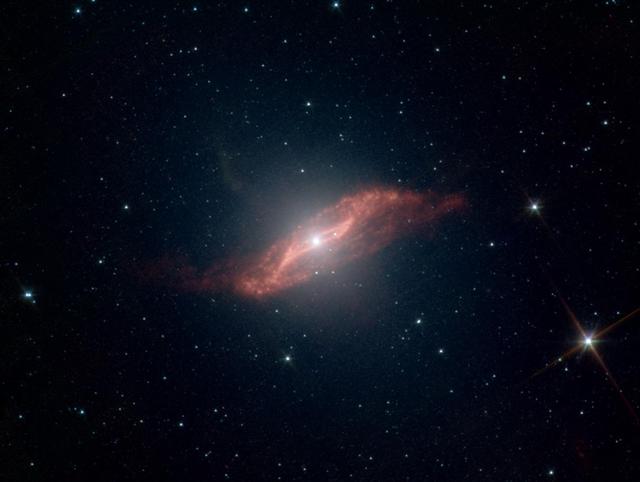
This image taken by NASA Spitzer Space Telescope shows in unprecedented detail the galaxy Centaurus A last big meal: a spiral galaxy seemingly twisted into a parallelogram-shaped structure of dust.
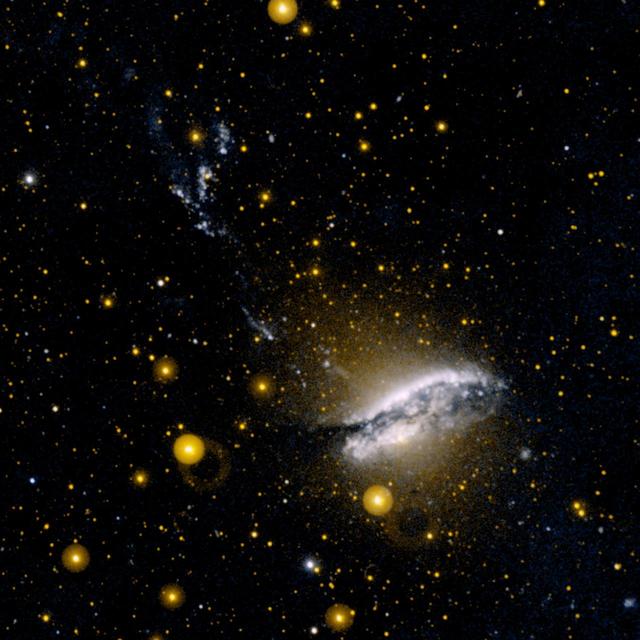
This ultraviolet image from NASA Galaxy Evolution Explorer is of NGC 5128 Centaurus-A. This unusual galaxy is believed to be the result of a collision of two normal galaxies.
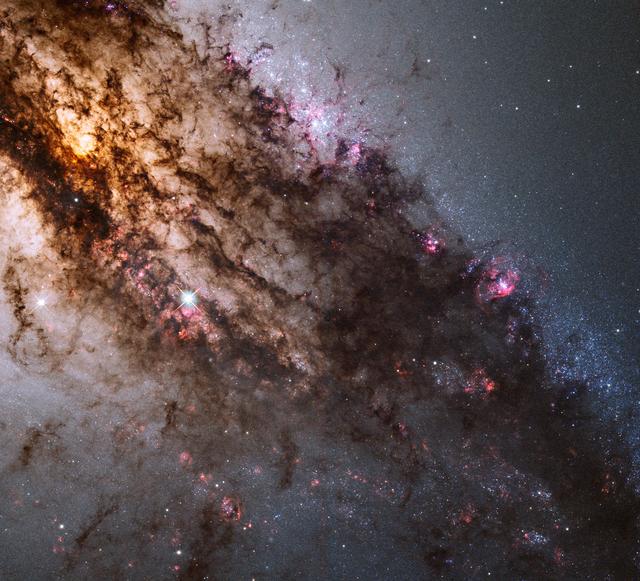
NASA image release June 16, 2011 Resembling looming rain clouds on a stormy day, dark lanes of dust crisscross the giant elliptical galaxy Centaurus A. Hubble's panchromatic vision, stretching from ultraviolet through near-infrared wavelengths, reveals the vibrant glow of young, blue star clusters and a glimpse into regions normally obscured by the dust. The warped shape of Centaurus A's disk of gas and dust is evidence for a past collision and merger with another galaxy. The resulting shockwaves cause hydrogen gas clouds to compress, triggering a firestorm of new star formation. These are visible in the red patches in this Hubble close-up. At a distance of just over 11 million light-years, Centaurus A contains the closest active galactic nucleus to Earth. The center is home for a supermassive black hole that ejects jets of high-speed gas into space, but neither the supermassive or the jets are visible in this image. This image was taken in July 2010 with Hubble's Wide Field Camera 3. The Hubble Space Telescope is a project of international cooperation between NASA and the European Space Agency. NASA's Goddard Space Flight Center manages the telescope. The Space Telescope Science Institute (STScI) conducts Hubble science operations. STScI is operated for NASA by the Association of Universities for Research in Astronomy, Inc., in Washington, D.C. For images and more information about the findings, visit: <a href="http://www.nasa.gov/hubble" rel="nofollow">www.nasa.gov/hubble</a> and <a href="http://www.hubblesite.org/news/2011/18" rel="nofollow">www.hubblesite.org/news/2011/18</a> Cheryl Gundy, STSCI <b><a href="http://www.nasa.gov/centers/goddard/home/index.html" rel="nofollow">NASA Goddard Space Flight Center</a></b> enables NASA’s mission through four scientific endeavors: Earth Science, Heliophysics, Solar System Exploration, and Astrophysics. Goddard plays a leading role in NASA’s accomplishments by contributing compelling scientific knowledge to advance the Agency’s mission. <b>Follow us on <a href="http://twitter.com/NASAGoddardPix" rel="nofollow">Twitter</a></b> <b>Join us on <a href="http://www.facebook.com/pages/Greenbelt-MD/NASA-Goddard/395013845897?ref=tsd" rel="nofollow">Facebook</a></b> <b>Find us on <a href="http://web.stagram.com/n/nasagoddard/?vm=grid" rel="nofollow">Instagram</a></b>
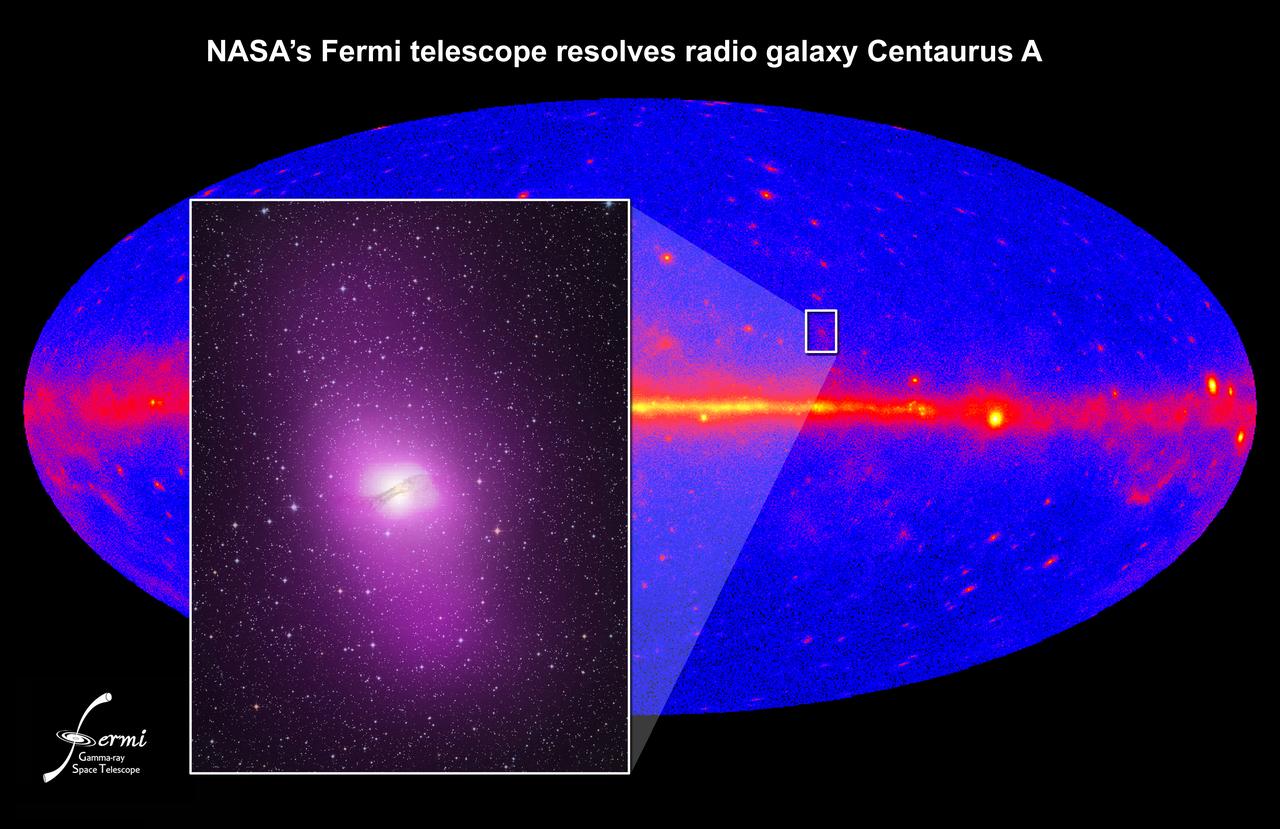
NASA release April 1, 2010 Fermi's Large Area Telescope resolved high-energy gamma rays from an extended region around the active galaxy Centaurus A. The emission corresponds to million-light-year-wide radio-emitting gas thrown out by the galaxy's supersized black hole. This inset shows an optical/gamma-ray composite of the galaxy and its location on the Fermi one-year sky map. Credit: NASA/DOE/Fermi LAT Collaboration, Capella Observatory To learn more about these images go to: <a href="http://www.nasa.gov/mission_pages/GLAST/news/smokestack-plumes.html" rel="nofollow">www.nasa.gov/mission_pages/GLAST/news/smokestack-plumes.html</a> <b><a href="http://www.nasa.gov/centers/goddard/home/index.html" rel="nofollow">NASA Goddard Space Flight Center</a></b> is home to the nation's largest organization of combined scientists, engineers and technologists that build spacecraft, instruments and new technology to study the Earth, the sun, our solar system, and the universe.
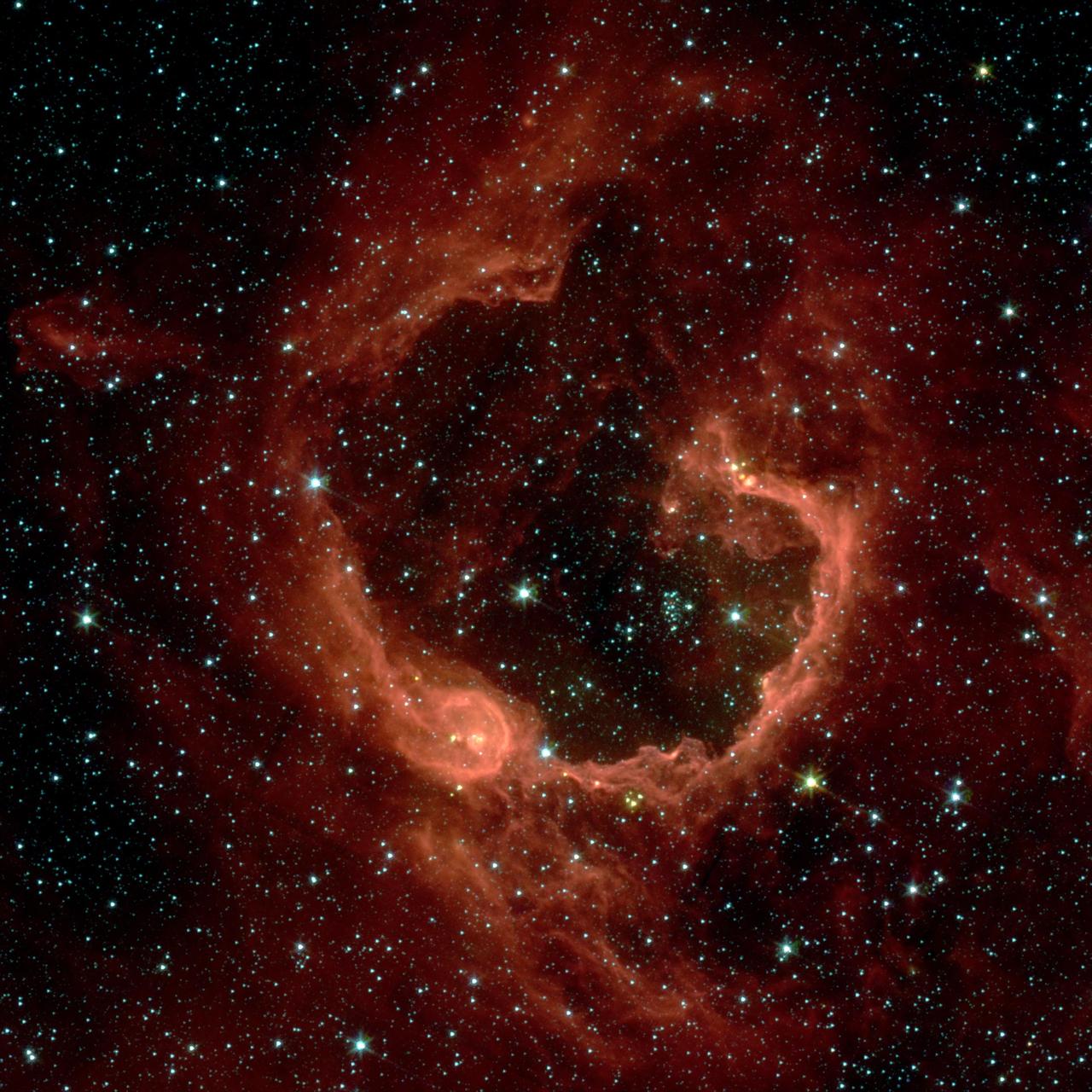
NASA Spitzer Space Telescope sees RCW 79 in the southern Milky Way, 17,200 light-years from Earth in the constellation Centaurus.
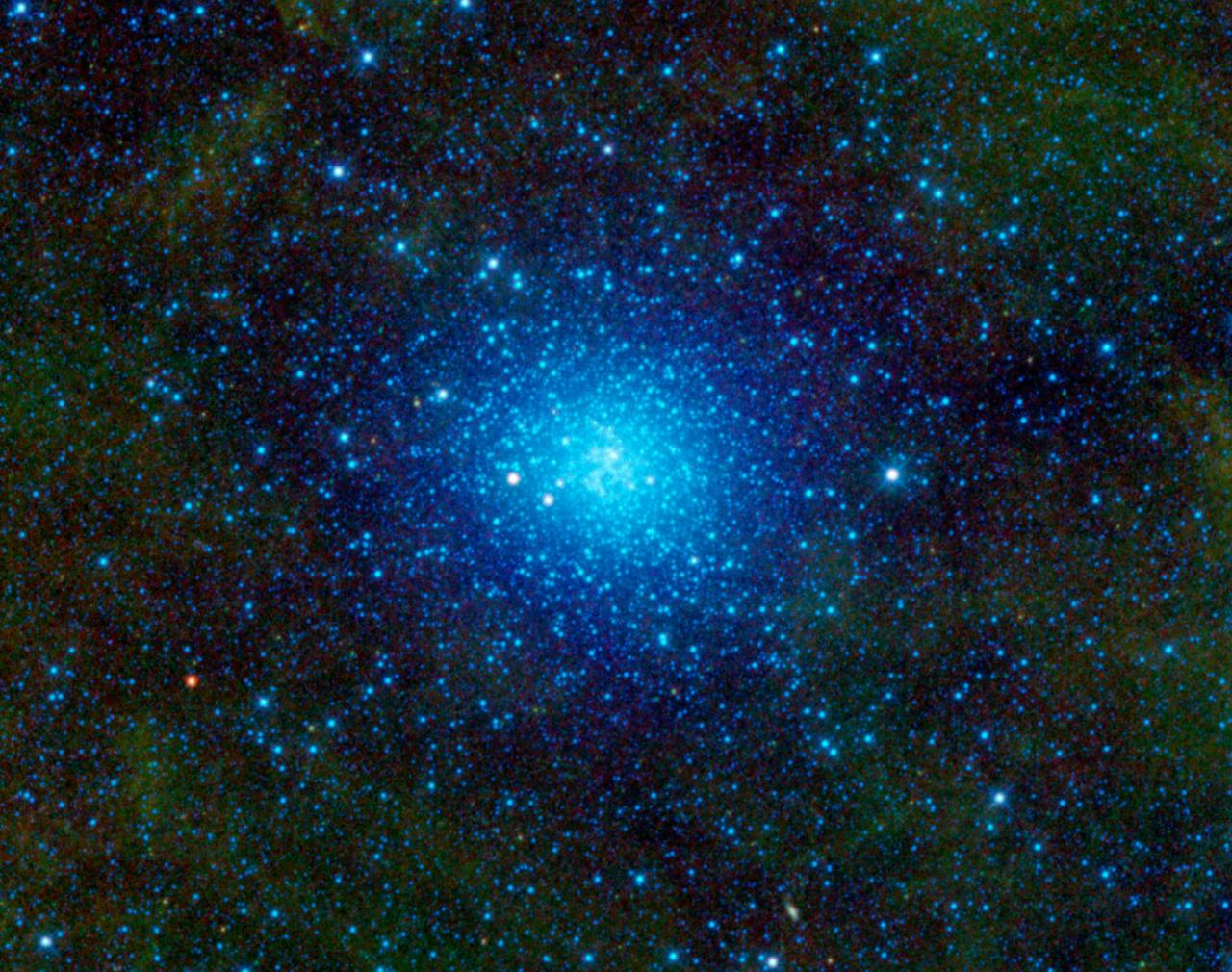
NASA Wide-field Infrared Survey Explorer has captured a favorite observing target of amateur astronomers, Omega Centauri. This celestial cluster of stars can be found in the constellation Centaurus.
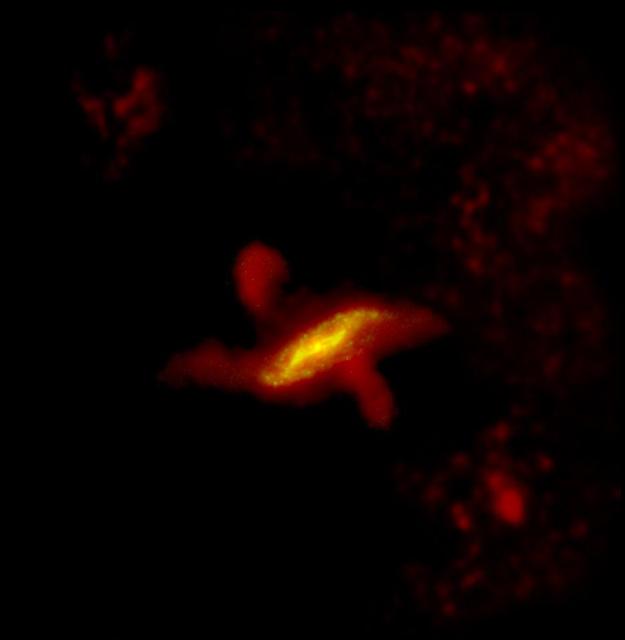
This parallelogram shaped region of dust observed by ESA Herschel Space telescope can be best described using galaxy formation models where a flat spiral galaxy collides with an elliptical galaxy becoming warped in the process.
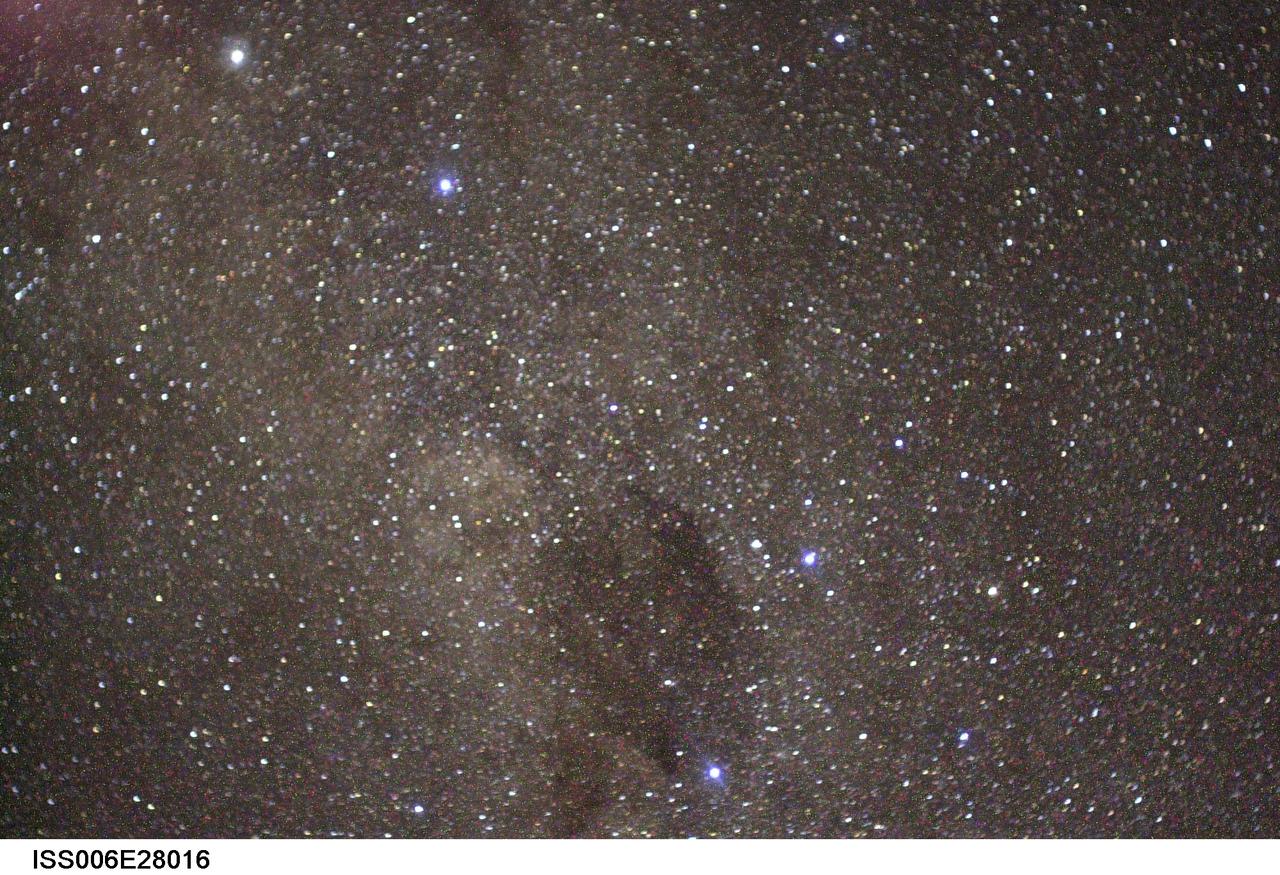
ISS006-E-28016 (February 2003) --- The Coal Sack Nebula (bottom center), the Southern Cross (lower right), and the two prominent stars in the upper left, which are the two prominent stars of the southern constellation Centaurus, are visible in this view photographed by astronaut Donald R. Pettit, Expedition Six NASA ISS science officer, on board the International Space Station (ISS).
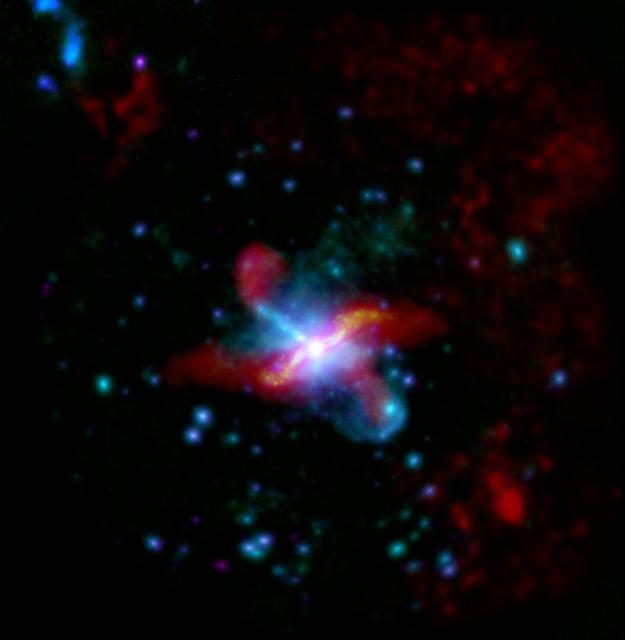
Inner structural features seen in this image from ESA Herschel Space Observatory are helping scientists to understand the mechanisms and interactions within the galaxy.

Release Date: March 10, 2010 - Distant galaxy clusters mysteriously stream at a million miles per hour along a path roughly centered on the southern constellations Centaurus and Hydra. A new study led by Alexander Kashlinsky at NASA's Goddard Space Flight Center in Greenbelt, Md., tracks this collective motion -- dubbed the "dark flow" -- to twice the distance originally reported, out to more than 2.5 billion light-years. Abell 1689, redshift 0.181. Credit: NASA/Goddard Space Flight Center/Scientific Visualization Studio/ESA/L. Bradley/JHU To learn more go to: <a href="http://www.nasa.gov/centers/goddard/news/releases/2010/10-023.html" rel="nofollow">www.nasa.gov/centers/goddard/news/releases/2010/10-023.html</a> To see other visualizations related to this story go to: <a href="http://svs.gsfc.nasa.gov/goto?10580" rel="nofollow">svs.gsfc.nasa.gov/goto?10580</a>
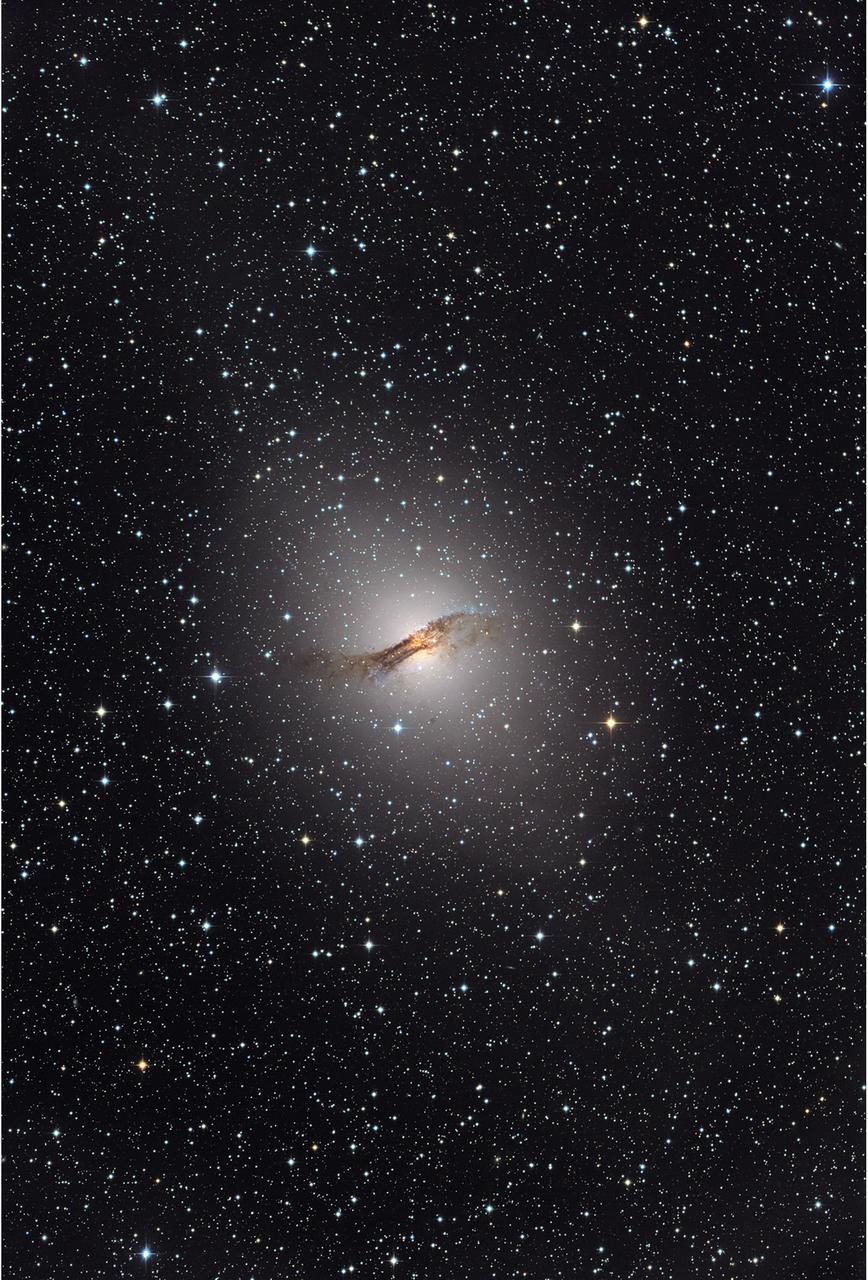
NASA release April 1, 2010 The giant elliptical galaxy NGC 5128, show here in visible light, hosts the radio source known as Centaurus A. Located 12 million light-years away, it is one of the closest active galaxies. Credit: Capella Observatory To learn more about these images go to: <a href="http://www.nasa.gov/mission_pages/GLAST/news/smokestack-plumes.html" rel="nofollow">www.nasa.gov/mission_pages/GLAST/news/smokestack-plumes.html</a> <b><a href="http://www.nasa.gov/centers/goddard/home/index.html" rel="nofollow">NASA Goddard Space Flight Center</a></b> is home to the nation's largest organization of combined scientists, engineers and technologists that build spacecraft, instruments and new technology to study the Earth, the sun, our solar system, and the universe.
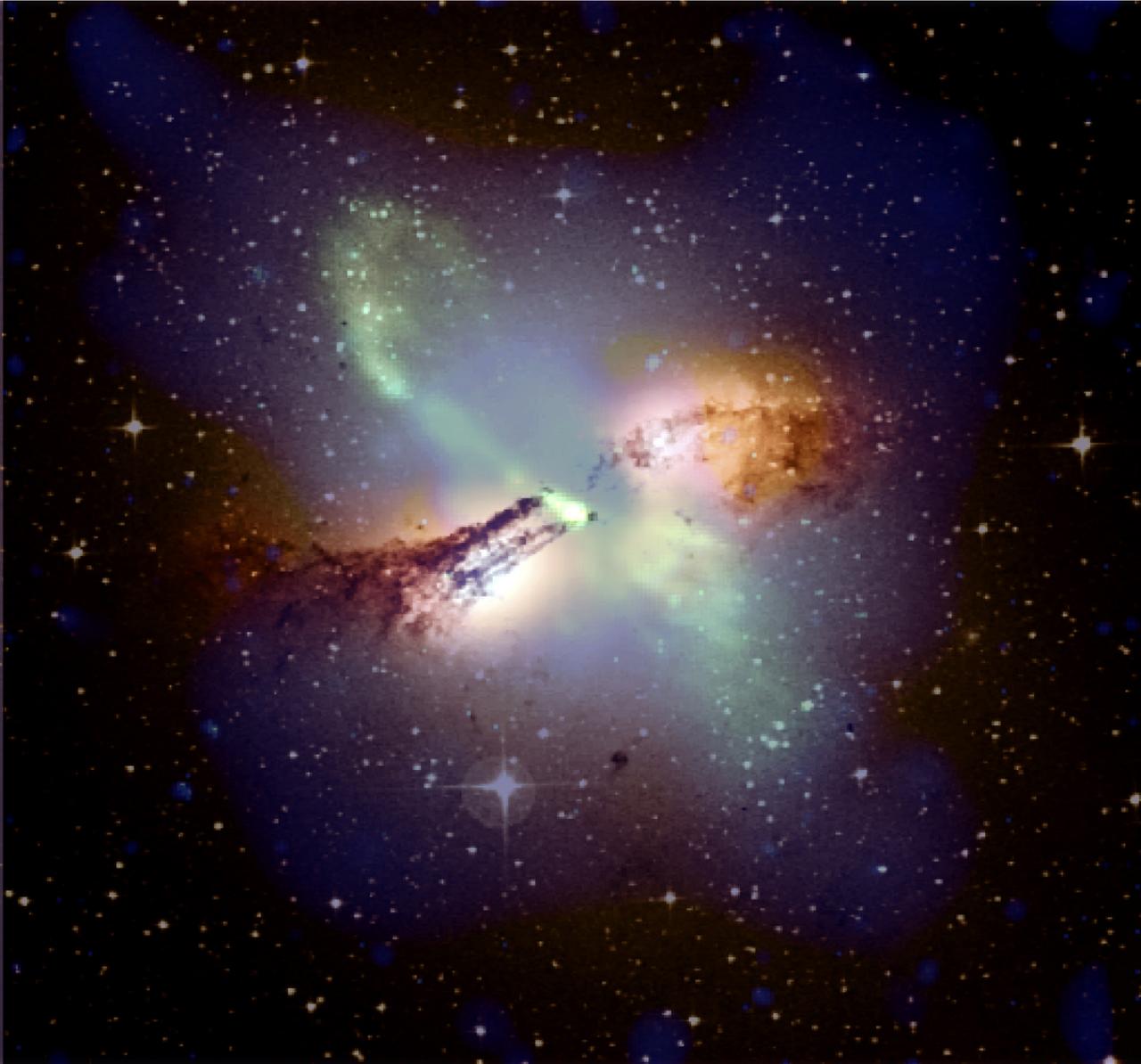
This is a photo taken by NASA's Chandra X-ray Observatory that reveals the remains of an explosion in the form of two enormous arcs of multimillion-degree gas in the galaxy Centaurus A that appear to be part of a ring 25,000 light years in diameter. The size and location of the ring suggest that it could have been an explosion that occurred about 10 million years ago. A composite image made with radio (red and green), optical (yellow-orange), and X-ray data (blue) presents a sturning tableau of a turbulent galaxy. A broad band of dust and cold gas is bisected at an angle by opposing jets of high-energy particles blasting away from the supermassive black hole in the nucleus. Lying in a plane perpendicular to the jets are the two large arcs of x-ray emitting multi-million degree gas. This discovery can help astronomers better understand the cause and effect of violent outbursts from the vicinity of supermassive black holes of active galaxies. The Chandra program is managed by the Marshall Space Flight Center in Huntsville, Alabama.

NASA image release May 20, 2011 <b>To see a really cool video related to this image go here: <a href="http://www.flickr.com/photos/gsfc/5740451675/in/photostream">www.flickr.com/photos/gsfc/5740451675/in/photostream</a></b> This composite of visible, microwave (orange) and X-ray (blue) data reveals the jets and radio-emitting lobes emanating from Centaurus A's central black hole. Credit: ESO/WFI (visible); MPIfR/ESO/APEX/A.Weiss et al. (microwave); NASA/CXC/CfA/R.Kraft et al. (X-ray) To read more go to: <a href="http://www.nasa.gov/topics/universe/features/radio-particle-jets.html" rel="nofollow">www.nasa.gov/topics/universe/features/radio-particle-jets...</a> <b><a href="http://www.nasa.gov/centers/goddard/home/index.html" rel="nofollow">NASA Goddard Space Flight Center</a></b> enables NASA’s mission through four scientific endeavors: Earth Science, Heliophysics, Solar System Exploration, and Astrophysics. Goddard plays a leading role in NASA’s accomplishments by contributing compelling scientific knowledge to advance the Agency’s mission. <b>Follow us on <a href="http://twitter.com/NASA_GoddardPix" rel="nofollow">Twitter</a></b> <b>Join us on <a href="http://www.facebook.com/pages/Greenbelt-MD/NASA-Goddard/395013845897?ref=tsd" rel="nofollow">Facebook</a></b>
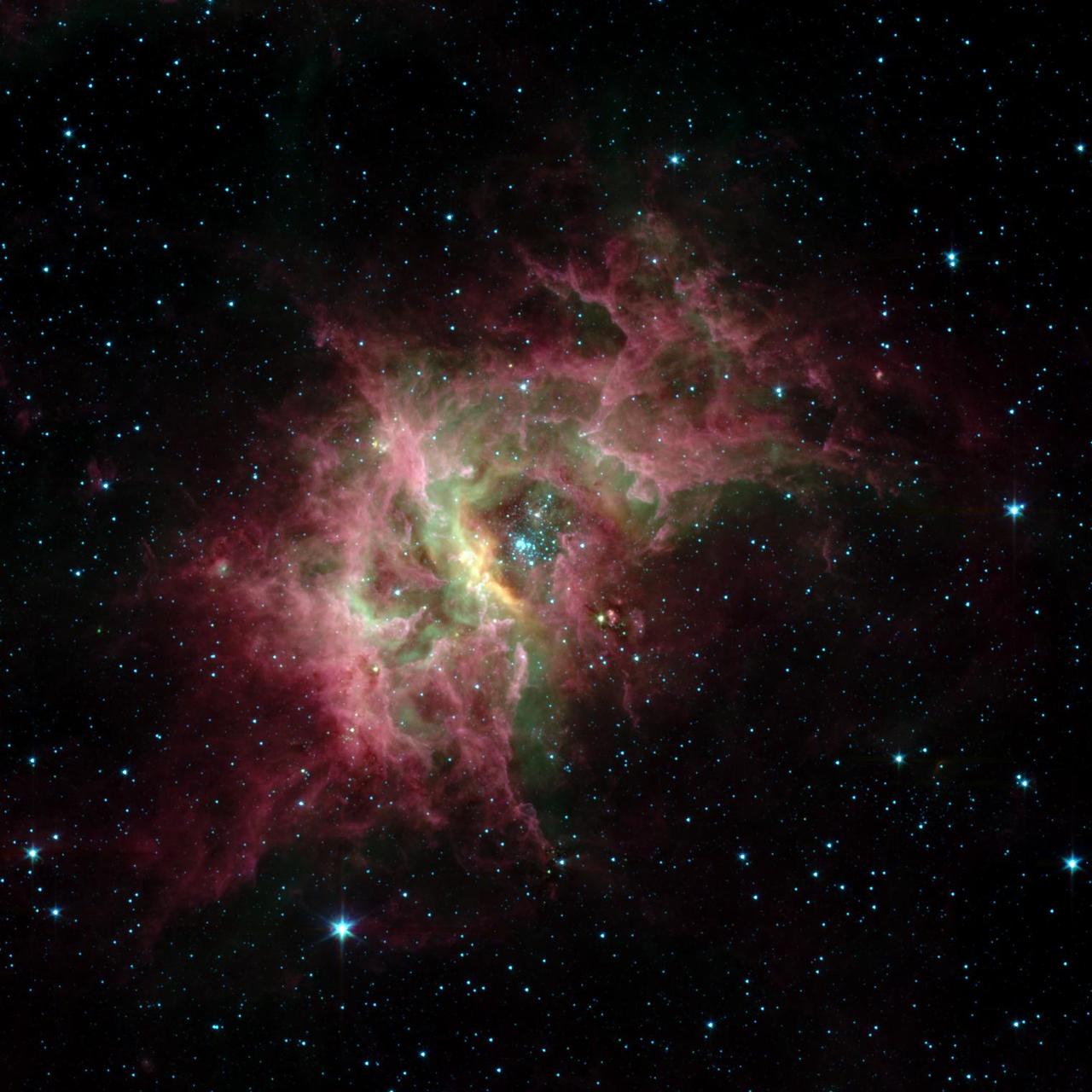
One of the most prolific birthing grounds in our Milky Way galaxy, a nebula called RCW 49, is exposed in superb detail for the first time in this new image from NASA's Spitzer Space Telescope. Located 13,700 light-years away in the southern constellation Centaurus, RCW 49 is a dark and dusty stellar nursery that houses more than 2,200 stars. Because many of the stars in RCW 49 are deeply embedded in plumes of dust, they cannot be seen at visible wavelengths. When viewed with Spitzer's infrared eyes, however, RCW 49 becomes transparent. Like cracking open a quartz rock to discover its jewels inside, the nebula's newborn stars have been dramatically exposed. This image taken by Spitzer's infrared array camera highlights the nebula's older stars (blue stars in center pocket), its gas filaments (green) and dusty tendrils (pink). Speckled throughout the murky clouds are more than 300 never-before-seen newborn stars. Astronomers are interested in further studying these newfound proto-stars because they offer a fresh look at star formation in our own galaxy. This image was taken on Dec. 23, 2003, and is composed of photographs obtained at four wavelengths: 3.6 microns (blue), 4.5 microns (green), 5.8 microns (orange) and 8 microns (red). http://photojournal.jpl.nasa.gov/catalog/PIA05989
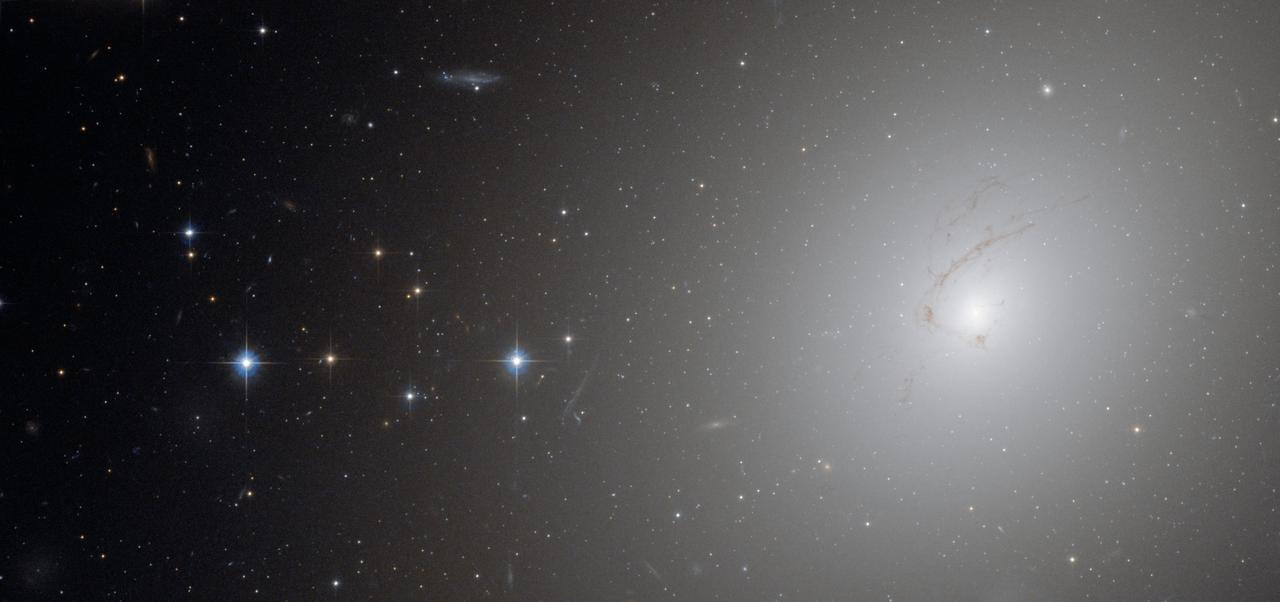
This picture, taken by Hubble’s Advanced Camera for Surveys, shows NGC 4696, the largest galaxy in the Centaurus Cluster. (To see a video of NGC 4696 go here: <a href="http://www.flickr.com/photos/gsfc/4888176841/)">www.flickr.com/photos/gsfc/4888176841/)</a> The huge dust lane, around 30 000 light-years across, that sweeps across the face of the galaxy makes NGC 4696 look different from most other elliptical galaxies. Viewed at certain wavelengths, strange thin filaments of ionised hydrogen are visible within it. In this picture, these structures are visible as a subtle marbling effect across the galaxy’s bright centre. Credit: ESA/Hubble and NASA <b><a href="http://www.nasa.gov/centers/goddard/home/index.html" rel="nofollow">NASA Goddard Space Flight Center</a></b> is home to the nation's largest organization of combined scientists, engineers and technologists that build spacecraft, instruments and new technology to study the Earth, the sun, our solar system, and the universe. <b>Follow us on <a href="http://twitter.com/NASA_GoddardPix" rel="nofollow">Twitter</a></b> <b>Join us on <a href="http://www.facebook.com/pages/Greenbelt-MD/NASA-Goddard/395013845897?ref=tsd" rel="nofollow">Facebook</a><b></b></b>

NASA image release May 20, 2011 <b>To see a really cool video related to this image go here: <a href="http://www.flickr.com/photos/gsfc/5740451675/in/photostream">www.flickr.com/photos/gsfc/5740451675/in/photostream</a></b> The giant elliptical galaxy NGC 5128 is the radio source known as Centaurus A. Vast radio-emitting lobes (shown as orange in this optical/radio composite) extend nearly a million light-years from the galaxy. Credit: Capella Observatory (optical), with radio data from Ilana Feain, Tim Cornwell, and Ron Ekers (CSIRO/ATNF), R. Morganti (ASTRON), and N. Junkes (MPIfR). To read more go to: <a href="http://www.nasa.gov/topics/universe/features/radio-particle-jets.html" rel="nofollow">www.nasa.gov/topics/universe/features/radio-particle-jets...</a> <b><a href="http://www.nasa.gov/centers/goddard/home/index.html" rel="nofollow">NASA Goddard Space Flight Center</a></b> enables NASA’s mission through four scientific endeavors: Earth Science, Heliophysics, Solar System Exploration, and Astrophysics. Goddard plays a leading role in NASA’s accomplishments by contributing compelling scientific knowledge to advance the Agency’s mission. <b>Follow us on <a href="http://twitter.com/NASA_GoddardPix" rel="nofollow">Twitter</a></b> <b>Join us on <a href="http://www.facebook.com/pages/Greenbelt-MD/NASA-Goddard/395013845897?ref=tsd" rel="nofollow">Facebook</a></b>
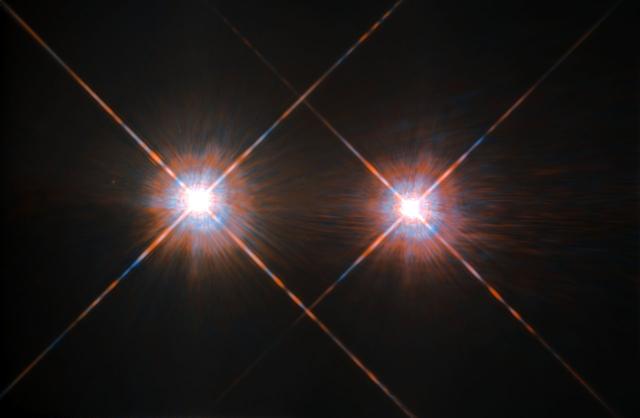
The closest star system to the Earth is the famous Alpha Centauri group. Located in the constellation of Centaurus (The Centaur), at a distance of 4.3 light-years, this system is made up of the binary formed by the stars Alpha Centauri A and Alpha Centauri B, plus the faint red dwarf Alpha Centauri C, also known as Proxima Centauri. This NASA/ESA Hubble Space Telescope has given us this stunning view of the bright Alpha Centauri A (on the left) and Alpha Centauri B (on the right), shining like huge cosmic headlamps in the dark. The image was captured by the Wide-Field and Planetary Camera 2 (WFPC2). WFPC2 was Hubble’s most used instrument for the first 13 years of the space telescope’s life, being replaced in 2009 by Wide-Field Camera 3 (WFC3) during Servicing Mission 4. This portrait of Alpha Centauri was produced by observations carried out at optical and near-infrared wavelengths. Compared to the sun, Alpha Centauri A is of the same stellar type, G2, and slightly bigger, while Alpha Centauri B, a K1-type star, is slightly smaller. They orbit a common center of gravity once every 80 years, with a minimum distance of about 11 times the distance between Earth and the sun. Because these two stars are, together with their sibling Proxima Centauri, the closest to Earth, they are among the best studied by astronomers. And they are also among the prime targets in the hunt for habitable exoplanets. Using the European Space Organization's HARPS instrument, astronomers already discovered a planet orbiting Alpha Centauri B. Then on Aug. 24, 2016, astronomers announced the intriguing discovery of a nearly Earth-sized planet in the habitable zone orbiting the star Proxima Centauri Image credit: ESA/NASA
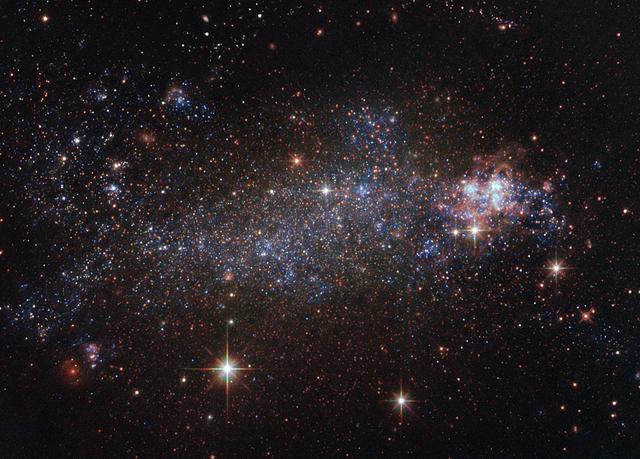
Most galaxies possess a majestic spiral or elliptical structure. About a quarter of galaxies, though, defy such conventional, rounded aesthetics, instead sporting a messy, indefinable shape. Known as irregular galaxies, this group includes NGC 5408, the galaxy that has been snapped here by the NASA/ESA Hubble Space Telescope. English polymath John Herschel recorded the existence of NGC 5408 in June 1834. Astronomers had long mistaken NGC 5408 for a planetary nebula, an expelled cloud of material from an aging star. Instead, bucking labels, NGC 5408 turned out to be an entire galaxy, located about 16 million light-years from Earth in the constellation of Centaurus (The Centaur). In yet another sign of NGC 5408 breaking convention, the galaxy is associated with an object known as an ultraluminous X-ray source, dubbed NGC 5408 X-1, one of the best studied of its class. These rare objects beam out prodigious amounts of energetic X-rays. Astrophysicists believe these sources to be strong candidates for intermediate-mass black holes. This hypothetical type of black hole has significantly less mass than the supermassive black holes found in galactic centres, which can have billions of times the mass of the Sun, but have a good deal more mass than the black holes formed when giant stars collapse. A version of this image was entered into the Hubble's Hidden Treasures image processing competition by contestant Judy Schmidt.
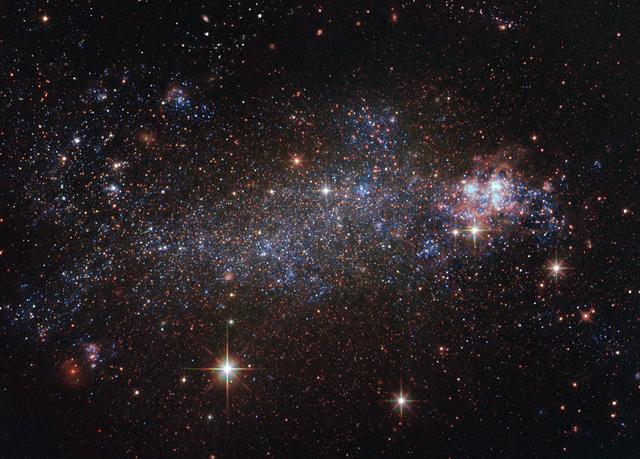
Most galaxies possess a majestic spiral or elliptical structure. About a quarter of galaxies, though, defy such conventional, rounded aesthetics, instead sporting a messy, indefinable shape. Known as irregular galaxies, this group includes NGC 5408, the galaxy that has been snapped here by the NASA/ESA Hubble Space Telescope. John Herschel recorded the existence of NGC 5408 in June 1834. Astronomers had long mistaken NGC 5408 for a planetary nebula, an expelled cloud of material from an aging star. Instead, bucking labels, NGC 5408 turned out to be an entire galaxy, located about 16 million light-years from Earth in the constellation of Centaurus (The Centaur). In yet another sign of NGC 5408 breaking convention, the galaxy is associated with an object known as an ultraluminous X-ray source, dubbed NGC 5408 X-1, one of the best studied of its class. These rare objects beam out prodigious amounts of energetic X-rays. Astrophysicists believe these sources to be strong candidates for intermediate-mass black holes. This hypothetical type of black hole has significantly less mass than the supermassive black holes found in galactic centers, which can have billions of times the mass of the sun, but have a good deal more mass than the black holes formed when giant stars collapse. Image credit: ESA/Hubble & NASA, Acknowledgement: Judy Schmidt <b><a href="http://www.nasa.gov/audience/formedia/features/MP_Photo_Guidelines.html" rel="nofollow">NASA image use policy.</a></b> <b><a href="http://www.nasa.gov/centers/goddard/home/index.html" rel="nofollow">NASA Goddard Space Flight Center</a></b> enables NASA’s mission through four scientific endeavors: Earth Science, Heliophysics, Solar System Exploration, and Astrophysics. Goddard plays a leading role in NASA’s accomplishments by contributing compelling scientific knowledge to advance the Agency’s mission. <b>Follow us on <a href="http://twitter.com/NASAGoddardPix" rel="nofollow">Twitter</a></b> <b>Like us on <a href="http://www.facebook.com/pages/Greenbelt-MD/NASA-Goddard/395013845897?ref=tsd" rel="nofollow">Facebook</a></b> <b>Find us on <a href="http://instagrid.me/nasagoddard/?vm=grid" rel="nofollow">Instagram</a></b>

Tidal disruption event Every galaxy has a black hole at its center. Usually they are quiet, without gas accretions, like the one in our Milky Way. But if a star creeps too close to the black hole, the gravitational tides can rip away the star’s gaseous matter. Like water spinning around a drain, the gas swirls into a disk around the black hole at such speeds that it heats to millions of degrees. As an inner ring of gas spins into the black hole, gas particles shoot outward from the black hole’s polar regions. Like bullets shot from a rifle, they zoom through the jets at velocities close to the speed of light. Astronomers using NASA’s Hubble Space Telescope observed correlations between supermassive black holes and an event similar to tidal disruption, pictured above in the Centaurus A galaxy. Certain galaxies have shining centers, illuminated by heated gas circling around a supermassive black hole. Matter escapes where it can, forming two jets of plasma moving near the speed of light. To learn more about the relationship between galaxies and the black holes at their cores, go to NASA’s Hubble Space Telescope: <a href="http://www.nasa.gov/mission_pages/hubble/main/" rel="nofollow">www.nasa.gov/mission_pages/hubble/main/</a> -------------------------------- Original caption: A team of astronomers using the Hubble Space Telescope found an unambiguous link between the presence of supermassive black holes that power high-speed, radio-signal-emitting jets and the merger history of their host galaxies. Almost all galaxies with the jets were found to be merging with another galaxy, or to have done so recently. Credit: NASA/ESA/STScI <b><a href="http://www.nasa.gov/audience/formedia/features/MP_Photo_Guidelines.html" rel="nofollow">NASA image use policy.</a></b> <b><a href="http://www.nasa.gov/centers/goddard/home/index.html" rel="nofollow">NASA Goddard Space Flight Center</a></b> enables NASA’s mission through four scientific endeavors: Earth Science, Heliophysics, Solar System Exploration, and Astrophysics. Goddard plays a leading role in NASA’s accomplishments by contributing compelling scientific knowledge to advance the Agency’s mission. <b>Follow us on <a href="http://twitter.com/NASAGoddardPix" rel="nofollow">Twitter</a></b> <b>Like us on <a href="http://www.facebook.com/pages/Greenbelt-MD/NASA-Goddard/395013845897?ref=tsd" rel="nofollow">Facebook</a></b> <b>Find us on <a href="http://instagrid.me/nasagoddard/?vm=grid" rel="nofollow">Instagram</a></b>