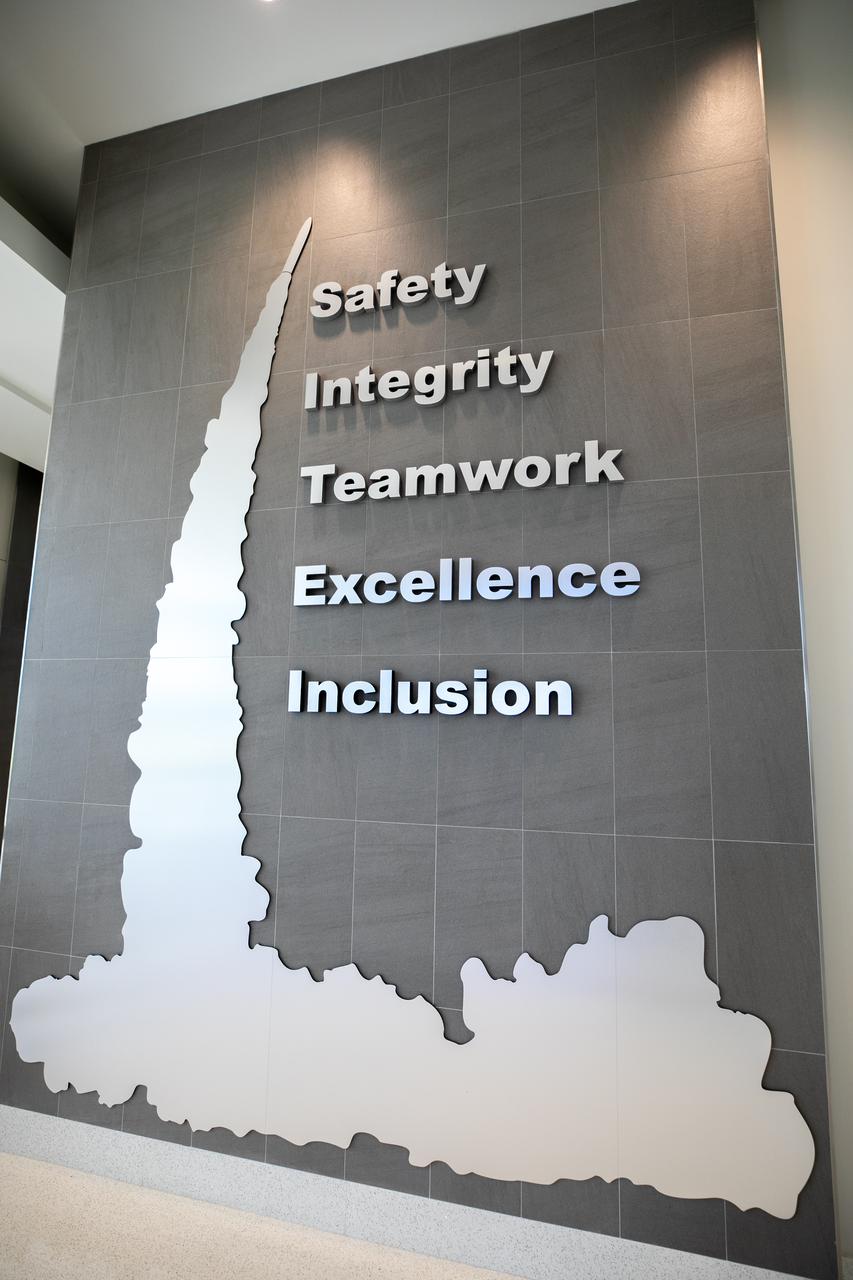
NASA’s core values are shown in the Central Campus lobby at the agency’s Kennedy Space Center in Florida following the installation of NASA’s fifth core value – inclusion – on Sept. 1, 2020. On July 23, NASA Administrator Jim Bridenstine announced the addition of this fifth core value to the existing values embraced by NASA: safety, integrity, teamwork, and excellence. In his announcement, Bridenstine stated “Incorporating inclusion as a NASA core value is an important step to ensuring this principle remains a long-term focus for our agency and becomes ingrained in the NASA family DNA.”
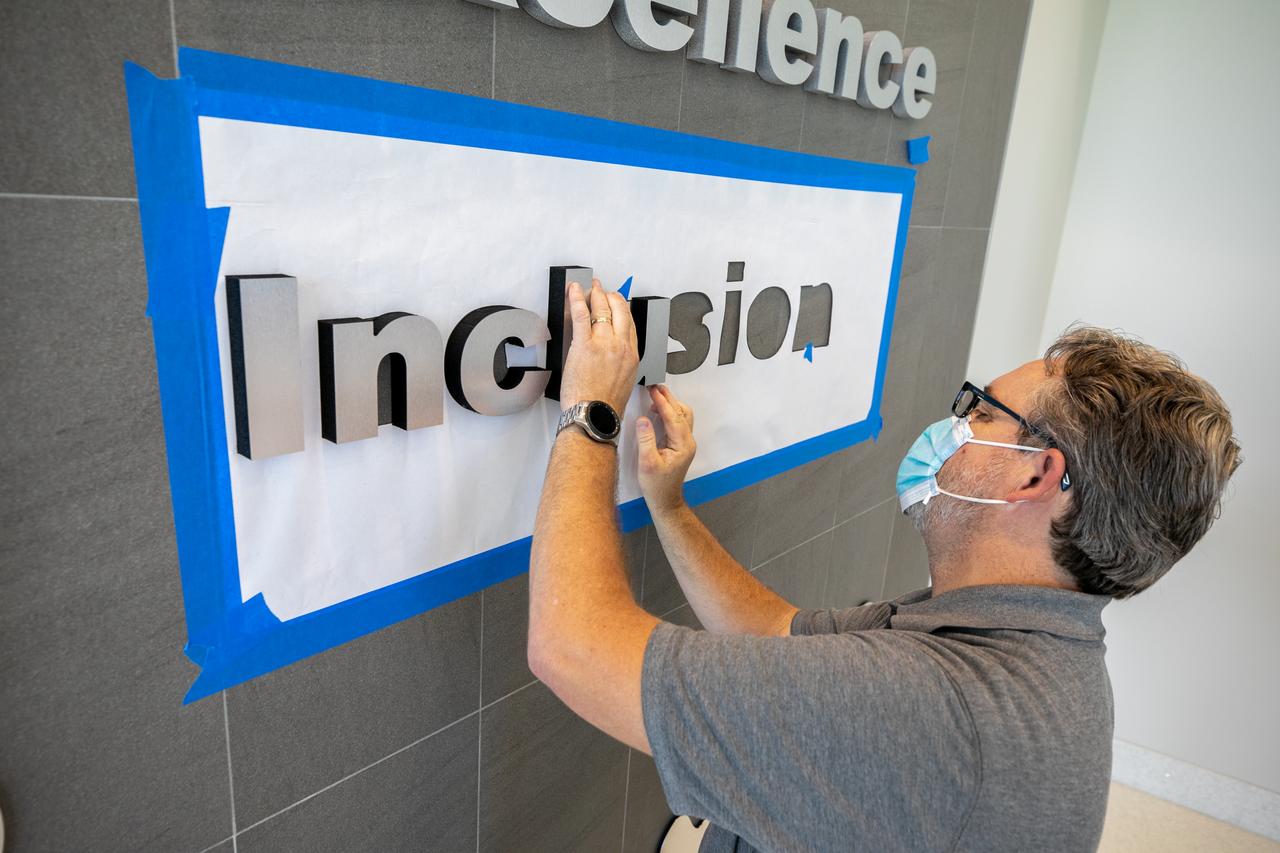
NASA’s fifth core value – inclusion – is installed in the Central Campus lobby at the agency’s Kennedy Space Center in Florida on Sept. 1, 2020. On July 23, NASA Administrator Jim Bridenstine announced the addition of this fifth core value to the existing values embraced by NASA: safety, integrity, teamwork, and excellence. In his announcement, Bridenstine stated “Incorporating inclusion as a NASA core value is an important step to ensuring this principle remains a long-term focus for our agency and becomes ingrained in the NASA family DNA.”
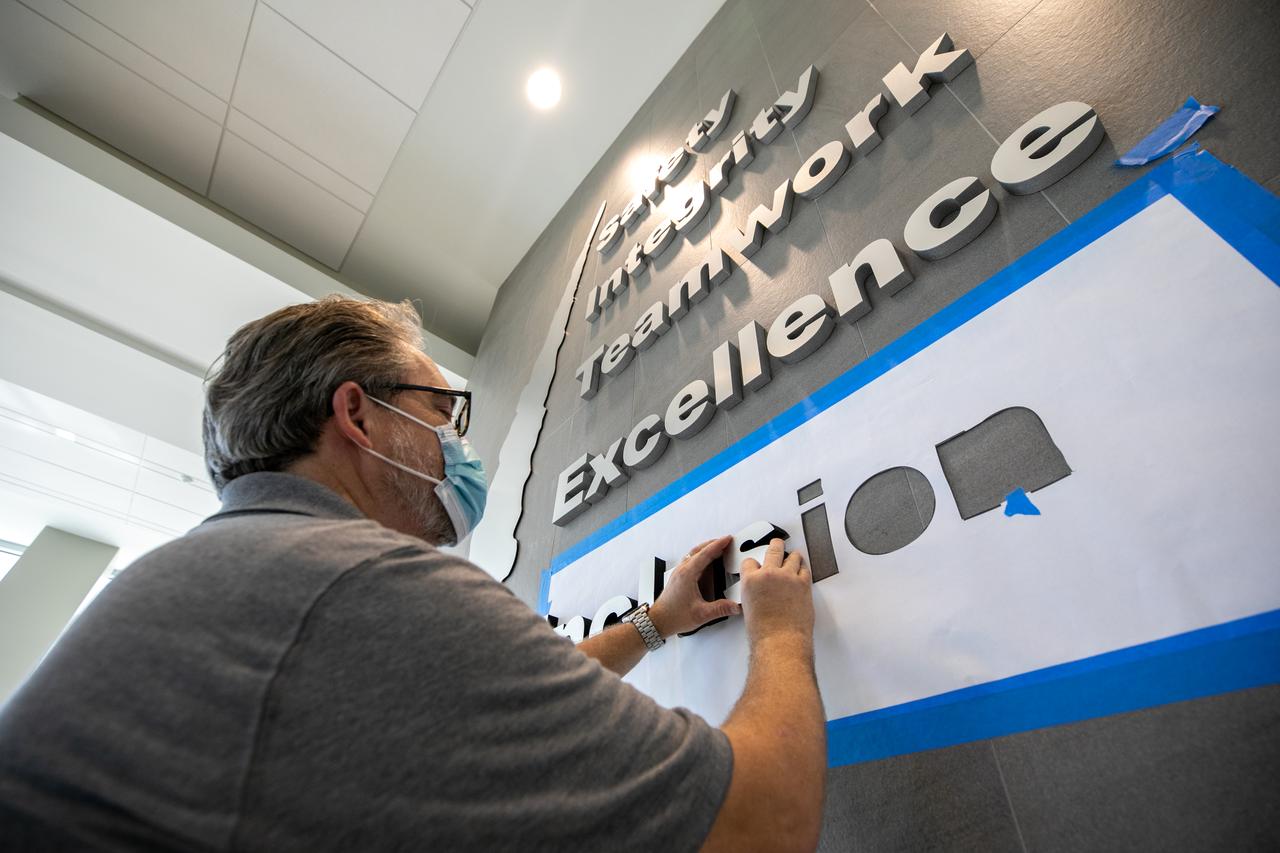
NASA’s fifth core value – inclusion – is installed in the Central Campus lobby at the agency’s Kennedy Space Center in Florida on Sept. 1, 2020. On July 23, NASA Administrator Jim Bridenstine announced the addition of this fifth core value to the existing values embraced by NASA: safety, integrity, teamwork, and excellence. In his announcement, Bridenstine stated “Incorporating inclusion as a NASA core value is an important step to ensuring this principle remains a long-term focus for our agency and becomes ingrained in the NASA family DNA.”
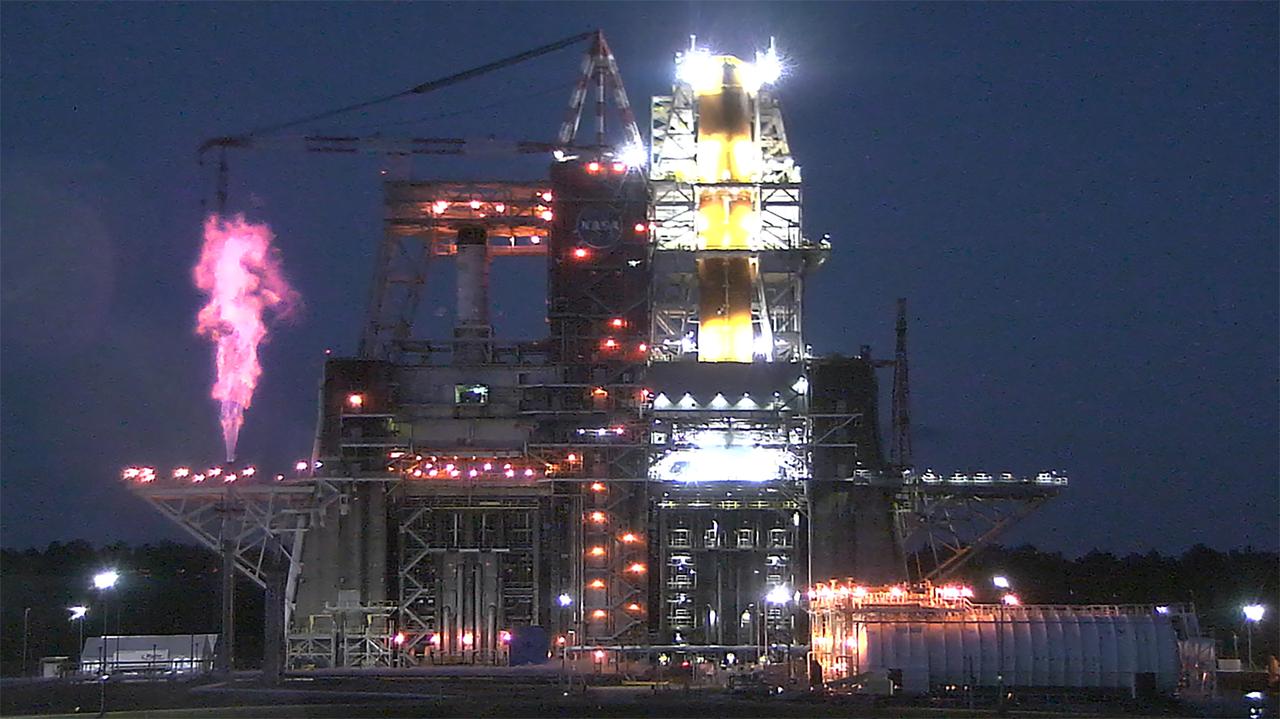
Operators at the B-2 Test Stand at Stennis Space Center near Bay St. Louis, Mississippi, conducted a wet dress rehearsal for the hot fire test of the core stage of NASA’s Space Launch System on Dec. 21, 2020. In this image, liquid oxygen can be seen venting near the top of the installed core stage. Following the wet dress rehearsal, operators will conduct a full hot fire test of the core stage and its four RS-25 engines. The hot fire will conclude a series of eight Green Run tests of all core stage systems before it is transported to Kennedy Space Center for launch on the Artemis I mission.
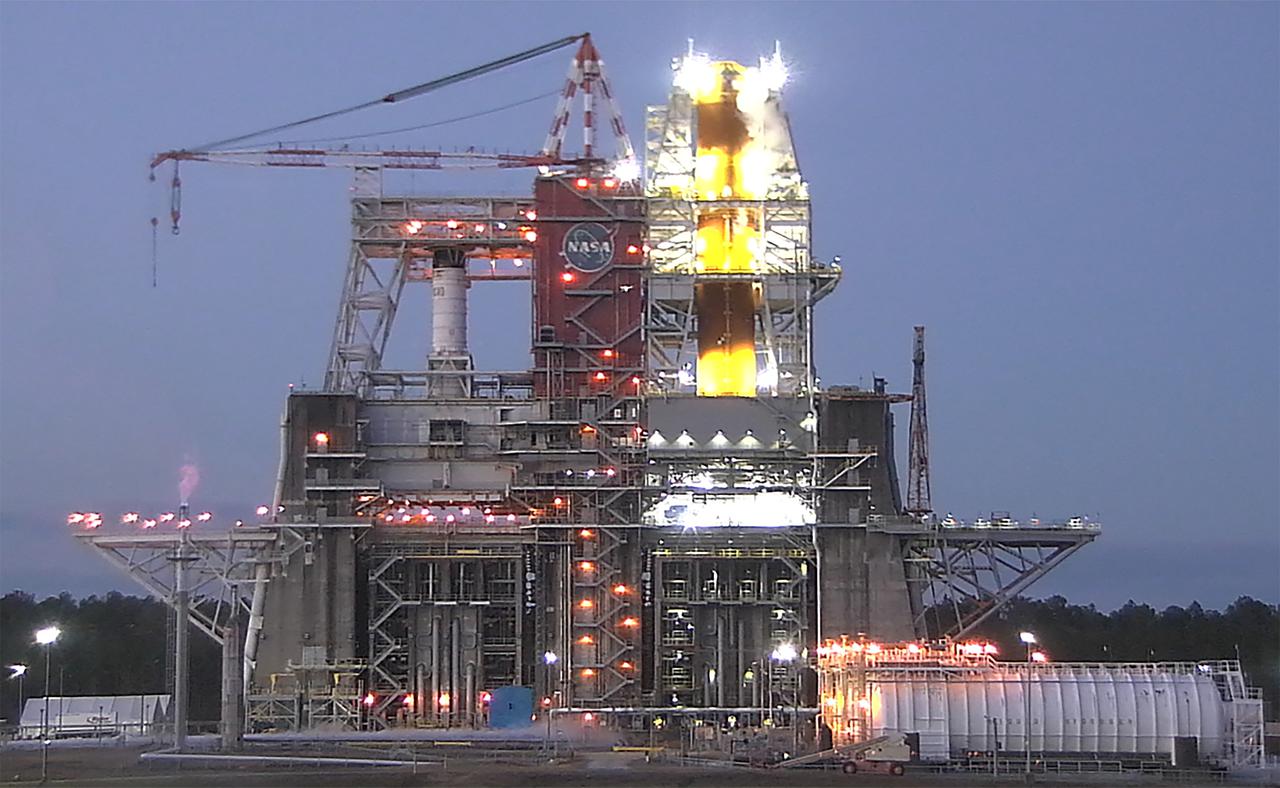
Operators at the B-2 Test Stand at Stennis Space Center near Bay St. Louis, Mississippi, conducted a wet dress rehearsal for the hot fire test of the core stage of NASA’s Space Launch System on Dec. 21, 2020. In this image, liquid oxygen can be seen venting near the top of the installed core stage. Following the wet dress rehearsal, operators will conduct a full hot fire test of the core stage and its four RS-25 engines. The hot fire will conclude a series of eight Green Run tests of all core stage systems before it is transported to Kennedy Space Center for launch on the Artemis I mission.
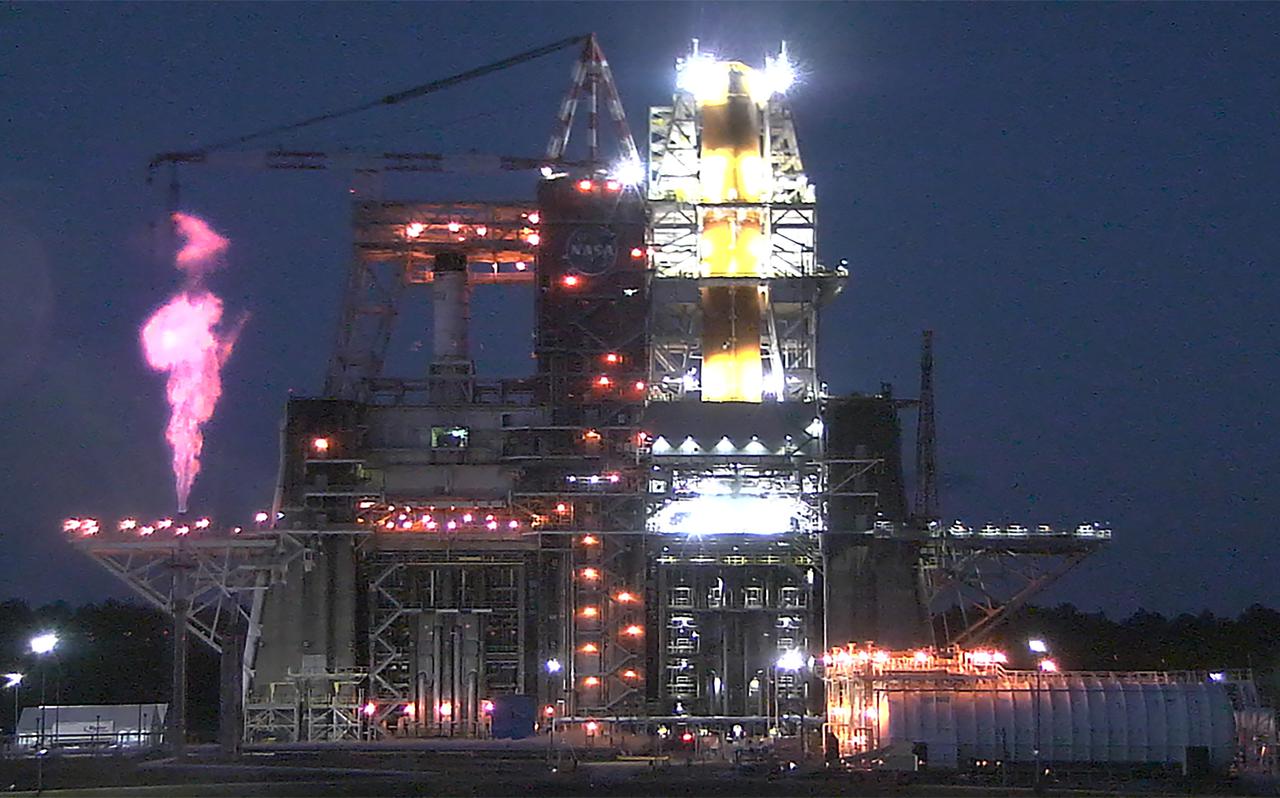
Operators at the B-2 Test Stand at Stennis Space Center near Bay St. Louis, Mississippi, conducted a wet dress rehearsal for the hot fire test of the core stage of NASA’s Space Launch System on Dec. 21, 2020. In this image, liquid oxygen can be seen venting near the top of the installed core stage. Following the wet dress rehearsal, operators will conduct a full hot fire test of the core stage and its four RS-25 engines. The hot fire will conclude a series of eight Green Run tests of all core stage systems before it is transported to Kennedy Space Center for launch on the Artemis I mission.
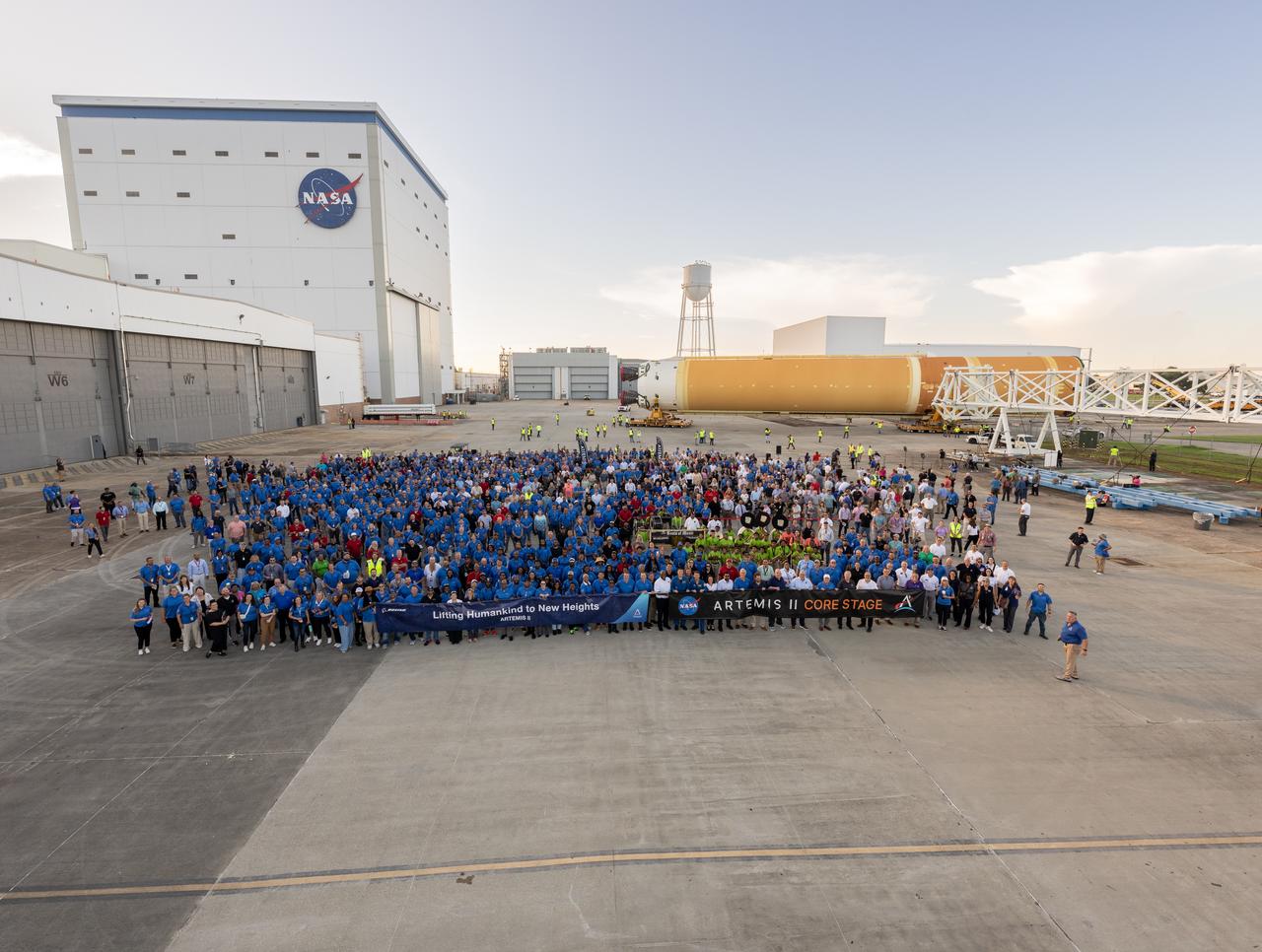
The NASA Michoud Assembly Facility workforce and with other agency team members take a “family photo” with the SLS (Space Launch System) core stage for Artemis II in the background. The core stage will help launch the first crewed flight of NASA’s SLS rocket for the agency’s Artemis II mission. The move marked the first time a fully assembled Moon rocket stage for a crewed mission has rolled out from NASA’s Michoud Assembly Facility in New Orleans since the Apollo Program, The core stage was moved onto the agency’s Pegasus barge, where it will be ferried to NASA’s Kennedy Space Center in Florida. The core stage for the SLS mega rocket is the largest stage NASA has ever produced. At 212 feet tall, the stage consists of five major elements, including two huge propellant tanks that collectively hold more than 733,000 gallons of super chilled liquid propellant to feed four RS-25 engines at its base. During launch and flight, the stage will operate for just over eight minutes, producing more than 2 million pounds of thrust to help send a crew of four astronauts inside NASA’s Orion spacecraft onward to the Moon. NASA is working to land the first woman, first person of color, and its first international partner astronaut on the Moon under Artemis. SLS is part of NASA’s backbone for deep space exploration, along with the Orion spacecraft and Gateway in orbit around the Moon and commercial human landing systems, next-generation space, next-generational spacesuits, and rovers on the lunar surface. SLS is the only rocket that can send Orion, astronauts, and supplies to the Moon in a single launch.
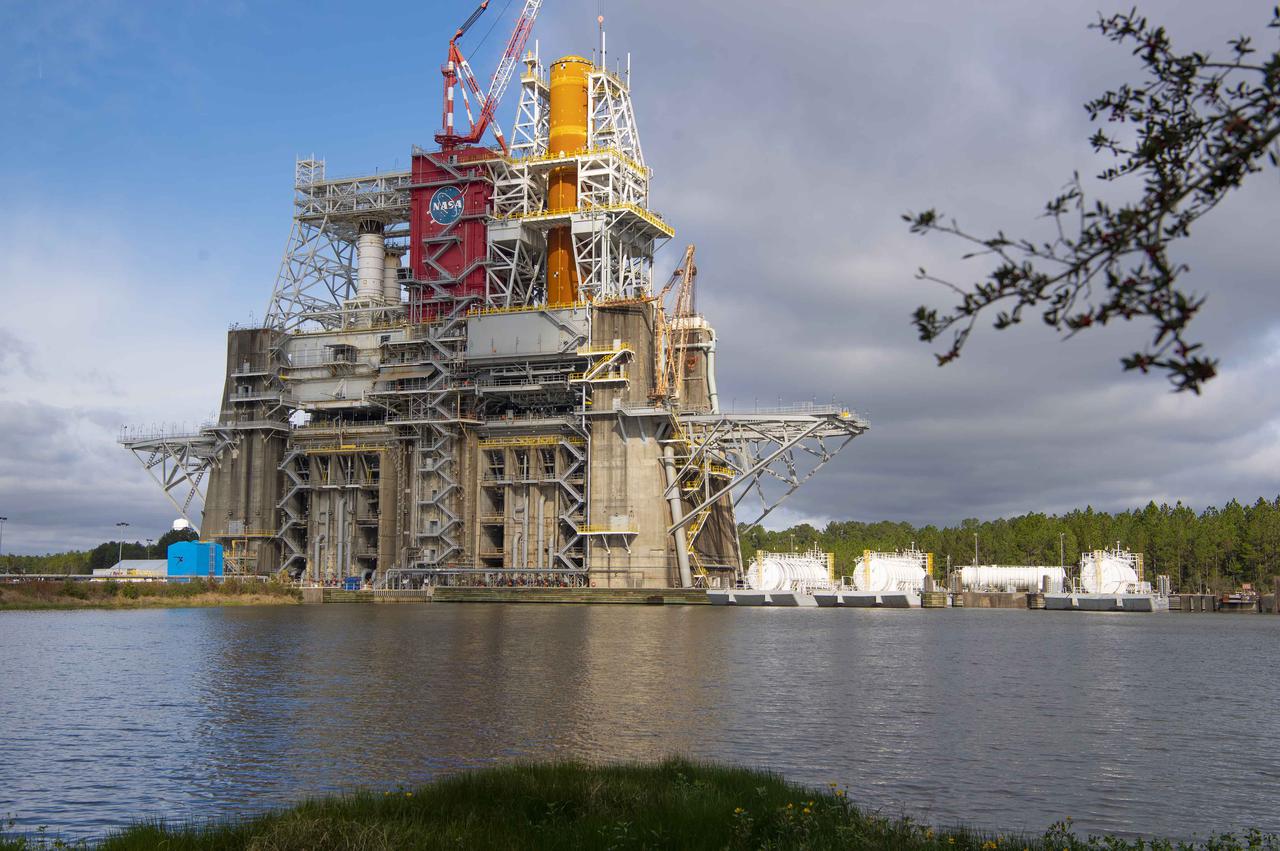
Barges are docked at the B-2 Test Stand at Stennis Space Center near Bay St. Louis, Mississippi, during preparations for a wet dress rehearsal exercise with the core stage of NASA’s Space Launch System rocket. During the wet dress rehearsal, operators will fully load the core stage’s propellant tanks for the first time and countdown just shy of engine ignition. The wet dress rehearsal is the seventh in a series of eight Green Run tests of the core stage’s integrated systems prior to its transport to Kennedy Space Center and launch on the Artemis I mission.
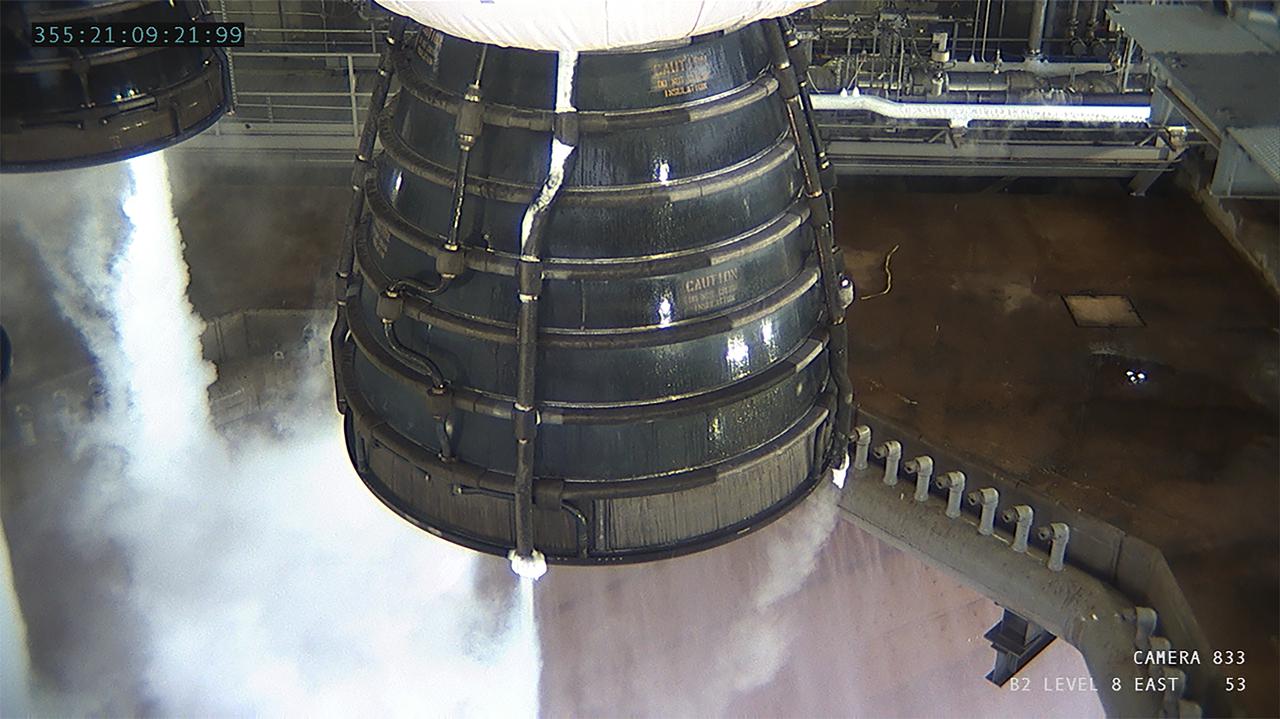
Operators at the B-2 Test Stand at Stennis Space Center near Bay St. Louis, Mississippi, conducted a wet dress rehearsal for the hot fire test of the core stage of NASA’s Space Launch System on Dec. 21, 2020. In this image, liquid oxygen vents from the four RS-25 engines that will ignite during the final hot fire test of the core stage. The hot fire will conclude a series of eight Green Run tests of all core stage systems before it is transported to Kennedy Space Center for launch on the Artemis I mission.
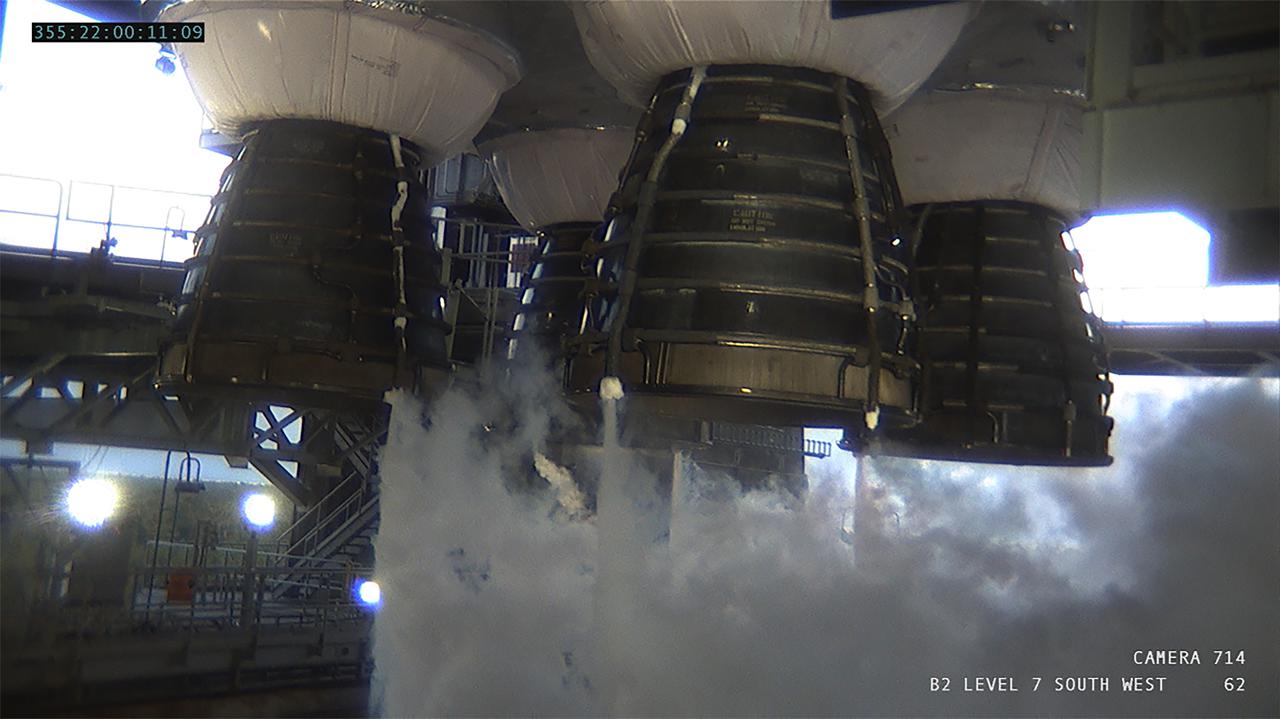
Operators at the B-2 Test Stand at Stennis Space Center near Bay St. Louis, Mississippi, conducted a wet dress rehearsal for the hot fire test of the core stage of NASA’s Space Launch System on Dec. 21, 2020. In this image, liquid oxygen vents from the four RS-25 engines that will ignite during the final hot fire test of the core stage. The hot fire will conclude a series of eight Green Run tests of all core stage systems before it is transported to Kennedy Space Center for launch on the Artemis I mission.
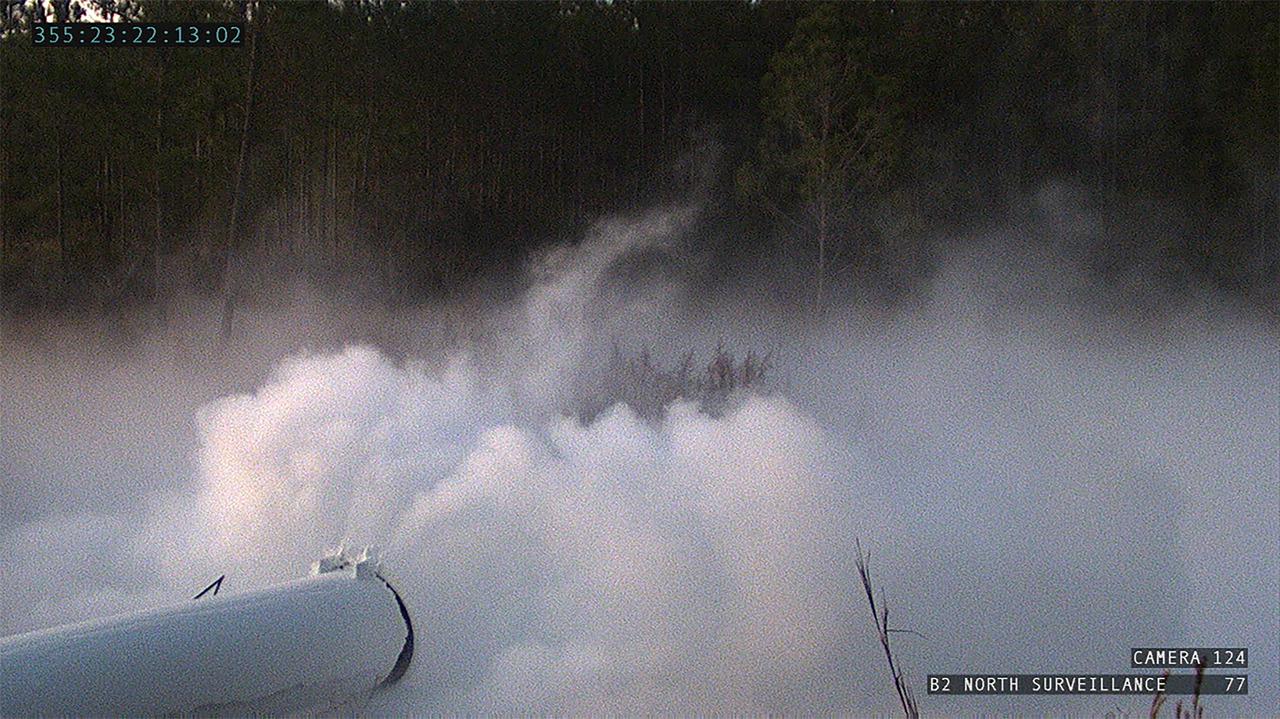
Operators at the B-2 Test Stand at Stennis Space Center near Bay St. Louis, Mississippi, conducted a wet dress rehearsal for the hot fire test of the core stage of NASA’s Space Launch System on Dec. 21, 2020. In this image, liquid oxygen can be seen venting from B-2 Test Stand piping. Following the wet dress rehearsal, operators will conduct a full hot fire test of the core stage and its four RS-25 engines. The hot fire will conclude a series of eight Green Run tests of all core stage systems before it is transported to Kennedy Space Center for launch on the Artemis I mission.
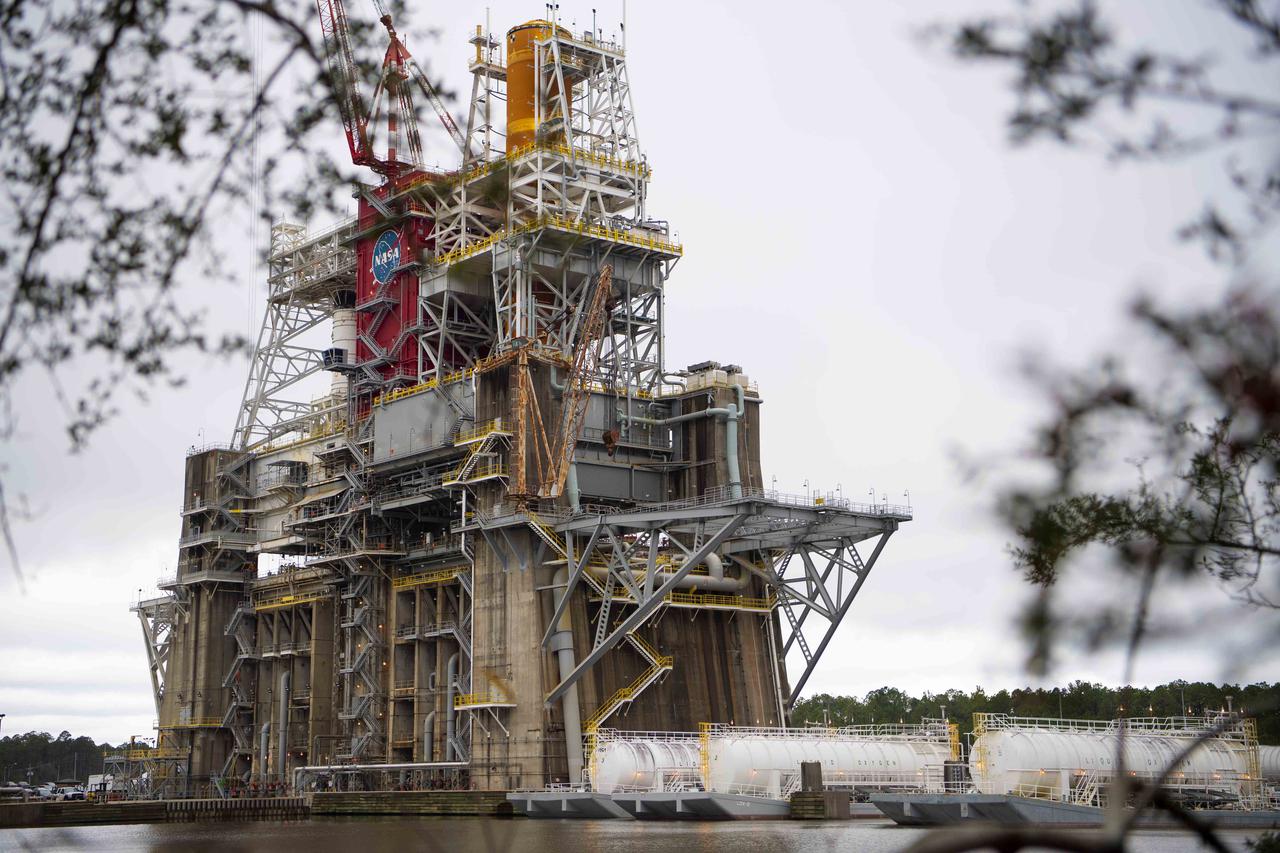
Barges are docked at the B-2 Test Stand at Stennis Space Center near Bay St. Louis, Mississippi, during preparations for a wet dress rehearsal exercise with the core stage of NASA’s Space Launch System rocket. During the wet dress rehearsal, operators will fully load the core stage’s propellant tanks for the first time and countdown just shy of engine ignition. The wet dress rehearsal is the seventh in a series of eight Green Run tests of the core stage’s integrated systems prior to its transport to Kennedy Space Center and launch on the Artemis I mission.
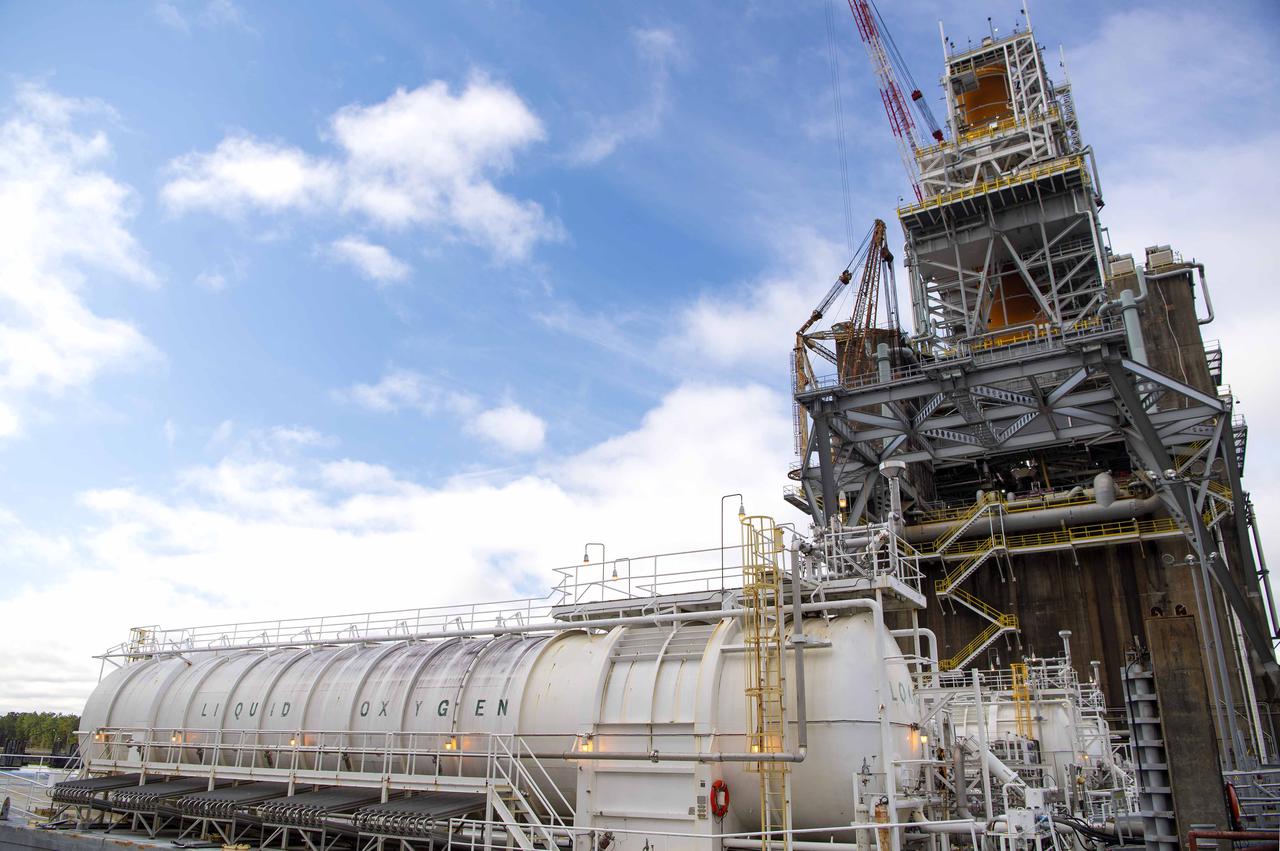
Barges are docked at the B-2 Test Stand at Stennis Space Center near Bay St. Louis, Mississippi, during preparations for a wet dress rehearsal exercise with the core stage of NASA’s Space Launch System rocket. During the wet dress rehearsal, operators will fully load the core stage’s propellant tanks for the first time and countdown just shy of engine ignition. The wet dress rehearsal is the seventh in a series of eight Green Run tests of the core stage’s integrated systems prior to its transport to Kennedy Space Center and launch on the Artemis I mission.
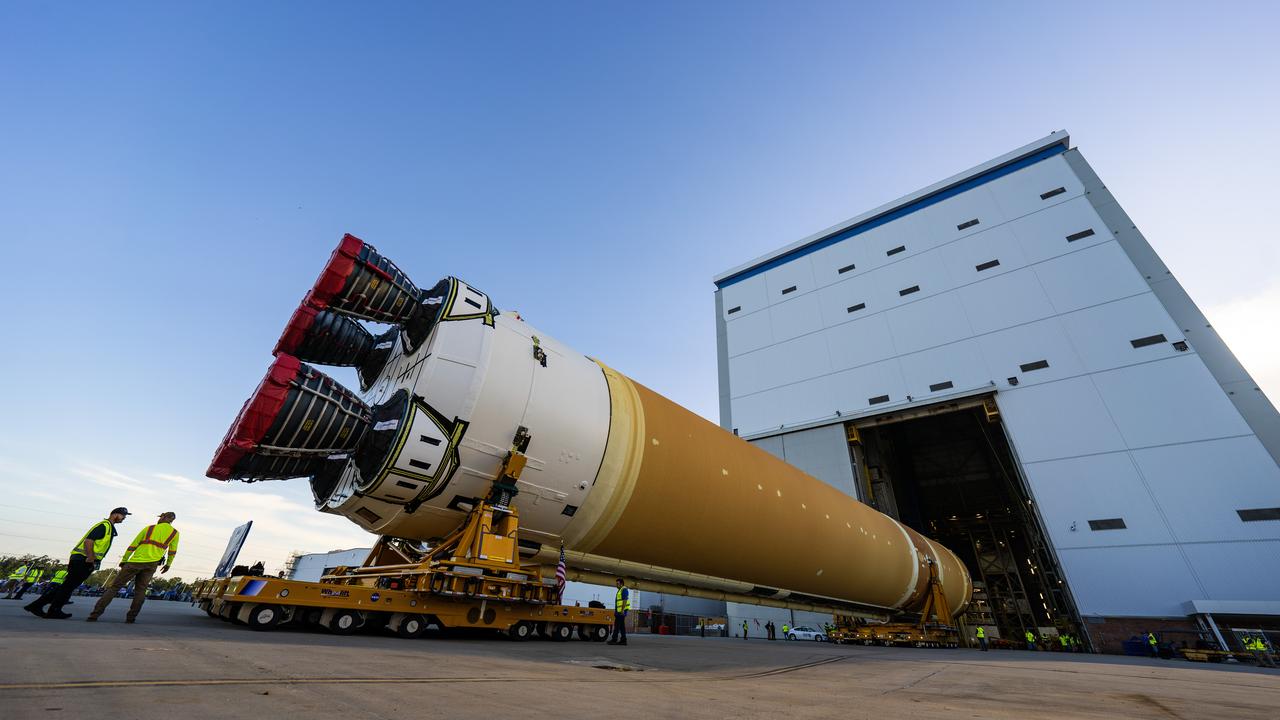
These images and videos show team members moving the first core stage that will help launch the first crewed flight of NASA’s SLS (Space Launch System) rocket for the agency’s Artemis II mission. The move marked the first time a fully assembled Moon rocket stage for a crewed mission has rolled out from NASA’s Michoud Assembly Facility in New Orleans since the Apollo Program, The core stage was moved onto the agency’s Pegasus barge, where it will be ferried to NASA’s Kennedy Space Center in Florida. The core stage for the SLS mega rocket is the largest stage NASA has ever produced. At 212 feet tall, the stage consists of five major elements, including two huge propellant tanks that collectively hold more than 733,000 gallons of super chilled liquid propellant to feed four RS-25 engines at its base. During launch and flight, the stage will operate for just over eight minutes, producing more than 2 million pounds of thrust to help send a crew of four astronauts inside NASA’s Orion spacecraft onward to the Moon. NASA is working to land the first woman, first person of color, and its first international partner astronaut on the Moon under Artemis. SLS is part of NASA’s backbone for deep space exploration, along with the Orion spacecraft and Gateway in orbit around the Moon and commercial human landing systems, next-generation space, next-generational spacesuits, and rovers on the lunar surface. SLS is the only rocket that can send Orion, astronauts, and supplies to the Moon in a single launch.
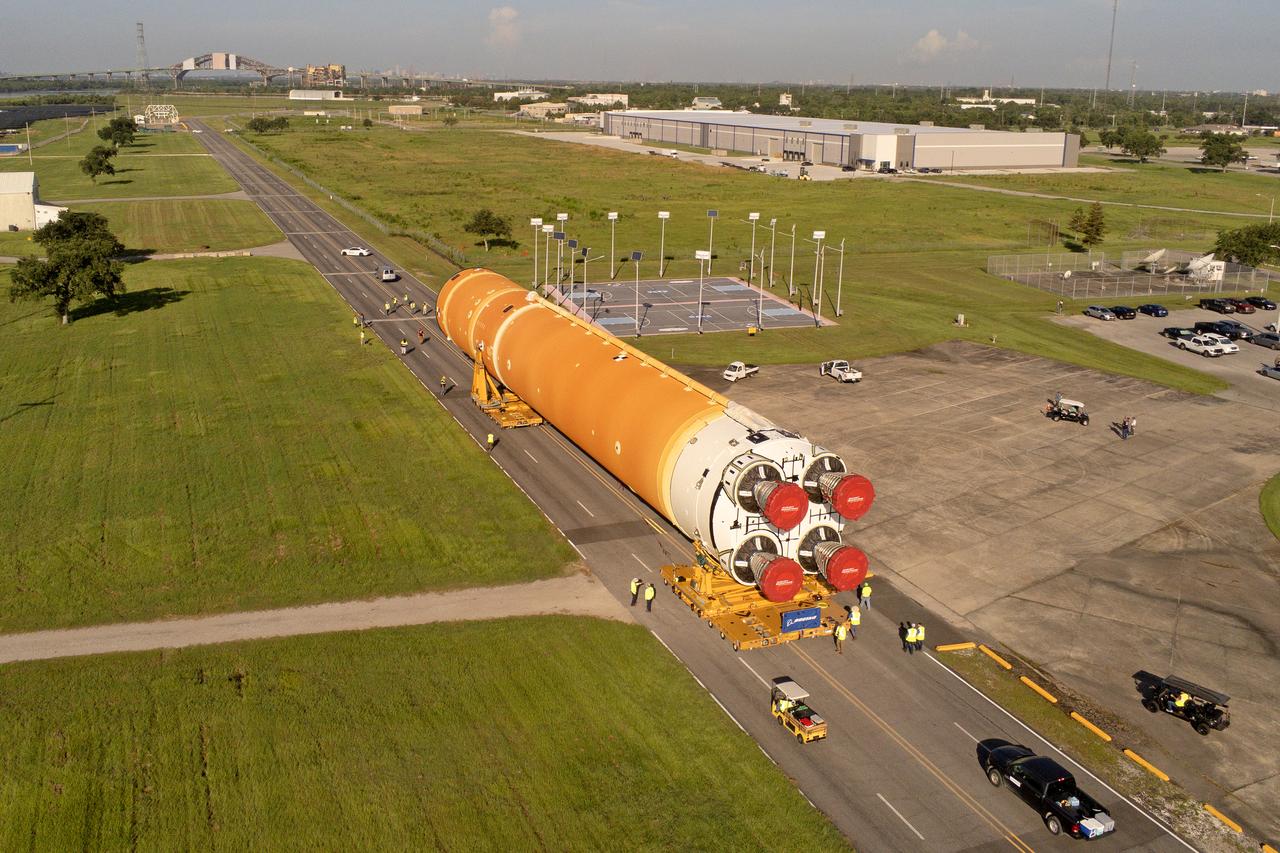
These images and videos show team members moving the first core stage that will help launch the first crewed flight of NASA’s SLS (Space Launch System) rocket for the agency’s Artemis II mission. The move marked the first time a fully assembled Moon rocket stage for a crewed mission has rolled out from NASA’s Michoud Assembly Facility in New Orleans since the Apollo Program, The core stage was moved onto the agency’s Pegasus barge, where it will be ferried to NASA’s Kennedy Space Center in Florida. The core stage for the SLS mega rocket is the largest stage NASA has ever produced. At 212 feet tall, the stage consists of five major elements, including two huge propellant tanks that collectively hold more than 733,000 gallons of super chilled liquid propellant to feed four RS-25 engines at its base. During launch and flight, the stage will operate for just over eight minutes, producing more than 2 million pounds of thrust to help send a crew of four astronauts inside NASA’s Orion spacecraft onward to the Moon. NASA is working to land the first woman, first person of color, and its first international partner astronaut on the Moon under Artemis. SLS is part of NASA’s backbone for deep space exploration, along with the Orion spacecraft and Gateway in orbit around the Moon and commercial human landing systems, next-generation space, next-generational spacesuits, and rovers on the lunar surface. SLS is the only rocket that can send Orion, astronauts, and supplies to the Moon in a single launch.
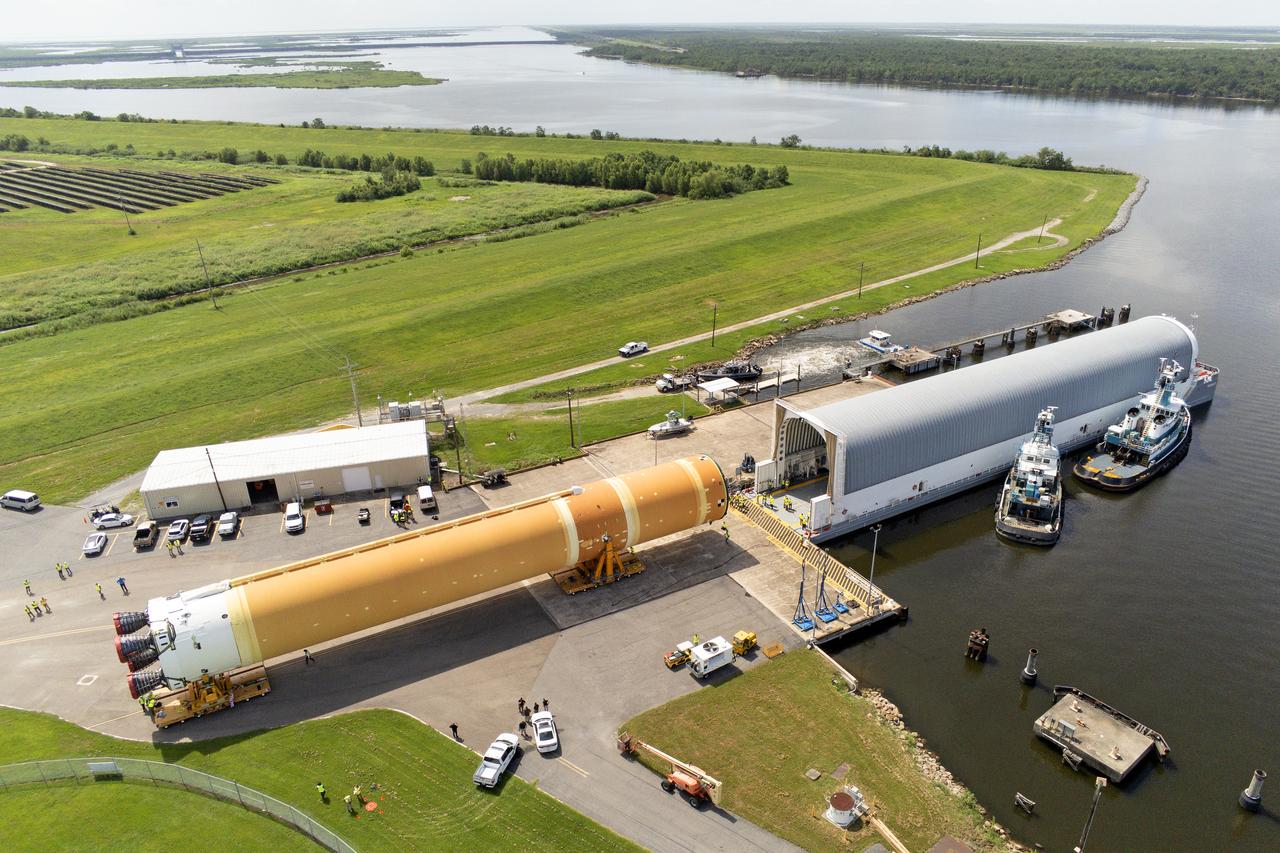
These images and videos show team members moving the first core stage that will help launch the first crewed flight of NASA’s SLS (Space Launch System) rocket for the agency’s Artemis II mission. The move marked the first time a fully assembled Moon rocket stage for a crewed mission has rolled out from NASA’s Michoud Assembly Facility in New Orleans since the Apollo Program, The core stage was moved onto the agency’s Pegasus barge, where it will be ferried to NASA’s Kennedy Space Center in Florida. The core stage for the SLS mega rocket is the largest stage NASA has ever produced. At 212 feet tall, the stage consists of five major elements, including two huge propellant tanks that collectively hold more than 733,000 gallons of super chilled liquid propellant to feed four RS-25 engines at its base. During launch and flight, the stage will operate for just over eight minutes, producing more than 2 million pounds of thrust to help send a crew of four astronauts inside NASA’s Orion spacecraft onward to the Moon. NASA is working to land the first woman, first person of color, and its first international partner astronaut on the Moon under Artemis. SLS is part of NASA’s backbone for deep space exploration, along with the Orion spacecraft and Gateway in orbit around the Moon and commercial human landing systems, next-generation space, next-generational spacesuits, and rovers on the lunar surface. SLS is the only rocket that can send Orion, astronauts, and supplies to the Moon in a single launch.
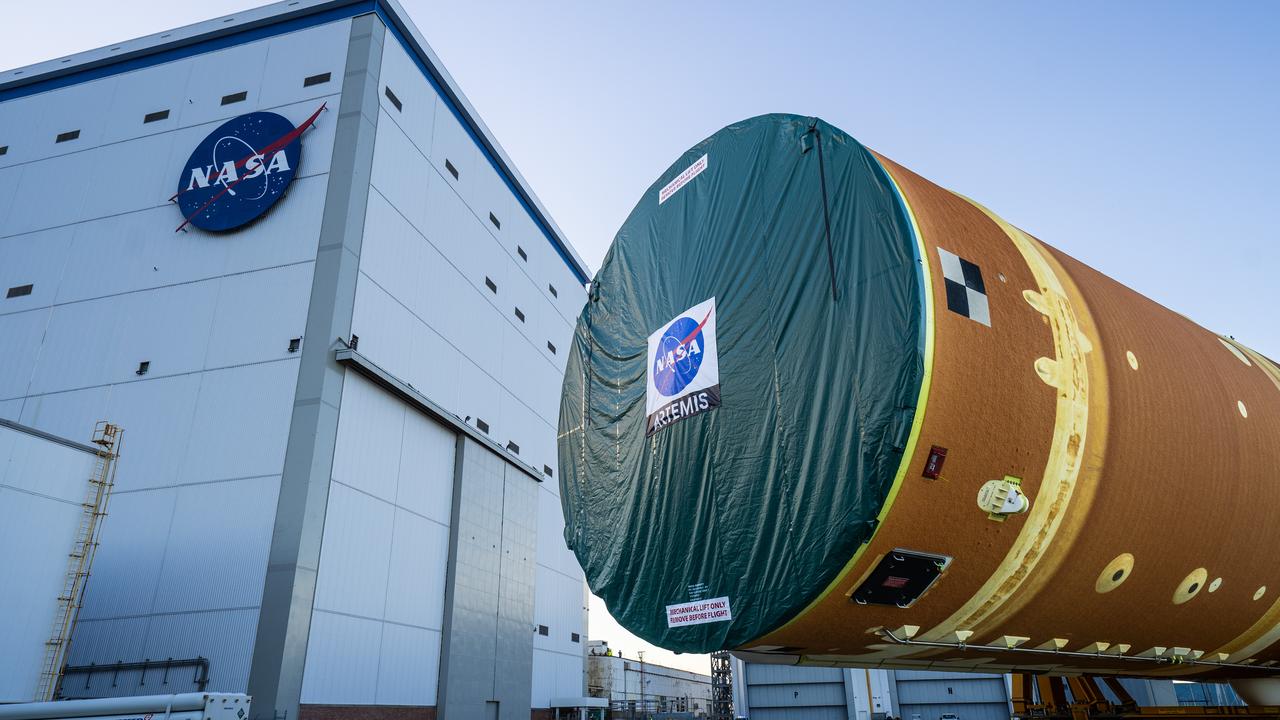
These images and videos show team members moving the first core stage that will help launch the first crewed flight of NASA’s SLS (Space Launch System) rocket for the agency’s Artemis II mission. The move marked the first time a fully assembled Moon rocket stage for a crewed mission has rolled out from NASA’s Michoud Assembly Facility in New Orleans since the Apollo Program, The core stage was moved onto the agency’s Pegasus barge, where it will be ferried to NASA’s Kennedy Space Center in Florida. The core stage for the SLS mega rocket is the largest stage NASA has ever produced. At 212 feet tall, the stage consists of five major elements, including two huge propellant tanks that collectively hold more than 733,000 gallons of super chilled liquid propellant to feed four RS-25 engines at its base. During launch and flight, the stage will operate for just over eight minutes, producing more than 2 million pounds of thrust to help send a crew of four astronauts inside NASA’s Orion spacecraft onward to the Moon. NASA is working to land the first woman, first person of color, and its first international partner astronaut on the Moon under Artemis. SLS is part of NASA’s backbone for deep space exploration, along with the Orion spacecraft and Gateway in orbit around the Moon and commercial human landing systems, next-generation space, next-generational spacesuits, and rovers on the lunar surface. SLS is the only rocket that can send Orion, astronauts, and supplies to the Moon in a single launch.
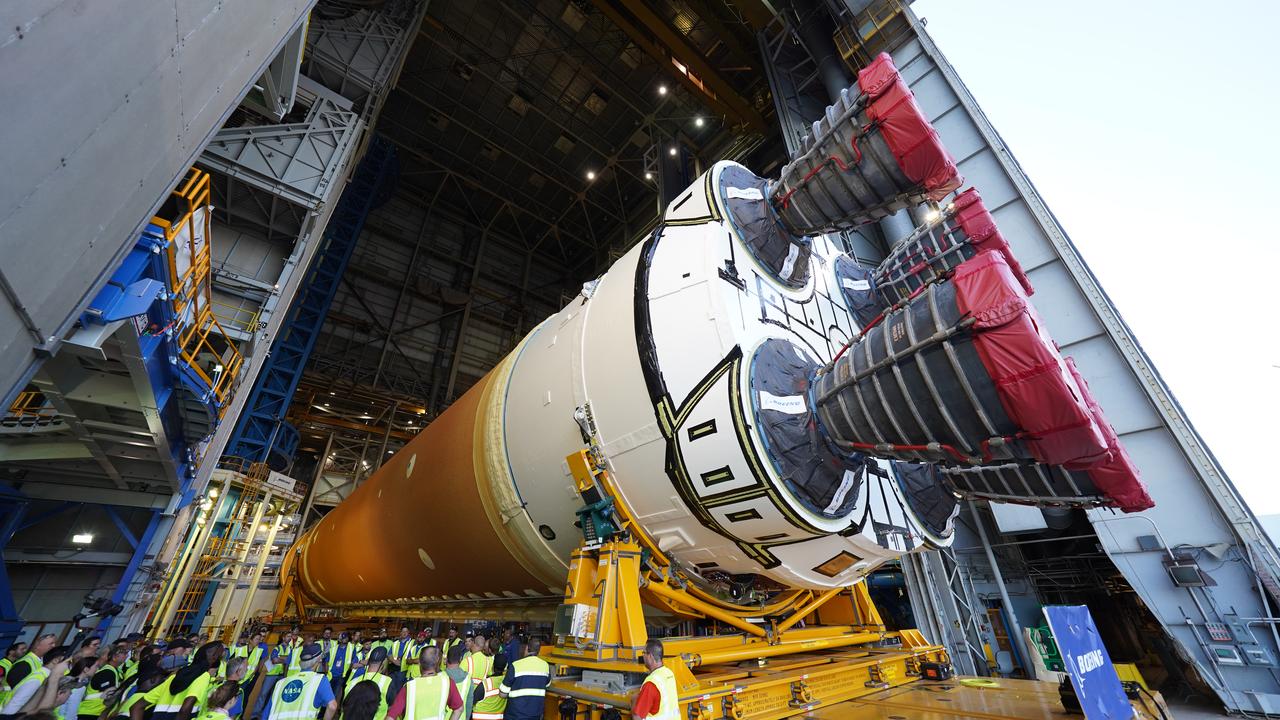
These images and videos show team members moving the first core stage that will help launch the first crewed flight of NASA’s SLS (Space Launch System) rocket for the agency’s Artemis II mission. The move marked the first time a fully assembled Moon rocket stage for a crewed mission has rolled out from NASA’s Michoud Assembly Facility in New Orleans since the Apollo Program, The core stage was moved onto the agency’s Pegasus barge, where it will be ferried to NASA’s Kennedy Space Center in Florida. The core stage for the SLS mega rocket is the largest stage NASA has ever produced. At 212 feet tall, the stage consists of five major elements, including two huge propellant tanks that collectively hold more than 733,000 gallons of super chilled liquid propellant to feed four RS-25 engines at its base. During launch and flight, the stage will operate for just over eight minutes, producing more than 2 million pounds of thrust to help send a crew of four astronauts inside NASA’s Orion spacecraft onward to the Moon. NASA is working to land the first woman, first person of color, and its first international partner astronaut on the Moon under Artemis. SLS is part of NASA’s backbone for deep space exploration, along with the Orion spacecraft and Gateway in orbit around the Moon and commercial human landing systems, next-generation space, next-generational spacesuits, and rovers on the lunar surface. SLS is the only rocket that can send Orion, astronauts, and supplies to the Moon in a single launch.
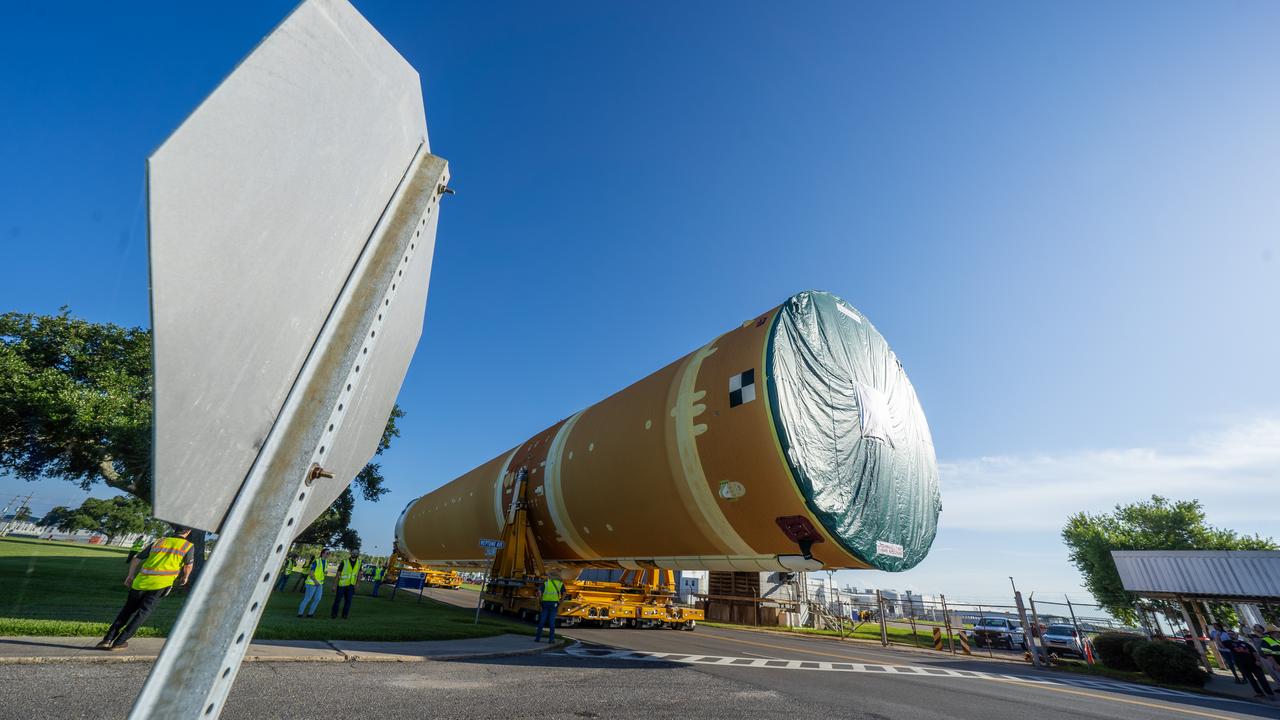
These images and videos show team members moving the first core stage that will help launch the first crewed flight of NASA’s SLS (Space Launch System) rocket for the agency’s Artemis II mission. The move marked the first time a fully assembled Moon rocket stage for a crewed mission has rolled out from NASA’s Michoud Assembly Facility in New Orleans since the Apollo Program, The core stage was moved onto the agency’s Pegasus barge, where it will be ferried to NASA’s Kennedy Space Center in Florida. The core stage for the SLS mega rocket is the largest stage NASA has ever produced. At 212 feet tall, the stage consists of five major elements, including two huge propellant tanks that collectively hold more than 733,000 gallons of super chilled liquid propellant to feed four RS-25 engines at its base. During launch and flight, the stage will operate for just over eight minutes, producing more than 2 million pounds of thrust to help send a crew of four astronauts inside NASA’s Orion spacecraft onward to the Moon. NASA is working to land the first woman, first person of color, and its first international partner astronaut on the Moon under Artemis. SLS is part of NASA’s backbone for deep space exploration, along with the Orion spacecraft and Gateway in orbit around the Moon and commercial human landing systems, next-generation space, next-generational spacesuits, and rovers on the lunar surface. SLS is the only rocket that can send Orion, astronauts, and supplies to the Moon in a single launch.
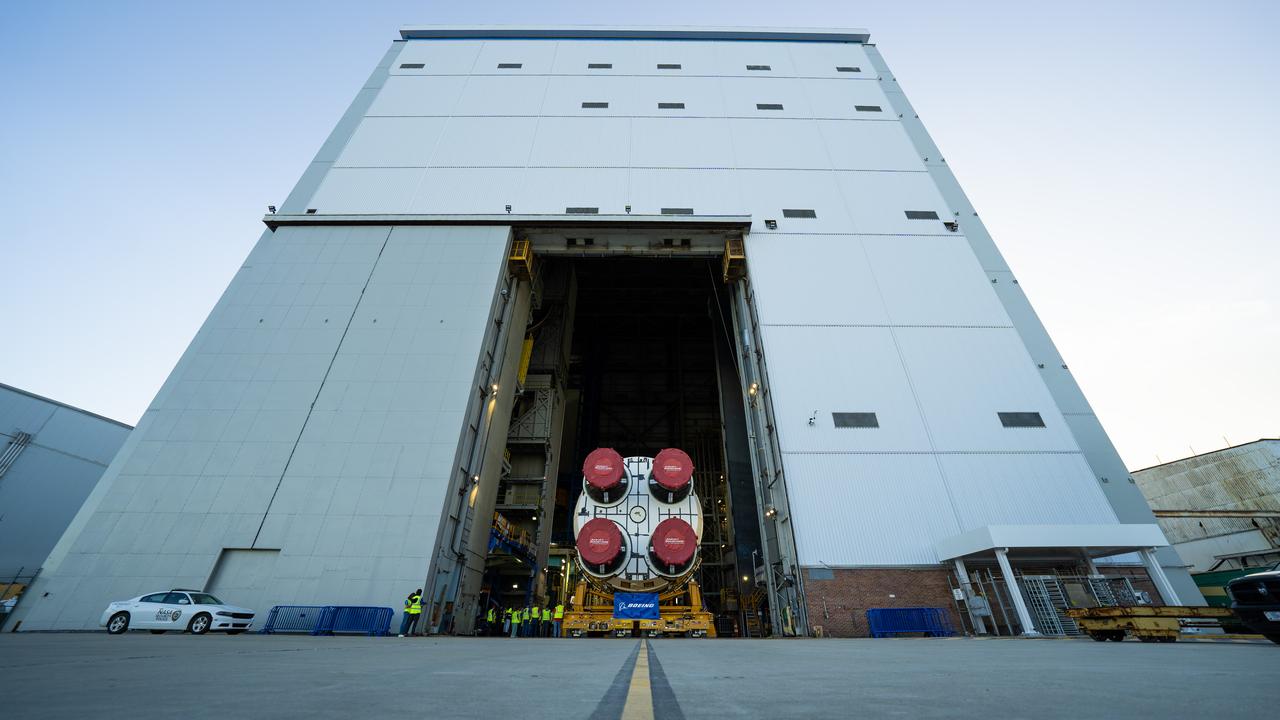
These images and videos show team members moving the first core stage that will help launch the first crewed flight of NASA’s SLS (Space Launch System) rocket for the agency’s Artemis II mission. The move marked the first time a fully assembled Moon rocket stage for a crewed mission has rolled out from NASA’s Michoud Assembly Facility in New Orleans since the Apollo Program, The core stage was moved onto the agency’s Pegasus barge, where it will be ferried to NASA’s Kennedy Space Center in Florida. The core stage for the SLS mega rocket is the largest stage NASA has ever produced. At 212 feet tall, the stage consists of five major elements, including two huge propellant tanks that collectively hold more than 733,000 gallons of super chilled liquid propellant to feed four RS-25 engines at its base. During launch and flight, the stage will operate for just over eight minutes, producing more than 2 million pounds of thrust to help send a crew of four astronauts inside NASA’s Orion spacecraft onward to the Moon. NASA is working to land the first woman, first person of color, and its first international partner astronaut on the Moon under Artemis. SLS is part of NASA’s backbone for deep space exploration, along with the Orion spacecraft and Gateway in orbit around the Moon and commercial human landing systems, next-generation space, next-generational spacesuits, and rovers on the lunar surface. SLS is the only rocket that can send Orion, astronauts, and supplies to the Moon in a single launch.
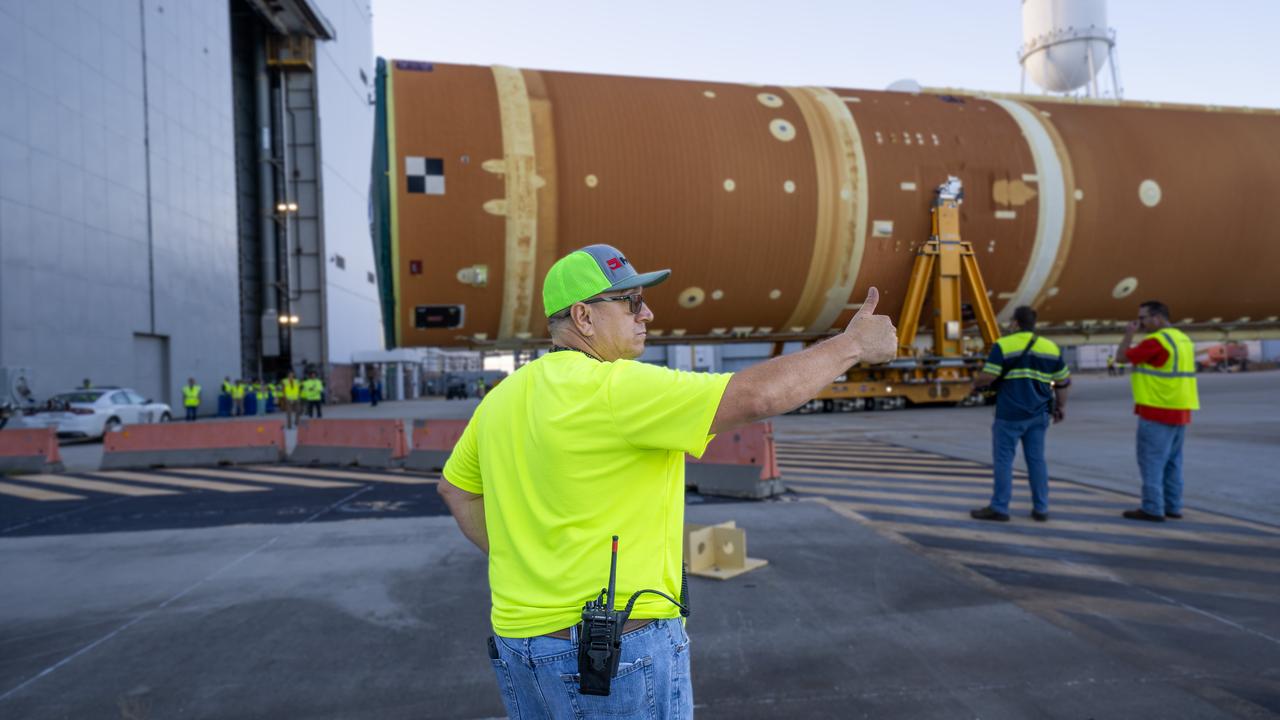
These images and videos show team members moving the first core stage that will help launch the first crewed flight of NASA’s SLS (Space Launch System) rocket for the agency’s Artemis II mission. The move marked the first time a fully assembled Moon rocket stage for a crewed mission has rolled out from NASA’s Michoud Assembly Facility in New Orleans since the Apollo Program, The core stage was moved onto the agency’s Pegasus barge, where it will be ferried to NASA’s Kennedy Space Center in Florida. The core stage for the SLS mega rocket is the largest stage NASA has ever produced. At 212 feet tall, the stage consists of five major elements, including two huge propellant tanks that collectively hold more than 733,000 gallons of super chilled liquid propellant to feed four RS-25 engines at its base. During launch and flight, the stage will operate for just over eight minutes, producing more than 2 million pounds of thrust to help send a crew of four astronauts inside NASA’s Orion spacecraft onward to the Moon. NASA is working to land the first woman, first person of color, and its first international partner astronaut on the Moon under Artemis. SLS is part of NASA’s backbone for deep space exploration, along with the Orion spacecraft and Gateway in orbit around the Moon and commercial human landing systems, next-generation space, next-generational spacesuits, and rovers on the lunar surface. SLS is the only rocket that can send Orion, astronauts, and supplies to the Moon in a single launch.
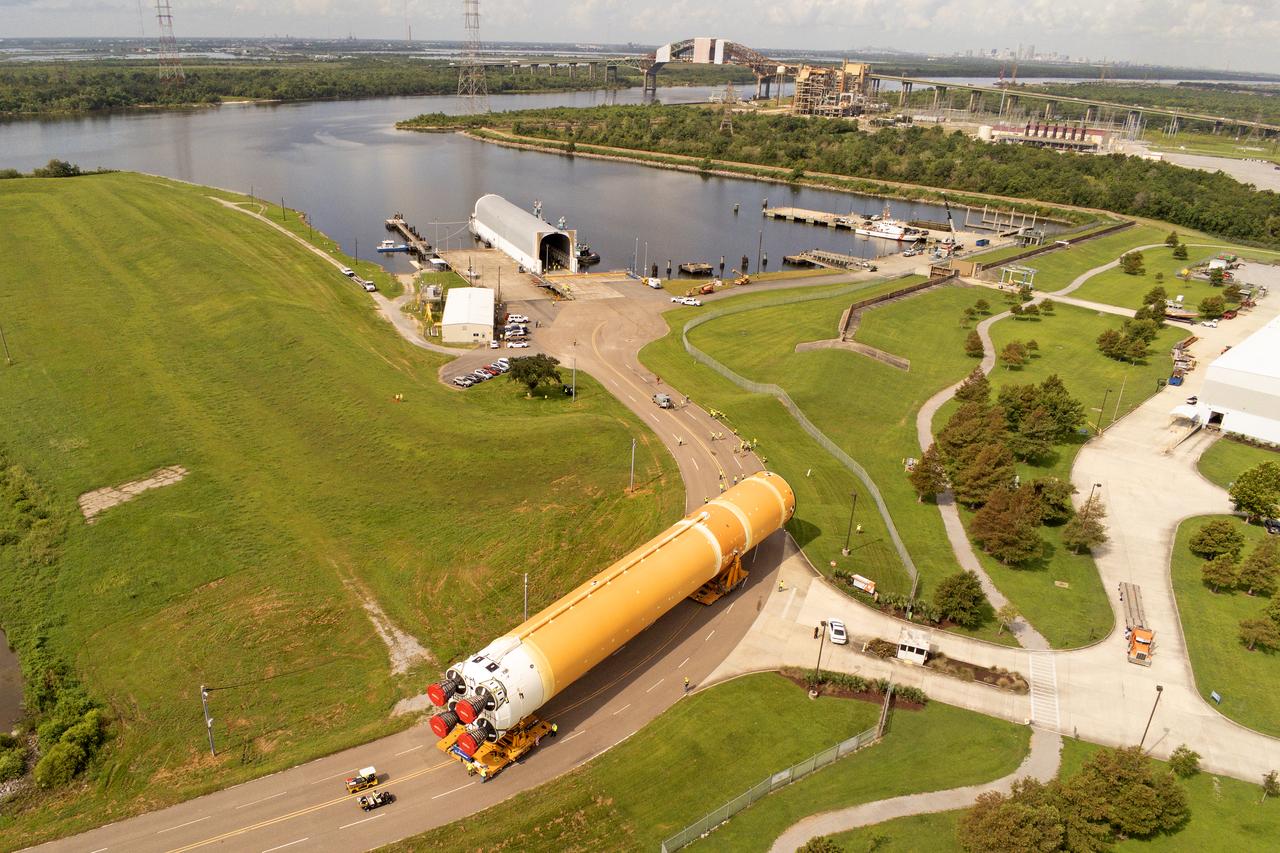
These images and videos show team members moving the first core stage that will help launch the first crewed flight of NASA’s SLS (Space Launch System) rocket for the agency’s Artemis II mission. The move marked the first time a fully assembled Moon rocket stage for a crewed mission has rolled out from NASA’s Michoud Assembly Facility in New Orleans since the Apollo Program, The core stage was moved onto the agency’s Pegasus barge, where it will be ferried to NASA’s Kennedy Space Center in Florida. The core stage for the SLS mega rocket is the largest stage NASA has ever produced. At 212 feet tall, the stage consists of five major elements, including two huge propellant tanks that collectively hold more than 733,000 gallons of super chilled liquid propellant to feed four RS-25 engines at its base. During launch and flight, the stage will operate for just over eight minutes, producing more than 2 million pounds of thrust to help send a crew of four astronauts inside NASA’s Orion spacecraft onward to the Moon. NASA is working to land the first woman, first person of color, and its first international partner astronaut on the Moon under Artemis. SLS is part of NASA’s backbone for deep space exploration, along with the Orion spacecraft and Gateway in orbit around the Moon and commercial human landing systems, next-generation space, next-generational spacesuits, and rovers on the lunar surface. SLS is the only rocket that can send Orion, astronauts, and supplies to the Moon in a single launch.
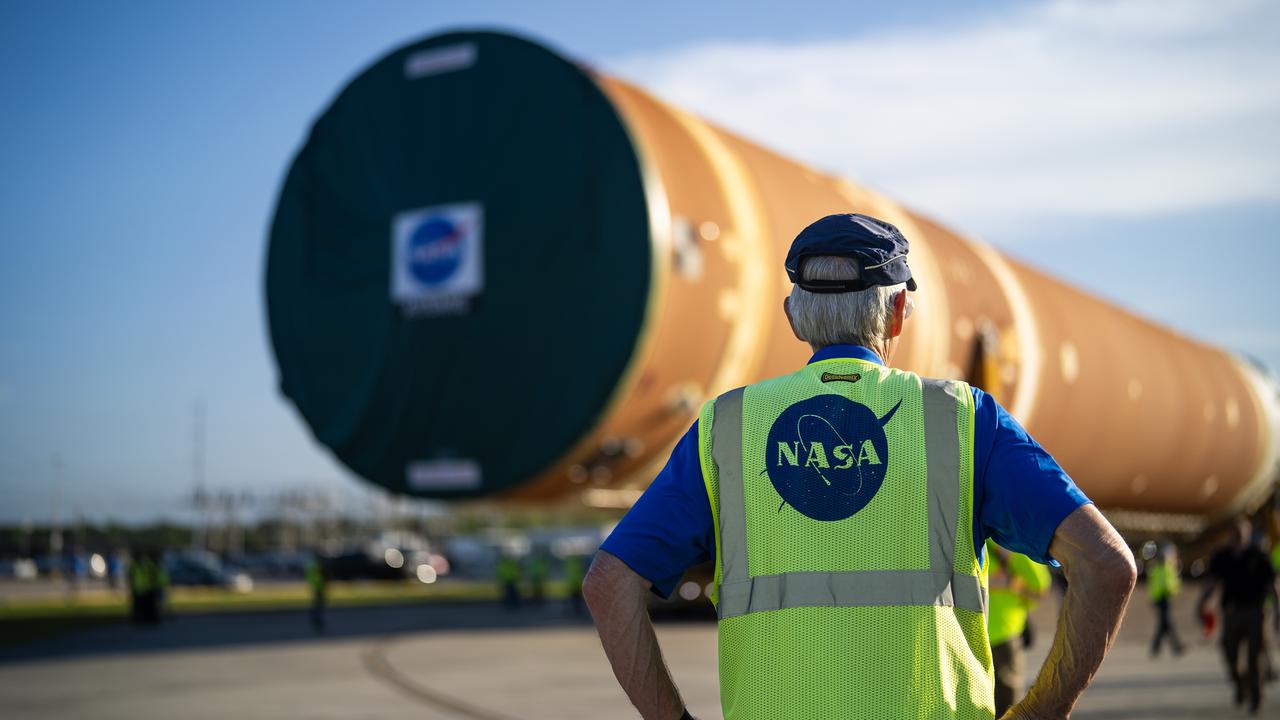
These images and videos show team members moving the first core stage that will help launch the first crewed flight of NASA’s SLS (Space Launch System) rocket for the agency’s Artemis II mission. The move marked the first time a fully assembled Moon rocket stage for a crewed mission has rolled out from NASA’s Michoud Assembly Facility in New Orleans since the Apollo Program, The core stage was moved onto the agency’s Pegasus barge, where it will be ferried to NASA’s Kennedy Space Center in Florida. The core stage for the SLS mega rocket is the largest stage NASA has ever produced. At 212 feet tall, the stage consists of five major elements, including two huge propellant tanks that collectively hold more than 733,000 gallons of super chilled liquid propellant to feed four RS-25 engines at its base. During launch and flight, the stage will operate for just over eight minutes, producing more than 2 million pounds of thrust to help send a crew of four astronauts inside NASA’s Orion spacecraft onward to the Moon. NASA is working to land the first woman, first person of color, and its first international partner astronaut on the Moon under Artemis. SLS is part of NASA’s backbone for deep space exploration, along with the Orion spacecraft and Gateway in orbit around the Moon and commercial human landing systems, next-generation space, next-generational spacesuits, and rovers on the lunar surface. SLS is the only rocket that can send Orion, astronauts, and supplies to the Moon in a single launch.
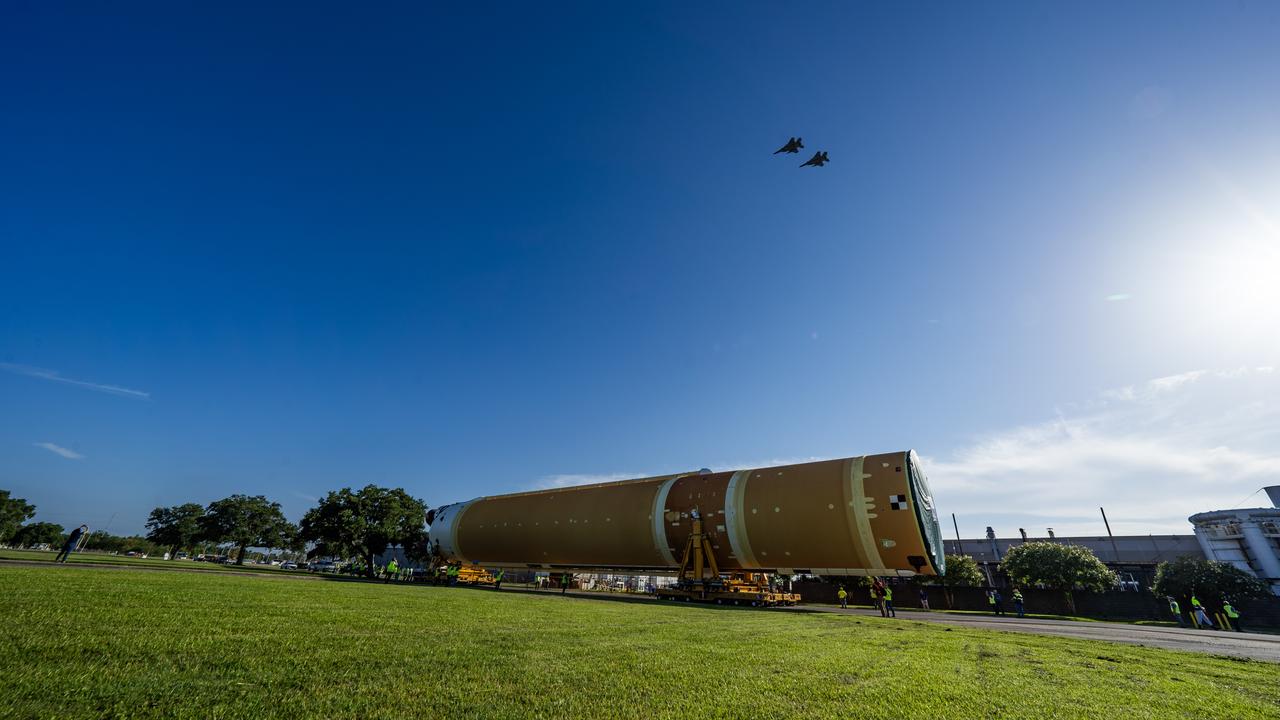
These images and videos show team members moving the first core stage that will help launch the first crewed flight of NASA’s SLS (Space Launch System) rocket for the agency’s Artemis II mission. The move marked the first time a fully assembled Moon rocket stage for a crewed mission has rolled out from NASA’s Michoud Assembly Facility in New Orleans since the Apollo Program, The core stage was moved onto the agency’s Pegasus barge, where it will be ferried to NASA’s Kennedy Space Center in Florida. The core stage for the SLS mega rocket is the largest stage NASA has ever produced. At 212 feet tall, the stage consists of five major elements, including two huge propellant tanks that collectively hold more than 733,000 gallons of super chilled liquid propellant to feed four RS-25 engines at its base. During launch and flight, the stage will operate for just over eight minutes, producing more than 2 million pounds of thrust to help send a crew of four astronauts inside NASA’s Orion spacecraft onward to the Moon. NASA is working to land the first woman, first person of color, and its first international partner astronaut on the Moon under Artemis. SLS is part of NASA’s backbone for deep space exploration, along with the Orion spacecraft and Gateway in orbit around the Moon and commercial human landing systems, next-generation space, next-generational spacesuits, and rovers on the lunar surface. SLS is the only rocket that can send Orion, astronauts, and supplies to the Moon in a single launch.
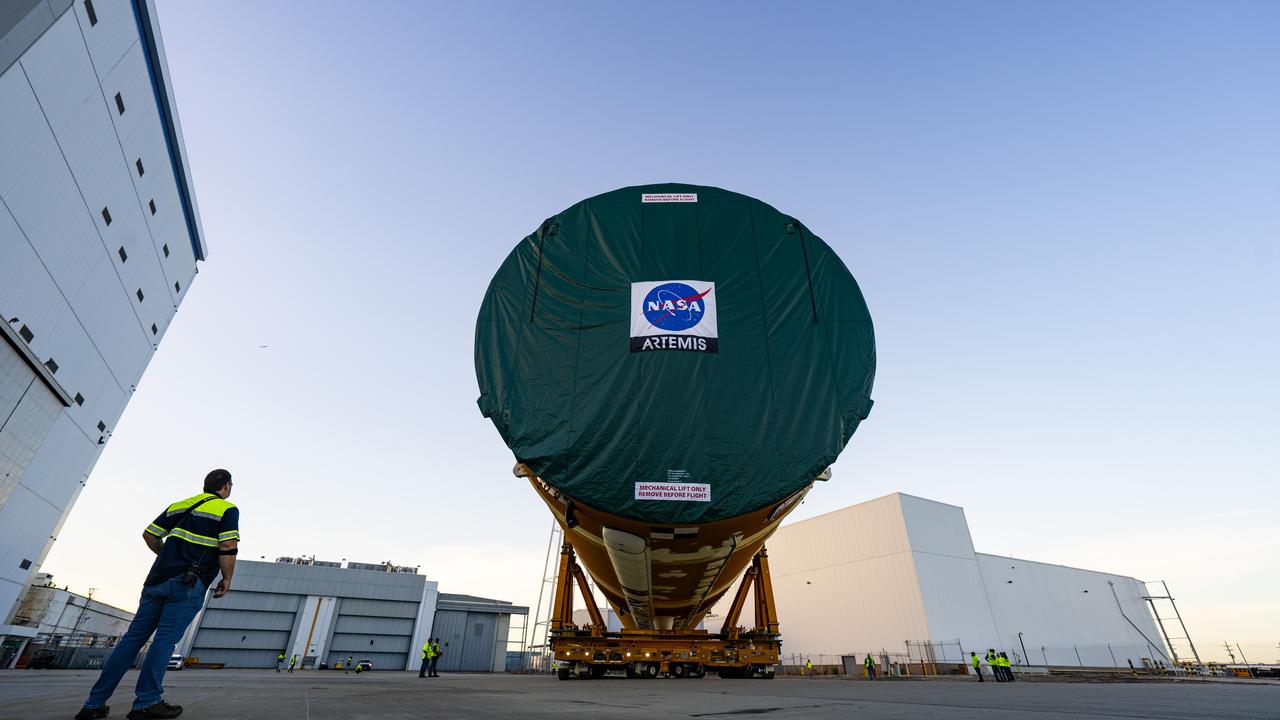
These images and videos show team members moving the first core stage that will help launch the first crewed flight of NASA’s SLS (Space Launch System) rocket for the agency’s Artemis II mission. The move marked the first time a fully assembled Moon rocket stage for a crewed mission has rolled out from NASA’s Michoud Assembly Facility in New Orleans since the Apollo Program, The core stage was moved onto the agency’s Pegasus barge, where it will be ferried to NASA’s Kennedy Space Center in Florida. The core stage for the SLS mega rocket is the largest stage NASA has ever produced. At 212 feet tall, the stage consists of five major elements, including two huge propellant tanks that collectively hold more than 733,000 gallons of super chilled liquid propellant to feed four RS-25 engines at its base. During launch and flight, the stage will operate for just over eight minutes, producing more than 2 million pounds of thrust to help send a crew of four astronauts inside NASA’s Orion spacecraft onward to the Moon. NASA is working to land the first woman, first person of color, and its first international partner astronaut on the Moon under Artemis. SLS is part of NASA’s backbone for deep space exploration, along with the Orion spacecraft and Gateway in orbit around the Moon and commercial human landing systems, next-generation space, next-generational spacesuits, and rovers on the lunar surface. SLS is the only rocket that can send Orion, astronauts, and supplies to the Moon in a single launch.
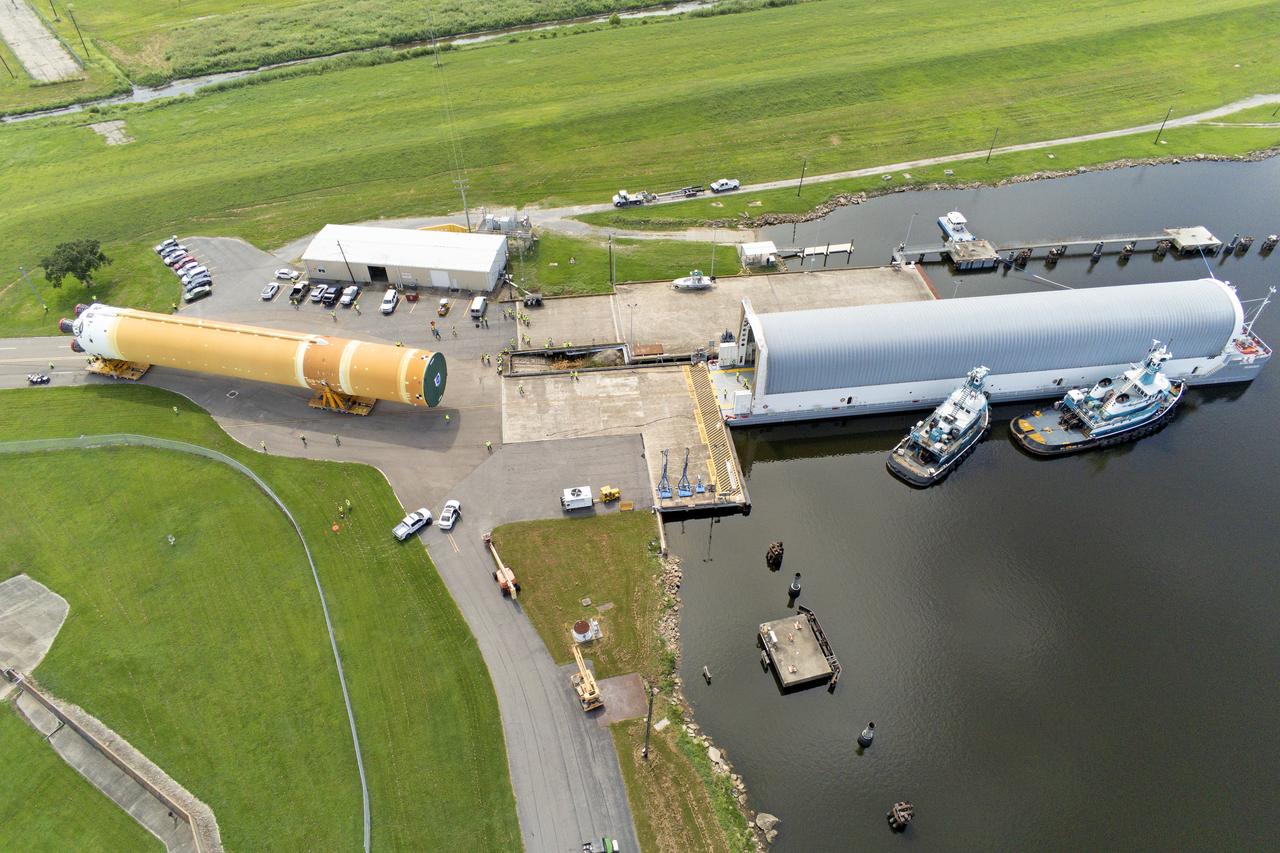
These images and videos show team members moving the first core stage that will help launch the first crewed flight of NASA’s SLS (Space Launch System) rocket for the agency’s Artemis II mission. The move marked the first time a fully assembled Moon rocket stage for a crewed mission has rolled out from NASA’s Michoud Assembly Facility in New Orleans since the Apollo Program, The core stage was moved onto the agency’s Pegasus barge, where it will be ferried to NASA’s Kennedy Space Center in Florida. The core stage for the SLS mega rocket is the largest stage NASA has ever produced. At 212 feet tall, the stage consists of five major elements, including two huge propellant tanks that collectively hold more than 733,000 gallons of super chilled liquid propellant to feed four RS-25 engines at its base. During launch and flight, the stage will operate for just over eight minutes, producing more than 2 million pounds of thrust to help send a crew of four astronauts inside NASA’s Orion spacecraft onward to the Moon. NASA is working to land the first woman, first person of color, and its first international partner astronaut on the Moon under Artemis. SLS is part of NASA’s backbone for deep space exploration, along with the Orion spacecraft and Gateway in orbit around the Moon and commercial human landing systems, next-generation space, next-generational spacesuits, and rovers on the lunar surface. SLS is the only rocket that can send Orion, astronauts, and supplies to the Moon in a single launch.
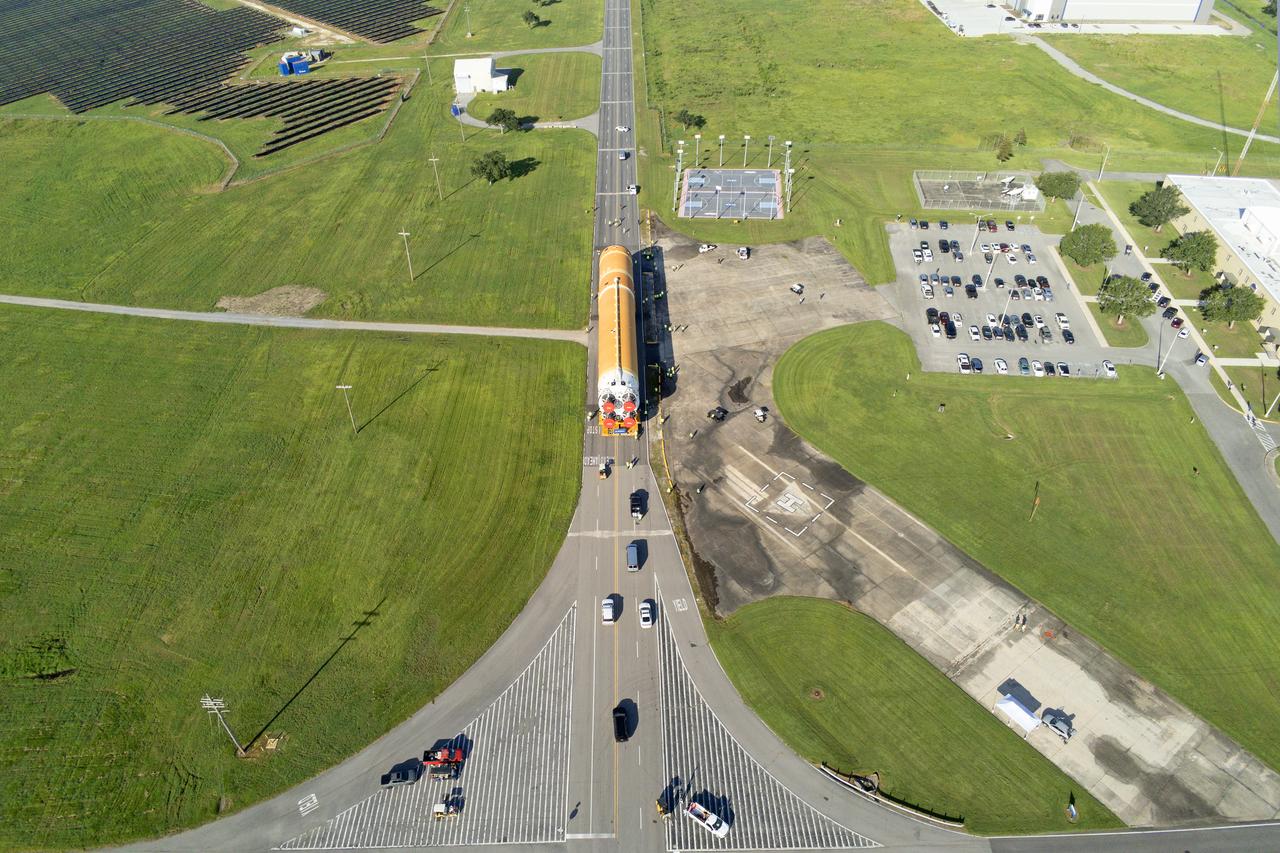
These images and videos show team members moving the first core stage that will help launch the first crewed flight of NASA’s SLS (Space Launch System) rocket for the agency’s Artemis II mission. The move marked the first time a fully assembled Moon rocket stage for a crewed mission has rolled out from NASA’s Michoud Assembly Facility in New Orleans since the Apollo Program, The core stage was moved onto the agency’s Pegasus barge, where it will be ferried to NASA’s Kennedy Space Center in Florida. The core stage for the SLS mega rocket is the largest stage NASA has ever produced. At 212 feet tall, the stage consists of five major elements, including two huge propellant tanks that collectively hold more than 733,000 gallons of super chilled liquid propellant to feed four RS-25 engines at its base. During launch and flight, the stage will operate for just over eight minutes, producing more than 2 million pounds of thrust to help send a crew of four astronauts inside NASA’s Orion spacecraft onward to the Moon. NASA is working to land the first woman, first person of color, and its first international partner astronaut on the Moon under Artemis. SLS is part of NASA’s backbone for deep space exploration, along with the Orion spacecraft and Gateway in orbit around the Moon and commercial human landing systems, next-generation space, next-generational spacesuits, and rovers on the lunar surface. SLS is the only rocket that can send Orion, astronauts, and supplies to the Moon in a single launch.
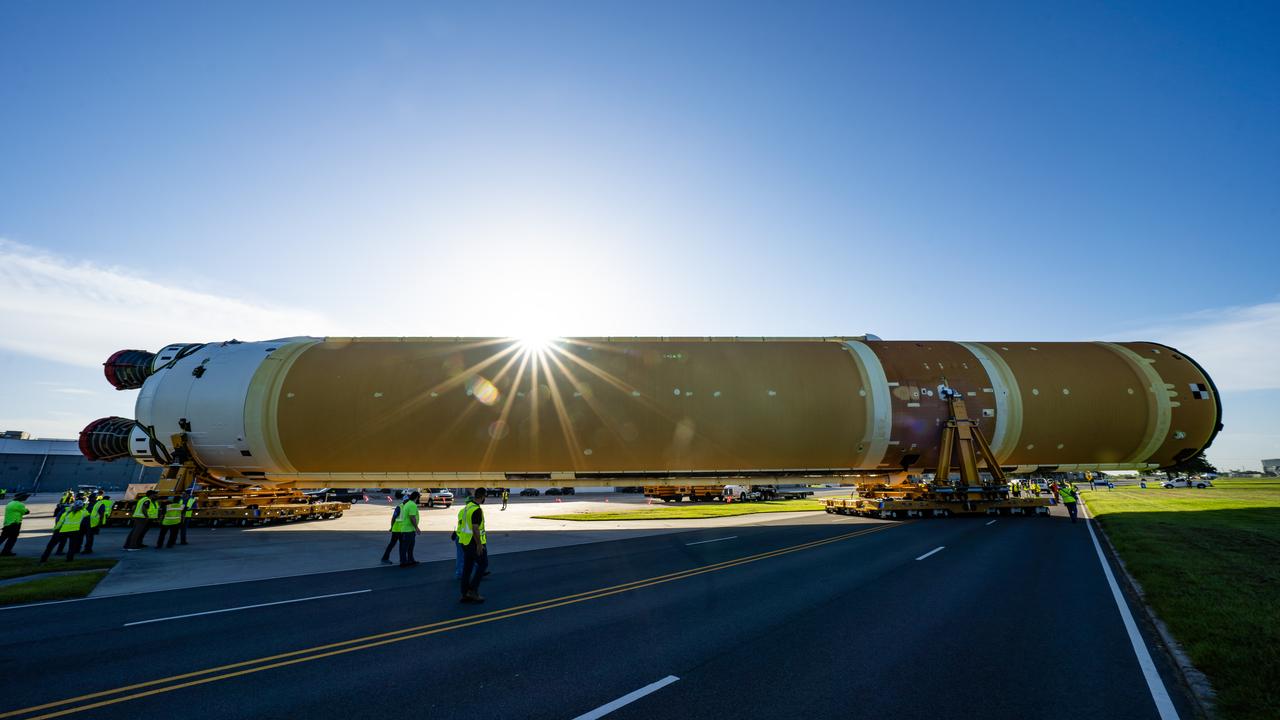
These images and videos show team members moving the first core stage that will help launch the first crewed flight of NASA’s SLS (Space Launch System) rocket for the agency’s Artemis II mission. The move marked the first time a fully assembled Moon rocket stage for a crewed mission has rolled out from NASA’s Michoud Assembly Facility in New Orleans since the Apollo Program, The core stage was moved onto the agency’s Pegasus barge, where it will be ferried to NASA’s Kennedy Space Center in Florida. The core stage for the SLS mega rocket is the largest stage NASA has ever produced. At 212 feet tall, the stage consists of five major elements, including two huge propellant tanks that collectively hold more than 733,000 gallons of super chilled liquid propellant to feed four RS-25 engines at its base. During launch and flight, the stage will operate for just over eight minutes, producing more than 2 million pounds of thrust to help send a crew of four astronauts inside NASA’s Orion spacecraft onward to the Moon. NASA is working to land the first woman, first person of color, and its first international partner astronaut on the Moon under Artemis. SLS is part of NASA’s backbone for deep space exploration, along with the Orion spacecraft and Gateway in orbit around the Moon and commercial human landing systems, next-generation space, next-generational spacesuits, and rovers on the lunar surface. SLS is the only rocket that can send Orion, astronauts, and supplies to the Moon in a single launch.
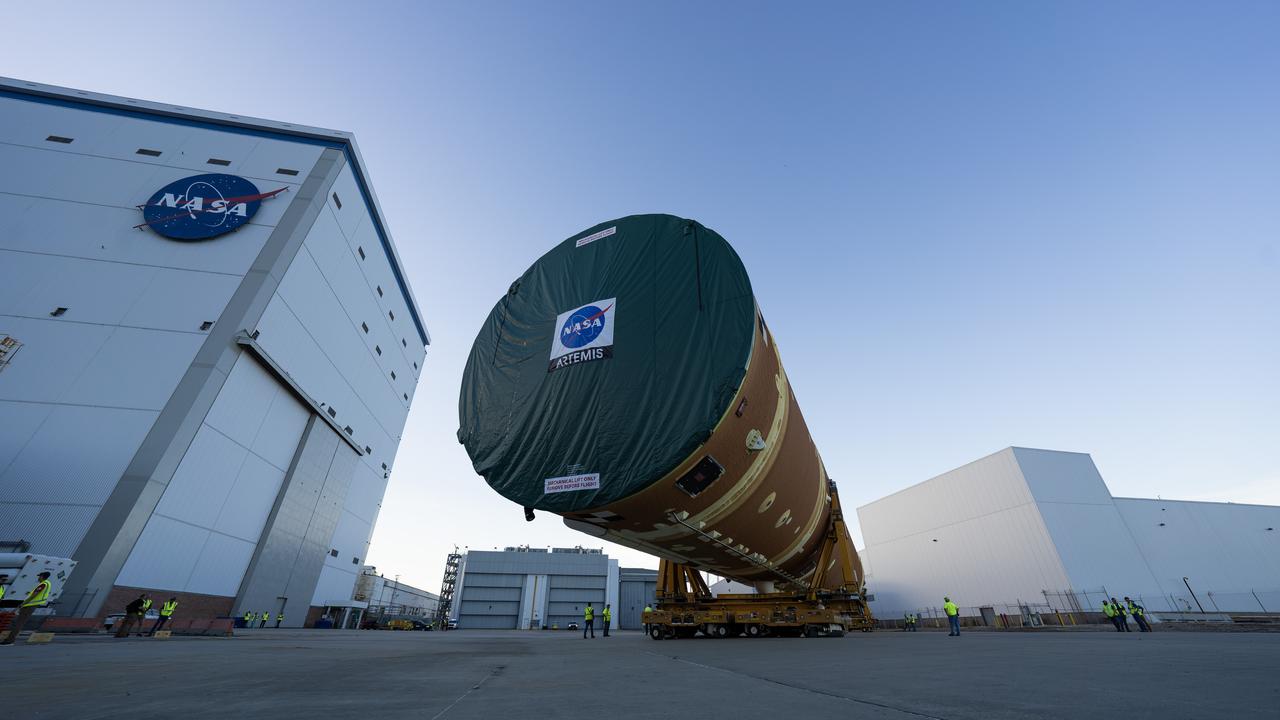
These images and videos show team members moving the first core stage that will help launch the first crewed flight of NASA’s SLS (Space Launch System) rocket for the agency’s Artemis II mission. The move marked the first time a fully assembled Moon rocket stage for a crewed mission has rolled out from NASA’s Michoud Assembly Facility in New Orleans since the Apollo Program, The core stage was moved onto the agency’s Pegasus barge, where it will be ferried to NASA’s Kennedy Space Center in Florida. The core stage for the SLS mega rocket is the largest stage NASA has ever produced. At 212 feet tall, the stage consists of five major elements, including two huge propellant tanks that collectively hold more than 733,000 gallons of super chilled liquid propellant to feed four RS-25 engines at its base. During launch and flight, the stage will operate for just over eight minutes, producing more than 2 million pounds of thrust to help send a crew of four astronauts inside NASA’s Orion spacecraft onward to the Moon. NASA is working to land the first woman, first person of color, and its first international partner astronaut on the Moon under Artemis. SLS is part of NASA’s backbone for deep space exploration, along with the Orion spacecraft and Gateway in orbit around the Moon and commercial human landing systems, next-generation space, next-generational spacesuits, and rovers on the lunar surface. SLS is the only rocket that can send Orion, astronauts, and supplies to the Moon in a single launch.
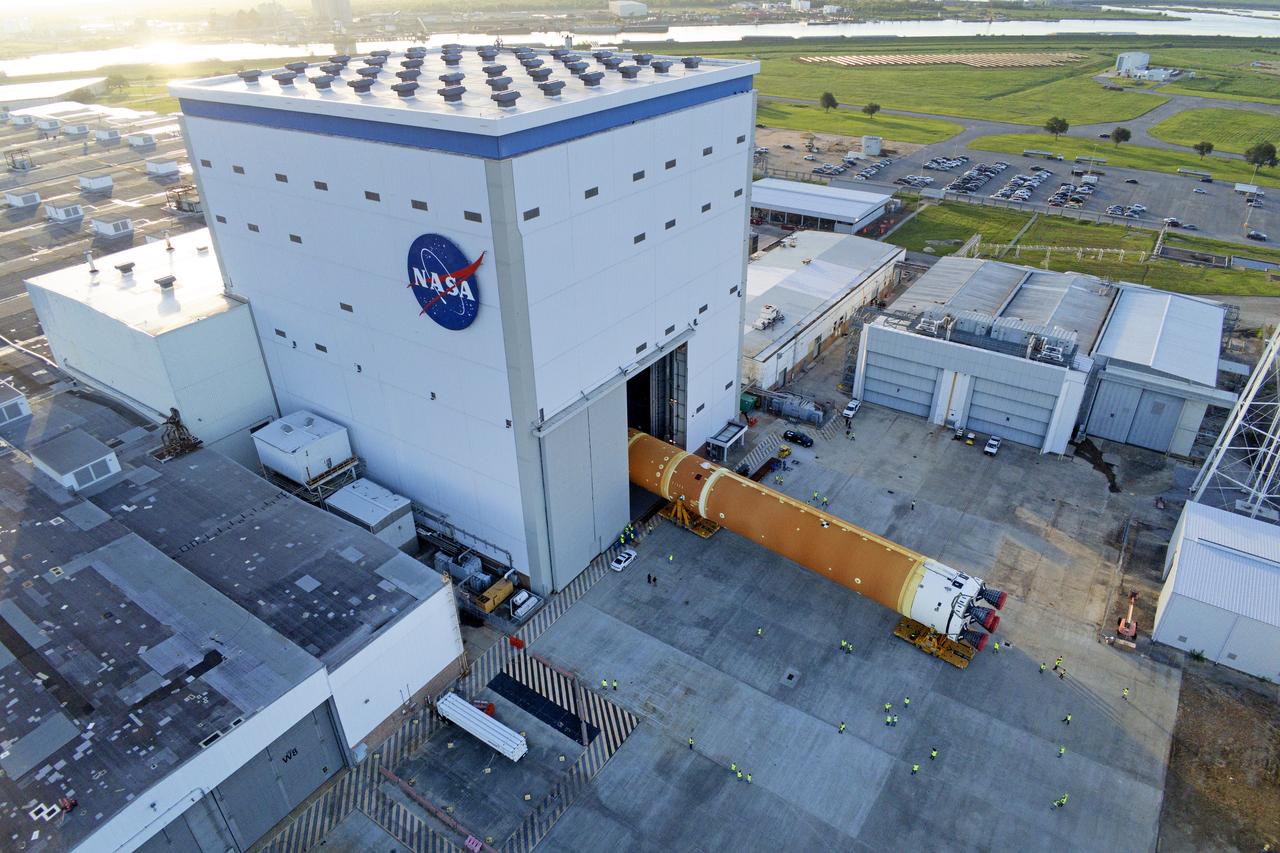
These images and videos show team members moving the first core stage that will help launch the first crewed flight of NASA’s SLS (Space Launch System) rocket for the agency’s Artemis II mission. The move marked the first time a fully assembled Moon rocket stage for a crewed mission has rolled out from NASA’s Michoud Assembly Facility in New Orleans since the Apollo Program, The core stage was moved onto the agency’s Pegasus barge, where it will be ferried to NASA’s Kennedy Space Center in Florida. The core stage for the SLS mega rocket is the largest stage NASA has ever produced. At 212 feet tall, the stage consists of five major elements, including two huge propellant tanks that collectively hold more than 733,000 gallons of super chilled liquid propellant to feed four RS-25 engines at its base. During launch and flight, the stage will operate for just over eight minutes, producing more than 2 million pounds of thrust to help send a crew of four astronauts inside NASA’s Orion spacecraft onward to the Moon. NASA is working to land the first woman, first person of color, and its first international partner astronaut on the Moon under Artemis. SLS is part of NASA’s backbone for deep space exploration, along with the Orion spacecraft and Gateway in orbit around the Moon and commercial human landing systems, next-generation space, next-generational spacesuits, and rovers on the lunar surface. SLS is the only rocket that can send Orion, astronauts, and supplies to the Moon in a single launch.
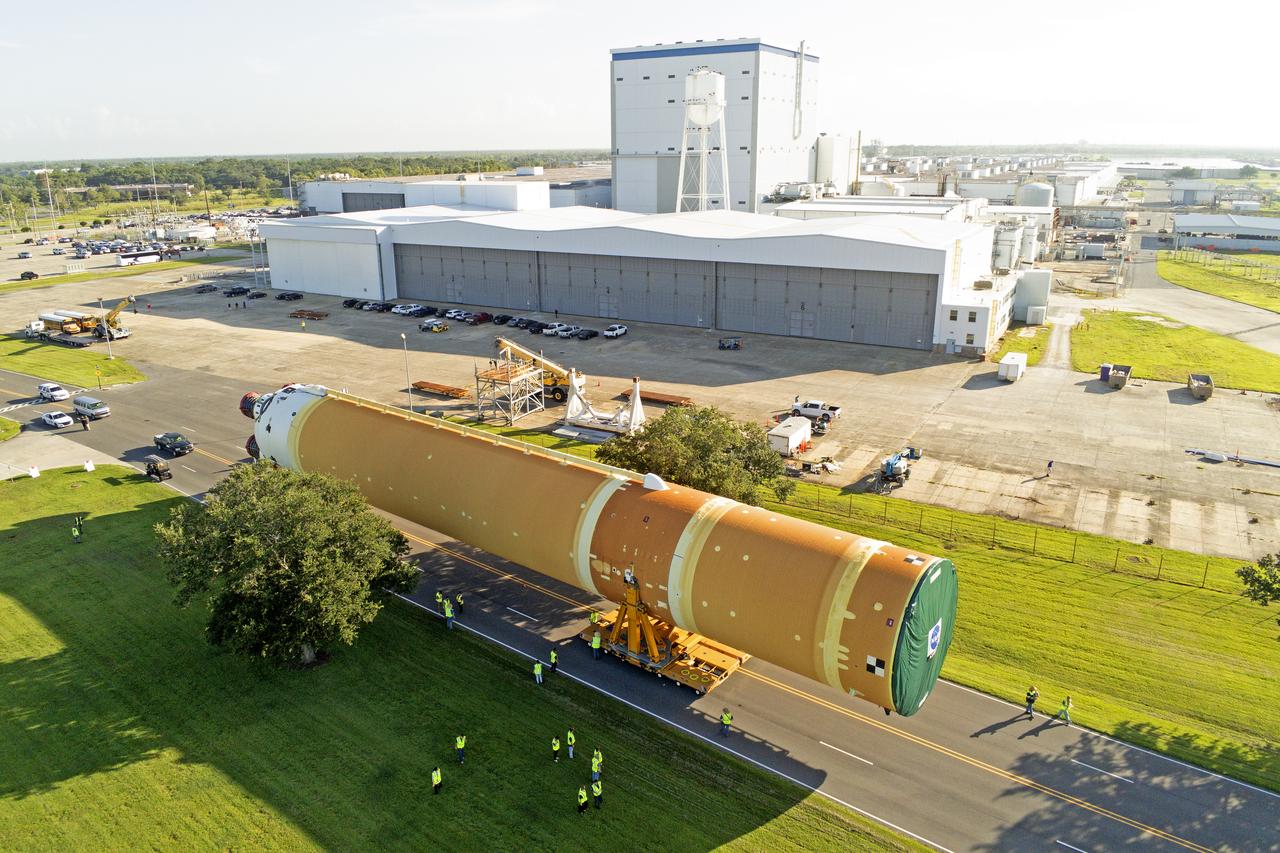
These images and videos show team members moving the first core stage that will help launch the first crewed flight of NASA’s SLS (Space Launch System) rocket for the agency’s Artemis II mission. The move marked the first time a fully assembled Moon rocket stage for a crewed mission has rolled out from NASA’s Michoud Assembly Facility in New Orleans since the Apollo Program, The core stage was moved onto the agency’s Pegasus barge, where it will be ferried to NASA’s Kennedy Space Center in Florida. The core stage for the SLS mega rocket is the largest stage NASA has ever produced. At 212 feet tall, the stage consists of five major elements, including two huge propellant tanks that collectively hold more than 733,000 gallons of super chilled liquid propellant to feed four RS-25 engines at its base. During launch and flight, the stage will operate for just over eight minutes, producing more than 2 million pounds of thrust to help send a crew of four astronauts inside NASA’s Orion spacecraft onward to the Moon. NASA is working to land the first woman, first person of color, and its first international partner astronaut on the Moon under Artemis. SLS is part of NASA’s backbone for deep space exploration, along with the Orion spacecraft and Gateway in orbit around the Moon and commercial human landing systems, next-generation space, next-generational spacesuits, and rovers on the lunar surface. SLS is the only rocket that can send Orion, astronauts, and supplies to the Moon in a single launch.
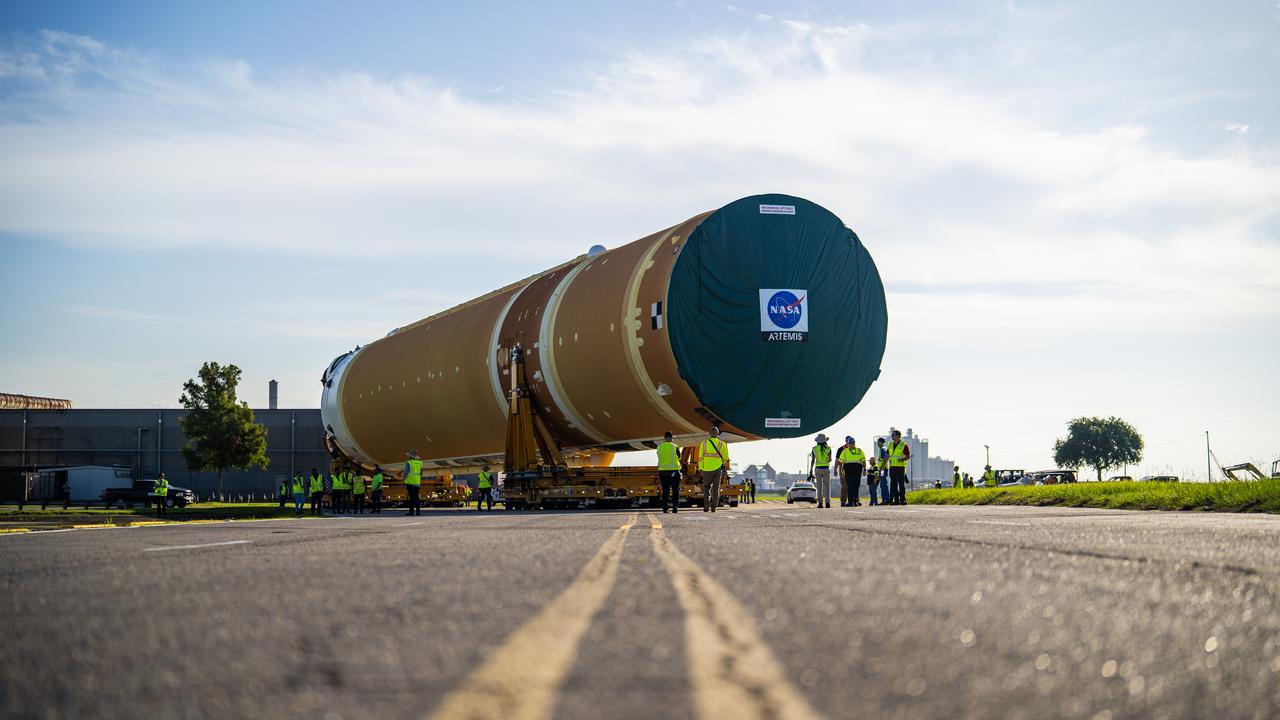
These images and videos show team members moving the first core stage that will help launch the first crewed flight of NASA’s SLS (Space Launch System) rocket for the agency’s Artemis II mission. The move marked the first time a fully assembled Moon rocket stage for a crewed mission has rolled out from NASA’s Michoud Assembly Facility in New Orleans since the Apollo Program, The core stage was moved onto the agency’s Pegasus barge, where it will be ferried to NASA’s Kennedy Space Center in Florida. The core stage for the SLS mega rocket is the largest stage NASA has ever produced. At 212 feet tall, the stage consists of five major elements, including two huge propellant tanks that collectively hold more than 733,000 gallons of super chilled liquid propellant to feed four RS-25 engines at its base. During launch and flight, the stage will operate for just over eight minutes, producing more than 2 million pounds of thrust to help send a crew of four astronauts inside NASA’s Orion spacecraft onward to the Moon. NASA is working to land the first woman, first person of color, and its first international partner astronaut on the Moon under Artemis. SLS is part of NASA’s backbone for deep space exploration, along with the Orion spacecraft and Gateway in orbit around the Moon and commercial human landing systems, next-generation space, next-generational spacesuits, and rovers on the lunar surface. SLS is the only rocket that can send Orion, astronauts, and supplies to the Moon in a single launch.
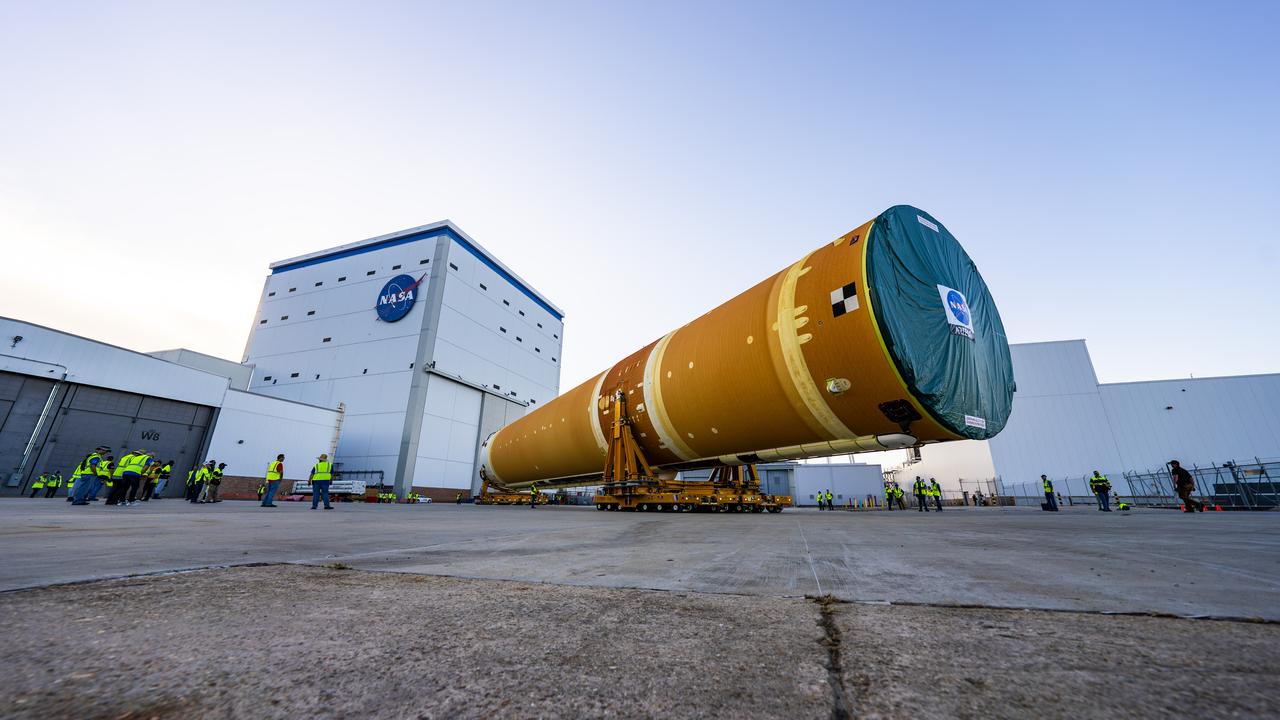
These images and videos show team members moving the first core stage that will help launch the first crewed flight of NASA’s SLS (Space Launch System) rocket for the agency’s Artemis II mission. The move marked the first time a fully assembled Moon rocket stage for a crewed mission has rolled out from NASA’s Michoud Assembly Facility in New Orleans since the Apollo Program, The core stage was moved onto the agency’s Pegasus barge, where it will be ferried to NASA’s Kennedy Space Center in Florida. The core stage for the SLS mega rocket is the largest stage NASA has ever produced. At 212 feet tall, the stage consists of five major elements, including two huge propellant tanks that collectively hold more than 733,000 gallons of super chilled liquid propellant to feed four RS-25 engines at its base. During launch and flight, the stage will operate for just over eight minutes, producing more than 2 million pounds of thrust to help send a crew of four astronauts inside NASA’s Orion spacecraft onward to the Moon. NASA is working to land the first woman, first person of color, and its first international partner astronaut on the Moon under Artemis. SLS is part of NASA’s backbone for deep space exploration, along with the Orion spacecraft and Gateway in orbit around the Moon and commercial human landing systems, next-generation space, next-generational spacesuits, and rovers on the lunar surface. SLS is the only rocket that can send Orion, astronauts, and supplies to the Moon in a single launch.
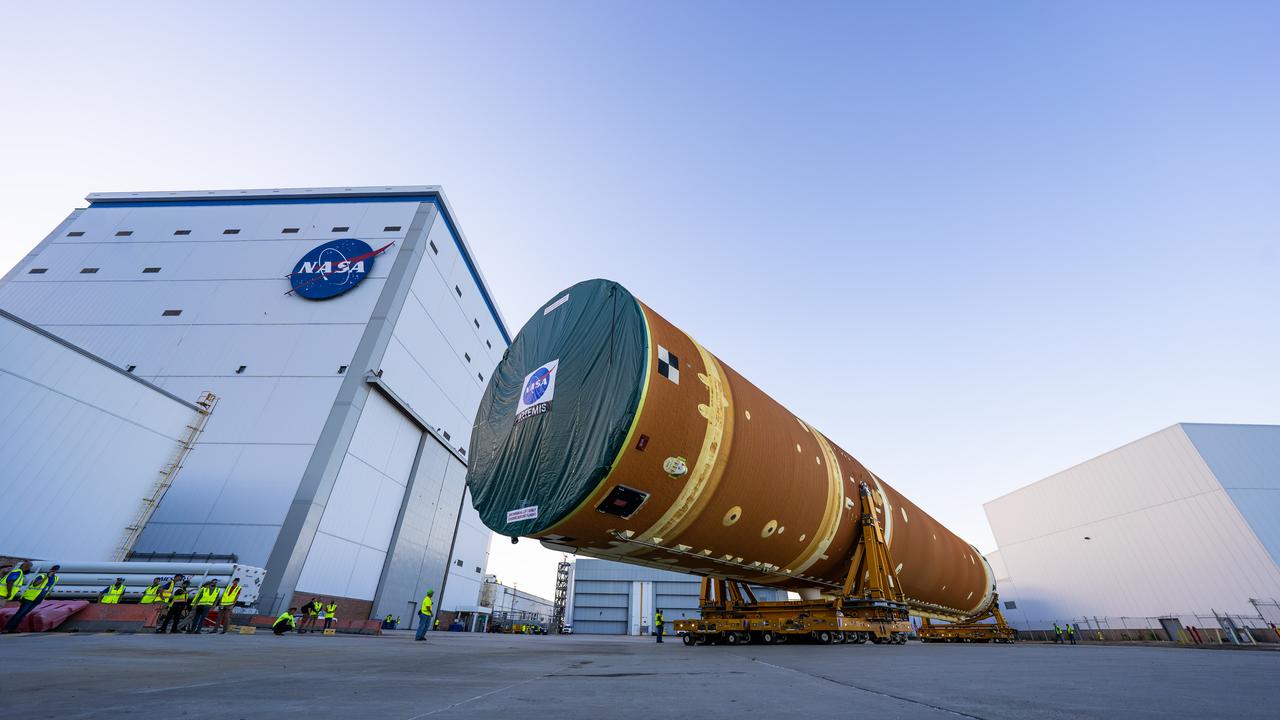
These images and videos show team members moving the first core stage that will help launch the first crewed flight of NASA’s SLS (Space Launch System) rocket for the agency’s Artemis II mission. The move marked the first time a fully assembled Moon rocket stage for a crewed mission has rolled out from NASA’s Michoud Assembly Facility in New Orleans since the Apollo Program, The core stage was moved onto the agency’s Pegasus barge, where it will be ferried to NASA’s Kennedy Space Center in Florida. The core stage for the SLS mega rocket is the largest stage NASA has ever produced. At 212 feet tall, the stage consists of five major elements, including two huge propellant tanks that collectively hold more than 733,000 gallons of super chilled liquid propellant to feed four RS-25 engines at its base. During launch and flight, the stage will operate for just over eight minutes, producing more than 2 million pounds of thrust to help send a crew of four astronauts inside NASA’s Orion spacecraft onward to the Moon. NASA is working to land the first woman, first person of color, and its first international partner astronaut on the Moon under Artemis. SLS is part of NASA’s backbone for deep space exploration, along with the Orion spacecraft and Gateway in orbit around the Moon and commercial human landing systems, next-generation space, next-generational spacesuits, and rovers on the lunar surface. SLS is the only rocket that can send Orion, astronauts, and supplies to the Moon in a single launch.
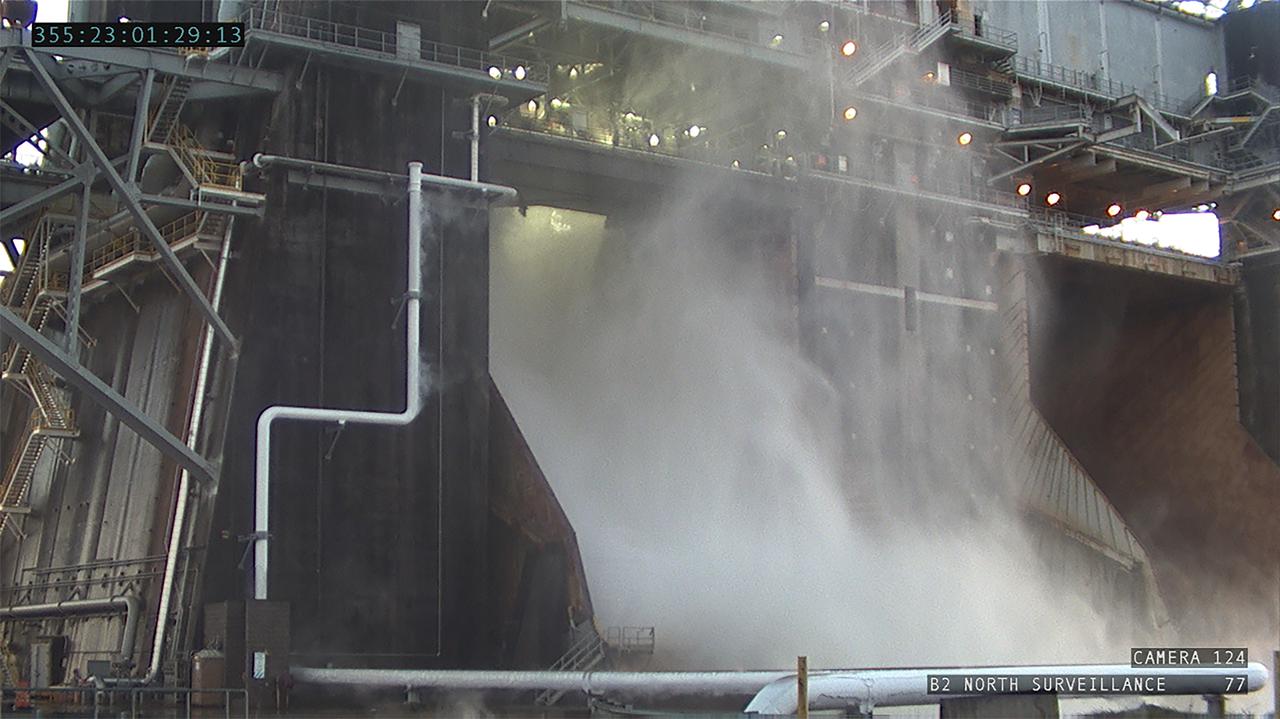
Operators at the B-2 Test Stand at Stennis Space Center near Bay St. Louis, Mississippi, conducted a wet dress rehearsal for the hot fire test of the core stage of NASA’s Space Launch System on Dec. 21, 2020. In this image, water flows from the B-2 Test Stand flame deflector, just as it will during an actual hot fire test. The hot fire will conclude a series of eight Green Run tests of all core stage systems before it is transported to Kennedy Space Center for launch on the Artemis I mission.
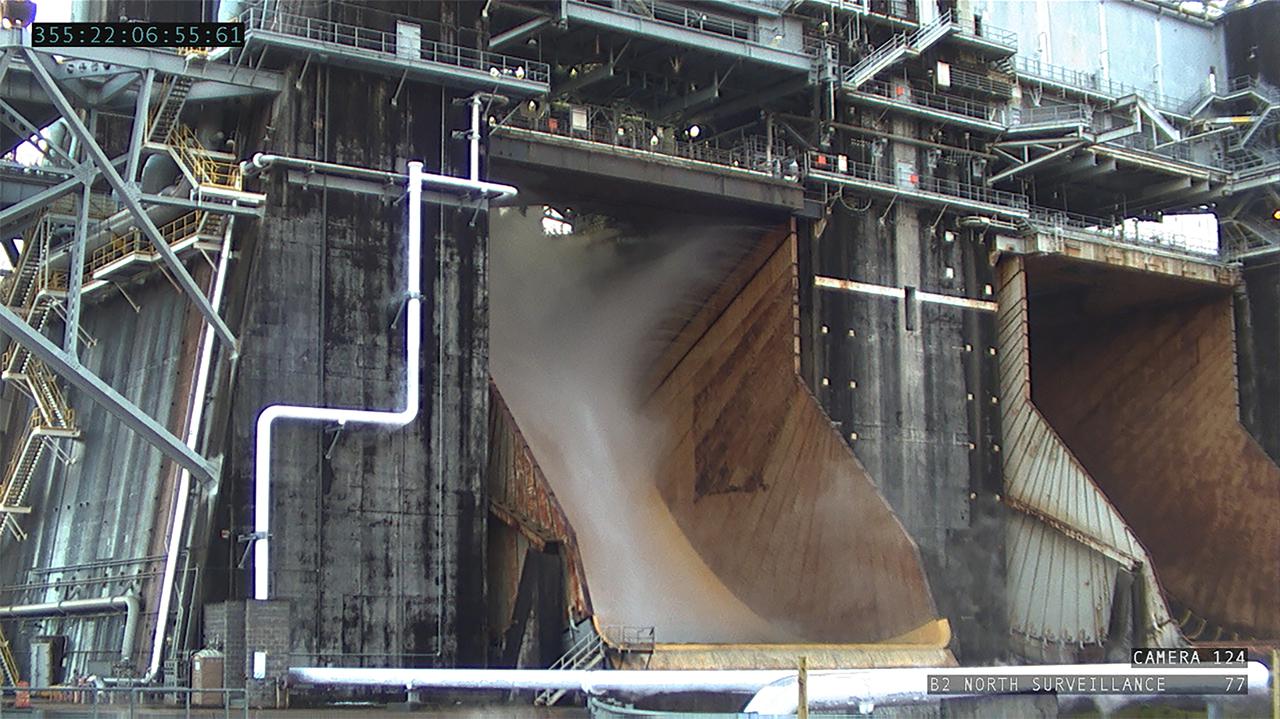
Operators at the B-2 Test Stand at Stennis Space Center near Bay St. Louis, Mississippi, conducted a wet dress rehearsal for the hot fire test of the core stage of NASA’s Space Launch System on Dec. 21, 2020. In this image, water flows from the B-2 Test Stand flame deflector, just as it will during an actual hot fire test. The hot fire will conclude a series of eight Green Run tests of all core stage systems before it is transported to Kennedy Space Center for launch on the Artemis I mission.
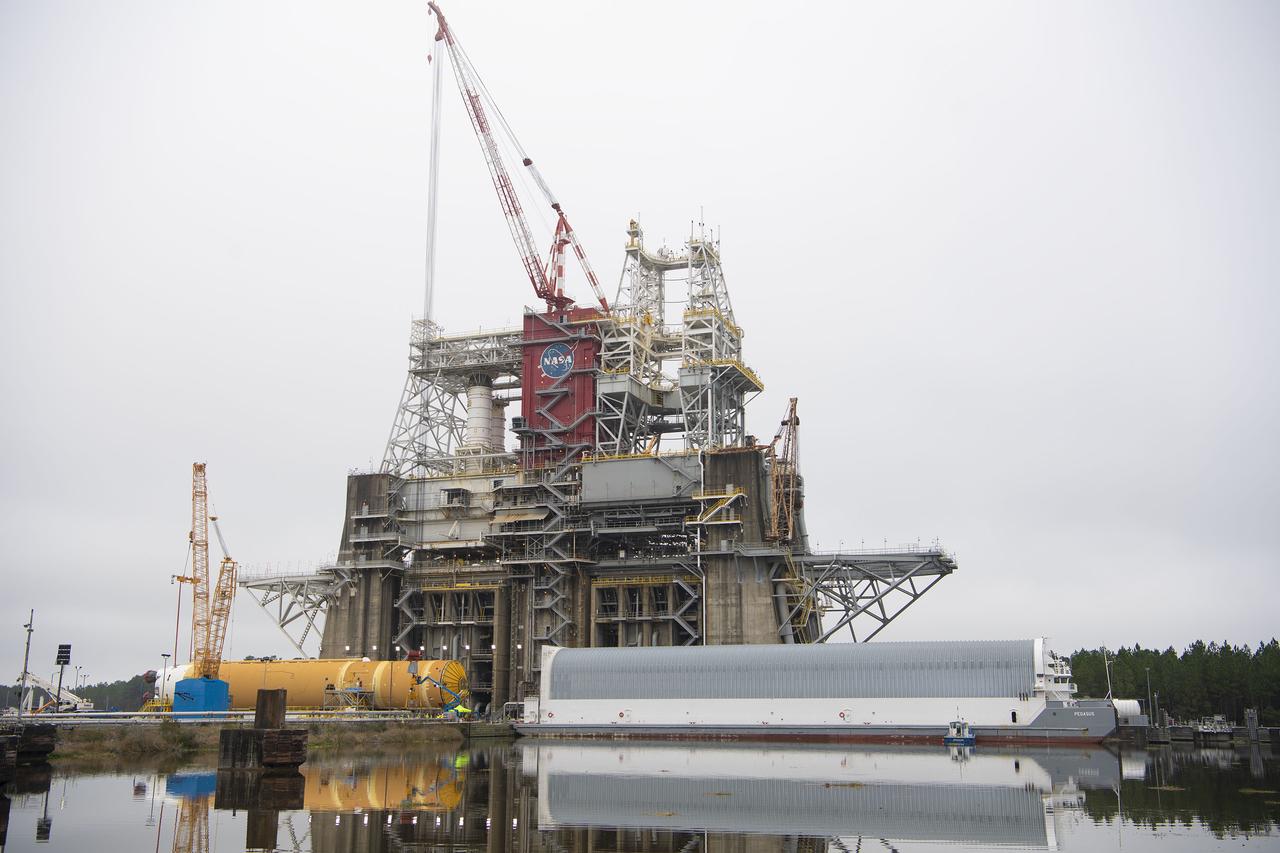
On Jan. 21-22, 2020, crews at Stennis Space Center lifted and installed the first core stage of NASA’s new Space Launch System (SLS) rocket onto the B-2 Test Stand. In upcoming months, a top-to-bottom, integrated series of Green Run tests will be conducted on the stage and its sophisticated systems. Following testing, the stage will be used to help launch the maiden Artemis I test mission of SLS and the Orion spacecraft. Through the Artemis program, NASA will send humans, including the first woman and next man, to the Moon to establish a sustainable presence.
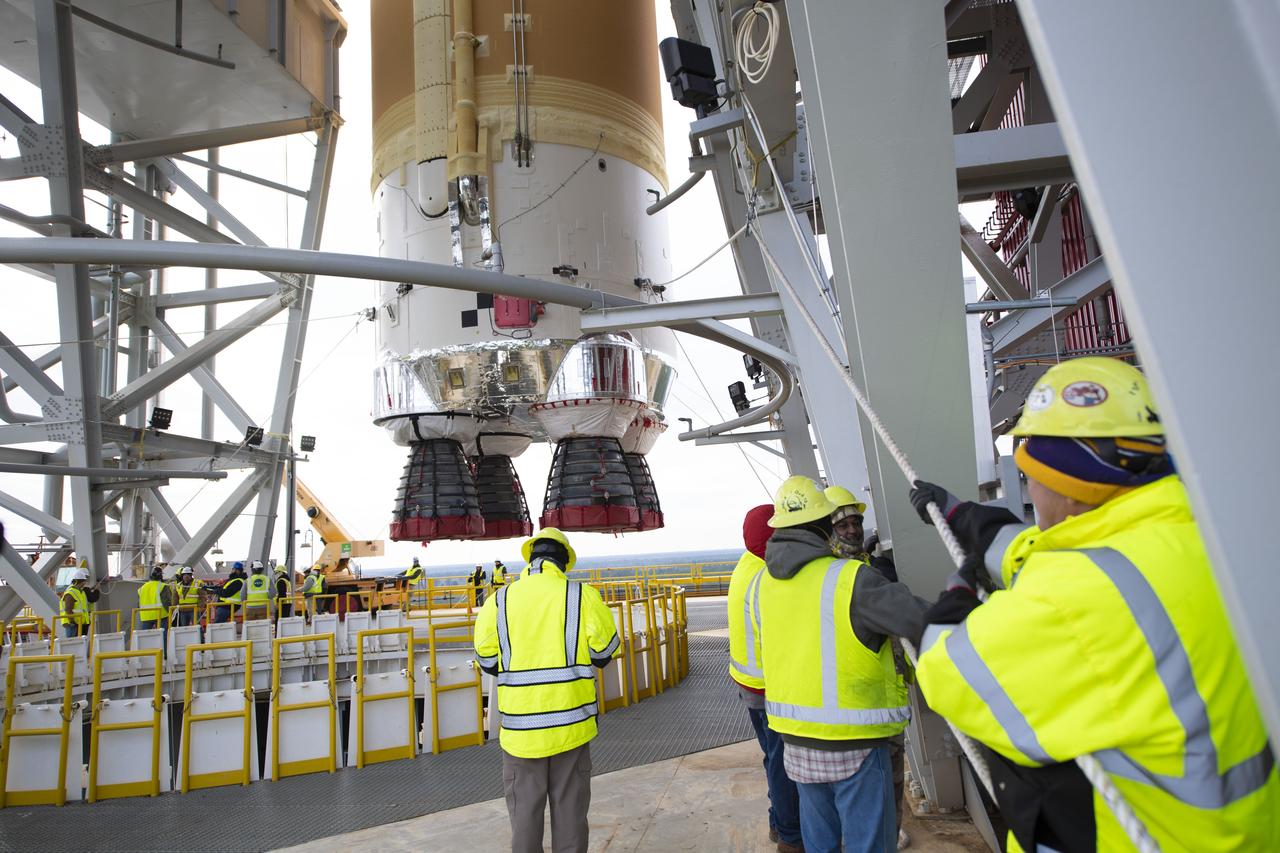
On Jan. 21-22, 2020, crews at Stennis Space Center lifted and installed the first core stage of NASA’s new Space Launch System (SLS) rocket onto the B-2 Test Stand. In upcoming months, a top-to-bottom, integrated series of Green Run tests will be conducted on the stage and its sophisticated systems. Following testing, the stage will be used to help launch the maiden Artemis I test mission of SLS and the Orion spacecraft. Through the Artemis program, NASA will send humans, including the first woman and next man, to the Moon to establish a sustainable presence.
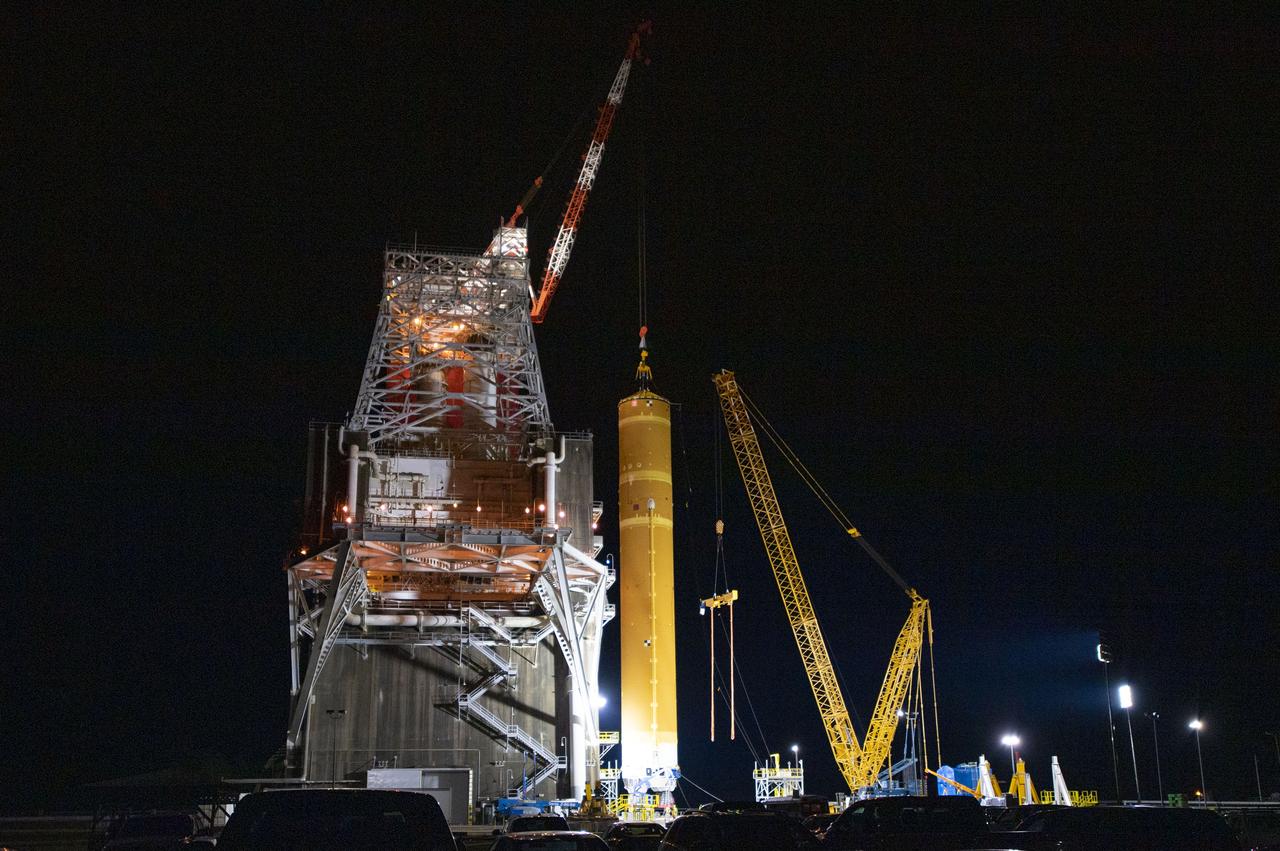
On Jan. 21-22, 2020, crews at Stennis Space Center lifted and installed the first core stage of NASA’s new Space Launch System (SLS) rocket onto the B-2 Test Stand. In upcoming months, a top-to-bottom, integrated series of Green Run tests will be conducted on the stage and its sophisticated systems. Following testing, the stage will be used to help launch the maiden Artemis I test mission of SLS and the Orion spacecraft. Through the Artemis program, NASA will send humans, including the first woman and next man, to the Moon to establish a sustainable presence.
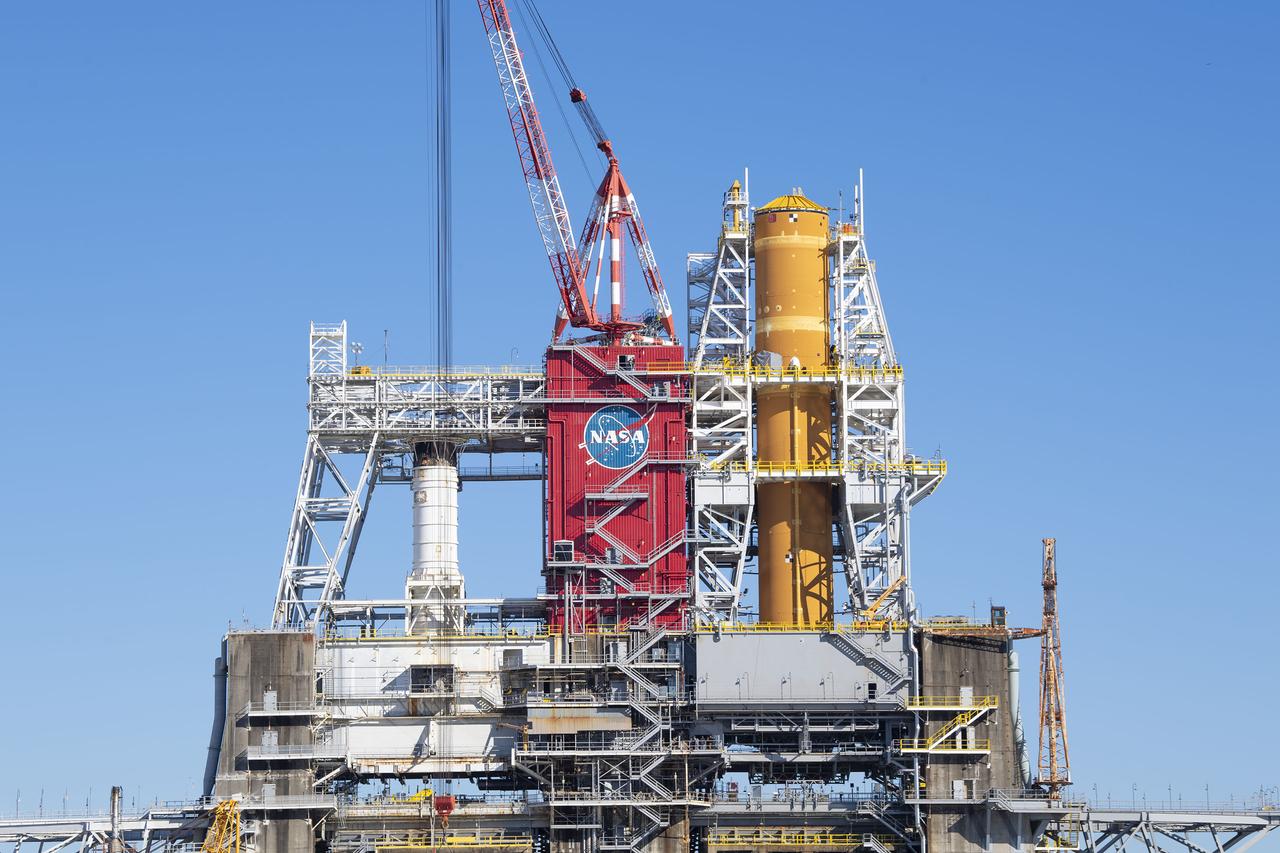
On Jan. 21-22, 2020, crews at Stennis Space Center lifted and installed the first core stage of NASA’s new Space Launch System (SLS) rocket onto the B-2 Test Stand. In upcoming months, a top-to-bottom, integrated series of Green Run tests will be conducted on the stage and its sophisticated systems. Following testing, the stage will be used to help launch the maiden Artemis I test mission of SLS and the Orion spacecraft. Through the Artemis program, NASA will send humans, including the first woman and next man, to the Moon to establish a sustainable presence.

On Jan. 21-22, 2020, crews at Stennis Space Center lifted and installed the first core stage of NASA’s new Space Launch System (SLS) rocket onto the B-2 Test Stand. In upcoming months, a top-to-bottom, integrated series of Green Run tests will be conducted on the stage and its sophisticated systems. Following testing, the stage will be used to help launch the maiden Artemis I test mission of SLS and the Orion spacecraft. Through the Artemis program, NASA will send humans, including the first woman and next man, to the Moon to establish a sustainable presence.
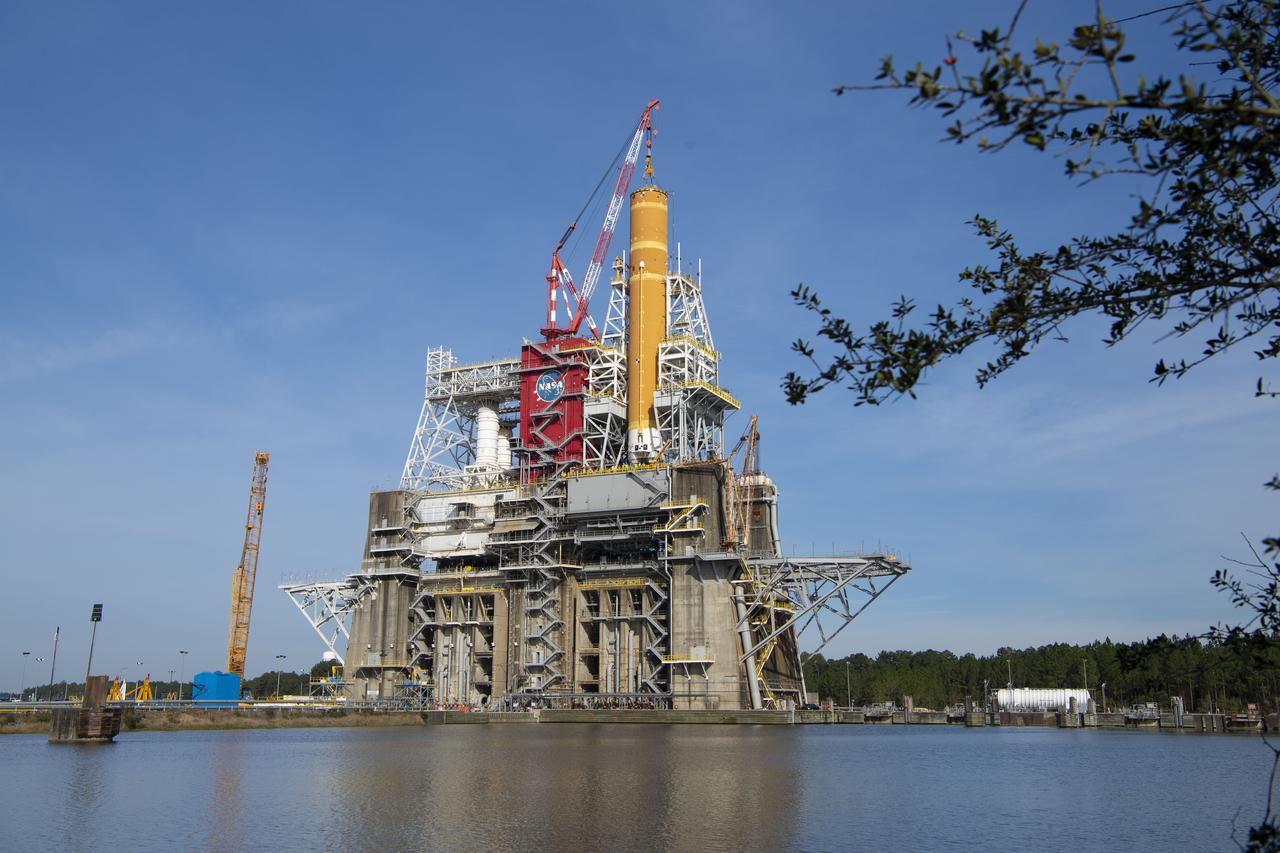
On Jan. 21-22, 2020, crews at Stennis Space Center lifted and installed the first core stage of NASA’s new Space Launch System (SLS) rocket onto the B-2 Test Stand. In upcoming months, a top-to-bottom, integrated series of Green Run tests will be conducted on the stage and its sophisticated systems. Following testing, the stage will be used to help launch the maiden Artemis I test mission of SLS and the Orion spacecraft. Through the Artemis program, NASA will send humans, including the first woman and next man, to the Moon to establish a sustainable presence.
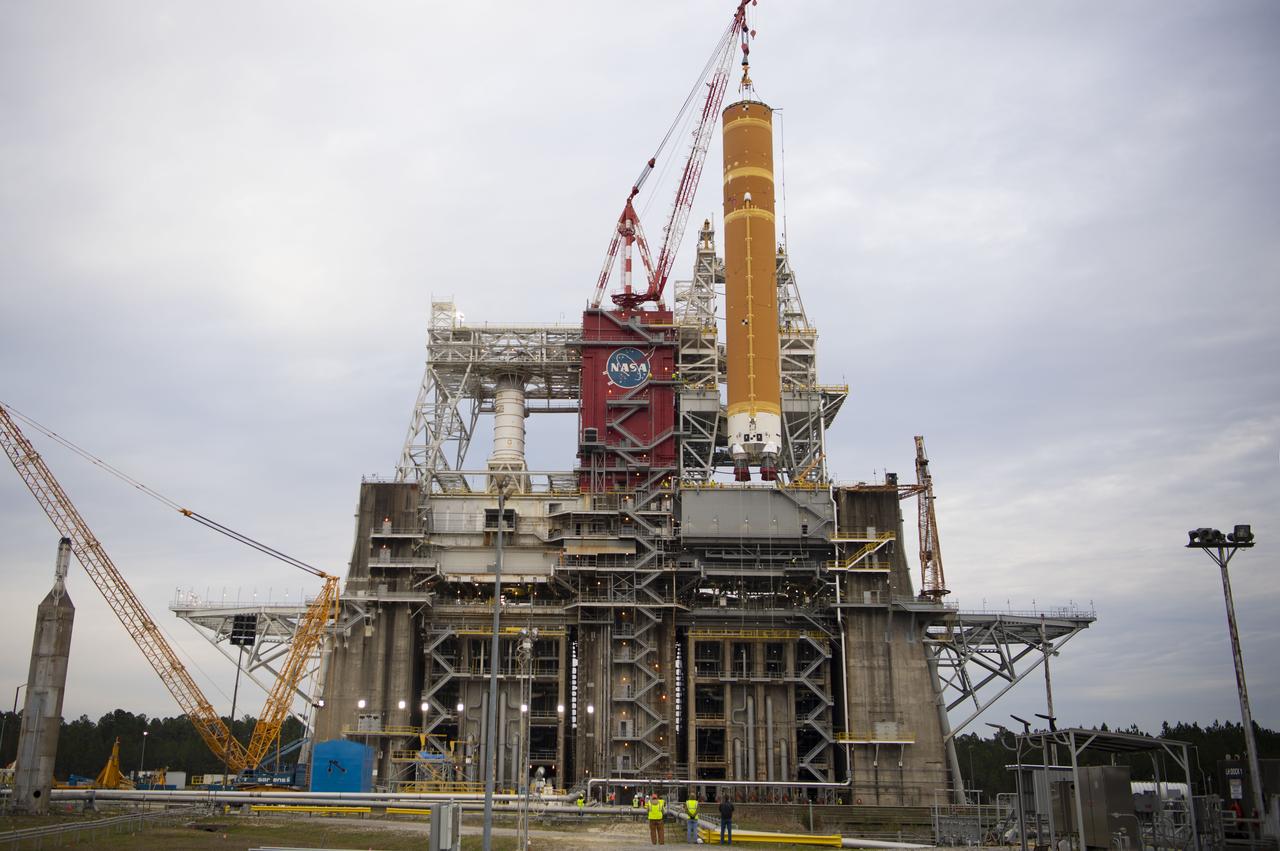
On Jan. 21-22, 2020, crews at Stennis Space Center lifted and installed the first core stage of NASA’s new Space Launch System (SLS) rocket onto the B-2 Test Stand. In upcoming months, a top-to-bottom, integrated series of Green Run tests will be conducted on the stage and its sophisticated systems. Following testing, the stage will be used to help launch the maiden Artemis I test mission of SLS and the Orion spacecraft. Through the Artemis program, NASA will send humans, including the first woman and next man, to the Moon to establish a sustainable presence.
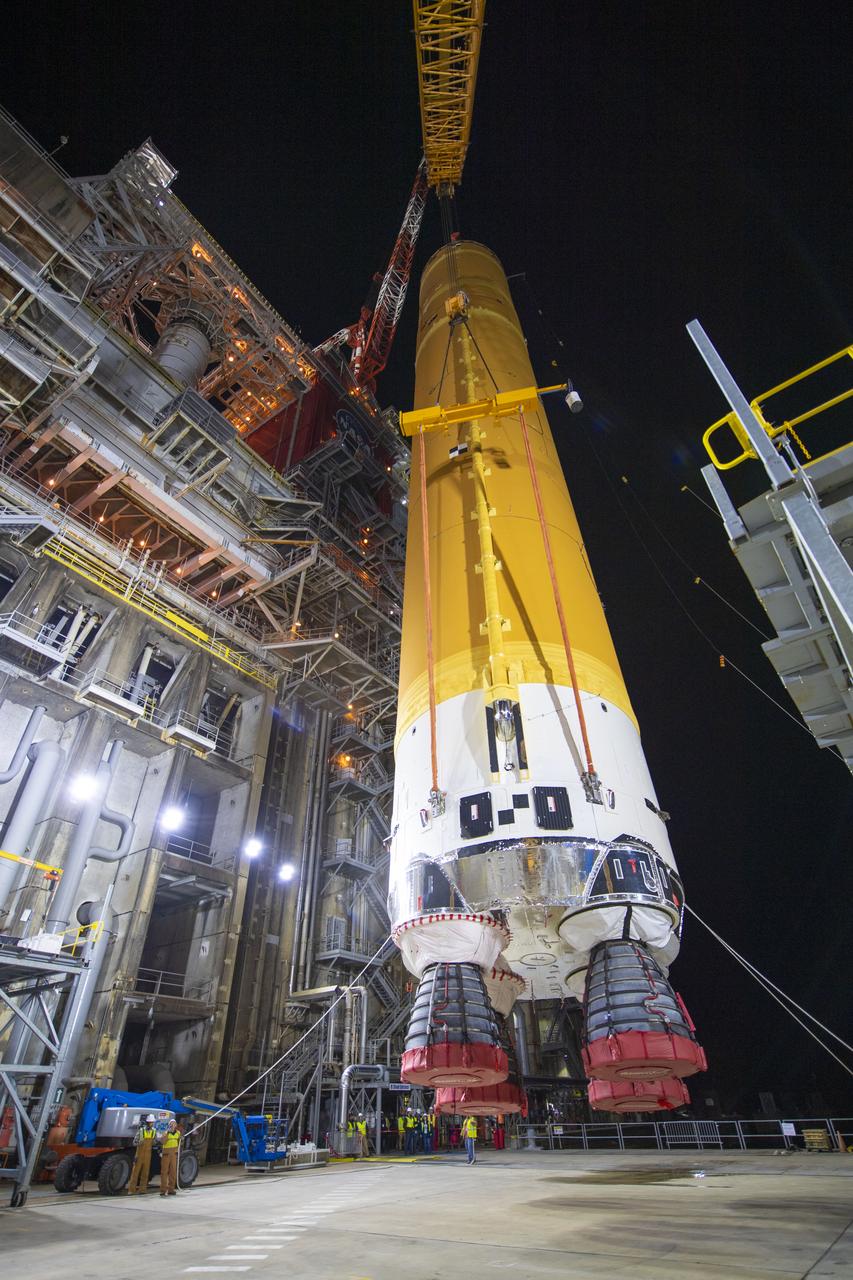
On Jan. 21-22, 2020, crews at Stennis Space Center lifted and installed the first core stage of NASA’s new Space Launch System (SLS) rocket onto the B-2 Test Stand. In upcoming months, a top-to-bottom, integrated series of Green Run tests will be conducted on the stage and its sophisticated systems. Following testing, the stage will be used to help launch the maiden Artemis I test mission of SLS and the Orion spacecraft. Through the Artemis program, NASA will send humans, including the first woman and next man, to the Moon to establish a sustainable presence.
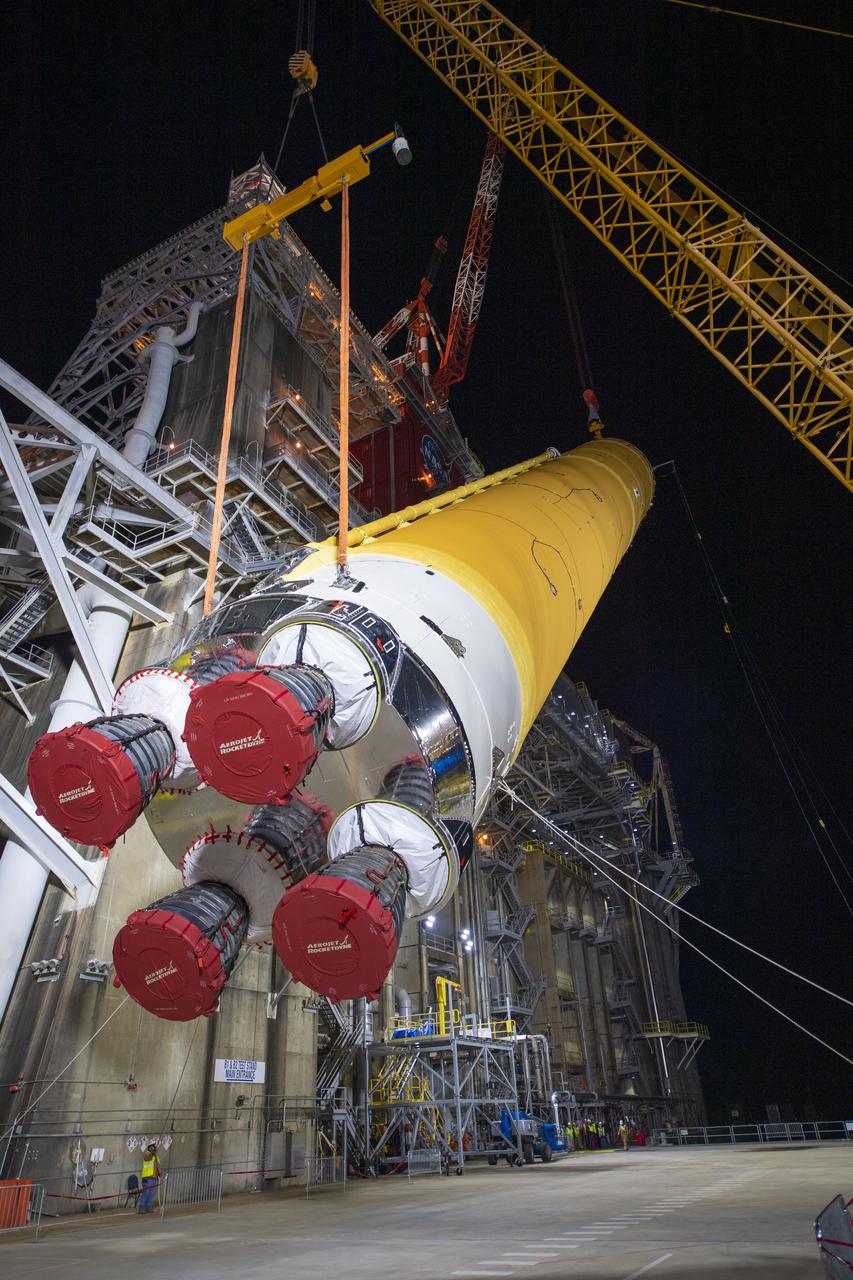
On Jan. 21-22, 2020, crews at Stennis Space Center lifted and installed the first core stage of NASA’s new Space Launch System (SLS) rocket onto the B-2 Test Stand. In upcoming months, a top-to-bottom, integrated series of Green Run tests will be conducted on the stage and its sophisticated systems. Following testing, the stage will be used to help launch the maiden Artemis I test mission of SLS and the Orion spacecraft. Through the Artemis program, NASA will send humans, including the first woman and next man, to the Moon to establish a sustainable presence.
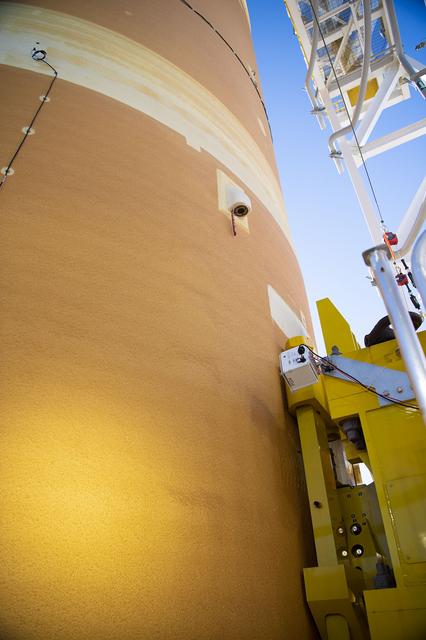
On Jan. 21-22, 2020, crews at Stennis Space Center lifted and installed the first core stage of NASA’s new Space Launch System (SLS) rocket onto the B-2 Test Stand. In upcoming months, a top-to-bottom, integrated series of Green Run tests will be conducted on the stage and its sophisticated systems. Following testing, the stage will be used to help launch the maiden Artemis I test mission of SLS and the Orion spacecraft. Through the Artemis program, NASA will send humans, including the first woman and next man, to the Moon to establish a sustainable presence.
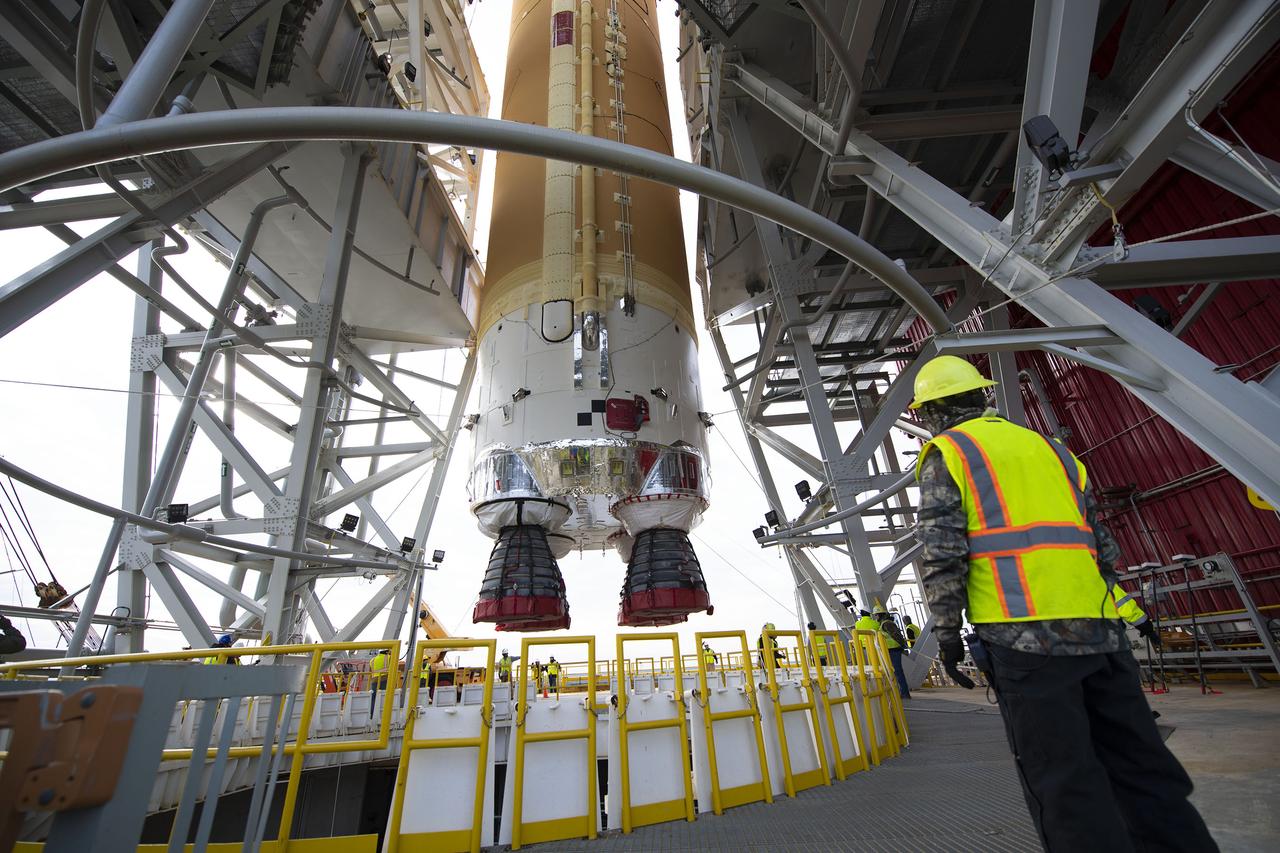
On Jan. 21-22, 2020, crews at Stennis Space Center lifted and installed the first core stage of NASA’s new Space Launch System (SLS) rocket onto the B-2 Test Stand. In upcoming months, a top-to-bottom, integrated series of Green Run tests will be conducted on the stage and its sophisticated systems. Following testing, the stage will be used to help launch the maiden Artemis I test mission of SLS and the Orion spacecraft. Through the Artemis program, NASA will send humans, including the first woman and next man, to the Moon to establish a sustainable presence.
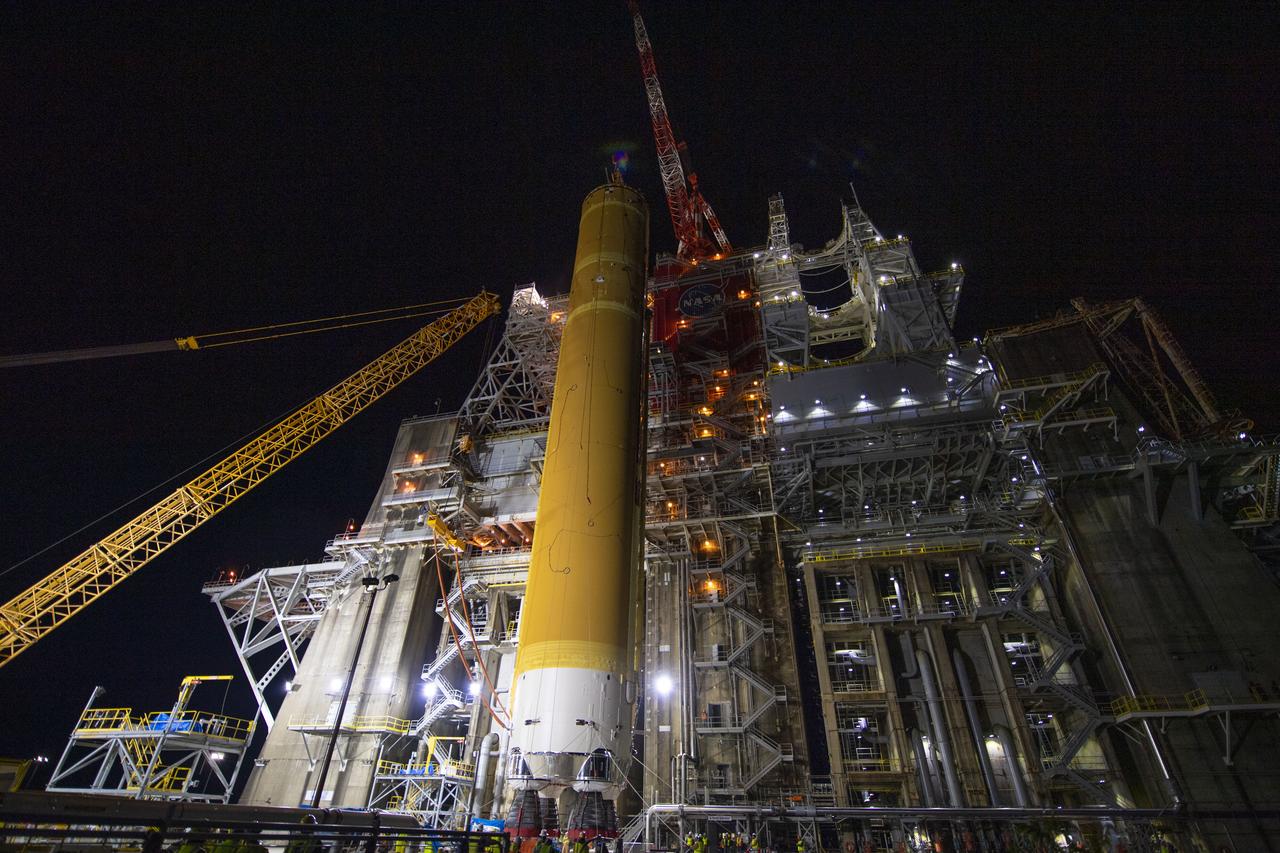
On Jan. 21-22, 2020, crews at Stennis Space Center lifted and installed the first core stage of NASA’s new Space Launch System (SLS) rocket onto the B-2 Test Stand. In upcoming months, a top-to-bottom, integrated series of Green Run tests will be conducted on the stage and its sophisticated systems. Following testing, the stage will be used to help launch the maiden Artemis I test mission of SLS and the Orion spacecraft. Through the Artemis program, NASA will send humans, including the first woman and next man, to the Moon to establish a sustainable presence.
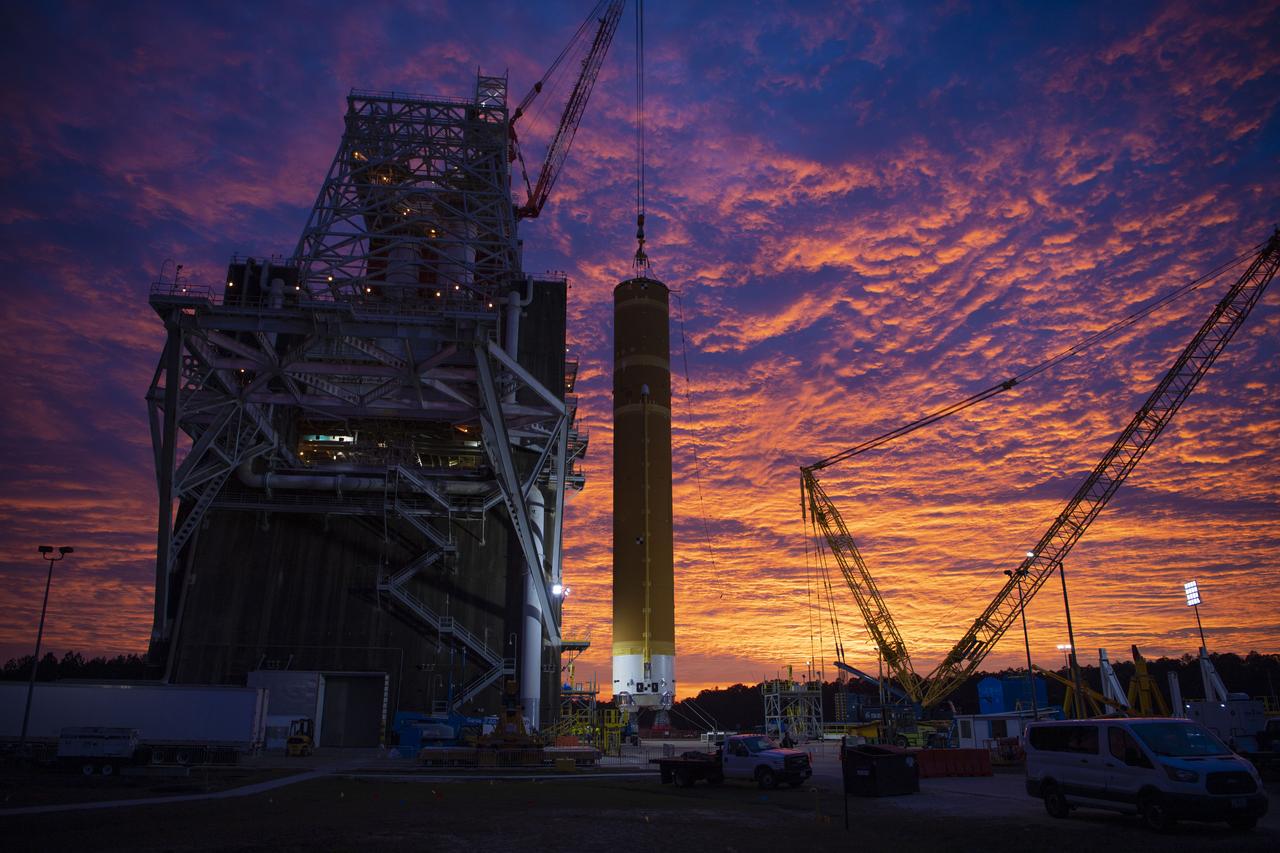
On Jan. 21-22, 2020, crews at Stennis Space Center lifted and installed the first core stage of NASA’s new Space Launch System (SLS) rocket onto the B-2 Test Stand. In upcoming months, a top-to-bottom, integrated series of Green Run tests will be conducted on the stage and its sophisticated systems. Following testing, the stage will be used to help launch the maiden Artemis I test mission of SLS and the Orion spacecraft. Through the Artemis program, NASA will send humans, including the first woman and next man, to the Moon to establish a sustainable presence.
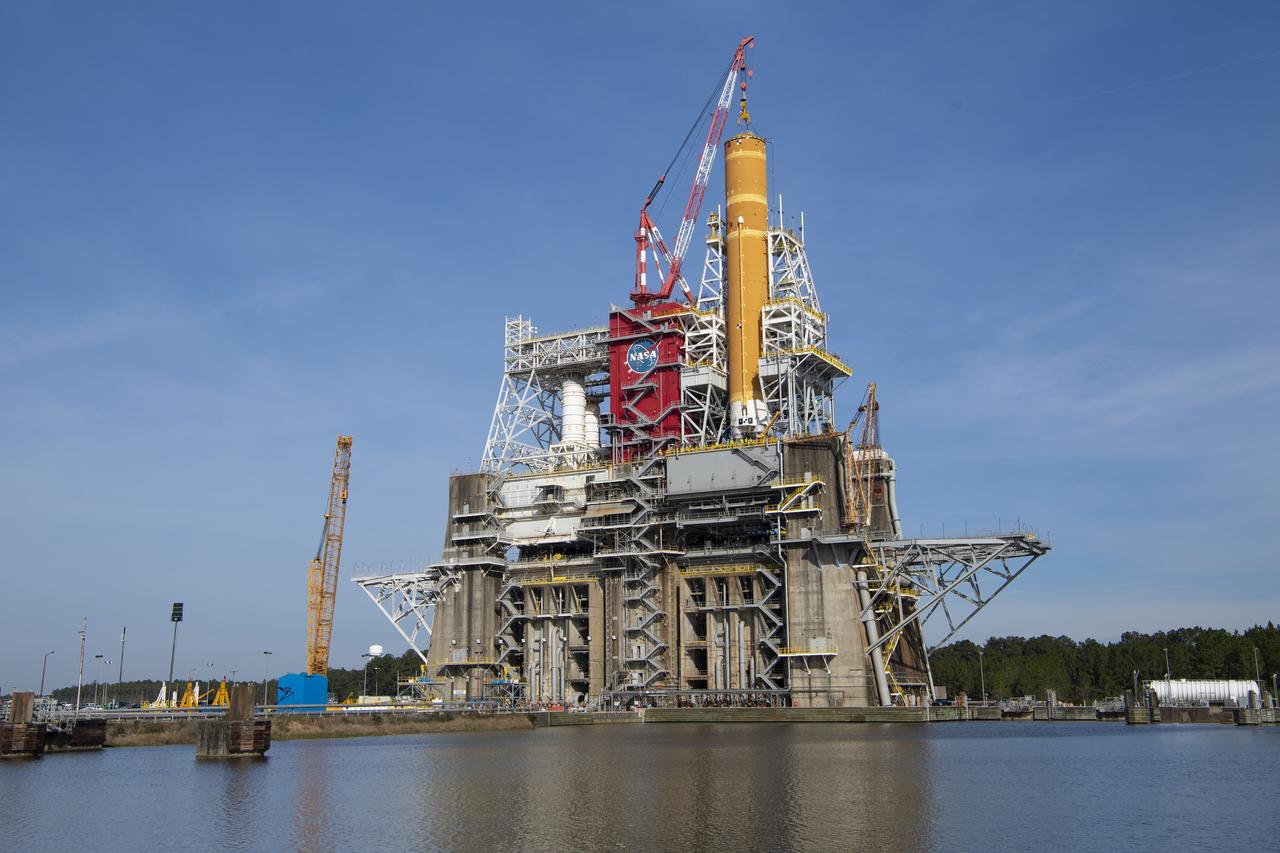
On Jan. 21-22, 2020, crews at Stennis Space Center lifted and installed the first core stage of NASA’s new Space Launch System (SLS) rocket onto the B-2 Test Stand. In upcoming months, a top-to-bottom, integrated series of Green Run tests will be conducted on the stage and its sophisticated systems. Following testing, the stage will be used to help launch the maiden Artemis I test mission of SLS and the Orion spacecraft. Through the Artemis program, NASA will send humans, including the first woman and next man, to the Moon to establish a sustainable presence.
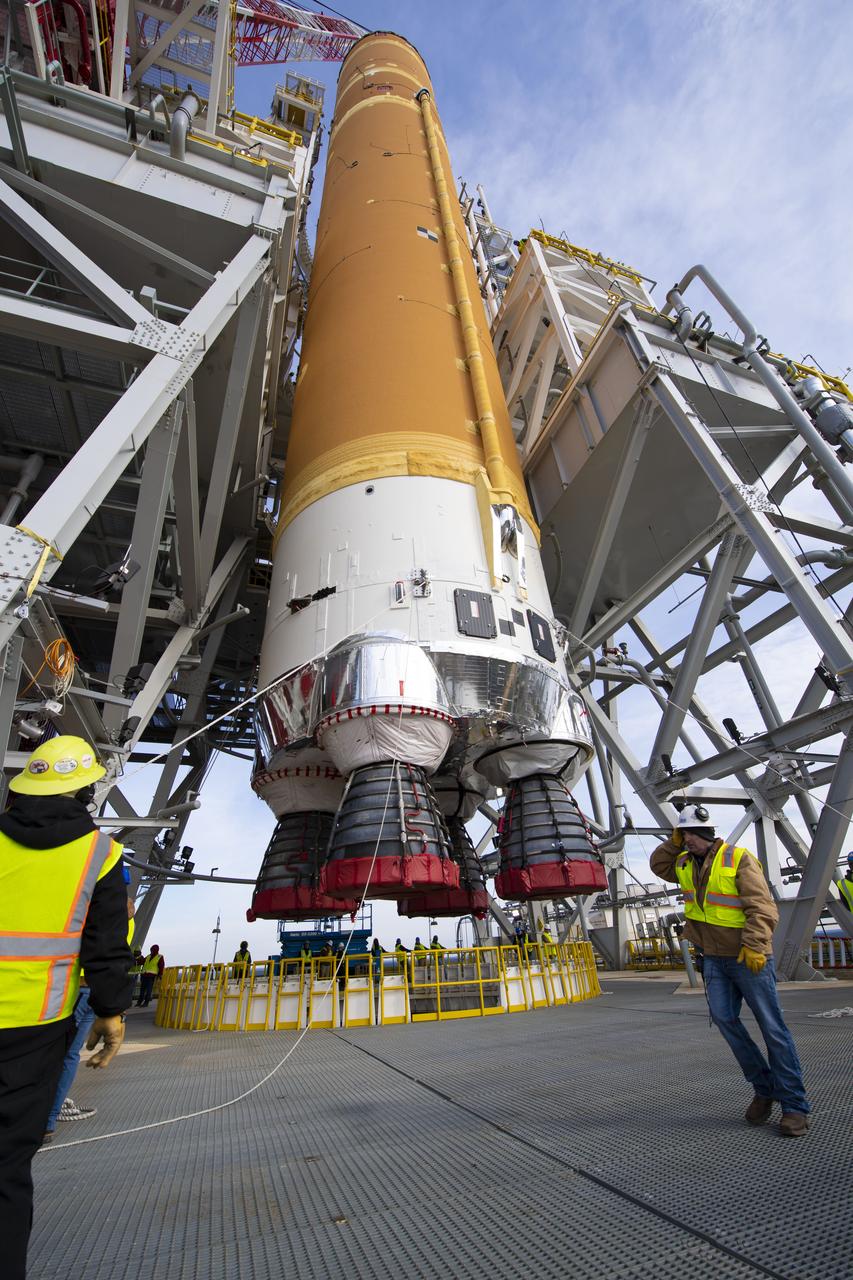
On Jan. 21-22, 2020, crews at Stennis Space Center lifted and installed the first core stage of NASA’s new Space Launch System (SLS) rocket onto the B-2 Test Stand. In upcoming months, a top-to-bottom, integrated series of Green Run tests will be conducted on the stage and its sophisticated systems. Following testing, the stage will be used to help launch the maiden Artemis I test mission of SLS and the Orion spacecraft. Through the Artemis program, NASA will send humans, including the first woman and next man, to the Moon to establish a sustainable presence.
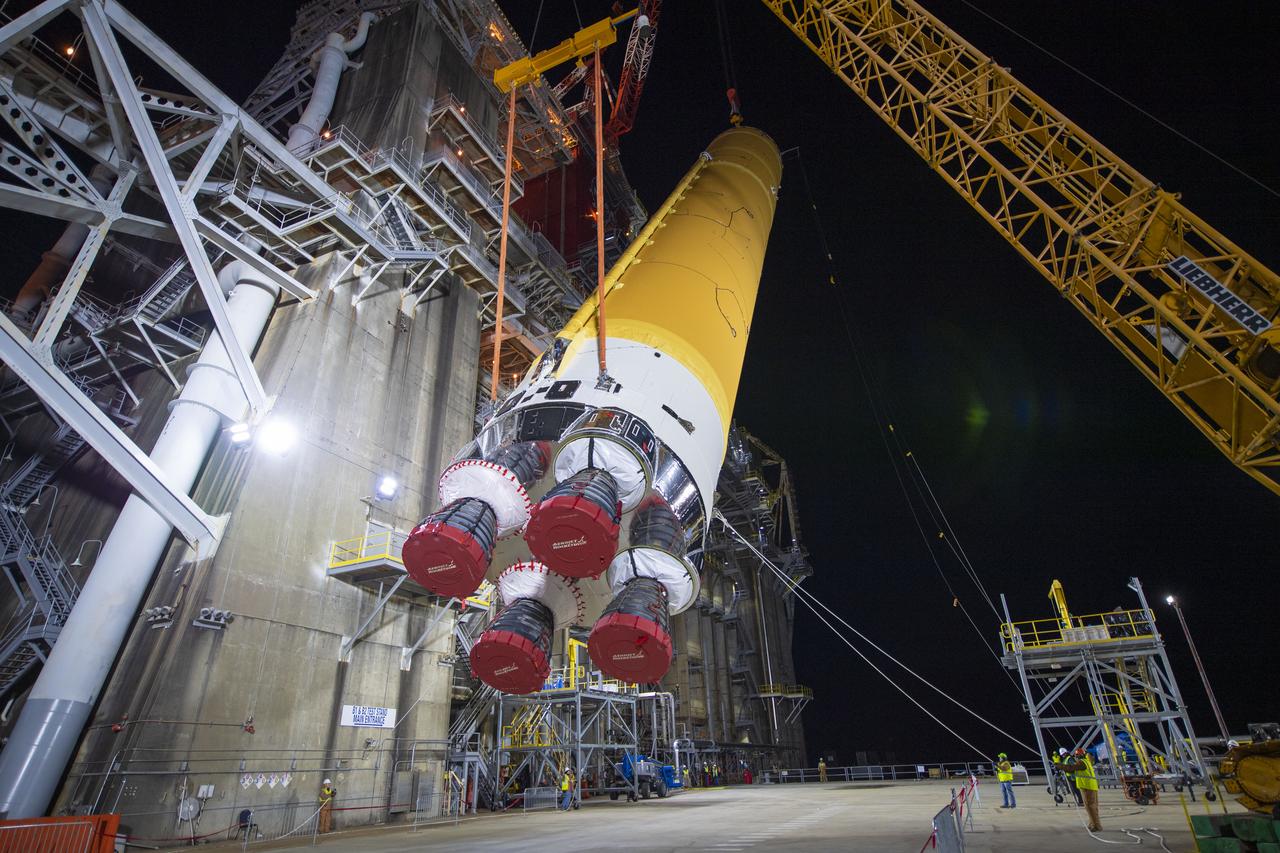
On Jan. 21-22, 2020, crews at Stennis Space Center lifted and installed the first core stage of NASA’s new Space Launch System (SLS) rocket onto the B-2 Test Stand. In upcoming months, a top-to-bottom, integrated series of Green Run tests will be conducted on the stage and its sophisticated systems. Following testing, the stage will be used to help launch the maiden Artemis I test mission of SLS and the Orion spacecraft. Through the Artemis program, NASA will send humans, including the first woman and next man, to the Moon to establish a sustainable presence.
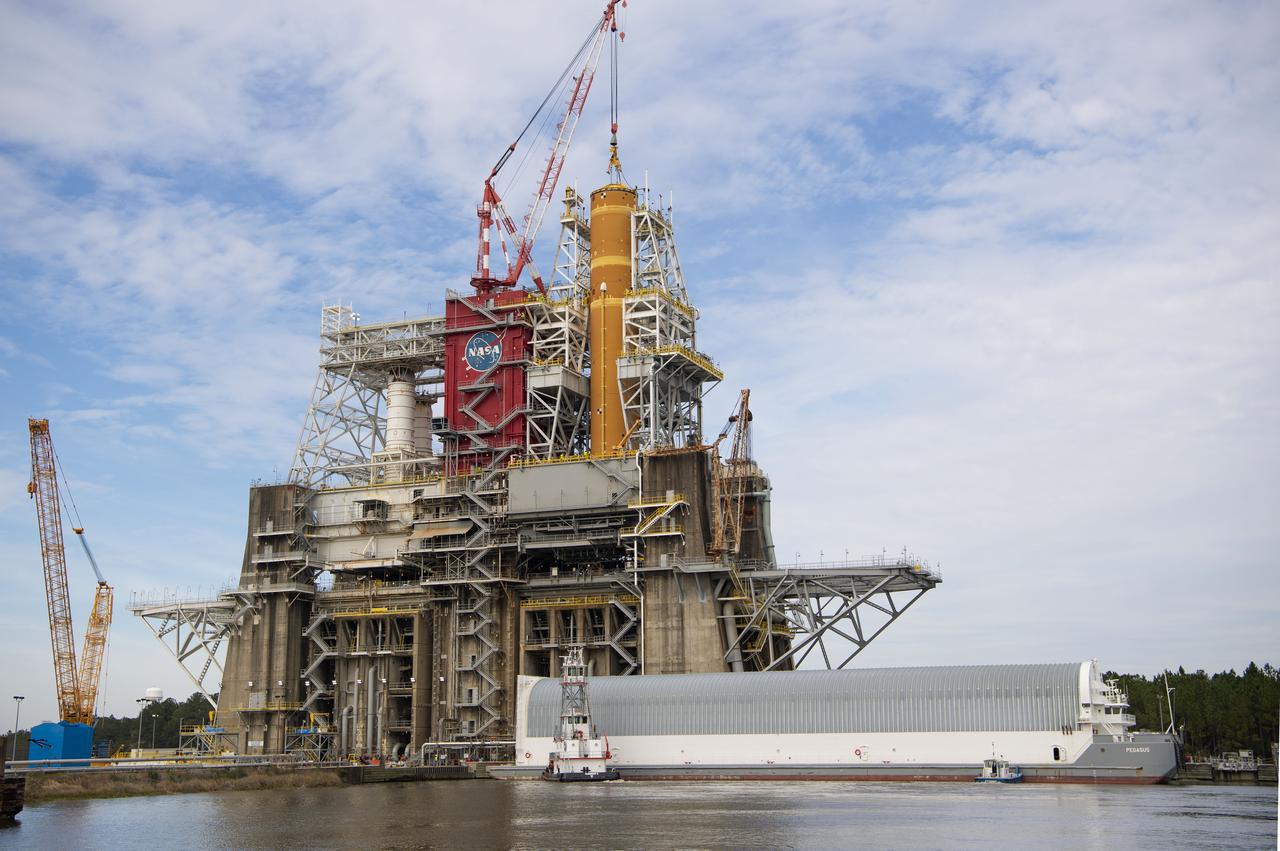
On Jan. 21-22, 2020, crews at Stennis Space Center lifted and installed the first core stage of NASA’s new Space Launch System (SLS) rocket onto the B-2 Test Stand. In upcoming months, a top-to-bottom, integrated series of Green Run tests will be conducted on the stage and its sophisticated systems. Following testing, the stage will be used to help launch the maiden Artemis I test mission of SLS and the Orion spacecraft. Through the Artemis program, NASA will send humans, including the first woman and next man, to the Moon to establish a sustainable presence.
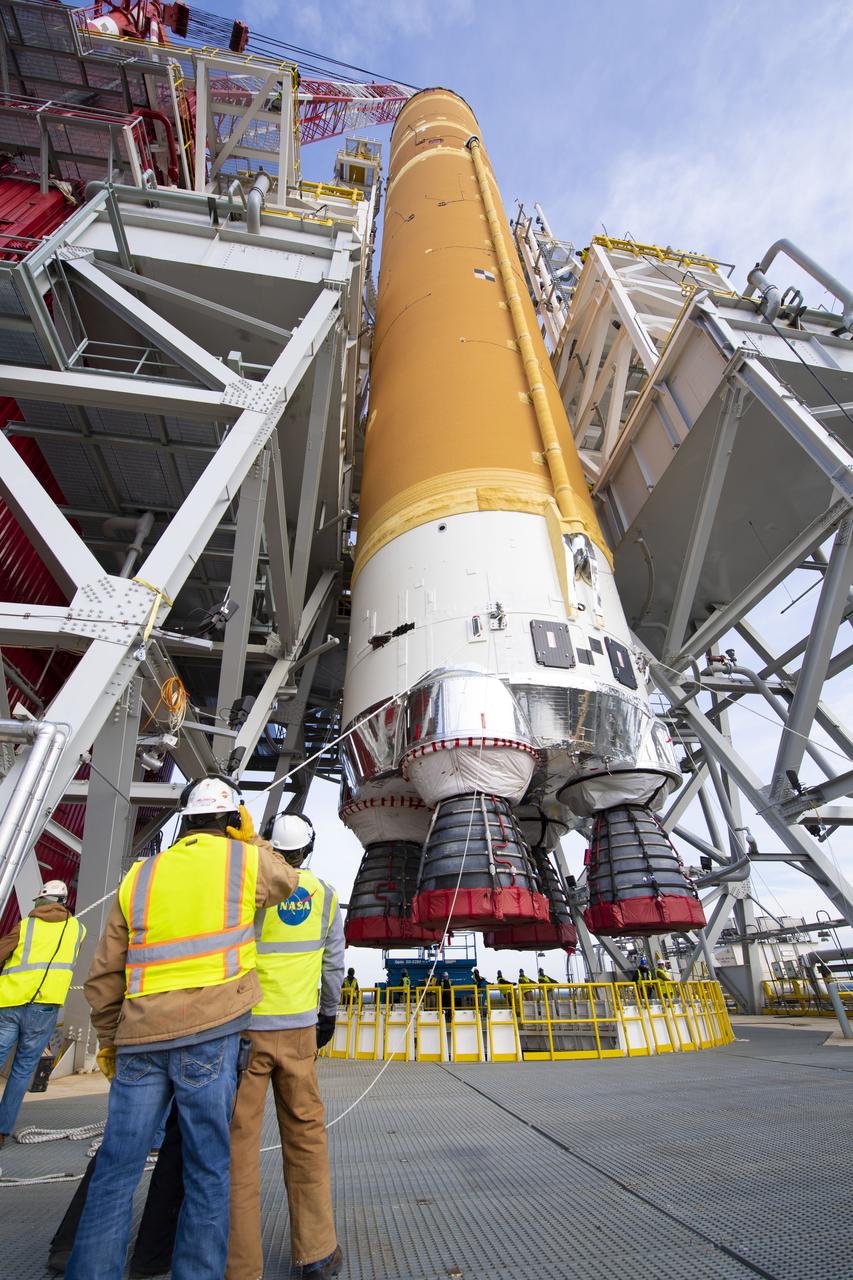
On Jan. 21-22, 2020, crews at Stennis Space Center lifted and installed the first core stage of NASA’s new Space Launch System (SLS) rocket onto the B-2 Test Stand. In upcoming months, a top-to-bottom, integrated series of Green Run tests will be conducted on the stage and its sophisticated systems. Following testing, the stage will be used to help launch the maiden Artemis I test mission of SLS and the Orion spacecraft. Through the Artemis program, NASA will send humans, including the first woman and next man, to the Moon to establish a sustainable presence.
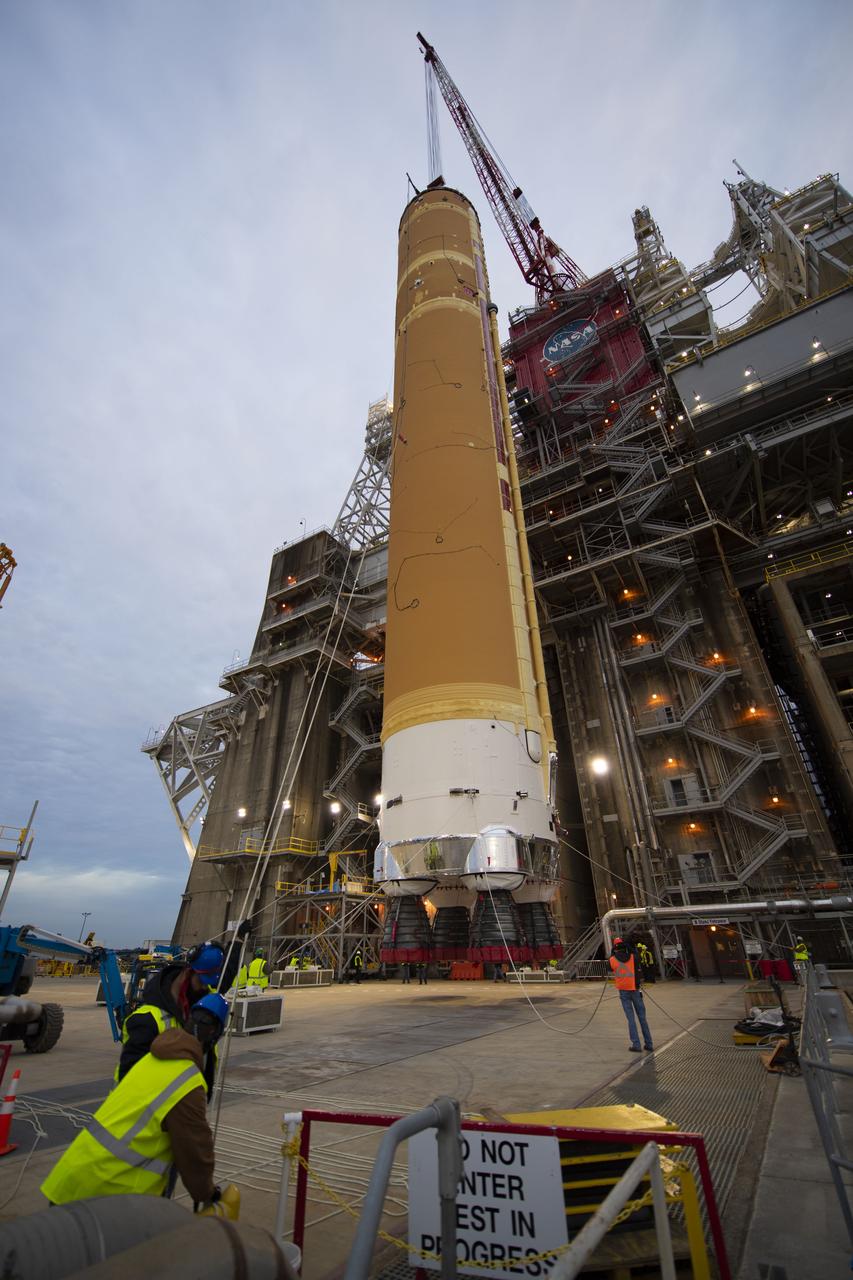
On Jan. 21-22, 2020, crews at Stennis Space Center lifted and installed the first core stage of NASA’s new Space Launch System (SLS) rocket onto the B-2 Test Stand. In upcoming months, a top-to-bottom, integrated series of Green Run tests will be conducted on the stage and its sophisticated systems. Following testing, the stage will be used to help launch the maiden Artemis I test mission of SLS and the Orion spacecraft. Through the Artemis program, NASA will send humans, including the first woman and next man, to the Moon to establish a sustainable presence.
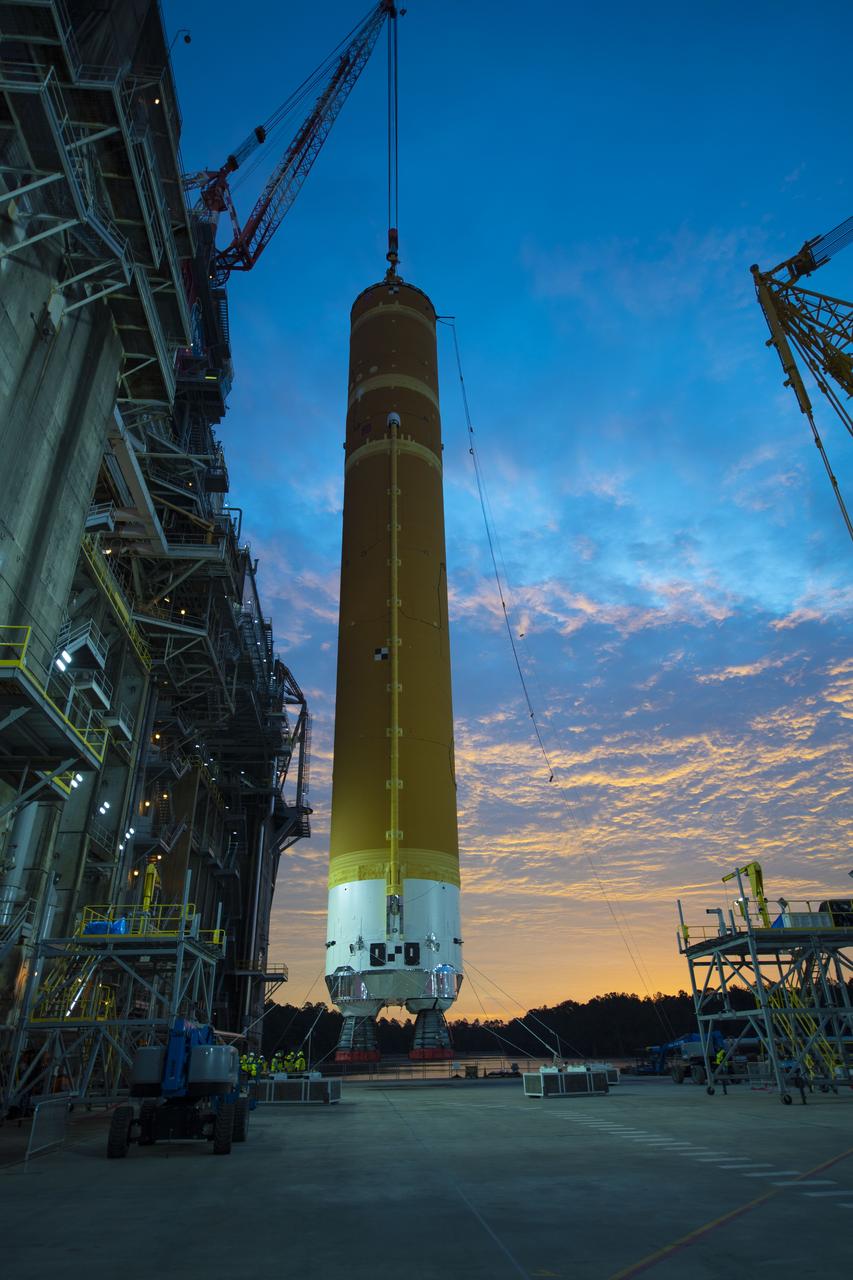
On Jan. 21-22, 2020, crews at Stennis Space Center lifted and installed the first core stage of NASA’s new Space Launch System (SLS) rocket onto the B-2 Test Stand. In upcoming months, a top-to-bottom, integrated series of Green Run tests will be conducted on the stage and its sophisticated systems. Following testing, the stage will be used to help launch the maiden Artemis I test mission of SLS and the Orion spacecraft. Through the Artemis program, NASA will send humans, including the first woman and next man, to the Moon to establish a sustainable presence.
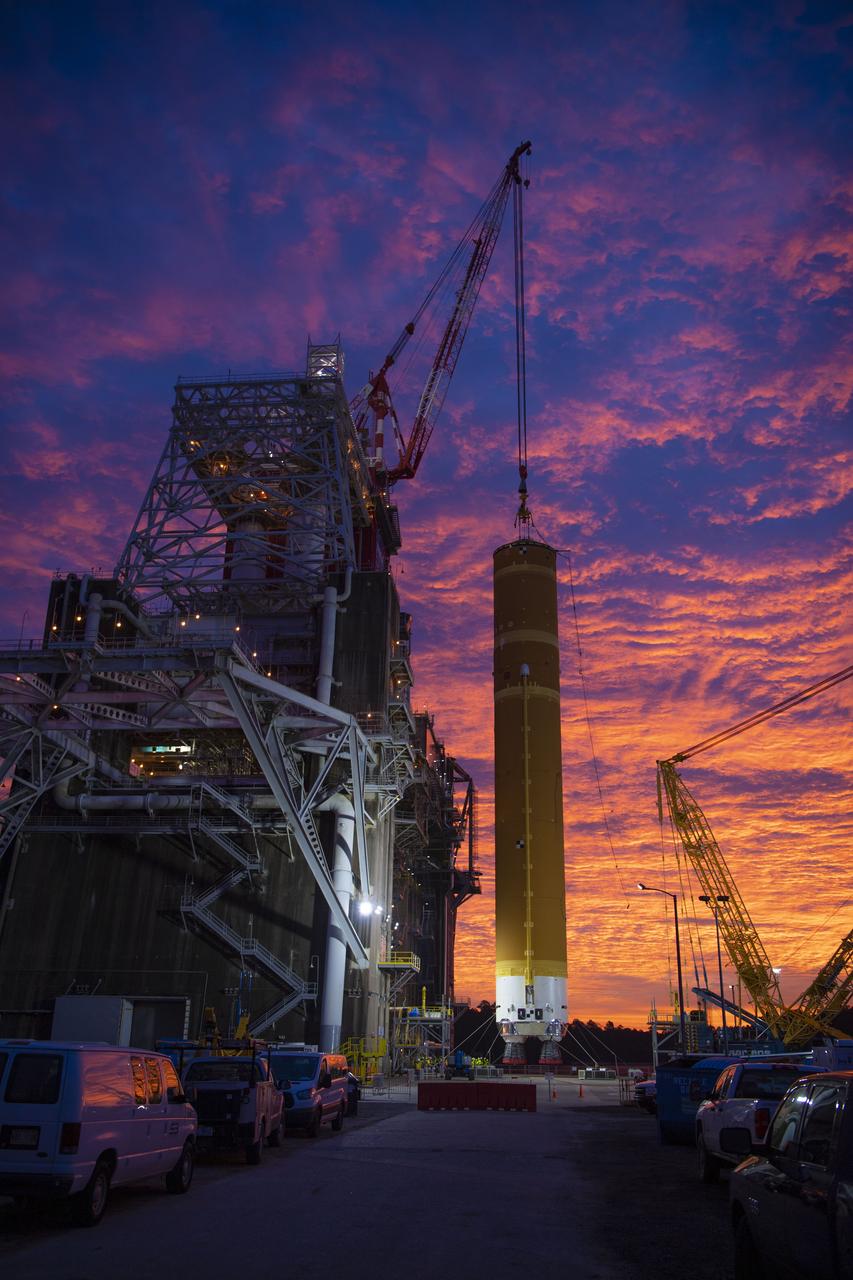
On Jan. 21-22, 2020, crews at Stennis Space Center lifted and installed the first core stage of NASA’s new Space Launch System (SLS) rocket onto the B-2 Test Stand. In upcoming months, a top-to-bottom, integrated series of Green Run tests will be conducted on the stage and its sophisticated systems. Following testing, the stage will be used to help launch the maiden Artemis I test mission of SLS and the Orion spacecraft. Through the Artemis program, NASA will send humans, including the first woman and next man, to the Moon to establish a sustainable presence.
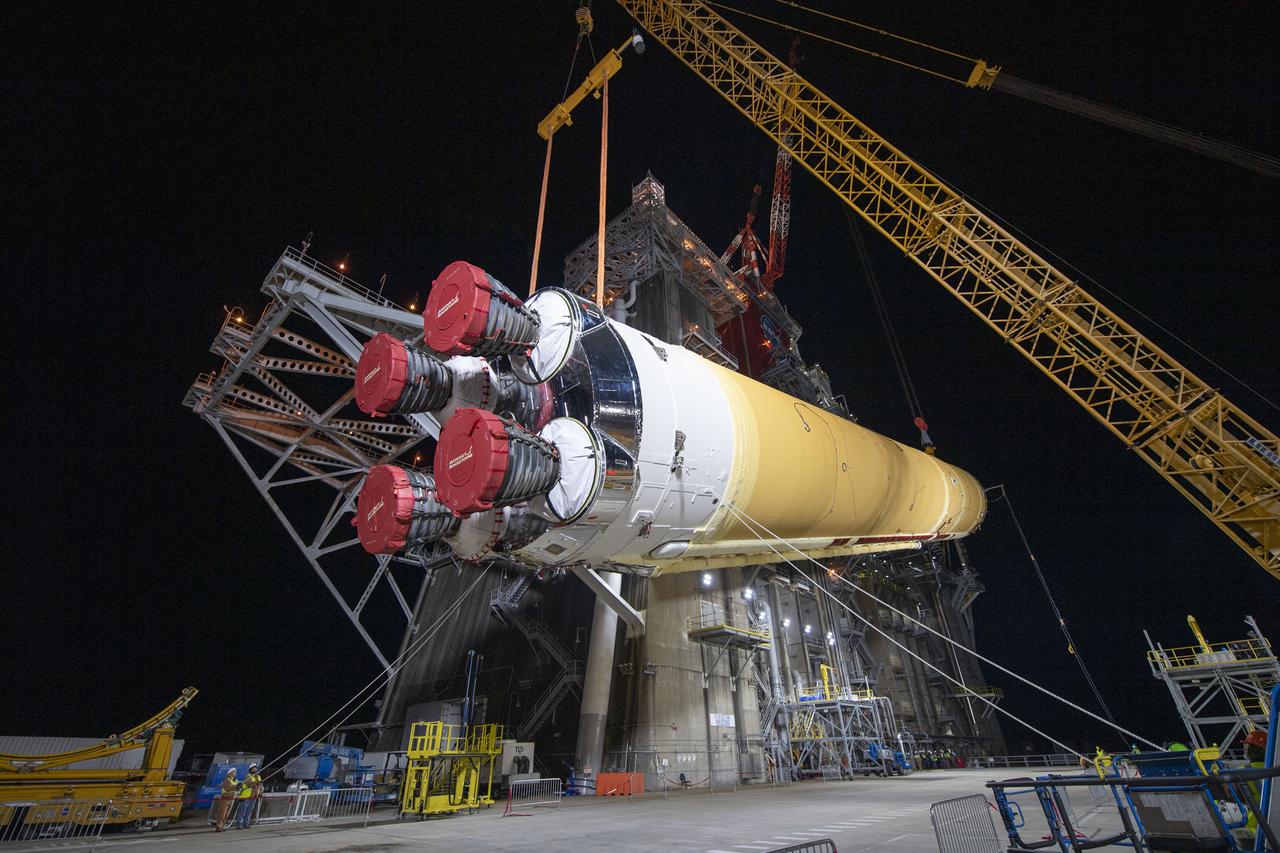
On Jan. 21-22, 2020, crews at Stennis Space Center lifted and installed the first core stage of NASA’s new Space Launch System (SLS) rocket onto the B-2 Test Stand. In upcoming months, a top-to-bottom, integrated series of Green Run tests will be conducted on the stage and its sophisticated systems. Following testing, the stage will be used to help launch the maiden Artemis I test mission of SLS and the Orion spacecraft. Through the Artemis program, NASA will send humans, including the first woman and next man, to the Moon to establish a sustainable presence.
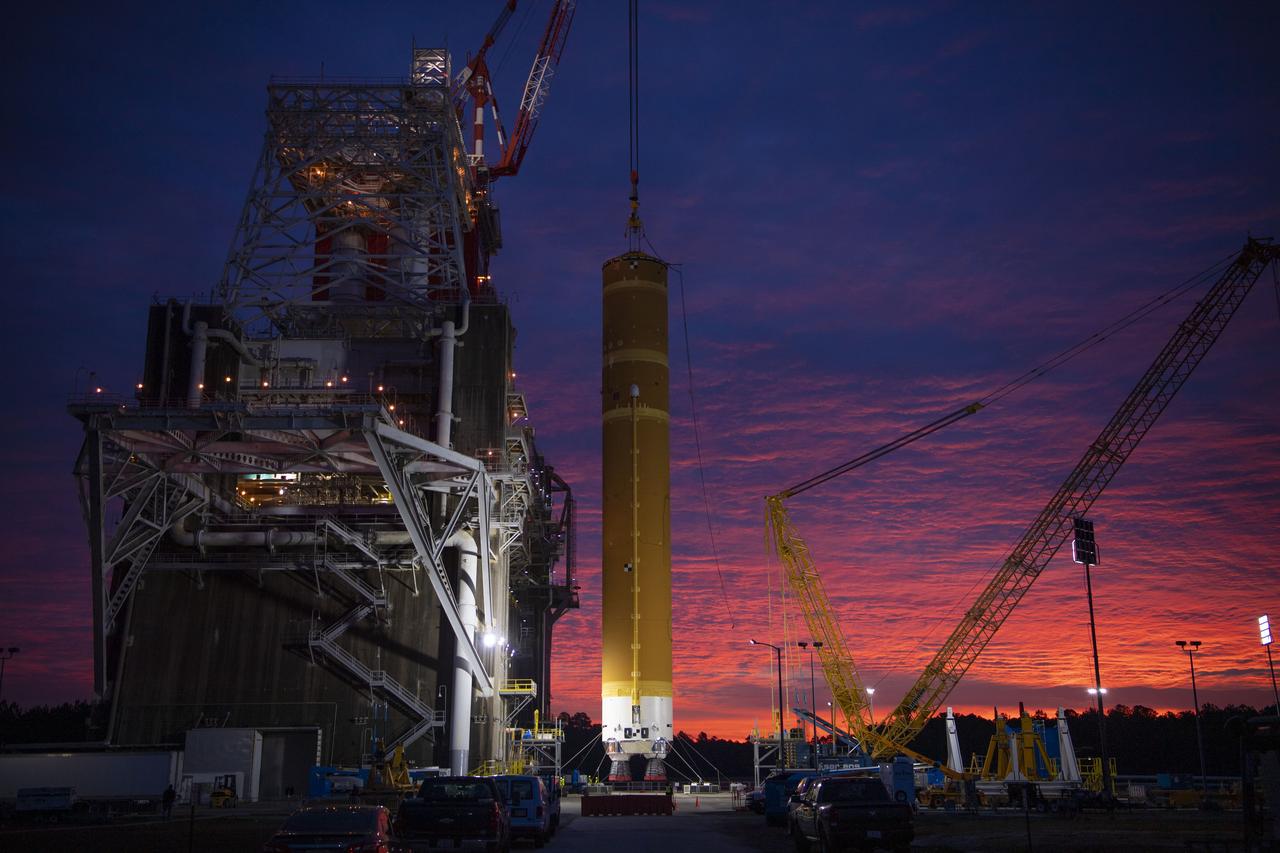
On Jan. 21-22, 2020, crews at Stennis Space Center lifted and installed the first core stage of NASA’s new Space Launch System (SLS) rocket onto the B-2 Test Stand. In upcoming months, a top-to-bottom, integrated series of Green Run tests will be conducted on the stage and its sophisticated systems. Following testing, the stage will be used to help launch the maiden Artemis I test mission of SLS and the Orion spacecraft. Through the Artemis program, NASA will send humans, including the first woman and next man, to the Moon to establish a sustainable presence.
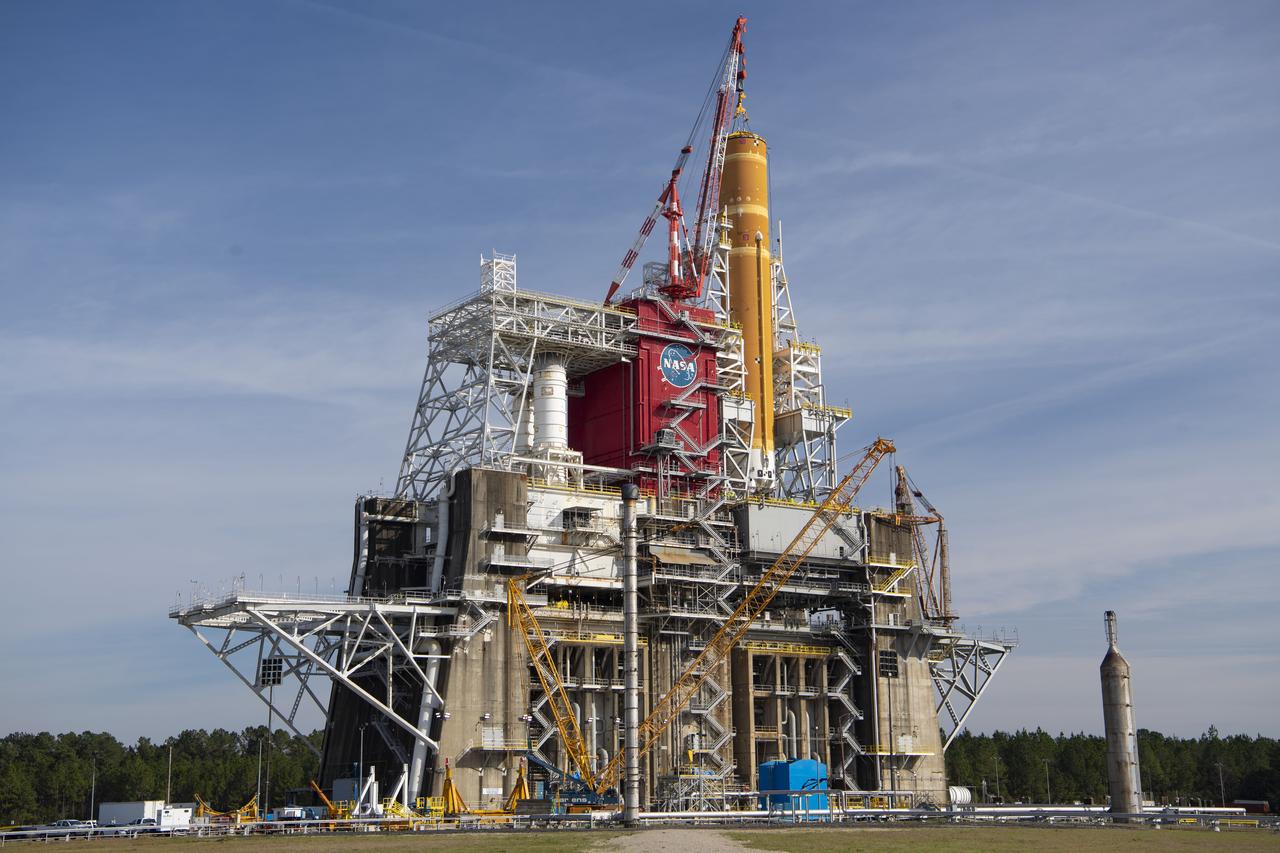
On Jan. 21-22, 2020, crews at Stennis Space Center lifted and installed the first core stage of NASA’s new Space Launch System (SLS) rocket onto the B-2 Test Stand. In upcoming months, a top-to-bottom, integrated series of Green Run tests will be conducted on the stage and its sophisticated systems. Following testing, the stage will be used to help launch the maiden Artemis I test mission of SLS and the Orion spacecraft. Through the Artemis program, NASA will send humans, including the first woman and next man, to the Moon to establish a sustainable presence.
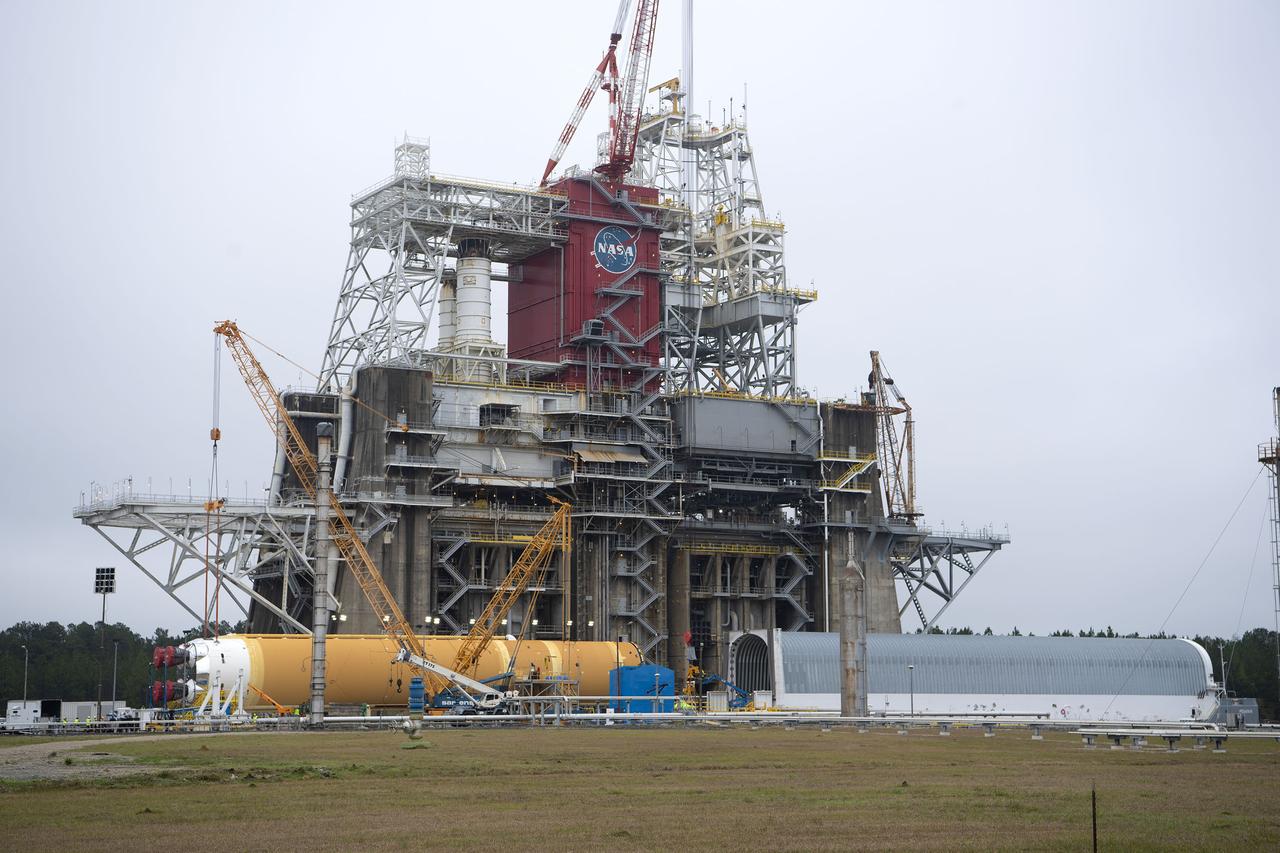
On Jan. 21-22, 2020, crews at Stennis Space Center lifted and installed the first core stage of NASA’s new Space Launch System (SLS) rocket onto the B-2 Test Stand. In upcoming months, a top-to-bottom, integrated series of Green Run tests will be conducted on the stage and its sophisticated systems. Following testing, the stage will be used to help launch the maiden Artemis I test mission of SLS and the Orion spacecraft. Through the Artemis program, NASA will send humans, including the first woman and next man, to the Moon to establish a sustainable presence.
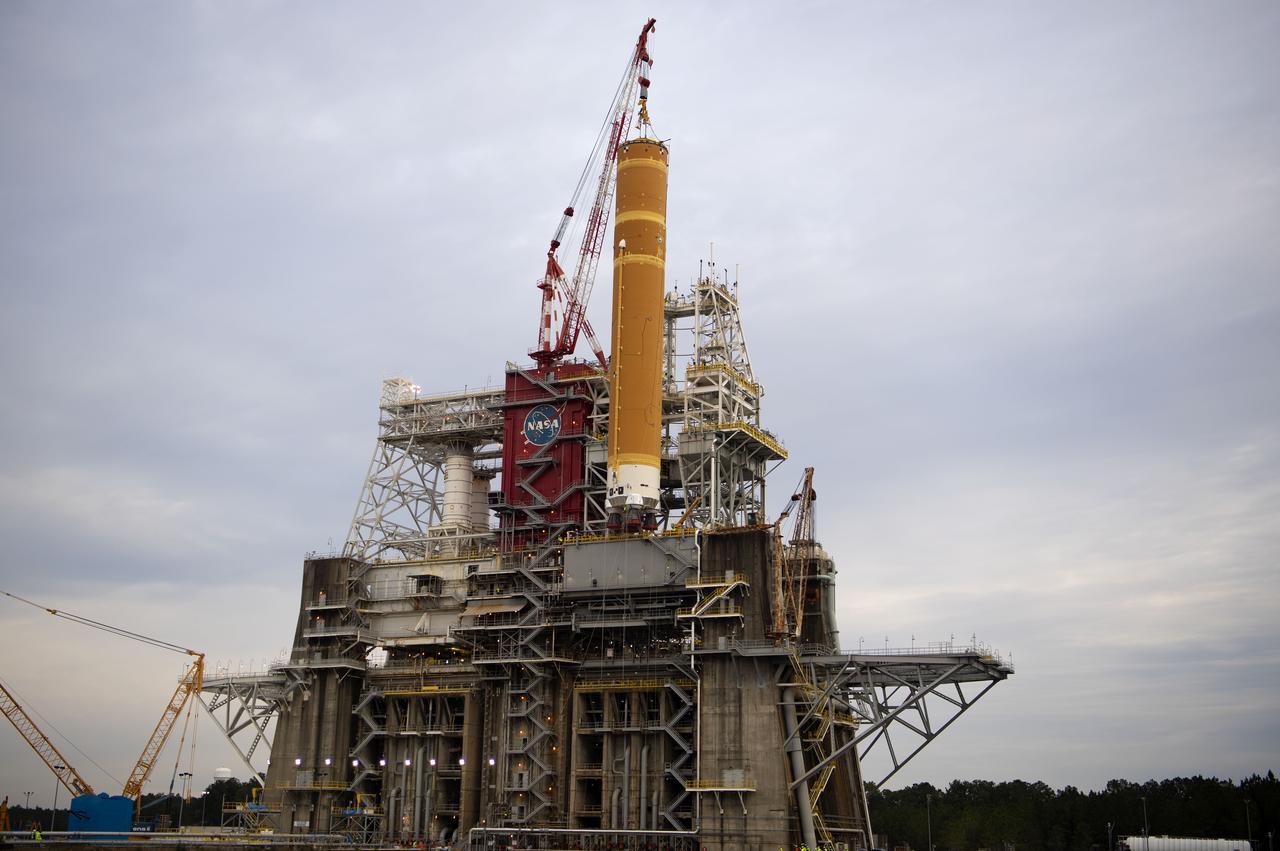
On Jan. 21-22, 2020, crews at Stennis Space Center lifted and installed the first core stage of NASA’s new Space Launch System (SLS) rocket onto the B-2 Test Stand. In upcoming months, a top-to-bottom, integrated series of Green Run tests will be conducted on the stage and its sophisticated systems. Following testing, the stage will be used to help launch the maiden Artemis I test mission of SLS and the Orion spacecraft. Through the Artemis program, NASA will send humans, including the first woman and next man, to the Moon to establish a sustainable presence.
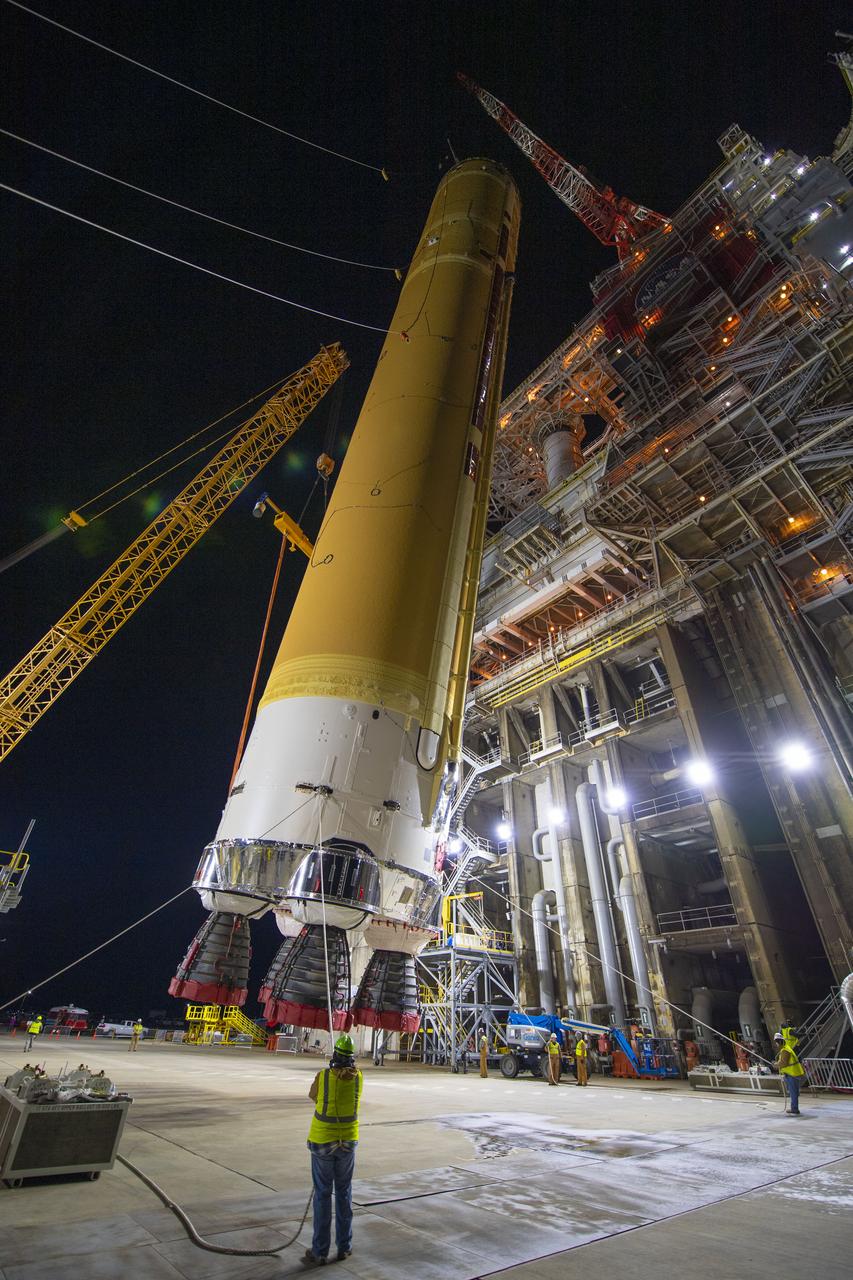
On Jan. 21-22, 2020, crews at Stennis Space Center lifted and installed the first core stage of NASA’s new Space Launch System (SLS) rocket onto the B-2 Test Stand. In upcoming months, a top-to-bottom, integrated series of Green Run tests will be conducted on the stage and its sophisticated systems. Following testing, the stage will be used to help launch the maiden Artemis I test mission of SLS and the Orion spacecraft. Through the Artemis program, NASA will send humans, including the first woman and next man, to the Moon to establish a sustainable presence.
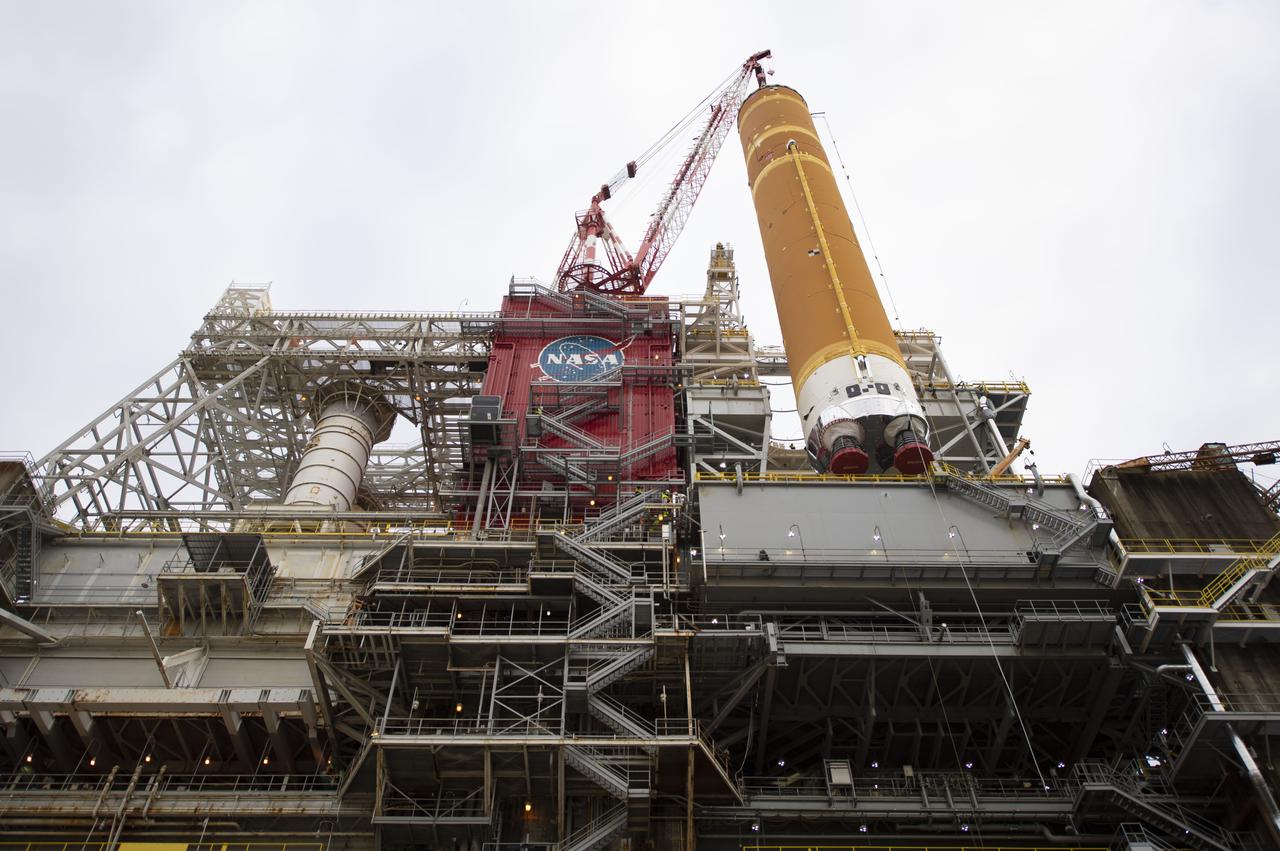
On Jan. 21-22, 2020, crews at Stennis Space Center lifted and installed the first core stage of NASA’s new Space Launch System (SLS) rocket onto the B-2 Test Stand. In upcoming months, a top-to-bottom, integrated series of Green Run tests will be conducted on the stage and its sophisticated systems. Following testing, the stage will be used to help launch the maiden Artemis I test mission of SLS and the Orion spacecraft. Through the Artemis program, NASA will send humans, including the first woman and next man, to the Moon to establish a sustainable presence.
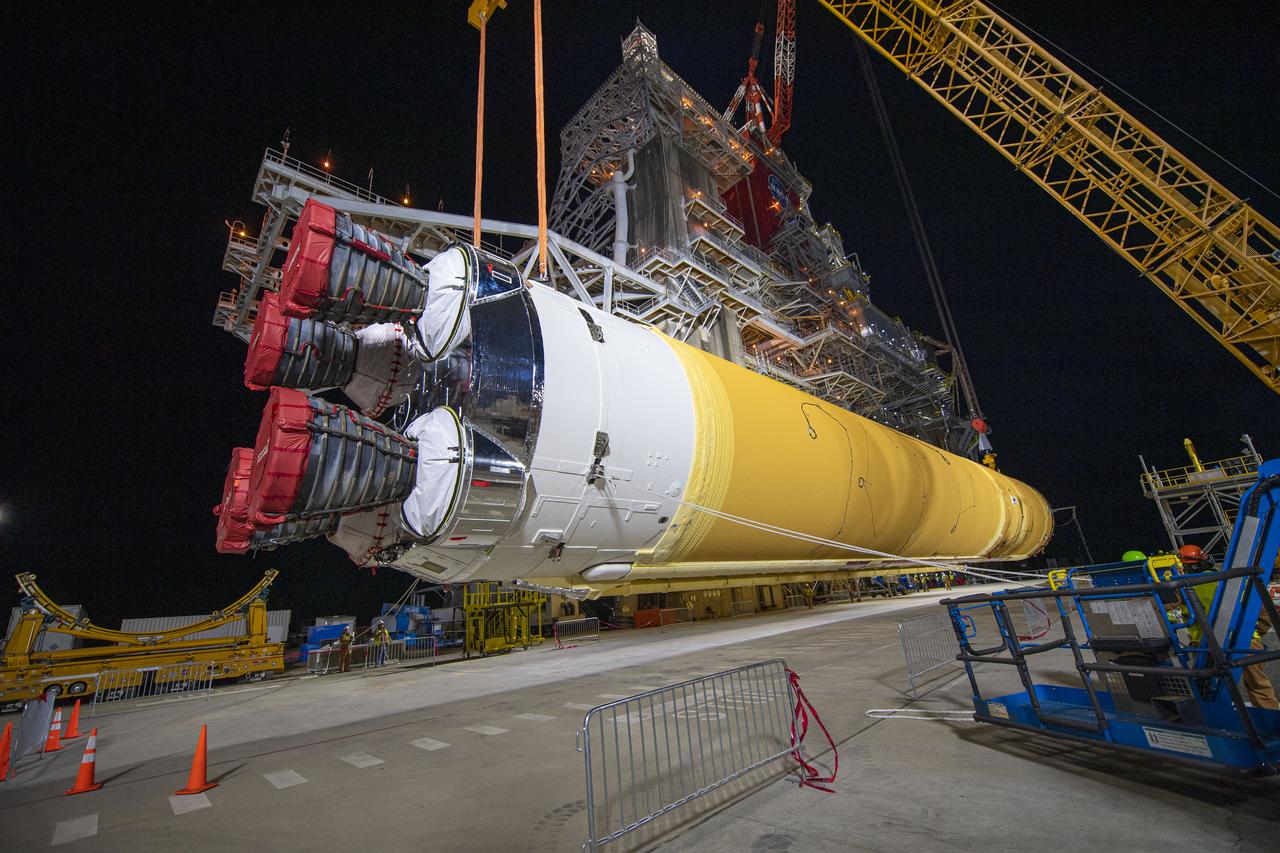
On Jan. 21-22, 2020, crews at Stennis Space Center lifted and installed the first core stage of NASA’s new Space Launch System (SLS) rocket onto the B-2 Test Stand. In upcoming months, a top-to-bottom, integrated series of Green Run tests will be conducted on the stage and its sophisticated systems. Following testing, the stage will be used to help launch the maiden Artemis I test mission of SLS and the Orion spacecraft. Through the Artemis program, NASA will send humans, including the first woman and next man, to the Moon to establish a sustainable presence.
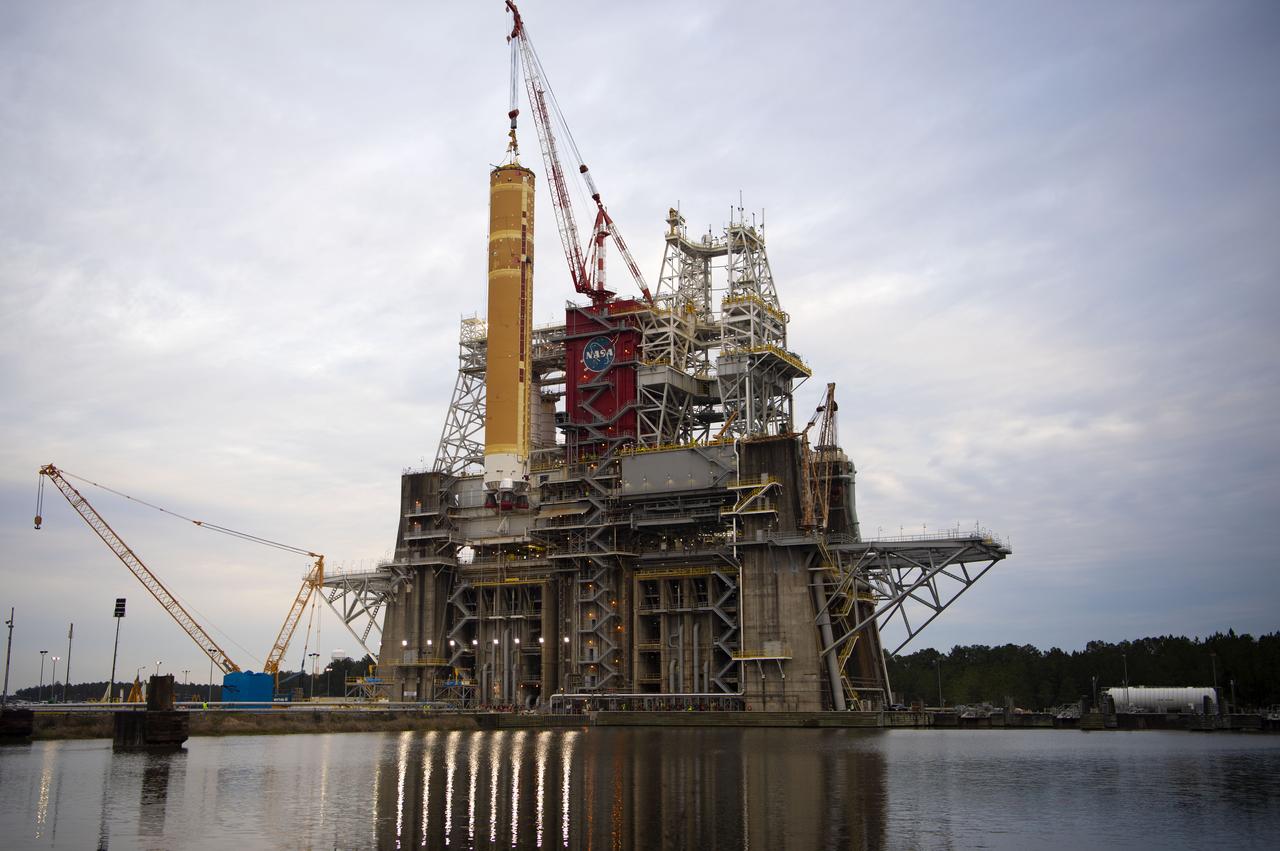
On Jan. 21-22, 2020, crews at Stennis Space Center lifted and installed the first core stage of NASA’s new Space Launch System (SLS) rocket onto the B-2 Test Stand. In upcoming months, a top-to-bottom, integrated series of Green Run tests will be conducted on the stage and its sophisticated systems. Following testing, the stage will be used to help launch the maiden Artemis I test mission of SLS and the Orion spacecraft. Through the Artemis program, NASA will send humans, including the first woman and next man, to the Moon to establish a sustainable presence.
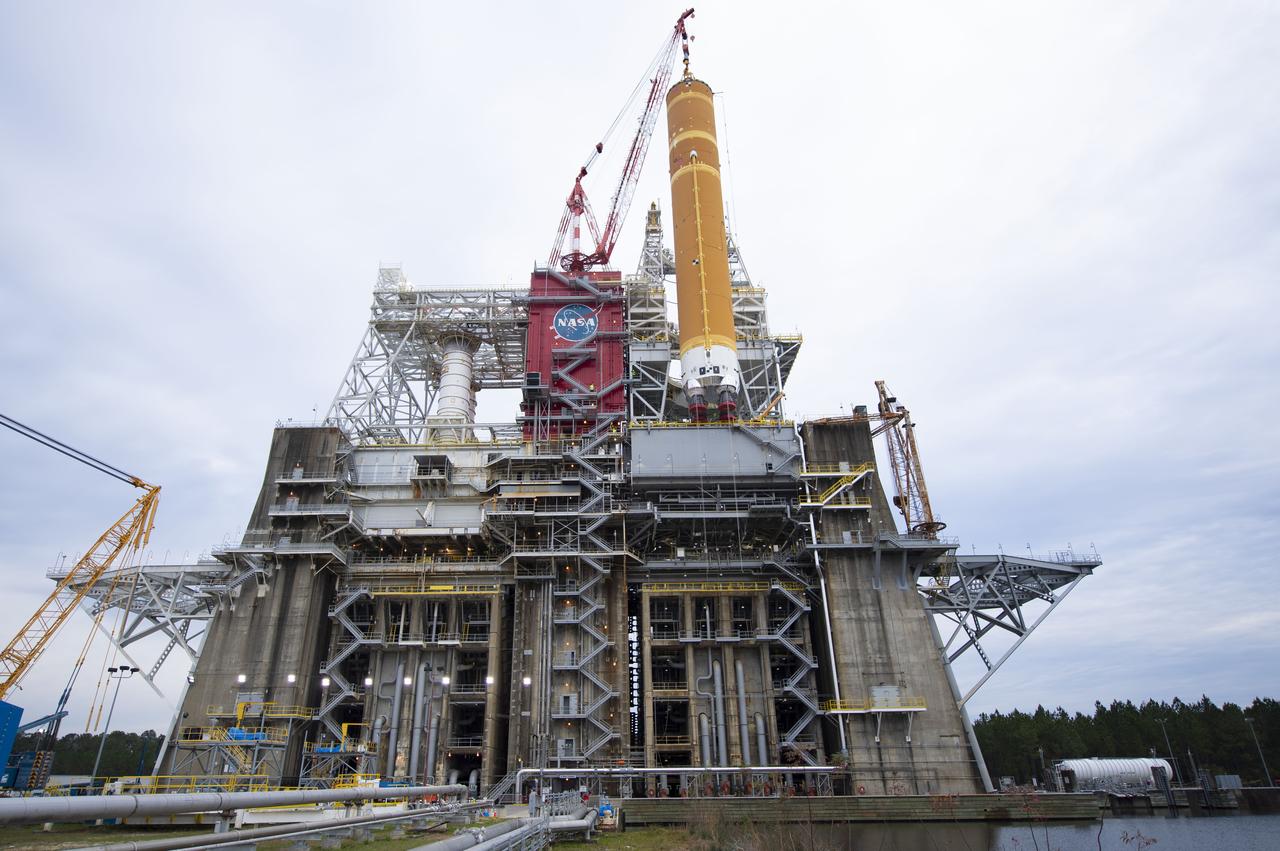
On Jan. 21-22, 2020, crews at Stennis Space Center lifted and installed the first core stage of NASA’s new Space Launch System (SLS) rocket onto the B-2 Test Stand. In upcoming months, a top-to-bottom, integrated series of Green Run tests will be conducted on the stage and its sophisticated systems. Following testing, the stage will be used to help launch the maiden Artemis I test mission of SLS and the Orion spacecraft. Through the Artemis program, NASA will send humans, including the first woman and next man, to the Moon to establish a sustainable presence.
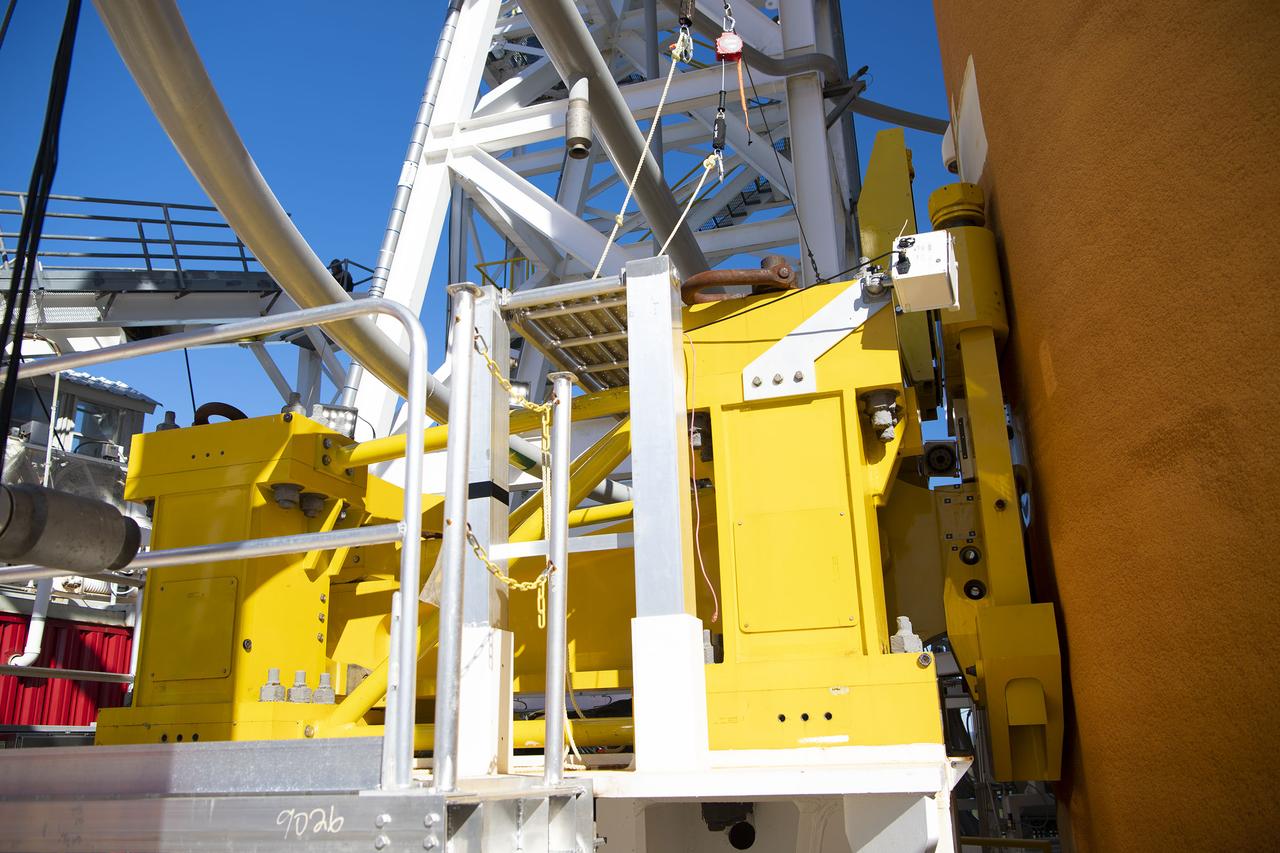
On Jan. 21-22, 2020, crews at Stennis Space Center lifted and installed the first core stage of NASA’s new Space Launch System (SLS) rocket onto the B-2 Test Stand. In upcoming months, a top-to-bottom, integrated series of Green Run tests will be conducted on the stage and its sophisticated systems. Following testing, the stage will be used to help launch the maiden Artemis I test mission of SLS and the Orion spacecraft. Through the Artemis program, NASA will send humans, including the first woman and next man, to the Moon to establish a sustainable presence.

On Jan. 21-22, 2020, crews at Stennis Space Center lifted and installed the first core stage of NASA’s new Space Launch System (SLS) rocket onto the B-2 Test Stand. In upcoming months, a top-to-bottom, integrated series of Green Run tests will be conducted on the stage and its sophisticated systems. Following testing, the stage will be used to help launch the maiden Artemis I test mission of SLS and the Orion spacecraft. Through the Artemis program, NASA will send humans, including the first woman and next man, to the Moon to establish a sustainable presence.
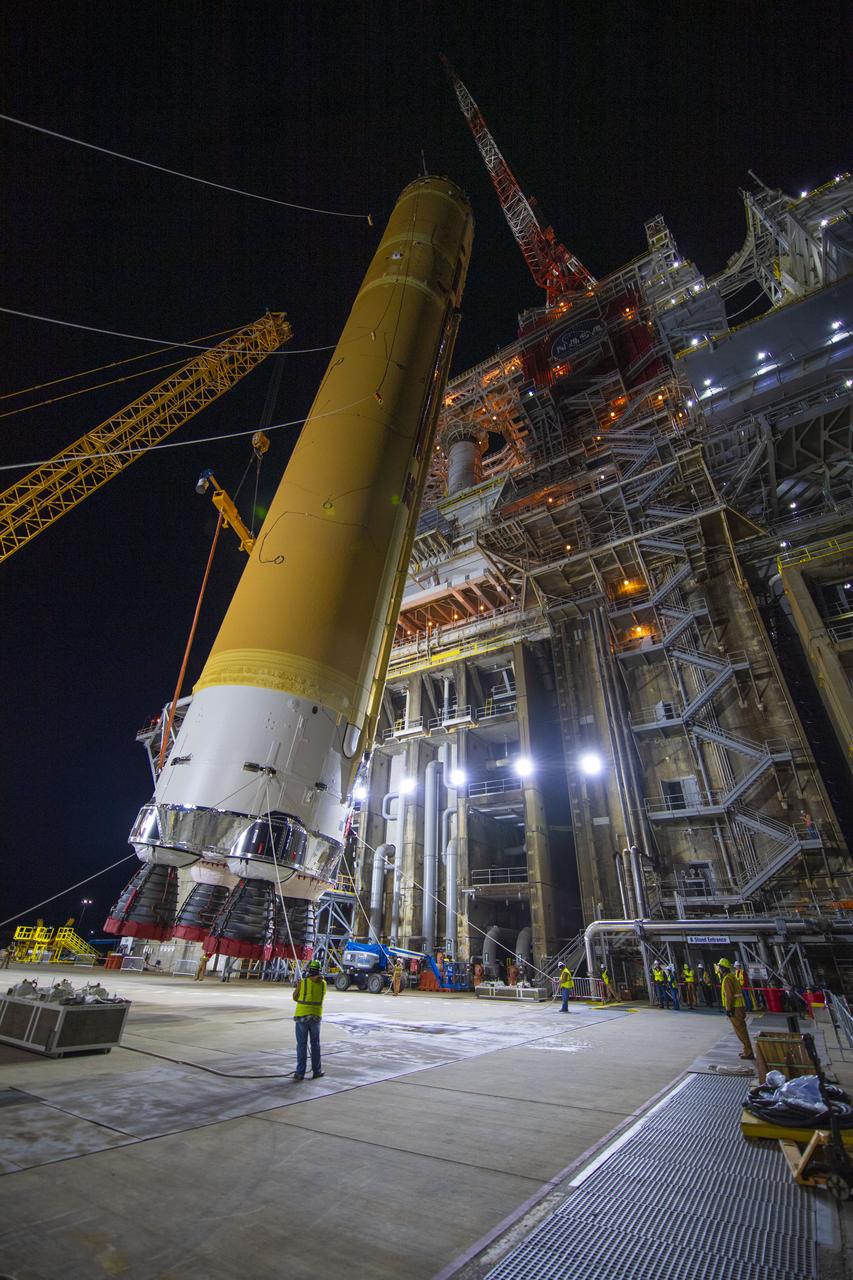
On Jan. 21-22, 2020, crews at Stennis Space Center lifted and installed the first core stage of NASA’s new Space Launch System (SLS) rocket onto the B-2 Test Stand. In upcoming months, a top-to-bottom, integrated series of Green Run tests will be conducted on the stage and its sophisticated systems. Following testing, the stage will be used to help launch the maiden Artemis I test mission of SLS and the Orion spacecraft. Through the Artemis program, NASA will send humans, including the first woman and next man, to the Moon to establish a sustainable presence.
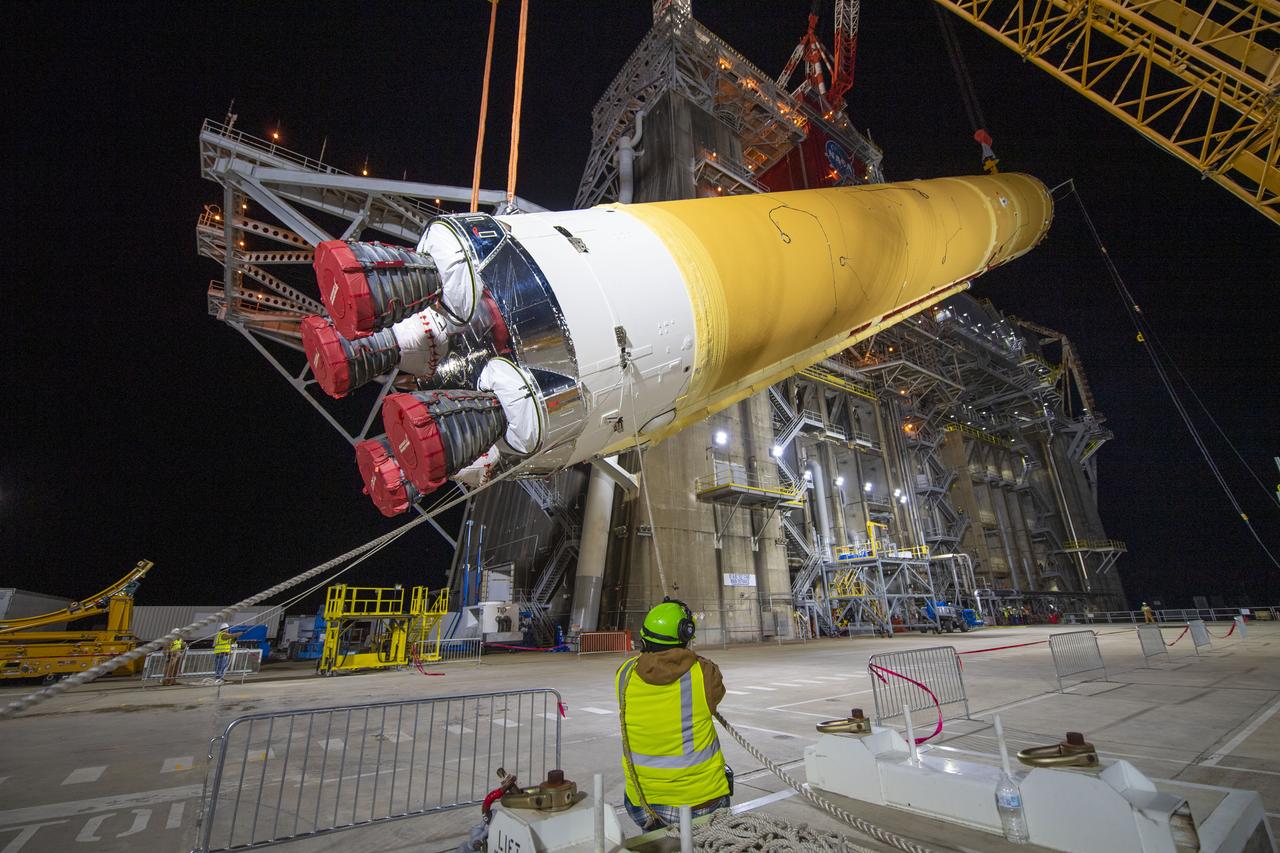
On Jan. 21-22, 2020, crews at Stennis Space Center lifted and installed the first core stage of NASA’s new Space Launch System (SLS) rocket onto the B-2 Test Stand. In upcoming months, a top-to-bottom, integrated series of Green Run tests will be conducted on the stage and its sophisticated systems. Following testing, the stage will be used to help launch the maiden Artemis I test mission of SLS and the Orion spacecraft. Through the Artemis program, NASA will send humans, including the first woman and next man, to the Moon to establish a sustainable presence.
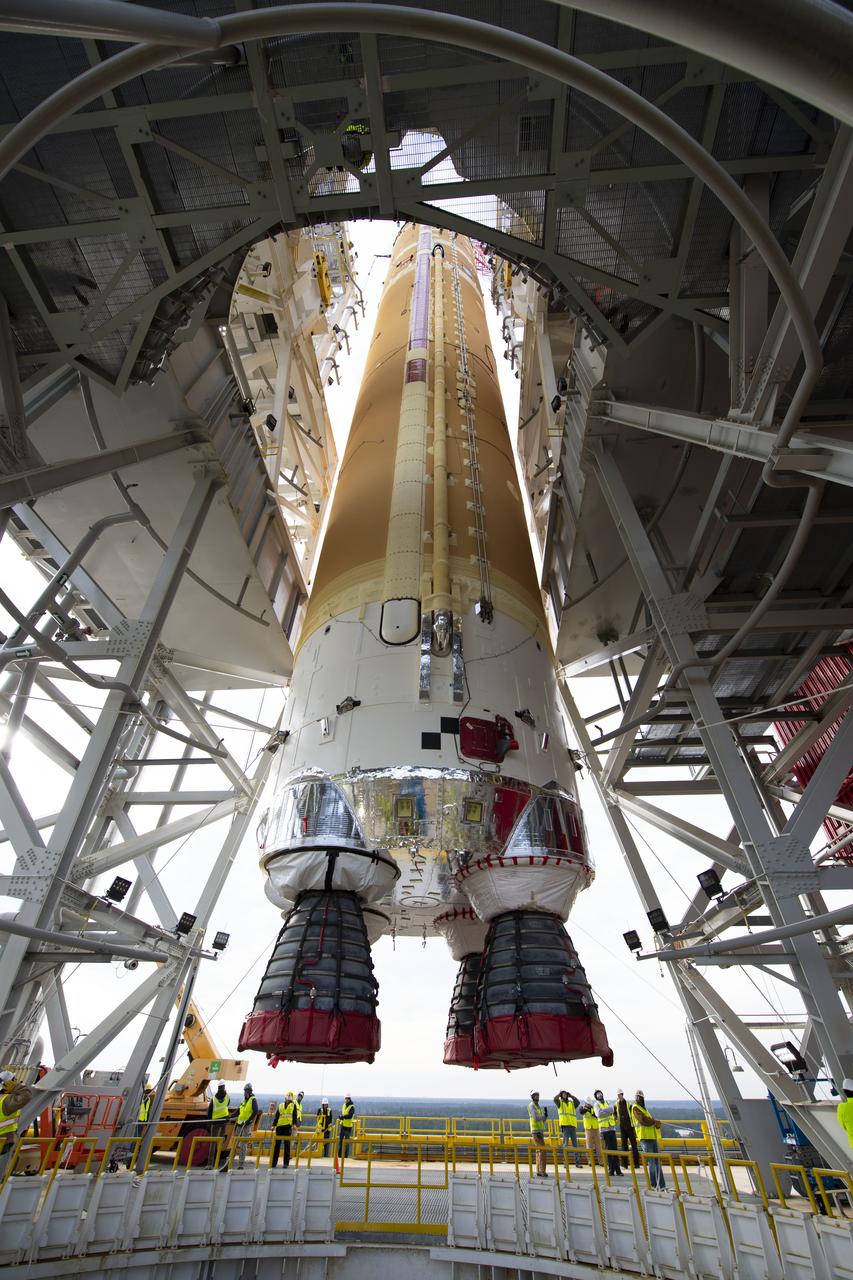
On Jan. 21-22, 2020, crews at Stennis Space Center lifted and installed the first core stage of NASA’s new Space Launch System (SLS) rocket onto the B-2 Test Stand. In upcoming months, a top-to-bottom, integrated series of Green Run tests will be conducted on the stage and its sophisticated systems. Following testing, the stage will be used to help launch the maiden Artemis I test mission of SLS and the Orion spacecraft. Through the Artemis program, NASA will send humans, including the first woman and next man, to the Moon to establish a sustainable presence.
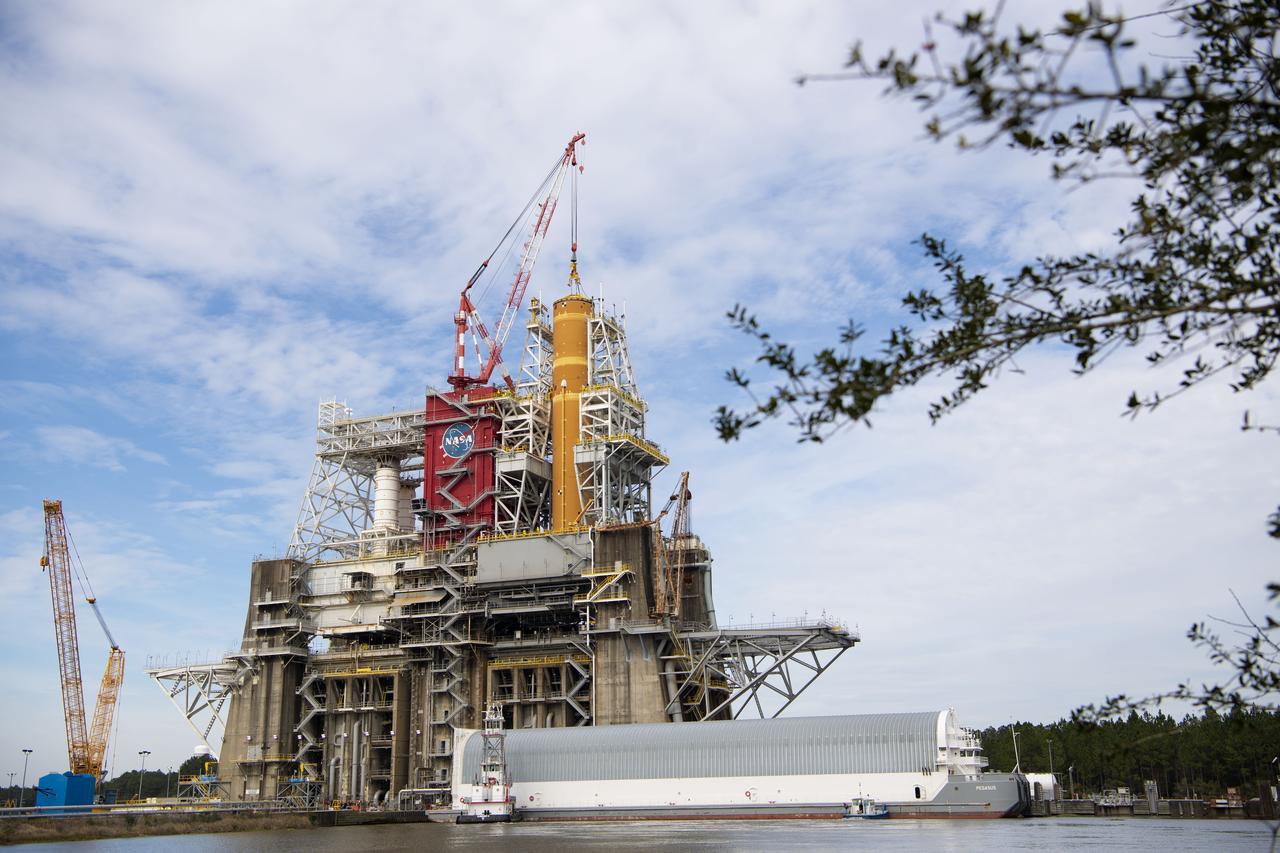
On Jan. 21-22, 2020, crews at Stennis Space Center lifted and installed the first core stage of NASA’s new Space Launch System (SLS) rocket onto the B-2 Test Stand. In upcoming months, a top-to-bottom, integrated series of Green Run tests will be conducted on the stage and its sophisticated systems. Following testing, the stage will be used to help launch the maiden Artemis I test mission of SLS and the Orion spacecraft. Through the Artemis program, NASA will send humans, including the first woman and next man, to the Moon to establish a sustainable presence.
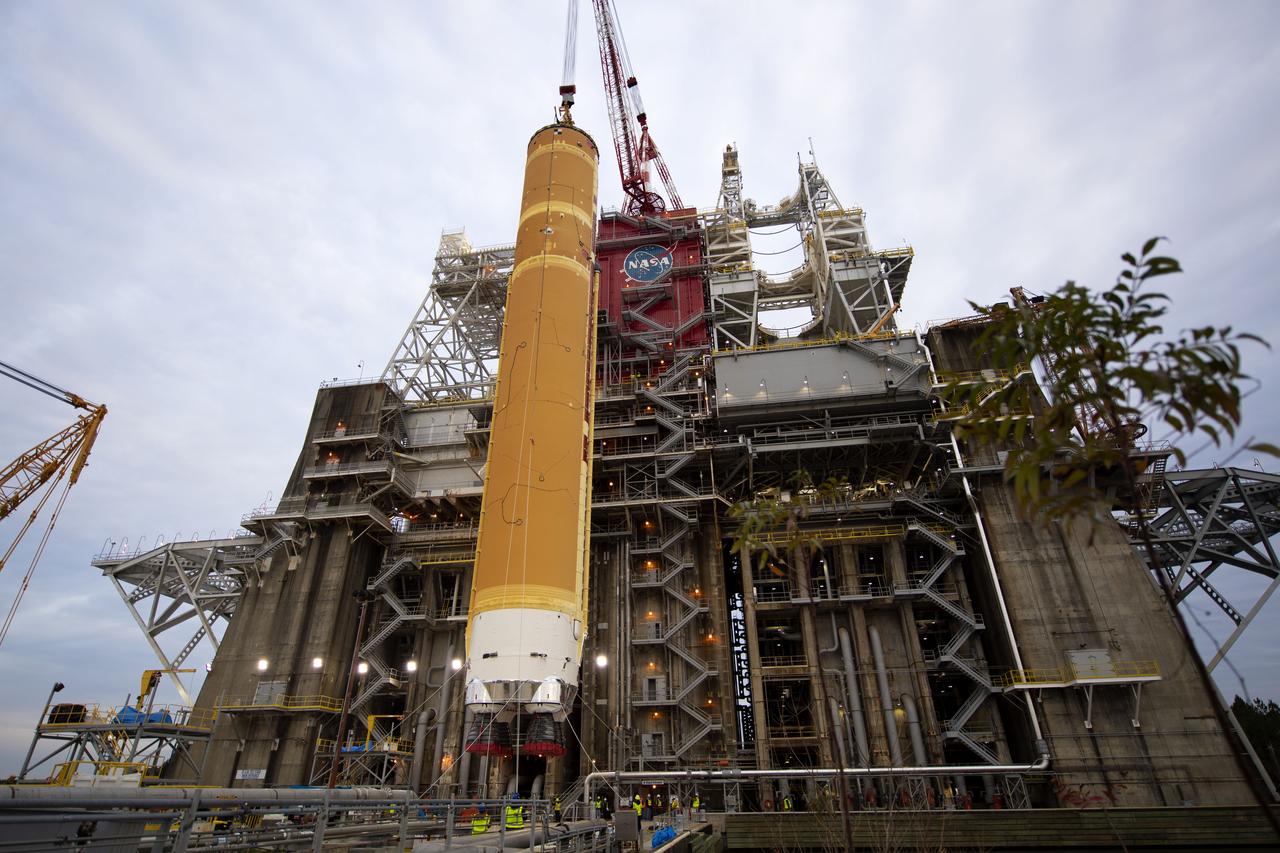
On Jan. 21-22, 2020, crews at Stennis Space Center lifted and installed the first core stage of NASA’s new Space Launch System (SLS) rocket onto the B-2 Test Stand. In upcoming months, a top-to-bottom, integrated series of Green Run tests will be conducted on the stage and its sophisticated systems. Following testing, the stage will be used to help launch the maiden Artemis I test mission of SLS and the Orion spacecraft. Through the Artemis program, NASA will send humans, including the first woman and next man, to the Moon to establish a sustainable presence.
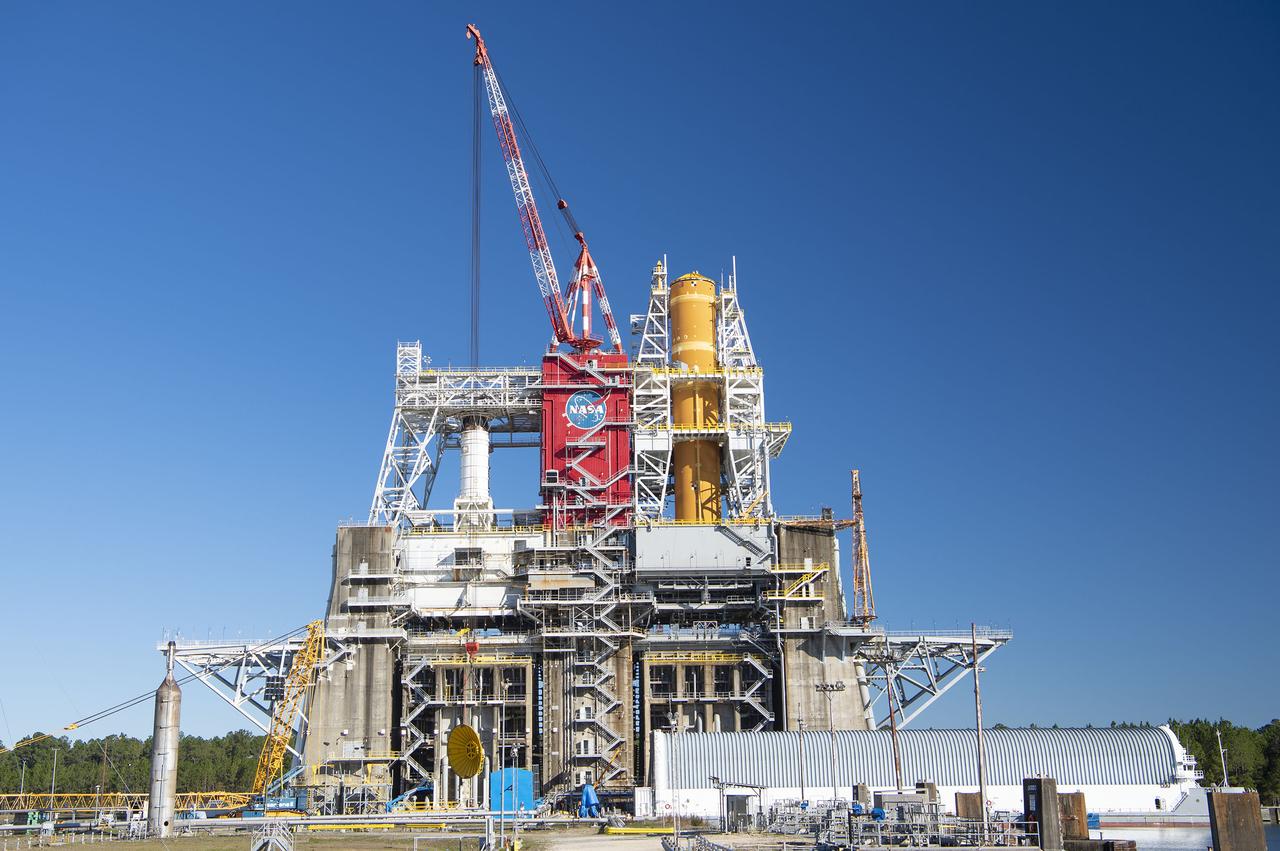
On Jan. 21-22, 2020, crews at Stennis Space Center lifted and installed the first core stage of NASA’s new Space Launch System (SLS) rocket onto the B-2 Test Stand. In upcoming months, a top-to-bottom, integrated series of Green Run tests will be conducted on the stage and its sophisticated systems. Following testing, the stage will be used to help launch the maiden Artemis I test mission of SLS and the Orion spacecraft. Through the Artemis program, NASA will send humans, including the first woman and next man, to the Moon to establish a sustainable presence.
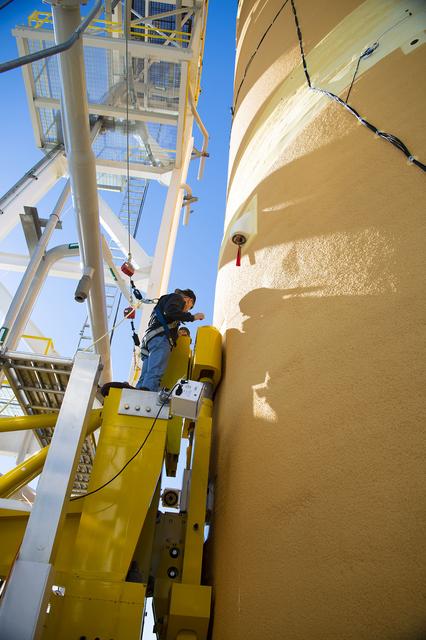
On Jan. 21-22, 2020, crews at Stennis Space Center lifted and installed the first core stage of NASA’s new Space Launch System (SLS) rocket onto the B-2 Test Stand. In upcoming months, a top-to-bottom, integrated series of Green Run tests will be conducted on the stage and its sophisticated systems. Following testing, the stage will be used to help launch the maiden Artemis I test mission of SLS and the Orion spacecraft. Through the Artemis program, NASA will send humans, including the first woman and next man, to the Moon to establish a sustainable presence.

On Jan. 21-22, 2020, crews at Stennis Space Center lifted and installed the first core stage of NASA’s new Space Launch System (SLS) rocket onto the B-2 Test Stand. In upcoming months, a top-to-bottom, integrated series of Green Run tests will be conducted on the stage and its sophisticated systems. Following testing, the stage will be used to help launch the maiden Artemis I test mission of SLS and the Orion spacecraft. Through the Artemis program, NASA will send humans, including the first woman and next man, to the Moon to establish a sustainable presence.
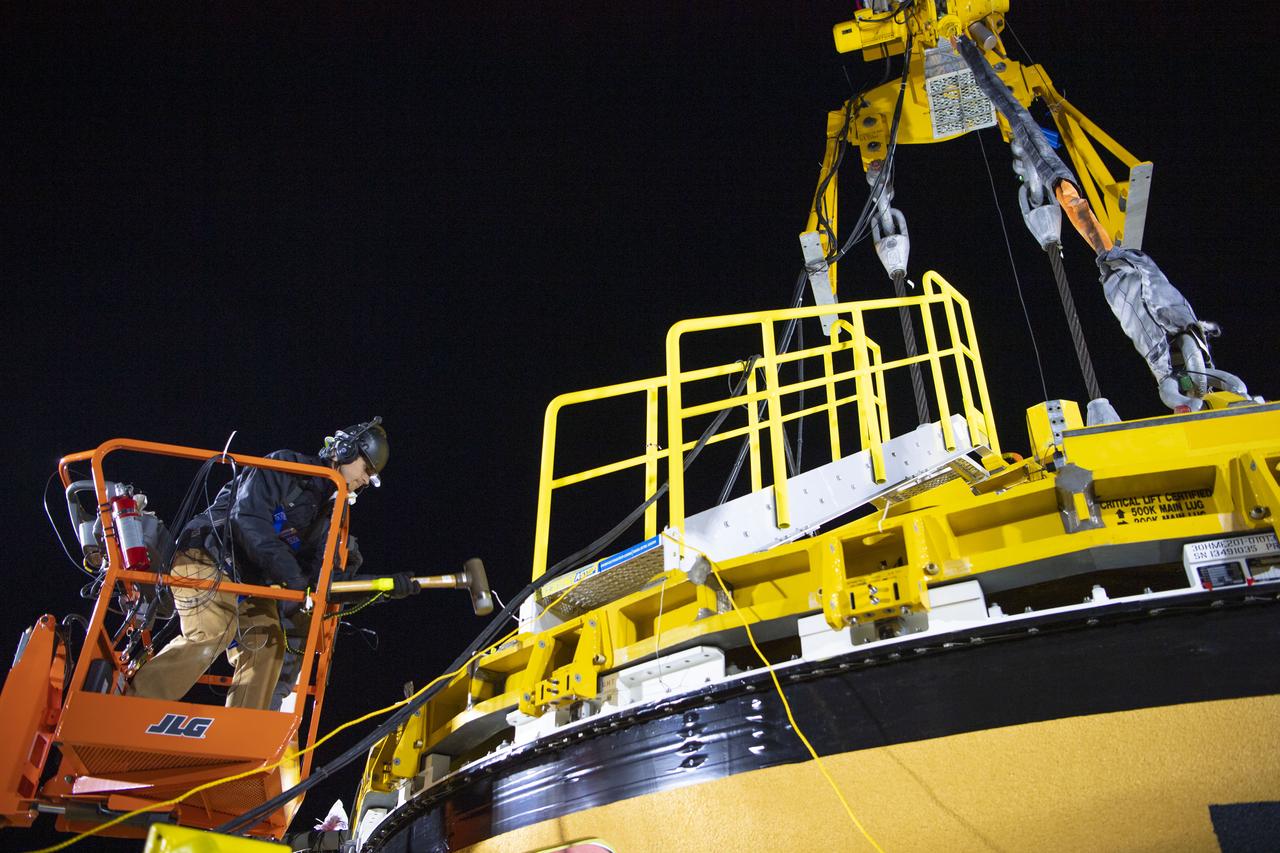
On Jan. 30, 2020, crews at Stennis Space Center successfully conducted modal testing of the first core stage of NASA’s new Space Launch System (SLS) rocket. Data from the modal test will be used to verify structural vibration modes and verify flight control parameters. The test is part of a Green Run series of testing that represents the first top-to-bottom integrated testing of the stage’s systems prior to its maiden Artemis I test mission.
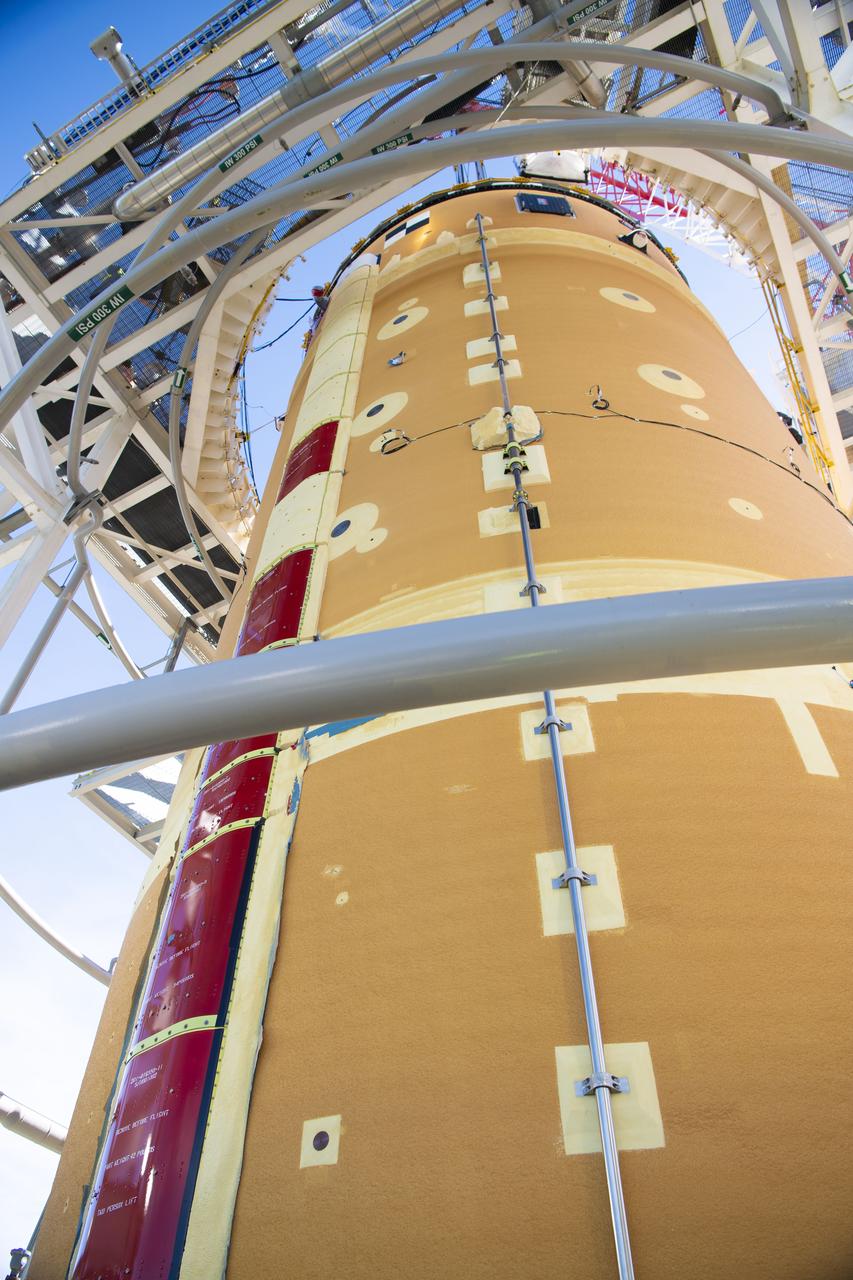
On Jan. 30, 2020, crews at Stennis Space Center successfully conducted modal testing of the first core stage of NASA’s new Space Launch System (SLS) rocket. Data from the modal test will be used to verify structural vibration modes and verify flight control parameters. The test is part of a Green Run series of testing that represents the first top-to-bottom integrated testing of the stage’s systems prior to its maiden Artemis I test mission.
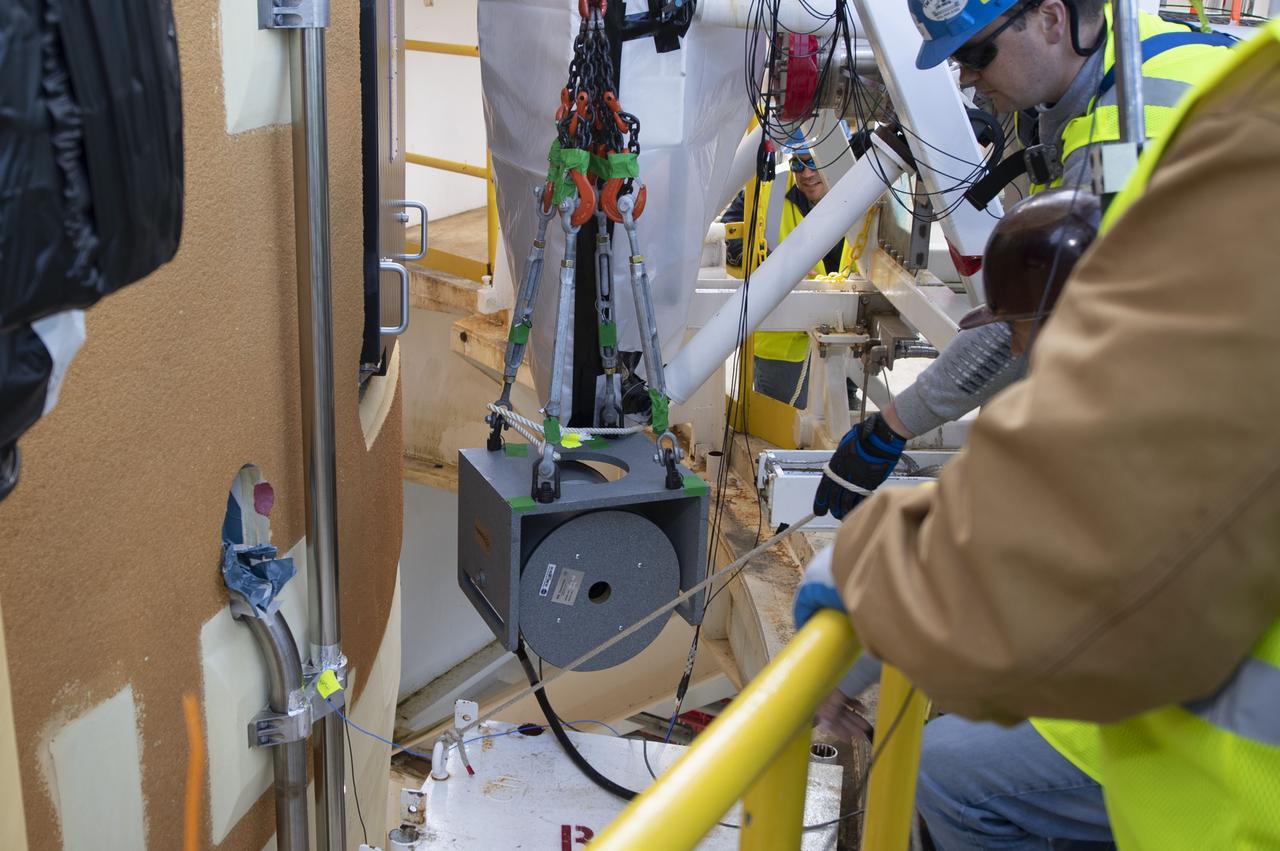
On Jan. 30, 2020, crews at Stennis Space Center successfully conducted modal testing of the first core stage of NASA’s new Space Launch System (SLS) rocket. Data from the modal test will be used to verify structural vibration modes and verify flight control parameters. The test is part of a Green Run series of testing that represents the first top-to-bottom integrated testing of the stage’s systems prior to its maiden Artemis I test mission.
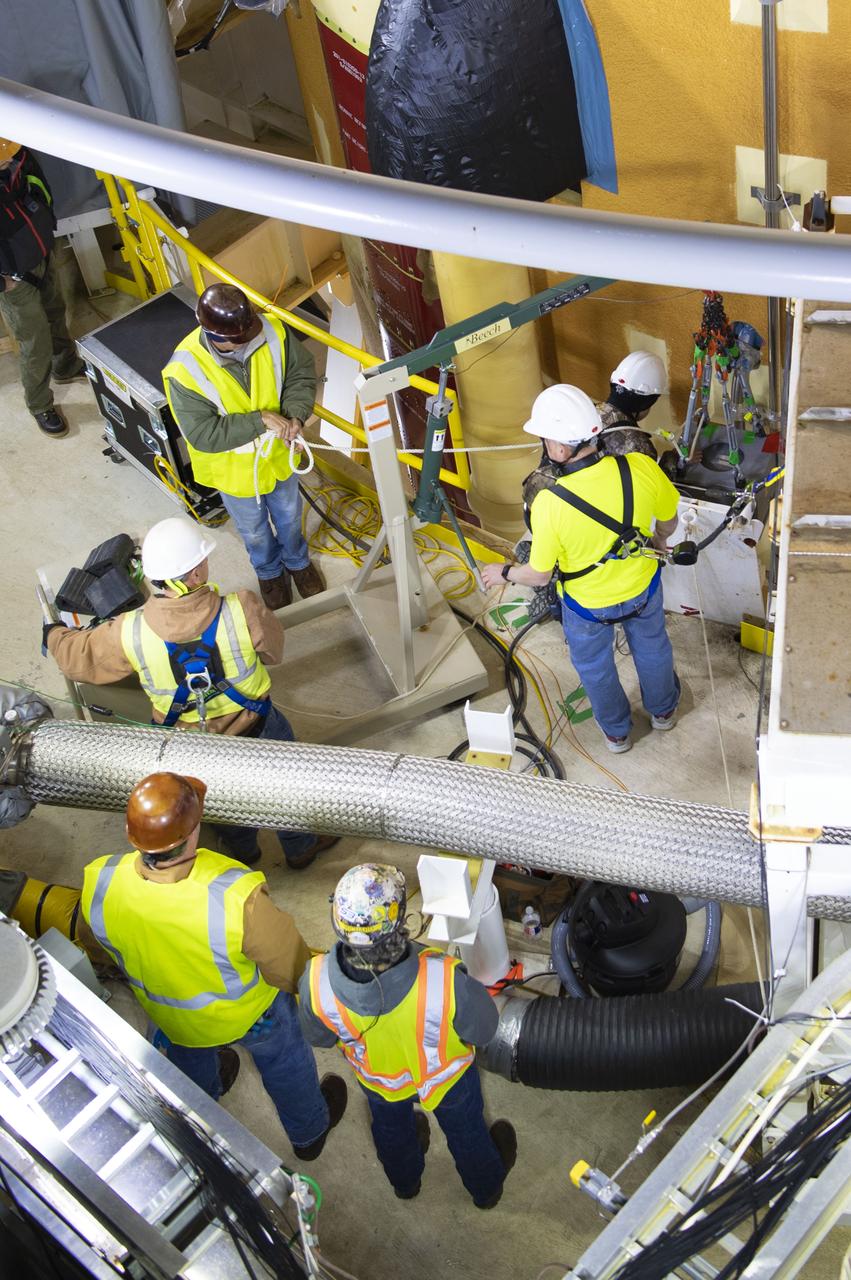
On Jan. 30, 2020, crews at Stennis Space Center successfully conducted modal testing of the first core stage of NASA’s new Space Launch System (SLS) rocket. Data from the modal test will be used to verify structural vibration modes and verify flight control parameters. The test is part of a Green Run series of testing that represents the first top-to-bottom integrated testing of the stage’s systems prior to its maiden Artemis I test mission.
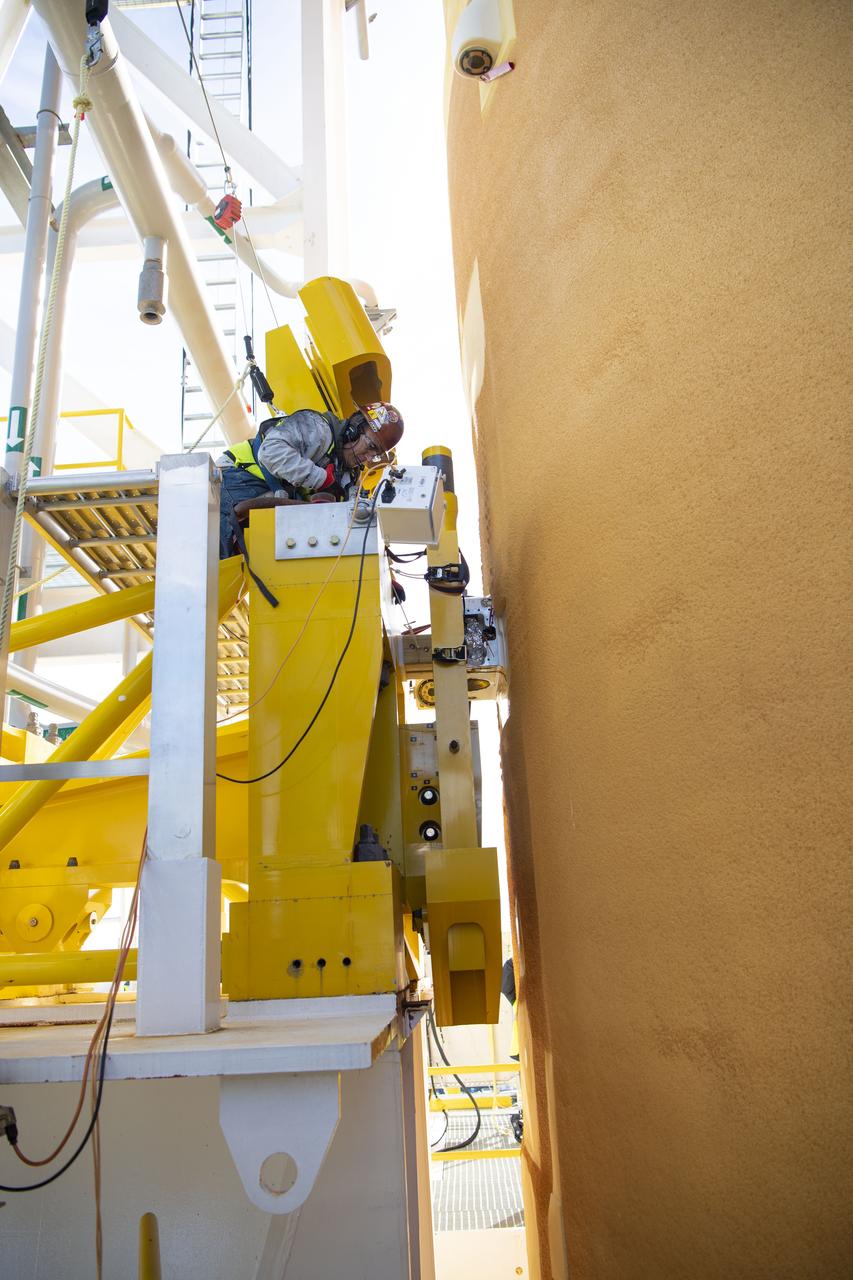
On Jan. 30, 2020, crews at Stennis Space Center successfully conducted modal testing of the first core stage of NASA’s new Space Launch System (SLS) rocket. Data from the modal test will be used to verify structural vibration modes and verify flight control parameters. The test is part of a Green Run series of testing that represents the first top-to-bottom integrated testing of the stage’s systems prior to its maiden Artemis I test mission.
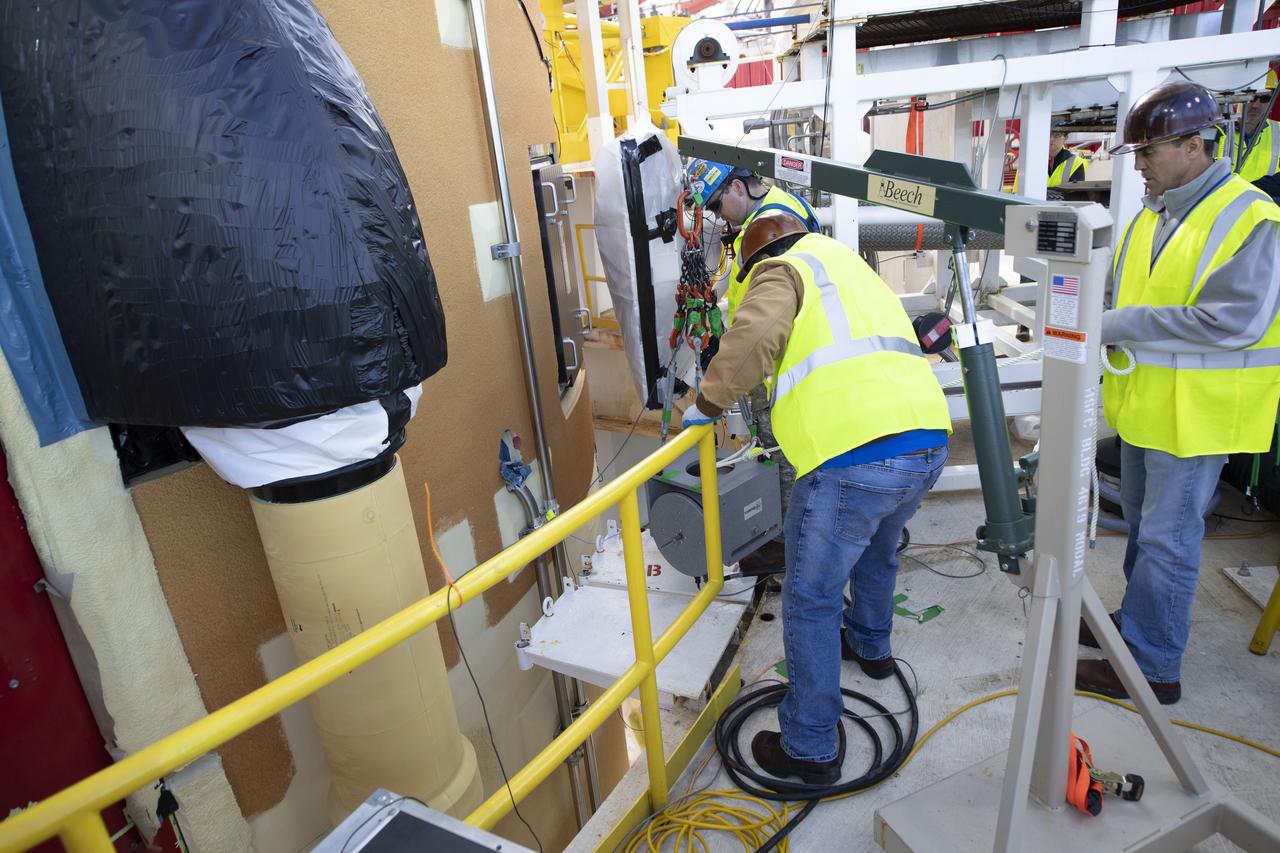
On Jan. 30, 2020, crews at Stennis Space Center successfully conducted modal testing of the first core stage of NASA’s new Space Launch System (SLS) rocket. Data from the modal test will be used to verify structural vibration modes and verify flight control parameters. The test is part of a Green Run series of testing that represents the first top-to-bottom integrated testing of the stage’s systems prior to its maiden Artemis I test mission.
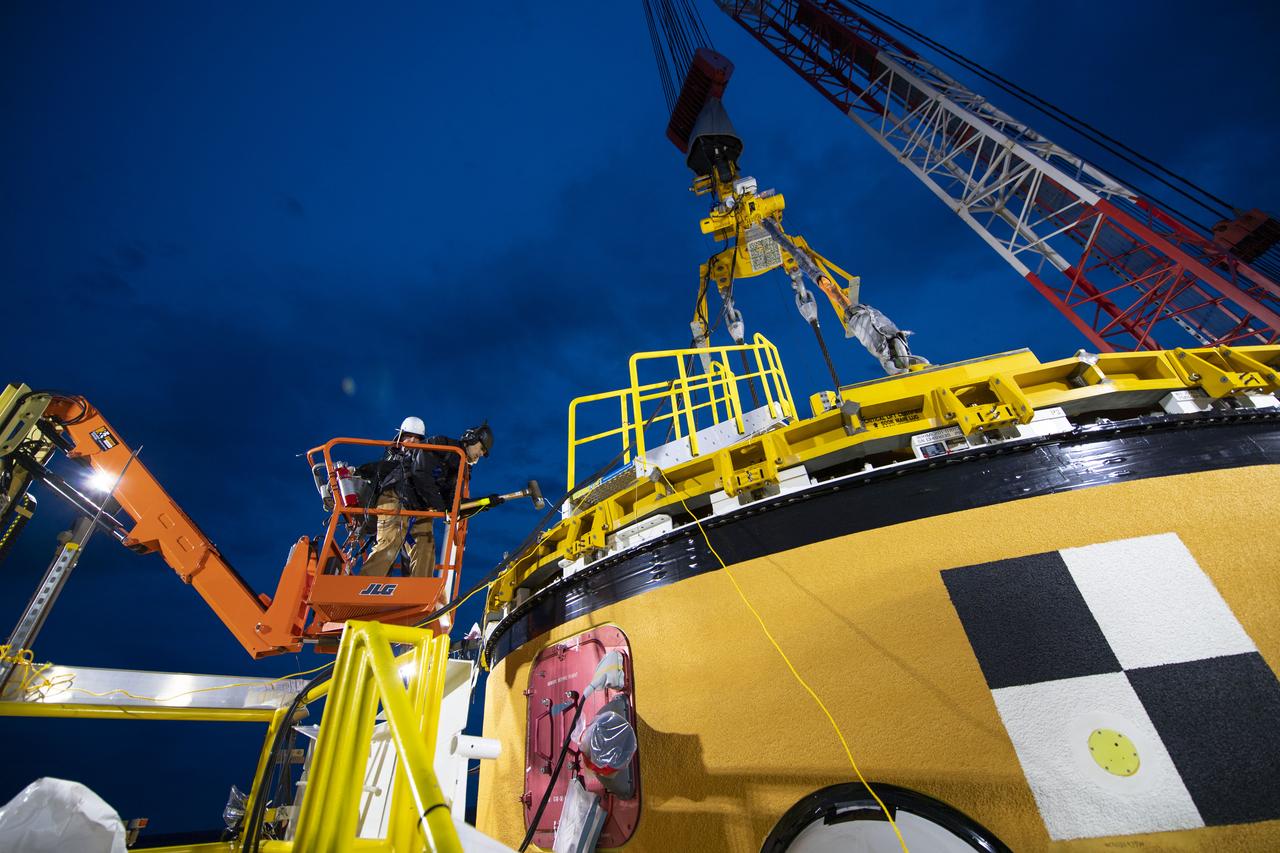
On Jan. 30, 2020, crews at Stennis Space Center successfully conducted modal testing of the first core stage of NASA’s new Space Launch System (SLS) rocket. Data from the modal test will be used to verify structural vibration modes and verify flight control parameters. The test is part of a Green Run series of testing that represents the first top-to-bottom integrated testing of the stage’s systems prior to its maiden Artemis I test mission.

On Jan. 30, 2020, crews at Stennis Space Center successfully conducted modal testing of the first core stage of NASA’s new Space Launch System (SLS) rocket. Data from the modal test will be used to verify structural vibration modes and verify flight control parameters. The test is part of a Green Run series of testing that represents the first top-to-bottom integrated testing of the stage’s systems prior to its maiden Artemis I test mission.
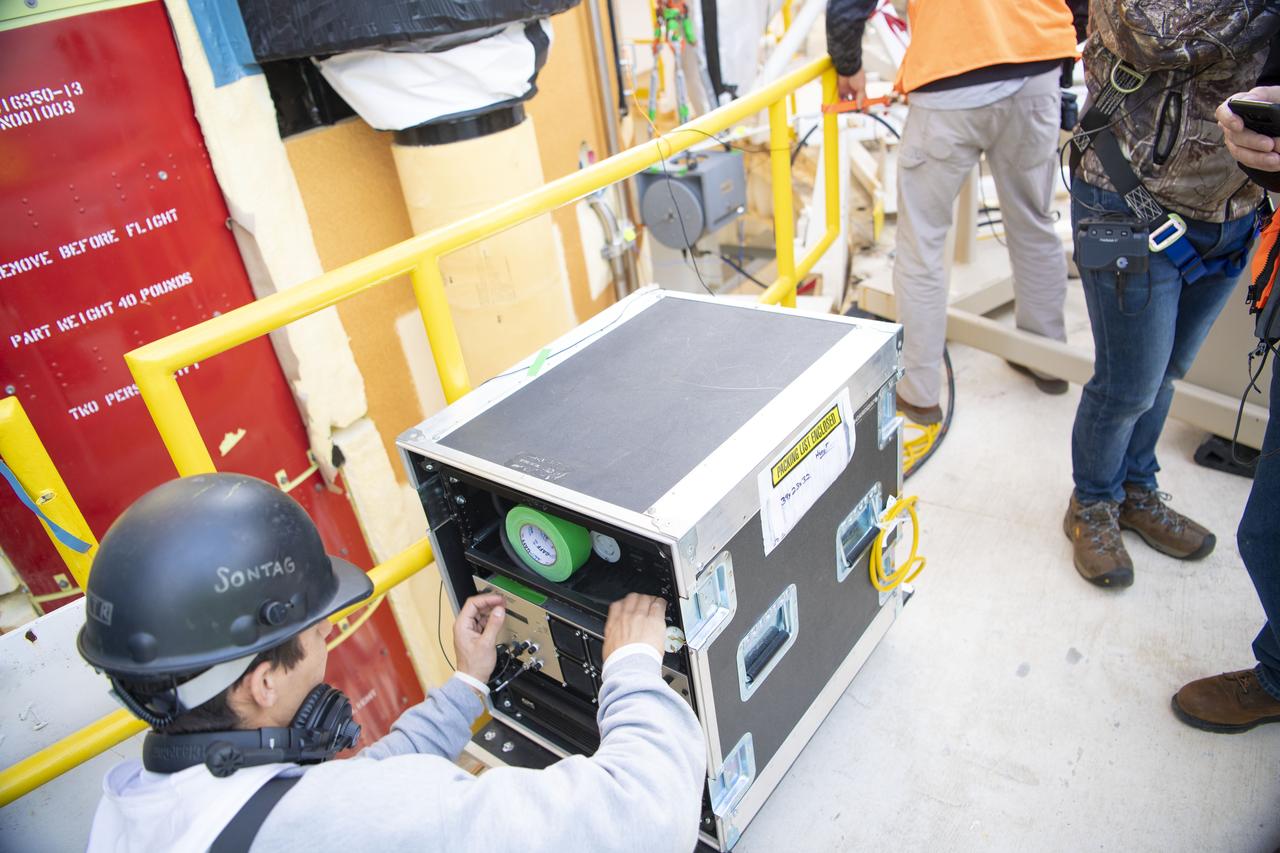
On Jan. 30, 2020, crews at Stennis Space Center successfully conducted modal testing of the first core stage of NASA’s new Space Launch System (SLS) rocket. Data from the modal test will be used to verify structural vibration modes and verify flight control parameters. The test is part of a Green Run series of testing that represents the first top-to-bottom integrated testing of the stage’s systems prior to its maiden Artemis I test mission.
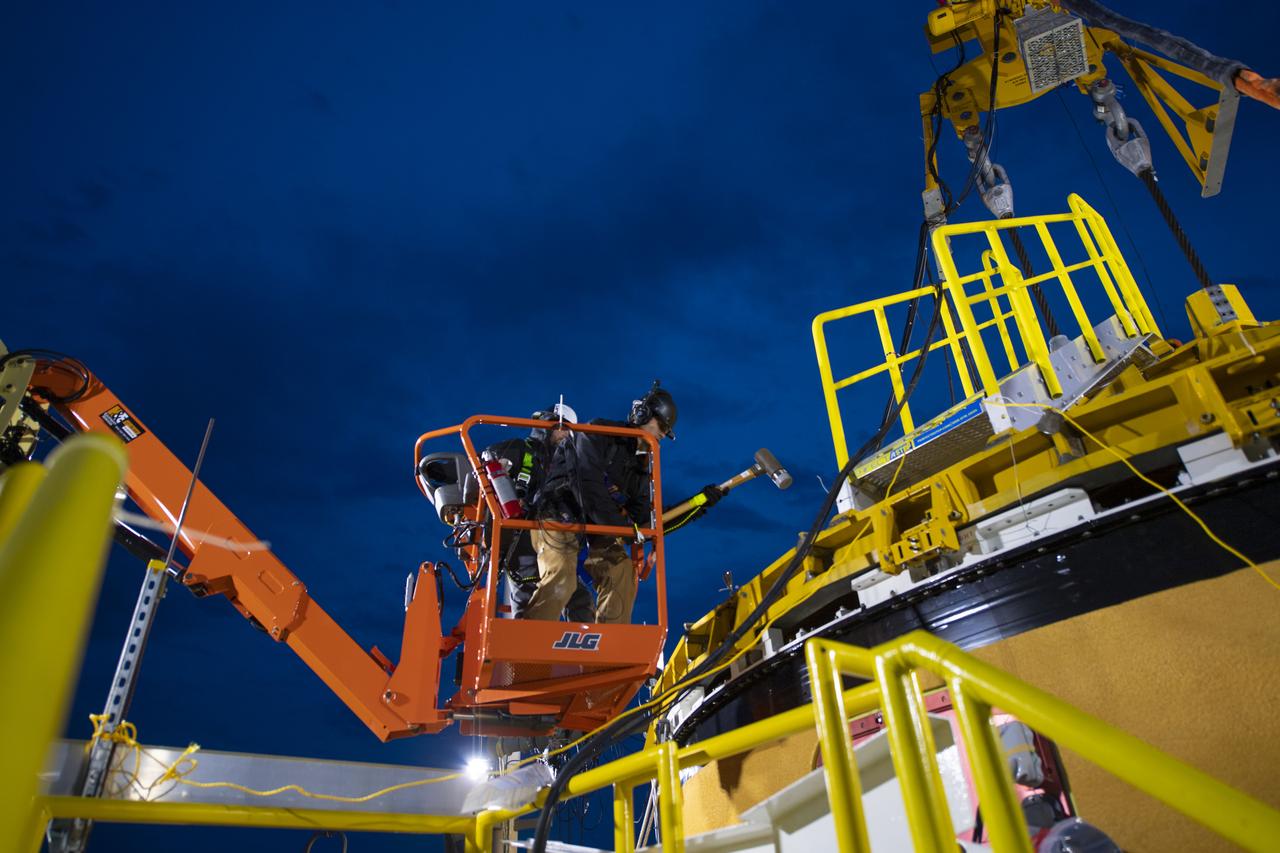
On Jan. 30, 2020, crews at Stennis Space Center successfully conducted modal testing of the first core stage of NASA’s new Space Launch System (SLS) rocket. Data from the modal test will be used to verify structural vibration modes and verify flight control parameters. The test is part of a Green Run series of testing that represents the first top-to-bottom integrated testing of the stage’s systems prior to its maiden Artemis I test mission.
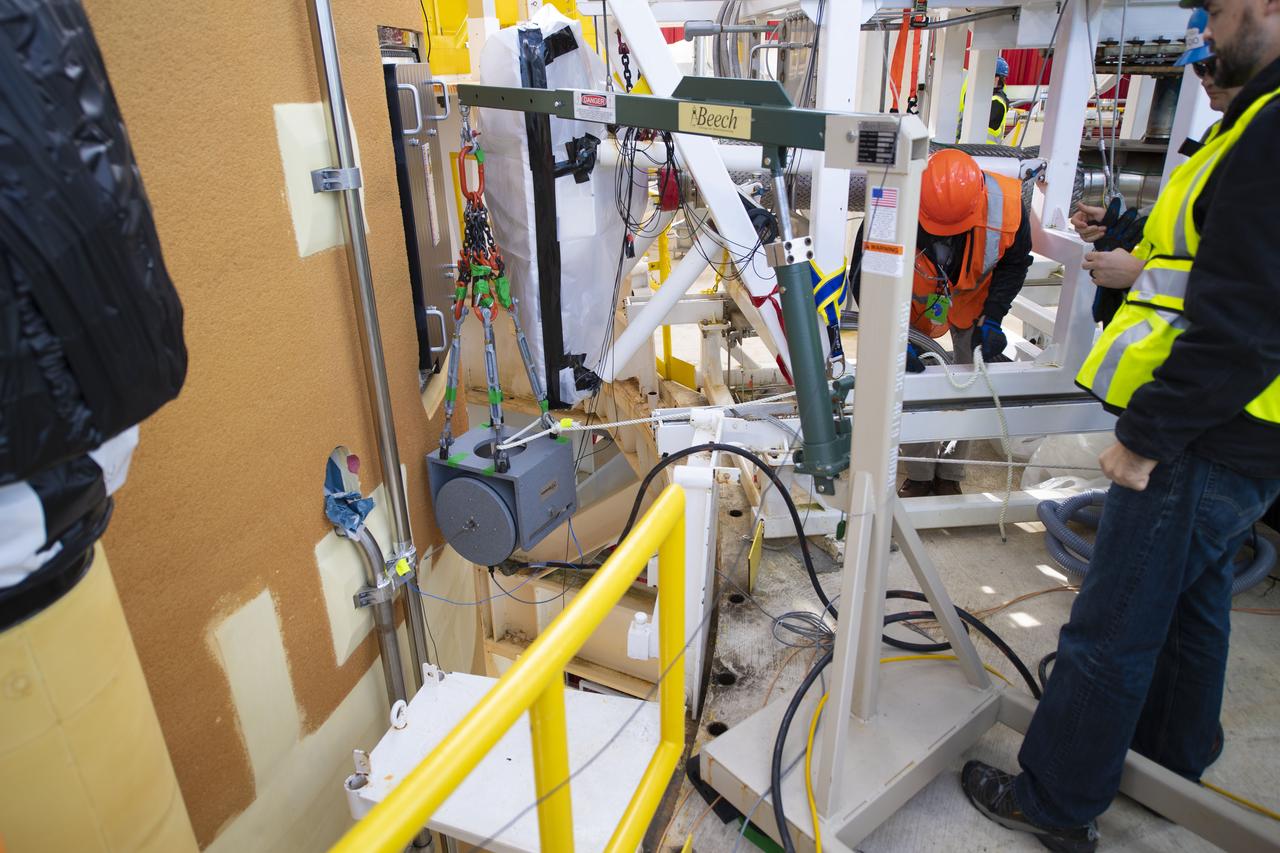
On Jan. 30, 2020, crews at Stennis Space Center successfully conducted modal testing of the first core stage of NASA’s new Space Launch System (SLS) rocket. Data from the modal test will be used to verify structural vibration modes and verify flight control parameters. The test is part of a Green Run series of testing that represents the first top-to-bottom integrated testing of the stage’s systems prior to its maiden Artemis I test mission.
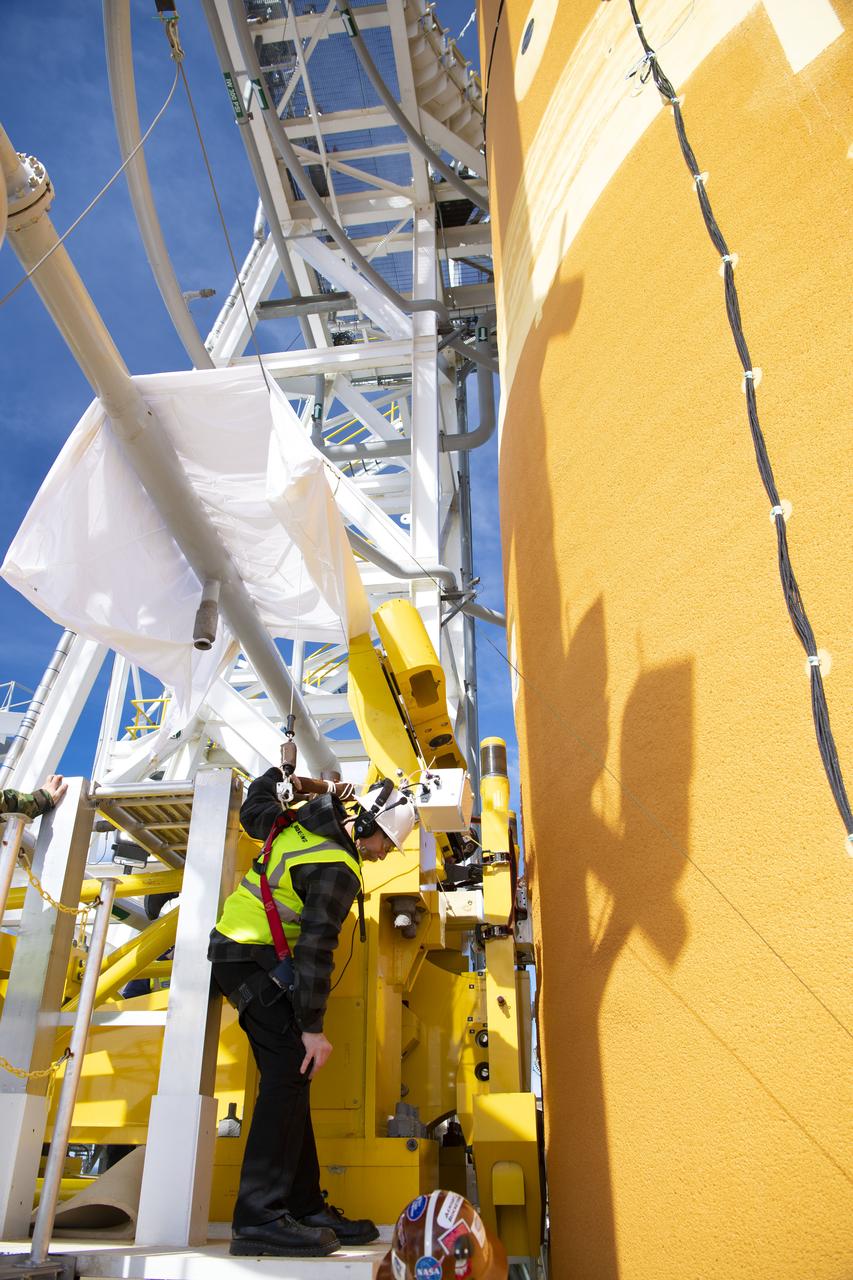
On Jan. 30, 2020, crews at Stennis Space Center successfully conducted modal testing of the first core stage of NASA’s new Space Launch System (SLS) rocket. Data from the modal test will be used to verify structural vibration modes and verify flight control parameters. The test is part of a Green Run series of testing that represents the first top-to-bottom integrated testing of the stage’s systems prior to its maiden Artemis I test mission.
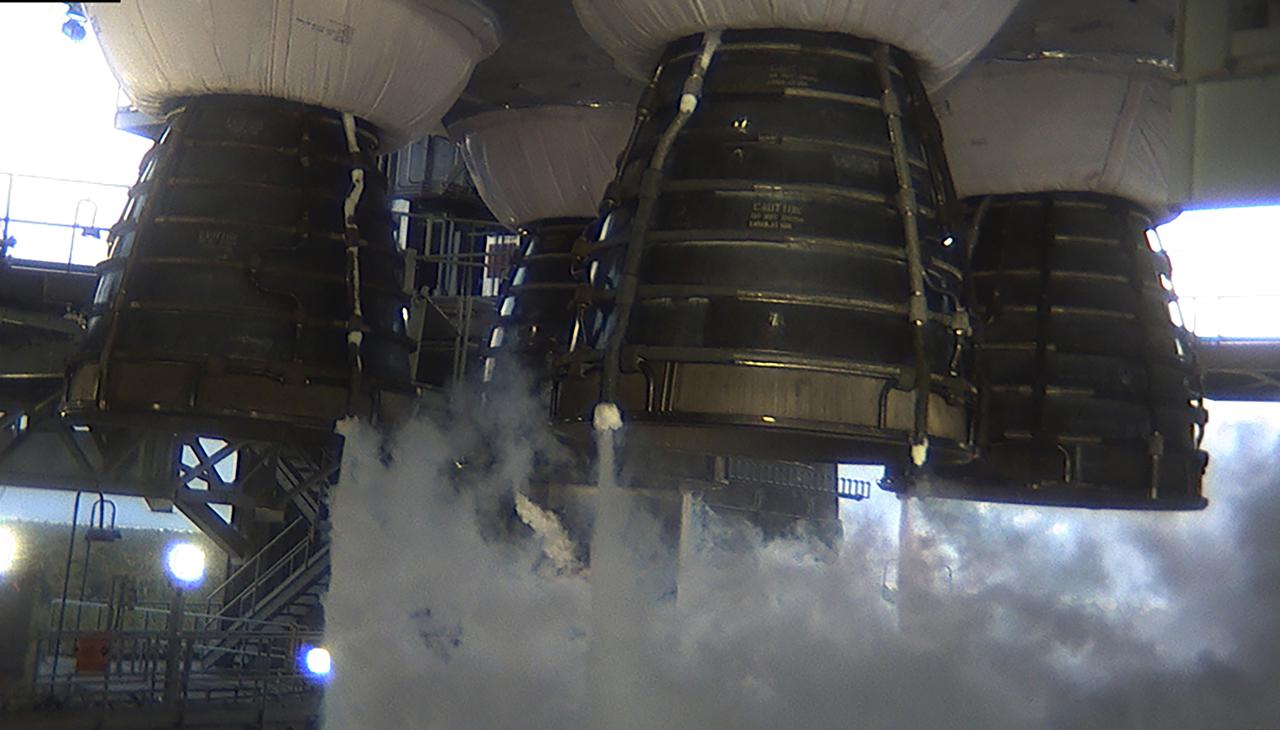
Teams at NASA’s Stennis Space Center performed a wet dress rehearsal exercise with the new Space Launch System core stage Dec. 20, 2020. The test – the seventh in an eight-test Green Run series – involved rehearsal of a countdown to hot fire of the stage’s engines, including the loading of 733,000 pounds of liquid hydrogen and liquid oxygen propellants. This image shows liquid oxygen as it naturally boils off and is vented from the four RS-25 engines that will be fired during the final core stage test.
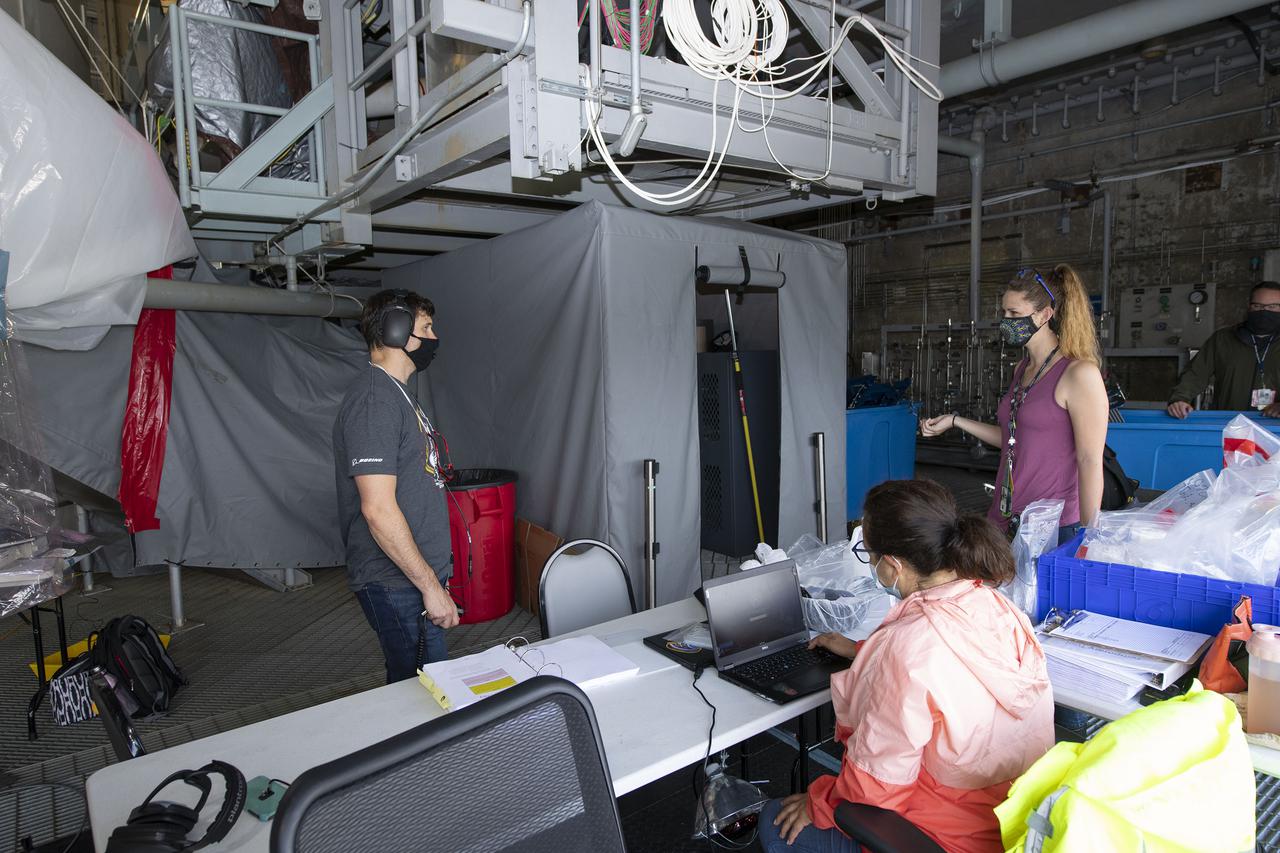
Team members at NASA’s Stennis Space Center near Bay St. Louis, Mississippi, complete refurbishment work on the first core stage of the agency’s Space Launch System (SLS) rocket. The work followed a successful hot fire of the stage and its four RS-25 engines March 18. The hot fire marked the culmination of a yearlong Green Run series of tests of the stage and its integrated systems. Following refurbishment work, the core stage will be removed from the test stand and transported to Kennedy Space Center in Florida, aboard NASA’s Pegasus barge, shown delivering equipment to the B-2 Test Stand. At Kennedy, the core stage will be integrated with the rest of SLS rocket and prepared for the launch of the Artemis I mission to the Moon. Photo Credit: NASA
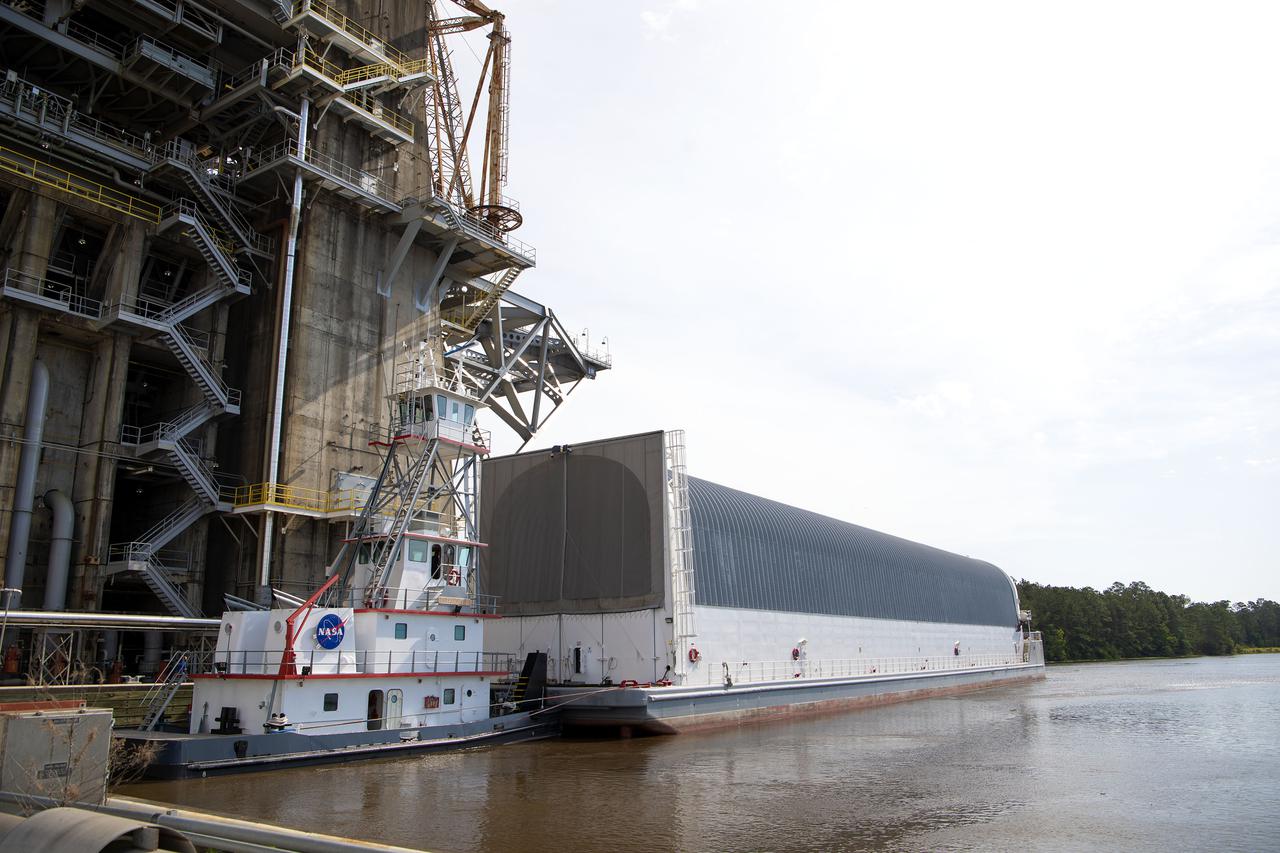
Team members at NASA’s Stennis Space Center near Bay St. Louis, Mississippi, complete refurbishment work on the first core stage of the agency’s Space Launch System (SLS) rocket. The work followed a successful hot fire of the stage and its four RS-25 engines March 18. The hot fire marked the culmination of a yearlong Green Run series of tests of the stage and its integrated systems. Following refurbishment work, the core stage will be removed from the test stand and transported to Kennedy Space Center in Florida, aboard NASA’s Pegasus barge, shown delivering equipment to the B-2 Test Stand. At Kennedy, the core stage will be integrated with the rest of SLS rocket and prepared for the launch of the Artemis I mission to the Moon. Photo Credit: NASA
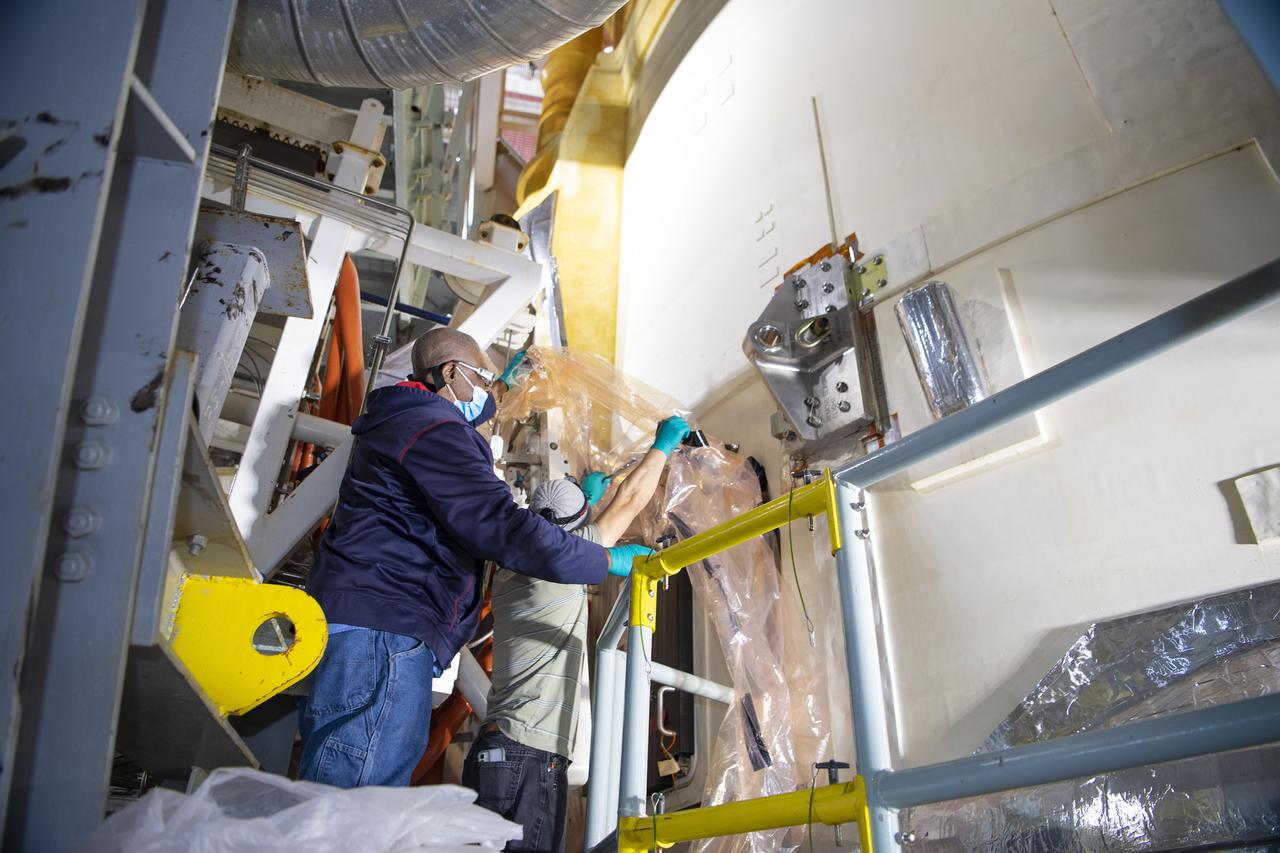
Team members at NASA’s Stennis Space Center near Bay St. Louis, Mississippi, complete refurbishment work on the first core stage of the agency’s Space Launch System (SLS) rocket. The work followed a successful hot fire of the stage and its four RS-25 engines March 18. The hot fire marked the culmination of a yearlong Green Run series of tests of the stage and its integrated systems. Following refurbishment work, the core stage will be removed from the test stand and transported to Kennedy Space Center in Florida, aboard NASA’s Pegasus barge, shown delivering equipment to the B-2 Test Stand. At Kennedy, the core stage will be integrated with the rest of SLS rocket and prepared for the launch of the Artemis I mission to the Moon. Photo Credit: NASA
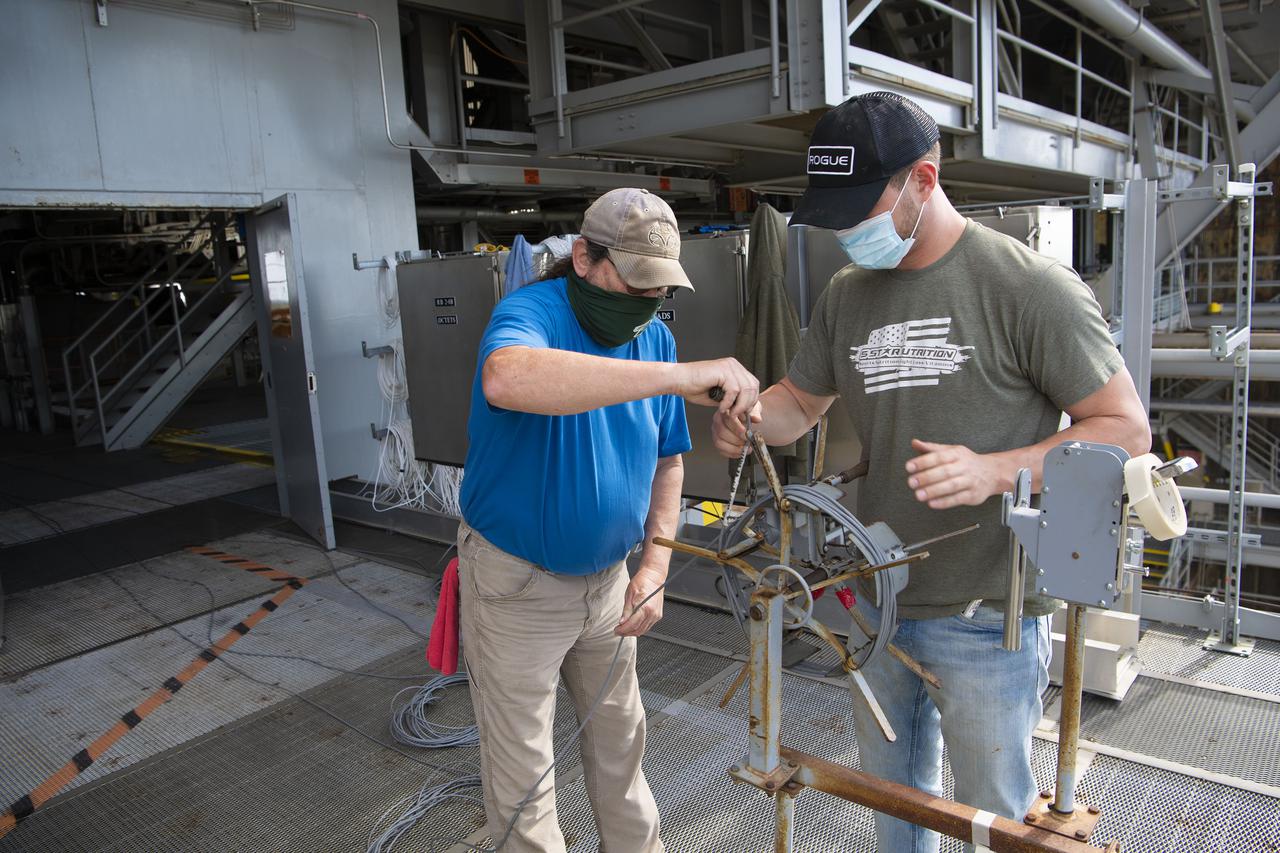
Team members at NASA’s Stennis Space Center near Bay St. Louis, Mississippi, complete refurbishment work on the first core stage of the agency’s Space Launch System (SLS) rocket. The work followed a successful hot fire of the stage and its four RS-25 engines March 18. The hot fire marked the culmination of a yearlong Green Run series of tests of the stage and its integrated systems. Following refurbishment work, the core stage will be removed from the test stand and transported to Kennedy Space Center in Florida, aboard NASA’s Pegasus barge, shown delivering equipment to the B-2 Test Stand. At Kennedy, the core stage will be integrated with the rest of SLS rocket and prepared for the launch of the Artemis I mission to the Moon. Photo Credit: NASA
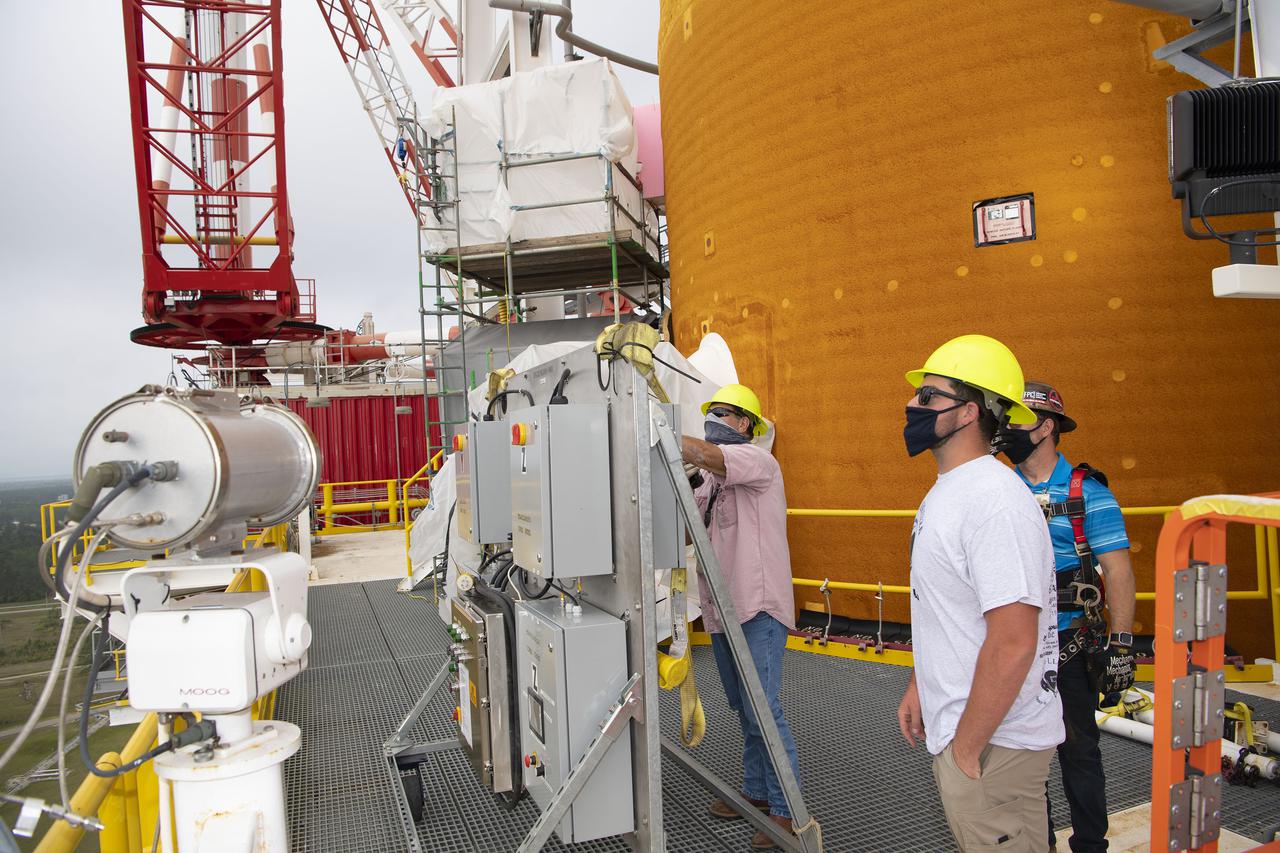
Team members at NASA’s Stennis Space Center near Bay St. Louis, Mississippi, complete refurbishment work on the first core stage of the agency’s Space Launch System (SLS) rocket. The work followed a successful hot fire of the stage and its four RS-25 engines March 18. The hot fire marked the culmination of a yearlong Green Run series of tests of the stage and its integrated systems. Following refurbishment work, the core stage will be removed from the test stand and transported to Kennedy Space Center in Florida, aboard NASA’s Pegasus barge, shown delivering equipment to the B-2 Test Stand. At Kennedy, the core stage will be integrated with the rest of SLS rocket and prepared for the launch of the Artemis I mission to the Moon. Photo Credit: NASA
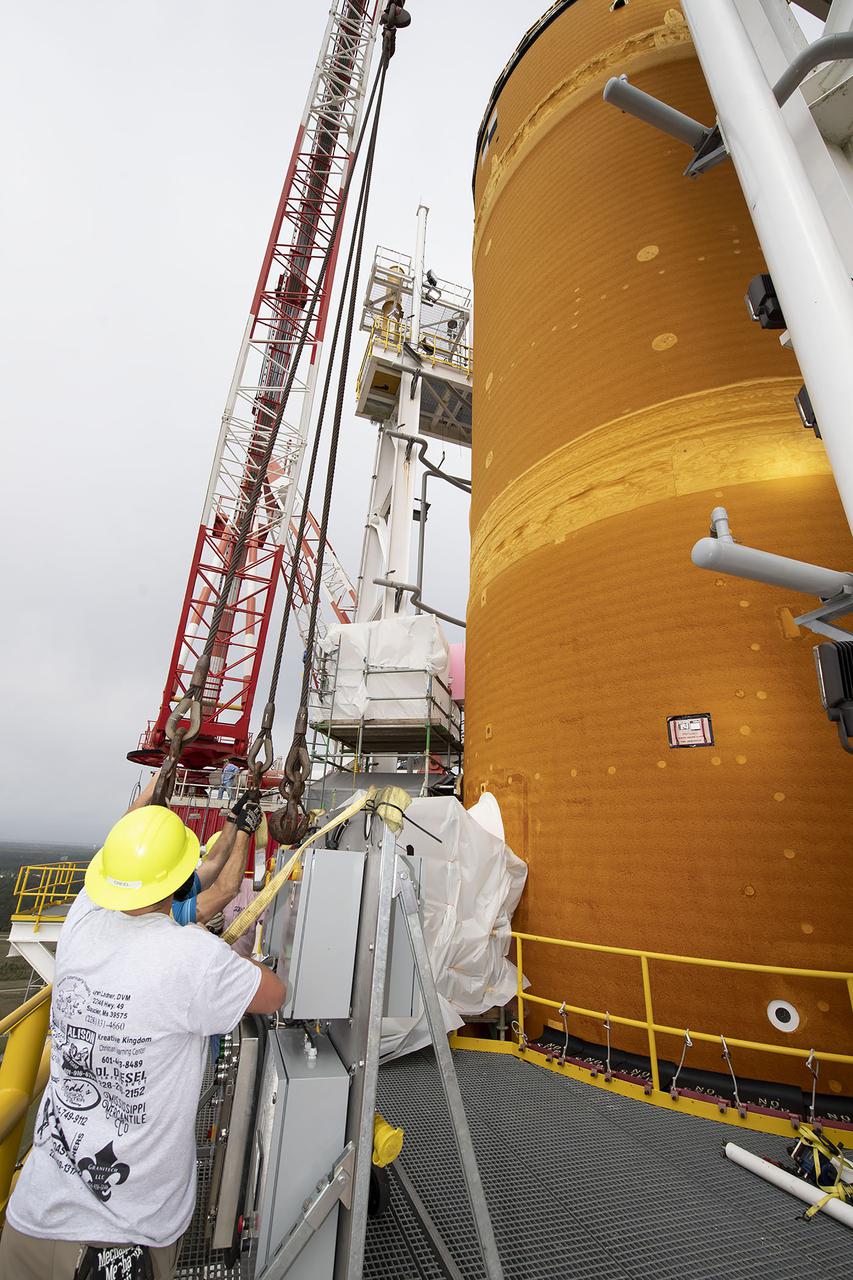
Team members at NASA’s Stennis Space Center near Bay St. Louis, Mississippi, complete refurbishment work on the first core stage of the agency’s Space Launch System (SLS) rocket. The work followed a successful hot fire of the stage and its four RS-25 engines March 18. The hot fire marked the culmination of a yearlong Green Run series of tests of the stage and its integrated systems. Following refurbishment work, the core stage will be removed from the test stand and transported to Kennedy Space Center in Florida, aboard NASA’s Pegasus barge, shown delivering equipment to the B-2 Test Stand. At Kennedy, the core stage will be integrated with the rest of SLS rocket and prepared for the launch of the Artemis I mission to the Moon. Photo Credit: NASA
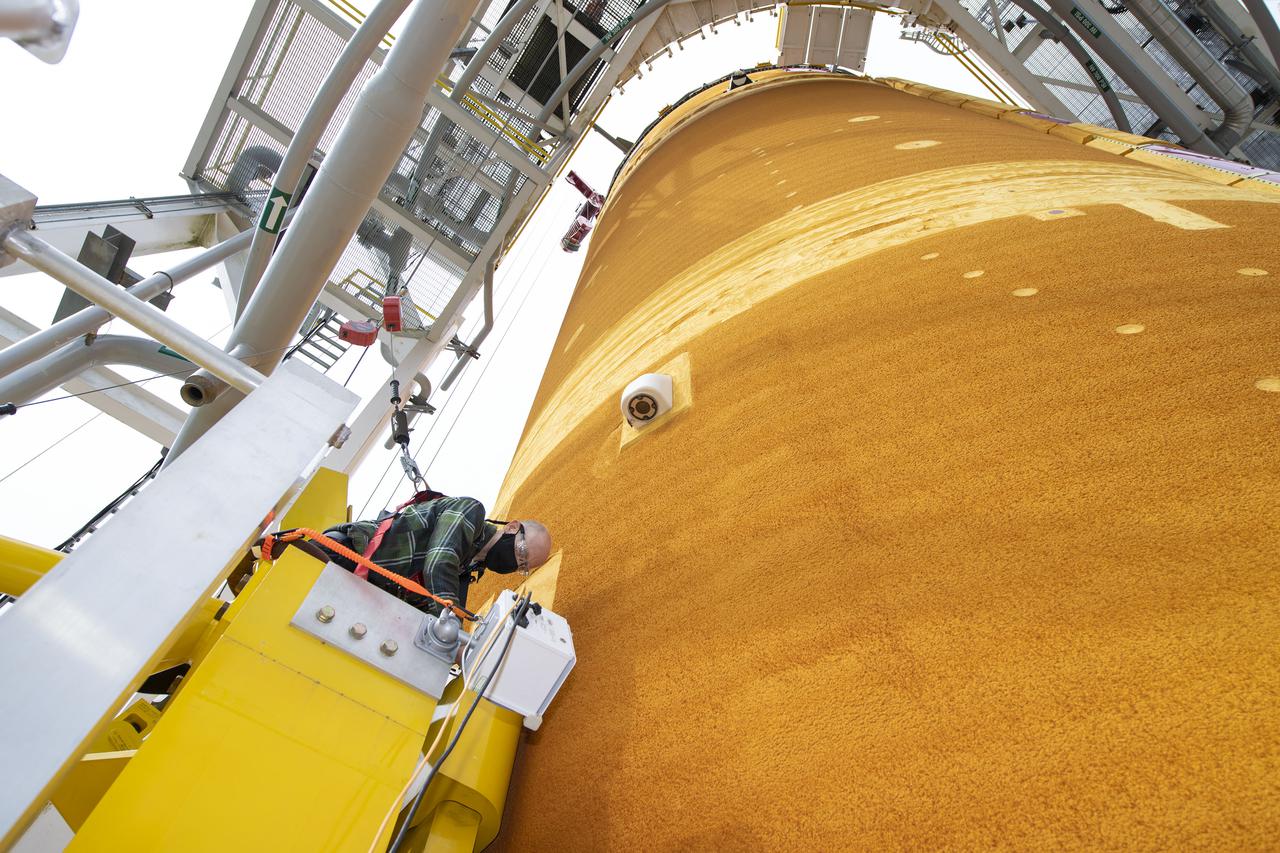
Team members at NASA’s Stennis Space Center near Bay St. Louis, Mississippi, complete refurbishment work on the first core stage of the agency’s Space Launch System (SLS) rocket. The work followed a successful hot fire of the stage and its four RS-25 engines March 18. The hot fire marked the culmination of a yearlong Green Run series of tests of the stage and its integrated systems. Following refurbishment work, the core stage will be removed from the test stand and transported to Kennedy Space Center in Florida, aboard NASA’s Pegasus barge, shown delivering equipment to the B-2 Test Stand. At Kennedy, the core stage will be integrated with the rest of SLS rocket and prepared for the launch of the Artemis I mission to the Moon. Photo Credit: NASA
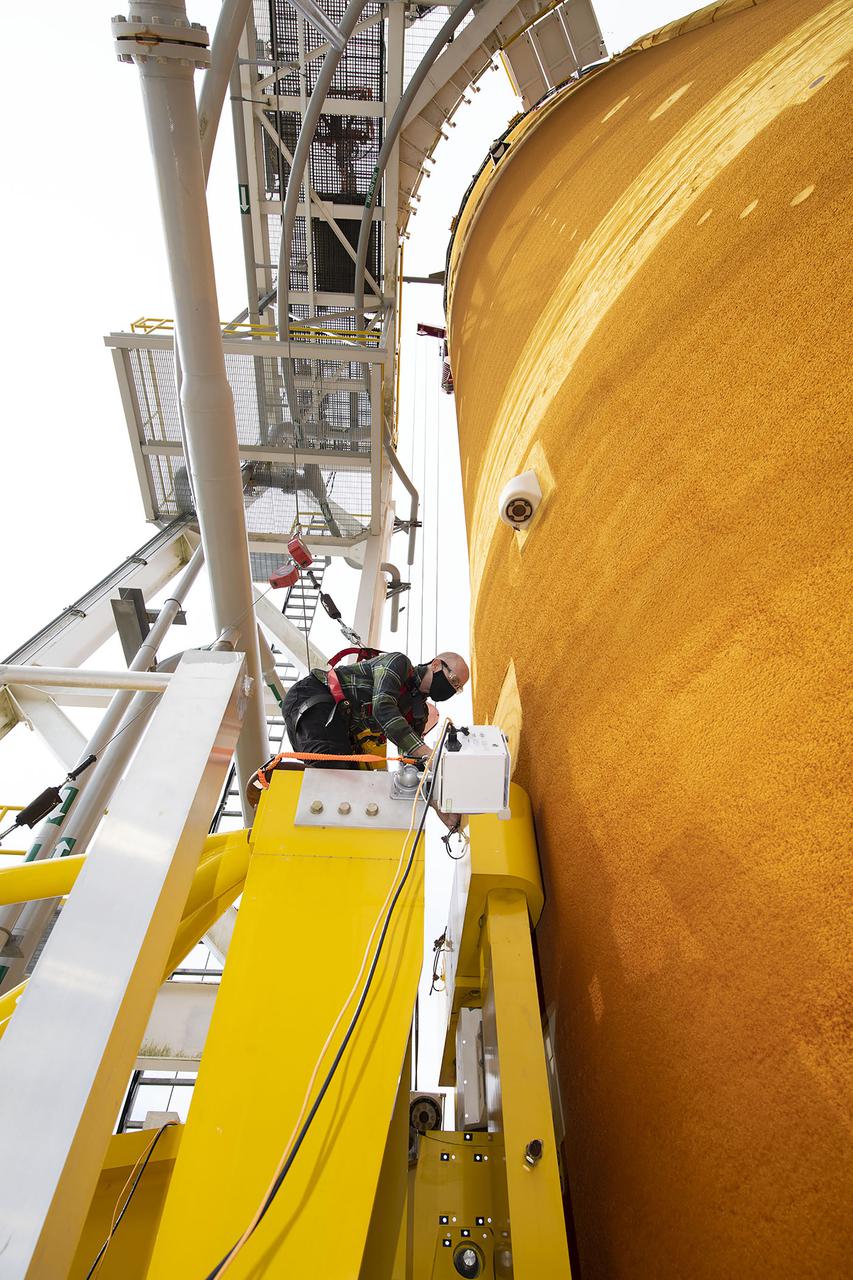
Team members at NASA’s Stennis Space Center near Bay St. Louis, Mississippi, complete refurbishment work on the first core stage of the agency’s Space Launch System (SLS) rocket. The work followed a successful hot fire of the stage and its four RS-25 engines March 18. The hot fire marked the culmination of a yearlong Green Run series of tests of the stage and its integrated systems. Following refurbishment work, the core stage will be removed from the test stand and transported to Kennedy Space Center in Florida, aboard NASA’s Pegasus barge, shown delivering equipment to the B-2 Test Stand. At Kennedy, the core stage will be integrated with the rest of SLS rocket and prepared for the launch of the Artemis I mission to the Moon. Photo Credit: NASA

Team members at NASA’s Stennis Space Center near Bay St. Louis, Mississippi, complete refurbishment work on the first core stage of the agency’s Space Launch System (SLS) rocket. The work followed a successful hot fire of the stage and its four RS-25 engines March 18. The hot fire marked the culmination of a yearlong Green Run series of tests of the stage and its integrated systems. Following refurbishment work, the core stage will be removed from the test stand and transported to Kennedy Space Center in Florida, aboard NASA’s Pegasus barge, shown delivering equipment to the B-2 Test Stand. At Kennedy, the core stage will be integrated with the rest of SLS rocket and prepared for the launch of the Artemis I mission to the Moon. Photo Credit: NASA
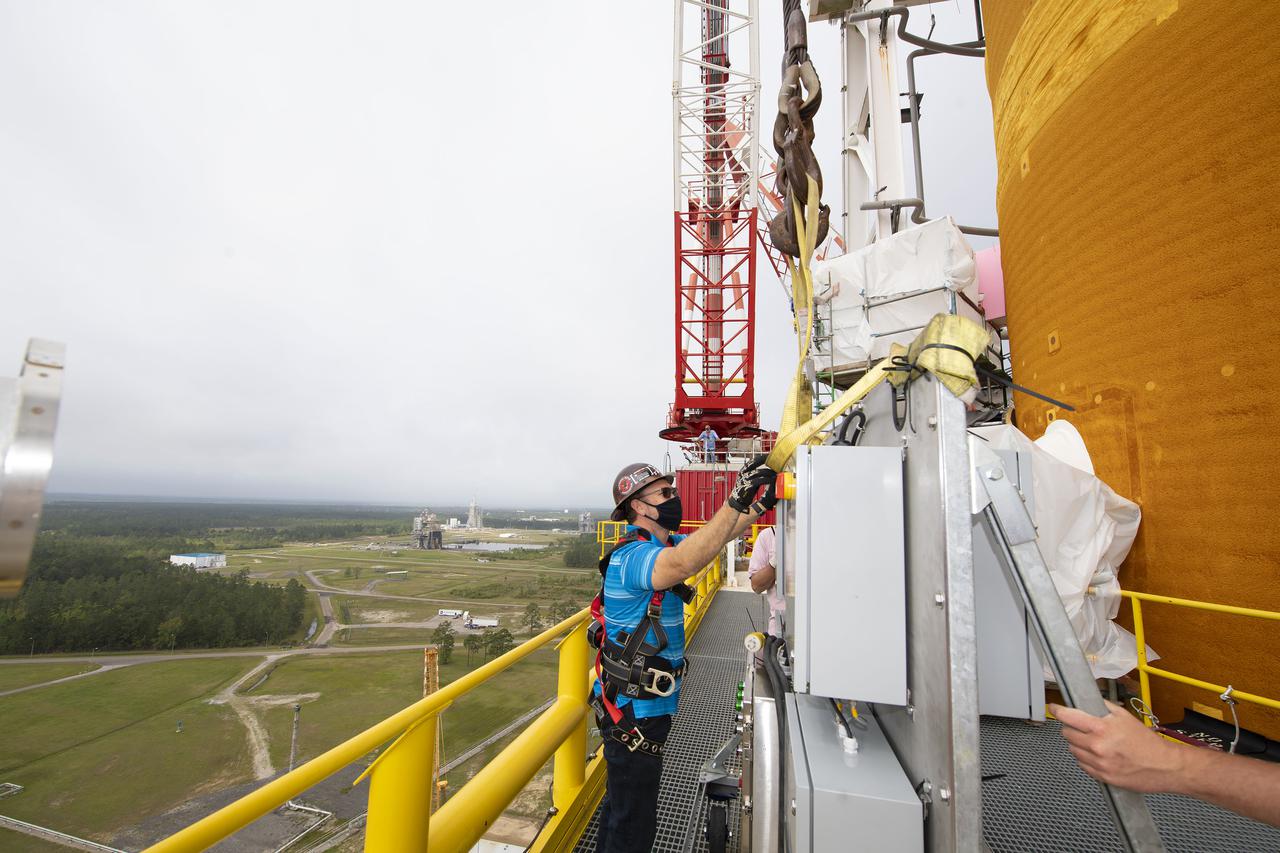
Team members at NASA’s Stennis Space Center near Bay St. Louis, Mississippi, complete refurbishment work on the first core stage of the agency’s Space Launch System (SLS) rocket. The work followed a successful hot fire of the stage and its four RS-25 engines March 18. The hot fire marked the culmination of a yearlong Green Run series of tests of the stage and its integrated systems. Following refurbishment work, the core stage will be removed from the test stand and transported to Kennedy Space Center in Florida, aboard NASA’s Pegasus barge, shown delivering equipment to the B-2 Test Stand. At Kennedy, the core stage will be integrated with the rest of SLS rocket and prepared for the launch of the Artemis I mission to the Moon. Photo Credit: NASA