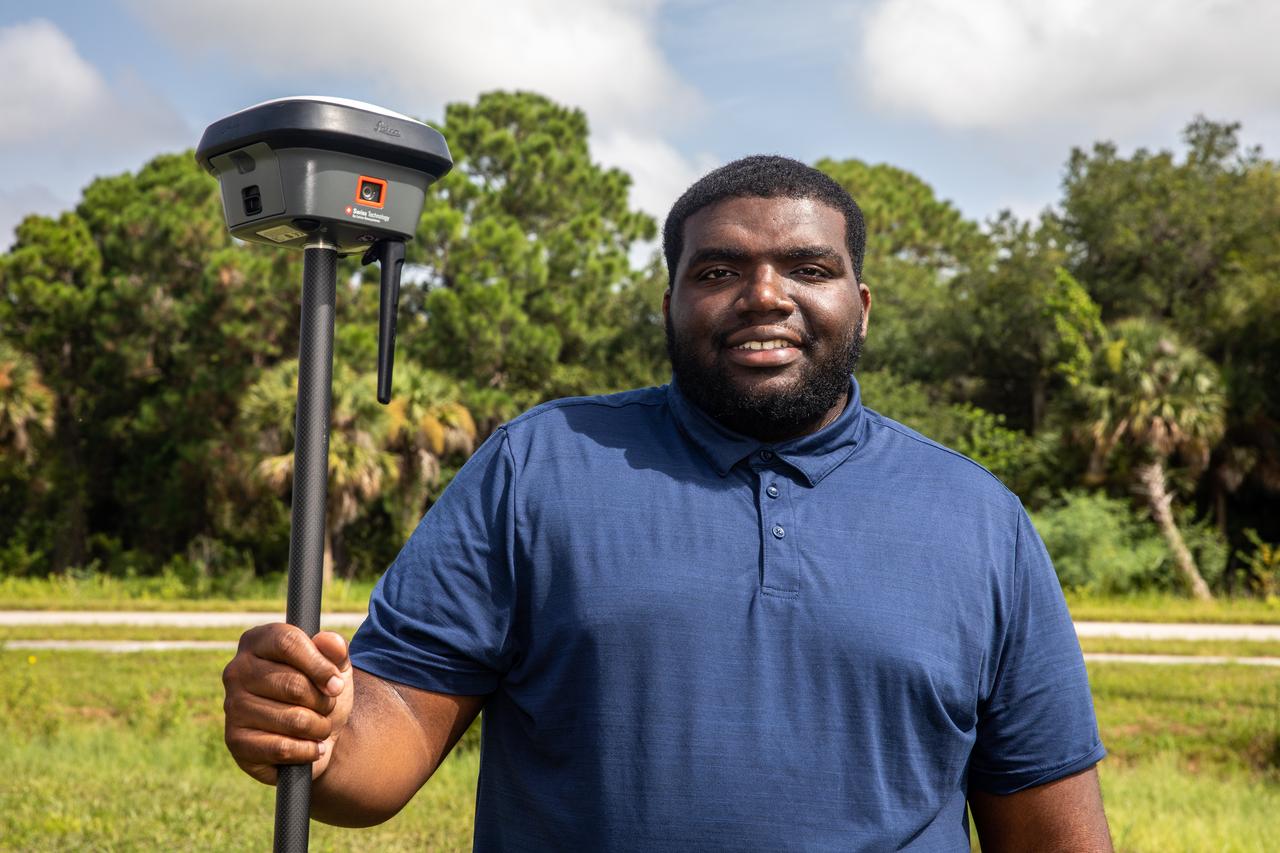
Rayshaun Wheeler said he created “forever-lasting memories” during his 10-week work experience at NASA’s Kennedy Space Center in Florida. A Farmville, Virginia, native, Wheeler is about halfway through his doctoral course work at the University of Virginia. At Kennedy, he worked under mentor Jason Schuler at Kennedy’s Granular Mechanics and Regolith Operations Lab in the center’s Swamp Works facility.
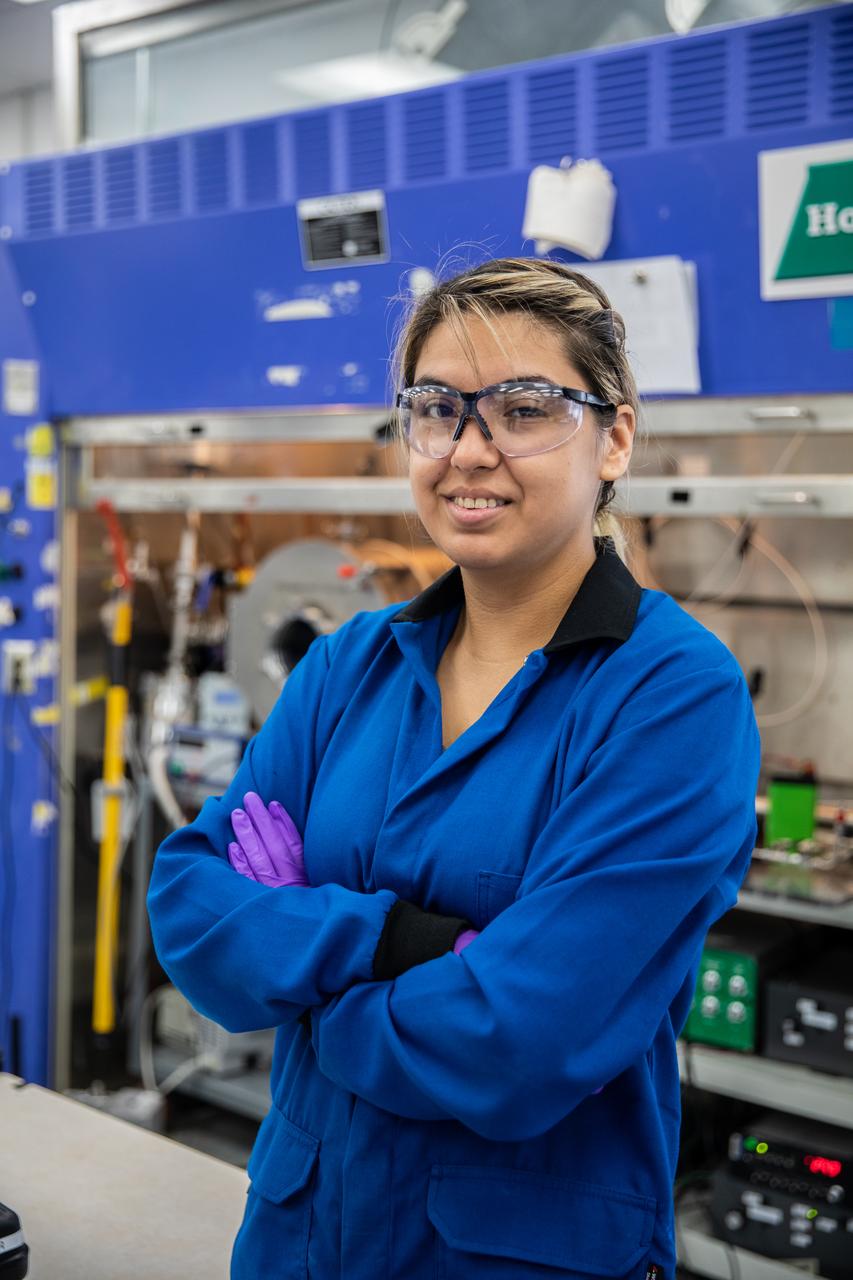
Angie Huerta, a first-year Ph.D. student studying particle physics at the University of Notre Dame, recently completed a GEM Fellowship program at NASA’s Kennedy Space Center in Florida. At Kennedy, Huerta worked closely on a project testing hydrogen plasma on lunar regolith simulant, which is similar to returned lunar soil samples, to explore the plasma’s reliability and efficiency potential for Artemis, NASA’s lunar exploration program.
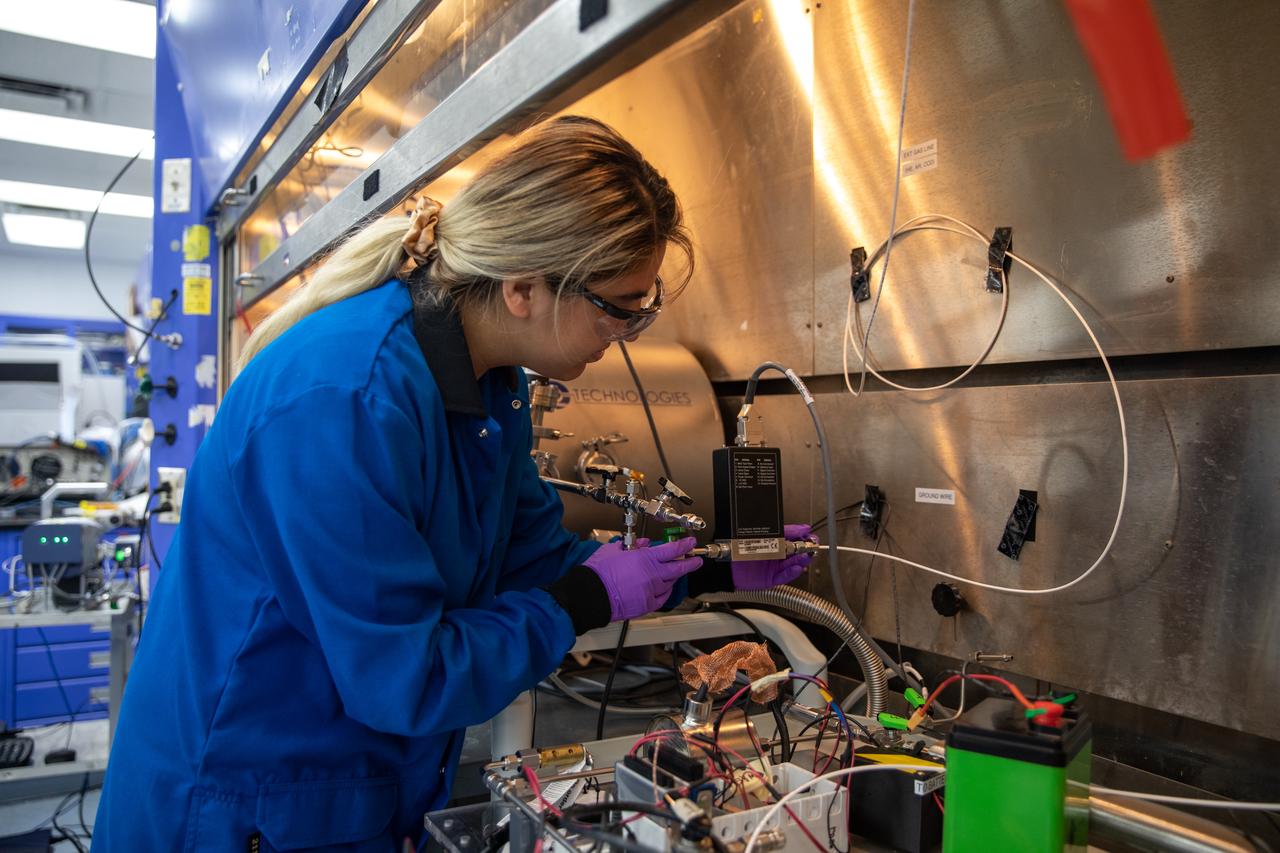
Angie Huerta, a first-year Ph.D. student studying particle physics at the University of Notre Dame, recently completed a GEM Fellowship program at NASA’s Kennedy Space Center in Florida. At Kennedy, Huerta worked closely on a project testing hydrogen plasma on lunar regolith simulant, which is similar to returned lunar soil samples, to explore the plasma’s reliability and efficiency potential for Artemis, NASA’s lunar exploration program.
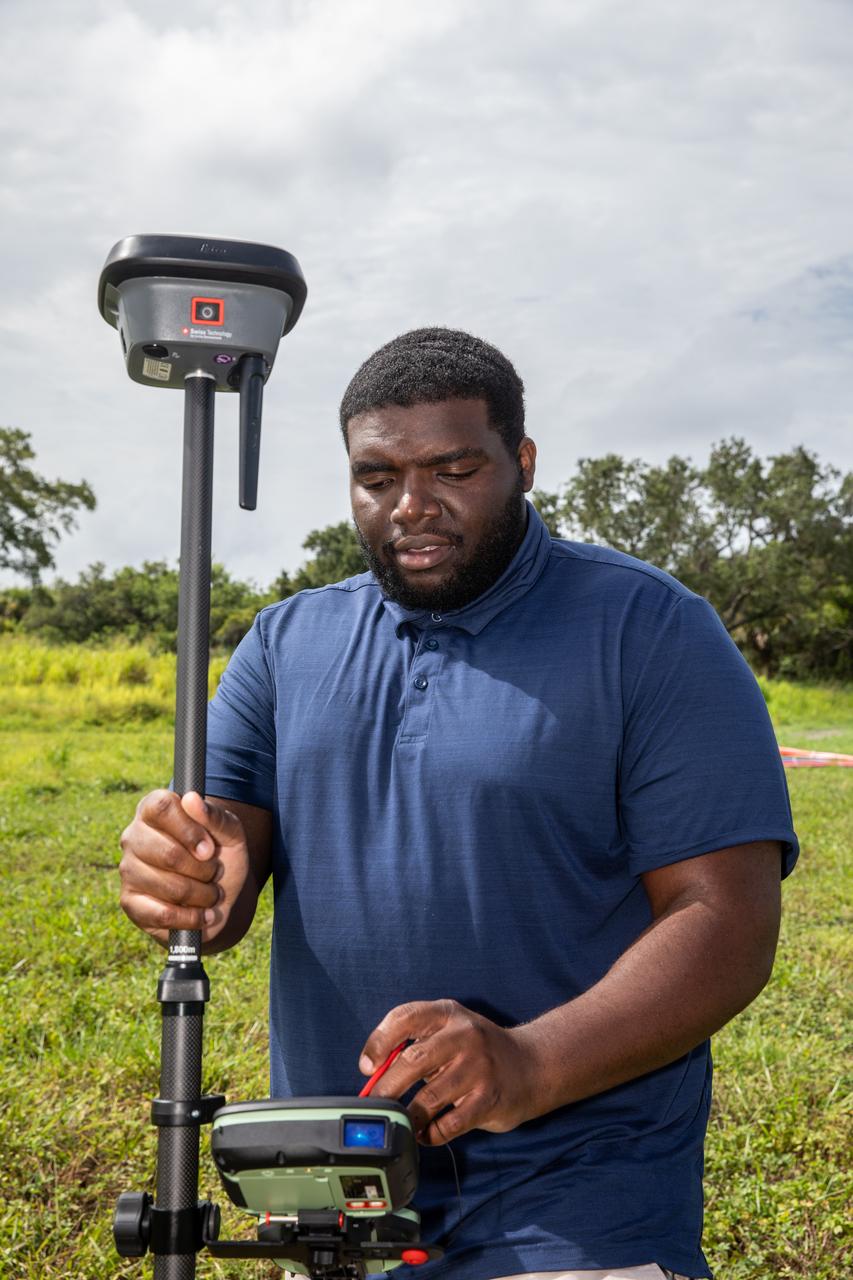
Rayshaun Wheeler said he created “forever-lasting memories” during his 10-week work experience at NASA’s Kennedy Space Center in Florida. A Farmville, Virginia, native, Wheeler is about halfway through his doctoral course work at the University of Virginia. At Kennedy, he worked under mentor Jason Schuler at Kennedy’s Granular Mechanics and Regolith Operations Lab in the center’s Swamp Works facility.
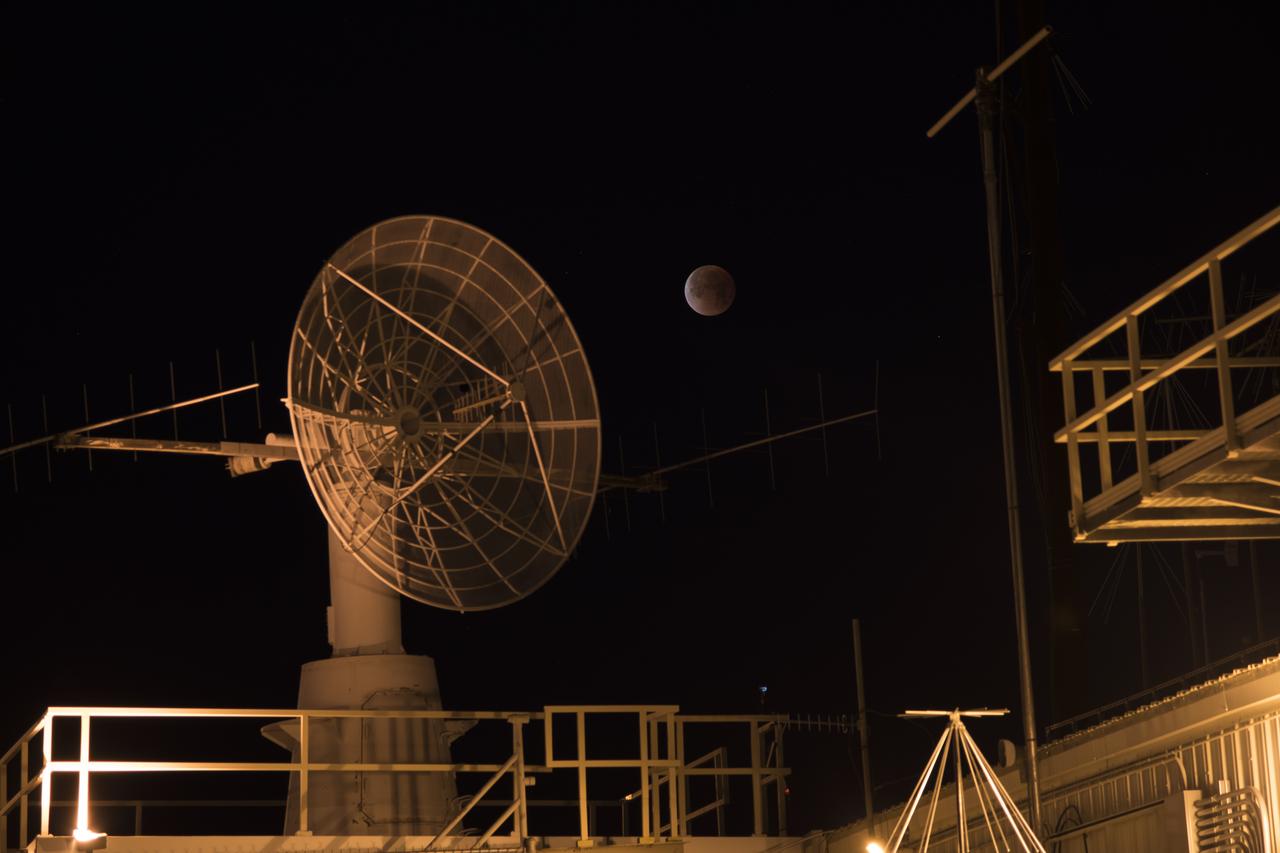
California’s NASA Armstrong Flight Research Center’s photographer Carla Thomas takes photos on January 31 of the rare opportunity to capture a supermoon, a blue moon and a lunar eclipse at the same time. A supermoon occurs when the Moon is closer to Earth in its orbit and appearing 14 percent brighter than usual. As the second full moon of the month, this moon is also commonly known as a blue moon, though it will not be blue in appearance. The super blue moon passed through Earth’s shadow and took on a reddish tint, known as a blood moon. This total lunar eclipse occurs when the Sun, Earth, and a full moon form a near-perfect lineup in space. The Moon passes directly behind the Earth into its umbra (shadow).

NASA Armstrong Flight Research Center photographer Lauren Hughes takes photos of the Super Blue Blood Moon eclipse from California’s Trona Pinnacles Desert National Conservation for the Jan. 31 of the total lunar eclipse that provided a rare opportunity to capture a supermoon, a blue moon and a lunar eclipse at the same time. A supermoon occurs when the Moon is closer to Earth in its orbit and appearing 14 percent brighter than usual. As the second full moon of the month, this moon is also commonly known as a blue moon, though it will not be blue in appearance. The super blue moon passed through Earth’s shadow and took on a reddish tint, known as a blood moon. This total lunar eclipse occurs when the Sun, Earth, and a full moon form a near-perfect lineup in space. The Moon passes directly behind the Earth into its umbra (shadow).

California's NASA Armstrong Flight Research Center photographer Carla Thomas takes photos on January 31 of the rare opportunity to capture a supermoon, a blue moon and a lunar eclipse at the same time. A supermoon occurs when the Moon is closer to Earth in its orbit and appearing 14 percent brighter than usual. As the second full moon of the month, this moon is also commonly known as a blue moon, though it will not be blue in appearance. The super blue moon will pass through Earth's shadow and take on a reddish tint, known as a blood moon. This total lunar eclipse occurs when the Sun, Earth, and a full moon form a near-perfect lineup in space. The Moon passes directly behind the Earth into its umbra (shadow).
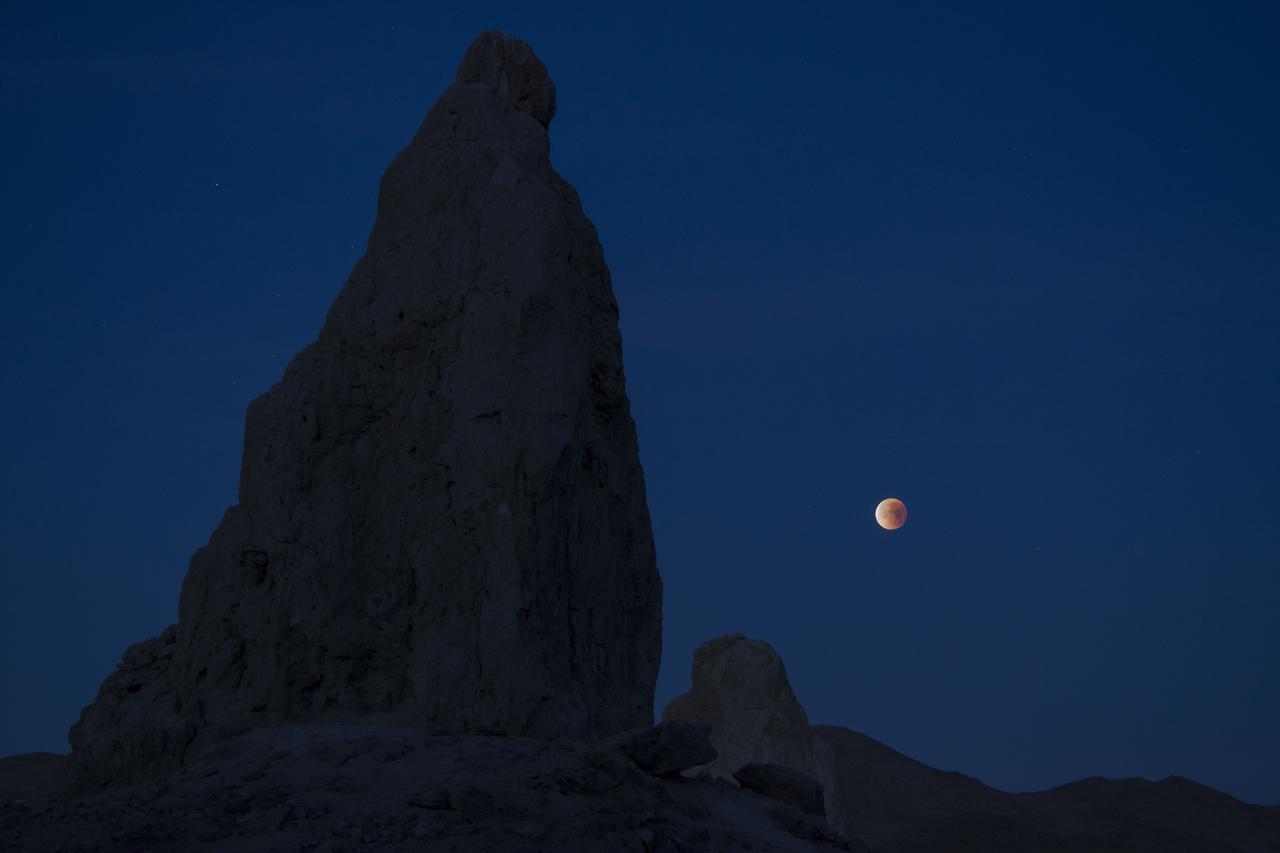
NASA Armstrong Flight Research Center photographer Lauren Hughes takes photos of the Super Blue Blood Moon eclipse from California's Trona Pinnacles Desert National Conservation for the Jan. 31 of the total lunar eclipse that provided a rare opportunity to capture a supermoon, a blue moon and a lunar eclipse at the same time. A supermoon occurs when the Moon is closer to Earth in its orbit and appearing 14 percent brighter than usual. As the second full moon of the month, this moon is also commonly known as a blue moon, though it will not be blue in appearance. The super blue moon passed through Earth's shadow and took on a reddish tint, known as a blood moon. This total lunar eclipse occurs when the Sun, Earth, and a full moon form a near-perfect lineup in space. The Moon passes directly behind the Earth into its umbra (shadow).
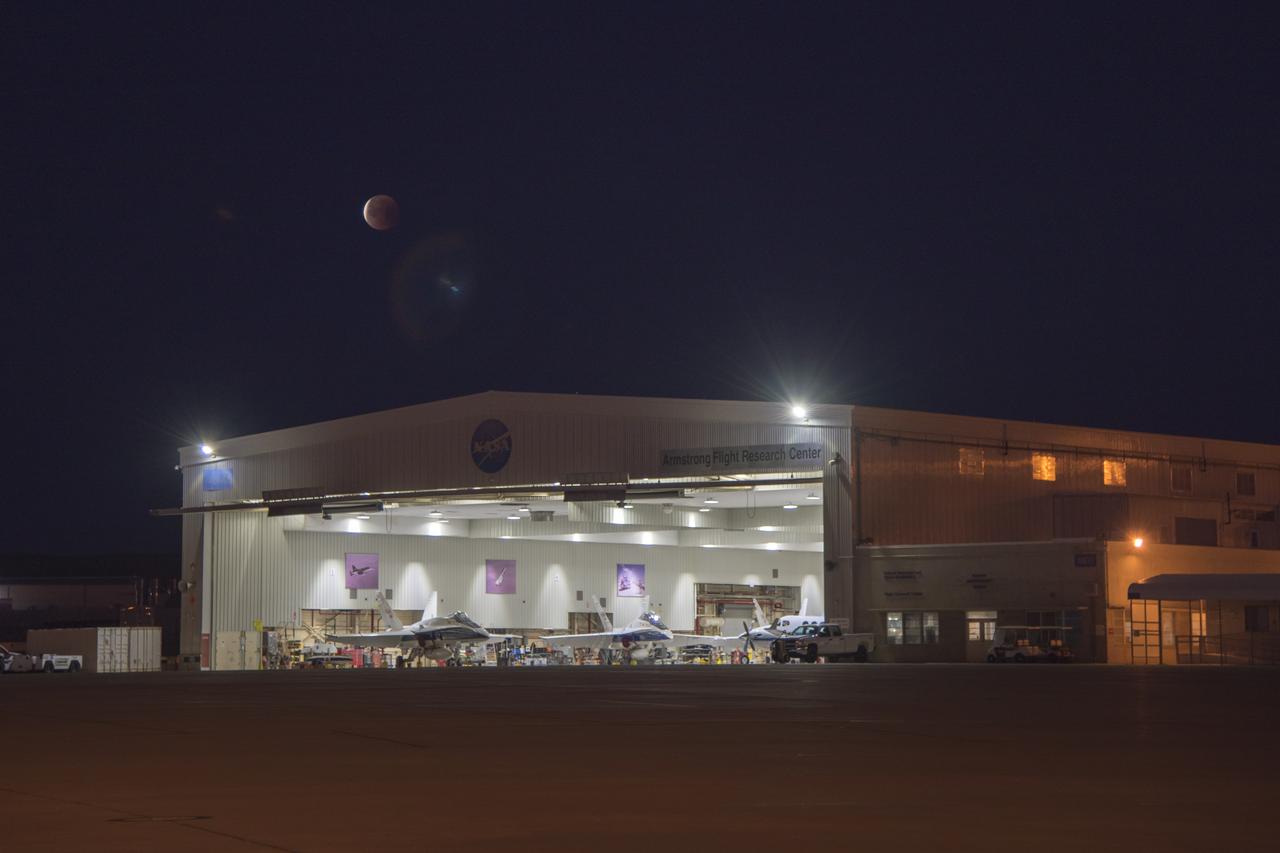
California's NASA Armstrong Flight Research Center photographer Carla Thomas takes photos on January 31 of the rare opportunity to capture a supermoon, a blue moon and a lunar eclipse at the same time. A supermoon occurs when the Moon is closer to Earth in its orbit and appearing 14 percent brighter than usual. As the second full moon of the month, this moon is also commonly known as a blue moon, though it will not be blue in appearance. The super blue moon passed through Earth's shadow and took on a reddish tint, known as a blood moon. This total lunar eclipse occurs when the Sun, Earth, and a full moon form a near-perfect lineup in space. The Moon passes directly behind the Earth into its umbra (shadow).
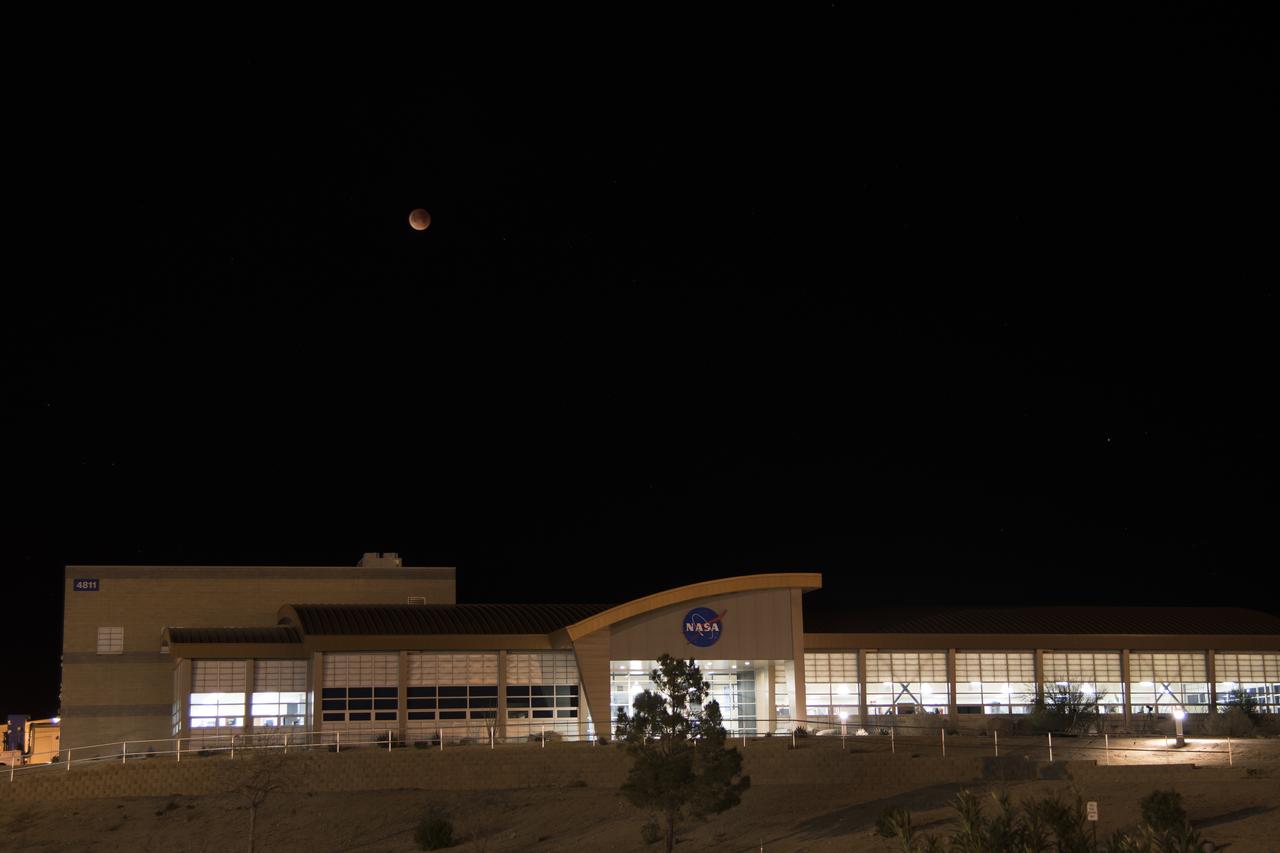
California's NASA Armstrong Flight Research Center photographer Carla Thomas takes photos on January 31 of the rare opportunity to capture a supermoon, a blue moon and a lunar eclipse at the same time. A supermoon occurs when the Moon is closer to Earth in its orbit and appearing 14 percent brighter than usual. As the second full moon of the month, this moon is also commonly known as a blue moon, though it will not be blue in appearance. The super blue moon passed through Earth's shadow and took on a reddish tint, known as a blood moon. This total lunar eclipse occurs when the Sun, Earth, and a full moon form a near-perfect lineup in space. The Moon passes directly behind the Earth into its umbra (shadow).

California's NASA Armstrong Flight Research Center photographer Carla Thomas takes photos on January 31 of the rare opportunity to capture a supermoon, a blue moon and a lunar eclipse at the same time. A supermoon occurs when the Moon is closer to Earth in its orbit and appearing 14 percent brighter than usual. As the second full moon of the month, this moon is also commonly known as a blue moon, though it will not be blue in appearance. The super blue moon passed through Earth's shadow and took on a reddish tint, known as a blood moon. This total lunar eclipse occurs when the Sun, Earth, and a full moon form a near-perfect lineup in space. The Moon passes directly behind the Earth into its umbra (shadow).
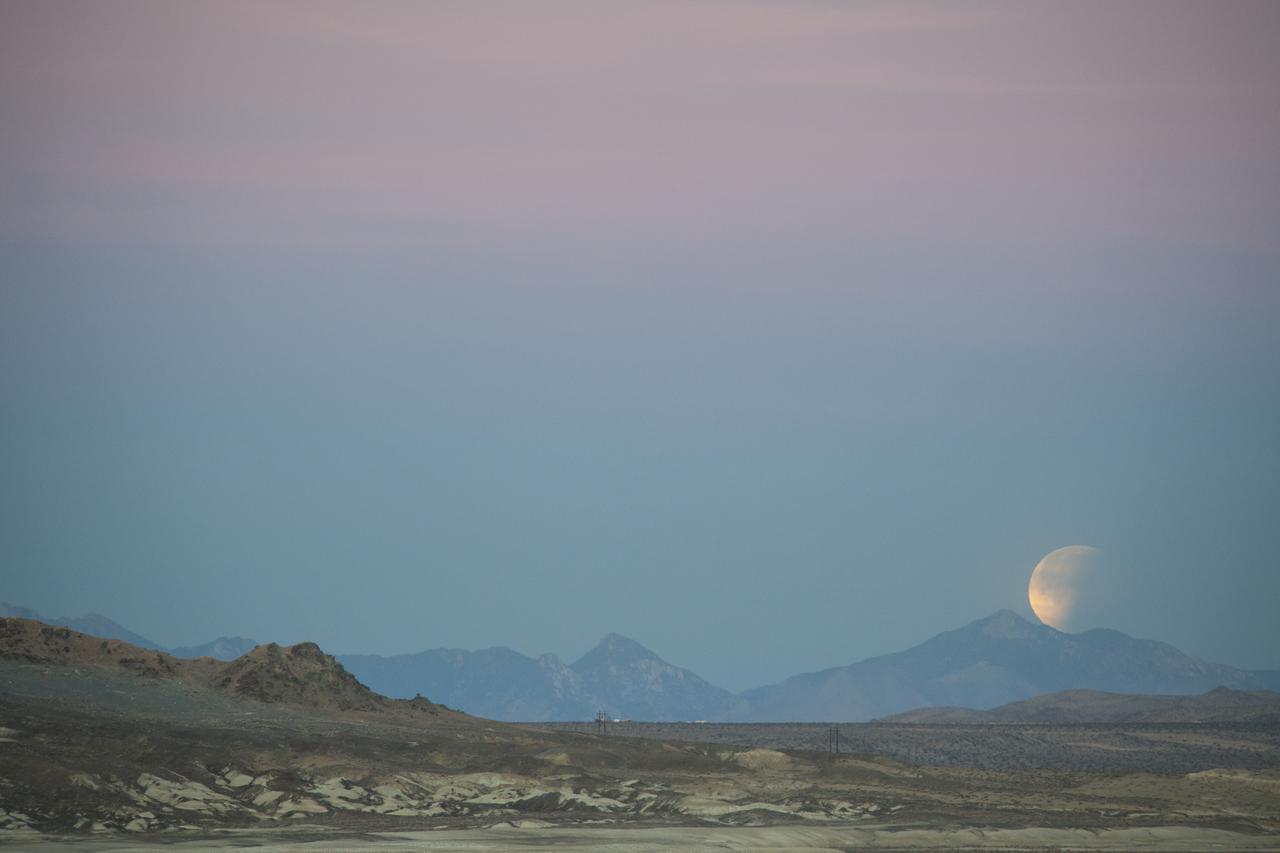
NASA Armstrong Flight Research Center photographer Lauren Hughes takes photos of the Super Blue Blood Moon eclipse from California’s Trona Pinnacles Desert National Conservation for the Jan. 31 of the total lunar eclipse that provided a rare opportunity to capture a supermoon, a blue moon and a lunar eclipse at the same time. A supermoon occurs when the Moon is closer to Earth in its orbit and appearing 14 percent brighter than usual. As the second full moon of the month, this moon is also commonly known as a blue moon, though it will not be blue in appearance. The super blue moon passed through Earth’s shadow and took on a reddish tint, known as a blood moon. This total lunar eclipse occurs when the Sun, Earth, and a full moon form a near-perfect lineup in space. The Moon passes directly behind the Earth into its umbra (shadow).
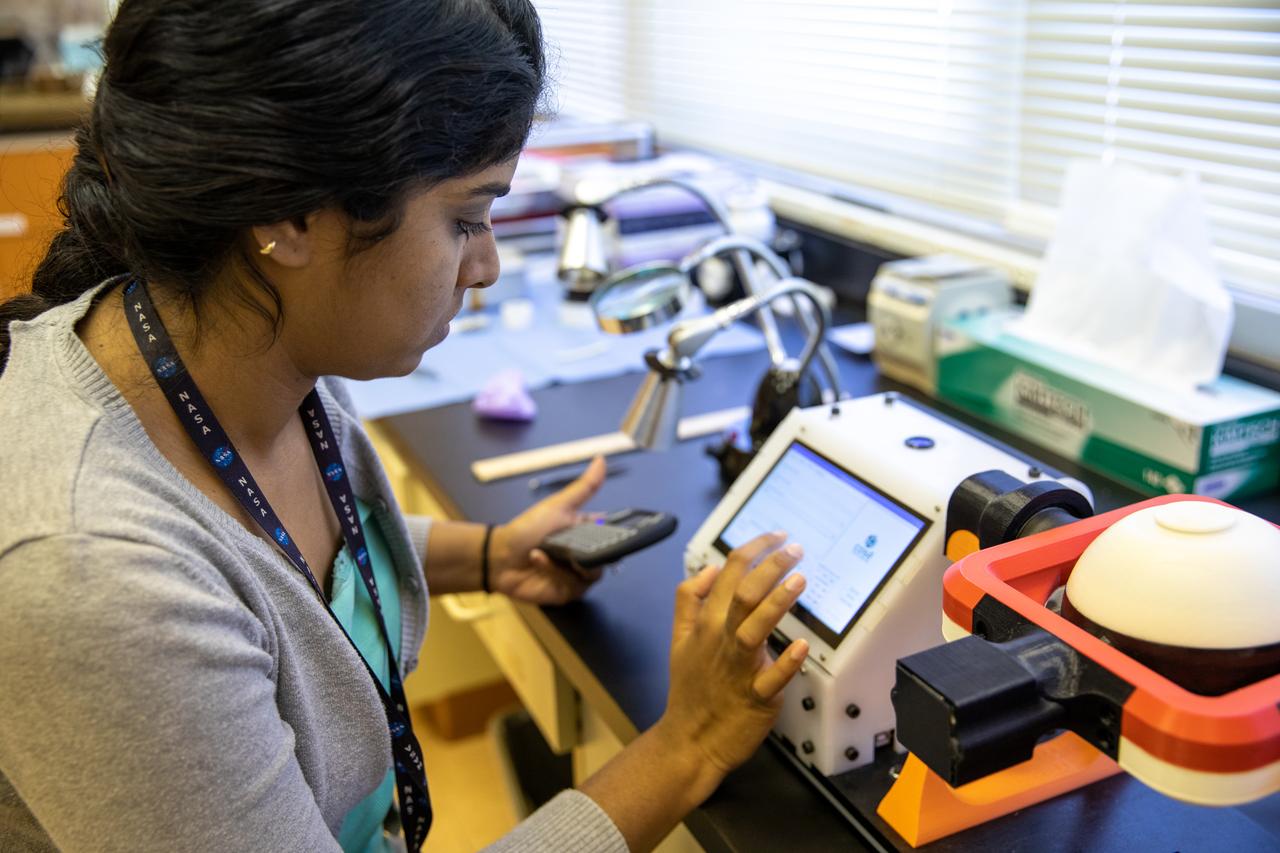
Srujana Neelam, a researcher working at NASA’s Kennedy Space Center in Florida, programs the SciSpinner Microgravity Simulator in the Microgravity Simulation Support Facility (MSSF) inside the Neil Armstrong Operations and Checkout building on Feb. 11, 2020. The facility was developed to provide ground simulation capability to the U.S. research community in order to supplement the limited opportunities to access the International Space Station and other platforms for microgravity research. The MSSF is designed to support biological research on microorganisms, cells, tissues, small plants and small animals. The simulator provides NASA with an alternative platform for microgravity research and creates the opportunity to conduct experiments on the space station in parallel with conditions of simulated microgravity on the ground.
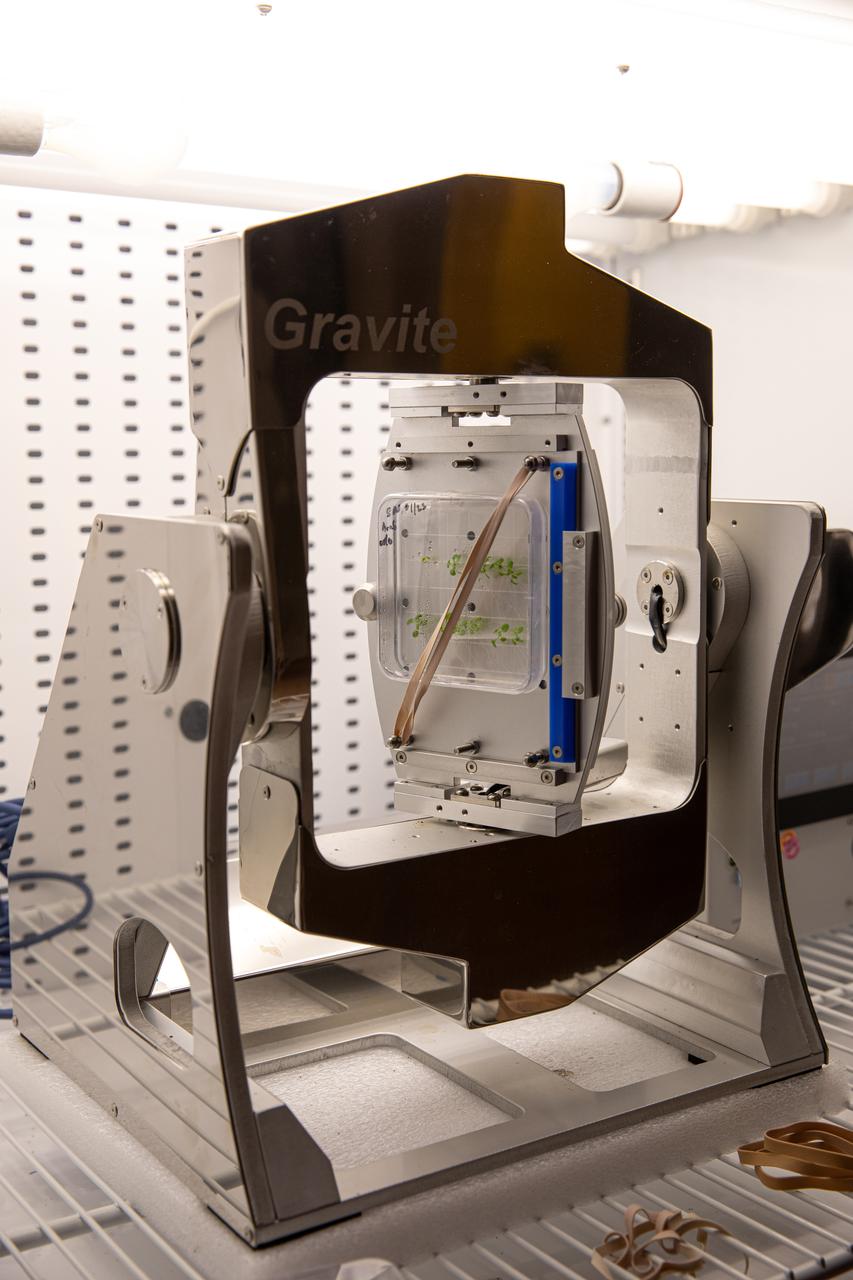
A Gravite 3d clinostat is in the Microgravity Simulation Support Facility (MSSF) inside the Neil Armstrong Operations and Checkout building at NASA’s Kennedy Space Center in Florida on Feb. 11, 2020. The facility was developed to provide ground simulation capability to the U.S. research community in order to supplement the limited opportunities to access the International Space Station and other platforms for microgravity research. The MSSF is designed to support biological research on microorganisms, cells, tissues, small plants and small animals. The simulator provides NASA with an alternative platform for microgravity research and creates the opportunity to conduct experiments on the space station in parallel with conditions of simulated microgravity on the ground.
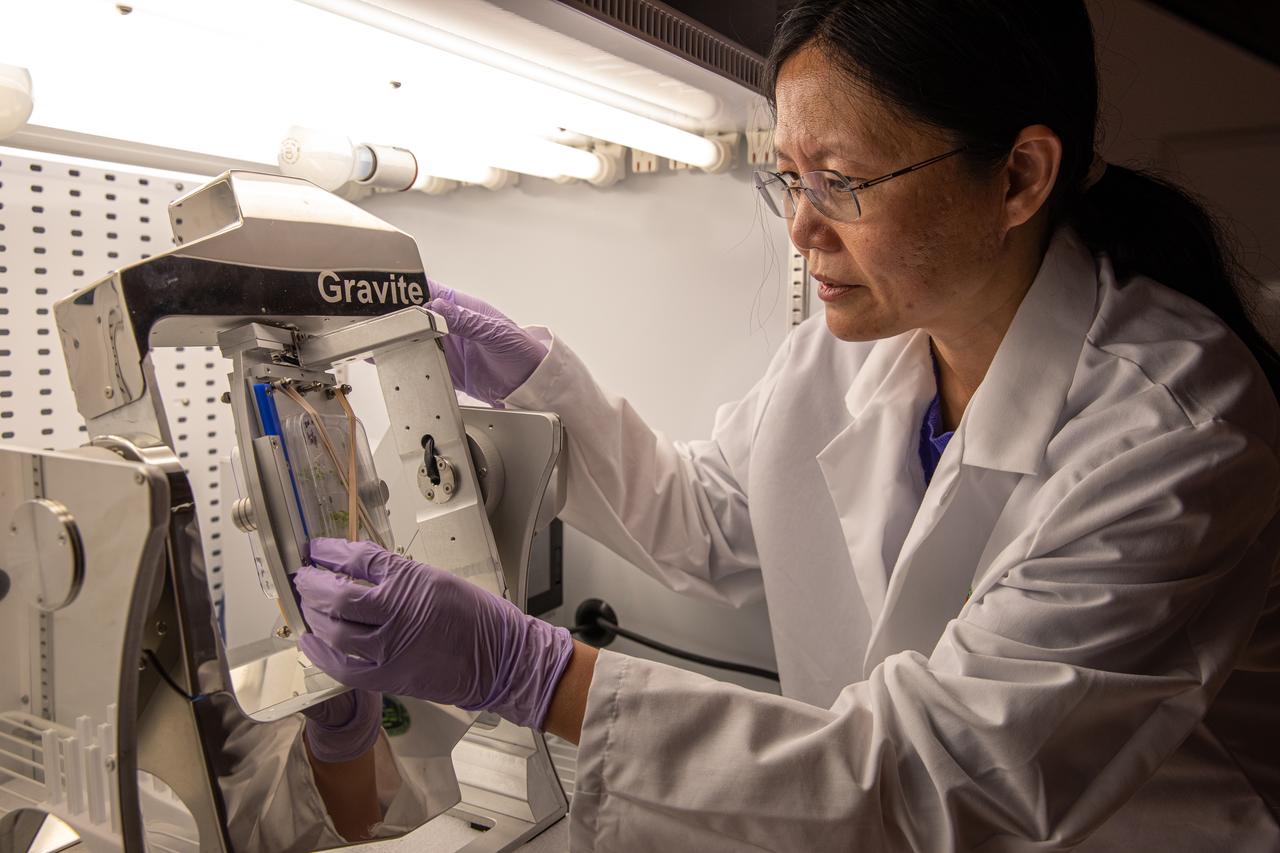
Ye Zhang, a project scientist at NASA’s Kennedy Space Center in Florida, makes adjustments to a Gravite 3d clinostat in the Microgravity Simulation Support Facility (MSSF) inside the Neil Armstrong Operations and Checkout building at on Feb. 11, 2020. The facility was developed to provide ground simulation capability to the U.S. research community in order to supplement the limited opportunities to access the International Space Station and other platforms for microgravity research. The MSSF is designed to support biological research on microorganisms, cells, tissues, small plants and small animals. The simulator provides NASA with an alternative platform for microgravity research and creates the opportunity to conduct experiments on the space station in parallel with conditions of simulated microgravity on the ground.
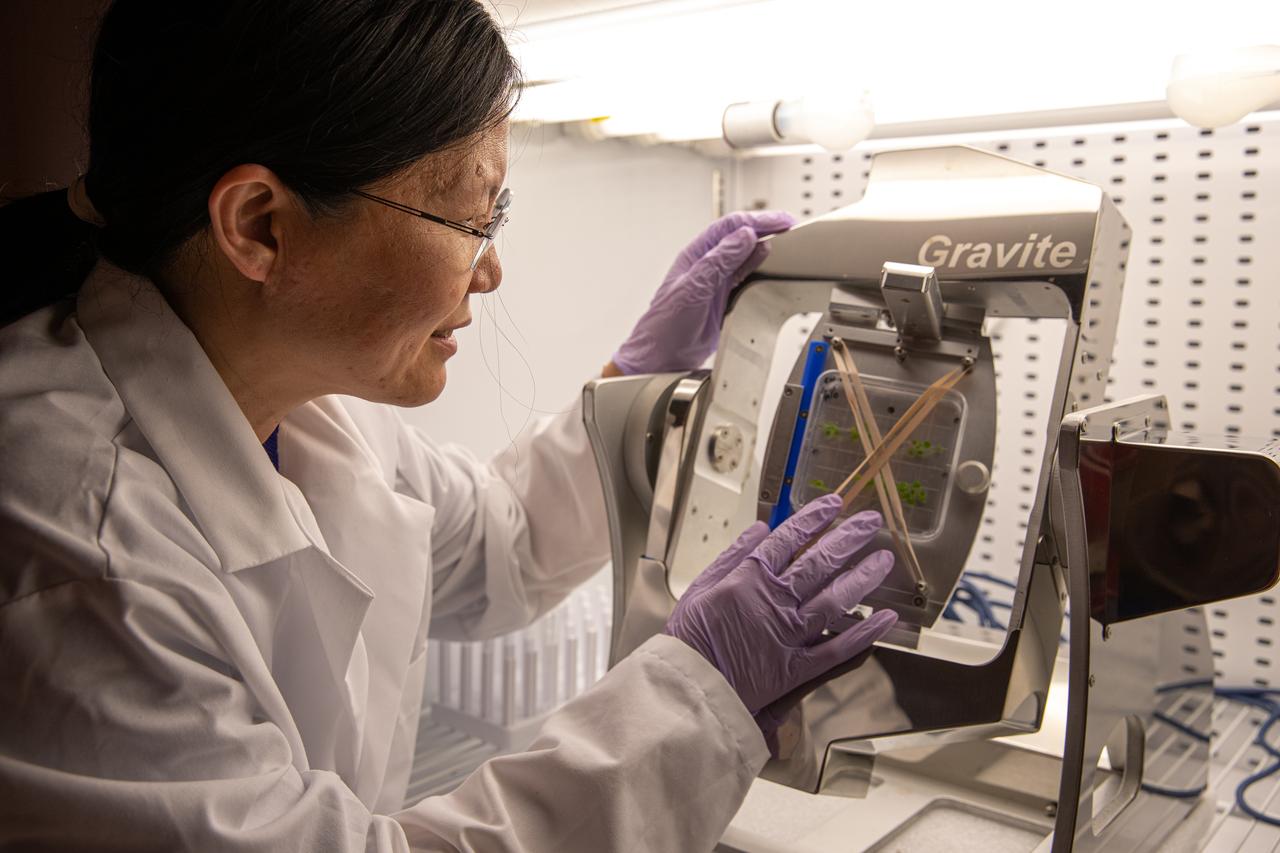
Ye Zhang, a project scientist at NASA’s Kennedy Space Center in Florida, makes adjustments to a Gravite 3d clinostat in the Microgravity Simulation Support Facility (MSSF) inside the Neil Armstrong Operations and Checkout on Feb. 11, 2020. The facility was developed to provide ground simulation capability to the U.S. research community in order to supplement the limited opportunities to access the International Space Station and other platforms for microgravity research. The MSSF is designed to support biological research on microorganisms, cells, tissues, small plants and small animals. The simulator provides NASA with an alternative platform for microgravity research and creates the opportunity to conduct experiments on the space station in parallel with conditions of simulated microgravity on the ground.
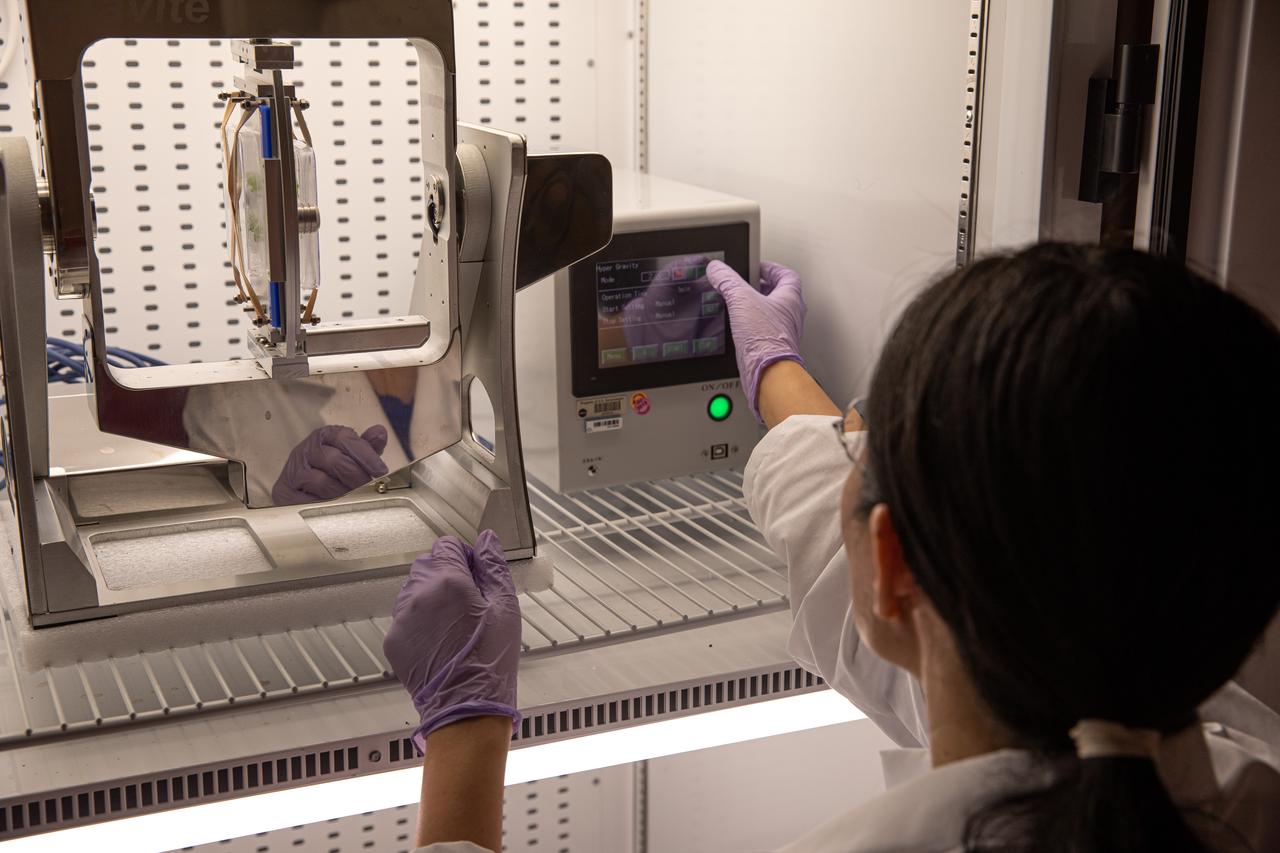
Ye Zhang, a project scientist at NASA’s Kennedy Space Center in Florida runs a test on a Gravite 3d clinostat device in the Microgravity Simulation Support Facility (MSSF) inside the Neil Armstrong Operations and Checkout building on Feb. 11, 2020. The facility was developed to provide ground simulation capability to the U.S. research community in order to supplement the limited opportunities to access the International Space Station and other platforms for microgravity research. The MSSF is designed to support biological research on microorganisms, cells, tissues, small plants and small animals. The simulator provides NASA with an alternative platform for microgravity research and creates the opportunity to conduct experiments on the space station in parallel with conditions of simulated microgravity on the ground.
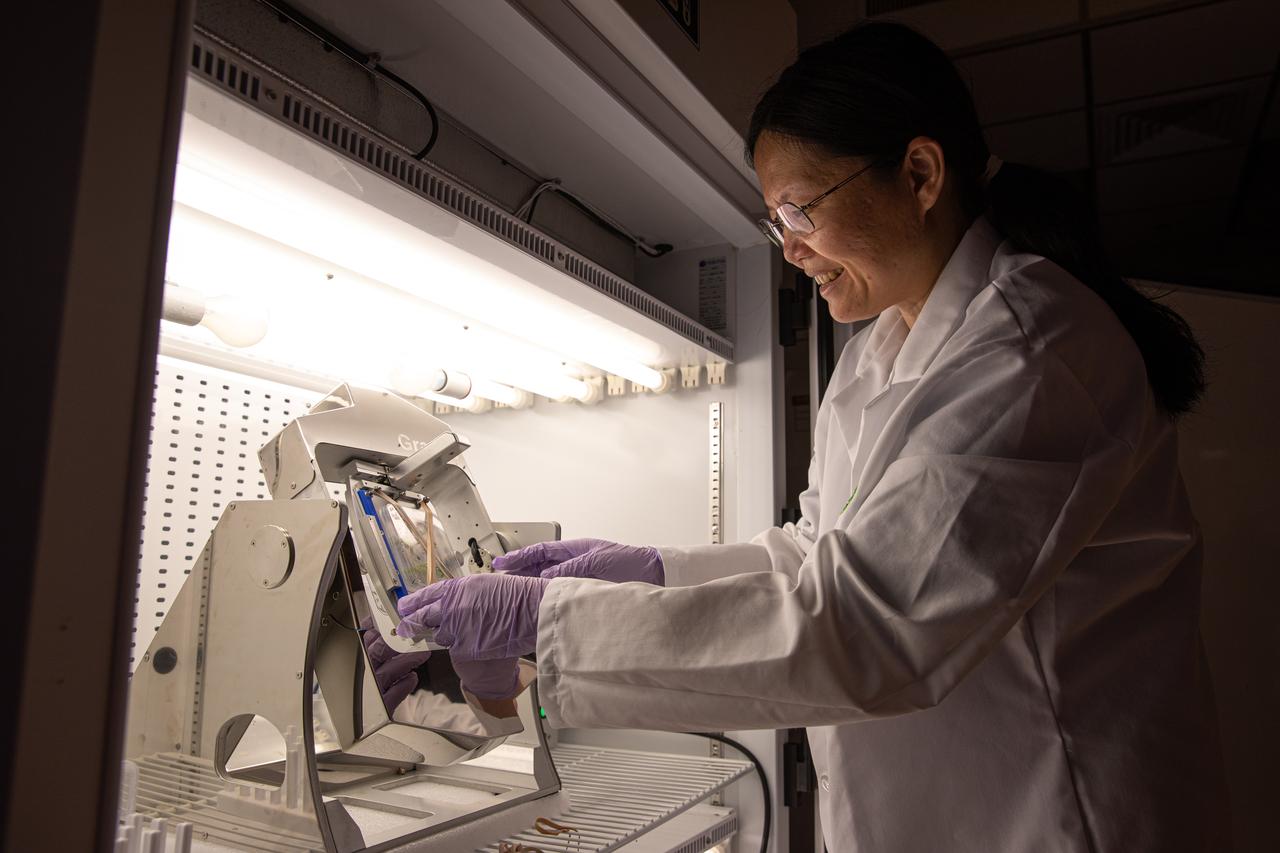
Ye Zhang, a project scientist at NASA’s Kennedy Space Center in Florida, makes adjustments to a Gravite 3d clinostat in the Microgravity Simulation Support Facility (MSSF) inside the Neil Armstrong Operations and Checkout building on Feb. 11, 2020. The facility was developed to provide ground simulation capability to the U.S. research community in order to supplement the limited opportunities to access the International Space Station and other platforms for microgravity research. The MSSF is designed to support biological research on microorganisms, cells, tissues, small plants and small animals. The simulator provides NASA with an alternative platform for microgravity research and creates the opportunity to conduct experiments on the space station in parallel with conditions of simulated microgravity on the ground.
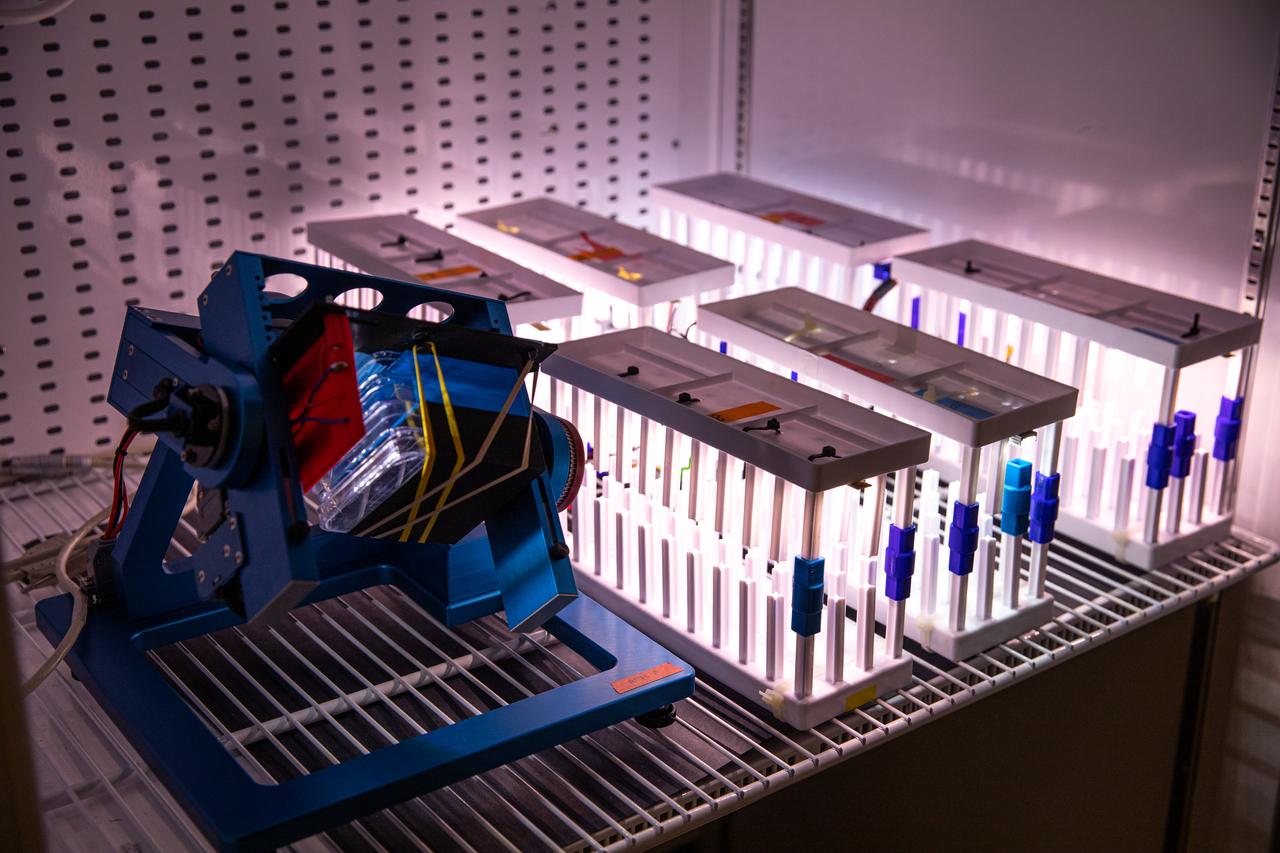
Some experiments are being prepared for a test in the Airbus Random Positioning Machine in the Microgravity Simulation Support Facility (MSSF) inside the Neil Armstrong Operations and Checkout building at NASA’s Kennedy Space Center in Florida on Feb. 11, 2020. The facility device was developed to provide ground simulation capability to the U.S. research community in order to supplement the limited opportunities to access the International Space Station and other platforms for microgravity research. The MSSF is designed to support biological research on microorganisms, cells, tissues, small plants and small animals. The simulator provides NASA with an alternative platform for microgravity research and creates the opportunity to conduct experiments on the space station in parallel with conditions of simulated microgravity on the ground.

A Gravite 3d clinostat is in the Microgravity Simulation Support Facility (MSSF) inside the Neil Armstrong Operations and Checkout building at NASA’s Kennedy Space Center in Florida on Feb. 11, 2020. The facility was developed to provide ground simulation capability to the U.S. research community in order to supplement the limited opportunities to access the International Space Station and other platforms for microgravity research. The MSSF is designed to support biological research on microorganisms, cells, tissues, small plants and small animals. The simulator provides NASA with an alternative platform for microgravity research and creates the opportunity to conduct experiments on the space station in parallel with conditions of simulated microgravity on the ground.
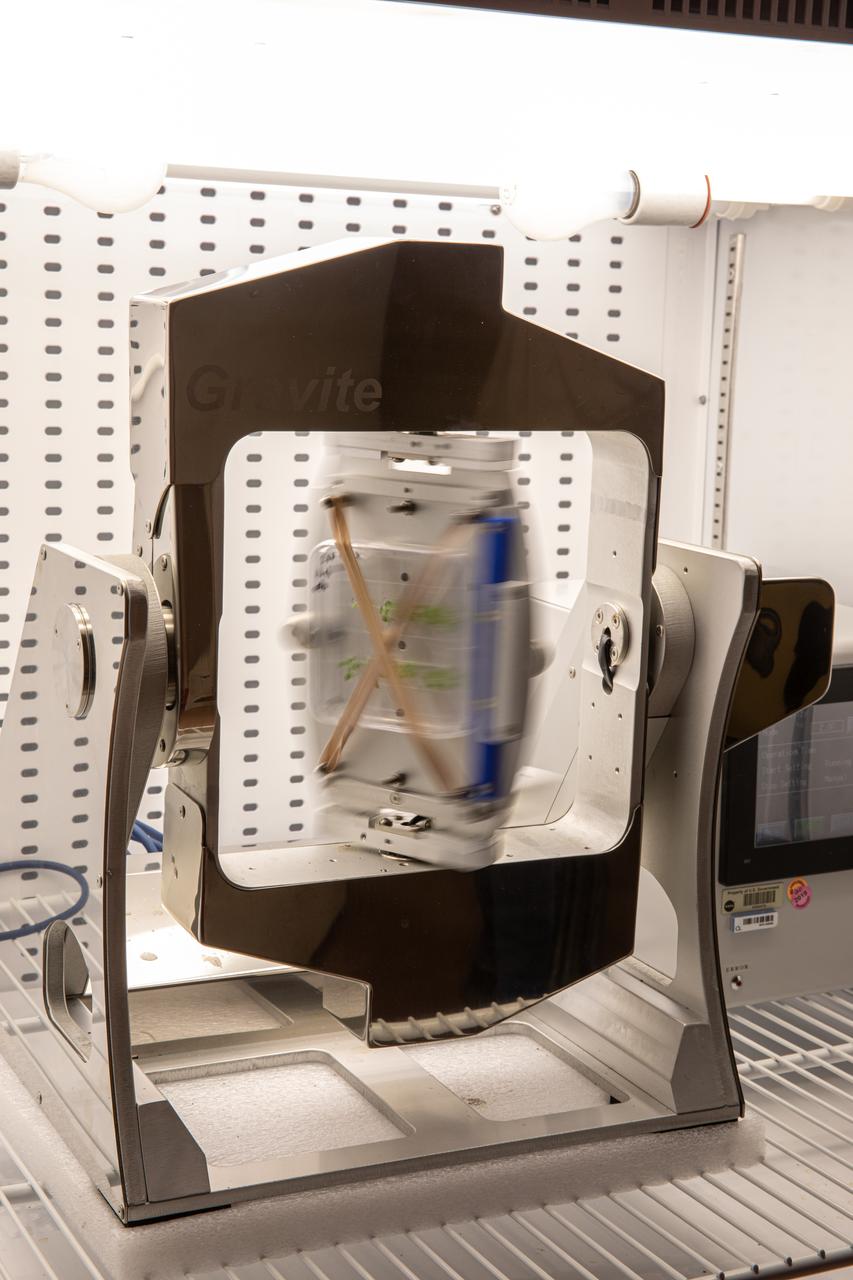
A Gravite 3d clinostat undergoes a test in the Microgravity Simulation Support Facility (MSSF) inside the Neil Armstrong Operations and Checkout building at NASA’s Kennedy Space Center in Florida on Feb. 11, 2020. The facility was developed to provide ground simulation capability to the U.S. research community in order to supplement the limited opportunities to access the International Space Station and other platforms for microgravity research. The MSSF is designed to support biological research on microorganisms, cells, tissues, small plants and small animals. The simulator provides NASA with an alternative platform for microgravity research and creates the opportunity to conduct experiments on the space station in parallel with conditions of simulated microgravity on the ground.
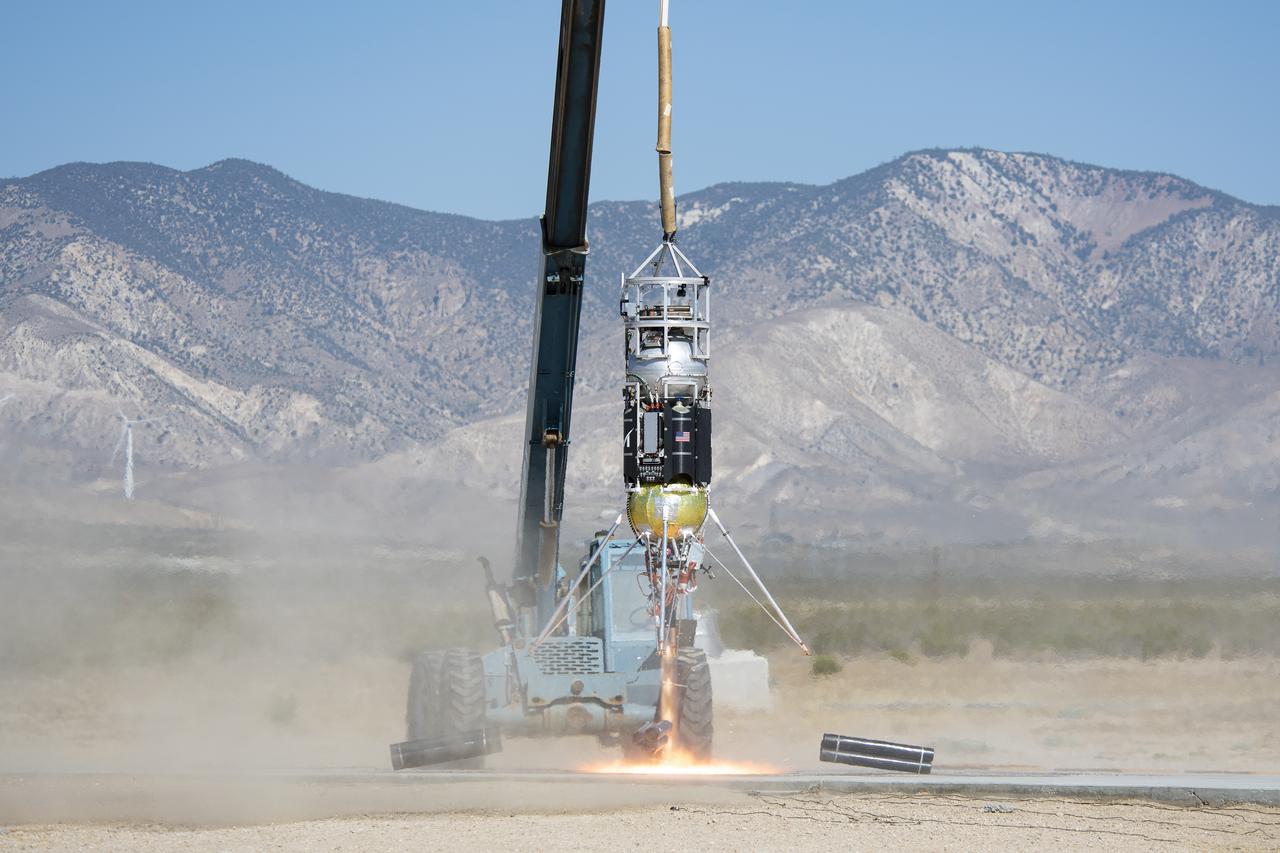
Masten Space Systems’ Xodiac lander completes a tethered flight test at the Mojave Air & Space Port. Xodiac is one of several suborbital vehicles used to flight test NASA-sponsored technologies supported by the agency’s Flight Opportunities program.
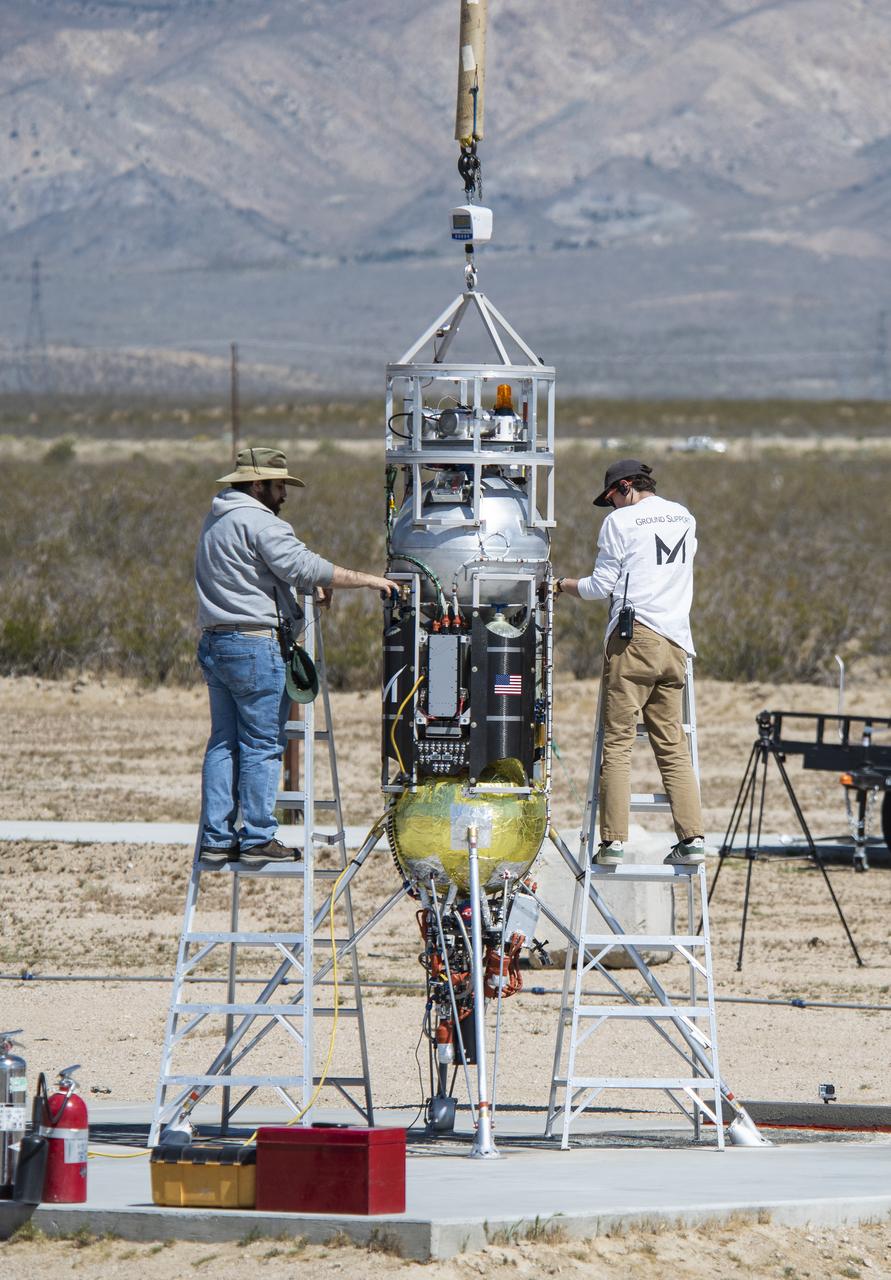
Masten Space Systems’ technicians prepare their Xodiac rocket to flight test Honeybee Robotics pneumatic sampler collection system, PlanetVac, in Mojave Desert.
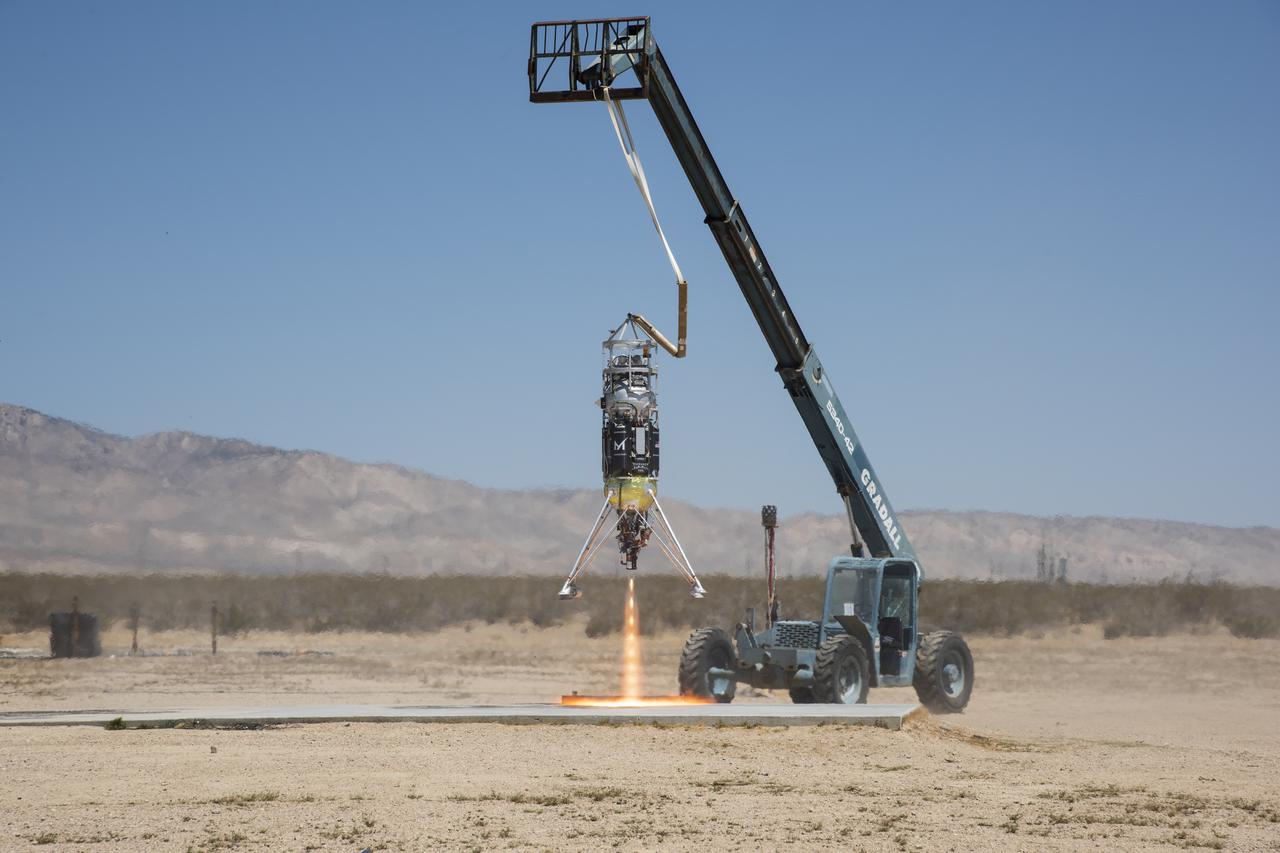
Masten Space Systems’ Xodiac rocket flight tests Honeybee Robotics pneumatic sampler collection system, PlanetVac, in Mojave Desert.
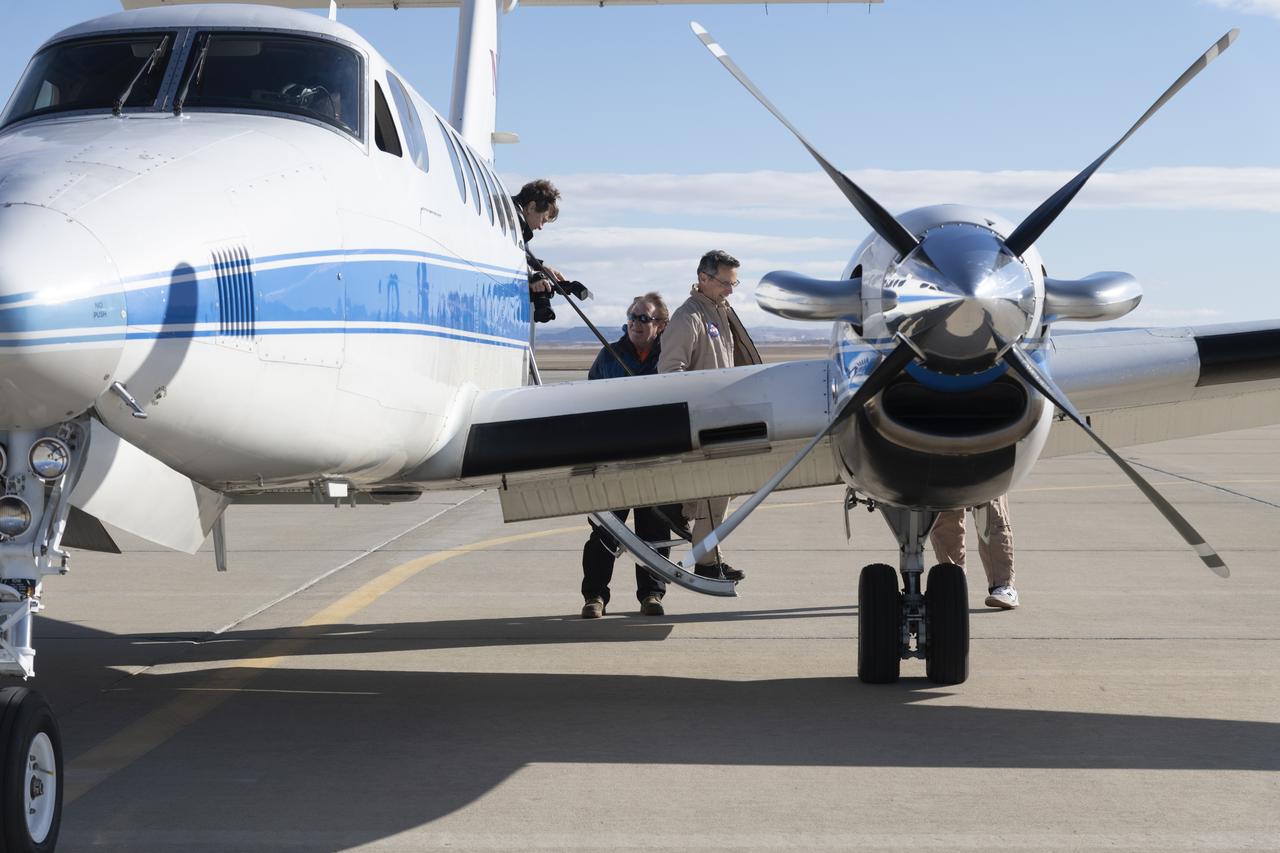
NASA’s Armstrong Flight Research Center in Edwards, California, flew the B200 King Air in support of the Signals of Opportunity Synthetic Aperture Radar (SoOpSAR) campaign. Prior to deploying the plane, NASA research pilot Jeff Borton provides ground checks of the aircraft on Feb. 27, 2023.
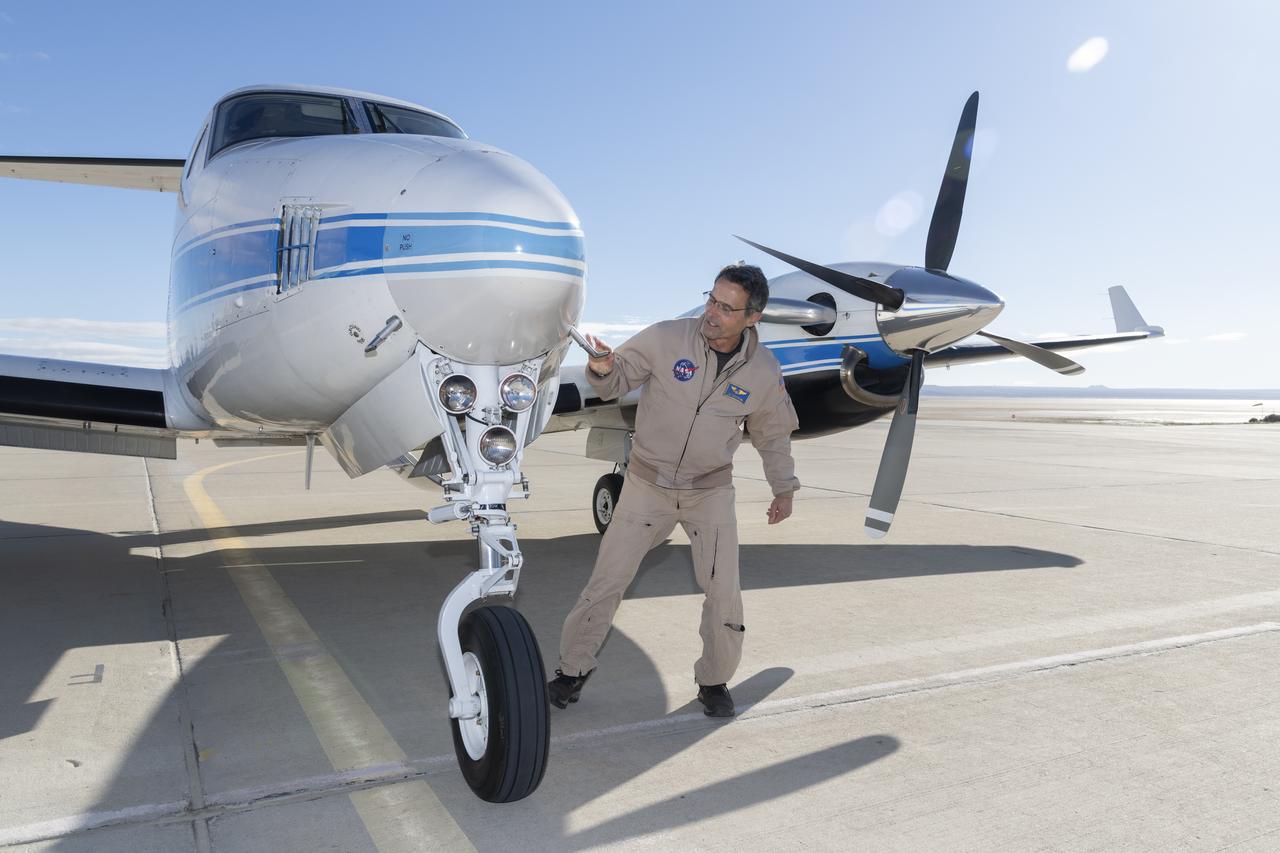
NASA’s Armstrong Flight Research Center in Edwards, California, flew the B200 King Air in support of the Signals of Opportunity Synthetic Aperture Radar (SoOpSAR) campaign. Prior to deploying the plane, NASA research pilot Jeff Borton provides ground checks of the aircraft on Feb. 27, 2023.
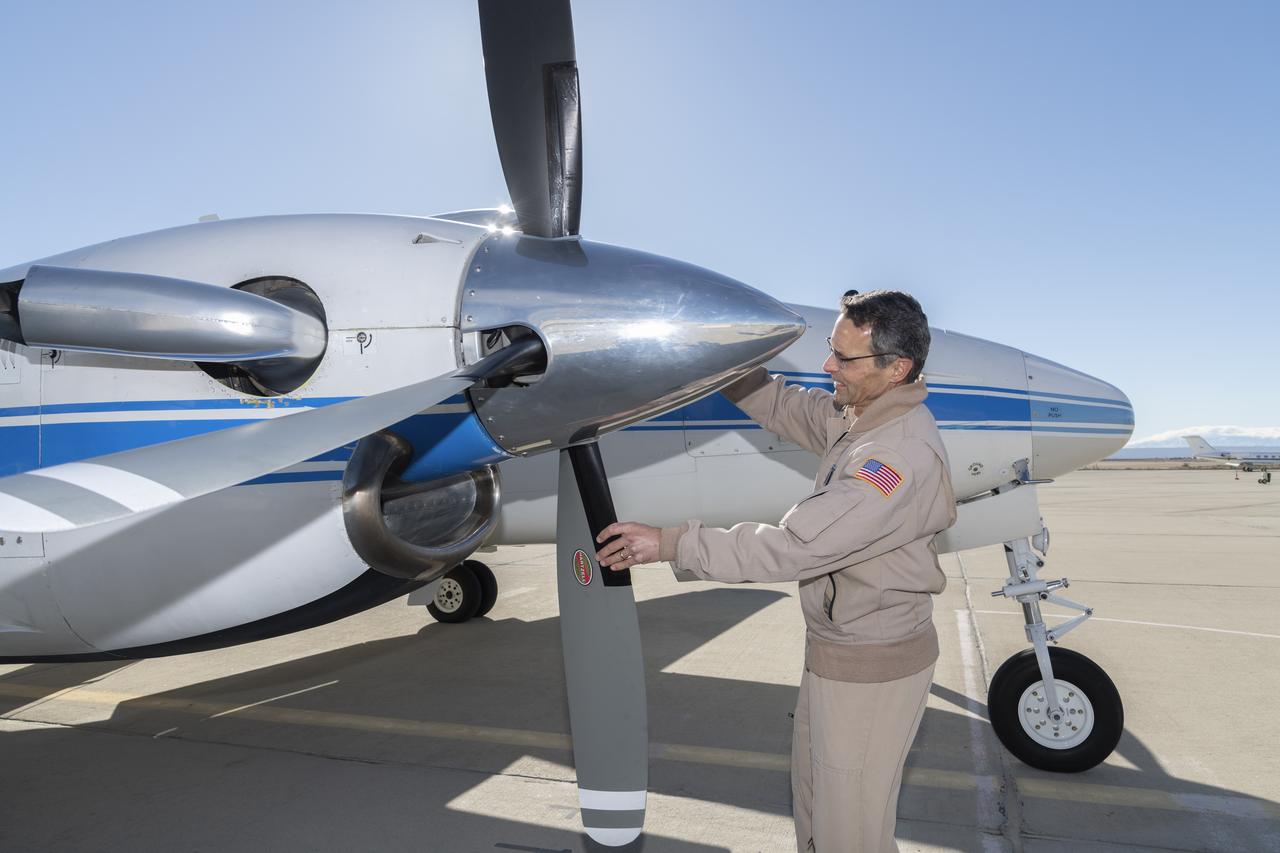
NASA’s Armstrong Flight Research Center in Edwards, California, flew the B200 King Air in support of the Signals of Opportunity Synthetic Aperture Radar (SoOpSAR) campaign. Prior to deploying the plane, NASA research pilot Jeff Borton provides ground checks of the aircraft on Feb. 27, 2023.
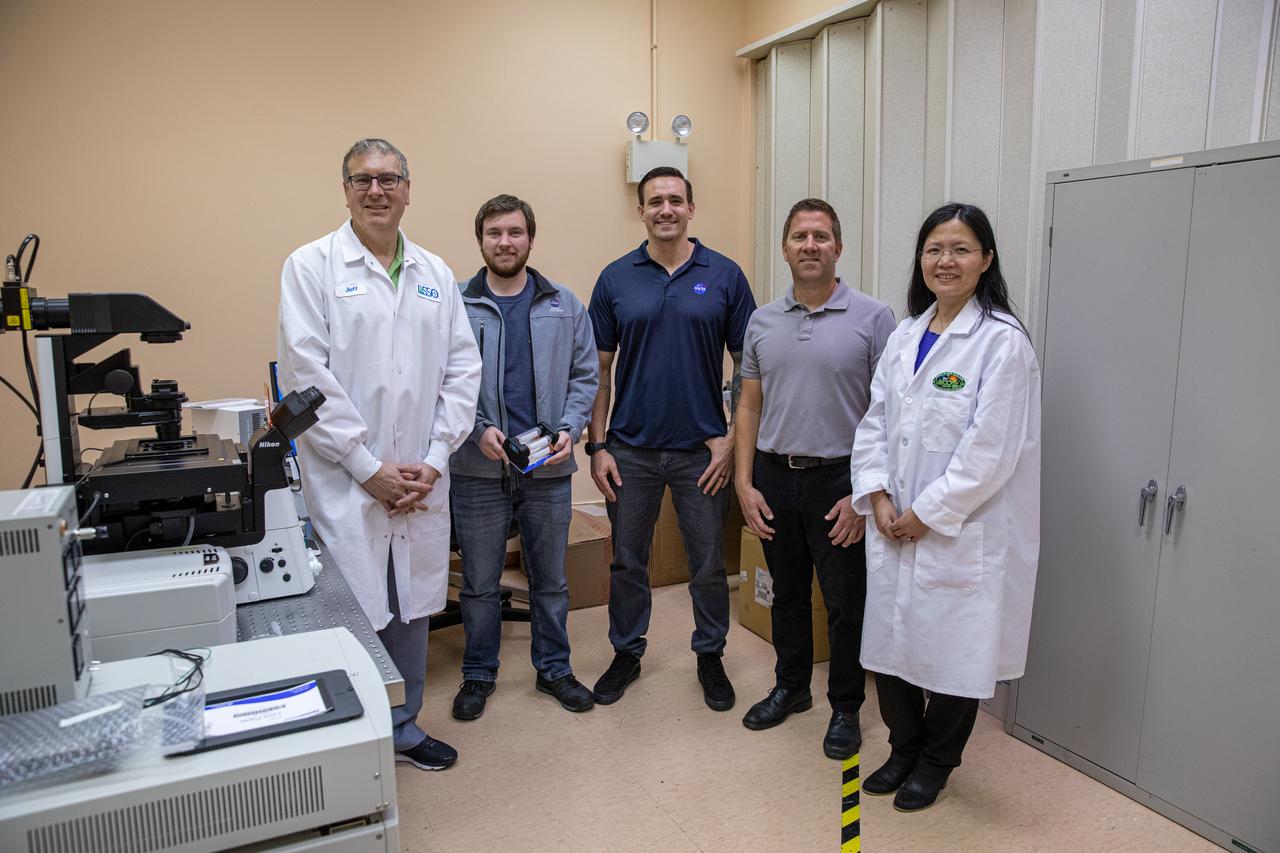
Researchers are in the Microgravity Simulation Support Facility (MSSF) inside the Neil Armstrong Operations and Checkout building at NASA’s Kennedy Space Center in Florida on Feb. 11, 2020. From left are Jonathan Gleeson, aerospace engineer on the LASSO contract; Jason Fischer, a research and development scientist on the LASSO contract; Ralph Nacca, aerospace flight systems; Jeffrey Richards, a payload research and science coordinator on the LASSO contract; and Dr. Ye Zhang, a project scientist. The microgravity simulation device was developed to provide ground simulation capability to the U.S. research community in order to supplement the limited opportunities to access the International Space Station and other platforms for microgravity research. The MSSF is designed to support biological research on microorganisms, cells, tissues, small plants and small animals. The simulator provides NASA with an alternative platform for microgravity research and creates the opportunity to conduct experiments on the space station in parallel with conditions of simulated microgravity on the ground.
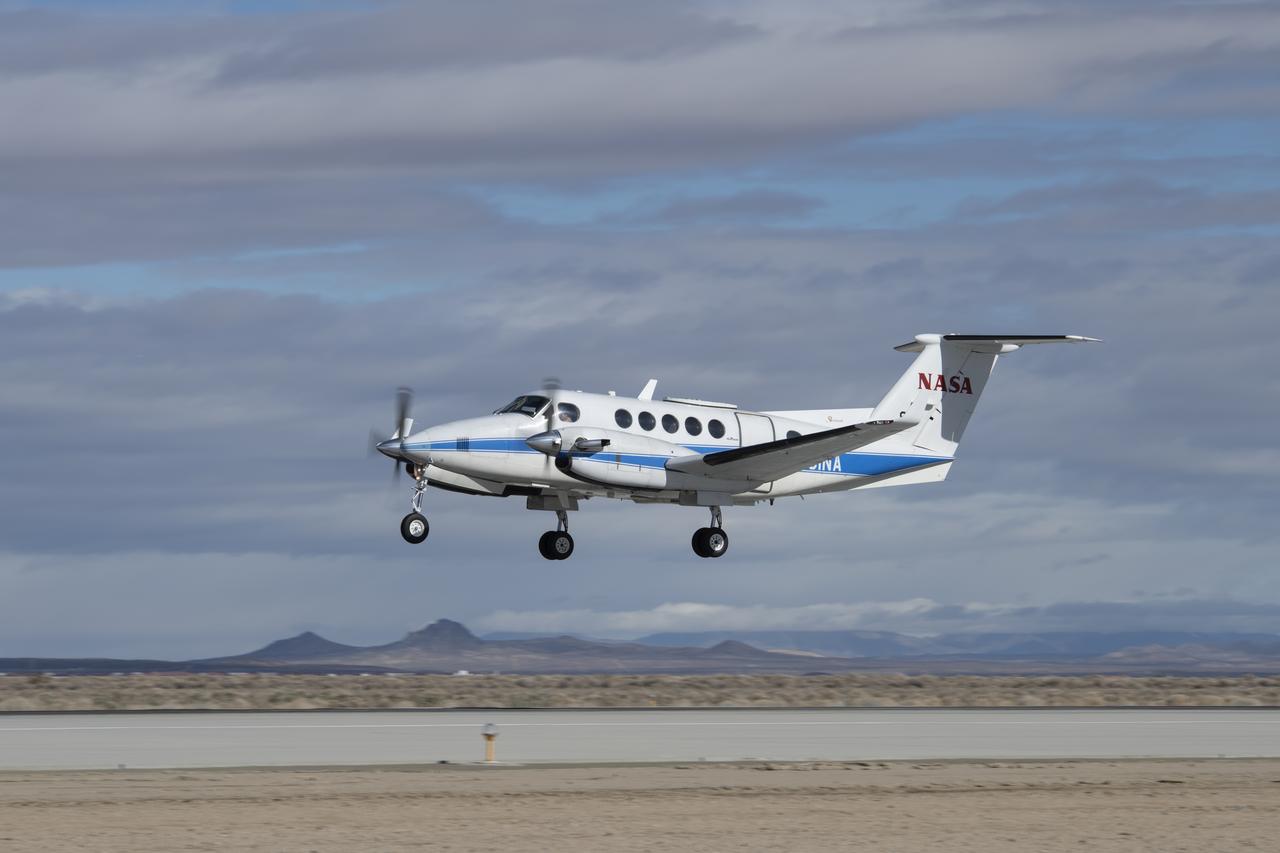
NASA’s Armstrong Flight Research Center in Edwards, California, flew the B200 King Air in support of the Signals of Opportunity Synthetic Aperture Radar (SoOpSAR) campaign on Feb. 27, 2023.
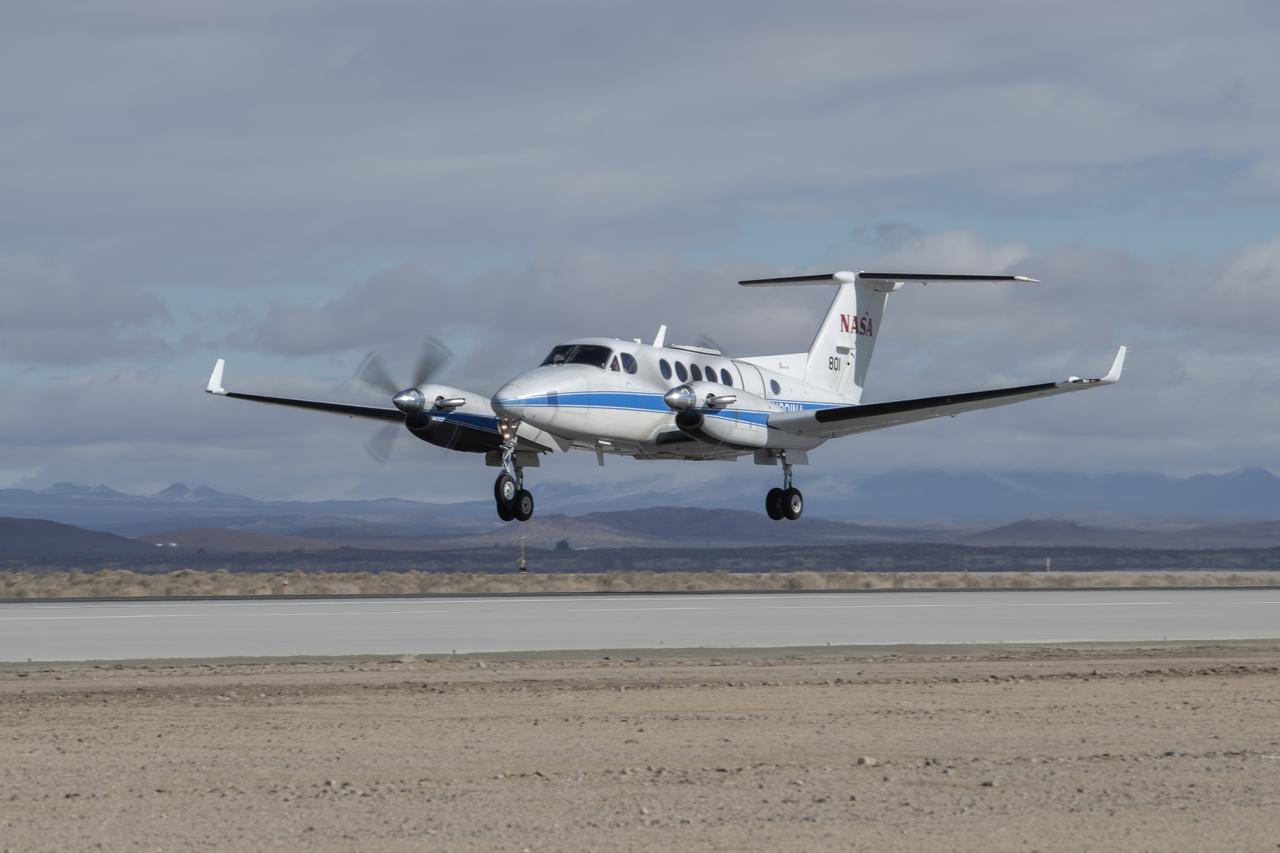
NASA’s Armstrong Flight Research Center in Edwards, California, flew the B200 King Air in support of the Signals of Opportunity Synthetic Aperture Radar (SoOpSAR) campaign on Feb. 27, 2023.

NASA’s Armstrong Flight Research Center in Edwards, California, flew the B200 King Air in support of the Signals of Opportunity Synthetic Aperture Radar (SoOpSAR) campaign on Feb. 27, 2023.

NASA’s Armstrong Flight Research Center in Edwards, California, flew the B200 King Air in support of the Signals of Opportunity Synthetic Aperture Radar (SoOpSAR) campaign on Feb. 27, 2023.
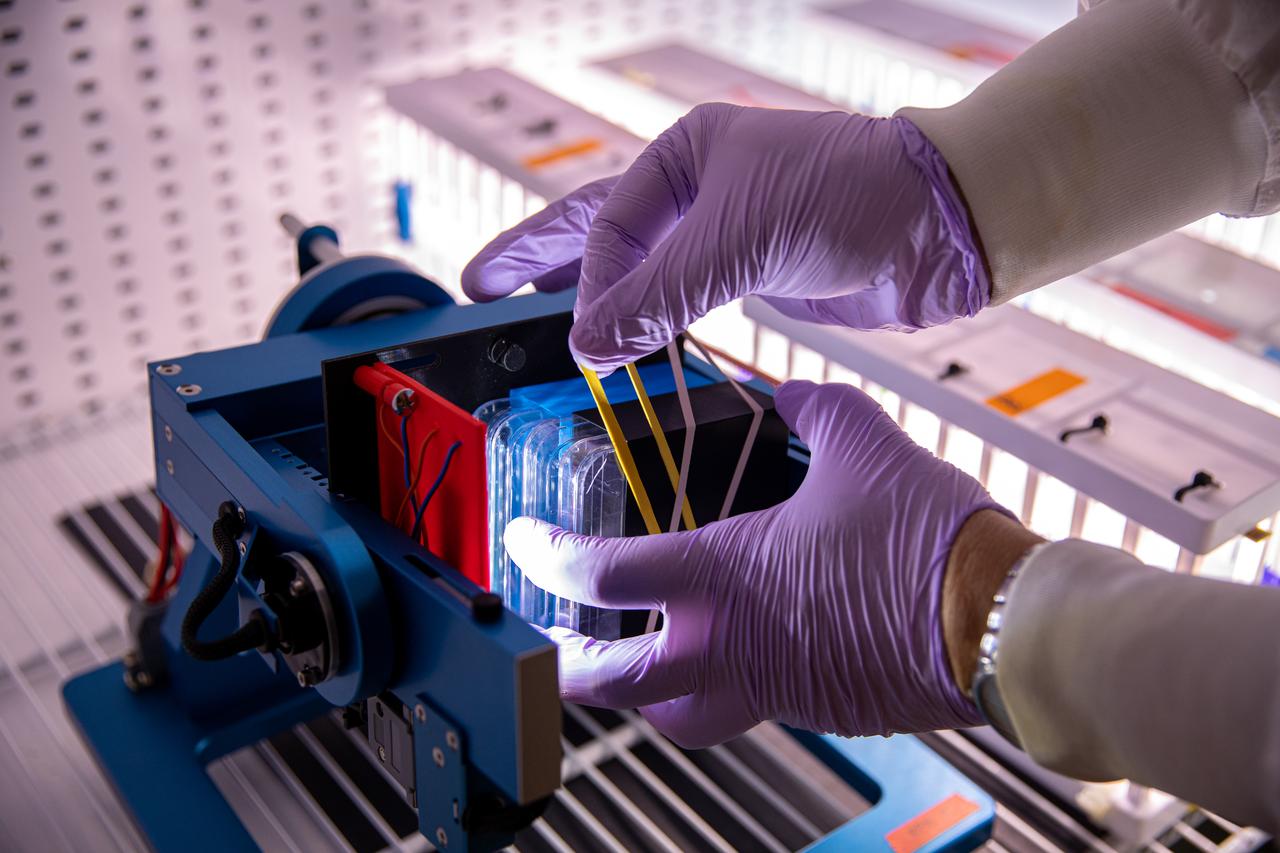
Jeffrey Richards, a payload research and science coordinator on the LASSO contract at NASA’s Kennedy Space Center in Florida, prepares an experiment for a test in an Airbus Random Positioning Machine in the Microgravity Simulation Support Facility (MSSF) inside the Neil Armstrong Operations and Checkout building at NASA’s Kennedy Space Center in Florida on Feb. 11, 2020. The facility was developed to provide ground simulation capability to the U.S. research community in order to supplement the limited opportunities to access the International Space Station and other platforms for microgravity research. The MSSF is designed to support biological research on microorganisms, cells, tissues, small plants and small animals. The simulator provides NASA with an alternative platform for microgravity research and creates the opportunity to conduct experiments on the space station in parallel with conditions of simulated microgravity on the ground.
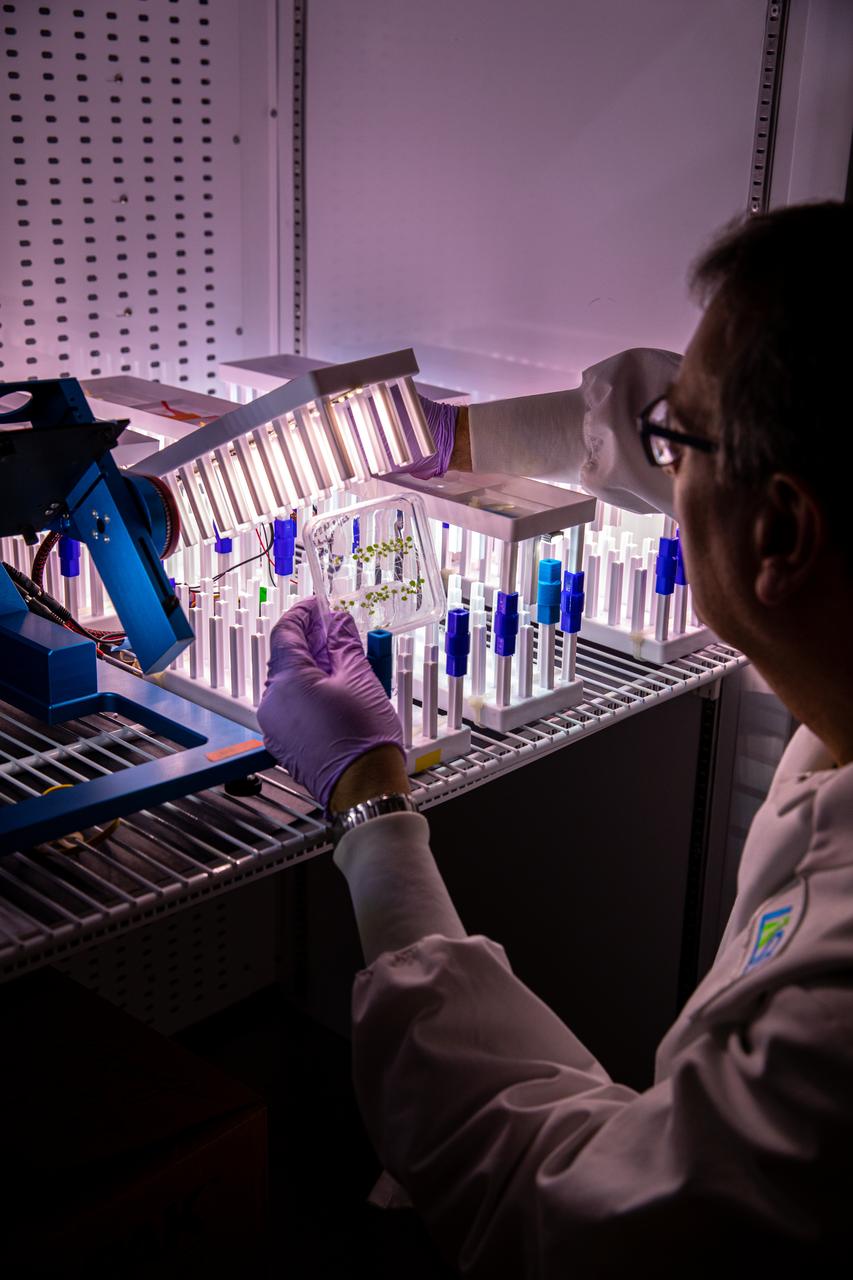
Jeffrey Richards, a payload research and science coordinator on the LASSO contract at NASA’s Kennedy Space Center in Florida, prepares an experiment for a test in an Airbus Random Positioning Machine in the Microgravity Simulation Support Facility (MSSF) inside the Neil Armstrong Operations and Checkout building at NASA’s Kennedy Space Center in Florida on Feb. 11, 2020. The facility was developed to provide ground simulation capability to the U.S. research community in order to supplement the limited opportunities to access the International Space Station and other platforms for microgravity research. The MSSF is designed to support biological research on microorganisms, cells, tissues, small plants and small animals. The simulator provides NASA with an alternative platform for microgravity research and creates the opportunity to conduct experiments on the space station in parallel with conditions of simulated microgravity on the ground.

Jeffrey Richards, a payload research and science coordinator on the LASSO contract at NASA’s Kennedy Space Center in Florida, prepares an experiment for a test in an Airbus Random Positioning Machine in the Microgravity Simulation Support Facility (MSSF) inside the Neil Armstrong Operations and Checkout building at NASA’s Kennedy Space Center in Florida on Feb. 11, 2020. The facility was developed to provide ground simulation capability to the U.S. research community in order to supplement the limited opportunities to access the International Space Station and other platforms for microgravity research. The MSSF is designed to support biological research on microorganisms, cells, tissues, small plants and small animals. The simulator provides NASA with an alternative platform for microgravity research and creates the opportunity to conduct experiments on the space station in parallel with conditions of simulated microgravity on the ground.
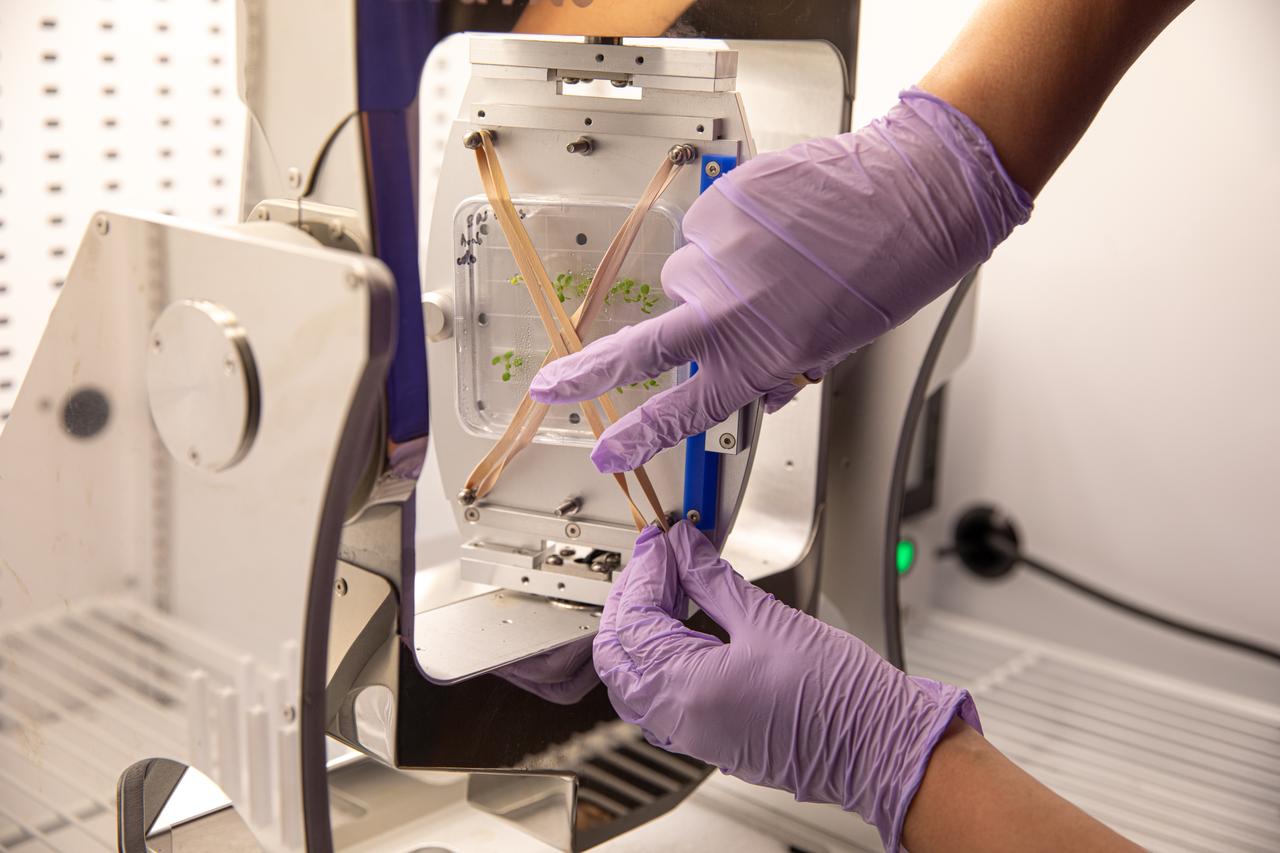
Ye Zhang, a project scientist at NASA’s Kennedy Space Center in Florida, makes adjustments to a Gravite 3d clinostat in the Microgravity Simulation Support Facility (MSSF) inside the Neil Armstrong Operations and Checkout building at NASA’s Kennedy Space Center in Florida on Feb. 11, 2020. The facility was developed to provide ground simulation capability to the U.S. research community in order to supplement the limited opportunities to access the International Space Station and other platforms for microgravity research. The MSSF is designed to support biological research on microorganisms, cells, tissues, small plants and small animals. The simulator provides NASA with an alternative platform for microgravity research and creates the opportunity to conduct experiments on the space station in parallel with conditions of simulated microgravity on the ground.
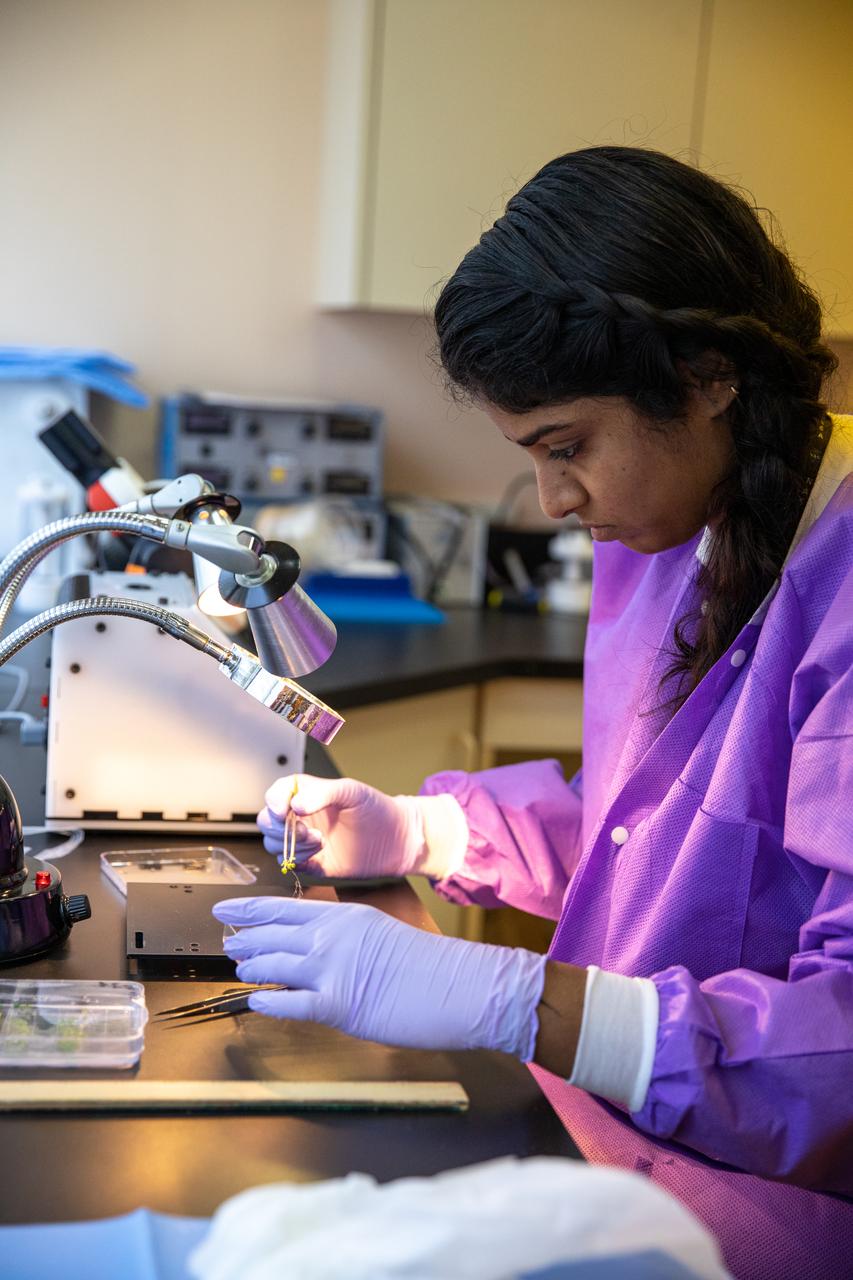
Srujana Neelam, a researcher working at NASA’s Kennedy Space Center in Florida, dissects Arabidopsis thaliana plants from petri plates used in microgravity simulation devices in the Microgravity Simulation Support Facility (MSSF) inside the Neil Armstrong Operations and Checkout building on Feb. 11, 2020. The facility was developed to provide ground simulation capability to the U.S. research community in order to supplement the limited opportunities to access the International Space Station and other platforms for microgravity research. The MSSF is designed to support biological research on microorganisms, cells, tissues, small plants and small animals. The simulator provides NASA with an alternative platform for microgravity research and creates the opportunity to conduct experiments on the space station in parallel with conditions of simulated microgravity on the ground.
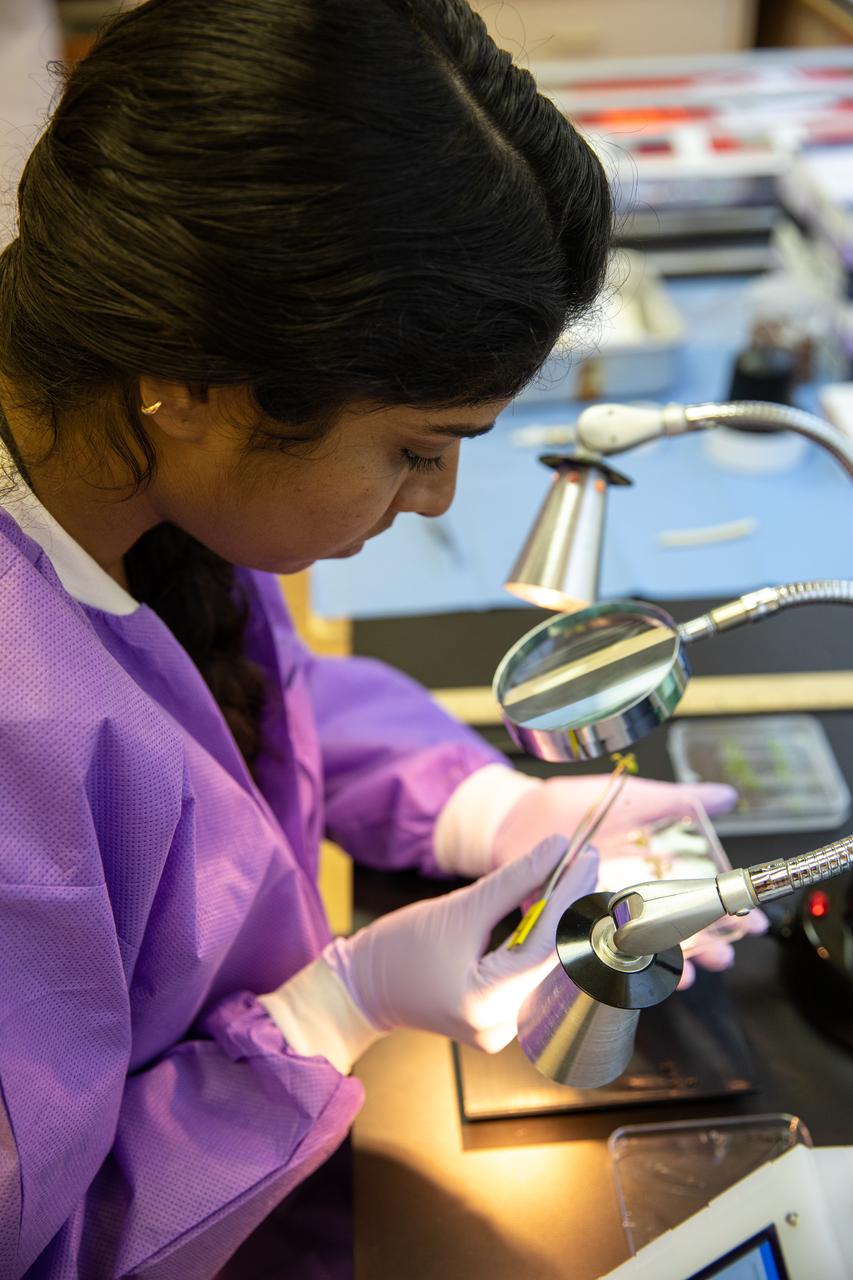
Srujana Neelam, a researcher working at NASA’s Kennedy Space Center in Florida dissects Arabidopsis thaliana plants from petri plates used in microgravity simulation devices in the Microgravity Simulation Support Facility (MSSF) inside the Neil Armstrong Operations and Checkout building on Feb. 11, 2020. The facility was developed to provide ground simulation capability to the U.S. research community in order to supplement the limited opportunities to access the International Space Station and other platforms for microgravity research. The MSSF is designed to support biological research on microorganisms, cells, tissues, small plants and small animals. The simulator provides NASA with an alternative platform for microgravity research and creates the opportunity to conduct experiments on the space station in parallel with conditions of simulated microgravity on the ground.
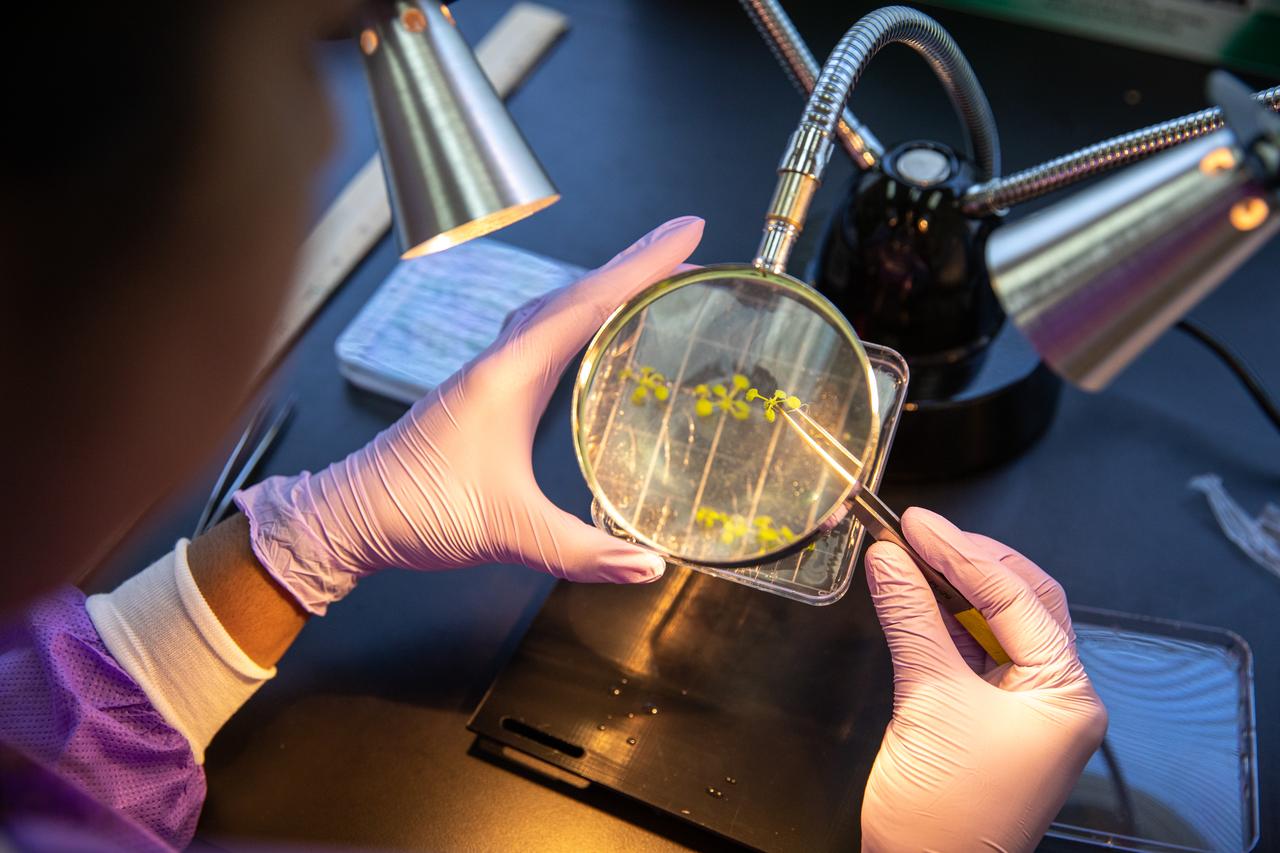
Srujana Neelam, a researcher working at NASA’s Kennedy Space Center in Florida, dissects Arabidopsis thaliana plants from petri plates used in microgravity simulation devices in the Microgravity Simulation Support Facility (MSSF) inside the Neil Armstrong Operations and Checkout building on Feb. 11, 2020. The facility was developed to provide ground simulation capability to the U.S. research community in order to supplement the limited opportunities to access the International Space Station and other platforms for microgravity research. The MSSF is designed to support biological research on microorganisms, cells, tissues, small plants and small animals. The simulator provides NASA with an alternative platform for microgravity research and creates the opportunity to conduct experiments on the space station in parallel with conditions of simulated microgravity on the ground.
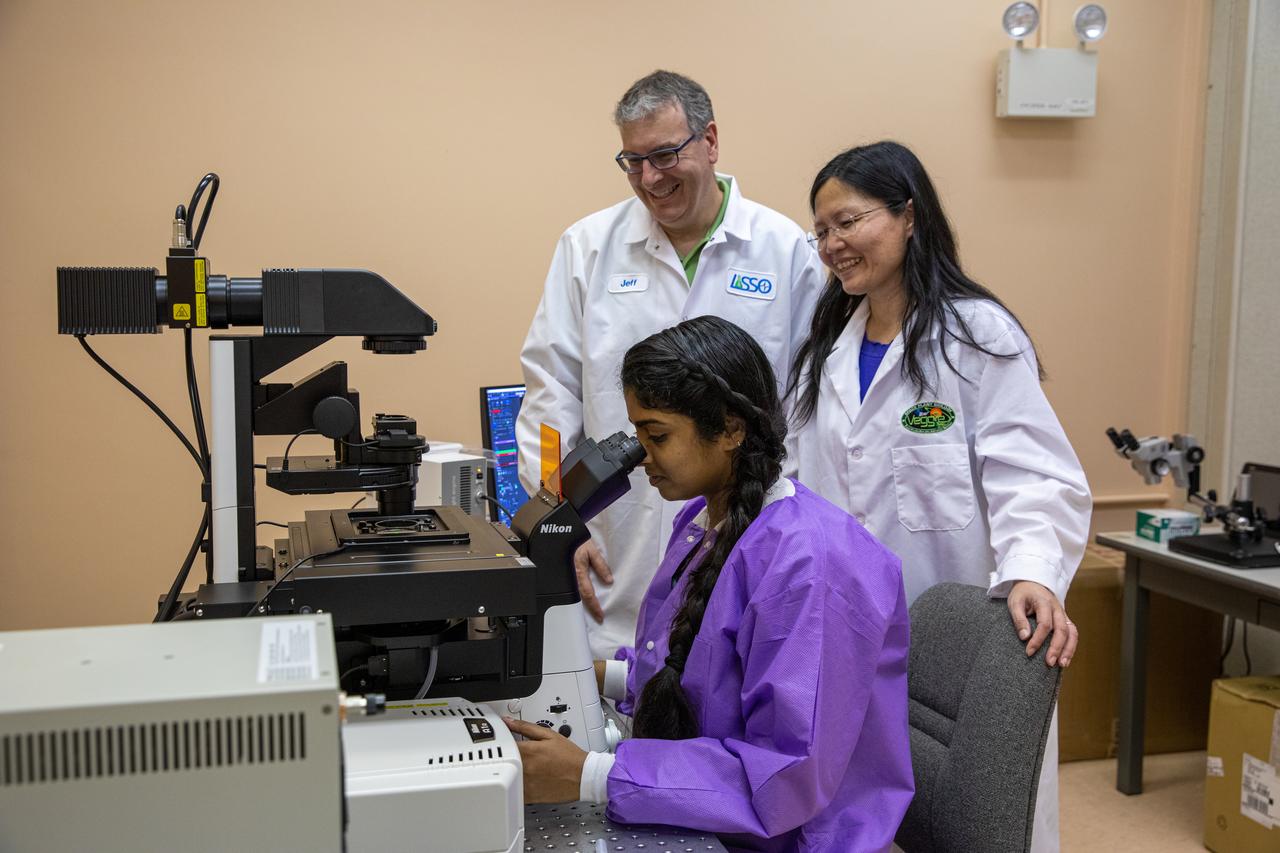
Dr. Srujana Neelam, a NASA post-doctoral fellow observes samples on a confocal microscope in the Microgravity Simulation Support Facility (MSSF) inside the Neil Armstrong Operations and Checkout building at NASA’s Kennedy Space Center in Florida on Feb. 11, 2020, with Jeffrey Richards, a payload research and science coordinator on the LASSO contract; and Dr. Ye Zhang, a project scientist. The facility was developed to provide ground simulation capability to the U.S. research community in order to supplement the limited opportunities to access the International Space Station and other platforms for microgravity research. The MSSF is designed to support biological research on microorganisms, cells, tissues, small plants and small animals. The simulator provides NASA with an alternative platform for microgravity research and creates the opportunity to conduct experiments on the space station in parallel with conditions of simulated microgravity on the ground.

Srujana Neelam, a researcher working at NASA’s Kennedy Space Center in Florida, dissects Arabidopsis thaliana plants from petri plates used in microgravity simulation devices in the Microgravity Simulation Support Facility (MSSF) inside the Neil Armstrong Operations and Checkout building on Feb. 11, 2020. The facility was developed to provide ground simulation capability to the U.S. research community in order to supplement the limited opportunities to access the International Space Station and other platforms for microgravity research. The MSSF is designed to support biological research on microorganisms, cells, tissues, small plants and small animals. The simulator provides NASA with an alternative platform for microgravity research and creates the opportunity to conduct experiments on the space station in parallel with conditions of simulated microgravity on the ground.
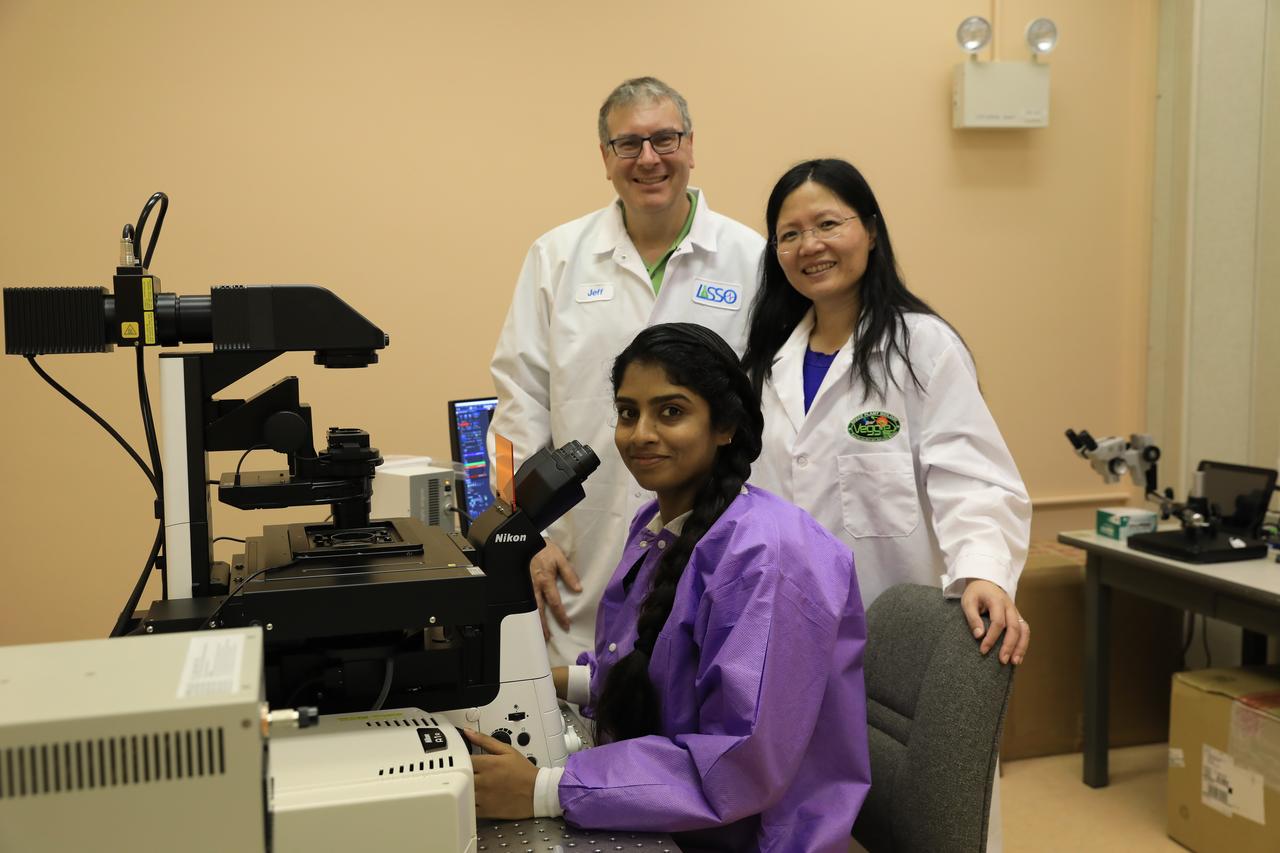
Dr. Srujana Neelam, a NASA post-doctoral fellow observes samples on a confocal microscope in the Microgravity Simulation Support Facility (MSSF) inside the Neil Armstrong Operations and Checkout building at NASA’s Kennedy Space Center in Florida on Feb. 11, 2020 with Jeffrey Richards, a payload research and science coordinator on the LASSO contract, Dr. Ye Zhang, a project scientist. The facility was developed to provide ground simulation capability to the U.S. research community in order to supplement the limited opportunities to access the International Space Station and other platforms for microgravity research. The MSSF is designed to support biological research on microorganisms, cells, tissues, small plants and small animals. The simulator provides NASA with an alternative platform for microgravity research and creates the opportunity to conduct experiments on the space station in parallel with conditions of simulated microgravity on the ground.
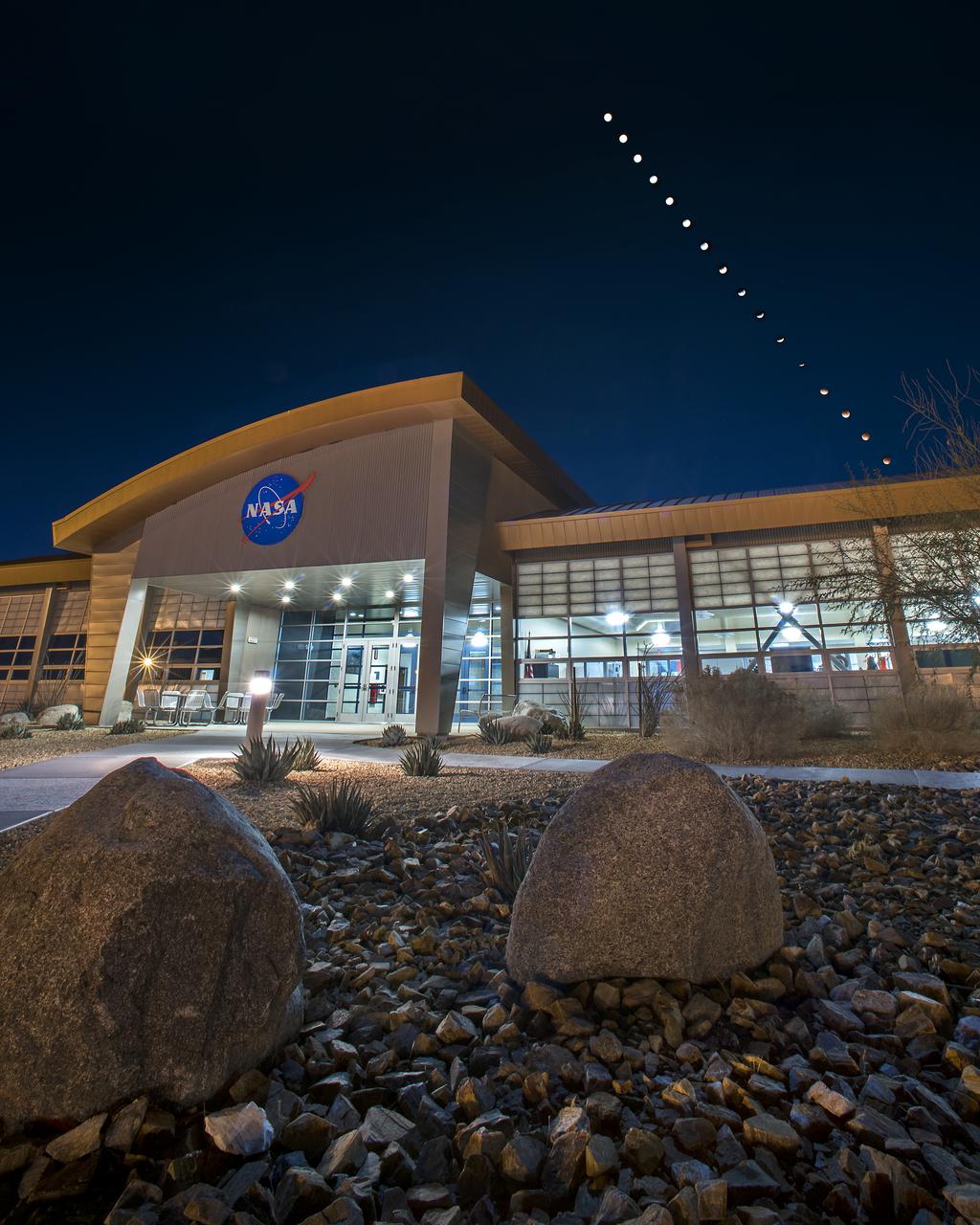
California’s NASA Armstrong Flight Research Center photographer Ken Ulbrich takes photos of Super Blue Blood Moon eclipse making a time-lapse composition of the event on January 31. The total lunar eclipse provided a rare opportunity to capture a supermoon, a blue moon and a lunar eclipse at the same time. A supermoon occurs when the Moon is closer to Earth in its orbit and appearing 14 percent brighter than usual. As the second full moon of the month, this moon is also commonly known as a blue moon, though it will not be blue in appearance. The super blue moon passed through Earth’s shadow and took on a reddish tint, known as a blood moon. This total lunar eclipse occurs when the Sun, Earth, and a full moon form a near-perfect lineup in space. The Moon passes directly behind the Earth into its umbra (shadow).
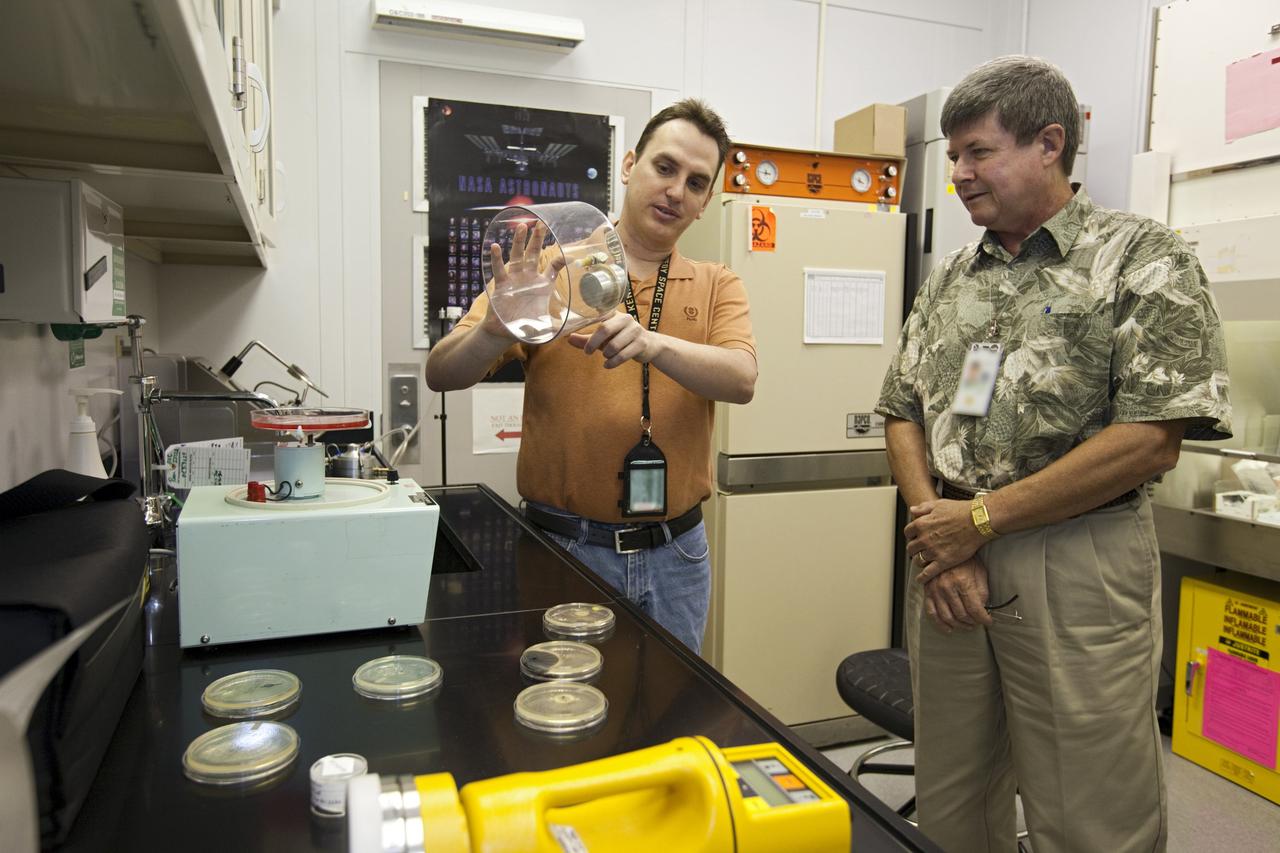
CAPE CANAVERAL, Fla. – In a laboratory at NASA’s Kennedy Space Center in Florida, a researcher describes the equipment he uses to run experiments to a fellow employee during the center’s 2012 Innovation Expo. The center-wide event gave researchers a chance to show some of their work to others at the center and gave employees the opportunity to see facilities they hadn’t seen before. Photo credit: NASA/Kim Shiflett
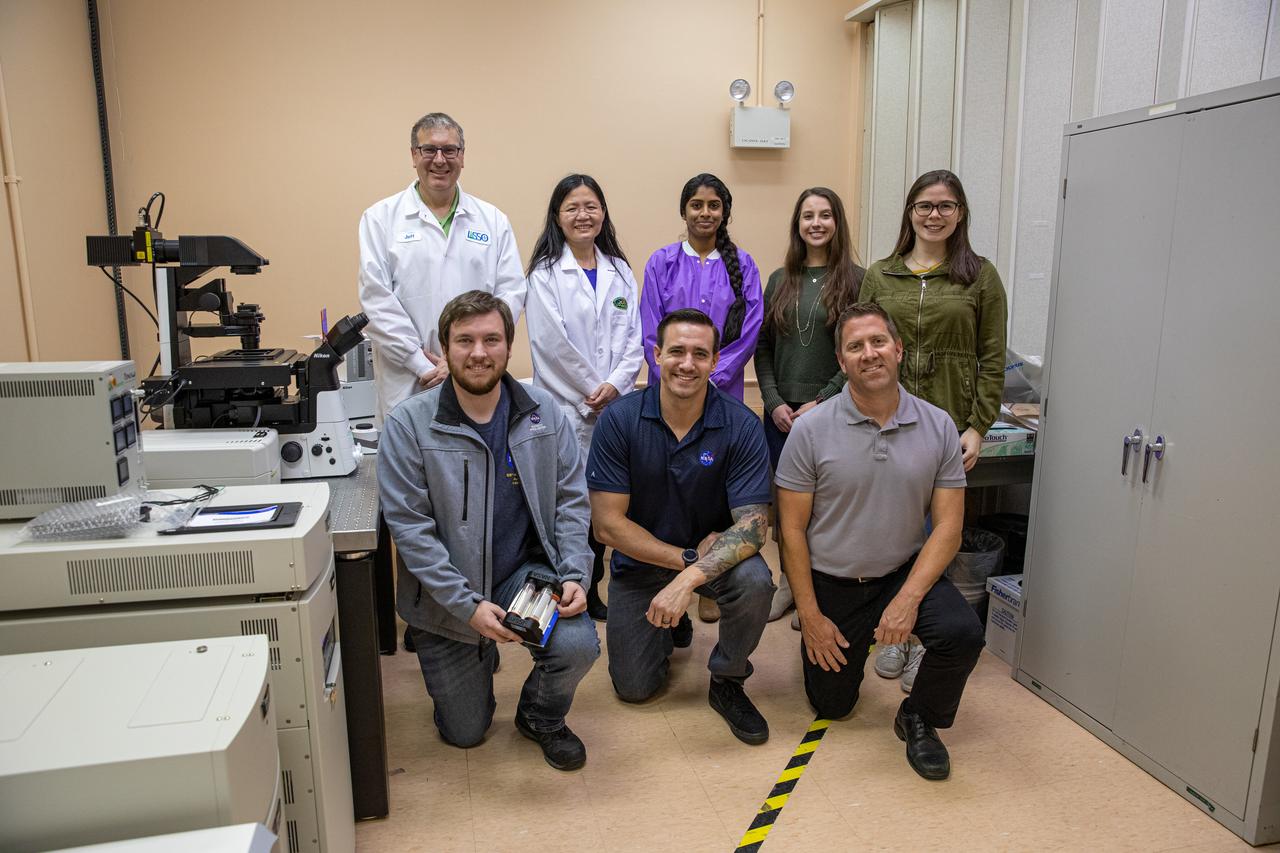
Researchers are in the Microgravity Simulation Support Facility (MSSF) inside the Neil Armstrong Operations and Checkout building at NASA’s Kennedy Space Center in Florida on Feb. 11, 2020. In front, from left, are Jonathan Gleeson, aerospace engineer on the LASSO contract; Jason Fischer, a research and development scientist on the LASSO contract; and Ralph Nacca, aerospace flight systems. In back, from left, are Jeffrey Richards, a payload research and science coordinator on the LASSO contract; Dr. Ye Zhang, a project scientist; Dr. Srujana Neelam, a NASA post-doctoral fellow; Jessica Hellein, NASA intern; and Emily Keith, NASA intern. The facility was developed to provide ground simulation capability to the U.S. research community in order to supplement the limited opportunities to access the International Space Station and other platforms for microgravity research. The MSSF is designed to support biological research on microorganisms, cells, tissues, small plants and small animals. The simulator provides NASA with an alternative platform for microgravity research and creates the opportunity to conduct experiments on the space station in parallel with conditions of simulated microgravity on the ground.

Robert Wilson of the Solar/Solar terrestrial Studies team at the National Space Science and Technology Center, a joint research and collaborative think tank partnership of the University of Alabama in Huntsville (UAH) and the Marshall Space Flight Center, adjusts his telescope which is set up as a viewing opportunity for MSFC employees prior to the August 21, 2017 solar eclipse event. The Huntsville area experienced 97 percent occultation, nearly a complete blocking out of the sun by the orbit of Earth's moon. The next opportunity to view a solar eclipse in the eastern and central United States will occur in April 2024.
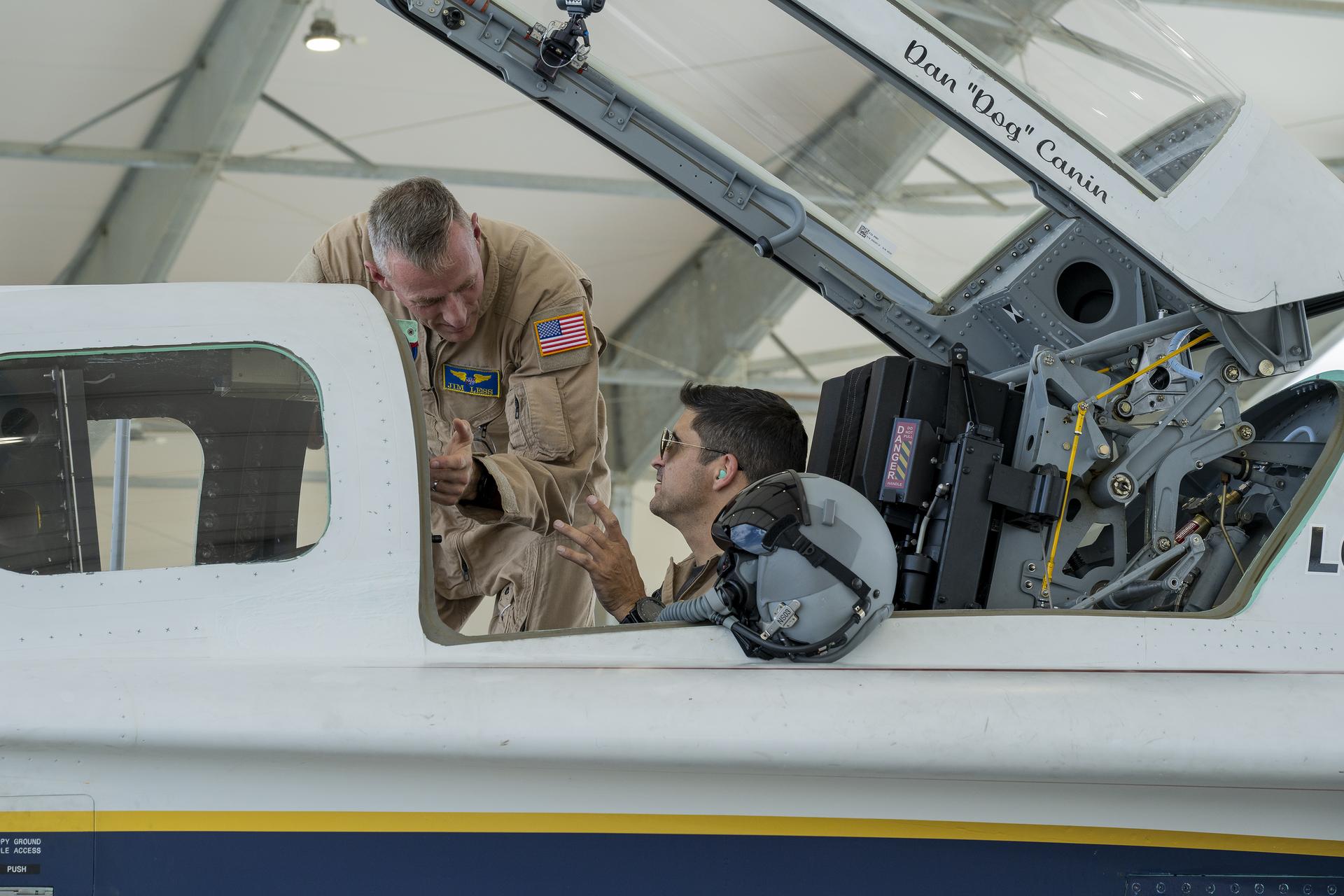
NASA X‑59 test pilots Mike Lippert, right, and Jim “Clue” Less review details prior to an engine run of the agency’s X‑59 quiet‑supersonic research aircraft at NASA’s Armstrong Flight Research Center in Edwards, California, on Thursday, Aug. 27, 2026. The test marked Lippert’s first opportunity to operate the aircraft and become familiar with its cockpit. NASA’s Quesst mission aims to demonstrate quiet supersonic flight over U.S. communities and gather public feedback on the aircraft’s quieter sonic “thump.”
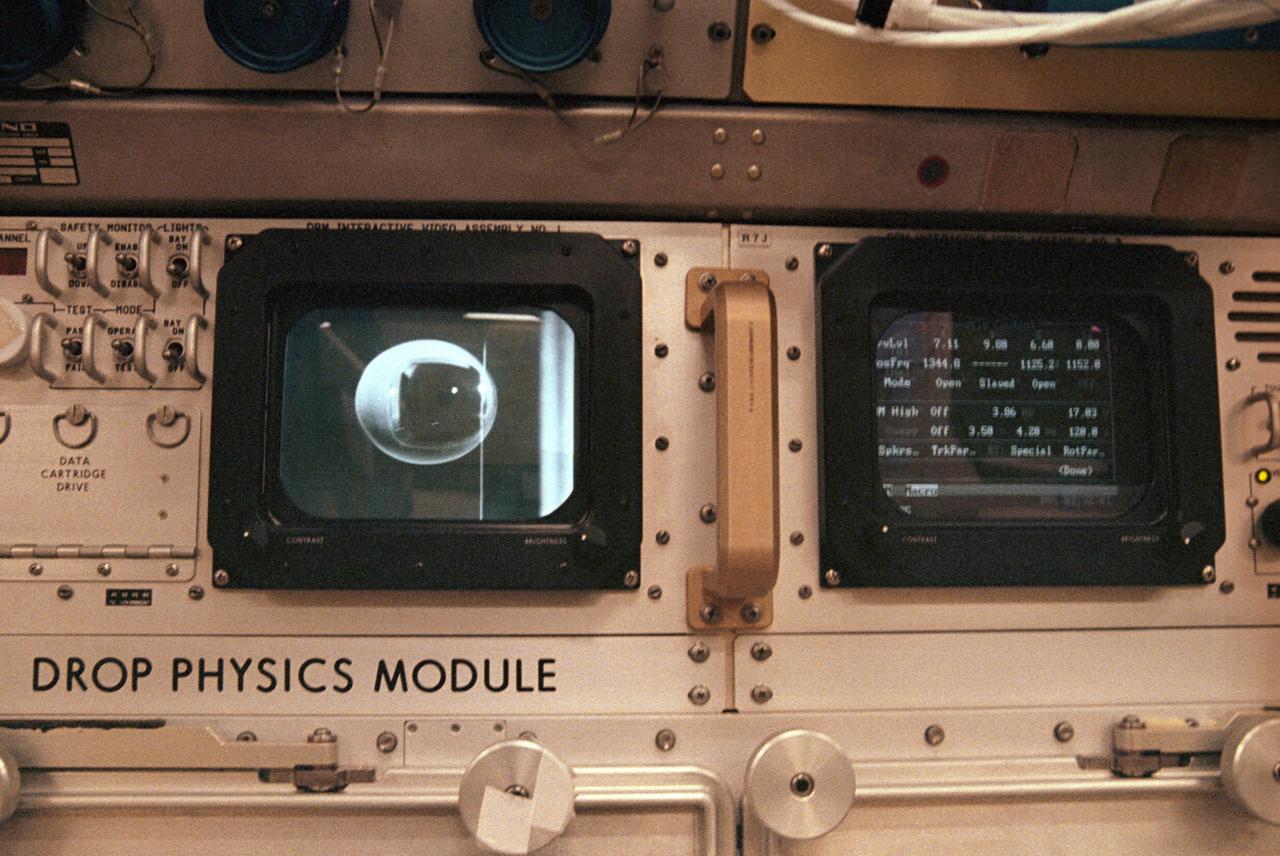
The first United States Microgravity Laboratory (USML-1) was one of NASA's science and technology programs that provided scientists an opportunity to research various scientific investigations in a weightlessness environment inside the Spacelab module. It also provided demonstrations of new equipment to help prepare for advanced microgravity research and processing aboard the Space Station. The USML-1 flew in orbit for extended periods, providing greater opportunities for research in materials science, fluid dynamics, biotechnology (crystal growth), and combustion science. This is a close-up view of the Drop Physics Module (DPM) in the USML science laboratory. The DPM was dedicated to the detailed study of the dynamics of fluid drops in microgravity: their equilibrium shapes, the dynamics of their flows, and their stable and chaotic behaviors. It also demonstrated a technique known as containerless processing. The DPM and microgravity combine to remove the effects of the container, such as chemical contamination and shape, on the sample being studied. Sound waves, generating acoustic forces, were used to suspend a sample in microgravity and to hold a sample of free drops away from the walls of the experiment chamber, which isolated the sample from potentially harmful external influences. The DPM gave scientists the opportunity to test theories of classical fluid physics, which have not been confirmed by experiments conducted on Earth. This image is a close-up view of the DPM. The USML-1 flew aboard the STS-50 mission on June 1992, and was managed by the Marshall Space Flight Center.
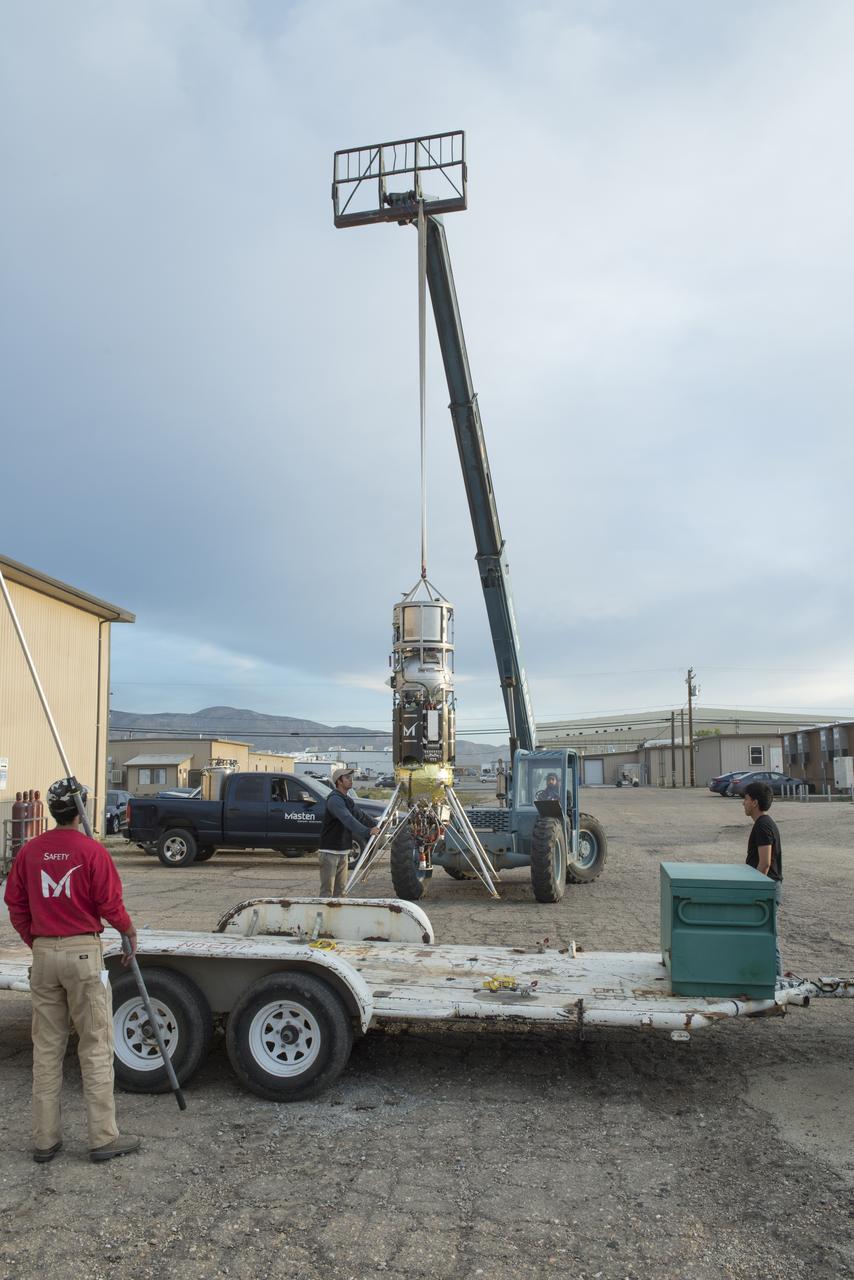
Masten Space Systems’ technician making adjustments to NASA’s autonomous landing technologies payload on Masten’s Xodiac rocket.
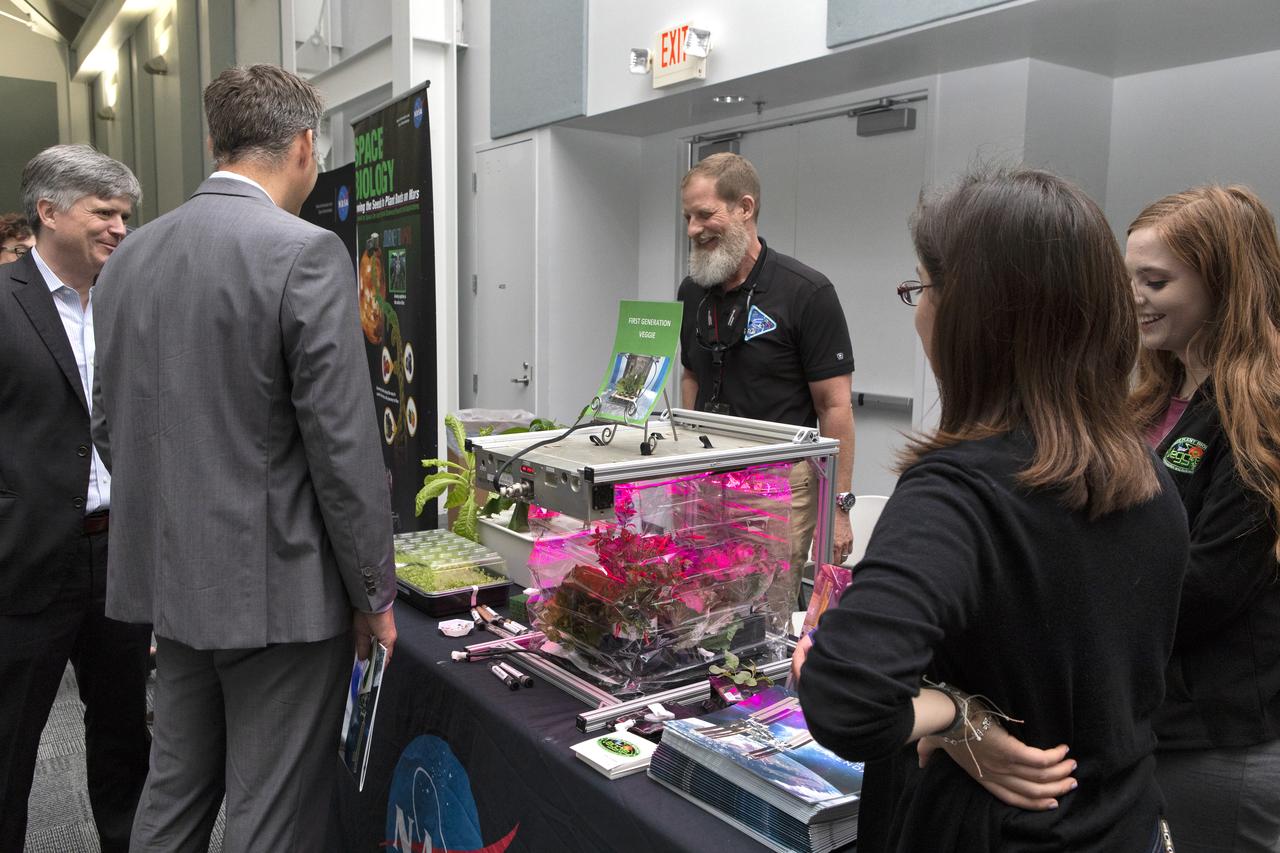
Guests visit with a representative from Exploration Research and Technology during NASA Kennedy Space Center Director Bob Cabana’s update to community leaders, business executives, partners, educators and government leaders March 29, 2019, at the Kennedy Space Center Visitor Complex in Florida. Cabana’s presentation covered recent accomplishments and future plans for Kennedy-led programs, including the Commercial Crew Program, Exploration Ground Systems, Launch Services Program, Exploration Research and Technology, and Center Planning and Development. After the presentation, guests had the opportunity to ask questions and visit displays from the programs and some of the commercial partners.
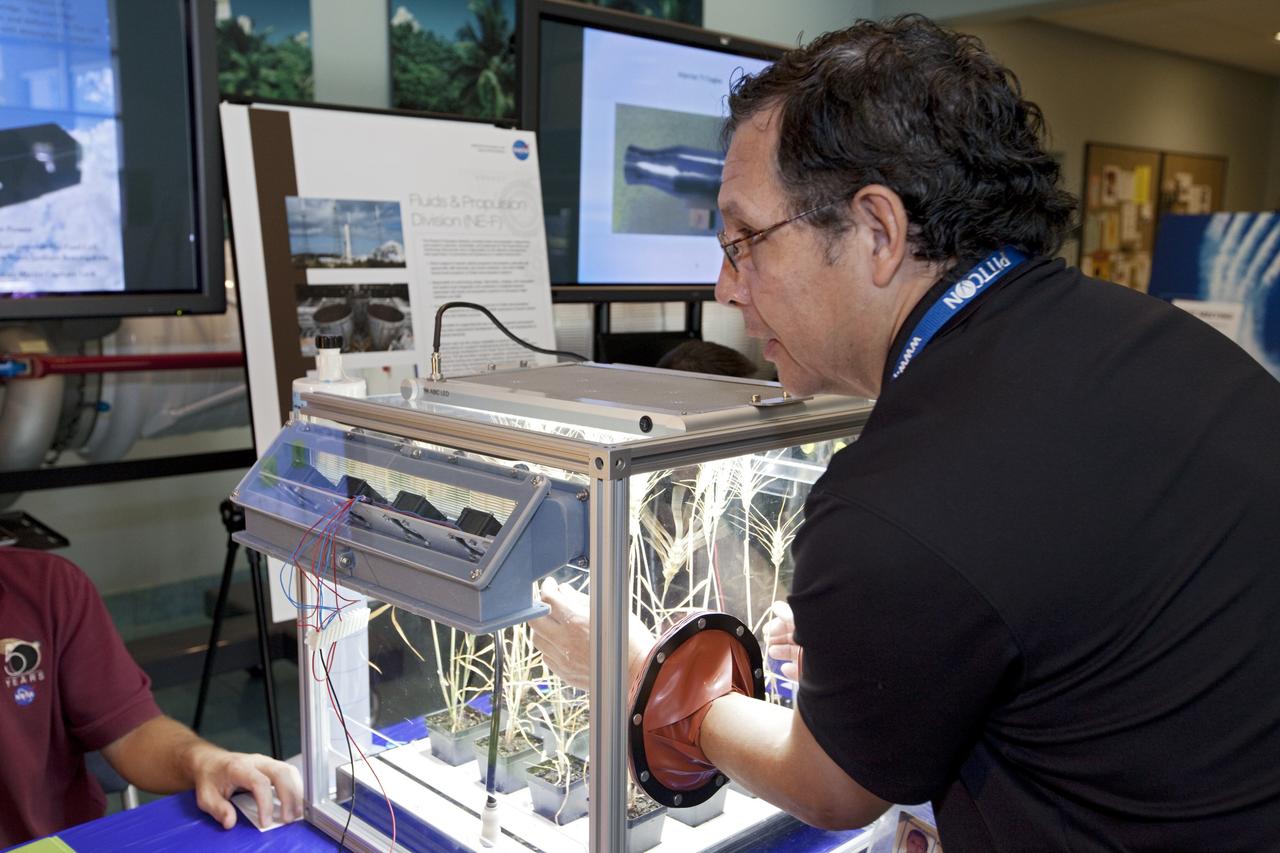
CAPE CANAVERAL, Fla. – At NASA’s Kennedy Space Center in Florida, a worker gets hands-on experience with a plant experiment in the Operations and Support Building II during the center’s 2012 Innovation Expo. The center-wide event gave researchers a chance to show some of their work to others at the center and gave employees the opportunity to see facilities they hadn’t seen before. Photo credit: NASA/Kim Shiflett
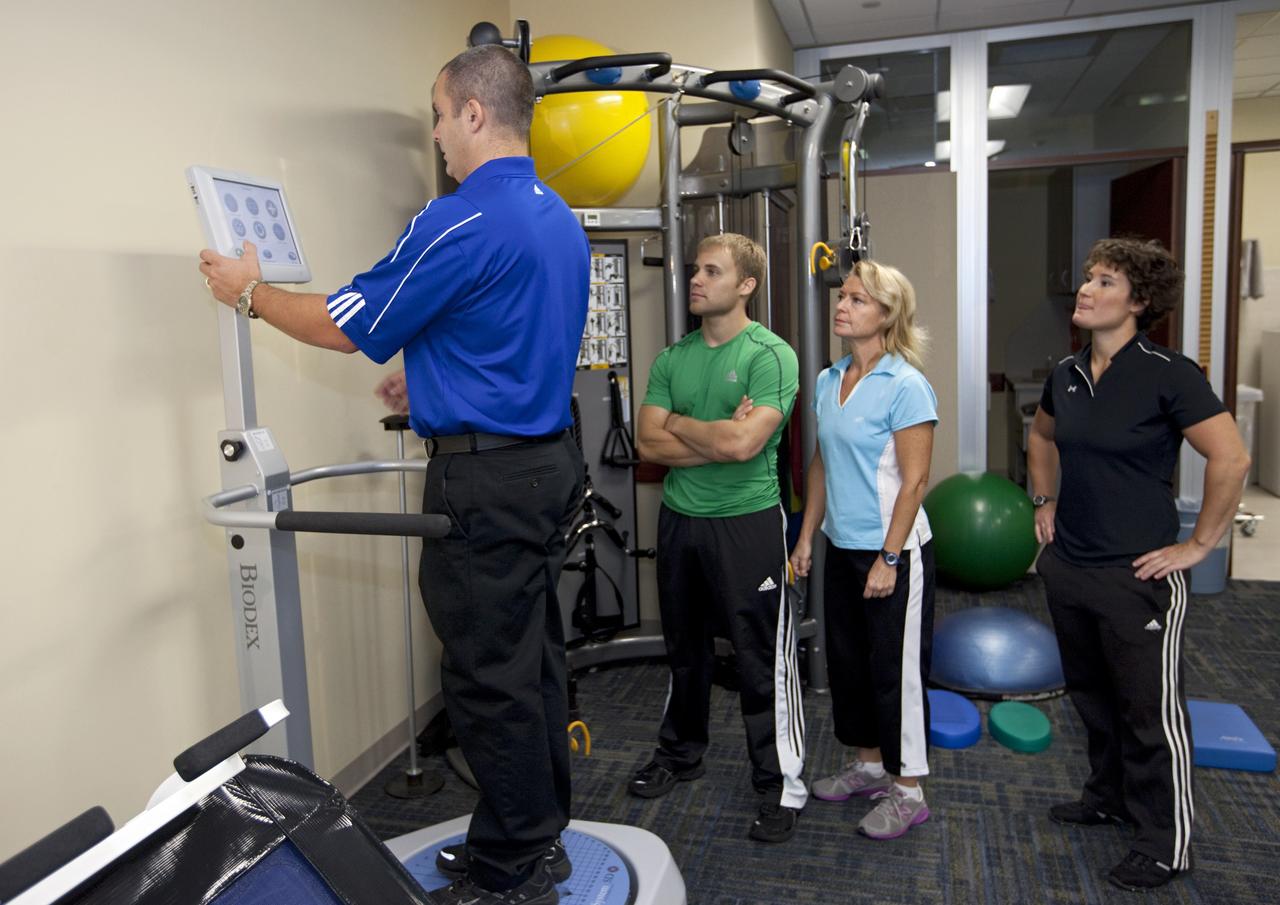
CAPE CANAVERAL, Fla. – At NASA’s Kennedy Space Center in Florida, workers view a new fitness machine in the RehabWorks facility in the Operations and Checkout building during the center’s 2012 Innovation Expo. The center-wide event gave researchers a chance to show some of their work to others at the center and gave employees the opportunity to see facilities they hadn’t seen before. Photo credit: NASA/Kim Shiflett
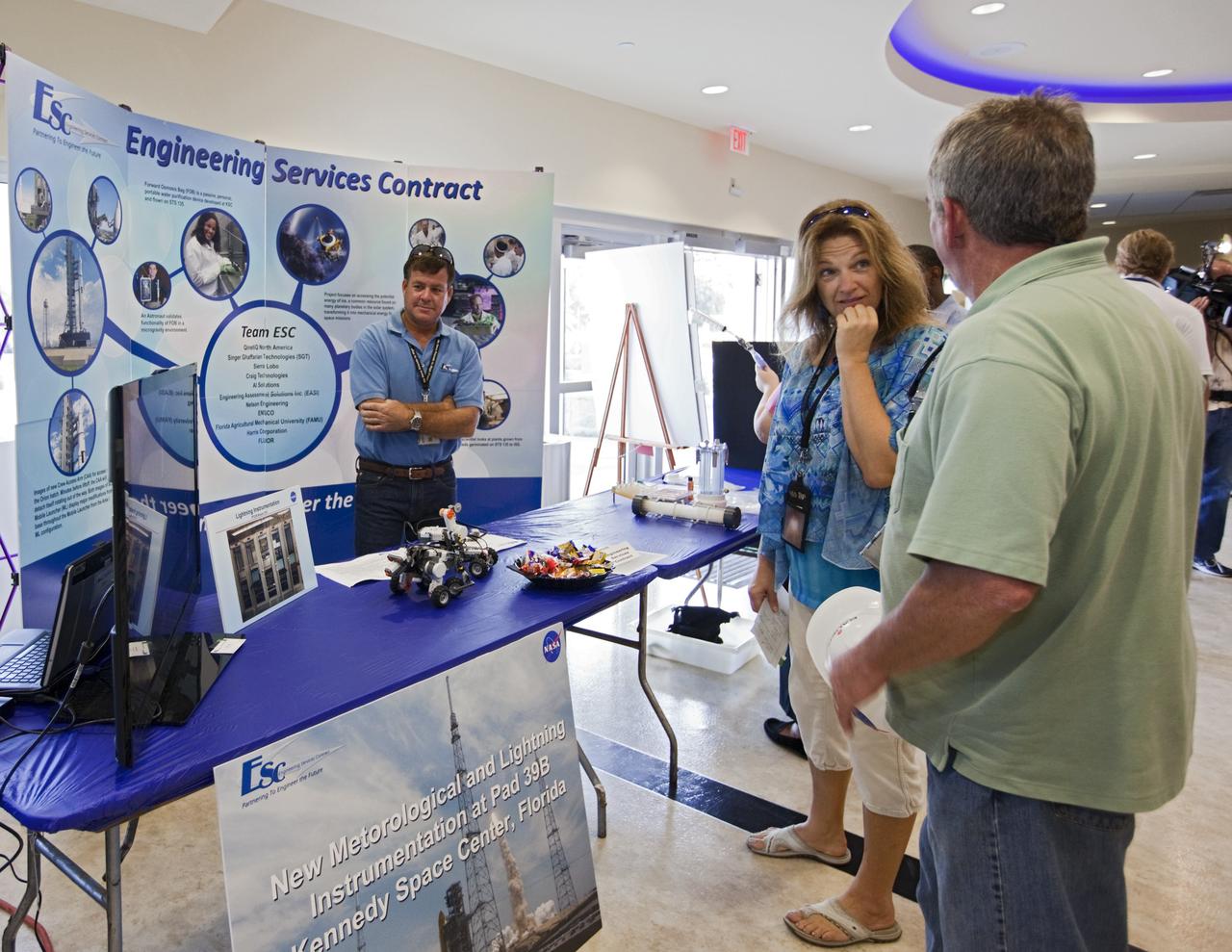
CAPE CANAVERAL, Fla. – At NASA’s Kennedy Space Center in Florida, workers visit several technology and innovation exhibits, including one by the Engineering Services Contract, in the lobby of the Operations and Checkout building during the center’s 2012 Innovation Expo. The center-wide event gave researchers a chance to show some of their work to others at the center and gave employees the opportunity to see facilities they hadn’t seen before. Photo credit: NASA/Kim Shiflett
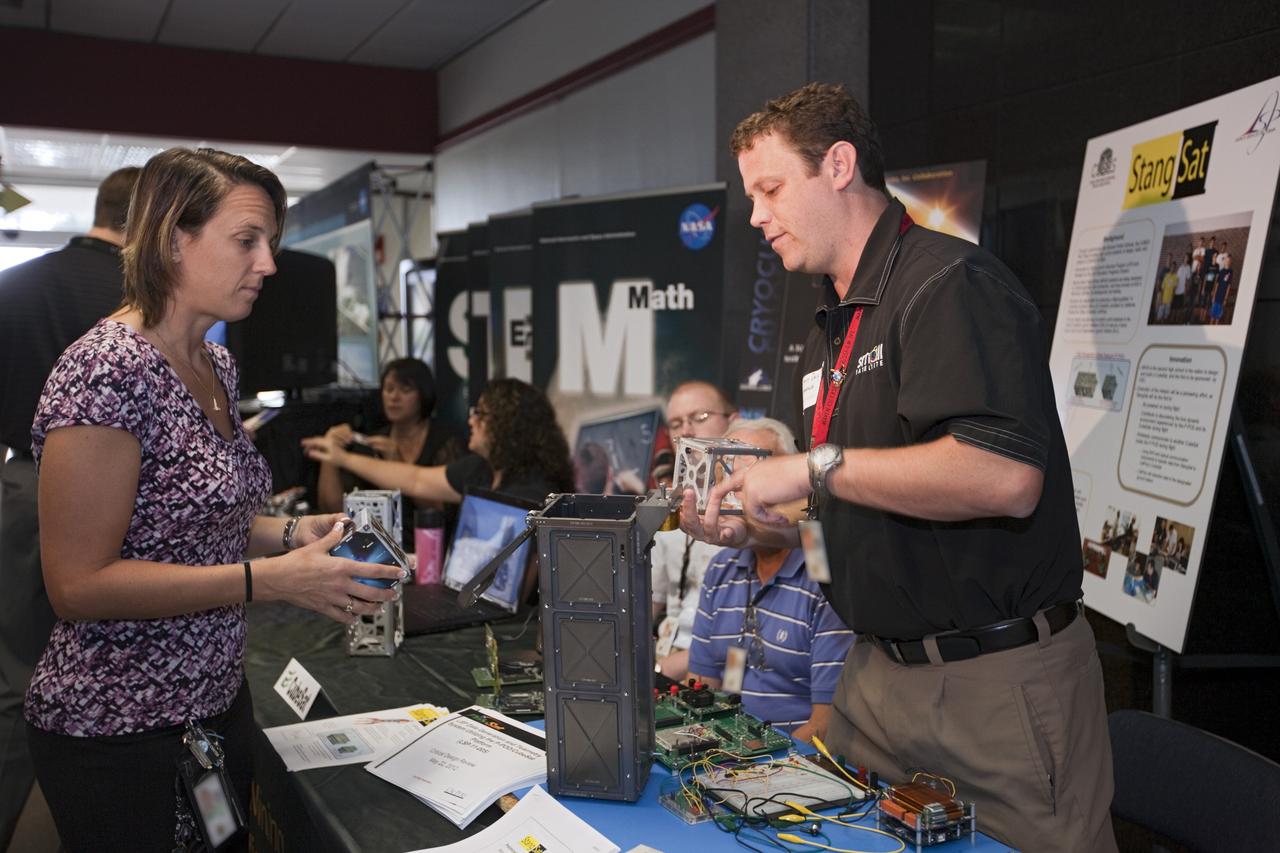
CAPE CANAVERAL, Fla. – At NASA’s Kennedy Space Center in Florida, a worker views an exhibit on small satellite technology in the Headquarters lobby during the center’s 2012 Innovation Expo. The center-wide event gave researchers a chance to show some of their work to others at the center and gave employees the opportunity to see facilities they hadn’t seen before. Photo credit: NASA/Kim Shiflett
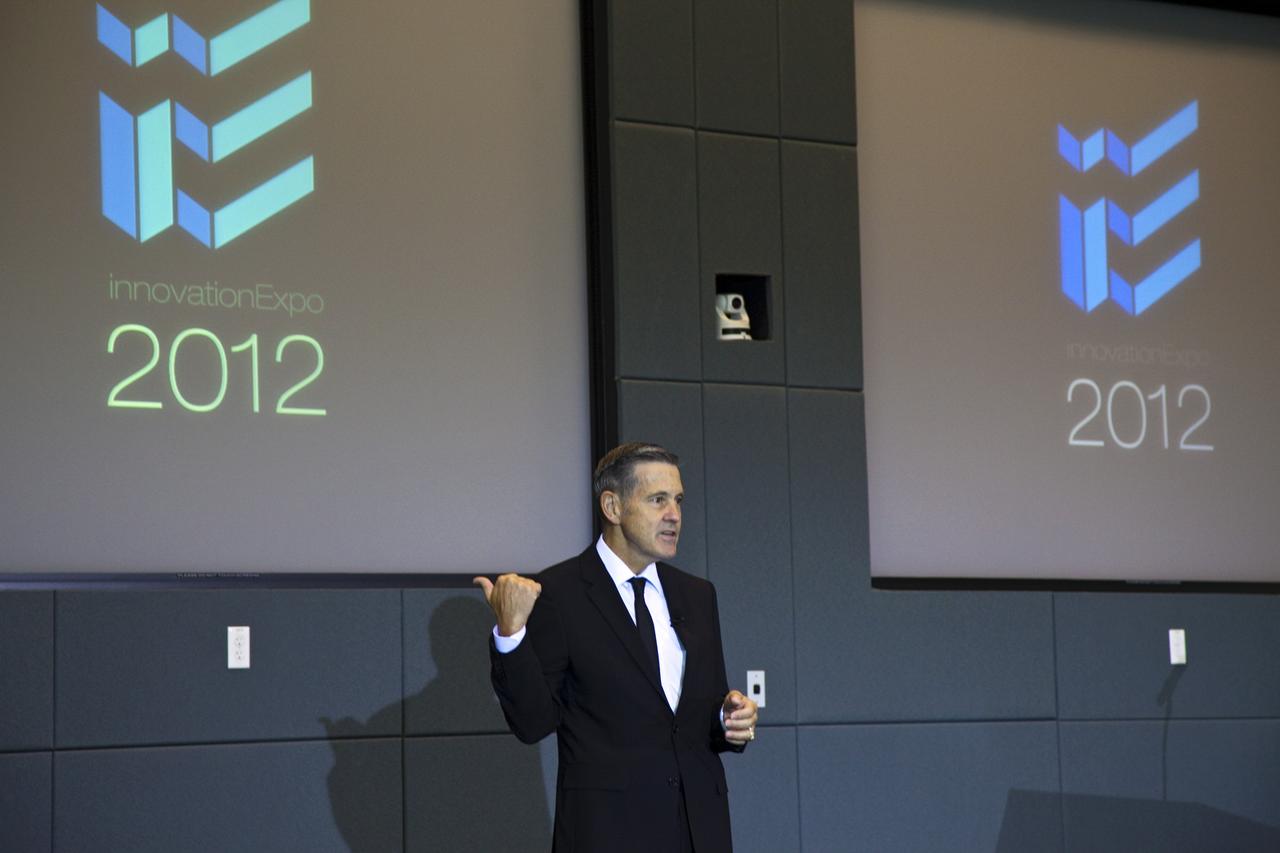
CAPE CANAVERAL, Fla. – Bob Cabana, director of NASA's Kennedy Space Center and a former astronaut, kicks off the center's Innovation Expo in the Operations Support Building II. The center-wide event gave researchers a chance to show some of their work to others at the center and gave employees the opportunity to see facilities they hadn't viewed before. Photo credit: Gianni Woods
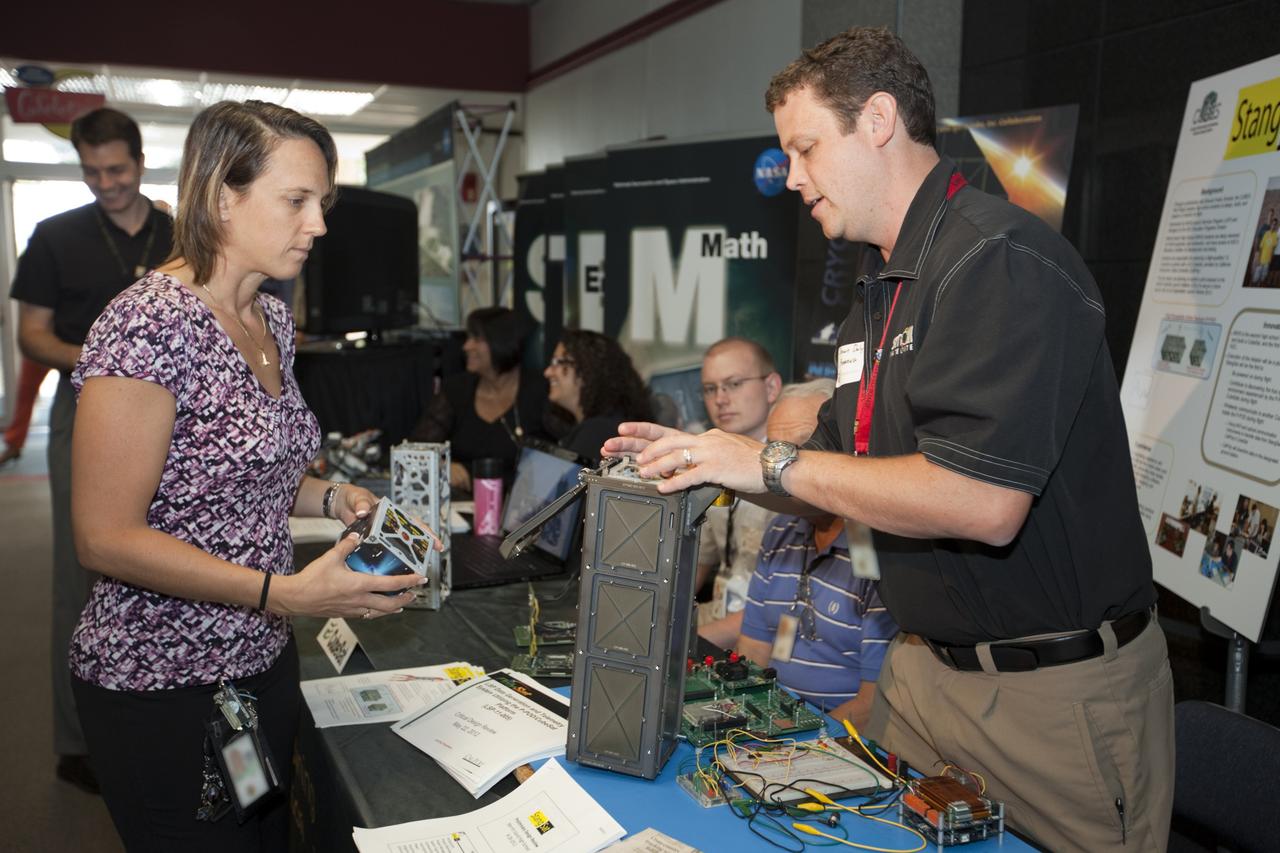
CAPE CANAVERAL, Fla. – At NASA’s Kennedy Space Center in Florida, a worker views an exhibit on small satellite technology in the Headquarters lobby during the center’s 2012 Innovation Expo. The center-wide event gave researchers a chance to show some of their work to others at the center and gave employees the opportunity to see facilities they hadn’t seen before. Photo credit: NASA/Kim Shiflett
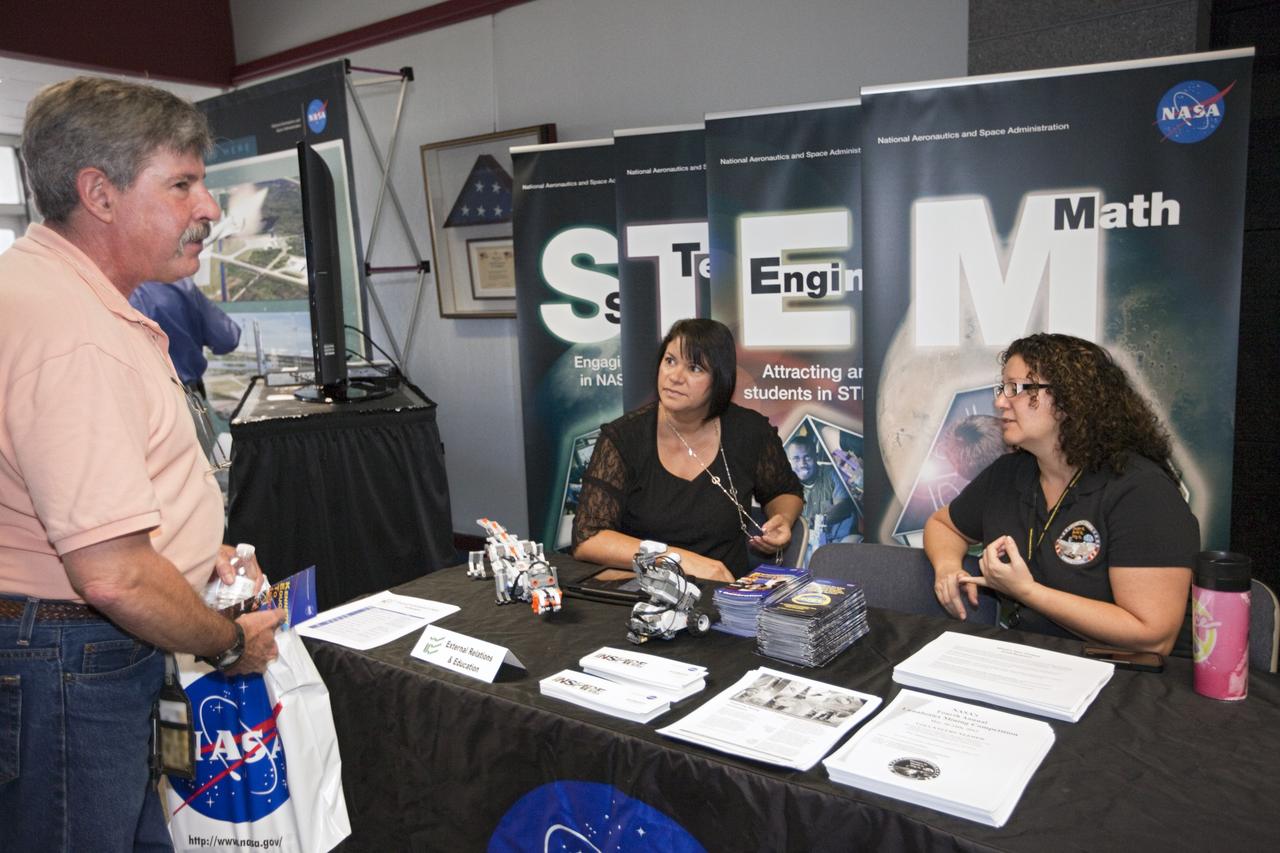
CAPE CANAVERAL, Fla. – At NASA’s Kennedy Space Center in Florida, a worker views an exhibit on education programs in the Headquarters lobby during the center’s 2012 Innovation Expo. The center-wide event gave researchers a chance to show some of their work to others at the center and gave employees the opportunity to see facilities they hadn’t seen before. Photo credit: NASA/Kim Shiflett
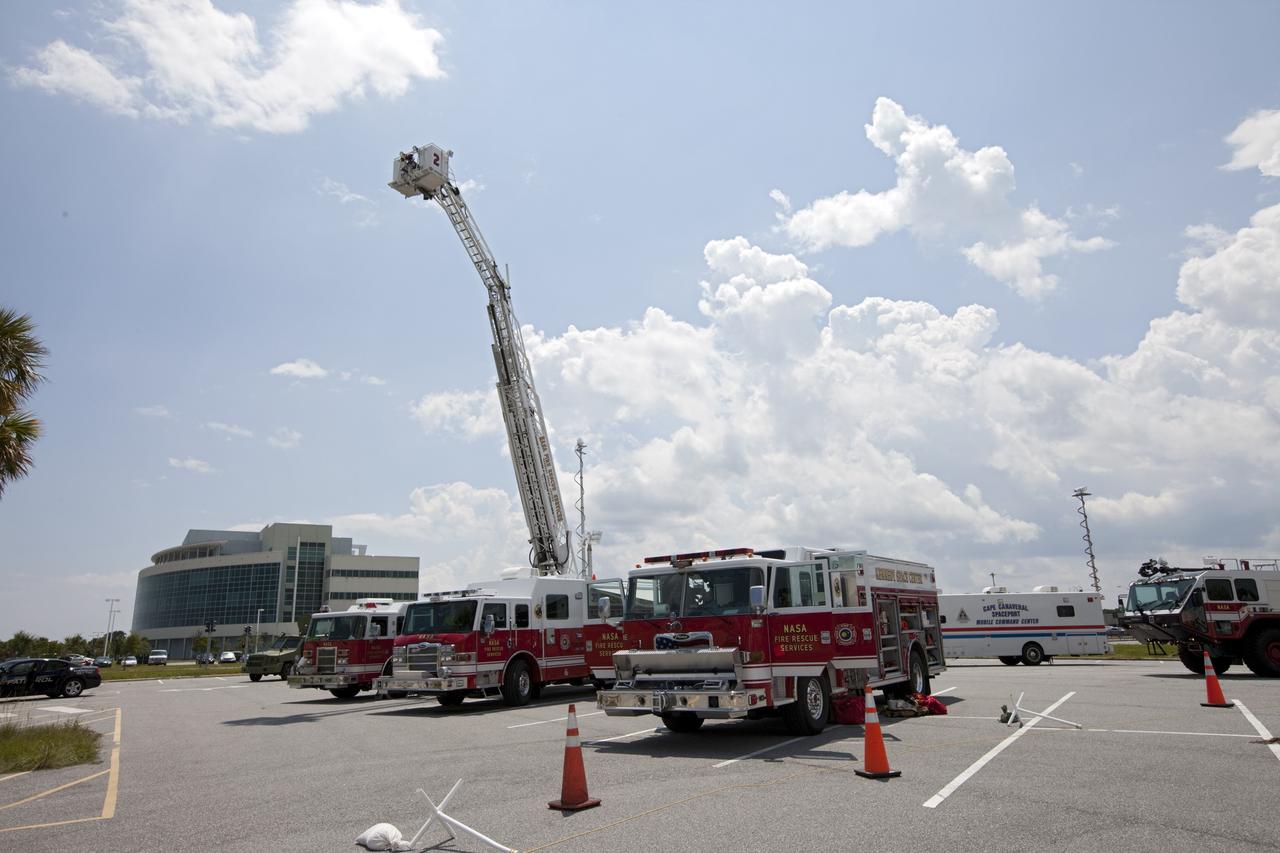
CAPE CANAVERAL, Fla. – At NASA’s Kennedy Space Center in Florida, Fire and Rescue and Protective Services vehicles are on display outside of the Vehicle Assembly Building during the center’s 2012 Innovation Expo. The center-wide event gave researchers a chance to show some of their work to others at the center and gave employees the opportunity to see facilities they hadn’t seen before. Photo credit: NASA/Kim Shiflett
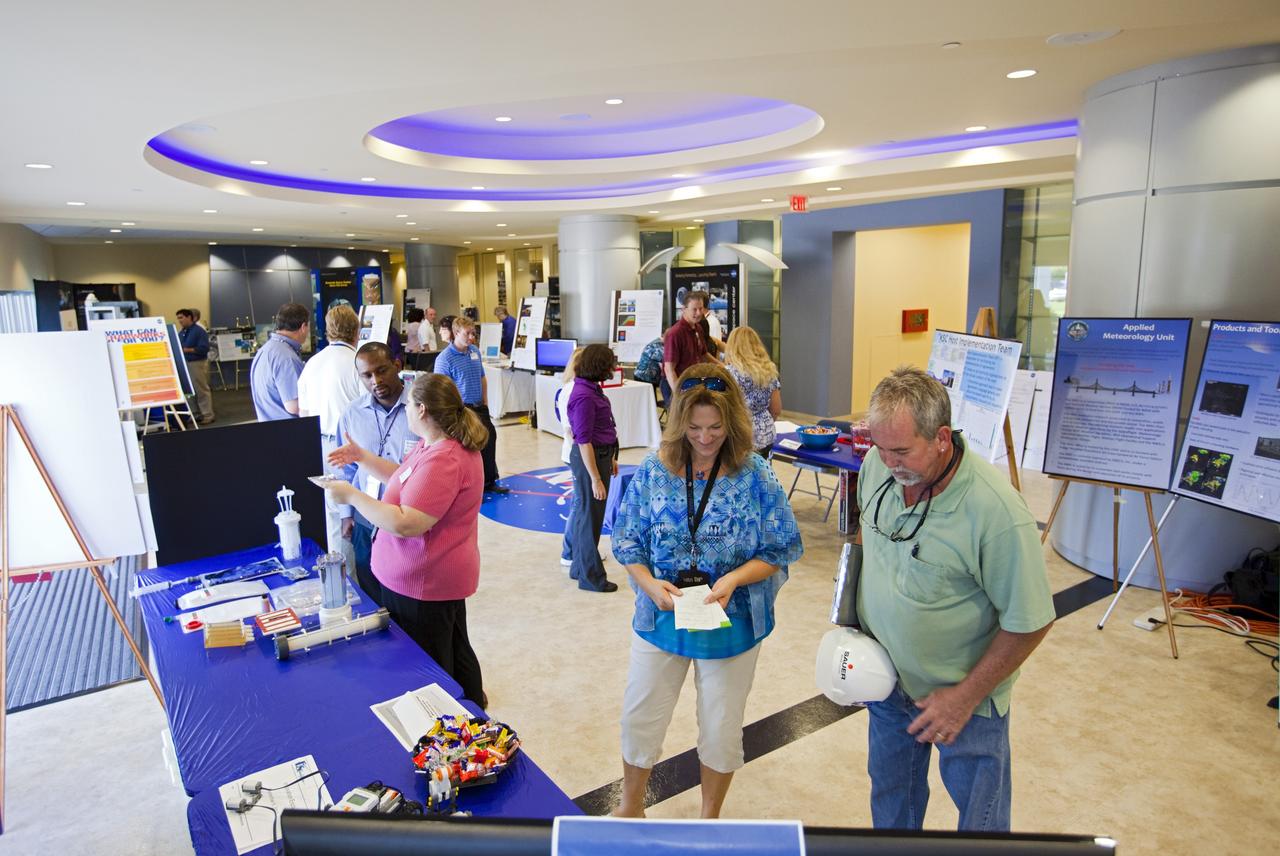
CAPE CANAVERAL, Fla. – At NASA’s Kennedy Space Center in Florida, workers visit several technology and innovation exhibits in the lobby of the Operations and Checkout building during the center’s 2012 Innovation Expo. The center-wide event gave researchers a chance to show some of their work to others at the center and gave employees the opportunity to see facilities they hadn’t seen before. Photo credit: NASA/Kim Shiflett
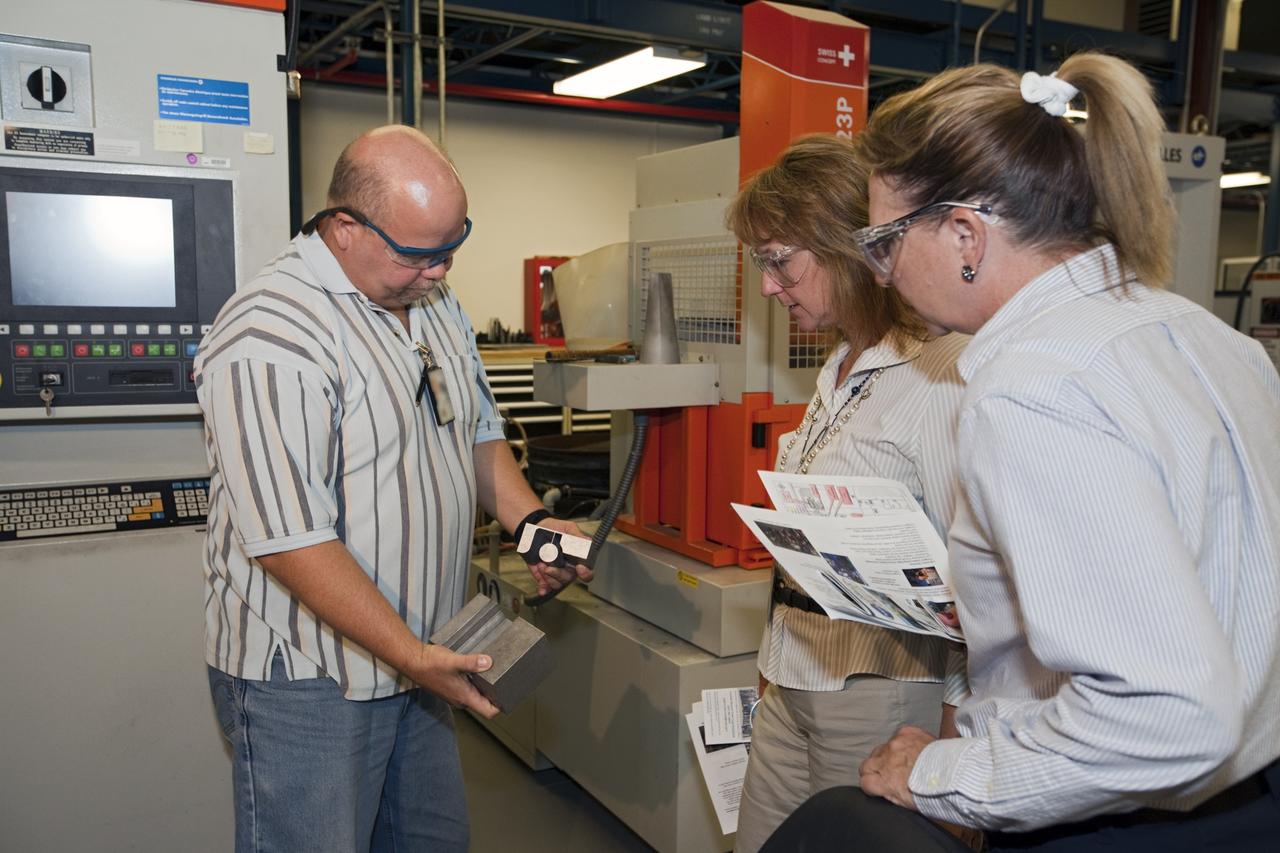
CAPE CANAVERAL, Fla. – At NASA’s Kennedy Space Center in Florida, workers learn how new technologies enable future development at the Prototype Shop during the center’s 2012 Innovation Expo. The center-wide event gave researchers a chance to show some of their work to others at the center and gave employees the opportunity to see facilities they hadn’t seen before. Photo credit: NASA/Kim Shiflett
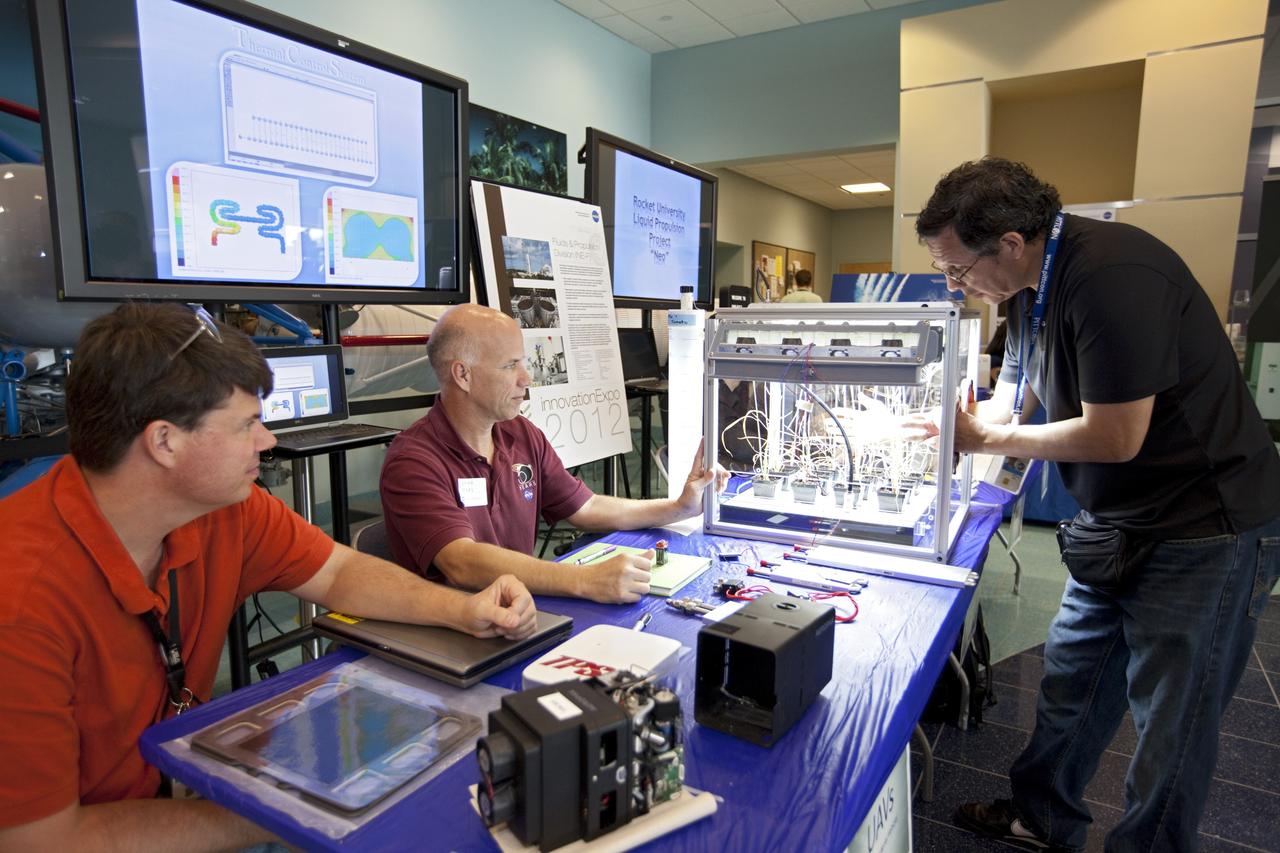
CAPE CANAVERAL, Fla. – At NASA’s Kennedy Space Center in Florida, a worker gets hands-on experience with a plant experiment in the Operations and Support Building II during the center’s 2012 Innovation Expo. The center-wide event gave researchers a chance to show some of their work to others at the center and gave employees the opportunity to see facilities they hadn’t seen before. Photo credit: NASA/Kim Shiflett
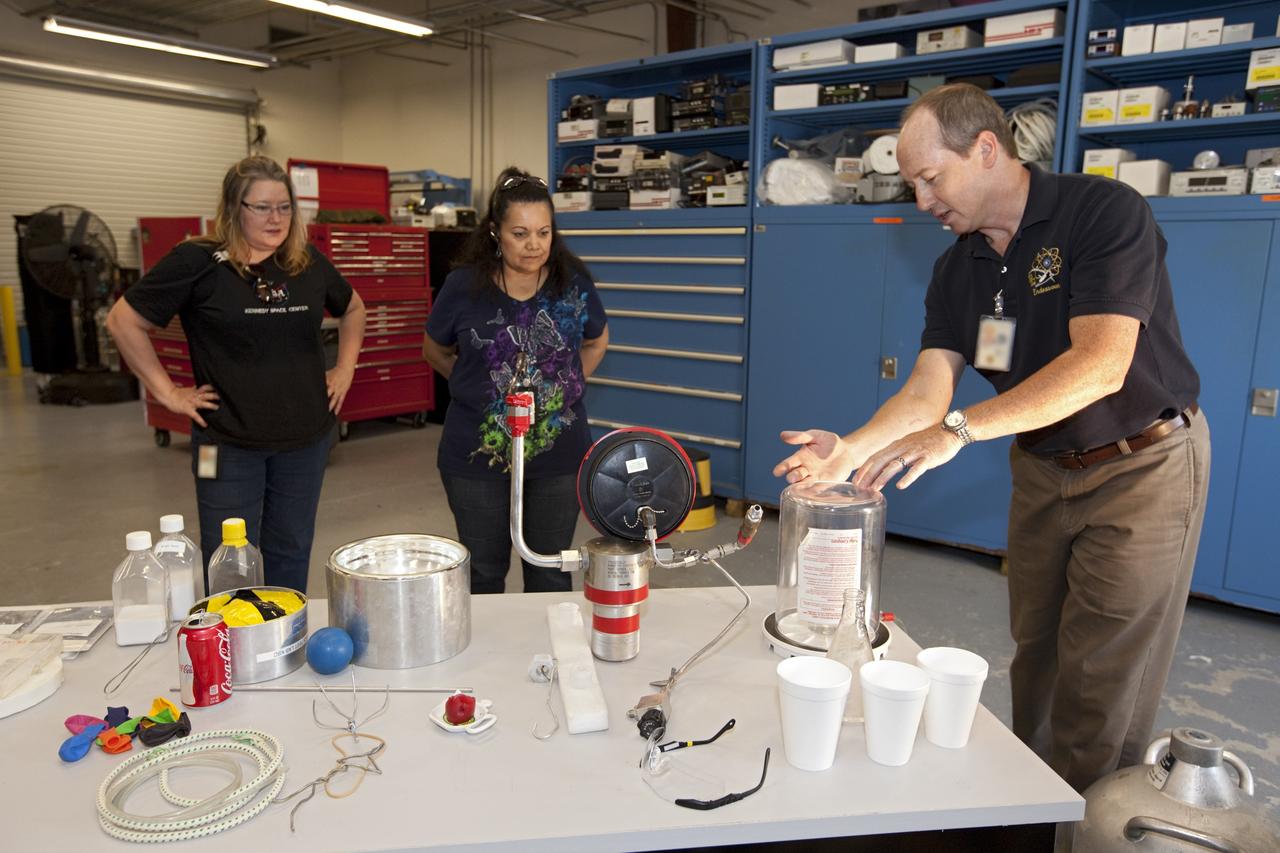
CAPE CANAVERAL, Fla. – At NASA’s Kennedy Space Center in Florida, workers learn about cryogenics in the Cryogenics Test Laboratory during the center’s 2012 Innovation Expo. The center-wide event gave researchers a chance to show some of their work to others at the center and gave employees the opportunity to see facilities they hadn’t seen before. Photo credit: NASA/Kim Shiflett
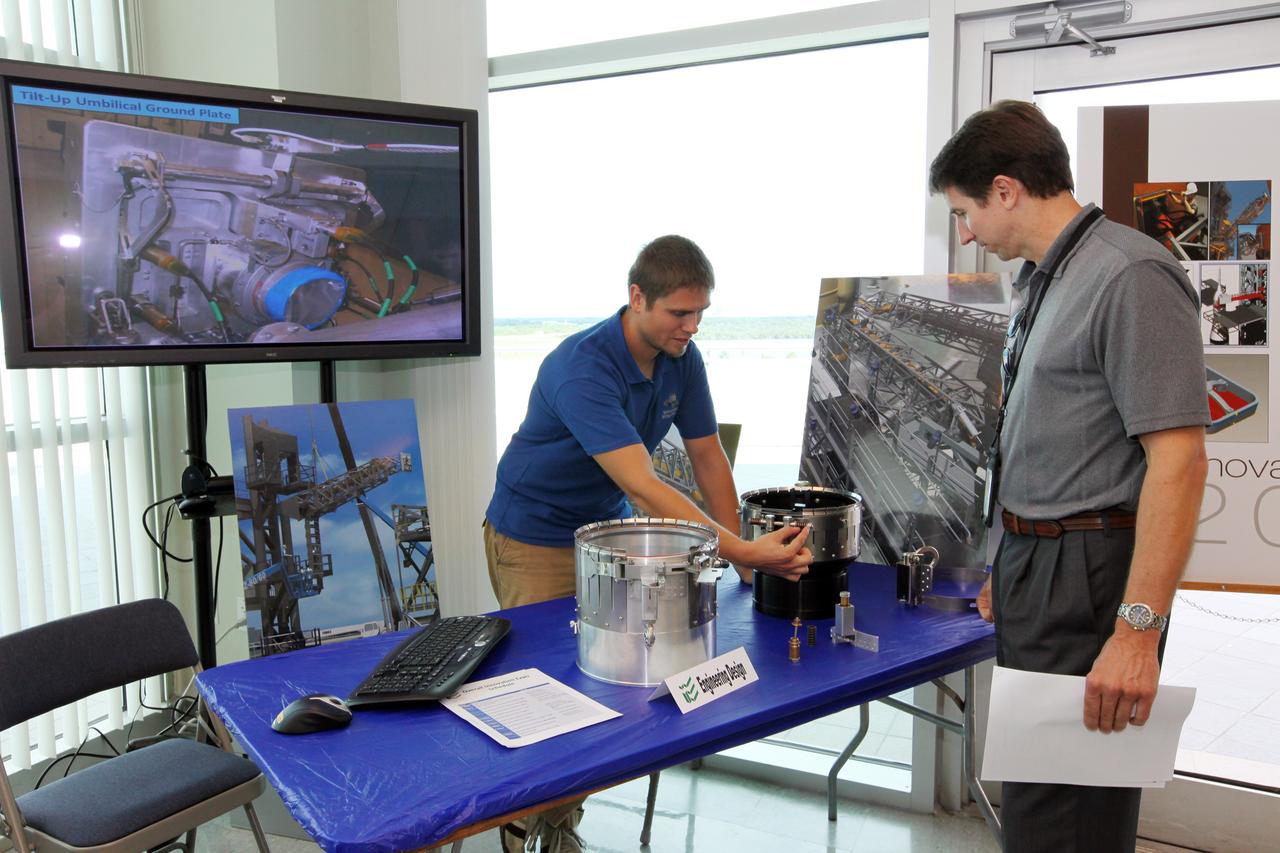
CAPE CANAVERAL, Fla. – At NASA’s Kennedy Space Center in Florida, a worker views an exhibit on engineering designs in the Operations and Support Building II during the center’s 2012 Innovation Expo. The center-wide event gave researchers a chance to show some of their work to others at the center and gave employees the opportunity to see facilities they hadn’t seen before. Photo credit: NASA/Kim Shiflett
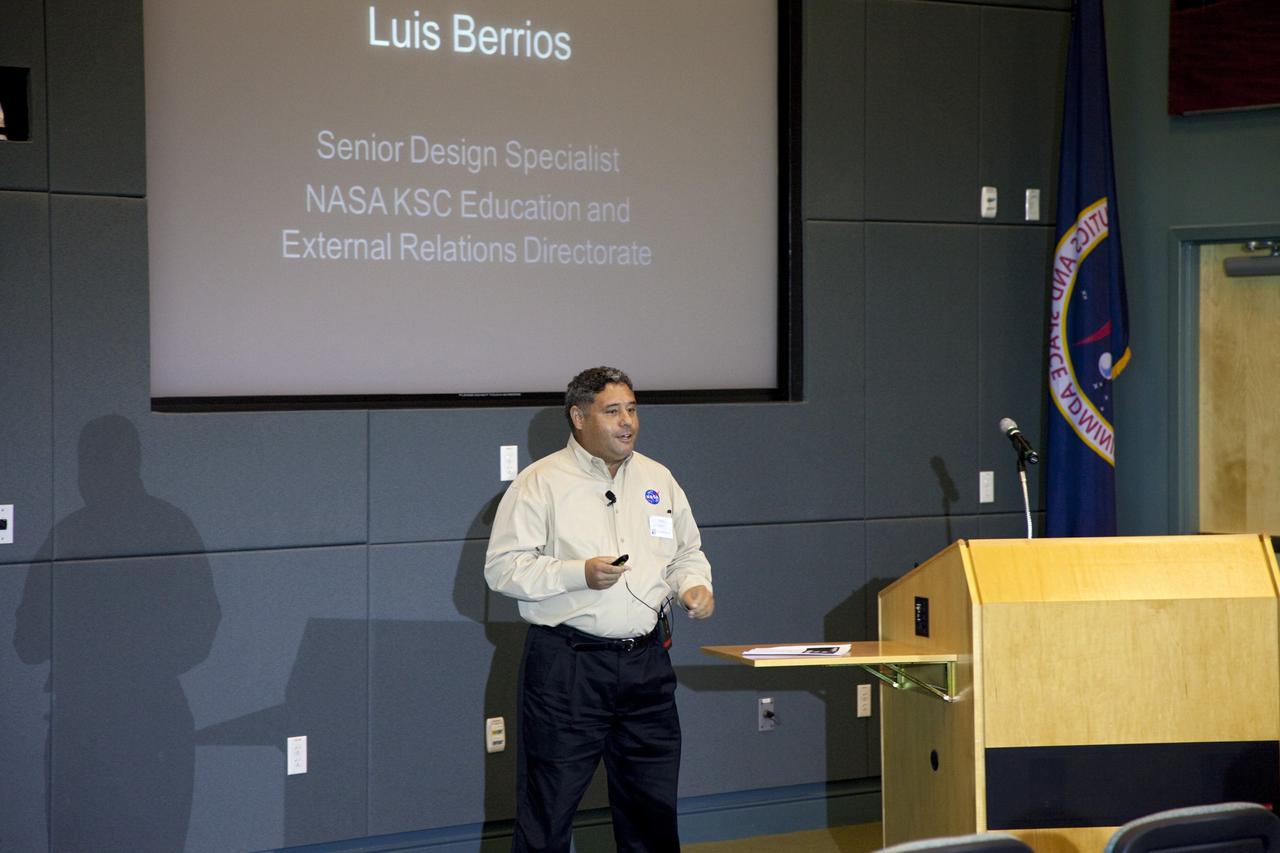
CAPE CANAVERAL, Fla. – Luis Berrios, senior design specialist at NASA's Kennedy Space Center, speaks during the center's Innovation Expo in the Operations Support Building II. The center-wide event gave researchers a chance to show some of their work to others at the center and gave employees the opportunity to see facilities they hadn't viewed before. Photo credit: Gianni Woods
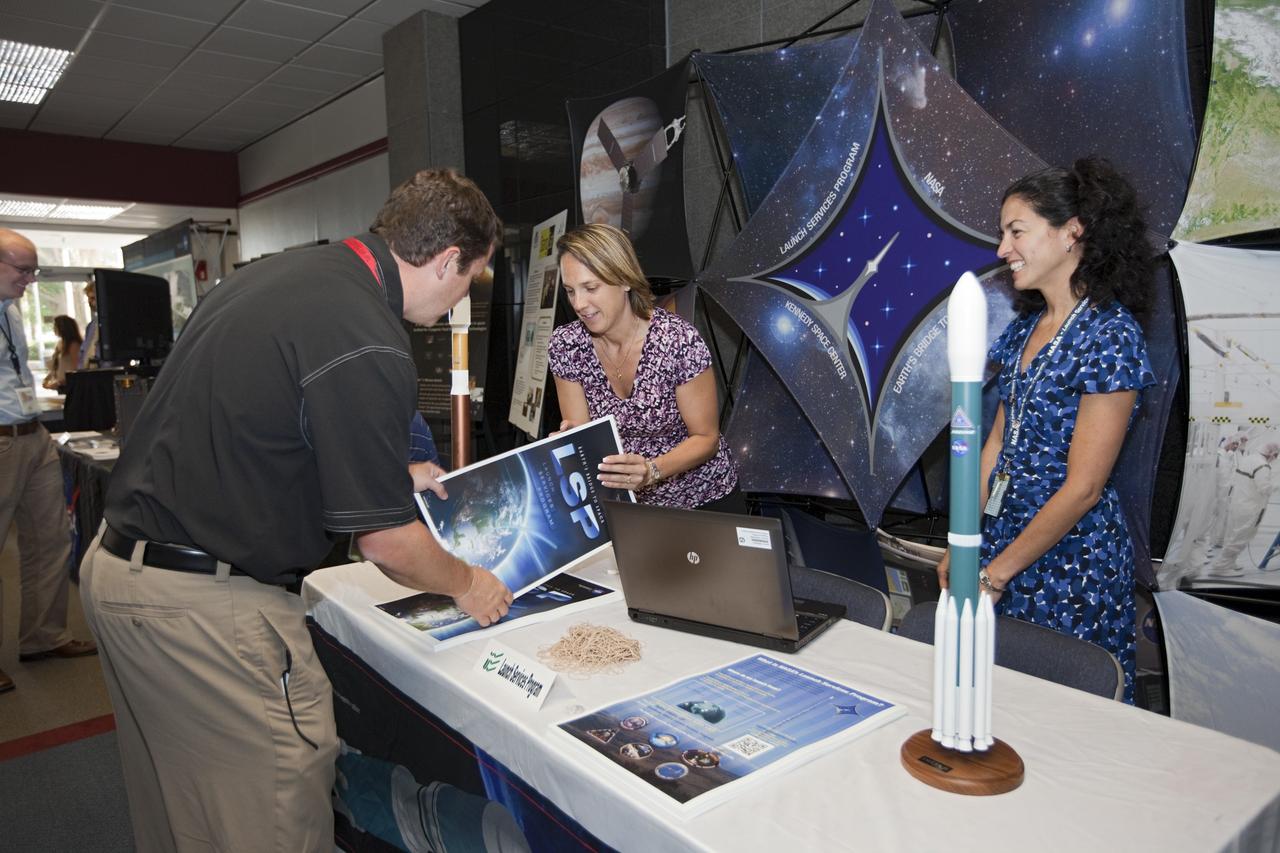
CAPE CANAVERAL, Fla. – At NASA’s Kennedy Space Center in Florida, a worker views an exhibit about the agency’s Launch Services Program in the Headquarters lobby during the center’s 2012 Innovation Expo. The center-wide event gave researchers a chance to show some of their work to others at the center and gave employees the opportunity to see facilities they hadn’t seen before. Photo credit: NASA/Kim Shiflett
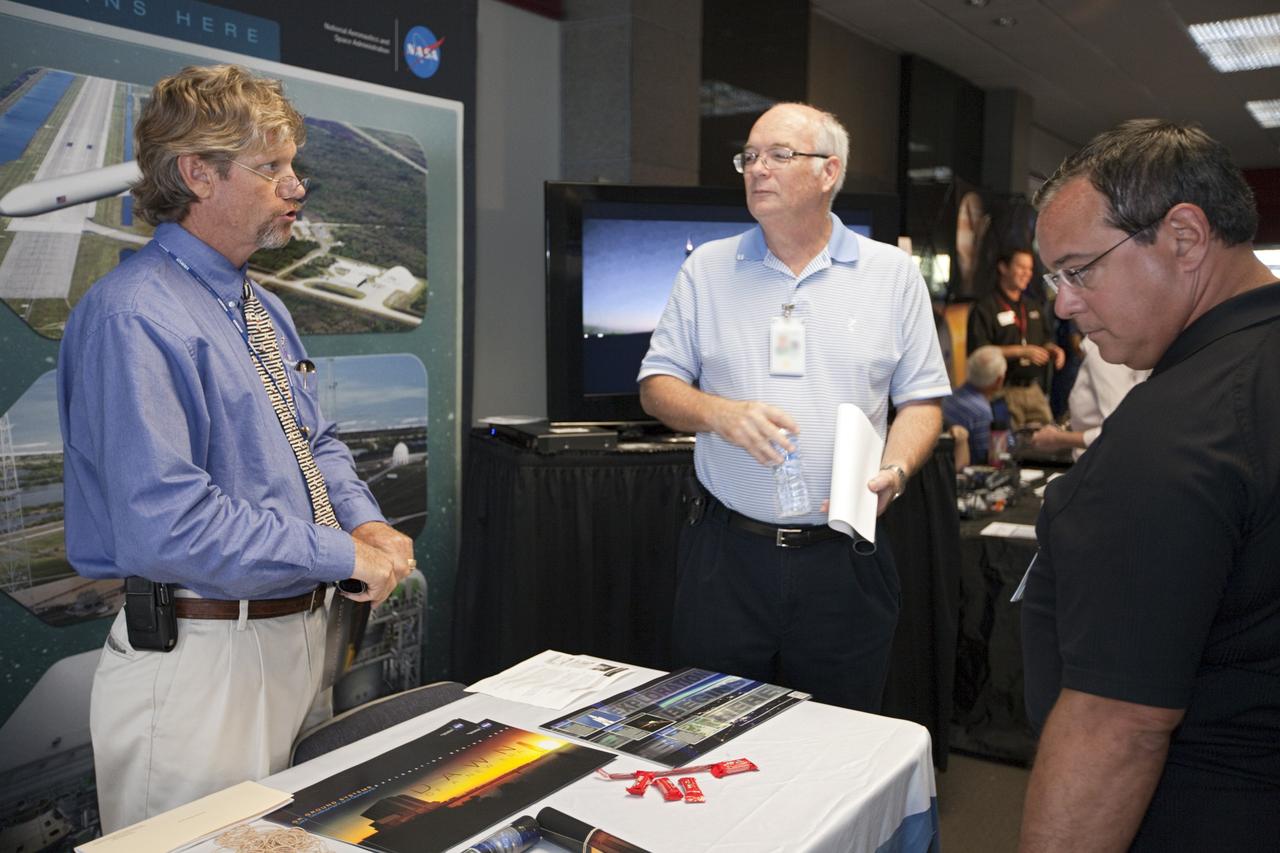
CAPE CANAVERAL, Fla. – At NASA’s Kennedy Space Center in Florida, workers learn about new innovations at the Ground Systems Development and Operations program exhibit in the Headquarters lobby during the center’s 2012 Innovation Expo. The center-wide event gave researchers a chance to show some of their work to others at the center and gave employees the opportunity to see facilities they hadn’t seen before. Photo credit: NASA/Kim Shiflett
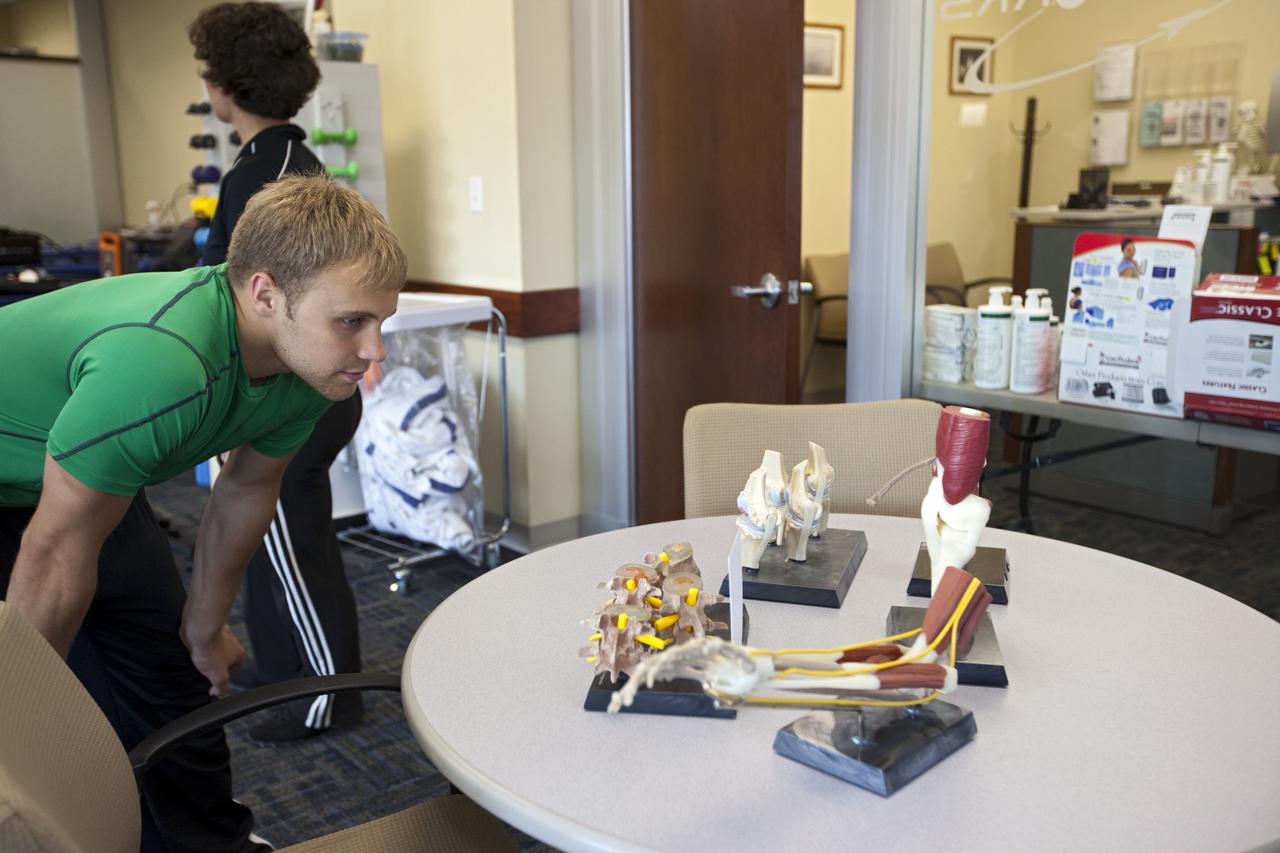
CAPE CANAVERAL, Fla. – At NASA’s Kennedy Space Center in Florida, a worker views an exhibit in the RehabWorks facility in the Operations and Checkout building during the center’s 2012 Innovation Expo. The center-wide event gave researchers a chance to show some of their work to others at the center and gave employees the opportunity to see facilities they hadn’t seen before. Photo credit: NASA/Kim Shiflett
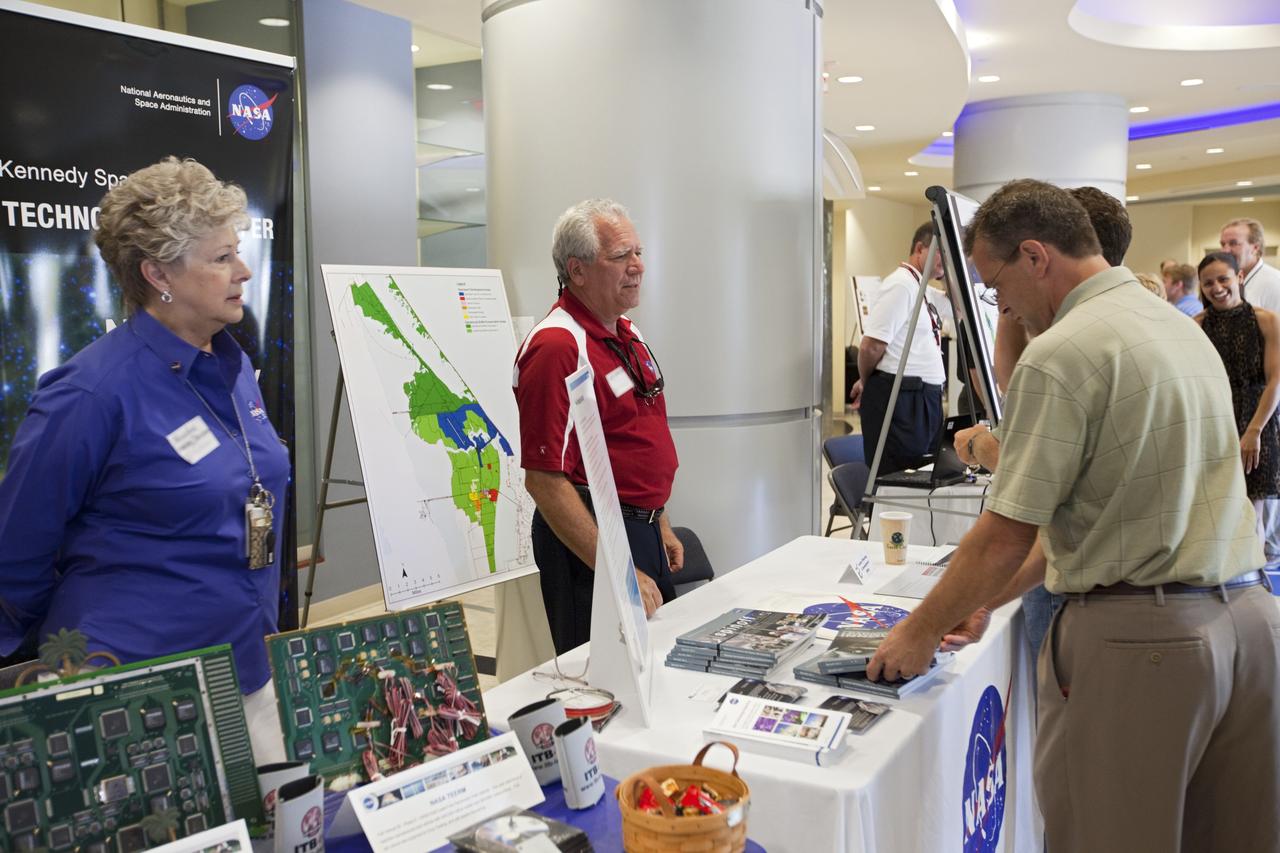
CAPE CANAVERAL, Fla. – At NASA’s Kennedy Space Center in Florida, workers visit several technology and innovation exhibits in the lobby of the Operations and Checkout building during the center’s 2012 Innovation Expo. The center-wide event gave researchers a chance to show some of their work to others at the center and gave employees the opportunity to see facilities they hadn’t seen before. Photo credit: NASA/Kim Shiflett
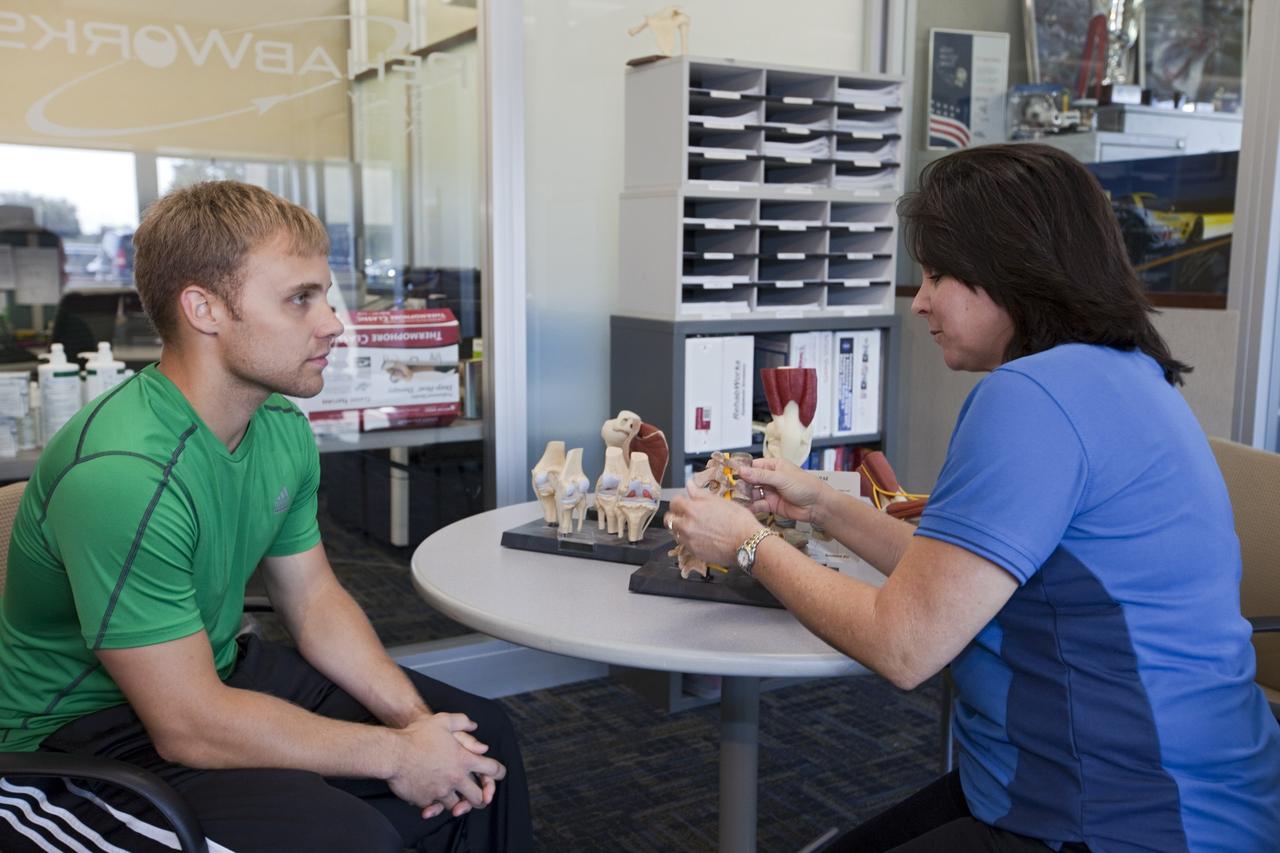
CAPE CANAVERAL, Fla. – At NASA’s Kennedy Space Center in Florida, a worker listens to a presentation by a RehabWorks staff member in the Operations and Checkout building during the center’s 2012 Innovation Expo. The center-wide event gave researchers a chance to show some of their work to others at the center and gave employees the opportunity to see facilities they hadn’t seen before. Photo credit: NASA/Kim Shiflett
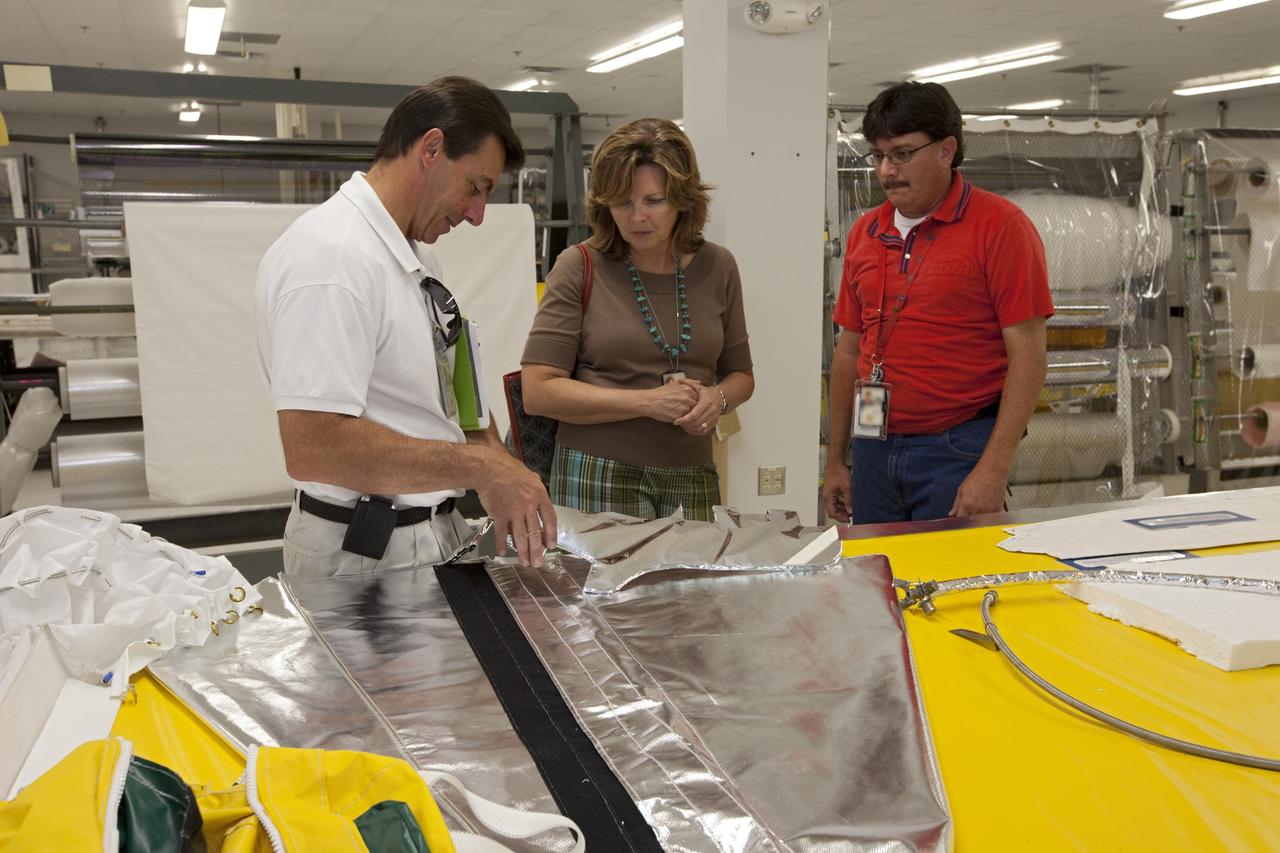
CAPE CANAVERAL, Fla. – Inside the Thermal Protection Shop at NASA’s Kennedy Space Center in Florida, workers view an exhibit on thermal protection design and manufacturing capabilities during the center’s 2012 Innovation Expo. The center-wide event gave researchers a chance to show some of their work to others at the center and gave employees the opportunity to see facilities they hadn’t seen before. Photo credit: NASA/Kim Shiflett
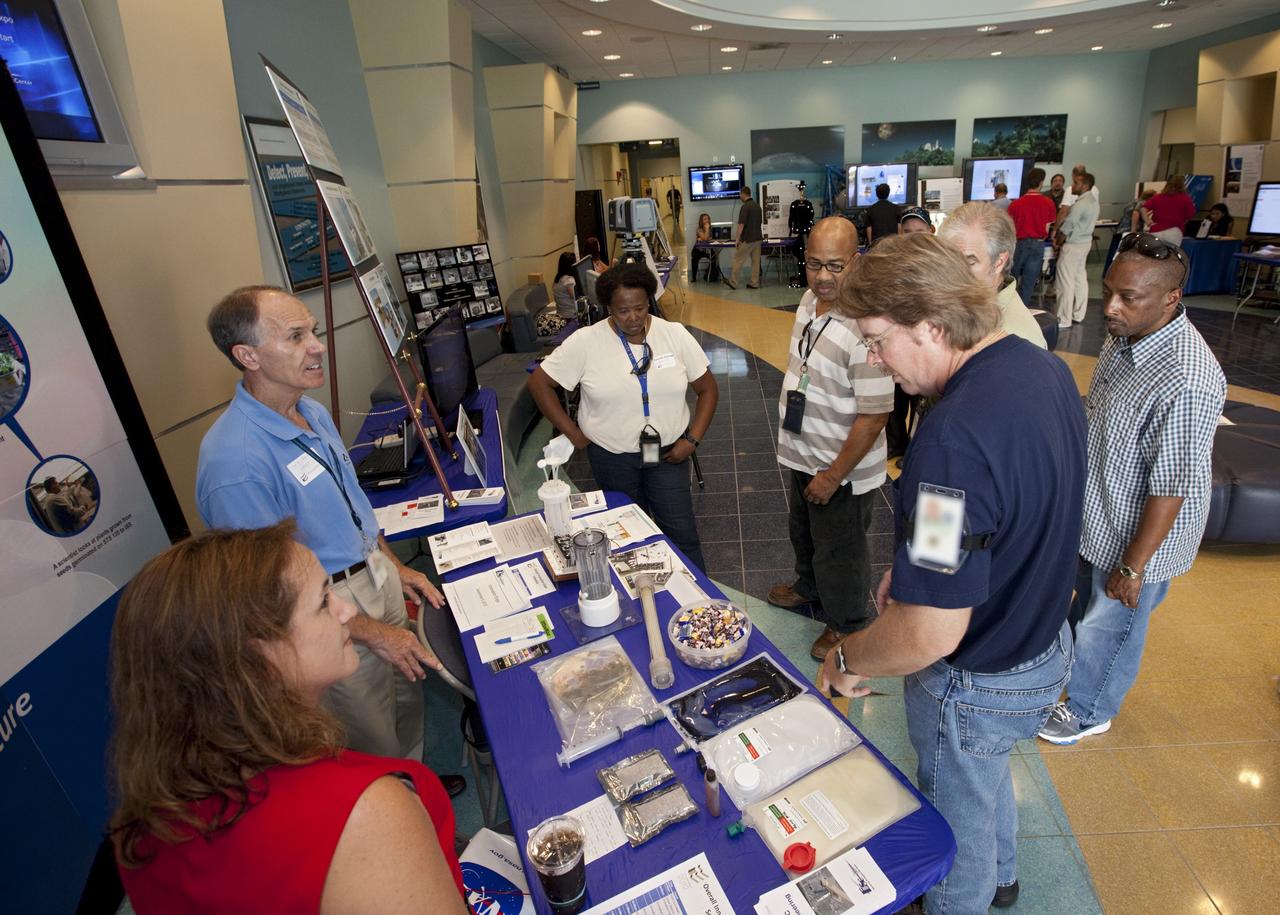
CAPE CANAVERAL, Fla. – At NASA’s Kennedy Space Center in Florida, workers view exhibits in the Operations and Support Building II lobby during the center’s 2012 Innovation Expo. The center-wide event gave researchers a chance to show some of their work to others at the center and gave employees the opportunity to see facilities they hadn’t seen before. Photo credit: NASA/Kim Shiflett
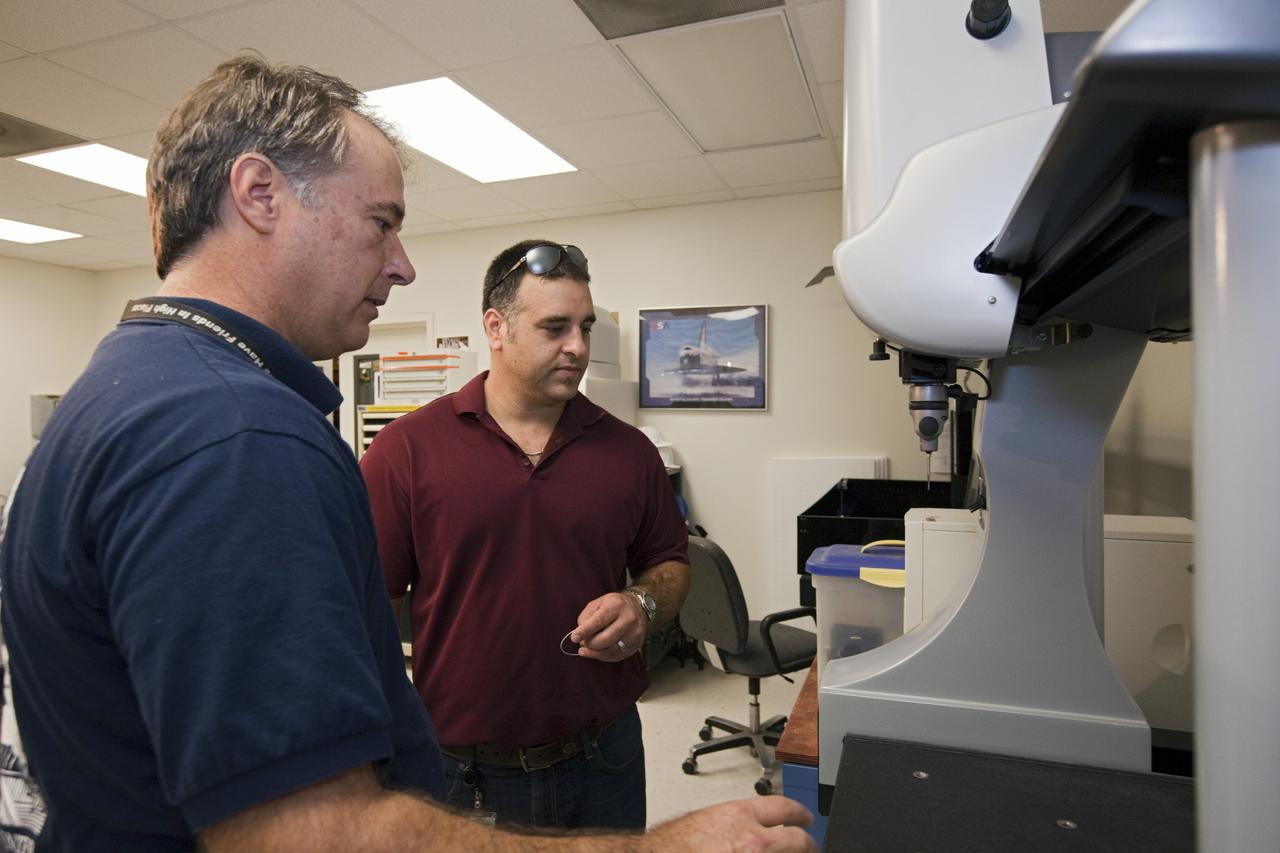
CAPE CANAVERAL, Fla. – At NASA’s Kennedy Space Center in Florida, a worker learns how new technologies enable future development at the Prototype Shop during the center’s 2012 Innovation Expo. The center-wide event gave researchers a chance to show some of their work to others at the center and gave employees the opportunity to see facilities they hadn’t seen before. Photo credit: NASA/Kim Shiflett
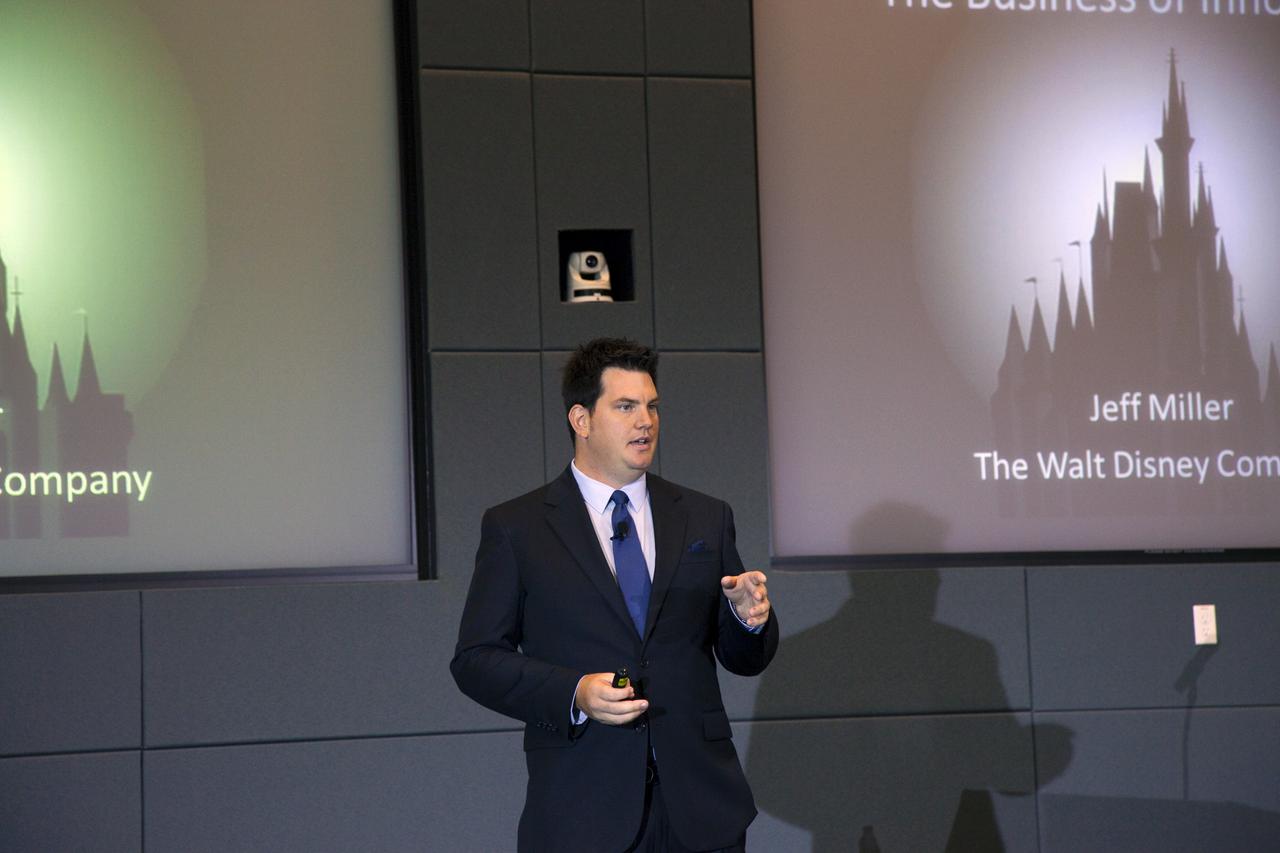
CAPE CANAVERAL, Fla. – Jeff Miller of the Walt Disney Company speaks during the Kennedy Space Center's Innovation Expo in the Operations Support Building II. The center-wide event gave researchers a chance to show some of their work to others at the center and gave employees the opportunity to see facilities they hadn't viewed before. Photo credit: Gianni Woods
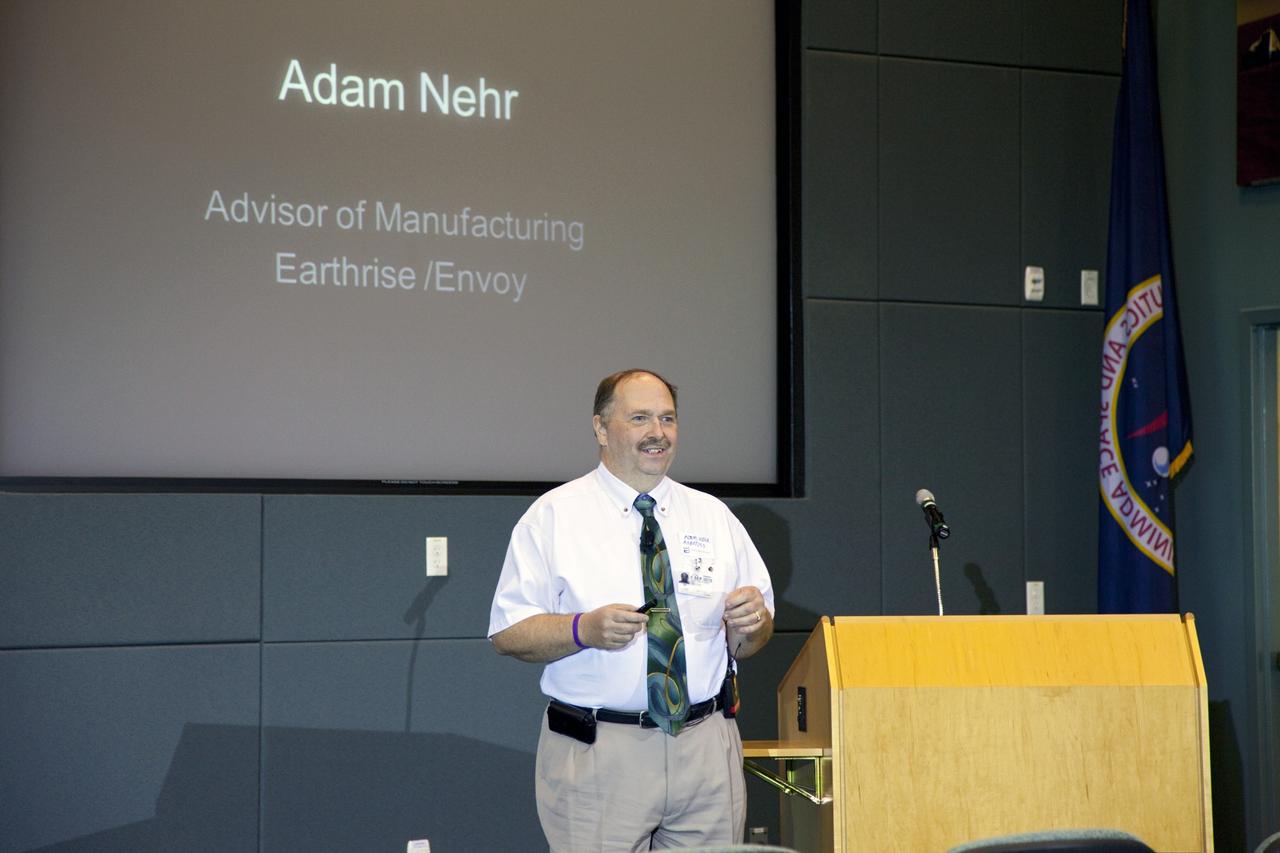
CAPE CANAVERAL, Fla. – Adam Nehr, advisor of Manufacturing for Earthrise/Envoy, speaks during the Kennedy Space Center's Innovation Expo in the Operations Support Building II. The center-wide event gave researchers a chance to show some of their work to others at the center and gave employees the opportunity to see facilities they hadn't viewed before. Photo credit: Gianni Woods
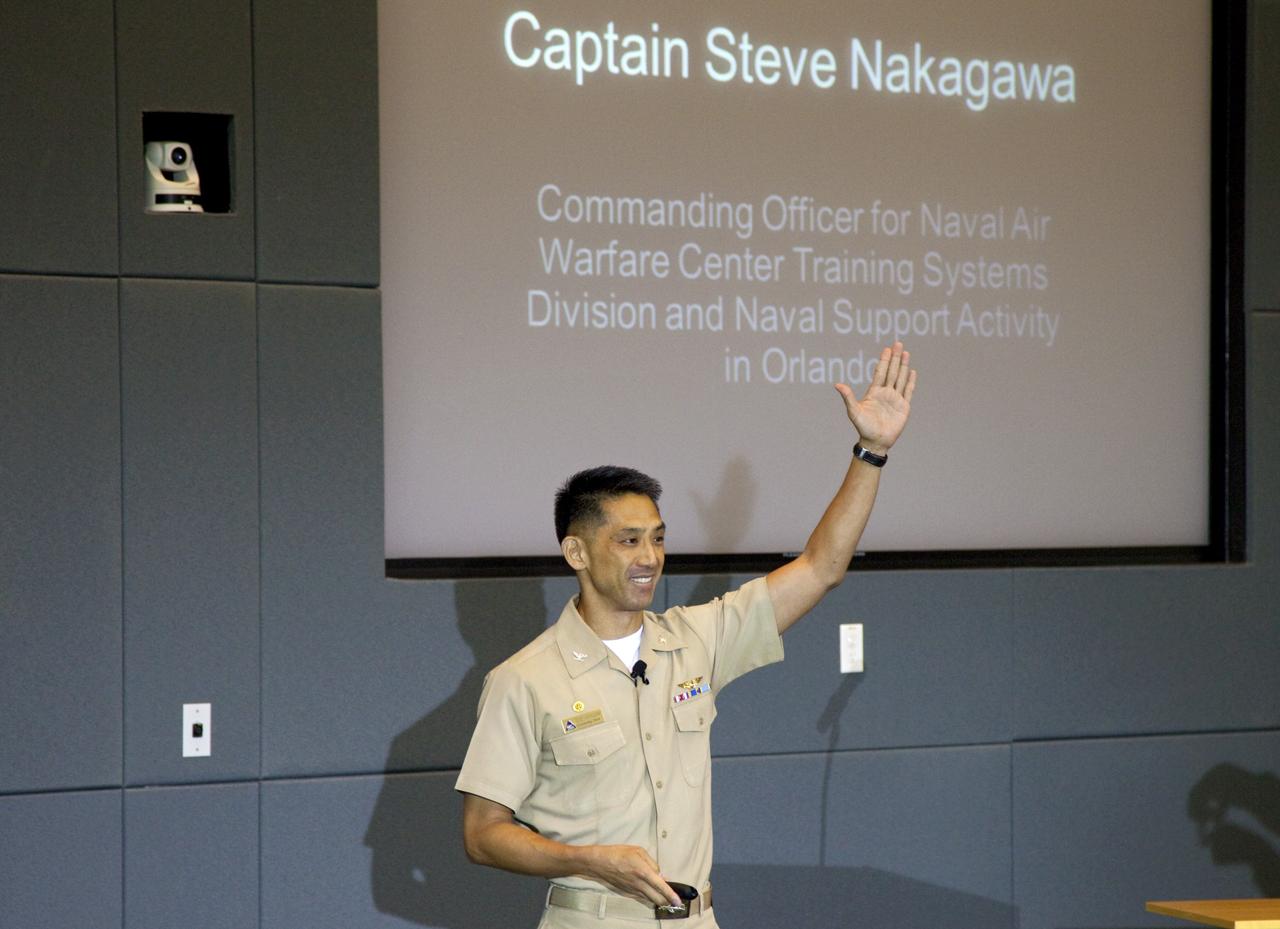
CAPE CANAVERAL, Fla. – Navy Capt. Steve Nakagawa, commanding officer for Naval Air Warfare Center Training Systems Division and Naval Support Activity, speaks during the Kennedy Space Center's Innovation Expo in the Operations Support Building II. The center-wide event gave researchers a chance to show some of their work to others and gave employees the opportunity to see facilities they hadn't viewed before. Photo credit: Gianni Woods
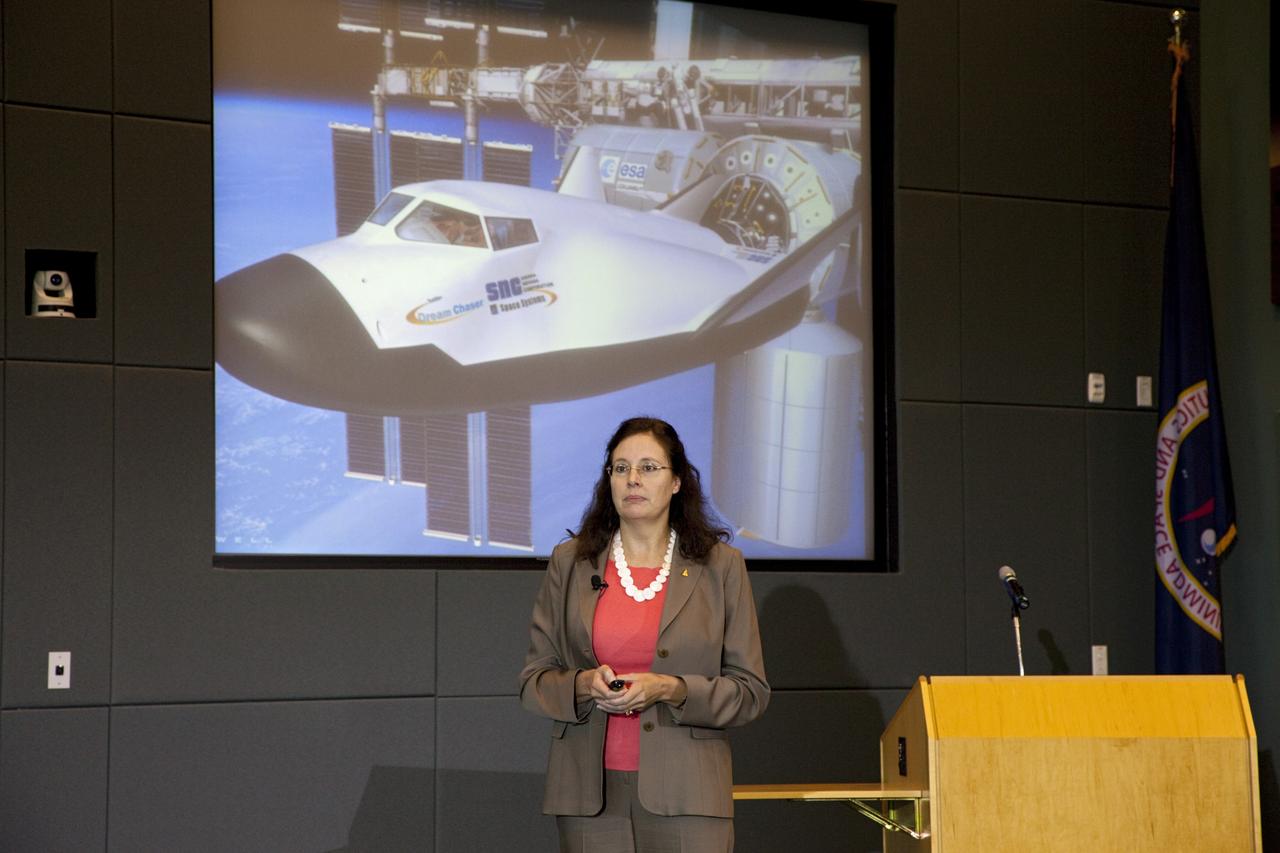
CAPE CANAVERAL, Fla. – Merri Sanchez of Sierra Nevada Corp. Space Systems speaks during the Kennedy Space Center's Innovation Expo in the Operations Support Building II. The center-wide event gave researchers a chance to show some of their work to others at the center and gave employees the opportunity to see facilities they hadn't viewed before. Photo credit: Gianni Woods
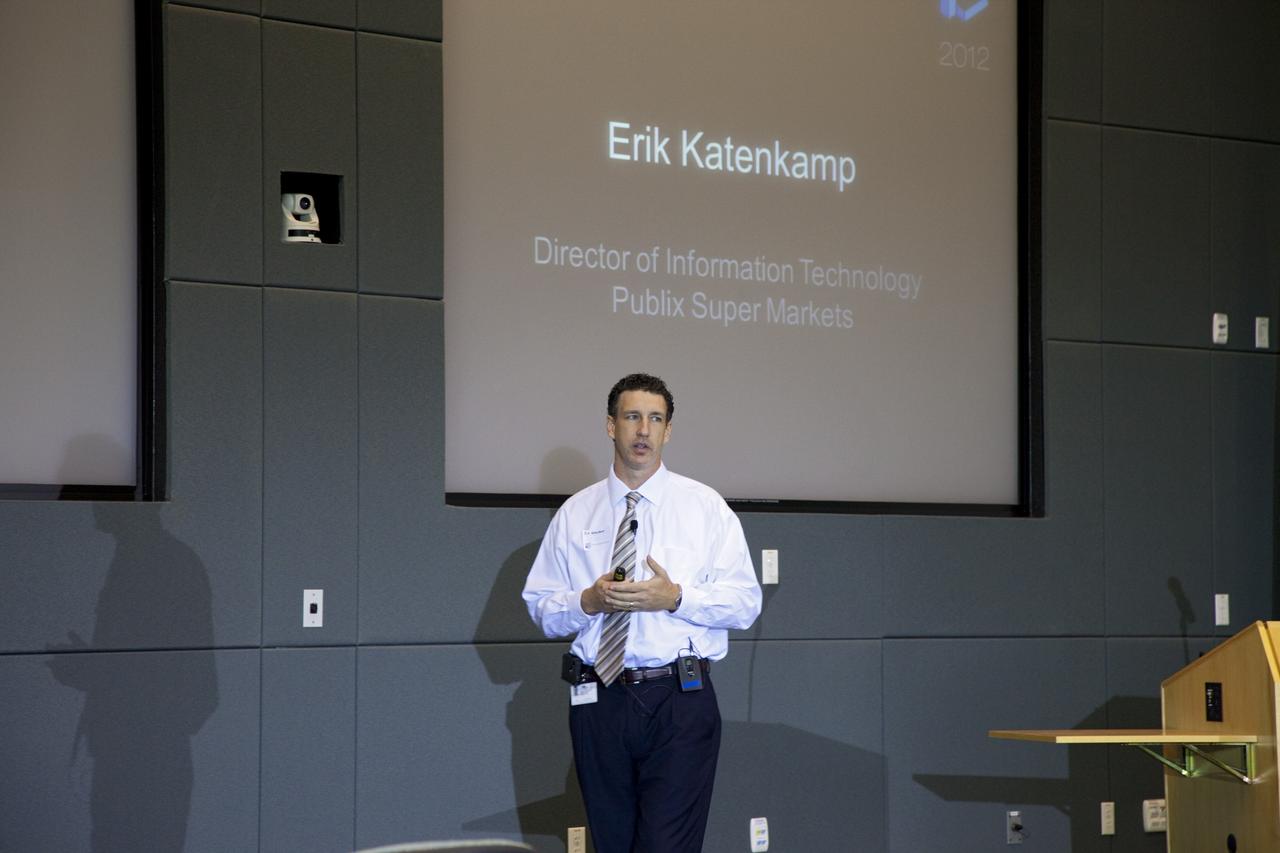
CAPE CANAVERAL, Fla. – Erik Katenkamp, director of Information Technology for Publix Super Markets, speaks during Kennedy Space Center's Innovation Expo in the Operations Support Building II. The center-wide event gave researchers a chance to show some of their work to others at the center and gave employees the opportunity to see facilities they hadn't viewed before. Photo credit: Gianni Woods
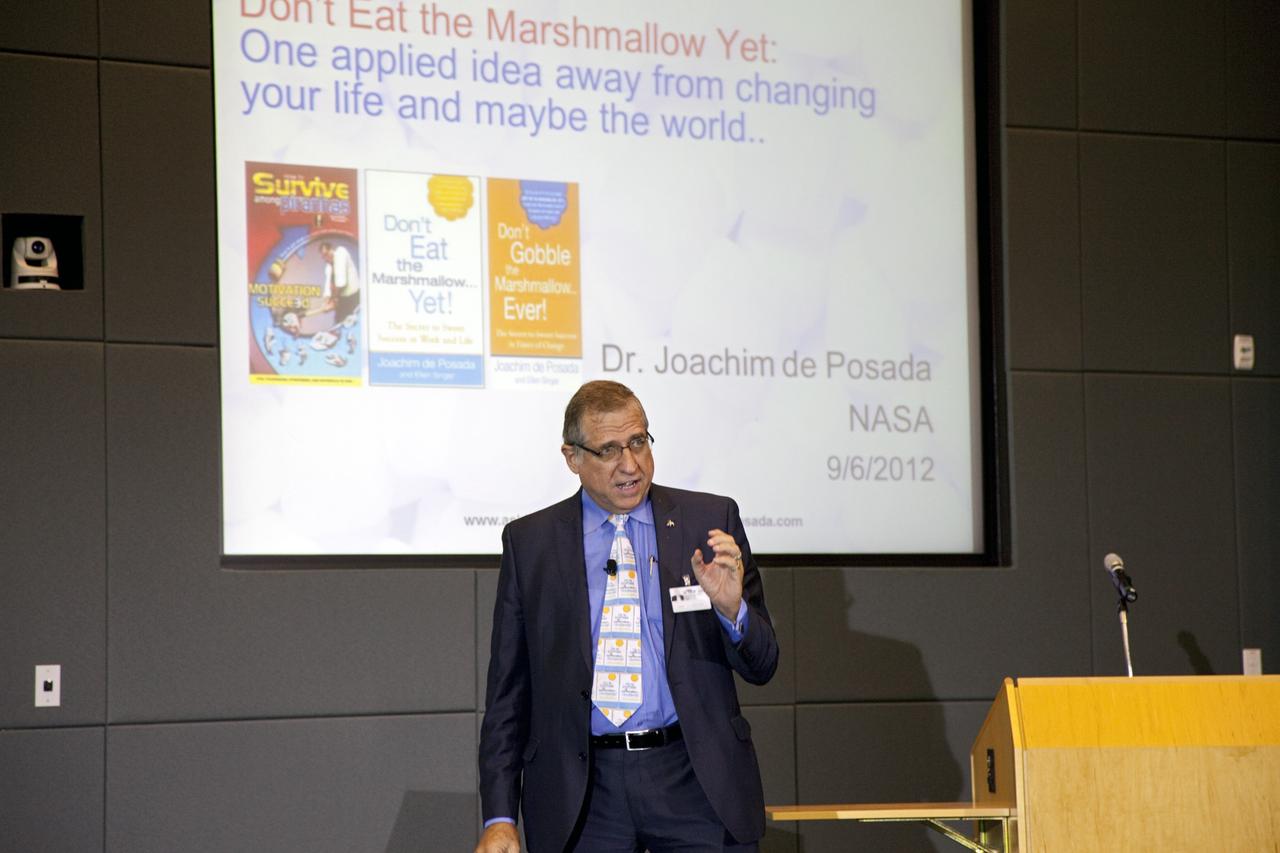
CAPE CANAVERAL, Fla. – NASA's Joachim de Posada speaks during the Kennedy Space Center's Innovation Expo in the Operations Support Building II. The center-wide event gave researchers a chance to show some of their work to others at the center and gave employees the opportunity to see facilities they hadn't viewed before. Photo credit: Gianni Woods
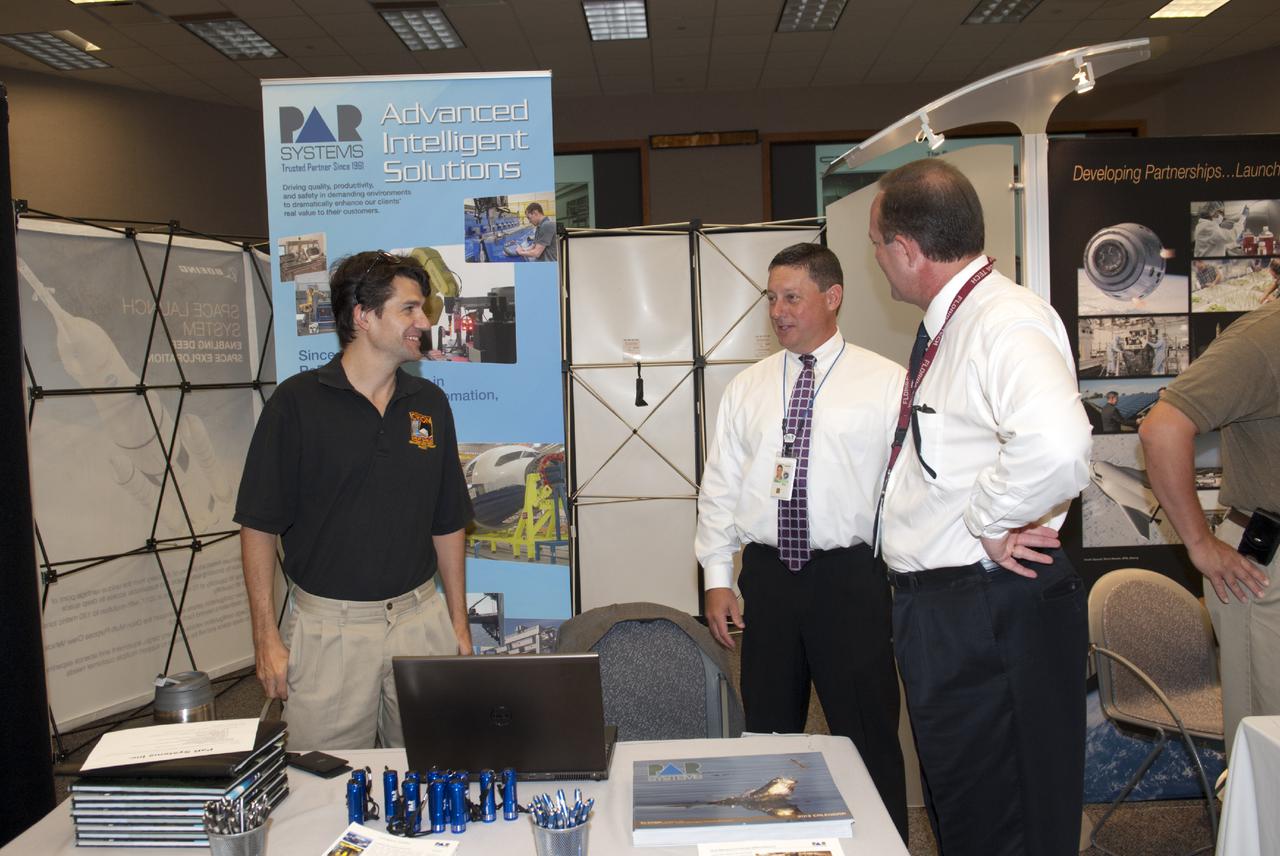
CAPE CANAVERAL, Fla. -- At the Kennedy Space Center in Florida, representatives of PaR Systems talk with guests at the Innovation Expo KSC Showcase. The event gave Kennedy employees an opportunity to meet 12 NASA partners and see how the Center Planning and Development Directorate is transforming Kennedy into a multi-user spaceport through partnerships and resource planning. The 17-booth exhibit consists of 12 partner booths along with Spaceport Planning, Partnership Development and Research and Technology offices. Photo credit: NASA_Charisse Nahser
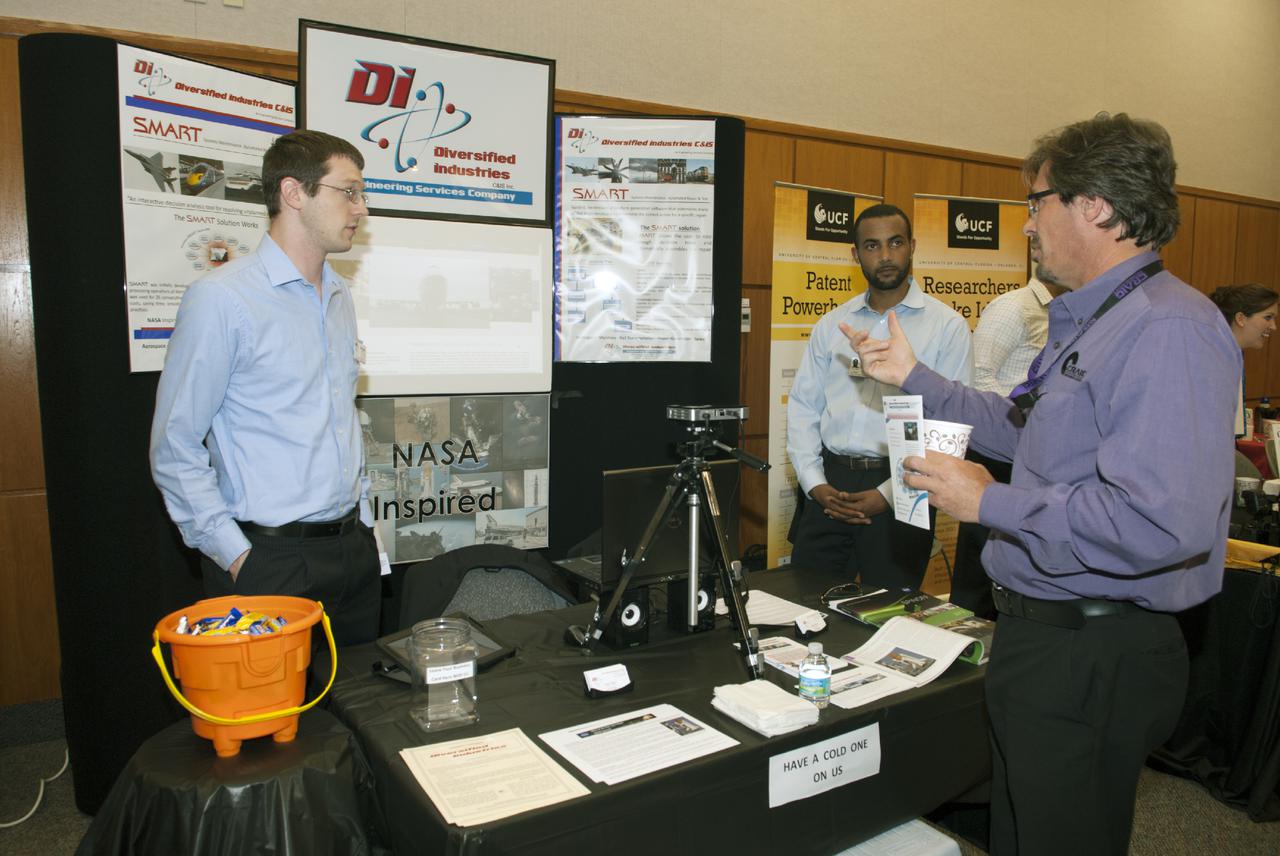
CAPE CANAVERAL, Fla. -- At the Kennedy Space Center in Florida, representatives of Diversified Industries talk with guests at the Innovation Expo KSC Showcase. The event gave Kennedy employees an opportunity to meet 12 NASA partners and see how the Center Planning and Development Directorate is transforming Kennedy into a multi-user spaceport through partnerships and resource planning. The 17-booth exhibit consists of 12 partner booths along with Spaceport Planning, Partnership Development and Research and Technology offices. Photo credit: NASA_Charisse Nahser
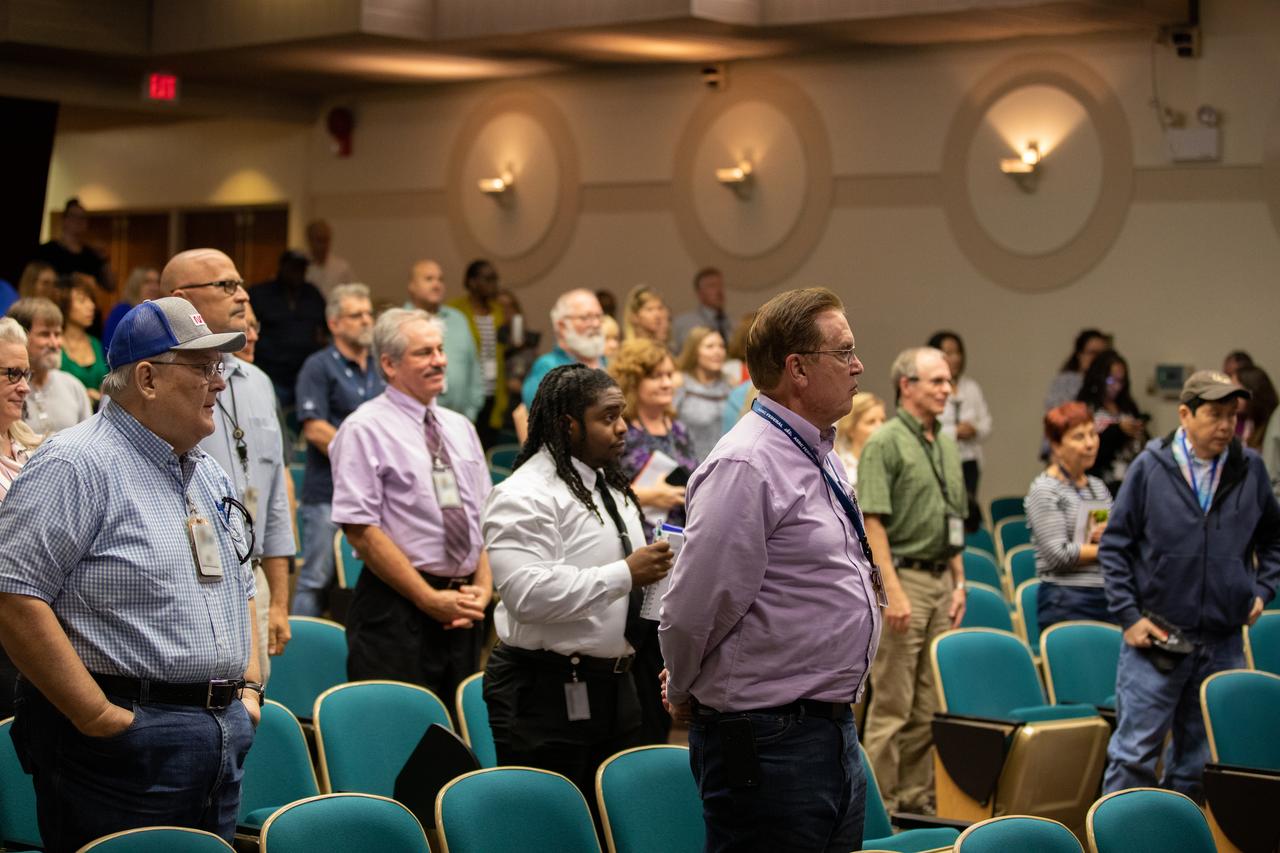
Kennedy Space Center employees attend a presentation on fatigue management inside the Florida spaceport’s Training Auditorium on March 4, 2020. The presentation, led by guest speaker Cassie Hilditch from the San Jose State University Research Foundation, was offered during the center’s annual Safety and Health Days, which took place March 2 through March 6. Throughout the week, Kennedy employees had the opportunity to attend a variety of presentations – all of which focused on how to maintain a safe and healthy workforce.
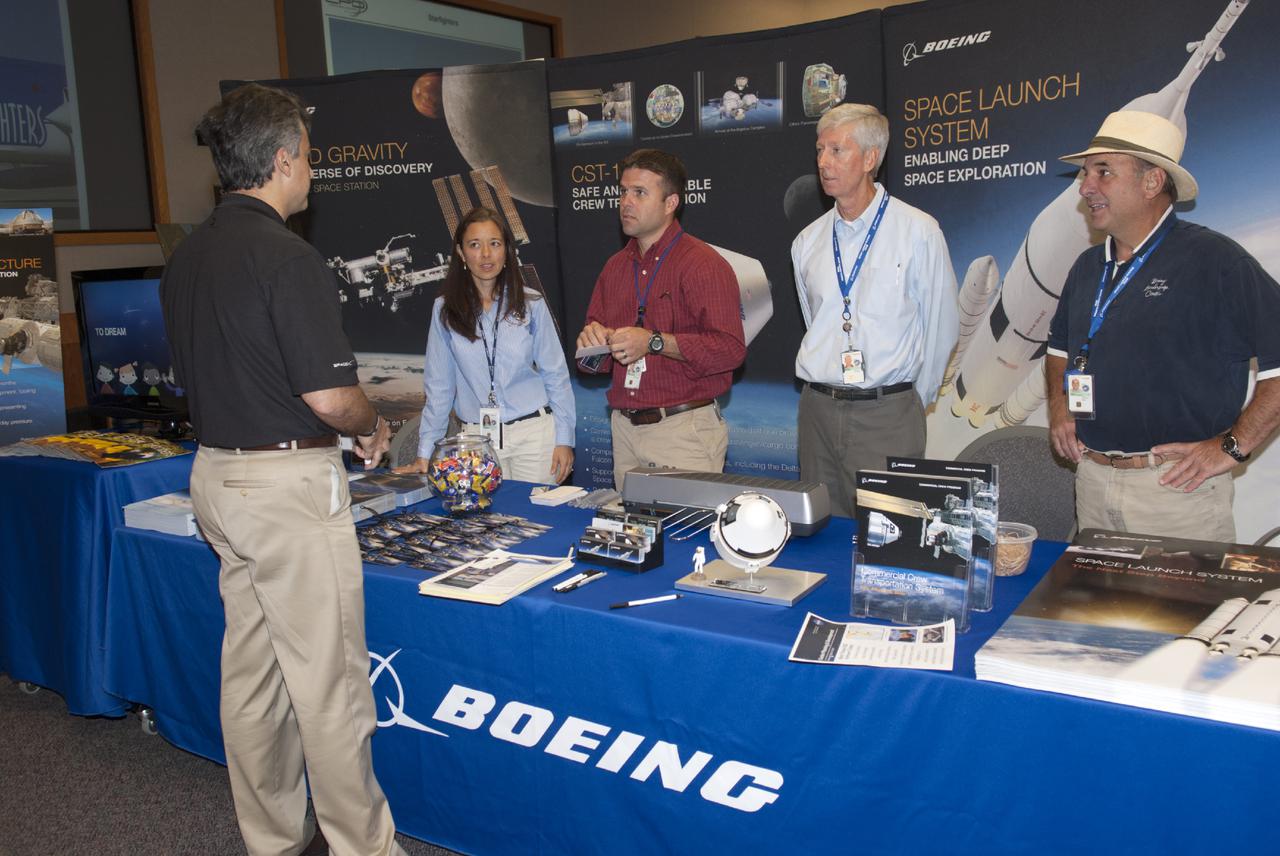
CAPE CANAVERAL, Fla. -- At the Kennedy Space Center in Florida, representatives of Boeing talk with guests at the Innovation Expo KSC Showcase. The event gave Kennedy employees an opportunity to meet 12 NASA partners and see how the Center Planning and Development Directorate is transforming Kennedy into a multi-user spaceport through partnerships and resource planning. The 17-booth exhibit consists of 12 partner booths along with Spaceport Planning, Partnership Development and Research and Technology offices. Photo credit: NASA_Charisse Nahser
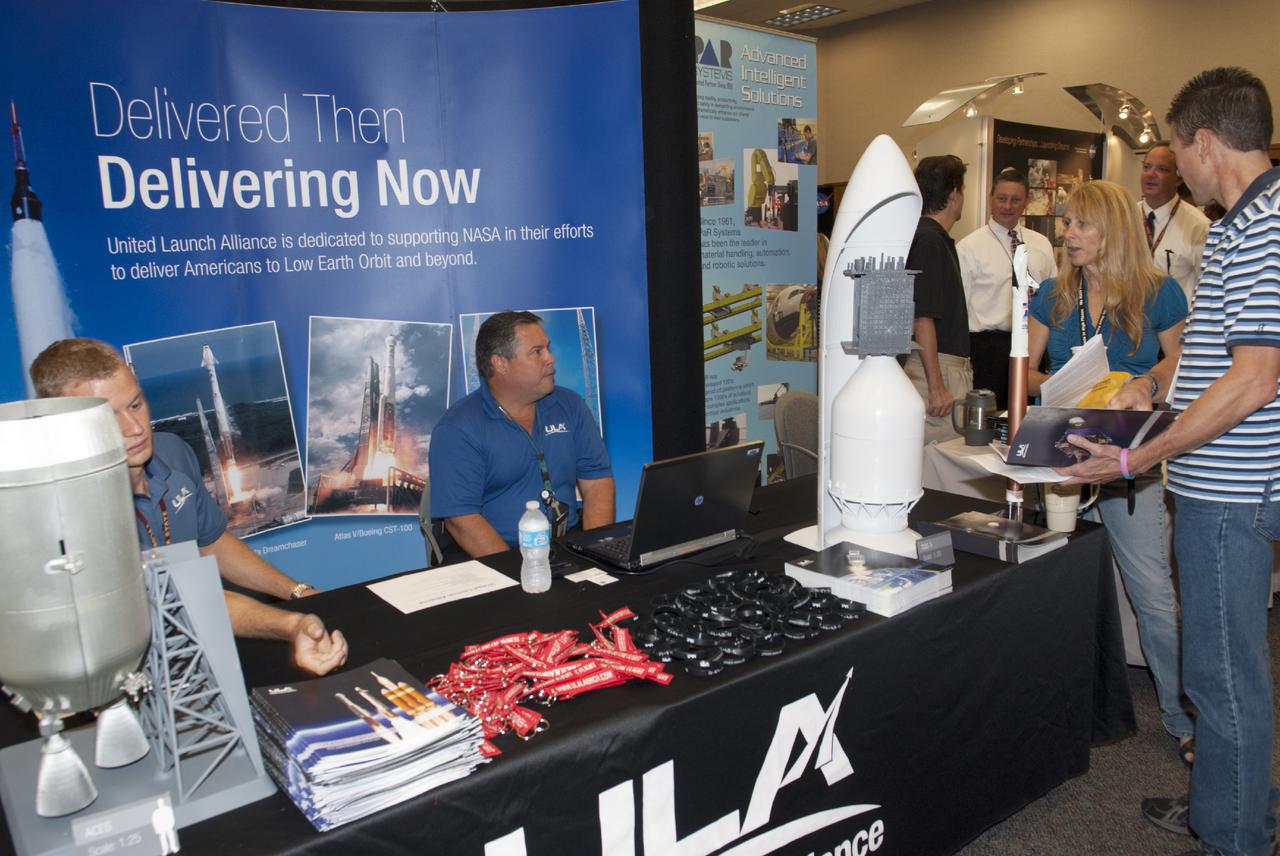
CAPE CANAVERAL, Fla. -- At the Kennedy Space Center in Florida, representatives of United Launch Alliance talk with guests at the Innovation Expo KSC Showcase. The event gave Kennedy employees an opportunity to meet 12 NASA partners and see how the Center Planning and Development Directorate is transforming Kennedy into a multi-user spaceport through partnerships and resource planning. The 17-booth exhibit consists of 12 partner booths along with Spaceport Planning, Partnership Development and Research and Technology offices. Photo credit: NASA_Charisse Nahser
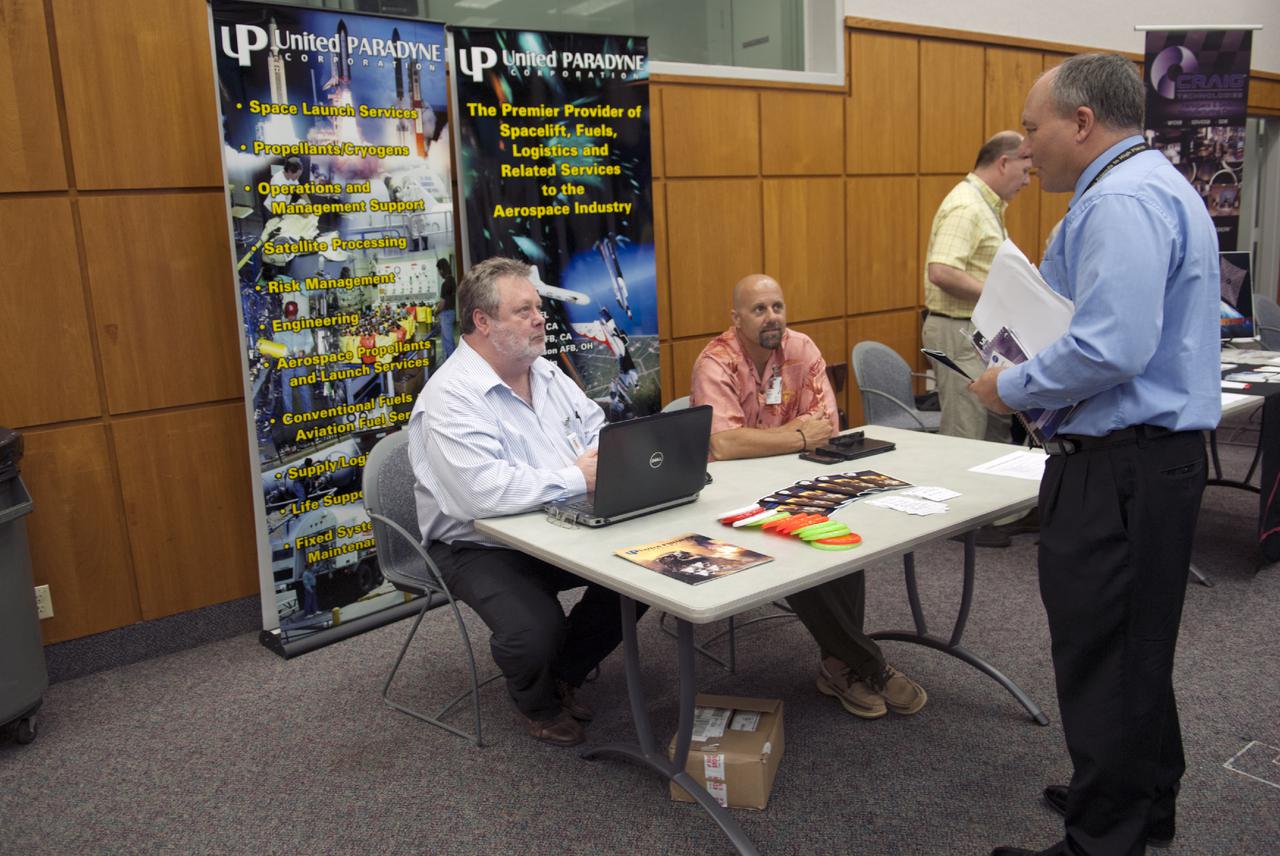
CAPE CANAVERAL, Fla. -- At the Kennedy Space Center in Florida, representatives of United Paradyne talk with guests at the Innovation Expo KSC Showcase. The event gave Kennedy employees an opportunity to meet 12 NASA partners and see how the Center Planning and Development Directorate is transforming Kennedy into a multi-user spaceport through partnerships and resource planning. The 17-booth exhibit consists of 12 partner booths along with Spaceport Planning, Partnership Development and Research and Technology offices. Photo credit: NASA_Charisse Nahser
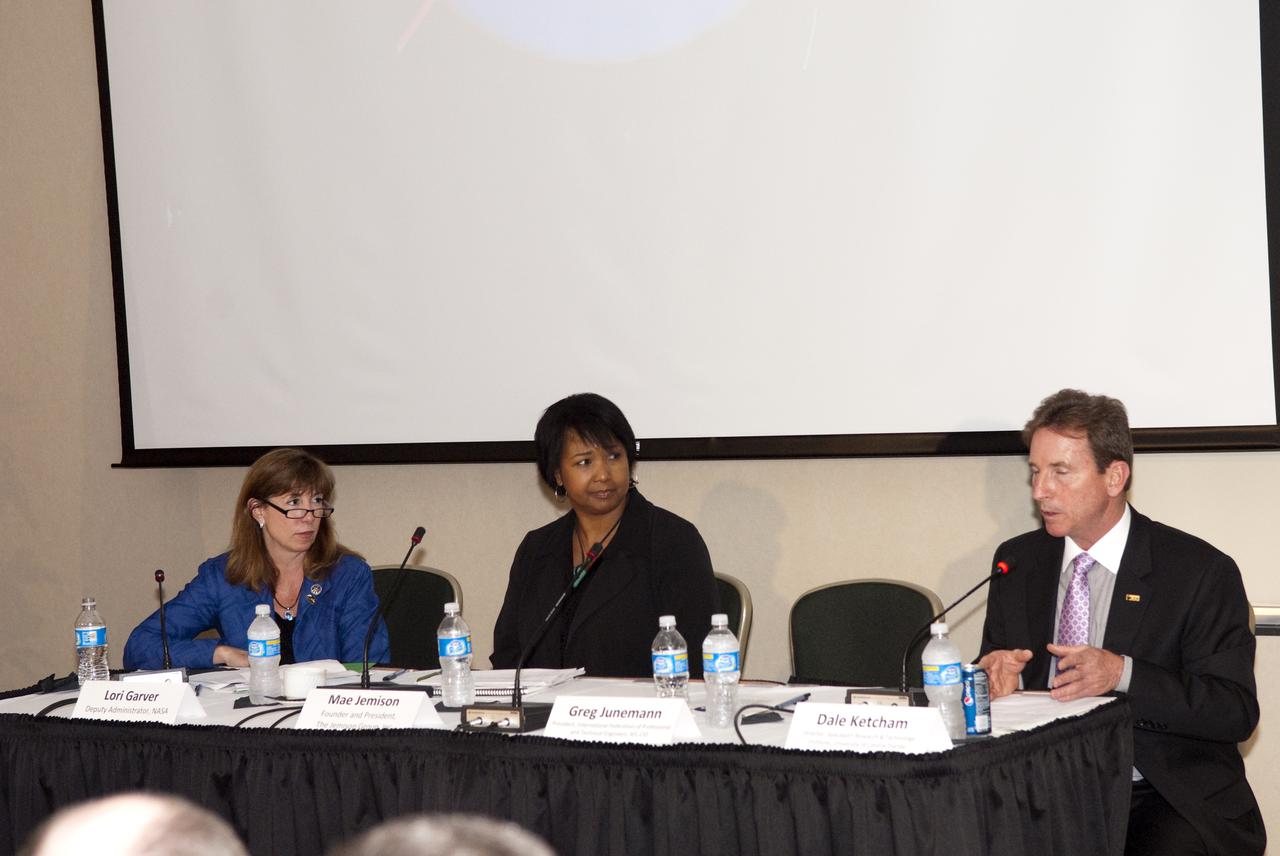
CAPE CANAVERAL, Fla. - In the Juno_Jupiter room of the Debus Center at NASA Kennedy Space Center Visitor Complex in Florida, Lori Garver, NASA Deputy Administrator (left) and panel moderator and Mae Jamison, Founder and President of The Jamison Group Inc. listen intently as Dale Ketcham, Director of the Spaceport Research and Technology Institute at the University of Central Florida speaks at the 'Harnessing Space to Expand Economic Opportunity,' break-out session that is part of the Conference on the American Space Program for the 21st Century. Photo Credit: NASA_Jim Grossmann
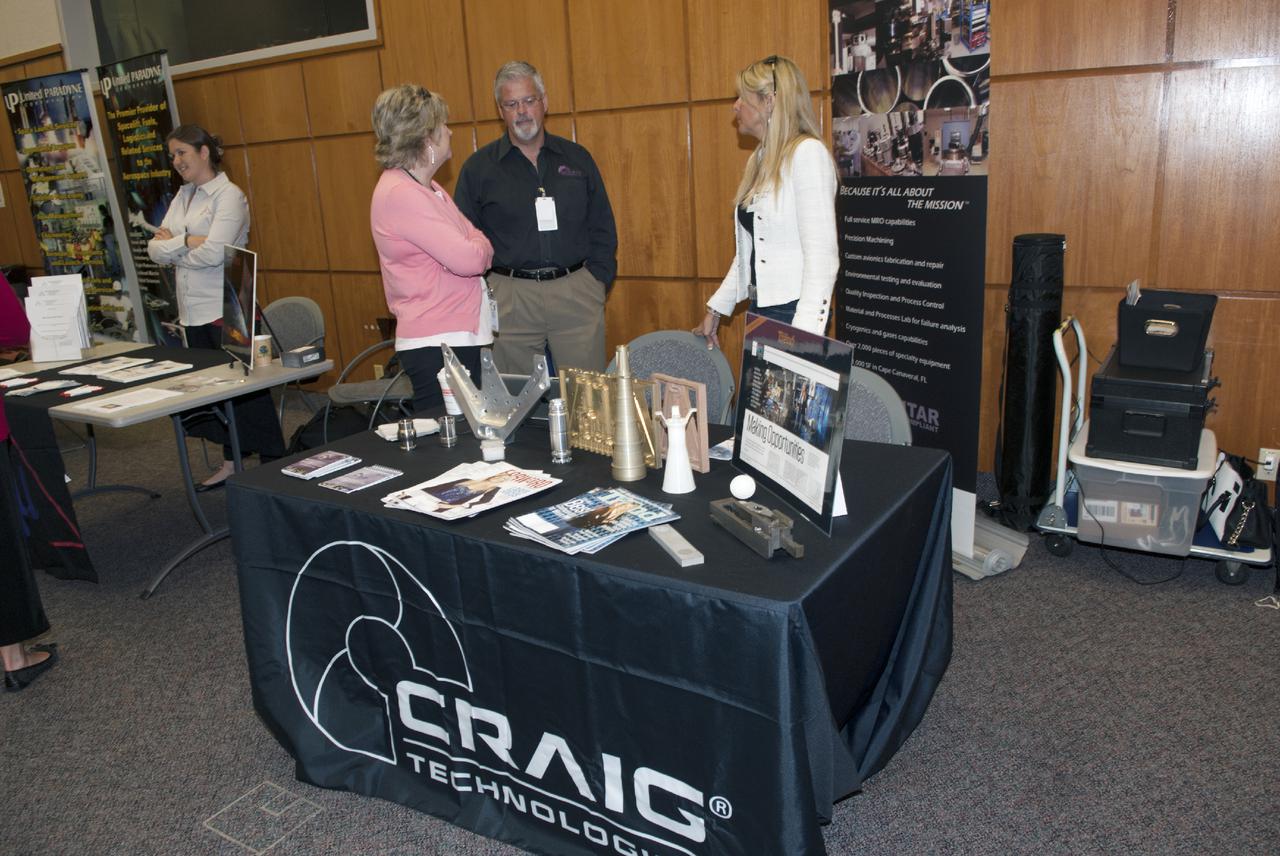
CAPE CANAVERAL, Fla. -- At the Kennedy Space Center in Florida, representatives of Craig Technologies talk with guests at the Innovation Expo KSC Showcase. The event gave Kennedy employees an opportunity to meet 12 NASA partners and see how the Center Planning and Development Directorate is transforming Kennedy into a multi-user spaceport through partnerships and resource planning. The 17-booth exhibit consists of 12 partner booths along with Spaceport Planning, Partnership Development and Research and Technology offices. Photo credit: NASA_Charisse Nahser
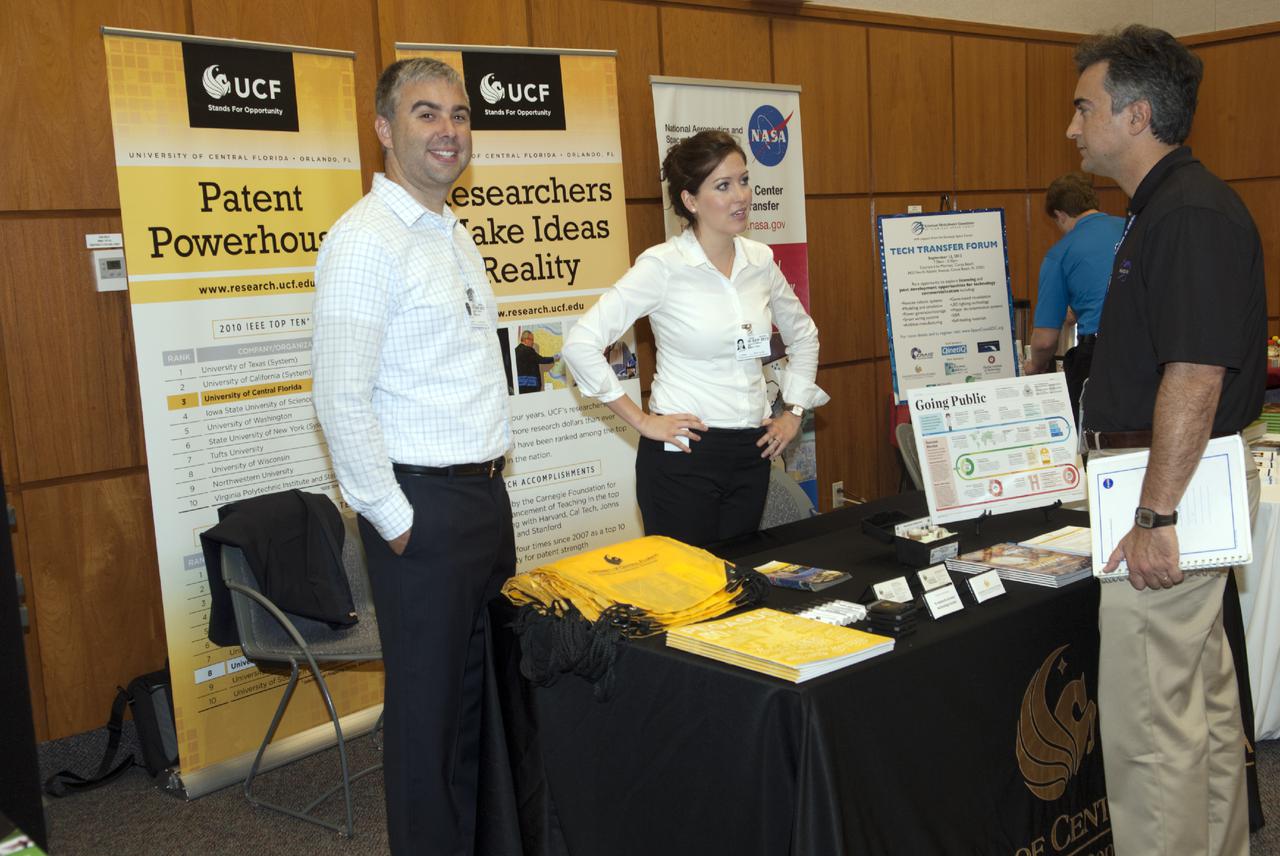
CAPE CANAVERAL, Fla. -- At the Kennedy Space Center in Florida, representatives of the University of Central Florida talk with guests at the Innovation Expo KSC Showcase. The event gave Kennedy employees an opportunity to meet 12 NASA partners and see how the Center Planning and Development Directorate is transforming Kennedy into a multi-user spaceport through partnerships and resource planning. The 17-booth exhibit consists of 12 partner booths along with Spaceport Planning, Partnership Development and Research and Technology offices. Photo credit: NASA_Charisse Nahser

CAPE CANAVERAL, Fla. – Panelists conduct a question and answer session with news media after NASA awards a cooperative agreement with the Center for the Advancement of Science in Space (CASIS) to manage the portion of the International Space Station that operates as a U.S. national laboratory. From left are: Waleed Abdalati, NASA chief scientist; Mark Uhran, NASA assistant associate administrator for the International Space Station; and Jeanne Becker, CASIS executive director. CASIS will be located at the Space Life Sciences Laboratory at NASA’s Kennedy Space Center in Florida. The organization will increase station use to maximize the public’s return on its investment by managing its diversified research and development portfolio based on needs for basic and applied research in a variety of fields. CASIS will identify opportunities for non-NASA uses linking scientific review and economic value, and will match potential research and development opportunities with funding sources. The organization also will increase awareness among schools and students about using the station as a learning platform. Photo credit: NASA/Kim Shiflett
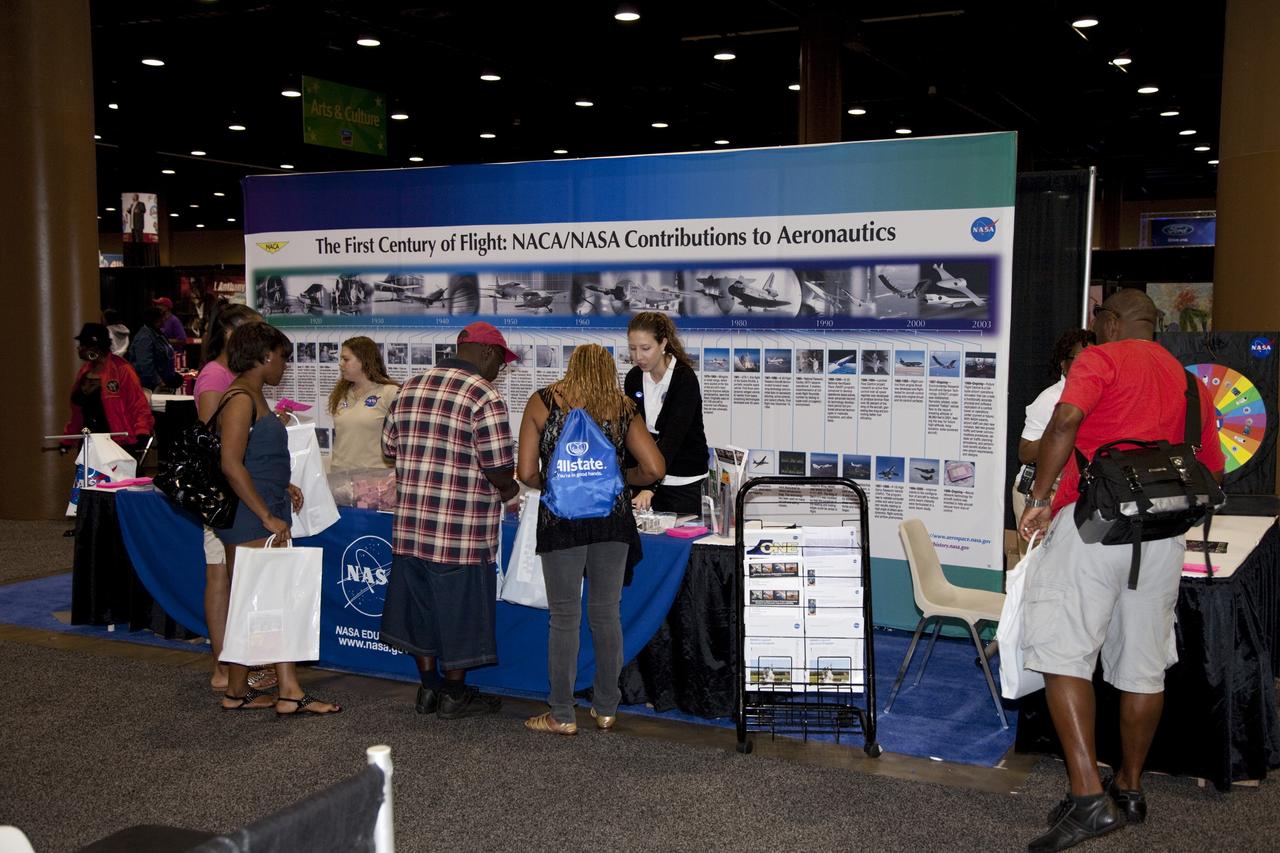
CAPE CANAVERAL, Fla. -- Education specialists at a joint exhibit from NASA's Kennedy Space Center and Glenn Research Center discuss the advancements the agency has made in aeronautics with the nationwide attendees of the Tom Joyner Family Reunion. The event was held in the Exhibit Hall of the Gaylord Palms Resort and Convention Center in Kissimmee, Fla., and hosted by nationally syndicated radio personality Tom Joyner during the extended Labor Day weekend Sept. 1-4. Besides offering attendees the opportunity to visit tourist attractions in the Orlando area, the reunion gave NASA an avenue to tout the benefits of math and scientific learning, as well as the many educational opportunities offered by the space agency. For more information on NASA's education initiatives, visit http://www.nasa.gov/education. Photo credit: NASA/Frankie Martin
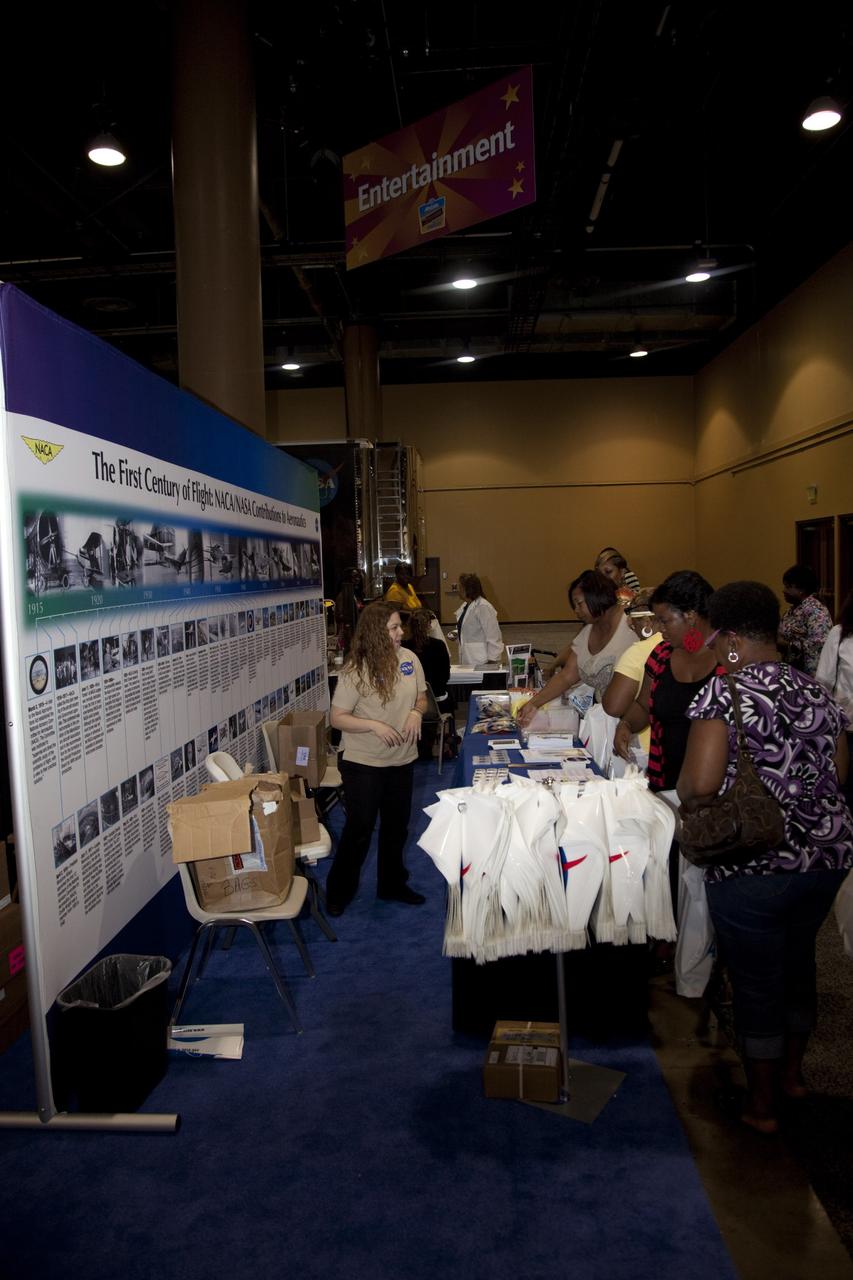
CAPE CANAVERAL, Fla. -- Education specialists at a joint exhibit from NASA's Kennedy Space Center and Glenn Research Center discuss the advancements the agency has made in aeronautics with the nationwide attendees of the Tom Joyner Family Reunion. The event was held in the Exhibit Hall of the Gaylord Palms Resort and Convention Center in Kissimmee, Fla., and hosted by nationally syndicated radio personality Tom Joyner during the extended Labor Day weekend Sept. 1-4. Besides offering attendees the opportunity to visit tourist attractions in the Orlando area, the reunion gave NASA an avenue to tout the benefits of math and scientific learning, as well as the many educational opportunities offered by the space agency. For more information on NASA's education initiatives, visit http://www.nasa.gov/education. Photo credit: NASA/Frankie Martin
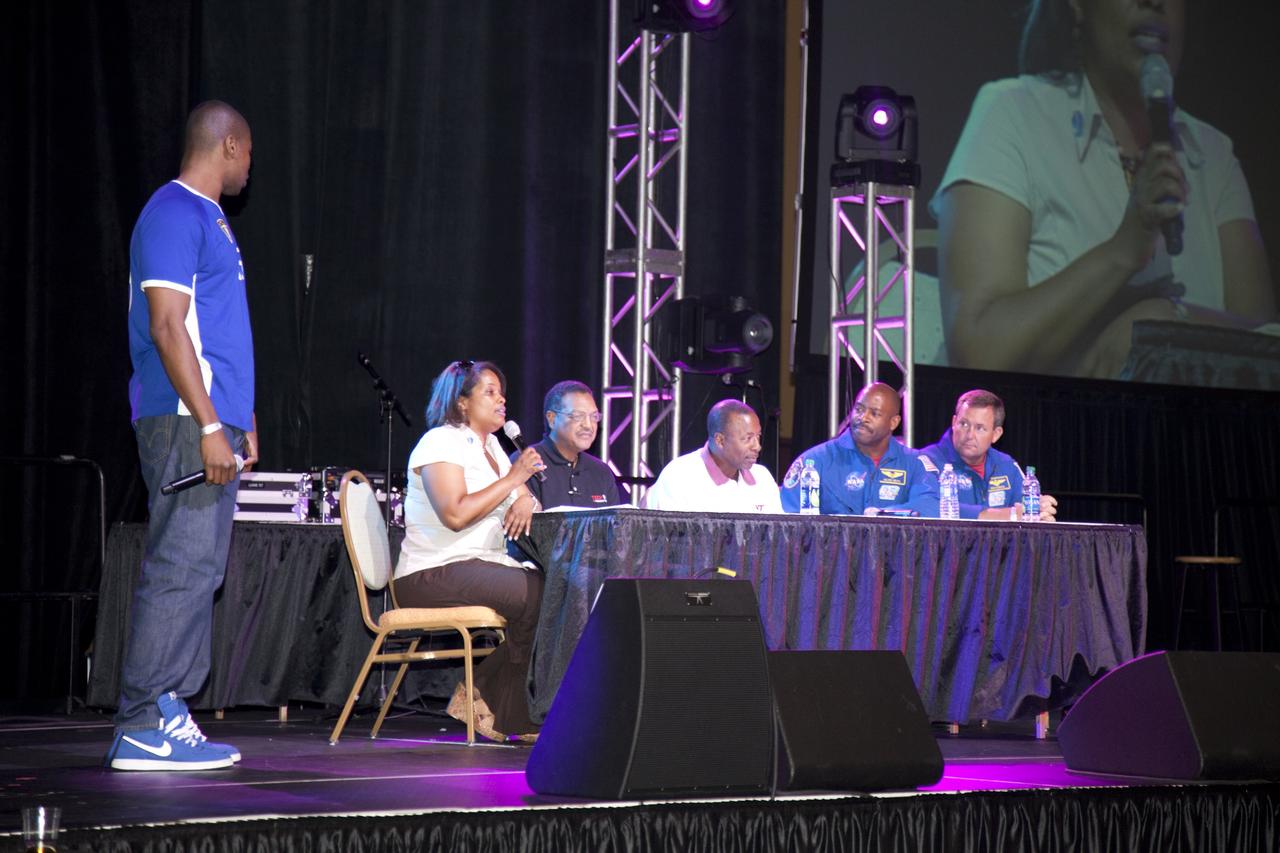
CAPE CANAVERAL, Fla. -- The NASA Legends and Trailblazers Panel take to the stage at the Tom Joyner Family Reunion. From left is the master of ceremonies, Lance Foster (standing) with panel members Robyn Gordon, director of Center Operations, Glenn Research Center; Lewis Braxton, deputy director, Ames Research Center; Woodrow Whitlow, associate administrator for Mission Support Directorates; astronaut Leland Melvin, associate administrator for Education; and astronaut Mike Foreman, Johnson Space Center. The event was held in the Exhibit Hall of the Gaylord Palms Resort and Convention Center in Kissimmee, Fla., and hosted by nationally syndicated radio personality Tom Joyner during the extended Labor Day weekend Sept. 1-4. Besides offering attendees the opportunity to visit tourist attractions in the Orlando area, the reunion gave NASA education specialists an avenue to tout the benefits of math and scientific learning, as well as the many educational opportunities offered by the space agency. For more information on NASA's education initiatives, visit http://www.nasa.gov/education. Photo credit: NASA/Frankie Martin
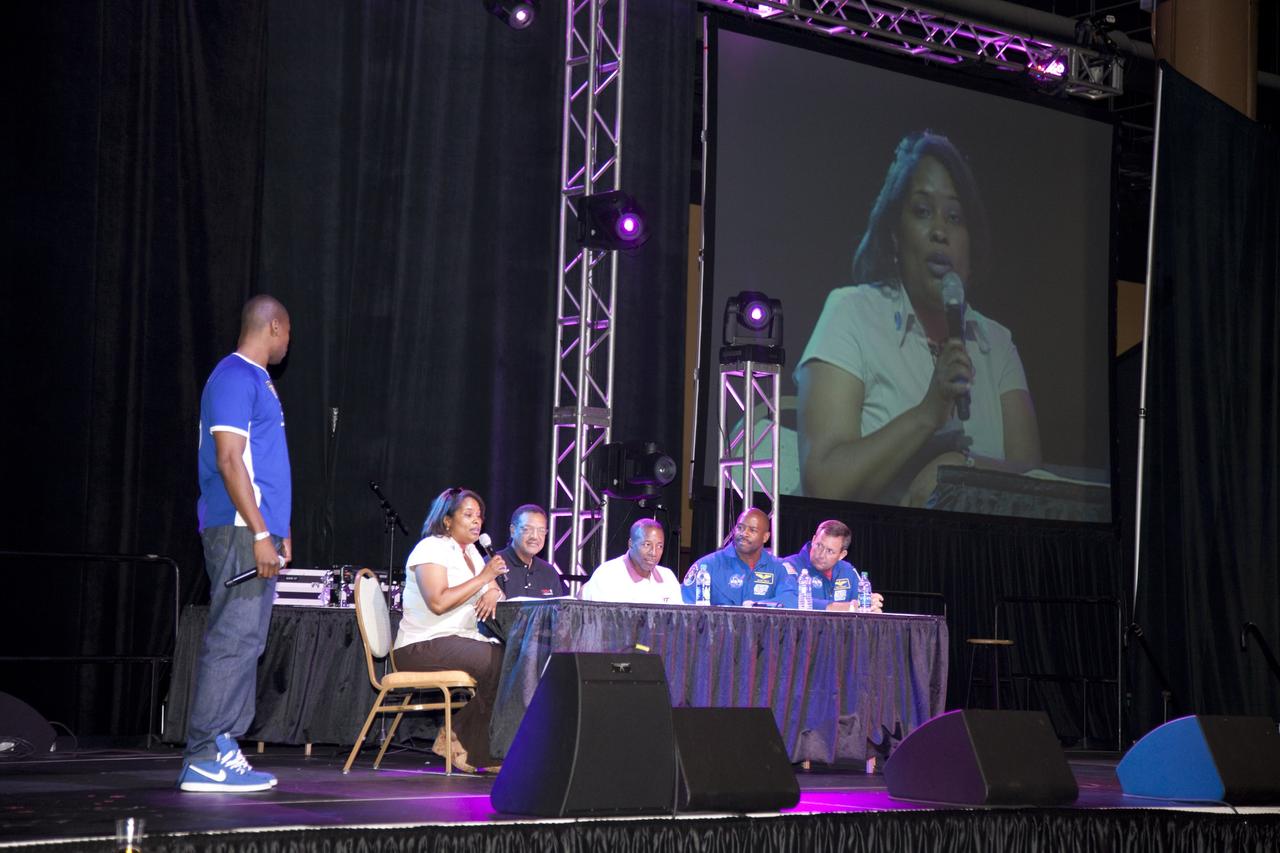
CAPE CANAVERAL, Fla. -- The NASA Legends and Trailblazers Panel address the audience attending the Tom Joyner Family Reunion. From left is the master of ceremonies, Lance Foster (standing) with panel members Robyn Gordon, director of Center Operations, Glenn Research Center; Lewis Braxton, deputy director, Ames Research Center; Woodrow Whitlow, associate administrator for Mission Support Directorates, NASA Headquarters; astronaut Leland Melvin, associate administrator for Education, NASA Headquarters; and astronaut Mike Foreman, Johnson Space Center. The event was held in the Exhibit Hall of the Gaylord Palms Resort and Convention Center in Kissimmee, Fla., and hosted by nationally syndicated radio personality Tom Joyner during the extended Labor Day weekend Sept. 1-4. Besides offering attendees the opportunity to visit tourist attractions in the Orlando area, the reunion gave NASA education specialists an avenue to tout the benefits of math and scientific learning, as well as the many educational opportunities offered by the space agency. For more information on NASA's education initiatives, visit http://www.nasa.gov/education. Photo credit: NASA/Frankie Martin
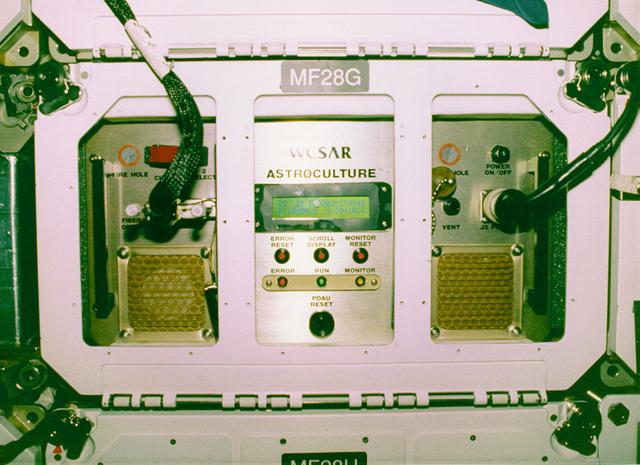
Research with plants in microgravity offers many exciting opportunities to gain new insights and could improve products on Earth ranging from crop production to fragrances and food flavorings. The ASTROCULTURE facility is a lead commercial facility for plant growth and plant research in microgravity and was developed by the Wisconsin Center for Space Automation and Robotics (WSCAR), a NASA Commercial Space Center. On STS-95 it will support research that could help improve crop development leading to plants that are more disease resistant or have a higher yield and provide data on the production of plant essential oils---oils that contain the essence of the plant and provide both fragrance and flavoring. On STS-95, a flowering plant will be grown in ASTROCULTURE and samples taken using a method developed by the industry partner for this investigation. On Earth the samples will be analyzed by gas chromatography/mass spectrometry and the data used to evaluate both the production of fragrant oils in microgravity and in the development of one or more products.
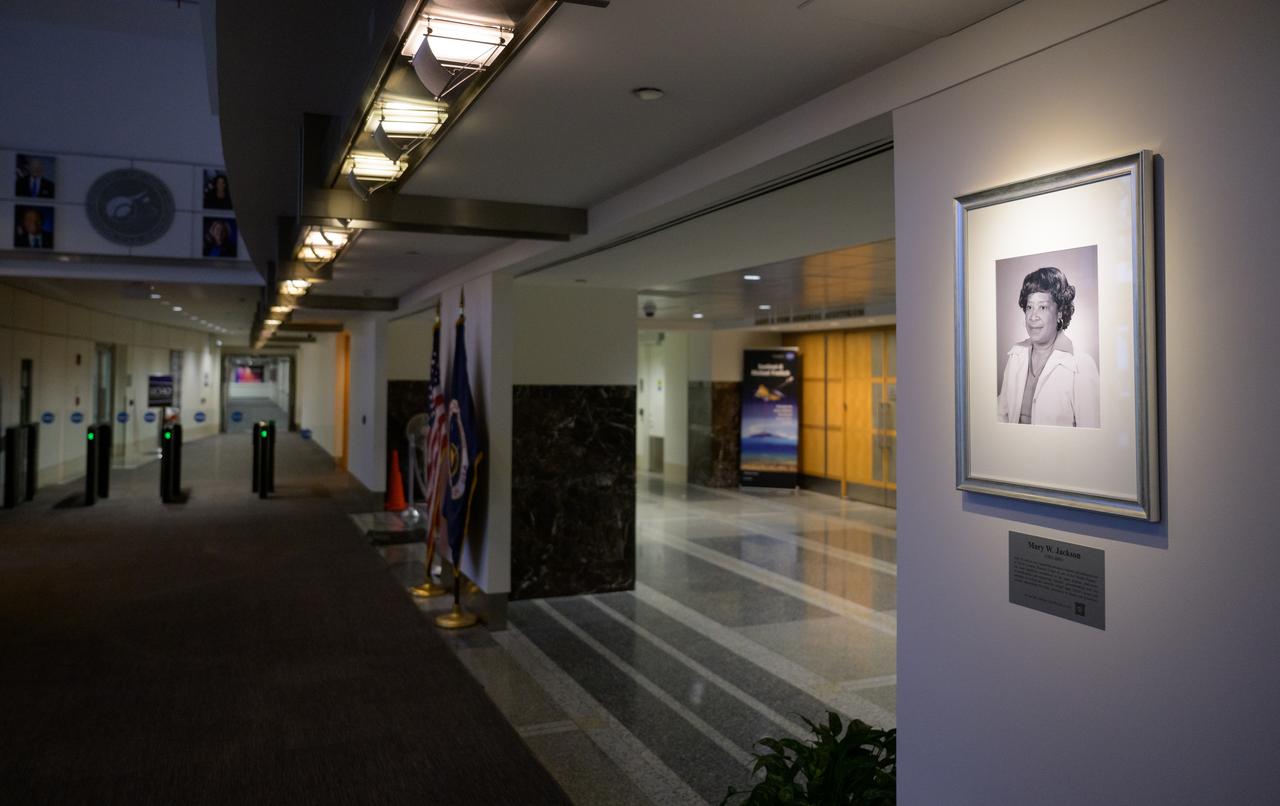
A portrait of Mary W. Jackson is seen after it was unveiled, Friday, Dec. 6, 2024, at the NASA Headquarters Mary W. Jackson Building in Washington. Mary W. Jackson was a pioneering aerospace engineer and mathematician at NASA’s Langley Research Center. As one of the “Hidden Figures,” she made significant contributions to the space program, particularly in aerodynamics and engineering. Jackson’s groundbreaking work and advocacy for women and minorities helped shape NASA’s success and advance opportunities for future generations in science and technology. Photo Credit: (NASA/Joel Kowsky)
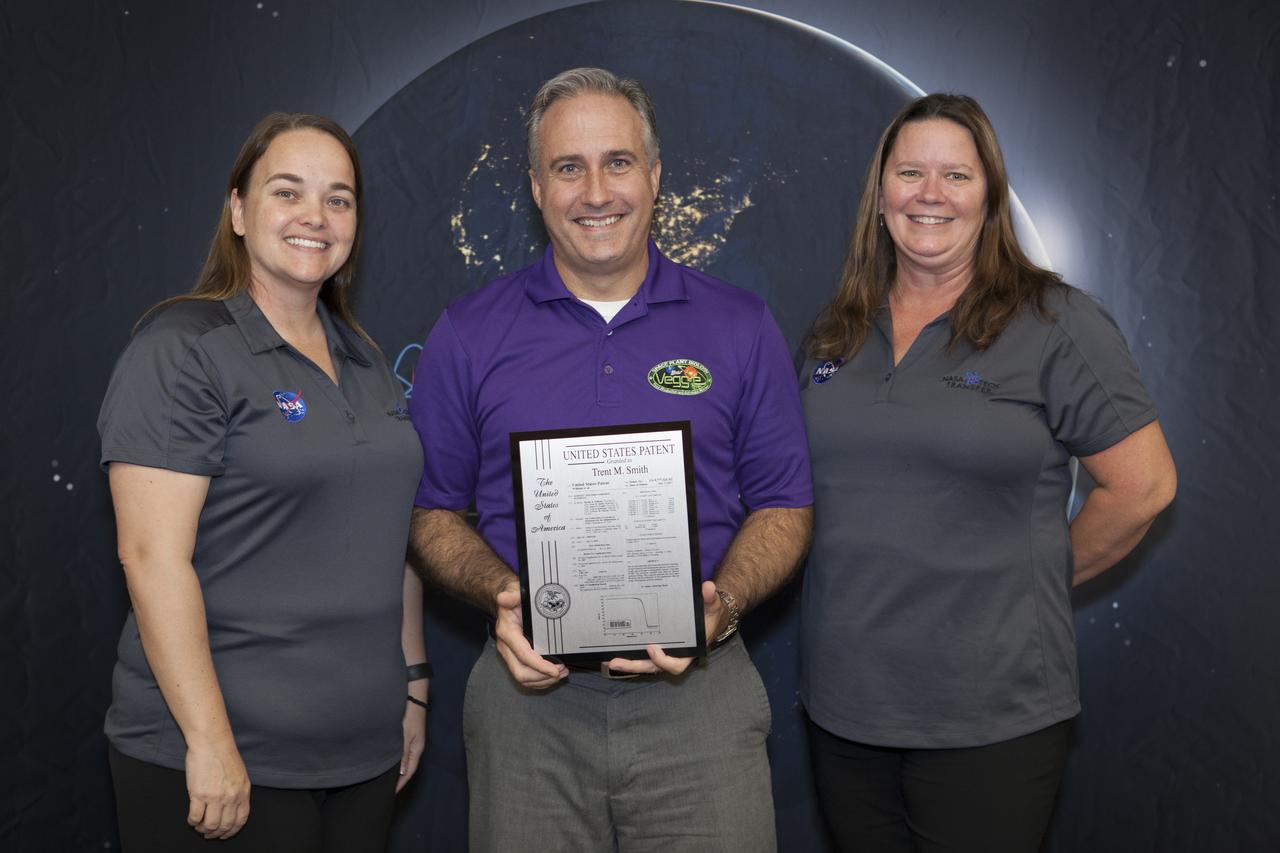
Trent Smith, project manager in the ISS Exploration Research and Technology Program, displays the U.S. Patent plaque he received during a ceremony at the 2017 Innovation Expo at NASA's Kennedy Space Center in Florida. The purpose of the annual two-day expo is to help foster innovation and creativity among the Kennedy workforce. The event included several keynote speakers, training opportunities, an innovation showcase and the KSC Kickstart competition.
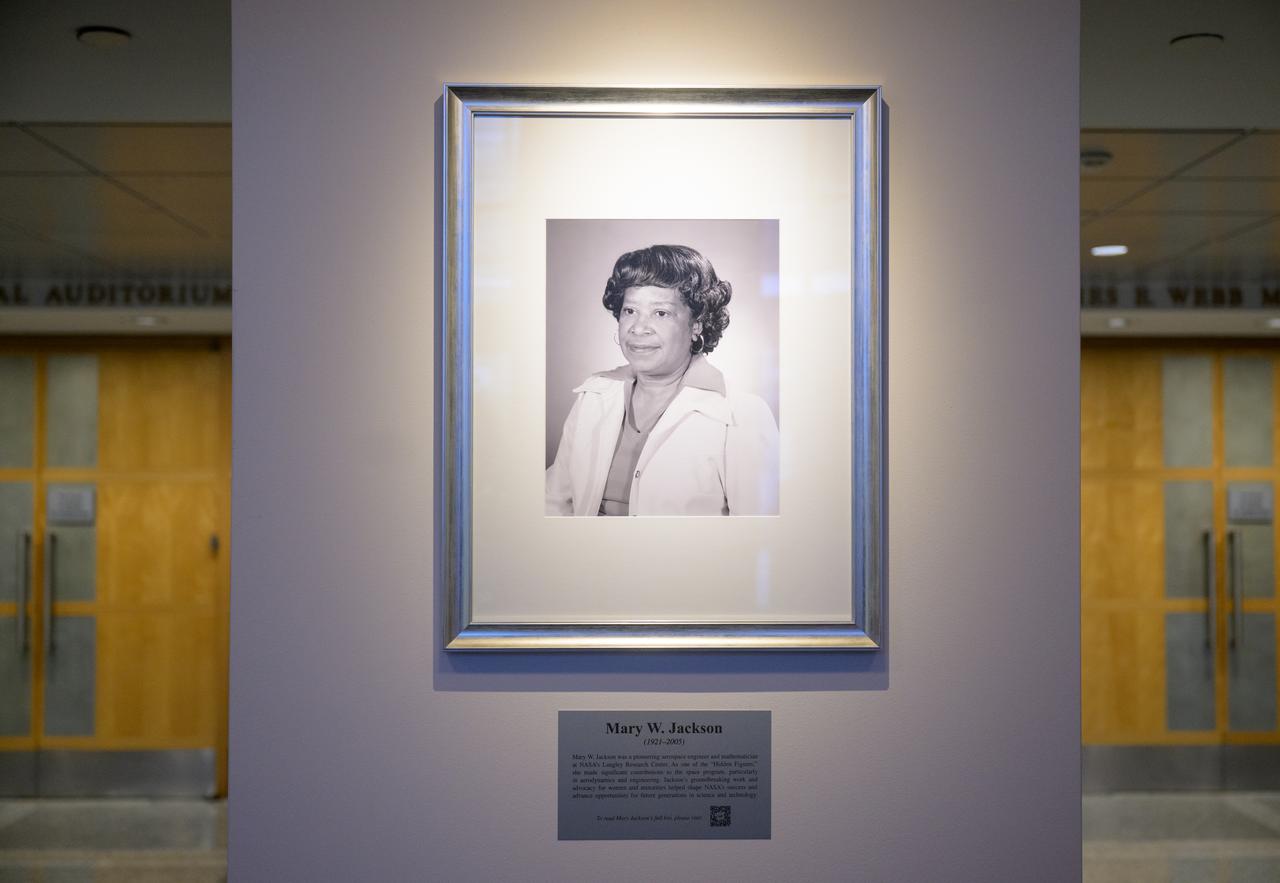
A portrait of Mary W. Jackson is seen after it was unveiled, Friday, Dec. 6, 2024, at the NASA Headquarters Mary W. Jackson Building in Washington. Mary W. Jackson was a pioneering aerospace engineer and mathematician at NASA’s Langley Research Center. As one of the “Hidden Figures,” she made significant contributions to the space program, particularly in aerodynamics and engineering. Jackson’s groundbreaking work and advocacy for women and minorities helped shape NASA’s success and advance opportunities for future generations in science and technology. Photo Credit: (NASA/Joel Kowsky)
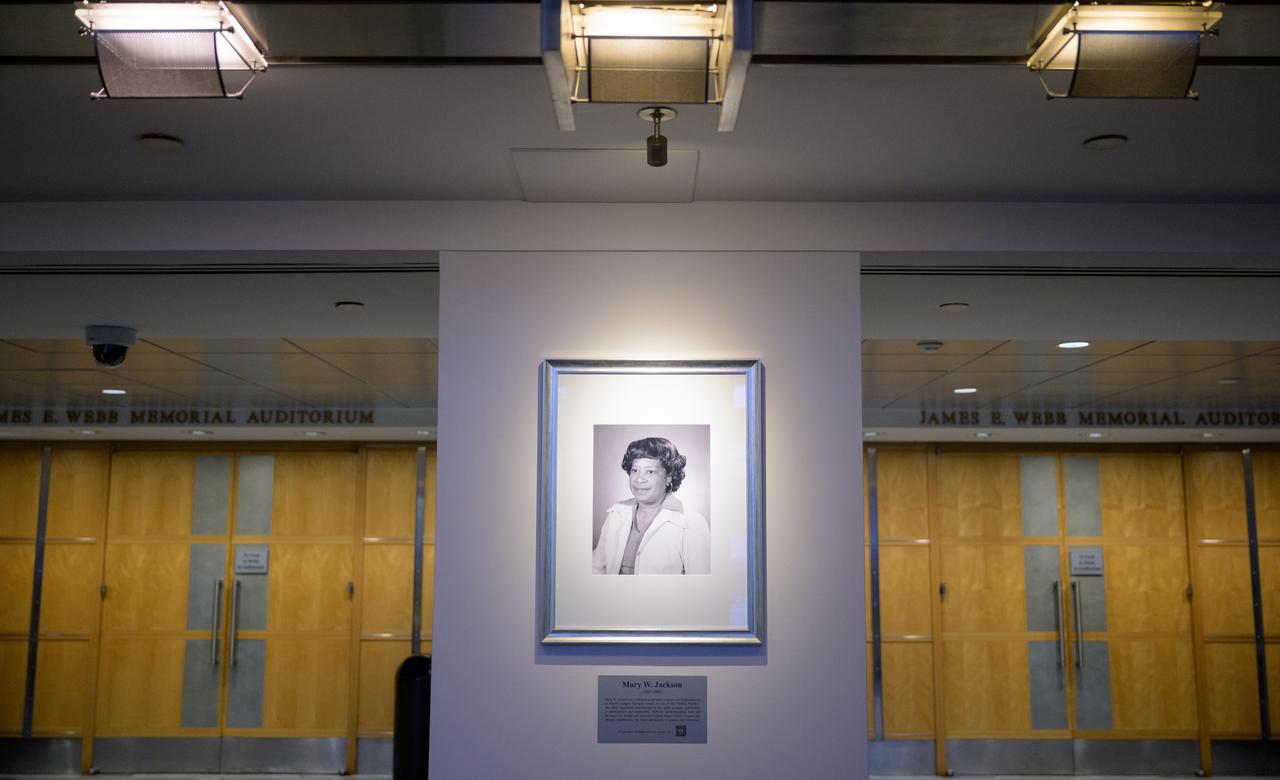
A portrait of Mary W. Jackson is seen after it was unveiled, Friday, Dec. 6, 2024, at the NASA Headquarters Mary W. Jackson Building in Washington. Mary W. Jackson was a pioneering aerospace engineer and mathematician at NASA’s Langley Research Center. As one of the “Hidden Figures,” she made significant contributions to the space program, particularly in aerodynamics and engineering. Jackson’s groundbreaking work and advocacy for women and minorities helped shape NASA’s success and advance opportunities for future generations in science and technology. Photo Credit: (NASA/Joel Kowsky)
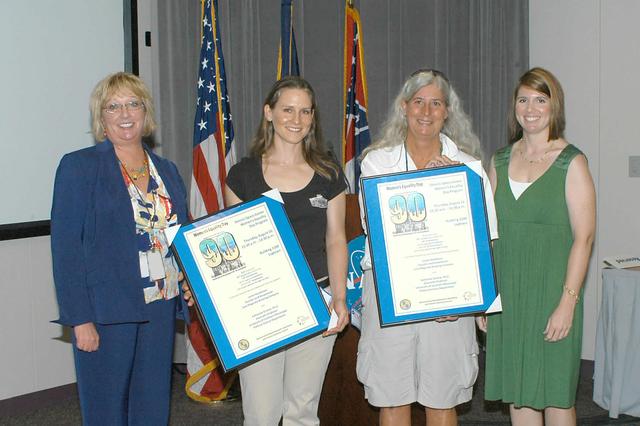
NASA's John C. Stennis Space Center celebrated Women's Equality Day with a program featuring presentations from a pair of area women - Leslie Henderson, founder and brewmaster of Lazy Magnolia Brewing Co. in Kiln, Miss., and Kathanne Greene, associate professor of political science at the University of Southern Mississippi in Hattiesburg. Shown are (l to r): Jo Ann Larson, Stennis Equal Opportunity officer; Henderson; Greene; and Shannon Breland, public affairs officer for the Naval Research Laboratory at Stennis and a member of the Stennis Diversity Council.
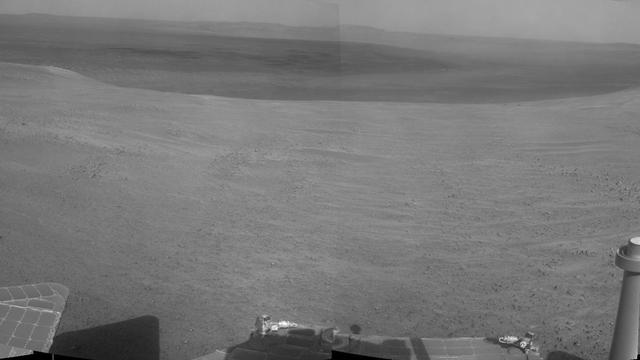
"Perseverance Valley" lies just on the other side of the dip in the crater rim visible in the left half of this 360-degree panorama from the Navigation Camera (Navcam) on NASA's Mars Exploration Rover Opportunity. As the rover arrived at this area in early May 2017, researchers began looking for clues about what process carved the valley. The rover team plans to drive Opportunity all the way down the valley into the interior of Endeavour Crater. The foreground and the area to the right are on the plain just outside of Endeavour Crater. The high point near the center of the image is called "Winnemucca," part of an Endeavour rim segment called "Cape Byron." Endeavour's interior and distant eastern rim are visible at upper left, above the notched portion of the western rim that sits directly above Perseverance Valley. The rover's Navcam took the component images of this scene on May 2 and May 3, 2017, during the 4,718th and 4,719th Martian days, or sols, of Opportunity's work on Mars, two days before a drive that brought Opportunity to the head of the valley. https://photojournal.jpl.nasa.gov/catalog/PIA21495
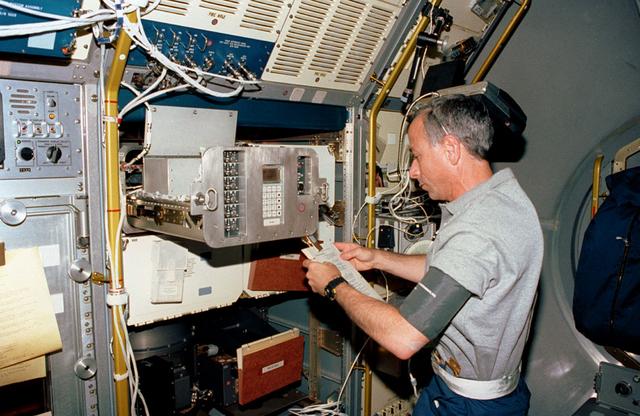
The first United States Microgravity Laboratory (USML-1) was one of NASA's science and technology programs and provided scientists an opportunity to research various scientific investigations in a weightless environment inside the Spacelab module. It also provided demonstrations of new equipment to help prepare for advanced microgravity research and processing aboard the Space Station. The USML-1 flew in orbit for extended periods, providing greater opportunities for research in materials science, fluid dynamics, biotechnology, and combustion science. In this photograph, astronaut Carl Meade is reviewing the manual to activate the Generic Bioprocessing Apparatus (GBA) inside the Spacelab module. The GBA for the USML-1 mission was a multipurpose facility that could help us answer important questions about the relationship between gravity and biology. This unique facility allowed scientists to study biological processes in samples ranging from molecules to small organisms. For example, scientists would examine how collagen, a protein substance found in cornective tissue, bones, and cartilage, forms fibers. In microgravity, it might be possible to alter collagen fiber assembly so that this material could be used more effectively as artificial skin, blood vessels, and other parts of the body. The USML-1 was managed by the Marshall Space Flight Center and waslaunched aboard the Space Shuttle Orbiter Columbia (STS-50) on June 25, 1992.