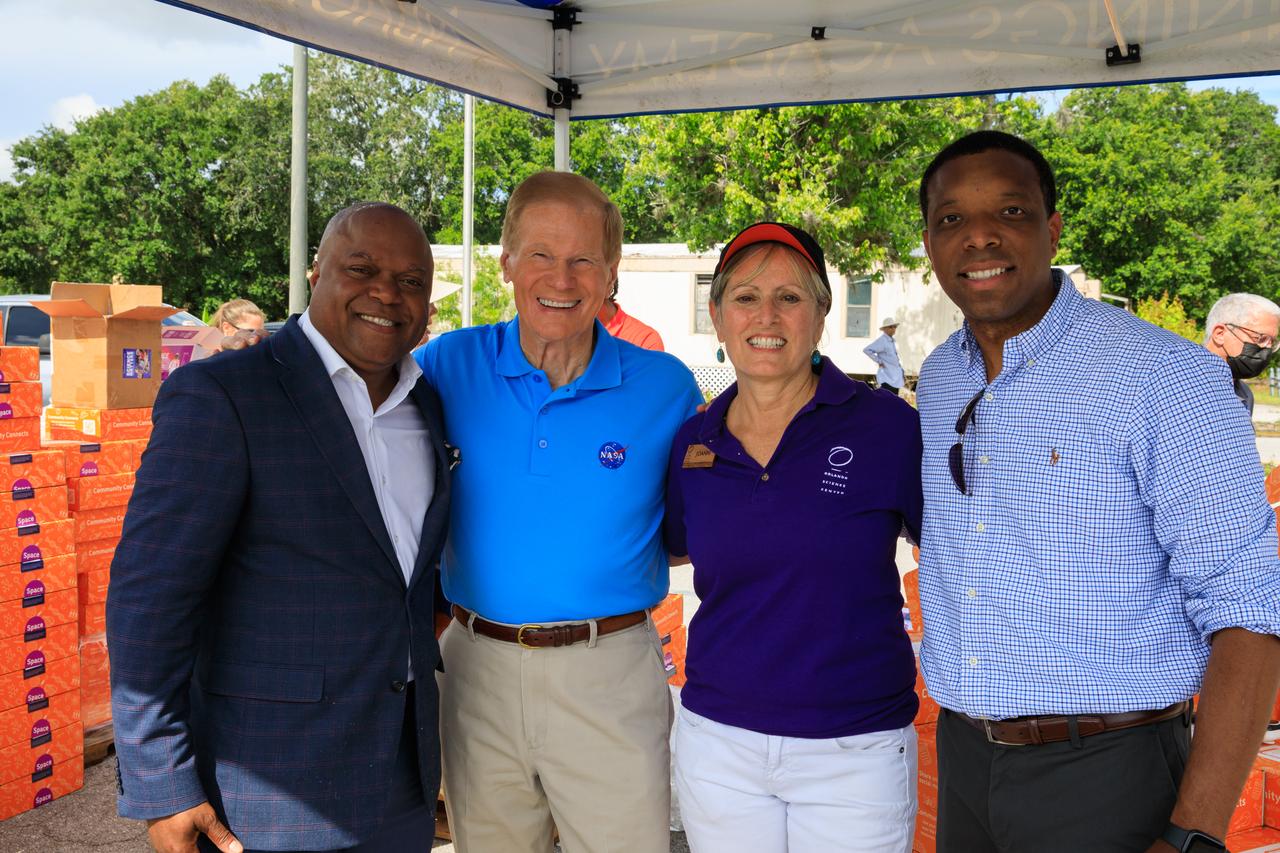
From left to right, Dr. Frederic Bertley, president and CEO, Center of Science and Industry (COSI); NASA Administrator Bill Nelson; JoAnn Newman, president and CEO, Orlando Science Center; and Stephen White, chief strategy officer, COSI helped kick off a new initiative to deliver food and hands-on science, technology, engineering, and math kits, called Learning Lunchboxes, at New Beginnings Church – The Gathering Place in Orlando, Florida on Friday, June 3. The lunchboxes are aimed at inspiring and educating youth and families about NASA’s upcoming Artemis missions, which includes landing the first woman and person of color on the Moon and helping prepare for human exploration of Mars. Partners on the initiative with NASA include COSI, the Second Harvest Food Bank, and the Orlando Science Center. The NASA Artemis Learning Lunchbox is made possible through NASA’s Teams Engaging Affiliated Museums and Informal Institutions (TEAM II) program. NASA Learning Lunchboxes provide five space-focused learning activities that showcase the diversity of STEM at NASA. COSI will distribute 30,000 NASA Learning Lunchboxes at local food banks across the country to help feed hungry lives and feed hungry minds. This innovative, community-based model will bring together other science centers and museums, afterschool providers, and community leaders to highlight the importance of STEM. This project also includes digital extension resources.
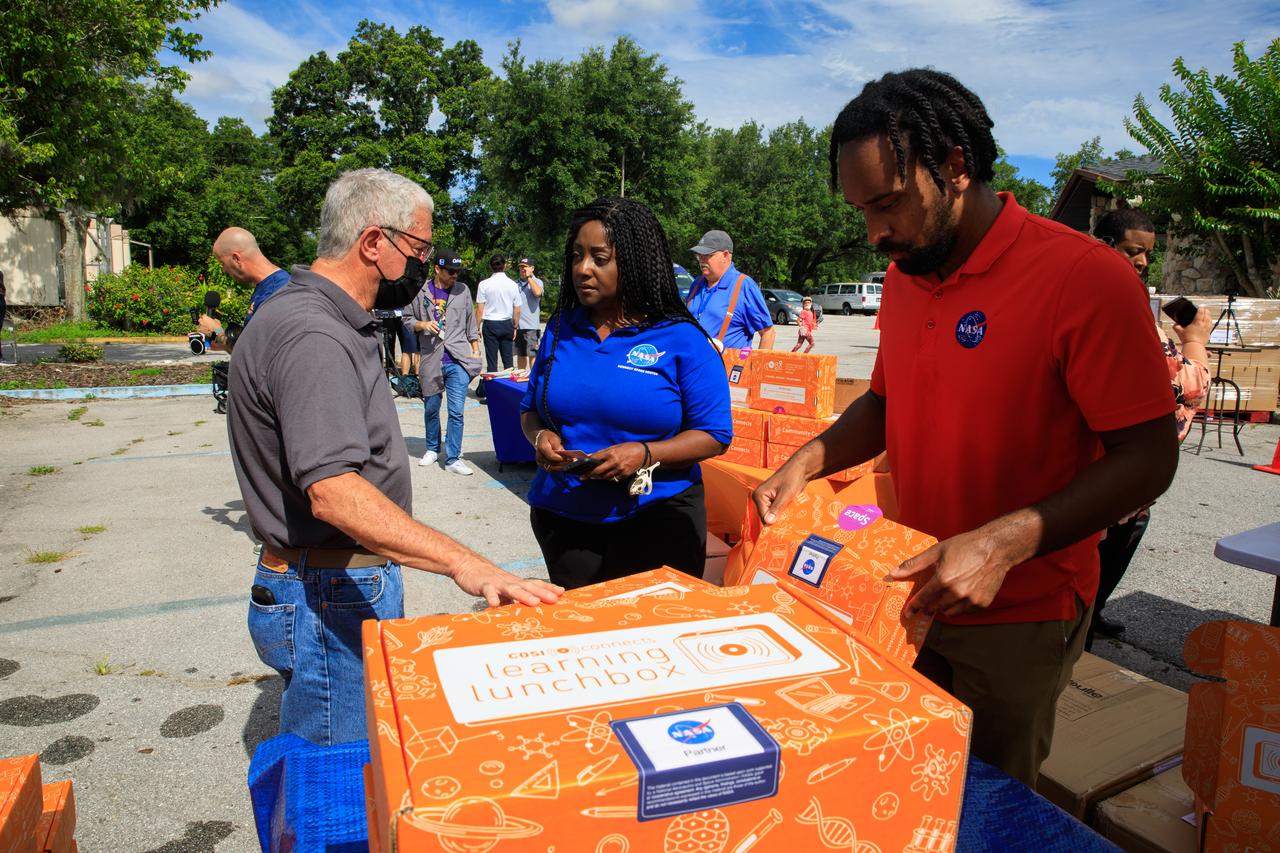
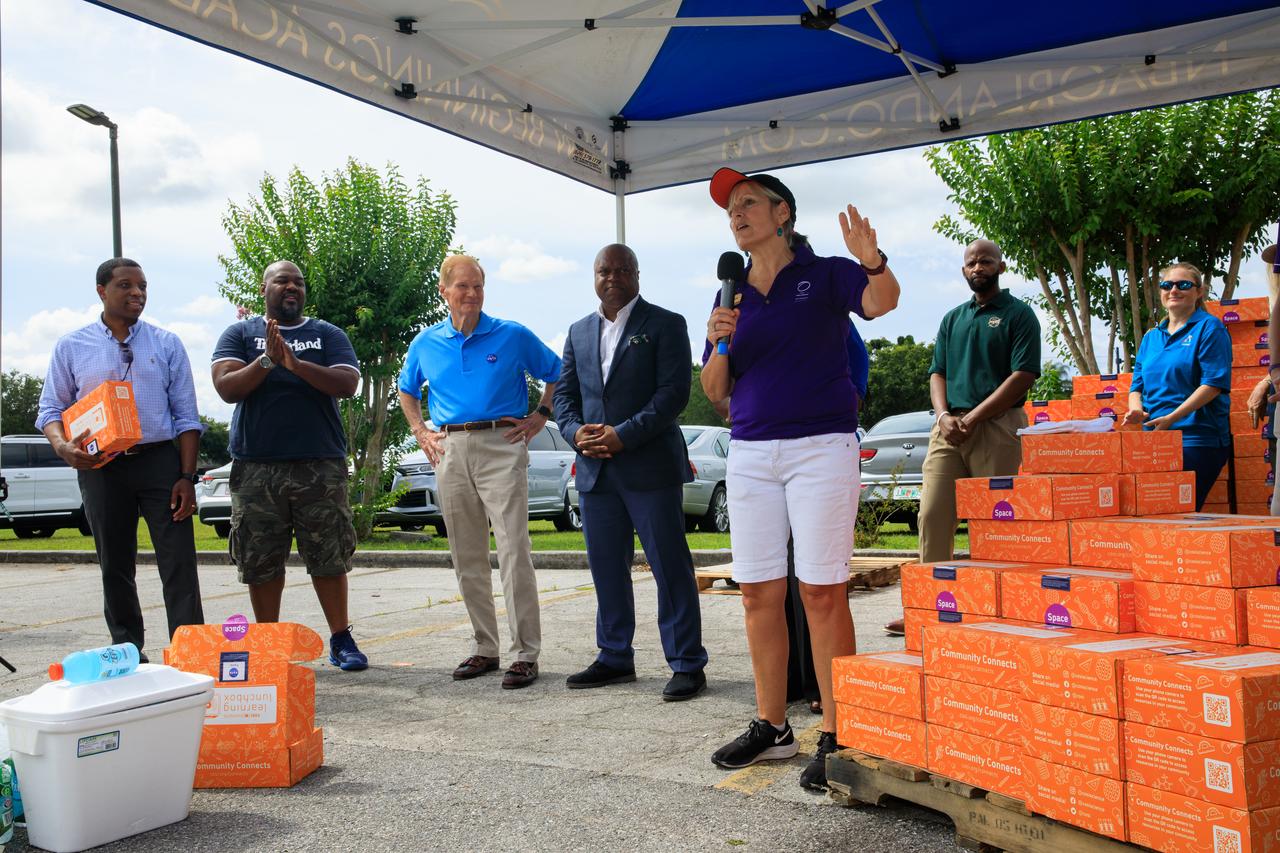
Barbara Brown (center), director of the Exploration Research and Technology Program at Kennedy Space Center in Florida, helped kick off a new initiative to deliver food and hands-on science, technology, engineering, and math kits, called Learning Lunchboxes, at New Beginnings Church – The Gathering Place in Orlando, Florida on Friday, June 3. The lunchboxes are aimed at inspiring and educating youth and families about NASA’s upcoming Artemis missions, which includes landing the first woman and person of color on the Moon and helping prepare for human exploration of Mars. Partners on the initiative with NASA include the Center of Science and Industry, the Second Harvest Food Bank, and the Orlando Science Center. The NASA Artemis Learning Lunchbox is made possible through NASA’s Teams Engaging Affiliated Museums and Informal Institutions (TEAM II) program. NASA Learning Lunchboxes provide five space-focused learning activities that showcase the diversity of STEM at NASA. COSI will distribute 30,000 NASA Learning Lunchboxes at local food banks across the country to help feed hungry lives and feed hungry minds. This innovative, community-based model will bring together other science centers and museums, afterschool providers, and community leaders to highlight the importance of STEM. This project also includes digital extension resources.
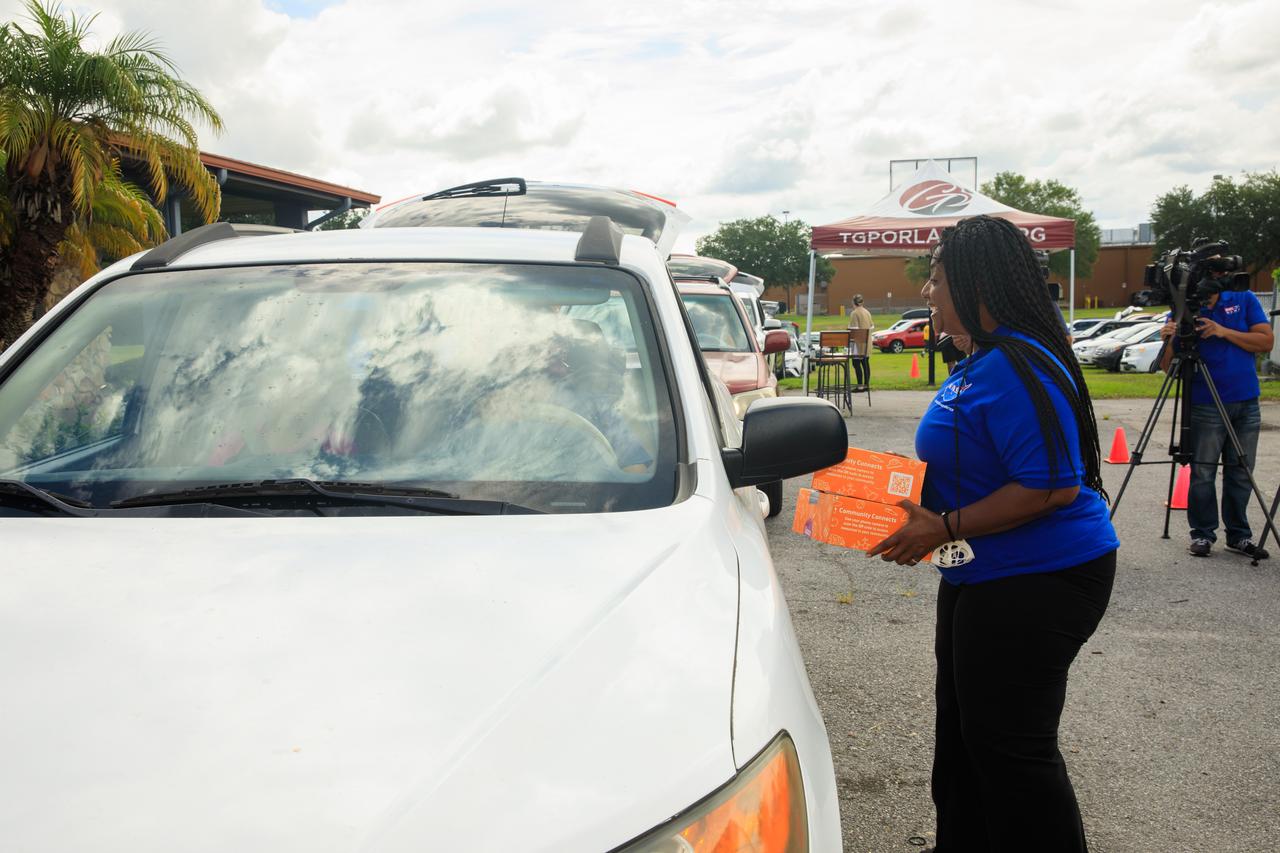
Barbara Brown, director of the Exploration Research and Technology Program at Kennedy Space Center in Florida, helped kick off a new initiative to deliver food and hands-on science, technology, engineering, and math kits, called Learning Lunchboxes, at New Beginnings Church – The Gathering Place in Orlando, Florida on Friday, June 3. The lunchboxes are aimed at inspiring and educating youth and families about NASA’s upcoming Artemis missions, which includes landing the first woman and person of color on the Moon and helping prepare for human exploration of Mars. Partners on the initiative with NASA include the Center of Science and Industry, the Second Harvest Food Bank, and the Orlando Science Center. The NASA Artemis Learning Lunchbox is made possible through NASA’s Teams Engaging Affiliated Museums and Informal Institutions (TEAM II) program. NASA Learning Lunchboxes provide five space-focused learning activities that showcase the diversity of STEM at NASA. COSI will distribute 30,000 NASA Learning Lunchboxes at local food banks across the country to help feed hungry lives and feed hungry minds. This innovative, community-based model will bring together other science centers and museums, afterschool providers, and community leaders to highlight the importance of STEM. This project also includes digital extension resources.
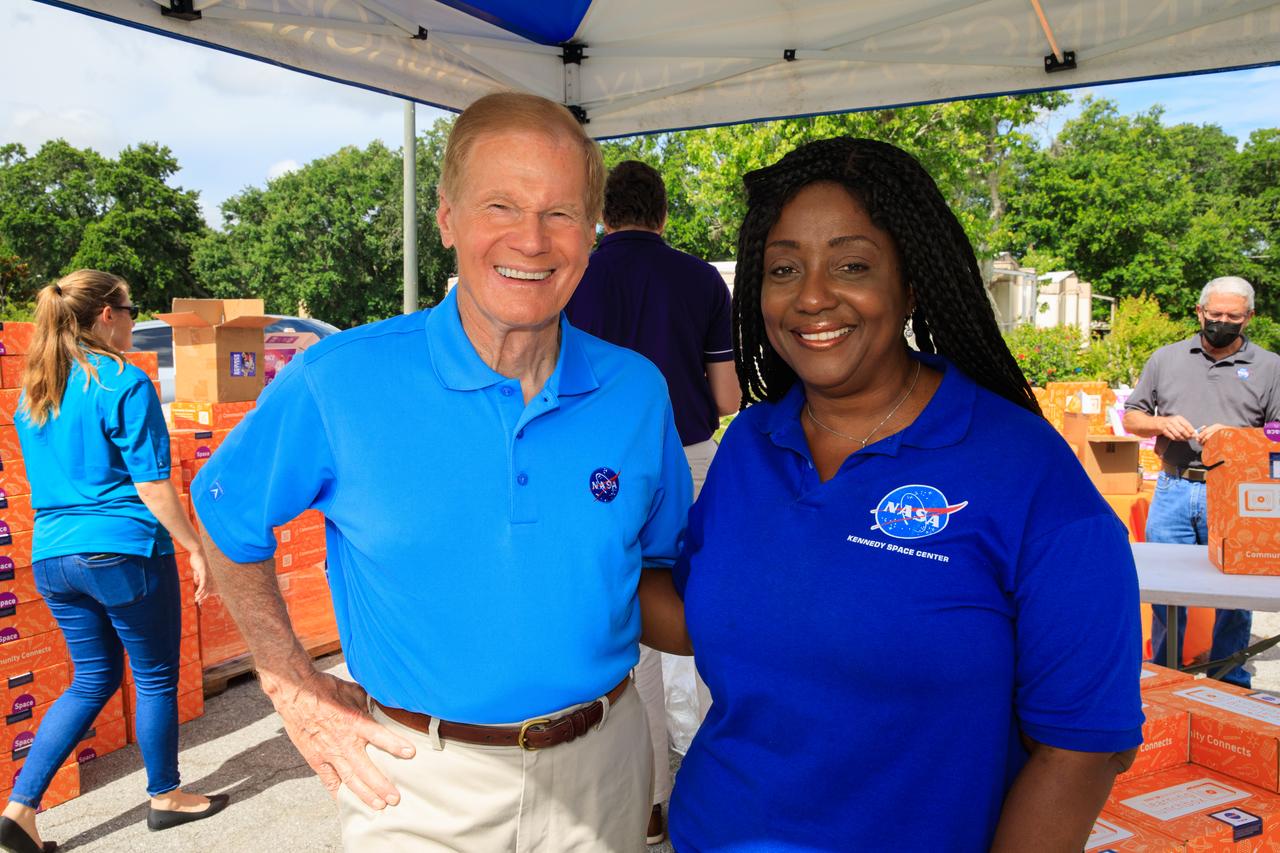
NASA Administrator Bill Nelson (left) and Barbara Brown (right), director of the Exploration Research and Technology Program at Kennedy Space Center in Florida, helped kick off a new initiative to deliver food and hands-on science, technology, engineering, and math kits, called Learning Lunchboxes, at New Beginnings Church – The Gathering Place in Orlando, Florida on Friday, June 3. The lunchboxes are aimed at inspiring and educating youth and families about NASA’s upcoming Artemis missions, which includes landing the first woman and person of color on the Moon and helping prepare for human exploration of Mars. Partners on the initiative with NASA include the Center of Science and Industry, the Second Harvest Food Bank, and the Orlando Science Center. The NASA Artemis Learning Lunchbox is made possible through NASA’s Teams Engaging Affiliated Museums and Informal Institutions (TEAM II) program. NASA Learning Lunchboxes provide five space-focused learning activities that showcase the diversity of STEM at NASA. COSI will distribute 30,000 NASA Learning Lunchboxes at local food banks across the country to help feed hungry lives and feed hungry minds. This innovative, community-based model will bring together other science centers and museums, afterschool providers, and community leaders to highlight the importance of STEM. This project also includes digital extension resources.
Dr. Frederic Bertley (center), president and CEO, Center of Science and Industry (COSI), speaks at New Beginnings Church – The Gathering Place in Orlando, Florida on Friday, June 3, as part of the launch of a new initiative to deliver food and hands-on science, technology, engineering, and math kits, called Learning Lunchboxes. NASA Administrator Bill Nelson and other agency representatives were on hand to hand out the lunchboxes, which are aimed at inspiring and educating youth and families about NASA’s upcoming Artemis missions, including landing the first woman and person of color on the Moon and helping prepare for human exploration of Mars. Along with COSI, NASA’s partners on the initiative include the Second Harvest Food Bank and the Orlando Science Center. The NASA Artemis Learning Lunchbox is made possible through NASA’s Teams Engaging Affiliated Museums and Informal Institutions (TEAM II) program. NASA Learning Lunchboxes provide five space-focused learning activities that showcase the diversity of STEM at NASA. COSI will distribute 30,000 NASA Learning Lunchboxes at local food banks across the country to help feed hungry lives and feed hungry minds. This innovative, community-based model will bring together other science centers and museums, afterschool providers, and community leaders to highlight the importance of STEM. This project also includes digital extension resources.
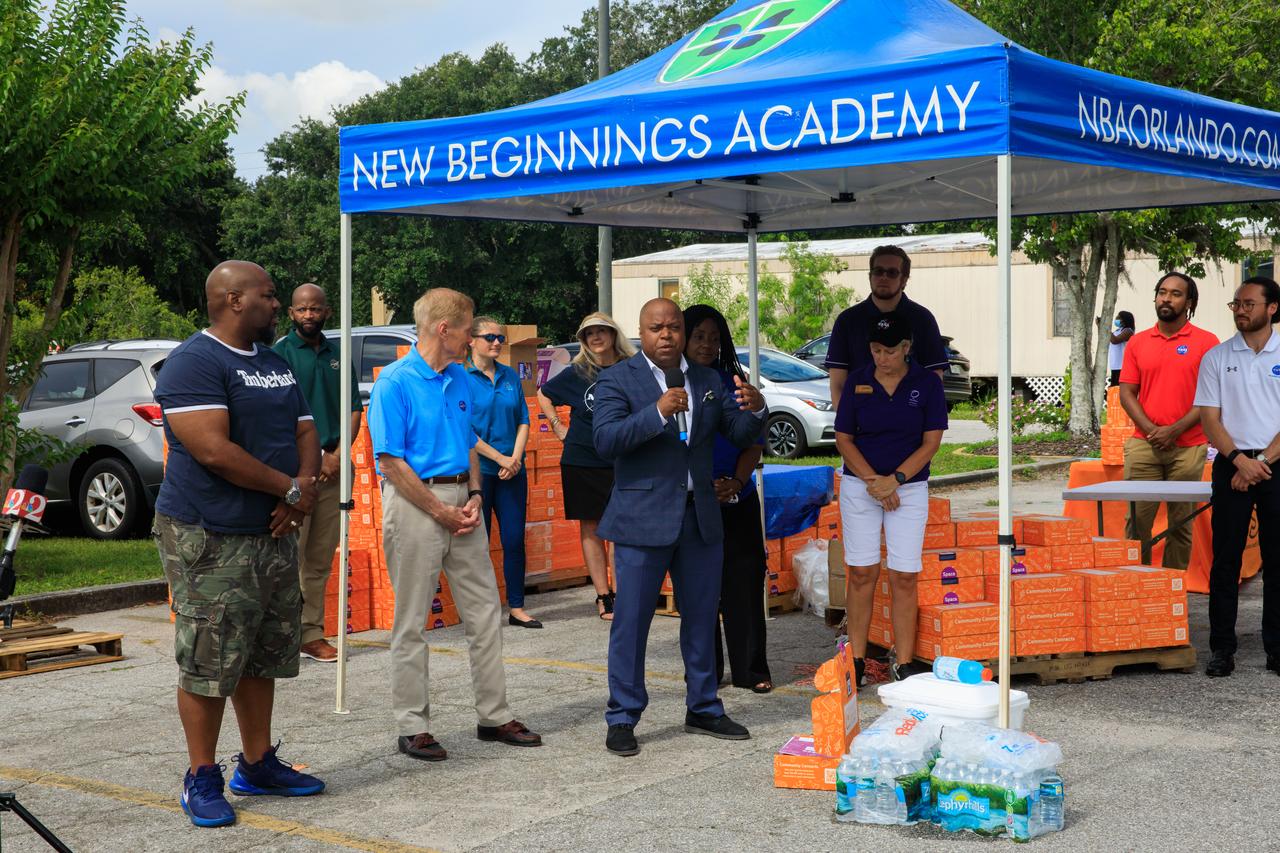
Dr. Frederic Bertley (center), president and CEO, Center of Science and Industry (COSI), speaks at New Beginnings Church – The Gathering Place in Orlando, Florida on Friday, June 3, as part of the launch of a new initiative to deliver food and hands-on science, technology, engineering, and math kits, called Learning Lunchboxes. NASA Administrator Bill Nelson and other agency representatives were on hand to hand out the lunchboxes, which are aimed at inspiring and educating youth and families about NASA’s upcoming Artemis missions, including landing the first woman and person of color on the Moon and helping prepare for human exploration of Mars. Along with COSI, NASA’s partners on the initiative include the Second Harvest Food Bank and the Orlando Science Center. The NASA Artemis Learning Lunchbox is made possible through NASA’s Teams Engaging Affiliated Museums and Informal Institutions (TEAM II) program. NASA Learning Lunchboxes provide five space-focused learning activities that showcase the diversity of STEM at NASA. COSI will distribute 30,000 NASA Learning Lunchboxes at local food banks across the country to help feed hungry lives and feed hungry minds. This innovative, community-based model will bring together other science centers and museums, afterschool providers, and community leaders to highlight the importance of STEM. This project also includes digital extension resources.
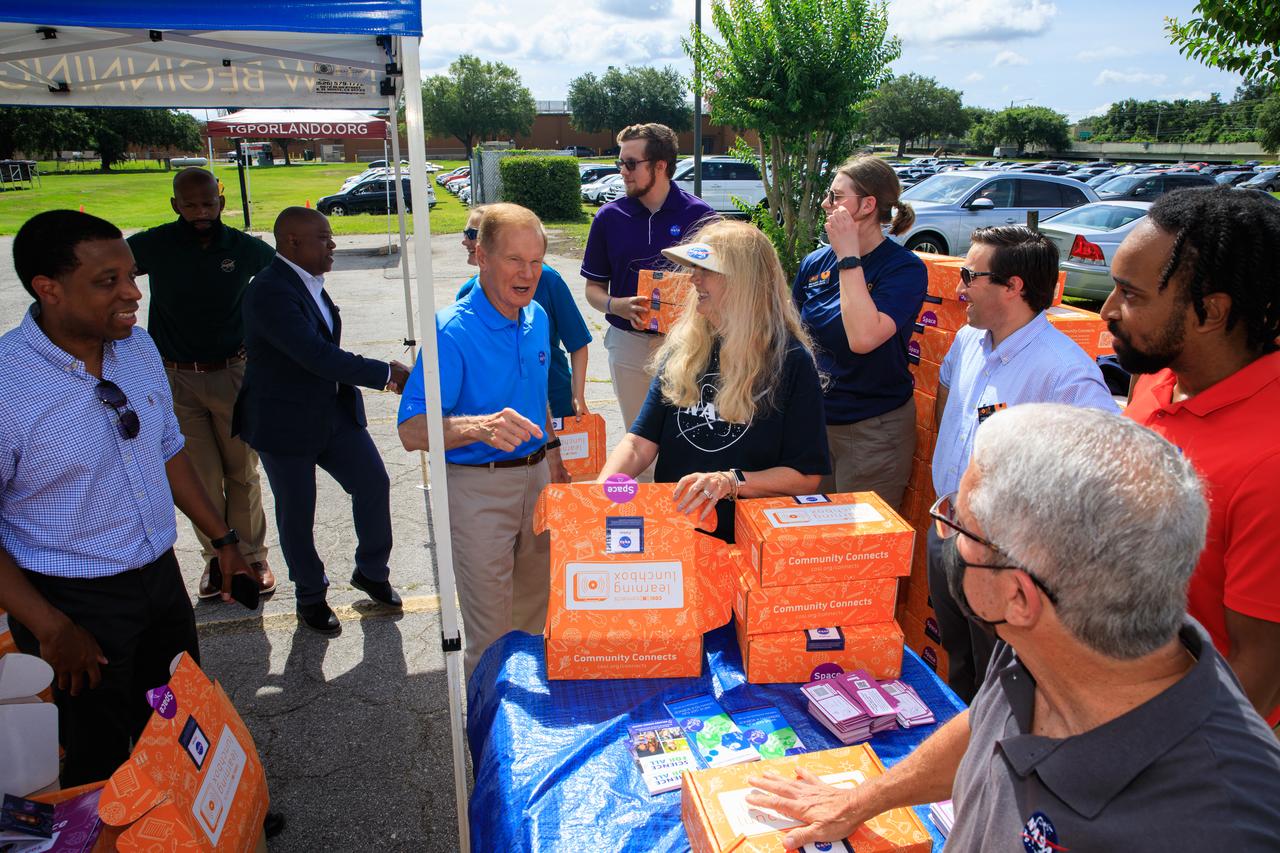
NASA Administrator Bill Nelson helped kick off a new initiative to deliver food and hands-on science, technology, engineering, and math kits, called Learning Lunchboxes, at New Beginnings Church – The Gathering Place in Orlando, Florida on Friday, June 3. The lunchboxes are aimed at inspiring and educating youth and families about NASA’s upcoming Artemis missions, which includes landing the first woman and person of color on the Moon and helping prepare for human exploration of Mars. Partners on the initiative with NASA include the Center of Science and Industry, the Second Harvest Food Bank, and the Orlando Science Center. The NASA Artemis Learning Lunchbox is made possible through NASA’s Teams Engaging Affiliated Museums and Informal Institutions (TEAM II) program. NASA Learning Lunchboxes provide five space-focused learning activities that showcase the diversity of STEM at NASA. COSI will distribute 30,000 NASA Learning Lunchboxes at local food banks across the country to help feed hungry lives and feed hungry minds. This innovative, community-based model will bring together other science centers and museums, afterschool providers, and community leaders to highlight the importance of STEM. This project also includes digital extension resources.
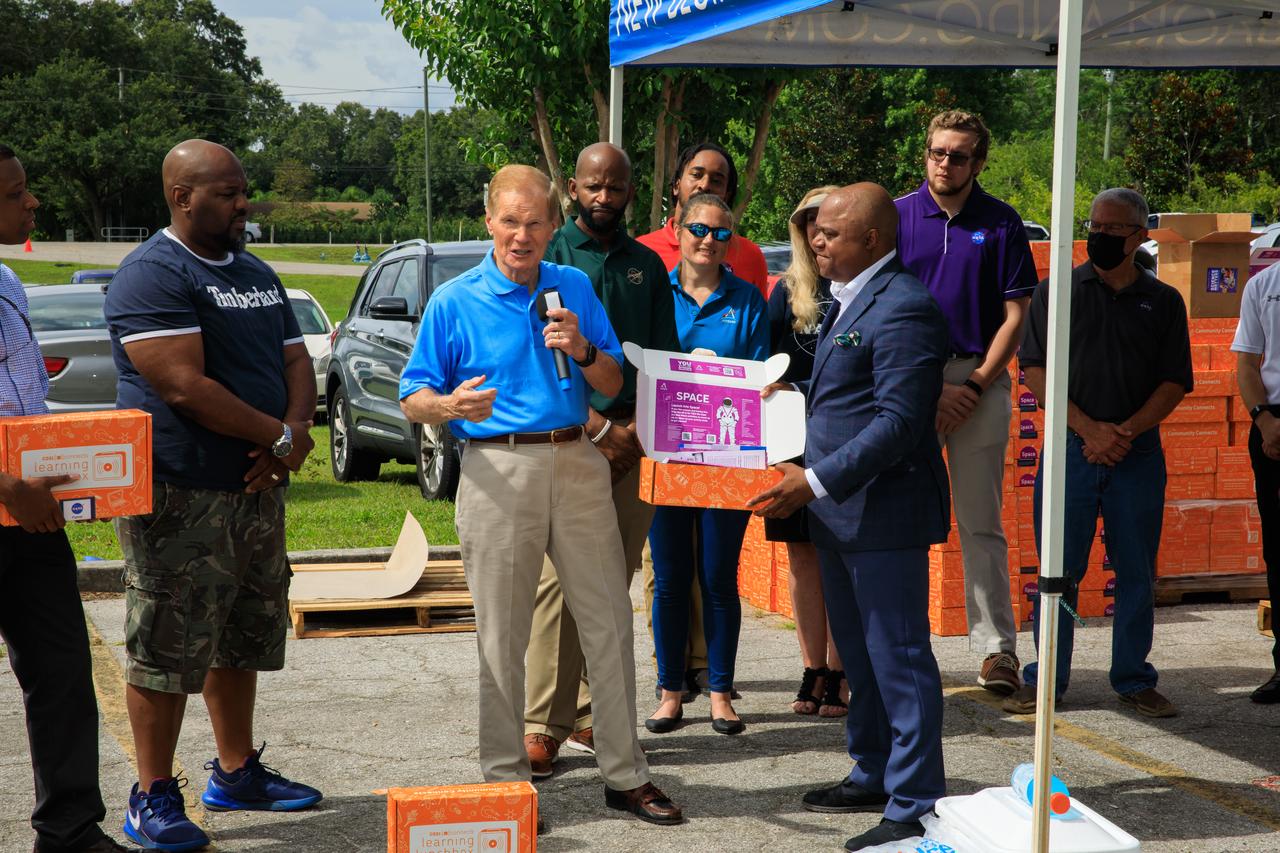
NASA Administrator Bill Nelson helped kick off a new initiative to deliver food and hands-on science, technology, engineering, and math kits, called Learning Lunchboxes, at New Beginnings Church – The Gathering Place in Orlando, Florida on Friday, June 3. The lunchboxes are aimed at inspiring and educating youth and families about NASA’s upcoming Artemis missions, which includes landing the first woman and person of color on the Moon and helping prepare for human exploration of Mars. Partners on the initiative with NASA include the Center of Science and Industry, the Second Harvest Food Bank, and the Orlando Science Center. The NASA Artemis Learning Lunchbox is made possible through NASA’s Teams Engaging Affiliated Museums and Informal Institutions (TEAM II) program. NASA Learning Lunchboxes provide five space-focused learning activities that showcase the diversity of STEM at NASA. COSI will distribute 30,000 NASA Learning Lunchboxes at local food banks across the country to help feed hungry lives and feed hungry minds. This innovative, community-based model will bring together other science centers and museums, afterschool providers, and community leaders to highlight the importance of STEM. This project also includes digital extension resources.
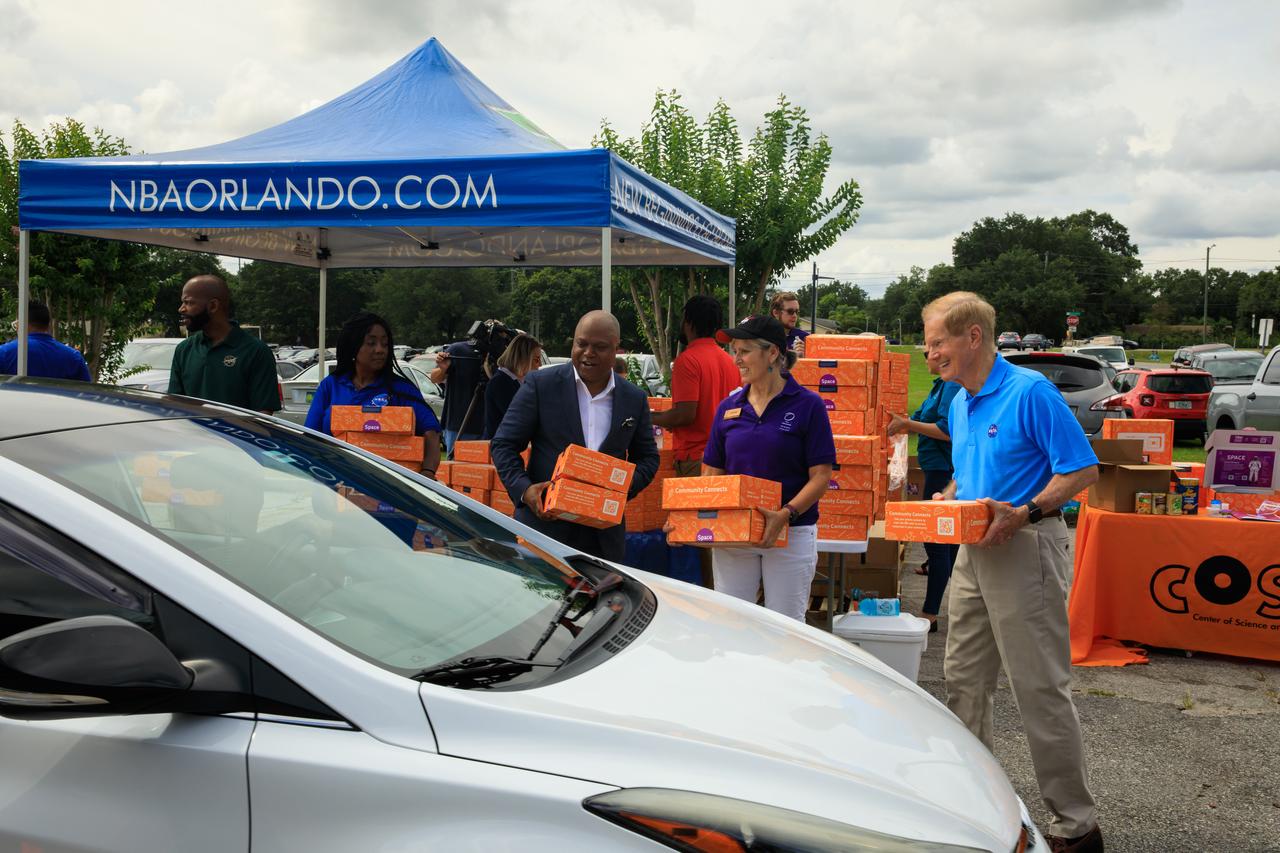
NASA Administrator Bill Nelson helped kick off a new initiative to deliver food and hands-on science, technology, engineering, and math kits, called Learning Lunchboxes, at New Beginnings Church – The Gathering Place in Orlando, Florida on Friday, June 3. The lunchboxes are aimed at inspiring and educating youth and families about NASA’s upcoming Artemis missions, which includes landing the first woman and person of color on the Moon and helping prepare for human exploration of Mars. Partners on the initiative with NASA include the Center of Science and Industry, the Second Harvest Food Bank, and the Orlando Science Center. The NASA Artemis Learning Lunchbox is made possible through NASA’s Teams Engaging Affiliated Museums and Informal Institutions (TEAM II) program. NASA Learning Lunchboxes provide five space-focused learning activities that showcase the diversity of STEM at NASA. COSI will distribute 30,000 NASA Learning Lunchboxes at local food banks across the country to help feed hungry lives and feed hungry minds. This innovative, community-based model will bring together other science centers and museums, afterschool providers, and community leaders to highlight the importance of STEM. This project also includes digital extension resources.
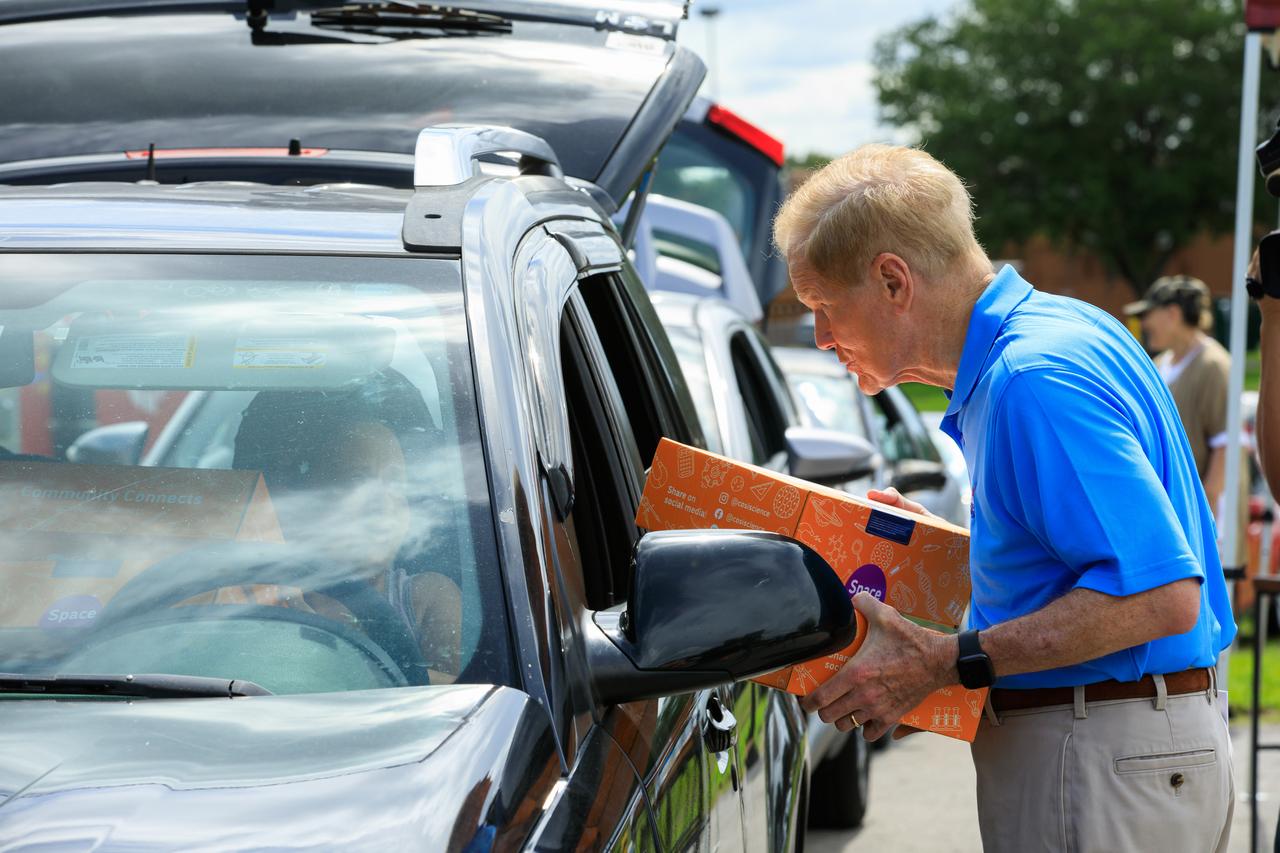
NASA Administrator Bill Nelson helped kick off a new initiative to deliver food and hands-on science, technology, engineering, and math kits, called Learning Lunchboxes, at New Beginnings Church – The Gathering Place in Orlando, Florida on Friday, June 3. The lunchboxes are aimed at inspiring and educating youth and families about NASA’s upcoming Artemis missions, which includes landing the first woman and person of color on the Moon and helping prepare for human exploration of Mars. Partners on the initiative with NASA include the Center of Science and Industry, the Second Harvest Food Bank, and the Orlando Science Center. The NASA Artemis Learning Lunchbox is made possible through NASA’s Teams Engaging Affiliated Museums and Informal Institutions (TEAM II) program. NASA Learning Lunchboxes provide five space-focused learning activities that showcase the diversity of STEM at NASA. COSI will distribute 30,000 NASA Learning Lunchboxes at local food banks across the country to help feed hungry lives and feed hungry minds. This innovative, community-based model will bring together other science centers and museums, afterschool providers, and community leaders to highlight the importance of STEM. This project also includes digital extension resources.
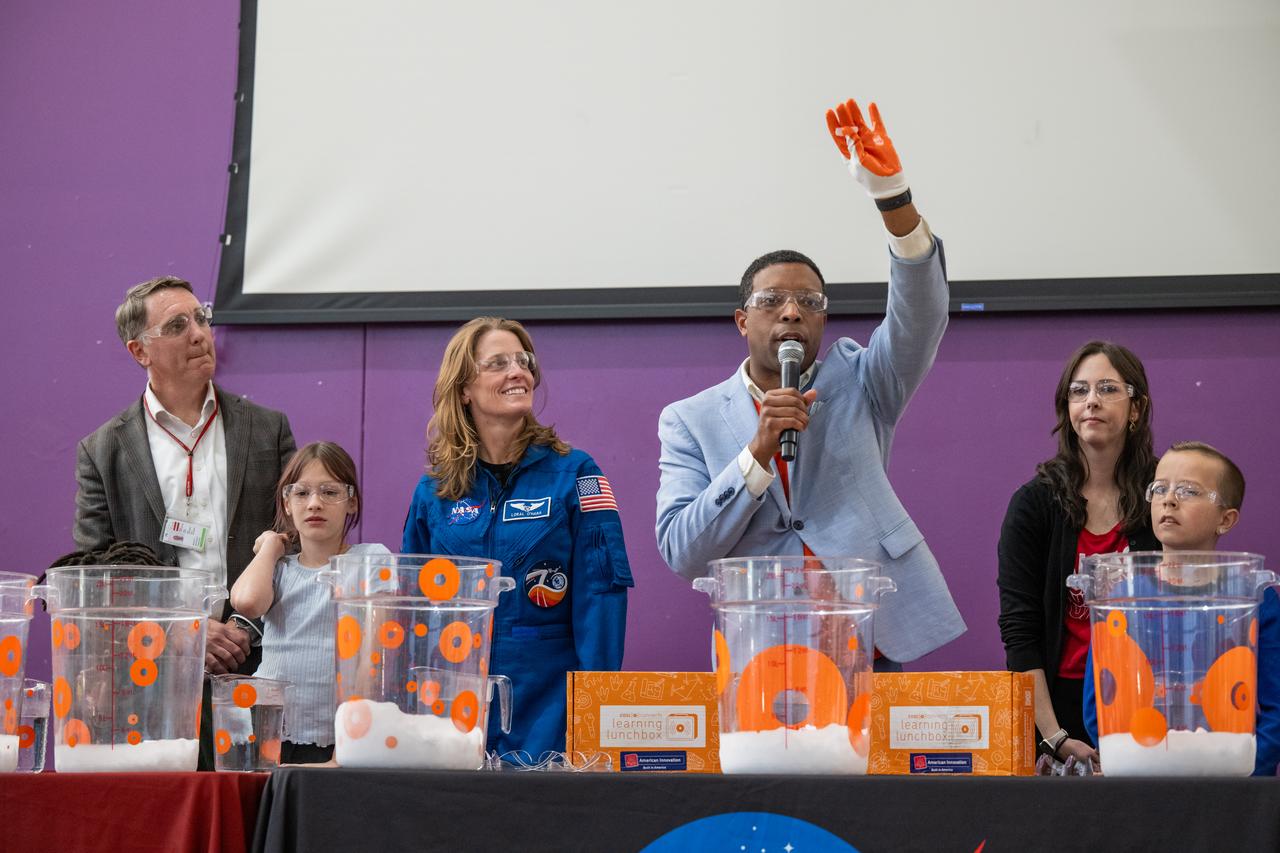
Center of Science and Industry (COSI) Chief Strategy Officer Stephen White, joined by Principal MScott Berkowitz, left, and NASA Astronaut Loral O’Hara, second from left, displays a piece of dry ice to students during a science demonstration at Catherine Watkins Elementary School Monday, Dec. 2, 2024 in Washington. O’Hara and Moghbeli spent six months in space as part of Expedition 70 aboard the International Space Station. Photo Credit: (NASA/Keegan Barber)
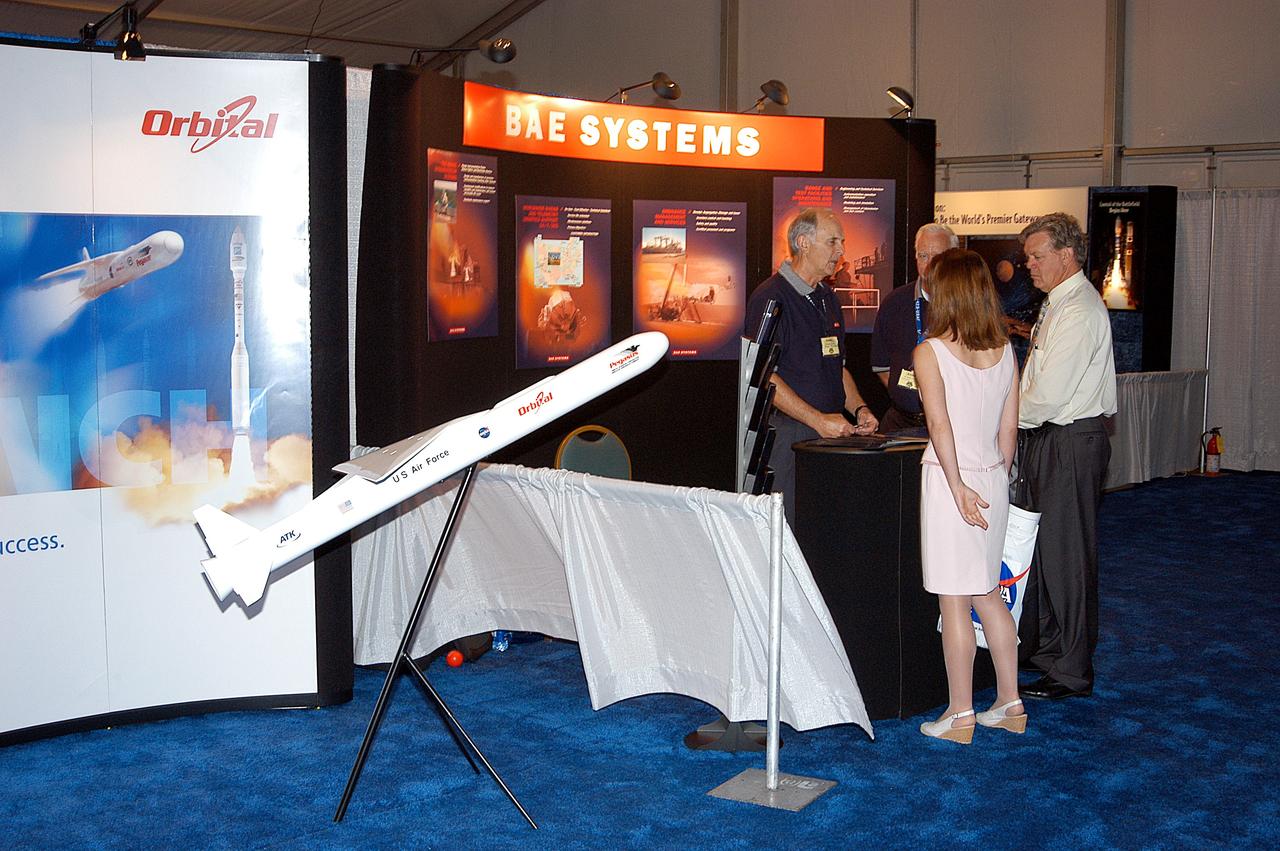
KENNEDY SPACE CENTER, FLA. - Visitors stop at the Orbital Sciences booth during Space Congress Week, held April 29-May 2, 2003, in Cape Canaveral, Fla. The Space Congress is an international conference that gathers attendees from the scientific community, the space industry workforce, educators and local supporting industries. This year's event commemorated the 40th anniversary of the Kennedy Space Center and the Centennial of Flight. The theme for the Space Congress was "Linking the Past to the Future: A Celebration of Space."
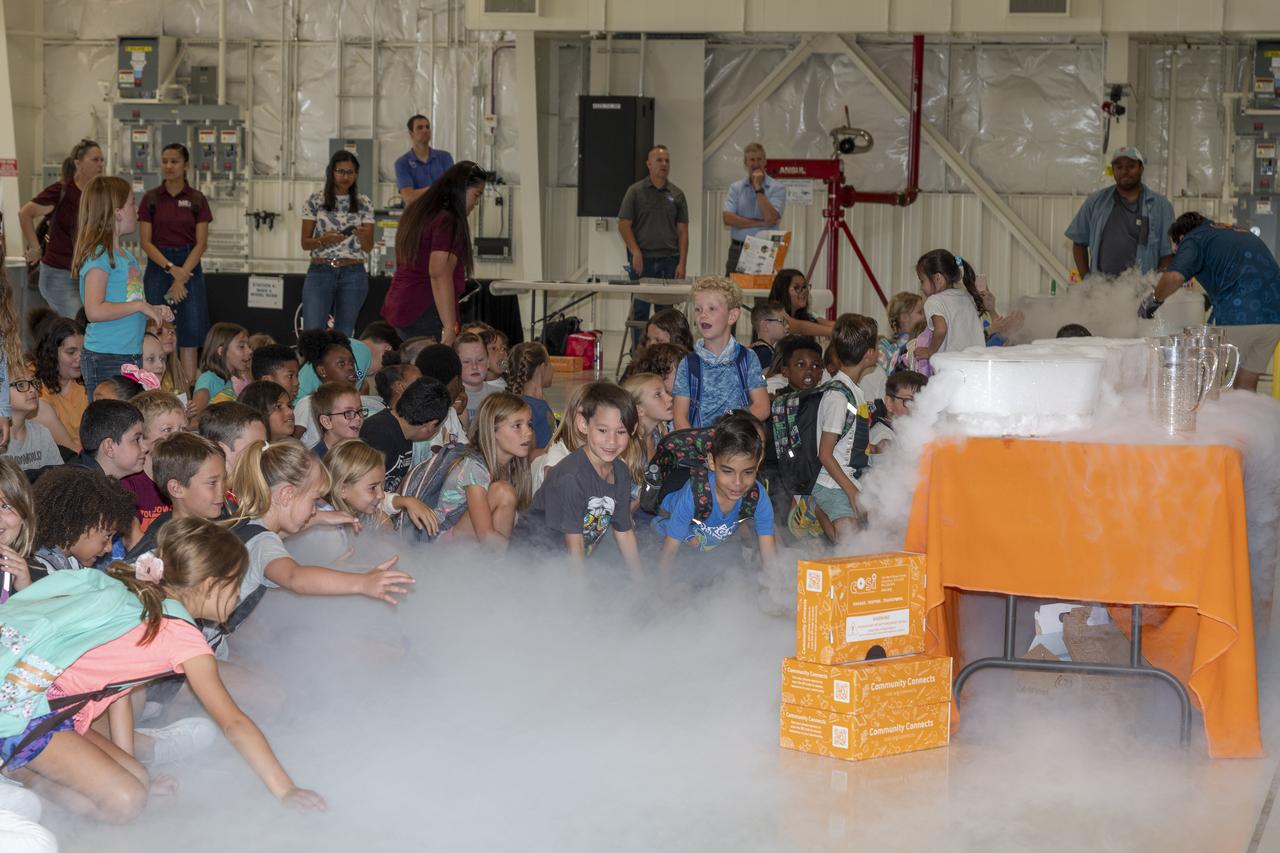
Students are wrapped in a cloud from a demonstration by NASA’s California Office of STEM Engagement event with Center of Science and Industry at NASA’s Armstrong Flight Research Center in Edwards, California.
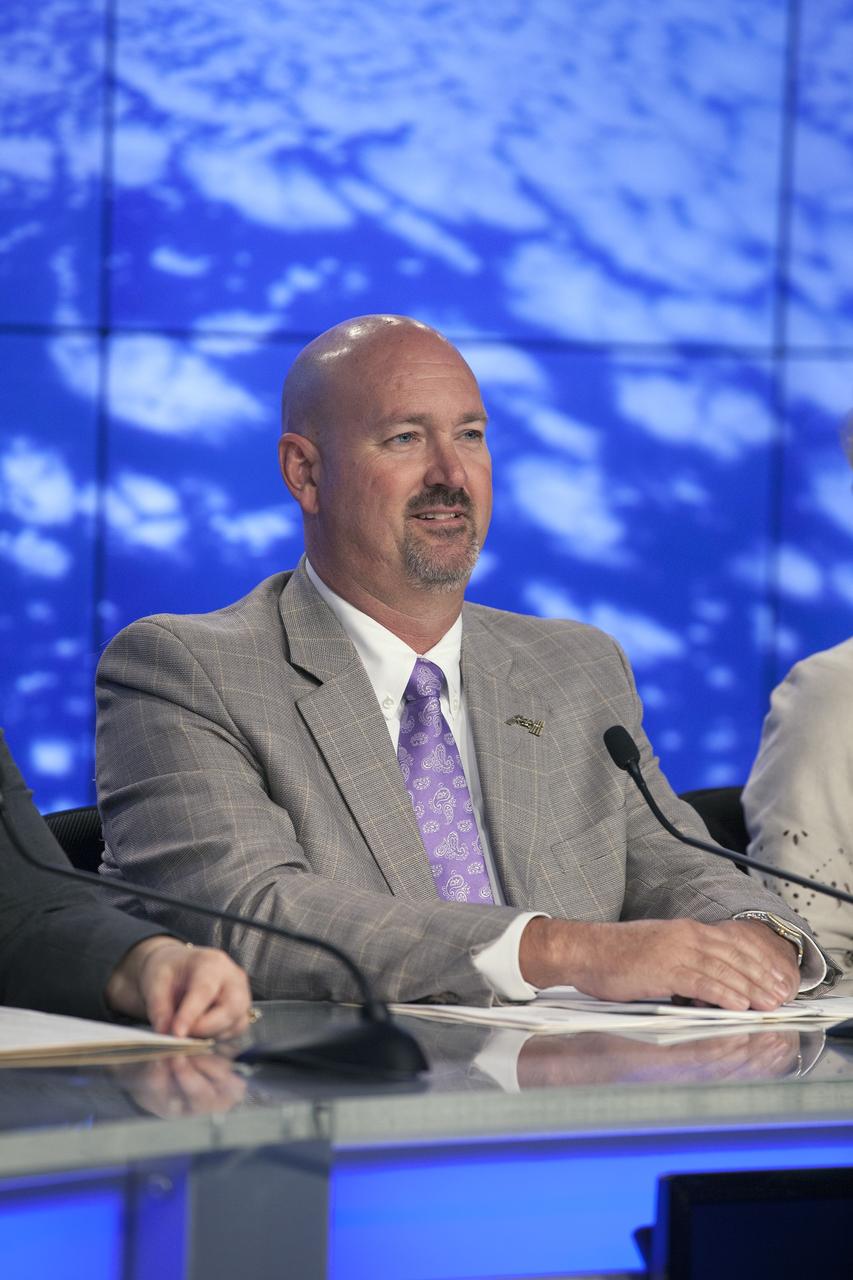
CAPE CANAVERAL, Fla. -- In the Kennedy Space Center’s Press Site auditorium, agency and industry leaders spoke to members of the news media on International Space Station research and technology developments. Participants included Kenneth Shields, director of operations and education for the Center for the Advancement of Science in Space. Photo credit: NASA/ Kim Shiflett
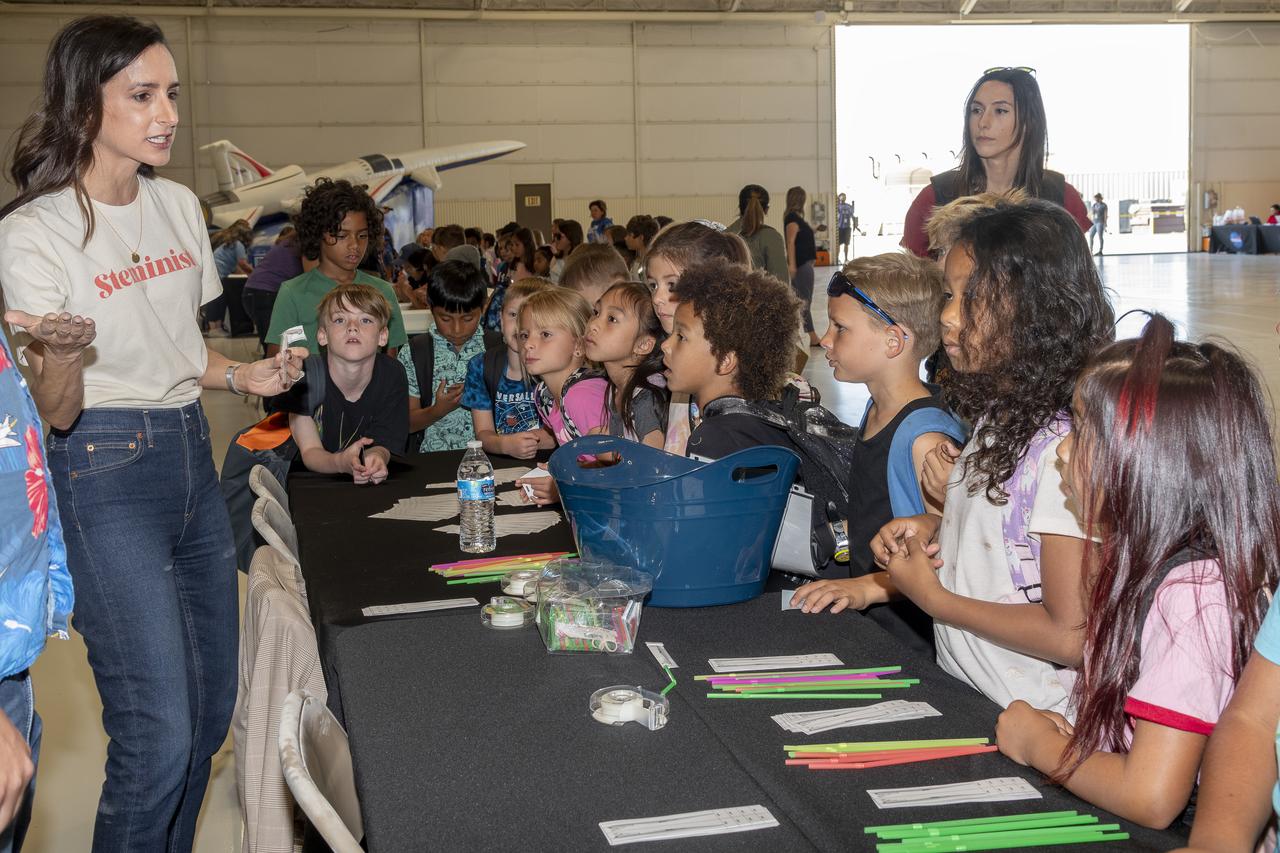
Kate M. McMurtry, deputy director of Integrated Aviation Systems Program shares with students how NASA is working to quiet the sonic boom with the development of the X-59 aircraft at NASA’s California Office of STEM Engagement event with Center of Science and Industry at NASA Armstrong Flight Research Center in Edwards, California.
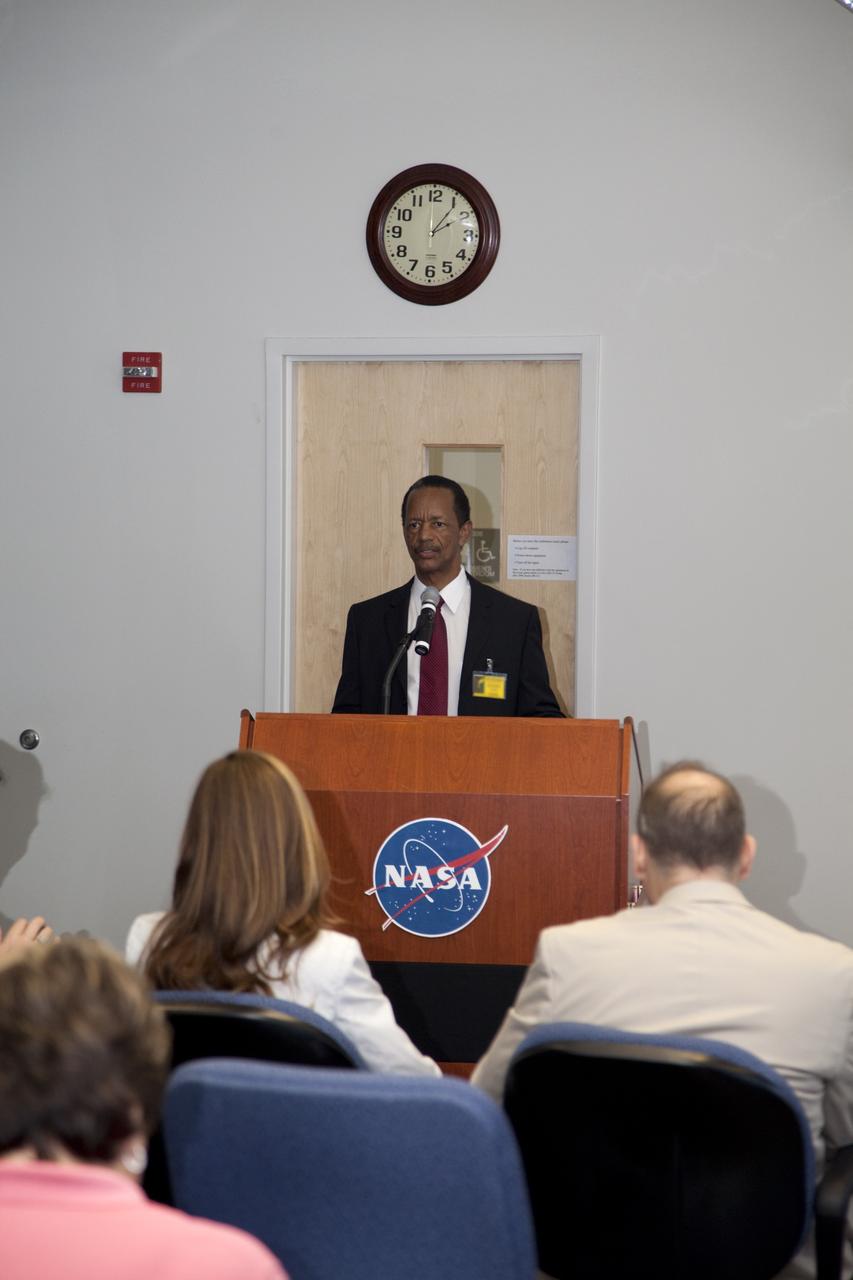
CAPE CANAVERAl, Fla. - Martin Belson, president and CEO of Diversified Industries CEIS, speaks during a visit by Dr. Mason Peck, NASA's chief Technologist, to Kennedy Space Center's Space Life Sciences Laboratory. Peck toured the lab facility during a visit to the space center. Photo credit: NASA/Frankie Martin
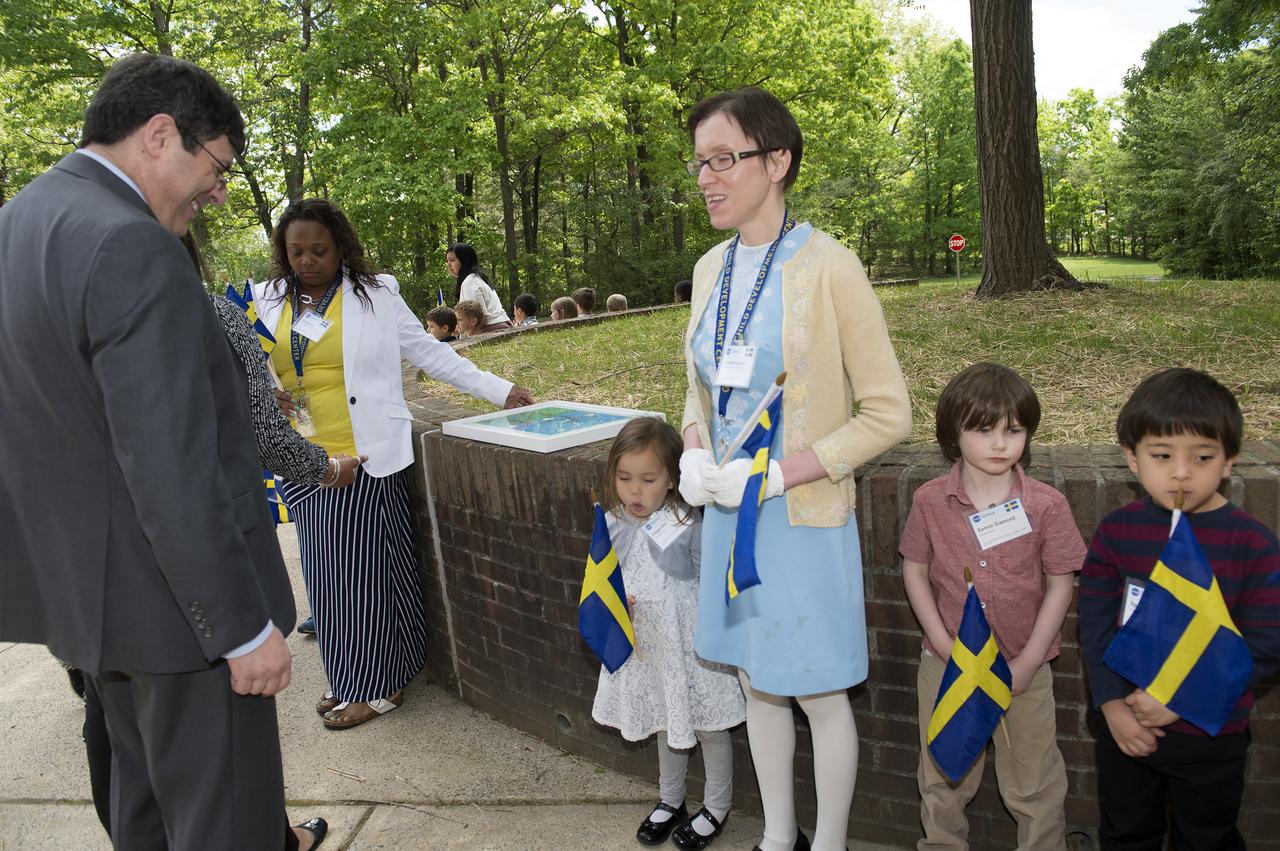
Child Development Center B28 meeting the King of Sweden on May 3, 2017. The king’s visit came as part of his participation in a large delegation theat also included the Swedish Ambassador to the US, chariman and presdent of the Royal Sedish Academy of Engineering Sciences, as well as distinguished members of Sweden’s industrial, academia and professional organizations.
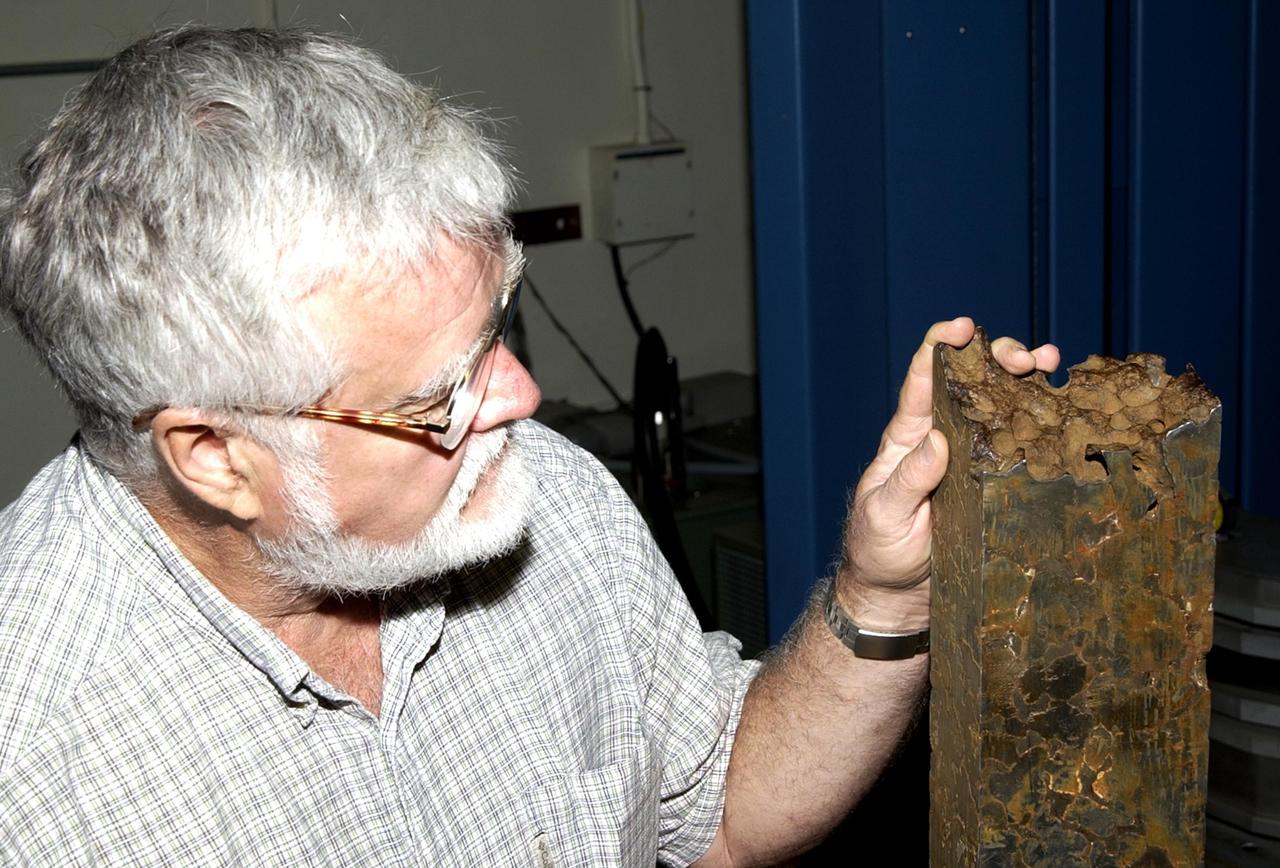
KENNEDY SPACE CENTER, FLA. -- Pete Engel, an engineering specialist in Wyle Laboratory's Nondestructive Testing Laboratory at KSC, explains the testing being performed on a 100-pound Mundrabilla meteorite sample. The one-of-a-kind meteorite was found 36 years ago in Australia and is on loan to Marshall Space Flight Center (MSFC) from the Smithsonian Institution's National Museum of Natural History. Dr. Donald Gillies, discipline scientist for materials science at MSFC's Microgravity Science and Applications Department, is the Principal Investigator. The studies may help provide the science community and industry with fundamental knowledge for use in the design of advanced materials.
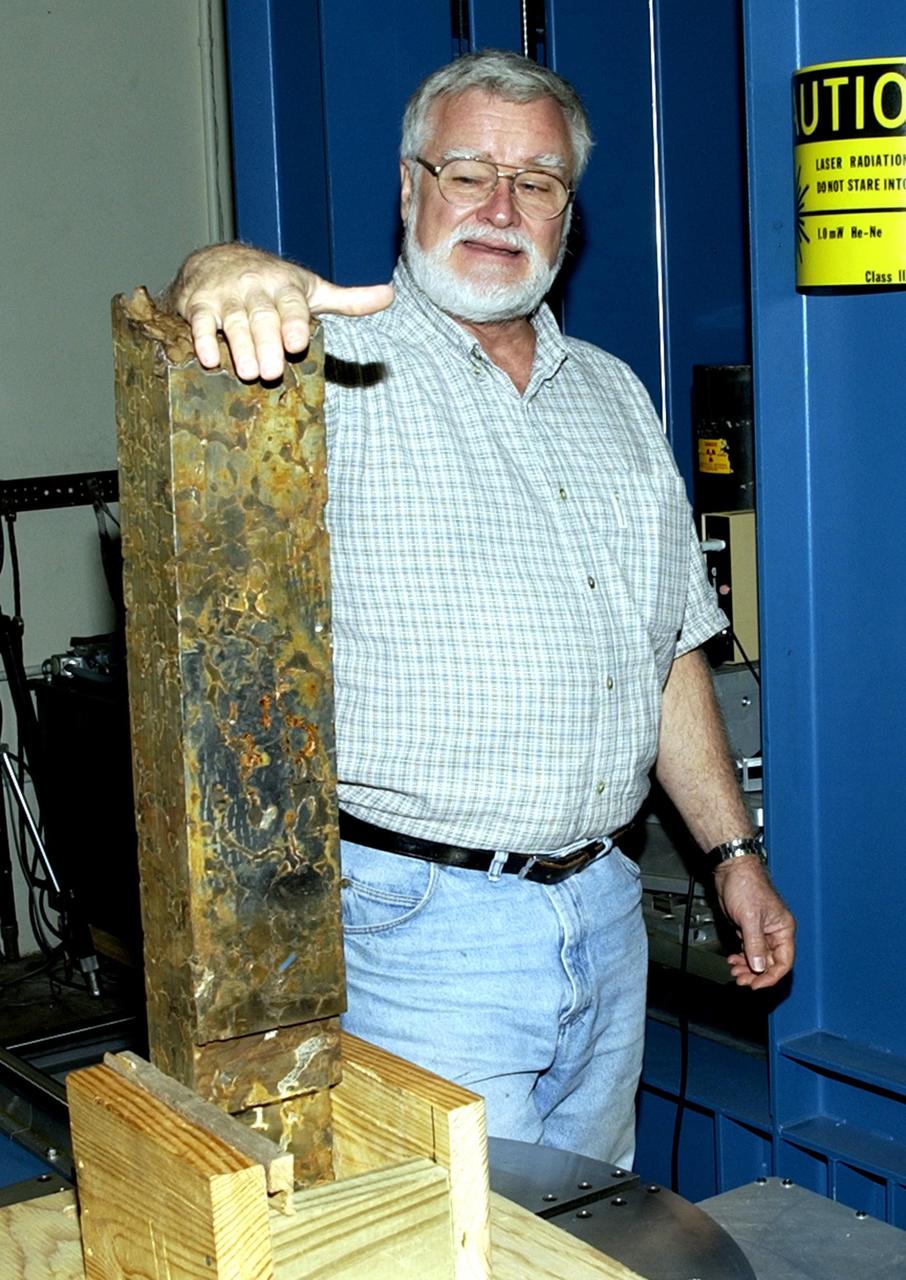
KENNEDY SPACE CENTER, FLA. -- Pete Engel, an engineering specialist in Wyle Laboratory's Nondestructive Testing Laboratory at KSC, explains the testing being performed on a 100-pound Mundrabilla meteorite sample. The one-of-a-kind meteorite was found 36 years ago in Australia and is on loan to Marshall Space Flight Center (MSFC) from the Smithsonian Institution's National Museum of Natural History. Dr. Donald Gillies, discipline scientist for materials science at MSFC's Microgravity Science and Applications Department, is the Principal Investigator. The studies may help provide the science community and industry with fundamental knowledge for use in the design of advanced materials.
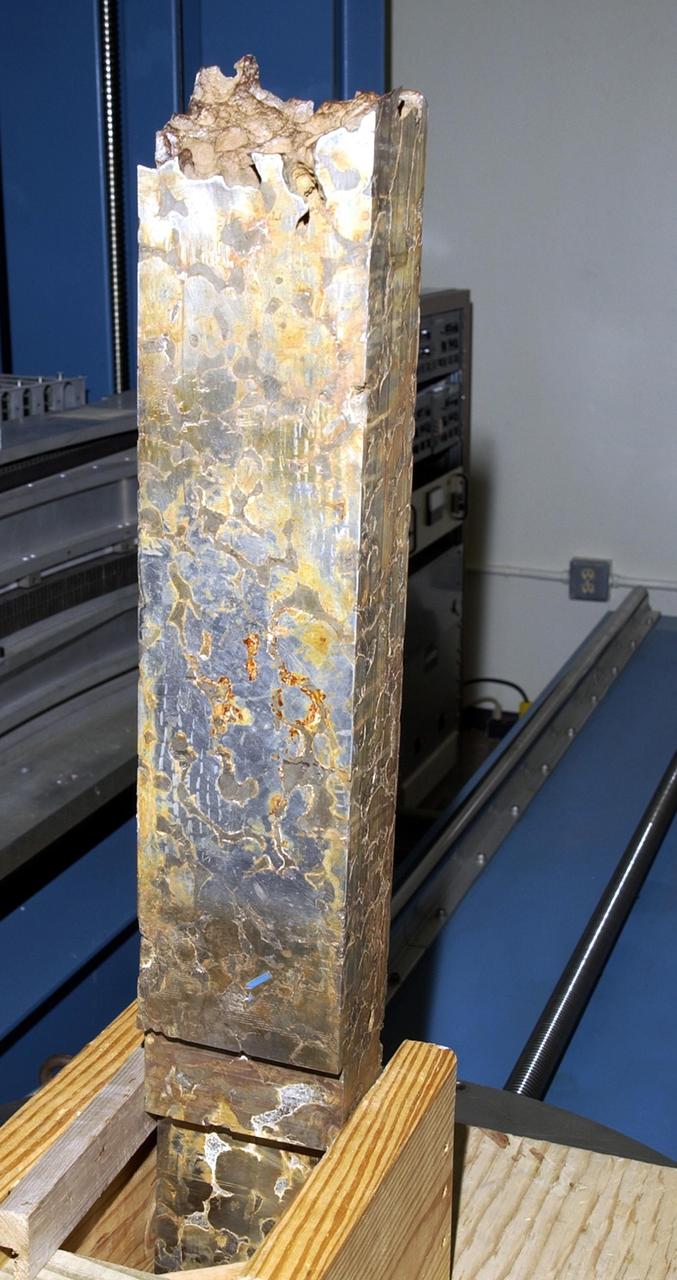
KENNEDY SPACE CENTER, FLA. -- This 100-pound Mundrabilla meteorite sample is being studied in Wyle Laboratory's Nondestructive Testing Laboratory at KSC. The one-of-a-kind meteorite was found 36 years ago in Australia and is on loan to Marshall Space Flight Center (MSFC) from the Smithsonian Institution's National Museum of Natural History. Dr. Donald Gillies, discipline scientist for materials science at MSFC's Microgravity Science and Applications Department, is the Principal Investigator. The studies may help provide the science community and industry with fundamental knowledge for use in the design of advanced materials.
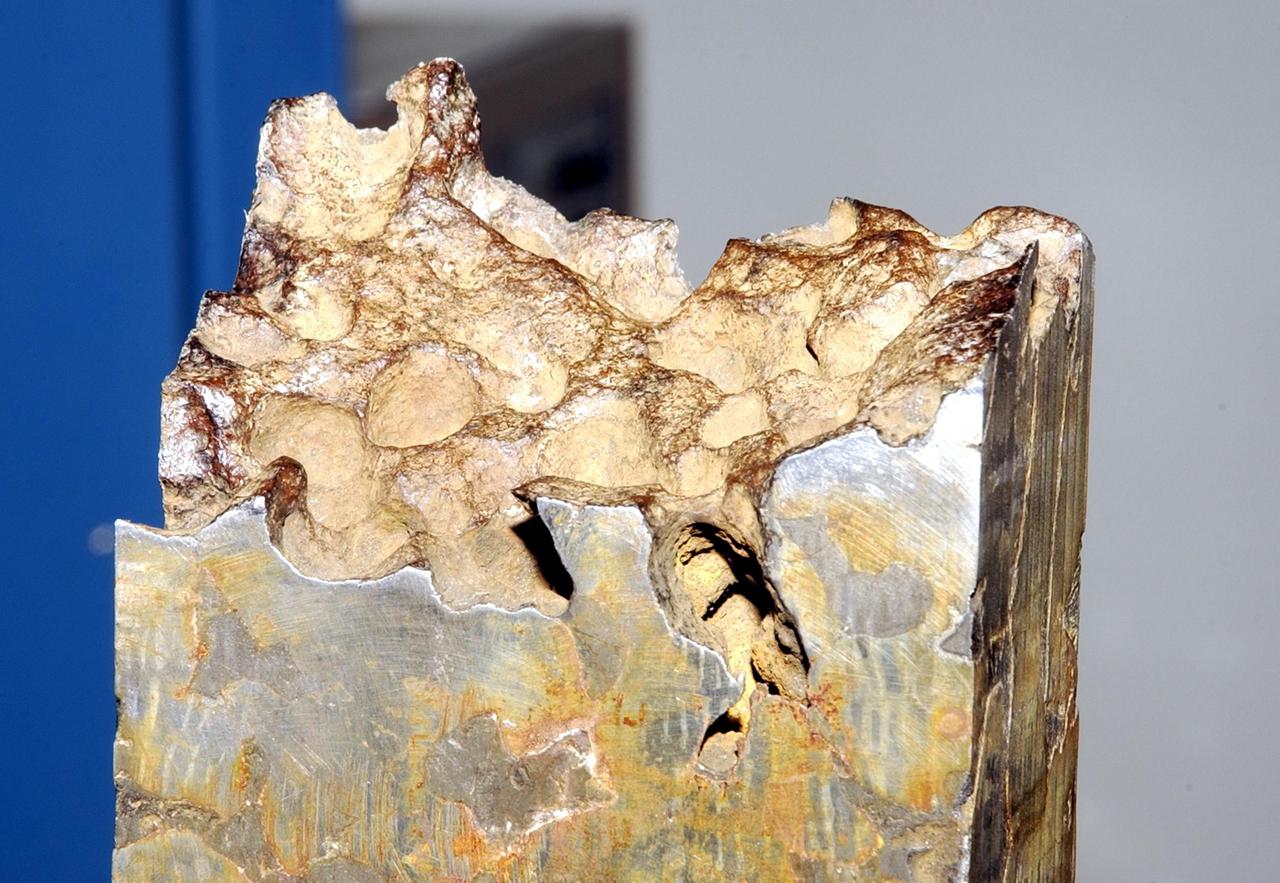
KENNEDY SPACE CENTER, FLA. -- This 100-pound Mundrabilla meteorite sample is being studied in Wyle Laboratory's Nondestructive Testing Laboratory at KSC. The one-of-a-kind meteorite was found 36 years ago in Australia and is on loan to Marshall Space Flight Center (MSFC) from the Smithsonian Institution's National Museum of Natural History. Dr. Donald Gillies, discipline scientist for materials science at MSFC's Microgravity Science and Applications Department, is the Principal Investigator. The studies may help provide the science community and industry with fundamental knowledge for use in the design of advanced materials.
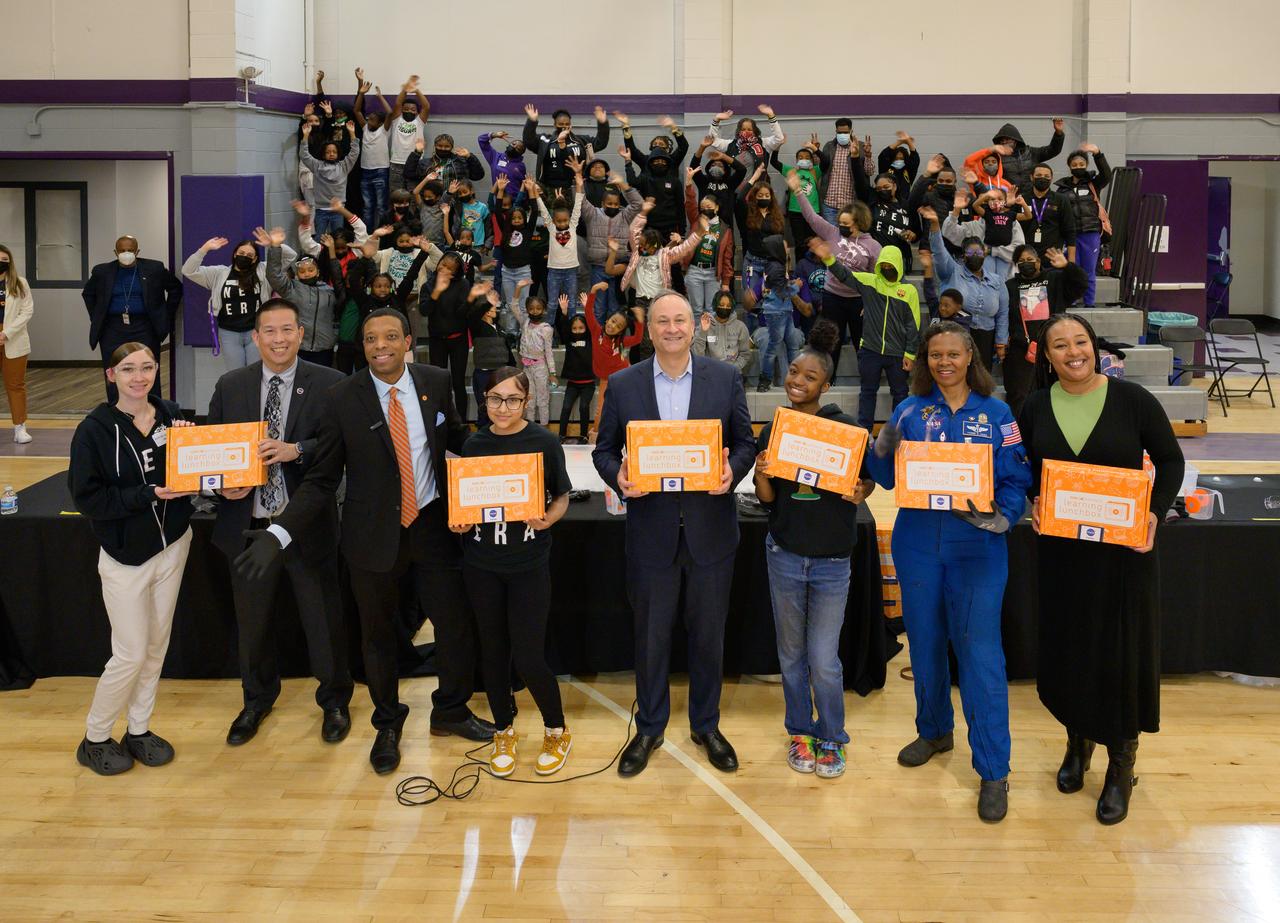
Second Gentleman Douglas Emhoff, center, with COSI and NASA staff and students from the East Oakland Youth Development Center in Oakland, California. Hosted in honor of Women’s History Month by the Center of Science and Industry (COSI) under a NASA OSTEM agreement, the Oakland activities reached 500 East Bay students and provided five space-focused learning activities that showcase the diversity of STEM at NASA.
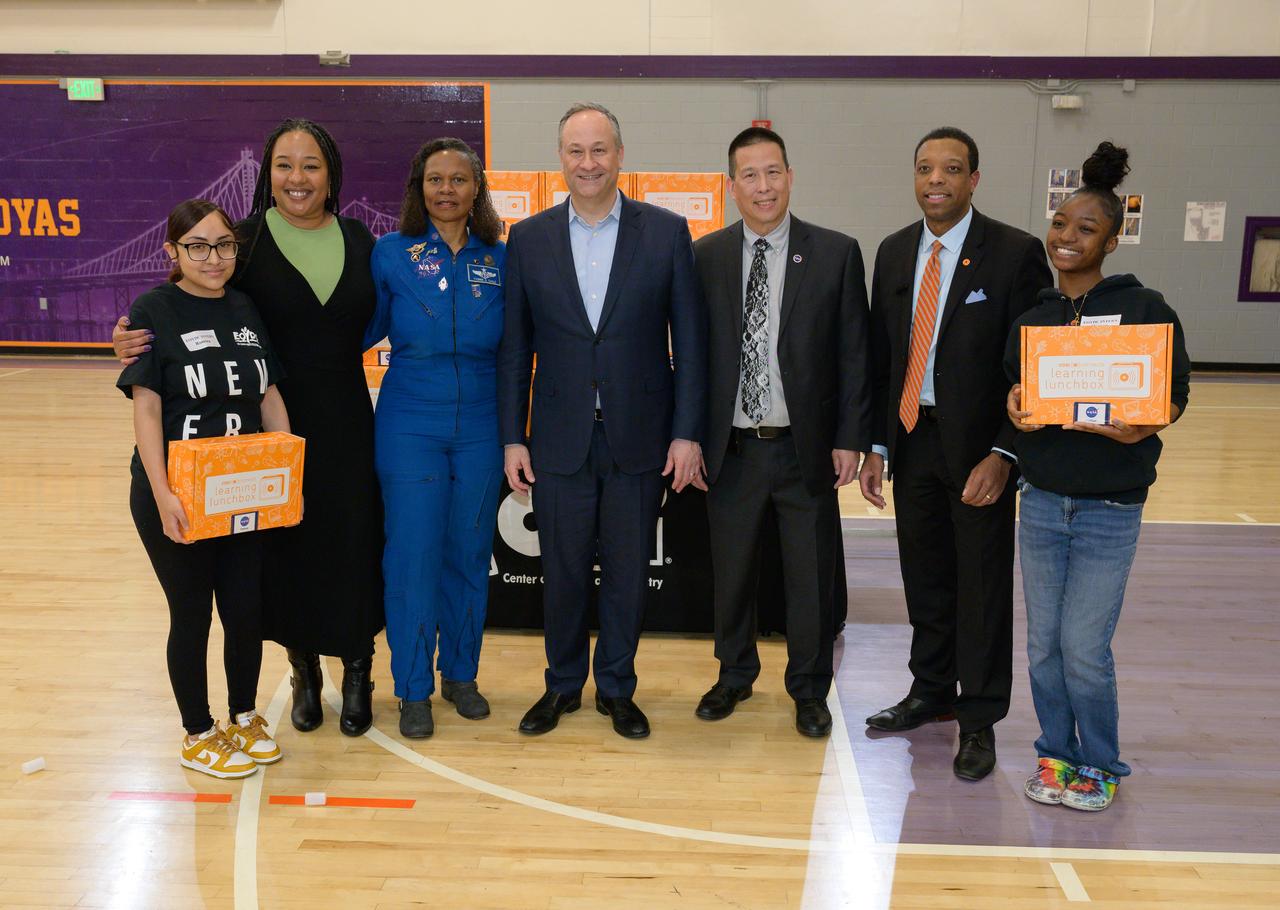
Second Gentleman Douglas Emhoff, center, with NASA and COSI staff at the East Oakland Youth Development Center in Oakland, California. Hosted in honor of Women’s History Month by the Center of Science and Industry (COSI) under a NASA OSTEM agreement, the Oakland activities reached 500 East Bay students and provided five space-focused learning activities that showcase the diversity of STEM at NASA.
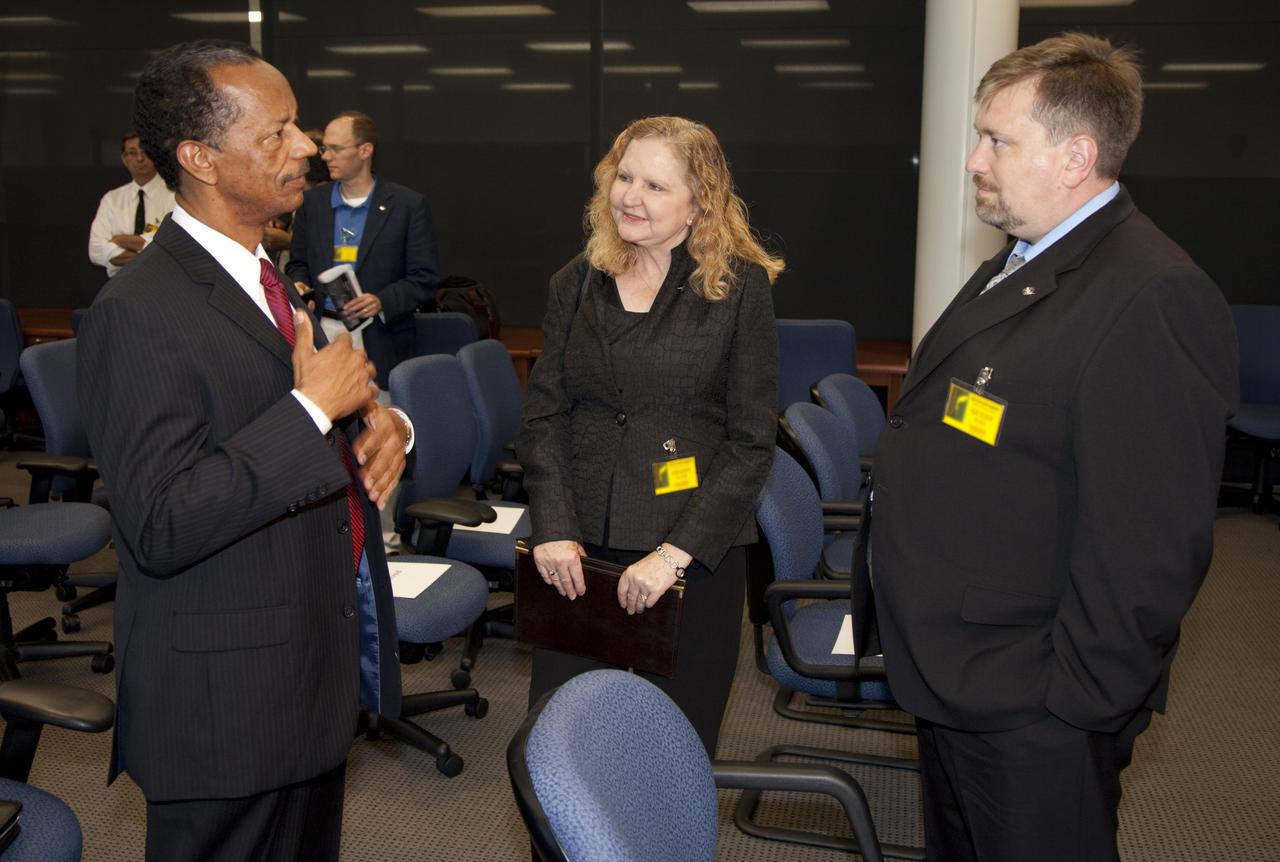
CAPE CANAVERAl, Fla. - Dr. Mason Peck, right, NASA's chief Technologist, talks with Martin Belson, president and CEO of Diversified Industries CEIS, as Karen L. Thompson, chief technologist for Kennedy Space Center, looks on. Peck toured Kennedy Space Center's Space Life Sciences Laboratory during a visit to the space center. Photo credit: NASA/Frankie Martin
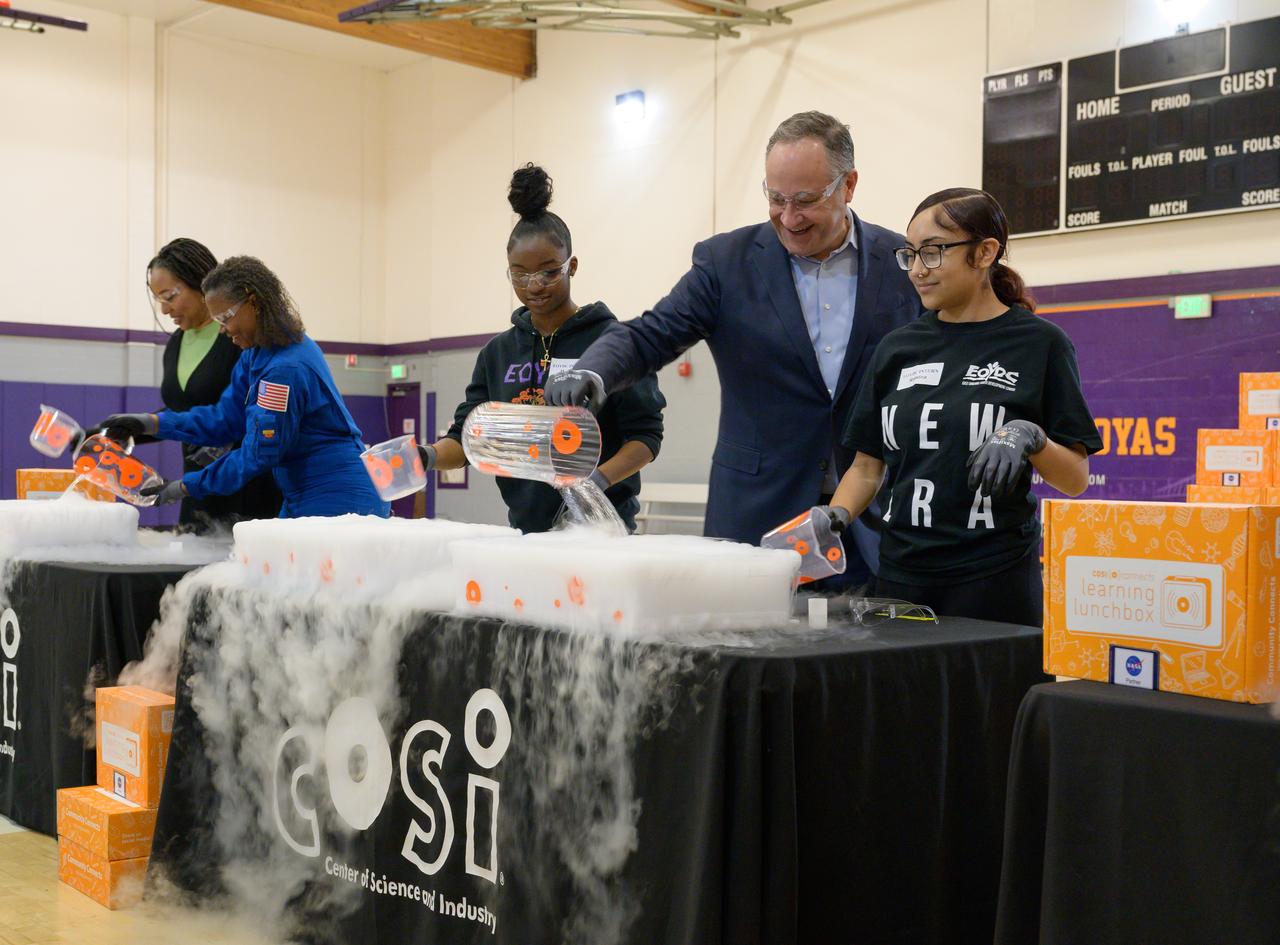
Second Gentleman Douglas Emhoff, second from right, participates in a “make a cloud” demonstration with students at the East Oakland Youth Development Center in Oakland, California. Hosted in honor of Women’s History Month by the Center of Science and Industry (COSI) under a NASA OSTEM agreement, the Oakland activities reached 500 East Bay students and provided five space-focused learning activities that showcase the diversity of STEM at NASA.
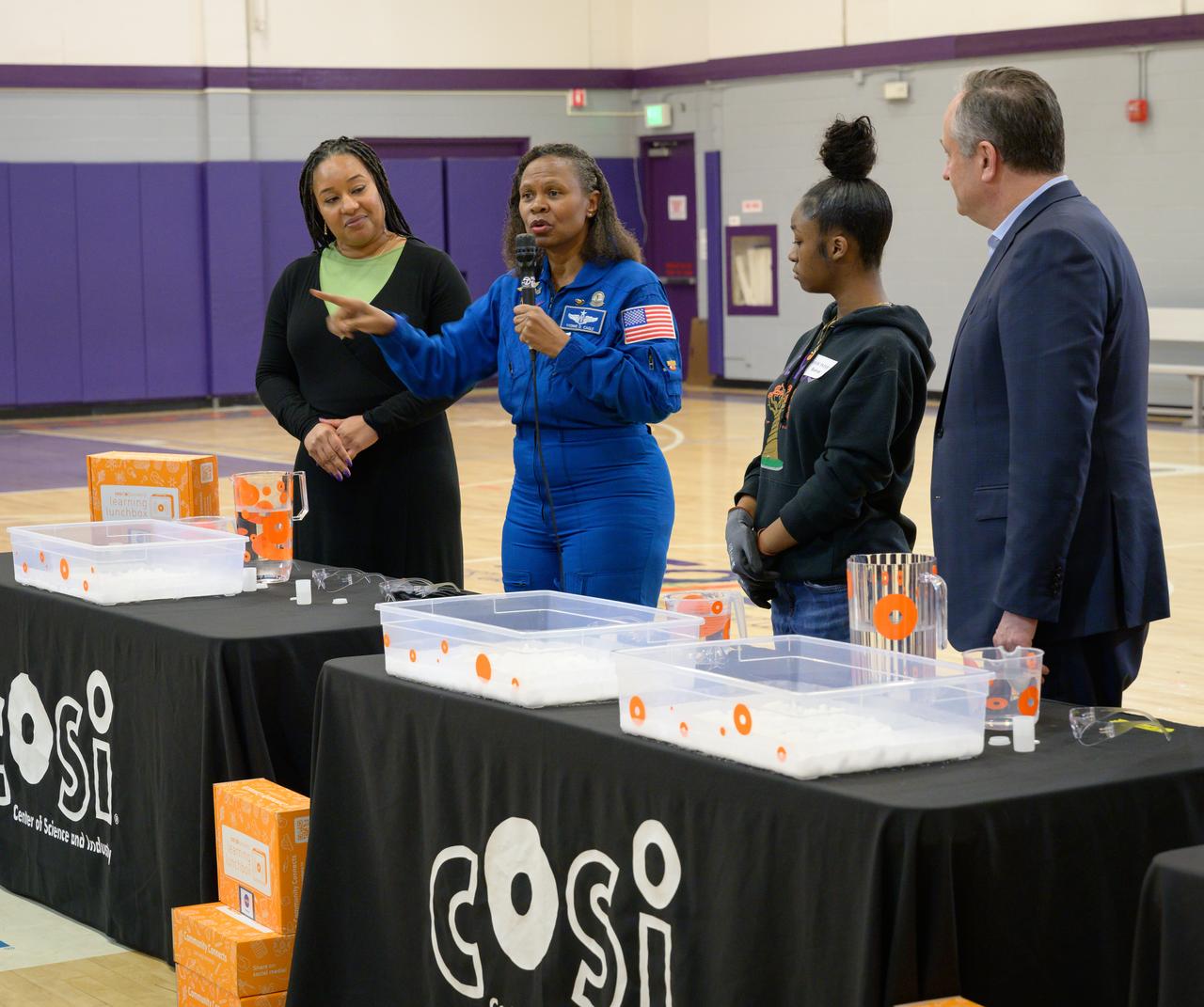
Astronaut Yvonne Cagle provides opening remarks at the East Oakland Youth Development Center in Oakland, California. Hosted in honor of Women’s History Month by the Center of Science and Industry (COSI) under a NASA OSTEM agreement, the Oakland activities reached 500 East Bay students and provided five space-focused learning activities that showcase the diversity of STEM at NASA.
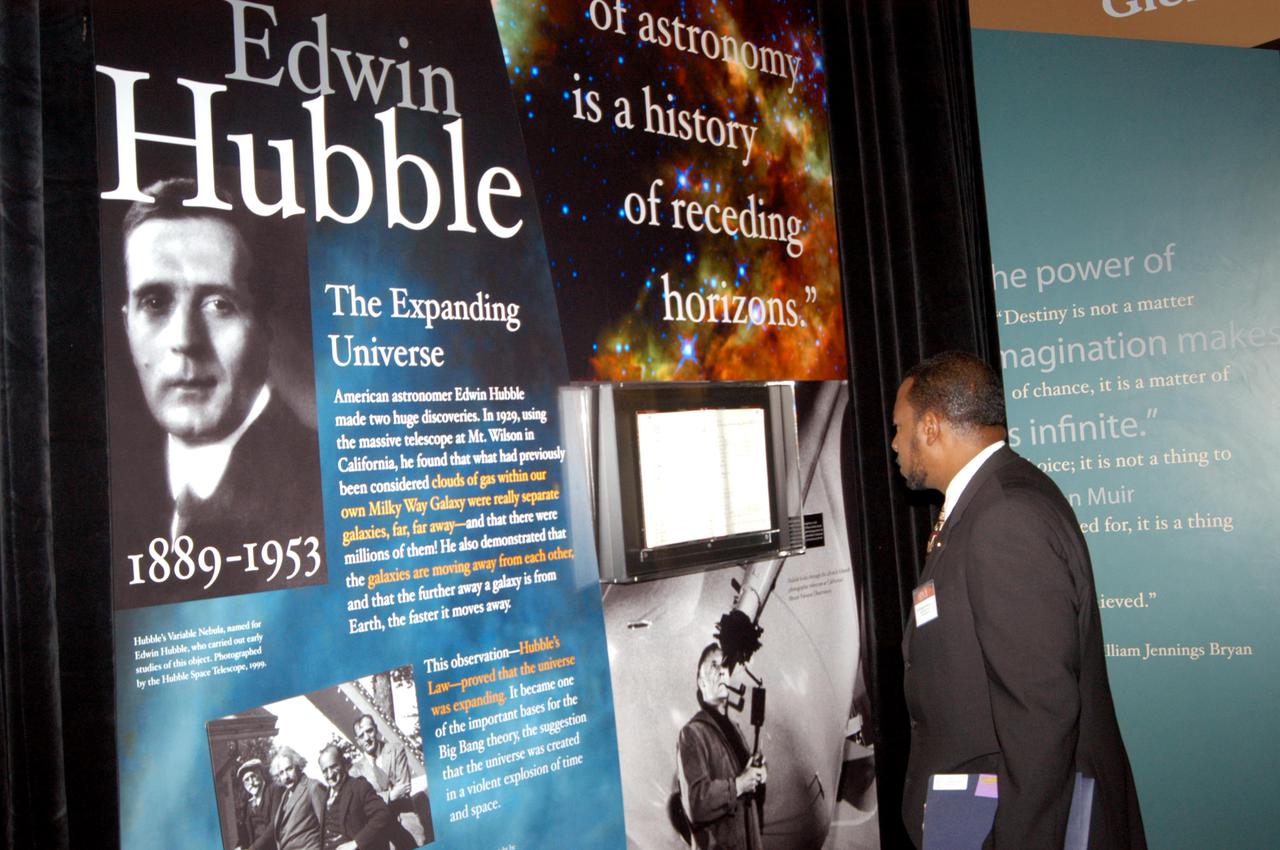
KENNEDY SPACE CENTER, FLA. - Dr. Woodrow Whitlow Jr., deputy director of Kennedy Space Center, looks at an exhibit of astronomer Edwin Hubble at the Museum of Science and Industry (MOSI) in Tampa. Whitlow was at MOSI to view the space exhibits Space: A Journey to Our Future, an extraordinary, interactive exhibition designed to entertain, educate and inspire; and SPACE STATION, the first cinematic journey to the International Space Station (ISS), where audiences can experience for themselves life in zero gravity aboard the new station.
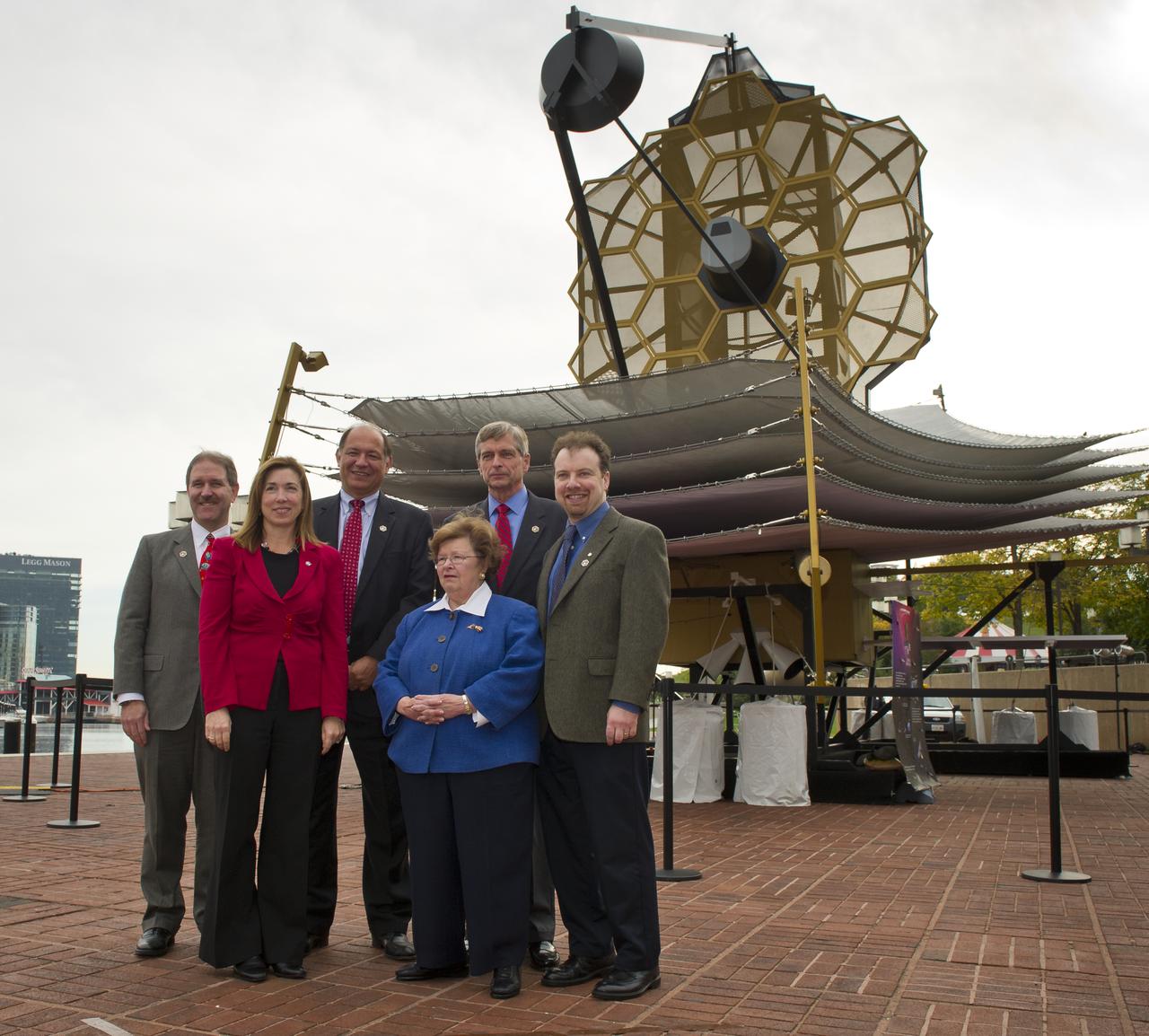
NASA, space science industry and government officials are seen in front of a full-size model of NASA's James Webb Space Telescope at the Maryland Science Center in Baltimore, Wednesday, Oct. 26, 2011. From left, back row are: Dr. John Grunsfeld, former astronaut and Deputy Director, Space Telescope Science Institute (STScI), Baltimore; Jeffrey Grant, VP and General Manager of the Space Systems Division, Northrop Grumman; Van Reiner, President and CEO of the Maryland Science Center, Baltimore and Adam Reiss, recipient of the 2011 Nobel Prize in Physics and professor of astronomy and physics at Johns Hopkins University. In the front row are NASA Deputy Administrator Lori Garver, left, and U.S. Senator Barbara Mikulski (D-Md.). Photo Credit: (NASA/Carla Cioffi)

Representatives of the state of Alabama, academia, and industry listen and take part in a panel discussion led by NASA Marshall Space Flight Center's Ruth Jones as part of the first Alabama Historically Black Colleges and Universities Roundtable Discussion. The event focused on drawing more minorities, specifically women, into academic fields and careers in science, technology, engineering and mathematics.
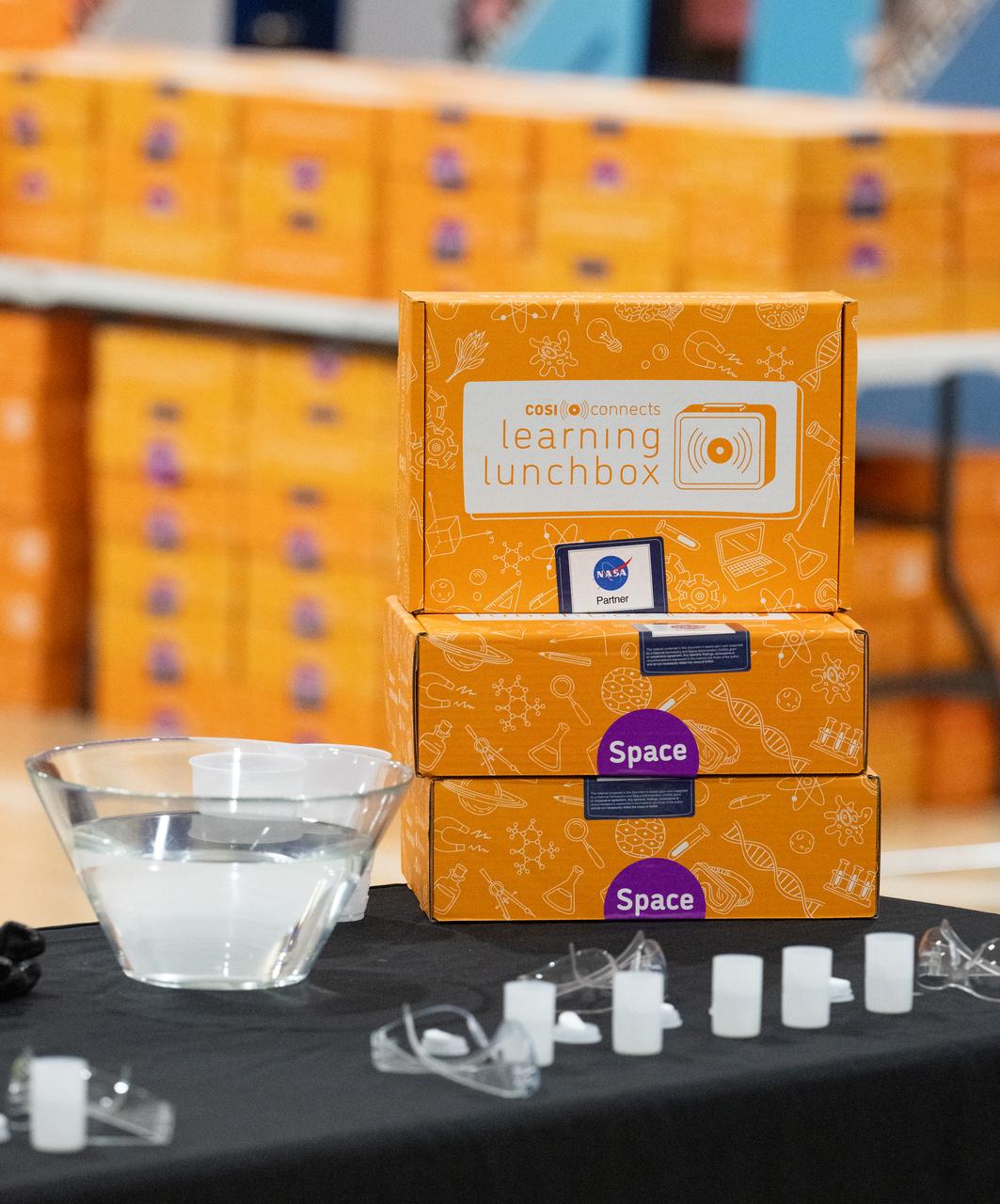
Center of Science and Industry (COSI) learning lunchboxes are seen during NASA Administrator Bill Nelson and NASA astronauts Raja Chari, Kayla Barron, Tom Marshburn, and Mark Vande Hei’s visit to Amidon-Bowen Elementary School, Thursday, Dec. 8, 2022, in Washington. Vande Hei spent 355 days in space as a member of Expedition 65/66 and was joined during Expedition 66 by Marshburn, Chari, and Barron who spent 177 days onboard the International Space Station. Photo Credit: (NASA/Keegan Barber)
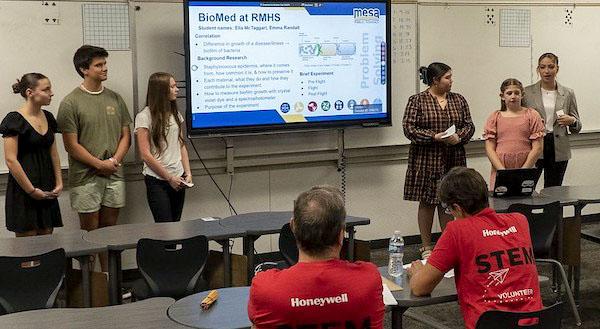
jsc2024e066518 (11/1/2023) --- Mesa Publc School students work together presenting their critical design review to their industry partners Honeywell Aerospace Technologies in their successful bid to be a finalist for the Nanoracks-National Center for Earth and Space Science Education-Surveyor-Student Spaceflight Experiments Program Mission 18 to ISS (Nanoracks-NCESSE-Surveyor-SSEP). Their experiment is The Growth and Mutation of Staphylococcus epidermidis Biofilm in Microgravity.
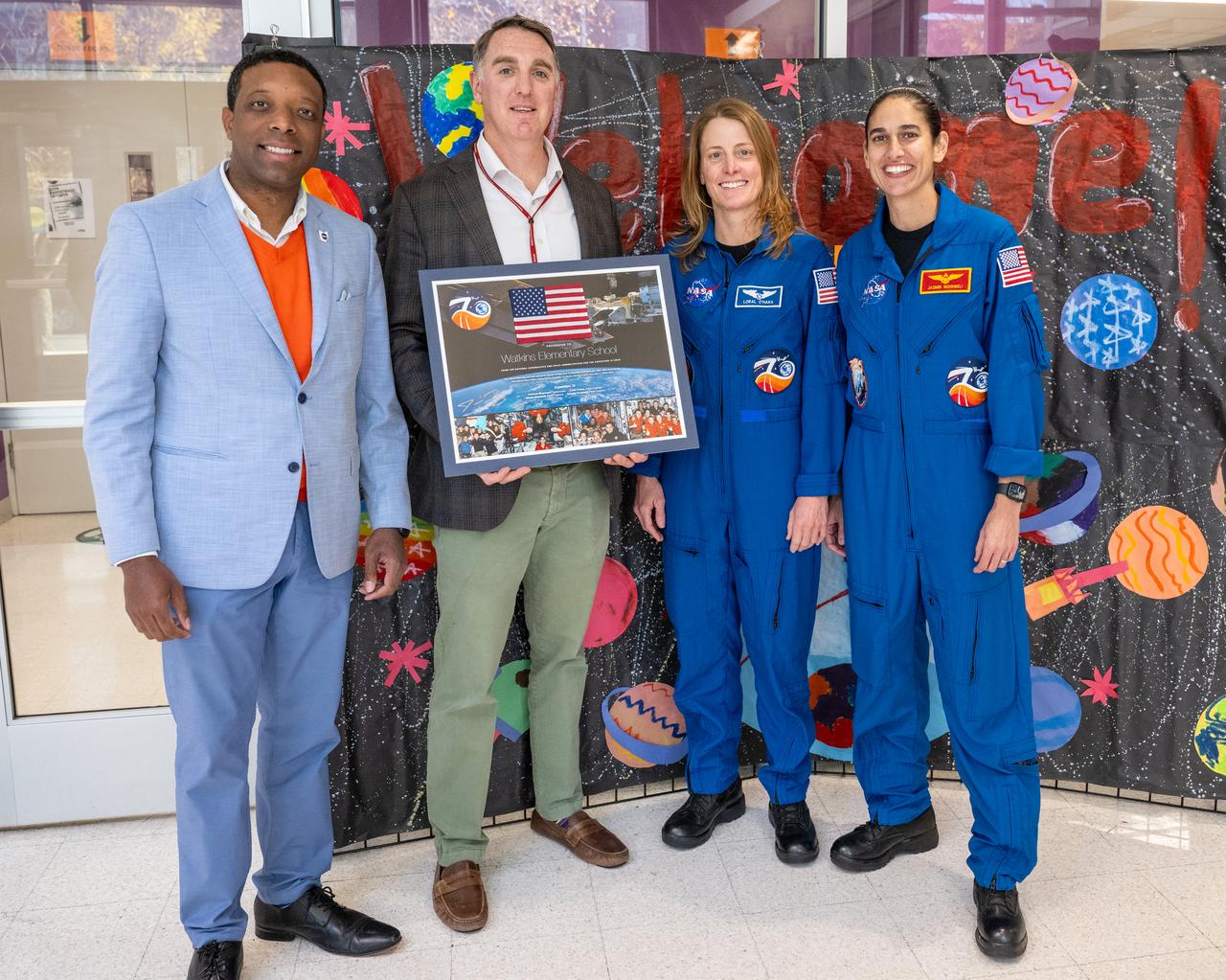
From left to right, Center of Science and Industry (COSI) Chief Strategy Officer Stephen White, Principal MScott Berkowitz, NASA astronauts Loral O’Hara and Jasmin Moghbeli pose for a photo prior to an engagement event at Catherine Watkins Elementary School Monday, Dec. 2, 2024 in Washington. O’Hara and Moghbeli spent six months in space as part of Expedition 70 aboard the International Space Station. Photo Credit: (NASA/Keegan Barber)
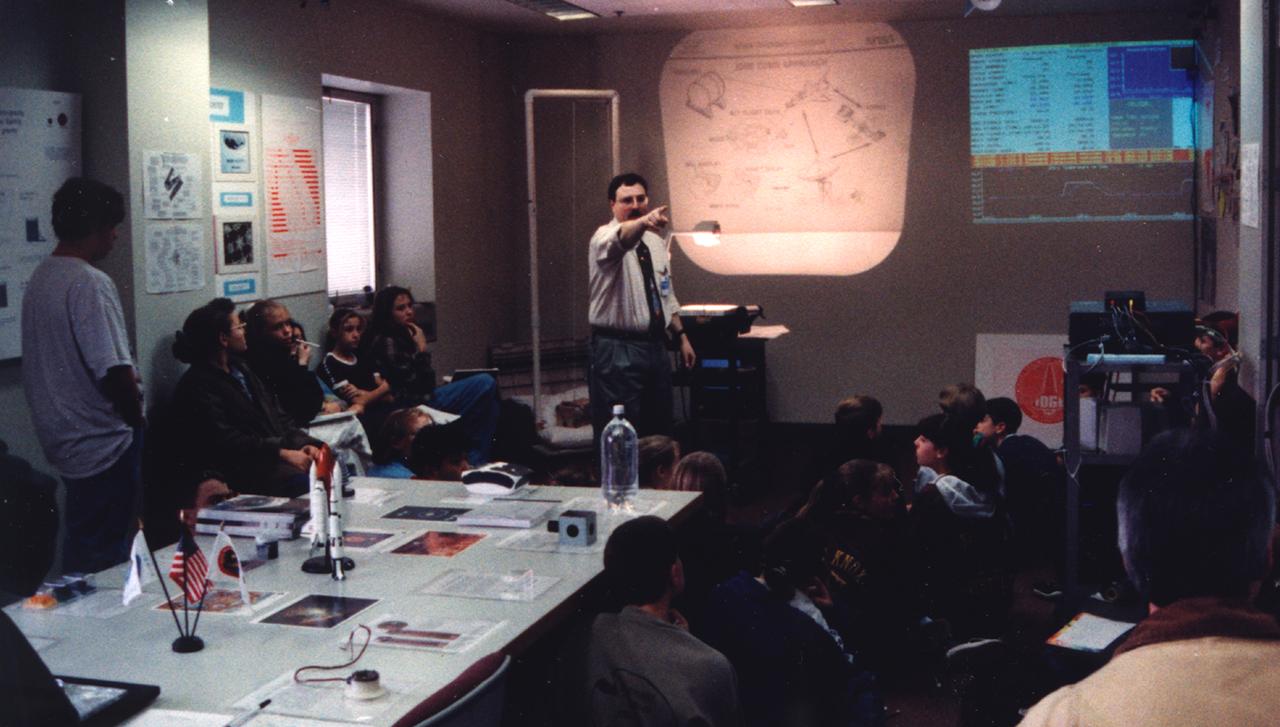
Matthew Koss lectures middle-school students about materials science research in space during the U.S. Microgravity Payload-4 (USMP-4) mission (STS-87, Nov. 19 - Dec. 5, 1997) in the visitor's center set up by the Isothermal Dendritic Growth Experiment (IDGE) team at Rensselaer Polytechnic Institute (RPI)in Troy, NY. IDGE, flown on three Space Shuttle missions, is yielding new insights into virtually all industrially relevant metal and alloy forming operations. Photo credit: RPI
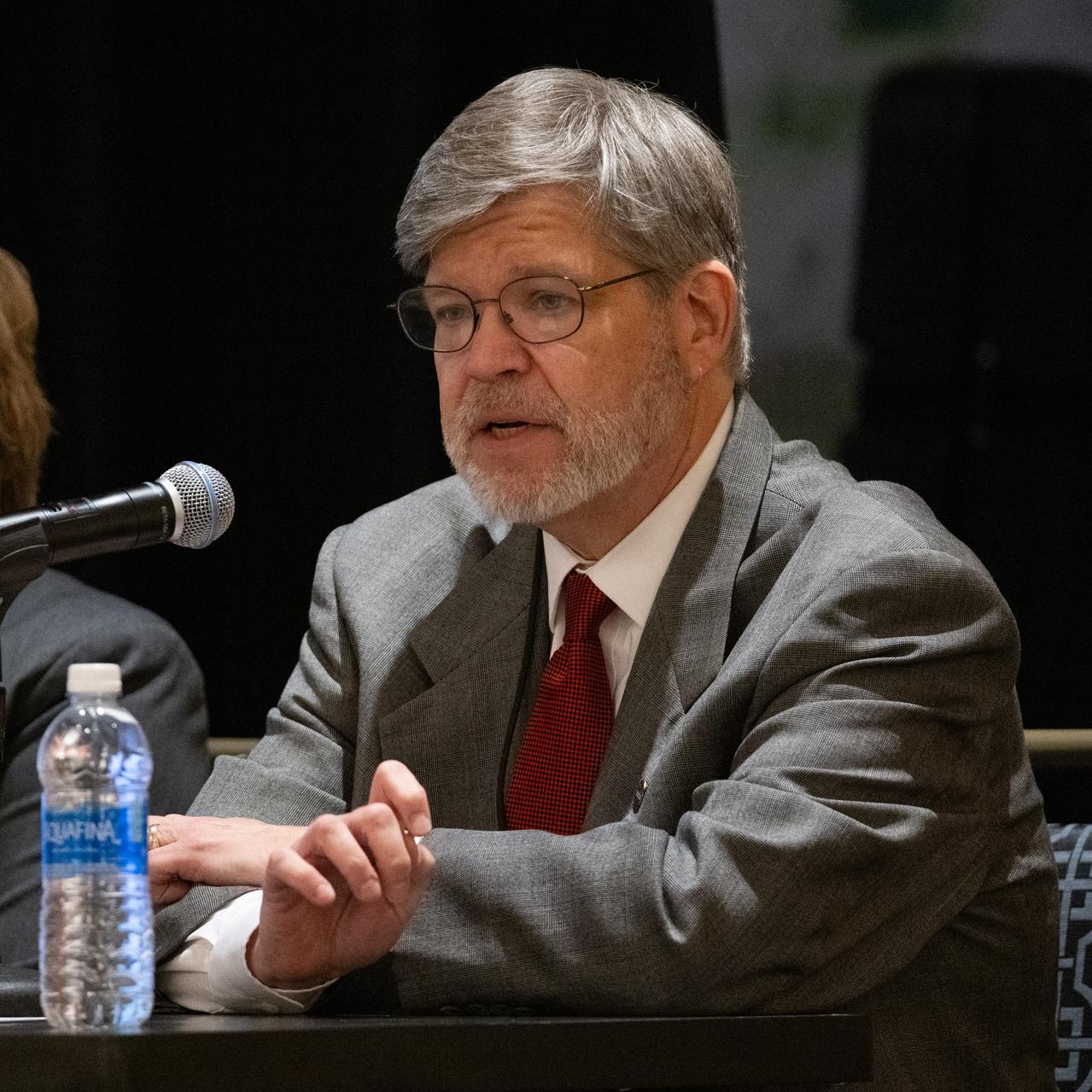
Joel Kearns, deputy associate administrator for Exploration in NASA's Science Mission Directorate, speaks during NASA’s Moon to Mars Architecture Workshop, Tuesday, June 27, 2023, at the Gaylord National Resort and Convention Center in National Harbor, Md. Following the release of the 2022 Architecture Concept Review, NASA is conducting the workshop to engage the broader space community and collect feedback from U.S. industry and academia to inform the Moon to Mars mission architecture and operational delivery. Photo Credit: (NASA/Joel Kowsky)
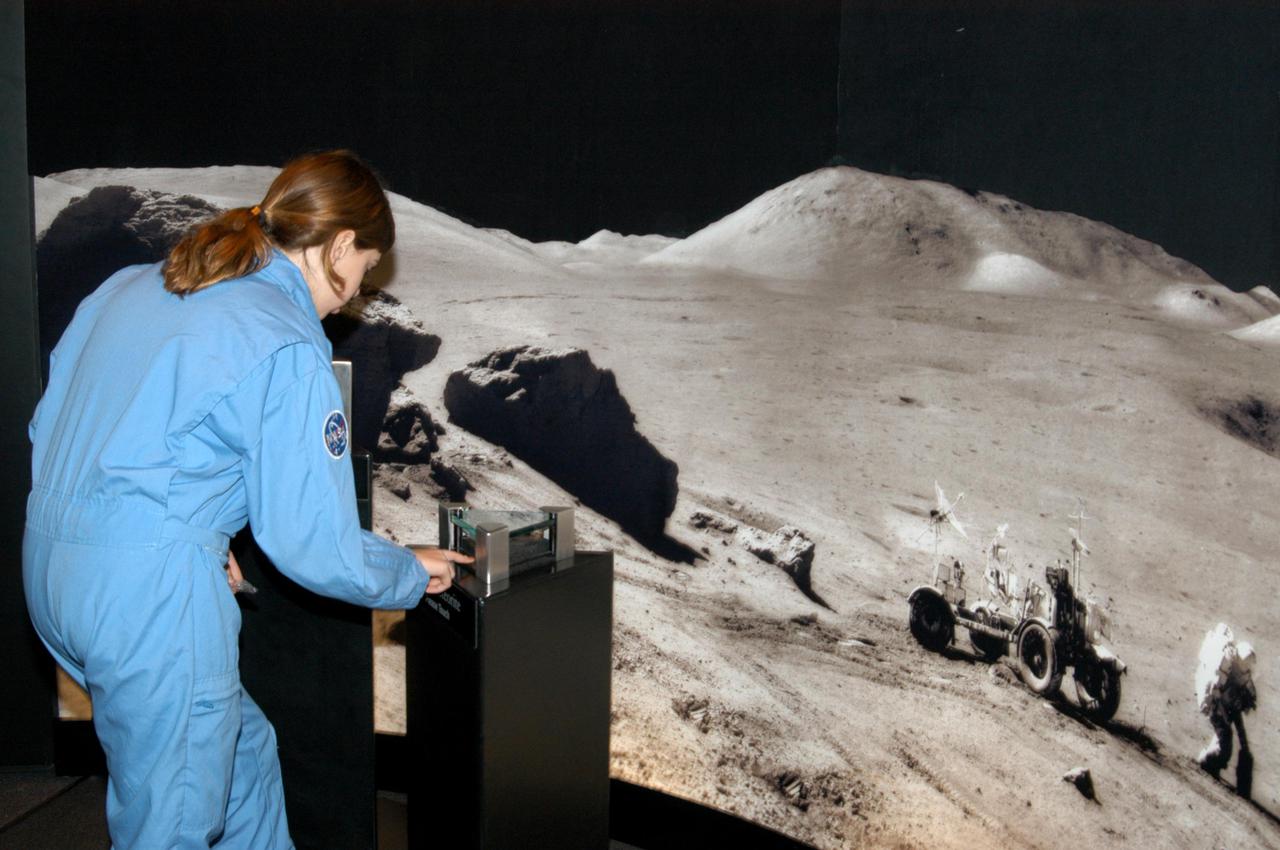
KENNEDY SPACE CENTER, FLA. - At the Museum of Science and Industry (MOSI) in Tampa, a student from one of NASA’s Explorer Schools, Stewart Middle School in Tampa, tries her hand at an interactive exhibit. The students are at MOSI to view the space exhibit Space: A Journey to Our Future, an extraordinary, interactive exhibition designed to entertain, educate and inspire. Another exhibit is SPACE STATION, the first cinematic journey to the International Space Station (ISS), where audiences can experience for themselves life in zero gravity aboard the new station.
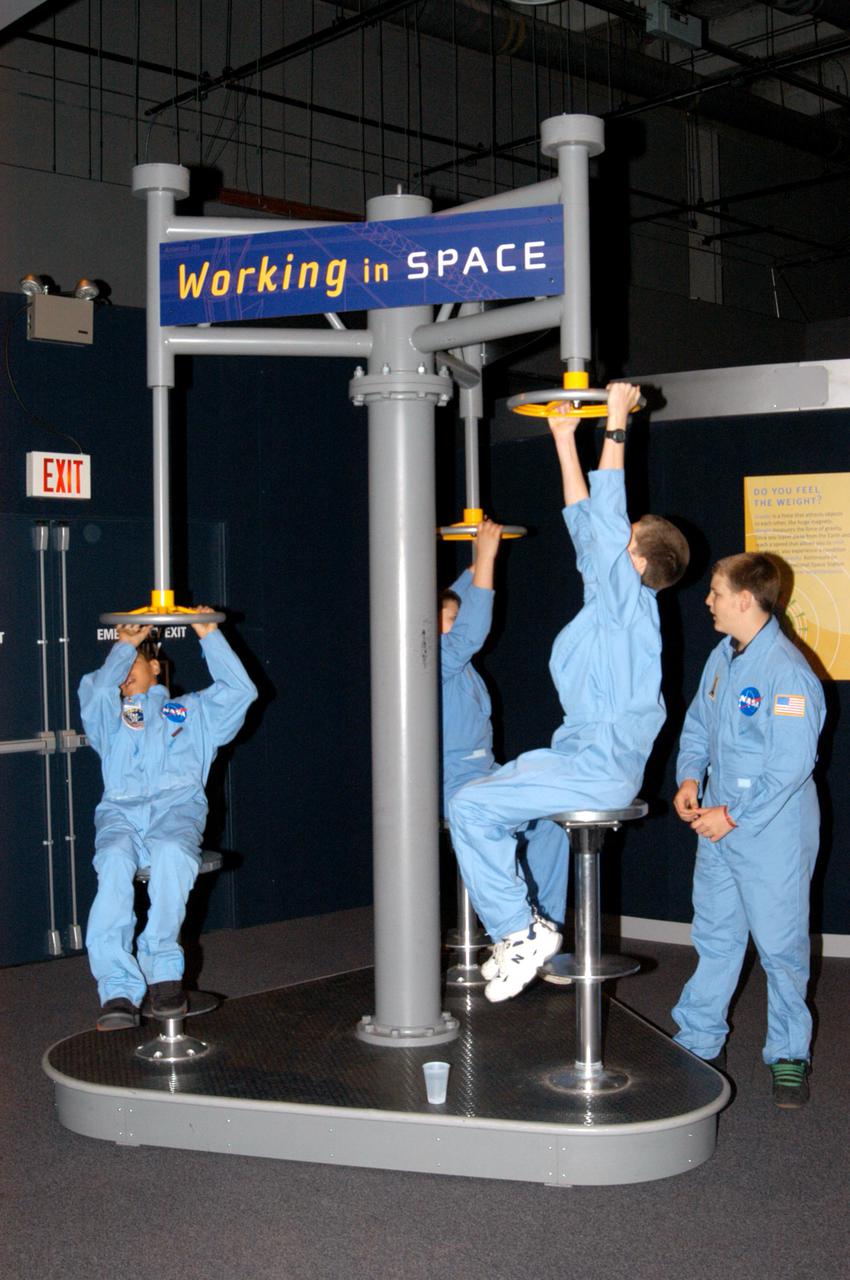
KENNEDY SPACE CENTER, FLA. - At the Museum of Science and Industry (MOSI) in Tampa, students from one of NASA’s Explorer Schools, Stewart Middle School in Tampa, enjoy an interactive exhibit. The students are at MOSI to view the space exhibit Space: A Journey to Our Future, an extraordinary, interactive exhibition designed to entertain, educate and inspire. Another exhibit is SPACE STATION, the first cinematic journey to the International Space Station (ISS), where audiences can experience for themselves life in zero gravity aboard the new station.
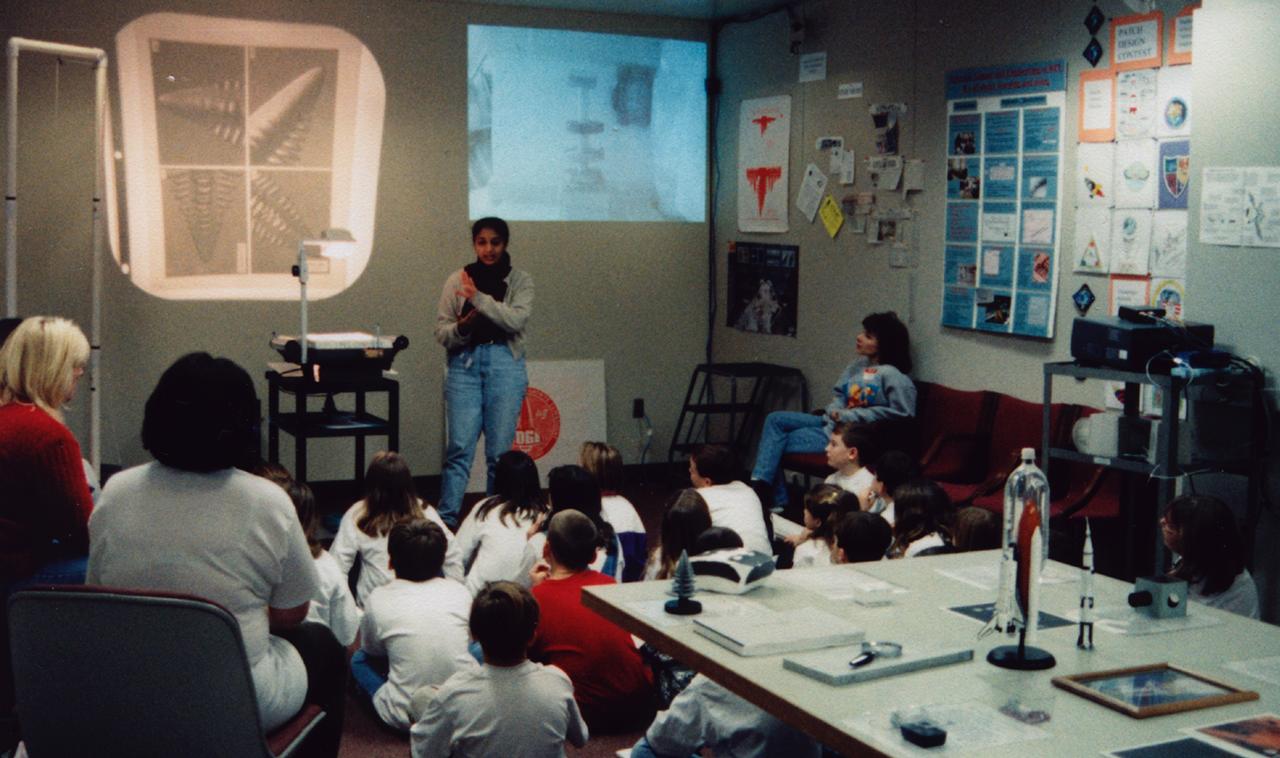
Pratima Rao lectures students about materials science research in space during the U.S. Microgravity Payload-4 (USMP-4) mission (STS-87, Nov. 19 - Dec. 5, 1997) in the visitor's center set up by the Isothermal Dendritic Growth Experiment (IDGE) team at Rensselaer Polytechnic Institute (RPI) in Troy, NY. IDGE, flown on three Space Shuttle missions, is yielding new insights into virtually all industrially relevant metal and alloy forming operations. Photo credit: RPI
CAPE CANAVERAL, Fla. – In the Kennedy Space Center’s Press Site auditorium, agency and industry leaders spoke to members of the news media on International Space Station research and technology developments. From left are: Julie Robinson, ISS Program chief scientist at NASA’s Johnson Space Center, Kenneth Shields, director of operations and education for the Center for the Advancement of Science in Space, Cheryl Nickerson of Arizona State University, and principal investigator for the Micro-5 experiment, and Samuel Durrance of the Florida Institute of Technology, principal investigator for the NR-SABOL experiment. Photo credit: NASA/ Kim Shiflett
CAPE CANAVERAL, Fla. -- In the Kennedy Space Center’s Press Site auditorium, agency and industry leaders spoke to members of the news media on International Space Station research and technology developments. From left are: Mike Curie of NASA Public Affairs, Julie Robinson, ISS Program chief scientist at NASA’s Johnson Space Center, Kenneth Shields, director of operations and education for the Center for the Advancement of Science in Space, Cheryl Nickerson of Arizona State University, and principal investigator for the Micro-5 experiment, and Samuel Durrance of the Florida Institute of Technology, principal investigator for the NR-SABOL experiment. Photo credit: NASA/ Kim Shiflett
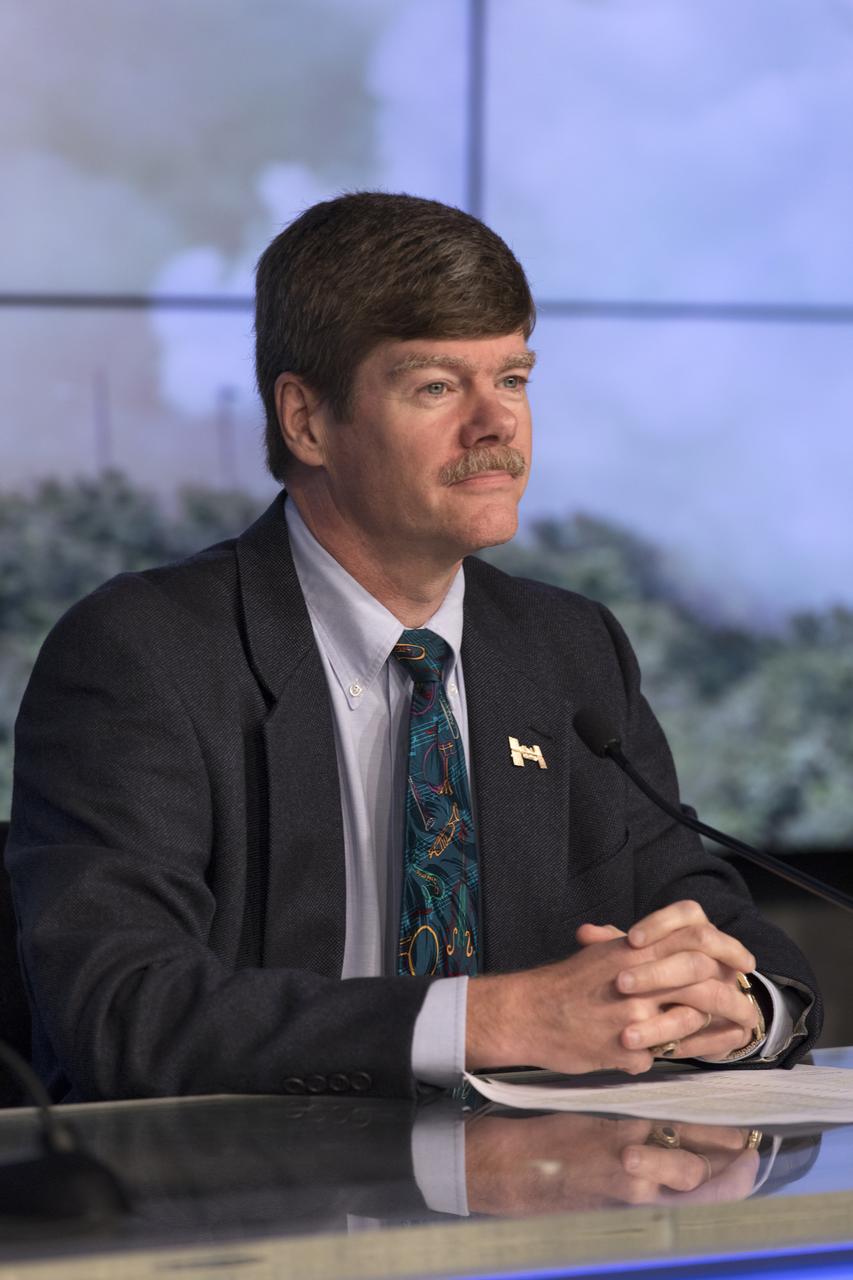
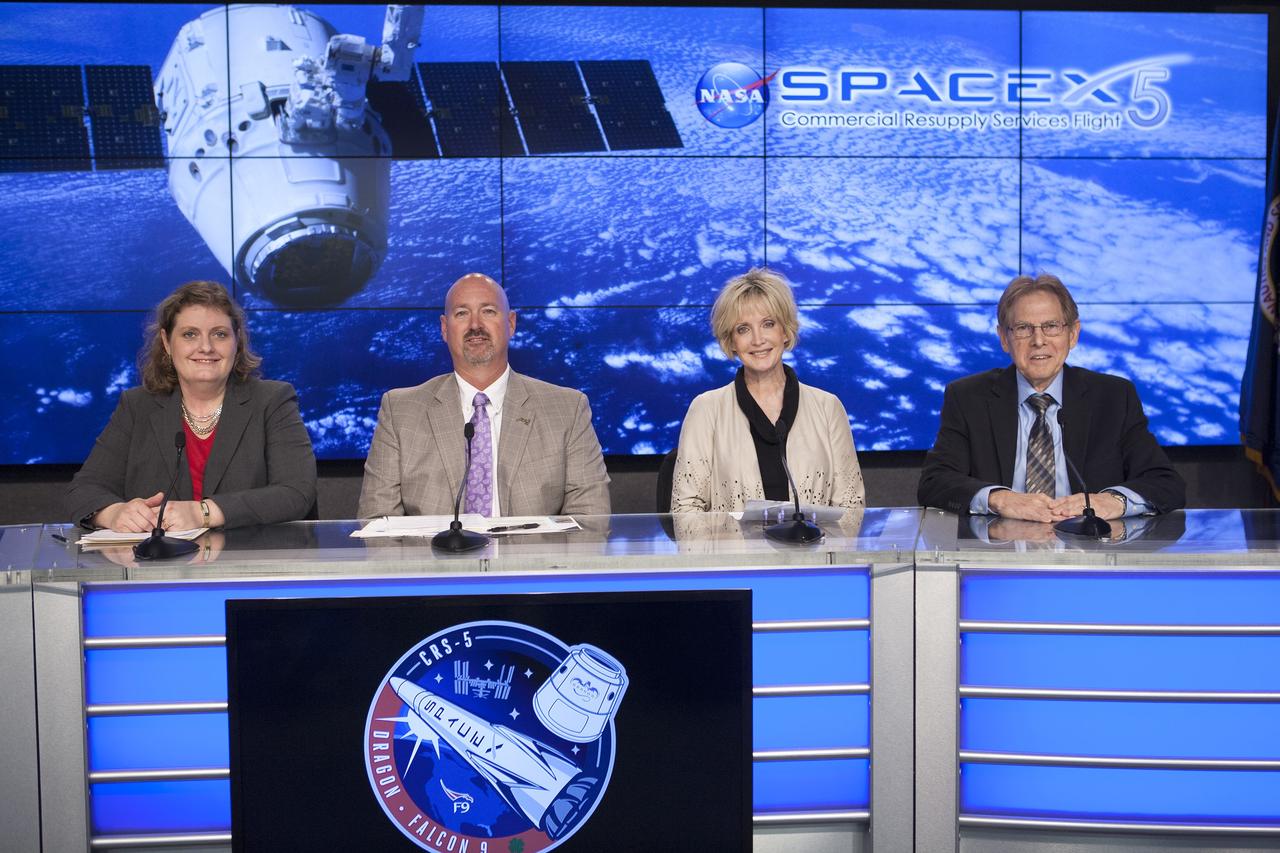
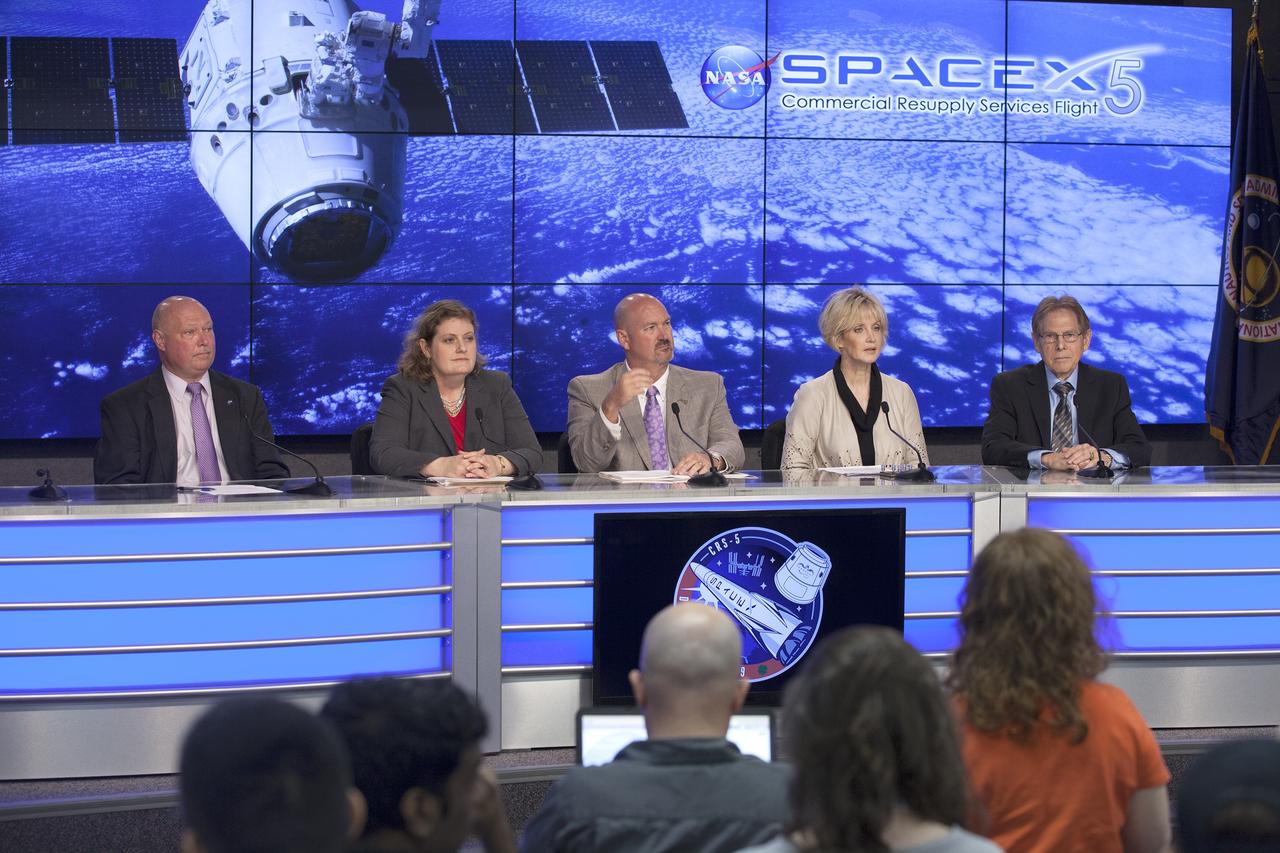
In the Kennedy Space Center’s Press Site auditorium, NASA and industry leaders speak to members of the media during a prelaunch news conference for the SpaceX CRS-14 commercial resupply services mission to the International Space Station. Pete Hasbrook, associate program scientist, ISS Program Science Office at NASA's Johnson Space Center in Houston; participates in the news conference. A Dragon spacecraft is scheduled to be launched from Space Launch Complex 40 at Cape Canaveral Air Force Station at 4:30 p.m. EST, on April 2, 2018. The SpaceX Falcon 9 rocket will lift off on the company's 14th Commercial Resupply Services mission to the space station.
The first NASA Dropping In a Microgravity Environment (DIME) student competition pilot project came to a conclusion at the Glenn Research Center in April 2001. The competition involved high-school student teams who developed the concept for a microgravity experiment and prepared an experiment proposal. The two student teams - COSI Academy, sponsored by the Columbus Center of Science and Industry, and another team from Cincinnati, Ohio's Sycamore High School, designed a microgravity experiment, fabricated the experimental apparatus, and visited NASA Glenn to operate their experiment in the 2.2 Second Drop Tower. Here, students are briefed by NASA engineer Daniel Dietrich at the top of the drop tower. This image is from a digital still camera; higher resolution is not available.

In the Kennedy Space Center’s Press Site auditorium, NASA and industry leaders speak to members of the media during a mission science briefing for the agency’s Cyclone Global Navigation Satellite System, or CYGNSS, spacecraft. From left are: Sean Potter of NASA Communications; Dr. Chris Ruf, CYGNSS principal investigator, Department of Climate and Space Sciences and Engineering at the University of Michigan; Aaron Ridley, CYGNSS constellation scientist in the Climate and Space Department at the University of Michigan in Ann Arbor, Michigan; and Mary Morris, doctoral student in the Department of Climate and Space Sciences and Engineering at the University of Michigan. The eight CYGNSS satellites will make frequent and accurate measurements of ocean surface winds throughout the life cycle of tropical storms and hurricanes. The data will help scientists probe key air-sea interaction processes that take place near the core of storms, which are rapidly changing and play a crucial role in the beginning and intensification of hurricanes.
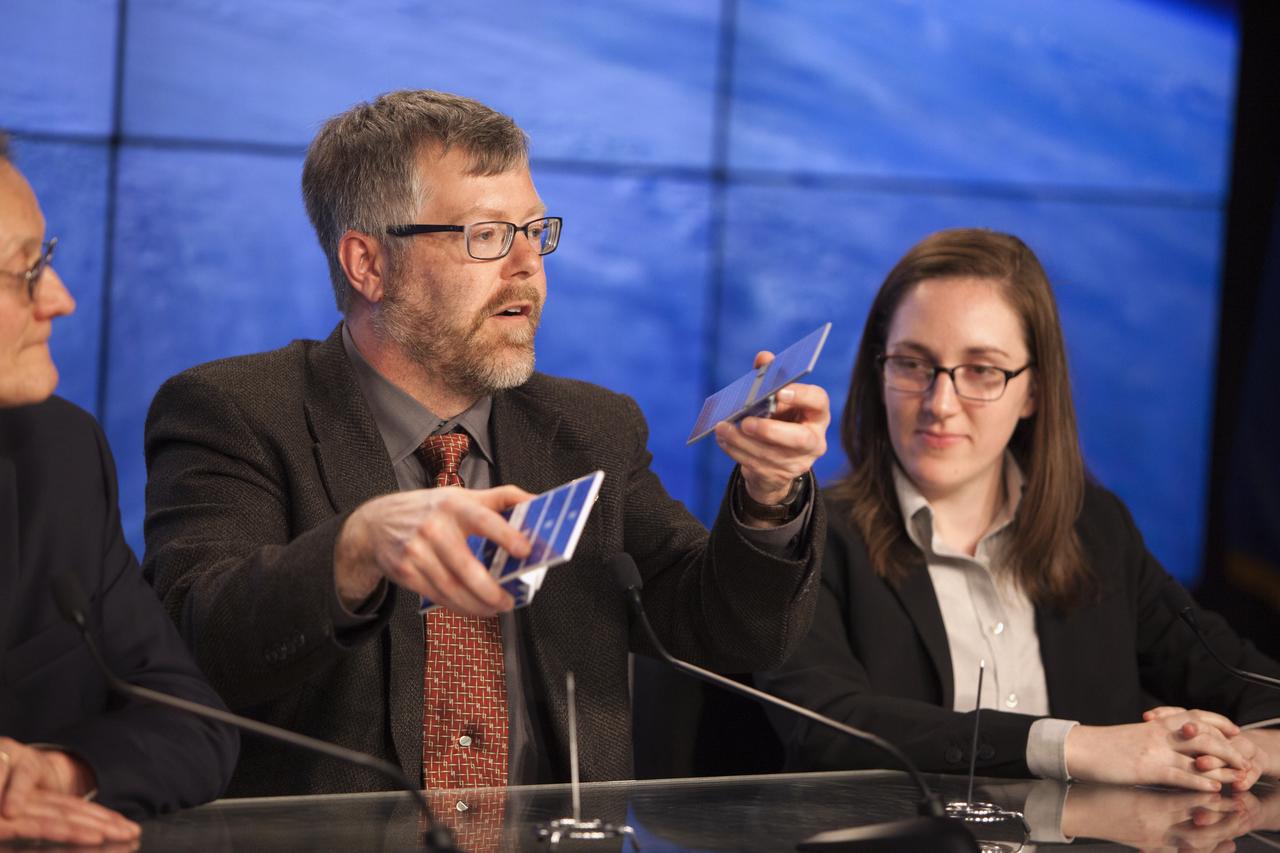
In the Kennedy Space Center’s Press Site auditorium, NASA and industry leaders speak to members of the media during a mission science briefing for the agency’s Cyclone Global Navigation Satellite System, or CYGNSS, spacecraft. From left are: Dr. Chris Ruf, CYGNSS principal investigator, Department of Climate and Space Sciences and Engineering at the University of Michigan; Aaron Ridley, CYGNSS constellation scientist in the Climate and Space Department at the University of Michigan in Ann Arbor, Michigan; and Mary Morris, doctoral student in the Department of Climate and Space Sciences and Engineering at the University of Michigan. The eight CYGNSS satellites will make frequent and accurate measurements of ocean surface winds throughout the life cycle of tropical storms and hurricanes. The data will help scientists probe key air-sea interaction processes that take place near the core of storms, which are rapidly changing and play a crucial role in the beginning and intensification of hurricanes.
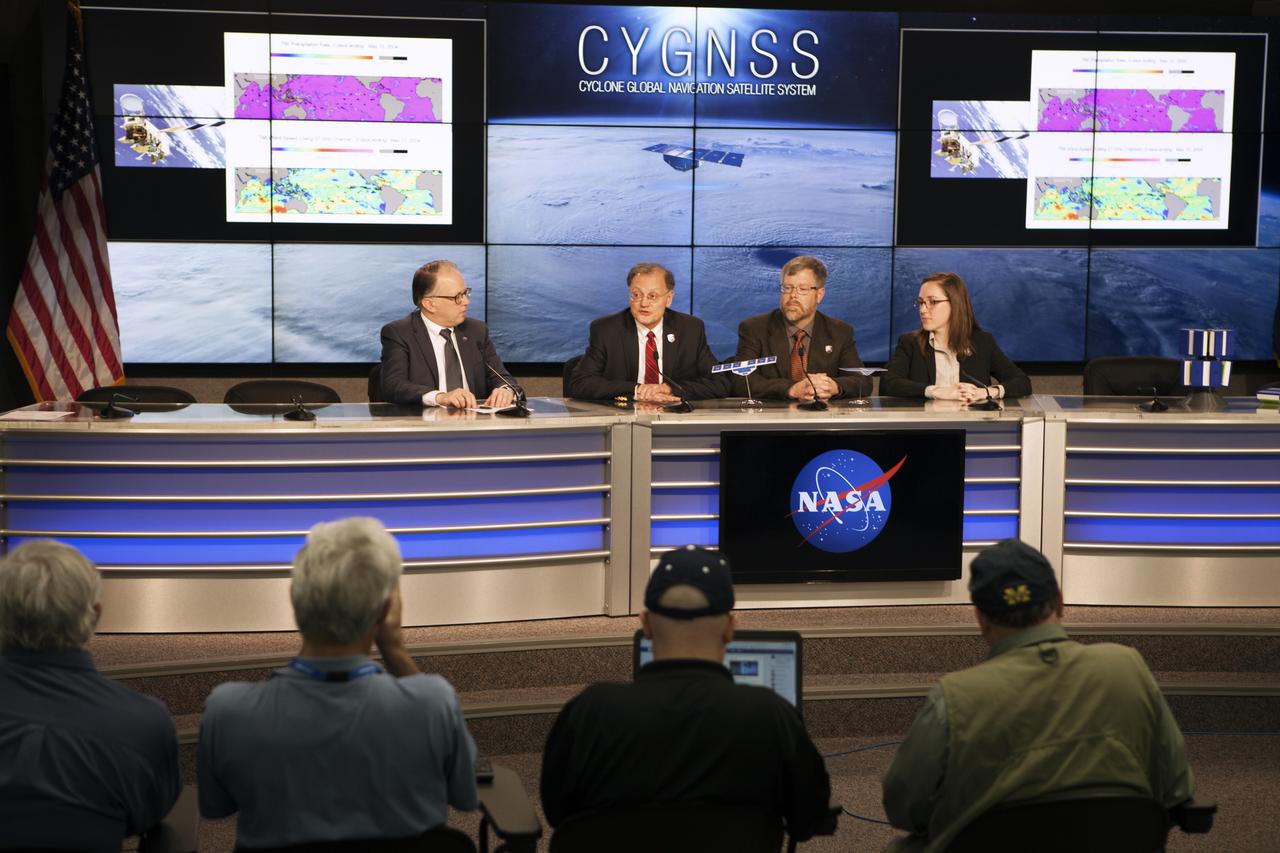
In the Kennedy Space Center’s Press Site auditorium, NASA and industry leaders speak to members of the media during a mission science briefing for the agency’s Cyclone Global Navigation Satellite System, or CYGNSS, spacecraft. From left are: Sean Potter of NASA Communications; Dr. Chris Ruf, CYGNSS principal investigator, Department of Climate and Space Sciences and Engineering at the University of Michigan; Aaron Ridley, CYGNSS constellation scientist in the Climate and Space Department at the University of Michigan in Ann Arbor, Michigan; and Mary Morris, doctoral student in the Department of Climate and Space Sciences and Engineering at the University of Michigan. The eight CYGNSS satellites will make frequent and accurate measurements of ocean surface winds throughout the life cycle of tropical storms and hurricanes. The data will help scientists probe key air-sea interaction processes that take place near the core of storms, which are rapidly changing and play a crucial role in the beginning and intensification of hurricanes.
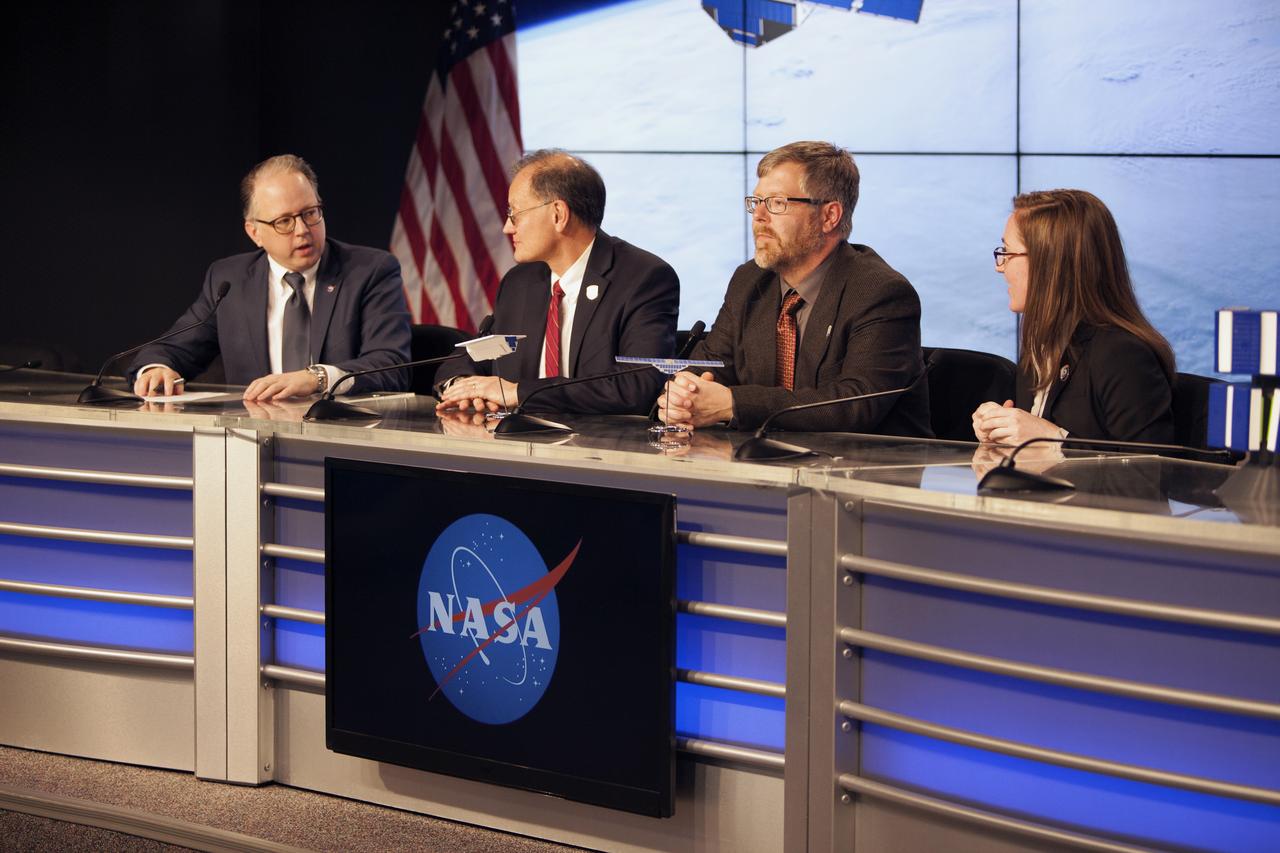
In the Kennedy Space Center’s Press Site auditorium, NASA and industry leaders speak to members of the media during a mission science briefing for the agency’s Cyclone Global Navigation Satellite System, or CYGNSS, spacecraft. From left are: Sean Potter of NASA Communications; Dr. Chris Ruf, CYGNSS principal investigator, Department of Climate and Space Sciences and Engineering at the University of Michigan; Aaron Ridley, CYGNSS constellation scientist in the Climate and Space Department at the University of Michigan in Ann Arbor, Michigan; and Mary Morris, doctoral student in the Department of Climate and Space Sciences and Engineering at the University of Michigan. The eight CYGNSS satellites will make frequent and accurate measurements of ocean surface winds throughout the life cycle of tropical storms and hurricanes. The data will help scientists probe key air-sea interaction processes that take place near the core of storms, which are rapidly changing and play a crucial role in the beginning and intensification of hurricanes.
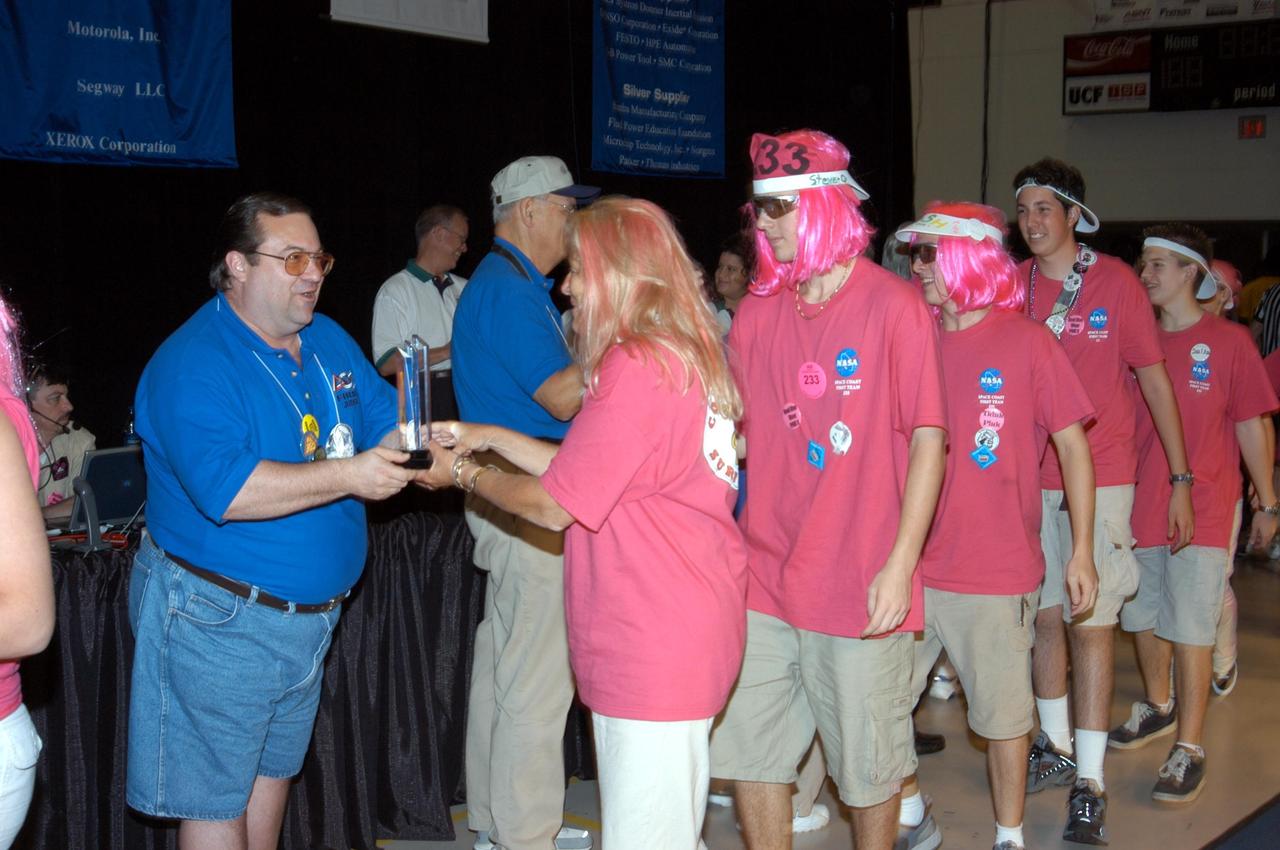
KENNEDY SPACE CENTER, FLA. - The NASA/Kennedy Space Center-sponsored student team (in pink wigs) is congratulated by the judges of the 2003 Southeastern Regional FIRST Robotic Competition. The competition is being held at the University of Central Florida (UCF) in Orlando, March 20-23. The team won awards for Regional Finalist 2, GM Industrial Design and the Imagery Award. Forty student teams from around the country are participating in the event that pits team-built gladiator robots against each other in an athletic-style competition. The teams are sponsored by NASA/Kennedy Space Center, The Boeing Company/Brevard Community College, and Lockheed Martin Space Operations/Mission Systems for the nonprofit organization For Inspiration and Recognition of Science and Technology, known as FIRST. The vision of FIRST is to inspire in the youth of our nation an appreciation of science and technology and an understanding that mastering these disciplines can enrich the lives of all mankind.
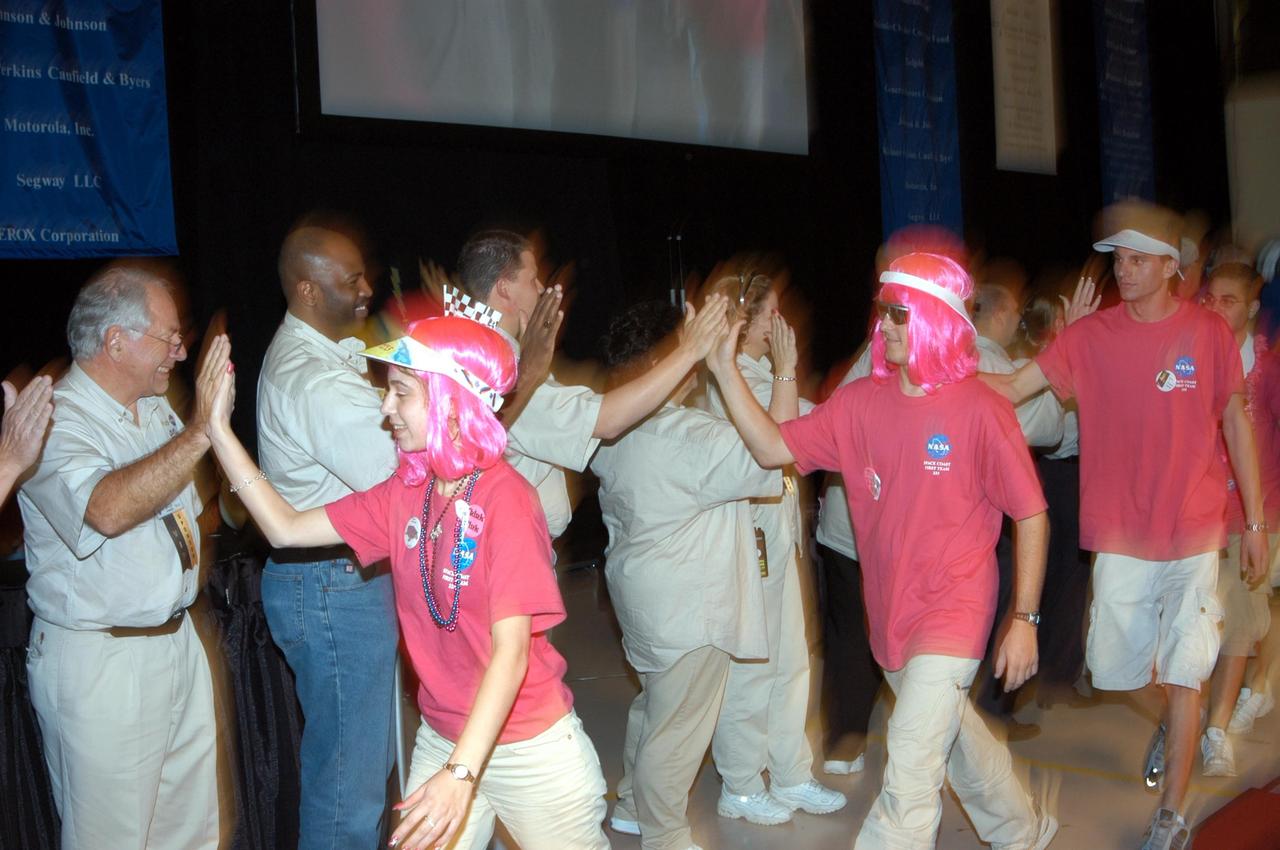
KENNEDY SPACE CENTER, FLA. - The NASA/Kennedy Space Center-sponsored student team (in pink wigs) is congratulated by the mentors and support staff of the 2003 Southeastern Regional FIRST Robotic Competition. The competition is being held at the University of Central Florida (UCF) in Orlando, March 20-23. The team won awards for Regional Finalist 2, GM Industrial Design and the Imagery Award. Forty student teams from around the country are participating in the event that pits team-built gladiator robots against each other in an athletic-style competition. The teams are sponsored by NASA/Kennedy Space Center, The Boeing Company/Brevard Community College, and Lockheed Martin Space Operations/Mission Systems for the nonprofit organization For Inspiration and Recognition of Science and Technology, known as FIRST. The vision of FIRST is to inspire in the youth of our nation an appreciation of science and technology and an understanding that mastering these disciplines can enrich the lives of all mankind.
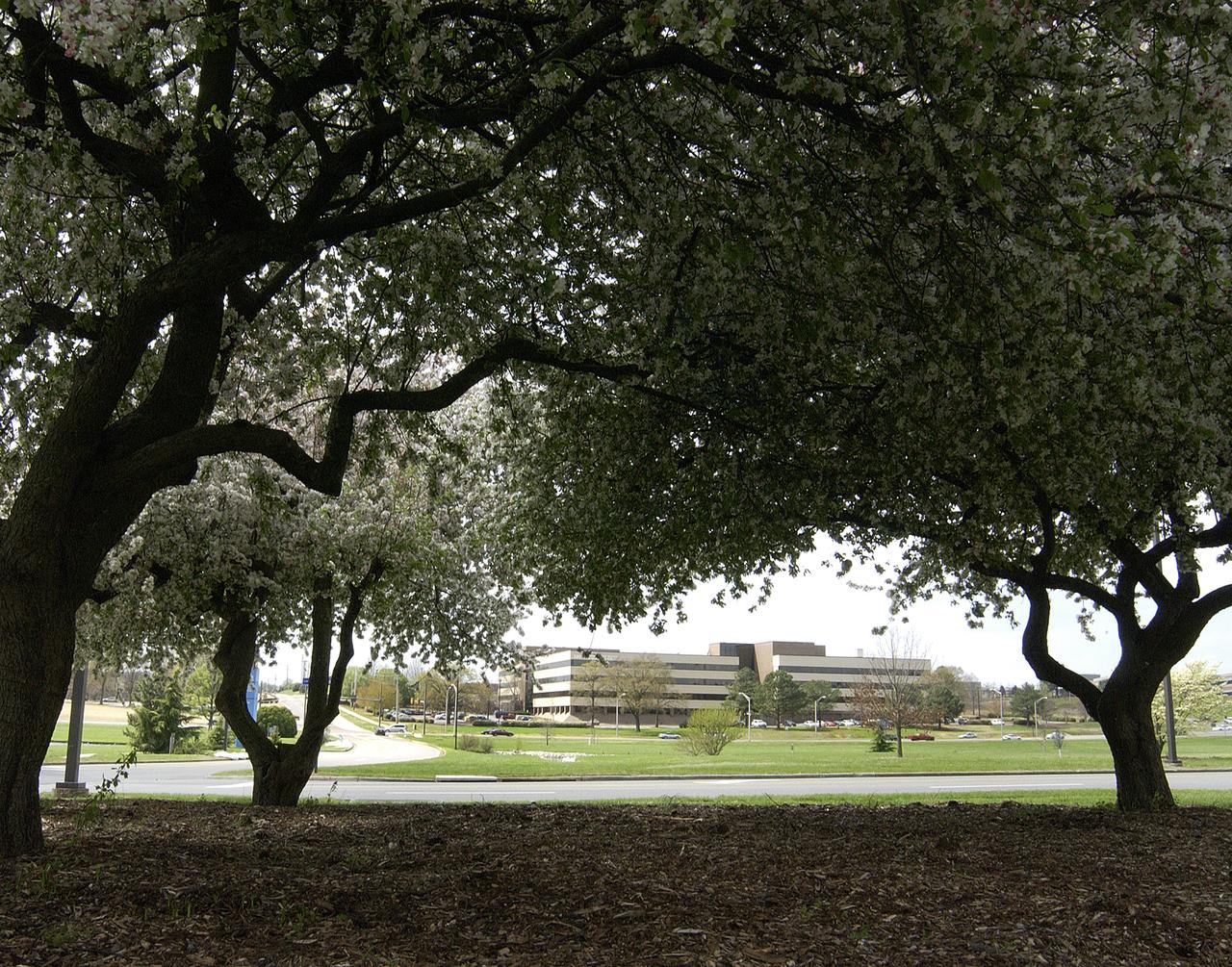
The National Space Science and Technology Center (NSSTC), located in Huntsville, Alabama, is a laboratory for cutting-edge research in selected scientific and engineering disciplines. The major objectives of the NSSTC are to provide multiple fields of expertise coming together to solve solutions to science and technology problems, and gaining recognition as a world-class science research organization. The center, opened in August 2000, focuses on space science, Earth sciences, information technology, optics and energy technology, biotechnology and materials science, and supports NASA's mission of advancing and communicating scientific knowledge using the environment of space for research. In addition to providing basic and applied research, NSSTC, with its student participation, also fosters the next generation of scientists and engineers. NSSTC is a collaborated effort between NASA and the state of Alabama through the Space Science and Technology alliance, a group of six universities including the Universities of Alabama in Huntsville (UAH),Tuscaloosa (UA), and Birmingham (UAB); the University of South Alabama in Mobile (USA);Alabama Agricultural and Mechanical University (AM) in Huntsville; and Auburn University (AU) in Auburn. Participating federal agencies include NASA, Marshall Space Flight Center, the National Oceanic and Atmospheric Administration, the Department of Defense, the National Science Foundation, and the Department of Energy. Industries involved include the Space Science Research Center, the Global Hydrology and Climate Center, the Information Technology Research Center, the Optics and Energy Technology Center, the Propulsion Research Center, the Biotechnology Research Center, and the Materials Science Research Center. This photo shows the completed center with the additional arnex (right of building) that added an additional 80,000 square feet (7,432 square meters) to the already existent NSSTC, nearly doubling the size of the core facility. At full capacity, the NSSTC tops 200,000 square feet (18,580 square meters) and houses approximately 550 employees.
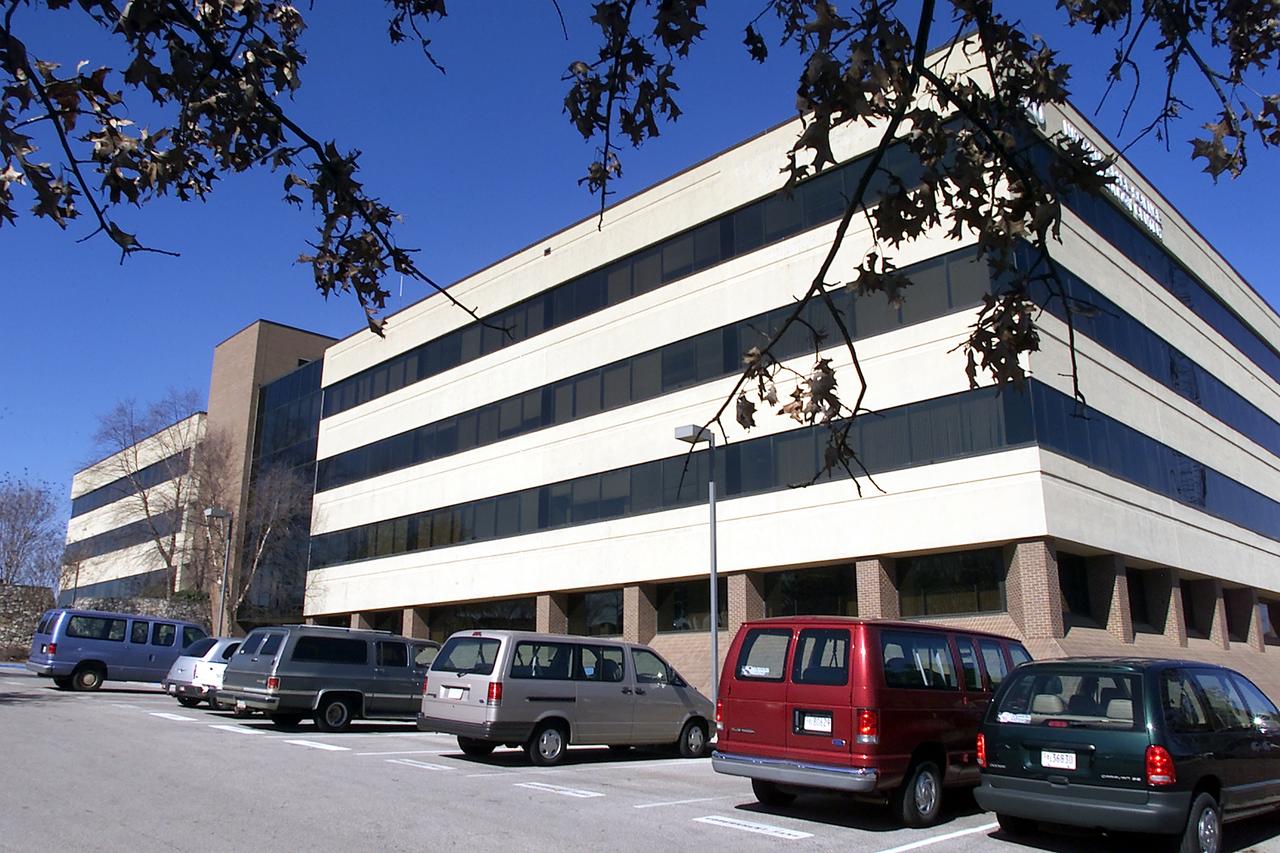
The National Space Science and Technology Center (NSSTC), located in Huntsville, Alabama, is a laboratory for cutting-edge research in selected scientific and engineering disciplines. The major objectives of the NSSTC are to provide multiple fields of expertise coming together to solve solutions to science and technology problems, and gaining recognition as a world-class science research organization. The center, opened in August 2000, focuses on space science, Earth sciences, information technology, optics and energy technology, biotechnology and materials science, and supports NASA's mission of advancing and communicating scientific knowledge using the environment of space for research. In addition to providing basic and applied research, NSSTC, with its student participation, also fosters the next generation of scientists and engineers. NSSTC is a collaborated effort between NASA and the state of Alabama through the Space Science and Technology alliance, a group of six universities including the Universities of Alabama in Huntsville (UAH),Tuscaloosa (UA), and Birmingham (UAB); the University of South Alabama in Mobile (USA); Alabama Agricultural and Mechanical University (AM) in Huntsville; and Auburn University (AU) in Auburn. Participating federal agencies include NASA, Marshall Space Flight Center, the National Oceanic and Atmospheric Administration, the Department of Defense, the National Science Foundation, and the Department of Energy. Industries involved include the Space Science Research Center, the Global Hydrology and Climate Center, the Information Technology Research Center, the Optics and Energy Technology Center, the Propulsion Research Center, the Biotechnology Research Center, and the Materials Science Research Center. An arnex, scheduled for completion by summer 2002, will add an additional 80,000 square feet (7,432 square meters) to NSSTC nearly doubling the size of the core facility. At full capacity, the completed NSSTC will top 200,000 square feet (18,580 square meters) and house approximately 550 employees.
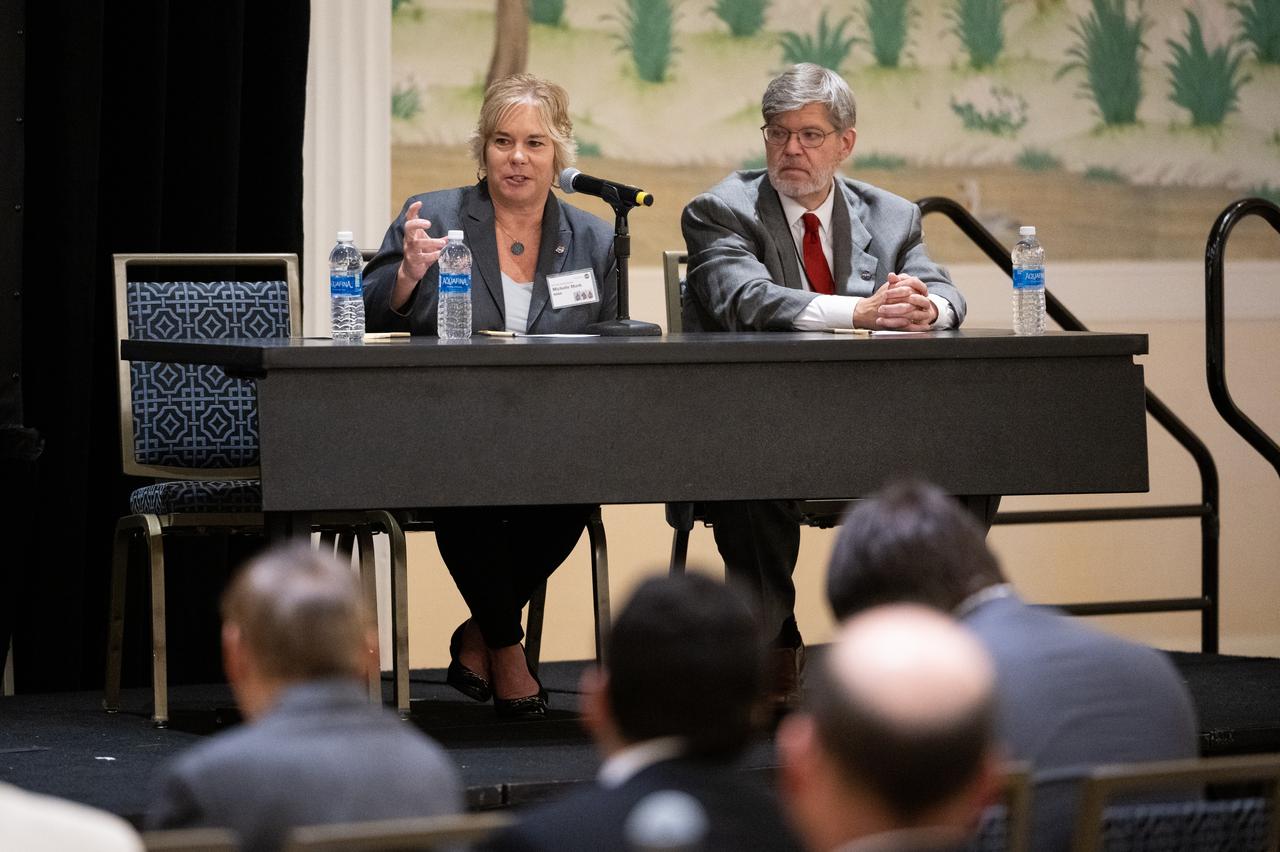
Michelle Munk, chief architect for NASA’s Space Technology Mission Directorate, left, answers a question alongside Joel Kearns, deputy associate administrator for Exploration in NASA's Science Mission Directorate, during NASA’s Moon to Mars Architecture Workshop, Tuesday, June 27, 2023, at the Gaylord National Resort and Convention Center in National Harbor, Md. Following the release of the 2022 Architecture Concept Review, NASA is conducting the workshop to engage the broader space community and collect feedback from U.S. industry and academia to inform the Moon to Mars mission architecture and operational delivery. Photo Credit: (NASA/Joel Kowsky)

CAPE CANAVERAL, Fla. – At NASA’s Kennedy Space Center in Florida, Robert Lightfoot, NASA associate director, at left, learns about the Regolith and Environment Science and Oxygen and Lunar Volatile Extraction, or RESOLVE, rover during a tour of the Swamp Works laboratories. To the right of Lightfoot is Kennedy Director Bob Cabana. Kennedy’s Swamp Works provides rapid, innovative and cost-effective exploration mission solutions, leveraging partnerships across NASA, industry and academia. Kennedy’s research and technology mission is to improve spaceports on Earth, as well as lay the groundwork for establishing spaceports at destinations in space. For more information, visit http:__www.nasa.gov_centers_kennedy_exploration_researchtech_index.html. Photo credit: NASA_Jim Grossmann
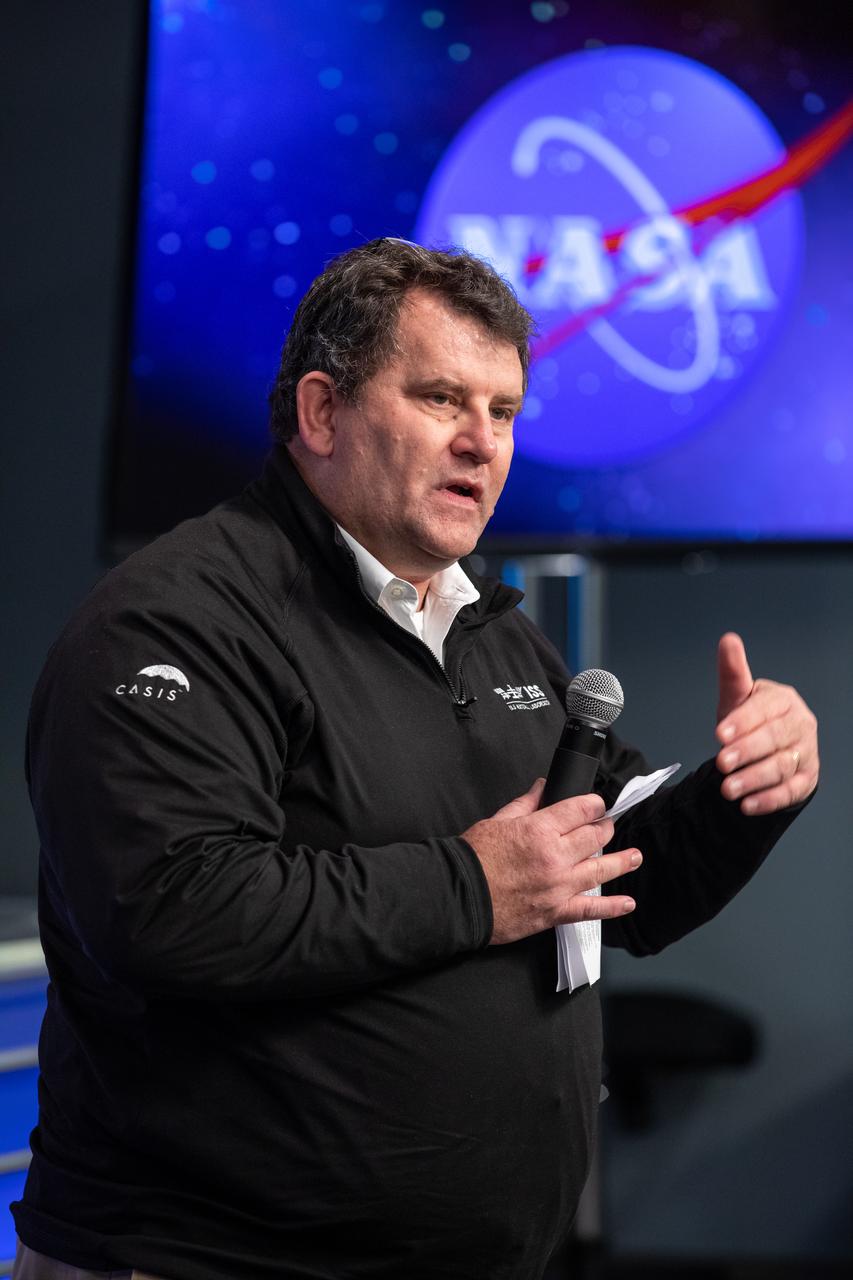
A What’s On Board Briefing for SpaceX’s 19th Commercial Resupply Services (CRS-19) mission for NASA to the International Space Station took place on Dec. 3, 2019, at the agency’s Kennedy Space Center in Florida. Michael Roberts, interim chief scientist for the International Space Station U.S. National Laboratory, discusses the lab’s work in advancing science in space, and in developing partnerships that drive industrialization through microgravity research. The SpaceX Falcon 9 rocket and Dragon cargo module are scheduled to launch on Dec. 4, 2019, from Space Launch Complex 40 on Cape Canaveral Air Force Station in Florida.
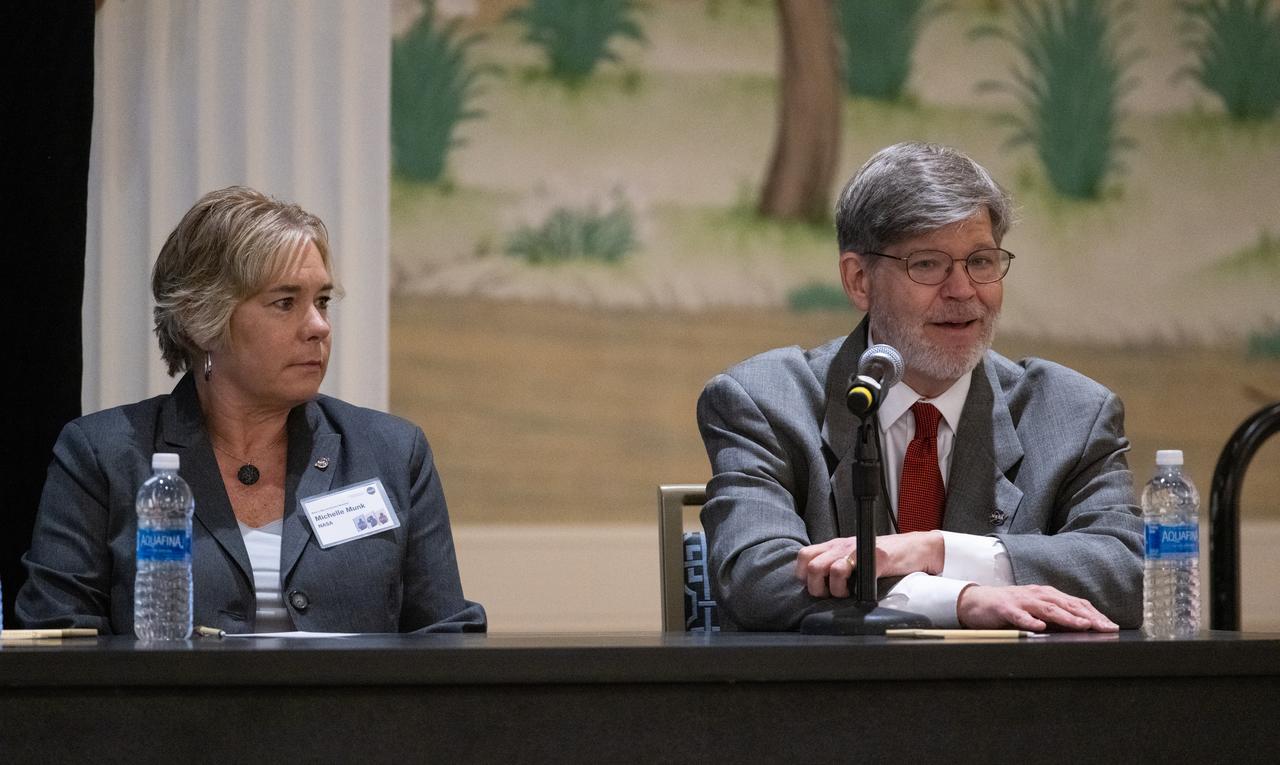
Michelle Munk, chief architect for NASA’s Space Technology Mission Directorate, left, and Joel Kearns, deputy associate administrator for Exploration in NASA's Science Mission Directorate, are seen during NASA’s Moon to Mars Architecture Workshop, Tuesday, June 27, 2023, at the Gaylord National Resort and Convention Center in National Harbor, Md. Following the release of the 2022 Architecture Concept Review, NASA is conducting the workshop to engage the broader space community and collect feedback from U.S. industry and academia to inform the Moon to Mars mission architecture and operational delivery. Photo Credit: (NASA/Joel Kowsky)
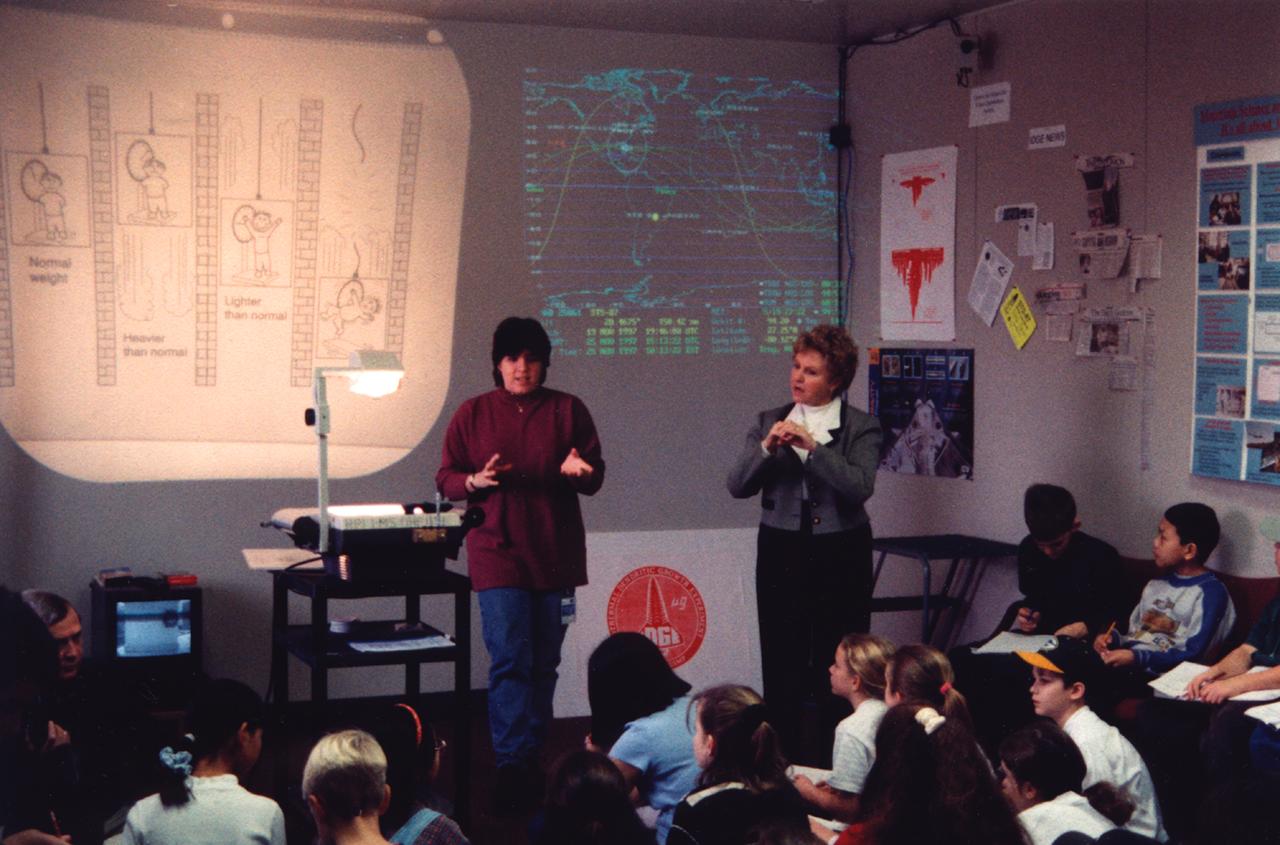
Paula Crawford (assisted by an American Sign Language interpreter) lectures students about materials science research in space during the U.S. Microgravity Payload-4 mission (STS-87, Nov. 19 - Dec. 5, 1997) in the visitor's center set up by the Isothermal Dendritic Growth Experiment (IDGE) team at Rensselaer Polytechnic Institute (RPI) in Troy, NY. IDGE, flown on three Space Shuttle mission, is yielding new insights into virtually all industrially relevant metal and alloy forming operation. Photo credit: Rensselaer Polytechnic Institute (RPI)
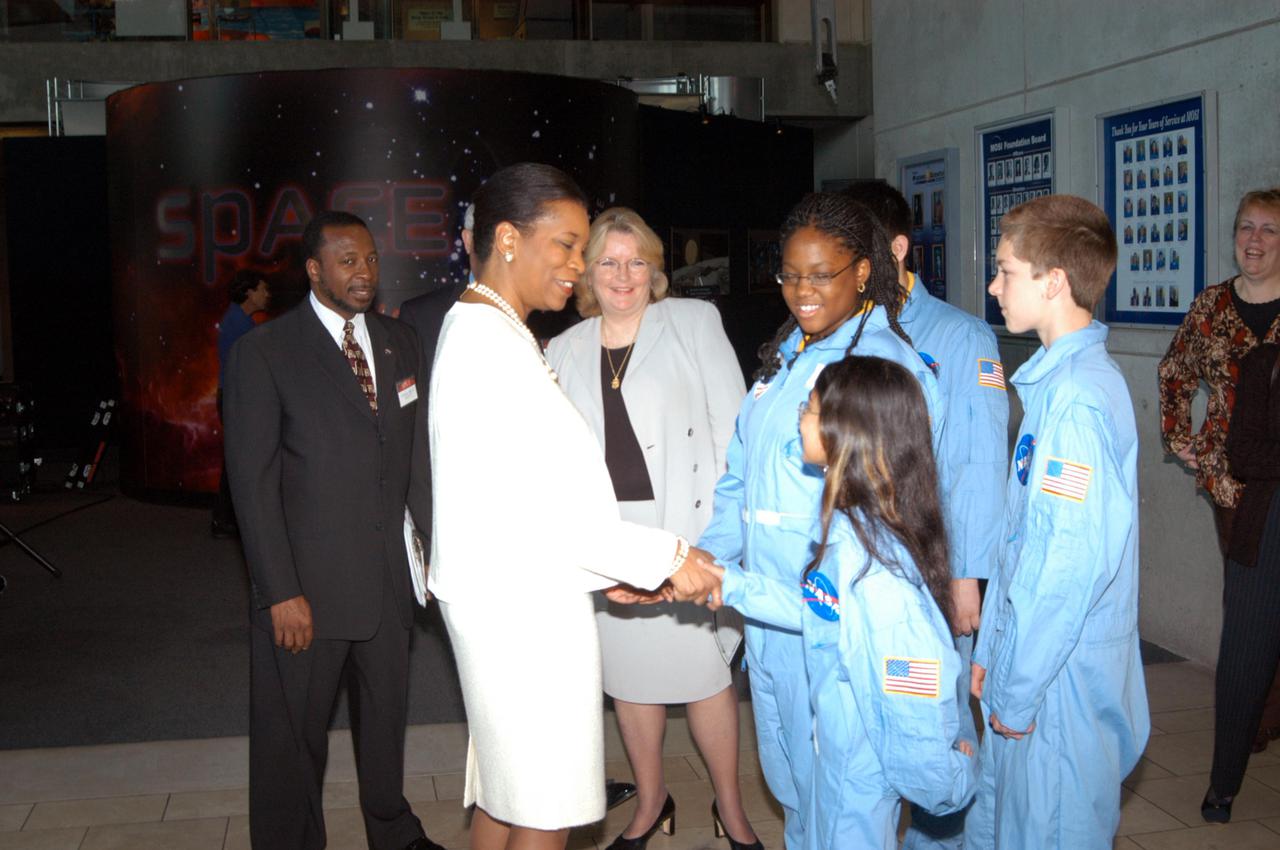
KENNEDY SPACE CENTER, FLA. - At the Museum of Science and Industry (MOSI) in Tampa, Dr. Adena Williams Loston, chief education officer at NASA Headquarters, greets students from one of NASA’s Explorer Schools, Stewart Middle School in Tampa. The students as well as Dr. Loston and KSC Deputy Director Dr. Woodrow Whitlow Jr. (far left) were at MOSI to view the space exhibits Space: A Journey to Our Future, an extraordinary, interactive exhibition designed to entertain, educate and inspire; and SPACE STATION, the first cinematic journey to the International Space Station (ISS), where audiences can experience for themselves life in zero gravity aboard the new station.
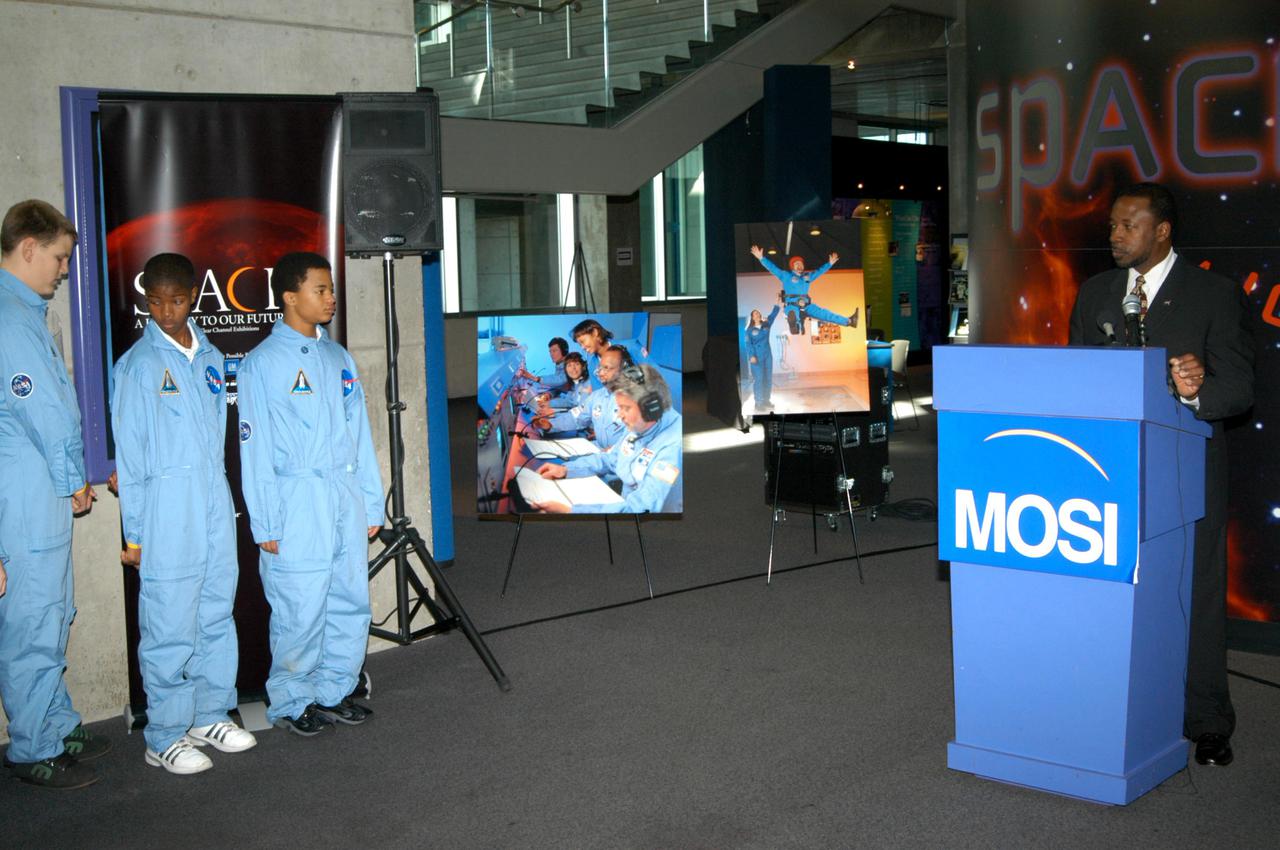
KENNEDY SPACE CENTER, FLA. - At the Museum of Science and Industry (MOSI) in Tampa, KSC Deputy Director Dr. Woodrow Whitlow Jr. introduces students from one of NASA’s Explorer Schools, Stewart Middle School in Tampa. The students and Dr. Whitlow are at MOSI to view the space exhibits Space: A Journey to Our Future, an extraordinary, interactive exhibition designed to entertain, educate and inspire; and SPACE STATION, the first cinematic journey to the International Space Station (ISS), where audiences can experience for themselves life in zero gravity aboard the new station.

KENNEDY SPACE CENTER, FLA. - On a visit to the Museum of Science and Industry (MOSI) in Tampa, KSC Deputy Director Dr. Woodrow Whitlow Jr. greets students from one of NASA’s Explorer Schools, Stewart Middle School in Tampa. The students and Dr. Whitlow are at MOSI to view the space exhibits Space: A Journey to Our Future, an extraordinary, interactive exhibition designed to entertain, educate and inspire; and SPACE STATION, the first cinematic journey to the International Space Station (ISS), where audiences can experience for themselves life in zero gravity aboard the new station.
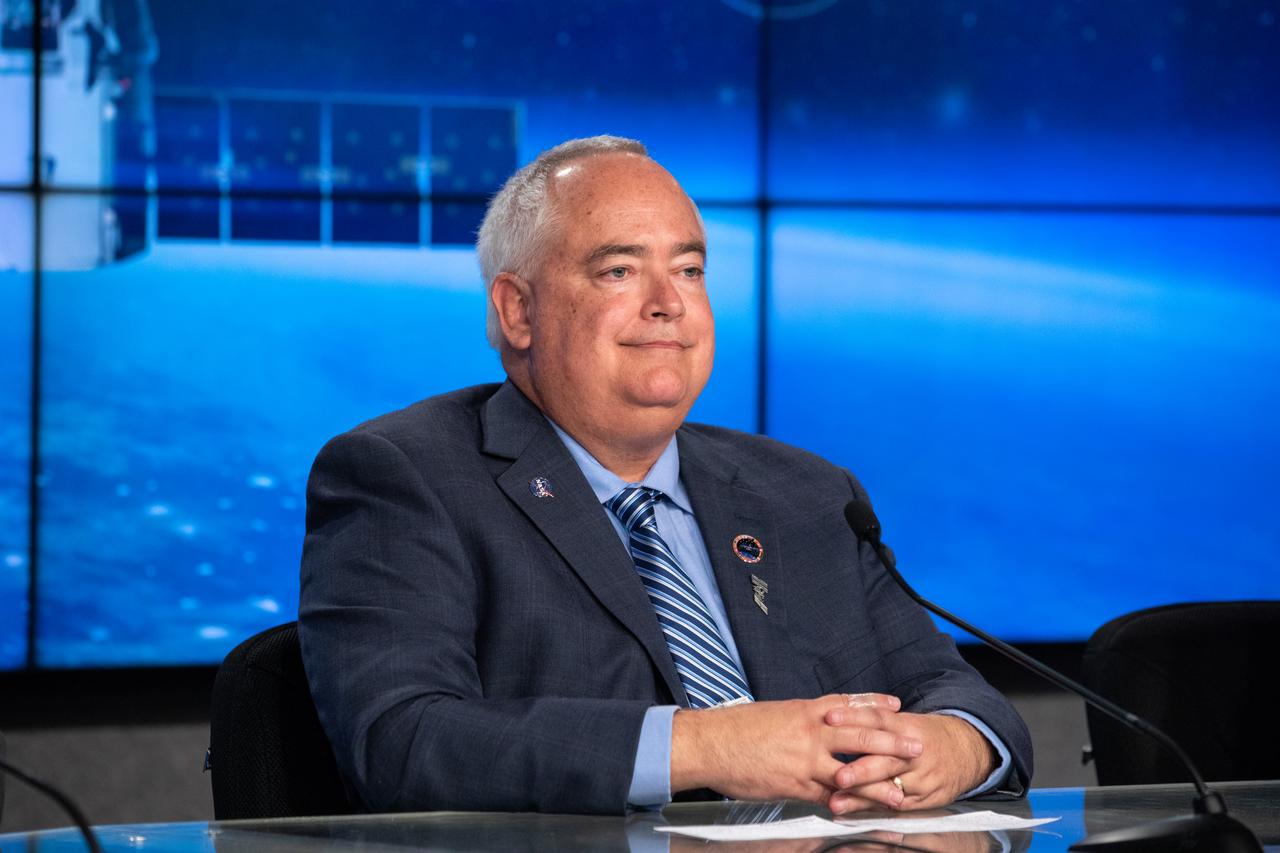
Bryan Dansberry, assistant program scientist, International Space Station Program Science Office at NASA speaks to members of the news media during a prelaunch news conference on Dec. 3, 2019, for SpaceX’s 19th Commercial Resupply Services (CRS-19) mission for NASA to the International Space Station, at the agency’s Kennedy Space Center in Florida. NASA and industry leaders speak to members of the news media during the news conference. The SpaceX Falcon 9 rocket and Dragon cargo module are scheduled to launch on Dec. 4, 2019, from Space Launch Complex 40 on Cape Canaveral Air Force Station in Florida.
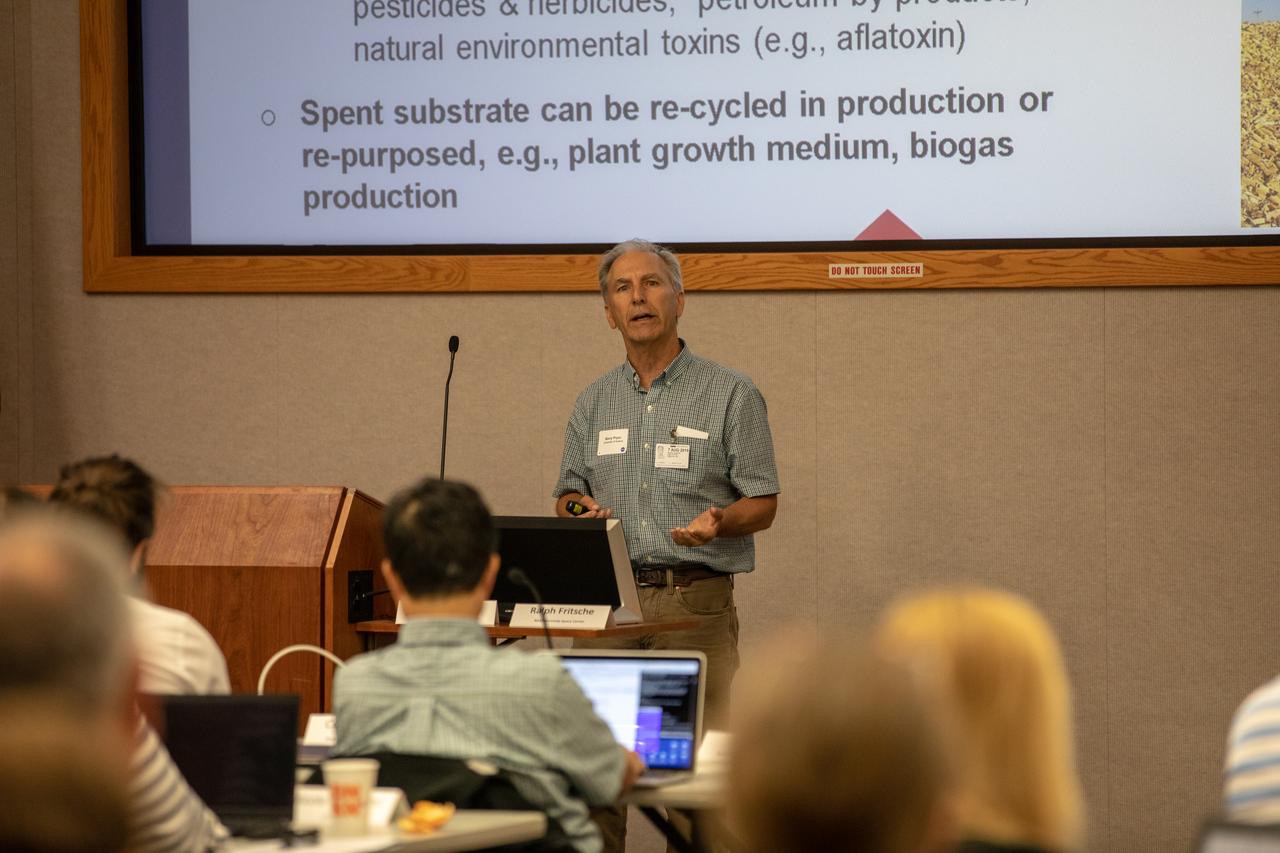
The Exploration Research and Technology Programs at NASA’s Kennedy Space Center in Florida hosted a two-day workshop, Aug. 6 and 7, 2019, focusing on robotics and automation in space crop production. Participants from around the world and members of NASA, industry, academia and other government agencies met to share their knowledge to enable a common goal of sustaining human operations on the Moon, in deep space and eventually on Mars. Keynote speakers and representatives from different organizations presented data gleaned from their research. Barry Pryor, a professor with the School of Plant Sciences at the University of Arizona presents to workshop attendees on Aug. 6.
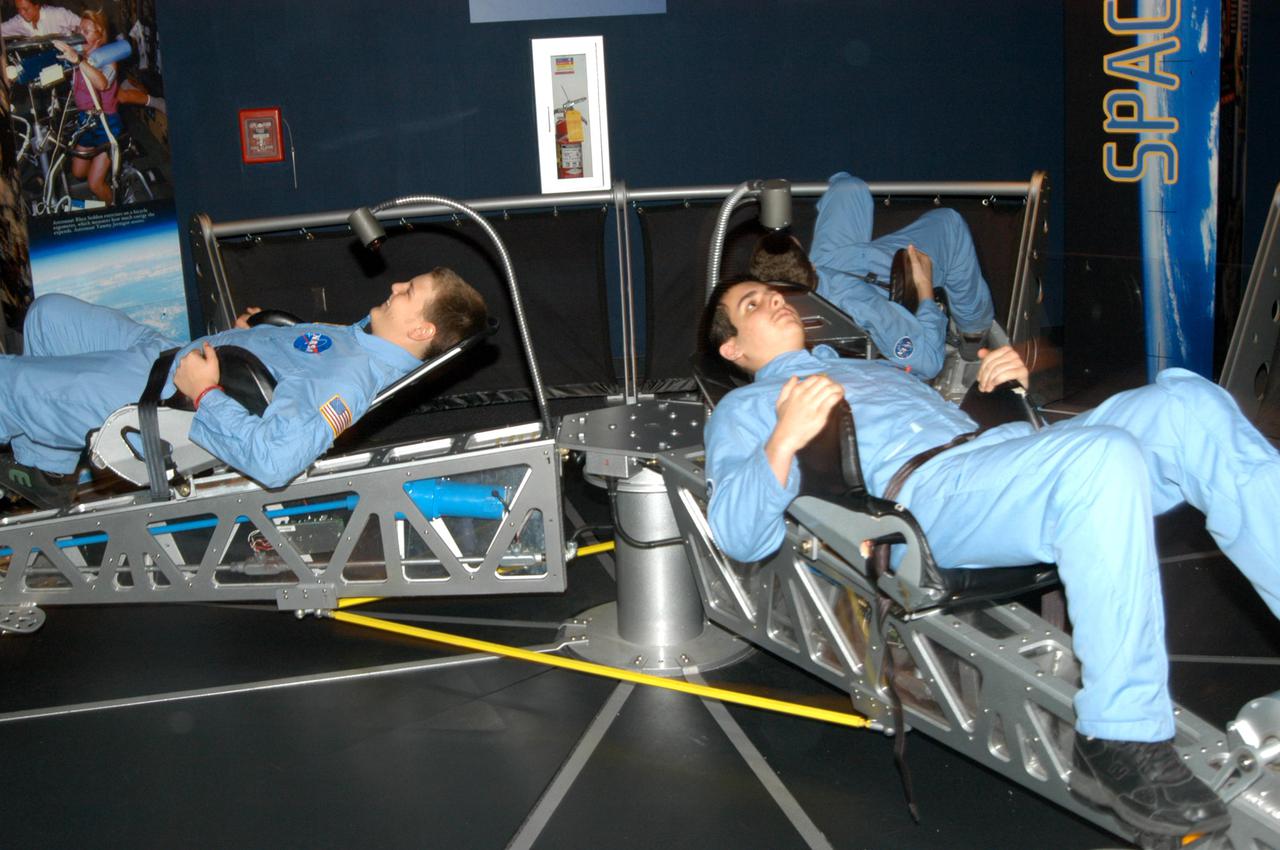
KENNEDY SPACE CENTER, FLA. - At the Museum of Science and Industry (MOSI) in Tampa, students from one of NASA’s Explorer Schools, Stewart Middle School in Tampa, get ready to spin on a bicycle-powered centrifuge, part of an interactive exhibit about space. The MOSI is featuring the space exhibits Space: A Journey to Our Future, an extraordinary, interactive exhibition designed to entertain, educate and inspire; and SPACE STATION, the first cinematic journey to the International Space Station (ISS), where audiences can experience for themselves life in zero gravity aboard the new station.
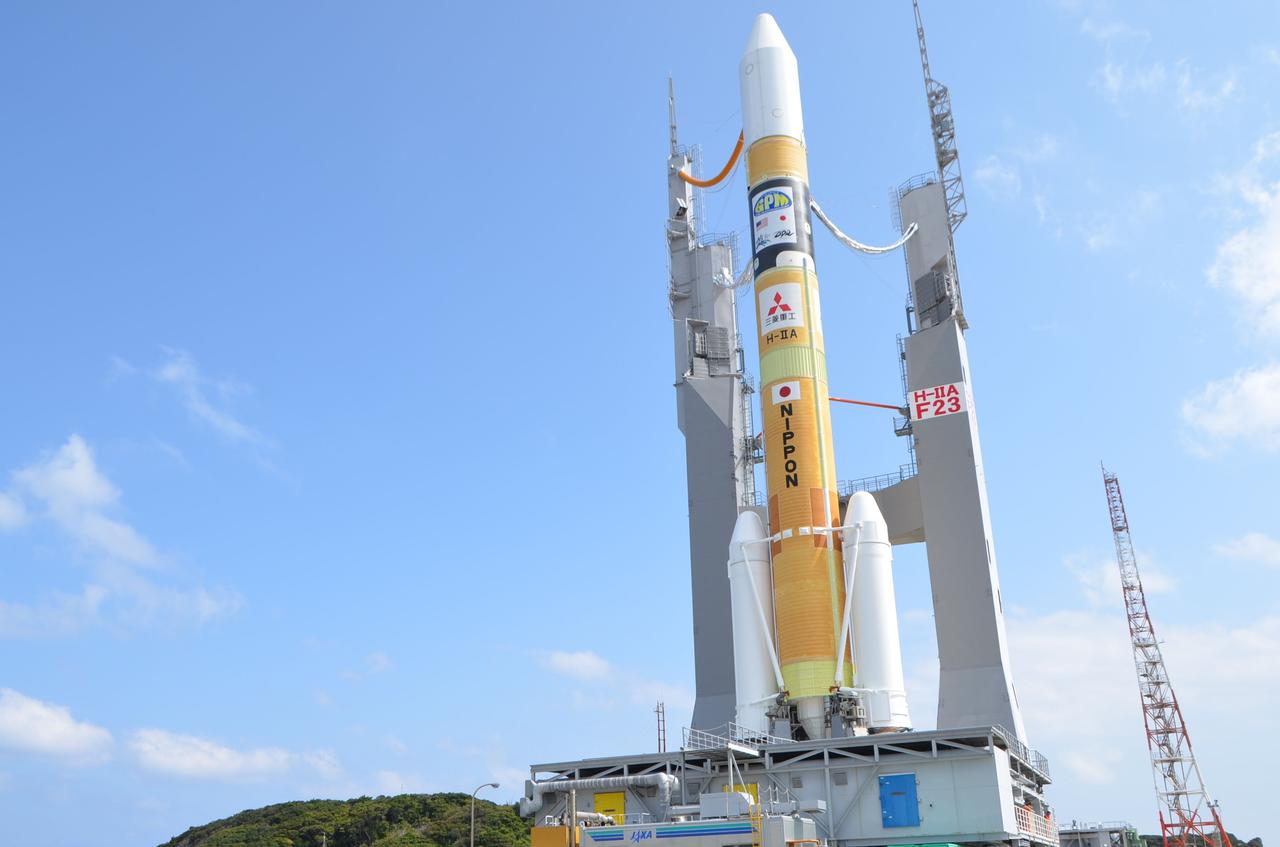
A Mitsubishi Heavy Industries (HMI) H-IIA rocket with the NASA-Japan Aerospace Exploration Agency (JAXA), Global Precipitation Measurement (GPM) Core Observatory onboard is during roll out at the Tanegashima Space Center, Thursday, Feb. 27, 2014, Tanegashima, Japan. Once launched, the GPM spacecraft will collect information that unifies data from an international network of existing and future satellites to map global rainfall and snowfall every three hours. Credit: Mitsubishi Heavy Industries, Ltd. <b><a href="http://www.nasa.gov/audience/formedia/features/MP_Photo_Guidelines.html" rel="nofollow">NASA image use policy.</a></b> <b><a href="http://www.nasa.gov/centers/goddard/home/index.html" rel="nofollow">NASA Goddard Space Flight Center</a></b> enables NASA’s mission through four scientific endeavors: Earth Science, Heliophysics, Solar System Exploration, and Astrophysics. Goddard plays a leading role in NASA’s accomplishments by contributing compelling scientific knowledge to advance the Agency’s mission. <b>Follow us on <a href="http://twitter.com/NASAGoddardPix" rel="nofollow">Twitter</a></b> <b>Like us on <a href="http://www.facebook.com/pages/Greenbelt-MD/NASA-Goddard/395013845897?ref=tsd" rel="nofollow">Facebook</a></b> <b>Find us on <a href="http://instagrid.me/nasagoddard/?vm=grid" rel="nofollow">Instagram</a></b>
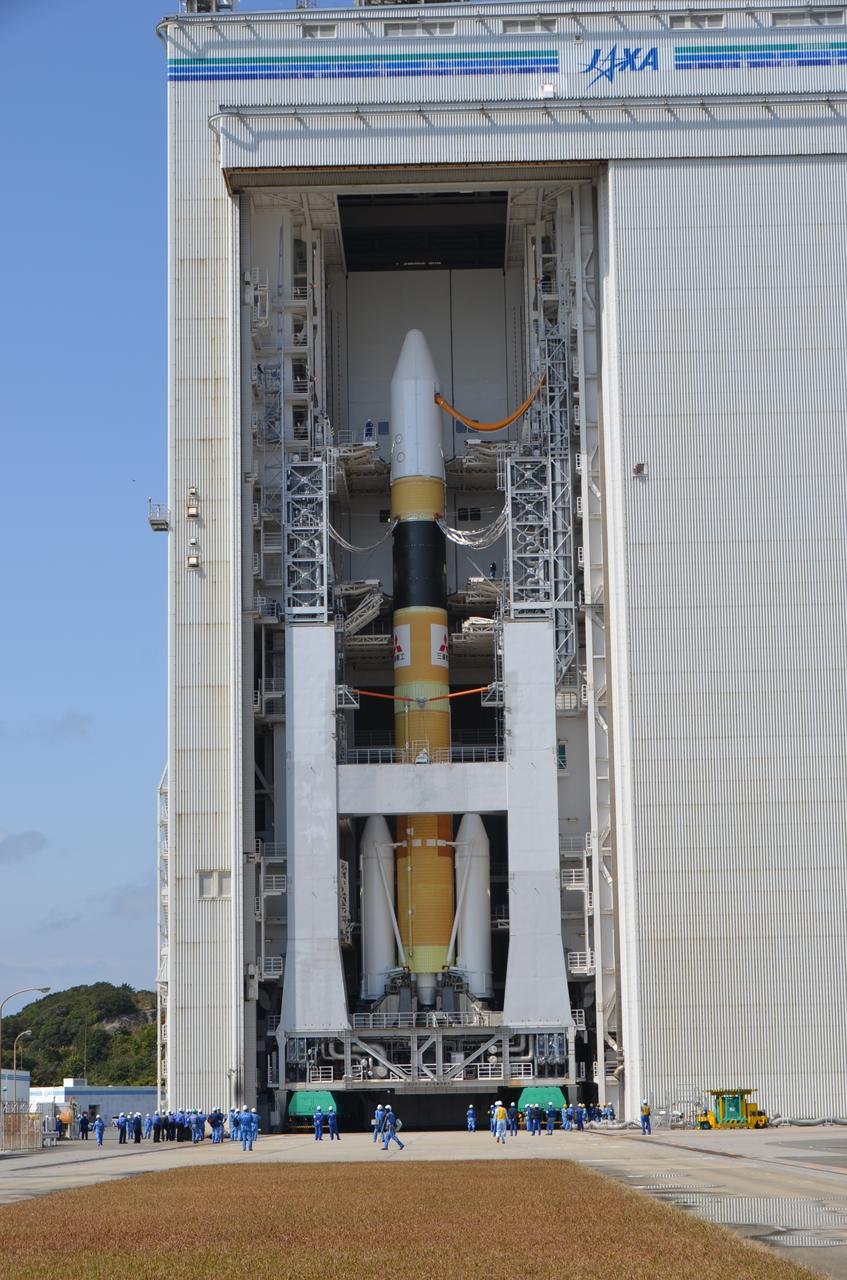
A Mitsubishi Heavy Industries (HMI) H-IIA rocket with the NASA-Japan Aerospace Exploration Agency (JAXA), Global Precipitation Measurement (GPM) Core Observatory onboard is during roll out at the Tanegashima Space Center, Thursday, Feb. 27, 2014, Tanegashima, Japan. Once launched, the GPM spacecraft will collect information that unifies data from an international network of existing and future satellites to map global rainfall and snowfall every three hours. Credit: Mitsubishi Heavy Industries, Ltd. <b><a href="http://www.nasa.gov/audience/formedia/features/MP_Photo_Guidelines.html" rel="nofollow">NASA image use policy.</a></b> <b><a href="http://www.nasa.gov/centers/goddard/home/index.html" rel="nofollow">NASA Goddard Space Flight Center</a></b> enables NASA’s mission through four scientific endeavors: Earth Science, Heliophysics, Solar System Exploration, and Astrophysics. Goddard plays a leading role in NASA’s accomplishments by contributing compelling scientific knowledge to advance the Agency’s mission. <b>Follow us on <a href="http://twitter.com/NASAGoddardPix" rel="nofollow">Twitter</a></b> <b>Like us on <a href="http://www.facebook.com/pages/Greenbelt-MD/NASA-Goddard/395013845897?ref=tsd" rel="nofollow">Facebook</a></b> <b>Find us on <a href="http://instagrid.me/nasagoddard/?vm=grid" rel="nofollow">Instagram</a></b>
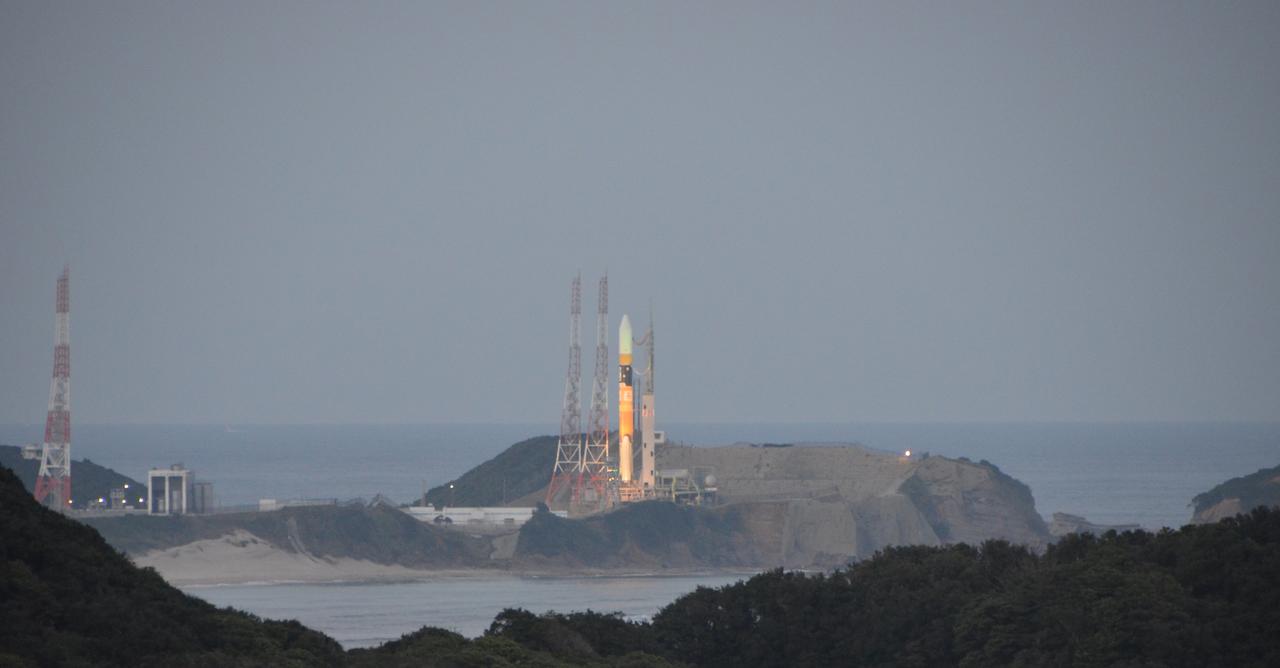
A Mitsubishi Heavy Industries (HMI) H-IIA rocket with the NASA-Japan Aerospace Exploration Agency (JAXA), Global Precipitation Measurement (GPM) Core Observatory onboard is during roll out at the Tanegashima Space Center, Thursday, Feb. 27, 2014, Tanegashima, Japan. Once launched, the GPM spacecraft will collect information that unifies data from an international network of existing and future satellites to map global rainfall and snowfall every three hours. Credit: Mitsubishi Heavy Industries, Ltd. <b><a href="http://www.nasa.gov/audience/formedia/features/MP_Photo_Guidelines.html" rel="nofollow">NASA image use policy.</a></b> <b><a href="http://www.nasa.gov/centers/goddard/home/index.html" rel="nofollow">NASA Goddard Space Flight Center</a></b> enables NASA’s mission through four scientific endeavors: Earth Science, Heliophysics, Solar System Exploration, and Astrophysics. Goddard plays a leading role in NASA’s accomplishments by contributing compelling scientific knowledge to advance the Agency’s mission. <b>Follow us on <a href="http://twitter.com/NASAGoddardPix" rel="nofollow">Twitter</a></b> <b>Like us on <a href="http://www.facebook.com/pages/Greenbelt-MD/NASA-Goddard/395013845897?ref=tsd" rel="nofollow">Facebook</a></b> <b>Find us on <a href="http://instagrid.me/nasagoddard/?vm=grid" rel="nofollow">Instagram</a></b>
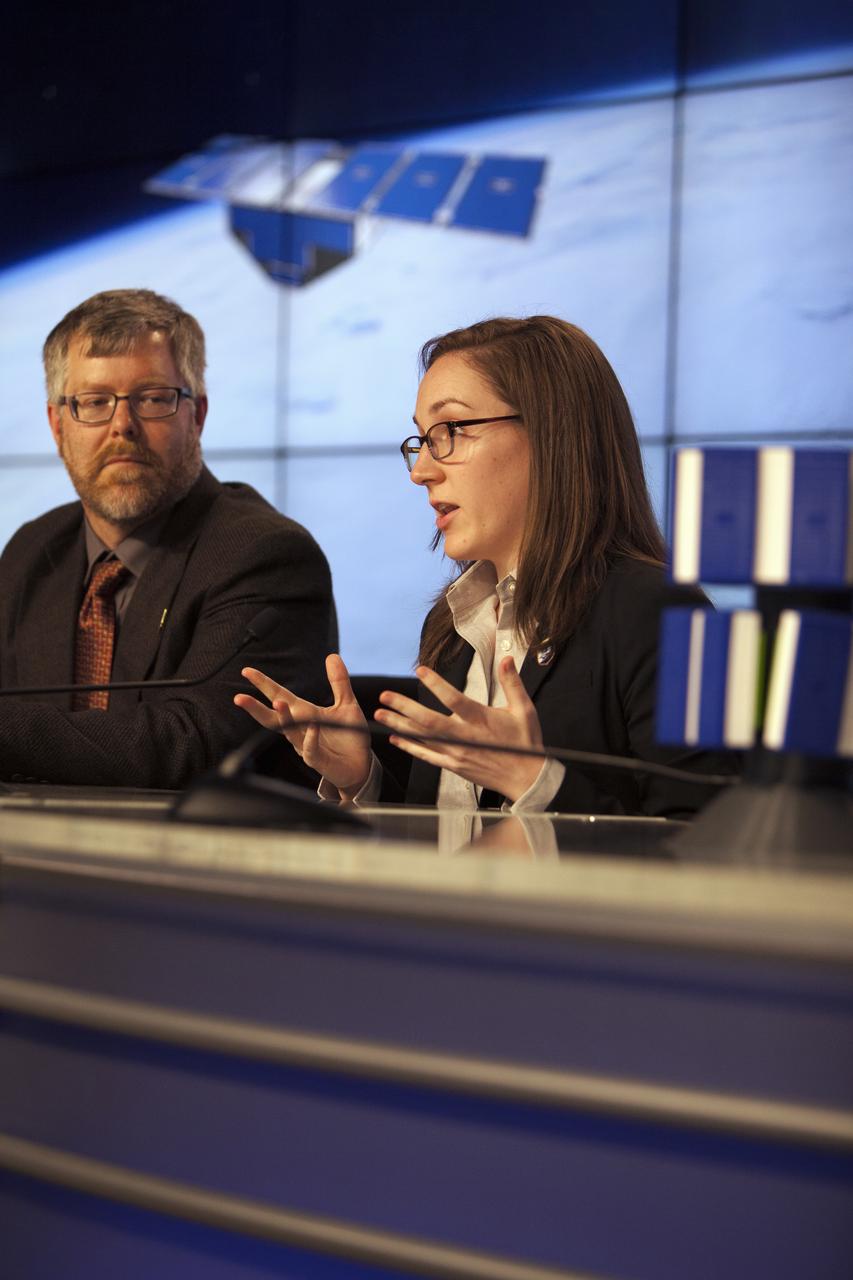
In the Kennedy Space Center’s Press Site auditorium, NASA and industry leaders speak to members of the media during a mission science briefing for the agency’s Cyclone Global Navigation Satellite System, or CYGNSS, spacecraft. From left are: Aaron Ridley, CYGNSS constellation scientist in the Climate and Space Department at the University of Michigan in Ann Arbor, Michigan; and Mary Morris, doctoral student in the Department of Climate and Space Sciences and Engineering at the University of Michigan. The eight CYGNSS satellites will make frequent and accurate measurements of ocean surface winds throughout the life cycle of tropical storms and hurricanes. The data will help scientists probe key air-sea interaction processes that take place near the core of storms, which are rapidly changing and play a crucial role in the beginning and intensification of hurricanes.
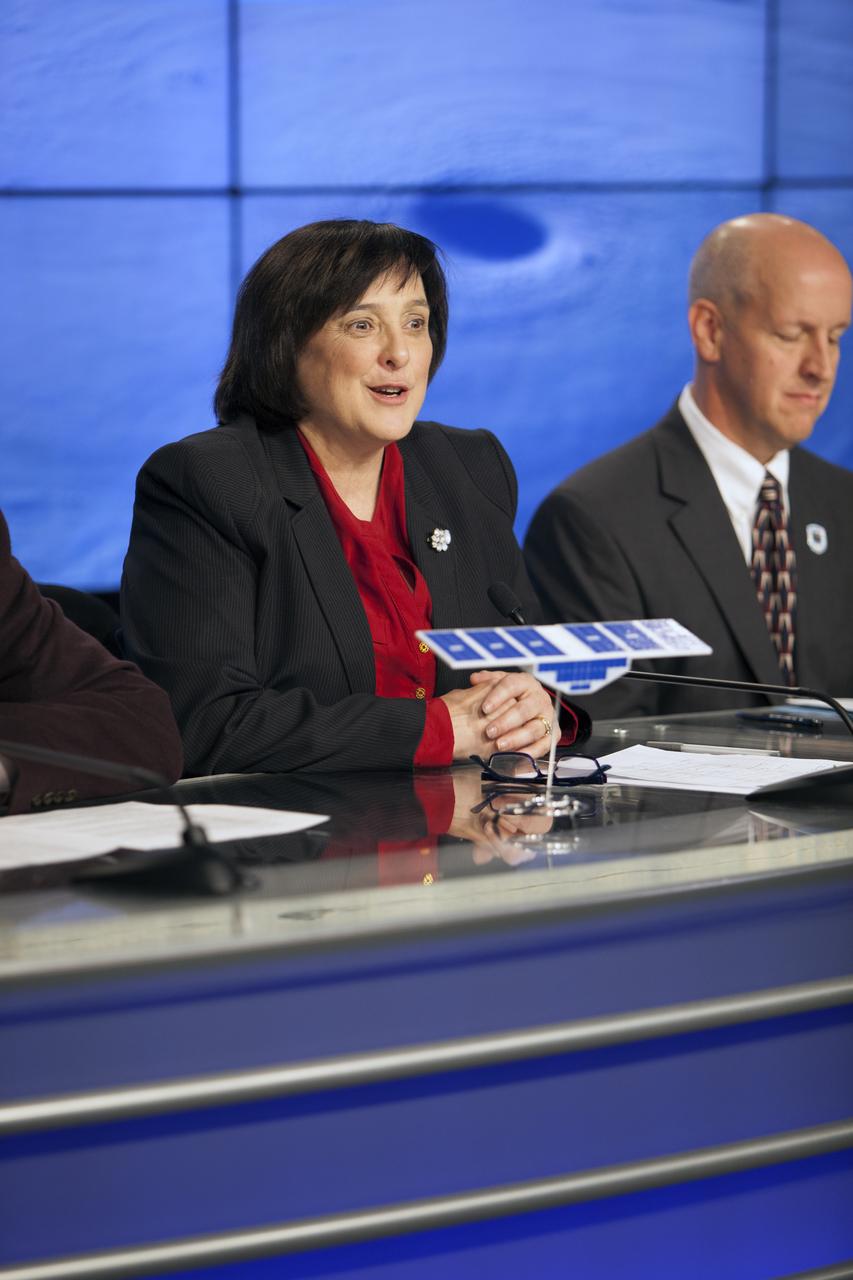
In the Kennedy Space Center’s Press Site auditorium, NASA and industry leaders speak to members of the media during a prelaunch news conference for the agency’s Cyclone Global Navigation Satellite System, or CYGNSS, spacecraft. From left are: Christine Bonniksen, CYGNSS program executive in the Earth Science Division of the Science Mission Directorate at NASA Headquarters in Washington, D.C.; and Tim Dunn, NASA launch director at Kennedy. The eight CYGNSS satellites will make frequent and accurate measurements of ocean surface winds throughout the life cycle of tropical storms and hurricanes. The data will help scientists probe key air-sea interaction processes that take place near the core of storms, which are rapidly changing and play a crucial role in the beginning and intensification of hurricanes.
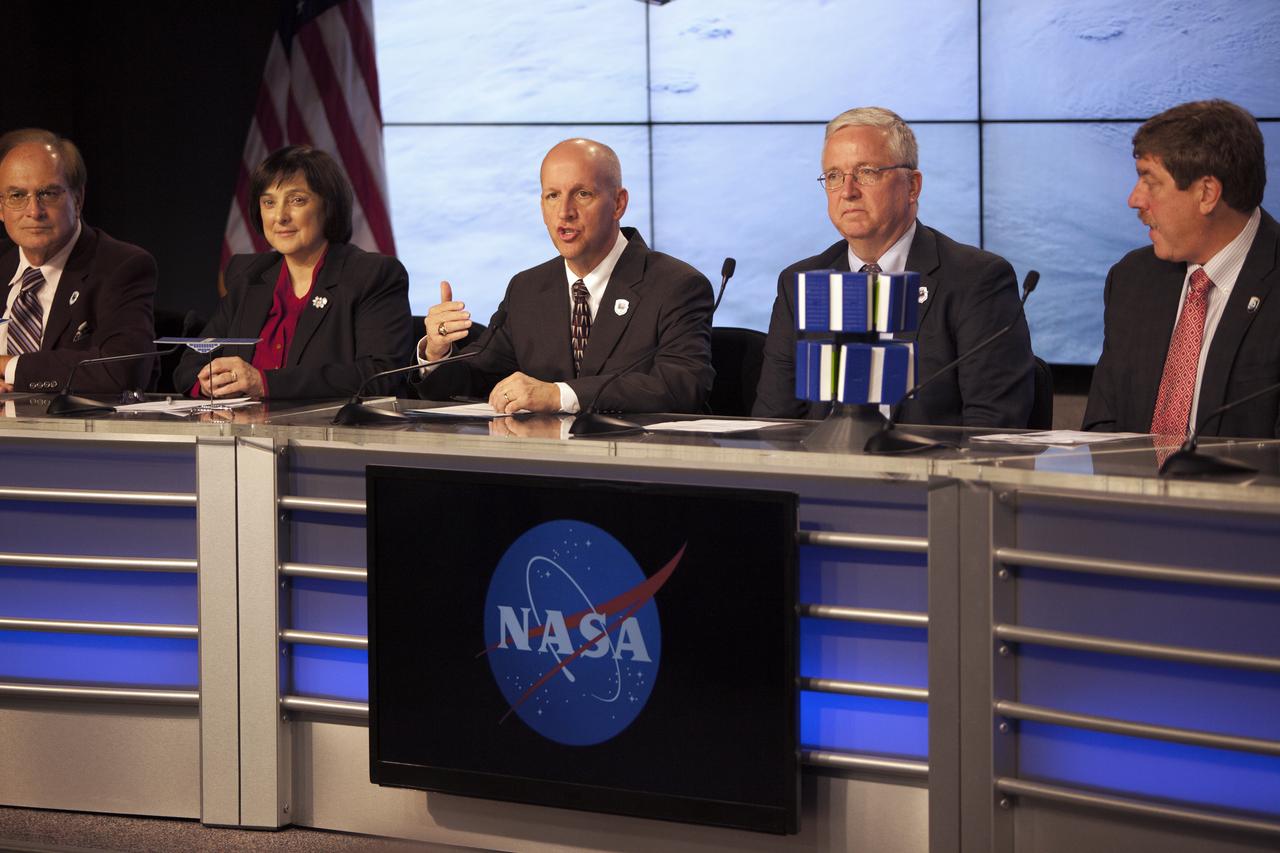
In the Kennedy Space Center’s Press Site auditorium, NASA and industry leaders speak to members of the media during a prelaunch news conference for the agency’s Cyclone Global Navigation Satellite System, or CYGNSS, spacecraft. From left are: George Diller of NASA Communications; Christine Bonniksen, CYGNSS program executive in the Earth Science Division of the Science Mission Directorate at NASA Headquarters in Washington, D.C.; Tim Dunn, NASA launch director at Kennedy; Bryan Baldwin, Pegasus launch vehicle program manager for Orbital ATK, Dulles, Virginia; and John Scherrer, CYGNSS project manager for the Southwest Research Institute in San Antonio, Texas. The eight CYGNSS satellites will make frequent and accurate measurements of ocean surface winds throughout the life cycle of tropical storms and hurricanes. The data will help scientists probe key air-sea interaction processes that take place near the core of storms, which are rapidly changing and play a crucial role in the beginning and intensification of hurricanes.
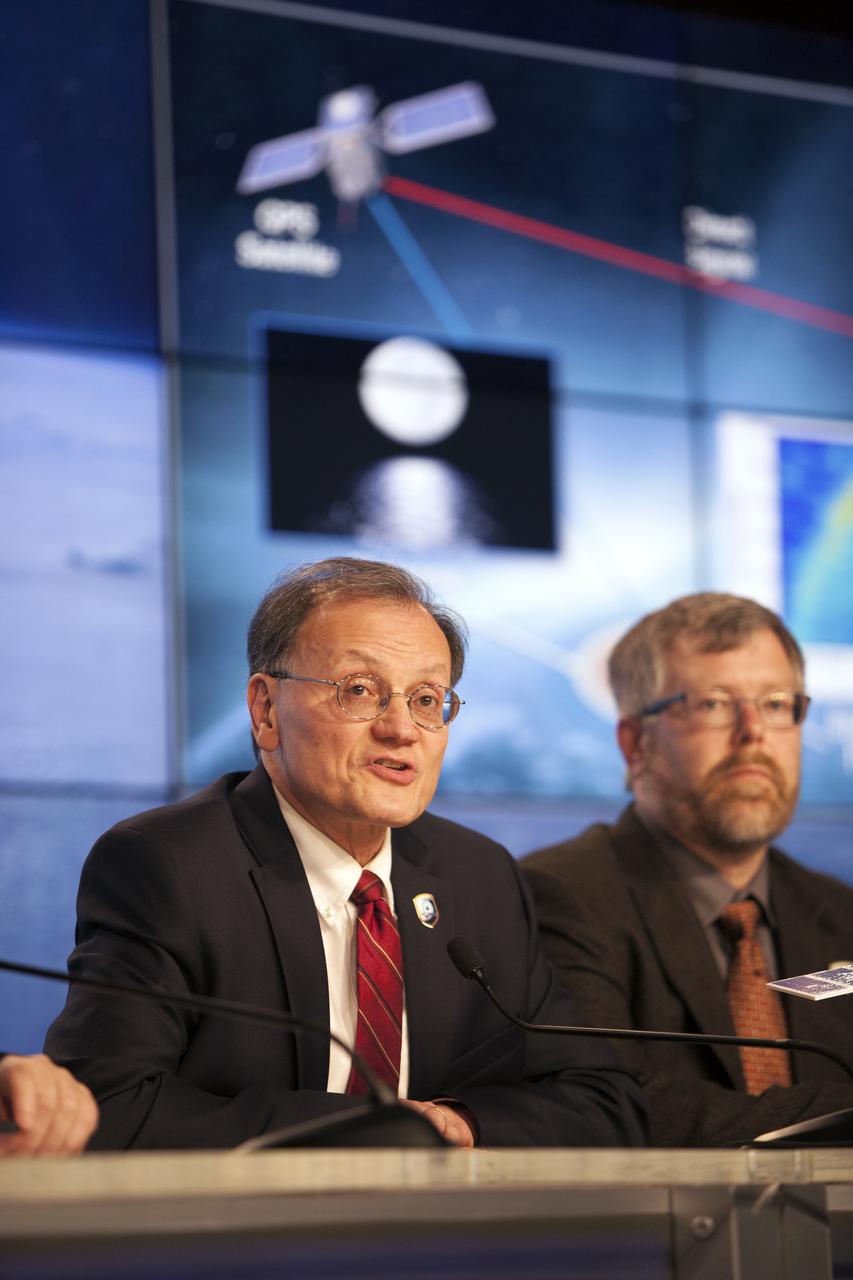
In the Kennedy Space Center’s Press Site auditorium, NASA and industry leaders speak to members of the media during a mission science briefing for the agency’s Cyclone Global Navigation Satellite System, or CYGNSS, spacecraft. From left are: Dr. Chris Ruf, CYGNSS principal investigator, Department of Climate and Space Sciences and Engineering at the University of Michigan; and Aaron Ridley, CYGNSS constellation scientist in the Climate and Space Department at the University of Michigan in Ann Arbor, Michigan. The eight CYGNSS satellites will make frequent and accurate measurements of ocean surface winds throughout the life cycle of tropical storms and hurricanes. The data will help scientists probe key air-sea interaction processes that take place near the core of storms, which are rapidly changing and play a crucial role in the beginning and intensification of hurricanes.
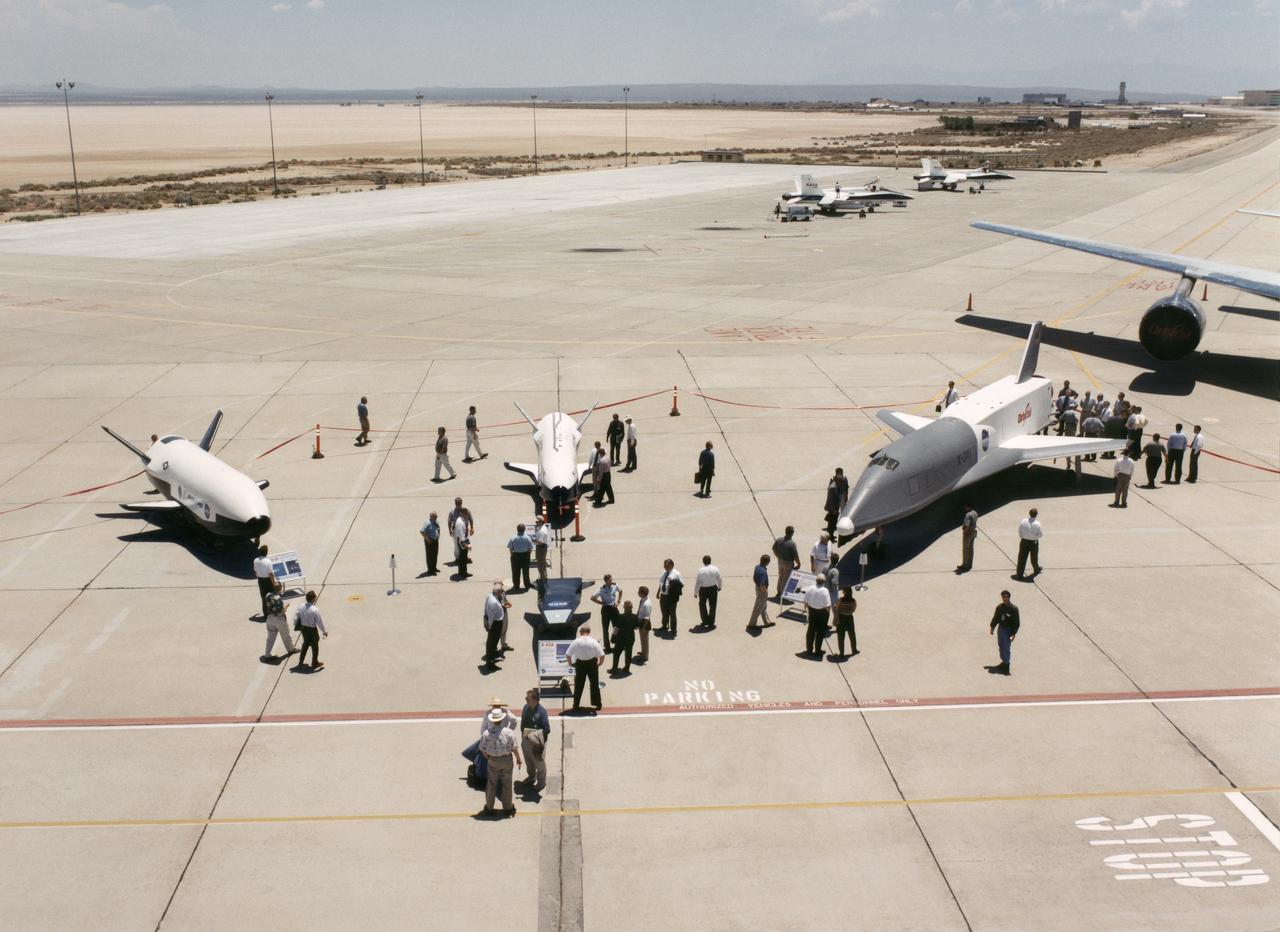
Aerospace industry representatives view actual and mock-up versions of 'X-Planes' intended to enhance access to space during a technical exposition on June 22, 2000 at Dryden Flight Research Center, Edwards, California. From left to right: NASA's B-52 launch aircraft, in service with NASA since 1959; a neutral-buoyancy model of the Boeing's X-37; the Boeing X-40A behind the MicroCraft X-43 mock-up; Orbital Science's X-34 and the modified Lockheed L-1011 airliner that was intended to launch the X-34. These X-vehicles are part of NASA's Access to Space plan intended to bring new technologies to bear in an effort to dramatically lower the cost of putting payloads in space, and near-space environments. The June 22, 2000 NASA Reusable Launch Vehicle (RLV) Technology Exposition included presentations on the history, present, and future of NASA's RLV program. Special Sessions for industry representatives highlighted the X-37 project and its related technologies. The X-37 project is managed by NASA's Marshall Space Flight Center, Huntsville, Alabama.
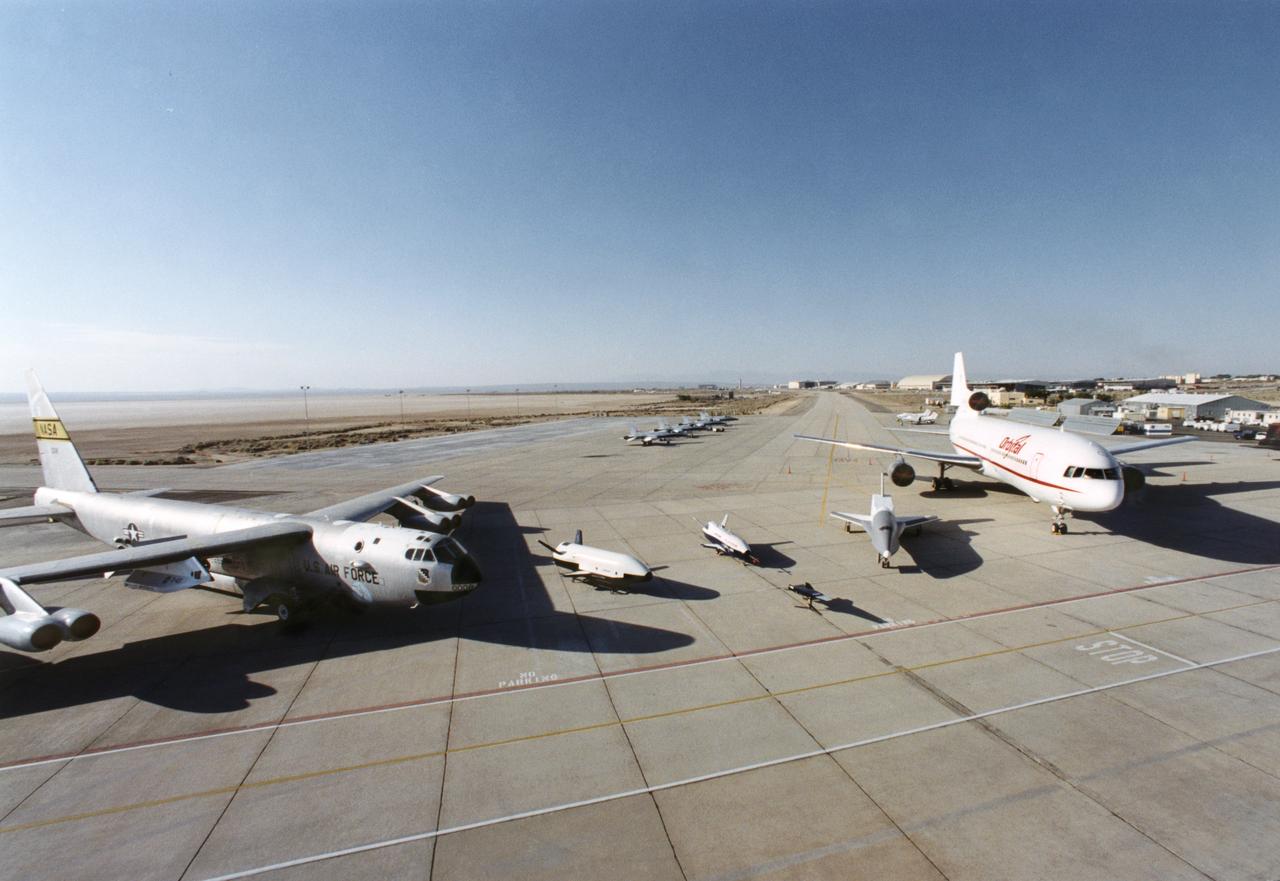
Aerospace industry representatives view actual and mock-up versions of 'X-Planes' intended to enhance access to space during a technical exposition on June 22, 2000 at Dryden Flight Research Center, Edwards, California. From left to right: NASA's B-52 launch aircraft, in service with NASA from 1959 to 2004; a neutral-buoyancy model of the Boeing's X-37; the Boeing X-40A behind the MicroCraft X-43 mock-up; Orbital Science's X-34 and the modified Lockheed L-1011 airliner that was intended to launch the X-34. These X-vehicles are part of NASA's Access to Space plan intended to bring new technologies to bear in an effort to dramatically lower the cost of putting payloads in space, and near-space environments. The June 22, 2000 NASA Reusable Launch Vehicle (RLV) Technology Exposition included presentations on the history, present, and future of NASA's RLV program. Special Sessions for industry representatives highlighted the X-37 project and its related technologies. The X-37 project is managed by NASA's Marshall Space Flight Center, Huntsville, Alabama.
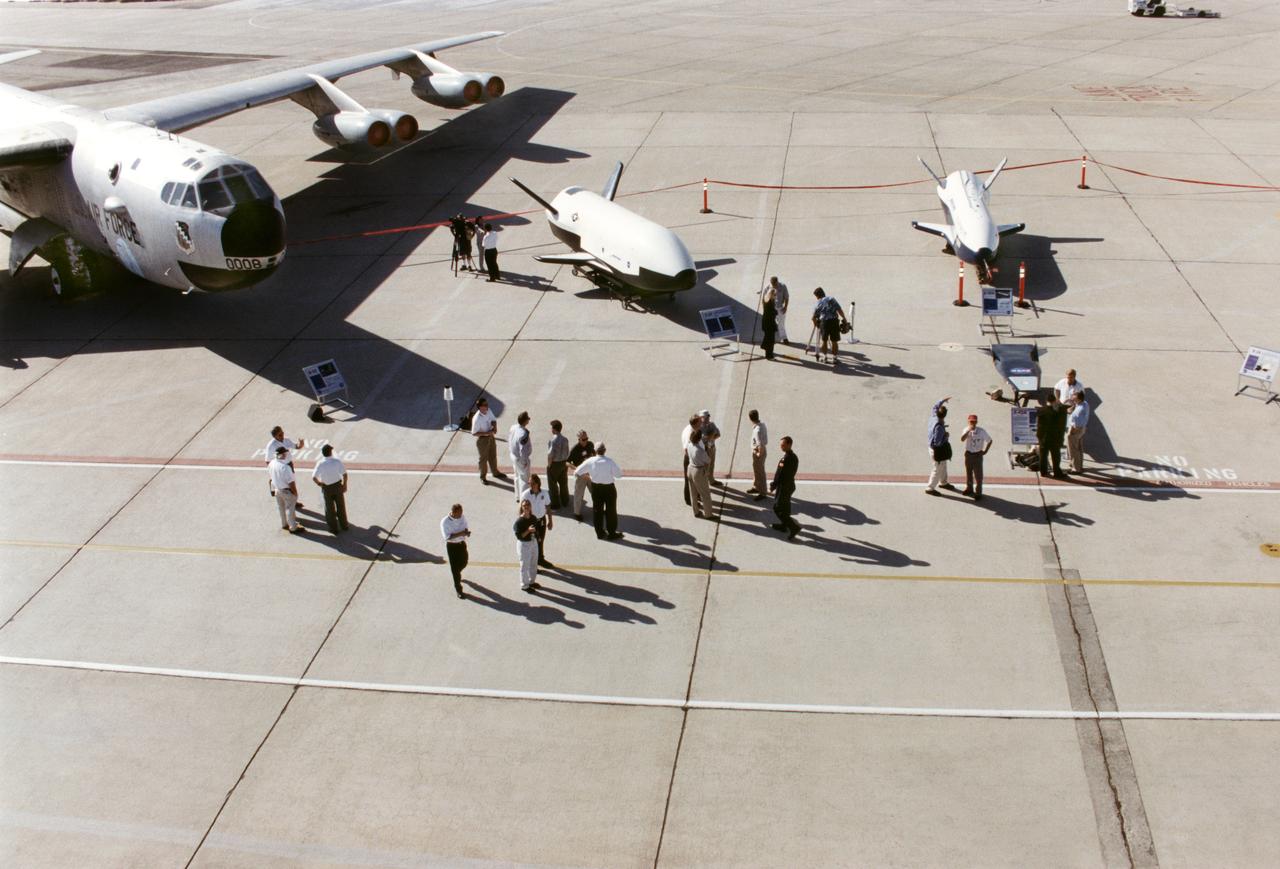
Aerospace industry representatives view actual and mock-up versions of 'X-Planes' intended to enhance access to space during a technical exposition on June 22, 2000 at Dryden Flight Research Center, Edwards, California. From left to right: NASA's B-52 launch aircraft, in service with NASA from 1959 to 2004; a neutral-buoyancy model of the Boeing's X-37; the Boeing X-40A behind the MicroCraft X-43 mock-up; Orbital Science's X-34 and the modified Lockheed L-1011 airliner that was intended to launch the X-34. These X-vehicles are part of NASA's Access to Space plan intended to bring new technologies to bear in an effort to dramatically lower the cost of putting payloads in space, and near-space environments. The June 22, 2000 NASA Reusable Launch Vehicle (RLV) Technology Exposition included presentations on the history, present, and future of NASA's RLV program. Special Sessions for industry representatives highlighted the X-37 project and its related technologies. The X-37 project is managed by NASA's Marshall Space Flight Center, Huntsville, Alabama.
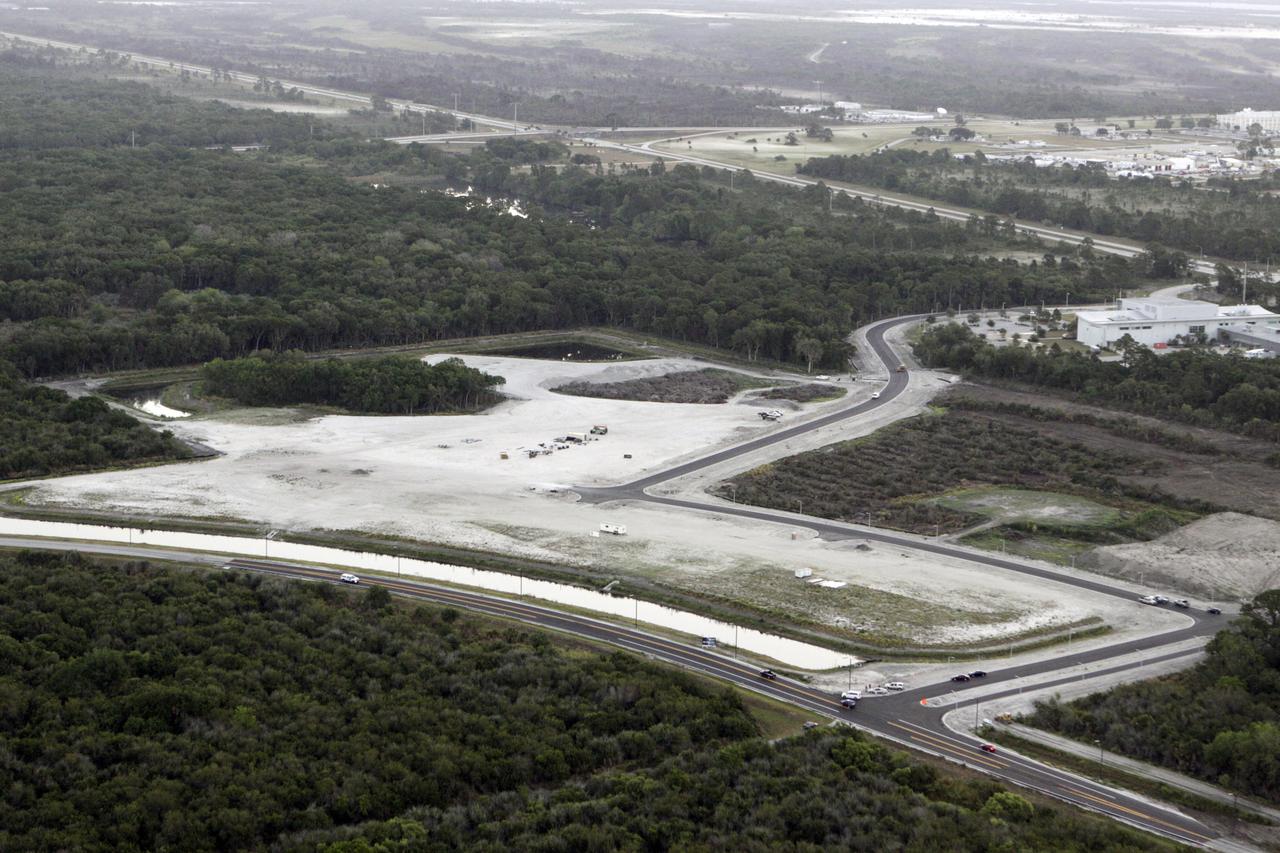
CAPE CANAVERAL, Fla. – This aerial view over NASA’s Kennedy Space Center in Florida reveals a new road winding its way from Space Commerce Way, in the foreground, past the construction site for the new Exploration Park, to the Space Life Sciences Laboratory SLSL, at right. In the background, at far right, is Kennedy’s Industrial Area. The land was cleared for the first phase of construction following the park’s groundbreaking in June 2010. The park encompasses 60 acres just outside Kennedy’s security gates near the Kennedy Space Center Visitor Complex. Exploration Park is designed to be a strategically located complex, adjacent to the SLSL, for servicing diverse tenants and uses that will engage in activities to support the space-related activities of NASA, other government agencies and the U.S. commercial space industry, as well as attract new aerospace work to the Space Coast. Its nine sustainable, state-of-the-art buildings will include educational, office, research and laboratory, and high-bay facilities and provide 350,000-square feet of work space. Each building is expected to qualify for the U.S. Green Building Council’s Leadership in Environmental and Energy Design LEED certification. The SLSL will be the anchor facility for the park. Photo credit: NASA/Glenn Benson
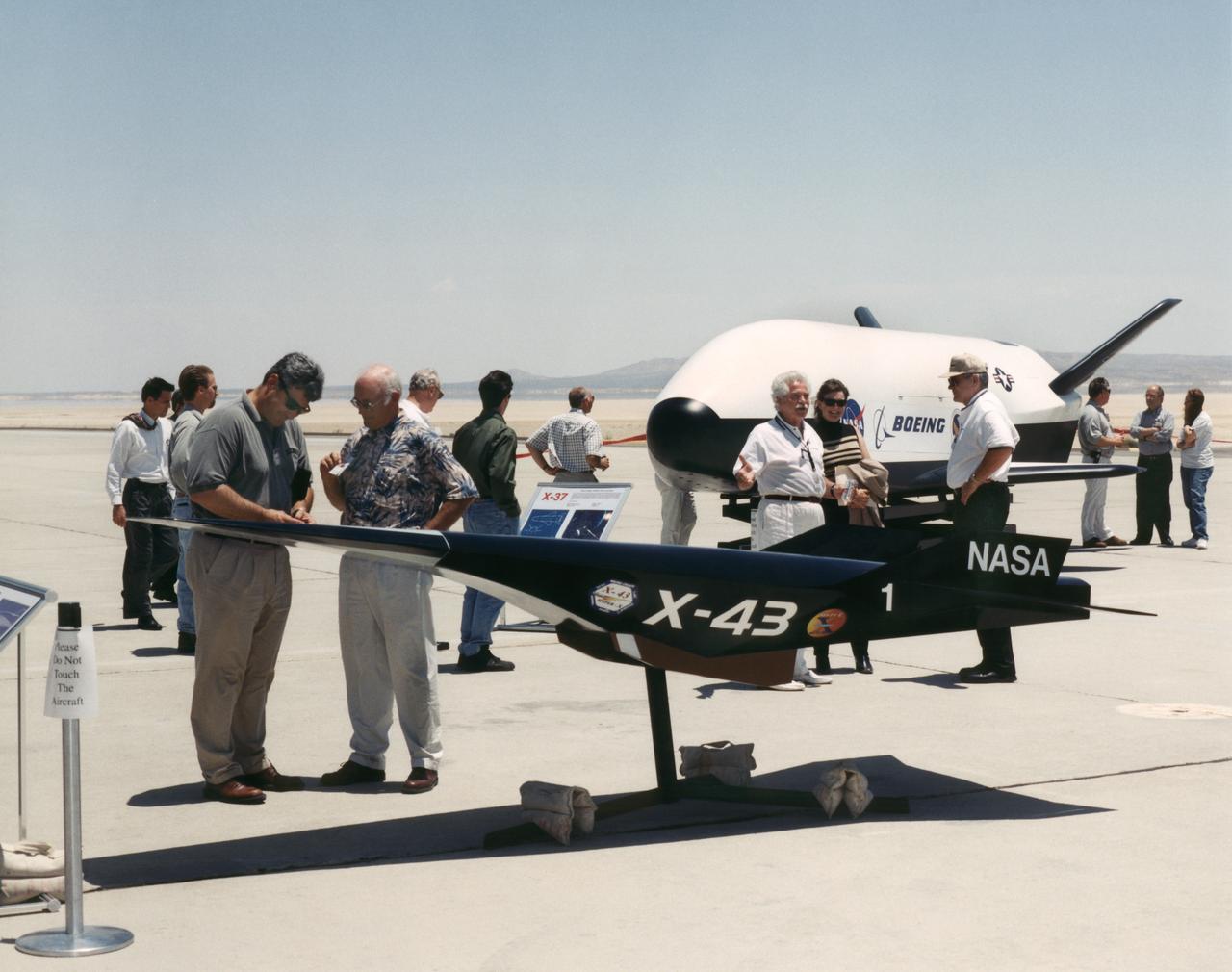
Aerospace industry representatives view actual and mock-up versions of 'X-Planes' intended to enhance access to space during a technical exposition on June 22, 2000 at Dryden Flight Research Center, Edwards, California. From left to right: NASA's B-52 launch aircraft, in service with NASA since 1959; a neutral-buoyancy model of the Boeing's X-37; the Boeing X-40A behind the MicroCraft X-43 mock-up; Orbital Science's X-34 and the modified Lockheed L-1011 airliner that was intended to launch the X-34. These X-vehicles are part of NASA's Access to Space plan intended to bring new technologies to bear in an effort to dramatically lower the cost of putting payloads in space, and near-space environments. The June 22, 2000 NASA Reusable Launch Vehicle (RLV) Technology Exposition included presentations on the history, present, and future of NASA's RLV program. Special Sessions for industry representatives highlighted the X-37 project and its related technologies. The X-37 project is managed by NASA's Marshall Space Flight Center, Huntsville, Alabama.
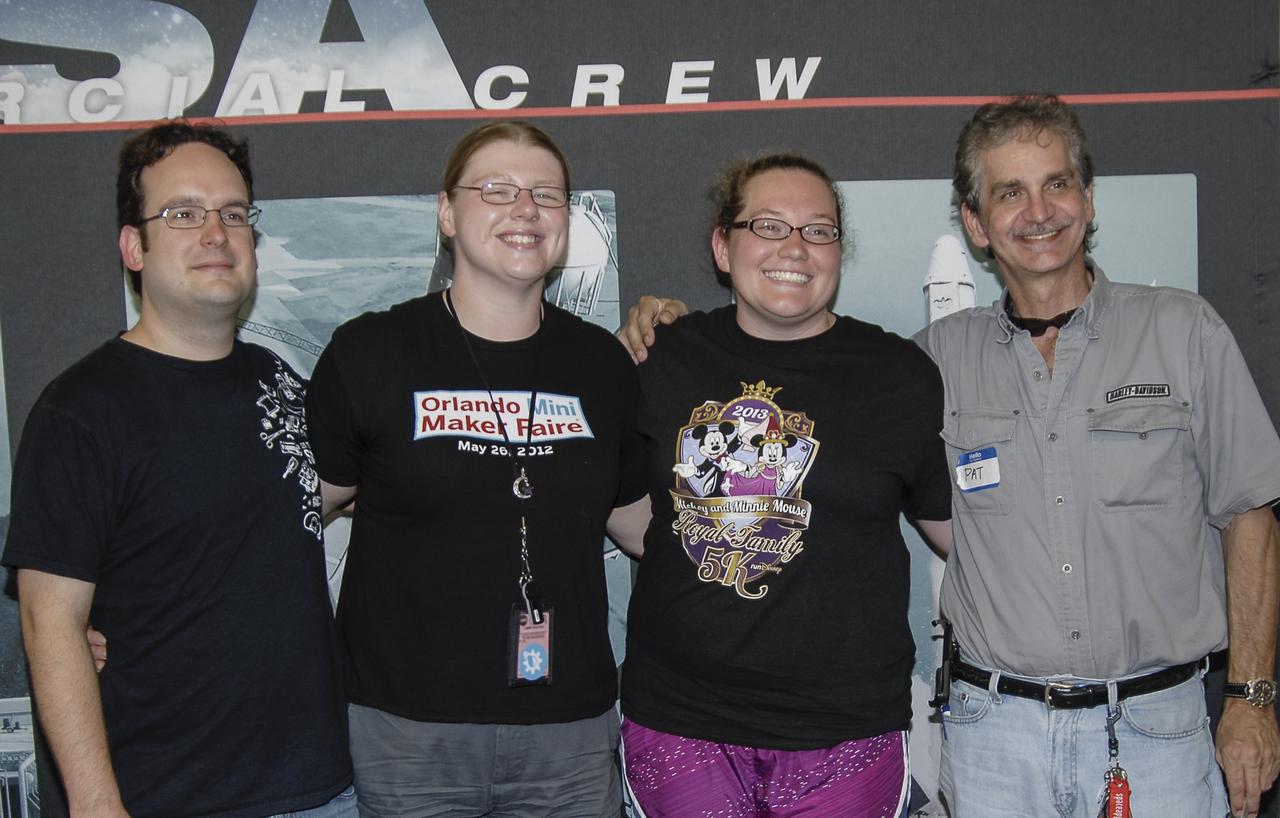
CAPE CANAVERAL, Fla. – Space enthusiasts Mike King, at left, Jamie Szafran, Jessica King and Pat Starace, were first-place winners from Kennedy Space Center during the 2013 International Space Apps Challenge held at the Center for Space Education at the Kennedy Space Center Visitor Complex in Florida. During the worldwide two-day challenge, more than 9,000 people and 484 organizations came together in 83 cities across 44 countries, as well as online, to develop new ways of solving challenges that NASA faces. At Kennedy, four teams brainstormed ideas with subject matter experts and others and worked nearly 32 hours straight to present their concepts to a panel of three technical and non-technical judges. Challenges tackled at Kennedy were: Deployable Greenhouse, Kennedy Space Center 2040, Seven Minutes of Science, and Moonville – Lunar Industry Game. Photo credit: NASA_Charisse Nahser

KENNEDY SPACE CENTER, FLA. - Students from one of NASA’s Explorer Schools, Stewart Middle School in Tampa pose for a photo with other guests visiting the Museum of Science and Industry (MOSI) in Tampa. At left, in the back row, are former astronaut Dan Brandenstein, current vice president of Consolidated Space Operations Centers (CSOC), and KSC Deputy Director Dr. Woodrow Whitlow Jr. In the center is Ronte Smith, southeast regional sales manager for General Motors, and Gail Rymer, with Lockheed Martin. On the right are Dr. Adena Williams Loston, chief education officer at NASA Headquarters, and Wit Ostrenko, president of MOSI. The MOSI is featuring the space exhibits Space: A Journey to Our Future, an extraordinary, interactive exhibition designed to entertain, educate and inspire; and SPACE STATION, the first cinematic journey to the International Space Station (ISS), where audiences can experience for themselves life in zero gravity aboard the new station.
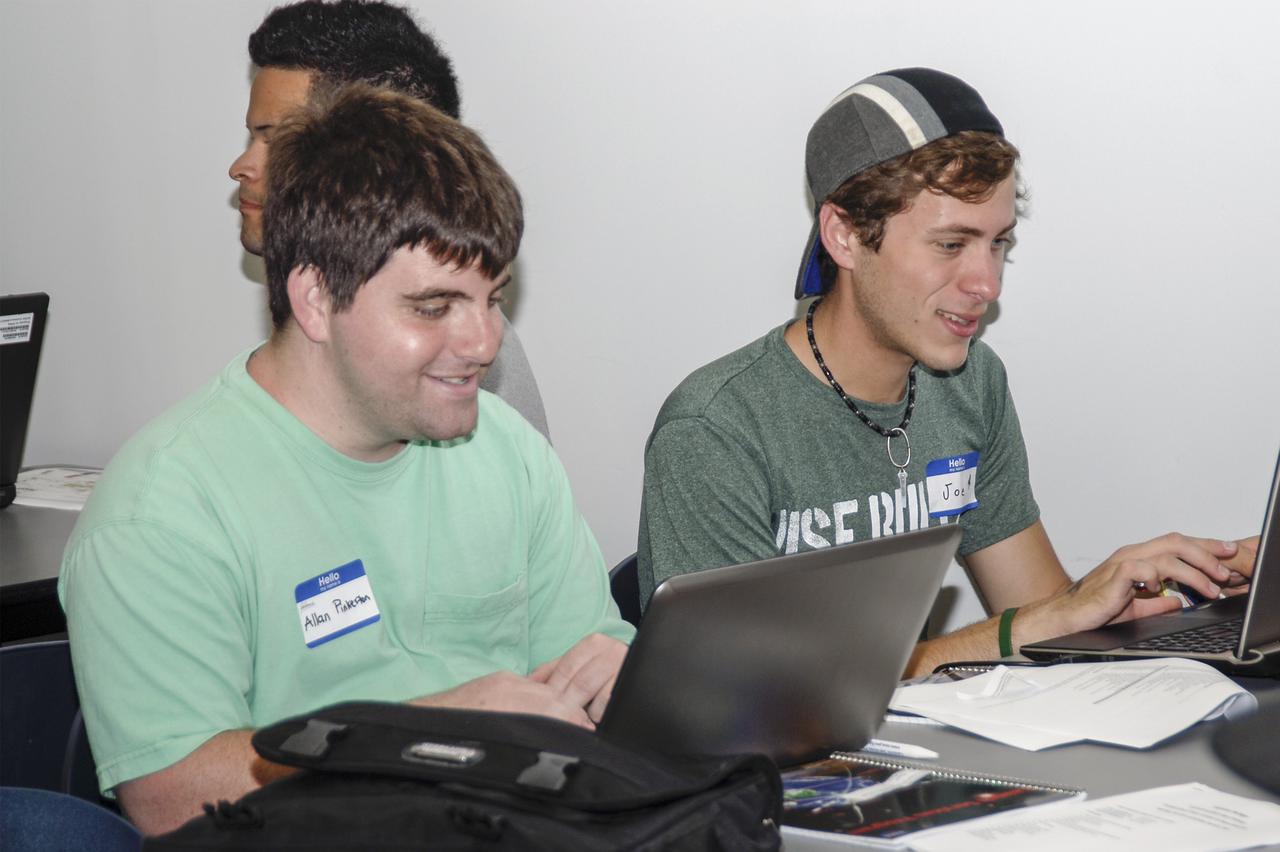
CAPE CANAVERAL, Fla. – Allan Pinkerton, at left, and Joey Vars, students from the University of South Florida at St. Petersburg, brainstorm ideas during the 2013 International Space Apps Challenge at the Center for Space Education at the Kennedy Space Center Visitor Complex in Florida. During the worldwide two-day challenge, more than 9,000 people and 484 organizations came together in 83 cities across 44 countries, as well as online, to develop new ways of solving challenges that NASA faces. At Kennedy, four teams brainstormed ideas with subject matter experts and others and worked nearly 32 hours straight to present their concepts to a panel of three technical and non-technical judges. Challenges tackled at Kennedy were: Deployable Greenhouse, Kennedy Space Center 2040, Seven Minutes of Science, and Moonville – Lunar Industry Game. Photo credit: NASA_Charisse Nahser
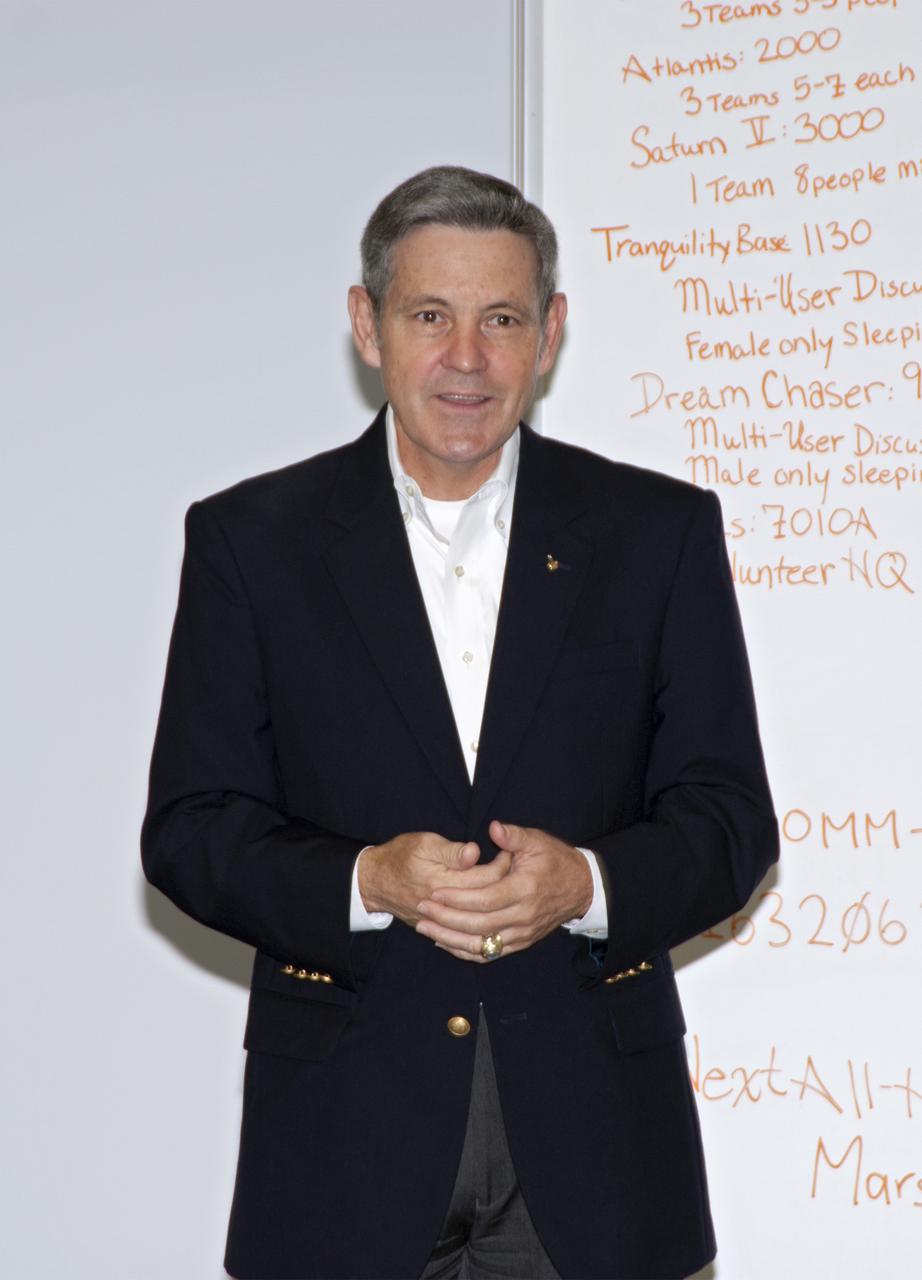
CAPE CANAVERAL, Fla. – Kennedy Space Center Director Bob Cabana speaks with participants of the 2013 International Space Apps Challenge, or ISAC, at The Astronaut Memorial Foundation’s Center for Space Education in Florida during a networking event. During the worldwide two-day challenge, more than 9,000 people and 484 organizations came together in 83 cities across 44 countries, as well as online, to develop new ways of solving challenges that NASA faces. At Kennedy, four teams brainstormed ideas with subject matter experts and others and worked nearly 32 hours straight to present their concepts to a panel of three technical and non-technical judges. Challenges tackled at Kennedy were: Deployable Greenhouse, Kennedy Space Center 2040, Seven Minutes of Science, and Moonville – Lunar Industry Game. Photo credit: NASA_Charisse Nahser
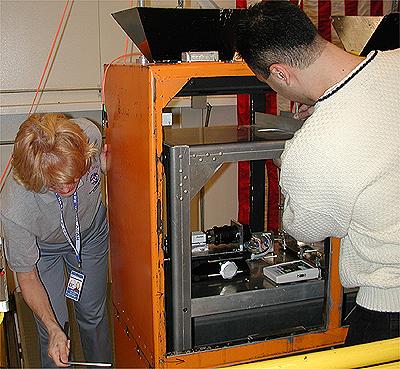
The first NASA Dropping In a Microgravity Environment (DIME) student competition pilot project came to a conclusion at the Glenn Research Center in April 2001. The competition involved high-school student teams who developed the concept for a microgravity experiment and prepared an experiment proposal. The two student teams - COSI Academy, sponsored by the Columbus Center of Science and Industry, and another team from Cincinnati, Ohio's Sycamore High School, designed a microgravity experiment, fabricated the experimental apparatus, and visited NASA Glenn to operate their experiment in the 2.2 Second Drop Tower. Here Carol Hodanbosi of the National Center for Microgravity Research and Jose Carrion, a lab mechanic with AKAC, prepare a student experiment package (inside the silver-colored frame) inside the orange-colored drag shield that encloses all experiment hardware. This image is from a digital still camera; higher resolution is not available.
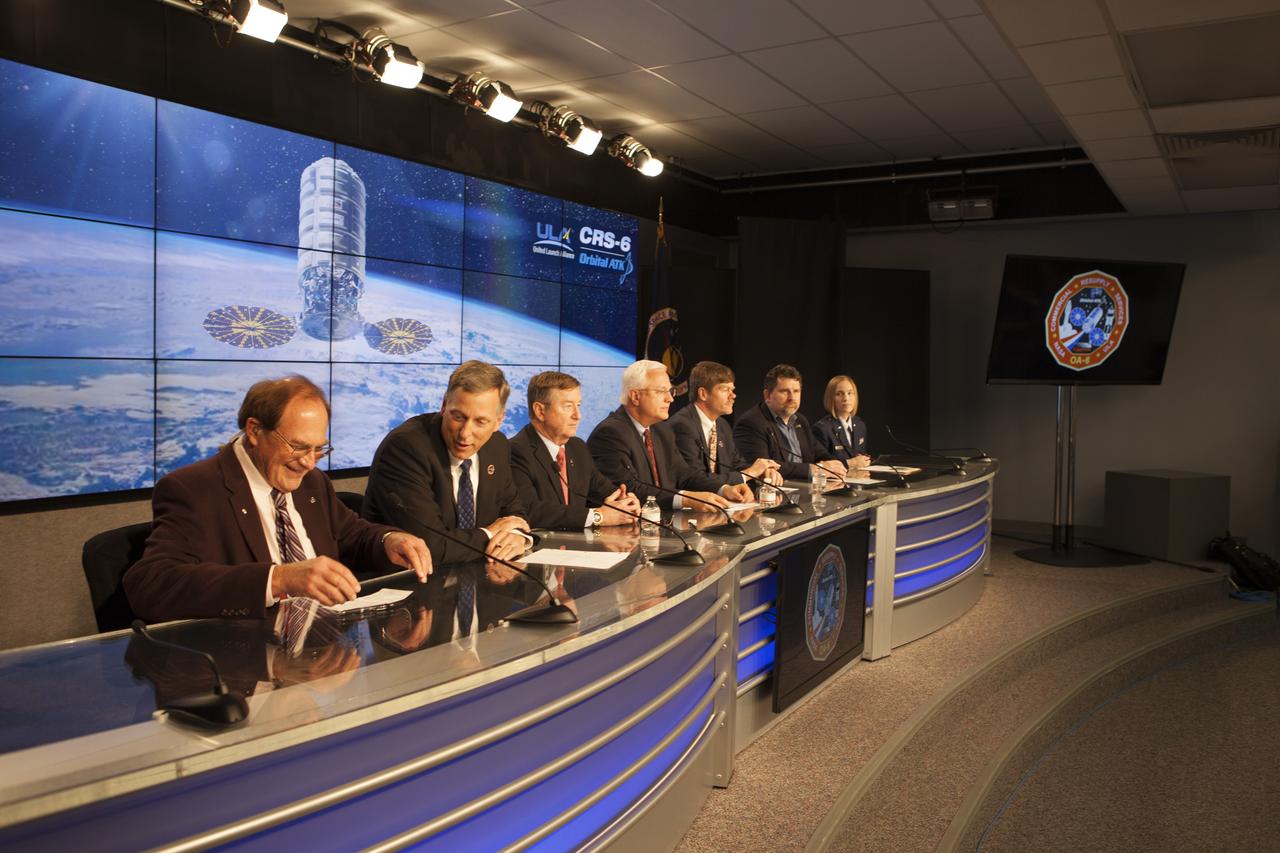
In the Kennedy Space Center’s Press Site auditorium, agency and industry leaders speak to members of the media at a prelaunch news conference for Orbital ATK CRS-6 commercial resupply services mission to the International Space Station. From left are: George Diller of NASA Communications; Kenneth Todd, NASA ISS Operations Integration manager; Frank Culbertson, president of Orbital ATK's Space System Group; Vern Thorp, United Space Alliance's program manager for NASA missions; Pete Hasbrook, NASA associate program scientist for the ISS Program at the Johnson Space Center in Houston; Dr. Michael Roberts deputy chief scientist for the Center for the Advancement for Science in Space, or CASIS; and Capt. Laura Godoy, launch weather officer of the U.S. Air Force 45th Weather Squadron.
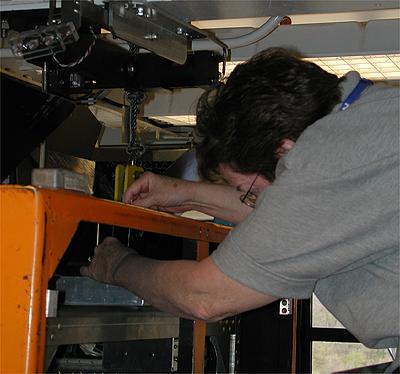
The first NASA Dropping In a Microgravity Environment (DIME) student competition pilot project came to a conclusion at the Glenn Research Center in April 2001. The competition involved high-school student teams who developed the concept for a microgravity experiment and prepared an experiment proposal. The two student teams - COSI Academy, sponsored by the Columbus Center of Science and Industry, and another team from Cincinnati, Ohio's Sycamore High School, designed a microgravity experiment, fabricated the experimental apparatus, and visited NASA Glenn to operate their experiment in the 2.2 Second Drop Tower. Sandi Thompson of the National Center for Microgravity Research GRC makes a final adjustment to the drop package. This image is from a digital still camera; higher resolution is not available.
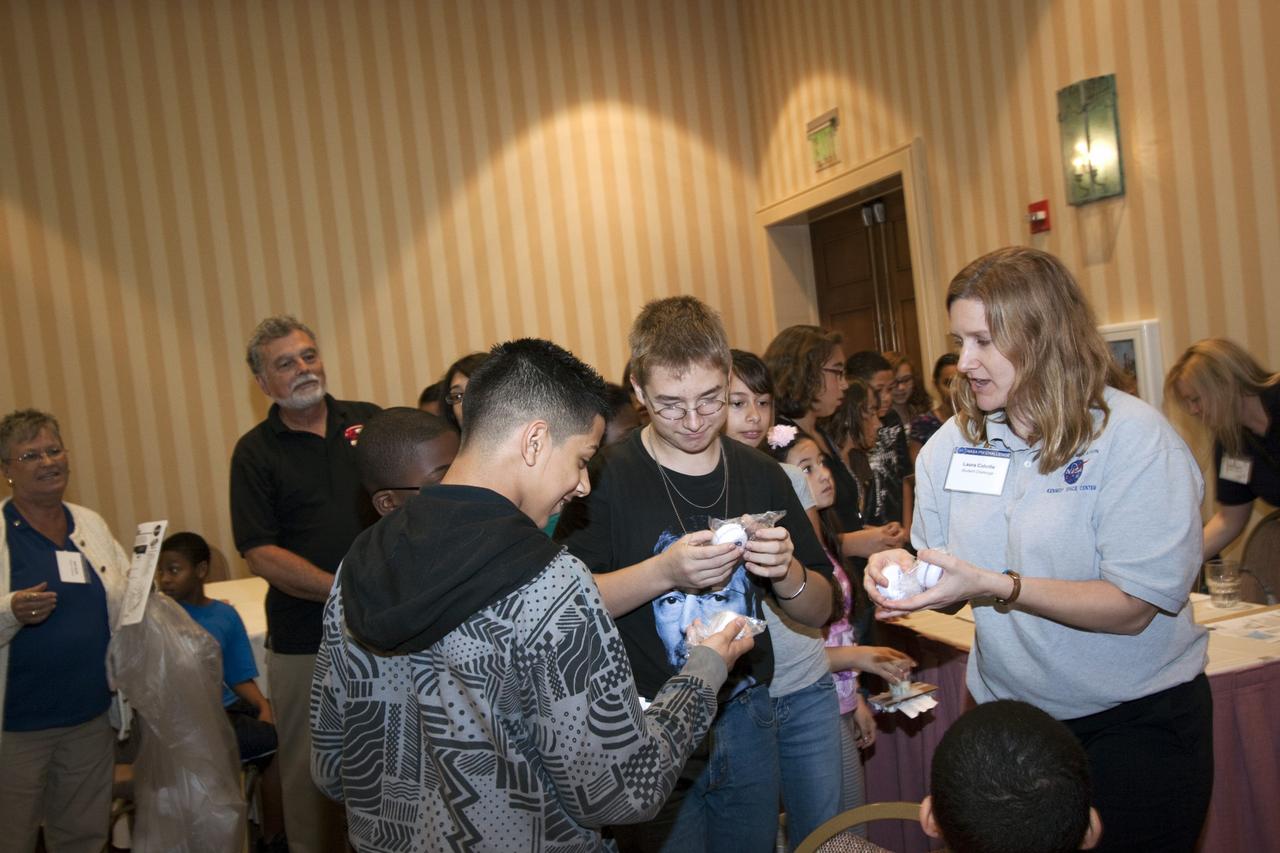
ORLANDO, Fla. – Laura Colville, in the gray shirt at right, from the Educator Resource Center at NASA’s Kennedy Space Center, interacts with students from Meadow Woods Middle School in Orlando during NASA’s Project Management PM Challenge 2012. The demonstrations are designed to increase student interest and pursuit of the science, technology, engineering and mathematics STEM fields integral to producing the next generation of scientists and engineers. PM Challenge 2012 was held at the Caribe Royale Hotel and Convention Center in Orlando, Fla., on Feb. 22-23, to provide a forum for all stakeholders in the project management community to meet and share stories, lessons learned and new uses of technology in the industry. The PM Challenge is sponsored by NASA's Office of the Chief Engineer. For additional information, visit http://www.nasa.gov/offices/oce/pmchallenge/index.html. Photo credit: NASA/Jim Grossmann
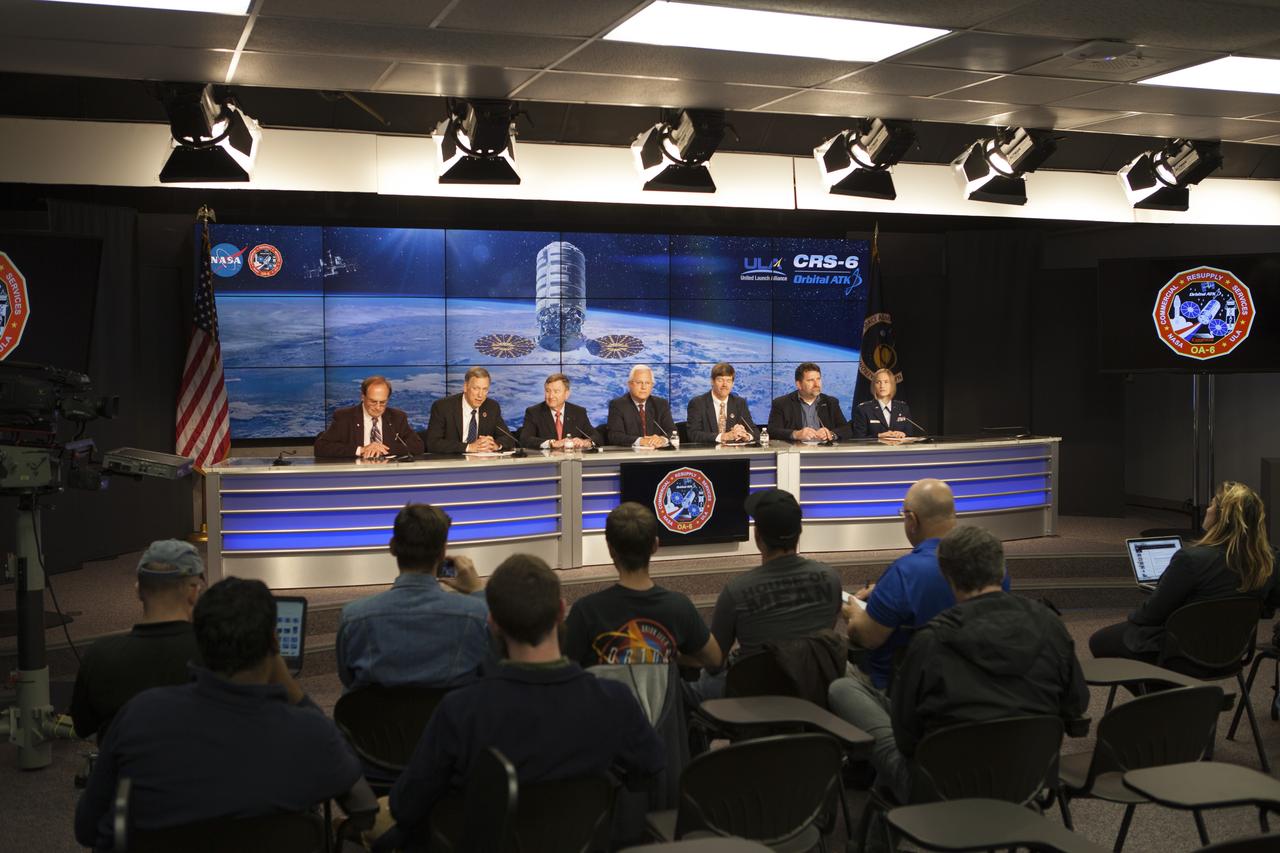
In the Kennedy Space Center’s Press Site auditorium, agency and industry leaders speak to members of the media at a prelaunch news conference for Orbital ATK CRS-6 commercial resupply services mission to the International Space Station. From left are: George Diller of NASA Communications; Kenneth Todd, NASA ISS Operations Integration manager; Frank Culbertson, president of Orbital ATK's Space System Group; Vern Thorp, United Space Alliance's program manager for NASA missions; Pete Hasbrook, NASA associate program scientist for the ISS Program at the Johnson Space Center in Houston; Dr. Michael Roberts deputy chief scientist for the Center for the Advancement for Science in Space, or CASIS; and Capt. Laura Godoy, launch weather officer of the U.S. Air Force 45th Weather Squadron.
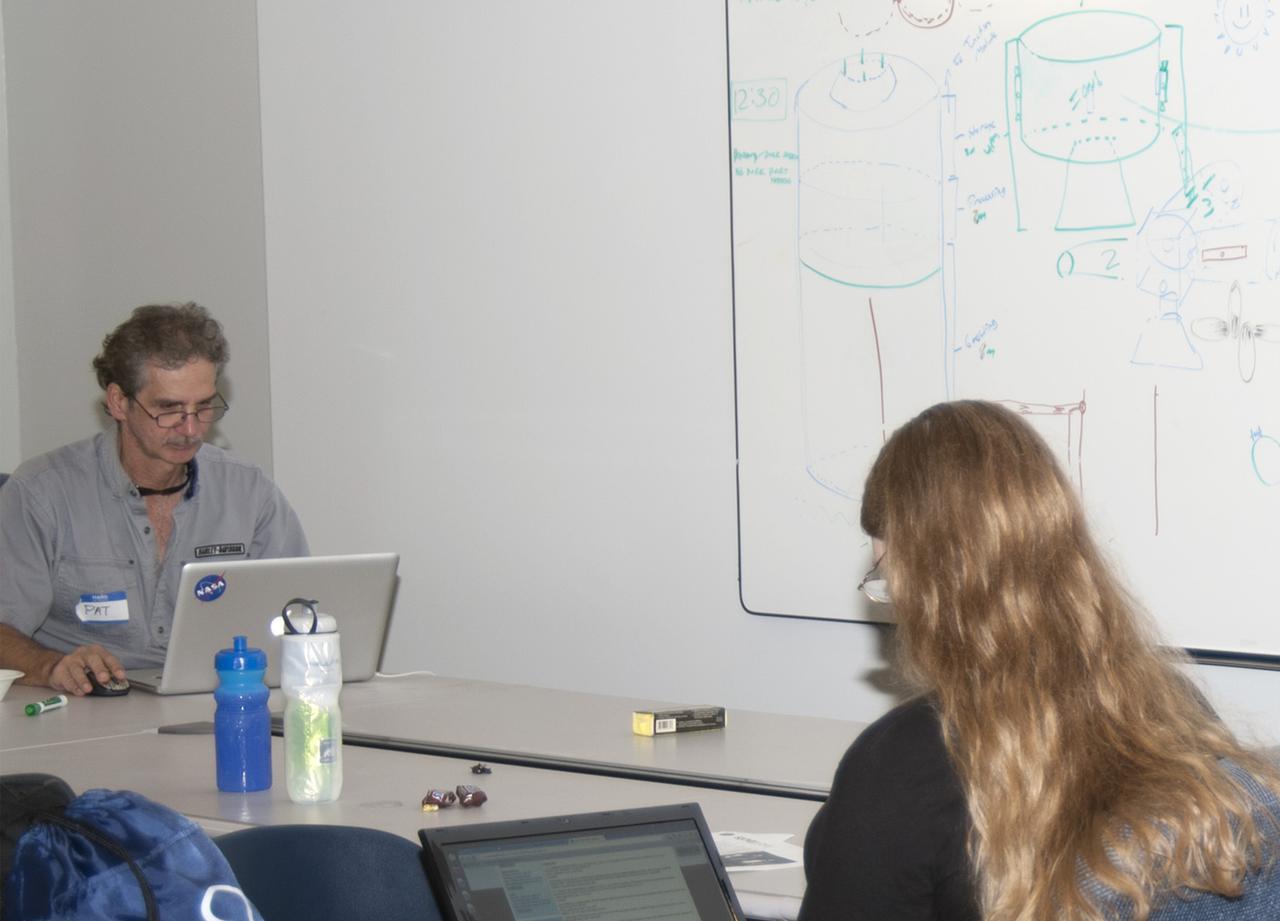
CAPE CANAVERAL, Fla. – Pat Starace, at left, from Orlando, and Kennedy Space Center engineer Jamie Szafran brainstorm ideas on deployable greenhouses during the 2013 International Space Apps Challenge, or ISAC, at The Astronaut Memorial Foundation’s Center for Space Education in Florida. During the worldwide two-day challenge, more than 9,000 people and 484 organizations came together in 83 cities across 44 countries, as well as online, to develop new ways of solving challenges that NASA faces. At Kennedy, four teams brainstormed ideas with subject matter experts and others and worked nearly 32 hours straight to present their concepts to a panel of three technical and non-technical judges. Challenges tackled at Kennedy were: Deployable Greenhouse, Kennedy Space Center 2040, Seven Minutes of Science, and Moonville – Lunar Industry Game. Photo credit: NASA_Charisse Nahser
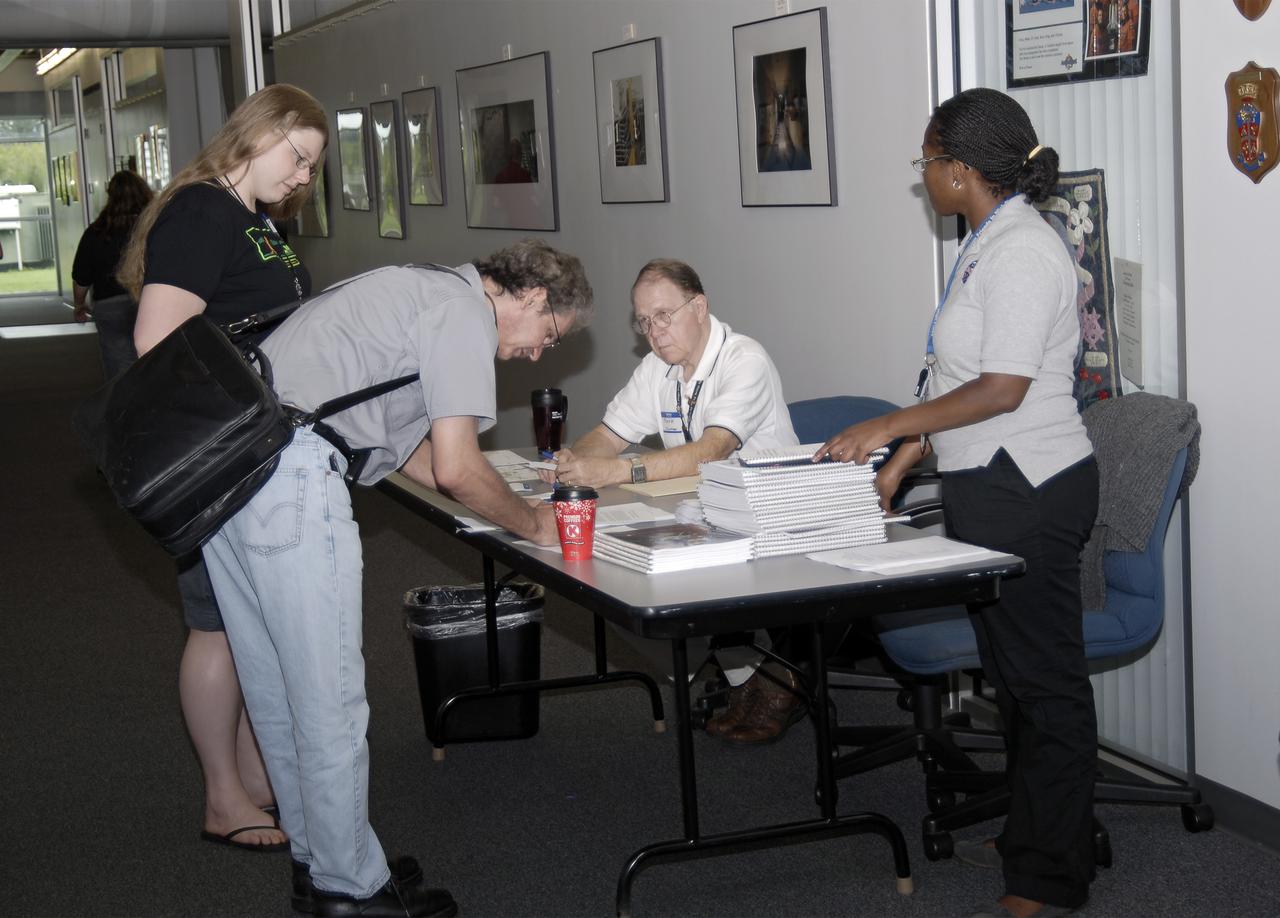
CAPE CANAVERAL, Fla. – Participants sign in at the Center for Space Education at the Kennedy Space Center Visitor Complex in Florida for the 2013 International Space Apps Challenge. . During the worldwide two-day challenge, more than 9,000 people and 484 organizations came together in 83 cities across 44 countries, as well as online, to develop new ways of solving challenges that NASA faces. At Kennedy, four teams brainstormed ideas with subject matter experts and others and worked nearly 32 hours straight to present their concepts to a panel of three technical and non-technical judges. Challenges tackled at Kennedy were: Deployable Greenhouse, Kennedy Space Center 2040, Seven Minutes of Science, and Moonville – Lunar Industry Game. Photo credit: NASA_Charisse Nahser
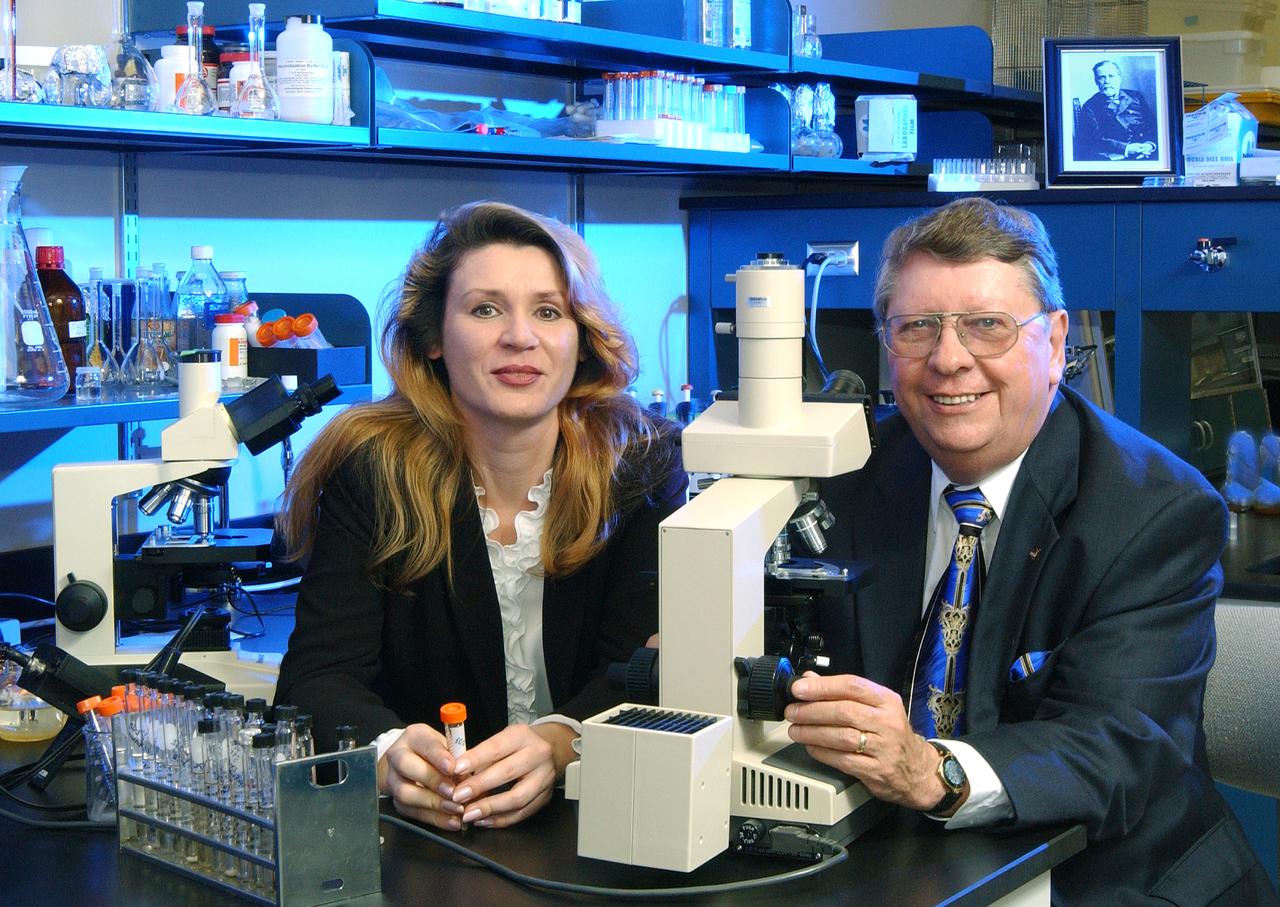
Microbiologist Dr. Elena V. Pikuta, and Astrobiologist Richard Hoover culture extremophiles, microorganisms that can live in extreme environments, in the astrobiology laboratory at the National Space Science and Technology Center (NSSTC) in Huntsville, Alabama. The scientists recently discovered a new species of extremophiles, Spirochaeta Americana. The species was found in Northern California's Mono Lake, an alkaline, briny oxygen-limited lake in a closed volcanic crater that Hoover believes may offer new clues to help identify sites to research for potential life on Mars. Hoover is an astrobiologist at NASA's Marshall Space Flight Center (MSFC), and Pikuta is a microbiologist with the Center for Space Plasma and Aeronomy Research Laboratory at the University of Alabama in Huntsville. The NSSTC is a partnership with MSFC, Alabama universities, industry, research institutes, and federal agencies.
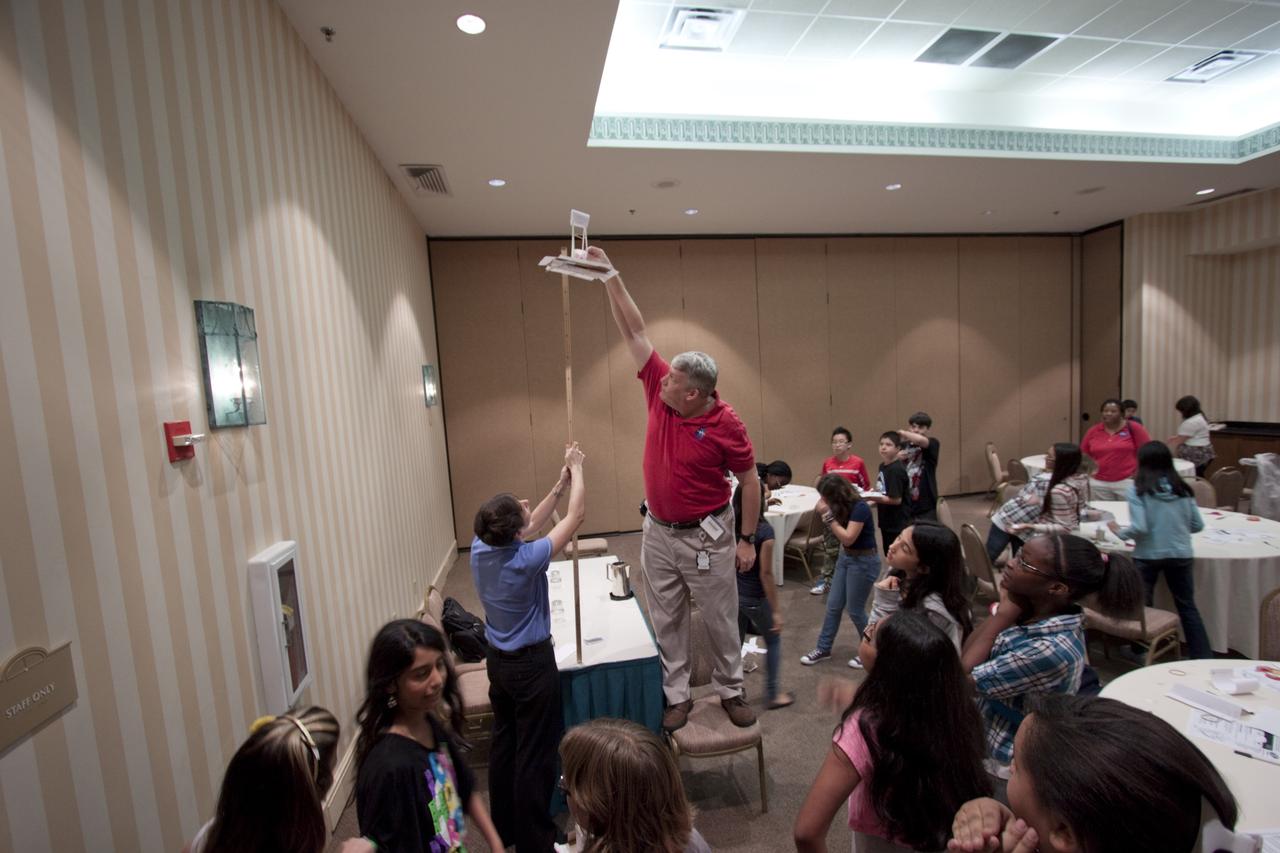
ORLANDO, Fla. – Education specialists from NASA’s Kennedy Space Center set up a physics demonstration for the students from Meadow Woods Middle School in Orlando during NASA’s Project Management PM Challenge 2012. Here, Jim Gerard, in the red shirt at center, is assisted by Rachel Powers, in the blue shirt. The demonstrations are designed to increase student interest and pursuit of the science, technology, engineering and mathematics STEM fields integral to producing the next generation of scientists and engineers. PM Challenge 2012 was held at the Caribe Royale Hotel and Convention Center in Orlando, Fla., on Feb. 22-23, to provide a forum for all stakeholders in the project management community to meet and share stories, lessons learned and new uses of technology in the industry. The PM Challenge is sponsored by NASA's Office of the Chief Engineer. For additional information, visit http://www.nasa.gov/offices/oce/pmchallenge/index.html. Photo credit: NASA/Jim Grossmann
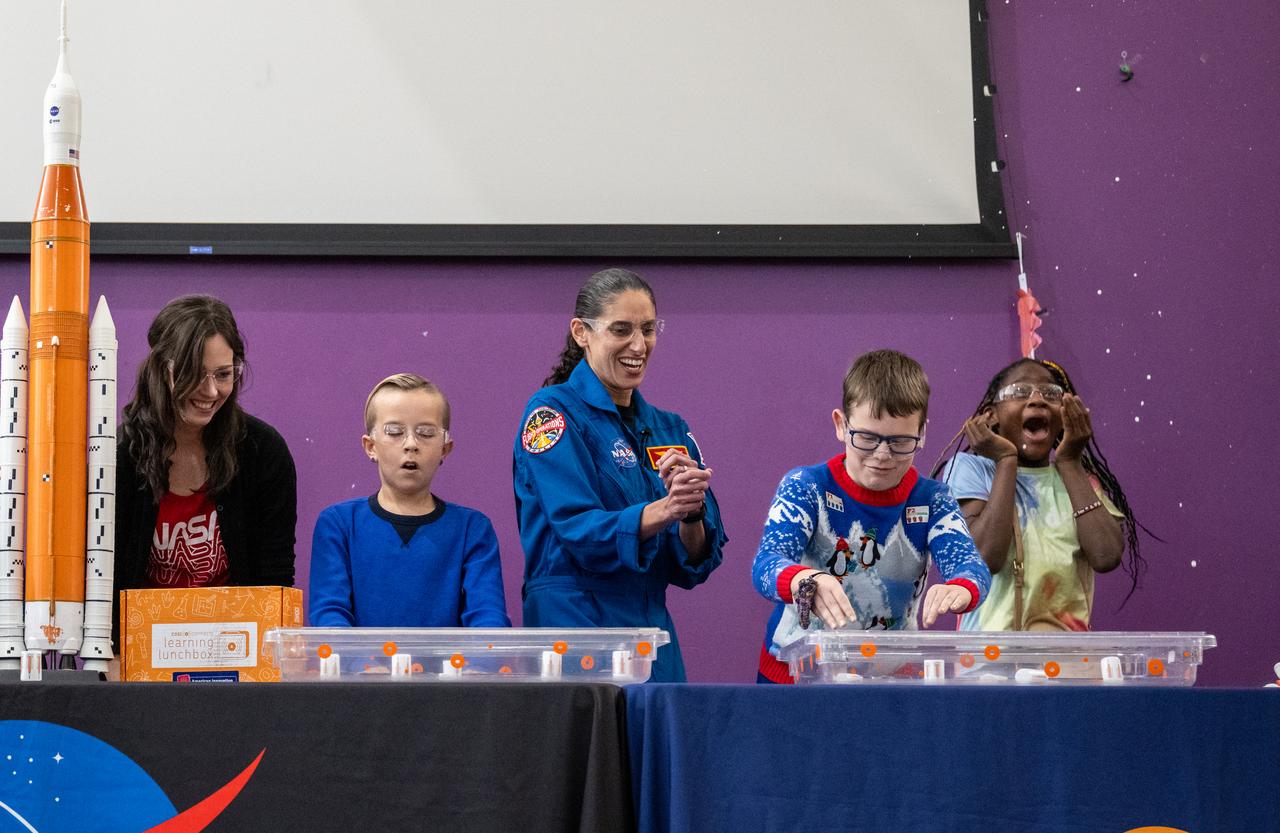
NASA astronaut Jasmin Moghbeli, seen in a blue flight suit, is joined by NASA staff during science demonstrations with students at an engagement event at Catherine Watkins Elementary School Monday, Dec. 2, 2024 in Washington. O’Hara and Moghbeli spent six months in space as part of Expedition 70 aboard the International Space Station. Photo Credit: (NASA/Keegan Barber)
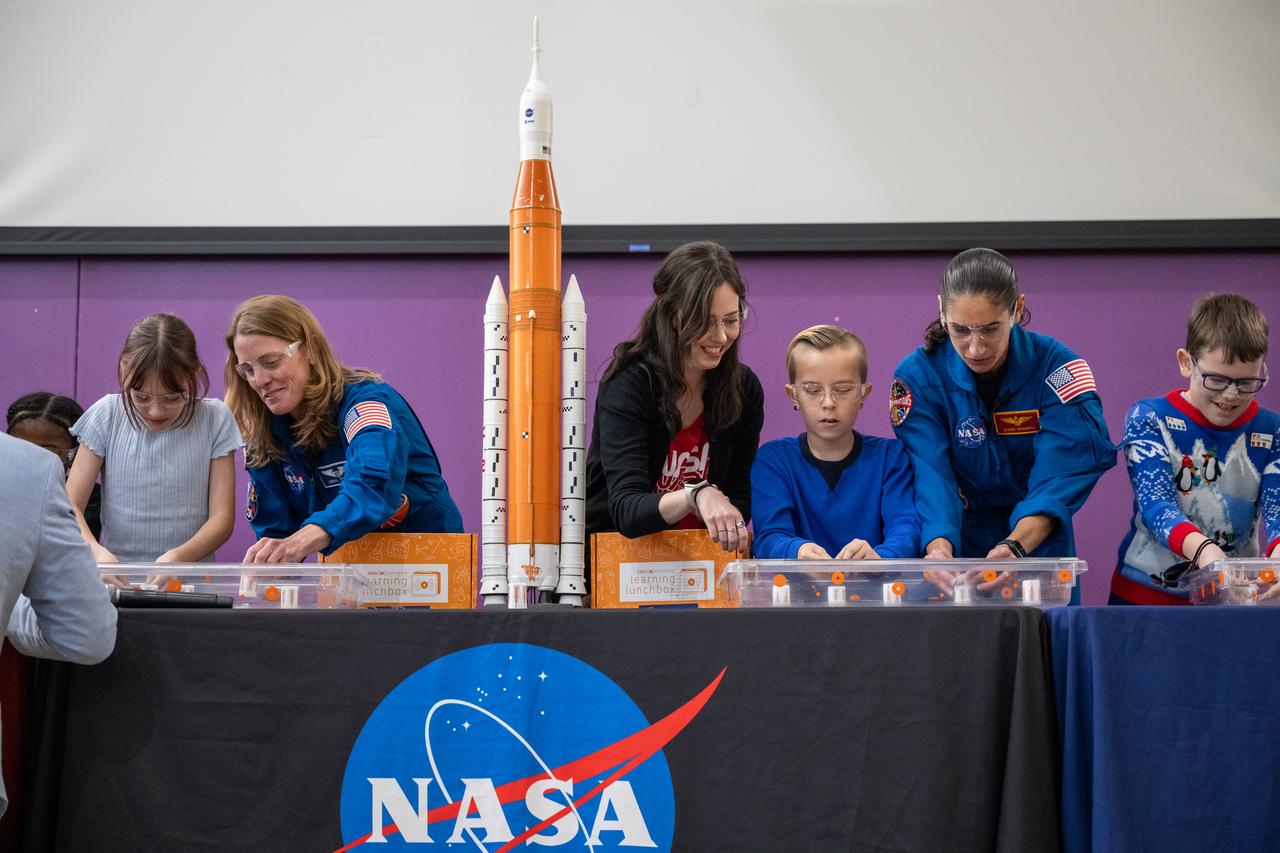
NASA astronauts Loral O’Hara and Jasmin Moghbeli, seen in blue flight suits, are joined by NASA and COSI staff during science demonstrations with students at an engagement event at Catherine Watkins Elementary School Monday, Dec. 2, 2024 in Washington. O’Hara and Moghbeli spent six months in space as part of Expedition 70 aboard the International Space Station. Photo Credit: (NASA/Keegan Barber)
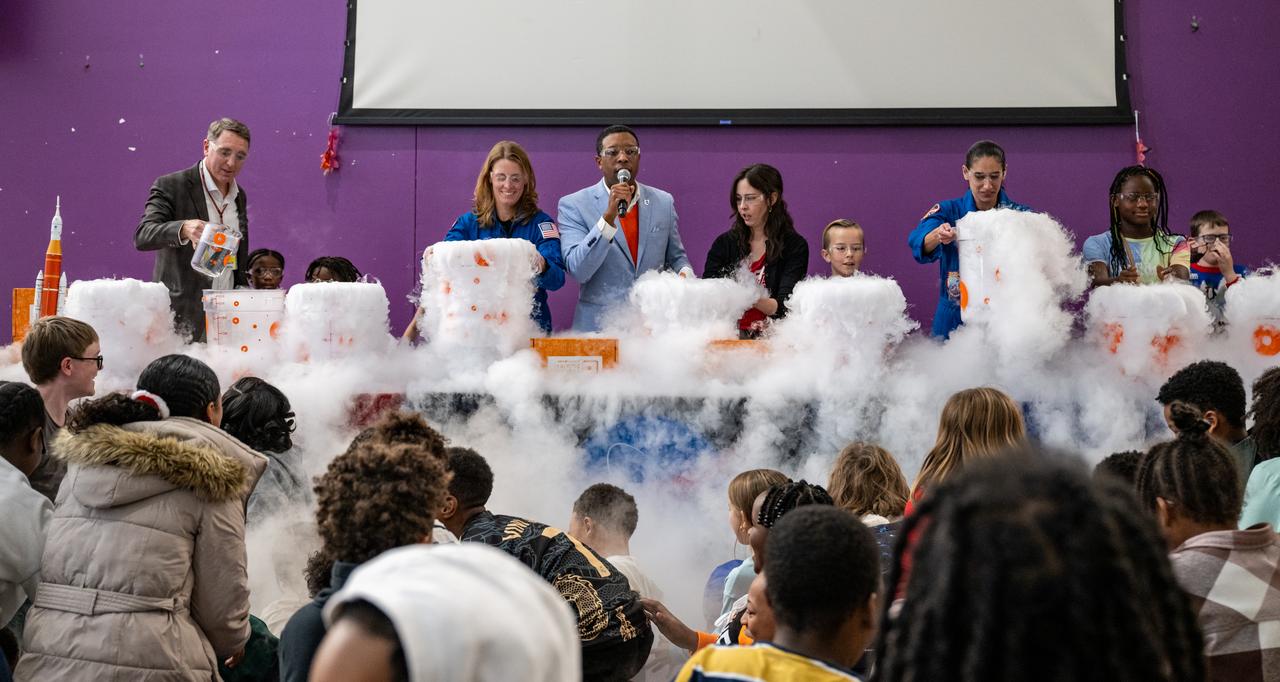
NASA astronauts Loral O’Hara and Jasmin Moghbeli, seen in blue flight suits, are joined by NASA and COSI staff during science demonstrations with students at an engagement event at Catherine Watkins Elementary School Monday, Dec. 2, 2024 in Washington. O’Hara and Moghbeli spent six months in space as part of Expedition 70 aboard the International Space Station. Photo Credit: (NASA/Keegan Barber)
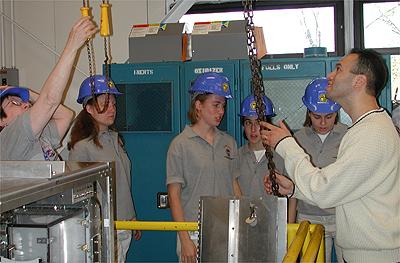
The first NASA Dropping In a Microgravity Environment (DIME) student competition pilot project came to a conclusion at the Glenn Research Center in April 2001. The competition involved high-school student teams who developed the concept for a microgravity experiment and prepared an experiment proposal. The two student teams - COSI Academy, sponsored by the Columbus Center of Science and Industry, and another team from Cincinnati, Ohio's Sycamore High School, designed a microgravity experiment, fabricated the experimental apparatus, and visited NASA Glenn to operate their experiment in the 2.2 Second Drop Tower. Here, students from Sycamore High School in Cincinnati, Ohio, help a NASA technician prepare their experiment. This image is from a digital still camera; higher resolution is not available.
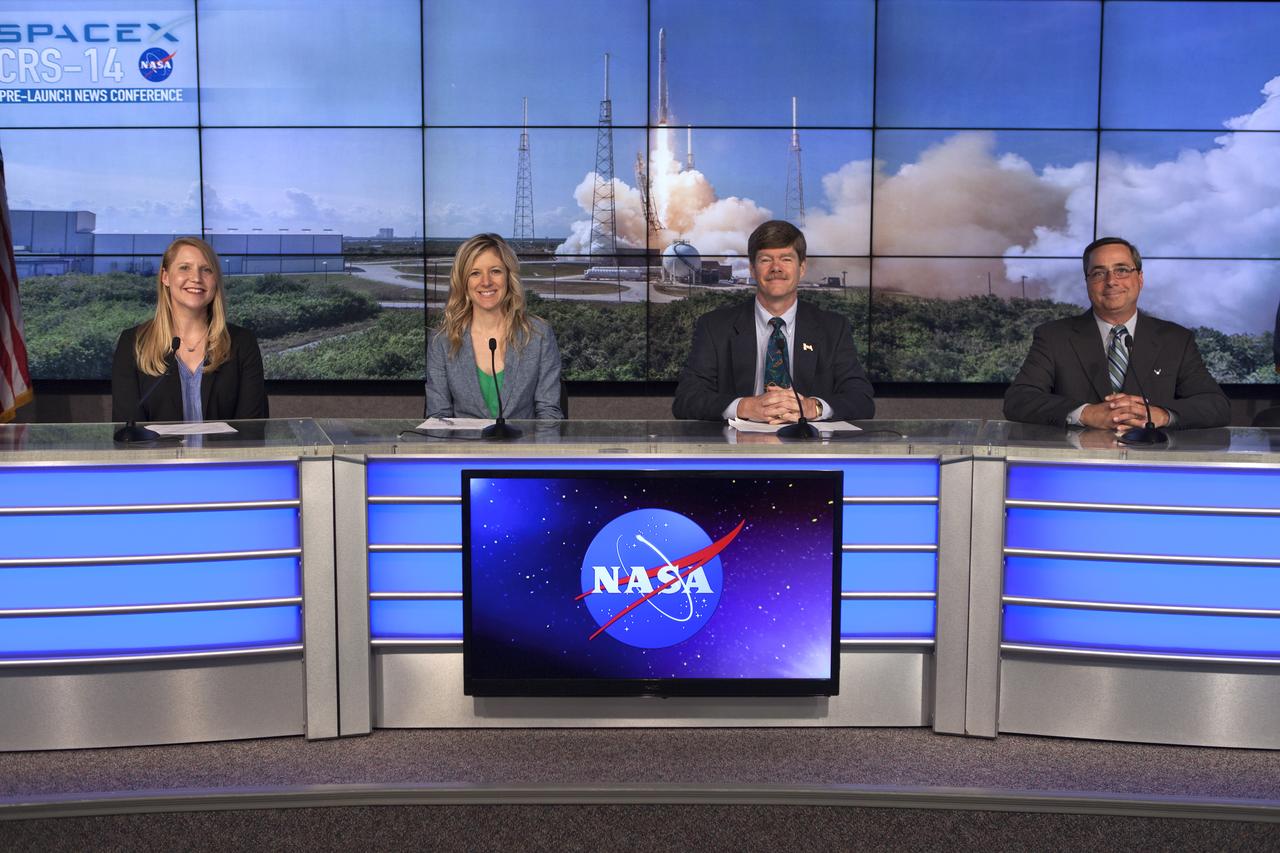
In the Kennedy Space Center’s Press Site auditorium, NASA and industry leaders speak to members of the media during a prelaunch news conference for the SpaceX CRS-14 commercial resupply services mission to the International Space Station. From left, are Stephanie Schierholz, of NASA Communications; Jessica Jensen, director, Dragon Mission Management, SpaceX; Pete Hasbrook, associate program scientist, ISS Program Science Office at NASA's Johnson Space Center in Houston; and Mike McAleenan, weather officer, 45th Weather Squadron. Joining on the phone is Joel Montalbano, deputy manager, ISS Program at Johnson. A Dragon spacecraft is scheduled to be launched from Space Launch Complex 40 at Cape Canaveral Air Force Station at 4:30 p.m. EST, on April 2, 2018. The SpaceX Falcon 9 rocket will lift off on the company's 14th Commercial Resupply Services mission to the space station.
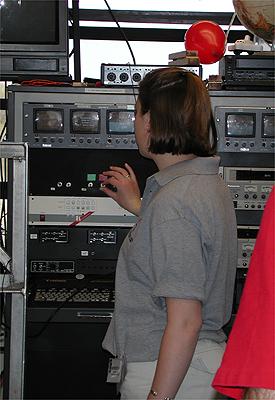
The first NASA Dropping In a Microgravity Environment (DIME) student competition pilot project came to a conclusion at the Glenn Research Center in April 2001. The competition involved high-school student teams who developed the concept for a microgravity experiment and prepared an experiment proposal. The two student teams - COSI Academy, sponsored by the Columbus Center of Science and Industry, and another team from Cincinnati, Ohio's Sycamore High School, designed a microgravity experiment, fabricated the experimental apparatus, and visited NASA Glenn to operate their experiment in the 2.2 Second Drop Tower. Meredith Mendenhall of Sycamore High School, Cincinnati, Ohio, flips on a tape recorder in preparation for a drop. This image is from a digital still camera; higher resolution is not available.
![Jody Singer, director of NASA's Marshall Space Flight Center, speaks to team members March 11 following the FY2020 proposed budget rollout event with NASA Administrator Jim Bridenstine. Singer congratulated the Marshall team for all its hard work on managing and contributing to delivery of the nation's next great rocket, the Space Launch System; communications and science operations oversight for the International Space Station; astrophysics and heliophysics achievements helping to rewrite our understanding of our Sun, the solar system and the cosmos beyond; and more. "We've seen a lot of first-time-in-history [milestones]," Singer said, lauding the center's history of expertise and successful partnerships with industry, academia and government. "We are always looking for creative solutions to serve and do right for the country. We're strong, and we lead the way."](https://images-assets.nasa.gov/image/MSFC-201900090/MSFC-201900090~medium.jpg)
Jody Singer, director of NASA's Marshall Space Flight Center, speaks to team members March 11 following the FY2020 proposed budget rollout event with NASA Administrator Jim Bridenstine. Singer congratulated the Marshall team for all its hard work on managing and contributing to delivery of the nation's next great rocket, the Space Launch System; communications and science operations oversight for the International Space Station; astrophysics and heliophysics achievements helping to rewrite our understanding of our Sun, the solar system and the cosmos beyond; and more. "We've seen a lot of first-time-in-history [milestones]," Singer said, lauding the center's history of expertise and successful partnerships with industry, academia and government. "We are always looking for creative solutions to serve and do right for the country. We're strong, and we lead the way."
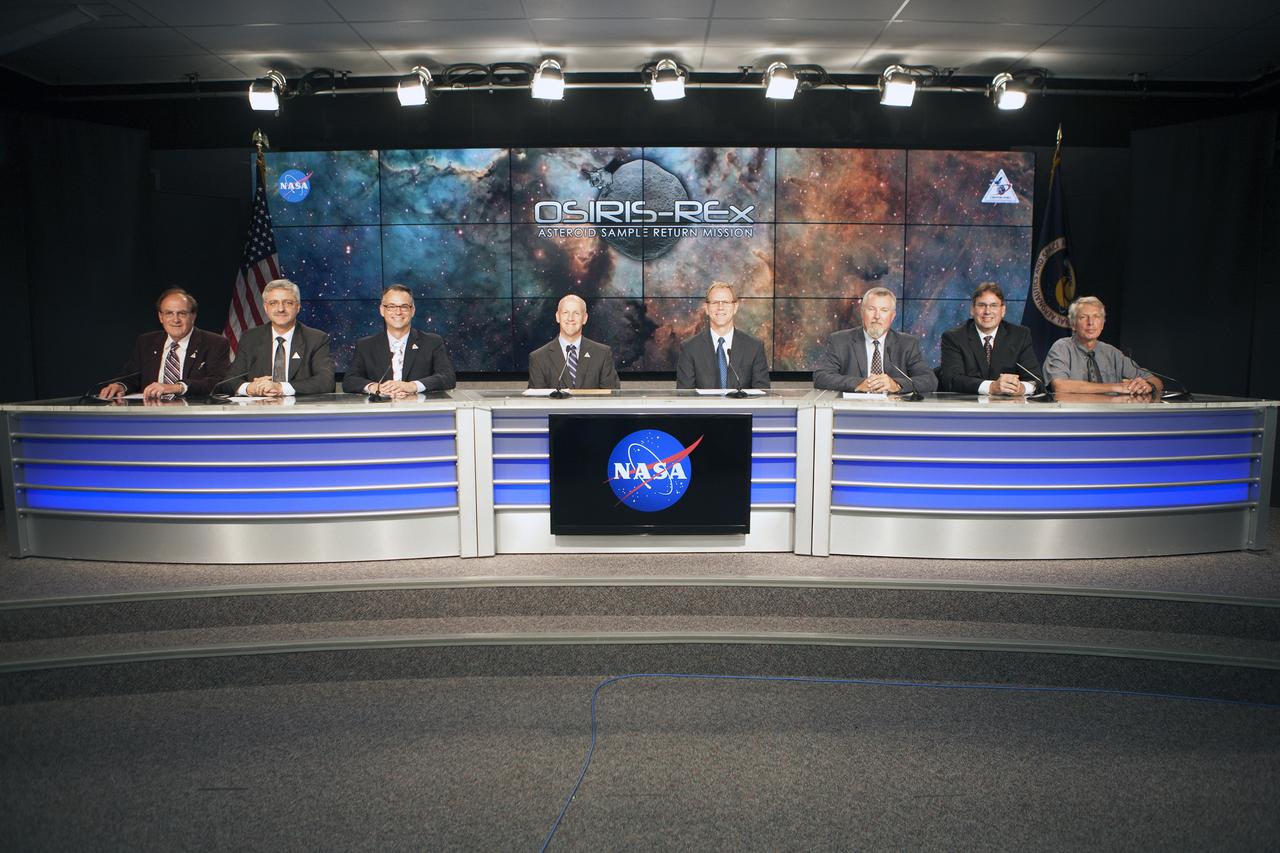
In the Kennedy Space Center’s Press Site auditorium, NASA and industry leaders speak to members of the media at a prelaunch news conference for the agency’s Origins, Spectral Interpretation, Resource Identification, Security-Regolith Explorer, or OSIRIS-REx spacecraft. From left are: George Diller of NASA Communications; Geoffrey Yoder, acting associate administrator of NASA’s Science Mission Directorate in Washington; Dante Lauretta, OSIRIS-REx principal investigator at the University of Arizona, Tucson; Tim Dunn, NASA launch manager at Kennedy; Scott Messer, program manager for NASA missions at United Launch Alliance in Centennial, Colorado; Michael Donnelly, OSIRIS-REx project manager at NASA’s Goddard Space Flight Center in Greenbelt, Maryland; Rich Kuhns, OSIRIS-REx program manager for Lockheed Martin Space Systems in Denver; and Clay Flinn, launch weather officer for the 45th Weather Squadron at Cape Canaveral Air Force Station, Florida.
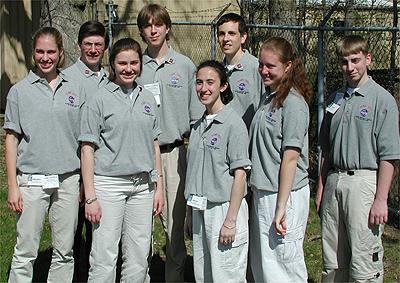
The first NASA Dropping In a Microgravity Environment (DIME) student competition pilot project came to a conclusion at the Glenn Research Center in April 2001. The competition involved high-school student teams who developed the concept for a microgravity experiment and prepared an experiment proposal. The two student teams - COSI Academy, sponsored by the Columbus Center of Science and Industry, and another team from Cincinnati, Ohio's Sycamore High School, designed a microgravity experiment, fabricated the experimental apparatus, and visited NASA Glenn to operate their experiment in the 2.2 Second Drop Tower. Students from Sycamore High School in Cincinnati, Ohio (girls), and the COSI Academy, Columbus, Ohio (boys), participated. This image is from a digital still camera; higher resolution is not available.
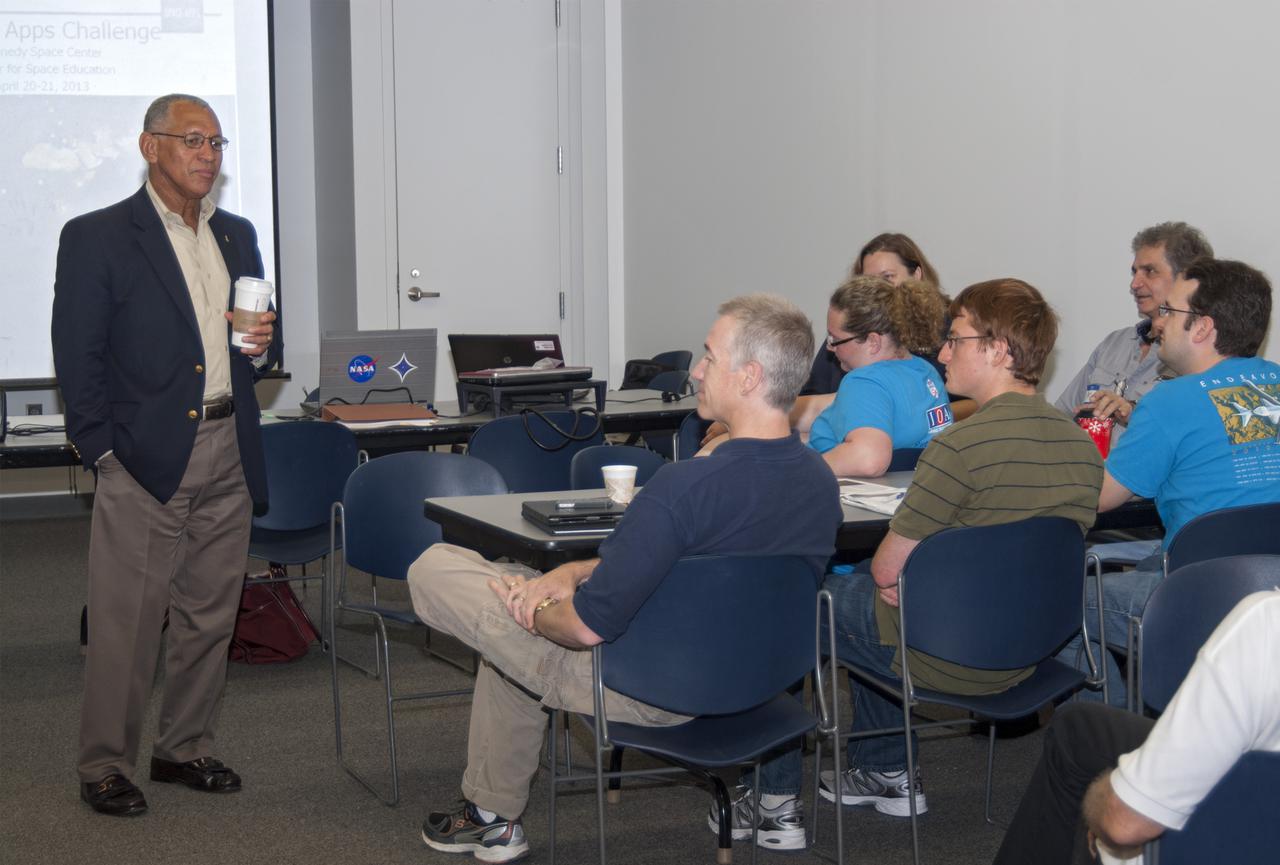
CAPE CANAVERAL, Fla. – NASA Administrator Charlie Bolden speaks with participants of the 2013 International Space Apps Challenge, or ISAC, at The Astronaut Memorial Foundation’s Center for Space Education in Florida during a networking event. During the worldwide two-day challenge, more than 9,000 people and 484 organizations came together in 83 cities across 44 countries, as well as online, to develop new ways of solving challenges that NASA faces. At Kennedy, four teams brainstormed ideas with subject matter experts and others and worked nearly 32 hours straight to present their concepts to a panel of three technical and non-technical judges. Challenges tackled at Kennedy were: Deployable Greenhouse, Kennedy Space Center 2040, Seven Minutes of Science, and Moonville – Lunar Industry Game. Photo credit: NASA_Charisse Nahser
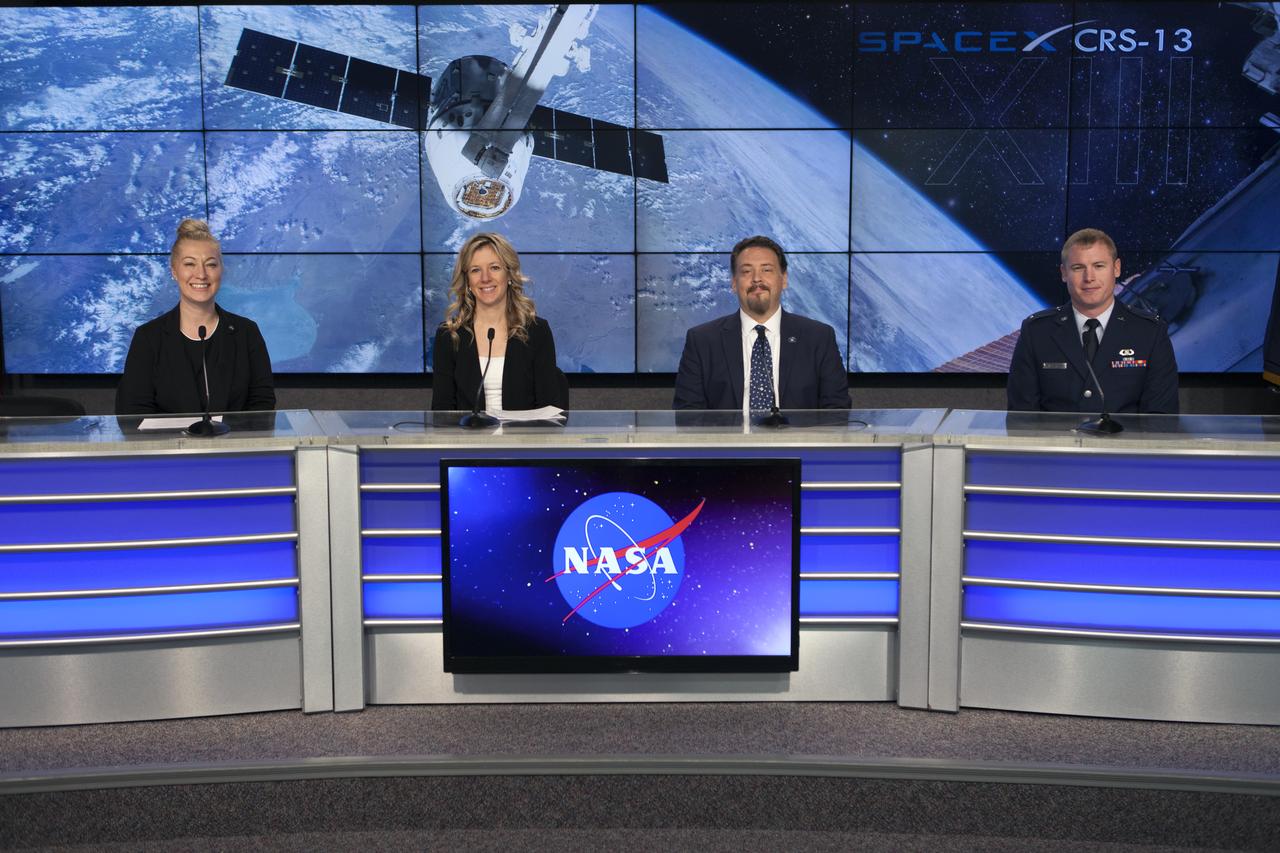
In the Kennedy Space Center’s Press Site auditorium, NASA and industry leaders speak to members of the media during a prelaunch news conference for the SpaceX CRS-13 commercial resupply services mission to the International Space Station. From left are: Cheryl Warner of NASA Communications, Jessica Jensen, SpaceX director of Dragon Mission Management, Kirt Costello, deputy chief scientist for the International Space Station Program Science Office at NASA’s Johnson Space Center in Houston, and Lt. David Myers, weather officer for the 45th Weather Squadron. Kirk Shireman, International Space Station Program manager at Johnson, participated by video link. A Dragon spacecraft is scheduled to be launched from Space Launch Complex 40 at Cape Canaveral Air Force Station at 11:46 a.m. EST, on Dec. 12, 2017. The SpaceX Falcon 9 rocket will lift off on the company's 13th Commercial Resupply Services mission to the space station.
![Jody Singer, director of NASA's Marshall Space Flight Center, speaks to team members March 11 following the FY2020 proposed budget rollout event with NASA Administrator Jim Bridenstine. Singer congratulated the Marshall team for all its hard work on managing and contributing to delivery of the nation's next great rocket, the Space Launch System; communications and science operations oversight for the International Space Station; astrophysics and heliophysics achievements helping to rewrite our understanding of our Sun, the solar system and the cosmos beyond; and more. "We've seen a lot of first-time-in-history [milestones]," Singer said, lauding the center's history of expertise and successful partnerships with industry, academia and government. "We are always looking for creative solutions to serve and do right for the country. We're strong, and we lead the way."](https://images-assets.nasa.gov/image/MSFC-201900088/MSFC-201900088~medium.jpg)
Jody Singer, director of NASA's Marshall Space Flight Center, speaks to team members March 11 following the FY2020 proposed budget rollout event with NASA Administrator Jim Bridenstine. Singer congratulated the Marshall team for all its hard work on managing and contributing to delivery of the nation's next great rocket, the Space Launch System; communications and science operations oversight for the International Space Station; astrophysics and heliophysics achievements helping to rewrite our understanding of our Sun, the solar system and the cosmos beyond; and more. "We've seen a lot of first-time-in-history [milestones]," Singer said, lauding the center's history of expertise and successful partnerships with industry, academia and government. "We are always looking for creative solutions to serve and do right for the country. We're strong, and we lead the way."
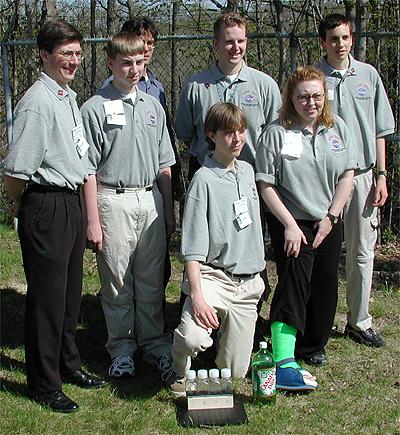
The first NASA Dropping In a Microgravity Environment (DIME) student competition pilot project came to a conclusion at the Glenn Research Center in April 2001. The competition involved high-school student teams who developed the concept for a microgravity experiment and prepared an experiment proposal. The two student teams - COSI Academy, sponsored by the Columbus Center of Science and Industry, and another team from Cincinnati, Ohio's Sycamore High School, designed a microgravity experiment, fabricated the experimental apparatus, and visited NASA Glenn to operate their experiment in the 2.2 Second Drop Tower. Pictured are students from COSI Academy, Columbus, Ohio and their teacher. The other team was from Sycamore High School in Cincinnati, Ohio. This image is from a digital still camera; higher resolution is not available.
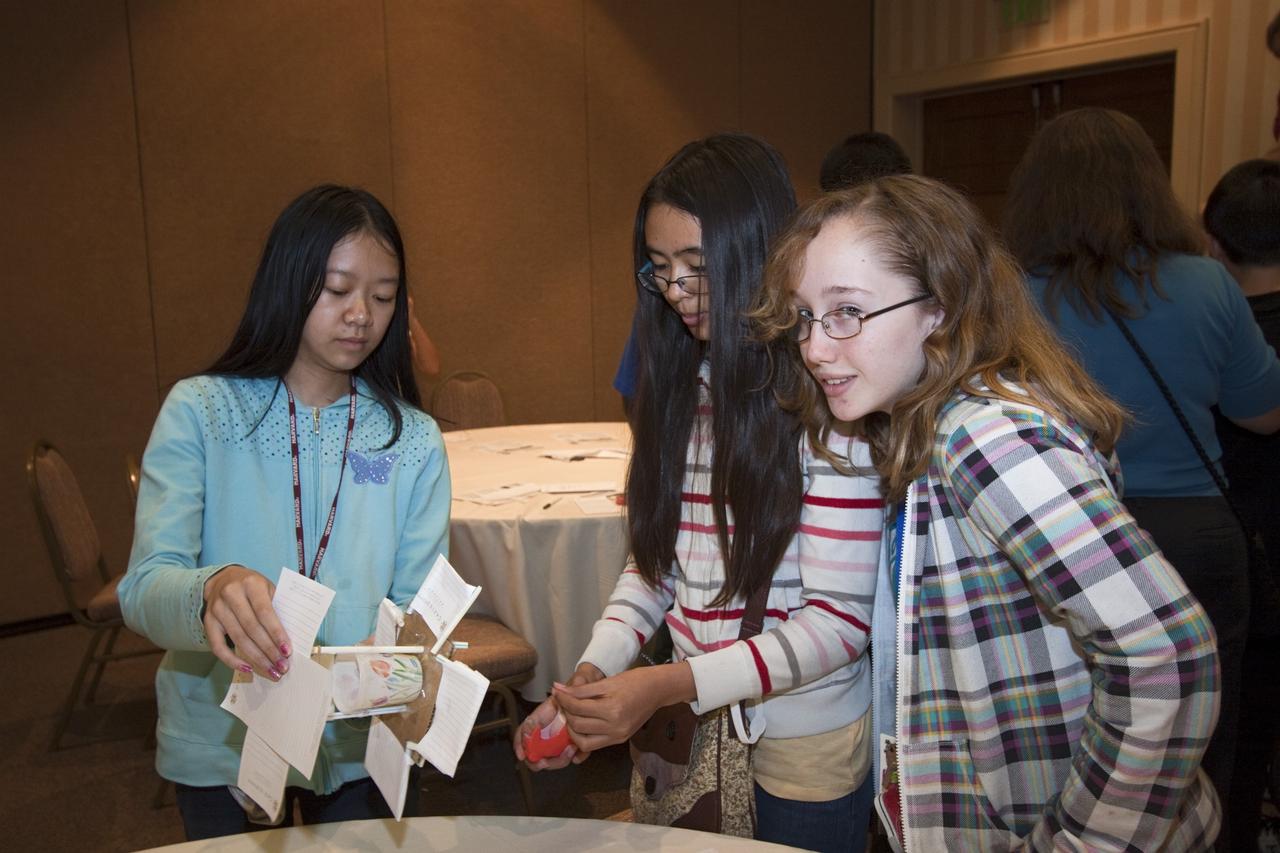
ORLANDO, Fla. – Students from Meadow Woods Middle School in Orlando take part in a hands-on activity during NASA’s Project Management PM Challenge 2012. Education specialists from NASA’s Kennedy Space Center supported the annual PM Challenge with demonstrations designed to illustrate various principles of physics. The demonstrations are designed to increase student interest and pursuit of the science, technology, engineering and mathematics STEM fields integral to producing the next generation of scientists and engineers. PM Challenge 2012 was held at the Caribe Royale Hotel and Convention Center in Orlando, Fla., on Feb. 22-23, to provide a forum for all stakeholders in the project management community to meet and share stories, lessons learned and new uses of technology in the industry. The PM Challenge is sponsored by NASA's Office of the Chief Engineer. For additional information, visit http://www.nasa.gov/offices/oce/pmchallenge/index.html. Photo credit: NASA/Jim Grossmann
ORLANDO, Fla. – NASA Kennedy Space Center Director Bob Cabana talks to The Wolverines team at the regional FIRST robotics competition at the University of Central Florida in Orlando. The team is made up of students from the Foshay Learning Center located in Los Angeles. NASA is a sponsor of the team. About 60 high school teams took part in the competition called "For Inspiration and Recognition of Science and Technology," or FIRST, in hopes of advancing to the national robotics championship. The team took home the Industrial Safety Award sponsored by Underwriters Laboratories. FIRST, founded in 1989, is a non-profit organization that designs accessible, innovative programs to build self-confidence, knowledge and life skills while motivating young people to pursue academic opportunities. The robotics competition challenges teams of high school students and their mentors to solve a common problem in a six-week timeframe using a standard kit of parts and a common set of rules. Photo credit: NASA/Glenn Benson