
NASA Administrator Charles Bolden, left, and Jet Propulsion Laboratory Director Dr. Charles Elachi lead school students to High Bay One at JPL during the kick off of NASA's Summer of Innovation program at the Jet Propulsion Laboratory in Pasadena, Calif., Thursday, June 10, 2010. Through the program, NASA will engage thousands of middle school students and teachers in stimulating math and science-based education programs with the goal of increasing the number of future scientists, mathematicians, and engineers. Photo Credit: (NASA/Bill Ingalls)

Jet Propulsion Laboratory Director Dr. Charles Elachi, center, and NASA Administrator Charles Bolden, right, lead school students to High Bay One at JPL during the kick off of NASA's Summer of Innovation program at the Jet Propulsion Laboratory in Pasadena, Calif., Thursday, June 10, 2010. Through the program, NASA will engage thousands of middle school students and teachers in stimulating math and science-based education programs with the goal of increasing the number of future scientists, mathematicians, and engineers. Photo Credit: (NASA/Bill Ingalls)

NASA Administrator Charles Bolden, left, and Jet Propulsion Laboratory Director Dr. Charles Elachi lead school students to High Bay One at JPL during the kick off of NASA's Summer of Innovation program at the Jet Propulsion Laboratory in Pasadena, Calif., Thursday, June 10, 2010. Through the program, NASA will engage thousands of middle school students and teachers in stimulating math and science-based education programs with the goal of increasing the number of future scientists, mathematicians, and engineers. Photo Credit: (NASA/Bill Ingalls)

Jet Propulsion Laboratory Director Dr. Charles Elachi speaks with teachers and middle school students during the kick off of NASA's Summer of Innovation program at JPL in Pasadena, Calif., Thursday, June 10, 2010. Through the program, NASA will engage thousands of middle school students and teachers in stimulating math and science-based education programs with the goal of increasing the number of future scientists, mathematicians, and engineers. Photo Credit: (NASA/Bill Ingalls)
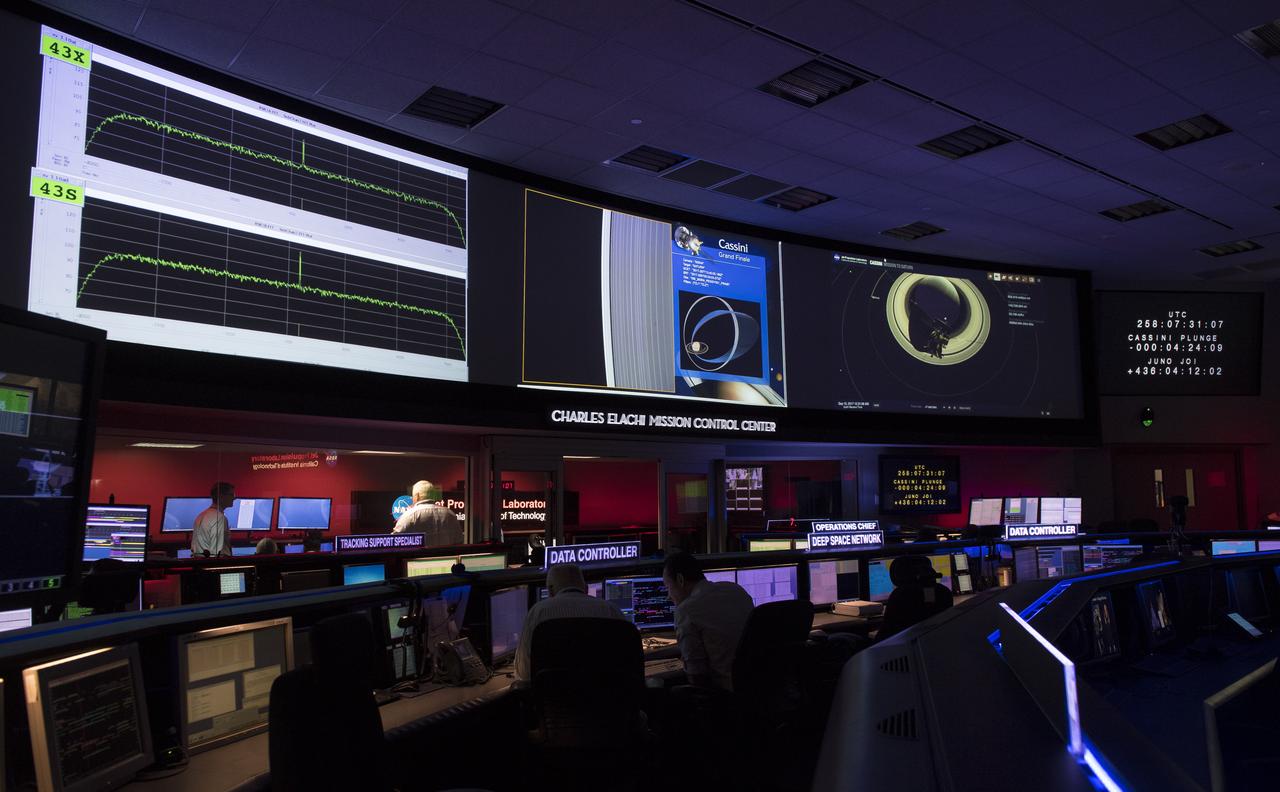
Images being transmitted from the Cassini spacecraft are seen on a screen in the Charles Elachi Mission Control Center in the Space Flight Operation Center at NASA's Jet Propulsion Laboratory, Friday, Sept. 15, 2017 in Pasadena, California. Since its arrival in 2004, the Cassini-Huygens mission has been a discovery machine, revolutionizing our knowledge of the Saturn system and captivating us with data and images never before obtained with such detail and clarity. On Sept. 15, 2017, operators will deliberately plunge the spacecraft into Saturn, as Cassini gathered science until the end. The “plunge” ensures Saturn’s moons will remain pristine for future exploration. During Cassini’s final days, mission team members from all around the world gathered at NASA’s Jet Propulsion Laboratory, Pasadena, California, to celebrate the achievements of this historic mission. Photo Credit: (NASA/Joel Kowsky)
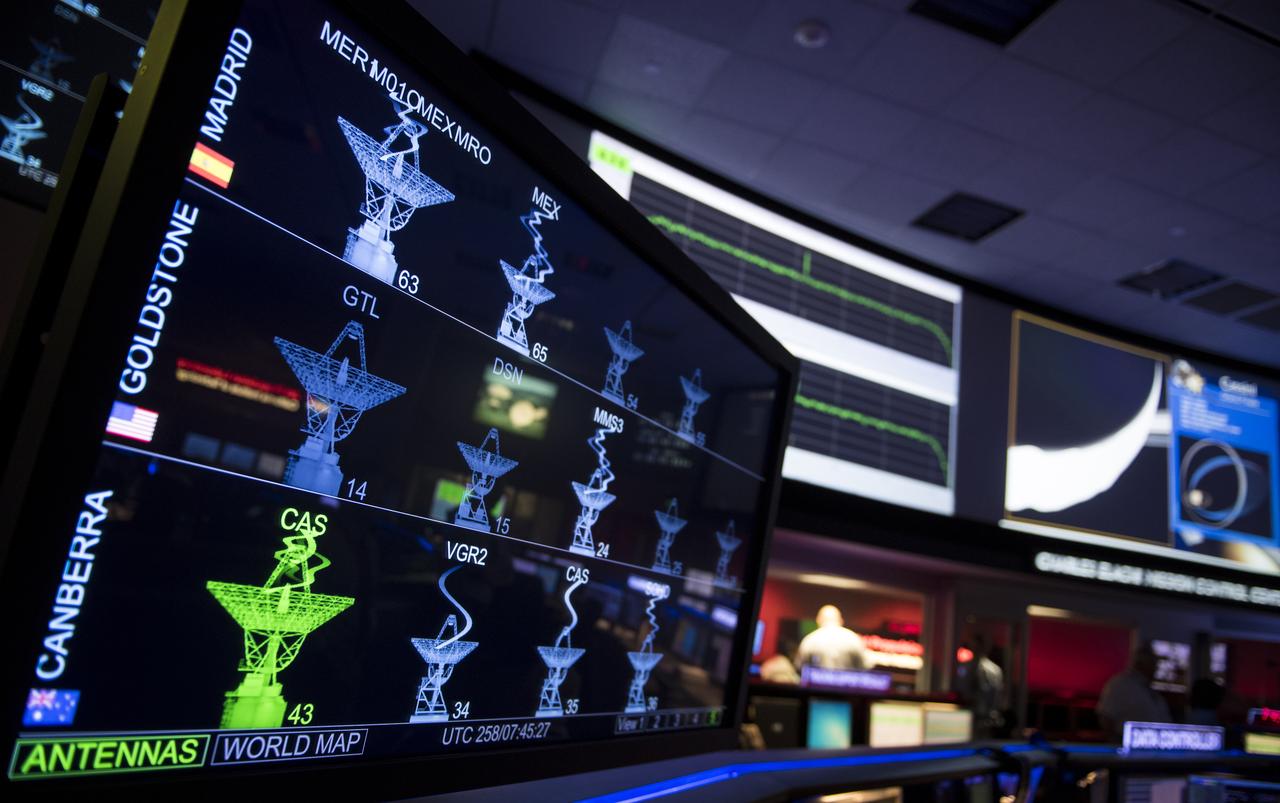
A monitor shows the status of NASA's Deep Space Network as it receives data from the Cassini spacecraft, Friday, Sept. 15, 2017 in the Charles Elachi Mission Control Center in the Space Flight Operation Center at NASA's Jet Propulsion Laboratory in Pasadena, California. Since its arrival in 2004, the Cassini-Huygens mission has been a discovery machine, revolutionizing our knowledge of the Saturn system and captivating us with data and images never before obtained with such detail and clarity. On Sept. 15, 2017, operators will deliberately plunge the spacecraft into Saturn, as Cassini gathered science until the end. The “plunge” ensures Saturn’s moons will remain pristine for future exploration. During Cassini’s final days, mission team members from all around the world gathered at NASA’s Jet Propulsion Laboratory, Pasadena, California, to celebrate the achievements of this historic mission. Photo Credit: (NASA/Joel Kowsky)
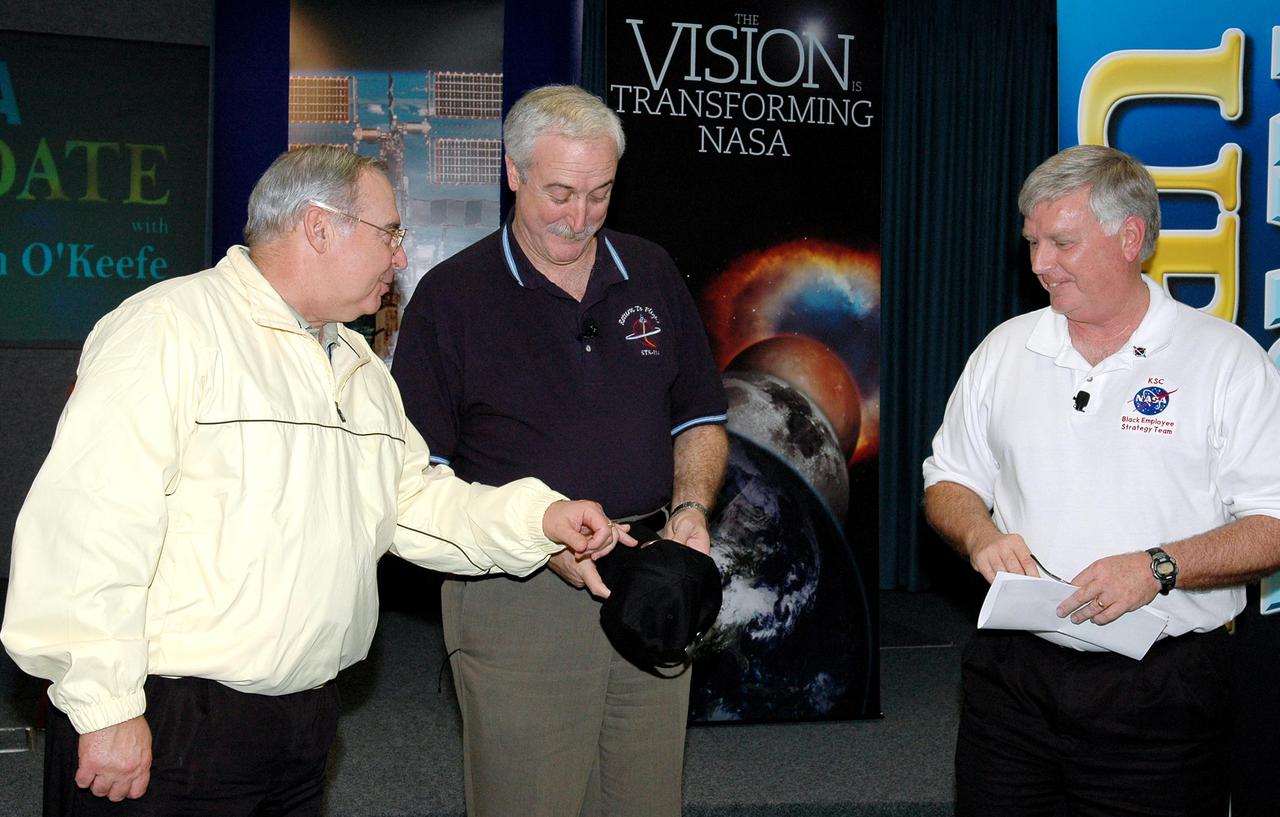
KENNEDY SPACE CENTER, FLA. - NASA Administrator Sean O’Keefe (center) is presented with a Deep Impact hat in the Press Site Auditorium following his report to employees on the state of the Agency. He is accompanied on stage by Center Director Jim Kennedy (right). The update was broadcast live via NASA Television. O'Keefe focused on the achievements of 2004 and the goals set for 2005. His remarks emphasized the milestones met in NASA's Vision for Space Exploration, including the launch of the comet-chasing Deep Impact mission and the landing of the Huygens probe on Jupiter’s moon Titan, both occurring in the past two days, and the progress made in meeting the requirements to return the Space Shuttle to flight. O’Keefe’s briefing included a dialogue with Associate Administrator of NASA’s Office of Exploration Systems Craig Steidle and Center Director Jim Kennedy, live; and Manager of the Space Station Office Bill Gerstenmaier and Director of Advanced Planning and Jet Propulsion Laboratory Charles Elachi, via satellite.

KENNEDY SPACE CENTER, FLA. - NASA Administrator Sean O’Keefe (right) is accompanied on stage in the Press Site Auditorium by Center Director Jim Kennedy for a report to employees on the state of the Agency. The update was broadcast live via NASA Television. O'Keefe focused on the achievements of 2004 and the goals set for 2005. His remarks emphasized the milestones met in NASA's Vision for Space Exploration, including the launch of the comet-chasing Deep Impact mission and the landing of the Huygens probe on Jupiter’s moon Titan, both occurring in the past two days, and the progress made in meeting the requirements to return the Space Shuttle to flight. O’Keefe’s briefing included a dialogue with Associate Administrator of NASA’s Office of Exploration Systems Craig Steidle and Center Director Jim Kennedy, live; and Manager of the Space Station Office Bill Gerstenmaier and Director of Advanced Planning and Jet Propulsion Laboratory Charles Elachi, via satellite.
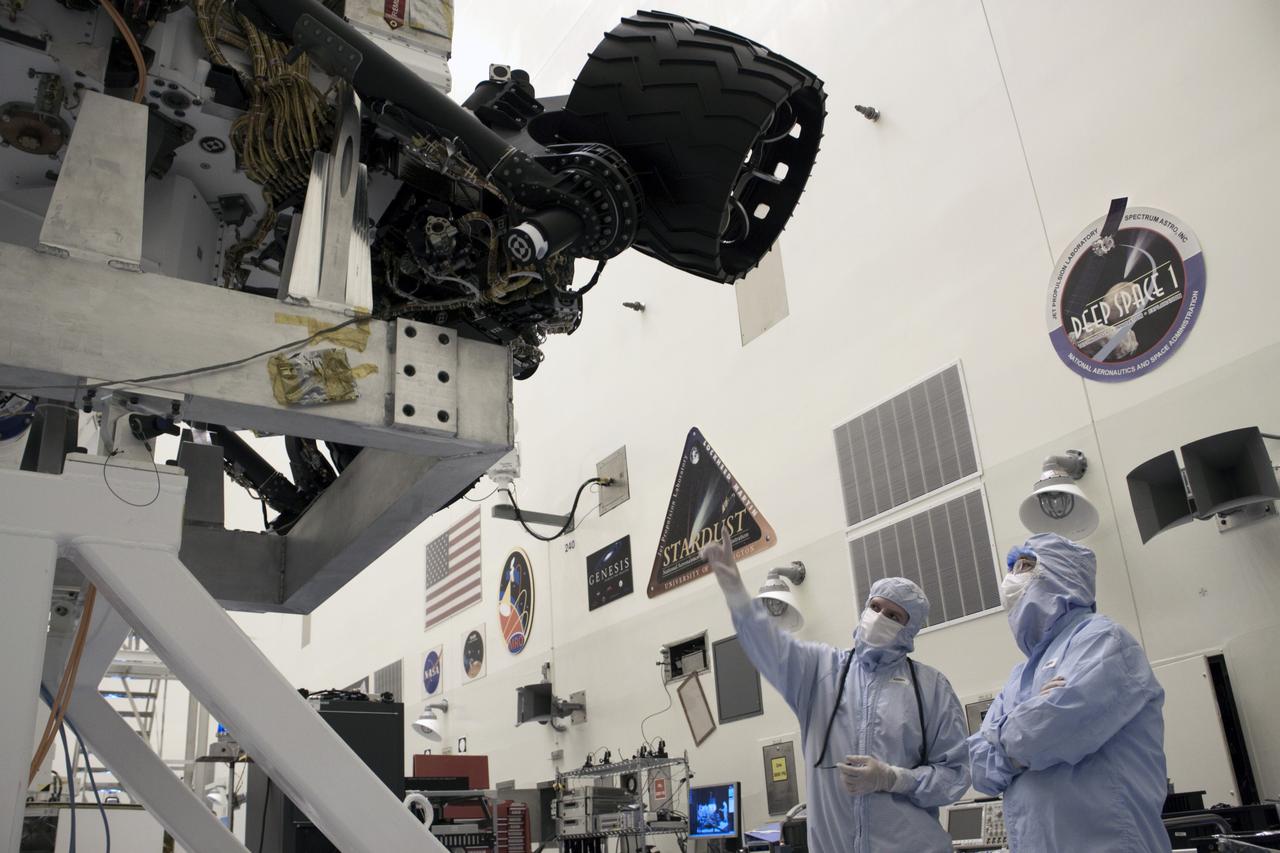
Cape Canaveral, Fla. -- At the Payload Hazardous Servicing Facility at NASA's Kennedy Space Center in Florida, Dr. Charles Elachi, Director of Advanced Planning at NASA's Jet Propulsion Laboratory (right), is shown NASA's Mars Science Laboratory (MSL) rover known as Curiosity. A United Launch Alliance Atlas V-541 configuration will be used to loft MSL into space. Curiosity’s 10 science instruments are designed to search for evidence on whether Mars has had environments favorable to microbial life, including chemical ingredients for life. The unique rover will use a laser to look inside rocks and release its gasses so that the rover’s spectrometer can analyze and send the data back to Earth. MSL is scheduled to launch from Cape Canaveral Air Force Station in Florida Nov. 25 with a window extending to Dec. 18 and arrival at Mars Aug. 2012. For more information, visit http://www.nasa.gov/msl. Photo credit: NASA/Jim Grossmann
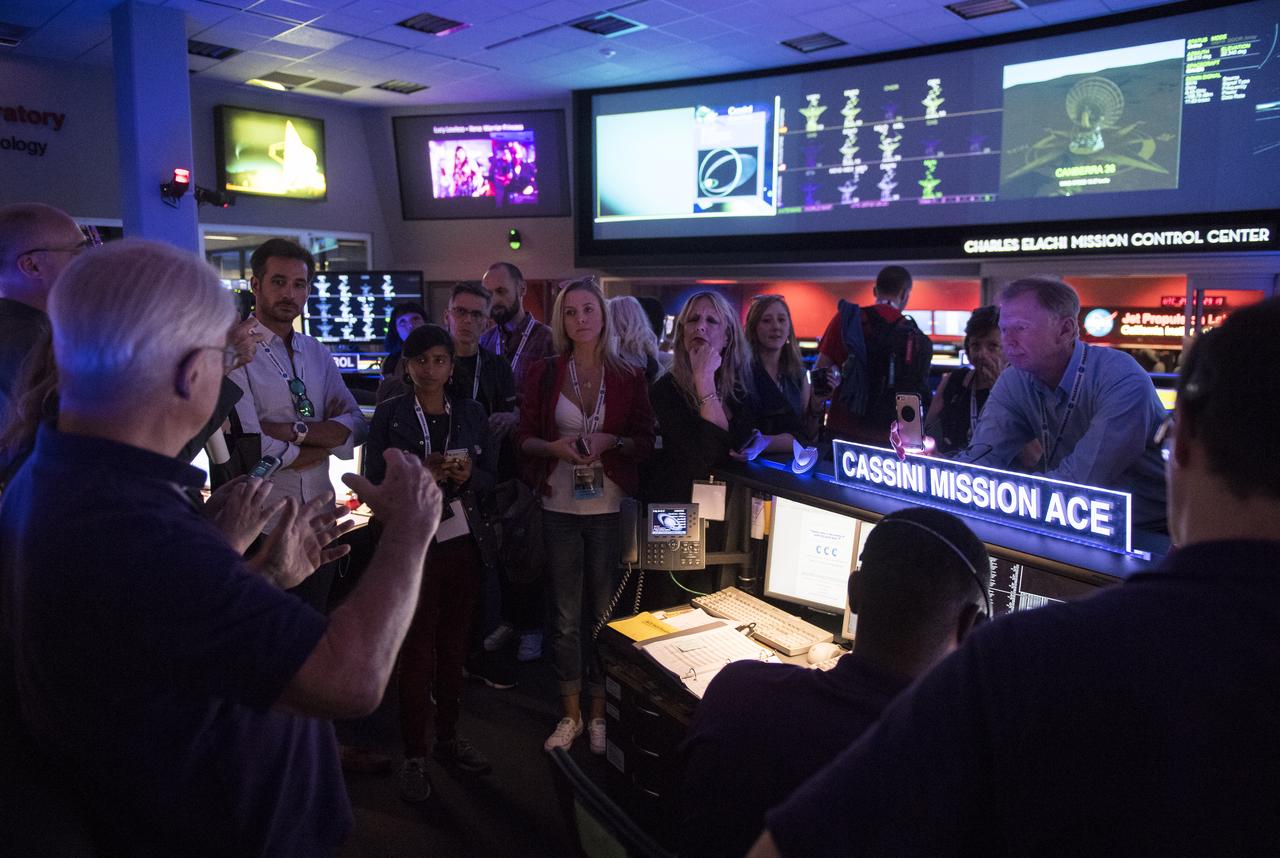
Cassini NASA Social attendees speak with members of the Cassini mission team in the Charles Elachi Mission Control Center in the Space Flight Operation Center, Thursday, Sept. 14, 2017 at NASA's Jet Propulsion Laboratory in Pasadena, California. Since its arrival in 2004, the Cassini-Huygens mission has been a discovery machine, revolutionizing our knowledge of the Saturn system and captivating us with data and images never before obtained with such detail and clarity. On Sept. 15, 2017, operators will deliberately plunge the spacecraft into Saturn, as Cassini gathered science until the end. The “plunge” ensures Saturn’s moons will remain pristine for future exploration. During Cassini’s final days, mission team members from all around the world gathered at NASA’s Jet Propulsion Laboratory, Pasadena, California, to celebrate the achievements of this historic mission. Photo Credit: (NASA/Joel Kowsky)
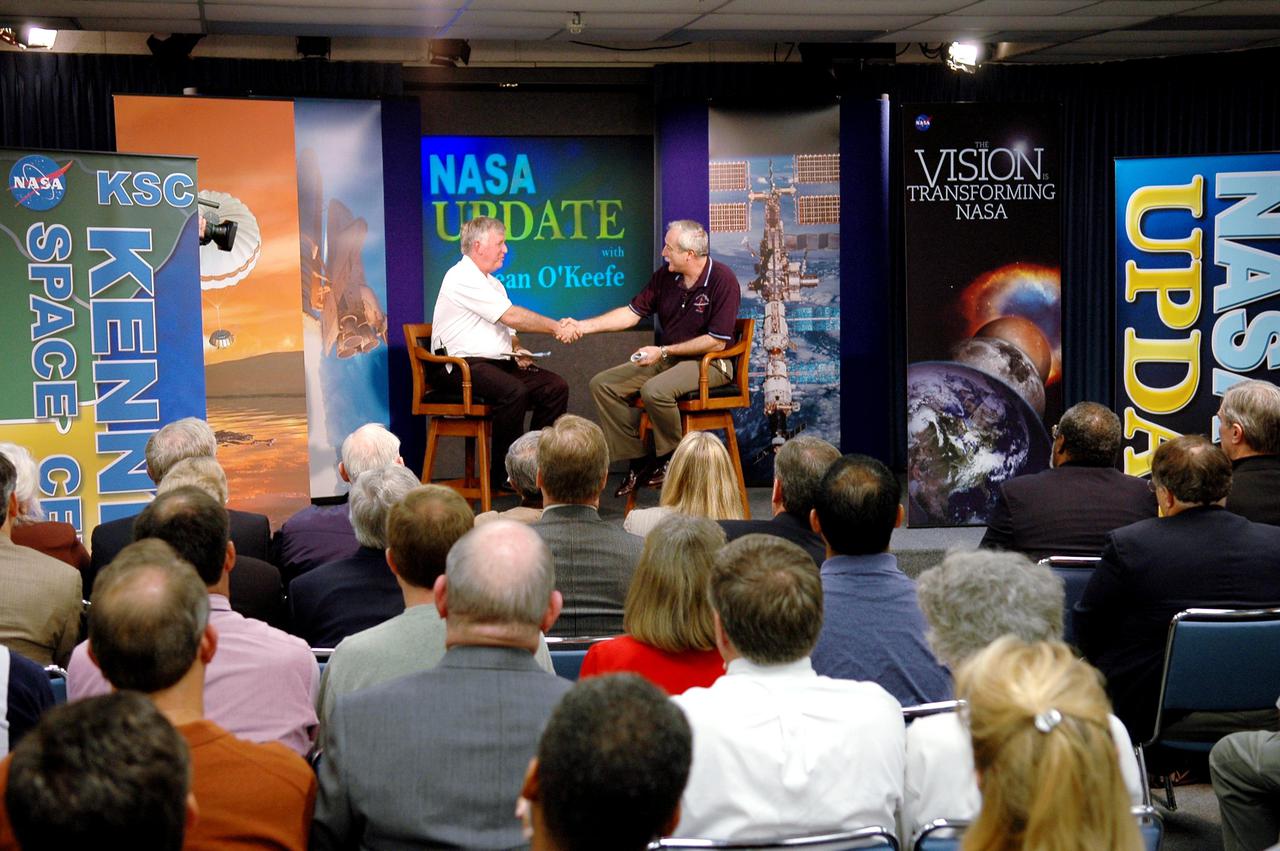
KENNEDY SPACE CENTER, FLA. - NASA Administrator Sean O’Keefe (right) is accompanied on stage in the Press Site Auditorium by Center Director Jim Kennedy for a report to employees on the state of the Agency. The update was broadcast live via NASA Television. O'Keefe focused on the achievements of 2004 and the goals set for 2005. His remarks emphasized the milestones met in NASA's Vision for Space Exploration, including the launch of the comet-chasing Deep Impact mission and the landing of the Huygens probe on Jupiter’s moon Titan, both occurring in the past two days, and the progress made in meeting the requirements to return the Space Shuttle to flight. O’Keefe’s briefing included a dialogue with Associate Administrator of NASA’s Office of Exploration Systems Craig Steidle and Center Director Jim Kennedy, live; and Manager of the Space Station Office Bill Gerstenmaier and Director of Advanced Planning and Jet Propulsion Laboratory Charles Elachi, via satellite.
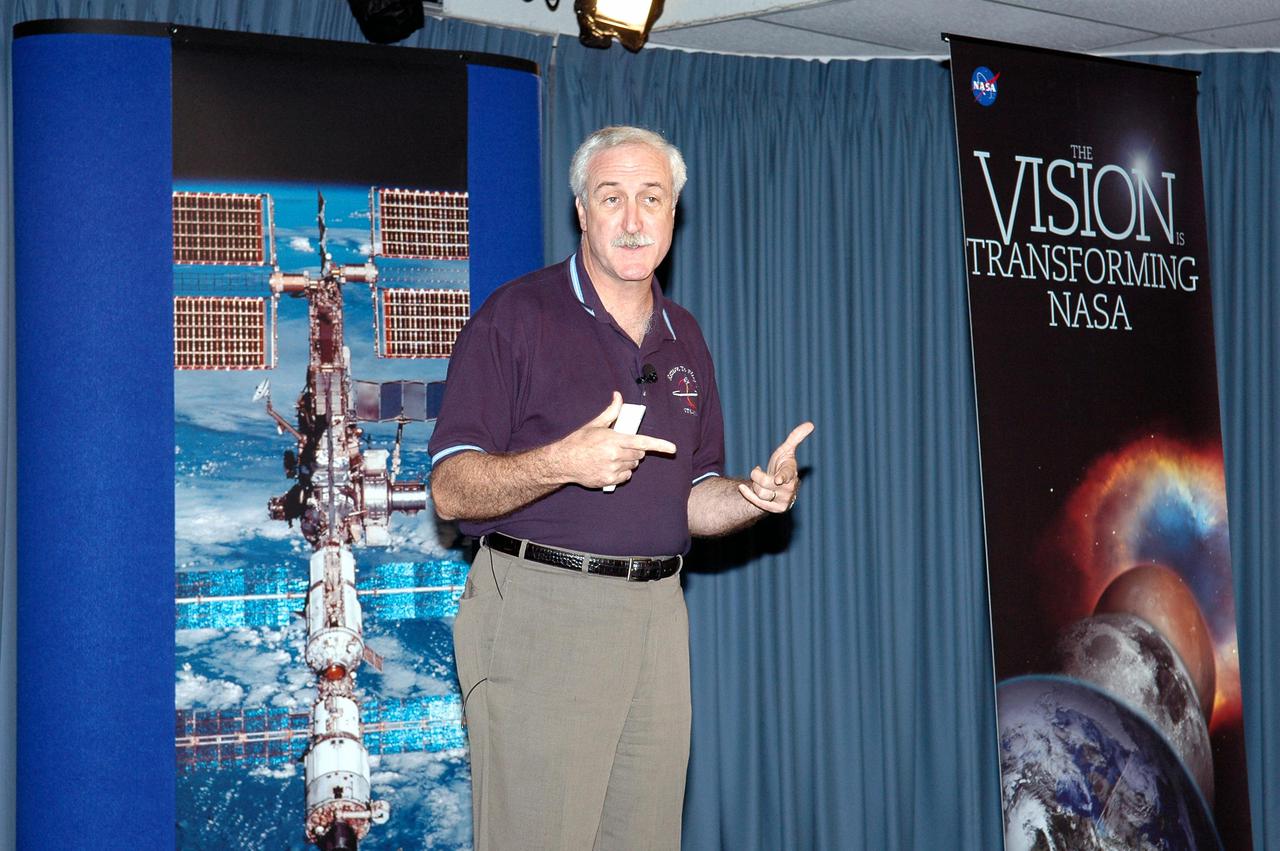
KENNEDY SPACE CENTER, FLA. - NASA Administrator Sean O’Keefe reports to employees on the state of the Agency from the Press Site Auditorium. The update was broadcast live via NASA Television. O'Keefe focused on the achievements of 2004 and the goals set for 2005. His remarks emphasized the milestones met in NASA's Vision for Space Exploration, including the launch of the comet-chasing Deep Impact mission and the landing of the Huygens probe on Jupiter’s moon Titan, both occurring in the past two days, and the progress made in meeting the requirements to return the Space Shuttle to flight. O’Keefe’s briefing included a dialogue with Associate Administrator of NASA’s Office of Exploration Systems Craig Steidle and Center Director Jim Kennedy, live; and Manager of the Space Station Office Bill Gerstenmaier and Director of Advanced Planning and Jet Propulsion Laboratory Charles Elachi, via satellite.
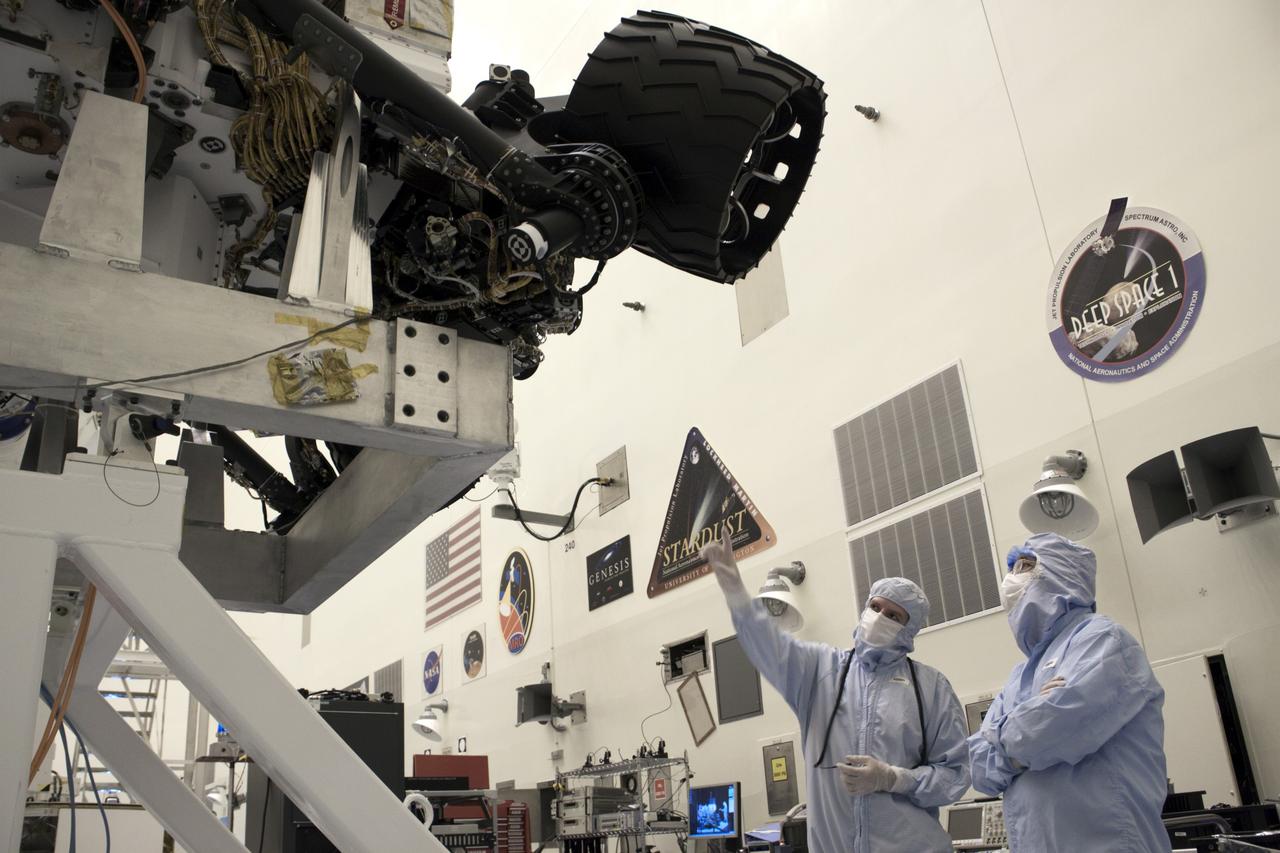
Cape Canaveral, Fla. -- At the Payload Hazardous Servicing Facility at NASA's Kennedy Space Center in Florida, Dr. Charles Elachi, Director of Advanced Planning at NASA's Jet Propulsion Laboratory (right), is shown NASA's Mars Science Laboratory (MSL) rover known as Curiosity. A United Launch Alliance Atlas V-541 configuration will be used to loft MSL into space. Curiosity’s 10 science instruments are designed to search for evidence on whether Mars has had environments favorable to microbial life, including chemical ingredients for life. The unique rover will use a laser to look inside rocks and release its gasses so that the rover’s spectrometer can analyze and send the data back to Earth. MSL is scheduled to launch from Cape Canaveral Air Force Station in Florida Nov. 25 with a window extending to Dec. 18 and arrival at Mars Aug. 2012. For more information, visit http://www.nasa.gov/msl. Photo credit: NASA/Jim Grossmann
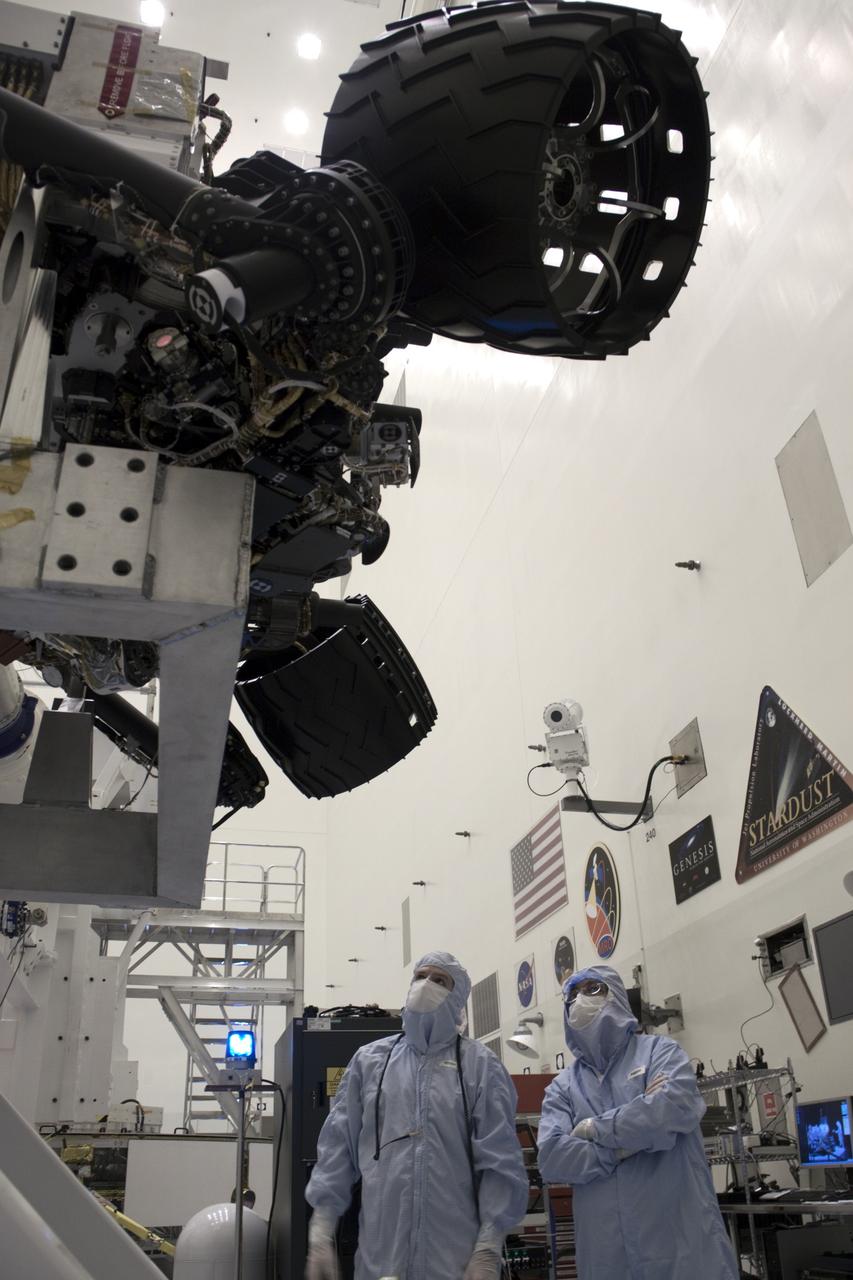
Cape Canaveral, Fla. -- At the Payload Hazardous Servicing Facility at NASA's Kennedy Space Center in Florida, Dr. Charles Elachi, Director of Advanced Planning at NASA's Jet Propulsion Laboratory (right), is shown NASA's Mars Science Laboratory (MSL) rover known as Curiosity. A United Launch Alliance Atlas V-541 configuration will be used to loft MSL into space. Curiosity’s 10 science instruments are designed to search for evidence on whether Mars has had environments favorable to microbial life, including chemical ingredients for life. The unique rover will use a laser to look inside rocks and release its gasses so that the rover’s spectrometer can analyze and send the data back to Earth. MSL is scheduled to launch from Cape Canaveral Air Force Station in Florida Nov. 25 with a window extending to Dec. 18 and arrival at Mars Aug. 2012. For more information, visit http://www.nasa.gov/msl. Photo credit: NASA/Jim Grossmann

KENNEDY SPACE CENTER, FLA. - NASA Administrator Sean O’Keefe (right) is accompanied on stage in the Press Site Auditorium by Center Director Jim Kennedy for a report to employees on the state of the Agency. The update was broadcast live via NASA Television. O'Keefe focused on the achievements of 2004 and the goals set for 2005. His remarks emphasized the milestones met in NASA's Vision for Space Exploration, including the launch of the comet-chasing Deep Impact mission and the landing of the Huygens probe on Jupiter’s moon Titan, both occurring in the past two days, and the progress made in meeting the requirements to return the Space Shuttle to flight. O’Keefe’s briefing included a dialogue with Associate Administrator of NASA’s Office of Exploration Systems Craig Steidle and Center Director Jim Kennedy, live; and Manager of the Space Station Office Bill Gerstenmaier and Director of Advanced Planning and Jet Propulsion Laboratory Charles Elachi, via satellite.
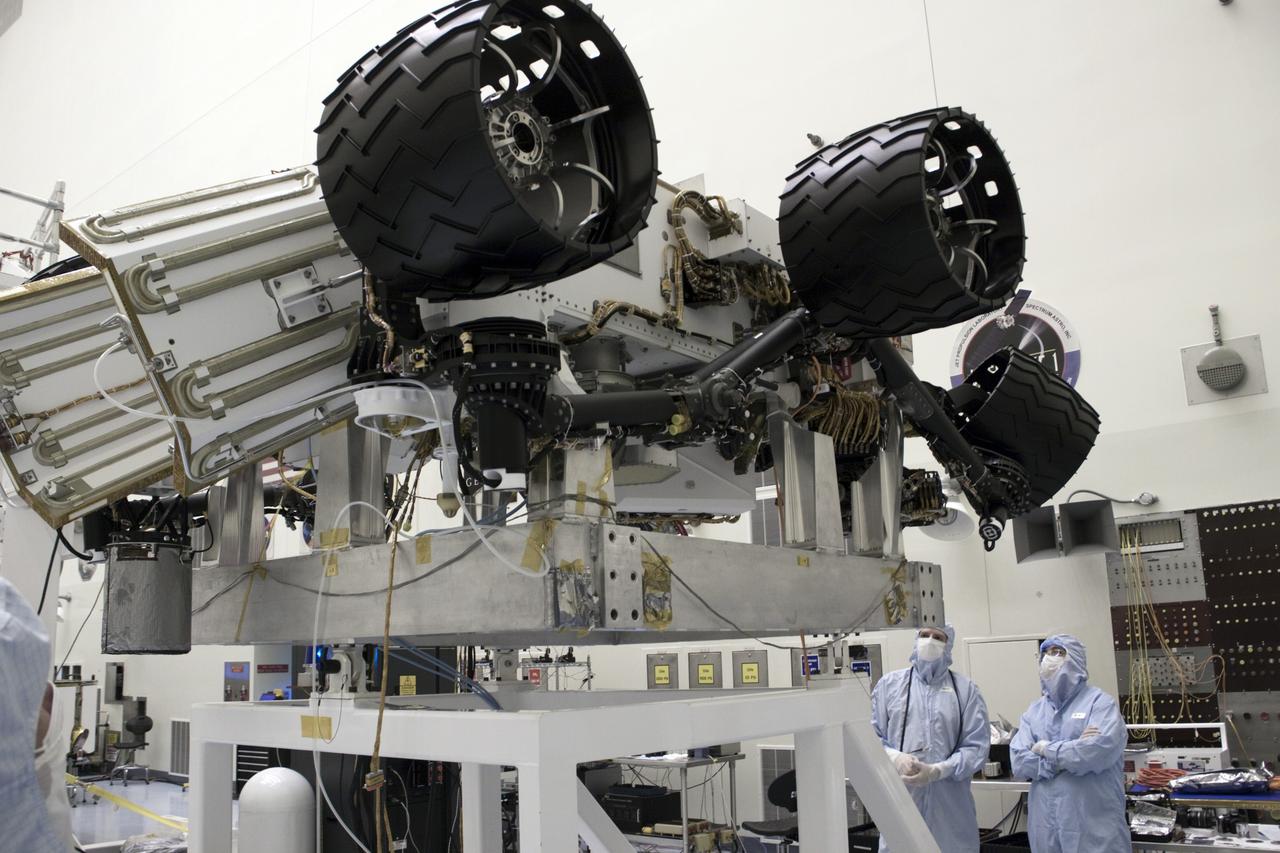
Cape Canaveral, Fla. -- At the Payload Hazardous Servicing Facility at NASA's Kennedy Space Center in Florida, Dr. Charles Elachi, Director of Advanced Planning at NASA's Jet Propulsion Laboratory (right), is shown NASA's Mars Science Laboratory (MSL) rover known as Curiosity. A United Launch Alliance Atlas V-541 configuration will be used to loft MSL into space. Curiosity’s 10 science instruments are designed to search for evidence on whether Mars has had environments favorable to microbial life, including chemical ingredients for life. The unique rover will use a laser to look inside rocks and release its gasses so that the rover’s spectrometer can analyze and send the data back to Earth. MSL is scheduled to launch from Cape Canaveral Air Force Station in Florida Nov. 25 with a window extending to Dec. 18 and arrival at Mars Aug. 2012. For more information, visit http://www.nasa.gov/msl. Photo credit: NASA/Jim Grossmann
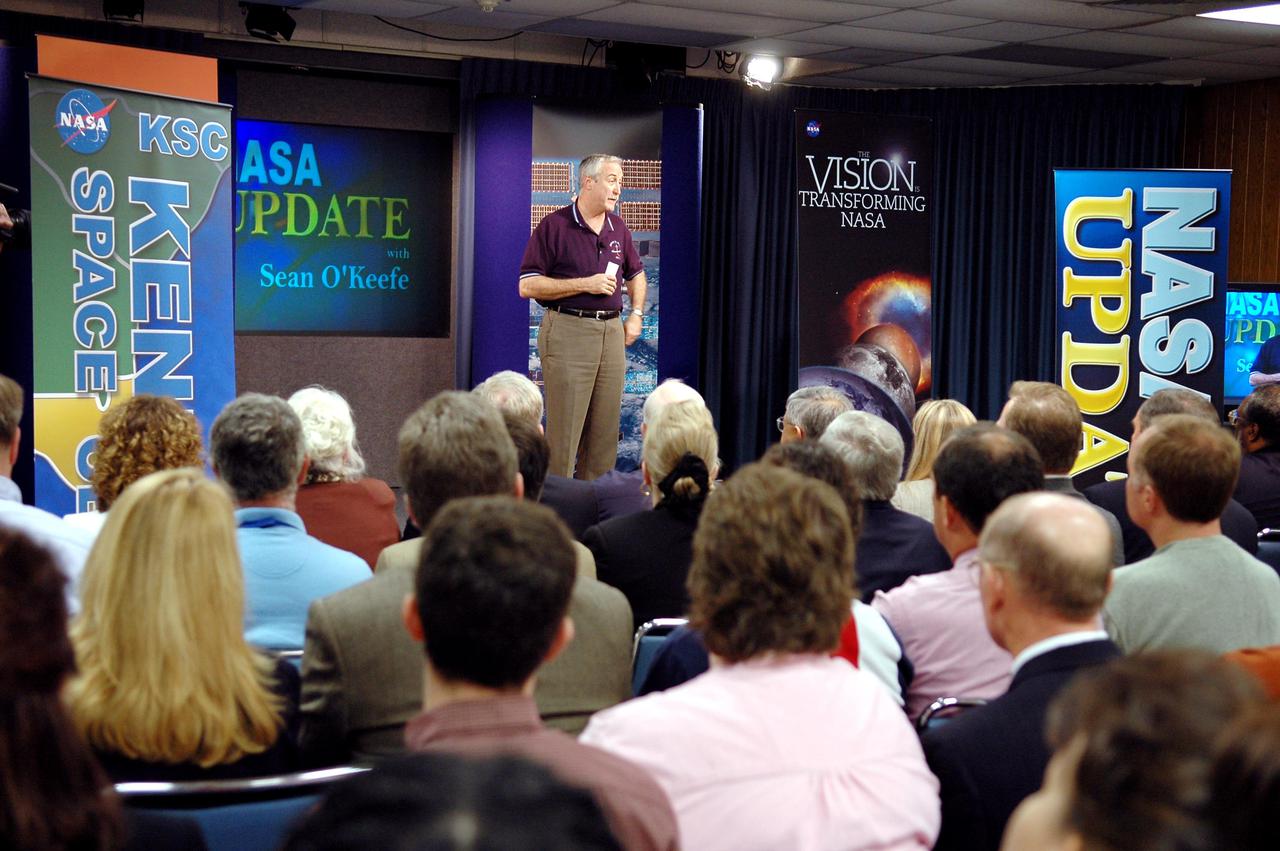
KENNEDY SPACE CENTER, FLA. - NASA Administrator Sean O’Keefe reports to employees on the state of the Agency from the Press Site Auditorium. The update was broadcast live via NASA Television. O'Keefe focused on the achievements of 2004 and the goals set for 2005. His remarks emphasized the milestones met in NASA's Vision for Space Exploration, including the launch of the comet-chasing Deep Impact mission and the landing of the Huygens probe on Jupiter’s moon Titan, both occurring in the past two days, and the progress made in meeting the requirements to return the Space Shuttle to flight. O’Keefe’s briefing included a dialogue with Associate Administrator of NASA’s Office of Exploration Systems Craig Steidle and Center Director Jim Kennedy, live; and Manager of the Space Station Office Bill Gerstenmaier and Director of Advanced Planning and Jet Propulsion Laboratory Charles Elachi, via satellite.
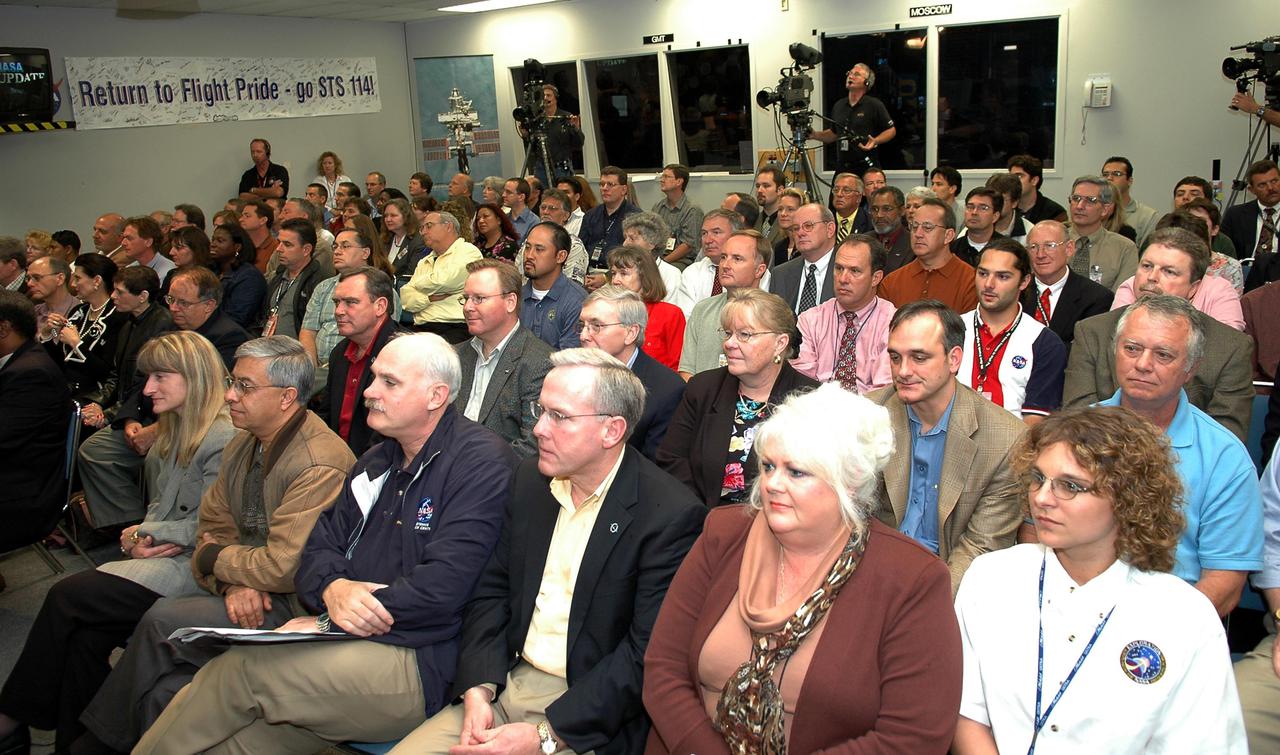
KENNEDY SPACE CENTER, FLA. - In the Press Site Auditorium, NASA managers and employees listen to NASA Administrator Sean O'Keefe's report on the state of the Agency. The update was broadcast live via NASA Television. O'Keefe focused on the achievements of 2004 and the goals set for 2005. His remarks emphasized the milestones met in NASA's Vision for Space Exploration, including the launch of the comet-chasing Deep Impact mission and the landing of the Huygens probe on Jupiter’s moon Titan, both occurring in the past two days, and the progress made in meeting the requirements to return the Space Shuttle to flight. O’Keefe’s briefing included a dialogue with Associate Administrator of NASA’s Office of Exploration Systems Craig Steidle and Center Director Jim Kennedy, live; and Manager of the Space Station Office Bill Gerstenmaier and Director of Advanced Planning and Jet Propulsion Laboratory Charles Elachi, via satellite.
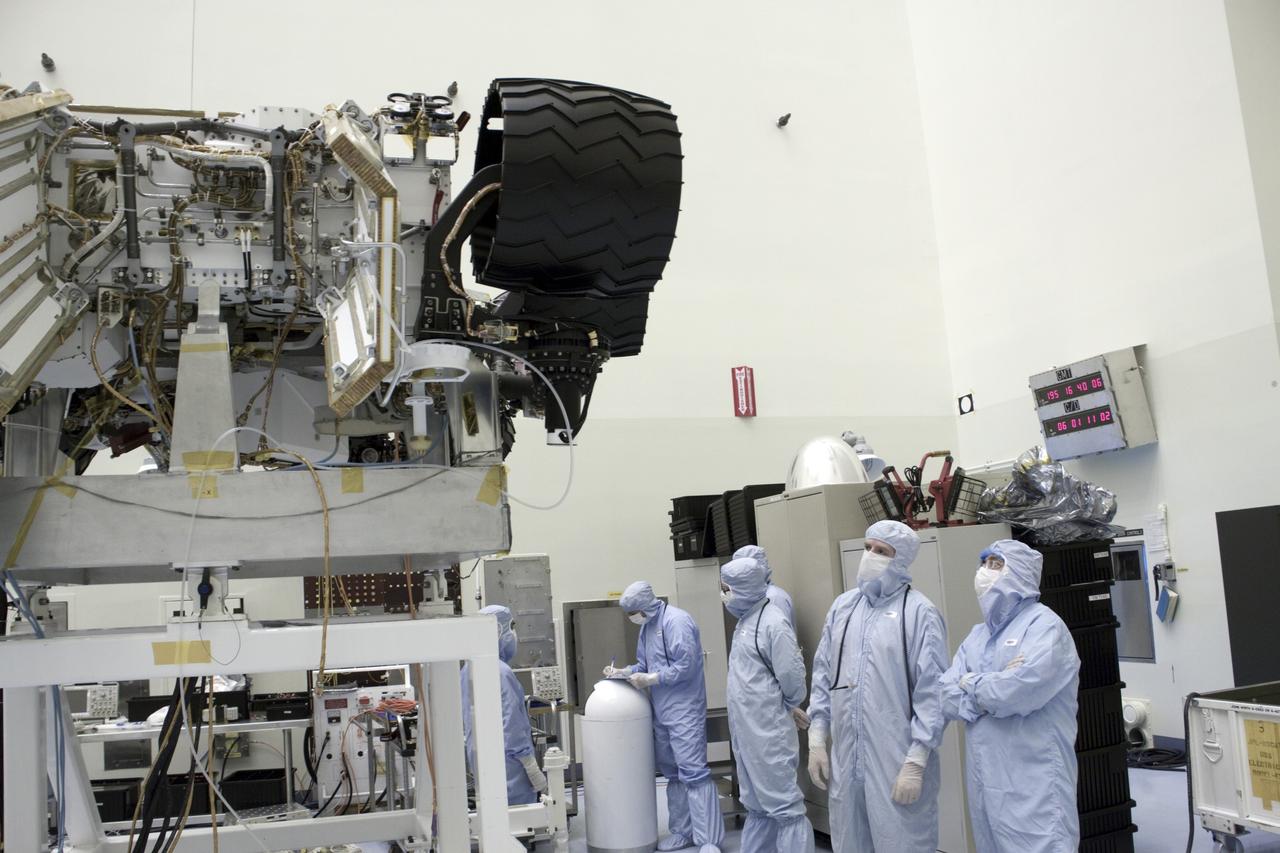
Cape Canaveral, Fla. -- At the Payload Hazardous Servicing Facility at NASA's Kennedy Space Center in Florida, Dr. Charles Elachi, Director of Advanced Planning at NASA's Jet Propulsion Laboratory (right), is shown NASA's Mars Science Laboratory (MSL) rover known as Curiosity. A United Launch Alliance Atlas V-541 configuration will be used to loft MSL into space. Curiosity’s 10 science instruments are designed to search for evidence on whether Mars has had environments favorable to microbial life, including chemical ingredients for life. The unique rover will use a laser to look inside rocks and release its gasses so that the rover’s spectrometer can analyze and send the data back to Earth. MSL is scheduled to launch from Cape Canaveral Air Force Station in Florida Nov. 25 with a window extending to Dec. 18 and arrival at Mars Aug. 2012. For more information, visit http://www.nasa.gov/msl. Photo credit: NASA/Jim Grossmann
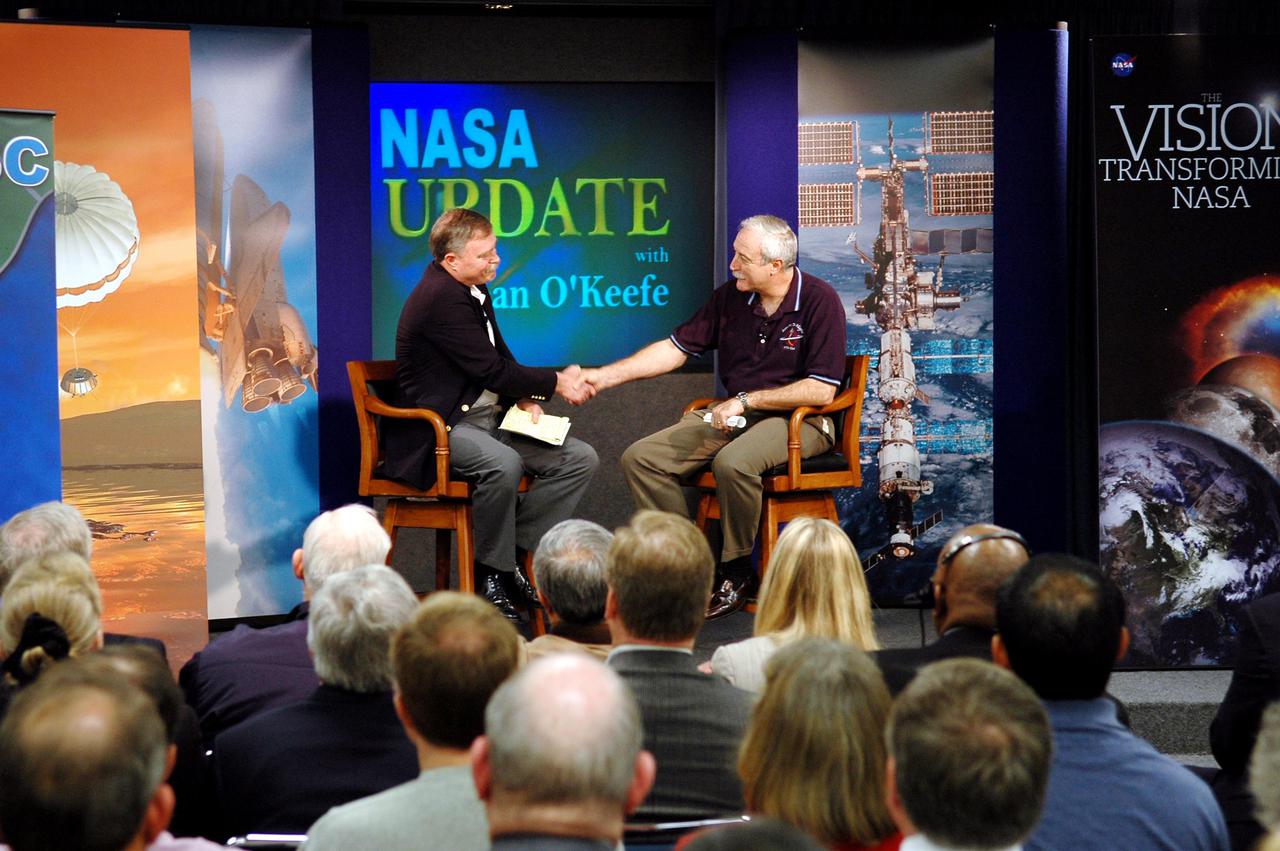
KENNEDY SPACE CENTER, FLA. - NASA Administrator Sean O’Keefe (right) is accompanied on stage in the Press Site Auditorium by Associate Administrator of NASA’s Office of Exploration Systems Craig Steidle for a report to employees on the state of the Agency. The update was broadcast live via NASA Television. O'Keefe focused on the achievements of 2004 and the goals set for 2005. His remarks emphasized the milestones met in NASA's Vision for Space Exploration, including the launch of the comet-chasing Deep Impact mission and the landing of the Huygens probe on Jupiter’s moon Titan, both occurring in the past two days, and the progress made in meeting the requirements to return the Space Shuttle to flight. O’Keefe’s briefing included a dialogue with Associate Administrator of NASA’s Office of Exploration Systems Craig Steidle and Center Director Jim Kennedy, live; and Manager of the Space Station Office Bill Gerstenmaier and Director of Advanced Planning and Jet Propulsion Laboratory Charles Elachi, via satellite.
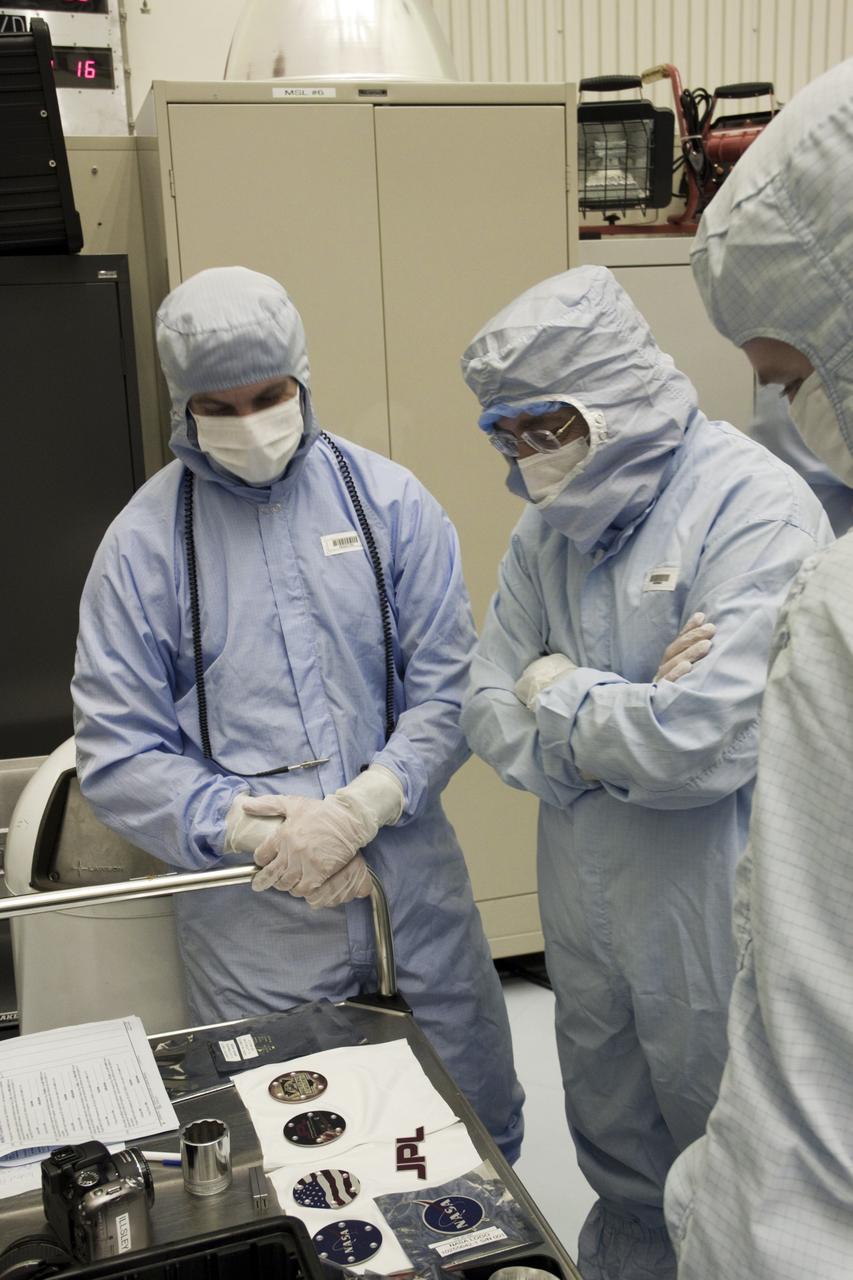
Cape Canaveral, Fla. -- At the Payload Hazardous Servicing Facility at NASA's Kennedy Space Center in Florida, Dr. Charles Elachi, Director of Advanced Planning at NASA's Jet Propulsion Laboratory (center), is shown the medallions that will be affixed to NASA's Mars Science Laboratory (MSL) rover known as Curiosity during processing for flight. A United Launch Alliance Atlas V-541 configuration will be used to loft MSL into space. Curiosity’s 10 science instruments are designed to search for evidence on whether Mars has had environments favorable to microbial life, including chemical ingredients for life. The unique rover will use a laser to look inside rocks and release its gasses so that the rover’s spectrometer can analyze and send the data back to Earth. MSL is scheduled to launch from Cape Canaveral Air Force Station in Florida Nov. 25 with a window extending to Dec. 18 and arrival at Mars Aug. 2012. For more information, visit http://www.nasa.gov/msl. Photo credit: NASA/Jim Grossmann
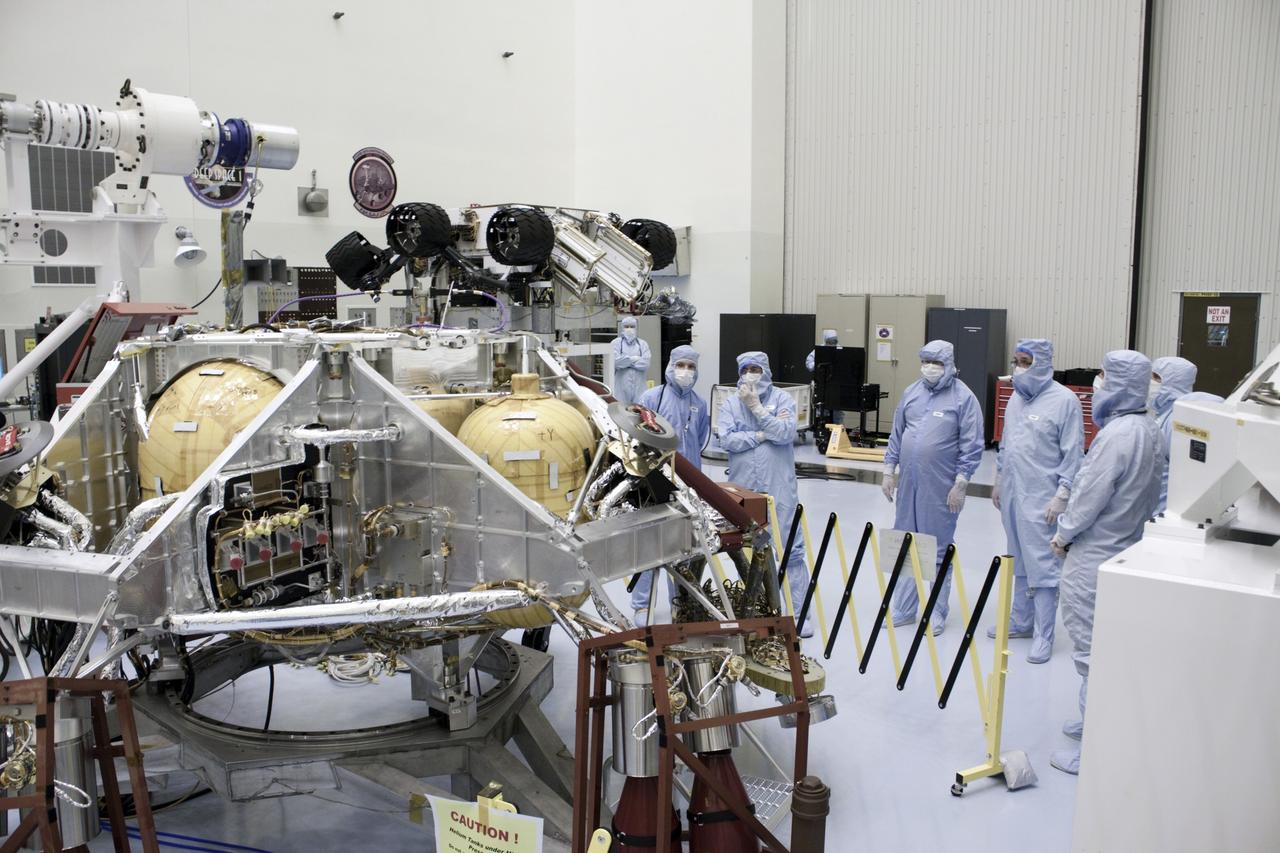
Cape Canaveral, Fla. -- Dr. Charles Elachi, Director of Advanced Planning at NASA's Jet Propulsion Laboratory, third from left, looks over the rocket-powered descent stage for NASA's Mars Science Laboratory (MSL) rover, known as Curiosity, as it sits in a work stand at the Payload Hazardous Servicing Facility at NASA's Kennedy Space Center in Florida. A United Launch Alliance Atlas V-541 configuration will be used to loft MSL into space. Curiosity’s 10 science instruments are designed to search for evidence on whether Mars has had environments favorable to microbial life, including chemical ingredients for life. The unique rover will use a laser to look inside rocks and release its gasses so that the rover’s spectrometer can analyze and send the data back to Earth. MSL is scheduled to launch from Cape Canaveral Air Force Station in Florida Nov. 25 with a window extending to Dec. 18 and arrival at Mars Aug. 2012. For more information, visit http://www.nasa.gov/msl. Photo credit: NASA/Jim Grossmann