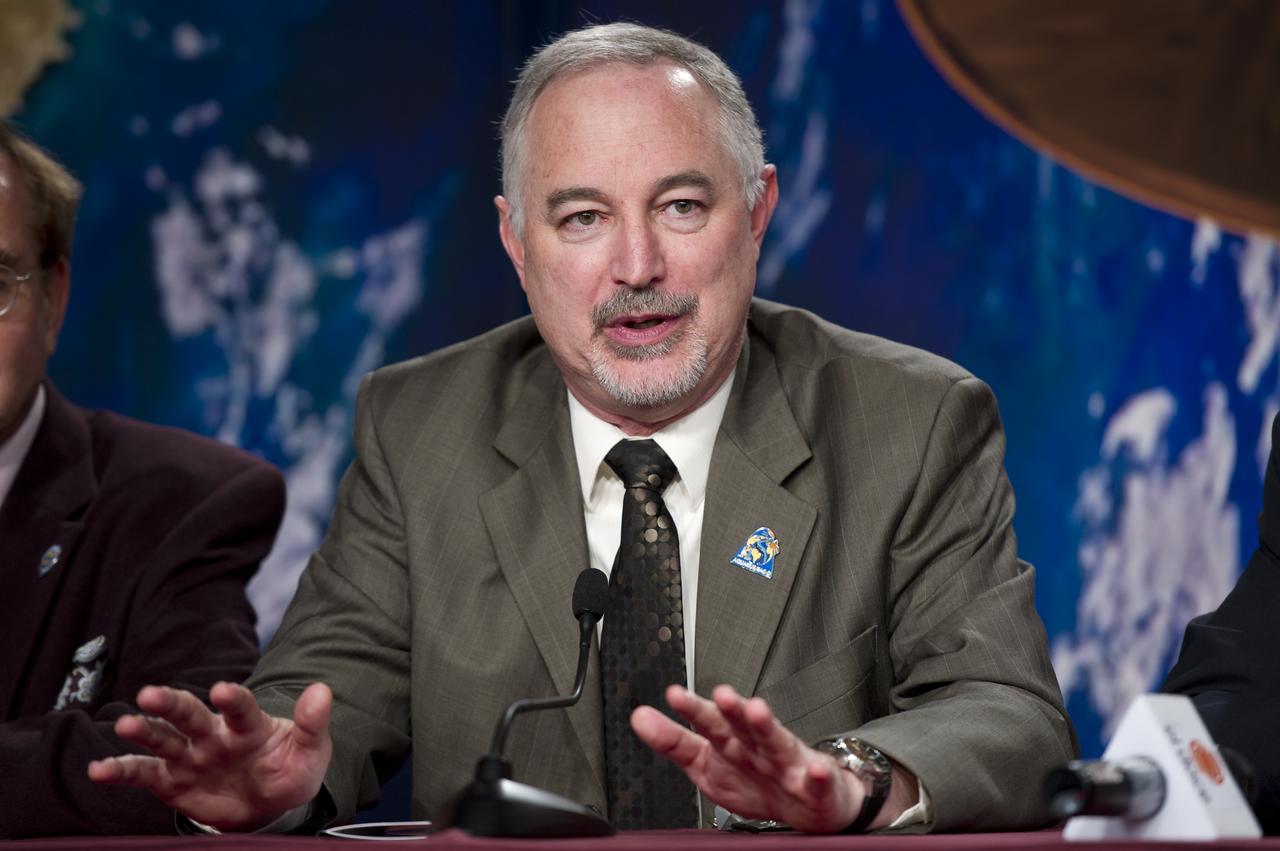
Charles Gay, Deputy Associate Administrator, NASA Science Mission Directorate, talks during the Aquarius/SAC-D post-launch press conference on Friday, June 10, 2011 at the NASA Resident Office, Vandenberg Air Force Base, Calif. The joint U.S./Argentinian Aquarius/Satélite de Aplicaciones Científicas (SAC)-D mission, launched earlier on Friday June 10, will map the salinity at the ocean surface, information critical to improving our understanding of two major components of Earth's climate system: the water cycle and ocean circulation. Photo Credit: (NASA/Bill Ingalls)
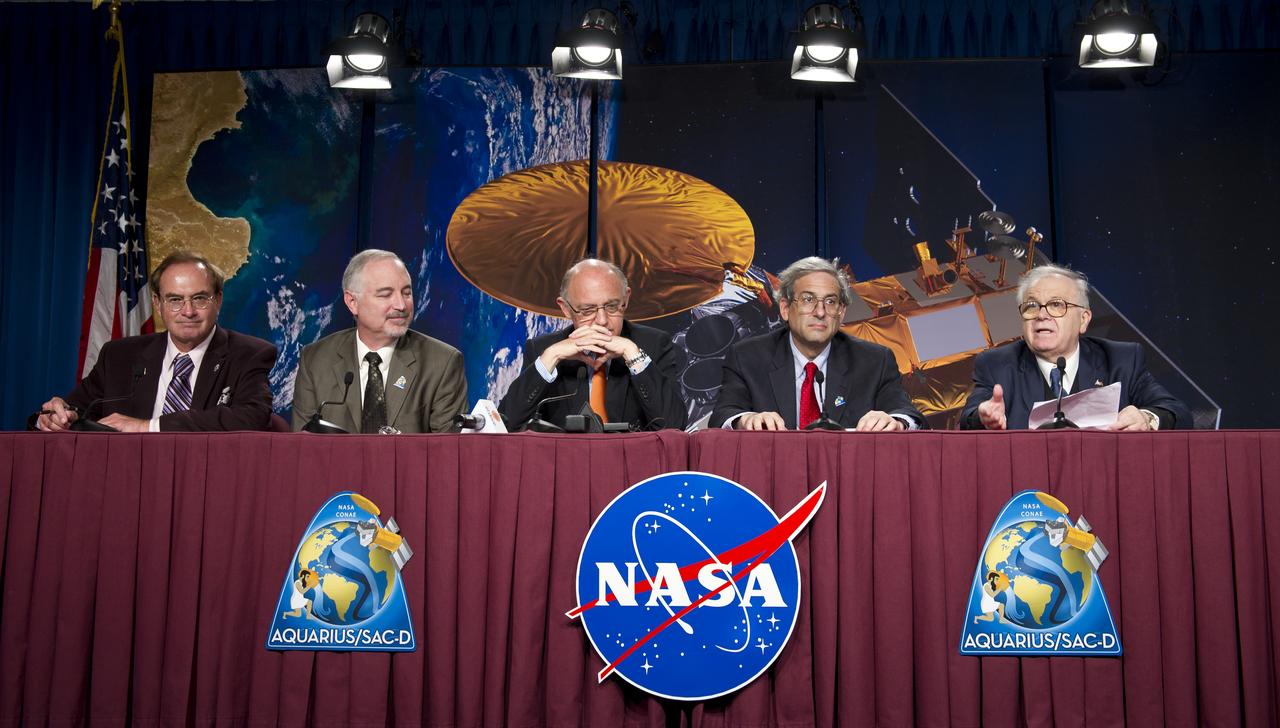
From left, George Diller, NASA Public Affairs Officer; Charles Gay, Deputy Associate Administrator, NASA Science Mission Directorate; Hector Timerman, Foreign Minister of Argentina, Buenos Aires; Michael Freilich, NASA Earth Science Division Director, NASA Headquarters; and Conrado Varotto, CONAE Executive and Technical Director, Buenos Aires, are seen at the Aquarius/SAC-D post-launch press conference on Friday, June 10, 2011 at the NASA Resident Office, Vandenberg Air Force Base, Calif. The joint U.S./Argentinian Aquarius/Satélite de Aplicaciones Científicas (SAC)-D mission, launched earlier on Friday June 10, will map the salinity at the ocean surface, information critical to improving our understanding of two major components of Earth's climate system: the water cycle and ocean circulation. Photo Credit: (NASA/Bill Ingalls)
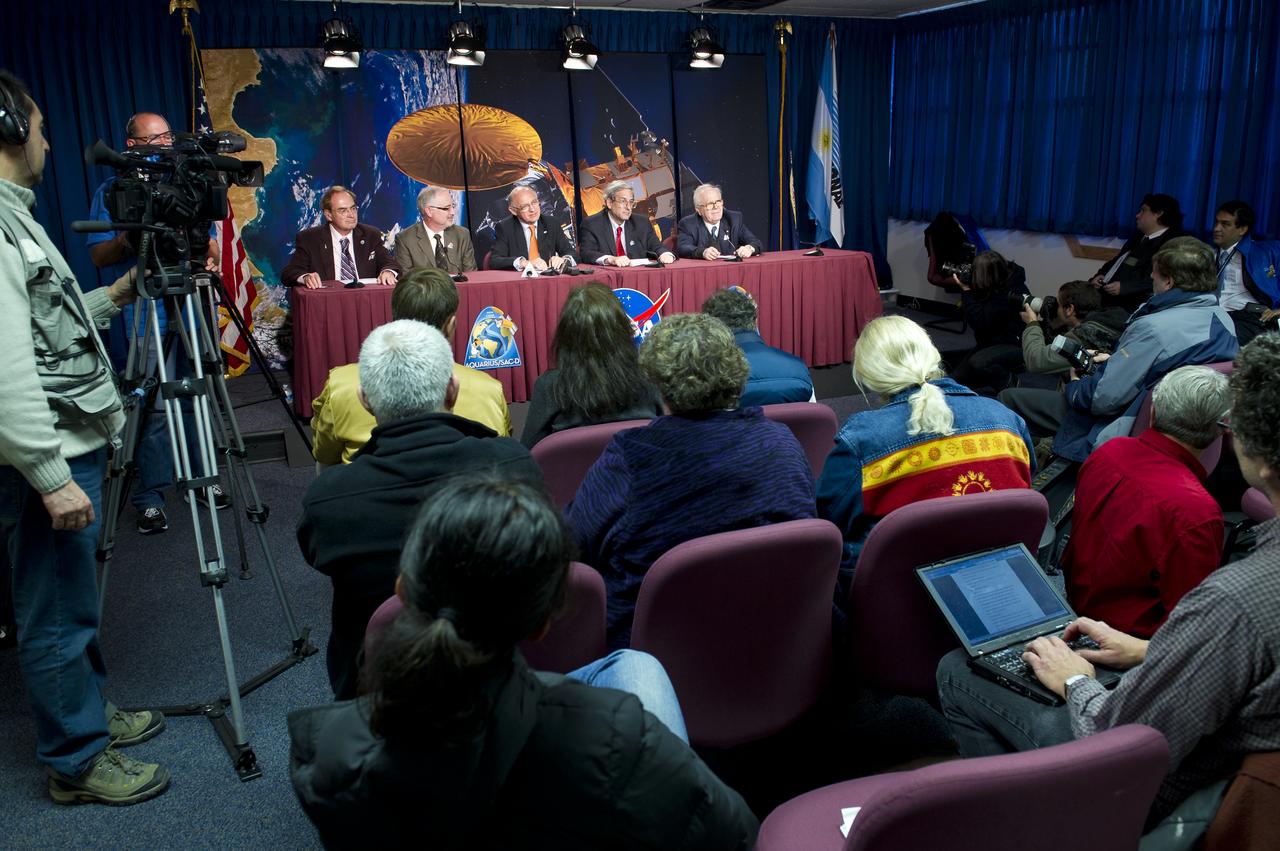
Seated from left, George Diller, NASA Public Affairs Officer; Charles Gay, Deputy Associate Administrator, NASA Science Mission Directorate; Hector Timerman, Foreign Minister of Argentina, Buenos Aires; Michael Freilich, NASA Earth Science Division Director, NASA Headquarters; and Conrado Varotto, CONAE Executive and Technical Director, Buenos Aires, are seen at the Aquarius/SAC-D post-launch press conference on Friday, June 10, 2011 at the NASA Resident Office, Vandenberg Air Force Base, Calif. The joint U.S./Argentinian Aquarius/Satélite de Aplicaciones Científicas (SAC)-D mission, launched earlier on Friday June 10, will map the salinity at the ocean surface, information critical to improving our understanding of two major components of Earth's climate system: the water cycle and ocean circulation. Photo Credit: (NASA/Bill Ingalls)
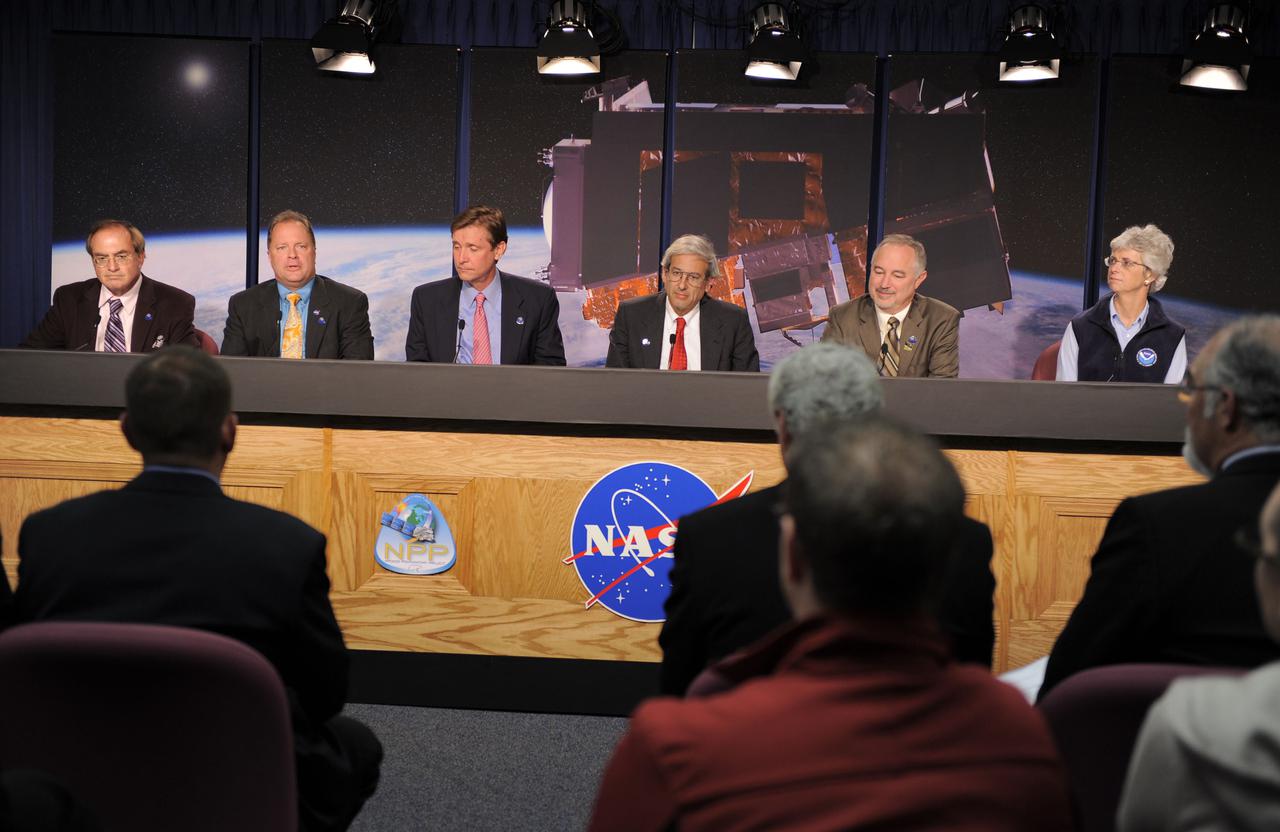
VANDENBERG AIR FORCE BASE, Calif. -- At Vandenberg Air Force Base in California, NASA and NOAA managers participate in a news briefing following the successful launch of NASA's National Polar-orbiting Operational Environmental Satellite System Preparatory Project (NPP) aboard a United Launch Alliance Delta II rocket. From left are George Diller, NASA Public Affairs; Ken Schwer, NPP project manager, NASA's Goddard Space Flight Center; Jim Gleason, NPP project scientist, NASA's Goddard Space Flight Center; Mike Frielich, director, NASA Earth Science Division; Charles Gay, acting associate administrator, NASA Mission Directorate; and Mary Glackin, deputy undersecretary for Operations, National Oceanic and Atmospheric Administration. Launch was at 2:48 a.m. PDT. NPP represents a critical first step in building the next-generation of Earth-observing satellites. NPP will carry the first of the new sensors developed for this satellite fleet, now known as the Joint Polar Satellite System (JPSS) to be launched in 2016. NPP is the bridge between NASA's Earth Observing System (EOS) satellites and the forthcoming series of JPSS satellites. The mission will test key technologies and instruments for the JPSS missions. For more information, visit http:__www.nasa.gov_NPP. Photo credit: NASA_Kim Shiflett