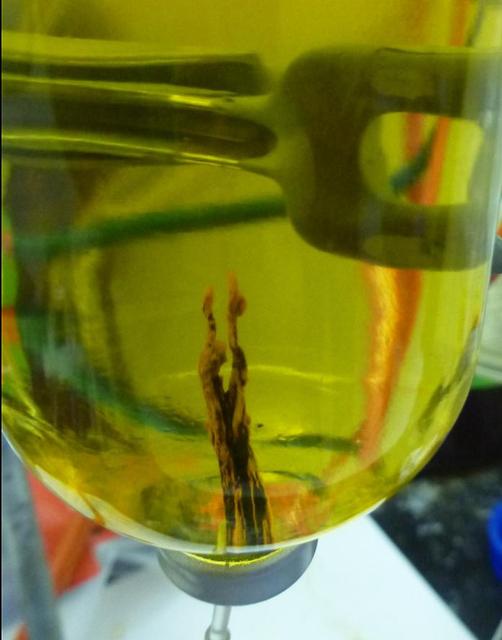
A laboratory-created "chemical garden" made of a combination of black iron sulfide and orange iron hydroxide/oxide is shown in this photo. Chemical gardens are a nickname for chimney-like structures that form at bubbling vents on the seafloor. Some researchers think that life may have originated at structures like these billions of years ago. JPL's research team is part of the Icy Worlds team of the NASA Astrobiology Institute, based at NASA's Ames Research Center in Moffett Field, California. JPL is managed by the California Institute of Technology in Pasadena for NASA. http://photojournal.jpl.nasa.gov/catalog/PIA19835
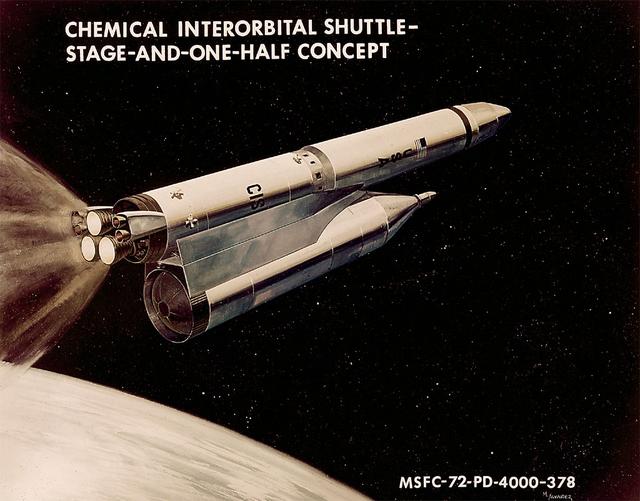
In 1970, NASA initiated Phase A contracts to study alternate Space Shuttle designs in addition to the two-stage fully-reusable Space Shuttle system already under development. A number of alternate systems were developed to ensure the development of the optimum earth-to-orbit system, including the Stage-and-a-half Chemical Interorbital Shuttle, shown here. The concept would utilize a reusable marned spacecraft with an onboard propulsion system attached to an expendable fuel tank to provide supplementary propellants.
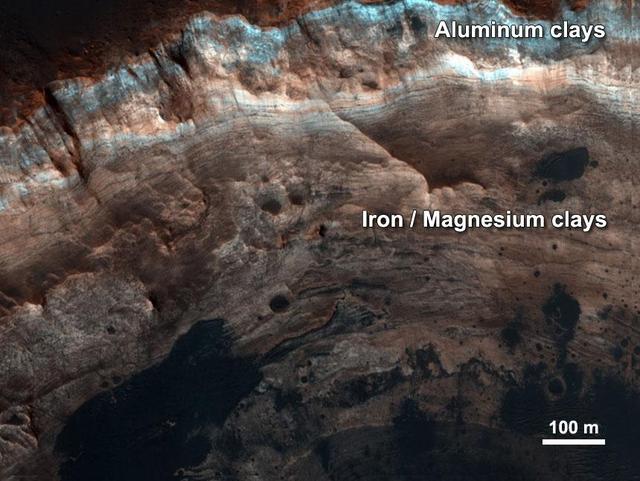
Thick stacks of clay minerals indicate chemical alteration of thick stacks of rock by interaction with liquid water on ancient Mars as seen in this image from NASA Mars Reconnaissance Orbiter.
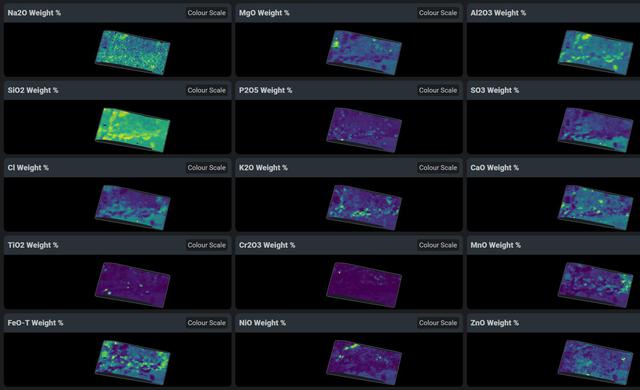
This data shows chemicals detected within a single rock on Mars by the Planetary Instrument for X-ray Lithochemistry (PIXL), one of the instruments on the end of the robotic arm aboard NASA's Perseverance Mars rover. PIXL allows scientists to study where specific chemicals can be found within an area as small as a postage stamp. A key objective for Perseverance's mission on Mars is astrobiology, including the search for signs of ancient microbial life. The rover will characterize the planet's geology and past climate, pave the way for human exploration of the Red Planet, and be the first mission to collect and cache Martian rock and regolith (broken rock and dust). Subsequent NASA missions, in cooperation with ESA (European Space Agency), would send spacecraft to Mars to collect these sealed samples from the surface and return them to Earth for in-depth analysis. The Mars 2020 Perseverance mission is part of NASA's Moon to Mars exploration approach, which includes Artemis missions to the Moon that will help prepare for human exploration of the Red Planet. https://photojournal.jpl.nasa.gov/catalog/PIA24762

This artist conception shows a young, hypothetical planet around a cool star. A soupy mix of potentially life-forming chemicals can be seen pooling around the base of the jagged rocks.
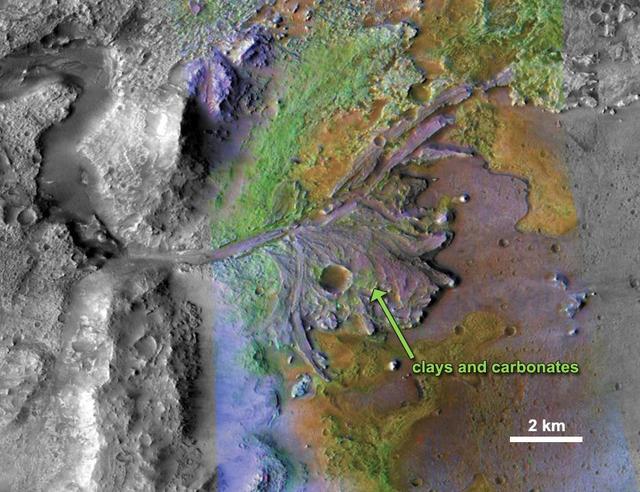
On ancient Mars, water carved channels and transported sediments to form fans and deltas within lake basins. Spectral data acquired by NASA Mars Reconnaissance Orbiter, indicate chemical alteration by water.
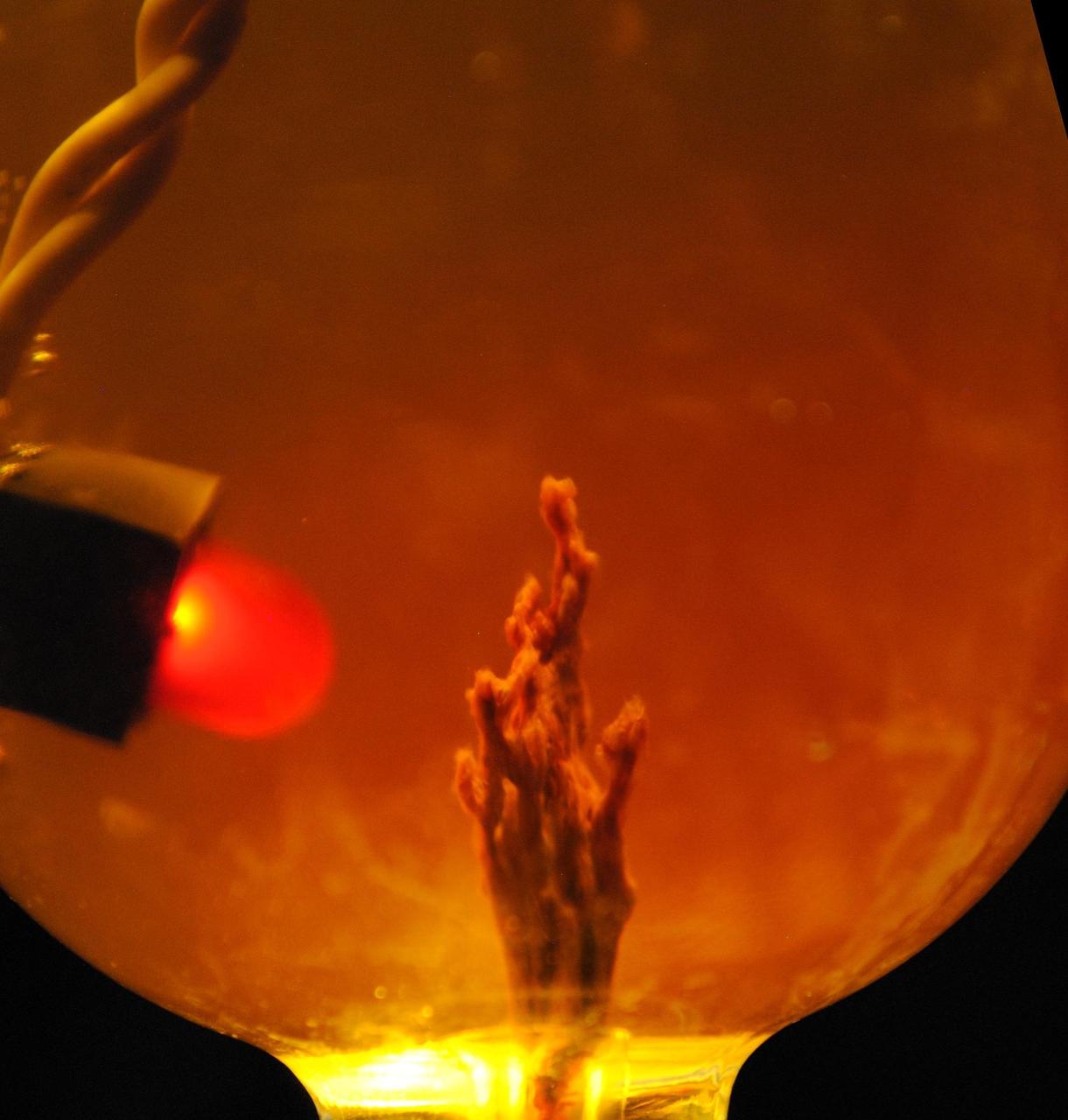
This photo simulation shows a laboratory-created "chemical garden," which is a chimney-like structure found at bubbling vents on the seafloor. Some researchers think life on Earth might have got its start at structures like these billions of years ago, partly due to their ability to transfer electrical currents -- an essential trait of life as we know it. The battery-like property of these chemical gardens was demonstrated by linking several together in series to light an LED (light-emitting diode) bulb. In this photo simulation, the bulb is not really attached to the chimney. The chimney membranes are made of iron sulfides and iron hydroxides, geologic materials that conduct electrons. JPL's research team is part of the Icy Worlds team of the NASA Astrobiology Institute, based at NASA's Ames Research Center in Moffett Field, California. JPL is managed by the California Institute of Technology in Pasadena for NASA. http://photojournal.jpl.nasa.gov/catalog/PIA19834
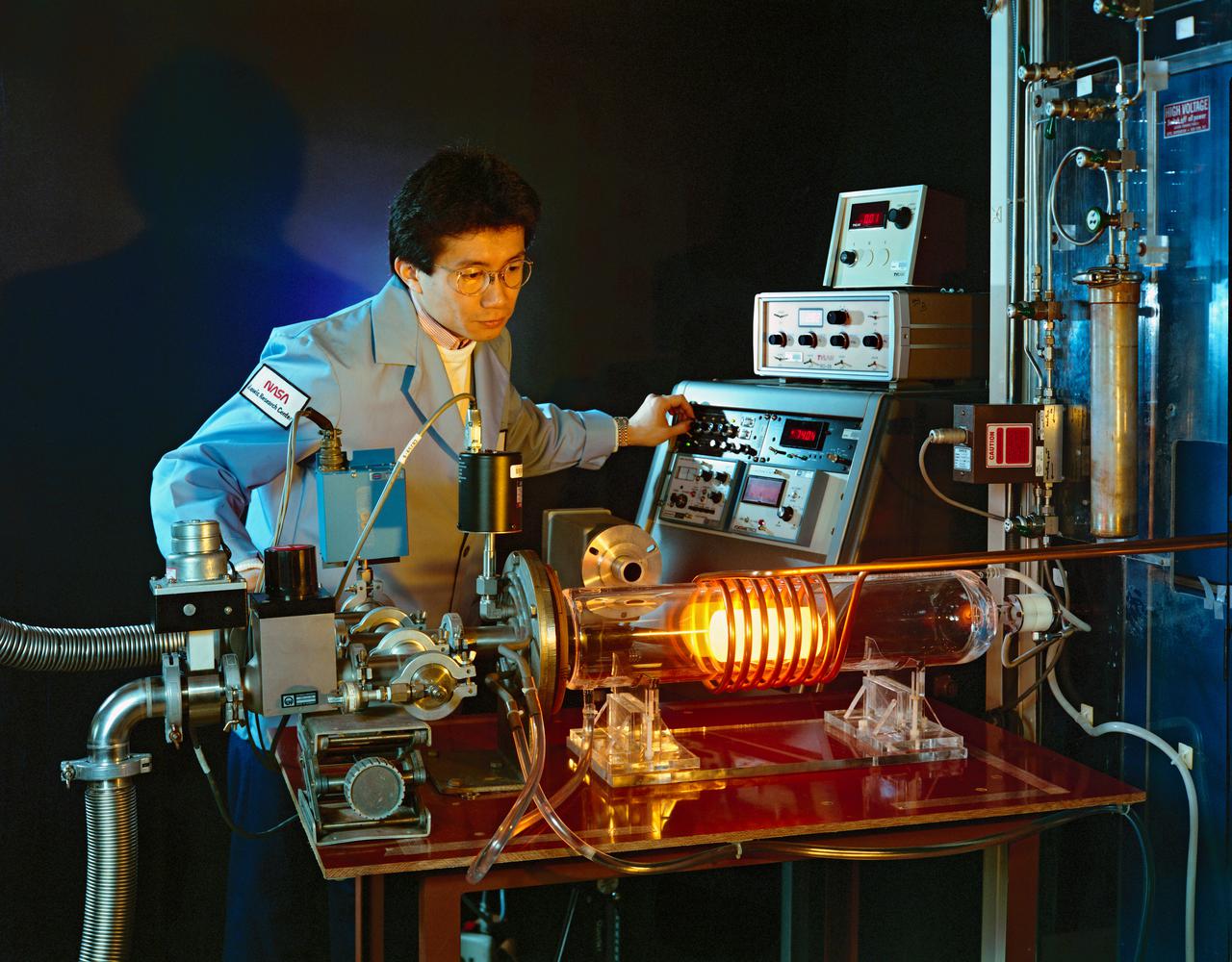
Shigehiro Nishino -- Visiting faculty fellow Dr. Shigehiro Nishino introduced the Lewis team to a unique chemical vapor deposition (CVD) strategy to grow silicon carbide crystals on silicon wafers.
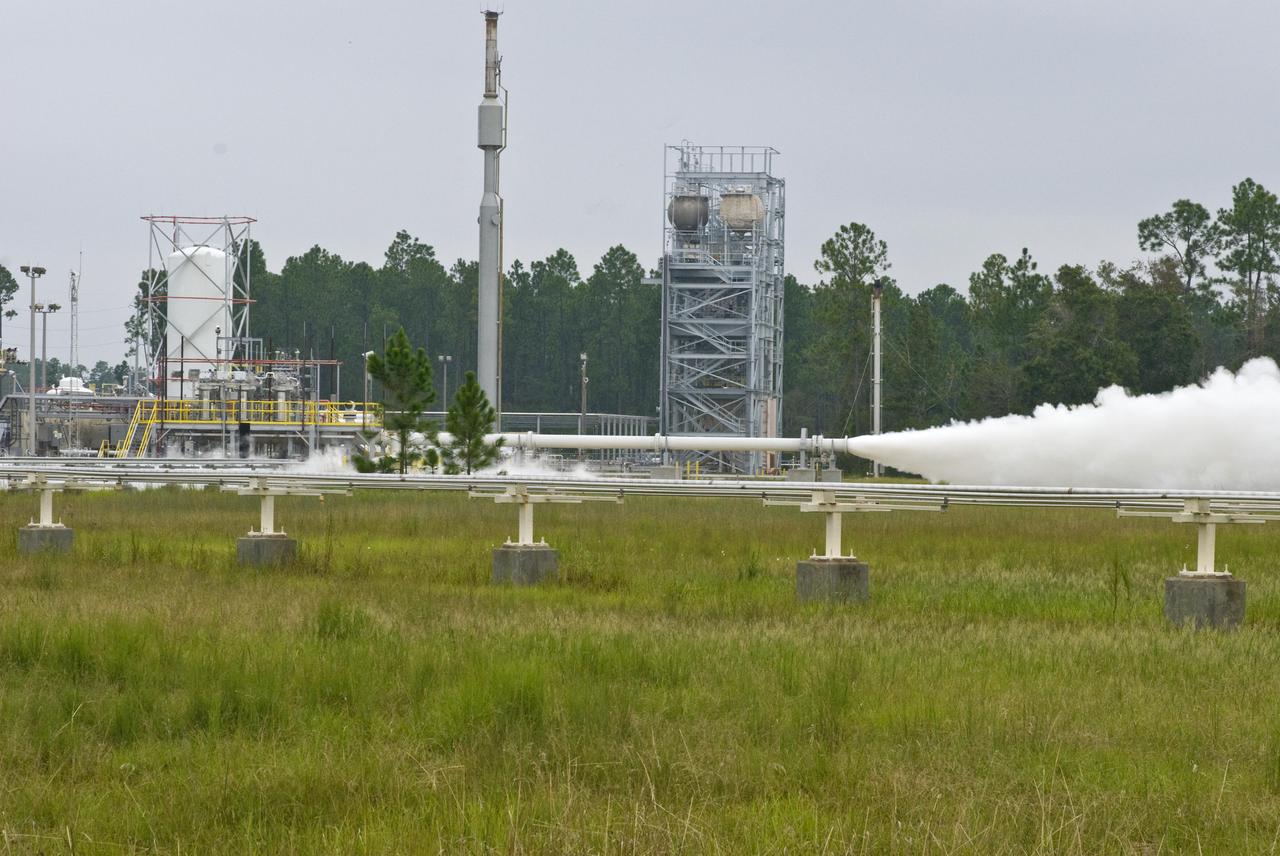
E-2 Test Stand team members at Stennis Space Center conducted their first series of tests on a three-module chemical steam generator unit Sept. 15. All three modules successfully fired during the tests. The chemical steam generator is a critical component for the A-3 Test Stand under construction at Stennis.

NASA engineers test a chemical steam generator (CSG) unit on the E-2 Test Stand at John C. Stennis Space Center on Nov. 6. The test was one of 27 conducted in Stennis' E Test Complex the week of Nov. 5. Twenty-seven CSG units will be used on the new A-3 Test Stand at Stennis to produce a vacuum that allows testing of engines at simulated altitudes up to 100,000 feet.
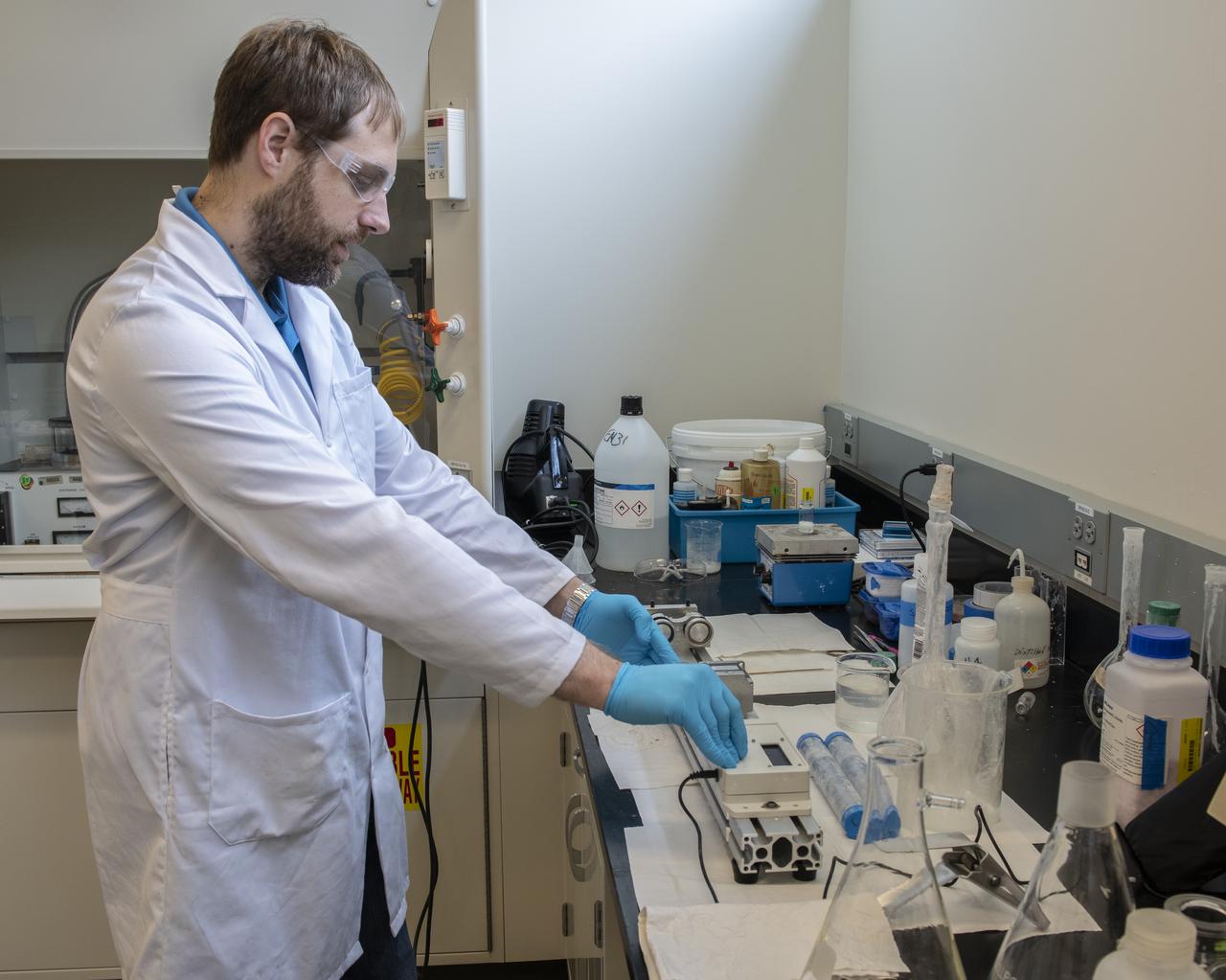
Alexander Blanchard, a chemistry doctoral student at Florida State University and graduate student at Marshall this summer, conducts analysis in a Marshall laboratory on the Chemical Gardens experiment, which is growing delicate crystalline structures in solution in the microgravity environment on the space station. Researchers hope the study could yield practical benefits for bioremediation and other "green" commercial applications.
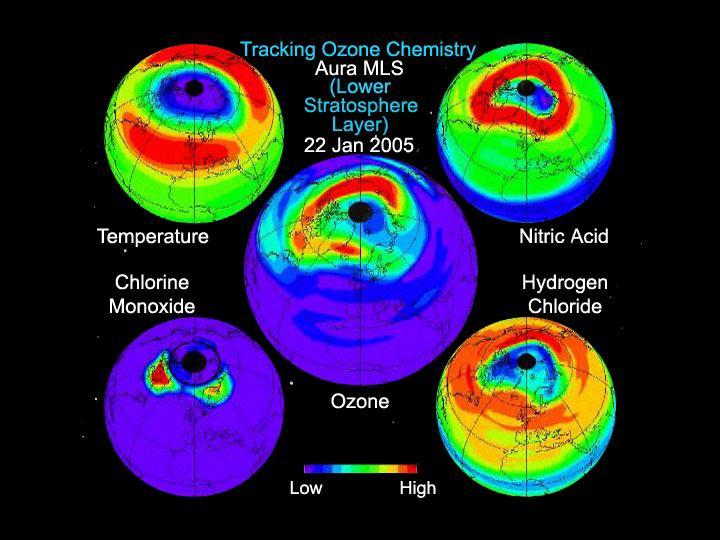
This still from an animation created from data from the Microwave Limb Sounder instrument on NASA Aura spacecraft depicts the complex interaction of chemicals involved in the destruction of ozone during the 2005 Arctic winter.
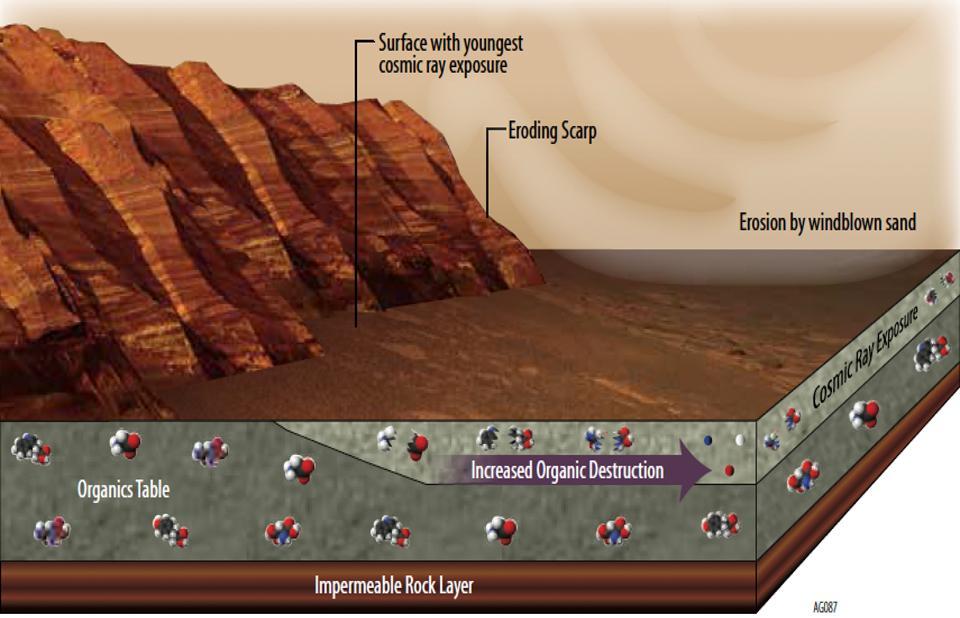
This illustration portrays some of the reasons why finding organic chemicals on Mars is challenging. Whatever organic chemicals may be produced on Mars or delivered to Mars face several possible modes of being transformed or destroyed.
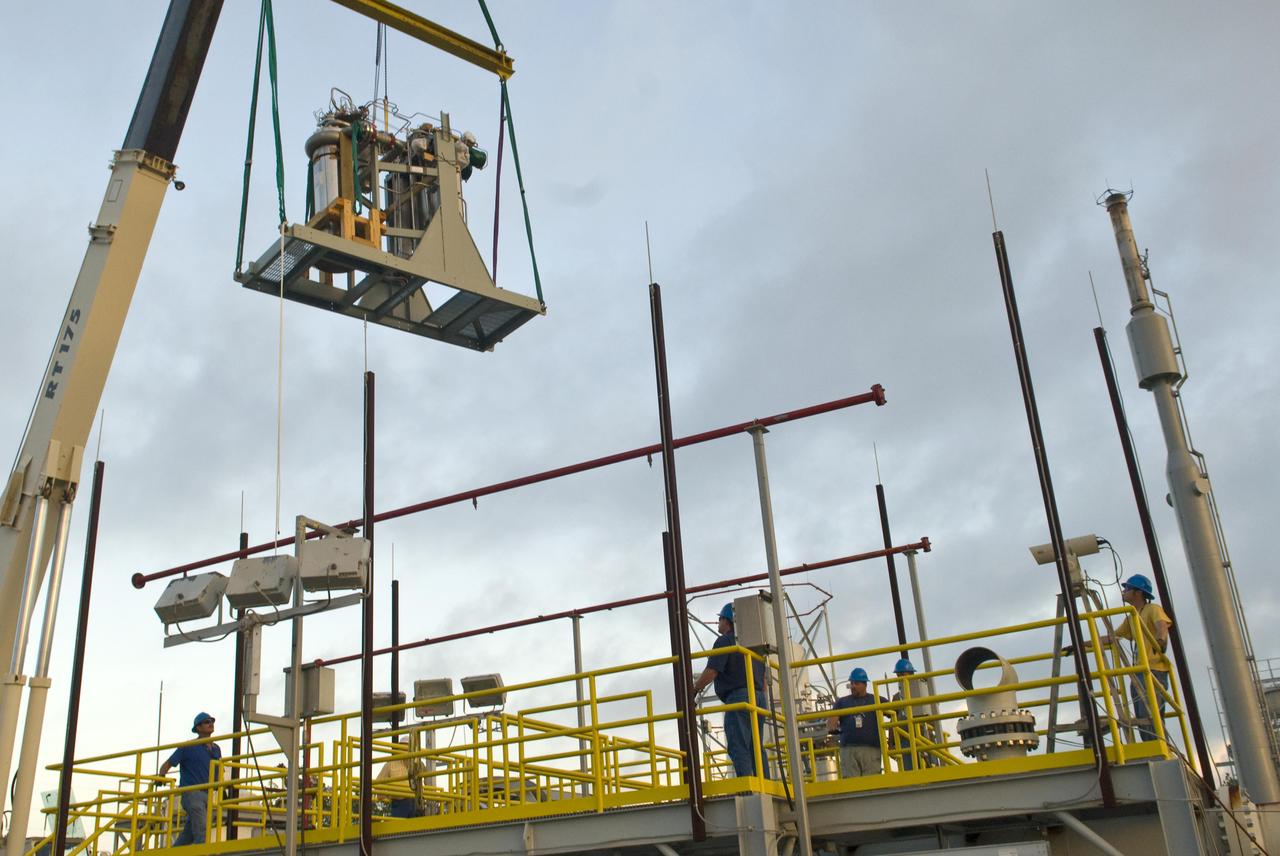
The first of nine chemical steam generator (CSG) units that will be used on the A-3 Test Stand is hoisted into place at the E-2 Test Stand at John C. Stennis Space Center on Oct. 24, 2010. The unit was installed at the E-2 stand for verification and validation testing before it is moved to the A-3 stand. Steam generated by the nine CSG units that will be installed on the A-3 stand will create a vacuum that allows Stennis operators to test next-generation rocket engines at simulated altitudes up to 100,000 feet.
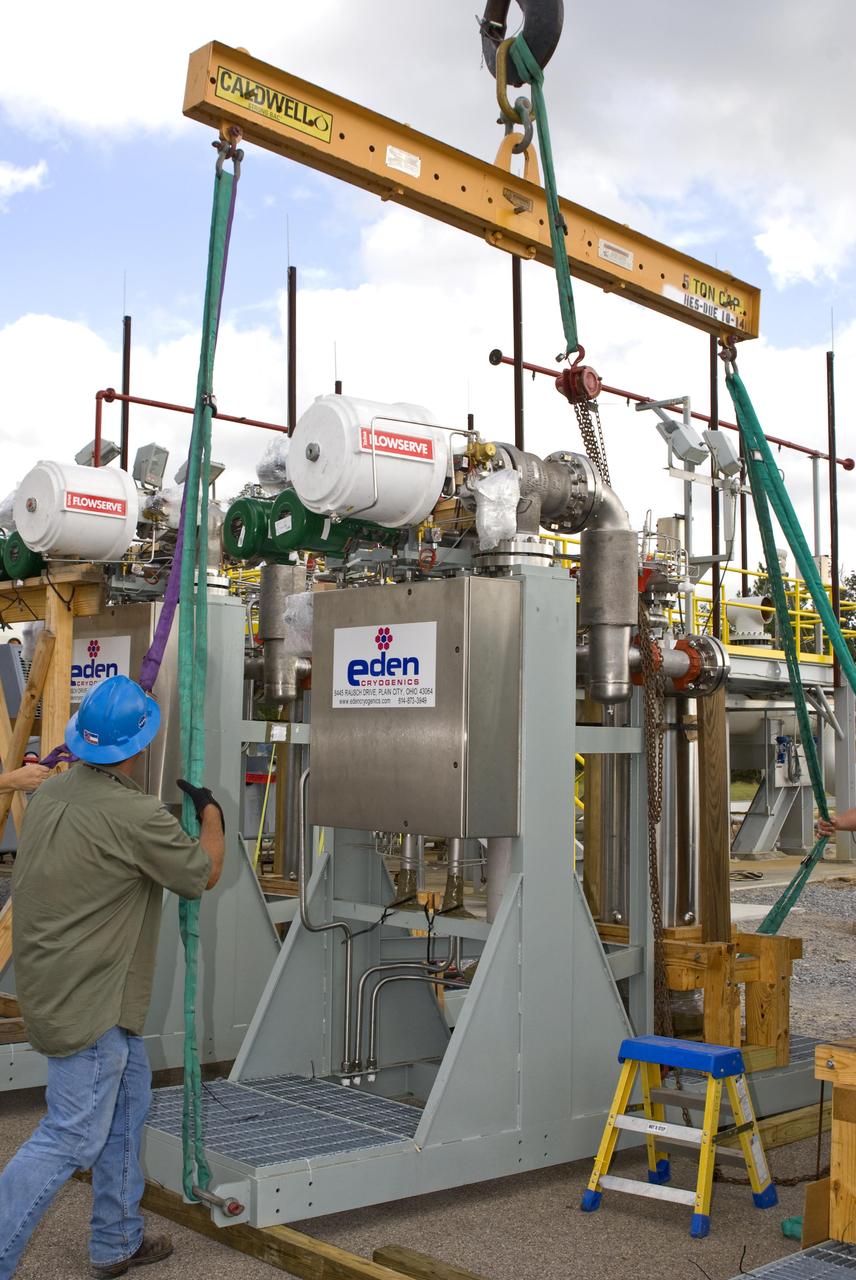
The first of nine chemical steam generator (CSG) units that will be used on the A-3 Test Stand is prepared for installation Oct. 24, 2010, at John C. Stennis Space Center. The unit was installed at the E-2 Test Stand for verification and validation testing before it is moved to the A-3 stand. Steam generated by the nine CSG units that will be installed on the A-3 stand will create a vacuum that allows Stennis operators to test next-generation rocket engines at simulated altitudes up to 100,000 feet.
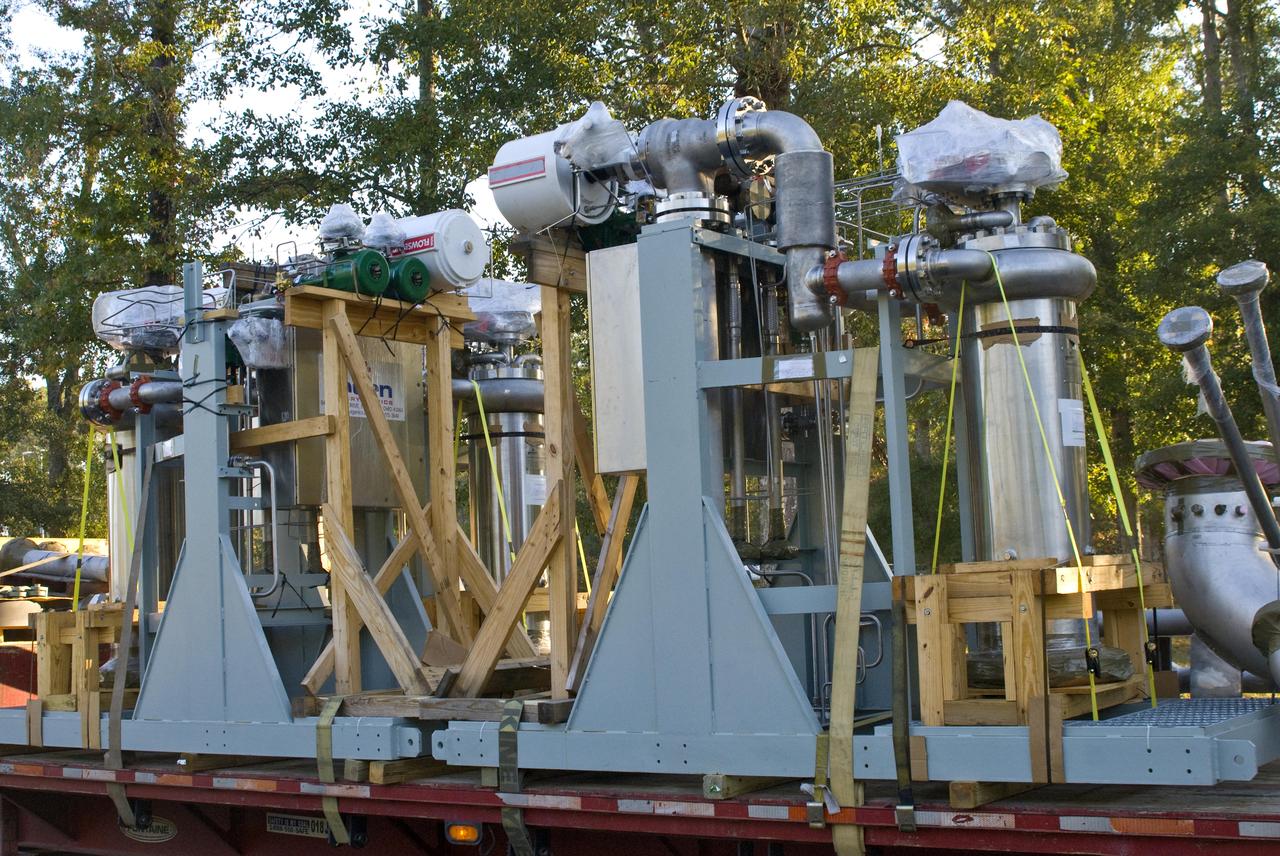
The first of nine chemical steam generator (CSG) units that will be used on the A-3 Test Stand arrived at John. C. Stennis Space Center on Oct. 22, 2010. The unit was installed at the E-2 Test Stand for verification and validation testing before it is moved to the A-3 stand. Steam generated by the nine CSG units that will be installed on the A-3 stand will create a vacuum that allows Stennis operators to test next-generation rocket engines at simulated altitudes up to 100,000 feet.
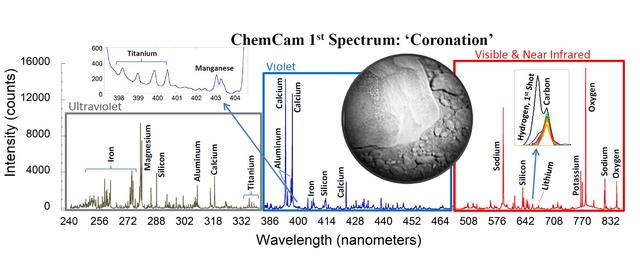
This is the first laser spectrum from the ChemCam instrument on NASA Curiosity rover, sent back from Mars on Aug. 19, 2012, showing emission lines from different elements present in the target, a rock near the rover landing site dubbed Coronation.

John C. Stennis Space Center employees complete installation of a chemical steam generator (CSG) unit at the site's E-2 Test Stand. On Oct. 24, 2010. The unit will undergo verification and validation testing on the E-2 stand before it is moved to the A-3 Test Stand under construction at Stennis. Each CSG unit includes three modules. Steam generated by the nine CSG units that will be installed on the A-3 stand will create a vacuum that allows Stennis operators to test next-generation rocket engines at simulated altitudes up to 100,000 feet.
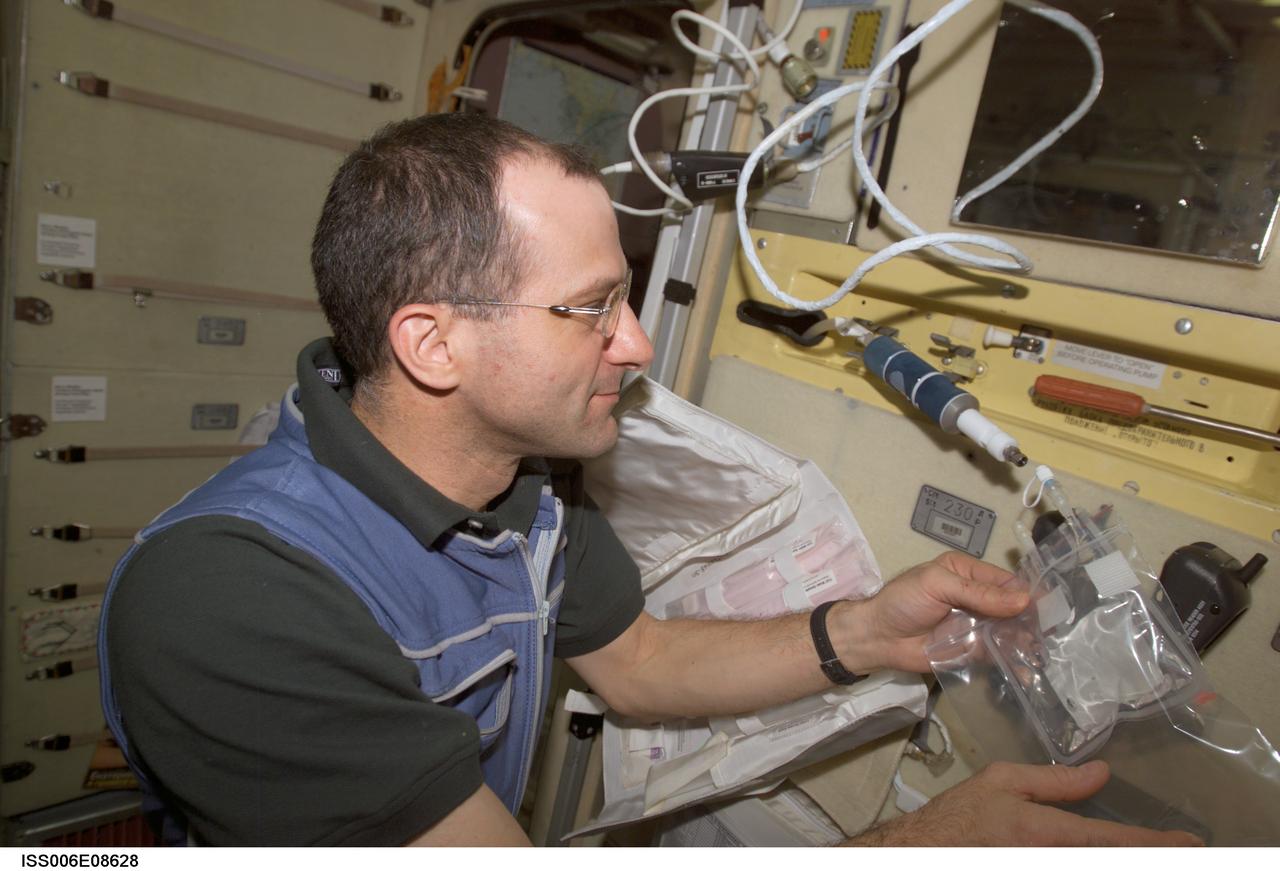
ISS006-E-08628 (18 December 2002) --- Astronaut Donald R. Pettit, Expedition Six NASA ISS science officer, is pictured in the Zvezda Service Module on the International Space Station (ISS) during the scheduled Week 3 potable water sampling and on-orbit chemical/microbial analysis of the SM environment control and life support system.
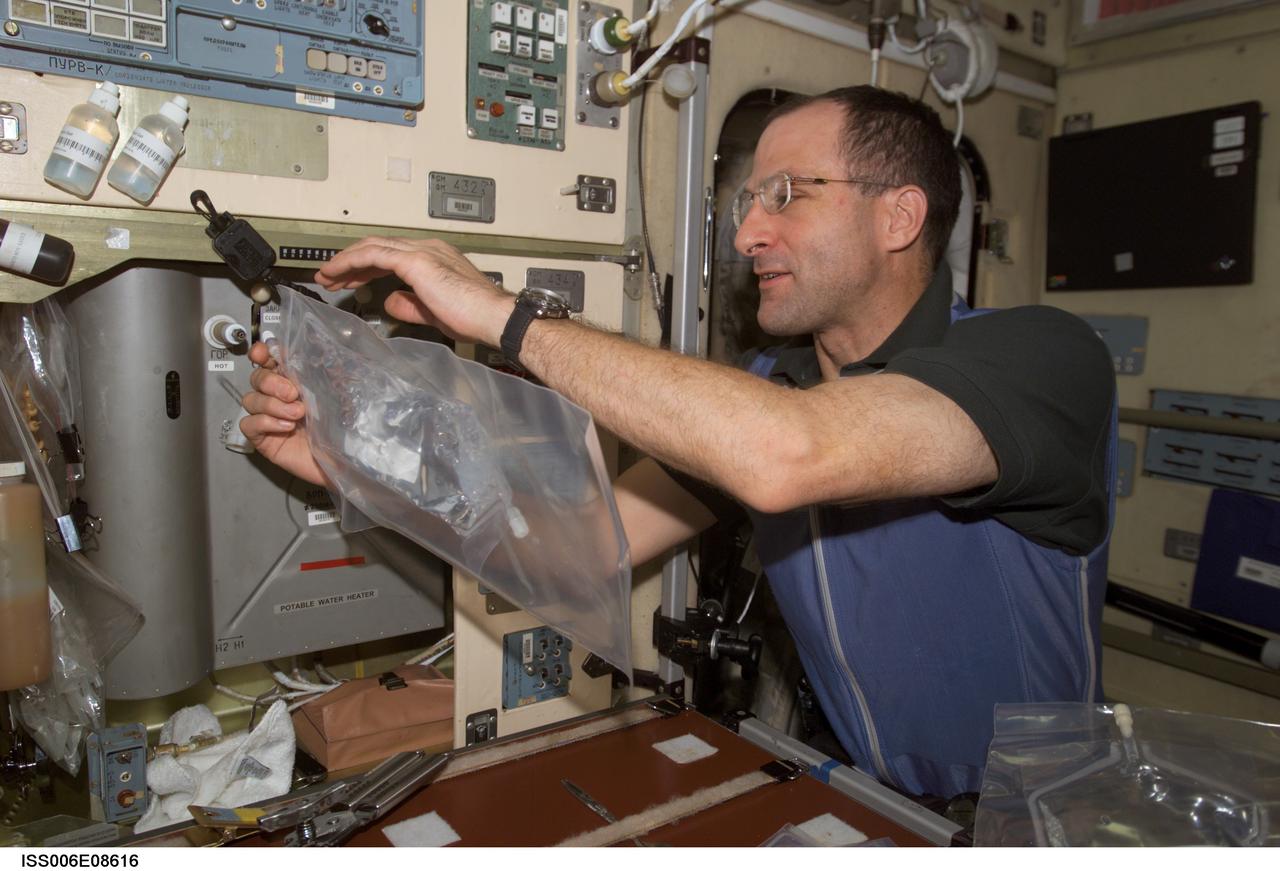
ISS006-E-08616 (18 December 2002) --- Astronaut Donald R. Pettit, Expedition Six NASA ISS science officer, is pictured in the Zvezda Service Module on the International Space Station (ISS) during the scheduled Week 3 potable water sampling and on-orbit chemical/microbial analysis of the SM environment control and life support system.
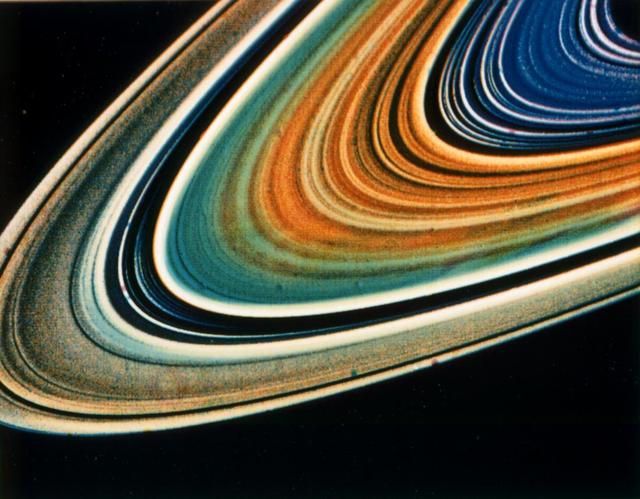
Possible variations in chemical composition from one part of Saturn ring system to another are visible in this archival image from NASA Voyager 2.
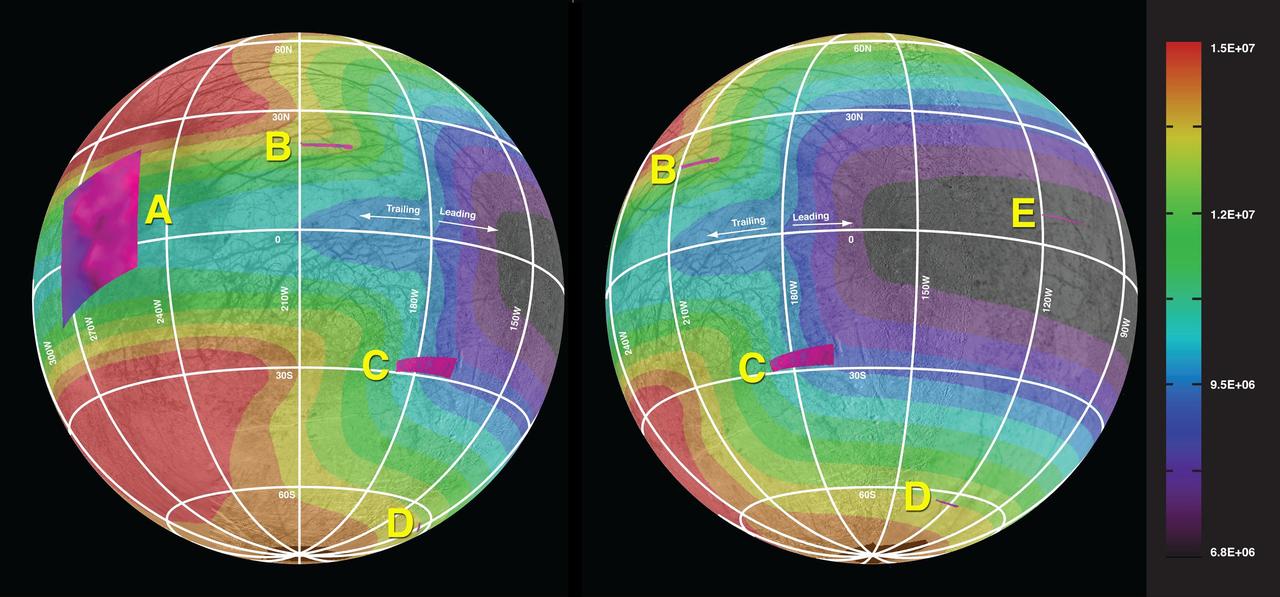
This graphic of Jupiter moon Europa maps a relationship between the amount of energy deposited onto the moon from charged-particle bombardment and chemical contents of ice deposits.
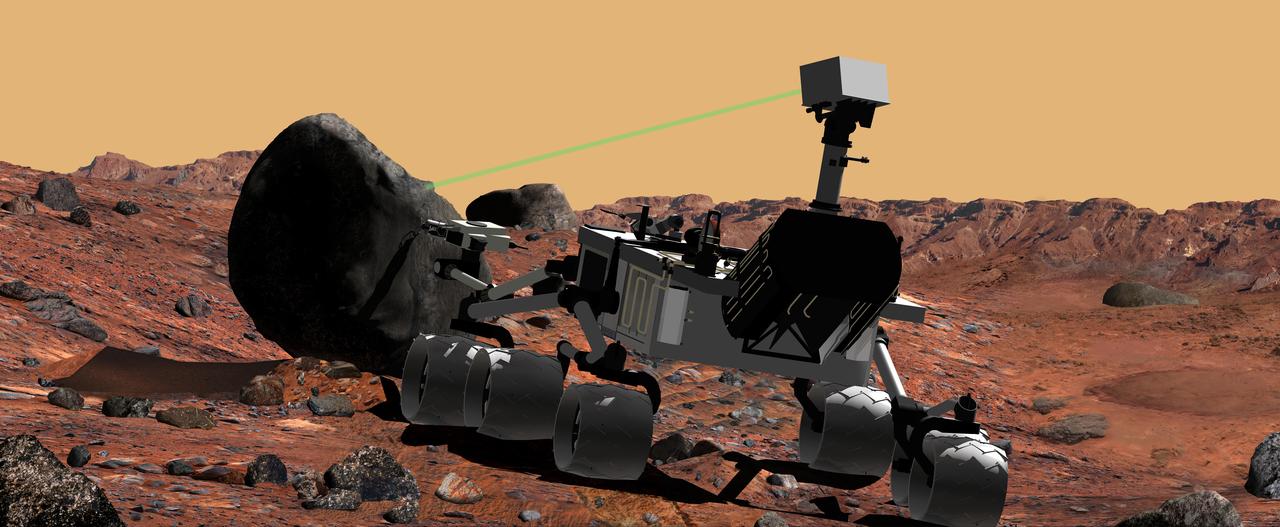
This artist conception of NASA Mars Science Laboratory portrays use of the rover ChemCam instrument to identify the chemical composition of a rock sample on the surface of Mars.
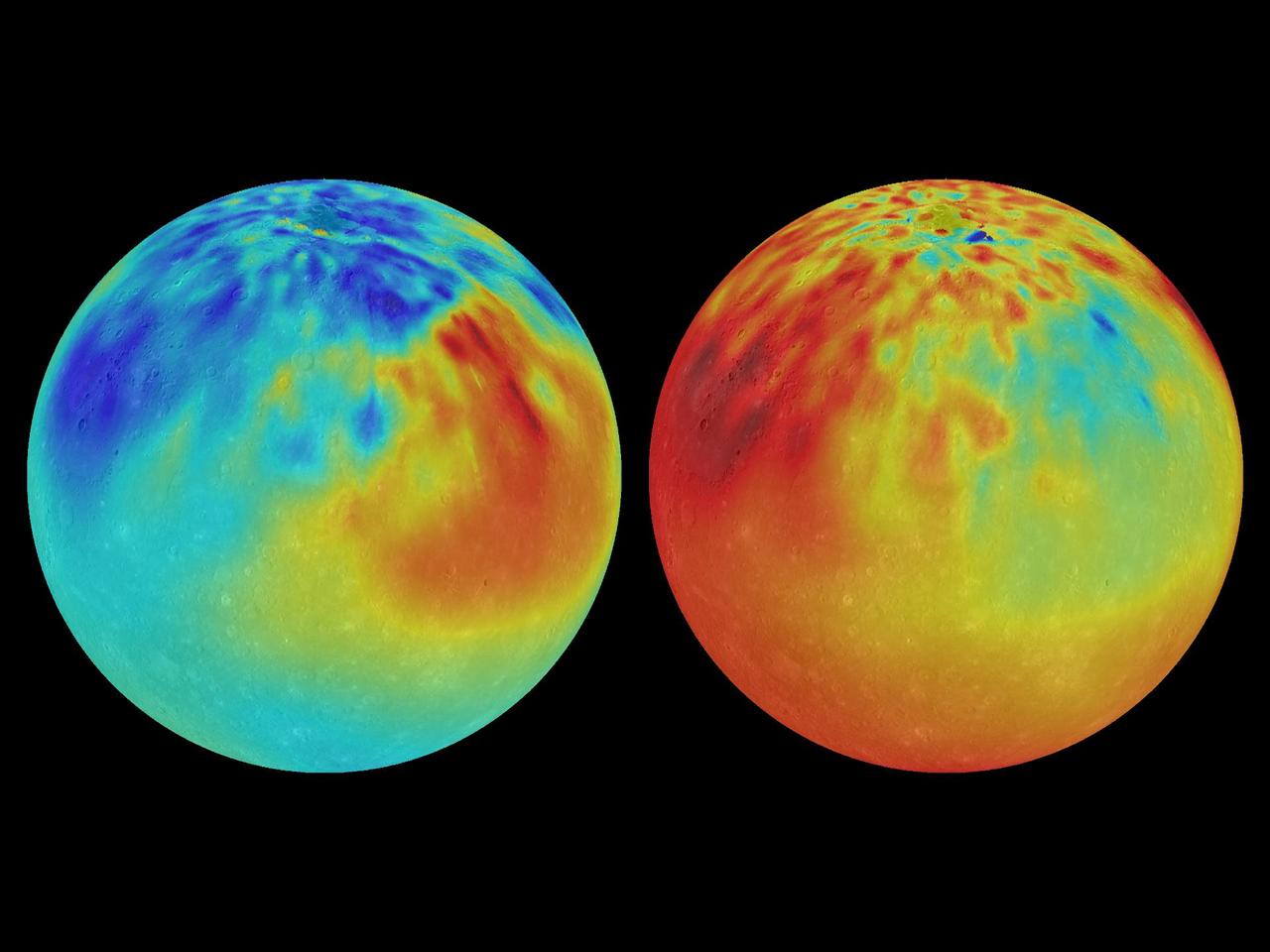
During NASA MESSENGER four-year orbital mission, the spacecraft X-Ray Spectrometer XRS instrument mapped out the chemical composition of Mercury and discovered striking regions of chemical diversity. These maps of magnesium/silicon (left) and aluminium/silicon (right) use red colors to indicate high values and blue colors for low values. In the maps shown here, the Caloris basin can be identified as a region with low Mg/Si and high Ca/Si on the upper left of each map. An extensive region with high Mg/Si is also clearly visible in the maps but is not correlated with any visible impact basin. Instrument: X-Ray Spectrometer (XRS) and Mercury Dual Imaging System (MDIS) Left Image: Map of Mg/Si Right Image: Map of Al/Si http://photojournal.jpl.nasa.gov/catalog/PIA19417
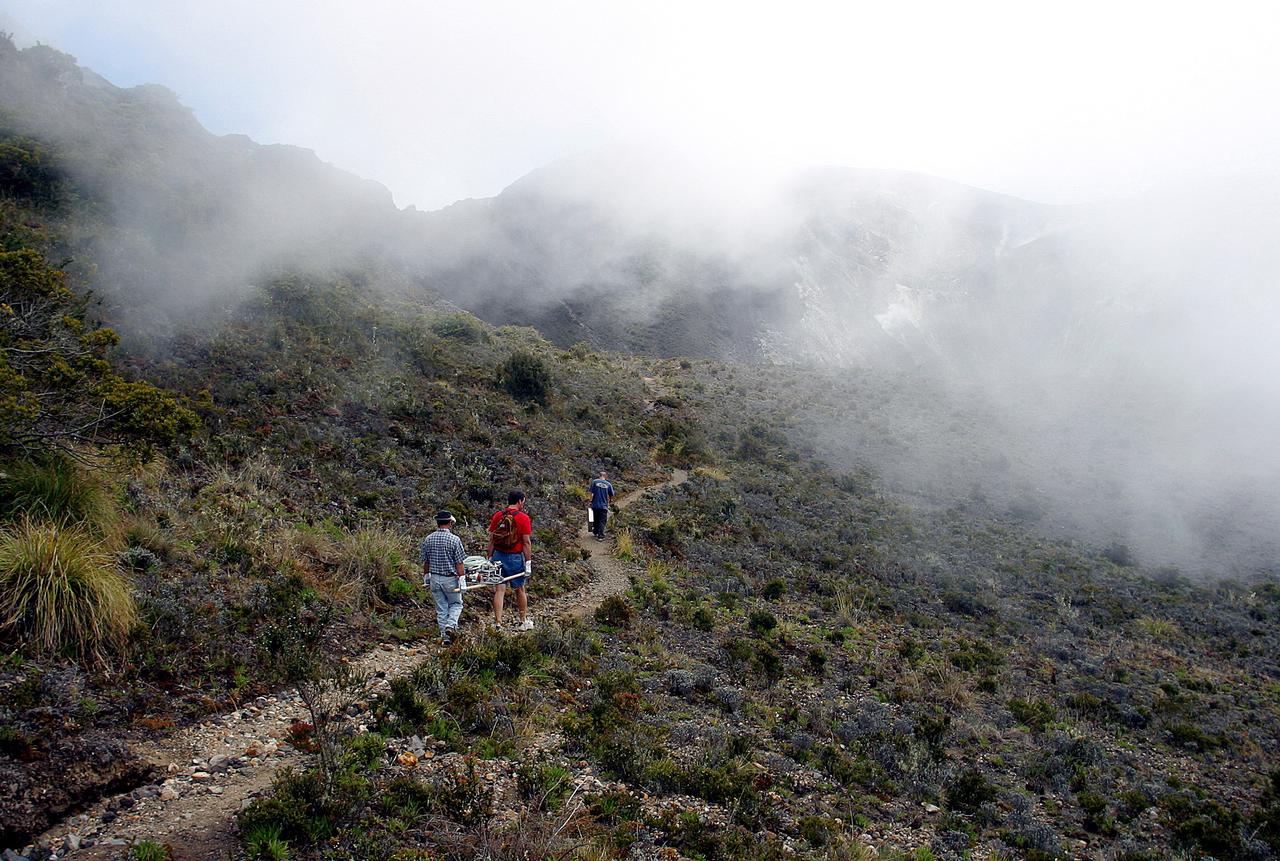
KENNEDY SPACE CENTER, FLA. - Arturo Ramierez, Charles Curley and Duke Follistein, KSC and Costa Rican researchers, carry the hazardous gas detection system AVEMS to the central of the Turrialba volcano. The Aircraft-based Volcanic Emission Mass Spectrometer determines the presence and concentration of various chemicals. It is being tested in flights over the Turrialba volcano and in the crater, sampling and analyzing fresh volcanic gases in their natural chemical state. The AVEMS system has been developed for use in the Space Shuttle program, to detect toxic gas leaks and emissions in the Shuttle’s aft compartment and the crew compartment.

KENNEDY SPACE CENTER, FLA. - Reporters at the dedication ceremony of a NASA hangar at the San Jose, Costa Rica, airport observe the WB-57f takeoff for its sixth Costa Rican flight. KSC and NASA researchers are testing the Aircraft-based Volcanic Emission Mass Spectrometer (AVEMS) that determines the presence and concentration of various chemicals. It is being tested in flights over the Turrialba volcano in Costa Rica, and in the crater, sampling and analyzing fresh volcanic gases in their natural chemical state. The AVEMS system has been developed for use in the Space Shuttle program, to detect toxic gas leaks and emissions in the Shuttle’s aft compartment and the crew compartment.
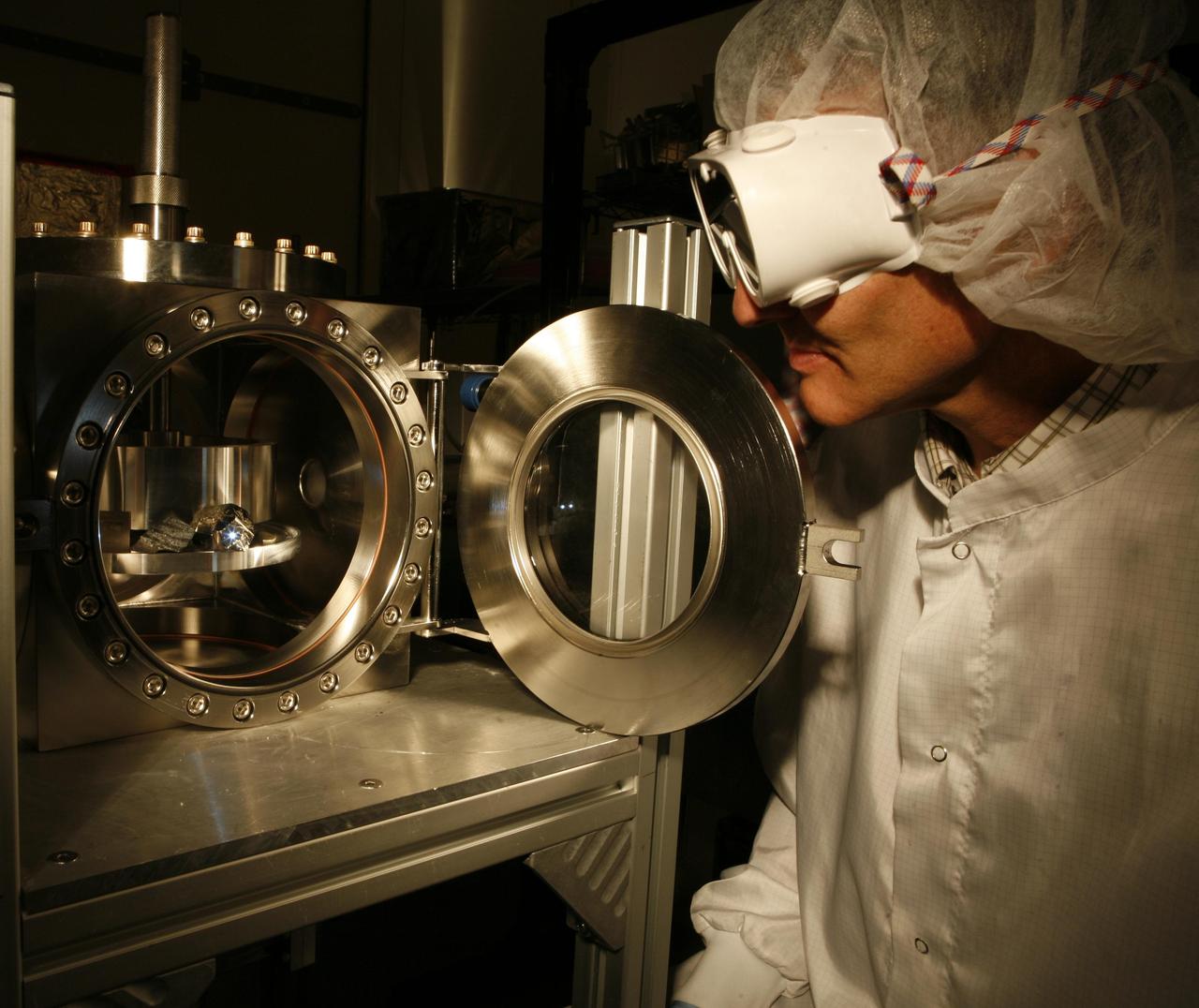
The ChemCam instrument for NASA Mars Science Laboratory mission uses a pulsed laser beam to vaporize a pinhead-size target, producing a flash of light from the ionized material plasma that can be analyzed to identify chemical elements in the target.
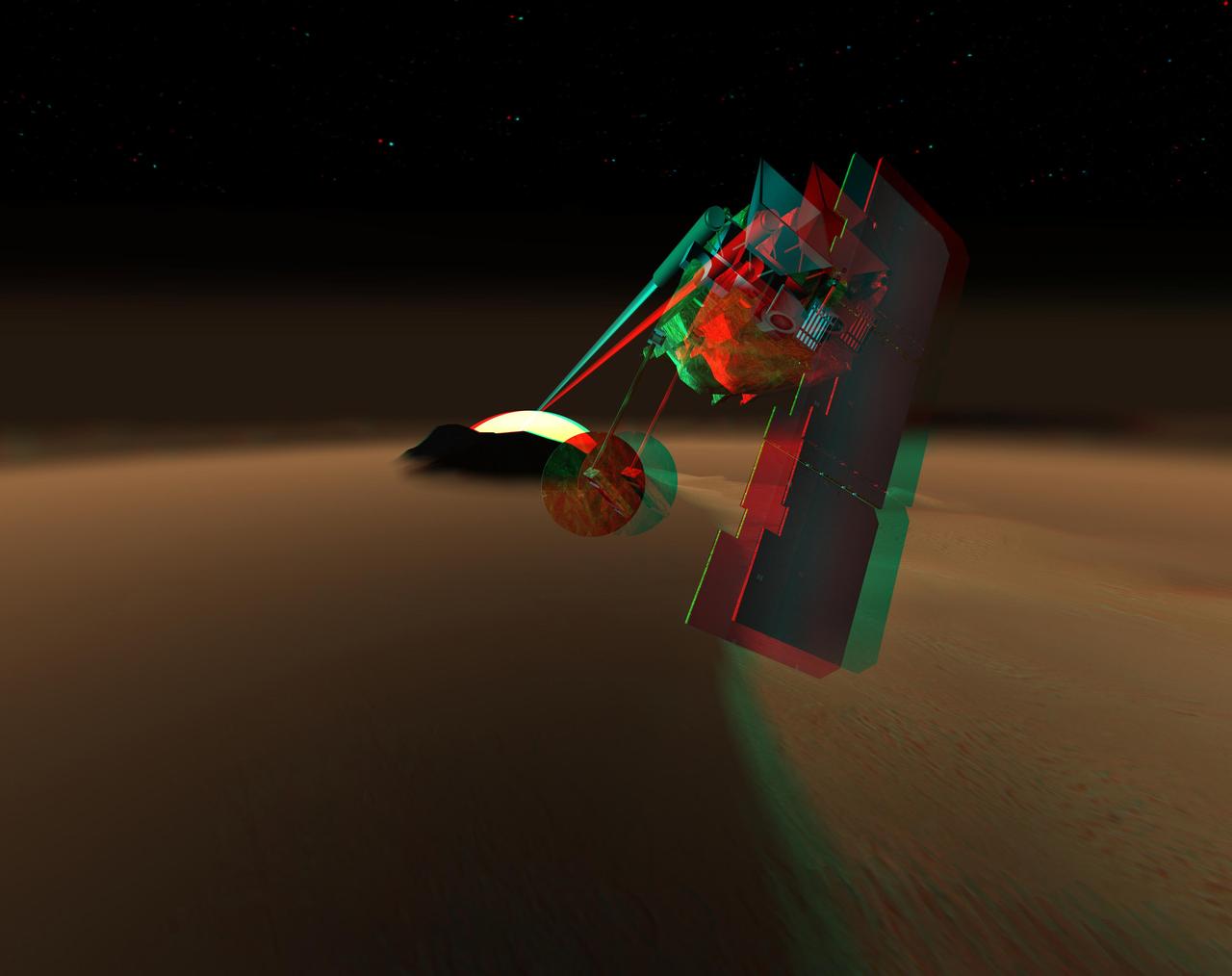
This artist rendition depicts a concept for a Mars orbiter that would scrutinize the martian atmosphere for chemical traces of life or environments supportive of life that might be present anywhere on the planet. 3D glasses are necessary.
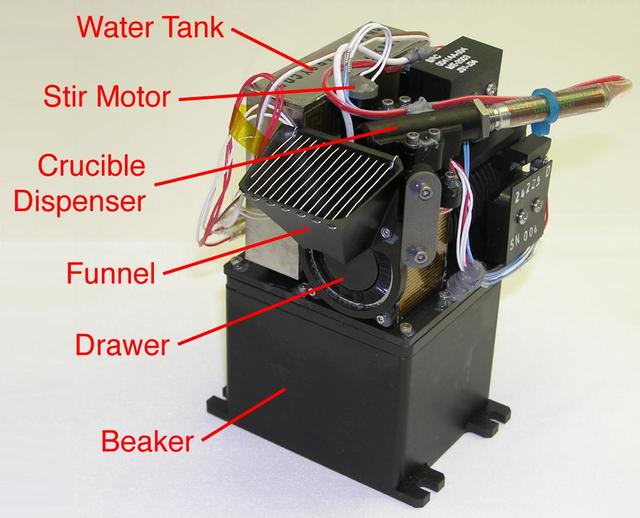
This picture of NASA Phoenix Mars Lander Wet Chemistry Laboratory WCL cell is labeled with components responsible for mixing Martian soil with water from Earth, adding chemicals and measuring the solution chemistry.
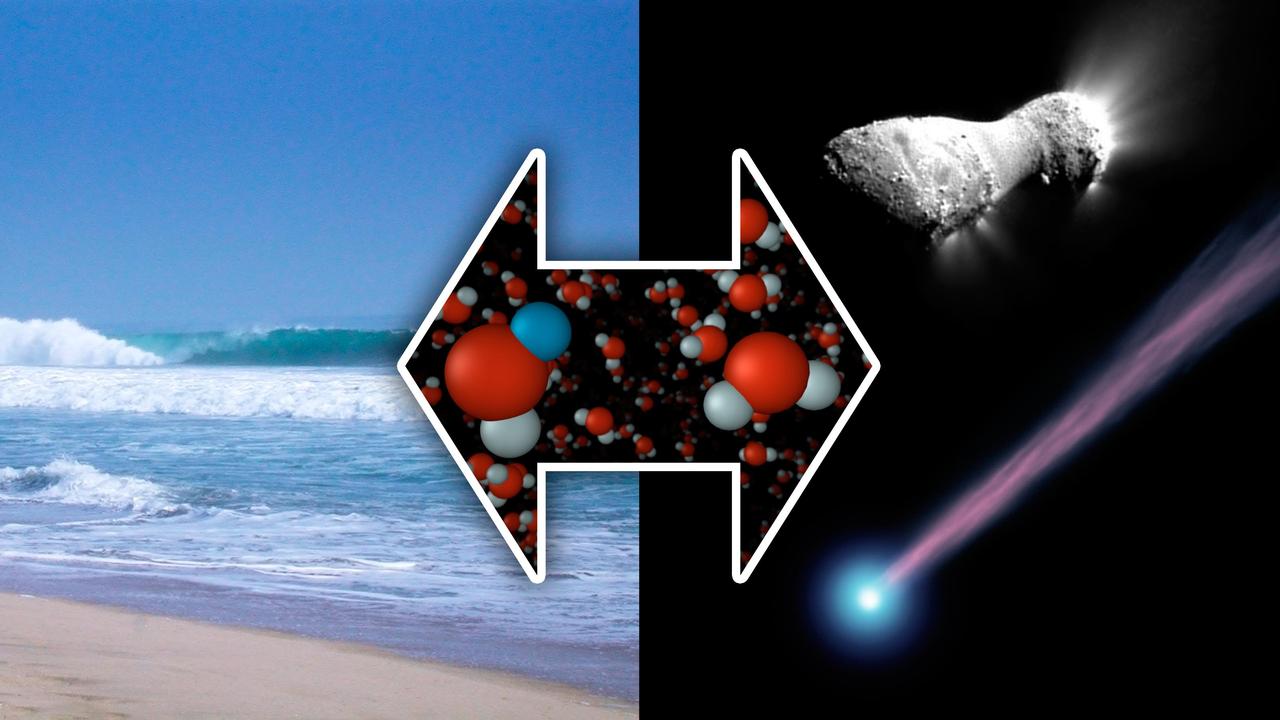
New measurements from NASA Herschel Space Observatory have discovered water with the same chemical signature as our oceans in a comet called Hartley 2 pictured at right. The image at bottom right is an artist concept of a comet.
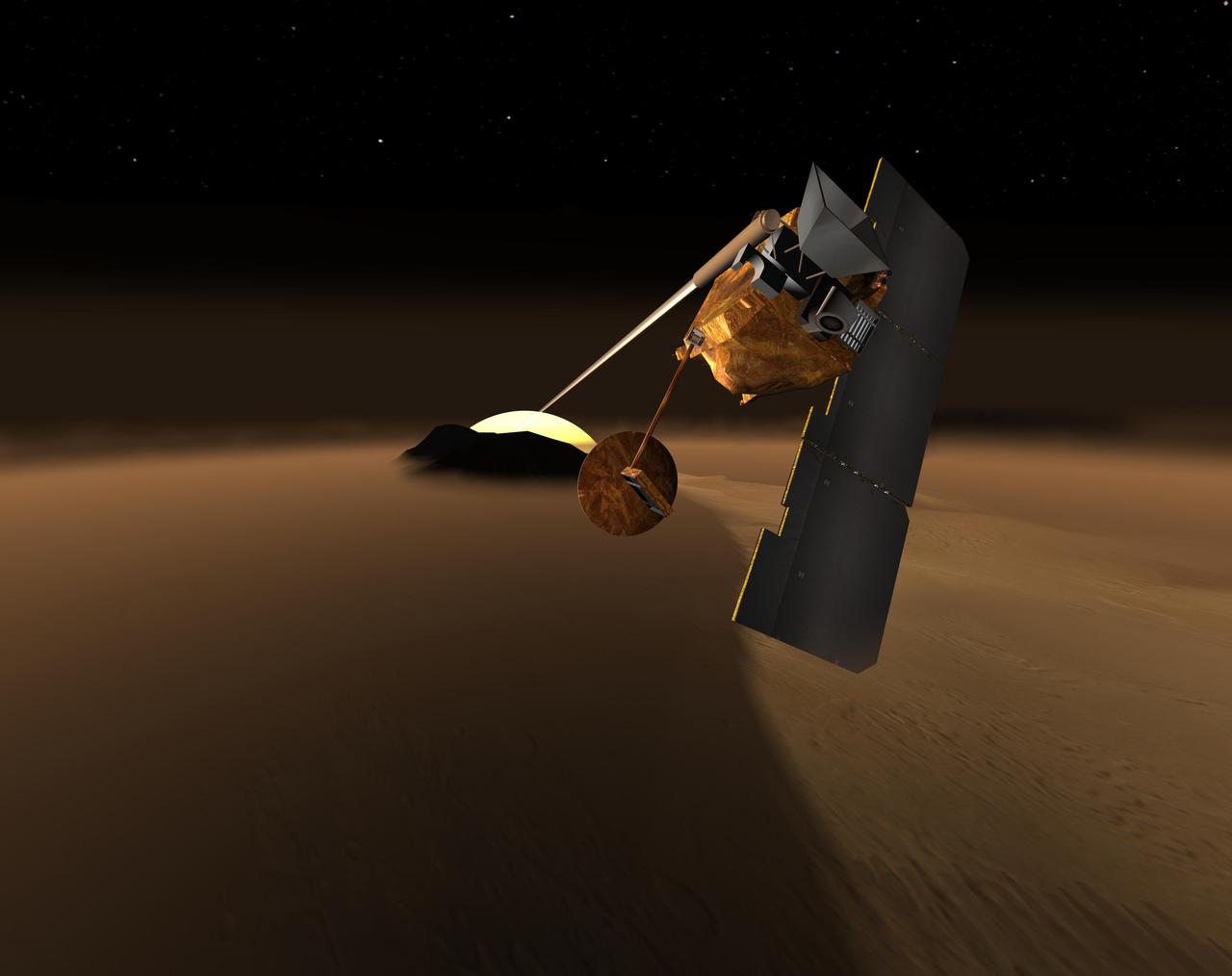
This artist rendition depicts a concept for NASA Mars orbiter that would scrutinize the martian atmosphere for chemical traces of life or environments supportive of life that might be present anywhere on the planet.
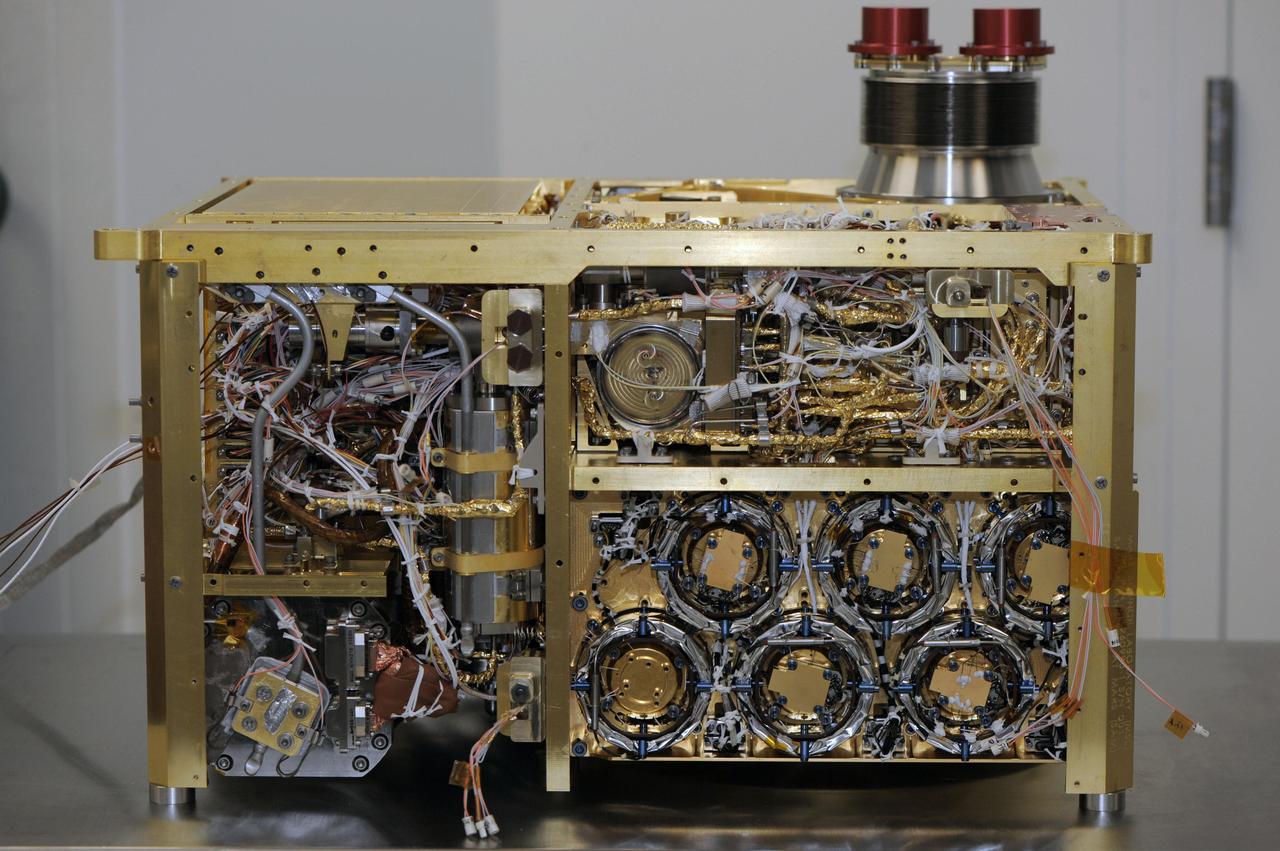
An instrument suite that will analyze the chemical ingredients in samples of Martian atmosphere, rocks and soil during the mission of NASA Mars rover Curiosity, is shown here during assembly at NASA Goddard Space Flight Center, Greenbelt, Md., in 2010.
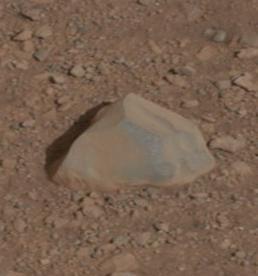
This close-up image shows the first target NASA Curiosity rover aims to zap with its Chemistry and Camera ChemCam instrument. The instrument will analyze that spark with a telescope and identify the chemical elements in the target.
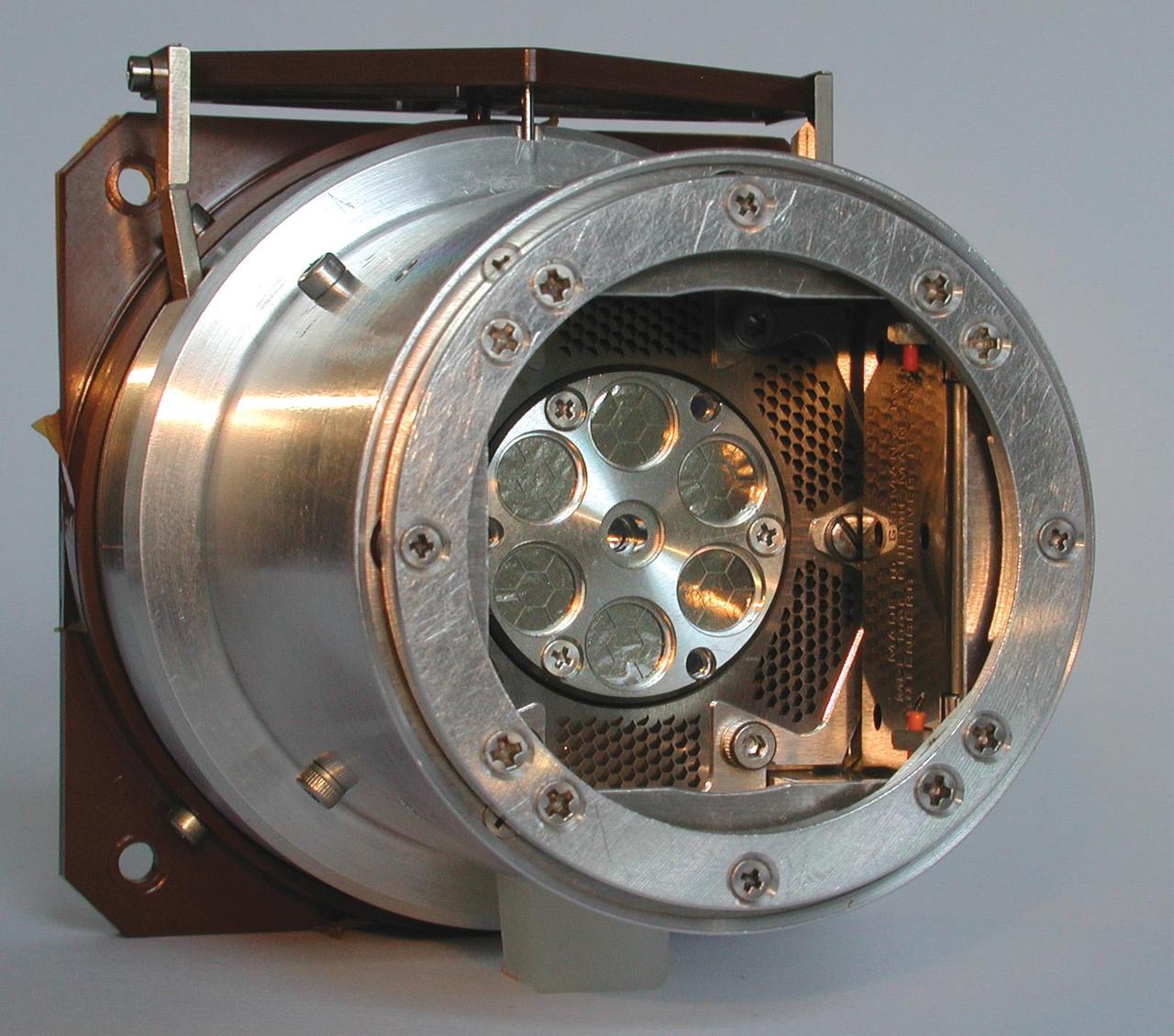
Located on the arm of NASA Mars Exploration Rover Spirit, the alpha particle X-ray spectrometer uses alpha particles and X-rays to determine the chemical make up of martian rocks and soils.
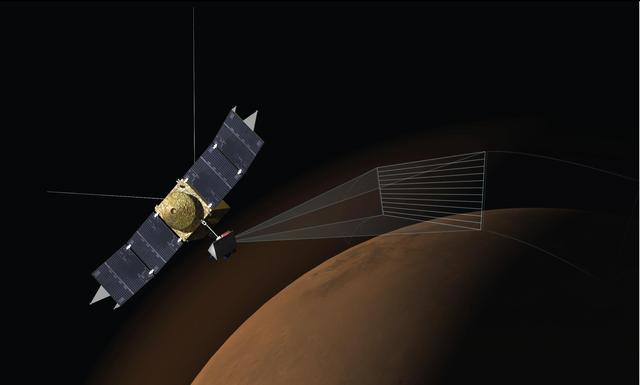
This artist concept depicts the Imaging Ultraviolet Spectrograph IUVS on NASA MAVEN spacecraft scanning the upper atmosphere of Mars. IUVS uses limb scans to map the chemical makeup and vertical structure across Mars upper atmosphere.
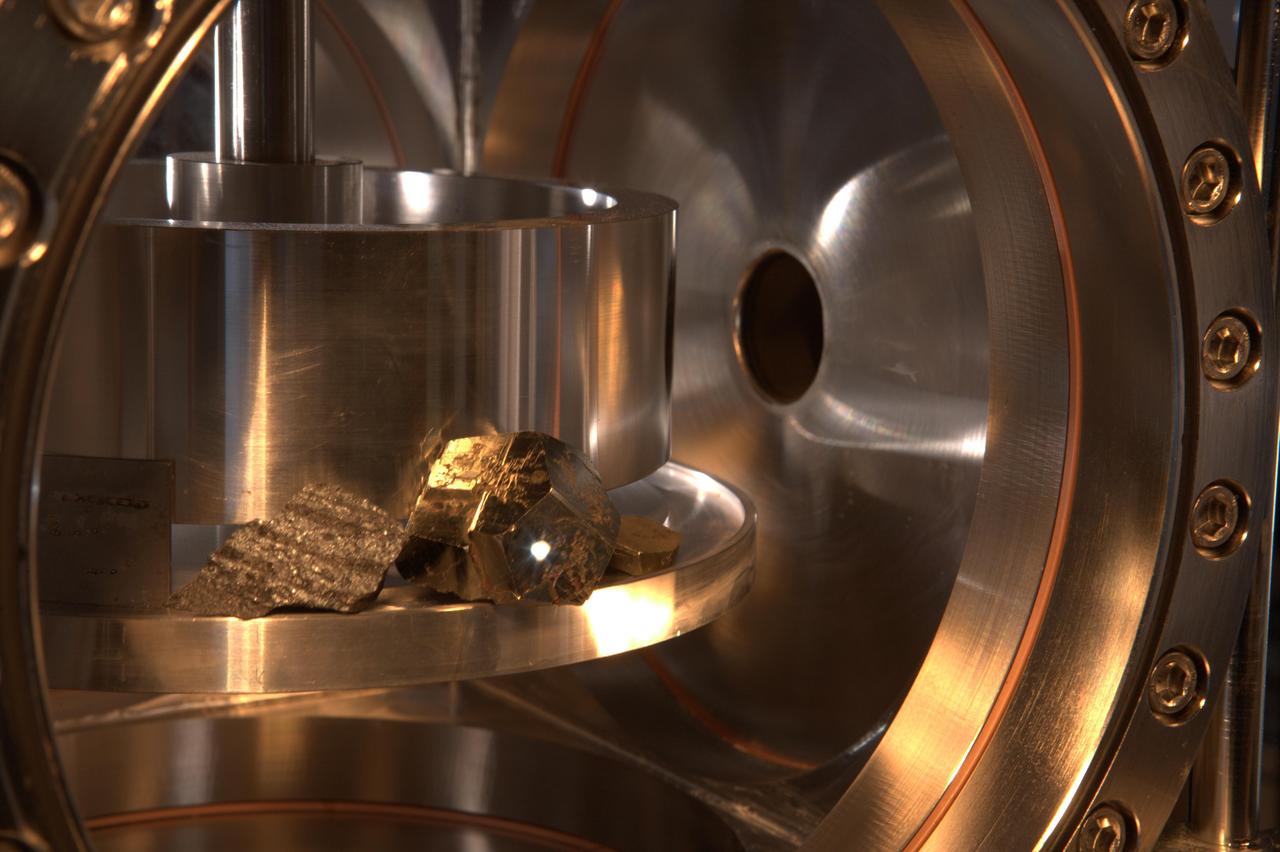
The ChemCam instrument for NASA Mars Science Laboratory mission uses a pulsed laser beam to vaporize a pinhead-size target, producing a flash of light from the ionized material plasma that can be analyzed to identify chemical elements in the target.
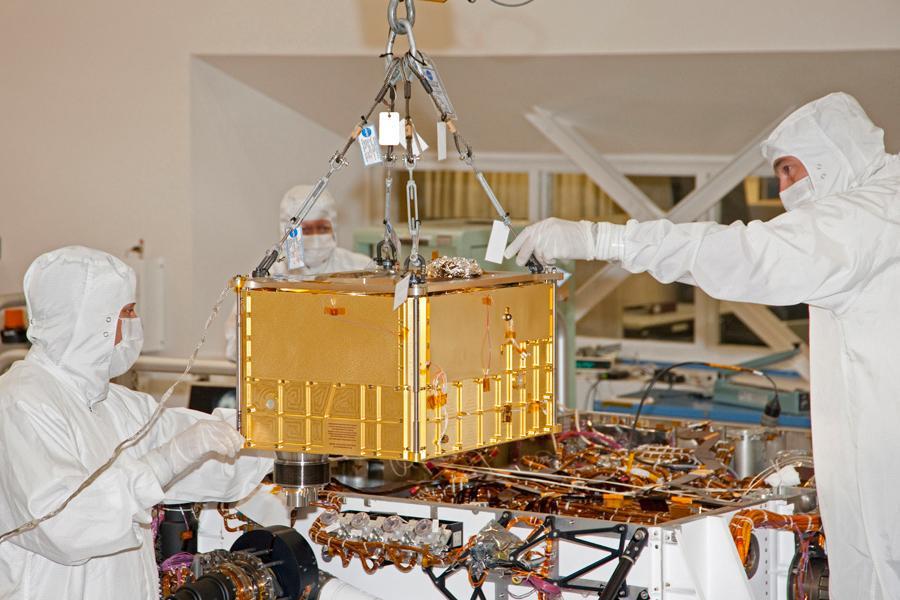
NASA Sample Analysis at Mars SAM instrument, largest of the 10 science instruments for NASA Mars Science Laboratory mission, will examine samples of Martian rocks, soil and atmosphere for information about chemicals that are important to life.

This graphic offers comparisons between the amount of an organic chemical named chlorobenzene detected in the Cumberland rock sample and amounts of it in samples from three other Martian surface targets analyzed by NASA Curiosity Mars rover.
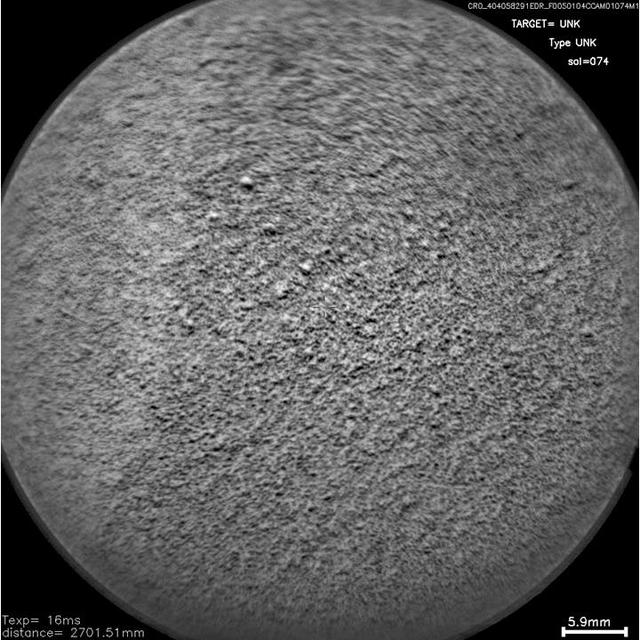
The Chemistry and Camera ChemCam instrument on NASA Mars rover Curiosity used its laser and spectrometers to examine what chemical elements are in a drift of Martian sand during the mission 74th Martian day, or sol Oct. 20, 2012.
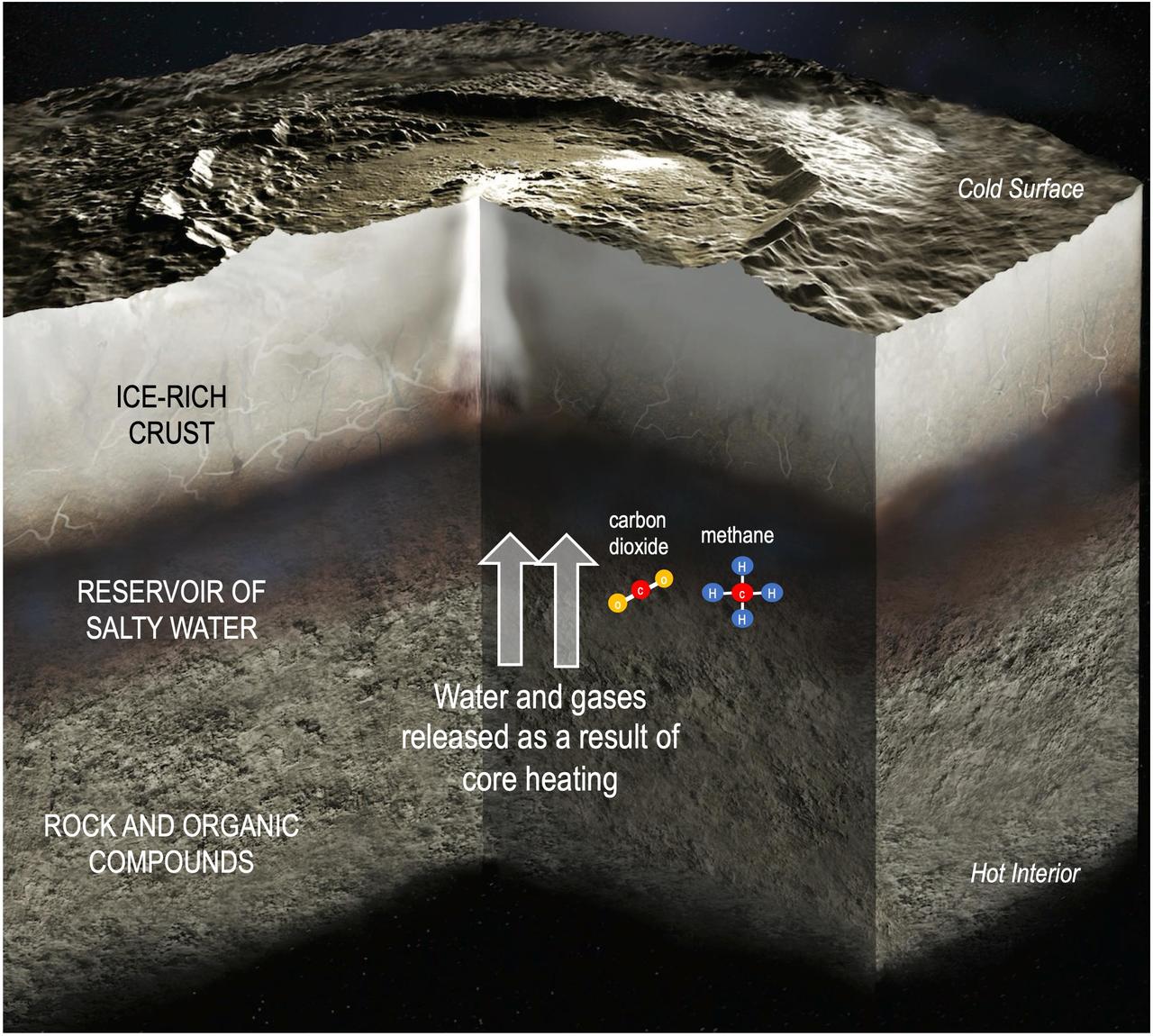
This illustration depicts the interior of dwarf planet Ceres, including the transfer of water and gases from the rocky core to a reservoir of salty water as a consequence of internal heating. A couple examples of molecules carrying chemical energy – carbon dioxide and methane – are included in the illustration. Research published in Science Advances on Aug. 20, 2025, relies on data from NASA's Dawn mission to find that chemical energy inside Ceres may have lasted long enough to fuel microbial metabolisms. Although there is no evidence that microorganisms ever existed on Ceres, the finding supports theories that this intriguing dwarf planet, which is the largest body in the main asteroid belt between Mars and Jupiter, may have once had conditions suitable to support single-celled lifeforms. https://photojournal.jpl.nasa.gov/catalog/PIA26570
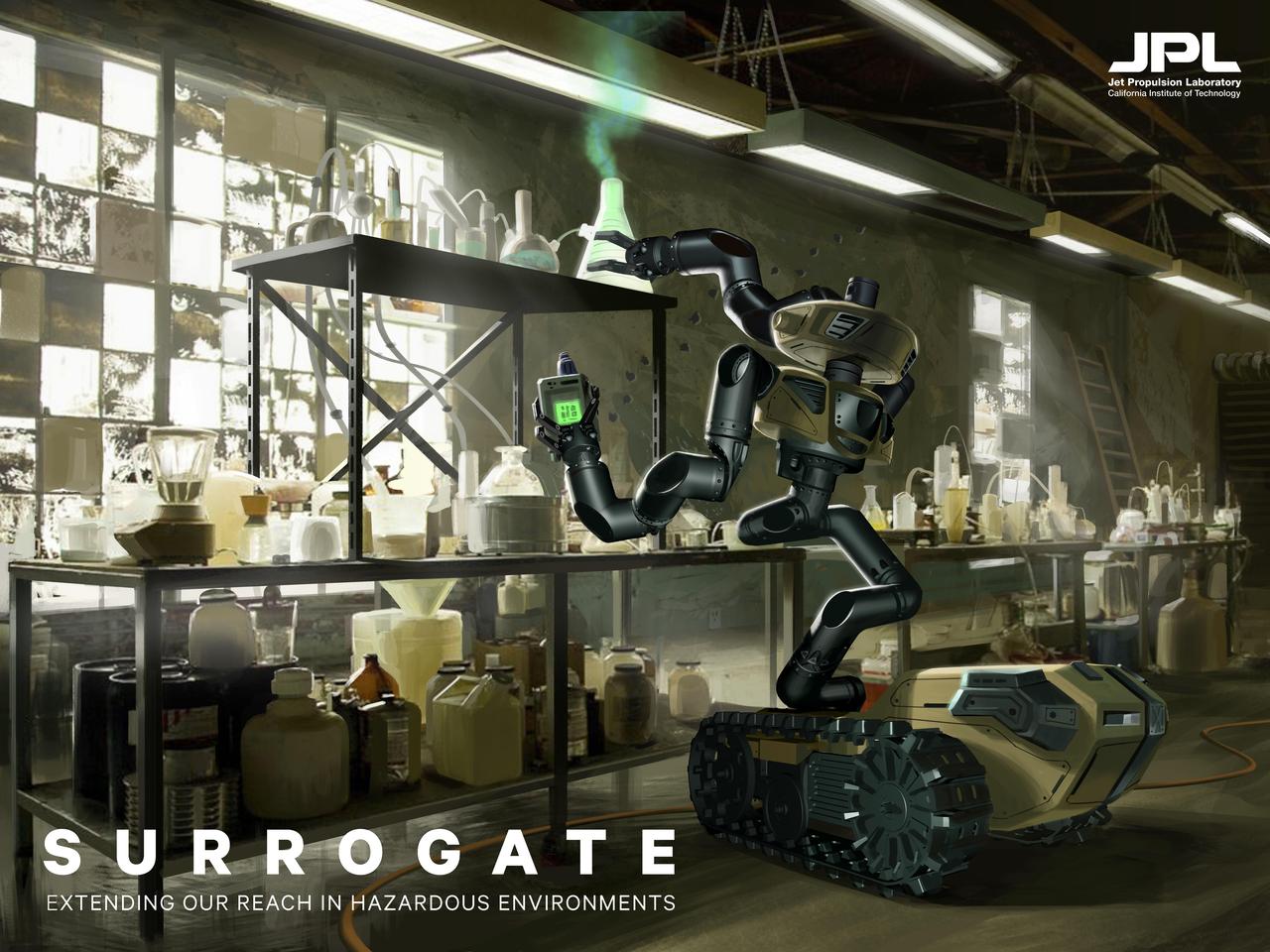
This artist's concept shows Surrogate, a robot that could one day assist in disasters or hazardous situations such as a dangerous chemical laboratory. Surrogate was designed and built at the Jet Propulsion Laboratory in Pasadena, California. Its components came from RoboSimian, another JPL-built robot designed for disaster relief and mitigation (see PIA19313). Surrogate rolls on a track rather than moving on its limbs. http://photojournal.jpl.nasa.gov/catalog/PIA19314
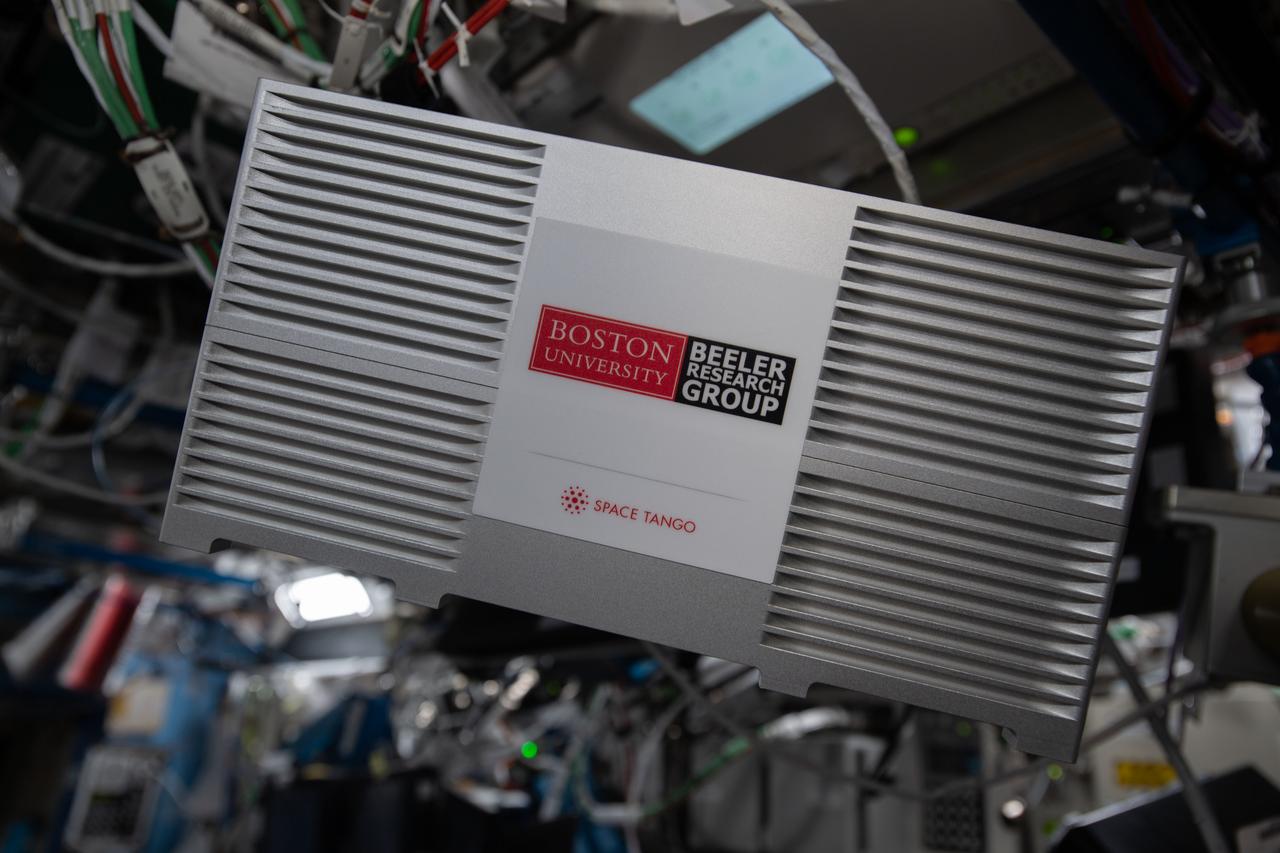
iss062e123434 (4/5/2020) --- A view of the Flow Chemistry Platform for Synthetic Reactions on ISS investigation aboard the International Space Station (ISS). The Flow Chemistry Platform for Synthetic Reactions on ISS investigation studies the effects of microgravity on synthetic chemical reactions as a step toward on-demand production of chemicals and materials in space.
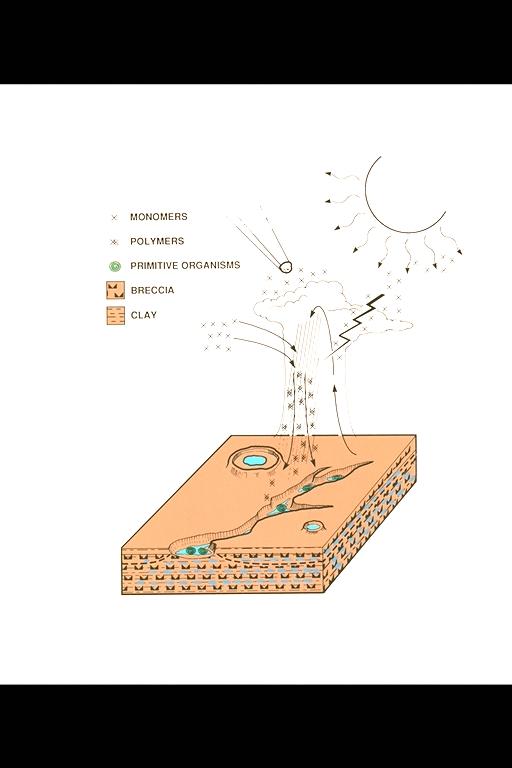
Illustration Origin of Life: Oberbeck, Marshall and Schwartz Theory for Chemical Evolution
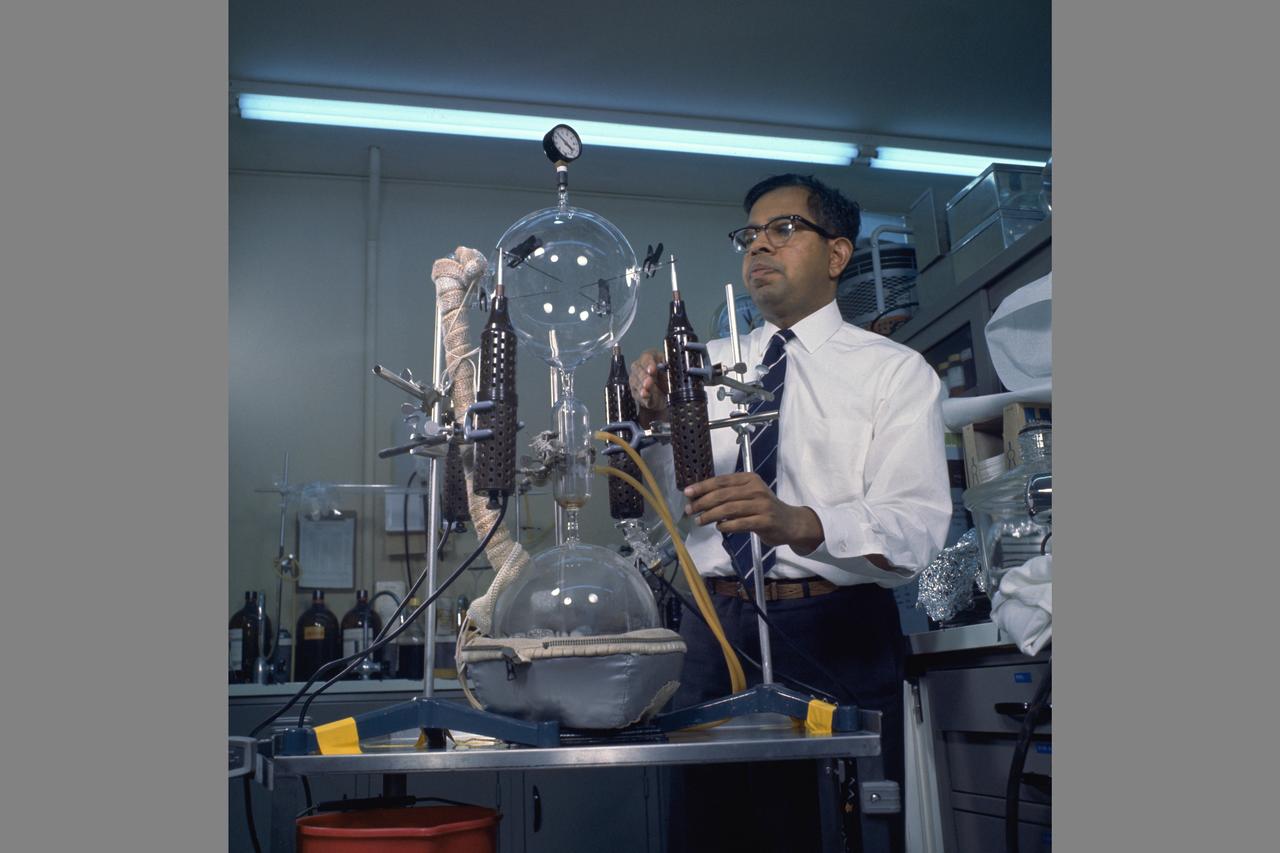
Dr. Cyril A. Ponnamperuma in Lab (Chemical Evolution Branch). Origin of Life studies
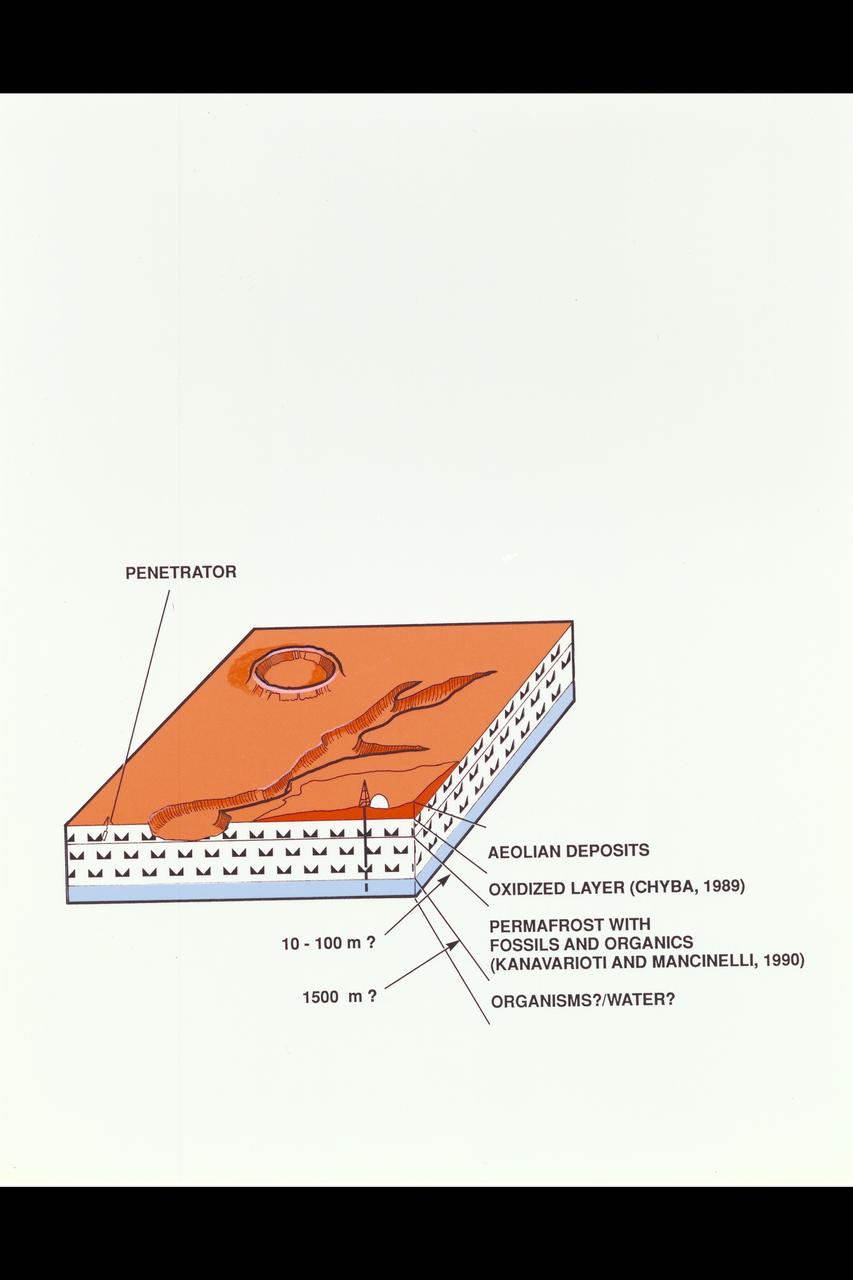
Illustration Origin of Life, Chemical Evolution on Mars: Mars Evolution Layers
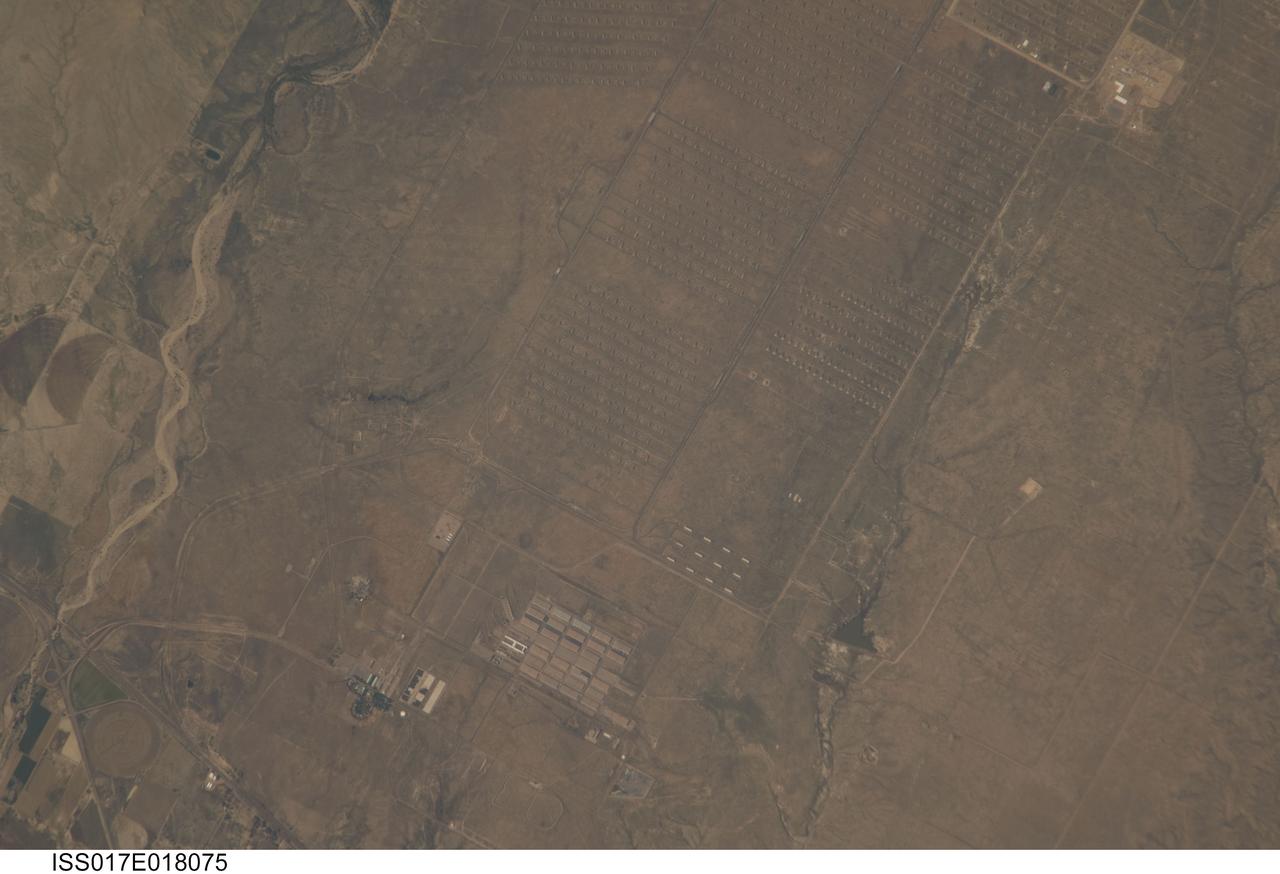
ISS017-E-018075 (1 Oct. 2008) --- The Pueblo Chemical Depot in Colorado is featured in this image photographed by an Expedition 17 crewmember on the International Space Station. This view illustrates the unusual man-made landscape of the Pueblo Chemical Depot located near the city of Pueblo, Colorado. The Depot was built during World War II by the U.S. Army to house and ship ammunition needed for war efforts, and this role transitioned to missile repair and maintenance during the Cold War with the Soviet Union. The current use of the Depot is to house chemical munitions, but changes are underway by the U.S. Army Chemical Materials Agency to destroy these munitions and make the site environmentally safe for reuse -- while also protecting the surrounding local environment. The stippled landscape pattern visible from low Earth orbit is due to hundreds of concrete and earth-covered storage "igloos" that form ordered rows across the site (top). It is within these igloos that chemical munitions and other materials are stored. Larger, white roofed maintenance buildings once used for munitions storage were built with separate compartments to minimize potential damage from explosions. Other features visible in this detailed image include linear roadway (light tan) and rail (dark brown) lines, black irregular surface impoundments of water, and various rectangular office and industrial buildings at lower left.
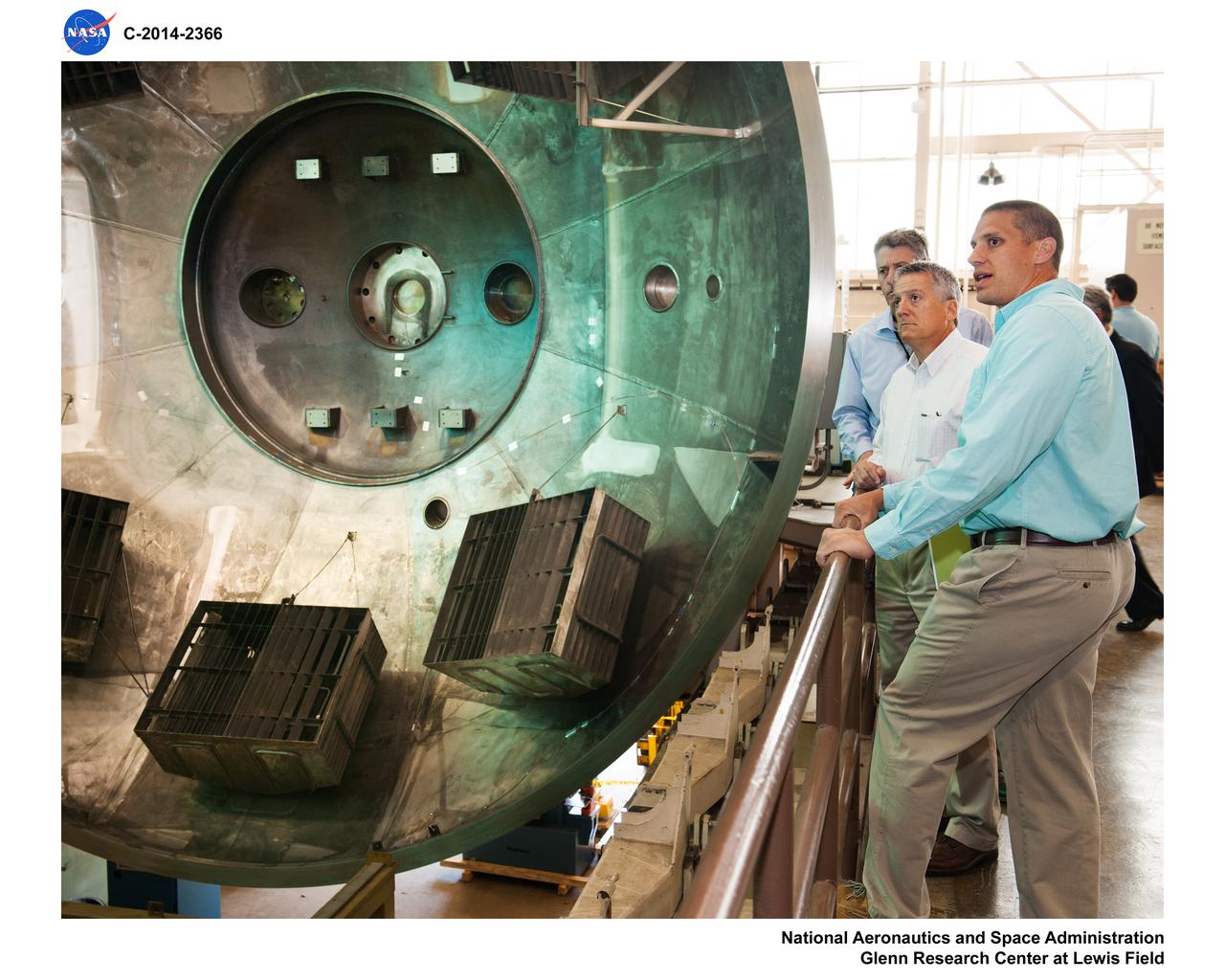
Technical Capabilities Assessment Team, TCAT, In-Space Propulsion: Non-Chemical Deep Dive Glenn Research Center Site Visit

Artist: Ed Luna HAZMAT: Truck Crash: chemical spill clean-up in river (nuclear transportation clean-up)
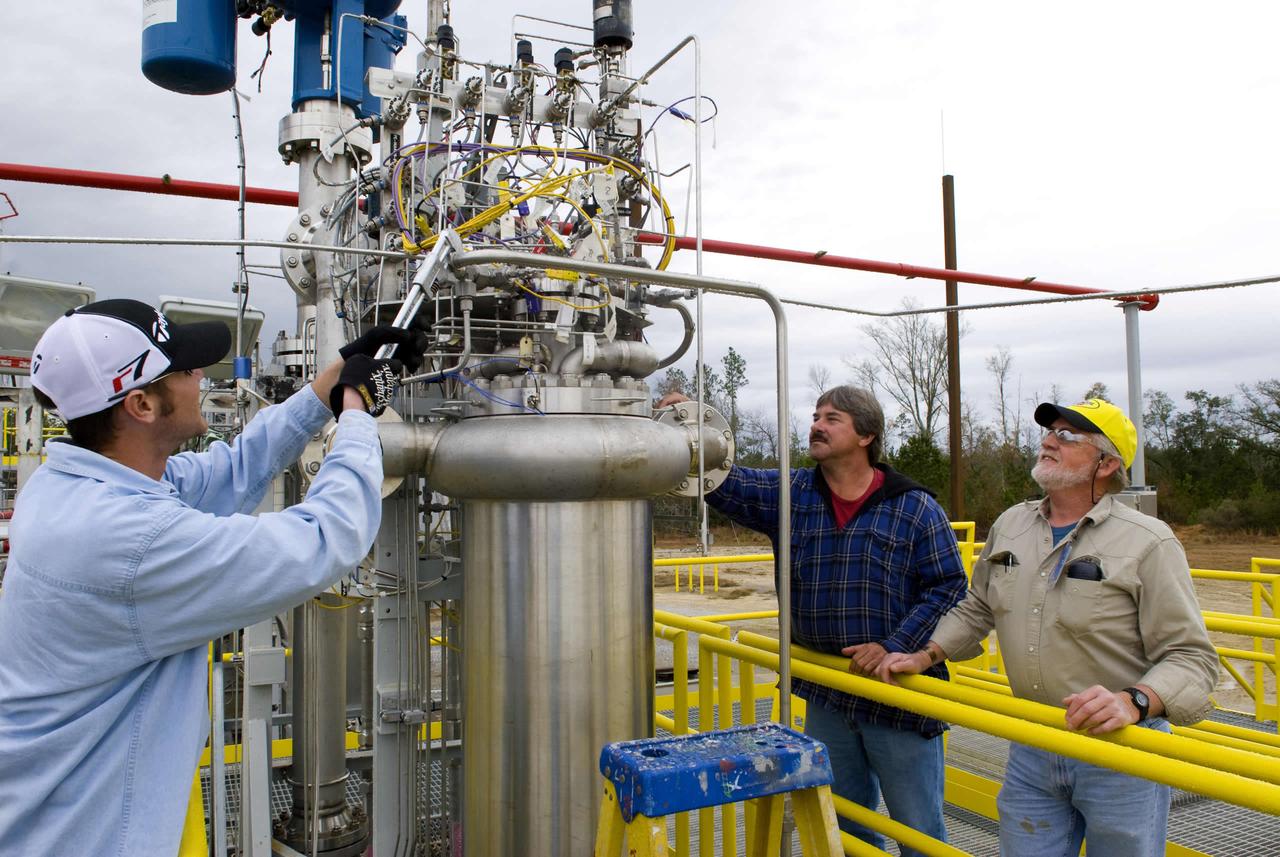
Kanaly Slade, Pat Guidry and Danny Tarter, all of Jacobs NTOG, make adjustments to the chemical steam generator installed on the E-2 Test Stand.
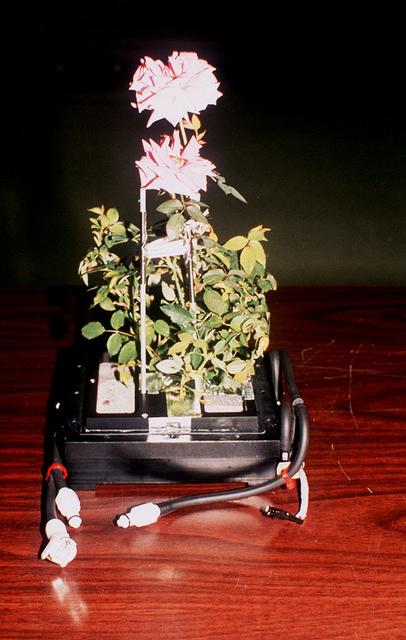
After the Overnight Scentsation rose plant's return to Earth, IFF scientists found a significant change in some of the chemical components occured while in microgravity.
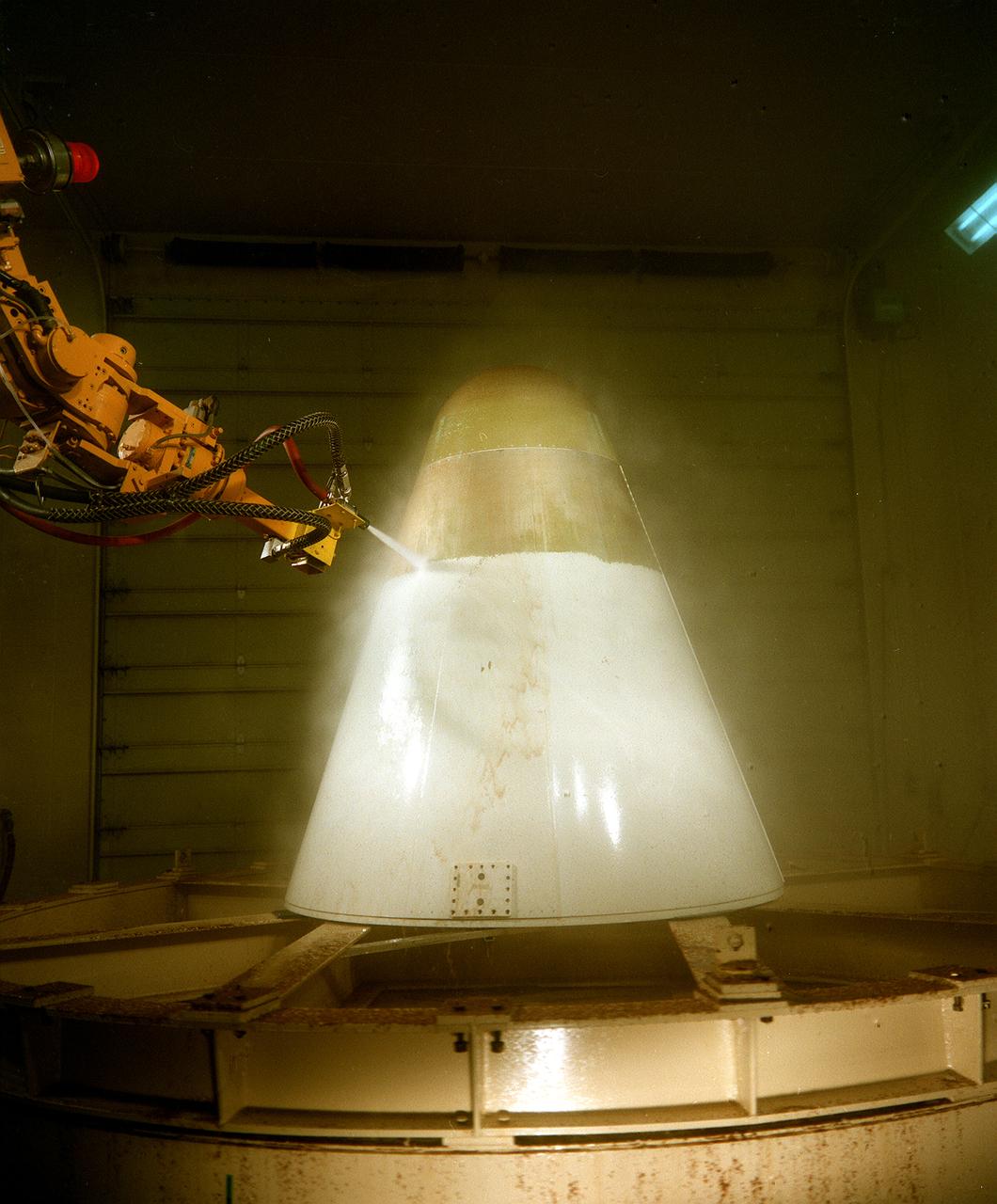
The Waterblast Research Cell supports development of automated systems that remove thermal protection materials and coatings from space flight hardware. These systems remove expended coatings without harsh chemicals or damaging underlying material. Potential applications of this technology include the removal of coatings from industrial machinery, aircraft, and other large structures. Use of the robot improves worker safety by reducing the exposure of persornel to high-pressure water. This technology is a proactive alternative to hazardous chemical strippers.
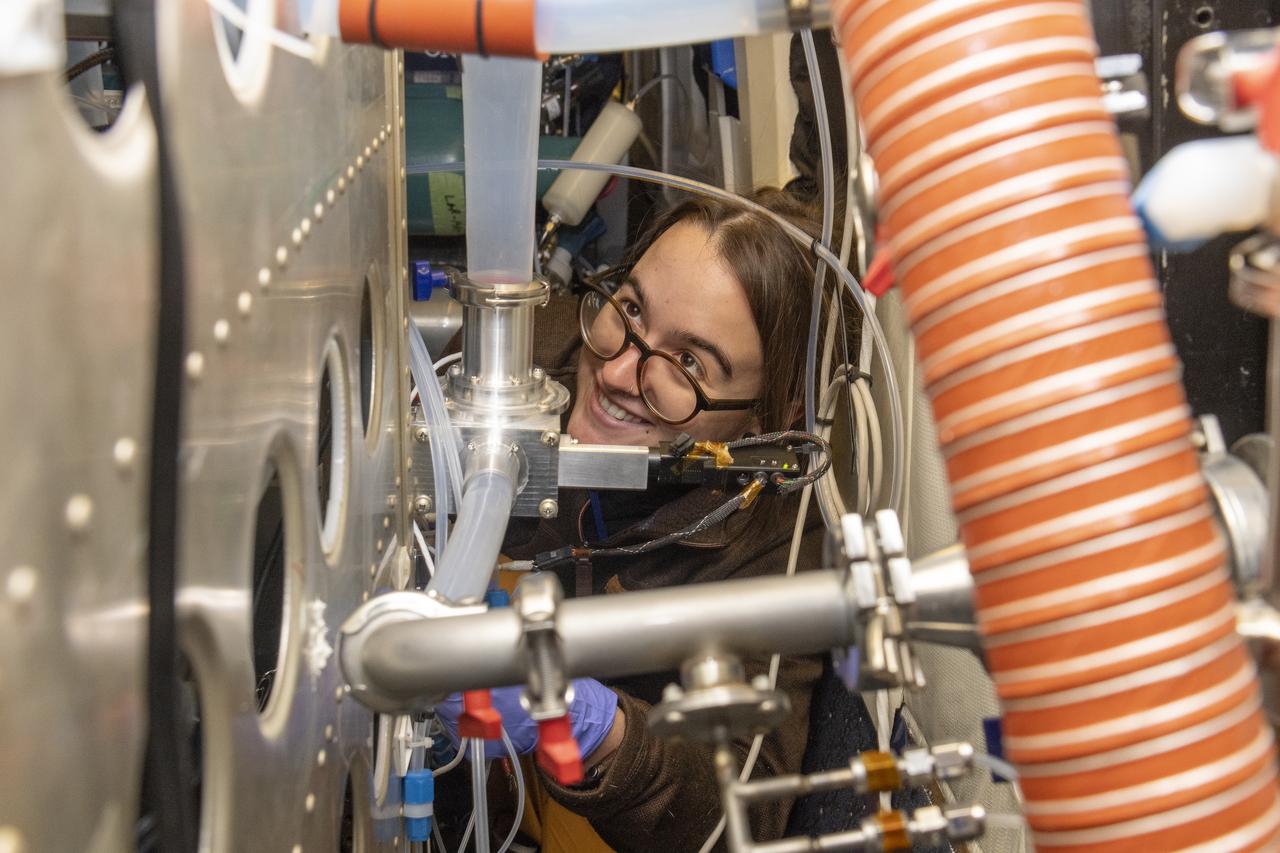
Kat Ball, Chemical Engineering Ph.D candidate at Caltech, attends to the Chemical Ionization Mass Spectrometer (CIMS) rack onboard the DC-8 aircraft at Building 703 in Palmdale, CA. The DC-8 aircraft is prepared for its last mission, ASIA-AQ (Airborne and Satellite Investigation of Asian Air Quality), that will collect detailed air quality data over several locations in Asia to improve the understanding of local air quality in collaboration with local scientists, air quality agencies, and government partners
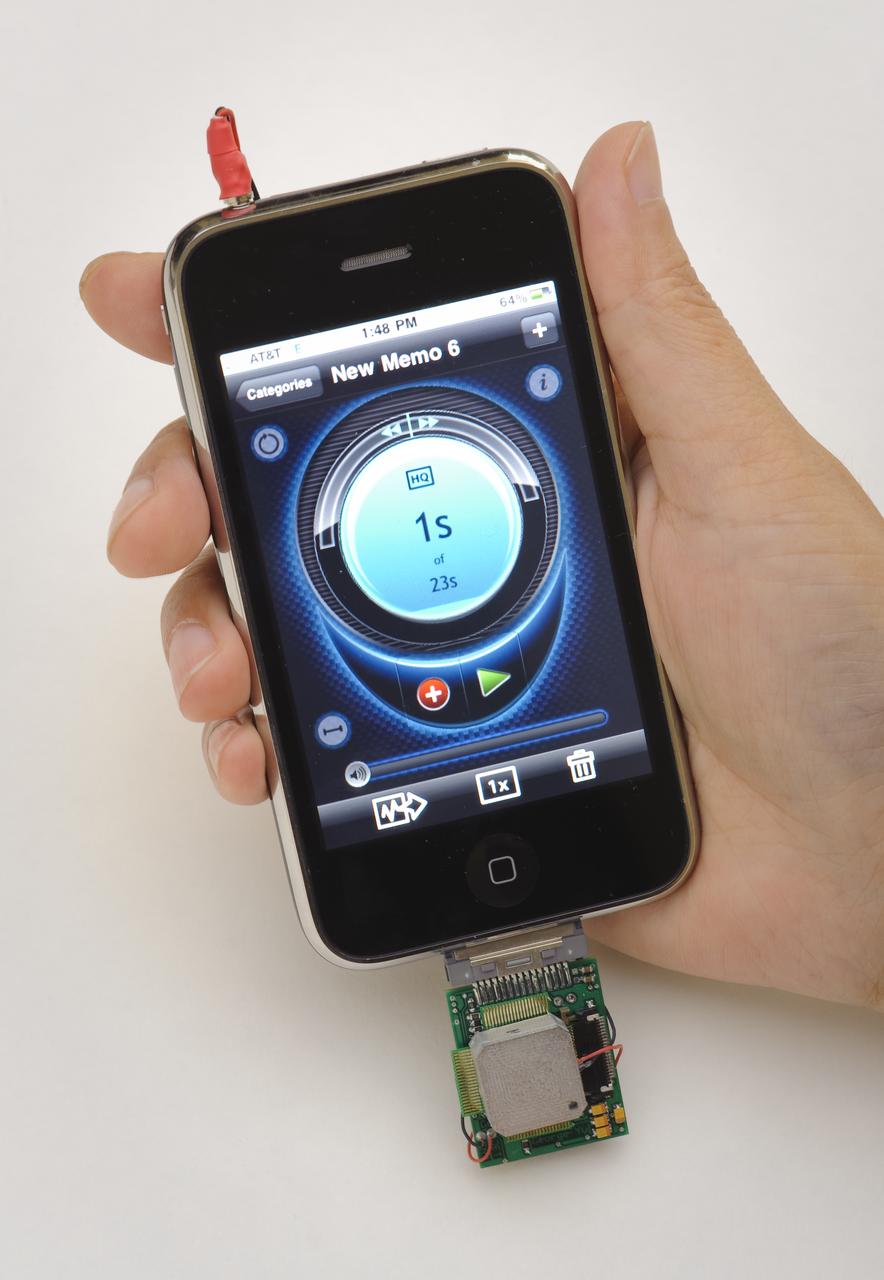
A Nanosensor Device for Cellphone Intergration and Chemical Sensing Network. iPhone with sensor chip, data aquisition board and sampling jet.(Note 4-4-2012:High Sensitive, Low Power and Compact Nano Sensors for Trache Chemical Detection' is the winner of the Government Invention of the Year Award 2012 (winning inventors Jing Li and Myya Meyyappan, NASA/ARC, and Yijiang Lu, University of California Santa Cruz. )
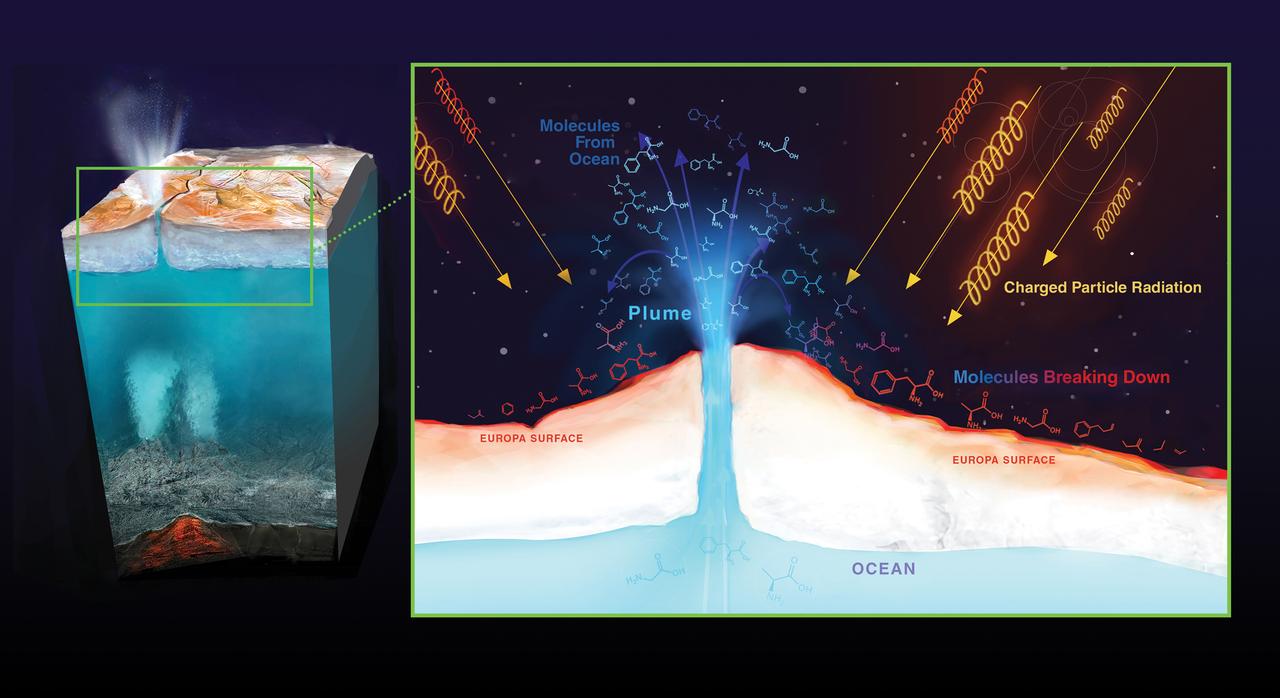
Radiation from Jupiter can destroy molecules on Europa's surface. Material from Europa's ocean that ends up on the surface of Europa will be bombarded by radiation. The radiation breaks apart molecules and changes the chemical composition of the material, possibly destroying any biosignatures, or chemical signs that could imply the presence of life. To interpret what future space missions find on the surface of Europa we must first understand how material has been modified by radiation. https://photojournal.jpl.nasa.gov/catalog/PIA22479
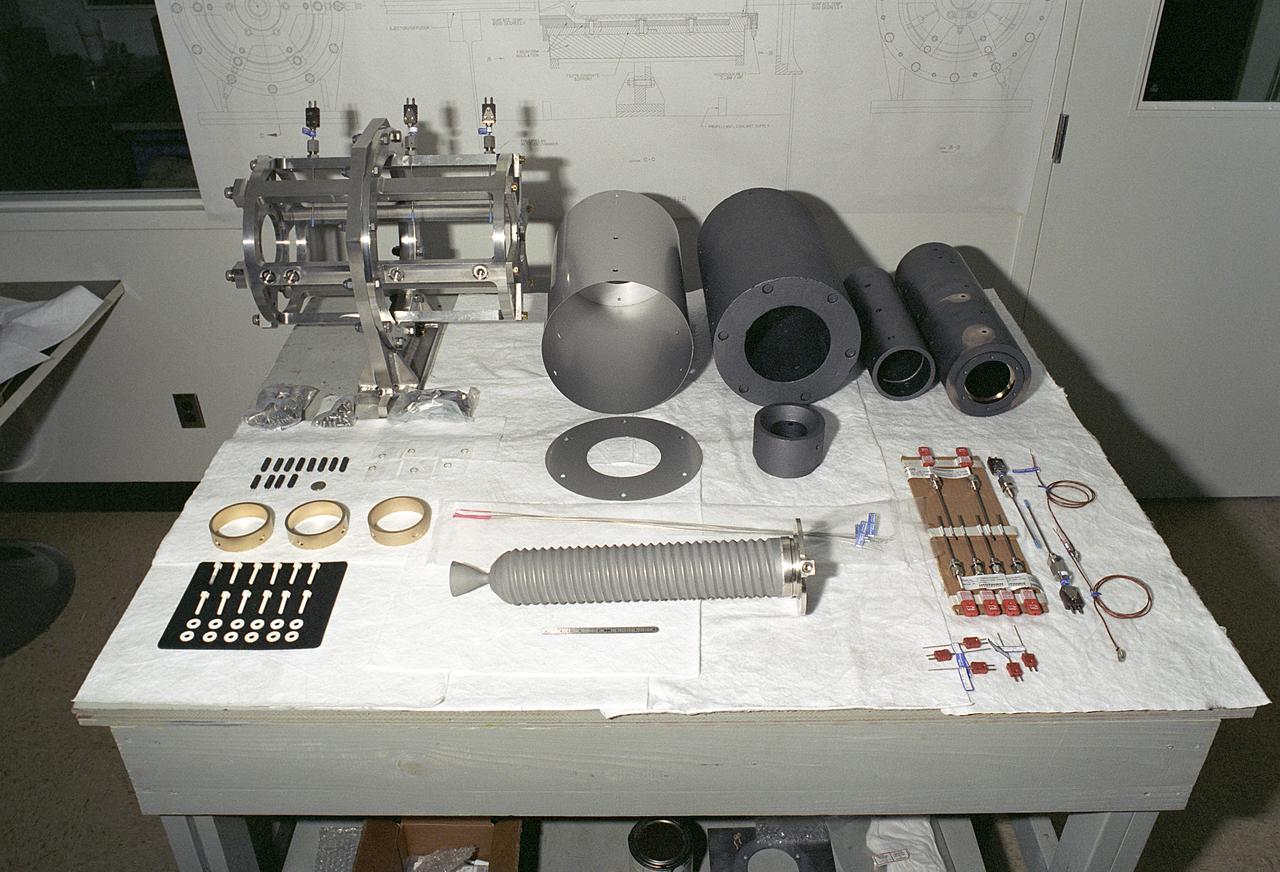
Researchers at the Marshall Space Flight Center (MSFC) have designed, fabricated, and tested the first solar thermal engine, a non-chemical rocket engine that produces lower thrust but has better thrust efficiency than a chemical combustion engine. This photograph shows components for the thermal propulsion engine being laid out prior to assembly. MSFC turned to solar thermal propulsion in the early 1990s due to its simplicity, safety, low cost, and commonality with other propulsion systems. As part of MSFC's Space Transportation Directorate, the Propulsion Research Center serves as a national resource for research of advanced, revolutionary propulsion technologies. The mission is to move the Nation's capabilities beyond the confines of conventional chemical propulsion into an era of aircraft-like access to Earth-orbit, rapid travel throughout the solar system, and exploration of interstellar space.
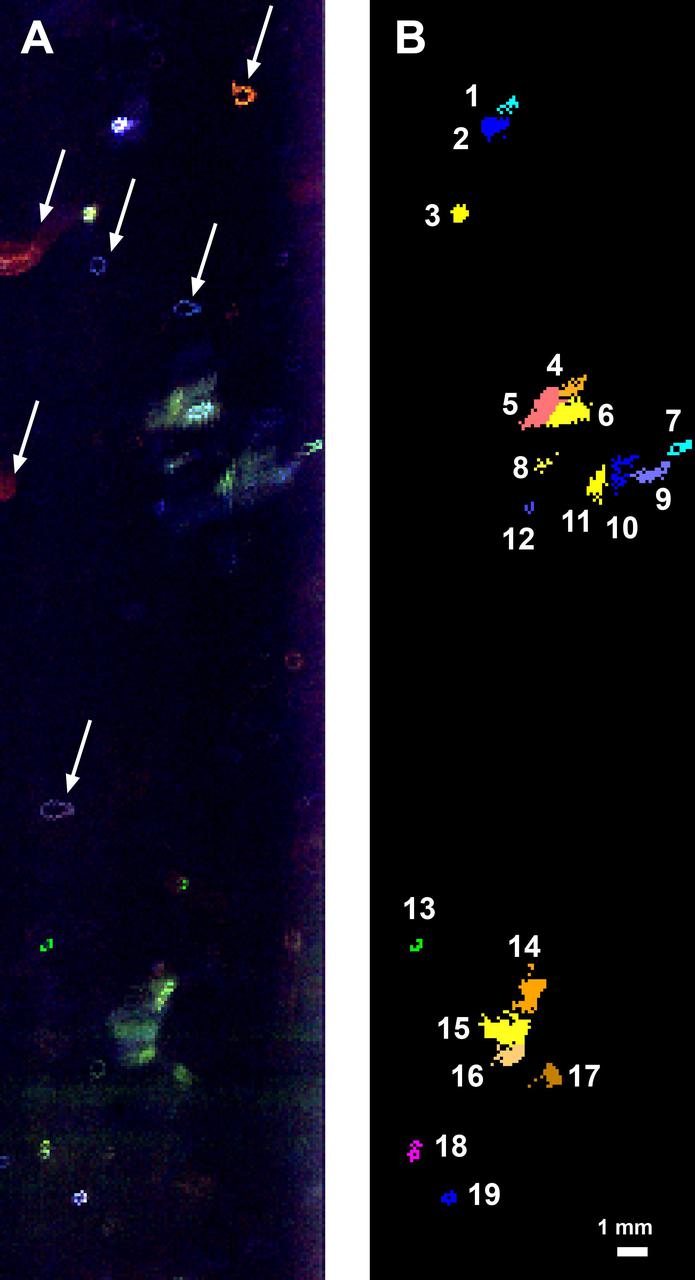
This fluorescence map of the inside wall of an ice borehole near Greenland's Summit Station was produced at a depth of 307.7 feet (93.8 meters) into the ice sheet by the WATSON (Wireline Analysis Tool for the Subsurface Observation of Northern ice sheets) instrument. Recorded during a 2019 field test of the WATSON instrument, the left panel shows the variety of biosignatures that were detected in the ice — different colors represent different organic molecules, some of which are likely microbes. The arrows highlight artifacts on the instrument's optical window, not biosignatures in the ice. In the right panel, the biosignature detections have been colorized to indicate the different features detected. Blotches that are the same color are likely made of the same chemicals. The numbers list the different and distinct features that WATSON detected at that depth in the ice. WATSON could one day be launched aboard a robotic mission to seek out biosignatures on the ocean moons of Enceladus, Europa, or even Titan. The WATSON team hopes to test the instrument in a variety of cold locations on Earth to see how the distribution and variety of biosignatures change depending on where they are. By testing WATSON in different "Earth analogs," scientists would be able to better understand the chemical fingerprints of any biosignatures detected on other worlds. https://photojournal.jpl.nasa.gov/catalog/PIA24140
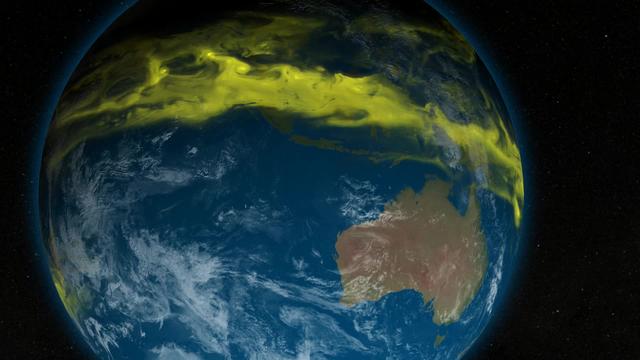
Caption: This is a conceptual animation showing ozone-depleting chemicals moving from the equator to the poles. The chemicals become trapped by the winds of the polar vortex, a ring of fast moving air that circles the South Pole. Watch full video: <a href="https://youtu.be/7n2km69jZu8" rel="nofollow">youtu.be/7n2km69jZu8</a> -- The next three decades will see an end of the era of big ozone holes. In a new study, scientists from NASA Goddard Space Flight Center say that the ozone hole will be consistently smaller than 12 million square miles by the year 2040. Ozone-depleting chemicals in the atmosphere cause an ozone hole to form over Antarctica during the winter months in the Southern Hemisphere. Since the Montreal Protocol agreement in 1987, emissions have been regulated and chemical levels have been declining. However, the ozone hole has still remained bigger than 12 million square miles since the early 1990s, with exact sizes varying from year to year. The size of the ozone hole varies due to both temperature and levels of ozone-depleting chemicals in the atmosphere. In order to get a more accurate picture of the future size of the ozone hole, scientists used NASA’s AURA satellite to determine how much the levels of these chemicals in the atmosphere varied each year. With this new knowledge, scientists can confidently say that the ozone hole will be consistently smaller than 12 million square miles by the year 2040. Scientists will continue to use satellites to monitor the recovery of the ozone hole and they hope to see its full recovery by the end of the century. Research: Inorganic chlorine variability in the Antarctic vortex and implications for ozone recovery. Journal: Geophysical Research: Atmospheres, December 18, 2014. Link to paper: <a href="http://onlinelibrary.wiley.com/doi/10.1002/2014JD022295/abstract" rel="nofollow">onlinelibrary.wiley.com/doi/10.1002/2014JD022295/abstract</a>.
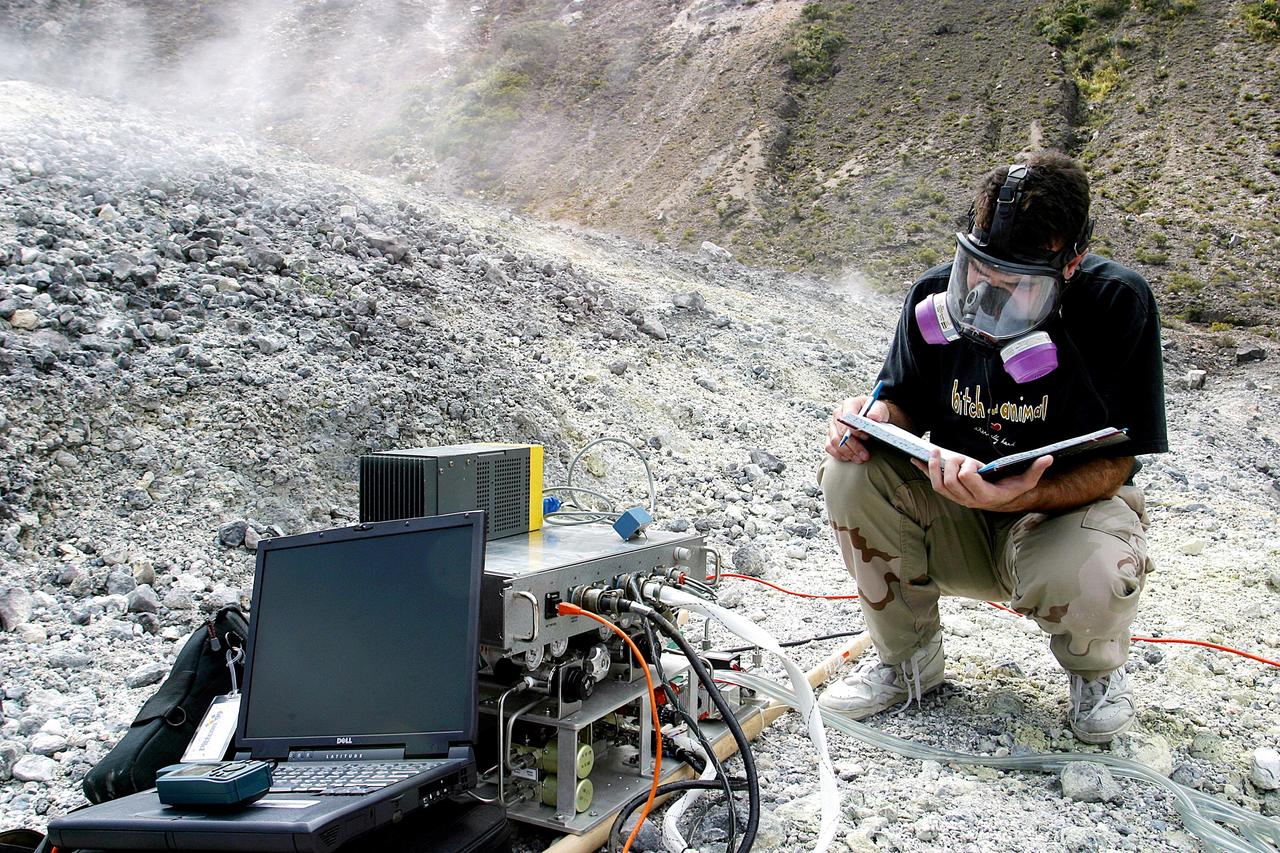
KENNEDY SPACE CENTER, FLA. - Dr. Richard Arkin records data as the hazardous gas detection system AVEMS is used to analyze the toxic gases produced by active vents, called fumaroles, in the Turrialba volcano in Costa Rica. He is using the Aircraft-based Volcanic Emission Mass Spectrometer (AVEMS) that determines the presence and concentration of various chemicals. The AVEMS system has been developed for use in the Space Shuttle program, to detect toxic gas leaks and emissions in the Shuttle’s aft compartment and the crew compartment.
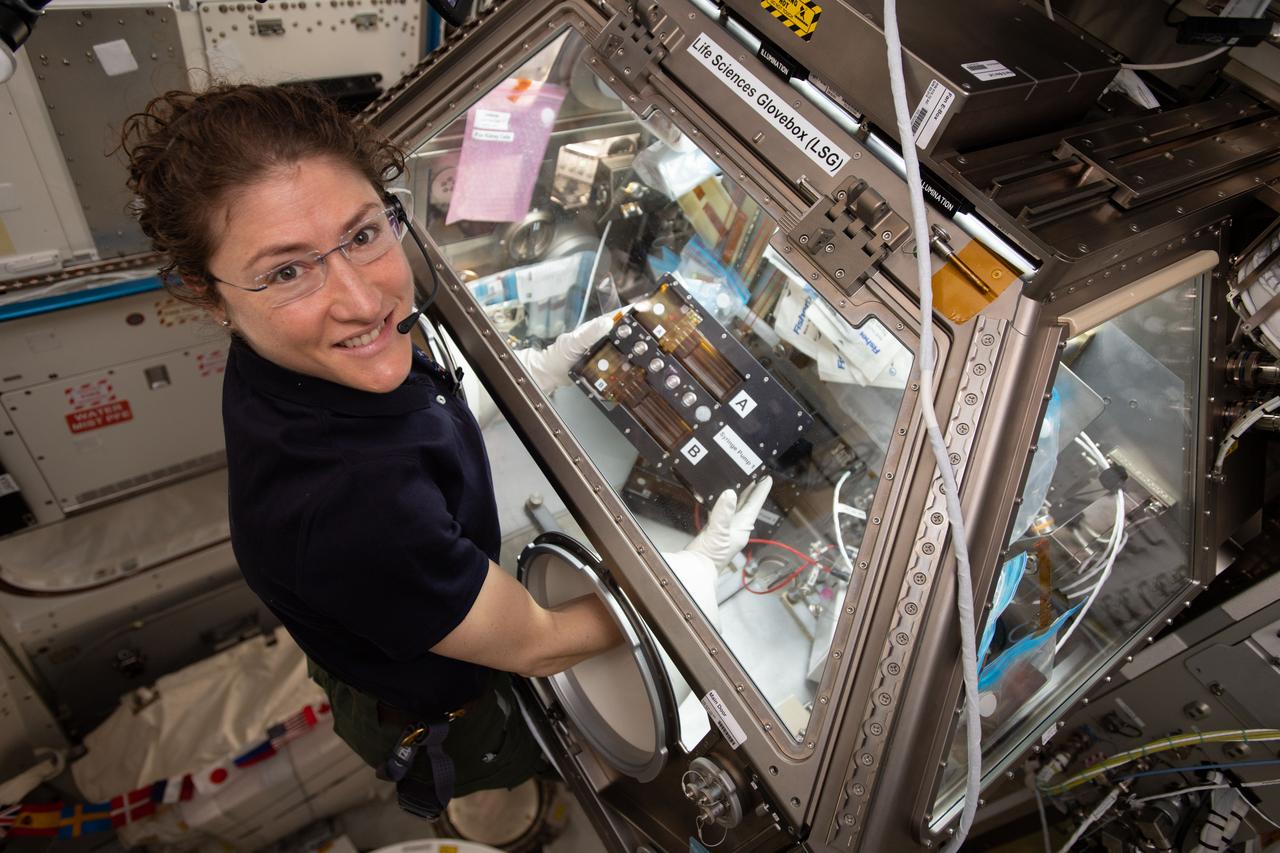
iss059e060944 (May 12, 2019) --- NASA astronaut Christina Koch works inside the Life Sciences Glovebox conducting research for the Kidney Cells investigation that is seeking innovative treatments for kidney stones, osteoporosis and toxic chemical exposures.
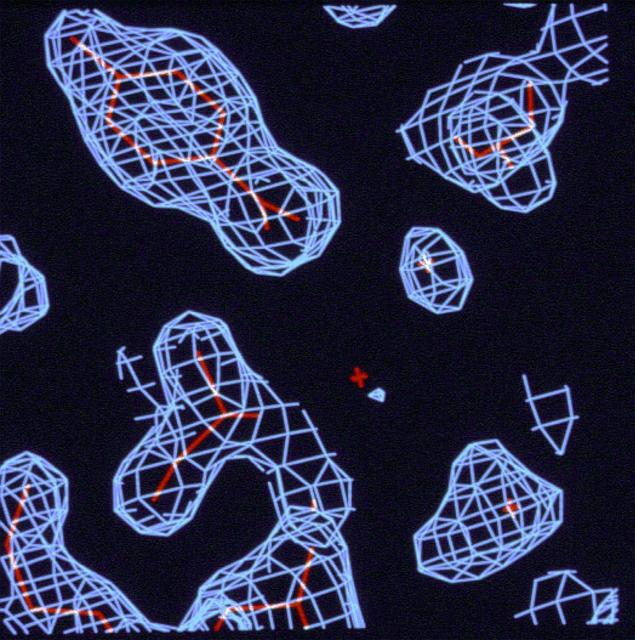
Like many chemicals in the body, the three-dimensional structure of insulin is extremely complex. When grown on the ground, insulin crystals do not grow as large or as ordered as researchers desire--obscuring the blueprint of the insulin molecules.

(PCG) Protein Crystal Growth Renin. Enzyme produced by the kidneys, plays a major role in the chemical reaction that controls blood pressure. Principal Investigator on STS-26 was Charles Bugg.
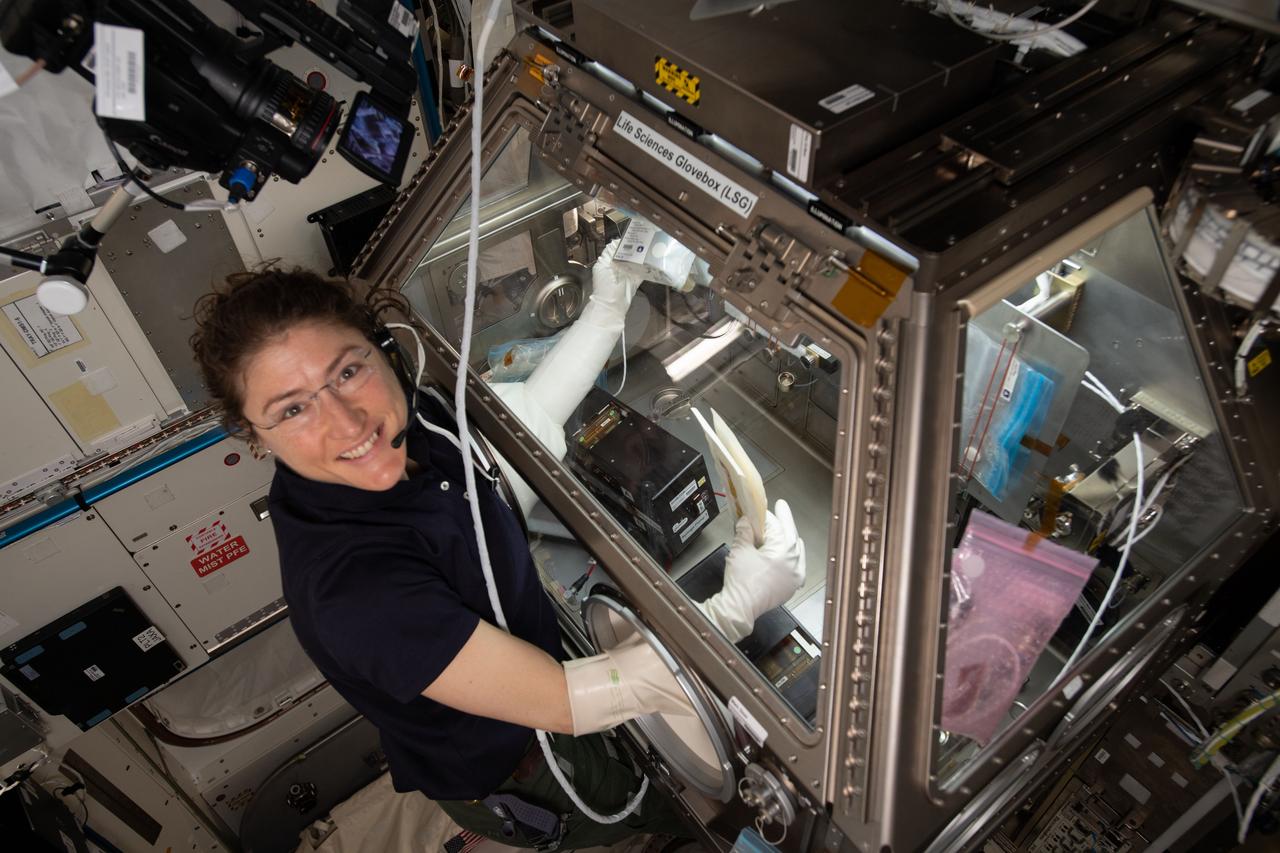
iss059e060936 (May 12, 2019) --- NASA astronaut Christina Koch works inside the Life Sciences Glovebox conducting research for the Kidney Cells investigation that is seeking innovative treatments for kidney stones, osteoporosis and toxic chemical exposures.
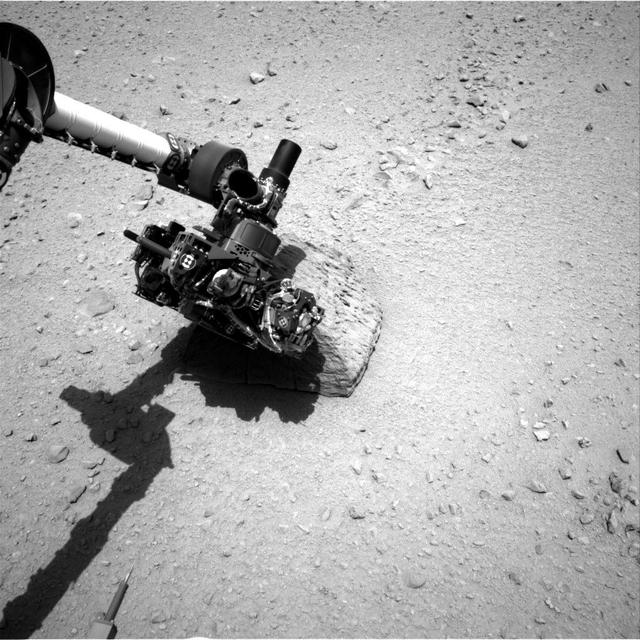
This image shows the robotic arm of NASA Mars rover Curiosity with the first rock touched by an instrument on the arm. The rover placed the APXS instrument onto the rock to assess what chemical elements were present in the rock.
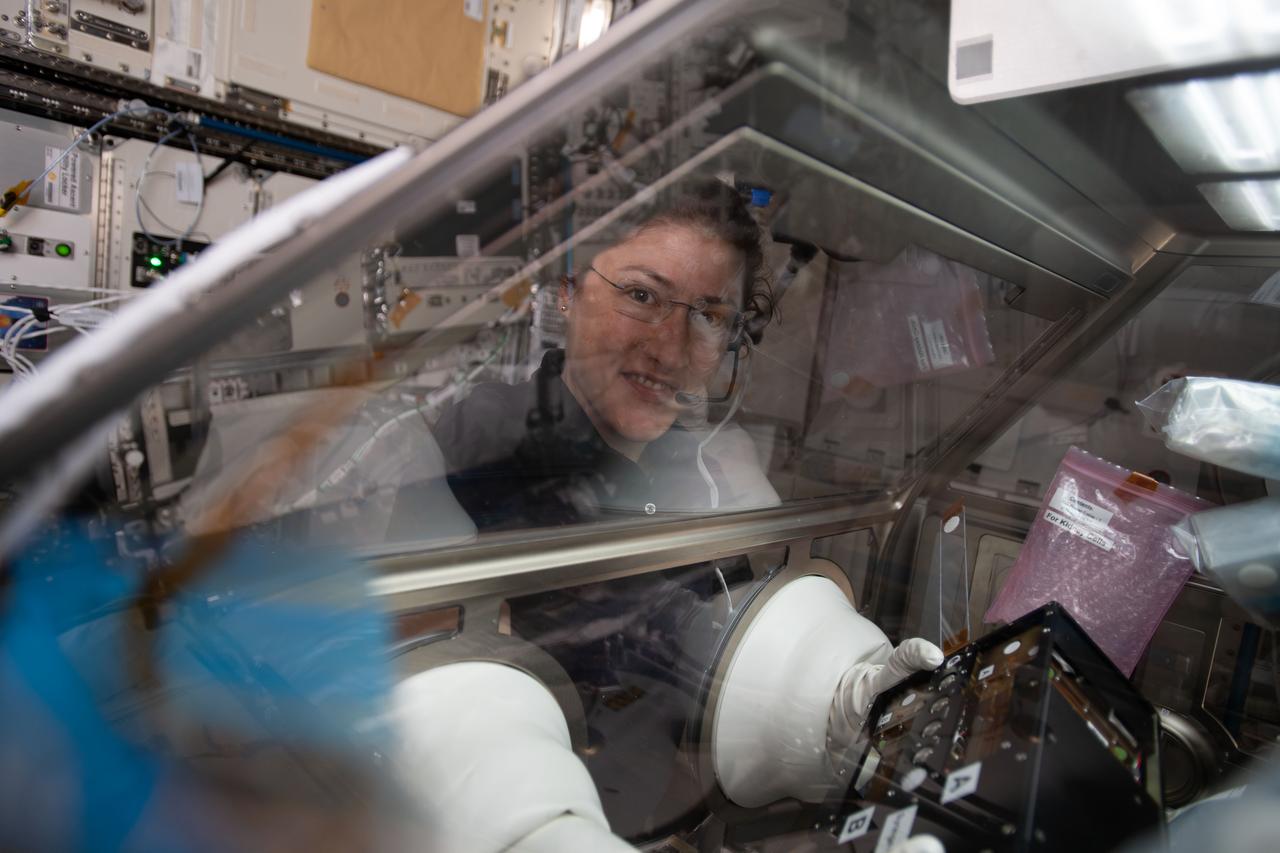
iss059e060950 (May 12, 2019) --- NASA astronaut Christina Koch works inside the Life Sciences Glovebox conducting research for the Kidney Cells investigation that is seeking innovative treatments for kidney stones, osteoporosis and toxic chemical exposures.
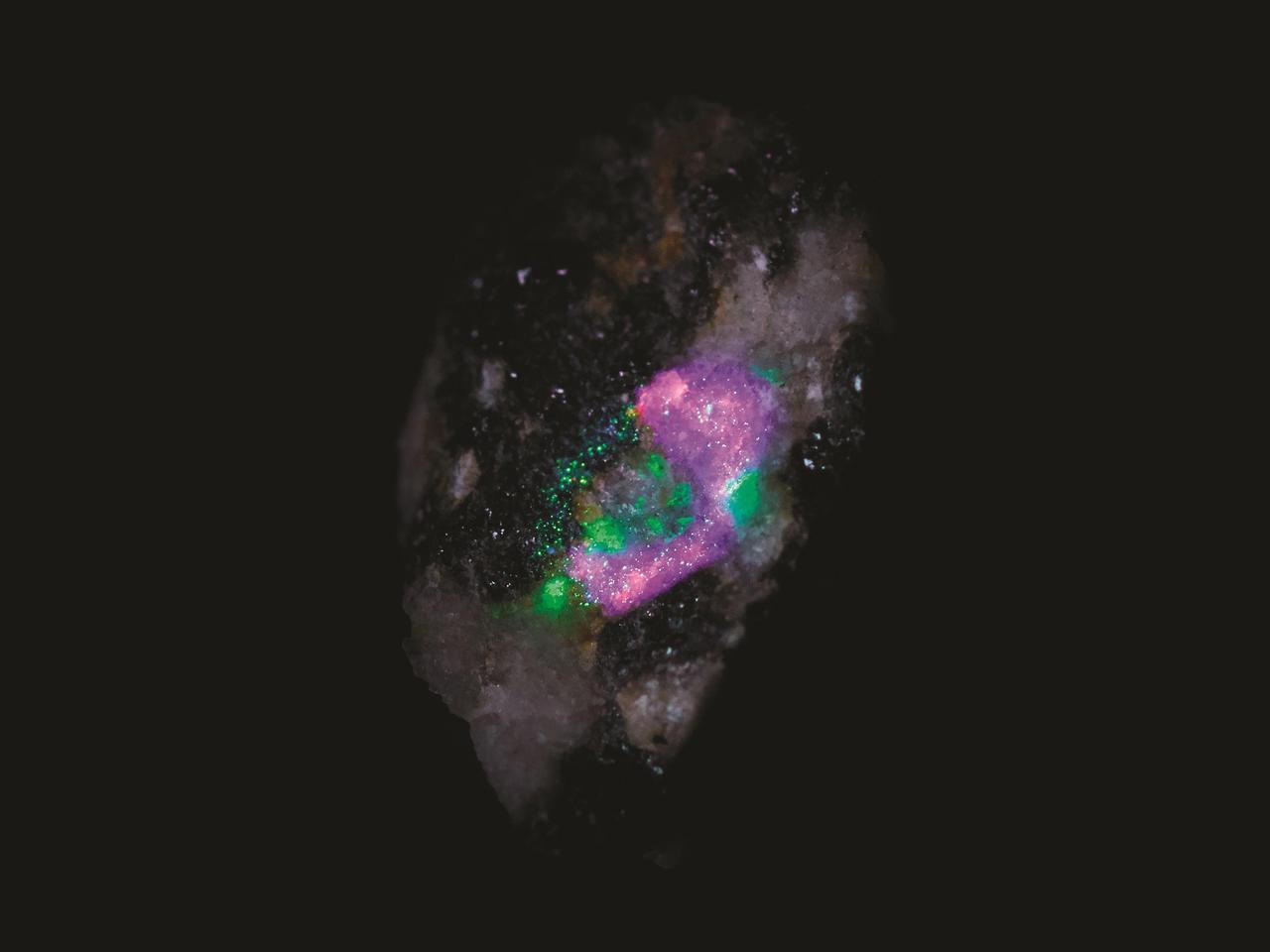
In this test image by SHERLOC (Scanning Habitable Environments with Raman & Luminescence for Organics & Chemicals), an instrument aboard NASA's Perseverance rover, each color represents a different mineral detected on a rock's surface. https://photojournal.jpl.nasa.gov/catalog/PIA23895
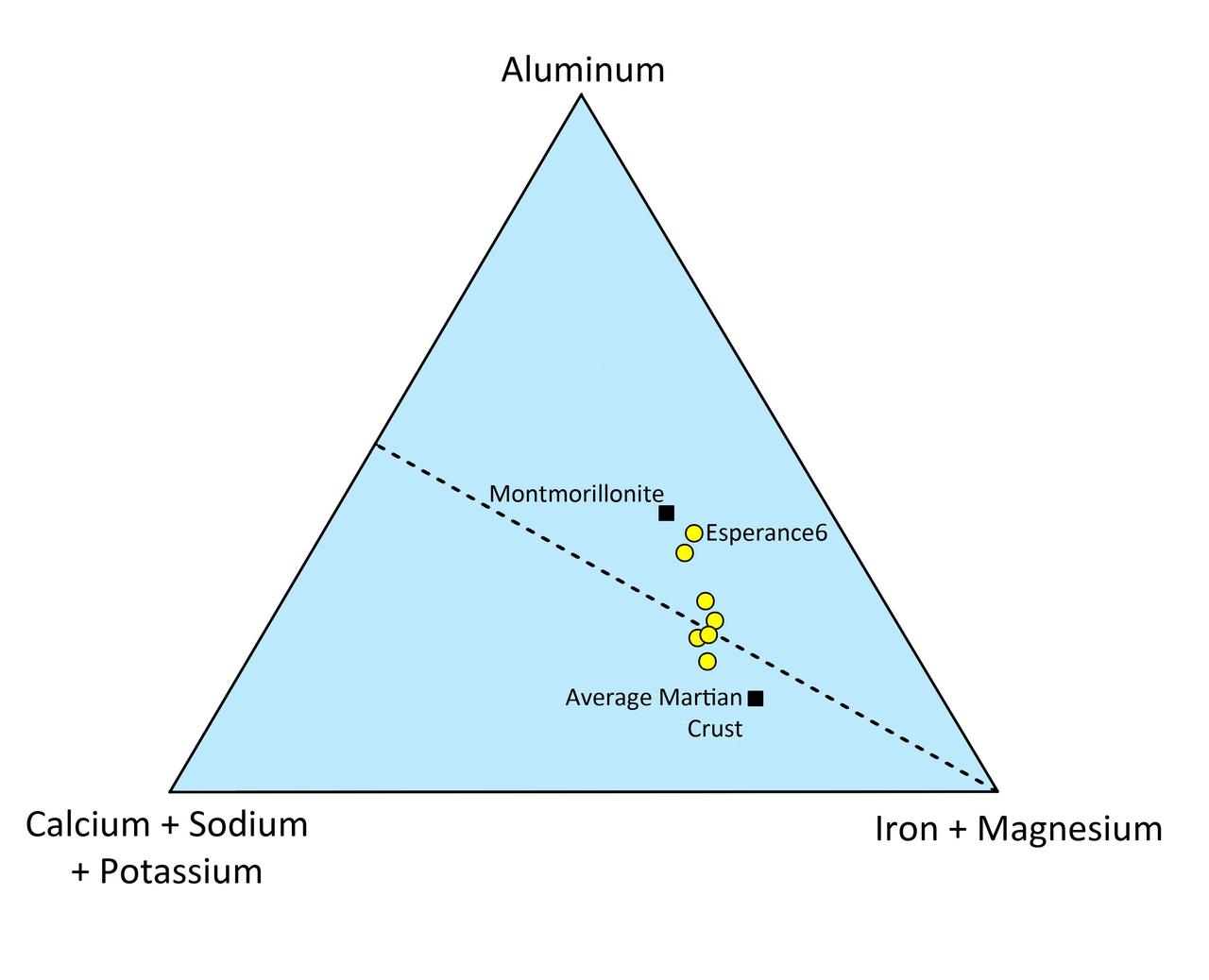
This triangle plot shows the relative concentrations of some of the major chemical elements in the Martian rock Esperance. The compositions of average Martian crust and of montmorillonite, a common clay mineral, are shown.
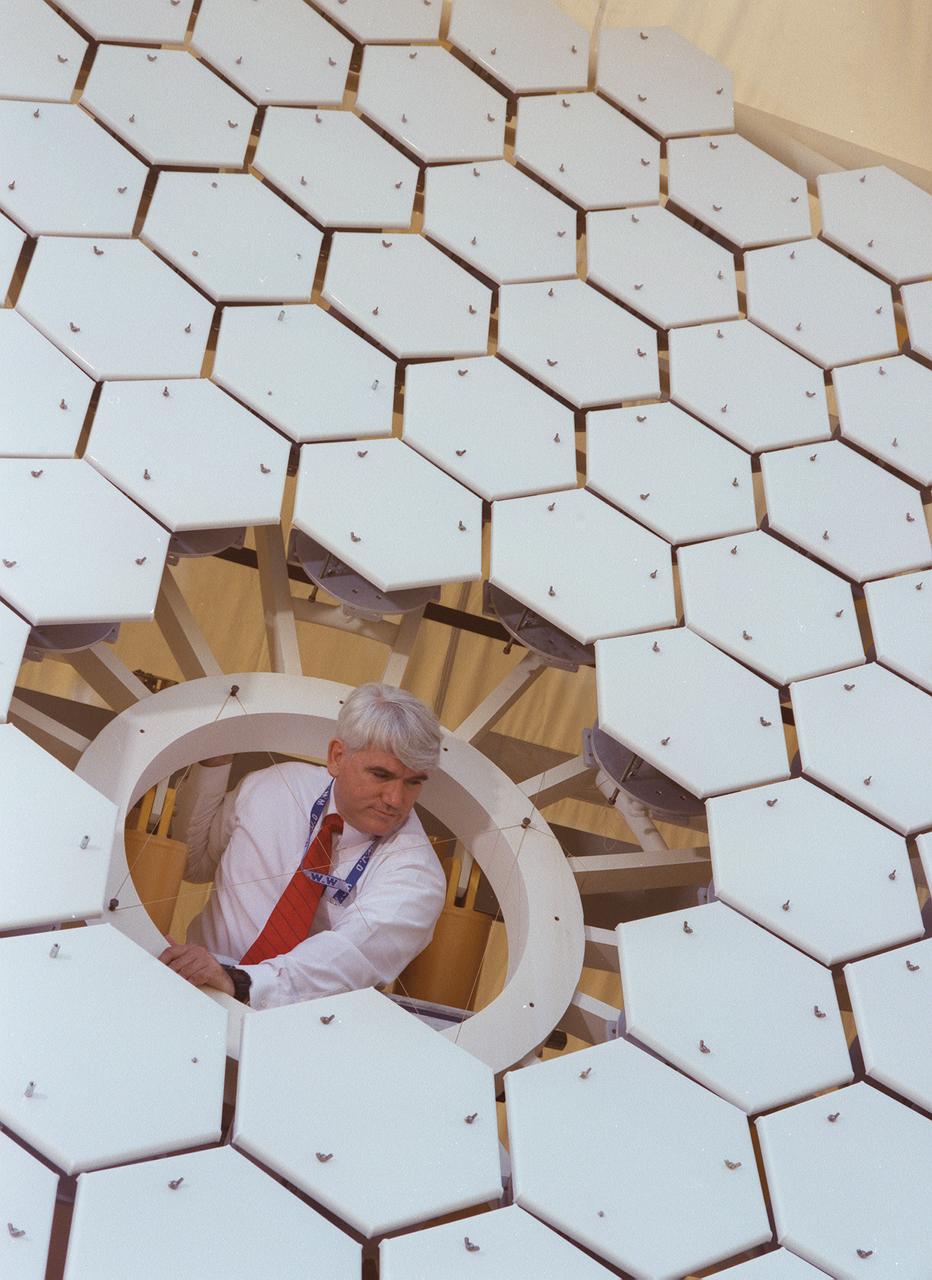
A team of engineers at Marshall Space Flight Center (MSFC) has designed, fabricated, and tested the first solar thermal engine, a non-chemical rocket that produces lower thrust but has better thrust efficiency than the chemical combustion engines. This segmented array of mirrors is the solar concentrator test stand at MSFC for firing the thermal propulsion engines. The 144 mirrors are combined to form an 18-foot diameter array concentrator. The mirror segments are aluminum hexagons that have the reflective surface cut into it by a diamond turning machine, which is developed by MSFC Space Optics Manufacturing Technology Center.
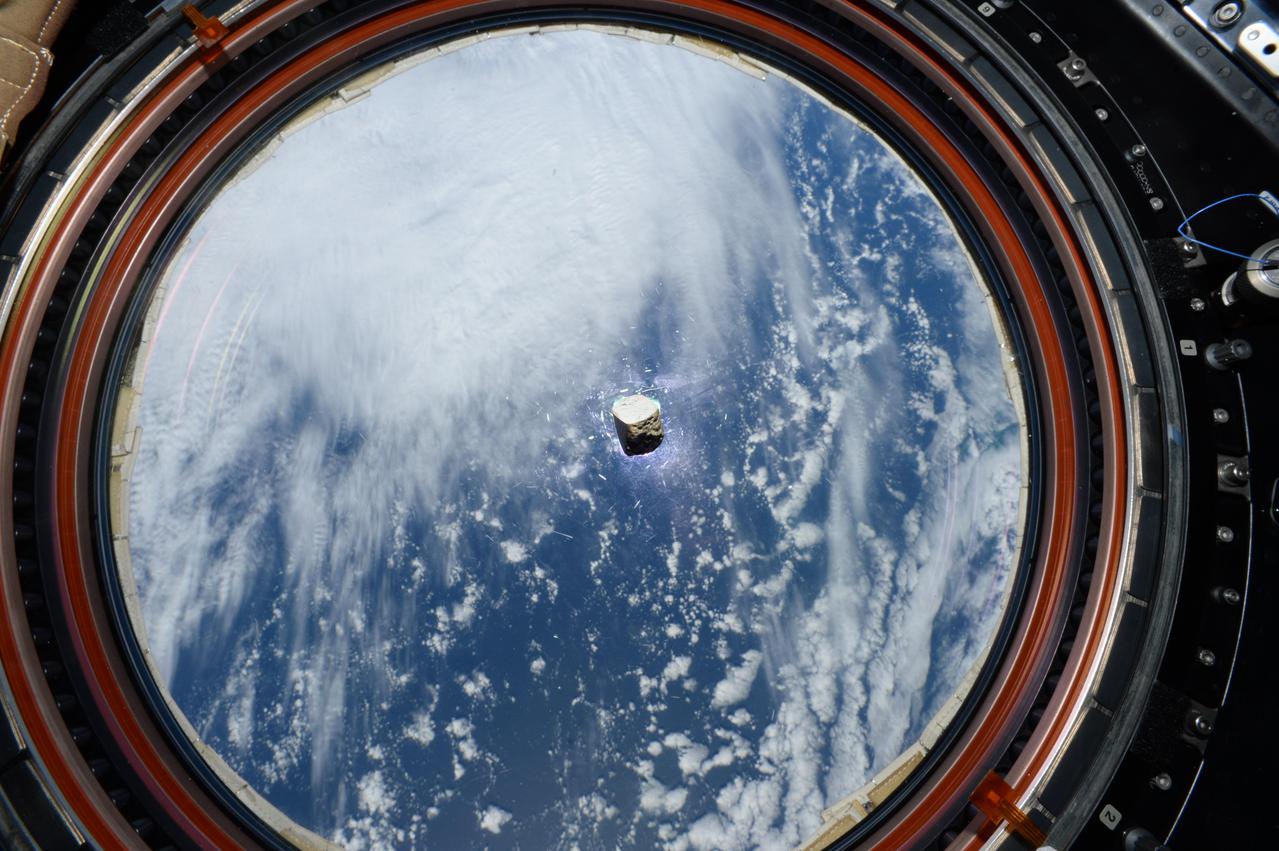
This slice of a Martian meteorite, seen floating inside the International Space Station, is now part of a calibration target for SuperCam, one of the instruments aboard NASA's Perseverance Mars rover. A piece of a different Martian meteorite is part of the calibration target for the instrument known as SHERLOC (Scanning Habitable Environments with Raman & Luminescence for Organics & Chemicals). Scientists use calibration targets as a kind of default they can use to check and fine-tune the settings of their instruments. A small number of meteorites on Earth have been determined to have originated on Mars based on mineral and chemical analyses by past NASA spacecraft. https://photojournal.jpl.nasa.gov/catalog/PIA24179
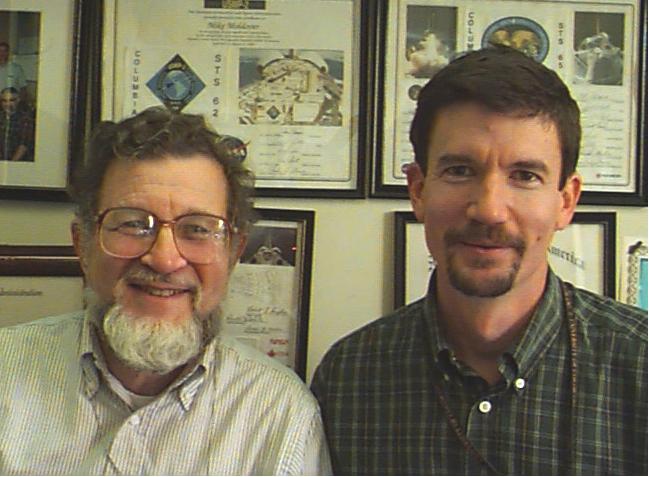
Dr. Dr. Robert F. Berg (right), principal investigator and Dr. Micheal R. Moldover (left), co-investigator, for the Critical Viscosity of Xenon (CVX/CVX-2) experiment. They are with the National Institutes of Standards and Technology, Gaithersburg, MD. The Critical Viscosity of Xenon Experiment (CVX-2) on the STS-107 Research 1 mission in 2002 will measure the viscous behavior of xenon, a heavy inert gas used in flash lamps and ion rocket engines, at its critical point. Although it does not easily combine with other chemicals, its viscosity at the critical point can be used as a model for a range of chemicals.
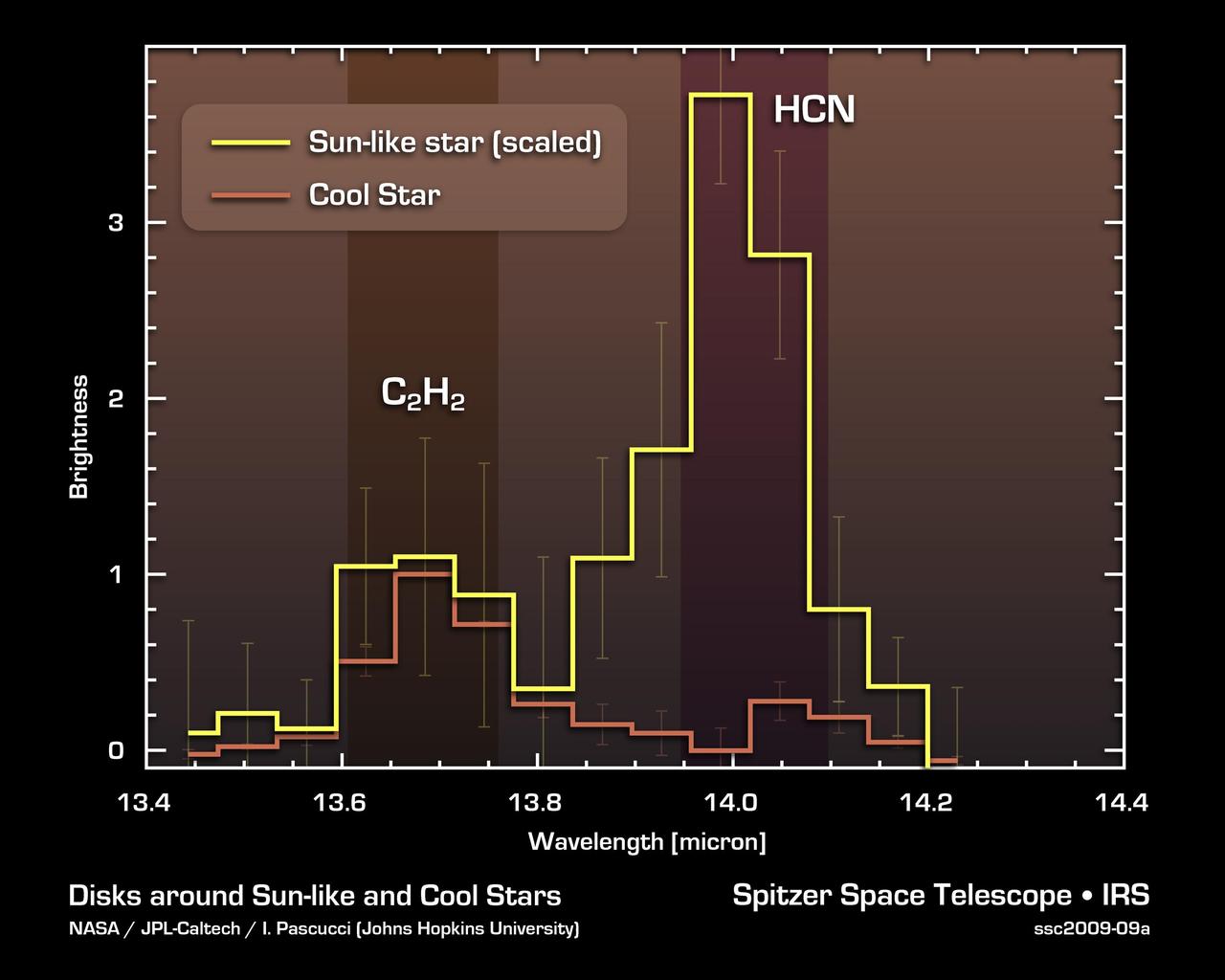
NASA Spitzer Space Telescope detected a prebiotic, or potentially life-forming, molecule called hydrogen cyanide HCN in the planet-forming disks around yellow stars like our sun, but not in the disks around cooler, reddish stars.
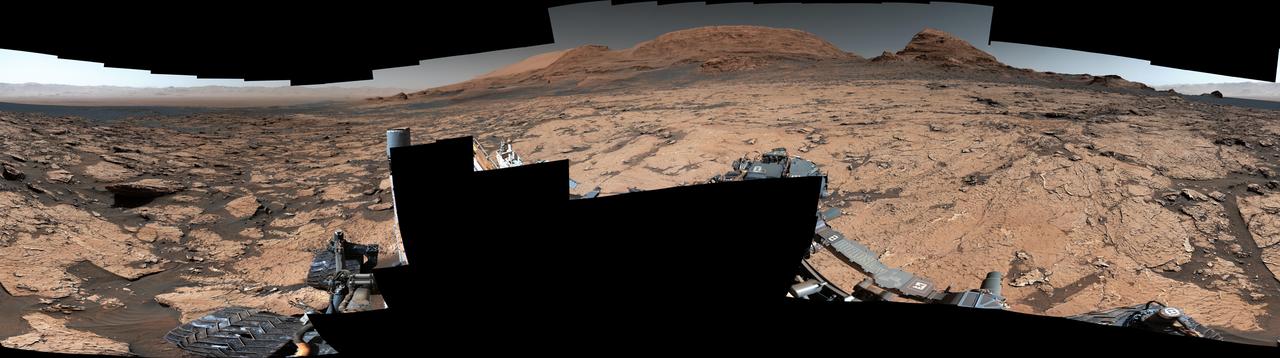
NASA's Curiosity Mars rover found preserved, ancient mud cracks that scientists believe were formed after long cycles of wet and dry conditions over many years. The discovery marks the first evidence of these wet-dry cycles on Mars. The cracks were found while the rover explored a transitional region between an area enriched with clay minerals and one enriched with sulfate minerals. The mud cracks were captured in this mosaic by Curiosity's Mastcam on June 20, 2021, the 3,154th Martian day, or sol, of the mission. The mosaic is made up of 143 images that were stitched together after being sent back to Earth. The hexagonal shapes are similar to those found at locations on Earth such as Death Valley National Park's Racetrack playa. They form only after many years of alternating wet and dry conditions. When the mud cracks initially form, they have sharp, T-shaped angles within their "pits." After being gently rehydrated many times, those sharp angles soften into Y-shapes that become ridges as the rock is eroded. Evidence pointing to wet-dry cycles is exciting to Curiosity's scientists because while no one is exactly sure how life first forms, one prevailing theory suggests that these wet-dry cycles are supportive, perhaps even required. The conditions that sustain microbial life – a long-lasting lake, for example – differ from those that scientists think kickstart the chemical reactions that might lead to life. Driving those chemical reactions are long chains of carbon-based molecules called polymers, which require just the right conditions. Water is needed to mix chemicals into a soup, where they can react with one another. Too much water will dilute the soup, making it difficult for polymer-forming chemical reactions to occur; too little water, and the chemicals can't adequately mix and react. Wet-dry cycling can strike a balance between the two. https://photojournal.jpl.nasa.gov/catalog/PIA25915
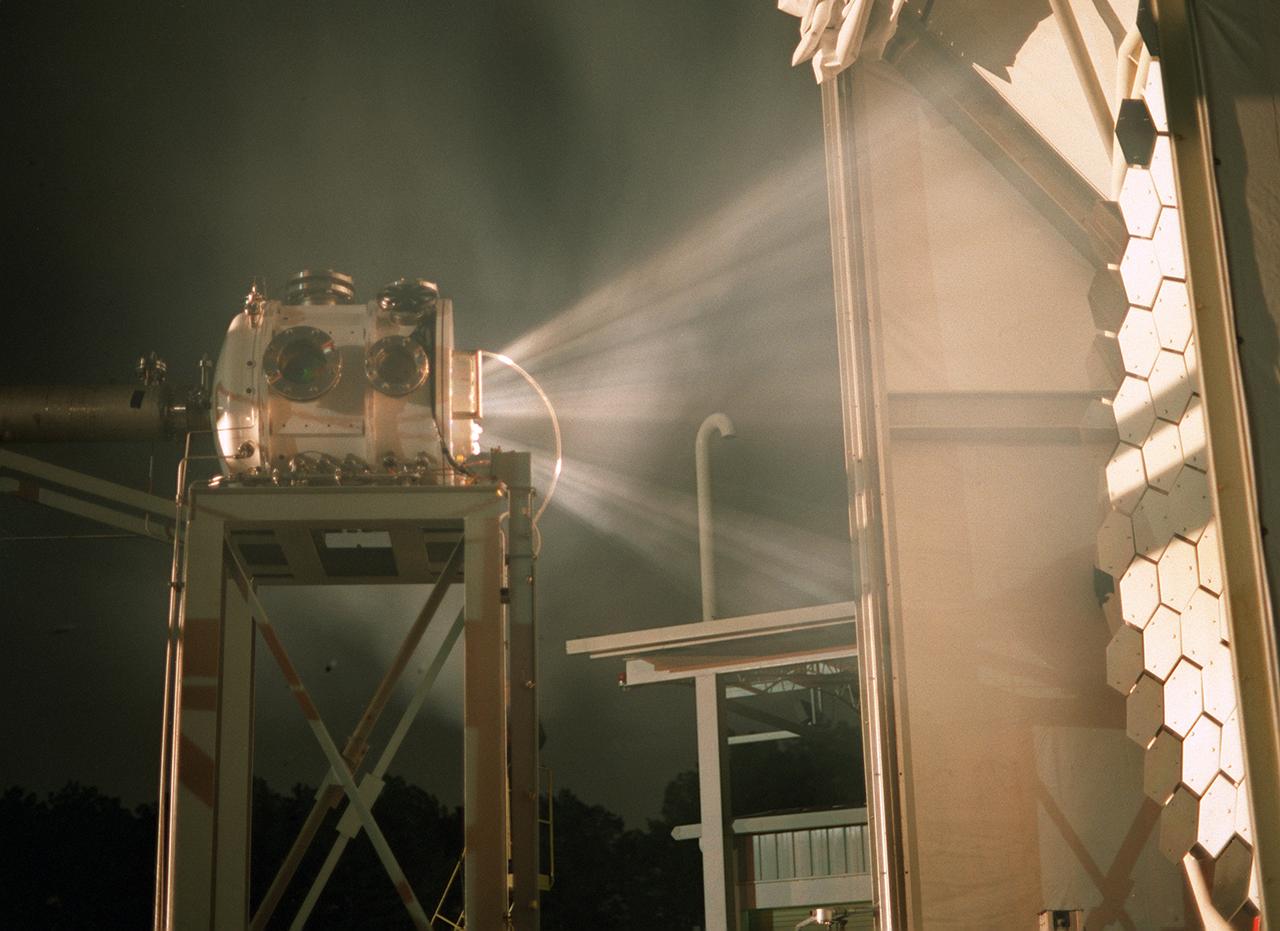
Researchers at the Marshall Space Flight Center (MSFC) have designed, fabricated, and tested the first solar thermal engine, a non-chemical rocket engine that produces lower thrust but has better thrust efficiency than a chemical combustion engine. MSFC turned to solar thermal propulsion in the early 1990s due to its simplicity, safety, low cost, and commonality with other propulsion systems. Solar thermal propulsion works by acquiring and redirecting solar energy to heat a propellant. The 20- by 24-ft heliostat mirror (not shown in this photograph) has a dual-axis control that keeps a reflection of the sunlight on the 18-ft diameter concentrator mirror, which then focuses the sunlight to a 4-in focal point inside the vacuum chamber. The focal point has 10 kilowatts of intense solar power. This image, taken during the test, depicts the light being concentrated into the focal point inside the vacuum chamber. As part of MSFC's Space Transportation Directorate, the Propulsion Research Center serves as a national resource for research of advanced, revolutionary propulsion technologies. The mission is to move the Nation's capabilities beyond the confines of conventional chemical propulsion into an era of aircraft-like access to Earth orbit, rapid travel throughout the solar system, and exploration of interstellar space.
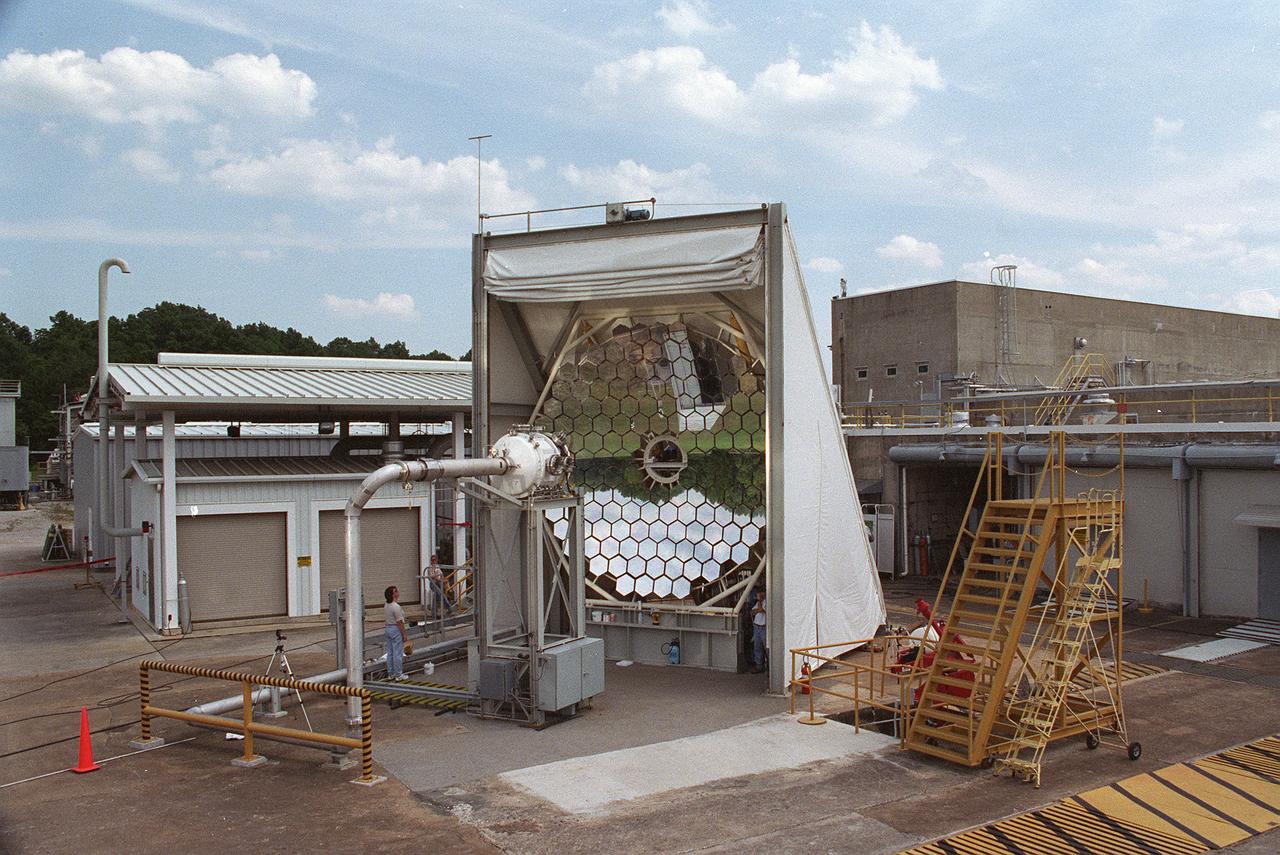
Researchers at the Marshall Space Flight Center (MSFC) have designed, fabricated and tested the first solar thermal engine, a non-chemical rocket engine that produces lower thrust but has better thrust efficiency than a chemical combustion engine. MSFC turned to solar thermal propulsion in the early 1990s due to its simplicity, safety, low cost, and commonality with other propulsion systems. Solar thermal propulsion works by acquiring and redirecting solar energy to heat a propellant. This photograph, taken at MSFC's Solar Thermal Propulsion Test Facility, shows a concentrator mirror, a combination of 144 mirrors forming this 18-ft diameter concentrator, and a vacuum chamber that houses the focal point. The 20- by 24-ft heliostat mirror (not shown in this photograph) has a dual-axis control that keeps a reflection of the sunlight on the 18-foot diameter concentrator mirror, which then focuses the sunlight to a 4-in focal point inside the vacuum chamber. The focal point has 10 kilowatts of intense solar power. As part of MSFC's Space Transportation Directorate, the Propulsion Research Center serves as a national resource for research of advanced, revolutionary propulsion technologies. The mission is to move the Nation's capabilities beyond the confines of conventional chemical propulsion into an era of aircraft-like access to Earth-orbit, rapid travel throughout the solar system, and exploration of interstellar space.
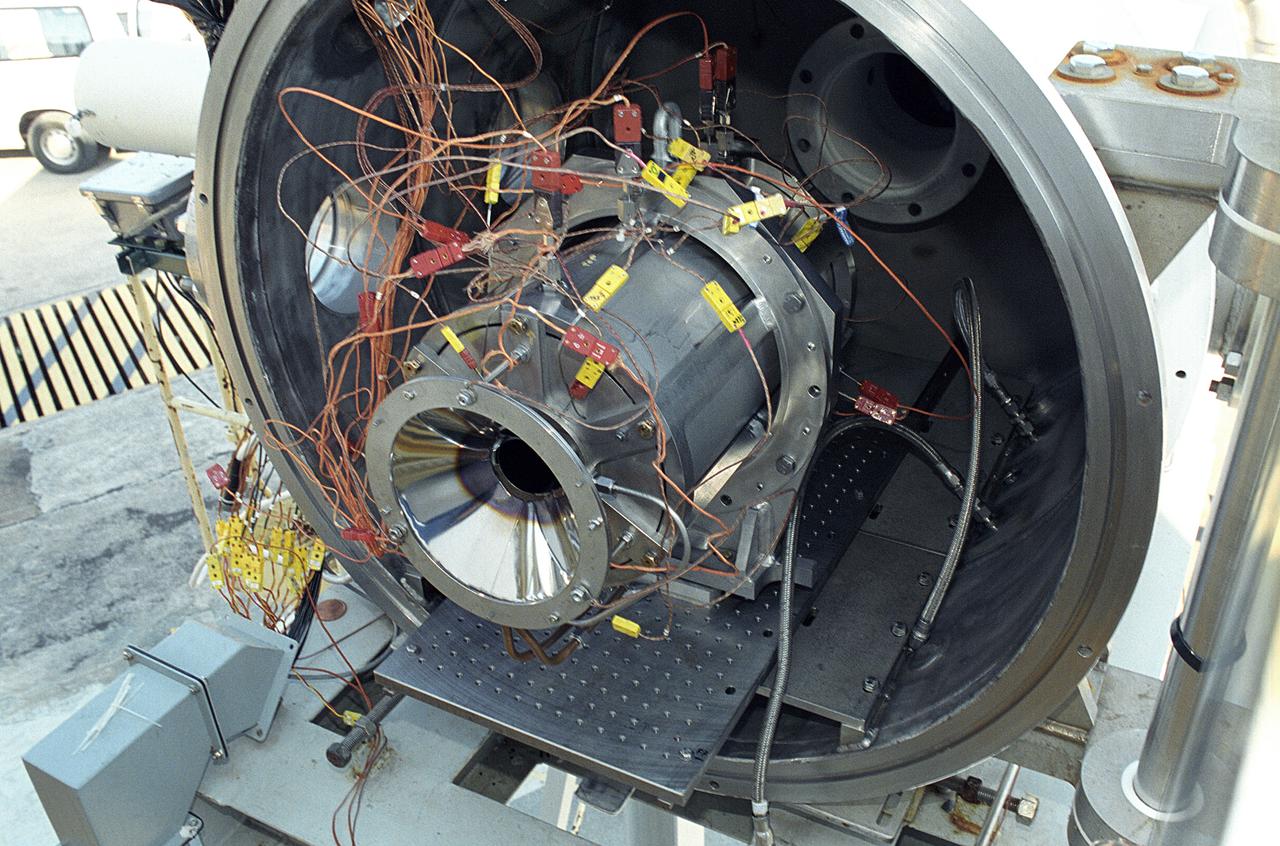
Researchers at the Marshall Space Flight Center (MSFC) have designed, fabricated, and tested the first solar thermal engine, a non-chemical rocket engine that produces lower thrust but has better thrust efficiency than a chemical combustion engine. MSFC turned to solar thermal propulsion in the early 1990s due to its simplicity, safety, low cost, and commonality with other propulsion systems. Solar thermal propulsion works by acquiring and redirecting solar energy to heat a propellant. This photograph shows a fully assembled solar thermal engine placed inside the vacuum chamber at the test facility prior to testing. The 20- by 24-ft heliostat mirror (not shown in this photograph) has a dual-axis control that keeps a reflection of the sunlight on the 18-ft diameter concentrator mirror, which then focuses the sunlight to a 4-in focal point inside the vacuum chamber. The focal point has 10 kilowatts of intense solar power. As part of MSFC's Space Transportation Directorate, the Propulsion Research Center serves as a national resource for research of advanced, revolutionary propulsion technologies. The mission is to move theNation's capabilities beyond the confines of conventional chemical propulsion into an era of aircraft-like access to Earth orbit, rapid travel throughout the solar system, and exploration of interstellar space.
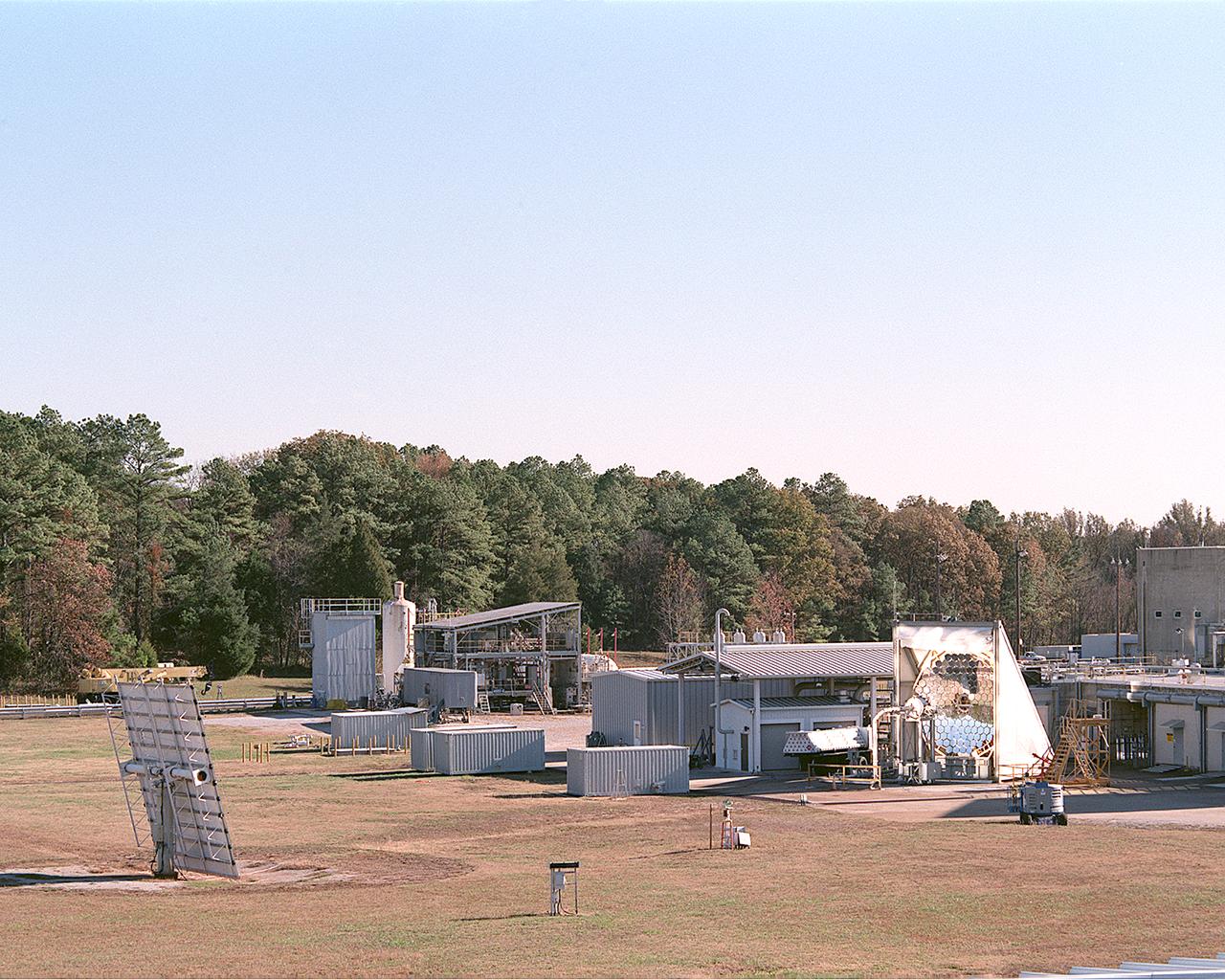
This photograph shows an overall view of the Solar Thermal Propulsion Test Facility at the Marshall Space Flight Center (MSFC). The 20-by 24-ft heliostat mirror, shown at the left, has dual-axis control that keeps a reflection of the sunlight on an 18-ft diameter concentrator mirror (right). The concentrator mirror then focuses the sunlight to a 4-in focal point inside the vacuum chamber, shown at the front of concentrator mirror. Researchers at MSFC have designed, fabricated, and tested the first solar thermal engine, a non-chemical rocket engine that produces lower thrust but has better thrust efficiency than chemical a combustion engine. MSFC turned to solar thermal propulsion in the early 1990s due to its simplicity, safety, low cost, and commonality with other propulsion systems. Solar thermal propulsion works by acquiring and redirecting solar energy to heat a propell nt. As part of MSFC's Space Transportation Directorate, the Propulsion Research Center serves as a national resource for research of advanced, revolutionary propulsion technologies. The mission is to move the Nation's capabilities beyond the confines of conventional chemical propulsion into an era of aircraft-like access to Earth-orbit, rapid travel throughout the solar system, and exploration of interstellar space.
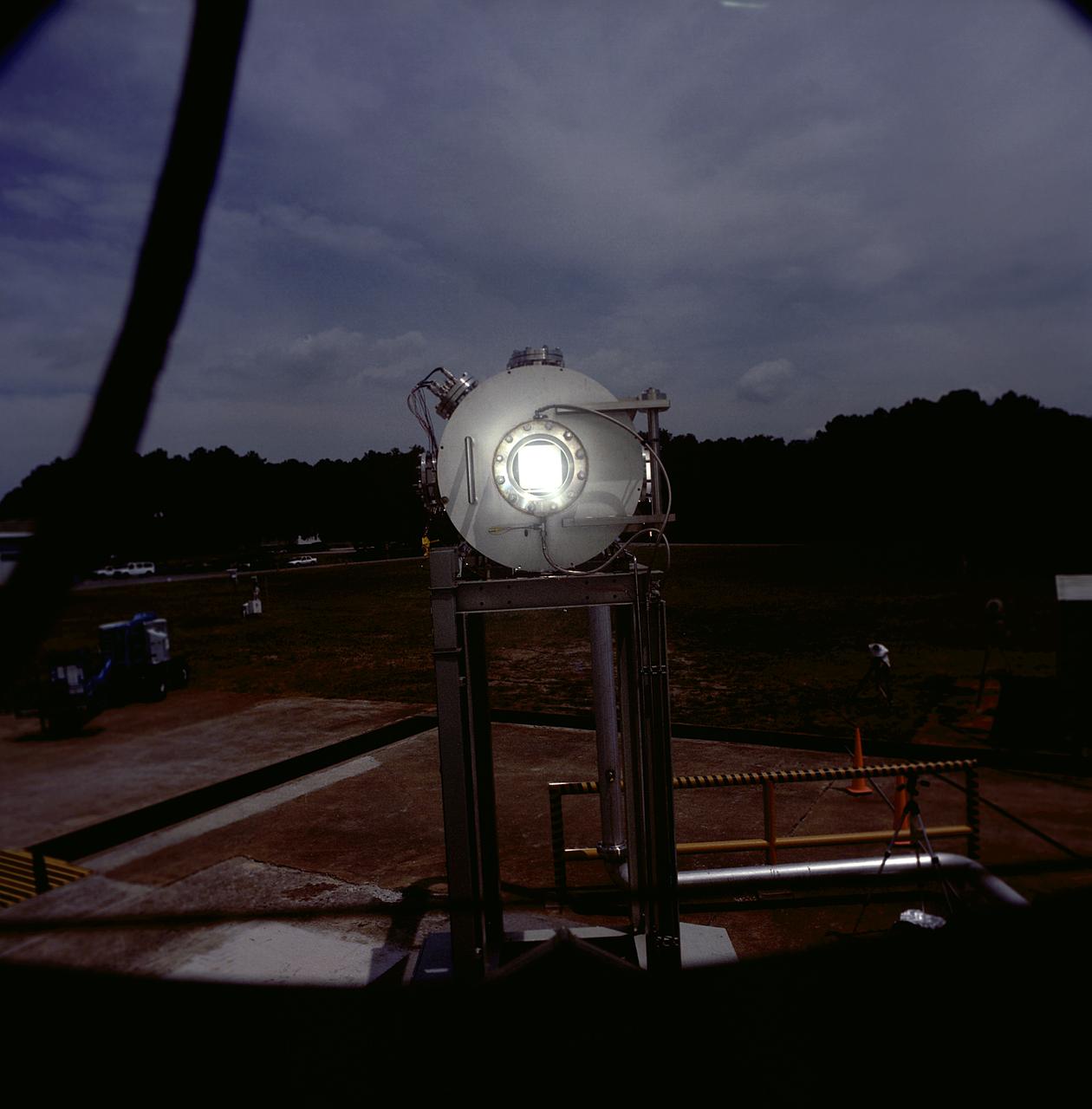
Researchers at the Marshall Space Flight Center (MSFC) have designed, fabricated, and tested the first solar thermal engine, a non-chemical rocket engine that produces lower thrust but has better thrust efficiency than a chemical combustion engine. MSFC turned to solar thermal propulsion in the early 1990s due to its simplicity, safety, low cost, and commonality with other propulsion systems. Solar thermal propulsion works by acquiring and redirecting solar energy to heat a propellant. The 20- by 24-ft heliostat mirror (not shown in this photograph) has dual-axis control that keeps a reflection of the sunlight on an 18-ft diameter concentrator mirror, which then focuses the sunlight to a 4-in focal point inside the vacuum chamber. The focal point has 10 kilowatts of intense solar power. This photograph is a close-up view of a 4-in focal point inside the vacuum chamber at the MSFC Solar Thermal Propulsion Test facility. As part of MSFC's Space Transportation Directorate, the Propulsion Research Center serves as a national resource for research of advanced, revolutionary propulsion technologies. The mission is to move the Nation's capabilities beyond the confines of conventional chemical propulsion into an era of aircraft-like access to Earth orbit, rapid travel throughout the solar system, and exploration of interstellar space.
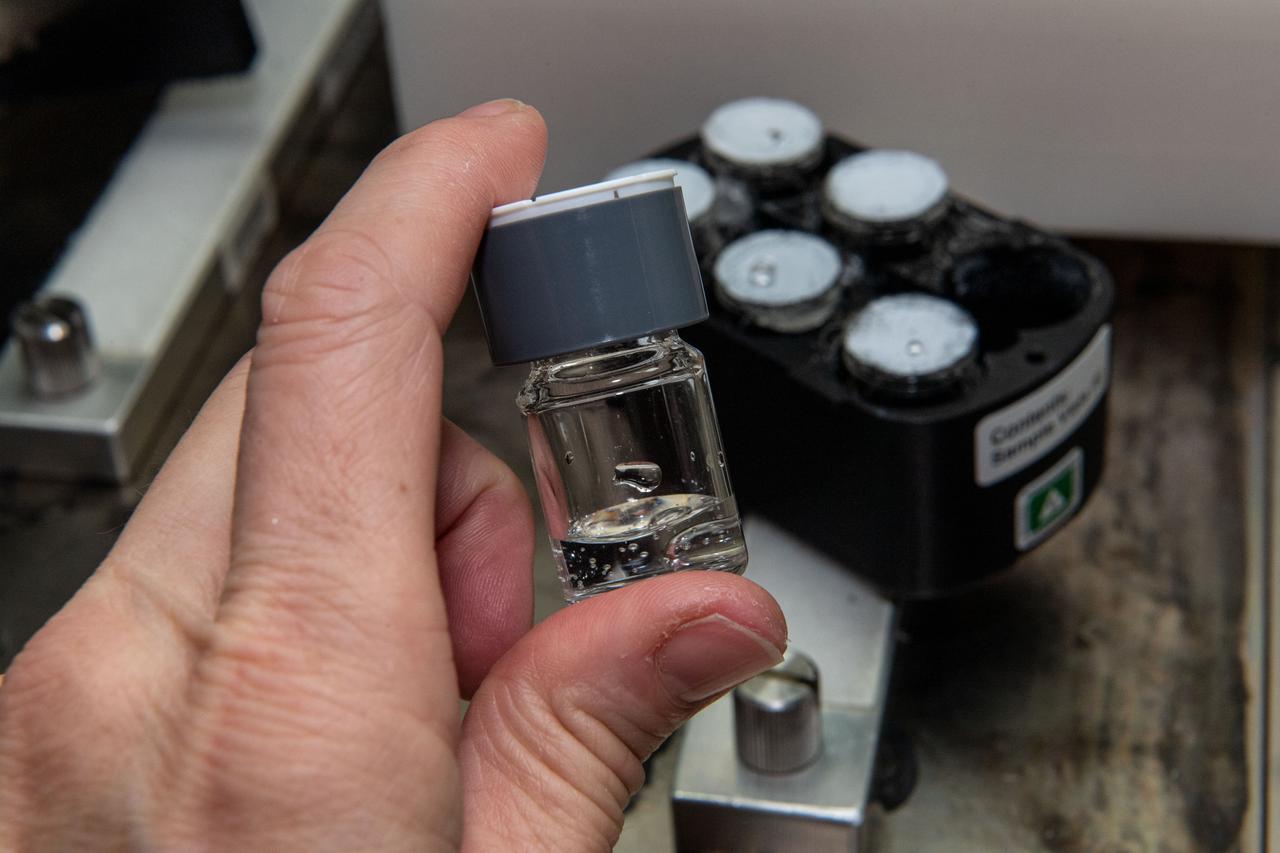
iss065e096014 (6/11/2021) --- A view of a vial from the Lyophilization-2 investigation aboard the International Space Station (ISS). Lyophilization-2 in Microgravity (Lyophilization-2) examines gravity’s effects on freeze-dried materials. Lyophilization, or freeze-drying, is a common method for formulating pharmaceuticals with improved chemical and physical stability.
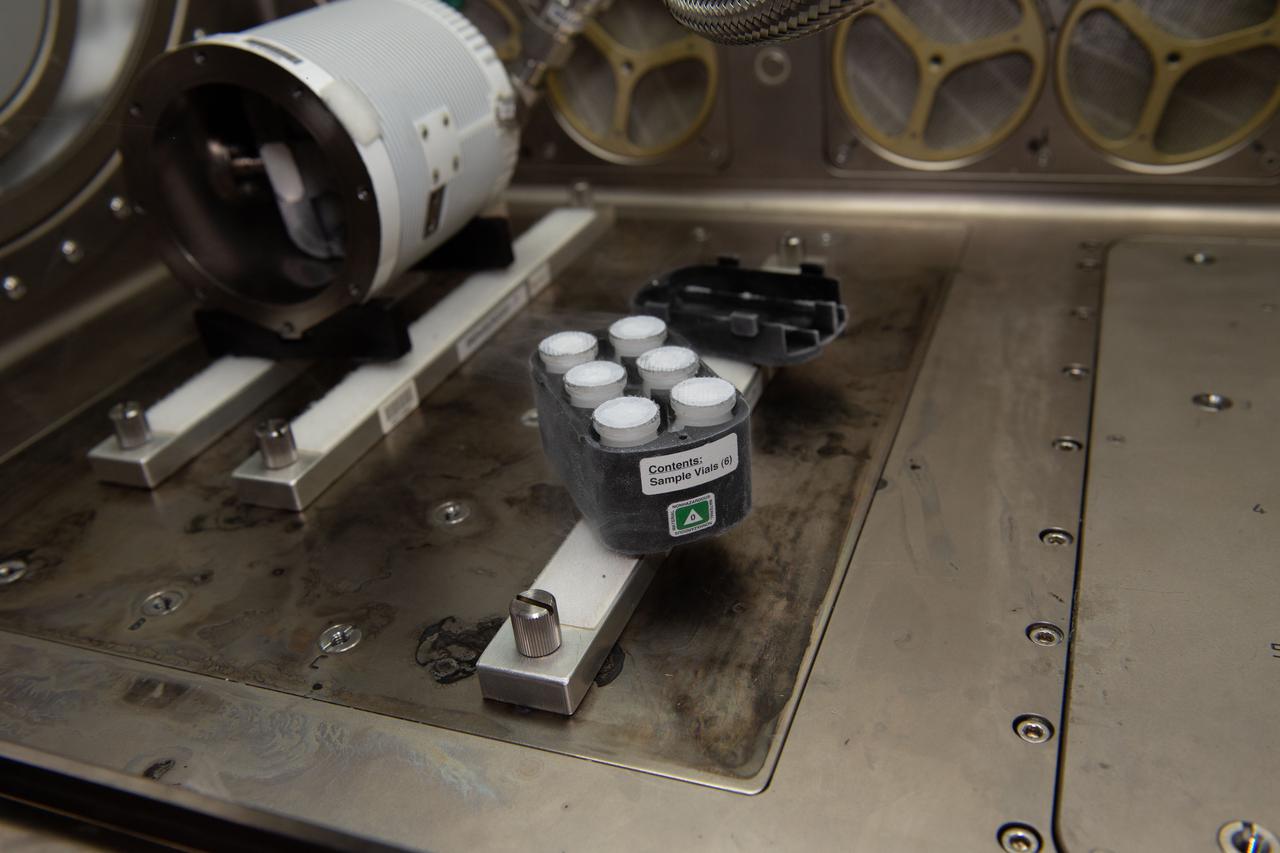
iss065e094347 (6/10/2021) --- A view of vials from the Lyophilization-2 investigation aboard the International Space Station (ISS). Lyophilization-2 in Microgravity (Lyophilization-2) examines gravity’s effects on freeze-dried materials. Lyophilization, or freeze-drying, is a common method for formulating pharmaceuticals with improved chemical and physical stability.
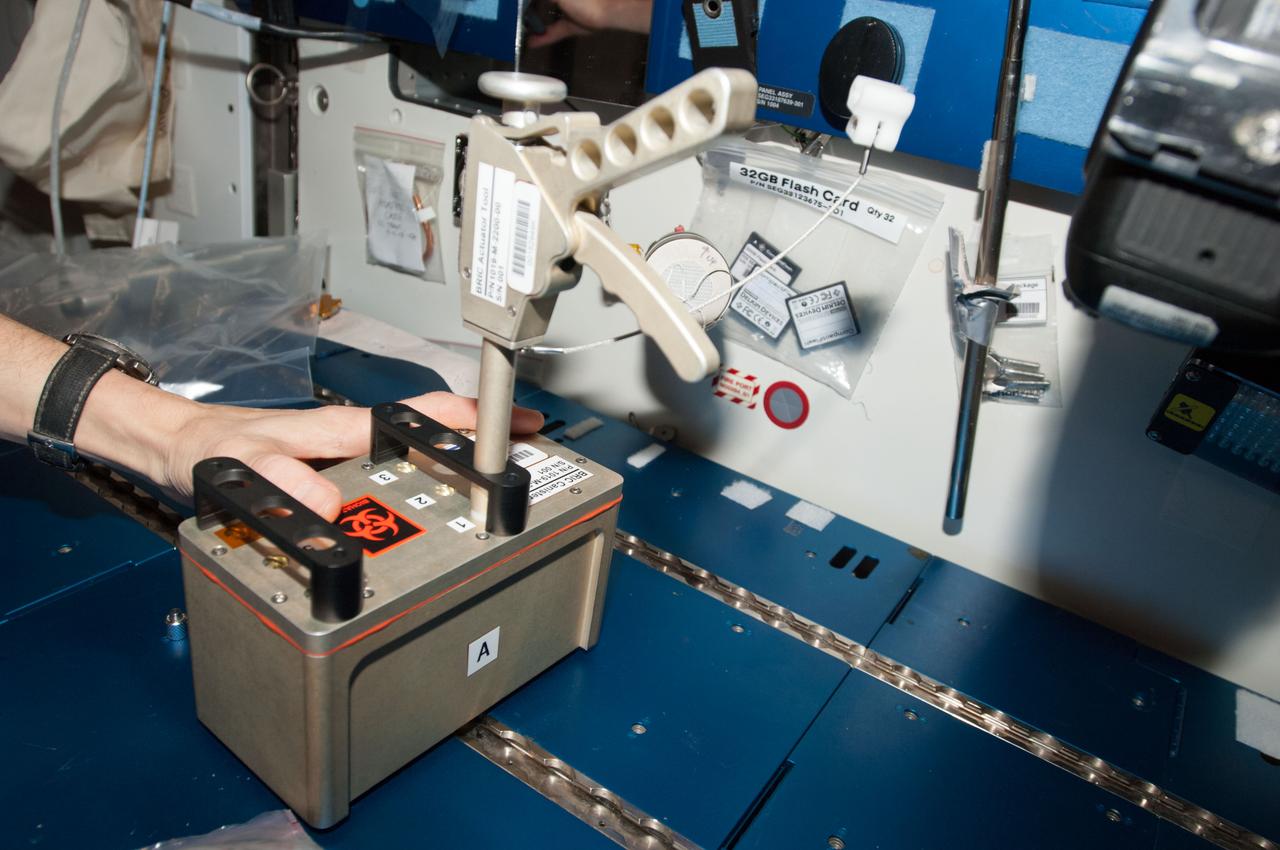
iss034e065939 (3/11/2013) --- A view of the Biological Research In Canisters-17 - A and B actuation (BRIC-17). BRIC supports a variety of plant growth investigations which focus on the growth and development of cell cultures in microgravity. Specimens are preserved with a chemical fixative and returned to the ground for post-flight evaluation.
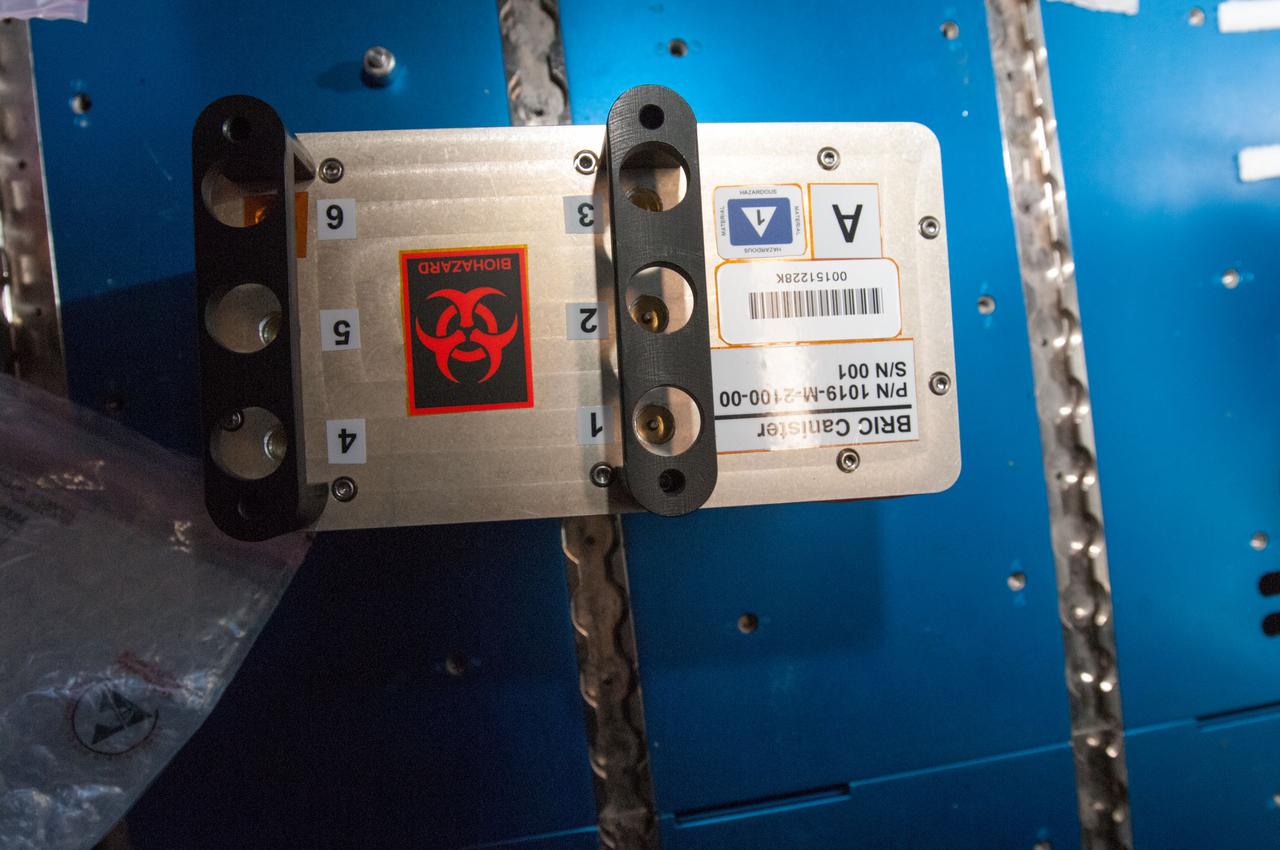
iss034e065948 (3/11/2013) --- A view of the Biological Research In Canisters-17 - A and B actuation (BRIC-17). BRIC supports a variety of plant growth investigations which focus on the growth and development of cell cultures in microgravity. Specimens are preserved with a chemical fixative and returned to the ground for post-flight evaluation.
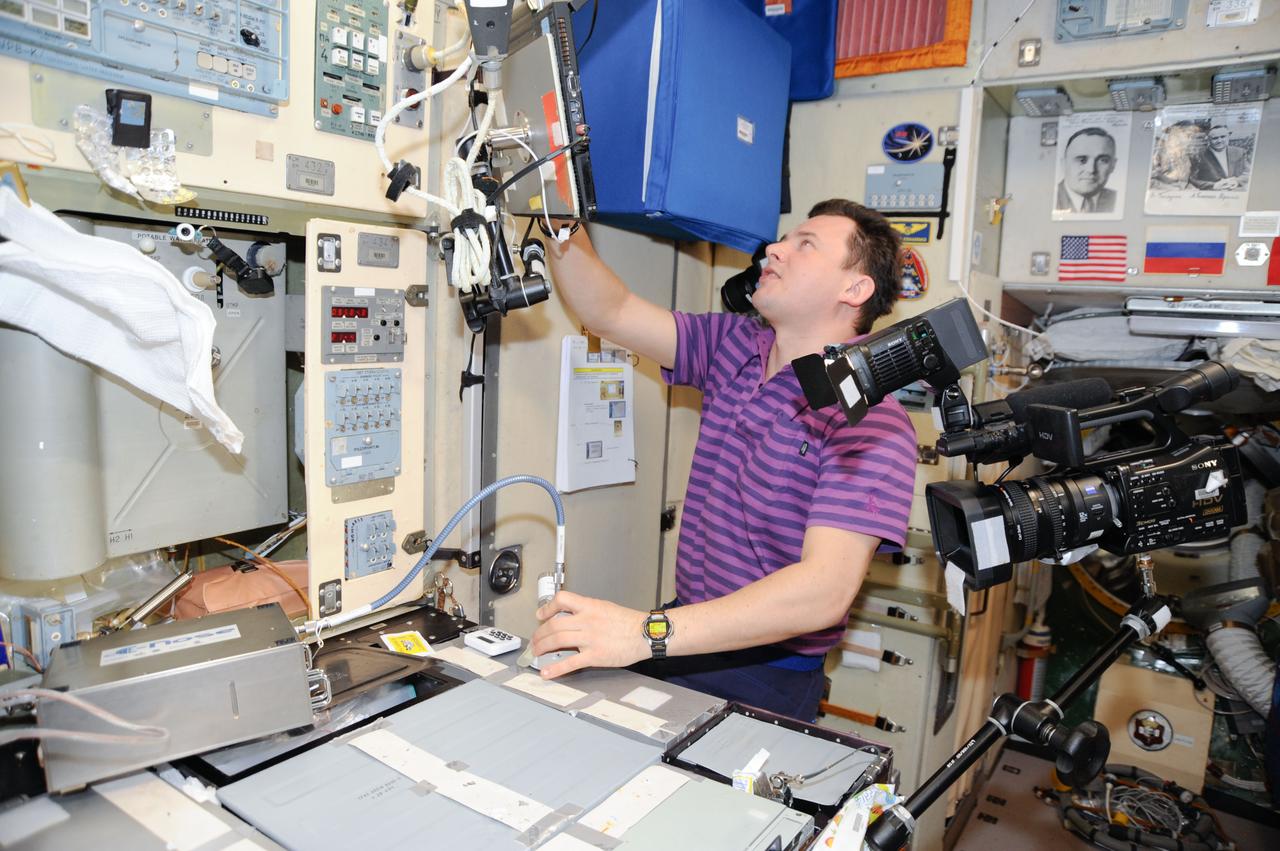
ISS034-E-051551 (21 Feb. 2013) --- Cosmonaut Roman Romanenko, Expedition 34 flight engineer, works with the Electronic Nose hardware in the Zvezda service module aboard the International Space Station in Earth orbit. This hardware is used to measure contamination in the environment should there be hard to detect chemical leaks or spills.
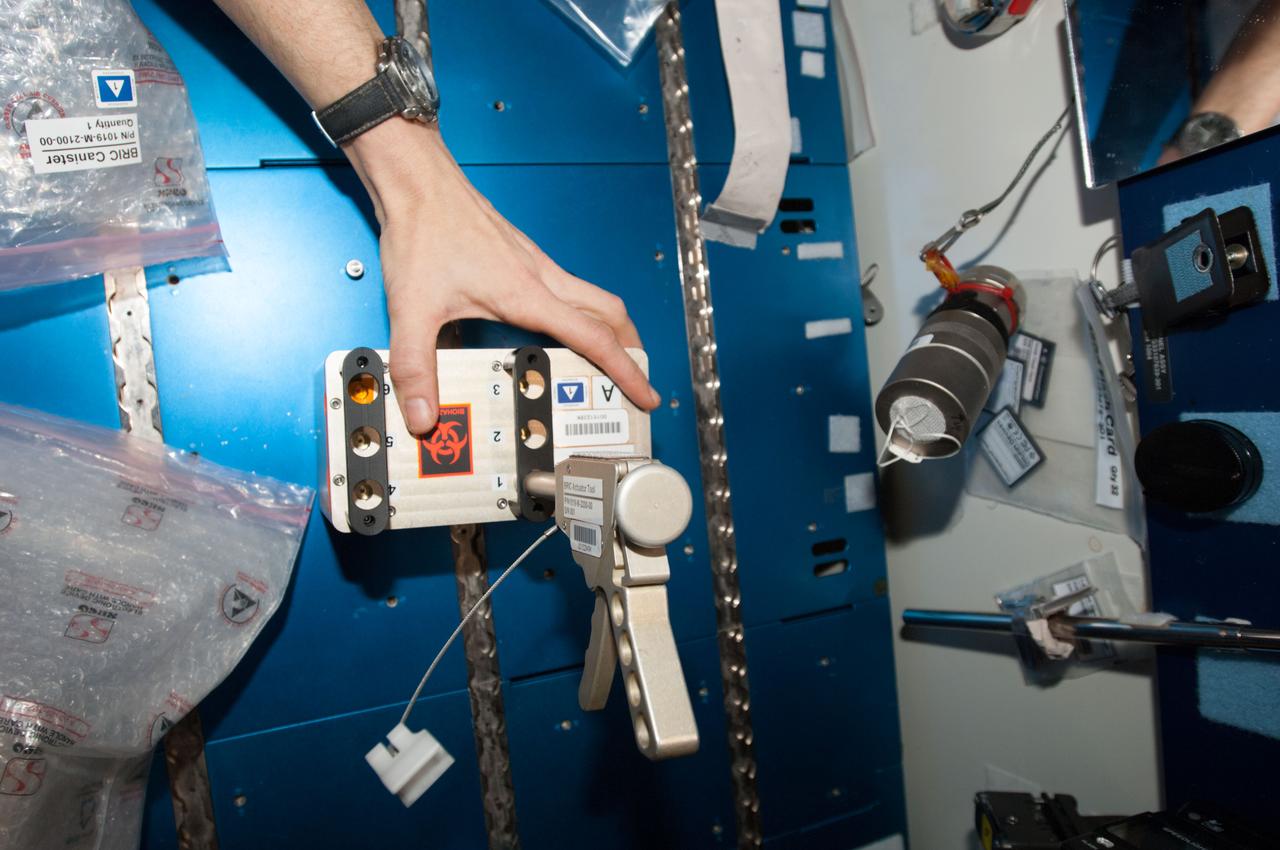
iss034e065937 (3/11/2013) --- A view of the Biological Research In Canisters-17 - A and B actuation (BRIC-17). BRIC supports a variety of plant growth investigations which focus on the growth and development of cell cultures in microgravity. Specimens are preserved with a chemical fixative and returned to the ground for post-flight evaluation.
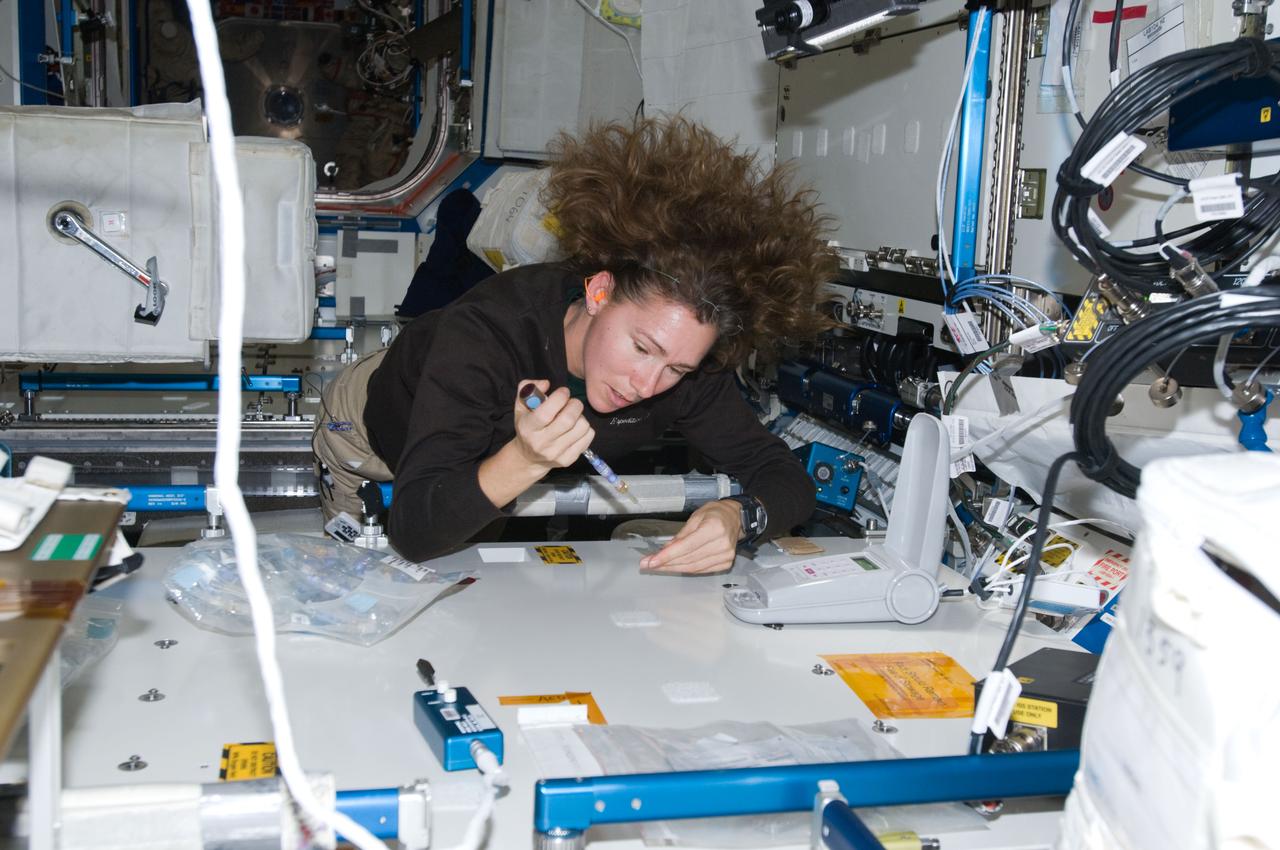
ISS018-E-018995 (10 Jan. 2009) --- Astronaut Sandra Magnus, Expedition 18 flight engineer, works with the Lab-on-a-Chip Application Development-Portable Test System (LOCAD-PTS) experiment in the Destiny laboratory of the International Space Station. LOCAD-PTS is a handheld device for rapid detection of biological and chemical substances onboard the station.
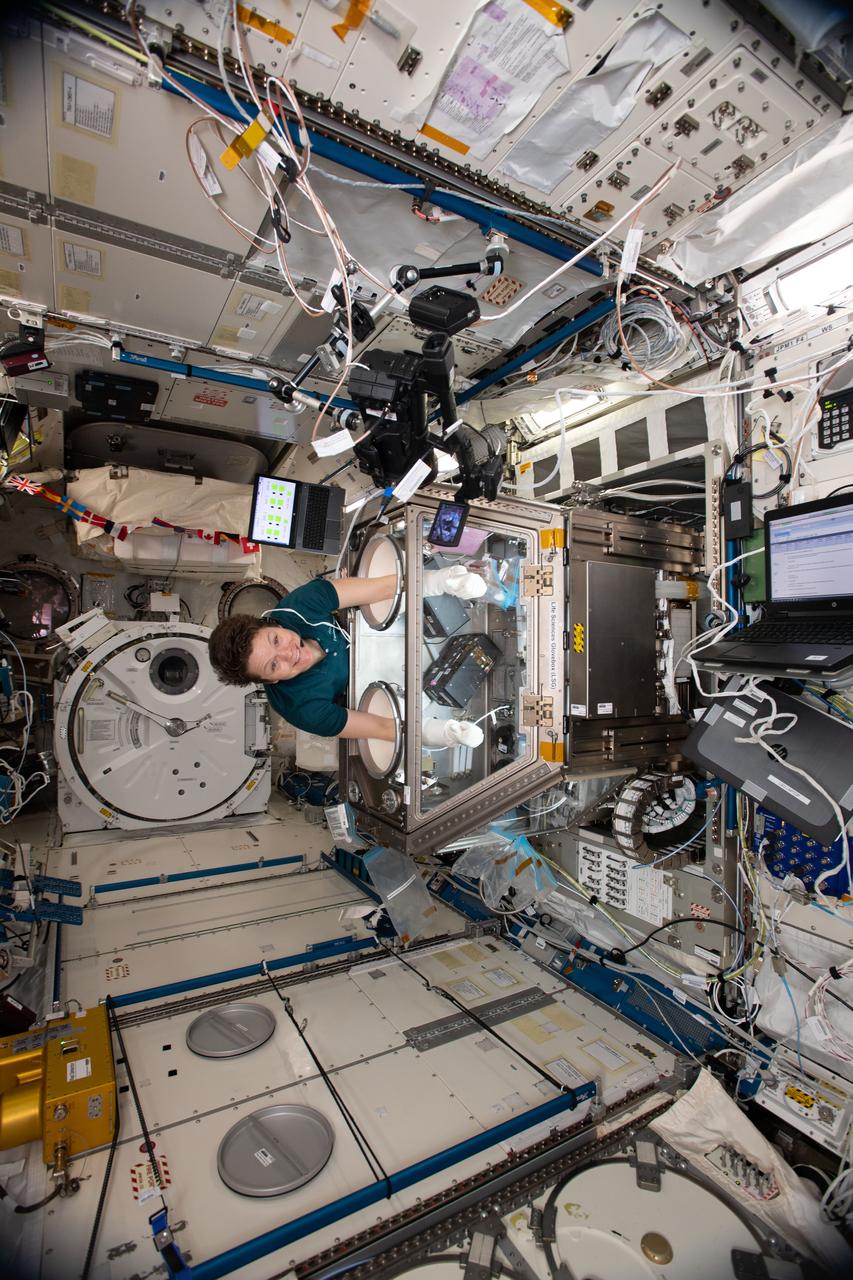
iss059e060922 (May 10, 2019) --- NASA astronaut Anne McClain works on Kidney Cells hardware inside the Life Sciences Glovebox located in Japan's Kibo laboratory module. Kidney Cells is an investigation that is seeking innovative treatments for kidney stones, osteoporosis and toxic chemical exposures to protect the health of astronauts in space and humans on Earth.
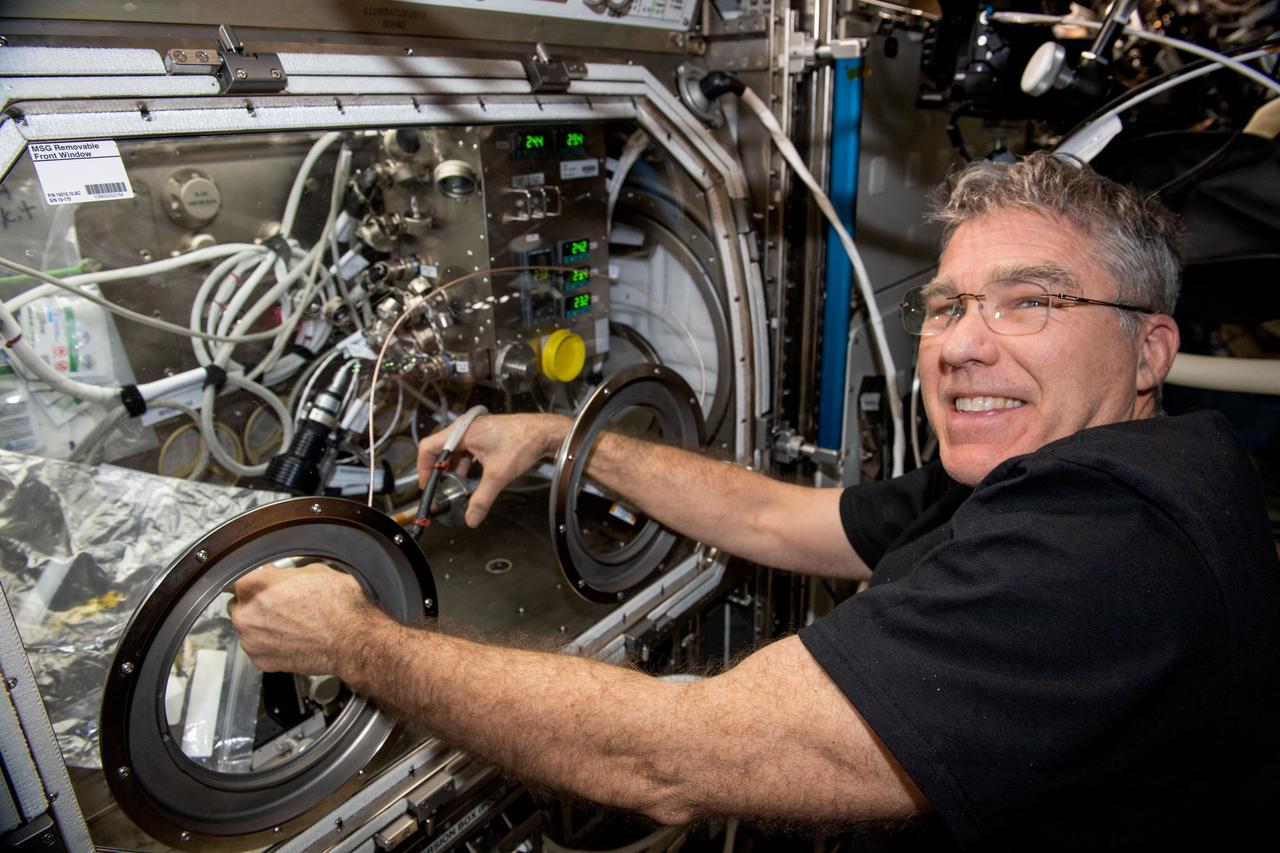
iss069e061597 (Aug. 17, 2023) --- NASA astronaut and Expedition 69 Flight Engineer Stephen Bowen works in the Microgravity Science Glovebox swapping graphene aerogel samples for a space manufacturing study. The physics investigation seeks to produce a superior, uniform material structure benefitting power storage, environmental protection, and chemical sensing.
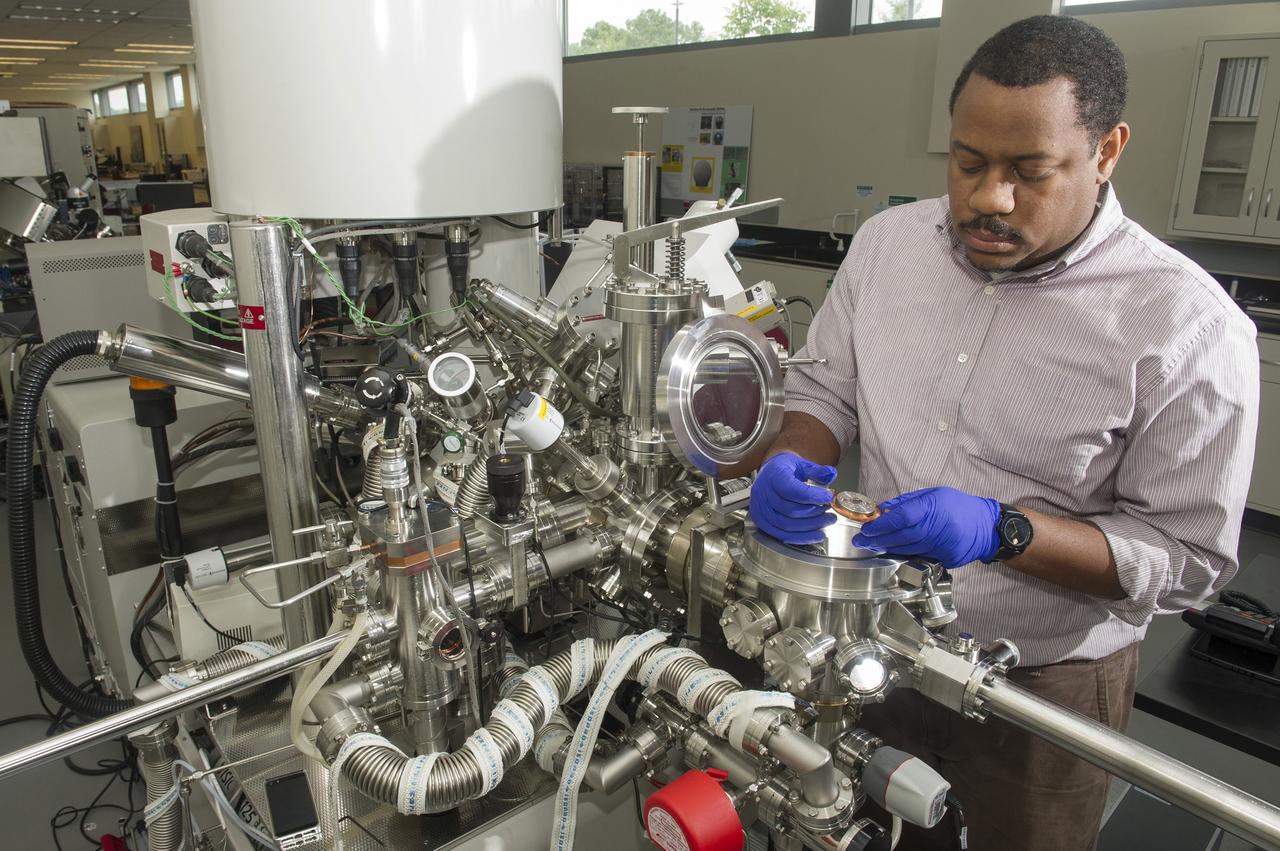
ARTHUR BROWN (AST, AEROSPACE METALLIC MATERIALS) LOADS A CERAMIC COATED SILICON WAFER INTO A KRATOS (ELECTRON SPECTROSCOPY FOR CHEMICAL ANALYSIS) TO PERFORM X-RAY PHOTOELECTRON SPECTROSCOPY (XPS). XPS IS A TECHNIQUE THAT ANALYZES THE SURFACE CHEMISTRY OF A SAMPLE BY IRRADIATING IT WITH X-RAYS AND MEASURING THE NUMBER AND KINETIC ENERGY OF ELECTRON THAT ESCAPE.
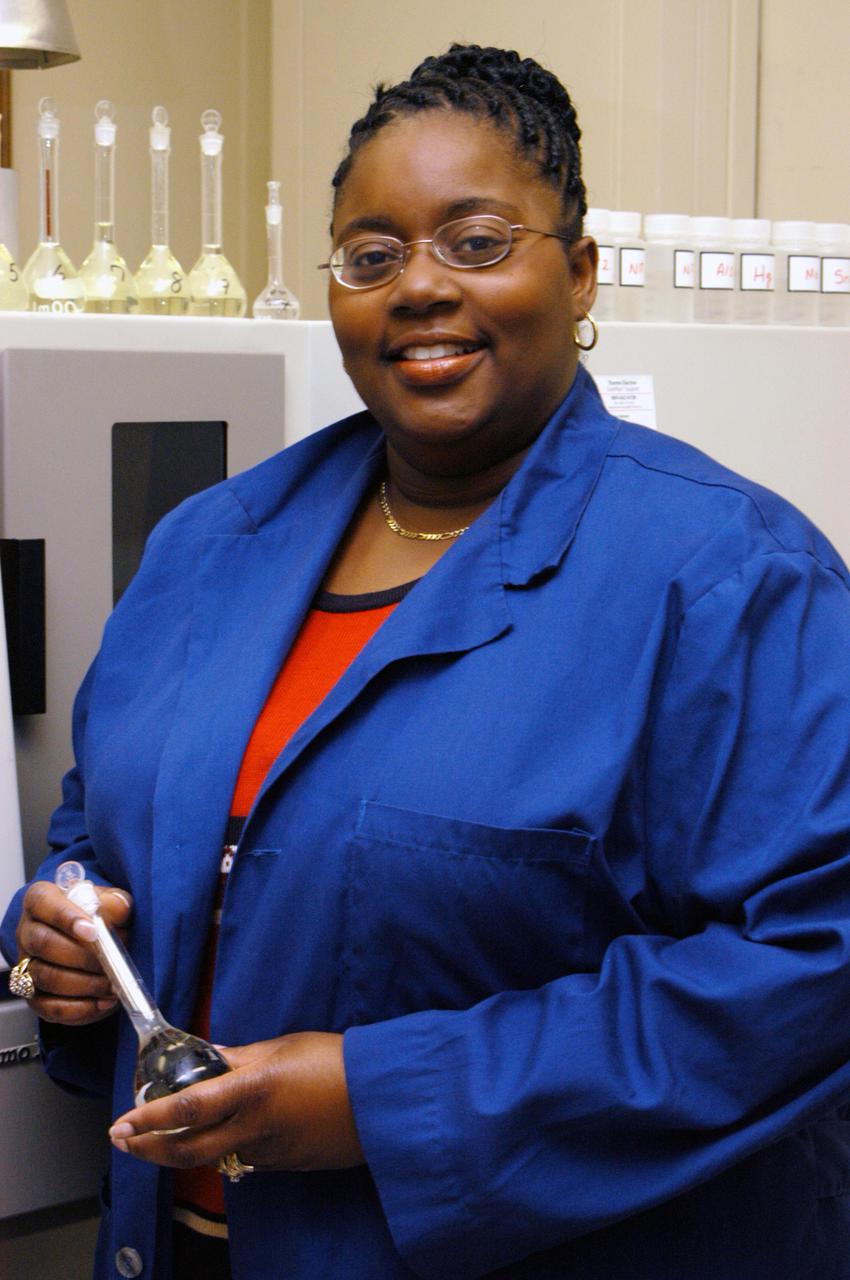
KENNEDY SPACE CENTER, FLA. - Dionne B. Jackson is a Materials Science engineer in the Spaceport Engineering and Technology Directorate. She is responsible for testing and identifying materials and chemicals that are used for the Shuttle Program, International Space Station Program and the Launch Services Program. Jackson has been a permanent NASA KSC employee since 1991.
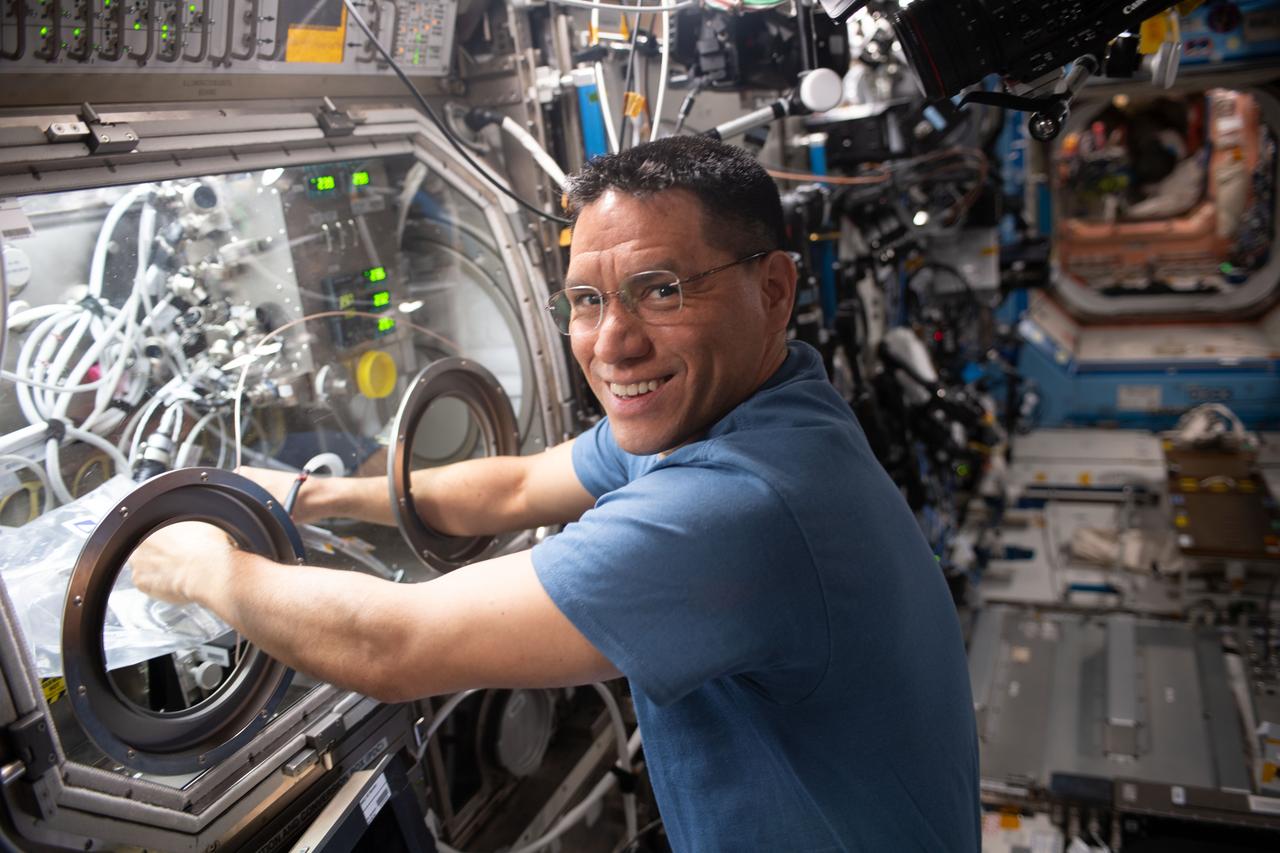
iss069e070724 (Aug. 21, 2023) --- NASA astronaut and Expedition 69 Flight Engineer Frank Rubio works in the Microgravity Science Glovebox swapping graphene aerogel samples for a space manufacturing study. The physics investigation seeks to produce a superior, uniform material structure benefitting power storage, environmental protection, and chemical sensing.
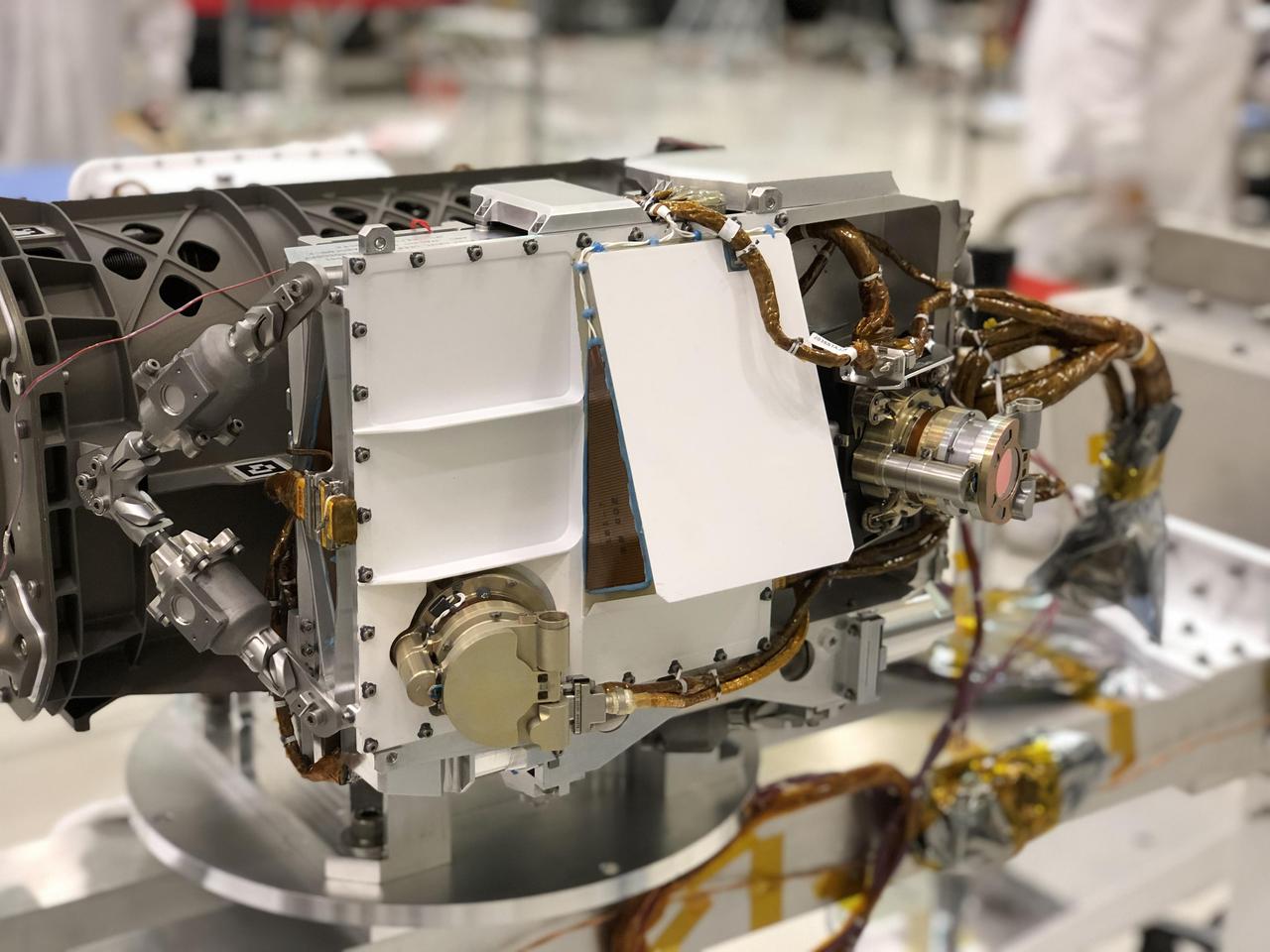
The SHERLOC instrument is located at the end of the robotic arm on NASA's Mars 2020 rover. SHERLOC (short for Scanning Habitable Environments with Raman & Luminescence for Organics and Chemicals) is a spectrometer that will provide fine-scale imaging and use an ultraviolet laser to determine fine-scale mineralogy and detect organic compounds on Mars. https://photojournal.jpl.nasa.gov/catalog/PIA23621

This calibration target for Mars 2020's Scanning Habitable Environments with Raman & Luminescence for Organics & Chemicals (SHERLOC) instrument includes five samples of spacesuit material, the first to ever be flown to the Red Planet. By studying how these samples degrade in the Martian environment, engineers can develop better spacesuits. https://photojournal.jpl.nasa.gov/catalog/PIA23303
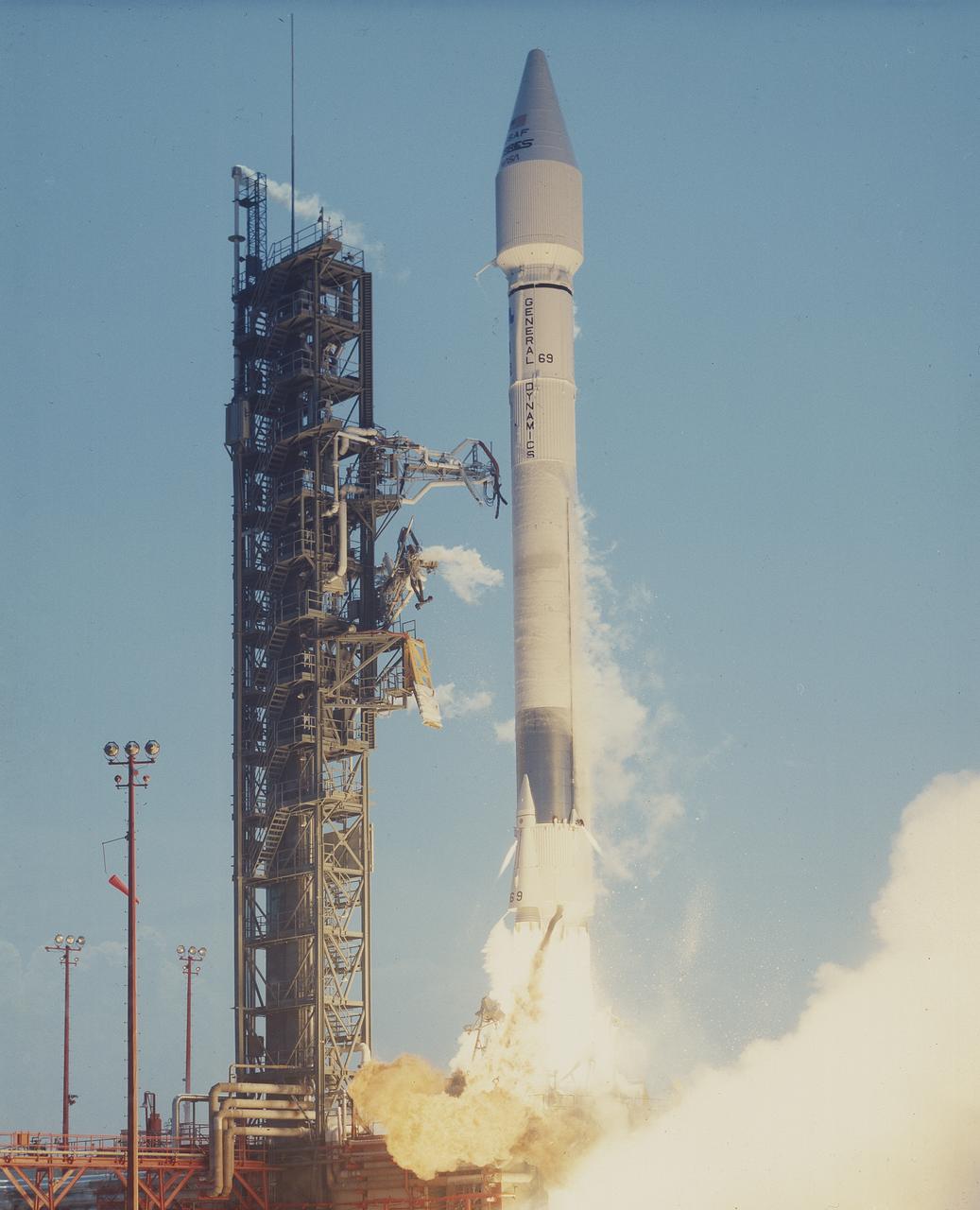
An Atlas Centaur rocket (AC-S9) was launched from Cape Canaveral Air Force Station complex 36B carrying into orbit the Combined Release and Radiation Effects Satellite (CRRES) spacecraft. CRRES was a joint NASA/Air Force mission to study the effects of chemical release on the Earth’s atmosphere and magnetosphere.
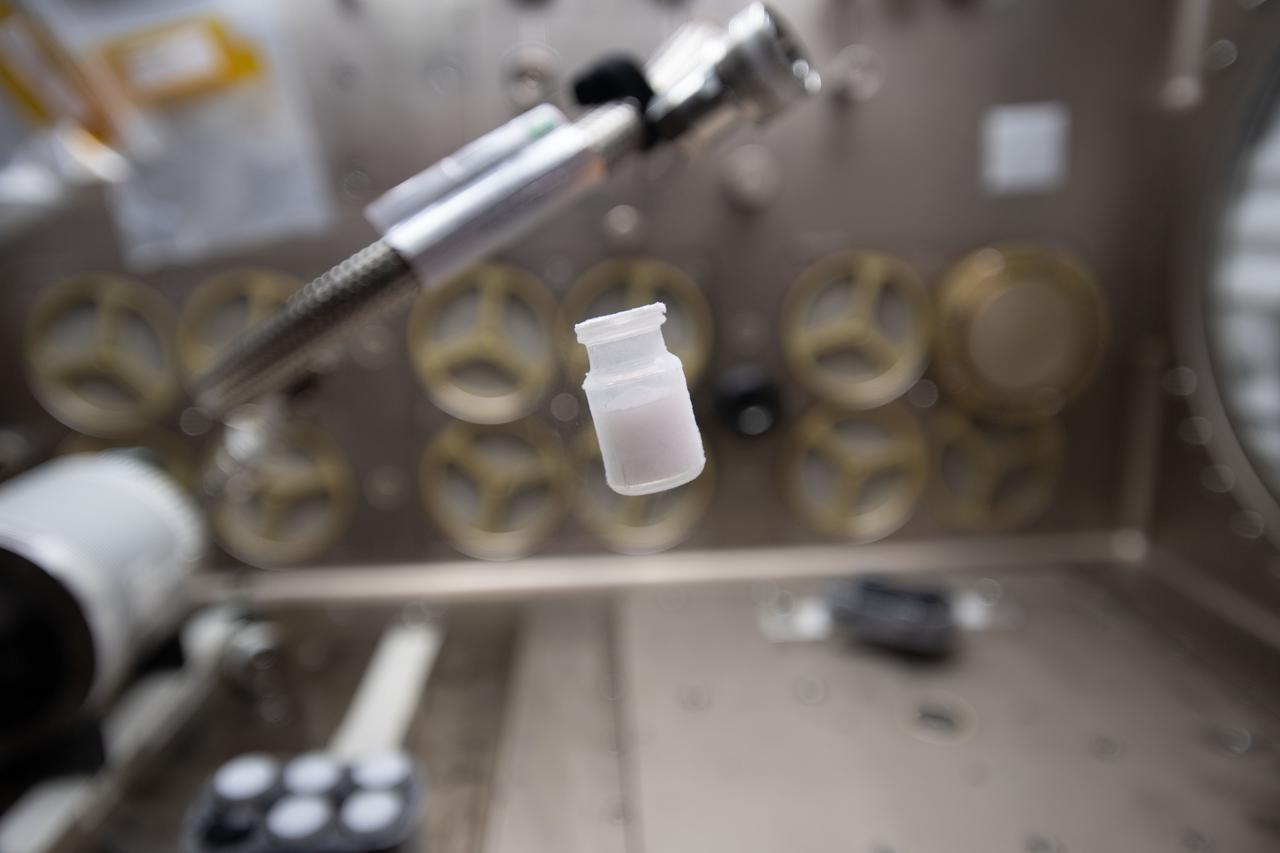
iss065e094051 (6/9/2021) --- A view of a vial from the Lyophilization-2 investigation aboard the International Space Station (ISS). Lyophilization-2 in Microgravity (Lyophilization-2) examines gravity’s effects on freeze-dried materials. Lyophilization, or freeze-drying, is a common method for formulating pharmaceuticals with improved chemical and physical stability.

NASA's Global Hawk 872 soared over Rogers Dry Lake at Edwards Air Force Base, CA, during an instrument checkout flight for the 2014 ATTREX mission over the western Pacific Ocean. The aircraft carried 13 science instruments to measure moisture and chemical composition of the stratosphere during the campaign.
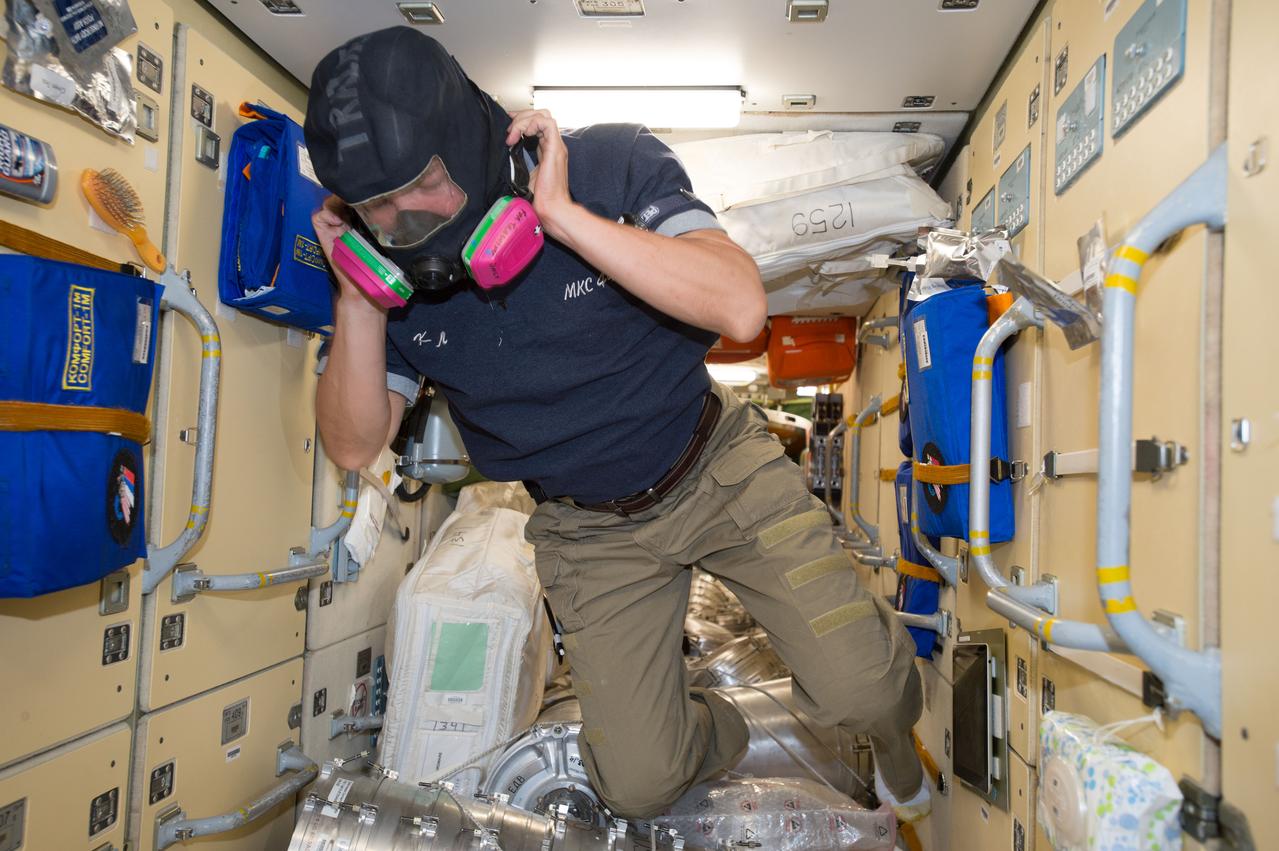
ISS044E025035 (07/29/2015) --- NASA astronaut Kjell Lindgren wears protective breathing apparatus that would be used in the unlikely event of a fire or hazardous chemical leak inside the pressurized air volume of the International Space Station. Familiarization of safety and emergency equipment is standard practice for all newly arrived crew members.
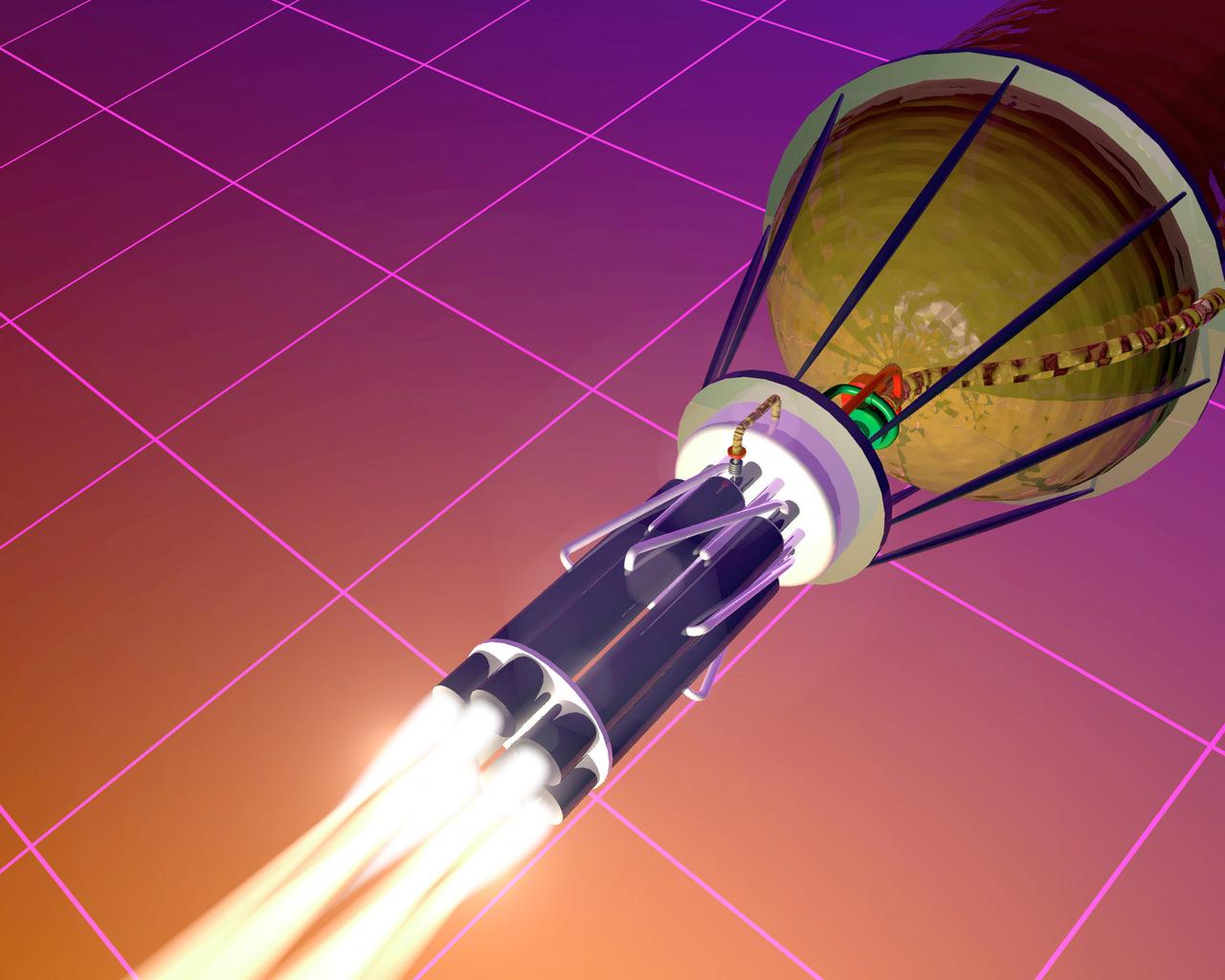
Pictured is an artist's concept of an advanced chemical propulsion system called Pulse Detonation. Long term technology research in this advanced propulsion system has the potential to dramatically change the way we think about space propulsion systems. This research is expected to significantly reduce the cost of space travel within the next 25 years.
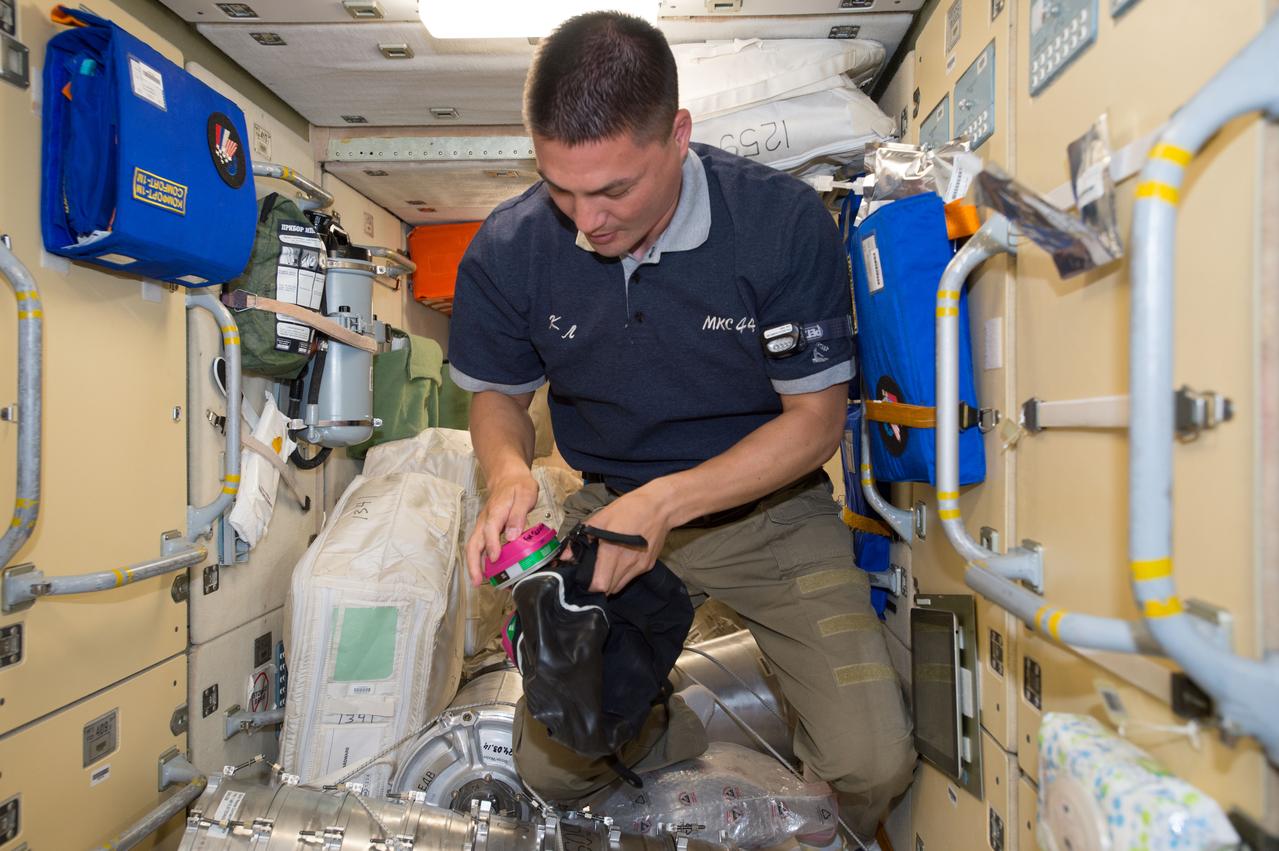
ISS044E025035 (07/29/2015) --- NASA astronaut Kjell Lindgren prepares to don protective breathing apparatus that would be used in the unlikely event of a fire or hazardous chemical leak inside the pressurized air volume of the International Space Station. Familiarization of safety and emergency equipment is standard practice for all newly arrived crew members.
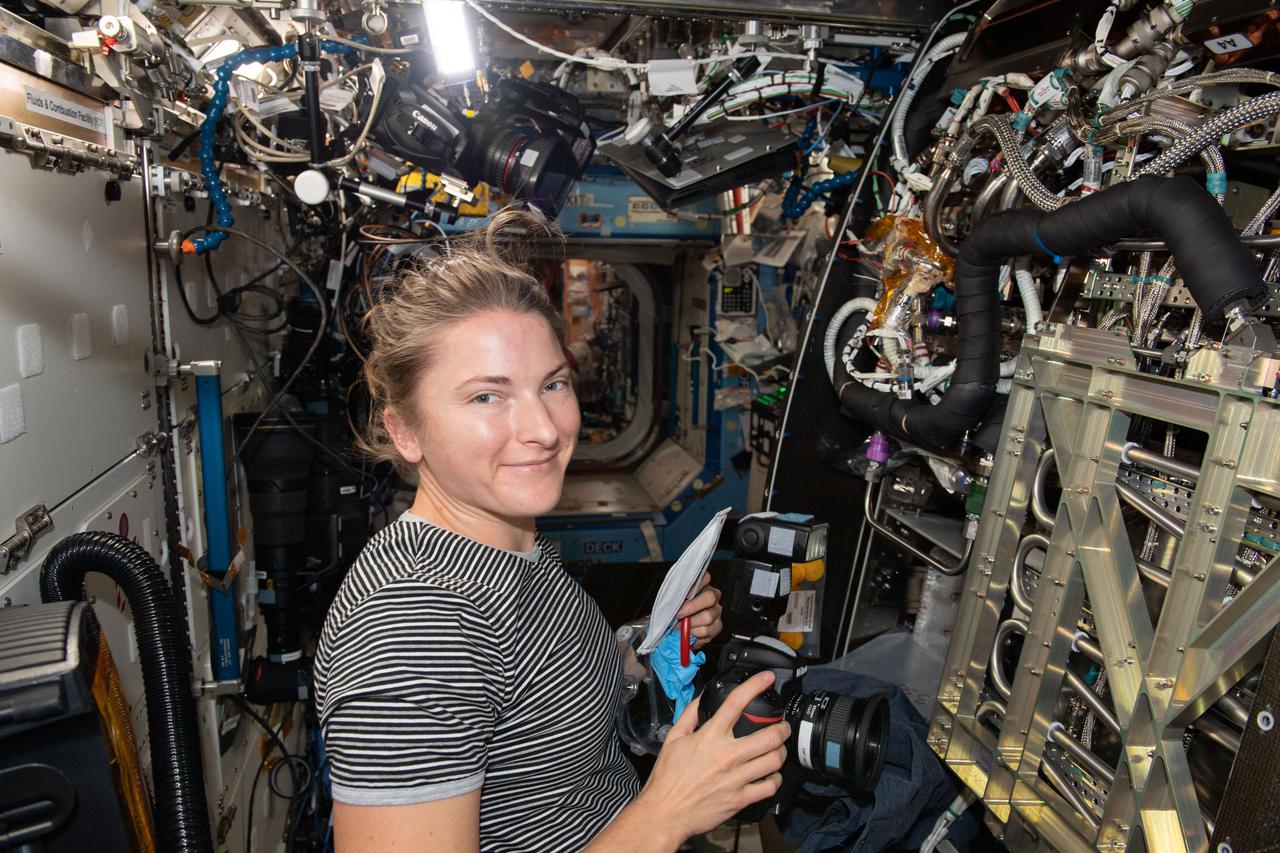
iss066e086562 (Dec. 4, 2021) --- NASA astronaut and Expedition 66 Flight Engineer Kayla Barron is pictured inspecting and photographing components inside the Materials Science Research Rack that enables the observation of chemical and thermal properties of materials free from the effects of gravity.
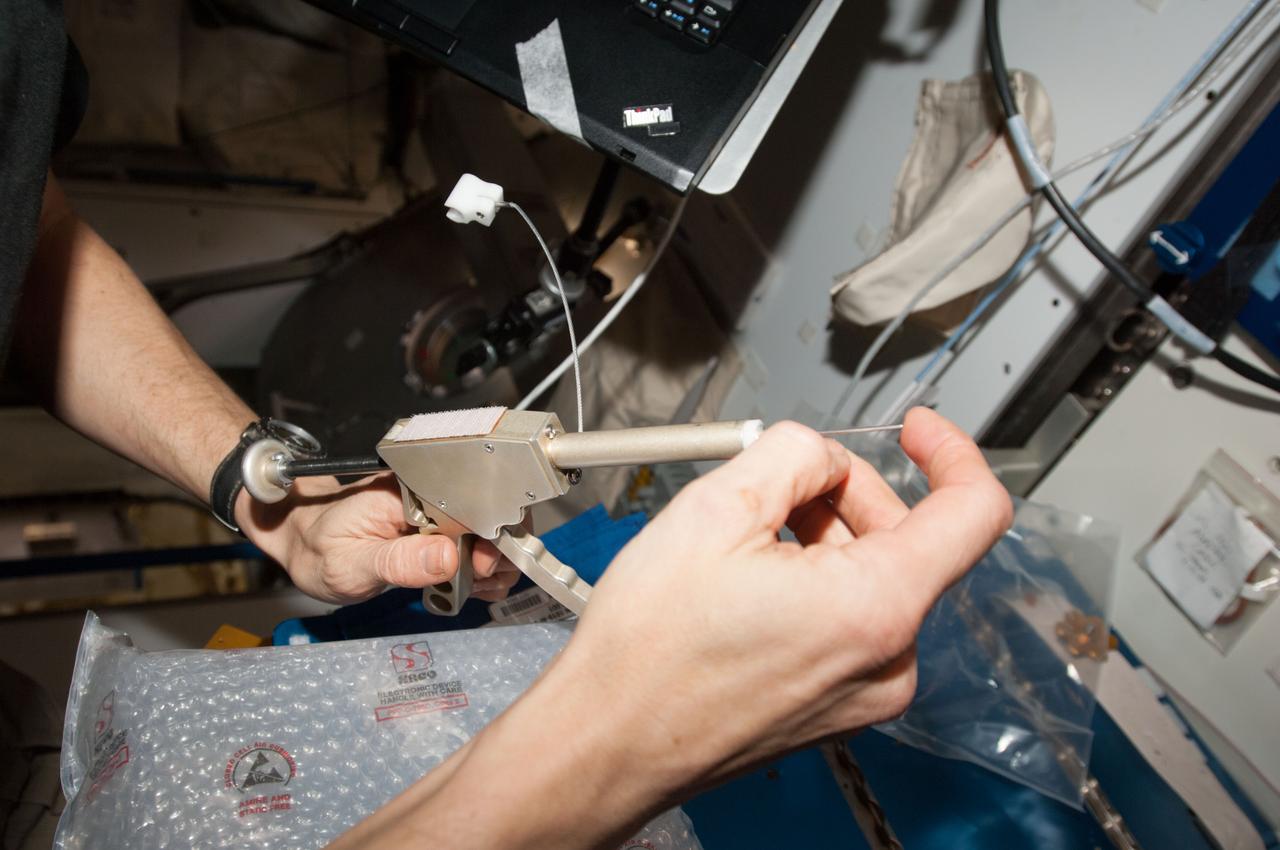
iss034e065943 (3/11/2013) --- A view of the Biological Research In Canisters-17 - A and B actuation (BRIC-17). BRIC supports a variety of plant growth investigations which focus on the growth and development of cell cultures in microgravity. Specimens are preserved with a chemical fixative and returned to the ground for post-flight evaluation.
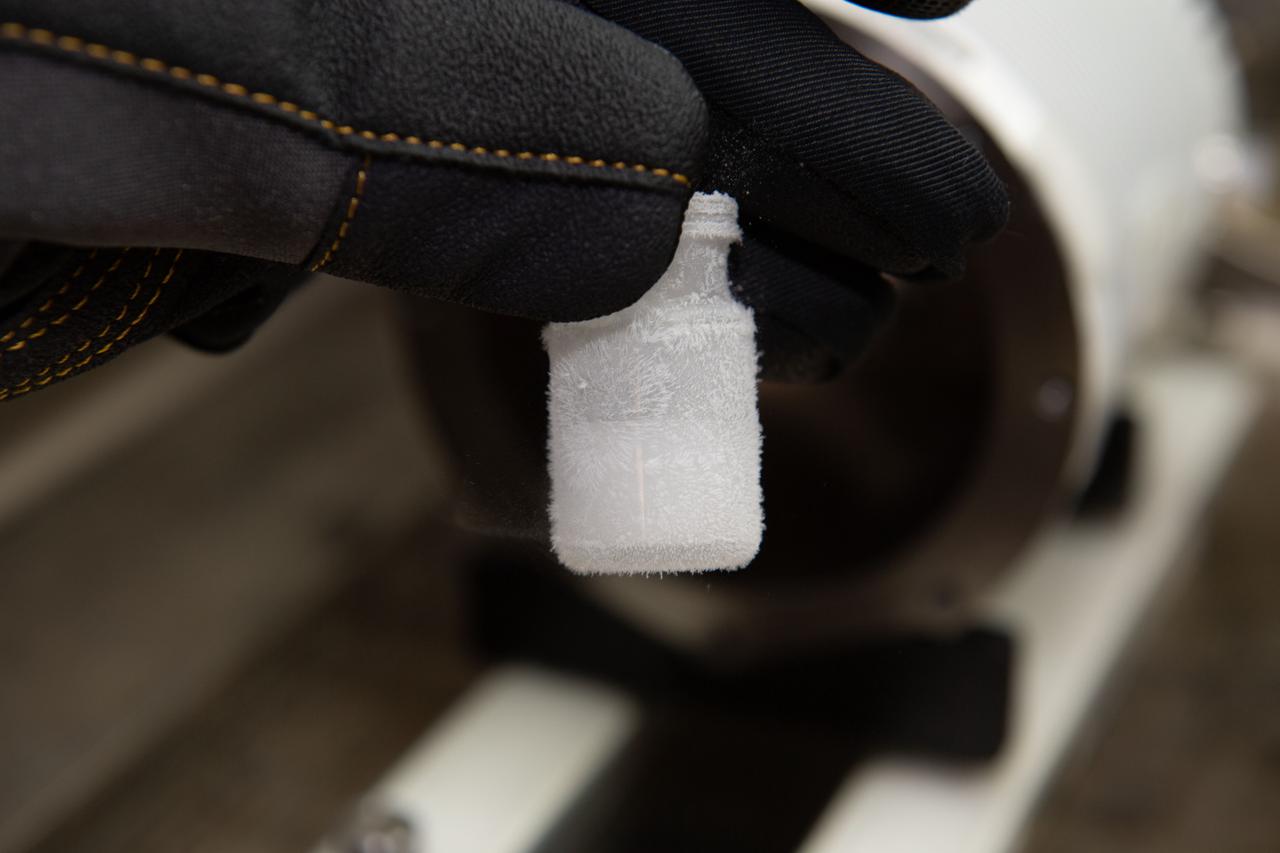
iss065e094345 (6/10/2021) --- A view of a vial from the Lyophilization-2 investigation aboard the International Space Station (ISS). Lyophilization-2 in Microgravity (Lyophilization-2) examines gravity’s effects on freeze-dried materials. Lyophilization, or freeze-drying, is a common method for formulating pharmaceuticals with improved chemical and physical stability.
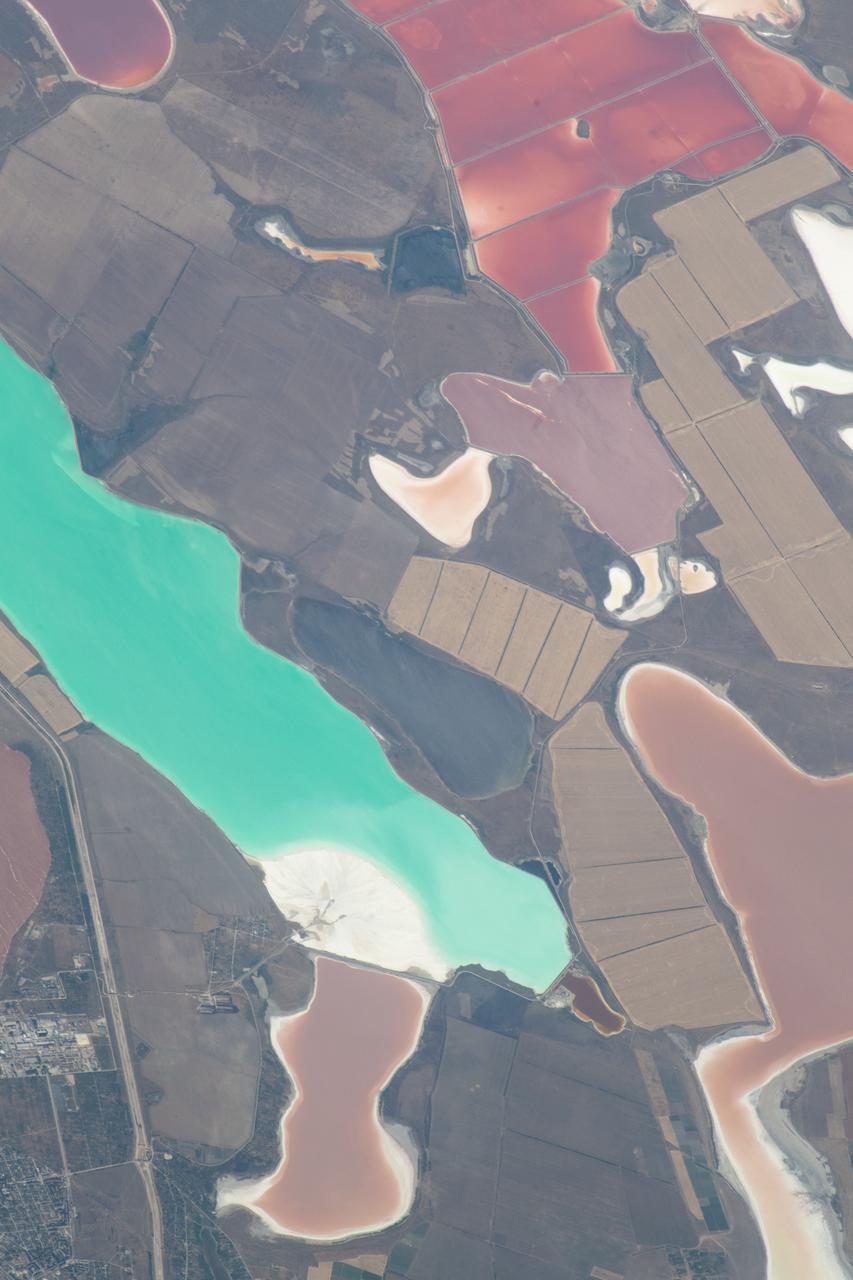
iss056e032828 (June 24, 2018) --- An Expedition 56 crew member aboard the International Space Station pictured lagoons in the Crimea between the Sea of Azov and the Black Sea which appear different colors due to shallow waters and their varied chemical composition.