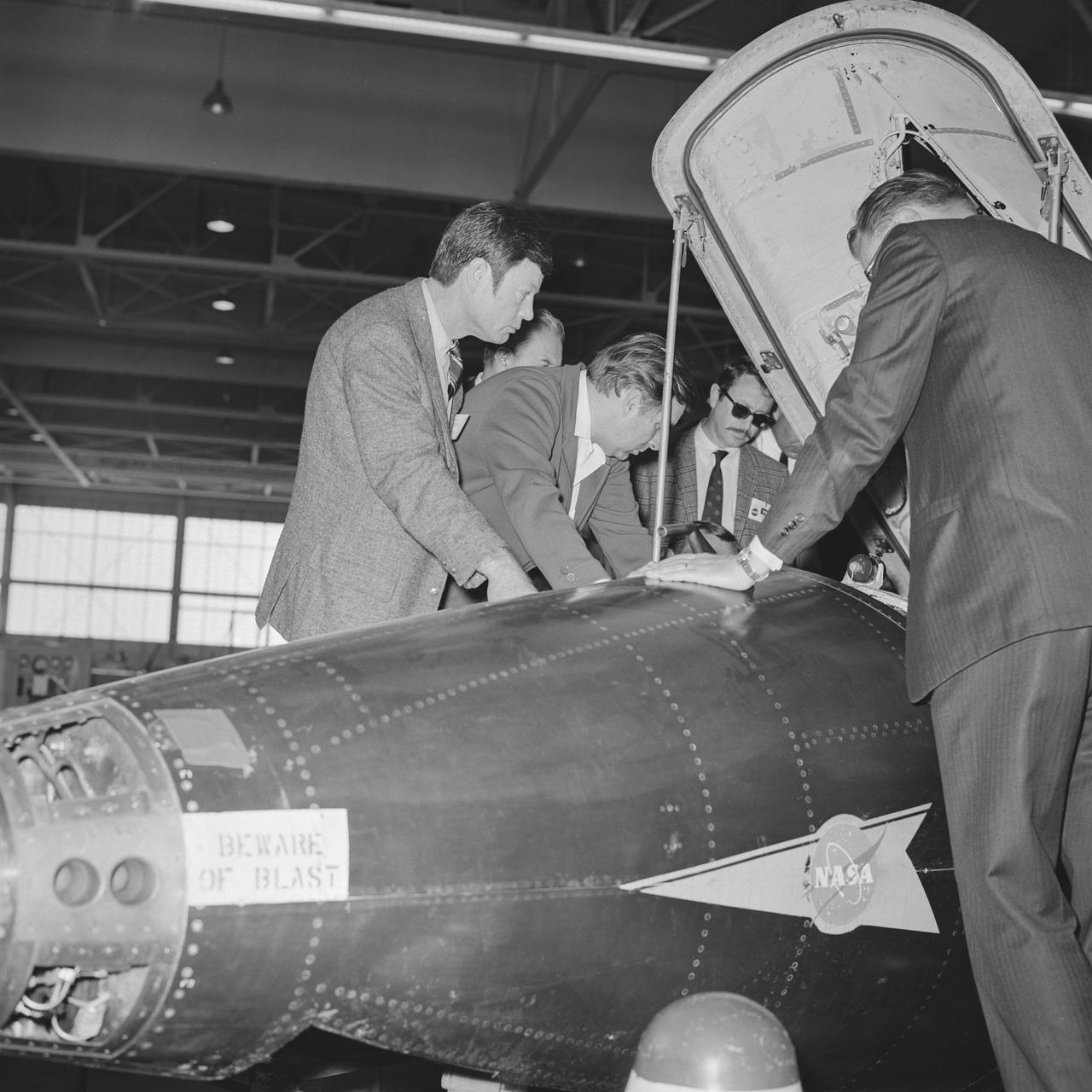
The 1960s Star Trek television series’ cast members visit NASA Dryden Flight Research Center, now Armstrong, in 1967. Chief Medical Officer Leonard ‘Bones’ McCoy played by DeForest Kelley and the show’s creator Gene Roddenberry receive briefing on X-15 cockpit as they view inside.
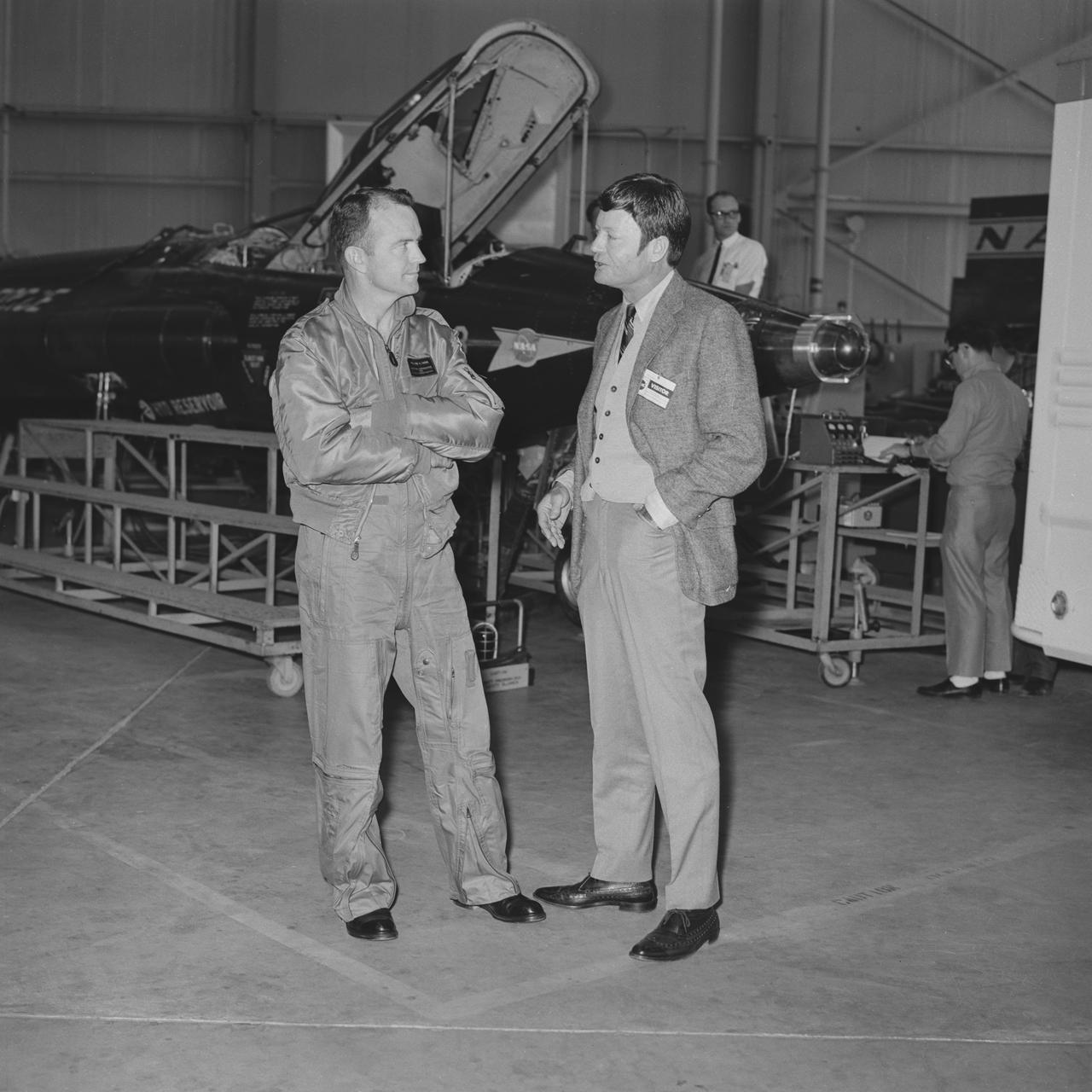
The 1960s Star Trek television series’ cast member Chief Medical Officer Leonard ‘Bones’ McCoy played by DeForest Kelley talks to Bill Dana, NASA X-15 pilot, in front of one of three X-15’s during visit to NASA Dryden Flight Research Center, now Armstrong, back in 1967.
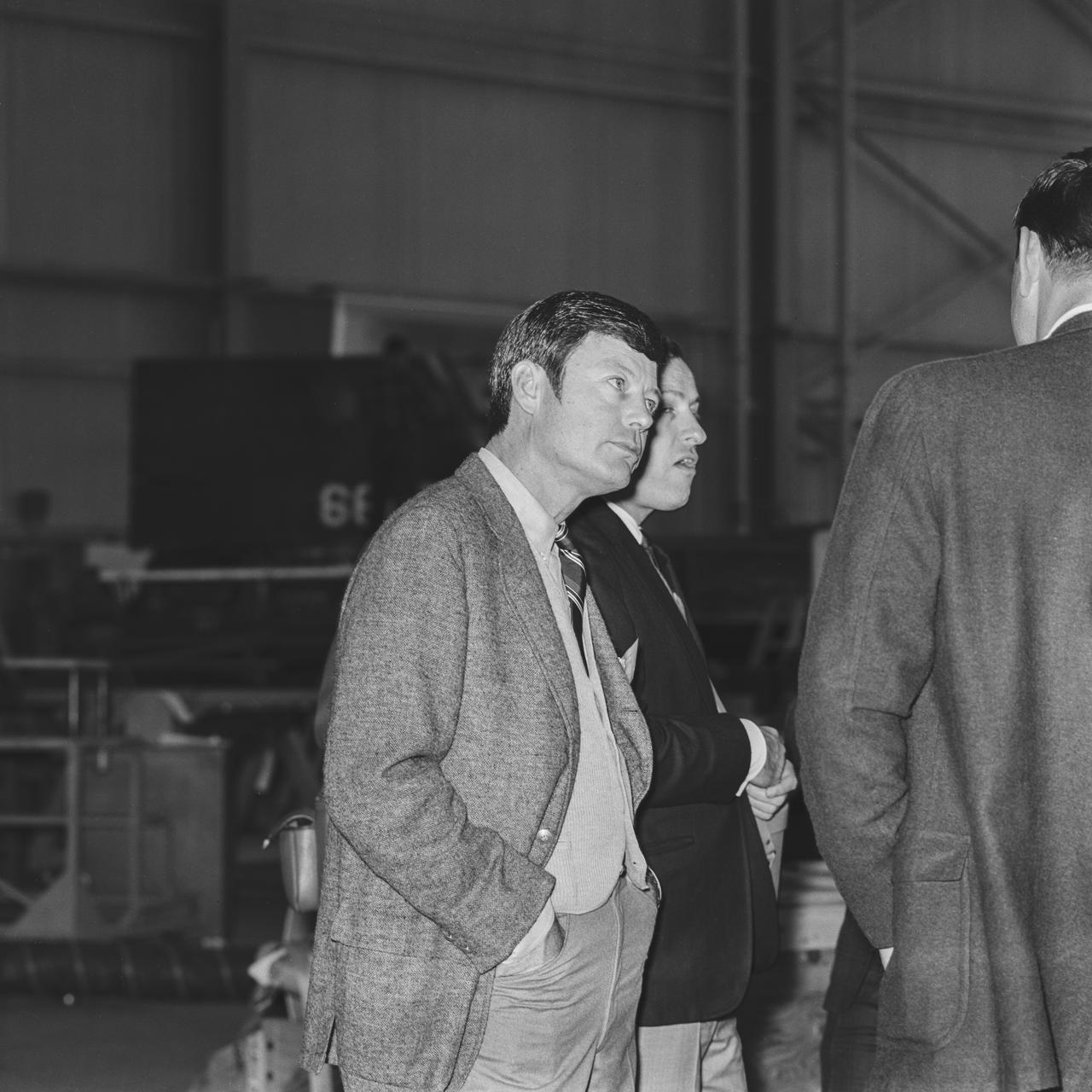
The 1960s Star Trek television series’ cast members visit NASA Dryden Flight Research Center, now Armstrong, in 1967. Chief Medical Officer Leonard ‘Bones’ McCoy played by DeForest Kelley talks with NASA officials in one of the center’s aircraft hangar.
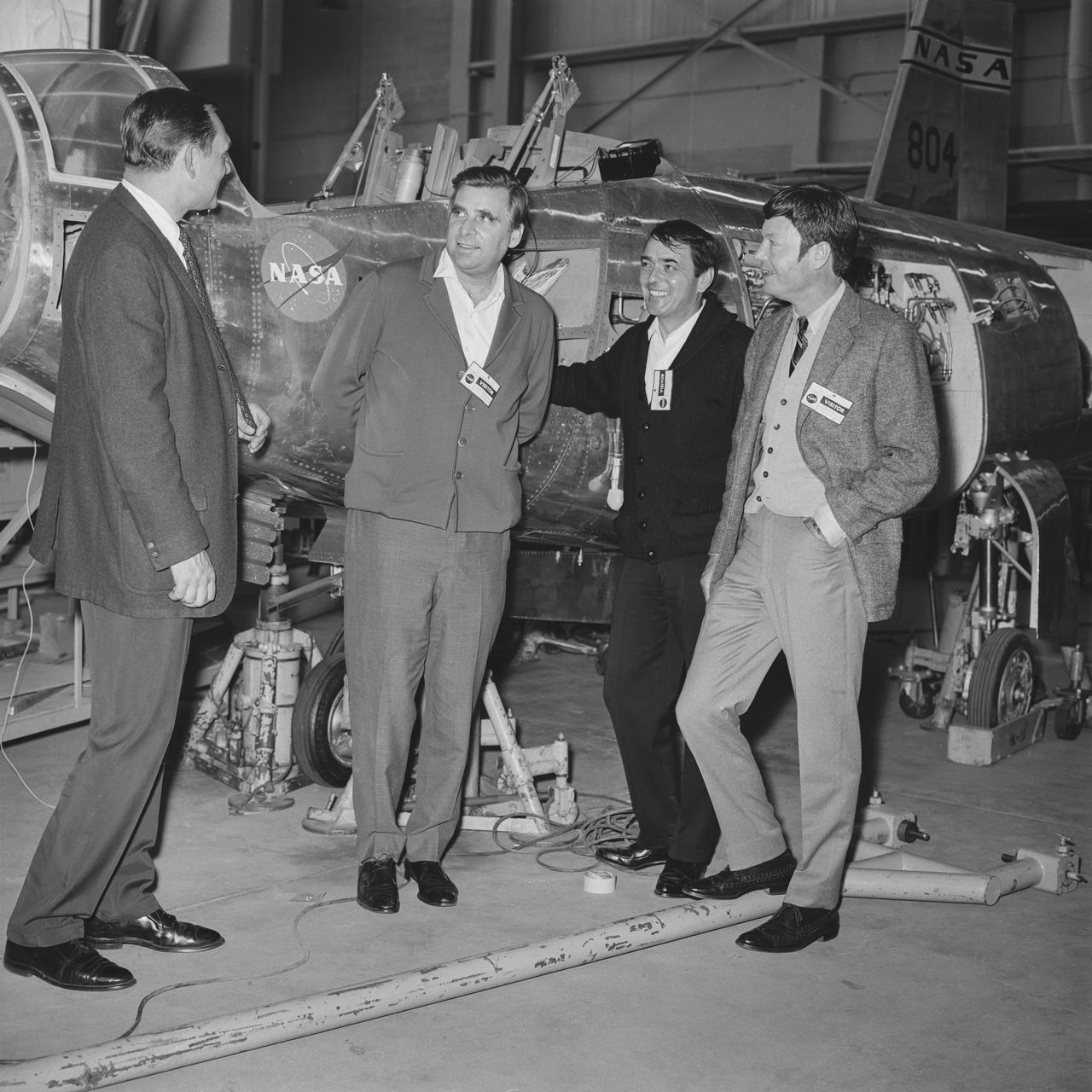
The 1960s Star Trek television series cast members Chief Engineer Montgomery ‘Scotty’ Scott played by James Doohan and Chief Medical Officer Leonard ‘Bones’ McCoy played by DeForest Kelley and the show’s creator Gene Roddenberry receive briefing on NASA Dryden Flight Research Center, now Armstrong, in front of HL-10
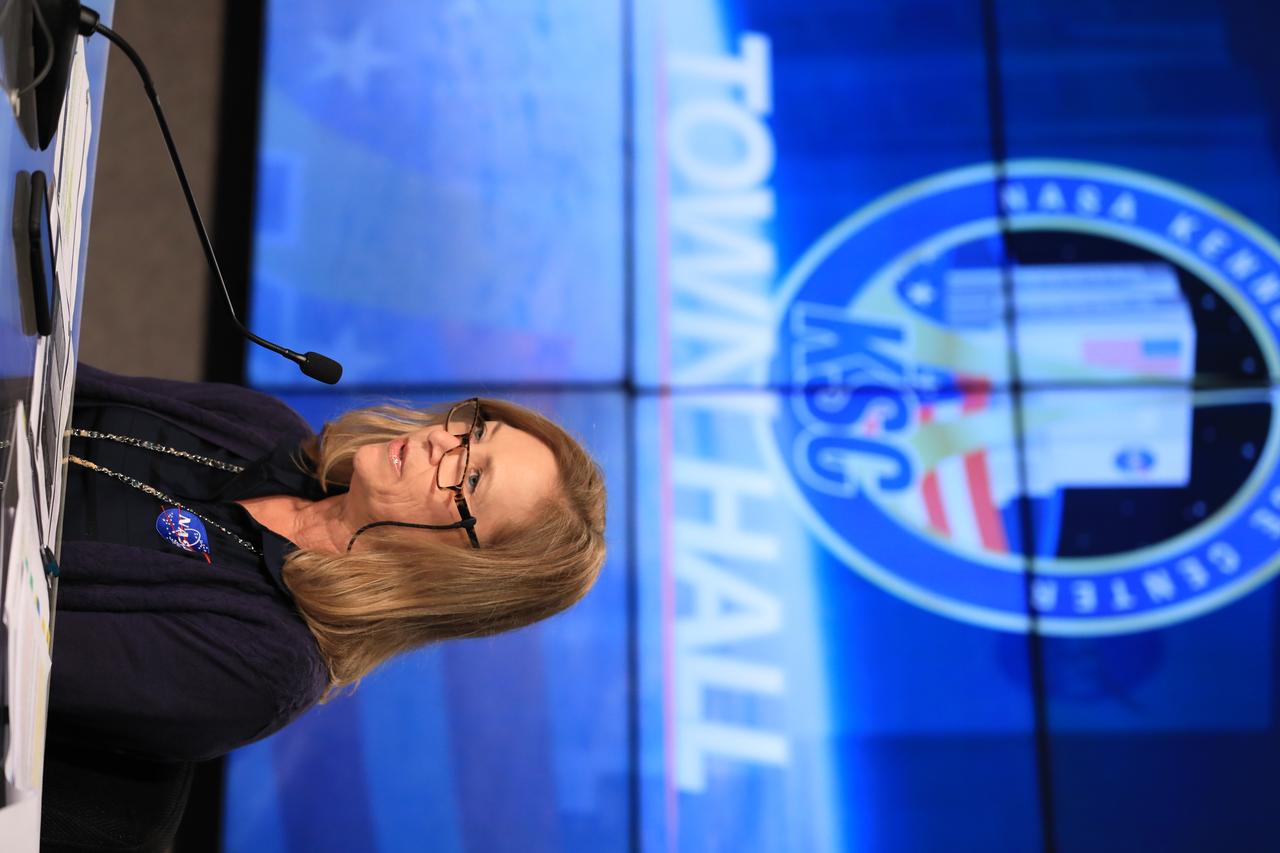
KSC Town Hall Center Director Bob Cabana, Deputy Director Janet Petro and KSC Chief Medical Officer David Tipton
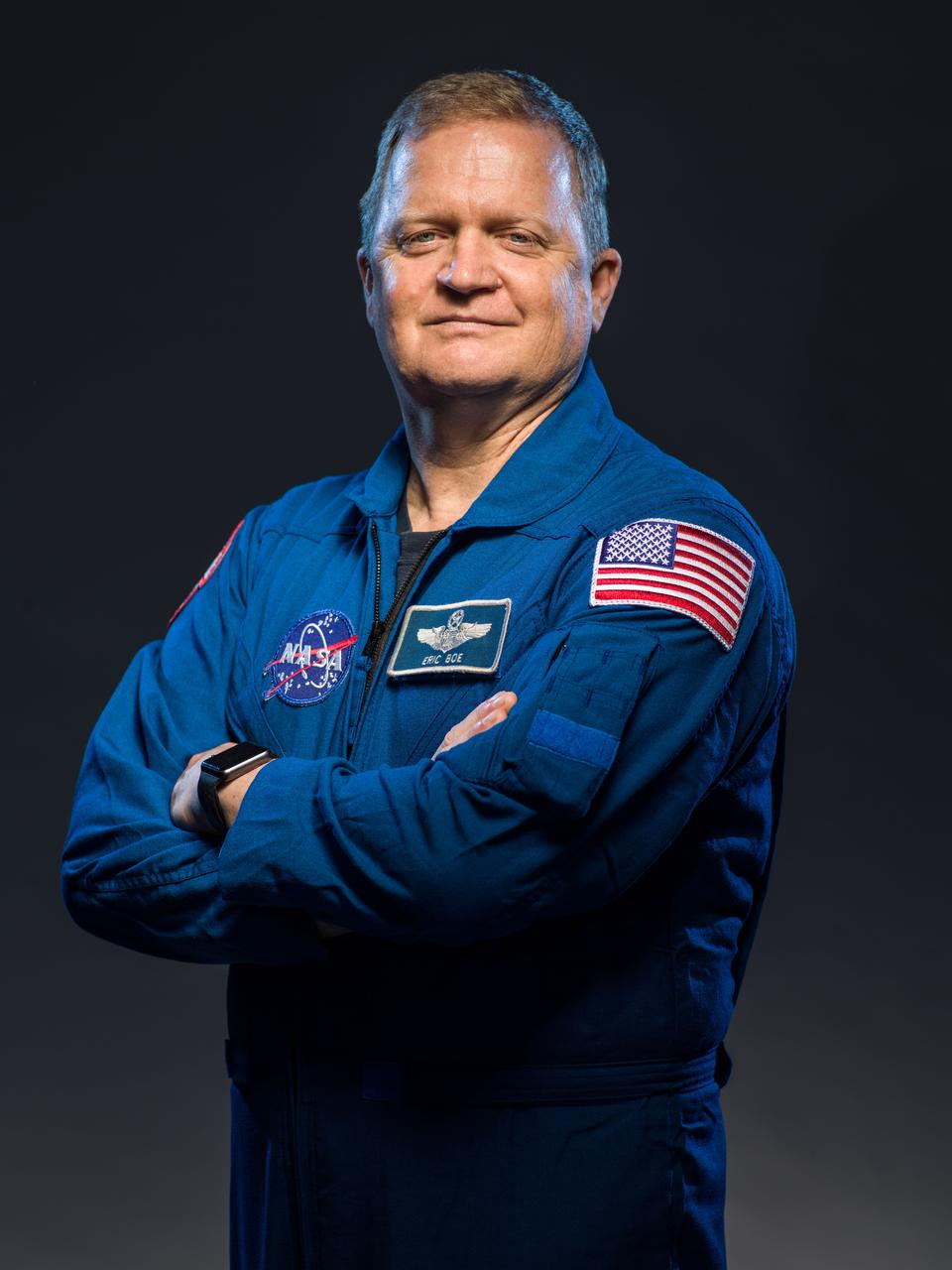
jsc2018e067582_alt (Aug. 1, 2018) --- NASA Astronaut Eric Boe was assigned to the first flight of Boeing’s CST-100 Starliner in August 2018. Editor's note: Boe was replaced by NASA Astronaut E. Michael “Mike” Fincke in January 2019 due to medical reasons; he will replace Fincke as the assistant to the chief for commercial crew in the astronaut office at NASA’s Johnson Space Center.
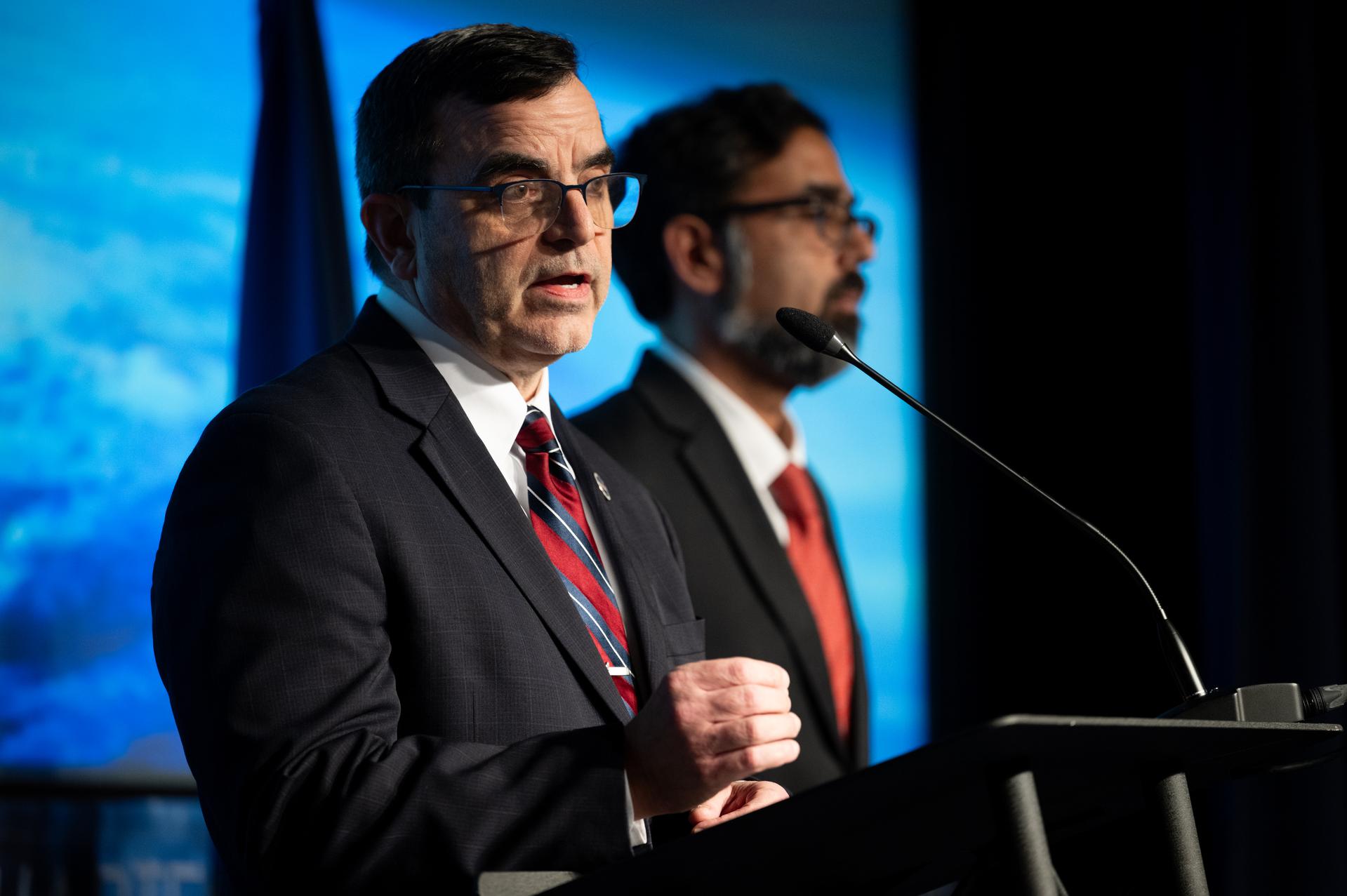
Dr. James Polk, NASA’s chief health and medical officer, provides an update on the International Space Station and its crew, Thursday, Jan. 8, 2026, at the Mary W. Jackson NASA Headquarters building in Washington. Photo Credit: (NASA/Joel Kowsky)
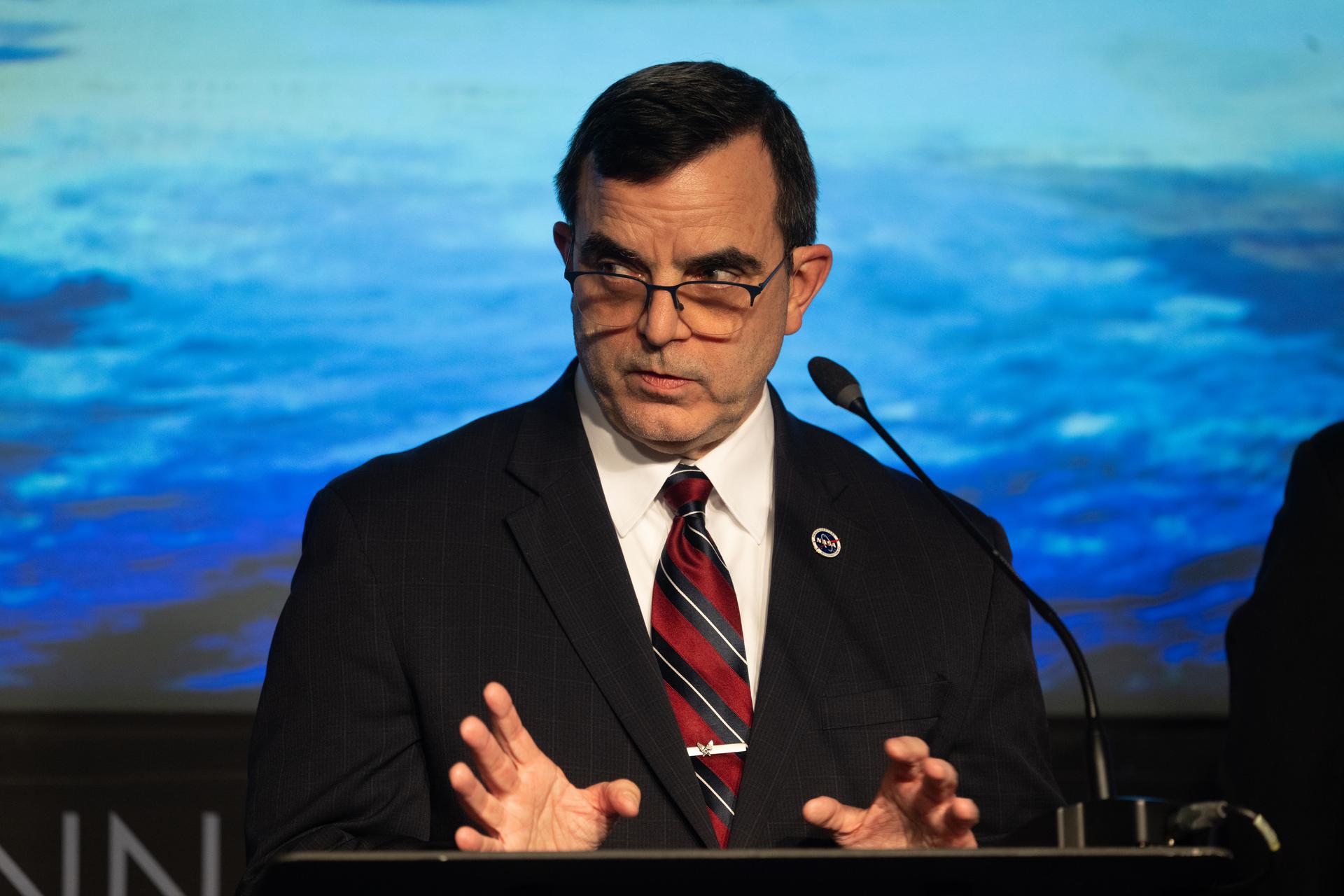
Dr. James Polk, NASA’s chief health and medical officer, provides an update on the International Space Station and its crew, Thursday, Jan. 8, 2026, at the Mary W. Jackson NASA Headquarters building in Washington. Photo Credit: (NASA/Joel Kowsky)

KENNEDY SPACE CENTER, FLA. - STS-114 Mission Commander Eileen Collins (left) is greeted at the entrance to the V.A. Outpatient Clinic in Viera, Fla., by Dr. Thomas Howard (center), chief medical officer, and Dr. Michael Doukas (right), chief of staff with the Orlando V.A. Medical Center. Collins is participating in the dedication of a hospital wing in honor of space shuttle Discovery, to be known as the Discovery wing. Collins and her crew have returned to Florida especially for a celebration in the KSC Visitor Complex of the successful return to flight mission that launched July 26 of this year.
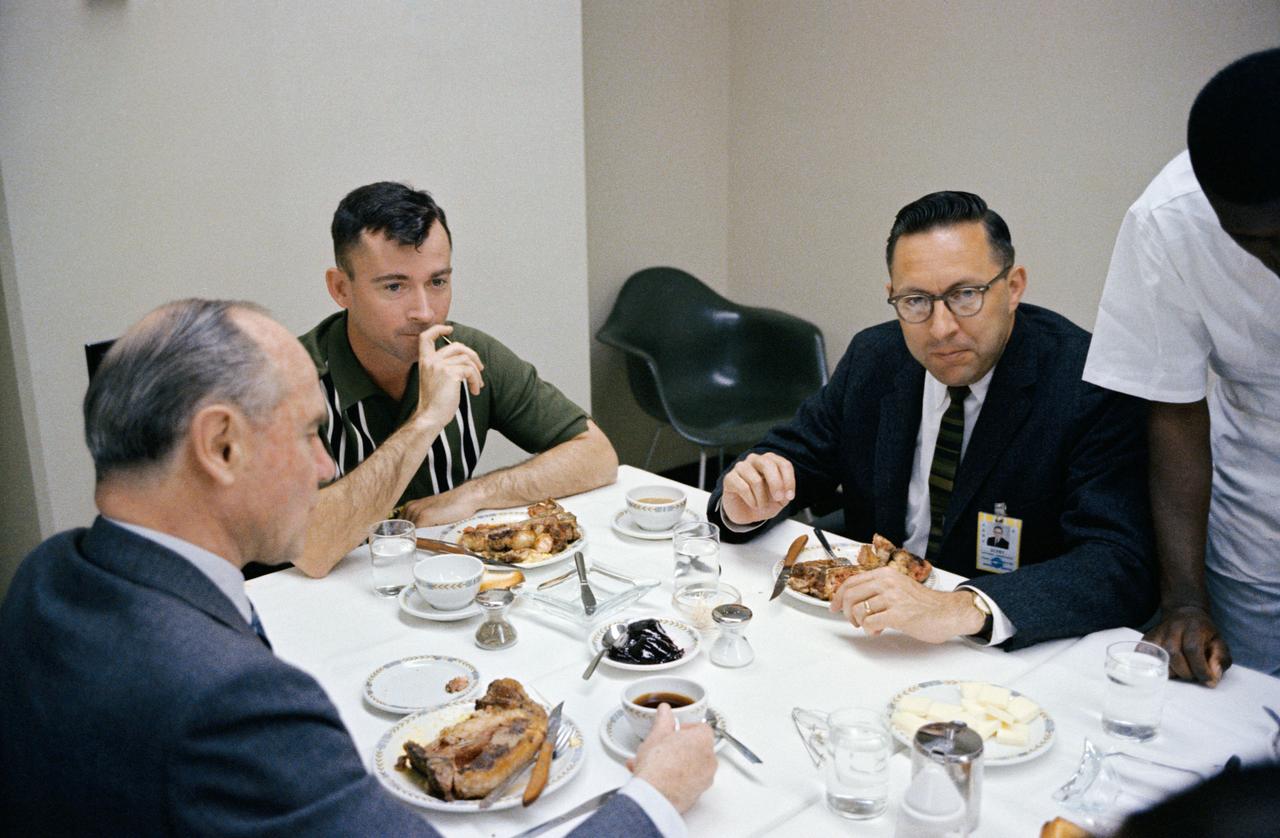
S65-20428 (23 March 1965) --- Astronaut John W. Young (center), pilot of the Gemini-Titan 3 flight, is shown during a steak breakfast which he was served about two hours prior to the 9:24 a.m. (EST) GT-3 launch. At left is J.S. McDonnell, board chairman and Chief Executive Officer of the McDonnell Aircraft Corporation. Dr. Charles A. Berry, chief of Center Medical Programs, is at right.
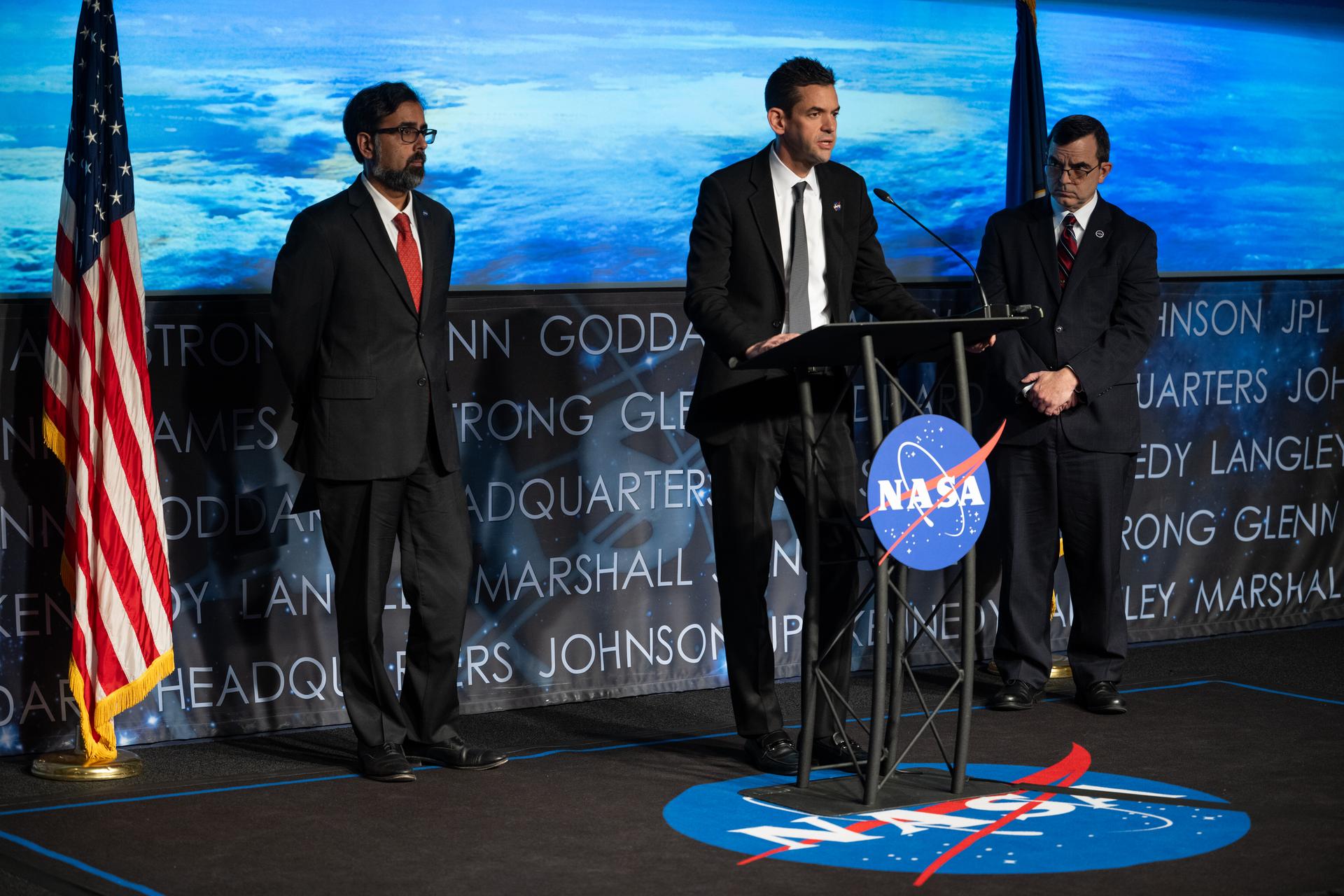
NASA Administrator Jared Isaacman, center, speaks alongside Amit Kshatriya, NASA associate administrator, left, and Dr. James Polk, NASA’s chief health and medical officer, right, as they provide an update on the International Space Station and its crew, Thursday, Jan. 8, 2026, at the Mary W. Jackson NASA Headquarters building in Washington. Photo Credit: (NASA/Joel Kowsky)
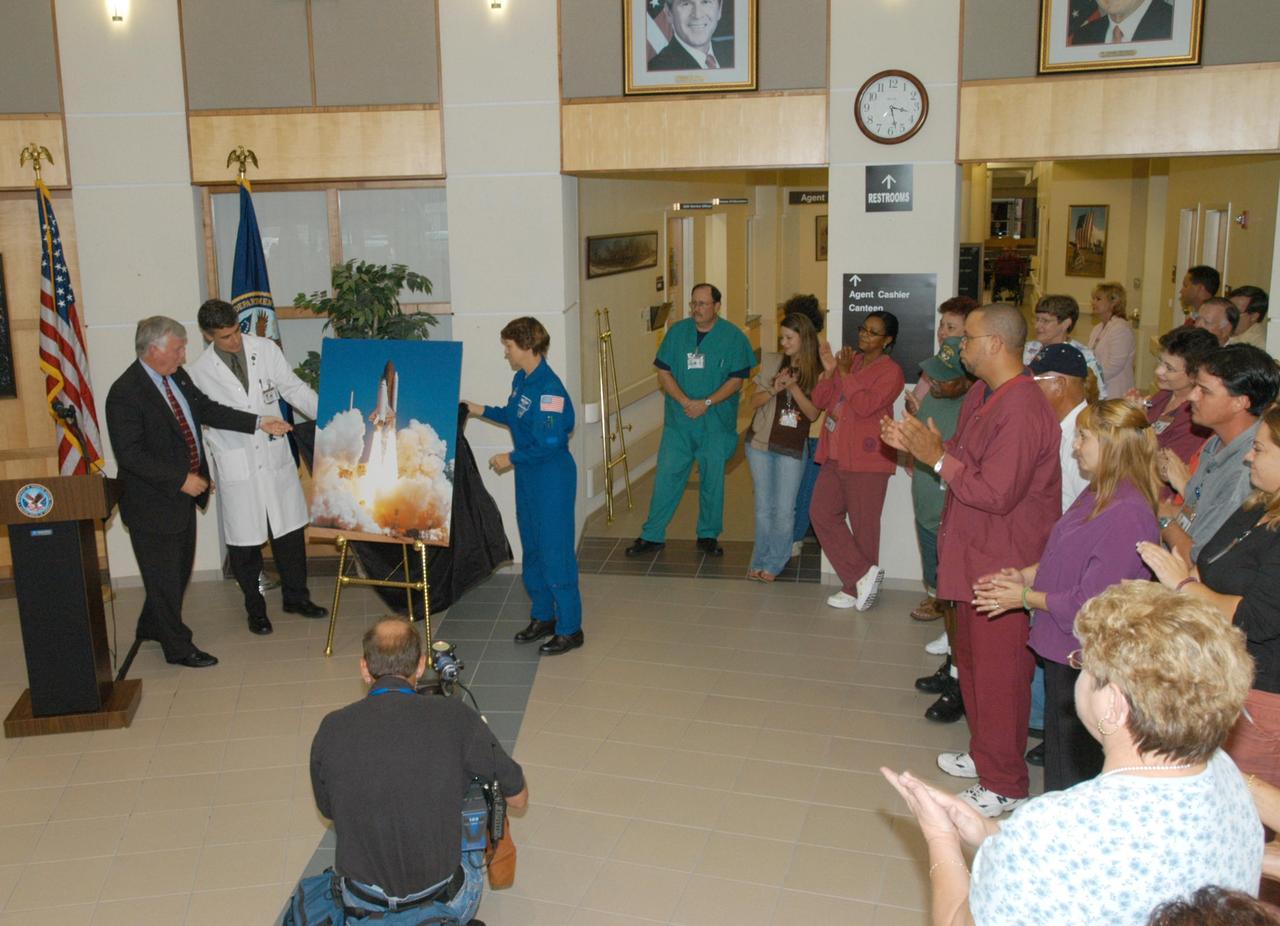
KENNEDY SPACE CENTER, FLA. - Center Director Jim Kennedy (far left) and STS-114 Mission Commander Eileen Collins (center) present a photo of the launch of Discovery to Dr. Thomas Howard, chief medical officer of the V.A. Outpatient Clinic in Viera, Fla. The presentation is part of the dedication of a hospital wing in honor of space shuttle Discovery, to be known as the Discovery wing. Collins and her crew have returned to Florida especially for a celebration in the KSC Visitor Complex of the successful return to flight mission that launched July 26 of this year.
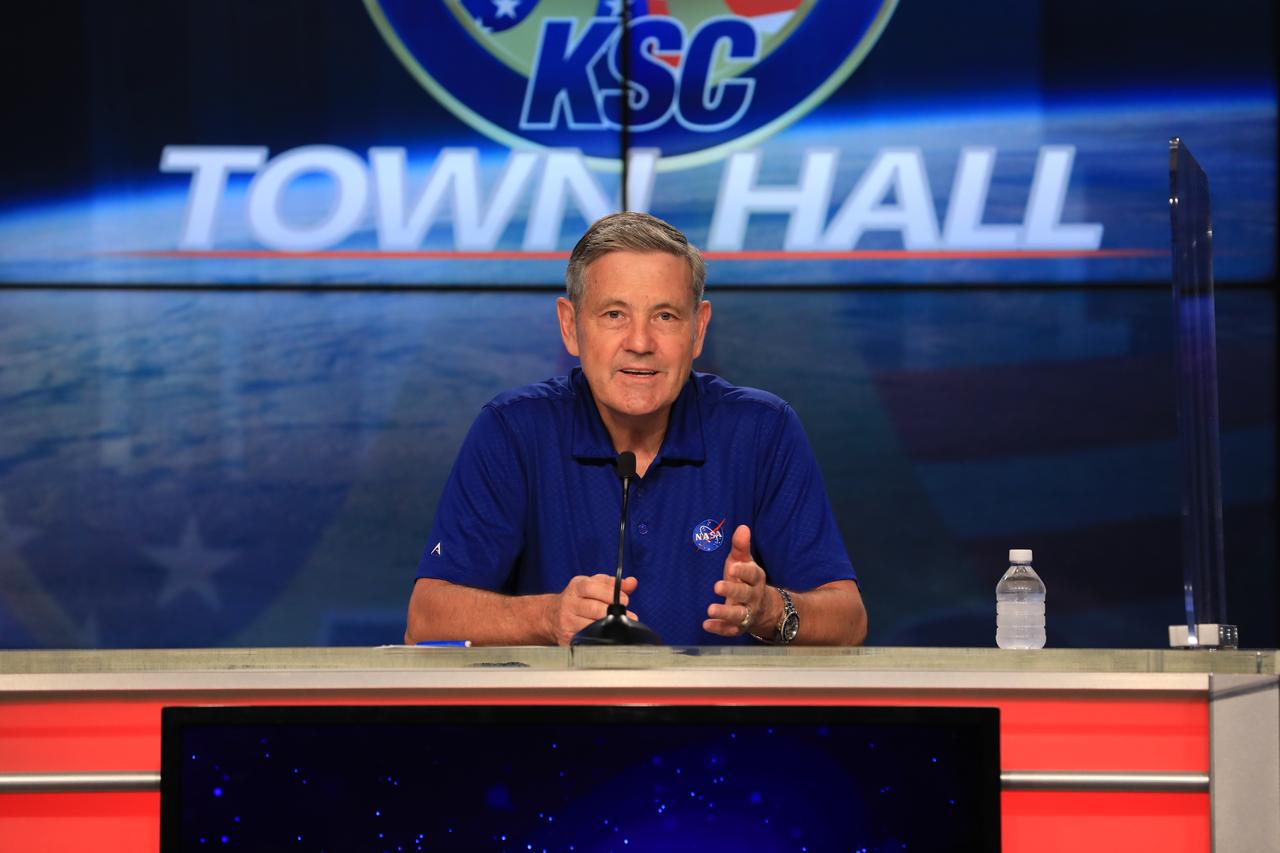
Kennedy Space Center Director Bob Cabana participates in a virtual town hall at the Florida spaceport’s Press Site auditorium on June 10, 2020, to share the plan for employees to safely return to on-site work during the time of COVID-19. Also participating were Deputy Director Janet Petro and Dr. David Tipton, chief medical officer, not pictured.
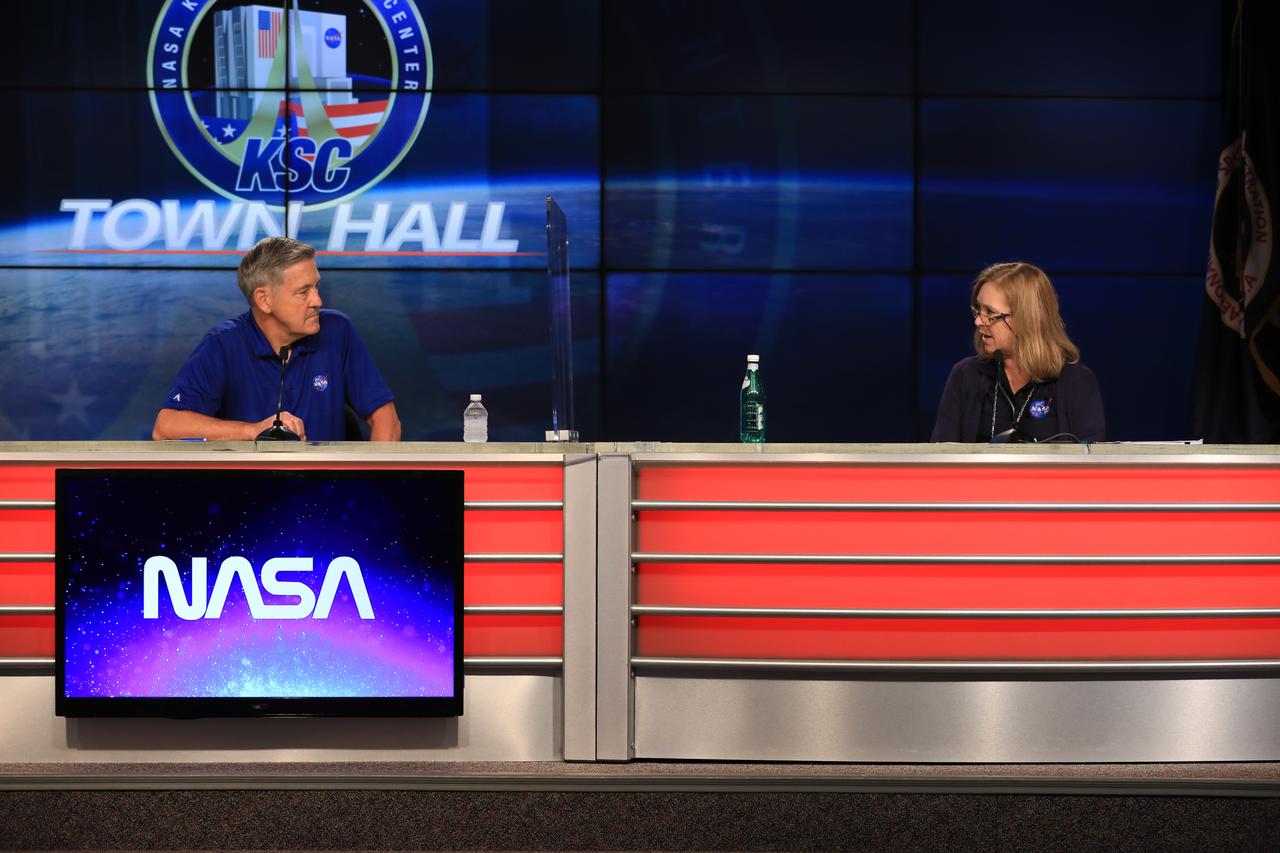
Kennedy Space Center Director Bob Cabana, left, and Deputy Director Janet Petro converse while participating in a virtual town hall at the Florida spaceport’s Press Site auditorium on June 10, 2020, to share the plan for employees to safely return to on-site work during the time of COVID-19. Also participating was Dr. David Tipton, chief medical officer, not pictured.

Kennedy Space Center Director Bob Cabana participates in a virtual town hall at the Florida spaceport’s Press Site auditorium on June 10, 2020, to share the plan for employees to safely return to on-site work during the time of COVID-19. Also participating were Deputy Director Janet Petro and Dr. David Tipton, chief medical officer, not pictured.
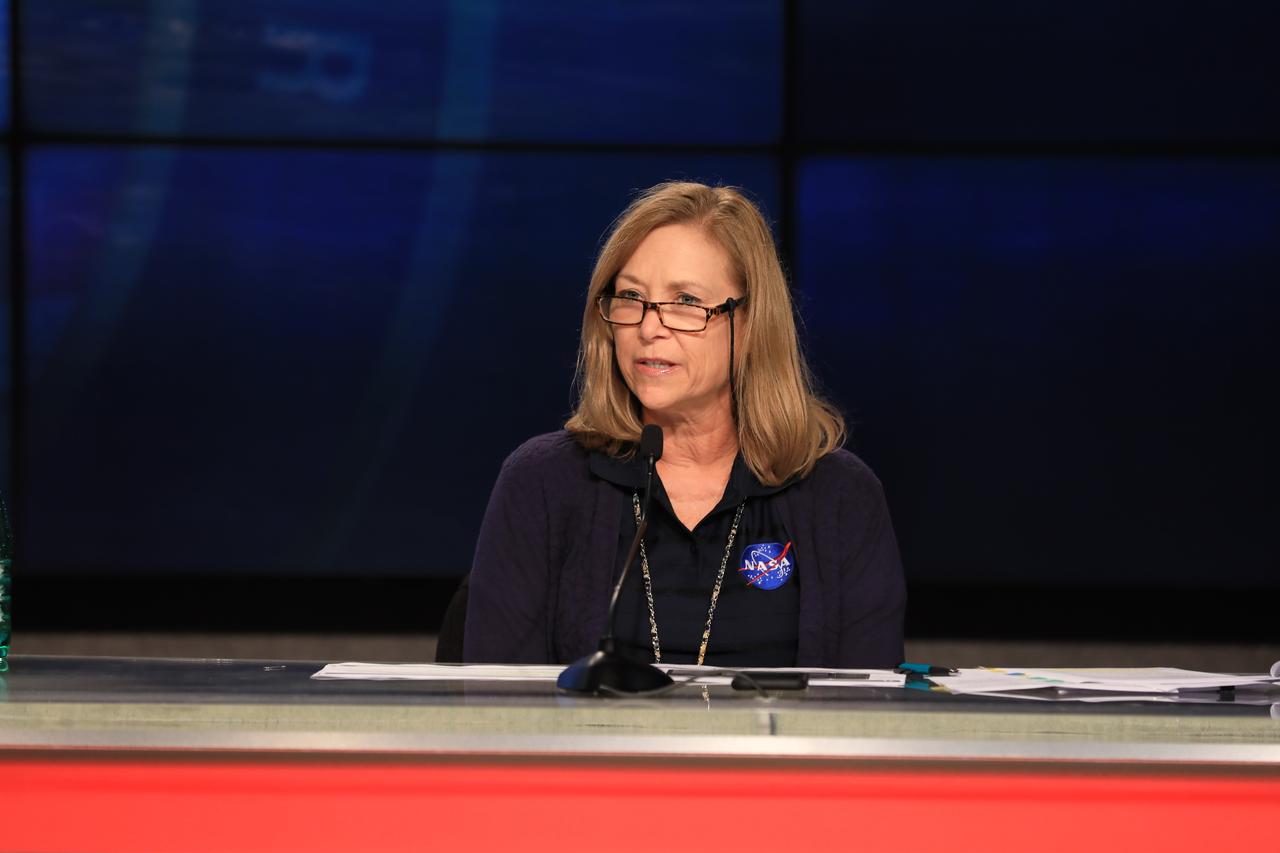
Kennedy Space Center Deputy Director Janet Petro participates in a virtual town hall at the Florida spaceport’s Press Site auditorium on June 10, 2020, to share the plan for employees to safely return to on-site work during the time of COVID-19. Also participating were Center Director Bob Cabana and Dr. David Tipton, chief medical officer, not pictured.
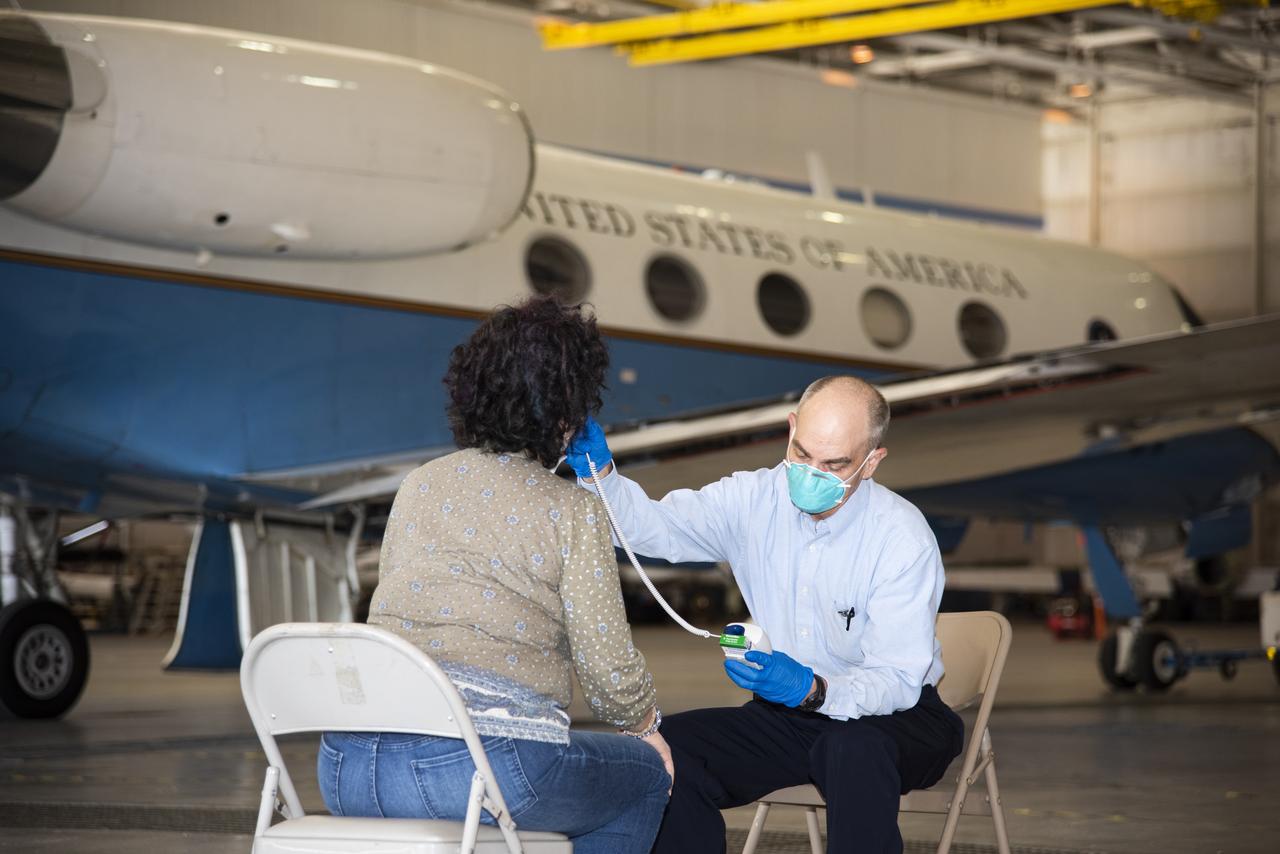
Dr. Dwight Peake, NASA’s Armstrong Flight Research Center chief medical officer and flight surgeon, confirms a NASA Jet Propulsion Laboratory (JPL) staff member is ready for flight. The two California NASA centers are working together to fly JPL staff on an Armstrong G-III aircraft from California to NASA’s Kennedy Space Center in Florida. JPL staff are completing critical work to ensure NASA’s Mars 2020 mission is ready on time.
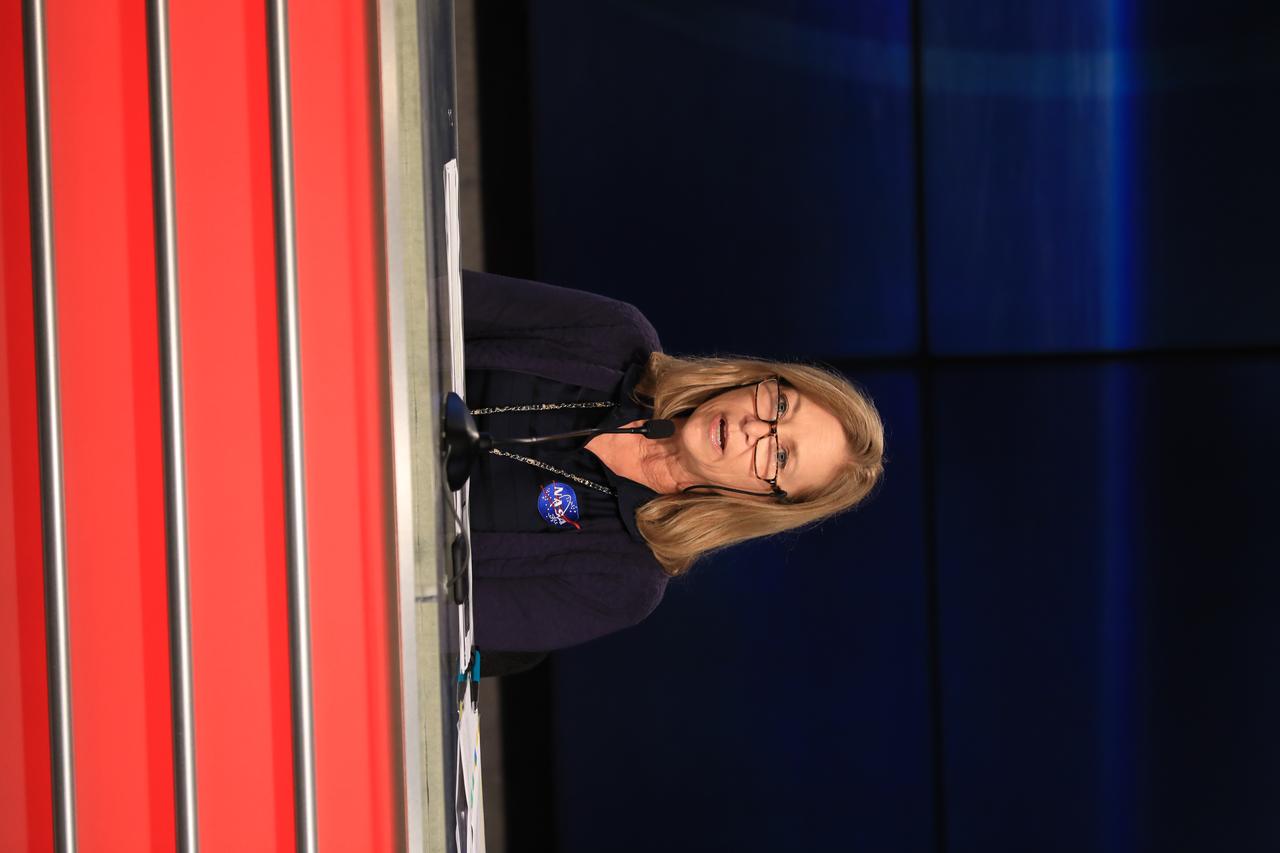
Kennedy Space Center Deputy Director Janet Petro participates in a virtual town hall at the Florida spaceport’s Press Site auditorium on June 10, 2020, to share the plan for employees to safely return to on-site work during the time of COVID-19. Also participating were Center Director Bob Cabana and Dr. David Tipton, chief medical officer, not pictured.
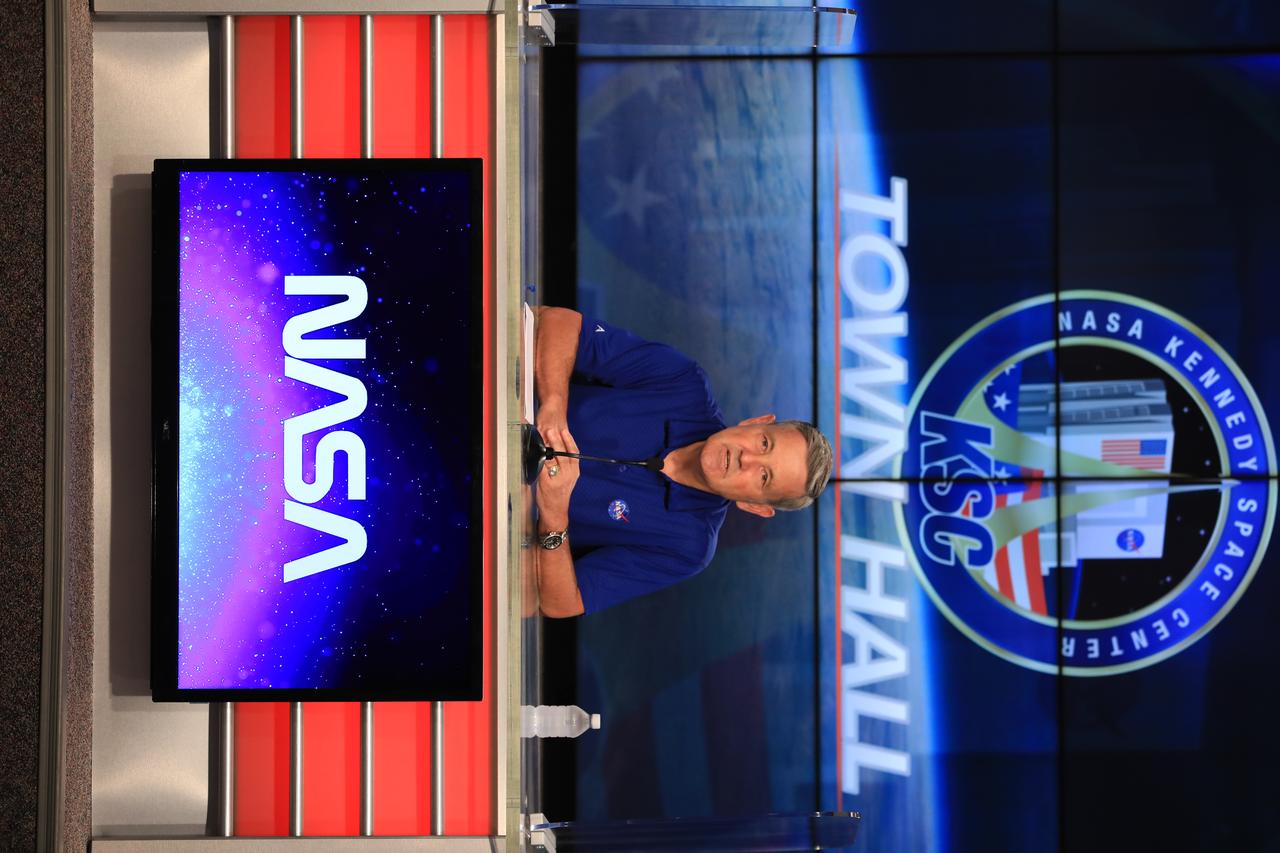
Kennedy Space Center Director Bob Cabana participates in a virtual town hall at the Florida spaceport’s Press Site auditorium on June 10, 2020, to share the plan for employees to safely return to on-site work during the time of COVID-19. Also participating were Deputy Director Janet Petro and Dr. David Tipton, chief medical officer, not pictured.
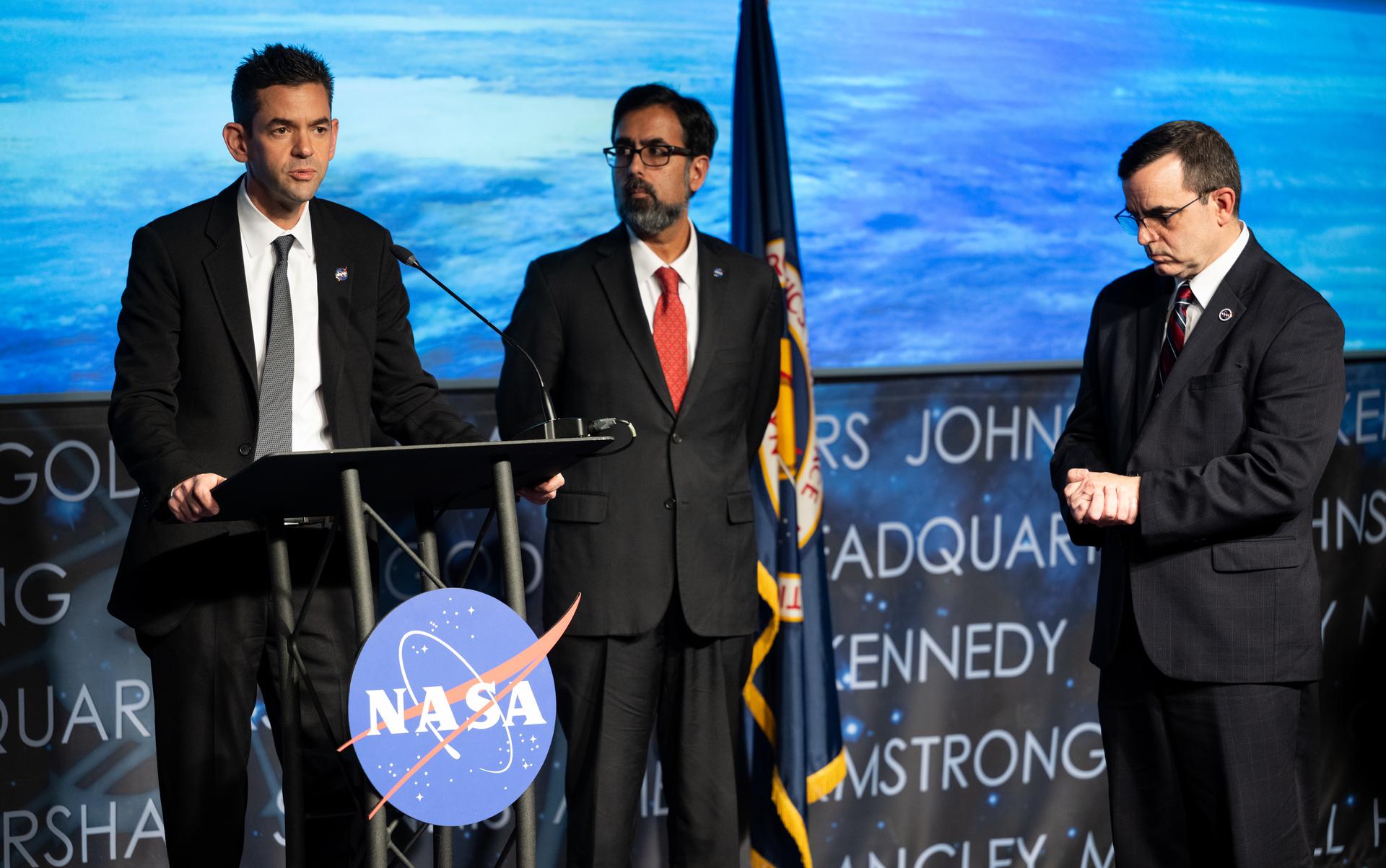
NASA Administrator Jared Isaacman, left, speaks alongside Amit Kshatriya, NASA associate administrator, center, and Dr. James Polk, NASA’s chief health and medical officer, right, as they provide an update on the International Space Station and its crew, Thursday, Jan. 8, 2026, at the Mary W. Jackson NASA Headquarters building in Washington. Photo Credit: (NASA/Joel Kowsky)
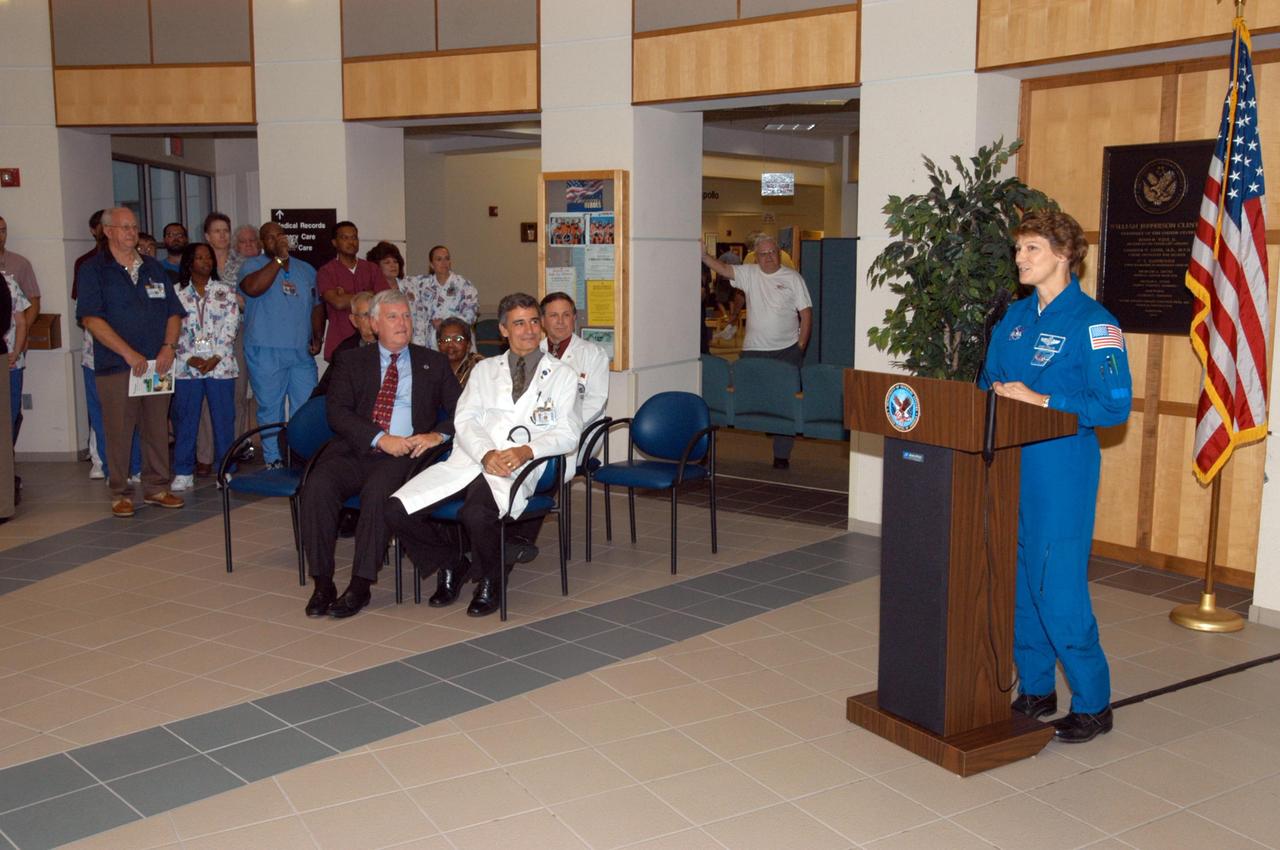
KENNEDY SPACE CENTER, FLA. - STS-114 Mission Commander Eileen Collins speaks to guests during the dedication of a hospital wing at the V.A. Outpatient Clinic in Viera, Fla., in honor of space shuttle Discovery, to be known as the Discovery wing. Joining in the dedication are, seated at left, Center Director Jim Kennedy and Dr. Thomas Howard who is chief medical officer of the clinic. Collins and her crew have returned to Florida especially for a celebration in the KSC Visitor Complex of the successful return to flight mission that launched July 26 of this year.
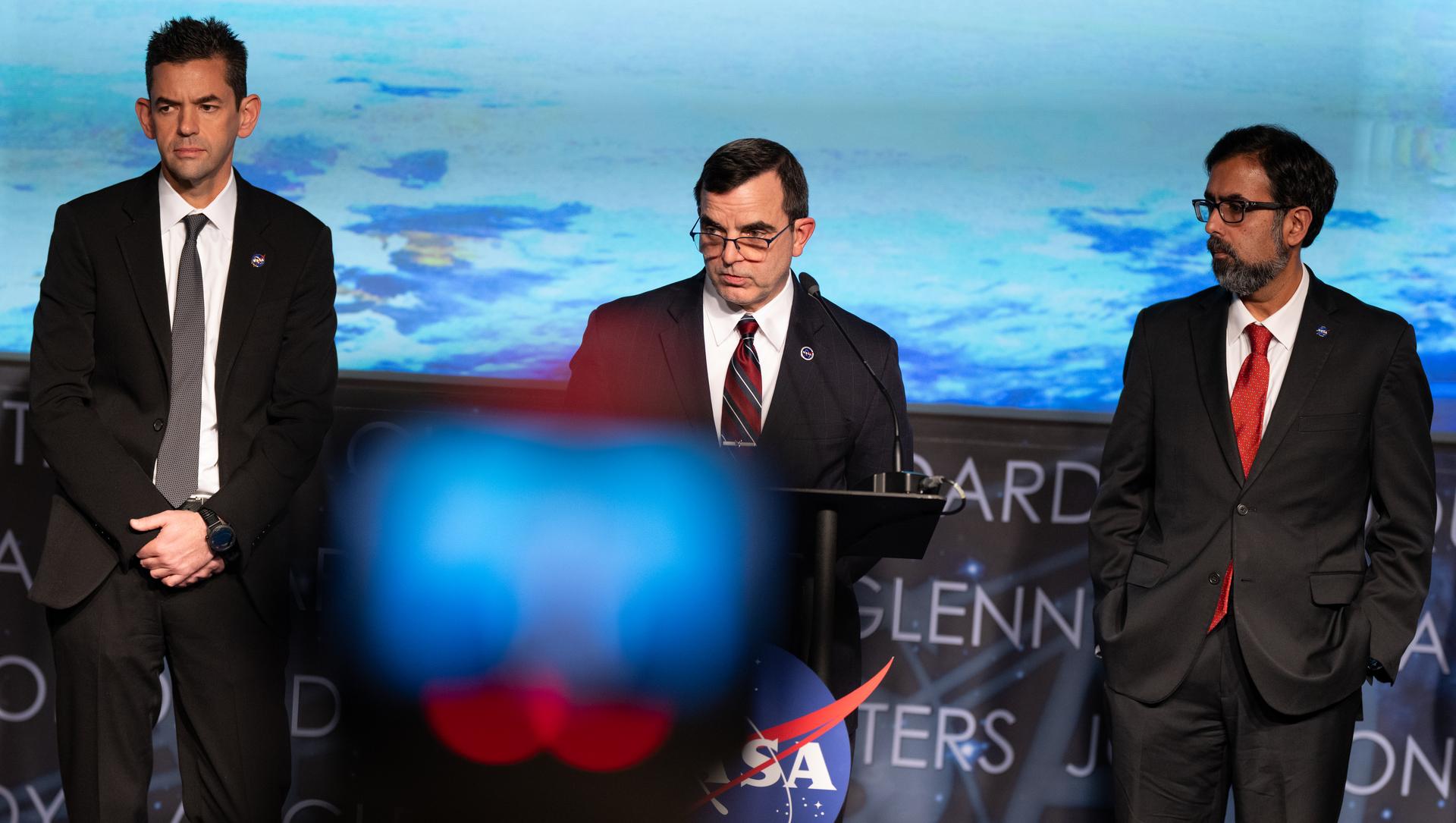
Dr. James Polk, NASA’s chief health and medical officer, center, speaks alongside NASA Administrator Jared Isaacman, left, and Amit Kshatriya, NASA associate administrator, as they provide an update on the International Space Station and its crew, Thursday, Jan. 8, 2026, at the Mary W. Jackson NASA Headquarters building in Washington. Photo Credit: (NASA/Joel Kowsky)
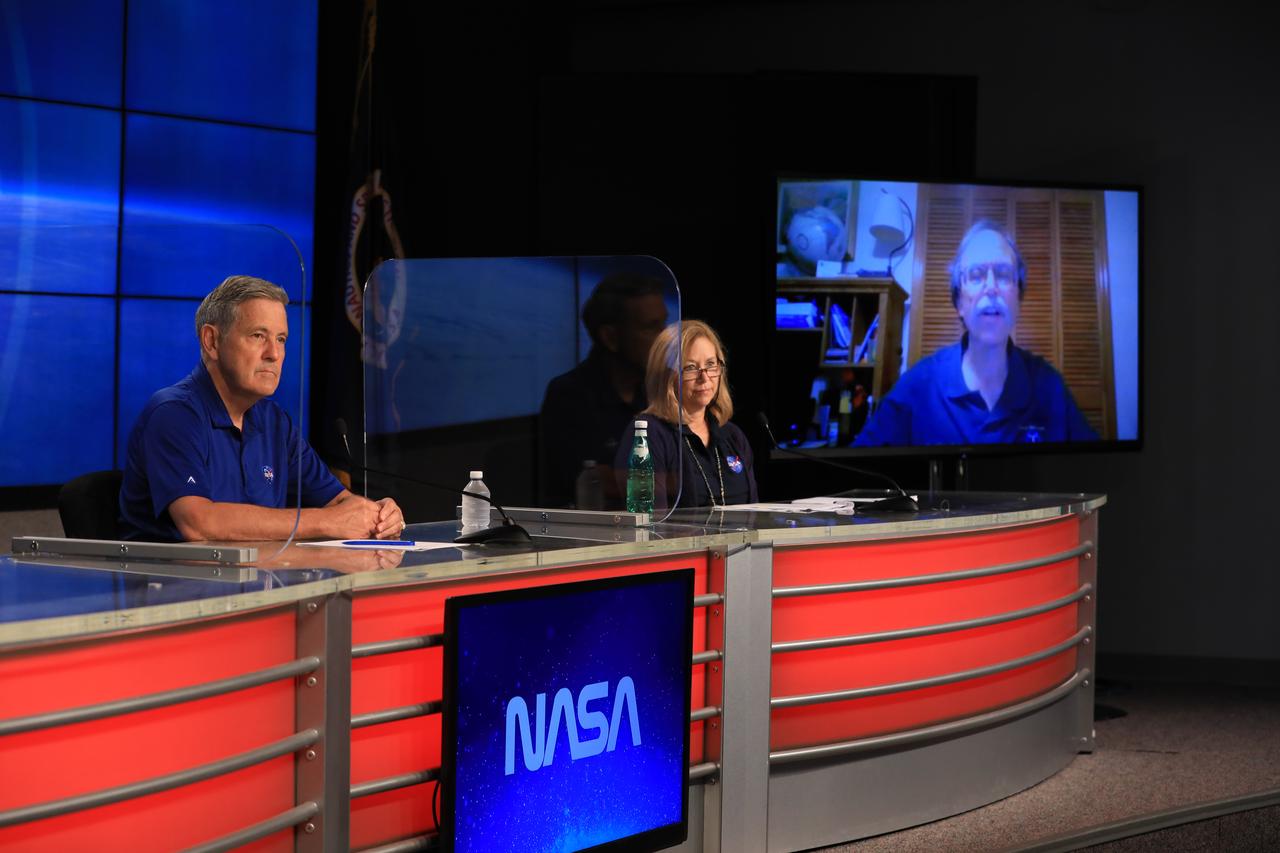
Dr. David Tipton, far right, Kennedy Space Center chief medical officer, participates via monitor during a virtual town hall at the Florida spaceport’s Press Site auditorium on June 10, 2020, to share the plan for employees to safely return to on-site work during the time of COVID-19. Also participating were Center Director Bob Cabana, left, and Deputy Director Janet Petro, center.
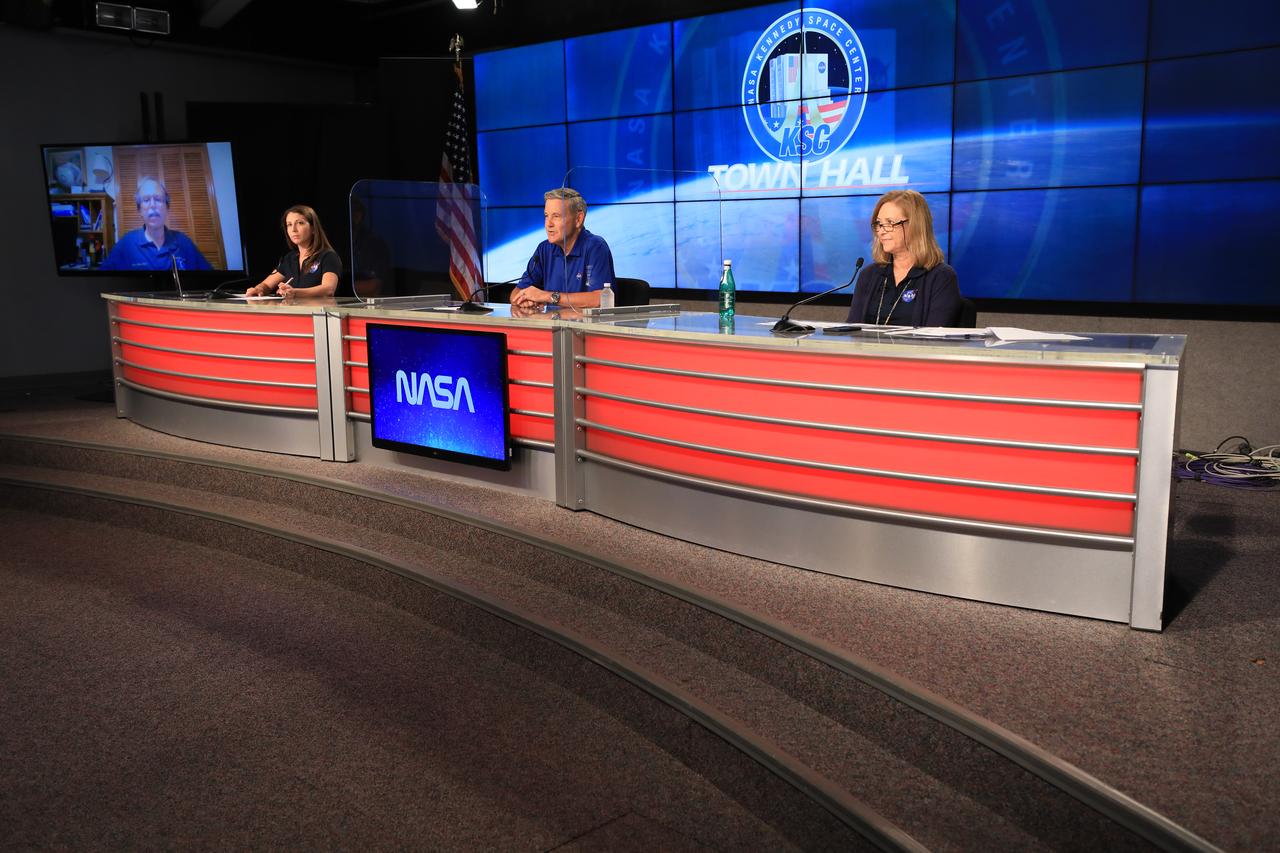
Members of NASA Kennedy Space Center leadership hold a virtual town hall at the Florida spaceport’s Press Site auditorium on June 10, 2020, to share the plan for employees to safely return to on-site work during the time of COVID-19. From left to right are Dr. David Tipton, Kennedy’s Chief Medical Officer (participating via monitor), event moderator Marie Lewis of NASA Communications, Center Director Bob Cabana and Deputy Director Janet Petro.

Members of NASA Kennedy Space Center leadership hold a virtual town hall at the Florida spaceport’s Press Site auditorium on June 10, 2020, to share the plan for employees to safely return to on-site work during the time of COVID-19. From left to right are event moderator Marie Lewis of NASA Communications, Center Director Bob Cabana and Deputy Director Janet Petro. Also participating was Dr. David Tipton, chief medical officer, not pictured.
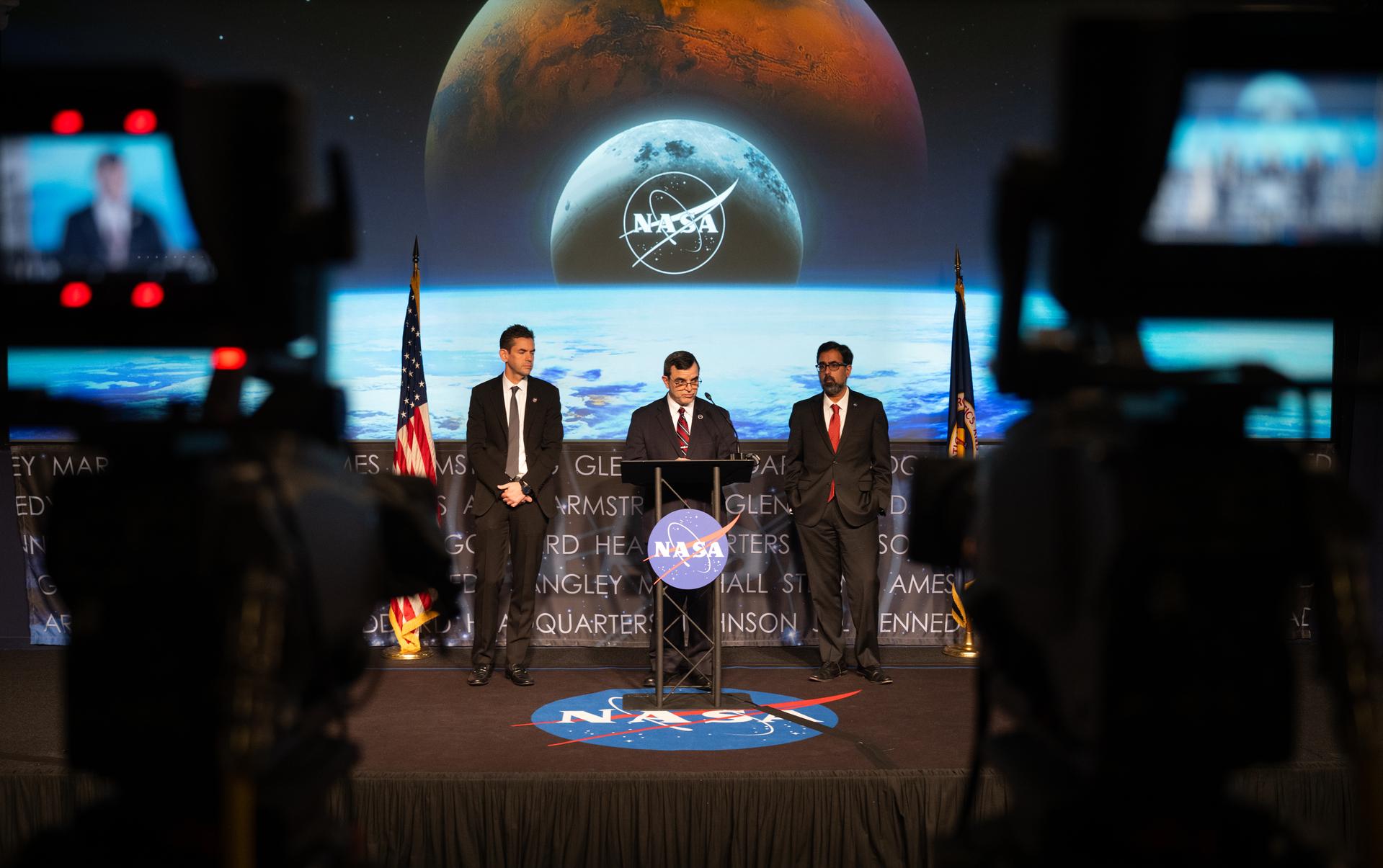
Dr. James Polk, NASA’s chief health and medical officer, center, speaks alongside NASA Administrator Jared Isaacman, left, and Amit Kshatriya, NASA associate administrator, as they provide an update on the International Space Station and its crew, Thursday, Jan. 8, 2026, at the Mary W. Jackson NASA Headquarters building in Washington. Photo Credit: (NASA/Joel Kowsky)
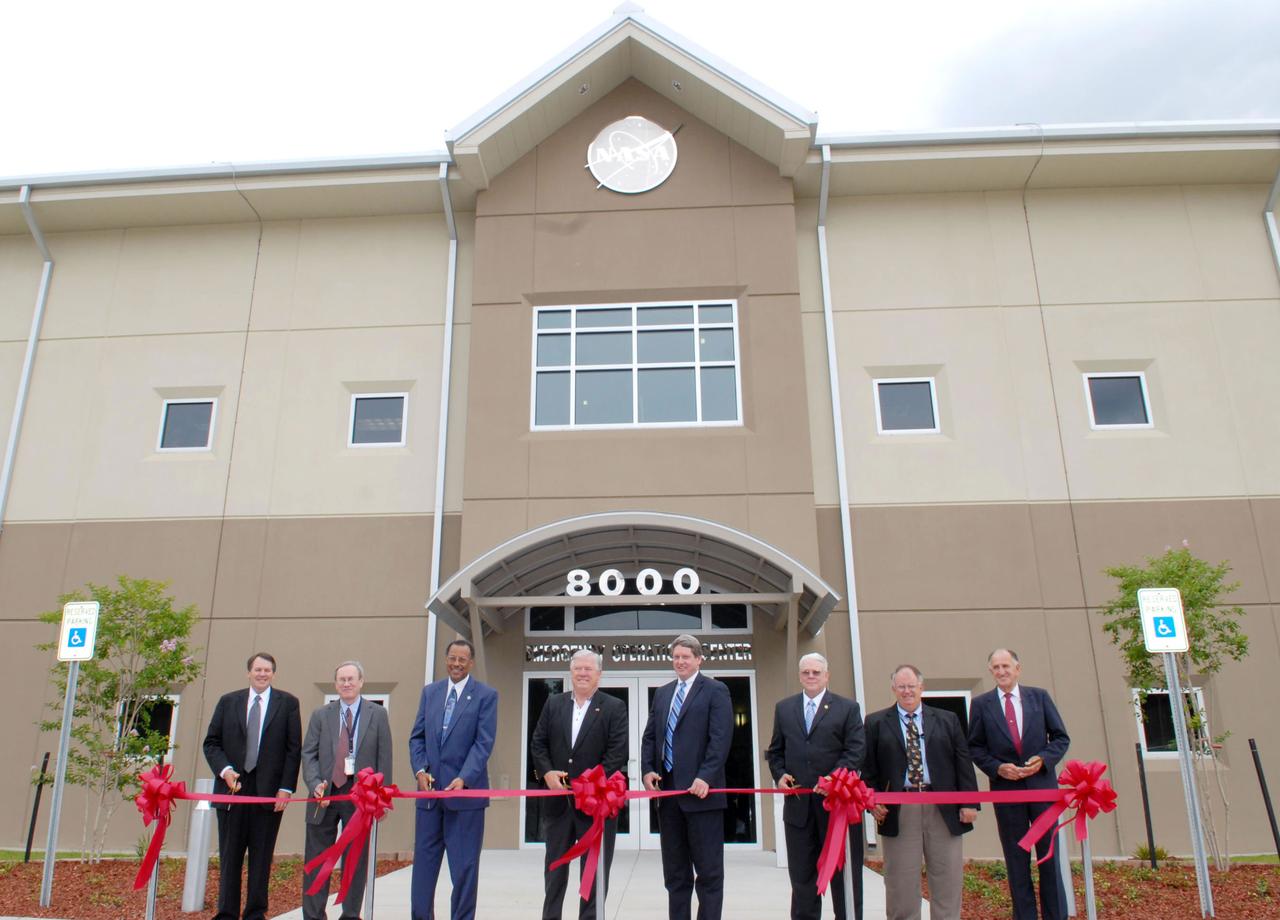
Center Director Gene Goldman and special guests celebrate the opening of the site's new Emergency Operations Center on June 2. Participants included (l t r): Steven Cooper, deputy director of the National Weather Service Southern Region; Tom Luedtke, NASA associate administrator for institutions and management; Charles Scales, NASA associate deputy administrator; Mississippi Gov. Haley Barbour; Gene Goldman, director of Stennis Space Center; Jack Forsythe, NASA assistant administrator for the Office of Security and Program Protection; Dr. Richard Williams, NASA chief health and medical officer; and Weldon Starks, president of Starks Contracting Company Inc. of Biloxi.
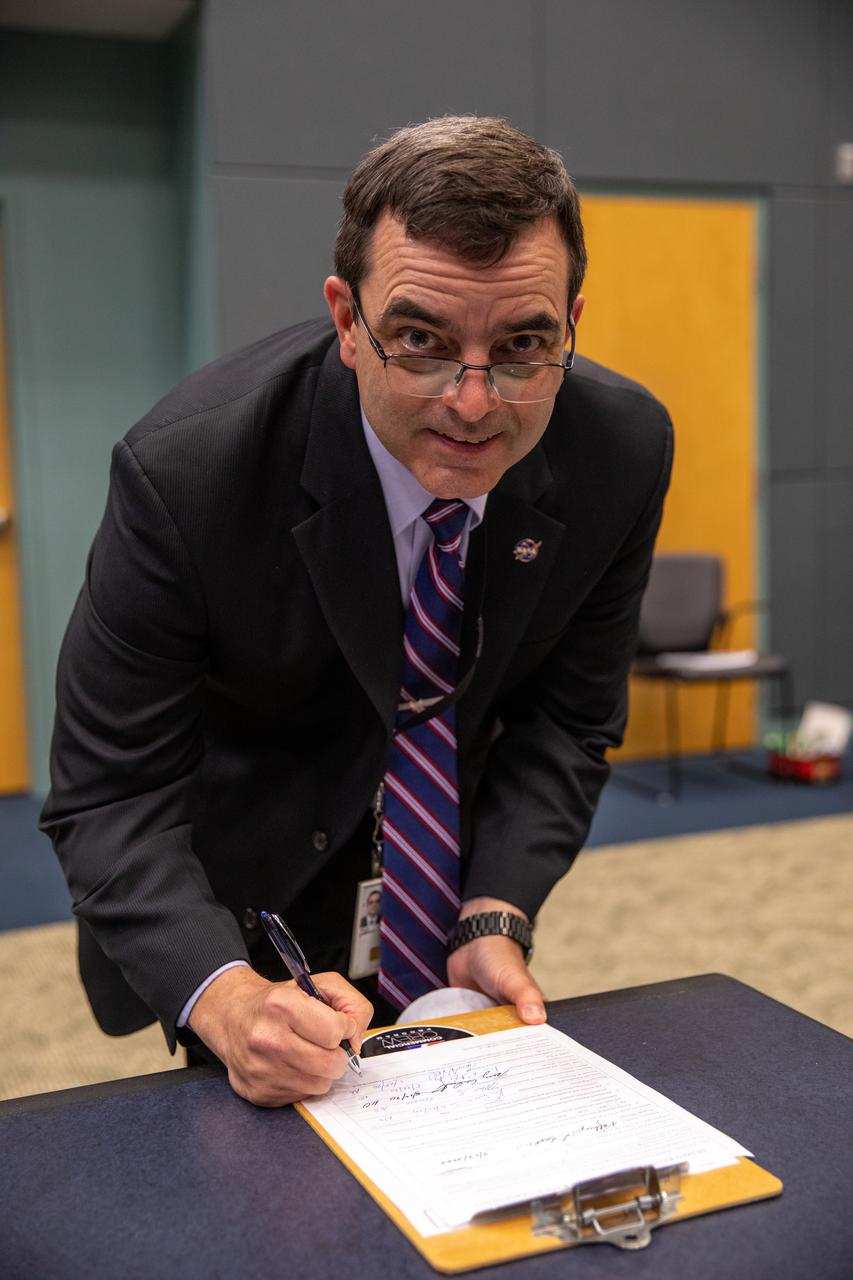
On May 22, 2020, inside the Operations Support Building II at NASA’s Kennedy Space Center in Florida, NASA Chief Health and Medical Officer J.D. Polk signs the official document denoting the agency and SpaceX are a ‘Go’ for the upcoming Demo-2 launch, following the conclusion of the flight readiness review. A SpaceX Falcon 9 rocket and Crew Dragon spacecraft will carry NASA astronauts Robert Behnken and Douglas Hurley to the International Space Station as part of the agency’s Commercial Crew Program, returning human spaceflight capability to the U.S. after nearly a decade. Launch is slated for 4:33 p.m. EDT on Wednesday, May 27, from Kennedy’s Launch Complex 39A.
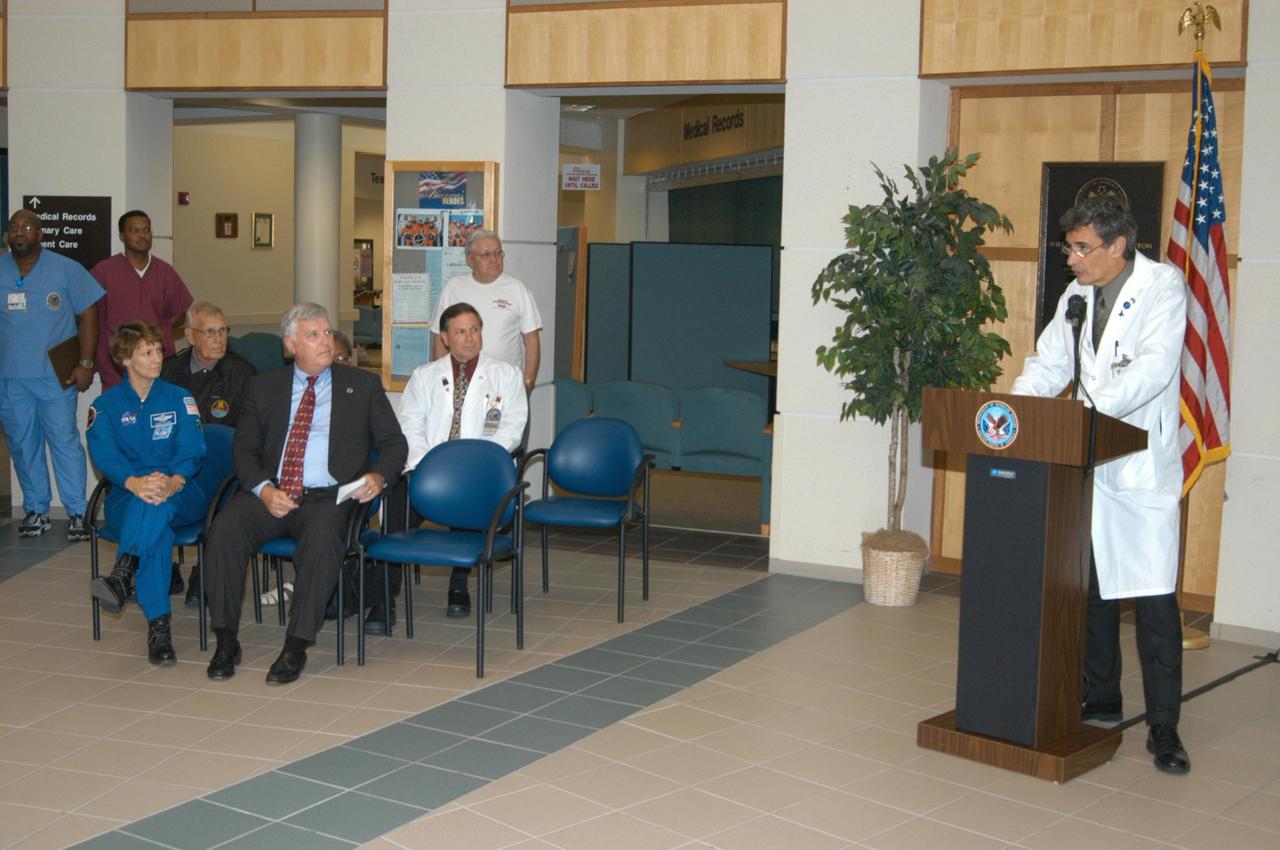
KENNEDY SPACE CENTER, FLA. - Dr. Thomas Howard, chief medical officer at the V.A. Outpatient Clinic in Viera, Fla., speaks to guests during the dedication of a hospital wing in honor of space shuttle Discovery, to be known as the Discovery wing. Joining in the dedication are, seated at left, STS-114 Mission Commander Eileen Collins, Norris Gray and Center Director Jim Kennedy. Gray was a long-time employee of Kennedy Space Center, in charge of fire safety from 1949 until his retirement in 1984. Collins and her crew have returned to Florida especially for a celebration in the KSC Visitor Complex of the successful return to flight mission that launched July 26 of this year.
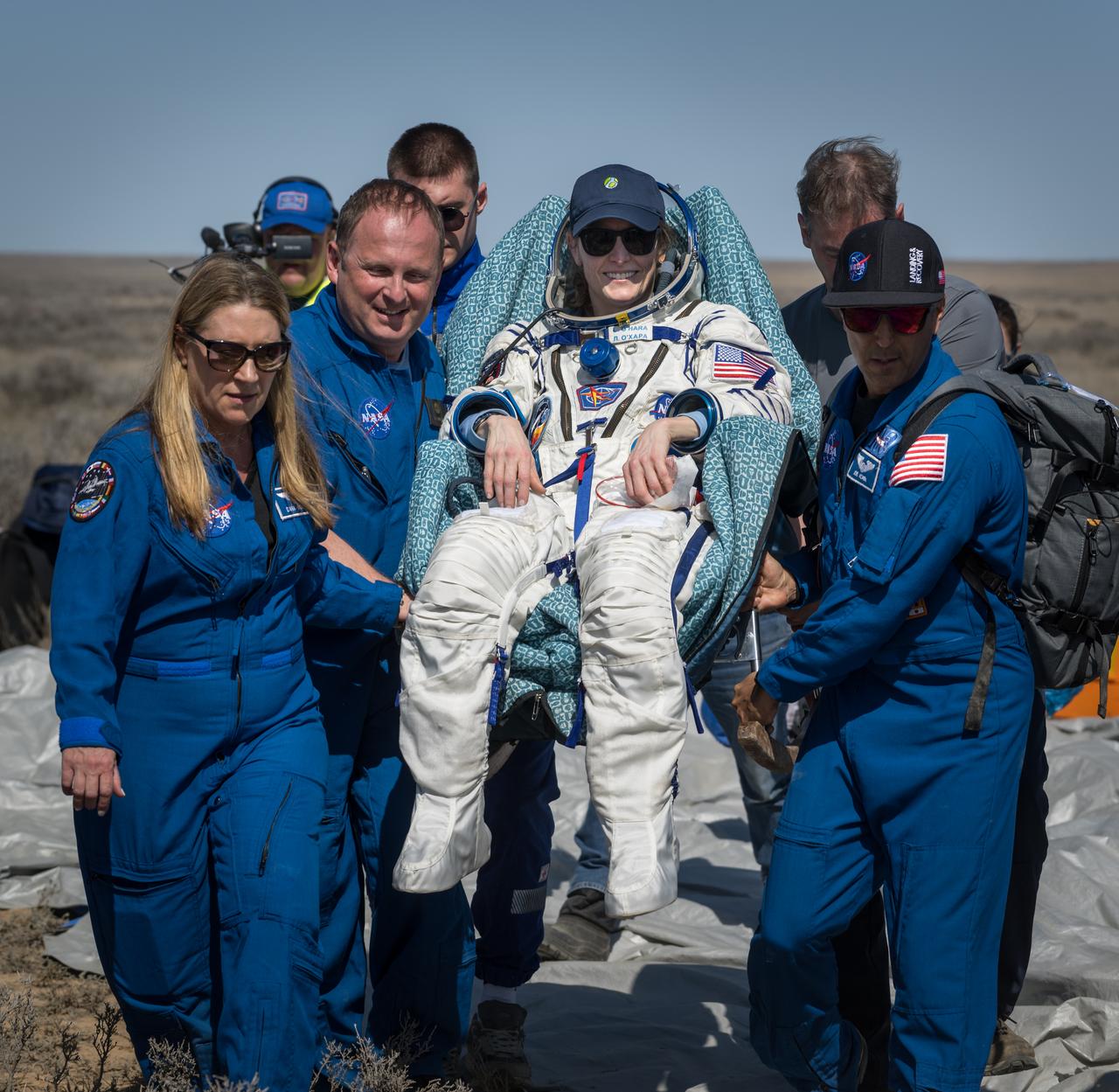
Expedition 70 NASA astronaut Loral O'Hara is carried to a medical tent by NASA ISS Program Manager Dana Weigel, left, NASA Interpreter Ilya Shlepakov, and NASA Chief of the Astronaut Office Joe Acaba, right, shortly after she, Roscosmos cosmonaut Oleg Novitskiy, and Belarus spaceflight participant Marina Vasilevskaya, landed in their Soyuz MS-24 spacecraft near the town of Zhezkazgan, Kazakhstan on Saturday, April 6, 2024. O’Hara is returning to Earth after logging 204 days in space as a member of Expeditions 69-70 aboard the International Space Station and Novitskiy and Vasilevskaya return after having spent the last 14 days in space. Photo Credit (NASA/Bill Ingalls)
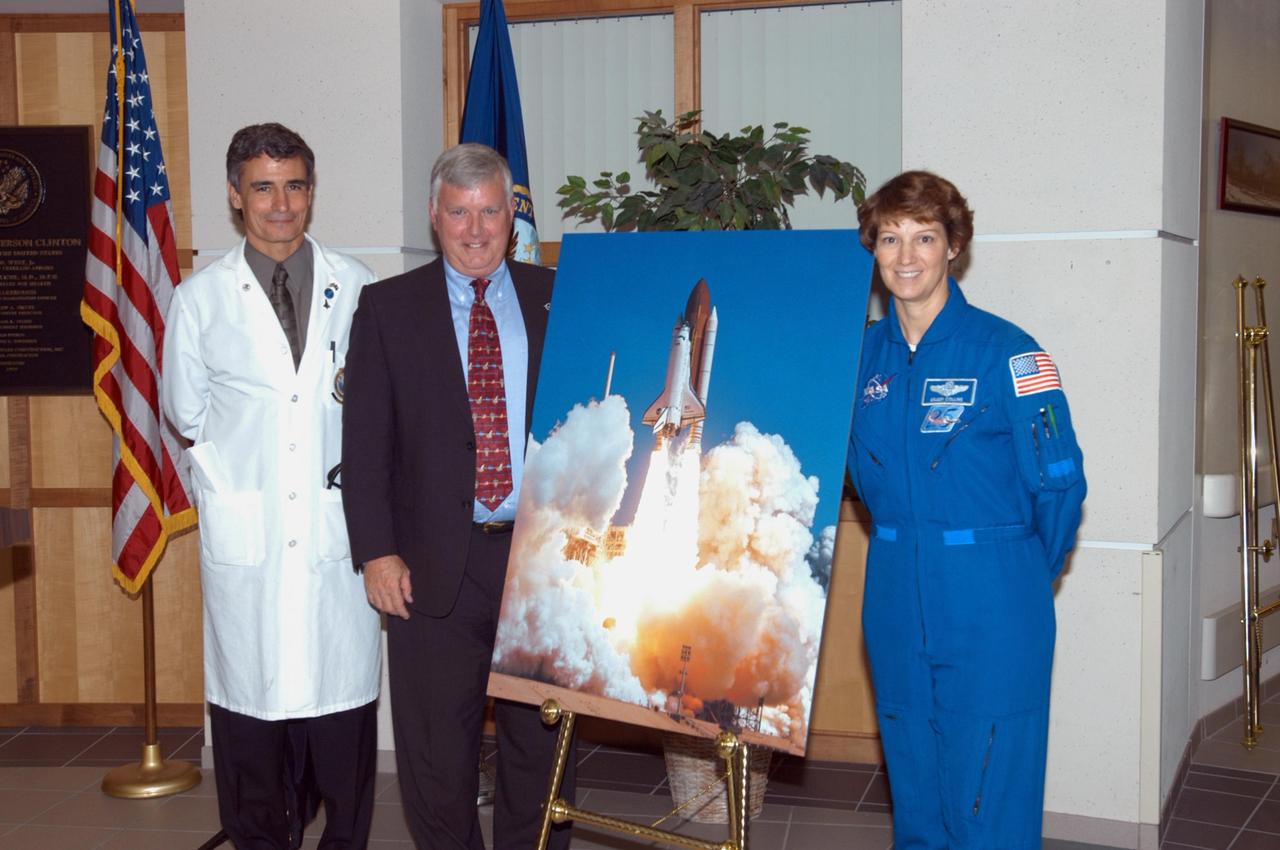
KENNEDY SPACE CENTER, FLA. - At the V.A. Outpatient Clinic in Viera, Fla., Center Director Jim Kennedy (center) and STS-114 Commander Eileen Collins (right) stand next to the space shuttle Discovery launch photo presented to Dr. Thomas Howard (far left) as part of the dedication of a hospital wing in honor of space shuttle Discovery, to be known as the Discovery wing. Howard is chief medical officer of the clinic. Collins and her crew have returned to Florida especially for a celebration in the KSC Visitor Complex of the successful return to flight mission that launched July 26 of this year.
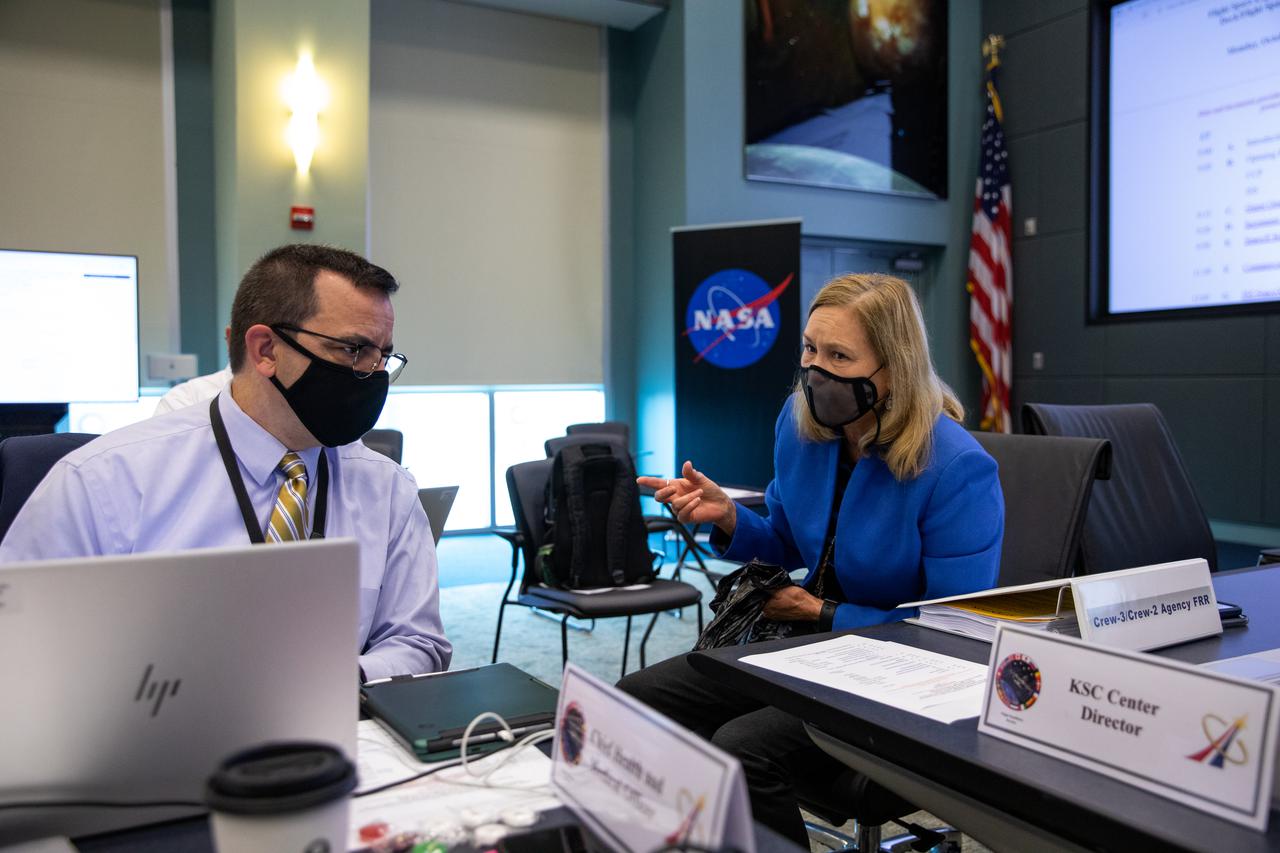
NASA and SpaceX managers participate in a Flight Readiness Review for the agency’s SpaceX Crew-3 mission at Kennedy Space Center in Florida on Oct. 25, 2021. International partners also participated. At right, Kennedy’s Center Director Janet Petro, speaks with J.D. Polk, chief Health and Medical officer. Crew-3 is scheduled to launch to the International Space Station from Kennedy’s Launch Complex 39A on Oct. 31, 2021 as part of NASA’s Commercial Crew Program. Liftoff of the Falcon 9 rocket and Crew Dragon spacecraft is targeted for 2:21 a.m. EDT.
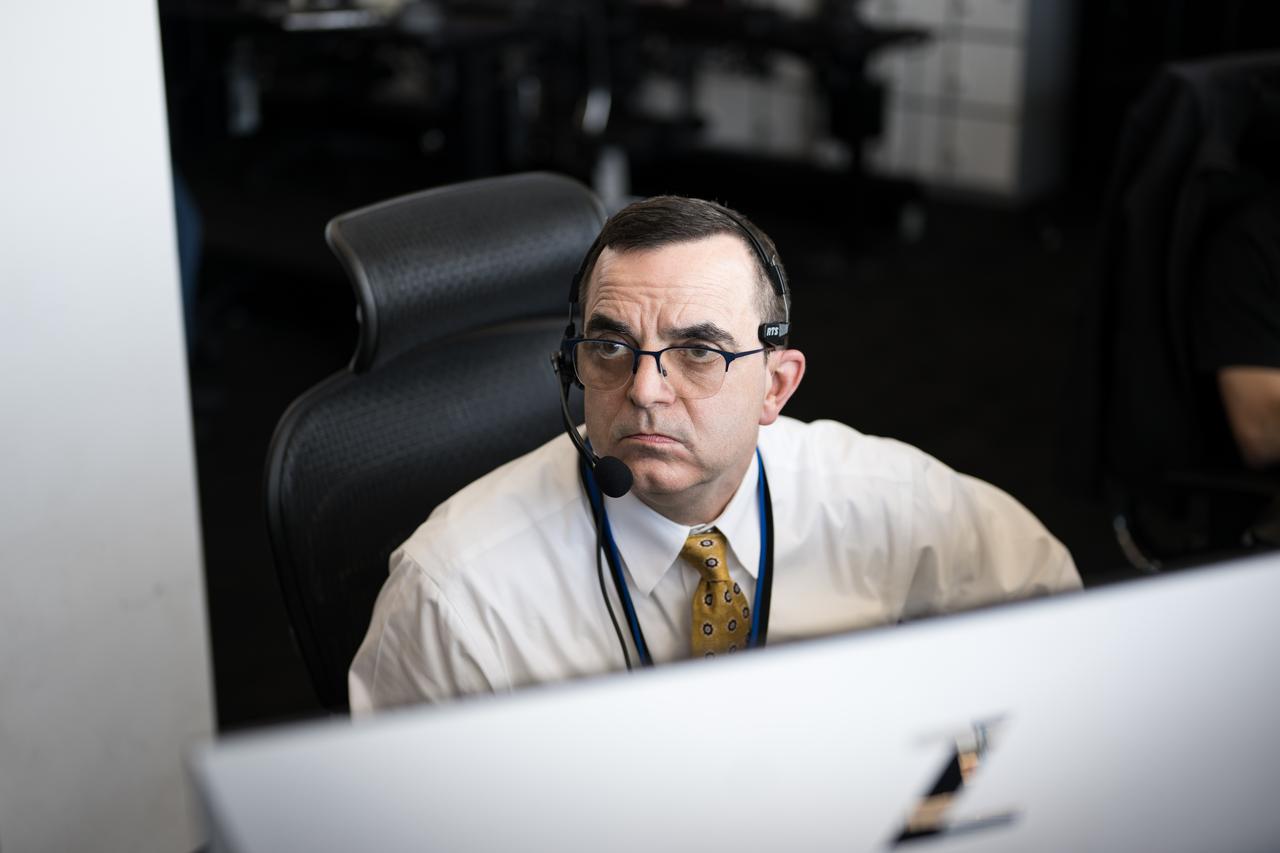
Dr. J.D. Polk, NASA's chief health and medical officer, monitors the countdown during a dress rehearsal in preparation for the launch of a SpaceX Falcon 9 rocket carrying the company's Dragon spacecraft on NASA’s SpaceX Crew-10 mission with NASA astronauts Anne McClain and Nichole Ayers, JAXA (Japan Aerospace Exploration Agency) astronaut Takuya Onishi, and Roscosmos cosmonaut Kirill Peskov onboard, Sunday, March 9, 2025, in the control room of SpaceX’s HangarX at NASA’s Kennedy Space Center in Florida. NASA’s SpaceX Crew-10 mission is the tenth crew rotation mission of the SpaceX Dragon spacecraft and Falcon 9 rocket to the International Space Station as part of the agency’s Commercial Crew Program. McClain, Ayers, Onishi, and Peskov are scheduled to launch at 7:48 p.m. EDT on Wednesday, March 12, from Launch Complex 39A at the NASA's Kennedy Space Center. Photo Credit: (NASA/Aubrey Gemignani)
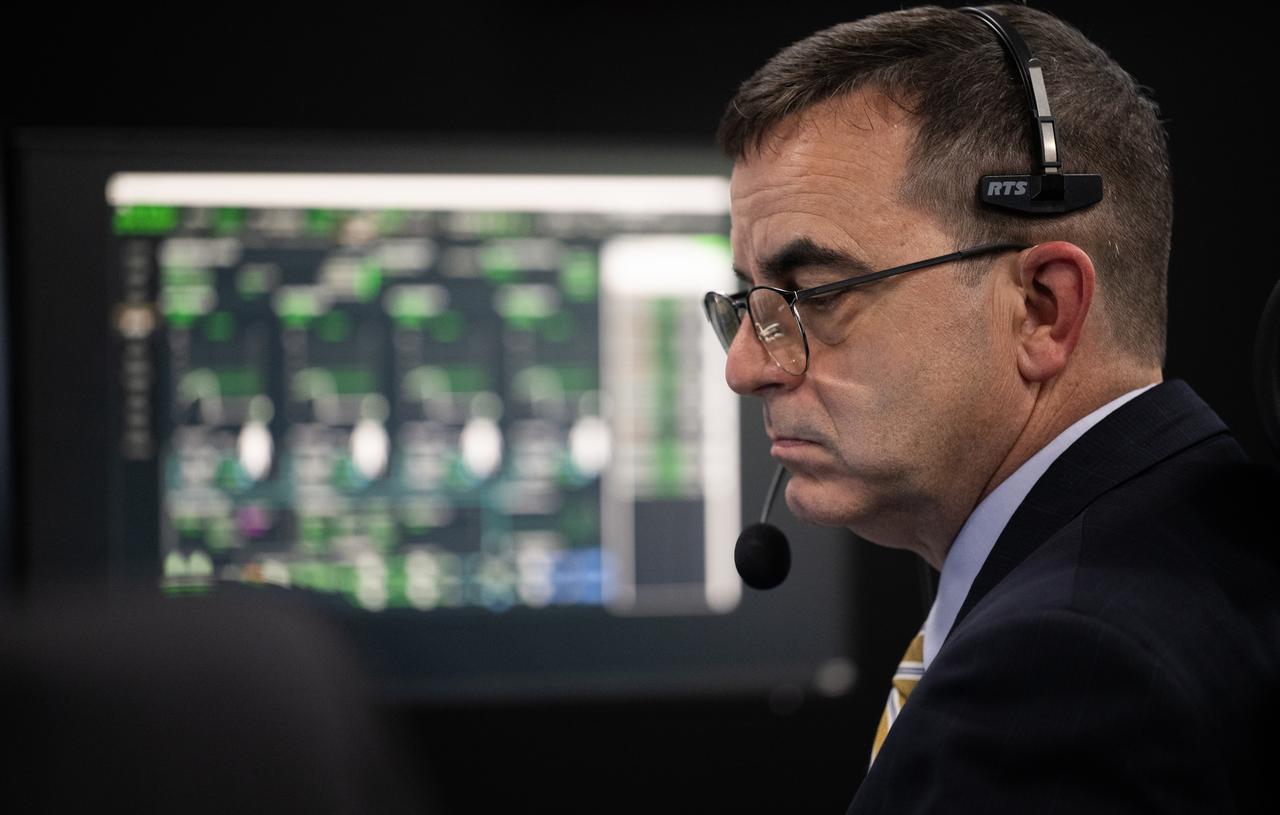
Dr. J.D. Polk, NASA’s Chief Health and Medical Officer, monitors the countdown of the launch of a SpaceX Falcon 9 rocket carrying the company's Dragon spacecraft on NASA’s SpaceX Crew-7 mission with NASA astronaut Jasmin Moghbeli, ESA (European Space Agency) astronaut Andreas Mogensen, Japan Aerospace Exploration Agency (JAXA) astronaut Satoshi Furukawa, and Roscosmos cosmonaut Konstantin Borisov onboard, Saturday, Aug. 26, 2023, in SpaceX’s Launch and Landing Control Center in HangerX at NASA’s Kennedy Space Center in Florida. NASA’s SpaceX Crew-7 mission is the first crew rotation mission of the SpaceX Dragon spacecraft and Falcon 9 rocket to the International Space Station as part of the agency’s Commercial Crew Program. Moghbeli, Mogensen, Furukawa, and Borisov launched at 3:27 a.m. EDT from Launch Complex 39A at the Kennedy Space Center. Photo Credit: (NASA/Joel Kowsky)
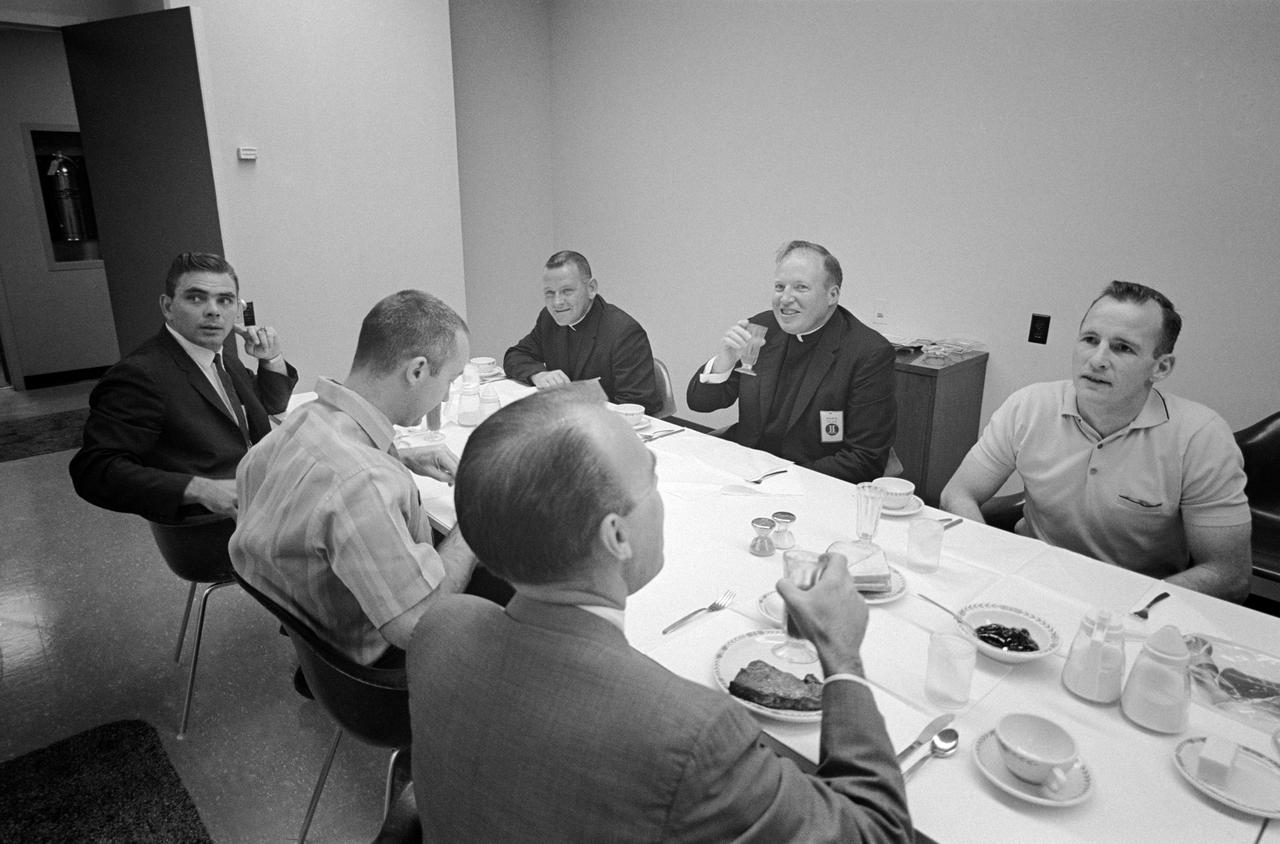
S65-19600 (3 June 1965) --- The prime crew for the Gemini-Titan 4 mission have an early morning breakfast prior to their historic flight which was launched at 10:16 a.m. (EST) on June 3, 1965. Shown here seated around the table (clockwise starting front center) are Dr. D. Owens Coons, chief, MSC Center Medical Office; astronaut James A. McDivitt, GT-4 command pilot; Dr. Eugene F. Tubbs, Kennedy Space Center; Rt. Rev. James Heiliky, McDivitt's priest at Cocoa Beach, Florida; Msgr. Irvine J. Nugent and astronaut Edward H. White II, GT-4 pilot. The group had a breakfast of tomato juice, broiled sirloin steak, poached eggs, toast, strawberry gelatin and coffee.
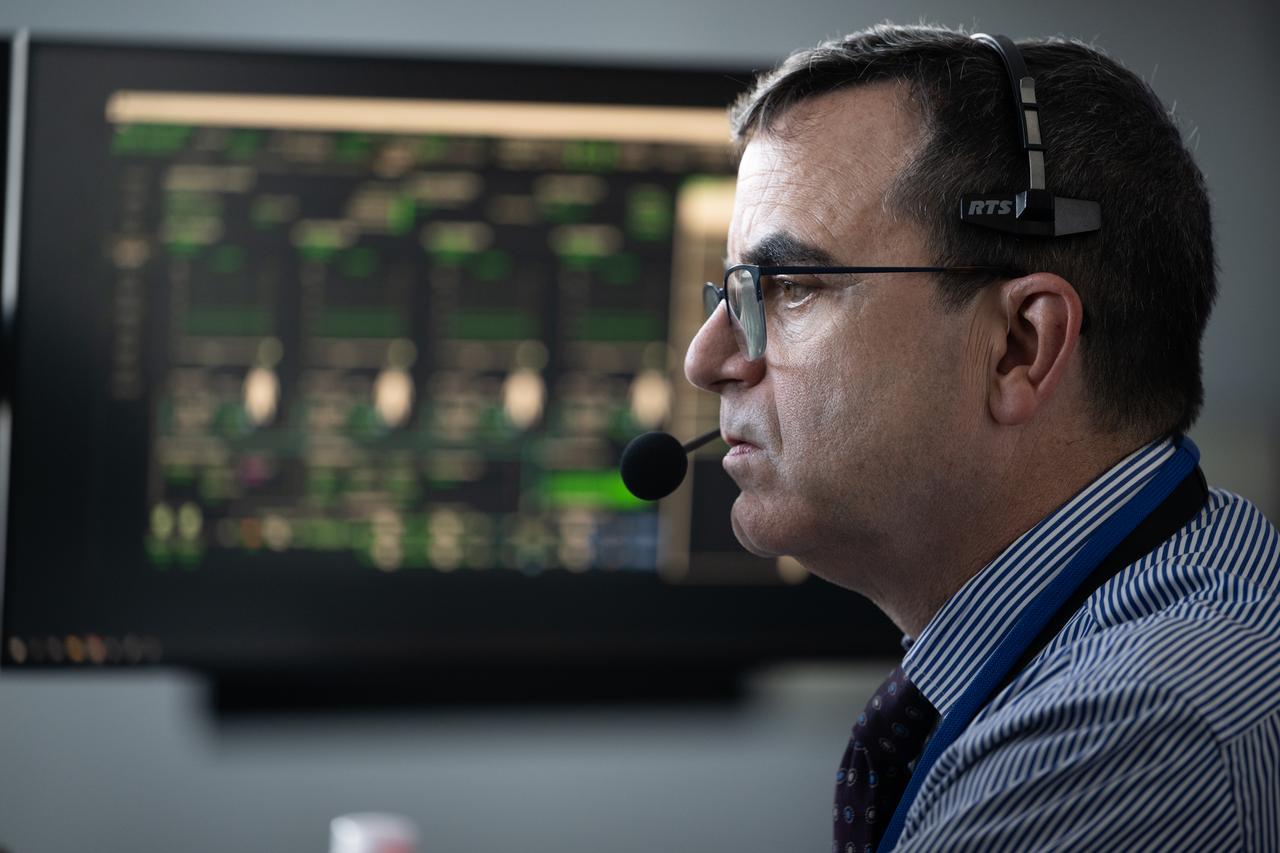
Dr. J.D. Polk, NASA's Chief Health and Medical Officer, monitors the countdown of the launch of a SpaceX Falcon 9 rocket carrying the company's Dragon spacecraft on NASA’s SpaceX Crew-11 mission with NASA astronauts Zena Cardman, Mike Fincke, JAXA (Japan Aerospace Exploration Agency) astronaut Kimiya Yui, and Roscosmos cosmonaut Oleg Platonov onboard, Friday, Aug. 1, 2025, in the control center of SpaceX’s HangarX at NASA’s Kennedy Space Center in Florida. NASA’s SpaceX Crew-11 mission is the eleventh crew rotation mission of the SpaceX Dragon spacecraft and Falcon 9 rocket to the International Space Station as part of the agency’s Commercial Crew Program. Cardman, Fincke, Yui, Platonov launched at 11:43 a.m. EDT, from Launch Complex 39A at the NASA's Kennedy Space Center. Photo Credit: (NASA/Joel Kowsky)
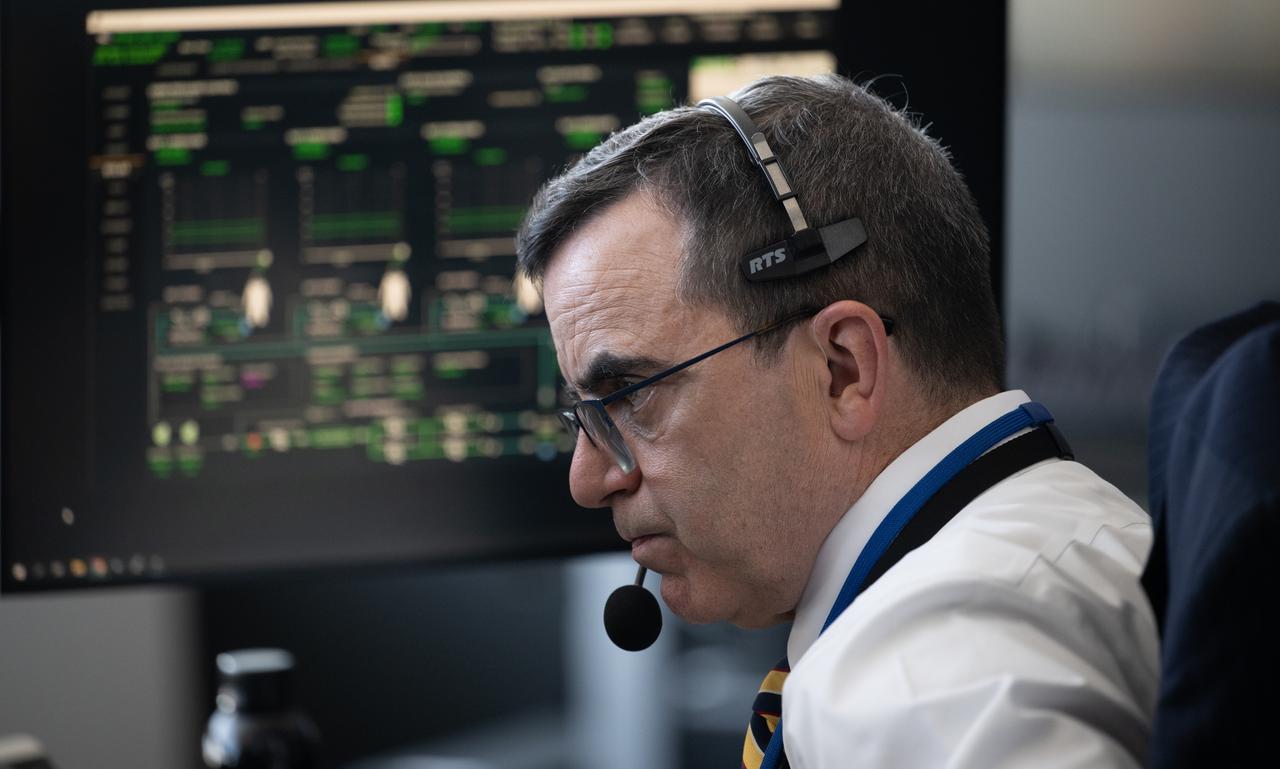
Dr. J.D. Polk, NASA's Chief Health and Medical Officer, monitors the countdown of a launch attempt of a SpaceX Falcon 9 rocket carrying the company's Dragon spacecraft on NASA’s SpaceX Crew-11 mission with NASA astronauts Zena Cardman, Mike Fincke, JAXA (Japan Aerospace Exploration Agency) astronaut Kimiya Yui, and Roscosmos cosmonaut Oleg Platonov onboard, Thursday, July 31, 2025, in the control center of SpaceX’s HangarX at NASA’s Kennedy Space Center in Florida. NASA’s SpaceX Crew-11 mission is the eleventh crew rotation mission of the SpaceX Dragon spacecraft and Falcon 9 rocket to the International Space Station as part of the agency’s Commercial Crew Program. Today’s launch of Cardman, Fincke, Yui, Platonov was scrubbed due to weather and is now scheduled for 11:43 a.m. EDT on Friday, August 1, from Launch Complex 39A at the NASA's Kennedy Space Center. Photo Credit: (NASA/Joel Kowsky)
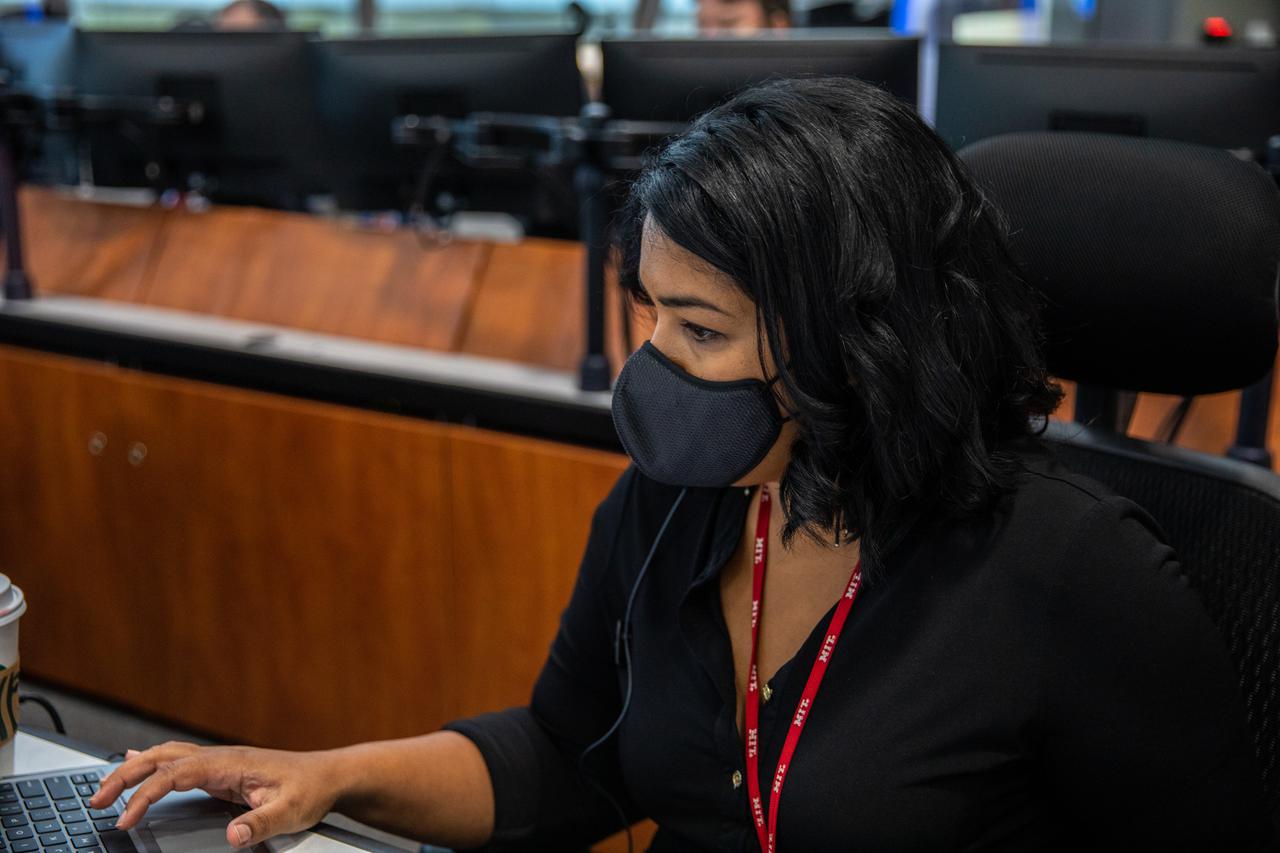
Dr. Sharmi Watkins, Artemis I deputy chief medical officer, participates in the 11th terminal countdown simulation for the Artemis I launch inside Kennedy Space Center’s Launch Control Center on Oct. 14, 2021. The event marked the first time members of NASA’s mission management team, launch team, and contractor Jacobs conducted the simulation together. During Artemis I, the agency’s Orion spacecraft will lift off from Kennedy aboard NASA’s most powerful rocket – the Space Launch System – to fly farther than any spacecraft built for humans has ever flown. Through NASA’s Artemis missions, the agency, along with commercial and international partners, will establish a sustainable human presence on the Moon to prepare for missions to Mars.
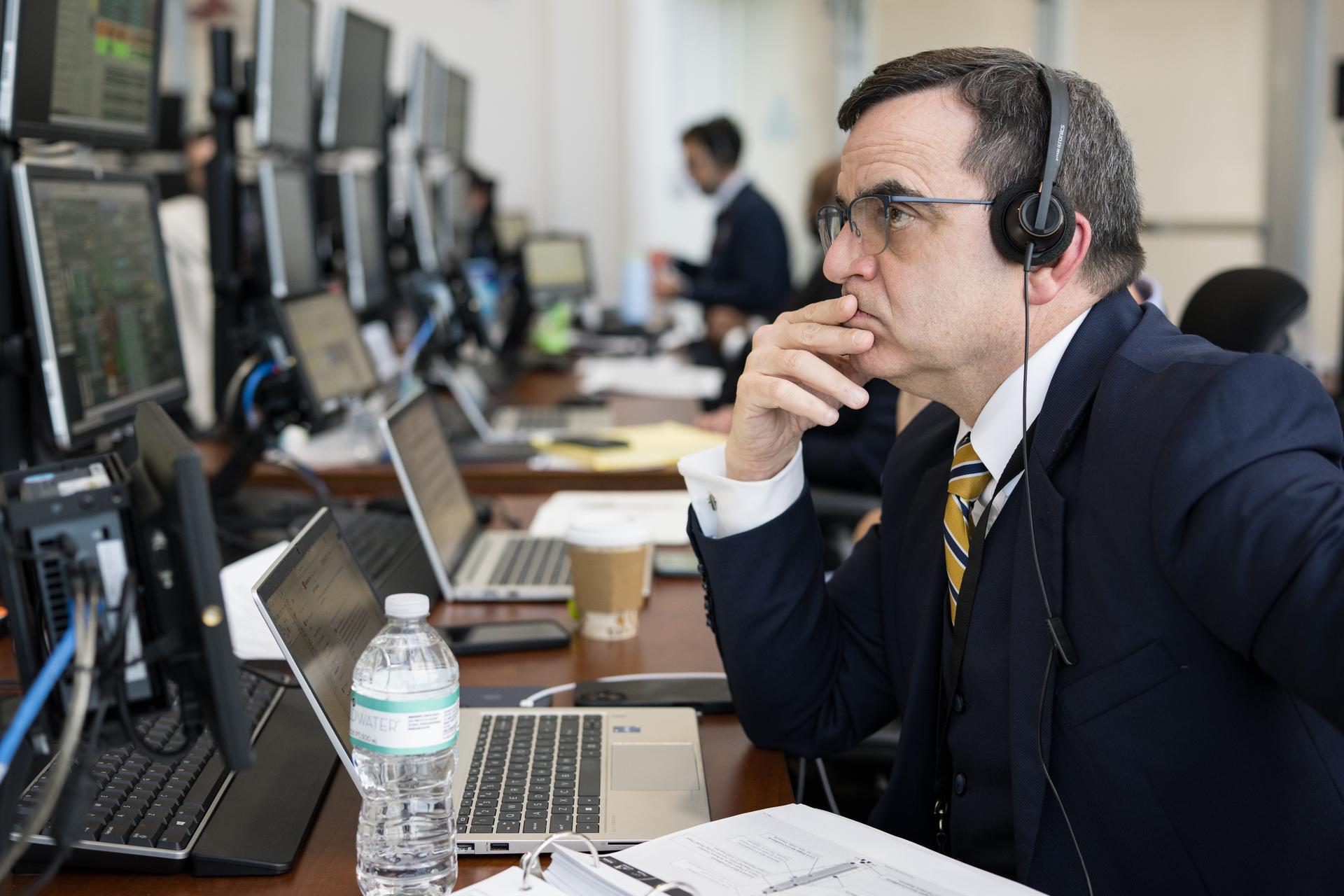
NASA Chief Health and Medical Officer Dr. J.D. Polk monitors the countdown of the launch of NASA’s Space Launch System (SLS) rocket and Orion spacecraft with NASA astronauts Reid Wiseman, commander; Victor Glover, pilot; Christina Koch, mission specialist; and CSA (Canadian Space Agency) astronaut Jeremy Hansen, mission specialist onboard on the Artemis II mission from Firing Room 2 of the Rocco A. Petrone Launch Control Center, Wednesday, April 1, 2026, at NASA’s Kennedy Space Center in Florida. NASA’s Artemis II mission will take Wiseman, Glover, Koch, and Hansen on a 10-day journey around the Moon and back aboard SLS rocket and Orion spacecraft from Launch Complex 39B. The quartet launched at 6:35pm EDT. Photo Credit: (NASA/Aubrey Gemignani)
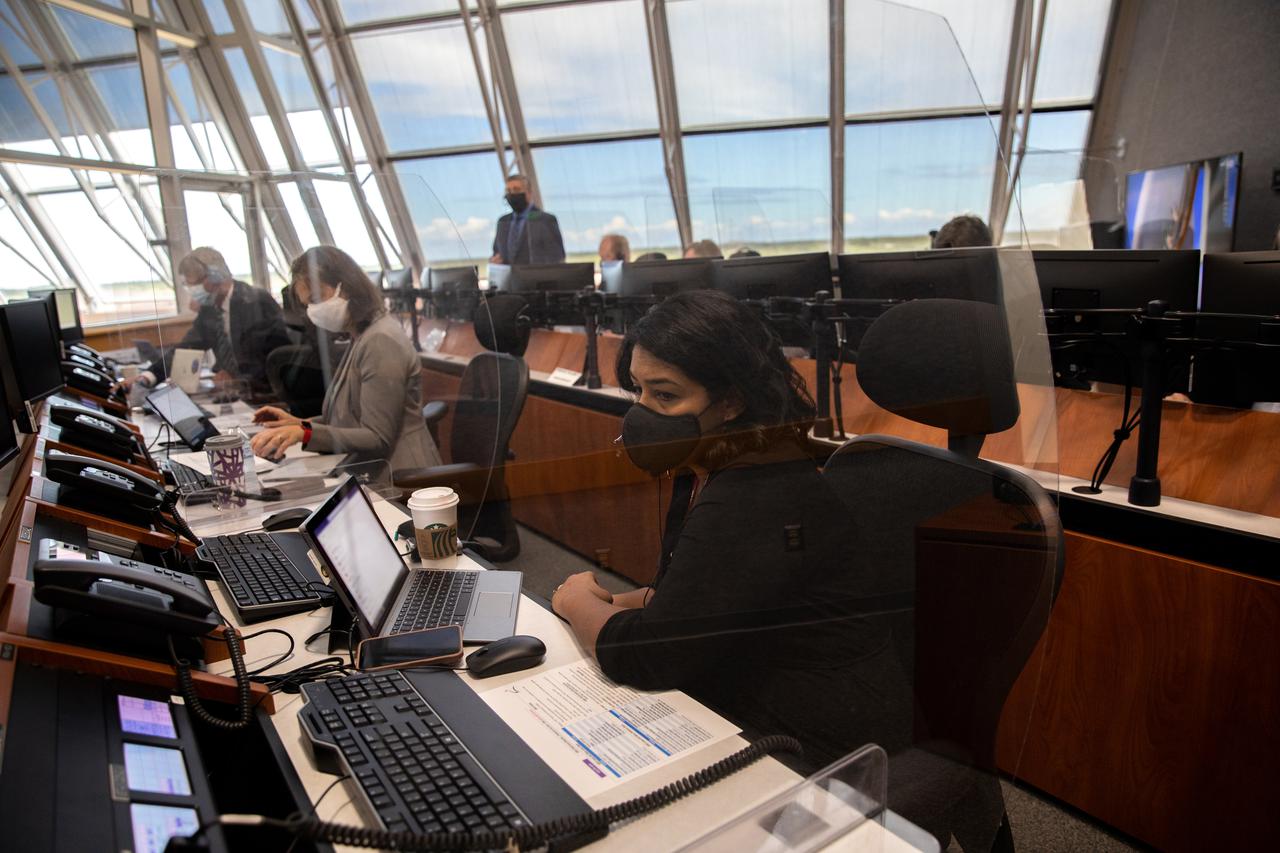
Dr. Sharmi Watkins, Artemis I deputy chief medical officer, participates in the 11th terminal countdown simulation for the Artemis I launch inside Kennedy Space Center’s Launch Control Center on Oct. 14, 2021. The event marked the first time members of NASA’s mission management team, launch team, and contractor Jacobs conducted the simulation together. During Artemis I, the agency’s Orion spacecraft will lift off from Kennedy aboard NASA’s most powerful rocket – the Space Launch System – to fly farther than any spacecraft built for humans has ever flown. Through NASA’s Artemis missions, the agency, along with commercial and international partners, will establish a sustainable human presence on the Moon to prepare for missions to Mars.
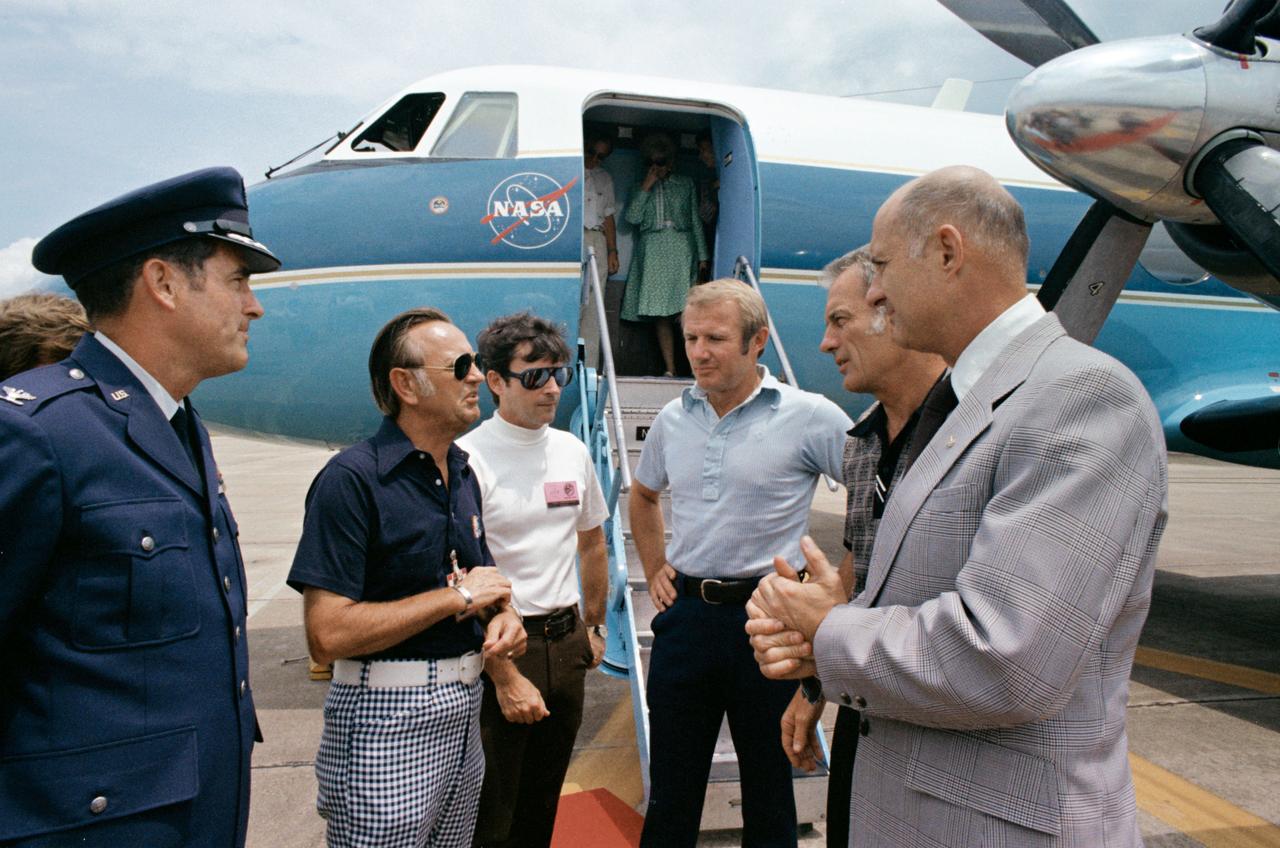
S75-30109 (10 Aug. 1975) --- Dr. Christopher C. Kraft Jr. (second from left), JSC Director, chats with the three ASTP crewmen on the runway at Ellington Air Force Base after their arrival home from the Pacific recovery area. The six men are, left to right, Col. Donald Robinson, EAFB commander; Dr. Kraft; astronaut John W. Young, Chief of the Astronaut Office at JSC; astronaut Vance D. Brand, command module pilot of the crew; astronaut Donald K. Slayton, docking module pilot of the crew; and astronaut Thomas P. Stafford, crew commander. This picture was taken prior to the official welcoming ceremonies. The crewmen?s wives are still aboard the plane. Medical treatment in Hawaii delayed the return of the crew to JSC. They suffered a pulmonary irritation from inhalation of a toxic gas minutes before splashdown on July 24, 1975.
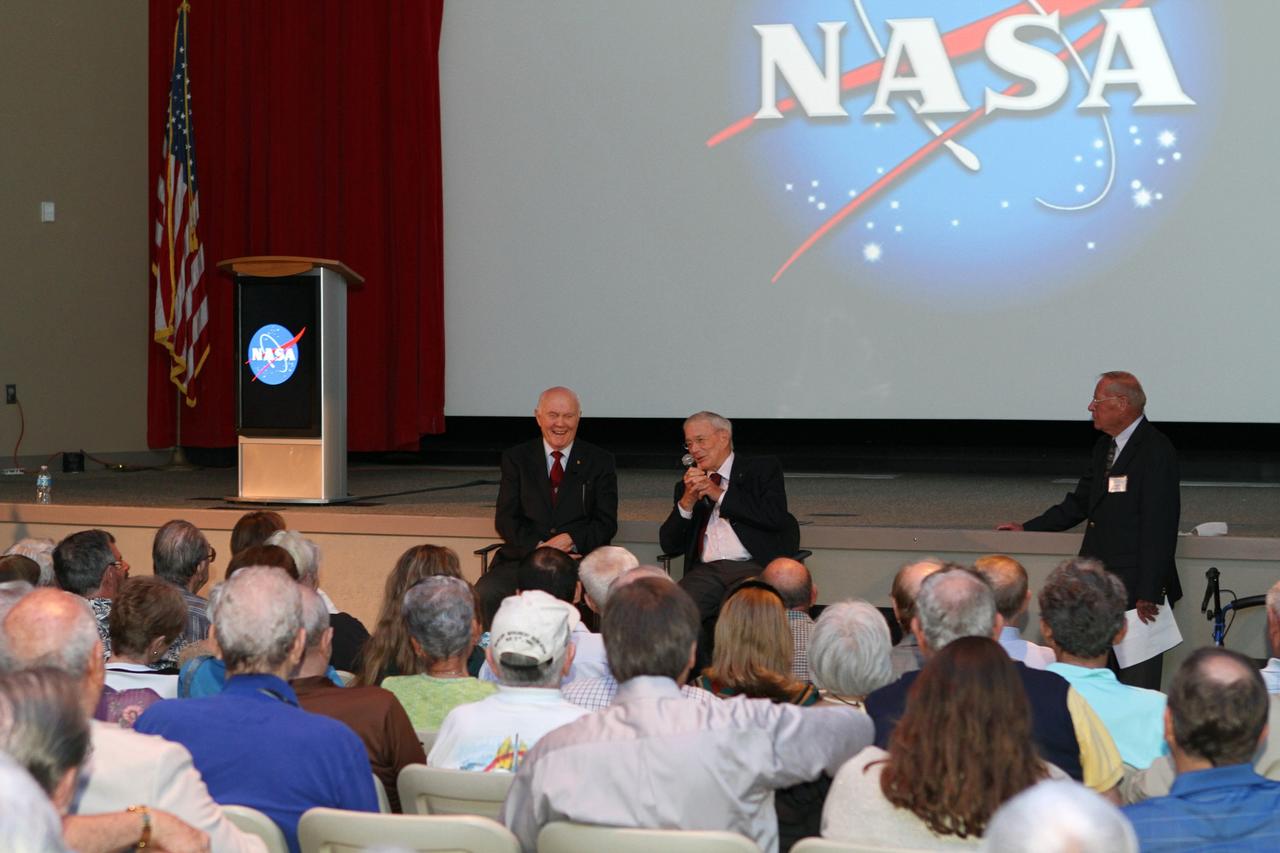
CAPE CANAVERAL, Fla. -- Mercury astronauts, John Glenn, left, and Scott Carpenter, talk to Mercury Project workers and other guests in the Astronaut Encounter Theater at the Kennedy Space Center Visitor Complex in Florida. The pair participated in 50th anniversary events at the launch site of Glenn's first orbital flight aboard NASA's Friendship 7 capsule, which launched Feb. 20, 1962, aboard an Atlas rocket. At right, is Jack King, who was chief of Kennedy's Public Information Office during Project Mercury. Glenn's launch aboard an Atlas rocket took with it the hopes of an entire nation and ushered in a new era of space travel that eventually led to Americans walking on the moon by the end of the 1960s. Glenn soon was followed into orbit by Carpenter, Walter Schirra and Gordon Cooper. Their fellow Mercury astronauts Alan Shepard and Virgil "Gus" Grissom flew earlier suborbital flights. Deke Slayton, a member of NASA's original Mercury 7 astronauts, was grounded by a medical condition until the Apollo-Soyuz Test Project in 1975. Photo credit: Kim Shiflett
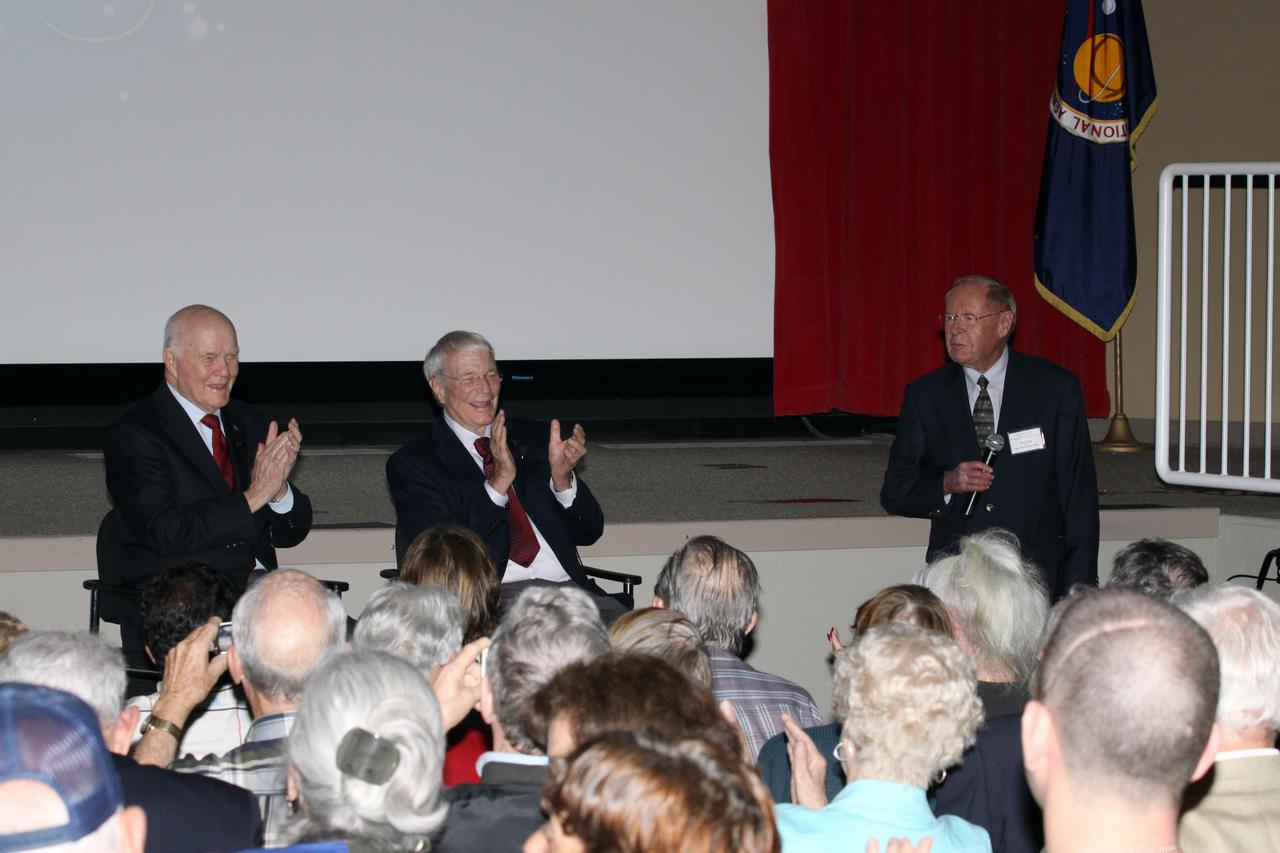
CAPE CANAVERAL, Fla. -- Mercury astronauts, John Glenn, left, and Scott Carpenter, talk to Mercury Project workers and other guests in the Astronaut Encounter Theater at the Kennedy Space Center Visitor Complex in Florida. The pair participated in 50th anniversary events at the launch site of Glenn's first orbital flight aboard NASA's Friendship 7 capsule, which launched Feb. 20, 1962, aboard an Atlas rocket. At right, is Jack King, who was chief of Kennedy's Public Information Office during Project Mercury. Glenn's launch aboard an Atlas rocket took with it the hopes of an entire nation and ushered in a new era of space travel that eventually led to Americans walking on the moon by the end of the 1960s. Glenn soon was followed into orbit by Carpenter, Walter Schirra and Gordon Cooper. Their fellow Mercury astronauts Alan Shepard and Virgil "Gus" Grissom flew earlier suborbital flights. Deke Slayton, a member of NASA's original Mercury 7 astronauts, was grounded by a medical condition until the Apollo-Soyuz Test Project in 1975. Photo credit: Kim Shiflett
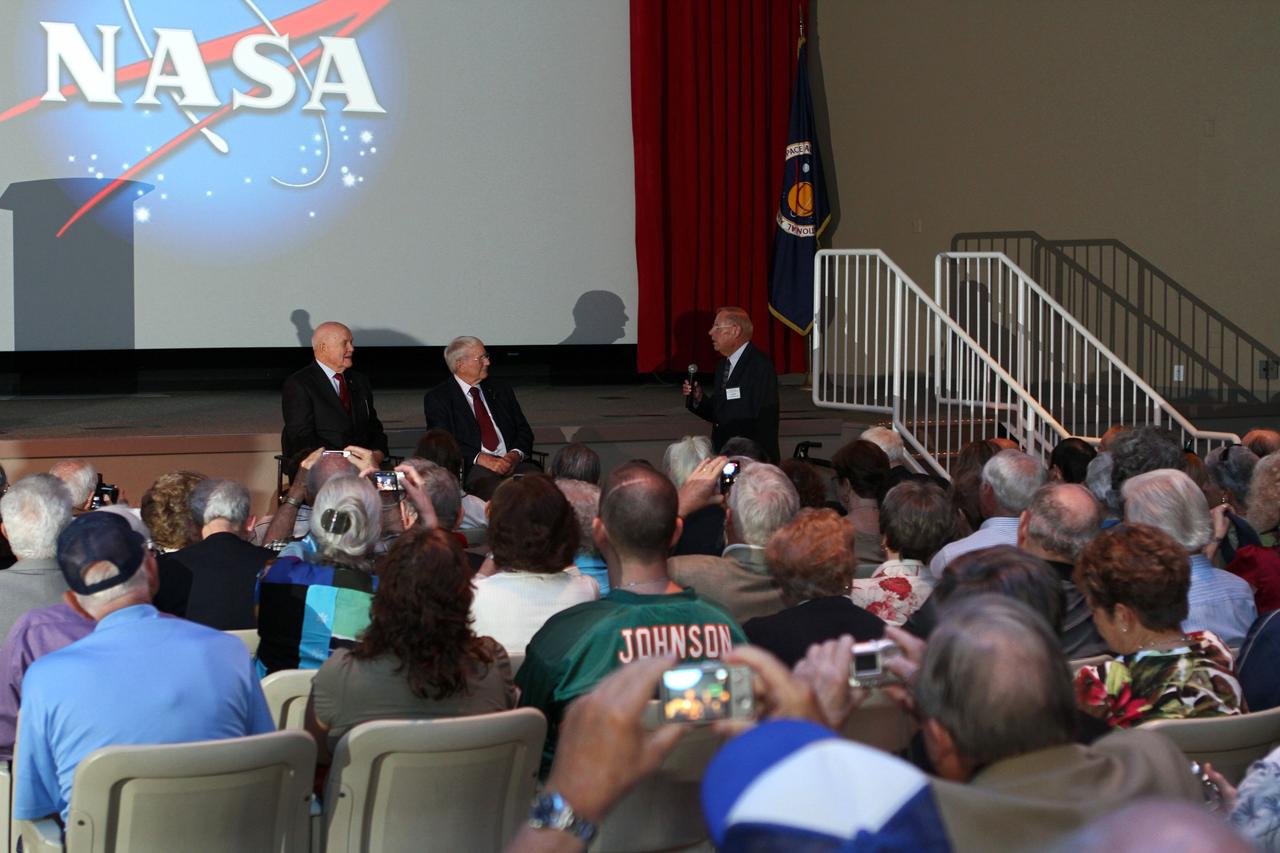
CAPE CANAVERAL, Fla. -- Mercury astronauts, John Glenn, left, and Scott Carpenter, talk to Mercury Project workers and other guests in the Astronaut Encounter Theater at the Kennedy Space Center Visitor Complex in Florida. The pair participated in 50th anniversary events at the launch site of Glenn's first orbital flight aboard NASA's Friendship 7 capsule, which launched Feb. 20, 1962, aboard an Atlas rocket. At right, is Jack King, who was chief of Kennedy's Public Information Office during Project Mercury. Glenn's launch aboard an Atlas rocket took with it the hopes of an entire nation and ushered in a new era of space travel that eventually led to Americans walking on the moon by the end of the 1960s. Glenn soon was followed into orbit by Carpenter, Walter Schirra and Gordon Cooper. Their fellow Mercury astronauts Alan Shepard and Virgil "Gus" Grissom flew earlier suborbital flights. Deke Slayton, a member of NASA's original Mercury 7 astronauts, was grounded by a medical condition until the Apollo-Soyuz Test Project in 1975. Photo credit: Kim Shiflett
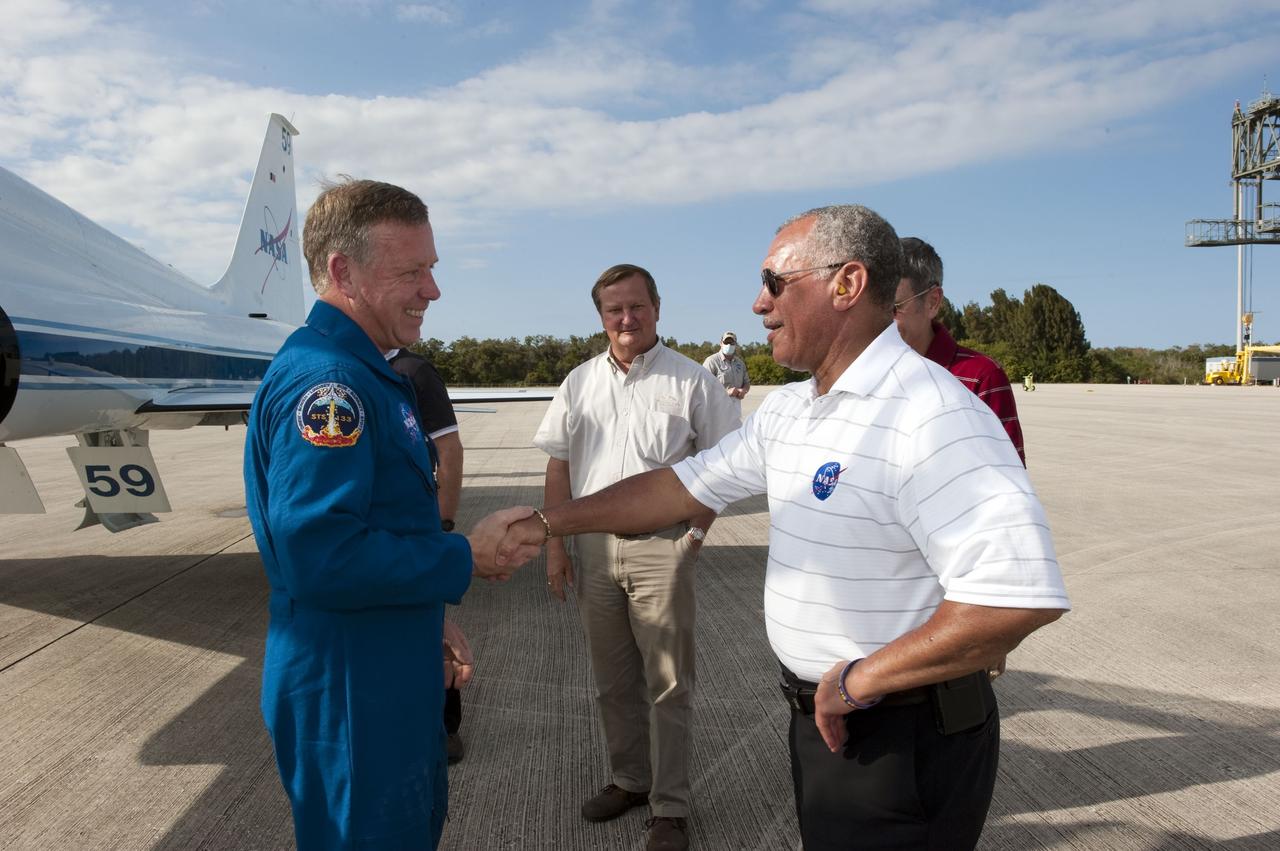
CAPE CANAVERAL, Fla. -- At NASA's Kennedy Space Center in Florida, space shuttle Discovery's STS-133 Commander Steve Lindsey greets NASA Administrator Charlie Bolden on the Shuttle Landing Facility runway after arriving aboard a T-38 jet. Also on hand to greet the crew were Jerry Ross, chief of the Vehicle Integration Test Office, Mike Leinbach, shuttle launch director, center, and Kennedy Center Director Bob Cabana. In the days leading up to their launch to the International Space Station, Lindsey and his crew members will check the fit of their launch-and-entry suits, review launch-day procedures, receive weather briefings and remain medically quarantined to prevent sickness. This will be the second launch attempt for Discovery's crew, following a scrub in November 2010 due to a hydrogen gas leak at the ground umbilical carrier plate (GUCP) as well as modifications to the external fuel tank's intertank support beams, called stringers. Scheduled to lift off Feb. 24 at 4:50 p.m. EST, Discovery and its crew will deliver the Permanent Multipurpose Module, packed with supplies and critical spare parts, as well as Robonaut 2, the dexterous humanoid astronaut helper, to the orbiting outpost. For more information on the STS-133 mission, visit www.nasa.gov/mission_pages/shuttle/shuttlemissions/sts133/. Photo credit: NASA/Kim Shiflett
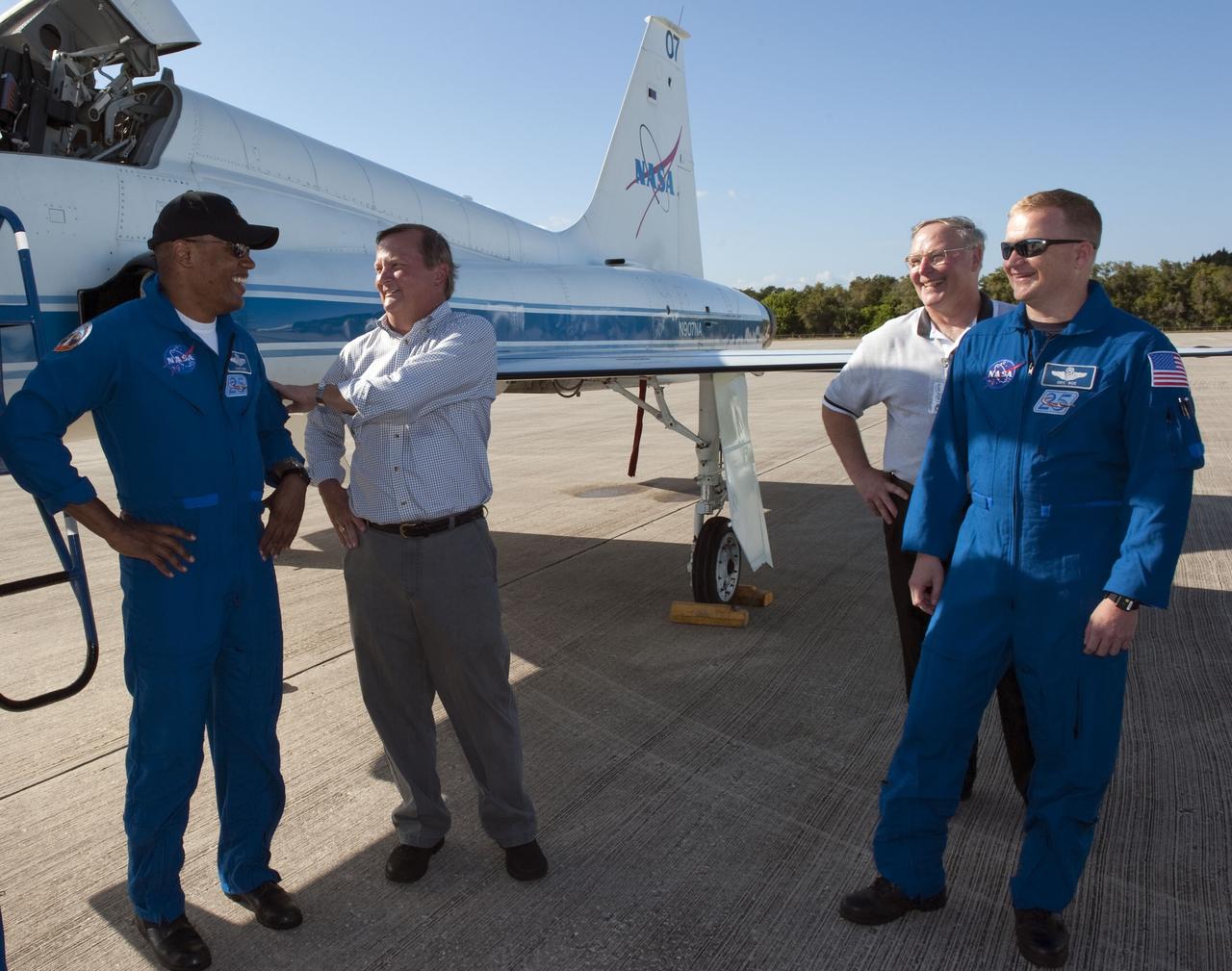
CAPE CANAVERAL, Fla. -- At NASA's Kennedy Space Center in Florida, space shuttle Discovery's STS-133 Mission Specialist Alvin Drew, left, jokes around with Shuttle Launch Director Mike Leinbach on the Shuttle Landing Facility runway after arriving in a T-38 training jet. Looking on are Chief of the Vehicle Integration Test Office at Johnson Space Center Jerry Ross and STS-133 Pilot Eric Boe. In the days leading up to their launch to the International Space Station, Drew and his crew members will check the fit of their launch-and-entry suits, review launch-day procedures, receive weather briefings and remain medically quarantined to prevent sickness. Scheduled to lift off Nov. 1 at 4:40 p.m., Discovery and crew will deliver the Permanent Multipurpose Module, packed with supplies and critical spare parts, as well as Robonaut 2, the dexterous humanoid astronaut helper, to the orbiting outpost. For more information on the STS-133 mission, visit www.nasa.gov/mission_pages/shuttle/shuttlemissions/sts133/. Photo credit: NASA/Kim Shiflett
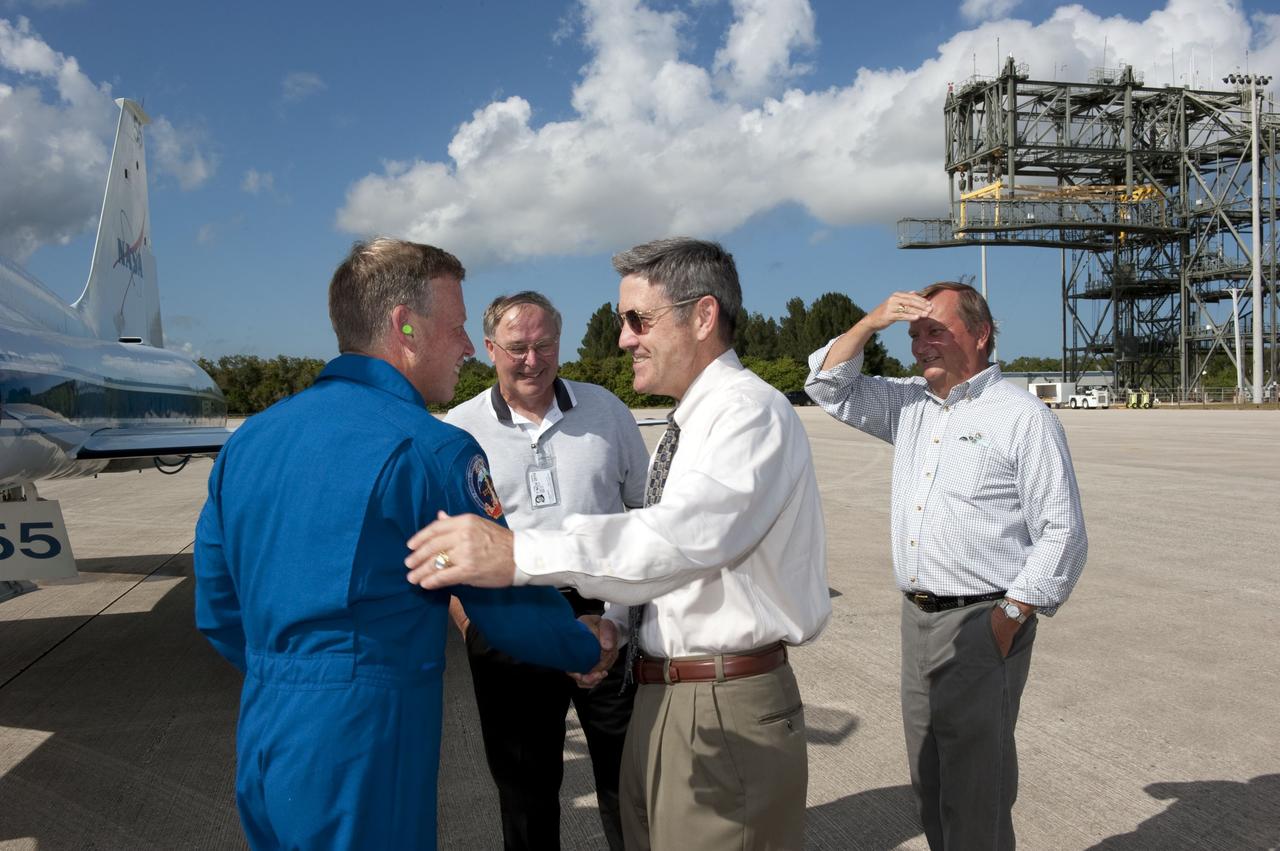
CAPE CANAVERAL, Fla. -- At NASA's Kennedy Space Center in Florida, space shuttle Discovery's STS-133 Commander Steve Lindsey, left, is greeted by Chief of the Vehicle Integration Test Office at Johnson Space Center Jerry Ross, Kennedy's Center Director Bob Cabana and Shuttle Launch Director Mike Leinbach on the Shuttle Landing Facility runway after arriving in a T-38 training jet. In the days leading up to their launch to the International Space Station, Lindsey and his crew members will check the fit of their launch-and-entry suits, review launch-day procedures, receive weather briefings and remain medically quarantined to prevent sickness. Scheduled to lift off Nov. 1 at 4:40 p.m., Discovery and crew will deliver the Permanent Multipurpose Module, packed with supplies and critical spare parts, as well as Robonaut 2, the dexterous humanoid astronaut helper, to the orbiting outpost. For more information on the STS-133 mission, visit www.nasa.gov/mission_pages/shuttle/shuttlemissions/sts133/. Photo credit: NASA/Kim Shiflett
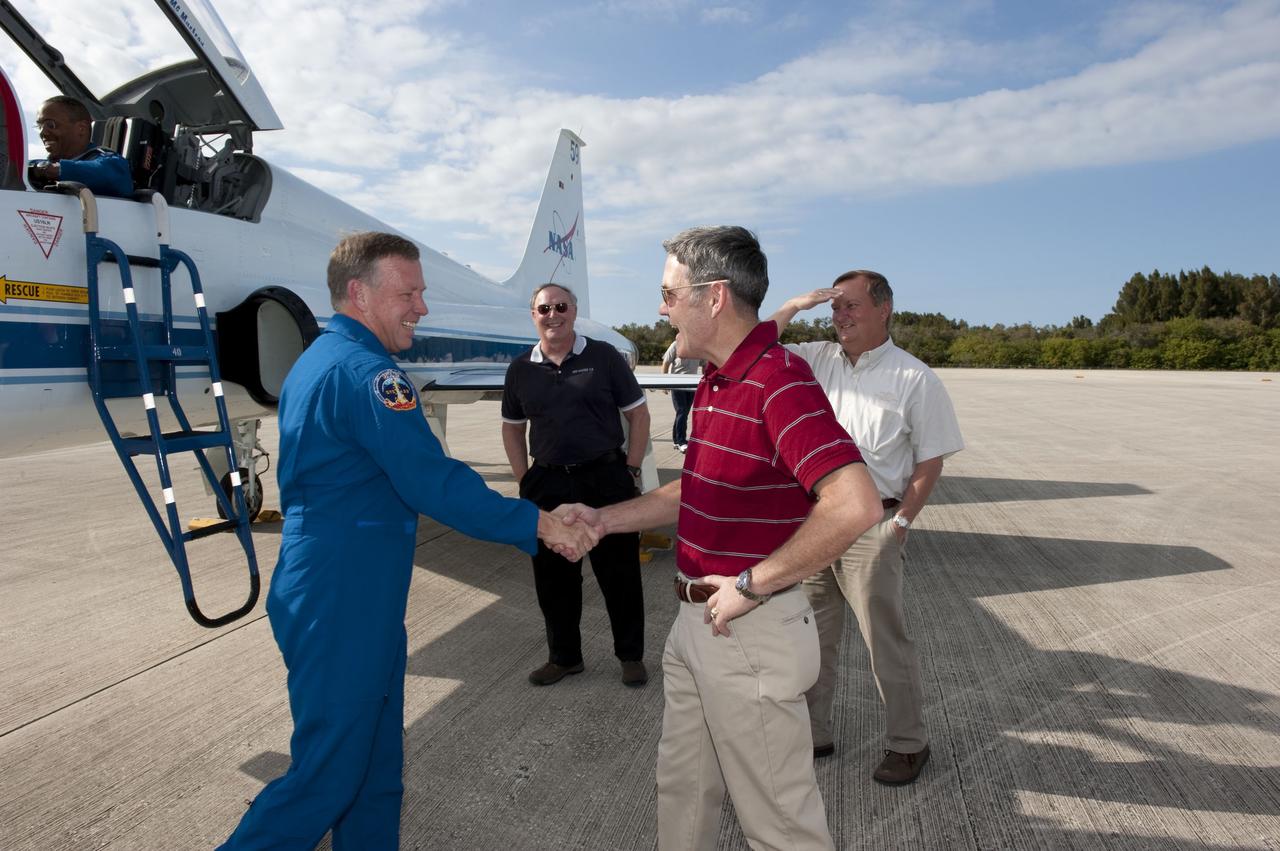
CAPE CANAVERAL, Fla. -- At NASA's Kennedy Space Center in Florida, space shuttle Discovery's STS-133 Commander Steve Lindsey greets Kennedy Center Director Bob Cabana on the Shuttle Landing Facility runway after arriving aboard a T-38 jet. Also on hand to greet the crew were Jerry Ross, chief of the Vehicle Integration Test Office, left, and Mike Leinbach, shuttle launch director. In the days leading up to their launch to the International Space Station, Lindsey and his crew members will check the fit of their launch-and-entry suits, review launch-day procedures, receive weather briefings and remain medically quarantined to prevent sickness. This will be the second launch attempt for Discovery's crew, following a scrub in November 2010 due to a hydrogen gas leak at the ground umbilical carrier plate (GUCP) as well as modifications to the external fuel tank's intertank support beams, called stringers. Scheduled to lift off Feb. 24 at 4:50 p.m. EST, Discovery and its crew will deliver the Permanent Multipurpose Module, packed with supplies and critical spare parts, as well as Robonaut 2, the dexterous humanoid astronaut helper, to the orbiting outpost. For more information on the STS-133 mission, visit www.nasa.gov/mission_pages/shuttle/shuttlemissions/sts133/. Photo credit: NASA/Kim Shiflett
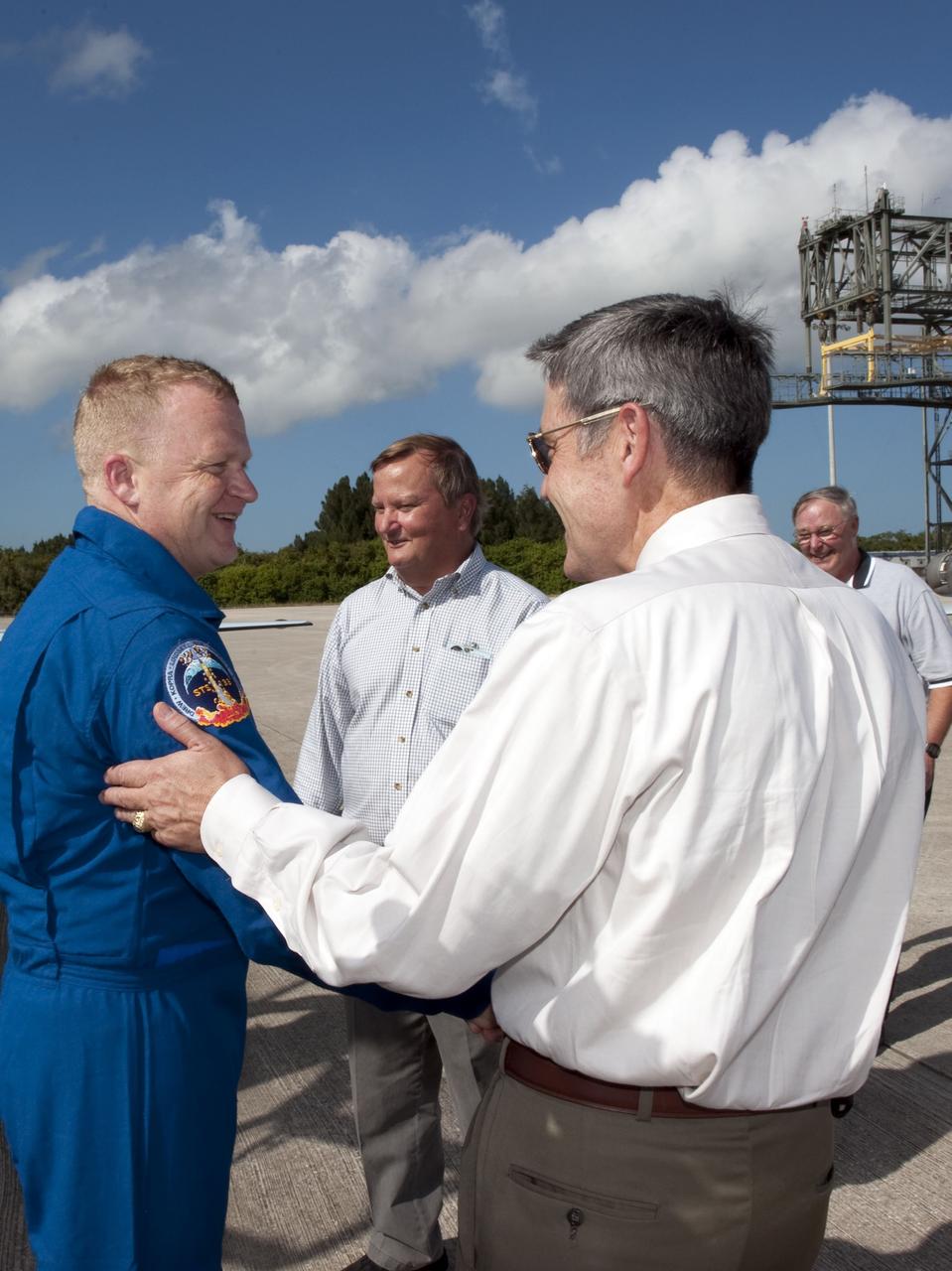
CAPE CANAVERAL, Fla. -- At NASA's Kennedy Space Center in Florida, space shuttle Discovery's STS-133 Pilot Eric Boe, left, is greeted by Shuttle Launch Director Mike Leinbach, Kennedy's Center Director Bob Cabana and Chief of the Vehicle Integration Test Office at Johnson Space Center Jerry Ross on the Shuttle Landing Facility runway after arriving in a T-38 training jet. In the days leading up to their launch to the International Space Station, Boe and his crew members will check the fit of their launch-and-entry suits, review launch-day procedures, receive weather briefings and remain medically quarantined to prevent sickness. Scheduled to lift off Nov. 1 at 4:40 p.m., Discovery and crew will deliver the Permanent Multipurpose Module, packed with supplies and critical spare parts, as well as Robonaut 2, the dexterous humanoid astronaut helper, to the orbiting outpost. For more information on the STS-133 mission, visit www.nasa.gov/mission_pages/shuttle/shuttlemissions/sts133/. Photo credit: NASA/Kim Shiflett