
Judges listen to a presentation during the “Innovation Without Boundaries” event held in the Space Station Processing Facility at Kennedy Space Center in Florida on Thursday, Aug. 2. There were 39 proposals from Kennedy civil servant and contractor employees, featuring a wide range of innovative ideas as part of the Chief Technologist Innovation Call. Presenters had two minutes to highlight their idea, followed by a three-minute question-and-answer period. The judging panel included senior staff, contractors and representatives throughout Kennedy.
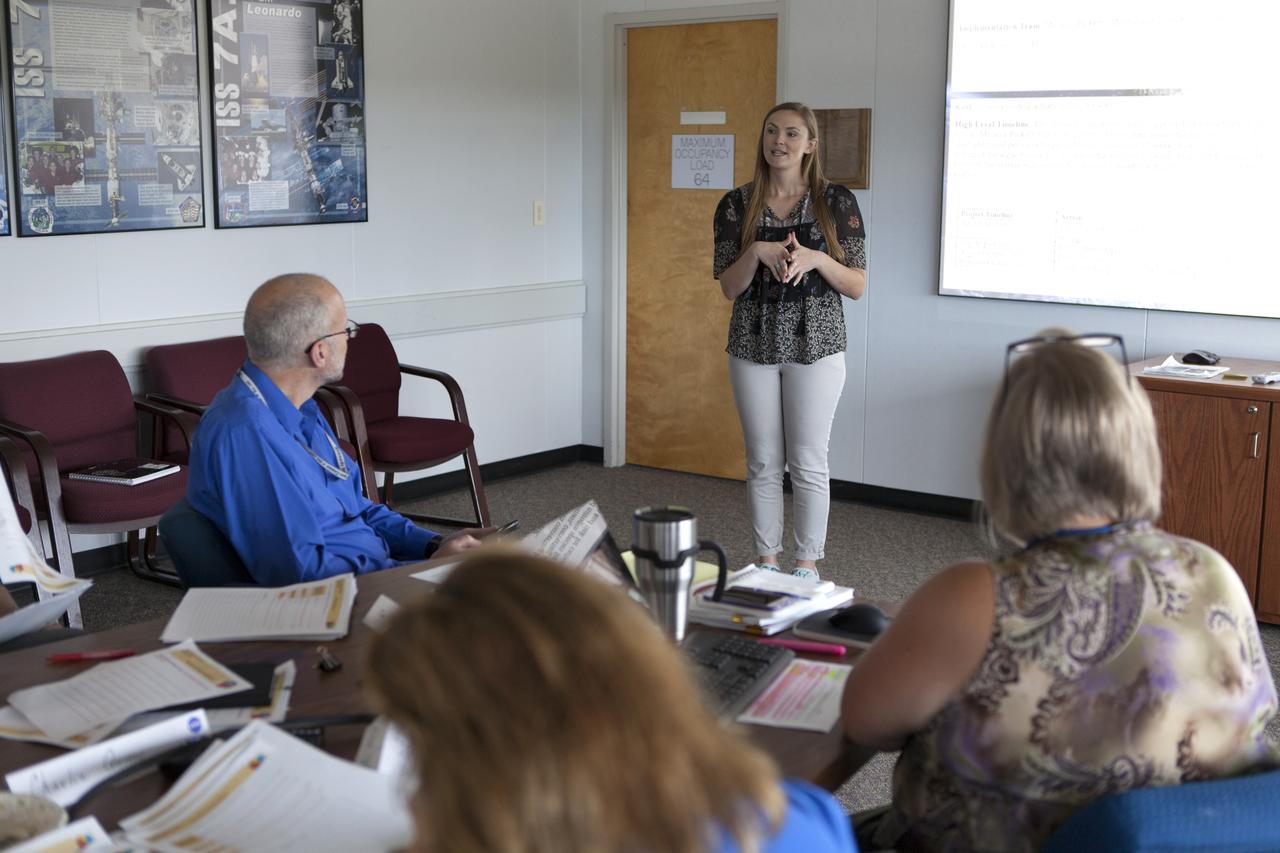
Melanie Pickett, from the Exploration Research and Technology Programs directorate, presents her proposal during the “Innovation Without Boundaries” event held in the Space Station Processing Facility at Kennedy Space Center in Florida on Thursday, Aug. 2. There were 39 proposals featuring a wide range of innovative ideas as part of the Chief Technologist Innovation Call. Presenters had two minutes to highlight their idea, followed by a three-minute question-and-answer period. The judging panel included senior staff, contractors and representatives throughout Kennedy.
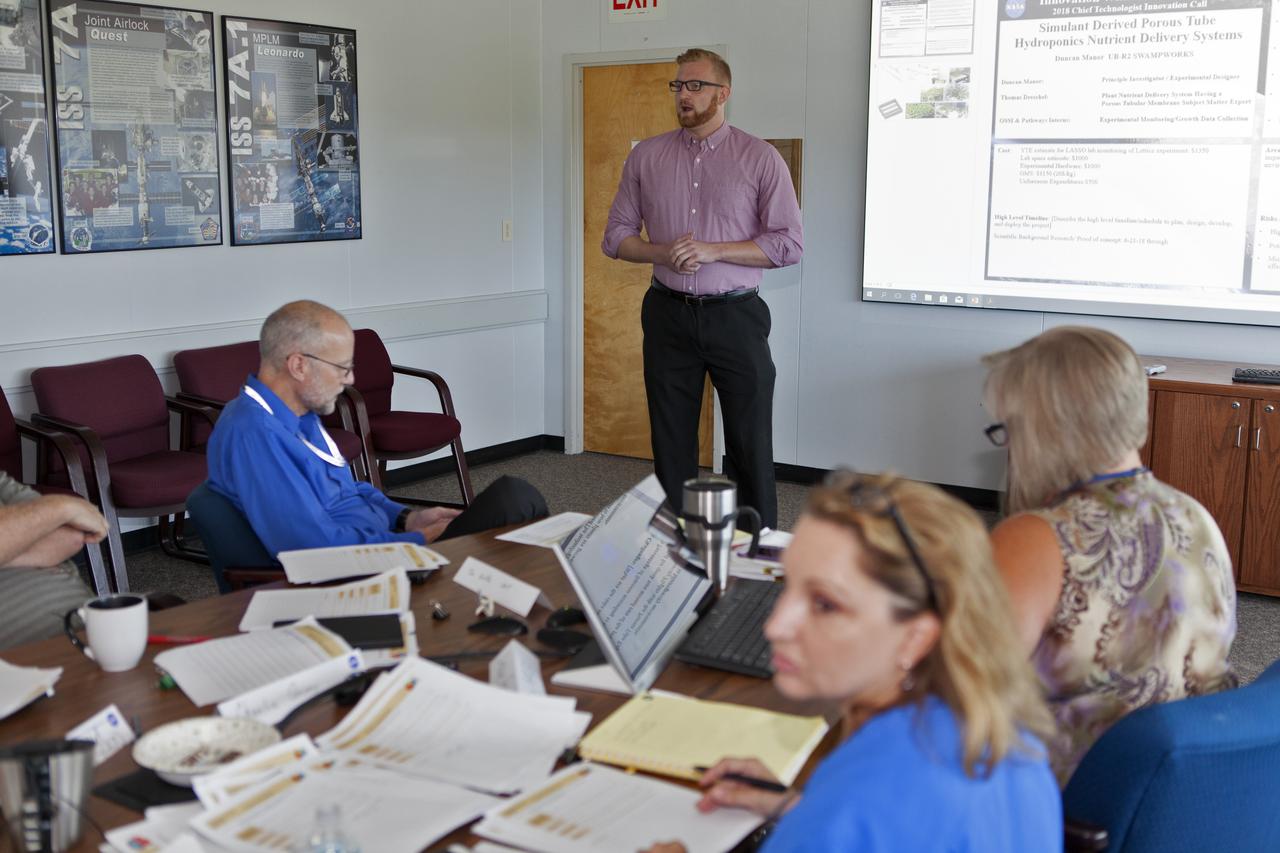
Pathways intern Duncan Manor presents his proposal during an “Innovation Without Boundaries” event held in the Space Station Processing Facility at Kennedy Space Center in Florida on Thursday, Aug. 2. Civil servants and contractors throughout Kennedy participated in the event, which featured 39 proposals as part of the Chief Technologist Innovation Call. Presenters had two minutes to highlight their idea, followed by a three-minute question-and-answer period. The judging panel included senior staff, contractors and representatives throughout the center.
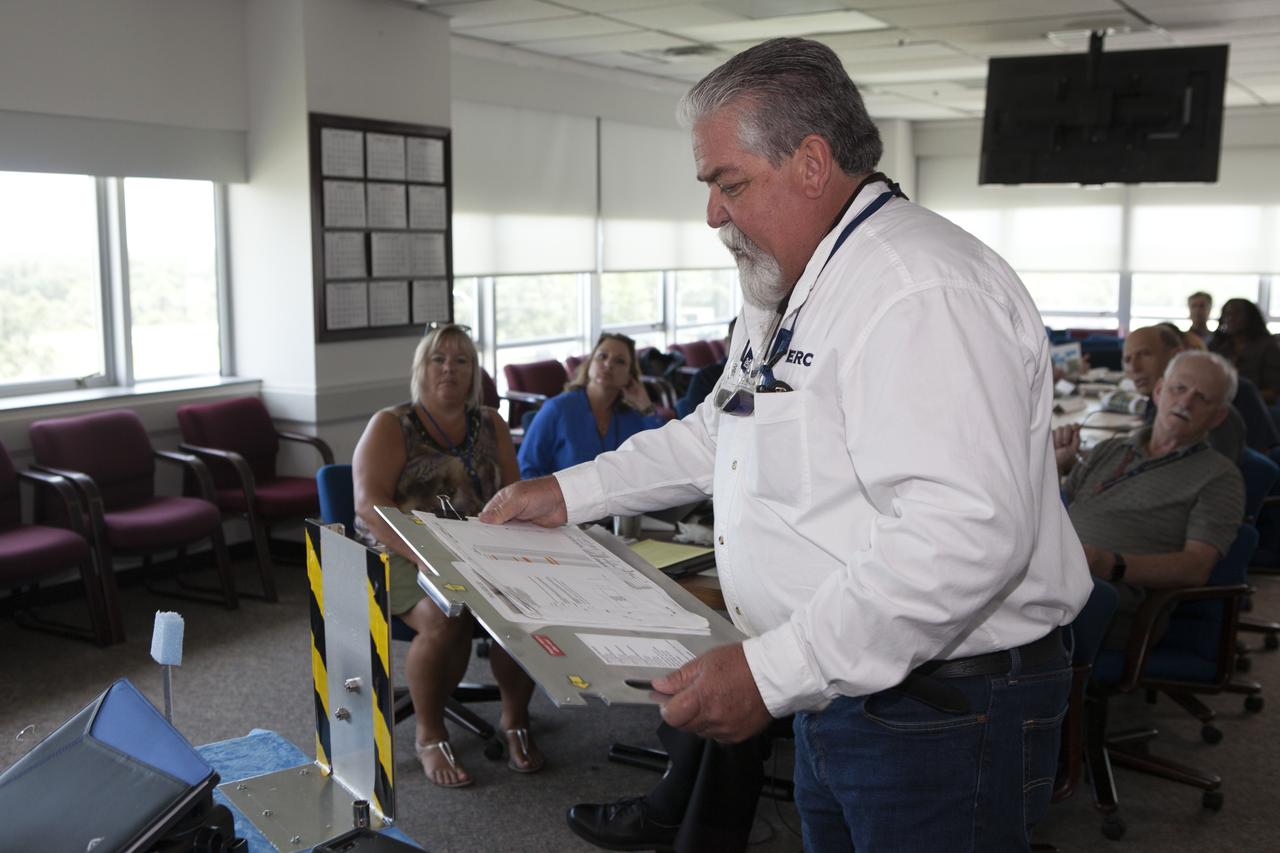
Guy Naylor, an associate engineer on the Test and Operations Support Contract (TOSC), presents his proposal to judges during the “Innovation Without Boundaries” event held in the Space Station Processing Facility at Kennedy Space Center in Florida on Thursday, Aug. 2. Naylor won first place for individual and team projects in the “innovation ideas with little or no associated costs” category. There were 39 proposals featuring a wide range of innovative ideas as part of the Chief Technologist Innovation Call. Presenters had two minutes to highlight their idea, followed by a three-minute question-and-answer period. The judging panel included senior staff, contractors and representatives throughout Kennedy.
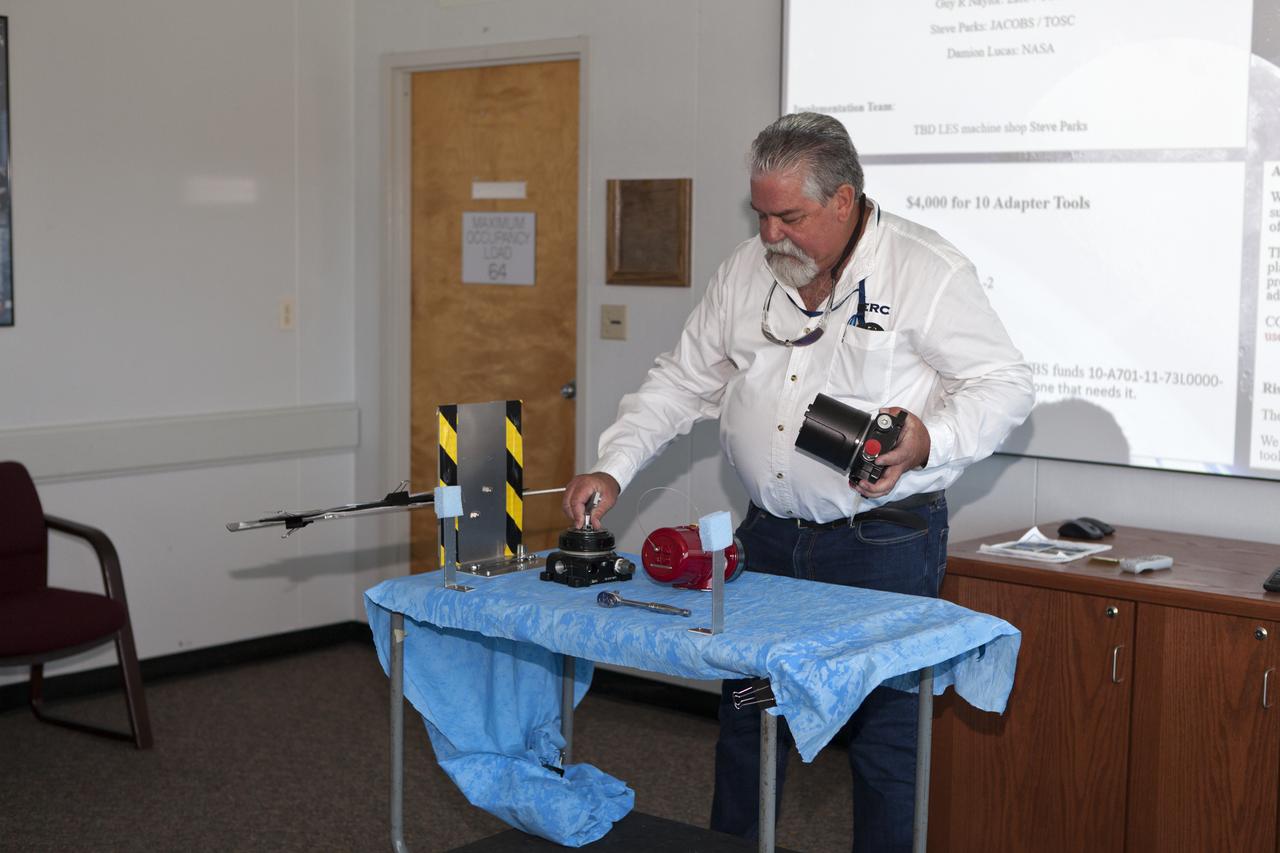
Guy Naylor, an associate engineer on the Test and Operations Support Contract (TOSC), presents his proposal to judges during the “Innovation Without Boundaries” event held in the Space Station Processing Facility at Kennedy Space Center in Florida on Thursday, Aug. 2. Naylor won first place for individual and team projects in the “innovation ideas with little or no associated costs” category. There were 39 proposals featuring a wide range of innovative ideas as part of the Chief Technologist Innovation Call. Presenters had two minutes to highlight their idea, followed by a three-minute question-and-answer period. The judging panel included senior staff, contractors and representatives throughout Kennedy.
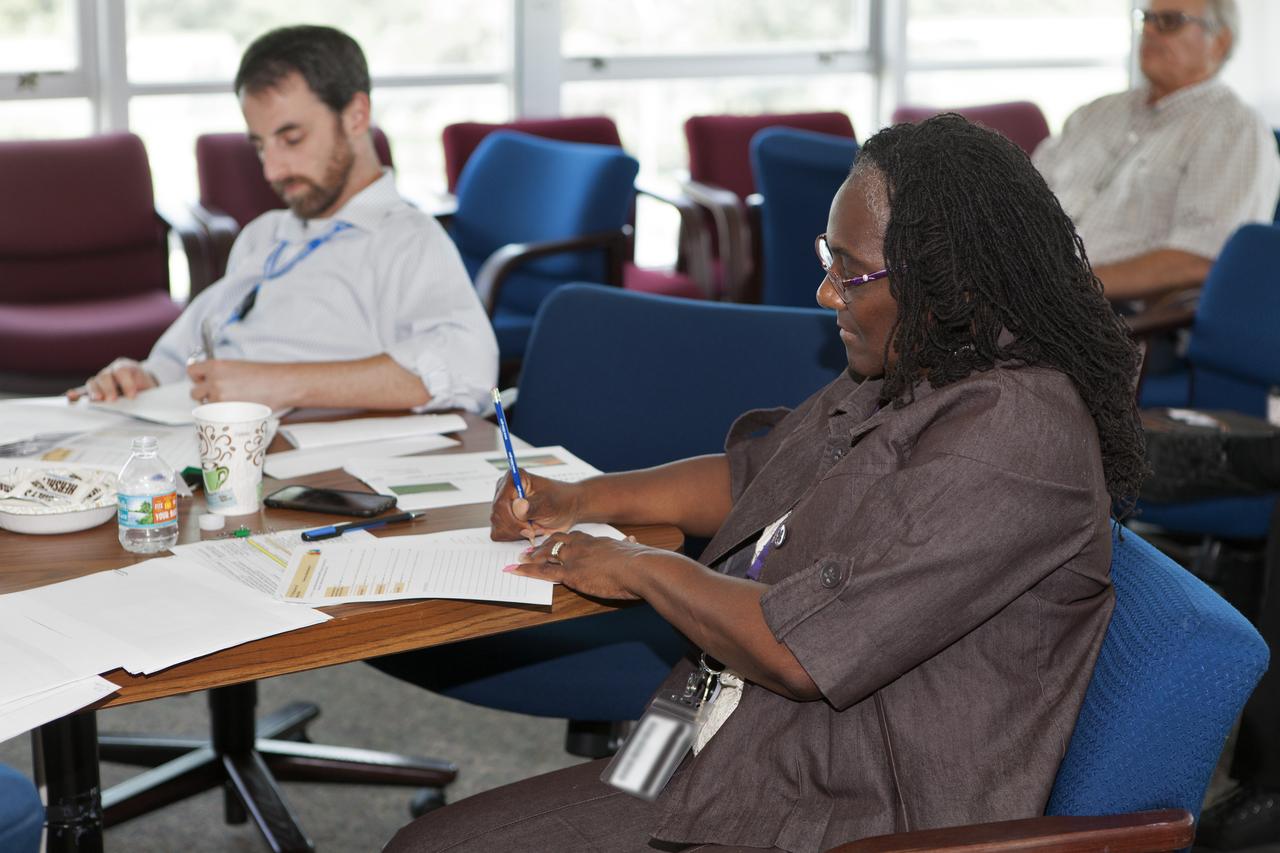
Judges Josh Santora, left, a program specialist with Kennedy Space Center’s Communication and Public Engagement (PX) directorate, and Hortense Diggs, PX deputy director, take notes during the “Innovation Without Boundaries” event held in the Florida spaceports’ Space Station Processing Facility on Thursday, Aug. 2. There were 39 proposals featuring a wide range of innovative ideas as part of the Chief Technologist Innovation Call. Presenters had two minutes to highlight their idea, followed by a three-minute question-and-answer period. The judging panel included senior staff, contractors and representatives throughout Kennedy.
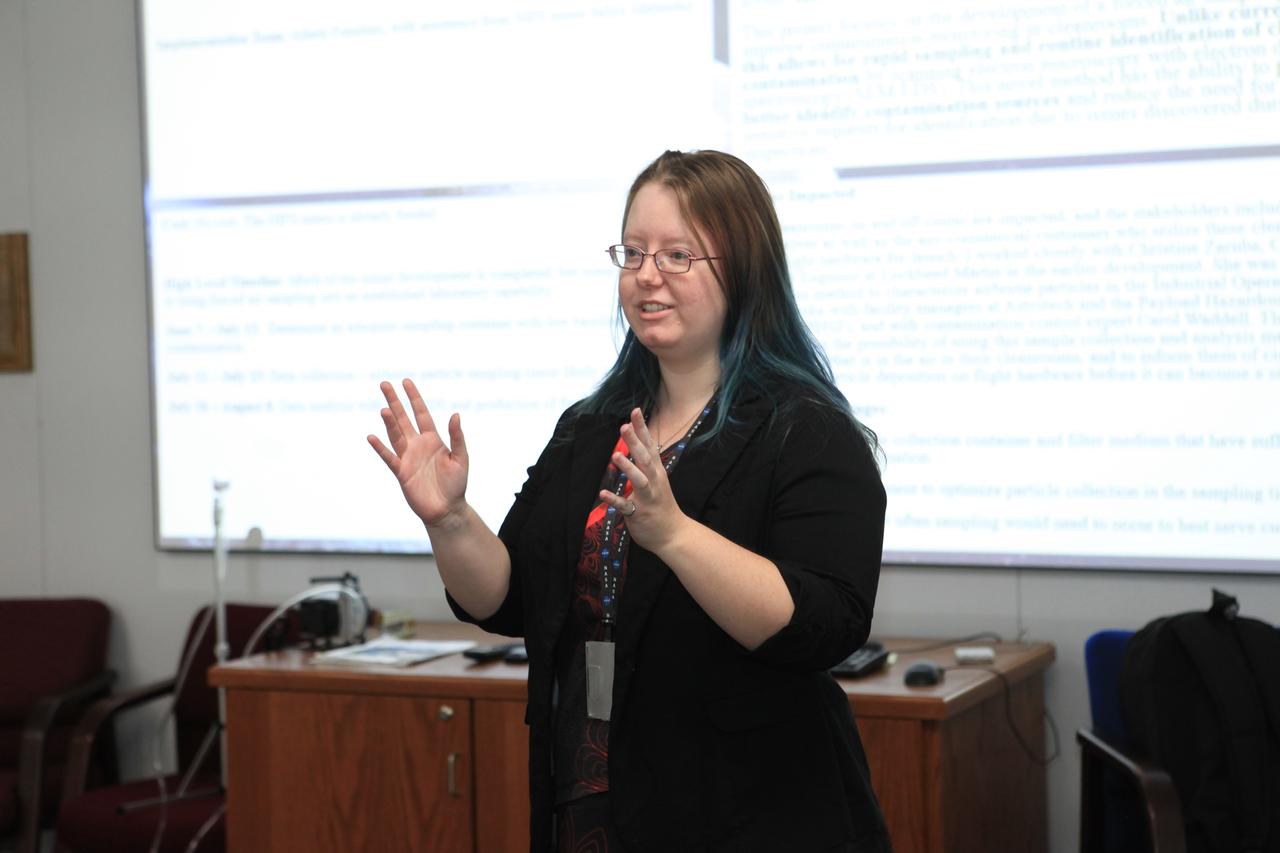
Athela Frandsen, an aerospace technologist with Kennedy Space Center’s analytical laboratories, presents her proposal concerning proactive approaches to cleanroom contamination to representatives from programs across Kennedy during the “Innovation Without Boundaries” event held inside the Space Station Processing Facility in Florida on June 14, 2019. A number of Kennedy employees presented their proposals as part of the Chief Technologist Innovation Call. The event sought out ideas based on relevance, benefit, innovativeness, likelihood of success and sustainability.
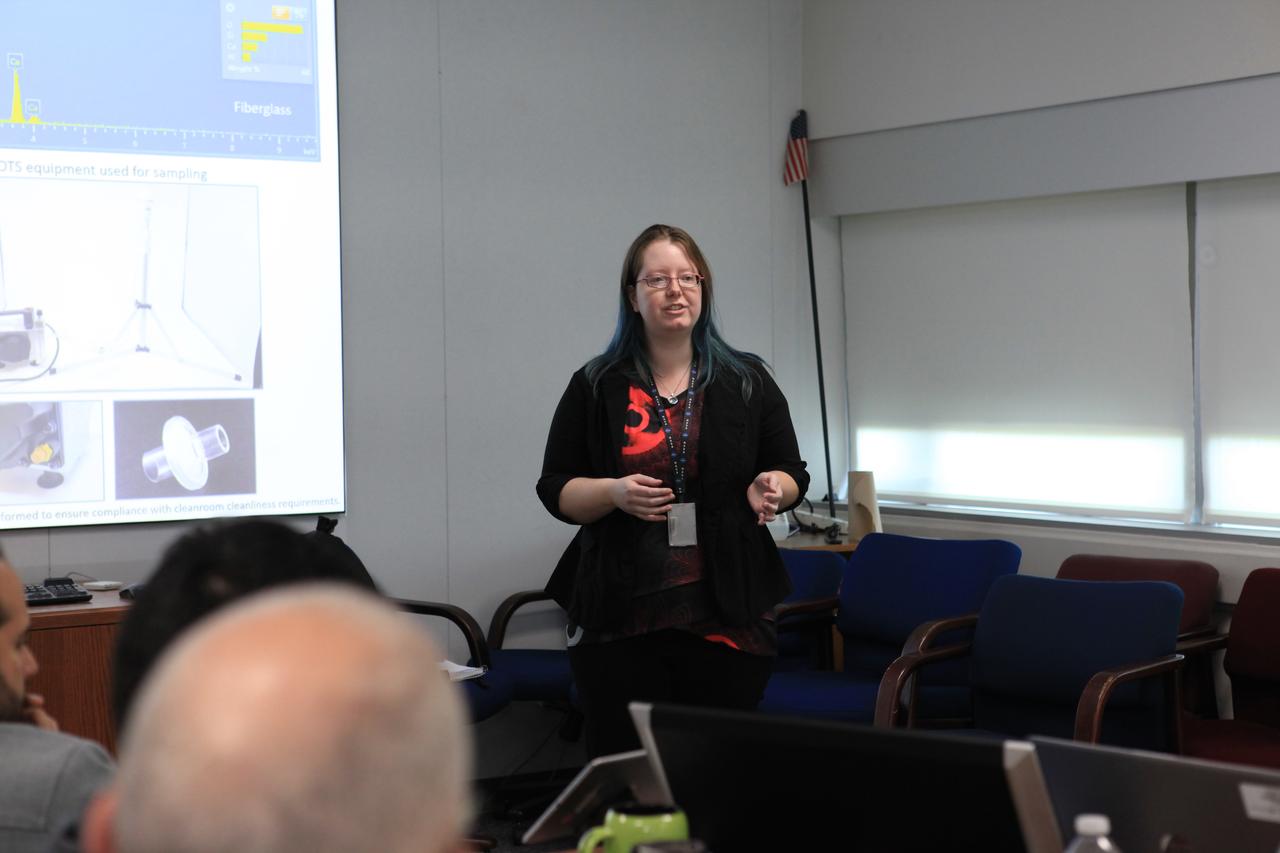
Athela Frandsen, an aerospace technologist with Kennedy Space Center’s analytical laboratories, presents her proposal concerning proactive approaches to cleanroom contamination to a panel of judges during the “Innovation Without Boundaries” event held inside the Space Station Processing Facility in Florida on June 14, 2019. A number of Kennedy employees presented their proposals as part of the Chief Technologist Innovation Call. Participants had five minutes to present their innovative ideas in one of three categories, which were innovative ideas that had little or no cost to implement, ideas with great returns on investments up to $20,000 and big ideas where participants could socialize ideas for projects that would take more than $20,000 to implement.
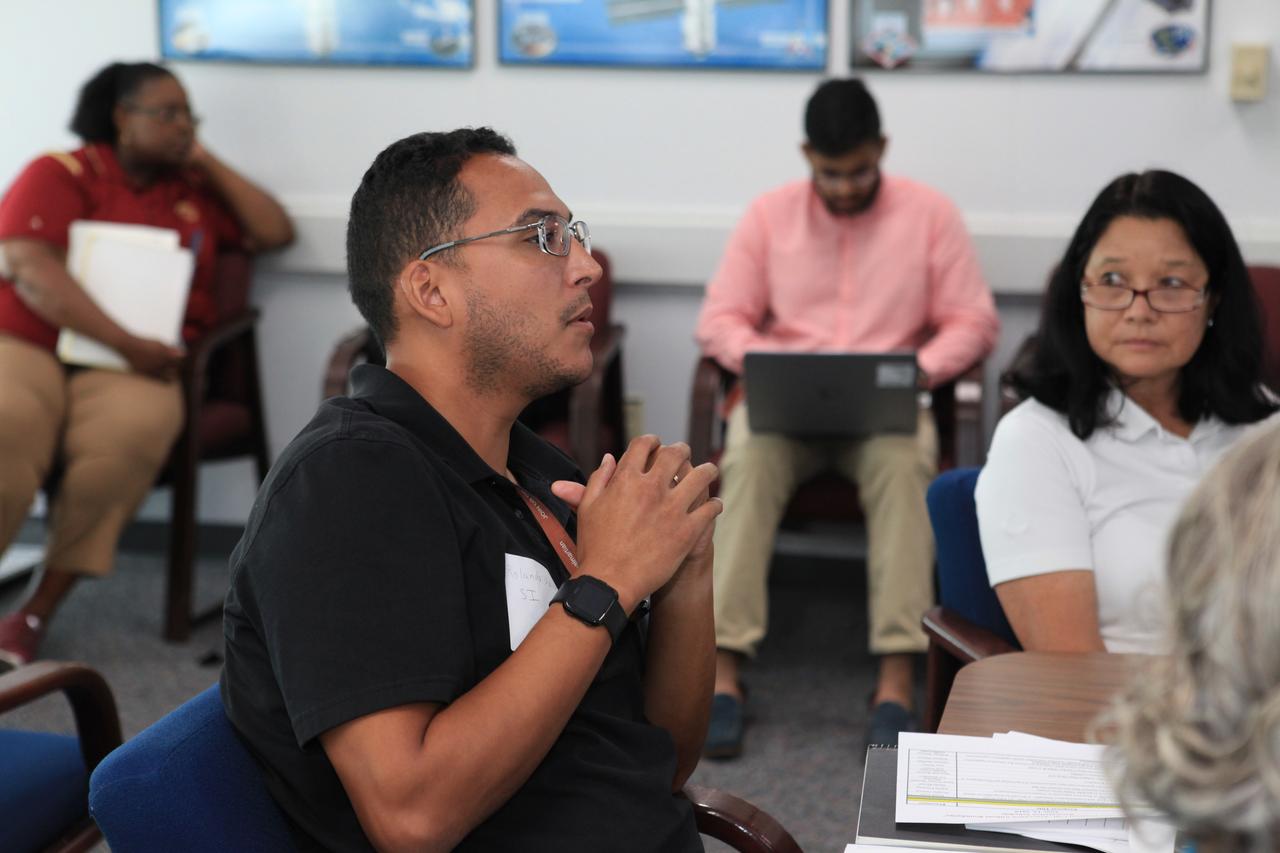
Rolando Valdez, serving as NASA’s Kennedy Space Center Spaceport Integration and Services representative for this year’s “Innovation Without Boundaries” event, gives feedback to participants in Kennedy’s Space Station Processing Facility on June 14, 2019. A number of employees presented their proposals to a panel of judges as part of the Chief Technologist Innovation Call. Participants had five minutes to present their innovative idea for the chance to receive an award of up to $500 for ideas with little-to-no cost that would make a significant impact.
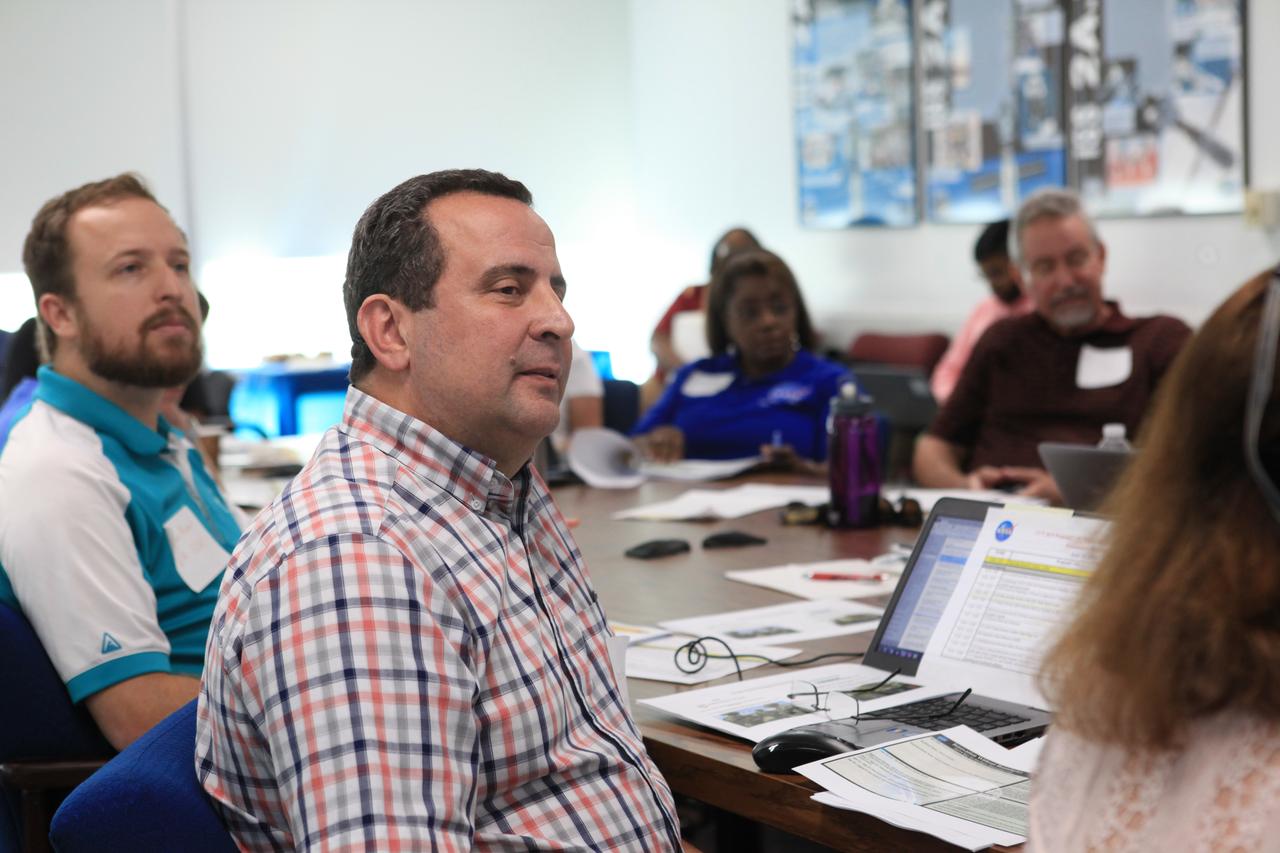
Employees at NASA’s Kennedy Space Center in Florida attend and participate in this year’s “Innovation Without Boundaries” event held in Kennedy’s Space Station Processing Facility on June 14, 2019. A number of employees presented their proposals to a panel of judges as part of the Chief Technologist Innovation Call. Participants had five minutes to present their innovative idea for the chance to receive an award of up to $500 for ideas with little-to-no cost that would make a significant impact.
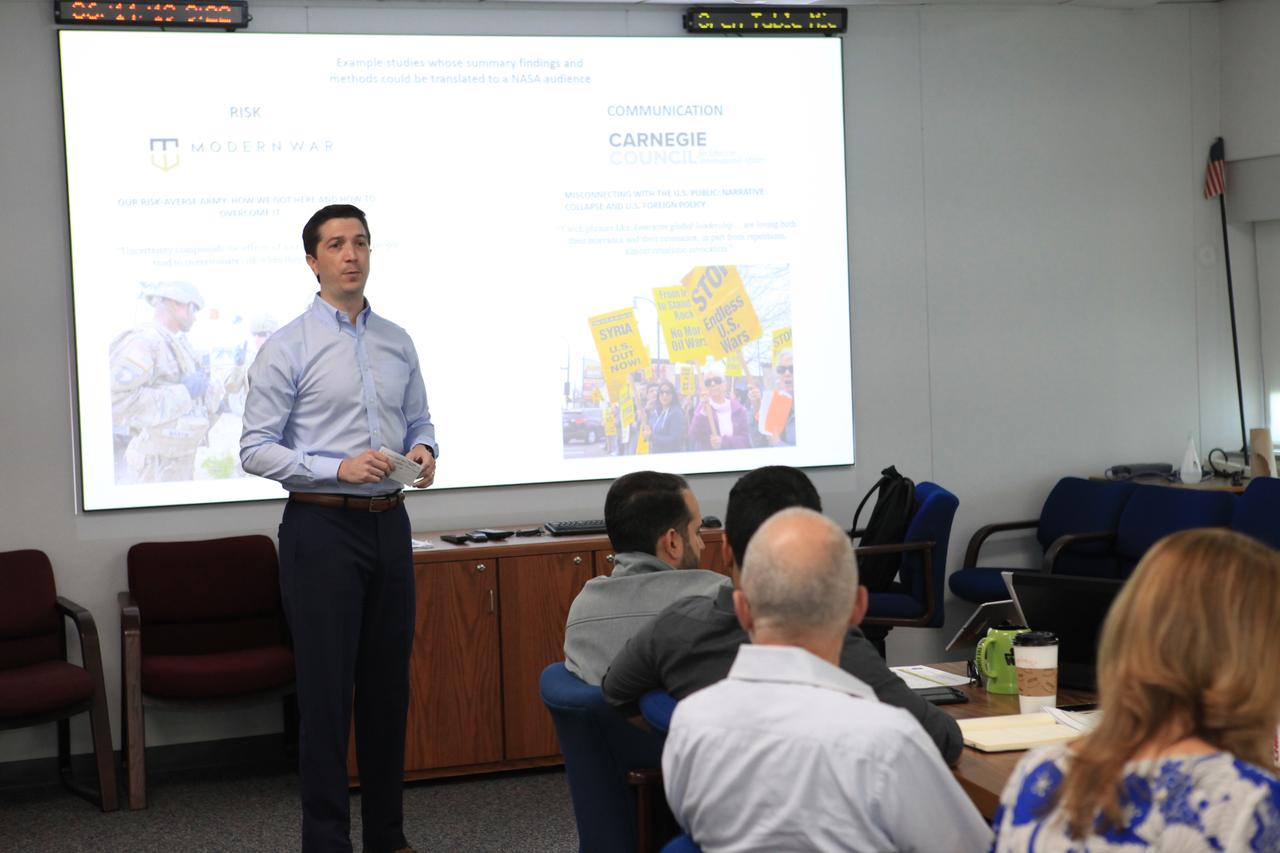
Pathways intern Douglas Jackson presents his proposal to a panel of judges during the “Innovation Without Boundaries” event held inside the Space Station Processing Facility at Kennedy Space Center in Florida on June 14, 2019. A number of Kennedy employees presented their proposals as part of the Chief Technologist Innovation Call. Representatives from across Kennedy evaluated ideas based on relevance, benefit, innovativeness, likelihood of success and sustainability.
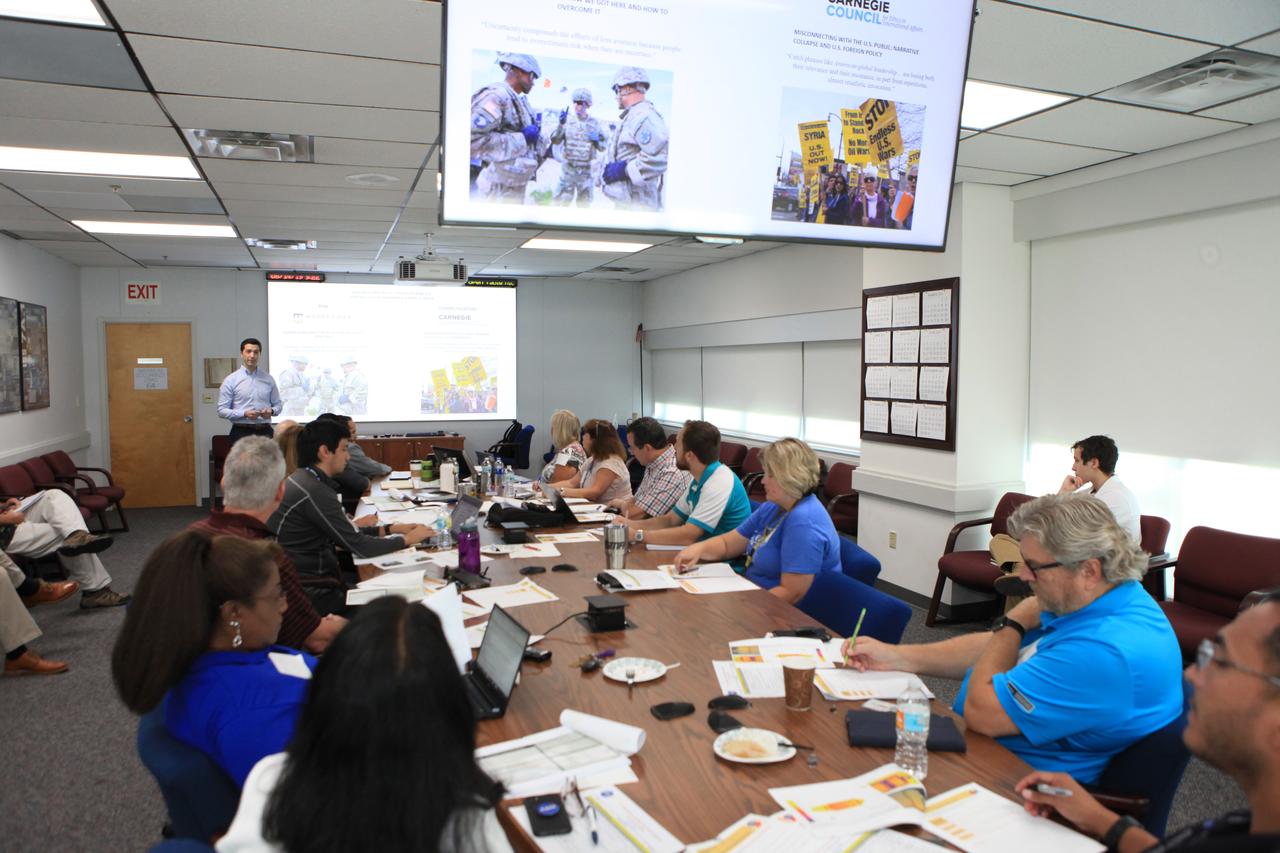
Pathways intern Douglas Jackson presents his proposal to a panel of judges during the “Innovation Without Boundaries” event held inside the Space Station Processing Facility at Kennedy Space Center in Florida on June 14, 2019. A number of Kennedy employees presented their proposals as part of the Chief Technologist Innovation Call. Participants had five minutes to present their innovative idea for the chance to receive an award of up to $500 for ideas with little-to-no cost that would make a significant impact.
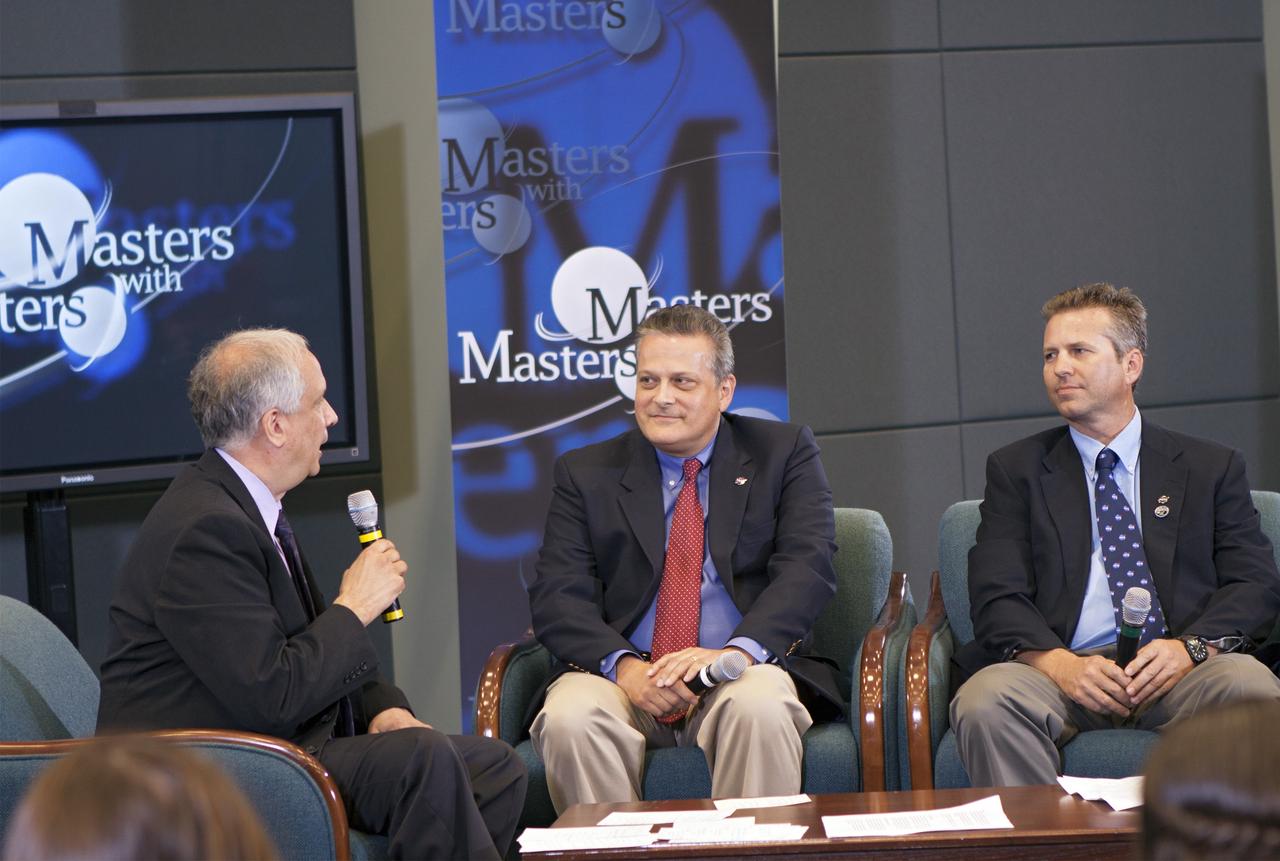
CAPE CANAVERAL, Fla. – Ed Hoffman, from left, Jack Fox and Rob Mueller discuss techniques to enable and enhance innovation during the third session in a weeklong series called "Masters with Masters" at the agency's Kennedy Space Center in Florida. Hoffman, NASA's chief Knowledge officer, Fox, chief, Surface Systems Office, and Rob Mueller, senior technologist, Surface Systems Office, talked about the work of the Swamp Works facility at Kennedy. Photo credit: NASA/Jim Grossmann
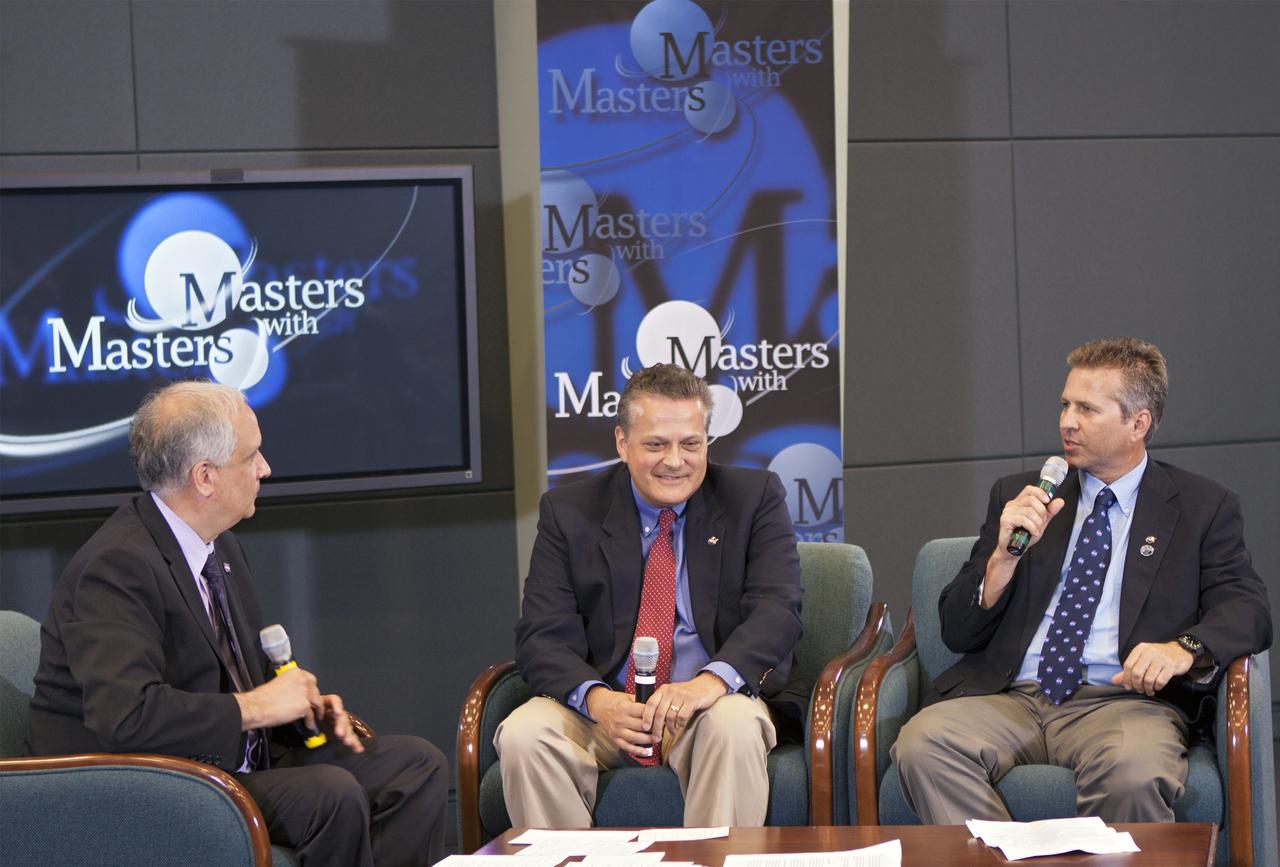
CAPE CANAVERAL, Fla. – Ed Hoffman, from left, Jack Fox and Rob Mueller discuss techniques to enable and enhance innovation during the third session in a weeklong series called "Masters with Masters" at the agency's Kennedy Space Center in Florida. Hoffman, NASA's chief Knowledge officer, Fox, chief, Surface Systems Office, and Rob Mueller, senior technologist, Surface Systems Office, talked about the work of the Swamp Works facility at Kennedy. Photo credit: NASA/Jim Grossmann
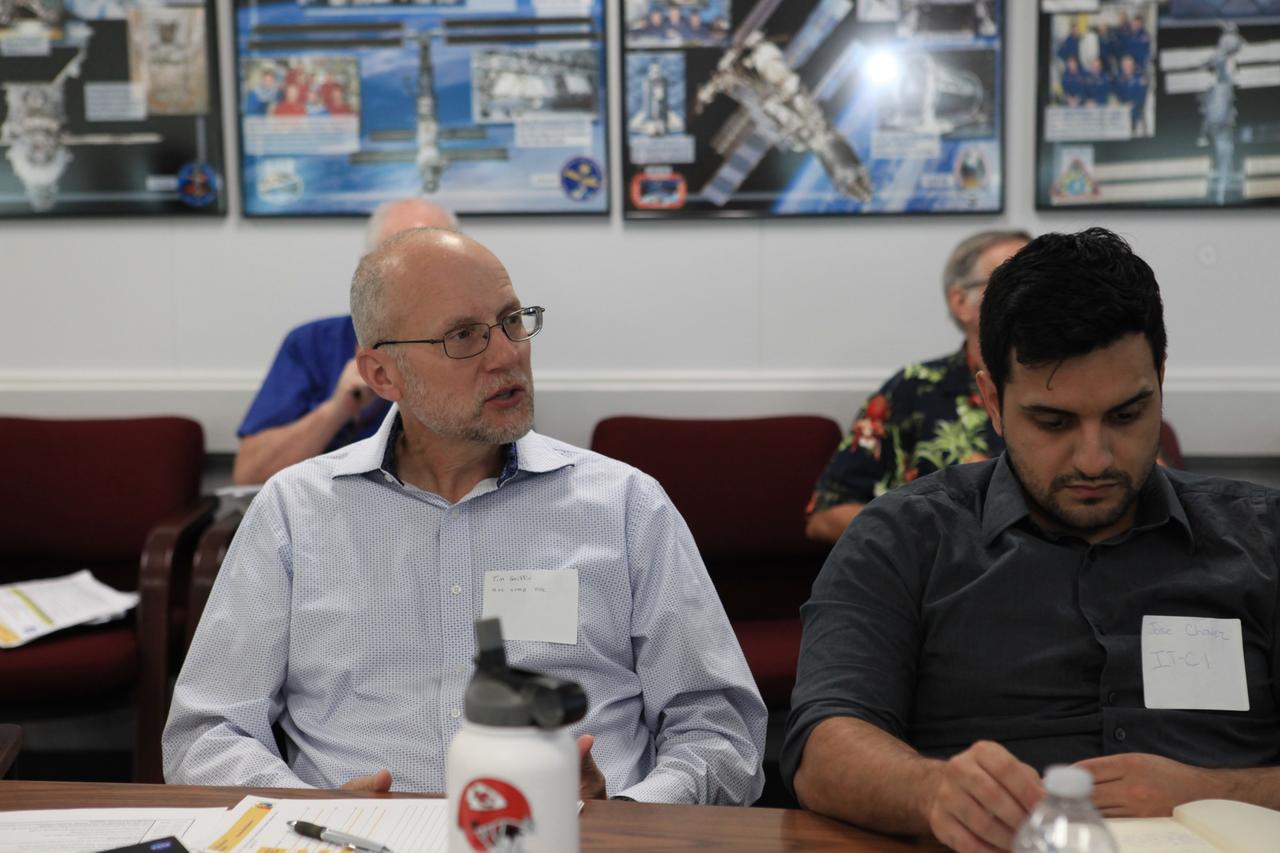
Tim Griffin, NASA’s Kennedy Space Center’s Space Technology Mission Directorate representative for this year’s “Innovation Without Boundaries” event held in Kennedy’s Space Station Processing Facility on June 14, 2019, asks a participant a question. A number of employees, including civil servants and contractors that opted to take part, presented their proposals to a panel of judges as part of the Chief Technologist Innovation Call. The three categories of awards were innovative ideas that had little cost, ideas with great returns on investment up to $20,000 and big ideas where participants could socialize ideas for projects that would take more than $20,000 to implement.
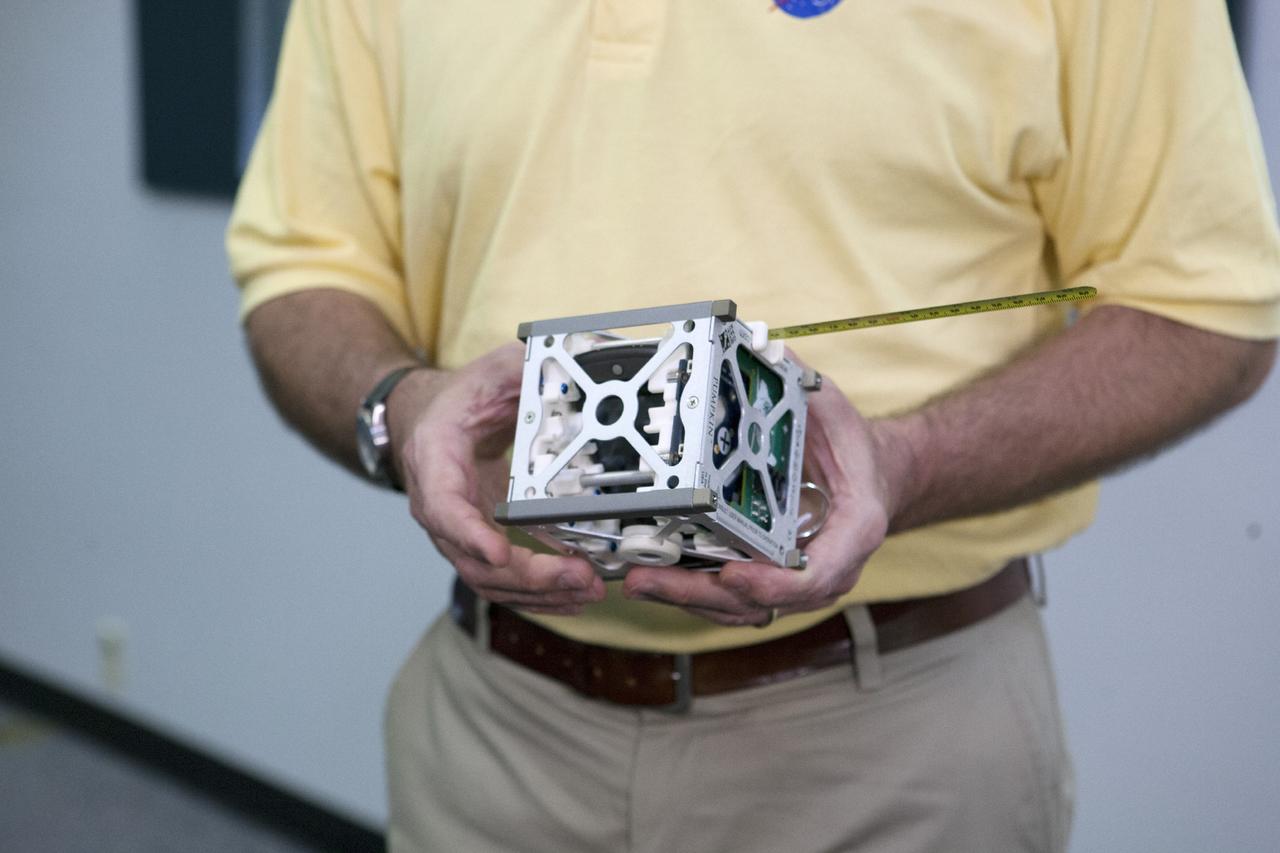
CAPE CANAVERAL, Fla. -- At the News Center at NASA's Kennedy Space Center in Florida, Andrew Petro, the agency's acting director of the Early Stage Innovation Division of the Office of the Chief Technologist, discusses the agency’s CubeSat Launch initiative. CubeSats provide opportunities for small satellite payloads to fly on rockets planned for upcoming launches. CubeSats, a class of research spacecraft called nanosatellites, are flown as auxiliary payloads on previously planned missions. The cube-shaped satellites are approximately four inches long, have a volume of about one quart and weigh about three pounds. For more information, visit: http://www.nasa.gov/directorates/heo/home/CubeSats_initiative.html Photo credit: NASA/Kim Shiflett
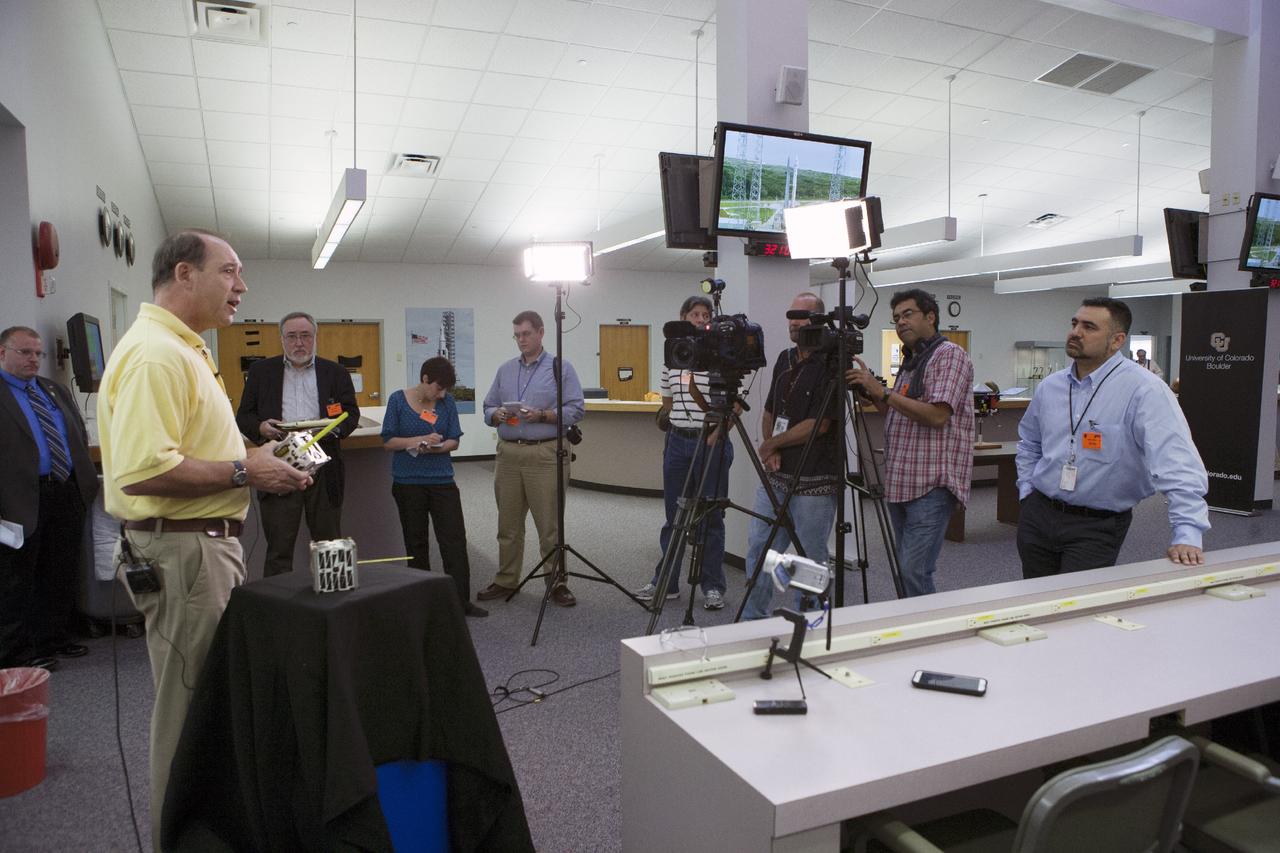
CAPE CANAVERAL, Fla. -- At the News Center at NASA's Kennedy Space Center in Florida, Andrew Petro, the agency's acting director of the Early Stage Innovation Division of the Office of the Chief Technologist, discusses the agency’s CubeSat Launch initiative. CubeSats provide opportunities for small satellite payloads to fly on rockets planned for upcoming launches. CubeSats, a class of research spacecraft called nanosatellites, are flown as auxiliary payloads on previously planned missions. The cube-shaped satellites are approximately four inches long, have a volume of about one quart and weigh about three pounds. For more information, visit: http://www.nasa.gov/directorates/heo/home/CubeSats_initiative.html Photo credit: NASA/Kim Shiflett
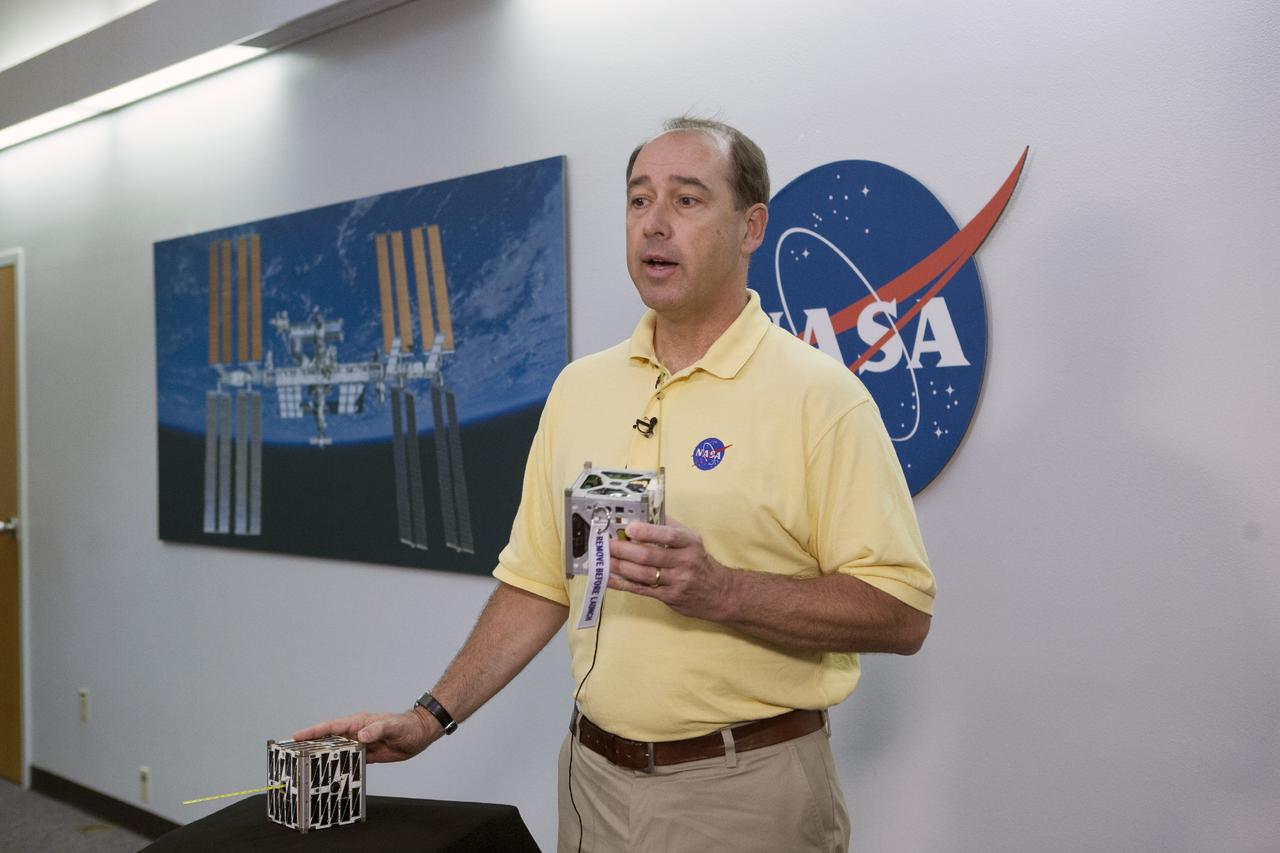
CAPE CANAVERAL, Fla. -- At the News Center at NASA's Kennedy Space Center in Florida, Andrew Petro, the agency's acting director of the Early Stage Innovation Division of the Office of the Chief Technologist, discusses the agency’s CubeSat Launch initiative. CubeSats provide opportunities for small satellite payloads to fly on rockets planned for upcoming launches. CubeSats, a class of research spacecraft called nanosatellites, are flown as auxiliary payloads on previously planned missions. The cube-shaped satellites are approximately four inches long, have a volume of about one quart and weigh about three pounds. For more information, visit: http://www.nasa.gov/directorates/heo/home/CubeSats_initiative.html Photo credit: NASA/Kim Shiflett
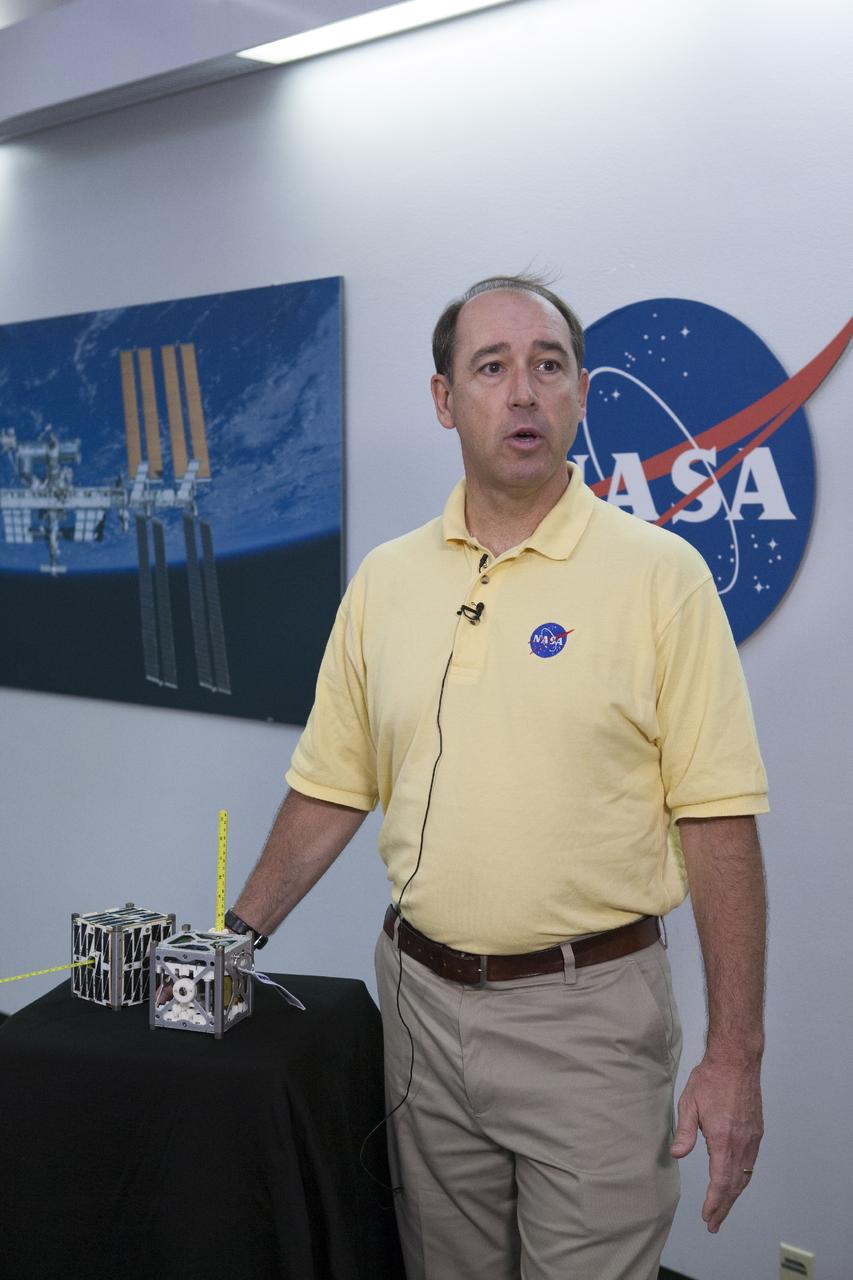
CAPE CANAVERAL, Fla. -- At the News Center at NASA's Kennedy Space Center in Florida, Andrew Petro, the agency's acting director of the Early Stage Innovation Division of the Office of the Chief Technologist, discusses the agency’s CubeSat Launch initiative. CubeSats provide opportunities for small satellite payloads to fly on rockets planned for upcoming launches. CubeSats, a class of research spacecraft called nanosatellites, are flown as auxiliary payloads on previously planned missions. The cube-shaped satellites are approximately four inches long, have a volume of about one quart and weigh about three pounds. For more information, visit: http://www.nasa.gov/directorates/heo/home/CubeSats_initiative.html Photo credit: NASA/Kim Shiflett