
Chile pepper plants growing in the Advanced Plant Habitat (APH) aboard the International Space Station recently bore fruit. The peppers developed from flowers that bloomed over the past few weeks. Studies of fruit development in microgravity are limited, but overcoming the challenges of growing fruit in microgravity is important to NASA for long-duration missions during which crew members will need good sources of Vitamin C to supplement their diets.

Chile pepper plants growing in the Advanced Plant Habitat (APH) aboard the International Space Station recently bore fruit. The peppers developed from flowers that bloomed over the past few weeks. Studies of fruit development in microgravity are limited, but overcoming the challenges of growing fruit in microgravity is important to NASA for long-duration missions during which crew members will need good sources of Vitamin C to supplement their diets.

Chile pepper plants growing in the Advanced Plant Habitat (APH) aboard the International Space Station recently bore fruit. The peppers developed from flowers that bloomed over the past few weeks. Studies of fruit development in microgravity are limited, but overcoming the challenges of growing fruit in microgravity is important to NASA for long-duration missions during which crew members will need good sources of Vitamin C to supplement their diets.
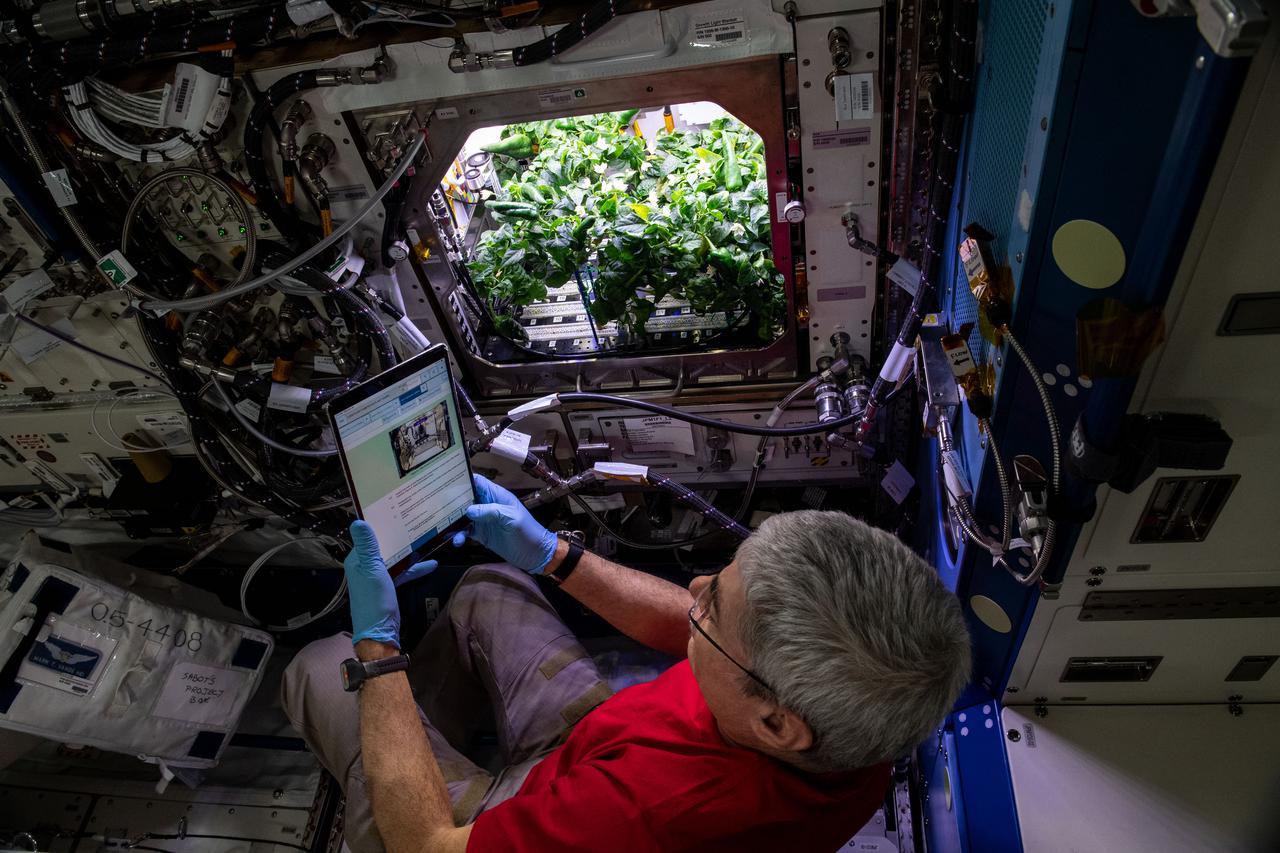
iss066e008125 (October 20, 2021) -- NASA astronaut and Expedition 65 Flight Engineer Mark Vande Hei prepares for the routine debris removal procedure for chile peppers growing in the Advanced Plant Habitat as part of the Plant Habit-04 experiment being conducted aboard the International Space Station. The chile pepper seeds started growing on July 12, 2021, and represent one of the longest and most challenging plant experiments attempted aboard the orbiting laboratory. They will be harvested twice, once in late October and again in late November. Astronauts will sanitize the peppers, eat part of their harvest, and return the rest to Earth for analysis. What we learn will inform future crop growth and food supplementation activities for deep space exploration.

iss066e008110 (October 20, 2021) -- NASA astronaut and Expedition 65 Flight Engineer Mark Vande Hei prepares to photograph chile peppers growing in the Advanced Plant Habitat as part of the Plant Habit-04 experiment being conducted aboard the International Space Station. The chile pepper seeds started growing on July 12, 2021, and represent one of the longest and most challenging plant experiments attempted aboard the orbiting laboratory. They will be harvested twice, once in late October and again in late November. Astronauts will sanitize the peppers, eat part of their harvest, and return the rest to Earth for analysis. What we learn will inform future crop growth and food supplementation activities for deep space exploration.
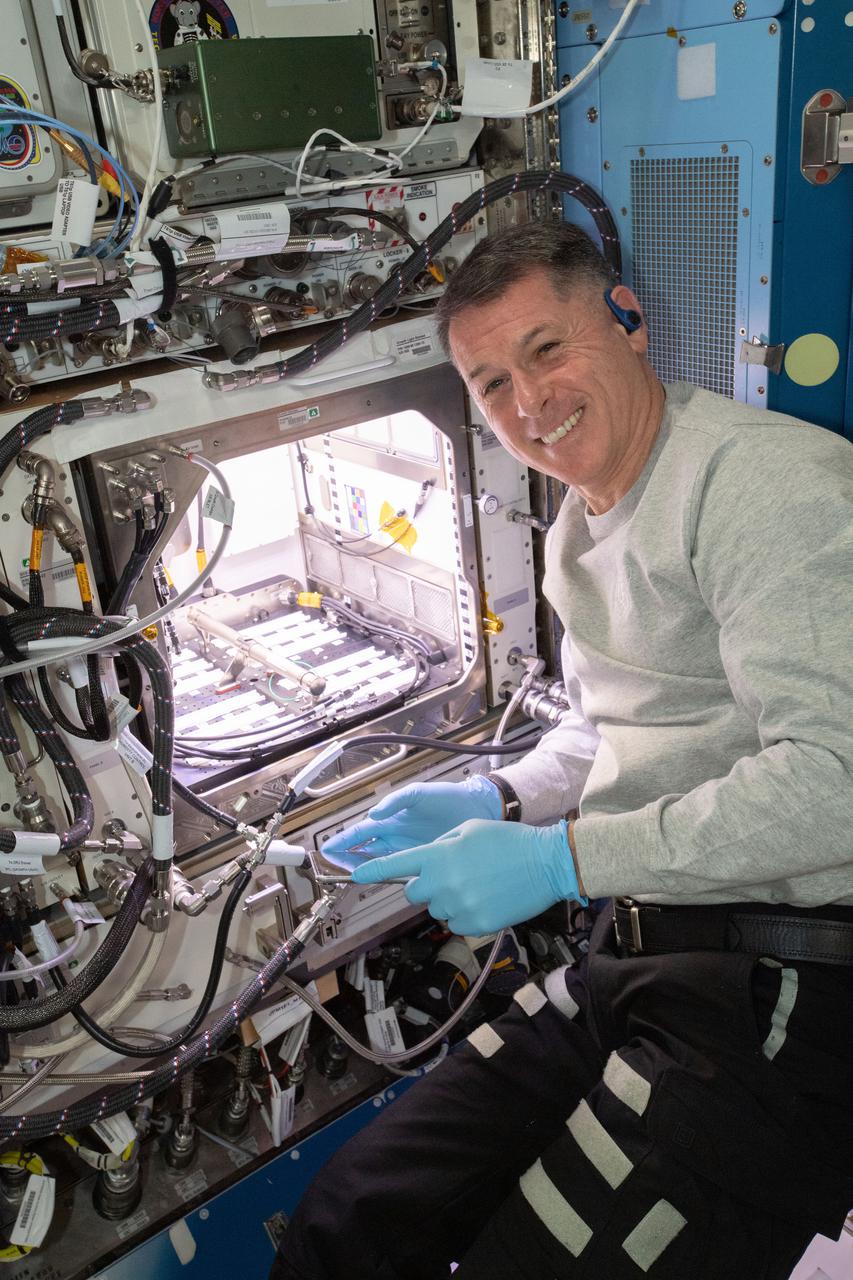
(iss065e163671) July 12, 2021 --- NASA astronaut and Expedition 65 Flight Engineer Shane Kimbrough inserts a device called a science carrier into the Advanced Plant Habitat (APH), which contains 48 Hatch chile pepper seeds NASA started growing on July 12, 2021 as part of the Plant Habitat-04 experiment. Astronauts on station and a team of researchers at Kennedy will work together to monitor the peppers’ growth for about four months before harvesting them. This will be one of the longest and most challenging plant experiments attempted aboard the orbital lab.
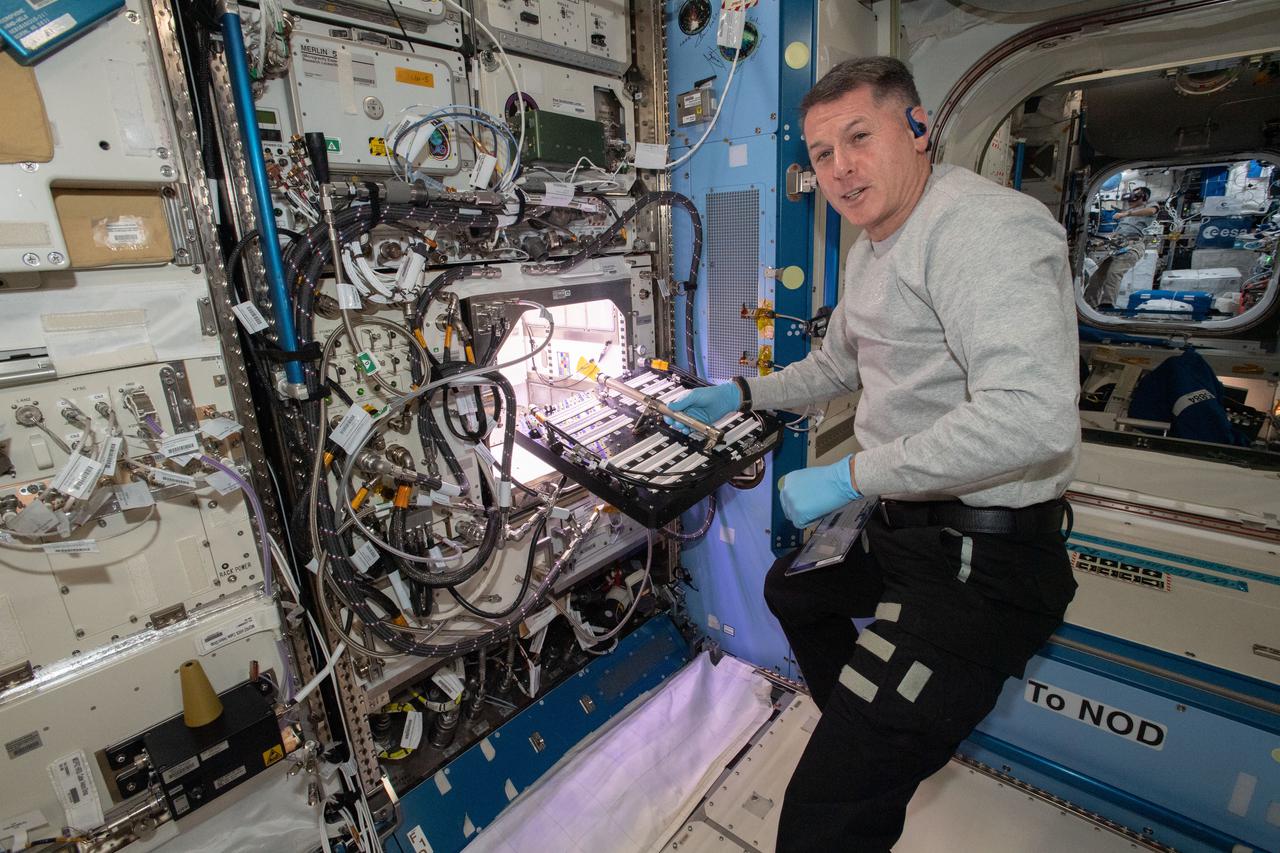
(iss065e163668) July 12, 2021 --- NASA astronaut and Expedition 65 Flight Engineer Shane Kimbrough inserts a device called a science carrier into the Advanced Plant Habitat (APH), which contains 48 Hatch chile pepper seeds NASA started growing on July 12, 2021 as part of the Plant Habitat-04 experiment. Astronauts on station and a team of researchers at Kennedy will work together to monitor the peppers’ growth for about four months before harvesting them. This will be one of the longest and most challenging plant experiments attempted aboard the orbital lab.
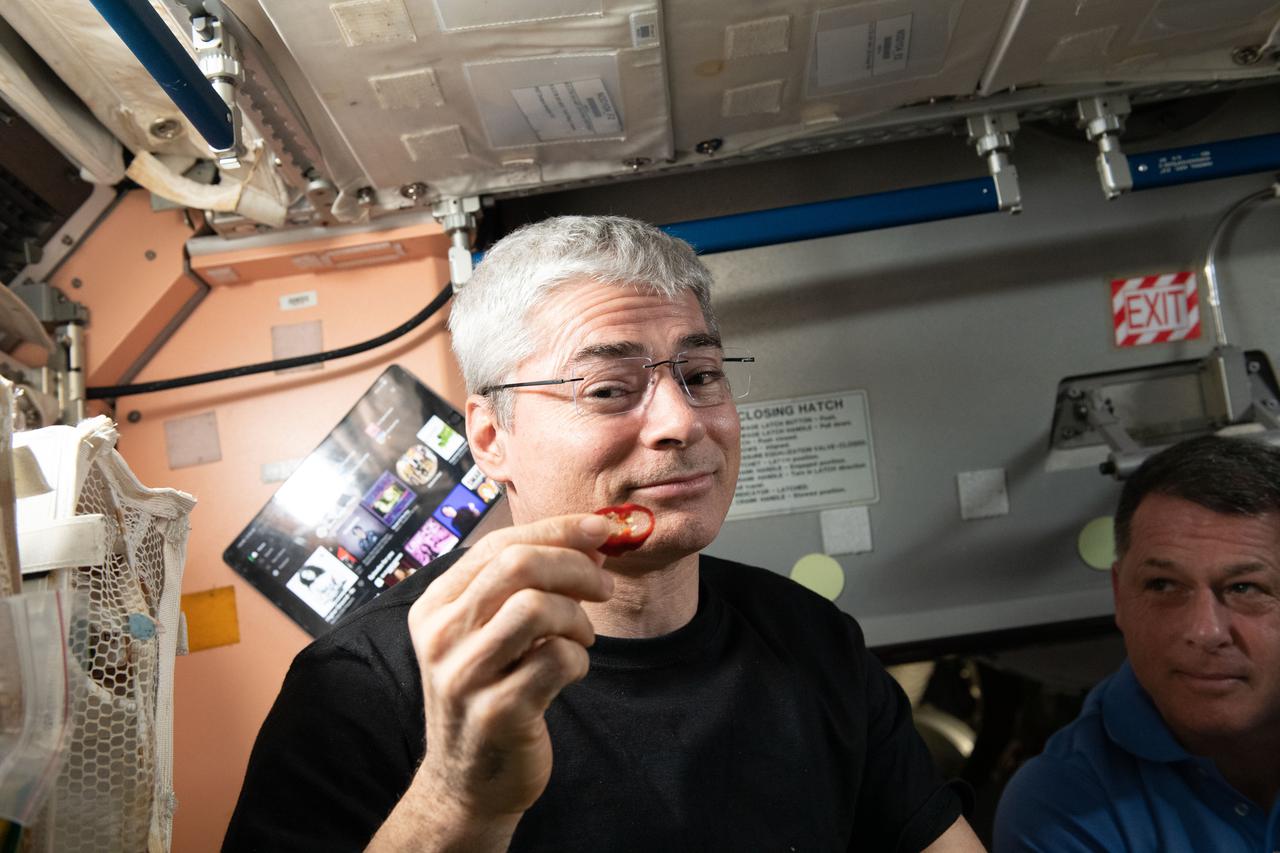
iss066e023179 (October 29, 2021) -- NASA astronaut and Expedition 66 Flight Engineer Mark Vande Hei samples a red chile pepper grown as part of the Plant Habitat-04 experiment aboard the International Space Station. The chile pepper seeds started growing on July 12, 2021, and represent one of the longest and most challenging plant experiments attempted aboard the orbiting laboratory. Vande Hei conducted the first harvest of the pepper crop on October 29, 2021. Crew members sanitized the peppers and completed a scientific survey after their taste test. The Crew-3 astronauts will take over the crop when they arrive at the orbiting laboratory, and will conduct a final harvest of the peppers in late November. They will also sanitize and sample the crop, and complete surveys. Some peppers from the final harvest and their leaves will return to Earth for further analysis. What we learn will inform future crop growth and food supplementation activities for deep space exploration.
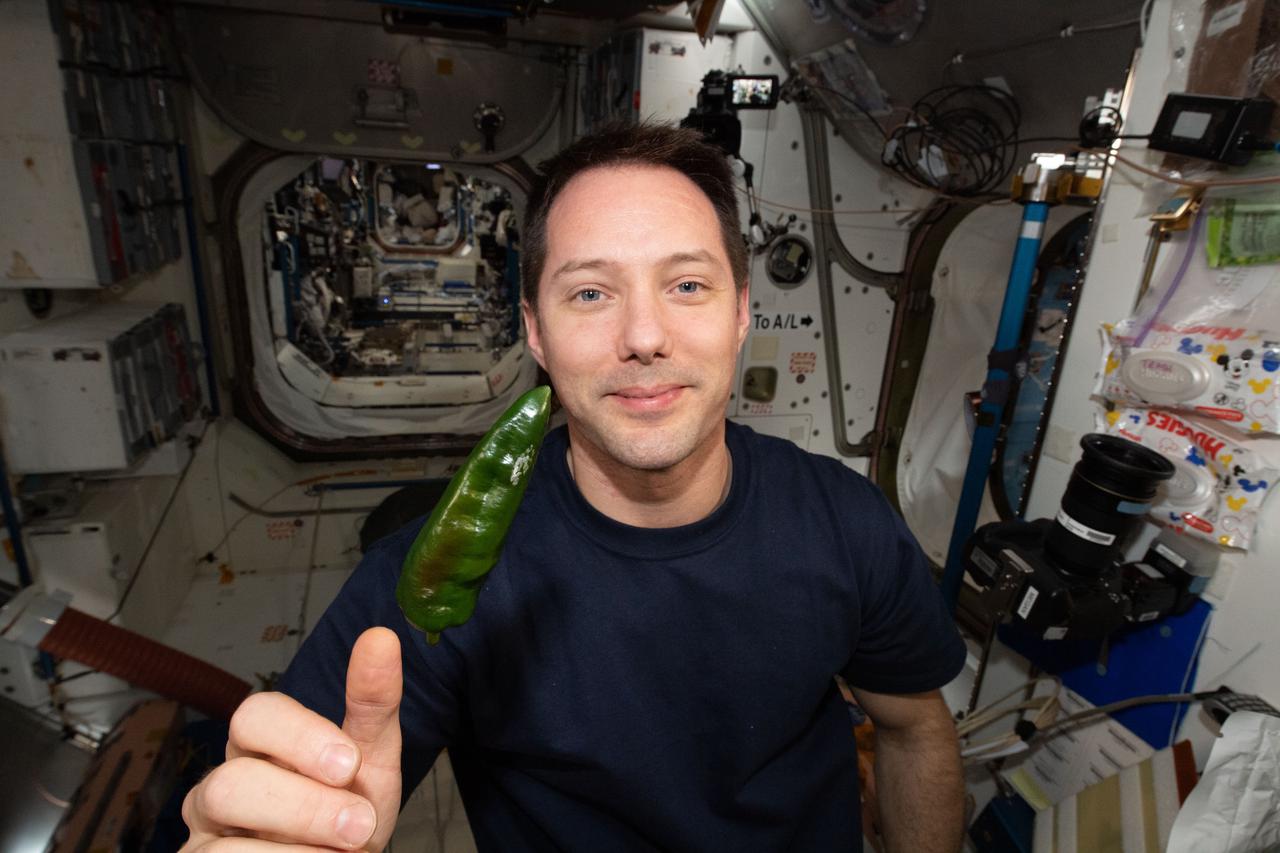
iss066e023273 (October 29, 2021) -- ESA (European Space Agency) astronaut and Expedition 66 commander Thomas Pesquet is seen with a green chile pepper during a taste test as part of the Plant Habitat-04 investigation aboard the International Space Station. The chile peppers started growing on July 12, 2021, and represent one of the longest and most challenging plant experiments attempted aboard the orbiting laboratory. The chile peppers started growing on July 12, 2021, and represent one of the longest and most challenging plant experiments attempted aboard the orbiting laboratory. NASA astronaut and Expedition 66 flight engineer Mark Vande Hei conducted the first harvest of the pepper crop on October 29, 2021. Crew members sanitized the peppers and completed a scientific survey after their taste test. The Crew-3 astronauts will take over the crop when they arrive at the orbiting laboratory, and will conduct a final harvest of the peppers in late November. They will also sanitize and sample the crop, and complete surveys. Some peppers and their leaves from the final harvest will return to Earth for further analysis. What we learn will inform future crop growth and food supplementation activities for deep space exploration.
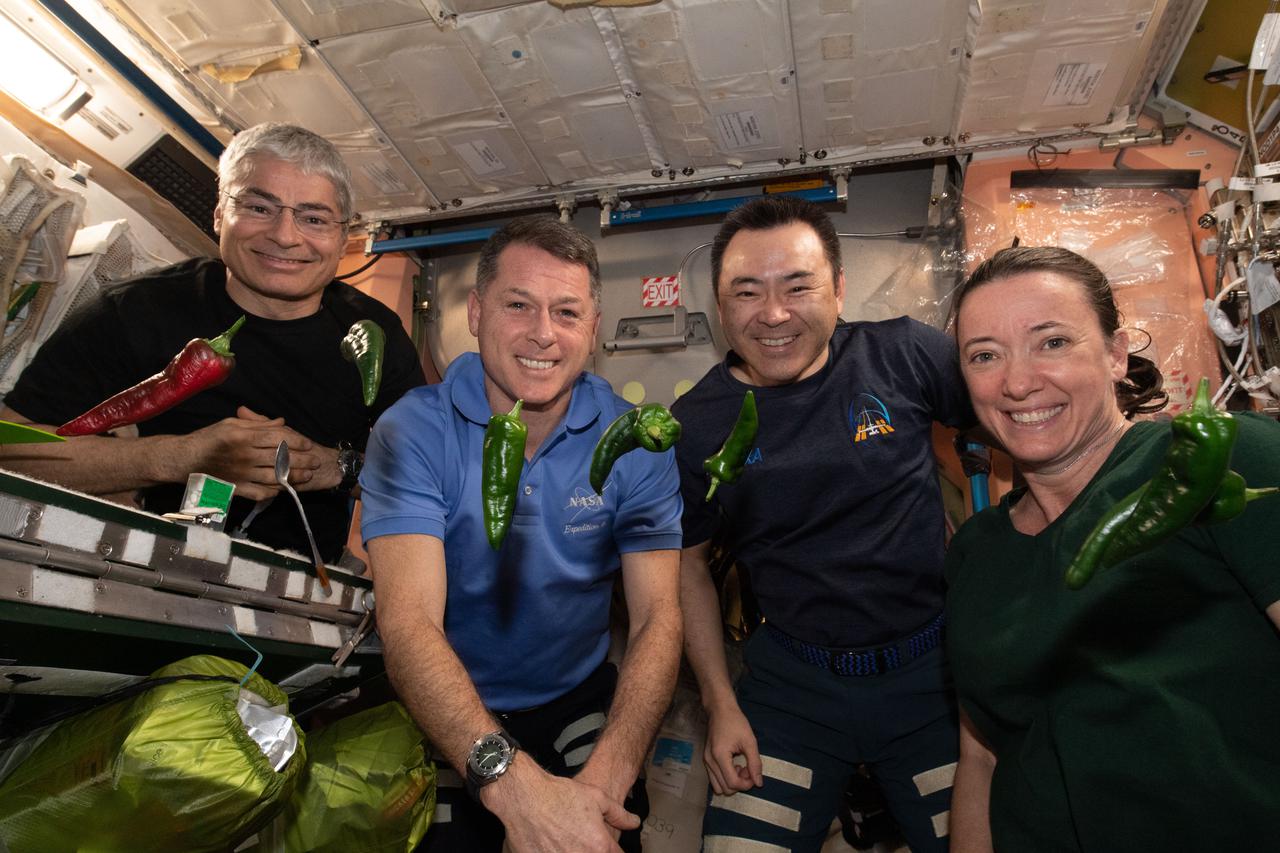
iss066e023259 (October 29, 2021) -- Expedition 66 astronauts are pictured with the first harvest of chile peppers grown aboard the International Space Station as part of the Plant Habitat-04 investigation. The chile peppers started growing on July 12, 2021, and represent one of the longest and most challenging plant experiments attempted aboard the orbiting laboratory. The chile peppers started growing on July 12, 2021, and represent one of the longest and most challenging plant experiments attempted aboard the orbiting laboratory. NASA astronaut and Expedition 66 flight engineer Mark Vande Hei conducted the first harvest of the pepper crop on October 29, 2021. Crew members sanitized the peppers and completed a scientific survey after their taste test. The Crew-3 astronauts will take over the crop when they arrive at the orbiting laboratory, and will conduct a final harvest of the peppers in late November. They will also sanitize and sample the crop, and complete surveys. Some peppers and their leaves from the final harvest will return to Earth for further analysis. What we learn will inform future crop growth and food supplementation activities for deep space exploration. Pictured, from left, are Expedition 66 flight engineers NASA astronauts Mark Vande Hei and Shane Kimbrough, JAXA (Japan Aerospace Exploration) astronaut Aki Hoshide, and NASA astronaut Megan McArthur.
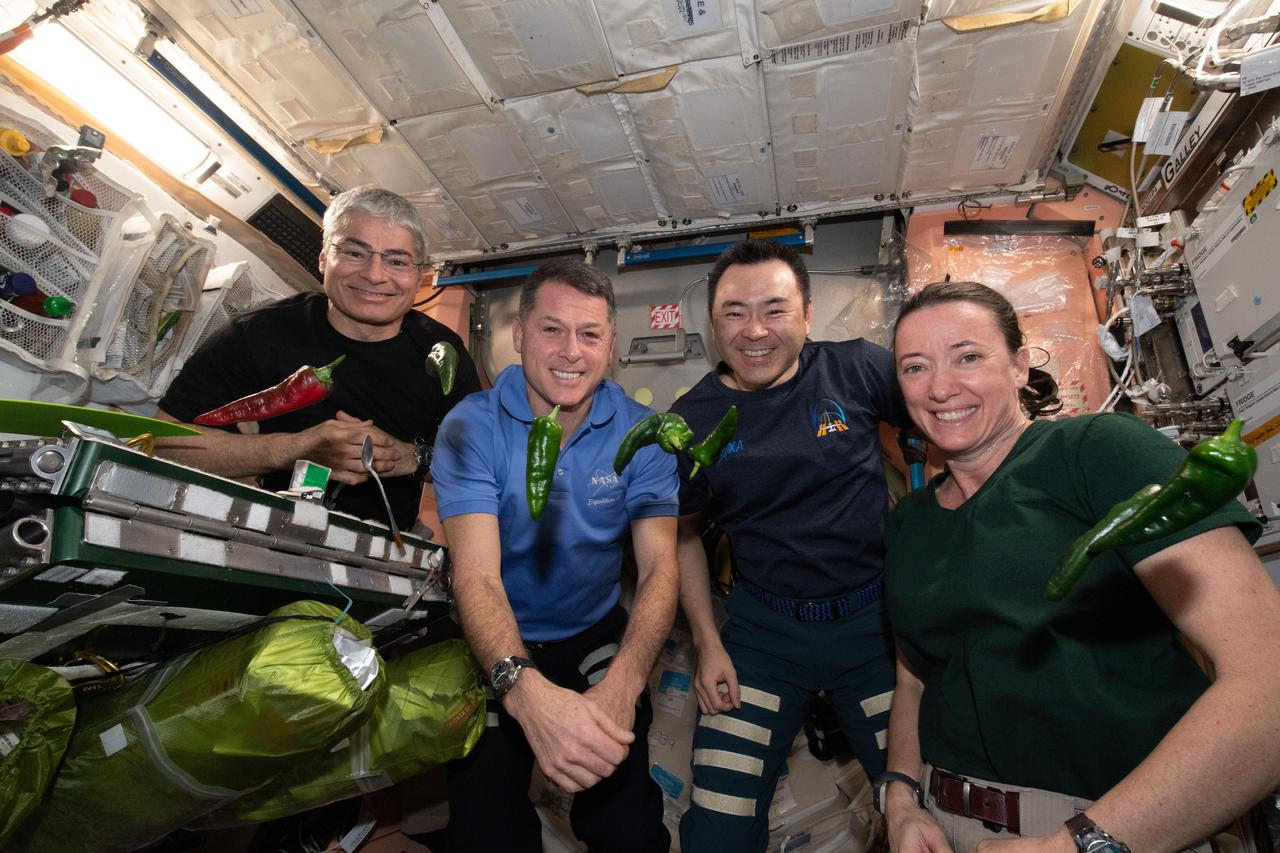
iss066e023260 (October 29, 2021) -- Expedition 66 astronauts are pictured with the first harvest of chile peppers grown aboard the International Space Station as part of the Plant Habitat-04 investigation. The chile peppers started growing on July 12, 2021, and represent one of the longest and most challenging plant experiments attempted aboard the orbiting laboratory. The chile peppers started growing on July 12, 2021, and represent one of the longest and most challenging plant experiments attempted aboard the orbiting laboratory. NASA astronaut and Expedition 66 flight engineer Mark Vande Hei conducted the first harvest of the pepper crop on October 29, 2021. Crew members sanitized the peppers and completed a scientific survey after their taste test. The Crew-3 astronauts will take over the crop when they arrive at the orbiting laboratory, and will conduct a final harvest of the peppers in late November. They will also sanitize and sample the crop, and complete surveys. Some peppers and their leaves from the final harvest will return to Earth for further analysis. What we learn will inform future crop growth and food supplementation activities for deep space exploration. Pictured, from left, are Expedition 66 flight engineers NASA astronauts Mark Vande Hei and Shane Kimbrough, JAXA (Japan Aerospace Exploration) astronaut Aki Hoshide, and NASA astronaut Megan McArthur.
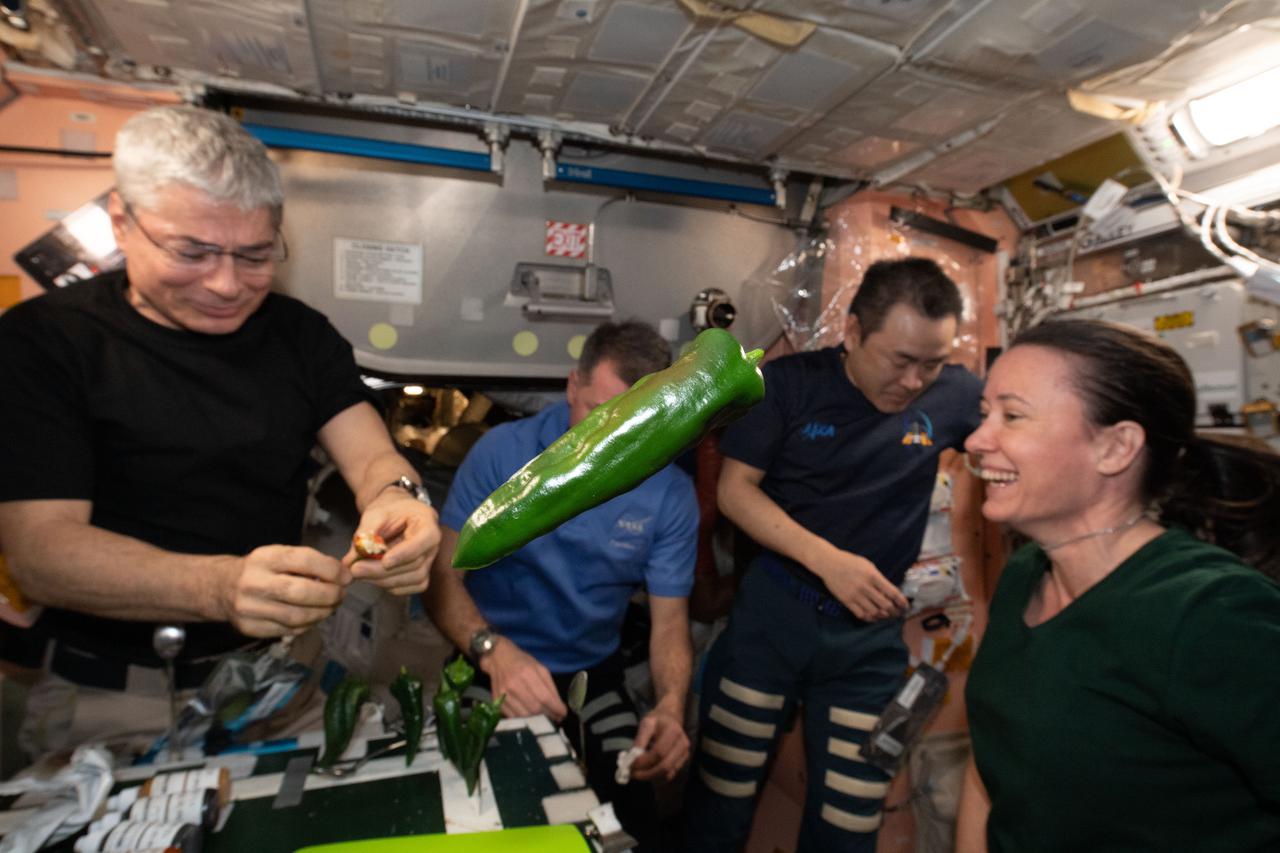
iss066e023272 (October 29, 2021) -- A green chile pepper is seen floating as Expedition 66 crew members conduct a taste test as part of the Plant Habitat-04 investigation aboard the International Space Station. The chile peppers started growing on July 12, 2021, and represent one of the longest and most challenging plant experiments attempted aboard the orbiting laboratory. The chile peppers started growing on July 12, 2021, and represent one of the longest and most challenging plant experiments attempted aboard the orbiting laboratory. NASA astronaut and Expedition 66 flight engineer Mark Vande Hei conducted the first harvest of the pepper crop on October 29, 2021. Crew members sanitized the peppers and completed a scientific survey after their taste test. The Crew-3 astronauts will take over the crop when they arrive at the orbiting laboratory, and will conduct a final harvest of the peppers in late November. They will also sanitize and sample the crop, and complete surveys. Some peppers and their leaves from the final harvest will return to Earth for further analysis. What we learn will inform future crop growth and food supplementation activities for deep space exploration.
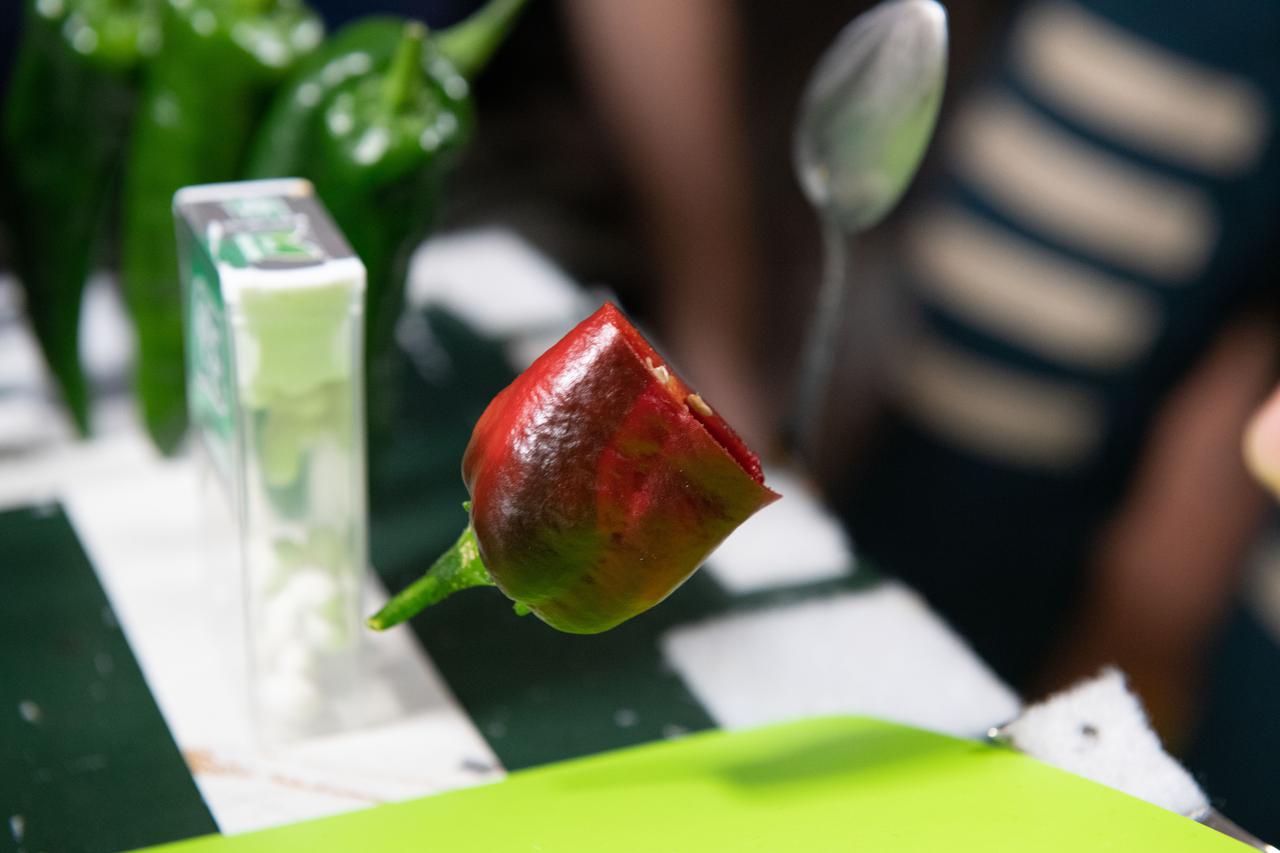
iss066e023165 (October 29, 2021) -- A red chile pepper is seen floating above a cutting board during the tasting of peppers grown as part of the Plant Habitat-04 investigation aboard the International Space Station. The chile peppers started growing on July 12, 2021, and represent one of the longest and most challenging plant experiments attempted aboard the orbiting laboratory. NASA astronaut and Expedition 66 flight engineer Mark Vande Hei conducted the first harvest of the pepper crop on October 29, 2021. Crew members sanitized the peppers and completed a scientific survey after their taste test. The Crew-3 astronauts will take over the crop when they arrive at the orbiting laboratory, and will conduct a final harvest of the peppers in late November. They will also sanitize and sample the crop, and complete surveys. Some peppers and their leaves from the final harvest will return to Earth for further analysis. What we learn will inform future crop growth and food supplementation activities for deep space exploration.
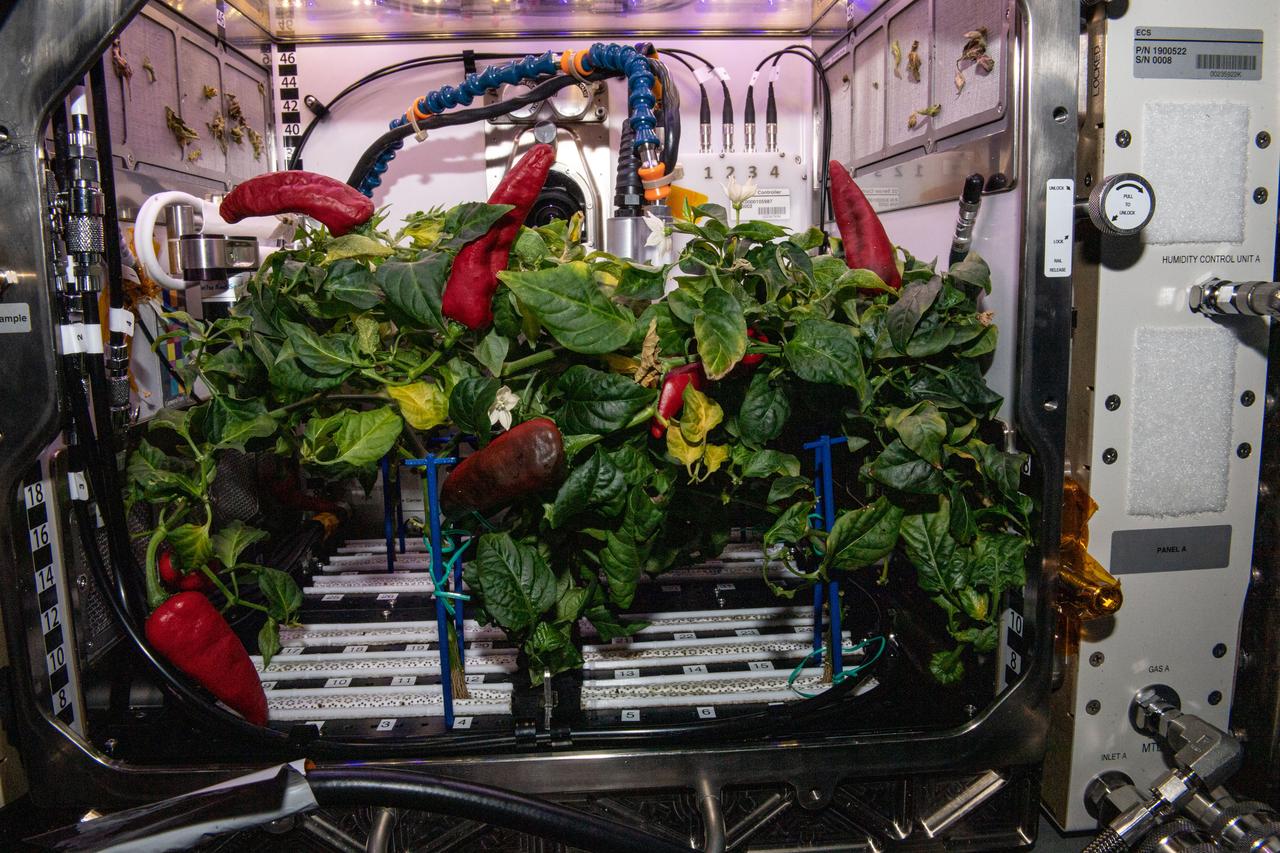
View of Chile Peppers growing inside the Advanced Plant Habitat in the Columbus Module during Expedition 66.
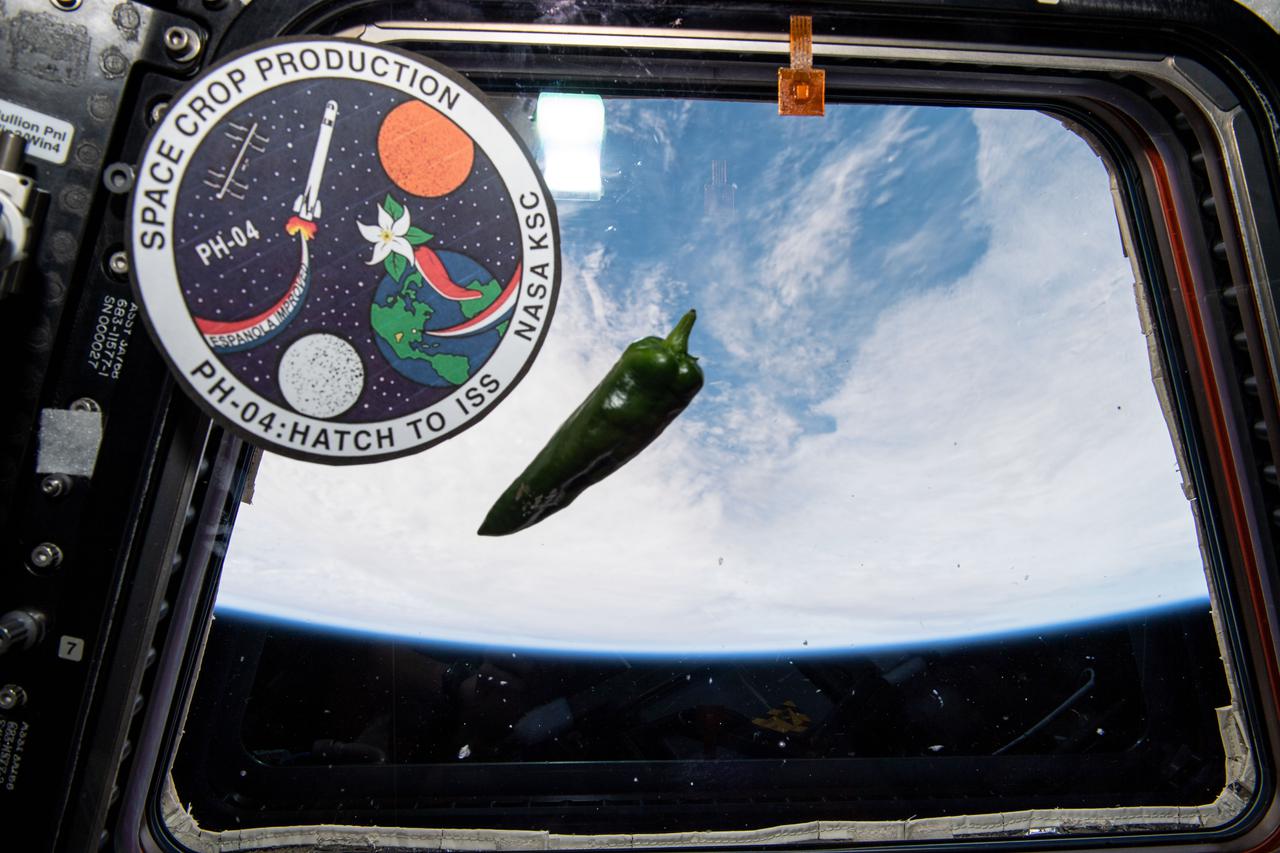
iss066e024210 (Oct. 31, 2021) --- A chile pepper is pictured suspended in weightlessness inside the International Space Station's "window to the world," the seven-windowed cupola. An insignia representing the Plant Habitat-04 investigation that successfully grew chile peppers in space for the first time is depicted next to the pepper.
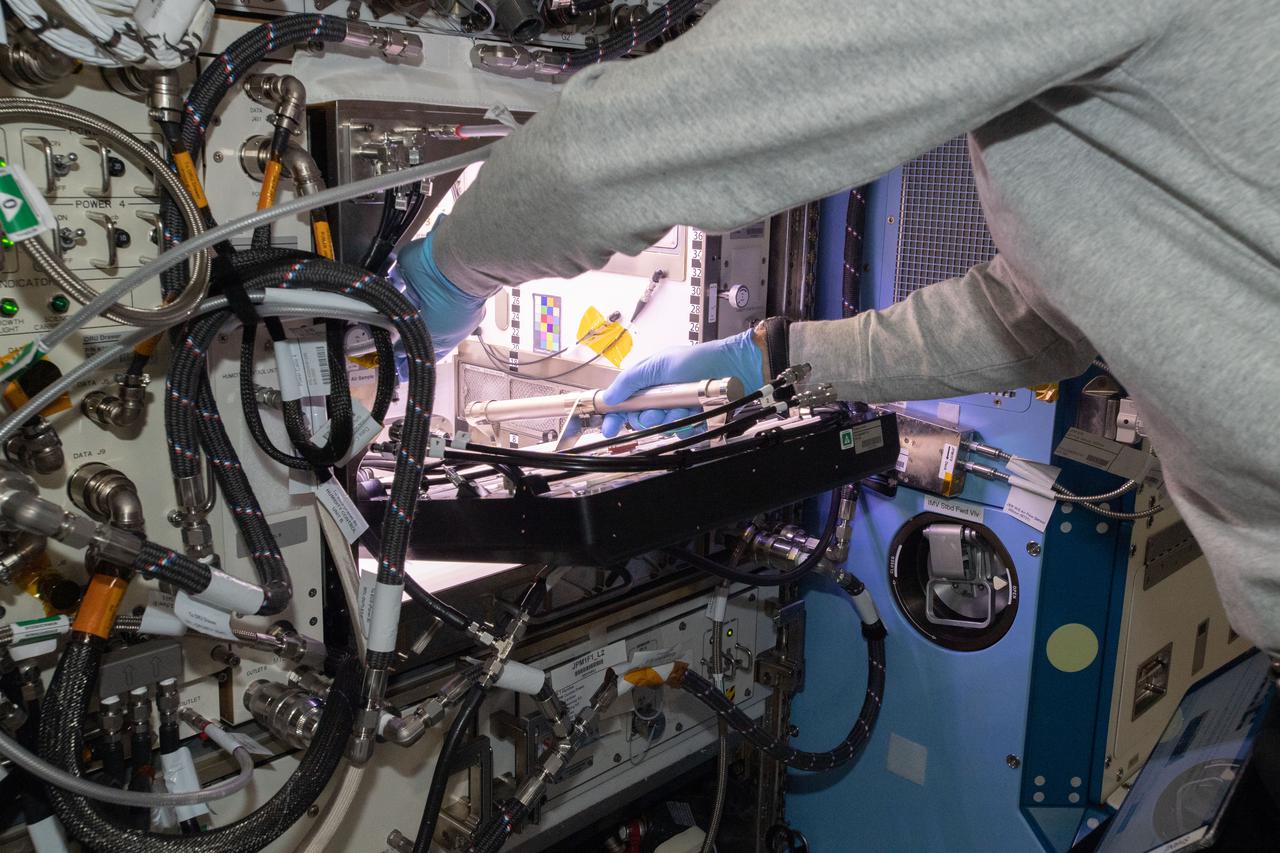
(iss065e163669) July 12, 2021 --- NASA astronaut and Expedition 65 Flight Engineer Shane Kimbrough inserts a device called a science carrier into the Advanced Plant Habitat (APH), which contains 48 Hatch chili pepper seeds NASA started growing on July 12, 2021 as part of the Plant Habitat-04 experiment. Astronauts on station and a team of researchers at Kennedy will work together to monitor the peppers’ growth for about four months before harvesting them. This will be one of the longest and most challenging plant experiments attempted aboard the orbital lab.

iss066e023184 (October 29, 2021) -- An astronaut cuts slices of red chile pepper during a taste test of chile peppers grown as part of the Plant Habitat-04 investigation aboard the International Space Station. The chile peppers started growing on July 12, 2021, and represent one of the longest and most challenging plant experiments attempted aboard the orbiting laboratory. NASA astronaut Mark Vande Hei conducted the first harvest of the pepper crop on October 29, 2021. Crew members sanitized the peppers and completed a scientific survey after their taste test. The Crew-3 astronauts will take over the crop when they arrive at the orbiting laboratory, and will conduct a final harvest of the peppers in late November. They will also sanitize and sample the crop, and complete surveys. Some peppers from the final harvest and their leaves will return to Earth for further analysis. What we learn will inform future crop growth and food supplementation activities for deep space exploration.
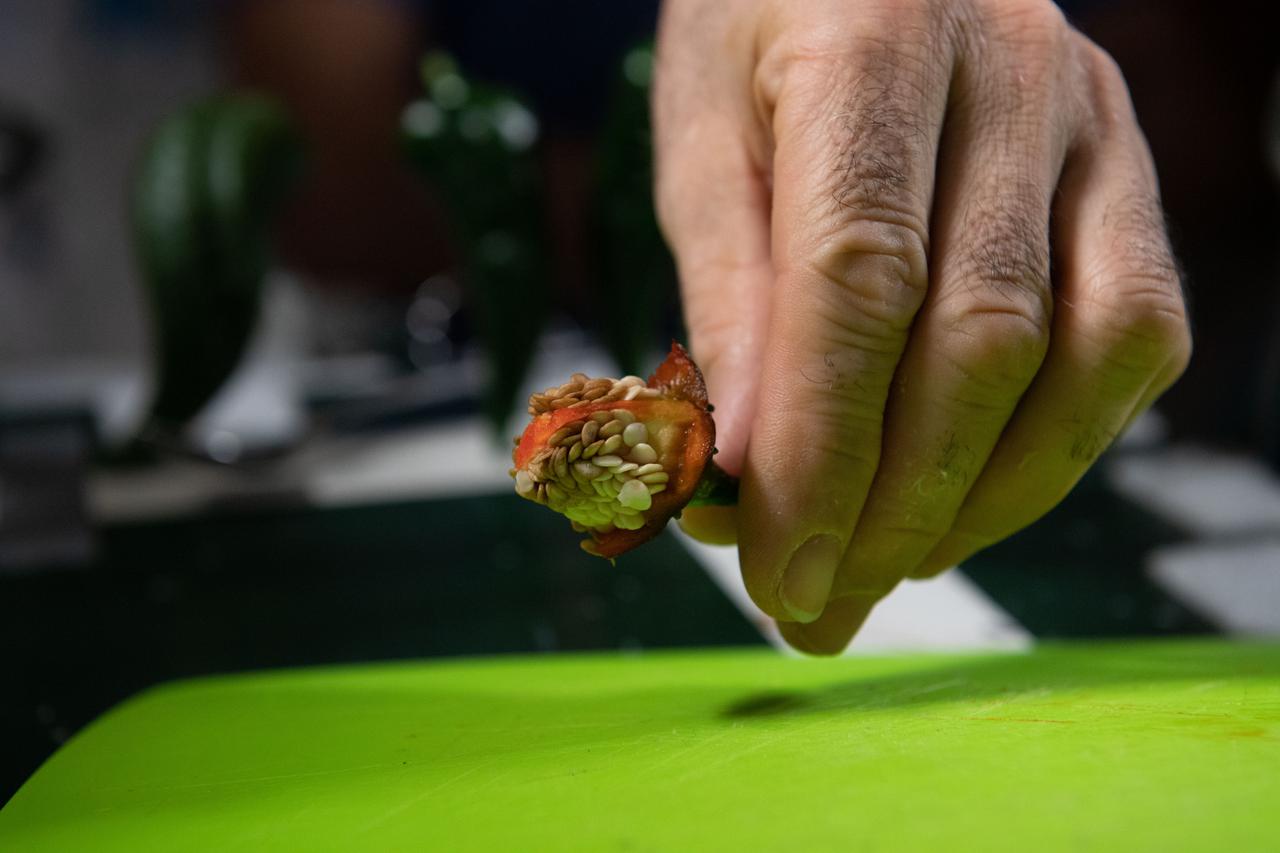
iss066e023185 (October 29, 2021) -- An astronaut cuts slices of red chile pepper during a taste test of chile peppers grown as part of the Plant Habitat-04 investigation aboard the International Space Station. The chile peppers started growing on July 12, 2021, and represent one of the longest and most challenging plant experiments attempted aboard the orbiting laboratory. NASA astronaut Mark Vande Hei conducted the first harvest of the pepper crop on October 29, 2021. Crew members sanitized the peppers and completed a scientific survey after their taste test. The Crew-3 astronauts will take over the crop when they arrive at the orbiting laboratory, and will conduct a final harvest of the peppers in late November. They will also sanitize and sample the crop, and complete surveys. Some peppers from the final harvest and their leaves will return to Earth for further analysis. What we learn will inform future crop growth and food supplementation activities for deep space exploration.
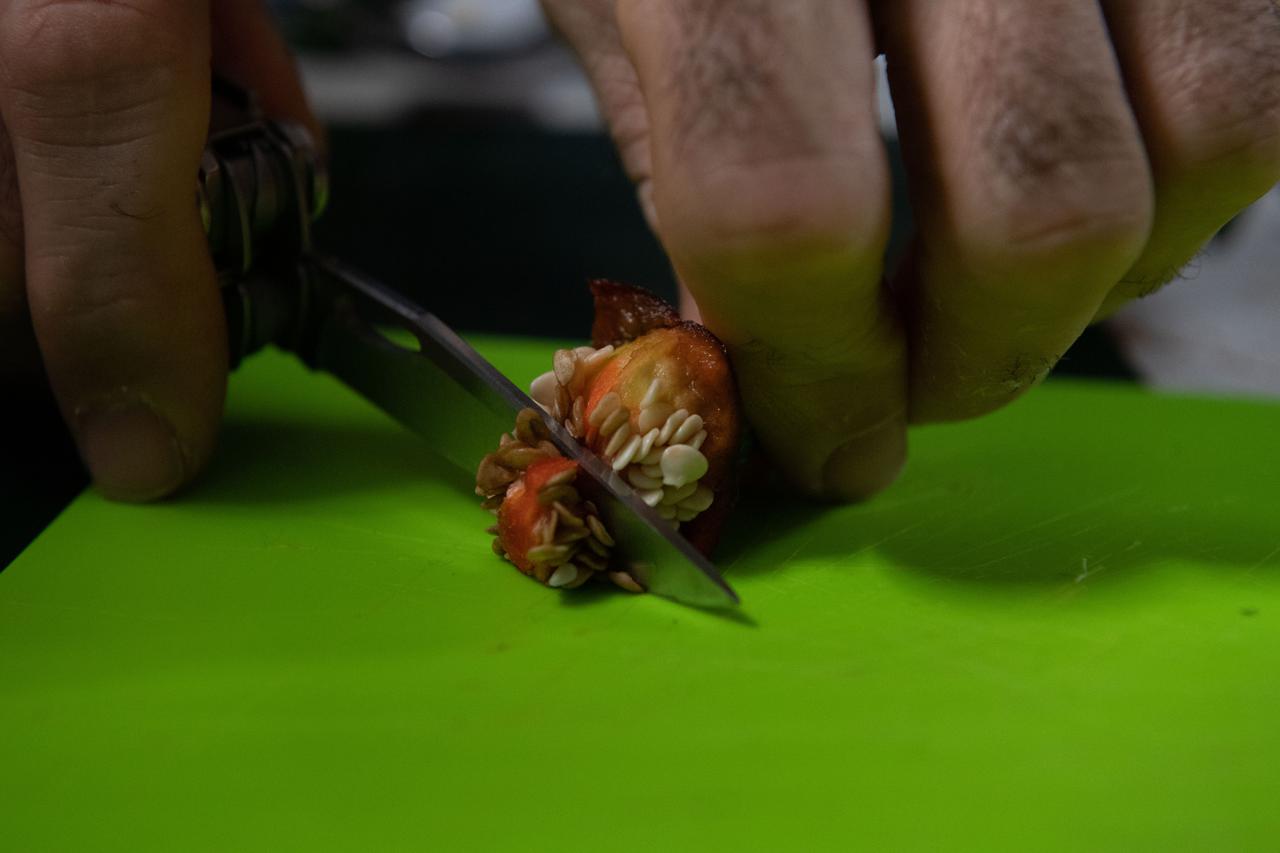
iss066e023187 (October 29, 2021) -- An astronaut cuts slices of red chile pepper during a taste test of chile peppers grown as part of the Plant Habitat-04 investigation aboard the International Space Station. The chile peppers started growing on July 12, 2021, and represent one of the longest and most challenging plant experiments attempted aboard the orbiting laboratory. NASA astronaut Mark Vande Hei conducted the first harvest of the pepper crop on October 29, 2021. Crew members sanitized the peppers and completed a scientific survey after their taste test. The Crew-3 astronauts will take over the crop when they arrive at the orbiting laboratory, and will conduct a final harvest of the peppers in late November. They will also sanitize and sample the crop, and complete surveys. Some peppers from the final harvest and their leaves will return to Earth for further analysis. What we learn will inform future crop growth and food supplementation activities for deep space exploration.
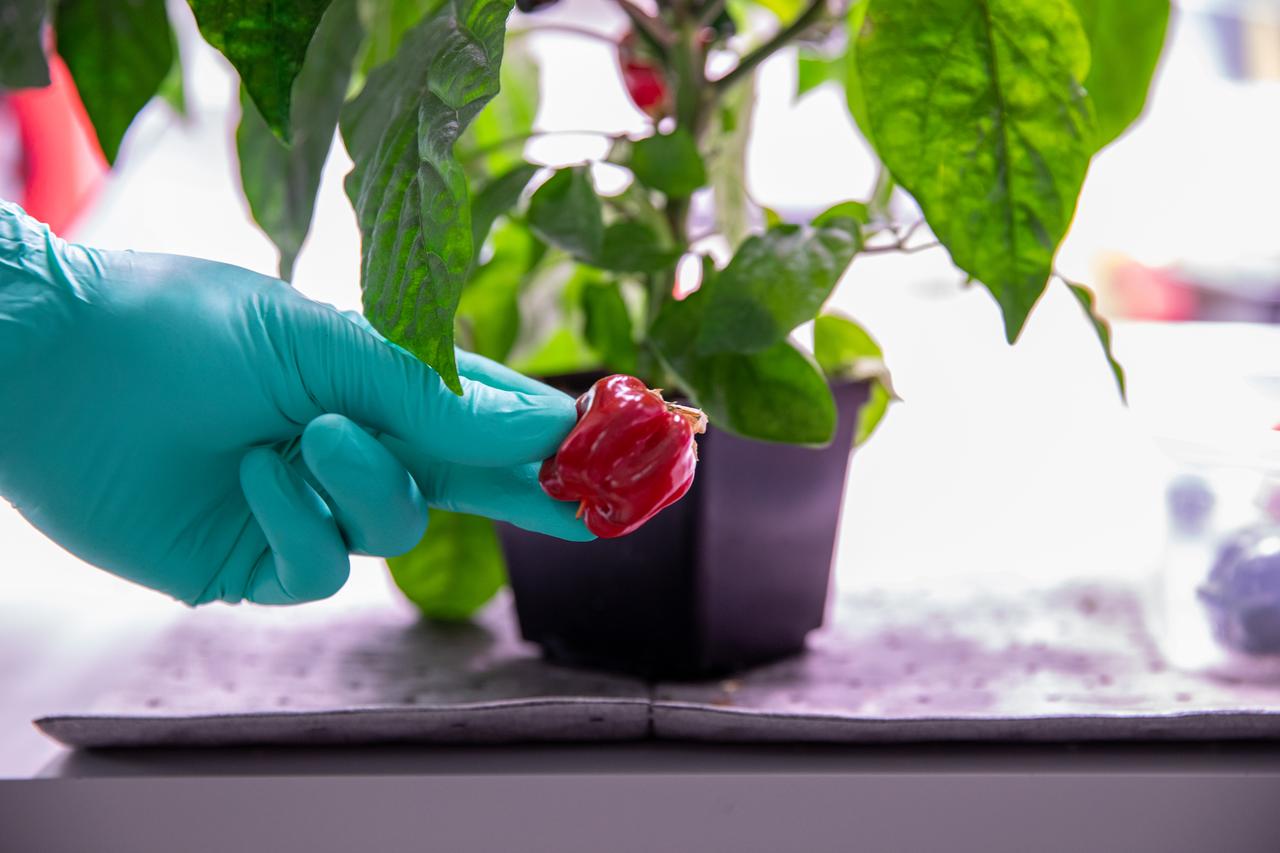
Inside the Space Station Processing Facility at NASA’s Kennedy Space Center in Florida, peppers are harvested on Jan. 15, 2020, for a growth assessment in preparation for sending them to space. As NASA prepares to send humans beyond low-Earth orbit, the ability for astronauts to grow a variety of fresh fruits and vegetables in space will be critical. Fresh produce will be an essential supplement to the crew’s pre-packaged diet during long-duration space exploration when they are away from Earth for extended periods of time.
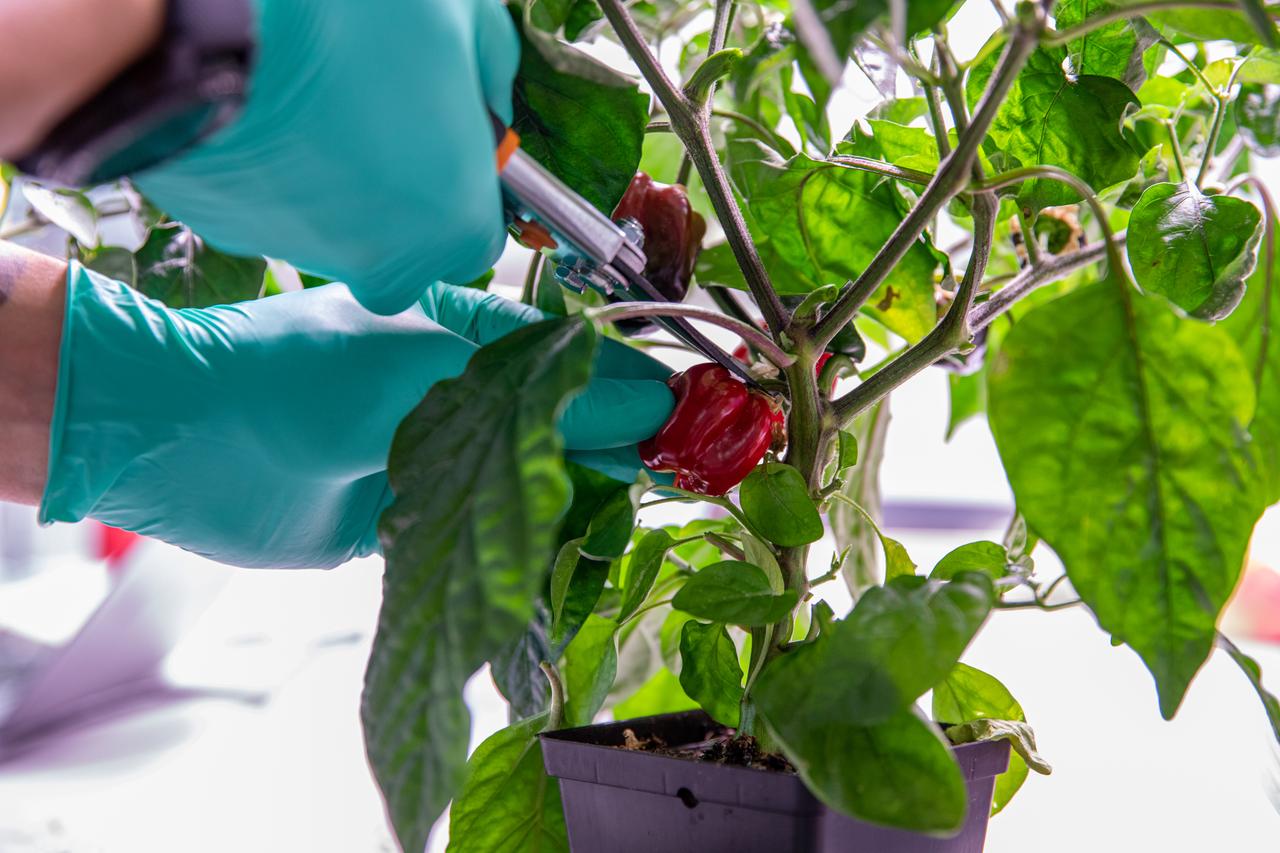
Jason Fischer, a research scientist with the Laboratory Support Services and Operations contract at NASA’s Kennedy Space Center in Florida, observes and documents the growth of peppers prior to harvesting them on Jan. 15, 2020, inside the Space Station Processing Facility in preparation for sending them to space. As NASA prepares to send humans beyond low-Earth orbit, the ability for astronauts to grow a variety of fresh fruits and vegetables in space will be critical. Fresh produce will be an essential supplement to the crew’s pre-packaged diet during long-duration space exploration when they are away from Earth for extended periods of time.

Jason Fischer (left), a research scientist, and Lashelle Spencer, a plant scientist, with the Laboratory Support Services and Operations contract at NASA’s Kennedy Space Center in Florida, observe and document the growth of pepper plants prior to harvesting them on Jan. 15, 2020, inside the Space Station Processing Facility in preparation for sending them to space. As NASA prepares to send humans beyond low-Earth orbit, the ability for astronauts to grow a variety of fresh fruits and vegetables in space will be critical. Fresh produce will be an essential supplement to the crew’s pre-packaged diet during long-duration space exploration when they are away from Earth for extended periods of time.
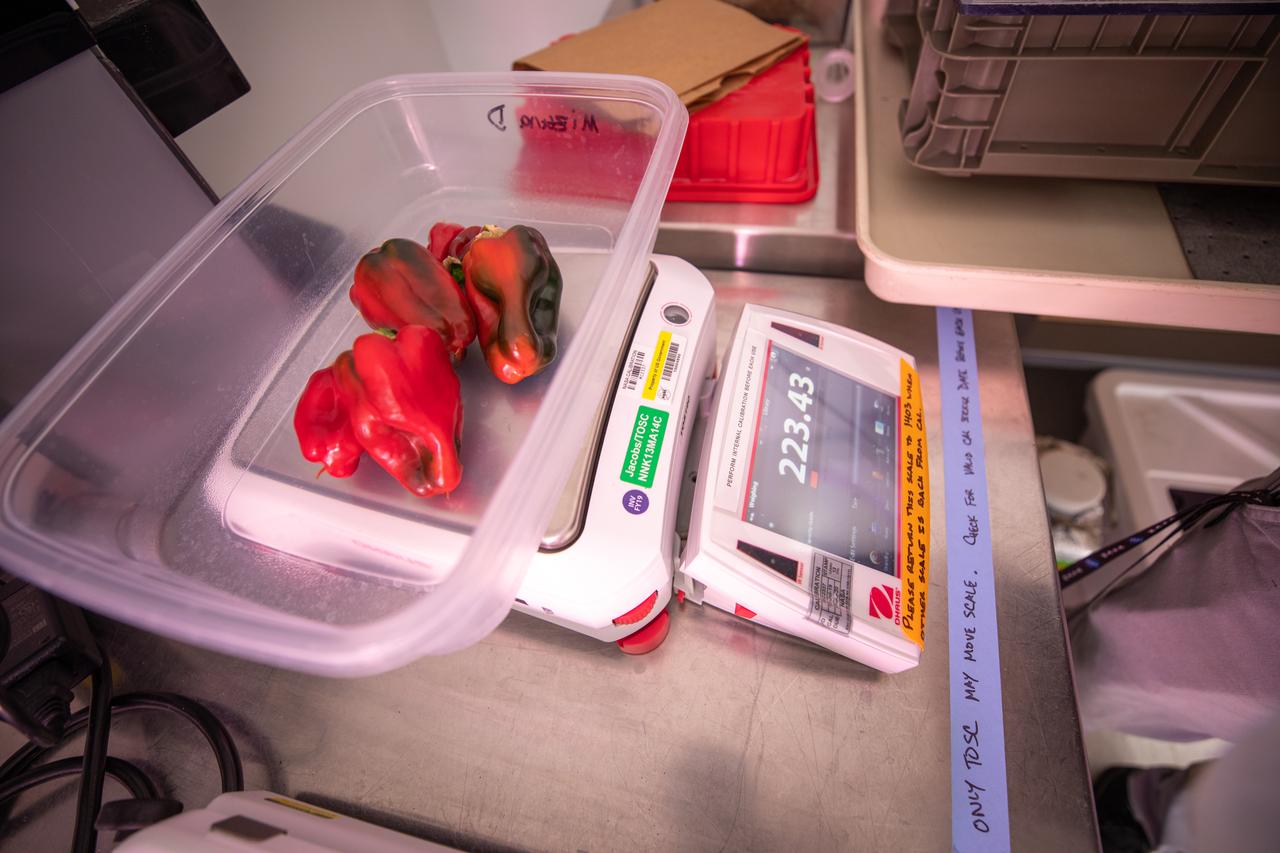
Peppers that were grown and harvested inside the Space Station Processing Facility at NASA’s Kennedy Space Center in Florida are weighed on Jan. 15, 2020, in preparation for sending them to space. As NASA prepares to send humans beyond low-Earth orbit, the ability for astronauts to grow a variety of fresh fruits and vegetables in space will be critical. Fresh produce will be an essential supplement to the crew’s pre-packaged diet during long-duration space exploration when they are away from Earth for extended periods of time.
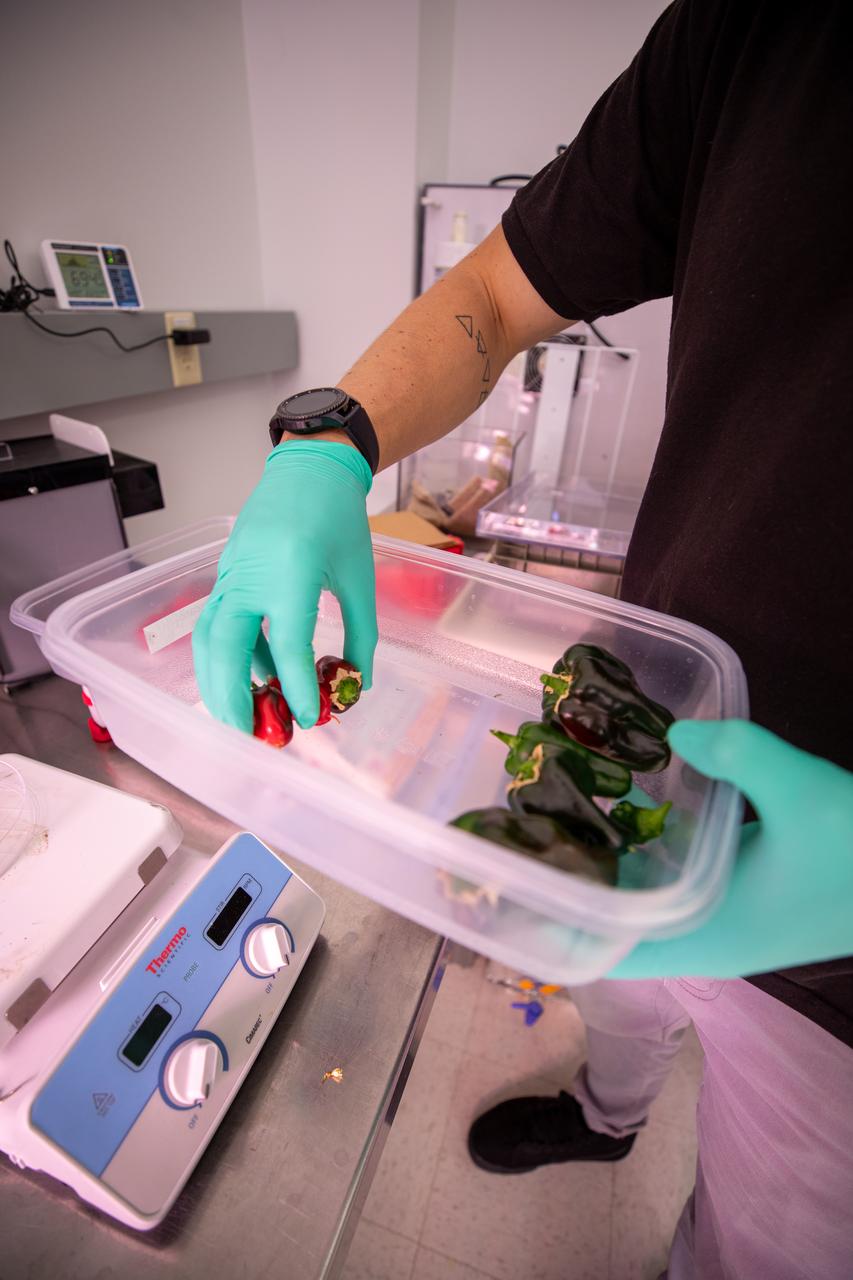
Jason Fischer, a research scientist with the Laboratory Support Services and Operations contract at NASA’s Kennedy Space Center in Florida, weighs peppers that were harvested from inside the Space Station Processing Facility on Jan. 15, 2020, prior to weighing them in preparation for sending them to space. As NASA prepares to send humans beyond low-Earth orbit, the ability for astronauts to grow a variety of fresh fruits and vegetables in space will be critical. Fresh produce will be an essential supplement to the crew’s pre-packaged diet during long-duration space exploration when they are away from Earth for extended periods of time.
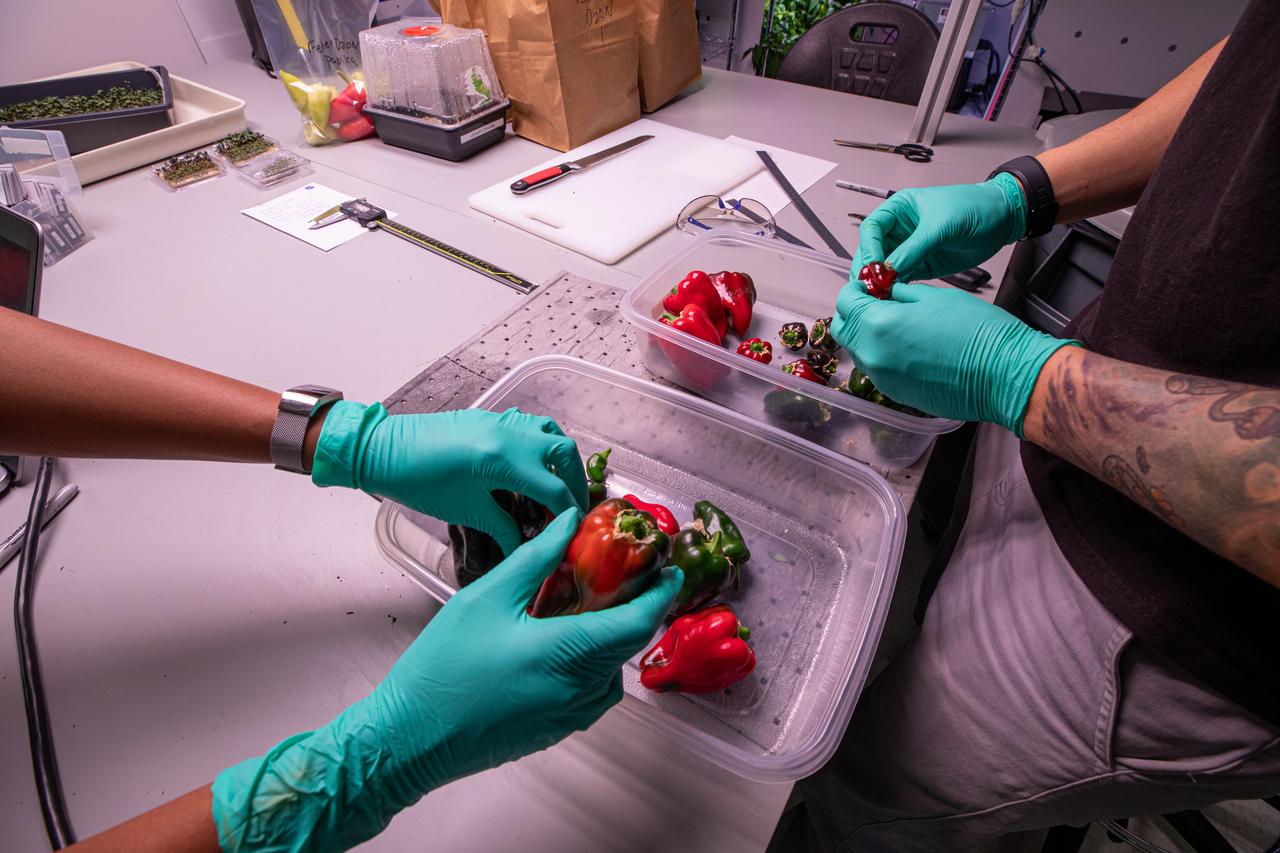
Research scientists at NASA’s Kennedy Space Center in Florida are preparing to weigh peppers grown inside the Space Station Processing Facility on Jan. 15, 2020, during a growth assessment in preparation for sending them to space. Scientists waited until the peppers were red, or nearly all red, before harvesting them. Fresh produce will be an essential supplement to the pre-packaged diet for astronauts during long-duration space exploration when they are away from Earth for extended periods of time.
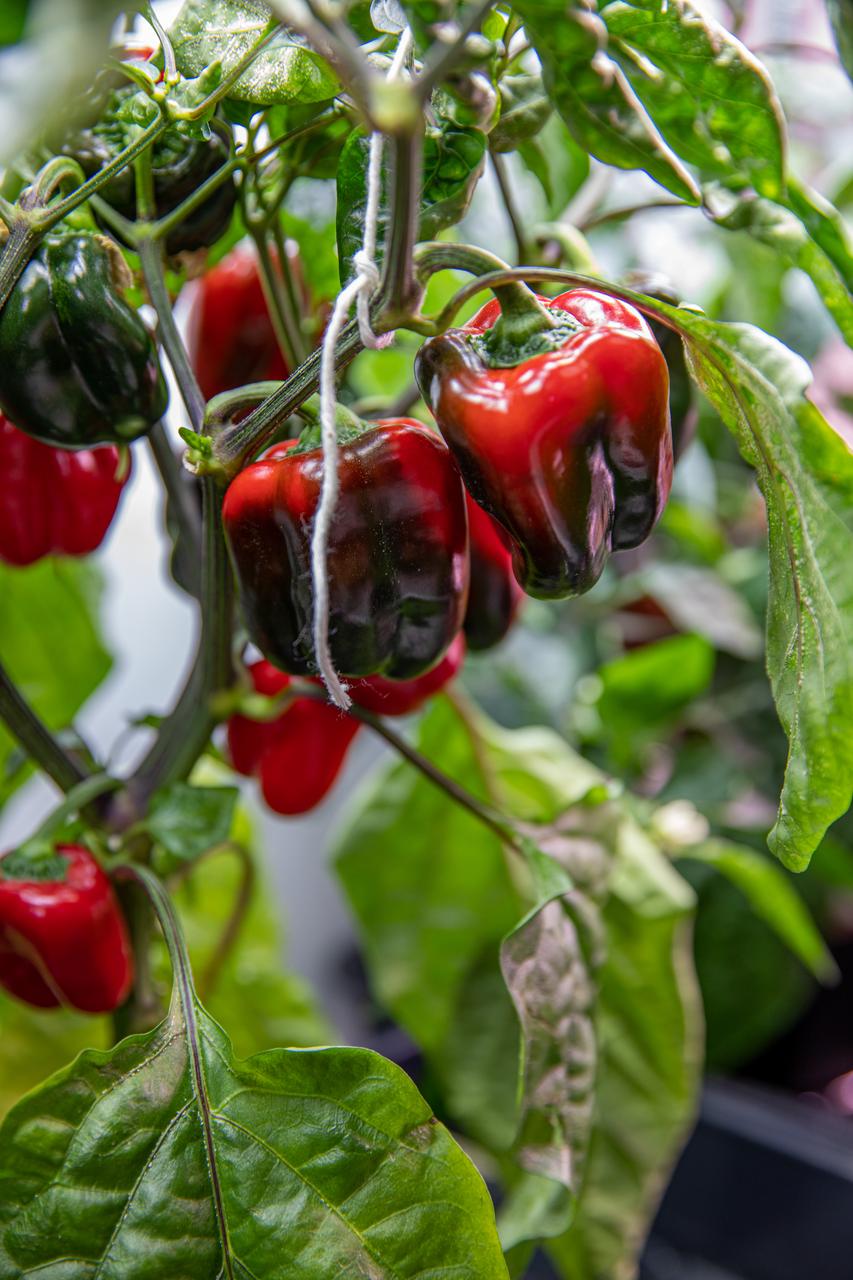
Researchers are growing green peppers inside the Space Station Processing Facility at NASA’s Kennedy Space Center in Florida on Jan. 15, 2020, in preparation for sending them to space. As NASA prepares to send humans beyond low-Earth orbit, the ability for astronauts to grow a variety of fresh fruits and vegetables in space will be critical. Fresh produce will be an essential supplement to the crew’s pre-packaged diet during long-duration space exploration when they are away from Earth for extended periods of time.
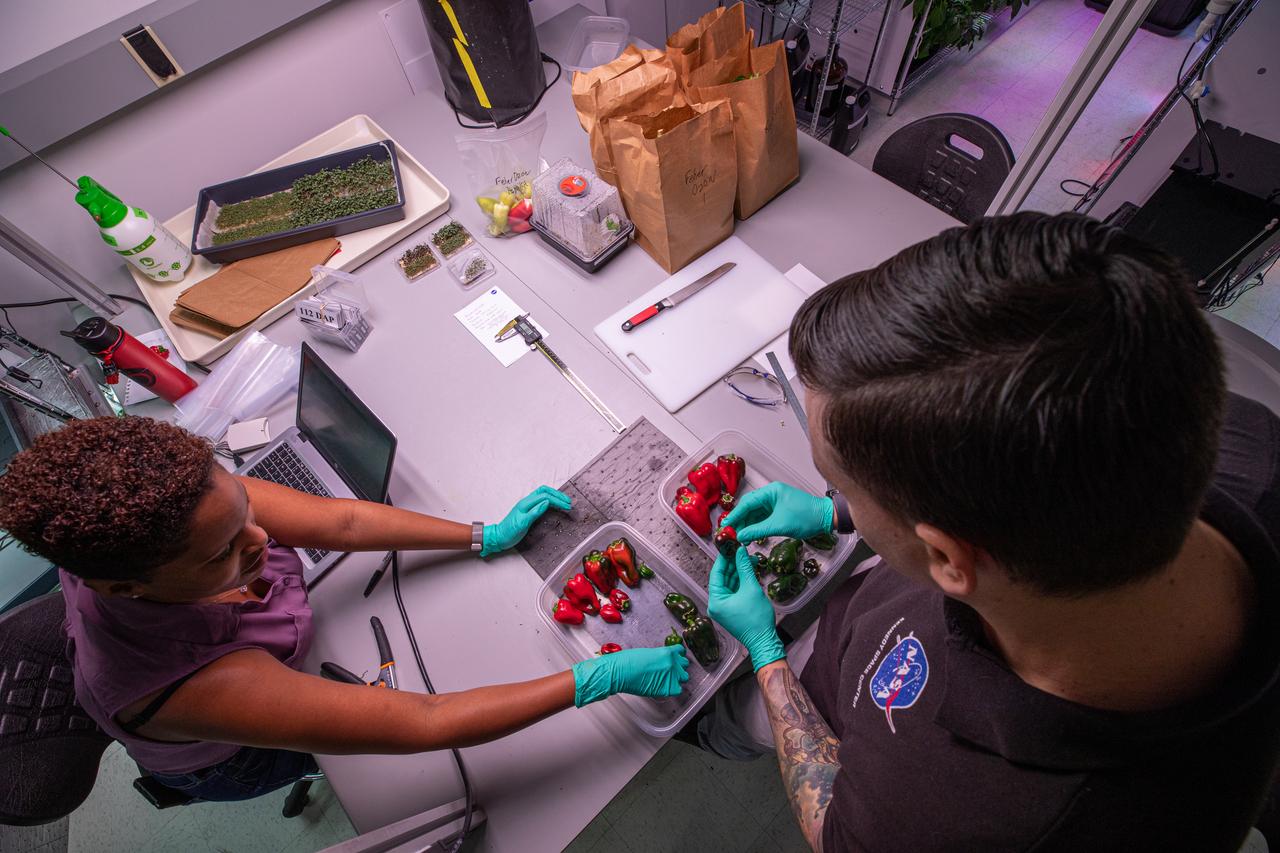
Plant Scientist Lashelle Spencer (left) and Research Scientist Jason Fischer with the Laboratory Support Services and Operations contract at NASA’s Kennedy Space Center in Florida remove the stems from peppers that were grown inside the Space Station Processing Facility on Jan. 15, 2020, prior to weighing them in preparation for sending them to space. As NASA prepares to send humans beyond low-Earth orbit, the ability for astronauts to grow a variety of fresh fruits and vegetables in space will be critical. Fresh produce will be an essential supplement to the crew’s pre-packaged diet during long-duration space exploration when they are away from Earth for extended periods of time.
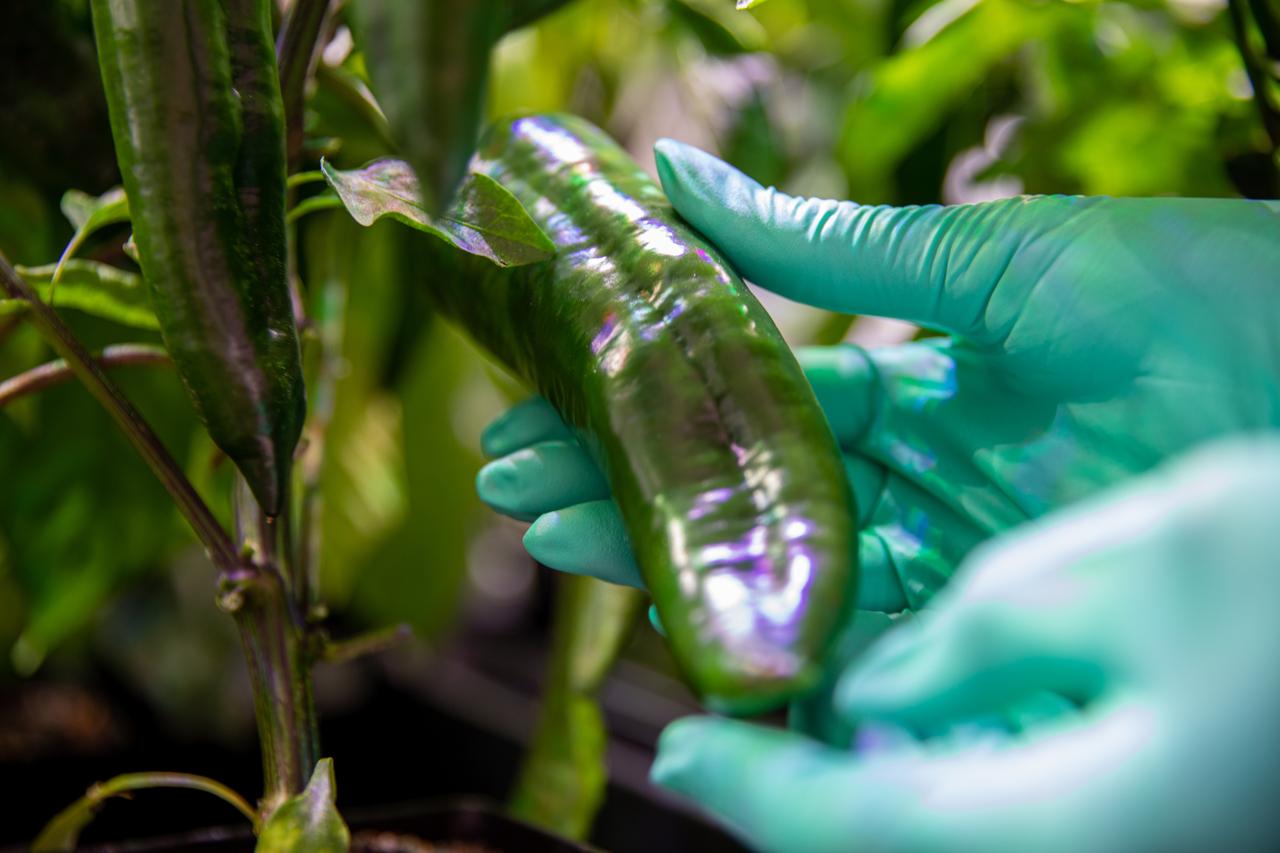
Researchers are growing green peppers inside the Space Station Processing Facility at NASA’s Kennedy Space Center in Florida on Jan. 15, 2020, in preparation for sending them to space. As NASA prepares to send humans beyond low-Earth orbit, the ability for astronauts to grow a variety of fresh fruits and vegetables in space will be critical. Fresh produce will be an essential supplement to the crew’s pre-packaged diet during long-duration space exploration when they are away from Earth for extended periods of time.
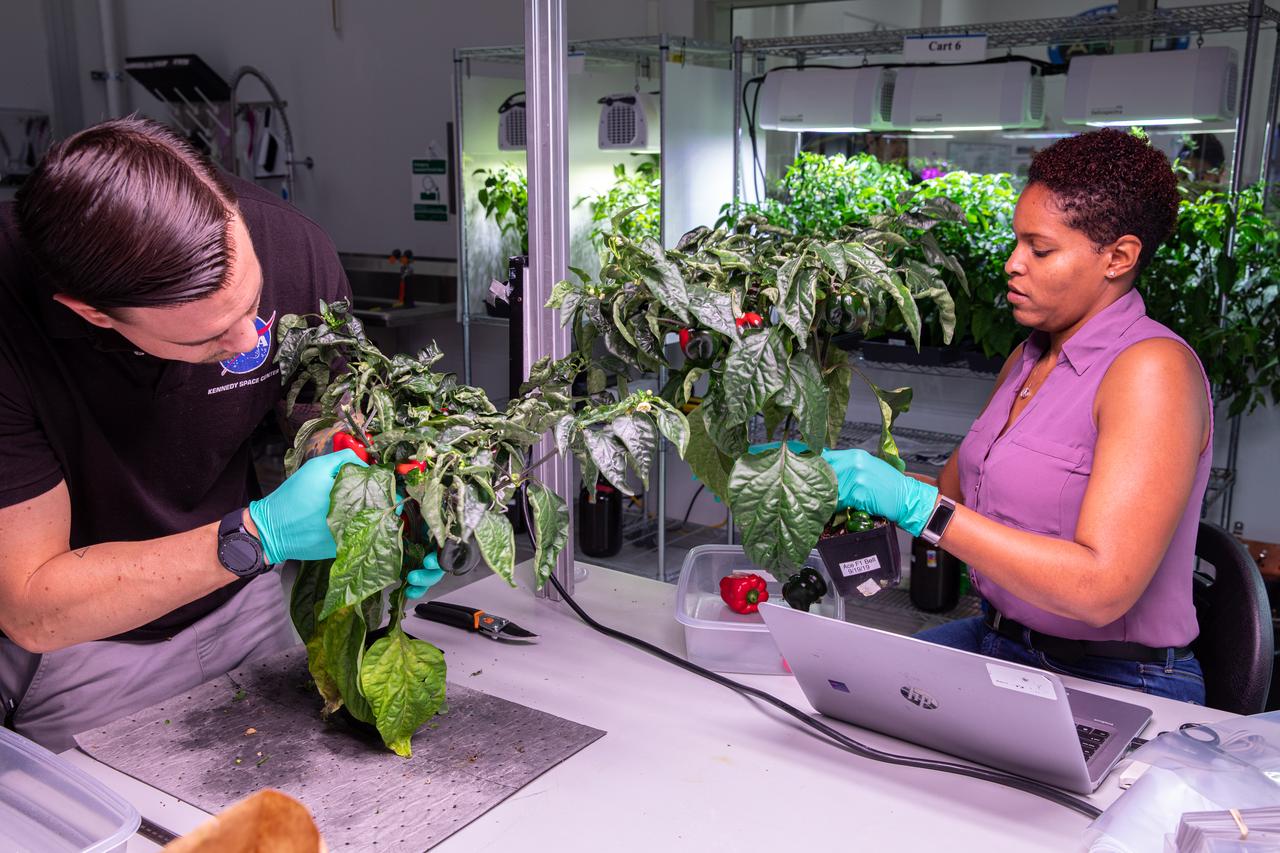
Jason Fischer (left), a research scientist, and Lashelle Spencer, a plant scientist, with the Laboratory Support Services and Operations contract at NASA’s Kennedy Space Center in Florida, harvest peppers from pepper plants on Jan. 15, 2020, that were grown in the Space Station Processing Facility for a growth assessment test in preparation for sending them to space. As NASA prepares to send humans beyond low-Earth orbit, the ability for astronauts to grow a variety of fresh fruits and vegetables in space will be critical. Fresh produce will be an essential supplement to the crew’s pre-packaged diet during long-duration space exploration when they are away from Earth for extended periods of time.
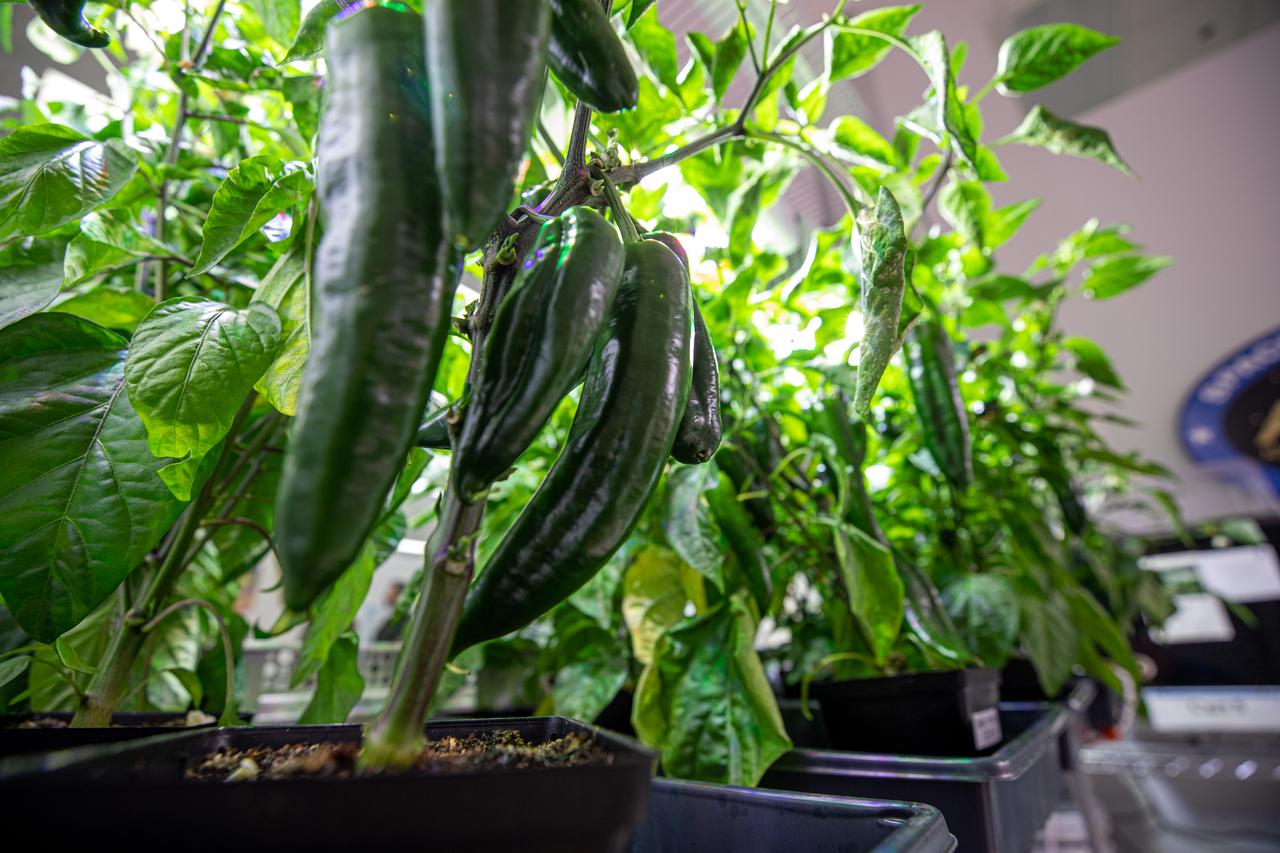
Researchers are growing green peppers inside the Space Station Processing Facility at NASA’s Kennedy Space Center in Florida on Jan. 15, 2020, in preparation for sending them to space. As NASA prepares to send humans beyond low-Earth orbit, the ability for astronauts to grow a variety of fresh fruits and vegetables in space will be critical. Fresh produce will be an essential supplement to the crew’s pre-packaged diet during long-duration space exploration when they are away from Earth for extended periods of time.
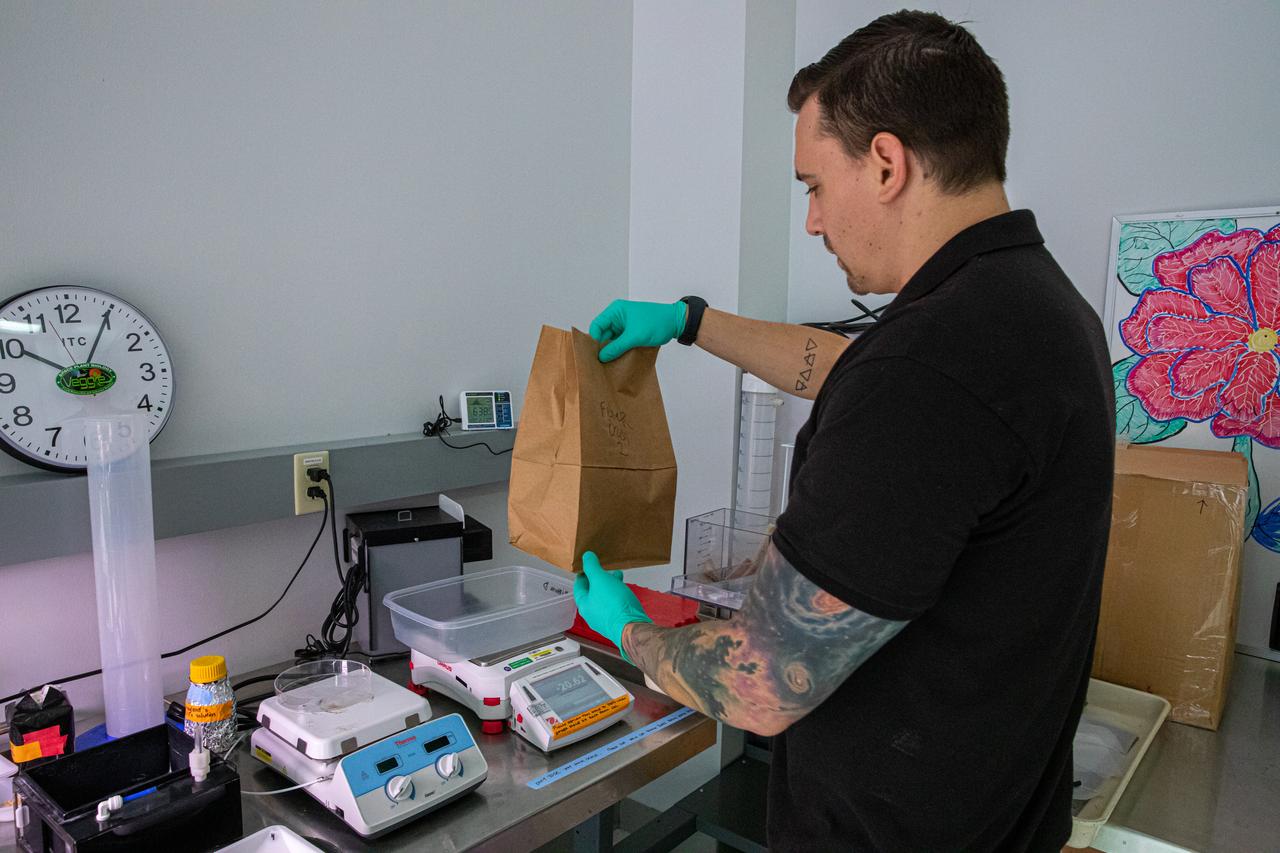
On Jan. 15, 2020, Jason Fischer, a research scientist with the Laboratory Support Services and Operations contract at NASA’s Kennedy Space Center in Florida, prepares to weigh peppers that were grown and harvested inside the Space Station Processing Facility in preparation for sending them to space. As NASA prepares to send humans beyond low-Earth orbit, the ability for astronauts to grow a variety of fresh fruits and vegetables in space will be critical. Fresh produce will be an essential supplement to the crew’s pre-packaged diet during long-duration space exploration when they are away from Earth for extended periods of time.
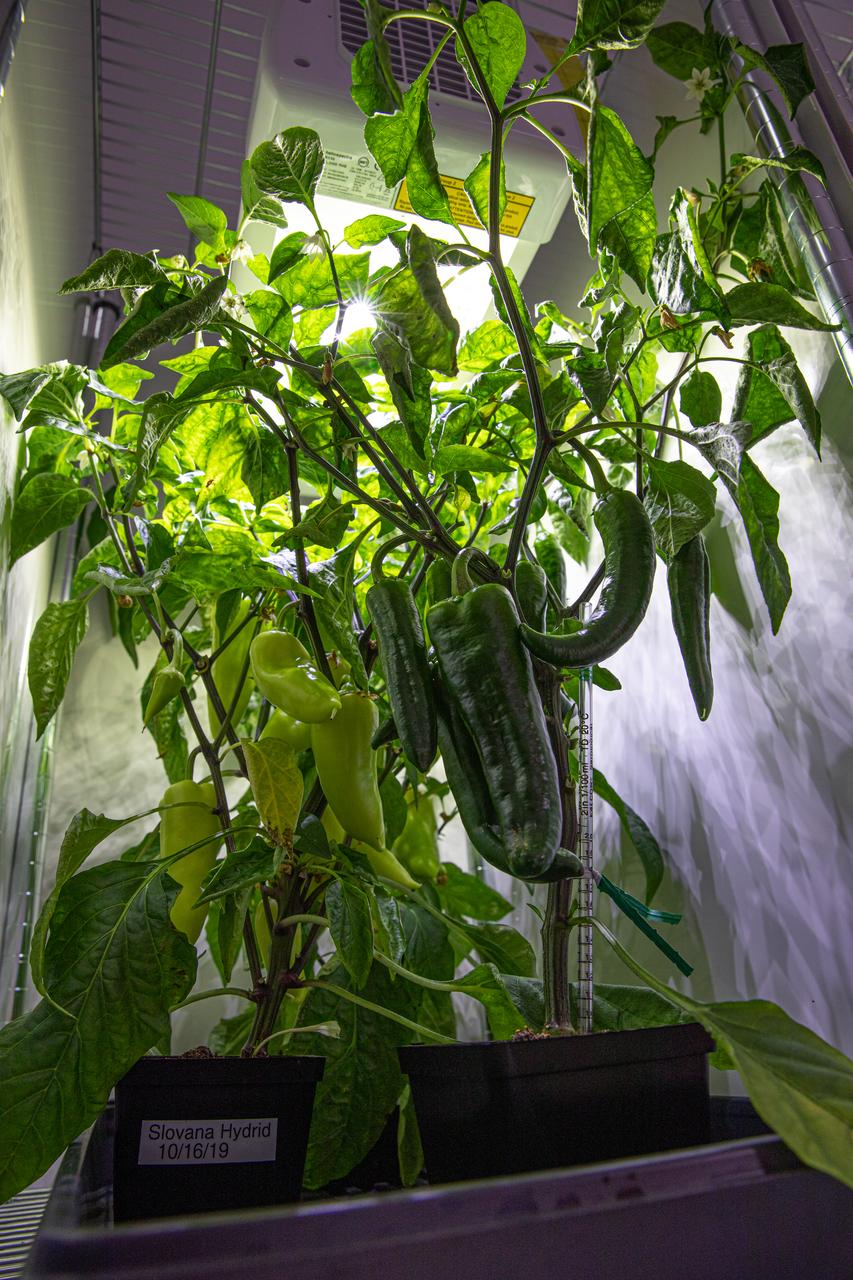
Researchers are growing green peppers inside the Space Station Processing Facility at NASA’s Kennedy Space Center in Florida on Jan. 15, 2020, in preparation for sending them to space. As NASA prepares to send humans beyond low-Earth orbit, the ability for astronauts to grow a variety of fresh fruits and vegetables in space will be critical. Fresh produce will be an essential supplement to the crew’s pre-packaged diet during long-duration space exploration when they are away from Earth for extended periods of time.
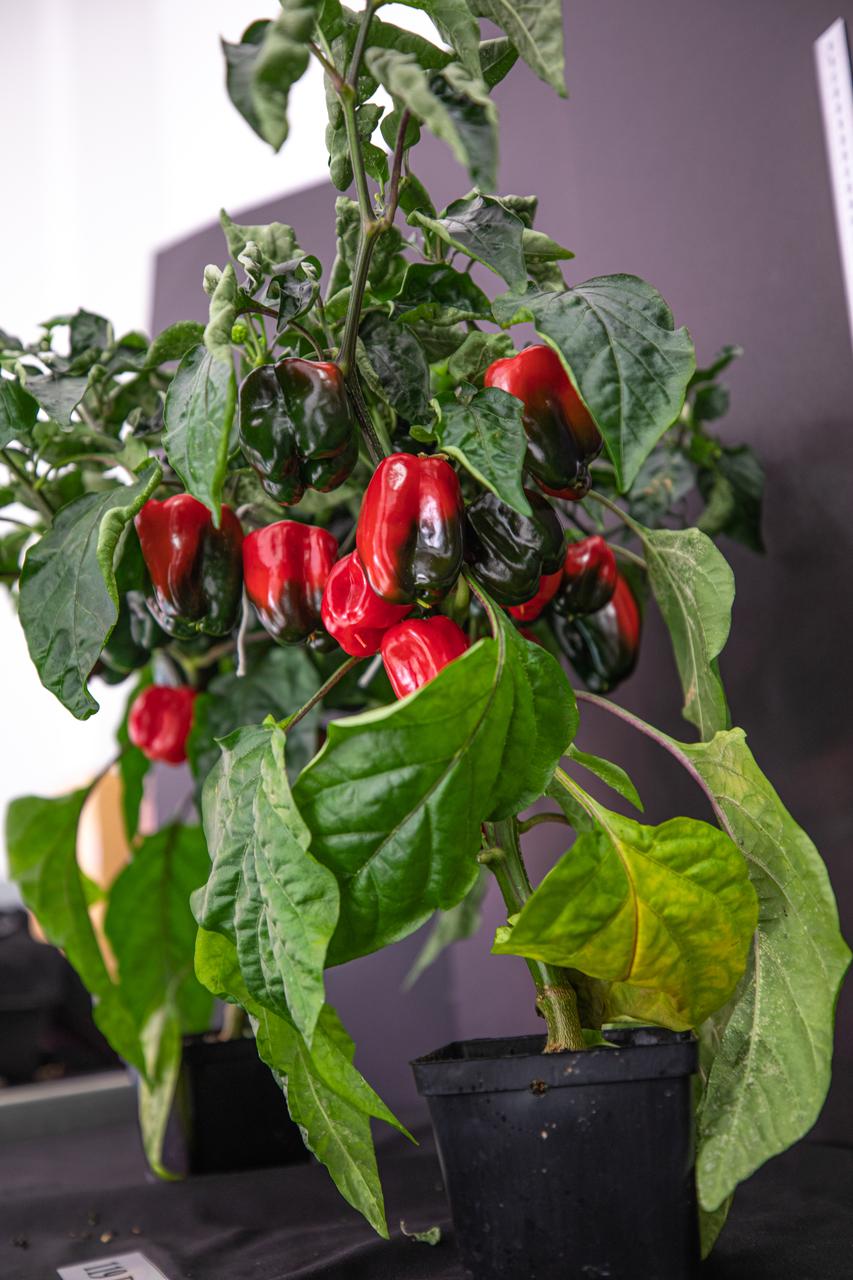
Researchers are growing green peppers inside the Space Station Processing Facility at NASA’s Kennedy Space Center in Florida on Jan. 15, 2020, in preparation for sending them to space. As NASA prepares to send humans beyond low-Earth orbit, the ability for astronauts to grow a variety of fresh fruits and vegetables in space will be critical. Fresh produce will be an essential supplement to the crew’s pre-packaged diet during long-duration space exploration when they are away from Earth for extended periods of time.
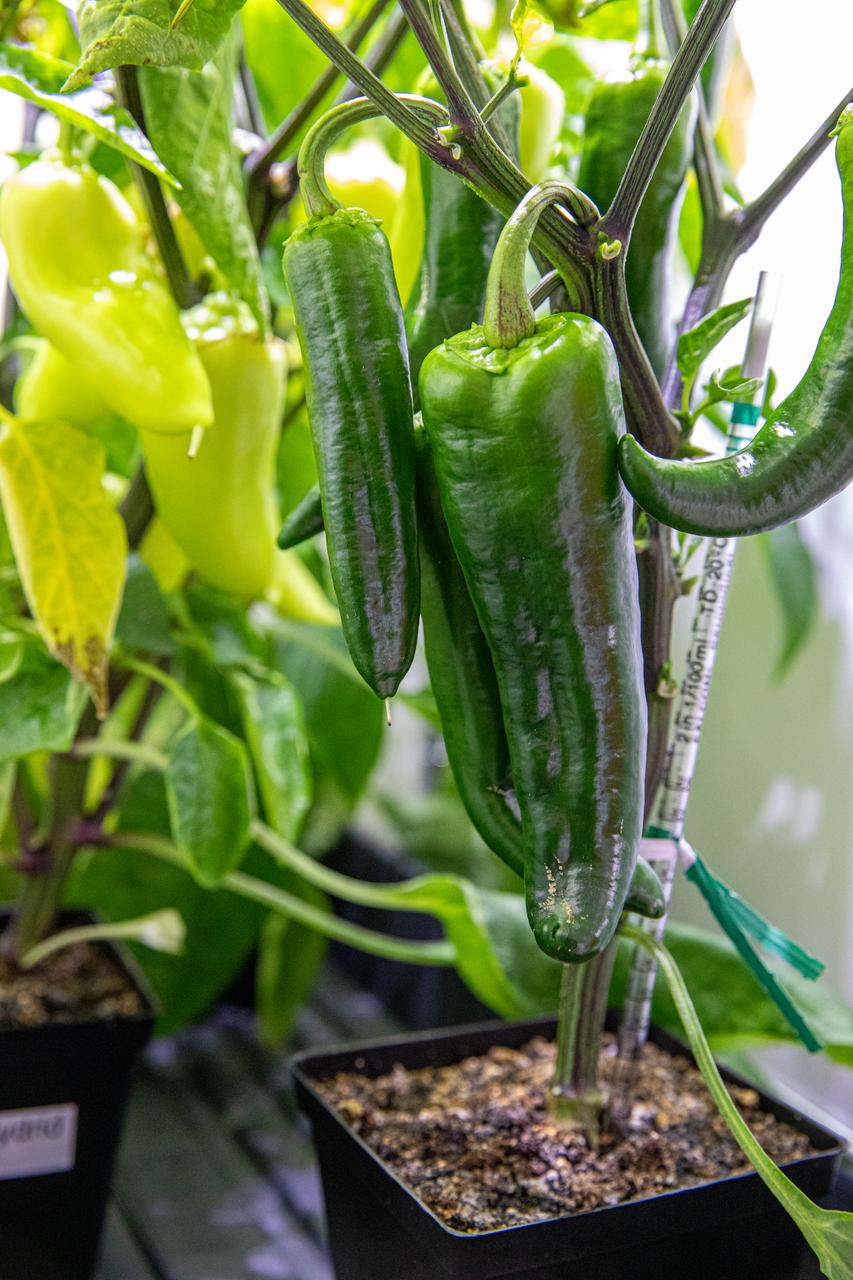
Researchers are growing green peppers inside the Space Station Processing Facility at NASA’s Kennedy Space Center in Florida on Jan. 15, 2020, in preparation for sending them to space. As NASA prepares to send humans beyond low-Earth orbit, the ability for astronauts to grow a variety of fresh fruits and vegetables in space will be critical. Fresh produce will be an essential supplement to the crew’s pre-packaged diet during long-duration space exploration when they are away from Earth for extended periods of time.
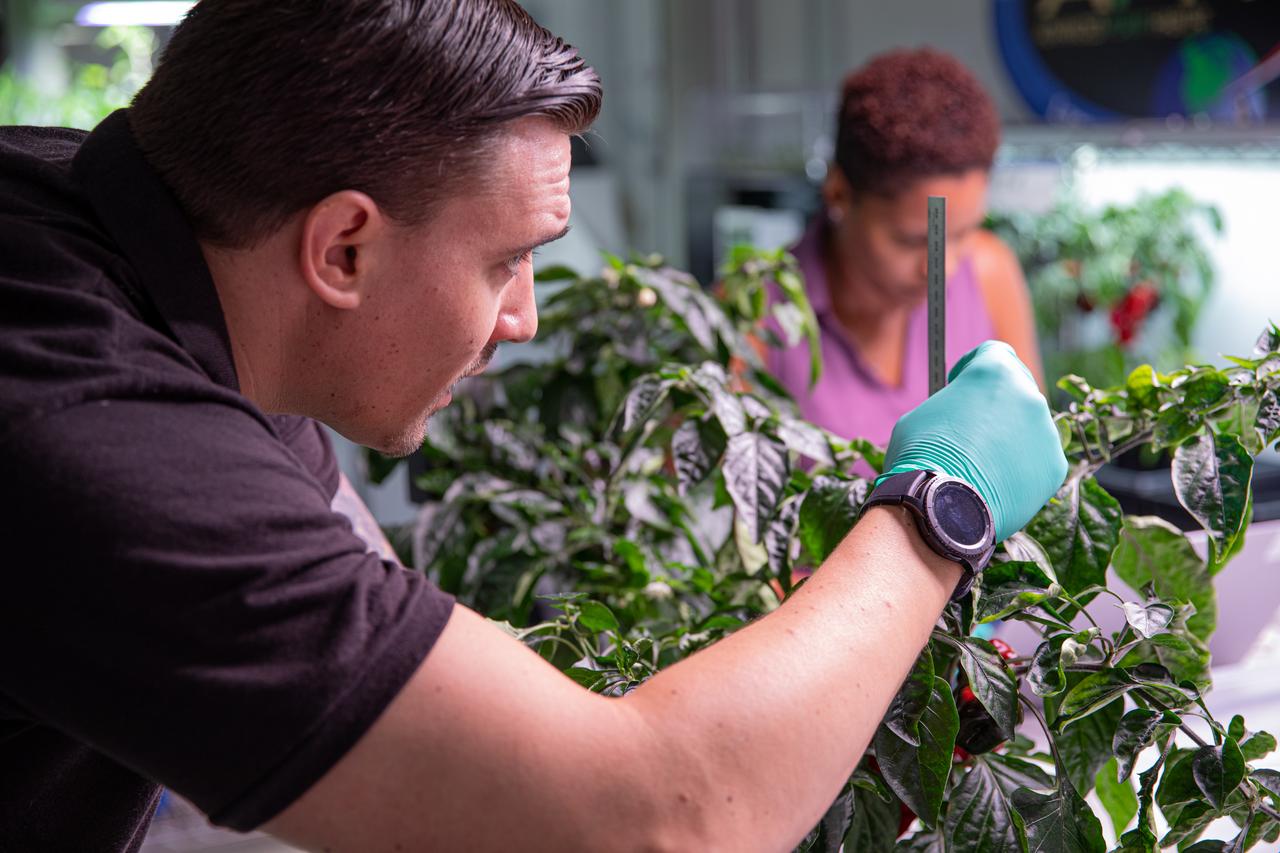
Jason Fischer (left), a research scientist, and Lashelle Spencer, a plant scientist, with the Laboratory Support Services and Operations contract at NASA’s Kennedy Space Center in Florida, observe and document the growth of pepper plants prior to harvesting them on Jan. 15, 2020, inside the Space Station Processing in preparation for sending them to space. As NASA prepares to send humans beyond low-Earth orbit, the ability for astronauts to grow a variety of fresh fruits and vegetables in space will be critical. Fresh produce will be an essential supplement to the crew’s pre-packaged diet during long-duration space exploration when they are away from Earth for extended periods of time.
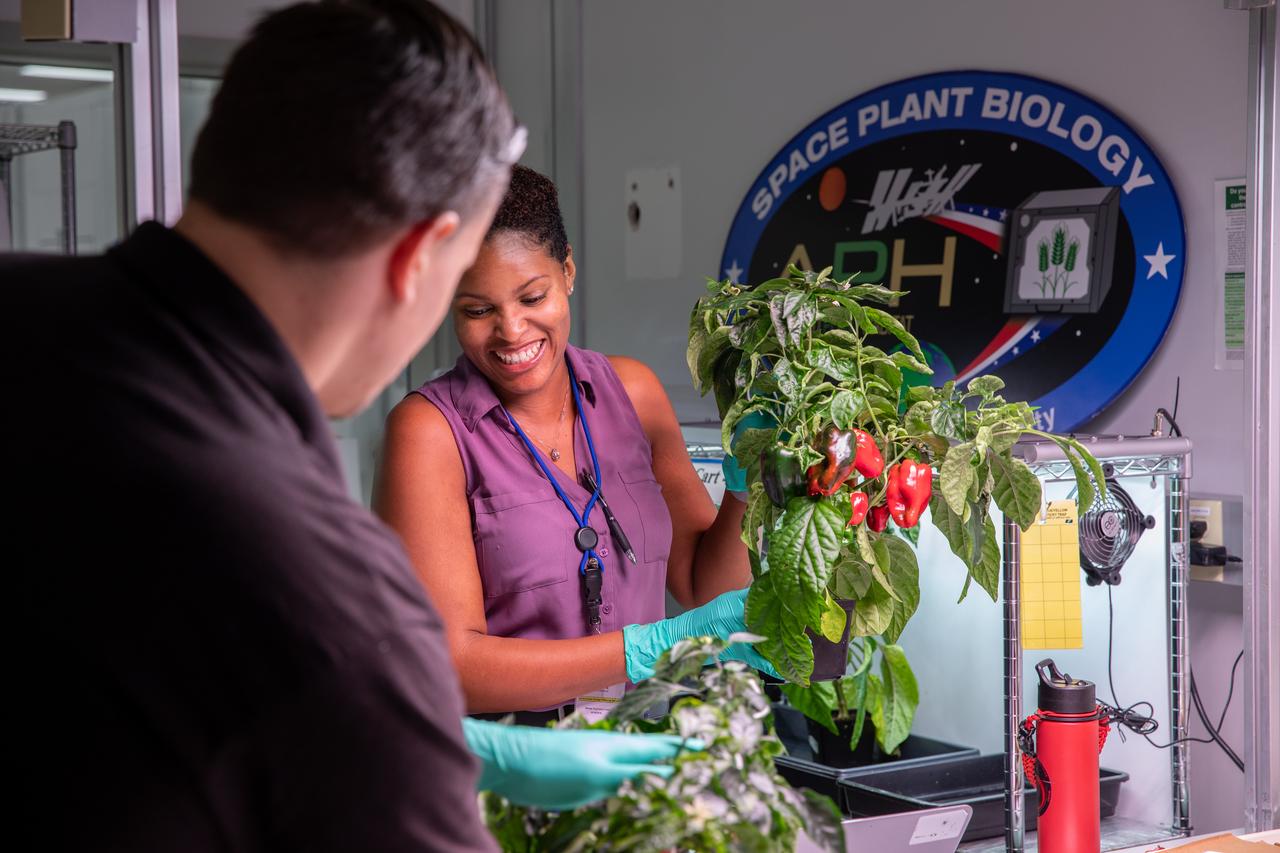
Jason Fischer (left), a research scientist, and Lashelle Spencer, a plant scientist, with the Laboratory Support Services and Operations contract at NASA’s Kennedy Space Center in Florida, harvest peppers from pepper plants on Jan. 15, 2020, that were grown in the Space Station Processing Facility for a growth assessment in preparation for sending them to space. As NASA prepares to send humans beyond low-Earth orbit, the ability for astronauts to grow a variety of fresh fruits and vegetables in space will be critical. Fresh produce will be an essential supplement to the crew’s pre-packaged diet during long-duration space exploration when they are away from Earth for extended periods of time.
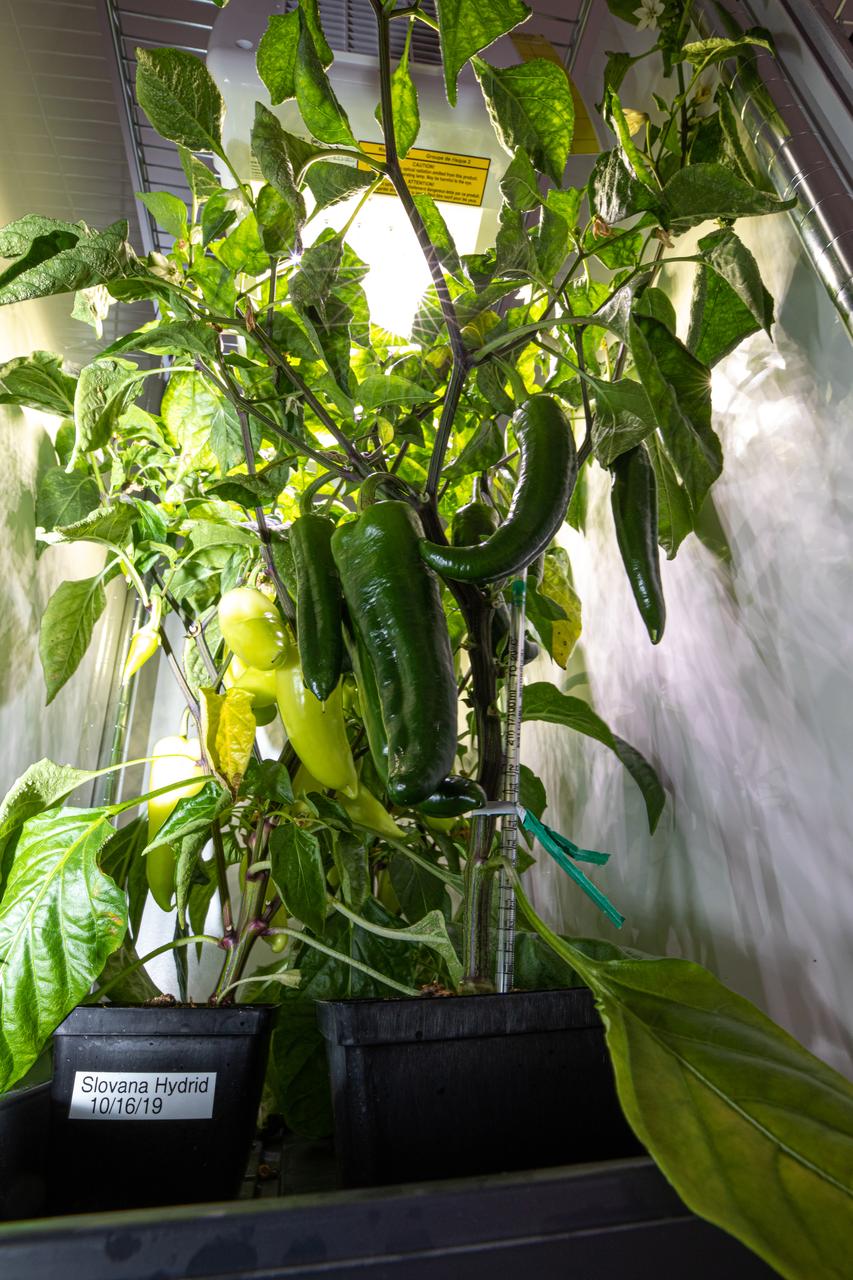
Researchers are growing green peppers inside the Space Station Processing Facility at NASA’s Kennedy Space Center in Florida on Jan. 15, 2020, in preparation for sending them to space. As NASA prepares to send humans beyond low-Earth orbit, the ability for astronauts to grow a variety of fresh fruits and vegetables in space will be critical. Fresh produce will be an essential supplement to the crew’s pre-packaged diet during long-duration space exploration when they are away from Earth for extended periods of time.
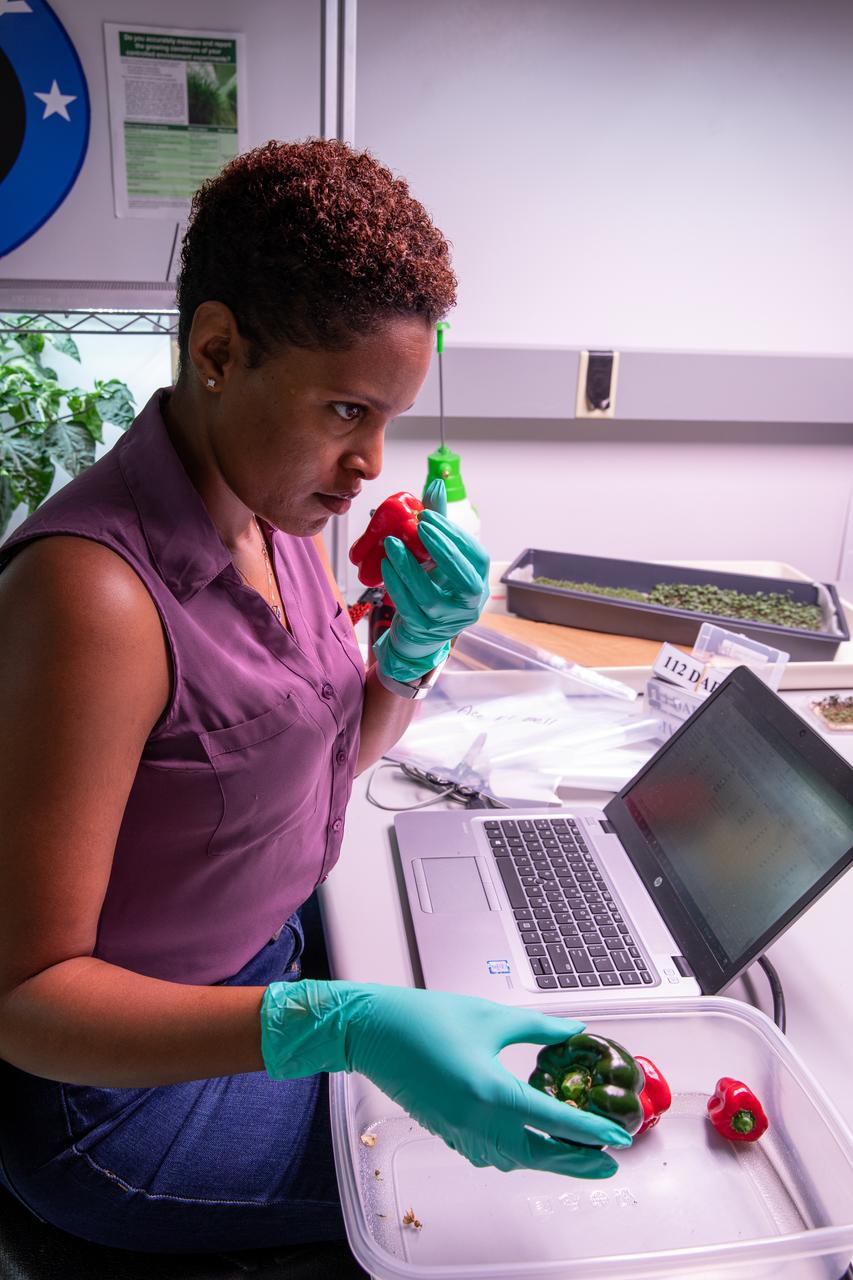
Lashelle Spencer, a plant scientist with the Laboratory Support Services and Operations contract at NASA’s Kennedy Space Center in Florida, observes and documents the growth of peppers after harvesting them on Jan. 15, 2020, inside the Space Station Processing Facility. As NASA prepares to send humans beyond low-Earth orbit, the ability for astronauts to grow a variety of fresh fruits and vegetables in space will be critical. Fresh produce will be an essential supplement to the crew’s pre-packaged diet during long-duration space exploration when they are away from Earth for extended periods of time.
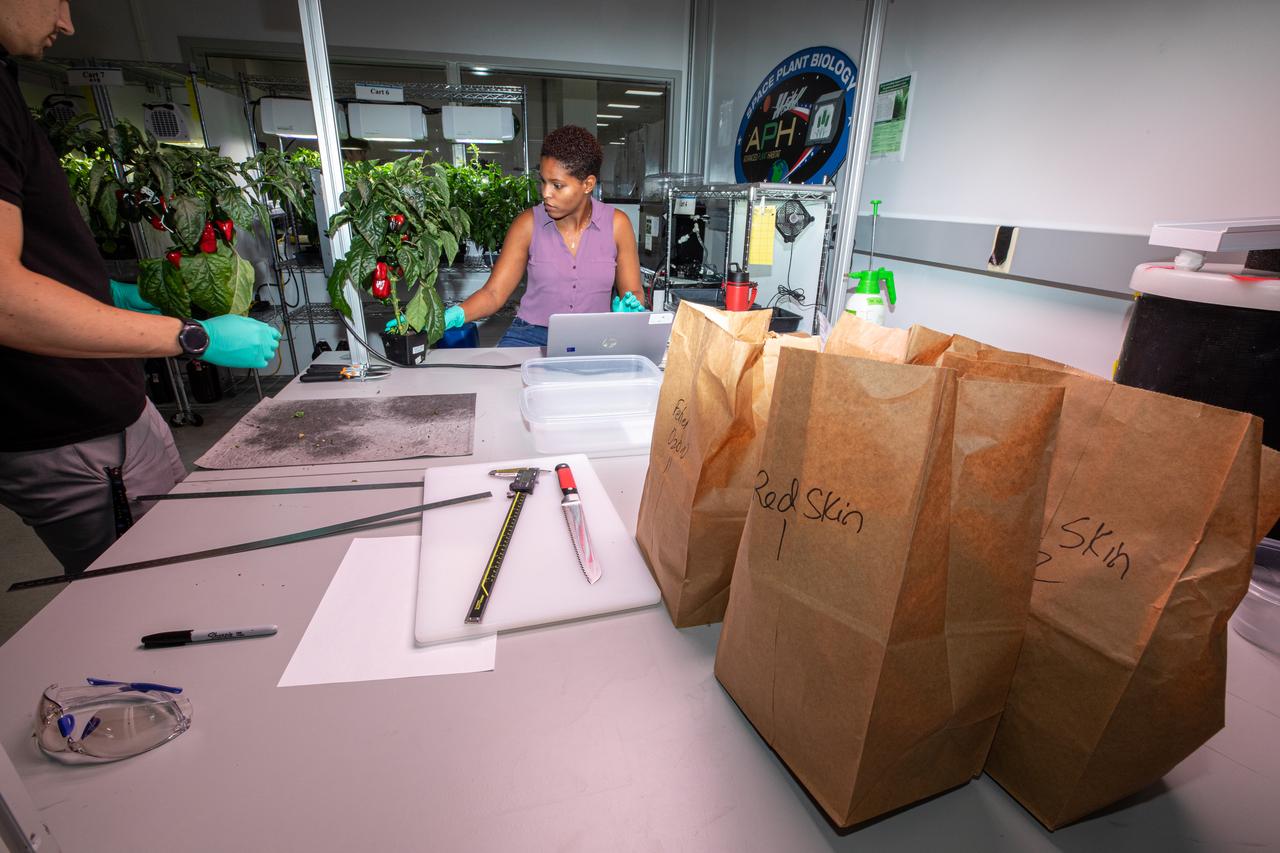
Lashelle Spencer (center), a plant scientist with the Laboratory Support Services and Operations contract at NASA’s Kennedy Space Center in Florida, harvests peppers from a pepper plant on Jan. 15, 2020, that was grown in the Space Station Processing Facility in preparation for sending them to space. As NASA prepares to send humans beyond low-Earth orbit, the ability for astronauts to grow a variety of fresh fruits and vegetables in space will be critical. Fresh produce will be an essential supplement to the crew’s pre-packaged diet during long-duration space exploration when they are away from Earth for extended periods of time.
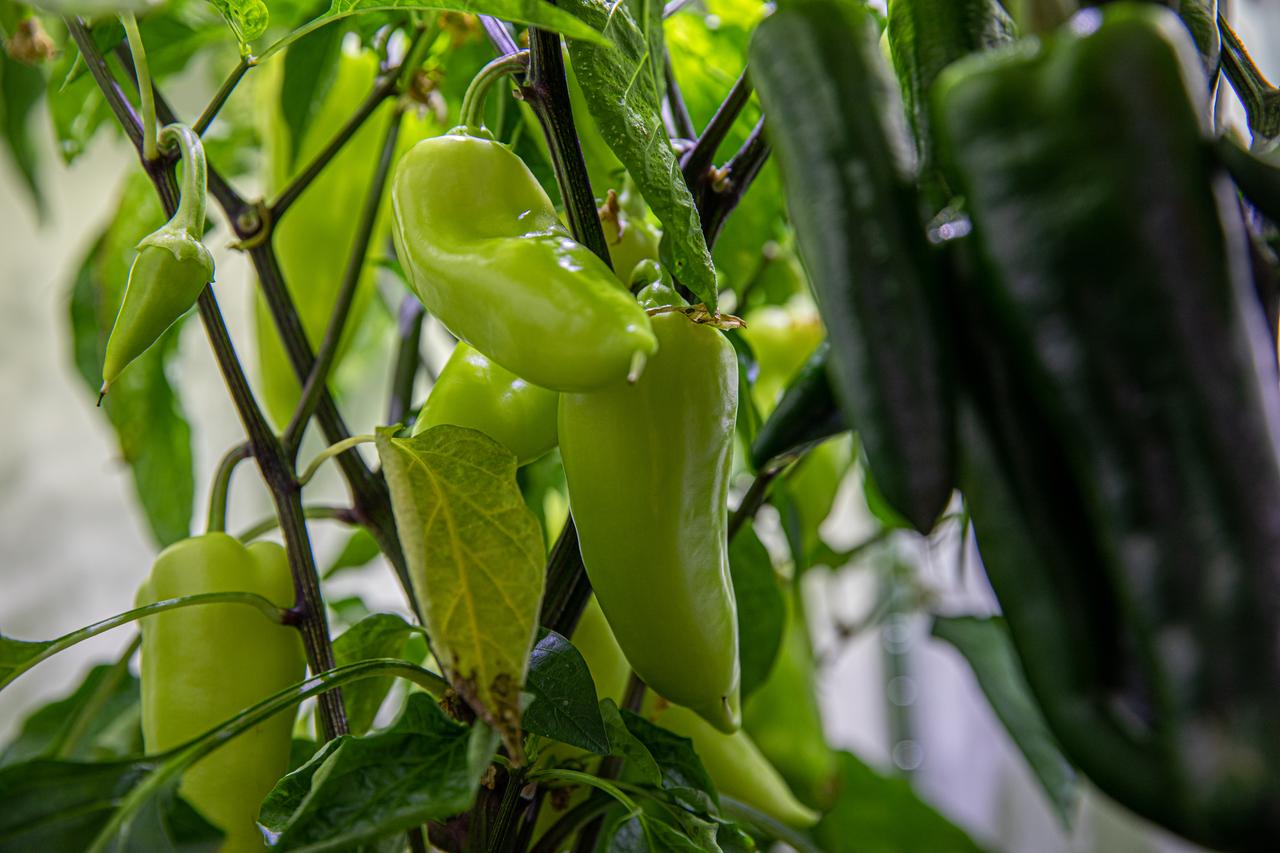
Researchers are growing green peppers inside the Space Station Processing Facility at NASA’s Kennedy Space Center in Florida on Jan. 15, 2020, in preparation for sending them to space. As NASA prepares to send humans beyond low-Earth orbit, the ability for astronauts to grow a variety of fresh fruits and vegetables in space will be critical. Fresh produce will be an essential supplement to the crew’s pre-packaged diet during long-duration space exploration when they are away from Earth for extended periods of time.
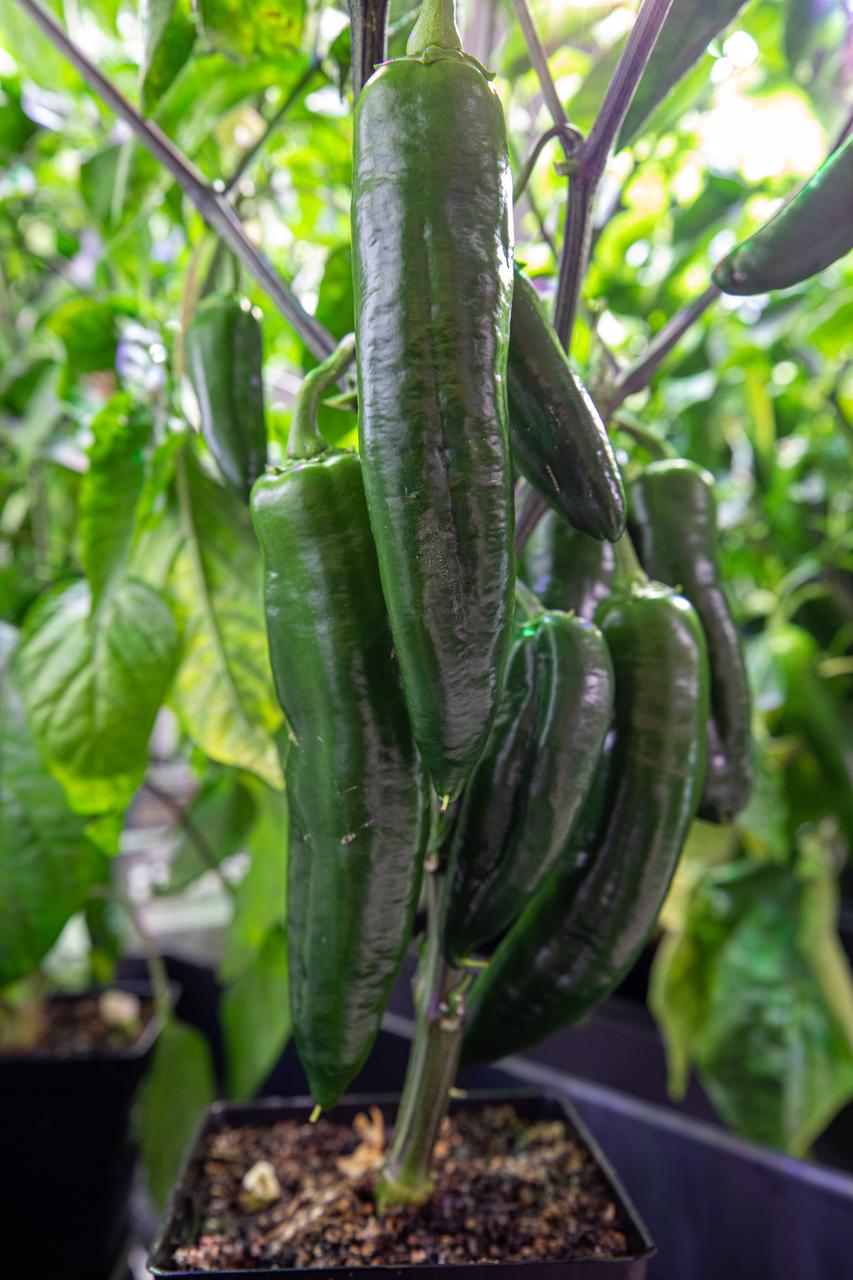
Researchers are growing green peppers inside the Space Station Processing Facility at NASA’s Kennedy Space Center in Florida on Jan. 15, 2020, in preparation for sending them to space. As NASA prepares to send humans beyond low-Earth orbit, the ability for astronauts to grow a variety of fresh fruits and vegetables in space will be critical. Fresh produce will be an essential supplement to the crew’s pre-packaged diet during long-duration space exploration when they are away from Earth for extended periods of time.
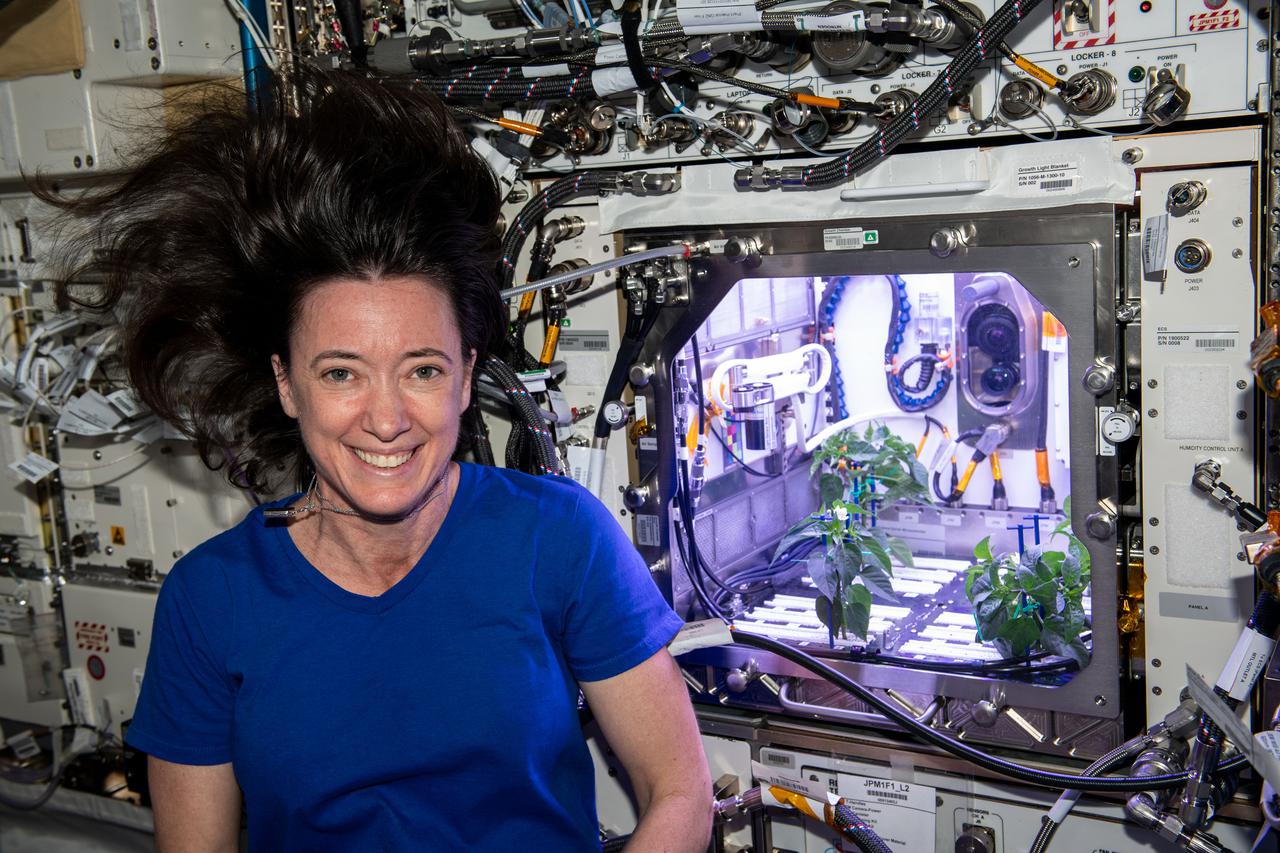
iss065e346115 (September 2, 2021) -- NASA astronaut and Expedition 65 Flight Engineer Megan McArthur poses with the crop of chile peppers being grown as part of the Plant Habitat-04 investigation inside the Advanced Plant Habitat (APH) aboard the International Space Station. This is the first time chile peppers are being grown aboard the orbiting laboratory, and are one of the most complex plant experiments on the station to date because of the long germination and growing times. The pepper seeds were activated on July 12. 2021 and will grow for about four months, during which time they will be harvested twice. Astronauts will sample some of the peppers and return the rest to Earth for scientific analysis.
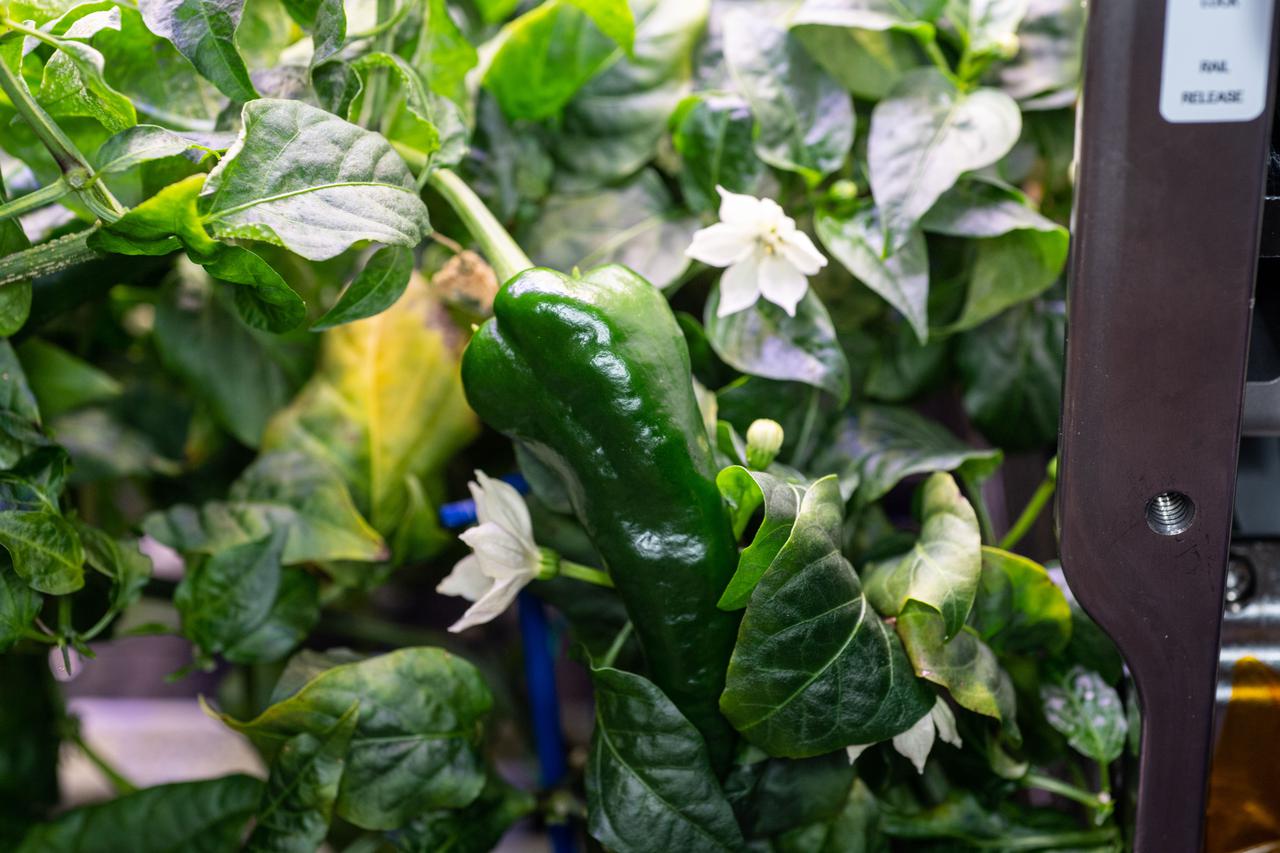
iss066e006170 (October 20, 2021) -- A view of a green chile pepper being grown as part of the Plant Habitat-04 investigation aboard the International Space Station. This is the first time chile peppers are being grown aboard the orbiting laboratory, and are one of the most complex plant experiments on the station to date because of the long germination and growing times. The pepper seeds were activated on July 12. 2021 and will grow for about four months, during which time they will be harvested twice. Astronauts will sample some of the peppers and return the rest to Earth for scientific analysis.
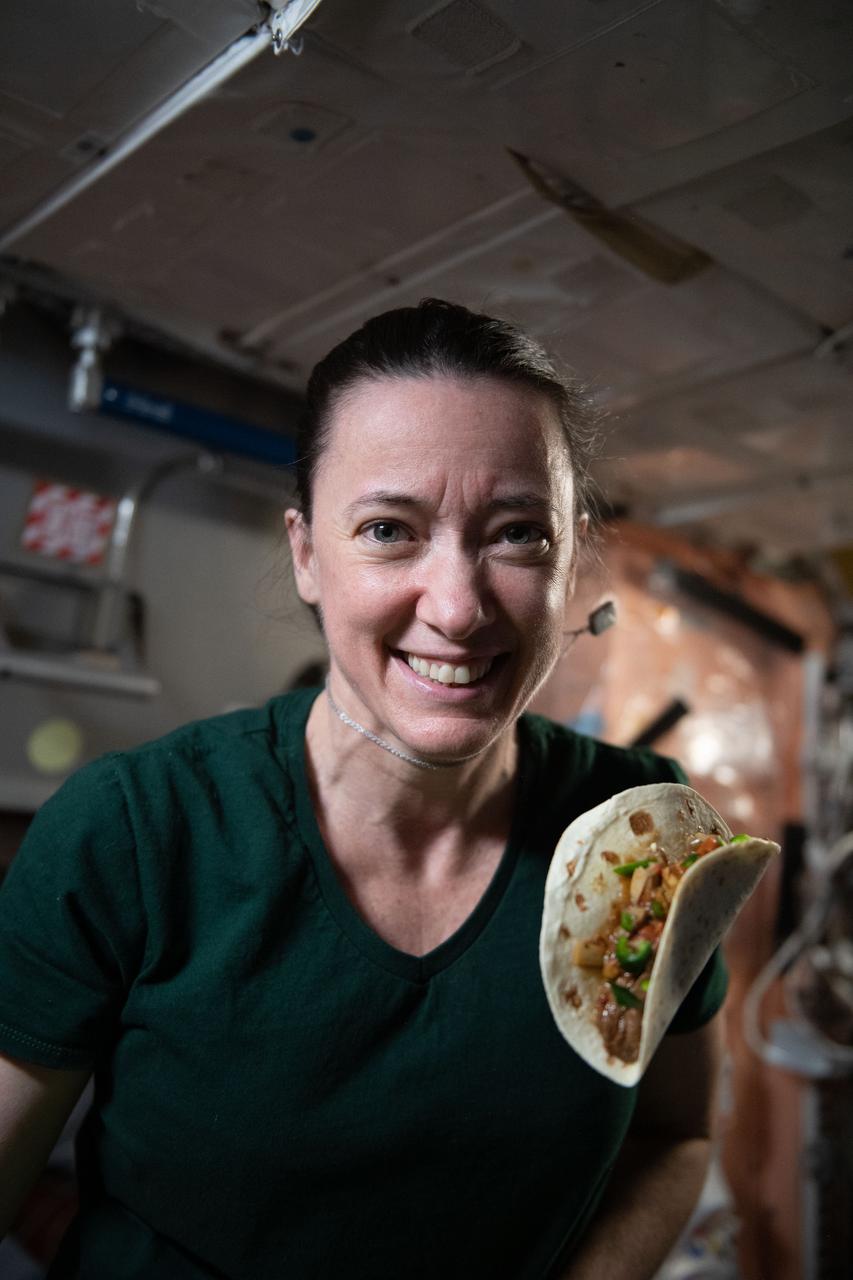
iss066e023198 (October 29, 2021) -- NASA astronaut and Expedition 66 flight engineer Megan McArthur is seen with a taco made using fajita beef, rehydrated tomatoes and artichokes, and chile peppers. The chile peppers were grown as part of the Plant Habitat-04 investigation aboard the International Space Station. The crop started growing on July 12, 2021, and represent one of the longest and most challenging plant experiments attempted aboard the orbiting laboratory. The chile peppers started growing on July 12, 2021, and represent one of the longest and most challenging plant experiments attempted aboard the orbiting laboratory. NASA astronaut and Expedition 66 flight engineer Mark Vande Hei conducted the first harvest of the pepper crop on October 29, 2021. Crew members sanitized the peppers and completed a scientific survey after their taste test. The Crew-3 astronauts will take over the crop when they arrive at the orbiting laboratory, and will conduct a final harvest of the peppers in late November. They will also sanitize and sample the crop, and complete surveys. Some peppers and their leaves from the final harvest will return to Earth for further analysis. What we learn will inform future crop growth and food supplementation activities for deep space exploration.
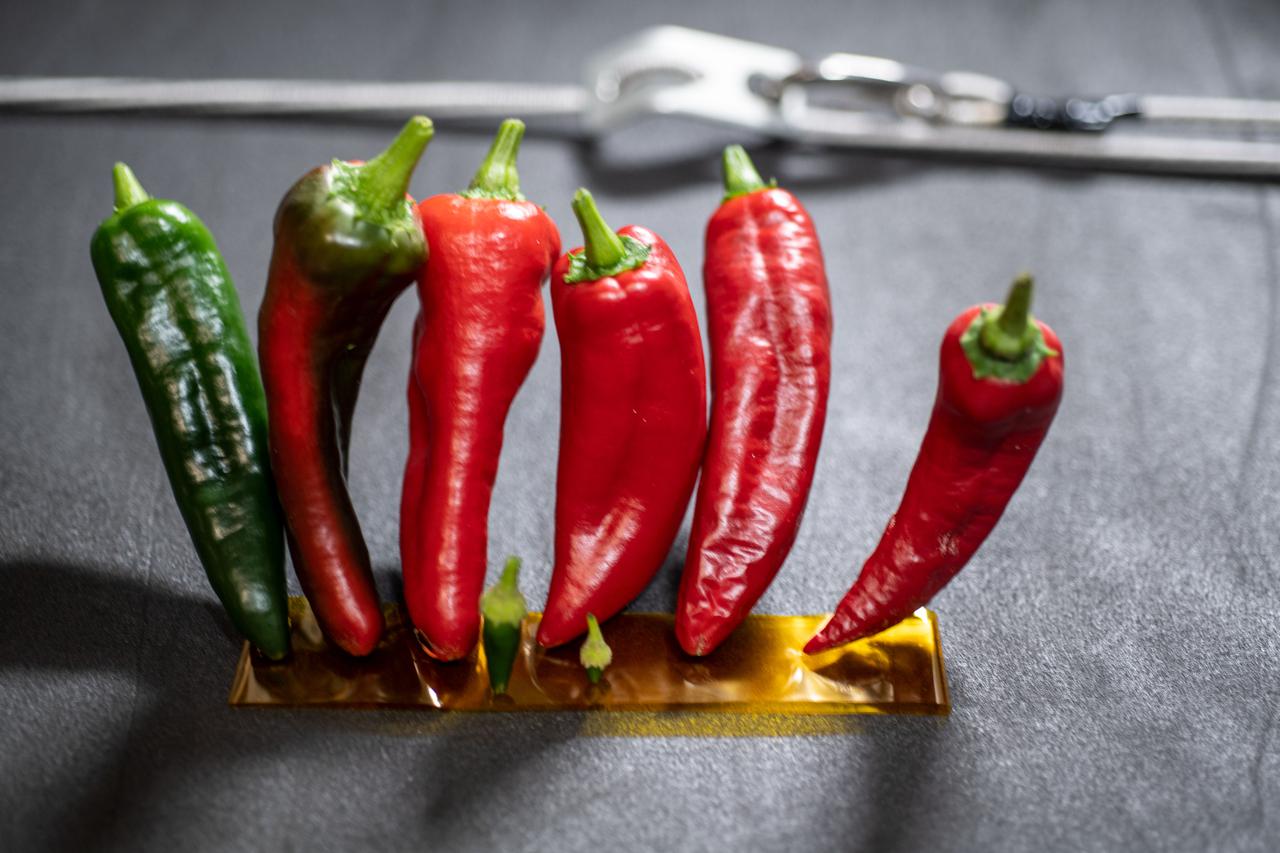
iss066e083338 (Nov. 26, 2021) --- Fresh chile peppers are displayed aboard the International Space Station after being harvested from inside the Advanced Plant Habitat.
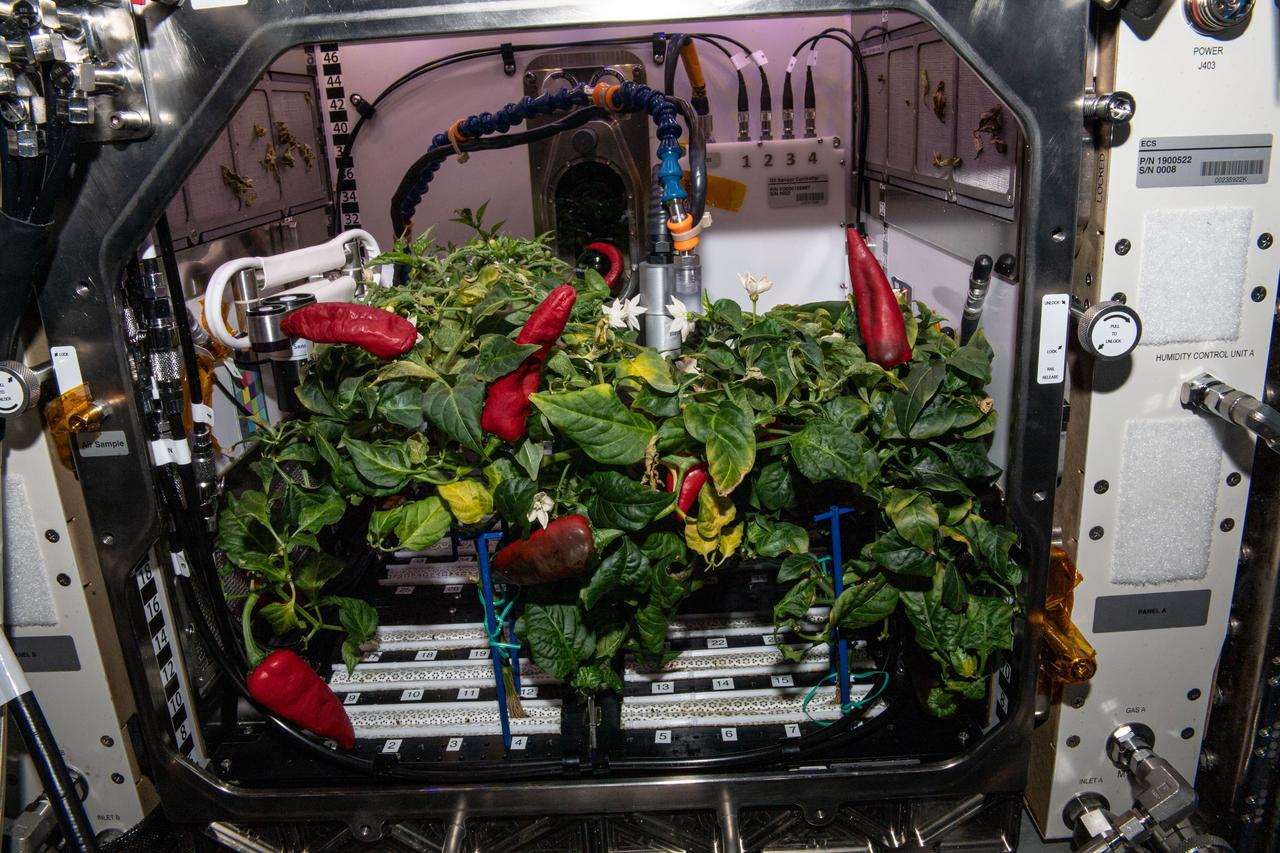
iss066e083265 (Nov. 26, 2021) --- Fresh chile peppers are pictured growing inside the International Space Station's Advanced Plant Habitat shortly before being harvested.
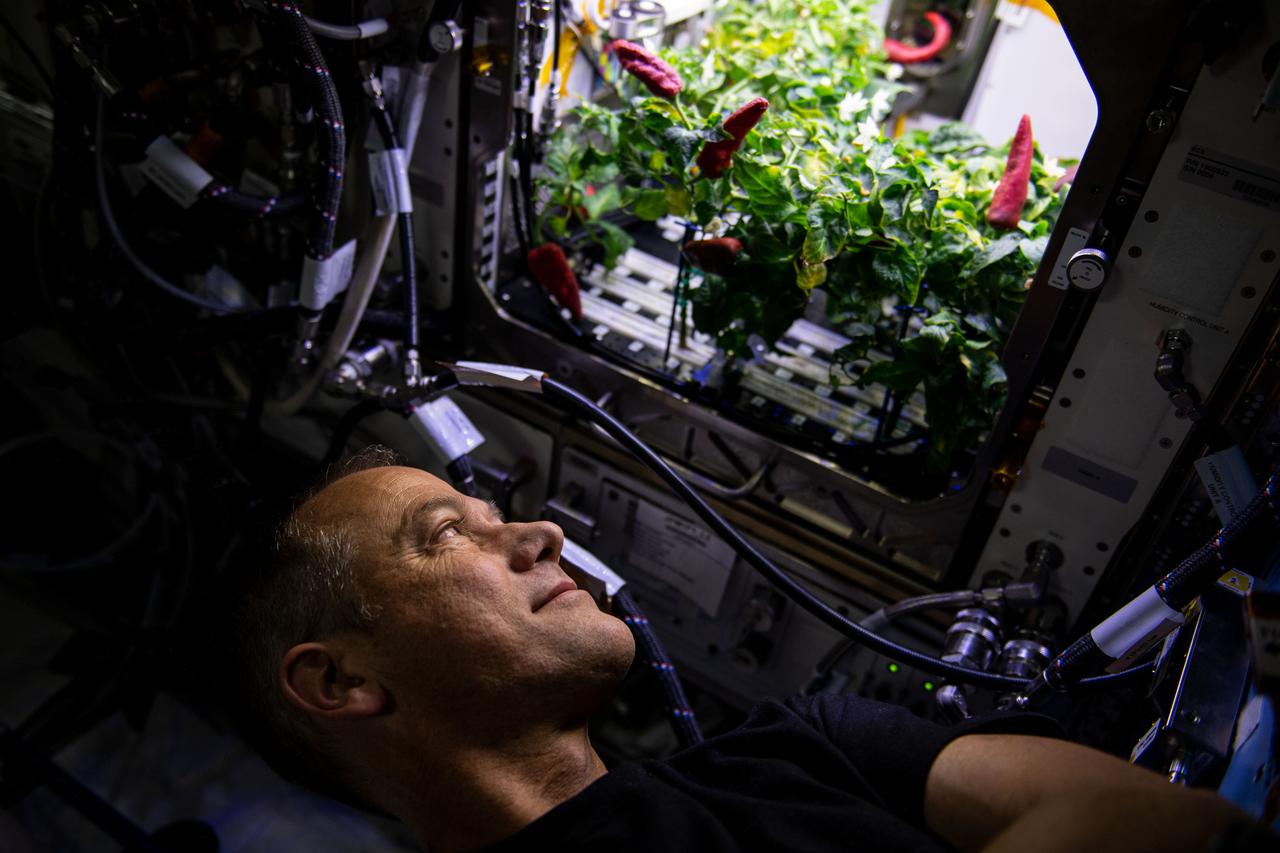
iss066e084304 (November 26, 2021) --- NASA astronaut and Crew-3 member Tom Marshburn looks at chiles growing inside of the Advanced Plant Habitat. Crew-3 performed the second harvest of chiles aboard the International Space Station for the Plant Habitat-04 experiment. This plant experiment, one of the station’s most complex to date because of the long germination and growing times, will add to NASA’s knowledge of growing food crops for long-duration space missions.
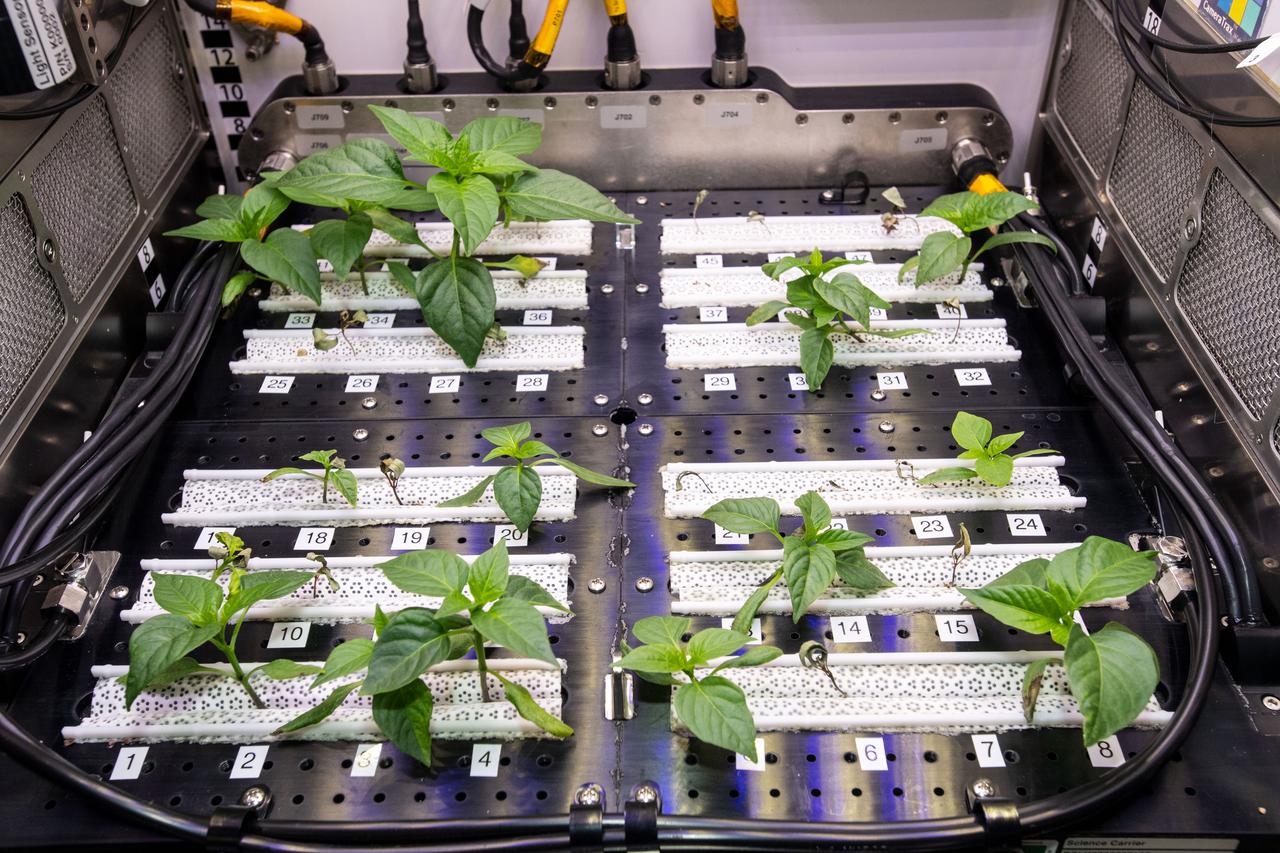
iss065e235366 (8/10/2021) --- Hatch Green Chile plants are pictured growing in the Advanced Plant Habitat aboard the International Space Station (ISS). The Microgravity Growth of New Mexico Hatch Green Chile as a Technical Display of Advanced Plant Habitat’s Capabilities (Plant Habitat-04) demonstrates using the Advanced Plant Habitat (APH) by growing peppers in space for the first time.
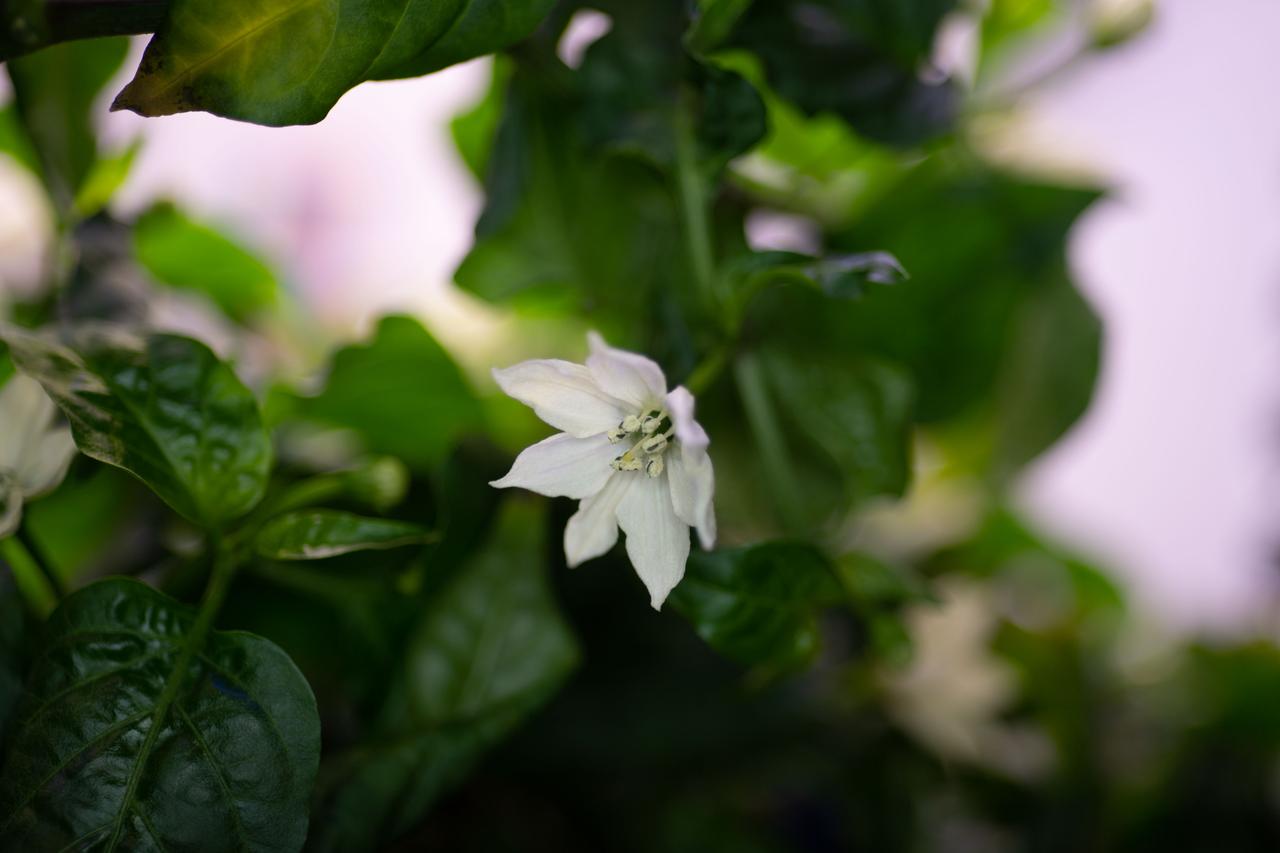
Hatch Green Chile plants are pictured growing in the Advanced Plant Habitat aboard the International Space Station (ISS). The Microgravity Growth of New Mexico Hatch Green Chile as a Technical Display of Advanced Plant Habitat’s Capabilities (Plant Habitat-04) demonstrates using the Advanced Plant Habitat (APH) by growing peppers in space for the first time.

iss065e235367 (8/10/2021) --- Hatch Green Chile plants are pictured growing in the Advanced Plant Habitat aboard the International Space Station (ISS). The Microgravity Growth of New Mexico Hatch Green Chile as a Technical Display of Advanced Plant Habitat’s Capabilities (Plant Habitat-04) demonstrates using the Advanced Plant Habitat (APH) by growing peppers in space for the first time.
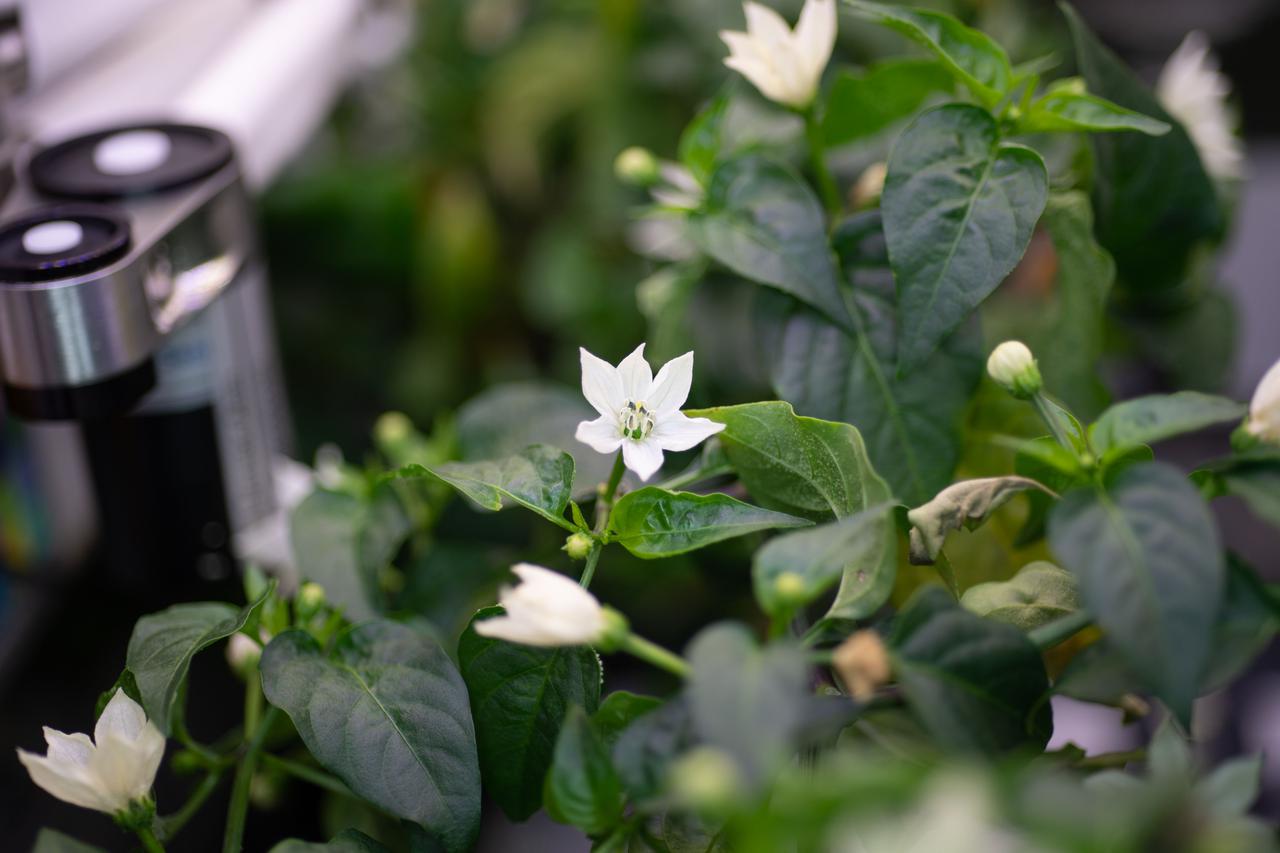
iss065e434036 (9/30/2021) --- Hatch Green Chile plants are pictured growing in the Advanced Plant Habitat aboard the International Space Station (ISS). The Microgravity Growth of New Mexico Hatch Green Chile as a Technical Display of Advanced Plant Habitat’s Capabilities (Plant Habitat-04) demonstrates using the Advanced Plant Habitat (APH) by growing peppers in space for the first time.
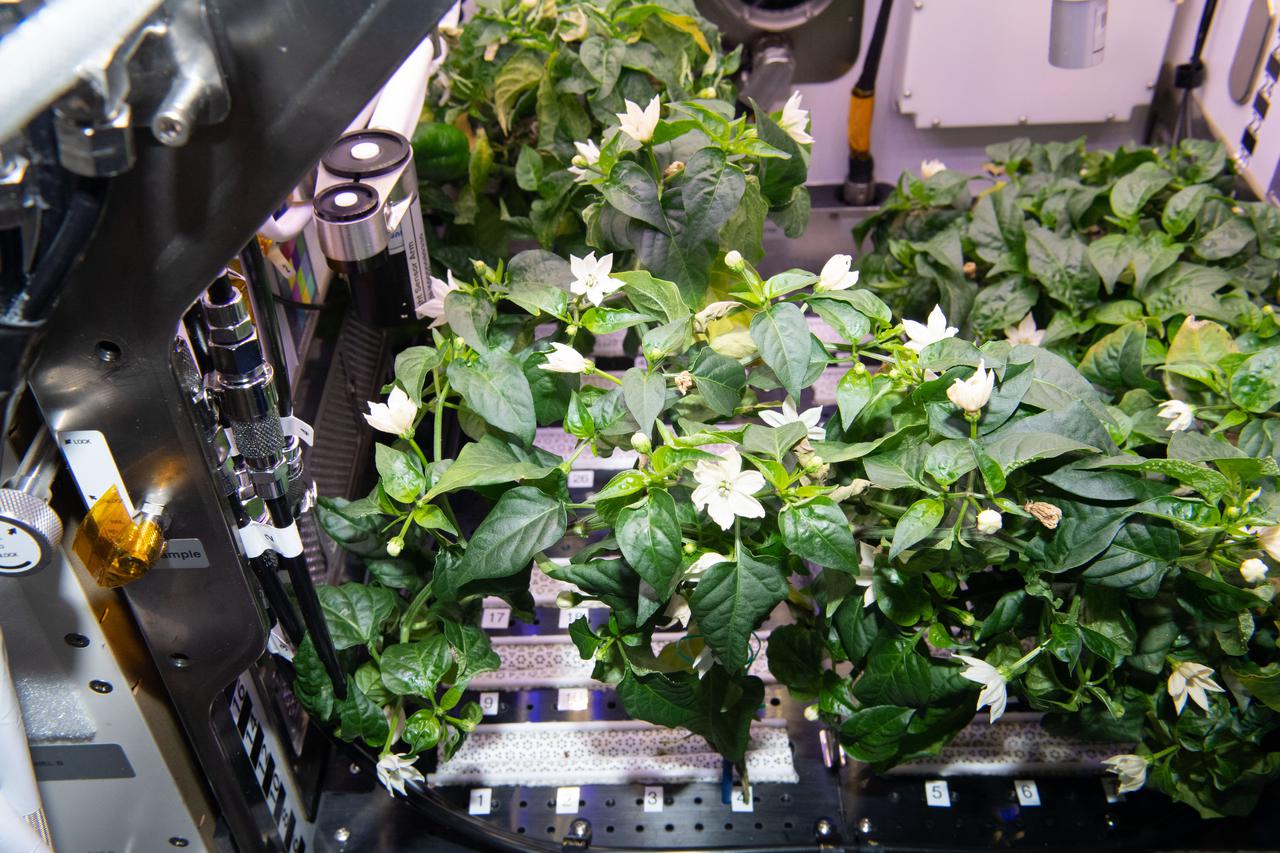
iss065e434054 (9/30/2021) --- Hatch Green Chile plants are pictured growing in the Advanced Plant Habitat aboard the International Space Station (ISS). The Microgravity Growth of New Mexico Hatch Green Chile as a Technical Display of Advanced Plant Habitat’s Capabilities (Plant Habitat-04) demonstrates using the Advanced Plant Habitat (APH) by growing peppers in space for the first time.
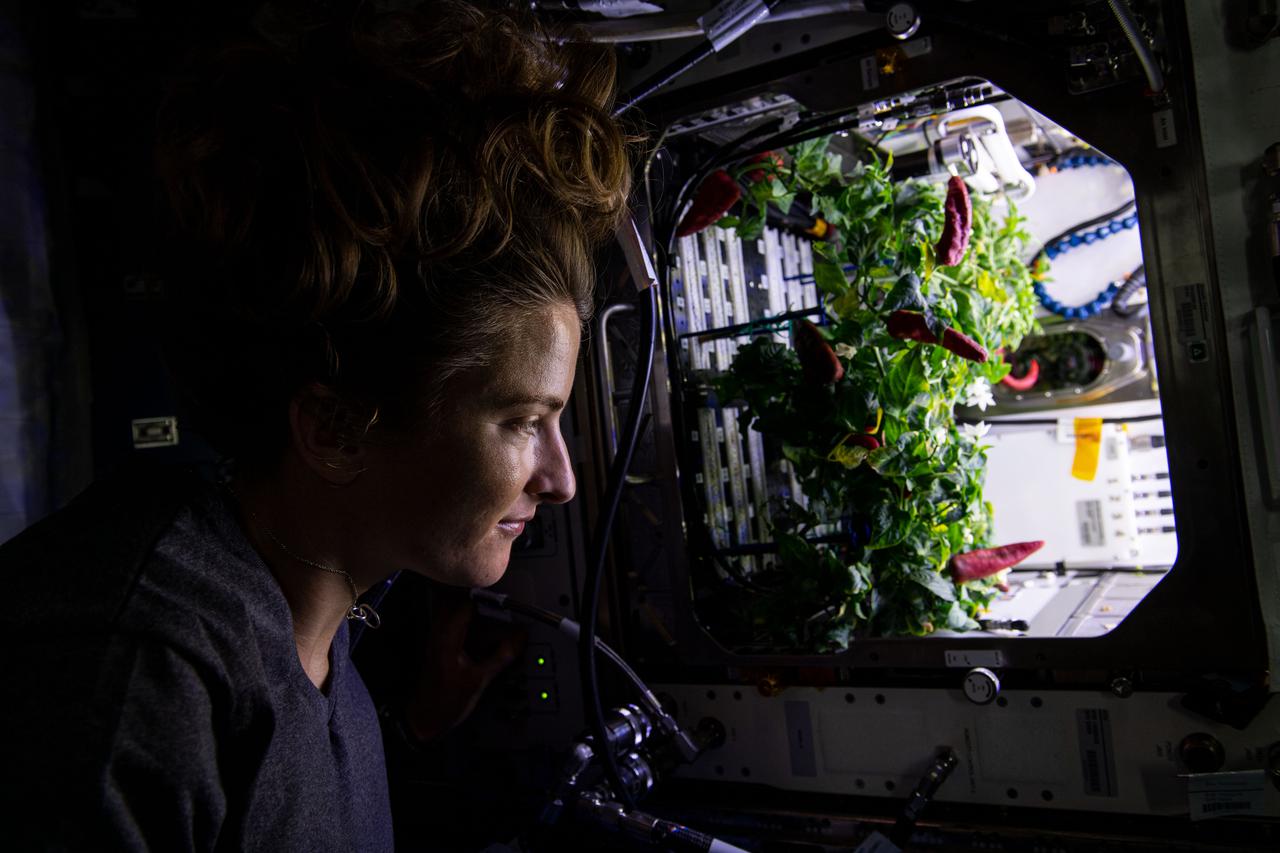
iss066e084293 (Nov. 26, 2021) --- NASA astronaut and Expedition 66 Flight Engineer Kayla Barron checks out chile peppers growing inside the International Space Station's Advanced Plant Habitat before they were harvested for the Plant Habitat-04 space botany experiment.
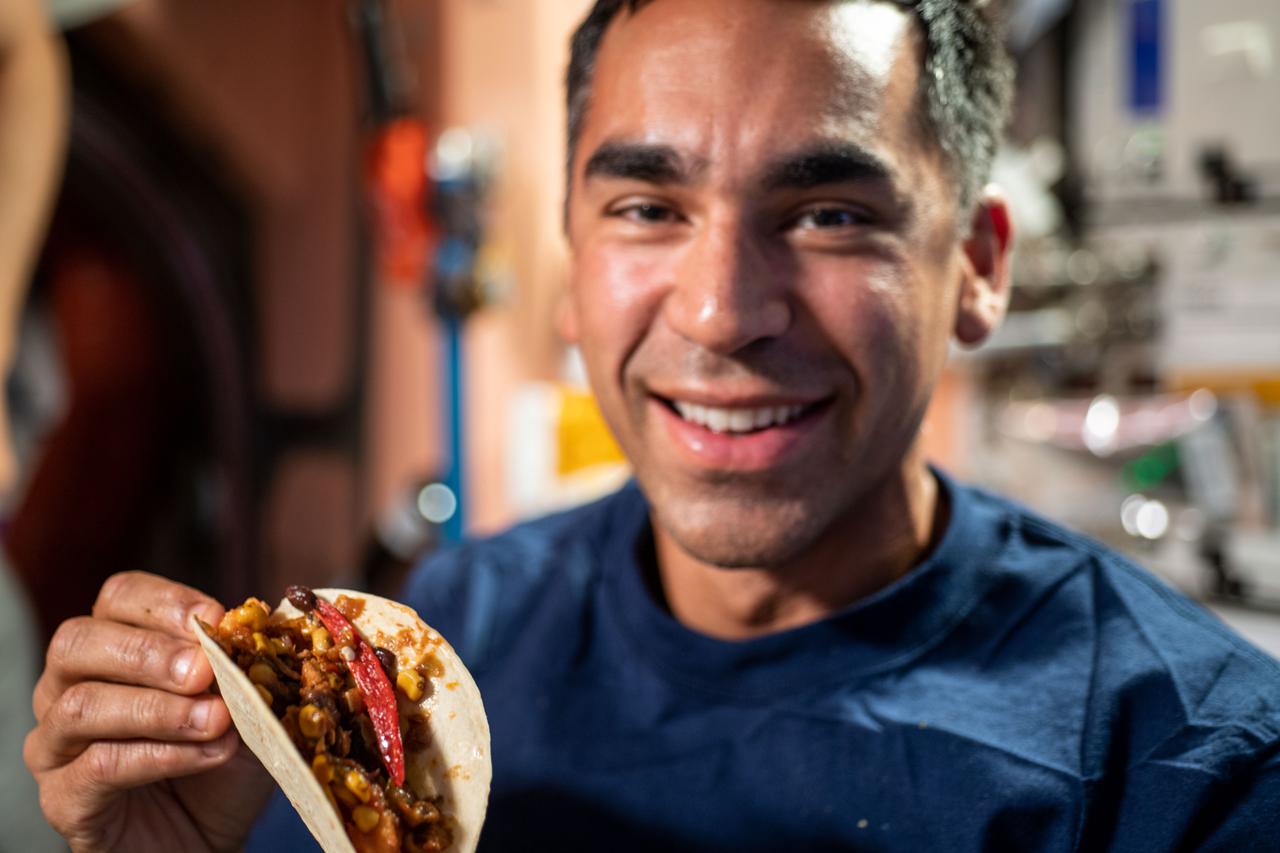
iss066e083715 (Nov. 26, 2021) --- NASA astronaut and Expedition 66 Flight Engineer Raja Chari is ready for taco night as he shows off a taco made with fresh chile peppers harvested from inside the International Space Station's Advanced Plant Habitat.
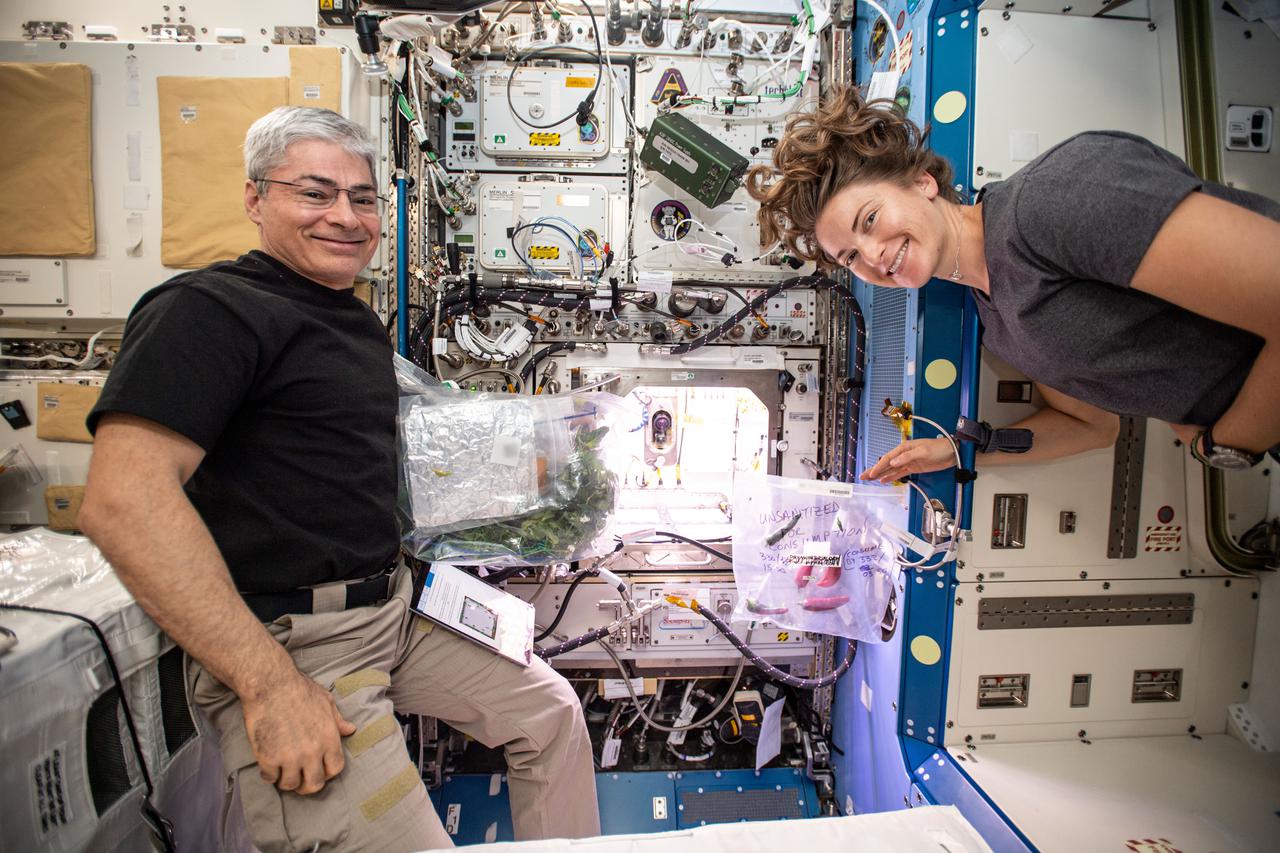
iss066e083427 (Nov. 26, 2021) --- NASA astronauts and Expedition 66 Flight Engineers Mark Vande Hei and Kayla Barron are pictured in front of the International Space Station's Advanced Plant Habitat after harvesting chile peppers grown inside the space botany research device.
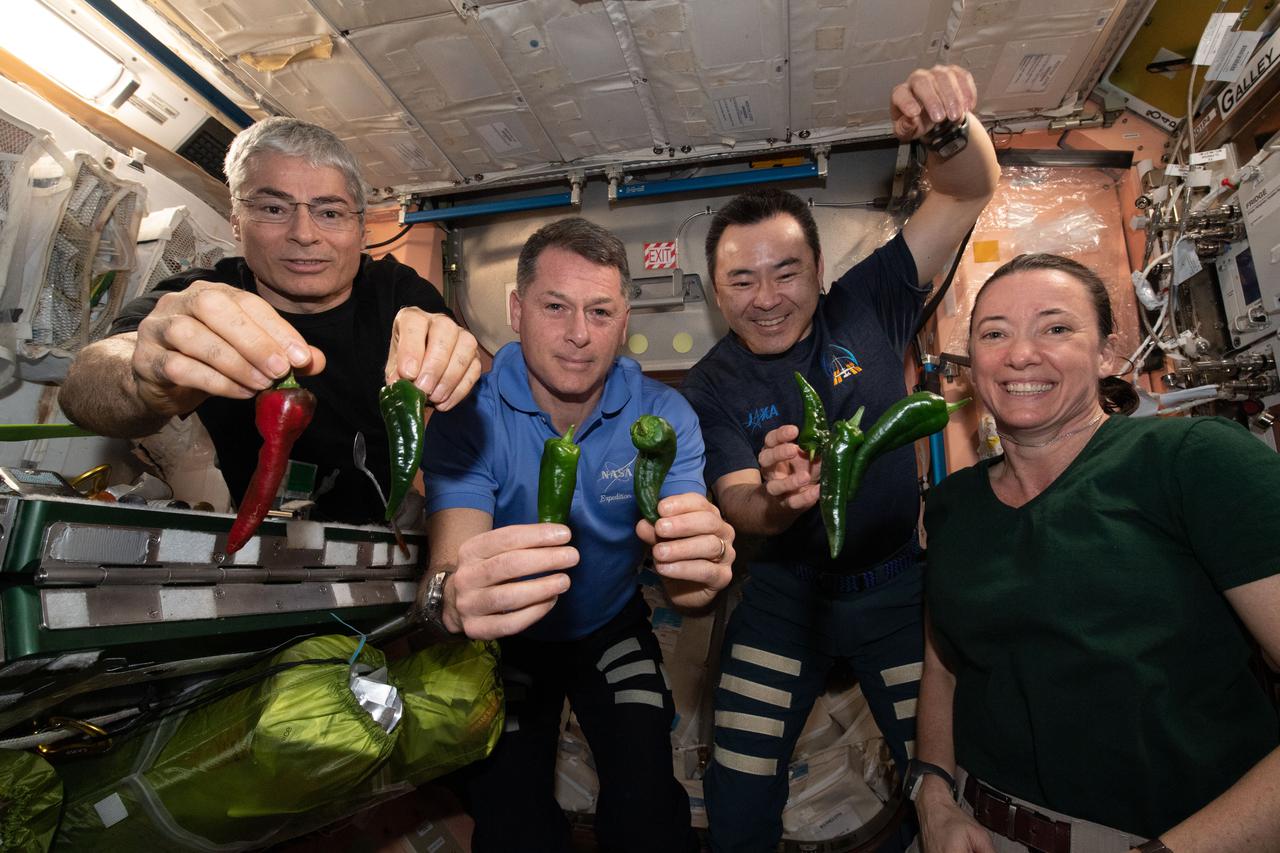
iss066e023255 (Oct. 29, 2021) --- Expedition 65 Flight Engineers (from left) Mark Vande Hei, Shane Kimbrough, Akihiko Hoshide and Megan McArthur, pose with chile peppers grown in space for the first time aboard the International Space Station for the Plant Habitat-04 investigation.
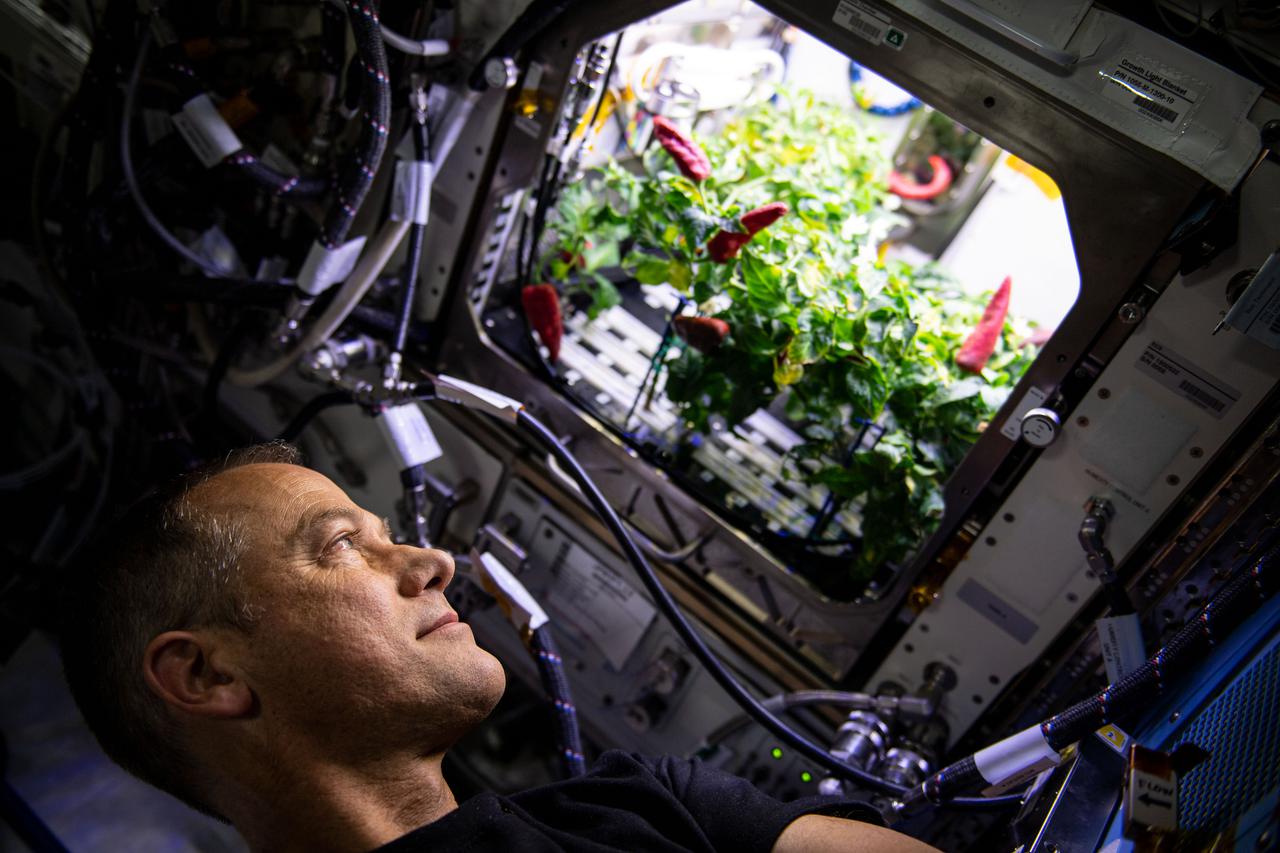
iss066e084306 (Nov. 26, 2021) --- NASA astronaut and Expedition 66 Flight Engineer Thomas Marshburn checks out chile peppers growing inside the International Space Station's Advanced Plant Habitat before they were harvested for the Plant Habitat-04 space botany experiment.
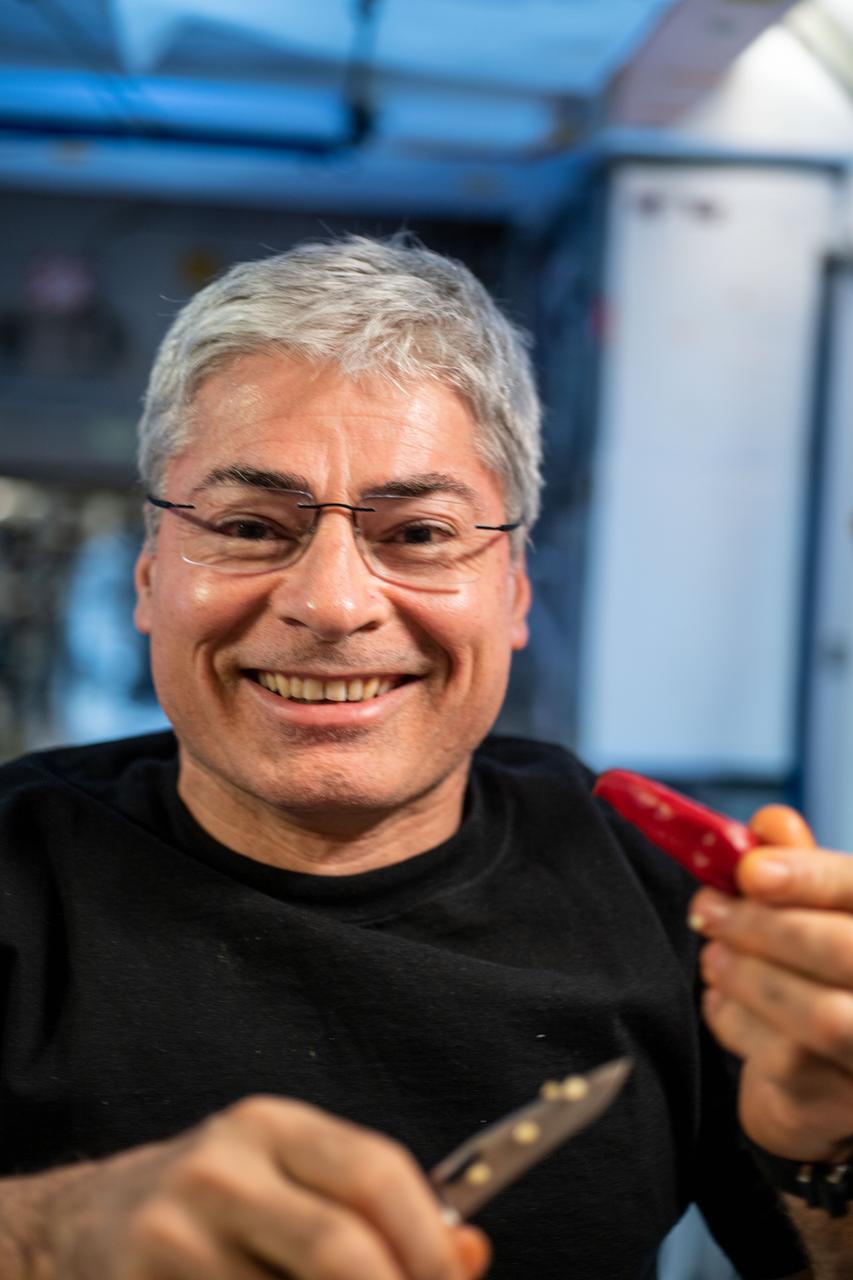
iss066e083700 (Nov. 26, 2021) --- NASA astronaut and Expedition 66 Flight Engineer Mark Vande Hei is ready for taco night as he shows off a fresh chile pepper harvested from inside the International Space Station's Advanced Plant Habitat.

Inside the Space Life Sciences Lab at NASA’s Kennedy Space Center in Florida, researchers plant pepper seeds in a science carrier on April 8, 2021, in preparation for the Plant Habitat-04 (PH-04) experiment. The seeds will fly to the International Space Station on SpaceX’s 22nd Commercial Resupply Services (CRS-22) mission. When the experiment starts, astronauts will grow the pepper seeds in the Advanced Plant Habitat (APH) growth chamber, which will monitor the experiment with more than 180 sensors. The astronauts will observe plant growth for about four months and conduct two harvests to study whether microgravity affects growth, flavor, or texture. Since peppers take longer to germinate, grow, and develop than previous crops grown in space, the PH-04 experiment also will test the durability and reliability of the various systems within the APH.

A researcher from NASA’s Kennedy Space Center in Florida prepares pepper seeds for planting inside science carriers on April 8, 2021, inside the Space Life Sciences Lab for the Plant Habitat-04 (PH-04) experiment. The seeds will fly to the International Space Station on SpaceX’s 22nd Commercial Resupply Services (CRS-22) mission. When the experiment starts, astronauts will grow the pepper seeds in the Advanced Plant Habitat (APH) growth chamber, which will monitor the experiment with more than 180 sensors. The astronauts will observe plant growth for about four months and conduct two harvests to study whether microgravity affects growth, flavor, or texture. Since peppers take longer to germinate, grow, and develop than previous crops grown in space, the PH-04 experiment also will test the durability and reliability of the various systems within the APH.

A researcher from NASA’s Kennedy Space Center in Florida prepares pepper seeds for planting inside science carriers on April 8, 2021, inside the Space Life Sciences Lab for the Plant Habitat-04 (PH-04) experiment. The seeds will fly to the International Space Station on SpaceX’s 22nd Commercial Resupply Services (CRS-22) mission. When the experiment starts, astronauts will grow the pepper seeds in the Advanced Plant Habitat (APH) growth chamber, which will monitor the experiment with more than 180 sensors. The astronauts will observe plant growth for about four months and conduct two harvests to study whether microgravity affects growth, flavor, or texture. Since peppers take longer to germinate, grow, and develop than previous crops grown in space, the PH-04 experiment also will test the durability and reliability of the various systems within the APH.

Inside the Space Life Sciences Lab at NASA’s Kennedy Space Center in Florida, a researcher plants pepper seeds in science carriers on April 8, 2021, in preparation for the Plant Habitat-04 (PH-04) experiment. The seeds will fly to the International Space Station on SpaceX’s 22nd Commercial Resupply Services (CRS-22) mission. When the experiment starts, astronauts will grow the pepper seeds in the Advanced Plant Habitat (APH) growth chamber, which will monitor the experiment with more than 180 sensors. The astronauts will observe plant growth for about four months and conduct two harvests to study whether microgravity affects growth, flavor, or texture. Since peppers take longer to germinate, grow, and develop than previous crops grown in space, the PH-04 experiment also will test the durability and reliability of the various systems within the APH.

A close-up photo of a pepper seed prepared by researchers at NASA’s Kennedy Space Center in Florida is shown before it’s planted inside a science carrier on April 8, 2021, inside the Space Life Sciences Lab for the Plant Habitat-04 (PH-04) experiment. The seeds will fly to the International Space Station on SpaceX’s 22nd Commercial Resupply Services (CRS-22) mission. When the experiment starts, astronauts will grow the pepper seeds in the Advanced Plant Habitat (APH) growth chamber, which will monitor the experiment with more than 180 sensors. The astronauts will observe plant growth for about four months and conduct two harvests to study whether microgravity affects growth, flavor, or texture. Since peppers take longer to germinate, grow, and develop than previous crops grown in space, the PH-04 experiment also will test the durability and reliability of the various systems within the APH.

A researcher from NASA’s Kennedy Space Center in Florida prepares pepper seeds for planting inside science carriers on April 8, 2021, inside the Space Life Sciences Lab for the Plant Habitat-04 (PH-04) experiment. The seeds will fly to the International Space Station on SpaceX’s 22nd Commercial Resupply Services (CRS-22) mission. When the experiment starts, astronauts will grow the pepper seeds in the Advanced Plant Habitat (APH) growth chamber, which will monitor the experiment with more than 180 sensors. The astronauts will observe plant growth for about four months and conduct two harvests to study whether microgravity affects growth, flavor, or texture. Since peppers take longer to germinate, grow, and develop than previous crops grown in space, the PH-04 experiment also will test the durability and reliability of the various systems within the APH.