
U.S. Senator Chris Van Hollen (D-Md.), left, speaks with from right to left, NASA astronauts Victor Glover, pilot; Reid Wiseman, commander; Christina Koch, mission specialist, and CSA (Canadian Space Agency) astronaut Jeremy Hansen, mission specialist, Tuesday, May 12, 2026, in Washington. NASA’s Artemis II mission took Wiseman, Glover, Koch, and Hansen on a nearly 10-day journey around the Moon and back to Earth in April 2026. Photo Credit: (NASA/Aubrey Gemignani)
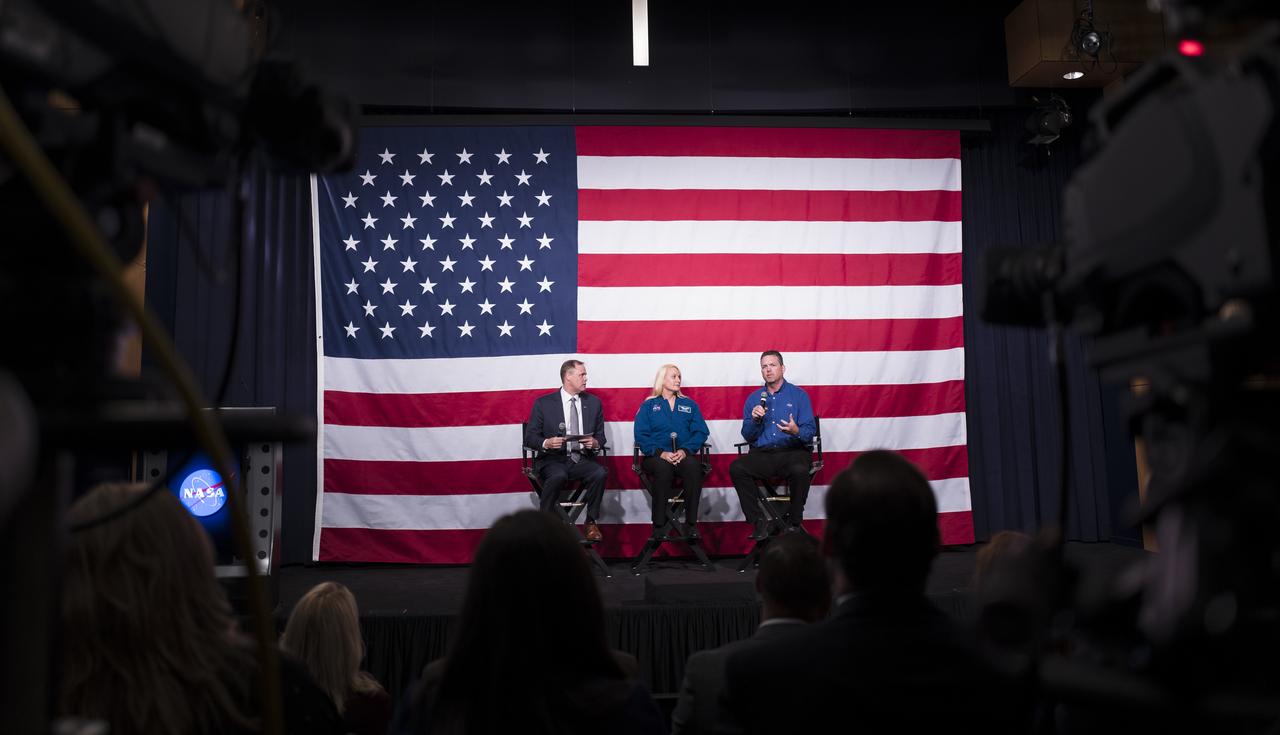
NASA Administrator Jim Bridenstine, left, NASA astronaut Kate Rubins, and Chris Hansen, Manager of the Extravehicular Activity office at NASA’s Johnson Space Center are seen during a panel discussion at the Artemis Generation Spacesuit event, Tuesday, Oct. 15, 2019 at NASA Headquarters in Washington. The Exploration Extravehicular Mobility Unit (xEMU) suit improves on the suits previous worn on the Moon during the Apollo era and those currently in use for spacewalks outside the International Space Station and will be worn by first woman and next man as they explore the Moon as part of the agency’s Artemis program. The Orion Crew Survival System (OCSS) suit is designed for a custom fit and incorporates safety technology and mobility features that will help protect astronauts on launch day, in emergency situations, high-risk parts of missions near the Moon, and during the high-speed return to Earth. Photo Credit: (NASA/Joel Kowsky)

U.S. Senator Chris Van Hollen (D-Md.), left, and U.S. Senator Jerry Moran (R-Kan.) second from left, speak with from left to right, NASA astronaut Christina Koch, mission specialist; CSA (Canadian Space Agency) astronaut Jeremy Hansen, mission specialist; and NASA astronauts Reid Wiseman, commander; and Victor Glover, pilot at an event at the Dirksen Senate Office Building, Tuesday, May 12, 2026, in Washington. NASA’s Artemis II mission took Wiseman, Glover, Koch, and Hansen on a nearly 10-day journey around the Moon and back to Earth in April 2026. Photo Credit: (NASA/Aubrey Gemignani)

From left to right, U.S. Senator John Hoeven (R-ND), U.S. Senator Chris Van Hollen (D-Md.), and U.S. Senator Jerry Moran (R-Kan.) speak with NASA astronaut Christina Koch, mission specialist; CSA (Canadian Space Agency) astronaut Jeremy Hansen, mission specialist; and NASA astronauts Reid Wiseman, commander; and Victor Glover, pilot at an event at the Dirksen Senate Office Building, Tuesday, May 12, 2026, in Washington. NASA’s Artemis II mission took Wiseman, Glover, Koch, and Hansen on a nearly 10-day journey around the Moon and back to Earth in April 2026. Photo Credit: (NASA/Aubrey Gemignani)
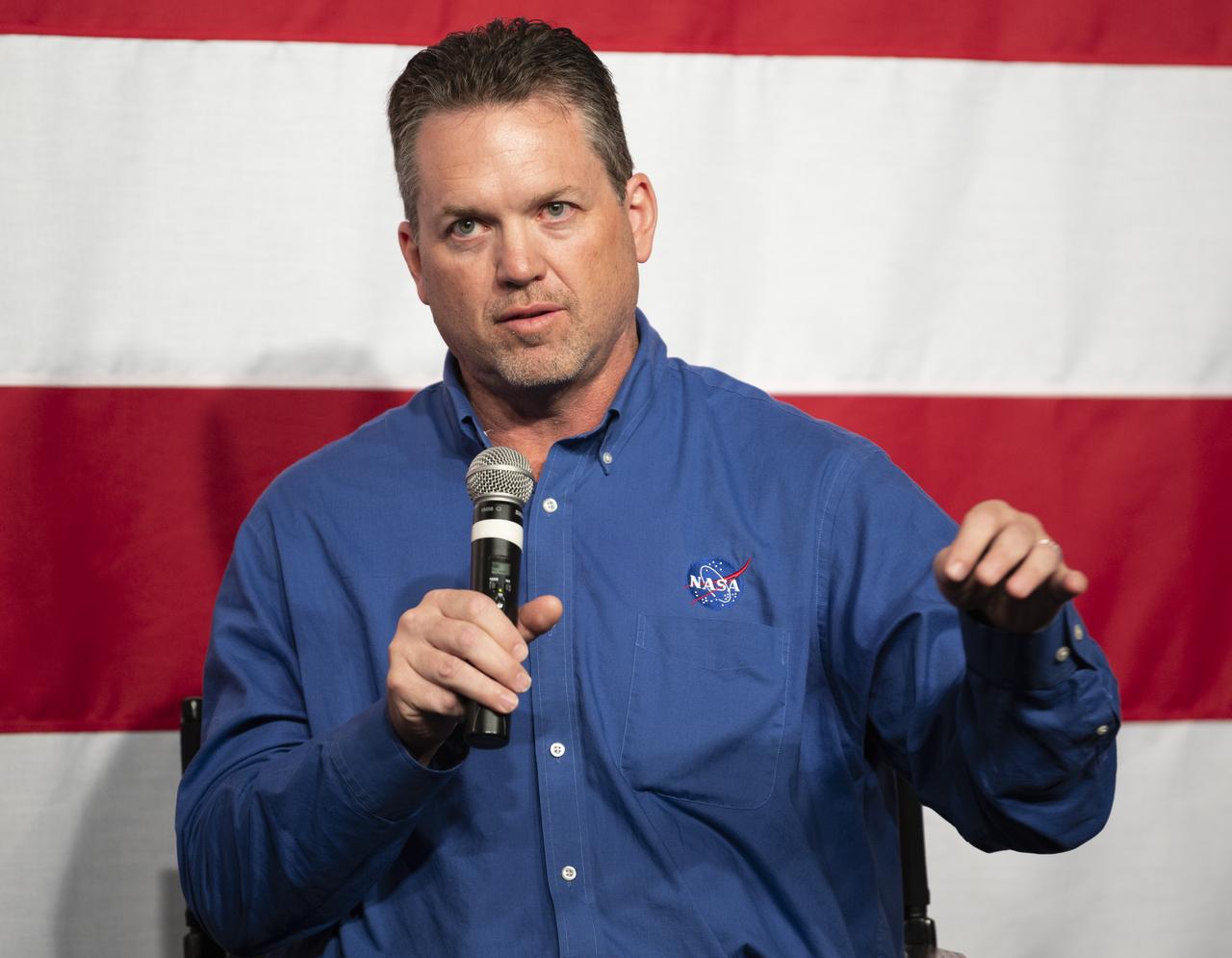
Chris Hansen, Manager of the Extravehicular Activity Office at NASA’s Johnson Space Center answers an audience question during a panel discussion with NASA Administrator Jim Bridenstine and NASA astronaut Kate Rubins during the Artemis Generation Spacesuit event, Tuesday, Oct. 15, 2019 at NASA Headquarters in Washington. The Exploration Extravehicular Mobility Unit (xEMU) suit improves on the suits previous worn on the Moon during the Apollo era and those currently in use for spacewalks outside the International Space Station and will be worn by first woman and next man as they explore the Moon as part of the agency’s Artemis program. The Orion Crew Survival System (OCSS) suit is designed for a custom fit and incorporates safety technology and mobility features that will help protect astronauts on launch day, in emergency situations, high-risk parts of missions near the Moon, and during the high-speed return to Earth. Photo Credit: (NASA/Joel Kowsky)
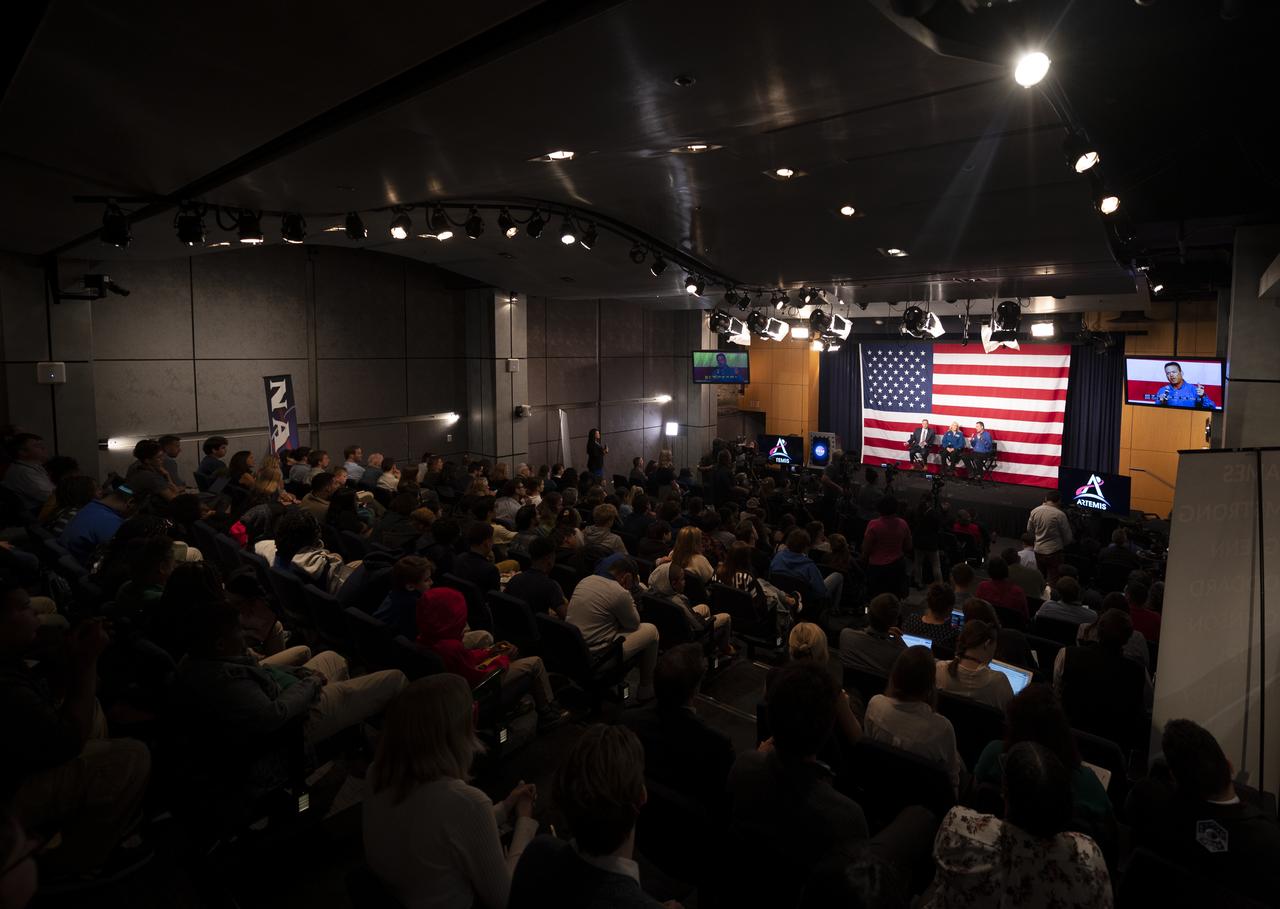
NASA Associate Administrator for the Office of Communications Bettina Inclán moderates a panel discussion with NASA Administrator Jim Bridenstine, NASA astronaut Kate Rubins, and Chris Hansen, Manager of the Extravehicular Activity office at NASA’s Johnson Space Center during the Artemis Generation Spacesuit event, Tuesday, Oct. 15, 2019 at NASA Headquarters in Washington. The Exploration Extravehicular Mobility Unit (xEMU) suit improves on the suits previous worn on the Moon during the Apollo era and those currently in use for spacewalks outside the International Space Station and will be worn by first woman and next man as they explore the Moon as part of the agency’s Artemis program. The Orion Crew Survival System (OCSS) suit is designed for a custom fit and incorporates safety technology and mobility features that will help protect astronauts on launch day, in emergency situations, high-risk parts of missions near the Moon, and during the high-speed return to Earth. Photo Credit: (NASA/Joel Kowsky)
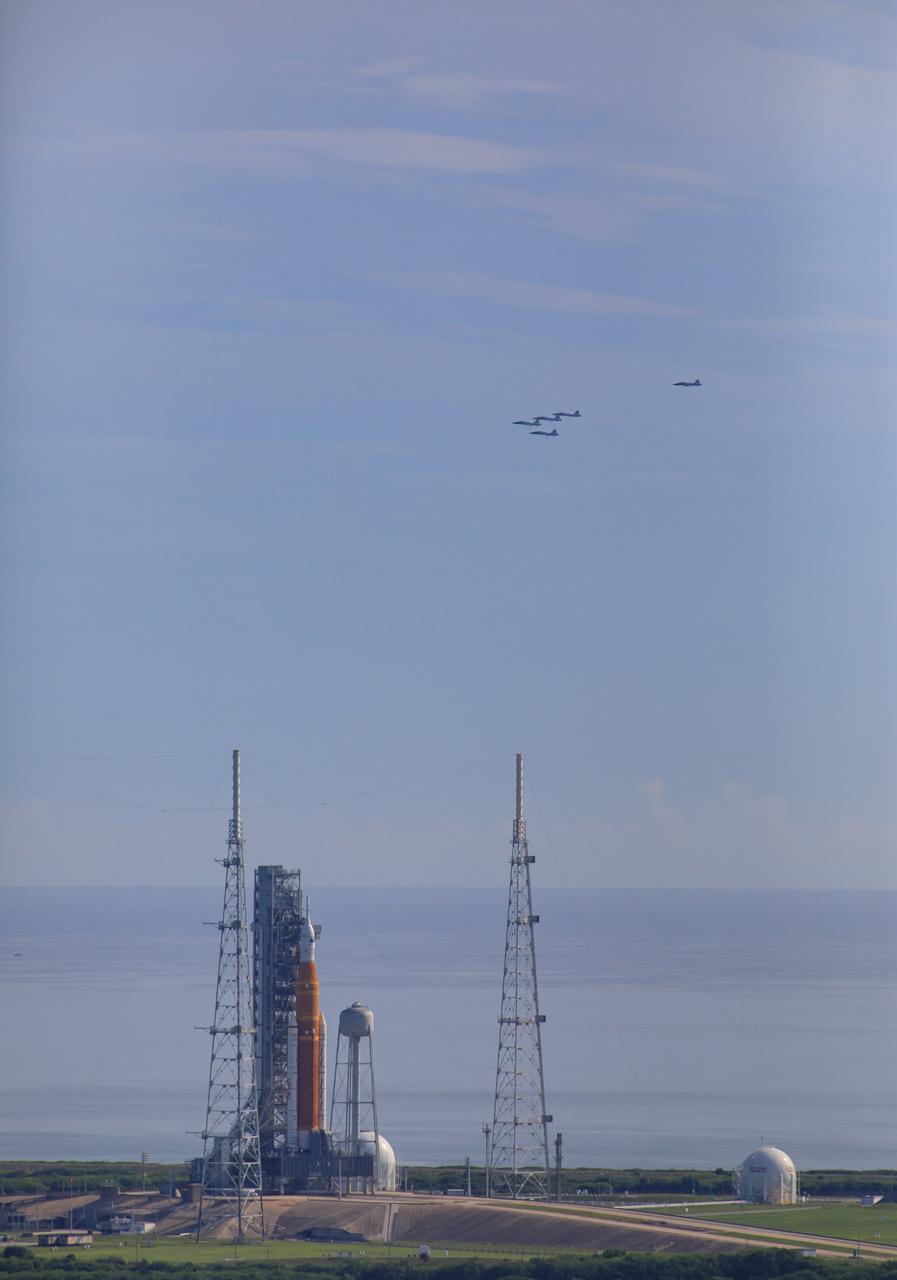
Ahead of NASA’s Artemis I launch, a flight of T-38 supersonic trainer aircraft from the Johnson Space Center Aircraft Operations Division flies in formation over the agency’s Space Launch System and Orion spacecraft on the pad at Launch Complex 39B at Kennedy Space Center in Florida, on Aug. 23, 2022. Pilots and passengers of the five aircraft include NASA Research Pilot Chris Condon and NASA Astronaut Zena Cardman in the lead plane, followed by NASA astronaut candidate Nicole Ayers and NASA astronaut Christina Koch in the second plane, Canadian Space Agency astronaut Jeremy Hansen and NASA astronaut Drew Morgan in the third plane, NASA astronaut Reid Wiseman and NASA astronaut Joe Acaba in the fourth plane, and NASA astronaut candidate Jack Hathaway and Josh Valcarcel, NASA photographer, in the chase plane. Artemis I is scheduled to launch at 8:33 a.m. EDT on Aug. 29, 2022. The first in a series of increasingly complex missions, Artemis I will provide a foundation for human deep space exploration and demonstrate our commitment and capability to extend human presence to the Moon and beyond. The primary goal of Artemis I is to thoroughly test the integrated systems before crewed missions by operating the spacecraft in a deep space environment, testing Orion’s heat shield, and recovering the crew module after reentry, descent, and splashdown.
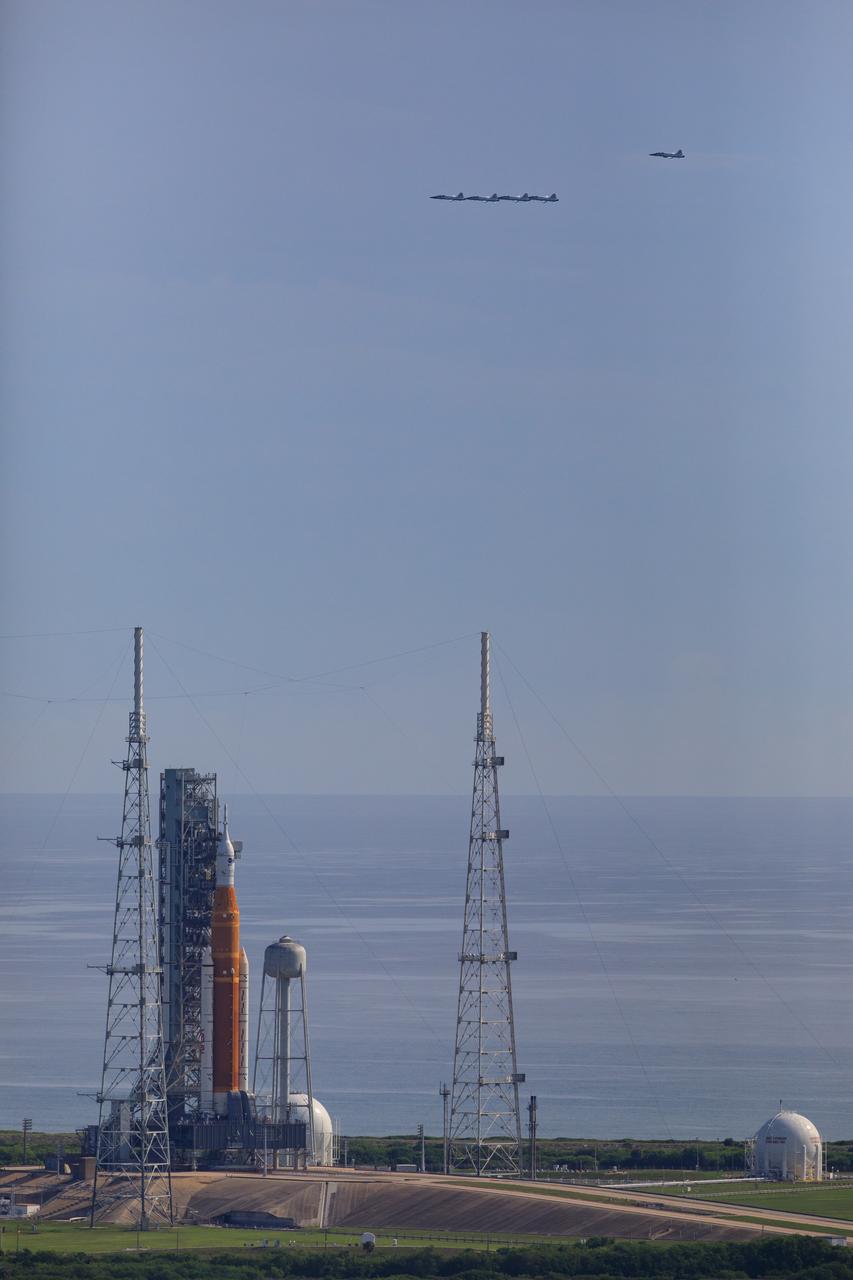
Ahead of NASA’s Artemis I launch, a flight of T-38 supersonic trainer aircraft from the Johnson Space Center Aircraft Operations Division flies in formation over the agency’s Space Launch System and Orion spacecraft on the pad at Launch Complex 39B at Kennedy Space Center in Florida, on Aug. 23, 2022. Pilots and passengers of the five aircraft include NASA Research Pilot Chris Condon and NASA Astronaut Zena Cardman in the lead plane, followed by NASA astronaut candidate Nicole Ayers and NASA astronaut Christina Koch in the second plane, Canadian Space Agency astronaut Jeremy Hansen and NASA astronaut Drew Morgan in the third plane, NASA astronaut Reid Wiseman and NASA astronaut Joe Acaba in the fourth plane, and NASA astronaut candidate Jack Hathaway and Josh Valcarcel, NASA photographer, in the chase plane. Artemis I is scheduled to launch at 8:33 a.m. EDT on Aug. 29, 2022. The first in a series of increasingly complex missions, Artemis I will provide a foundation for human deep space exploration and demonstrate our commitment and capability to extend human presence to the Moon and beyond. The primary goal of Artemis I is to thoroughly test the integrated systems before crewed missions by operating the spacecraft in a deep space environment, testing Orion’s heat shield, and recovering the crew module after reentry, descent, and splashdown.
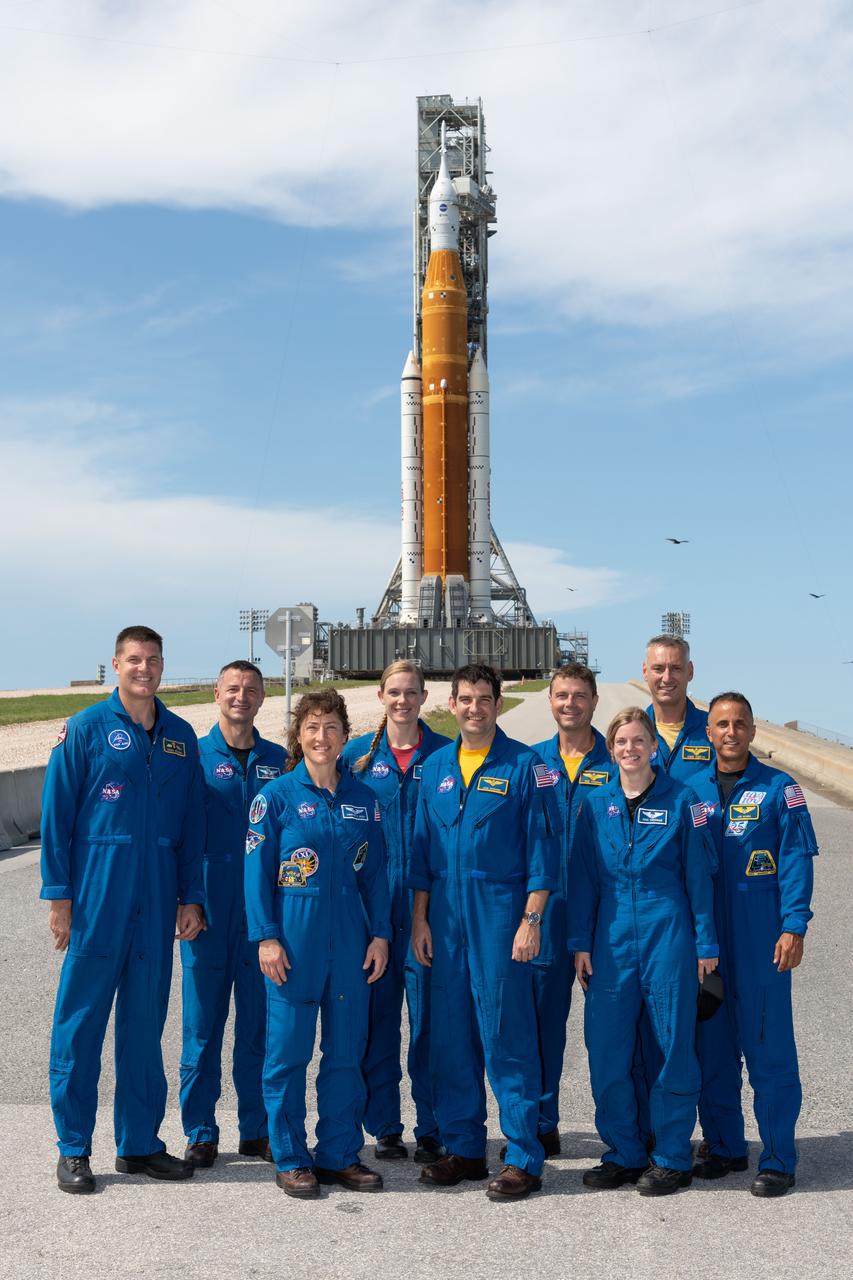
Astronauts and astronaut candidates pose for a photo at the Launch Pad 39B after arriving in their T-38 jets in support of Artemis I launch operations at NASA's Kennedy Space Center in Florida. From Left: Canadian Space Agency Astronaut Jeremy Hansen, NASA Astronauts Drew Morgan, Christina Koch, NASA Astronaut Candidates Nicole Ayers, Jack Hathaway, NASA Astronauts Reid Wiseman, Zena Cardman, NASA Pilot Chris Condon, NASA Astronaut Joe Acaba. Credit: NASA/Josh Valcarcel
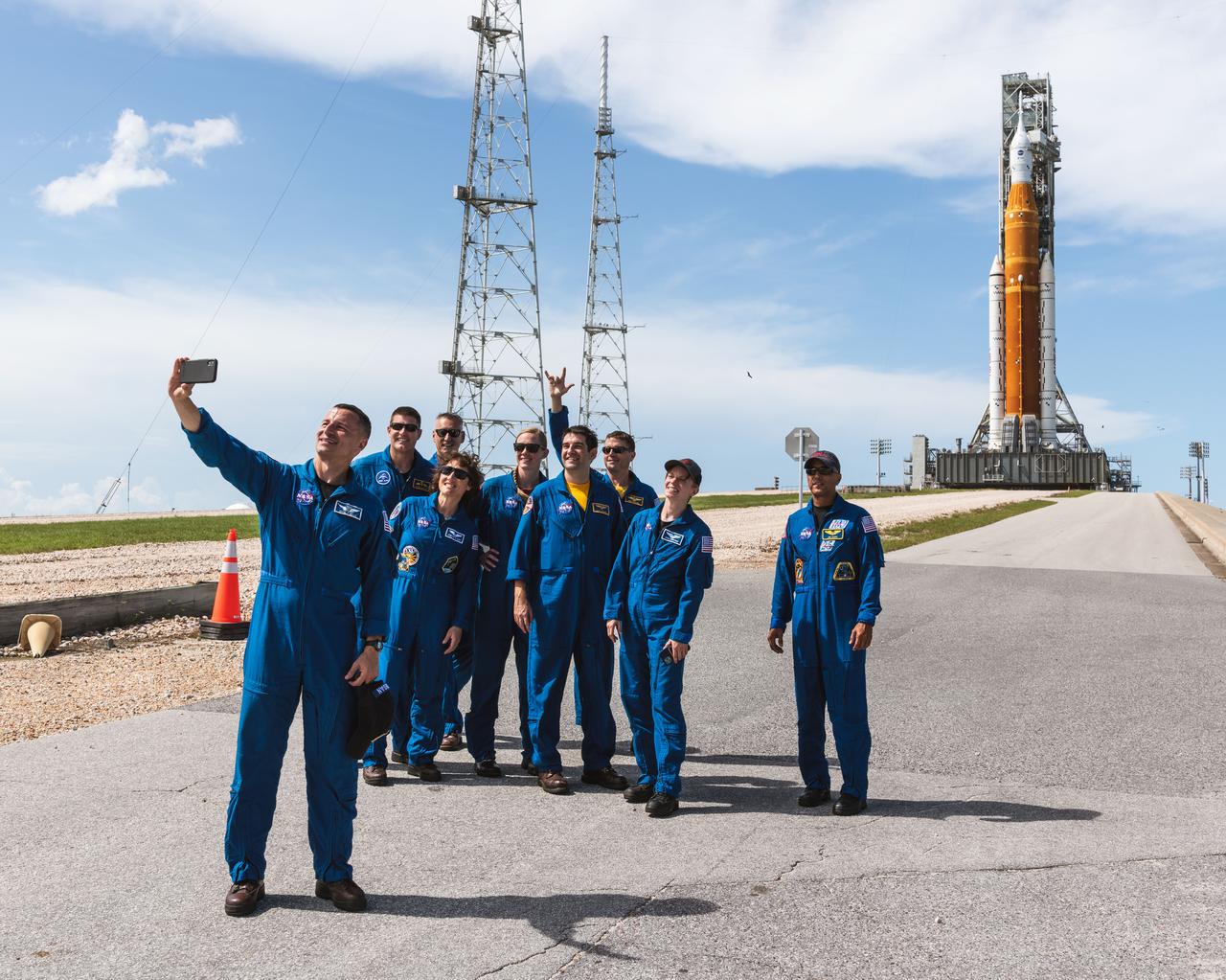
Astronauts and astronaut candidates pose for a photo at the Launch Pad 39B after arriving in their T-38 jets in support of Artemis I launch operations at NASA's Kennedy Space Center in Florida. Photographed: NASA Astronauts Reid Wiseman, Christina Koch, Drew Morgan , Zena Cardman, Joe Acaba, NASA Astronaut Candidates Nicole Ayers, Jack Hathaway, Canadian Space Agency Astronaut Jeremy Hansen, and NASA Pilot Chris Condon, with the Space Launch System on Launch Pad 39B. Credit: NASA/Josh Valcarcel
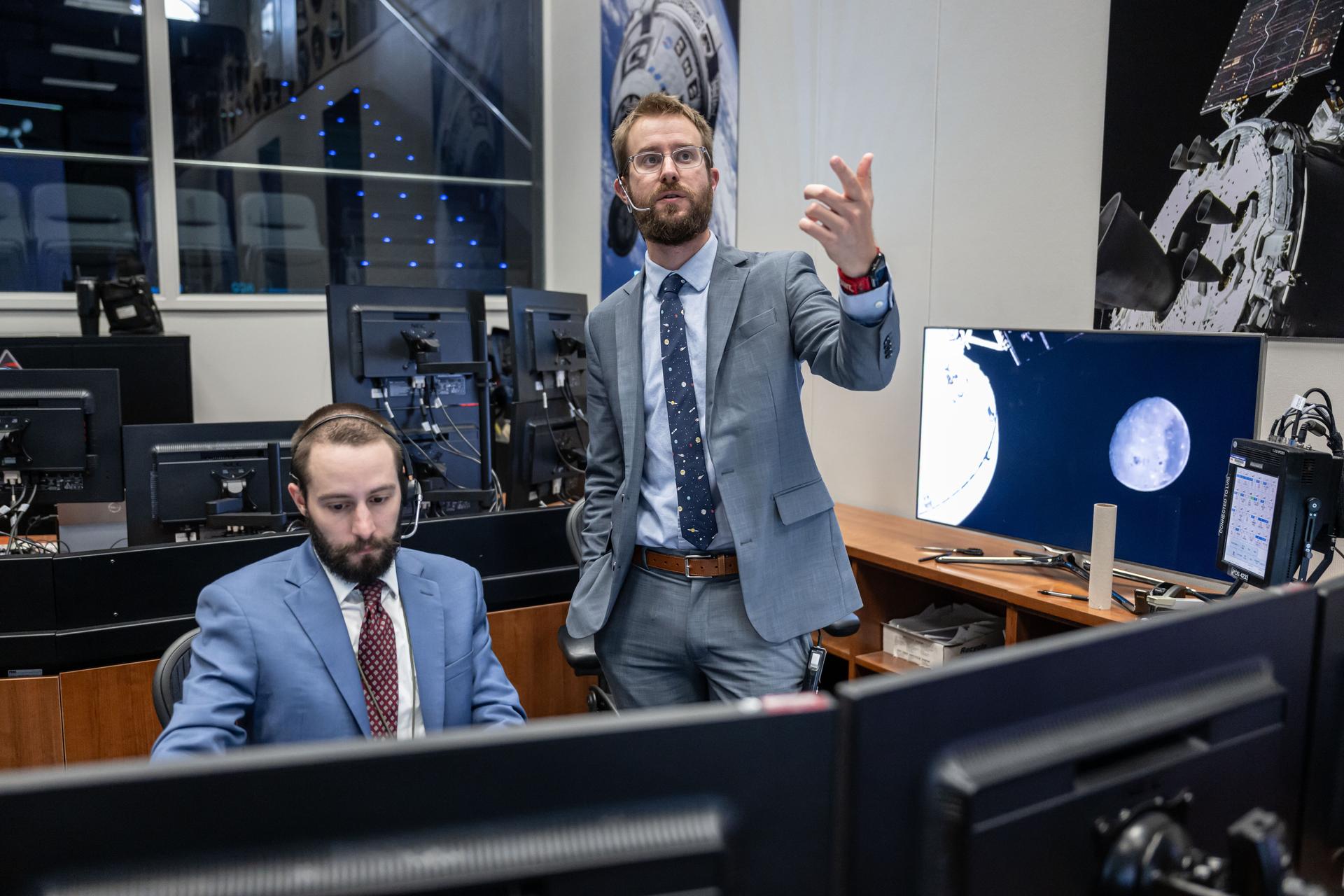
jsc2026e021749 (April 6, 2026) - Chris White, Lead INCO (Integrated Communications Officer) for Artemis II, and Matthew Johns, INCO Flight Controller, are pictured in the White Flight Control Room in the Mission Control Center at NASA’s Johnson Space Center during the Artemis II mission. This image was taken when NASA astronauts Reid Wiseman, Victor Glover, and Christina Koch, and CSA (Canadian Space Agency) astronaut Jeremy Hansen conducted the flyby of the Moon. Credit: NASA/Robert Markowitz
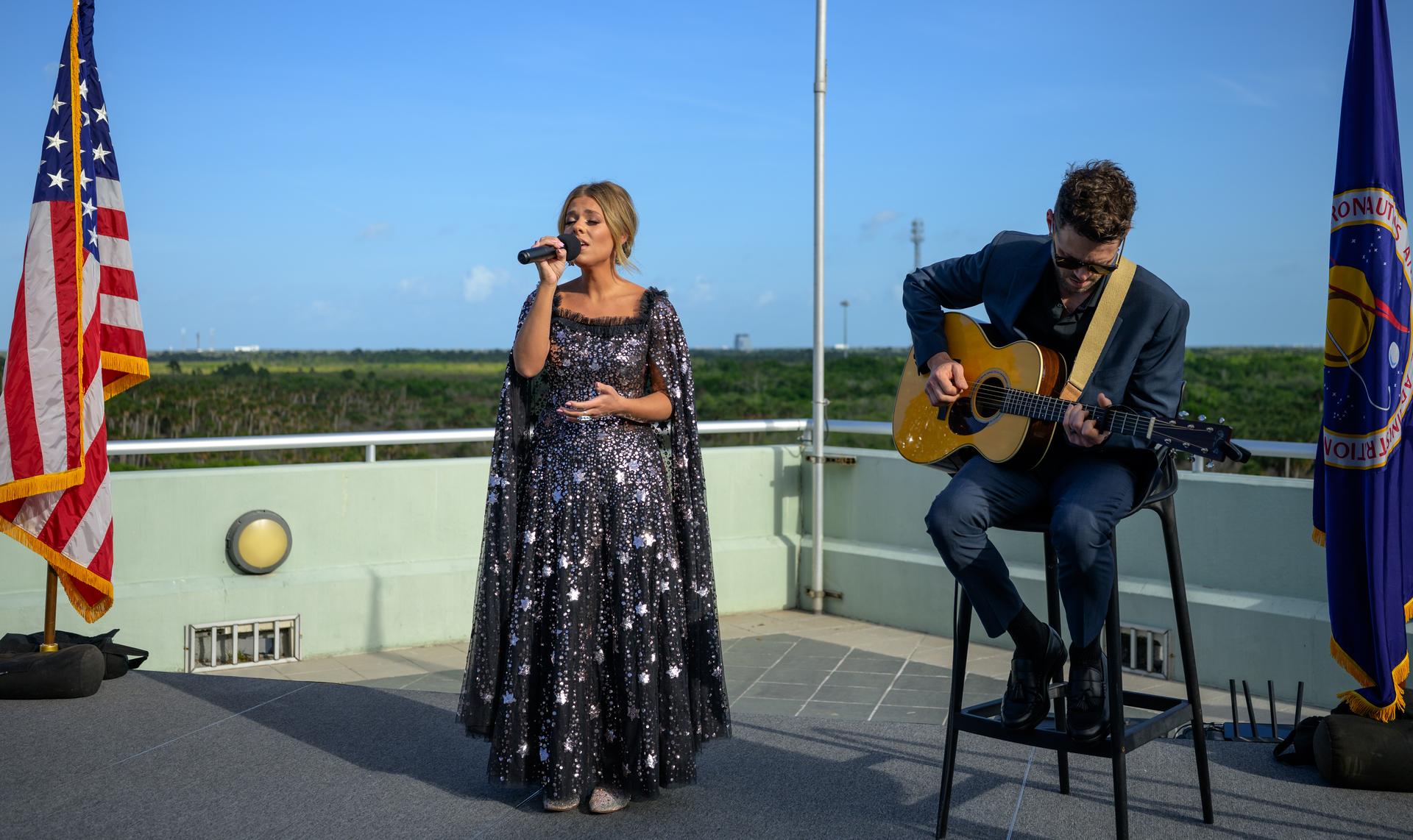
Country artist Anne Wilson sings the national anthem, accompanied on guitar by Chris Wrate, ahead of the launch of NASA’s Space Launch System rocket carrying the Orion spacecraft with NASA astronauts Reid Wiseman, commander; Victor Glover, pilot; Christina Koch, mission specialist; and CSA (Canadian Space Agency) astronaut Jeremy Hansen, mission specialist on NASA’s Artemis II mission, Wednesday, April 1, 2026, from Operations and Support Building II at NASA’s Kennedy Space Center in Florida. NASA’s Artemis II mission will take Wiseman, Glover, Koch, and Hansen on a 10-day journey around the Moon and back aboard SLS rocket and Orion spacecraft which launched at 6:35pm EDT from Launch Complex 39B. Photo Credit: (NASA/Bill Ingalls)

NASA T-38s fly in formation above the Space Launch System rocket and Orion spacecraft on Launch Pad 39B at NASA's Kennedy Space Center in Florida. Aircraft designations and passengers: NASA 901: Chris Condon / Astronaut Zena Cardman. 902: Astronaut Candidate Nicole Ayers / Astronaut Christina Koch. 903: Canadian Space Agency Astronaut Jeremy Hansen / Astronaut Drew Morgan. 904: Chief Astronaut Reid Wiseman / Astronaut Joe Acaba. 905 (Photo Chase): Astronaut Candidate Jack Hathaway / Josh Valcarcel. Credit: NASA/Josh Valcarcel
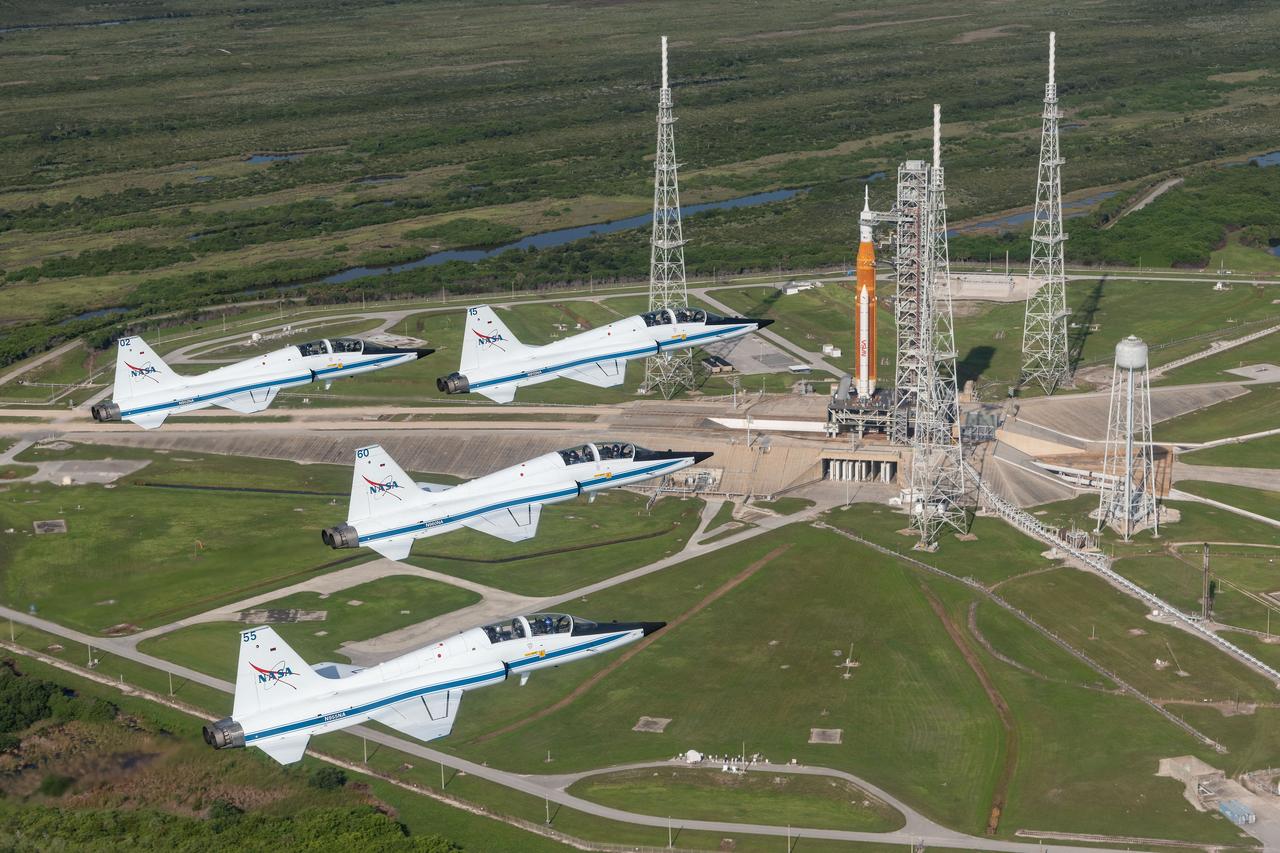
NASA's T-38 jets fly in formation above the Space Launch System rocket on Launch Pad 39B at NASA's Kennedy Space Center. Aircraft designations and passengers: NASA 901: Chris Condon / Astronaut Zena Cardman. 902: Astronaut Candidate Nicole Ayers / Astronaut Christina Koch. 903: Canadian Space Agency Astronaut Jeremy Hansen / Astronaut Drew Morgan. 904: Chief Astronaut Reid Wiseman / Astronaut Joe Acaba. 905 (Photo Chase): Astronaut Candidate Jack Hathaway / Josh Valcarcel Credit: NASA/Josh Valcarcel
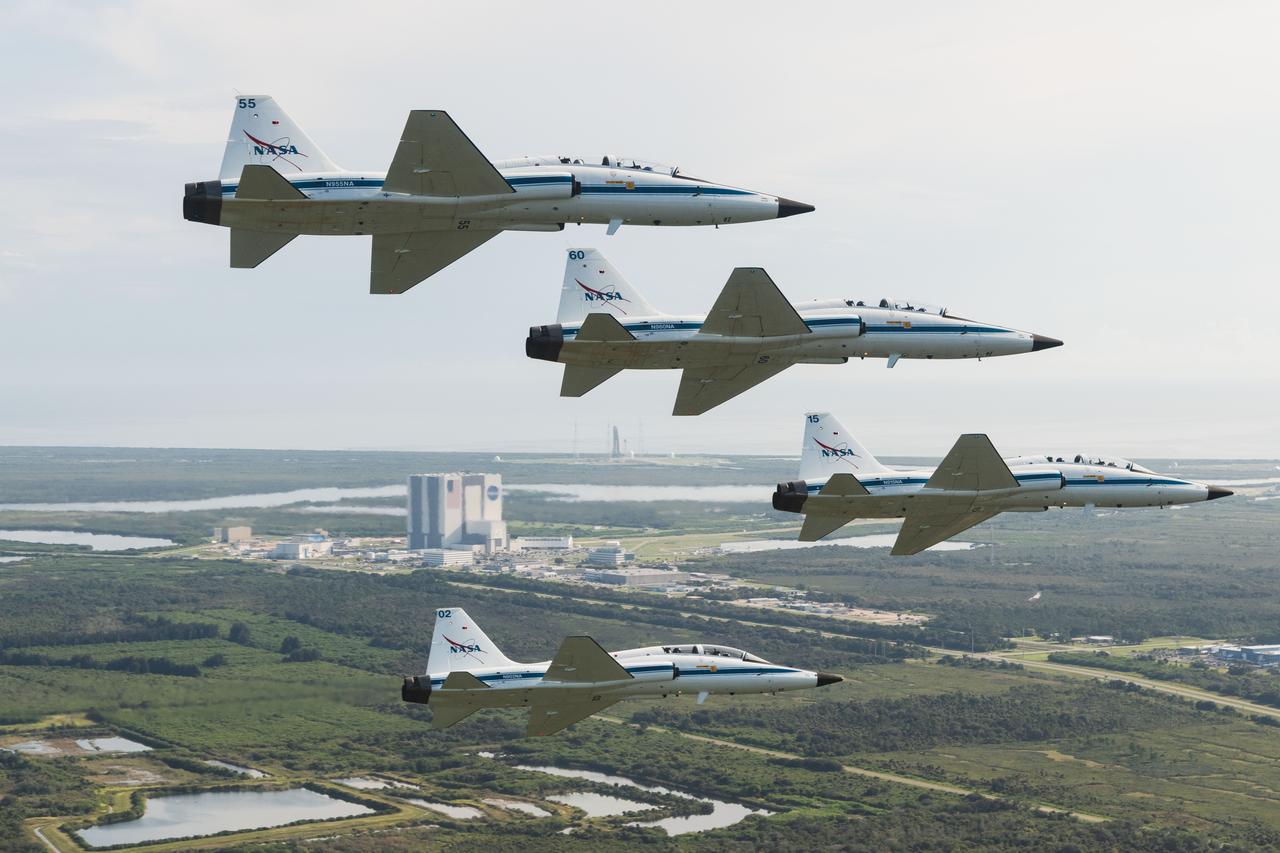
NASA's T-38 jets fly in formation above NASA's Kennedy Space Center. Several astronauts and astronaut candidates flew in to support the Artemis I launch and various pre-launch activities. Aircraft designations and passengers: NASA 901: Chris Condon / Astronaut Zena Cardman. 902: Astronaut Candidate Nicole Ayers / Astronaut Christina Koch. 903: Canadian Space Agency Astronaut Jeremy Hansen / Astronaut Drew Morgan. 904: Chief Astronaut Reid Wiseman / Astronaut Joe Acaba. 905 (Photo Chase): Astronaut Candidate Jack Hathaway / Josh Valcarcel Credit: NASA/Josh Valcarcel

NASA astronauts and astronaut candidates fly in formation aboard T-38 jets over NASA's Kennedy Space Center in Florida. They flew in to support the Artemis I mission and various pre-launch activities. Aircraft designations and passengers: NASA 901: Chris Condon / Astronaut Zena Cardman. 902: Astronaut Candidate Nicole Ayers / Astronaut Christina Koch. 903: Canadian Space Agency Astronaut Jeremy Hansen / Astronaut Drew Morgan. 904: Chief Astronaut Reid Wiseman / Astronaut Joe Acaba. 905 (Photo Chase): Astronaut Candidate Jack Hathaway / Josh Valcarcel Credit: NASA/Josh Valcarcel
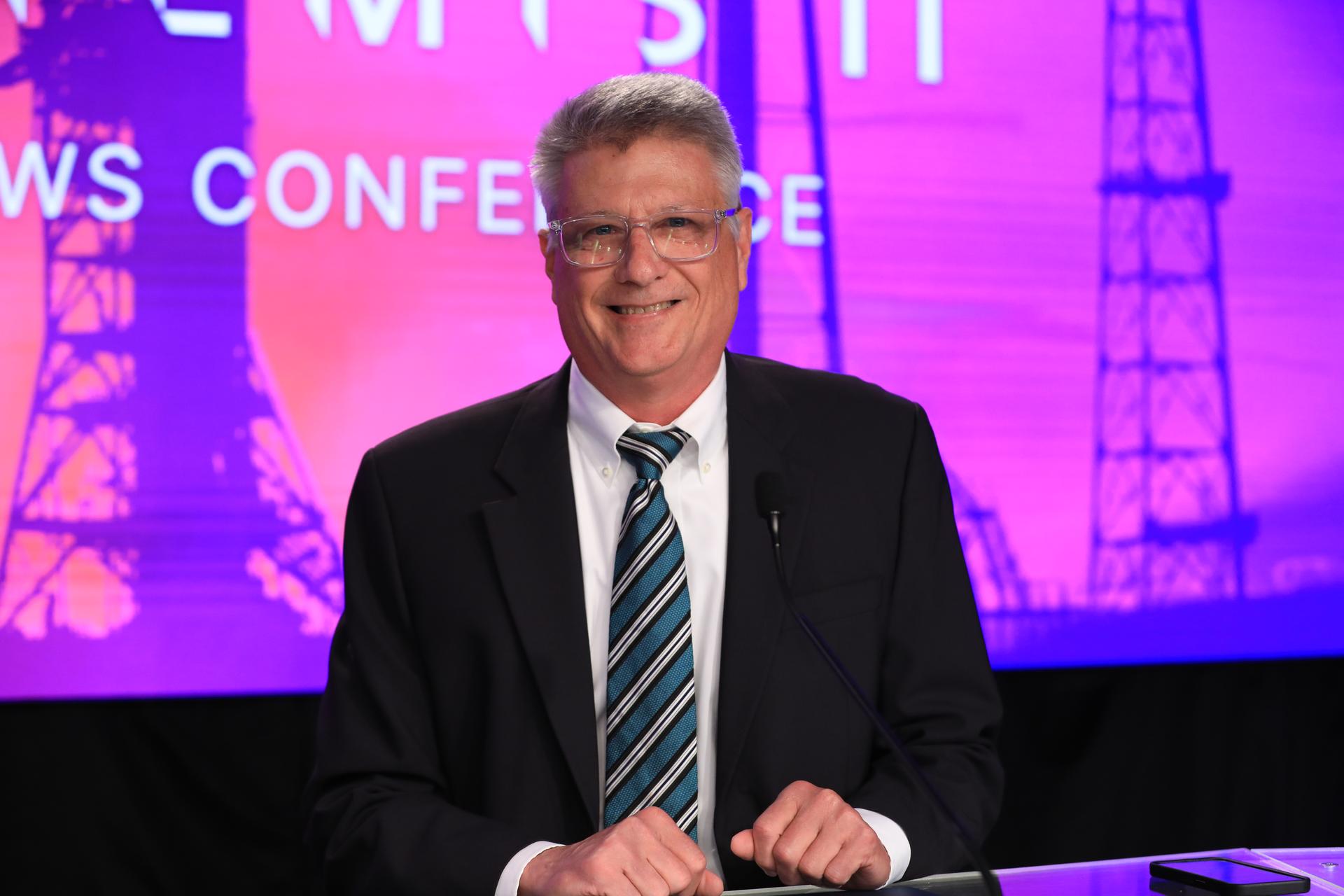
Chris Cianciola, deputy manager, NASA’s SLS (Space Launch System) Program, participates in a news conference on Sunday, March 29, 2026, to discuss the upcoming Artemis II test flight at NASA’s Kennedy Space Center in Florida. The Artemis II mission will take Artemis II Commander Reid Wiseman, Pilot Victor Glover, and Mission Specialist Christina Koch from NASA, and Mission Specialist Jeremy Hansen from the CSA (Canadian Space Agency) on a 10-day journey around the Moon and back aboard NASA’s SLS (Space Launch System) rocket and Orion spacecraft from Launch Complex 39B no earlier than 6:24 p.m. EDT on Wednesday, April 1.

Dartmouth College's Chris Polashenski cuts a block of ice from below a melt pond on sea ice in the Chukchi Sea on July 9, 2010, for analysis upon return from the mission. The research is part of NASA's ICESCAPE mission onboard the U.S. Coast Guard icebreaker Healy to sample the physical, chemical and biological characteristics of the ocean and sea ice. Impacts of Climate change on the Eco-Systems and Chemistry of the Arctic Pacific Environment (ICESCAPE) is a multi-year NASA shipborne project. The bulk of the research will take place in the Beaufort and Chukchi Sea’s in summer of 2010 and fall of 2011. Photo Credit: (NASA/Kathryn Hansen)
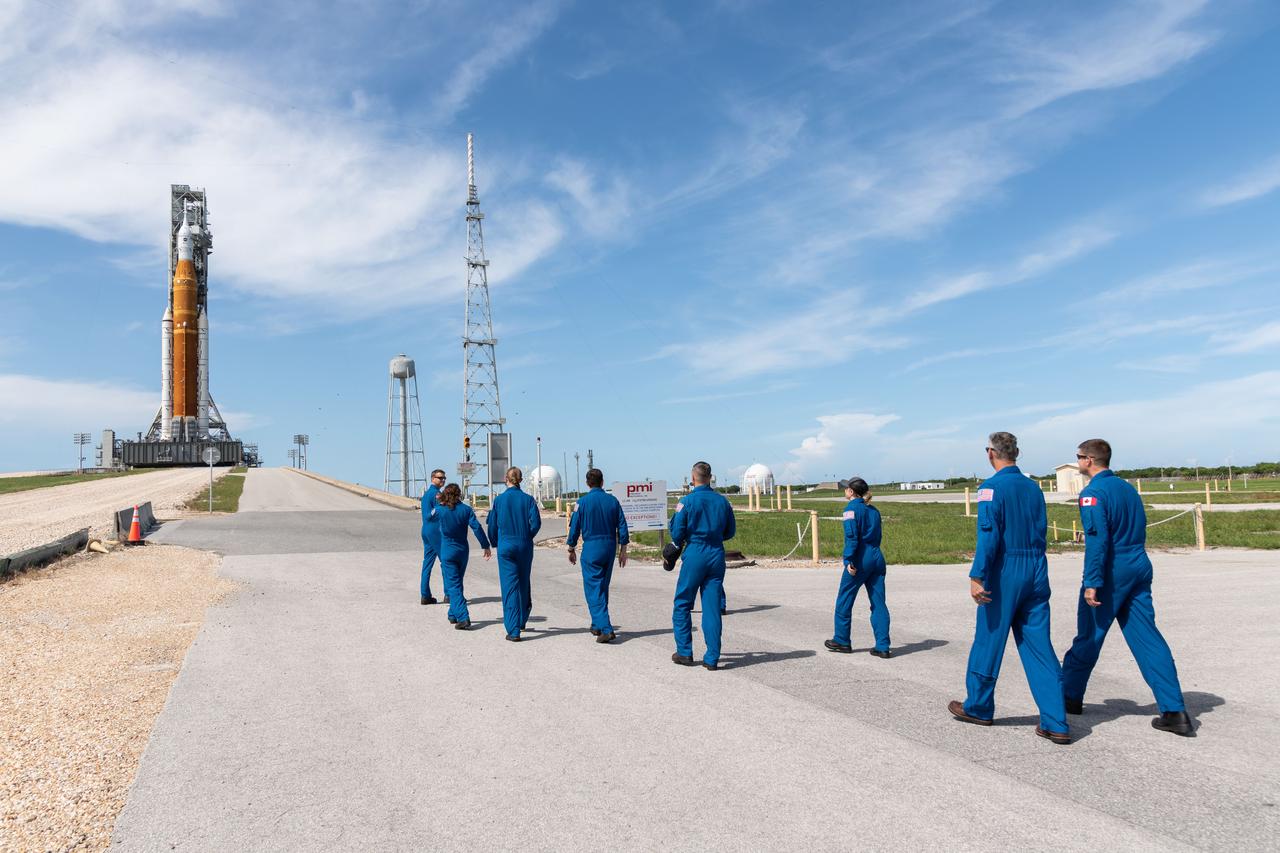
Astronauts and astronaut candidates walk towards the Space Launch System rocket and Orion spacecraft at Launch Pad 39B after arriving in their T-38 jets in support of Artemis I launch operations at NASA's Kennedy Space Center in Florida. Photographed: NASA Astronauts Reid Wiseman, Christina Koch, Drew Morgan , Zena Cardman, NASA Astronaut Candidates Nicole Ayers, Jack Hathaway, Canadian Space Agency Astronaut Jeremy Hansen, and NASA Pilot Chris Condon, with the Space Launch System on Launch Pad 39B. Credit: NASA/Josh Valcarcel
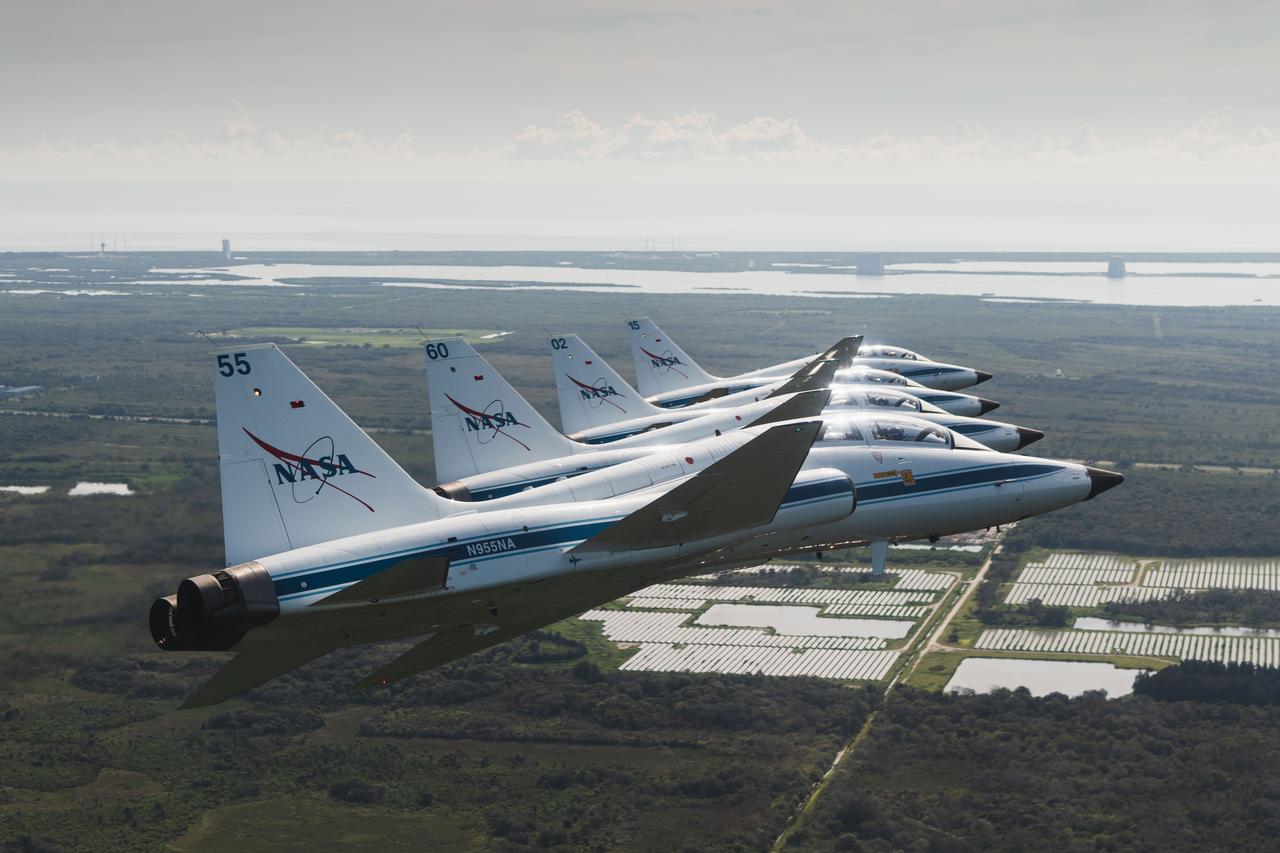
NASA T-38s fly in formation above NASA's Kennedy Space Center in Florida. Several astronauts and astronaut candidates traveled to view the Space Launch System rocket and Orion spacecraft on Launch Pad 39B, as well as support various pre-launch activities. Aircraft designations and passengers: NASA 901: Chris Condon / Astronaut Zena Cardman. 902: Astronaut Candidate Nicole Ayers / Astronaut Christina Koch. 903: Canadian Space Agency Astronaut Jeremy Hansen / Astronaut Drew Morgan. 904: Chief Astronaut Reid Wiseman / Astronaut Joe Acaba. 905 (Photo Chase): Astronaut Candidate Jack Hathaway / Josh Valcarcel. Credit: NASA/Josh Valcarcel PHOTOGRAPHER: Josh Valcarcel
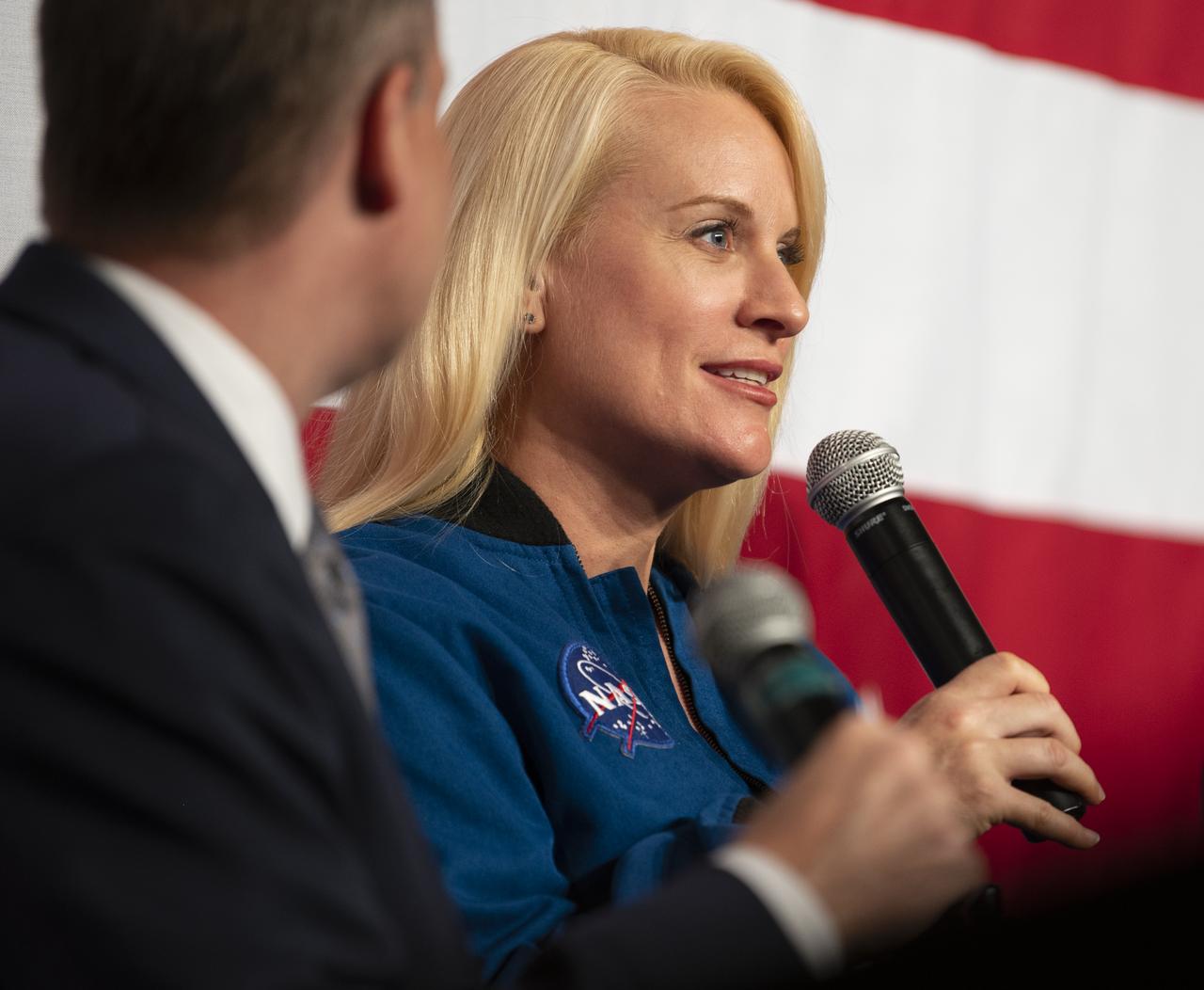
NASA astronaut Kate Rubins answers an audience question during a panel discussion with NASA Administrator Jim Bridenstine and Chris Hansen, Manager of the Extravehicular Activity office at NASA’s Johnson Space Center during the Artemis Generation Spacesuit event, Tuesday, Oct. 15, 2019 at NASA Headquarters in Washington. The Exploration Extravehicular Mobility Unit (xEMU) suit improves on the suits previous worn on the Moon during the Apollo era and those currently in use for spacewalks outside the International Space Station and will be worn by first woman and next man as they explore the Moon as part of the agency’s Artemis program. The Orion Crew Survival System (OCSS) suit is designed for a custom fit and incorporates safety technology and mobility features that will help protect astronauts on launch day, in emergency situations, high-risk parts of missions near the Moon, and during the high-speed return to Earth. Photo Credit: (NASA/Joel Kowsky)
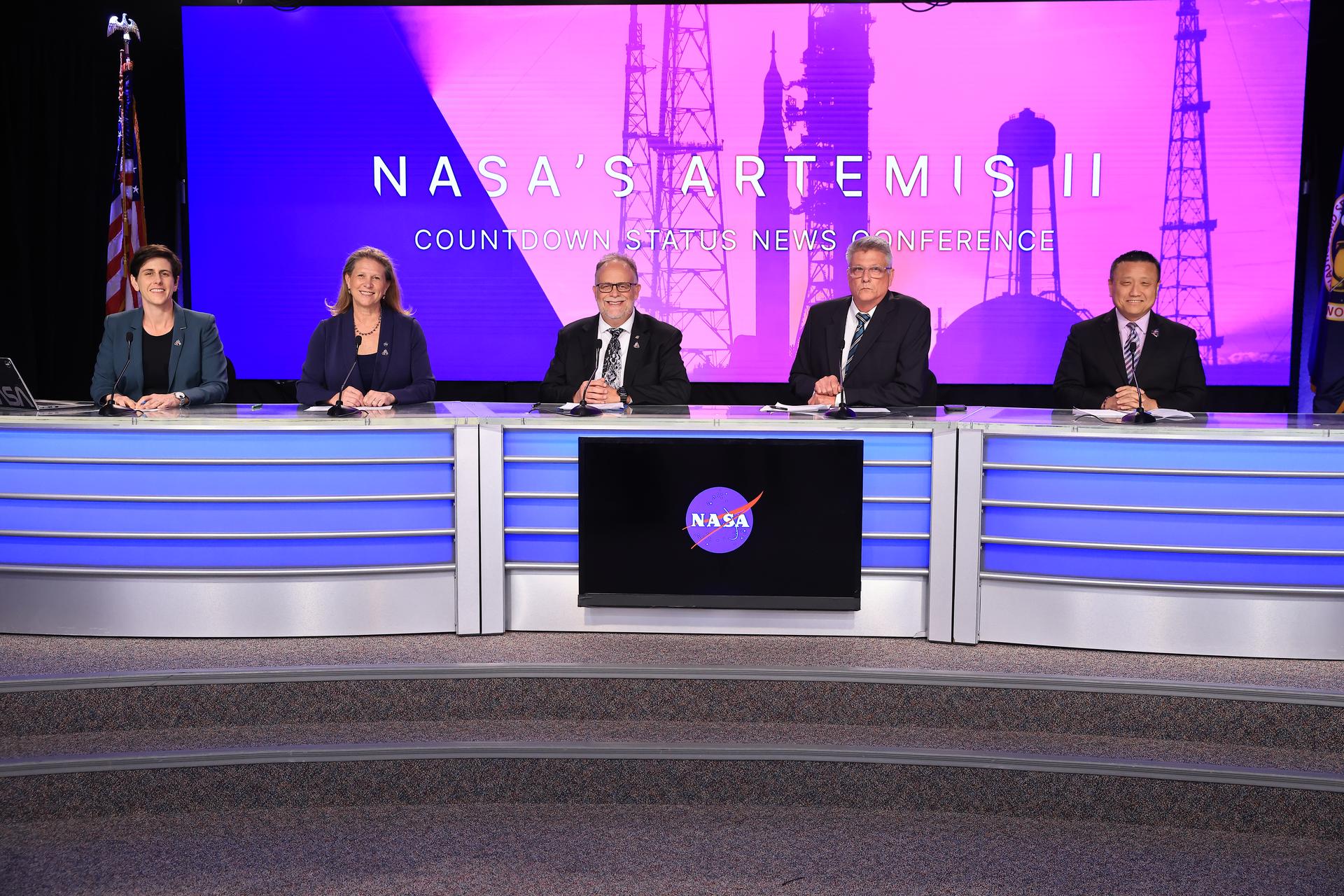
From left to right, Rachel Kraft, NASA communications; Lori Glaze, acting associate administrator, Exploration Systems Development Mission Directorate; Shawn Quinn, program manager, Exploration Ground Systems; Chris Cianciola, deputy manager, NASA’s SLS (Space Launch System) Program; and Howard Hu, manager, Orion Program, participates in a news conference on Sunday, March 29, 2026, to discuss the upcoming Artemis II test flight at NASA’s Kennedy Space Center in Florida. The Artemis II mission will take Artemis II Commander Reid Wiseman, Pilot Victor Glover, and Mission Specialist Christina Koch from NASA, and Mission Specialist Jeremy Hansen from the CSA (Canadian Space Agency) on a 10-day journey around the Moon and back aboard NASA’s SLS (Space Launch System) rocket and Orion spacecraft from Launch Complex 39B no earlier than 6:24 p.m. EDT on Wednesday, April 1.
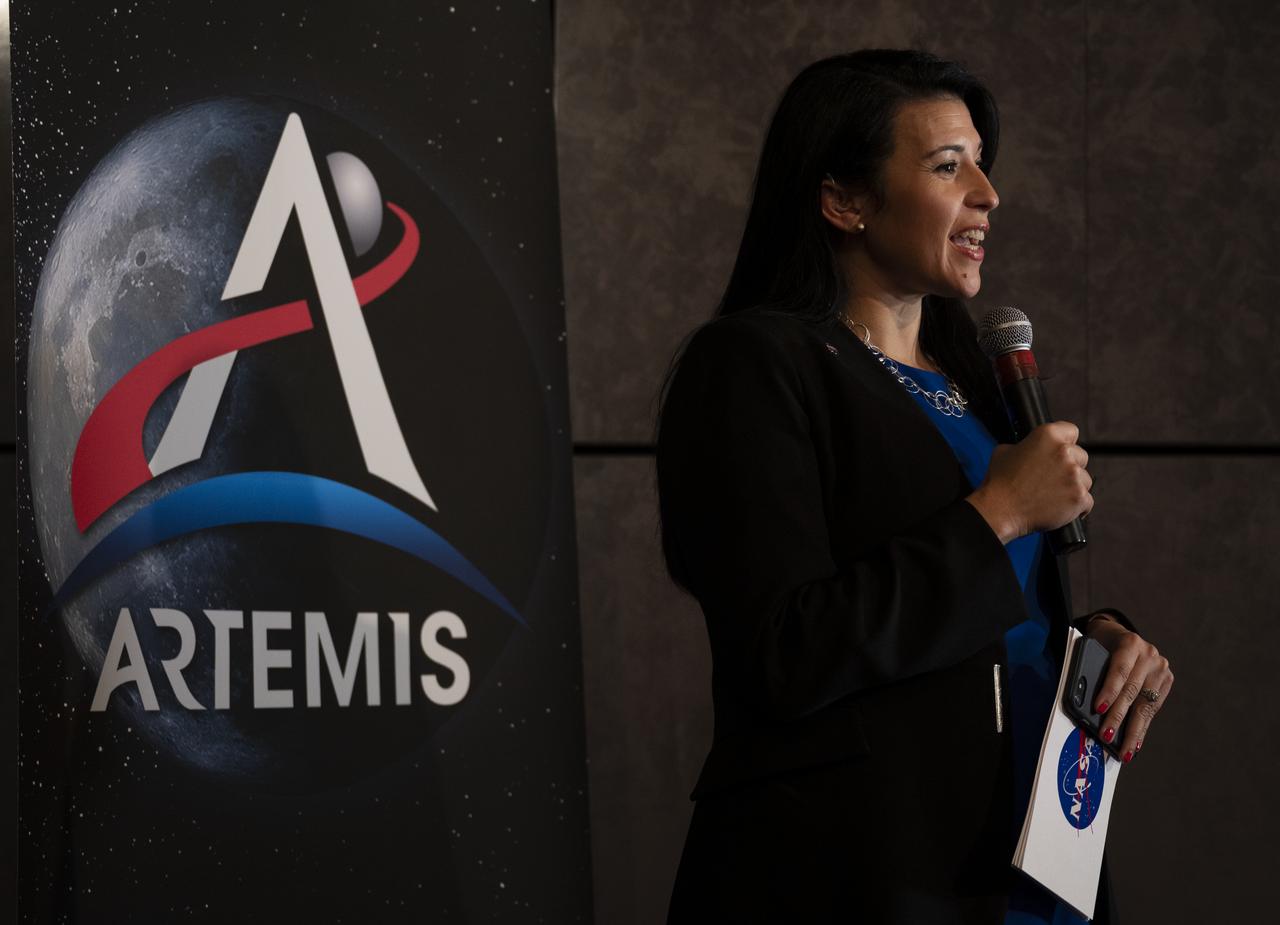
NASA Associate Administrator for the Office of Communications Bettina Inclán moderates a panel discussion with NASA Administrator Jim Bridenstine, NASA astronaut Kate Rubins, and Chris Hansen, Manager of the Extravehicular Activity office at NASA’s Johnson Space Center during the Artemis Generation Spacesuit event, Tuesday, Oct. 15, 2019 at NASA Headquarters in Washington. The Exploration Extravehicular Mobility Unit (xEMU) suit improves on the suits previous worn on the Moon during the Apollo era and those currently in use for spacewalks outside the International Space Station and will be worn by first woman and next man as they explore the Moon as part of the agency’s Artemis program. The Orion Crew Survival System (OCSS) suit is designed for a custom fit and incorporates safety technology and mobility features that will help protect astronauts on launch day, in emergency situations, high-risk parts of missions near the Moon, and during the high-speed return to Earth. Photo Credit: (NASA/Joel Kowsky)
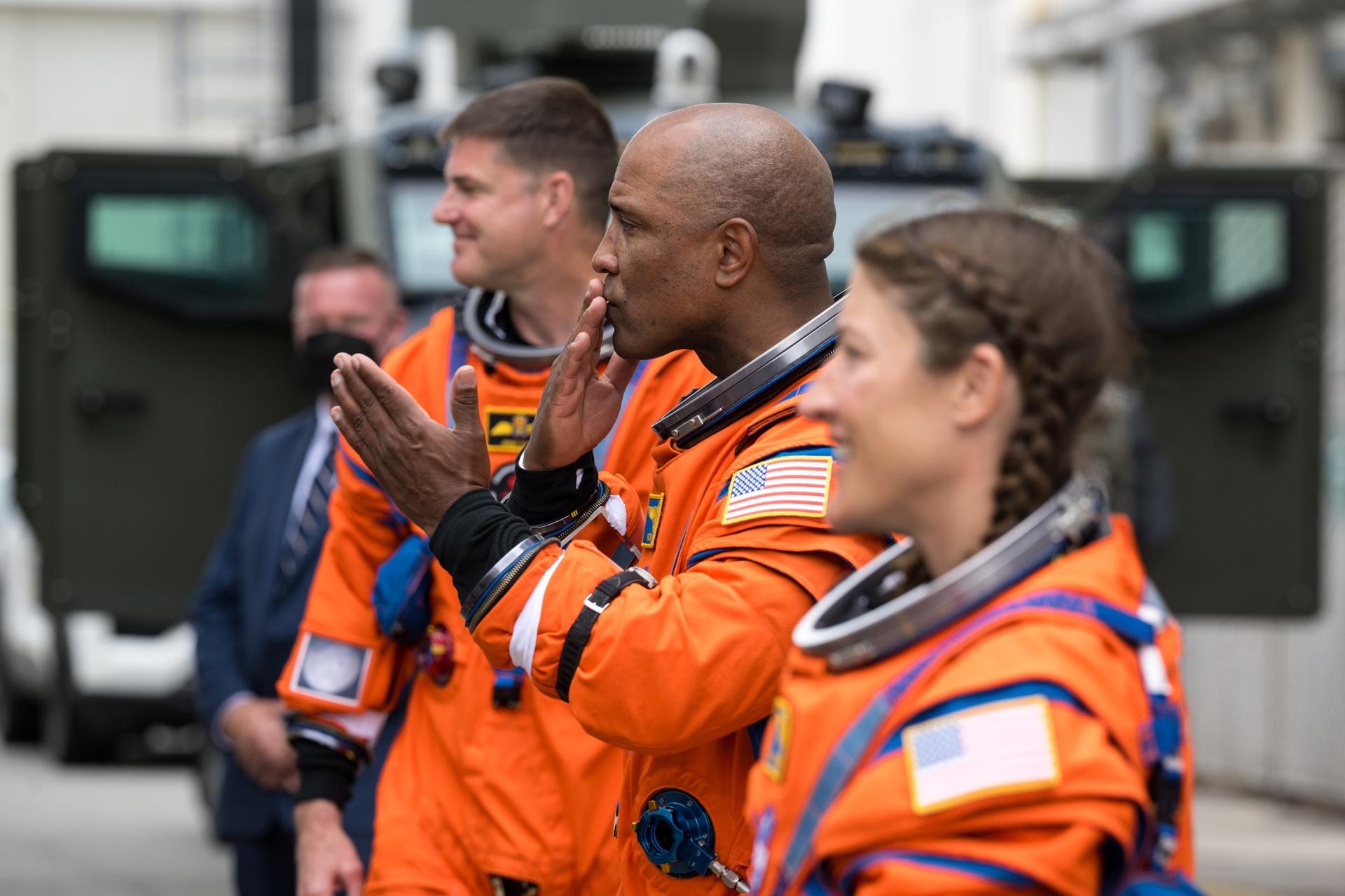
From right to left, NASA astronauts Reid Wiseman, commander (not pictured); Christina Koch, mission specialist; Victor Glover, pilot; and CSA (Canadian Space Agency) astronaut Jeremy Hansen, mission specialist are seen as they depart the Neil A. Armstrong Operations and Checkout Building to board their Orion spacecraft atop NASA’s Space Launch System (SLS) rocket at Launch Complex 39B, Wednesday, April 1, 2026, at NASA’s Kennedy Space Center in Florida. NASA’s Artemis II mission will take Wiseman, Glover, Koch, and Hansen on a 10-day journey around the Moon and back aboard their Orion spacecraft from Launch Complex 39B, with a two hour launch window opening at 6:24pm. Photo Credit: (NASA/Aubrey Gemignani)
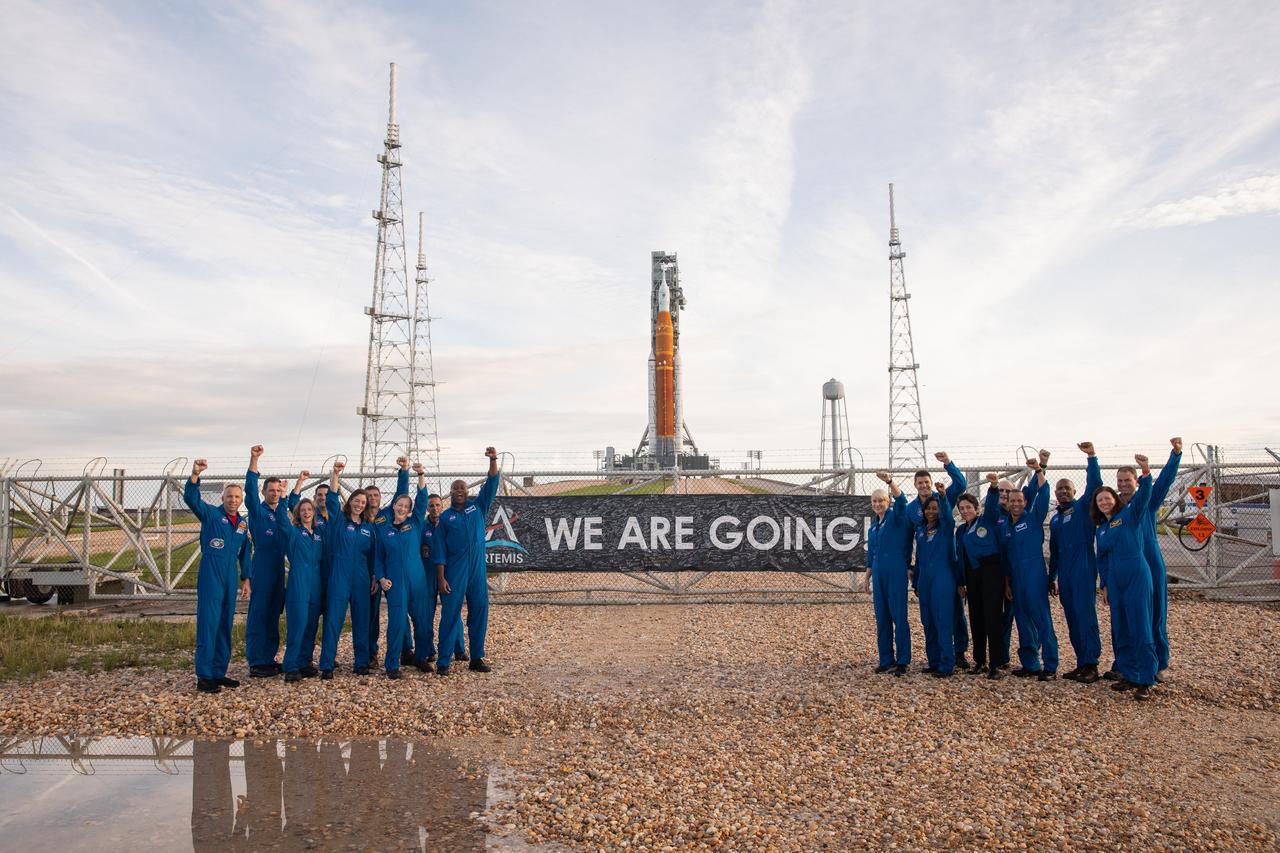
Astronauts and astronaut candidates from NASA and the Canadian Space Agency pose for a photograph in front of NASA’s Artemis I Space Launch System and Orion spacecraft atop the mobile launcher on the pad at Launch Complex 39B on Aug. 28, 2022. The astronauts are, from left to right: Randy Bresnik, NASA astronaut; Joshua Kutryk, Canadian Space Agency astronaut; Zena Cardman, NASA astronaut; Jack Hathaway, NASA astronaut candidate; Christina Birch, NASA astronaut candidate; Reid Wiseman, NASA astronaut; Jessica Wittner, NASA astronaut candidate; Joe Acaba, NASA astronaut; Andre Douglas, NASA astronaut candidate; Kate Rubins, NASA astronaut; Jeremy Hansen, Canadian Space Agency astronaut; Stephanie Wilson, NASA astronaut; Jessica Meir, NASA astronaut; Don Pettit, NASA astronaut; Chris Williams, NASA astronaut candidate; Victor Glover, NASA astronaut; Shannon Walker, NASA astronaut; Stan Love, NASA astronaut. Artemis I is scheduled to launch Aug. 29, at 8:33 a.m. EDT. The first in a series of increasingly complex missions, Artemis I will provide a foundation for human deep space exploration and demonstrate our commitment and capability to extend human presence to the Moon and beyond. The primary goal of Artemis I is to thoroughly test the integrated systems before crewed missions by operating the spacecraft in a deep space environment, testing Orion’s heat shield, and recovering the crew module after reentry, descent, and splashdown.
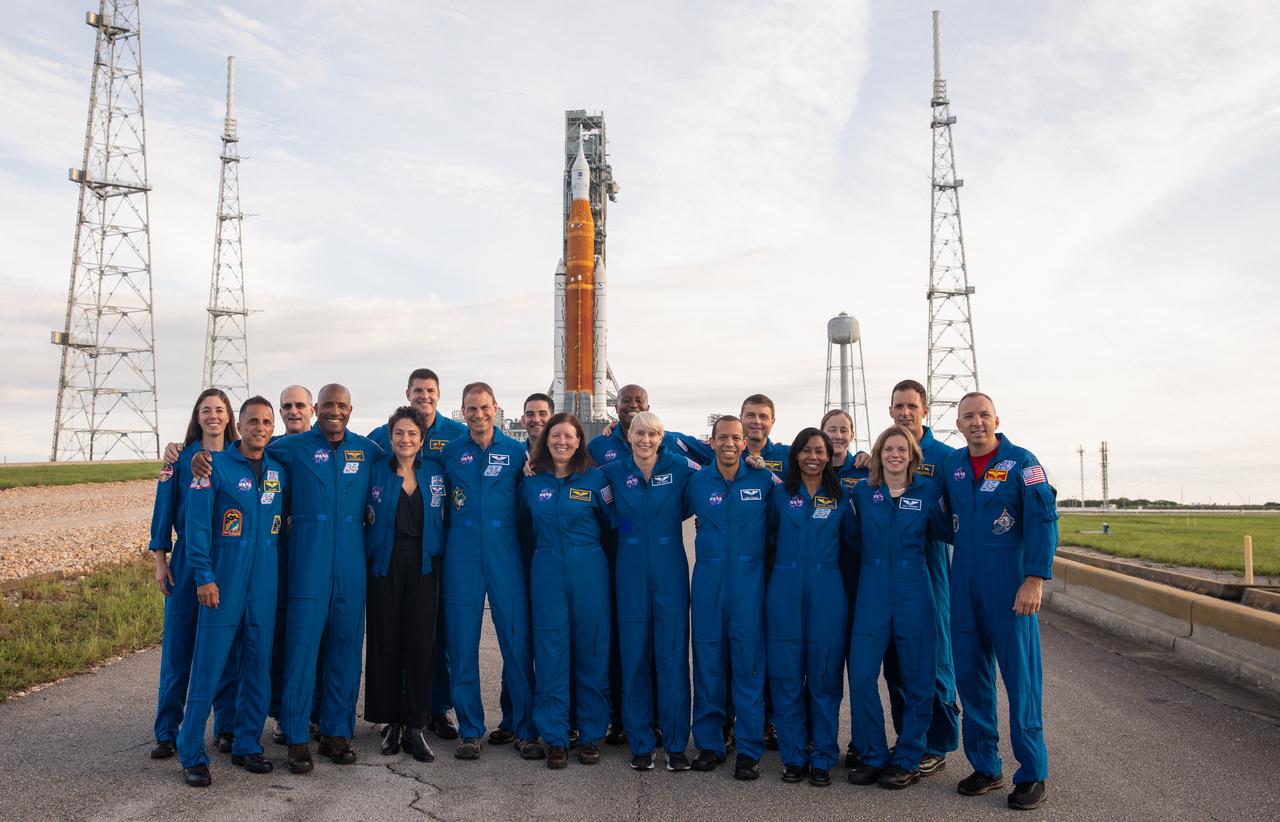
Astronauts and astronaut candidates from NASA and the Canadian Space Agency pose for a photograph in front of NASA’s Artemis I Space Launch System and Orion spacecraft atop the mobile launcher on the pad at Launch Complex 39B on Aug. 28, 2022. The astronauts are, from left to right: Christina Birch, NASA astronaut candidate; Joe Acaba, NASA astronaut; Don Pettit, NASA astronaut; Victor Glover, NASA astronaut; Jessica Meir, NASA astronaut; Jeremy Hansen, Canadian Space Agency astronaut; Stan Love, NASA astronaut; Jack Hathaway, NASA astronaut candidate; Shannon Walker, NASA astronaut; Andre Douglas, NASA astronaut candidate; Kate Rubins, NASA astronaut; Chris Williams, NASA astronaut candidate; Reid Wiseman, NASA astronaut; Stephanie Wilson, NASA astronaut; Jessica Wittner, NASA astronaut candidate; Zena Cardman, NASA astronaut; Joshua Kutryk, Canadian Space Agency astronaut; Randy Bresnik, NASA astronaut. Artemis I is scheduled to launch Aug. 29, at 8:33 a.m. EDT. The first in a series of increasingly complex missions, Artemis I will provide a foundation for human deep space exploration and demonstrate our commitment and capability to extend human presence to the Moon and beyond. The primary goal of Artemis I is to thoroughly test the integrated systems before crewed missions by operating the spacecraft in a deep space environment, testing Orion’s heat shield, and recovering the crew module after reentry, descent, and splashdown.
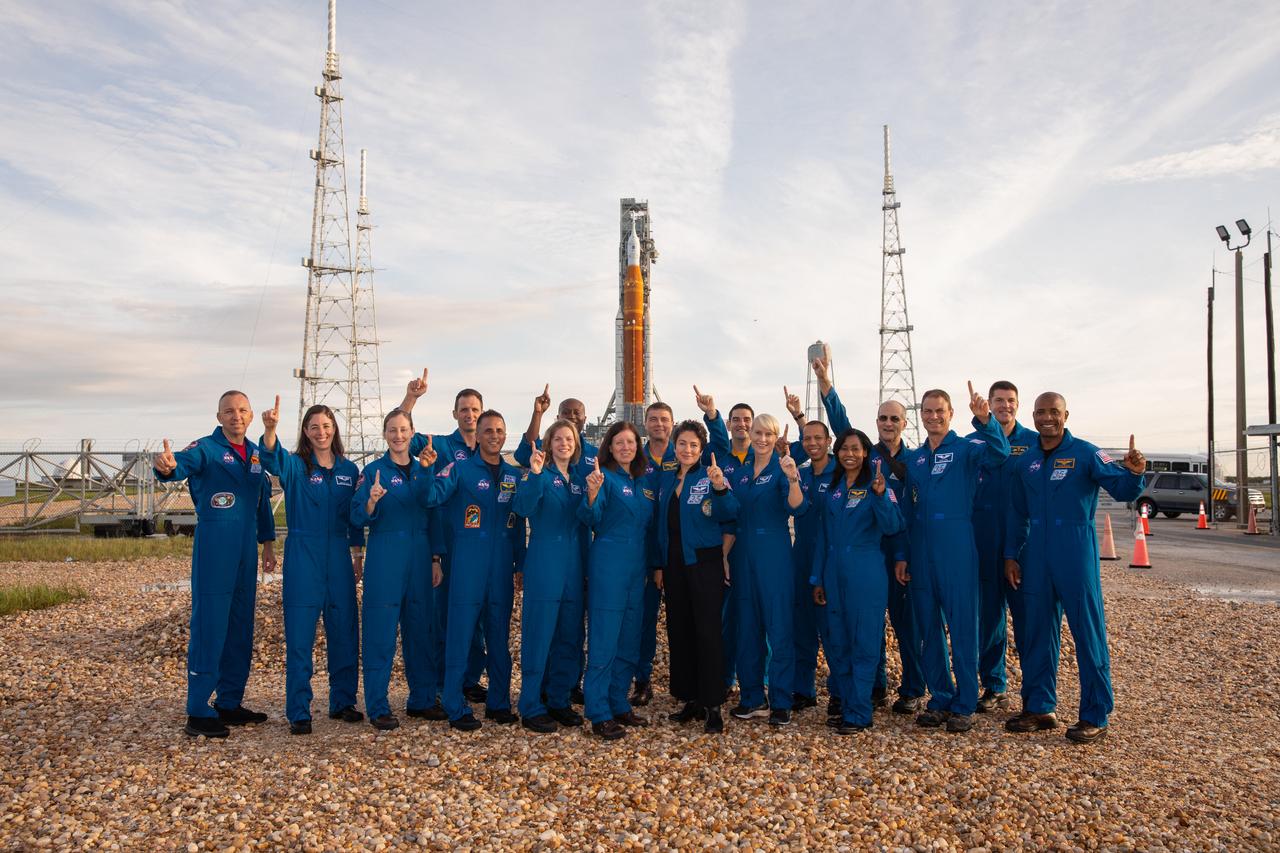
Astronauts and astronaut candidates from NASA and the Canadian Space Agency pose for a photograph in front of NASA’s Artemis I Space Launch System and Orion spacecraft atop the mobile launcher on the pad at Launch Complex 39B on Aug. 28, 2022. The astronauts are, from left to right: Randy Bresnik, NASA astronaut; Christina Birch, NASA astronaut candidate; Jessica Wittner, NASA astronaut candidate; Joshua Kutryk, Canadian Space Agency astronaut; Joe Acaba, NASA astronaut; Zena Cardman, NASA astronaut; Andre Douglas, NASA astronaut candidate; Shannon Walker, NASA astronaut; Reid Wiseman, NASA astronaut; Jessica Meir, NASA astronaut; Jack Hathaway, NASA astronaut candidate; Kate Rubins, NASA astronaut; Chris Williams, NASA astronaut candidate; Stephanie Wilson, NASA astronaut; Don Pettit, NASA astronaut; Stan Love, NASA astronaut; Jeremy Hansen, Canadian Space Agency astronaut; Victor Glover, NASA astronaut. Artemis I is scheduled to launch Aug. 29, at 8:33 a.m. EDT. The first in a series of increasingly complex missions, Artemis I will provide a foundation for human deep space exploration and demonstrate our commitment and capability to extend human presence to the Moon and beyond. The primary goal of Artemis I is to thoroughly test the integrated systems before crewed missions by operating the spacecraft in a deep space environment, testing Orion’s heat shield, and recovering the crew module after reentry, descent, and splashdown.
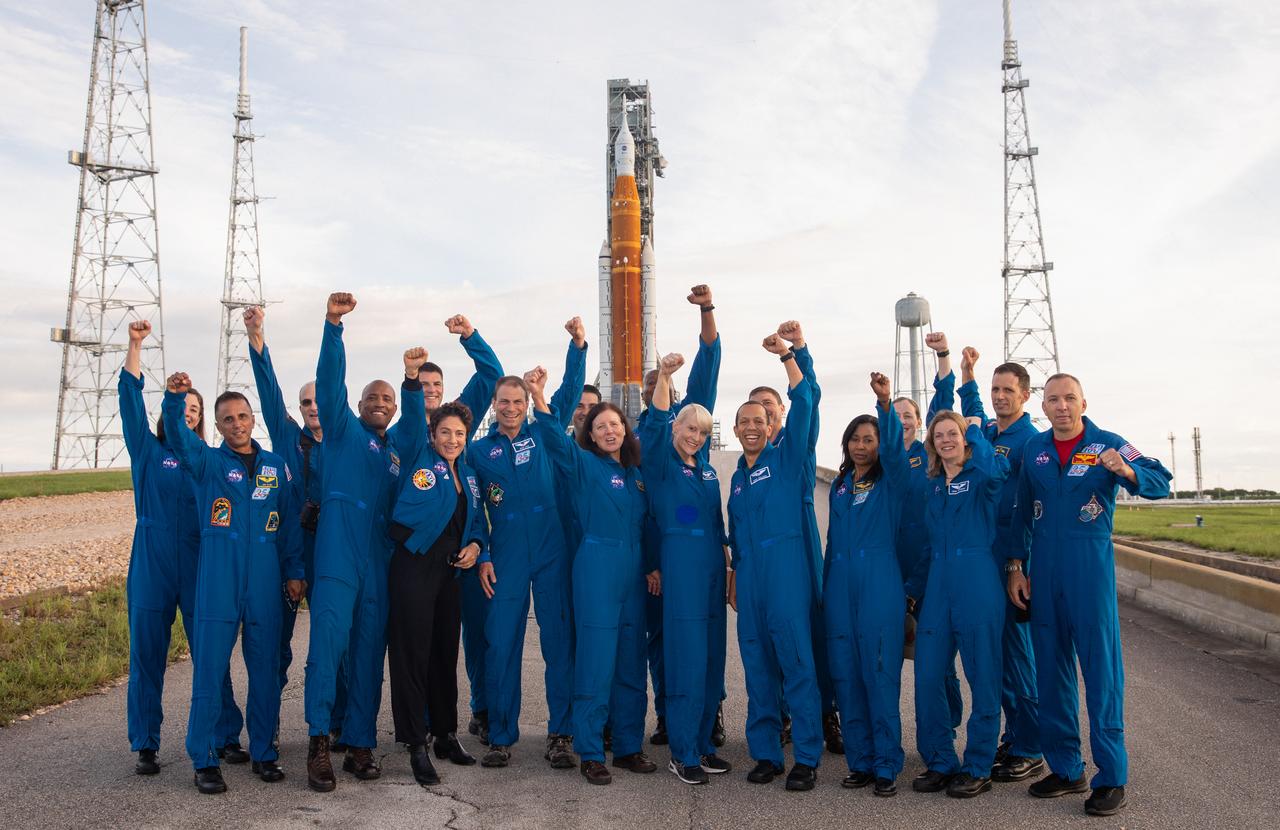
Astronauts and astronaut candidates from NASA and the Canadian Space Agency pose for a photograph in front of NASA’s Artemis I Space Launch System and Orion spacecraft atop the mobile launcher on the pad at Launch Complex 39B on Aug. 28, 2022. The astronauts are, from left to right: Christina Birch, NASA astronaut candidate; Joe Acaba, NASA astronaut; Don Pettit, NASA astronaut; Victor Glover, NASA astronaut; Jeremy Hansen, Canadian Space Agency astronaut; Jessica Meir, NASA astronaut; Stan Love, NASA astronaut; Jack Hathaway, NASA astronaut candidate; Shannon Walker, NASA astronaut; Andre Douglas, NASA astronaut candidate; Kate Rubins, NASA astronaut; Chris Williams, NASA astronaut candidate; Reid Wiseman, NASA astronaut; Stephanie Wilson, NASA astronaut; Jessica Wittner, NASA astronaut candidate; Zena Cardman, NASA astronaut; Joshua Kutryk, Canadian Space Agency astronaut; Randy Bresnik, NASA astronaut. Artemis I is scheduled to launch Aug. 29, at 8:33 a.m. EDT. The first in a series of increasingly complex missions, Artemis I will provide a foundation for human deep space exploration and demonstrate our commitment and capability to extend human presence to the Moon and beyond. The primary goal of Artemis I is to thoroughly test the integrated systems before crewed missions by operating the spacecraft in a deep space environment, testing Orion’s heat shield, and recovering the crew module after reentry, descent, and splashdown.
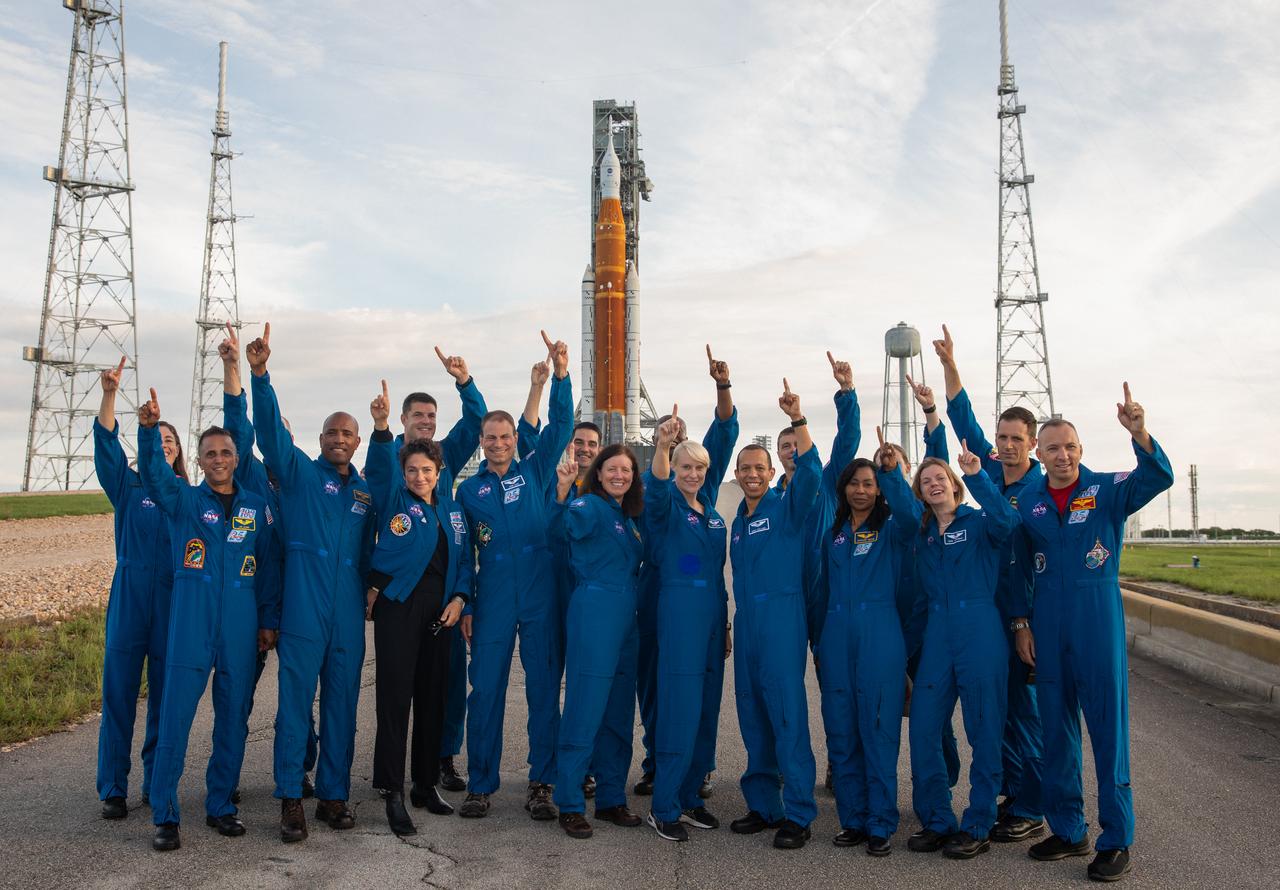
Astronauts and astronaut candidates from NASA and the Canadian Space Agency pose for a photograph in front of NASA’s Artemis I Space Launch System and Orion spacecraft atop the mobile launcher on the pad at Launch Complex 39B on Aug. 28, 2022. The astronauts are, from left to right: Christina Birch, NASA astronaut candidate; Joe Acaba, NASA astronaut; Don Pettit, NASA astronaut; Victor Glover, NASA astronaut; Jeremy Hansen, Canadian Space Agency astronaut; Jessica Meir, NASA astronaut; Stan Love, NASA astronaut; Jack Hathaway, NASA astronaut candidate; Shannon Walker, NASA astronaut; Andre Douglas, NASA astronaut candidate; Kate Rubins, NASA astronaut; Chris Williams, NASA astronaut candidate; Reid Wiseman, NASA astronaut; Stephanie Wilson, NASA astronaut; Jessica Wittner, NASA astronaut candidate; Zena Cardman, NASA astronaut; Joshua Kutryk, Canadian Space Agency astronaut; Randy Bresnik, NASA astronaut. Artemis I is scheduled to launch Aug. 29, at 8:33 a.m. EDT. The first in a series of increasingly complex missions, Artemis I will provide a foundation for human deep space exploration and demonstrate our commitment and capability to extend human presence to the Moon and beyond. The primary goal of Artemis I is to thoroughly test the integrated systems before crewed missions by operating the spacecraft in a deep space environment, testing Orion’s heat shield, and recovering the crew module after reentry, descent, and splashdown.
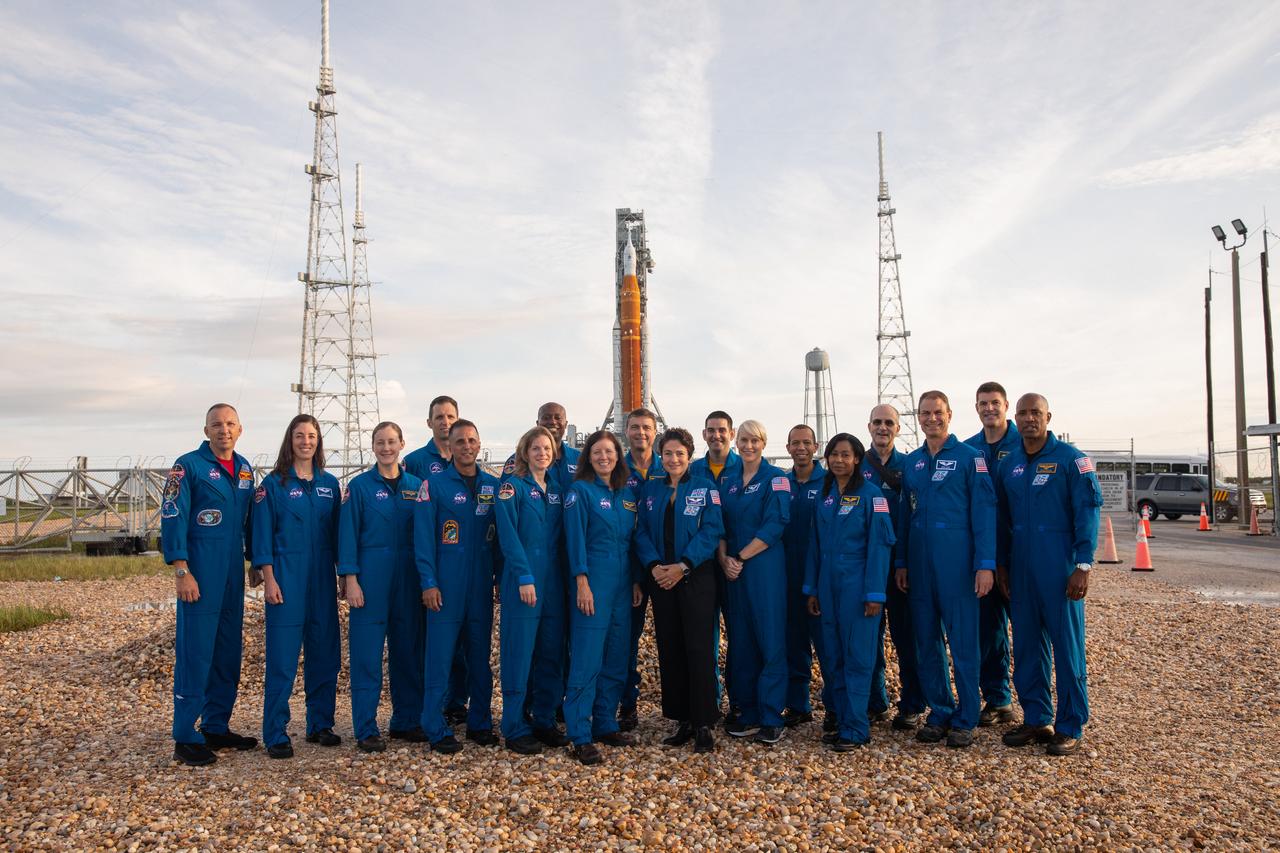
Astronauts and astronaut candidates from NASA and the Canadian Space Agency pose for a photograph in front of NASA’s Artemis I Space Launch System and Orion spacecraft atop the mobile launcher on the pad at Launch Complex 39B on Aug. 28, 2022. The astronauts are, from left to right: Randy Bresnik, NASA astronaut; Christina Birch, NASA astronaut candidate; Jessica Wittner, NASA astronaut candidate; Joshua Kutryk, Canadian Space Agency astronaut; Joe Acaba, NASA astronaut; Zena Cardman, NASA astronaut; Andre Douglas, NASA astronaut candidate; Shannon Walker, NASA astronaut; Reid Wiseman, NASA astronaut; Jessica Meir, NASA astronaut; Jack Hathaway, NASA astronaut candidate; Kate Rubins, NASA astronaut; Chris Williams, NASA astronaut candidate; Stephanie Wilson, NASA astronaut; Don Pettit, NASA astronaut; Stan Love, NASA astronaut; Jeremy Hansen, Canadian Space Agency astronaut; Victor Glover, NASA astronaut. Artemis I is scheduled to launch Aug. 29, at 8:33 a.m. EDT. The first in a series of increasingly complex missions, Artemis I will provide a foundation for human deep space exploration and demonstrate our commitment and capability to extend human presence to the Moon and beyond. The primary goal of Artemis I is to thoroughly test the integrated systems before crewed missions by operating the spacecraft in a deep space environment, testing Orion’s heat shield, and recovering the crew module after reentry, descent, and splashdown.