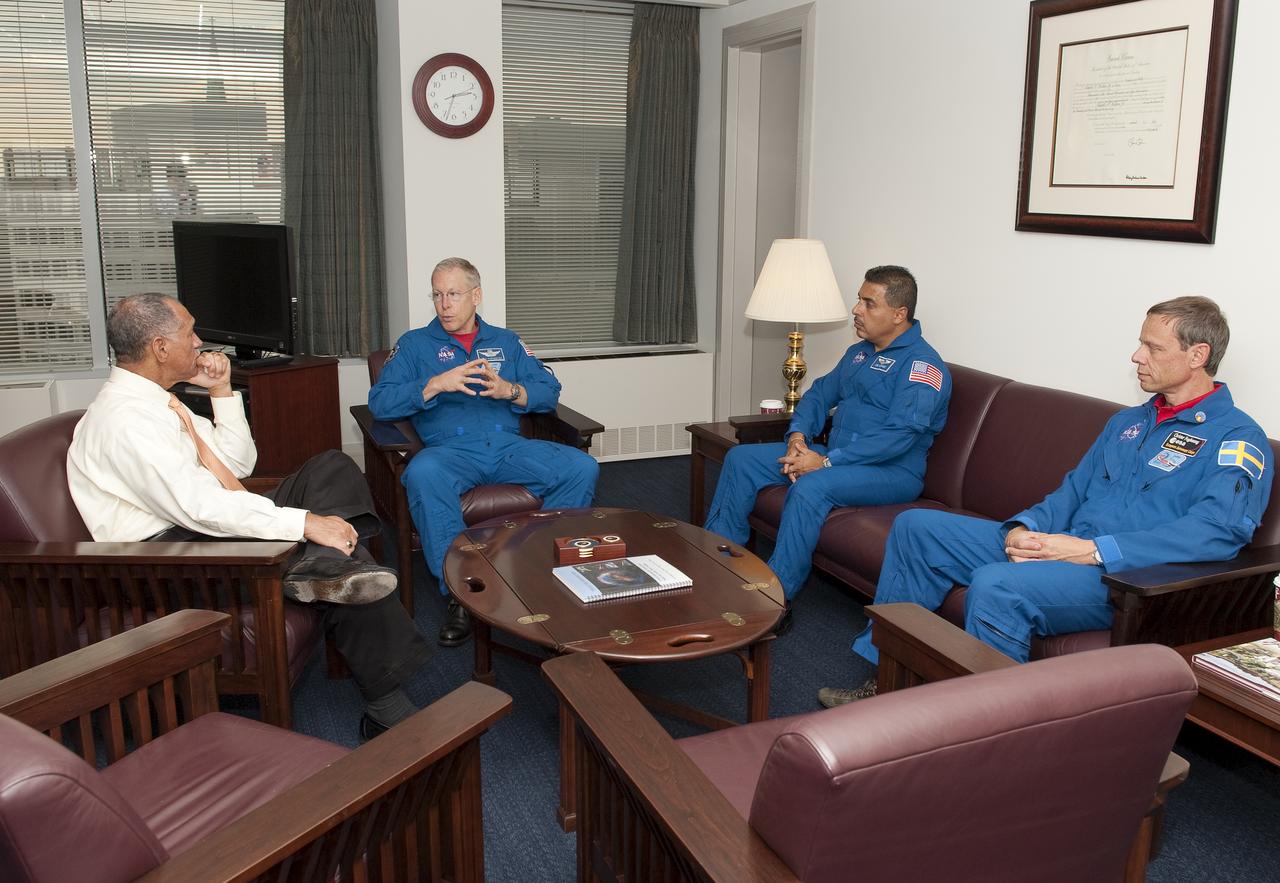
NASA Administrator Charles F. Bolden, left, meets with STS-128 astronauts Patrick Forrester, Jose Hernandez and Christer Fugelsang, of the European Space Agency in his office at NASA Headquarters, Tuesday, Nov. 3, 2009, in Washington. Photo Credit: (NASA/Paul E. Alers)
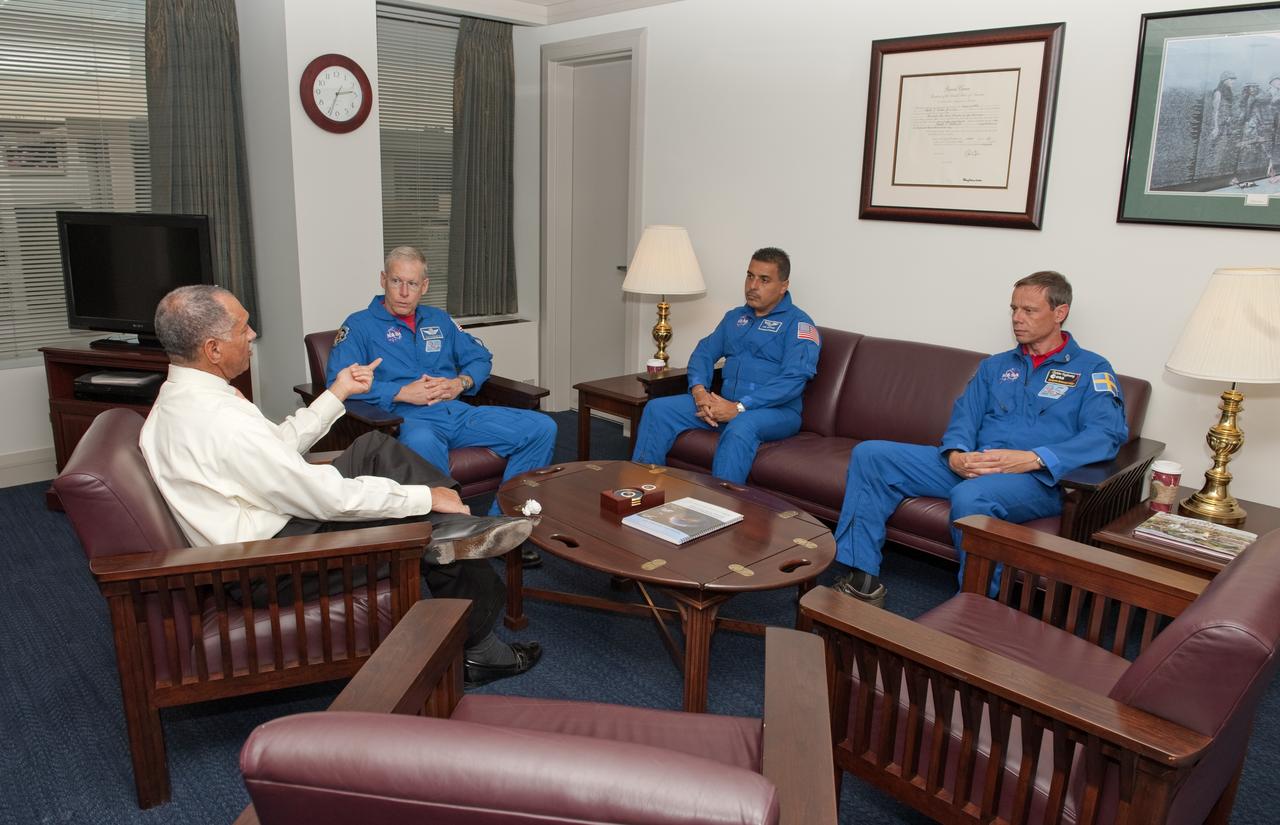
NASA Administrator Charles F. Bolden, left, talks with STS-128 astronauts Patrick Forrester, Jose Hernandez and Christer Fugelsang, of the European Space Agency in his office at NASA Headquarters, Tuesday, Nov. 3, 2009, in Washington. Photo Credit: (NASA/Paul E. Alers)
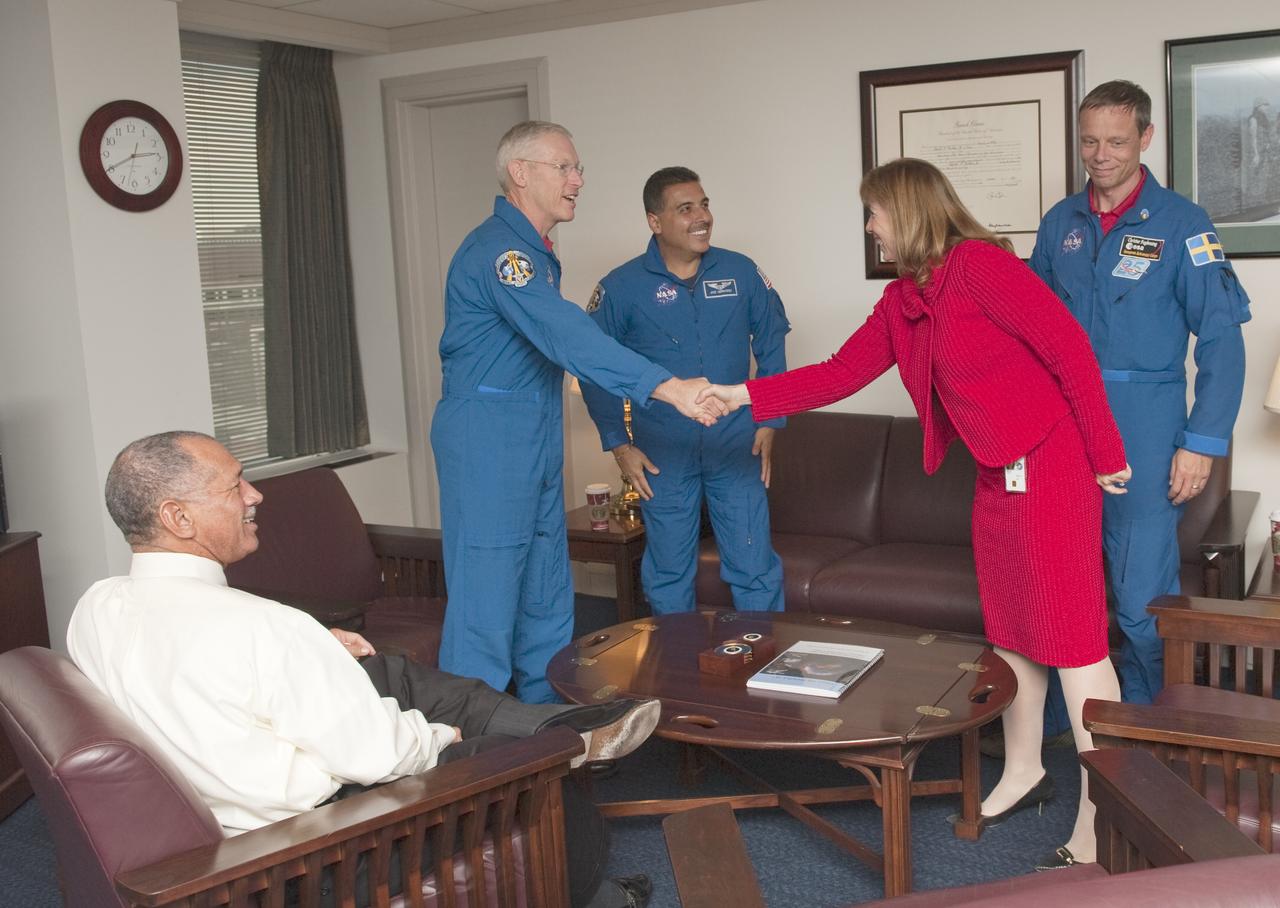
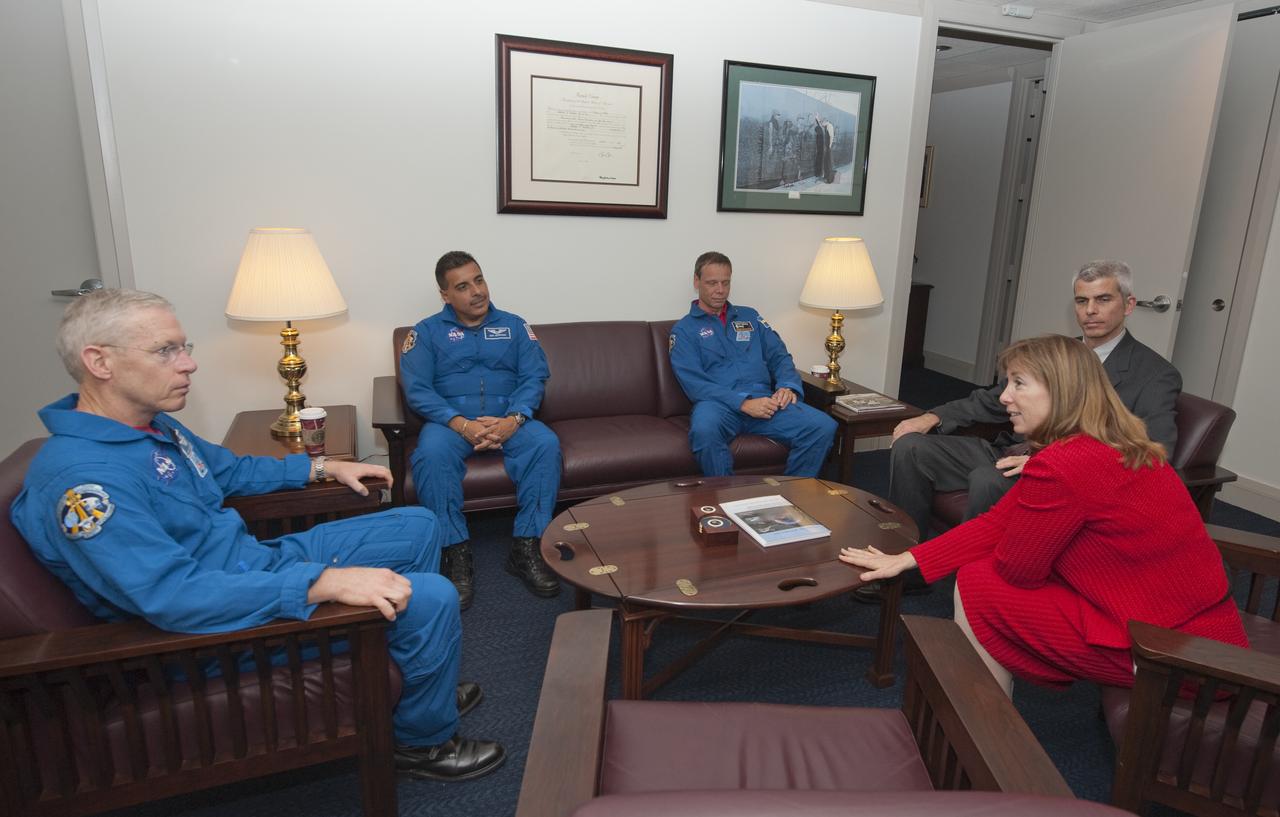
NASA Administrator Charles F. Bolden, seated left, smiles as Deputy Administrator Lori Garver greets STS-128 astronauts Patrick Forrester, Jose Hernandez and Christer Fugelsang, of the European Space Agency, during a meeting at NASA Headquarters, Tuesday, Nov. 3, 2009, in Washington. Photo Credit: (NASA/Paul E. Alers)
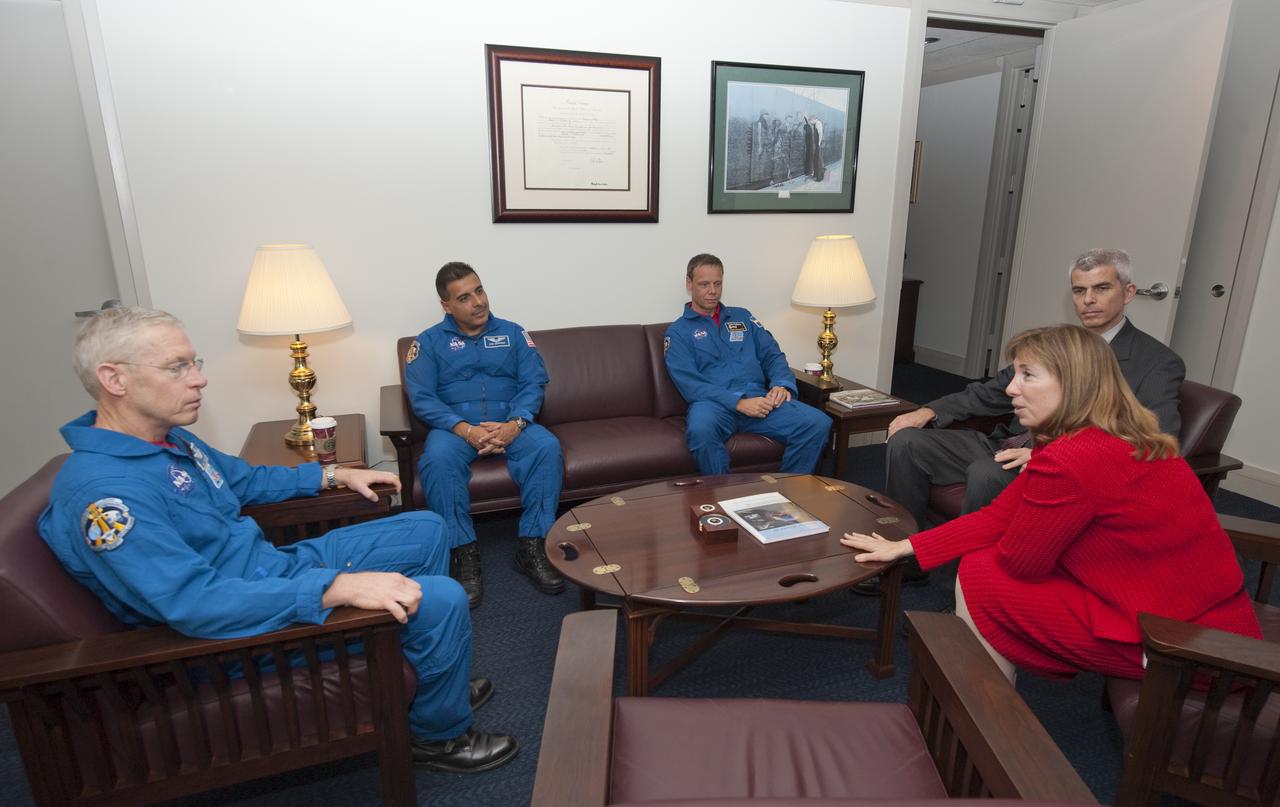
NASA Deputy Administrator Lori Garver, right, along with Assistant Administrator for Legislative and Intergovernmental Affairs L. Seth Statler, meets with STS-128 astronauts Patrick Forrester, left, Jose Hernandez and Christer Fugelsang, of the European Space Agency, at NASA Headquarters, Tuesday, Nov. 3, 2009, in Washington. Photo Credit: (NASA/Paul E. Alers)
NASA Deputy Administrator Lori Garver, right, along with Assistant Administrator for Legislative and Intergovernmental Affairs L. Seth Statler, meets with STS-128 astronauts Patrick Forrester, left, Jose Hernandez and Christer Fugelsang, of the European Space Agency, at NASA Headquarters, Tuesday, Nov. 3, 2009, in Washington. Photo Credit: (NASA/Paul E. Alers)
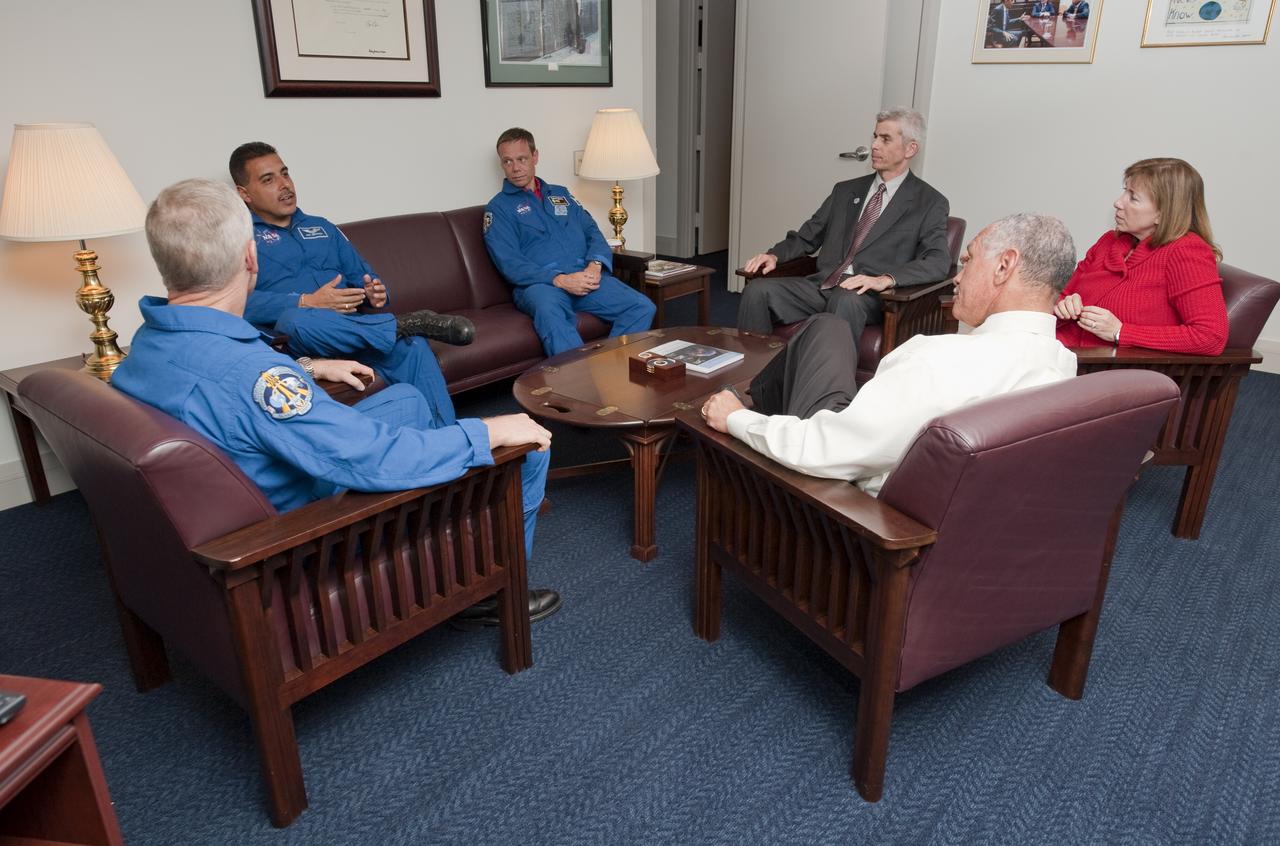
NASA Administrator Charles F. Bolden, left, Deputy Administrator Lori Garver, along with Assistant Administrator for Legislative and Intergovernmental Affairs L. Seth Statler, meet with STS-128 astronauts Patrick Forrester, Jose Hernandez and Christer Fugelsang, of the European Space Agency, at NASA Headquarters, Tuesday, Nov. 3, 2009, in Washington. Photo Credit: (NASA/Paul E. Alers)
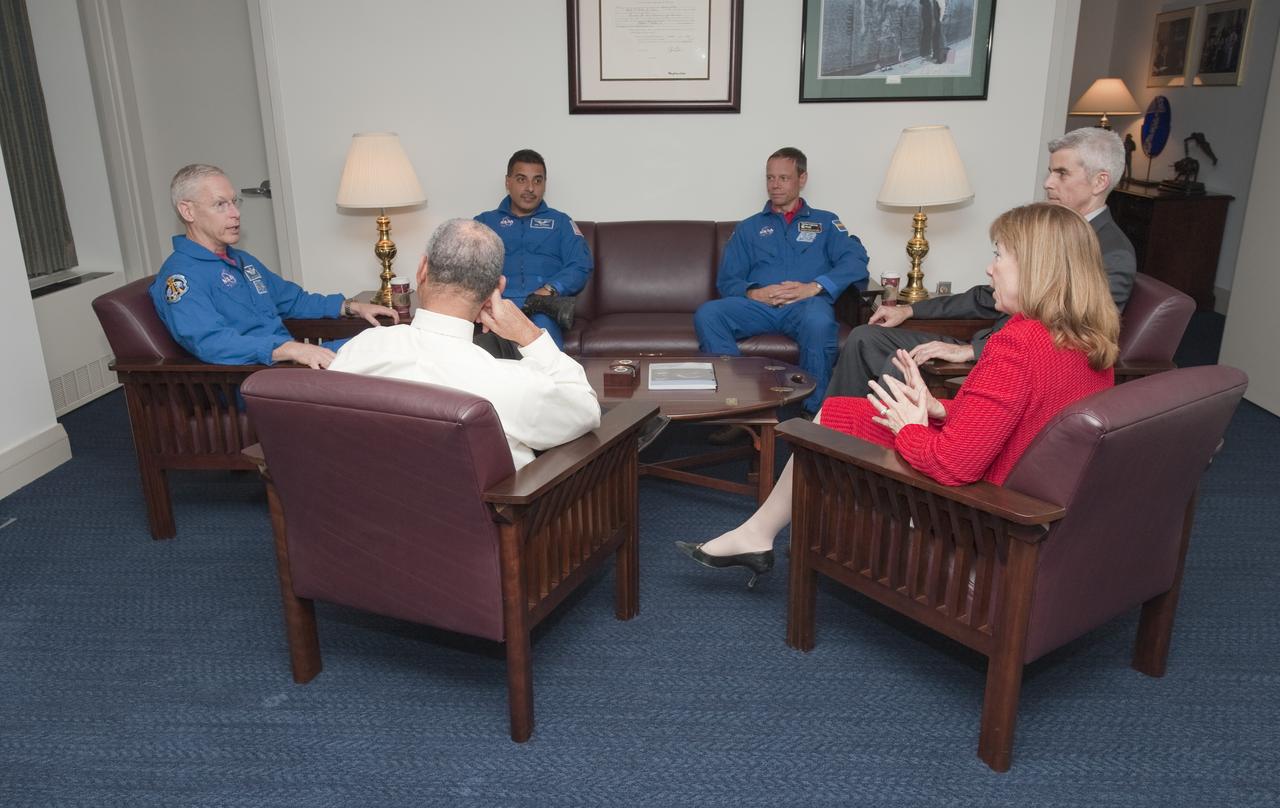
NASA Administrator Charles F. Bolden, left, and Deputy Administrator Lori Garver along with Assistant Administrator for Legislative and Intergovernmental Affairs L. Seth Statler, seated right, meet with STS-128 astronauts Patrick Forrester, Jose Hernandez and Christer Fugelsang, of the European Space Agency, at NASA Headquarters, Tuesday, Nov. 3, 2009, in Washington. Photo Credit: (NASA/Paul E. Alers)
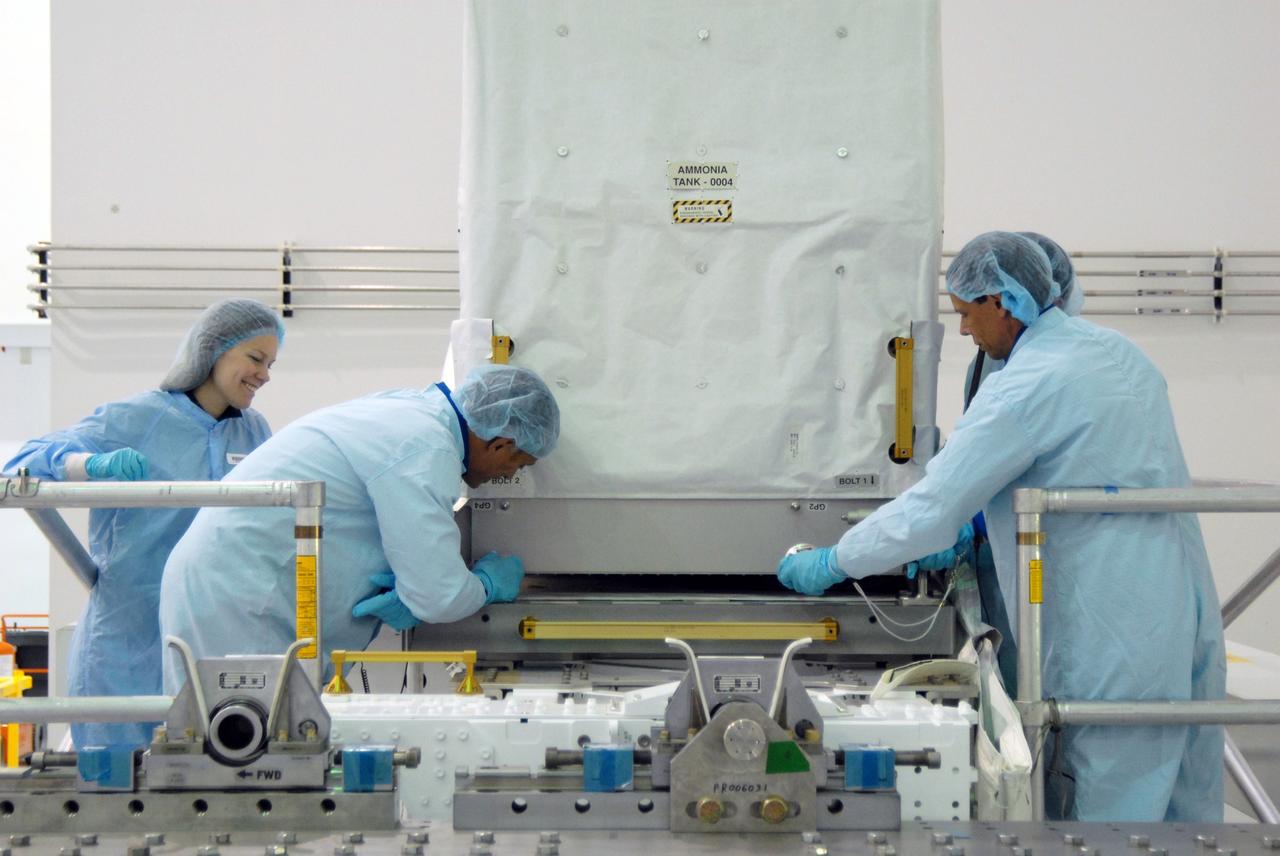
CAPE CANAVERAL, Fla. – In the Space Station Processing Facility at NASA's Kennedy Space Center in Florida, STS-128 Mission Specialists John "Danny" Olivas (second from left) and Christer Fugelsang (right) inspect ammonia tanks, part of the payload for their mission. Fugelsang is with the European Space Agency. Members of the STS-128 crew are at Kennedy for a crew equipment interface test, or CEIT, which provides hands-on training and observation of shuttle and flight hardware. The STS-128 flight will carry science and storage racks to the International Space Station on space shuttle Discovery. The STS-128 mission is targeted to launch on Aug. 6. Photo credit: NASA/Jim Grossmann
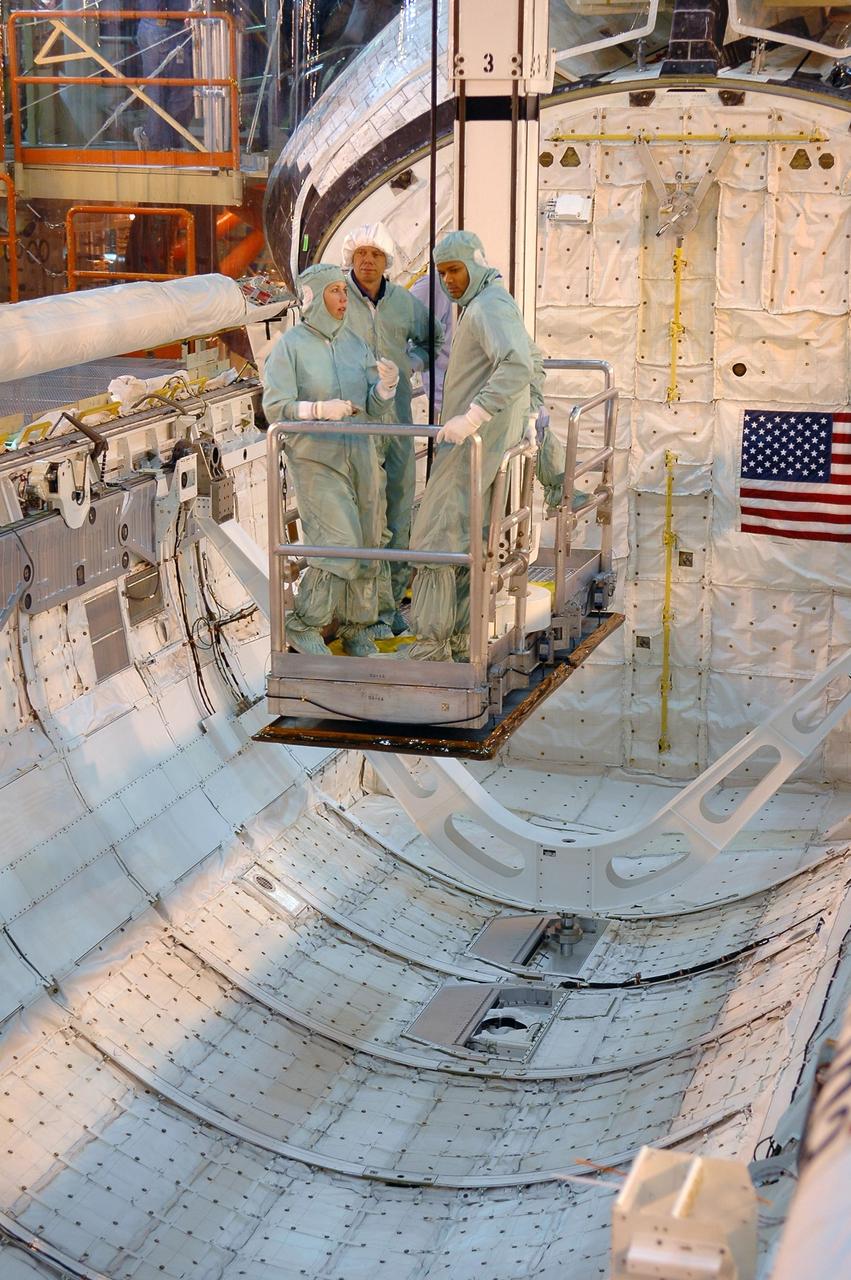
KENNEDY SPACE CENTER, FLA. - During a Crew Equipment Interface Test (CEIT) in the Orbiter Processing Facility, STS-116 crew members are lowered into Discovery’s payload bay for a closer look. In the white cap is Mission Specialist Christer Fugelsang; at right is Mission Specialist Robert Curbeam. Fugelsang represents the European Space Agency. A CEIT allows astronauts to become familiar with equipment and hardware they will use on the mission. STS-116 will be mission No. 20 to the International Space Station and construction flight 12A.1. The mission payload is the SPACEHAB module, the P5 integrated truss structure and other key components. Launch is scheduled for no earlier than Dec. 7. Photo credit: NASA/Kim Shiflett
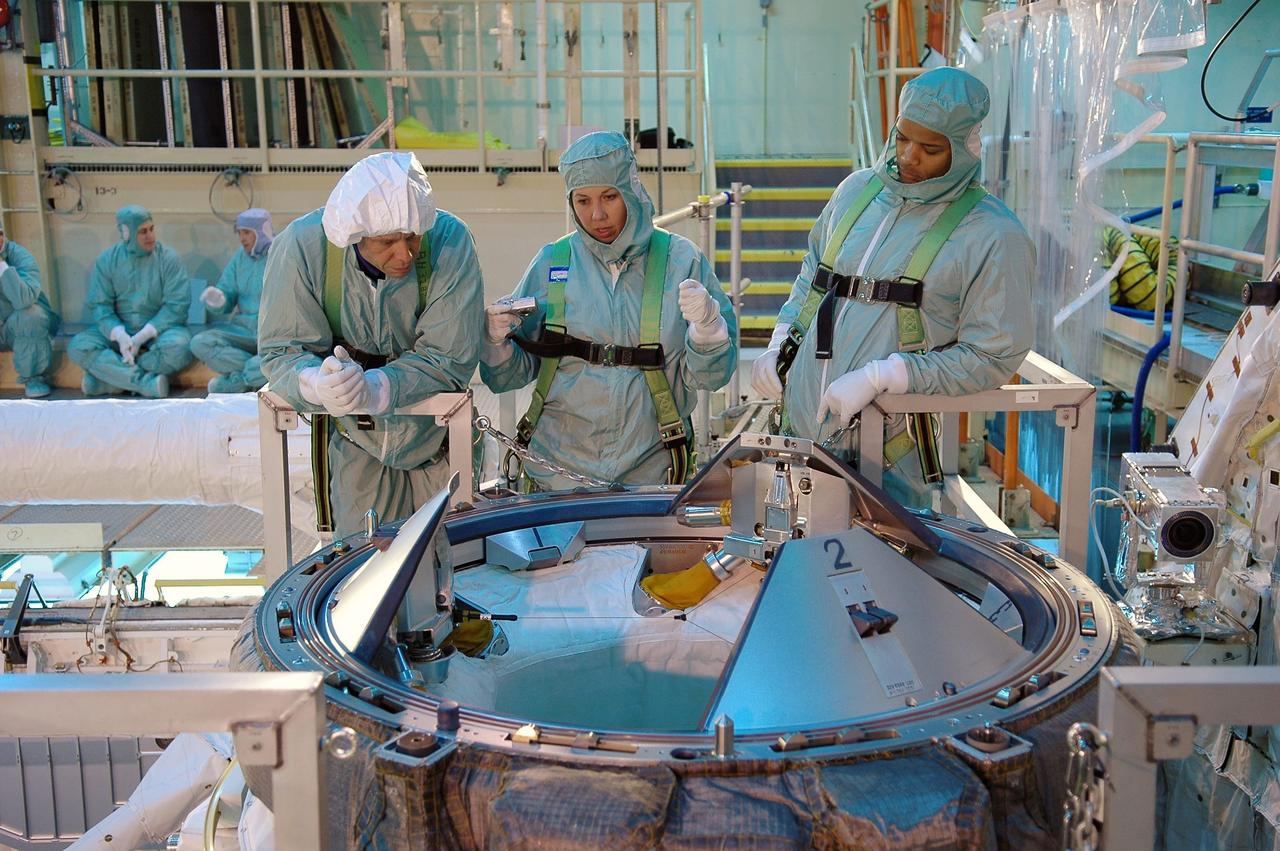
KENNEDY SPACE CENTER, FLA. - During a Crew Equipment Interface Test (CEIT) in the Orbiter Processing Facility, STS-116 crew members get information about the external air lock they are looking at. At left is Mission Specialist Christer Fugelsang and at right is Mission Specialist Robert Curbeam. Fugelsang represents the European Space Agency. A CEIT allows astronauts to become familiar with equipment and hardware they will use on the mission. STS-116 will be mission No. 20 to the International Space Station and construction flight 12A.1. The mission payload is the SPACEHAB module, the P5 integrated truss structure and other key components. Launch is scheduled for no earlier than Dec. 7. Photo credit: NASA/Kim Shiflett
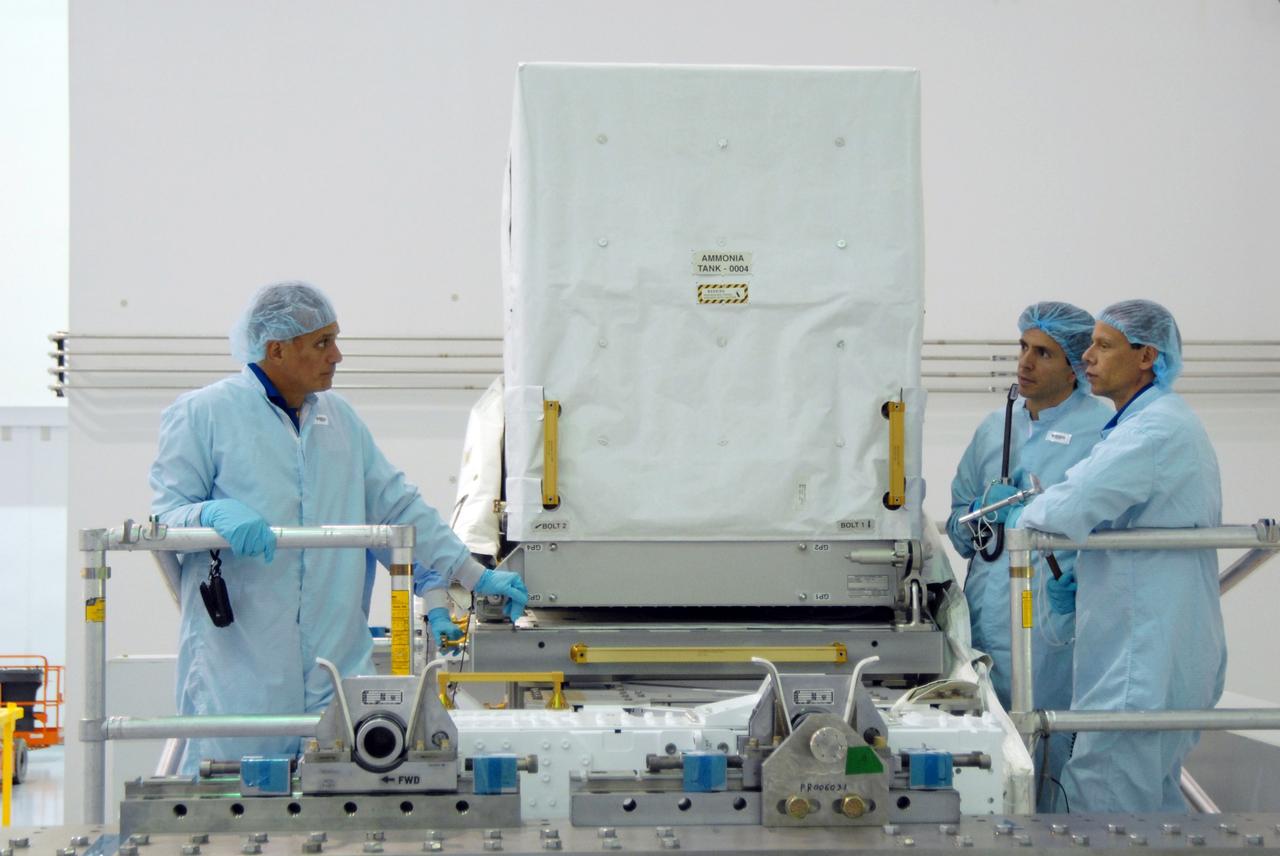
CAPE CANAVERAL, Fla. – In the Space Station Processing Facility at NASA's Kennedy Space Center in Florida, STS-128 Mission Specialists John "Danny" Olivas (left) and Christer Fugelsang (far right) inspect ammonia tanks, part of the payload for their mission. Fugelsang is with the European Space Agency. Members of the STS-128 crew are at Kennedy for a crew equipment interface test, or CEIT, which provides hands-on training and observation of shuttle and flight hardware. The STS-128 flight will carry science and storage racks to the International Space Station on space shuttle Discovery. The STS-128 mission is targeted to launch on Aug. 6. Photo credit: NASA/Jim Grossmann
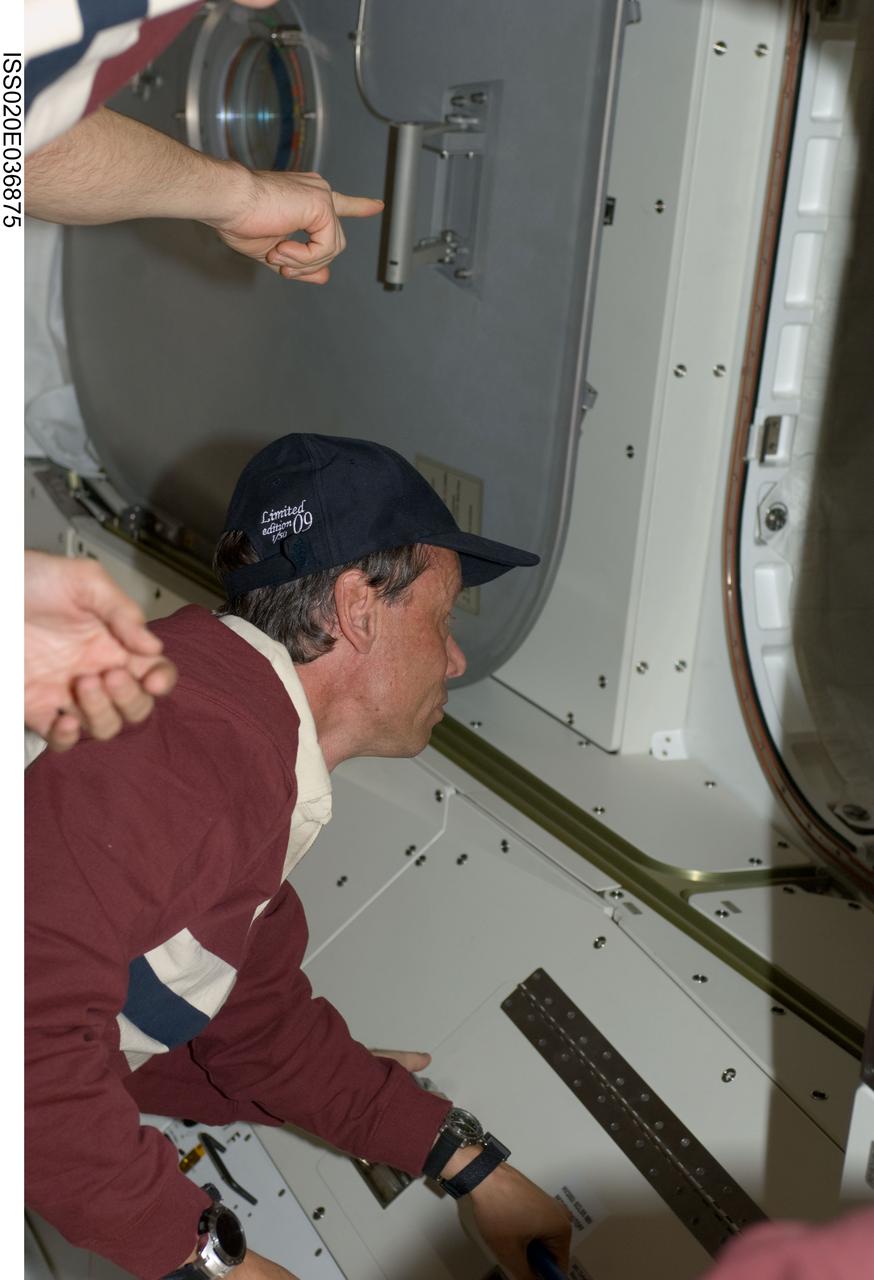
ISS020-E-036875 (30 Aug. 2009) --- This is one of a series of digital still images that were recorded shortly after the STS-128 and Expedition 20 crewmembers reunited in space and not long after the Space Shuttle Discovery and the International Space Station joined up in Earth orbit to form the second consecutive 13 person aggregation to perform more work on the orbital outpost. Pictured near a hatch way is European Space Agency astronaut Christer Fugelsang, STS-128 mission specialist.
KENNEDY SPACE CENTER, FLA. -- During Crew Equipment Interface Test (CEIT), STS-116 Mission Specialist Christer Fugelsang, with the European Space Agency, Mission Specialist Robert Curbeam and Pilot William Oelefein look over equipment they will be working with during their mission to the International Space Station. The 19th assembly flight to the ISS, the mission will deliver the third port truss segment, the P5 Truss, to attach to second port truss segment, the P3/P4 Truss, to be assembled in an earlier mission. STS-116 is scheduled for launch in June 2003.
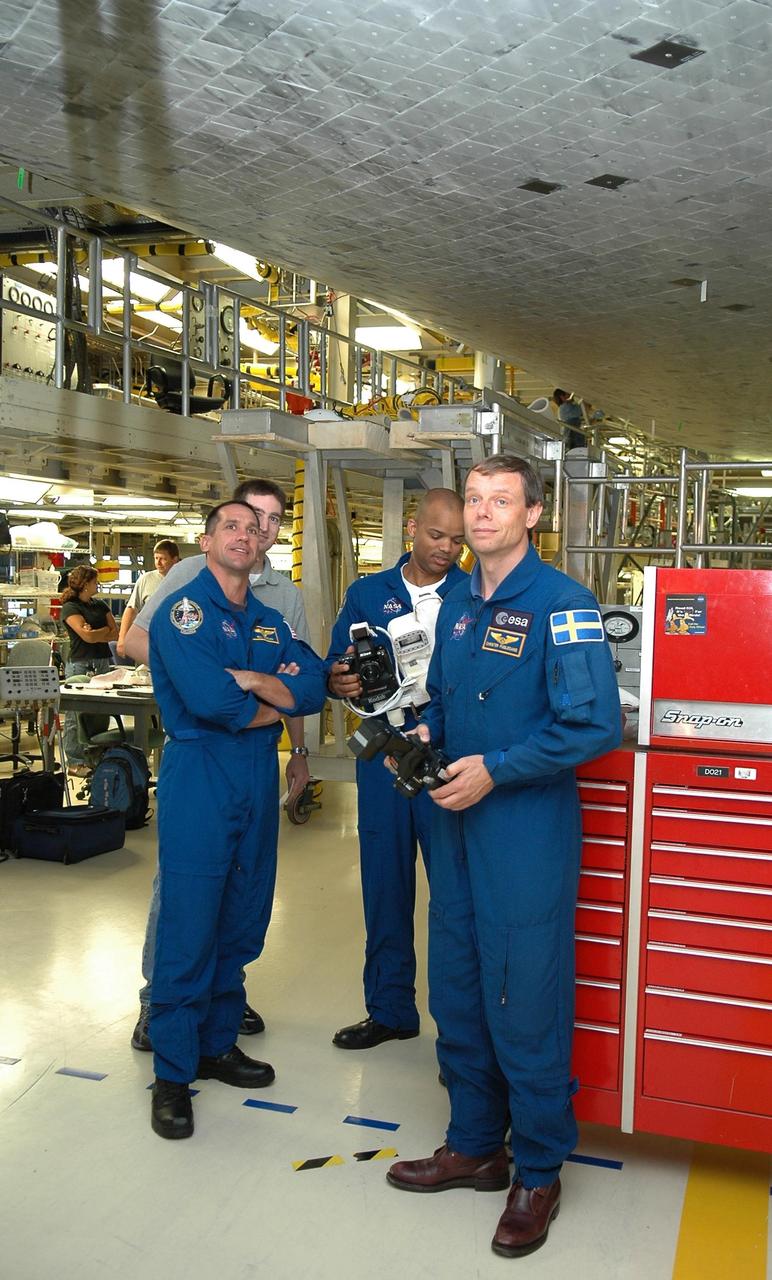
KENNEDY SPACE CENTER, FLA. - In the Orbiter Processing Facility, STS-116 Pilot William Oefelein (left) gets a close look at the underside of the orbiter Discovery. At right, Mission Specialists Robert Curbeam and Christer Fugelsang are practicing with cameras similar to those the crew will use on the mission. Fugelsang represents the European Space Agency. The crew is at KSC for a Crew Equipment Interface Test. Mission crews make frequent trips to the Kennedy Space Center to become familiar with the equipment and payloads they will be using. STS-116 will be mission No. 20 to the International Space Station and construction flight 12A.1. The mission payload is the SPACEHAB module, the P5 integrated truss structure and other key components. Launch is scheduled for no earlier than Dec. 7. Photo credit: NASA/Kim Shiflett
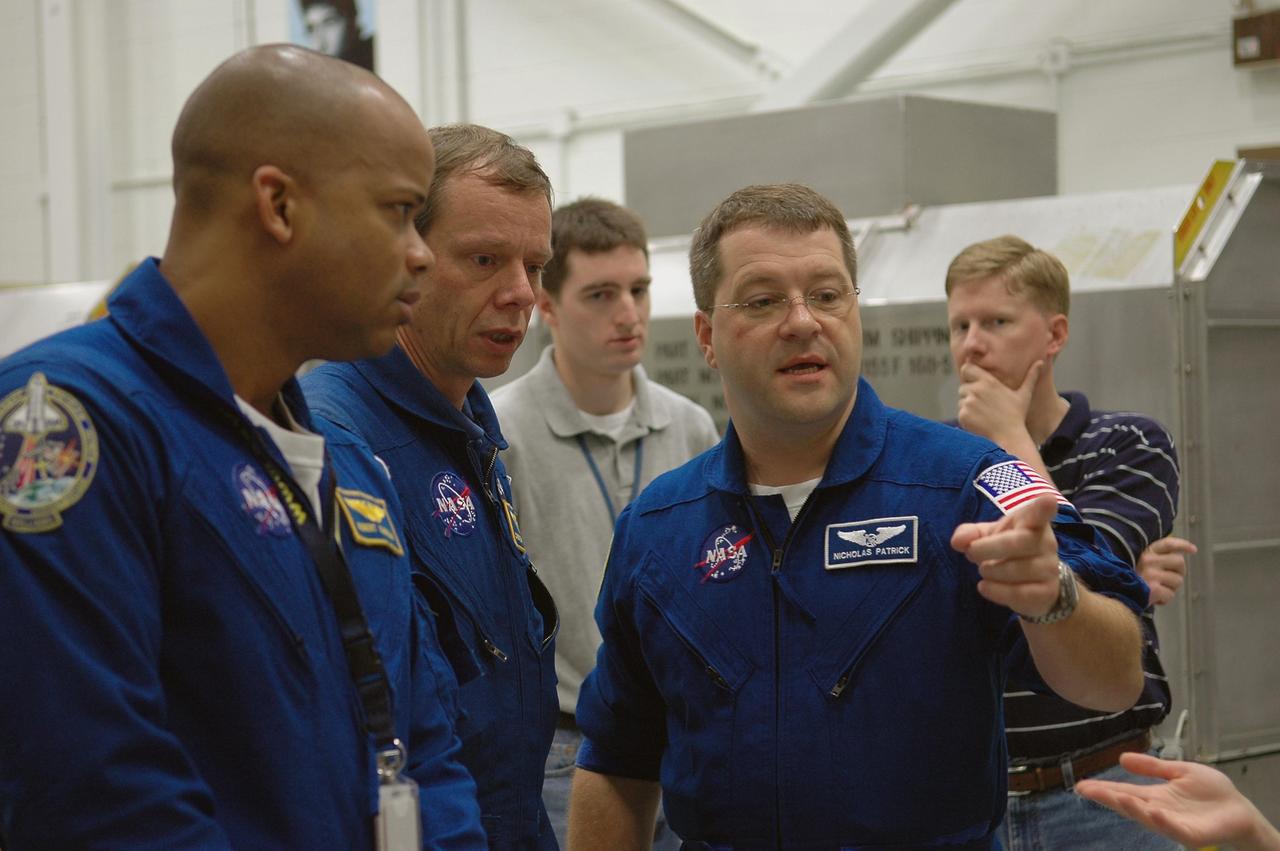
KENNEDY SPACE CENTER, FLA. - In the Orbiter Processing Facility, members of the STS-116 crew discuss use of some of the flight hardware during the Crew Equipment Interface Test. Seen here are (from left) Mission Specialists Robert Curbeam, Christer Fugelsang and Nicholas Patrick. Fugelsang represents the European Space Agency. Mission crews make frequent trips to the Kennedy Space Center to become familiar with the equipment and payloads they will be using. STS-116 will be mission No. 20 to the International Space Station and construction flight 12A.1. The mission payload is the SPACEHAB module, the P5 integrated truss structure and other key components. Launch is scheduled for no earlier than Dec. 7. Photo credit: NASA/Kim Shiflett

KENNEDY SPACE CENTER, FLA. - In the Vehicle Assembly Building, STS-116 Mission Specialist Christer Fugelsang (left) and Pilot William Oefelein look at one of the solid rocket boosters designated to launch Space Shuttle Discovery. Fugelsang represents the European Space Agency. The crew is at KSC for a Crew Equipment Interface Test. Mission crews make frequent trips to the Kennedy Space Center to become familiar with the equipment and payloads they will be using. STS-116 will be mission No. 20 to the International Space Station and construction flight 12A.1. The mission payload is the SPACEHAB module, the P5 integrated truss structure and other key components. Launch is scheduled for no earlier than Dec. 7. Photo credit: NASA/Kim Shiflett
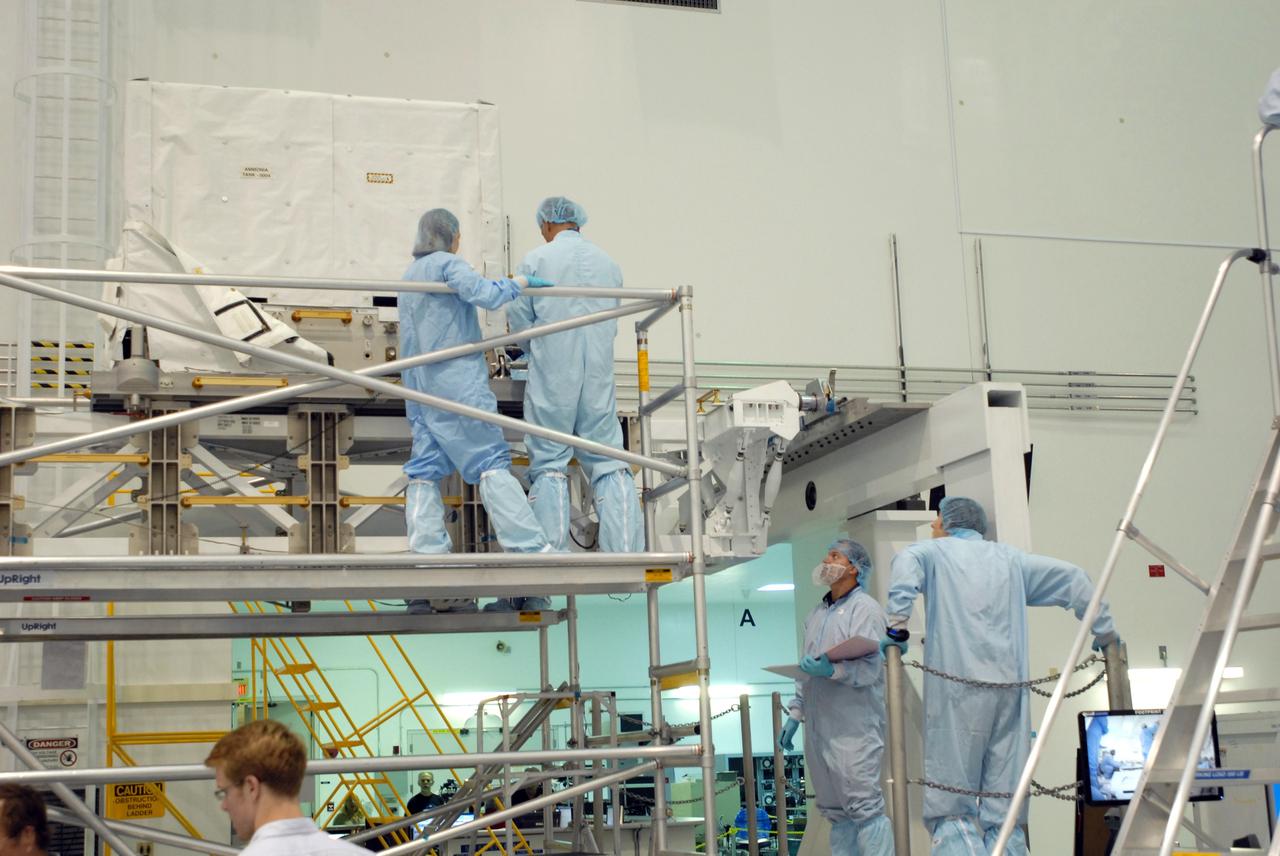
CAPE CANAVERAL, Fla. – In the Space Station Processing Facility at NASA's Kennedy Space Center in Florida, STS-128 Mission Specialists John "Danny" Olivas (top right) and Christer Fugelsang (bottom right) inspect ammonia tanks, part of the payload for their mission. Members of the STS-128 crew are at Kennedy for a crew equipment interface test, or CEIT, which provides hands-on training and observation of shuttle and flight hardware. The STS-128 flight will carry science and storage racks to the International Space Station on space shuttle Discovery. The STS-128 mission is targeted to launch on Aug. 6. Photo credit: NASA/Jim Grossmann
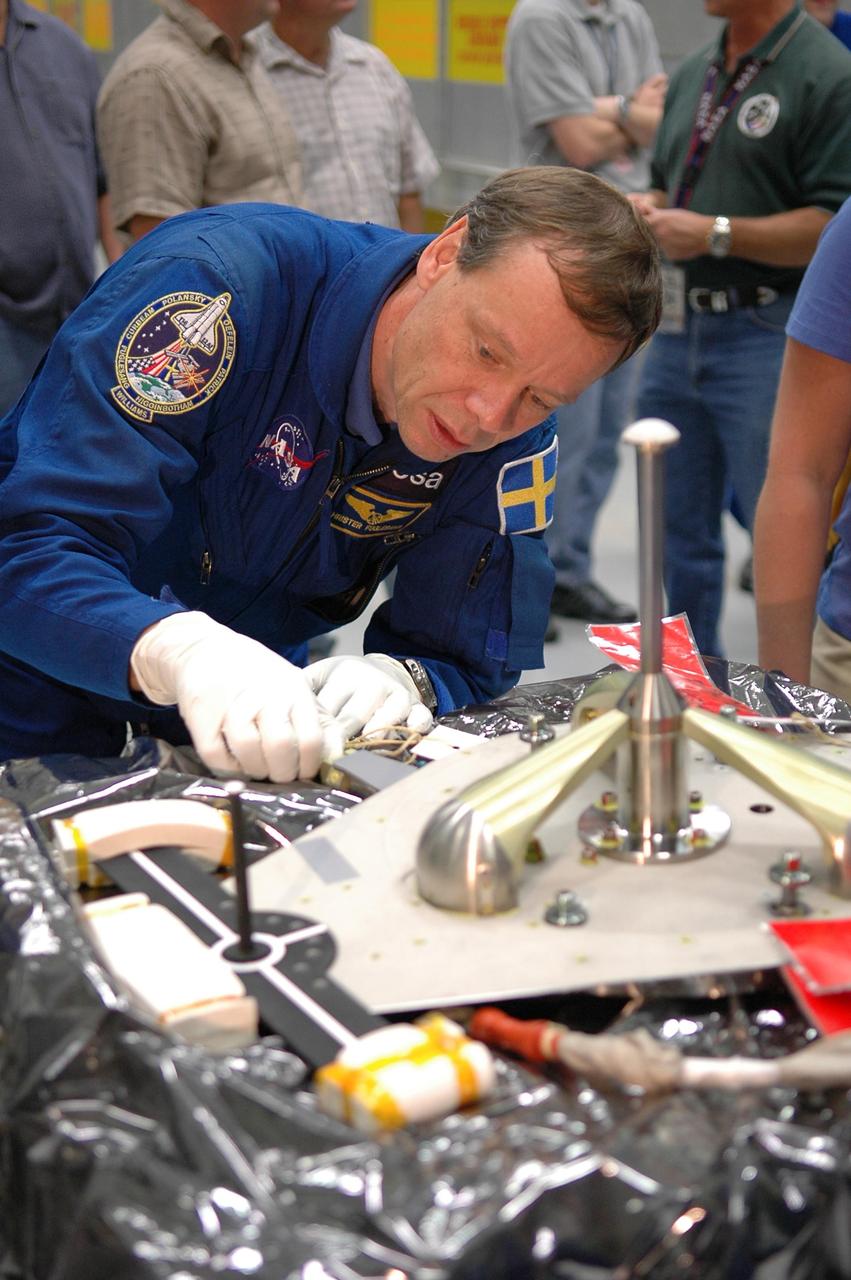
KENNEDY SPACE CENTER, FLA. - In the Orbiter Processing Facility, STS-116 Mission Specialist Christer Fugelsang, who represents the European Space Agency, gets hands-on experience working with a piece of flight hardware. He and other crew members are at KSC for a Crew Equipment Interface Test. Mission crews make frequent trips to the Kennedy Space Center to become familiar with the equipment and payloads they will be using. STS-116 will be mission No. 20 to the International Space Station and construction flight 12A.1. The mission payload is the SPACEHAB module, the P5 integrated truss structure and other key components. Launch is scheduled for no earlier than Dec. 7. Photo credit: NASA/Kim Shiflett
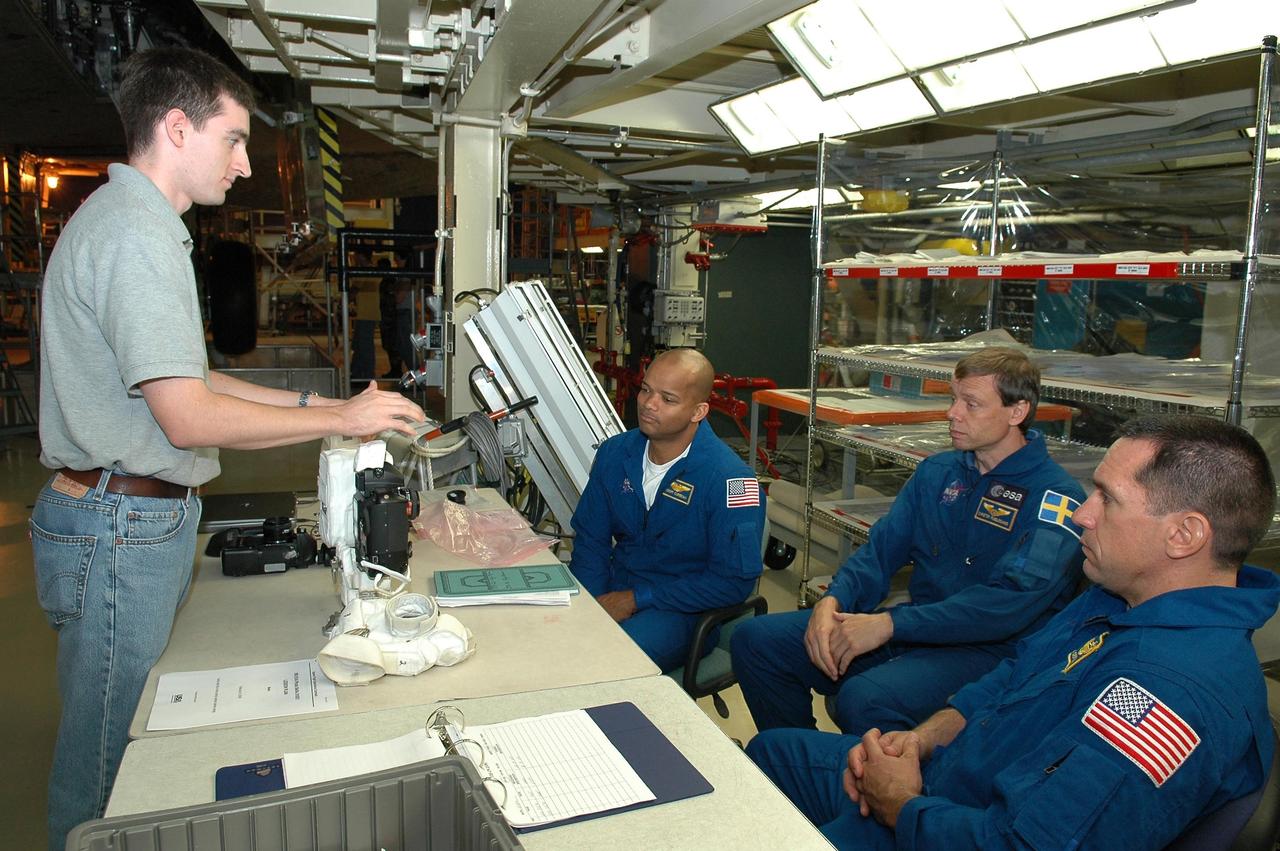
KENNEDY SPACE CENTER, FLA. - STS-116 crew members (at right) are briefed on the cameras they will be using during the mission. The astronauts are, from left, Mission Specialists Robert Curbeam and Christer Fugelsang and Pilot William Oefelein. The crew is at KSC for a Crew Equipment Interface Test. Mission crews make frequent trips to the Kennedy Space Center to become familiar with the equipment and payloads they will be using. STS-116 will be mission No. 20 to the International Space Station and construction flight 12A.1. The mission payload is the SPACEHAB module, the P5 integrated truss structure and other key components. Launch is scheduled for no earlier than Dec. 7. Photo credit: NASA/Kim Shiflett
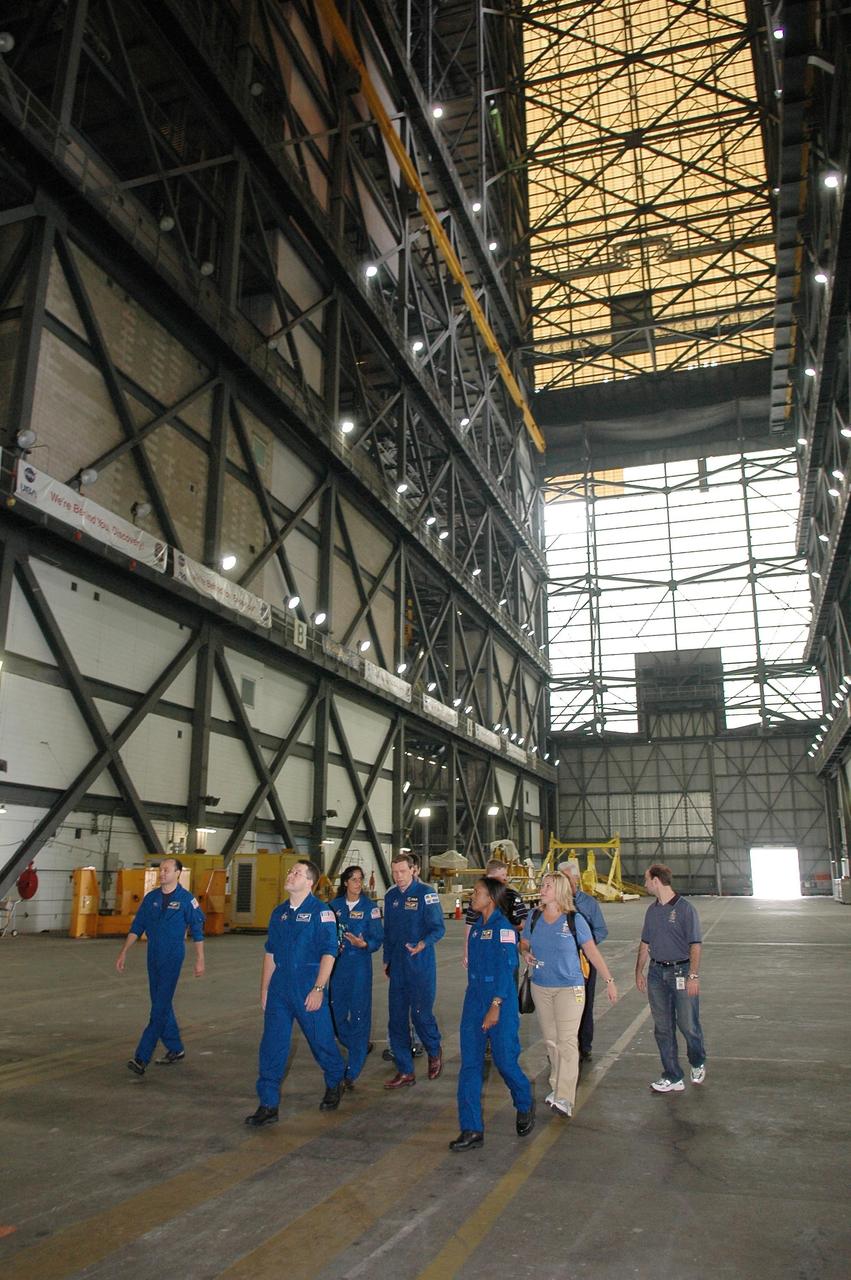
KENNEDY SPACE CENTER, FLA. - Striding through the Vehicle Assembly Building are STS-116 crew members (from left) Mark Polansky, commander; Nicholas Patrick, Sunita Williams, Christer Fugelsang and Joan Higginbotham, mission specialists. The crew is at KSC for a Crew Equipment Interface Test. Mission crews make frequent trips to the Kennedy Space Center to become familiar with the equipment and payloads they will be using. STS-116 will be mission No. 20 to the International Space Station and construction flight 12A.1. The mission payload is the SPACEHAB module, the P5 integrated truss structure and other key components. Launch is scheduled for no earlier than Dec. 7. Photo credit: NASA/Kim Shiflett
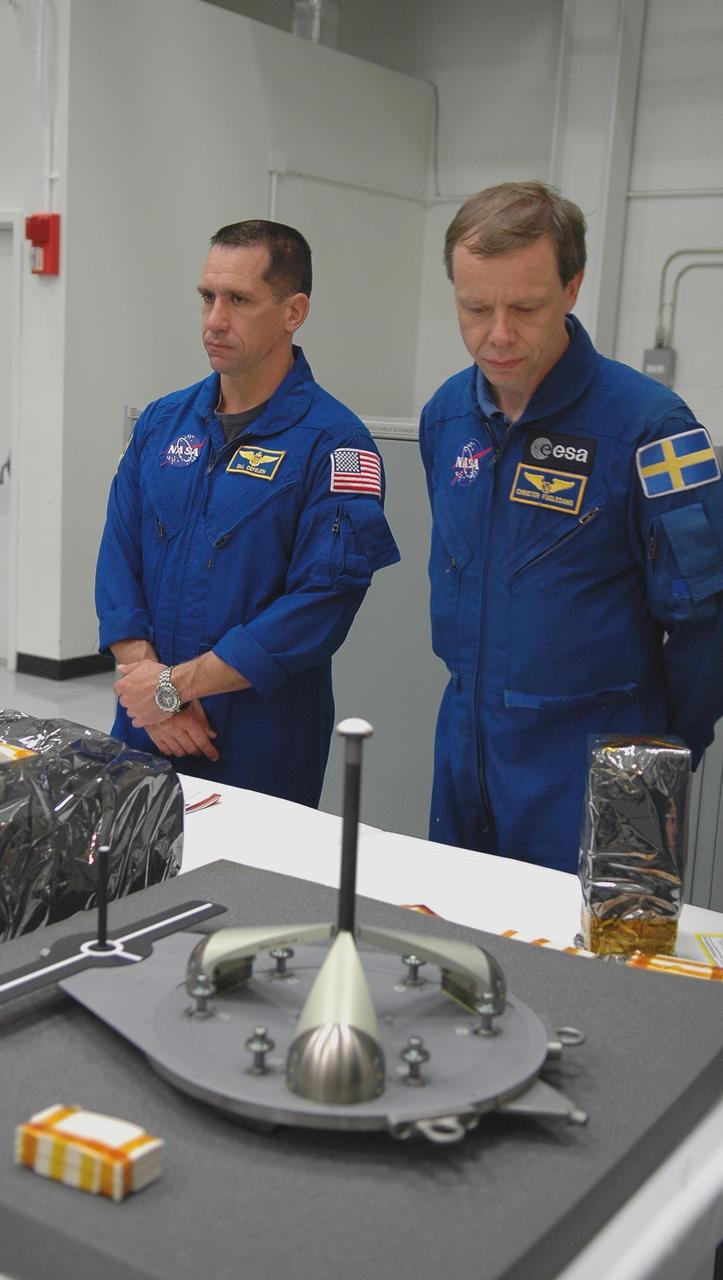
KENNEDY SPACE CENTER, FLA. - In the Orbiter Processing Facility, members of the STS-116 crew look over flight hardware during the Crew Equipment Interface Test. Seen here are Pilot William Oefelein (left) and Mission Specialist Christer Fugelsang, who represents the European Space Agency. Mission crews make frequent trips to the Kennedy Space Center to become familiar with the equipment and payloads they will be using. STS-116 will be mission No. 20 to the International Space Station and construction flight 12A.1. The mission payload is the SPACEHAB module, the P5 integrated truss structure and other key components. Launch is scheduled for no earlier than Dec. 7. Photo credit: NASA/Kim Shiflett
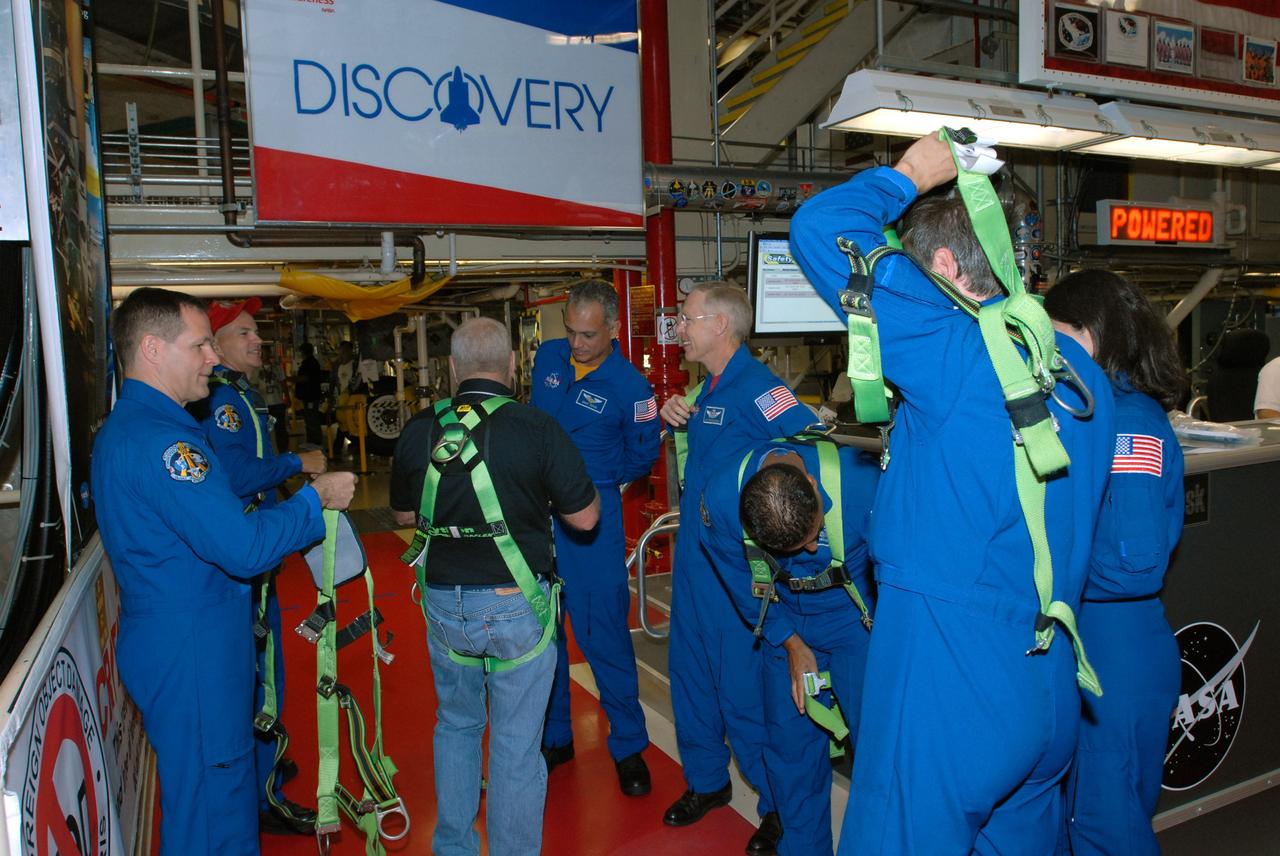
CAPE CANAVERAL, Fla. – STS-128 crew members put on harnesses before checking out space shuttle Discovery in Orbiter Processing Facility 3 at NASA's Kennedy Space Center in Florida. From left are Pilot Kevin Ford, Commander Rick Sturckow, and Mission Specialists John "Danny" Olivas, Patrick Forester, Jose Hernandez, Nicole Stott and Christer Fugelsang. The crew is at Kennedy for a crew equipment interface test, or CEIT, which provides hands-on training and observation of shuttle and flight hardware. The STS-128 flight will carry science and storage racks to the International Space Station on Discovery. Launch is targeted for Aug. 7. Photo credit: NASA/Jim Grossmann
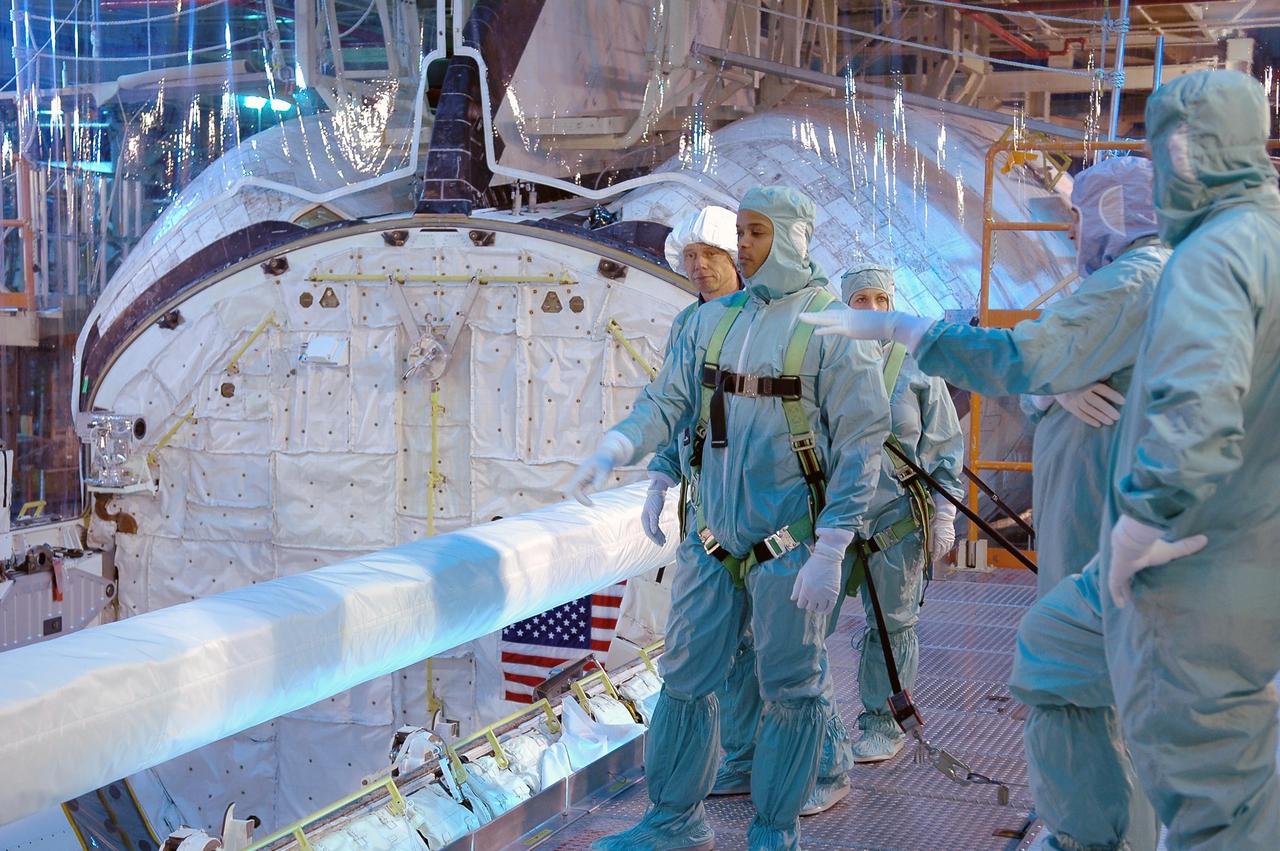
KENNEDY SPACE CENTER, FLA. - During a Crew Equipment Interface Test (CEIT) in the Orbiter Processing Facility, STS-116 crew members get information about the orbiter boom sensor system in Discovery’s payload bay. In the center are Mission Specialists Christer Fugelsang, who represents the European Space Agency, and Robert Curbeam. A CEIT allows astronauts to become familiar with equipment and hardware they will use on the mission. STS-116 will be mission No. 20 to the International Space Station and construction flight 12A.1. The mission payload is the SPACEHAB module, the P5 integrated truss structure and other key components. Launch is scheduled for no earlier than Dec. 7. Photo credit: NASA/Kim Shiflett
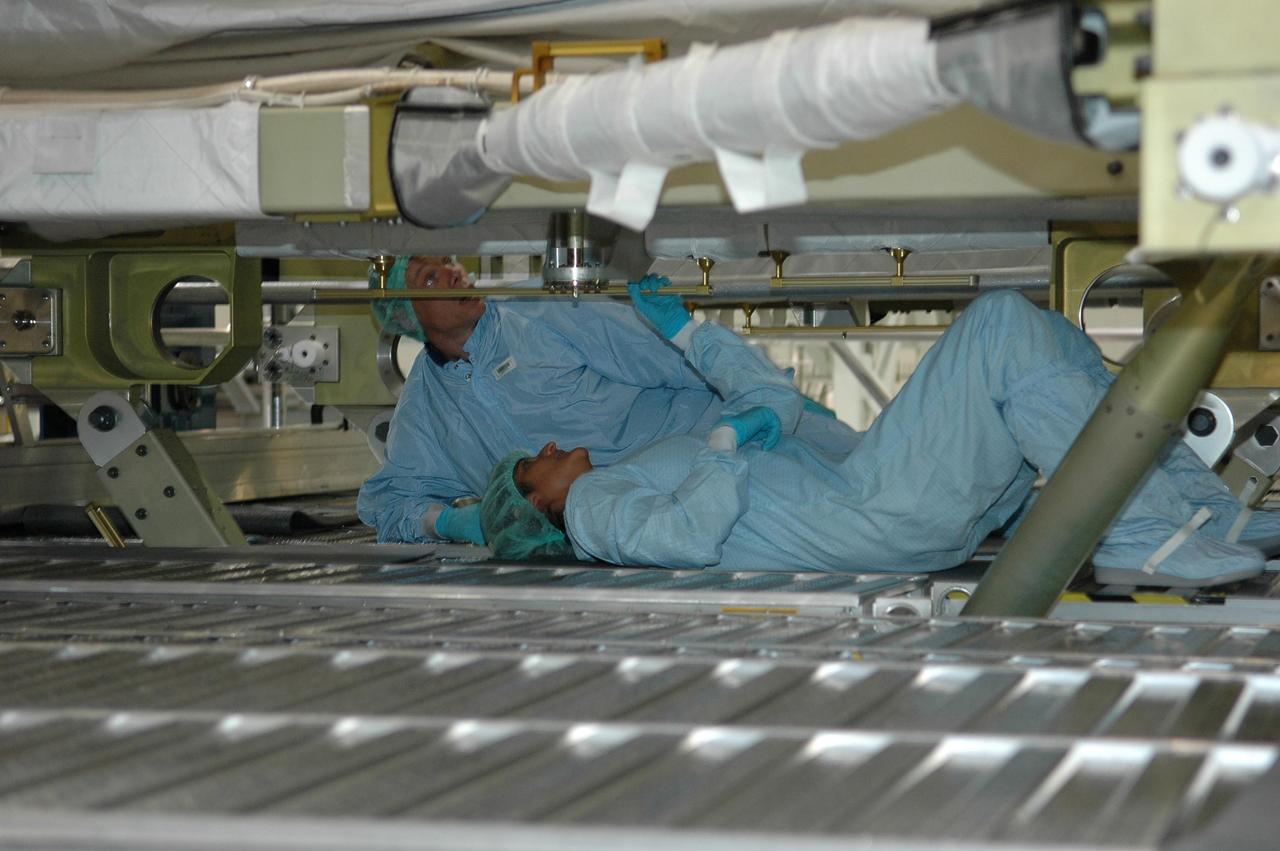
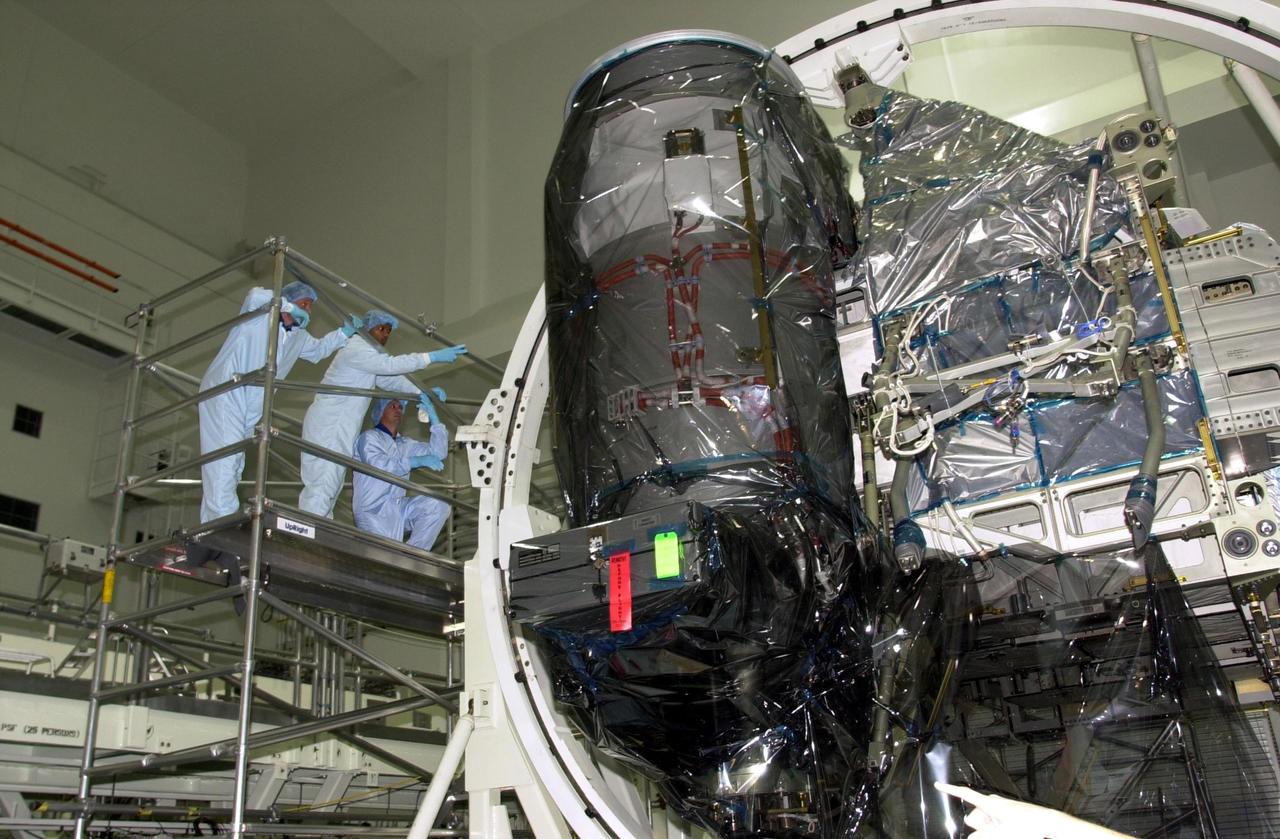
KENNEDY SPACE CENTER, FLA. - In the Space Station Processing Facility, STS-116 crew members check out the port integrated truss structure, P5, which is the primary payload on their mission. Seen here are Mission Specialists Christer Fugelsang, who represents the European Space Agency, and Sunita Williams. The crew is taking part in a Crew Equipment Interface Test that enables them to become familiar with the equipment and payloads they will be using. STS-116 will be mission No. 20 to the International Space Station and construction flight 12A.1. The mission payload is the SPACEHAB module, the P5 integrated truss structure and other key components. Launch is scheduled for no earlier than Dec. 7. Photo credit: NASA/Kim Shiflett
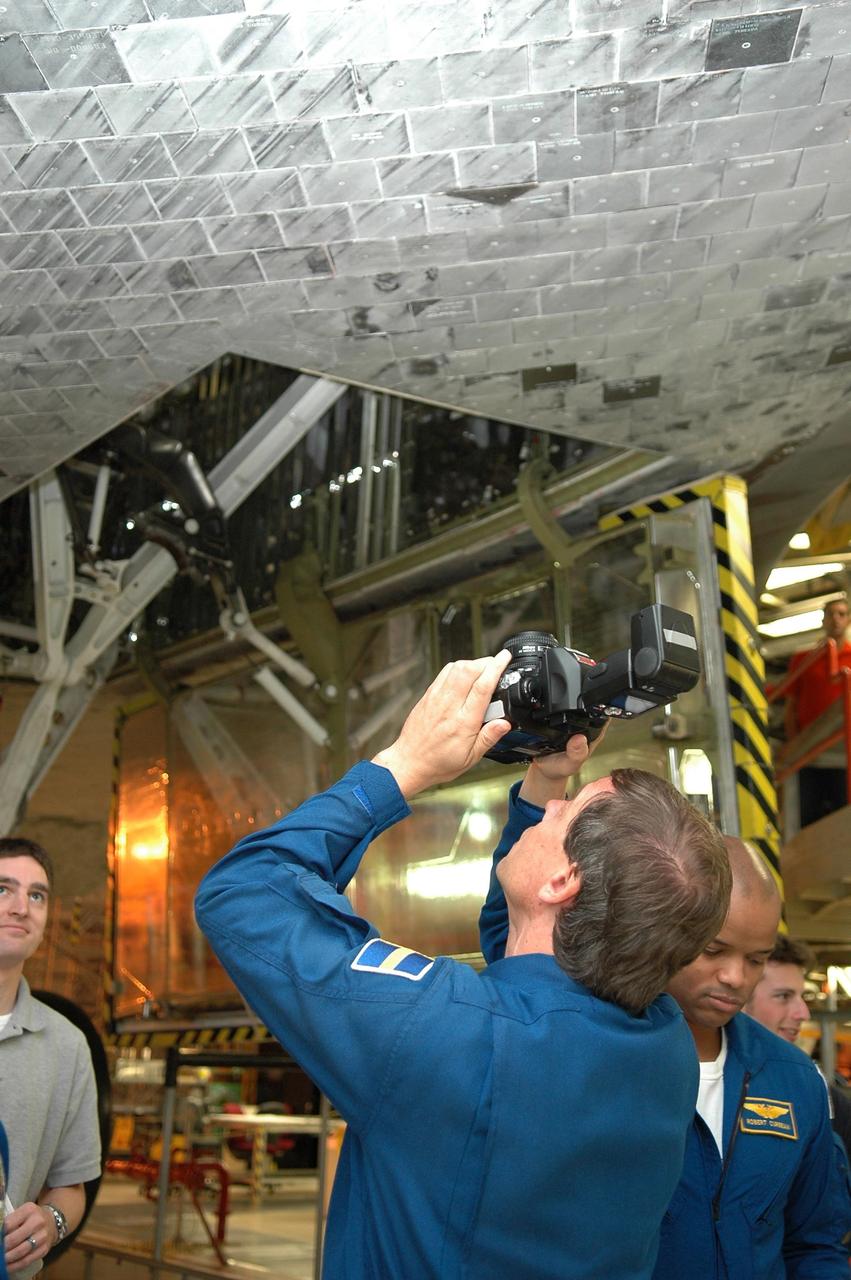
KENNEDY SPACE CENTER, FLA. - In the Orbiter Processing Facility, STS-116 Mission Specialist Christer Fugelsang practices photographing the orbiter Discovery with a camera similar to those the crew will use on the mission. At right is Mission Specialist Robert Curbeam. The crew is at KSC for a Crew Equipment Interface Test. Mission crews make frequent trips to the Kennedy Space Center to become familiar with the equipment and payloads they will be using. STS-116 will be mission No. 20 to the International Space Station and construction flight 12A.1. The mission payload is the SPACEHAB module, the P5 integrated truss structure and other key components. Launch is scheduled for no earlier than Dec. 7. Photo credit: NASA/Kim Shiflett
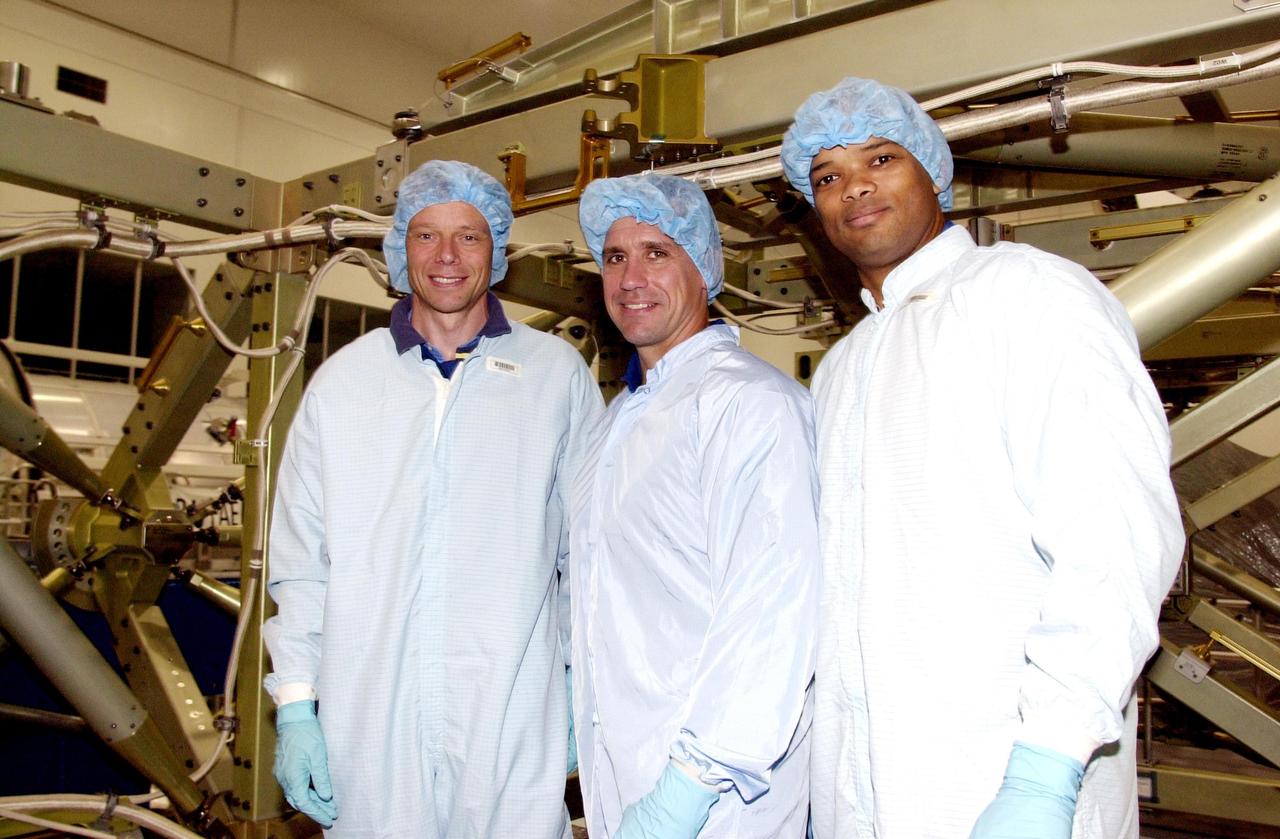
KENNEDY SPACE CENTER, FLA. -- During Crew Equipment Interface Test (CEIT), members of the STS-116 crew pose in front of trusses they will be working with during their mission to the International Space Station. From left are Mission Specialist Christer Fugelsang, with the European Space Agency, Pilot William Oefelein and Mission Specialist Robert Curbeam. The 19th assembly flight to the ISS, the mission will deliver the third port truss segment, the P5 Truss, to attach to second port truss segment, the P3/P4 Truss, to be assembled in an earlier mission. STS-116 is scheduled for launch in June 2003.
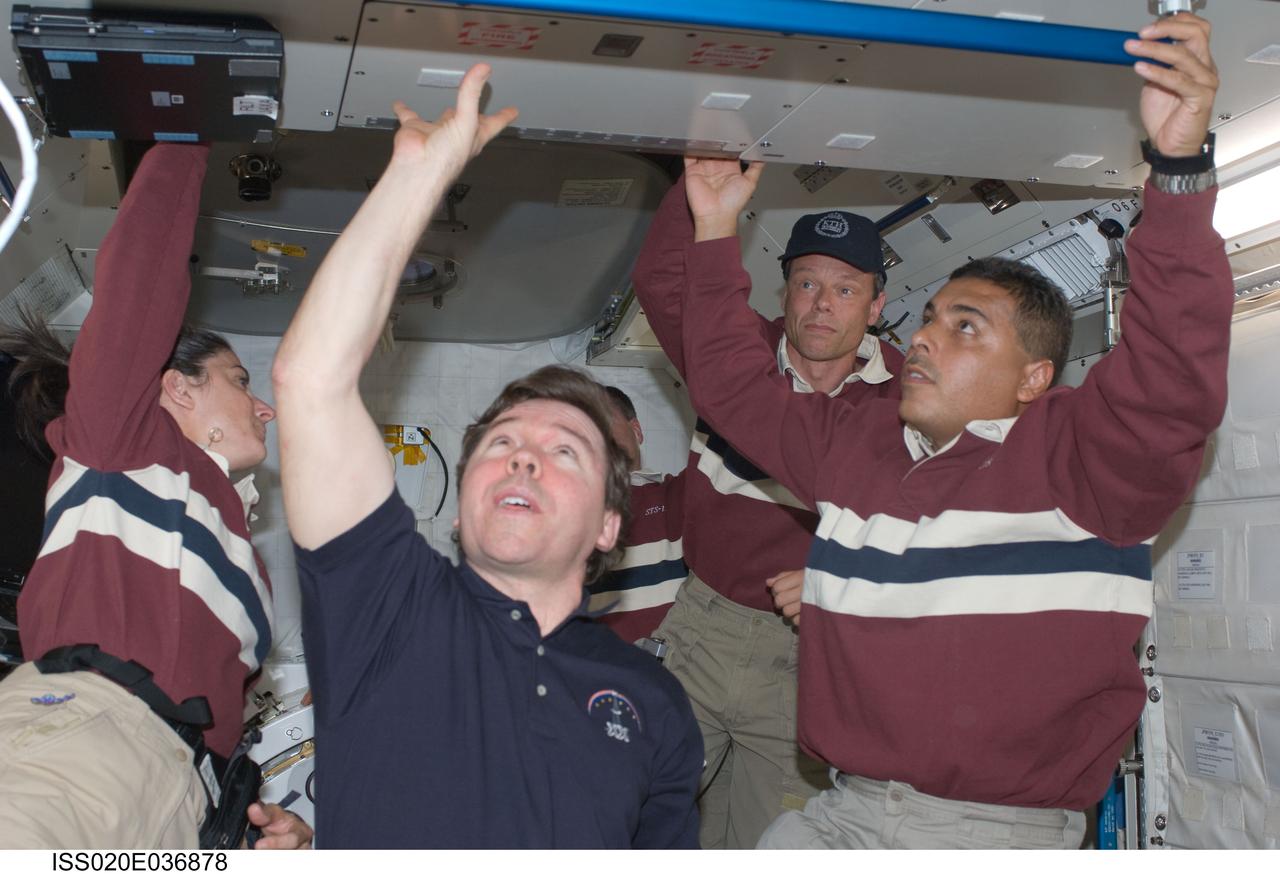
ISS020-E-036878 (30 Aug. 2009) --- This is one of a series of digital still images that were recorded shortly after the STS-128 and Expedition 20 crewmembers reunited in space and not long after the Space Shuttle Discovery and the International Space Station joined up in Earth orbit to create the second consecutive 13-person aggregation to perform more work on the orbital outpost. From the left are astronauts Nicole Stott, STS-128 mission specialist, soon to transfer into a role as Expedition 20 flight engineer, and Michael Barratt, Expedition 20 flight engineer, along with European Space Agency astronaut Christer Fugelsang, STS-128 mission specialist.
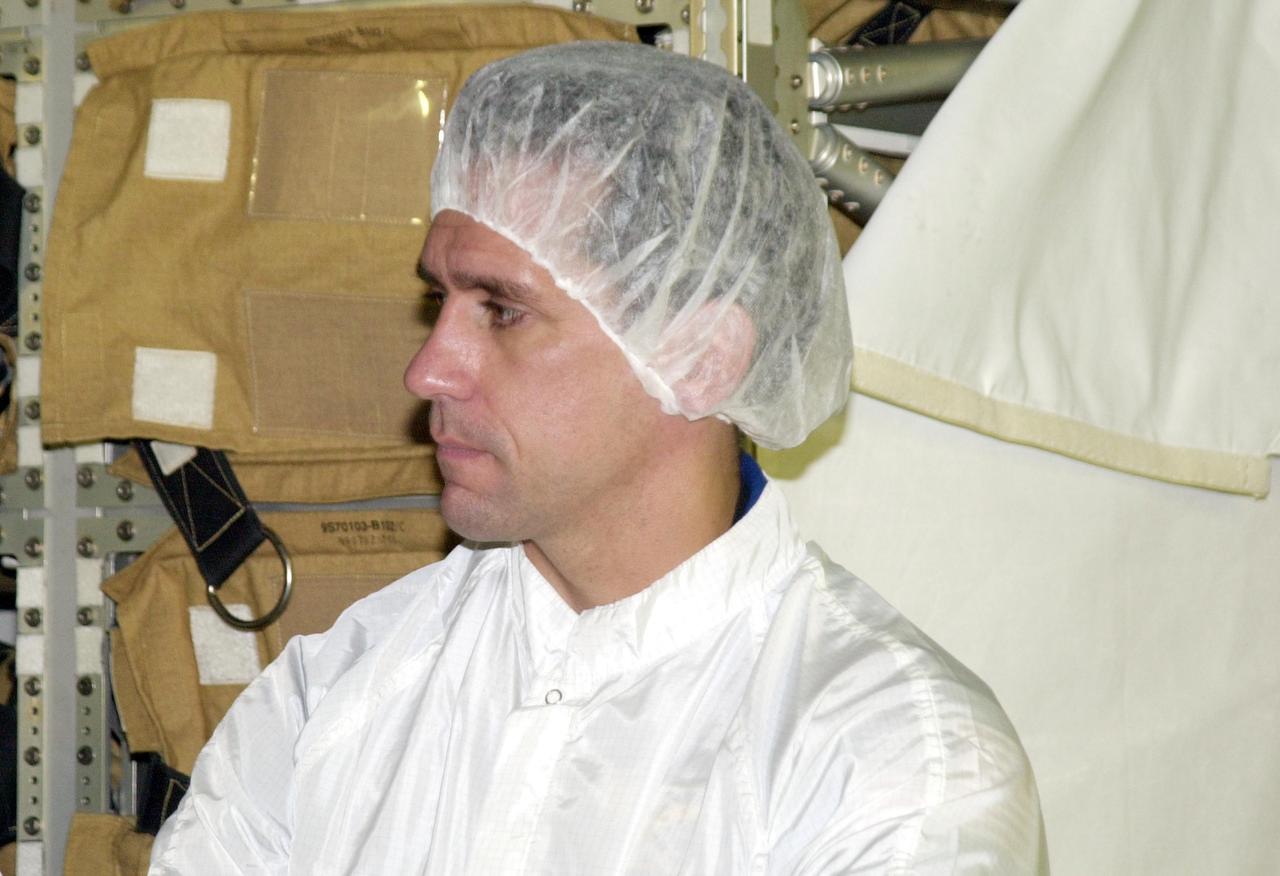
KENNEDY SPACE CENTER, FLA. - STS-116 Mission Specialist Christer Fugelsang, who is with the European Space Agency, listens to instructions in the SPACEHAB module. He and other crew members are taking part in equipment familiarization at SPACEHAB. The objective of their mission to the International Space Station is to deliver and attach the third port truss segment, the P5 Truss, deactivate and retract P6 Truss Channel 4B (port-side) solar array, reconfigure station power from 2A and 4A solar arrays, deliver the Expedition 8 crew to the Station and return the Expedition 7 crew to Earth. The mission is currently targeted for launch in July 2003..
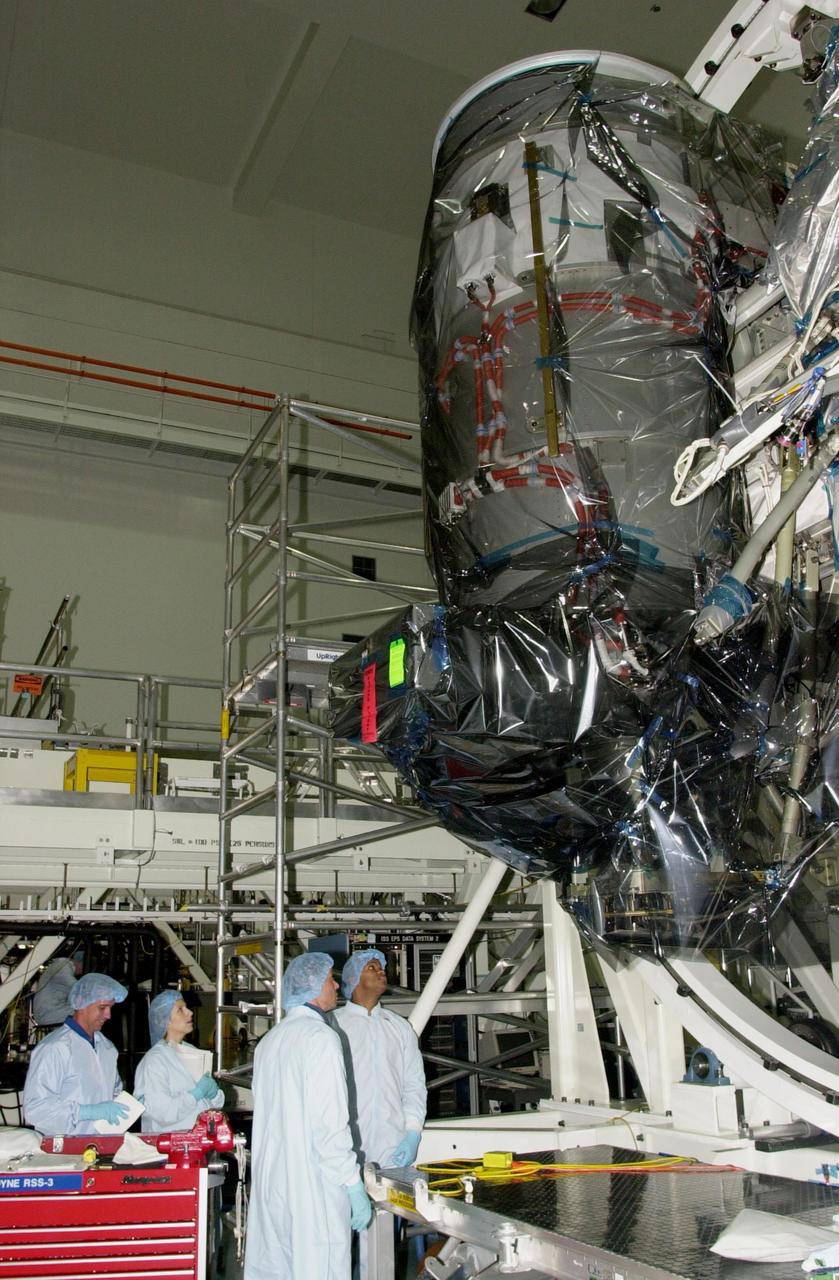
KENNEDY SPACE CENTER, FLA. -- During Crew Equipment Interface Test (CEIT), members of the STS-116 crew look over trusses P4 and P5 they will be working with during their mission to the International Space Station. At left is Pilot William Oefelein; on the right are Mission Specialist Christer Fugelsang, with the European Space Agency, and Mission Specialist Robert Curbeam. The 19th assembly flight to the ISS, the mission will deliver the third port truss segment, the P5 Truss, to attach to second port truss segment, the P3/P4 Truss, to be assembled in an earlier mission. STS-116 is scheduled for launch in June 2003.
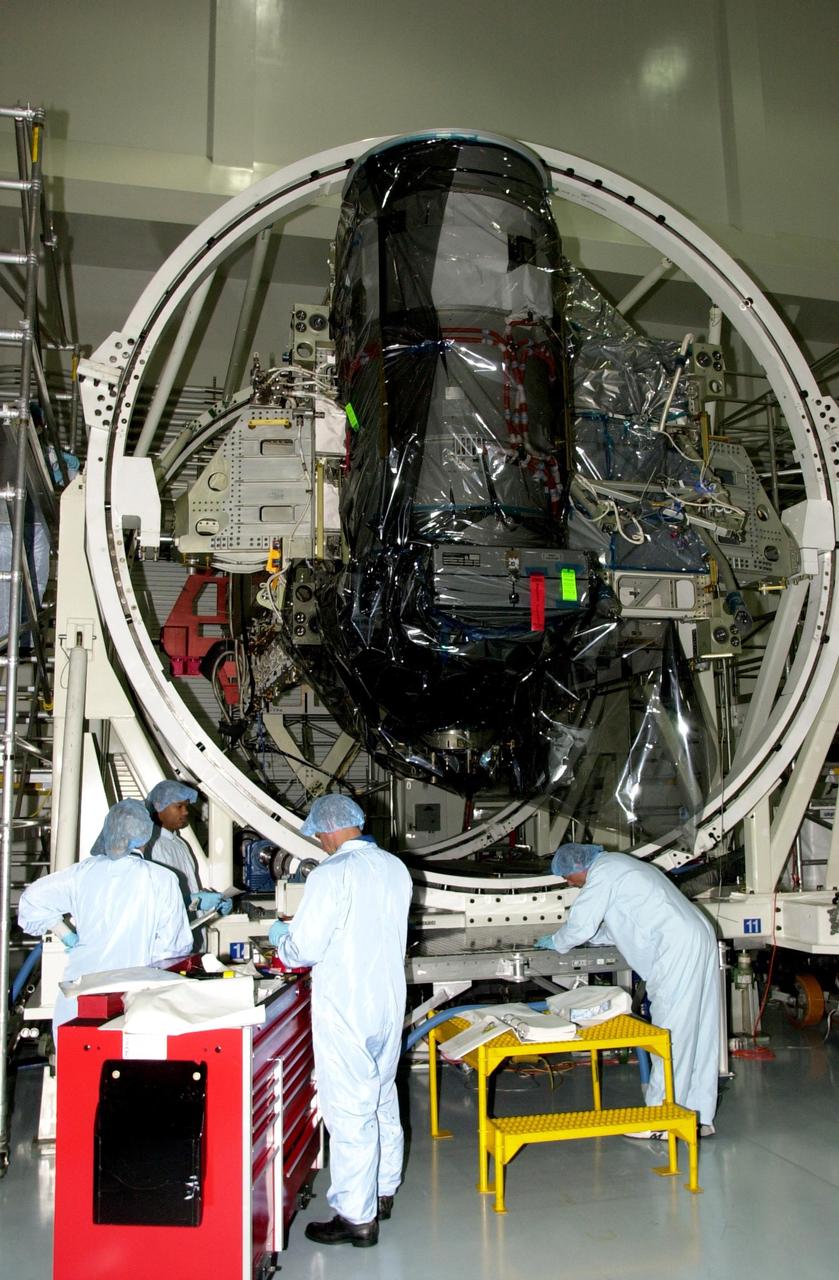
KENNEDY SPACE CENTER, FLA. -- During Crew Equipment Interface Test (CEIT), members of the STS-116 crew check out equipment they will be working with during their mission to the International Space Station. At left are Mission Specialist Christer Fugelsang, with the European Space Agency, Mission Specialist Robert Curbeam and Pilot William Oelefein. The 19th assembly flight to the ISS, the mission will deliver the third port truss segment, the P5 Truss, to attach to second port truss segment, the P3/P4 Truss, to be assembled in an earlier mission. STS-116 is scheduled for launch in June 2003.
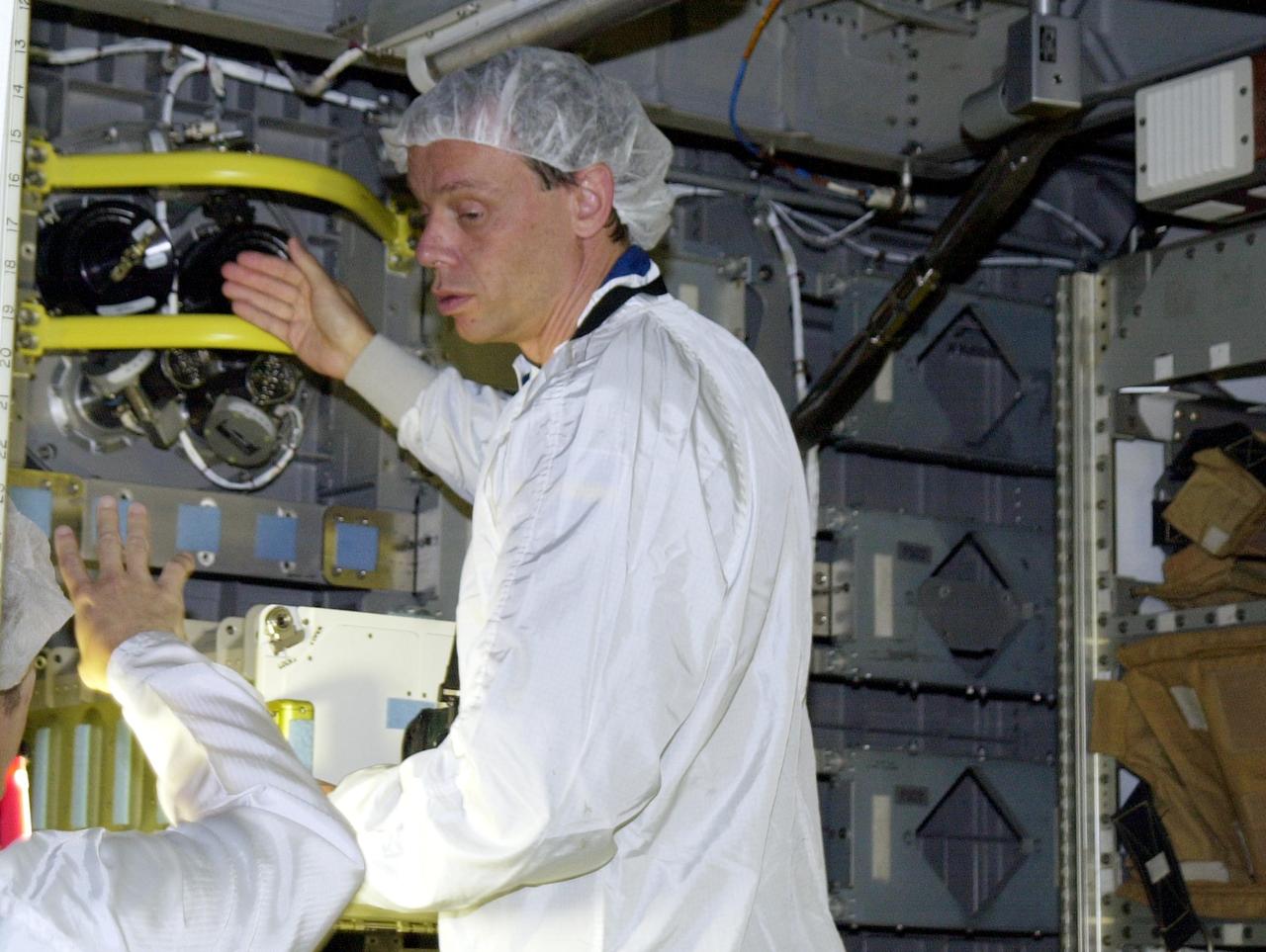
KENNEDY SPACE CENTER, FLA. -- STS-116 Mission Specialist Christer Fugelsang, who is with the European Space Agency, gets instruction about a piece of equipment in the SPACEHAB module. He and other crew members are taking part in equipment familiarization. Objective of their mission to the International Space Station is to deliver and attach the third port truss segment, the P5 Truss, deactivate and retract P6 Truss Channel 4B (port-side) solar array, reconfigure station power from 2A and 4A solar arrays, deliver the Expedition 8 crew to the Station and return the Expedition 7 crew to Earth. The mission is currently targeted for launch in July 2003.
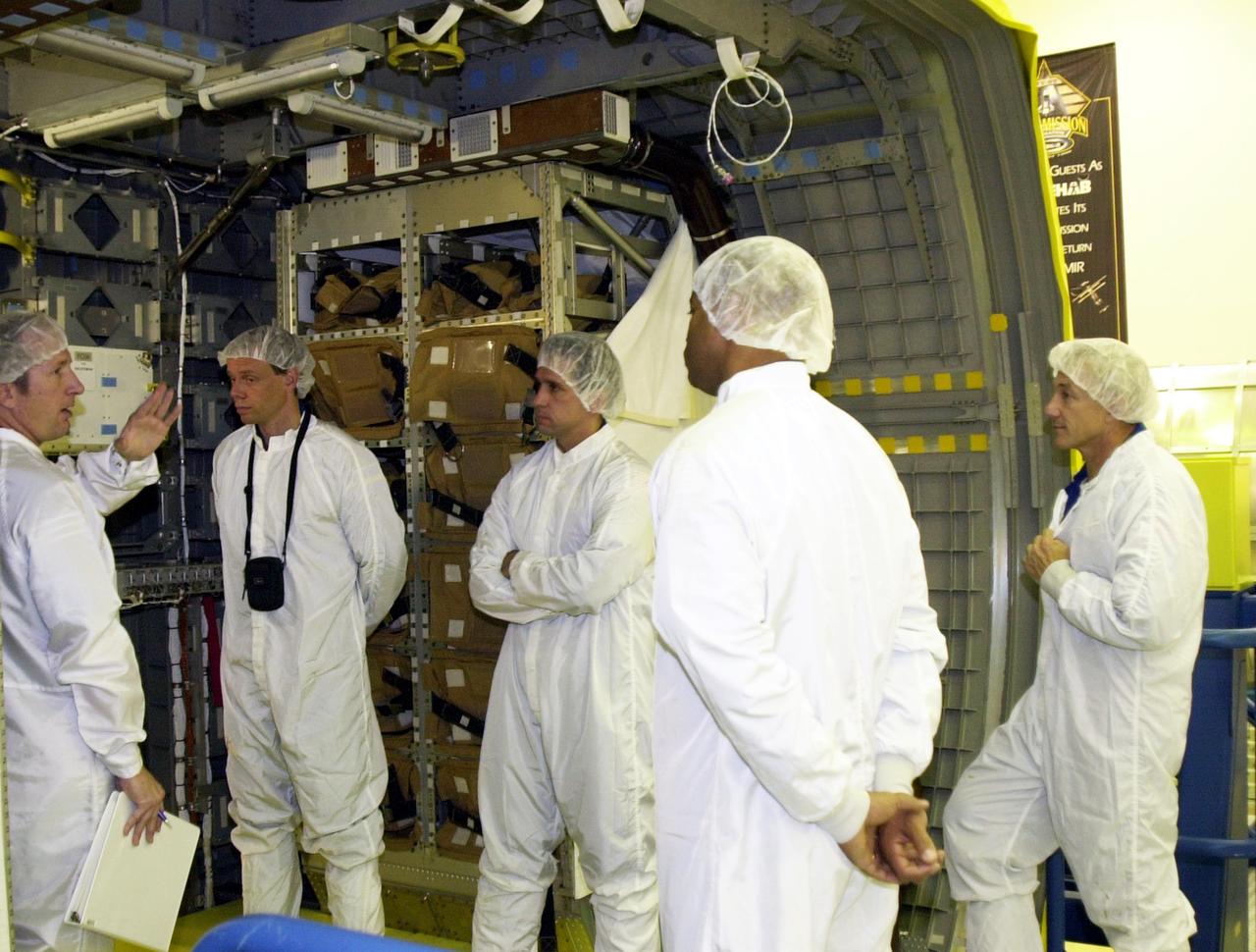
KKENNEDY SPACE CENTER, FLA. -- STS-116 crew members listen to instructions from a trainer (left) about equipment in the SPACEHAB module. Starting second from left are Mission Specialist Christer Fugelsang, who is with the European Space Agency, Pilot William Oefelein, Mission Specialist Robert Curbeam an Mission Commander Terrence Wilcutt. Objective of their mission to the International Space Station is to deliver and attach the third port truss segment, the P5 Truss, deactivate and retract P6 Truss Channel 4B (port-side) solar array, reconfigure station power from 2A and 4A solar arrays, deliver the Expedition 8 crew to the Station and return the Expedition 7 crew to Earth. The mission is currently targeted for launch in July 2003.

KENNEDY SPACE CENTER, FLA. - Inside Astrotech Space Operations in Titusville, Fla., STS-116 Mission Specialists Robert Curbeam (left) and Christer Fugelsang look over the Integrated Cargo Carrier during the Crew Equipment Interface Test. The ICC will be carried in Space Shuttle Discovery’s payload cargo bay during the mission to the International Space Station. Mission crews make frequent trips to the Kennedy Space Center to become familiar with the equipment and payloads they will be using. STS-116 will be mission No. 20 to the International Space Station and construction flight 12A.1. The mission payload is the SPACEHAB module, the P5 integrated truss structure and other key components. Launch is scheduled for no earlier than Dec. 7. Photo credit: NASA/Kim Shiflett
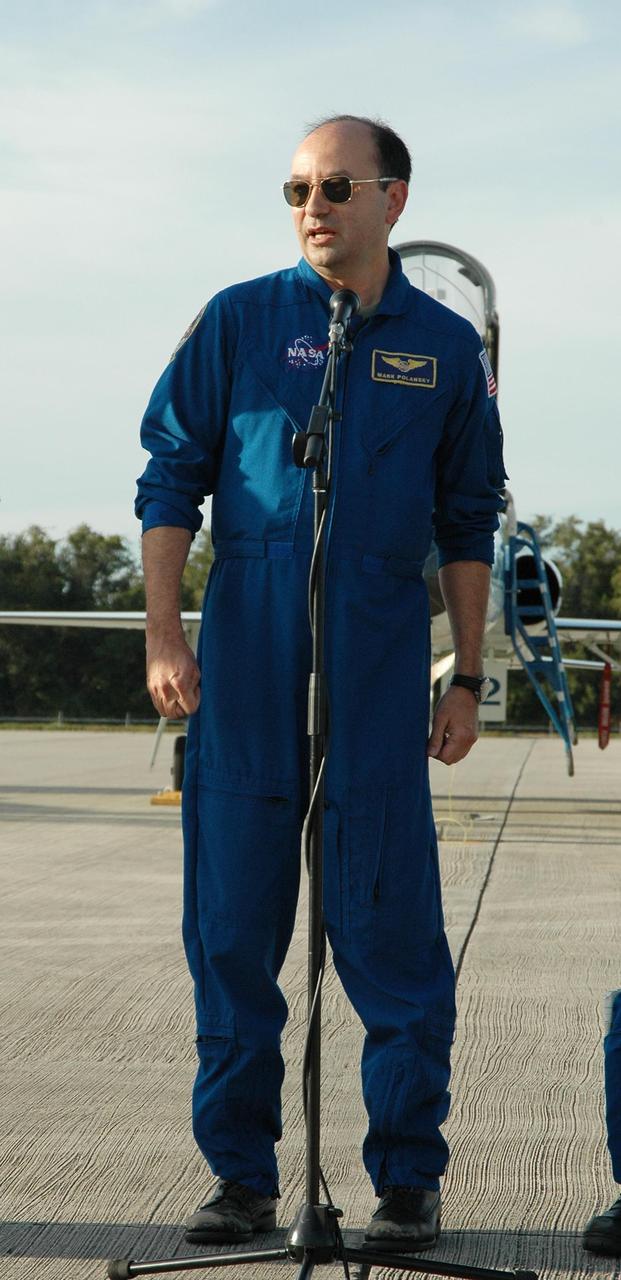
KENNEDY SPACE CENTER, FLA. -- After arrival at the Shuttle Landing Facility, STS-116 Commander Mark Polansky talks to the media. He and Mission Specialists Sunita Williams, Joan Higginbotham and Nicholas Patrick, Polansky, Pilot William Oefelein, and Mission Specialists Robert Curbeam and Christer Fuglesang have returned to KSC for the terminal countdown demonstration test, which are prelaunch preparations that include a simulated launch countdown. Fugelsang, who is from Sweden, represents the European Space Agency. The mission is No. 20 to the International Space Station and construction flight 12A.1. The mission payload is the SPACEHAB module, the P5 integrated truss structure and other key components. Launch is scheduled for no earlier than Dec. 7. Photo credit: NASA/Kim Shiflett

KENNEDY SPACE CENTER, FLA. -- At the Shuttle Landing Facility, STS-116 Mission Specialist Christer Fuglesang poses for the media after his arrival at KSC. Fugelsang, who is from Sweden, represents the European Space Agency. The crew has returned to KSC for the terminal countdown demonstration test, which are prelaunch preparations that include a simulated launch countdown. Other crew members are Commander Mark Polansky, Pilot William Oefelein and Mission Specialists Sunita Williams, Joan Higginbotham, Nicholas Patrick and Robert Curbeam. The mission is No. 20 to the International Space Station and construction flight 12A.1. The mission payload is the SPACEHAB module, the P5 integrated truss structure and other key components. Launch is scheduled for no earlier than Dec. 7. Photo credit: NASA/Kim Shiflett
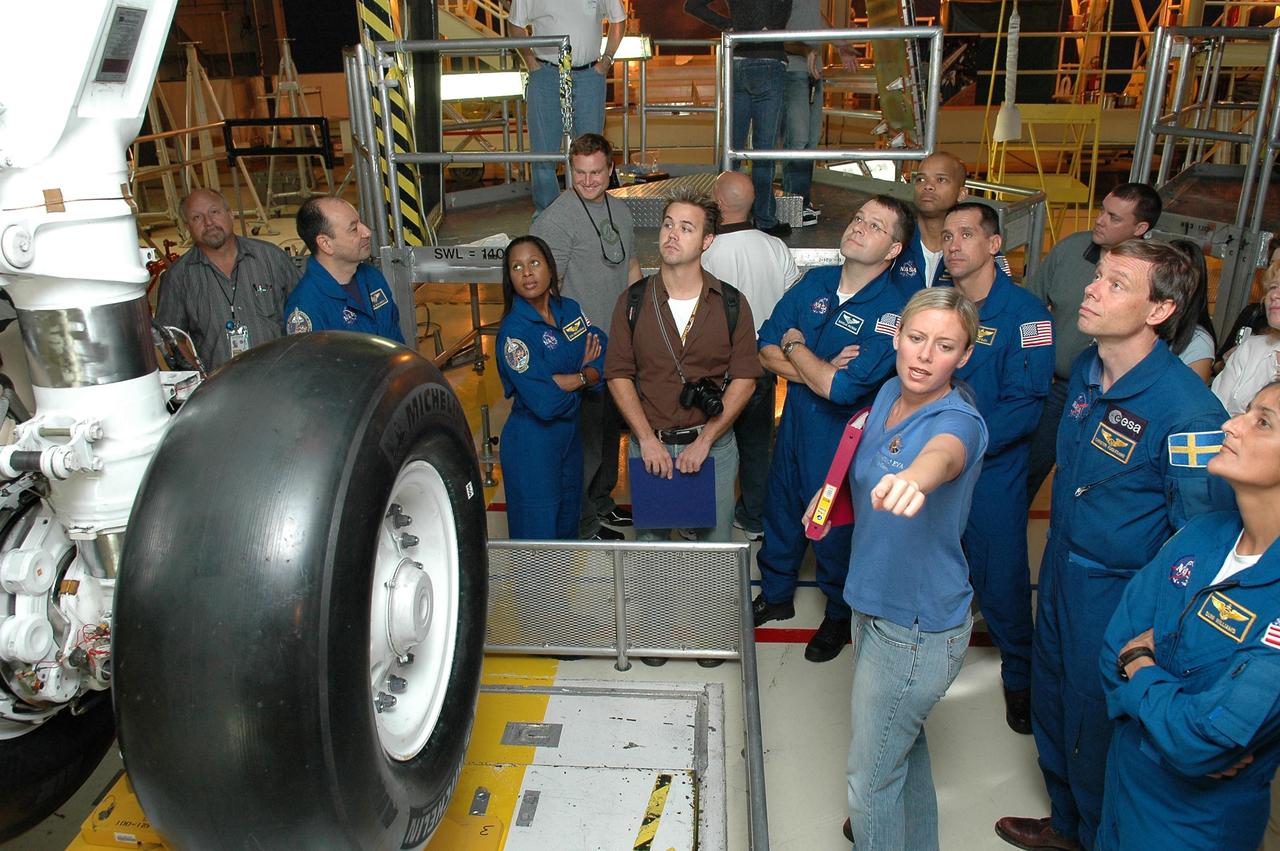
KENNEDY SPACE CENTER, FLA. - In the Orbiter Processing Facility, STS-116 crew members get a close look at the underside of the orbiter Discovery. The astronauts are, from left, Commander Mark Polansky, Mission Specialists Joan Higginbotham and Nicholas Patrick, Pilot William Oefelein, and Mission Specialists Christer Fugelsang, who represents the European Space Agency, and Sunita Williams. The crew is at KSC for a Crew Equipment Interface Test. Mission crews make frequent trips to the Kennedy Space Center to become familiar with the equipment and payloads they will be using. STS-116 will be mission No. 20 to the International Space Station and construction flight 12A.1. The mission payload is the SPACEHAB module, the P5 integrated truss structure and other key components. Launch is scheduled for no earlier than Dec. 7. Photo credit: NASA/Kim Shiflett
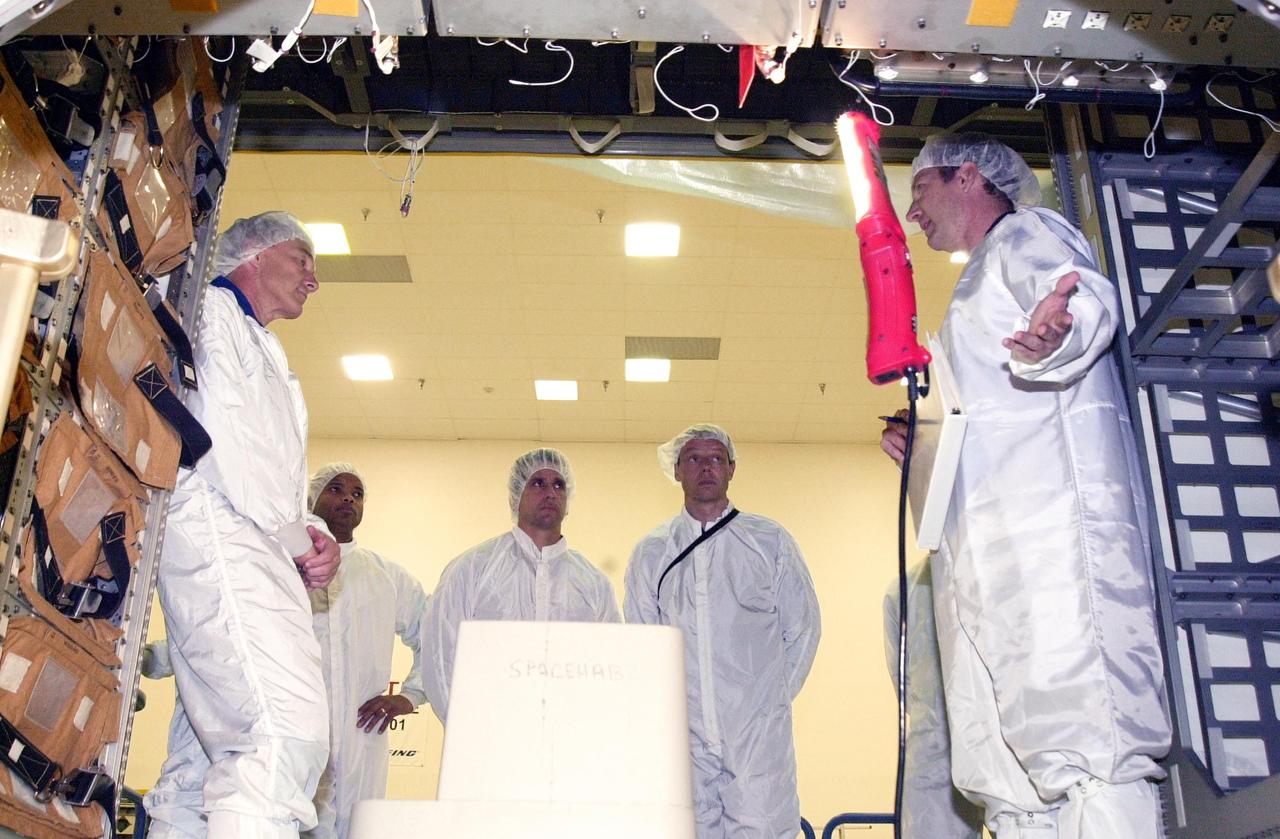
KENNEDY SPACE CENTER, FLA. -- STS-116 crew members take part in equipment familiarization in the SPACEHAB module. From left are Mission Commander Terrence Wilcutt, Mission Specialist Robert Curbeam, Pilot William Oefelein and Mission Specialist Christer Fugelsang, who is with the European Space Agency. At right is a SPACEHAB trainer. Objective of their mission to the International Space Station is to deliver and attach the third port truss segment, the P5 Truss, deactivate and retract P6 Truss Channel 4B (port-side) solar array, reconfigure station power from 2A and 4A solar arrays, deliver the Expedition 8 crew to the Station and return the Expedition 7 crew to Earth. The mission is currently targeted for launch in July 2003.
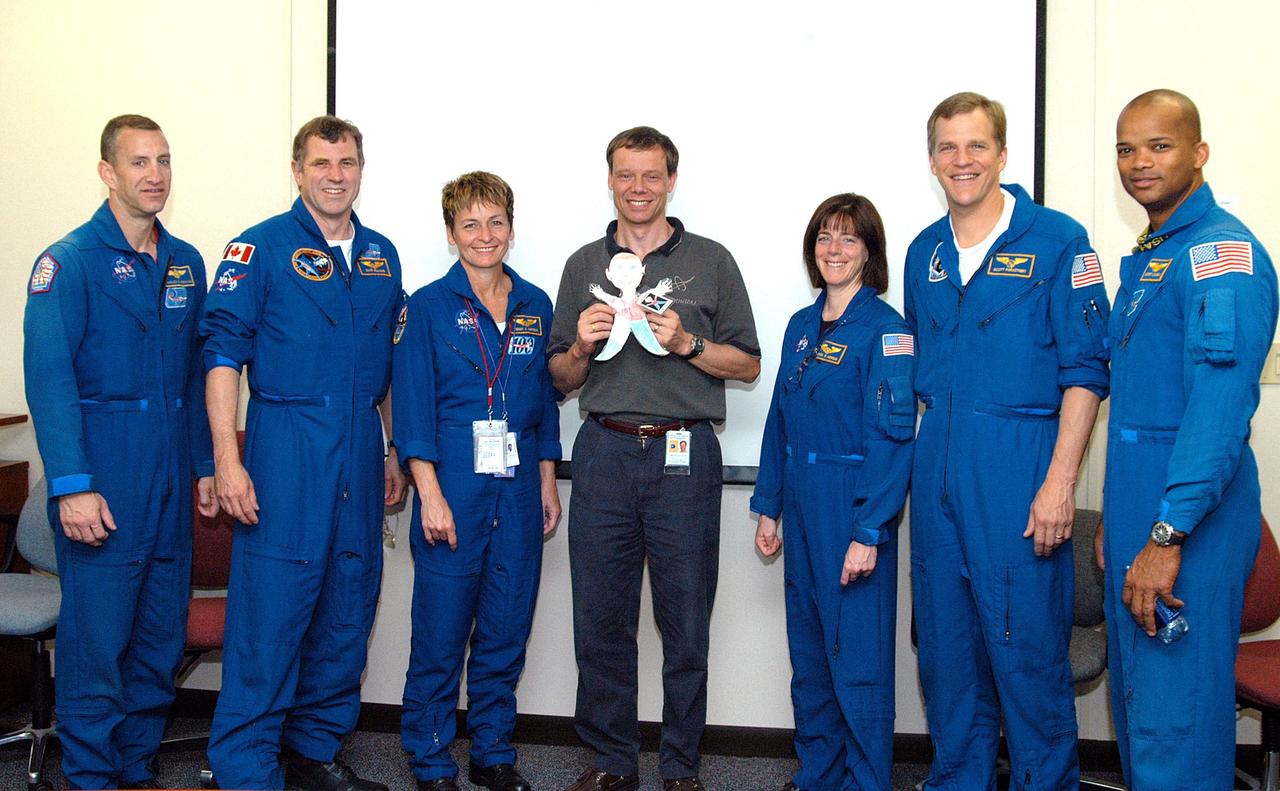
KENNEDY SPACE CENTER, FLA. - Members of the STS-116 and STS-118 crews pause during their visit to KSC for a photo. From left are STS-118 Pilot Charles Hobaugh and Mission Specialist Dafydd Williams (Canadian Space Agency); astronaut Peggy Whitson; STS-116 Mission Specialist Christer Fugelsang (European Space Agency), holding the paper figure of “Flat Stanley,” an education tool; STS-118 Mission Specialists Barbara Morgan and Scott Parazynski; and STS-116 Mission Specialist Robert Curbeam. The crews are taking part in equipment familiarization in the Space Station Processing Facility. The STS-116 mission will deliver the third port truss segment, the P5 Truss, to attach to the second port truss segment, the P3/P4 Truss. The STS-118 mission will be delivering and installing the third starboard truss segment, the ITS S5, to the International Space Station, and carry a SPACEHAB Single Cargo Module with supplies and equipment. Launch dates for both missions are under review.