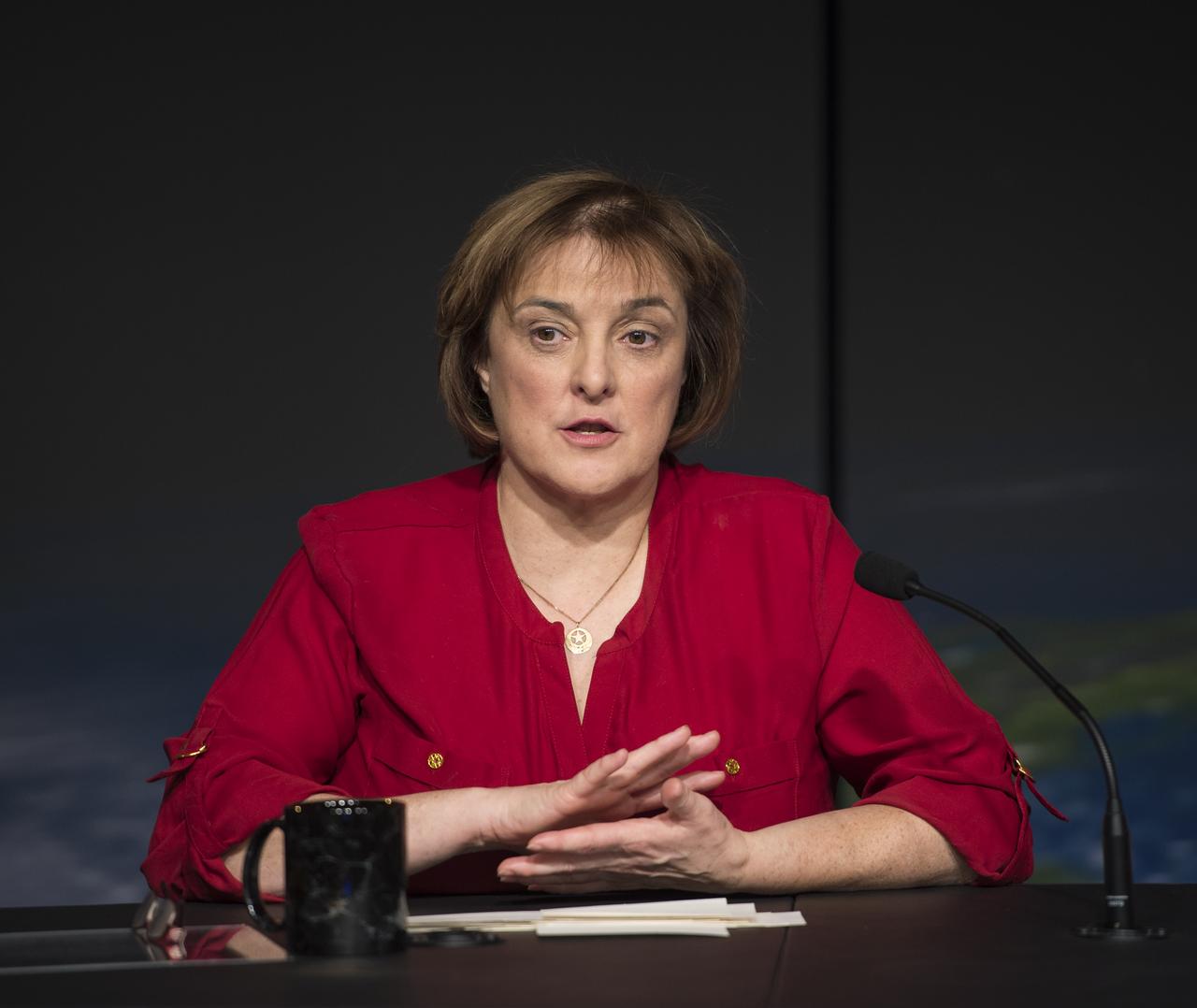
Christine Bonniksen, SMAP program executive with the Science Mission Directorate’s Earth Science Division at NASA Headquarters speaks during a briefing about the upcoming launch of the Soil Moisture Active Passive (SMAP) mission, Thursday, Jan. 08, 2015, at NASA Headquarters in Washington DC. The mission is scheduled for a Jan. 29 launch from Vandenberg Air Force Base in California, and will provide the most accurate, highest-resolution global measurements of soil moisture ever obtained from space. The data will be used to enhance scientists' understanding of the processes that link Earth's water, energy and carbon cycles. Photo Credit: (NASA/Aubrey Gemignani)
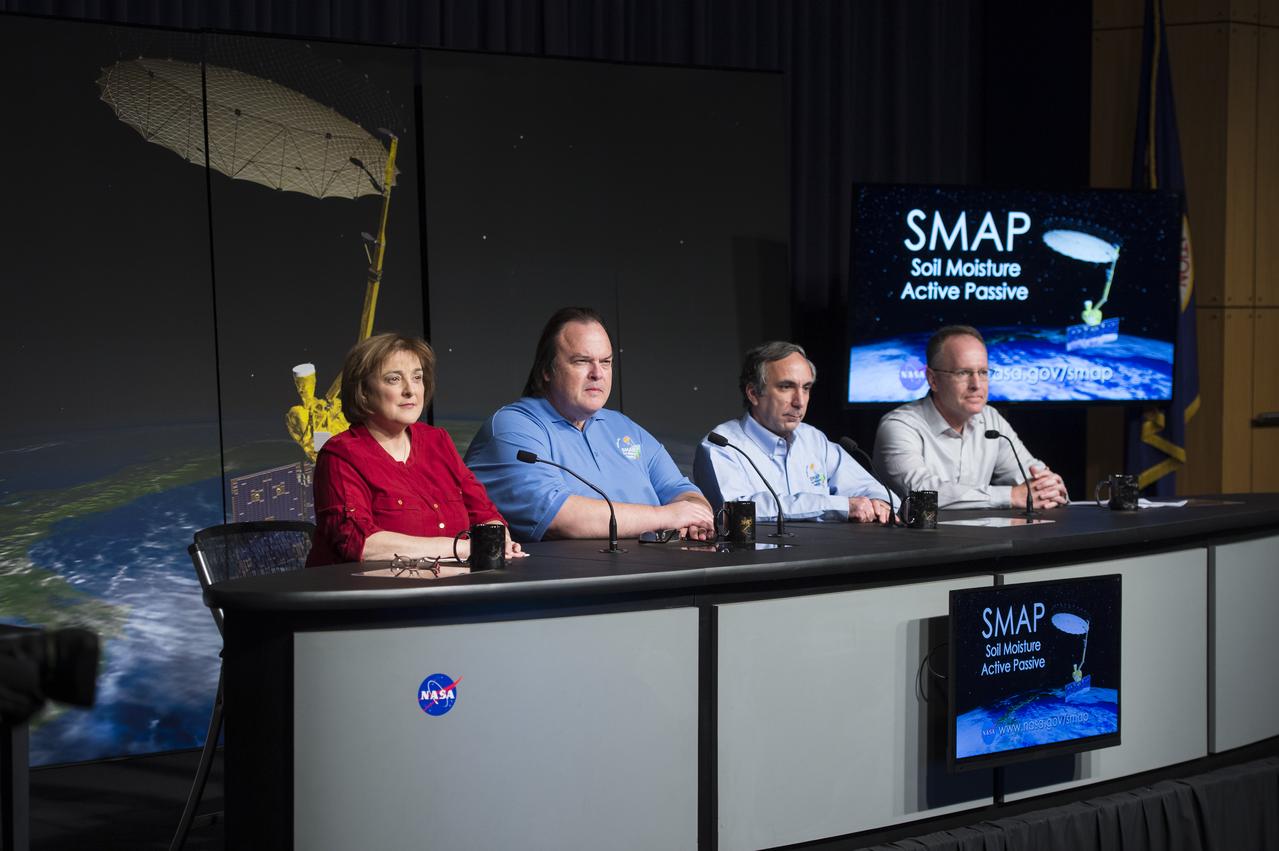
Christine Bonniksen, SMAP program executive with the Science Mission Directorate’s Earth Science Division, NASA Headquarters, left, Kent Kellogg, SMAP project manager, NASA Jet Propulsion Laboratory (JPL), second from left, Dara Entekhabi, SMAP science team lead, Massachusetts Institute of Technology, second from right, and Brad Doorn, SMAP applications lead, Science Mission Directorate’s Applied Sciences Program, NASA Headquarters, right, are seen during a briefing about the upcoming launch of the Soil Moisture Active Passive (SMAP) mission, Thursday, Jan. 08, 2015, at NASA Headquarters in Washington DC. The mission is scheduled for a Jan. 29 launch from Vandenberg Air Force Base in California, and will provide the most accurate, highest-resolution global measurements of soil moisture ever obtained from space. The data will be used to enhance scientists' understanding of the processes that link Earth's water, energy and carbon cycles. Photo Credit: (NASA/Aubrey Gemignani)
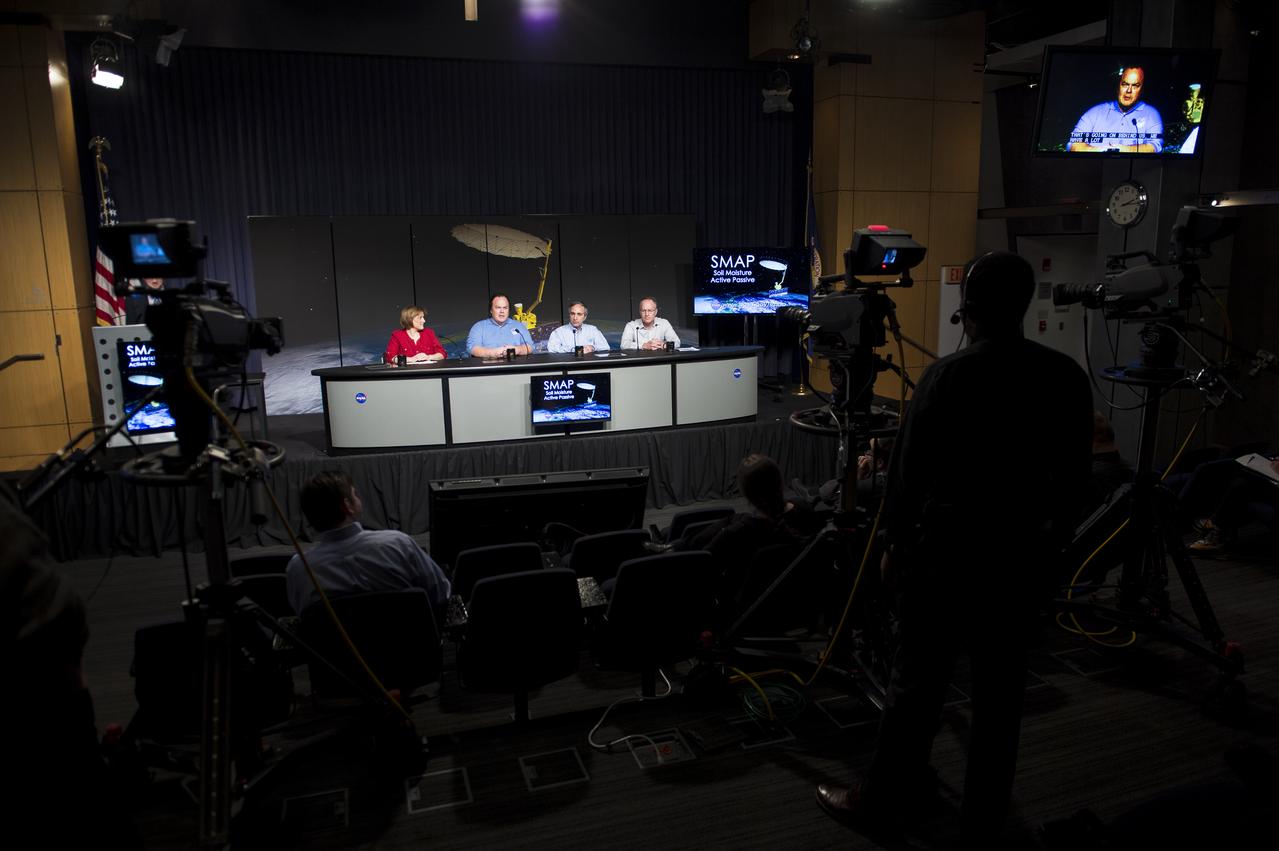
Christine Bonniksen, SMAP program executive with the Science Mission Directorate’s Earth Science Division, NASA Headquarters, left, Kent Kellogg, SMAP project manager, NASA Jet Propulsion Laboratory (JPL), second from left, Dara Entekhabi, SMAP science team lead, Massachusetts Institute of Technology, second from right, and Brad Doorn, SMAP applications lead, Science Mission Directorate’s Applied Sciences Program, NASA Headquarters, right, are seen during a briefing about the upcoming launch of the Soil Moisture Active Passive (SMAP) mission, Thursday, Jan. 08, 2015, at NASA Headquarters in Washington DC. The mission is scheduled for a Jan. 29 launch from Vandenberg Air Force Base in California, and will provide the most accurate, highest-resolution global measurements of soil moisture ever obtained from space. The data will be used to enhance scientists' understanding of the processes that link Earth's water, energy and carbon cycles. Photo Credit: (NASA/Aubrey Gemignani)
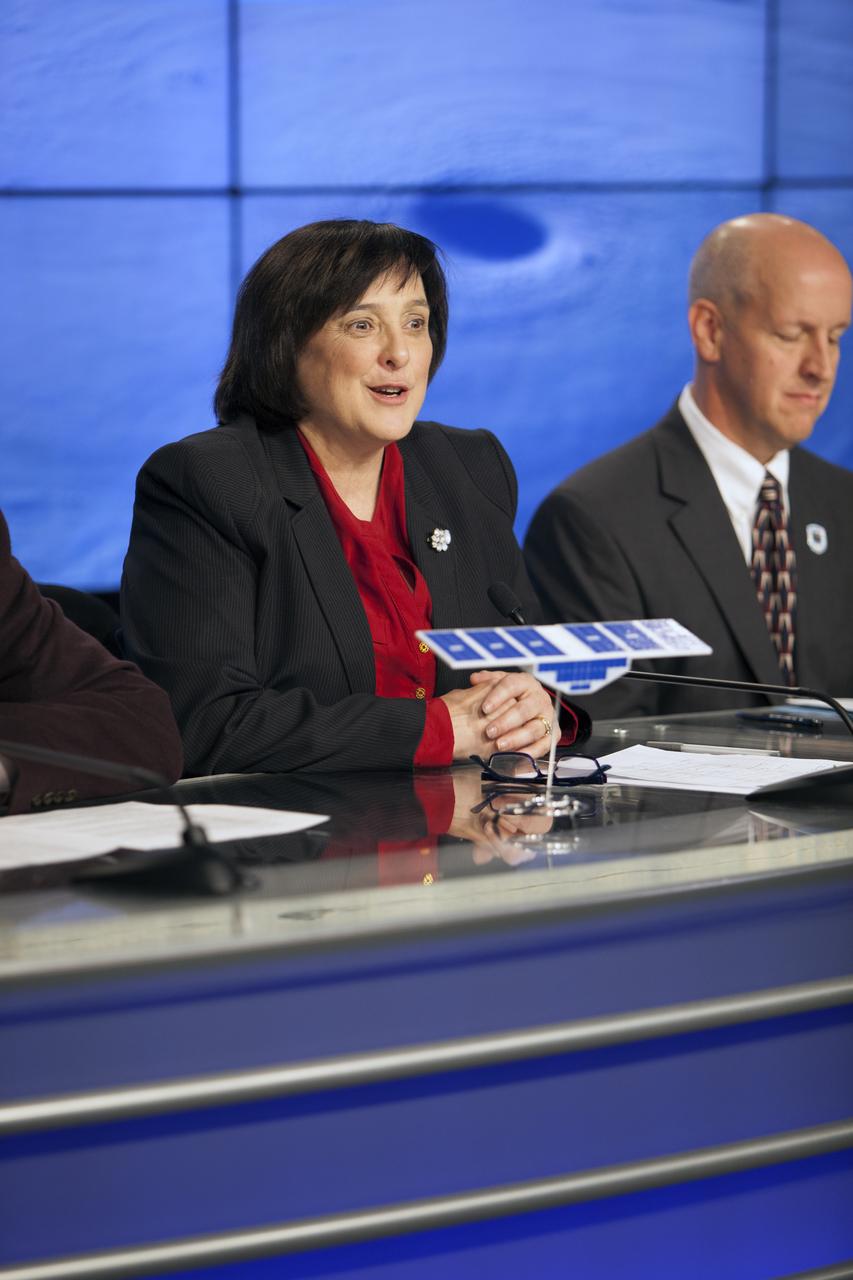
In the Kennedy Space Center’s Press Site auditorium, NASA and industry leaders speak to members of the media during a prelaunch news conference for the agency’s Cyclone Global Navigation Satellite System, or CYGNSS, spacecraft. From left are: Christine Bonniksen, CYGNSS program executive in the Earth Science Division of the Science Mission Directorate at NASA Headquarters in Washington, D.C.; and Tim Dunn, NASA launch director at Kennedy. The eight CYGNSS satellites will make frequent and accurate measurements of ocean surface winds throughout the life cycle of tropical storms and hurricanes. The data will help scientists probe key air-sea interaction processes that take place near the core of storms, which are rapidly changing and play a crucial role in the beginning and intensification of hurricanes.
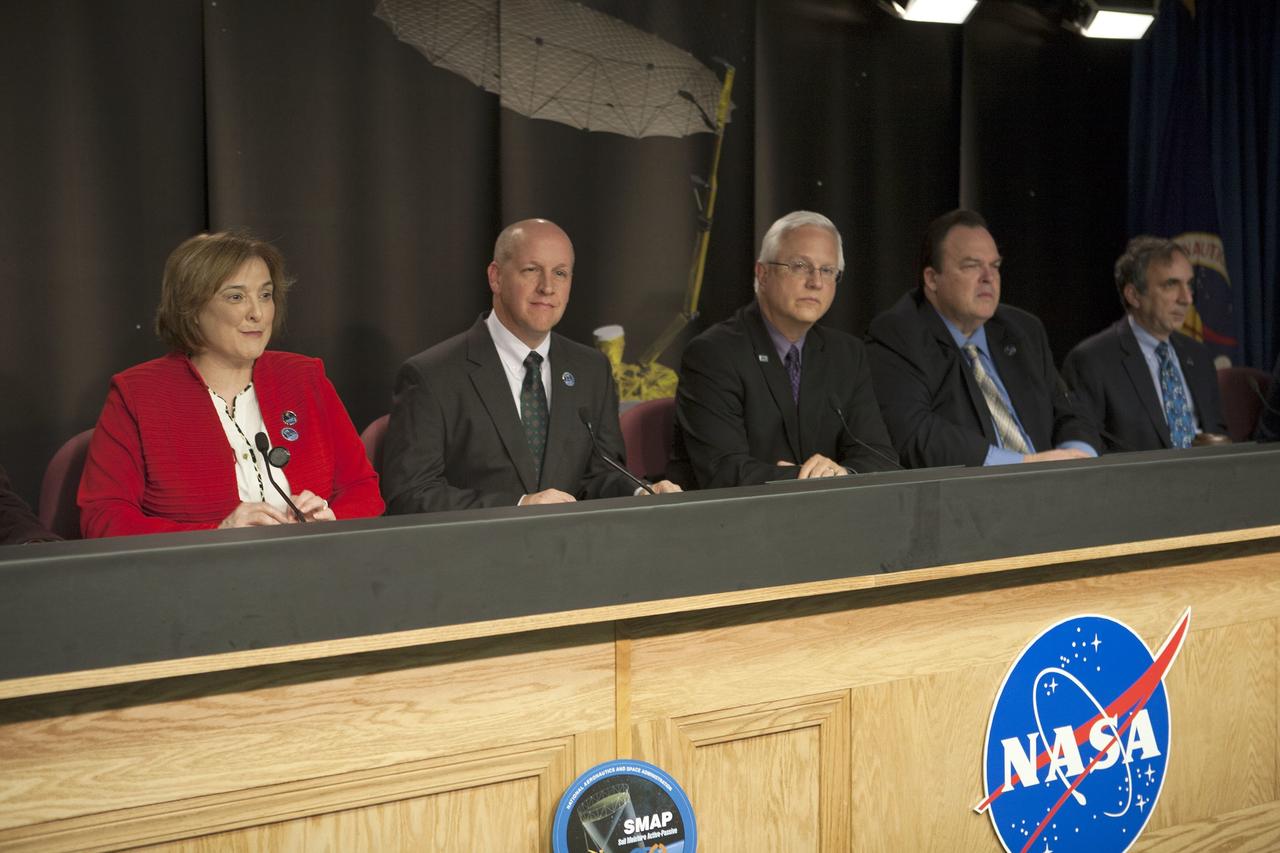
VANDENBERG AIR FORCE BASE, California – At Vandenberg Air Force Base, California, agency and industry leaders spoke to members of the news media as the Soil Moisture Active Passive, or SMAP, satellite and its Delta II rocket were being prepared for launch. From left are: Christine Bonniksen, SMAP program executive at NASA Headquarters, Tim Dunn, NASA launch manager at Kennedy Space Center, Florida, Vern Thorp, program manager for NASA Missions for United Launch Alliance in Centennial, Colorado, Kent Kellogg, SMAP Project manager at the Jet Propulsion Laboratory in Pasadena, California, Dara Entekhabi, SMAP science team leader at the Massachusetts Institute of Technology in Cambridge, Massachusetts, and 1st Lt. John Martin, launch weather officer, 30th Operations Support Squadron at Vandenberg. Photo credit: NASA/Kim Shiflett

VANDENBERG AIR FORCE BASE, California – At Vandenberg Air Force Base, California, agency and industry leaders spoke to members of the news media as the Soil Moisture Active Passive, or SMAP, satellite and its Delta II rocket were being prepared for launch. From left are: George Diller of NASA Public Affairs, Christine Bonniksen, SMAP program executive at NASA Headquarters, Tim Dunn, NASA launch manager at Kennedy Space Center, Florida Vern Thorp, program manager for NASA Missions for United Launch Alliance in Centennial, Colorado, Kent Kellogg, SMAP Project manager at the Jet Propulsion Laboratory in Pasadena, California, Dara Entekhabi, SMAP science team leader at the Massachusetts Institute of Technology in Cambridge, Massachusetts, and 1st Lt. John Martin, launch weather officer, 30th Operations Support Squadron at Vandenberg. Photo credit: NASA/Kim Shiflett
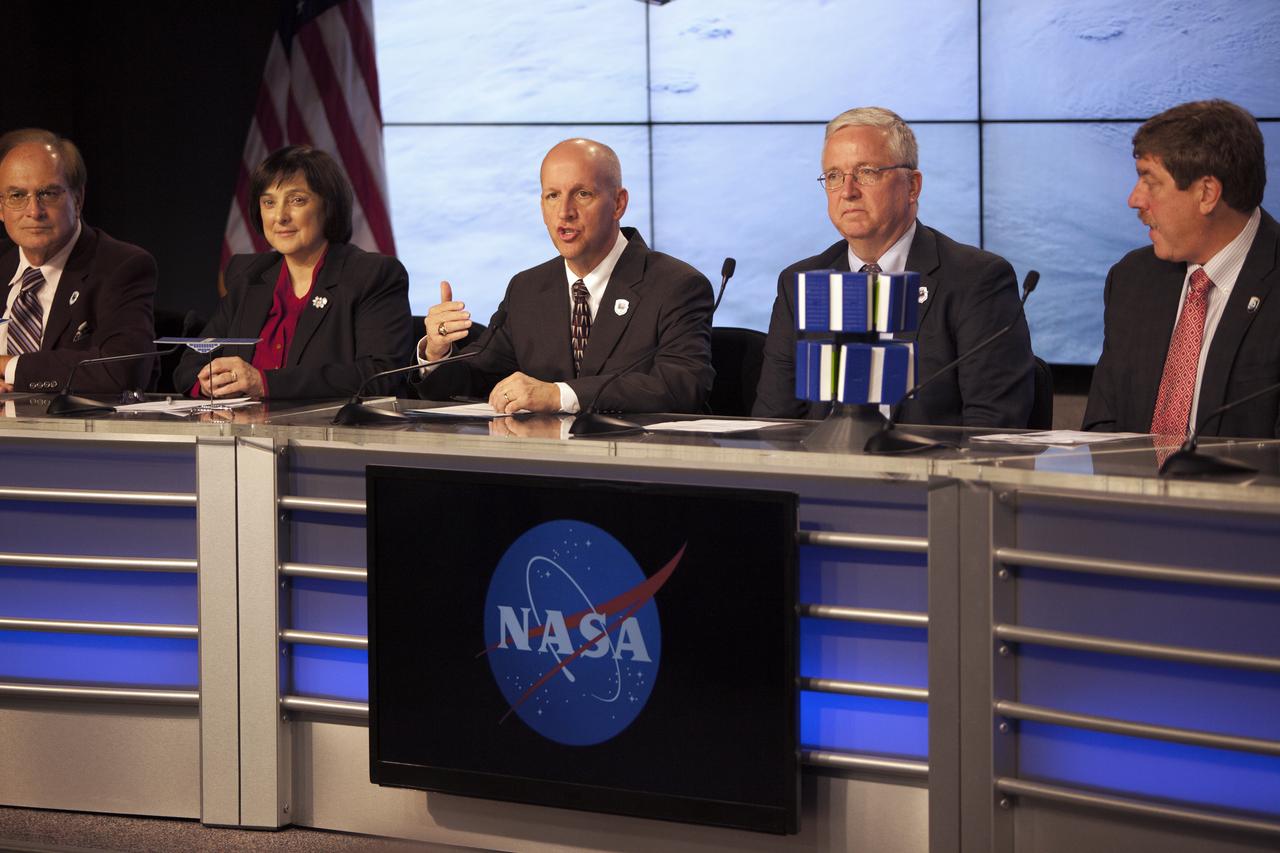
In the Kennedy Space Center’s Press Site auditorium, NASA and industry leaders speak to members of the media during a prelaunch news conference for the agency’s Cyclone Global Navigation Satellite System, or CYGNSS, spacecraft. From left are: George Diller of NASA Communications; Christine Bonniksen, CYGNSS program executive in the Earth Science Division of the Science Mission Directorate at NASA Headquarters in Washington, D.C.; Tim Dunn, NASA launch director at Kennedy; Bryan Baldwin, Pegasus launch vehicle program manager for Orbital ATK, Dulles, Virginia; and John Scherrer, CYGNSS project manager for the Southwest Research Institute in San Antonio, Texas. The eight CYGNSS satellites will make frequent and accurate measurements of ocean surface winds throughout the life cycle of tropical storms and hurricanes. The data will help scientists probe key air-sea interaction processes that take place near the core of storms, which are rapidly changing and play a crucial role in the beginning and intensification of hurricanes.
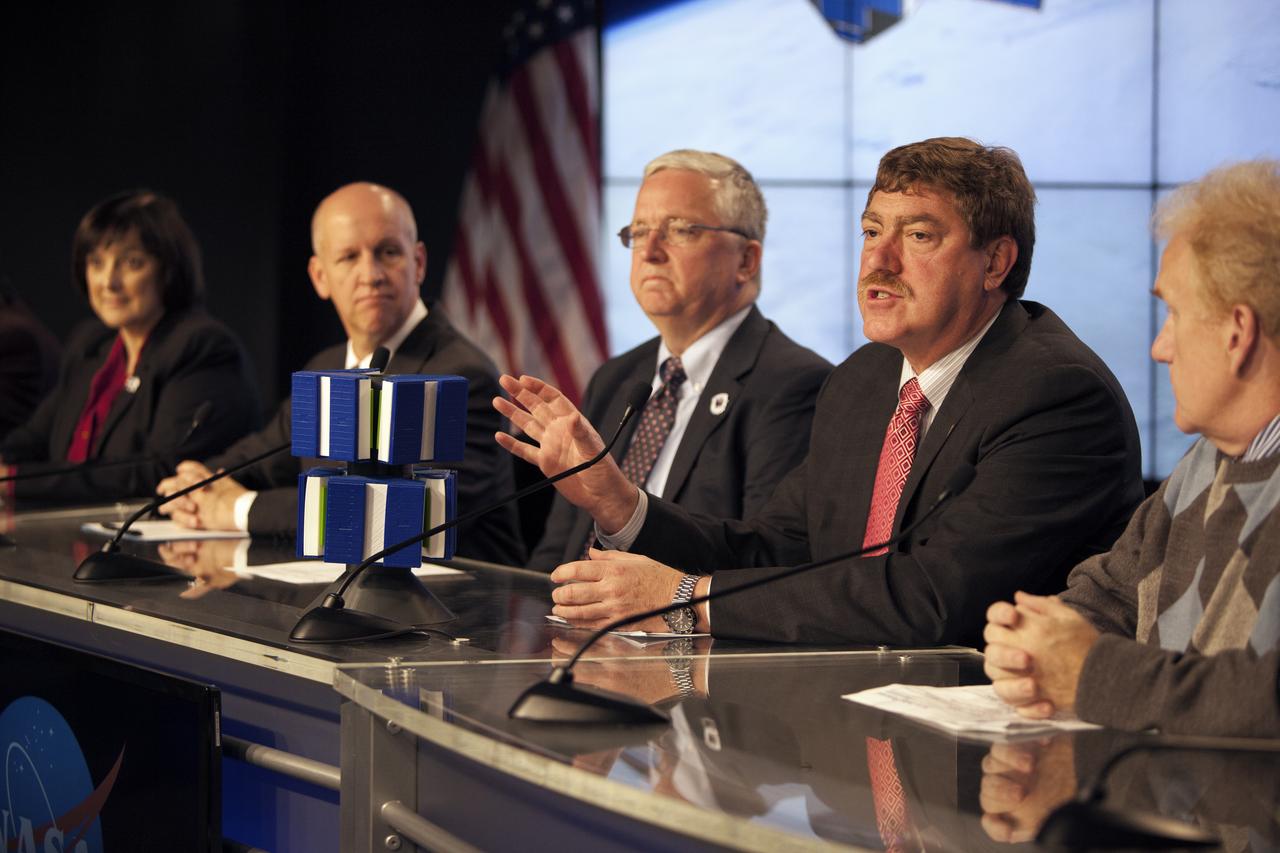
In the Kennedy Space Center’s Press Site auditorium, NASA and industry leaders speak to members of the media during a prelaunch news conference for the agency’s Cyclone Global Navigation Satellite System, or CYGNSS, spacecraft. From left are: Christine Bonniksen, CYGNSS program executive in the Earth Science Division of the Science Mission Directorate at NASA Headquarters in Washington, D.C.; Tim Dunn, NASA launch director at Kennedy; Bryan Baldwin, Pegasus launch vehicle program manager for Orbital ATK, Dulles, Virginia; John Scherrer, CYGNSS project manager for the Southwest Research Institute in San Antonio, Texas; and Mike Rehbein, launch weather officer for the 45th Weather Squadron at Cape Canaveral Air Force Station, Florida. The eight CYGNSS satellites will make frequent and accurate measurements of ocean surface winds throughout the life cycle of tropical storms and hurricanes. The data will help scientists probe key air-sea interaction processes that take place near the core of storms, which are rapidly changing and play a crucial role in the beginning and intensification of hurricanes.
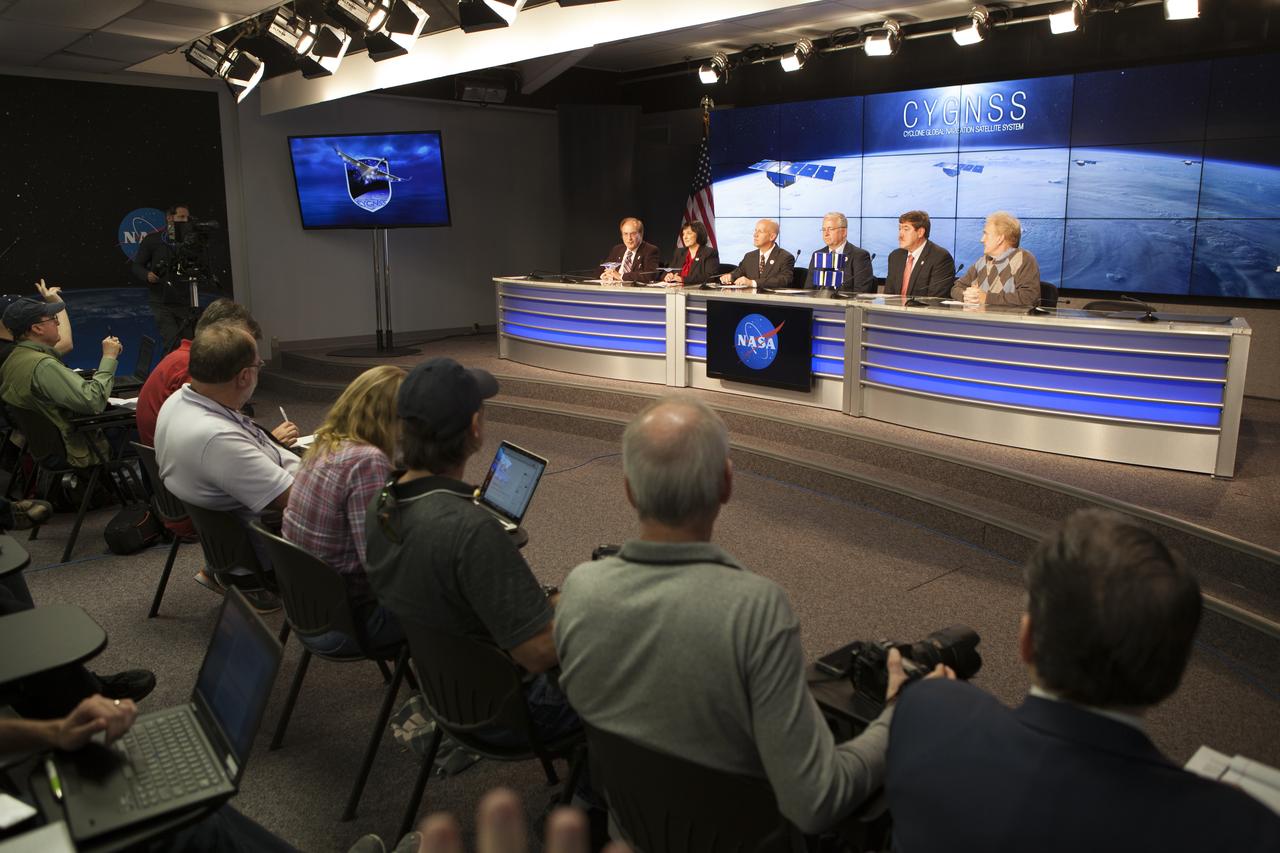
In the Kennedy Space Center’s Press Site auditorium, NASA and industry leaders speak to members of the media during a prelaunch news conference for the agency’s Cyclone Global Navigation Satellite System, or CYGNSS, spacecraft. From left are: George Diller of NASA Communications; Christine Bonniksen, CYGNSS program executive in the Earth Science Division of the Science Mission Directorate at NASA Headquarters in Washington, D.C.; Tim Dunn, NASA launch director at Kennedy; Bryan Baldwin, Pegasus launch vehicle program manager for Orbital ATK, Dulles, Virginia; John Scherrer, CYGNSS project manager for the Southwest Research Institute in San Antonio, Texas; and Mike Rehbein, launch weather officer for the 45th Weather Squadron at Cape Canaveral Air Force Station, Florida. The eight CYGNSS satellites will make frequent and accurate measurements of ocean surface winds throughout the life cycle of tropical storms and hurricanes. The data will help scientists probe key air-sea interaction processes that take place near the core of storms, which are rapidly changing and play a crucial role in the beginning and intensification of hurricanes.
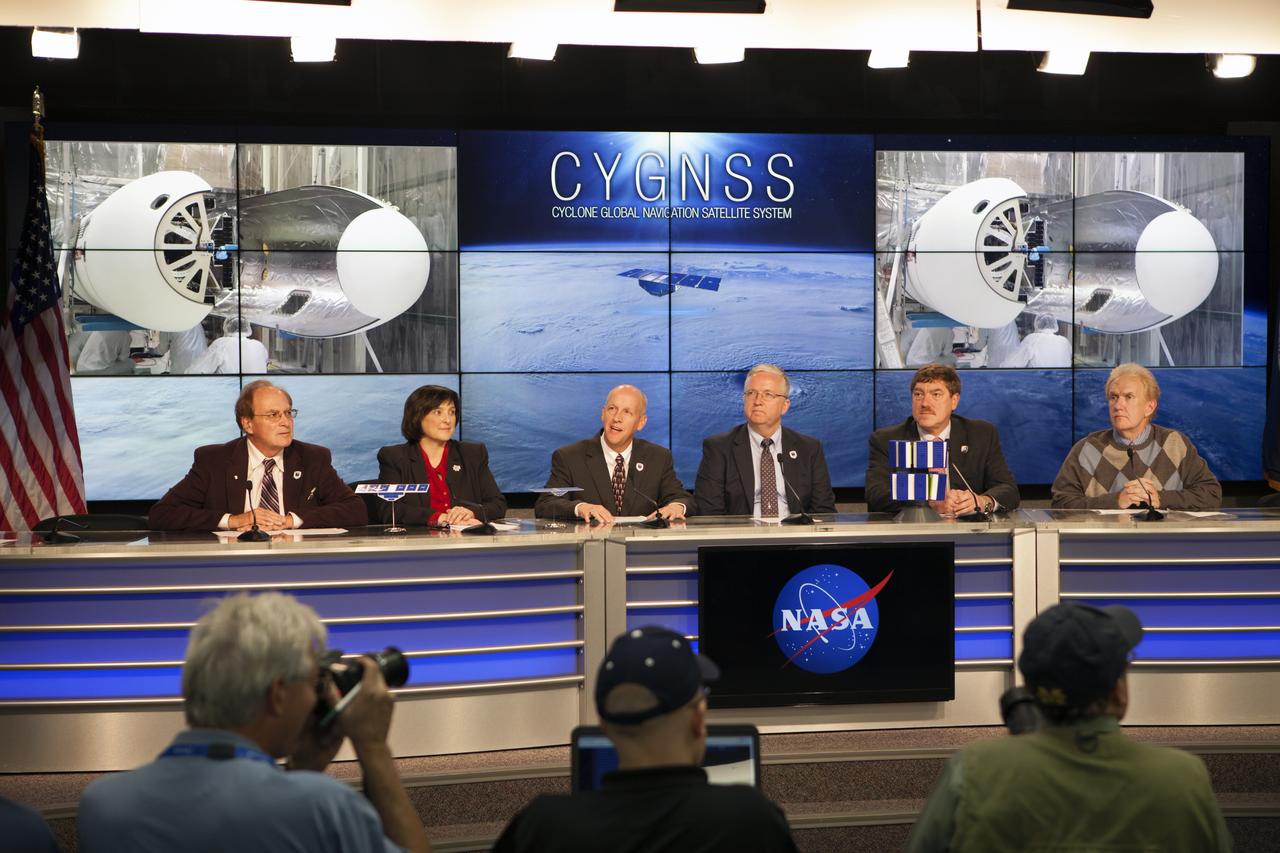
In the Kennedy Space Center’s Press Site auditorium, NASA and industry leaders speak to members of the media during a prelaunch news conference for the agency’s Cyclone Global Navigation Satellite System, or CYGNSS, spacecraft. From left are: George Diller of NASA Communications; Christine Bonniksen, CYGNSS program executive in the Earth Science Division of the Science Mission Directorate at NASA Headquarters in Washington, D.C.; Tim Dunn, NASA launch director at Kennedy; Bryan Baldwin, Pegasus launch vehicle program manager for Orbital ATK, Dulles, Virginia; John Scherrer, CYGNSS project manager for the Southwest Research Institute in San Antonio, Texas; and Mike Rehbein, launch weather officer for the 45th Weather Squadron at Cape Canaveral Air Force Station, Florida. The eight CYGNSS satellites will make frequent and accurate measurements of ocean surface winds throughout the life cycle of tropical storms and hurricanes. The data will help scientists probe key air-sea interaction processes that take place near the core of storms, which are rapidly changing and play a crucial role in the beginning and intensification of hurricanes.
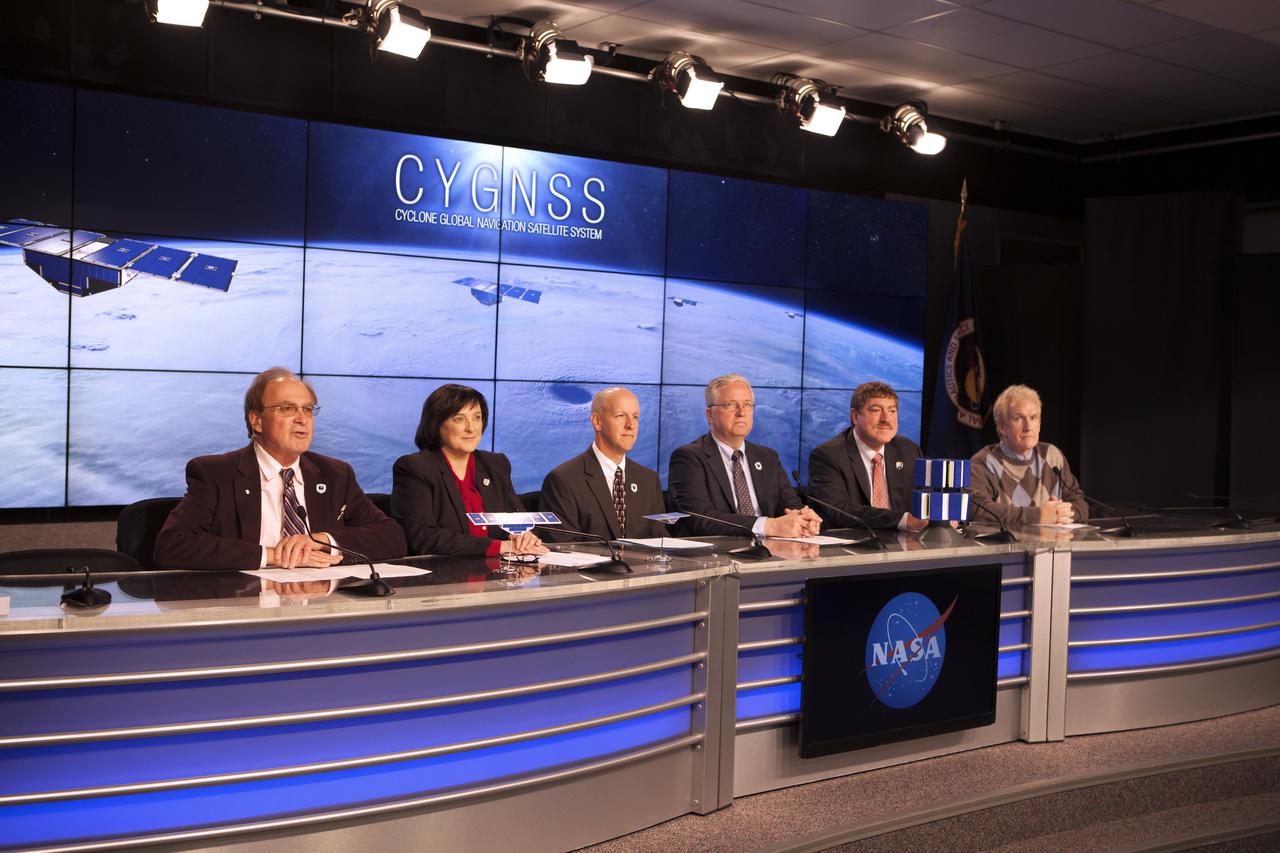
In the Kennedy Space Center’s Press Site auditorium, NASA and industry leaders speak to members of the media during a prelaunch news conference for the agency’s Cyclone Global Navigation Satellite System, or CYGNSS, spacecraft. From left are: George Diller of NASA Communications; Christine Bonniksen, CYGNSS program executive in the Earth Science Division of the Science Mission Directorate at NASA Headquarters in Washington, D.C.; Tim Dunn, NASA launch director at Kennedy; Bryan Baldwin, Pegasus launch vehicle program manager for Orbital ATK, Dulles, Virginia; John Scherrer, CYGNSS project manager for the Southwest Research Institute in San Antonio, Texas; and Mike Rehbein, launch weather officer for the 45th Weather Squadron at Cape Canaveral Air Force Station, Florida. The eight CYGNSS satellites will make frequent and accurate measurements of ocean surface winds throughout the life cycle of tropical storms and hurricanes. The data will help scientists probe key air-sea interaction processes that take place near the core of storms, which are rapidly changing and play a crucial role in the beginning and intensification of hurricanes.