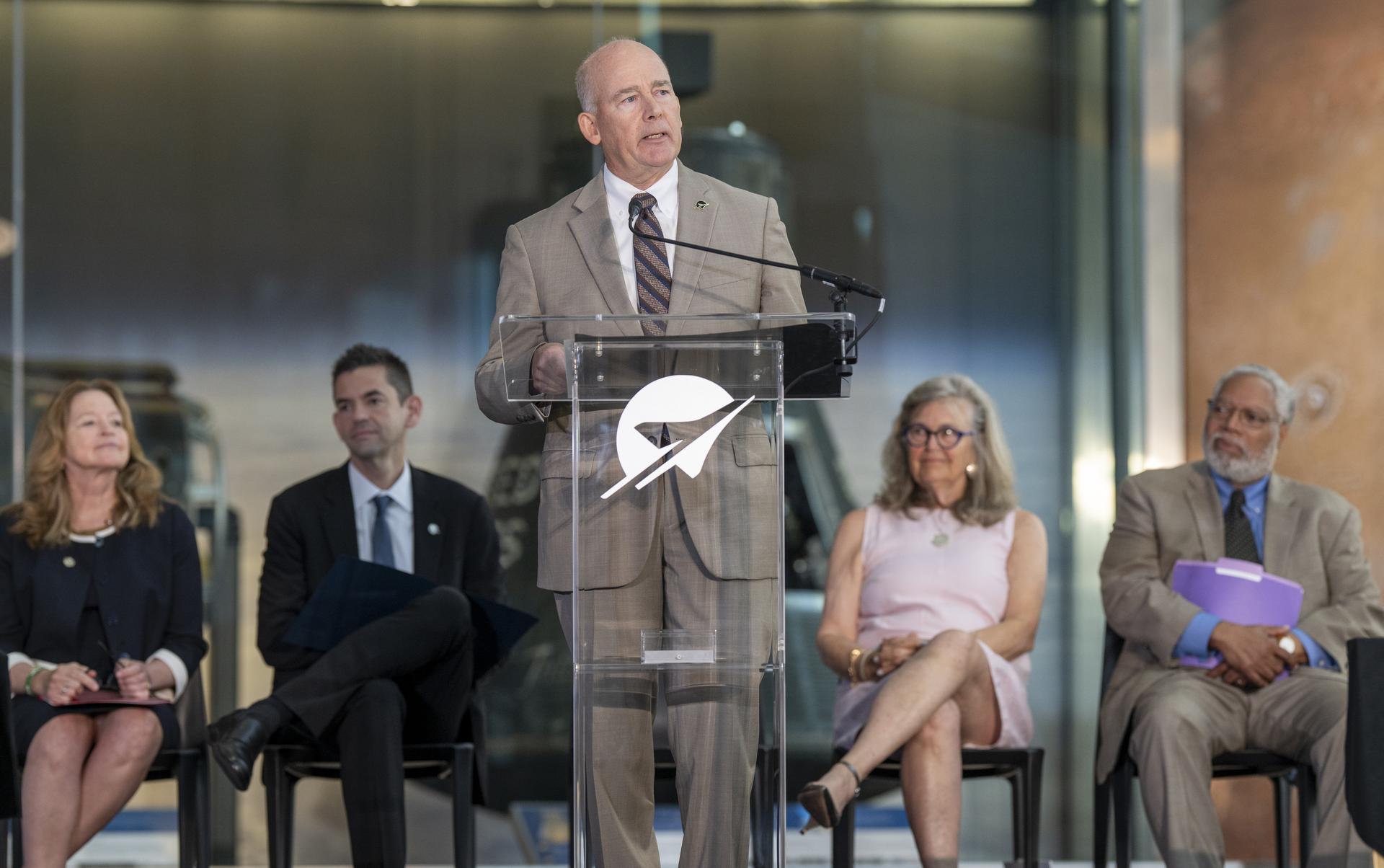
Director of the Smithsonian’s National Air and Space Museum Christopher Browne delivers remarks during the museum’s rededication ceremony Wednesday, July 1, 2026, in Washington. Photo Credit: (NASA/Keegan Barber)
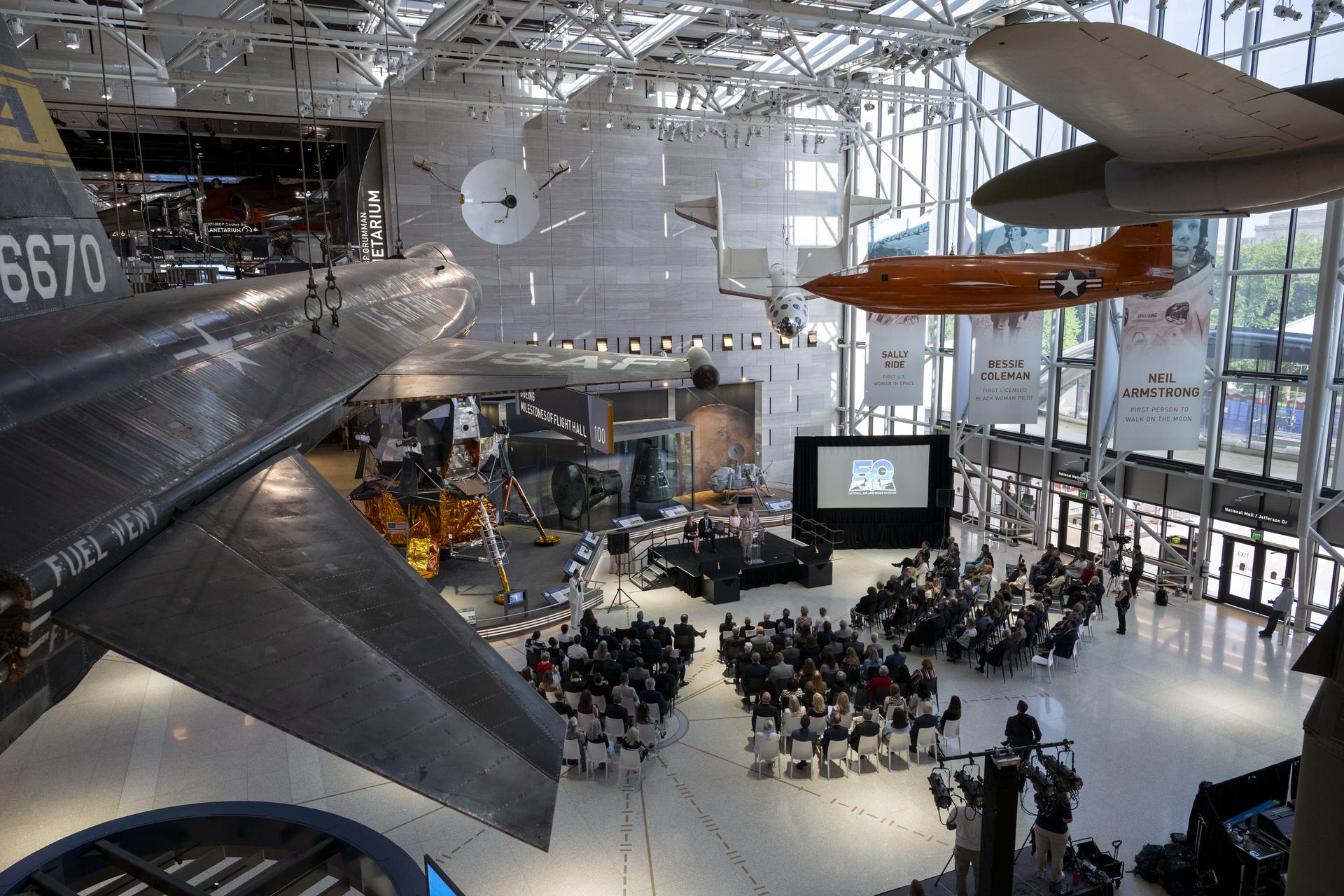
Director of the Smithsonian’s National Air and Space Museum Christopher Browne delivers remarks during the museum’s rededication ceremony Wednesday, July 1, 2026, in Washington. Photo Credit: (NASA/Keegan Barber)
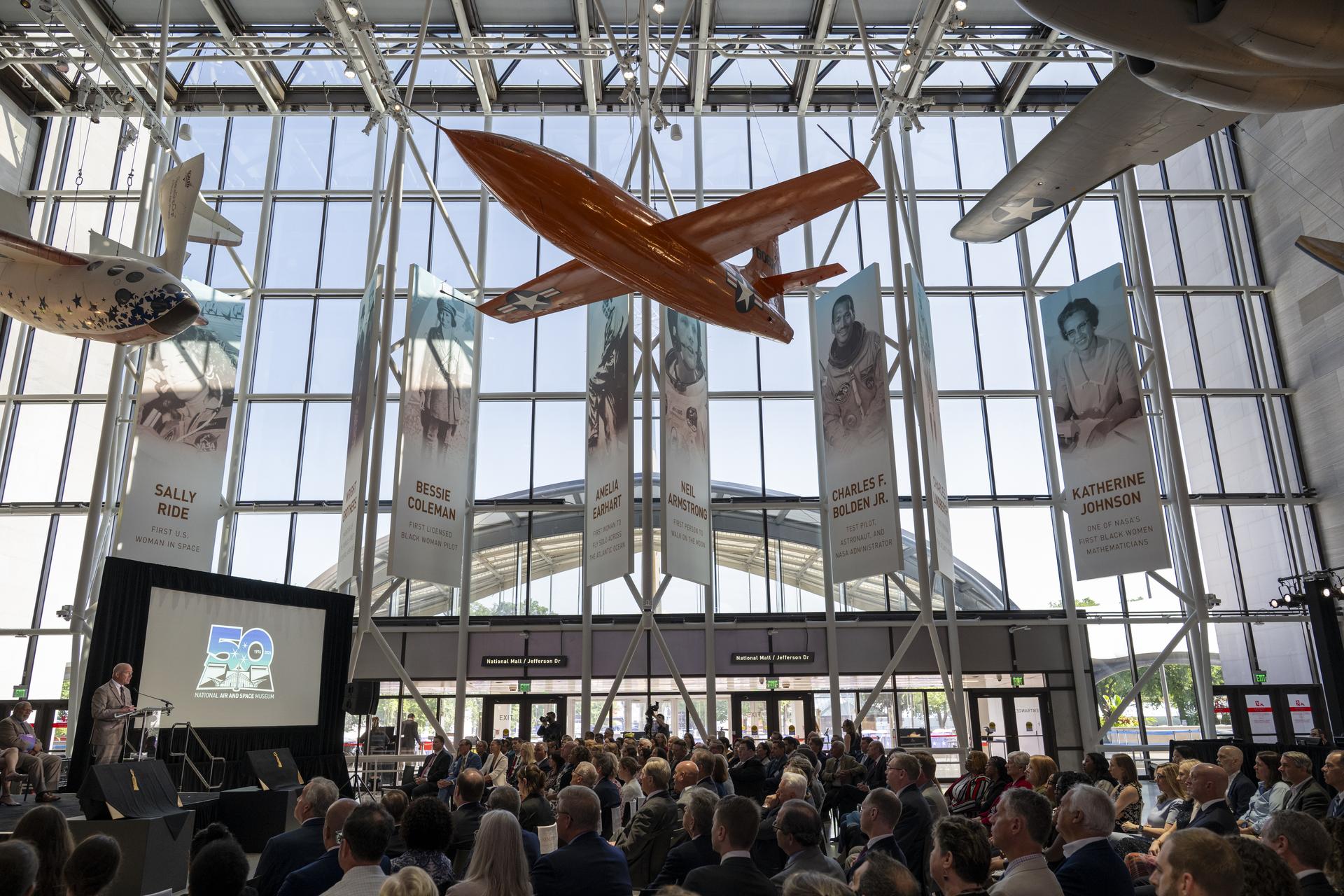
Director of the Smithsonian’s National Air and Space Museum Christopher Browne delivers remarks during the museum’s rededication ceremony Wednesday, July 1, 2026, in Washington. Photo Credit: (NASA/Keegan Barber)
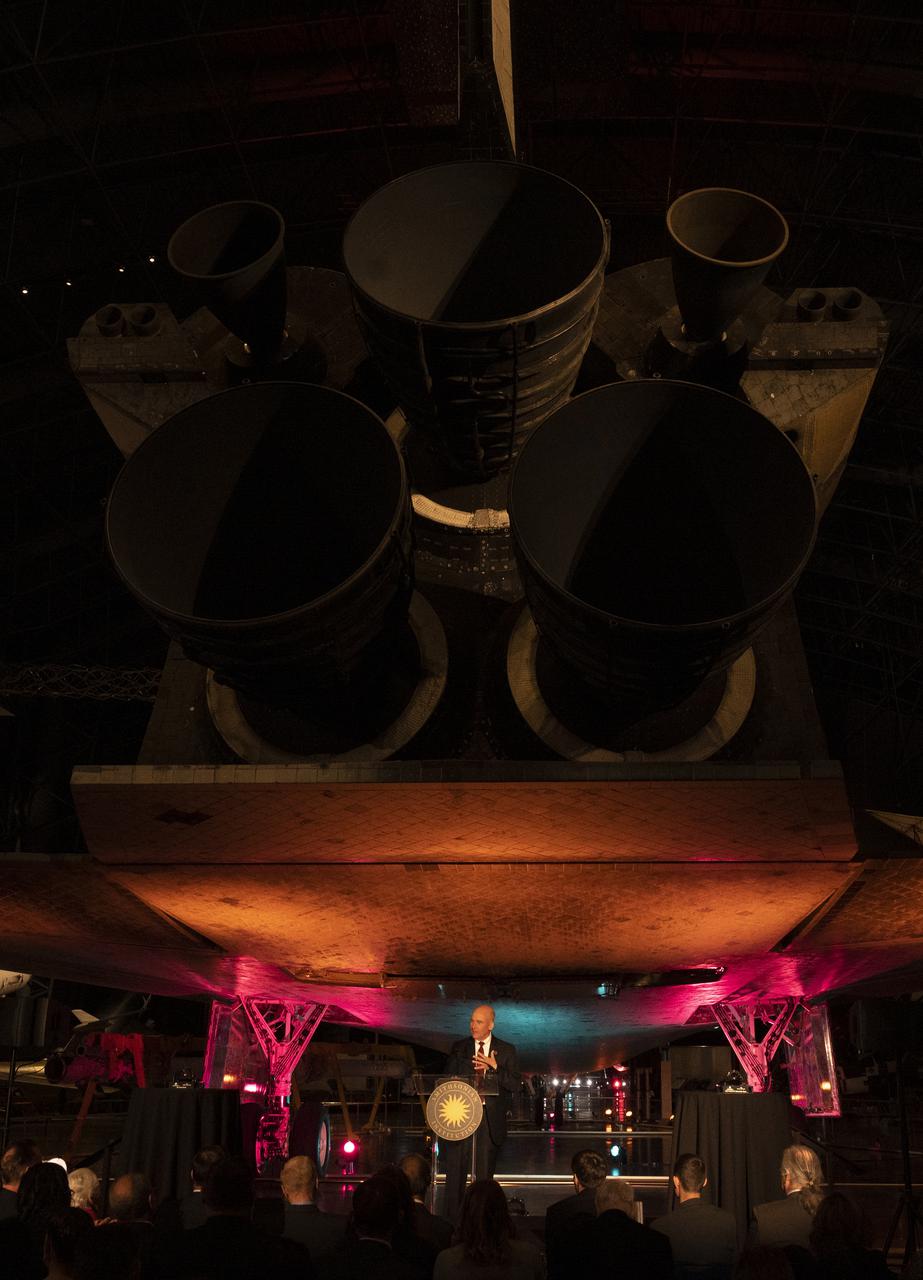
Christopher Browne, acting director of the Smithsonian’s National Air and Space Museum delivers opening remarks at the presentation of the 2022 Michael Collins Trophy, Thursday, March 24, 2022, at the Smithsonian National Air and Space Museum’s Steven F. Udvar-Hazy center in Chantilly, Va. The Smithsonian National Air and Space Museum’s Michael Collins Trophy recognizes extraordinary accomplishments in aeronautics and spaceflight. Photo Credit: (NASA/Joel Kowsky)
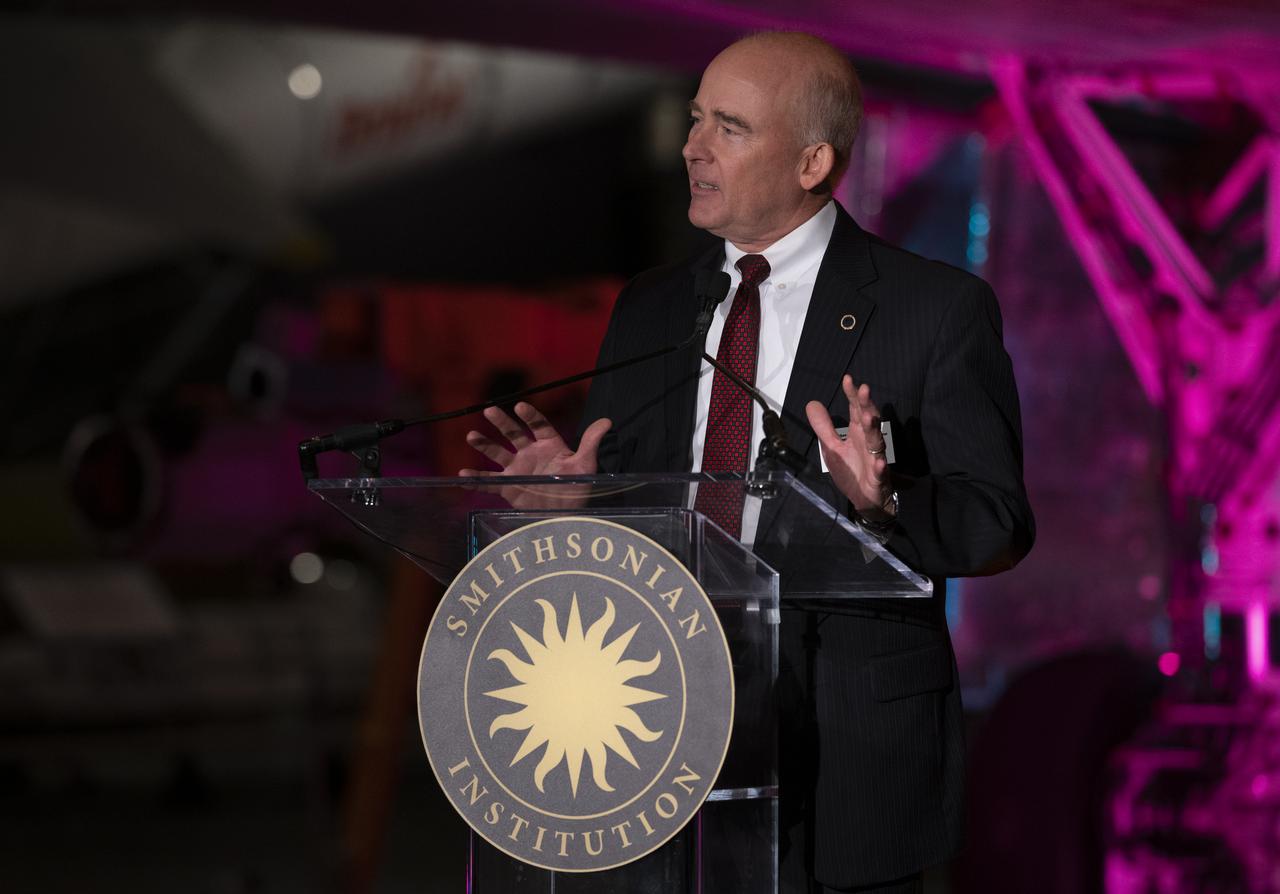
Christopher Browne, acting director of the Smithsonian’s National Air and Space Museum delivers opening remarks at the presentation of the 2022 Michael Collins Trophy, Thursday, March 24, 2022, at the Smithsonian National Air and Space Museum’s Steven F. Udvar-Hazy center in Chantilly, Va. The Smithsonian National Air and Space Museum’s Michael Collins Trophy recognizes extraordinary accomplishments in aeronautics and spaceflight. Photo Credit: (NASA/Joel Kowsky)

Christopher Browne, director of the Smithsonian’s National Air and Space Museum delivers remarks during a briefing on NASA’s TEMPO (Tropospheric Emissions: Monitoring of Pollution) instrument, Tuesday, March 14, 2023 at the Smithsonian’s National Air and Space Museum in Washington. NASA’s TEMPO instrument, the first Earth Venture Instrument mission, will measure air pollution across North America from Mexico City to the Canadian oil sands and from the Atlantic to the Pacific hourly and at a high spatial resolution. A partnership between NASA and the Center for Astrophysics | Harvard & Smithsonian, TEMPO will launch on a commercial satellite to geostationary orbit as early as April. Photo Credit: (NASA/Joel Kowsky)
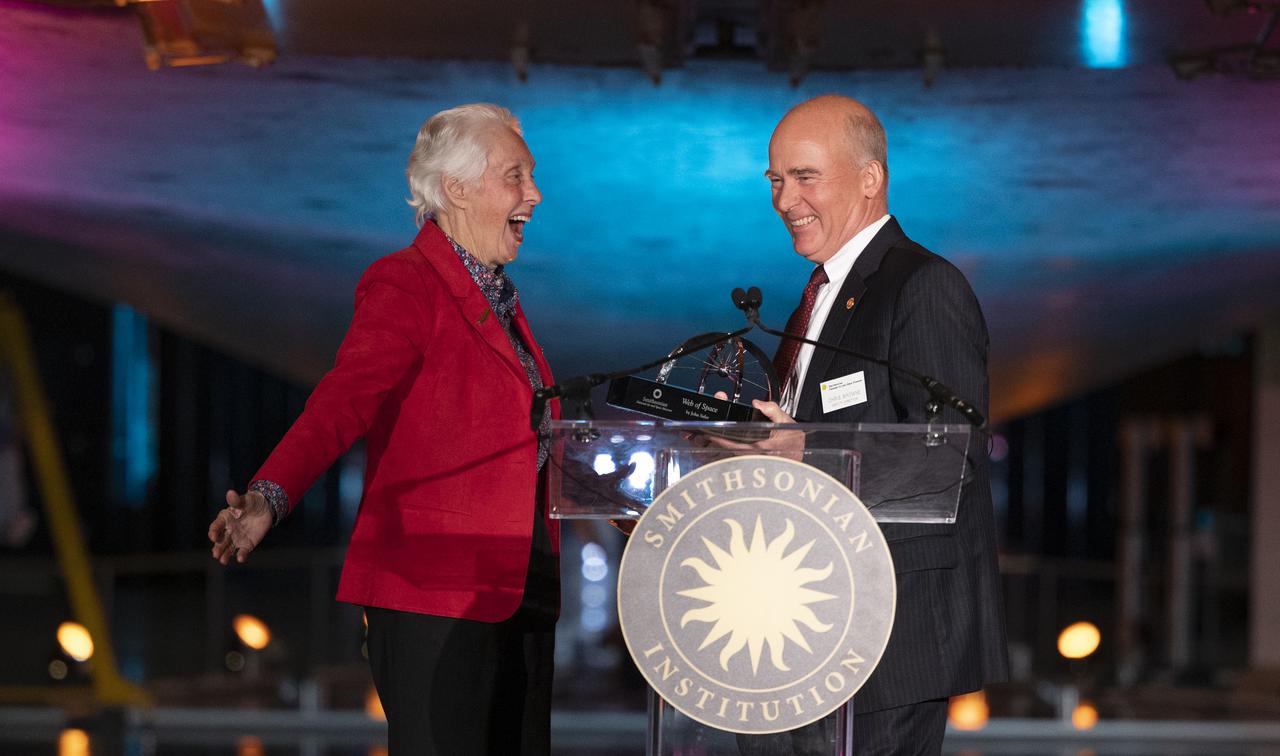
Wally Funk, left, accepts the 2022 Michael Collins Trophy for Lifetime Achievement from Christopher Browne, acting director of the Smithsonian’s National Air and Space Museum, right, Thursday, March 24, 2022, at the Smithsonian National Air and Space Museum’s Steven F. Udvar-Hazy center in Chantilly, Va. The Smithsonian National Air and Space Museum’s Michael Collins Trophy recognizes extraordinary accomplishments in aeronautics and spaceflight. Photo Credit: (NASA/Joel Kowsky)
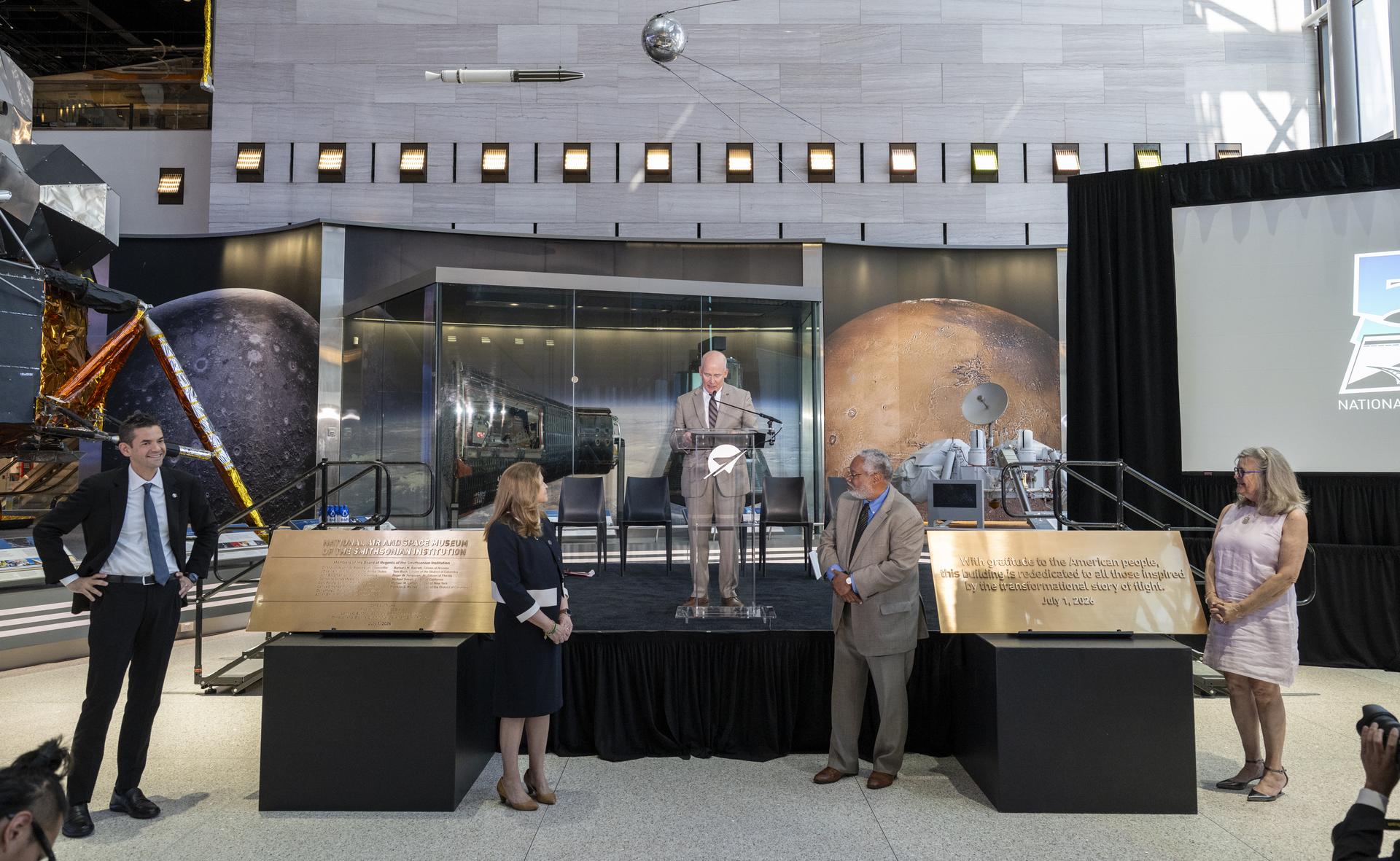
From left to right, NASA Administrator Jared Isaacman, Under Secretary for Science and Research at the Smithsonian Institution Ellen Stofan, Director of the Smithsonian’s National Air and Space Museum Christopher Browne, Secretary of the Smithsonian Institution Lonnie G. Bunch III, and Wright brother’s great-grandniece Amanda Wright Lane are seen after unveiling plaques during the Smithsonian’s National Air and Space Museum rededication ceremony Wednesday, July 1, 2026, in Washington. Photo Credit: (NASA/Keegan Barber)
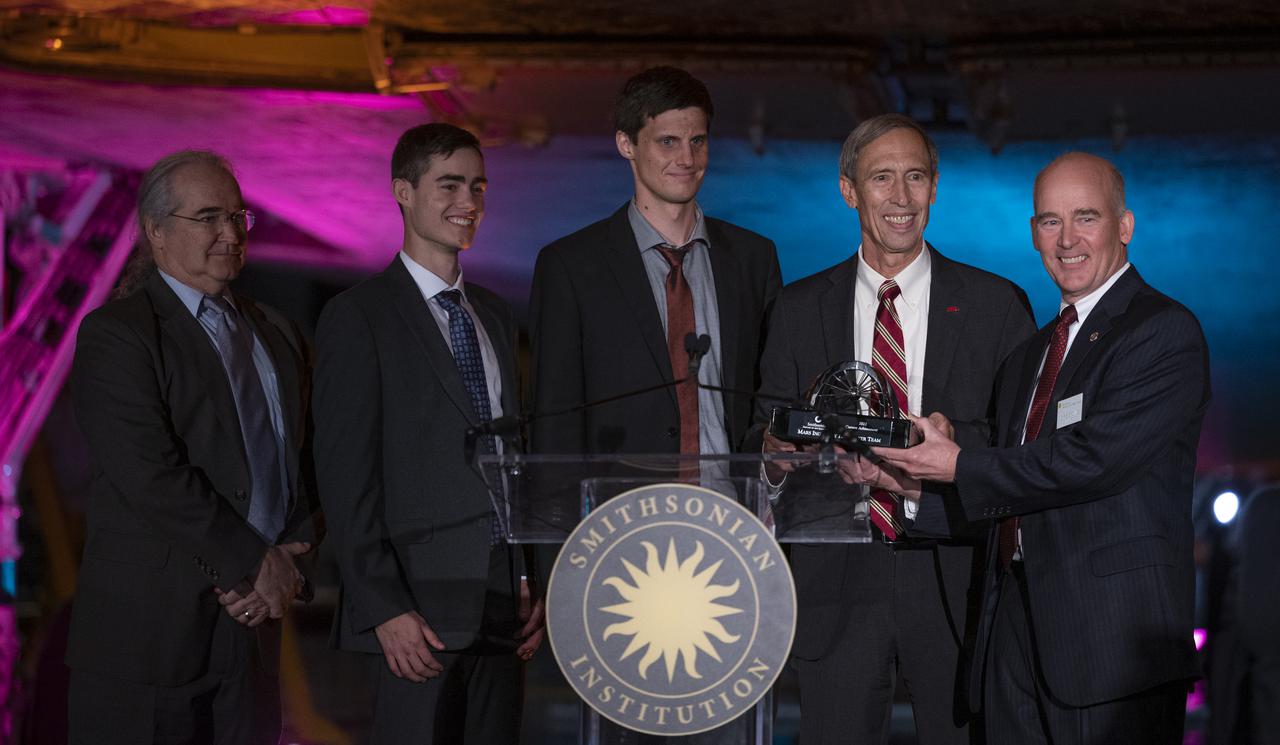
Interim director of NASA’s Jet Propulsion Laboratory Lt. Gen. Larry James, USAF (Ret.), second from right, accepts the 2022 Michael Collins Trophy for Current Achievement from Christopher Browne, acting director of the Smithsonian’s National Air and Space Museum, right, on behalf of MiMi Aung and the Mars Ingenuity Helicopter Team, Thursday, March 24, 2022, at the Smithsonian National Air and Space Museum’s Steven F. Udvar-Hazy center in Chantilly, Va. Pictured with James and Browne are Dave Lavery, program executive for Solar System Exploration at NASA Headquarters, left, Joshua Anderson, Ingenuity Mars Helicopter tactical lead at NASA JPL, second from left, and Gerik Kubiak, Ingenuity Mars Helicopter flight software lead at NASA JPL, center. The Smithsonian National Air and Space Museum’s Michael Collins Trophy recognizes extraordinary accomplishments in aeronautics and spaceflight. Photo Credit: (NASA/Joel Kowsky)
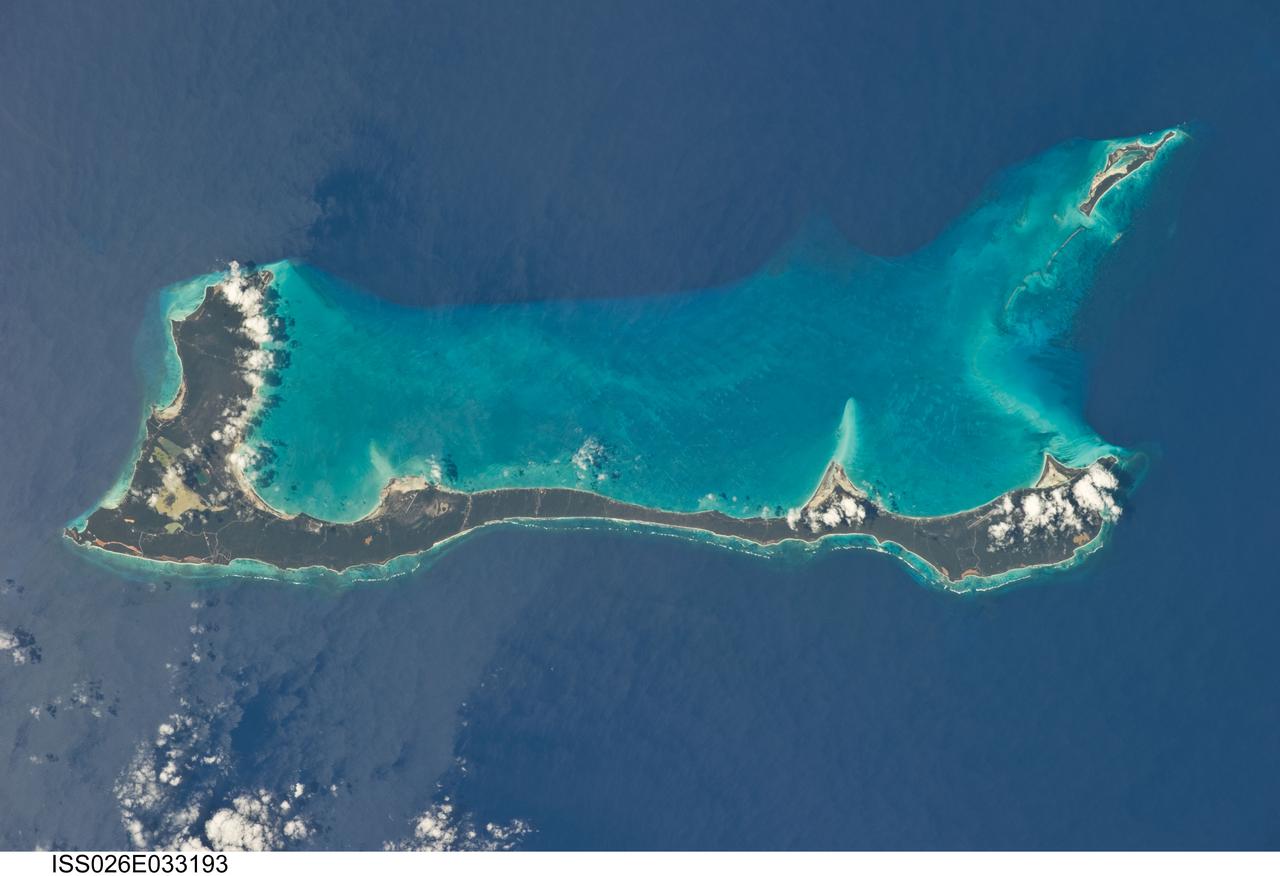
ISS026-E-033193 (10 March 2011) --- Cat Island, Commonwealth of the Bahamas, is featured in this image photographed by an Expedition 26 crew member on the International Space Station. Cat Island is one of 29 islands, 661 cays, and 2,387 islets that form the Commonwealth of the Bahamas. Mount Alvernia, the highest point in the Bahamas at an elevation of approximately 63 meters above sea level, is located on the southeastern part of the island. Like most other islands in the Bahamas, Cat Island is located on a large depositional platform that is composed mainly of carbonate sediments and surrounding reefs. The approximately 77-kilometers-long island is the part of the platform continuously exposed above the water surface; this allows for soil development (brown to tan areas) and establishment of vegetation (green areas) to occur. Shallow water to the west-southwest of the island appears bright blue in this photograph (center) in contrast to the deeper ocean waters to the north, east, and south. The ocean surface near the southeastern half of the island has a slight grey tinge; this is due to sunglint, or light reflecting off of the water surface backs towards the observer onboard the space station. Small white cumulus clouds obscure some parts of the island. Named San Salvador prior to 1925, the island has been put forward as a candidate for Christopher Columbus’ first landfall in the Americas. Cat Island is inhabited, and had a total population of 1,647 in 2000 according to the Department of Statistics of the Bahamas. The smaller island of Little San Salvador to the west is privately owned and used as a port of call for cruise ships.
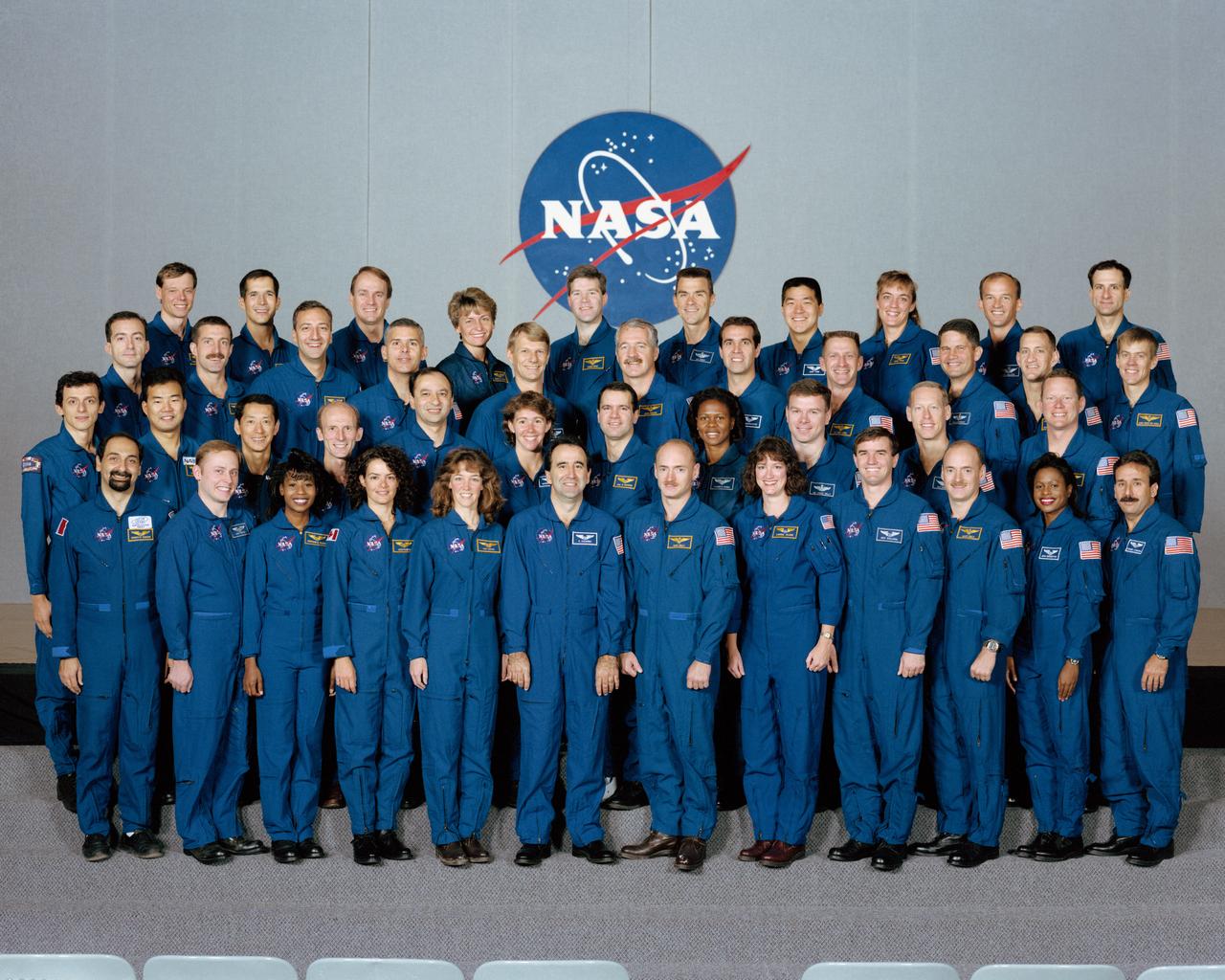
S96-18546 (5 Nov. 1996) --- Following their selection from among 2,400 applicants, the 44 astronaut candidates begin a lengthy period of training and evaluation at NASA's Johnson Space Center as they gather for their group portrait. This year?s class is the largest in the history of space shuttle astronauts and their early program predecessors. Ten pilots and 25 mission specialists make up the internationally diverse class. The international trainees represent the Canadian, Japanese, Italian, French, German and European space agencies. Back row ? from the left, Christer Fuglesang, John Herrington, Steve MacLean, Peggy Whitson, Stephen Frick, Duane Carey, Daniel Tani, Heidemarie Stefanyshyn-Piper, Jeffrey Williams and Donald Pettit. Second to back row ? from the left, Philippe Perrin, Daniel Burbank, Michael Massimino, Lee Morin, Piers Sellers, John Phillips, Richard Mastraccio, Christopher Loria, Paul Lockhart, Charles Hobaugh and William McCool. Second to front row ? from the left, Pedro Duque, Soichi Noguchi, Mamoru Mohri, Gerhard Thiele, Mark Polansky, Sandra Magnus, Paul Richards, Yvonne Cagle, James Kelly, Patrick Forrester and David Brown. Front row ? from the left, Umberto Guidoni, Edward Fincke, Stephanie Wilson, Julie Payette, Lisa Nowak, Fernando Caldeiro, Mark Kelly, Laurel Clark, Rex Walheim, Scott Kelly, Joan Higginbotham and Charles Camarda. Guidoni represents the Italian Space Agency (ASI). Fuglesang and Duque represent the European Space Agency (ESA). Mohri and Noguchi represent the Japanese Space Agency (NASDA). MacLean and Payette are with the Canadian Space Agency. Perrin is associated with the French Space Agency (CNES) and Thiele represents the German Space Agency (DARA). Photo credit: NASA or National Aeronautics and Space Administration