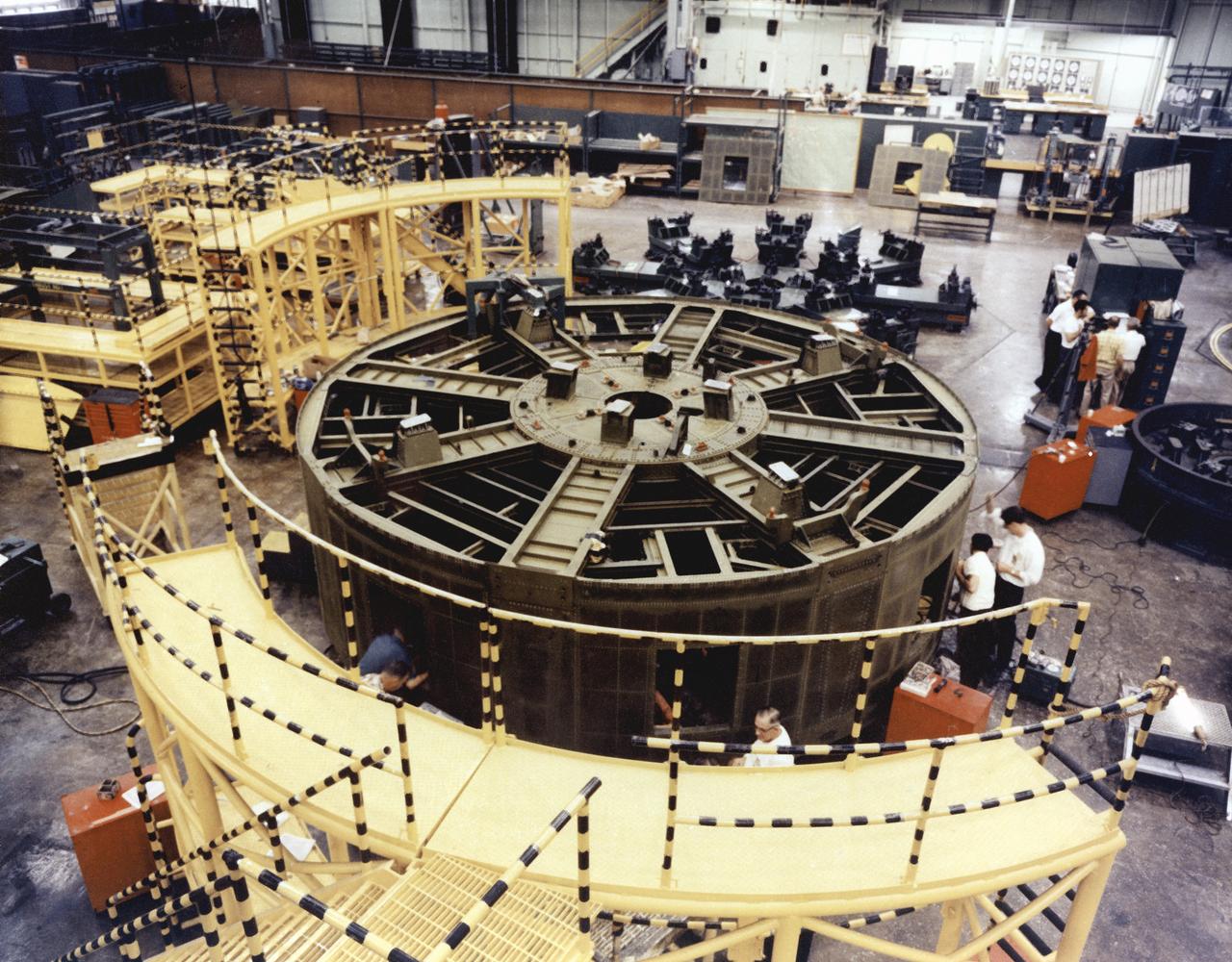
In one of the initial assembly steps for the Saturn IB launch vehicle's S-IB (first) stage, workers at the Michoud Assembly Facility (MAF) near New Orleans, Louisiana, complete the thrust structure. Developed by the Marshall Space Flight Center and built by the Chrysler Corporation at Michoud Assembly Facility (MAF), the S-IB utilized eight H-1 engines and each produced 200,000 pounds of thrust, a combined thrust of 1,600,000 pounds.
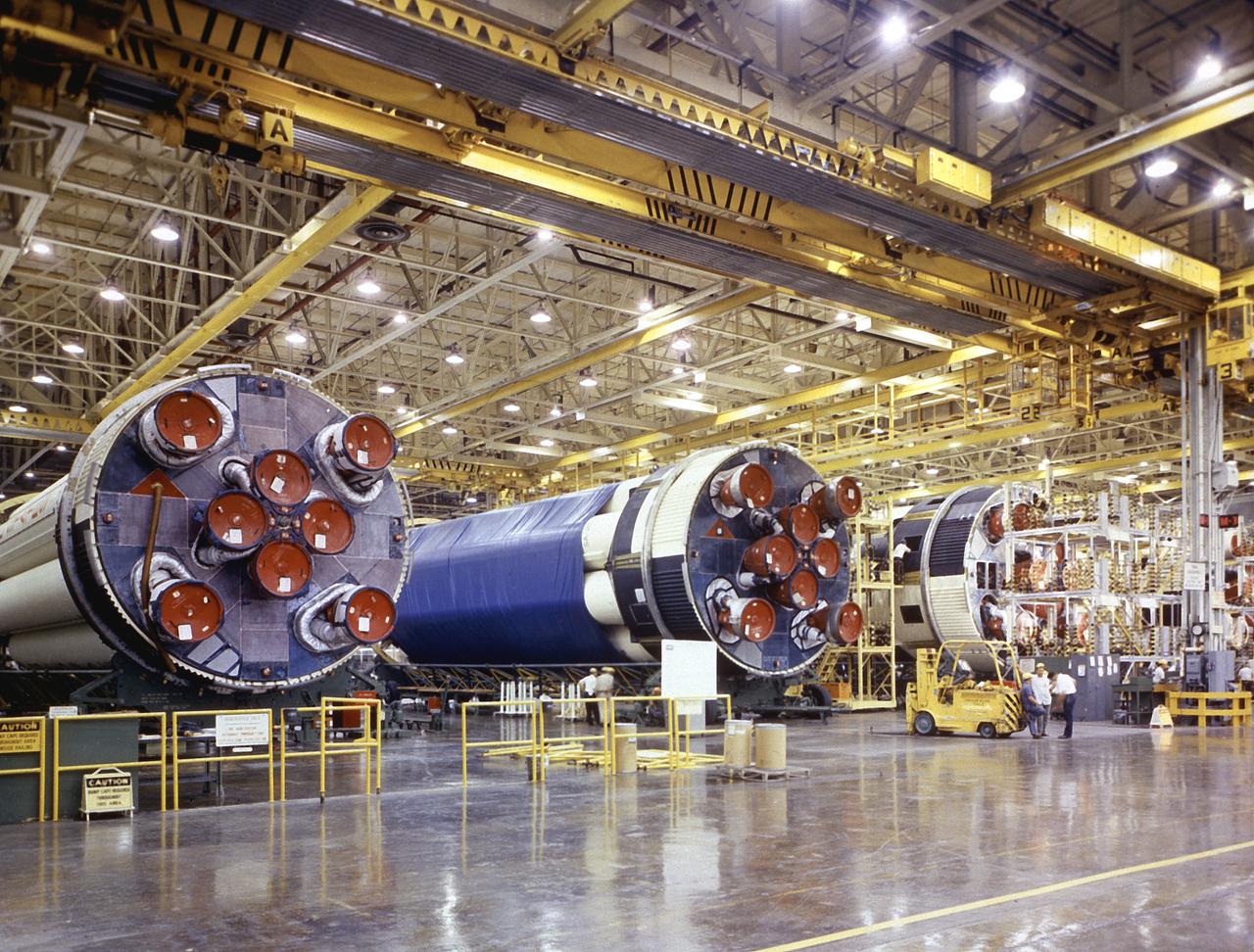
Three S-IB stages near completion at the NASA's Michoud Assembly Facility (MAF) near New Orleans, Louisiana, in November 1967. Developed by the Marshall Space Flight Center and built by the Chrysler Corporation at MAF, the 90,000-pound booster utilized eight H-1 engines and each produced 200,000 pounds of thrust for the Saturn IB launch vehicle's first stage.
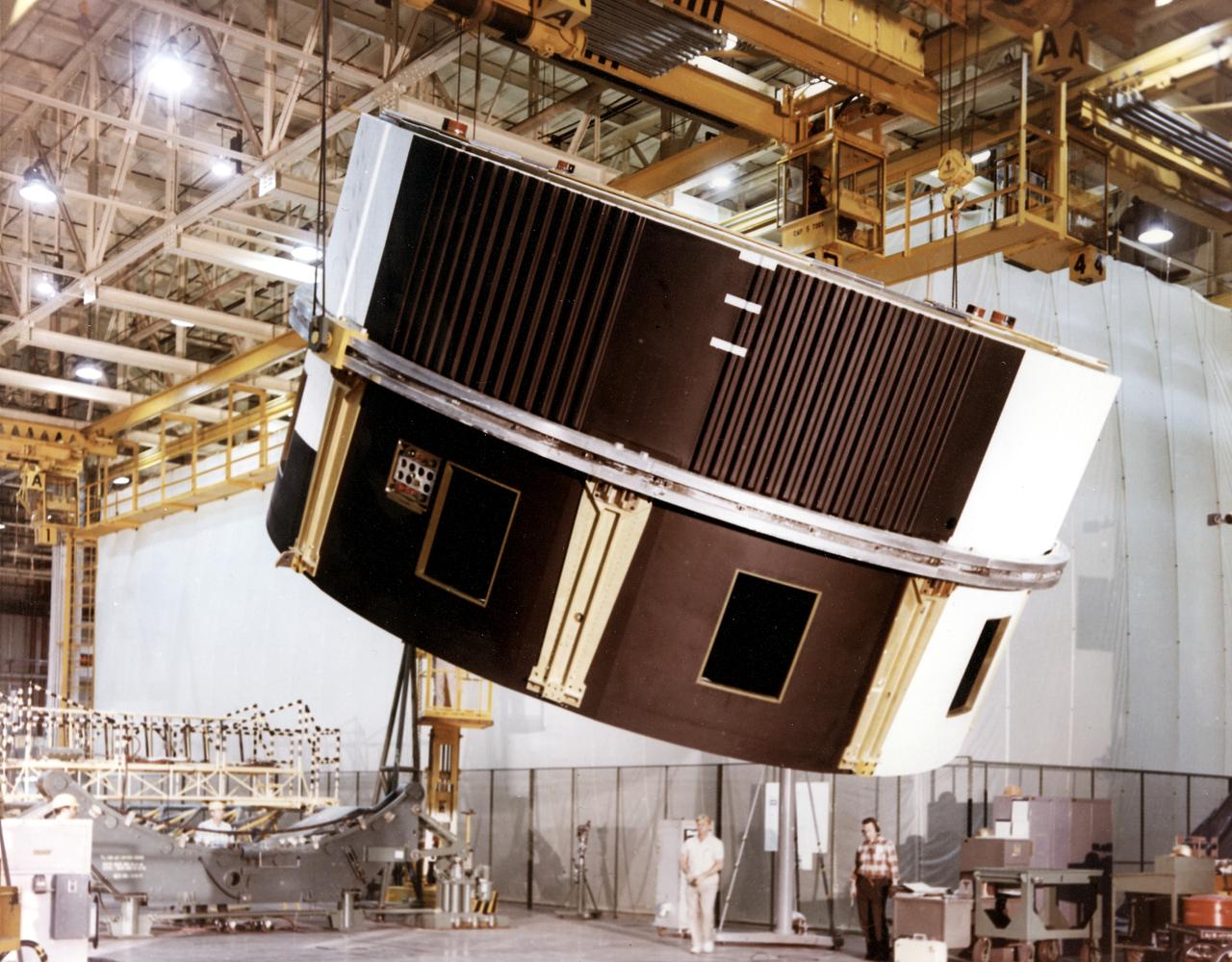
Workers at the Michoud Assembly Facility (MAF) near New Orleans, Louisiana, hoist the thrust structure assembly for the Saturn IB S-IB (first) stage. Developed by the Marshall Space Flight Center and built by the Chrysler Corporation at Michoud Assembly Facility (MAF), the S-IB utilized eight H-1 engines and each produced 200,000 pounds of thrust, a combined thrust of 1,600,000 pounds.
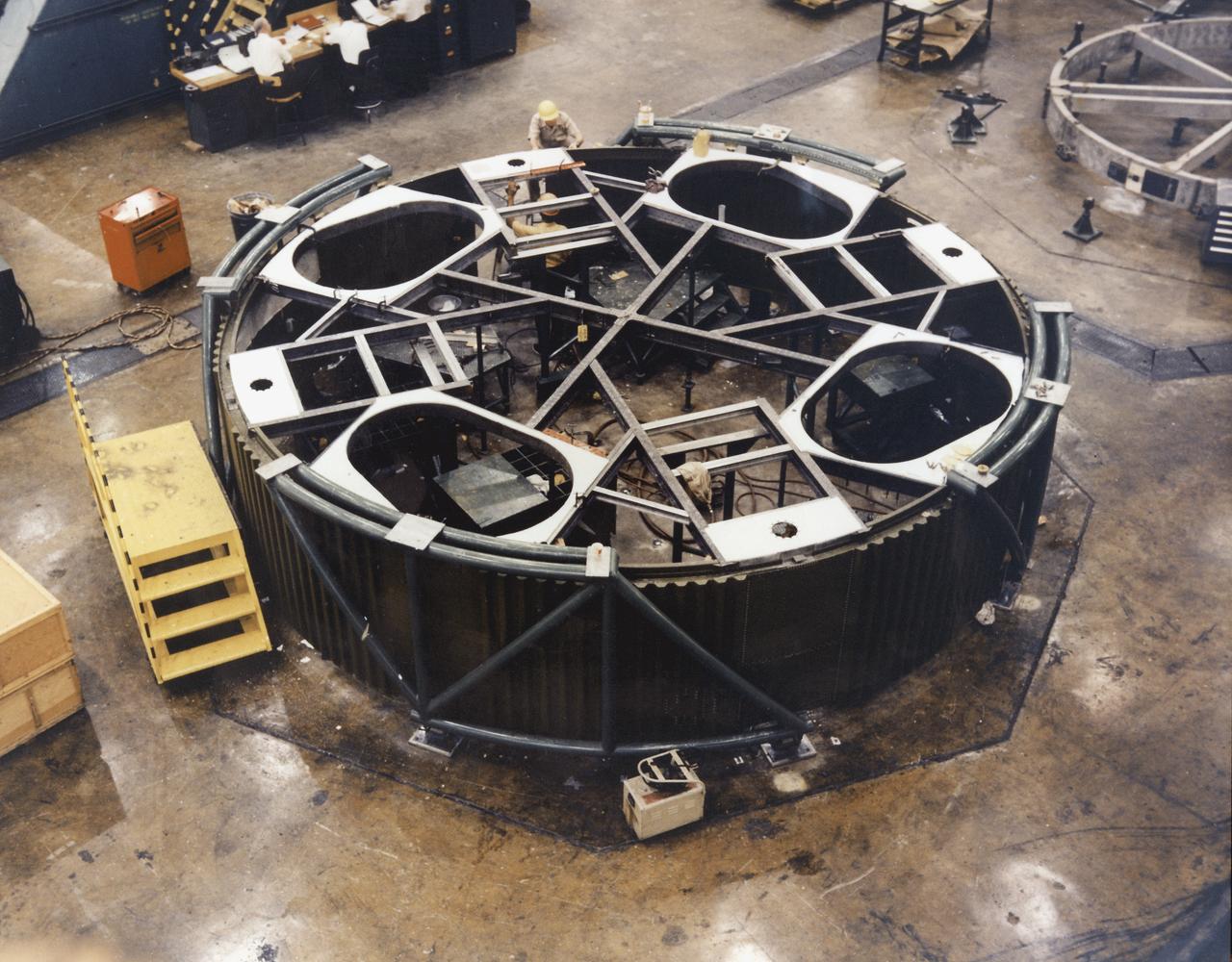
In one of the initial assembly steps for the Saturn IB launch vehicle's S-IB (first) stage, workers at the Michoud Assembly Facility (MAF) near New Orleans, Louisiana, complete the lower shroud assembly. Developed by the Marshall Space Flight Center and built by the Chrysler Corporation at Michoud Assembly Facility (MAF), the S-IB utilized the eight H-1 engines and each produced 200,000 pounds of thrust, a combined thrust of 1,600,000 pounds.
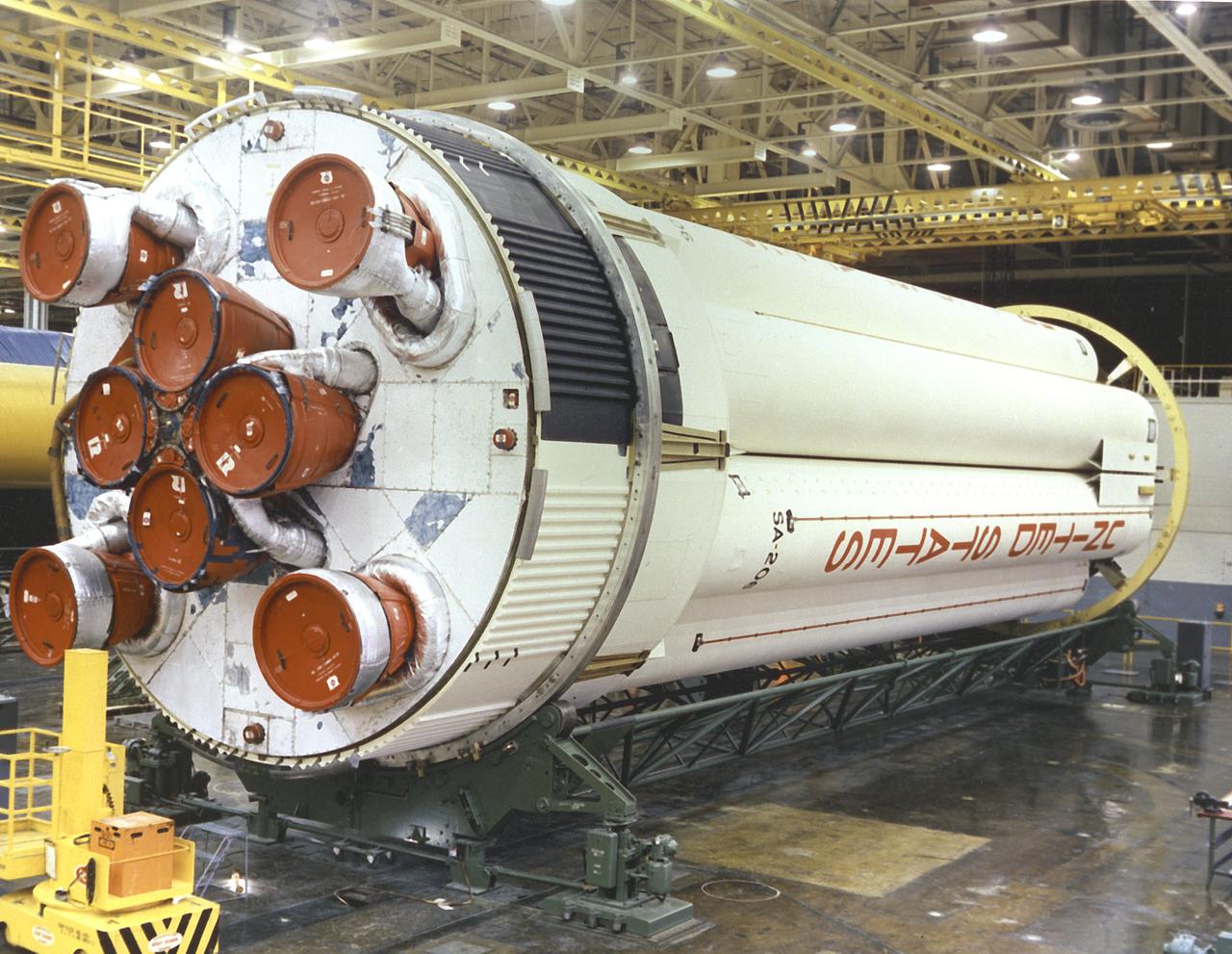
The Saturn 1B S-IB (first) stage being prepared for shipment at Michoud Assembly Facility (MAF), near New Orleans, Louisiana. Developed by the Marshall Space Flight Center and built by the Chrysler Corporation at MAF, the S-IB stage utilized the eight H-1 engines and each produced 200,000 pounds of thrust, a combined thrust of 1,600,000 pounds.
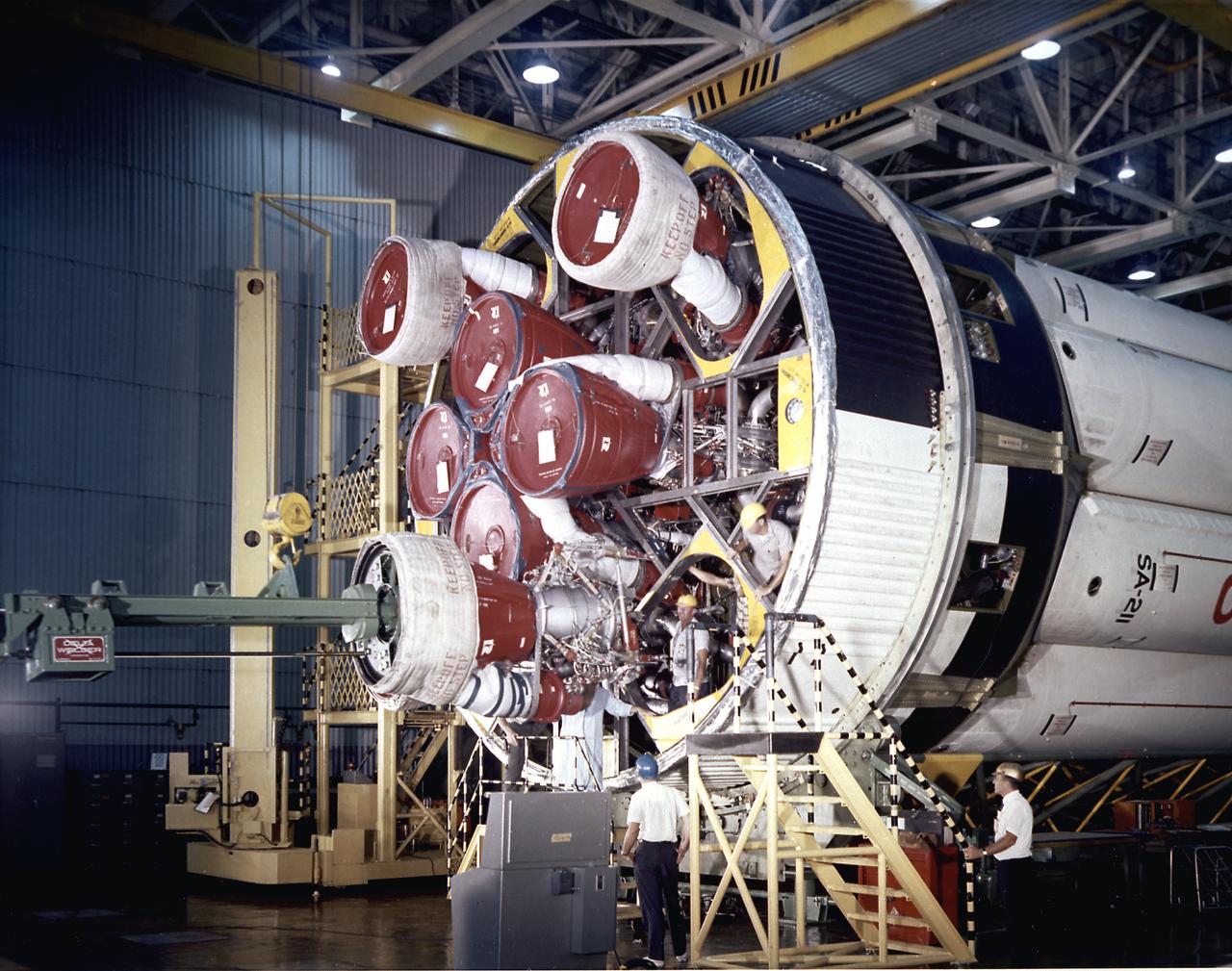
Workers at the Michoud Assembly Facility near New Orleans, Louisiana install the H-1 engines into the S-IB stage, the Saturn IB launch vehicle's first stage. Developed by the Marshall Space Flight Center and built by the Chrysler Corporation at MAF, the 90,000-pound booster utilized eight H-1 engines to produce a combined thrust of 1,600,000 pounds.
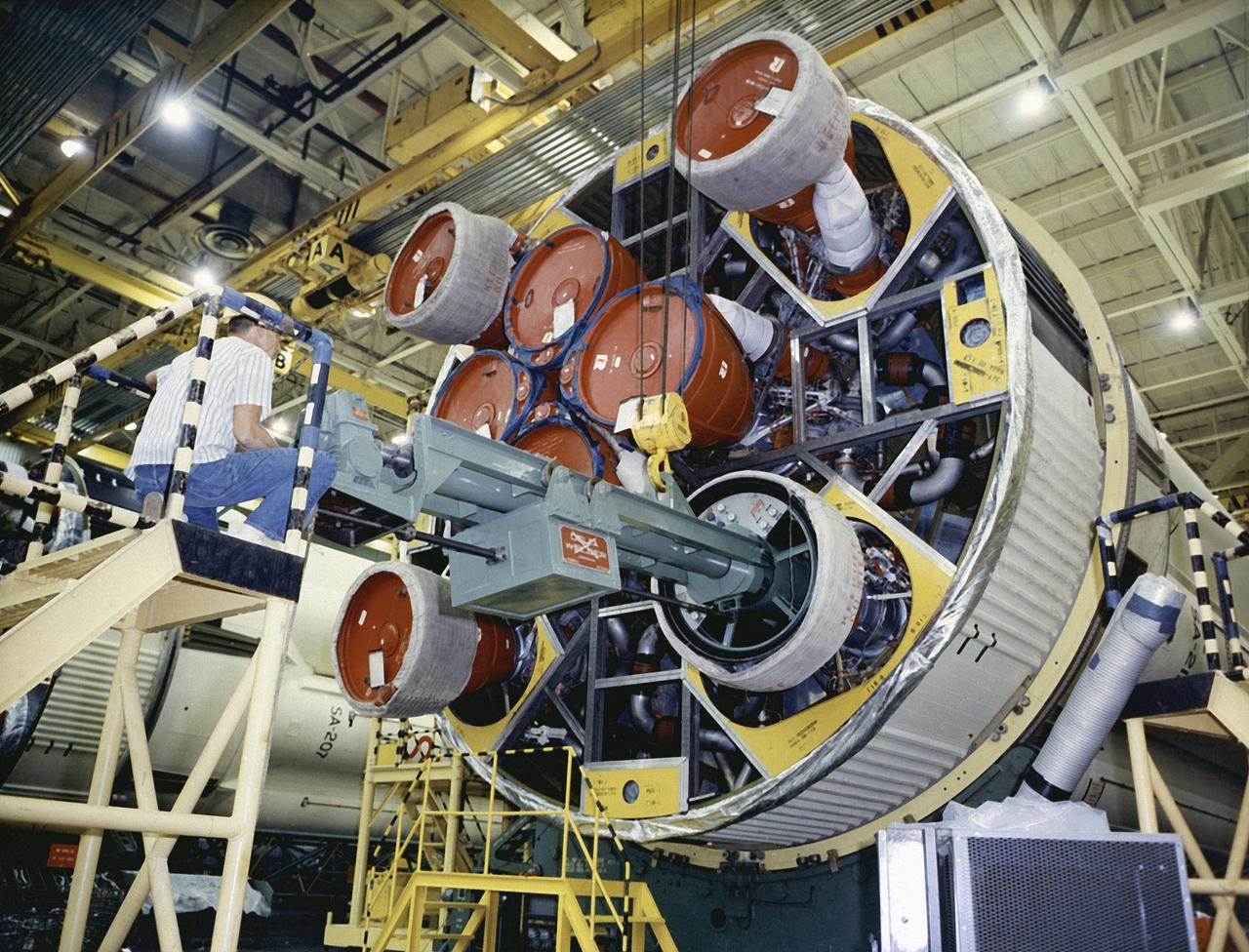
Workers at the Michoud Assembly Facility (MAF) near New Orleans, Louisiana, install the last engine on the S-IB stage. Developed by the Marshall Space Flight Center (MSFC) and built by the Chrysler Corporation at MAF, the S-IB stage utilized eight H-1 engines to produce a combined thrust of 1,600,000 pounds.
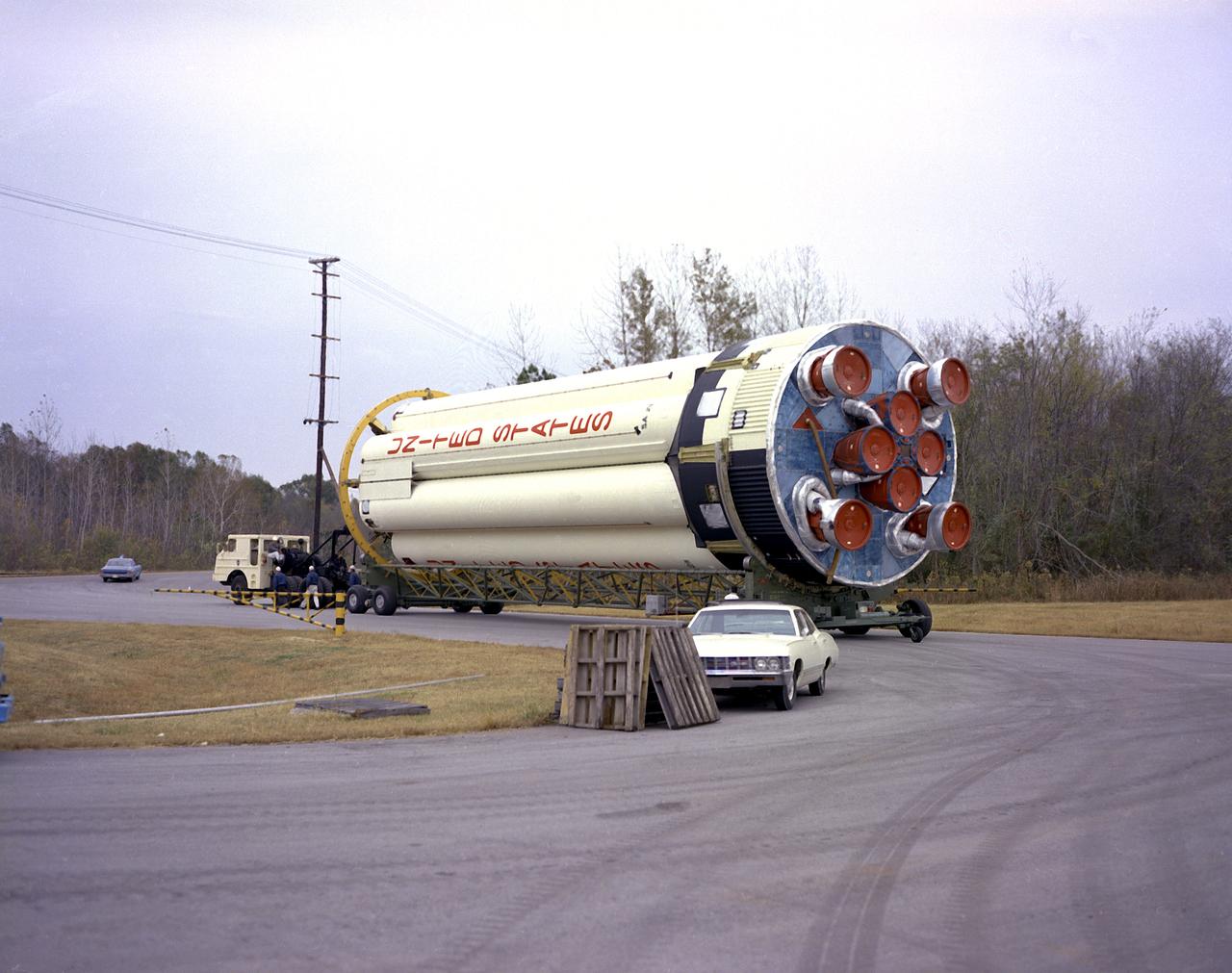
S-IB-211, the flight version of the Saturn IB launch vehicle's first (S-IVB) stage, on its way to Marshall Space Flight Center's (MSFC's) west test area. Between December 1967 and April 1968, the stage would undergo seven static test firings. The S-IB, developed by the MSFC and built by the Chrysler Corporation at the Michoud Assembly Facility near New Orleans, Louisiana, utilized eight H-1 engines and each produced 200,000 pounds of thrust.
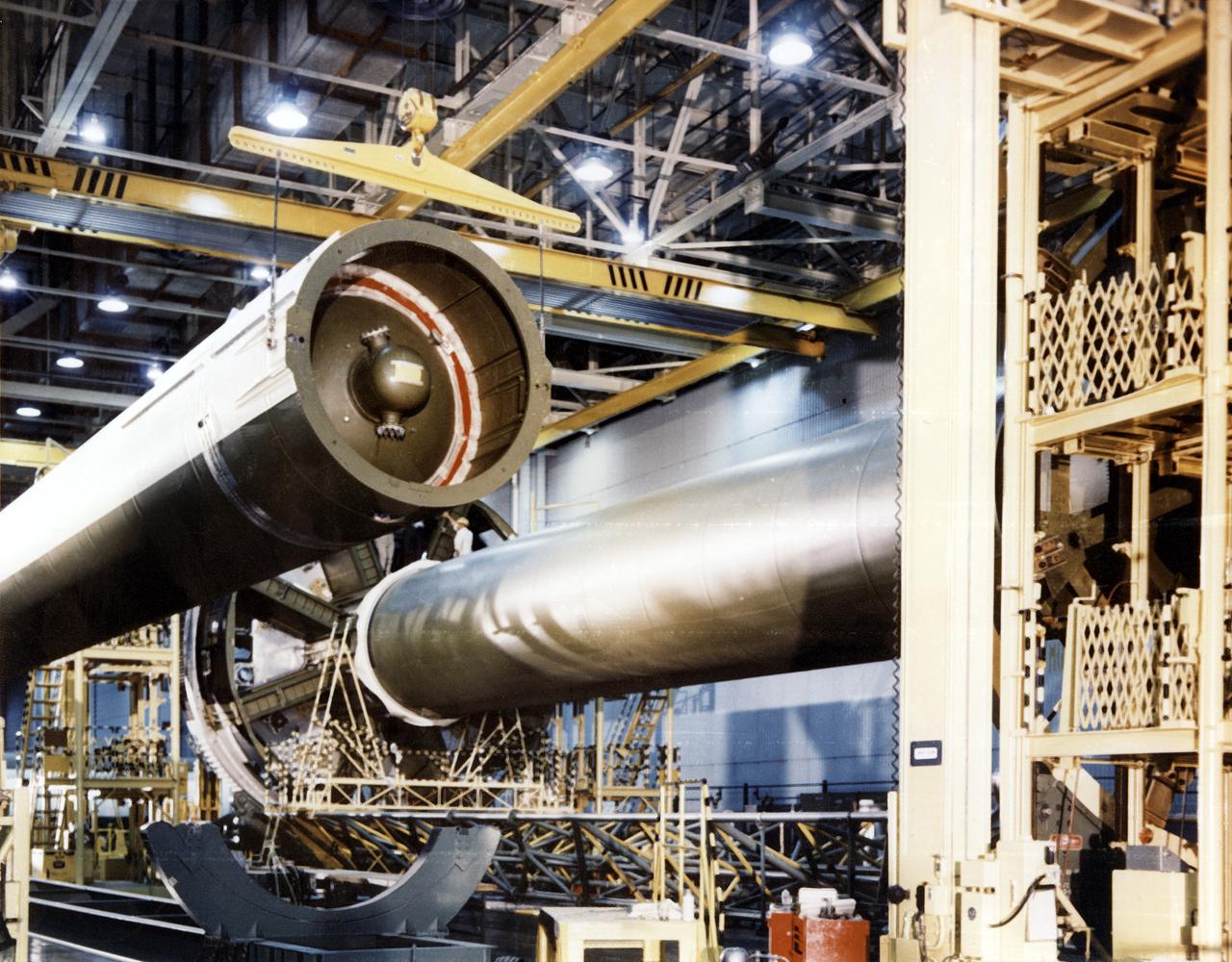
In the "clustering" procedure, an initial assembly step for the first stage (S-IB stage) of the Saturn IB launch vehicle, workers at the Michoud Assembly Facility (MAF) near New Orleans, Louisiana, place the first of eight outboard fuel tanks (left) next to the central liquid-oxygen tank of S-IB stage. Developed by the Marshall Space Flight Center (MSFC) and built by the Chrysler Corporation at MAF, the S-IB stage utilized eight H-1 engines to produce a combined thrust of 1,600,000 pounds.
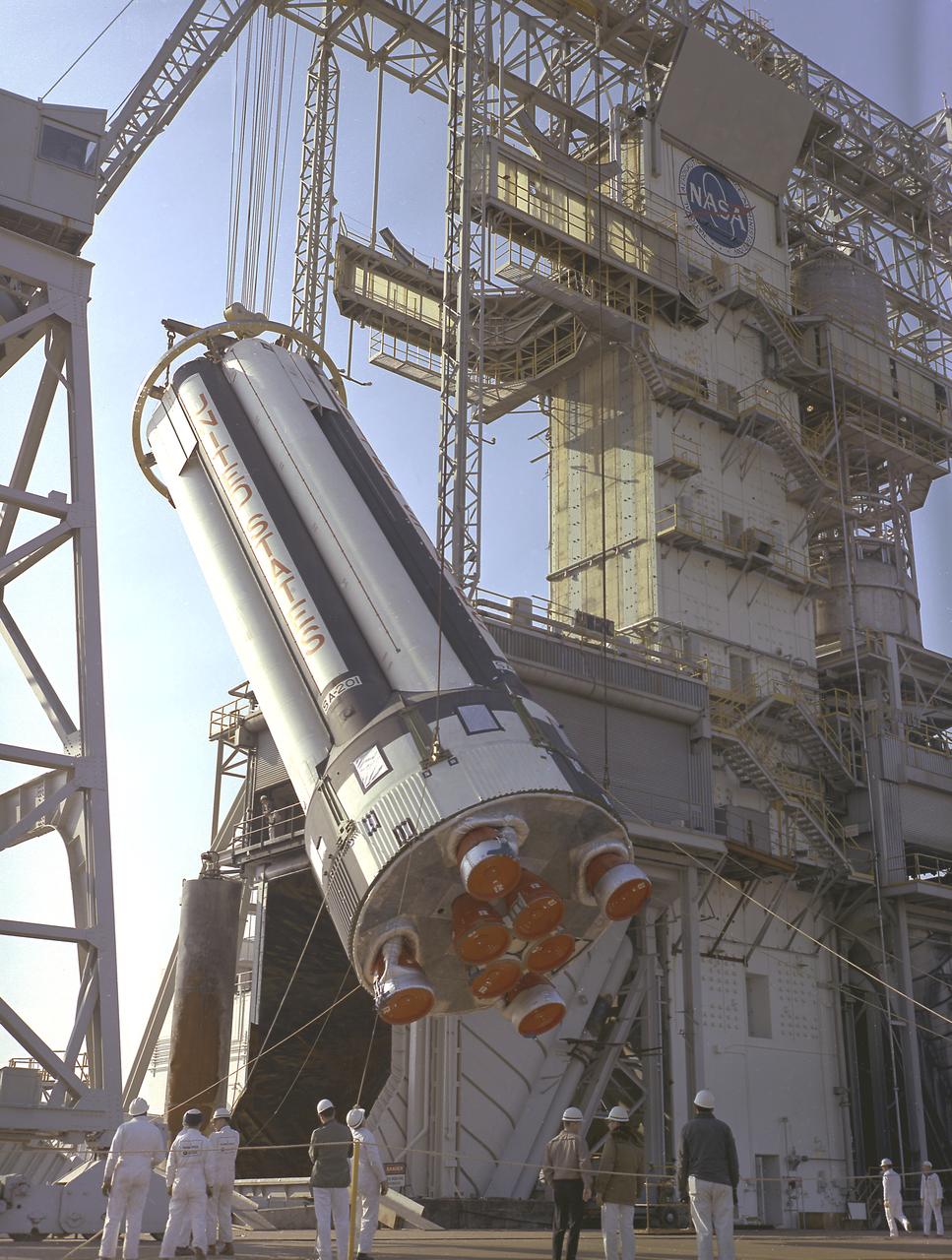
Workers at the Marshall Space Flight Center (MSFC) hoist S-IB-1, the first flight version of the Saturn IB launch vehicle's first stage (S-IB stage), into the Saturn IB static test stand on March 15, 1965. Developed by the MSFC and built by the Chrysler Corporation at the Michoud Assembly Facility (MAF) in New Orleans, Louisiana, the 90,000-pound booster utilized eight H-1 engines to produce a combined thrust of 1,600,000 pounds.
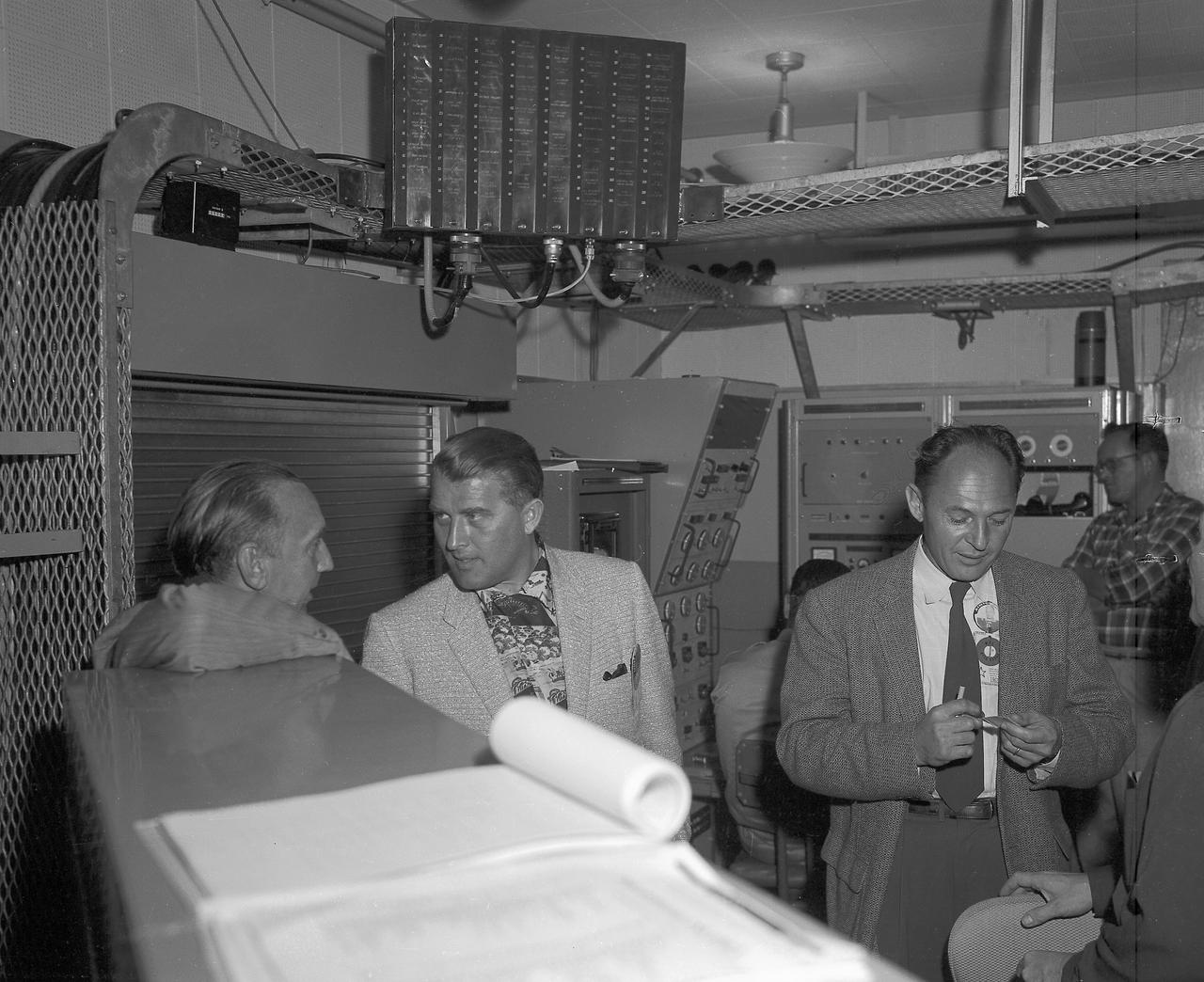
In this photo, (left to right) Army Ballistic Missile Agency (ABMA) Missile Firing Laboratory Chief Dr. Kurt Debus, Director of the ABMA Development Operations Division, Dr. von Braun and an unidentified individual in blockhouse during the CM-21 (Jupiter) firing. The Jupiter missile CM-21 became the first Chrysler production qualification missile to be fired and in March 1959 launched the Pioneer IV.
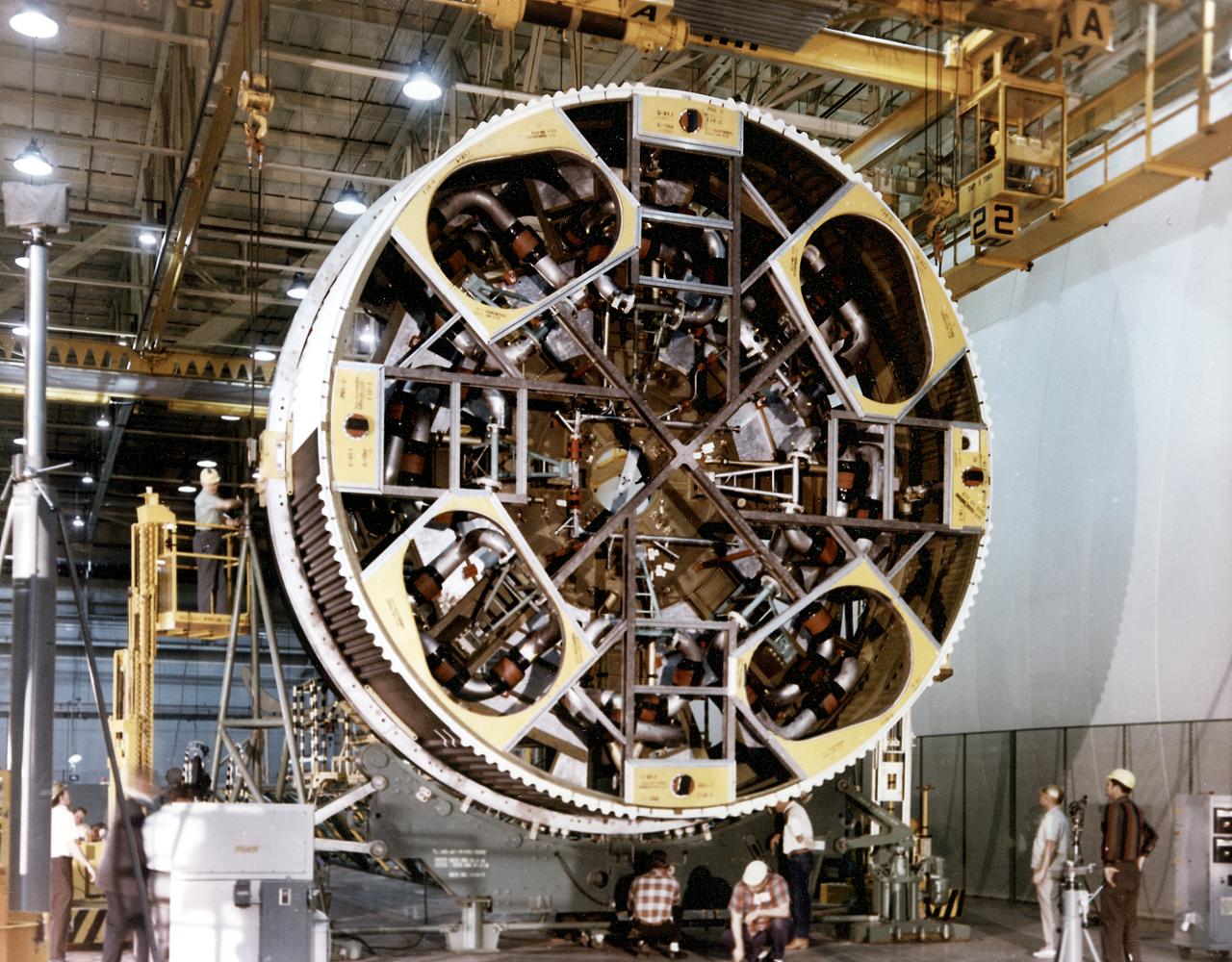
In one of the initial assembly steps for the Saturn IB launch vehicle's S-IB (first) stage, workers at the Michoud Assembly Facility (MAF) near New Orleans, Louisiana, position the thrust structure. Developed by the Marshall Space Flight Center and built by the Chrysler Corporation at Michoud Assembly Facility (MAF), the S-IB utilized eight H-1 engines and each produced 200,000 pounds of thrust, a combined thrust of 1,600,000 pounds.
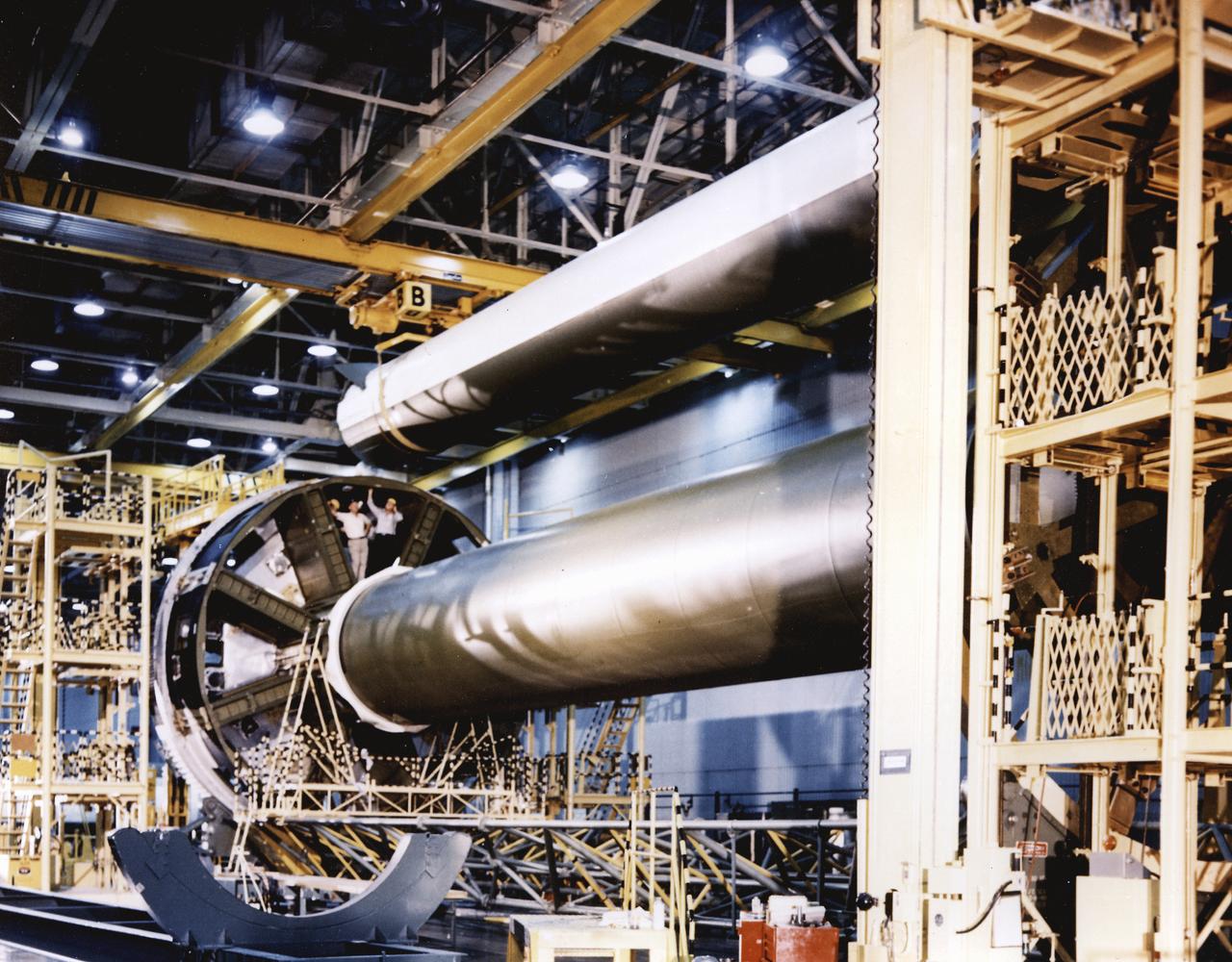
In the clustering procedure, an initial assembly step for the first stage (S-IB stage) of the Saturn IB launch vehicle, workers at the Michoud Assembly Facility (MAF) near New Orleans, Louisiana, place the first of eight outboard fuel tanks next to the central liquid-oxygen tank of the S-IB stage. Developed by the Marshall Space Flight Center (MSFC) and built by the Chrysler Corporation at MAF, the S-IB stage utilized eight H-1 engines to produce a combined thrust of 1,600,000 pounds.
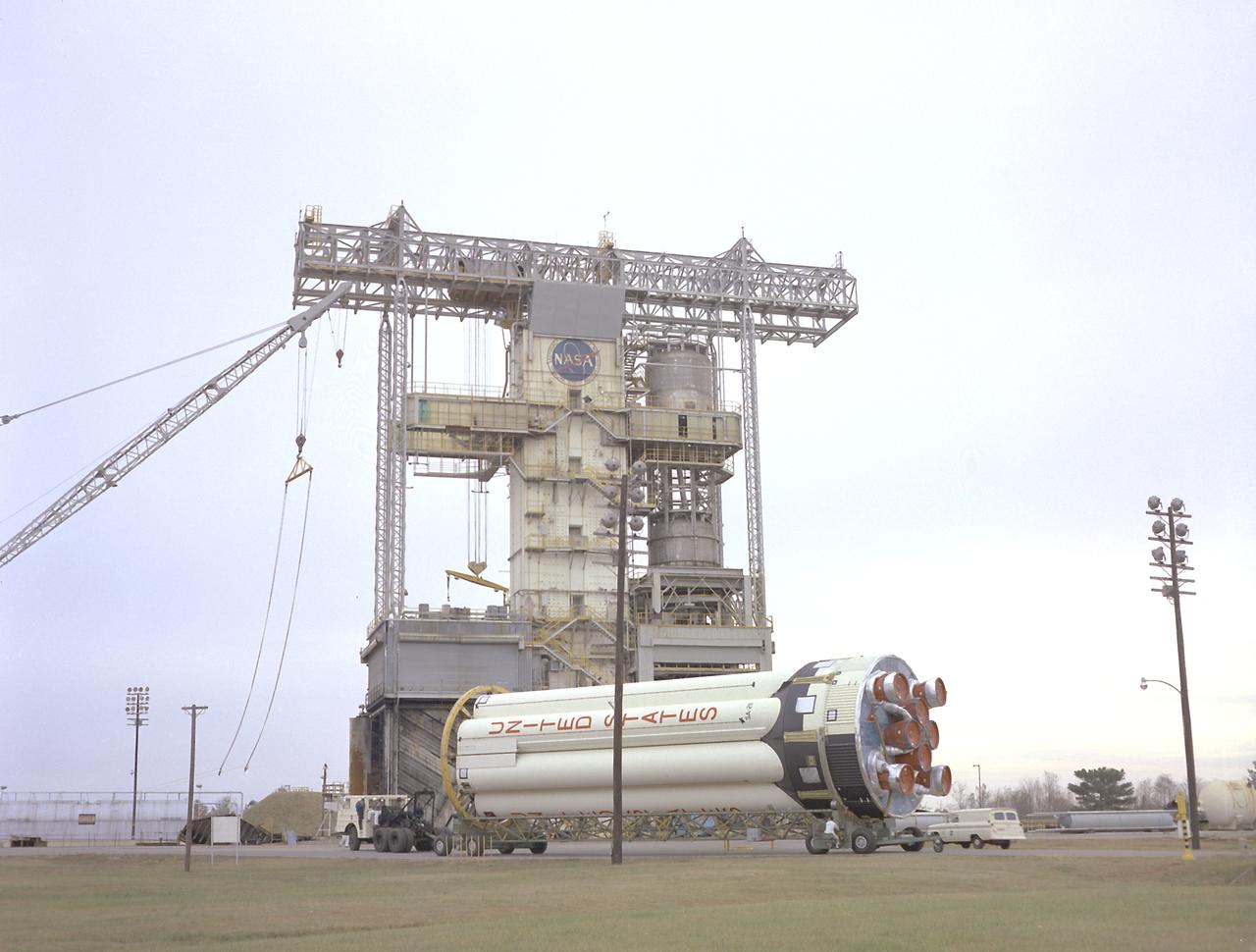
S-IB-211, the flight version of the Saturn IB launch vehicle's first (S-IVB) stage, arrives at Marshall Space Flight Center's (MSFC's) S-IB static test stand. Between December 1967 and April 1968, the stage would undergo seven static test firings. The S-IB, developed by the MSFC and built by the Chrysler Corporation at the Michoud Assembly Facility near New Orleans, Louisiana, utilized eight H-1 engines and each produced 200,000 pounds of thrust.
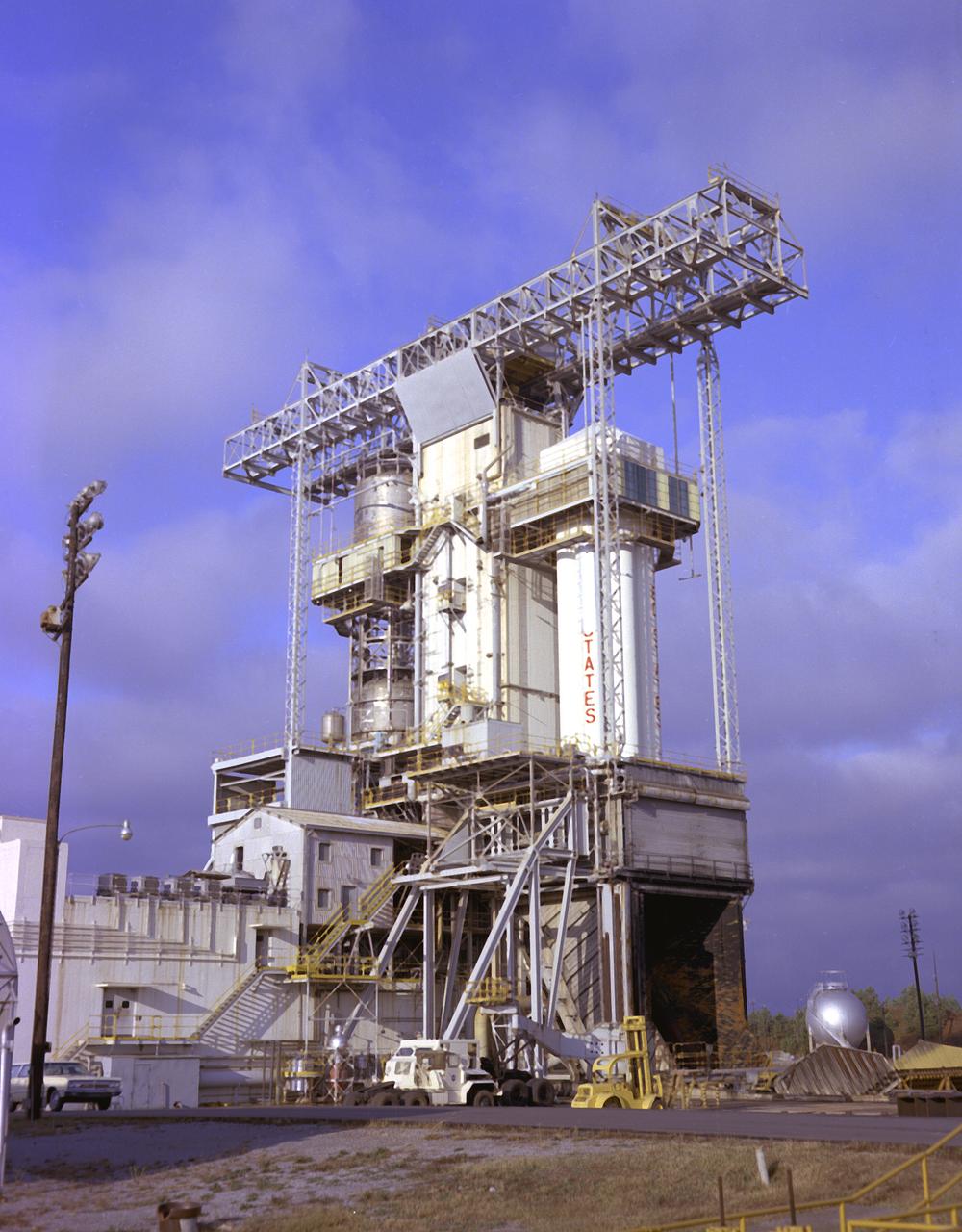
S-IB-211, the flight version of the Saturn IB launch vehicle's (S-IVB) first stage, after installation at the Marshall Space Flight Center's (MSFC's) S-IB static test stand. Between December 1967 and April 1968, the stage would undergo seven static test firings. The S-IB, developed by the MSFC and built by the Chrysler Corporation at the Michoud Assembly Facility near New Orleans, Louisiana, utilized eight H-1 engines and each produced 200,000 pounds of thrust.
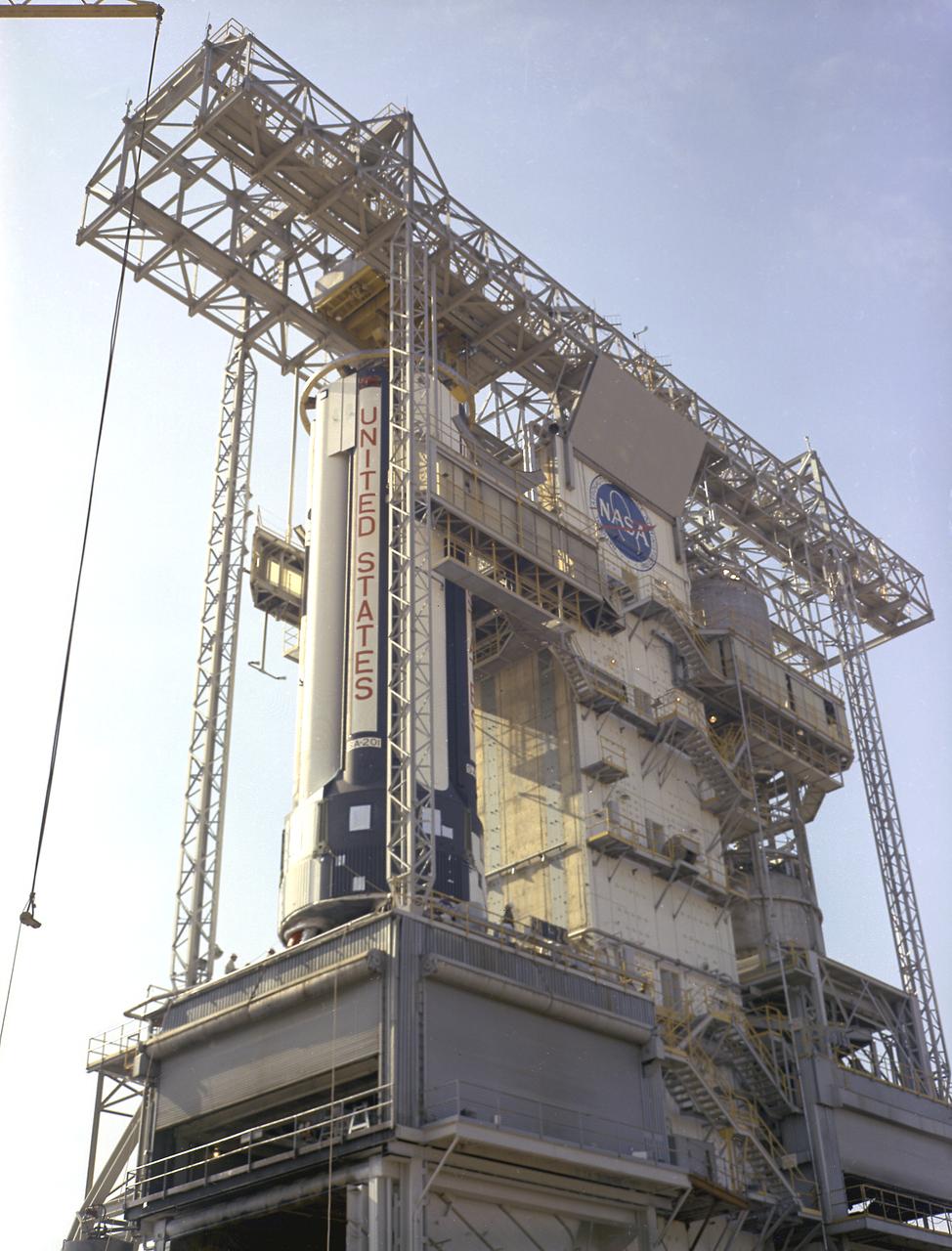
S-IB-1, the first flight version of the Saturn IB launch vehicle's first stage (S-IB stage), sat in the Marshall Space Flight Center (MSFC) Saturn IB static test stand on March 15, 1965. Developed by the MSFC and built by the Chrysler Corporation at the Michoud Assembly Facility (MAF) in New Orleans, Louisiana, the 90,000-pound booster utilized eight H-1 engines to produce a combined thrust of 1,600,000 pounds.
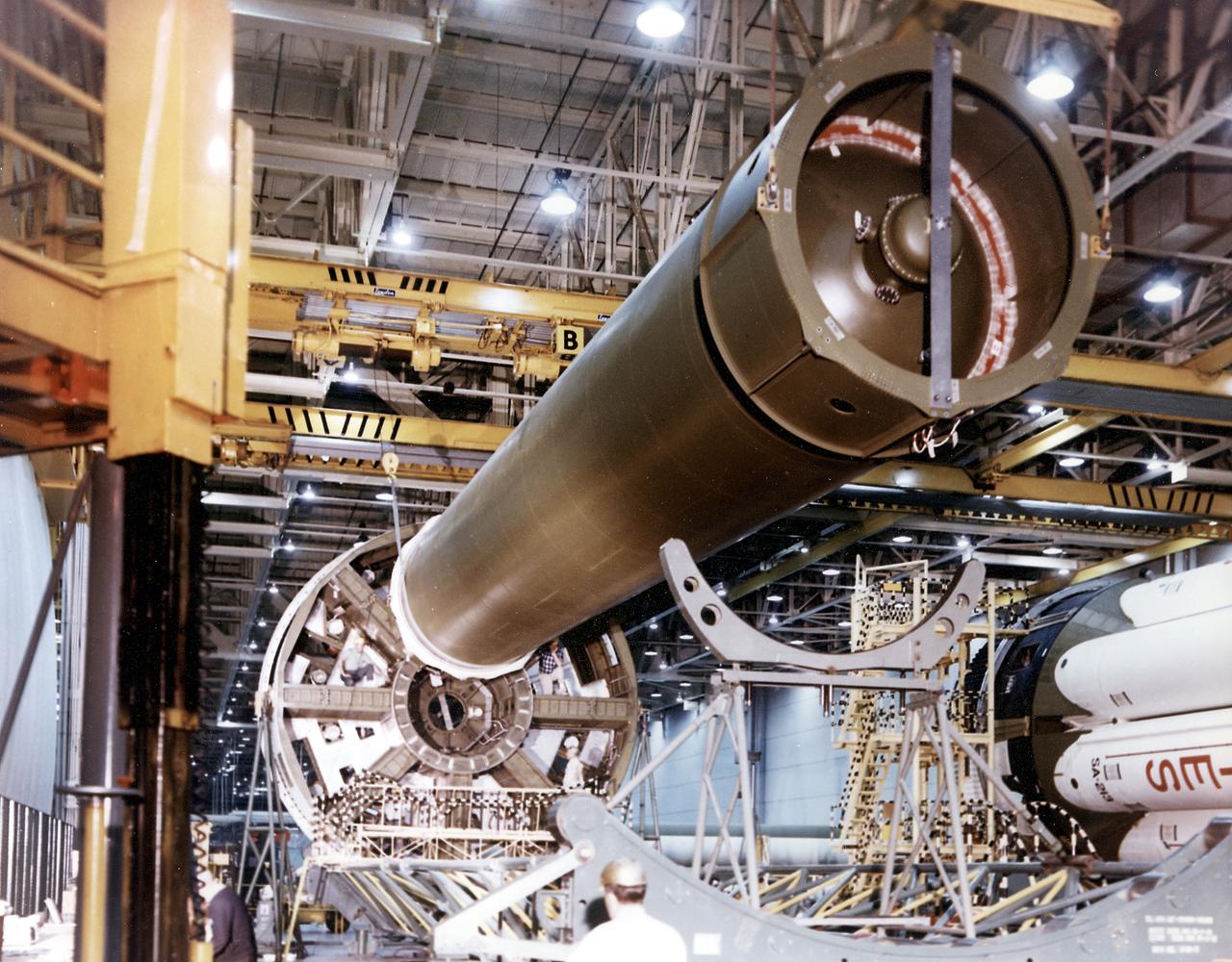
In the clustering procedure, an initial assembly step for the Saturn IB launch vehicle's S-IB (first) stage, workers at the Michoud Assembly Facility (MAF) near New Orleans, Louisiana, position the central liquid-oxygen tank. Developed by the Marshall Space Flight Center and built by the Chrysler Corporation at Michoud Assembly Facility (MAF), the S-IB utilized eight H-1 engines and each produced 200,000 pounds of thrust, a combined thrust of 1,600,000 pounds.
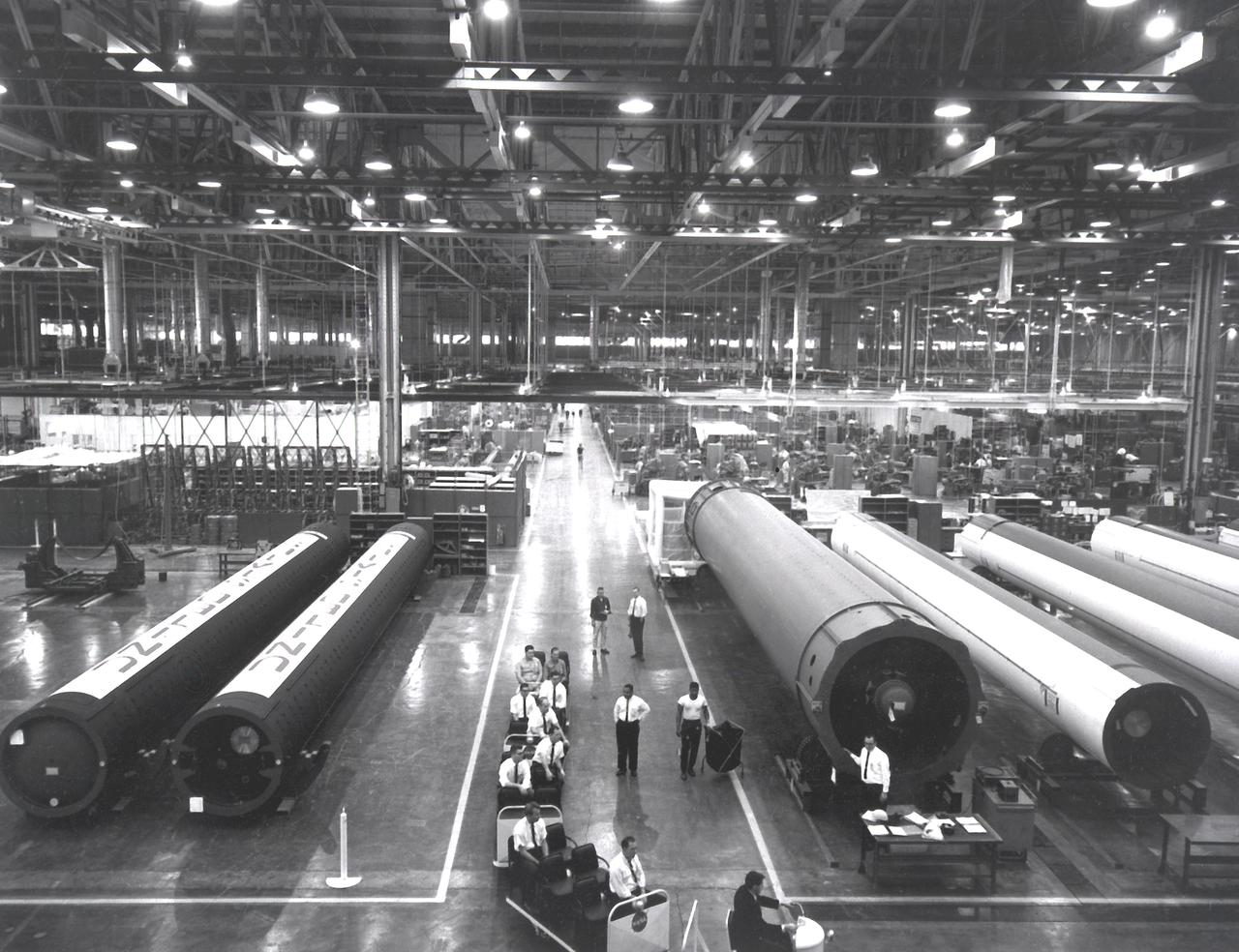
In one of the initial assembly steps for the first stage (S-IB stage) of the Saturn IB launch vehicle, workers at the Michoud Assembly Facility (MAF) near New Orleans, Louisiana, position a "Spider Beam" to the central liquid-oxygen tank of the S-IB stage. Developed by the Marshall Space Flight Center (MSFC) and built by the Chrysler Corporation at MAF, the S-IB stage utilized eight H-1 engines to produce a combined thrust of 1,600,000 pounds.
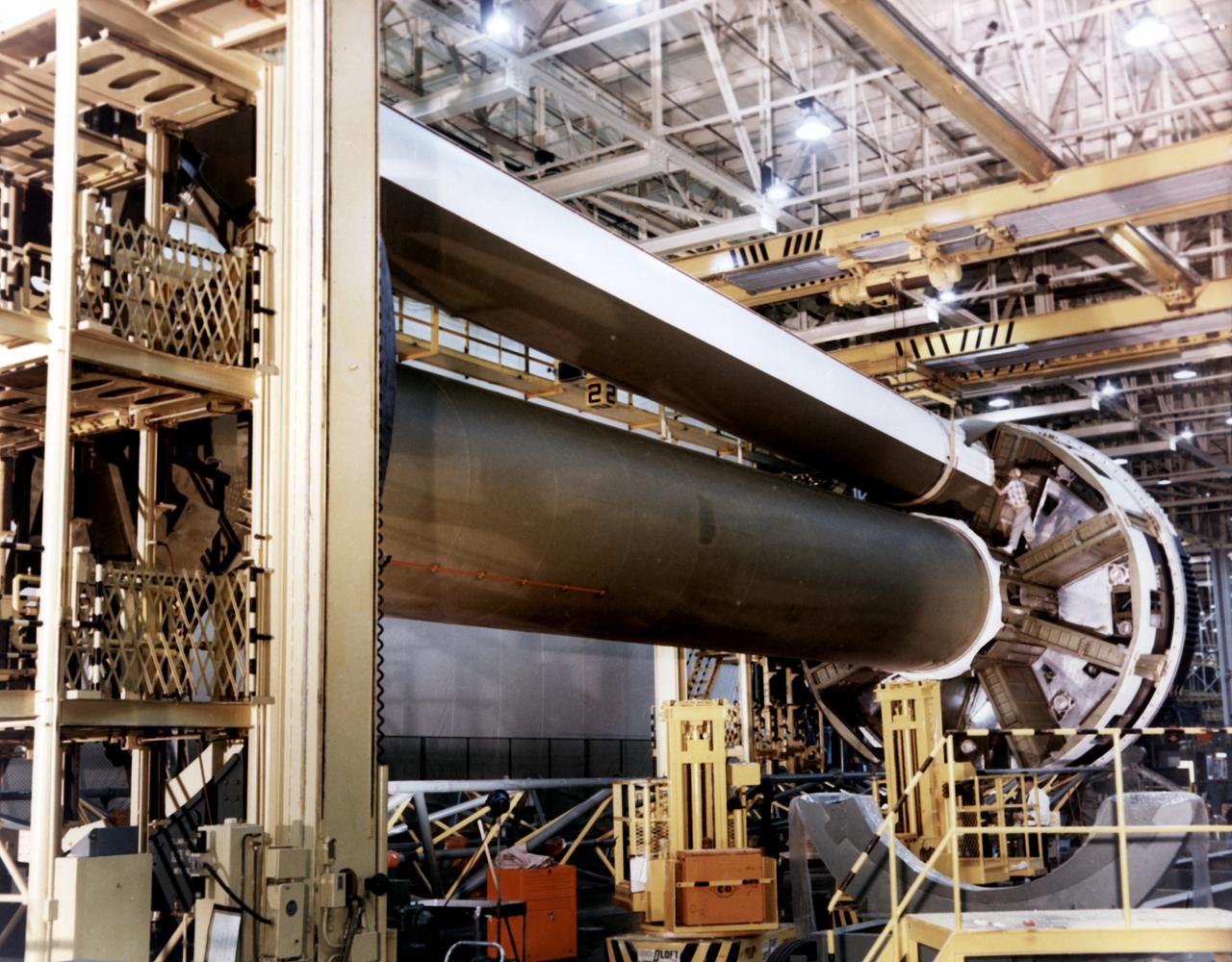
In the clustering procedure, an initial assembly step for the Saturn IB launch vehicle's S-IB (first) stage, workers at the Michoud Assembly Facility (MAF) near New Orleans, Louisiana, place the first of eight outboard fuel tanks atop the central liquid-oxygen tank. Developed by the Marshall Space Flight Center and built by the Chrysler Corporation at Michoud Assembly Facility (MAF), the S-IB utilized eight H-1 engines and each produced 200,000 pounds of thrust, a combined thrust of 1,600,000 pounds.
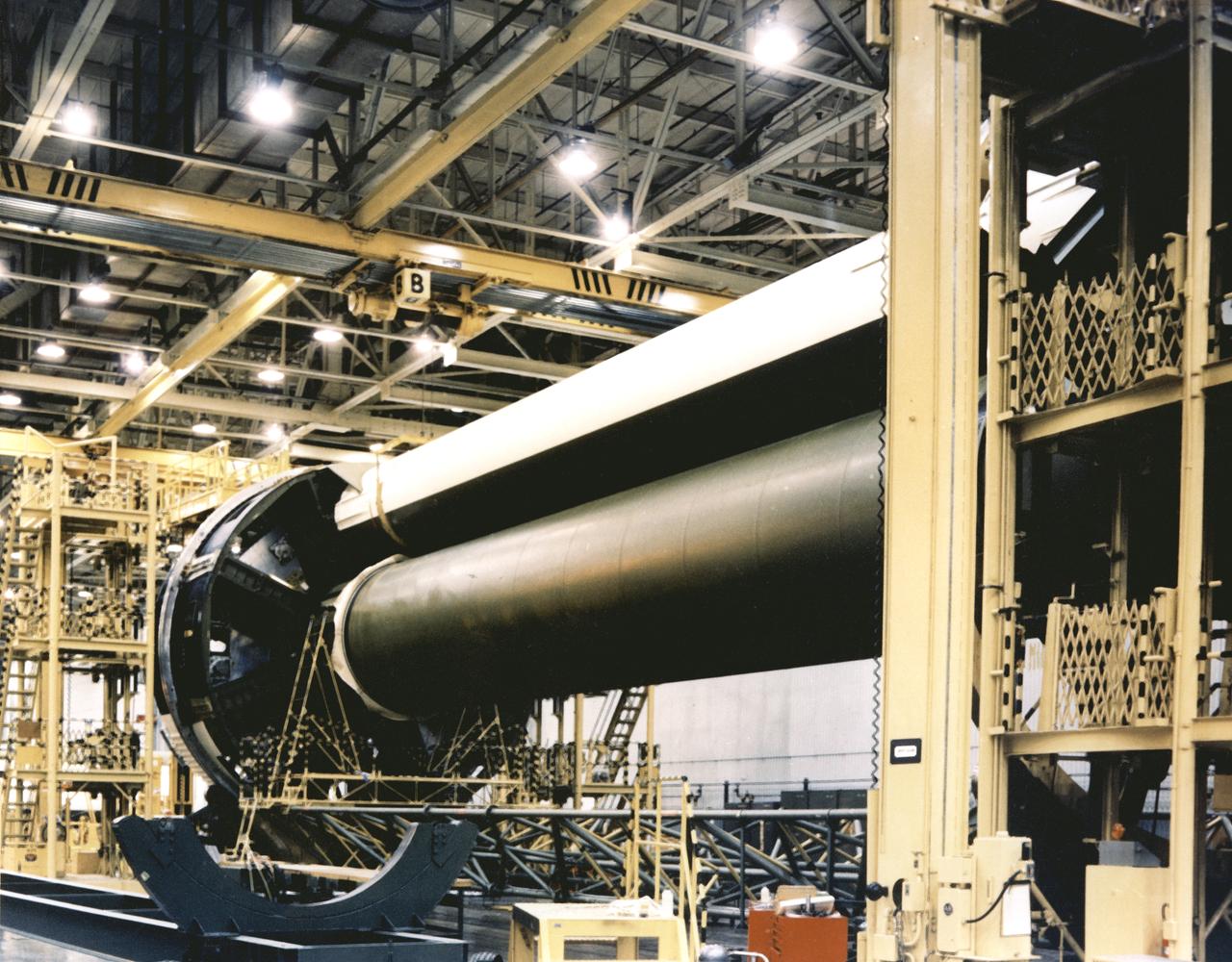
In the clustering procedure, an initial assembly step for the first stage (S-IB stage) of the Saturn IB launch vehicle, workers at the Michoud Assembly Facility (MAF) near New Orleans, Louisiana, place the first of eight outboard fuel tanks next to the central liquid-oxygen tank of the S-IB stage. Developed by the Marshall Space Flight Center (MSFC) and built by the Chrysler Corporation at MAF, the S-IB stage utilized eight H-1 engines to produce a combined thrust of 1,600,000 pounds.
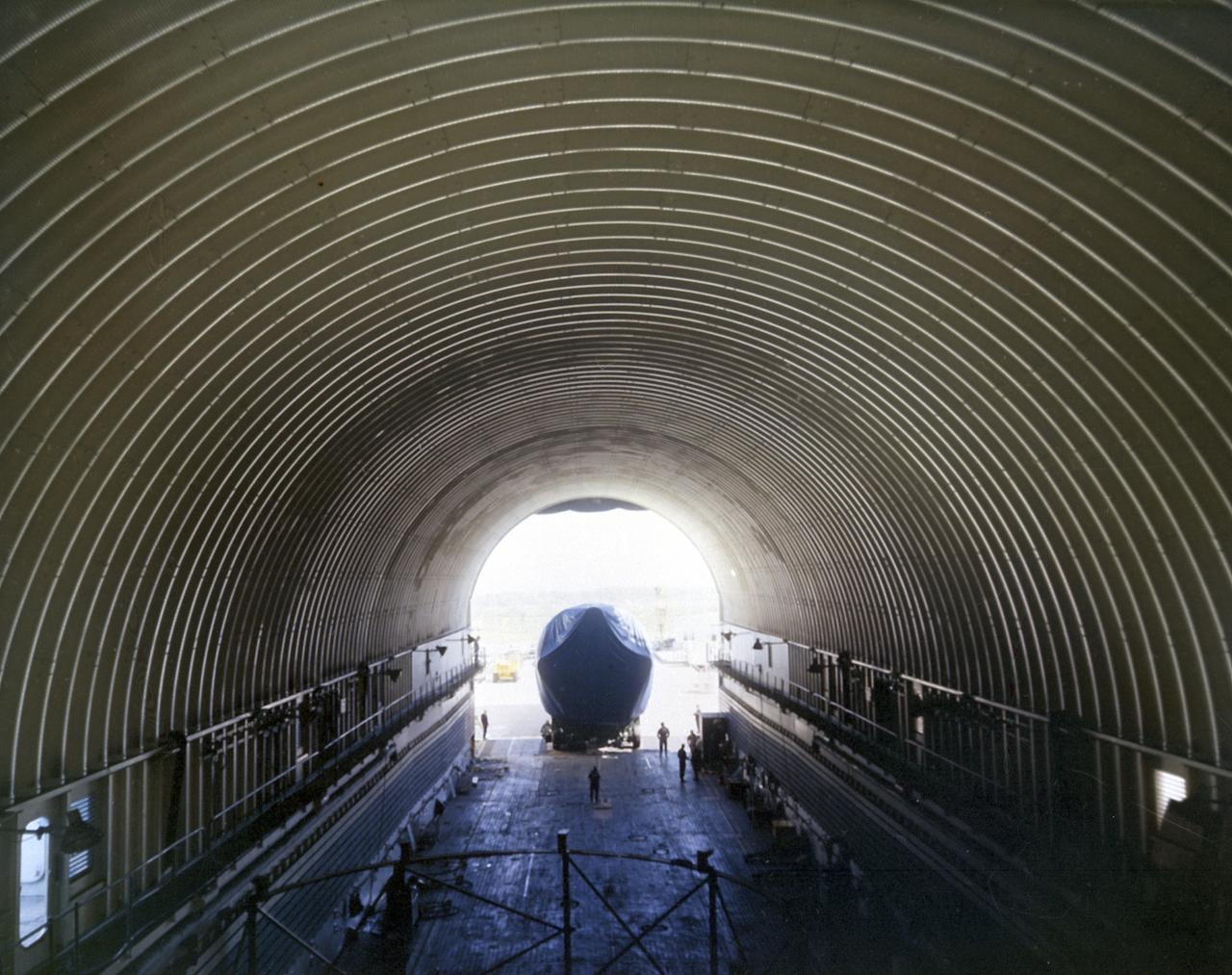
The Saturn 1B first stage (S-IB) enters the NASA barge Point Barrow, in March 1968. The Marshall Space Flight Center (MSFC) utilized a number of water transportation craft to transport the Saturn stages to-and-from the manufacturing facilities and test sites, as well as delivery to the Kennedy Space Center for launch. Developed by the Marshall Space Flight Center and built by the Chrysler Corporation at Michoud Assembly Facility (MAF), the S-IB utilized the eight H-1 engines and each produced 200,000 pounds of thrust, a combined thrust of 1,600,000 pounds.
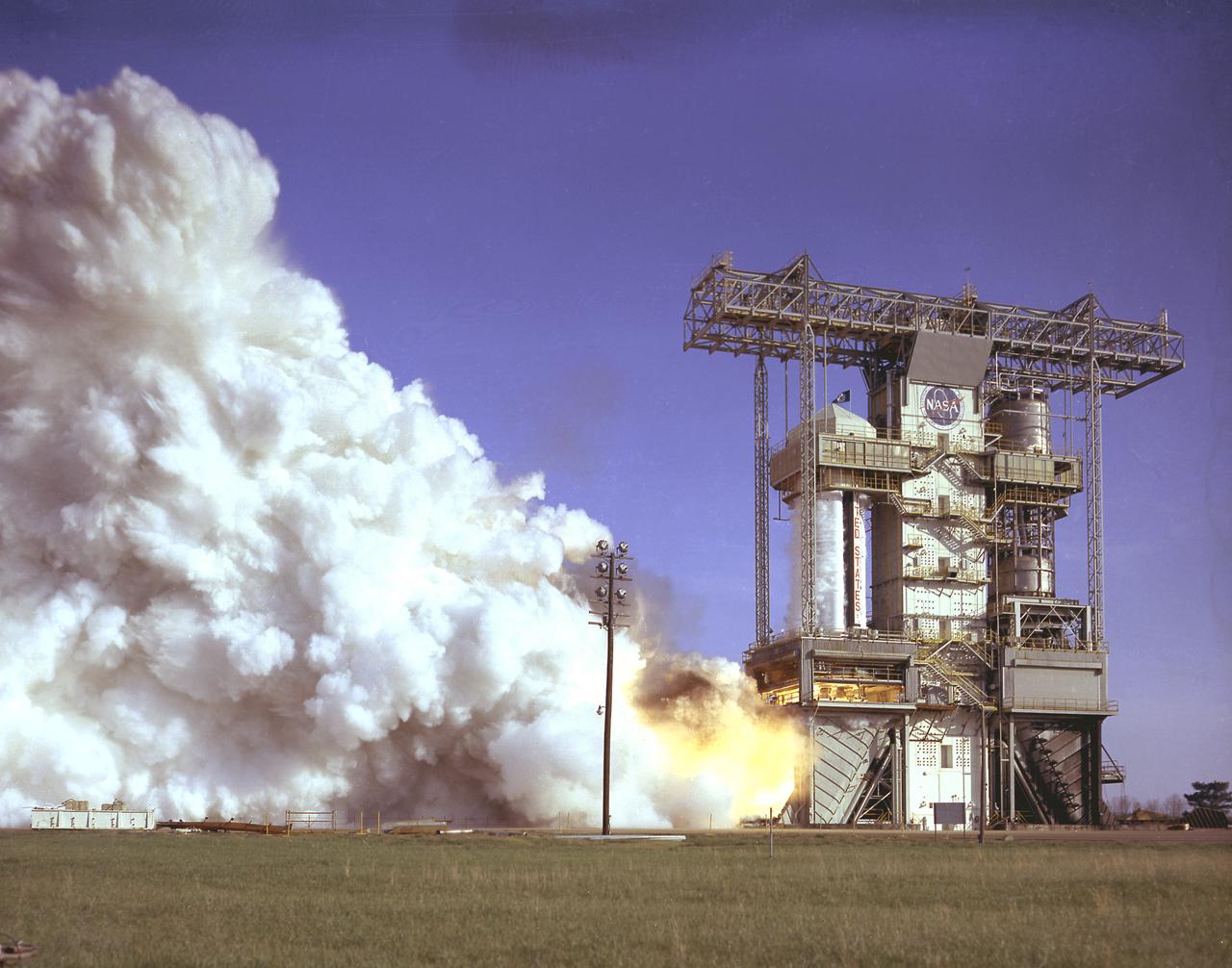
S-IB-1, the first flight version of the Saturn IB launch vehicle's first stage (S-IB stage), undergoes a full-duration static firing in Saturn IB static test stand at the Marshall Space Flight Center (MSFC) on April 13, 1965. Developed by the MSFC and built by the Chrysler Corporation at the Michoud Assembly Facility (MAF) in New Orleans, Louisiana, the 90,000-pound booster utilized eight H-1 engines to produce a combined thrust of 1,600,000 pounds. Between April 1965 and July 1968, MSFC performed thirty-two static tests on twelve different S-IB stages.
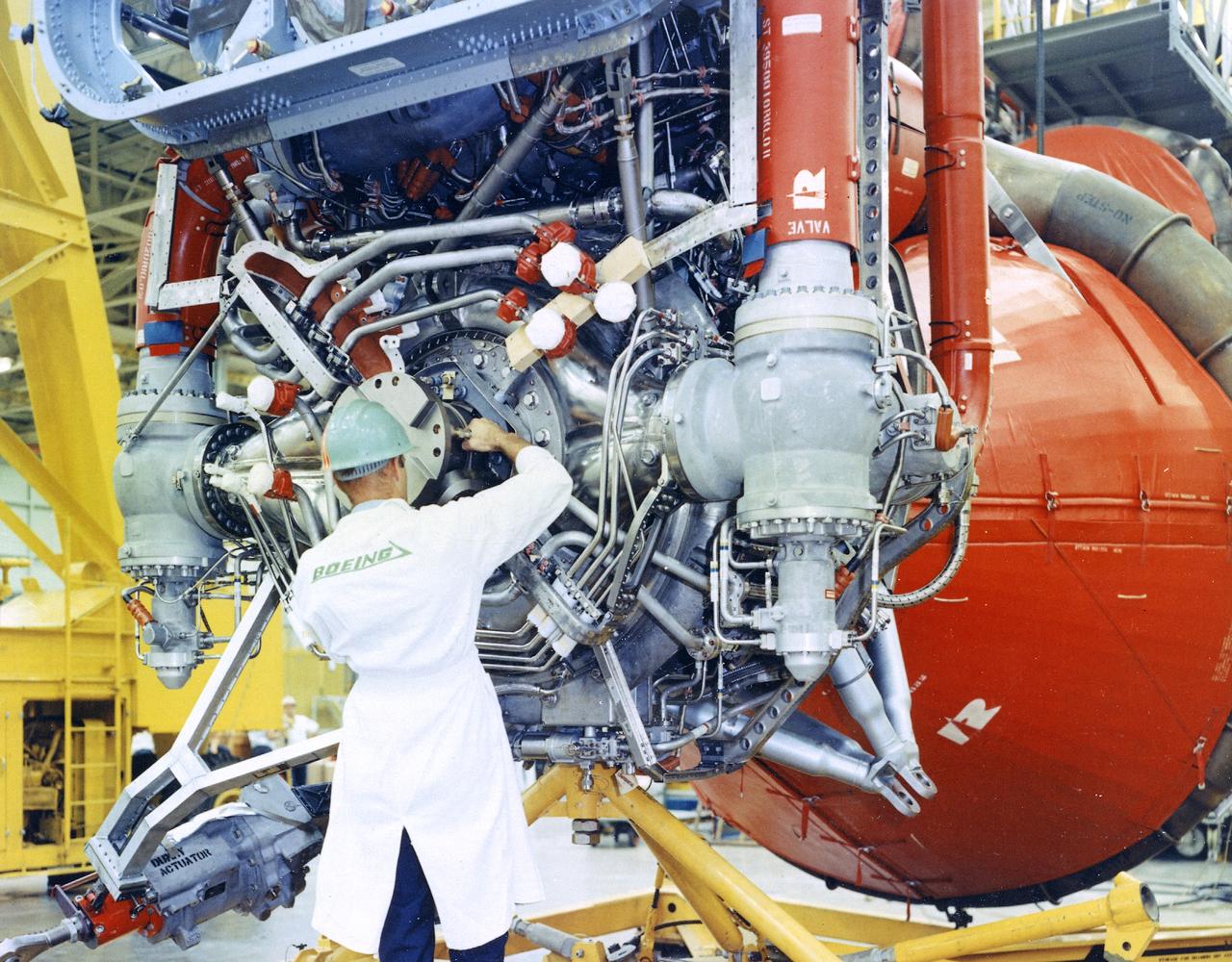
This image depicts a Boeing worker installing an F-1 engine on the Saturn V S-IC flight stage at the Michoud Assembly Facility (MAF). The Saturn IB and Saturn V first stages were manufactured at the MAF, located 24 kilometers (approximately 15 miles) east of downtown New Orleans, Louisiana. The prime contractors, Chrysler and Boeing, jointly occupied the MAF. The basic manufacturing building boasted 43 acres under one roof. By 1964, NASA added a separate engineering and office building, vertical assembly building, and test stage building.
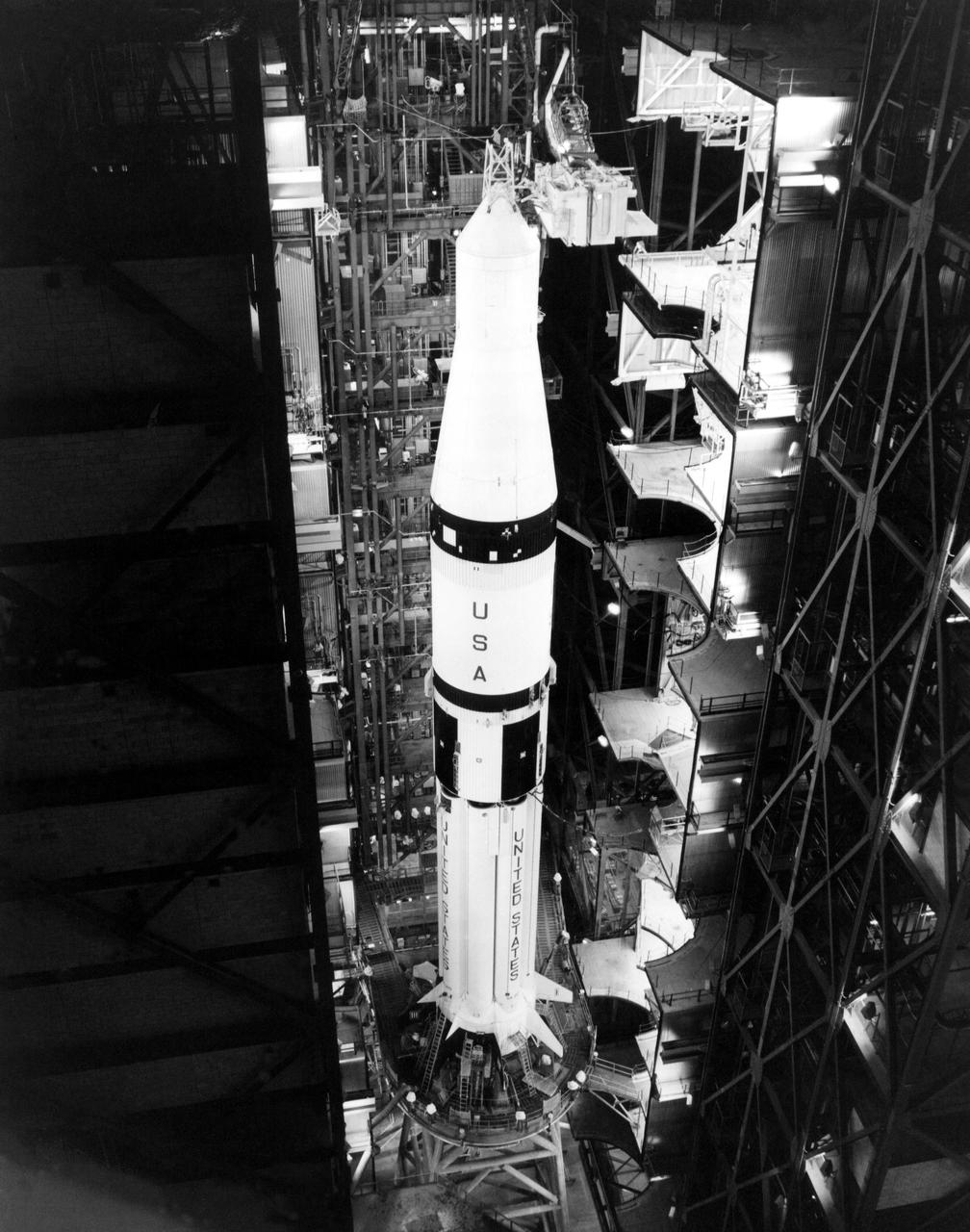
KENNEDY SPACE CENTER, FLA. -- The Saturn IB booster for the United States mission of the Apollo Soyuz Test Project is shown on its mobile launcher in a Vehicle Assembly Building high bay with a boilerplate Apollo spacecraft installed atop the instrument unit. The encapsulated Apollo spacecraft, docking module and docking adapter that will be launched atop the Chrysler-built booster will replace the boilerplate spacecraft prior to rollout of the space vehicle to Complex 39's Pad B, now scheduled March 24. Launch is scheduled at 3:50 p.m. EDT July 15.
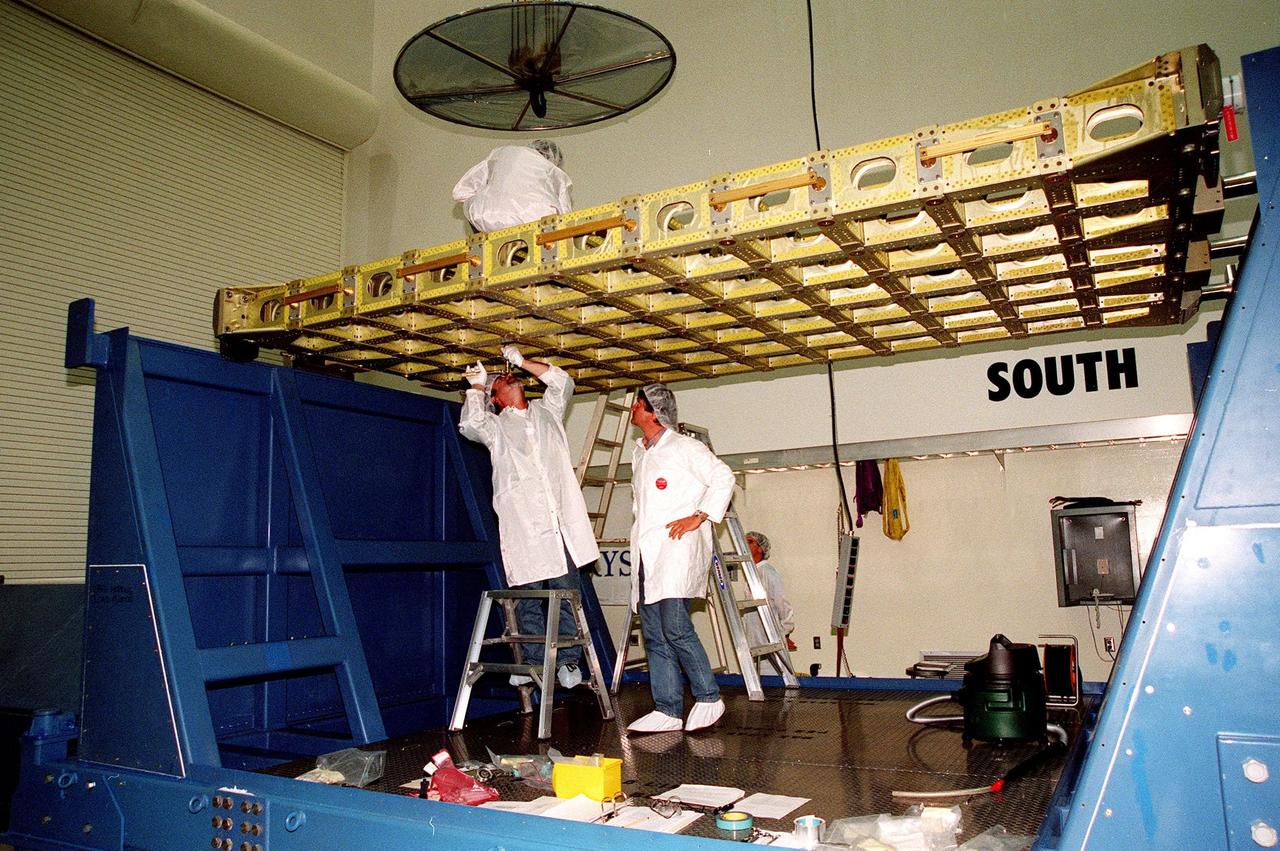
At Astrotech, Titusville, Fla., Harald Schnier and Manfred Nordhoff, with Daimler-Chrysler Aerospace (DASA), look over the International Cargo Carrier that will be used during future International Space Station (ISS) assembly missions. On top is Robert Wilkes, with Lockheed Martin. Behind the ladder in the background is Ben Greene, with Lockheed Martin. The nonpressurized ICC fits inside the payload bay of the orbiter. The ICC will carry the SPACEHAB Oceaneering Space System Box (SHOSS), a logistics items carrier. SHOSS can hold a maximum of 400 pounds of equipment and will carry items to be used during STS-96 and future ISS assembly flights. Also aboard the ICC will be the ORU Transfer Device (OTD), a U.S.-built crane that will be stowed on Unity for use during future ISS assembly missions. The ICC will fly on mission STS-96, targeted for launch on May 20
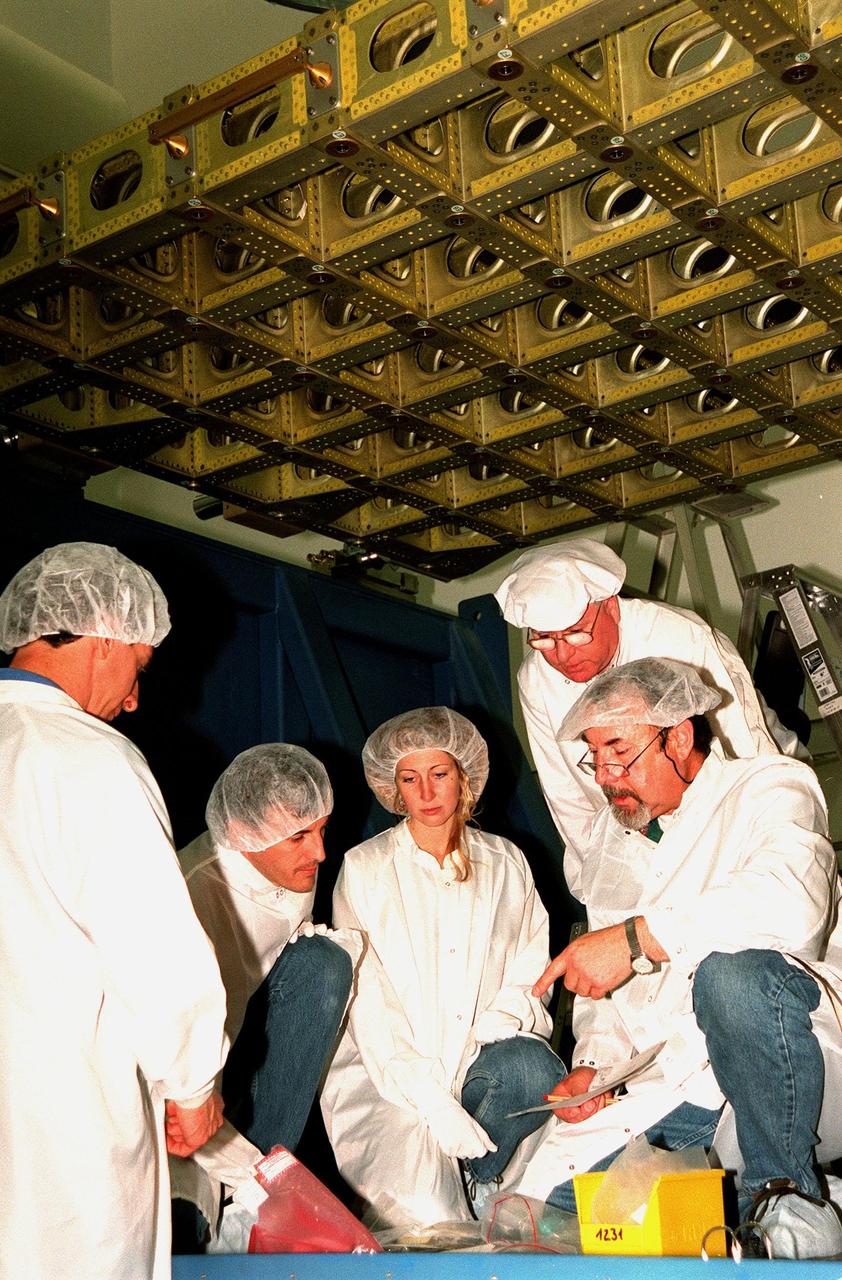
At Astrotech, Titusville, Fla., discussing the International Cargo Carrier (ICC) overhead are Charles Franca, with Johnson Space Center (JSC); Robert Wilkes, with Lockheed Martin; Lora Lawrence, with JSC; Carl Figiel and Harald Schnier, with Daimler-Chrysler Aerospace (DASA). The nonpressurized ICC fits inside the payload bay of the orbiter. The ICC will carry the SPACEHAB Oceaneering Space System Box (SHOSS), a logistics items carrier. SHOSS can hold a maximum of 400 pounds of equipment and will carry items to be used during STS-96 and future ISS assembly flights. Also aboard the ICC will be the ORU Transfer Device (OTD), a U.S.-built crane that will be stowed on Unity for use during future ISS assembly missions. The ICC will fly on mission STS-96, targeted for launch on May 20
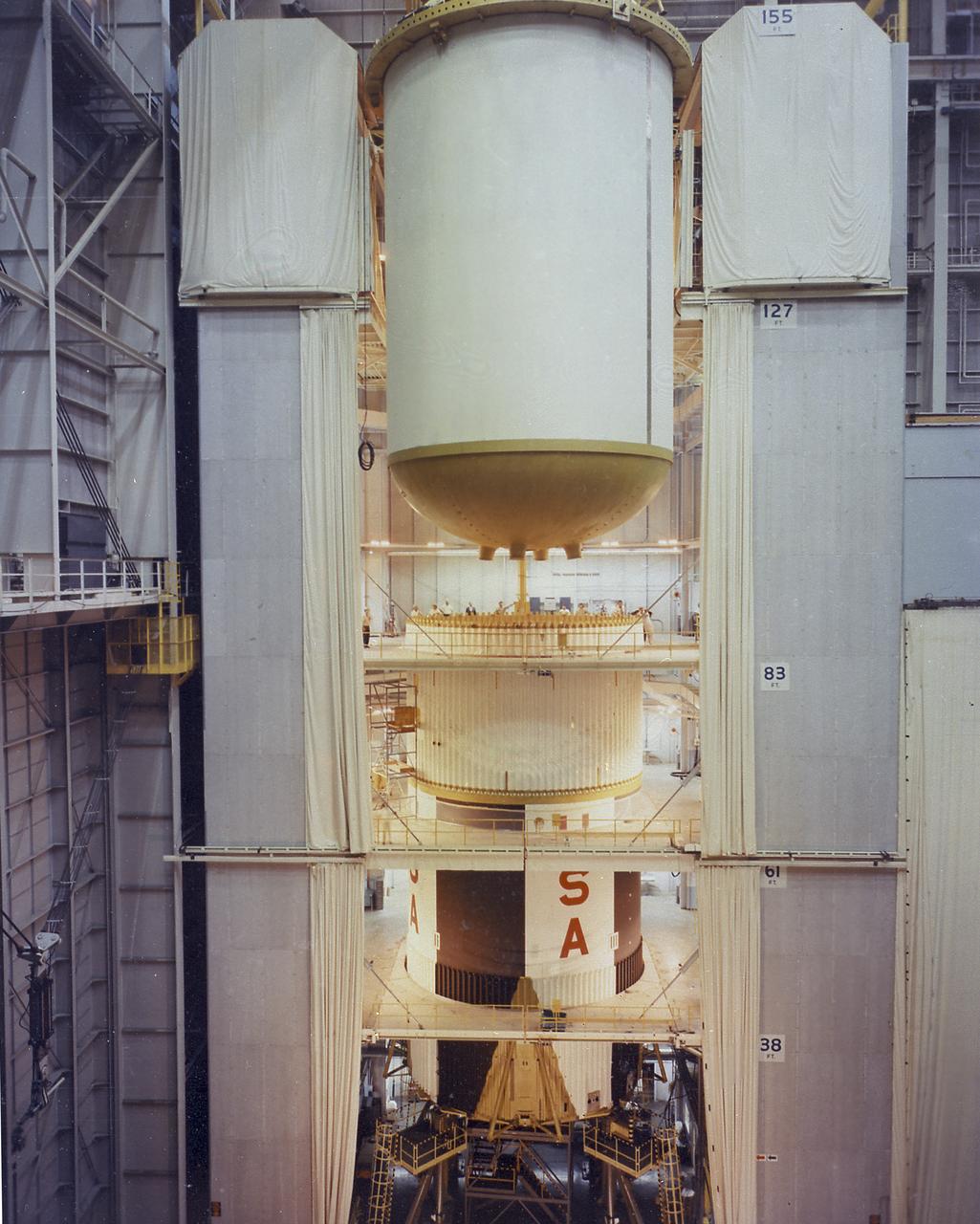
This photograph is a view of stacking the major components of the S-IC (first) stage of the Saturn V vehicle at the Boeing vertical assembly building at the Michoud Assembly Facility (MAF). The view shows placing the liquid oxygen tank on the intertank and the fuel tank assembly. The Saturn IB and Saturn V first stages were manufactured at the MAF located 24 kilometers (approximately 15 miles) east of downtown New Orleans, Louisiana. The prime contractors, Chrysler and Boeing, jointly occupied the MAF. The basic manufacturing building boasted 43 acres under one roof. By 1964, NASA added a separate engineering and office building, vertical assembly building, and test stage building. By 1966, other changes to the site included enlarged barge facilities and other miscellaneous support buildings.
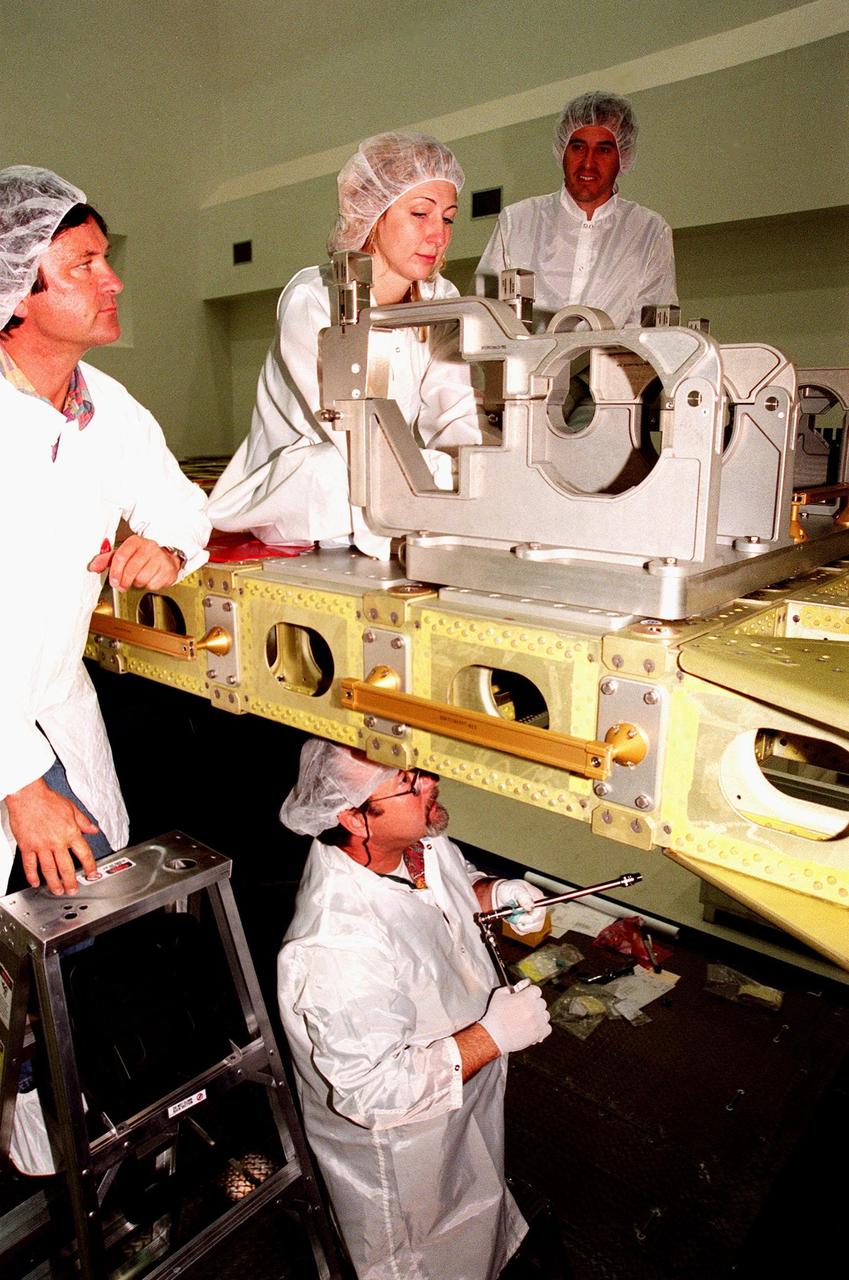
At Astrotech, Titusville, Fla., checking the International Cargo Carrier that will be used during future International Space Station (ISS) assembly missions are (left to right) Manfred Nordhoff, with Daimler-Chrysler Aerospace (DASA); Lora Lawrence, with Johnson Space Center; Robert Wilkes, with Lockheed Martin; and (below) Harald Schnier, with DASA. The ICC fits inside the payload bay of the orbiter. The ICC will carry the SPACEHAB Oceaneering Space System Box (SHOSS), a logistics items carrier. SHOSS can hold a maximum of 400 pounds of equipment and will carry items to be used during STS-96 and future ISS assembly flights. Also aboard the ICC will be the ORU Transfer Device (OTD), a U.S.-built crane that will be stowed on Unity for use during future ISS assembly missions. The ICC will fly on mission STS-96, targeted for launch on May 20
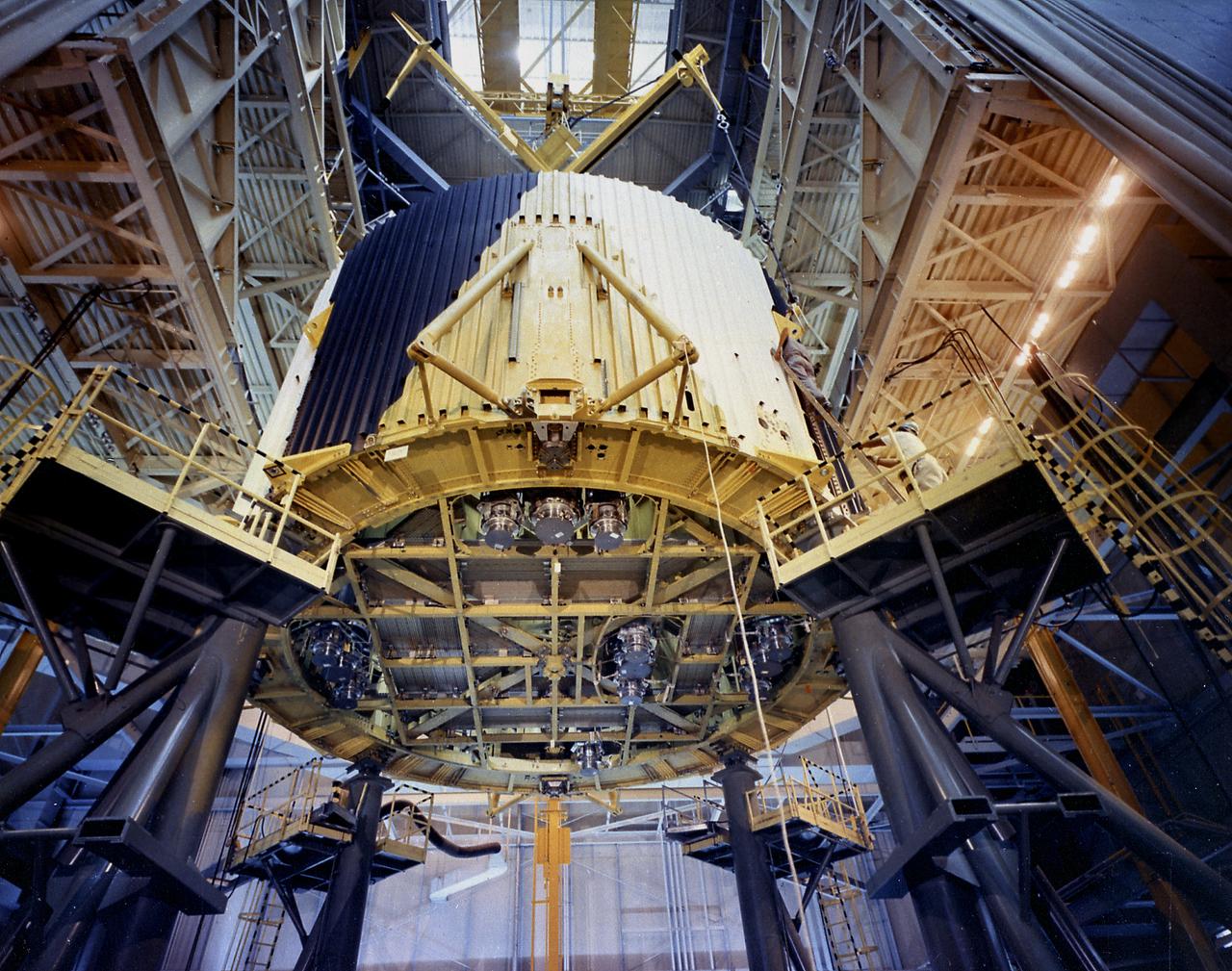
This photograph is a view of stacking the major components of the S-IC (first) stage of the Saturn V vehicle at the Boeing vertical assembly building at the Michoud Assembly Facility (MAF). The view shows the Saturn V S-IC (first) stage thrust structure being placed for the final assembly. The Saturn IB and Saturn V first stages were manufactured at the MAF located 24 kilometers (approximately 15 miles) east of downtown New Orleans, Louisiana. The prime contractors, Chrysler and Boeing, jointly occupied the MAF. The basic manufacturing building boasted 43 acres under one roof. By 1964, NASA added a separate engineering and office building, vertical assembly building, and test stage building. By 1966, other changes to the site included enlarged barge facilities and other miscellaneous support buildings.
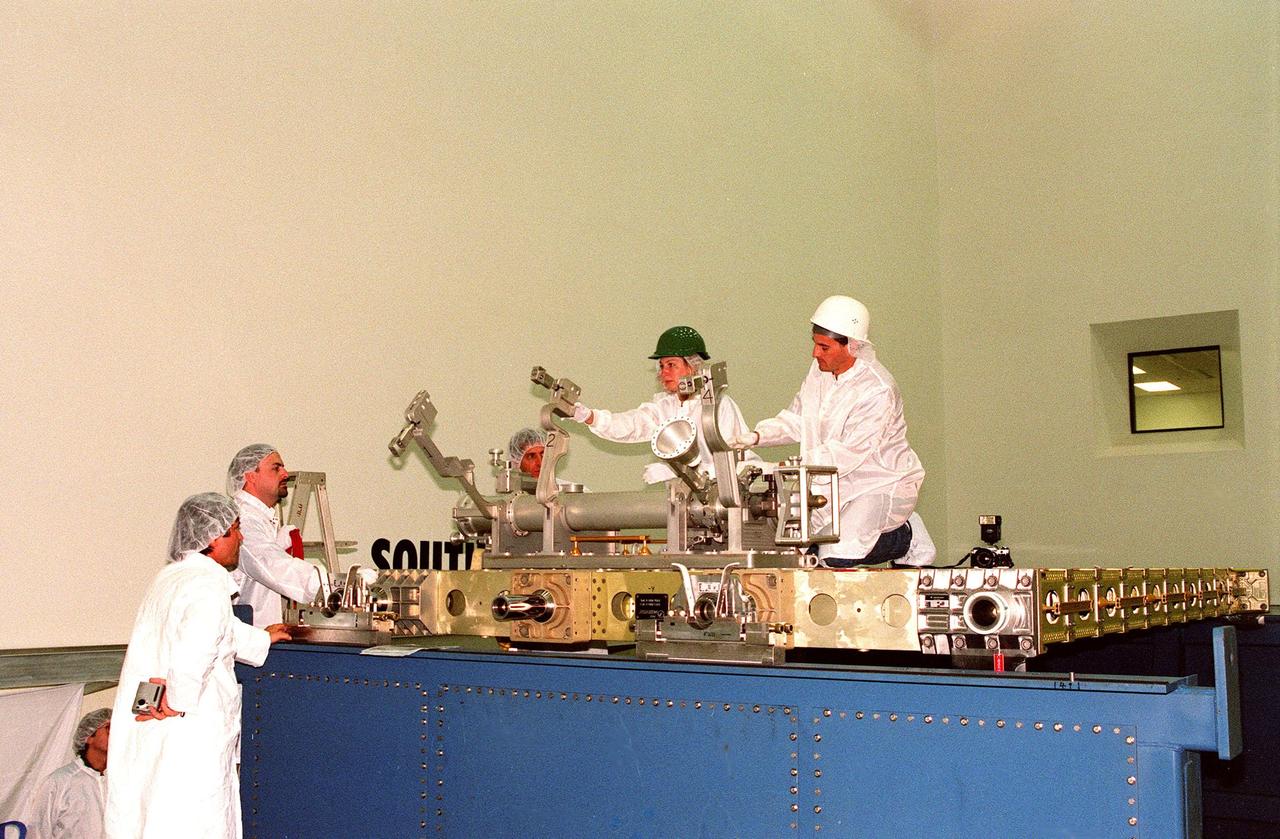
An ORU Transfer Device (OTD) on top of the International Cargo Carrier (ICC) is checked by Manfred Nordhoff, with Daimler-Chrysler Aerospace (DASA); Ben Greene, with Lockheed Martin; Robert Wilkes (behind arm number two), with Lockheed Martin; Lora Laurence and Charles Franca, with Johnson Space Center. The OTD is a U.S.-built crane that will be stowed on the International Space Station's Unity module for use during future ISS assembly missions. The nonpressurized ICC fits inside the payload bay of the orbiter. The ICC will also carry the SPACEHAB Oceaneering Space System Box (SHOSS), a logistics items carrier. SHOSS can hold a maximum of 400 pounds of equipment and will carry items to be used during STS-96 and future ISS assembly flights. The ICC will fly on mission STS-96, targeted for launch on May 20
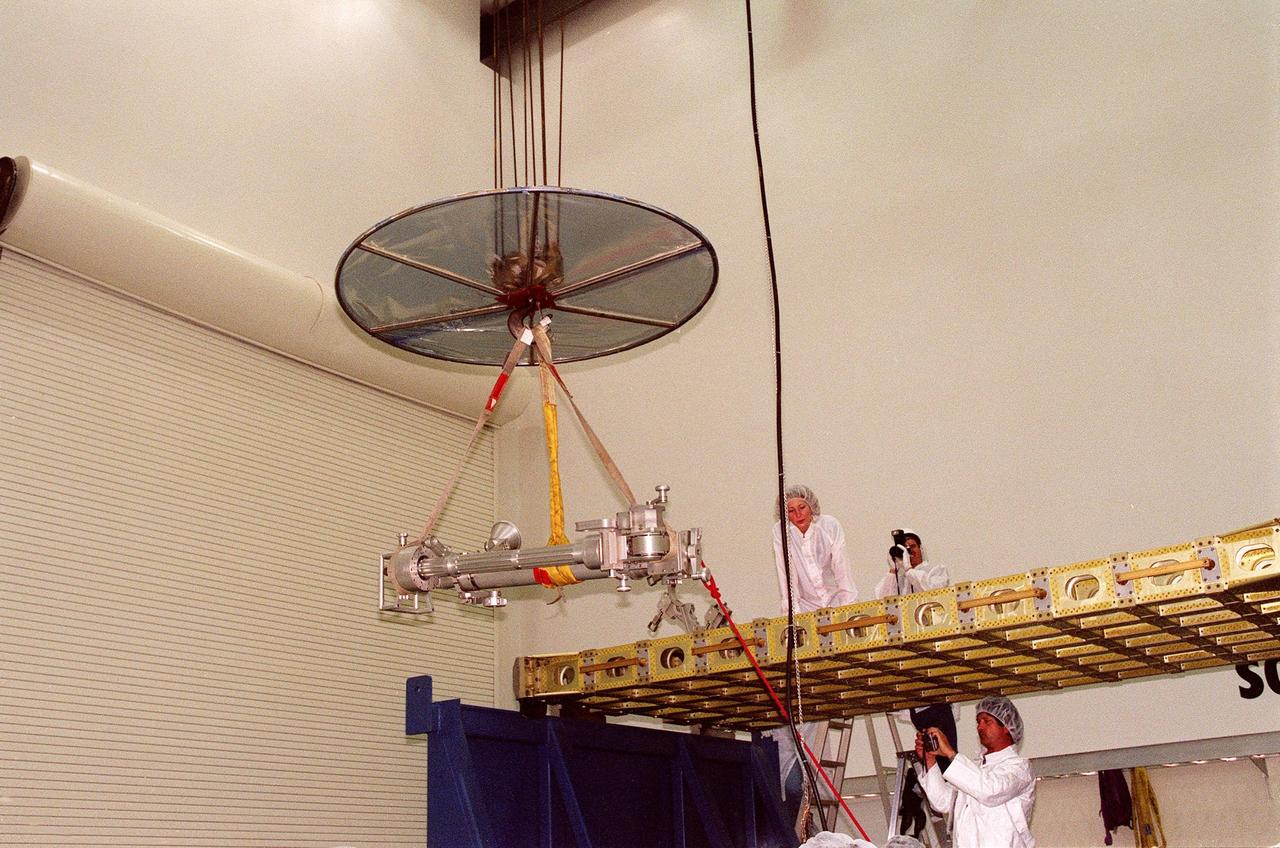
At Astrotech, Titusville, Fla., three workers watch as the overhead crane lifts and moves the ORU Transfer Device (OTD) to the top of the International Cargo Carrier (ICC). From left are Lora Laurence, with Johnson Space Center; Robert Wilkes, with Lockheed Martin; and Manfred Nordhoff, with Daimler-Chrysler Aerospace (DASA). The OTD is a U.S.-built crane that will be stowed on the International Space Station's Unity module for use during future ISS assembly missions. The nonpressurized ICC fits inside the payload bay of the orbiter. The ICC will also carry the SPACEHAB Oceaneering Space System Box (SHOSS), a logistics items carrier. SHOSS can hold a maximum of 400 pounds of equipment and will carry items to be used during STS-96 and future ISS assembly flights. The ICC will fly on mission STS-96, targeted for launch on May 20
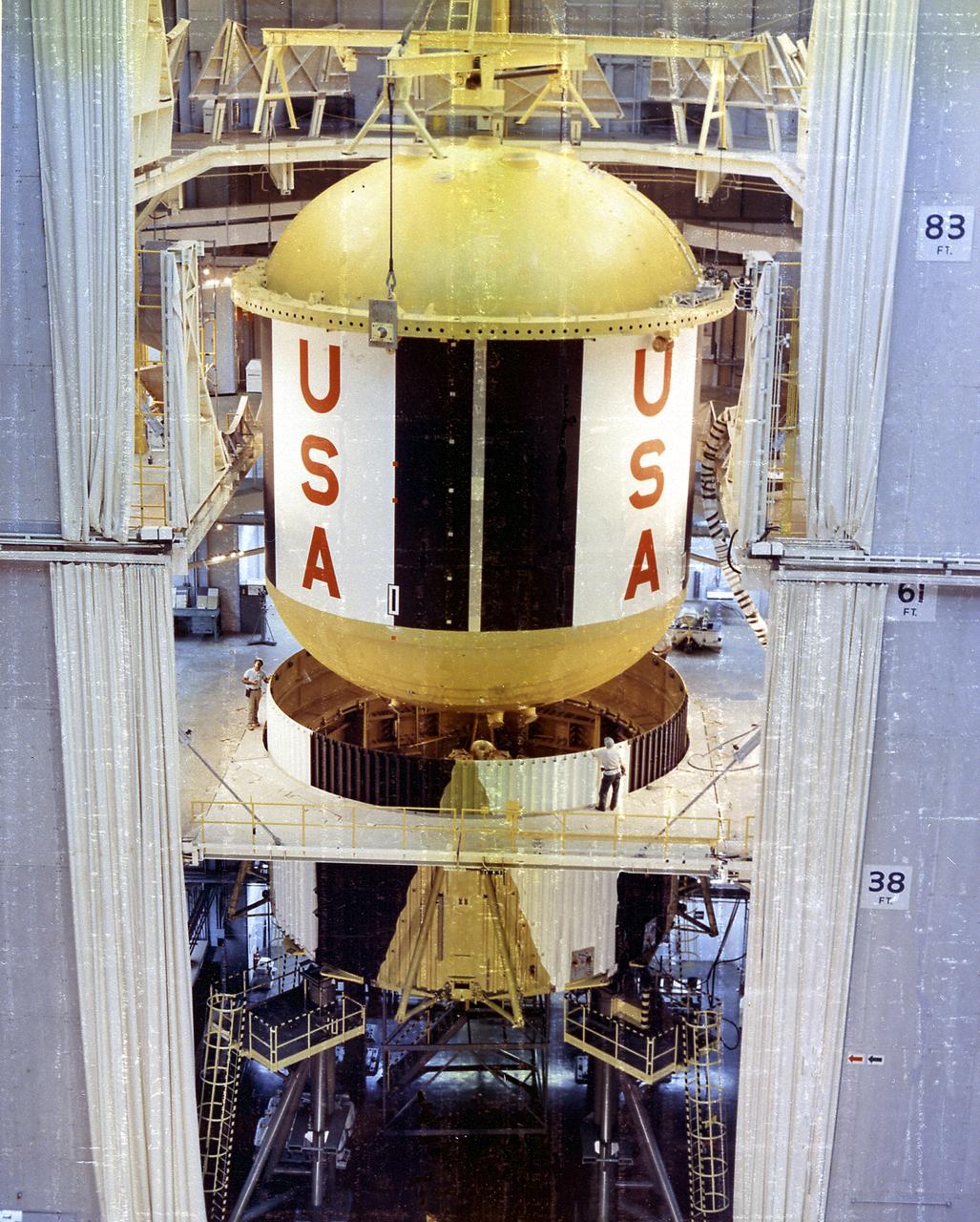
This picture is a view of stacking the major components of the S-IC (first) stage of the Saturn V vehicle at the Boeing vertical assembly building at the Michoud Assembly Facility (MAF). The view shows the fuel tank being lowered into the thrust structure. The Saturn IB and Saturn V first stages were manufactured at the MAF located 24 kilometers (approximately 15 miles) east of downtown New Orleans, Louisiana. The prime contractors, Chrysler and Boeing, jointly occupied the MAF. The basic manufacturing building boasted 43 acres under one roof. By 1964, NASA added a separate engineering and office building, vertical assembly building, and test stage building. By 1966, other changes to the site included enlarged barge facilities and other miscellaneous support buildings.
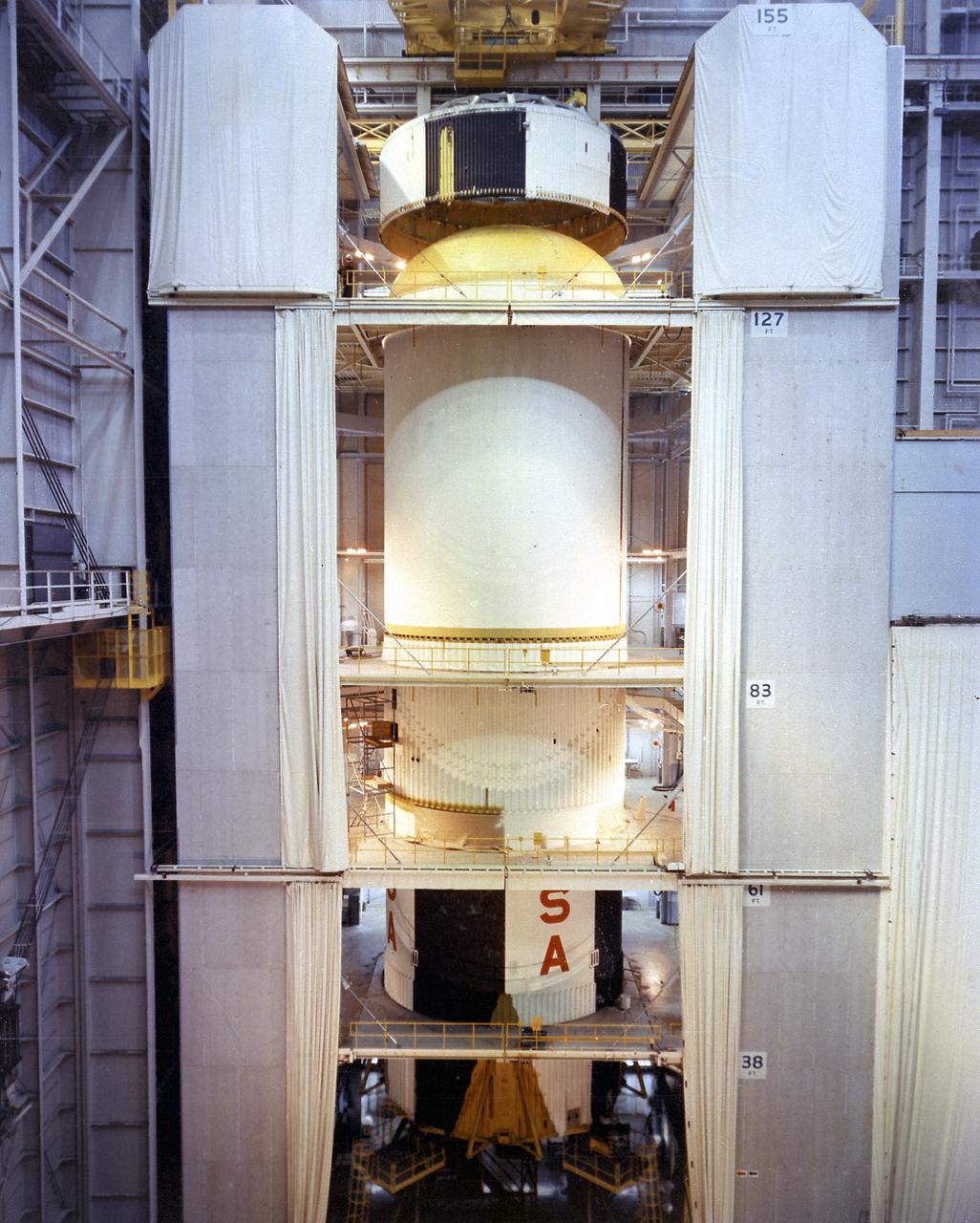
This picture is a view of stacking the major components of the S-IC (first) stage of the Saturn V vehicle at the Boeing vertical assembly building at the Michoud Assembly Facility (MAF). The view shows the S-IC forward skirt being lowered onto the liquid oxygen (LOX) tank. The Saturn IB and Saturn V first stages were manufactured at the MAF located 24 kilometers (approximately 15 miles) east of downtown New Orleans, Louisiana. The prime contractors, Chrysler and Boeing, jointly occupied the MAF. The basic manufacturing building boasted 43 acres under one roof. By 1964, NASA added a separate engineering and office building, vertical assembly building, and test stage building. By 1966, other changes to the site included enlarged barge facilities and other miscellaneous support buildings.
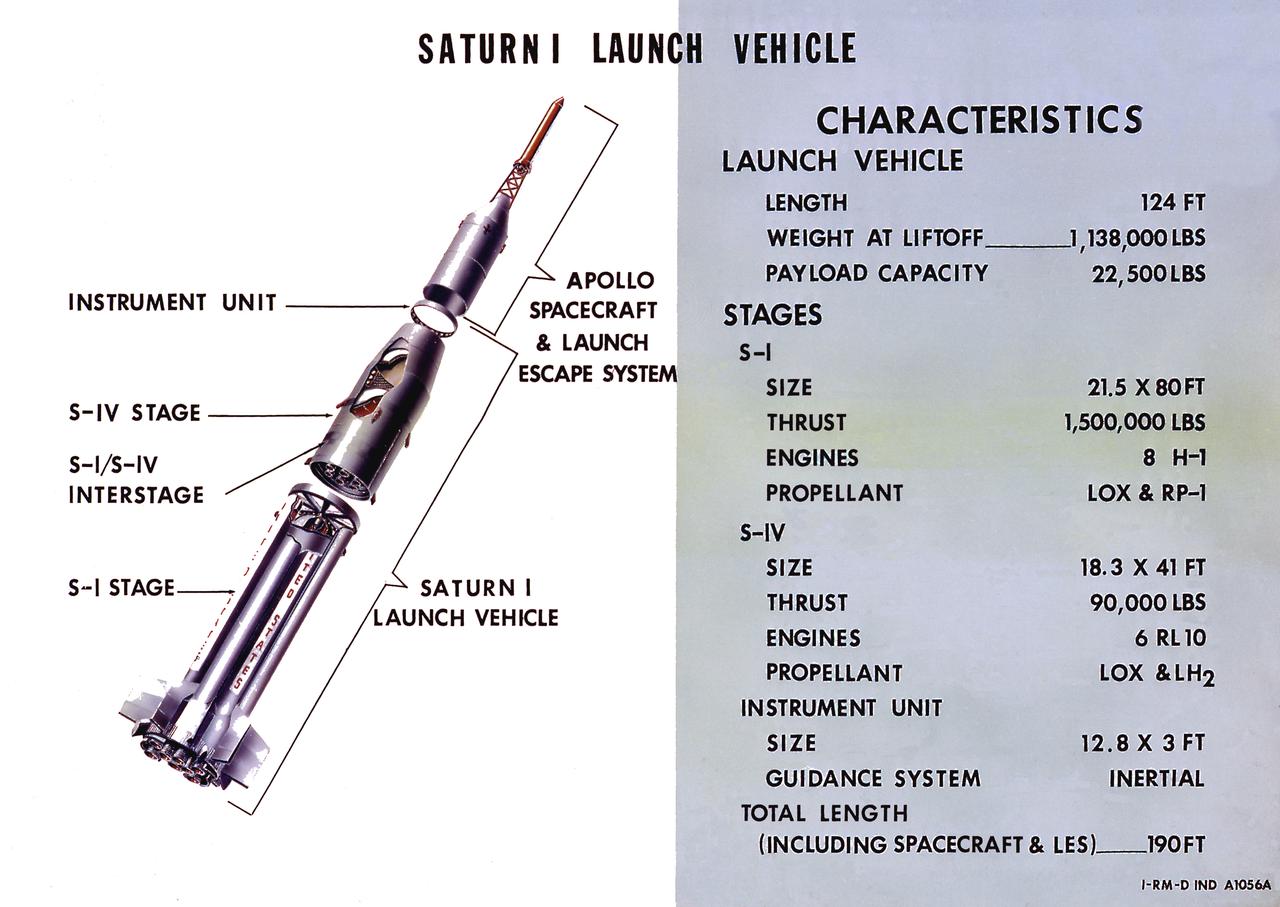
A cutaway illustration of Saturn I launch vehicle characteristics: The Saturn I, first of the Saturn launch vehicles' family, is a two-stage vehicle with a low-earth-orbit payload capability of approximately 25,000 pounds. The research and development program was plarned in two phases or blocks; one for first stage development (Block I) and the second for first and second stage development (Block II). The S-I (first) stage consisted of a cluster of nine propellant tanks and eight H-1 engines built by Rocketdyne, yeilding a total thrust of 1,500,000 pounds. The second stage identified as S-IV, was designed as a single cylinder with a common bulkhead separating the liquid oxygen from the liquid hydrogen. Propulsion was provided by six RL-10 engines built by Pratt Whitney, capable of producing a combined thrust of 90,000 pounds. Of the 10 Saturn I's planned, the first eight were designed and built at the Marshall Space Flight Center. The remaining two were built by the Chrysler Corporation.
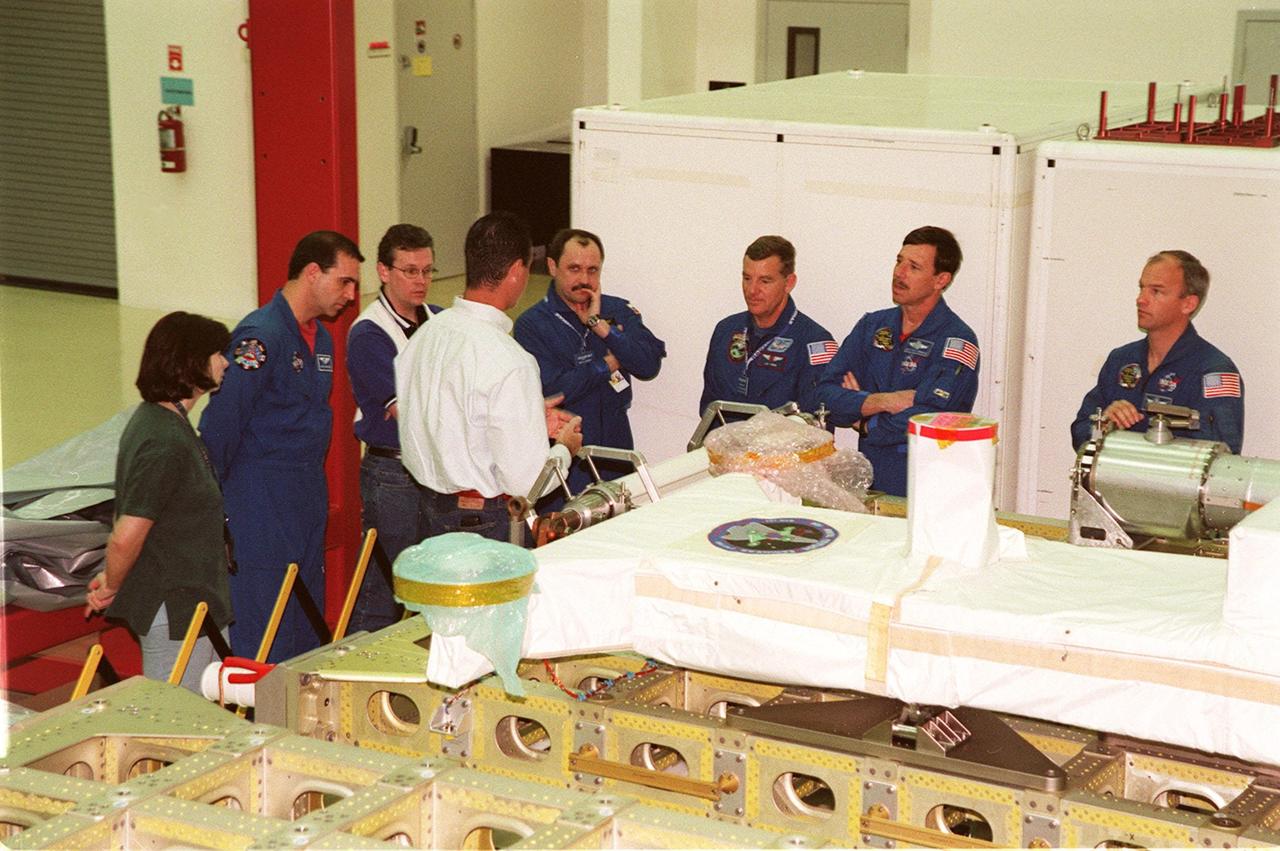
KENNEDY SPACE CENTER, FLA. -- At SPACEHAB, in Cape Canaveral, Fla., members of the STS-101 crew and STS-106 crew take part in Crew Equipment Interface Test activities, learning from technicians in the facility about some of the equipment they will be working with on their mission to the International Space Station. From left are Claudia Melchiorre, who is with DASA, Daimler-Chrysler Aerospace; STS-106 Mission Specialist Richard Mastracchio; a SPACEHAB worker; Marty McLellan, director of ground operations; Mission Specialists Yuri Usachev of Russia and James Voss; Pilot Scott Horowitz; and Mission Specialist Jeffrey Williams. Other members of the STS-101 crew (not shown) are Mission Specialists Mary Ellen Weber and Susan Helms. The ST-101 crew will be responsible for preparing the Space Station for the arrival of the Zvezda Service Module, expected to be launched by Russia in July 2000. Also, the crew will conduct one space walk to perform maintenance on the Space Station and deliver logistics and supplies. This will be the third assembly flight for the Space Station. STS-101 is scheduled to launch no earlier than April 13 from Launch Pad 39A
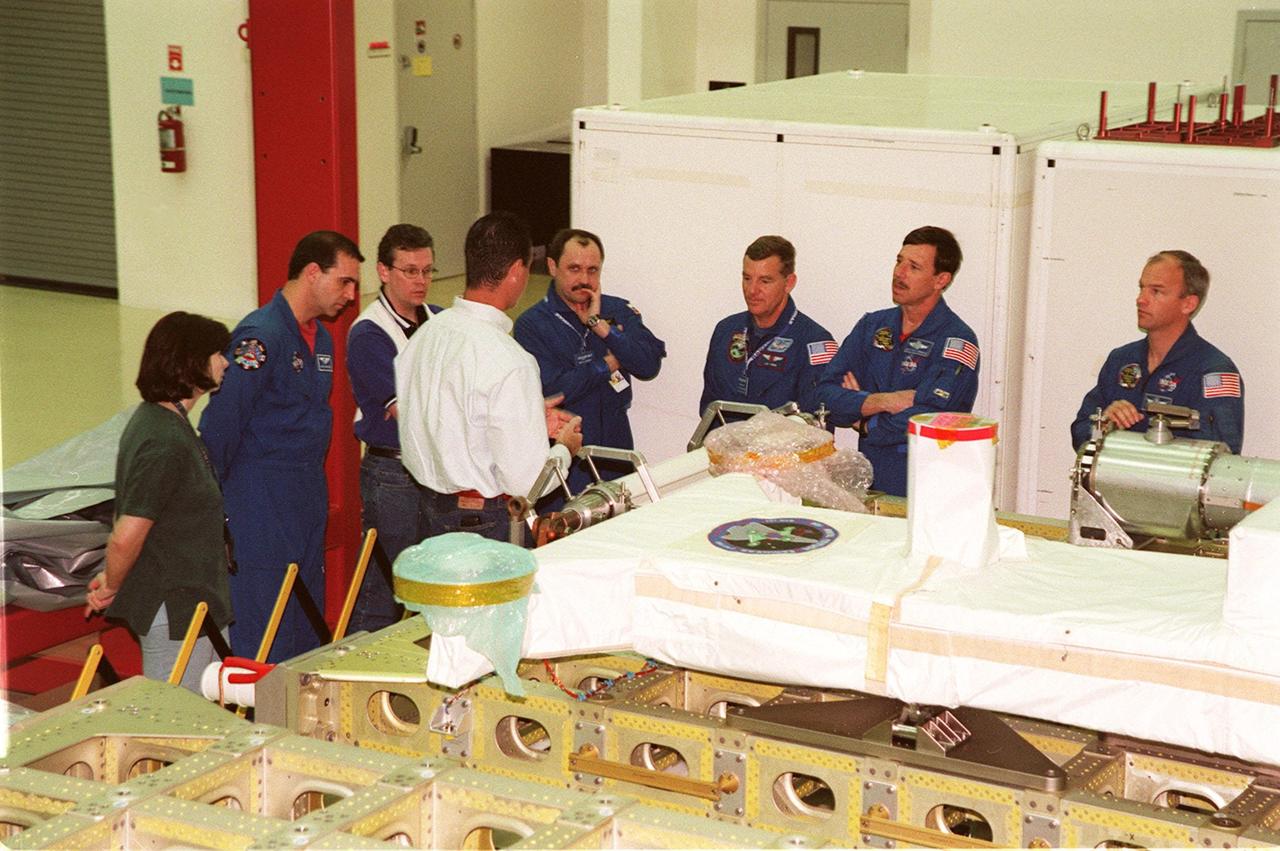
KENNEDY SPACE CENTER, FLA. -- At SPACEHAB, in Cape Canaveral, Fla., members of the STS-101 crew and STS-106 crew take part in Crew Equipment Interface Test activities, learning from technicians in the facility about some of the equipment they will be working with on their mission to the International Space Station. From left are Claudia Melchiorre, who is with DASA, Daimler-Chrysler Aerospace; STS-106 Mission Specialist Richard Mastracchio; a SPACEHAB worker; Marty McLellan, director of ground operations; Mission Specialists Yuri Usachev of Russia and James Voss; Pilot Scott Horowitz; and Mission Specialist Jeffrey Williams. Other members of the STS-101 crew (not shown) are Mission Specialists Mary Ellen Weber and Susan Helms. The ST-101 crew will be responsible for preparing the Space Station for the arrival of the Zvezda Service Module, expected to be launched by Russia in July 2000. Also, the crew will conduct one space walk to perform maintenance on the Space Station and deliver logistics and supplies. This will be the third assembly flight for the Space Station. STS-101 is scheduled to launch no earlier than April 13 from Launch Pad 39A

At Astrotech, Titusville, Fla., an umbrella-topped crane is secured to an ORU Transfer Device (OTD), a U.S.-built crane that will be stowed on the International Space Station's Unity module for use during future ISS assembly missions. Gathered around the OTD and crane are (left to right) Ben Greene (kneeling), with Lockheed Martin; Michael Slataper, with Ratheon; Charles Franca, with Johnson Space Center; Robert Wilkes, with Lockheed Martin; Manfred Nordhoff (back to camera), with Daimler-Chrysler Aerospace (DASA); and Carl Figiel and Harald Schnier (far right), both with (DASA). The OTD will be attached to the nonpressurized International Cargo Carrier (ICC) in the background. The ICC fits inside the payload bay of the orbiter. The ICC will also carry the SPACEHAB Oceaneering Space System Box (SHOSS), a logistics items carrier. SHOSS can hold a maximum of 400 pounds of equipment and will carry items to be used during STS-96 and future ISS assembly flights. The ICC will fly on mission STS-96, targeted for launch on May 20
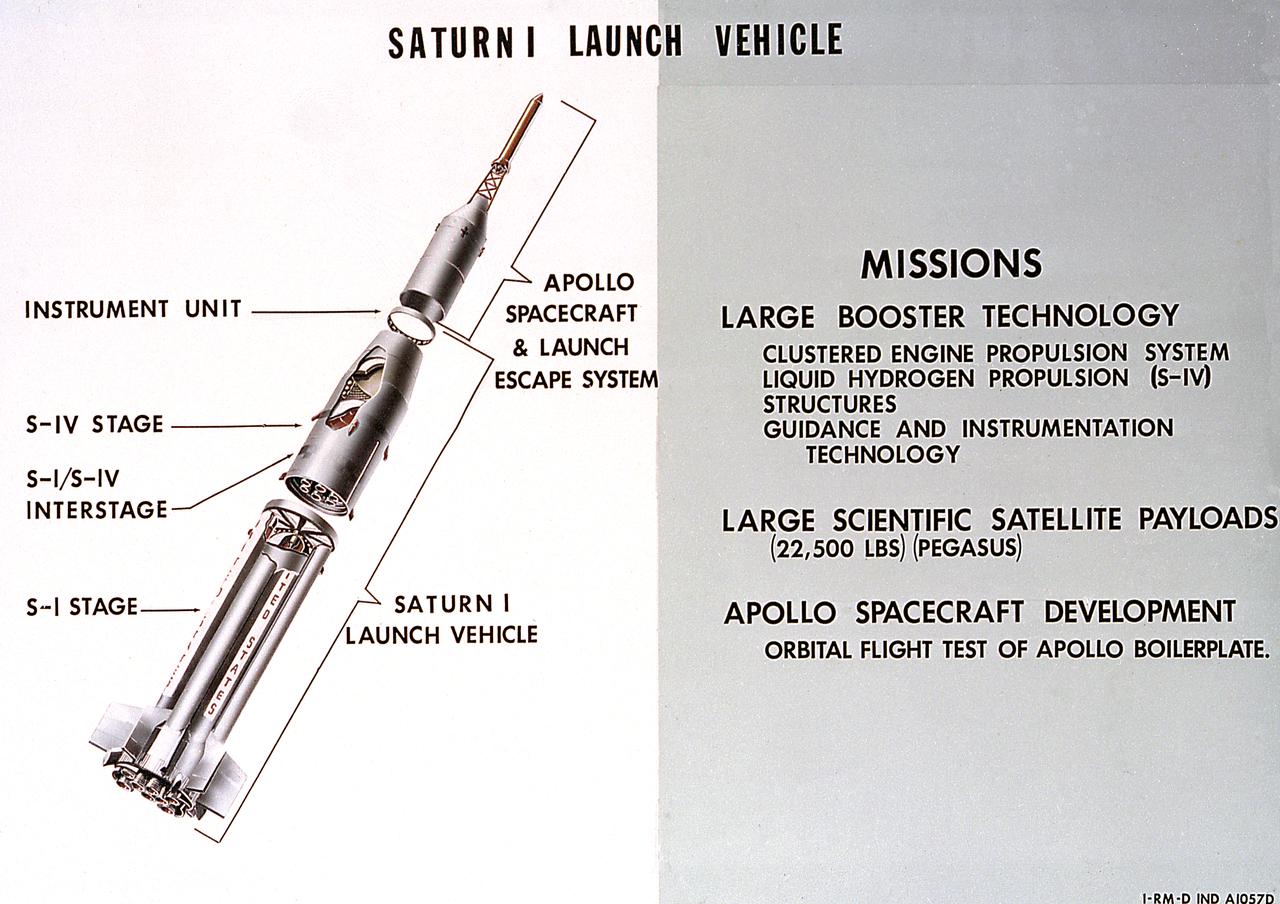
A cutaway illustration of Saturn 1 launch vehicle mission. The Saturn I, first of the Saturn launch vehicles' family, is a two-stage vehicle with a low-earth-orbit payload capability of approximately 25,000 pounds. The research and development program was plarned in two phases or blocks; one for first stage development (Block I) and the second for first and second stage development (Block II). The S-I (first) stage consisted of a cluster of nine propellant tanks and eight H-1 engines built by Rocketdyne, yeilding a total thrust of 1,500,000 pounds. The second stage of Saturn I, identified as S-IV, was designed as a single cylinder with a common bulkhead separating the liquid oxygen from the liquid hydrogen. Propulsion was provided by six RL-10 engines built by Pratt Whitney, capable of producing a combined thrust of 90,000 pounds. Of the 10 Saturn I's planned, the first eight were designed and built at the Marshall Space Flight Center. The remaining two were built by the Chrysler Corporation.
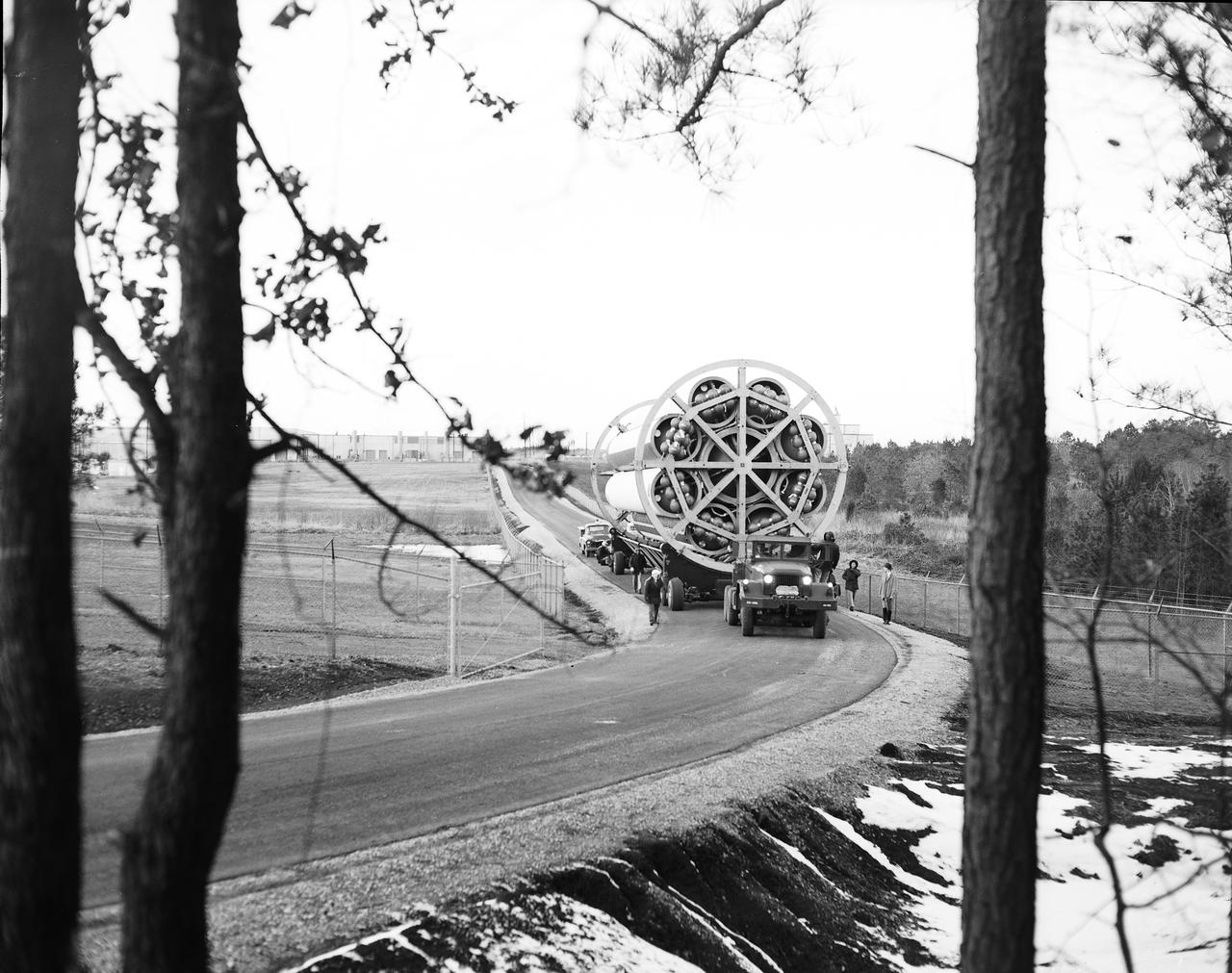
This photograph shows the Saturn-I first stage (S-1 stage) being transported to the test stand for a static test firing at the Marshall Space Flight Center. Soon after NASA began operations in October 1958, it was evident that sending people and substantial equipment beyond the Earth's gravitational field would require launch vehicles with weight-lifting capabilities far beyond any developed to that time. In early 1959, NASA accepted the proposal of Dr. Wernher von Braun for a multistage rocket, with a number of engines clustered in one or more of the stages to provide a large total thrust. The initiation of the Saturn launch vehicle program ultimately led to the study and preliminary plarning of many different configurations and resulted in production of three Saturn launch vehicles, the Saturn-I, Saturn I-B, and Saturn V. The Saturn family of launch vehicles began with the Saturn-I, a two-stage vehicle originally designated C-1. The research and development program was planned in two phases, or blocks: one for first stage development (Block I) and the second for both first and second stage development (Block-II). Saturn I had a low-earth-orbit payload capability of approximately 25,000 pounds. The design of the first stage (S-1 stage) used a cluster of propellant tanks containing liquid oxygen (LOX) and kerosene (RP-1), and eight H-1 engines, yielding a total thrust of 1,500,000 pounds. Of the ten Saturn-Is planned, the first eight were designed and built at the Marshall Space Flight Center, and the remaining two were built by the Chrysler Corporation.