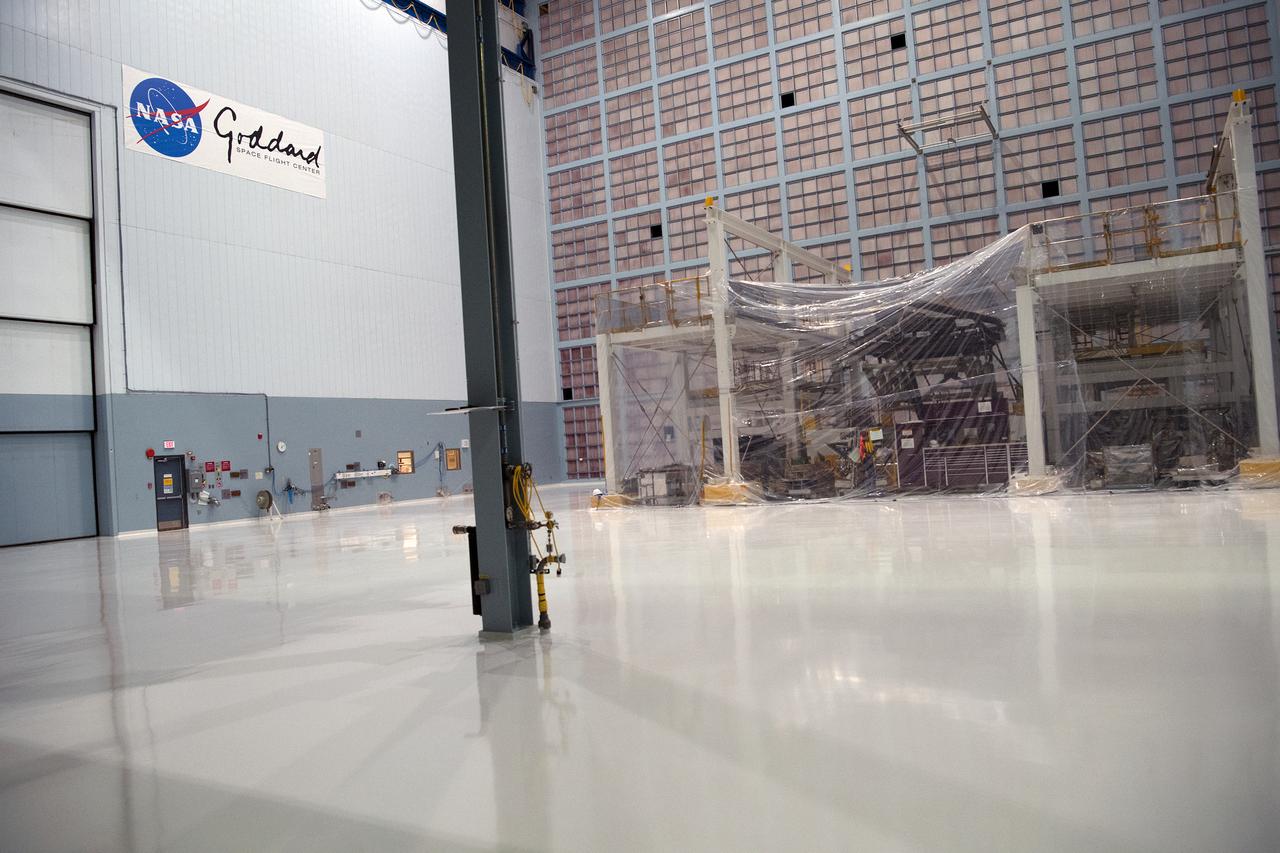
Clean room B 29 SSDIF facility floor was installed in January 2019 by Stonhard
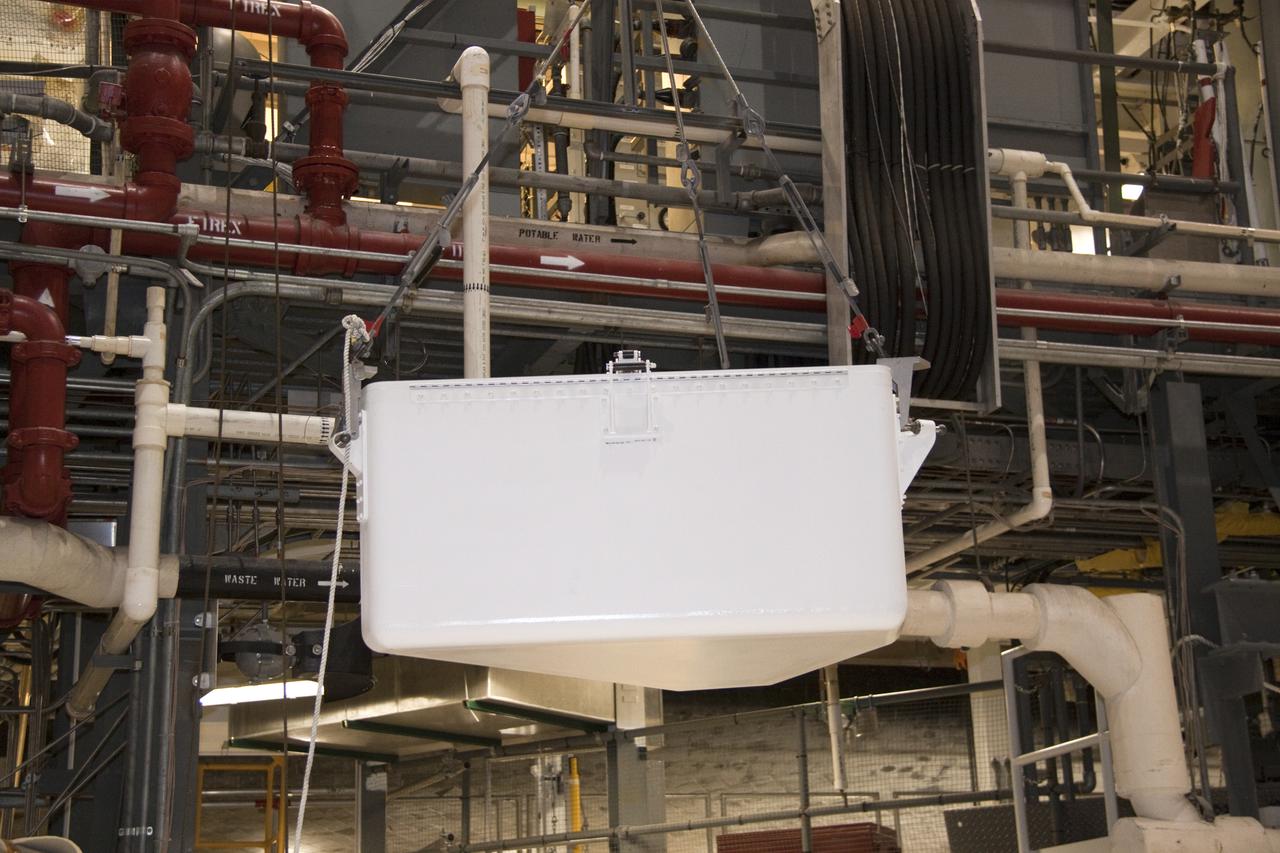
CAPE CANAVERAL, Fla. – In Orbiter Processing Facility-1 at NASA's Kennedy Space Center in Florida, the tool stowage assembly is lifted by jib crane above the floor of the clean room. The tool box is being installed into space shuttle Atlantis' payload bay. The assembly contains tools and hardware that will be needed on the extravehicular activities, or spacewalks, conducted during the STS-132 mission. On STS-132, the six-member crew will deliver an Integrated Cargo Carrier and a Russian-built Mini-Research Module to the International Space Station. STS-132 is the 34th mission to the station and the 132nd space shuttle mission. Launch is targeted for May 14. For information on the STS-132 mission, visit http:__www.nasa.gov_mission_pages_shuttle_shuttlemissions_sts132_index.html. Photo credit: NASA_Jack Pfaller
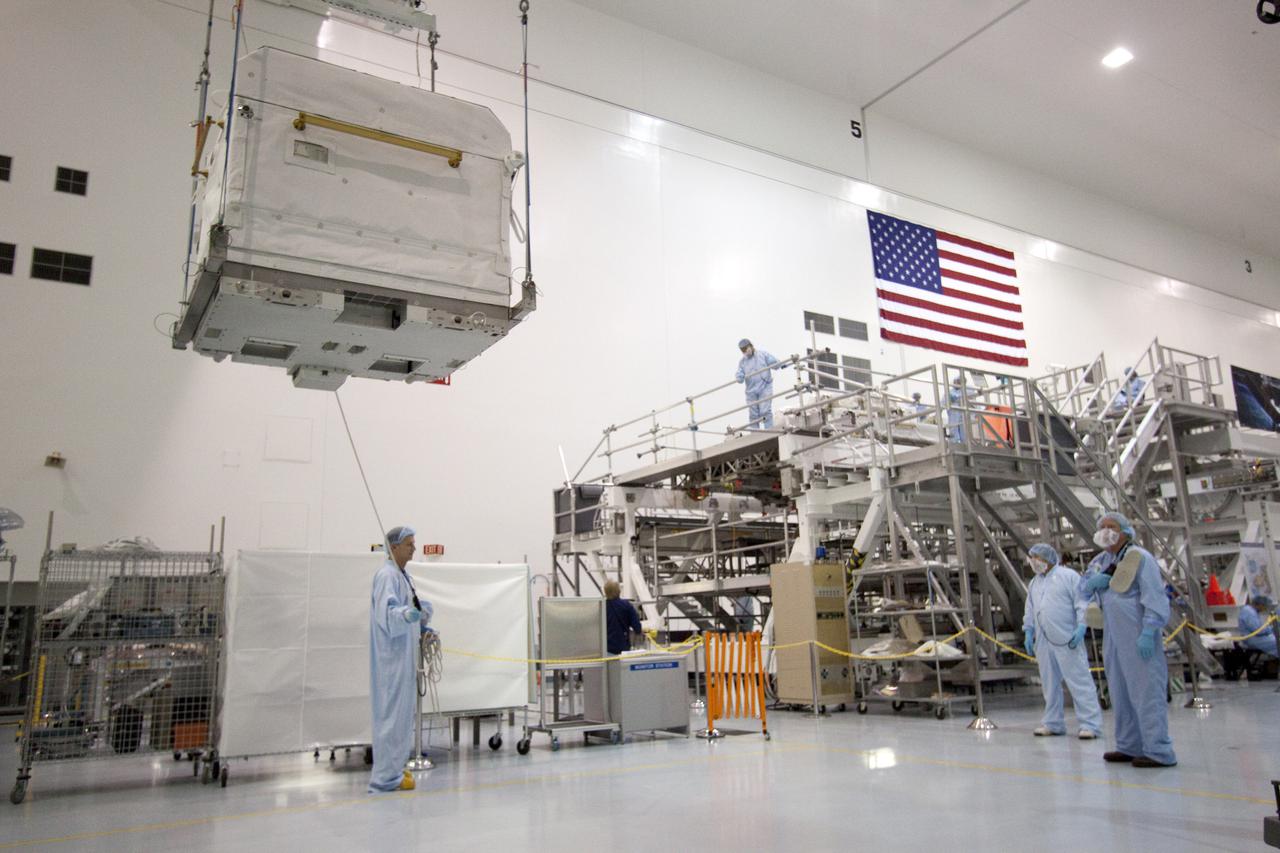
CAPE CANAVERAL, Fla. - In the Space Station Processing Facility at NASA's Kennedy Space Center in Florida, a cargo transport container is lifted off the floor of the clean room. The container is being moved toward the ExPRESS Logistics Carrier-3, or ELC-3, on which it will be installed. The ELC-3 and the Alpha Magnetic Spectrometer are the primary payloads on space shuttle Endeavour's STS-134 mission to the International Space Station. Spare parts, including two S-band communications antennas; a high pressure gas tank; replacement parts for Dextre, the robotic hand on the station; and micrometeoroid debris shields, also will be delivered to the station. Endeavour's launch is targeted for mid-November. For information on the STS-134 mission, visit http:__www.nasa.gov_mission_pages_shuttle_shuttlemissions_sts134_index.html. Photo credit: NASA_Jack Pfaller
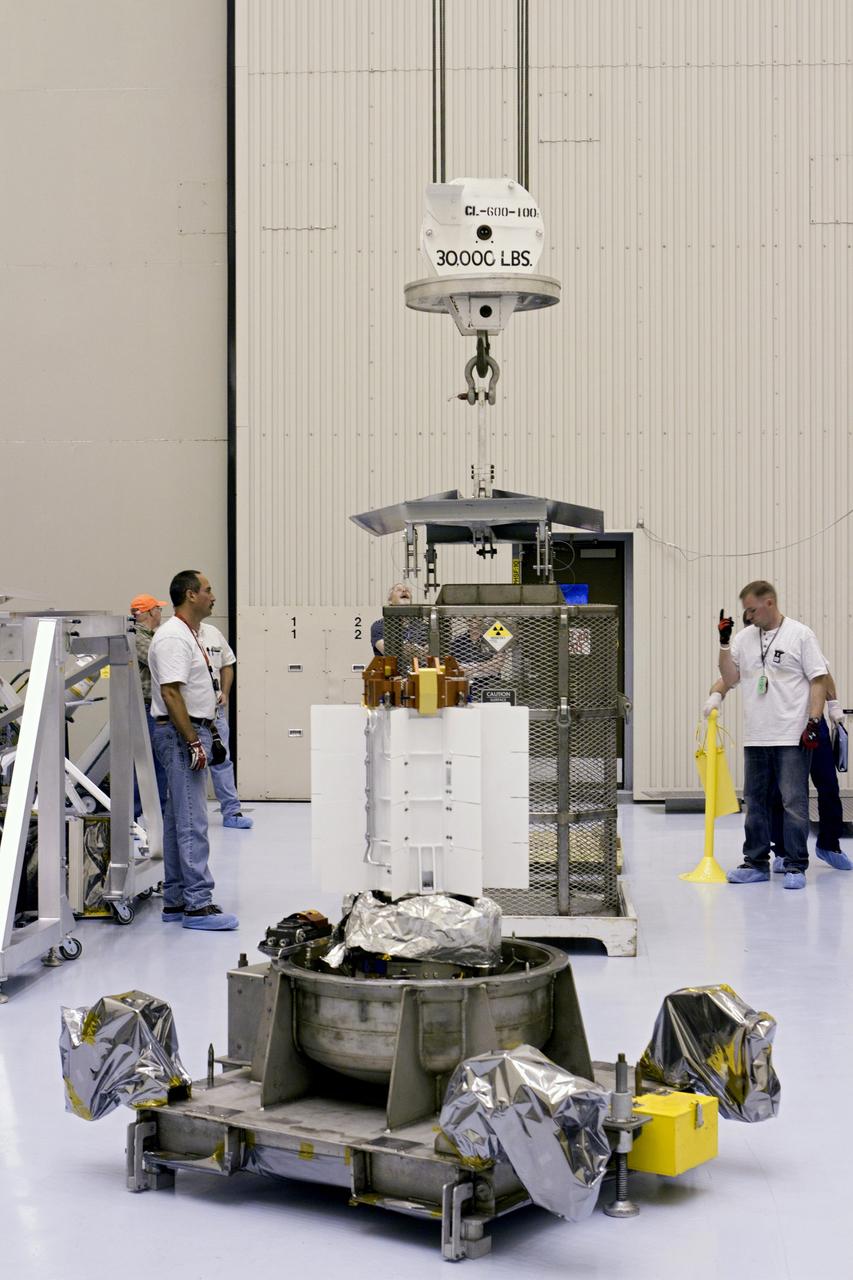
CAPE CANAVERAL, Fla. -- In the airlock of the Payload Hazardous Servicing Facility (PHSF) at NASA's Kennedy Space Center in Florida, the protective mesh container enclosing the multi-mission radioisotope thermoelectric generator (MMRTG) for NASA's Mars Science Laboratory (MSL) mission is lowered to the floor of the airlock beside the MMRTG. The container, known as the "gorilla cage," protects the MMRTG during transport and allows any excess heat generated to dissipate into the air. Next, the airlock will be transitioned into a clean room by purging the air of any particles. In the PHSF, the MMRTG temporarily will be installed on the MSL rover, Curiosity, for a fit check but will be installed on the rover for launch at the pad. The MMRTG will generate the power needed for the mission from the natural decay of plutonium-238, a non-weapons-grade form of the radioisotope. Heat given off by this natural decay will provide constant power through the day and night during all seasons. Curiosity, MSL's car-sized rover, has 10 science instruments designed to search for signs of life, including methane, and help determine if the gas is from a biological or geological source. Waste heat from the MMRTG will be circulated throughout the rover system to keep instruments, computers, mechanical devices and communications systems within their operating temperature ranges. Launch of MSL aboard a United Launch Alliance Atlas V rocket is planned for Nov. 25 from Space Launch Complex 41 on Cape Canaveral Air Force Station. For more information, visit http://www.nasa.gov/msl. Photo credit: NASA/Cory Huston