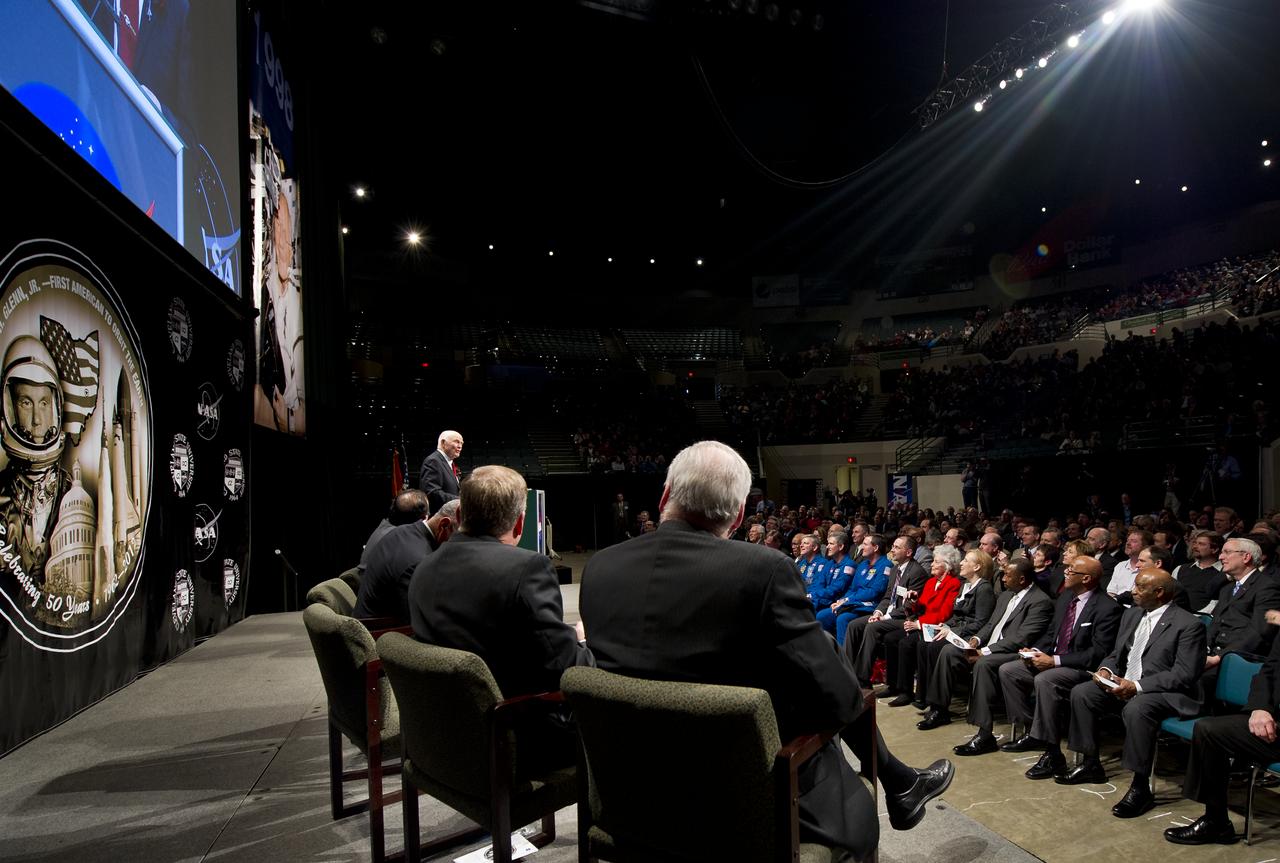
Sen. John Glenn gives remarks at an event celebrating his legacy and 50 years of americans in orbit held at the Cleveland State University Wolstein Center on Friday, March 3, 2012 in Cleveland, Ohio. Glenn became the first American to orbit Earth in 1962. Photo Credit: (NASA/Bill Ingalls)
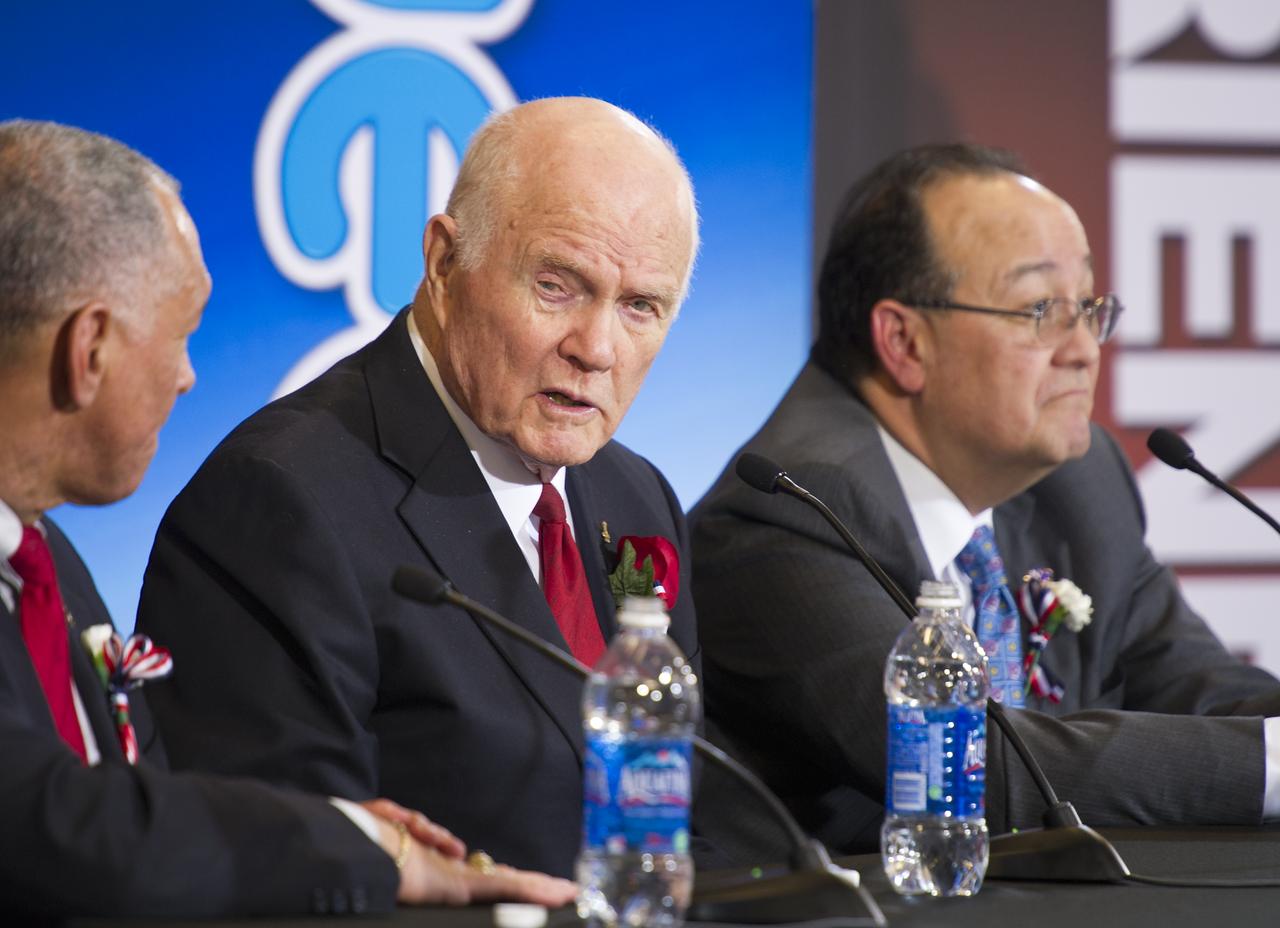
Sen. John Glenn answers questions at a NASA Tweetup event celebrating Glenn's legacy and 50 years of americans in orbit held at the Cleveland State University Wolstein Center on Friday, March 3, 2012 in Cleveland, Ohio. Glenn became the first American to orbit Earth in 1962. Photo Credit: (NASA/Bill Ingalls)
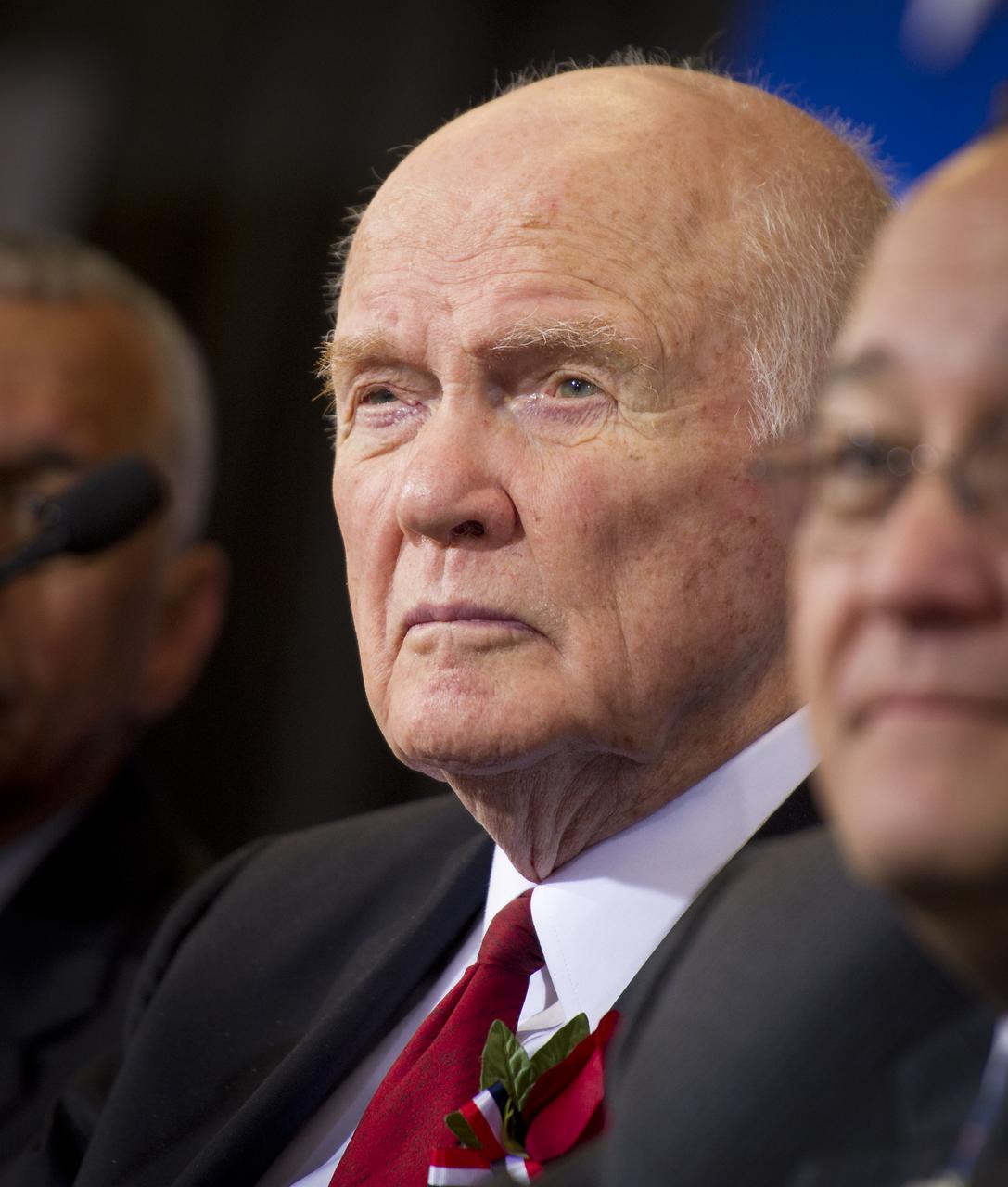
Sen. John Glenn listens to a question at a NASA Tweetup event celebrating Glenn's legacy and 50 years of americans in orbit held at the Cleveland State University Wolstein Center on Friday, March 3, 2012 in Cleveland, Ohio. Glenn became the first American to orbit Earth in 1962. Photo Credit: (NASA/Bill Ingalls)
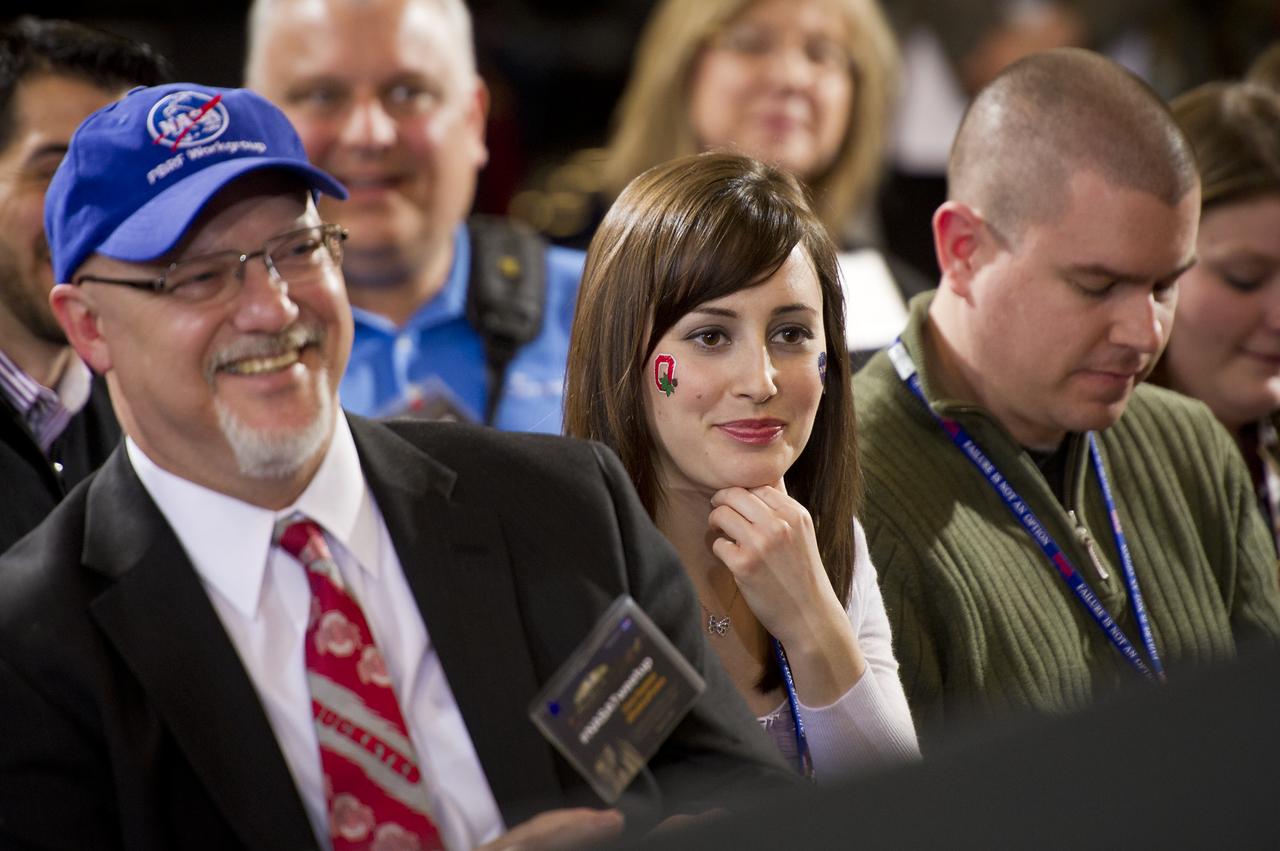
NASA Tweetup attendees listen to Sen. John Glenn at an event celebrating Glenn's legacy and 50 years of americans in orbit held at the Cleveland State University Wolstein Center on Friday, March 3, 2012 in Cleveland, Ohio. Glenn became the first American to orbit Earth in 1962. Photo Credit: (NASA/Bill Ingalls)
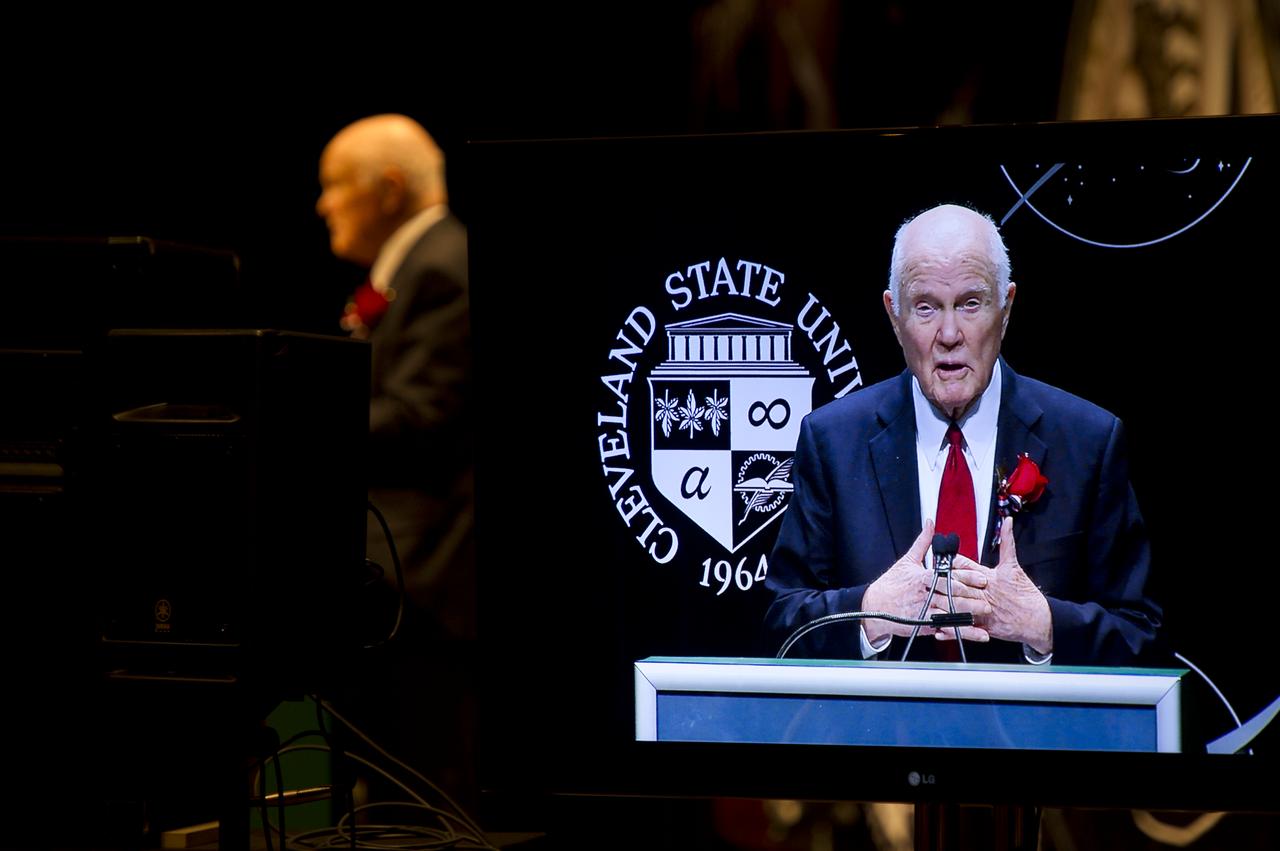
Sen. John Glenn is seen on a monitor as he gives remarks at an event celebrating his legacy and 50 years of americans in orbit held at the Cleveland State University Wolstein Center on Friday, March 3, 2012 in Cleveland, Ohio. Glenn became the first American to orbit Earth in 1962. Photo Credit: (NASA/Bill Ingalls)
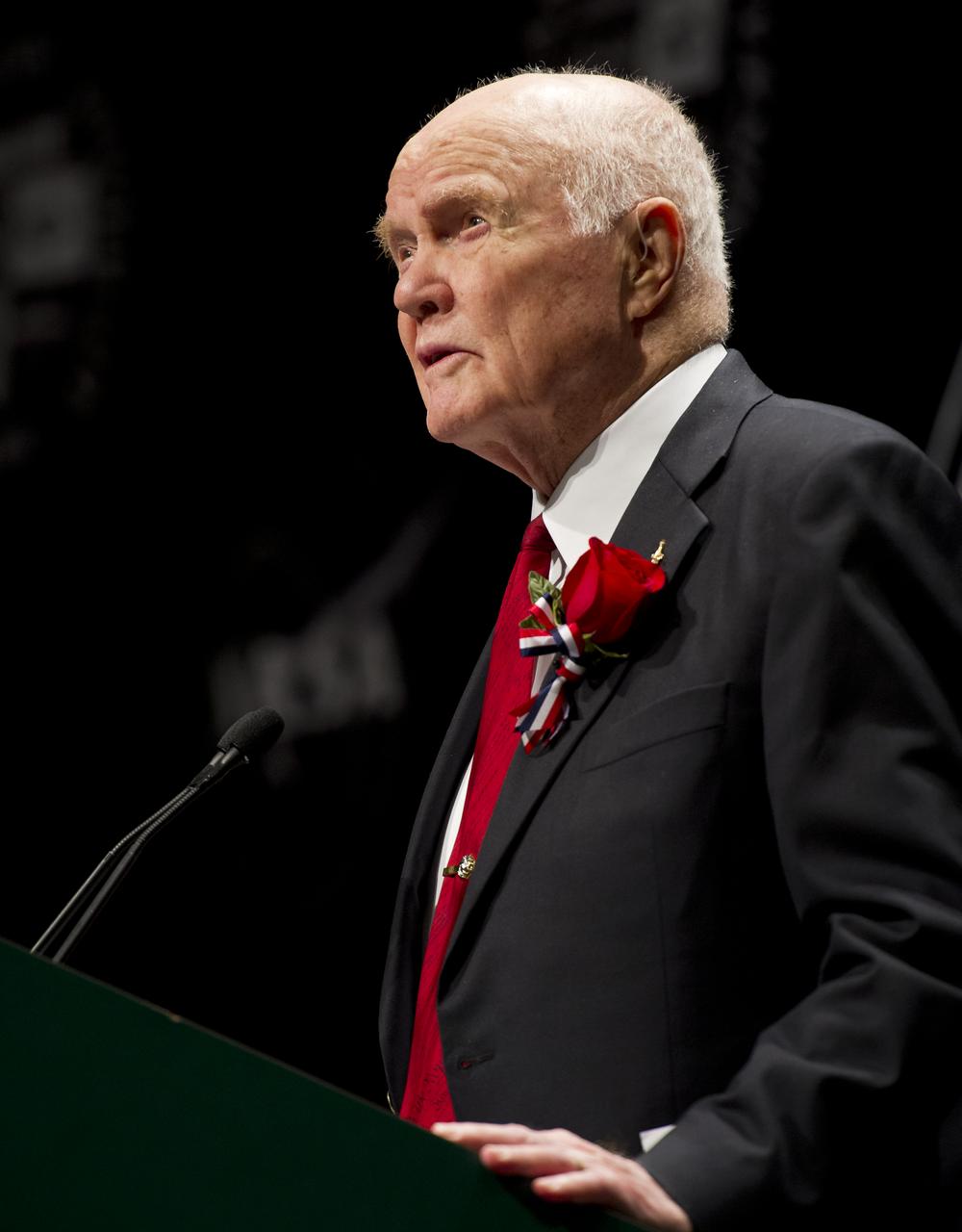
Sen. John Glenn gives remarks at an event celebrating his legacy and 50 years of americans in orbit held at the Cleveland State University Wolstein Center on Friday, March 3, 2012 in Cleveland, Ohio. Glenn became the first American to orbit Earth in 1962. Photo Credit: (NASA/Bill Ingalls)
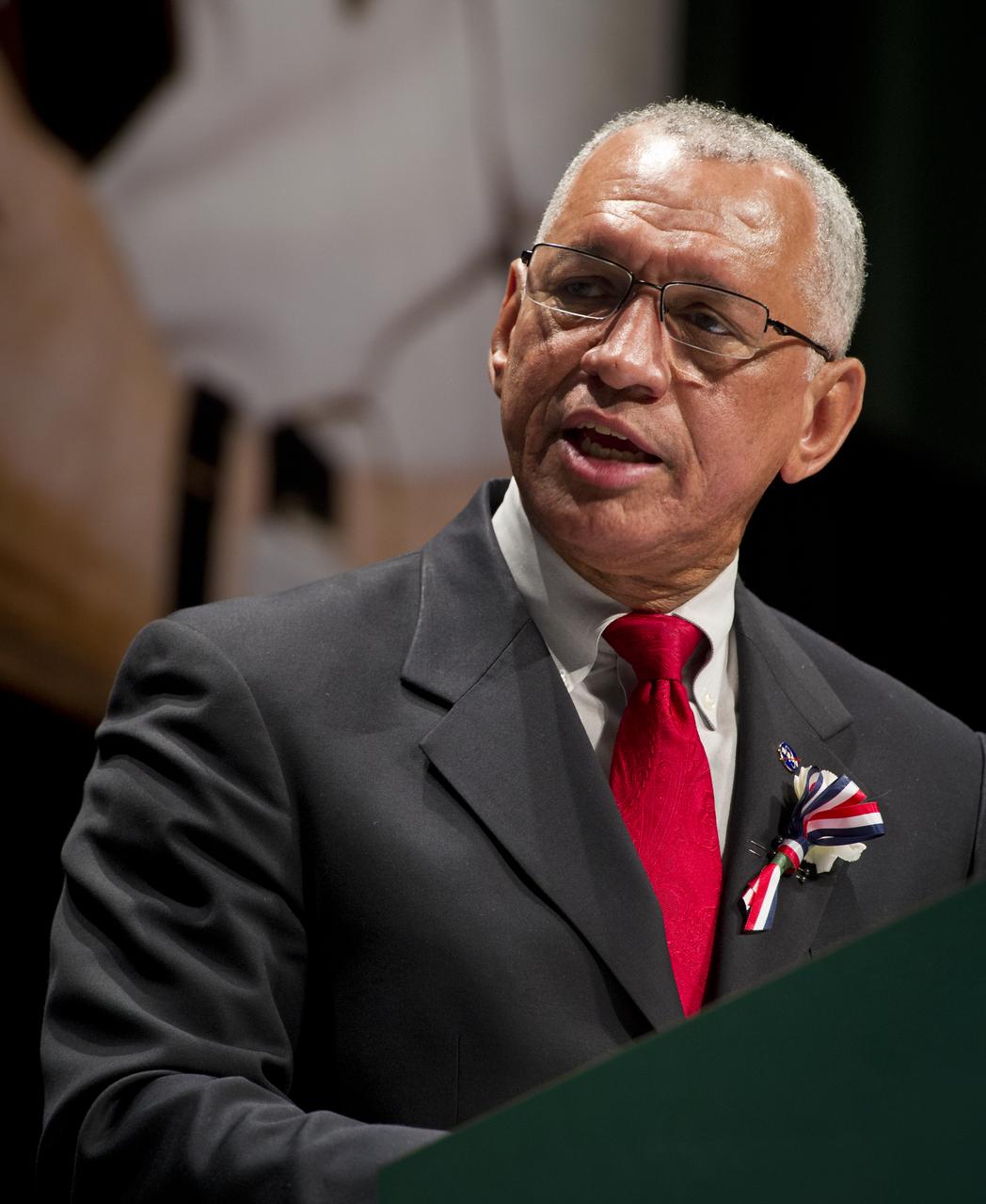
NASA Administrator Charles Bolden gives remarks at an event celebrating John Glenn's legacy and 50 years of americans in orbit held at the Cleveland State University Wolstein Center on Friday, March 3, 2012 in Cleveland, Ohio. Glenn became the first American to orbit Earth in 1962. Photo Credit: (NASA/Bill Ingalls)
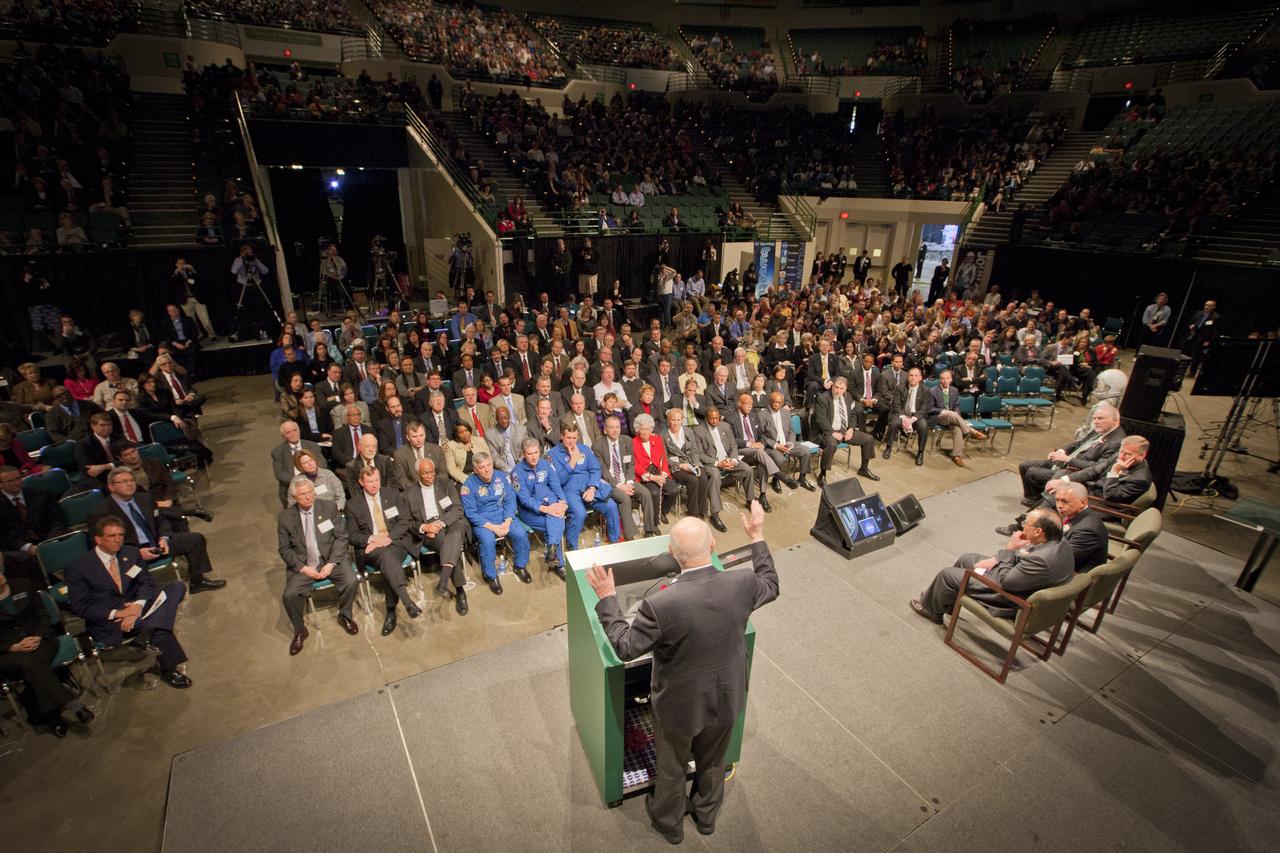
Sen. John Glenn gives remarks at an event celebrating his legacy and 50 years of americans in orbit held at the Cleveland State University Wolstein Center on Friday, March 3, 2012 in Cleveland, Ohio. Glenn became the first American to orbit Earth in 1962. Photo Credit: (NASA/Chris Lynch)
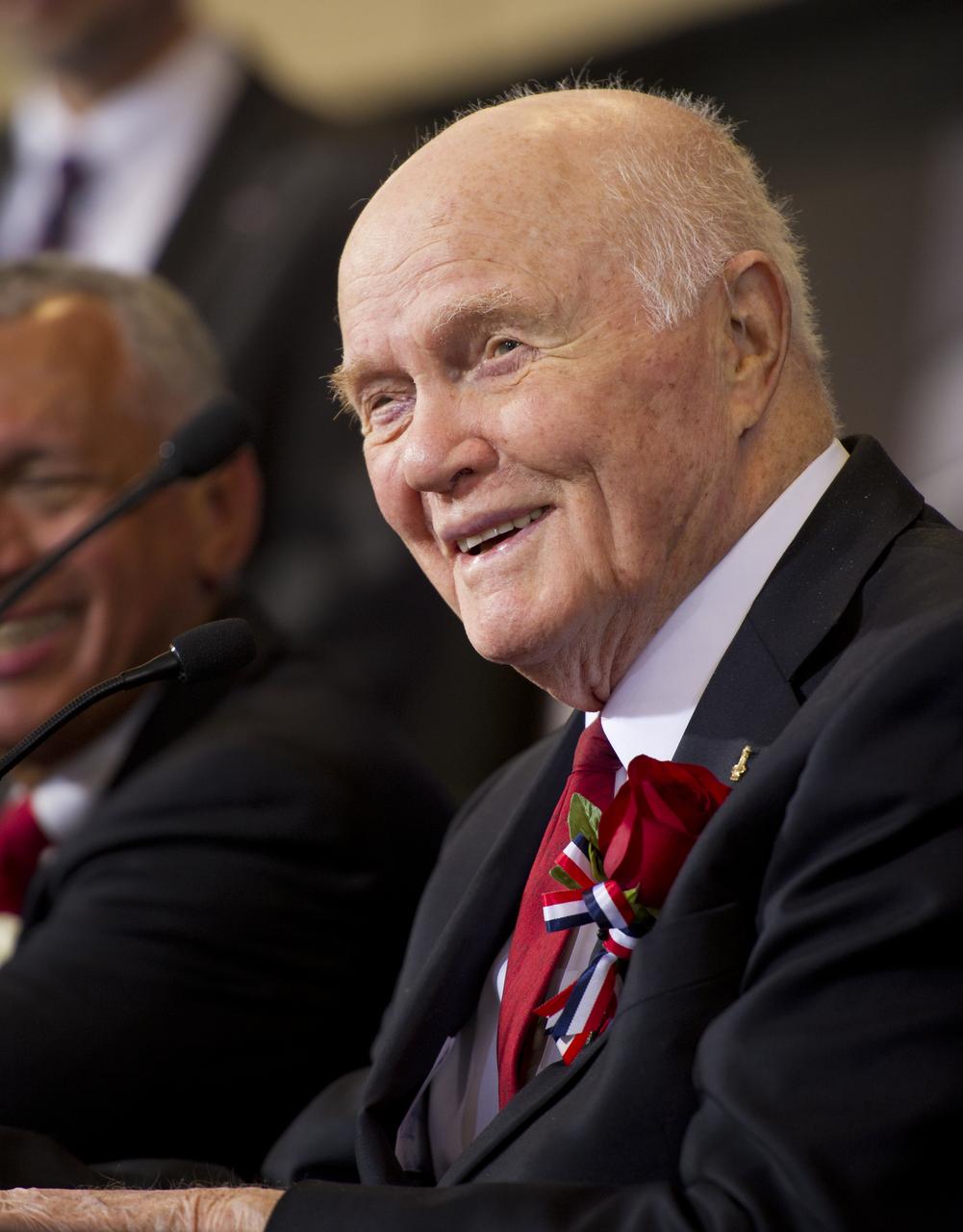
Sen. John Glenn listens to a question at a NASA Tweetup event celebrating Glenn's legacy and 50 years of americans in orbit held at the Cleveland State University Wolstein Center on Friday, March 3, 2012 in Cleveland, Ohio. Glenn became the first American to orbit Earth in 1962. Photo Credit: (NASA/Bill Ingalls)
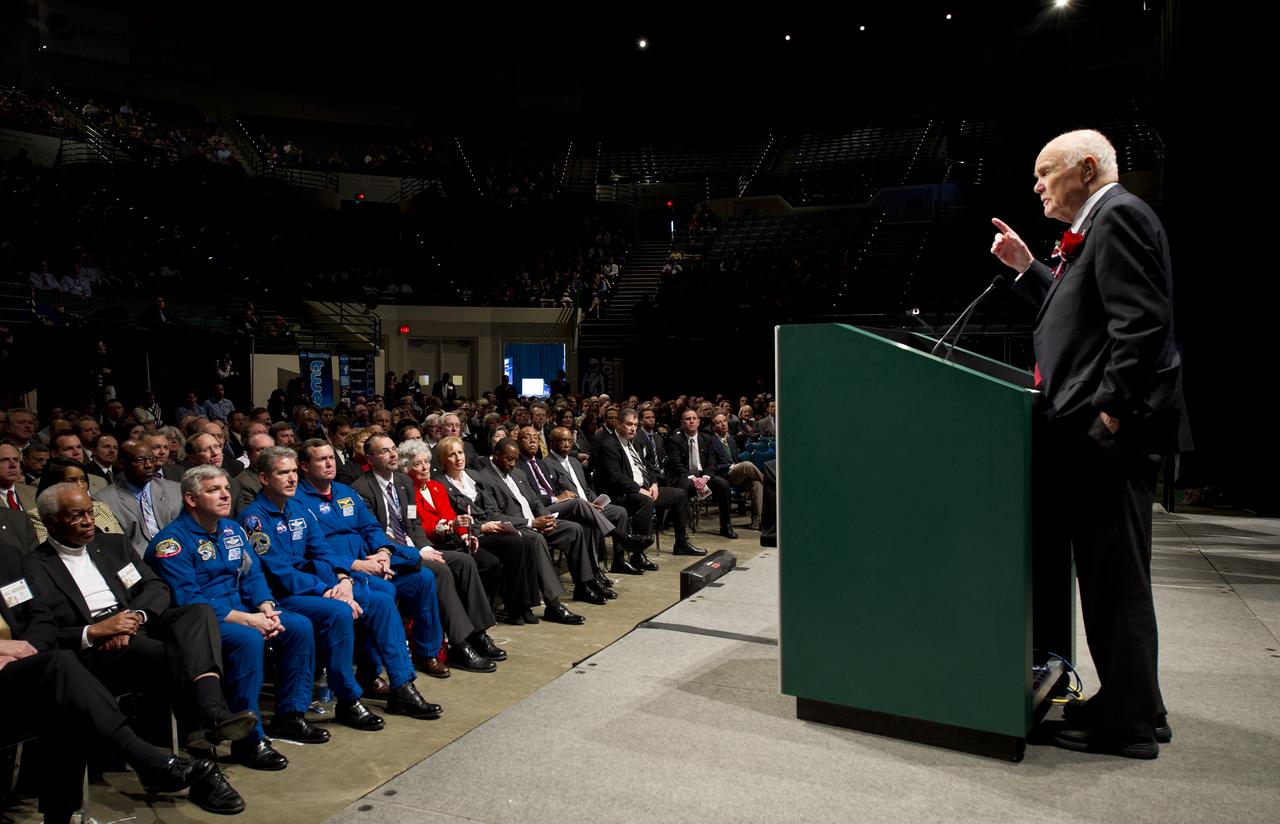
Sen. John Glenn gives remarks at an event celebrating his legacy and 50 years of americans in orbit held at the Cleveland State University Wolstein Center on Friday, March 3, 2012 in Cleveland, Ohio. Glenn became the first American to orbit Earth in 1962. Photo Credit: (NASA/Bill Ingalls)
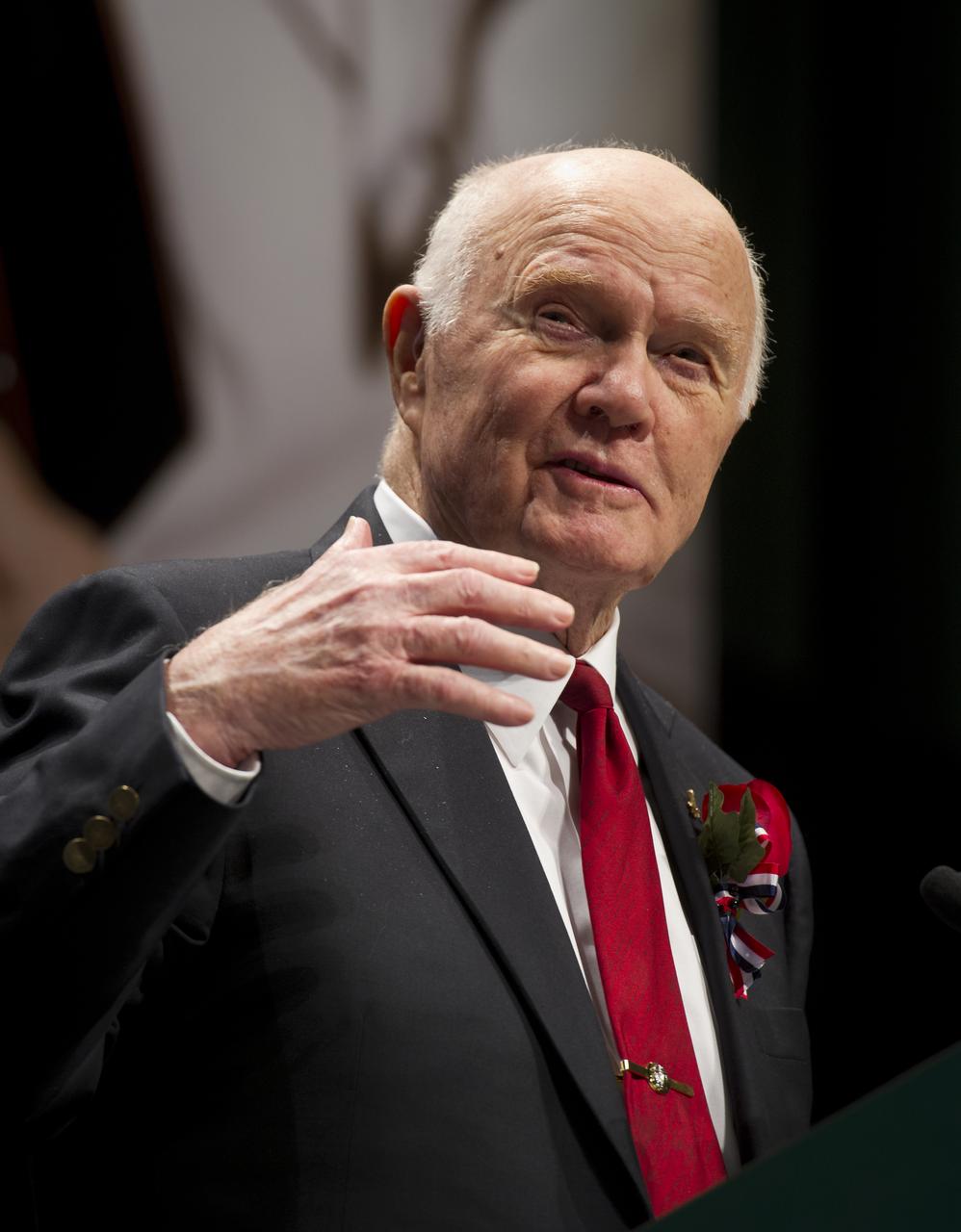
Sen. John Glenn gives remarks at an event celebrating his legacy and 50 years of americans in orbit held at the Cleveland State University Wolstein Center on Friday, March 3, 2012 in Cleveland, Ohio. Glenn became the first American to orbit Earth in 1962. Photo Credit: (NASA/Bill Ingalls)
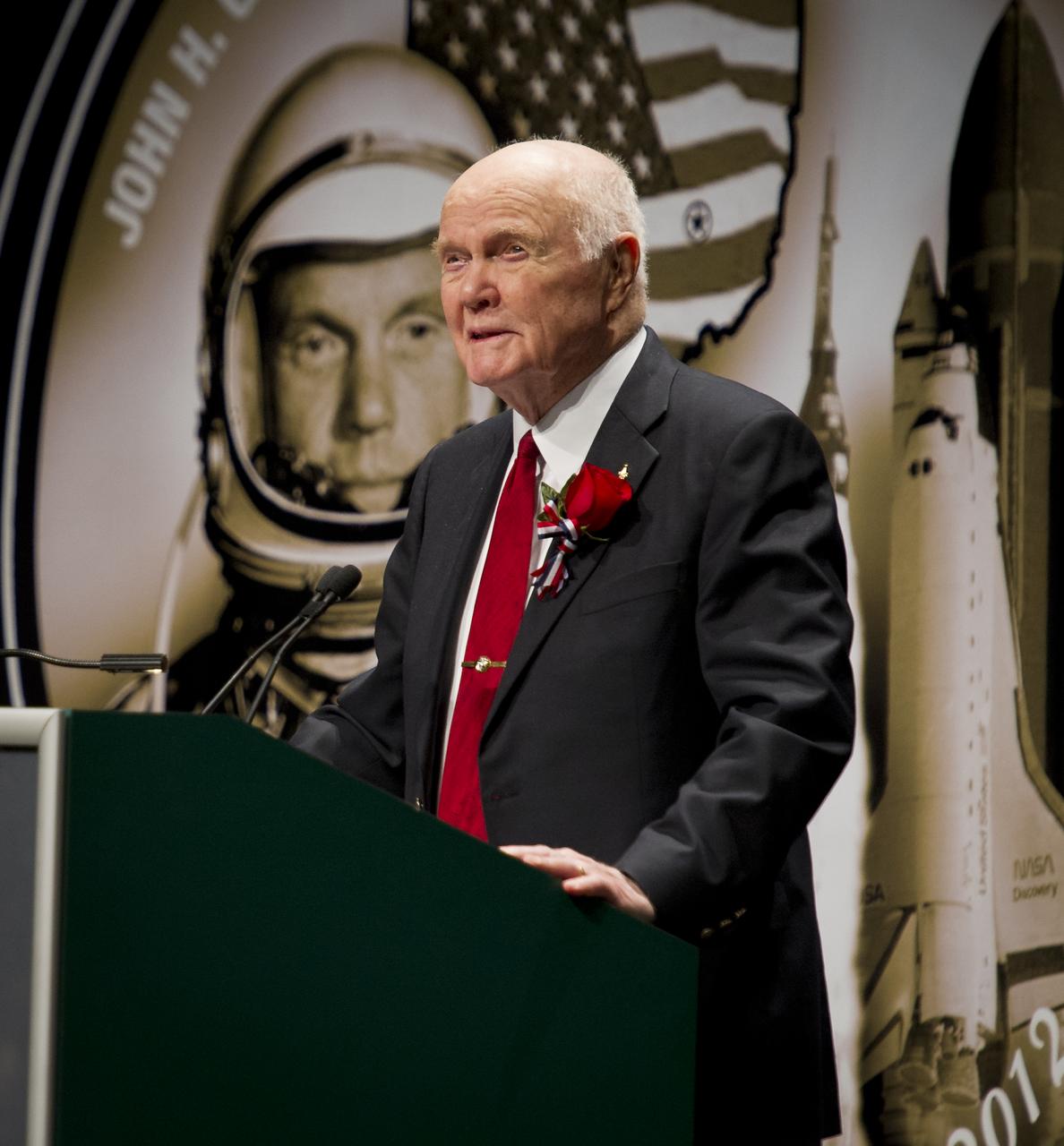
Sen. John Glenn gives remarks at an event celebrating his legacy and 50 years of americans in orbit held at the Cleveland State University Wolstein Center on Friday, March 3, 2012 in Cleveland, Ohio. Glenn became the first American to orbit Earth in 1962. Photo Credit: (NASA/Bill Ingalls)
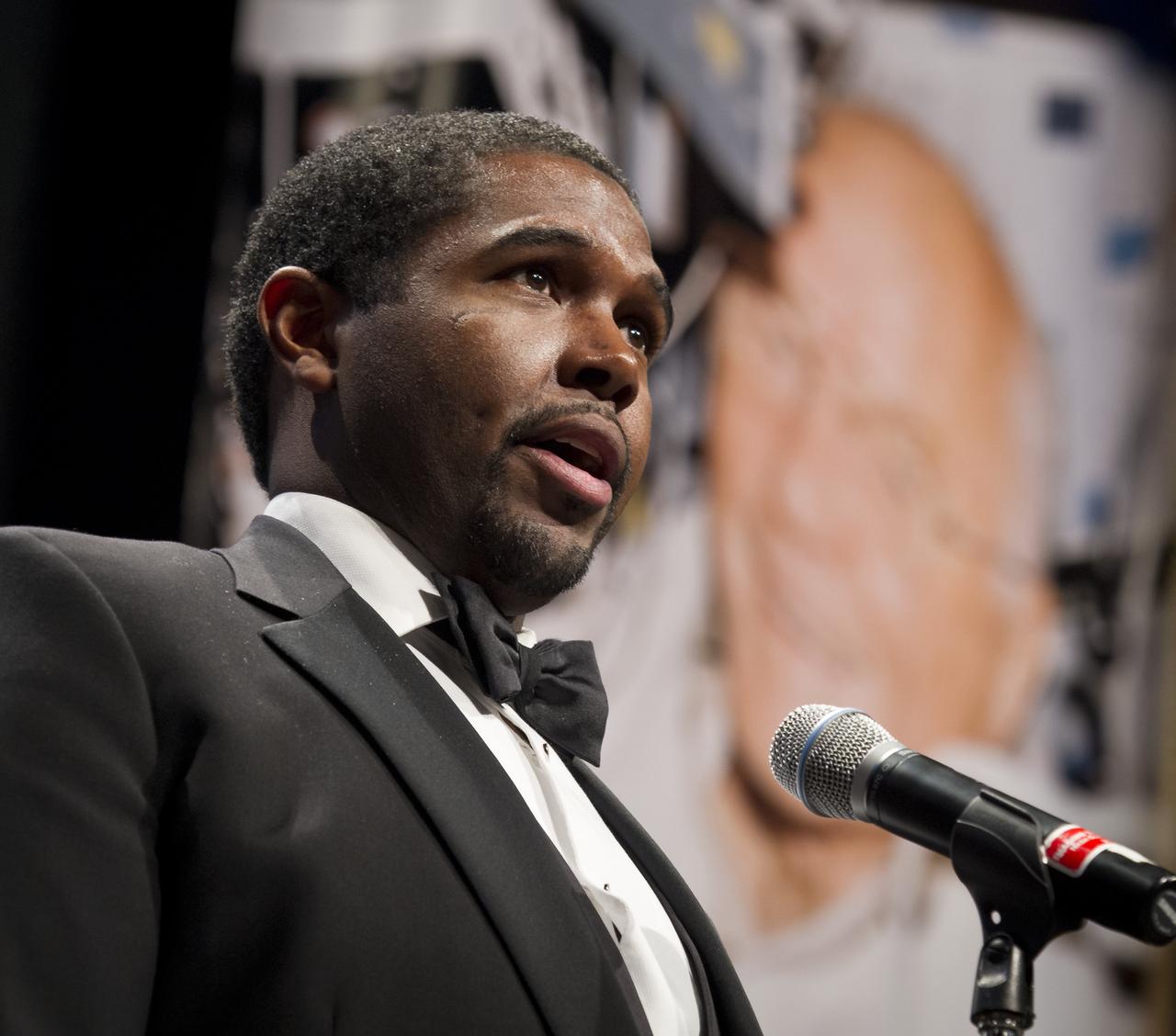
Cleveland State University Master of Music Major James Binion Jr. sings a musical tribute during an event celebrating John Glenn's legacy and 50 years of americans in orbit held at the university's Wolstein Center on Friday, March 3, 2012 in Cleveland, Ohio. In 1998 Lindsey flew onboard the space shuttle Discovery along with then 77 year-old Sen. John Glenn for the STS-95 mission. Glenn became the first American to orbit Earth in 1962. Photo Credit: (NASA/Bill Ingalls)
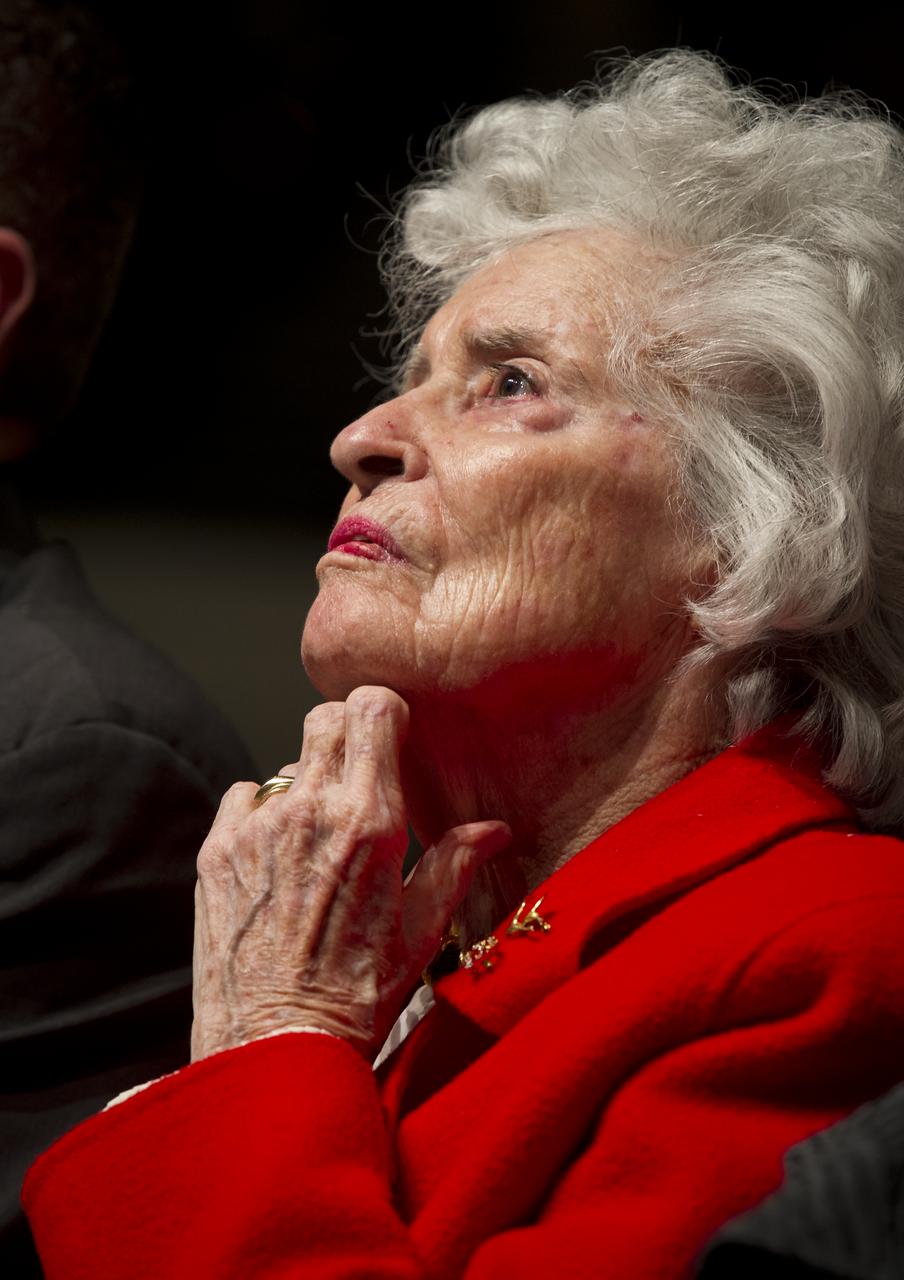
Wife of former astronaut and Senator John Glenn, Annie Glenn, listens intently to Cleveland State University Master of Music Major James Binion Jr. as he sings a musical tribute during an event celebrating John Glenn's legacy and 50 years of americans in orbit held at the university's Wolstein Center on Friday, March 3, 2012 in Cleveland, Ohio. Glenn became the first American to orbit Earth in 1962. Photo Credit: (NASA/Bill Ingalls)
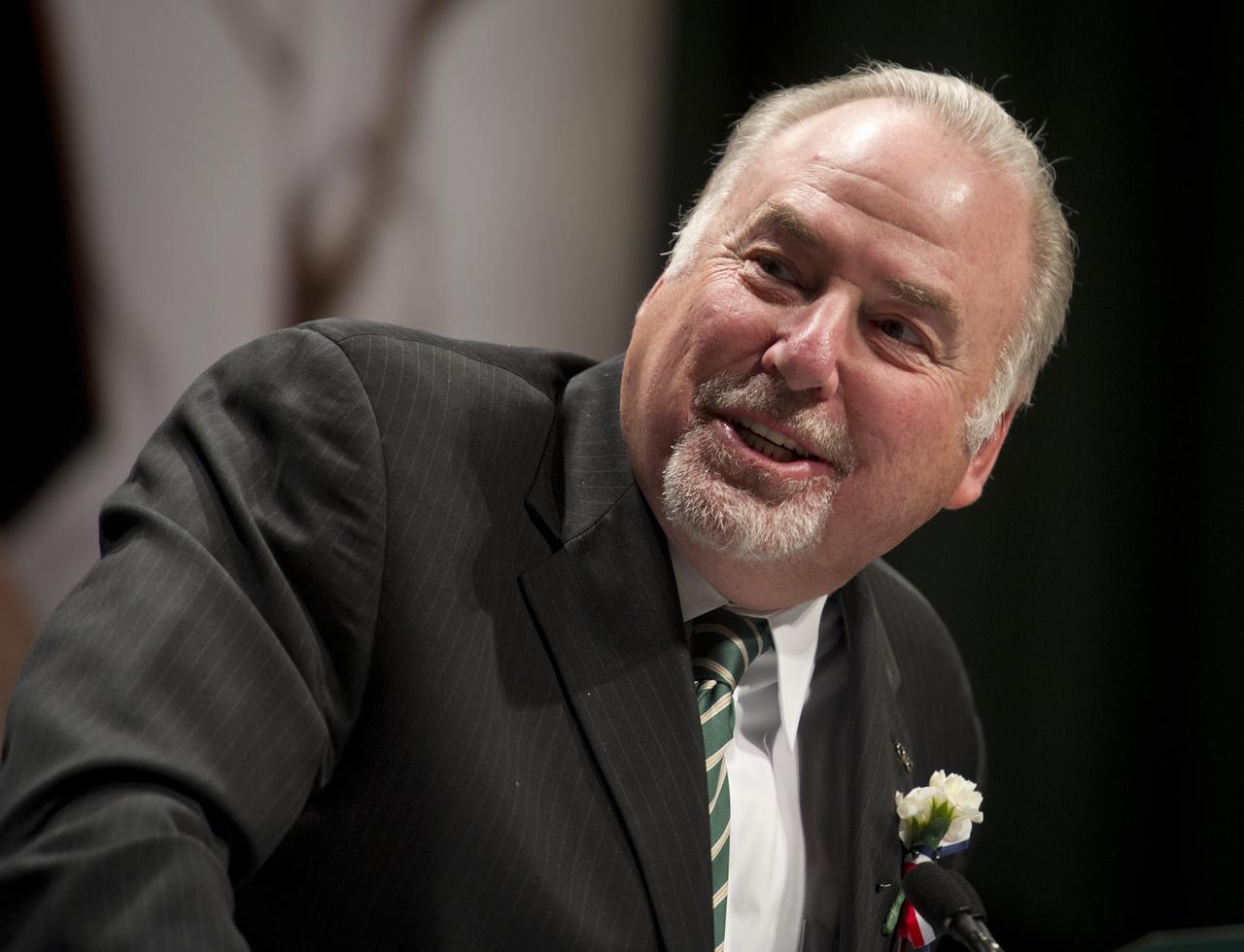
Dr. Ronald M. Berkman, CSU President gives remarks at an event celebrating John Glenn's legacy and 50 years of americans in orbit held at the Cleveland State University Wolstein Center on Friday, March 3, 2012 in Cleveland, Ohio. Glenn became the first American to orbit Earth in 1962. Photo Credit: (NASA/Bill Ingalls)
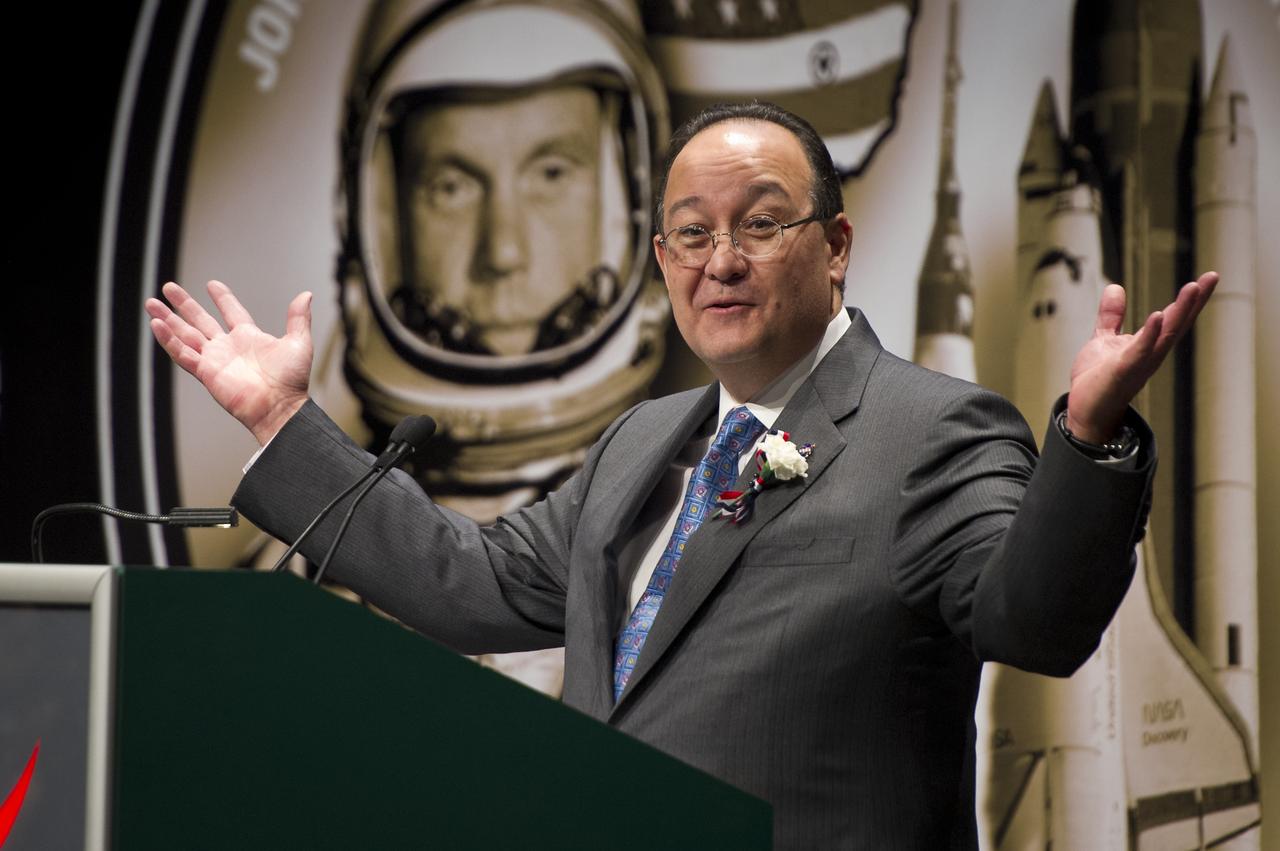
NASA Glenn Research Center Director Ray Lugo welcomes guest to an event celebrating John Glenn's legacy and 50 years of americans in orbit held at the Cleveland State University Wolstein Center on Friday, March 3, 2012 in Cleveland, Ohio. Glenn became the first American to orbit Earth in 1962. Photo Credit: (NASA/Bill Ingalls)
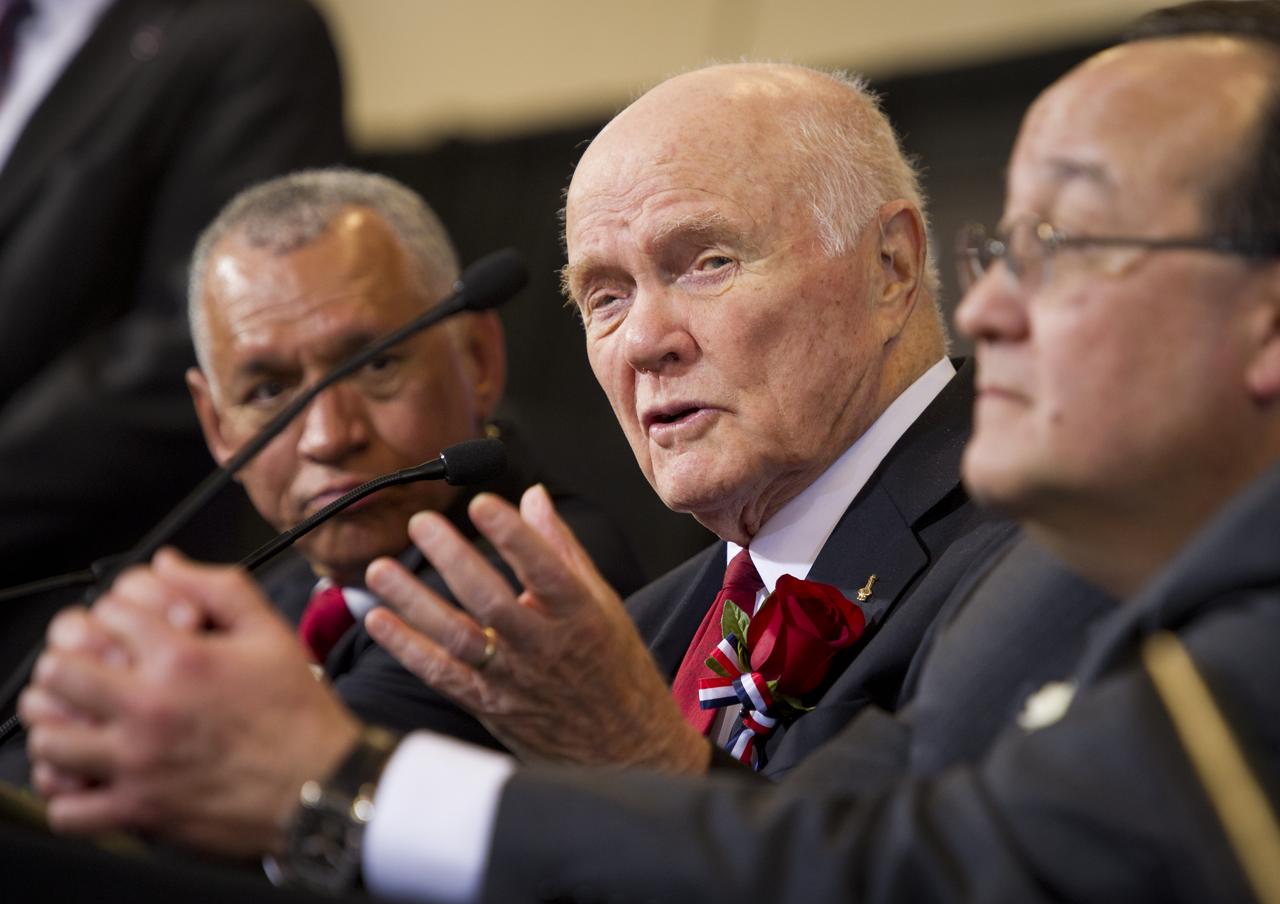
Sen. John Glenn answers questions as NASA Administrator Charles Bolden, left, and NASA Glenn Research Center Ray Lugo look on at a NASA Tweetup event celebrating Glenn's legacy and 50 years of americans in orbit held at the Cleveland State University Wolstein Center on Friday, March 3, 2012 in Cleveland, Ohio. Glenn became the first American to orbit Earth in 1962. Photo Credit: (NASA/Bill Ingalls)
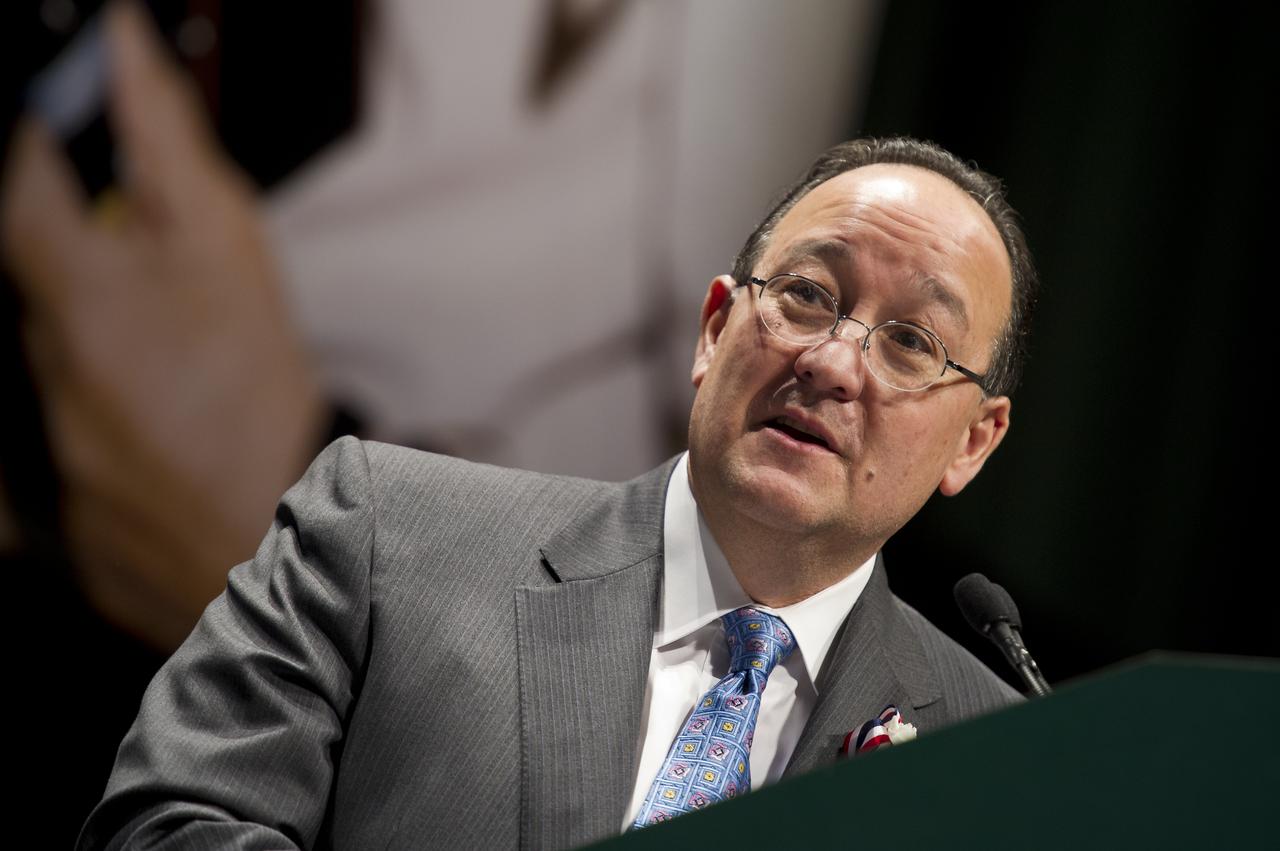
NASA Glenn Research Center Director Ray Lugo talks at an event celebrating John Glenn's legacy and 50 years of americans in orbit held at the Cleveland State University Wolstein Center on Friday, March 3, 2012 in Cleveland, Ohio. Glenn became the first American to orbit Earth in 1962. Photo Credit: (NASA/Bill Ingalls)
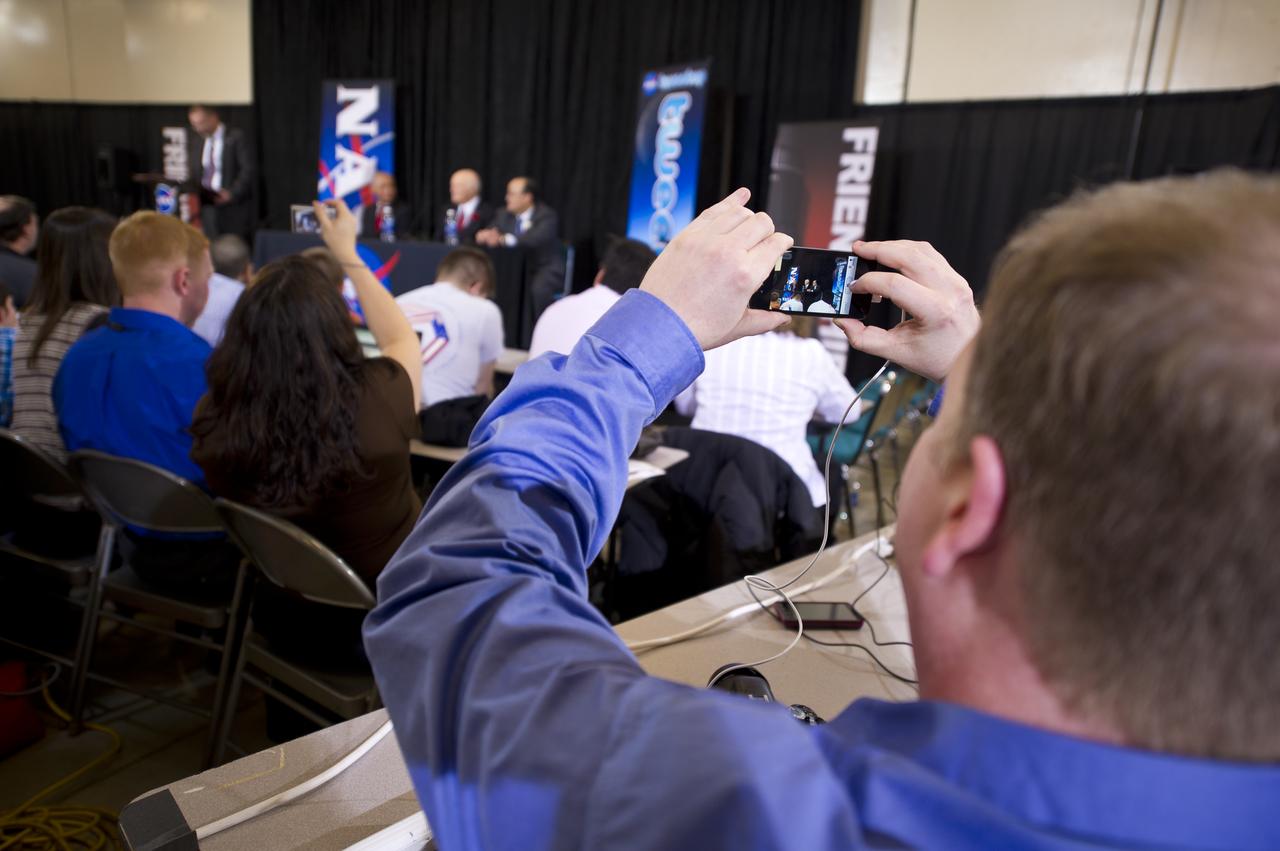
A NASA Tweetup attendee frames a picture of Sen. John Glenn at an event celebrating John Glenn's legacy and 50 years of americans in orbit held at the Cleveland State University Wolstein Center on Friday, March 3, 2012 in Cleveland, Ohio. Glenn became the first American to orbit Earth in 1962. Photo Credit: (NASA/Bill Ingalls)
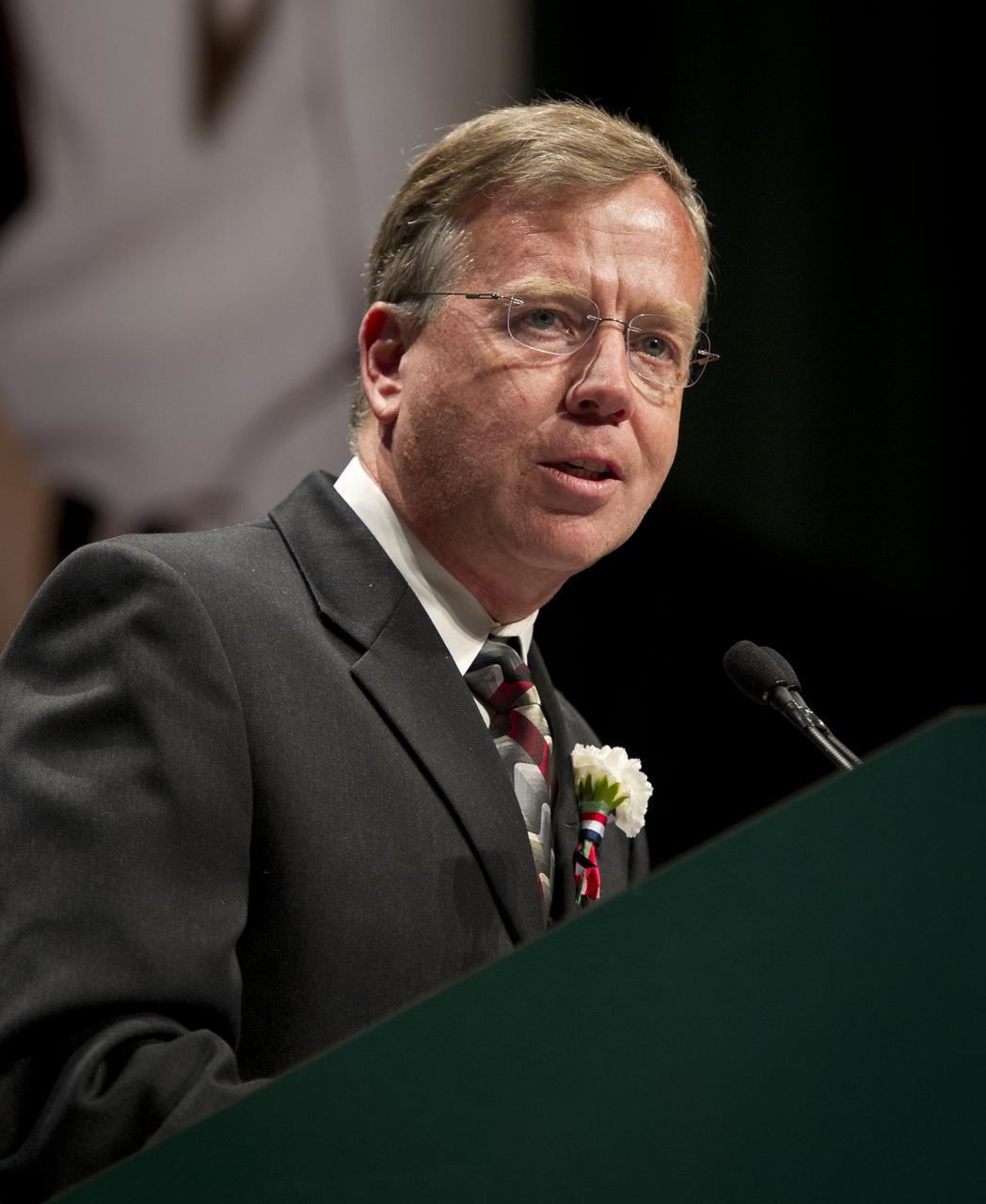
Former NASA Astronaut Steve Lindsey gives remarks at an event celebrating John Glenn's legacy and 50 years of americans in orbit held at the Cleveland State University Wolstein Center on Friday, March 3, 2012 in Cleveland, Ohio. In 1998 Lindsey flew onboard the space shuttle Discovery along with then 77 year-old Sen. John Glenn for the STS-95 mission. Glenn became the first American to orbit Earth in 1962. Photo Credit: (NASA/Bill Ingalls)
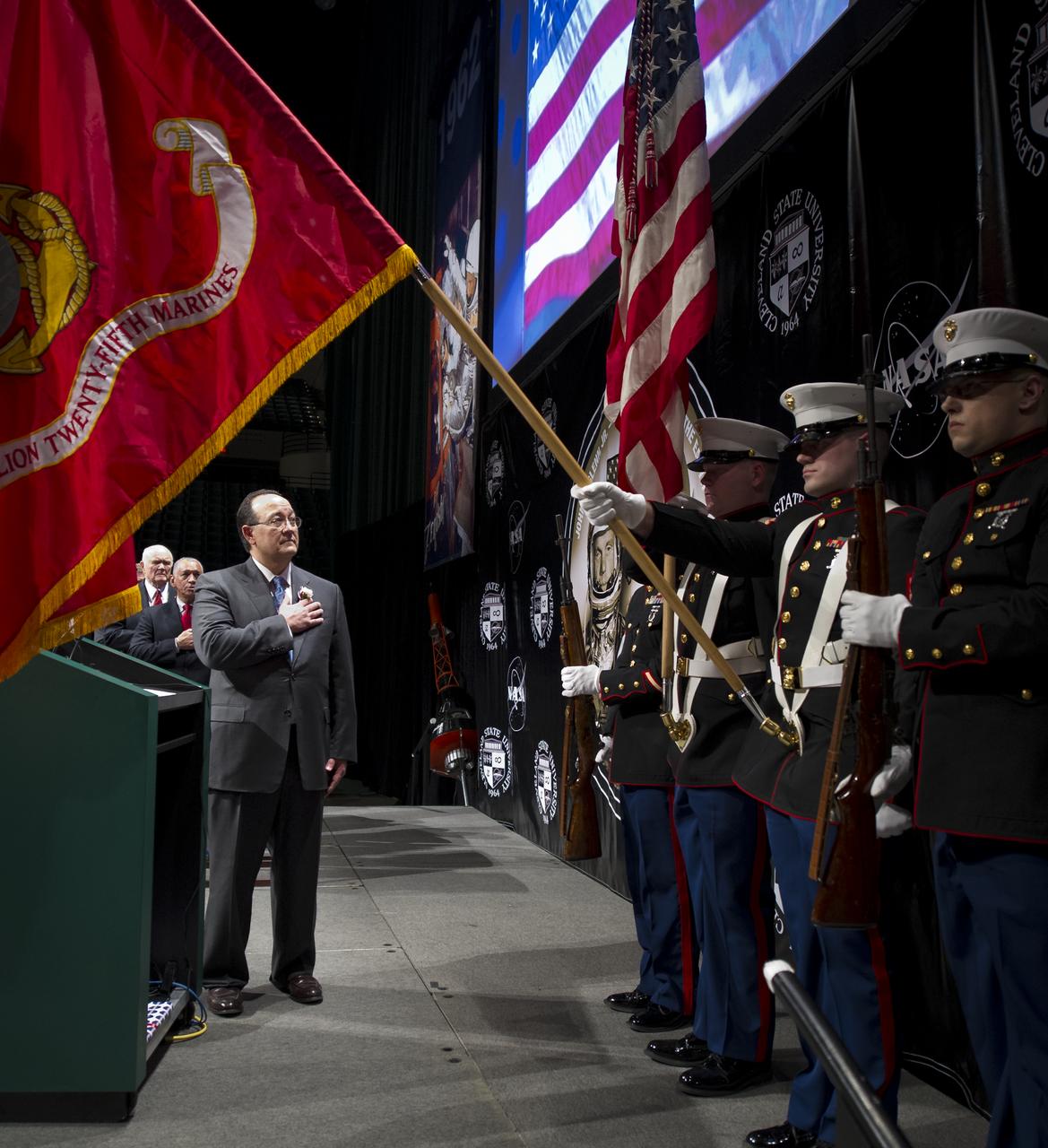
NASA Glenn Research Center Director Ray Lugo, foreground, NASA Administrator Charles Bolden, and Sen. John Glenn, background, stand during the presentation of colors by the 3rd Battalion, 25th Marine Regiment, at the start of an event celebrating John Glenn's legacy and 50 years of americans in orbit held at the Cleveland State University Wolstein Center on Friday, March 3, 2012 in Cleveland, Ohio. Photo Credit: (NASA/Bill Ingalls)
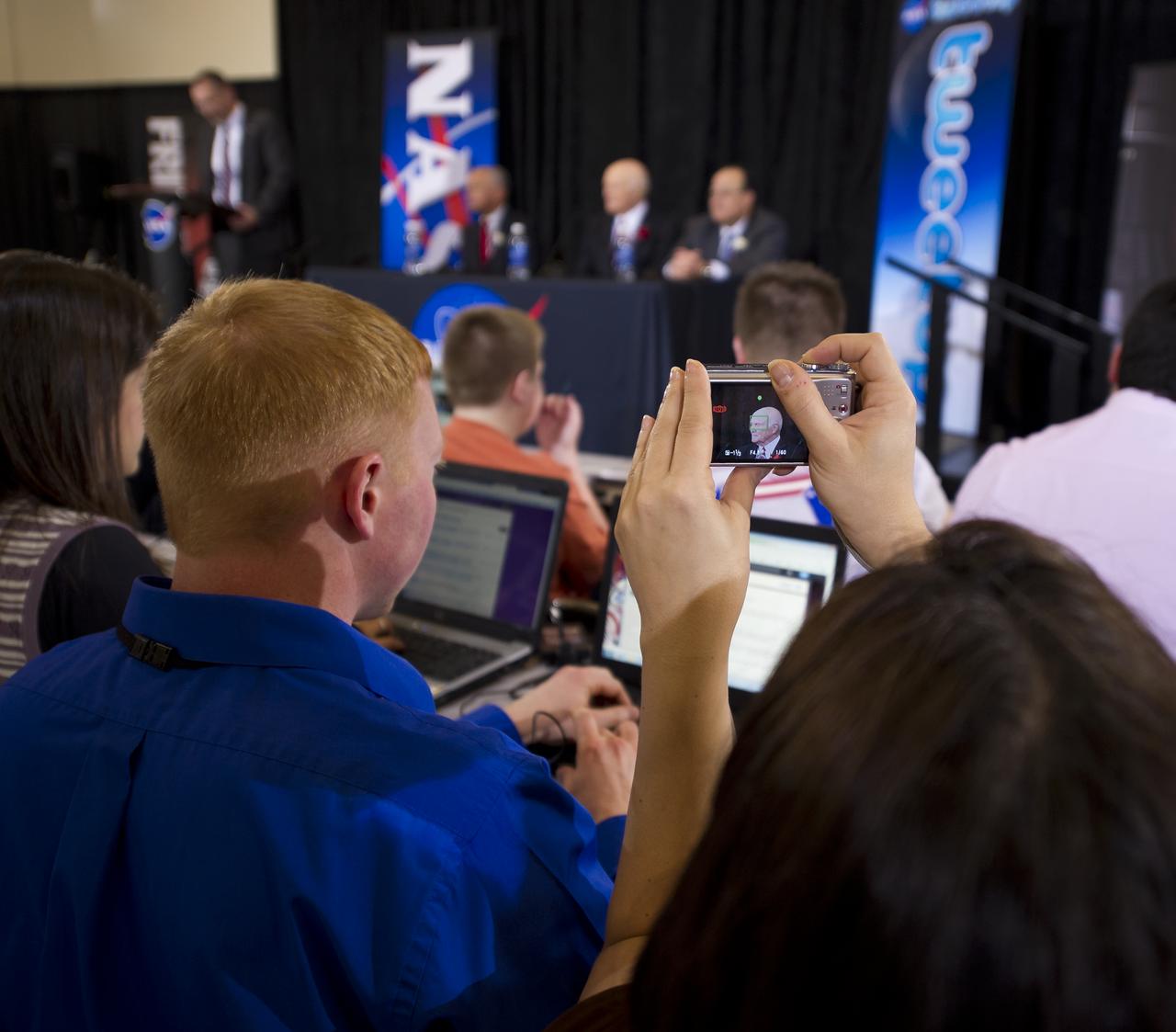
A NASA Tweetup attendee frames a picture of Sen. John Glenn at an event celebrating John Glenn's legacy and 50 years of americans in orbit held at the Cleveland State University Wolstein Center on Friday, March 3, 2012 in Cleveland, Ohio. Glenn became the first American to orbit Earth in 1962. Photo Credit: (NASA/Bill Ingalls)
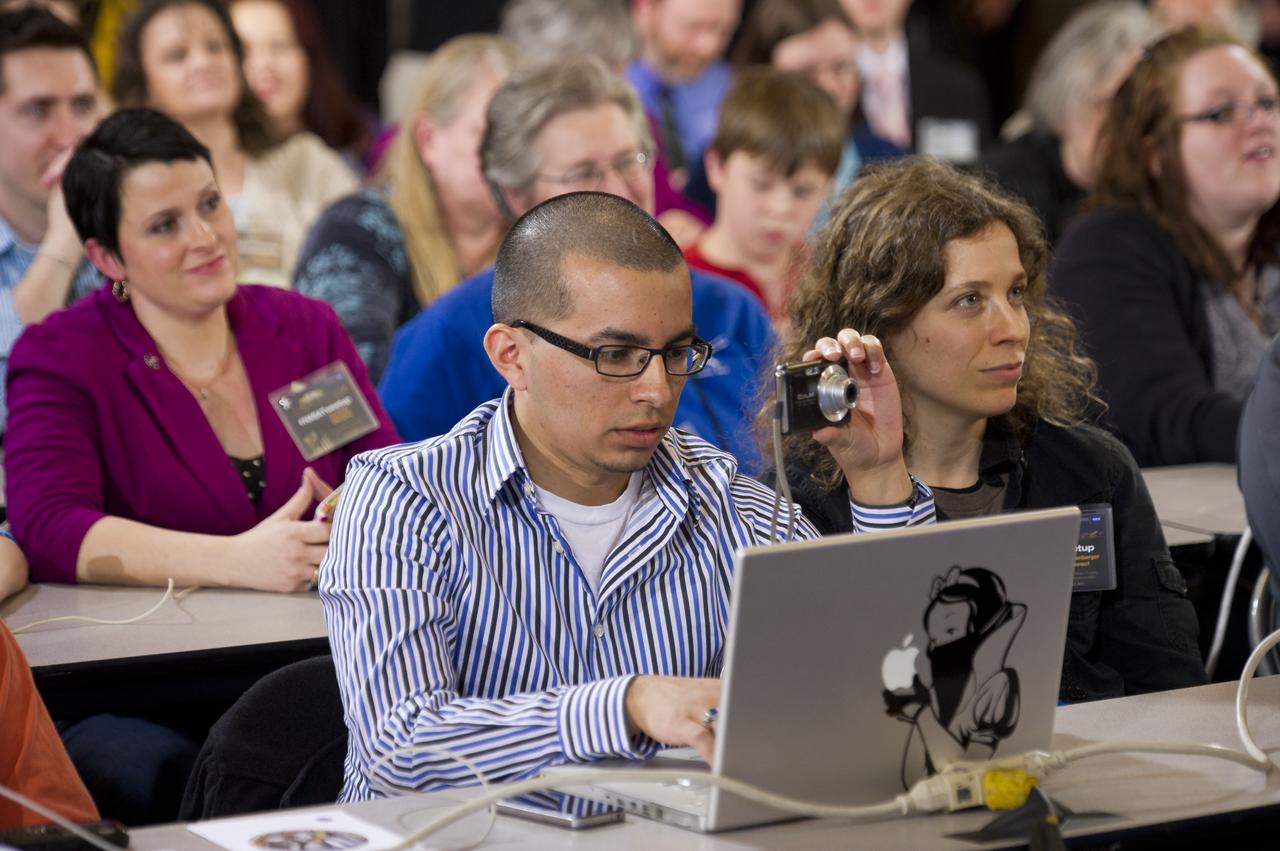
A NASA Tweetup attendee captures images of Sen. John Glenn at an event celebrating John Glenn's legacy and 50 years of americans in orbit held at the Cleveland State University Wolstein Center on Friday, March 3, 2012 in Cleveland, Ohio. Glenn became the first American to orbit Earth in 1962. Photo Credit: (NASA/Bill Ingalls)
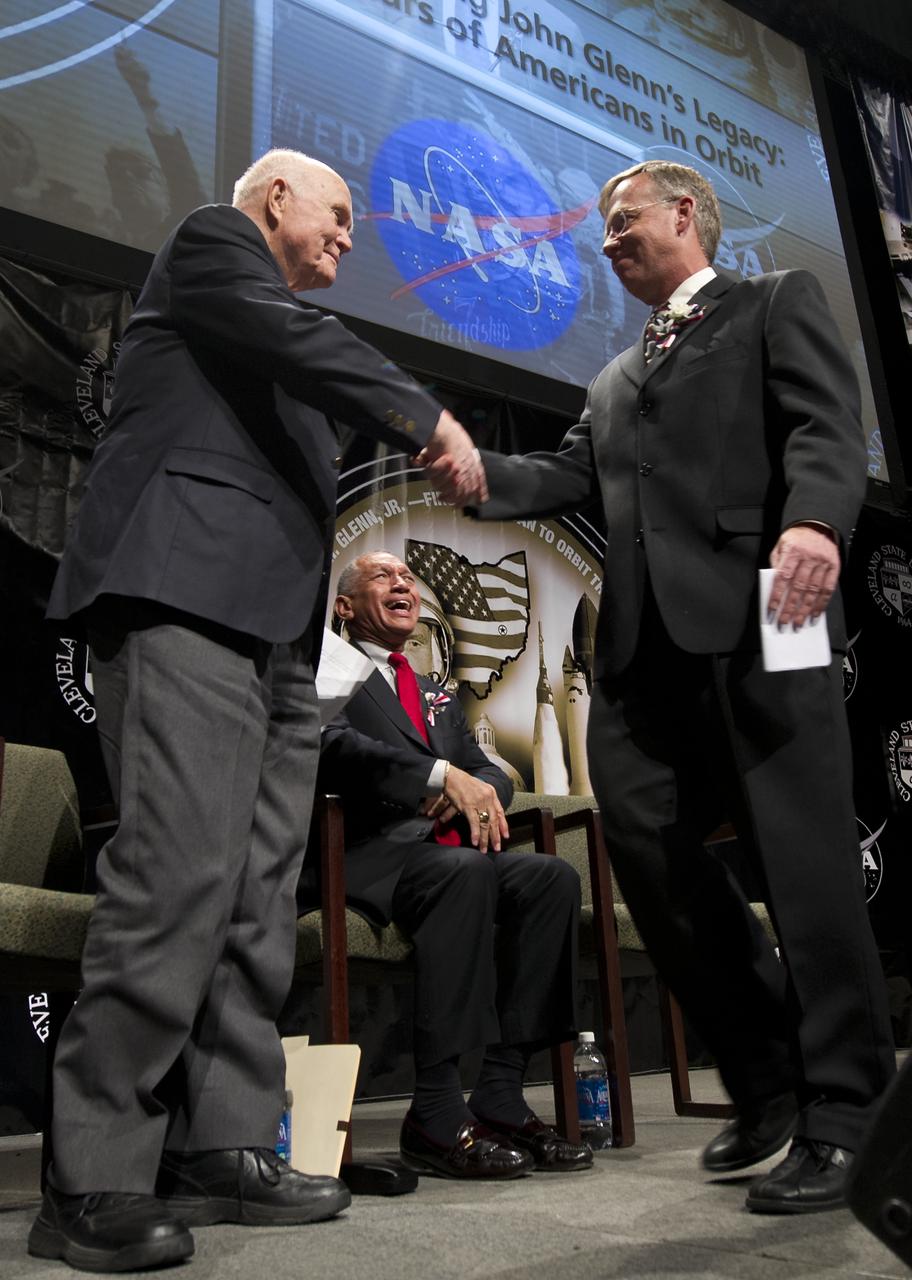
Sen. John Glenn, left, shakes hands with former Astronaut Steve Lindsey as NASA Administrator Charles Bolden smiles at an event celebrating John Glenn's legacy and 50 years of americans in orbit held at the Cleveland State University Wolstein Center on Friday, March 3, 2012 in Cleveland, Ohio. In 1998 Lindsey flew onboard the space shuttle Discovery along with then 77 year-old Sen. John Glenn for the STS-95 mission. Glenn became the first American to orbit Earth in 1962. Photo Credit: (NASA/Bill Ingalls)
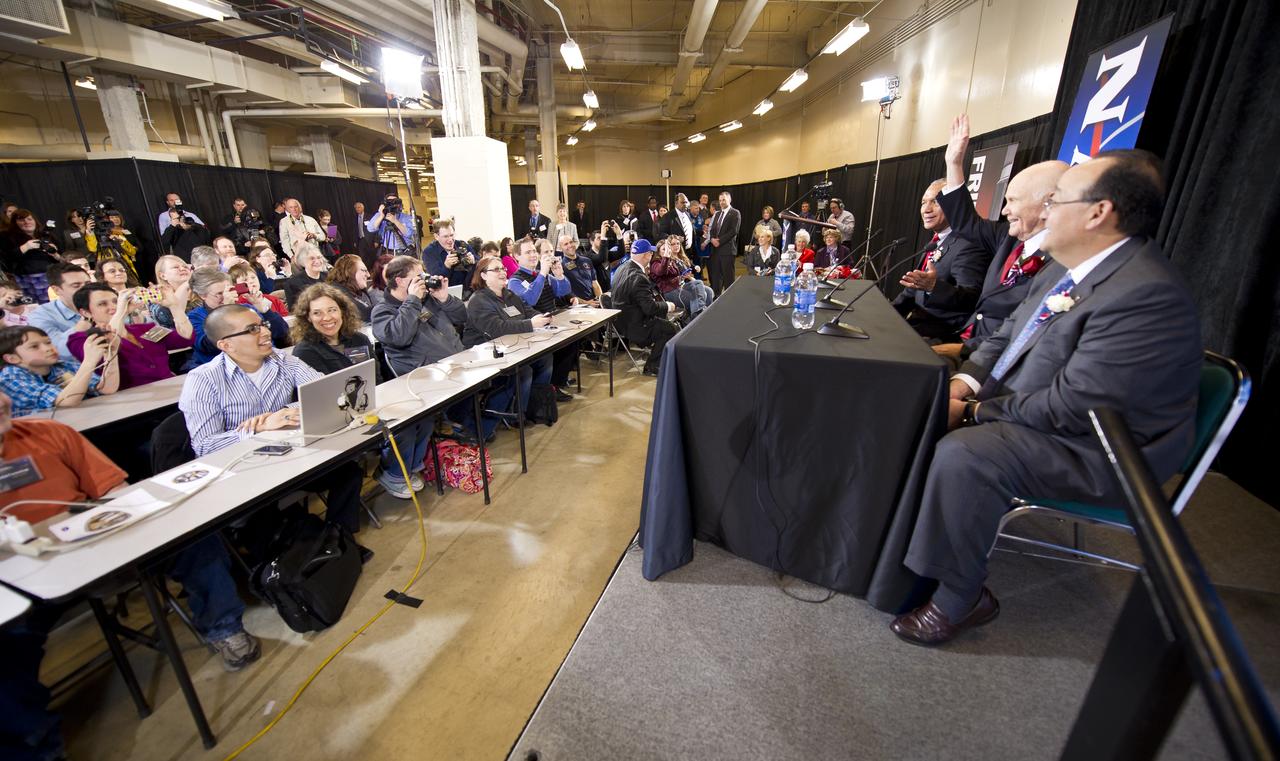
Sen. John Glenn waves to a group of media and Twitter users as he takes the stage with NASA Administrator Charles Bolden and NASA Glenn Research Center Director Ray Lugo, right, at a Tweetup event celebrating John Glenn's legacy and 50 years of americans in orbit held at the Cleveland State University Wolstein Center on Friday, March 3, 2012 in Cleveland, Ohio. Glenn became the first American to orbit Earth in 1962. Photo Credit: (NASA/Bill Ingalls)
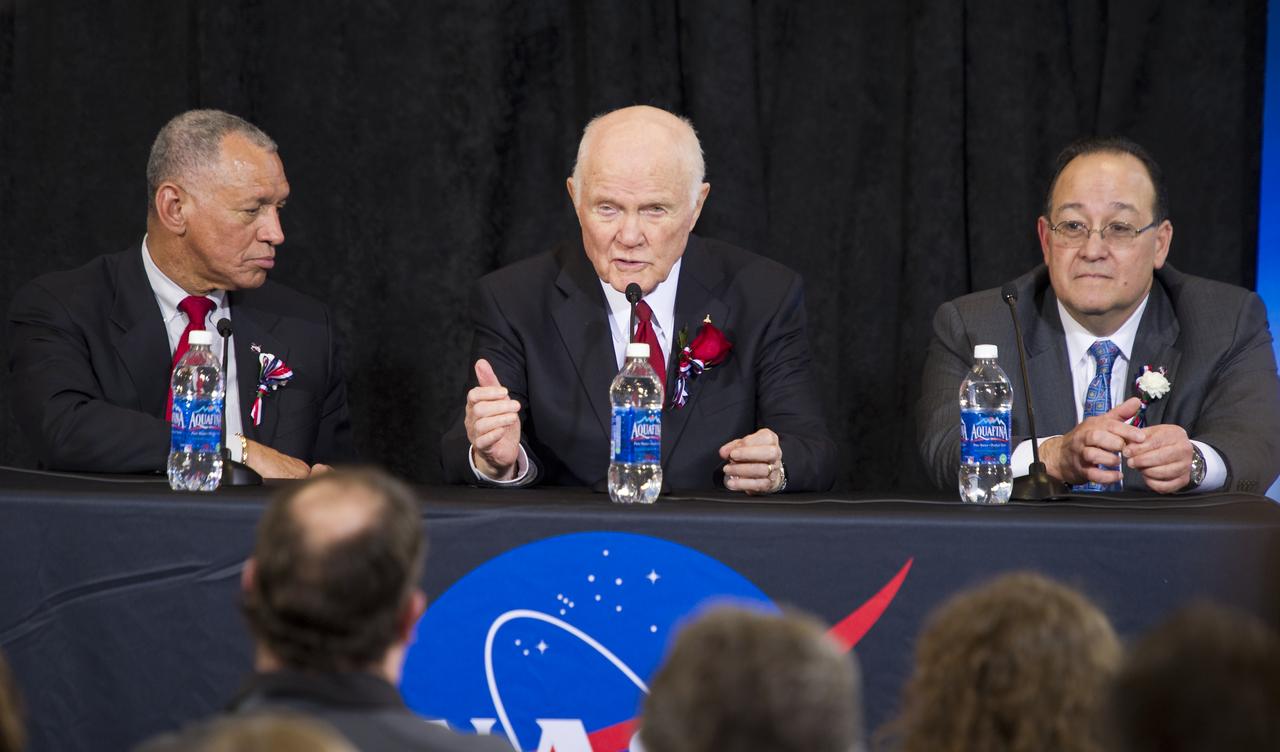
NASA Administrator Charles Bolden, left, Sen. John Glenn, and NASA Glenn Research Center Director Ray Lugo, right, answer questions at a NASA Tweetup event celebrating John Glenn's legacy and 50 years of americans in orbit held at the Cleveland State University Wolstein Center on Friday, March 3, 2012 in Cleveland, Ohio. Glenn became the first American to orbit Earth in 1962. Photo Credit: (NASA/Bill Ingalls)
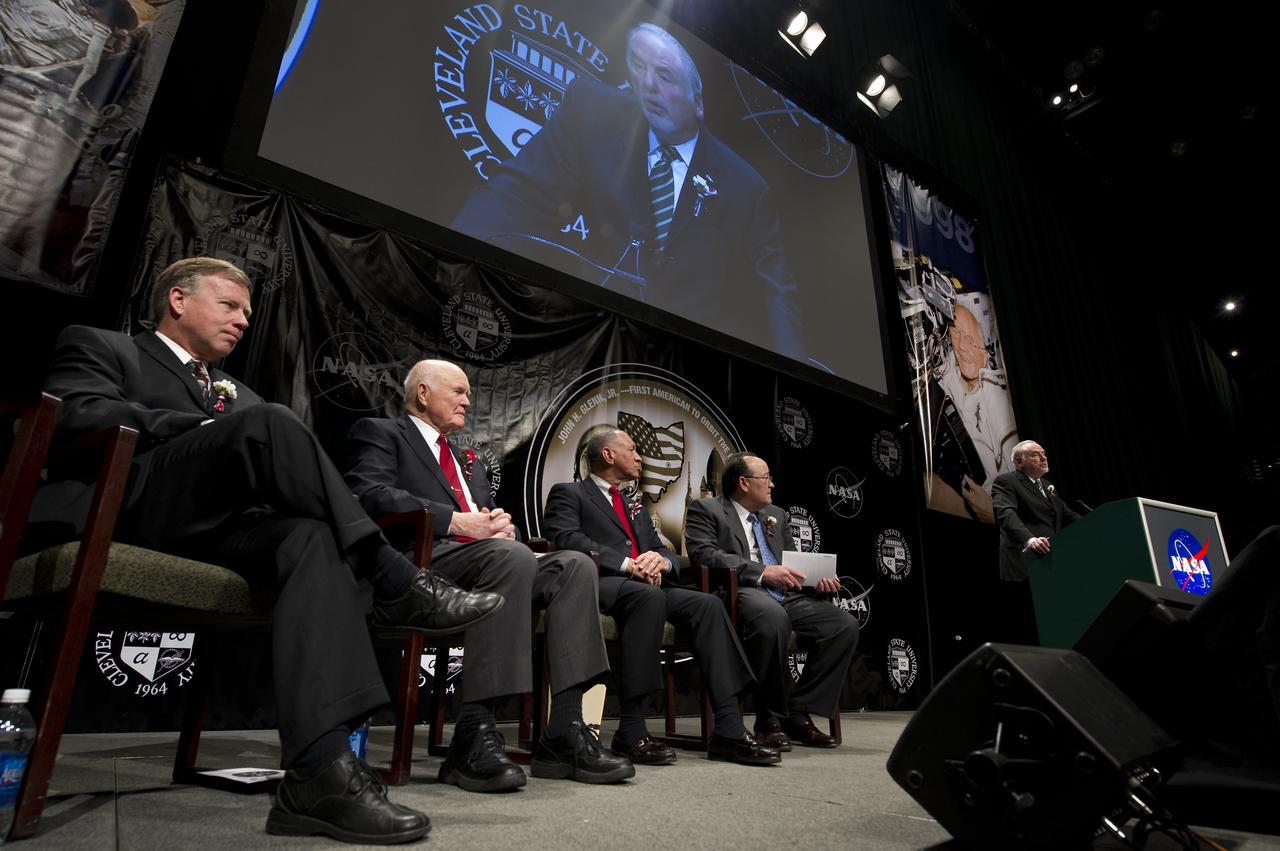
Dr. Ronald M. Berkman, CSU President gives remarks while former Astronaut Steve Lindsey, left, Sen. John Glenn, NASA Administrator Charles Bolden, and NASA Glenn Research Center Director Ray Lugo, seated right, look on at an event celebrating John Glenn's legacy and 50 years of americans in orbit held at the Cleveland State University Wolstein Center on Friday, March 3, 2012 in Cleveland, Ohio. Glenn became the first American to orbit Earth in 1962. Photo Credit: (NASA/Bill Ingalls)
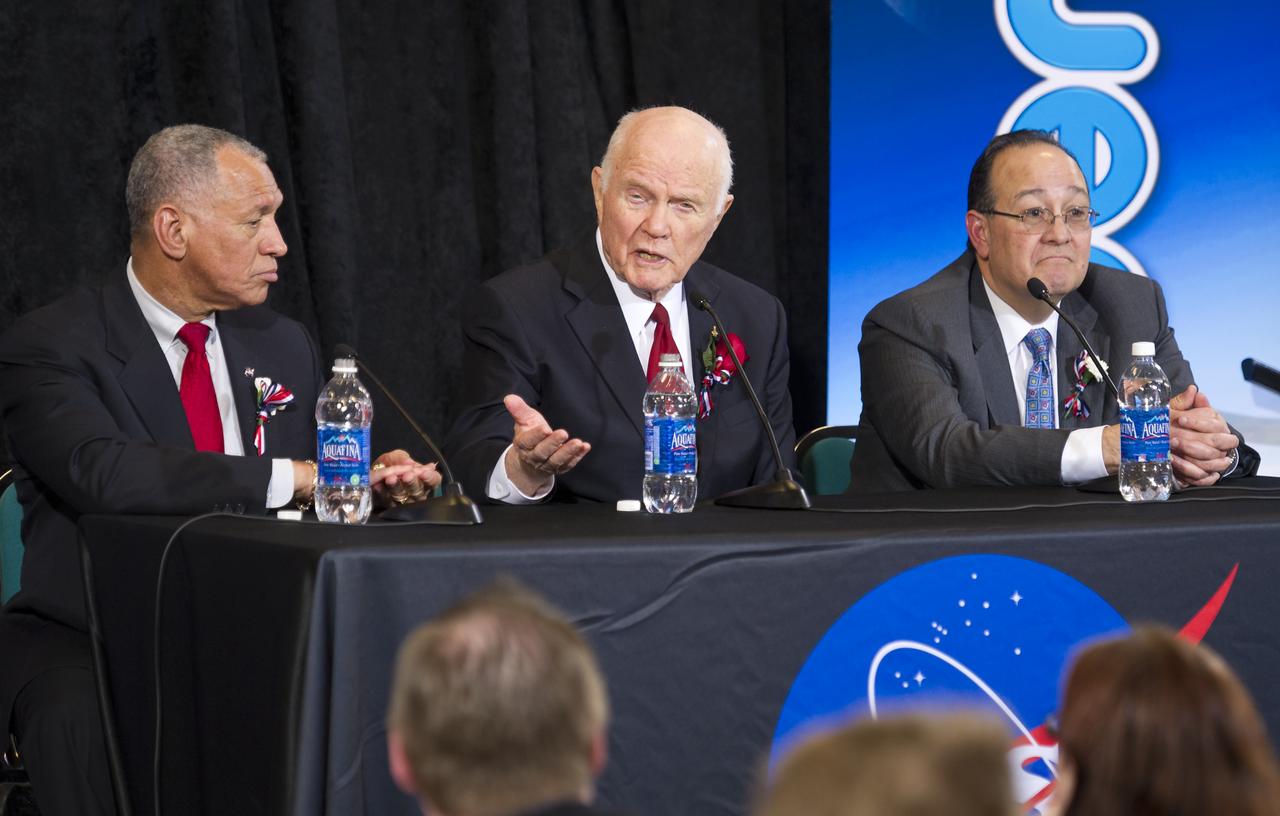
NASA Administrator Charles Bolden, left, Sen. John Glenn, and NASA Glenn Research Center Director Ray Lugo, right, answer questions at a NASA Tweetup event celebrating John Glenn's legacy and 50 years of americans in orbit held at the Cleveland State University Wolstein Center on Friday, March 3, 2012 in Cleveland, Ohio. Glenn became the first American to orbit Earth in 1962. Photo Credit: (NASA/Bill Ingalls)
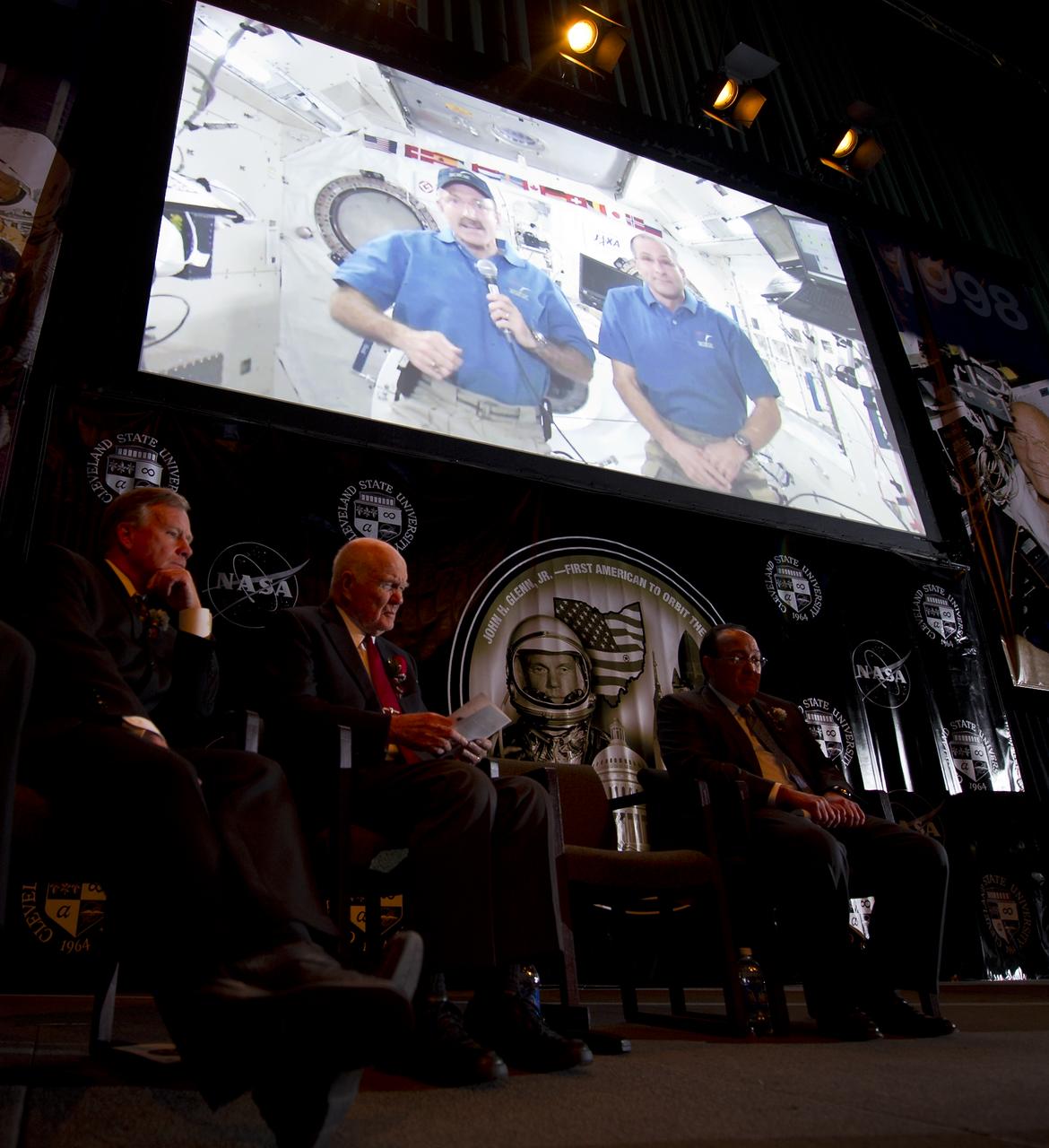
A pre-recorded message from International Space Station, Expedition 30 crew Commander Dan Burbank, on screen left, and Expedition 30 Flight Engineer Don Pettit is shown while former Astronaut Steve Lindsey, seated left, Sen. John Glenn, and NASA Glenn Research Director Ray Lugo look on at an event celebrating John Glenn's legacy and 50 years of americans in orbit held at the Cleveland State University Wolstein Center on Friday, March 3, 2012 in Cleveland, Ohio. Glenn became the first American to orbit Earth in 1962. Photo Credit: (NASA/Bill Ingalls)
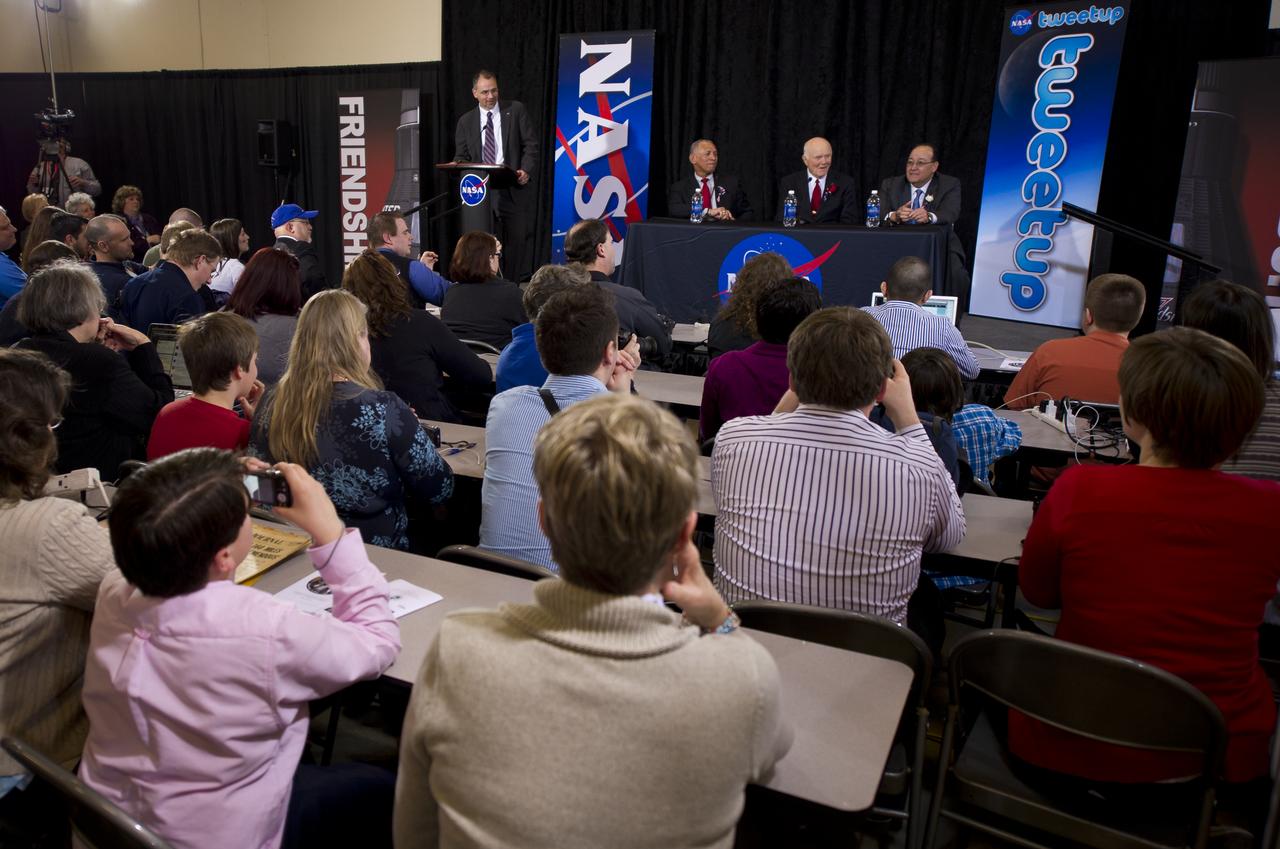
NASA Glenn Research Center Deupty Director James Free moderates a combined media briefing and NASA Tweetup with NASA Administrator Charles Bolden, seated left, Sen. John Glenn, and NASA Glenn Research Center Director Ray Lugo, seated right, at an event celebrating John Glenn's legacy and 50 years of americans in orbit held at the Cleveland State University Wolstein Center on Friday, March 3, 2012 in Cleveland, Ohio. Glenn became the first American to orbit Earth in 1962. Photo Credit: (NASA/Bill Ingalls)

Wife of former astronaut and Senator John Glenn, Annie Glenn, is recognized during an event celebrating John Glenn's legacy and 50 years of americans in orbit held at the university's Wolstein Center on Friday, March 3, 2012 in Cleveland, Ohio. Glenn became the first American to orbit Earth in 1962. Photo Credit: (NASA/Bill Ingalls)
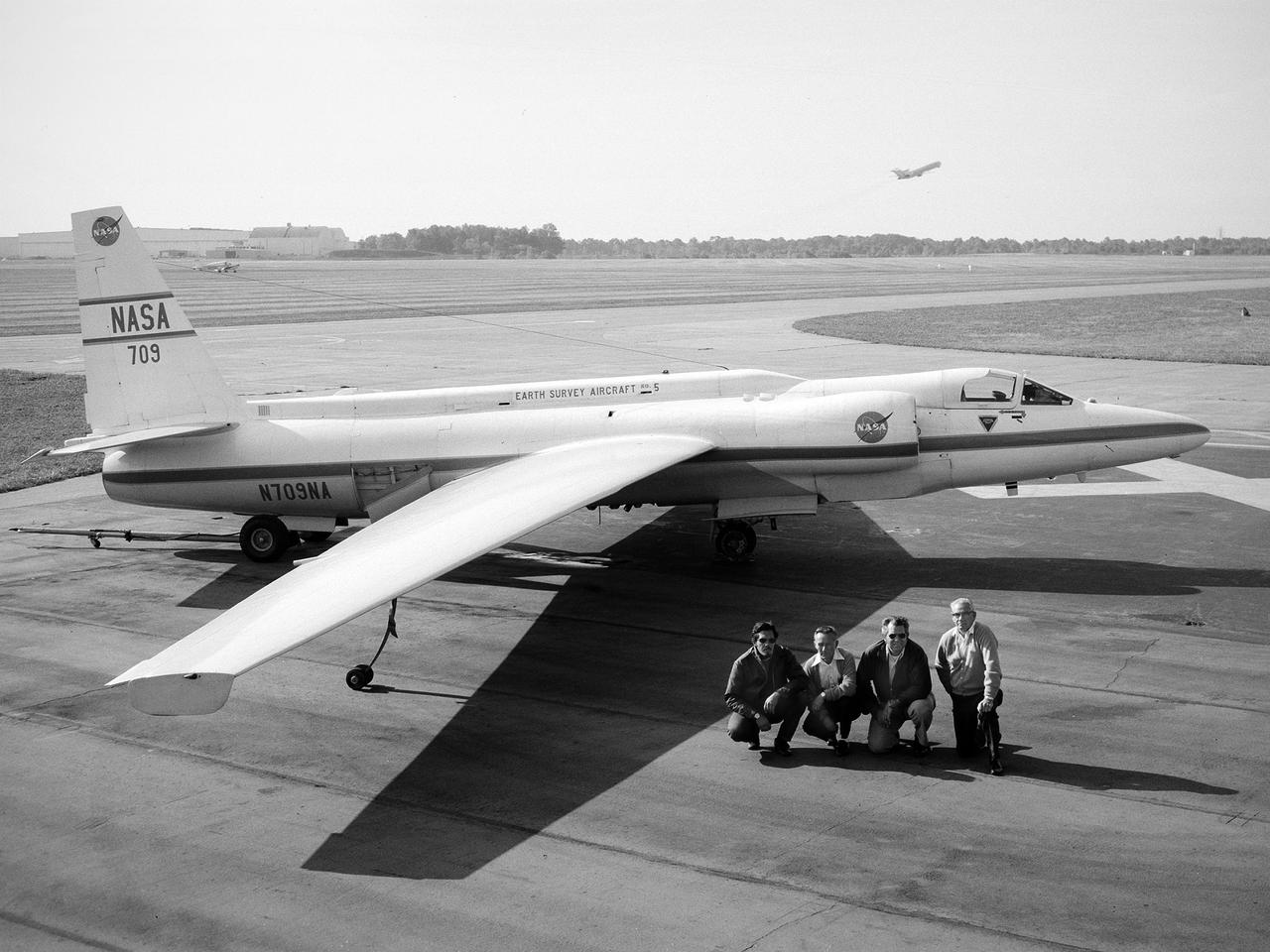
A National Aeronautics and Space Administration (NASA) Lockheed U-2 aircraft on display at the 1973 Inspection of the Lewis Research Center in Cleveland, Ohio. Lockheed developed the U-2 as a high-altitude reconnaissance aircraft in the early 1950s before satellites were available. The U-2 could cruise over enemy territory at 70,000 feet and remain impervious to ground fire, interceptor aircraft, and even radar. An advanced camera system was designed specifically for the aircraft. The pilot is required to use a pressure suit similar to those worn by astronauts. NASA’s Ames Research Center received two U-2 aircraft in April 1971 to conduct high-altitude research. They were used to study and monitor various Earth resources, celestial bodies, atmospheric chemistry, and oceanic processes. NASA replaced its U-2s with ER-2 aircraft in 1981 and 1989. The ER-2s were designed to carry up to 2600 pounds of scientific equipment. The ER-2 program was transferred to Dryden Flight Research Center in 1997. Since the inaugural flight for this program on August 31, 1971, NASA’s U-2 and ER-2 aircraft have flown more than 4500 data missions and test flights for NASA, other federal agencies, states, universities, and the private sector.
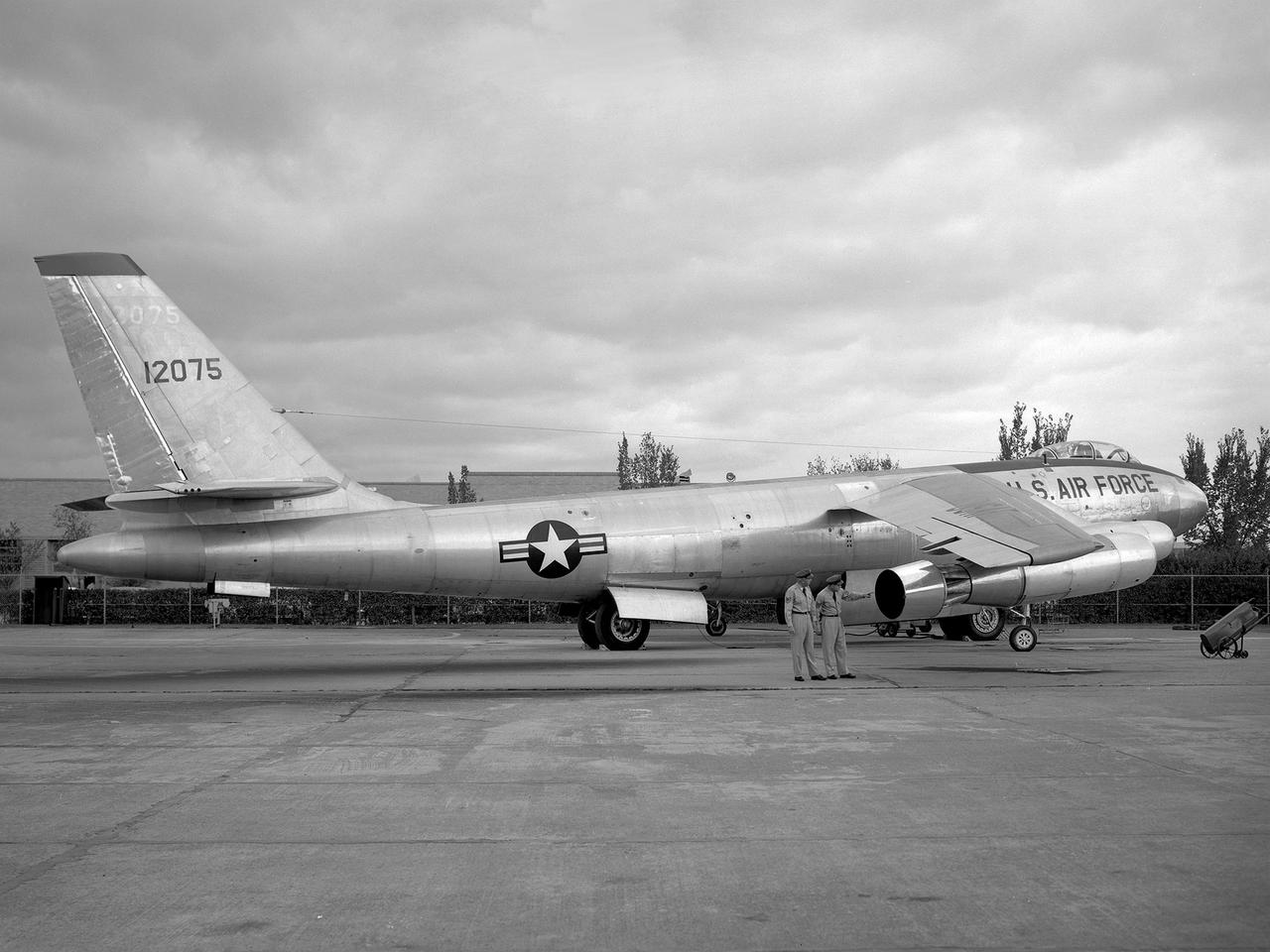
A Boeing B-47 Stratojet bomber with a noise-reducing ejector on its engine at the 1957 Inspection of the National Advisory Committee for Aeronautics (NACA) Lewis Flight Propulsion Laboratory. Representatives from the military, aeronautical industry, universities, and the press were invited to the laboratory to be briefed on the NACA’s latest research efforts and tour the state- of- the- art test facilities. Over 1700 people visited the NACA Lewis in Cleveland, Ohio during October 7 - 10, 1957. By the mid-1950s, the aircraft industry was close to introducing jet airliners to the nation’s airways. The noise produced by the large jet engines, however, would pose a considerable problem for communities near airports. This problem was demonstrated at the 1957 Inspection by an NACA Lewis researcher who played longplay (LP) audio records of military jet engines for an audience. Tests showed that the source of the loudest noise was not the engine itself, but the mixing of the engine’s exhaust with the surrounding air in the atmosphere. The pressures resulting from this turbulence produced sound waves. One of Lewis’ first studies sought to design an exhaust nozzle that reduced the turbulence. A Pratt and Whitney J57 was tested in the Altitude Wind Tunnel with many of these nozzle configurations from January to May 1957. Researchers found that the various nozzle types did reduce the noise levels but also reduced the aircraft’s thrust. Afterwards, they determined that the addition of an NACA-developed ejector reduced the noise levels without diminishing thrust.
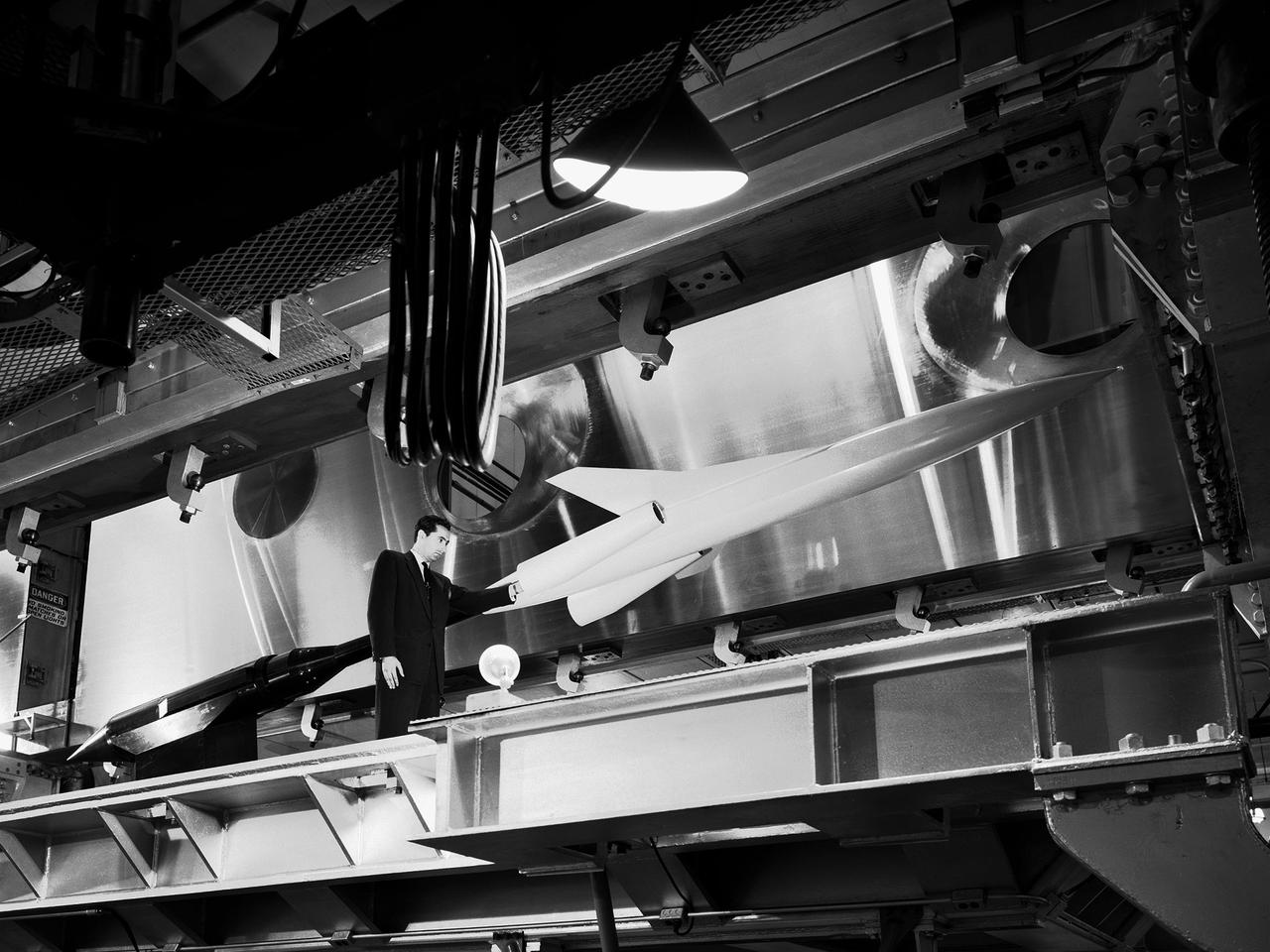
A researcher examines a model being installed in the test section of the 10- by 10-Foot Supersonic Wind Tunnel during the 1957 Inspection of the National Advisory Committee for Aeronautics (NACA) Lewis Flight Propulsion Laboratory. The NACA held its annual Inspection at one of its three research laboratories. Representatives from the military, aeronautical industry, universities, and the press were invited to the laboratory to be briefed on the NACA’s latest research efforts and tour the state- of- the- art test facilities. Over 1700 people visited the NACA Lewis in Cleveland, Ohio during the October 7 - 10, 1957 Inspection. NACA researchers Leonard Obery, seen here, James Connors, Leonard, Stitt, David Bowditch gave presentations on high Mach number turbojets at the 10- by 10 tunnel. It had been only 15 years since a jet aircraft had first flown in the US. Since then the sound barrier had been broken and speeds of Mach 2.5 had been achieved. In the late 1950s NACA researchers sought to create an engine that could achieve Mach 4. This type of engine would require an extremely long inlet and nozzle which would have to be capable of adjusting their diameter for different speeds. A Mach 4 engine would require new composite materials to withstand the severe conditions, modified airframes to hold the longer engines, and high temperature seals and lubricants. The 10- by 10-foot tunnel, which had only been in operation for a year and a half, would play a critical role in these studies. NACA researchers at other facilities discussed high energy aircraft fuels and rocket propellants, aircraft noise reduction, hypersonic flight, nuclear propulsion, and high temperature materials.
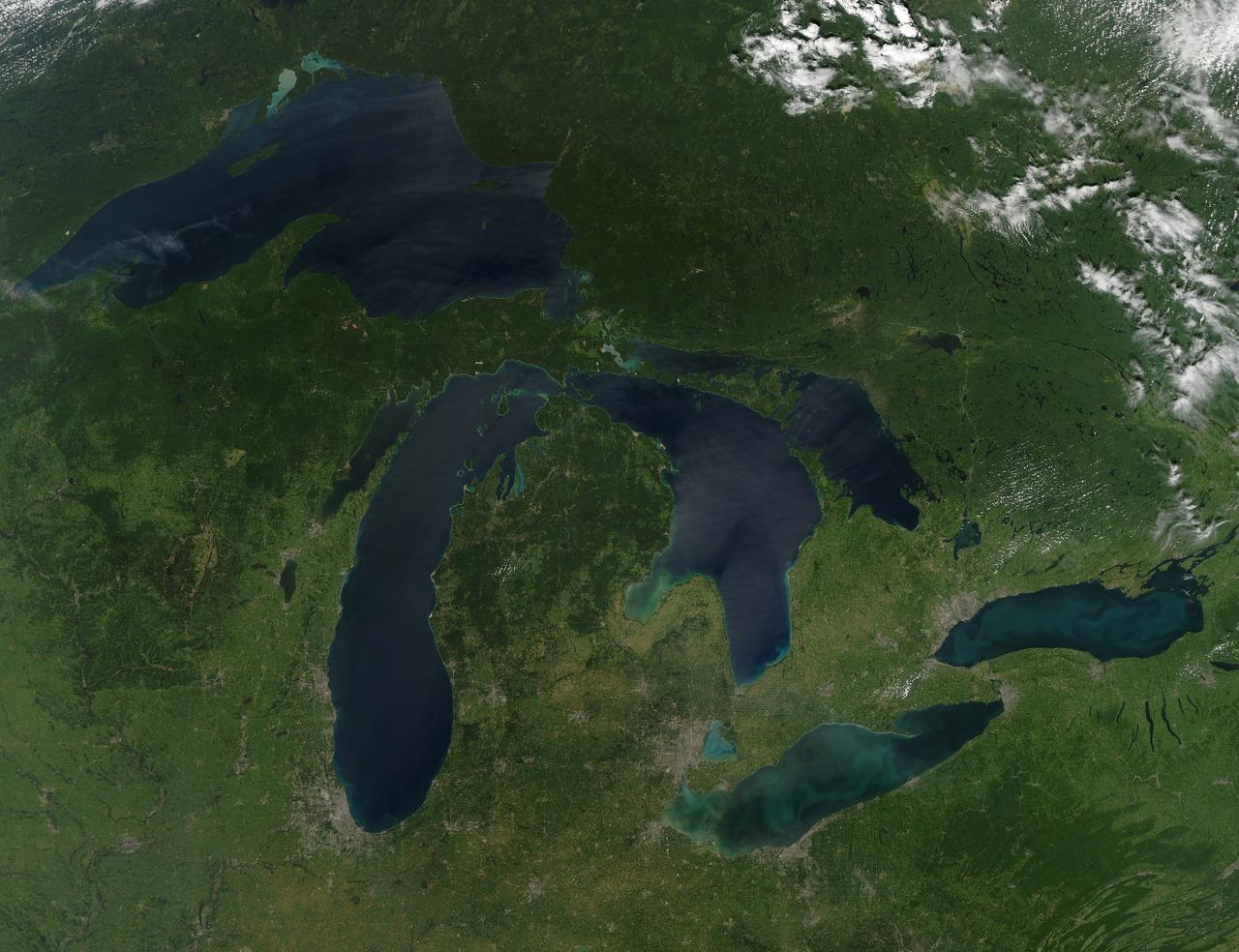
NASA image acquired August 28, 2010 Late August 2010 provided a rare satellite view of a cloudless summer day over the entire Great Lakes region. North Americans trying to sneak in a Labor Day weekend getaway on the lakes were hoping for more of the same. The Great Lakes comprise the largest collective body of fresh water on the planet, containing roughly 18 percent of Earth's supply. Only the polar ice caps contain more fresh water. The region around the Great Lakes basin is home to more than 10 percent of the population of the United States and 25 percent of the population of Canada. Many of those people have tried to escape record heat this summer by visiting the lakes. What they found, according to The Hamilton Spectator, was record-breaking water temperatures fueled by record-breaking air temperatures in the spring and summer. By mid-August, the waters of Lake Superior were 6 to 8°C (11 to 14°F) above normal. Lake Michigan set records at about 4°C (7°F) above normal. The other three Great Lakes – Huron, Erie, and Ontario -- were above normal temperatures, though no records were set. The image was gathered by the Moderate Resolution Imaging Spectroradiometer (MODIS) on NASA’s Aqua satellite at 1:30 p.m. Central Daylight Time (18:30 UTC) on August 28. Open water appears blue or nearly black. The pale blue and green swirls near the coasts are likely caused by algae or phytoplankton blooms, or by calcium carbonate (chalk) from the lake floor. The sweltering summer temperatures have produced an unprecedented bloom of toxic blue-green algae in western Lake Erie, according to the Cleveland Plain Dealer. NASA image by Jeff Schmaltz, MODIS Rapid Response Team, Goddard Space Flight Center. Caption by Mike Carlowicz. Instrument: Aqua - MODIS Click here to see more images from <b><a href="#//earthobservatory.nasa.gov/" rel="nofollow"> NASA Goddard’s Earth Observatory</a></b> <b><a href="http://www.nasa.gov/centers/goddard/home/index.html" rel="nofollow">NASA Goddard Space Flight Center</a></b> is home to the nation's largest organization of combined scientists, engineers and technologists that build spacecraft, instruments and new technology to study the Earth, the sun, our solar system, and the universe. <b>Follow us on <a href="http://twitter.com/NASA_GoddardPix" rel="nofollow">Twitter</a></b> <b>Join us on <a href="http://www.facebook.com/pages/Greenbelt-MD/NASA-Goddard/395013845897?ref=tsd" rel="nofollow">Facebook</a></b>