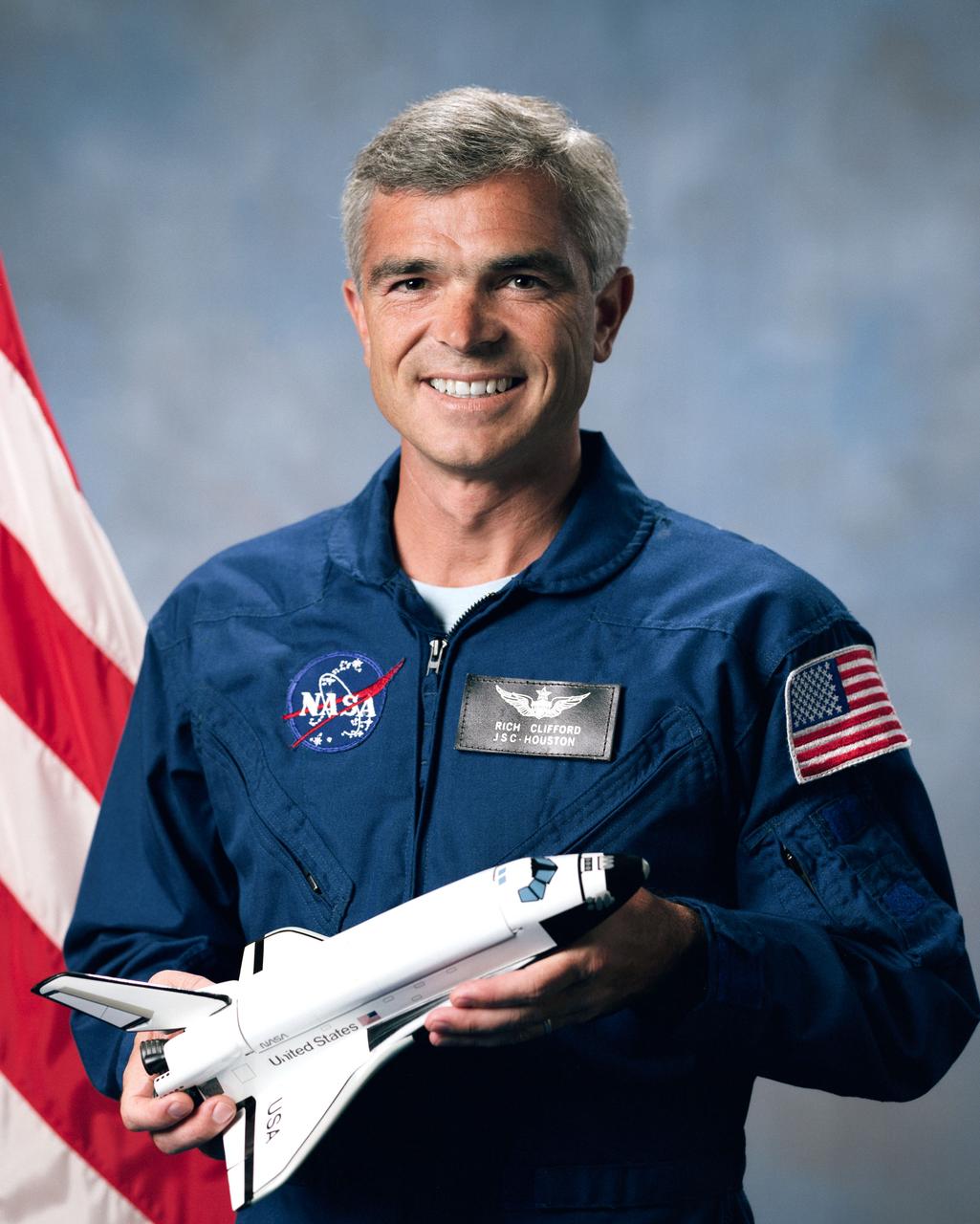
S90-46441 (August 1990) --- Astronaut Michael R. (Rich) Clifford, mission specialist.
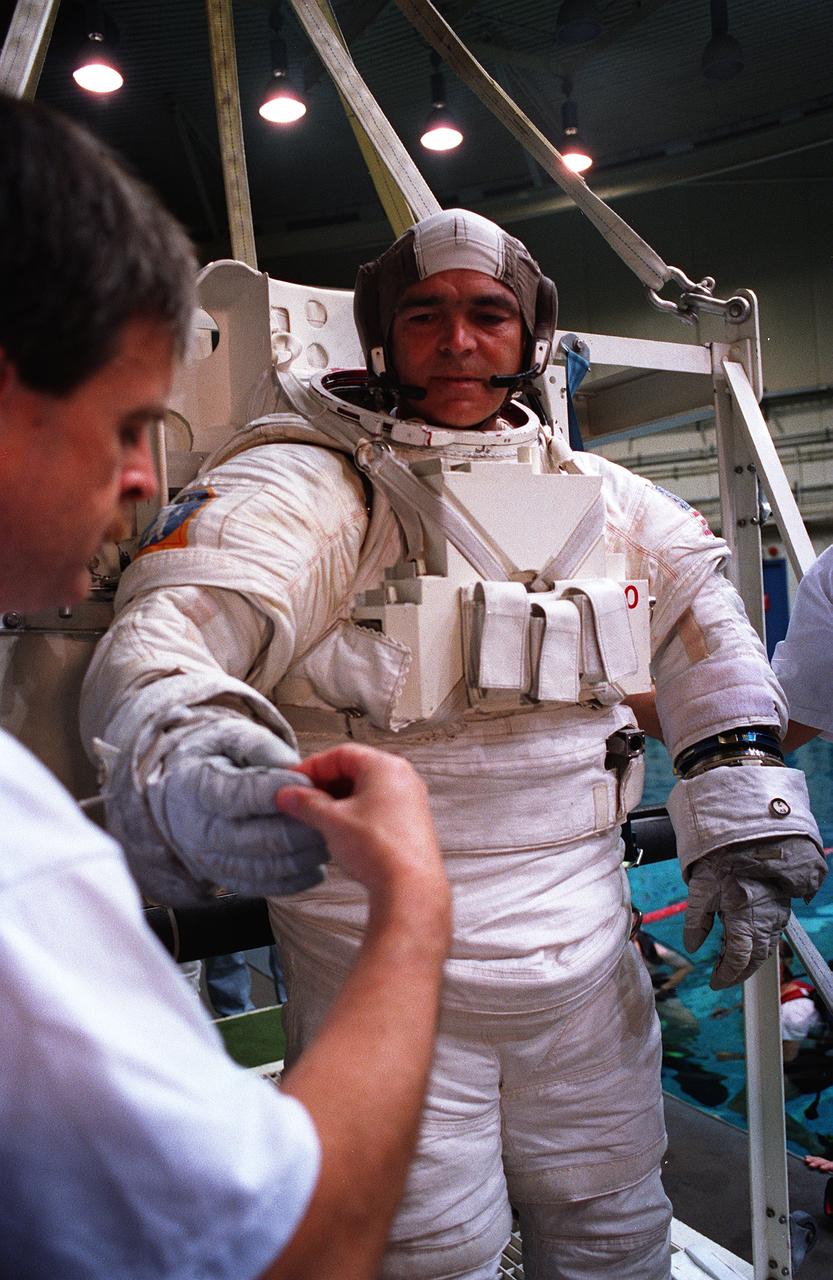
S95-21279 (September 1995) --- Astronaut Michael R. (Rich) Clifford, mission specialist, checks his gloves before being submerged in a 25-feet deep pool at the Johnson Space Center's (JSC) Weightless Environment Training Facility (WET-F). Wearing high fidelity training versions of the Extravehicular Mobility Unit (EMU) spacesuit, both Clifford and Linda M. Godwin were later simulating Extravehicular Activity (EVA) chores in the pool. Launch aboard the Space Shuttle Atlantis is scheduled for March of 1996.
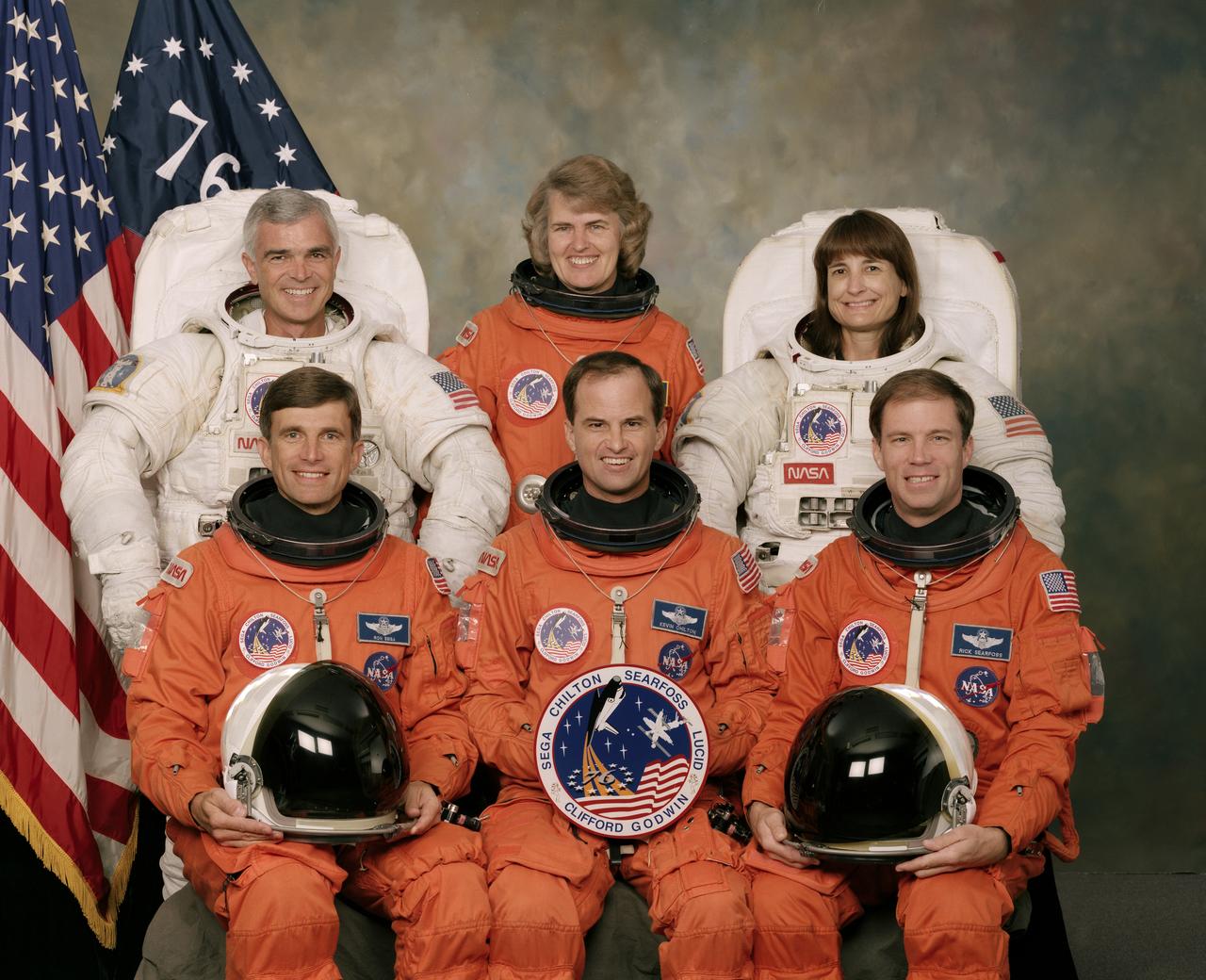
These six NASA astronauts launched into space aboard the Space Shuttle Atlantis on March 22, 1996 for the STS-76 mission. Pictured on the front row, left to right, are astronauts Ronald M. Sega, mission specialist; Kevin P. Chilton, mission commander; and Richard A. Searfoss, pilot. On the back row, left to right, are mission specialists Michael R. (Rich) Clifford, Shannon W. Lucid, and Linda M. Godwin. The third U.S. Shuttle-Mir docking, STS-76 began a new period of international cooperation in space exploration with the first Shuttle transport of a United States astronaut (Lucid) to Russia’s Mir Space Station for extended joint space research. Clifford and Godwin, pictured here in training versions of the Extravehicular Mobility Unit (EMU), performed the first Extravehicular Activity (EVA) during Mir-Shuttle docked operations.
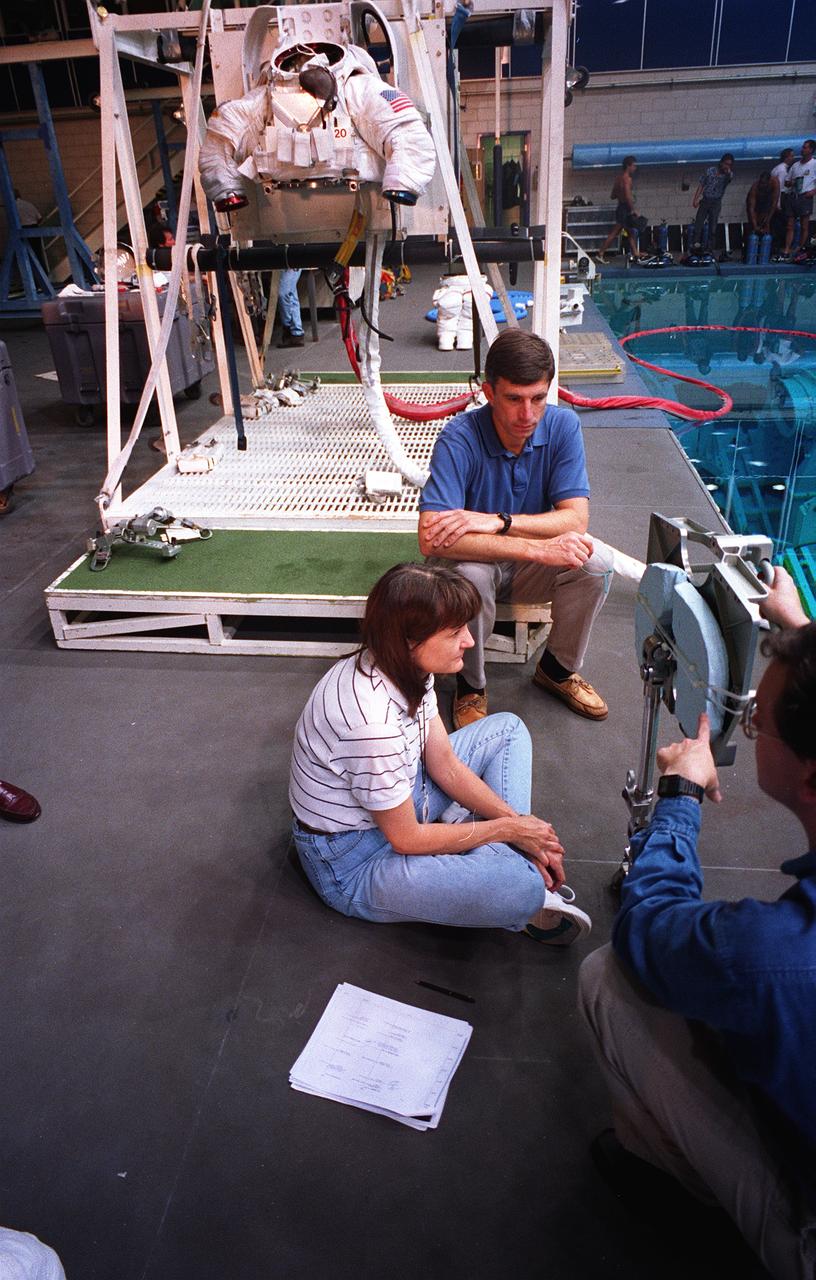
S95-21276 (September 1995) --- Astronaut Linda M. Godwin, mission specialist, is briefed on the Mobile Foot Restraint (MFR) to be used in a scheduled Extravehicular Activity (EVA) during the March mission. Astronaut Ronald M. Sega, mission specialist, looks on. Astronaut Michael R. (Rich) Clifford, mission specialist, who will join Godwin on the EVA, is out of frame. Godwin and Clifford checked out the hardware before donning training versions of the Extravehicular Mobility Unit (EMU) spacesuit (see torso piece in background) in preparation for being submerged in a 25-feet deep pool at the Johnson Space Center's (JSC) Weightless Environment Training Facility (WET-F).
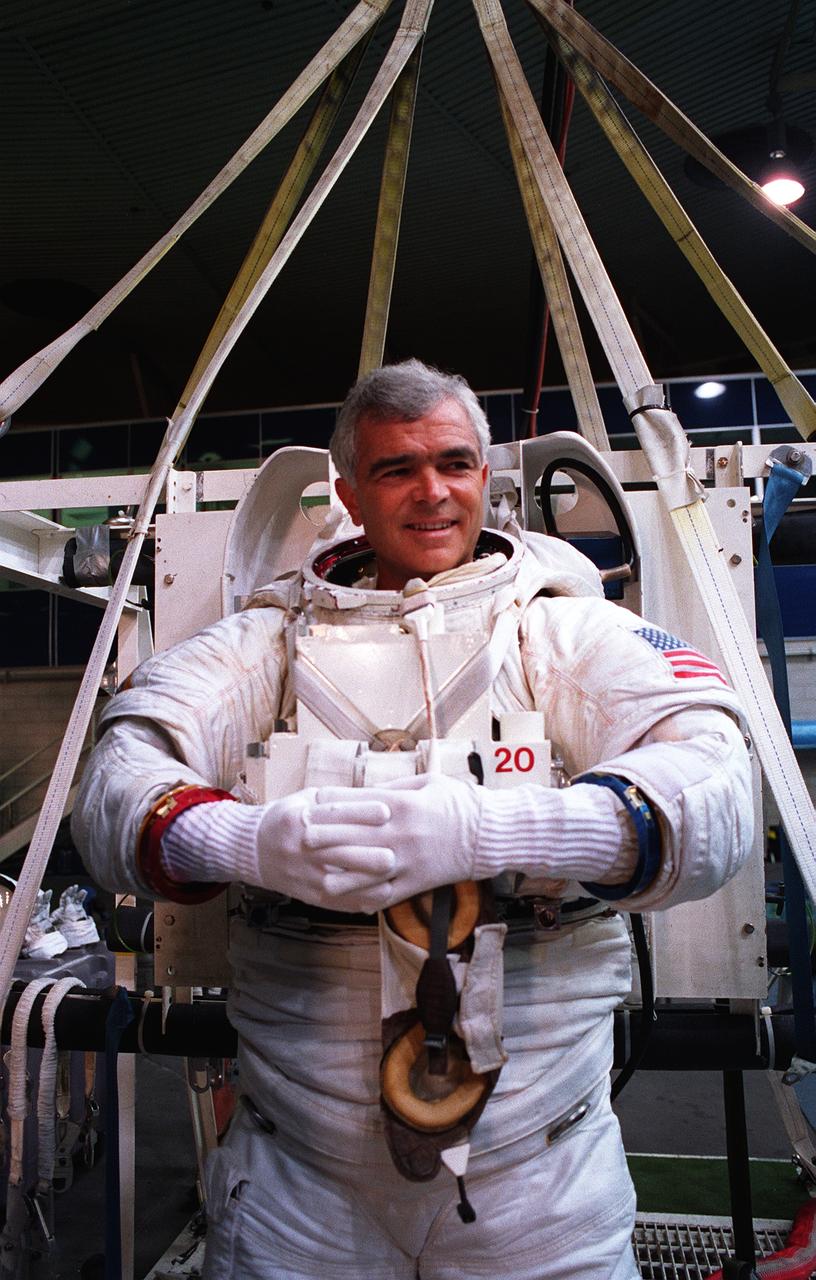
S95-21277 (September 1995) --- Astronaut Michael R. (Rich) Clifford, mission specialist, pauses before donning full suit gear in preparation for being submerged in a 25-feet deep pool at the Johnson Space Center's (JSC) Weightless Environment Training Facility (WET-F). Wearing high fidelity training versions of the Extravehicular Mobility Unit (EMU) spacesuit, both Clifford and Linda M. Godwin were later simulating Extravehicular Activity (EVA) chores in the pool. Launch aboard the Space Shuttle Atlantis is scheduled for March of 1996.
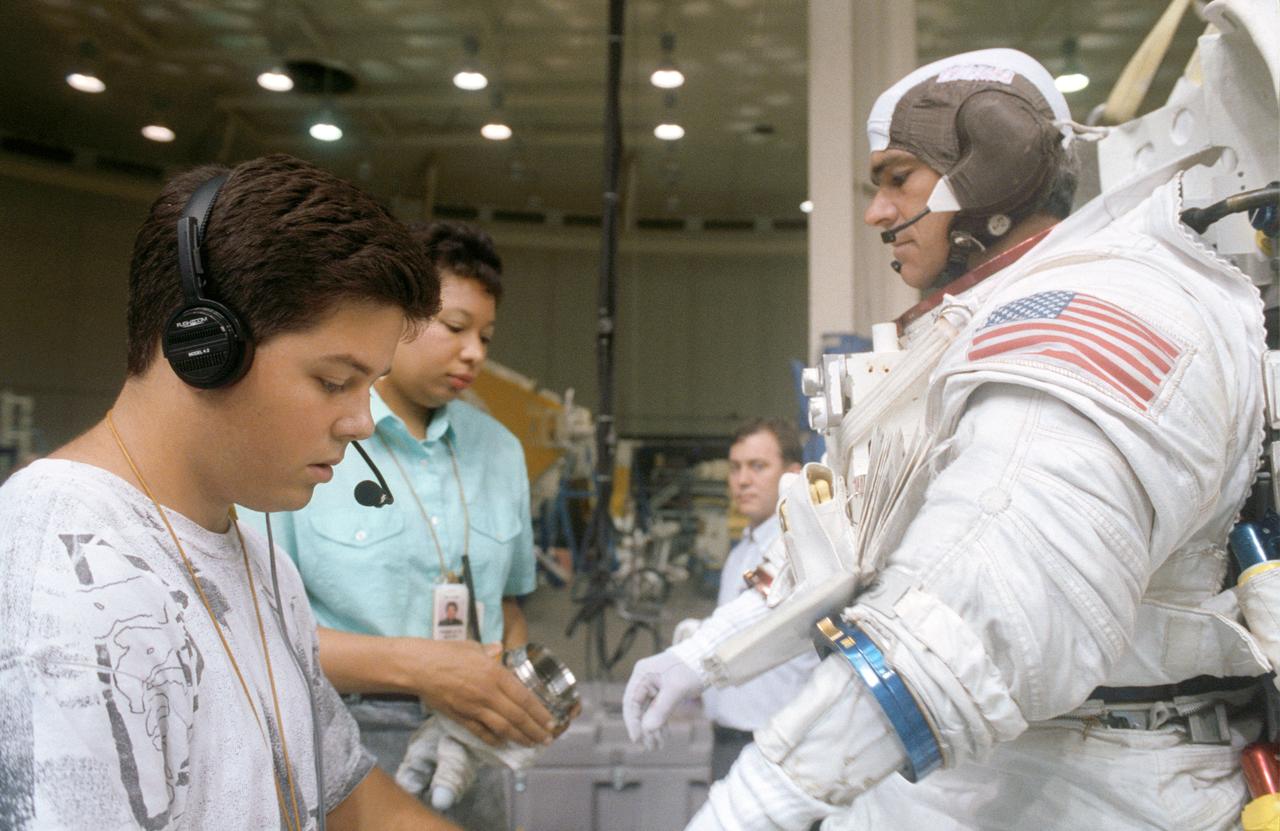
S92-42681 (28 July 1992) --- STS-53 Discovery, Orbiter Vehicle (OV) 103, Mission Specialist (MS) Michael R.U. Clifford, wearing extravehicular mobility unit (EMU) and communications carrier assembly (CCA), dons gloves with assistance from two technicians. Clifford is preparing for an underwater contingency extravehicular activity (EVA) simulation in JSC's Weightless Environment Training Facility (WETF) Bldg 29 pool.
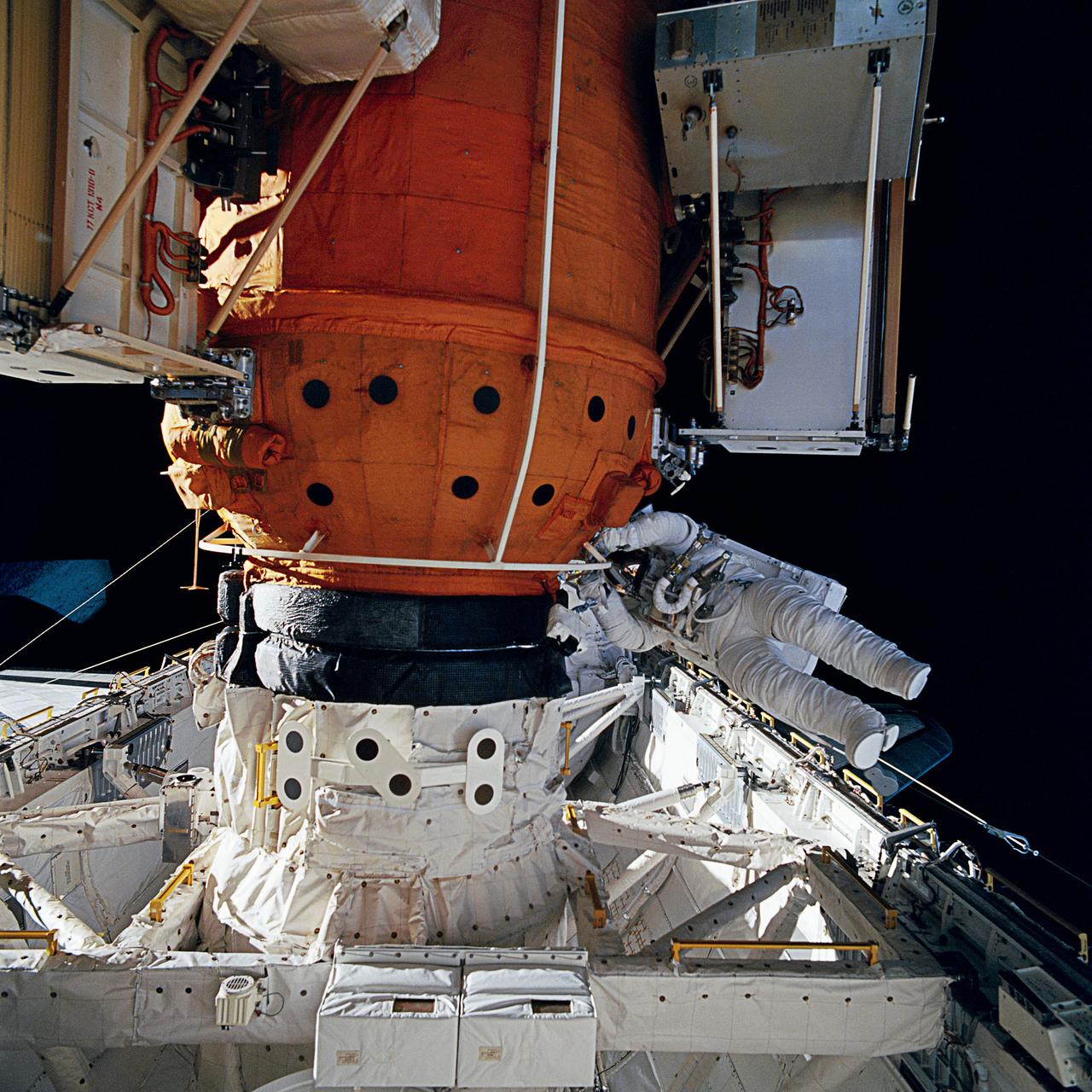
STS076-724-016 (27 March 1996) --- Astronaut Michael R. (Rich) Clifford, mission specialist, works at a restraint bar on the Docking Module (DM) of Russia's Mir Space Station during a March 27, 1996, Extravehicular Activity (EVA). The EVA of astronauts Clifford and Linda M. Godwin marks the first space walk while the Mir Space Station and Space Shuttle Atlantis were docked. This mission marks the third docking of Atlantis and Mir.
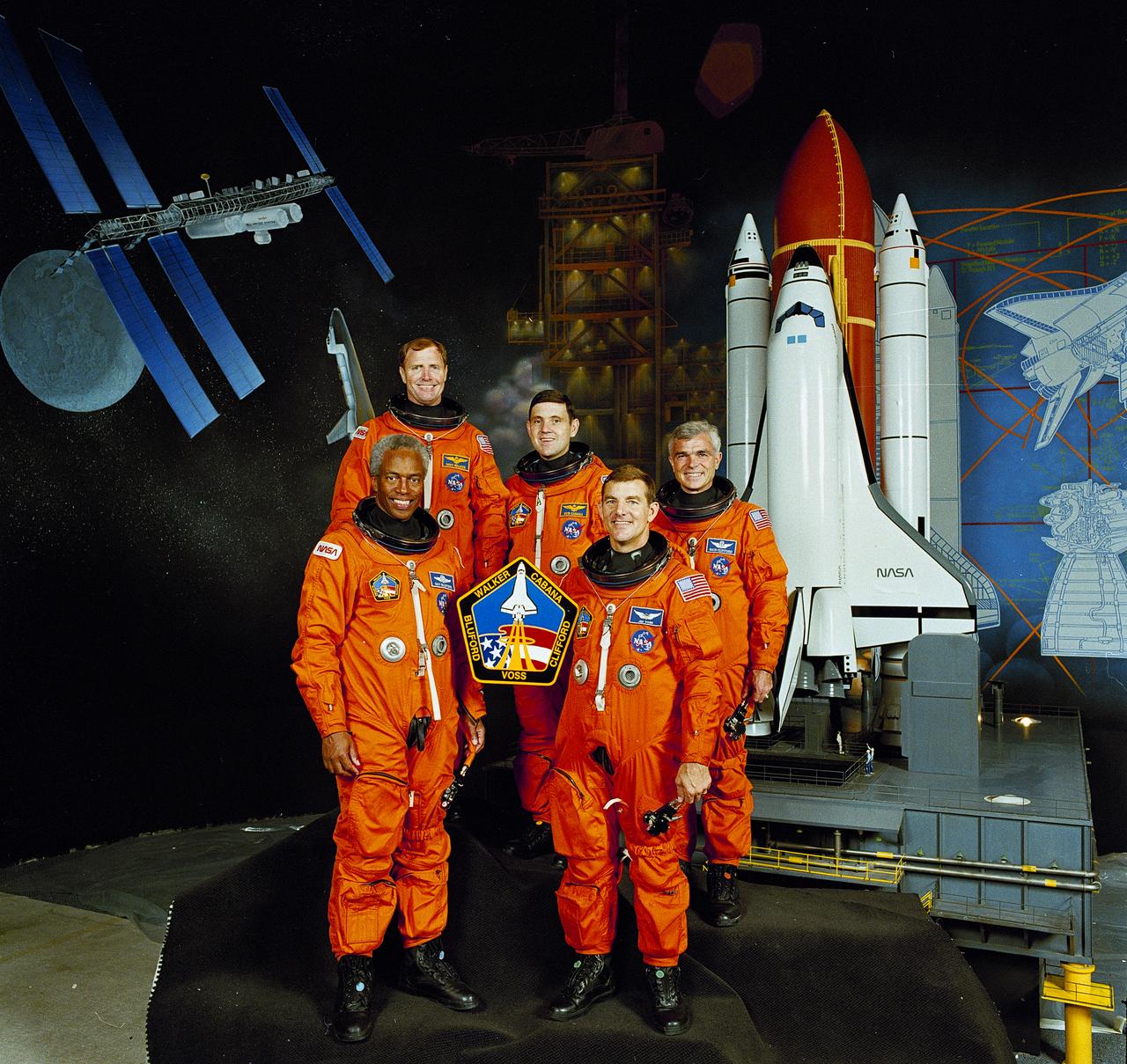
The STS-53 crew portrait included astronauts (front left to right): Guion S. Bluford, and James S. Voss, mission specialists. On the back row, left to right, are David M. Walker, commander; Robert D. Cabana, Pilot; and Michael R. (Rick) Clifford, mission specialist. The crew launched aboard the Space Shuttle Discovery on December 2, 1992 at 8:24:00 am (EST). This mission marked the final classified shuttle flight for the Department of Defense (DOD).
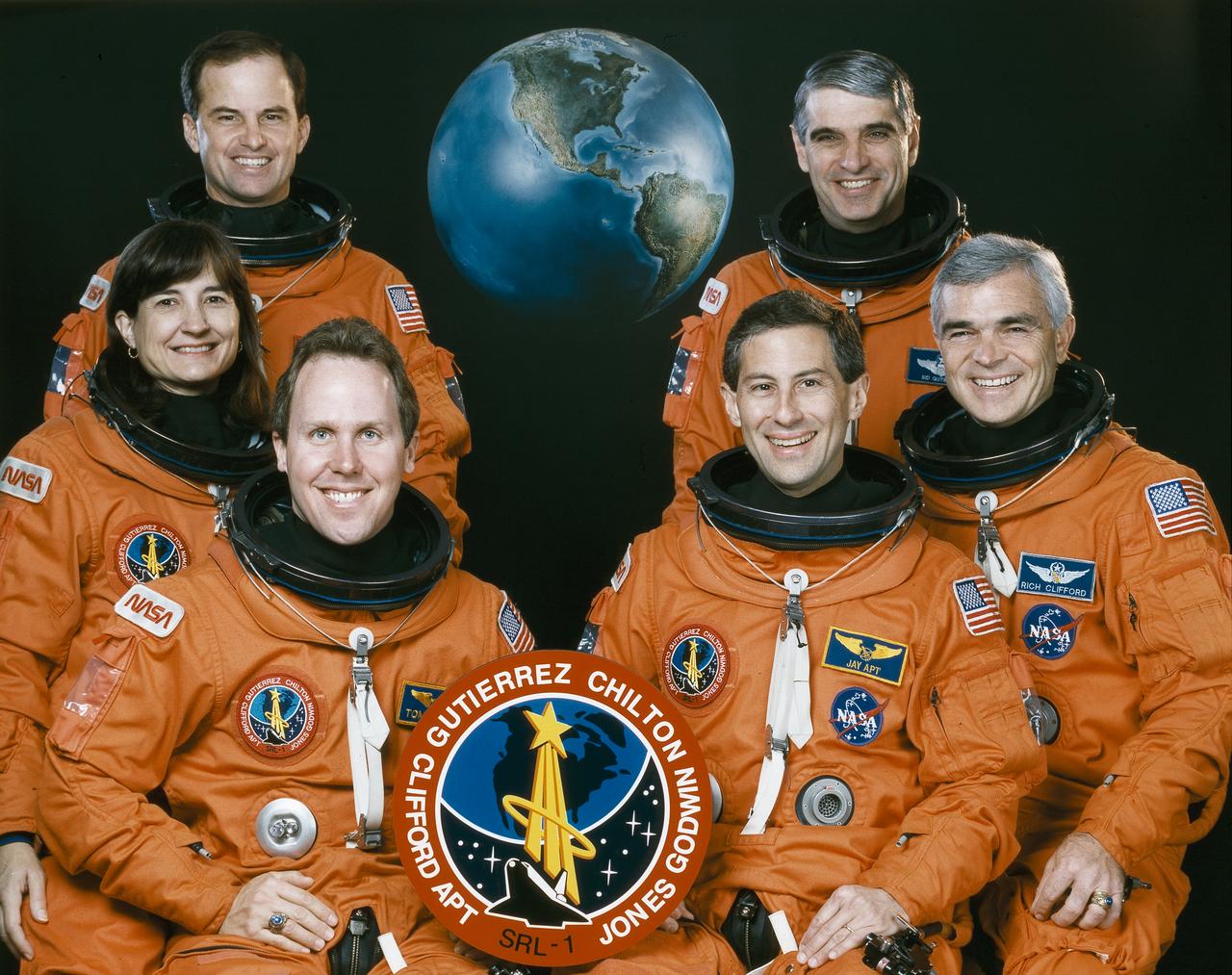
Astronauts included in the STS-59 crew portrait include (standing in rear, left to right) Kevin P. Chilton, pilot; and Sidney M. Gutierrez, commander. Seated left to right are Linda M. Godwin, payload commander; and mission specialists Thomas D. Jones, Jay Apt, and Michael R. Clifford. Launched aboard the Space Shuttle Endeavour on April 9, 1994 at 7:05:00 am (EDT), the STS-59 mission deployed the Space Radar Laboratory (SRL-1).
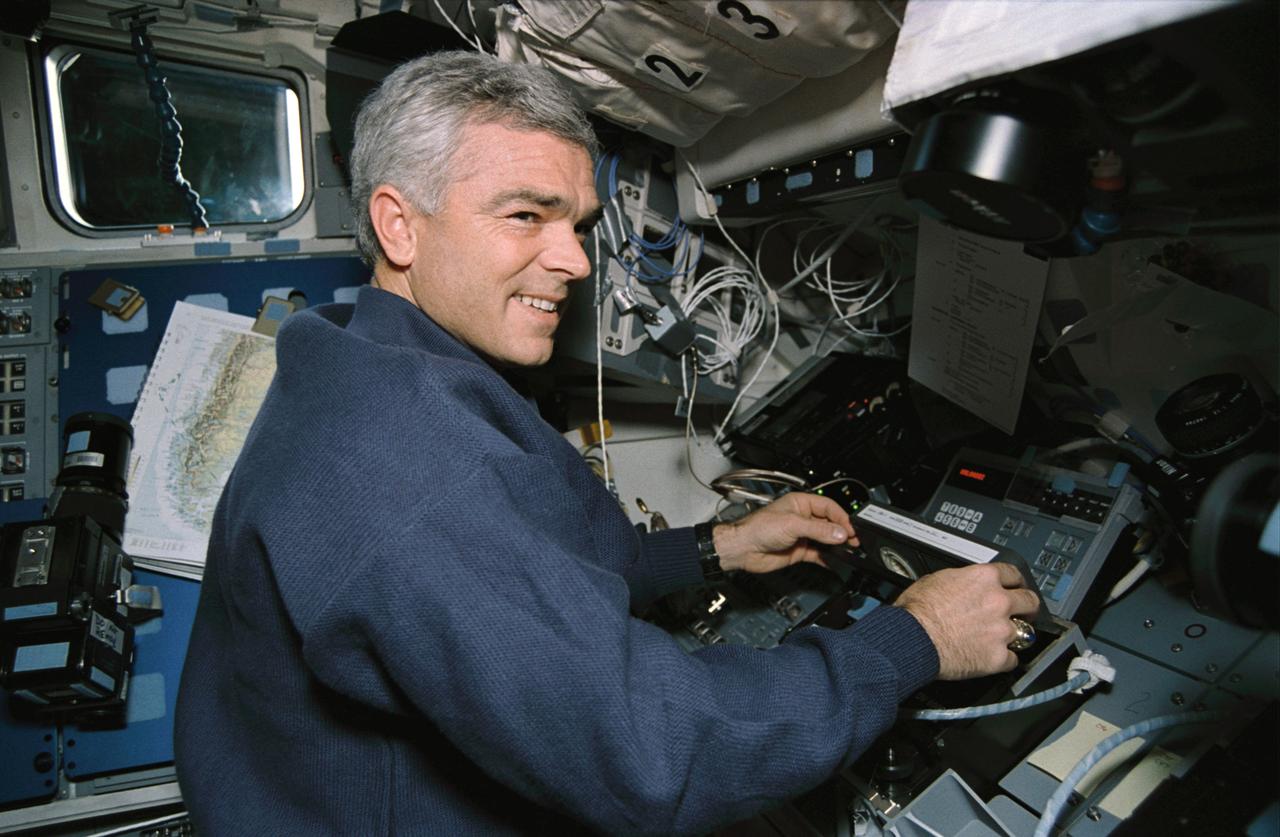
STS059-09-012 (9-20 April 1994) --- On the Space Shuttle Endeavour's aft flight deck, astronaut Michael R. (Rich) Clifford, mission specialist, inserts a tape in the payload high rate recorder. Three of these state-of-the-art recorders captured four times the amount of data that could be radioed to the ground. The 183 tapes, each containing 40 megabytes of data, will be turned into images over the next year, and analyzed over the next decade. Clifford was joined in space by five other NASA astronauts for a week and a half of support to the Space Radar Laboratory (SRL-1)/STS-59 mission.
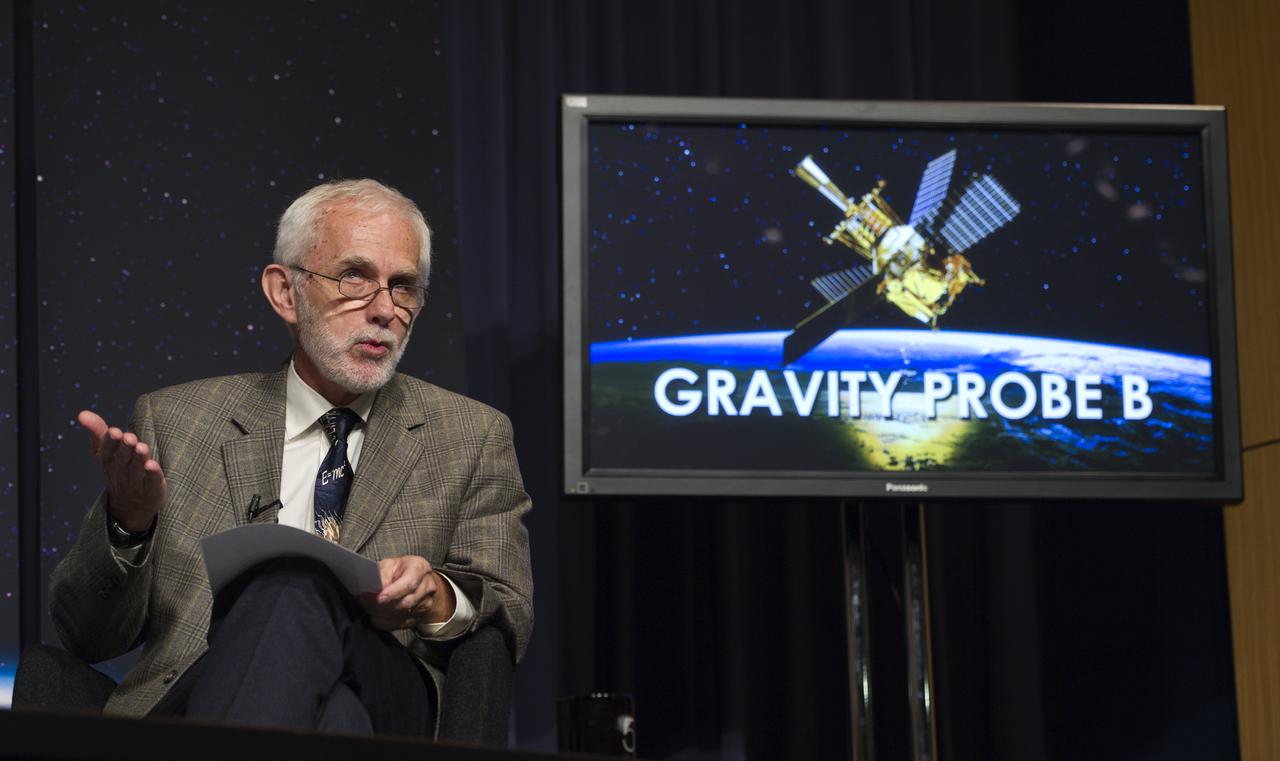
Clifford Will, Professor of Physics at Washington University in St. Louis, makes a point during a press conference, Wednesday, May 4, 2011, to discuss NASA's Gravity Probe B (GP-B) mission which has confirmed two key predictions derived from Albert Einstein's general theory of relativity, which the spacecraft was designed to test at NASA Headquarters in Washington. The experiment, launched in 2004, used four ultra-precise gyroscopes to measure the hypothesized geodetic effect, the warping of space and time around a gravitational body, and frame-dragging, the amount a spinning object pulls space and time with it as it rotates. Photo Credit: (NASA/Paul E. Alers)
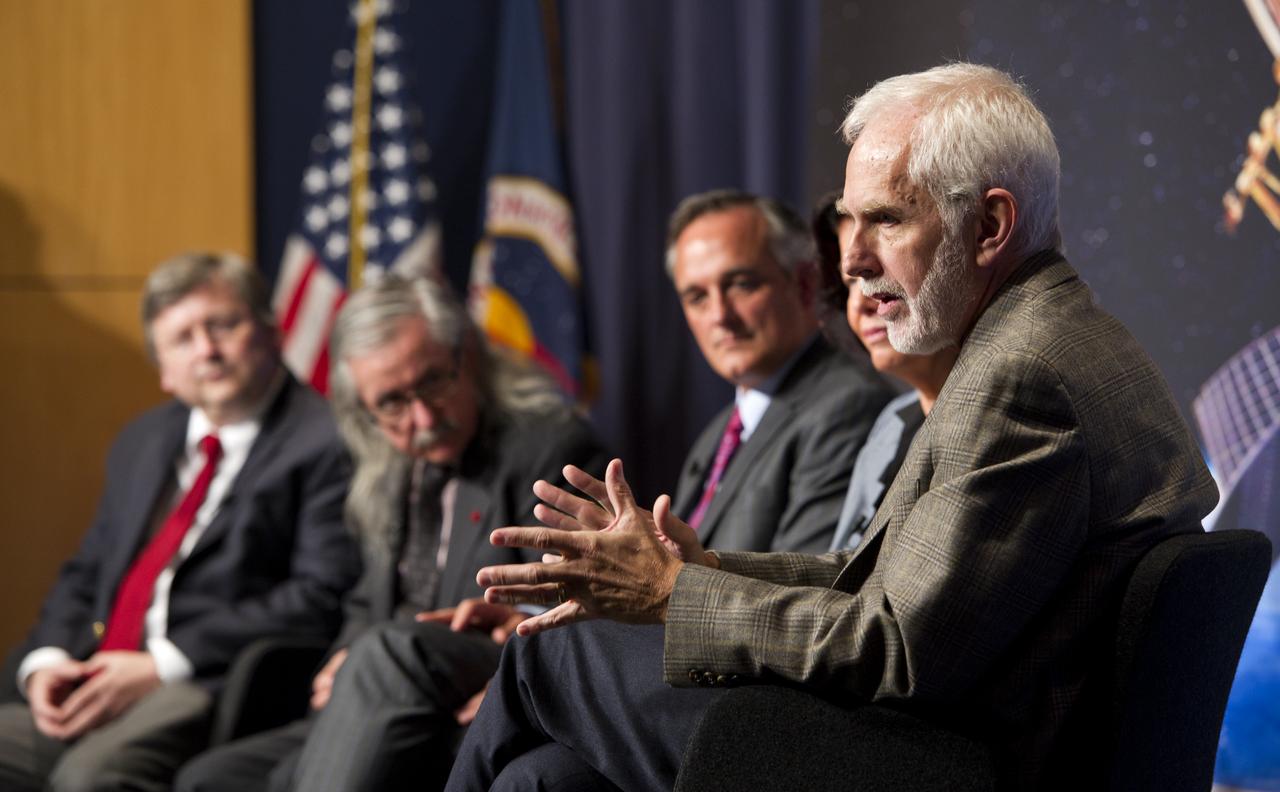
Clifford Will, Professor of Physics at Washington University in St. Louis, foreground, answers questions during a press conference, Wednesday, May 4, 2011, to discuss NASA's Gravity Probe B (GP-B) mission which has confirmed two key predictions derived from Albert Einstein's general theory of relativity, which the spacecraft was designed to test at NASA Headquarters in Washington. The experiment, launched in 2004, used four ultra-precise gyroscopes to measure the hypothesized geodetic effect, the warping of space and time around a gravitational body, and frame-dragging, the amount a spinning object pulls space and time with it as it rotates. Photo Credit: (NASA/Paul E. Alers)
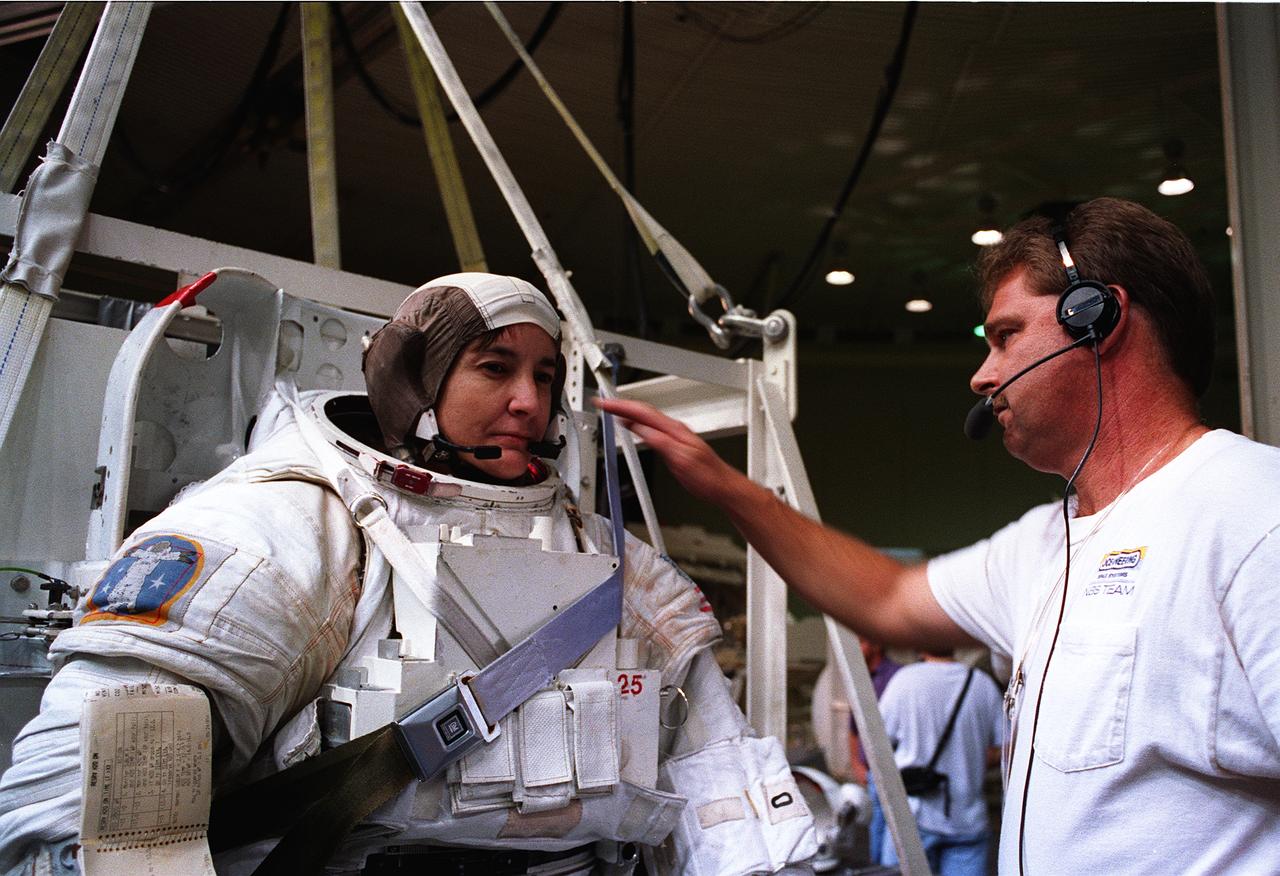
S95-21280 (September 1995) --- Astronaut Linda M. Godwin, mission specialist, checks communications systems before being submerged in a 25-feet deep pool at the Johnson Space Center's (JSC) Weightless Environment Training Facility (WET-F). Wearing high fidelity training versions of the Extravehicular Mobility Unit (EMU) spacesuit, both Godwin and Michael R. (Rich) Clifford were later simulating Extravehicular Activity (EVA) chores in the pool. Launch aboard the Space Shuttle Atlantis is scheduled for March of 1996.
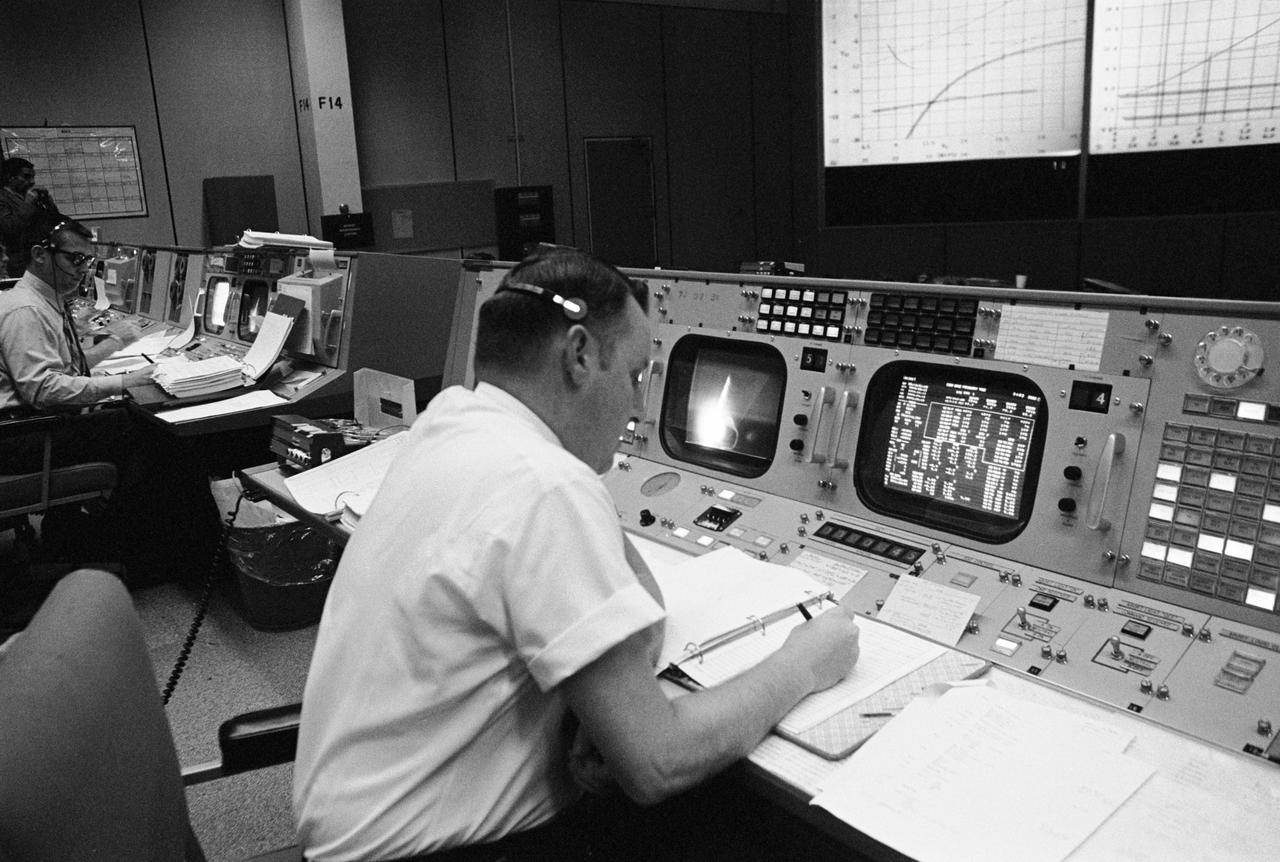
S68-55742 (21 Dec. 1968) --- Clifford E. Charlesworth, Apollo 8 "Green Team" flight director, is seated at his console in the Mission Operations Control Room in the Mission Control Center, Building 30, during the launch of the Apollo 8 (Spacecraft 103/Saturn 503) manned lunar orbit space mission.
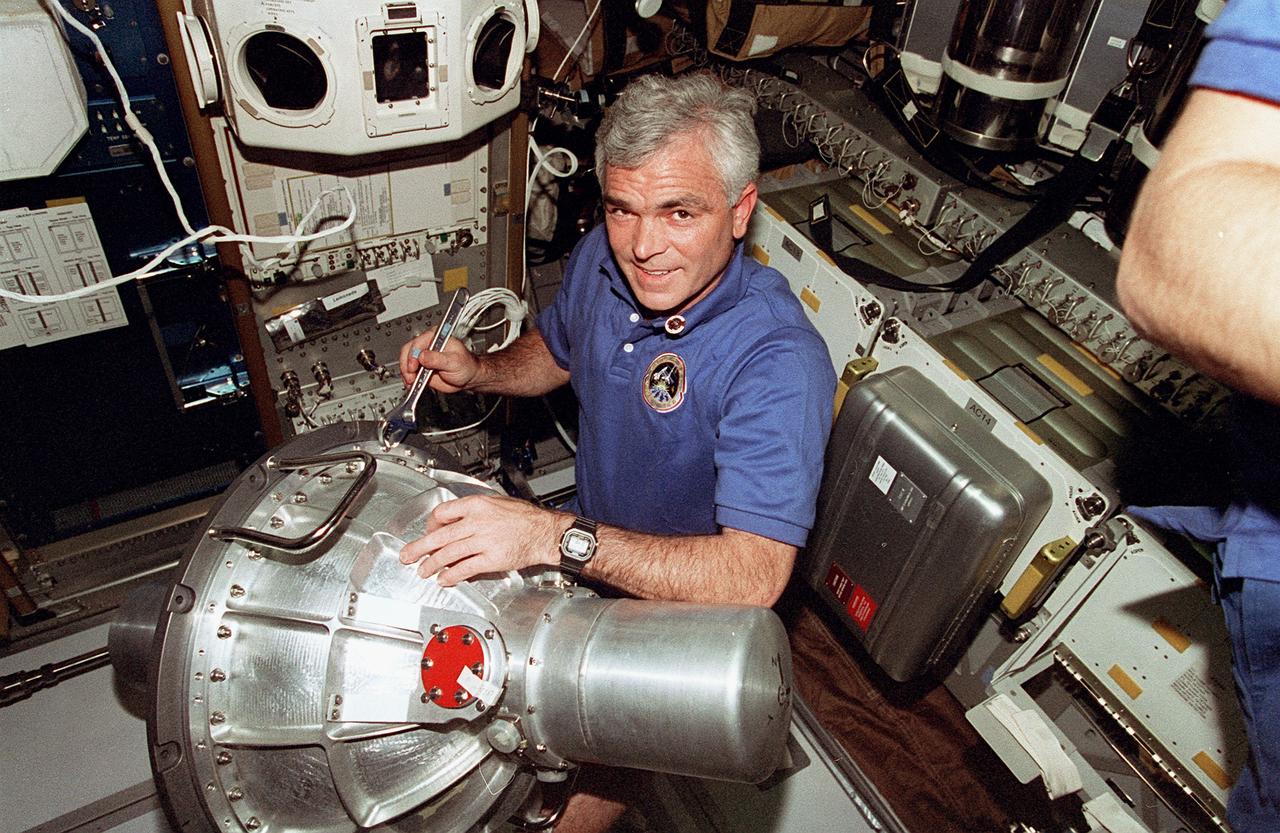
STS076-323-034 (22 - 31 March 1996) --- Astronaut Michael R. (Rich) Clifford, mission specialist, prepares to move a gyrodyne from the Space Shuttle Atlantis onto Russia's Mir Space Station. The gyrodyne was later installed in the Base Block Module onboard Mir.
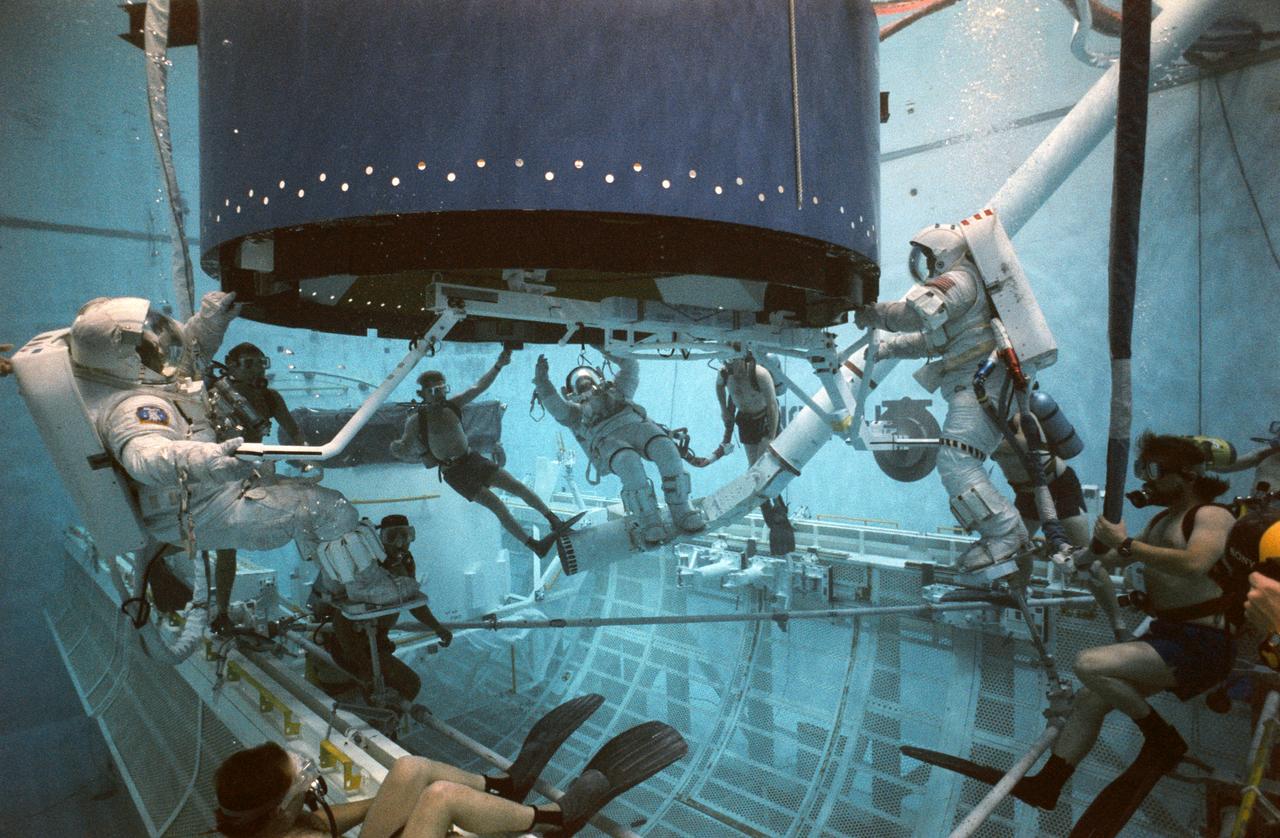
S92-35764 (12 May 1992) --- Wearing extravehicular mobility units (EMU's) and fitted with weights for neutral buoyancy are three trouble-shooting astronauts. The astronauts practiced techniques for capturing Intelsat, and climbing into the airlock mockup in the Weightless Environment Training Facility (WETF). No apparent problems were identified in placing three astronauts in the airlock at one time. Left to right are, Michael R. (Rich) Clifford, Story Musgrave, and James S. Voss. Three Endeavour astronauts, Pierre J. Thuot, Richard J. Hieb and Thomas D. Akers, will attempt to capture Intelsat again on May 13. Clifford played the role of Hieb, Musgrave for Thuot, and Voss, Akers.
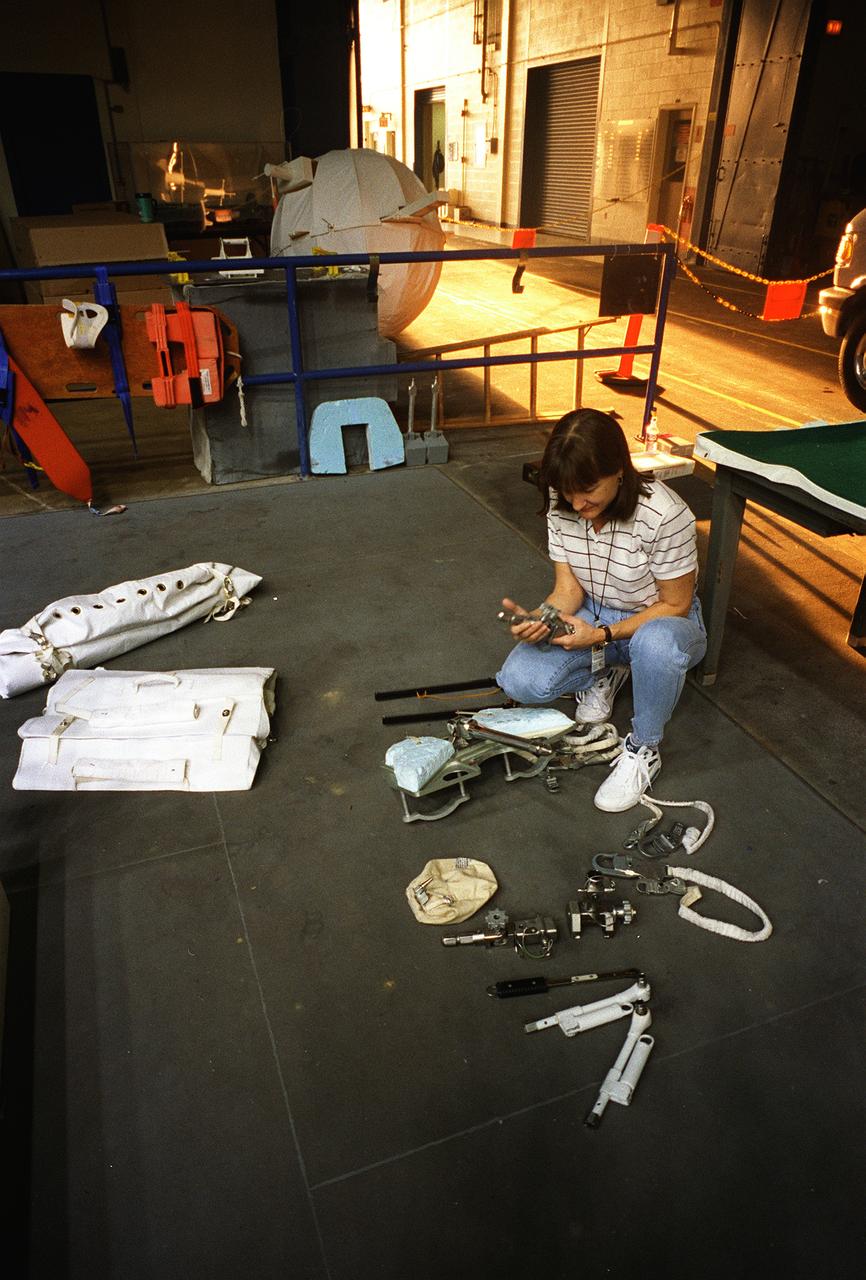
S95-21275 (September 1995) --- Astronaut Linda M. Godwin, mission specialist, checks training versions of tools to be used in a scheduled Extravehicular Activity (EVA) during the March mission. Astronaut Michael R. (Rich) Clifford, mission specialist, who will join Godwin on the EVA, is out of frame. The two checked out the hardware before donning training versions of the Extravehicular Mobility Unit (EMU) spacesuit in preparation for being submerged in a 25-feet deep pool at the Johnson Space Center's (JSC) Weightless Environment Training Facility (WET-F).
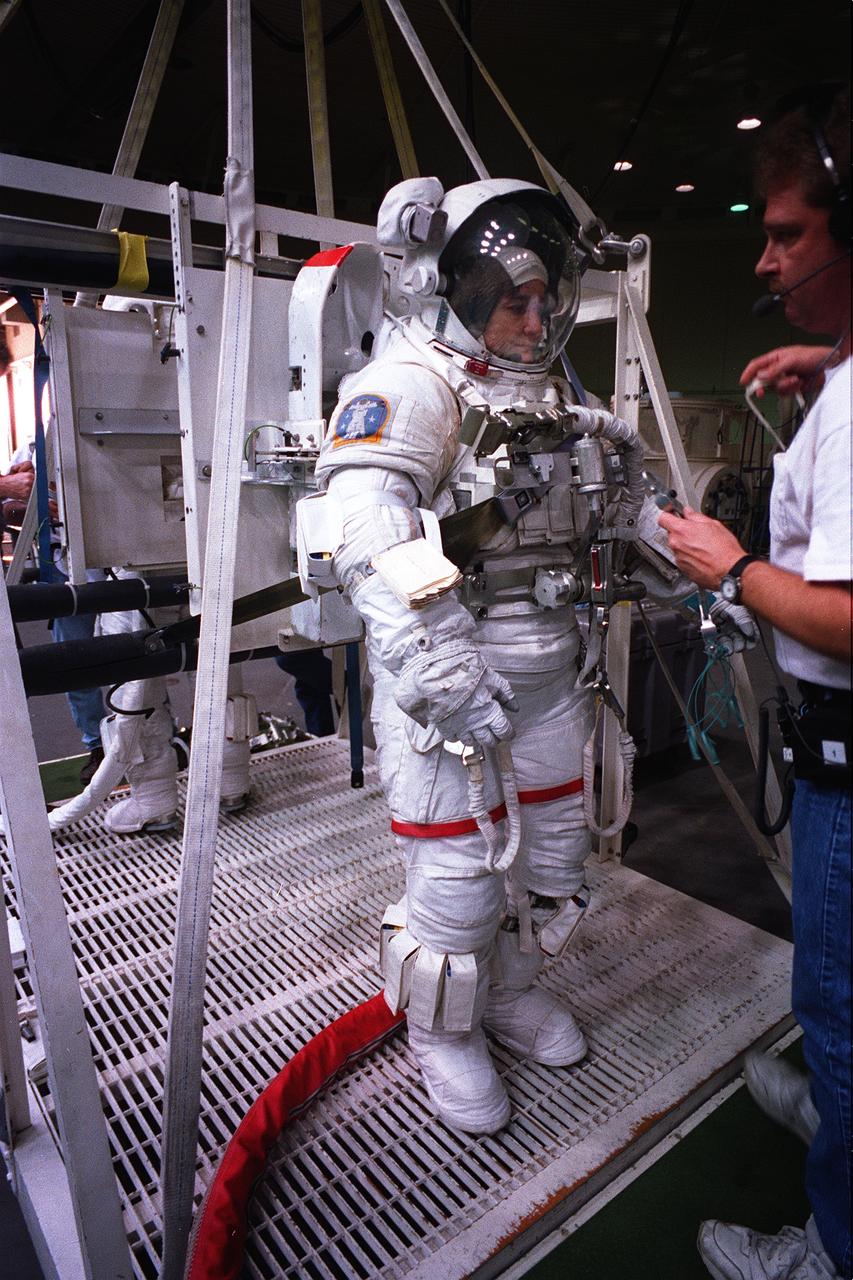
S95-21281 (September 1995) --- Astronaut Linda M. Godwin, mission specialist, makes a final check of her respiration system before being submerged in a 25-feet deep pool at the Johnson Space Center's (JSC) Weightless Environment Training Facility (WET-F). Wearing high fidelity training versions of the Extravehicular Mobility Unit (EMU) spacesuit, both Godwin and Michael R. (Rich) Clifford were later simulating Extravehicular Activity (EVA) chores in the pool. Launch aboard the Space Shuttle Atlantis is scheduled for March of 1996.
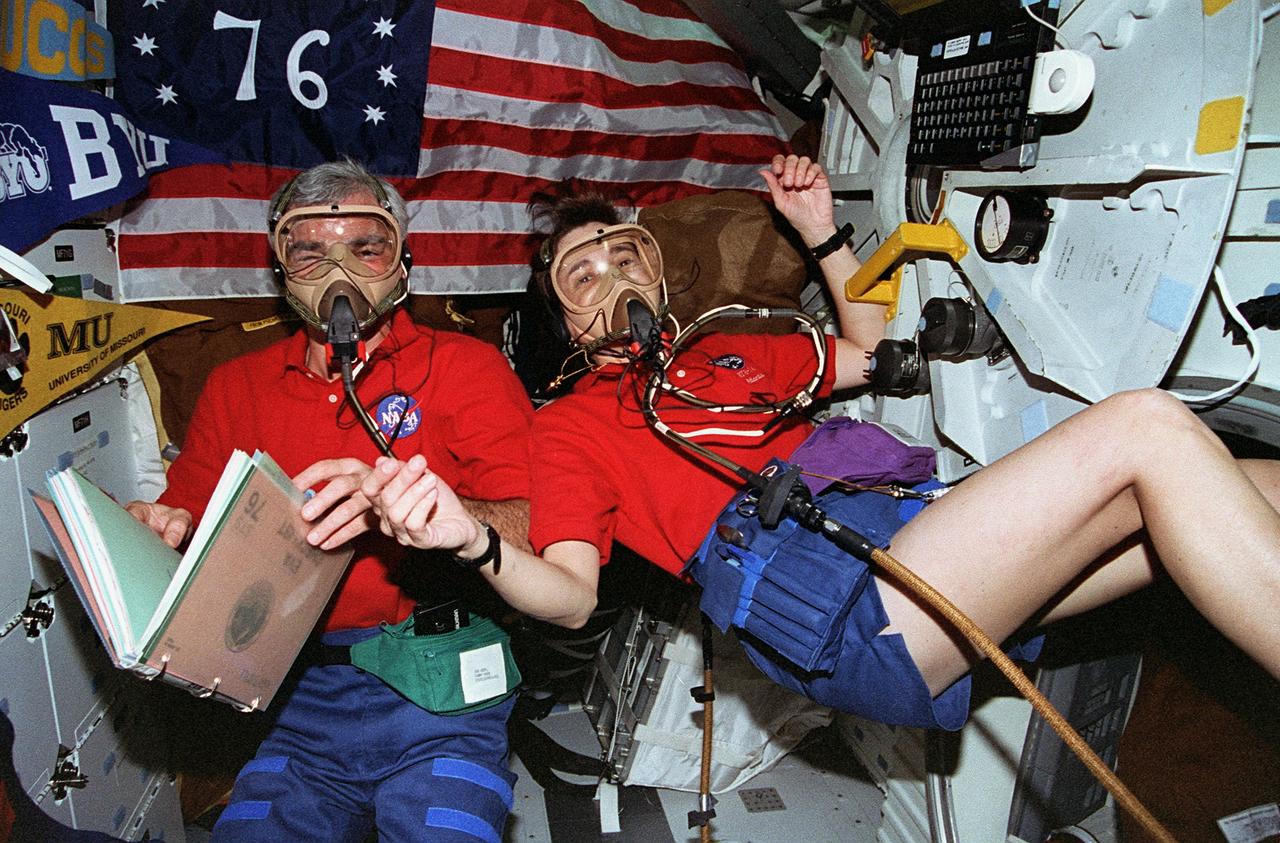
STS076-346-017 (22-31 March 1996) --- Astronauts Michael R. (Rich) Clifford and Linda M. Godwin, the assigned space-walking mission specialists for STS-76, go through a "pre-breathing" period on the Space Shuttle Atlantis' middeck. This practice is normal procedure for space-walkers in preparation for their Extravehicular Activity (EVA) and the wearing of their Extravehicular Mobility Units (EMU). The photograph was taken with a 35mm camera by one of the crew members.
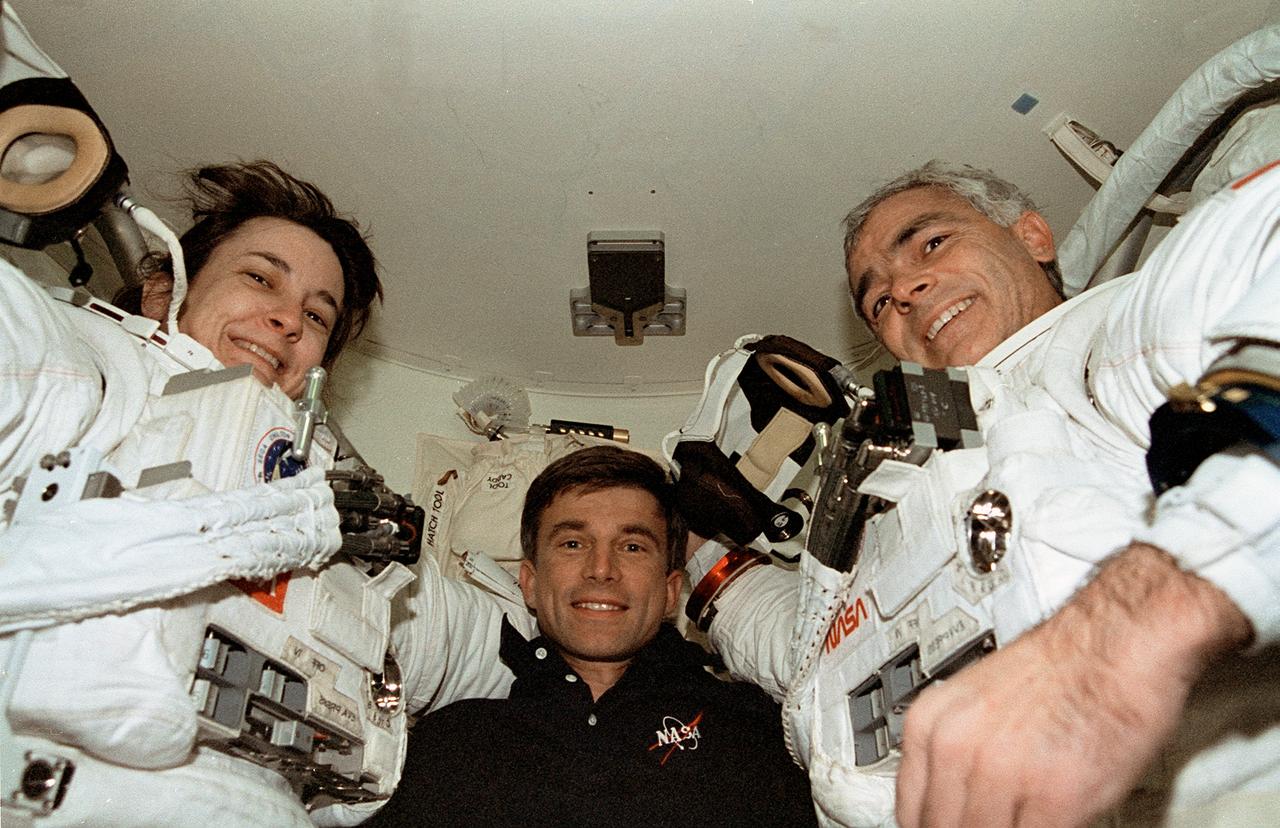
STS076-342-027 (27 March 1996) --- Astronaut Ronald M. Sega, center, shares the airlock of the Space Shuttle Atlantis with the two assigned space walkers for STS-76 - astronauts Linda M. Godwin and Michael R. (Rich) Clifford. Sega, the payload commander, assisted the two mission specialists in preparing for the first ever Extravehicular Activity (EVA) to take place while the Space Shuttle was docked with Russia's Mir Space Station.
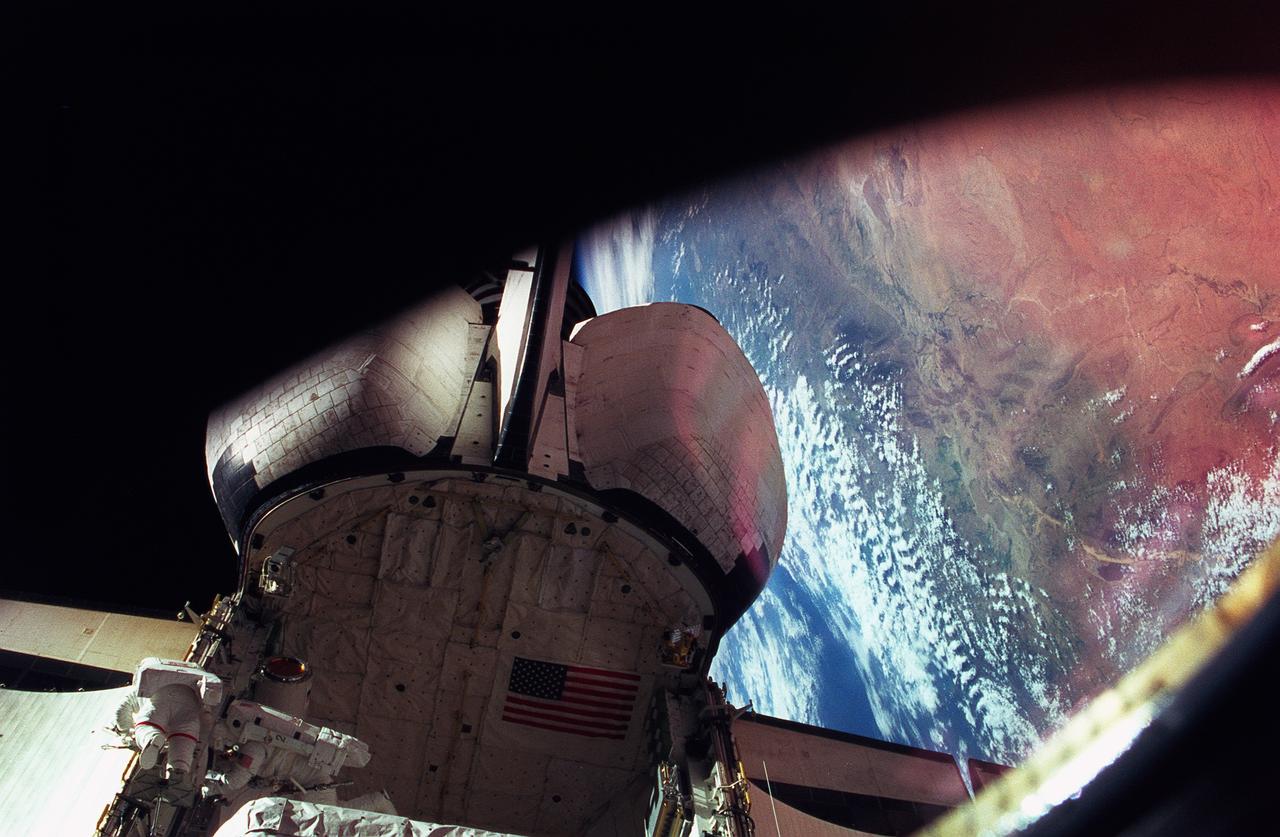
STS076-401-021 (27 March 1996) --- Astronauts Michael R. (Rich) Clifford (right) and Linda M. Godwin (red stripe) work together on the port side of the Space Shuttle Atlantis' aft cargo bay during a March 27, 1996, Extravehicular Activity (EVA). The Atlas Mountains can been seen near Earth's horizon in the background. The EVA of the two mission specialists marks the first EVA while Russia's Mir Space Station was docked with the Space Shuttle Atlantis. This is the third of a series of docking missions involving Mir and the Space Shuttle Atlantis.
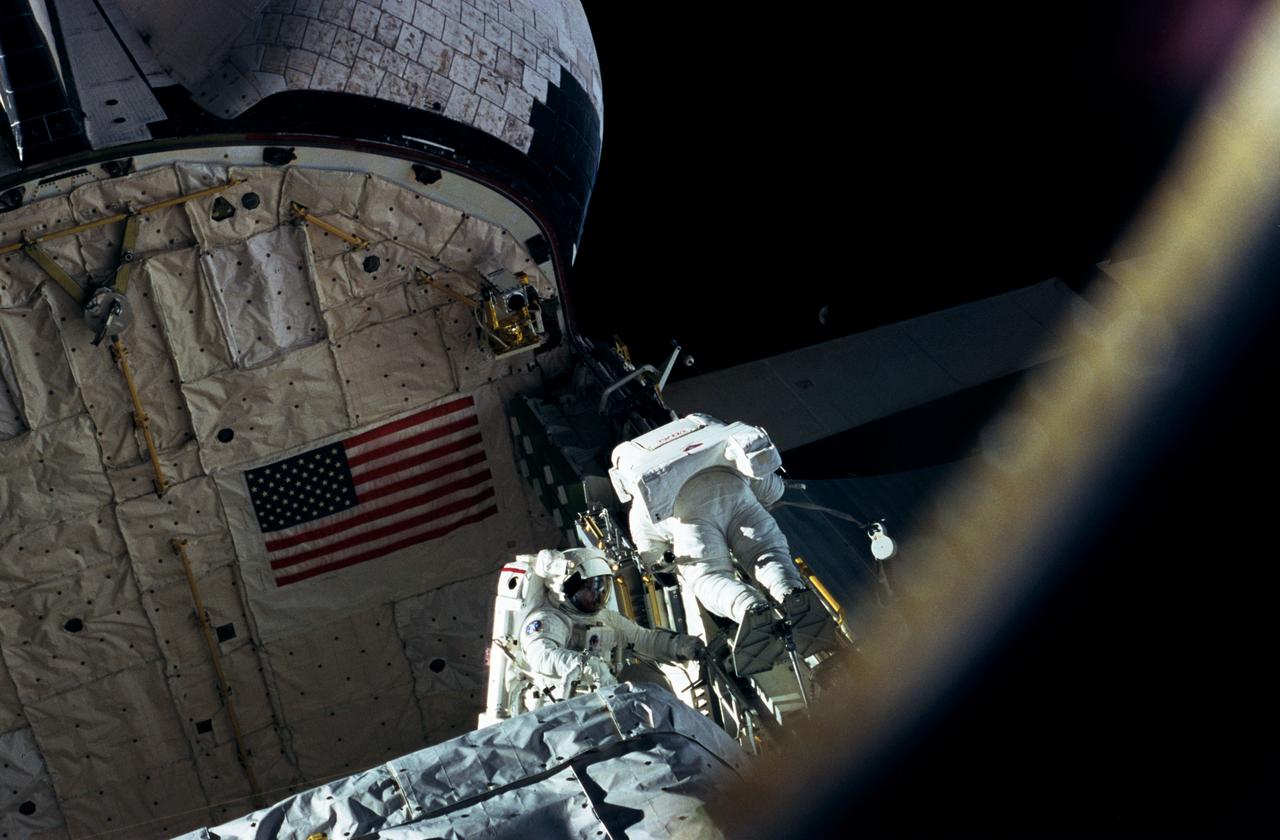
STS076-401-036 (27 March 1996) --- Astronauts Michael R. (Rich) Clifford (right) and Linda M. Godwin (red stripe) work together on the port side of the Space Shuttle Atlantis' aft cargo bay during a March 27, 1996, Extravehicular Activity (EVA). The EVA of the two mission specialists marks the first EVA while Russia's Mir Space Station was docked with the Space Shuttle Atlantis. This is the third of a series of docking missions involving Mir and the Space Shuttle Atlantis. A half Moon can faintly be seen in the upper right hand quadrant of the 35mm frame.
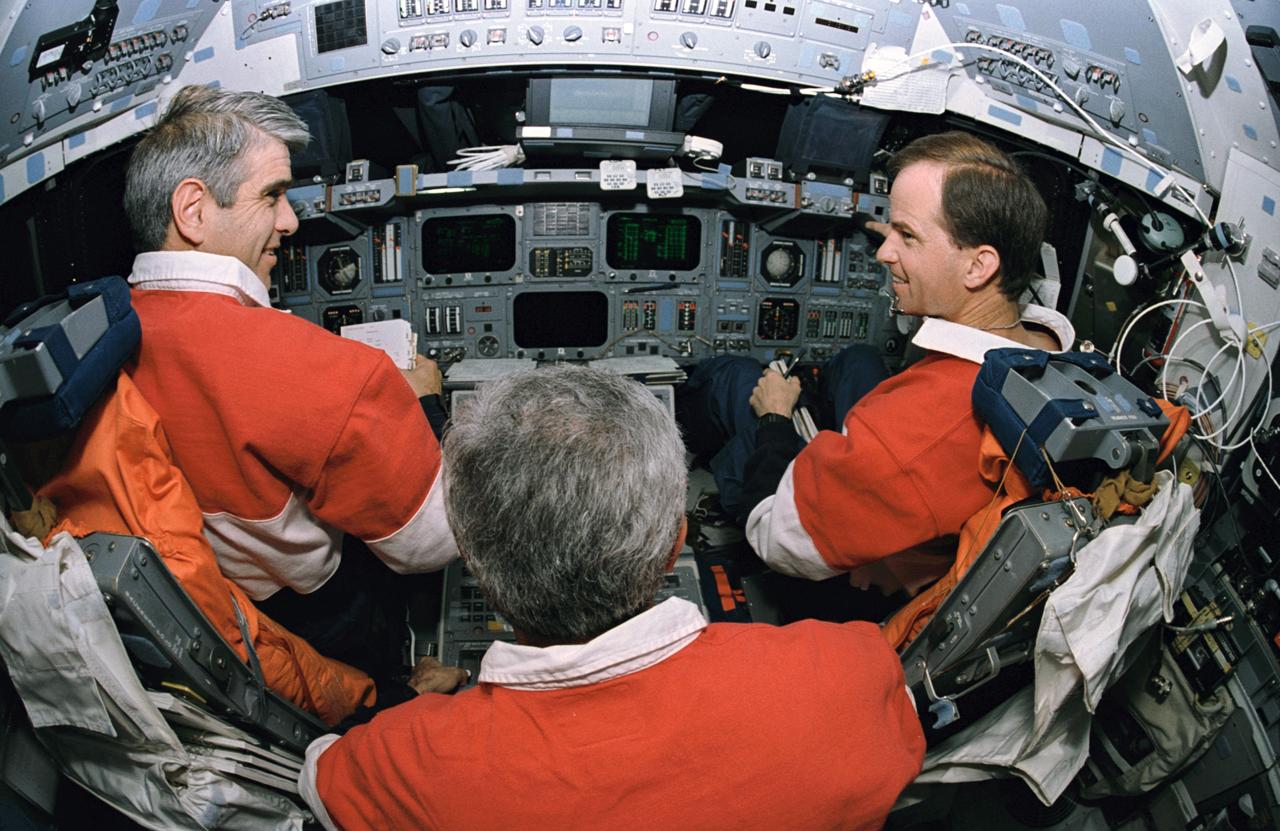
STS059-12-035 (9-20 April 1994) --- A 16mm lens on a 35mm camera provides a "fish-eye" effect for this rare scene on the Space Shuttle Endeavour's flight deck during checkout of the spacecraft's flight control systems. Astronauts Sidney M. Gutierrez (left) and Kevin P. Chilton (right) man the commander and pilot stations, respectively. Astronaut Michael R. (Rich) Clifford, the flight engineer, is seated behind the two. Not pictured are astronauts Linda M. Godwin, payload commander, and Jerome (Jay) Apt and Thomas D. Jones, both mission specialists.
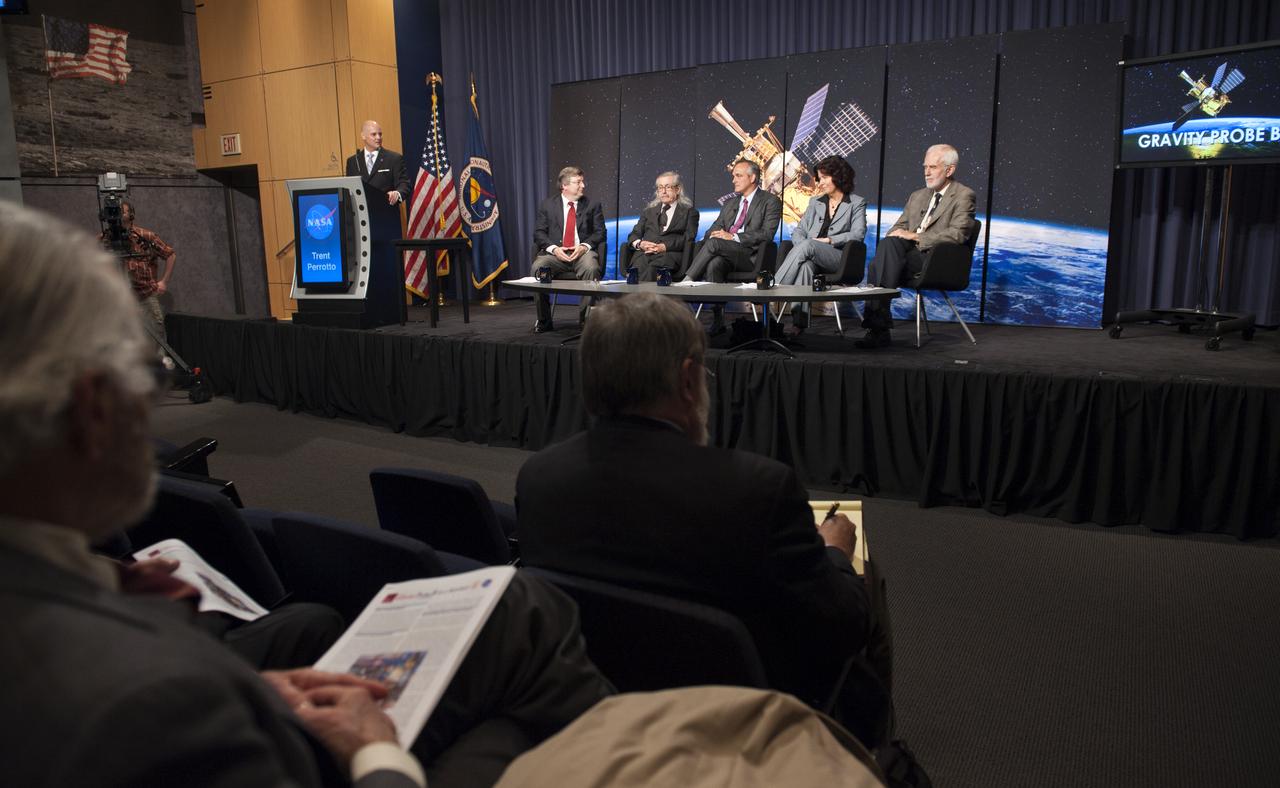
Seated from left, Bill Danchi, Senior Astrophysicist and Program Scientist at NASA Headquarters, Francis Everitt, Principal Investigator for the Gravity Probe B Mission at Stanford University, Rex Geveden, President of Teledyne Brown Engineering, Colleen Hartman, a research professor at George Washington University, and Clifford Will, Professor of Physics at Washington University in St. Louis, Mo., conduct a press conference, Wednesday, May 4, 2011, to discuss NASA's Gravity Probe B (GP-B) mission which has confirmed two key predictions derived from Albert Einstein's general theory of relativity, which the spacecraft was designed to test. at NASA Headquarters in Washington. Photo Credit: (NASA/Paul E. Alers)
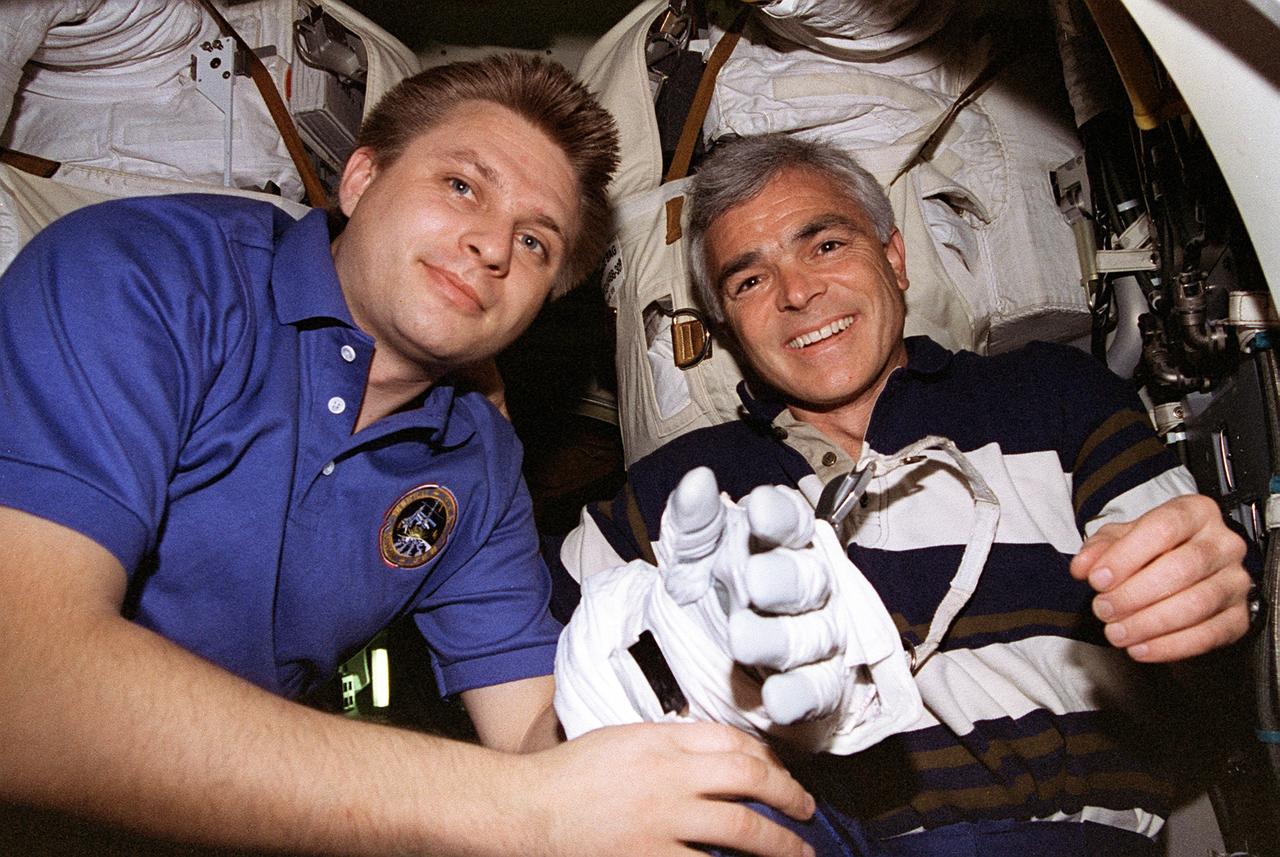
STS076-356-006 (26 March 1996) --- Backdropped against two space suits, a curious cosmonaut Yury I. Onufrienko, left, tries on a glove while visiting astronaut Michael R. (Rich) Clifford in the airlock aboard the Space Shuttle Atlantis. Clifford was in the airlock to check over his gear for tomorrow's Extravehicular Activity (EVA). Onufrienko is Mir-21 mission commander, and Clifford, a STS-76 mission specialist who will be joined by astronaut Linda M. Godwin for the EVA. The EVA of the two mission specialists marks the first EVA while Russia's Mir Space Station was docked with the Space Shuttle Atlantis. This is the third of a series of docking missions involving Mir and the Space Shuttle Atlantis.
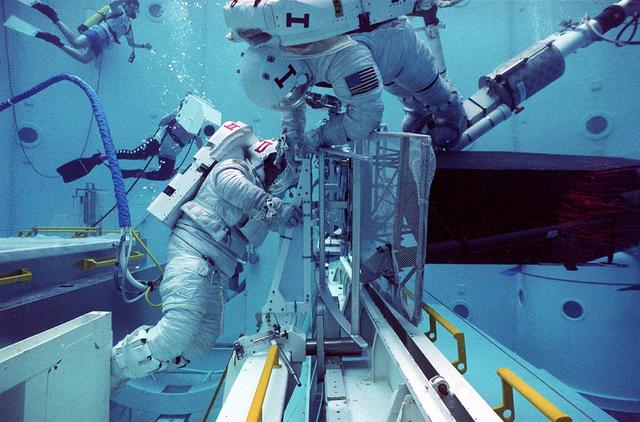
Astronauts Mark Lee and Rich Clifford perform test check-out procedures on the Hubble Space Telescope in the Marshall Space Flight Center's Neutral Buoyancy Simulator (NBS).
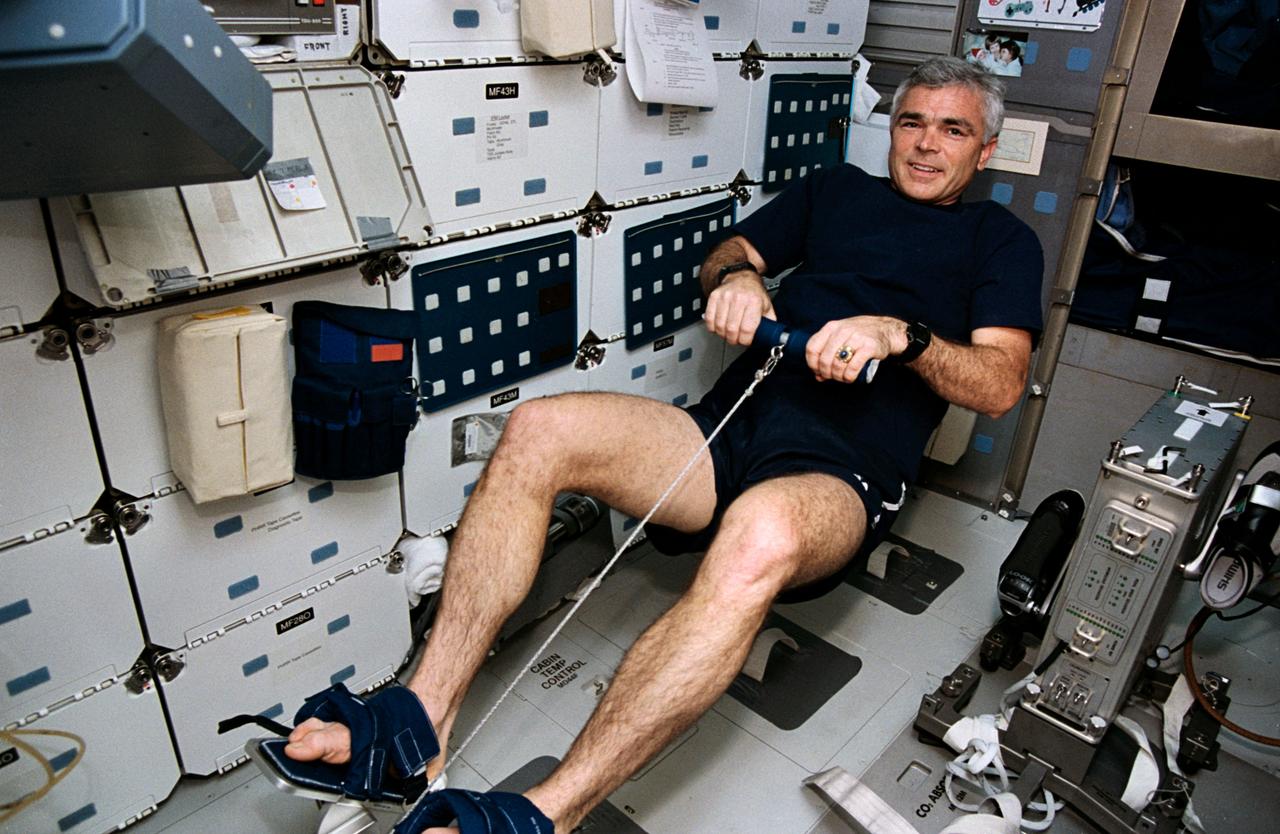
STS059-11-014 (9-20 April 1994) --- Astronaut Michael R. (Rich) Clifford, mission specialist, uses the rowing machine temporarily deployed on the Space Shuttle Endeavour's middeck. Many of the crew members put in time on the device during the week and a half mission.
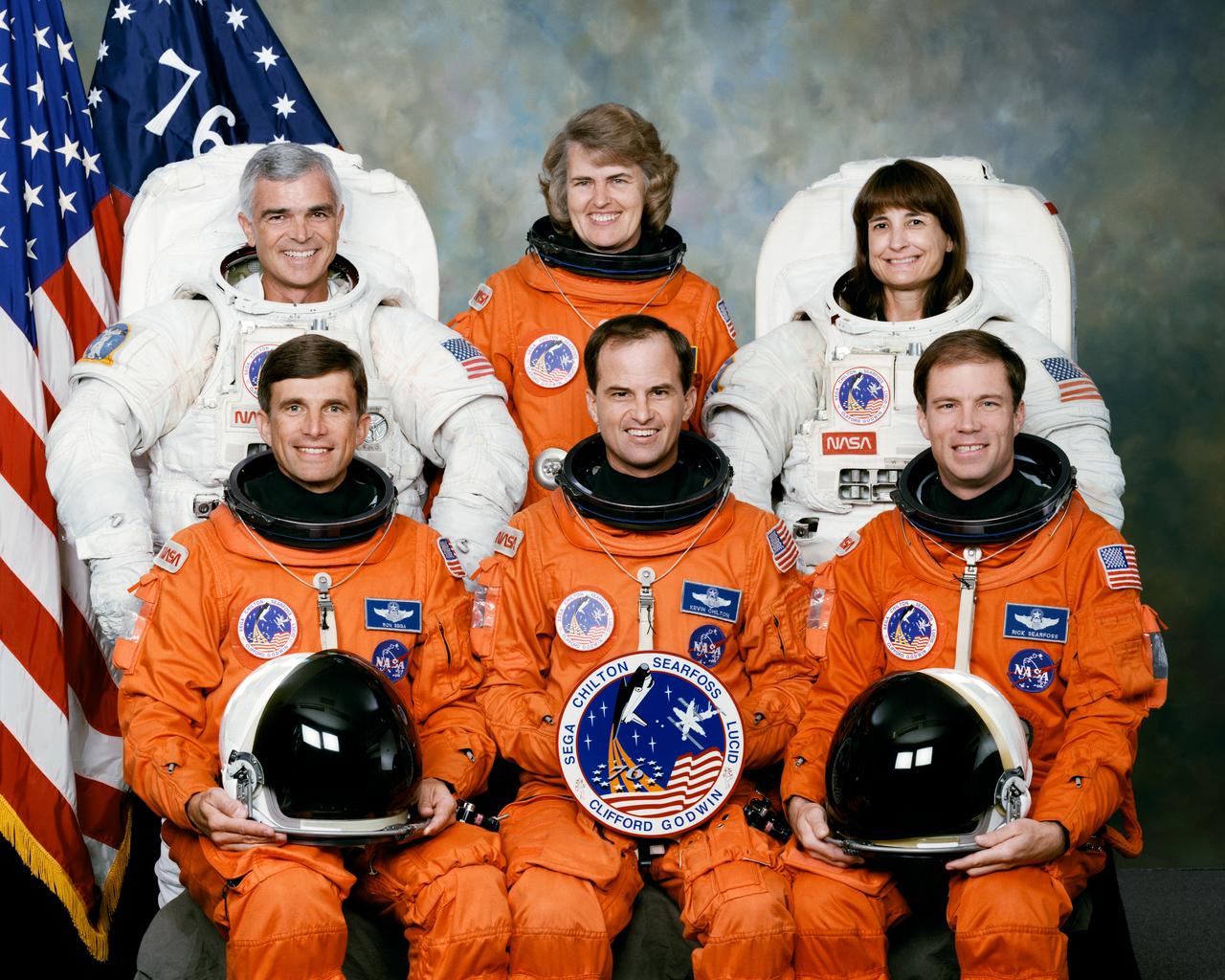
STS076-S-002 (November 1995) --- These six NASA astronauts will be launched into space aboard the Space Shuttle Atlantis early next year. Front row, left to right, are astronauts Ronald M. Sega, mission specialist; Kevin P. Chilton, mission commander; and Richard A. Searfoss, pilot. Back row, left to right, are mission specialists Michael R. (Rich) Clifford, Shannon W. Lucid and Linda M. Godwin. STS-76 begins a new period of international cooperation in space exploration with the first Shuttle transport of a United States astronaut (Lucid) to Russia’s Mir Space Station for extended joint space research. Clifford and Godwin, pictured here in training versions of the Extravehicular Mobility Unit (EMU), are scheduled to perform the first Extravehicular Activity (EVA) during Mir-Shuttle docked operations.
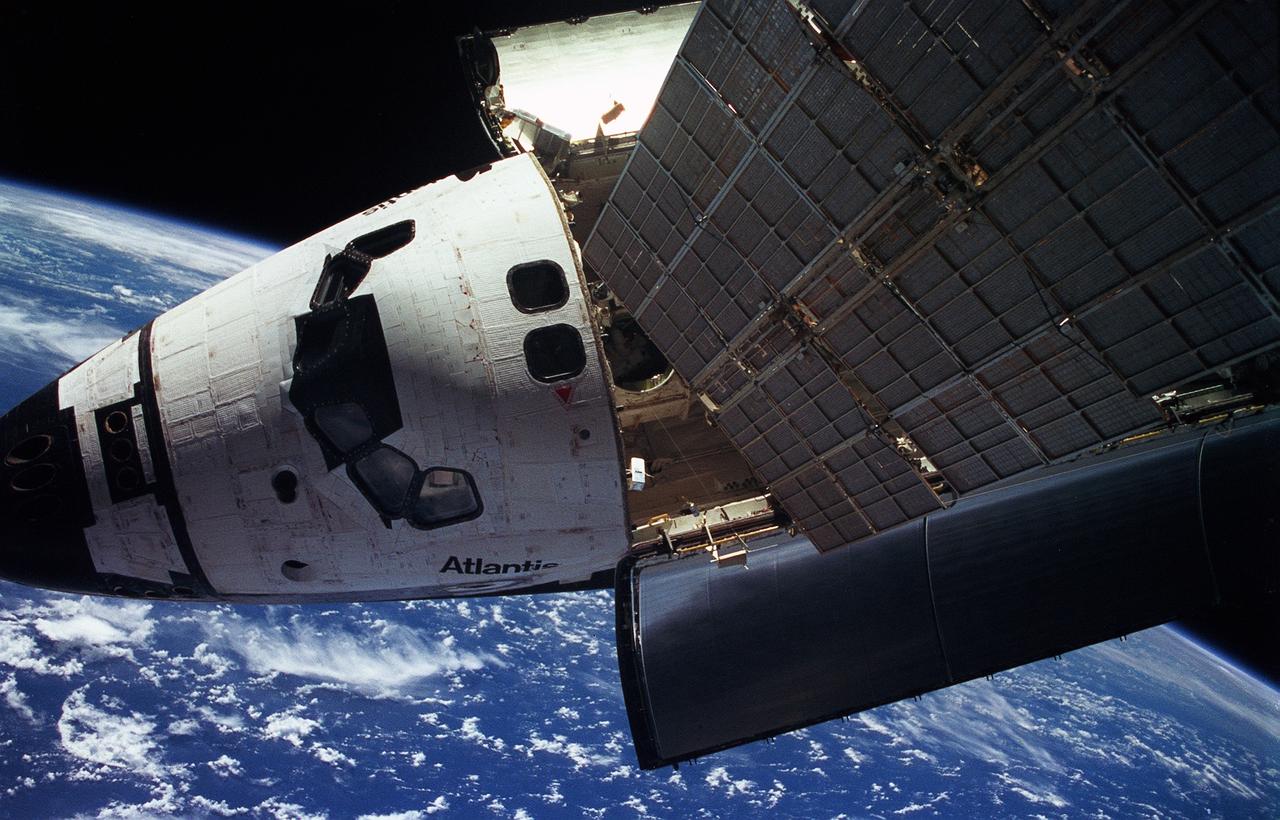
STS076-401-009 (22 - 31 March 1996) --- This photo of the crew cabin of the Space Shuttle Atlantis was taken from Russia's Mir Space Station as the two spacecraft jointly orbited Earth in late March 1996. Earth's horizon and clouds over the Indian Ocean form part of the backdrop for the scene. The large rectangular object in the immediate foreground is one of the solar array panels for Mir. The two spacecraft were in the midst their third link-up in Earth-orbit. With the subsequent delivery of astronaut Shannon W. Lucid to the Mir, the Mir-21 crew grew from two to three, as the mission specialist temporarily became a cosmonaut guest researcher. She is to spend approximately 140 days on Mir before returning to Earth.
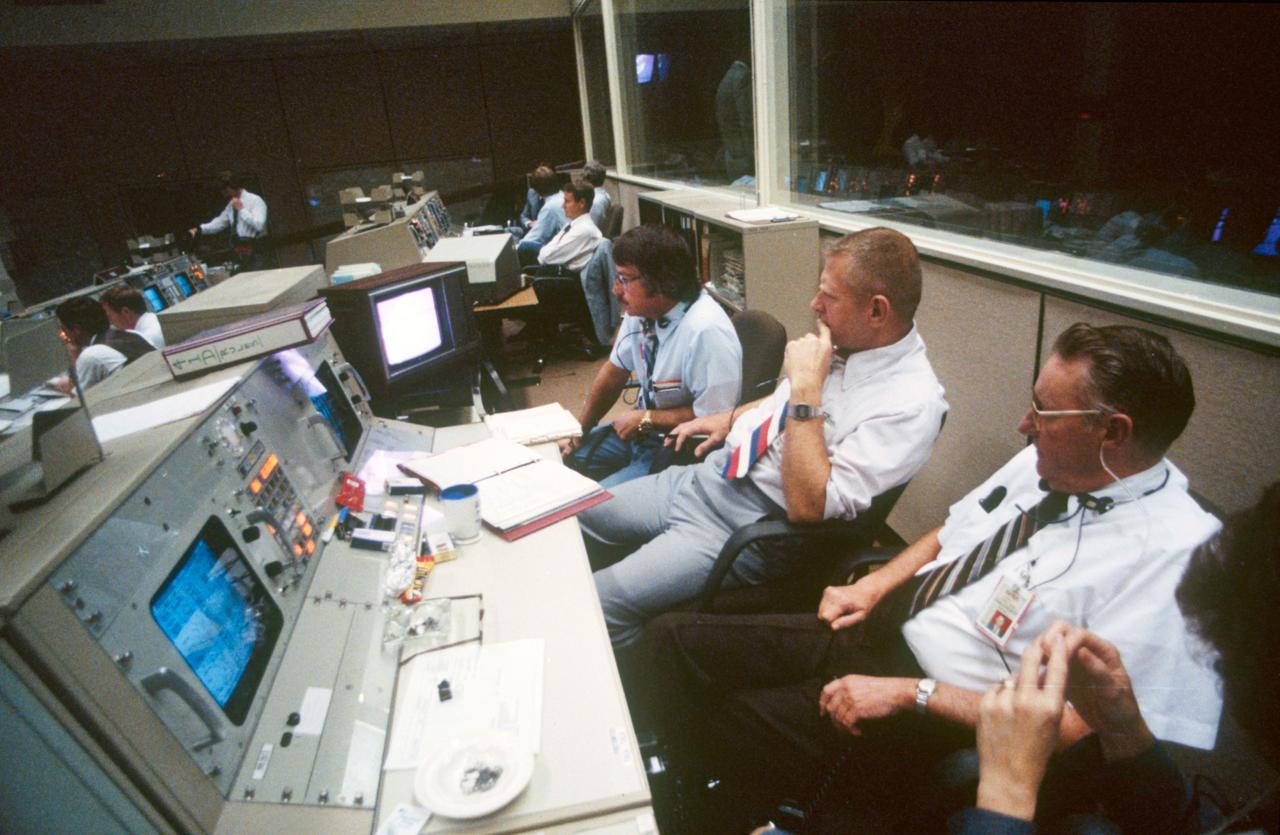
41D-3073 (30 Aug 1984) --- The beginning stages of a busy six-day mission are monitored by some NASA officials in the flight control room (FCR-1) of the Johnson Space Center's (JSC) mission control center (MCC). They are (l.-r., foreground) Daniel M. Germany, manager of the Shuttle flight equipment project offices; Eugene F. Kranz, director of mission operations; and Clifford E. Charlesworth, director of space operations.
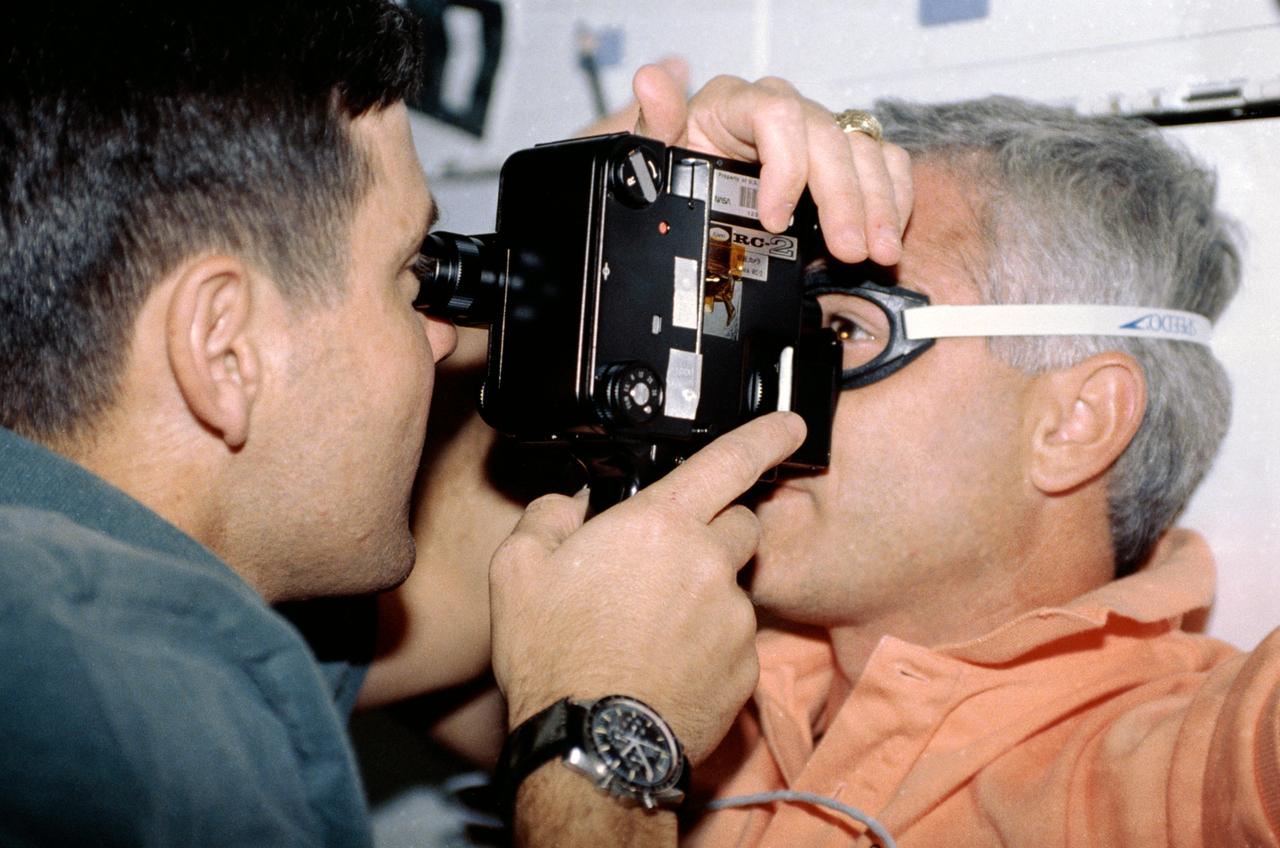
STS053-02-007 (2 - 9 Dec 1992) --- Astronaut Robert D. Cabana, pilot, uses a tonometer to check the intraocular pressure of astronaut Michael R. U. (Rich) Clifford, mission specialist. The two are on the Space Shuttle Discovery's mid-deck. This test is one of the mission's Detailed Supplementary Objectives (DSO) 472. The purpose of this DSO is to establish a data base of changes in intraocular pressures that can be used to evaluate crew health.
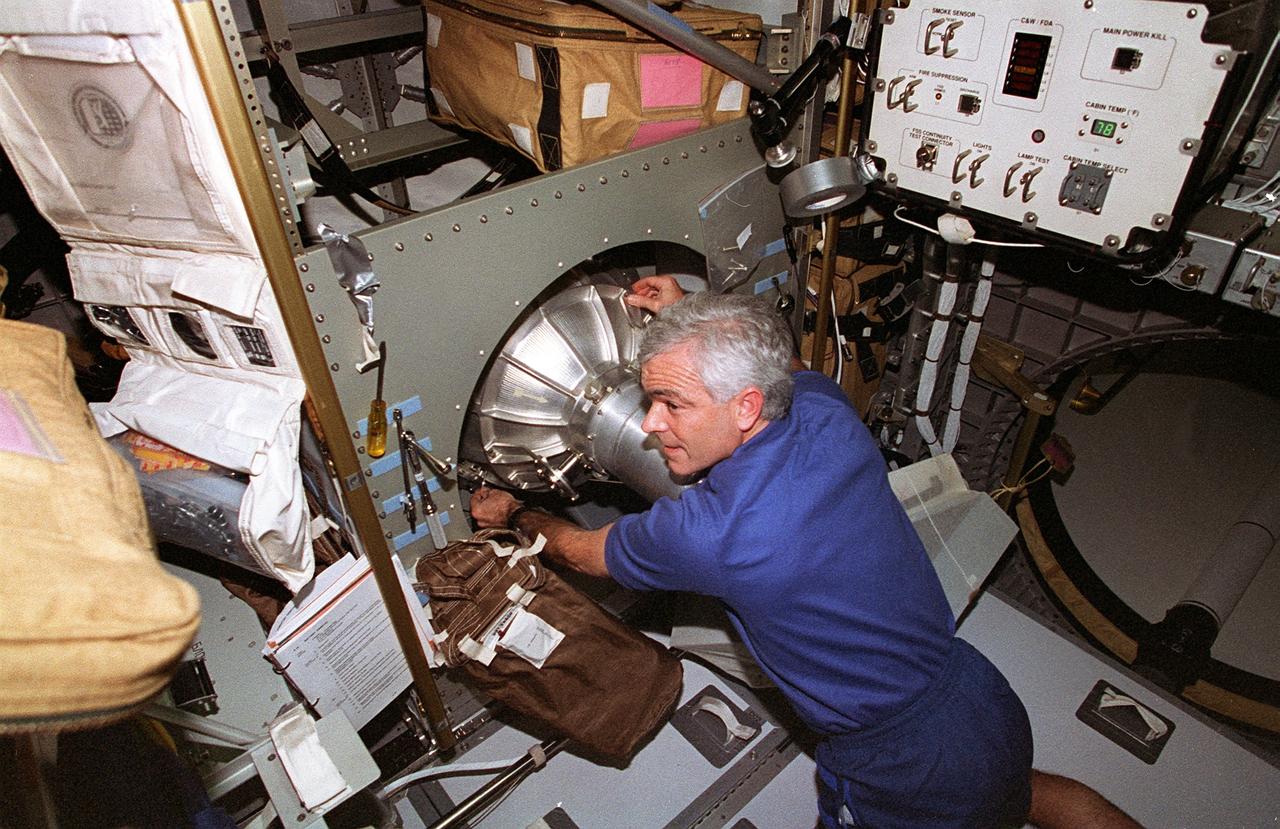
STS076-345-017 (22 - 31 March 1996) --- Onboard the Spacehab module in the cargo bay of the Earth-orbiting Space Shuttle Atlantis, astronaut Michael R. (Rich) Clifford secures a stowed gyrodyne. The stabilizing instrument earlier had been replaced on Russia's Mir Space Station with a new one brought up from the ground by the crew. The mission specialist and his crew mates docked with Mir on March 23, 1996 and remained linked until March 28, 1996.
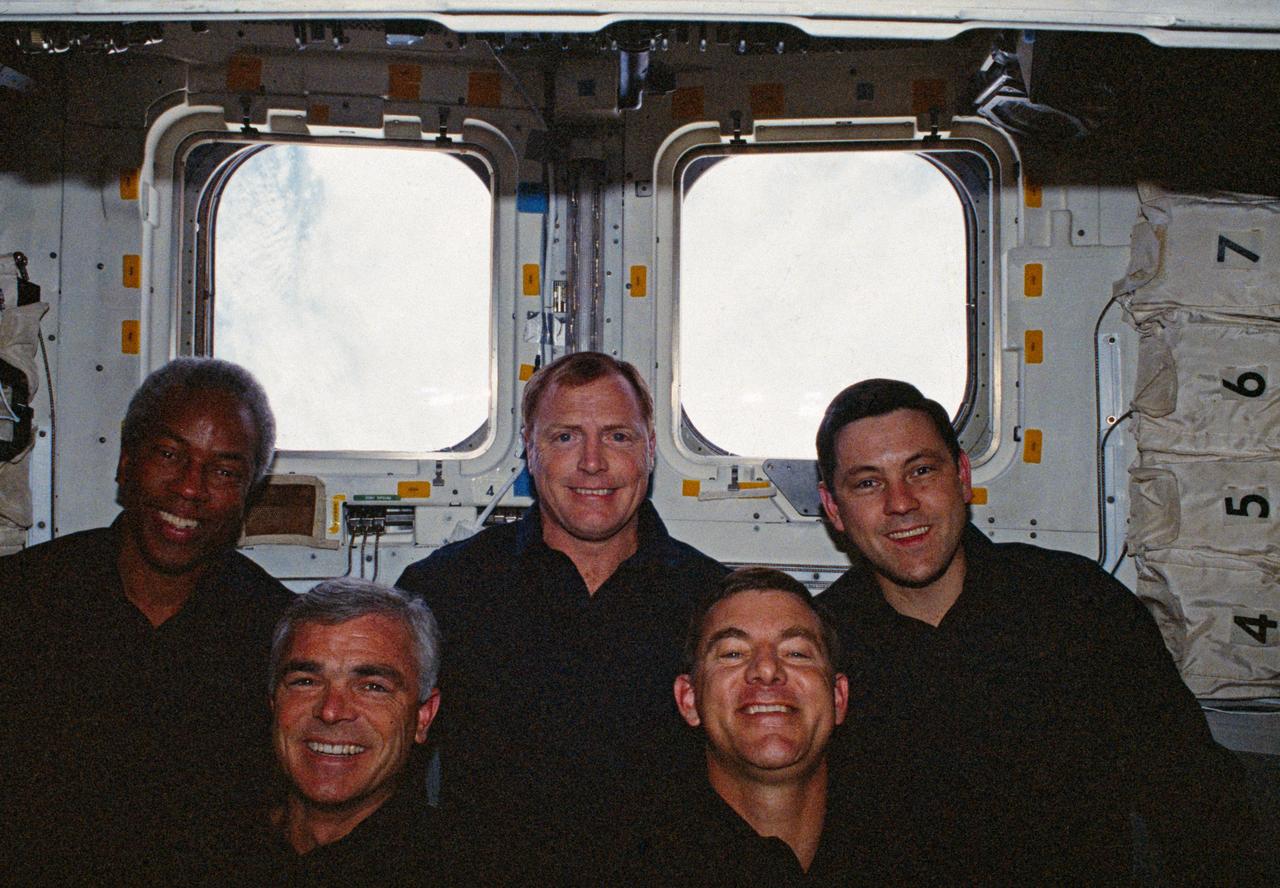
STS053-13-021 (2-9 Dec 1992) --- The five astronauts flying aboard the Space Shuttle Discovery for the mission pose for the traditional in-flight crew portrait. Left to right are astronauts Guion S. Bluford, mission specialist; Michael R. U. (Rich) Clifford, mission specialist; David M. Walker, mission commander; James S. Voss, mission specialist; and Robert D. Cabana, pilot.
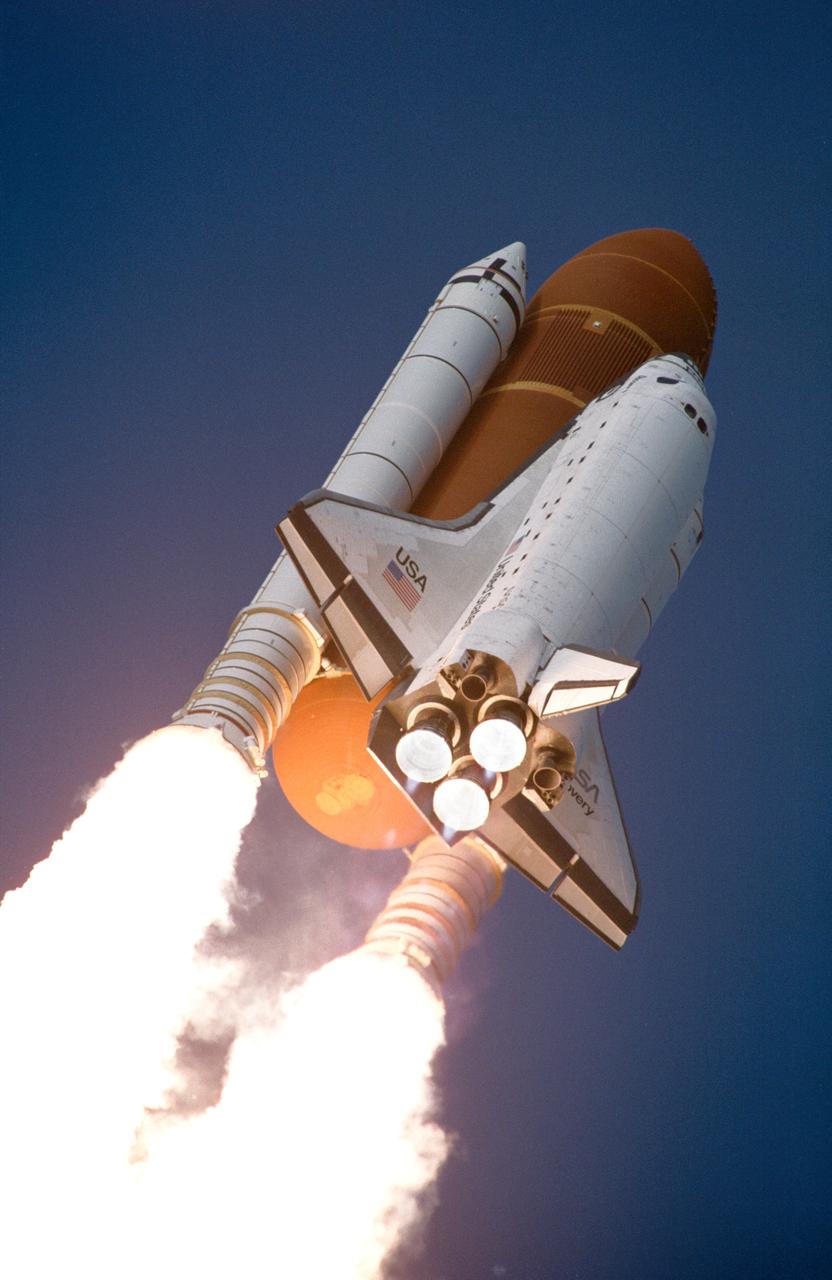
STS053-S-058 (2 Dec. 1992) --- The space shuttle Discovery, with a crew of five astronauts onboard, launches from Kennedy Space Center's (KSC) Pad 39A at 8:24:00 a.m. (EST), Dec. 2, 1992. The all military crew supporting the Department of Defense (DOD) flight included astronauts David M. Walker, Robert D. Cabana, Guion S. Bluford, Jr., James S. Voss and Michael R. U. (Rich) Clifford.
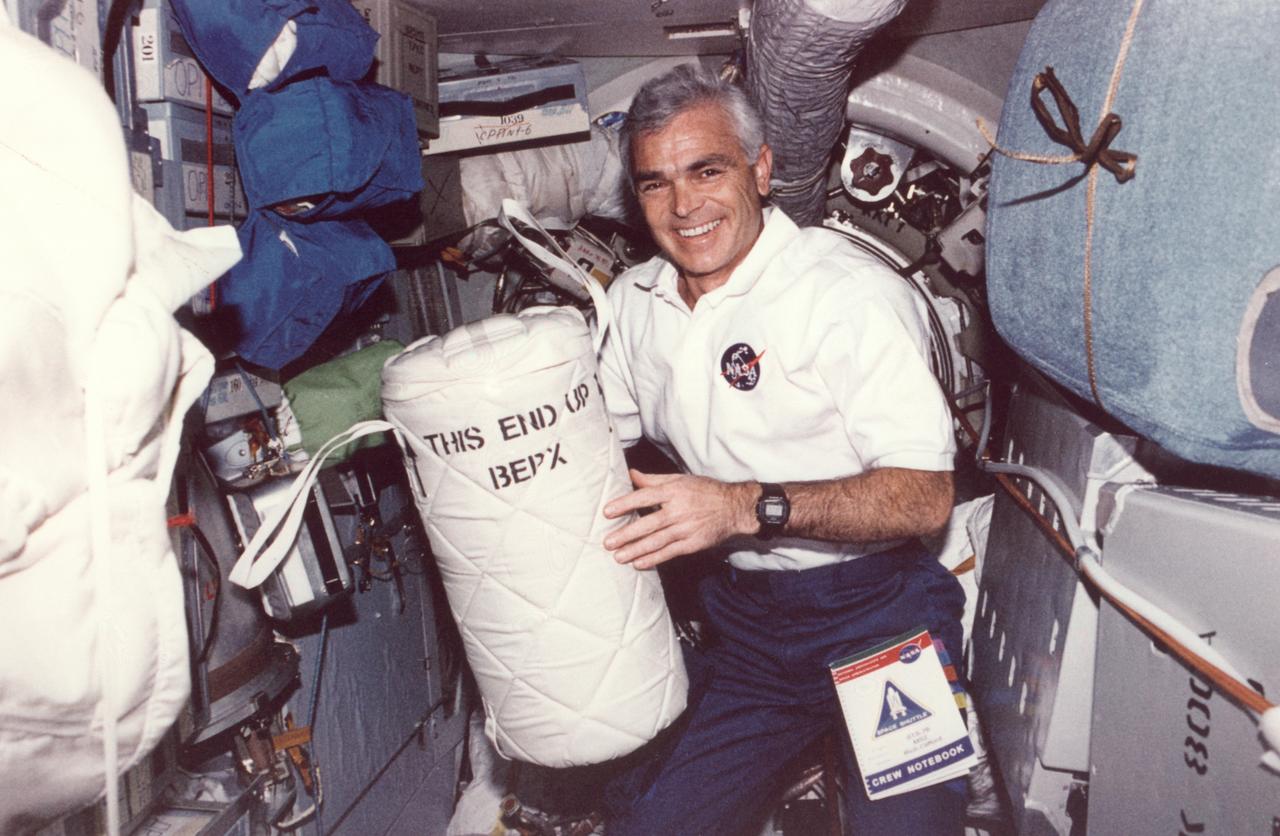
Astronaut Michael Clifford places a liquid nitrogen Dewar containing frozen protein solutions aboard Russia's space station Mir during a visit by the Space Shuttle (STS-76). The protein samples were flash-frozen on Earth and will be allowed to thaw and crystallize in the microgravity environment on Mir Space Station. A later crew will return the Dewar to Earth for sample analysis. Dr. Alexander McPherson of the University of California at Riverside is the principal investigator. Photo credit: NASA/Johnson Space Center.
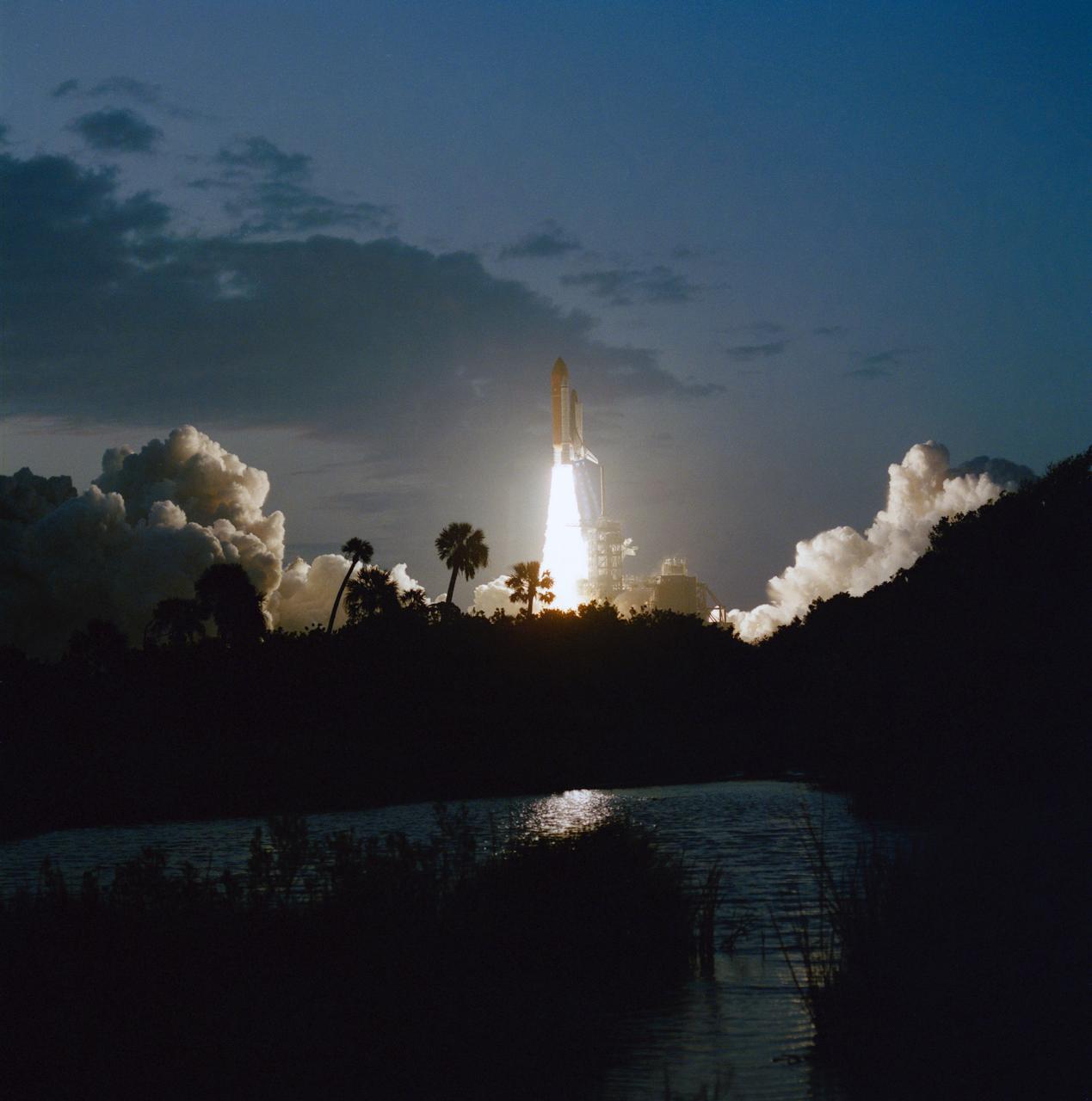
STS059-S-034 (9 April 1994) --- The liftoff of the Space Shuttle Endeavour is backdropped against a dawn sky at the Kennedy Space Center (KSC) as six NASA astronauts head for a week and a half in Earth orbit. Liftoff occurred at 7:05 a.m. (EDT), April 9, 1994. Onboard for the Space Radar Laboratory (SRL-1) mission were astronauts Sidney M. Gutierrez, Kevin P. Chilton, Jerome (Jay) Apt, Linda M. Godwin, Michael R. U. (Rich) Clifford and Thomas D. Jones.
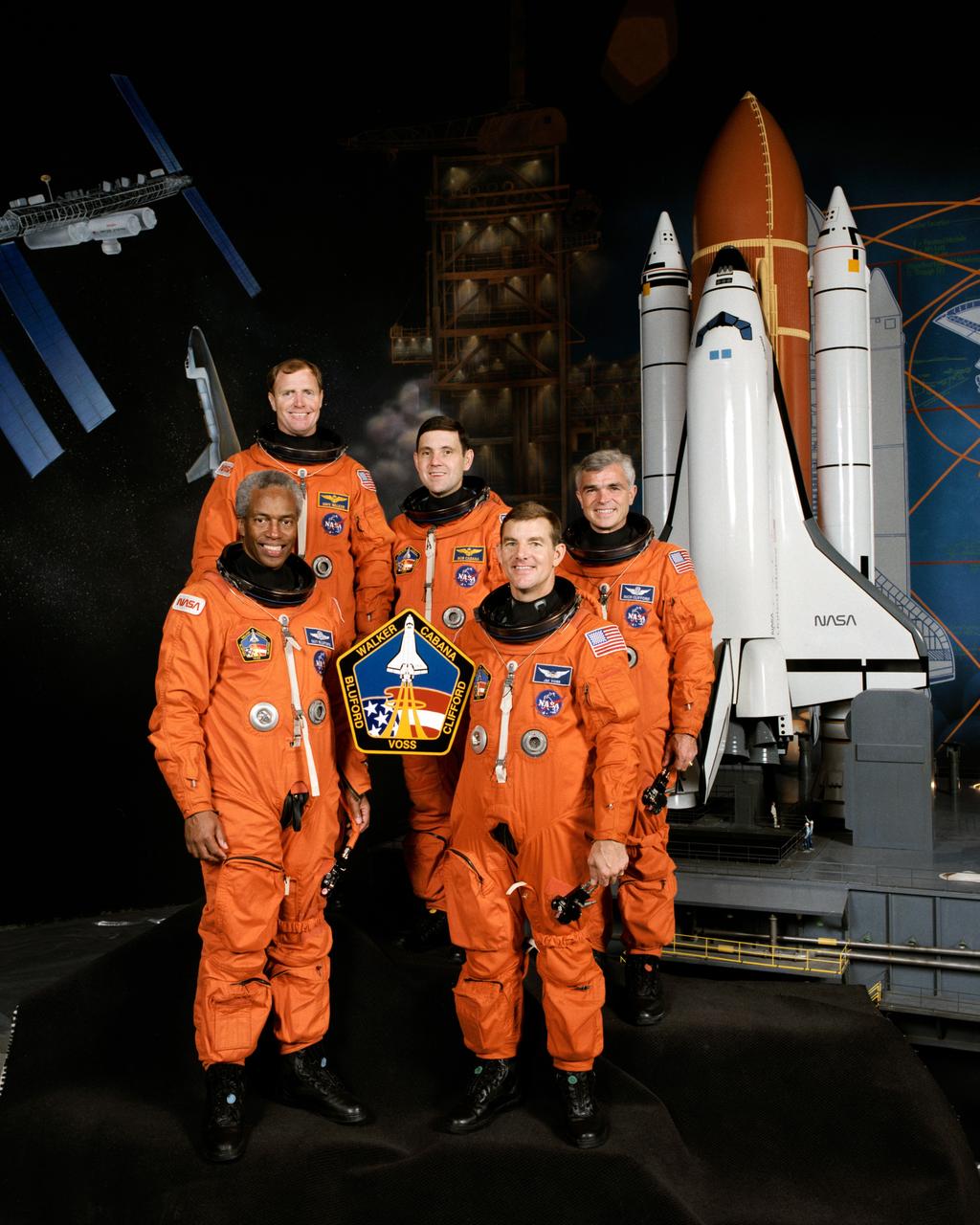
STS053-S-002 (September 1992) --- These five astronauts have been assigned to fly aboard the Space Shuttle Discovery for the mission, scheduled for launch in November of this year. Pictured are, left to right (front), Guion S. Bluford and James S. Voss, mission specialists; and (back row) David M. Walker, mission commander; Robert D. Cabana, pilot and Michael R. U. (Rich) Clifford, mission specialist. The photograph was made in the new Space Center Houston (SCH) facility.
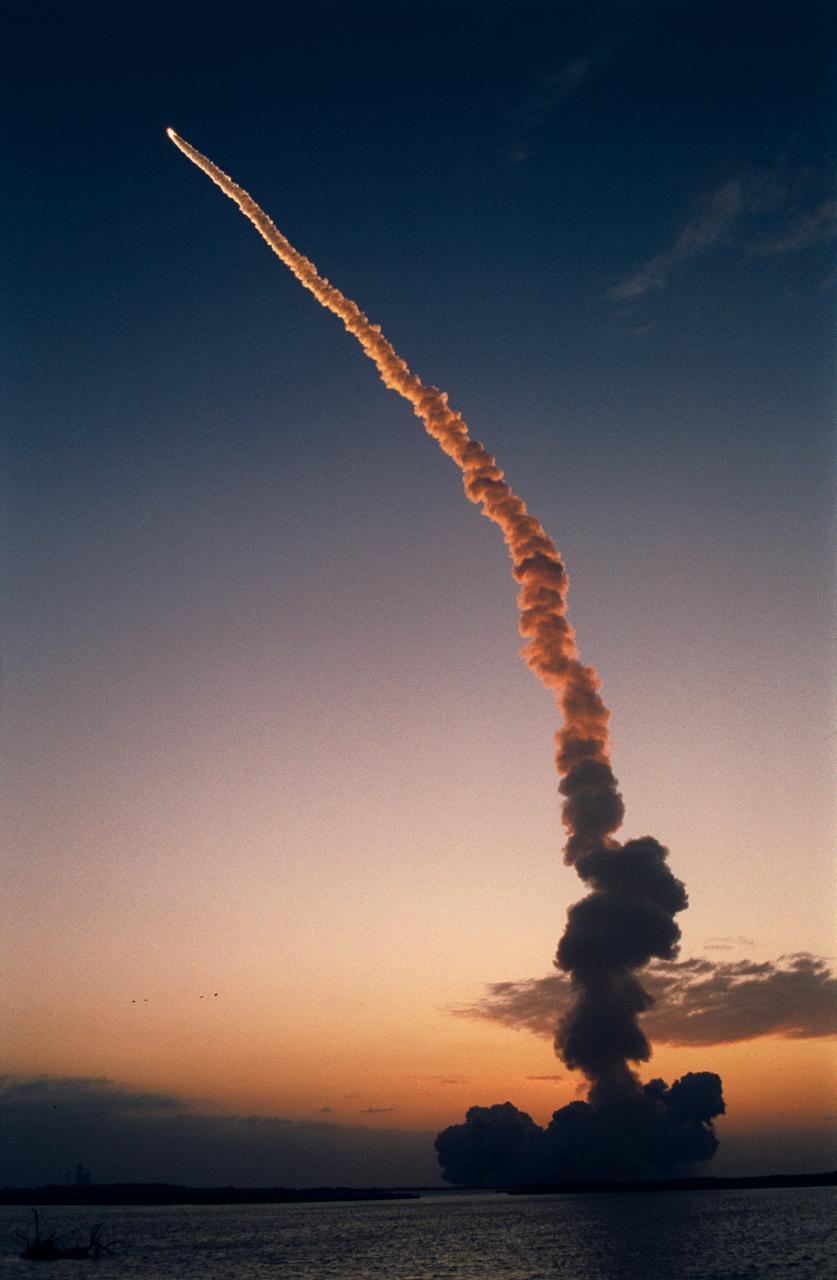
STS059-S-109 (9 April 1994) --- The Space Shuttle Endeavour heads for its sixth mission in space. Liftoff occurred at 7:05 a.m. (EDT), April 9, 1994. Onboard were astronauts Sidney M. Gutierrez, Kevin P. Chilton, Linda M. Godwin, Jerome (Jay) Apt, Michael R. (Rich) Clifford and Thomas D. Jones. The photograph was taken by Karen Dillon of San Jose, California, who observed the liftoff from the NASA causeway.
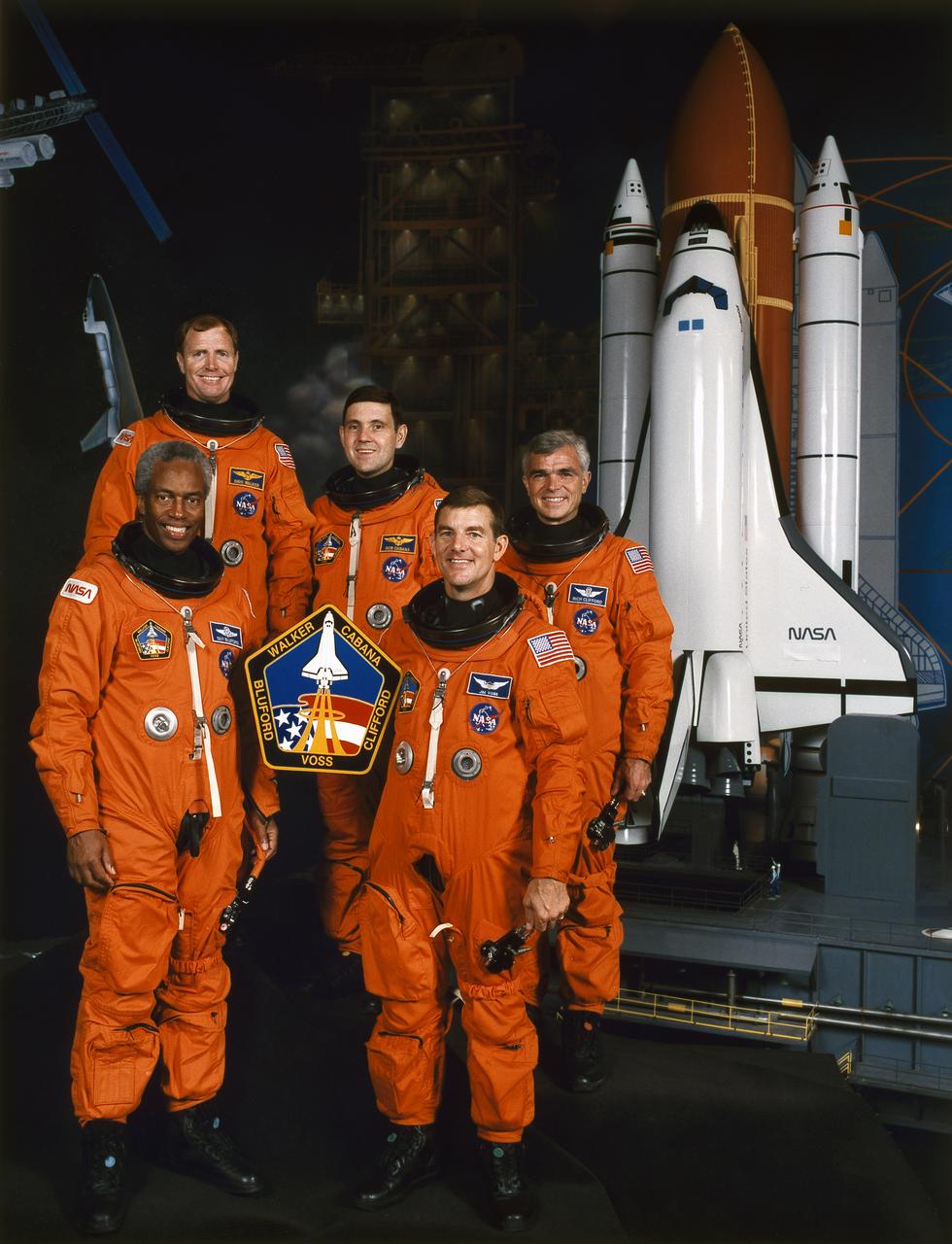
KENNEDY SPACE CENTER, FLA. -- STS053-(S)-002 -- STS-53 Crew Portrait -- These five astronauts have been assigned to fly aboard the Space Shuttle Discovery for the STS-53 mission, scheduled for launch in November of this year. Pictured are, left to right (front), Guion S. Bluford and James S. Voss, mission specialists; and (back row) David M. Walker, mission commander; Robert D. Cabana, pilot; and Michael R.U. (Rich) Clifford, mission specialist. The photograph was made in the new Space Center Houston facility
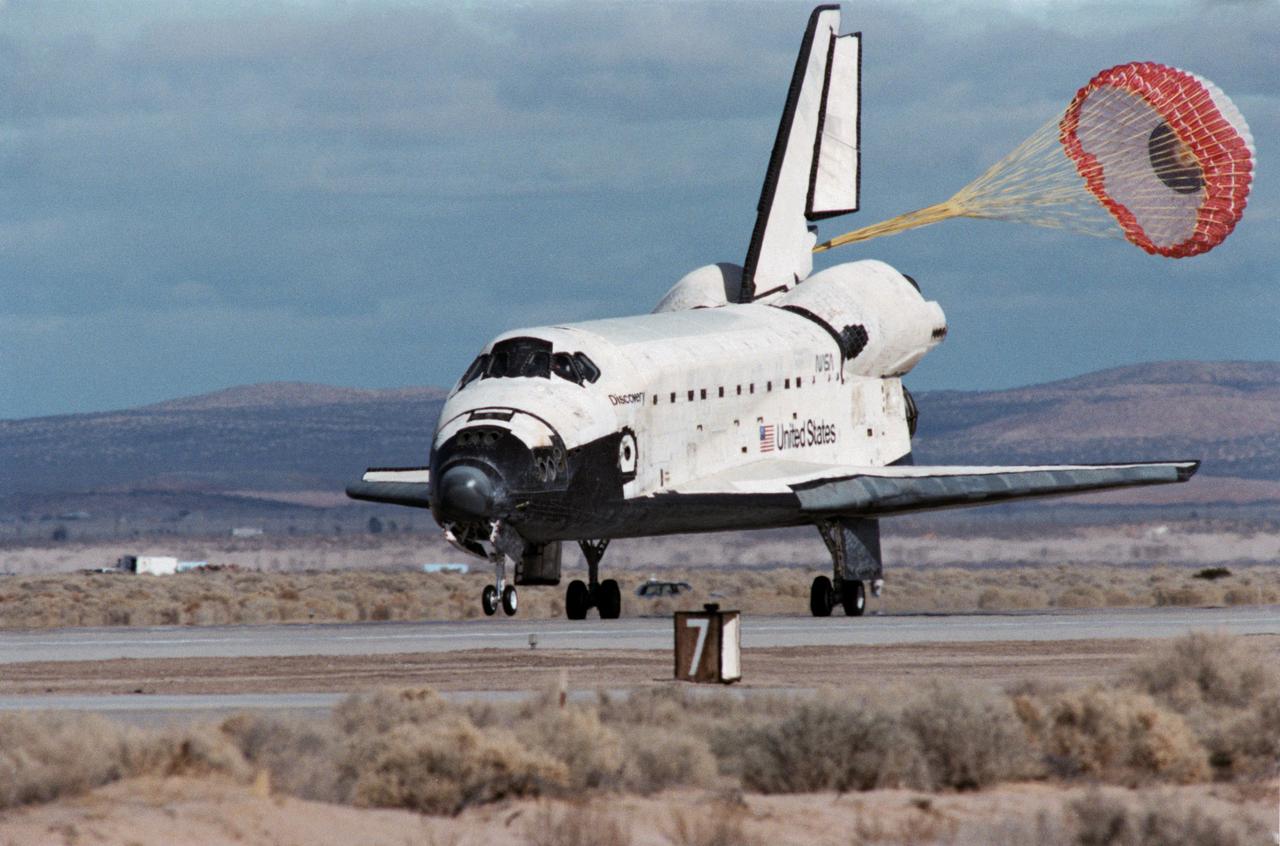
STS053-S-085 (9 Dec. 1992) --- The drag chute on the space shuttle Discovery is partially deployed during landing on Runway 22 at Edwards Air Force Base. The landing ended an eight-day space mission for the STS-53 crew. Main gear touchdown occurred at 12:43:17 p.m. (PST) on Dec. 9, 1992. Onboard were astronauts David M. Walker, Robert D. Cabana, Guion S. Bluford Jr., James S. Voss and Michael R.U. (Rich) Clifford.
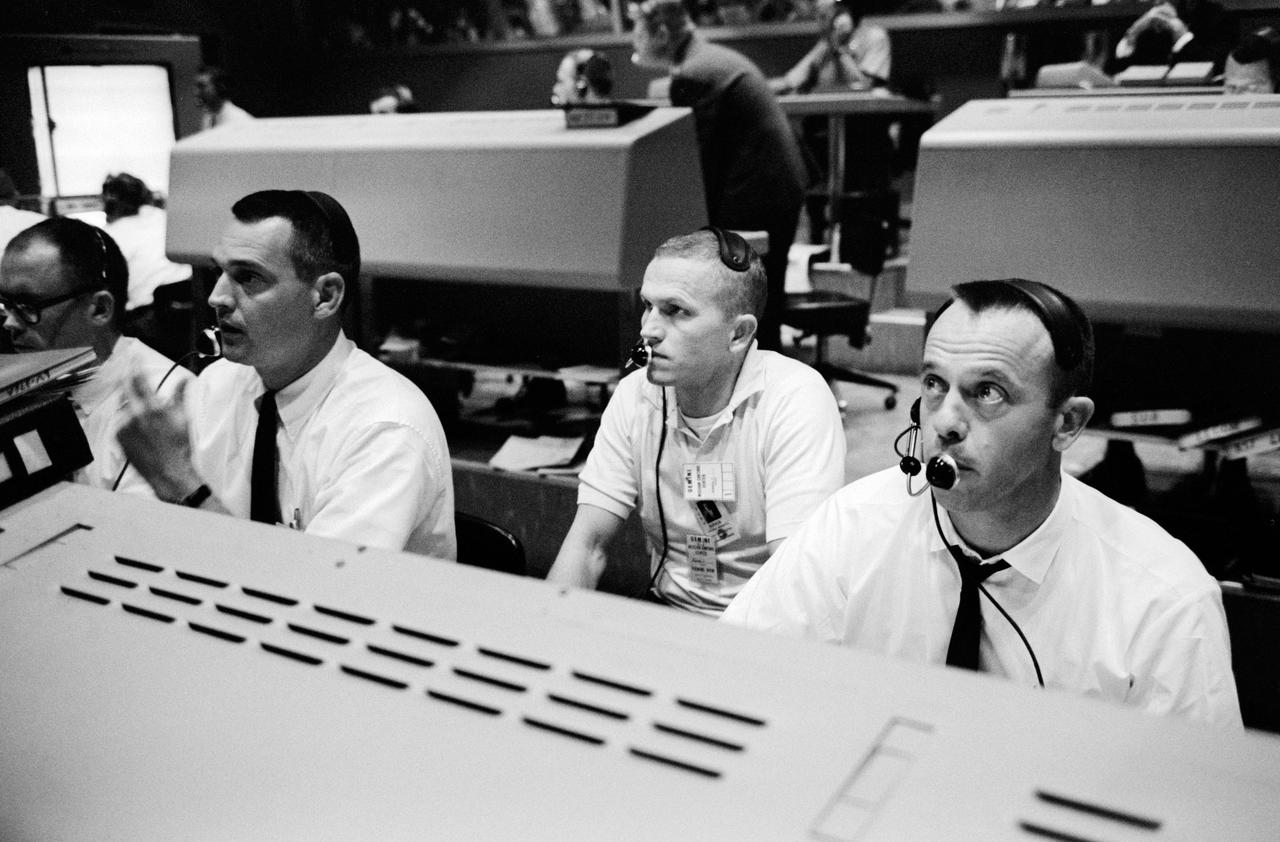
S65-30263 (3 June 1965) --- Shown at their consoles during the liftoff of Gemini-4 (from left) are astronauts Clifford C. Williams Jr., Frank Borman and Alan B. Shepard Jr. Borman was command pilot of the backup crew for the Gemini-4 flight. The three astronauts monitored the flight from the Mission Control Center at Cape Kennedy.
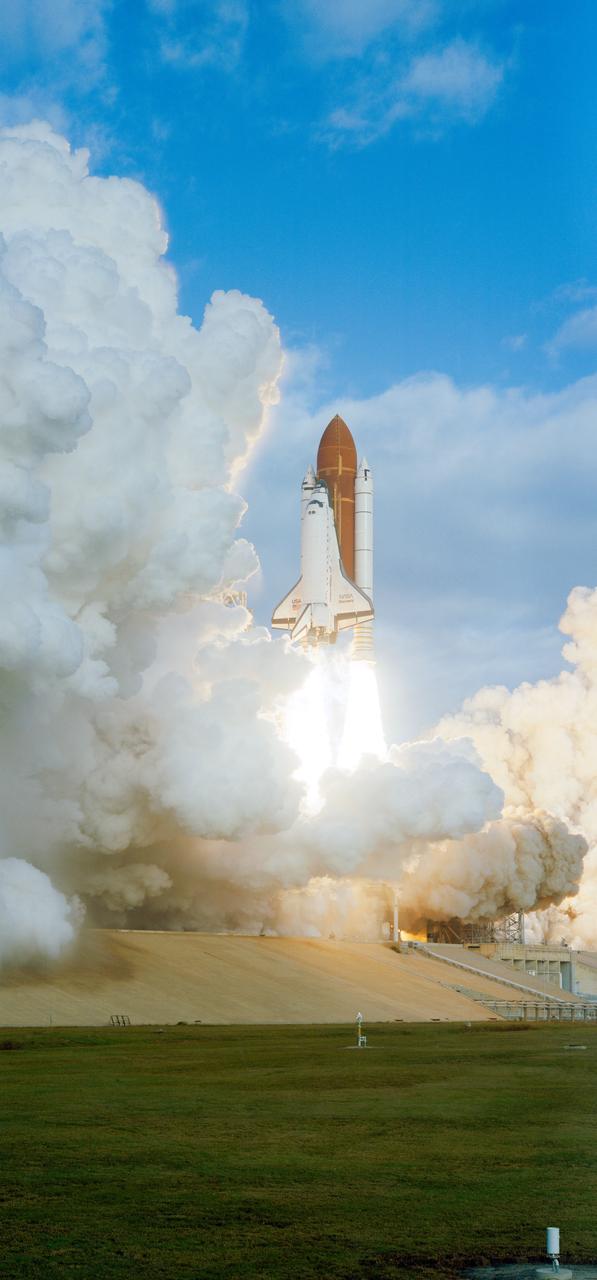
STS053-S-056 (2 Dec 1992) --- The Space Shuttle Discovery, with a crew of five astronauts onboard, launches from Kennedy Space Center's (KSC) Pad 39A at 8:24:00 a.m. (EST), December 2, 1992. The all military crew supporting the Department of Defense (DOD) flight included astronauts David M. Walker, Robert D. Cabana, Guion S. Bluford Jr., James S. Voss and Michael R. U. (Rick) Clifford.
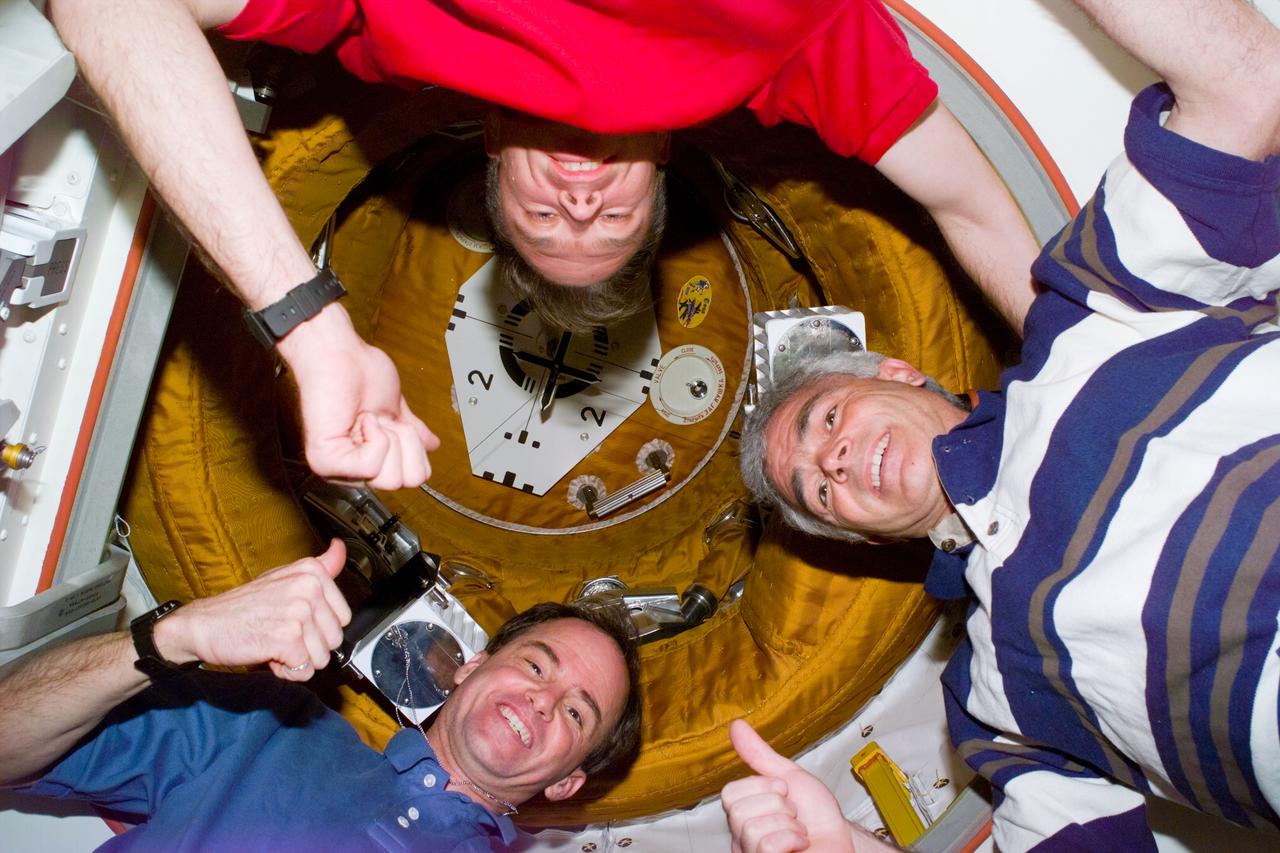
S76-E-5222 (28 March 1996) --- One would take this triumvirate of thumbs-up symbols to refer to a successful hatch closing, as the Space Shuttle Atlantis is about to be separated from its link with Russia's Mir Space Station. Hold photo with frame number and clock at bottom left. Astronaut Kevin P. Chilton, mission commander, is at lower left. Others are astronauts Richard A. Searfoss (top), pilot, and Michael R. (Rich) Clifford, mission specialist.
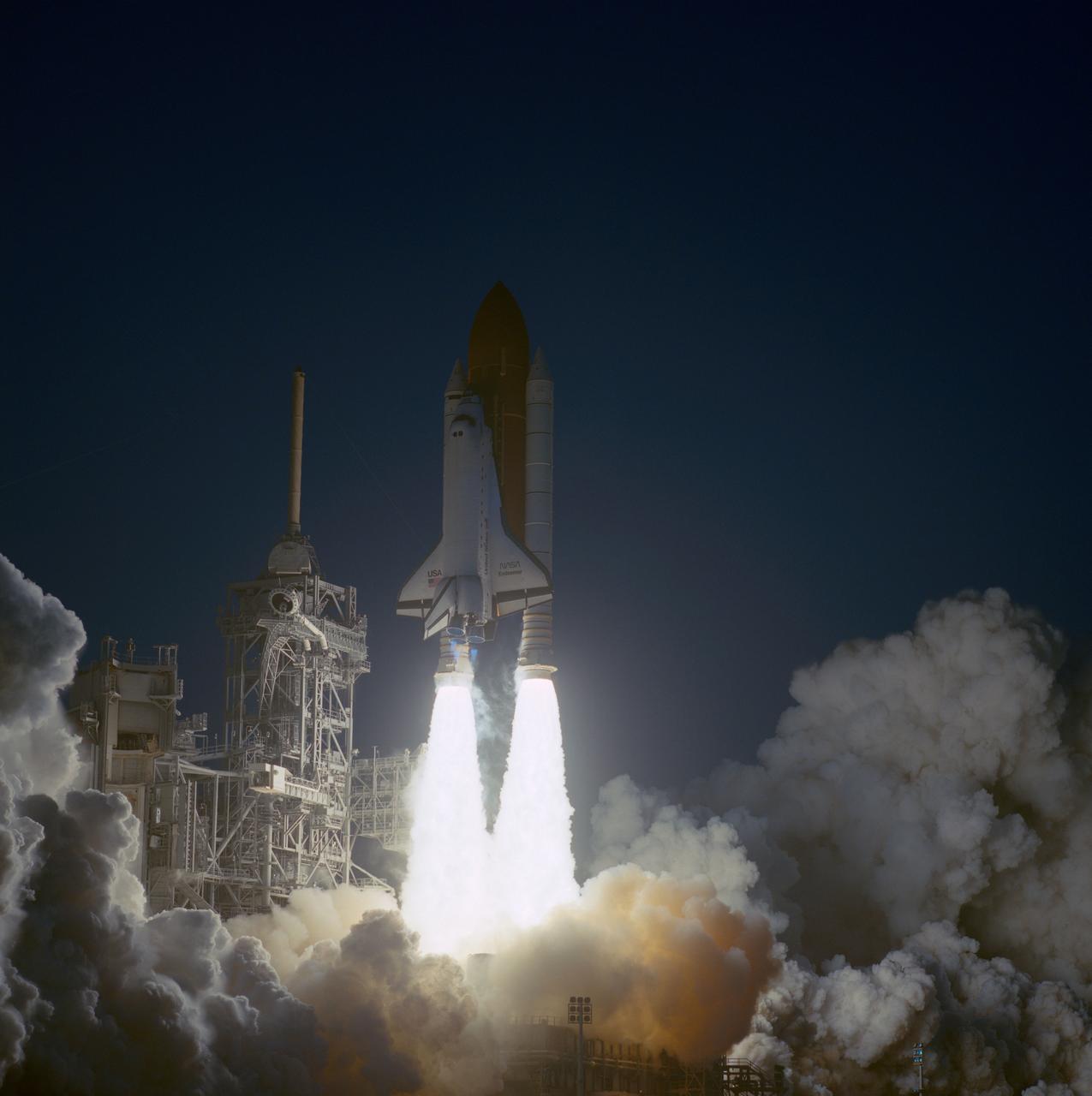
STS059-S-037 (9 April 1994) --- The liftoff of the Space Shuttle Endeavour is backdropped against a dawn sky at the Kennedy Space Center (KSC) as six NASA astronauts head for a week and a half in Earth orbit. Liftoff occurred at 7:05 a.m. (EDT), April 9, 1994. Onboard for the Space Radar Laboratory (SRL-1) mission were astronauts Sidney M. Gutierrez, Kevin P. Chilton, Jerome (Jay) Apt, Linda M. Godwin, Michael R.U. (Rich) Clifford and Thomas D. Jones.
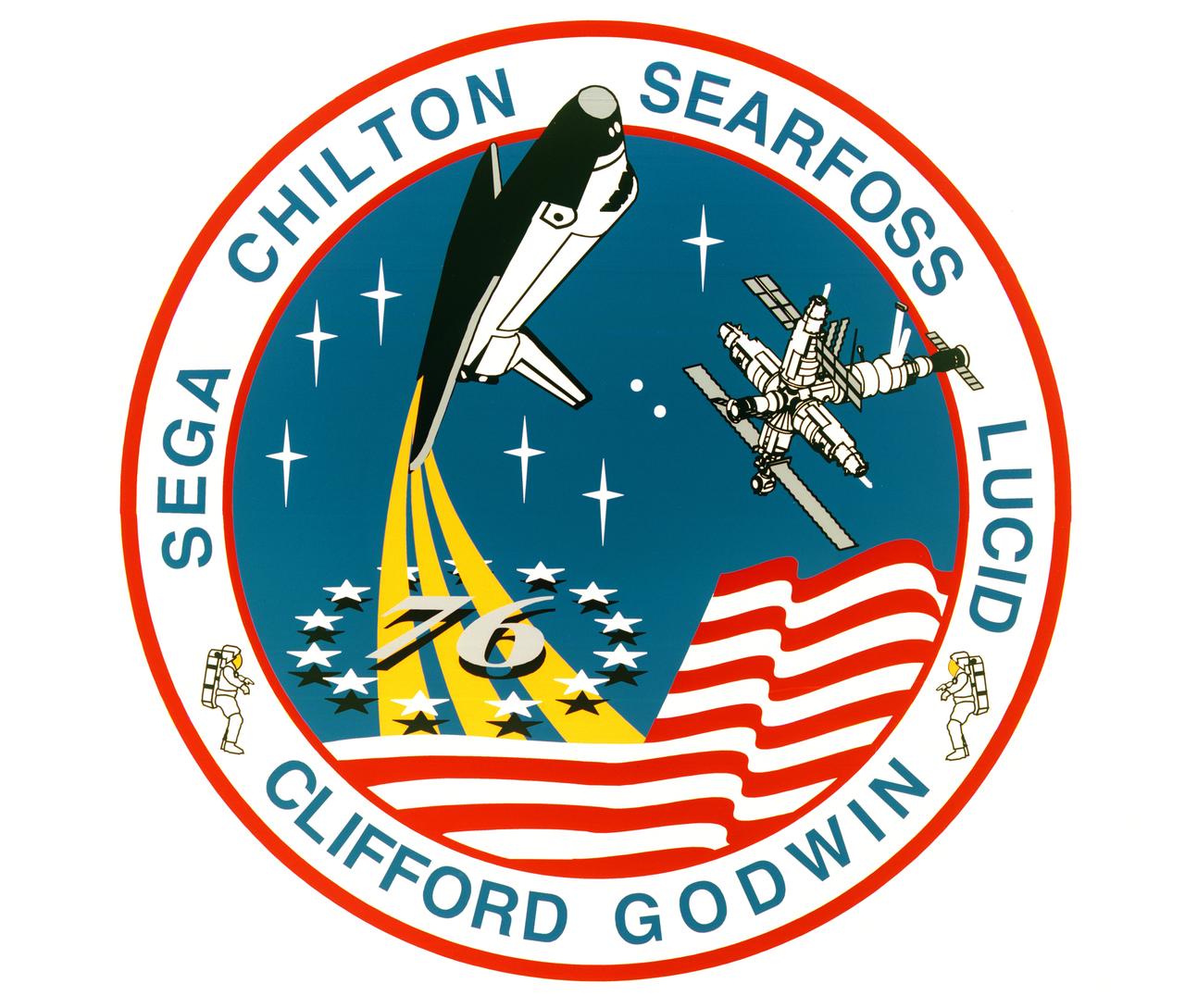
The STS-76 crew patch depicts the Space Shuttle Atlantis and Russia's Mir Space Station as the space ships prepare for a rendezvous and docking. The Spirit of 76, an era of new beginnings, is represented by the Space Shuttle rising through the circle of 13 stars in the Betsy Ross flag. STS-76 begins a new period of international cooperation in space exploration with the first Shuttle transport of a United States astronaut, Shannon W. Lucid, to the Mir Space Station for extended joint space research. Frontiers for future exploration are represented by stars and the planets. The three gold trails and the ring of stars in union form the astronaut logo. Two suited extravehicular activity (EVA) crew members in the outer ring represent the first EVA during Shuttle-Mir docked operations. The EVA objectives were to install science experiments on the Mir exterior and to develop procedures for future EVA's on the International Space Station. The surnames of the crew members encircle the patch: Kevin P. Chilton, mission commander; Richard A. Searfoss, pilot; Ronald M. Sega, Michael R. ( Rich) Clifford, Linda M. Godwin and Lucid, all mission specialists. This patch was designed by Brandon Clifford, age 12, and the crew members of STS-76.
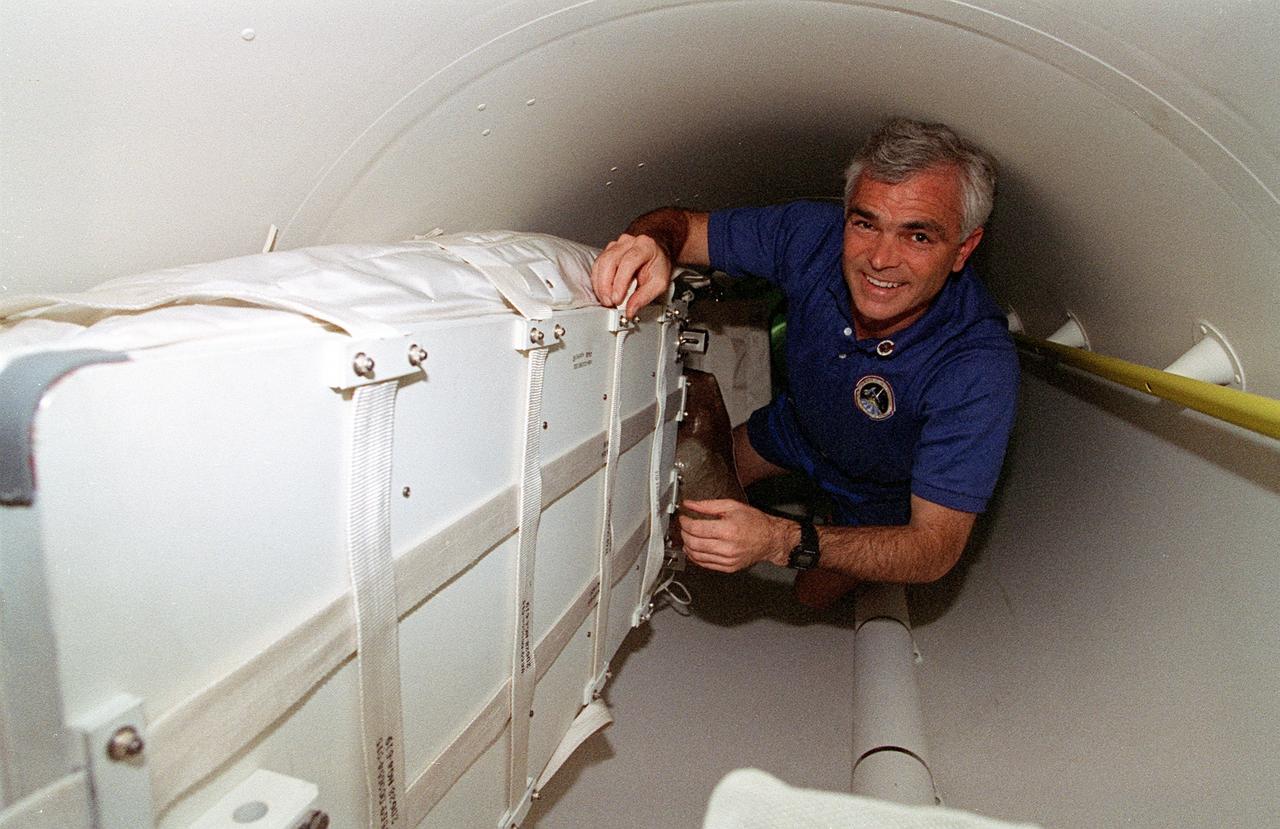
STS076-345-014 (22-31 March 1996) --- During the first few hours of the mission, astronaut Michael R. (Rich) Clifford checks over stowed bags filled Extravehicular Activity (EVA) supplies in the STS-76 tunnel. The mission specialist, one of six NASA astronauts aboard the Space Shuttle Atlantis, later helped move the bags to Atlantis' airlock. Atlantis later docked with Russia's Mir Space Station. The crew used a tunnel to commute to the Spacehab module and, later, to the Mir via its Docking Module (DM).
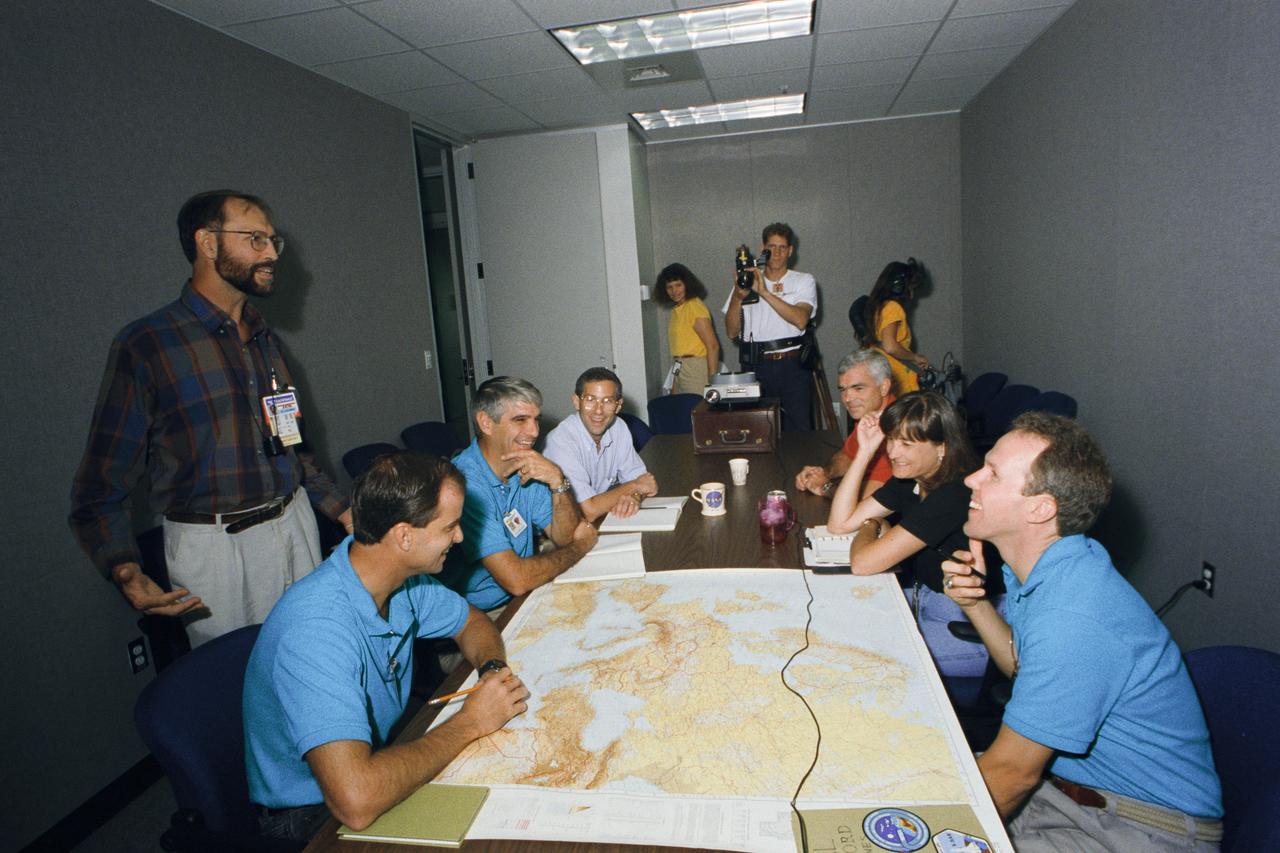
S93-42727 (26 Aug 1993) --- The six astronauts in training for the STS-59 mission are given some onboard Earth observations tips by Justin Wilkinson (standing, foreground) of the Space Shuttle Earth Observations Project (SSEOP) group. Astronaut Sidney M. Gutierrez, mission commander, is at center on the left side of the table. Others, left to right, are astronauts Kevin P. Chilton, pilot; Jerome (Jay) Apt and Michael R.U. (Rich) Clifford, both mission specialists; Linda M. Godwin, payload commander; and Thomas D. Jones, mission specialist.
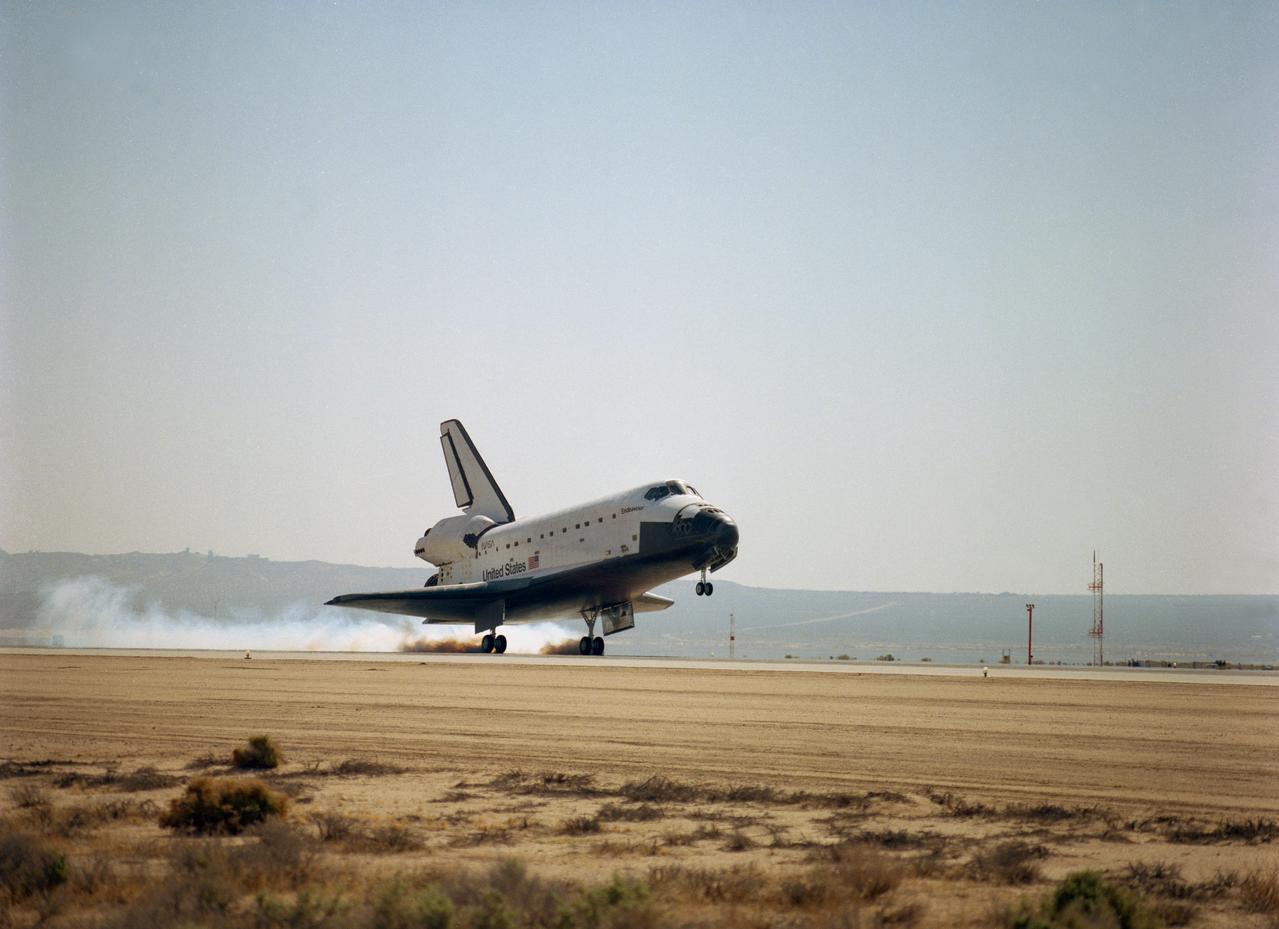
STS059-S-107 (20 April 1994) --- The main landing gear of the Space Shuttle Endeavour touches down at Edwards Air Force Base to complete the 11-day STS-59/SRL-1 mission. Landing occurred at 9:54 a.m. (PDT), April 20, 1994. Mission duration was 11 days, 5 hours, 49 minutes. Guiding Endeavour to a landing was astronaut Sidney M. Gutierrez, STS-59 commander. His crew was Kevin P. Chilton, Linda M. Godwin, Jerome (Jay) Apt, Michael R. (Rich) Clifford and Thomas D. Jones.
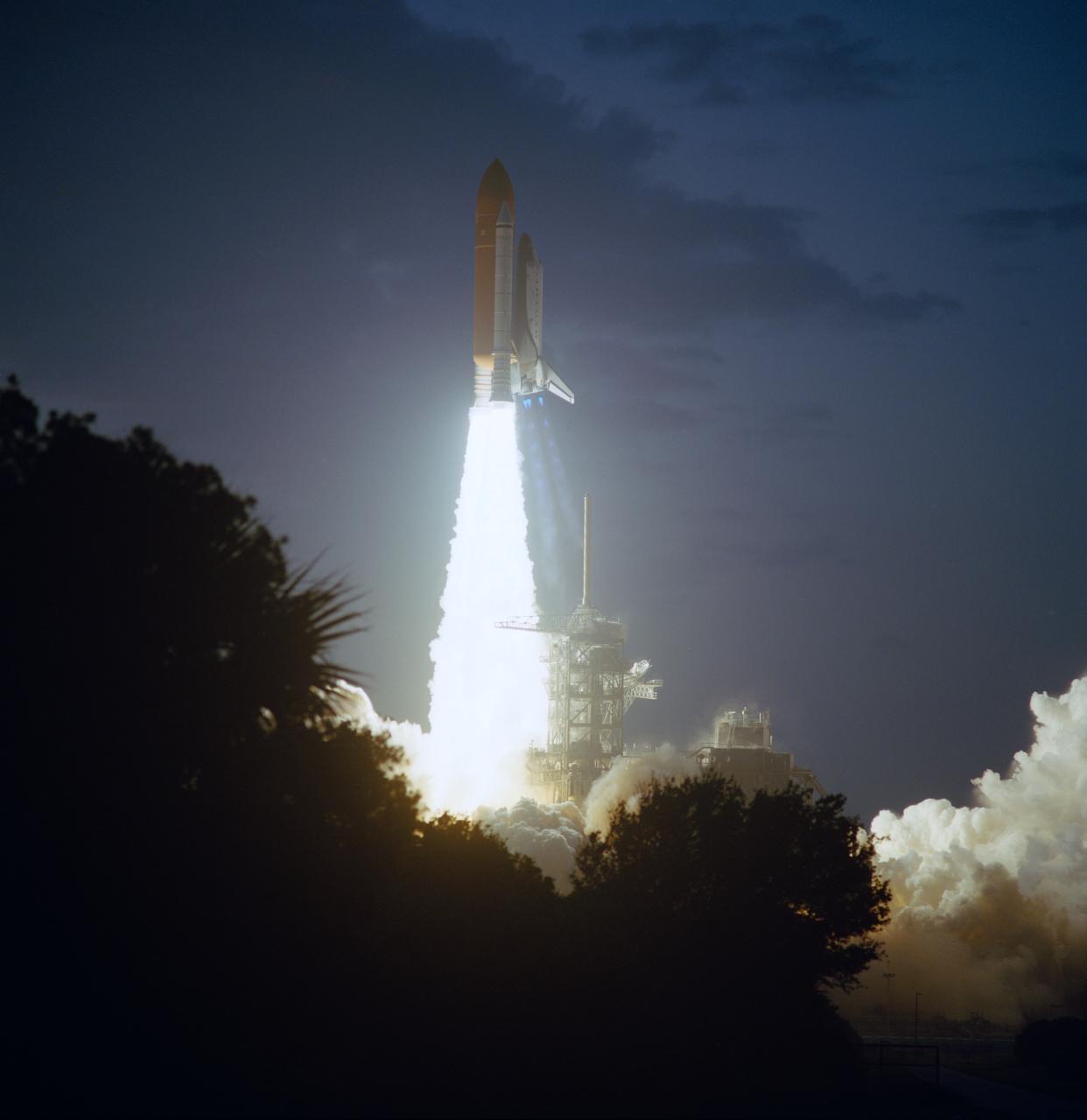
STS059-S-036 (9 April 1994) --- The liftoff of the Space Shuttle Endeavour is backdropped against a dawn sky at the Kennedy Space Center (KSC) as six NASA astronauts head for a week and a half in Earth orbit. The morning sky allows for a contrasting backdrop for the diamond shock effect of the thrust from Endeavour's main engines. Liftoff occurred at 7:05 a.m. (EDT), April 9, 1994. Onboard for the Space Radar Laboratory (SRL-1) mission were astronauts Sidney M. Gutierrez, Kevin P. Chilton, Jerome (Jay) Apt, Linda M. Godwin, Michael R. U. (Rich) Clifford and Thomas D. Jones.
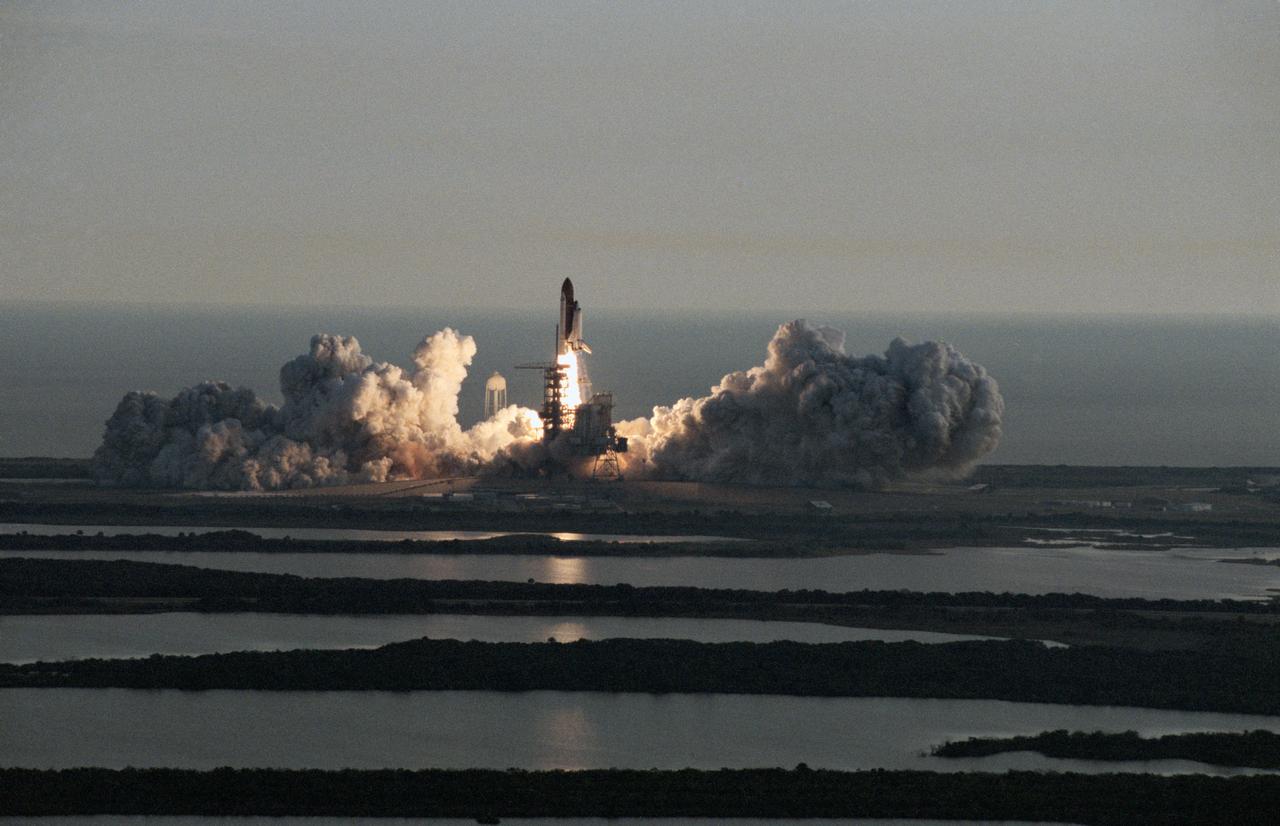
STS053-S-054 (2 Dec 1992) --- The Space Shuttle Discovery, with a crew of five astronauts onboard, launches from Kennedy Space Center?s (KSC) Pad 39A at 8:24:00 a.m. (EST), December 2, 1992. The photograph was taken from the top of the giant Vehicle Assembly Building (VAB). The all-military crew supporting the Department of Defense (DOD) flight included astronauts David M. Walker, Robert D. Cabana, Guion S. Bluford, Jr., James S. Voss and Michael R. U. (Rick) Clifford.
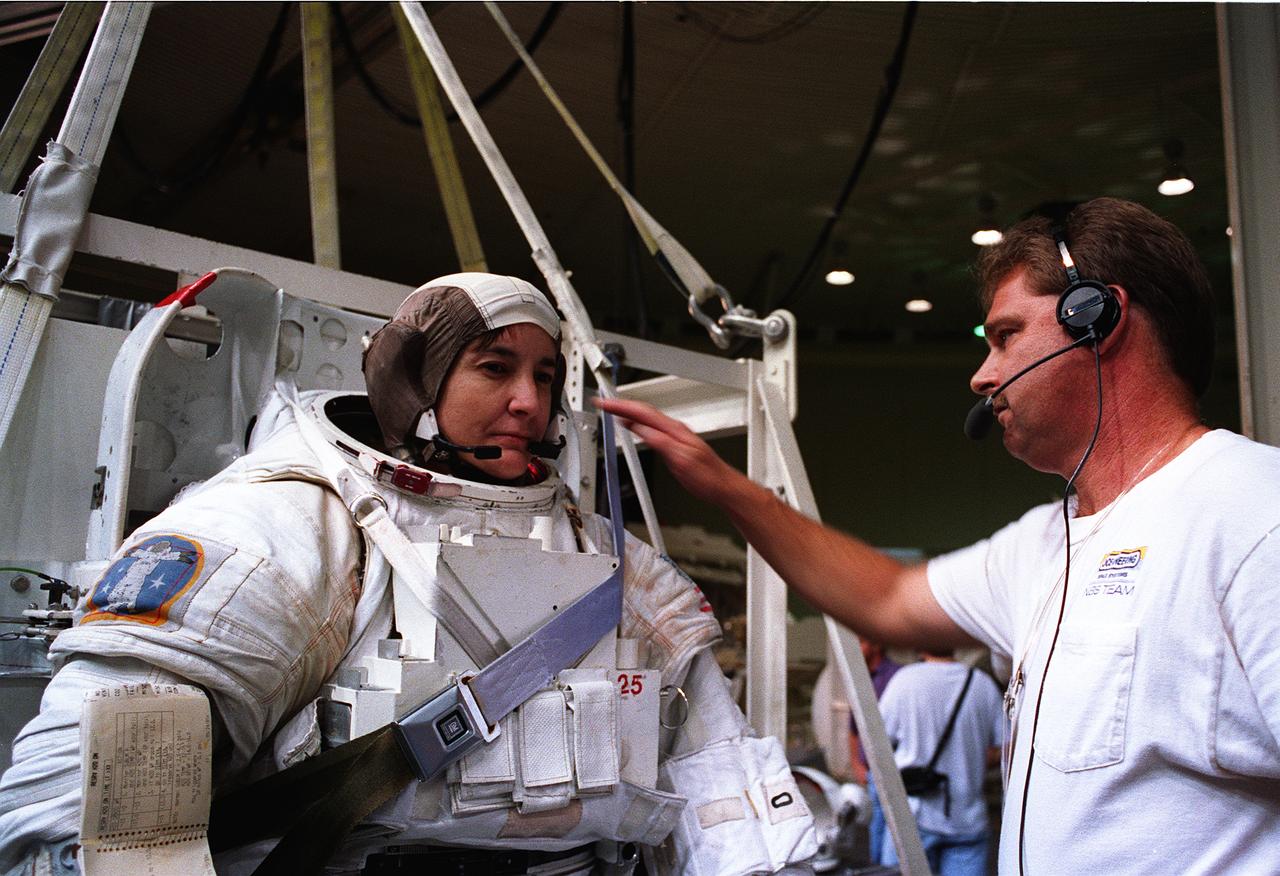
Astronaut and mission specialist, Linda Godwin, checks communications systems before submersion into a 25 ft deep pool at the Johnson Space Center’s (JSC) Weightless Environment Training Facility (WET-F). Wearing a high fidelity training version of the Extravehicular Mobility Unit (EMU) space suit, Godwin simulated STS-76 Extravehicular Activity (EVA) chores in the pool. Launched aboard the Space Shuttle Atlantis in March of 1996, STS-76 marked the third U.S. Shuttle-Mir docking during which Godwin, along with astronaut and mission specialist Michael R. ( Rich) Clifford, performed the first Extravehicular Activity (EVA) during Mir-Shuttle docked operations.
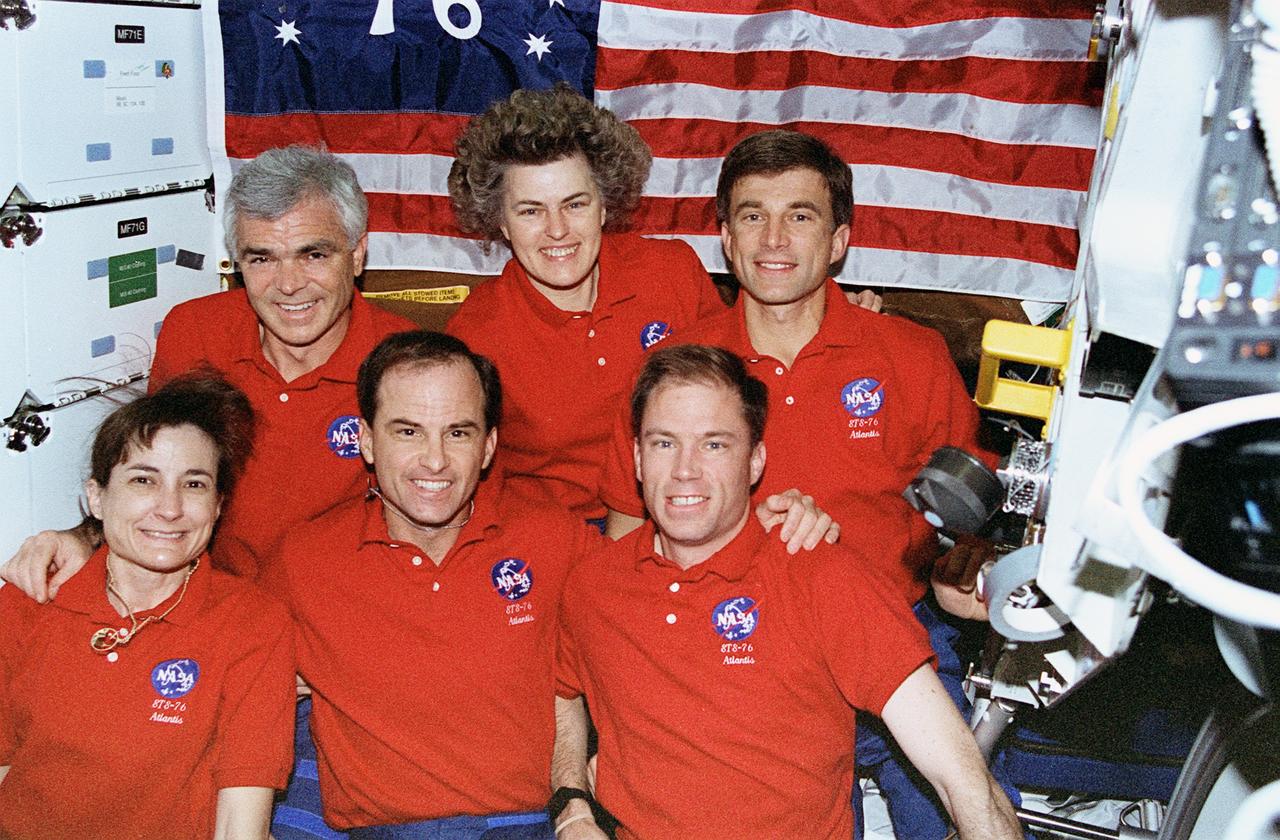
STS076-371-002 (25 March 1996) --- The crew of the Space Shuttle Atlantis poses for a traditional inflight portrait on the mid deck. Shannon W. Lucid (rear center) later joined the Mir-21 crew to begin the first leg of her five-month stay aboard Russia's Mir Space Station. From the left on front row are astronauts Linda M. Godwin, mission specialist; Kevin P. Chilton, mission commander; and Richard A. Searfoss, pilot. Left to right on the back row are astronauts Michael R. (Rich) Clifford, Lucid and payload commander Ronald M. Sega, all mission specialists.
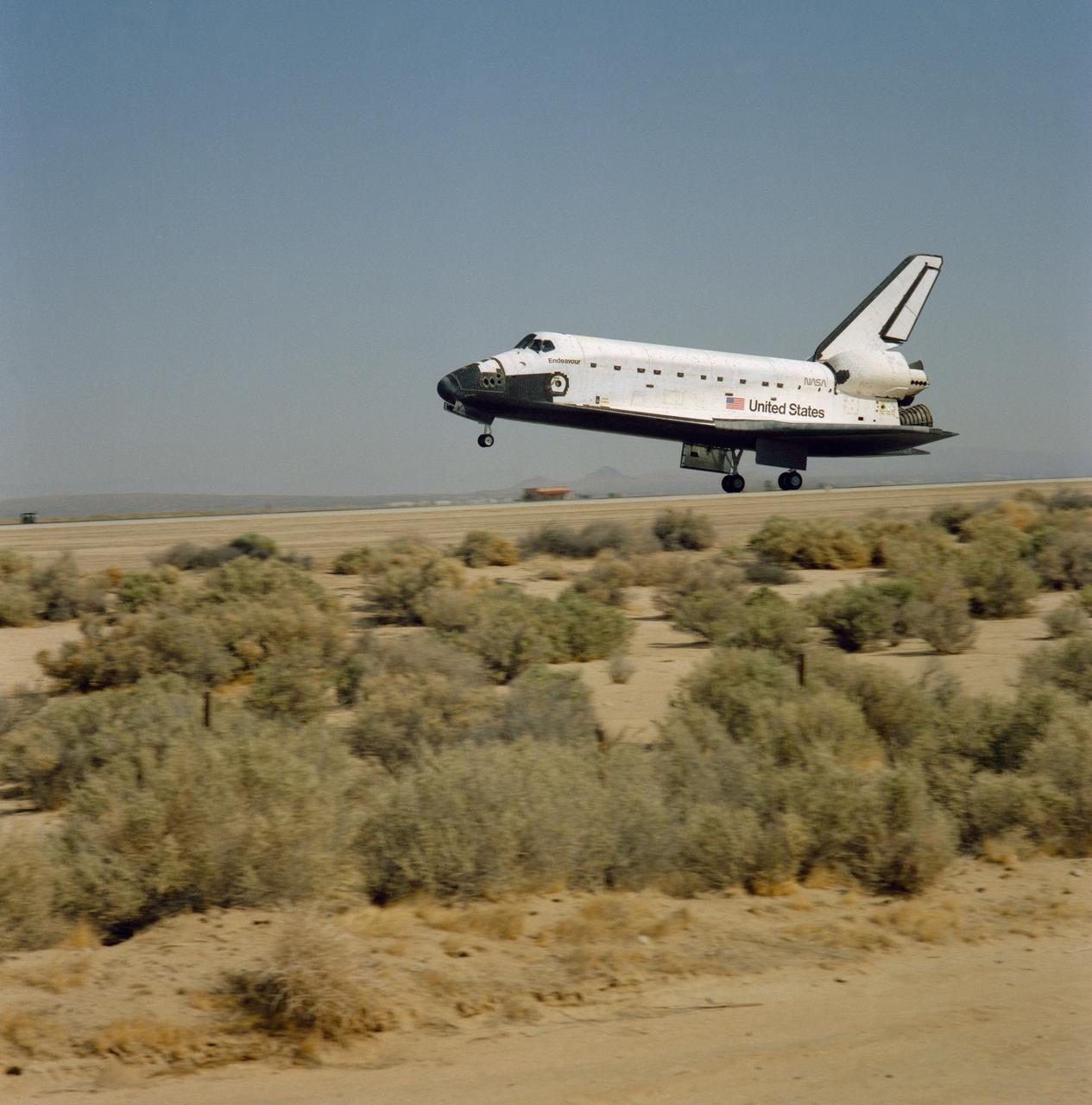
STS059-S-108 (20 April 1994) --- The main landing gear of the Space Shuttle Endeavour touches down at Edwards Air Force Base to complete the 11-day STS-59/SRL-1 mission. Landing occurred at 9:54 a.m. (PDT), April 20, 1994. Mission duration was 11 days, 5 hours, 49 minutes. Guiding Endeavour to a landing was astronaut Sidney M. Gutierrez, STS-59 commander. His crew was Kevin P. Chilton, Linda M. Godwin, Jerome (Jay) Apt, Michael R. (Rich) Clifford and Thomas D. Jones.
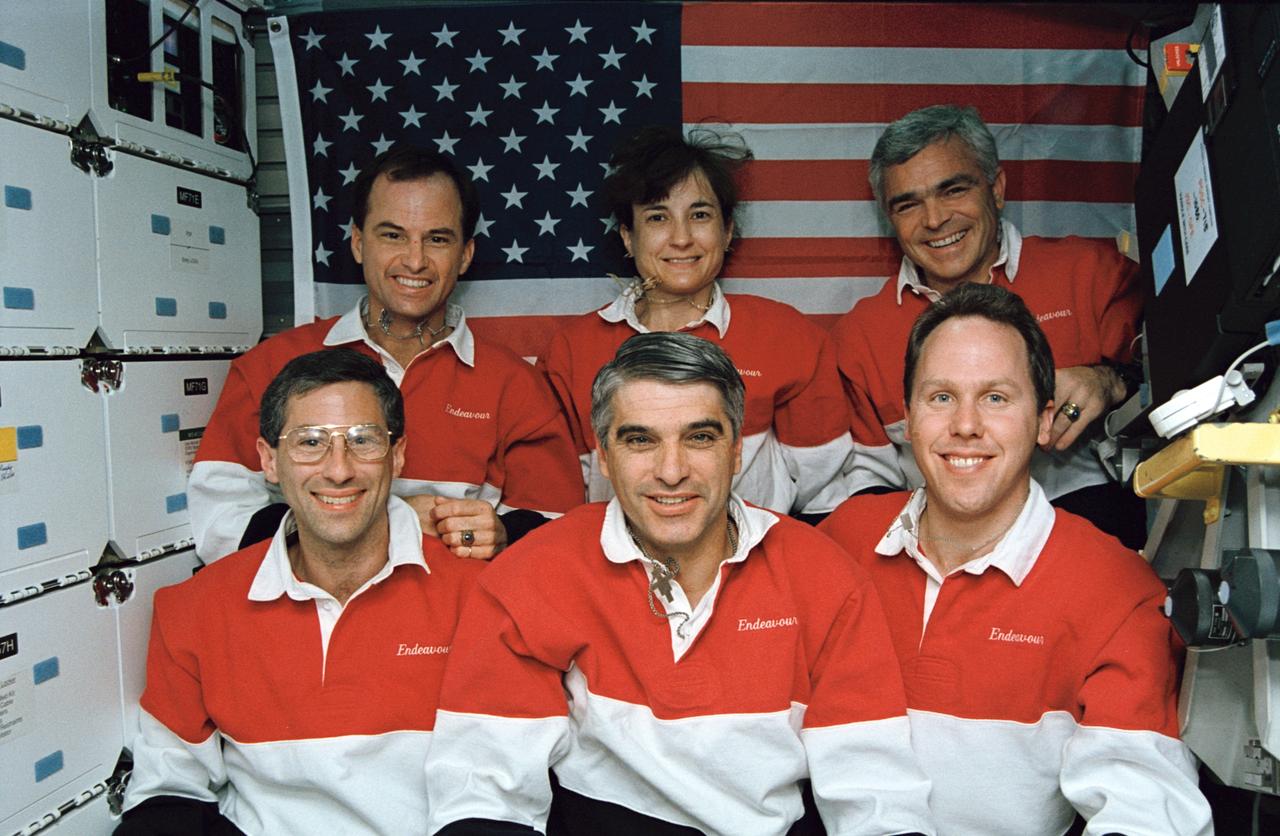
STS059-44-004 (9-20 April 1994) --- This middeck scene aboard the Space Shuttle Endeavour caught all six STS-59 crew members in a rare group shot. Astronaut Sidney M. Gutierrez, mission commander (front center) is flanked by astronauts Jerome (Jay) Apt and Thomas D. Jones, both mission specialists. On the back row are (left to right) astronaut Kevin P. Chilton, pilot; Linda M. Godwin, payload commander; and Michael R. (Rich) Clifford, mission specialist. Most of the week and a half was divided into two work shifts for the crew members.
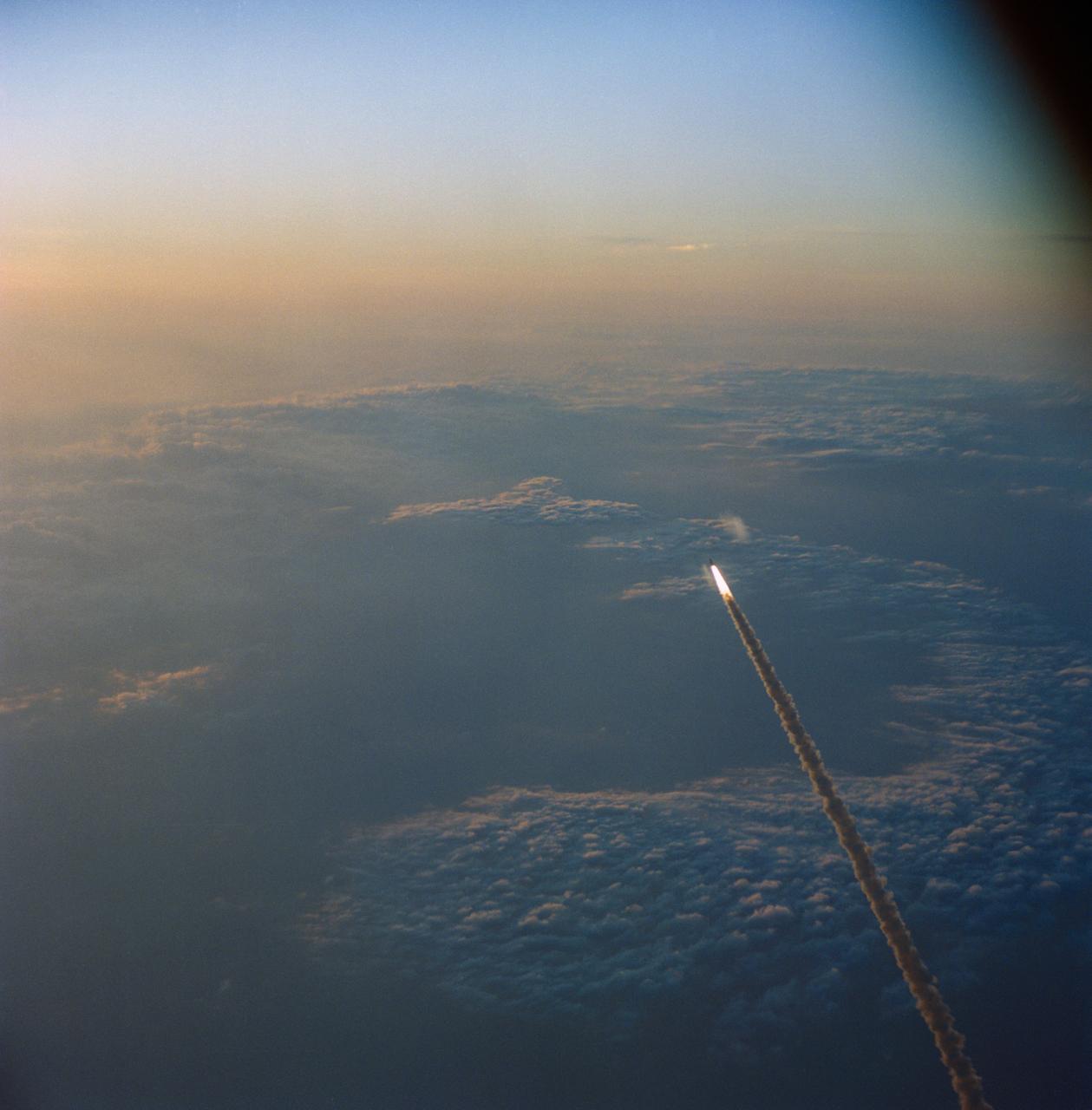
STS059-S-066 (9 April 1994) --- The liftoff of the Space Shuttle Endeavour is backdropped against clouds at the Kennedy Space Center (KSC) as six NASA astronauts head for a week and a half in Earth orbit. Liftoff occurred at 7:05 a.m. (EDT), April 9, 1994. The air-to-air view was photographed from the Shuttle Training Aircraft (STA) piloted by astronaut Robert L. Gibson. Onboard for the Space Radar Laboratory (SRL-1) mission were astronauts Sidney M. Gutierrez, Kevin P. Chilton, Jerome (Jay) Apt, Linda M. Godwin, Michael (Rich) Clifford and Thomas D. Jones.
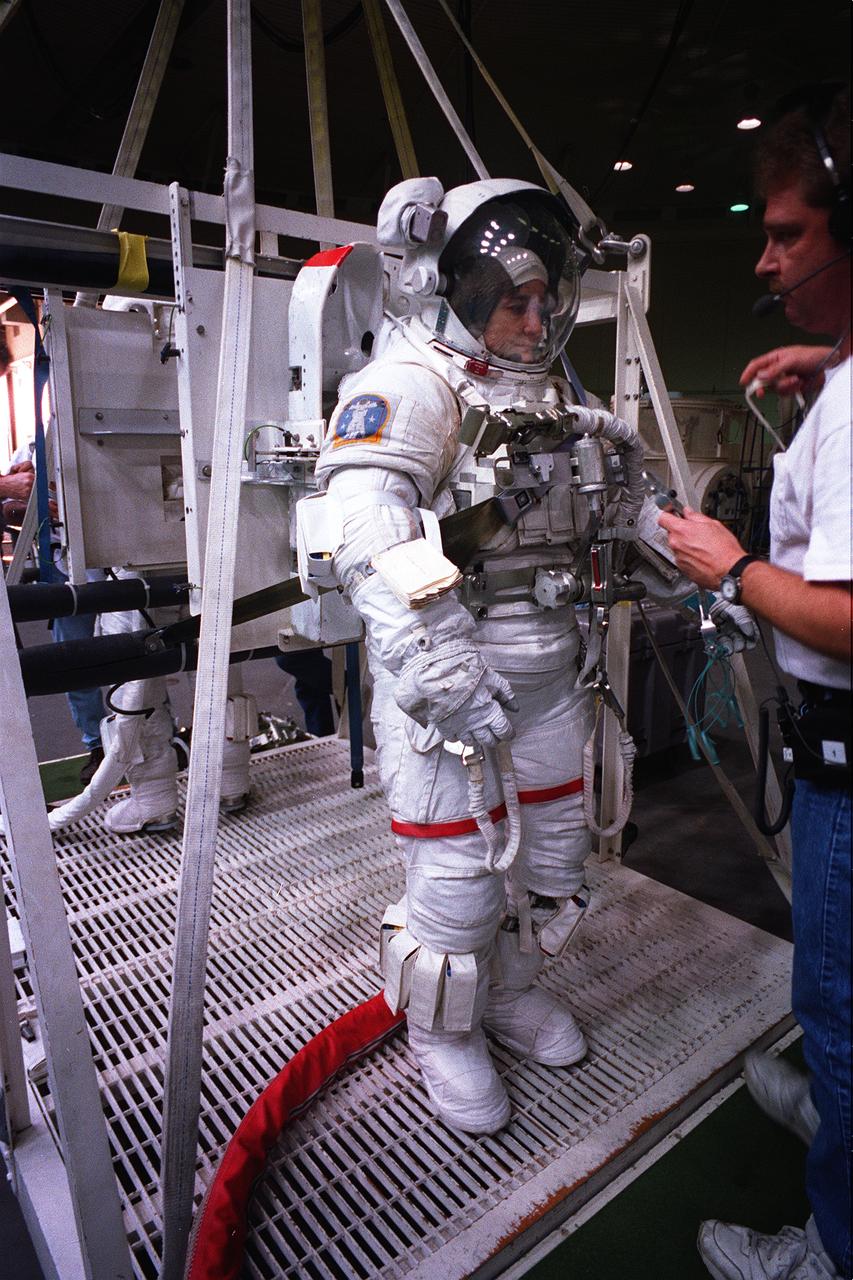
Astronaut and mission specialist, Linda Godwin, makes a final check of her respiration system before submersion into a 25 ft deep pool at the Johnson Space Center’s (JSC) Weightless Environment Training Facility (WET-F). Wearing a high fidelity training version of the Extravehicular Mobility Unit (EMU) space suit, Godwin simulated STS-76 Extravehicular Activity (EVA) chores in the pool. Launched aboard the Space Shuttle Atlantis in March of 1996, STS-76 marked the third U.S. Shuttle-Mir docking during which Godwin, along with astronaut and mission specialist Michael R. (Rich) Clifford, performed the first Extravehicular Activity (EVA) during Mir-Shuttle docked operations.
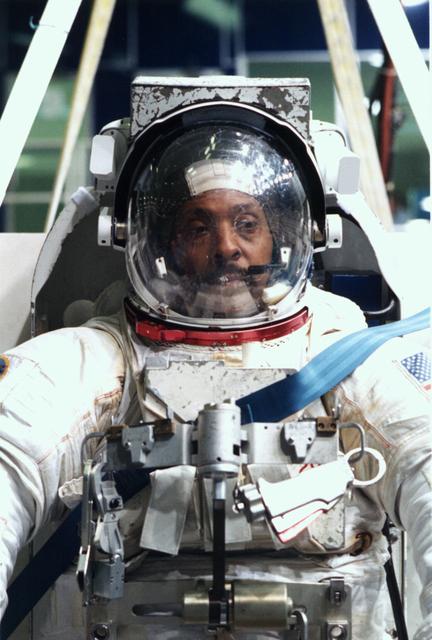
S95-04113 (24 February 1995) --- Wearing a training version of the Space Shuttle Extravehicular Mobility Unit (EMU), astronaut Winston E. Scott, mission specialist, prepares to go underwater for a Extravehicular Activity (EVA) simulation at Johnson Space Center's (JSC) Weightless Environment Training Facility (WET-F). In less than a year from now, Scott is scheduled to perform an EVA in the cargo bay of the Space Shuttle Endeavour in support of the STS-72 mission.
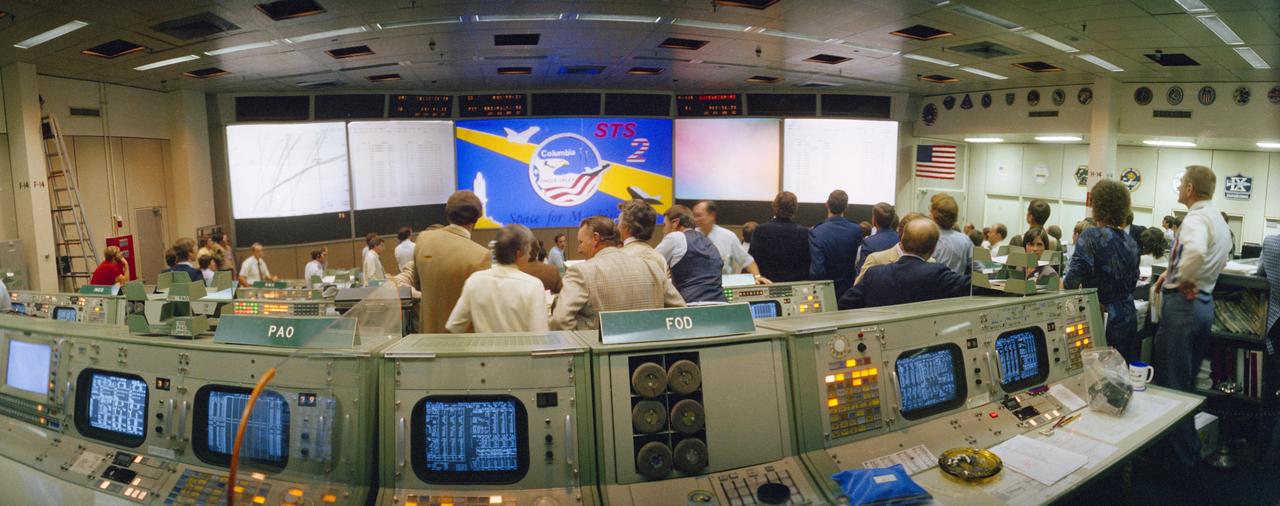
S81-39507 (14 Nov. 1981) --- This unique, wide-angle view of the many flight controllers in Houston?s mission control facility was taken moments prior to the successful touchdown of the STS-2 Columbia. Clifford E. Charlesworth, JSC Deputy Director, huddles with several flight directors for STS-2 at the flight director console on the second-from rear row of consoles in the mission operations control room (MOCR). Eugene F. Kranz, deputy director of flight operations, is at far right of frame. Columbia shortly afterward touched down safely at Edwards Air Force Base in California to complete the two-day, six-hour, 13-minute STS-2 flight. Photo credit: NASA
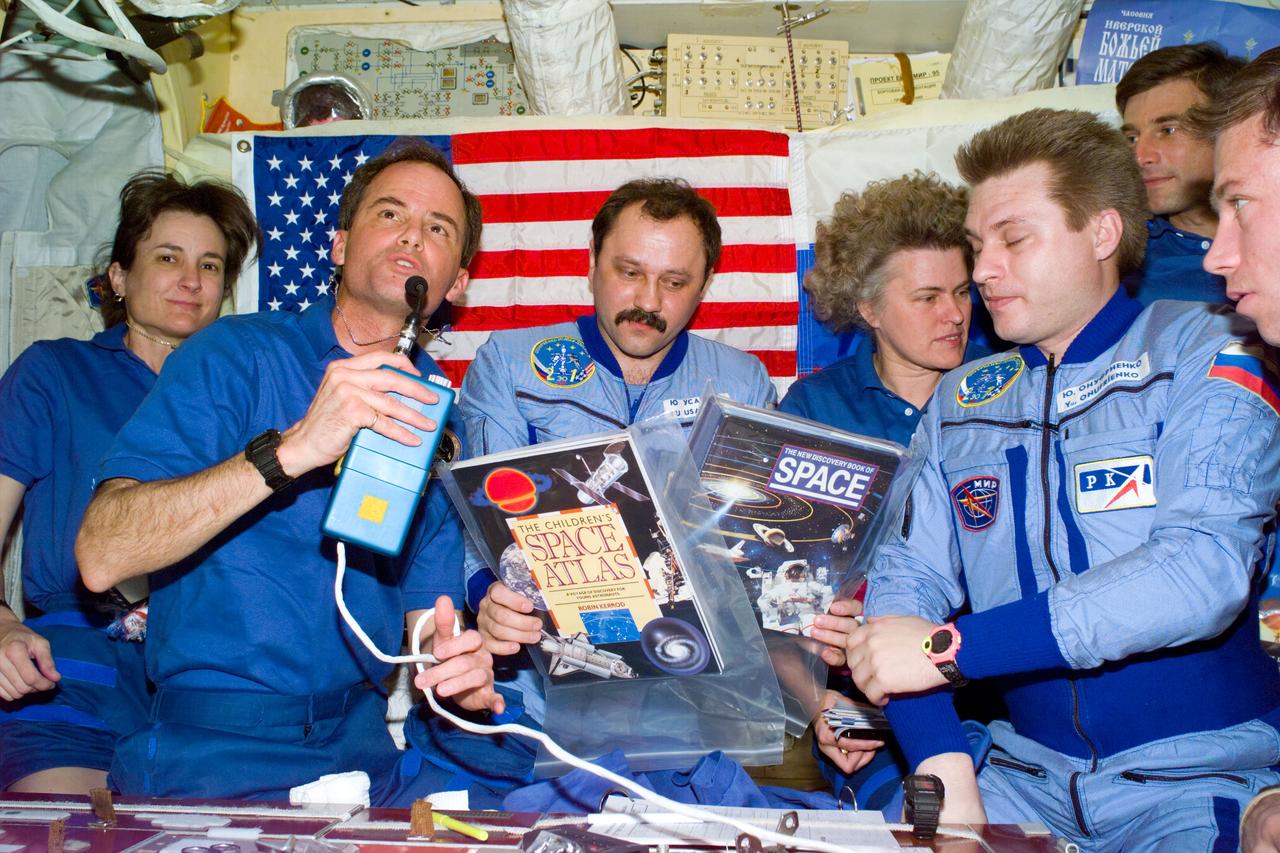
S76-E-5157 (24 March 1996) --- Two Russian cosmonauts and five of six NASA astronauts exchange gifts soon after reuniting in the Base Block Module of Russia's Mir Space Station. From the left are Linda M. Godwin, Kevin P. Chilton, Yury V. Usachev, Shannon W. Lucid, Yury I. Onufrienko, Ronald M. Sega and Richard A. Searfoss. Not pictured is astronaut Michael R. (Rich) Clifford. In a light moment around this time, ground controllers informed Chilton, the STS-76 mission commander, that Lucid, who will spend several months onboard Mir as a cosmonaut guest researcher, should now be considered a Mir-21 crew member, along with Onufrienko and Usachev, Mir-21 flight engineer. The image was recorded with a 35mm Electronic Still Camera (ESC) and downlinked at a later time to ground controllers in Houston, Texas.

NM21-401-012 (28 March 1996) --- The Space Shuttle Atlantis is backdropped over the darkness of space, and partially over clouds and open ocean waters on Earth, as it and Russia’s Mir Space Station begin their relative separation following several days of joint operations. This 35mm film was exposed by astronaut Shannon W. Lucid as she was beginning her record-setting stay aboard Mir, as a cosmonaut guest researcher. Onboard with Lucid were her Mir-21 crew mates, cosmonauts Yuriy I. Onufriyenko, commander; and Yuriy V. Usachov, flight engineer. Onboard Atlantis were Kevin P. Chilton, STS-76 mission commander; Richard A. Searfoss, pilot; along with Linda M. Godwin, Ronald M. Sega and Michael R. (Rich) Clifford, mission specialists.
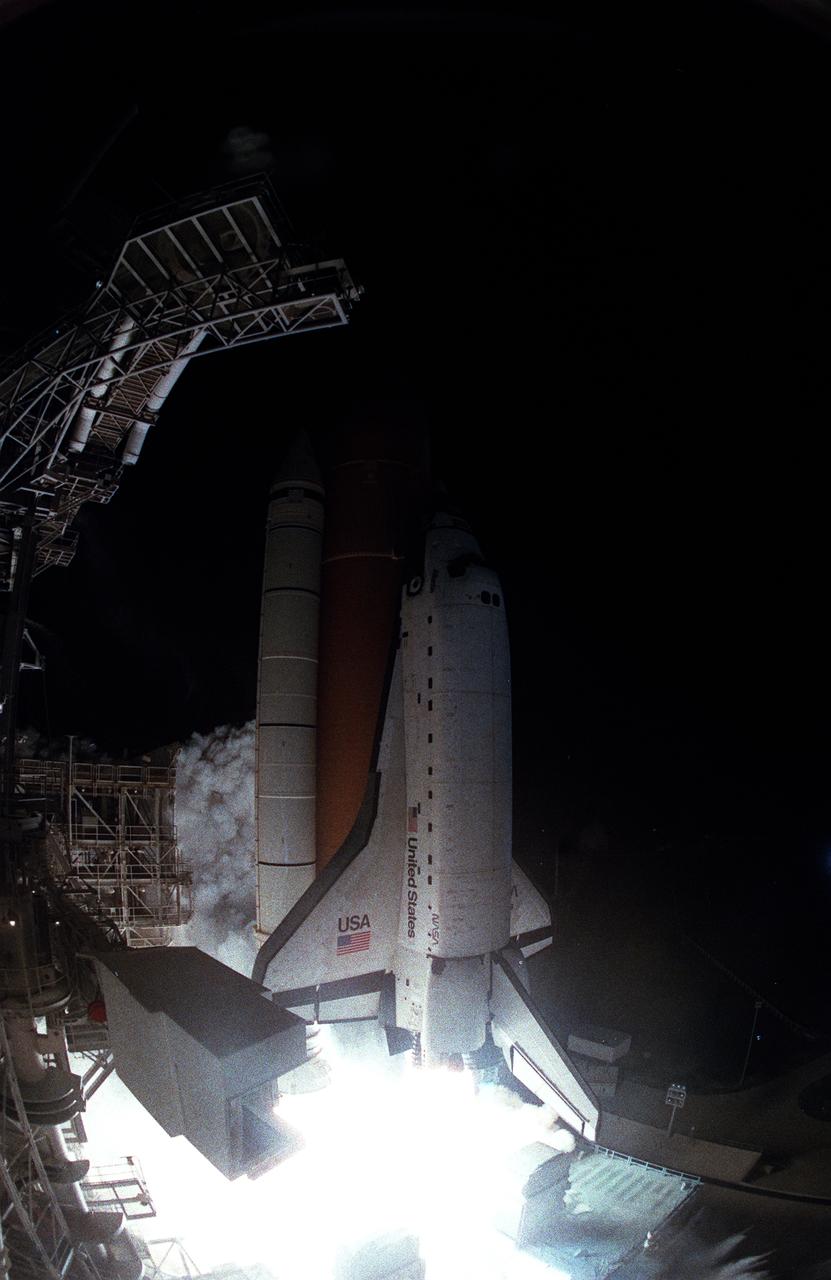
STS076-S-008 (22 March 1996) --- As represented in this fish-eye view from the Kennedy Space Center's (KSC) Launch Pad 39B, the space shuttle Atlantis heads toward Earth-orbit and an eventual docking with Russia's Mir Space Station. Mir has been in space for ten years and a two man crew (Mir-21) currently awaits the arrival of Atlantis. The on-time launch occurred at 3:13:04 a.m. (EST) on March 22, 1996. Onboard for STS-76 are astronauts Kevin P. Chilton, Richard A. Searfoss, Ronald M. Sega, Michael R. (Rich) Clifford, Linda M. Godwin and Shannon W. Lucid. Lucid will remain onboard Mir for just under five months time. Photo credit: NASA or National Aeronautics and Space Administration
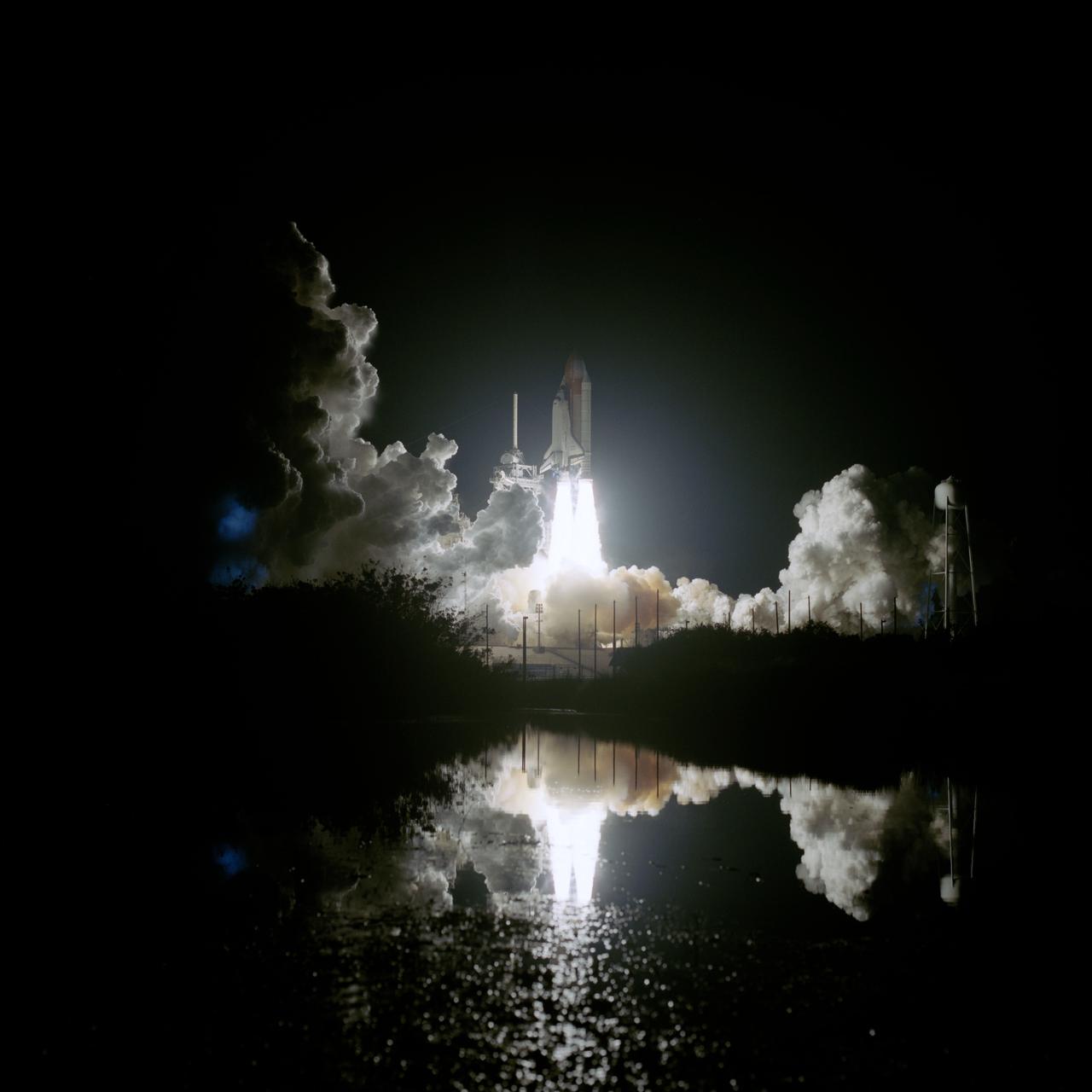
STS076-S-011 (22 March 1996) --- This wide view captures the nocturnal launch of the Space Shuttle Atlantis, as it heads toward Earth-orbit and an eventual docking with Russia?s Mir Space Station. Mir has been in space for ten years and a two-man crew (Mir-21) currently awaits the arrival of Atlantis. The on-time launch occurred at 3:13:04 a.m. (EST) on March 22, 1996. Onboard for STS-76 are astronauts Kevin P. Chilton, Richard A. Searfoss, Ronald M. Sega, Michael R. (Rich) Clifford, Linda M. Godwin and Shannon W. Lucid. Lucid will remain onboard Mir for just under five months? time, as a cosmonaut guest researcher. Photo credit: NASA or National Aeronautics and Space Administration
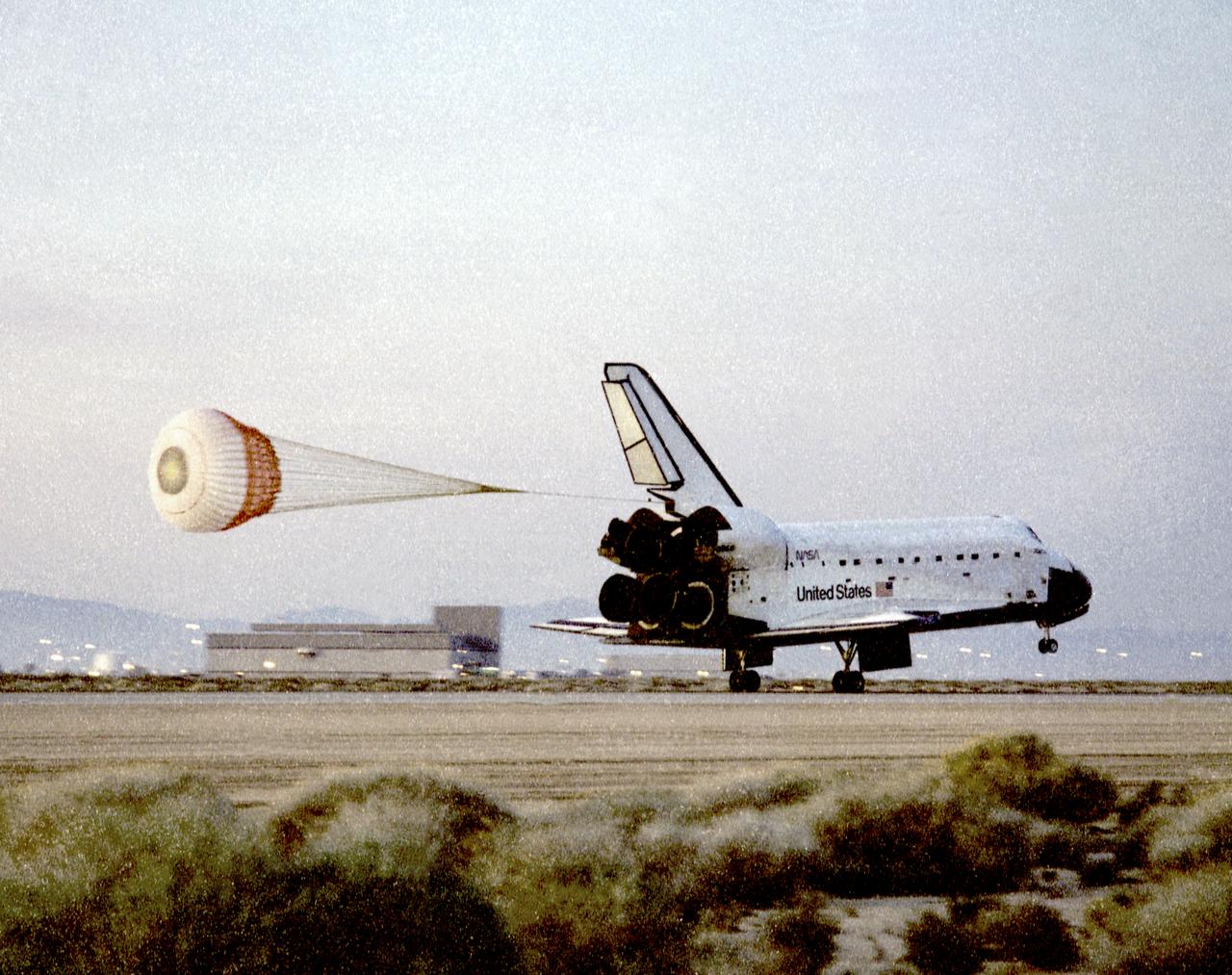
The space shuttle Atlantis touches down on the runway at Edwards, California, at approximately 5:29 a.m. Pacific Standard Time after completing the highly successful STS-76 mission to deliver Astronaut Shannon Lucid to the Russian Space Station Mir. She was the first American woman to serve as a Mir station researcher. Atlantis was originally scheduled to land at Kennedy Space Center, Florida, but bad weather there both 30 and 31 March necessitated a landing at the backup site at Edwards. This photo shows the drag chute deployed to help the shuttle roll to a stop. Mission commander for STS-76 was Kevin P. Chilton, and Richard A. Searfoss was the pilot. Ronald M. Sega was payload commander and mission specialist-1. Mission specialists were Richard Clifford, Linda Godwin and Shannon Lucid. The mission also featured a spacewalk while Atlantis was docked to Mir and experiments aboard the SPACEHAB module.
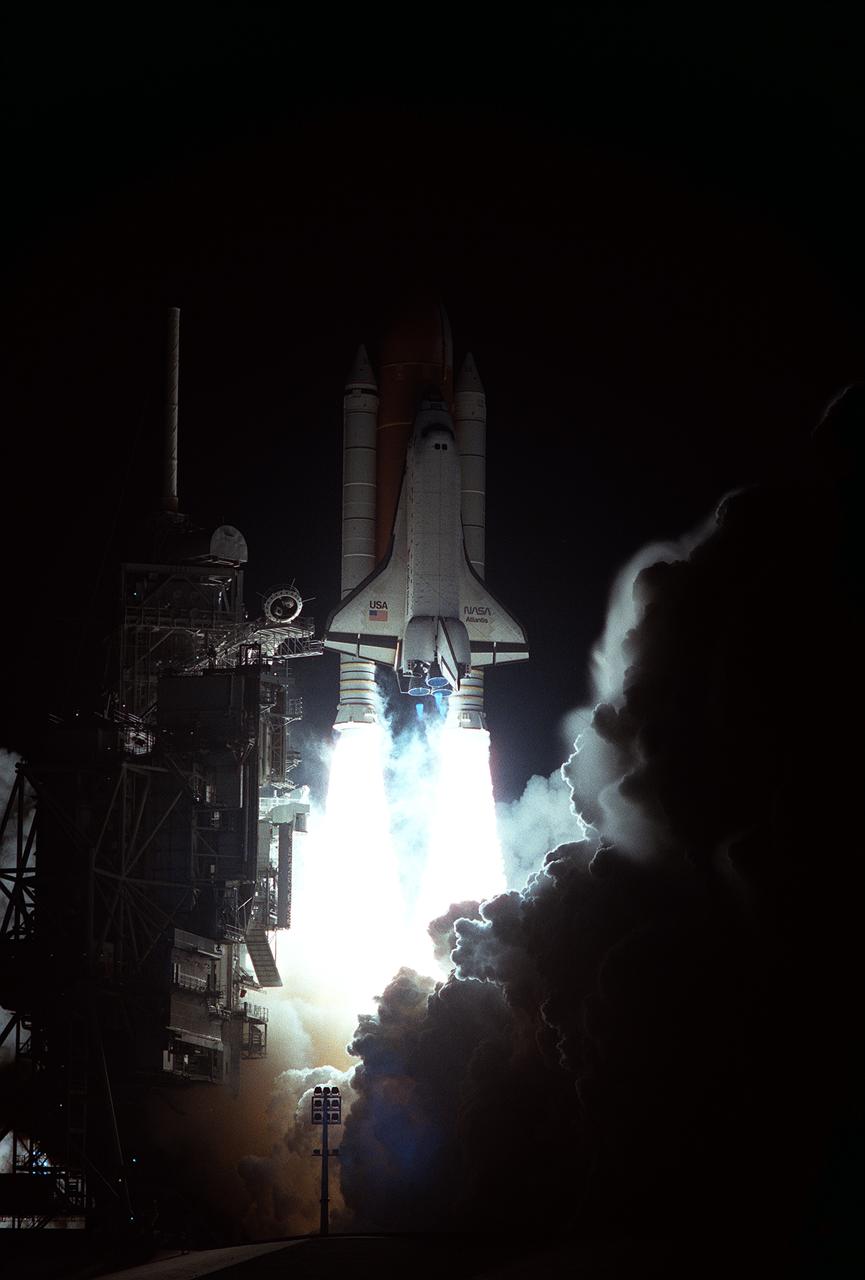
STS076-S-009 (22 March 1996) --- From the Kennedy Space Center's (KSC) Launch Pad 39B, the space shuttle Atlantis heads toward Earth orbit and an eventual docking with Russia's Mir Space Station. Mir has been in space for ten years and a two man crew (Mir-21) currently awaits the arrival of Atlantis. The on-time launch occurred at 3:13:04 a.m. (EST) on March 22, 1996. Onboard are astronauts Kevin P. Chilton, Richard A. Searfoss, Ronald M. Sega, Michael R. (Rich) Clifford, Linda M. Godwin and Shannon W. Lucid. Lucid will remain onboard Mir for just under five months' time, as a cosmonaut guest researcher. Photo credit: NASA or National Aeronautics and Space Administration
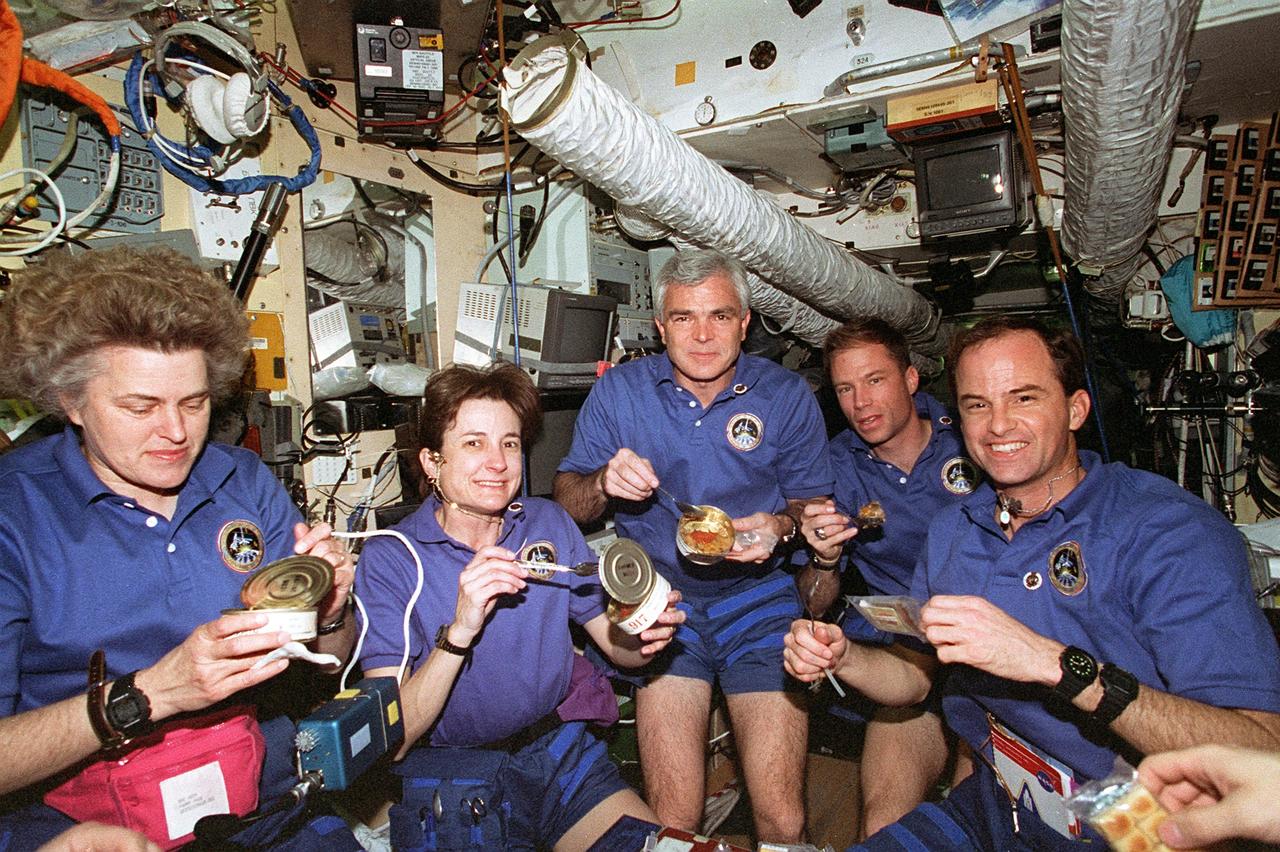
STS076-345-028 (22 - 31 March 1996) --- Onboard the Base Block Module of Russia's Mir Space Station the visiting STS-76 crew members enjoy Russian food. At right is astronaut Kevin P. Chilton, mission commander, who along with his crew mates docked with Mir on March 23, 1996, and remained linked until March 28, 1996. Left to right are astronauts Shannon W. Lucid, Linda M. Godwin and Michael R. (Rich) Clifford, all mission specialists, along with Richard A. Searfoss, pilot. The right hand of payload commander Ronald M. Sega is at right edge. Lucid was in the process of transferring from STS-76 to the Mir-21 crew, which thereby grew from two to three members. Lucid will remain aboard Mir for approximately 140 days, as a cosmonaut guest researcher.
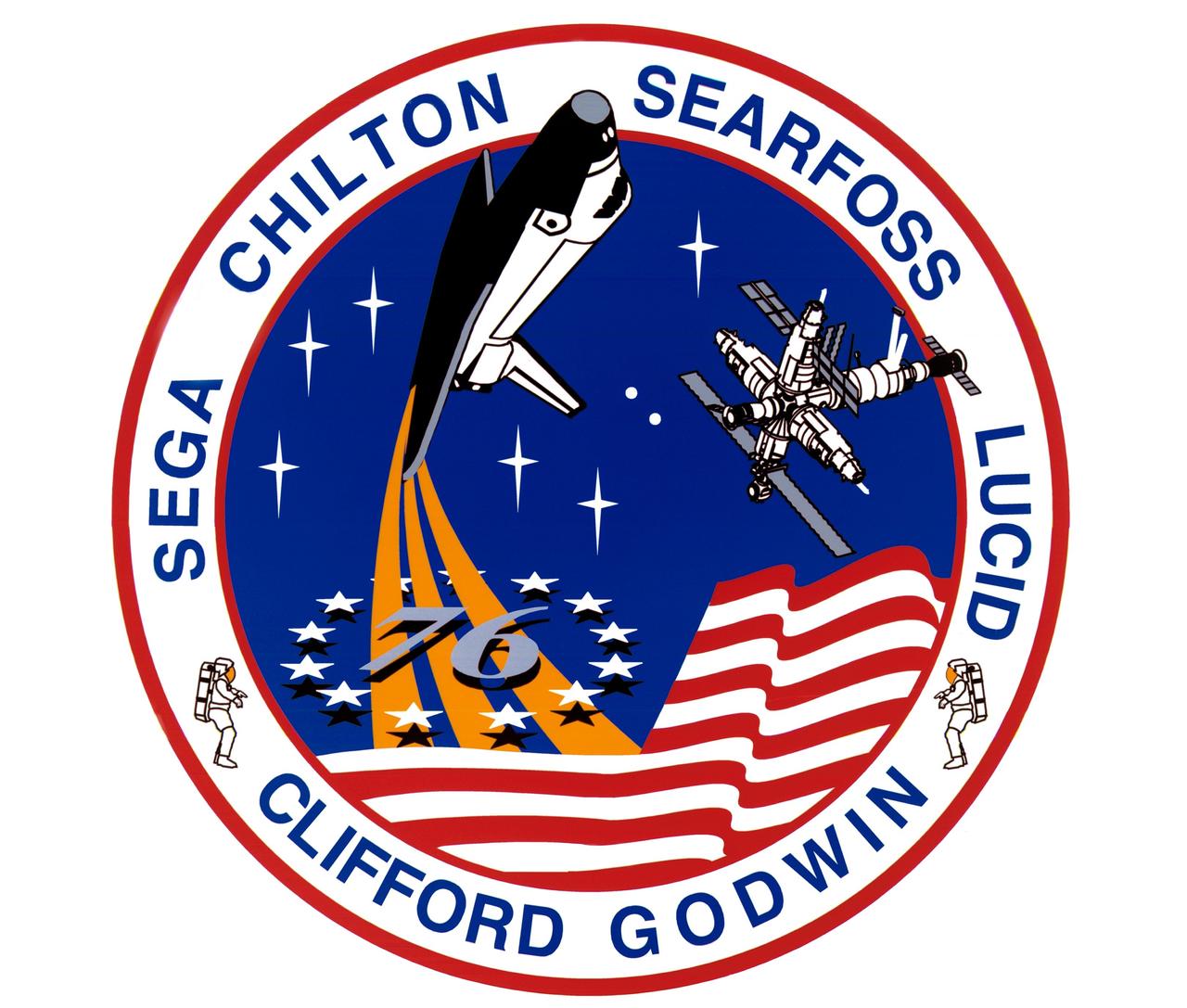
STS076-S-001 (November 1995) --- The STS-76 crew patch depicts the space shuttle Atlantis and Russia's Mir Space Station as the space ships prepare for a rendezvous and docking. The "Spirit of 76," an era of new beginnings, is represented by the space shuttle rising through the circle of 13 stars in the Betsy Ross flag. STS-76 begins a new period of international cooperation in space exploration with the first shuttle transport of a United States astronaut, Shannon W. Lucid, to the Mir Space Station for extended joint space research. Frontiers for future exploration are represented by stars and the planets. The three gold trails and the ring of stars in union form the astronaut logo. Two suited extravehicular activity (EVA) crew members in the outer ring represent the first EVA during Shuttle-Mir docked operations. The EVA objectives are to install science experiments on the Mir exterior and to develop procedures for future EVA's on the International Space Station. The surnames of the crew members encircle the patch: Kevin P. Chilton, mission commander; Richard A. Searfoss, pilot; Ronald M. Sega, Michael R. ( Rich) Clifford, Linda M. Godwin and Lucid, all mission specialists. This patch was designed by Brandon Clifford, age 12, and the crew members of STS-76. The NASA insignia design for space shuttle flights is reserved for use by the astronauts and for other official use as the NASA Administrator may authorize. Public availability has been approved only in the forms of illustrations by the various news media. When and if there is any change in this policy, which is not anticipated, the change will be publicly announced. Photo credit: NASA
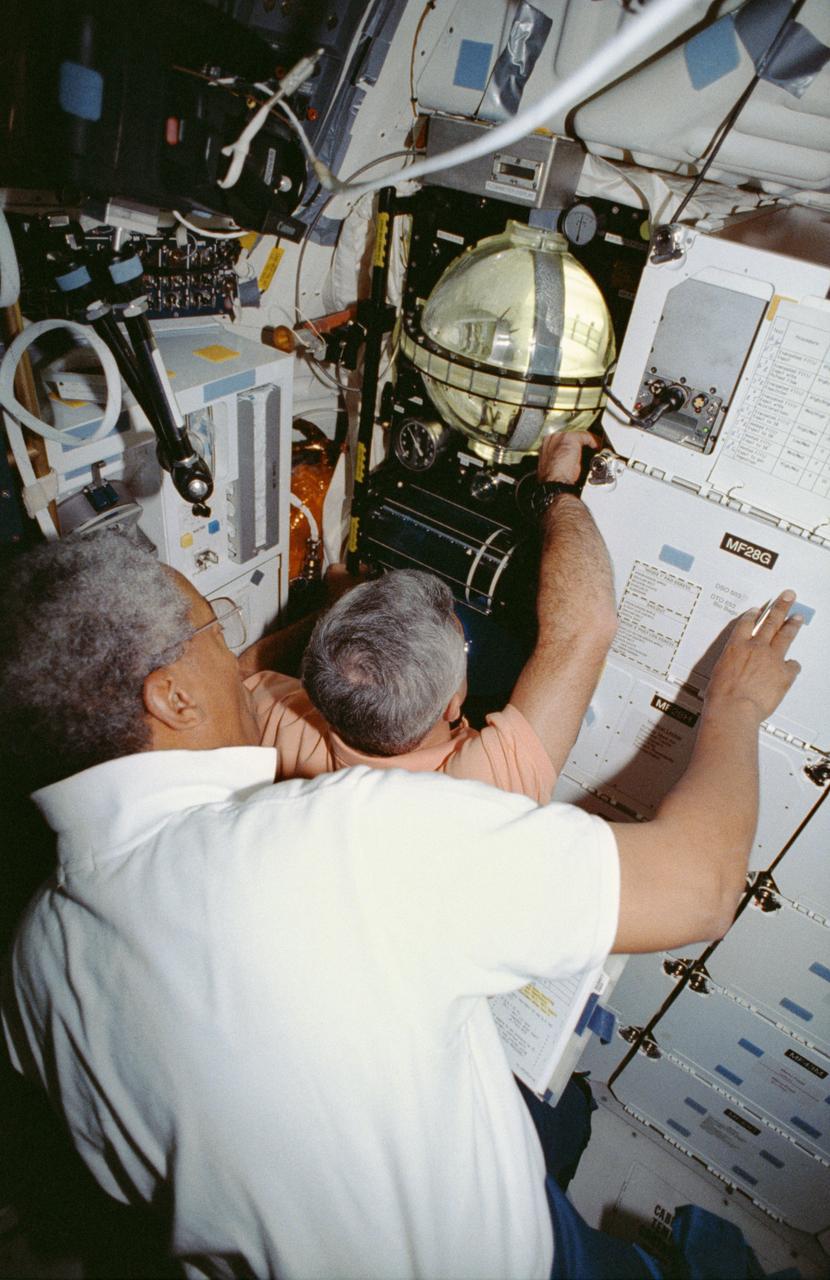
STS053-04-018 (2-9 Dec 1992) --- Astronauts Guion S. Bluford (left) and Michael R. U. (Rich) Clifford monitor the Fluid Acquisition and Resupply Equipment (FARE) onboard the Space Shuttle Discovery. Clearly visible in the mid-deck FARE setup is one of two 12.5-inch spherical tanks made of transparent acrylic, one to supply and one to receive fluids. The purpose of FARE is to investigate the dynamics of fluid transfer in microgravity and develop methods for transferring vapor-free propellants and other liquids that must be replenished in long-term space systems like satellites, Extended-Duration Orbiters (EDO), and Space Station Freedom. Eight times over an eight-hour test period, the mission specialists conducted the FARE experiment. A sequence of manual valve operations caused pressurized air from the bottles to force fluids from the supply tank to the receiver tank and back again to the supply tank. Baffles in the receiver tank controlled fluid motion during transfer, a fine-mesh screen filtered vapor from the fluid, and the overboard vent removed vapor from the receiver tank as the liquid rose. FARE is managed by NASA's Marshall Space Flight Center (MSFC) in Alabama. The basic equipment was developed by Martin Marietta for the Storable Fluid Management Demonstration. Susan L. Driscoll is the principal investigator.