Mars Climate Orbiter MARCI Approach Image
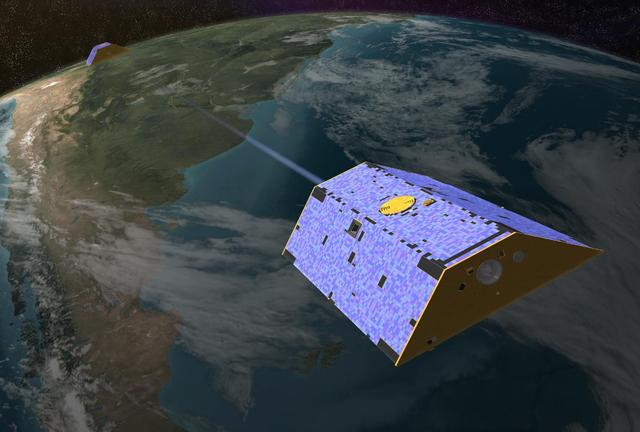
Artist concept of the Gravity Recovery and Climate Experiment GRACE from December 2002. http://photojournal.jpl.nasa.gov/catalog/PIA04236
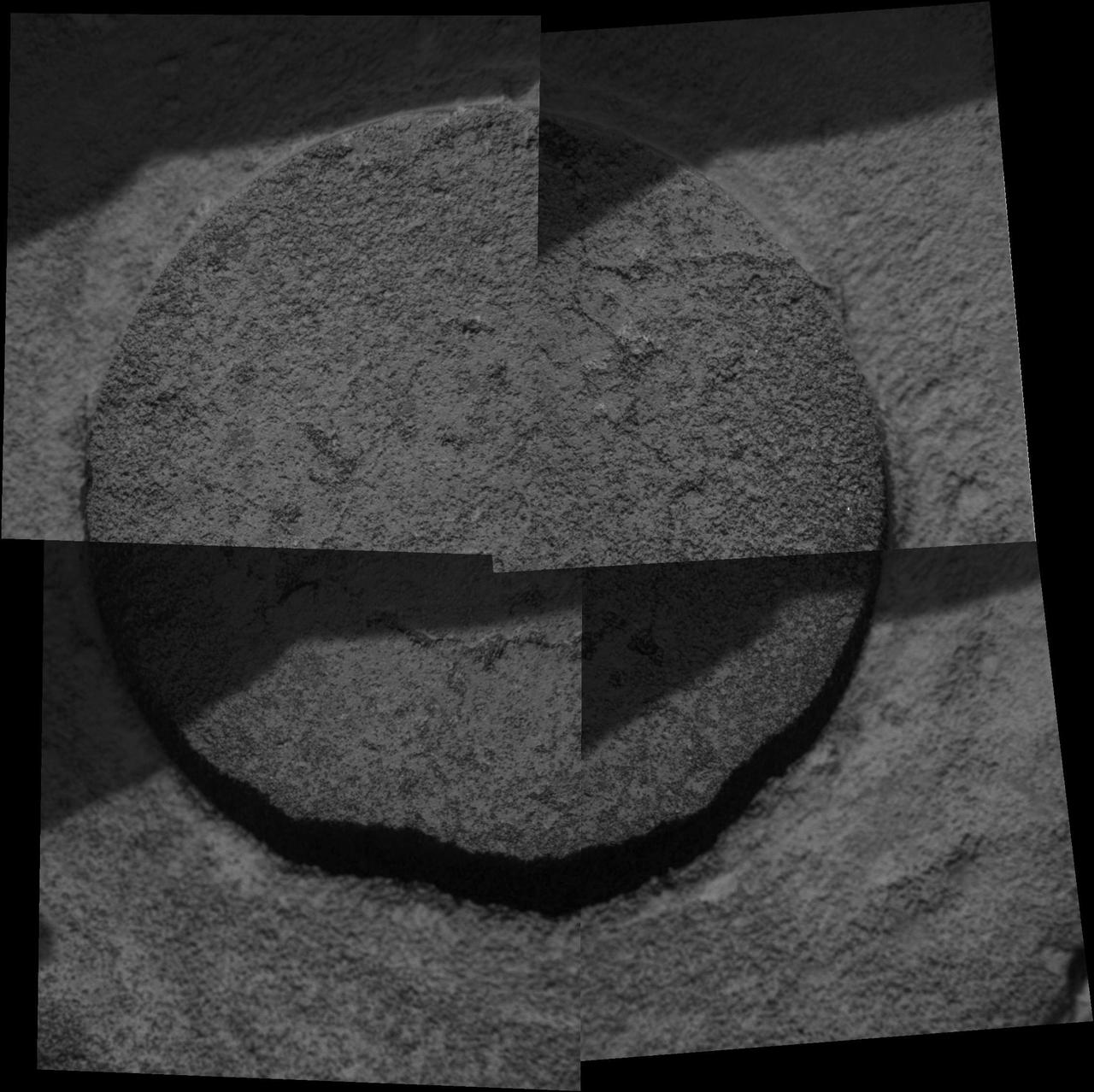
Mars Climate Continues to Fascinate
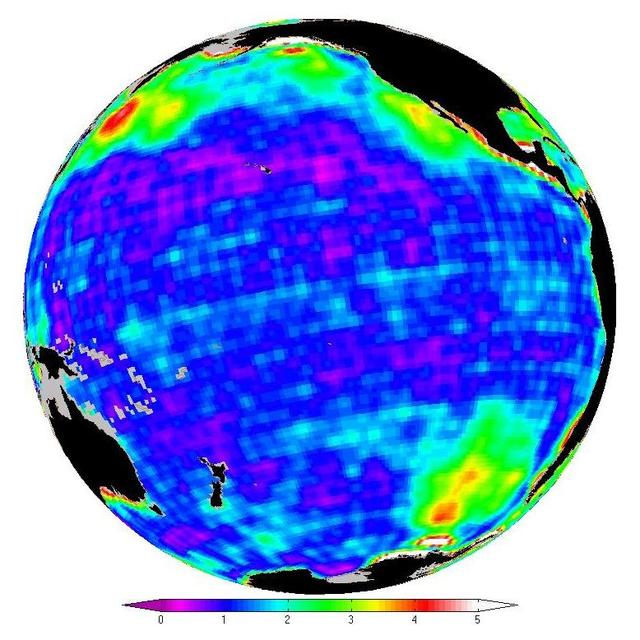
This map shows changes in ocean bottom pressure measured by NASA Gravity Recovery and Climate Experiment.
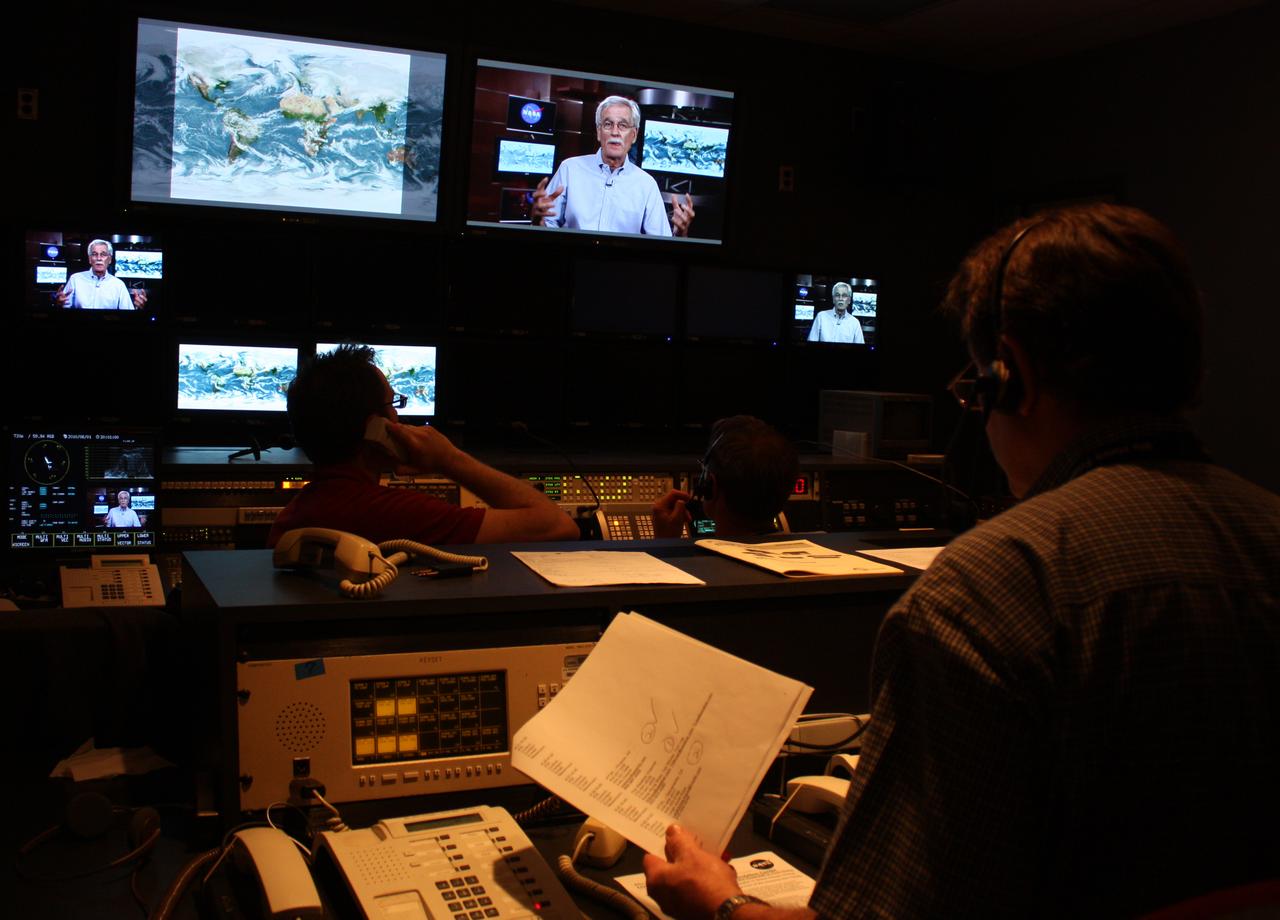
Senior Earth Scientist Dr. Compton Tucker talks about the new climate siumulation facility. <a href="http://www.nasa.gov/topics/earth/features/climate-sim-center.html" rel="nofollow">www.nasa.gov/topics/earth/features/climate-sim-center.html</a> Credit: NASA/Goddard Space Flight Center
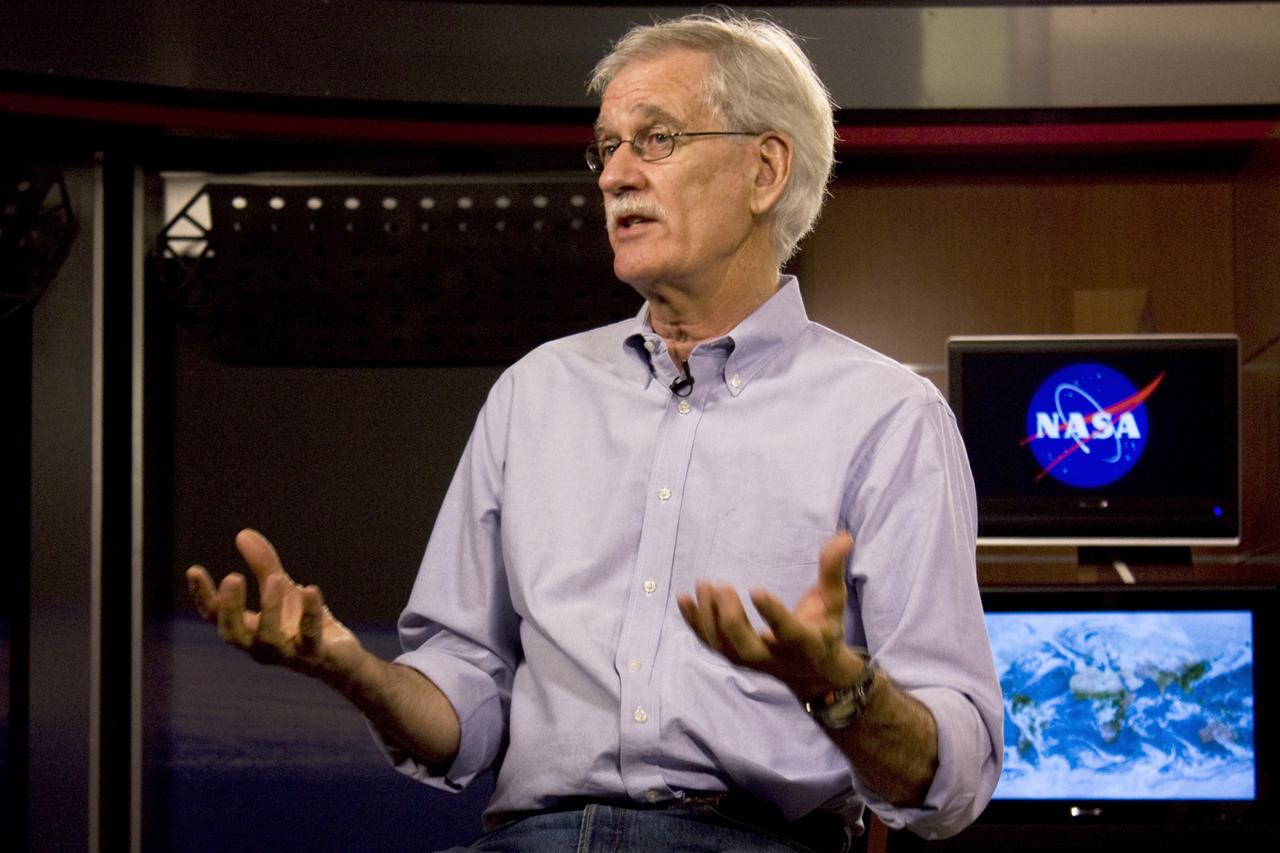
Senior Earth Scientist Dr. Compton Tucker talks about the new climate siumulation facility. Credit: NASA/Goddard Space Flight Center
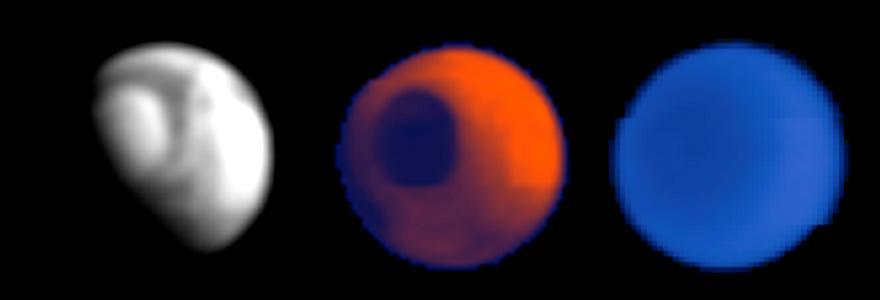
First Data from Mars Climate Sounder

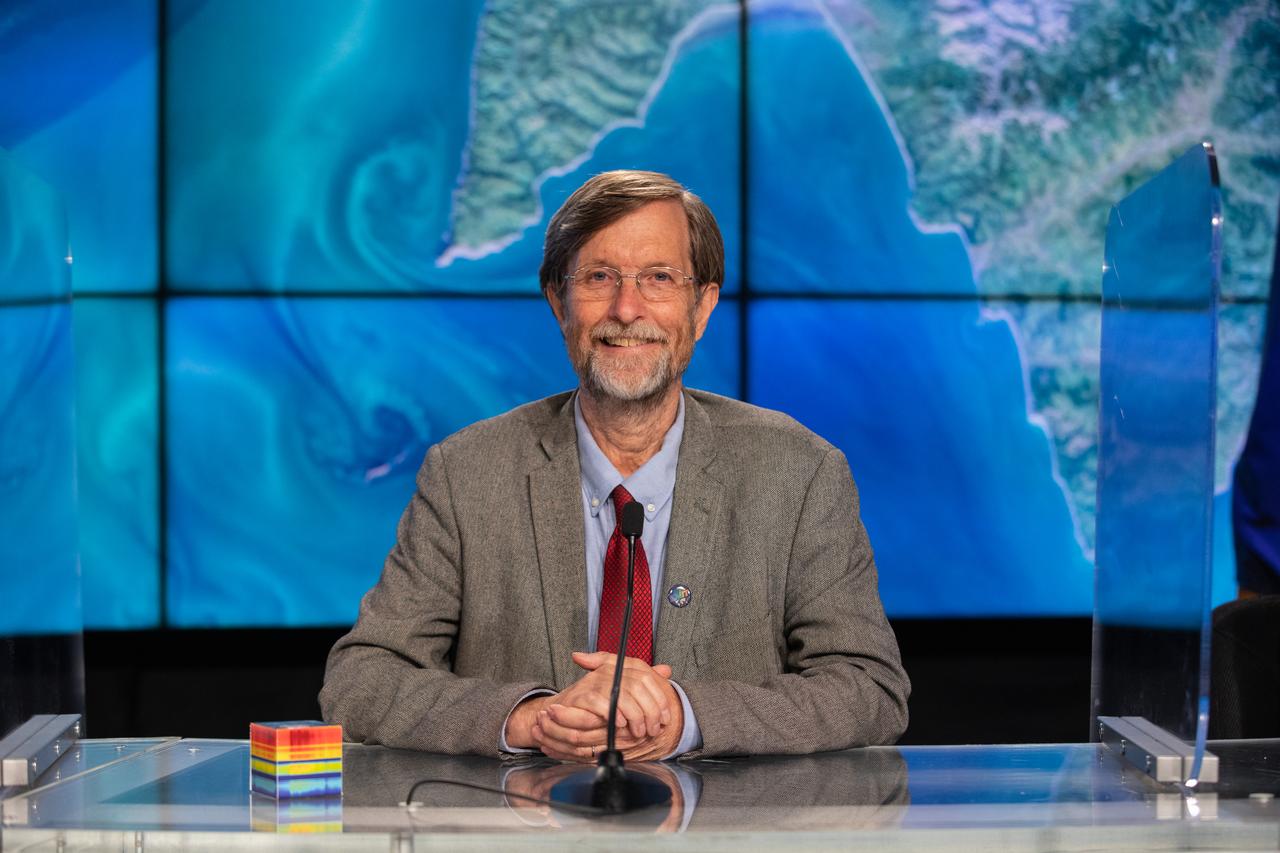
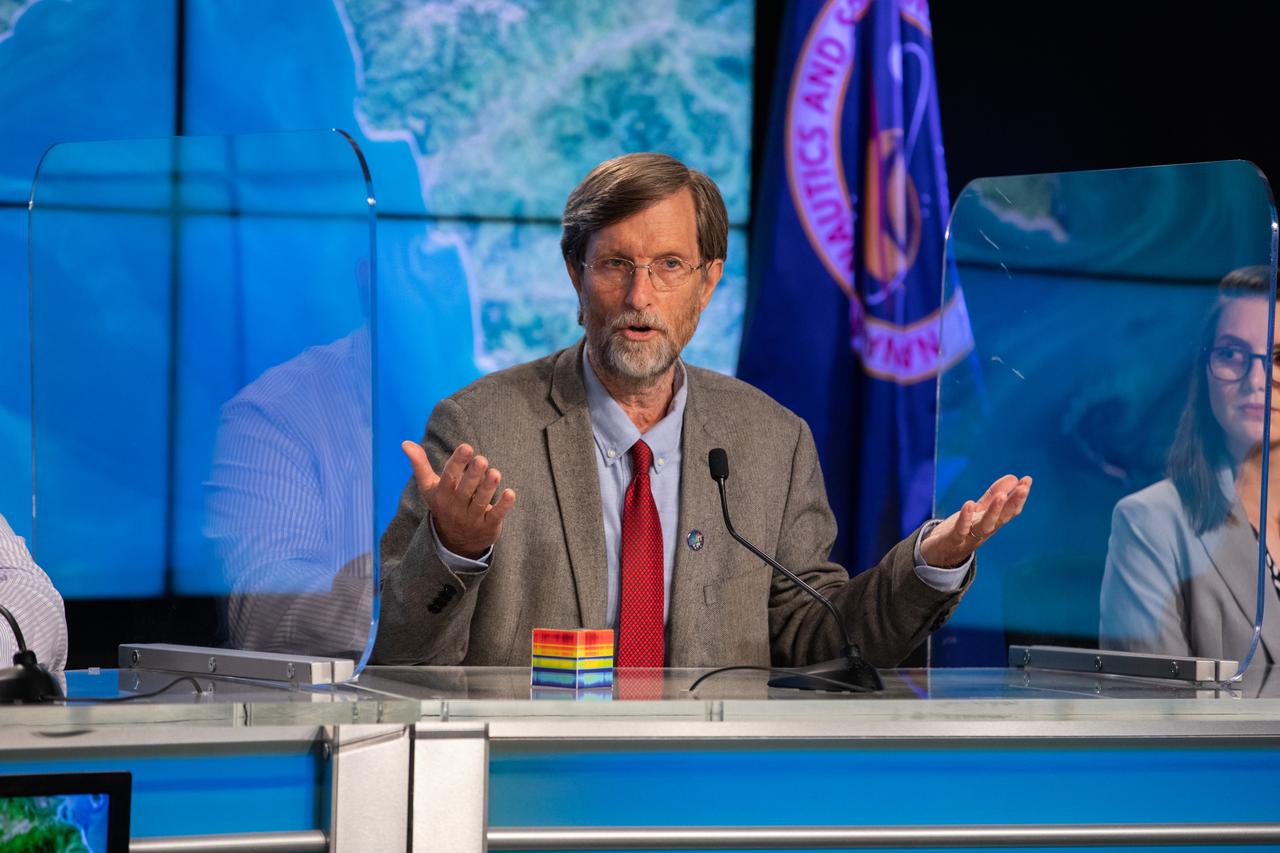
NASA Earth Science Division Director Michael Freilich shows meteorologists a model of the Global Precipitation Measurement (GPM) Core Observatory during a media event for the release of the Third U.S. National Climate Assessment, South Lawn of the White House in Washington, Tuesday, May 6, 2014. NASA Earth-observing satellite observations and analysis by the NASA-supported research community underlie many of the findings in the new climate change assessment. Photo Credit: (NASA/Bill Ingalls)

NASA Earth Science Division Director Michael Freilich shows meteorologists an AERONET sun photometer, right, and a model of the Global Precipitation Measurement (GPM) Core Observatory during a media event for the release of the Third U.S. National Climate Assessment, South Lawn of the White House in Washington, Tuesday, May 6, 2014. NASA Earth-observing satellite observations and analysis by the NASA-supported research community underlie many of the findings in the new climate change assessment. Photo Credit: (NASA/Bill Ingalls)

NASA Earth Science Division Director Michael Freilich shows meteorologists an AERONET sun photometer, right, and a model of the Global Precipitation Measurement (GPM) Core Observatory during a media event for the release of the Third U.S. National Climate Assessment, South Lawn of the White House in Washington, Tuesday, May 6, 2014. NASA Earth-observing satellite observations and analysis by the NASA-supported research community underlie many of the findings in the new climate change assessment. Photo Credit: (NASA/Bill Ingalls)
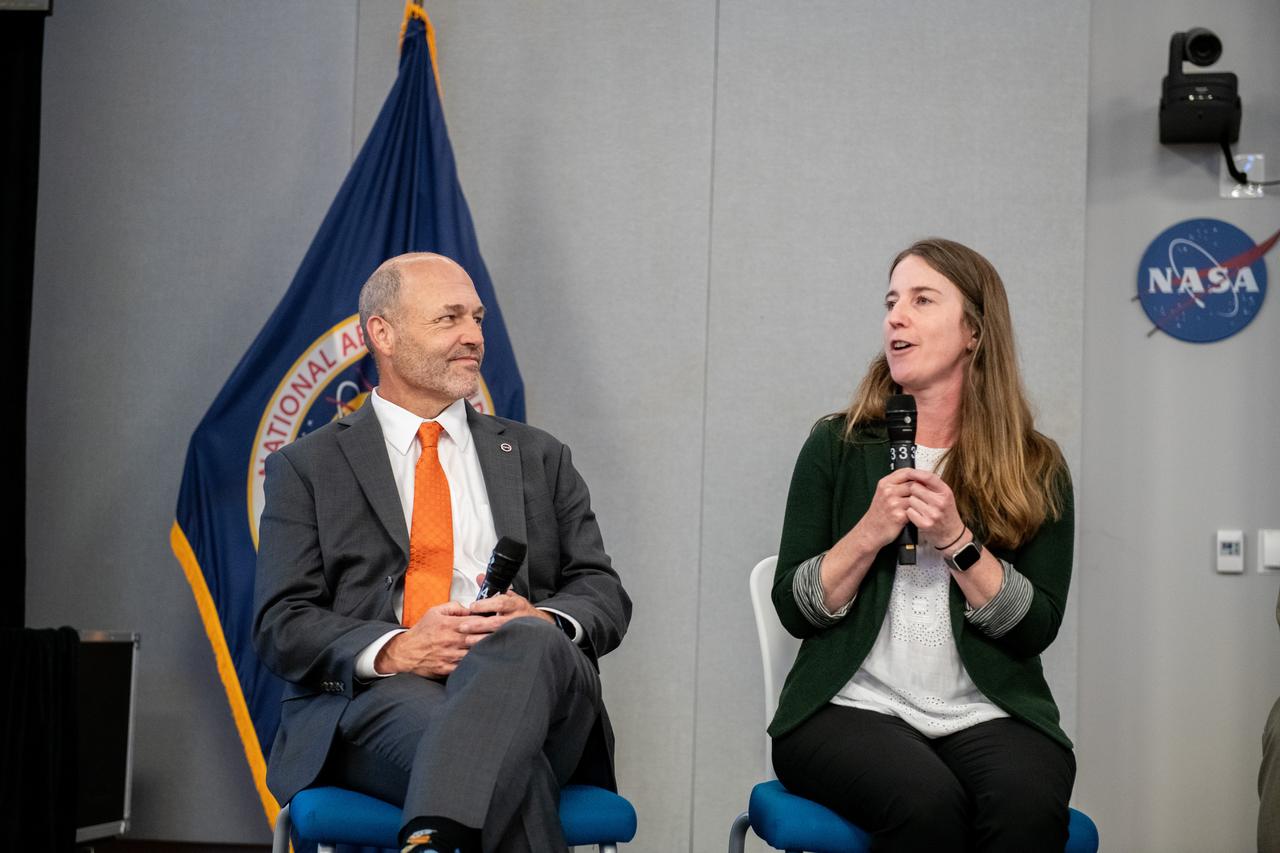
During the climate town hall meeting on June 17th 2024, Dr. Calvin and center leaders explored how technologies being developed at NASA Glenn Research Center could help reduce the effects of climate change. The panelists who lead the discussion include: Dr. Calvin; Dr. Rickey Shyne, Director of Research and Engineering; Bryan Smith, Director of Facilities, Test, & Manufacturing; and W. Allen Kilgore, Acting Director of Aeronautics. Director of Space Flight Systems Dr. Mike Barrett served as the moderator.
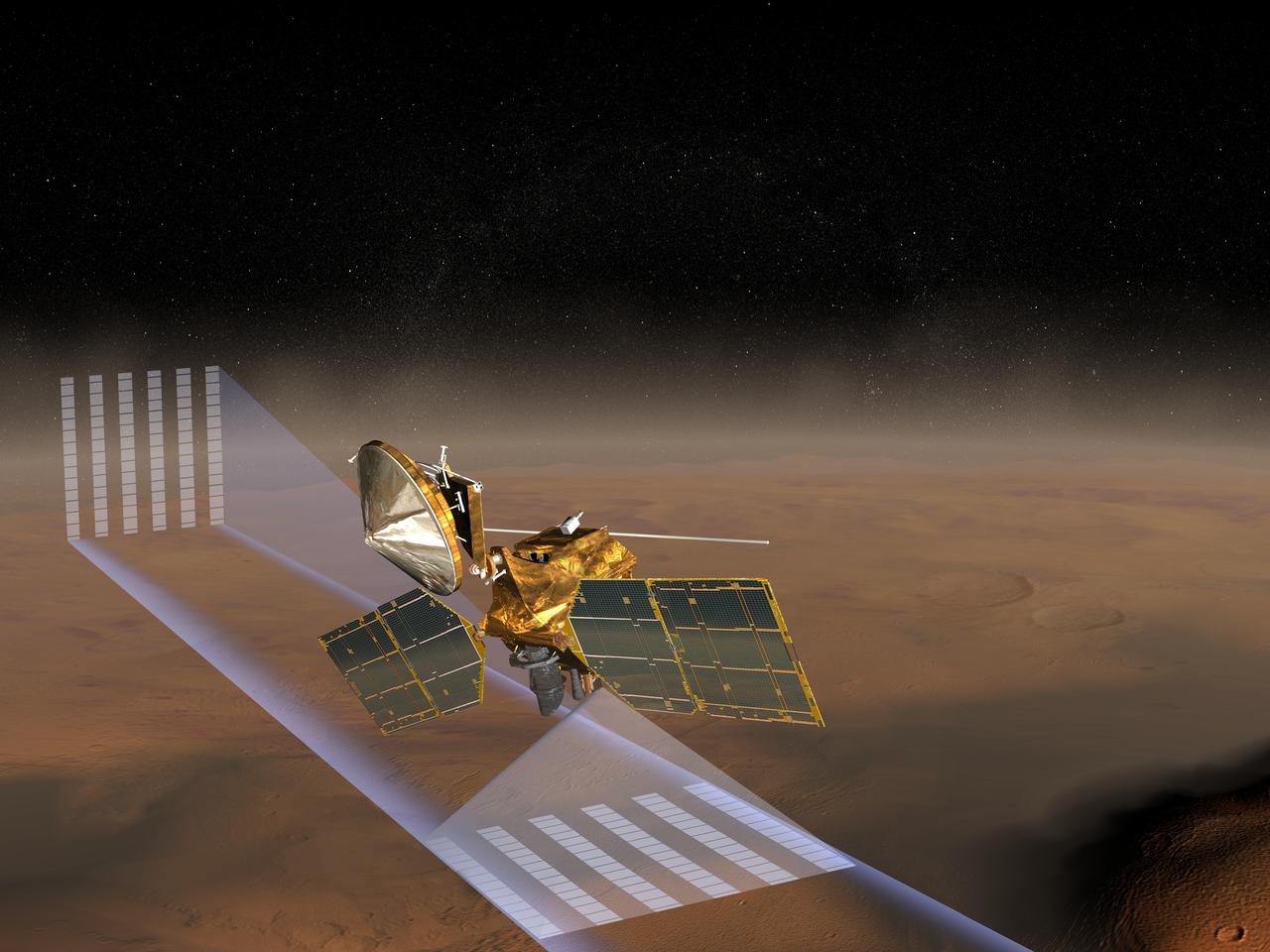
This artist concept of NASA Mars Reconnaissance Orbiter at Mars features one of its instruments -- the Mars Climate Sounder -- in action.

NASA climatologist Gary Jedlovec, a member of the Earth Science team in Marshall Space Flight Center’s Science and Technology Office, discusses the satellite technology and ground-based tools used to record and trend regional and global climate changes over the past century and to provide forecast models looking 100 years into the future. Jedlovec and his team, which partners with National Oceanic and Atmospheric Association researchers and their colleagues around the world, spoke to the Marshall “Green Team” -- environmental engineers and support personnel who help guide Marshall’s focus on safer, more cost-efficient energy use. The Green Team, led by Marshall Sustainability Engineer Donna Leach of the Environmental Engineering & Occupational Health Office, currently is preparing activities and outreach for Earth Day 2020, set for next April.

The greens and blues of the ocean color from NASA satellite data have provided new insights into how climate and ecosystem processes affect the growth cycles of phytoplankton—microscopic aquatic plants important for fish populations and Earth’s carbon cycle. At the bottom of the ocean’s food chain, phytoplankton account for roughly half of the net photosynthesis on Earth. Their photosynthesis consumes carbon dioxide and plays a key role in transferring carbon from the atmosphere to the ocean. Unlike the plant ecosystems on land, the amount of phytoplankton in the ocean is always followed closely by the abundance of organisms that eat phytoplankton, creating a perpetual dance between predators and prey. This new analysis shows how tiny imbalances in this predator-prey relationship, caused by environmental variability, give rise to massive phytoplankton blooms, having huge impacts on ocean productivity, fisheries and carbon cycling. The study was released Thursday, Sept. 25, in the journal Nature Climate Change. “The continuous year-in and year-out measurements provided by NASA’s ocean color satellites have dramatically changed our understanding of phytoplankton dynamics on the Earth,” said Mike Behrenfeld, author of the study and phytoplankton ecologist at Oregon State University, Corvallis, Oregon. “What we now see is a closely linked system of phytoplankton cell division and consumption lying at the heart of the plant’s annual cycle.” Behrenfeld calls this close predator-prey relationship the “Dance of the Plankton.” This view is different from previous perspectives that have simply focused on environmental resources used by phytoplankton to grow, such as nutrients and light. The new view is important because it reveals that tiny imbalances can greatly impact Earth’s ecology. Read more: <a href="http://1.usa.gov/ZkVMHG" rel="nofollow">1.usa.gov/ZkVMHG</a> Credit: NASA's Goddard Space Flight Center, Norman Kuring; USGS <b><a href="http://www.nasa.gov/audience/formedia/features/MP_Photo_Guidelines.html" rel="nofollow">NASA image use policy.</a></b> <b><a href="http://www.nasa.gov/centers/goddard/home/index.html" rel="nofollow">NASA Goddard Space Flight Center</a></b> enables NASA’s mission through four scientific endeavors: Earth Science, Heliophysics, Solar System Exploration, and Astrophysics. Goddard plays a leading role in NASA’s accomplishments by contributing compelling scientific knowledge to advance the Agency’s mission. <b>Follow us on <a href="http://twitter.com/NASAGoddardPix" rel="nofollow">Twitter</a></b> <b>Like us on <a href="http://www.facebook.com/pages/Greenbelt-MD/NASA-Goddard/395013845897?ref=tsd" rel="nofollow">Facebook</a></b> <b>Find us on <a href="http://instagram.com/nasagoddard?vm=grid" rel="nofollow">Instagram</a></b>
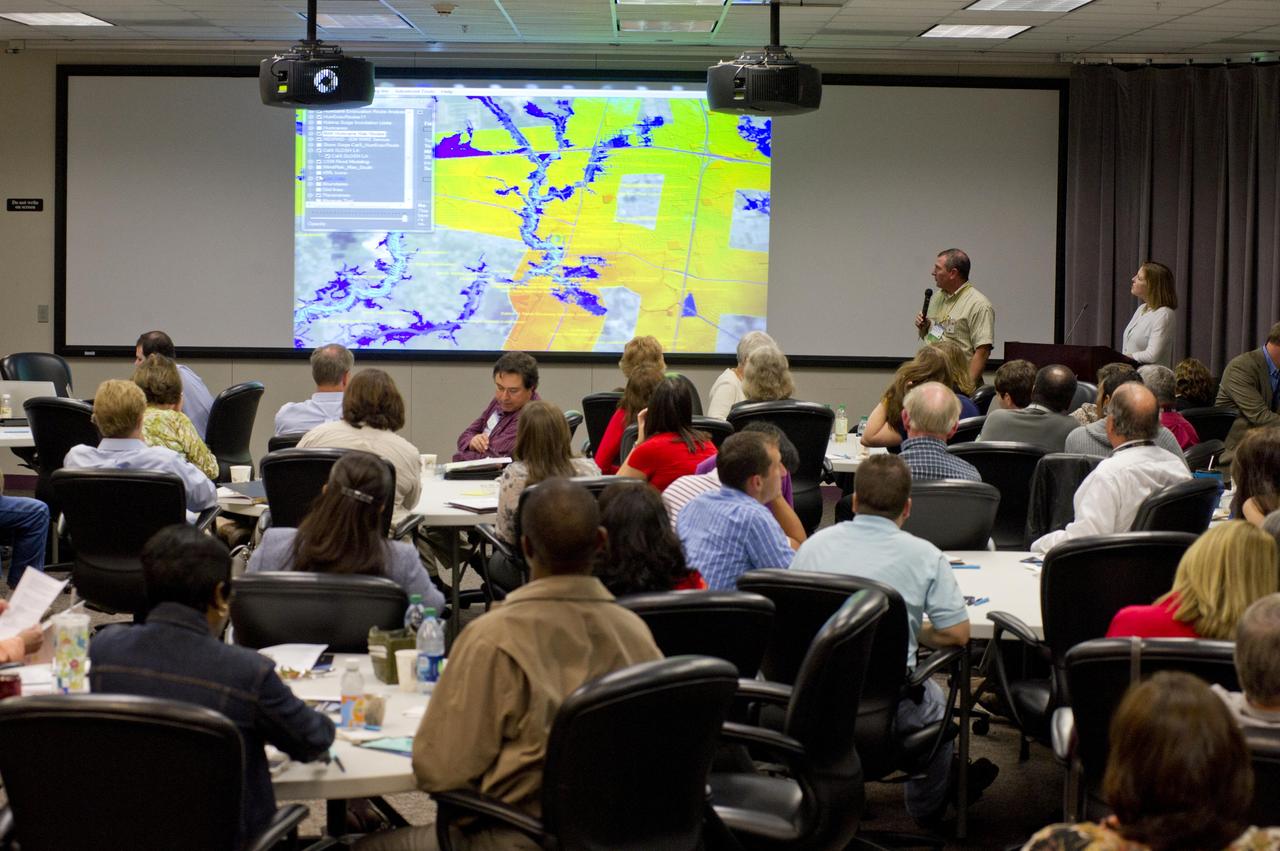
Participants in an Oct. 16-18 workshop at John C. Stennis Space Center focused on identifying current and future climate risks and developing strategies to address them. NASA Headquarters sponsored the Resilience and Adaptation to Climate Risks Workshop to understand climate change risks and adaptation strategies. The workshop was part of an effort that joins the science and operations arms of the agency in a coordinated response to climate change. NASA Headquarters is holding workshops on the subject at all NASA centers.
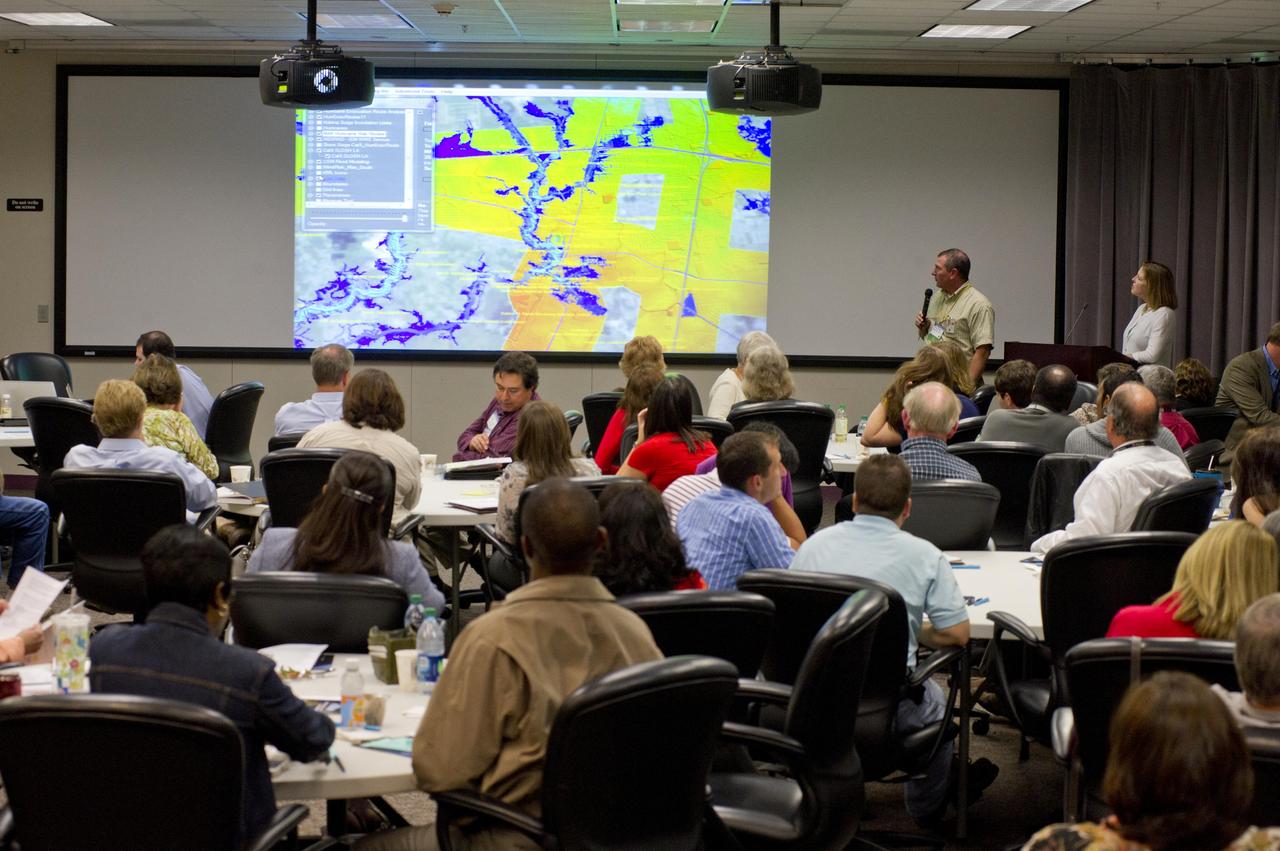
Participants in an Oct. 16-18 workshop at John C. Stennis Space Center focused on identifying current and future climate risks and developing strategies to address them. NASA Headquarters sponsored the Resilience and Adaptation to Climate Risks Workshop to understand climate change risks and adaptation strategies. The workshop was part of an effort that joins the science and operations arms of the agency in a coordinated response to climate change. NASA Headquarters is holding workshops on the subject at all NASA centers.
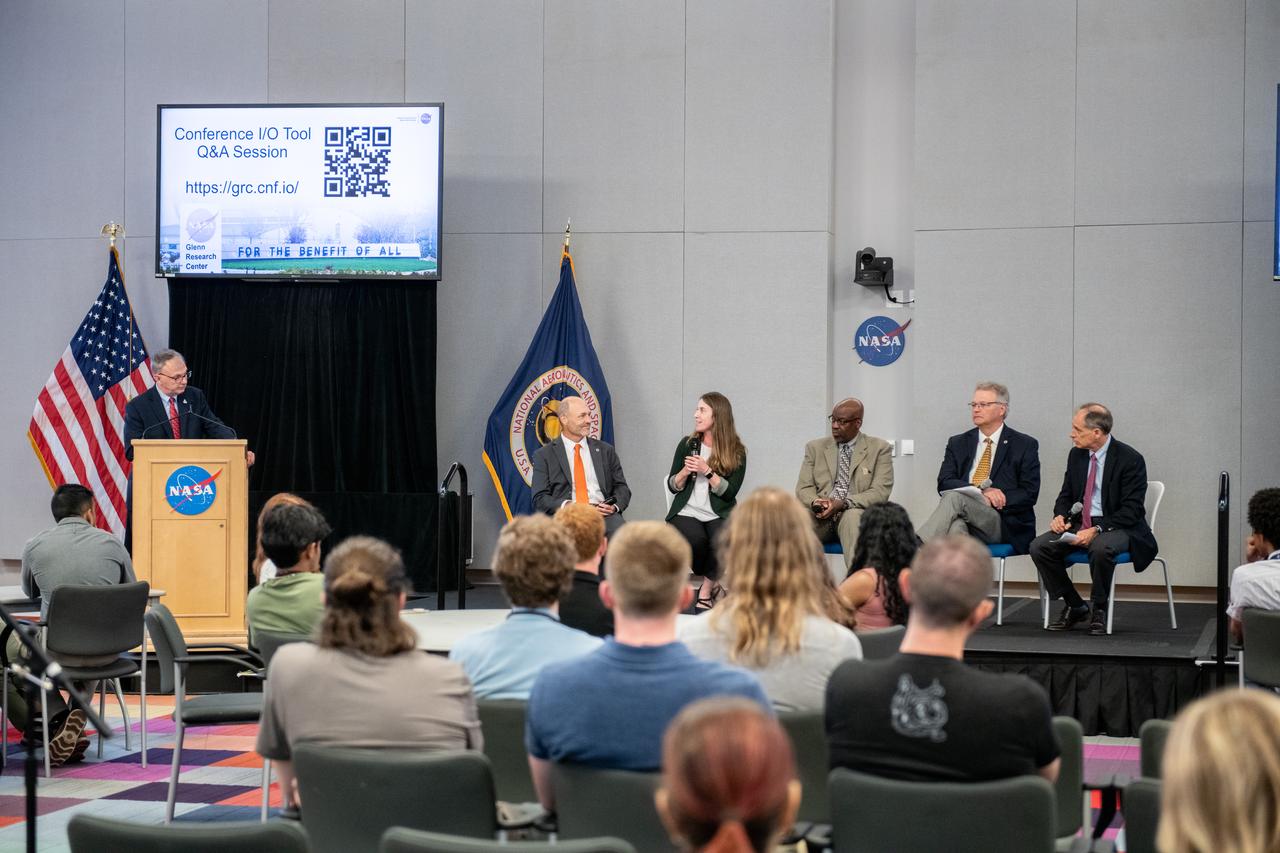
During the climate town hall meeting on June 17th 2024, Dr. Calvin and center leaders explored how technologies being developed at NASA Glenn Research Center could help reduce the effects of climate change. The panelists who lead the discussion include: Dr. Calvin; Dr. Rickey Shyne, Director of Research and Engineering; Bryan Smith, Director of Facilities, Test, & Manufacturing; and W. Allen Kilgore, Acting Director of Aeronautics. Director of Space Flight Systems Dr. Mike Barrett served as the moderator.
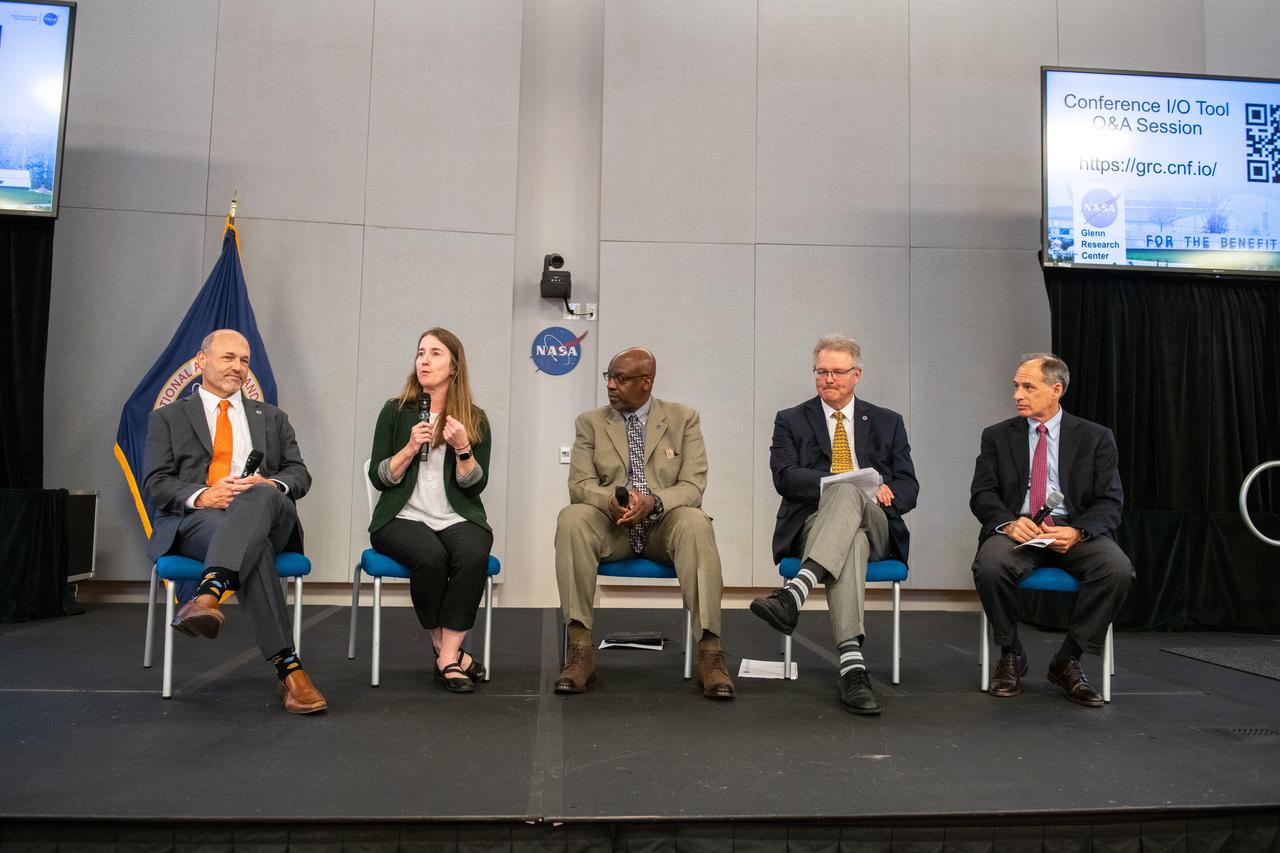
During the climate town hall meeting on June 17th 2024, Dr. Calvin and center leaders explored how technologies being developed at NASA Glenn Research Center could help reduce the effects of climate change. The panelists who lead the discussion include: Dr. Calvin; Dr. Rickey Shyne, Director of Research and Engineering; Bryan Smith, Director of Facilities, Test, & Manufacturing; and W. Allen Kilgore, Acting Director of Aeronautics. Director of Space Flight Systems Dr. Mike Barrett served as the moderator.
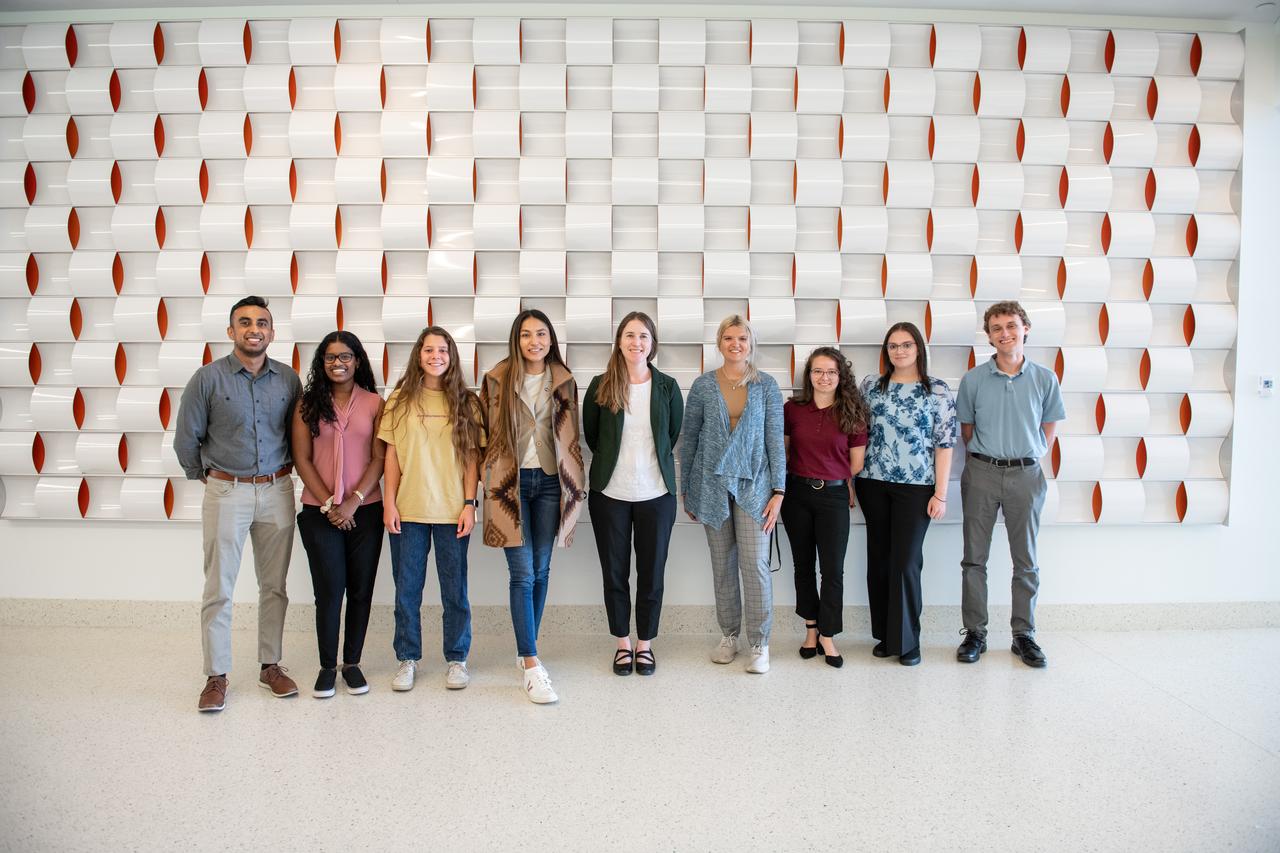
Chief Scientist and Senior Climate Advisor Dr. Kate Calvin held a meet and greet with some of the Summer 2024 interns on June 17, 2024 at Glenn Research Center.

Chief Scientist and Senior Climate Advisor Dr. Kate Calvin held a meet and greet with some of the Summer 2024 interns on June 17, 2024 at Glenn Research Center.
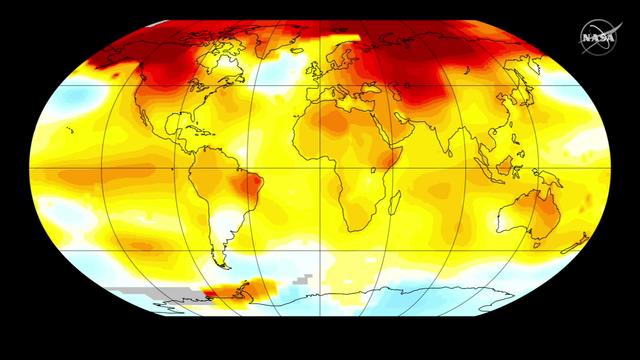
Two key climate change indicators -- global surface temperatures and Arctic sea ice extent -- have broken numerous records through the first half of 2016, according to NASA analyses of ground-based observations and satellite data. Each of the first six months of 2016 set a record as the warmest respective month globally in the modern temperature record, which dates to 1880, according to scientists at NASA's Goddard Institute for Space Studies (GISS) in New York. The six-month period from January to June was also the planet's warmest half-year on record, with an average temperature 1.3 degrees Celsius (2.4 degrees Fahrenheit) warmer than the late nineteenth century. Read more: <a href="http://go.nasa.gov/29SQngq" rel="nofollow">go.nasa.gov/29SQngq</a> Credit: NASA/Goddard <b><a href="http://www.nasa.gov/audience/formedia/features/MP_Photo_Guidelines.html" rel="nofollow">NASA image use policy.</a></b> <b><a href="http://www.nasa.gov/centers/goddard/home/index.html" rel="nofollow">NASA Goddard Space Flight Center</a></b> enables NASA’s mission through four scientific endeavors: Earth Science, Heliophysics, Solar System Exploration, and Astrophysics. Goddard plays a leading role in NASA’s accomplishments by contributing compelling scientific knowledge to advance the Agency’s mission. <b>Follow us on <a href="http://twitter.com/NASAGoddardPix" rel="nofollow">Twitter</a></b> <b>Like us on <a href="http://www.facebook.com/pages/Greenbelt-MD/NASA-Goddard/395013845897?ref=tsd" rel="nofollow">Facebook</a></b> <b>Find us on <a href="http://instagrid.me/nasagoddard/?vm=grid" rel="nofollow">Instagram</a></b>
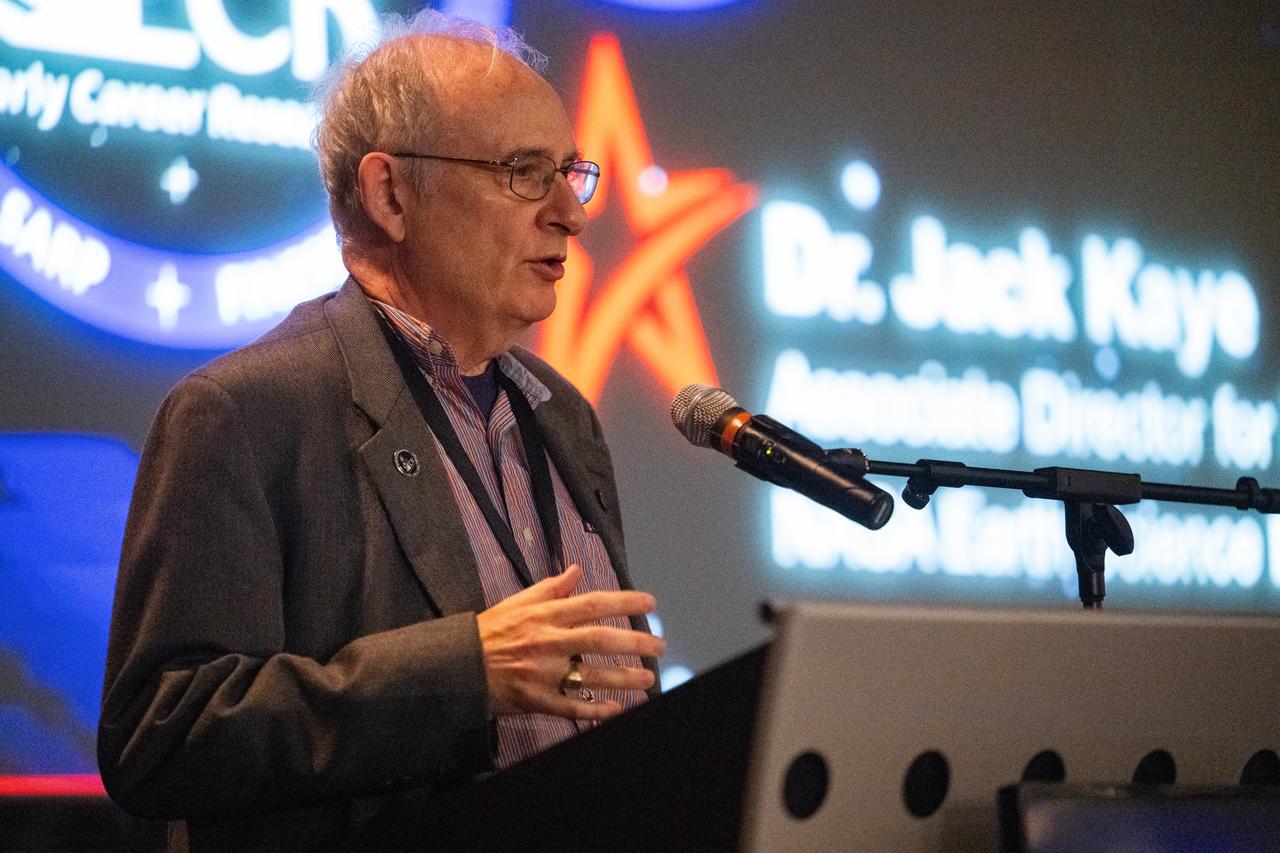
Jack Kaye, associate director for research in the Earth Science Division of NASA’s Science Mission Directorate, speaks with the Climate Change Research Initiative (CCRI) cohort, Wednesday, Aug. 7, 2024, at the Mary W. Jackson NASA Headquarters building in Washington, DC. The Earth Science Division’s Early Career Research Program’s Climate Change Research Initiative (CCRI) is a year-long STEM engagement and experiential learning opportunity for educators and students from high school to graduate level. Photo Credit: (NASA/Joel Kowsky)

Members of the Climate Change Research Initiative (CCRI) cohort listen as Karen St. Germain, director of the Earth Science Division of NASA’s Science Mission Directorate speaks, Wednesday, Aug. 7, 2024, at the Mary W. Jackson NASA Headquarters building in Washington, DC. The Earth Science Division’s Early Career Research Program’s Climate Change Research Initiative (CCRI) is a year-long STEM engagement and experiential learning opportunity for educators and students from high school to graduate level. Photo Credit: (NASA/Joel Kowsky)
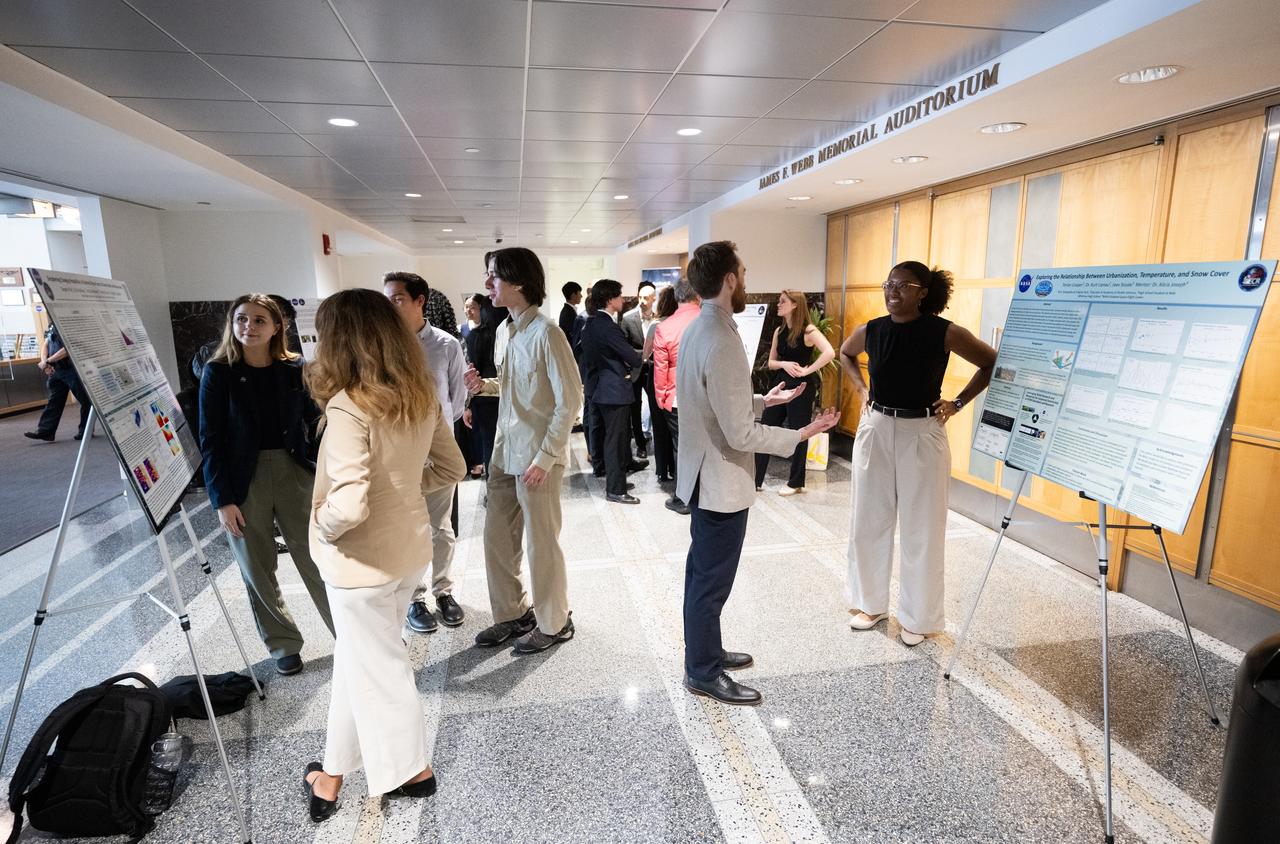
Members of the Climate Change Research Initiative (CCRI) cohort discuss their research during a poster session, Wednesday, Aug. 7, 2024, at the Mary W. Jackson NASA Headquarters building in Washington, DC. The Earth Science Division’s Early Career Research Program’s Climate Change Research Initiative (CCRI) is a year-long STEM engagement and experiential learning opportunity for educators and students from high school to graduate level. Photo Credit: (NASA/Joel Kowsky)
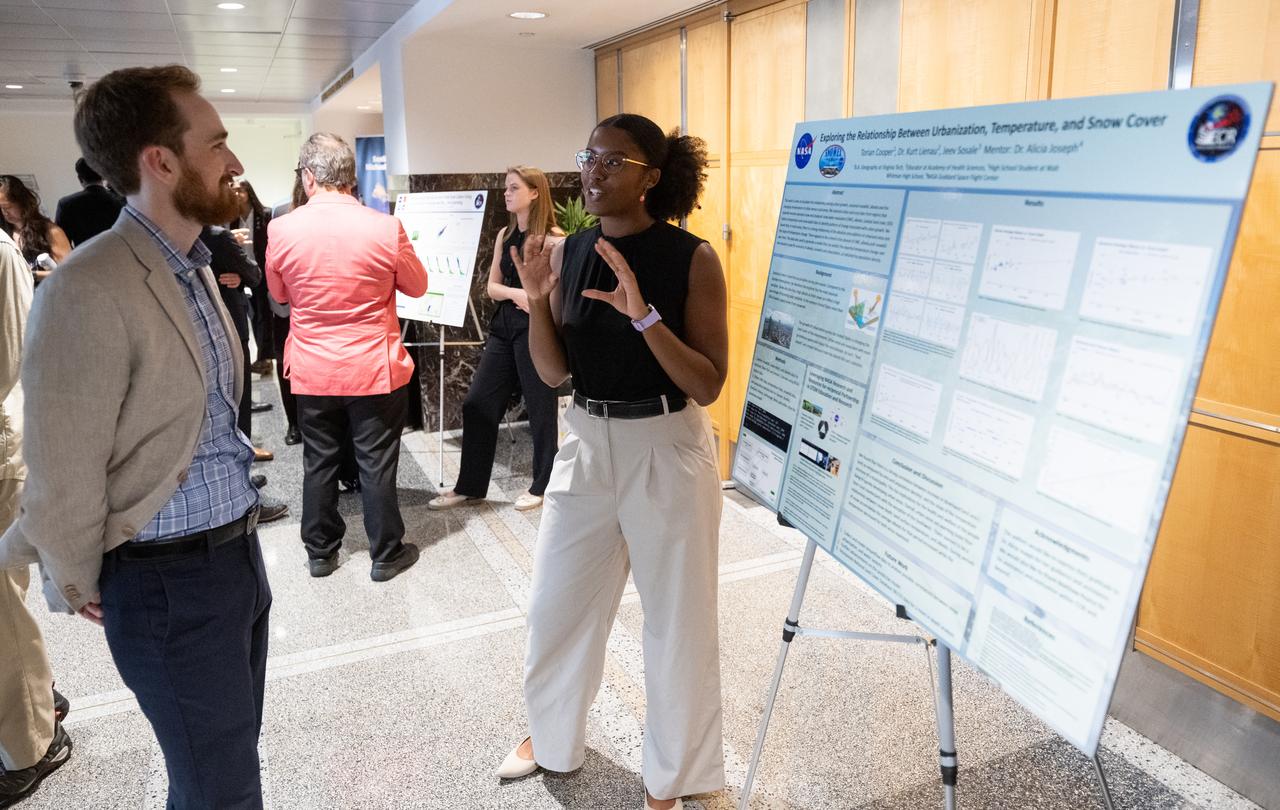
Members of the Climate Change Research Initiative (CCRI) cohort discuss their research during a poster session, Wednesday, Aug. 7, 2024, at the Mary W. Jackson NASA Headquarters building in Washington, DC. The Earth Science Division’s Early Career Research Program’s Climate Change Research Initiative (CCRI) is a year-long STEM engagement and experiential learning opportunity for educators and students from high school to graduate level. Photo Credit: (NASA/Joel Kowsky)
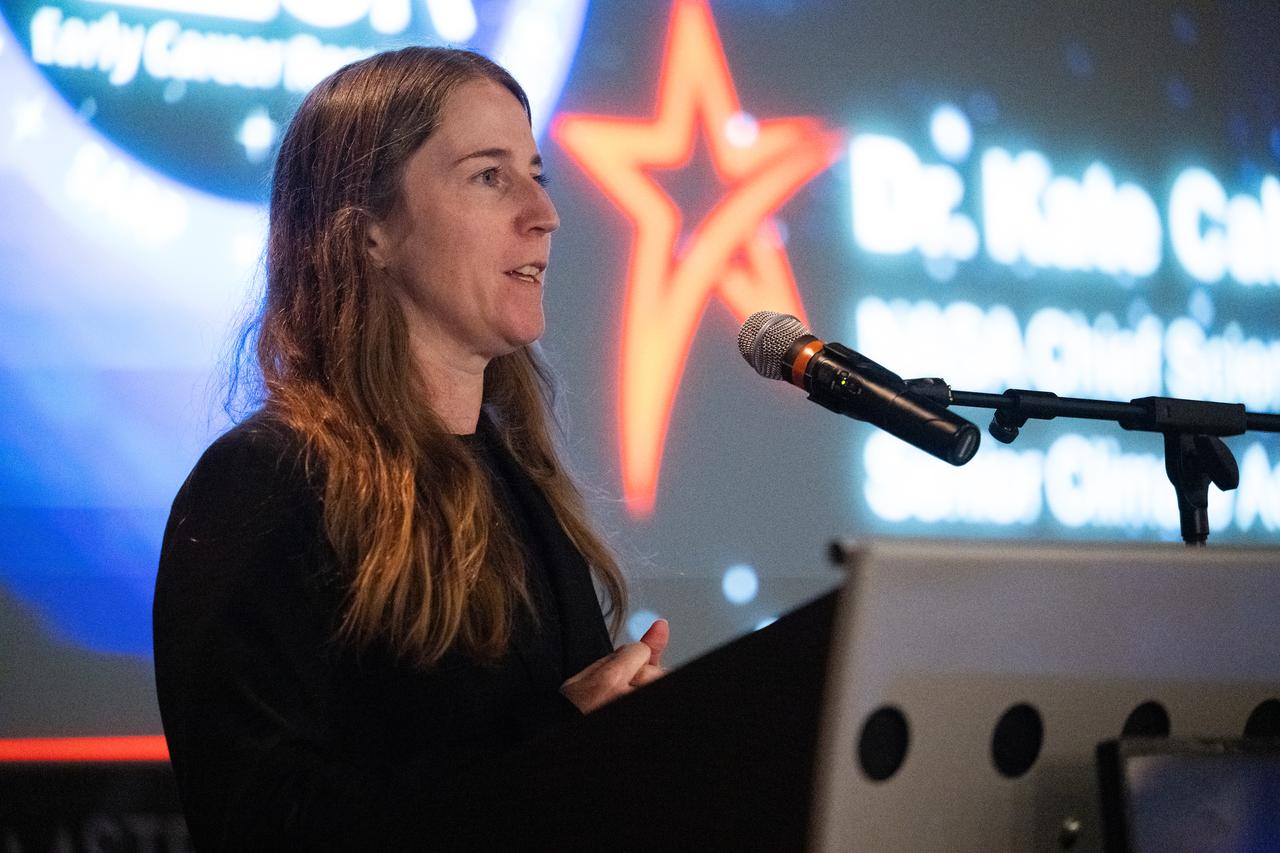
Kate Calvin, NASA’s Chief Scientist, speaks to the Climate Change Research Initiative (CCRI) cohort, Wednesday, Aug. 7, 2024, at the Mary W. Jackson NASA Headquarters building in Washington, DC. The Earth Science Division’s Early Career Research Program’s Climate Change Research Initiative (CCRI) is a year-long STEM engagement and experiential learning opportunity for educators and students from high school to graduate level. Photo Credit: (NASA/Joel Kowsky)
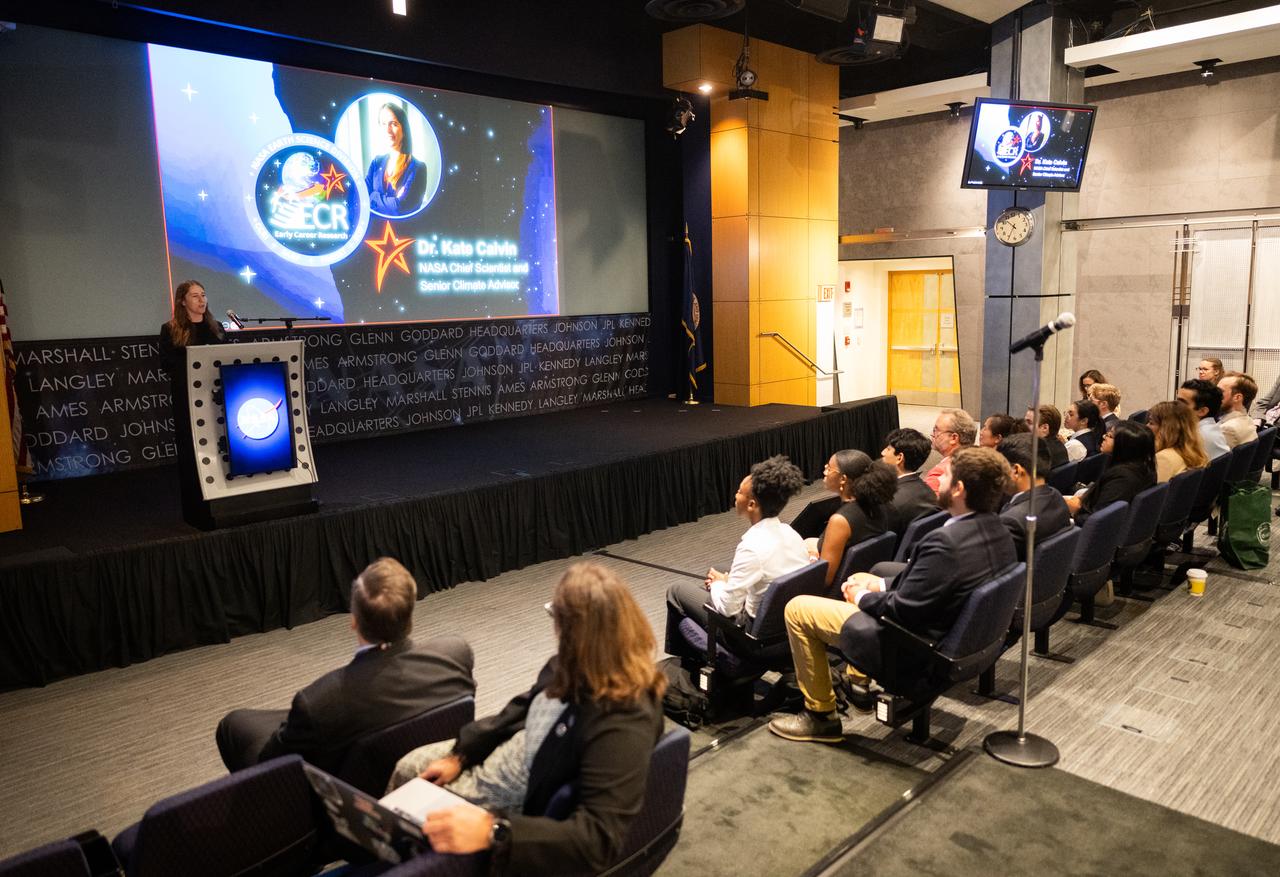
Kate Calvin, NASA’s Chief Scientist, speaks to the Climate Change Research Initiative (CCRI) cohort, Wednesday, Aug. 7, 2024, at the Mary W. Jackson NASA Headquarters building in Washington, DC. The Earth Science Division’s Early Career Research Program’s Climate Change Research Initiative (CCRI) is a year-long STEM engagement and experiential learning opportunity for educators and students from high school to graduate level. Photo Credit: (NASA/Joel Kowsky)
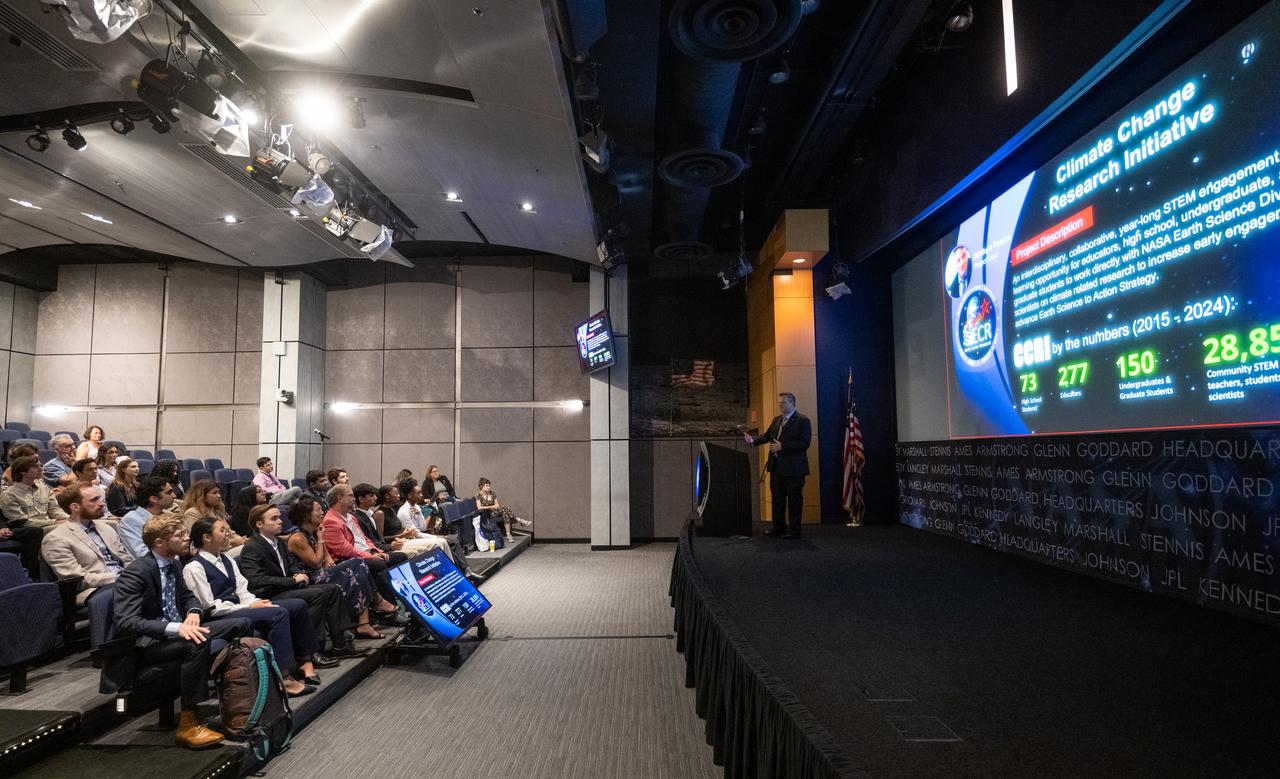
Matthew Pearce, education officer at NASA’s Goddard Institute for Space Studies and project lead for the Climate Change Research Initiative (CCRI), speaks with the CCRI cohort, Wednesday, Aug. 7, 2024, at the Mary W. Jackson NASA Headquarters building in Washington, DC. The Earth Science Division’s Early Career Research Program’s Climate Change Research Initiative (CCRI) is a year-long STEM engagement and experiential learning opportunity for educators and students from high school to graduate level. Photo Credit: (NASA/Joel Kowsky)
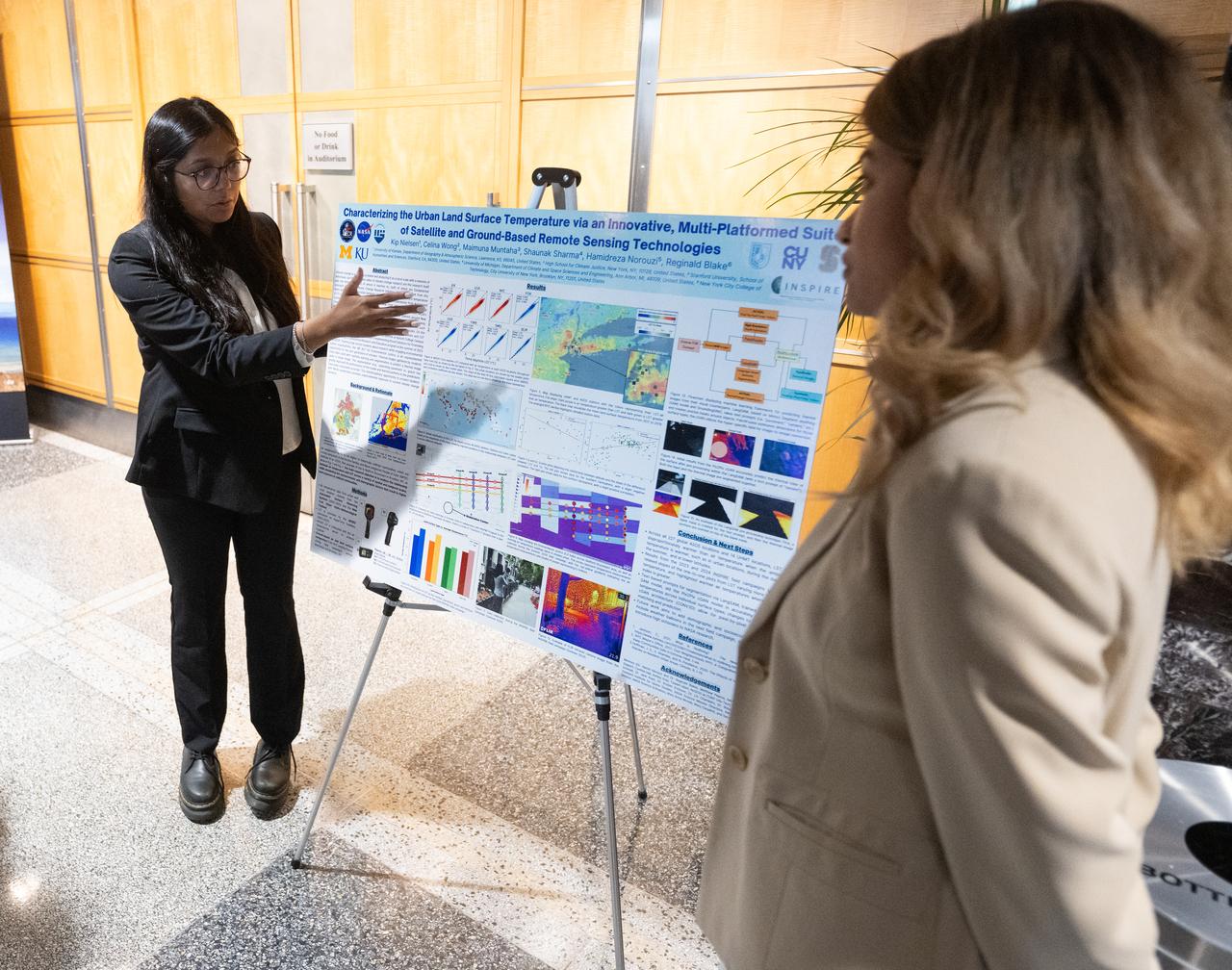
Members of the Climate Change Research Initiative (CCRI) cohort discuss their research during a poster session, Wednesday, Aug. 7, 2024, at the Mary W. Jackson NASA Headquarters building in Washington, DC. The Earth Science Division’s Early Career Research Program’s Climate Change Research Initiative (CCRI) is a year-long STEM engagement and experiential learning opportunity for educators and students from high school to graduate level. Photo Credit: (NASA/Joel Kowsky)
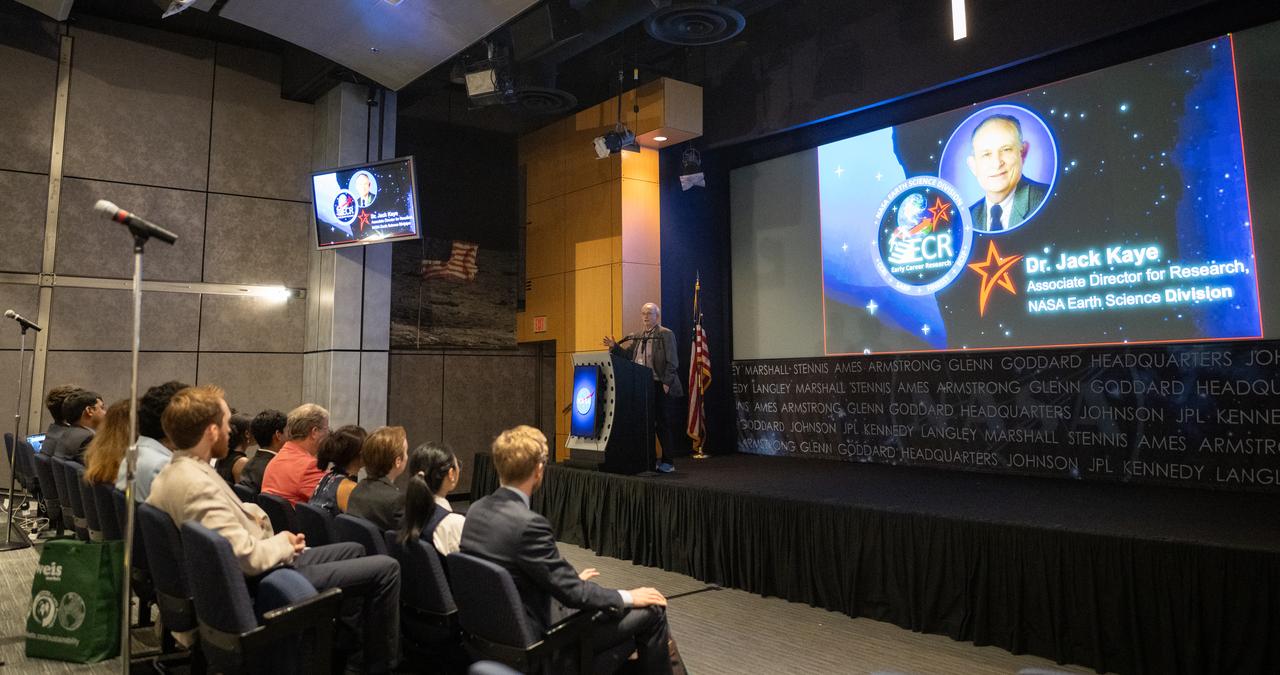
Jack Kaye, associate director for research in the Earth Science Division of NASA’s Science Mission Directorate, speaks with the Climate Change Research Initiative (CCRI) cohort, Wednesday, Aug. 7, 2024, at the Mary W. Jackson NASA Headquarters building in Washington, DC. The Earth Science Division’s Early Career Research Program’s Climate Change Research Initiative (CCRI) is a year-long STEM engagement and experiential learning opportunity for educators and students from high school to graduate level. Photo Credit: (NASA/Joel Kowsky)

Members of the Climate Change Research Initiative (CCRI) cohort discuss their research during a poster session, Wednesday, Aug. 7, 2024, at the Mary W. Jackson NASA Headquarters building in Washington, DC. The Earth Science Division’s Early Career Research Program’s Climate Change Research Initiative (CCRI) is a year-long STEM engagement and experiential learning opportunity for educators and students from high school to graduate level. Photo Credit: (NASA/Joel Kowsky)
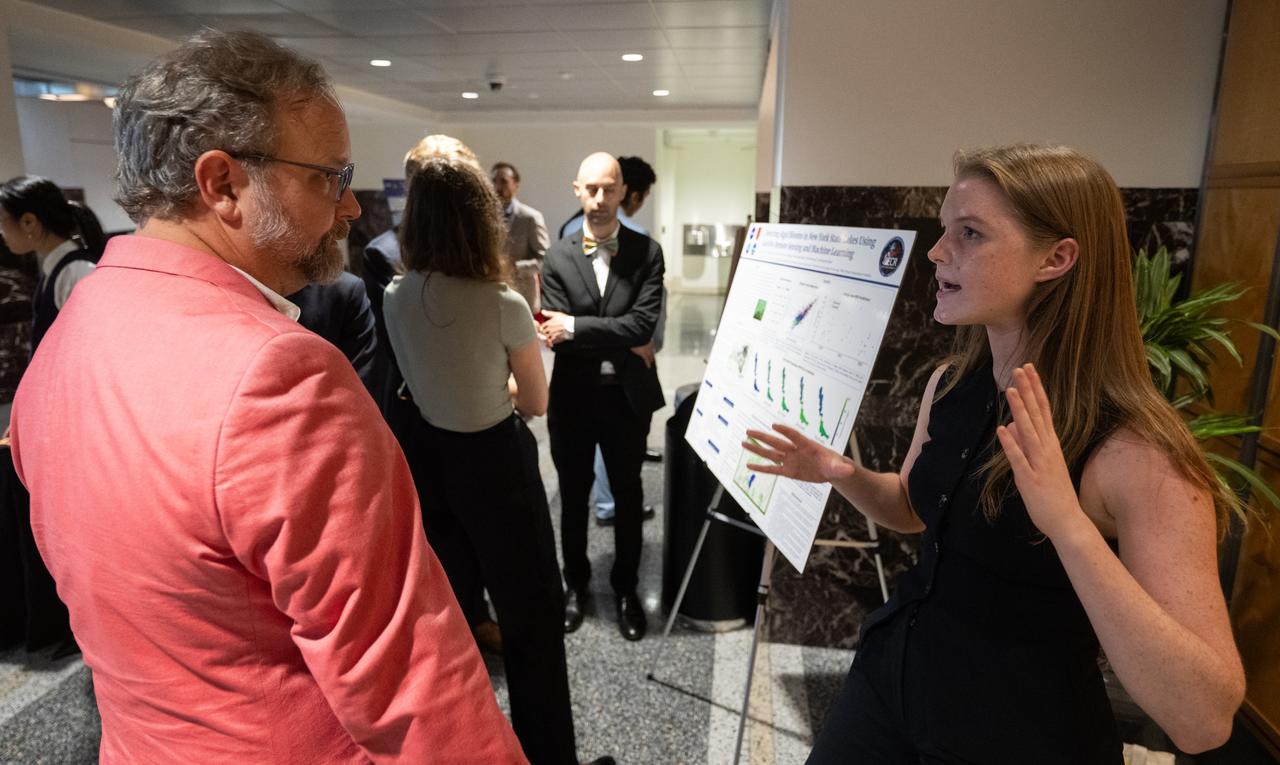
Members of the Climate Change Research Initiative (CCRI) cohort discuss their research during a poster session, Wednesday, Aug. 7, 2024, at the Mary W. Jackson NASA Headquarters building in Washington, DC. The Earth Science Division’s Early Career Research Program’s Climate Change Research Initiative (CCRI) is a year-long STEM engagement and experiential learning opportunity for educators and students from high school to graduate level. Photo Credit: (NASA/Joel Kowsky)
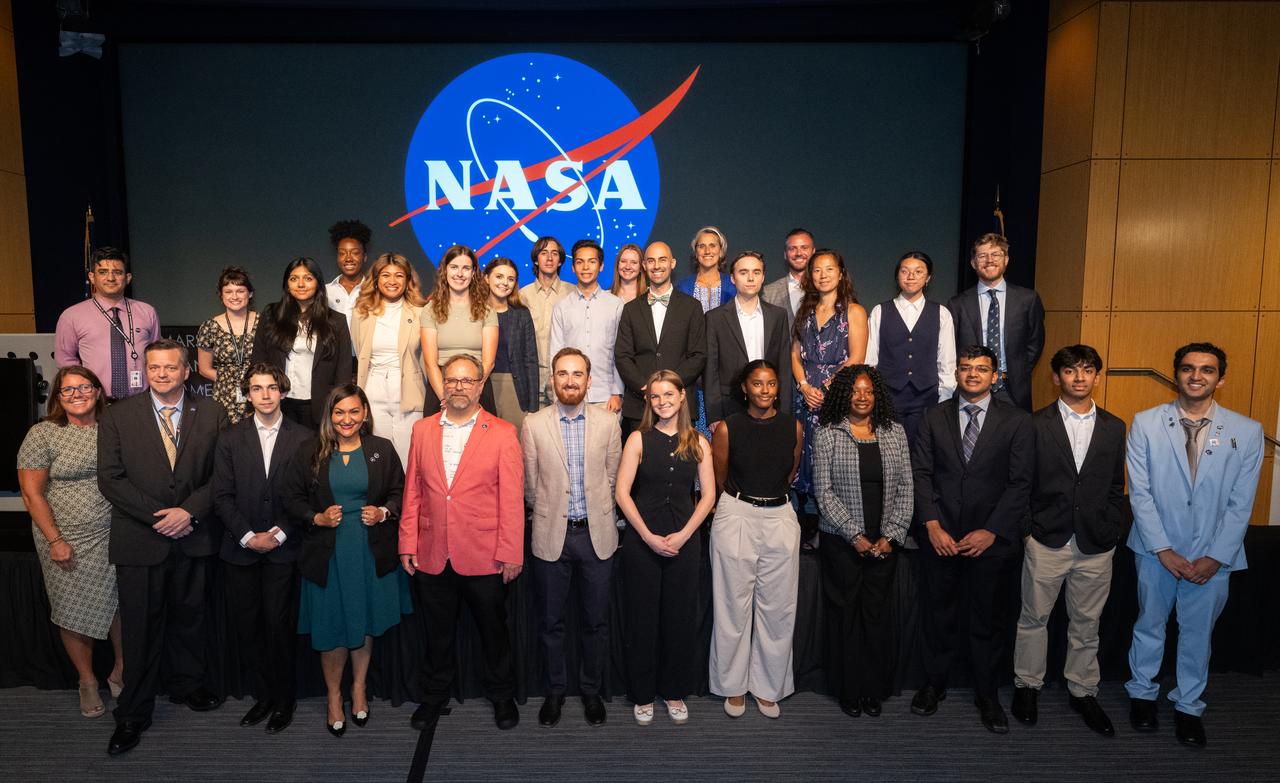
The Climate Change Research Initiative (CCRI) cohort poses for a group photo, Wednesday, Aug. 7, 2024, at the Mary W. Jackson NASA Headquarters building in Washington, DC. The Earth Science Division’s Early Career Research Program’s Climate Change Research Initiative (CCRI) is a year-long STEM engagement and experiential learning opportunity for educators and students from high school to graduate level. Photo Credit: (NASA/Joel Kowsky)

Members of the Climate Change Research Initiative (CCRI) cohort listen as Karen St. Germain, director of the Earth Science Division of NASA’s Science Mission Directorate speaks, Wednesday, Aug. 7, 2024, at the Mary W. Jackson NASA Headquarters building in Washington, DC. The Earth Science Division’s Early Career Research Program’s Climate Change Research Initiative (CCRI) is a year-long STEM engagement and experiential learning opportunity for educators and students from high school to graduate level. Photo Credit: (NASA/Joel Kowsky)
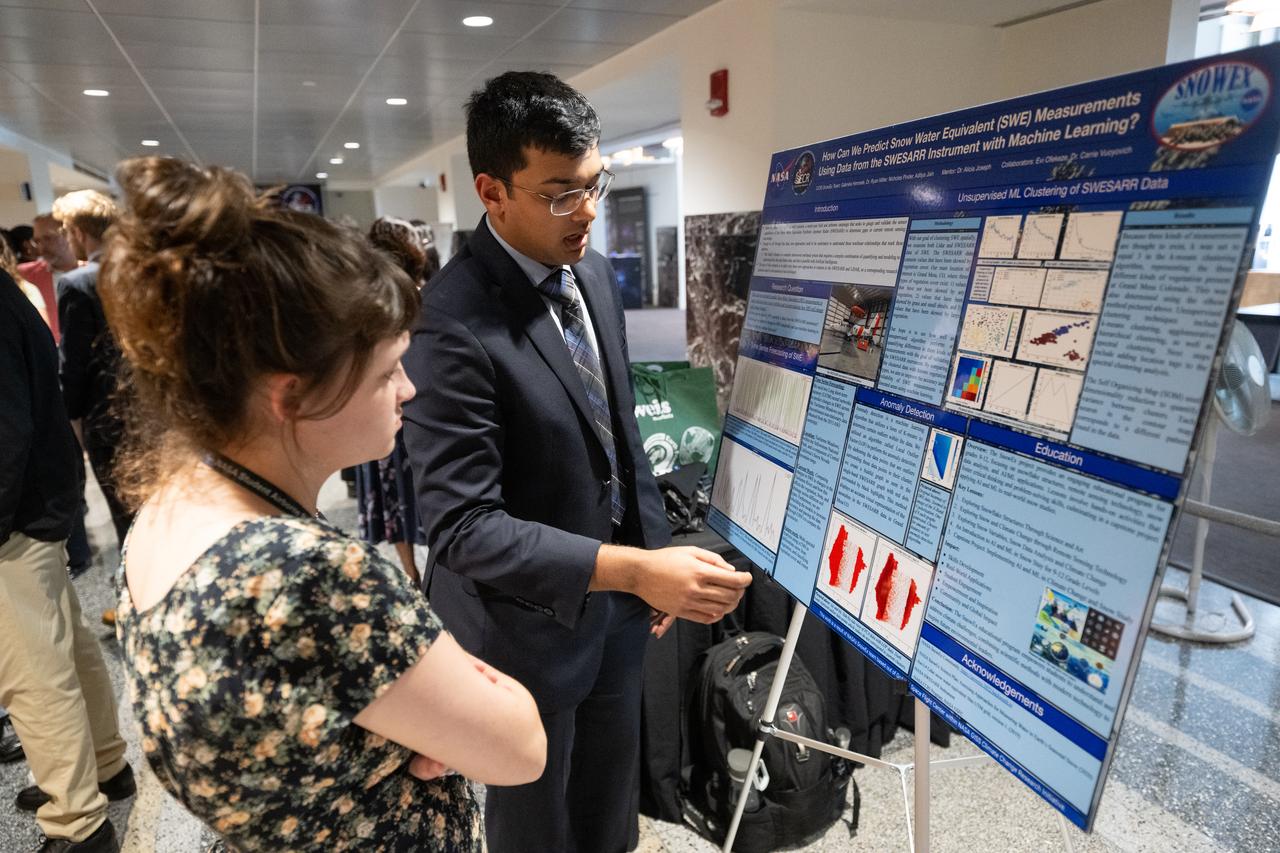
Members of the Climate Change Research Initiative (CCRI) cohort discuss their research during a poster session, Wednesday, Aug. 7, 2024, at the Mary W. Jackson NASA Headquarters building in Washington, DC. The Earth Science Division’s Early Career Research Program’s Climate Change Research Initiative (CCRI) is a year-long STEM engagement and experiential learning opportunity for educators and students from high school to graduate level. Photo Credit: (NASA/Joel Kowsky)
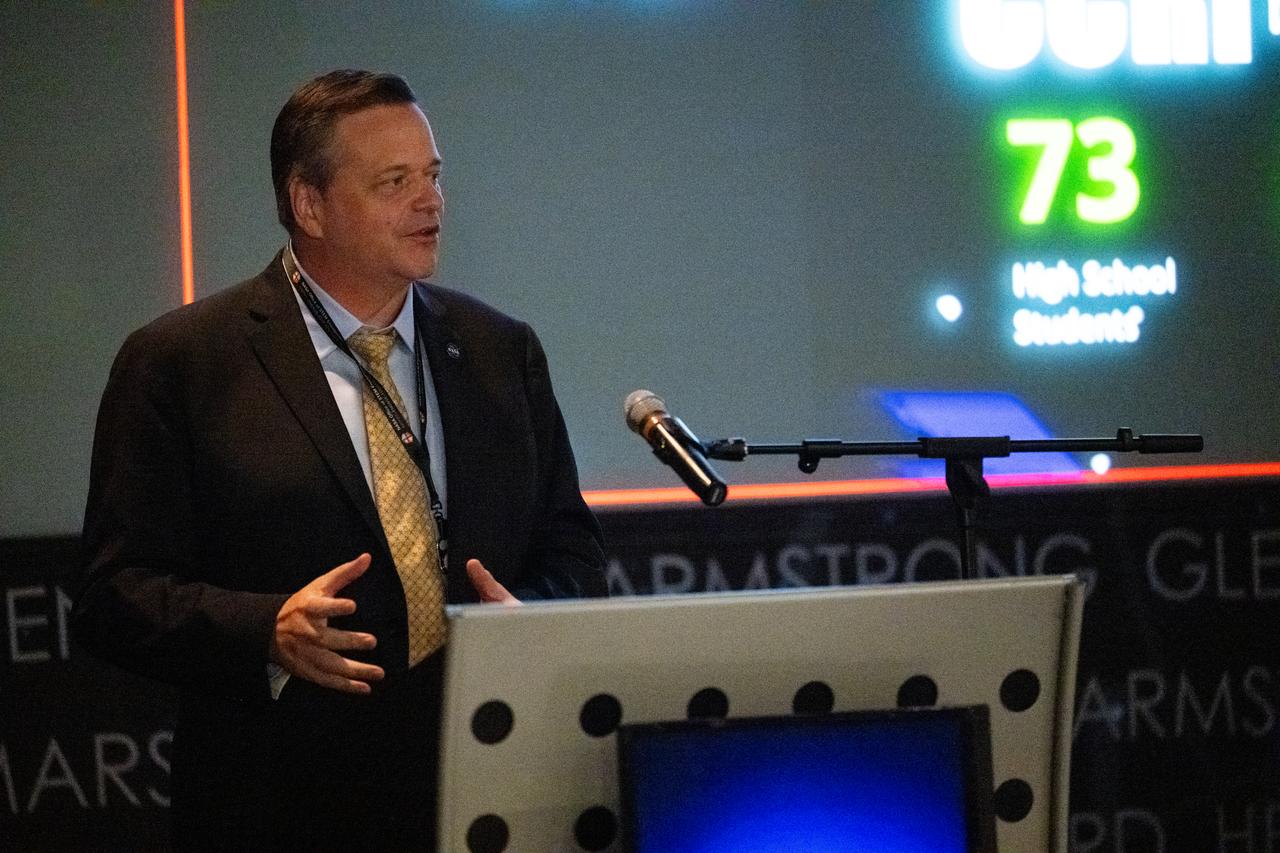
Matthew Pearce, education officer at NASA’s Goddard Institute for Space Studies and project lead for the Climate Change Research Initiative (CCRI), speaks with the CCRI cohort, Wednesday, Aug. 7, 2024, at the Mary W. Jackson NASA Headquarters building in Washington, DC. The Earth Science Division’s Early Career Research Program’s Climate Change Research Initiative (CCRI) is a year-long STEM engagement and experiential learning opportunity for educators and students from high school to graduate level. Photo Credit: (NASA/Joel Kowsky)
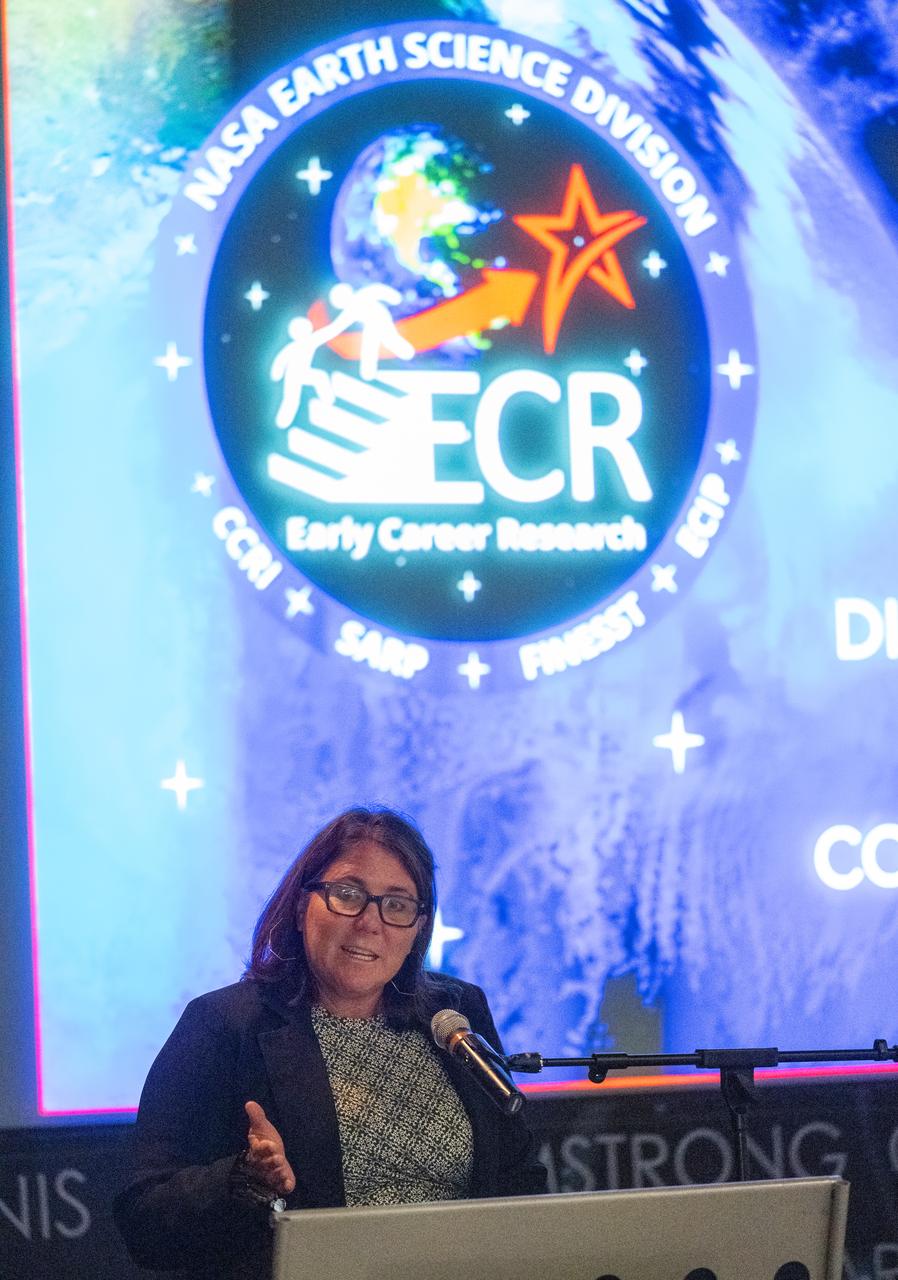
Cynthia Hall, support scientist for the Early Career Research Program in NASA’s Earth Science Division, speaks to the Climate Change Research Initiative (CCRI) cohort, Wednesday, Aug. 7, 2024, at the Mary W. Jackson NASA Headquarters building in Washington, DC. The Earth Science Division’s Early Career Research Program’s Climate Change Research Initiative (CCRI) is a year-long STEM engagement and experiential learning opportunity for educators and students from high school to graduate level. Photo Credit: (NASA/Joel Kowsky)

This red plane is a DHC-3 Otter, the plane flown in NASA's Operation IceBridge-Alaska surveys of mountain glaciers in Alaska. Credit: Chris Larsen, University of Alaska-Fairbanks Over the past few decades, average global temperatures have been on the rise, and this warming is happening two to three times faster in the Arctic. As the region’s summer comes to a close, NASA is hard at work studying how rising temperatures are affecting the Arctic. NASA researchers this summer and fall are carrying out three Alaska-based airborne research campaigns aimed at measuring greenhouse gas concentrations near Earth’s surface, monitoring Alaskan glaciers, and collecting data on Arctic sea ice and clouds. Observations from these NASA campaigns will give researchers a better understanding of how the Arctic is responding to rising temperatures. The Arctic Radiation – IceBridge Sea and Ice Experiment, or ARISE, is a new NASA airborne campaign to collect data on thinning sea ice and measure cloud and atmospheric properties in the Arctic. The campaign was designed to address questions about the relationship between retreating sea ice and the Arctic climate. Arctic sea ice reflects sunlight away from Earth, moderating warming in the region. Loss of sea ice means more heat from the sun is absorbed by the ocean surface, adding to Arctic warming. In addition, the larger amount of open water leads to more moisture in the air, which affects the formation of clouds that have their own effect on warming, either enhancing or reducing it. Read more: <a href="http://www.nasa.gov/earthrightnow" rel="nofollow">www.nasa.gov/earthrightnow</a> <b><a href="http://www.nasa.gov/audience/formedia/features/MP_Photo_Guidelines.html" rel="nofollow">NASA image use policy.</a></b> <b><a href="http://www.nasa.gov/centers/goddard/home/index.html" rel="nofollow">NASA Goddard Space Flight Center</a></b> enables NASA’s mission through four scientific endeavors: Earth Science, Heliophysics, Solar System Exploration, and Astrophysics. Goddard plays a leading role in NASA’s accomplishments by contributing compelling scientific knowledge to advance the Agency’s mission. <b>Follow us on <a href="http://twitter.com/NASAGoddardPix" rel="nofollow">Twitter</a></b> <b>Like us on <a href="http://www.facebook.com/pages/Greenbelt-MD/NASA-Goddard/395013845897?ref=tsd" rel="nofollow">Facebook</a></b> <b>Find us on <a href="http://instagram.com/nasagoddard?vm=grid" rel="nofollow">Instagram</a></b>
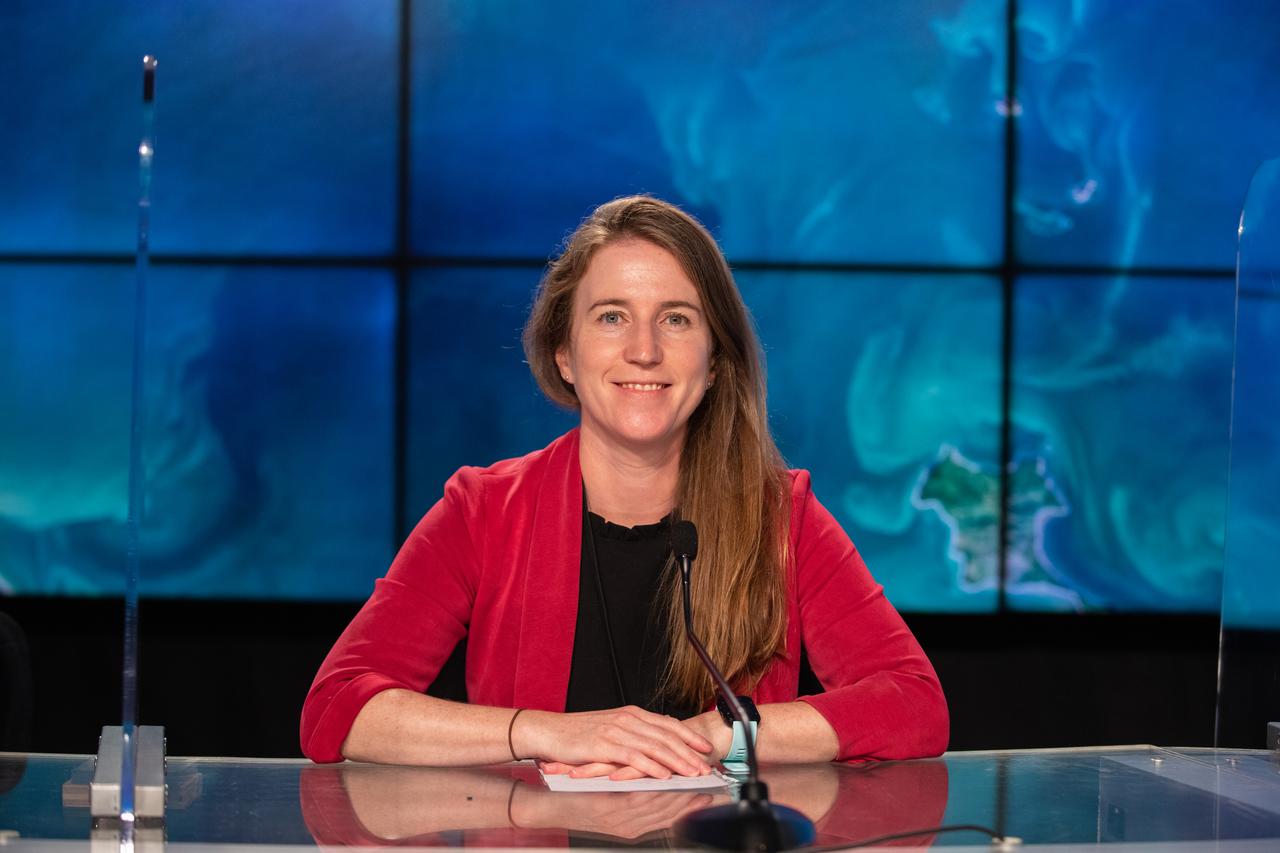
Kate Calvin, NASA’s chief scientist and climate advisor, participates in a climate conversation at NASA’s Kennedy Space Center in Florida on July 13, 2022, leading up to SpaceX’s 25th Commercial Resupply Services mission for NASA to the International Space Station. The Dragon capsule atop SpaceX’s Falcon 9 rocket is scheduled to lift off from Kennedy’s Launch Complex 39A on July 14 at 8:44 p.m. EDT. Dragon will deliver more than 5,800 pounds of cargo, including a variety of NASA investigations, to the space station.
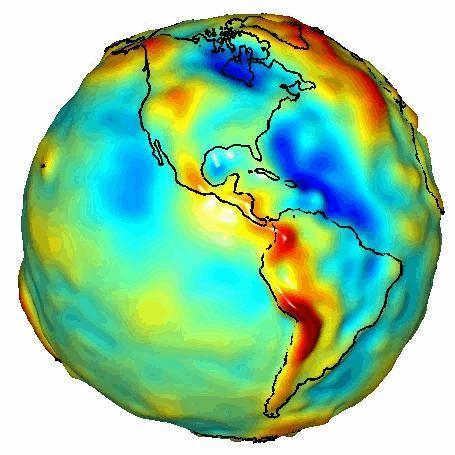
This visualization of a gravity model was created with data from NASA Gravity Recovery and Climate Experiment GRACE and shows variations in Earth’s gravity field.
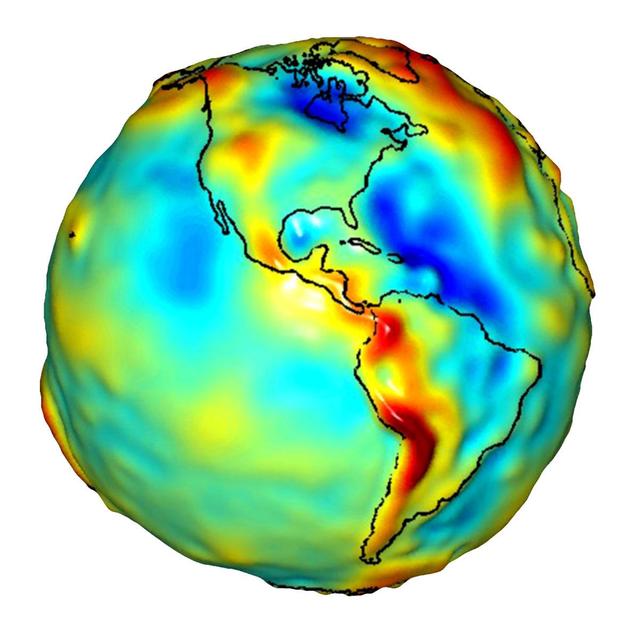
This visualization of a gravity model was created with data from NASA Gravity Recovery and Climate Experiment and shows variations in the gravity field across the Americas.
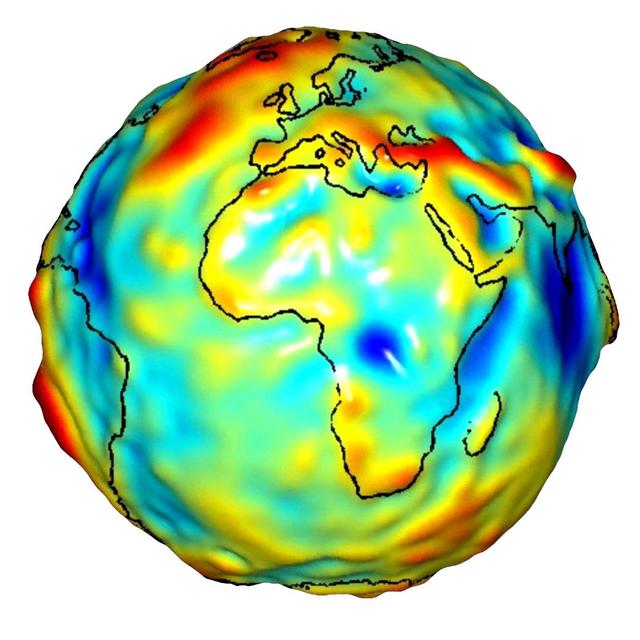
This visualization of a gravity model was created with data from NASA’s Gravity Recovery and Climate Experiment and shows variations in the gravity field across Africa and Europe.

Groundwater storage trends around the United States as measured by the NASA/German Aerospace Center Gravity Recovery and Climate Experiment GRACE satellites between 2003 and 2012.
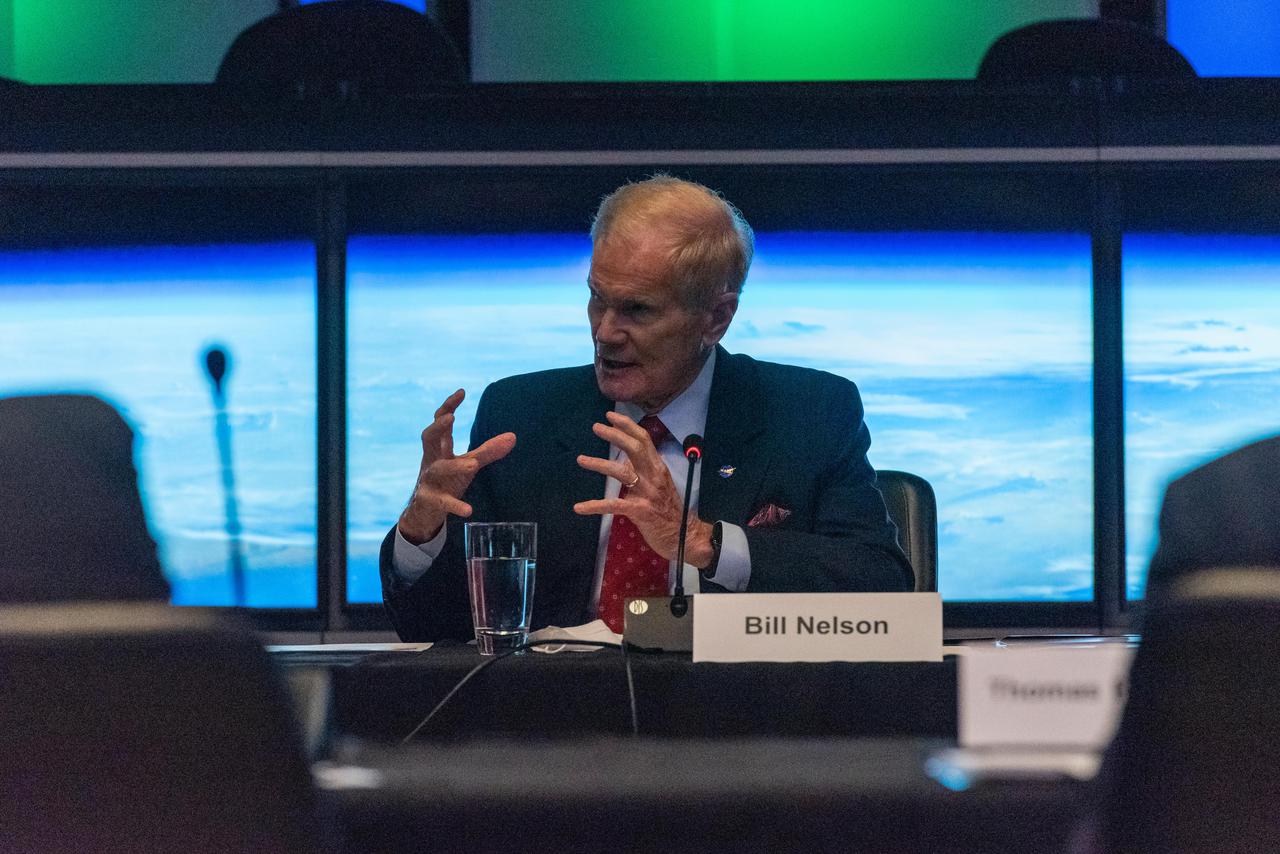
NASA Administrator Bill Nelson addresses participants during a climate roundtable at the agency's Jet Propulsion Laboratory in Southern California on Oct. 14, 2021. https://photojournal.jpl.nasa.gov/catalog/PIA24904
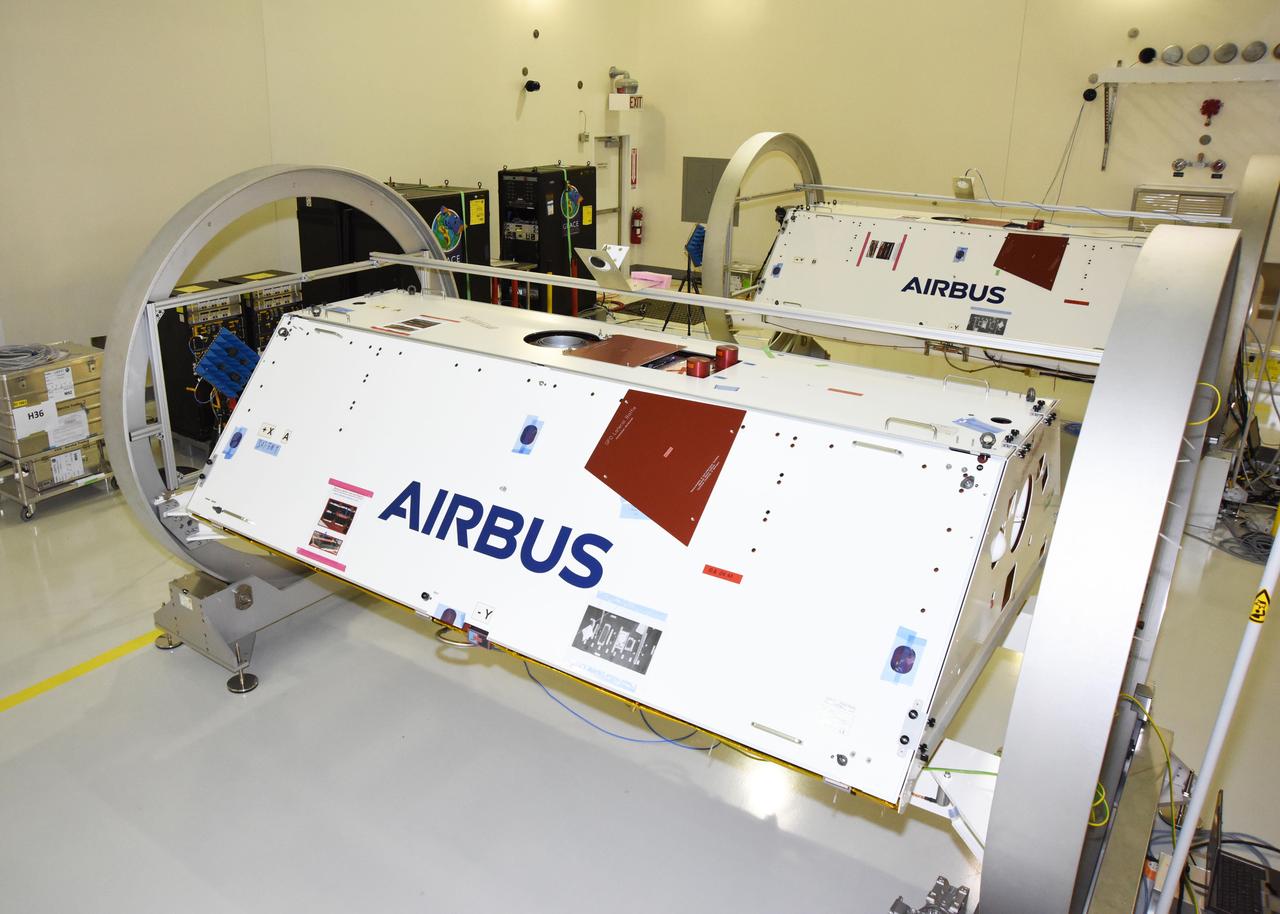
The Gravity Recovery and Climate Experiment Follow-On (GRACE-FO) twin satellites, attached to turntable fixtures, at the Astrotech Space Operations processing facility at Vandenberg Air Force Base, California. GRACE-FO will extend GRACE's legacy of scientific achievements, which range from tracking mass changes of Earth's polar ice sheets and estimating global groundwater changes, to measuring the mass changes of large earthquakes and inferring changes in deep ocean currents, a driving force in climate. To date, GRACE observations have been used in more than 4,300 research publications. Its measurements provide a unique view of the Earth system and have far-reaching benefits to society, such as providing insights into where global groundwater resources may be shrinking or growing and where dry soils are contributing to drought. GRACE-FO is planned to fly at least five years. https://photojournal.jpl.nasa.gov/catalog/PIA22341
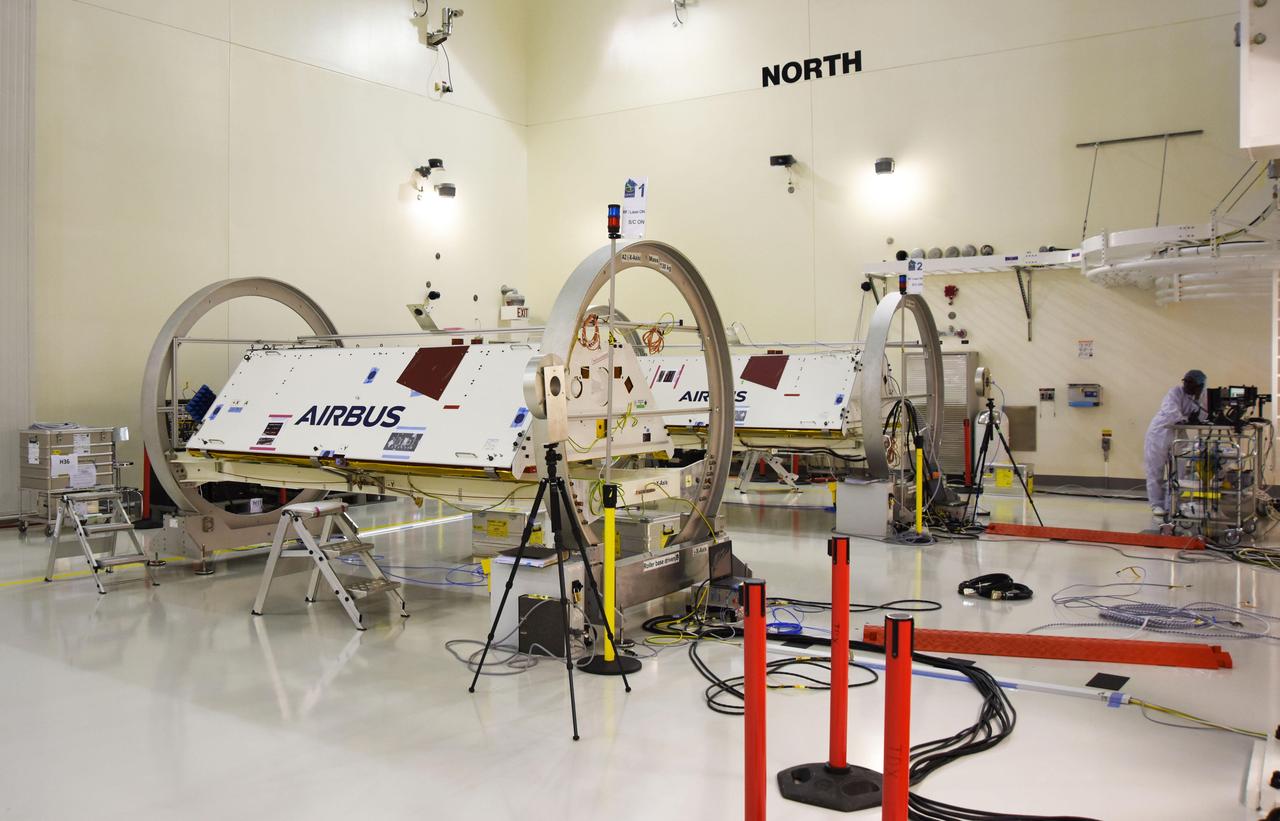
The Gravity Recovery and Climate Experiment Follow-On (GRACE-FO) twin satellites, attached to turntable fixtures, at the Astrotech Space Operations processing facility at Vandenberg Air Force Base, California. GRACE-FO will extend GRACE's legacy of scientific achievements, which range from tracking mass changes of Earth's polar ice sheets and estimating global groundwater changes, to measuring the mass changes of large earthquakes and inferring changes in deep ocean currents, a driving force in climate. To date, GRACE observations have been used in more than 4,300 research publications. Its measurements provide a unique view of the Earth system and have far-reaching benefits to society, such as providing insights into where global groundwater resources may be shrinking or growing and where dry soils are contributing to drought. GRACE-FO is planned to fly at least five years. https://photojournal.jpl.nasa.gov/catalog/PIA22338
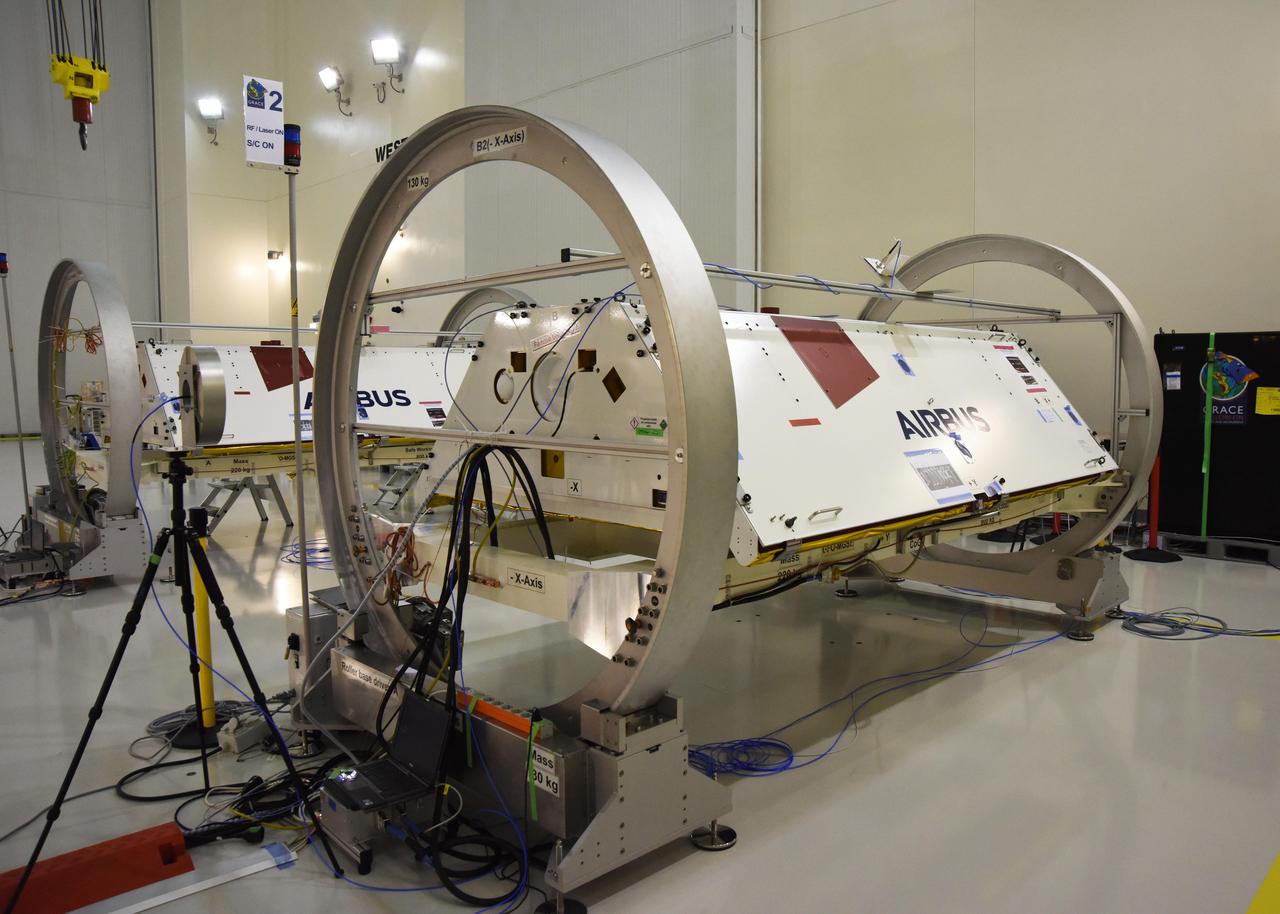
The Gravity Recovery and Climate Experiment Follow-On (GRACE-FO) twin satellites, attached to turntable fixtures, at the Astrotech Space Operations processing facility at Vandenberg Air Force Base, California. GRACE-FO will extend GRACE's legacy of scientific achievements, which range from tracking mass changes of Earth's polar ice sheets and estimating global groundwater changes, to measuring the mass changes of large earthquakes and inferring changes in deep ocean currents, a driving force in climate. To date, GRACE observations have been used in more than 4,300 research publications. Its measurements provide a unique view of the Earth system and have far-reaching benefits to society, such as providing insights into where global groundwater resources may be shrinking or growing and where dry soils are contributing to drought. GRACE-FO is planned to fly at least five years. https://photojournal.jpl.nasa.gov/catalog/PIA22340
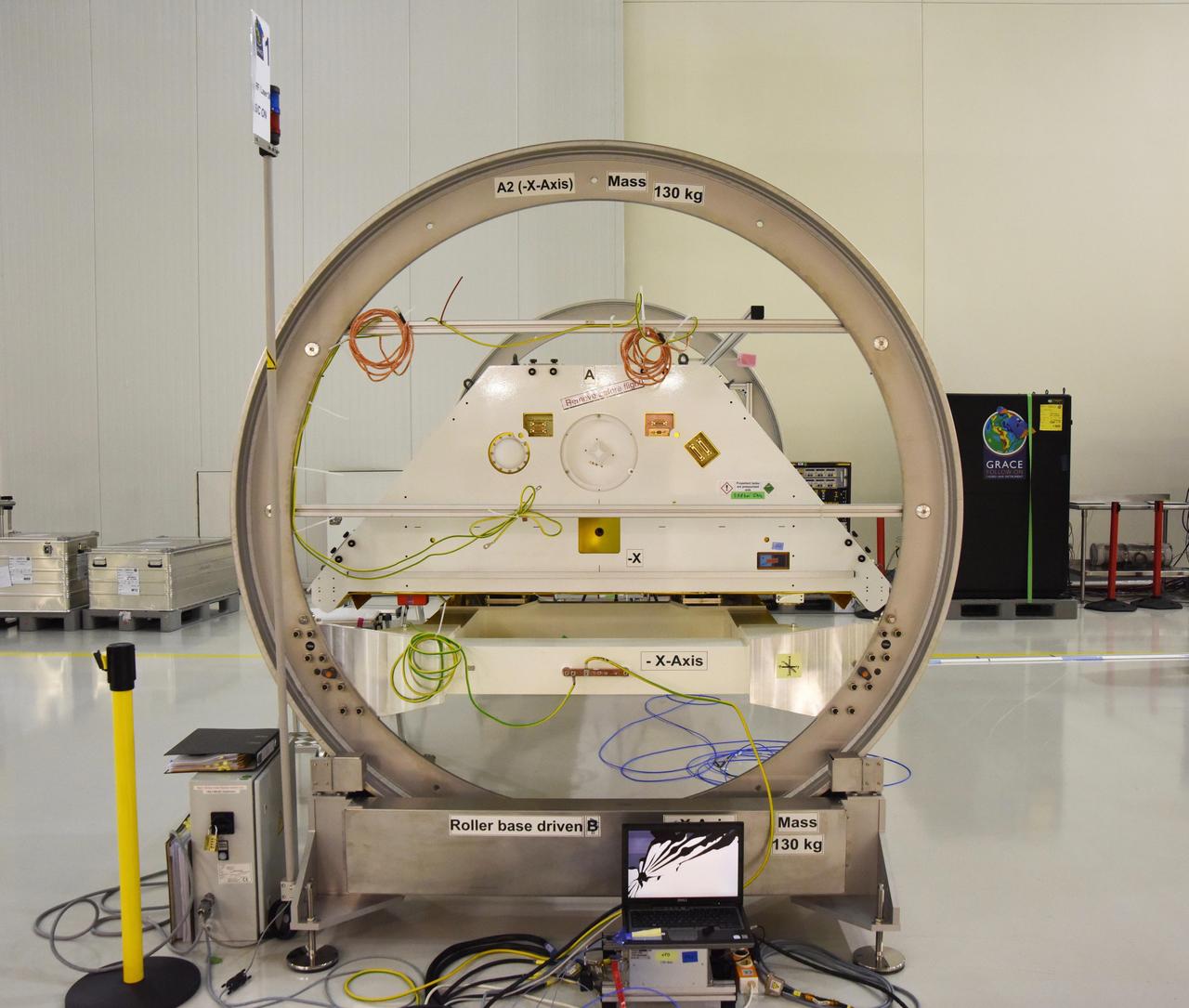
One of the two Gravity Recovery and Climate Experiment Follow-On (GRACE-FO) satellites and its turntable fixture at the Astrotech Space Operations processing facility at Vandenberg Air Force Base, California. GRACE-FO will extend GRACE's legacy of scientific achievements, which range from tracking mass changes of Earth's polar ice sheets and estimating global groundwater changes, to measuring the mass changes of large earthquakes and inferring changes in deep ocean currents, a driving force in climate. To date, GRACE observations have been used in more than 4,300 research publications. Its measurements provide a unique view of the Earth system and have far-reaching benefits to society, such as providing insights into where global groundwater resources may be shrinking or growing and where dry soils are contributing to drought. GRACE-FO is planned to fly at least five years. https://photojournal.jpl.nasa.gov/catalog/PIA22339
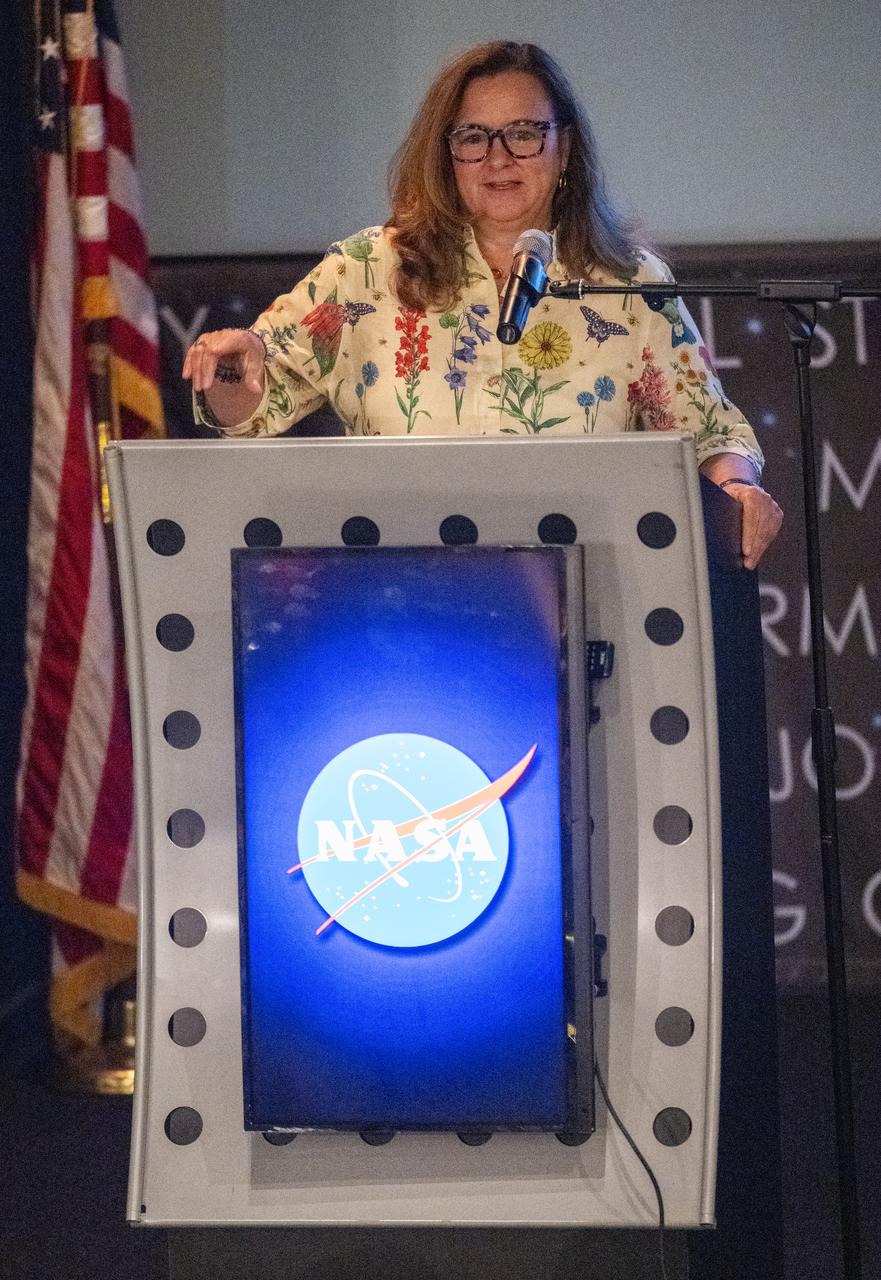
Karen St. Germain, director of the Earth Science Division of NASA’s Science Mission Directorate, speaks with the Climate Change Research Initiative (CCRI) cohort, Wednesday, Aug. 7, 2024, at the Mary W. Jackson NASA Headquarters building in Washington, DC. The Earth Science Division’s Early Career Research Program’s Climate Change Research Initiative (CCRI) is a year-long STEM engagement and experiential learning opportunity for educators and students from high school to graduate level. Photo Credit: (NASA/Joel Kowsky)
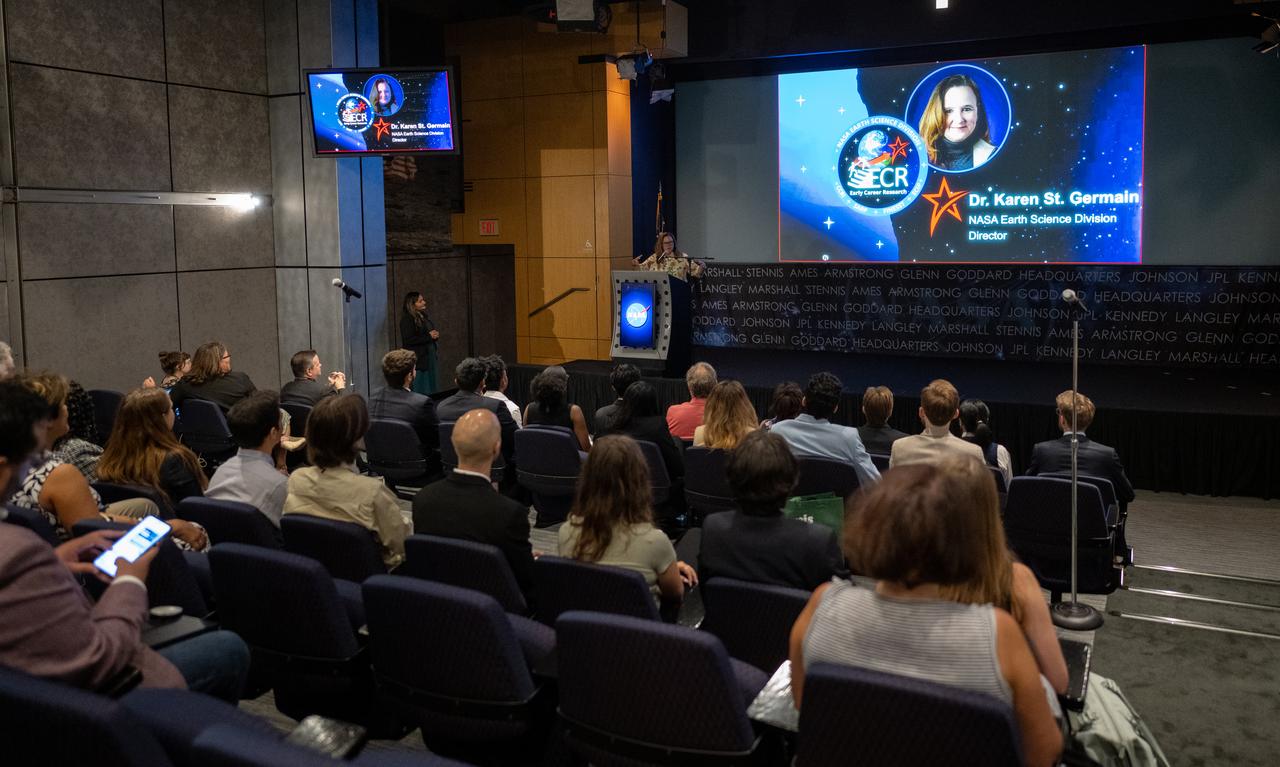
Karen St. Germain, director of the Earth Science Division of NASA’s Science Mission Directorate, speaks with the Climate Change Research Initiative (CCRI) cohort, Wednesday, Aug. 7, 2024, at the Mary W. Jackson NASA Headquarters building in Washington, DC. The Earth Science Division’s Early Career Research Program’s Climate Change Research Initiative (CCRI) is a year-long STEM engagement and experiential learning opportunity for educators and students from high school to graduate level. Photo Credit: (NASA/Joel Kowsky)

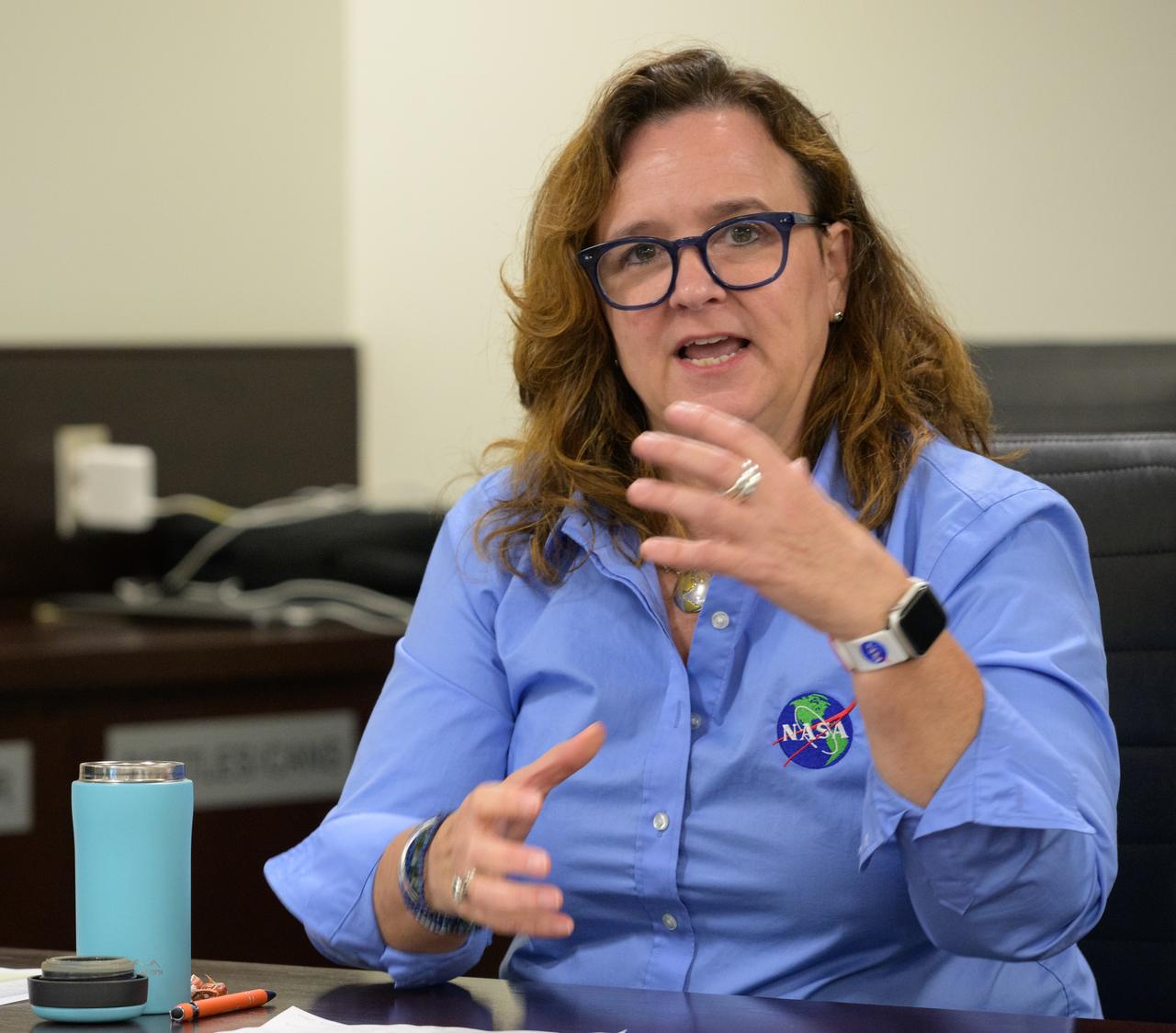
NASA Chief Scientist and Senior Climate Adviser Kate Calvin highlights NASA’s climate work during a media roundtable, Thursday, July 20, 2023, at the NASA Headquarters Mary W. Jackson Building in Washington. Photo Credit: (NASA/Bill Ingalls)
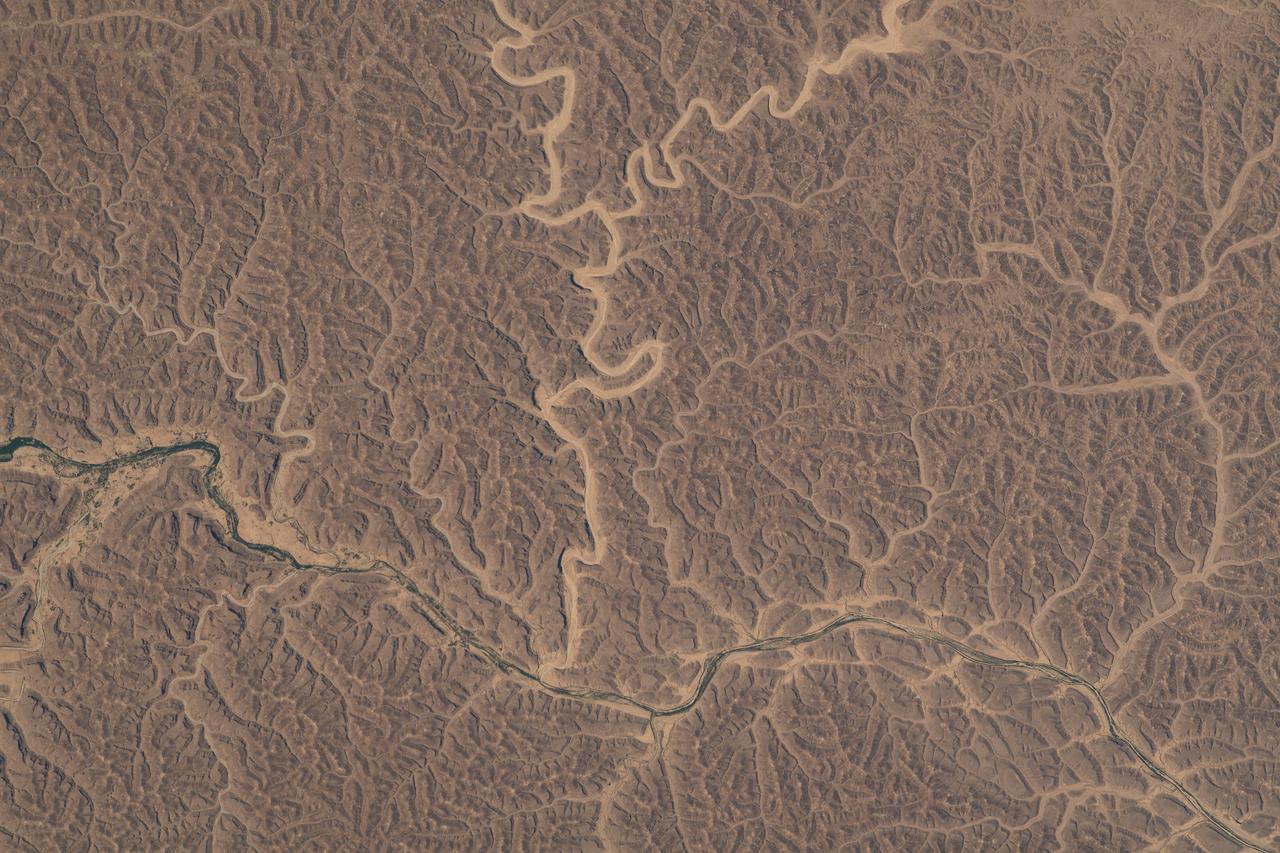
iss069e004762 (April 20, 2023) --- Wadis, the Arabic term for drainage courses that contain water only when intermittent, heavy rain occurs, in the hot desert climate of Yemen were pictured by NASA astronaut and Expedition 69 Flight Engineer Woody Hoburg as the International Space Station orbited 258 miles above.
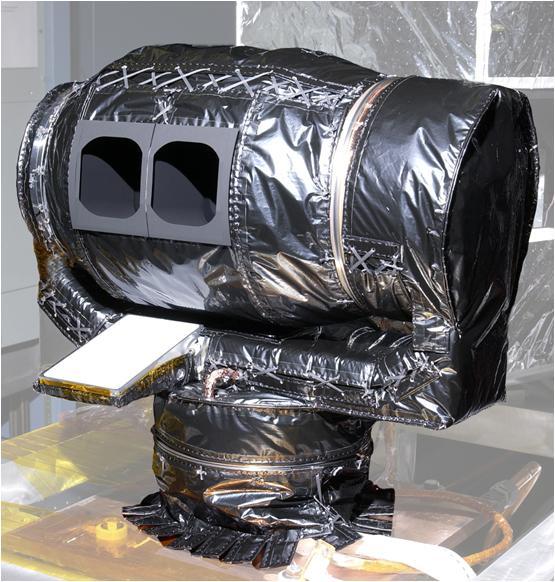
The Mars Climate Sounder instrument, shown here prior to its installation onto NASA Mars Reconnaissance Orbiter for the mission 2006 launch, will get a similar-looking sibling at Mars in 2016.
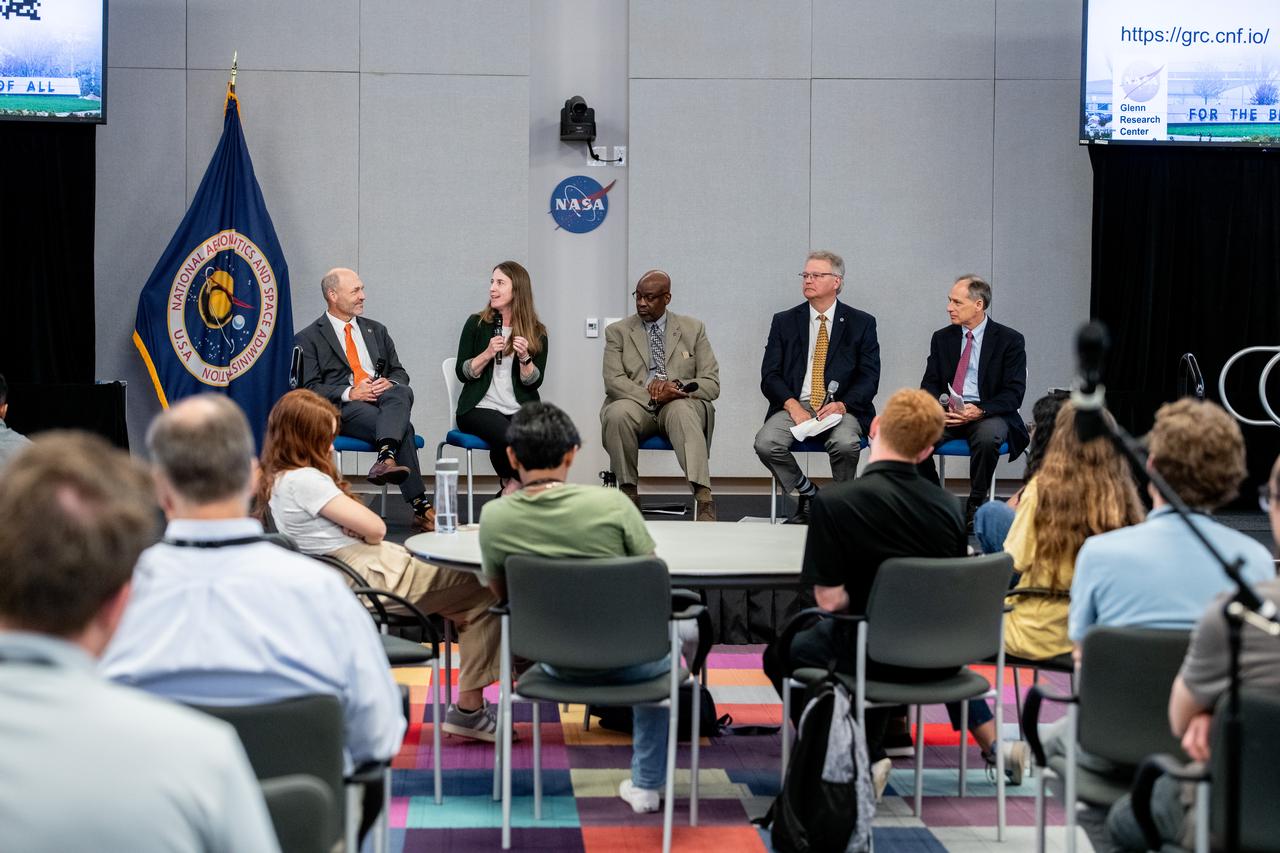
During the meeting, Dr. Calvin and center leaders will explore how technologies being developed at NASA Glenn could help reduce the effects of climate change. The panelists who will be leading the discussion include: Dr. Calvin; Larry Sivic, Associate Director; Dr. Rickey Shyne, Director of Research and Engineering; Bryan Smith, Director of Facilities, Test, & Manufacturing; and W. Allen Kilgore, Acting Director of Aeronautics. Director of Space Flight Systems Dr. Mike Barrett will serve as the moderator.
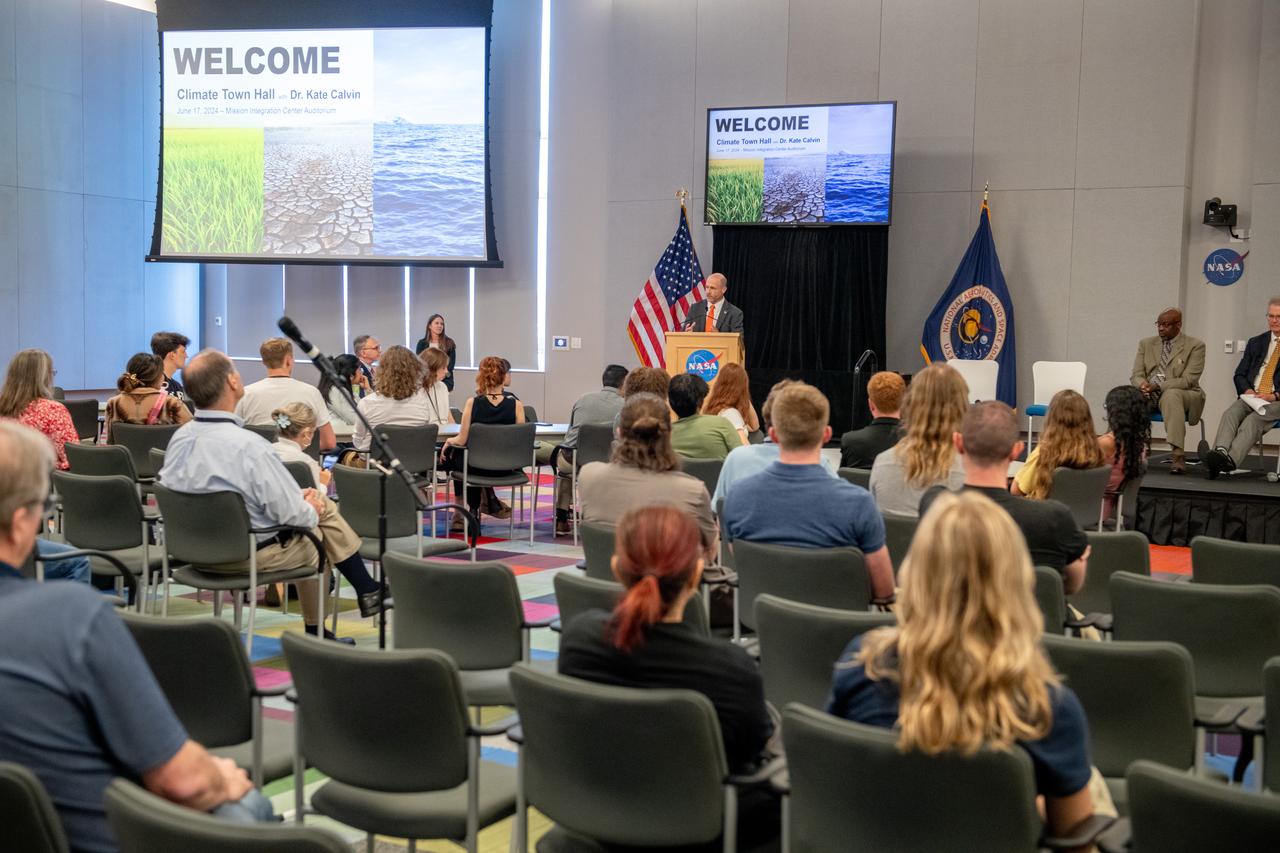
During the meeting, Dr. Calvin and center leaders will explore how technologies being developed at NASA Glenn could help reduce the effects of climate change. The panelists who will be leading the discussion include: Dr. Calvin; Larry Sivic, Associate Director; Dr. Rickey Shyne, Director of Research and Engineering; Bryan Smith, Director of Facilities, Test, & Manufacturing; and W. Allen Kilgore, Acting Director of Aeronautics. Director of Space Flight Systems Dr. Mike Barrett will serve as the moderator.
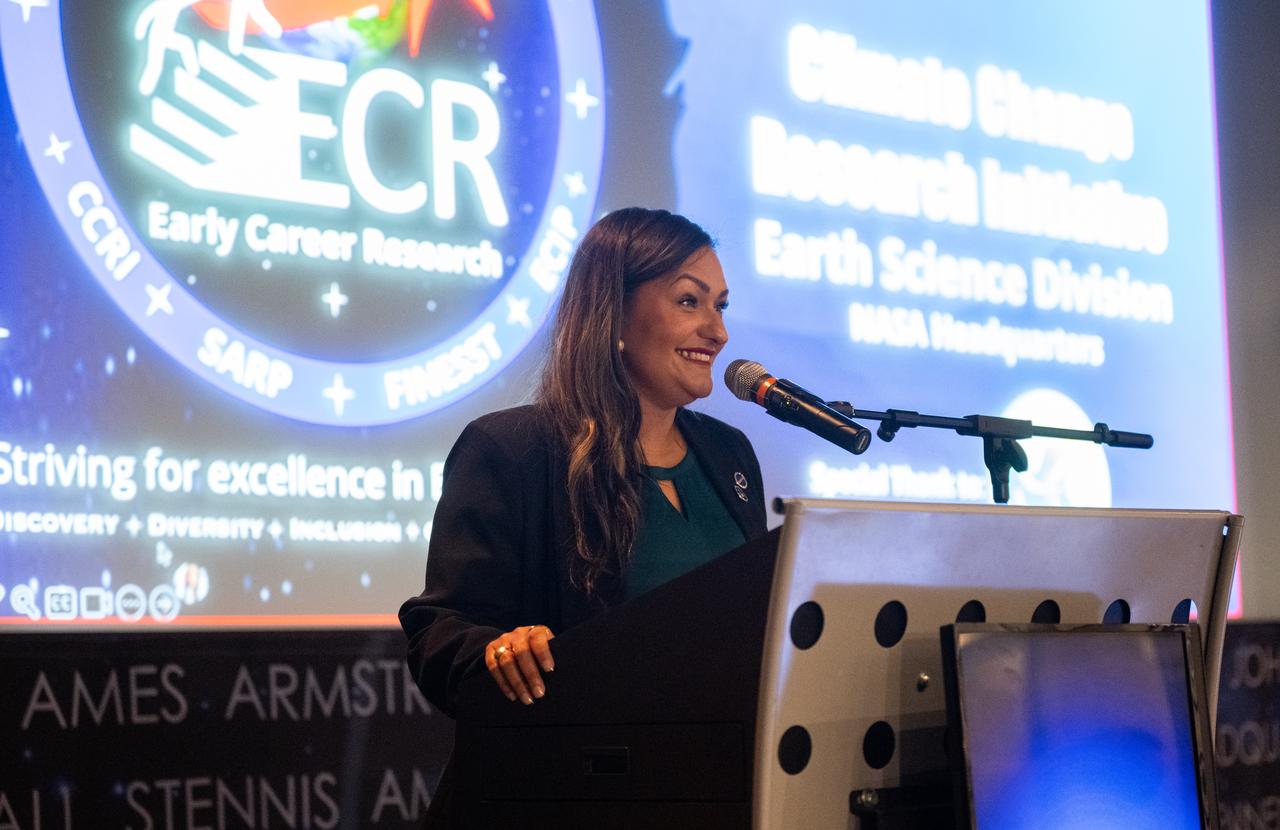
Yaítza Luna-Cruz, a program executive in the Earth Science Division of NASA’s Science Mission Directorate and program manager for the Early Career Research Program, speaks to the Climate Change Research Initiative (CCRI) cohort, Wednesday, Aug. 7, 2024, at the Mary W. Jackson NASA Headquarters building in Washington, DC. The Earth Science Division’s Early Career Research Program’s Climate Change Research Initiative (CCRI) is a year-long STEM engagement and experiential learning opportunity for educators and students from high school to graduate level. Photo Credit: (NASA/Joel Kowsky)
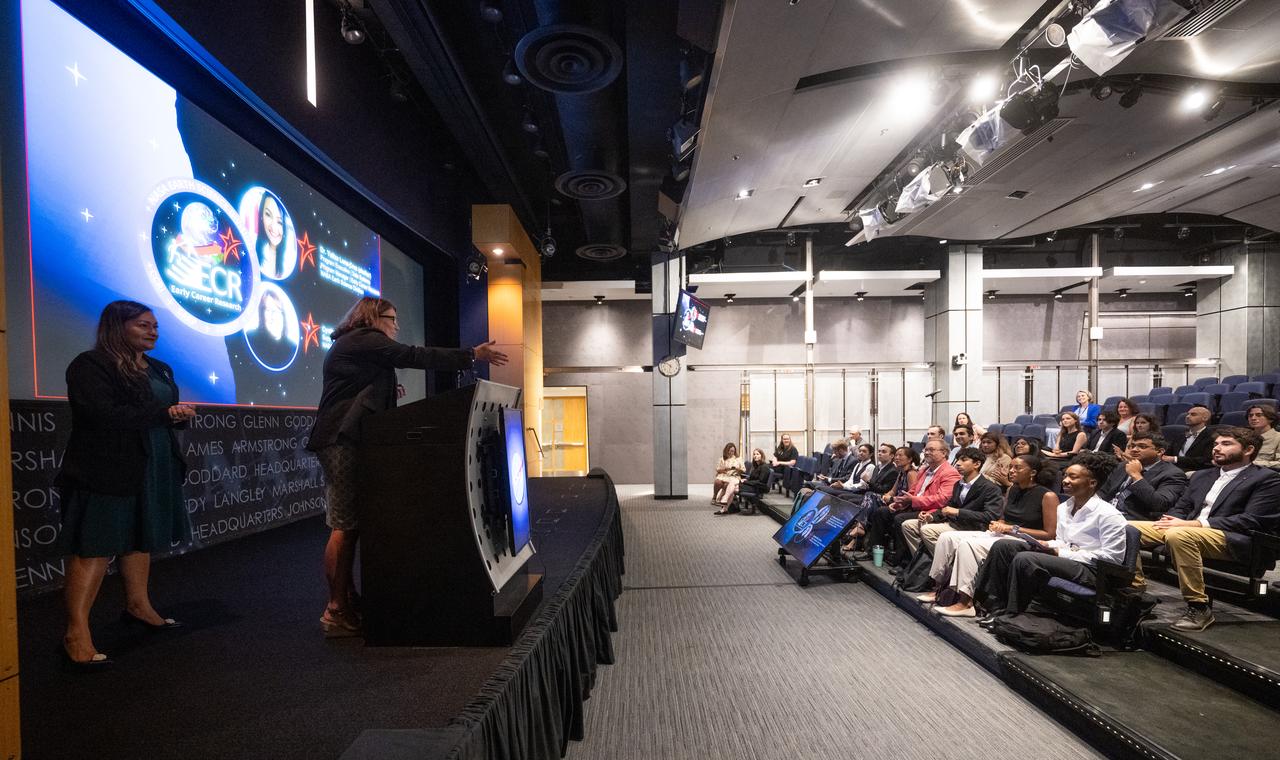
Cynthia Hall, support scientist for the Early Career Research Program in NASA’s Earth Science Division, right, and Yaítza Luna-Cruz, a program executive in the Earth Science Division of NASA’s Science Mission Directorate and program manager for the Early Career Research Program speak to the Climate Change Research Initiative (CCRI) cohort, Wednesday, Aug. 7, 2024, at the Mary W. Jackson NASA Headquarters building in Washington, DC. The Earth Science Division’s Early Career Research Program’s Climate Change Research Initiative (CCRI) is a year-long STEM engagement and experiential learning opportunity for educators and students from high school to graduate level. Photo Credit: (NASA/Joel Kowsky)
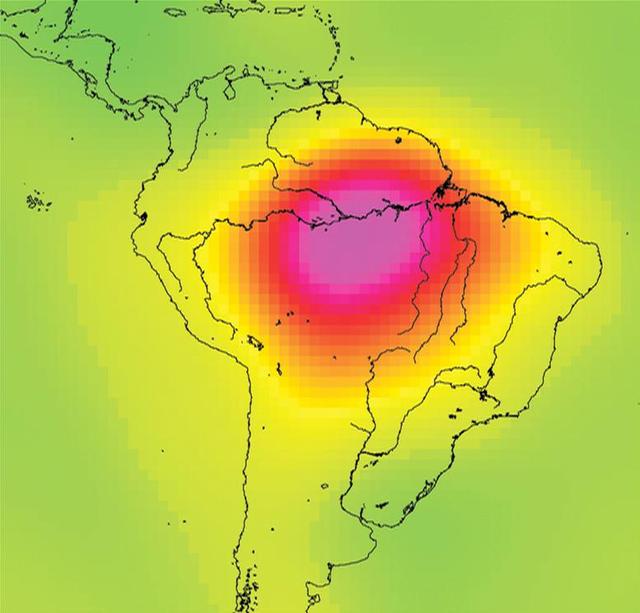
This image is from data taken by NASA Gravity Recovery and Climate Experiment showing the Amazon basin in South America. The amount of water stored in the Amazon basin varies from month to month. Animations are available at the Photojournal.
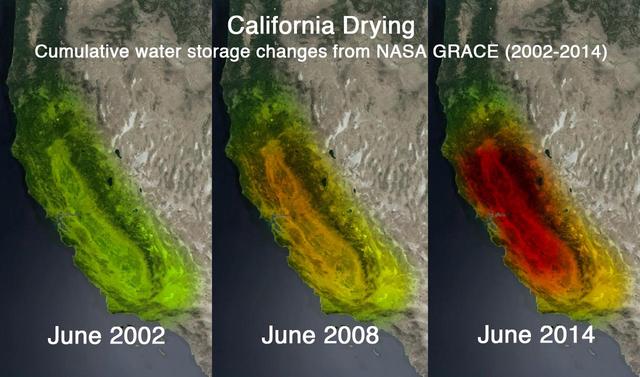
This trio of images depicts satellite observations of declining water storage in California as seen by NASA Gravity Recovery and Climate Experiment satellites in June 2002 left, June 2008 center and June 2014 right.
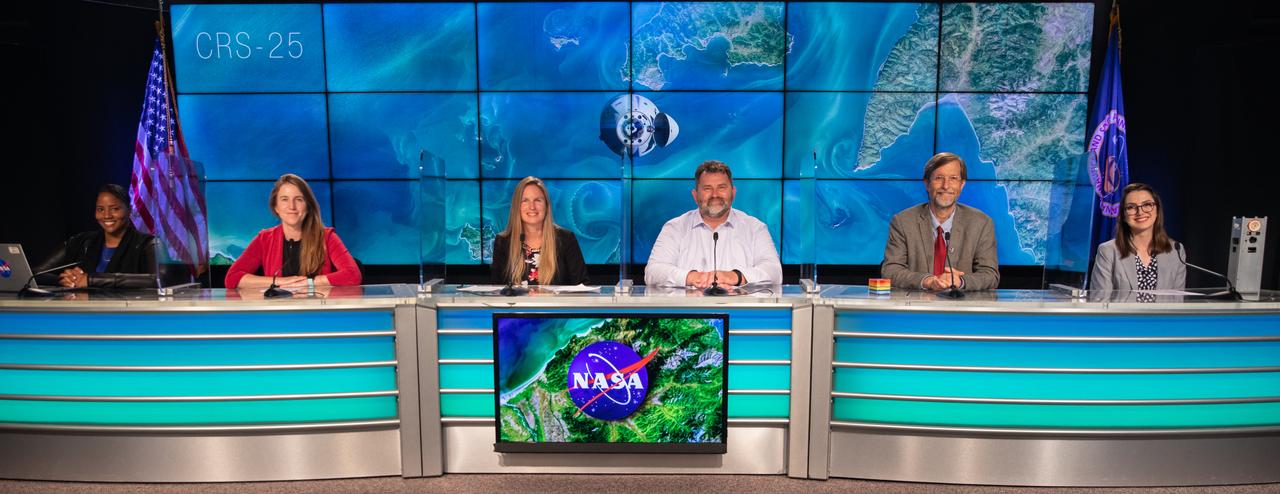
A climate conversation is held at NASA’s Kennedy Space Center in Florida on July 13, 2022, leading up to SpaceX’s 25th Commercial Resupply Services mission for NASA to the International Space Station. Participants, from left are Moderator Tylar Greene, NASA Communications; Kate Calvin, NASA’s chief scientist and climate advisor; Heidi Parris, associate scientist, International Space Station Program; Mike Roberts, chief scientist, ISS National Lab; Rob Green, JPL senior research scientist and EMIT (Earth Surface Mineral Dust Source Investigation) principal investigator; and Paula do Vale Pereira, BeaverCube, Massachusetts Institute of Technology. The Dragon capsule atop SpaceX’s Falcon 9 rocket is scheduled to lift off from Kennedy’s Launch Complex 39A on July 14 at 8:44 p.m. EDT. Dragon will deliver more than 5,800 pounds of cargo, including a variety of NASA investigations, to the space station.
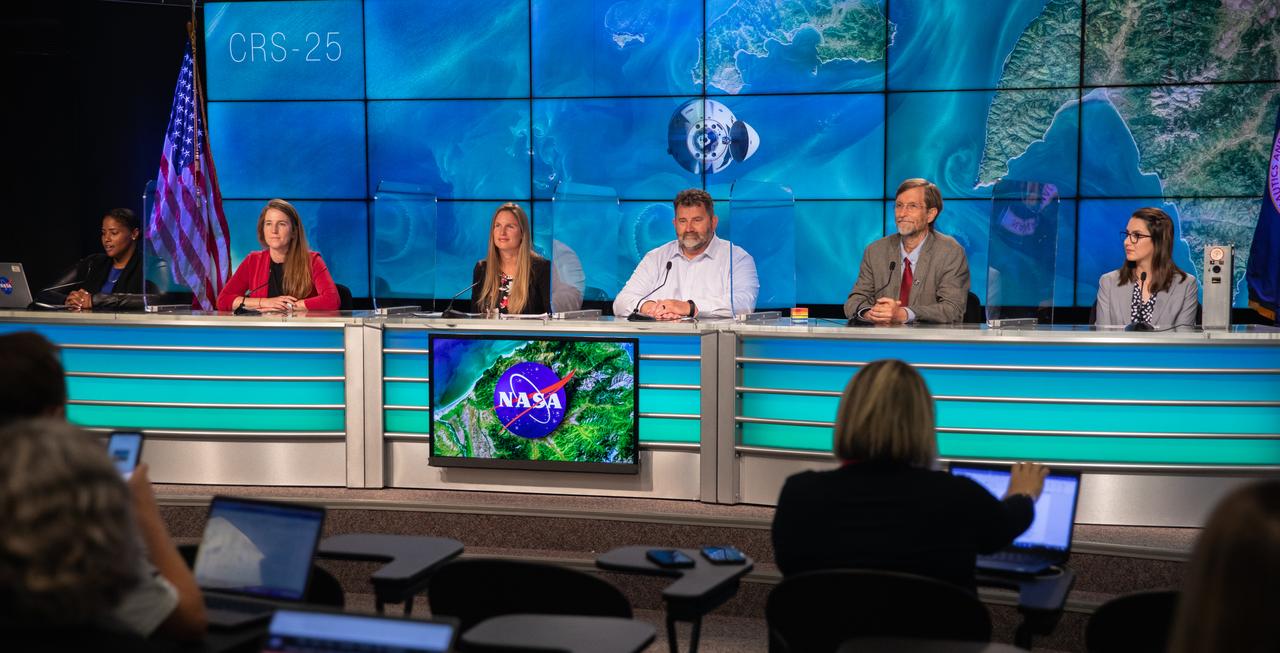
A climate conversation is held at NASA’s Kennedy Space Center in Florida on July 13, 2022, leading up to SpaceX’s 25th Commercial Resupply Services mission for NASA to the International Space Station. Participants, from left are Moderator Tylar Greene, NASA Communications; Kate Calvin, NASA’s chief scientist and climate advisor; Heidi Parris, associate scientist, International Space Station Program; Mike Roberts, chief scientist, ISS National Lab; Rob Green, JPL senior research scientist and EMIT (Earth Surface Mineral Dust Source Investigation) principal investigator; and Paula do Vale Pereira, BeaverCube, Massachusetts Institute of Technology. The Dragon capsule atop SpaceX’s Falcon 9 rocket is scheduled to lift off from Kennedy’s Launch Complex 39A on July 14 at 8:44 p.m. EDT. Dragon will deliver more than 5,800 pounds of cargo, including a variety of NASA investigations, to the space station.
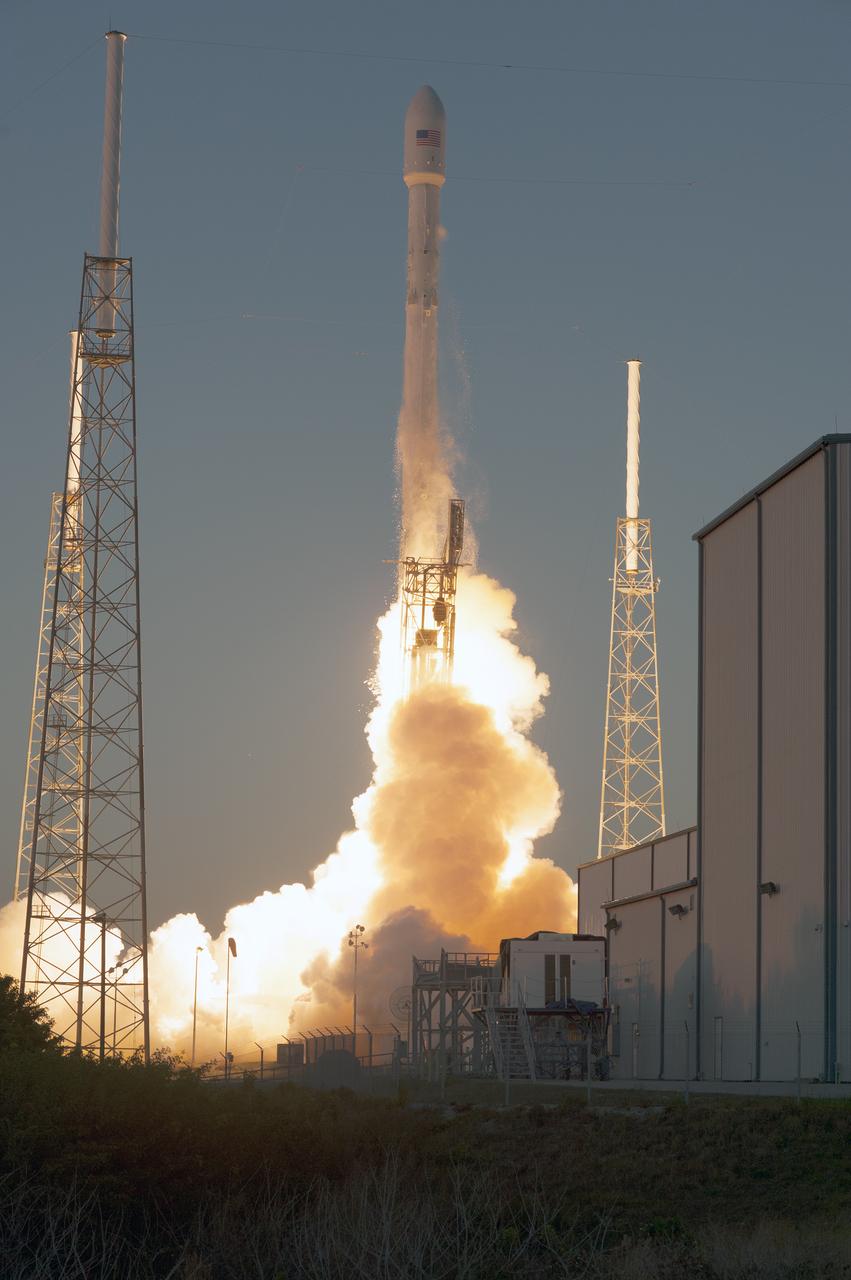
Open Image KSC-2015-1368.KSC-2015-1368 (02/11/2015) --- The SpaceX Falcon 9 rocket carrying NOAA’s Deep Space Climate Observatory spacecraft, or DSCOVR, lifts off from Space Launch Complex 40 at Cape Canaveral Air Force Station in Florida. Liftoff occurred at 6:03 p.m. EST. DSCOVR is a partnership between NOAA, NASA and the U.S. Air Force, and will maintain the nation's real-time solar wind monitoring capabilities. To learn more about DSCOVR, visit <a href="http://www.nesdis.noaa.gov/DSCOVR" rel="nofollow">www.nesdis.noaa.gov/DSCOVR</a>. Photo credit: NASA/Tony Gray and Tim Powers
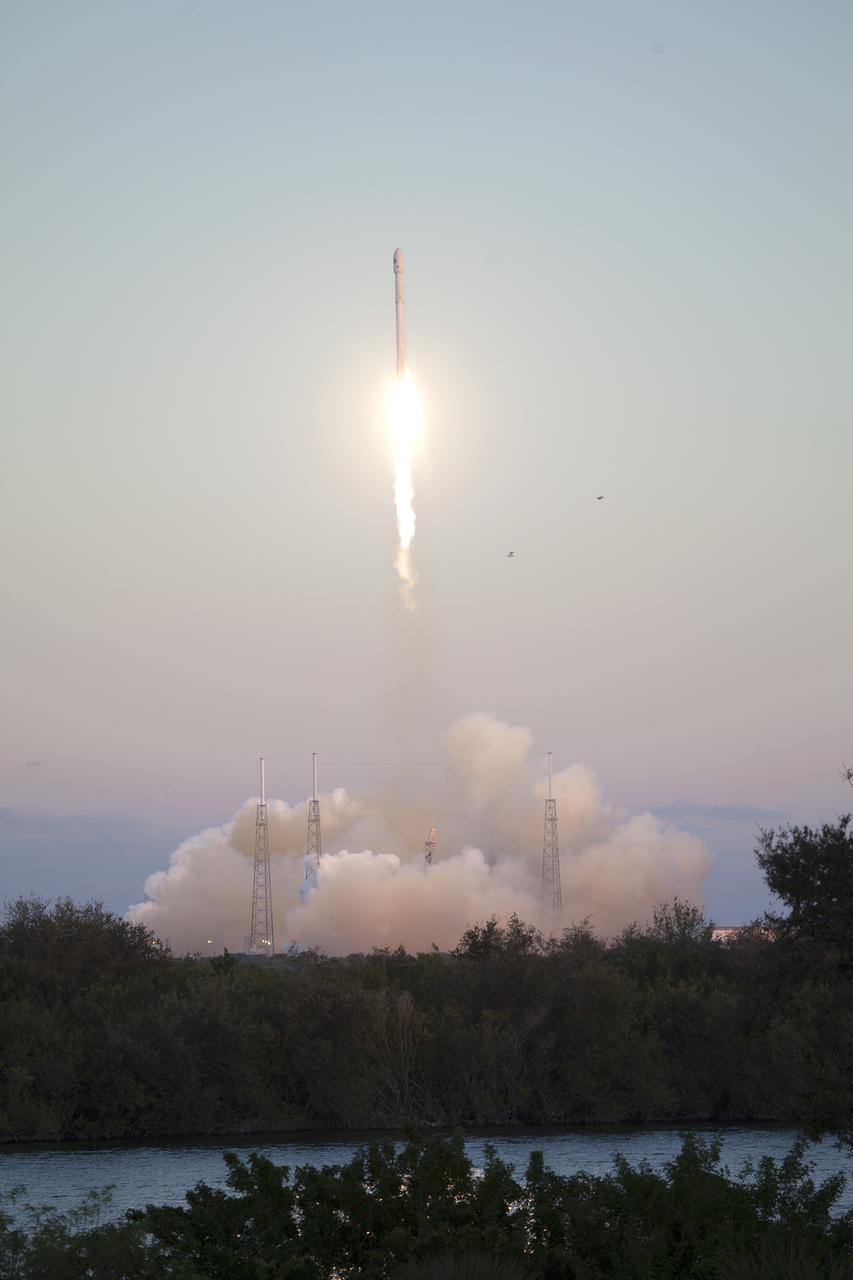
KSC-2015-1341 (02/11/2015) --- The SpaceX Falcon 9 rocket carrying NOAA’s Deep Space Climate Observatory spacecraft, or DSCOVR, lifts off from Space Launch Complex 40 at Cape Canaveral Air Force Station in Florida. Liftoff occurred at 6:03 p.m. EST. DSCOVR is a partnership between NOAA, NASA and the U.S. Air Force, and will maintain the nation's real-time solar wind monitoring capabilities. To learn more about DSCOVR, visit <a href="http://www.nesdis.noaa.gov/DSCOVR" rel="nofollow">www.nesdis.noaa.gov/DSCOVR</a>. Photo credit: NASA/Ben Smegelsky
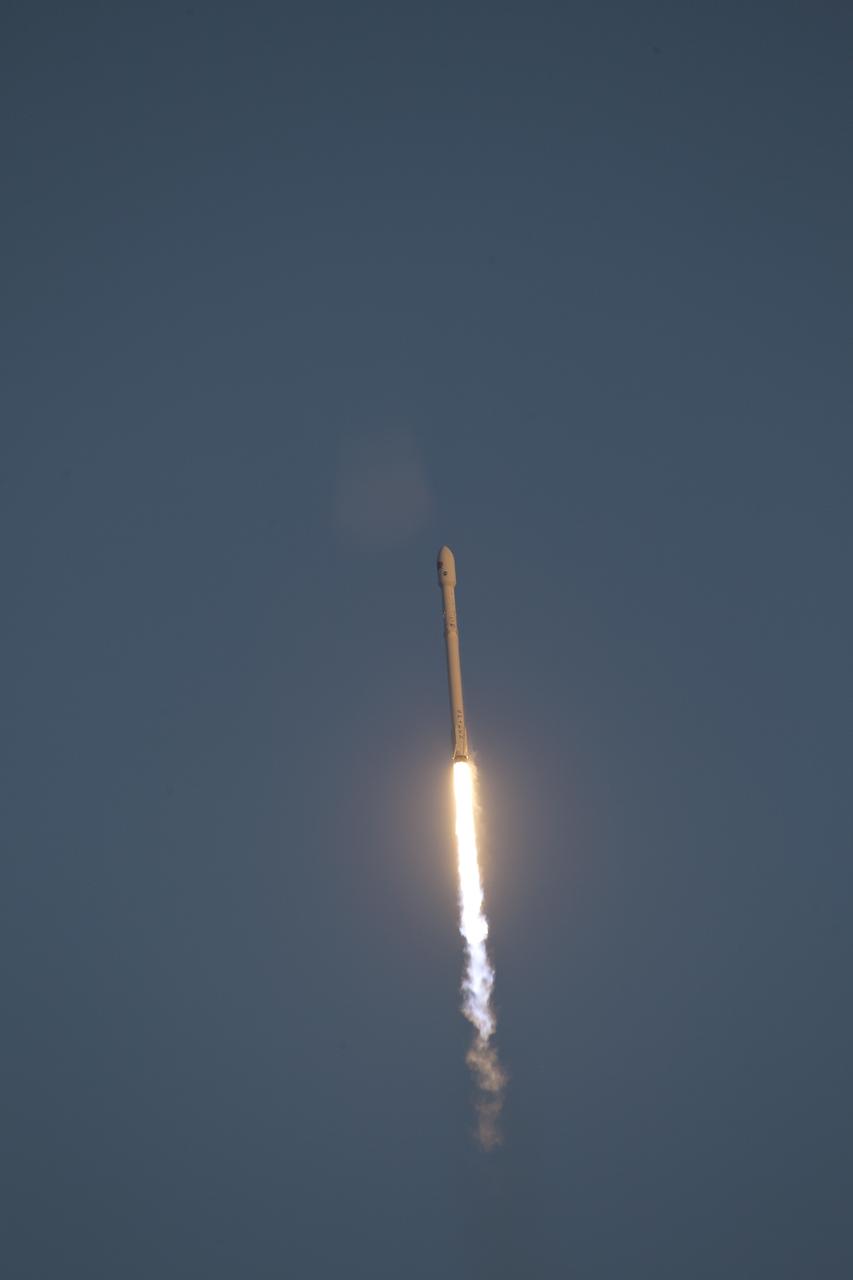
KSC-2015-1342 (02/11/2015) --- Backdropped by a bright blue sky, the SpaceX Falcon 9 rocket carrying NOAA’s Deep Space Climate Observatory spacecraft, or DSCOVR, soars away from Space Launch Complex 40 at Cape Canaveral Air Force Station in Florida. Liftoff occurred at 6:03 p.m. EST. DSCOVR is a partnership between NOAA, NASA and the U.S. Air Force, and will maintain the nation's real-time solar wind monitoring capabilities. To learn more about DSCOVR, visit <a href="http://www.nesdis.noaa.gov/DSCOVR" rel="nofollow">www.nesdis.noaa.gov/DSCOVR</a>. Photo credit: NASA/Ben Smegelsky..
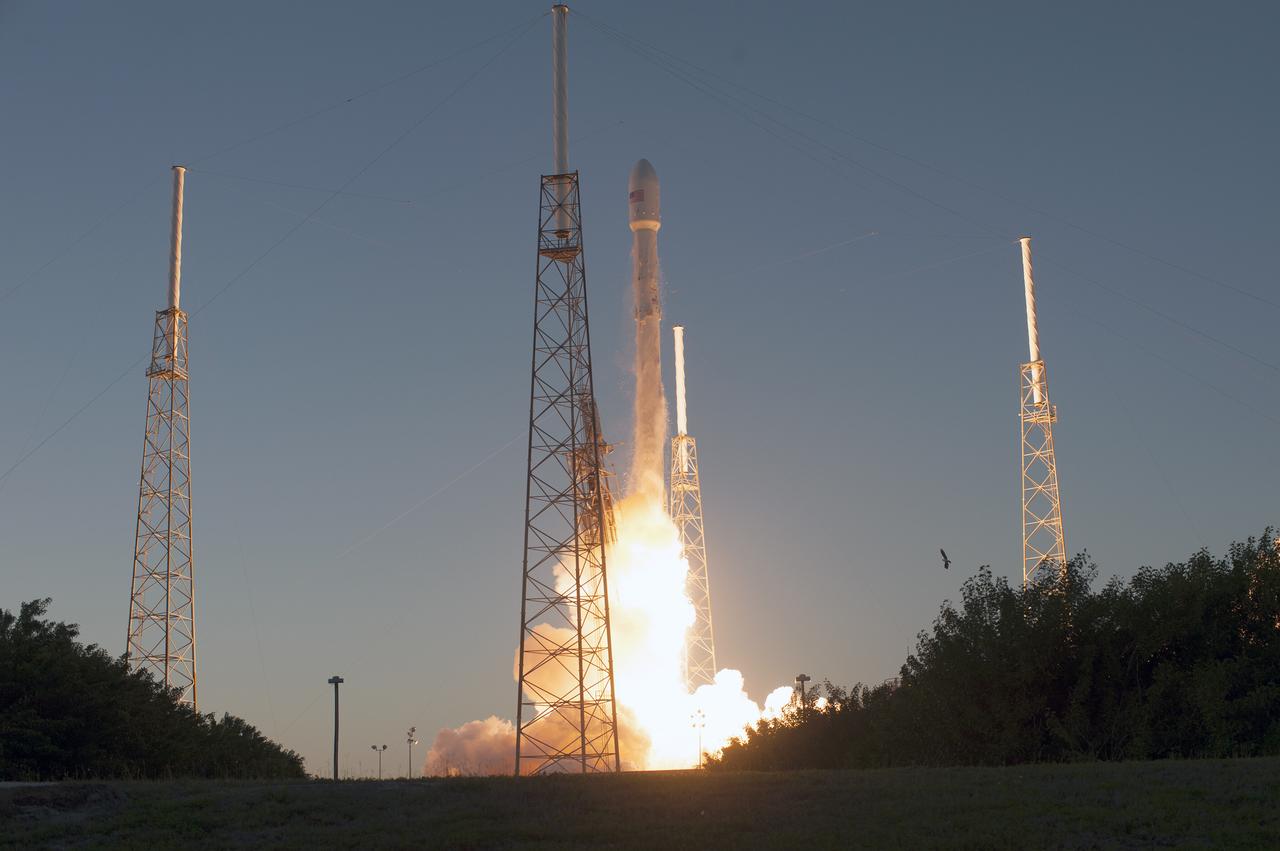
KSC-2015-1363 (02/11/2015) --- The SpaceX Falcon 9 rocket carrying NOAA’s Deep Space Climate Observatory spacecraft, or DSCOVR, lifts off from Space Launch Complex 40 at Cape Canaveral Air Force Station in Florida at 6:03 p.m. EST. DSCOVR is a partnership between NOAA, NASA and the U.S. Air Force, and will maintain the nation's real-time solar wind monitoring capabilities. To learn more about DSCOVR, visit <a href="http://www.nesdis.noaa.gov/DSCOVR" rel="nofollow">www.nesdis.noaa.gov/DSCOVR</a>. Photo credit: NASA/Tony Gray and Tim Powers

NASA Earth Action Associate Director Tom Wagner, left, NASA Earth Science Division Director Karen St. Germain, NASA Administrator Bill Nelson, NASA Chief Scientist and Senior Climate Adviser Kate Calvin, and NASA Goddard Space Flight Center Ocean Ecology Laboratory Chief Carlos Del Castillo, highlight NASA’s climate work during a media roundtable, Thursday, July 20, 2023, at the NASA Headquarters Mary W. Jackson Building in Washington. Photo Credit: (NASA/Bill Ingalls)

Mike Roberts, chief scientist, ISS National Lab, participates in a climate conversation at NASA’s Kennedy Space Center in Florida on July 13, 2022, leading up to SpaceX’s 25th Commercial Resupply Services mission for NASA to the International Space Station. The Dragon capsule atop SpaceX’s Falcon 9 rocket is scheduled to lift off from Kennedy’s Launch Complex 39A on July 14 at 8:44 p.m. EDT. Dragon will deliver more than 5,800 pounds of cargo, including a variety of NASA investigations, to the space station.

Tylar Greene, NASA Communications, moderates a climate conversation at NASA’s Kennedy Space Center in Florida on July 13, 2022, leading up to SpaceX’s 25th Commercial Resupply Services mission for NASA to the International Space Station. The Dragon capsule atop SpaceX’s Falcon 9 rocket is scheduled to lift off from Kennedy’s Launch Complex 39A on July 14 at 8:44 p.m. EDT. Dragon will deliver more than 5,800 pounds of cargo, including a variety of NASA investigations, to the space station.
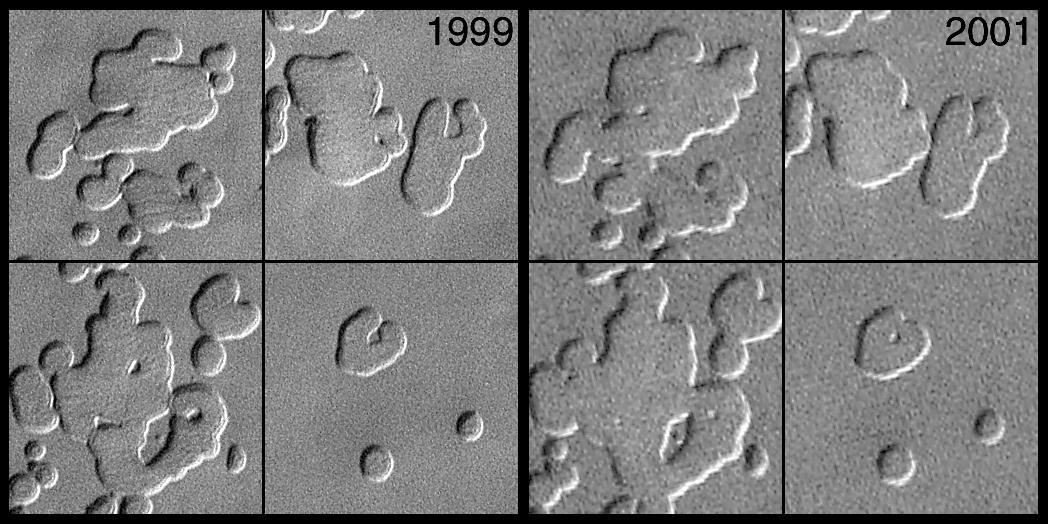
MOC Observes Changes in the South Polar Cap: Evidence for Recent Climate Change on Mars

NASA Administrator Bill Nelson highlights NASA’s climate work during a media roundtable, Thursday, July 20, 2023, at the NASA Headquarters Mary W. Jackson Building in Washington. Photo Credit: (NASA/Bill Ingalls)
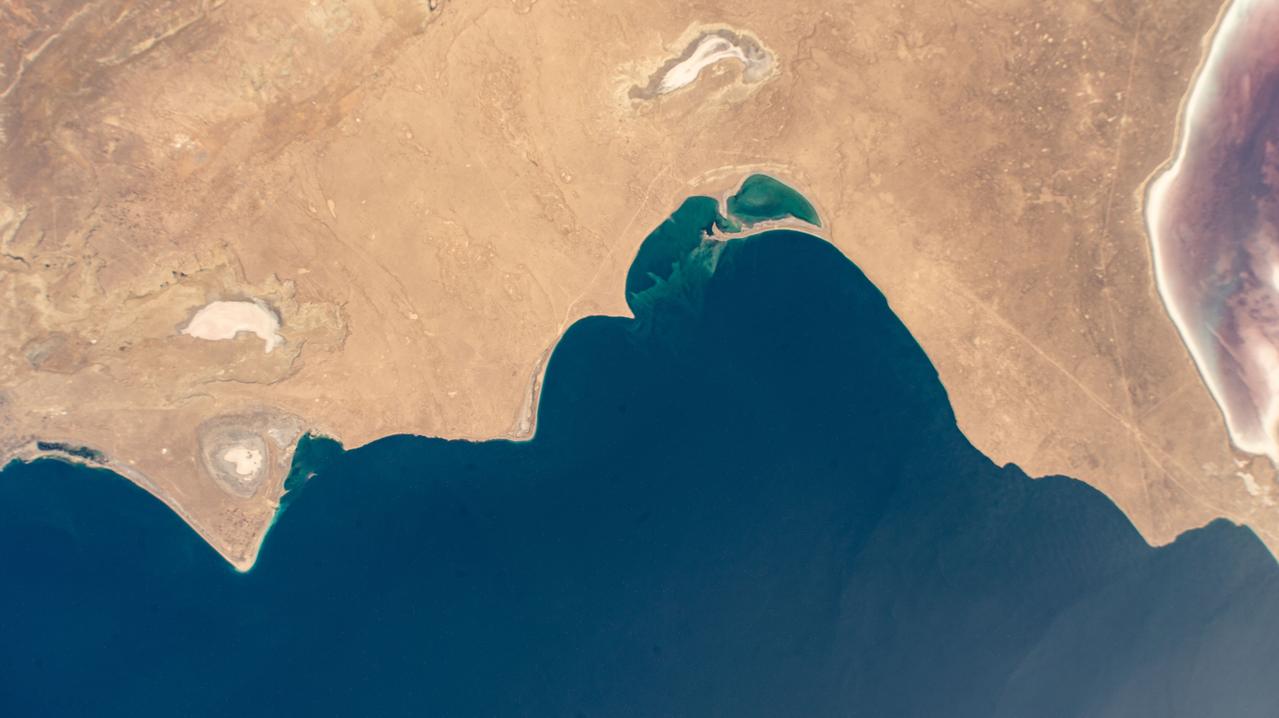
iss072e007016 (Oct. 1, 2024) --- The cold desert climate region of Kazakhstan on the coast of the Caspian Sea coast is pictured from the International Space Station as it orbited 259 miles above.
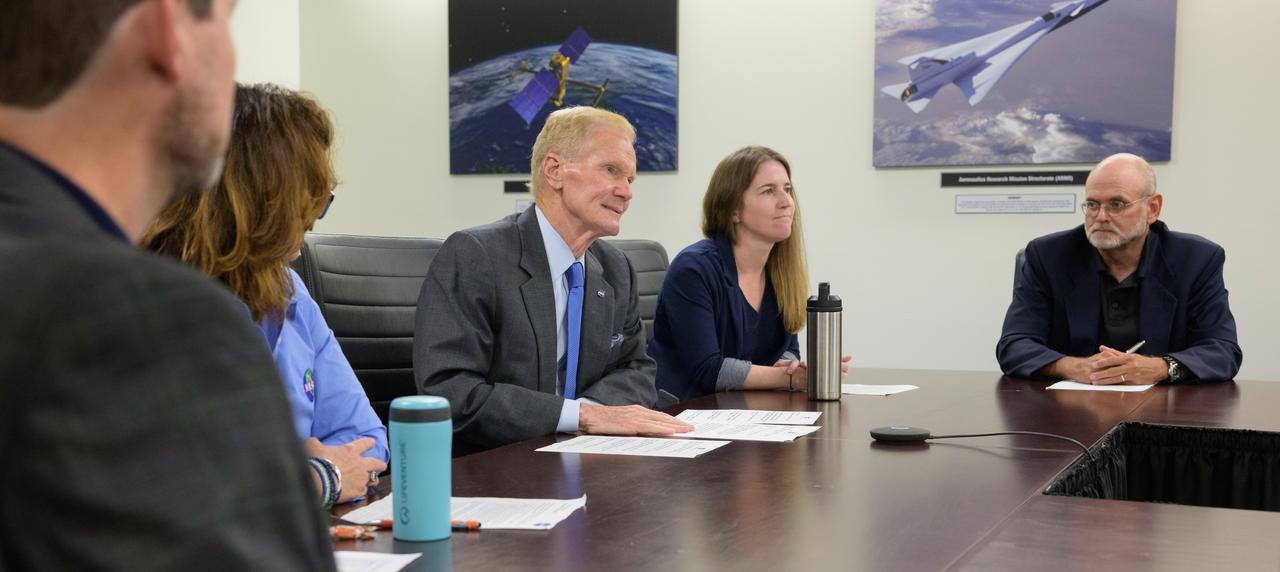
NASA Administrator Bill Nelson, center, highlights NASA’s climate work during a media roundtable, Thursday, July 20, 2023, at the NASA Headquarters Mary W. Jackson Building in Washington. Photo Credit: (NASA/Bill Ingalls)

NASA Administrator Bill Nelson highlights NASA’s climate work during a media roundtable, Thursday, July 20, 2023, at the NASA Headquarters Mary W. Jackson Building in Washington. Photo Credit: (NASA/Bill Ingalls)
Rob Green, JPL senior research scientist and EMIT (Earth Surface Mineral Dust Source Investigation) principal investigator, participates in a climate conversation at NASA’s Kennedy Space Center in Florida on July 13, 2022, leading up to SpaceX’s 25th Commercial Resupply Services mission for NASA to the International Space Station. The Dragon capsule atop SpaceX’s Falcon 9 rocket is scheduled to lift off from Kennedy’s Launch Complex 39A on July 14 at 8:44 p.m. EDT. Dragon will deliver more than 5,800 pounds of cargo, including a variety of NASA investigations, to the space station.

Heidi Parris, associate scientist, International Space Station Program, participates in a climate conversation at NASA’s Kennedy Space Center in Florida on July 13, 2022, leading up to SpaceX’s 25th Commercial Resupply Services mission for NASA to the International Space Station. The Dragon capsule atop SpaceX’s Falcon 9 rocket is scheduled to lift off from Kennedy’s Launch Complex 39A on July 14 at 8:44 p.m. EDT. Dragon will deliver more than 5,800 pounds of cargo, including a variety of NASA investigations, to the space station.
Rob Green, JPL senior research scientist and EMIT (Earth Surface Mineral Dust Source Investigation) principal investigator, participates in a climate conversation at NASA’s Kennedy Space Center in Florida on July 13, 2022, leading up to SpaceX’s 25th Commercial Resupply Services mission for NASA to the International Space Station. The Dragon capsule atop SpaceX’s Falcon 9 rocket is scheduled to lift off from Kennedy’s Launch Complex 39A on July 14 at 8:44 p.m. EDT. Dragon will deliver more than 5,800 pounds of cargo, including a variety of NASA investigations, to the space station.
Heidi Parris, associate scientist, International Space Station Program, participates in a climate conversation at NASA’s Kennedy Space Center in Florida on July 13, 2022, leading up to SpaceX’s 25th Commercial Resupply Services mission for NASA to the International Space Station. The Dragon capsule atop SpaceX’s Falcon 9 rocket is scheduled to lift off from Kennedy’s Launch Complex 39A on July 14 at 8:44 p.m. EDT. Dragon will deliver more than 5,800 pounds of cargo, including a variety of NASA investigations, to the space station.

Paula do Vale Pereira, BeaverCube, Massachusetts Institute of Technology, participates in a climate conversation at NASA’s Kennedy Space Center in Florida on July 13, 2022, leading up to SpaceX’s 25th Commercial Resupply Services mission for NASA to the International Space Station. The Dragon capsule atop SpaceX’s Falcon 9 rocket is scheduled to lift off from Kennedy’s Launch Complex 39A on July 14 at 8:44 p.m. EDT. Dragon will deliver more than 5,800 pounds of cargo, including a variety of NASA investigations, to the space station.

Paula do Vale Pereira, BeaverCube, Massachusetts Institute of Technology, participates in a climate conversation at NASA’s Kennedy Space Center in Florida on July 13, 2022, leading up to SpaceX’s 25th Commercial Resupply Services mission for NASA to the International Space Station. The Dragon capsule atop SpaceX’s Falcon 9 rocket is scheduled to lift off from Kennedy’s Launch Complex 39A on July 14 at 8:44 p.m. EDT. Dragon will deliver more than 5,800 pounds of cargo, including a variety of NASA investigations, to the space station.
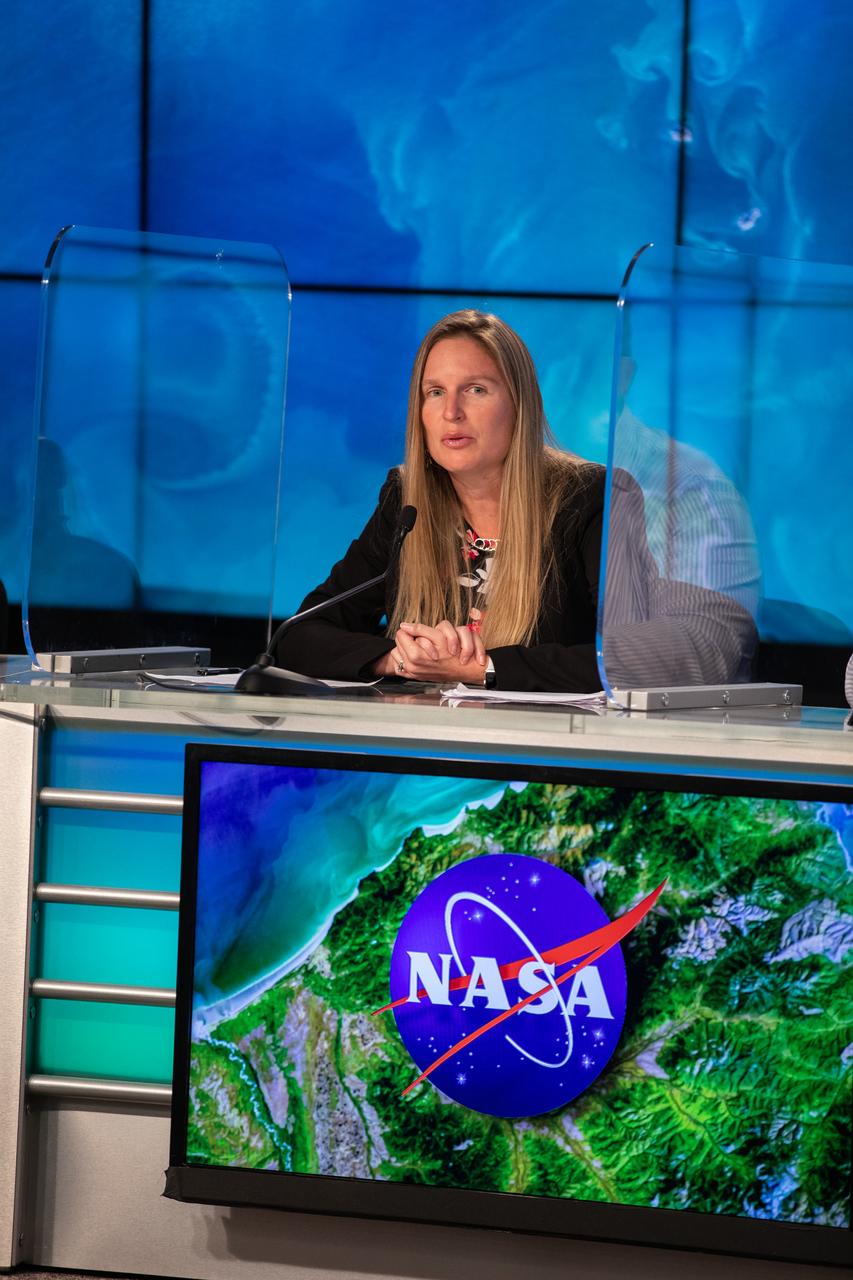
NASA Earth Science Division Director Karen St. Germain highlights NASA’s climate work during a media roundtable, Thursday, July 20, 2023, at the NASA Headquarters Mary W. Jackson Building in Washington. Photo Credit: (NASA/Bill Ingalls)
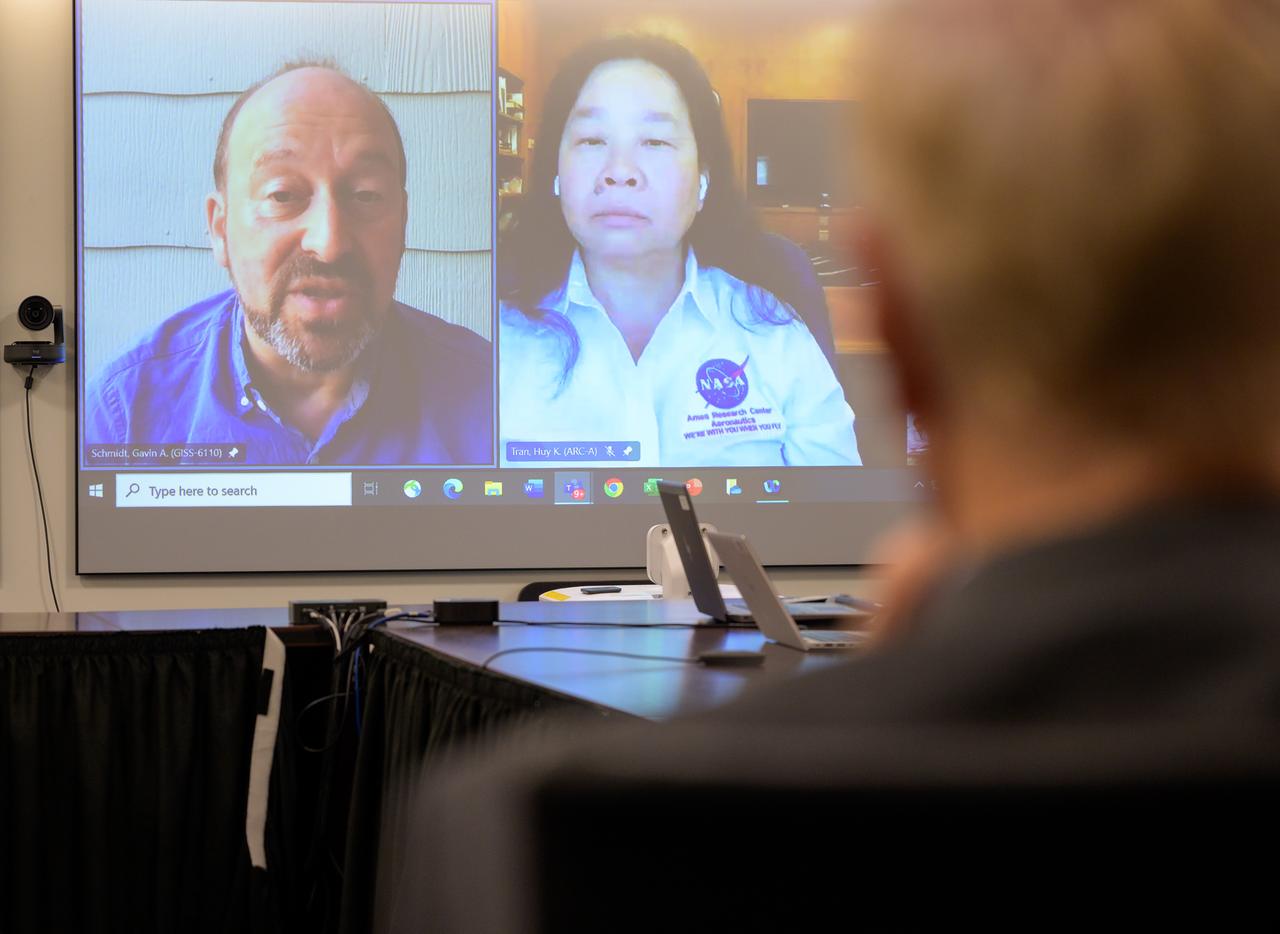
NASA Goddard Institute for Space Studies Director Gavin Schmidt, left, and NASA Ames Research Center Aeronautics Director Huy Tran highlight NASA’s climate work during a media roundtable, Thursday, July 20, 2023, at the NASA Headquarters Mary W. Jackson Building in Washington. Photo Credit: (NASA/Bill Ingalls)
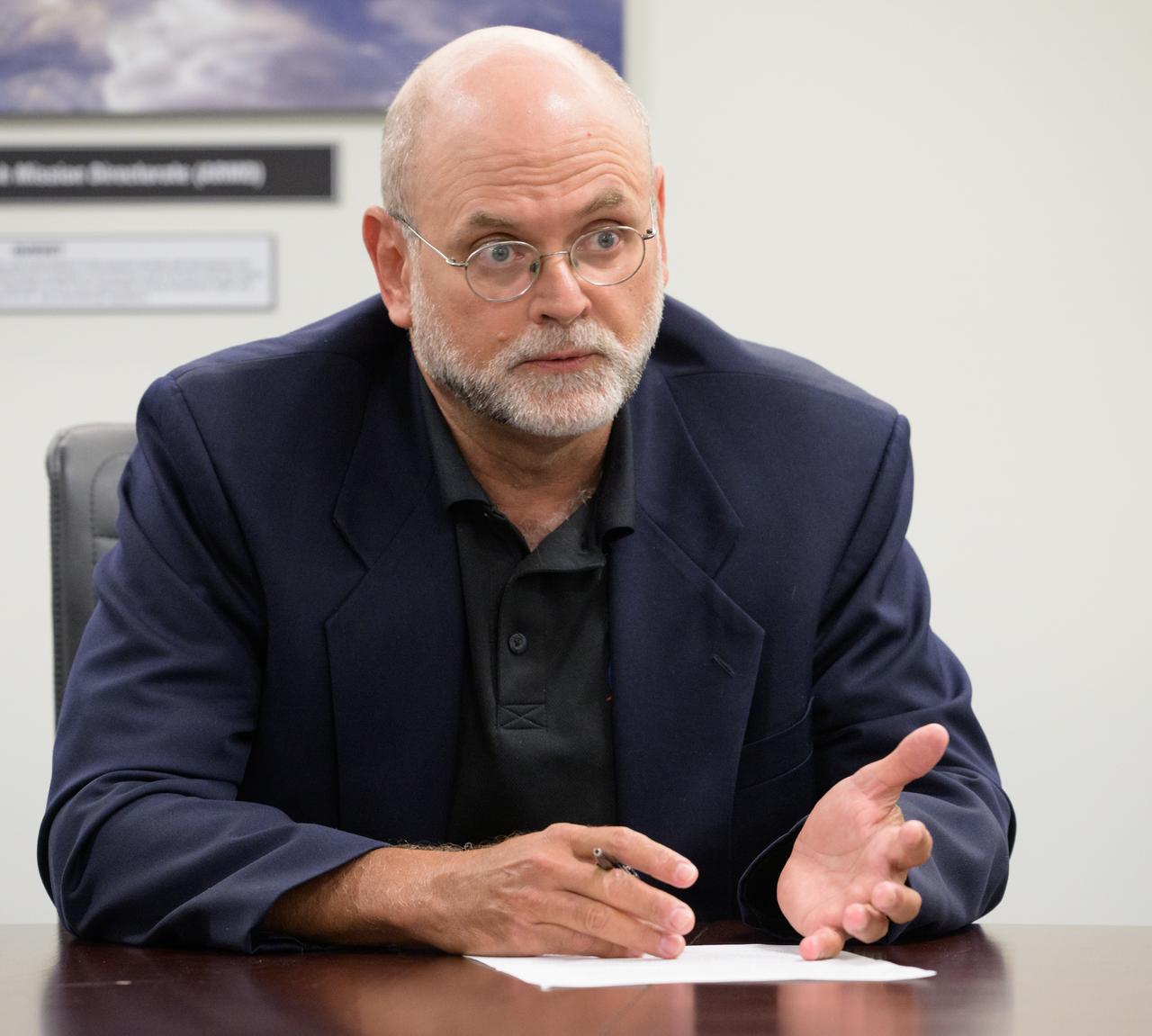
NASA Goddard Space Flight Center Ocean Ecology Laboratory Chief Carlos Del Castillo highlights NASA’s climate work during a media roundtable, Thursday, July 20, 2023, at the NASA Headquarters Mary W. Jackson Building in Washington. Photo Credit: (NASA/Bill Ingalls)
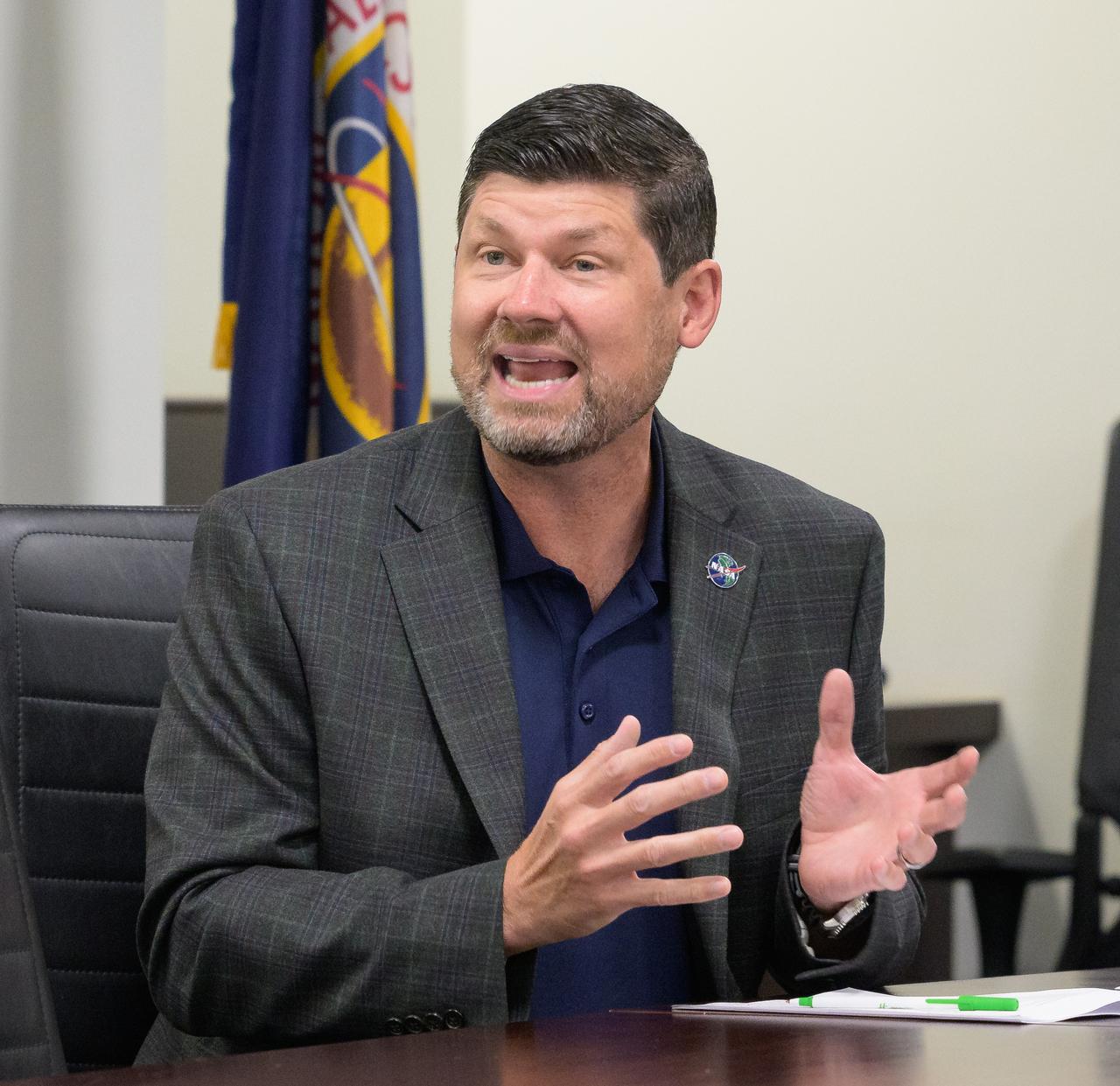
NASA Earth Action Associate Director Tom Wagner highlights NASA’s climate work during a media roundtable, Thursday, July 20, 2023, at the NASA Headquarters Mary W. Jackson Building in Washington. Photo Credit: (NASA/Bill Ingalls)
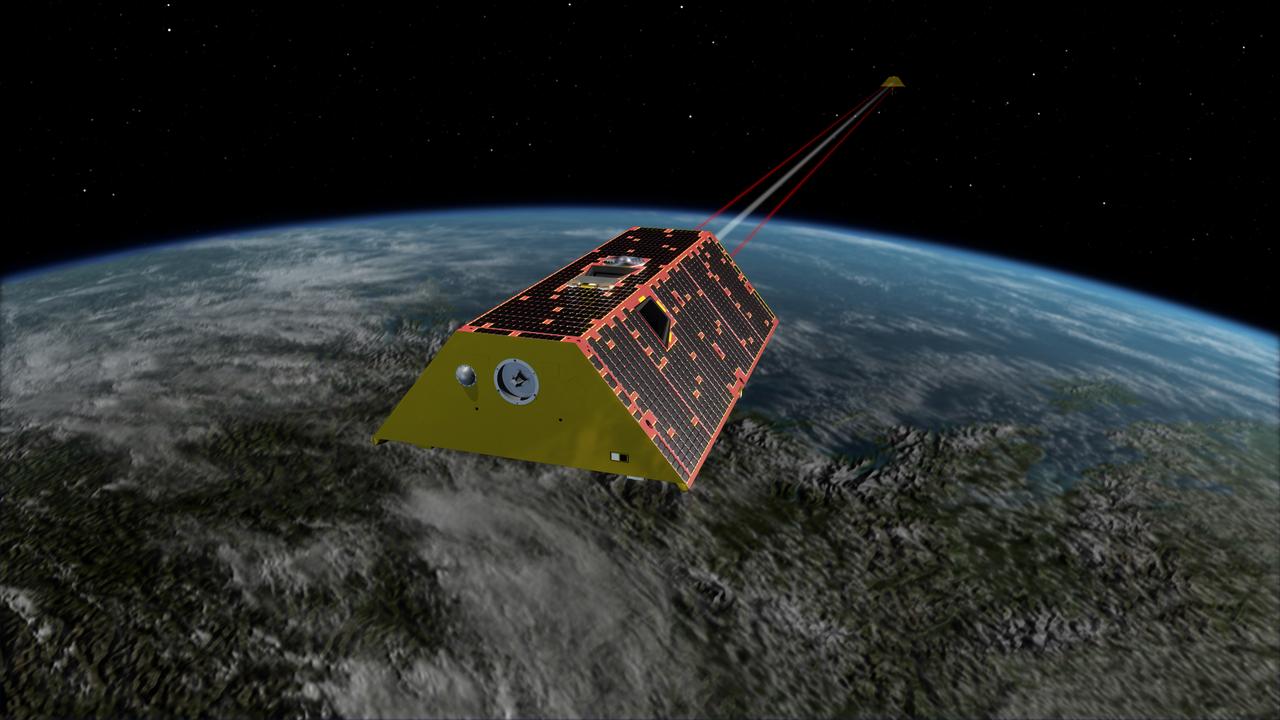
Artist's rendering of the twin spacecraft of the Gravity Recovery and Climate Experiment Follow-On (GRACE-FO) mission, scheduled to launch in May, 2018. GRACE-FO will track the evolution of Earth's water cycle by monitoring changes in the distribution of mass on Earth. https://photojournal.jpl.nasa.gov/catalog/PIA22431
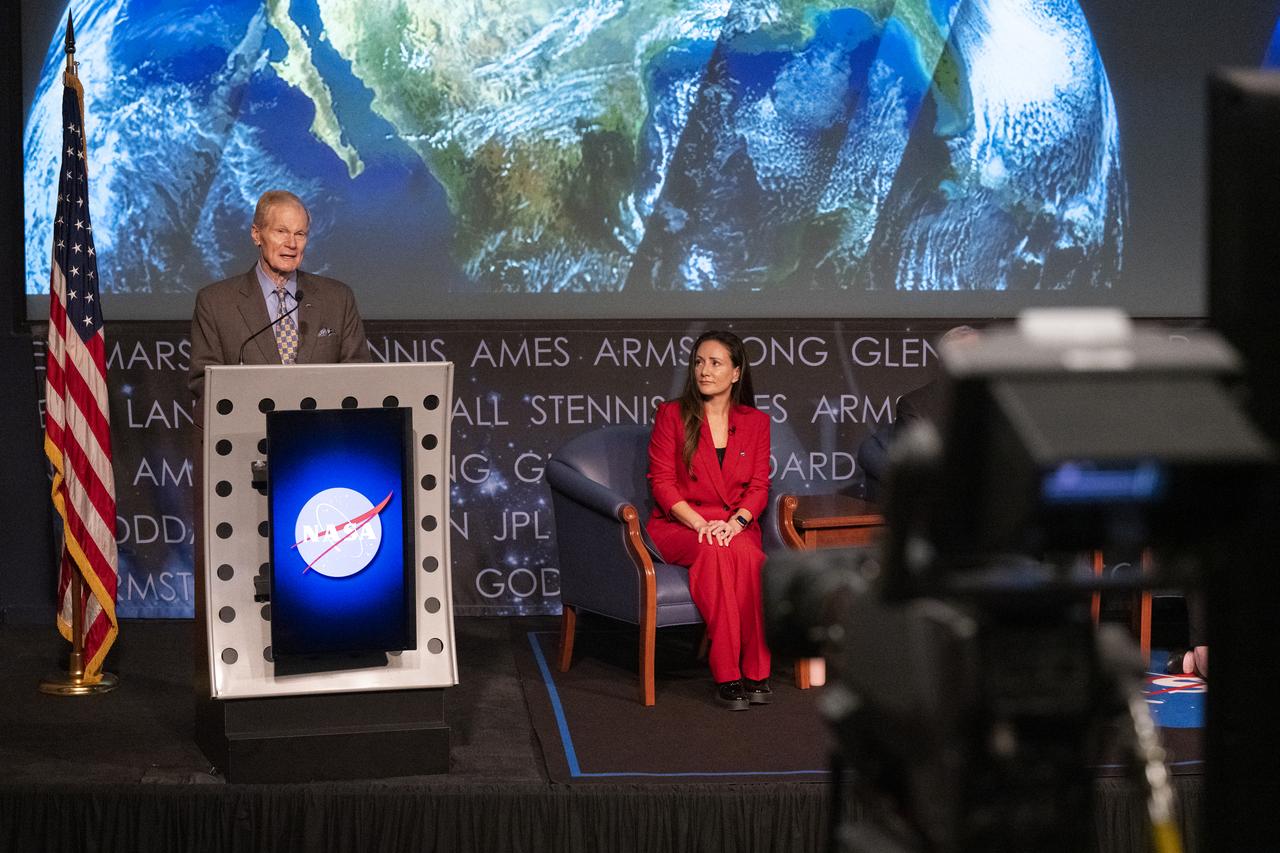
NASA Administrator Bill Nelson delivers opening remarks during the inaugural NASA Climate Summit Thursday, Dec. 8, 2022, at the Mary W. Jackson NASA Headquarters building in Washington. Photo Credit: (NASA/Keegan Barber)
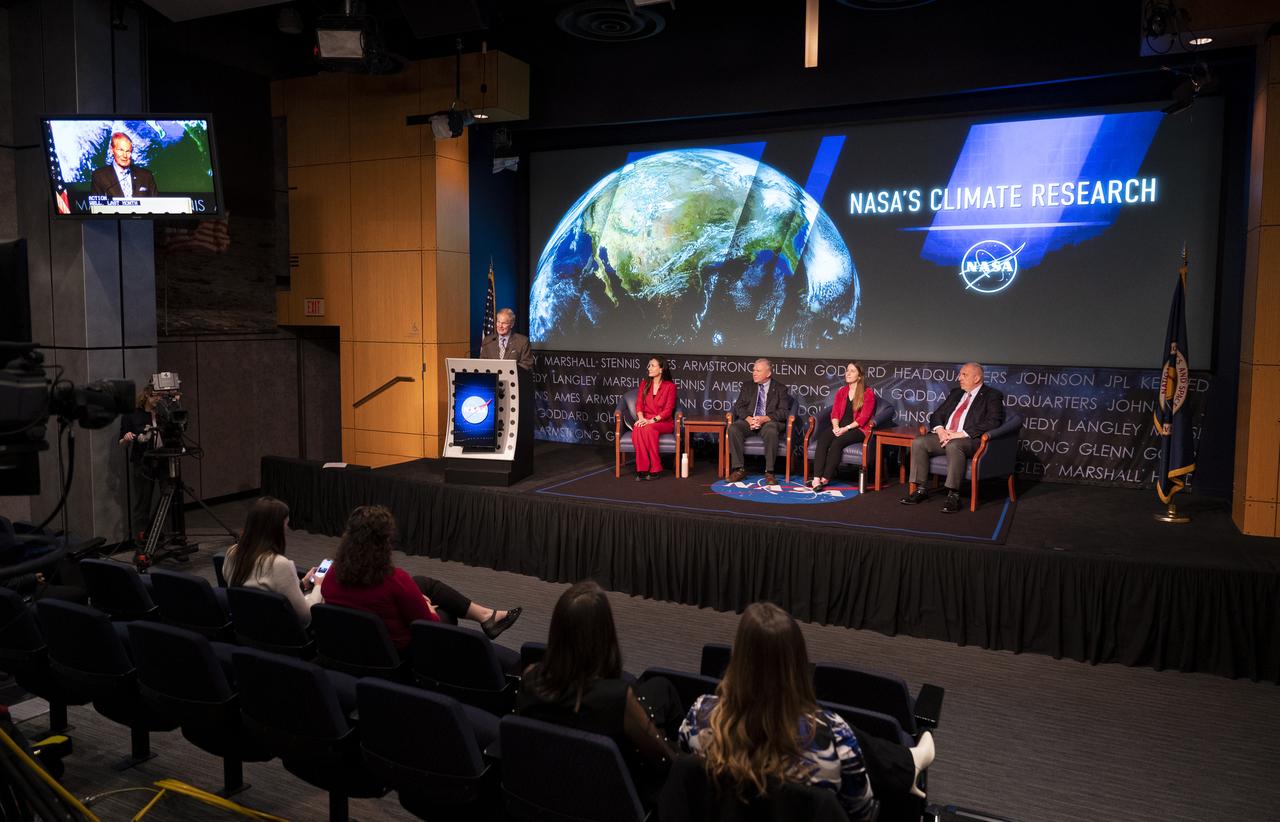
NASA Administrator Bill Nelson delivers opening remarks during the inaugural NASA Climate Summit Thursday, Dec. 8, 2022, at the Mary W. Jackson NASA Headquarters building in Washington. Photo Credit: (NASA/Keegan Barber)
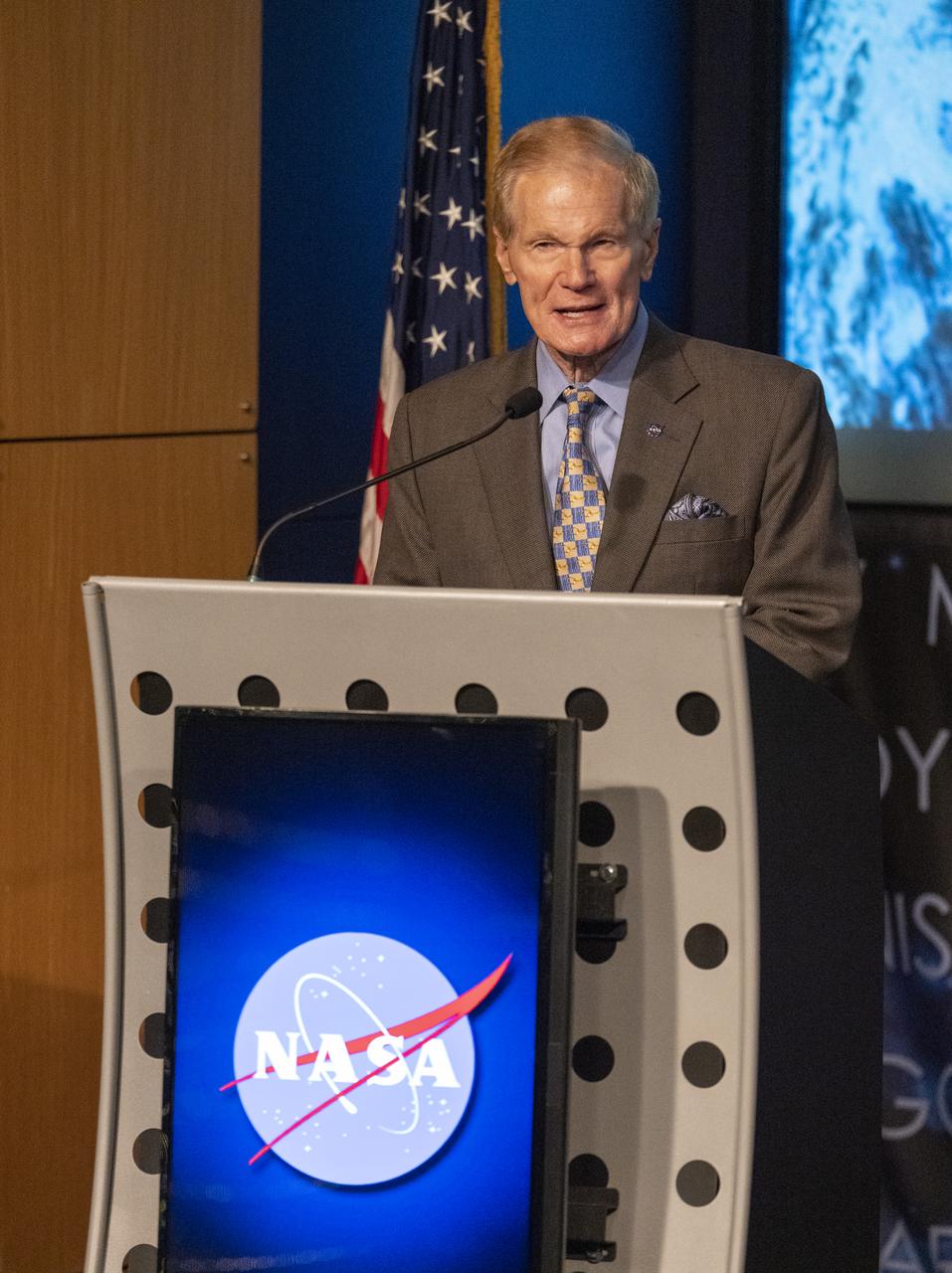
NASA Administrator Bill Nelson delivers opening remarks during the inaugural NASA Climate Summit Thursday, Dec. 8, 2022, at the Mary W. Jackson NASA Headquarters building in Washington. Photo Credit: (NASA/Keegan Barber)
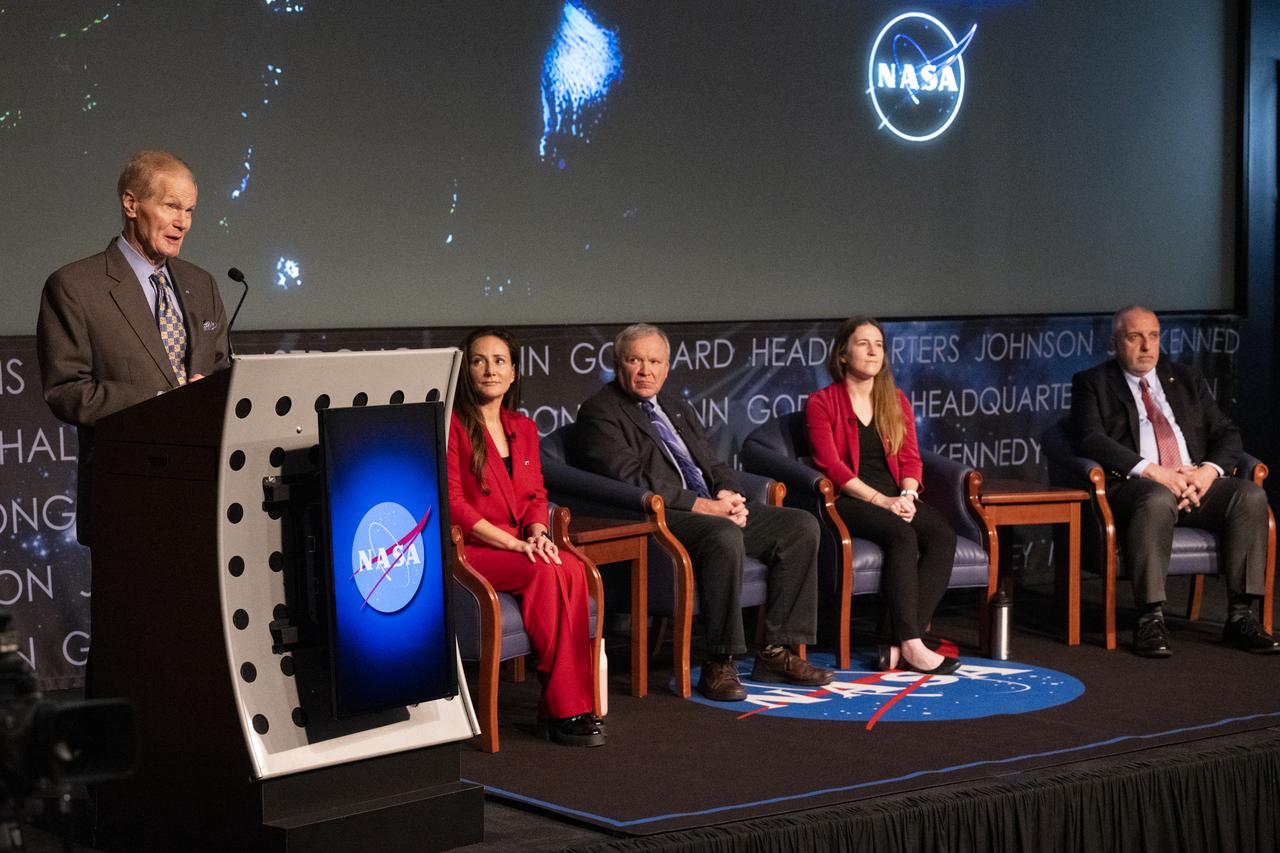
NASA Administrator Bill Nelson delivers opening remarks during the inaugural NASA Climate Summit Thursday, Dec. 8, 2022, at the Mary W. Jackson NASA Headquarters building in Washington. Photo Credit: (NASA/Keegan Barber)
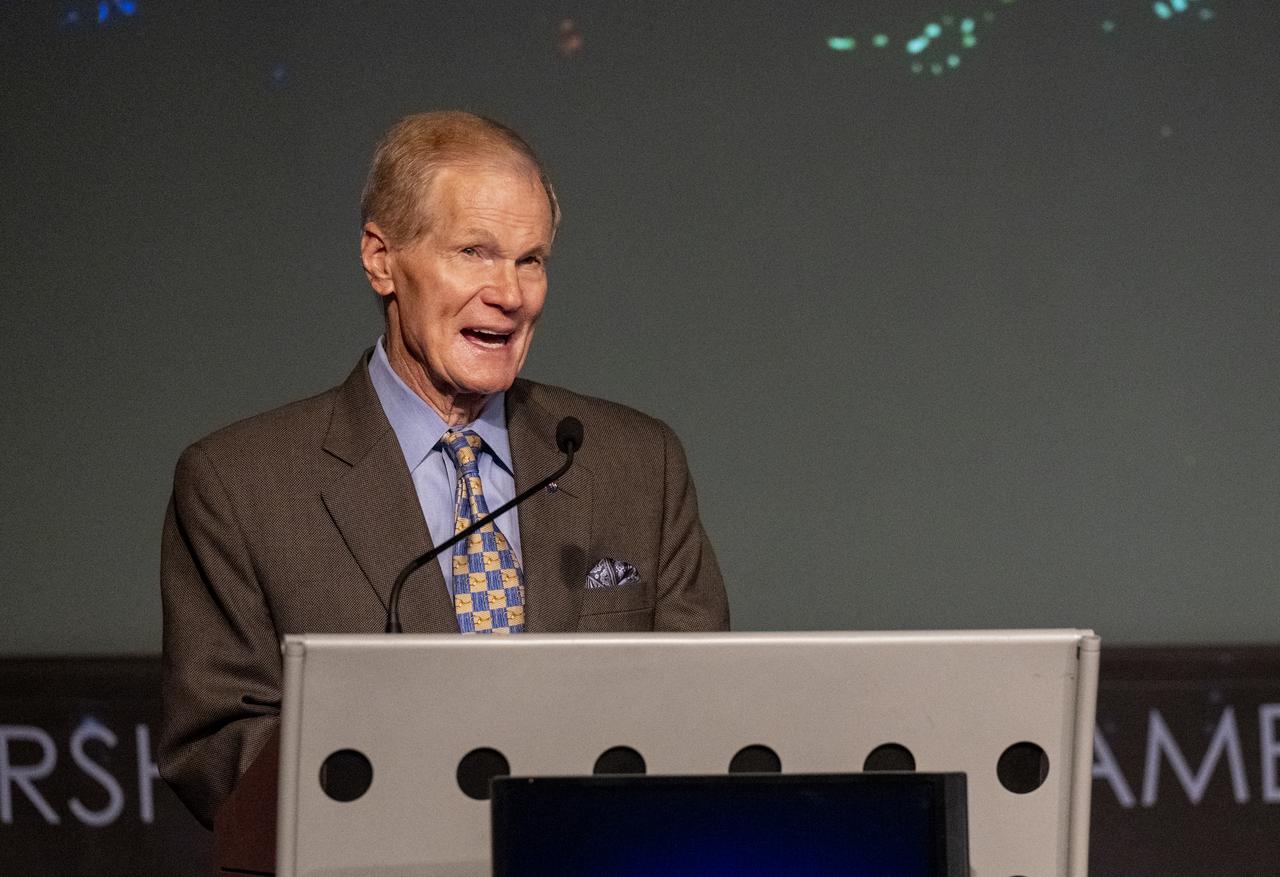
NASA Administrator Bill Nelson delivers opening remarks during the inaugural NASA Climate Summit Thursday, Dec. 8, 2022, at the Mary W. Jackson NASA Headquarters building in Washington. Photo Credit: (NASA/Keegan Barber)
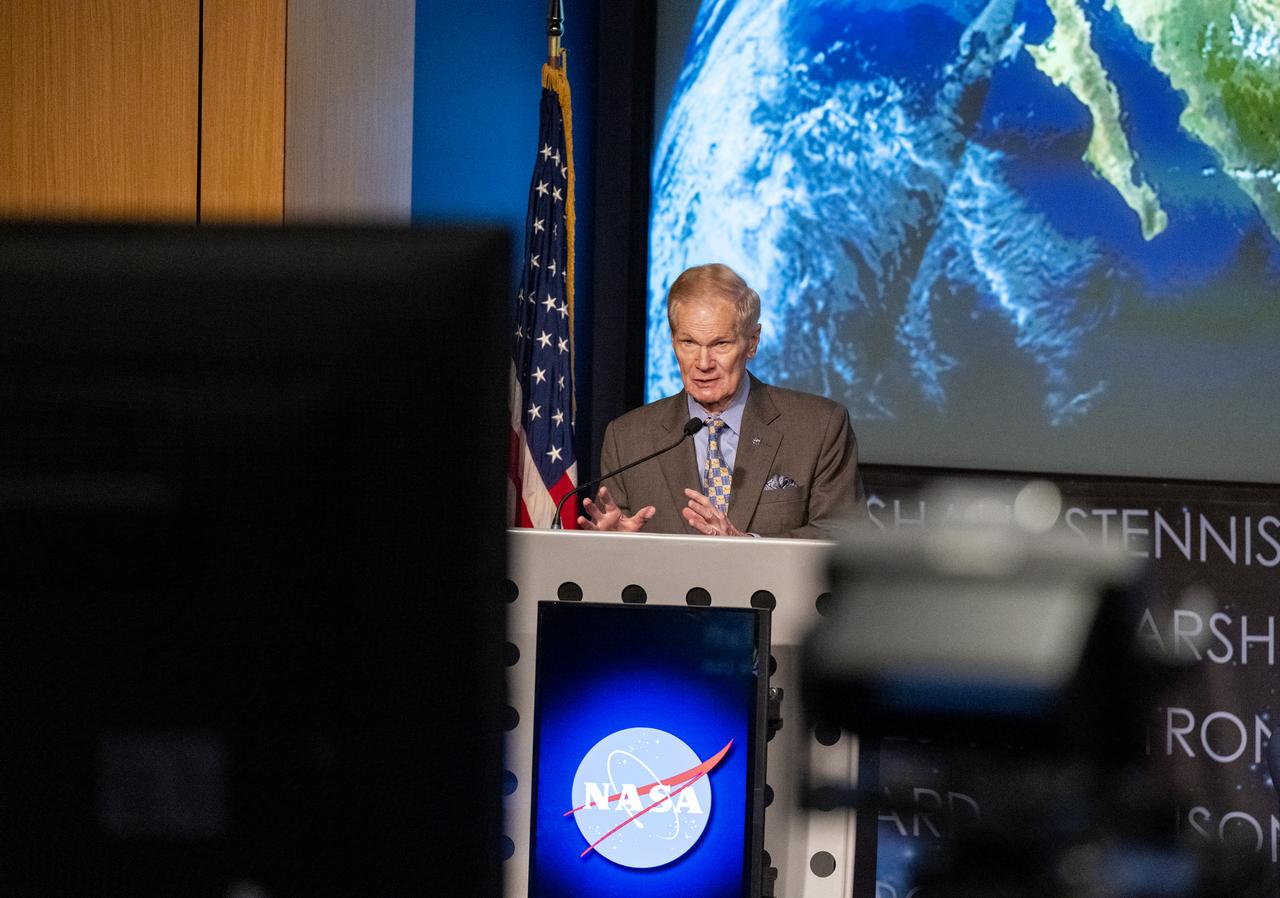
NASA Administrator Bill Nelson delivers opening remarks during the inaugural NASA Climate Summit Thursday, Dec. 8, 2022, at the Mary W. Jackson NASA Headquarters building in Washington. Photo Credit: (NASA/Keegan Barber)
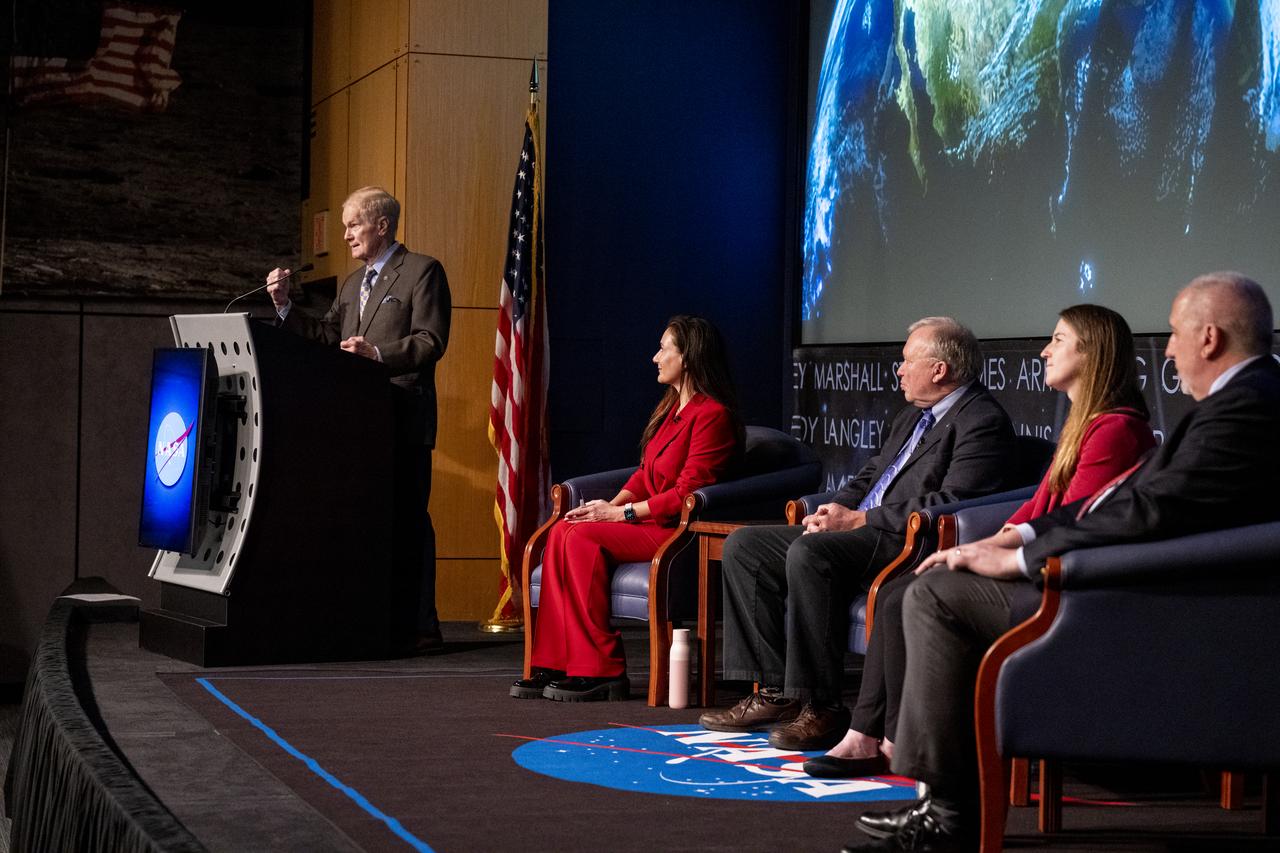
NASA Administrator Bill Nelson delivers opening remarks during the inaugural NASA Climate Summit Thursday, Dec. 8, 2022, at the Mary W. Jackson NASA Headquarters building in Washington. Photo Credit: (NASA/Keegan Barber)
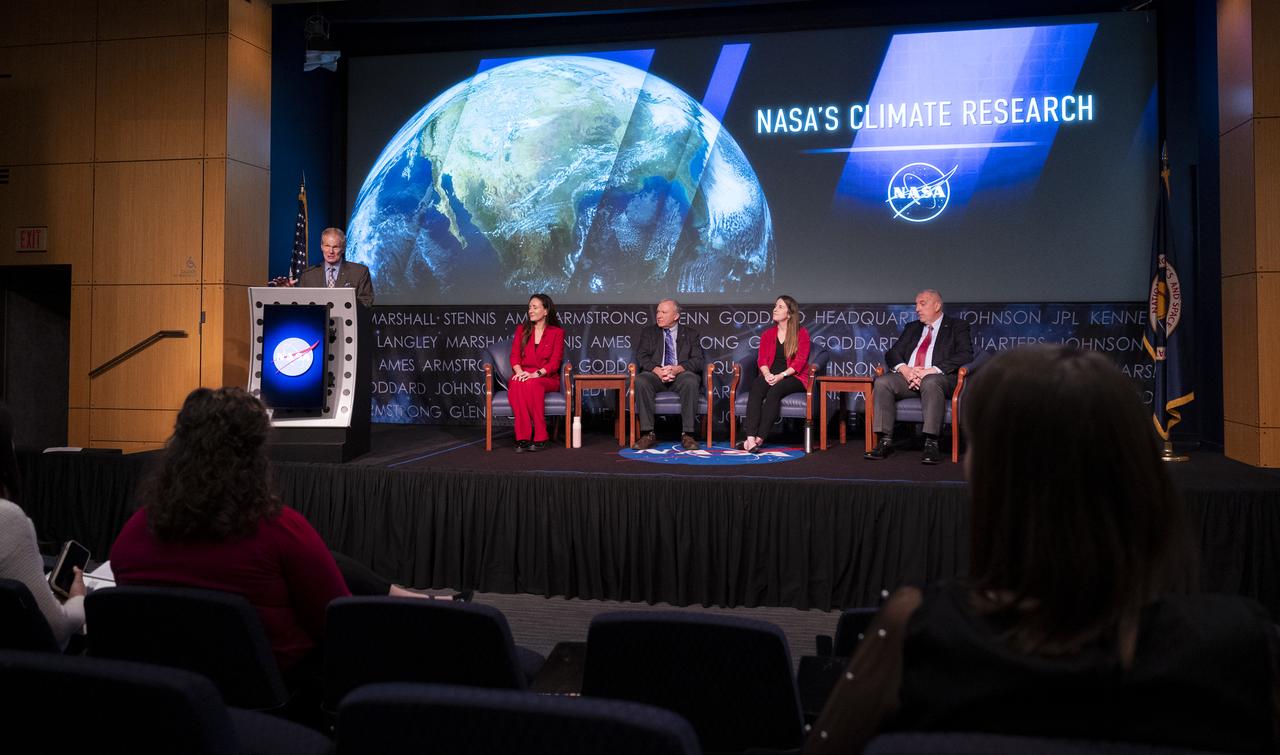
NASA Administrator Bill Nelson delivers opening remarks during the inaugural NASA Climate Summit Thursday, Dec. 8, 2022, at the Mary W. Jackson NASA Headquarters building in Washington. Photo Credit: (NASA/Keegan Barber)
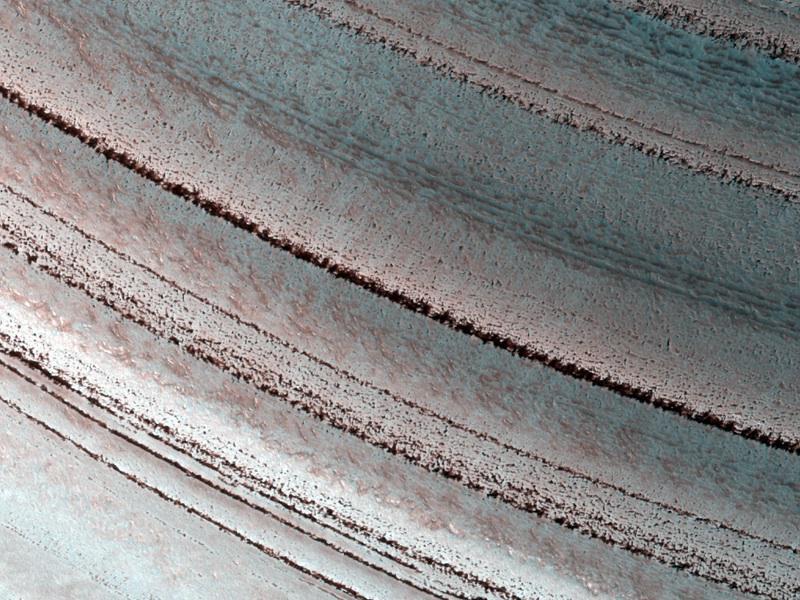
The Martian north polar layered deposits are an ice sheet much like the Greenland ice sheet on the Earth in this image from NASA Mars Reconnaissance Orbiter. This Martian ice sheet contains many layers that record variations in the Martian climate.
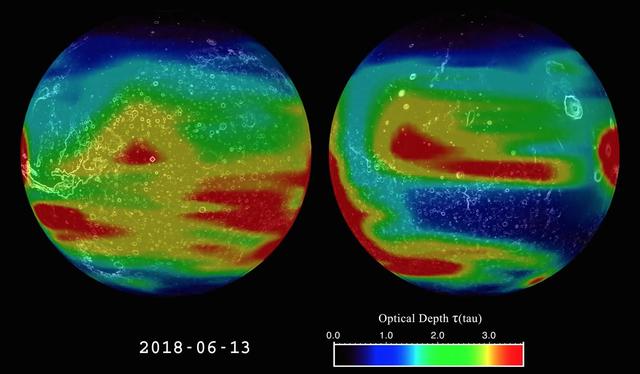
This image is from an animation that shows the evolution of the 2018 Mars global dust storm from late May to September. The animation shows the optical depth tau -- a measure of how much light is being blocked by atmospheric dust as measured by the Mars Climate Sounder instrument onboard NASA's Mars Reconnaissance Orbiter. NASA's Opportunity rover is marked with a red dot. The dust is mapped to two opposite hemispheres of Mars, giving a view of the full globe. Certain features of the Martian terrain, including Olympus Mons, the three volcanoes in the equatorial region, and Vallis Marineris, are also visible. The data shows the daily global column of dust, illustrating how the dust behaves over the course of the storm. The storm has a complex growth affecting most of Mars over the first month. It then remains near the peak for three weeks. Finally, the storm starts a multi-month decay back to regular weather. A color scale in the lower right-hand corner of the animation explains the colors in relation to approximate tau values. A tau of three indicates that only about 5 percent of the sunlight entering the atmosphere directly reaches the surface. Animation is available at https://photojournal.jpl.nasa.gov/catalog/PIA22737
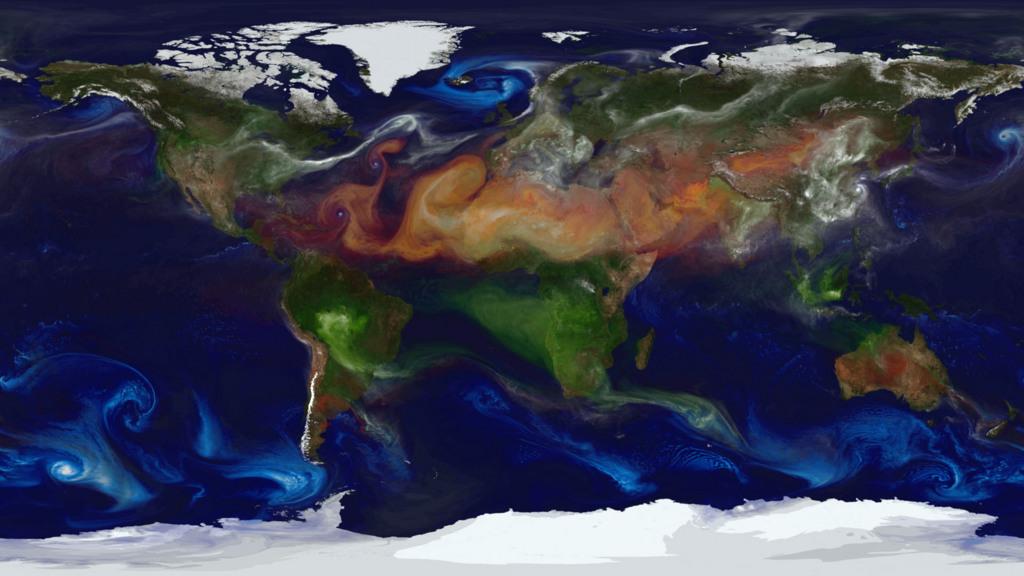
NASA models and supercomputing have created a colorful new view of aerosol movement. Satellites, balloon-borne instruments and ground-based devices make 30 million observations of the atmosphere each day. Yet these measurements still give an incomplete picture of the complex interactions within the membrane surrounding Earth. Enter climate models. Through mathematical experiments, modelers can move Earth forward or backward in time to create a dynamic portrait of the planet. Researchers from NASA Goddard’s Global Modeling and Assimilation Office recently ran a simulation of the atmosphere that captured how winds whip aerosols around the world. Such simulations allow scientists to better understand how these tiny particulates travel in the atmosphere and influence weather and climate. In the visualization below, covering August 2006 to April 2007, watch as dust and sea salt swirl inside cyclones, carbon bursts from fires, sulfate streams from volcanoes—and see how these aerosols paint the modeled world. Credit: NASA/Goddard Space Flight Center
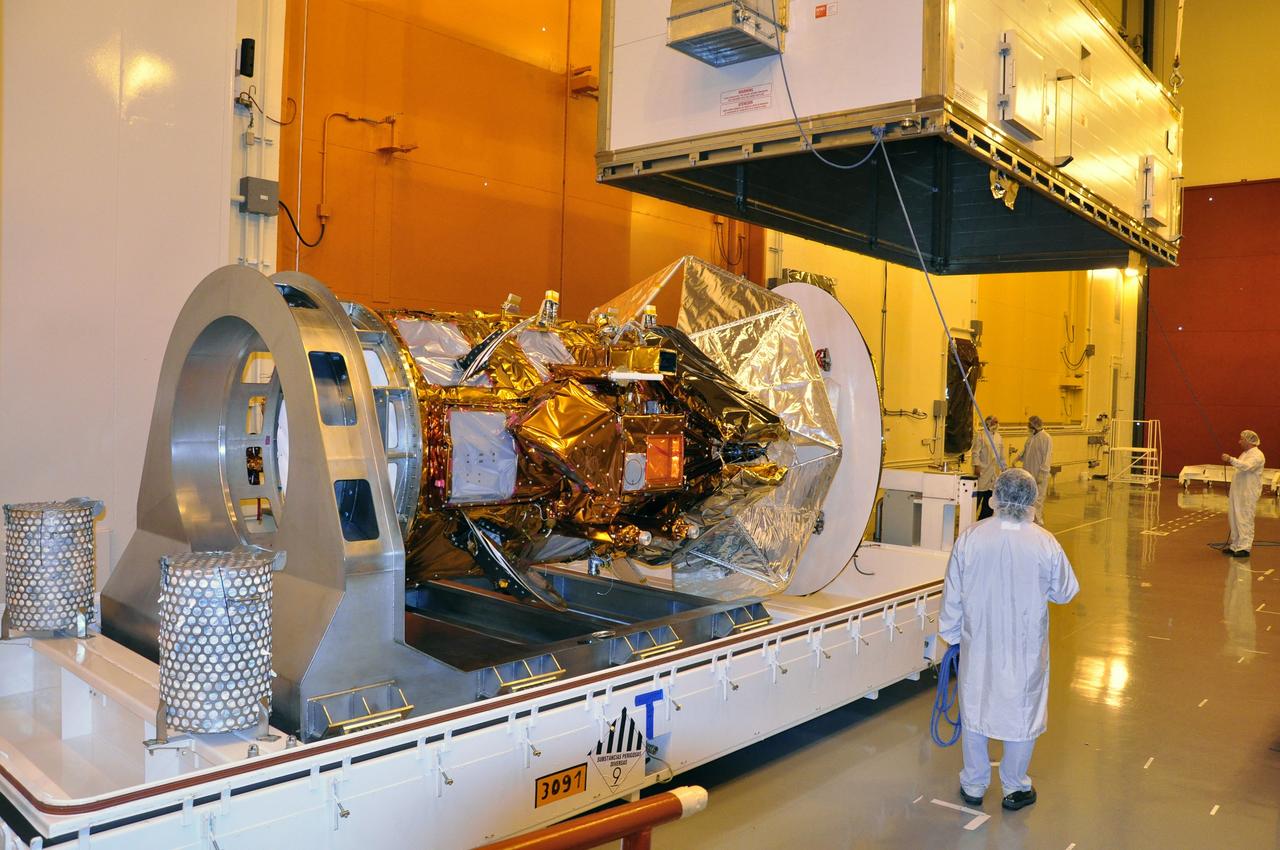
VANDENBERG AIR FORCE BASE, Calif. -- The Aquarius/SAC-D spacecraft is unpacked and unveiled in the Spaceport Systems International payload processing facility at Vandenberg Air Force Base in California. The container protected the spacecraft on its journey from Campos, Brazil, aboard a U.S. Air Force C-17 transport plane. Following final tests, the spacecraft will be integrated to a United Launch Alliance Delta II rocket in preparation for the targeted June launch to low Earth orbit. Aquarius, the NASA-built primary instrument on the SAC-D spacecraft, will map global changes in salinity at the ocean's surface. Salinity is a key measurement for understanding how changes in rainfall, evaporation and the melting of freezing of ice influence ocean circulation and are linked to variations in Earth's climate. The three-year mission will provide new insights into how variations in ocean surface salinity relate to these fundamental climate processes. Photo credit: NASA/Randy Beaudoin, VAFB
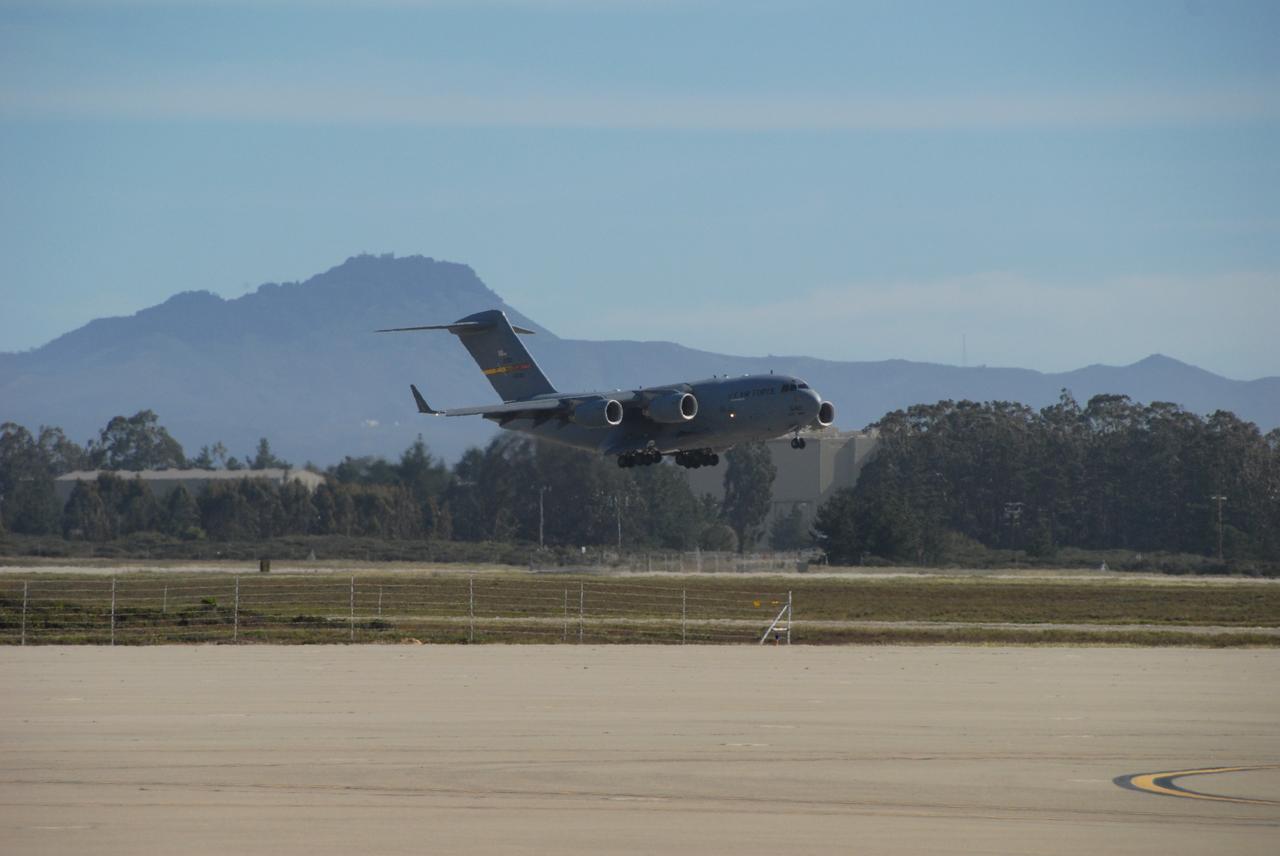
VANDENBERG AIR FORCE BASE, Calif. -- The Aquarius/SAC-D spacecraft arrives at Vandenberg Air Force Base in California from Campos, Brazil, aboard a U.S. Air Force C-17 transport plane. Following final tests, the spacecraft will be integrated to a United Launch Alliance Delta II rocket in preparation for the targeted June launch to low Earth orbit. Aquarius, the NASA-built primary instrument on the SAC-D spacecraft, will map global changes in salinity at the ocean's surface. Salinity is a key measurement for understanding how changes in rainfall, evaporation and the melting of freezing of ice influence ocean circulation and are linked to variations in Earth's climate. The three-year mission will provide new insights into how variations in ocean surface salinity relate to these fundamental climate processes. Photo credit: VAFB/30th Space Wing
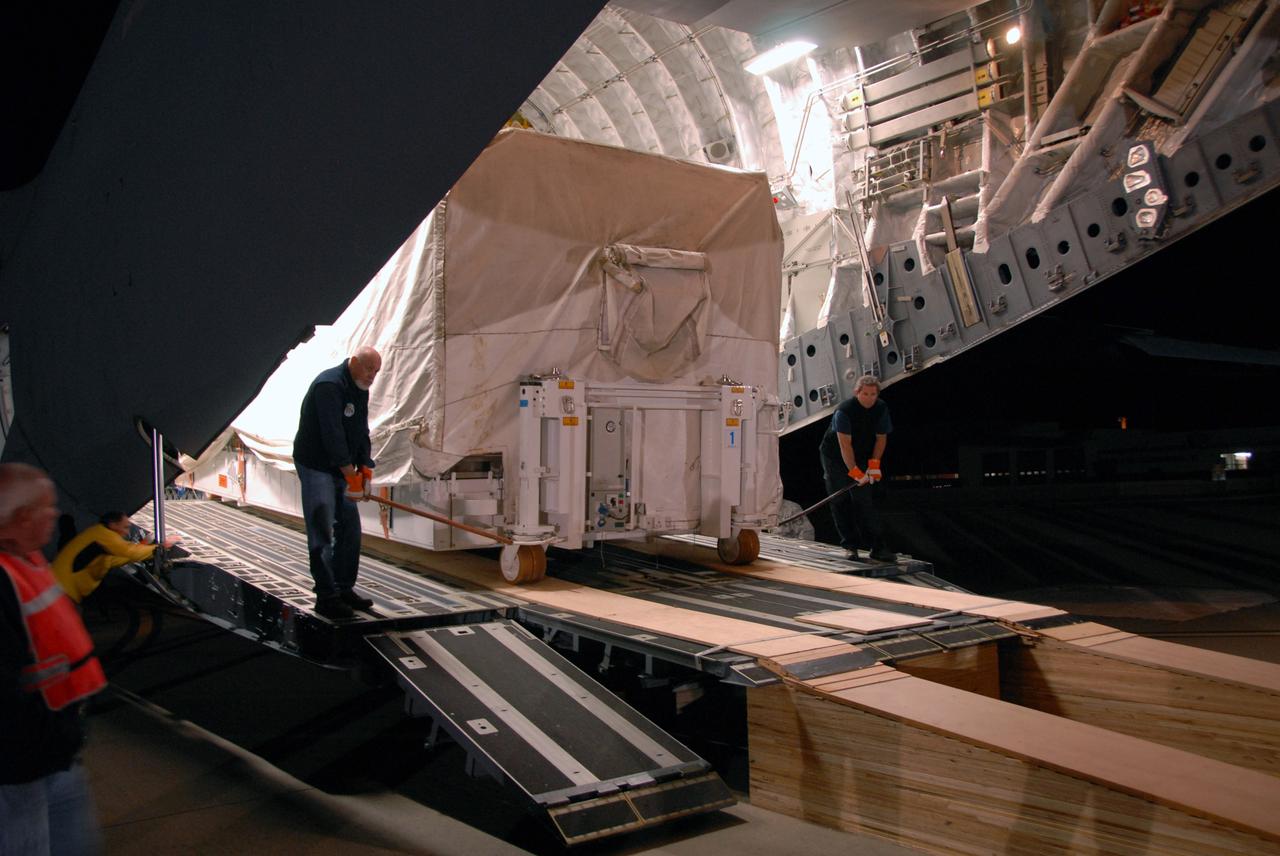
VANDENBERG AIR FORCE BASE, Calif. -- The Aquarius/SAC-D spacecraft is offloaded from a U.S. Air Force C-17 transport at Vandenberg Air Force Base in California. The aircraft traveled from Campos, Brazil. Following final tests, the spacecraft will be integrated to a United Launch Alliance Delta II rocket in preparation for the targeted June launch to low Earth orbit. Aquarius, the NASA-built primary instrument on the SAC-D spacecraft, will map global changes in salinity at the ocean's surface. Salinity is a key measurement for understanding how changes in rainfall, evaporation and the melting of freezing of ice influence ocean circulation and are linked to variations in Earth's climate. The three-year mission will provide new insights into how variations in ocean surface salinity relate to these fundamental climate processes. Photo credit: VAFB/30th Space Wing
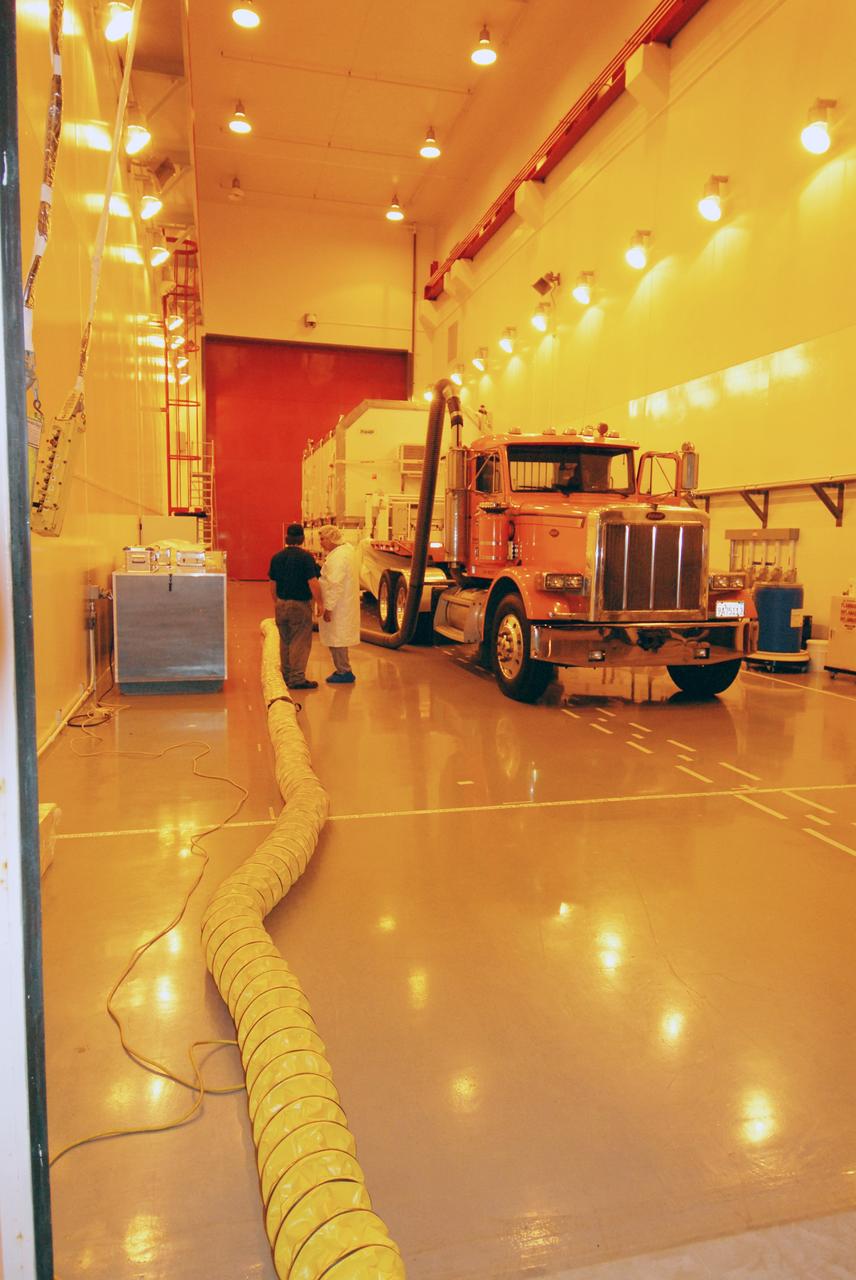
VANDENBERG AIR FORCE BASE, Calif. -- The Aquarius/SAC-D spacecraft is in the Spaceport Systems International payload processing facility at Vandenberg Air Force Base in California. Earlier, a U.S. Air Force C-17 transport plane delivered the spacecraft from Campos, Brazil. Following final tests, the spacecraft will be integrated to a United Launch Alliance Delta II rocket in preparation for the targeted June launch to low Earth orbit. Aquarius, the NASA-built primary instrument on the SAC-D spacecraft, will map global changes in salinity at the ocean's surface. Salinity is a key measurement for understanding how changes in rainfall, evaporation and the melting of freezing of ice influence ocean circulation and are linked to variations in Earth's climate. The three-year mission will provide new insights into how variations in ocean surface salinity relate to these fundamental climate processes. Photo credit: VAFB/30th Space Wing
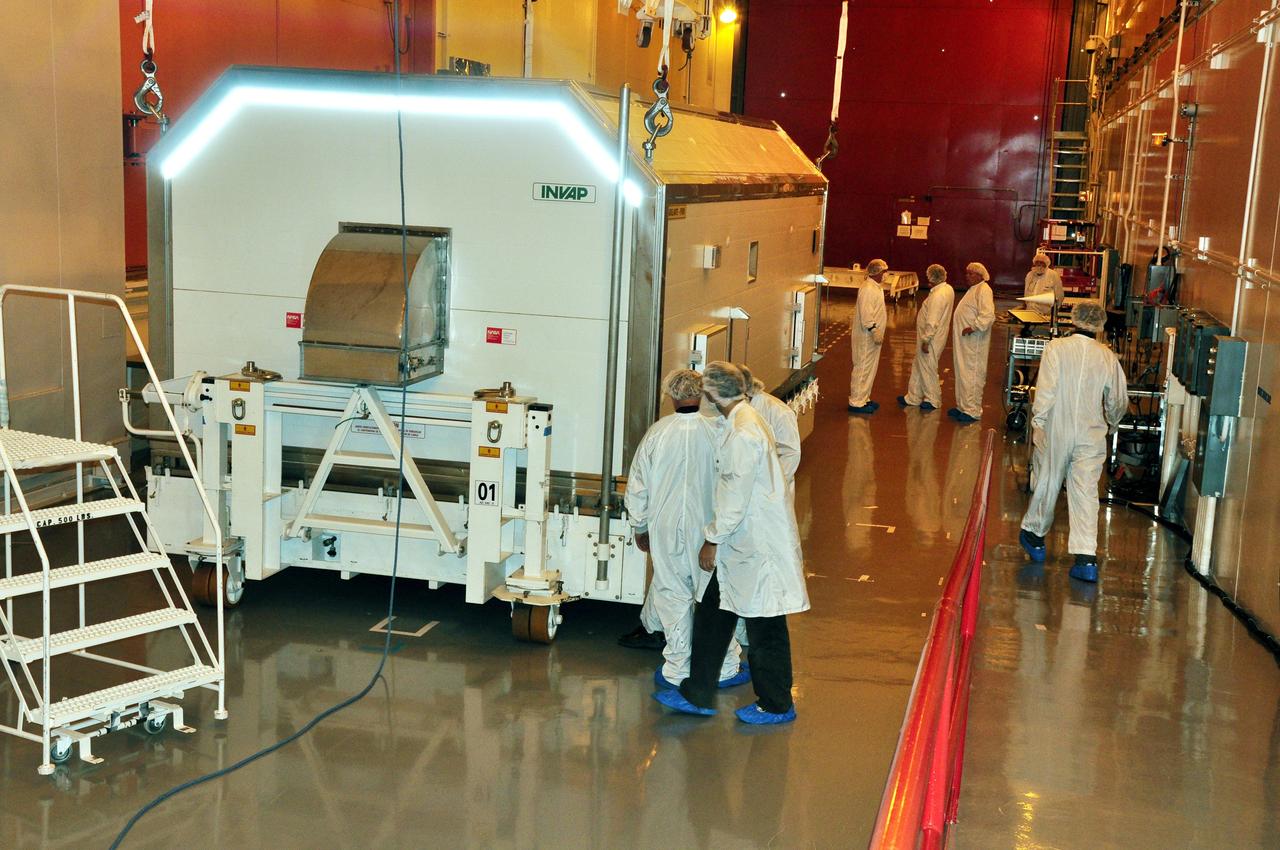
VANDENBERG AIR FORCE BASE, Calif. -- Technicians prepare to unpack and unveil the Aquarius/SAC-D spacecraft in the Spaceport Systems International payload processing facility at Vandenberg Air Force Base in California. The container protected the spacecraft on its journey from Campos, Brazil, aboard a U.S. Air Force C-17 transport plane. Following final tests, the spacecraft will be integrated to a United Launch Alliance Delta II rocket in preparation for the targeted June launch to low Earth orbit. Aquarius, the NASA-built primary instrument on the SAC-D spacecraft, will map global changes in salinity at the ocean's surface. Salinity is a key measurement for understanding how changes in rainfall, evaporation and the melting of freezing of ice influence ocean circulation and are linked to variations in Earth's climate. The three-year mission will provide new insights into how variations in ocean surface salinity relate to these fundamental climate processes. Photo credit: NASA/Randy Beaudoin, VAFB