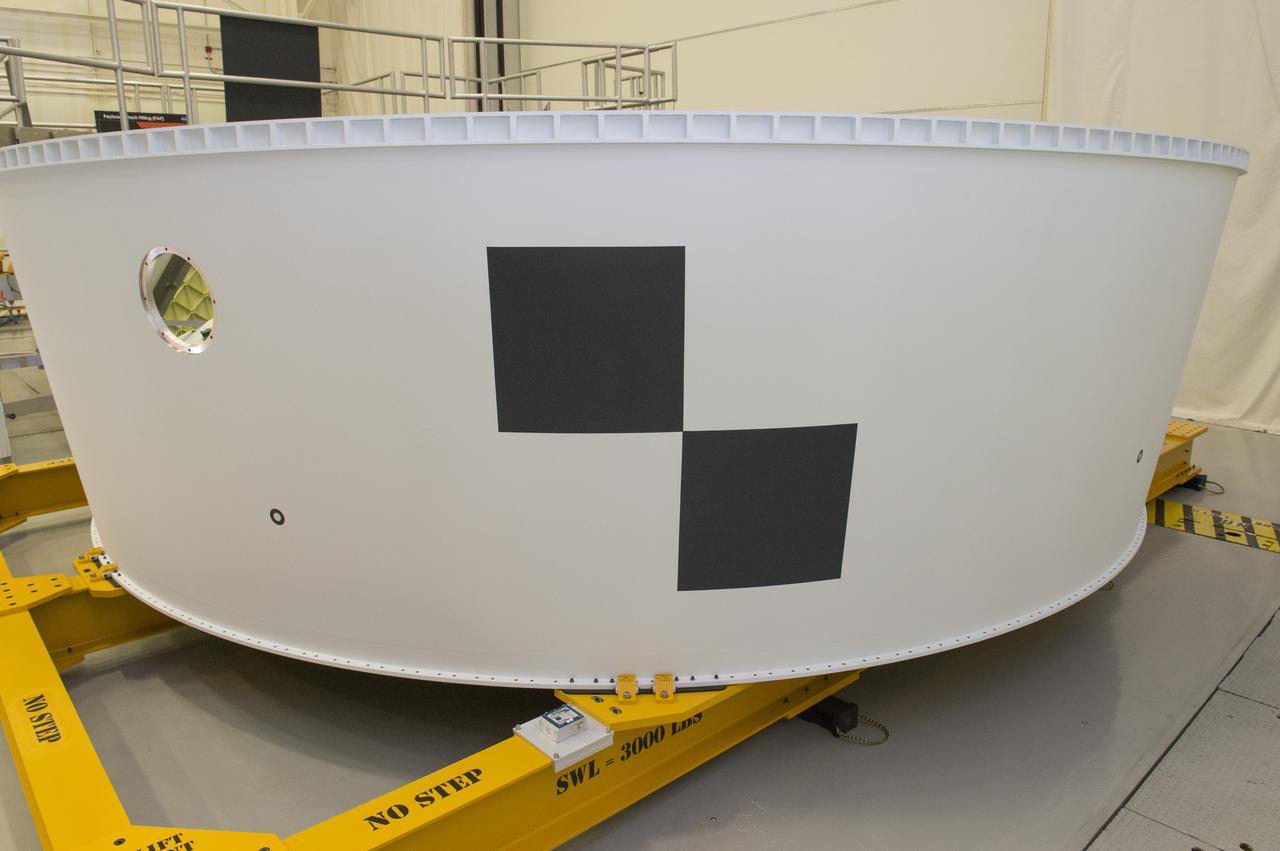
General overview and detail, Close-Out, photos of the SLS Orion Stage Adapter EM-1...exterior overall views (5)
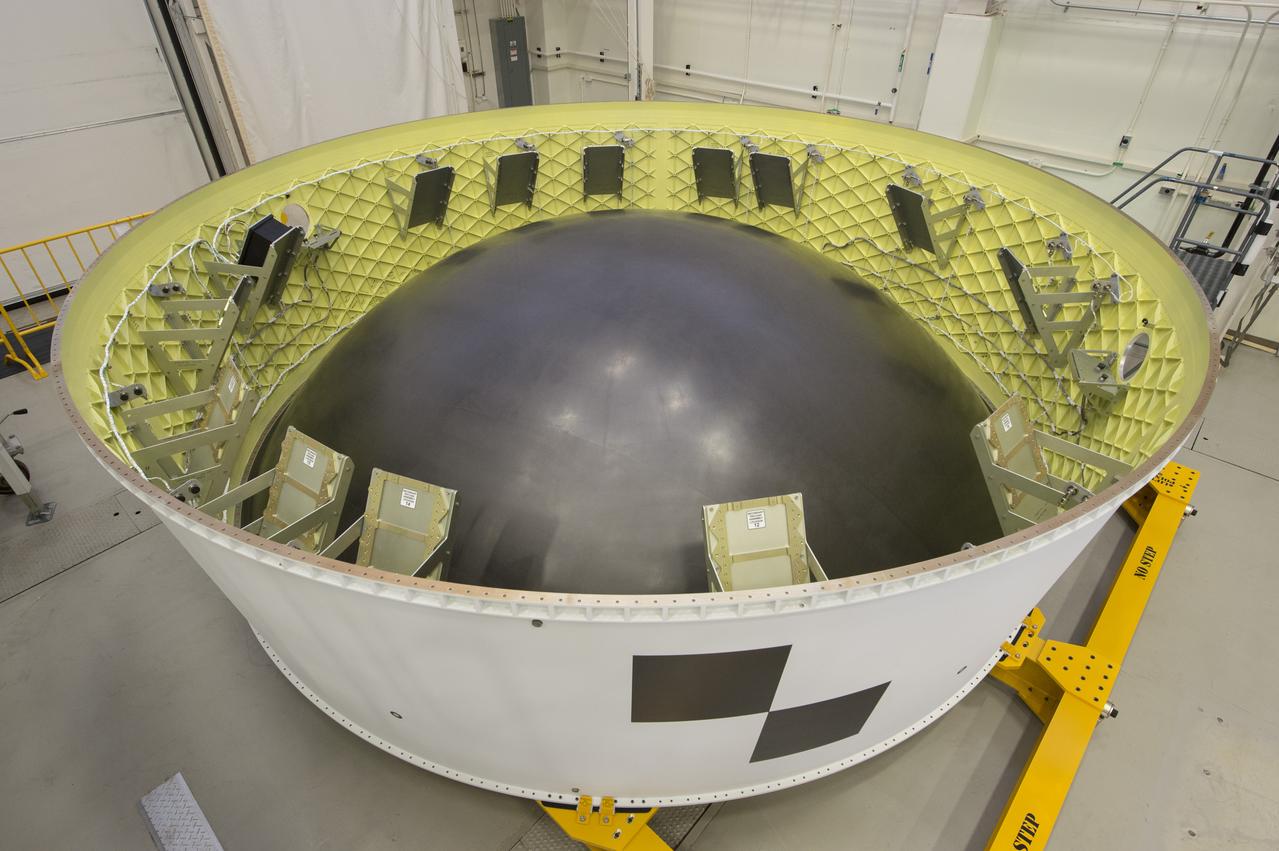
General overview and detail, Close-Out, photos of the SLS Orion Stage Adapter EM-1...exterior overall views (5)
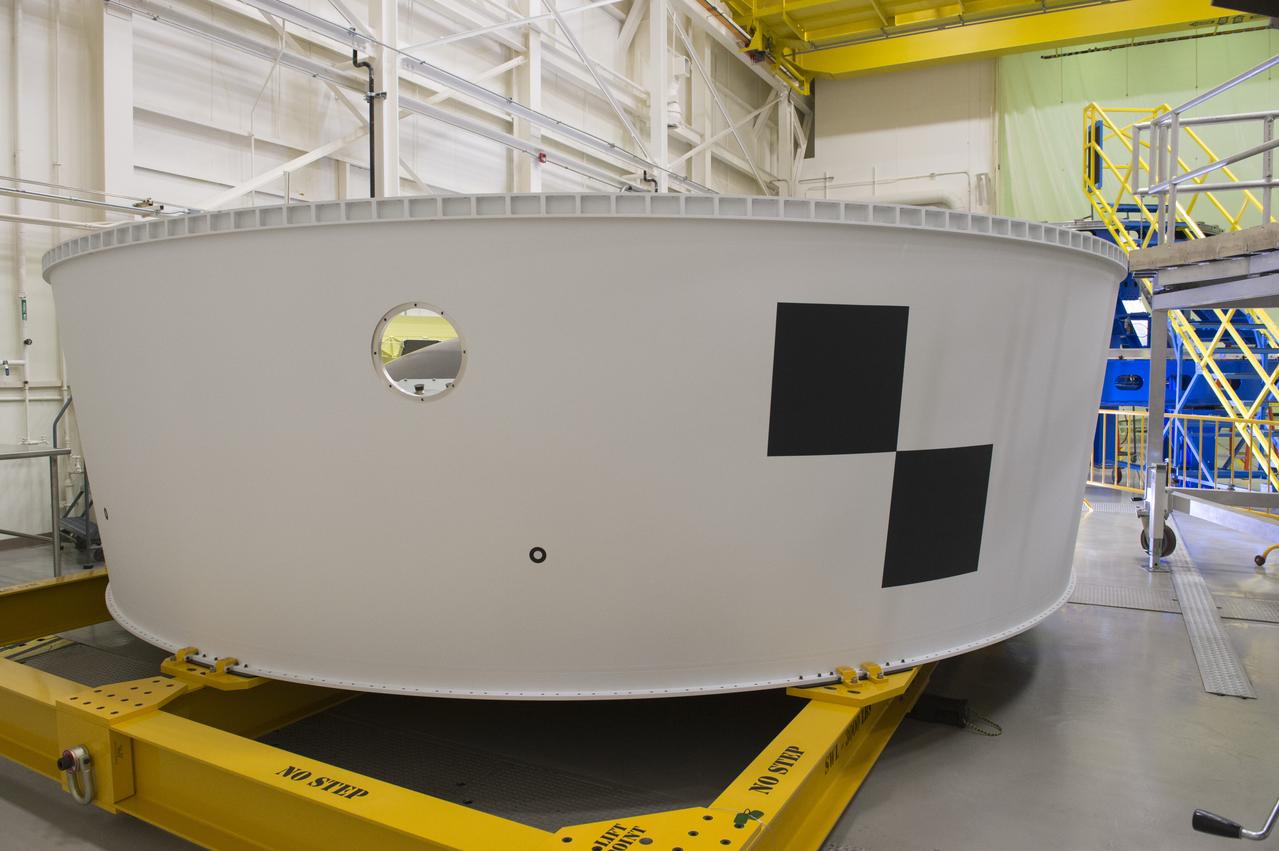
General overview and detail, Close-Out, photos of the SLS Orion Stage Adapter EM-1...exterior overall views (5)
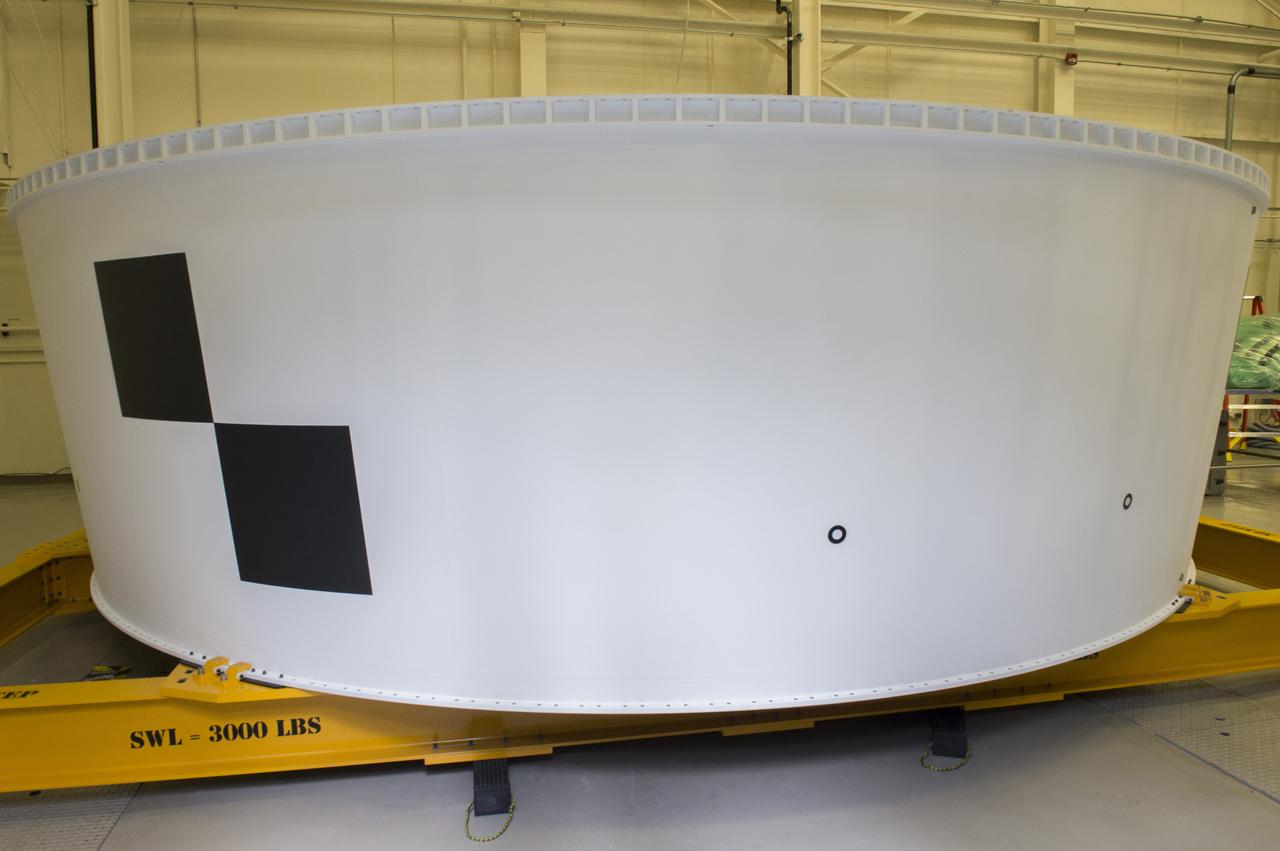
General overview and detail, Close-Out, photos of the SLS Orion Stage Adapter EM-1...exterior overall views (5)
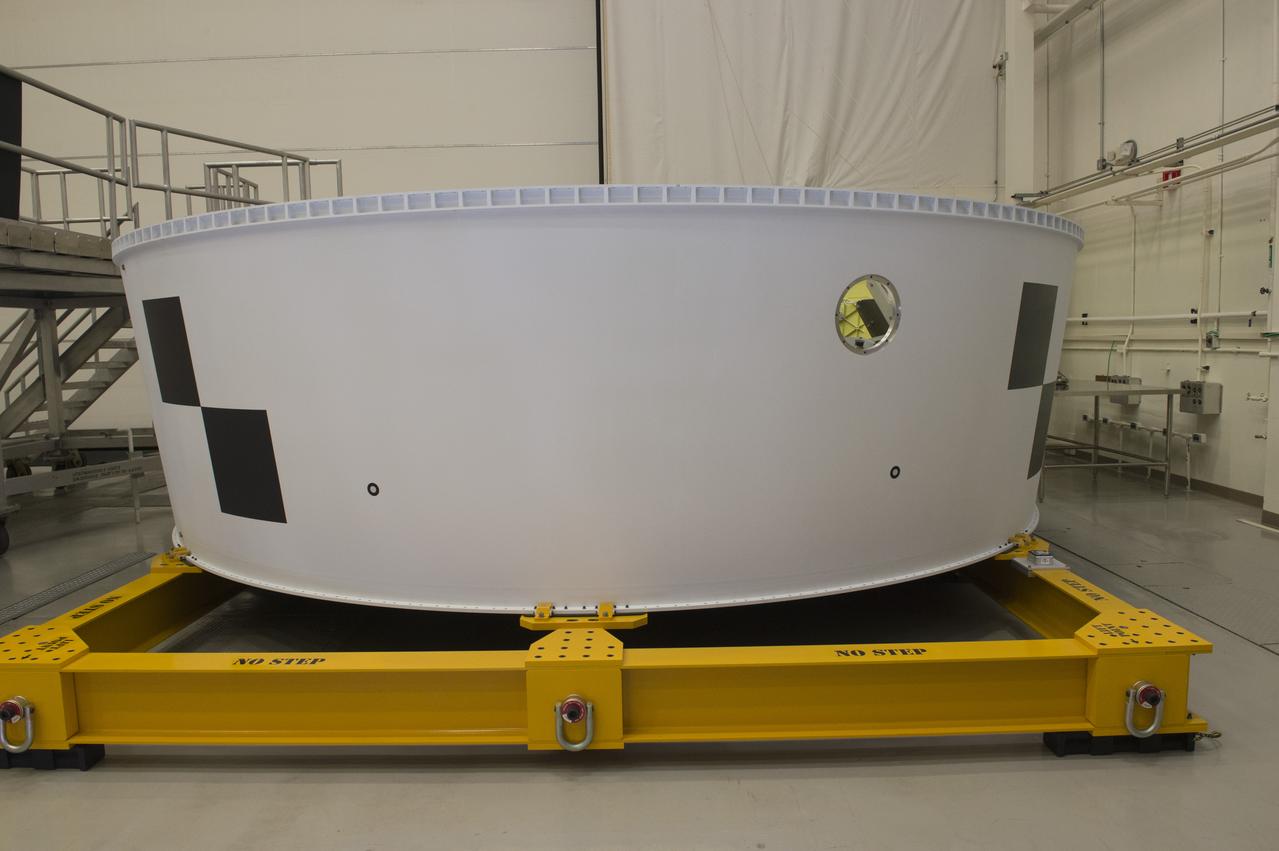
General overview and detail, Close-Out, photos of the SLS Orion Stage Adapter EM-1...exterior overall views (5)
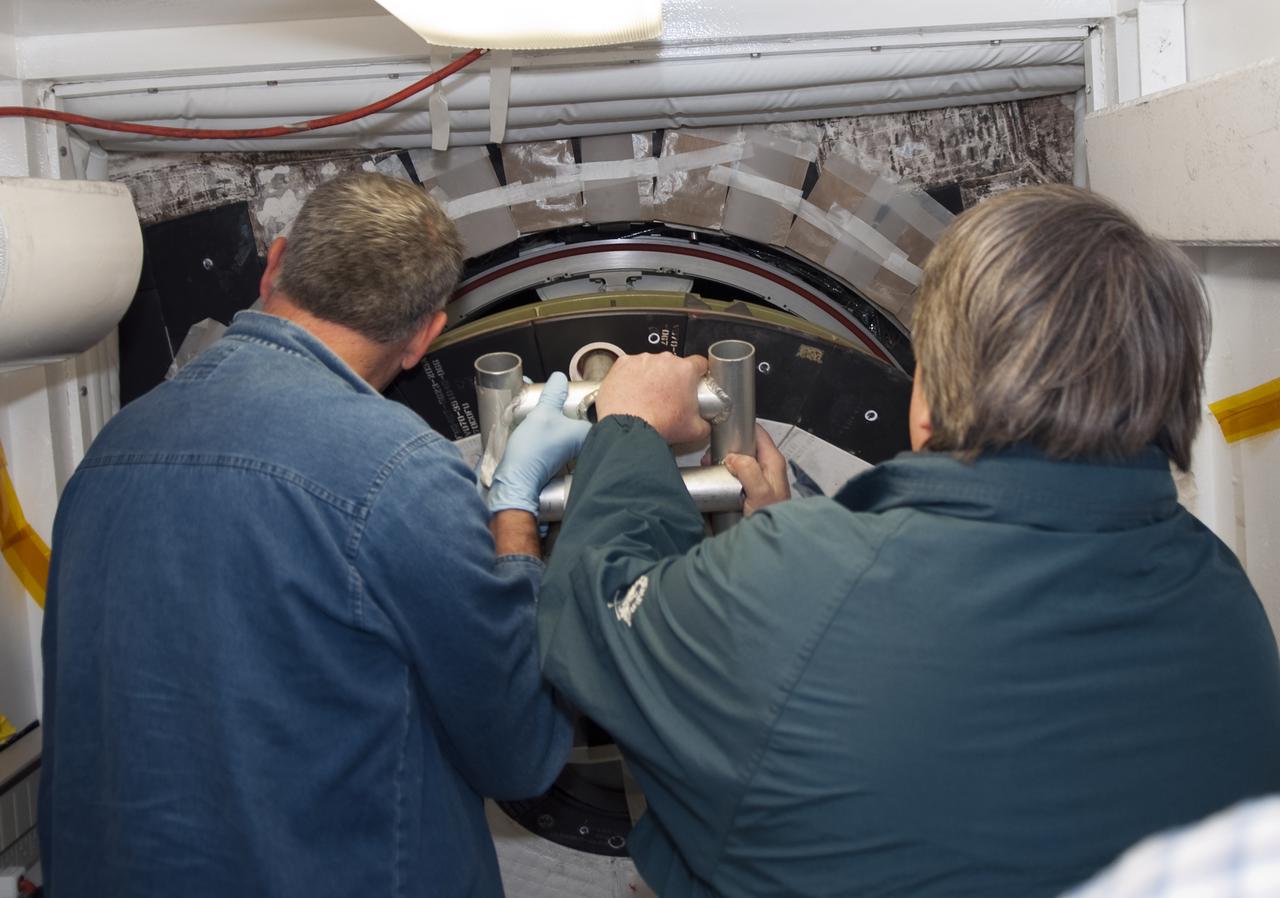
CAPE CANAVERAL, Fla. - Inside Orbiter Processing Facility-1 at Kennedy Space Center in Florida, technicians close shuttle Atlantis’ hatch in preparation for the Mylar Pull Test. During the test, the hatch is closed and a scale is used to measure the force required to pull a piece of Mylar paper out from between the door and structural wall thermal barriers. The pull test is performed to ensure the integrity of the hatch and that it has closed properly. Atlantis is being processed for the STS-132 mission targeted for launch May 14. The six-member crew will deliver an Integrated Cargo Carrier and a Russian-built Mini Research Module to the International Space Station. Photo credit: NASA_Jim Grossmann

S66-24406 (16 March 1966) --- Close-up view of astronaut David R. Scott, pilot of the Gemini-8 spaceflight, making final adjustments and checks in the spacecraft during the Gemini-8 prelaunch countdown. In the background almost out of view is astronaut Neil A. Armstrong, command pilot. Photo credit: NASA

STS039-11-027 (28 April-6 May 1991) --- Astronaut Michael L. Coats, STS-39 mission commander, is seen in a close-up 35mm frame on the aft flight deck of the Earth-orbiting space shuttle Discovery. Out the overhead window, the SPAS-II hovers on the end of the remote manipulator system (RMS, out of frame). Inside the window, just above Coats' head is the Crewman Optical Alignment Sight (COAS), an optical device that aids in navigation. Photo credit: NASA

Space shuttle Atlantis is seen as it rolls out of the Vehicle Assembly Building to start its trip to its new home at the Kennedy Space Center Visitor Complex, Friday, Nov. 2, 2012, in Cape Canaveral, Fla. The spacecraft traveled 125,935,769 miles during 33 spaceflights, including 12 missions to the International Space Station. Its final flight, STS-135, closed out the Space Shuttle Program era with a landing on July 21, 2011. Photo Credit: (NASA/Bill Ingalls)
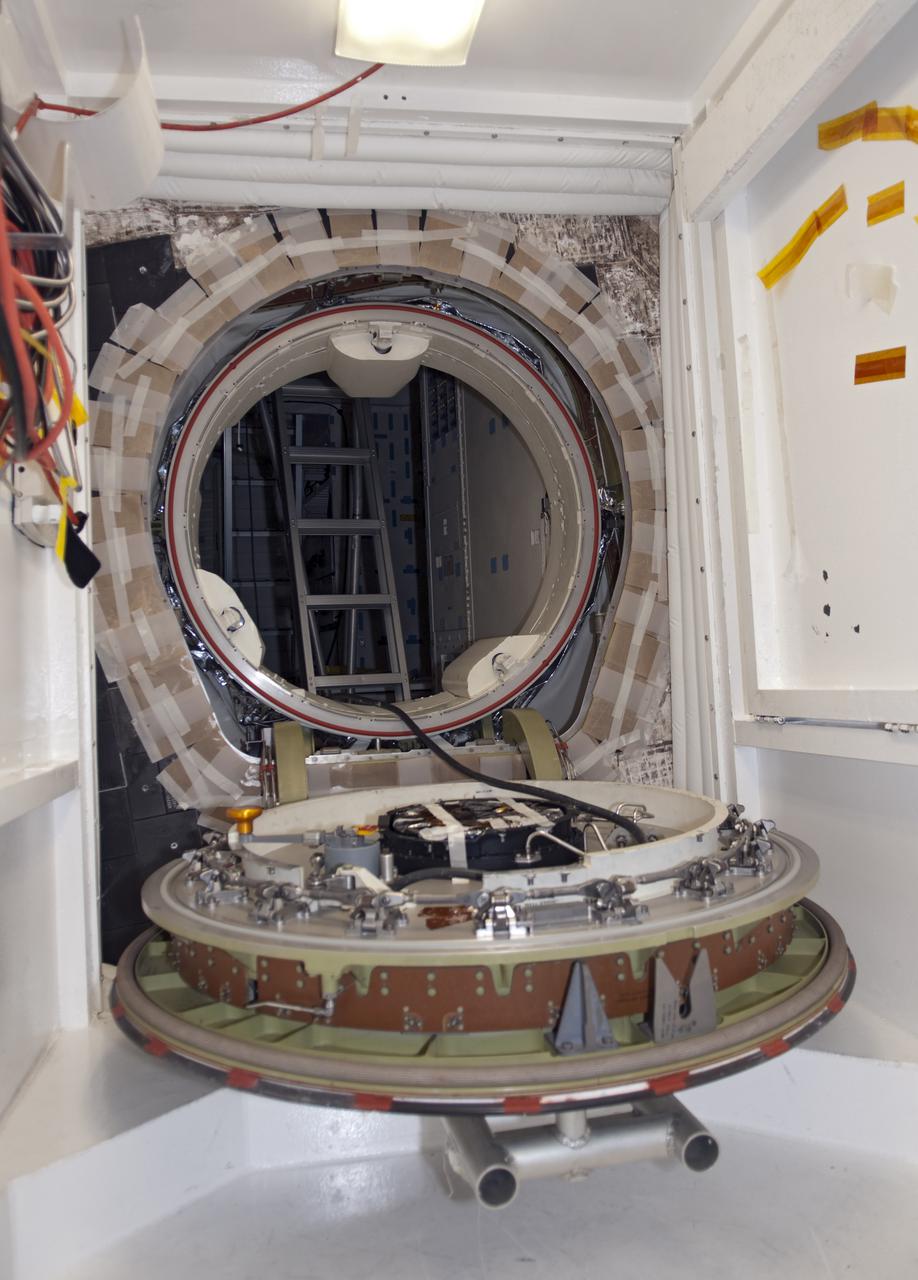
CAPE CANAVERAL, Fla. - Inside Orbiter Processing Facility-1 at Kennedy Space Center in Florida, shuttle Atlantis’ hatch closure is in the open position in preparation for the Mylar Pull Test. During the test, the hatch is closed and a scale is used to measure the force required to pull a piece of Mylar paper out from between the door and structural wall thermal barriers. The pull test is performed to ensure the integrity of the hatch and that it has closed properly. Atlantis is being processed for the STS-132 mission targeted for launch May 14. The six-member crew will deliver an Integrated Cargo Carrier and a Russian-built Mini Research Module to the International Space Station. Photo credit: NASA_Jim Grossmann

Military personnel salute as Searra Weeks, from Kennedy Middle School, sings the National Anthem, at the signing ceremony for space shuttle Atlantis, background, Friday, Nov. 2, 2012, in Cape Canaveral, Fla. The spacecraft traveled 125,935,769 miles during 33 spaceflights, including 12 missions to the International Space Station. Its final flight, STS-135, closed out the Space Shuttle Program era with a landing on July 21, 2011. Photo Credit: (NASA/Bill Ingalls)
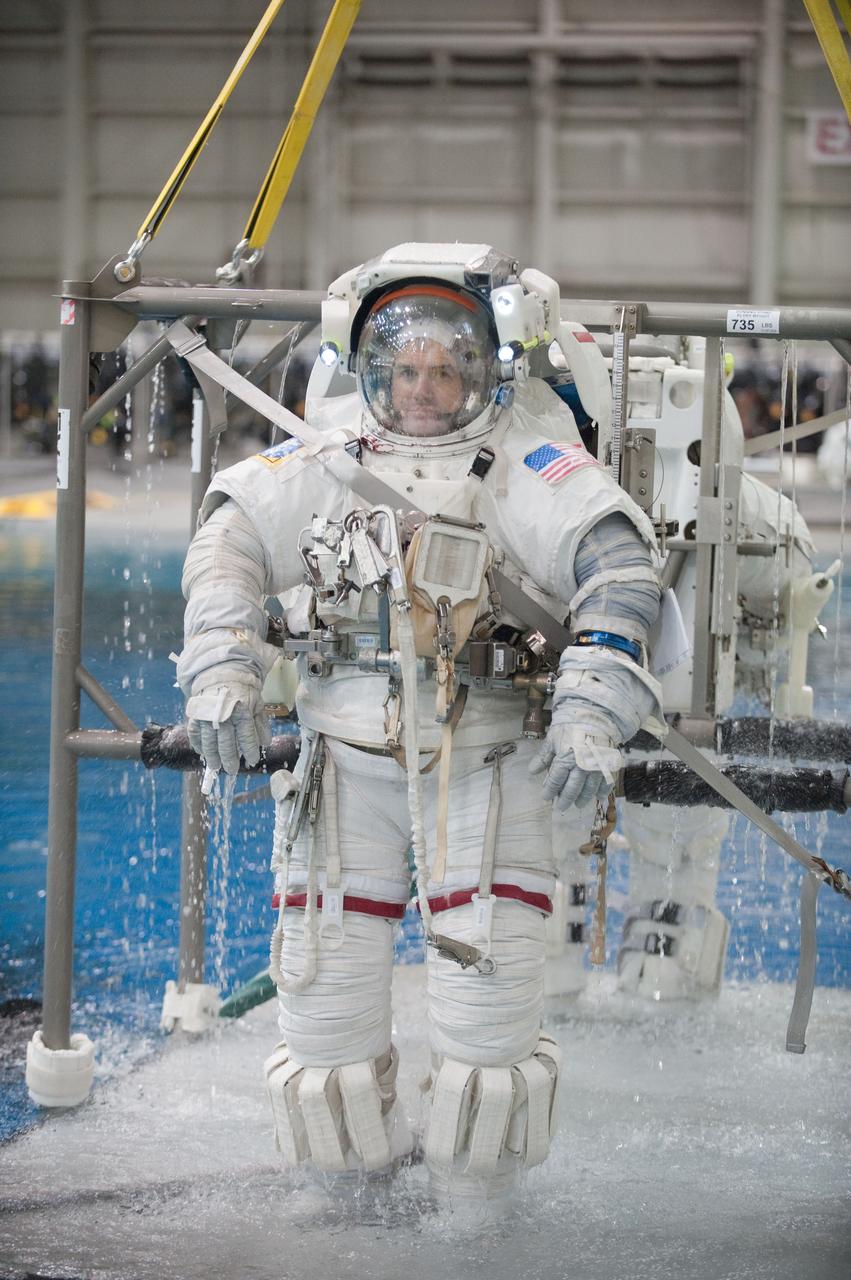
JSC2011-E-054092 (13 June 2011) --- NASA astronauts Rex Walheim and Sandy Magnus (mostly obscured), both STS-135 mission specialists, attired in training versions of their Extravehicular Mobility Unit (EMU) spacesuits, are raised from the waters of the Neutral Buoyancy Laboratory (NBL) near NASA's Johnson Space Center as a spacewalk training session comes to a close. Divers (out of frame) were in the water to assist Magnus and Walheim in their rehearsal. Photo credit: NASA

NASA Administrator Charles Bolden speaks with NASA Social attendees during the move of space shuttle Atlantis, Friday, Nov. 2, 2012, at Kennedy Space Center in Cape Canaveral, Fla. The spacecraft traveled 125,935,769 miles during 33 spaceflights, including 12 missions to the International Space Station. Its final flight, STS-135, closed out the Space Shuttle Program era with a landing on July 21, 2011. Photo Credit: (NASA/Bill Ingalls)

Kennedy Space Center Director Robert Cabana, left, and NASA Administrator Charles Bolden talk about space shuttle Atlantis, Friday, Nov. 2, 2012, in Cape Canaveral, Fla. The spacecraft traveled 125,935,769 miles during 33 spaceflights, including 12 missions to the International Space Station. Its final flight, STS-135, closed out the Space Shuttle Program era with a landing on July 21, 2011. Photo Credit: (NASA/Bill Ingalls)

Kennedy Space Center Director Robert Cabana speaks at the signing ceremony for space shuttle Atlantis, background, Friday, Nov. 2, 2012, in Cape Canaveral, Fla. The spacecraft traveled 125,935,769 miles during 33 spaceflights, including 12 missions to the International Space Station. Its final flight, STS-135, closed out the Space Shuttle Program era with a landing on July 21, 2011. Photo Credit: (NASA/Bill Ingalls)

Onlookers wearing commemorative t-shirts watch as space shuttle Atlantis rolls to ts new home at the Kennedy Space Center Visitor Complex, early Friday, Nov. 2, 2012, in Cape Canaveral, Fla. The spacecraft traveled 125,935,769 miles during 33 spaceflights, including 12 missions to the International Space Station. Its final flight, STS-135, closed out the Space Shuttle Program era with a landing on July 21, 2011. Photo Credit: (NASA/Bill Ingalls)
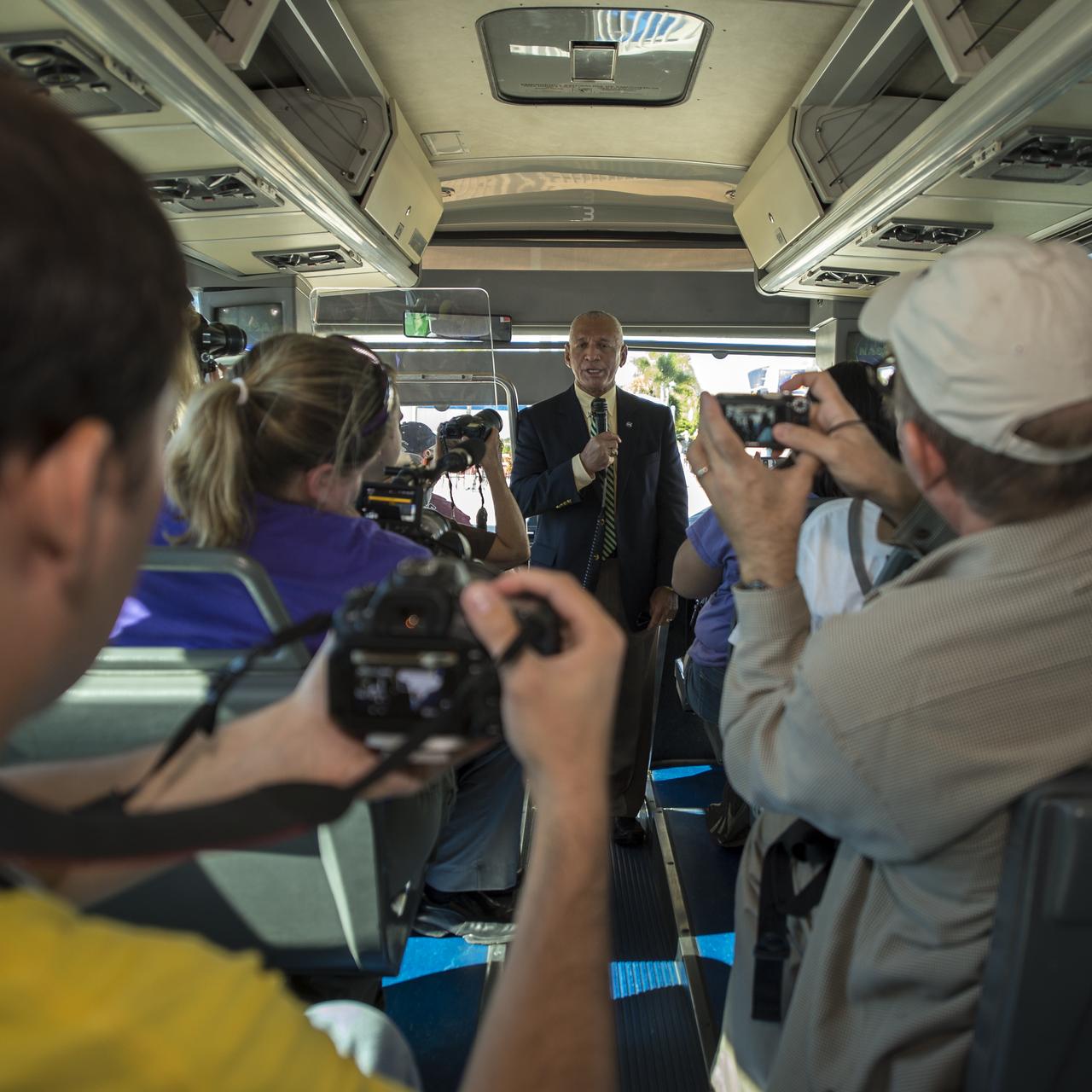
NASA Administrator Charles Bolden speaks with NASA Social attendees during the move of space shuttle Atlantis, Friday, Nov. 2, 2012, at Kennedy Space Center in Cape Canaveral, Fla. The spacecraft traveled 125,935,769 miles during 33 spaceflights, including 12 missions to the International Space Station. Its final flight, STS-135, closed out the Space Shuttle Program era with a landing on July 21, 2011. Photo Credit: (NASA/Bill Ingalls)

Space shuttle Atlantis is seen during its trip to its new home at the Kennedy Space Center Visitor Complex, early Friday, Nov. 2, 2012, in Cape Canaveral, Fla. The spacecraft traveled 125,935,769 miles during 33 spaceflights, including 12 missions to the International Space Station. Its final flight, STS-135, closed out the Space Shuttle Program era with a landing on July 21, 2011. Photo Credit: (NASA/Bill Ingalls)
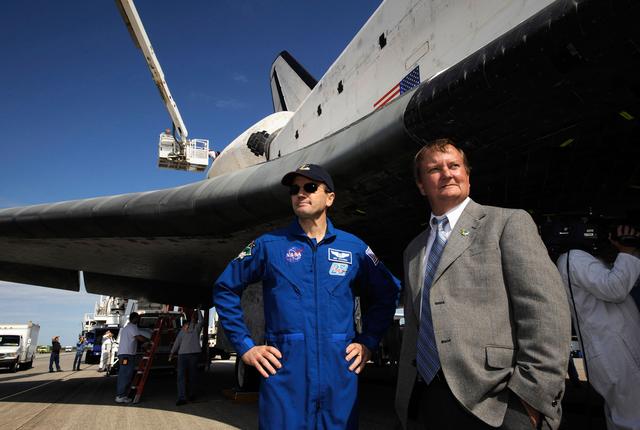
STS-122 Mission Specialist, Rex Walheim, left, and Shuttle Launch Director, Michael D. Leinbach take a moment to watch the close out crew work on the space shuttle Atlantis. Atlantis landed at the Shuttle Landing Facility, 9:07a.m., Wednesday, Feb. 20, 2008 at Kennedy Space Center, Fla. completing delivery of the European Space Agency’s (ESA) Columbus laboratory to the International Space Station. Photo Credit: (NASA/Bill Ingalls)

Onlookers watch as space shuttle Atlantis rolls to its new home at the Kennedy Space Center Visitor Complex, early Friday, Nov. 2, 2012, in Cape Canaveral, Fla. The spacecraft traveled 125,935,769 miles during 33 spaceflights, including 12 missions to the International Space Station. Its final flight, STS-135, closed out the Space Shuttle Program era with a landing on July 21, 2011. Photo Credit: (NASA/Bill Ingalls)

Space shuttle Atlantis, (OV-104), is seen as it begins its trip to its new home at the Kennedy Space Center Visitor Complex, early Friday, Nov. 2, 2012, in Cape Canaveral, Fla. The spacecraft traveled 125,935,769 miles during 33 spaceflights, including 12 missions to the International Space Station. Its final flight, STS-135, closed out the Space Shuttle Program era with a landing on July 21, 2011. Photo Credit: (NASA/Bill Ingalls)
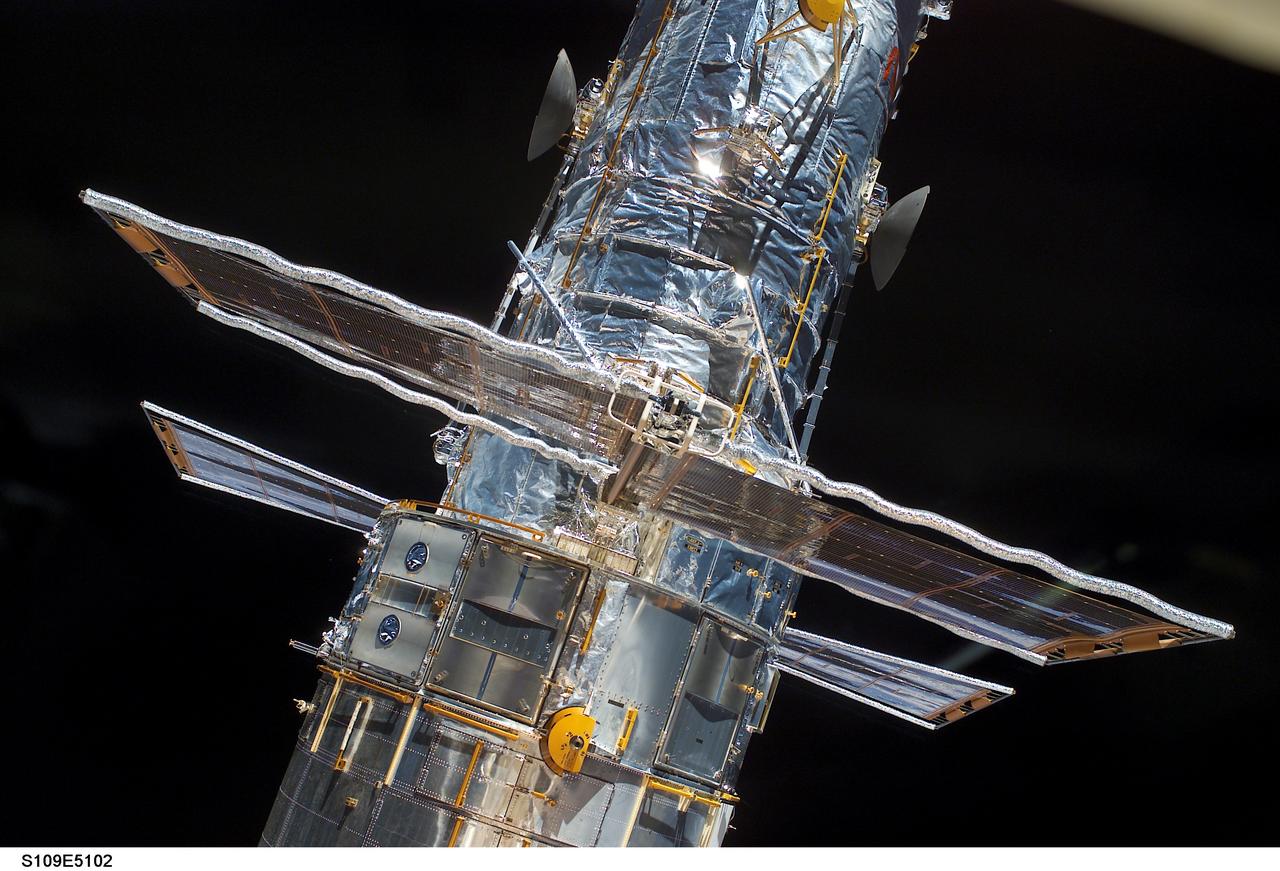
STS109-E-5102 (3 March 2002) --- The Hubble Space Telescope is seen in the cargo bay of the Space Shuttle Columbia. Each present set of solar array panels will be replaced during one of the space walks planned for the coming week. The crew aimed various cameras, including the digital still camera used for this frame, out the shuttle's aft flight deck windows to take a series of survey type photos, the first close-up images of the telescope since December of 1999.

Space shuttle Atlantis is seen as it rolls down Kennedy Parkway on its way to its new home at the Kennedy Space Center Visitor Complex, Friday, Nov. 2, 2012, in Cape Canaveral, Fla. The spacecraft traveled 125,935,769 miles during 33 spaceflights, including 12 missions to the International Space Station. Its final flight, STS-135, closed out the Space Shuttle Program era with a landing on July 21, 2011. Photo Credit: (NASA/Bill Ingalls)

Space shuttle Atlantis is seen near the Orbiter Processing Facility during its trip to its new home at the Kennedy Space Center Visitor Complex, early Friday, Nov. 2, 2012, in Cape Canaveral, Fla. The spacecraft traveled 125,935,769 miles during 33 spaceflights, including 12 missions to the International Space Station. Its final flight, STS-135, closed out the Space Shuttle Program era with a landing on July 21, 2011. Photo Credit: (NASA/Bill Ingalls)
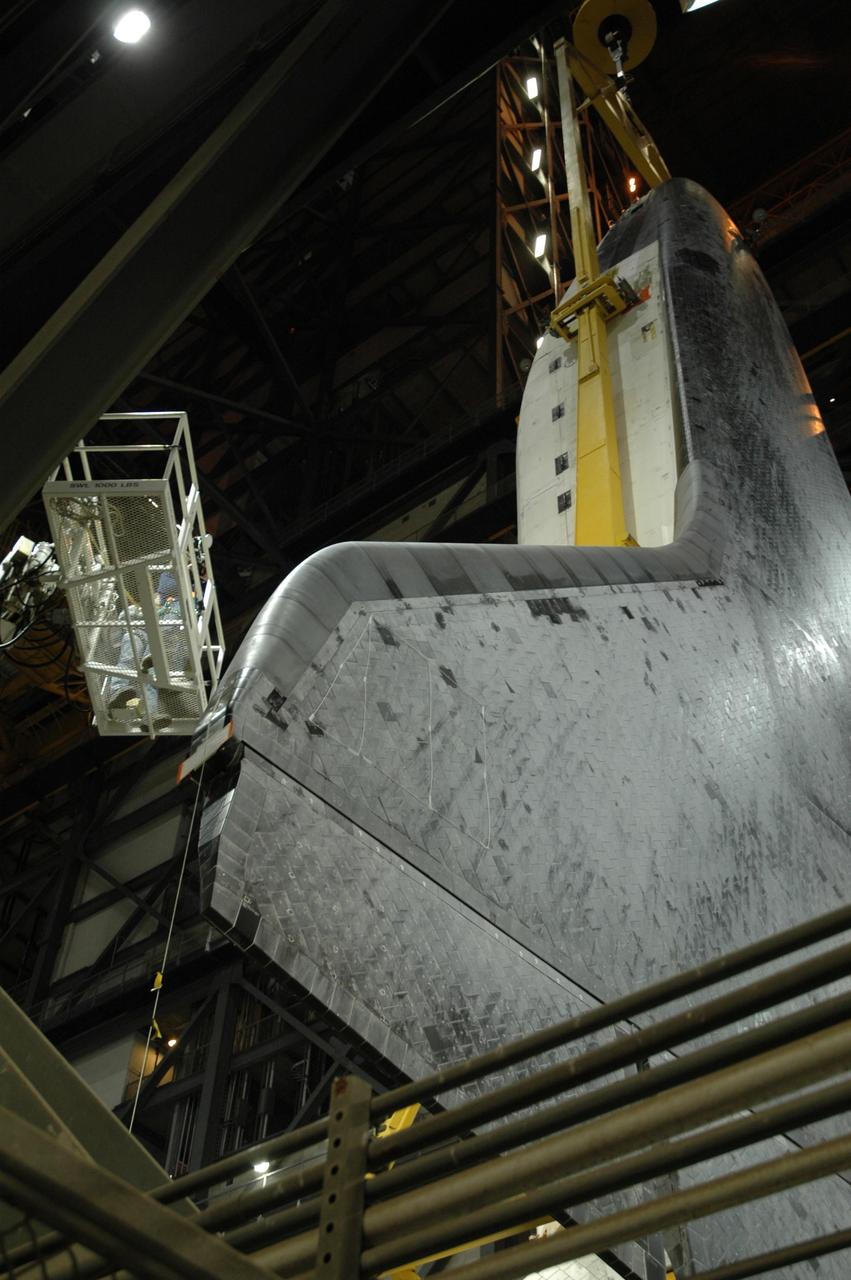
KENNEDY SPACE CENTER, FLA. -- In the transfer aisle of the Vehicle Assembly Building, workers take a close look at the orbiter Atlantis before it is lifted up into high bay 1. After the lift, it will be lowered onto the mobile launcher platform where the external tank and solid rocket boosters are already stacked. Space Shuttle Atlantis is targeted to roll out to Launch Pad 39A on February 14 for mission STS-117. The mission is No. 21 to the International Space Station and construction flight 13A. Photo credit: NASA/Amanda Diller

CAPE CANAVERAL, Fla. – In the Vehicle Assembly Building at NASA's Kennedy Space Center, a technician closely watches the progress of space shuttle Atlantis as it is lowered alongside the external fuel tank in high bay 3. Atlantis will be mated to the tank and twin solid rocket boosters stacked on the mobile launcher platform. After additional preparations are made, the shuttle will be rolled out to Launch Pad 39A to prepare for launch on the STS-125 mission targeted for 1:34 a.m. EDT Oct. 8. Photo credit: NASA/Dimitri Gerondidakis
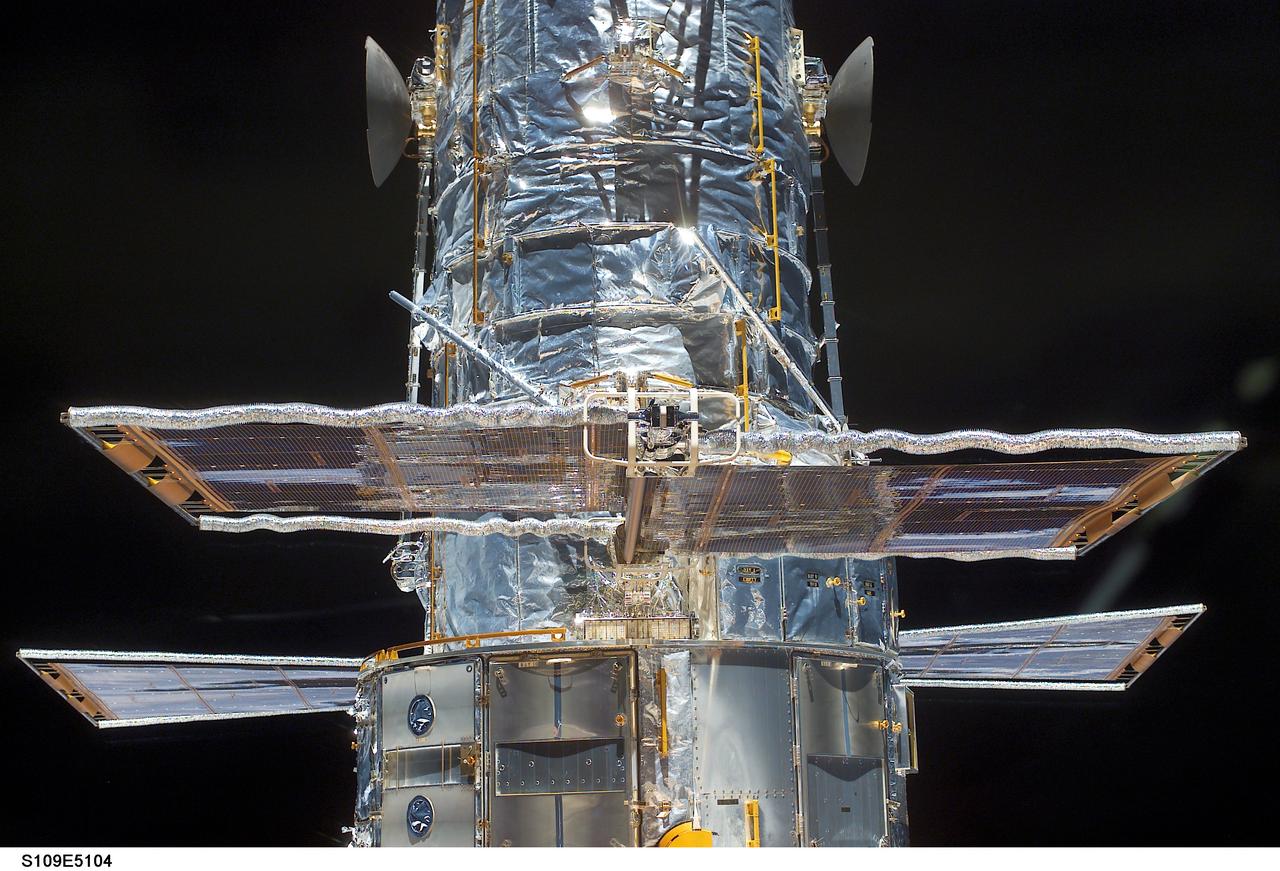
STS109-E-5104 (3 March 2002) --- The Hubble Space Telescope is seen in the cargo bay of the Space Shuttle Columbia. Each present set of solar array panels will be replaced during one of the space walks planned for the coming week. The crew aimed various cameras, including the digital still camera used for this frame, out the shuttle's aft flight deck windows to take a series of survey type photos, the first close-up images of the telescope since December of 1999.

Searra Weeks, from Kennedy Middle School, sings the National Anthem, at the signing ceremony for space shuttle Atlantis, background, Friday, Nov. 2, 2012, in Cape Canaveral, Fla. The spacecraft traveled 125,935,769 miles during 33 spaceflights, including 12 missions to the International Space Station. Its final flight, STS-135, closed out the Space Shuttle Program era with a landing on July 21, 2011. Photo Credit: (NASA/Bill Ingalls)

Space shuttle Atlantis, (OV-104), is seen as it begins its trip to its new home at the Kennedy Space Center Visitor Complex, early Friday, Nov. 2, 2012, in Cape Canaveral, Fla. The spacecraft traveled 125,935,769 miles during 33 spaceflights, including 12 missions to the International Space Station. Its final flight, STS-135, closed out the Space Shuttle Program era with a landing on July 21, 2011. Photo Credit: (NASA/Bill Ingalls)
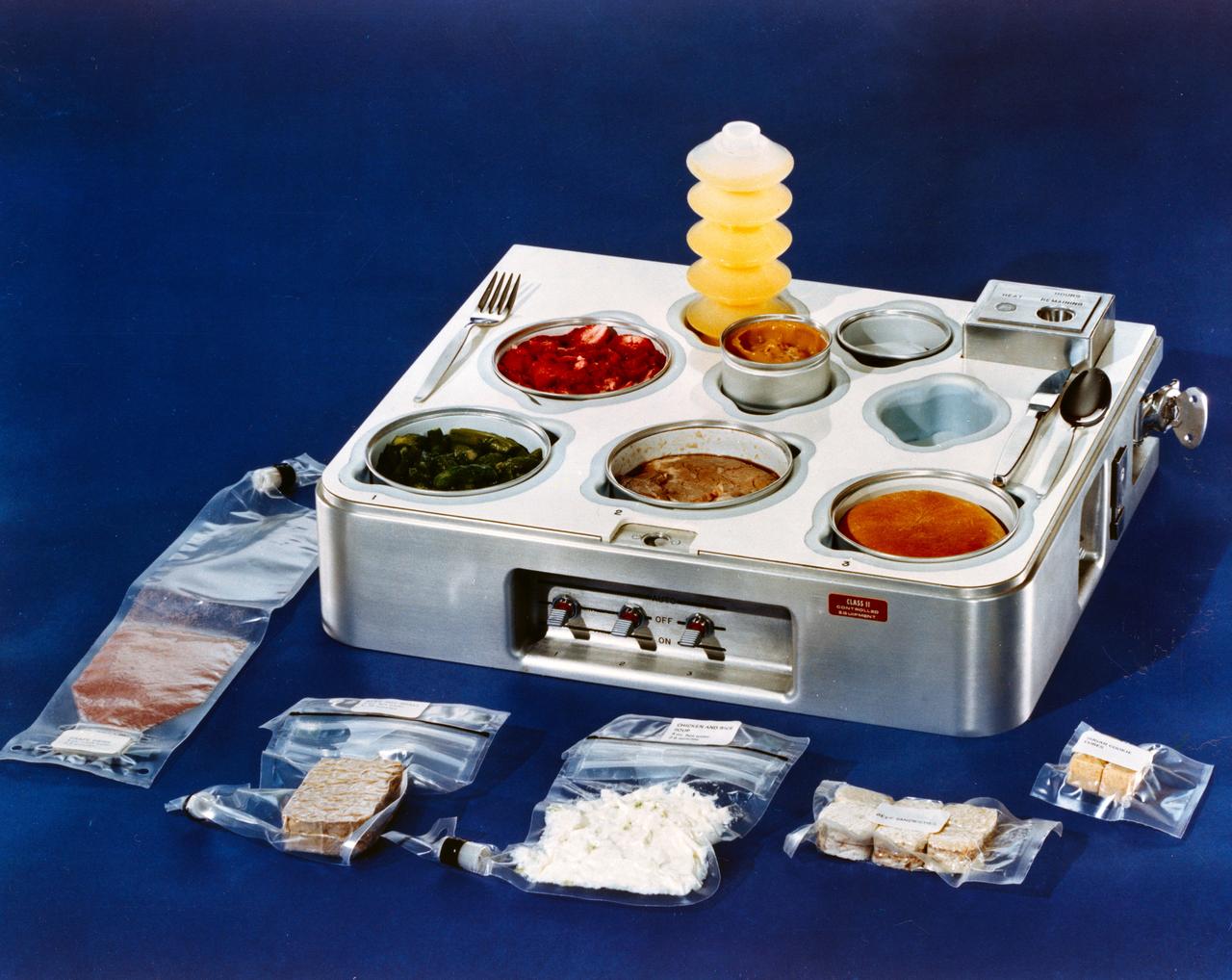
S72-15409 (1972) --- A close-up view of a food tray which is scheduled to be used in the Skylab program. Several packages of space food lie beside the tray. The food in the tray is ready to eat. Out of tray, starting from bottom left: grape drink, beef pot roast, chicken and rice, beef sandwiches and sugar cookie cubes. In tray, from back left: orange drink, strawberries, asparagus, prime rib, dinner roll and butterscotch pudding in the center. Photo credit: NASA

A small color guard carry flags during the procession for space shuttle Atlantis as it makes its way to its new home at the Kennedy Space Center Visitor Complex, early Friday, Nov. 2, 2012, in Cape Canaveral, Fla. The spacecraft traveled 125,935,769 miles during 33 spaceflights, including 12 missions to the International Space Station. Its final flight, STS-135, closed out the Space Shuttle Program era with a landing on July 21, 2011. Photo Credit: (NASA/Bill Ingalls)

A large group of Astronauts from the Shuttle and Apollo projects wave to crowds as the Space shuttle Atlantis makes its trip to its new home at the Kennedy Space Center Visitor Complex, early Friday, Nov. 2, 2012, in Cape Canaveral, Fla. The spacecraft traveled 125,935,769 miles during 33 spaceflights, including 12 missions to the International Space Station. Its final flight, STS-135, closed out the Space Shuttle Program era with a landing on July 21, 2011. Photo Credit: (NASA/Bill Ingalls)
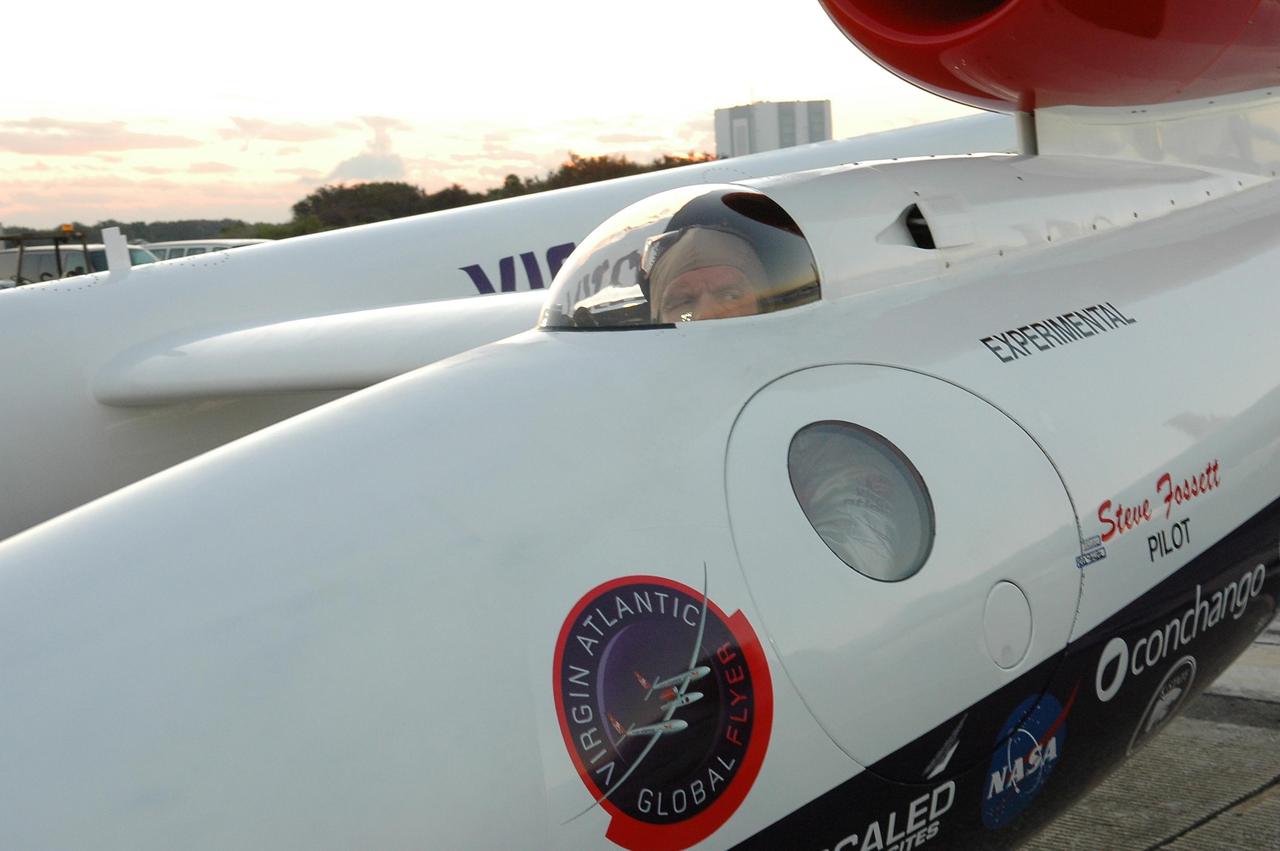
KENNEDY SPACE CENTER, FLA. - At NASA Kennedy Space Center’s Shuttle Landing Facility, the door is closed on the Virgin Atlantic GlobalFlyer as pilot Steve Fossett looks out the cockpit window. Fossett will pilot the GlobalFlyer on a record-breaking attempt by flying solo, non-stop without refueling, to surpass the current record for the longest flight of any aircraft. This is the second attempt in two days after a fuel leak was detected Feb. 7. The expected time of takeoff is 7 a.m. Photo credit: NASA/Kim Shiflett

Space shuttle Atlantis is seen during its trip to its new home at the Kennedy Space Center Visitor Complex, early Friday, Nov. 2, 2012, in Cape Canaveral, Fla. The spacecraft traveled 125,935,769 miles during 33 spaceflights, including 12 missions to the International Space Station. Its final flight, STS-135, closed out the Space Shuttle Program era with a landing on July 21, 2011. Photo Credit: (NASA/Bill Ingalls)

Space shuttle Atlantis rolls away from the Vehicle Assembly Building as it begins its trip to its new home at the Kennedy Space Center Visitor Complex, early Friday, Nov. 2, 2012, in Cape Canaveral, Fla. The spacecraft traveled 125,935,769 miles during 33 spaceflights, including 12 missions to the International Space Station. Its final flight, STS-135, closed out the Space Shuttle Program era with a landing on July 21, 2011. Photo Credit: (NASA/Bill Ingalls)

The Titusville High School band parades ahead of space shuttle Atlantis as it makes its way to its new home at the Kennedy Space Center Visitor Complex, early Friday, Nov. 2, 2012, in Cape Canaveral, Fla. The spacecraft traveled 125,935,769 miles during 33 spaceflights, including 12 missions to the International Space Station. Its final flight, STS-135, closed out the Space Shuttle Program era with a landing on July 21, 2011. Photo Credit: (NASA/Bill Ingalls)

Space shuttle Atlantis is seen during its trip to its new home at the Kennedy Space Center Visitor Complex, early Friday, Nov. 2, 2012, in Cape Canaveral, Fla. The spacecraft traveled 125,935,769 miles during 33 spaceflights, including 12 missions to the International Space Station. Its final flight, STS-135, closed out the Space Shuttle Program era with a landing on July 21, 2011. Photo Credit: (NASA/Bill Ingalls)

Space shuttle Atlantis is seen during its trip to its new home at the Kennedy Space Center Visitor Complex, early Friday, Nov. 2, 2012, in Cape Canaveral, Fla. The spacecraft traveled 125,935,769 miles during 33 spaceflights, including 12 missions to the International Space Station. Its final flight, STS-135, closed out the Space Shuttle Program era with a landing on July 21, 2011. Photo Credit: (NASA/Bill Ingalls)

Space shuttle Atlantis is seen during its trip to its new home at the Kennedy Space Center Visitor Complex, early Friday, Nov. 2, 2012, in Cape Canaveral, Fla. The spacecraft traveled 125,935,769 miles during 33 spaceflights, including 12 missions to the International Space Station. Its final flight, STS-135, closed out the Space Shuttle Program era with a landing on July 21, 2011. Photo Credit: (NASA/Bill Ingalls)

William Moore, COO, KSC VC, DNC Parks & Recreation, speaks at the signing ceremony, for space shuttle Atlantis, background, Friday, Nov. 2, 2012, in Cape Canaveral, Fla. The spacecraft traveled 125,935,769 miles during 33 spaceflights, including 12 missions to the International Space Station. Its final flight, STS-135, closed out the Space Shuttle Program era with a landing on July 21, 2011. Photo Credit: (NASA/Bill Ingalls)

Karol Bobko, who commanded STS-51, the first flight of space shuttle Atlantis, background, speaks at the signing ceremony, Friday, Nov. 2, 2012, in Cape Canaveral, Fla. The spacecraft traveled 125,935,769 miles during 33 spaceflights, including 12 missions to the International Space Station. Its final flight, STS-135, closed out the Space Shuttle Program era with a landing on July 21, 2011. Photo Credit: (NASA/Bill Ingalls)

Cheryl Hurst, Director of Education and External Relations at Kennedy Space Center, speaks at the signing ceremony for space shuttle Atlantis, background, Friday, Nov. 2, 2012, in Cape Canaveral, Fla. The spacecraft traveled 125,935,769 miles during 33 spaceflights, including 12 missions to the International Space Station. Its final flight, STS-135, closed out the Space Shuttle Program era with a landing on July 21, 2011. Photo Credit: (NASA/Bill Ingalls)

Workers carry a banner full of signatures while following behind space shuttle Atlantis as it begins its trek to its new home at the Kennedy Space Center Visitor Complex, early Friday, Nov. 2, 2012, in Cape Canaveral, Fla. The spacecraft traveled 125,935,769 miles during 33 spaceflights, including 12 missions to the International Space Station. Its final flight, STS-135, closed out the Space Shuttle Program era with a landing on July 21, 2011. Photo Credit: (NASA/Bill Ingalls)

An onlooker holds up a mobile device to record space shuttle Atlantis as it rolls to ts new home at the Kennedy Space Center Visitor Complex, early Friday, Nov. 2, 2012, in Cape Canaveral, Fla. The spacecraft traveled 125,935,769 miles during 33 spaceflights, including 12 missions to the International Space Station. Its final flight, STS-135, closed out the Space Shuttle Program era with a landing on July 21, 2011. Photo Credit: (NASA/Bill Ingalls)

Space shuttle Atlantis is seen during its trip to its new home at the Kennedy Space Center Visitor Complex, early Friday, Nov. 2, 2012, in Cape Canaveral, Fla. The spacecraft traveled 125,935,769 miles during 33 spaceflights, including 12 missions to the International Space Station. Its final flight, STS-135, closed out the Space Shuttle Program era with a landing on July 21, 2011. Photo Credit: (NASA/Bill Ingalls)
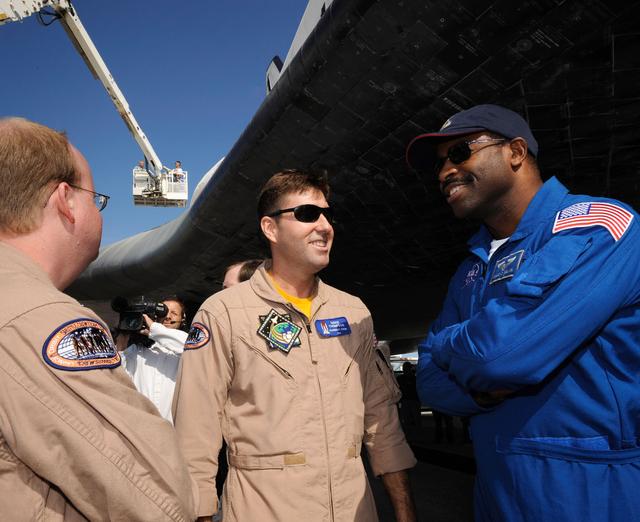
STS-122 Mission Specialist Leland Melvin, right, talks with members of the space shuttle close out crew underneath the wing of the space shuttle Atlantis. Atlantis landed at the Shuttle Landing Facility, 9:07a.m., Wednesday, Feb. 20, 2008 at Kennedy Space Center, Fla. completing delivery of the European Space Agency’s (ESA) Columbus laboratory to the International Space Station. Photo Credit: (NASA/Bill Ingalls)
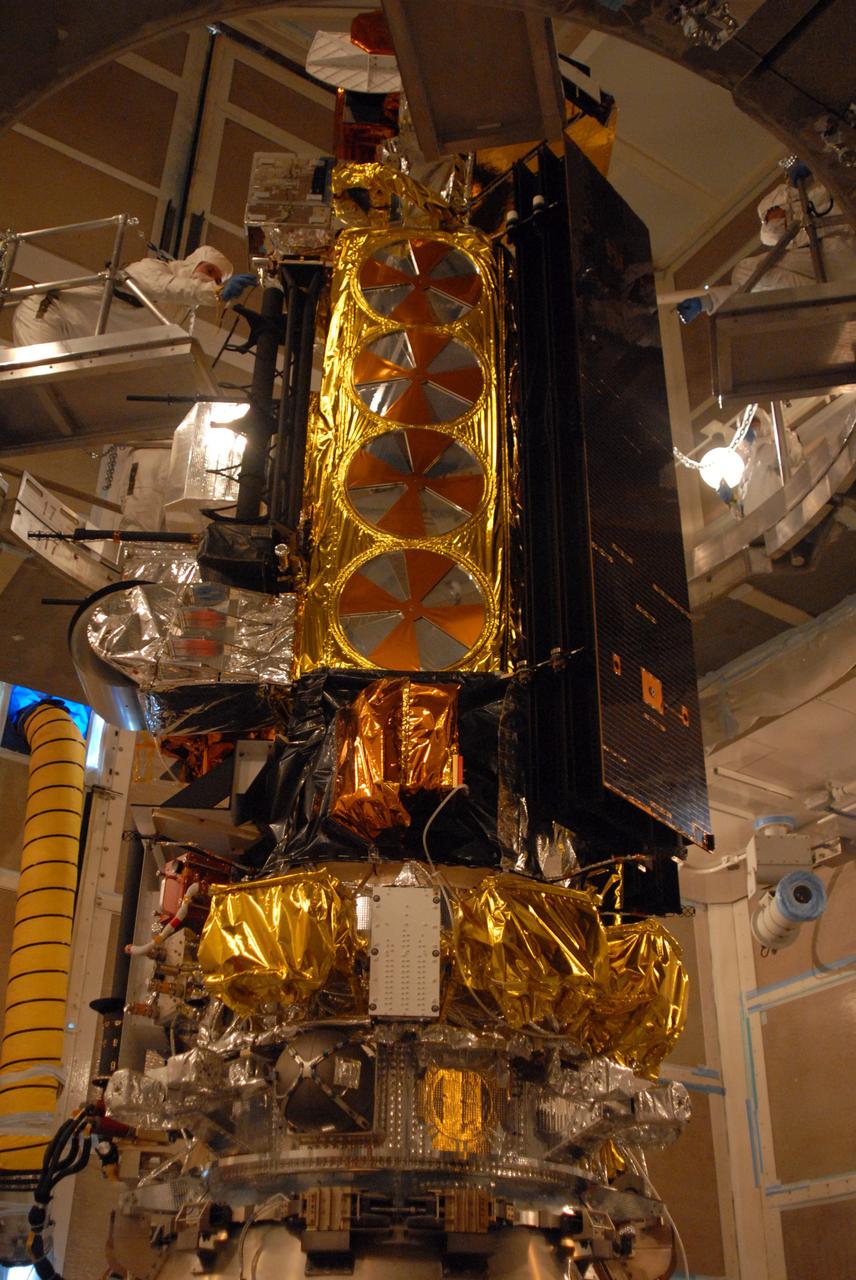
VANDENBERG AIR FORCE BASE, Calif. -- In the mobile service tower on Space Launch Complex 2 at Vandenberg Air Force Base in California, the NOAA-N Prime spacecraft is closed out for encapsulation and installation on the launch vehicle, a Delta II rocket. NOAA-N Prime is the latest polar-orbiting operational environmental weather satellite developed by NASA for the National Oceanic and Atmospheric Administration. The satellite is scheduled to launch Feb. 4 aboard the Delta II from Vandenberg Air Force Base. Photo credit: NASA/VAFB
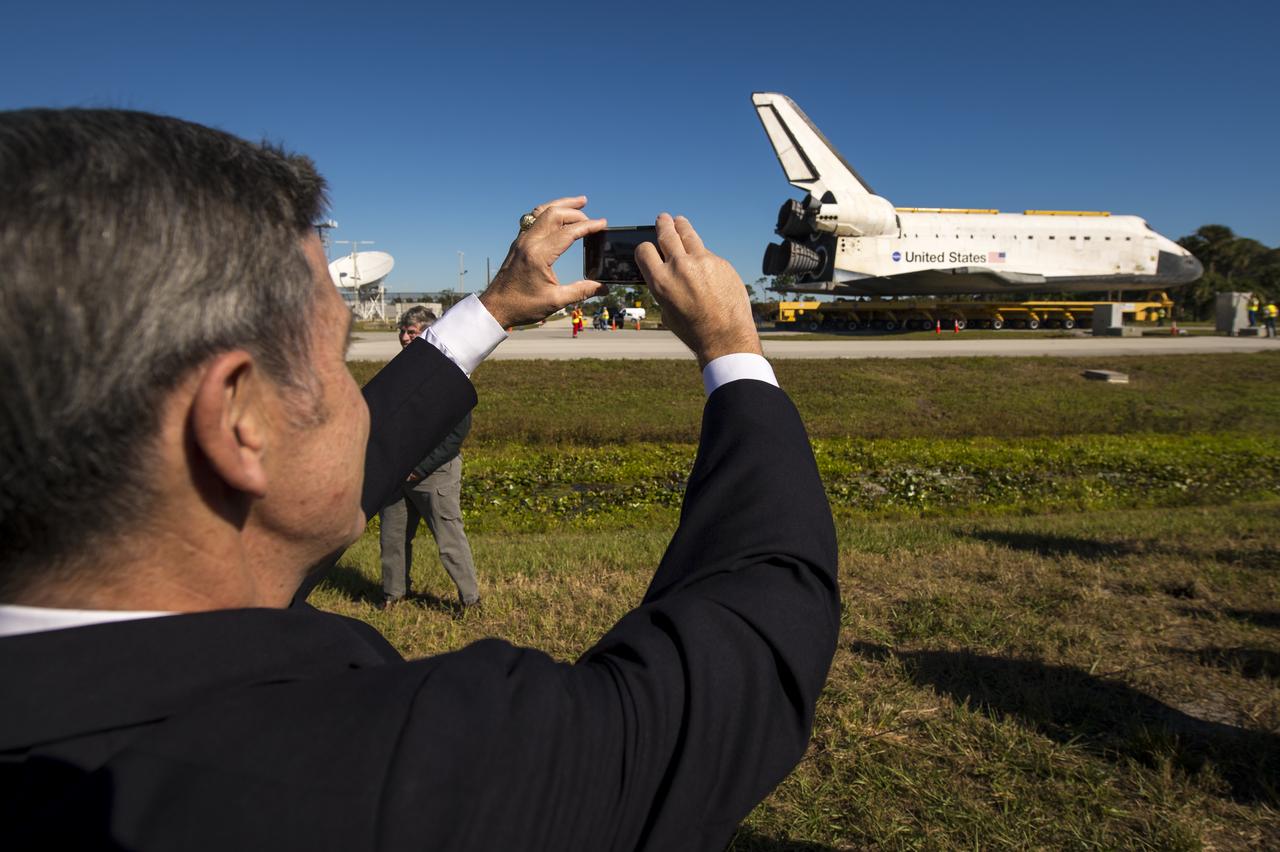
Kennedy Space Center Director Robert Cabana takes a picture of space shuttle Atlantis, Friday, Nov. 2, 2012, in Cape Canaveral, Fla. The spacecraft traveled 125,935,769 miles during 33 spaceflights, including 12 missions to the International Space Station. Its final flight, STS-135, closed out the Space Shuttle Program era with a landing on July 21, 2011. Photo Credit: (NASA/Bill Ingalls)
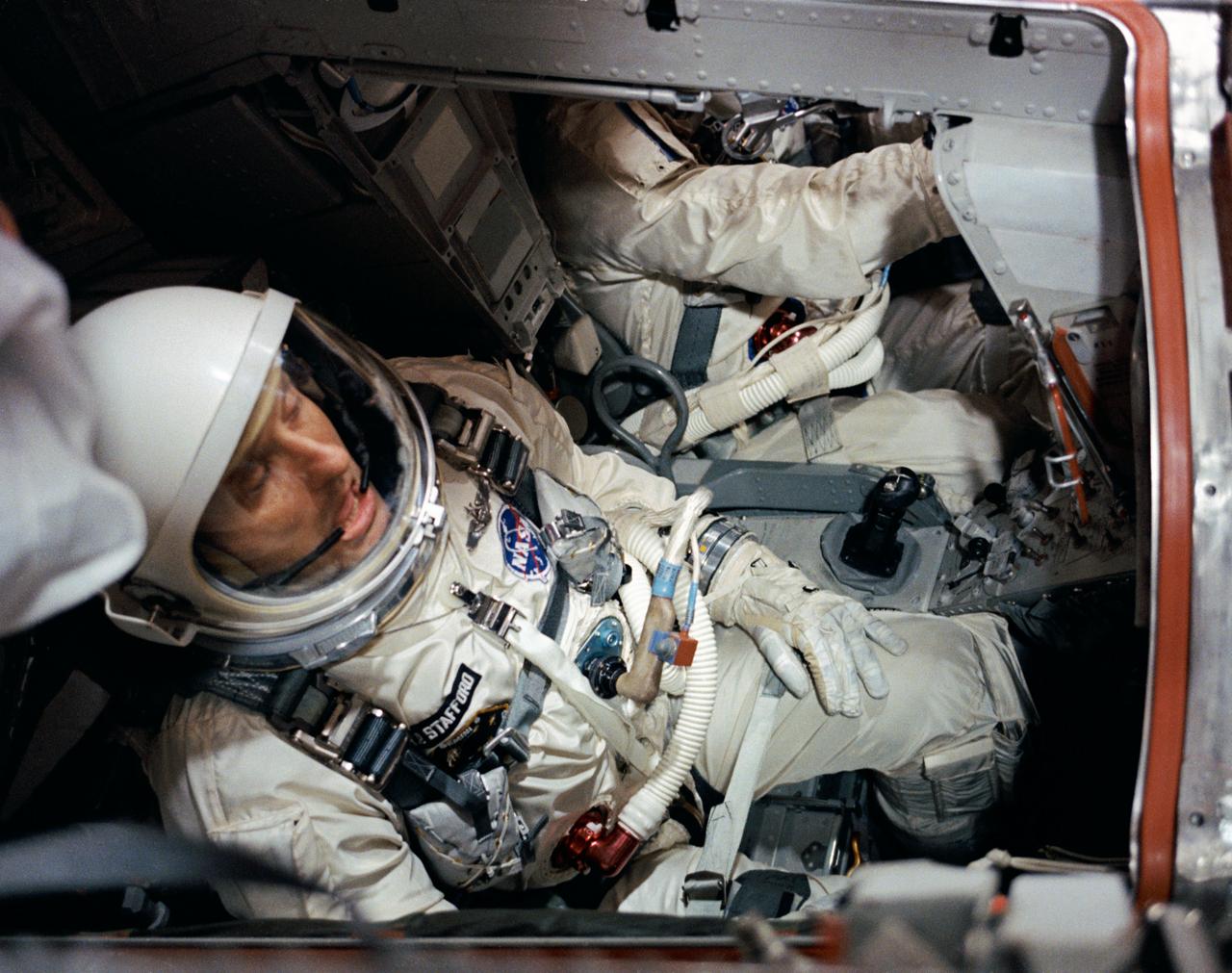
S65-59961 (15 Dec. 1965) --- Astronaut Thomas P. Stafford, pilot, is pictured in the Gemini-6 spacecraft in the White Room atop Pad 19 prior to the closing of the hatches during the Gemini-6 prelaunch countdown. In the background (partially out of view) is astronaut Walter M. Schirra Jr., command pilot. Photo credit: NASA or National Aeronautics and Space Administration
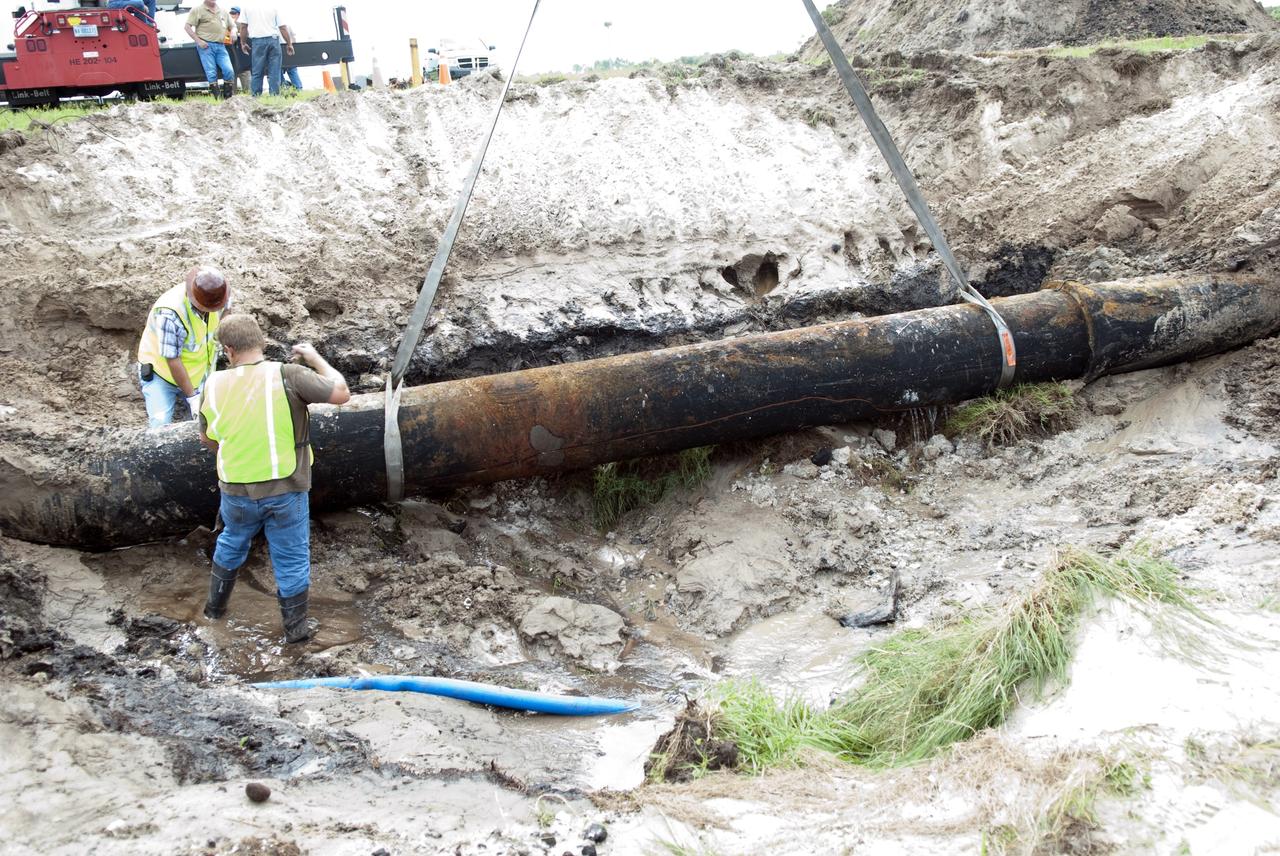
CAPE CANAVERAL, Fla. -- At NASA's Kennedy Space Center in Florida, a crew begins to fix a major water main break in a 24-inch cast iron pipe in the Launch Complex-39 Turn Basin area, across from the Vehicle Assembly Building and the Launch Control Center. This photo shows the approximately 15-foot-long crack along the bottom of pipe and water draining out. Kennedy was closed to non-essential personnel the morning of Sept. 8 while crews assessed the break and restored water to the center. Photo credit: NASA/Jim Grossmann

NASA Administrator Charles Bolden, left, and Kennedy Space Center director Robert Cabana pose for a photo as space shuttle Atlantis rolls toward its new home at the Kennedy Space Center Visitor Complex, early Friday, Nov. 2, 2012, in Cape Canaveral, Fla. The spacecraft traveled 125,935,769 miles during 33 spaceflights, including 12 missions to the International Space Station. Its final flight, STS-135, closed out the Space Shuttle Program era with a landing on July 21, 2011. Photo Credit: (NASA/Bill Ingalls)
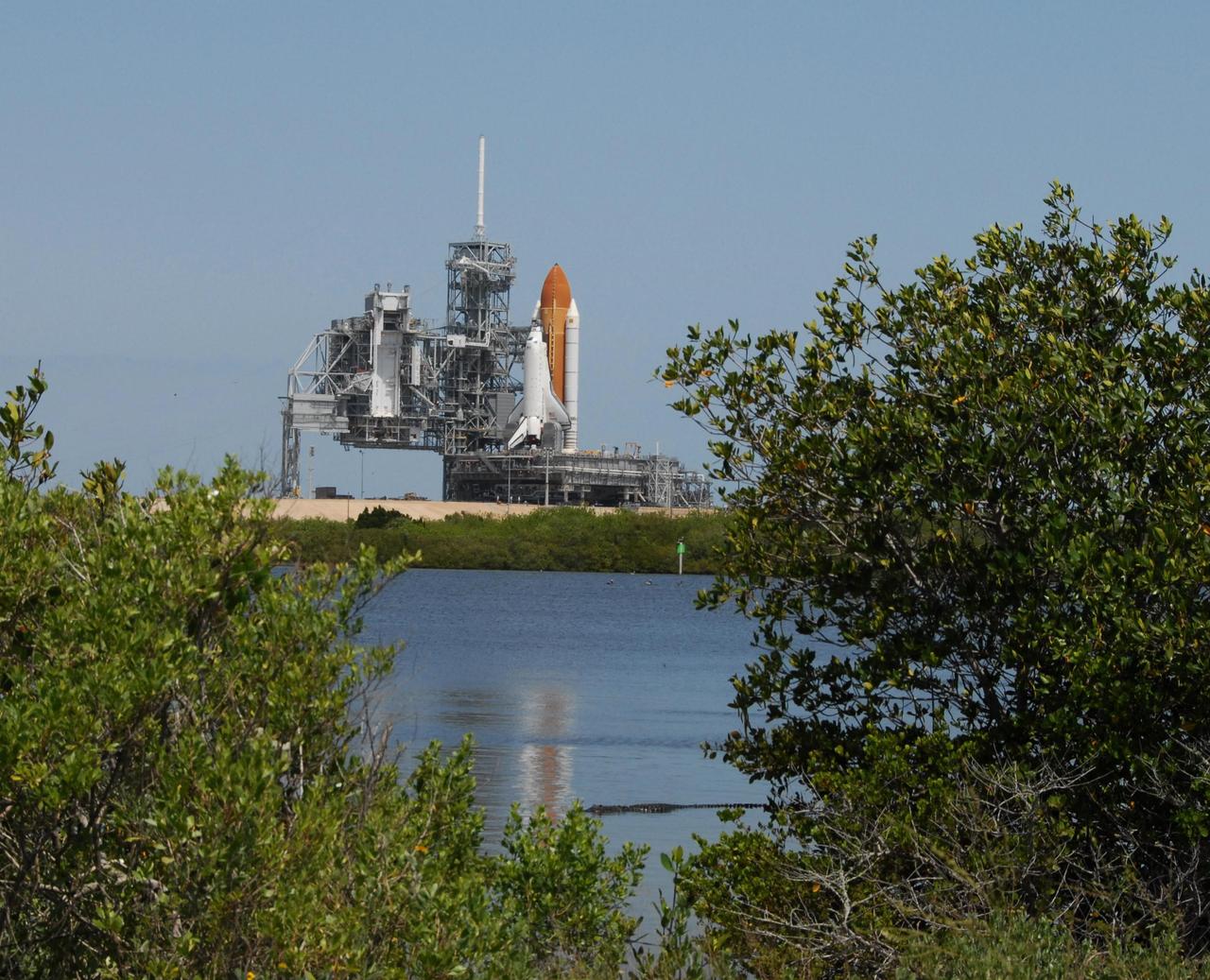
KENNEDY SPACE CENTER, FLA. -- An alligator, seen just above the shrubs, has a close-up view of Space Shuttle Atlantis as it sits on Launch Pad 39A. Atlantis rolled out to the pad before dawn for the second time. First motion out of the Vehicle Assembly Building was at 5:02 a.m. EDT. In late February, while Atlantis was on the launch pad, Atlantis' external tank received hail damage during a severe thunderstorm that passed through the Kennedy Space Center Launch Complex 39 area. The hail caused visible divots in the giant tank's foam insulation, as well as minor surface damage to about 26 heat shield tiles on the shuttle's left wing. The shuttle was returned to the VAB for repairs. The launch of Space Shuttle Atlantis on mission STS-117 is now targeted for June 8. A flight readiness review will be held on May 30 and 31. Photo credit: NASA/Ken Thornsley
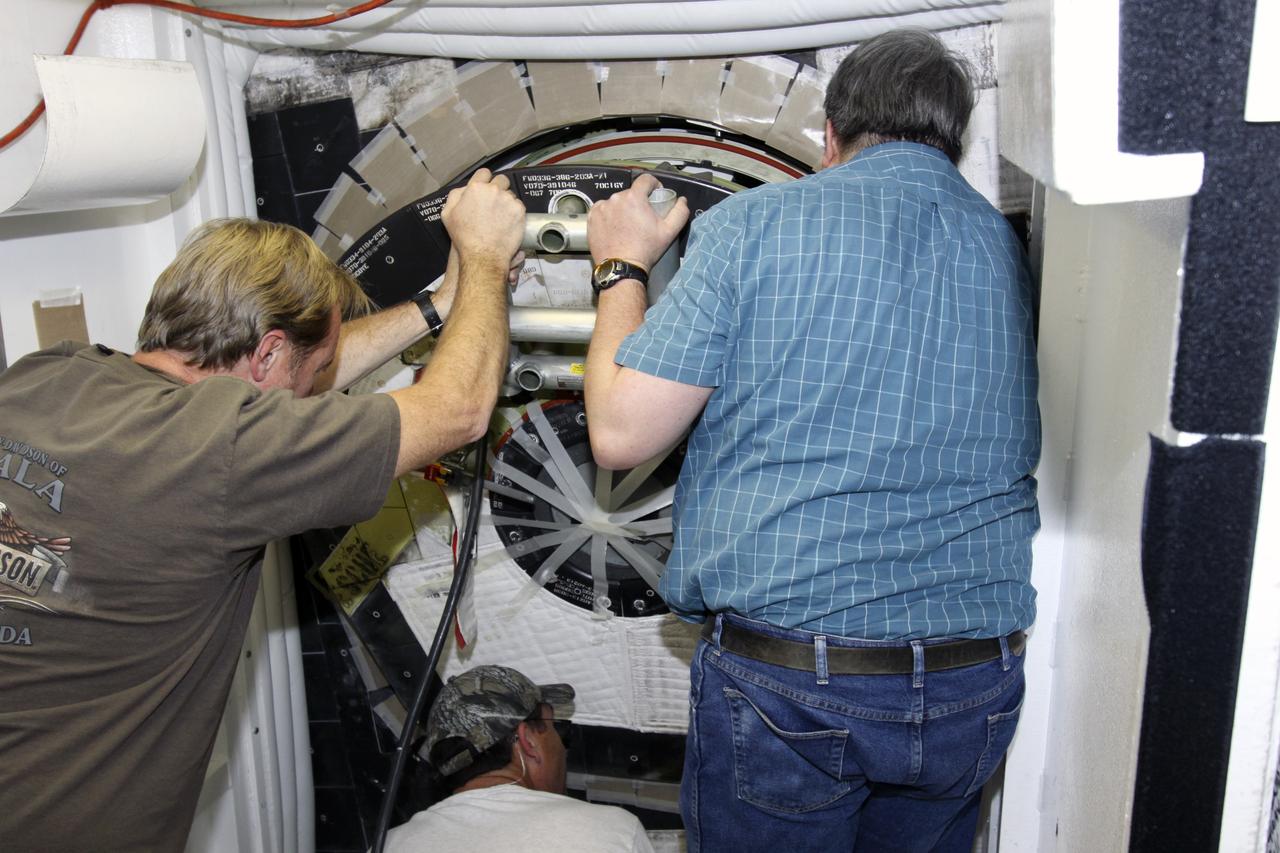
CAPE CANAVERAL, Fla. -- Inside Orbiter Processing Facility-1 at NASA’s Kennedy Space Center in Florida, technicians position space shuttle Discovery’s access hatch for final close out. The work is part of the Space Shuttle Program’s transition and retirement processing of shuttle Discovery, which is being prepared for display at Smithsonian’s National Air and Space Museum, Steven F. Udvar-Hazy Center in Chantilly, Va. Discovery is scheduled to be transported atop a NASA Shuttle Carrier Aircraft modified 747 jet to Dulles International Airport in Virginia on April 17 and then be transported to the Smithsonian on April 19. For more information, visit http://www.nasa.gov/shuttle. Photo credit: NASA/Jim Grossmann
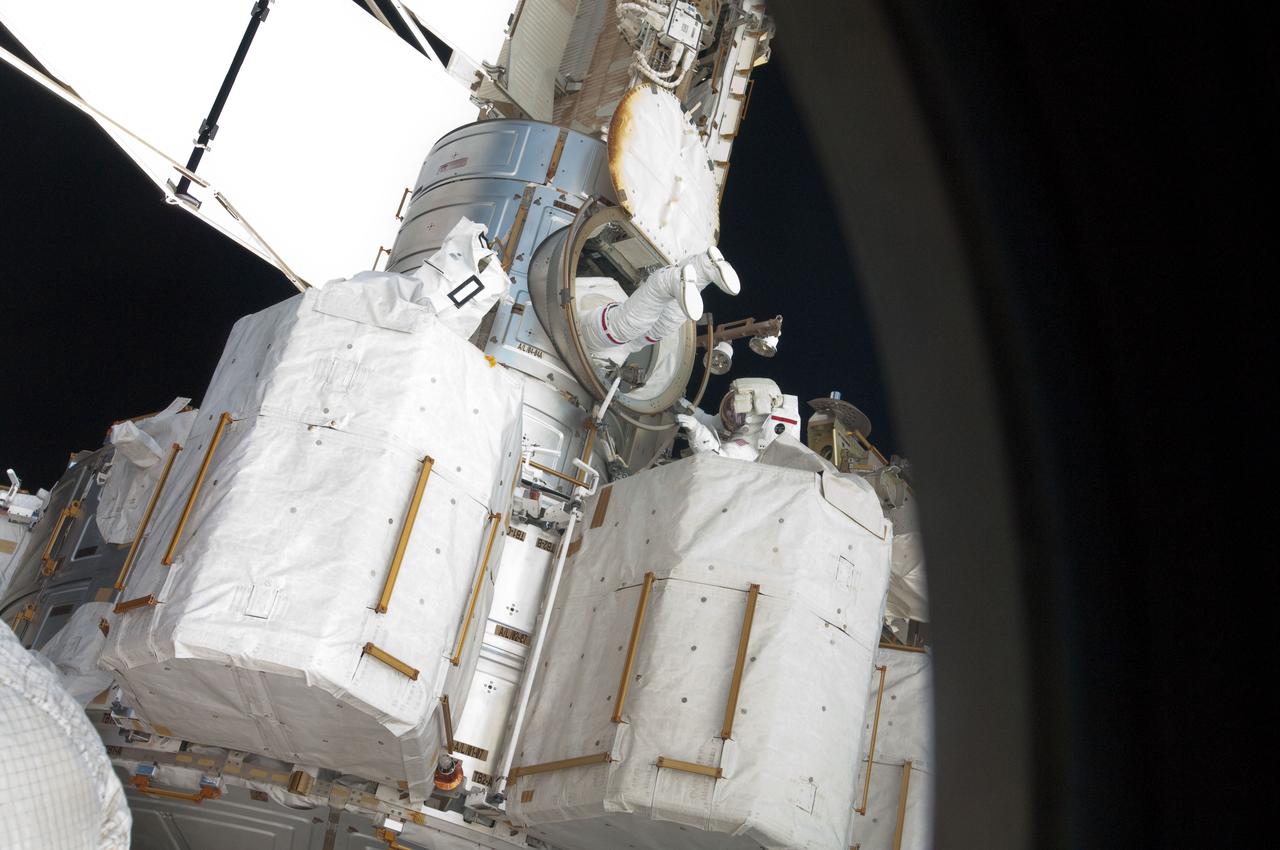
S134-E-009310 (20 May 2011) --- NASA astronaut Greg Chamitoff, STS-134 mission specialist, enters the Quest airlock of the International Space Station as the mission's first session of extravehicular activity (EVA) draws to a close. During the six-hour, 19-minute spacewalk, Chamitoff and astronaut Andrew Feustel (out of frame) retrieved long-duration materials exposure experiments and installed another, installed a light on one of the station?s rail line handcarts, made preparations for adding ammonia to a cooling loop and installed an antenna for the External Wireless Communication system. Photo credit: NASA
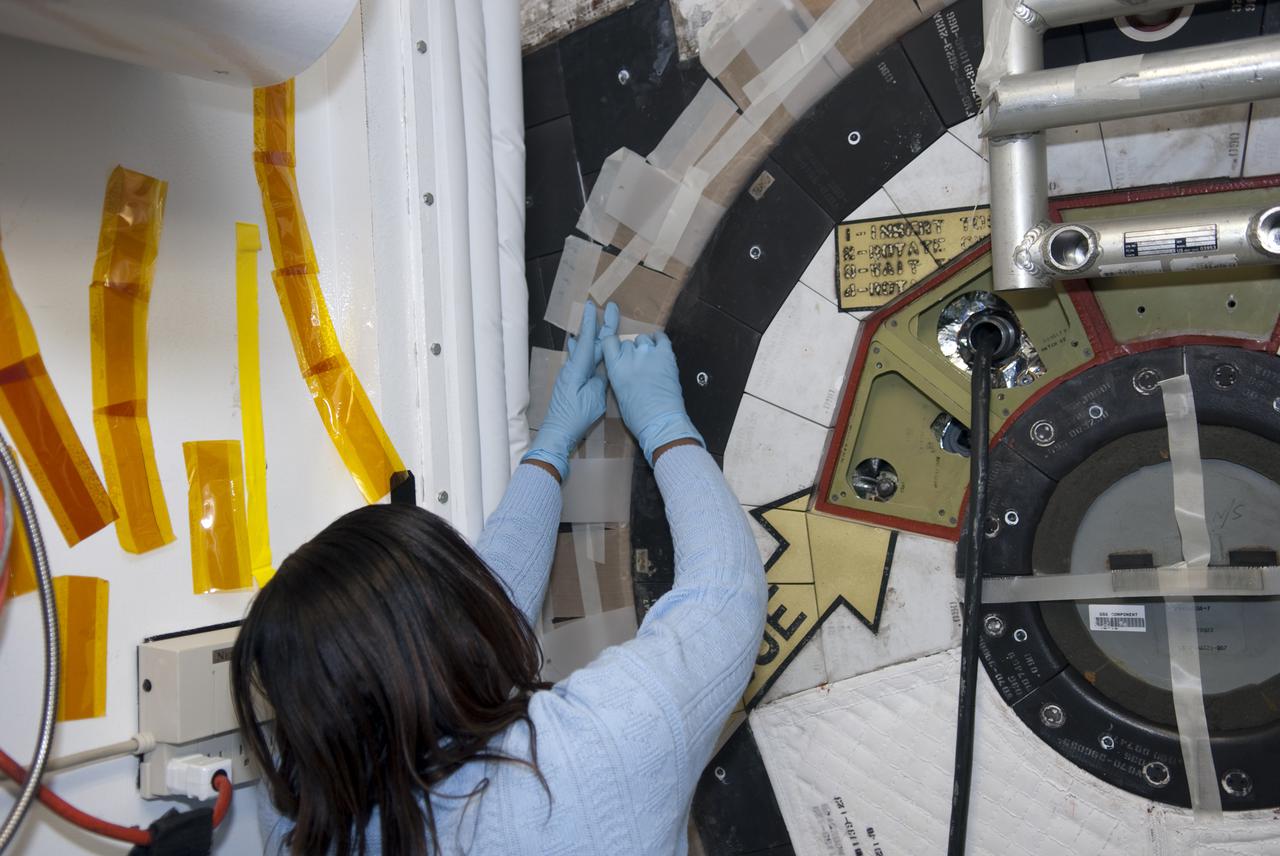
CAPE CANAVERAL, Fla. - Inside Orbiter Processing Facility-1 at Kennedy Space Center in Florida, a technician secures shuttle Atlantis’ hatch in preparation for the Mylar Pull Test. During the test, a scale is used to measure the force required to pull a piece of Mylar paper out from between the door and structural wall thermal barriers. The pull test is performed to ensure the integrity of the hatch and that it has closed properly. Atlantis is being processed for the STS-132 mission targeted for launch May 14. The six-member crew will deliver an Integrated Cargo Carrier and a Russian-built Mini Research Module to the International Space Station. Photo credit: NASA_Jim Grossmann
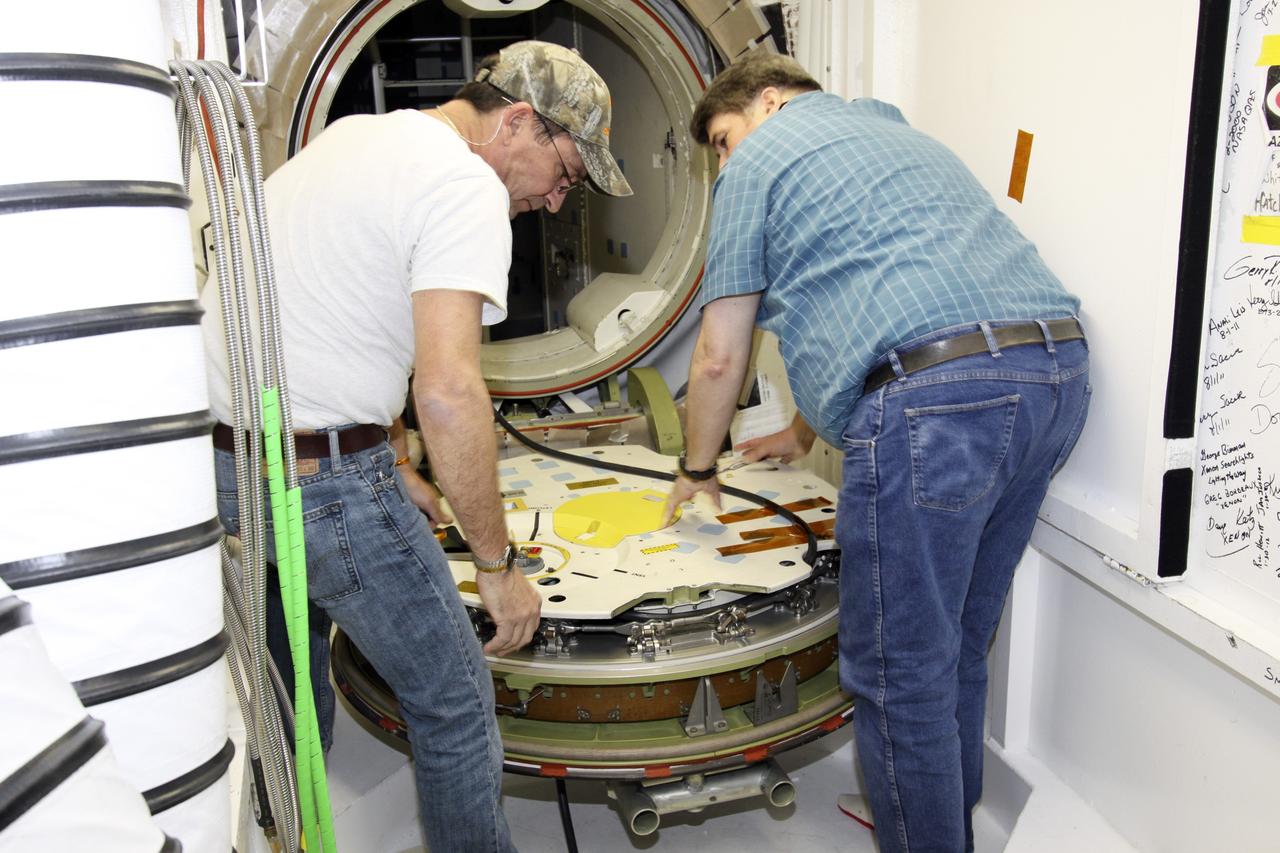
CAPE CANAVERAL, Fla. -- Inside Orbiter Processing Facility-1 at NASA’s Kennedy Space Center in Florida, technicians prepare space shuttle Discovery’s access hatch for final close out. The work is part of the Space Shuttle Program’s transition and retirement processing of shuttle Discovery, which is being prepared for display at Smithsonian’s National Air and Space Museum, Steven F. Udvar-Hazy Center in Chantilly, Va. Discovery is scheduled to be transported atop a NASA Shuttle Carrier Aircraft modified 747 jet to Dulles International Airport in Virginia on April 17 and then be transported to the Smithsonian on April 19. For more information, visit http://www.nasa.gov/shuttle. Photo credit: NASA/Jim Grossmann
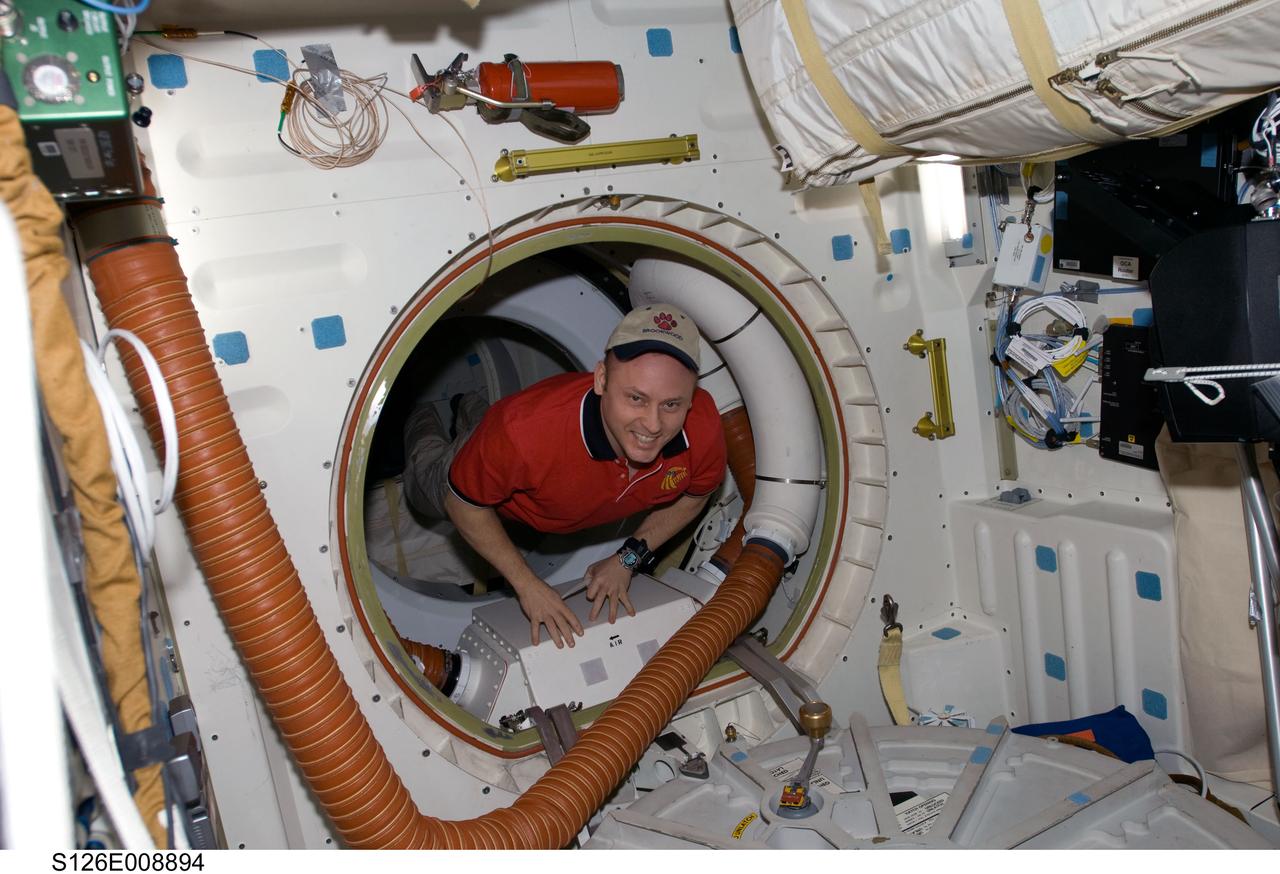
S126-E-008894 (21 Nov. 2008) --- This image, recorded in the late evening hours of Nov. 21, Houston time, shows a smiling astronaut Michael Fincke, Expedition 18 commander, as he and his station crew near the mid point of joint efforts with the Endeavour crew, commanded by astronaut Chris Ferguson (out of frame). The two crews are spending close to two weeks in space together, accomplishing home improvement chores and a number of other tasks. Just a few hours after this photo was taken, two astronauts started prepping for the joint crews' third spacewalk of the week.

CAPE CANAVERAL, Fla. – A member of the "ride-out crew," a group of emergency personnel, at NASA's Kennedy Space Center monitors effects from Tropical Storm Fay. In the background is the Operations Support Building I in the Launch Complex 39 Area. The storm passed over the center Aug. 20 and then stalled offshore, bringing with it heavy rain and tropical storm force wind. Kennedy closed Aug. 19 because of Fay and reopened for normal operations Aug. 22. Based on initial assessments, there was no damage to space flight hardware, such as the space shuttles and Hubble Space Telescope equipment. Some facilities did sustain minor damage. Photo credit: NASA/Jack Pfaller
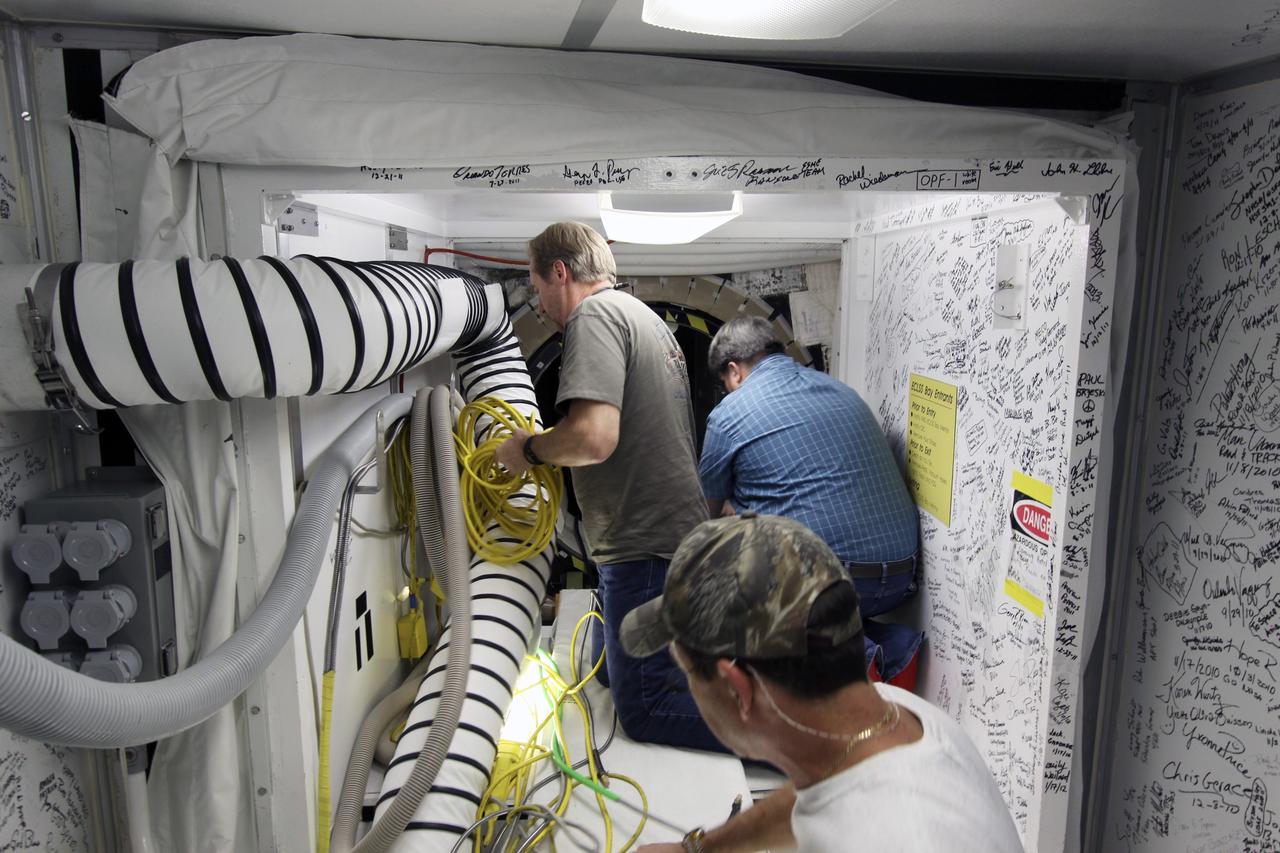
CAPE CANAVERAL, Fla. -- Inside Orbiter Processing Facility-1 at NASA’s Kennedy Space Center in Florida, technicians prepare space shuttle Discovery’s access hatch for final close out. The work is part of the Space Shuttle Program’s transition and retirement processing of shuttle Discovery, which is being prepared for display at Smithsonian’s National Air and Space Museum, Steven F. Udvar-Hazy Center in Chantilly, Va. Discovery is scheduled to be transported atop a NASA Shuttle Carrier Aircraft modified 747 jet to Dulles International Airport in Virginia on April 17 and then be transported to the Smithsonian on April 19. For more information, visit http://www.nasa.gov/shuttle. Photo credit: NASA/Jim Grossmann
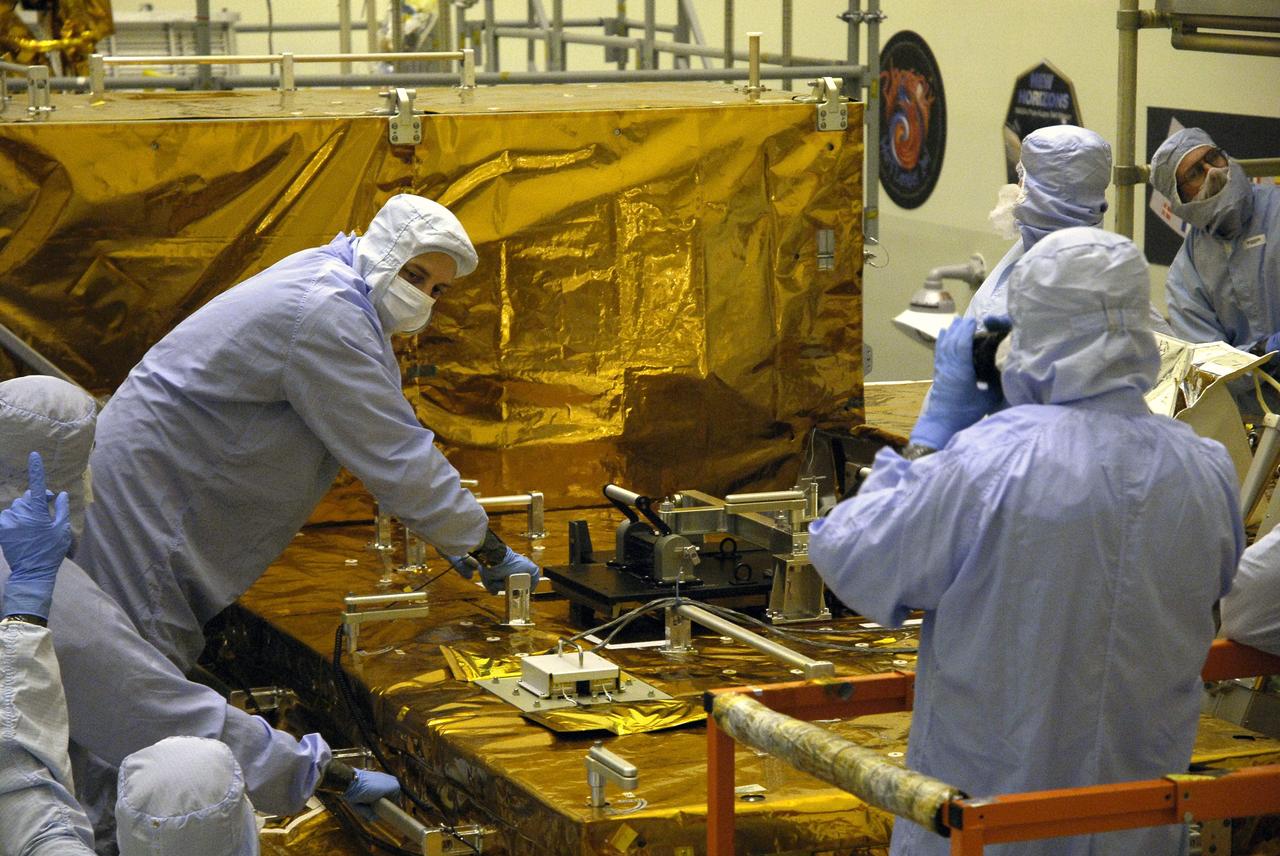
CAPE CANAVERAL, Fla. – In the Payload Hazardous Servicing Facility at NASA’s Kennedy Space Center, crew members with the STS-125 mission get a close look at some of the equipment associated with their mission to service NASA’s Hubble Space Telescope. At left is Mission Specialist Mike Massimino reaching out to equipment on the Main Electronics Box, or MEB. The STS-125 crew is taking part in a crew equipment interface test, which provides experience handling tools, equipment and hardware they will use on their mission. Space shuttle Atlantis is targeted to launch on the STS-125 mission Oct. 10. Photo credit: NASA/Kim Shiflett
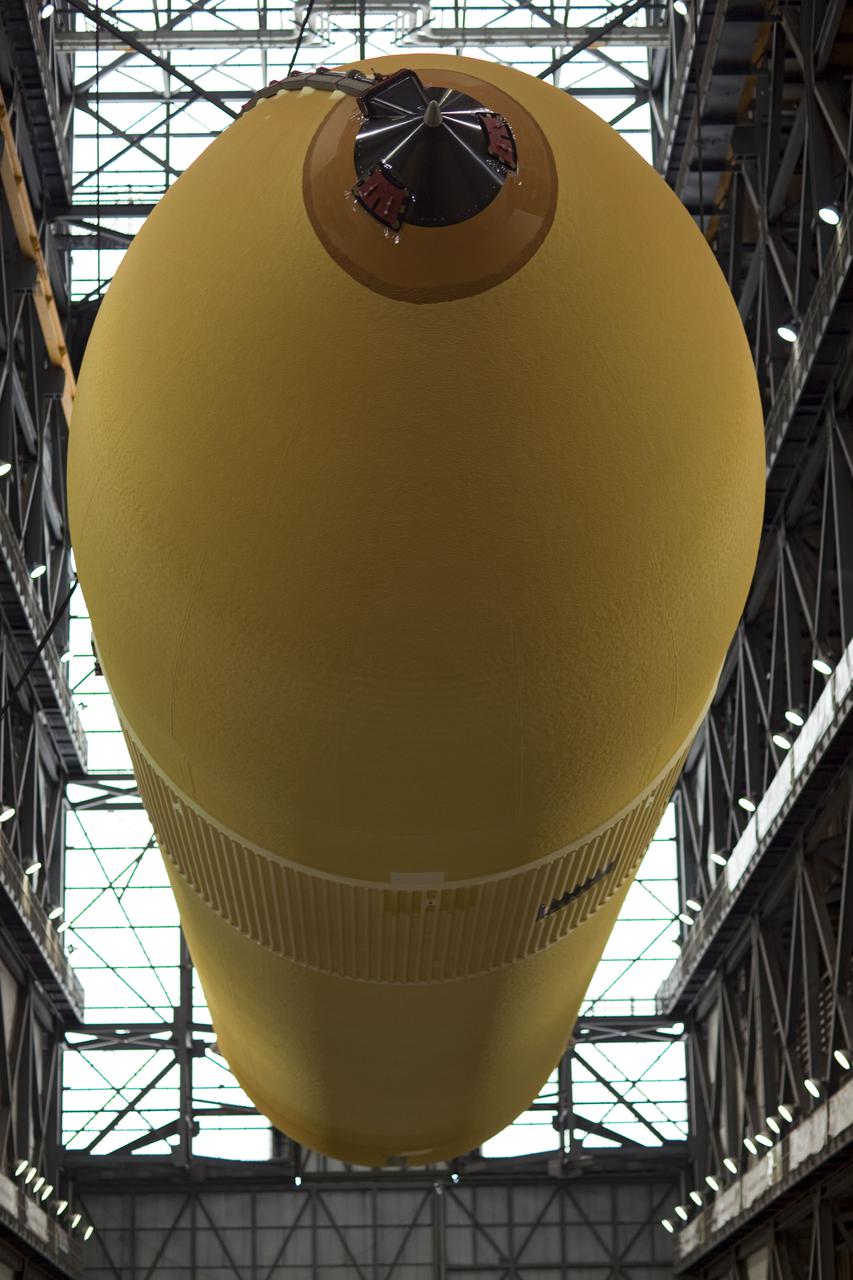
CAPE CANAVERAL, Fla. -- A close-up view of External Tank-138 being lifted above the transfer aisle in the Vehicle Assembly Building at NASA's Kennedy Space Center in Florida. The external fuel tank is being moved into a test cell where it will be checked out before launch. ET-138, the last newly manufactured tank, was originally designated to fly on Endeavour's STS-134 mission to the International Space Station, but later reassigned to fly on space shuttle Atlantis' final mission, STS-135. For information, visit www.nasa.gov_shuttle. Photo credit: NASA_Dimitri Gerondidakis
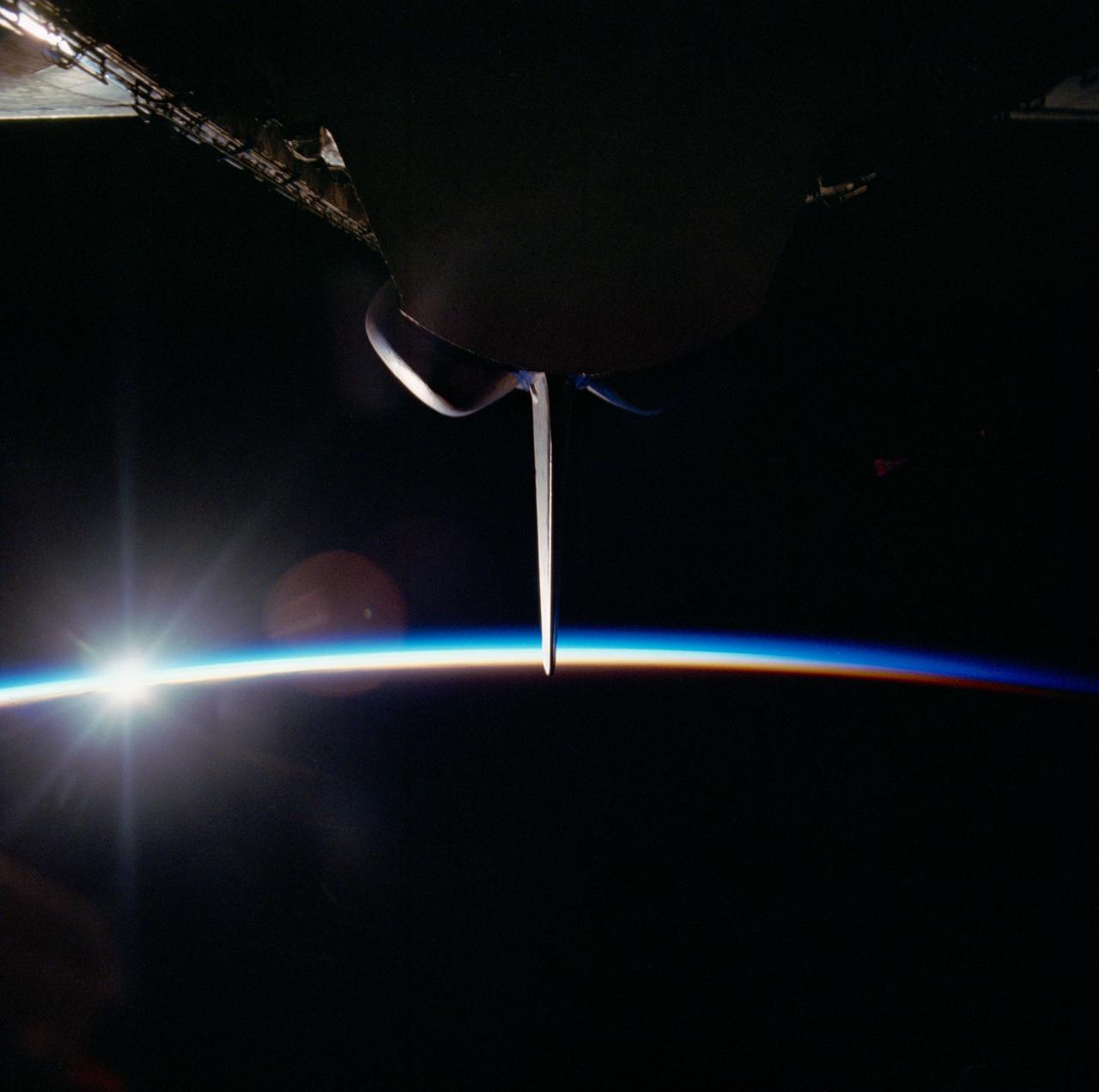
S82-39796 (11-16 Nov. 1982) --- A ?night? scene of the STS-5 space shuttle Columbia in orbit over Earth?s glowing horizon was captured by an astronaut crew member aiming a 70mm handheld camera through the aft windows of the flight deck. The aft section of the cargo bay contains two closed protective shields for satellites which were deployed on the flight. The nearest ?cradle? or shield houses the Satellite Business System?s (SBS-3) spacecraft and is visible in this frame while the Telesta Canada ANIK C-3 shield is out of view. The vertical stabilizer, illuminated by the sun, is flanked by two orbital maneuvering system (OMS) pods. Photo credit: NASA

Security personnel close a gate after the Soyuz rocket was rolled out of Building 112 as it is moved to the launch pad by train, Monday, June 4, 2018 at the Baikonur Cosmodrome in Kazakhstan. Expedition 56 Soyuz Commander Sergey Prokopyev of Roscosmos, flight engineer Serena Auñón-Chancellor of NASA, and flight engineer Alexander Gerst of ESA (European Space Agency) are scheduled to launch aboard their Soyuz MS-09 spacecraft at 7:12 a.m. Eastern time (5:12 p.m. Baikonur time), on Wednesday, June 6. Photo Credit: (NASA/Joel Kowsky)
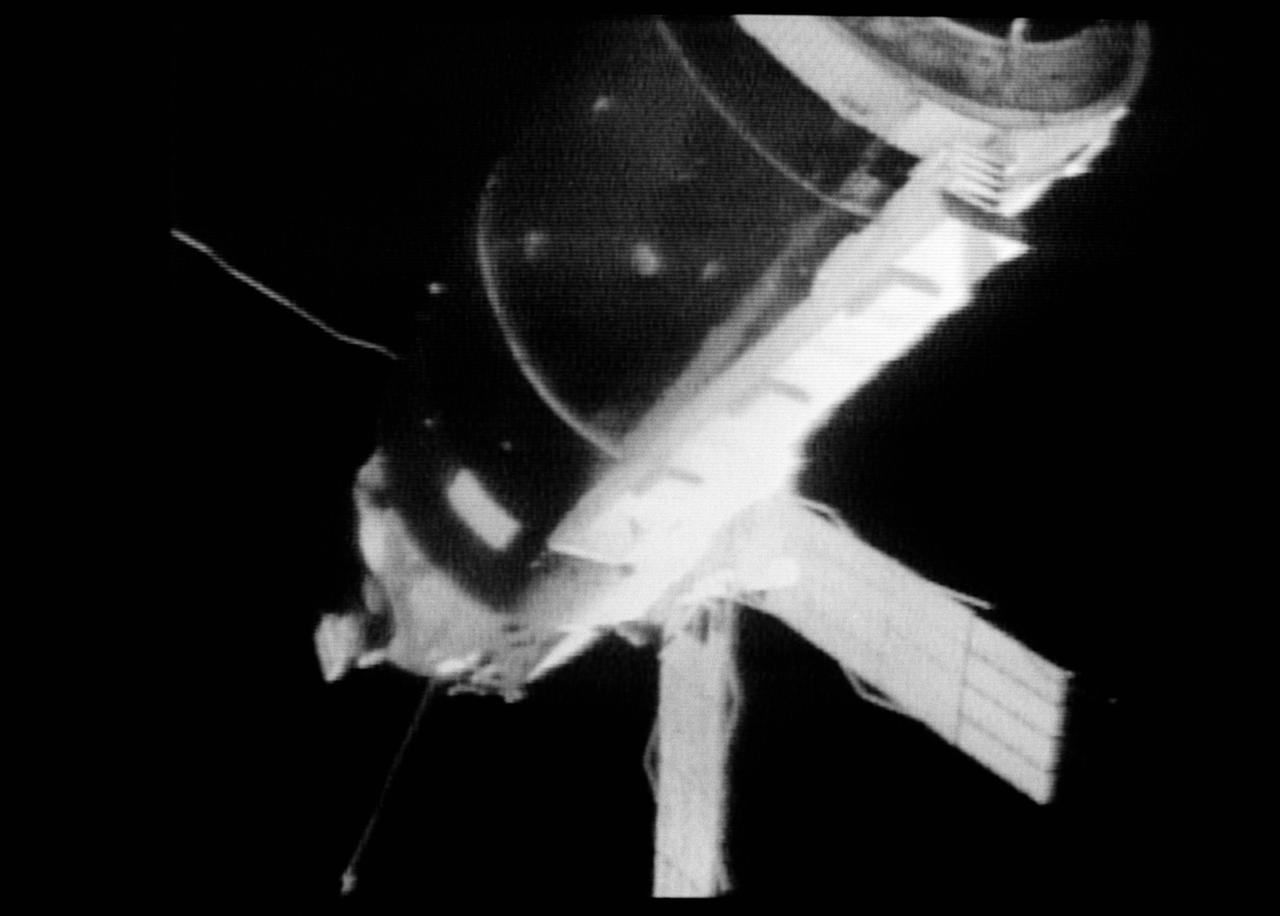
S73-27182 (25 May 1973) --- A close-up view of the Skylab 1 space station cluster can be seen in this reproduction taken from a color television transmission made by a TV camera aboard the Skylab 2 Command Module during its "fly around" inspection of the cluster. This view has been enhanced. At left center the damaged solar array system wing on the Orbital Workshop (OWS) appears to be partly folded. In their preliminary inspection the crewmen noted that portions of the micrometeoroid shield had slid back underneath the OWS solar wing. Solar panels on the Apollo Telescope Mount extend out at the top center. Photo credit: NASA
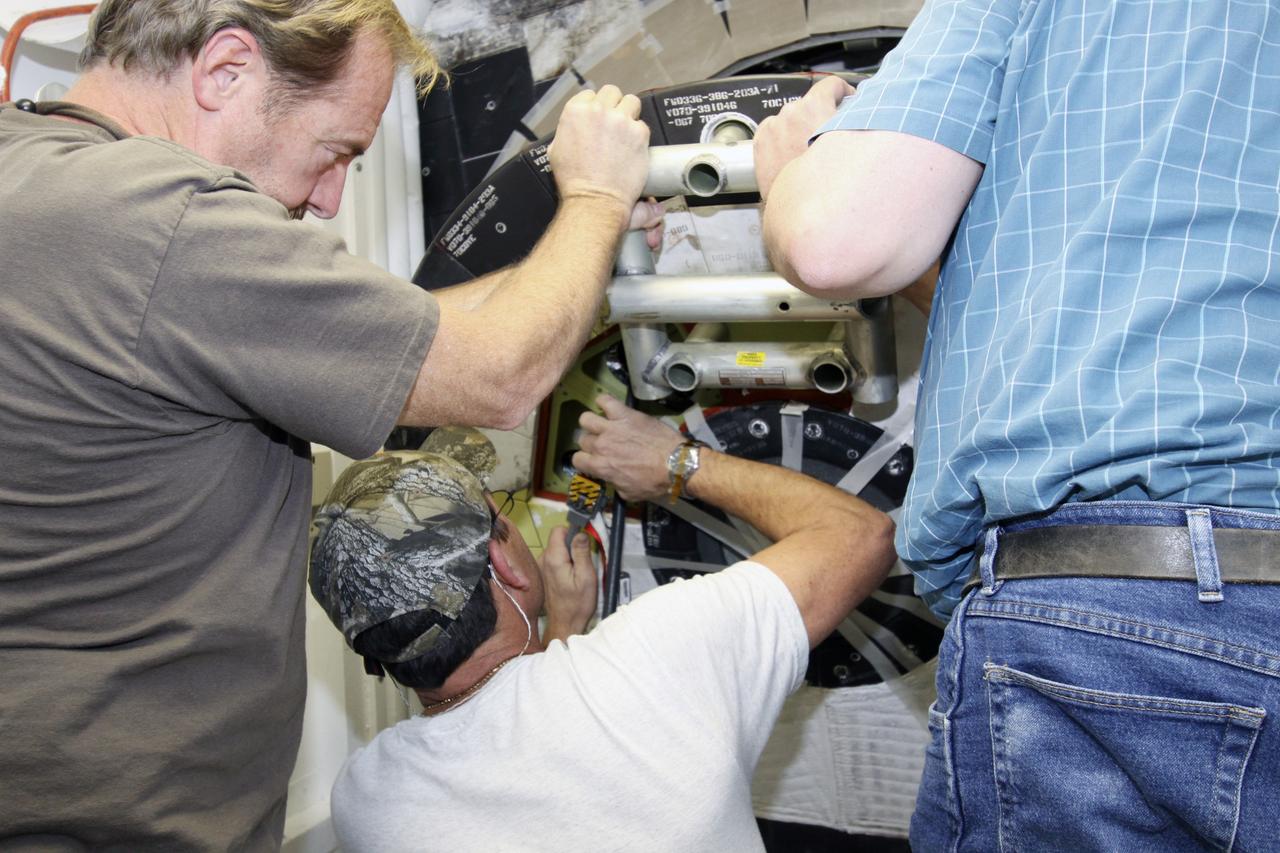
CAPE CANAVERAL, Fla. -- Inside Orbiter Processing Facility-1 at NASA’s Kennedy Space Center in Florida, technicians position space shuttle Discovery’s access hatch for final close out. The work is part of the Space Shuttle Program’s transition and retirement processing of shuttle Discovery, which is being prepared for display at Smithsonian’s National Air and Space Museum, Steven F. Udvar-Hazy Center in Chantilly, Va. Discovery is scheduled to be transported atop a NASA Shuttle Carrier Aircraft modified 747 jet to Dulles International Airport in Virginia on April 17 and then be transported to the Smithsonian on April 19. For more information, visit http://www.nasa.gov/shuttle. Photo credit: NASA/Jim Grossmann
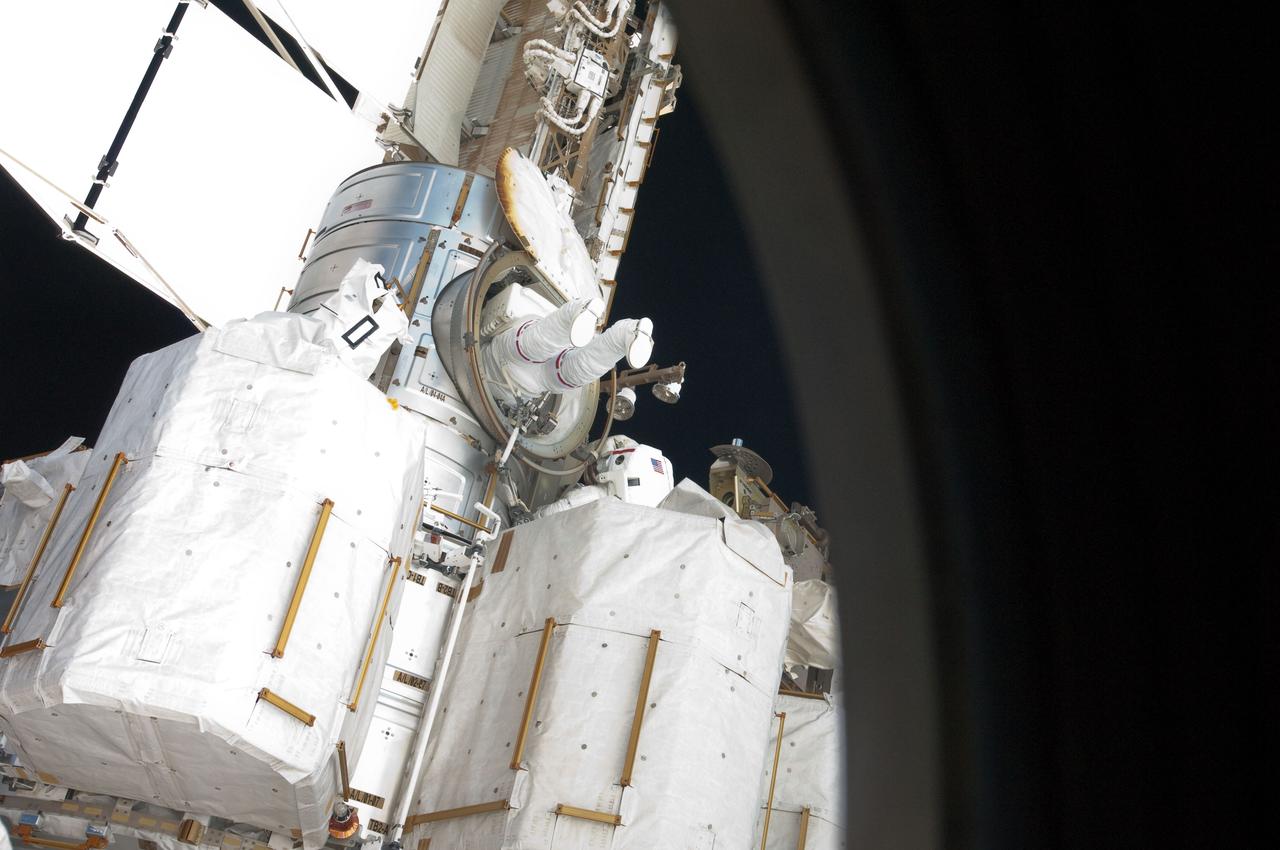
S134-E-009309 (20 May 2011) --- NASA astronaut Greg Chamitoff, STS-134 mission specialist, enters the Quest airlock of the International Space Station as the mission's first session of extravehicular activity (EVA) draws to a close. During the six-hour, 19-minute spacewalk, Chamitoff and astronaut Andrew Feustel (out of frame) retrieved long-duration materials exposure experiments and installed another, installed a light on one of the station?s rail line handcarts, made preparations for adding ammonia to a cooling loop and installed an antenna for the External Wireless Communication system. Photo credit: NASA
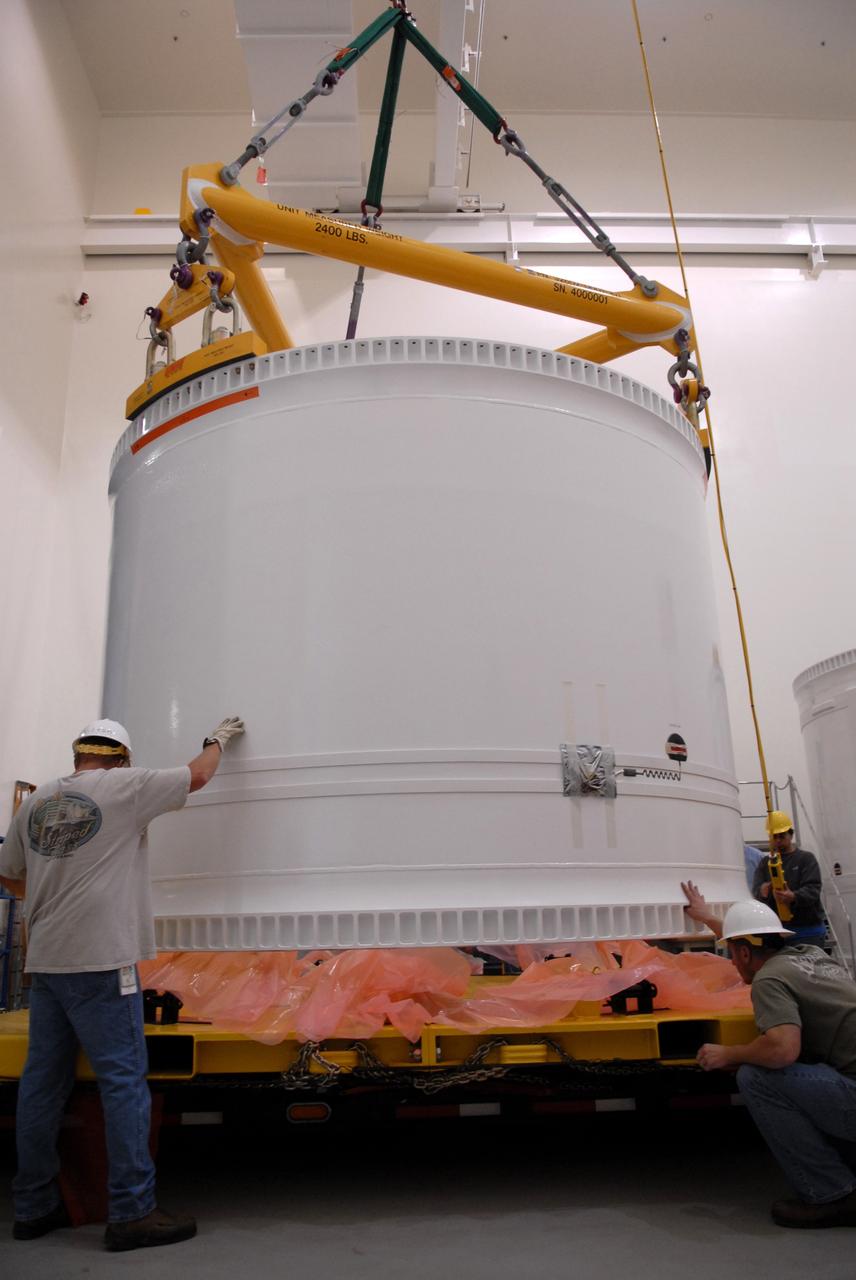
CAPE CANAVERAL, Fla. – In the extended duration orbiter lab, or EDO, of the Vehicle Assembly Building at NASA's Kennedy Space Center in Florida, workers watch closely as a crane lifts the fifth segment simulator center from the transporter. The segment is being moved to supports on the floor. Ares I-X is the test vehicle for the Ares I, which is part of the Constellation Program to return men to the moon and beyond. Ares I is the essential core of a safe, reliable, cost-effective space transportation system that eventually will carry crewed missions back to the moon, on to Mars and out into the solar system. Ares I-X is targeted for launch in July 2009. Photo credit: NASA/Troy Cryder
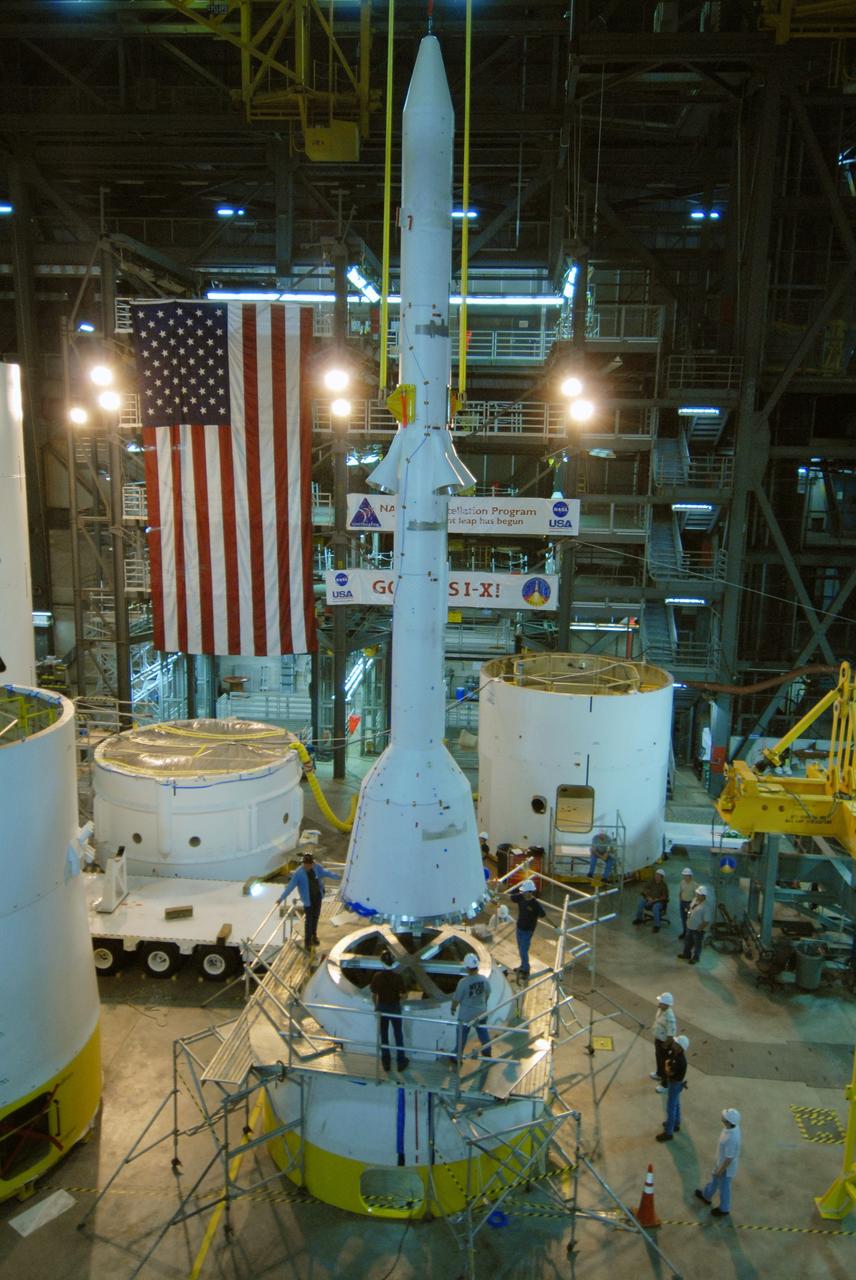
CAPE CANAVERAL, Fla. – In high bay 4 of the Vehicle Assembly Building at NASA's Kennedy Space Center in Florida, workers keep close watch on the Ares I-X simulated launch abort system, or LAS, as it is lowered toward the crew module simulator. Ares I-X is the flight test vehicle for the Ares I, which is part of the Constellation Program to return men to the moon and beyond. Ares I is the essential core of a safe, reliable, cost-effective space transportation system that eventually will carry crewed missions back to the moon, on to Mars and out into the solar system. Ares I-X is targeted for launch in July 2009. Photo credit: NASA/Jack Pfaller
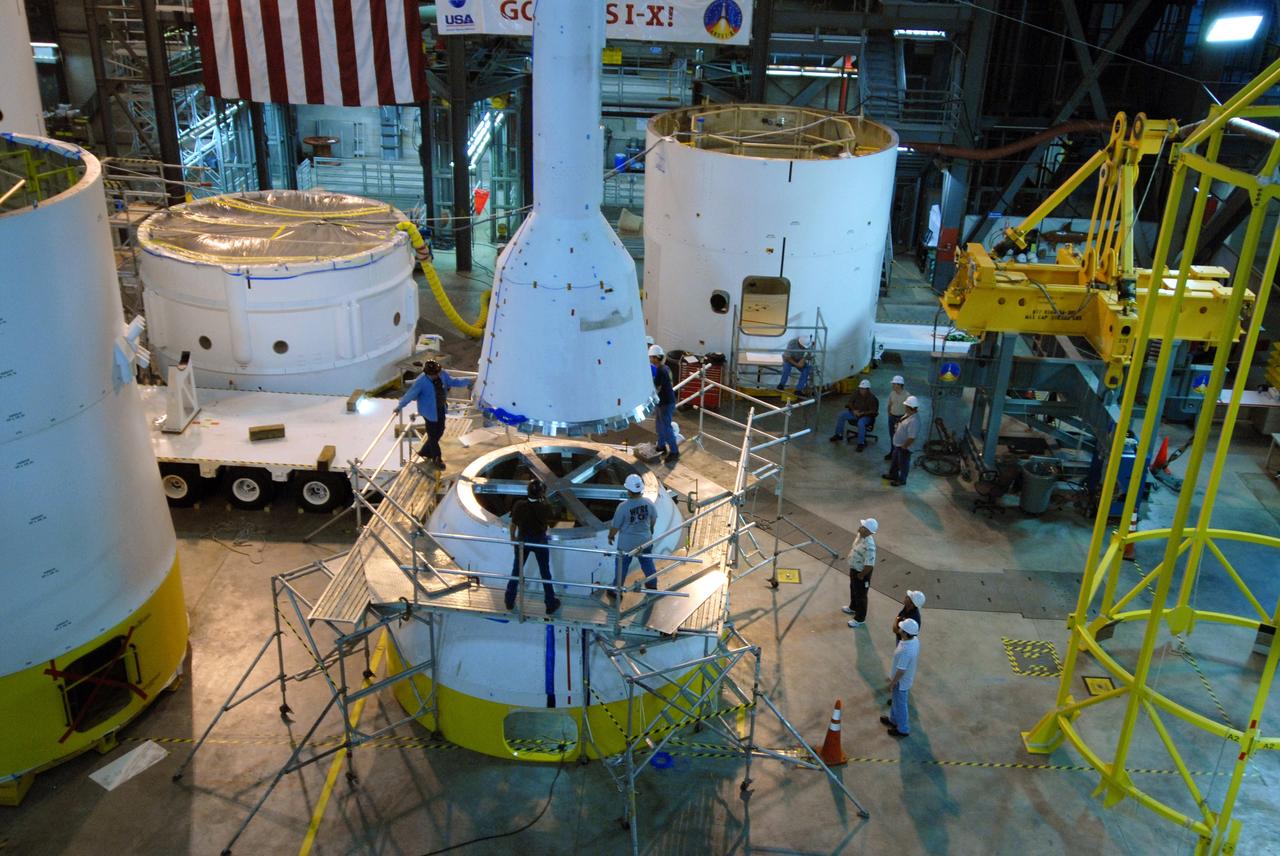
CAPE CANAVERAL, Fla. – In high bay 4 of the Vehicle Assembly Building at NASA's Kennedy Space Center in Florida, workers keep close watch on the Ares I-X simulated launch abort system, or LAS, as it is lowered toward the crew module simulator. Ares I-X is the flight test vehicle for the Ares I, which is part of the Constellation Program to return men to the moon and beyond. Ares I is the essential core of a safe, reliable, cost-effective space transportation system that eventually will carry crewed missions back to the moon, on to Mars and out into the solar system. Ares I-X is targeted for launch in July 2009. Photo credit: NASA/Jack Pfaller
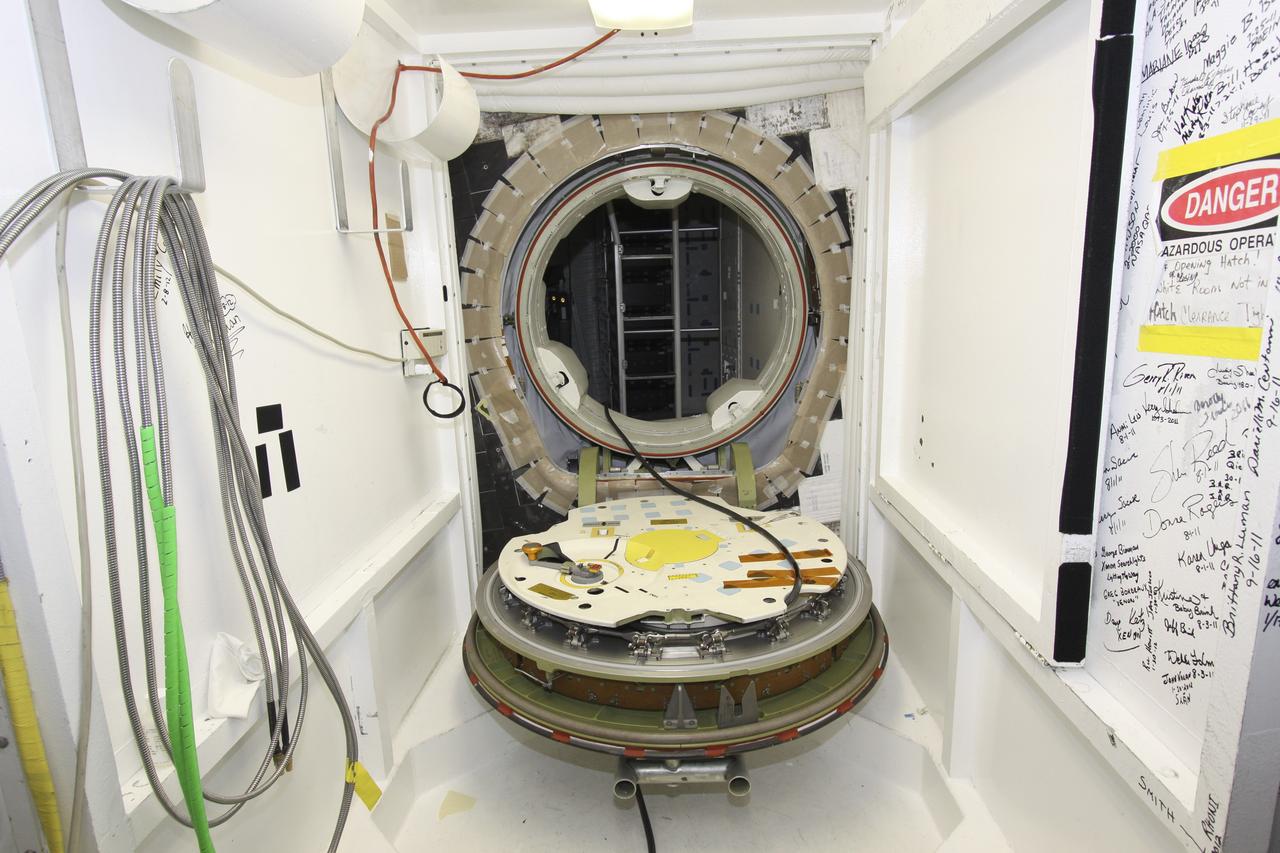
CAPE CANAVERAL, Fla. -- Inside Orbiter Processing Facility-1 at NASA’s Kennedy Space Center in Florida, space shuttle Discovery’s access hatch is being prepared for final close out. The work is part of the Space Shuttle Program’s transition and retirement processing of shuttle Discovery, which is being prepared for display at Smithsonian’s National Air and Space Museum, Steven F. Udvar-Hazy Center in Chantilly, Va. Discovery is scheduled to be transported atop a NASA Shuttle Carrier Aircraft modified 747 jet to Dulles International Airport in Virginia on April 17 and then be transported to the Smithsonian on April 19. For more information, visit http://www.nasa.gov/shuttle. Photo credit: NASA/Jim Grossmann
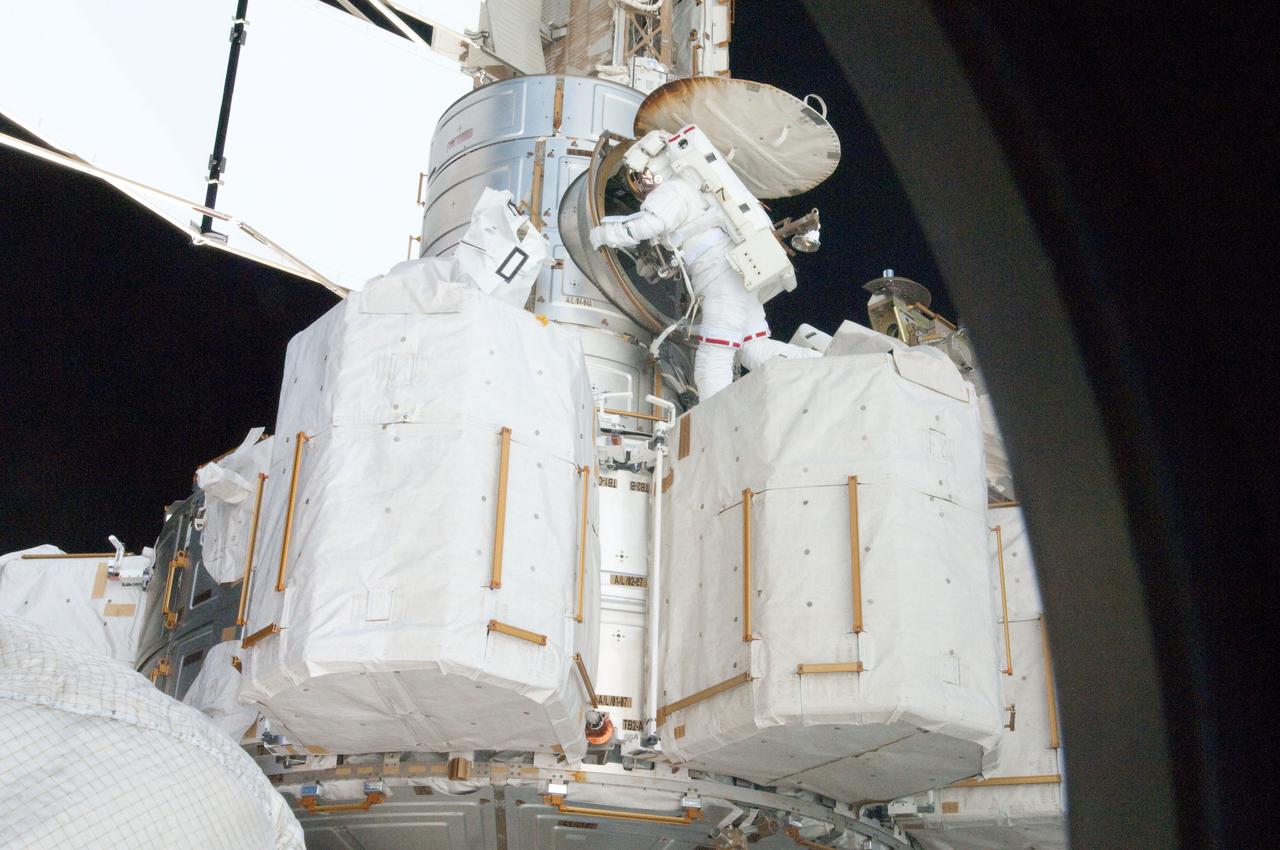
S134-E-009307 (20 May 2011) --- NASA astronaut Greg Chamitoff, STS-134 mission specialist, prepares to enter the Quest airlock of the International Space Station as the mission's first session of extravehicular activity (EVA) draws to a close. During the six-hour, 19-minute spacewalk, Chamitoff and astronaut Andrew Feustel (out of frame) retrieved long-duration materials exposure experiments and installed another, installed a light on one of the station?s rail line handcarts, made preparations for adding ammonia to a cooling loop and installed an antenna for the External Wireless Communication system. Photo credit: NASA
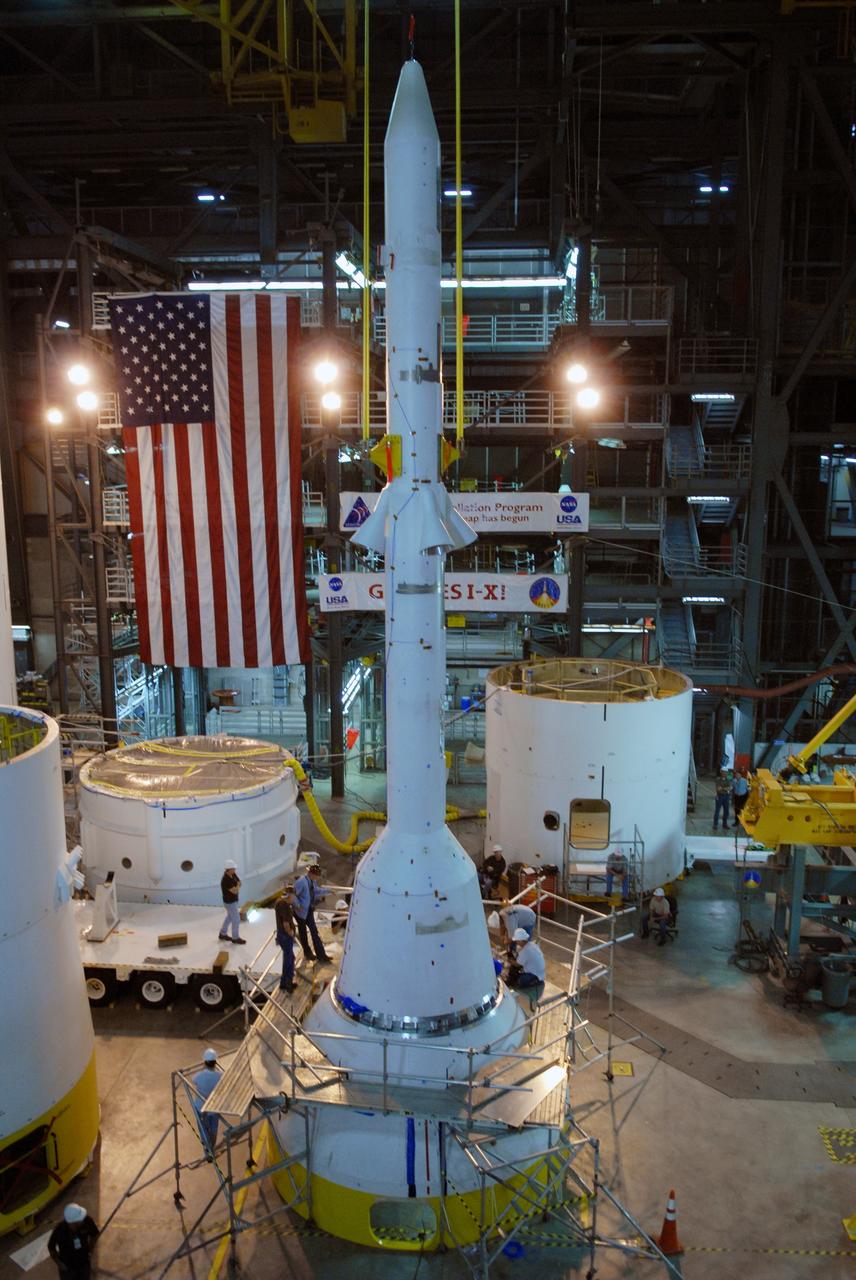
CAPE CANAVERAL, Fla. – In high bay 4 of the Vehicle Assembly Building at NASA's Kennedy Space Center in Florida, workers keep close watch on the Ares I-X simulated launch abort system, or LAS, as it is lowered onto the crew module simulator for assembly. Ares I-X is the flight test vehicle for the Ares I, which is part of the Constellation Program to return men to the moon and beyond. Ares I is the essential core of a safe, reliable, cost-effective space transportation system that eventually will carry crewed missions back to the moon, on to Mars and out into the solar system. Ares I-X is targeted for launch in July 2009. Photo credit: NASA/Jack Pfaller
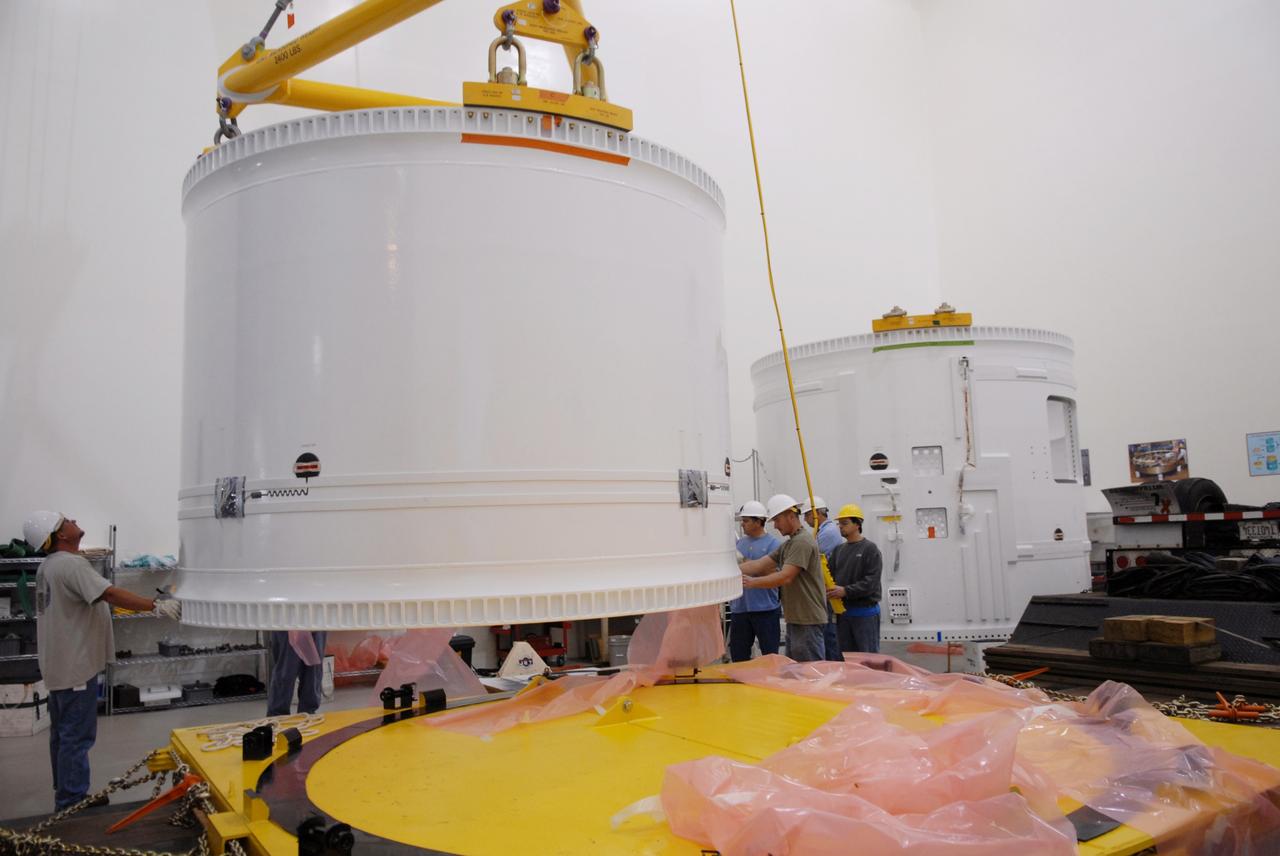
CAPE CANAVERAL, Fla. – In the extended duration orbiter lab, or EDO, of the Vehicle Assembly Building at NASA's Kennedy Space Center in Florida, workers watch closely as a crane lifts the fifth segment simulator center from the transporter. The segment will be moved to supports on the floor. Another segment is at right. Ares I-X is the test vehicle for the Ares I, which is part of the Constellation Program to return men to the moon and beyond. Ares I is the essential core of a safe, reliable, cost-effective space transportation system that eventually will carry crewed missions back to the moon, on to Mars and out into the solar system. Ares I-X is targeted for launch in July 2009. Photo credit: NASA/Troy Cryder

Meredith Vieira closes out the program by reading Walter Cronkite's speech during the "National Symphony Orchestra Pops, Apollo 11: A 50th Anniversary, One Small Step, One Giant Leap" which included musical acts, speakers, and images and video related to space, on Saturday, July 20, 2019 at the John F. Kennedy Center for the Performing Arts in Washington. NASA and the country are recognizing the 50th anniversary of Apollo 11, in which astronauts Neil Armstrong, Michael Collins, and Buzz Aldrin crewed the first mission to land astronauts on the Moon. Photo Credit: (NASA/Aubrey Gemignani)
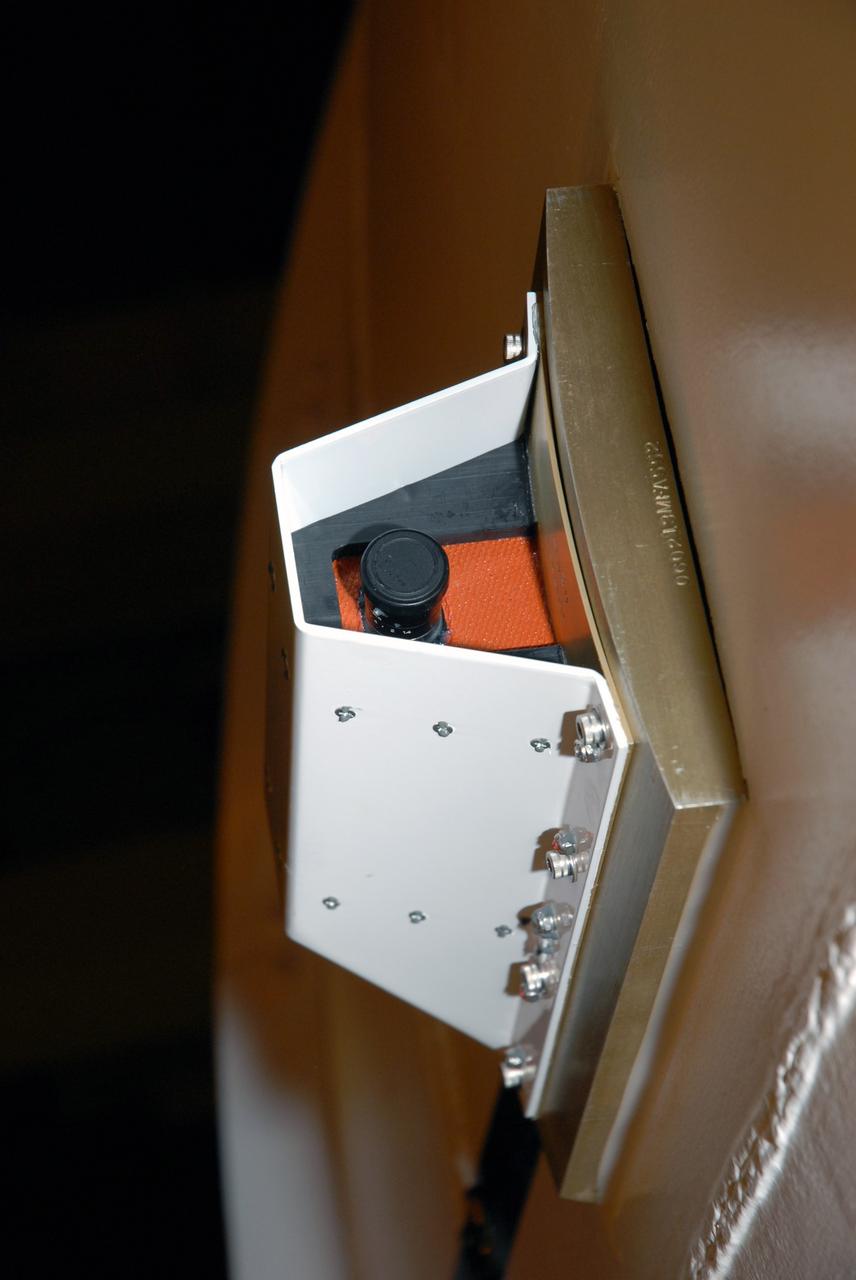
CAPE CANAVERAL, Fla. – A close-up of the video camera installed on the side of the Ares I-X segments 6 and 7, which are in the Vehicle Assembly Building's High Bay 4 at NASA's Kennedy Space Center in Florida. The downward facing camera will provide live video during launch. Part of the Constellation Program, the Ares I-X is the test vehicle for the Ares I, which is the essential core of a space transportation system that eventually will carry crewed missions back to the moon, on to Mars and out into the solar system . The Ares I-X flight test is targeted for no earlier than Aug. 30. Photo credit: NASA/Jack Pfaller
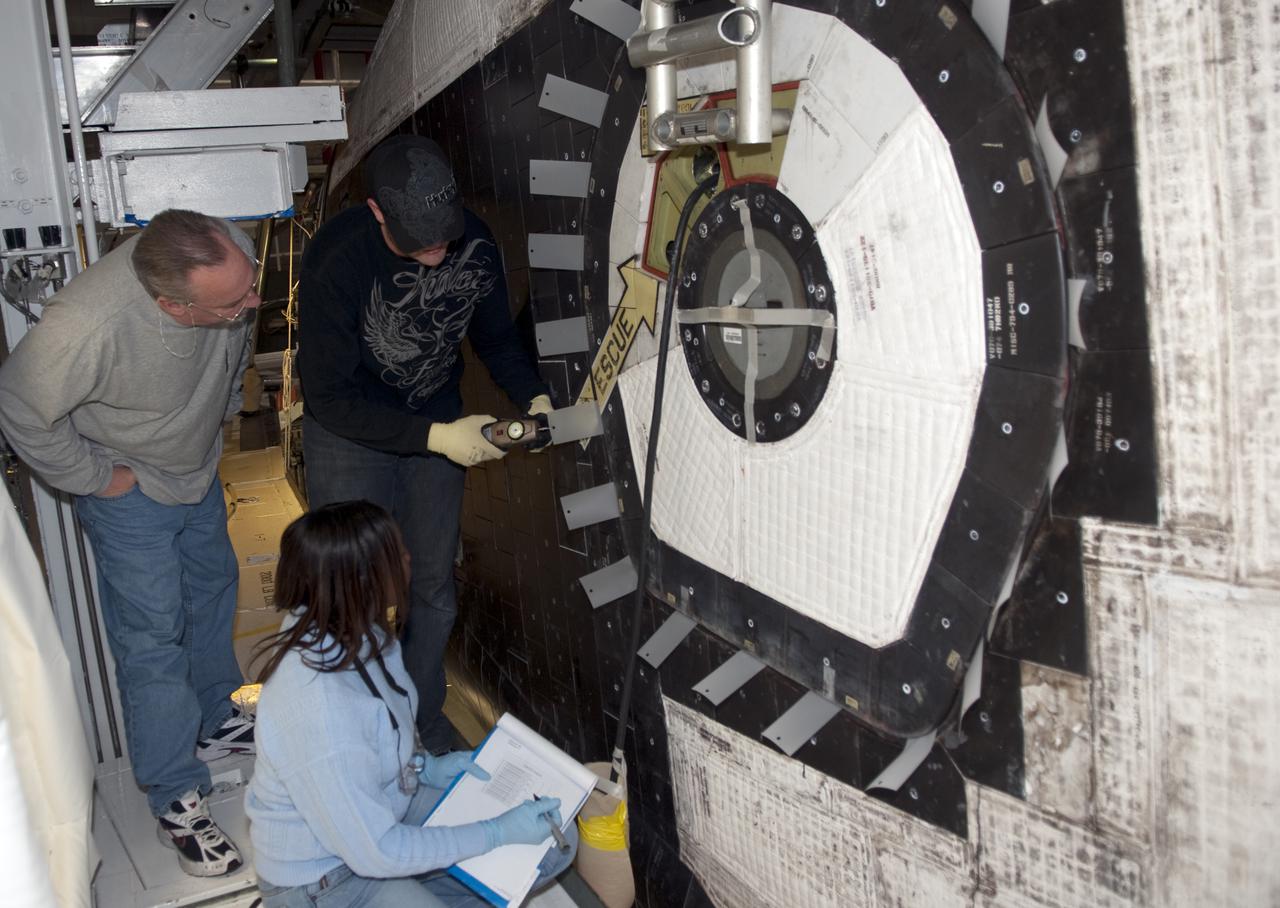
CAPE CANAVERAL, Fla. - Inside Orbiter Processing Facility-1 at Kennedy Space Center in Florida, technicians secure and check shuttle Atlantis’ hatch in preparation for the Mylar Pull Test. During the test, a scale is used to measure the force required to pull a piece of Mylar paper out from between the door and structural wall thermal barriers. The pull test is performed to ensure the integrity of the hatch and that it has closed properly. Atlantis is being processed for the STS-132 mission targeted for launch May 14. The six-member crew will deliver an Integrated Cargo Carrier and a Russian-built Mini Research Module to the International Space Station. Photo credit: NASA_Jim Grossmann
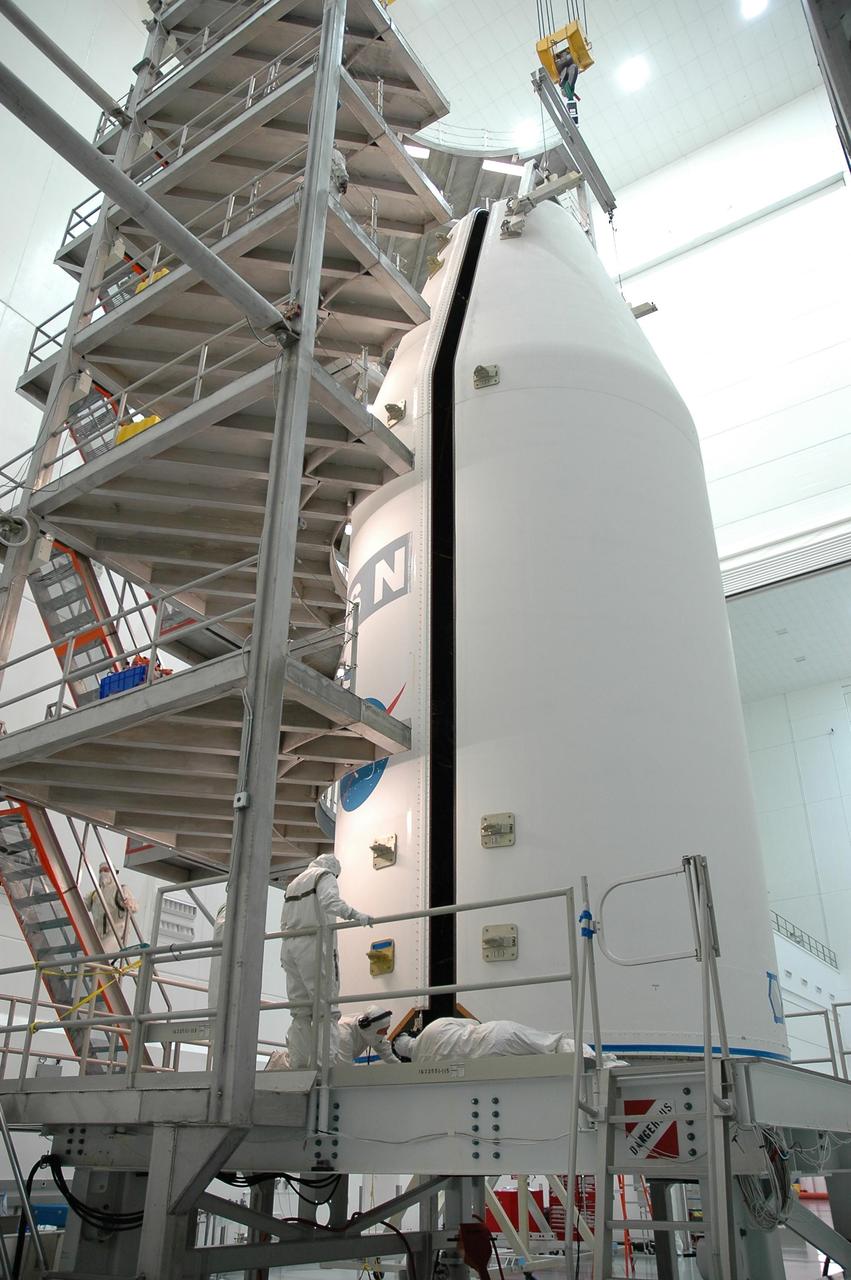
KENNEDY SPACE CENTER, FLA. - In the high bay at Astrotech Space Operations in Titusville, Fla., workers check the bottom of the fairing halves as they close around the GOES-N satellite. The fairing protects the spacecraft during launch and flight through the atmosphere. Once out of the atmosphere, the fairing is jettisoned. GOES-N is the latest in a series of Geostationary Operational Environmental Satellites for NOAA and NASA providing continuous monitoring necessary for intensive data analysis. GOES-N will be launched May 18 on a Boeing Delta IV rocket from Cape Canaveral Air Force Station in Florida. Photo credit: NASA/Jack Pfaller
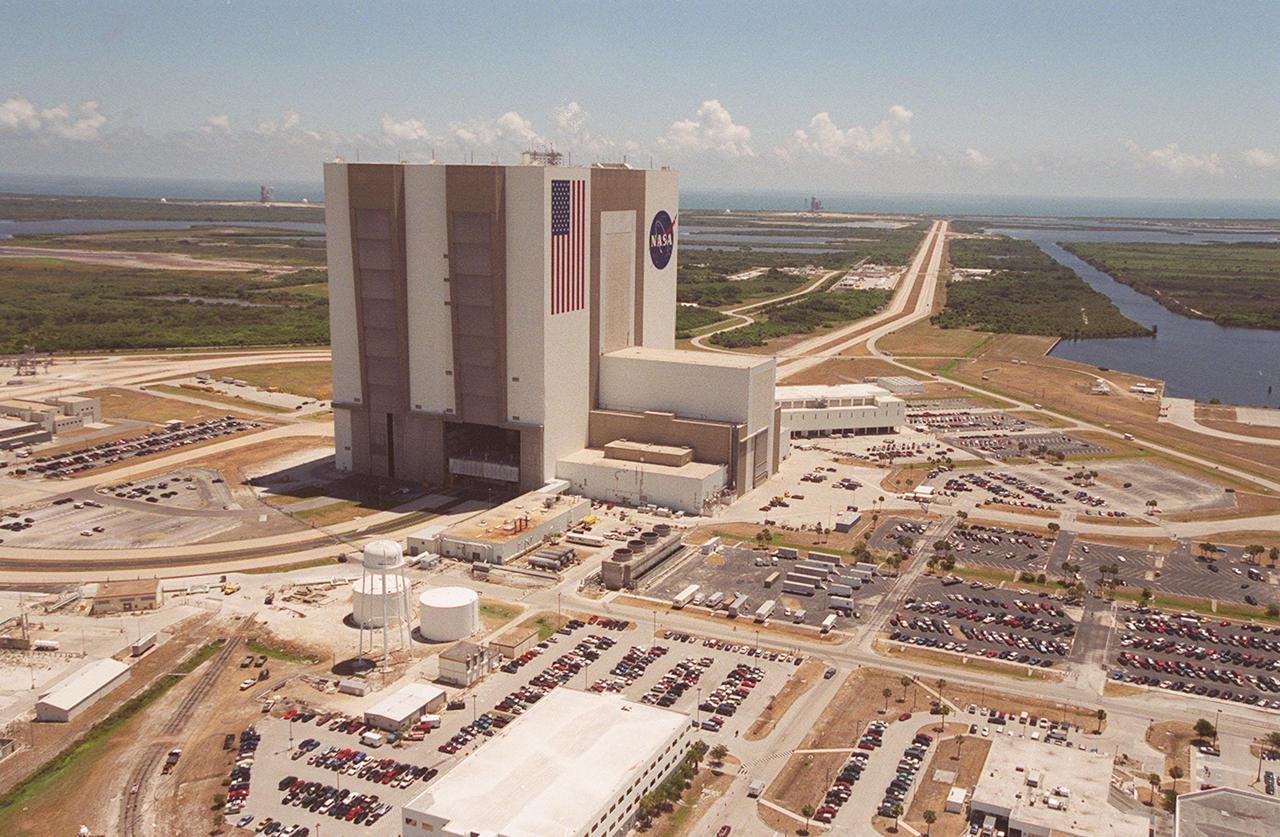
This aerial photo captures many of the facilities involved in Space Shuttle launches. At center is the Vehicle Assembly Building (VAB), with the Launch Control Center at its right. The curved road on the left in the photo is the newly restored crawlerway leading into the VAB high bay 2, where a mobile launcher platform/crawler-transporter sits. The road restoration and high bay 2 are part of KSC's Safe Haven project, enabling the storage of orbiters during severe weather. The crawlerway also extends from the east side out to the two launch pads, one visible close to the road on the left and one to the left of the VAB. In the distance is the Atlantic Ocean. To the right of the crawlerway is the turn basin, into which ships tow the barge for offloading new external tanks from Louisiana.
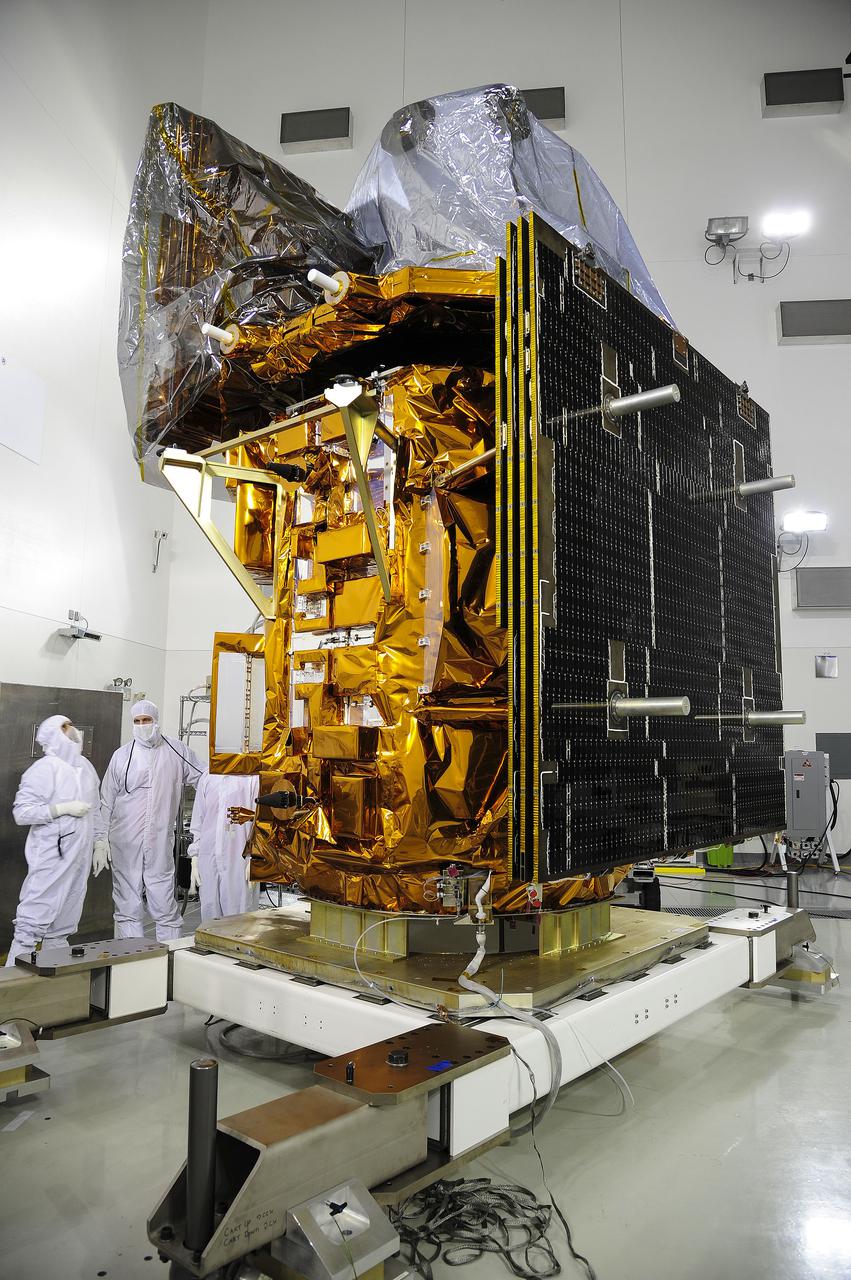
VANDENBERG AFB, Calif. -- At the Astrotech processing facility at Vandenberg Air Force Base, Calif., technicians perform close-outs on NASA's Landsat Data Continuity Mission, or LDCM, satellite. The Landsat Data Continuity Mission LDCM is the future of Landsat satellites. It will continue to obtain valuable data and imagery to be used in agriculture, education, business, science, and government. The Landsat Program provides repetitive acquisition of high resolution multispectral data of the Earth's surface on a global basis. The data from the Landsat spacecraft constitute the longest record of the Earth's continental surfaces as seen from space. It is a record unmatched in quality, detail, coverage, and value. Liftoff is planned for Feb. 11, 2013 aboard a United Launch Alliance Atlas V rocket. For more information, visit: http:__www.nasa.gov_mission_pages_landsat_main_index.html Photo credit: NASA
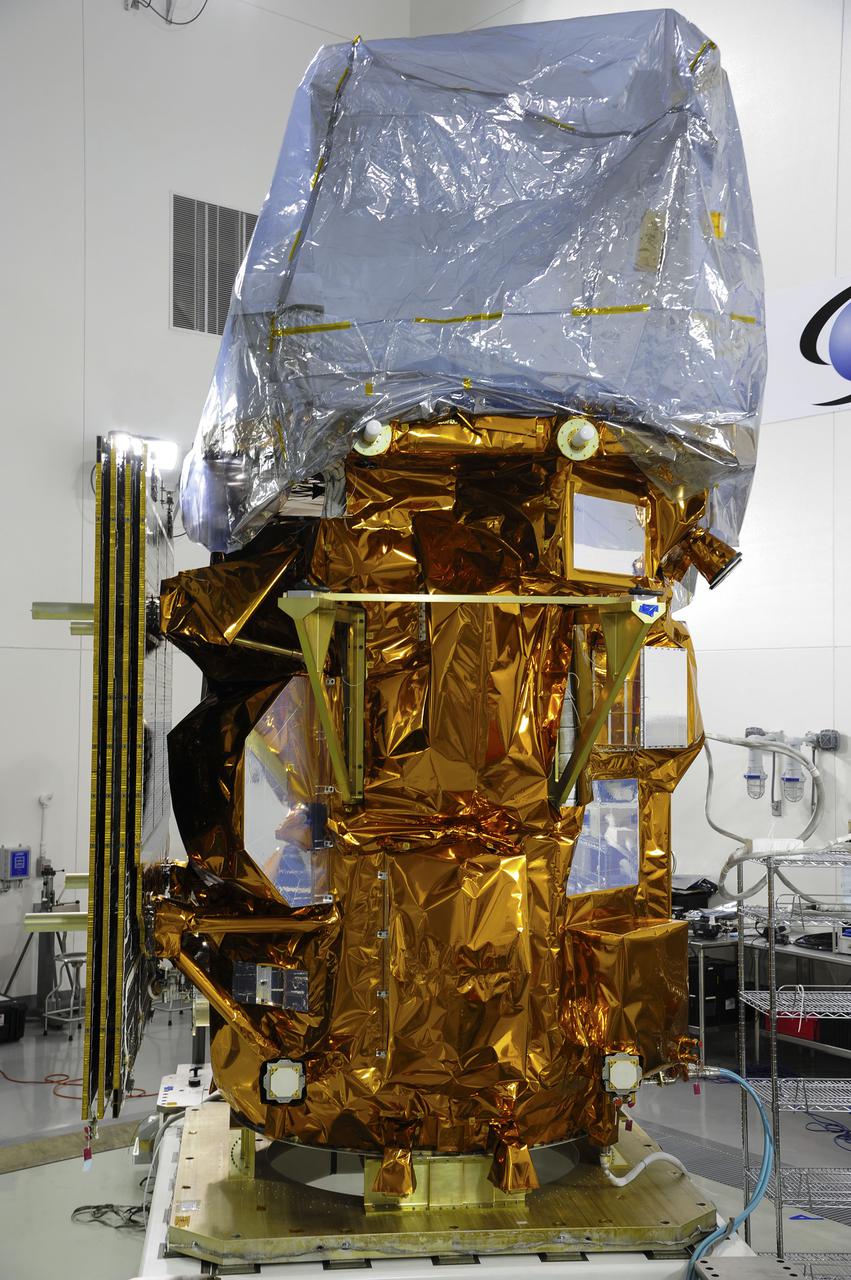
VANDENBERG AFB, Calif. -- At the Astrotech processing facility at Vandenberg Air Force Base, Calif., NASA's Landsat Data Continuity Mission, or LDCM, satellite is undergoing close-outs prior to encapsulation in the payload fairing. The Landsat Data Continuity Mission LDCM is the future of Landsat satellites. It will continue to obtain valuable data and imagery to be used in agriculture, education, business, science, and government. The Landsat Program provides repetitive acquisition of high resolution multispectral data of the Earth's surface on a global basis. The data from the Landsat spacecraft constitute the longest record of the Earth's continental surfaces as seen from space. It is a record unmatched in quality, detail, coverage, and value. Liftoff is planned for Feb. 11, 2013 aboard a United Launch Alliance Atlas V rocket. For more information, visit: http:__www.nasa.gov_mission_pages_landsat_main_index.html Photo credit: NASA
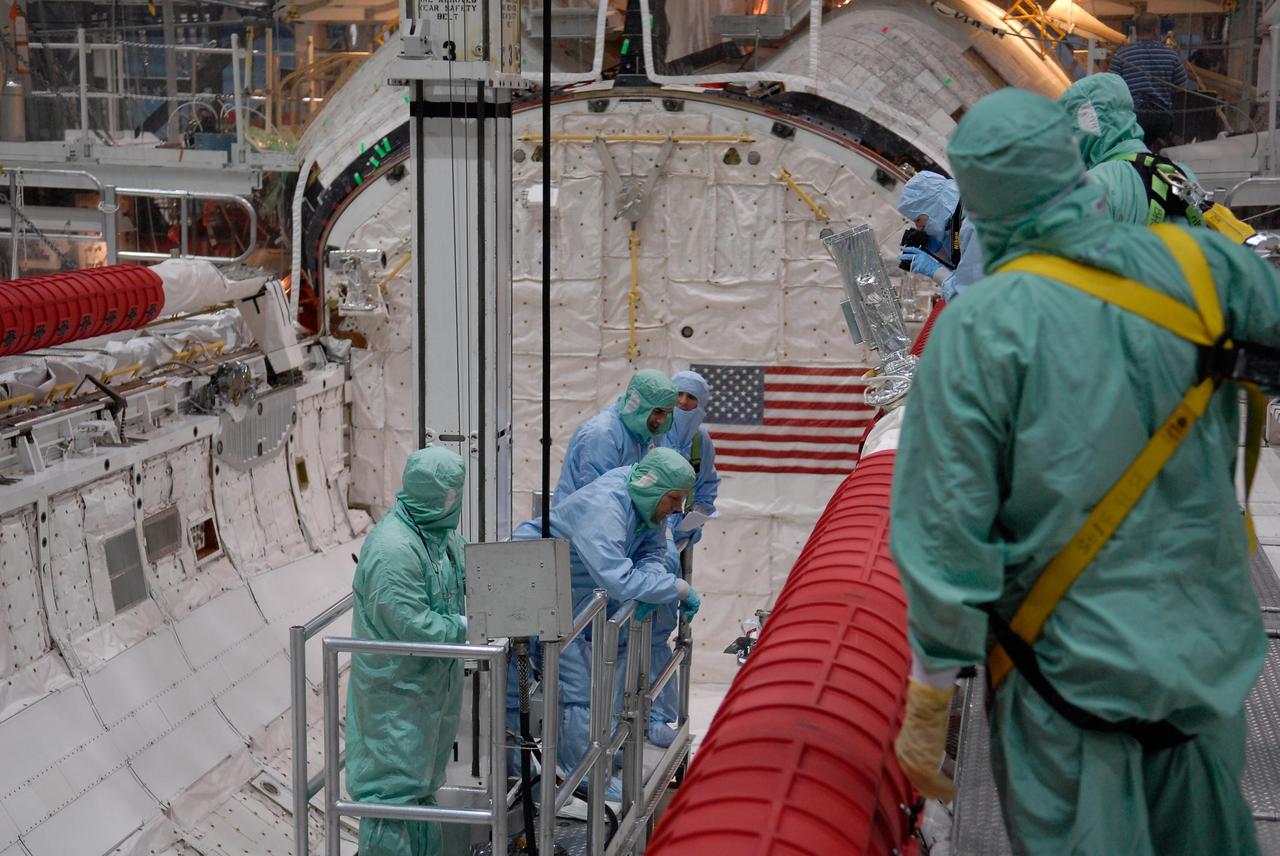
KENNEDY SPACE CENTER, FLA. -- STS-122 crew members get a close look at shuttle equipment from inside the payload bay of space shuttle Atlantis. The crew comprises six astronauts: Commander Stephen Frick, Pilot Alan Poindexter and Mission Specialists Rex Walheim, Stanley Love, Leland Melvin and Hans Schlegel, who represents the European Space Agency. A seventh astronaut is Leopold Eyharts, also with the ESA, who will join the Expedition 16 crew as flight engineer on the International Space Station. The mission will carry and install the Columbus Lab, a multifunctional, pressurized laboratory that will be permanently attached to Node 2 of the space station to carry out experiments in materials science, fluid physics and biosciences, as well as to perform a number of technological applications. It is Europe’s largest contribution to the construction of the International Space Station and will support scientific and technological research in a microgravity environment. STS-122 is targeted for launch in December. Photo credit: NASA/Kim Shiflett
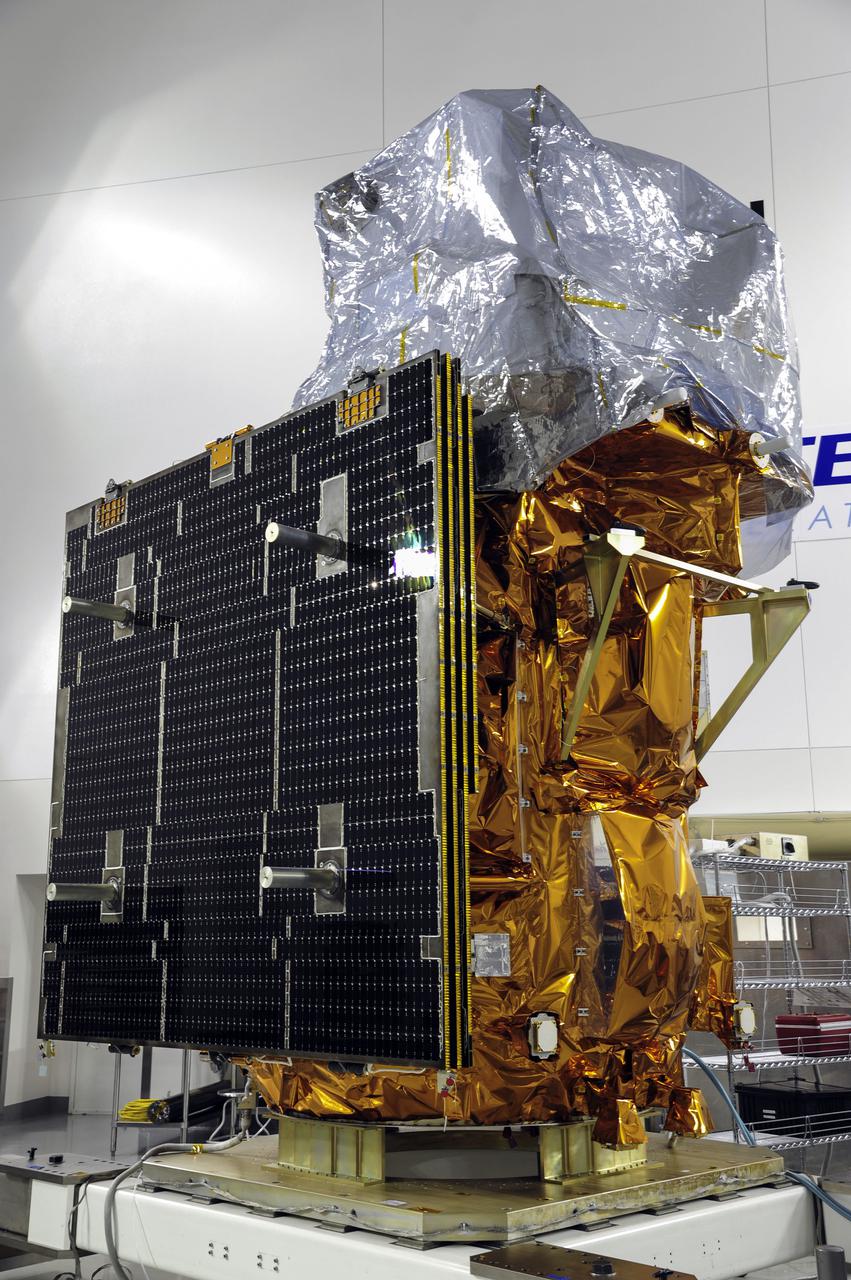
VANDENBERG AFB, Calif. -- At the Astrotech processing facility at Vandenberg Air Force Base, Calif., NASA's Landsat Data Continuity Mission, or LDCM, satellite is undergoing close-outs prior to encapsulation in the payload fairing. The Landsat Data Continuity Mission LDCM is the future of Landsat satellites. It will continue to obtain valuable data and imagery to be used in agriculture, education, business, science, and government. The Landsat Program provides repetitive acquisition of high resolution multispectral data of the Earth's surface on a global basis. The data from the Landsat spacecraft constitute the longest record of the Earth's continental surfaces as seen from space. It is a record unmatched in quality, detail, coverage, and value. Liftoff is planned for Feb. 11, 2013 aboard a United Launch Alliance Atlas V rocket. For more information, visit: http:__www.nasa.gov_mission_pages_landsat_main_index.html Photo credit: NASA
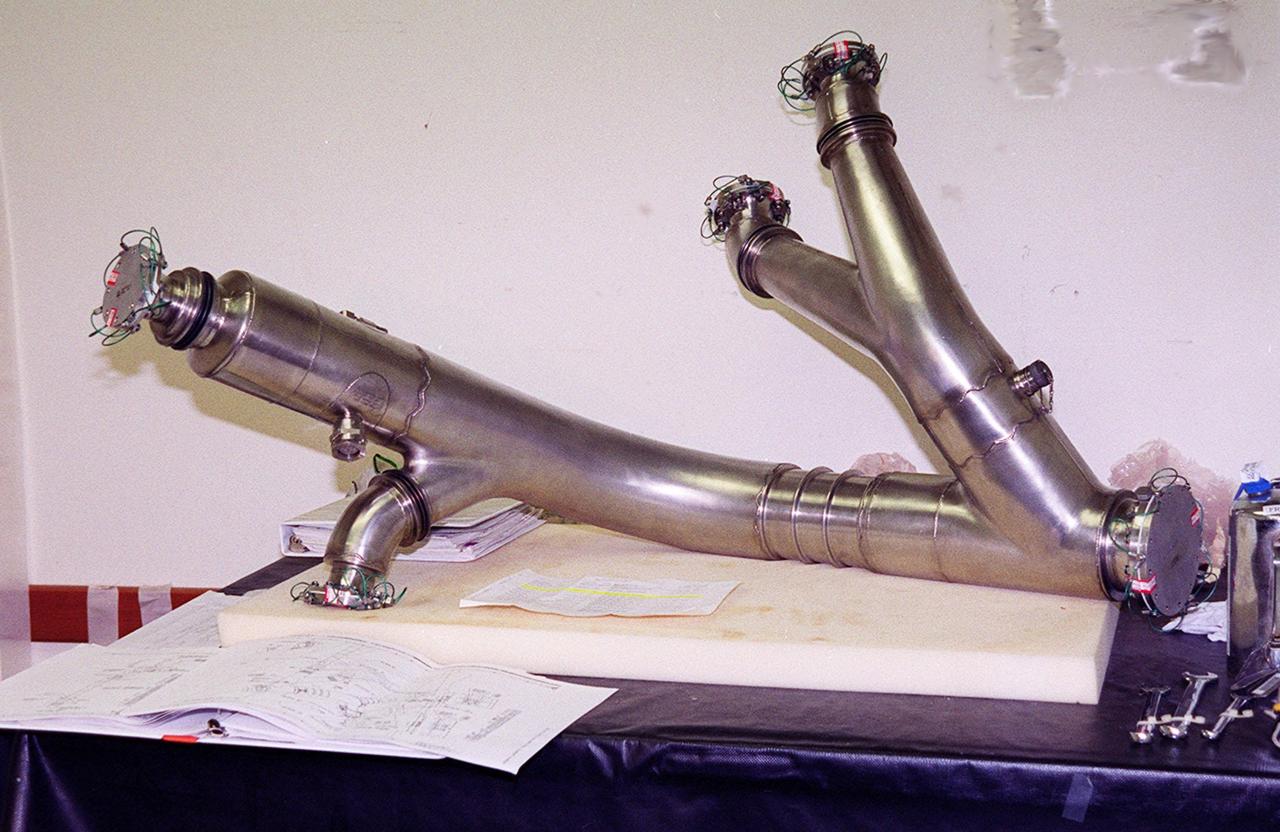
A spare four-inch diameter LH2 recirculation line (shown in photo) will be used to replace a damaged LH2 line in the orbiter Discovery. The line recirculates hydrogen from the Shuttle main engines back to the external tank during prelaunch engine conditioning. Workers noted a dent in the line during routine aft compartment inspections Tuesday, Dec. 7. The dent measures 12 inches long and about ½-inch deep. Managers expect the replacement work to take about 3 days, followed by system retests and final aft compartment close-outs. Preliminary assessments reflect a launch date of Space Shuttle Discovery on mission STS-103 no earlier than Dec. 16. STS-103 is the third servicing mission for the Hubble Space Telescope
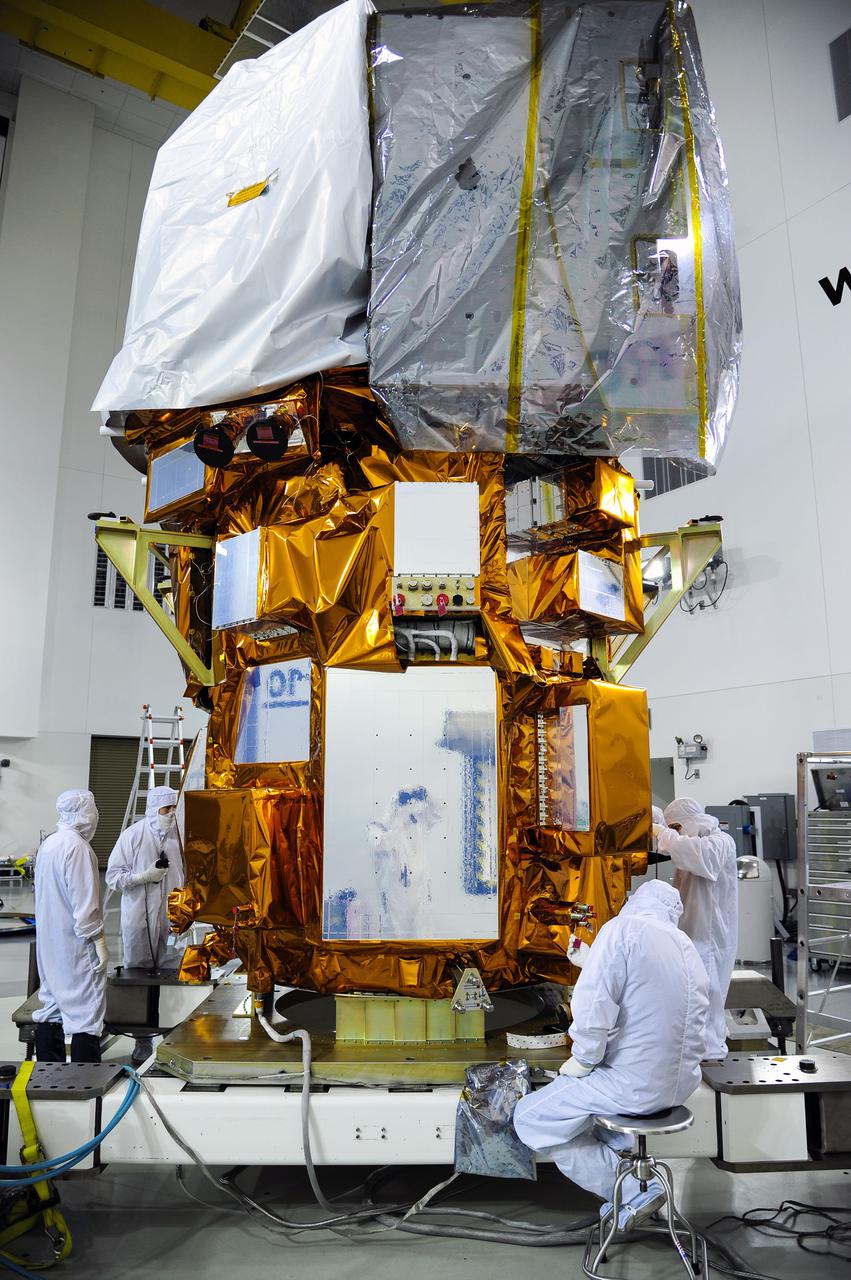
VANDENBERG AFB, Calif. -- At the Astrotech processing facility at Vandenberg Air Force Base, Calif., technicians perform close-out inspections on NASA's Landsat Data Continuity Mission, or LDCM, satellite. The Landsat Data Continuity Mission LDCM is the future of Landsat satellites. It will continue to obtain valuable data and imagery to be used in agriculture, education, business, science, and government. The Landsat Program provides repetitive acquisition of high resolution multispectral data of the Earth's surface on a global basis. The data from the Landsat spacecraft constitute the longest record of the Earth's continental surfaces as seen from space. It is a record unmatched in quality, detail, coverage, and value. Liftoff is planned for Feb. 11, 2013 aboard a United Launch Alliance Atlas V rocket. For more information, visit: http:__www.nasa.gov_mission_pages_landsat_main_index.html Photo credit: NASA
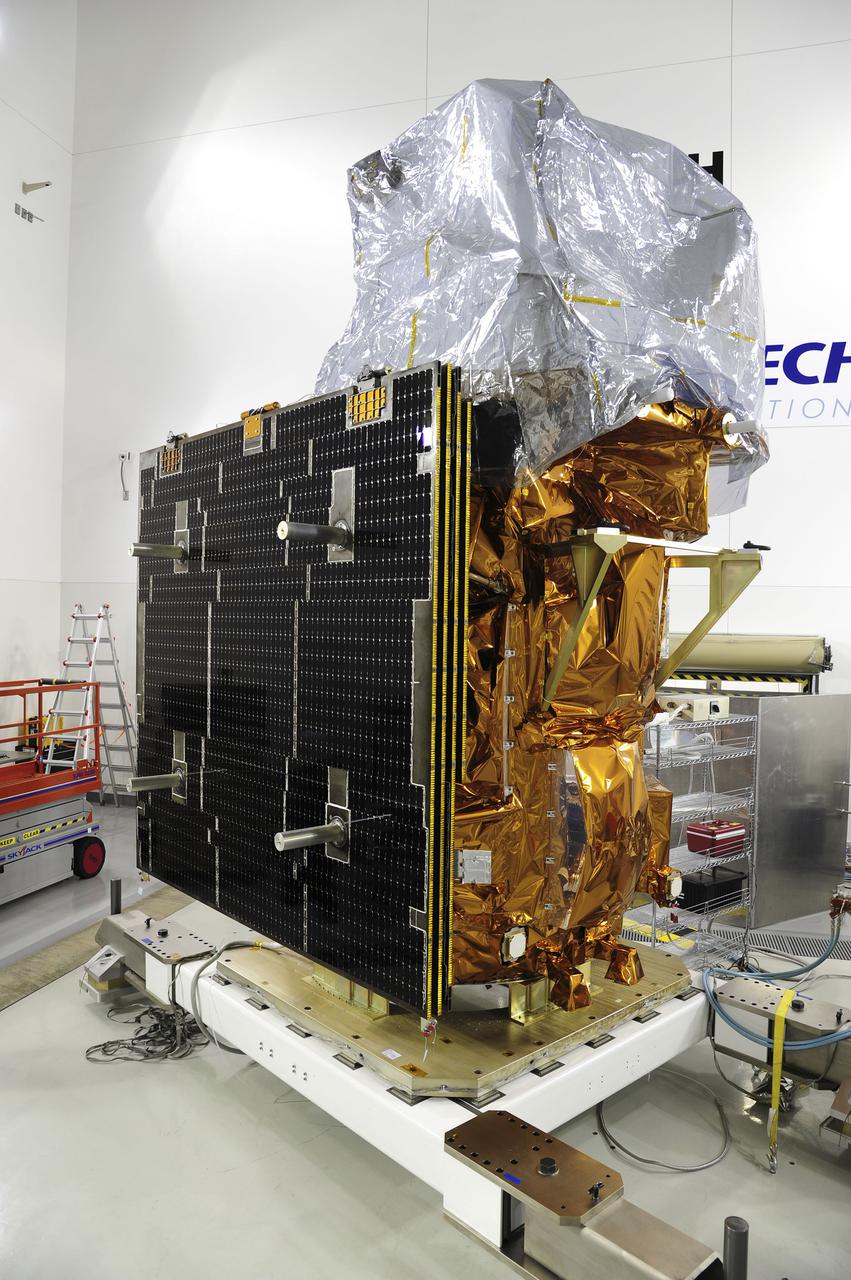
VANDENBERG AFB, Calif. -- At the Astrotech processing facility at Vandenberg Air Force Base, Calif., NASA's Landsat Data Continuity Mission, or LDCM, satellite is undergoing close-outs prior to encapsulation in the payload fairing. The Landsat Data Continuity Mission LDCM is the future of Landsat satellites. It will continue to obtain valuable data and imagery to be used in agriculture, education, business, science, and government. The Landsat Program provides repetitive acquisition of high resolution multispectral data of the Earth's surface on a global basis. The data from the Landsat spacecraft constitute the longest record of the Earth's continental surfaces as seen from space. It is a record unmatched in quality, detail, coverage, and value. Liftoff is planned for Feb. 11, 2013 aboard a United Launch Alliance Atlas V rocket. For more information, visit: http:__www.nasa.gov_mission_pages_landsat_main_index.html Photo credit: NASA
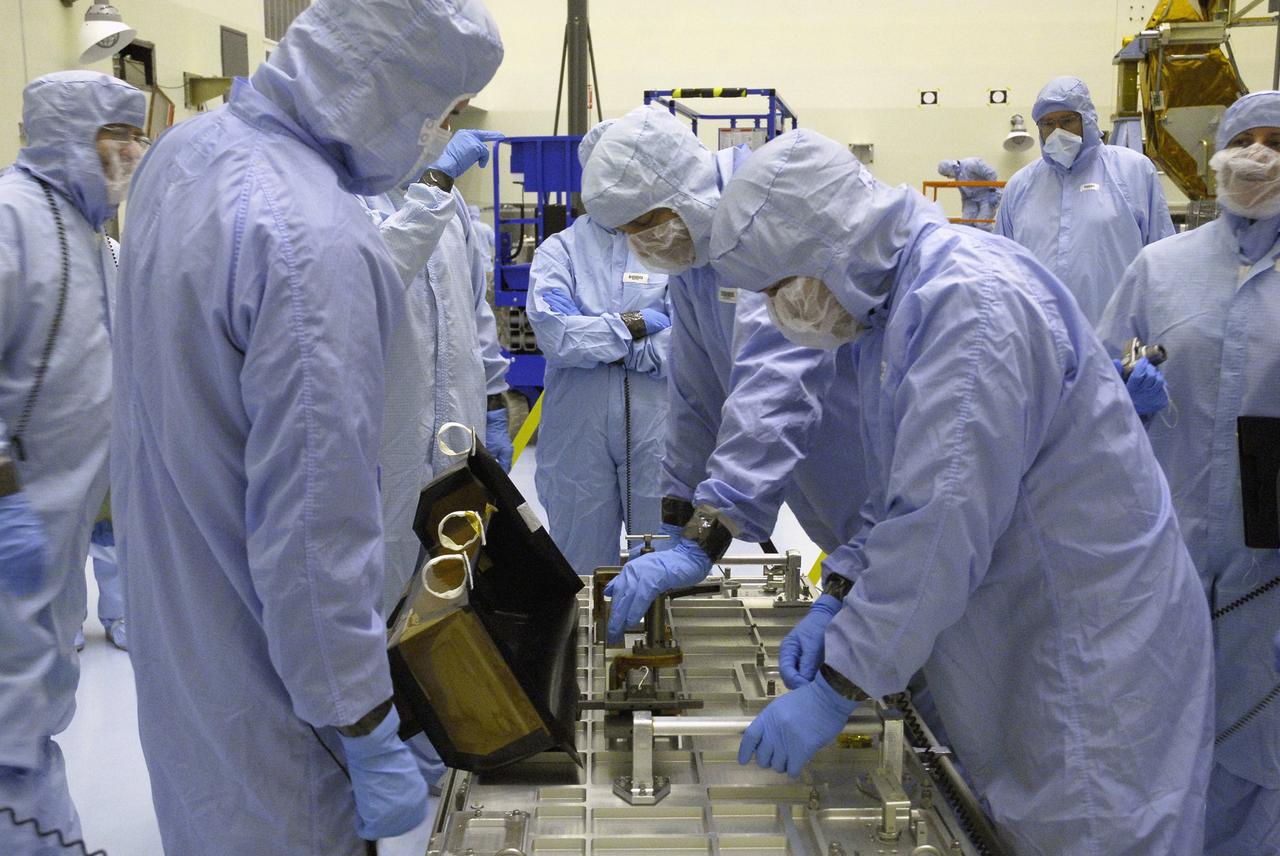
CAPE CANAVERAL, Fla. – In the Payload Hazardous Servicing Facility at NASA’s Kennedy Space Center, crew members with the STS-125 mission get a close look at some of the equipment associated with their mission to service NASA’s Hubble Space Telescope. At center, Mission Specialists Mike Massimino and John Grunsfeld work with the RSU change-out tool latched in place on the Small ORU Protective Enclosure, or SOPE. At far left and far right are Johnson Space Center EVA Trainers Ron Sheffield and Kristie Hansen. The STS-125 crew is taking part in a crew equipment interface test, which provides experience handling tools, equipment and hardware they will use on their mission. Space shuttle Atlantis is targeted to launch on the STS-125 mission Oct. 10. Photo credit: NASA/Kim Shiflett
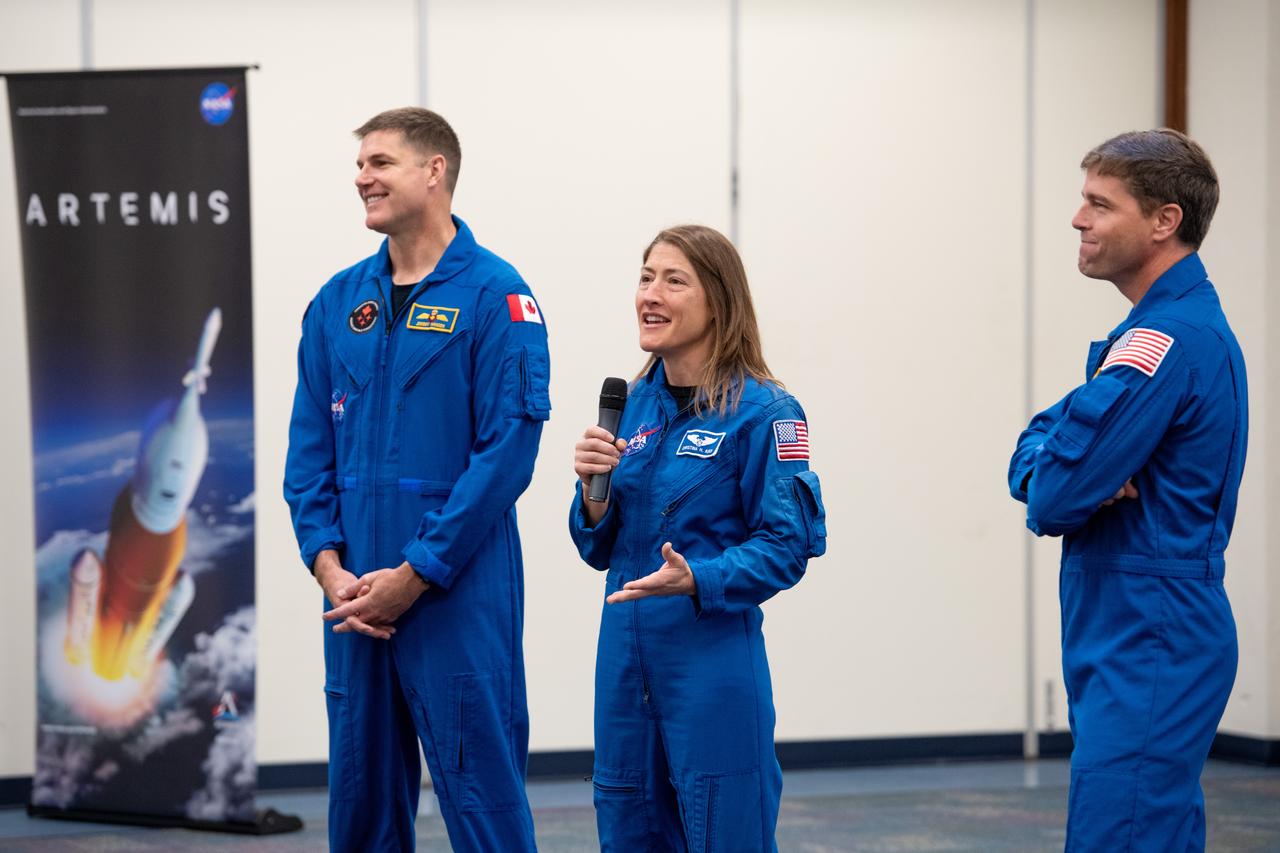
On September 11, 2024, employees meet three of the four astronauts who will venture around the Moon on Artemis II, the first crewed flight paving the way for future lunar surface missions. Commander Reid Wiseman and Mission Specialists Christina Koch and Jeremy Hansen will be on hand to discuss their upcoming mission and participate in a Question and Answer session with employees afterward. Hansen is an astronaut with the Canadian Space Agency. Victor Glover, the pilot and fourth crew member, will not be present. Awards were given to employees that participated in Orion for Artemis I. The crew of four astronauts will lift off on an approximately 10-day mission from Launch Complex 39B at NASA’s Kennedy Space Center in Florida, blazing beyond Earth’s grasp atop the agency’s mega Moon rocket. The crew will check out Orion’s systems and perform a targeting demonstration test relatively close to Earth before venturing around the Moon. Photo Credit: (NASA/Sara Lowthian-Hanna)
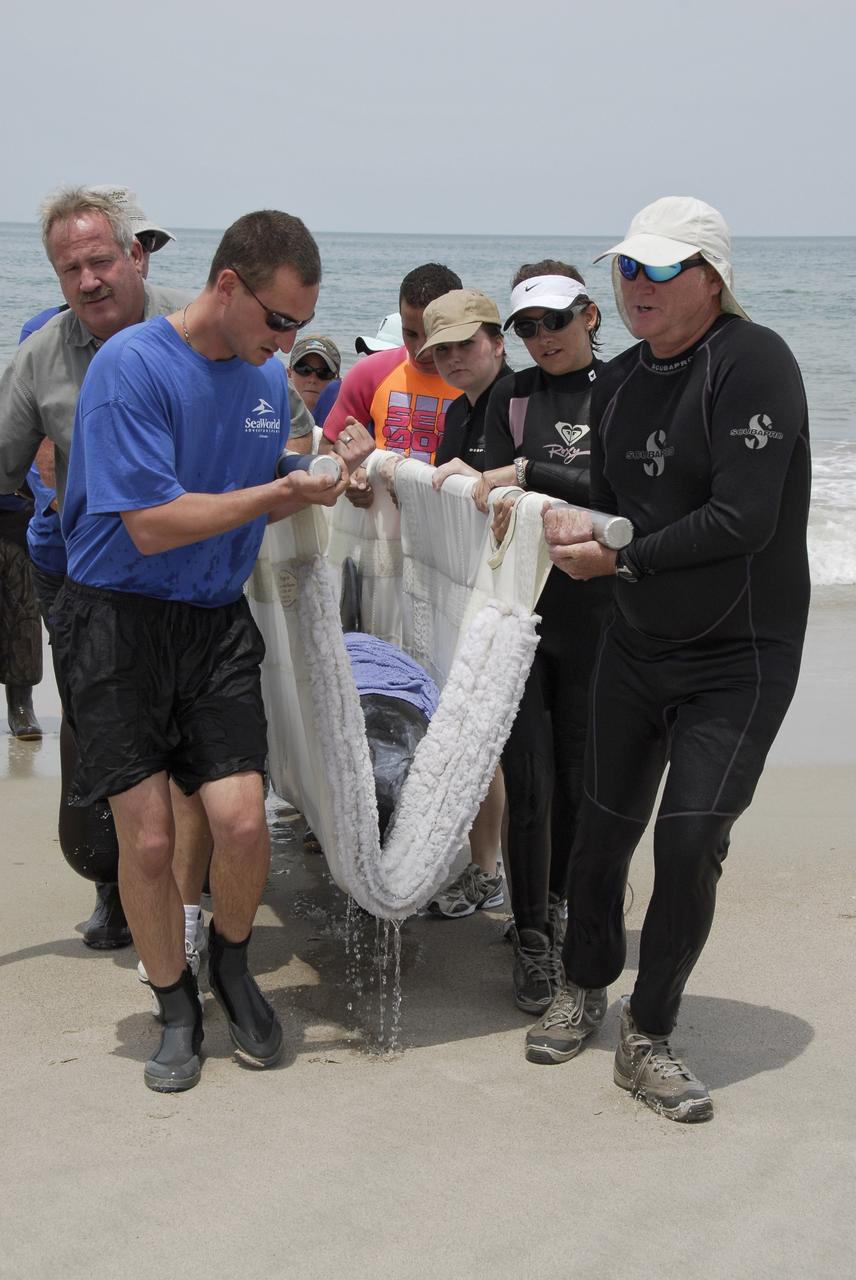
CAPE CANAVERAL, Fla. – Workers from NASA's Kennedy Space Center, a veterinarian and representatives from the Hubbs/Sea World Research Institute support a stranded Melon-Headed Whale on a sling as they carry it out of the Atlantic Ocean. The whale was found beached south of Launch Pad 39A near Cape Canaveral Air Force Station. After assessment by veterinarians at Sea World, the whale will be transported to a whale rescue center in the Panhandle for rehabilitation and release. The Melon-Headed Whale lives well off-shore in all the world's tropical and sub-tropical oceans. At the northern fringes of its range, it may also be found in the warm currents of temperate waters, such as Florida. It is closely related to the Pygmy Killer Whale and the Pilot Whales. Its primary diet is squid. Photo credit: NASA/Kim Shiflett
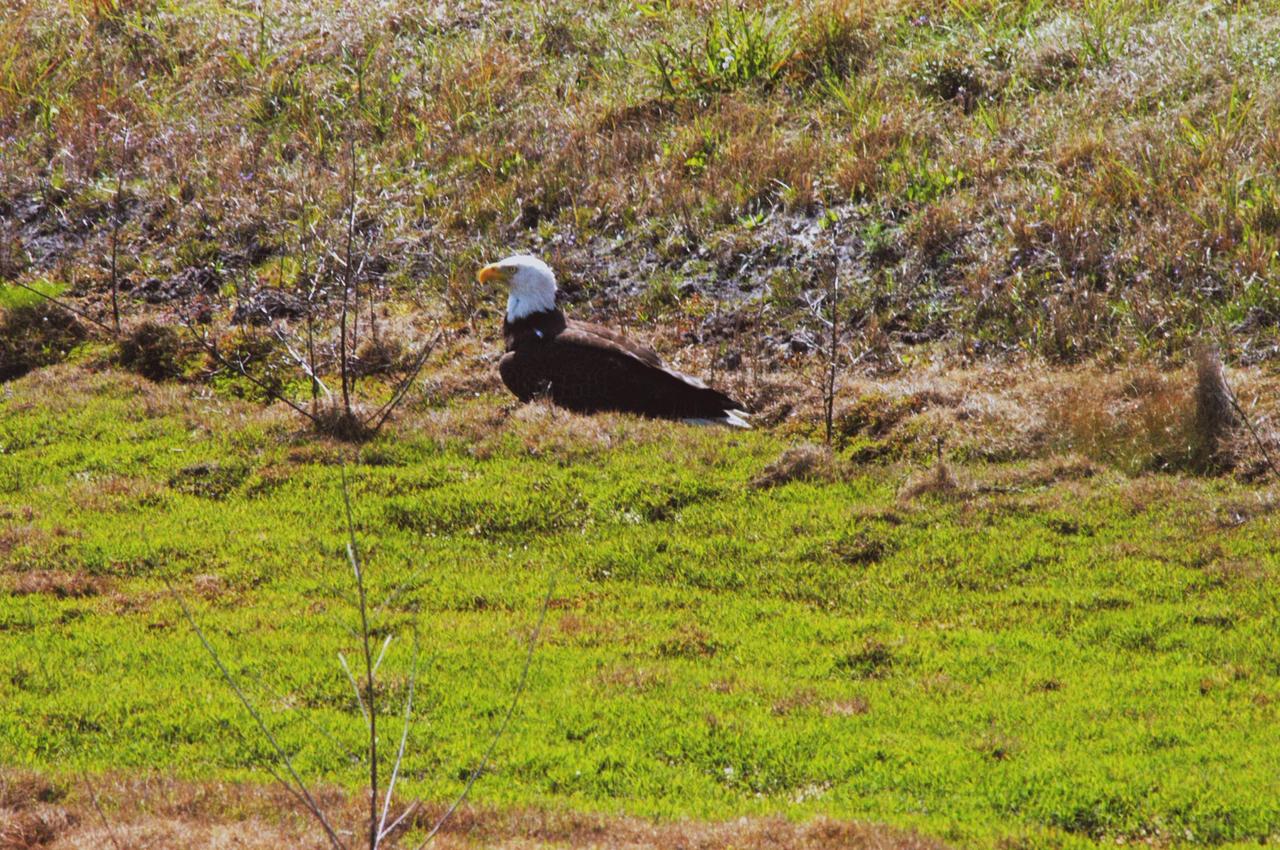
KENNEDY SPACE CENTER, FLA. - A bald eagle on the ground may be protecting its food or resting after a hunt for food. This one was spotted near S.R. 3 on Kennedy Space Center, close to its nest. The nest is one of a dozen active nests throughout the Merritt Island National Wildlife Refuge, which shares a boundary with the Center. Eagles' habitats are near lakes, rivers, marshes and seacoasts. Nests are masses of sticks, usually in the top of a tall tree. Even though they are fish eaters, bald eagles will take whatever prey is available and easiest to obtain. Bald eagles which live along the coast and on major lakes and rivers feed mainly on fish. Bald eagles fish in both fresh and salt water. Because of the energy expended during hunting, an eagle has to spend a lot of time resting quietly. It's estimated that only one out of eighteen attacks are successful. Photo credit: NASA/Jim Grossmann
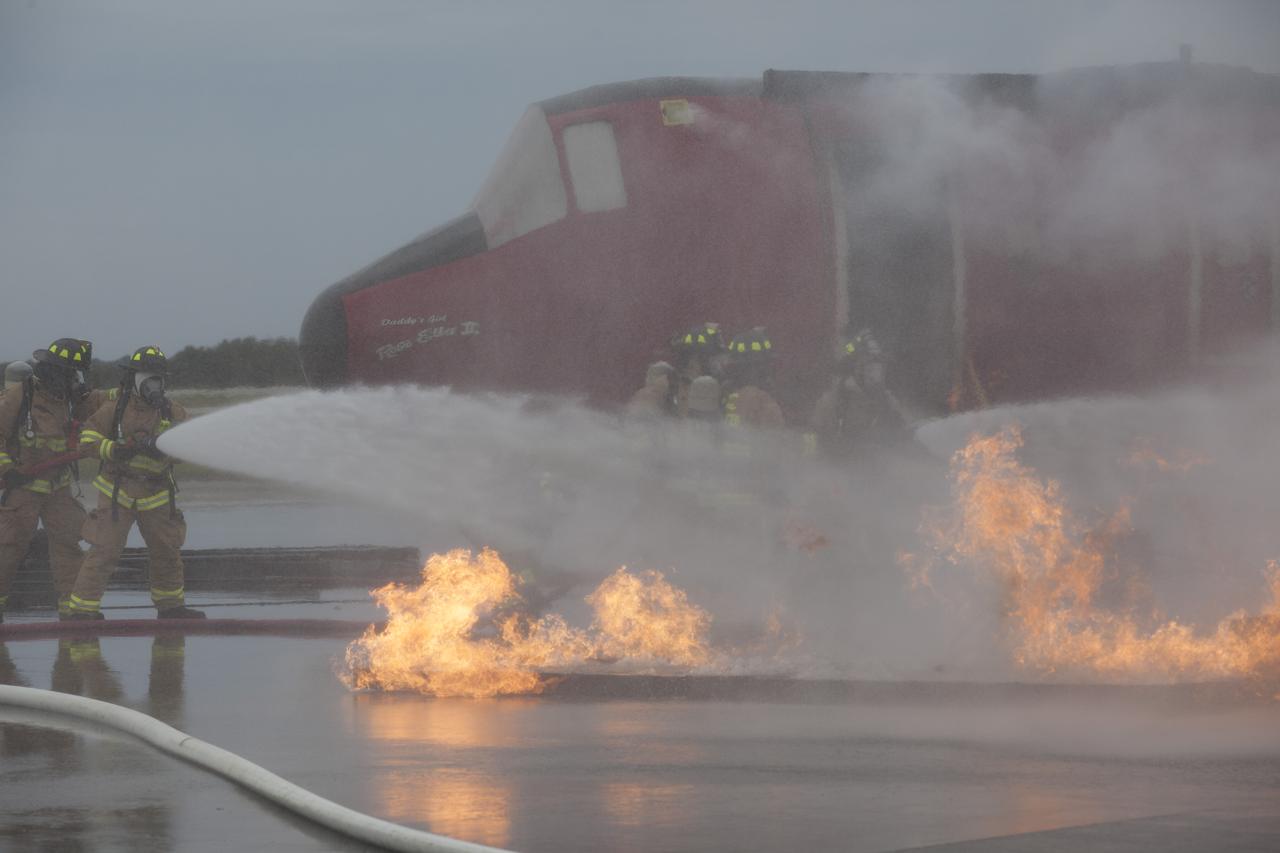
CAPE CANAVERAL, Fla. - Special Rescue Operations firefighters with NASA Fire Rescue Services in the Protective Services Office at NASA’s Kennedy Space Center in Florida participate in a training exercise at the Shuttle Landing Facility. Firefighters, wearing protective gear, use hoses to put out a fire burning close to a mock-up of a small plane. Kennedy’s firefighters recently achieved Pro Board Certification in aerial fire truck operations and completed vehicle extrication training using the Jaws of Life. The Protective Services Office is one step closer to achieving certification in vehicle machinery extrication and other rescue skills. Kennedy’s firefighters are with G4S Government Solutions Inc., on the Kennedy Protective Services Contract. Photo credit: NASA/Kim Shiflett
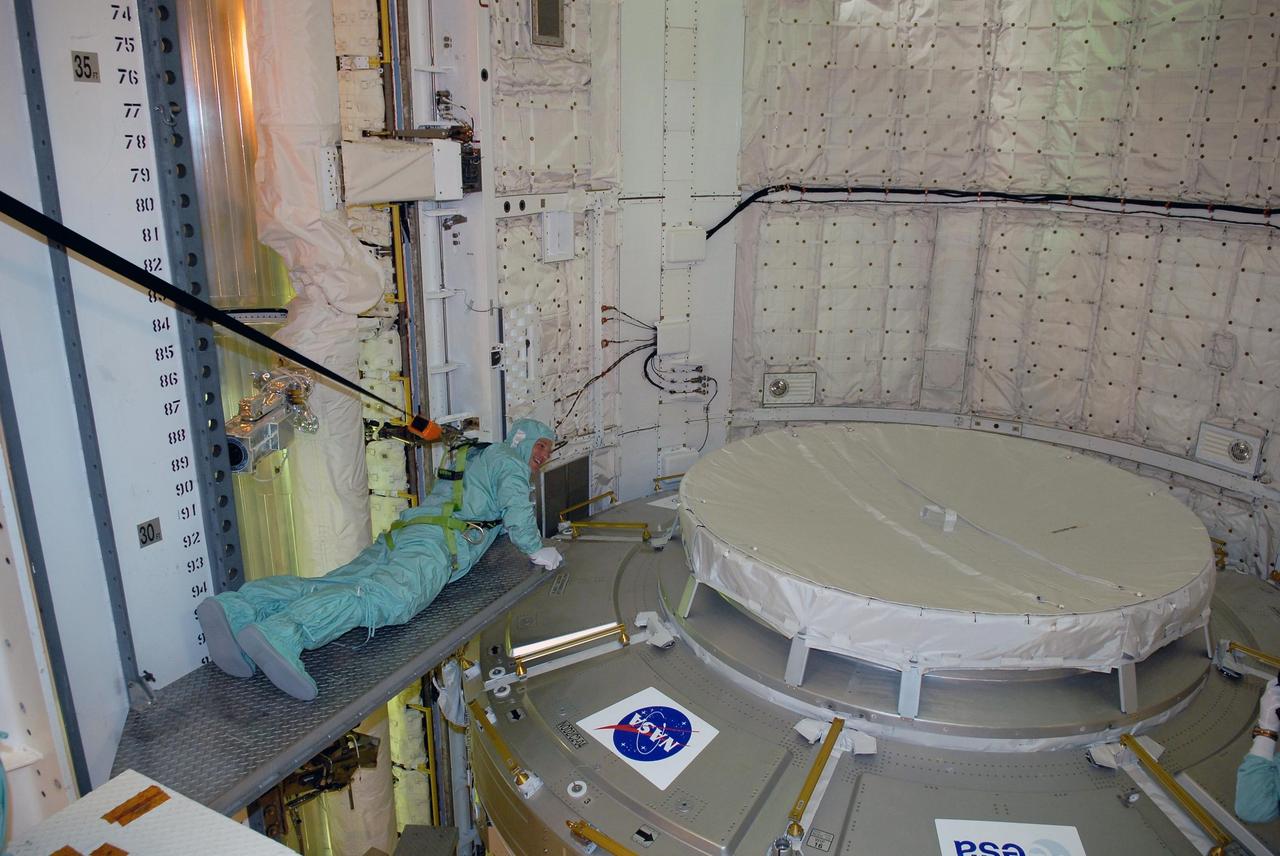
KENNEDY SPACE CENTER, FLA. -- In space shuttle Discovery's payload bay, STS-120 crew members get a close look at the equipment and payloads. Seen here stretched out on a platform next to the Italian-built U.S. Node 2, named Harmony, is Mission Specialist Paolo Nespoli, who represents the European Space Agency. The TCDT provides astronauts and ground crews an opportunity to participate in various simulated countdown activities, including equipment familiarization and emergency training. The STS-120 mission will deliver the U.S. Node 2 module, named Harmony, aboard space shuttle Discovery to the International Space Station. Launch of Discovery on mission STS-120 is targeted for Oct. 23 at 11:38 a.m. EDT on a 14-day mission. Photo credit: NASA/Kim Shiflett
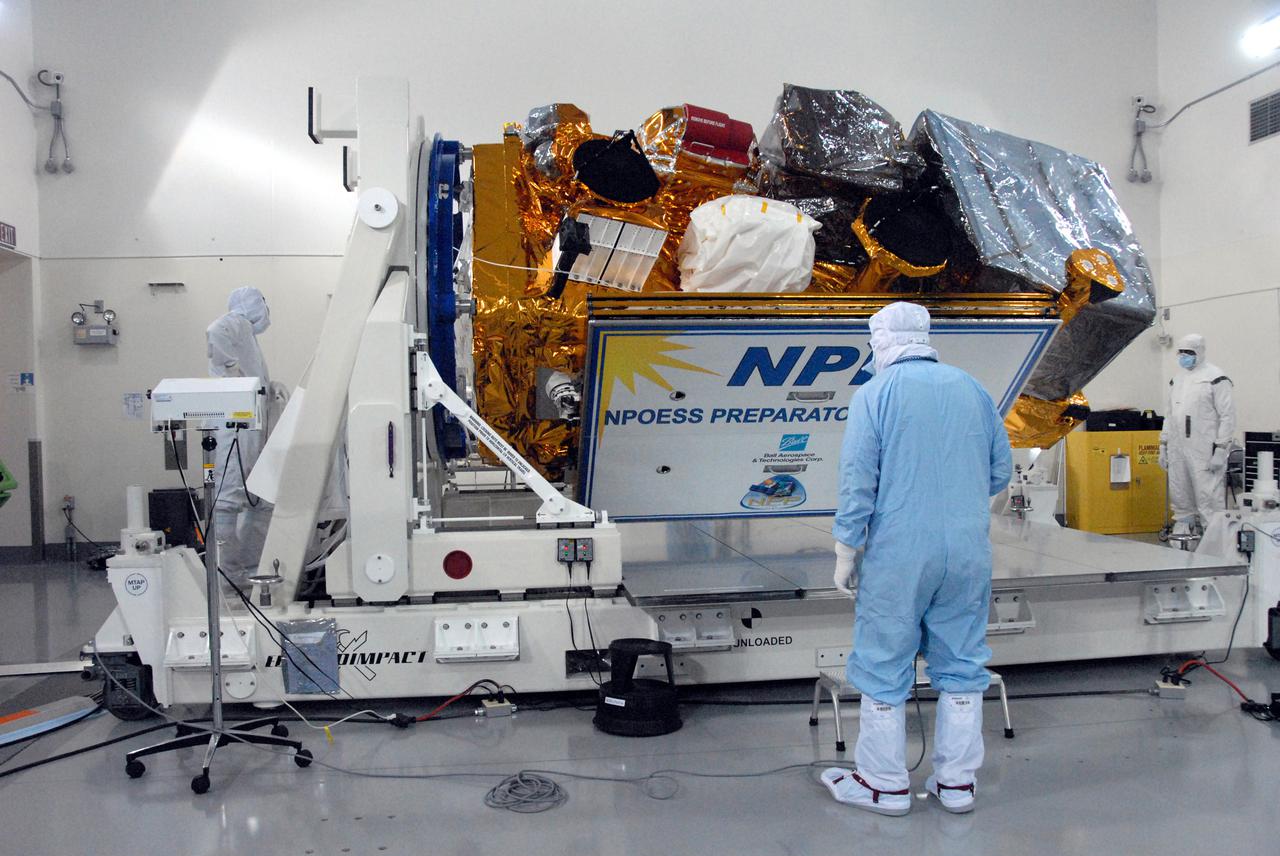
In a clean room inside the Astrotech Payload Processing Facility at Vandenberg Air Force Base in California, a Ball Aerospace technician closes out NASA’s National Polar-orbiting Operational Environmental Satellite System Preparatory Project (NPP) before preparing it for transport to the launch pad. NPP represents a critical first step in building the next-generation of Earth-observing satellites. NPP will carry the first of the new sensors developed for this satellite fleet, now known as the Joint Polar Satellite System (JPSS), to be launched in 2016. NPP is the bridge between NASA's Earth Observing System (EOS) satellites and the forthcoming series of JPSS satellites. The mission will test key technologies and instruments for the JPSS missions. NPP is targeted to launch Oct. 28 from Space Launch Complex-2 aboard a United Launch Alliance Delta II rocket. For more information, visit http:__www.nasa.gov_NPP. Photo credit: NASA_Dan Kokoska, VAFB

CAPE CANAVERAL, Fla. – In the Payload Hazardous Servicing Facility at NASA’s Kennedy Space Center, crew members with the STS-125 mission get a close look at some of the equipment associated with their mission to service NASA’s Hubble Space Telescope. Mission Specialist Michael Good points out part of the Flight Support Structure to Mission Specialist Andrew Feustel, right. The Soft Capture Mechanism is above him. The mechanism will enable the future rendezvous, capture and safe disposal of NASA's Hubble Space Telescope by either a crewed or robotic mission. The ring-like device attaches to Hubble’s aft bulkhead. The STS-125 crew is taking part in a crew equipment interface test, which provides experience handling tools, equipment and hardware they will use on their mission. Space shuttle Atlantis is targeted to launch on the STS-125 mission Oct. 10. Photo credit: NASA/Kim Shiflett
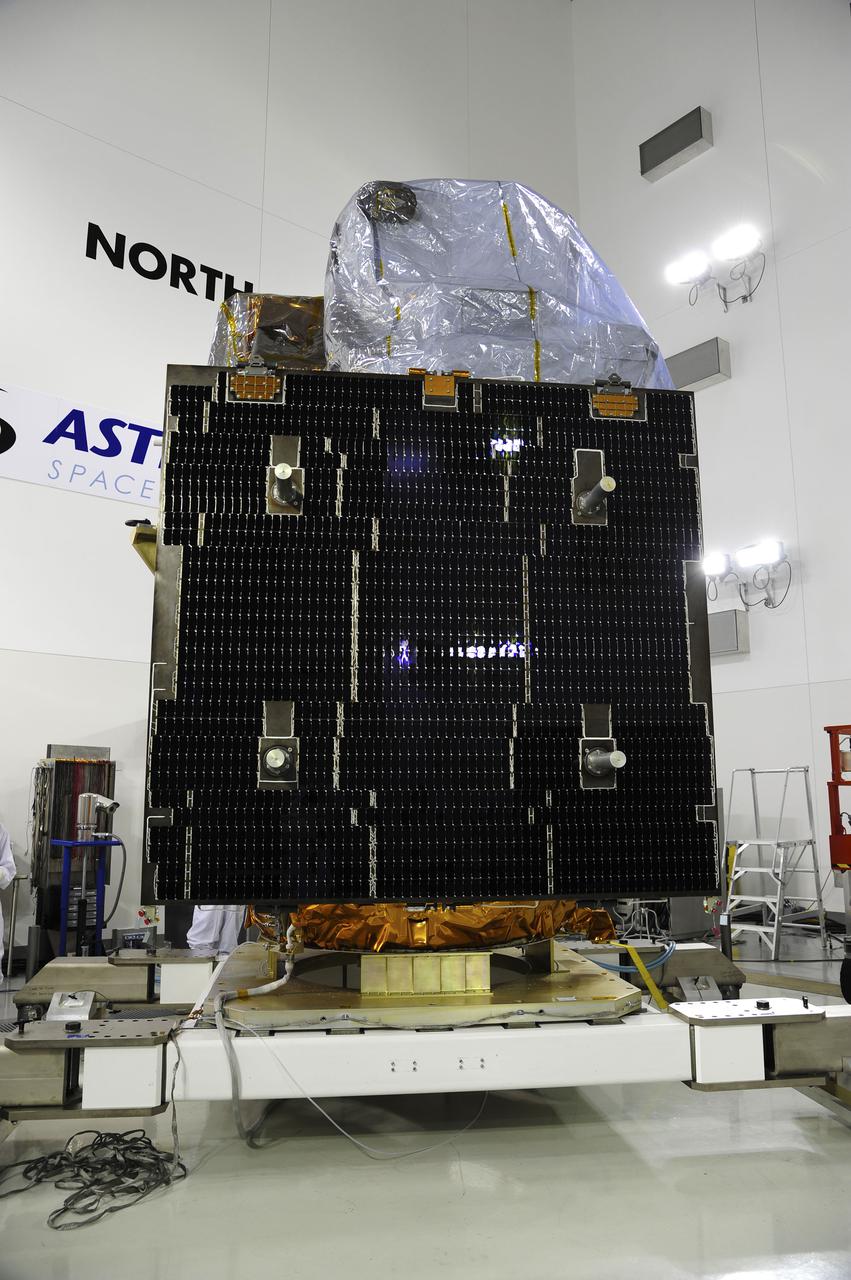
VANDENBERG AFB, Calif. -- At the Astrotech processing facility at Vandenberg Air Force Base, Calif., NASA's Landsat Data Continuity Mission, or LDCM, satellite is undergoing close-outs prior to encapsulation in the payload fairing. The Landsat Data Continuity Mission LDCM is the future of Landsat satellites. It will continue to obtain valuable data and imagery to be used in agriculture, education, business, science, and government. The Landsat Program provides repetitive acquisition of high resolution multispectral data of the Earth's surface on a global basis. The data from the Landsat spacecraft constitute the longest record of the Earth's continental surfaces as seen from space. It is a record unmatched in quality, detail, coverage, and value. Liftoff is planned for Feb. 11, 2013 aboard a United Launch Alliance Atlas V rocket. For more information, visit: http:__www.nasa.gov_mission_pages_landsat_main_index.html Photo credit: NASA
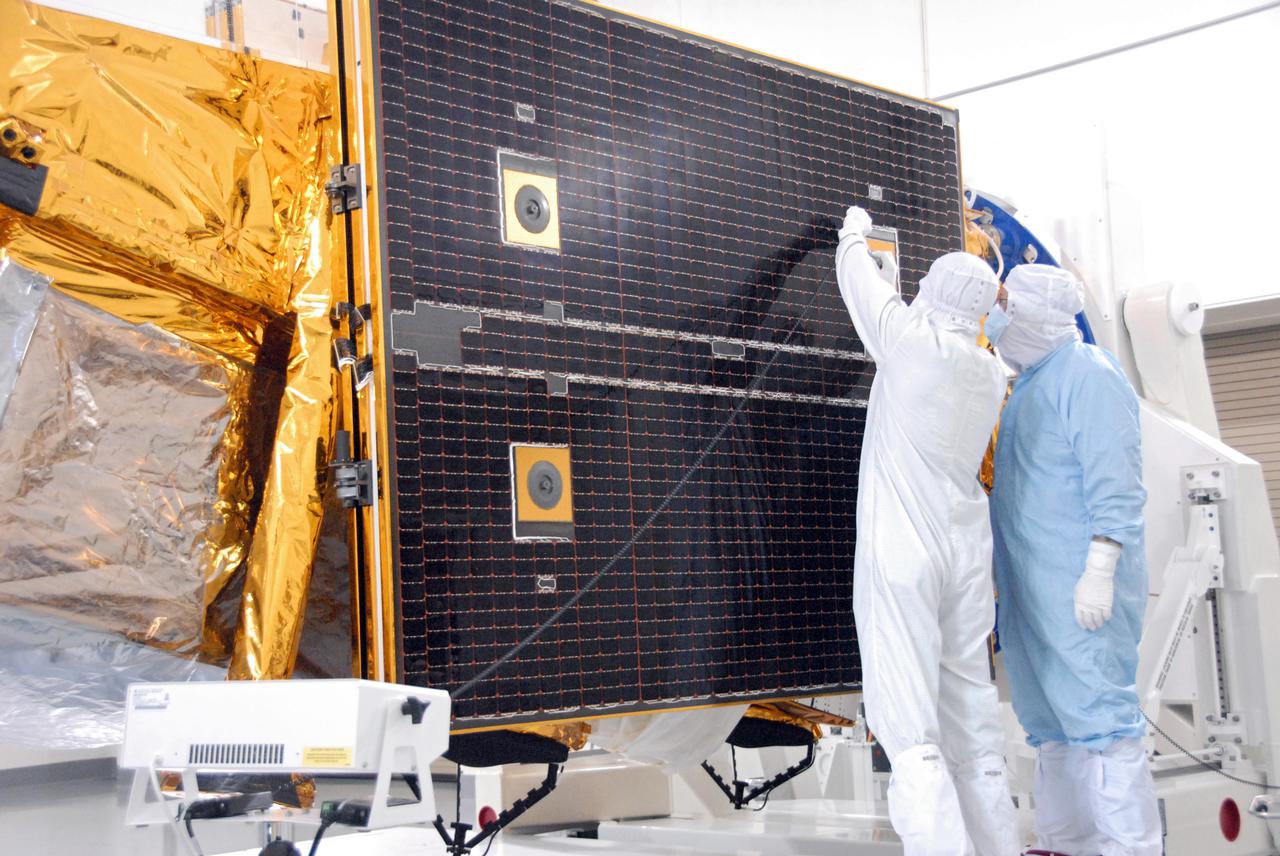
In a clean room inside the Astrotech Payload Processing Facility at Vandenberg Air Force Base in California, Ball Aerospace technicians close out NASA’s National Polar-orbiting Operational Environmental Satellite System Preparatory Project (NPP) before preparing it for transport to the launch pad. NPP represents a critical first step in building the next-generation of Earth-observing satellites. NPP will carry the first of the new sensors developed for this satellite fleet, now known as the Joint Polar Satellite System (JPSS), to be launched in 2016. NPP is the bridge between NASA's Earth Observing System (EOS) satellites and the forthcoming series of JPSS satellites. The mission will test key technologies and instruments for the JPSS missions. NPP is targeted to launch Oct. 28 from Space Launch Complex-2 aboard a United Launch Alliance Delta II rocket. For more information, visit http:__www.nasa.gov_NPP. Photo credit: NASA_Dan Kokoska, VAFB
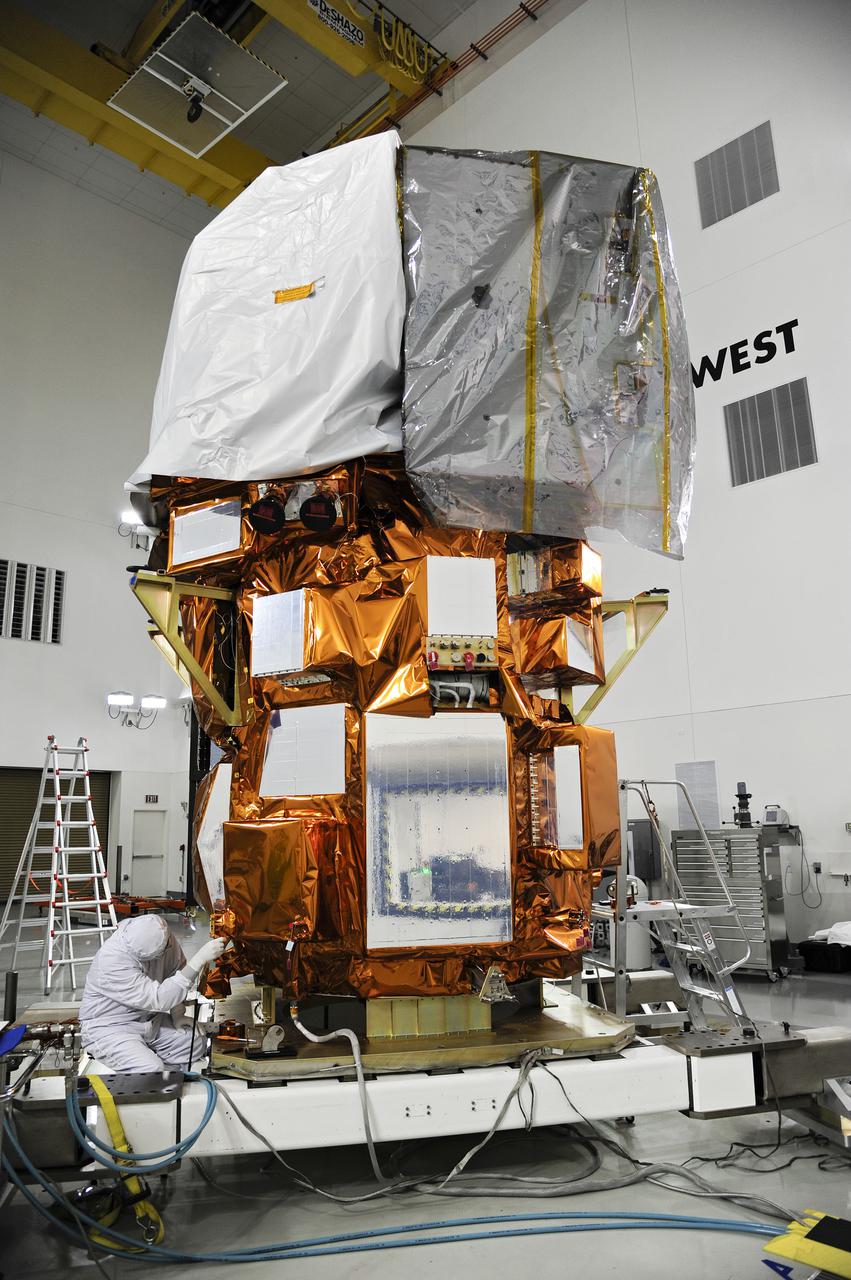
VANDENBERG AFB, Calif. -- At the Astrotech processing facility at Vandenberg Air Force Base, Calif., technicians perform close-out inspections on NASA's Landsat Data Continuity Mission, or LDCM, satellite. The Landsat Data Continuity Mission LDCM is the future of Landsat satellites. It will continue to obtain valuable data and imagery to be used in agriculture, education, business, science, and government. The Landsat Program provides repetitive acquisition of high resolution multispectral data of the Earth's surface on a global basis. The data from the Landsat spacecraft constitute the longest record of the Earth's continental surfaces as seen from space. It is a record unmatched in quality, detail, coverage, and value. Liftoff is planned for Feb. 11, 2013 aboard a United Launch Alliance Atlas V rocket. For more information, visit: http:__www.nasa.gov_mission_pages_landsat_main_index.html Photo credit: NASA
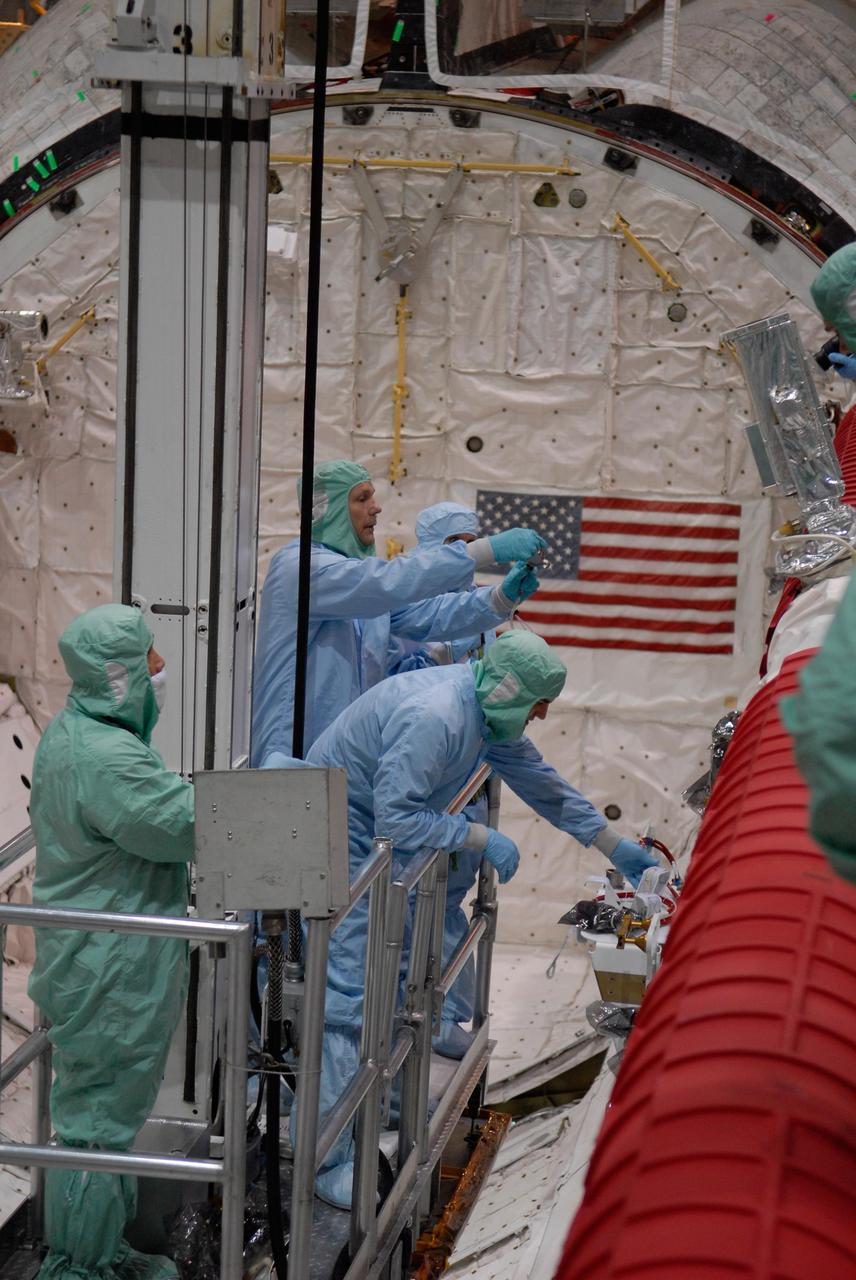
KENNEDY SPACE CENTER, FLA. -- STS-122 crew members get a close look at shuttle equipment from inside the payload bay of space shuttle Atlantis. The crew comprises six astronauts: Commander Stephen Frick, Pilot Alan Poindexter and Mission Specialists Rex Walheim, Stanley Love, Leland Melvin and Hans Schlegel, who represents the European Space Agency. A seventh astronaut is Leopold Eyharts, also with the ESA, who will join the Expedition 16 crew as flight engineer on the International Space Station. The mission will carry and install the Columbus Lab, a multifunctional, pressurized laboratory that will be permanently attached to Node 2 of the space station to carry out experiments in materials science, fluid physics and biosciences, as well as to perform a number of technological applications. It is Europe’s largest contribution to the construction of the International Space Station and will support scientific and technological research in a microgravity environment. STS-122 is targeted for launch in December. Photo credit: NASA/Kim Shiflett
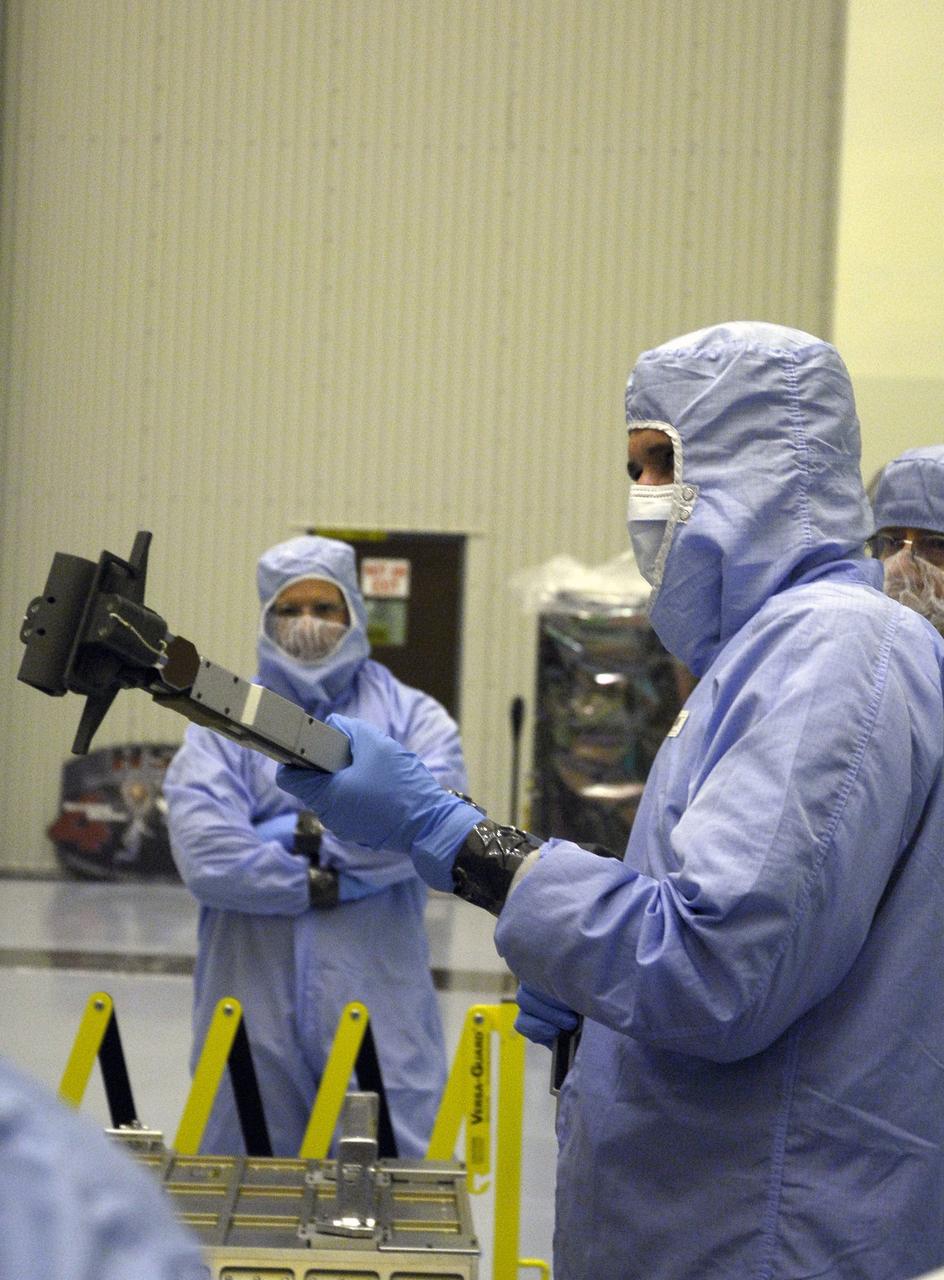
CAPE CANAVERAL, Fla. – In the Payload Hazardous Servicing Facility at NASA’s Kennedy Space Center, crew members with the STS-125 mission get a close look at some of the equipment associated with their mission to service NASA’s Hubble Space Telescope. At right is Mission Specialist John Grunsfeld, handling the RSU change-out tool from the Small ORU Protective Enclosure, or SOPE. Behind him, at right, is Johnson Space Center EVA Trainer Ron Sheffield. The STS-125 crew is taking part in a crew equipment interface test, which provides experience handling tools, equipment and hardware they will use on their mission. Space shuttle Atlantis is targeted to launch on the STS-125 mission Oct. 10. Photo credit: NASA/Kim Shiflett
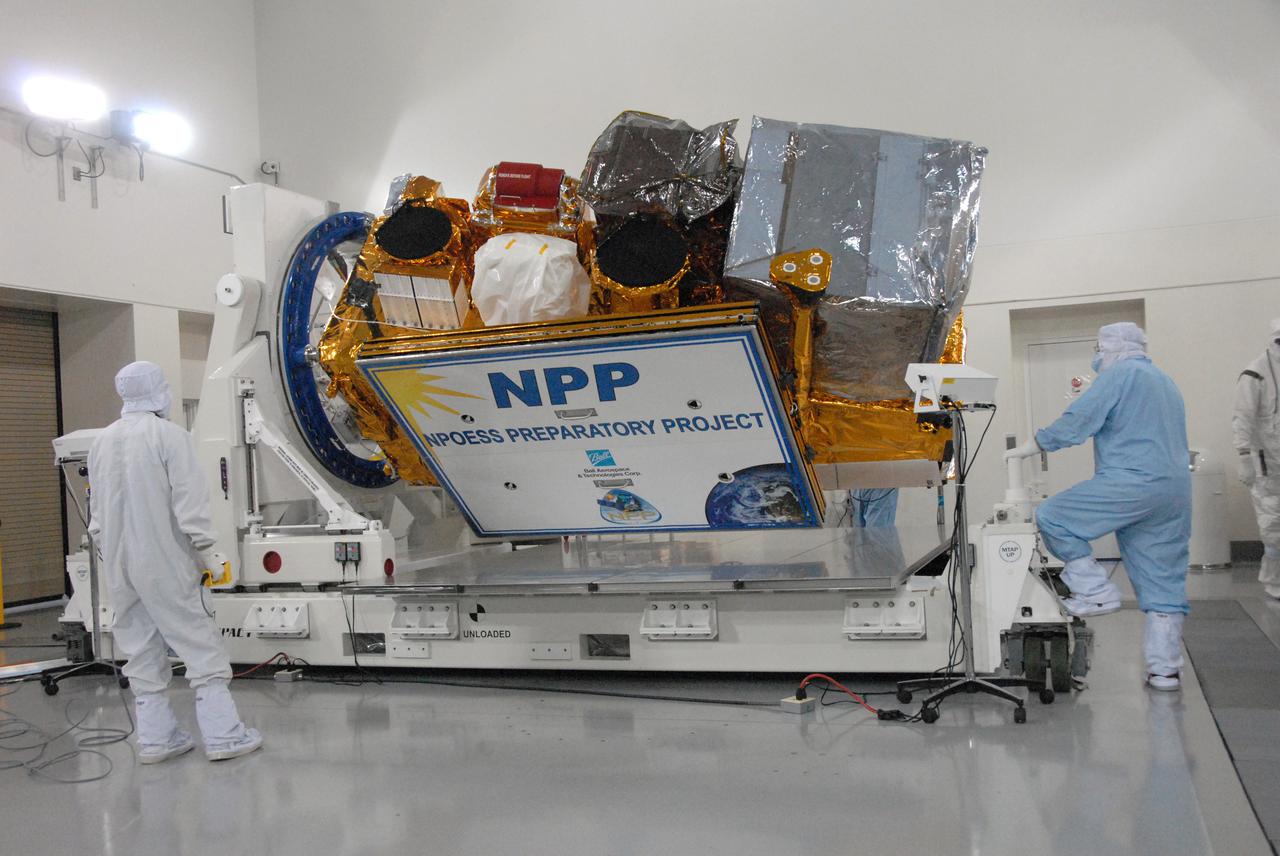
In a clean room inside the Astrotech Payload Processing Facility at Vandenberg Air Force Base in California, Ball Aerospace technicians close out NASA’s National Polar-orbiting Operational Environmental Satellite System Preparatory Project (NPP) before preparing it for transport to the launch pad. NPP represents a critical first step in building the next-generation of Earth-observing satellites. NPP will carry the first of the new sensors developed for this satellite fleet, now known as the Joint Polar Satellite System (JPSS), to be launched in 2016. NPP is the bridge between NASA's Earth Observing System (EOS) satellites and the forthcoming series of JPSS satellites. The mission will test key technologies and instruments for the JPSS missions. NPP is targeted to launch Oct. 28 from Space Launch Complex-2 aboard a United Launch Alliance Delta II rocket. For more information, visit http:__www.nasa.gov_NPP. Photo credit: NASA_Dan Kokoska, VAFB
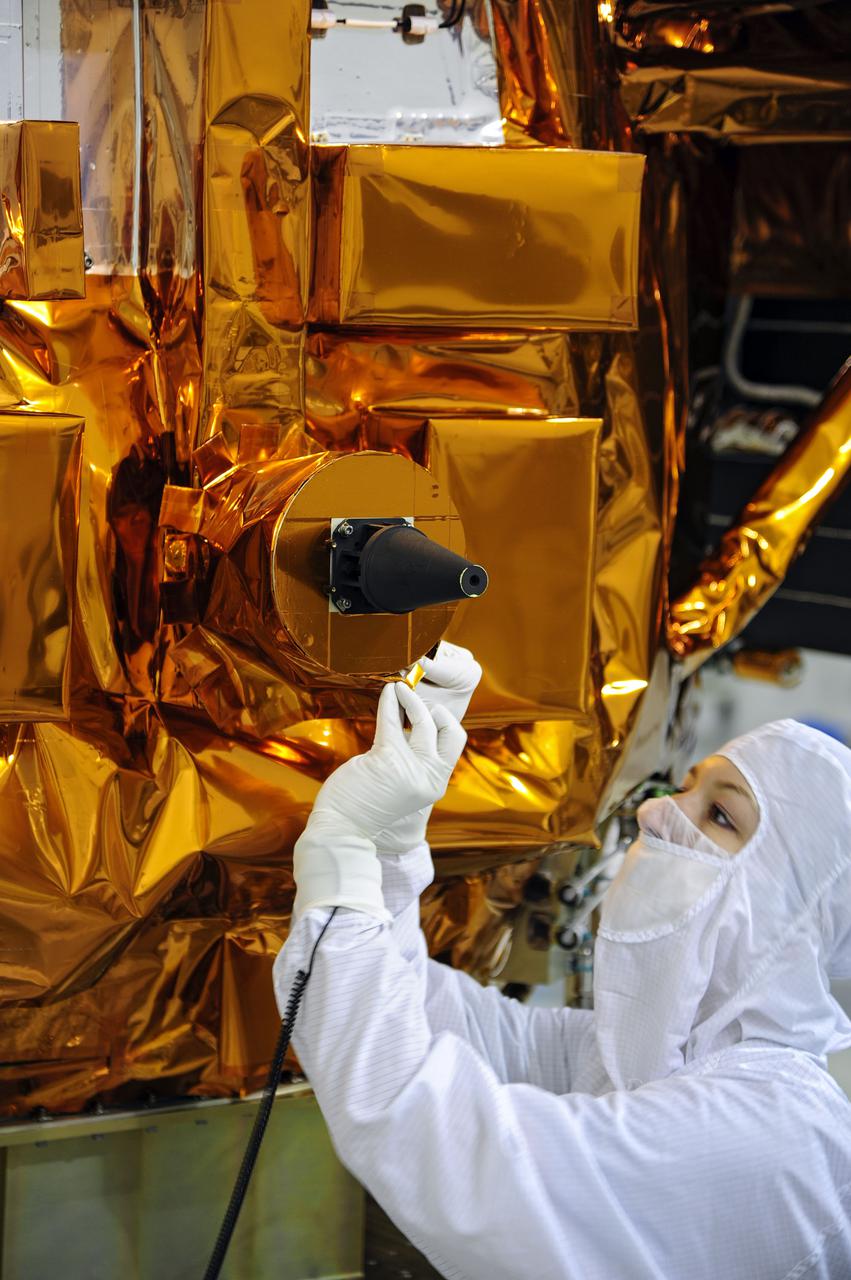
VANDENBERG AFB, Calif. -- At the Astrotech processing facility at Vandenberg Air Force Base, Calif., technicians perform close-out inspections on NASA's Landsat Data Continuity Mission, or LDCM, satellite. The Landsat Data Continuity Mission LDCM is the future of Landsat satellites. It will continue to obtain valuable data and imagery to be used in agriculture, education, business, science, and government. The Landsat Program provides repetitive acquisition of high resolution multispectral data of the Earth's surface on a global basis. The data from the Landsat spacecraft constitute the longest record of the Earth's continental surfaces as seen from space. It is a record unmatched in quality, detail, coverage, and value. Liftoff is planned for Feb. 11, 2013 aboard a United Launch Alliance Atlas V rocket. For more information, visit: http:__www.nasa.gov_mission_pages_landsat_main_index.html Photo credit: NASA