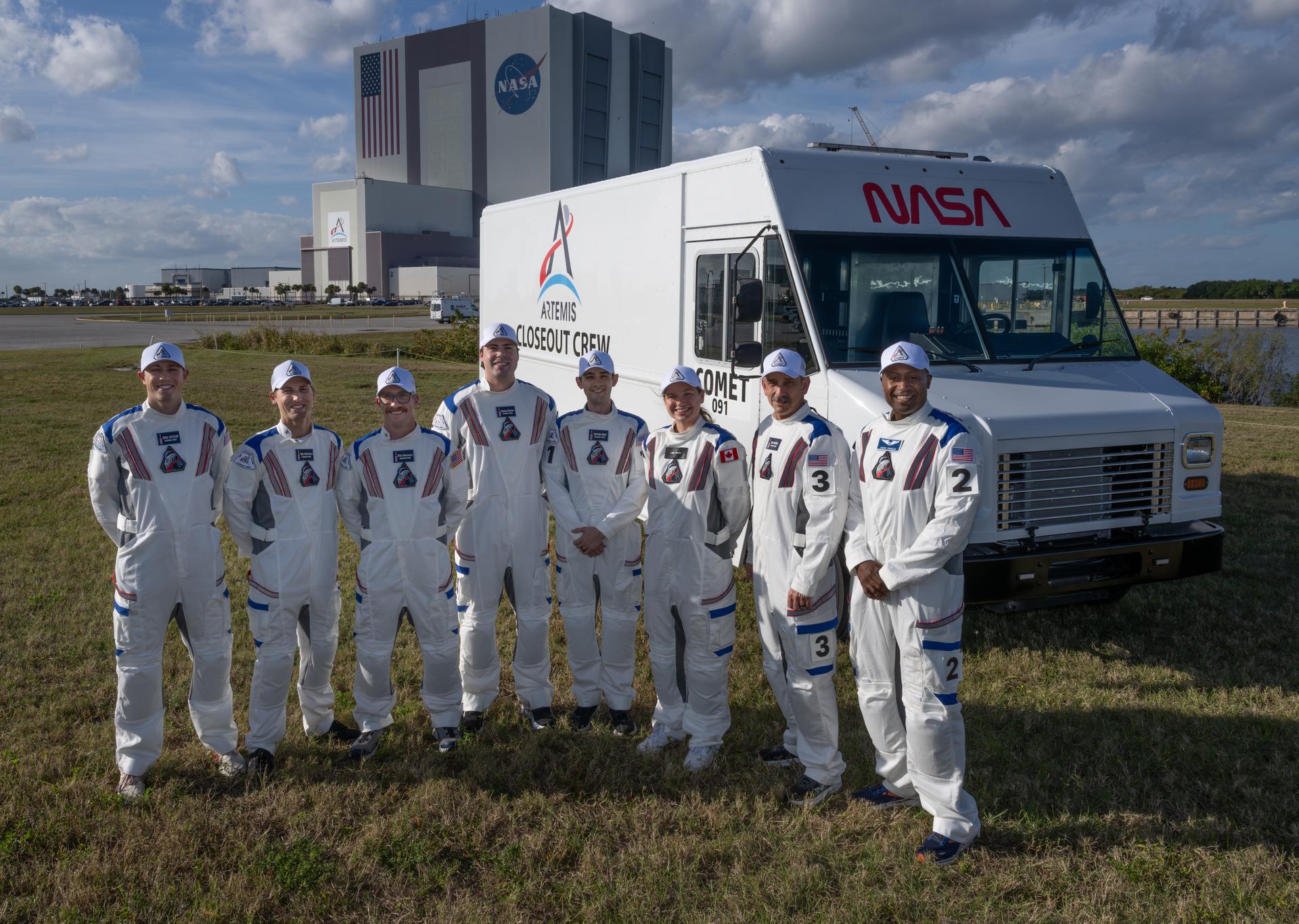
Members of the Artemis II closeout crew, from left, William Sattler; Tyler Sutherland; Michael Heinemann; Christian Warriner; Taylor Hose; Jenni Gibbons, Artemis II backup crew member; Bill Owens; and Andre Douglas, Artemis II backup crew member, pose for a photo with NASA’s Vehicle Assembly Building behind them at the agency’s Kennedy Space Center in Florida on Thursday, Dec. 19, 2025. The closeout crew is responsible for safely securing the astronauts inside the Orion spacecraft on launch day and closing the hatch during launch countdown.
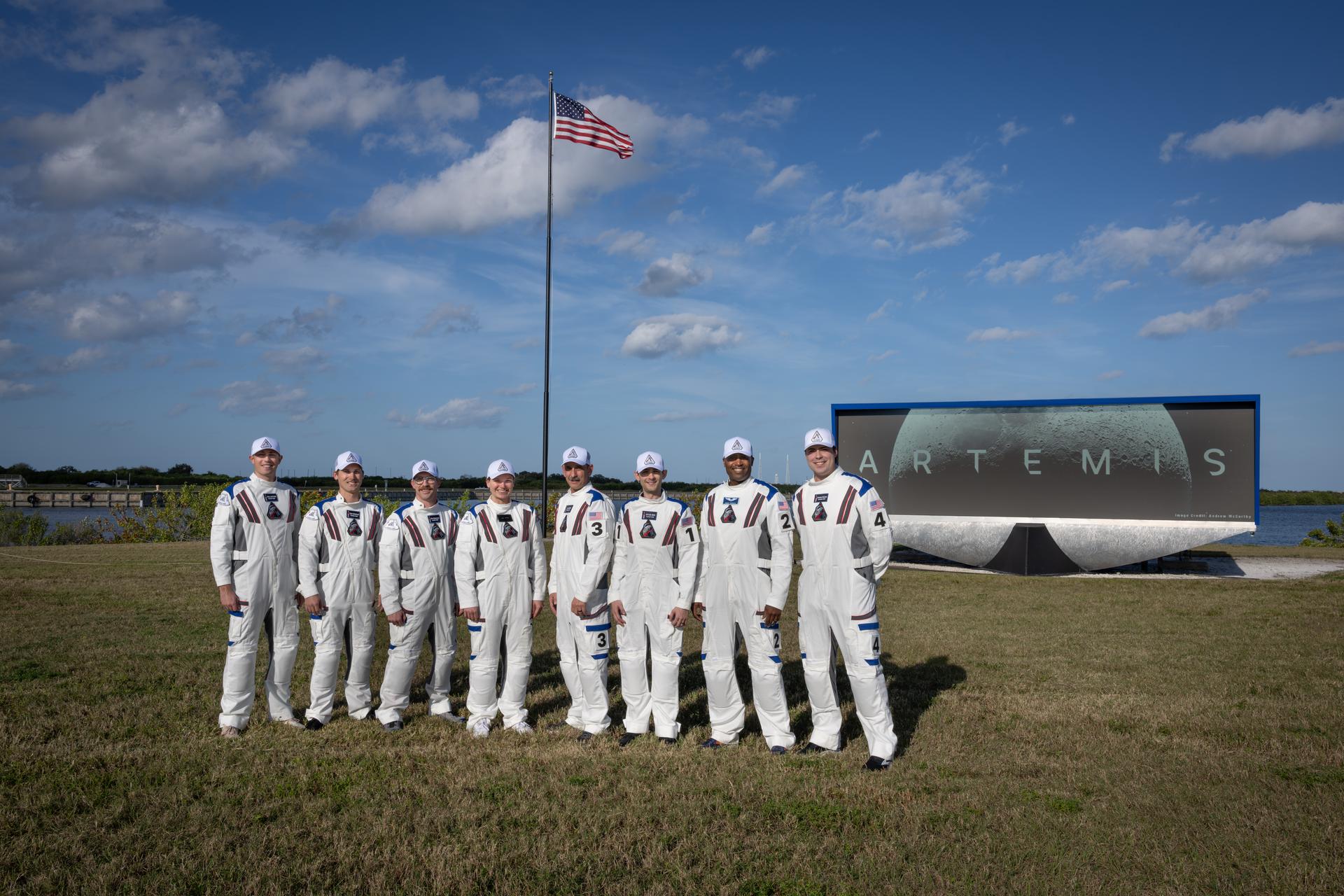
Members of the Artemis II closeout crew, from left, William Sattler; Tyler Sutherland; Michael Heinemann; Jenni Gibbons, Artemis II backup crew member; Bill Owens; Taylor Hose; Andre Douglas, Artemis II backup crew member; and Christian Warriner pose for a photo near the countdown clock featuring the Artemis Moon logo at the NASA News Center at the agency’s Kennedy Space Center in Florida on Thursday, Dec. 19, 2025. The closeout crew is responsible for safely securing the astronauts inside the Orion spacecraft on launch day and closing the hatch during launch countdown.
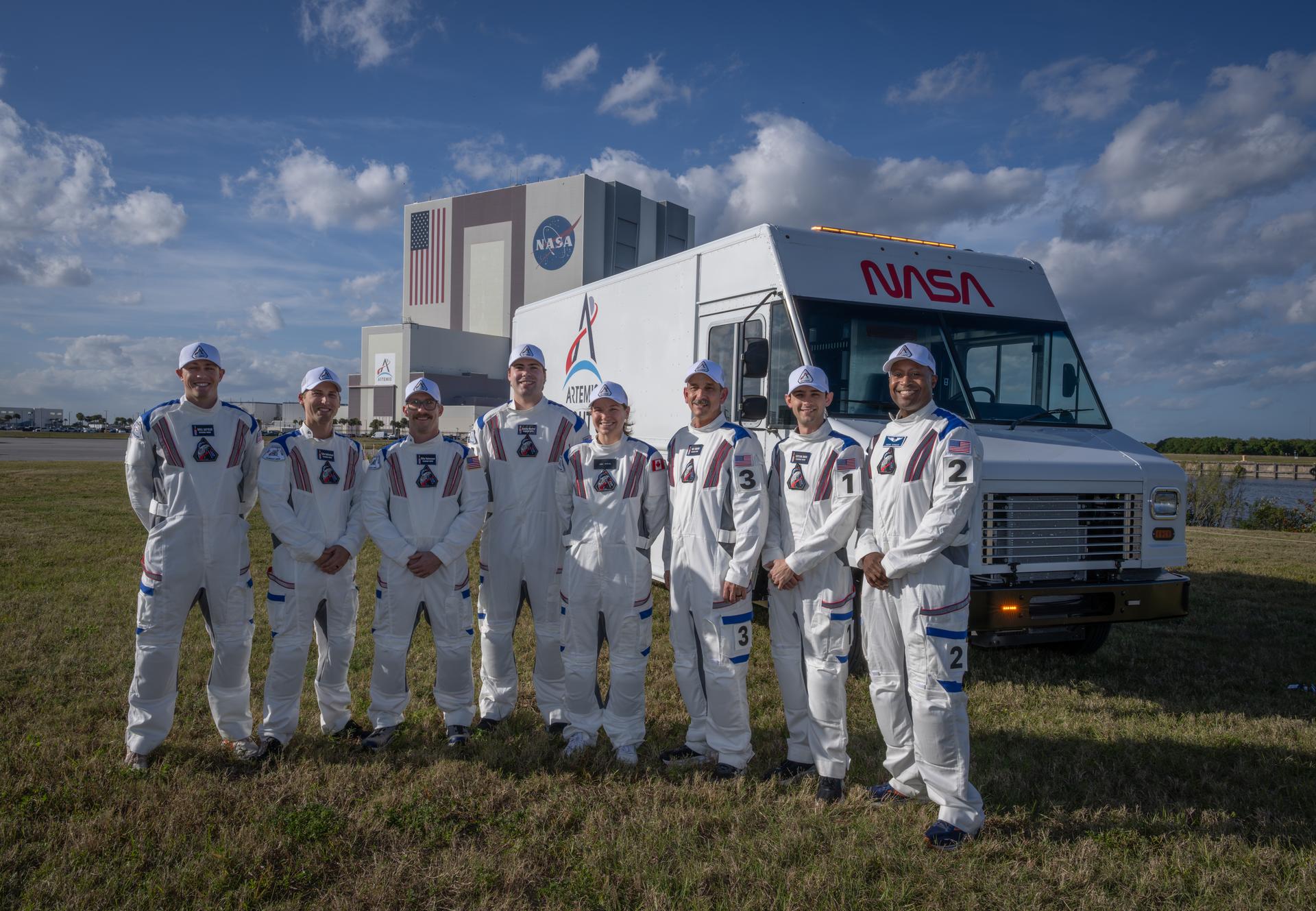
Members of the Artemis II closeout crew, from left, William Sattler; Tyler Sutherland; Michael Heinemann; Christian Warriner; Taylor Hose; Jenni Gibbons, Artemis II backup crew member; Bill Owens; and Andre Douglas, Artemis II backup crew member, pose for a photo with NASA’s Vehicle Assembly Building behind them at the agency’s Kennedy Space Center in Florida on Thursday, Dec. 19, 2025. The closeout crew is responsible for safely securing the astronauts inside the Orion spacecraft on launch day and closing the hatch during launch countdown.
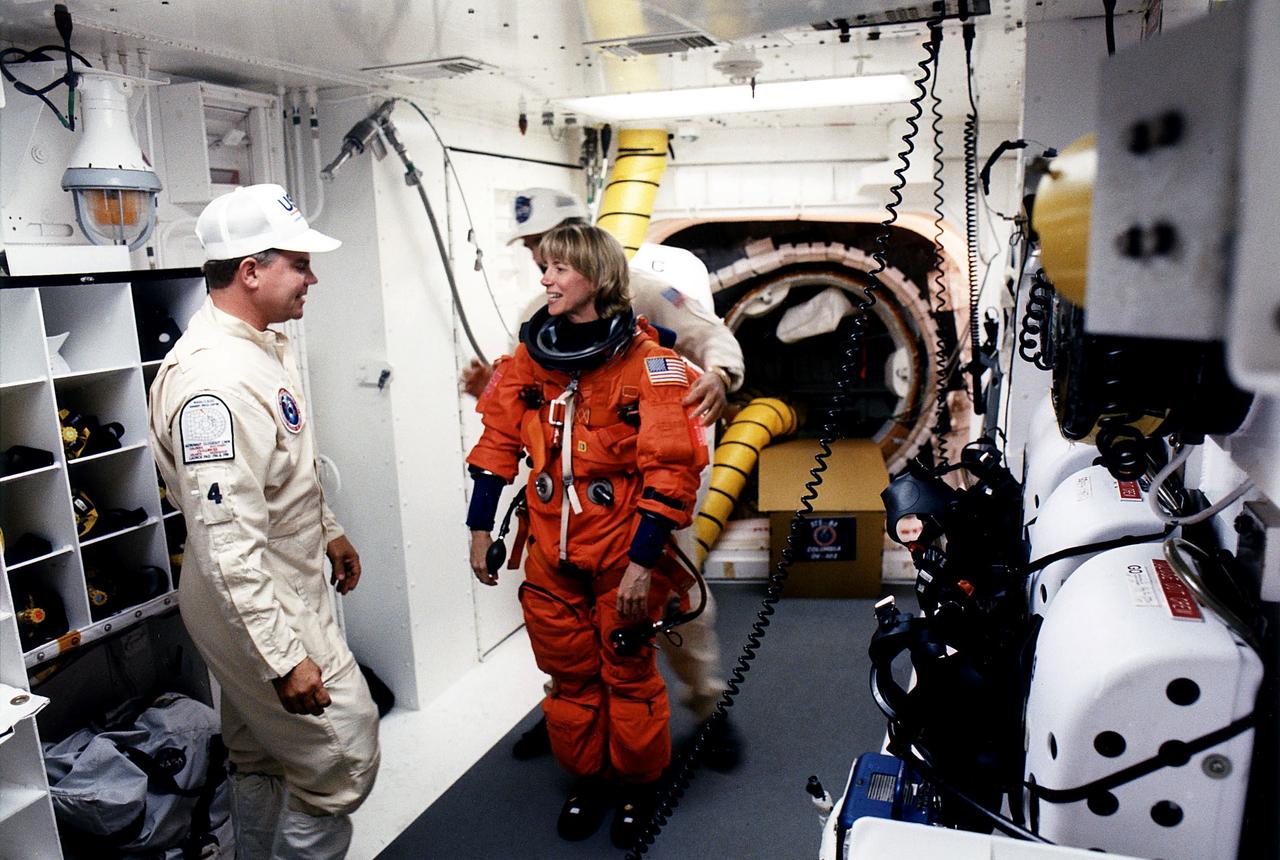
KENNEDY SPACE CENTER, FLA. - STS-83 Pilot Susan L. Still chats with White Room closeout crew member Rene Arriens as she prepares to enter the Space Shuttle Columbia at Launch Pad 39A with assistance from closeout crew worker Bob Saulnier (behind Still).
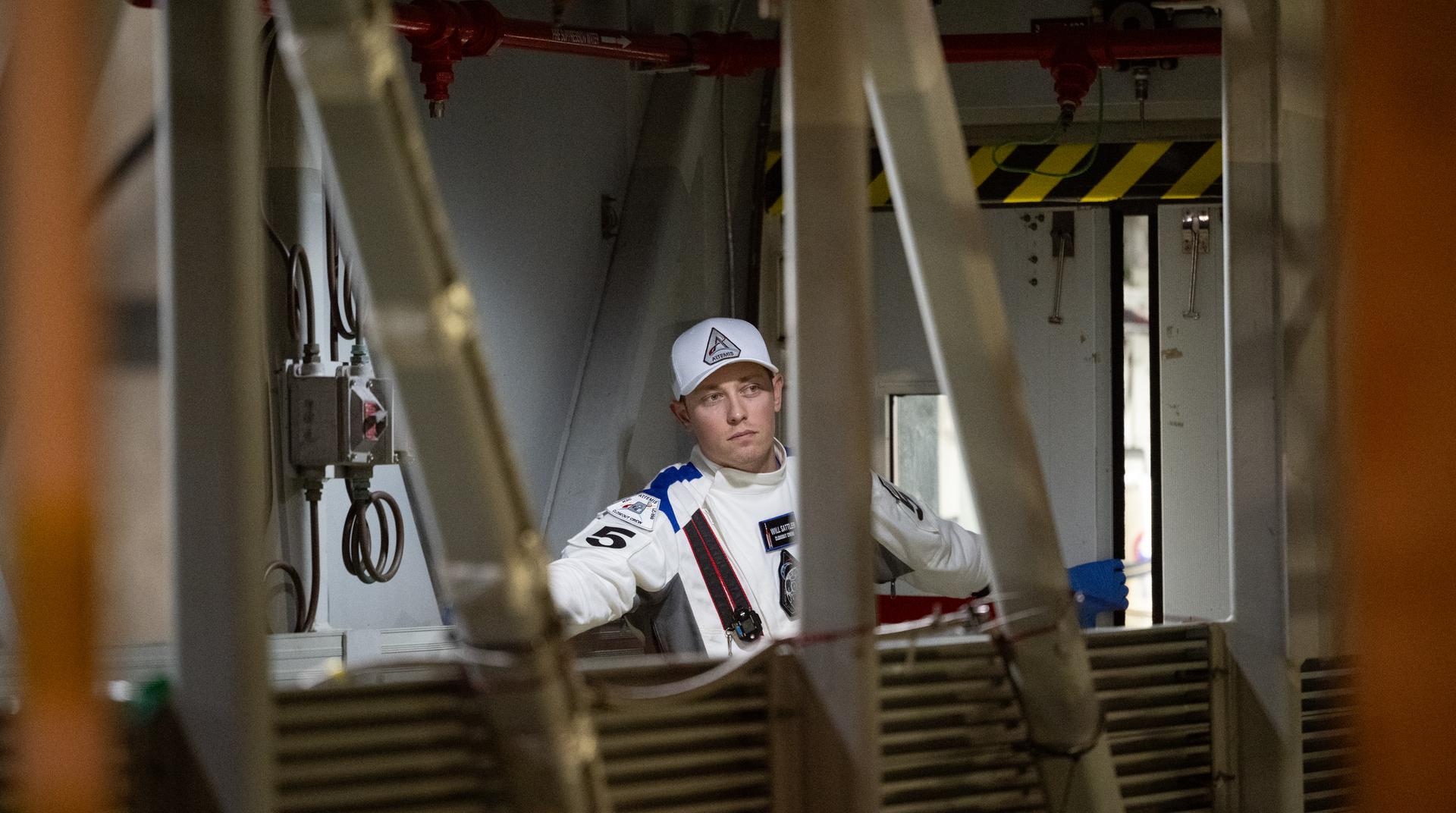
Will Sattler of the Closeout Crew is seen on the crew access arm just outside of the white room awaiting the arrival of Artemis II crewmembers NASA astronauts Reid Wiseman, commander; Victor Glover, pilot; Christina Koch, mission specialist; and CSA (Canadian Space Agency) astronaut Jeremy Hansen, mission specialist; at the 275-foot level of the mobile launcher as they prepare to board their Orion spacecraft atop NASA’s Space Launch System rocket during the Artemis II countdown demonstration test, Saturday, Dec. 20, 2025, inside the Vehicle Assembly Building at NASA’s Kennedy Space Center in Florida. For this operation, the Artemis II crew and launch teams are simulating the launch day timeline including suit-up, walkout, and spacecraft ingress and egress. Through the Artemis campaign, NASA will send astronauts to explore the Moon for scientific discovery, economic benefits, and to build the foundation for the first crewed missions to Mars, for the benefit of all. Photo Credit: (NASA/Joel Kowsky)
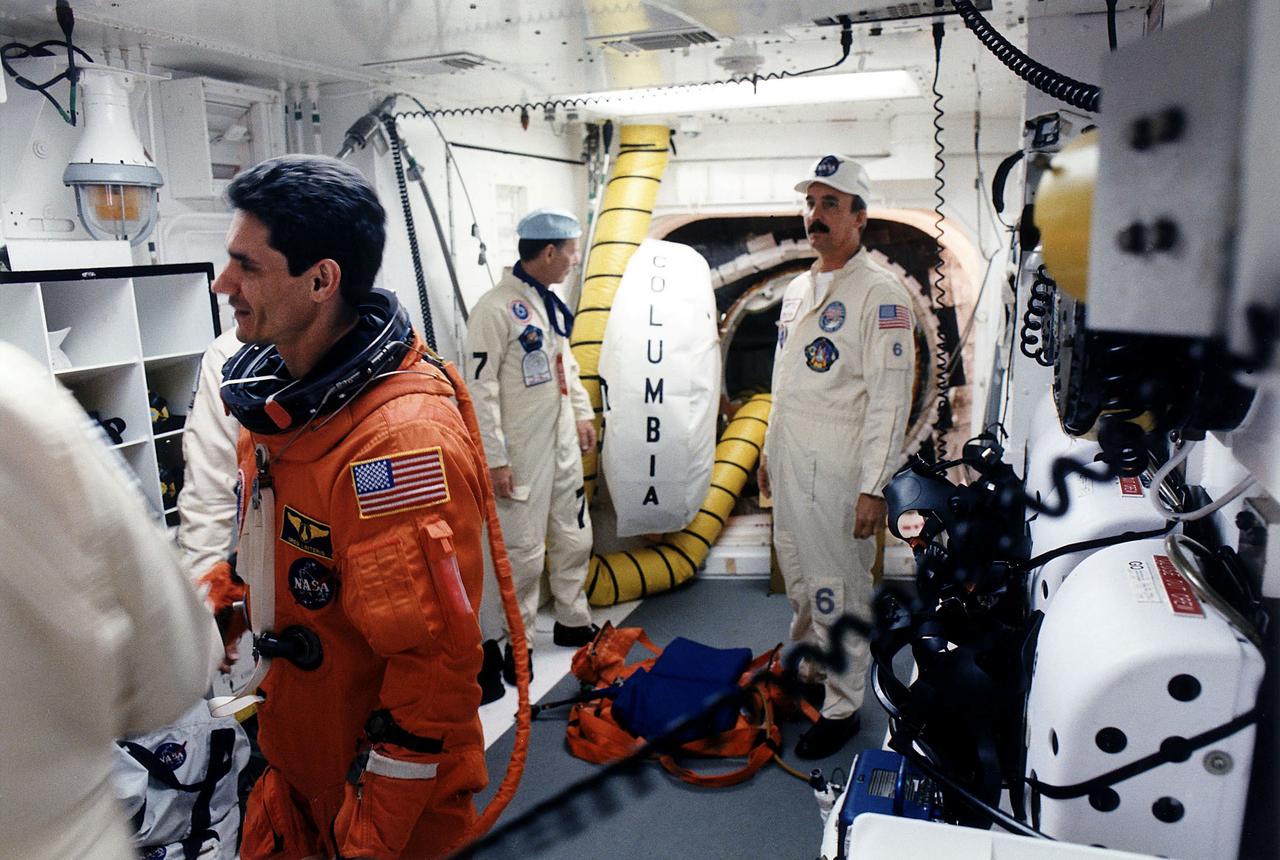
KENNEDY SPACE CENTER, FLA. - STS-83 Payload Specialist Gregory T. Linteris chats with White Room closeout crew members as he prepares to enter the Space Shuttle Columbia at Launch Pad 39A. Closeout crew workers Max Kandler (second from right) and Bob Saulnier wait to assist Linteris with his ascent/reentry suit.
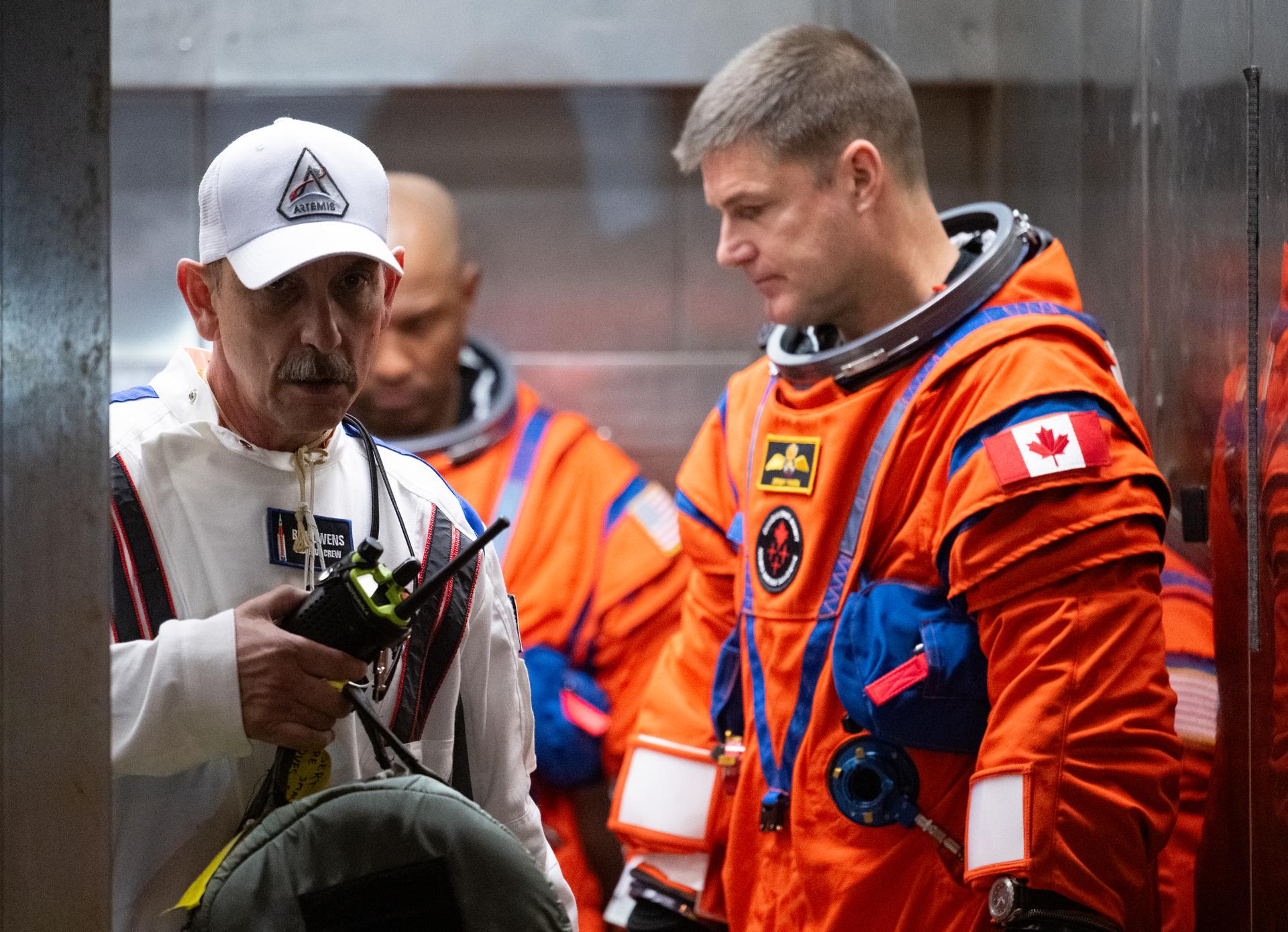
Bill Owens of the Closeout Crew is seen as he leads Artemis II crewmembers CSA (Canadian Space Agency) astronaut Jeremy Hansen, mission specialist; and NASA astronauts Reid Wiseman, commander; Victor Glover, pilot; and Christina Koch, mission specialist; out of at the elevator towards the crew access arm at the 275-foot level of the mobile launcher as they prepare to board their Orion spacecraft atop NASA’s Space Launch System rocket during the Artemis II countdown demonstration test, Saturday, Dec. 20, 2025, inside the Vehicle Assembly Building at NASA’s Kennedy Space Center in Florida. For this operation, the Artemis II crew and launch teams are simulating the launch day timeline including suit-up, walkout, and spacecraft ingress and egress. Through the Artemis campaign, NASA will send astronauts to explore the Moon for scientific discovery, economic benefits, and to build the foundation for the first crewed missions to Mars, for the benefit of all. Photo Credit: (NASA/Joel Kowsky)
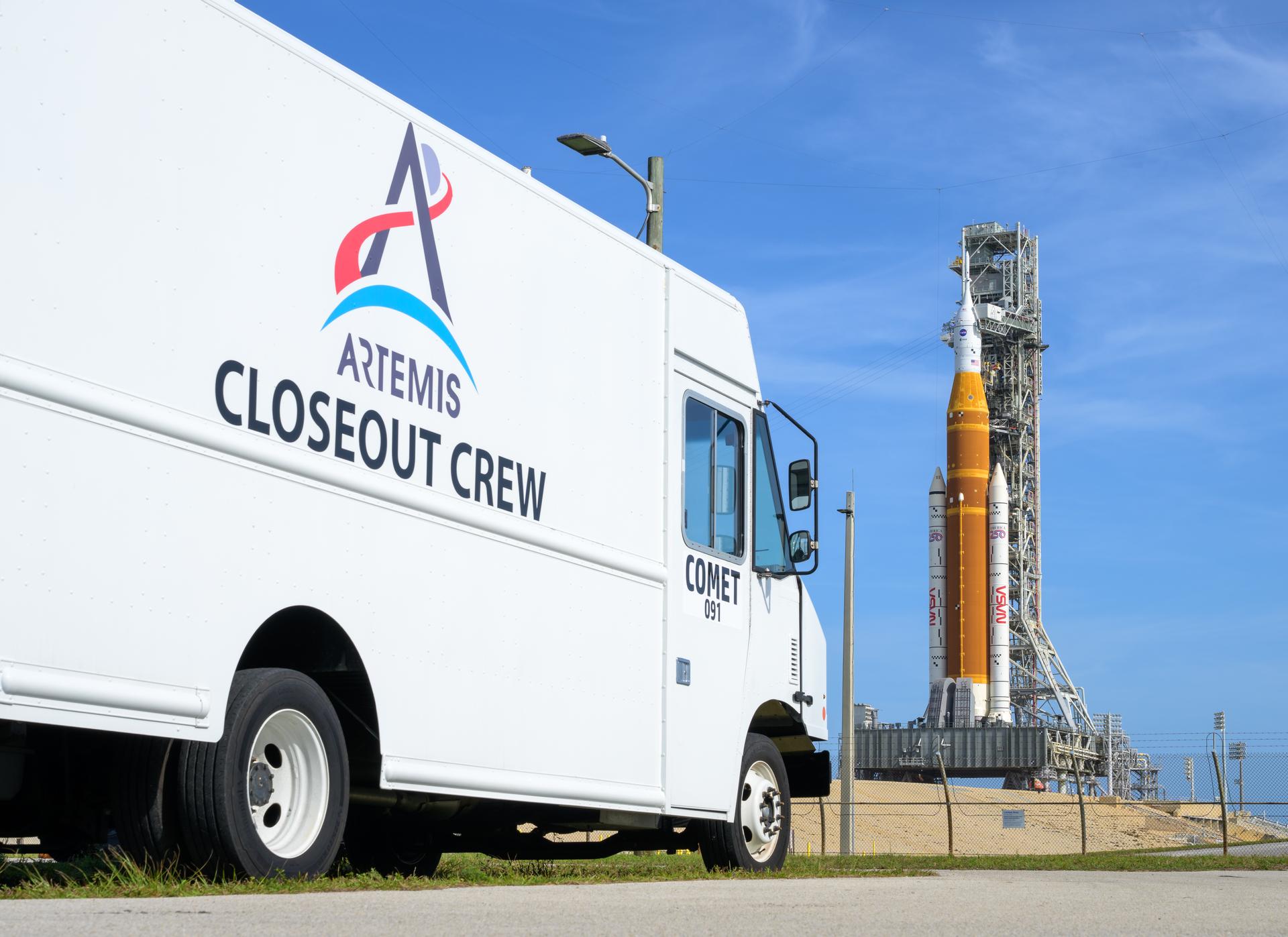
The Artemis Closeout Crew van is seen with NASA’s Artemis II Space Launch System (SLS) rocket, Orion spacecraft, atop a mobile launcher at Launch Complex 39B, Tuesday, March 31, 2026, at NASA’s Kennedy Space Center in Florida. NASA’s Artemis II test flight will take Commander Reid Wiseman, Pilot Victor Glover, and Mission Specialist Christina Koch from NASA, and Mission Specialist Jeremy Hansen from the CSA (Canadian Space Agency), around the Moon and back to Earth with launch opportunities beginning in April 2026. Photo Credit: (NASA/Bill Ingalls)
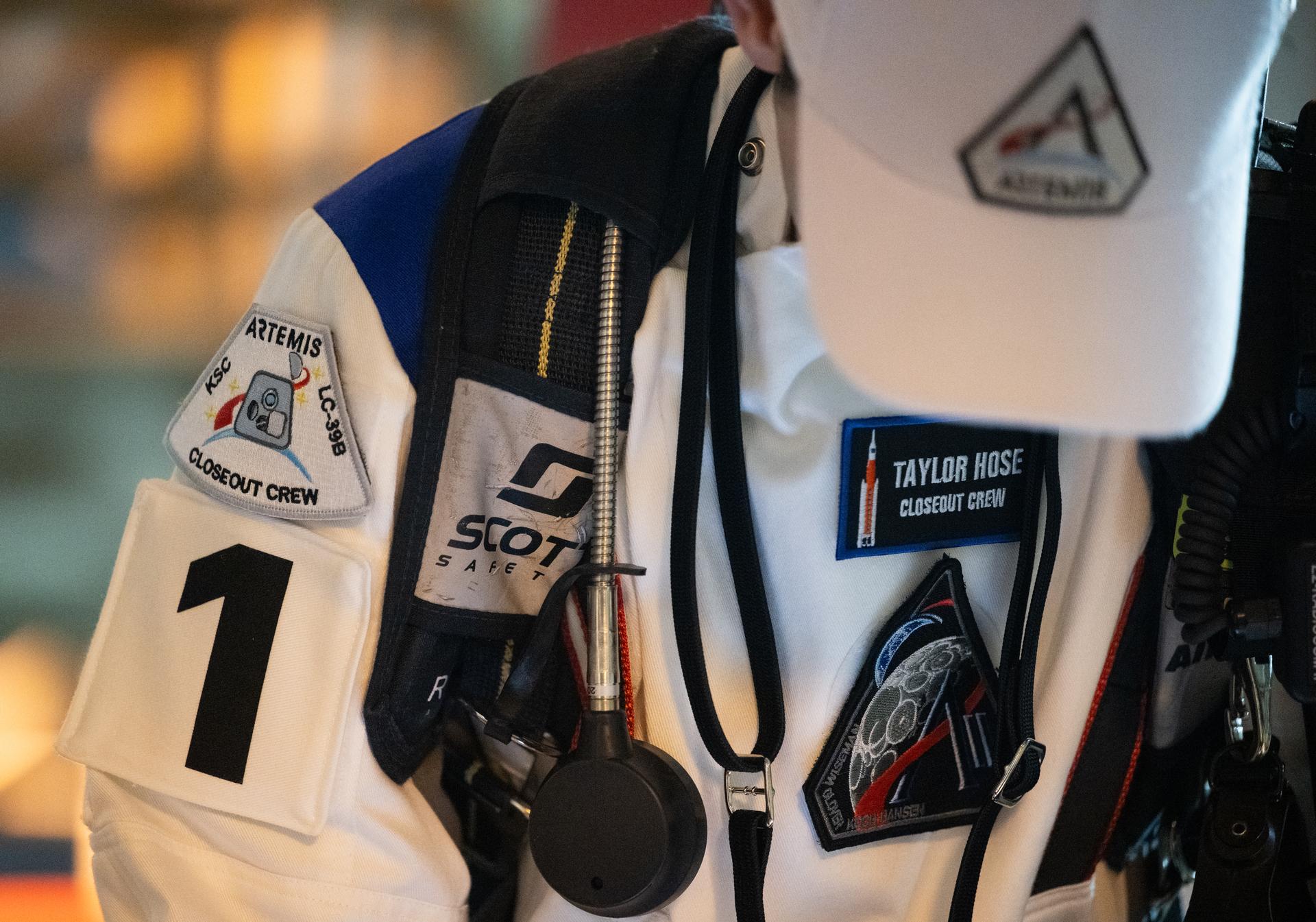
Taylor Hose, Closeout Crew lead, is seen as he prepares for the arrival of Artemis II crewmembers NASA astronauts Reid Wiseman, commander; Victor Glover, pilot; Christina Koch, mission specialist; and CSA (Canadian Space Agency) astronaut Jeremy Hansen, mission specialist; at the 275-foot level of the mobile launcher to board their Orion spacecraft atop NASA’s Space Launch System rocket during the Artemis II countdown demonstration test, Saturday, Dec. 20, 2025, inside the Vehicle Assembly Building at NASA’s Kennedy Space Center in Florida. For this operation, the Artemis II crew and launch teams are simulating the launch day timeline including suit-up, walkout, and spacecraft ingress and egress. Through the Artemis campaign, NASA will send astronauts to explore the Moon for scientific discovery, economic benefits, and to build the foundation for the first crewed missions to Mars, for the benefit of all. Photo Credit: (NASA/Joel Kowsky)
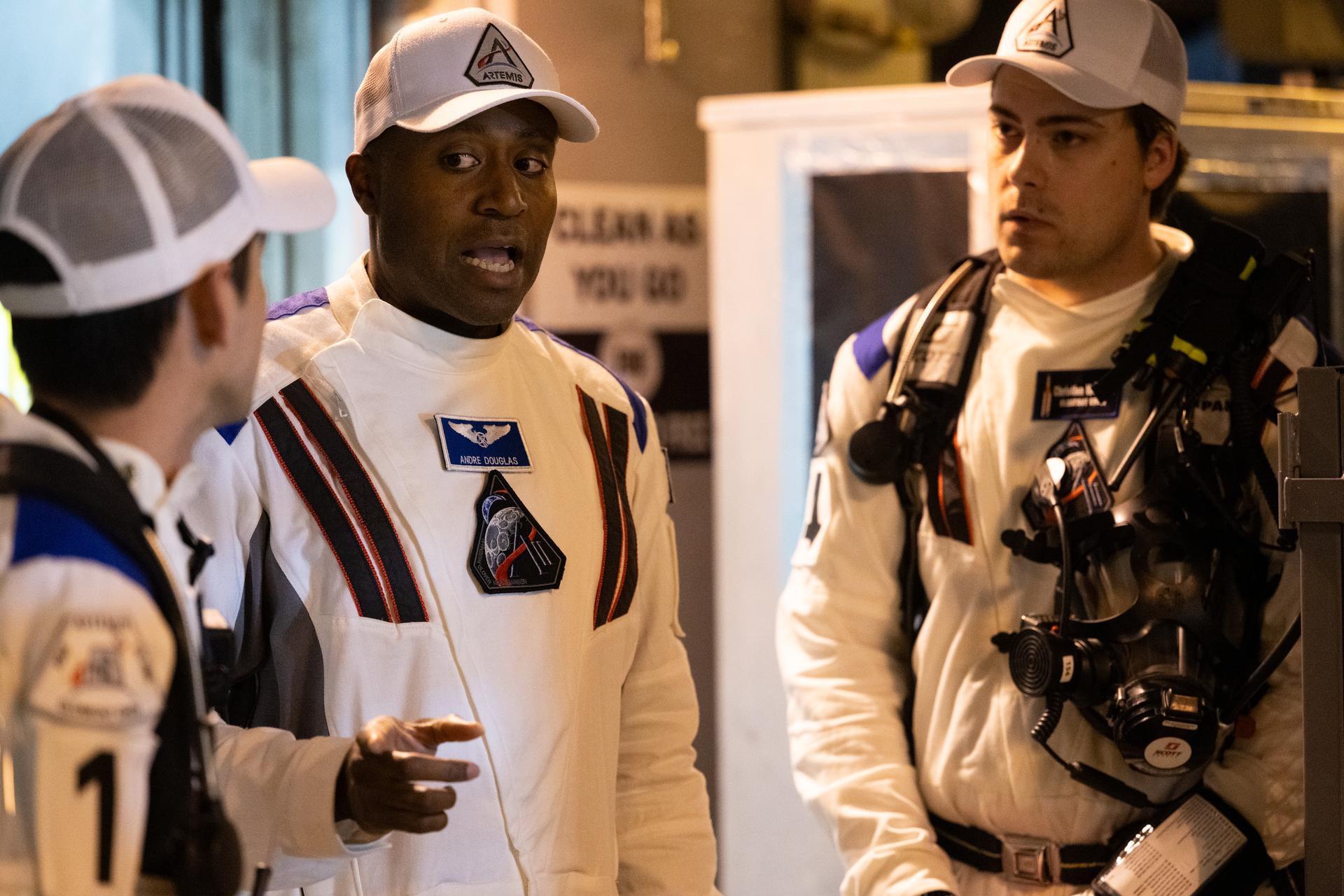
NASA astronaut Andre Douglas talks with Taylor Hose, left, Christian Warriner of the Closeout Crew as they prepare for the arrival of Artemis II crewmembers NASA astronauts Reid Wiseman, commander; Victor Glover, pilot; Christina Koch, mission specialist; and CSA (Canadian Space Agency) astronaut Jeremy Hansen, at the 275-foot level of the mobile launcher as they prepare to board their Orion spacecraft atop NASA’s Space Launch System rocket during the Artemis II countdown demonstration test, Saturday, Dec. 20, 2025, inside the Vehicle Assembly Building at NASA’s Kennedy Space Center in Florida. For this operation, the Artemis II crew and launch teams are simulating the launch day timeline including suit-up, walkout, and spacecraft ingress and egress. Through the Artemis campaign, NASA will send astronauts to explore the Moon for scientific discovery, economic benefits, and to build the foundation for the first crewed missions to Mars, for the benefit of all. Photo Credit: (NASA/Joel Kowsky)
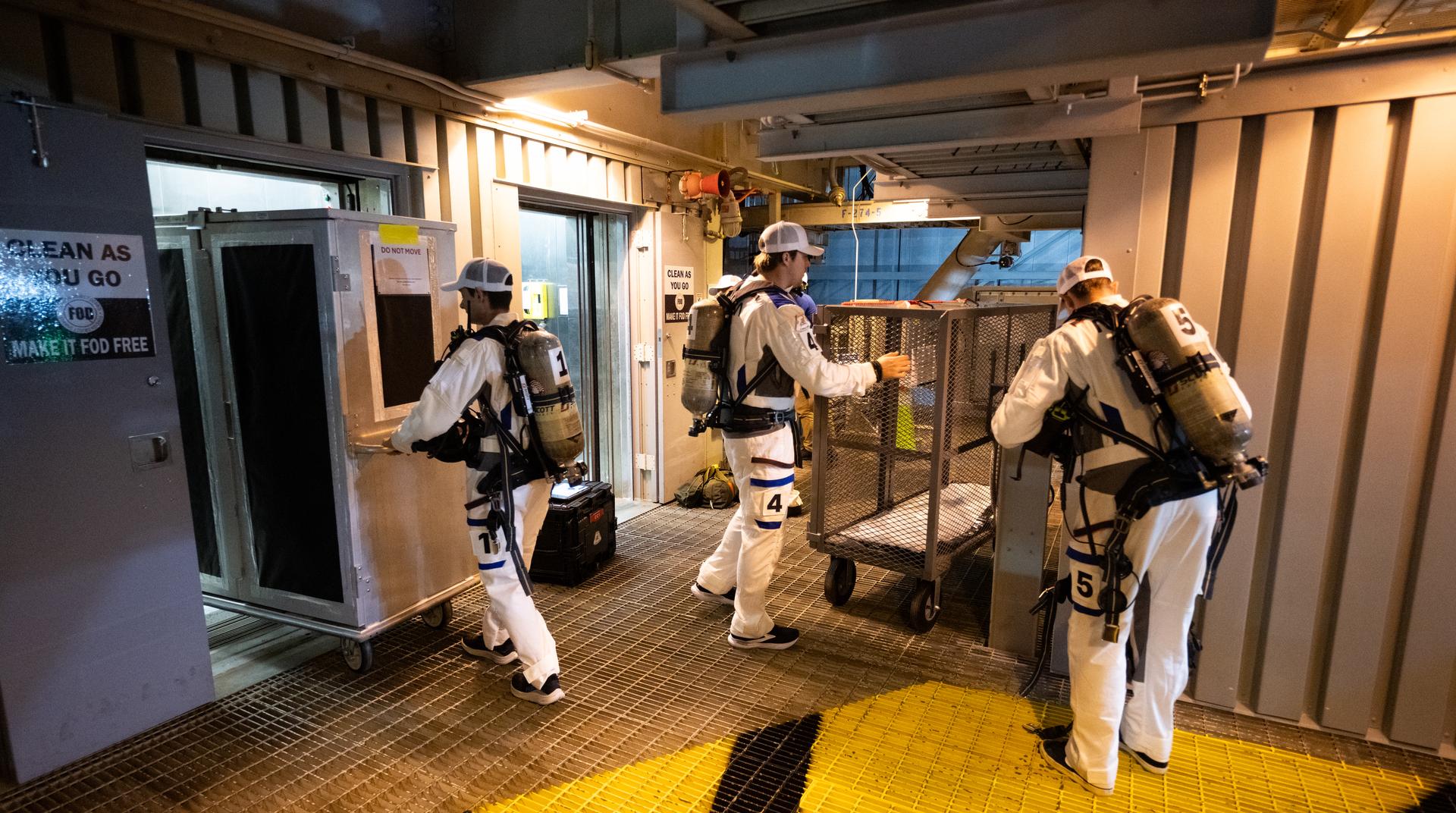
Taylor Hose, left, Christian Warriner, center, and Will Sattler of the Closeout Crew are seen as they prepare for the arrival of Artemis II crewmembers NASA astronauts Reid Wiseman, commander; Victor Glover, pilot; Christina Koch, mission specialist; and CSA (Canadian Space Agency) astronaut Jeremy Hansen, mission specialist; at the 275-foot level of the mobile launcher to board their Orion spacecraft atop NASA’s Space Launch System rocket during the Artemis II countdown demonstration test, Saturday, Dec. 20, 2025, inside the Vehicle Assembly Building at NASA’s Kennedy Space Center in Florida. For this operation, the Artemis II crew and launch teams are simulating the launch day timeline including suit-up, walkout, and spacecraft ingress and egress. Through the Artemis campaign, NASA will send astronauts to explore the Moon for scientific discovery, economic benefits, and to build the foundation for the first crewed missions to Mars, for the benefit of all. Photo Credit: (NASA/Joel Kowsky)
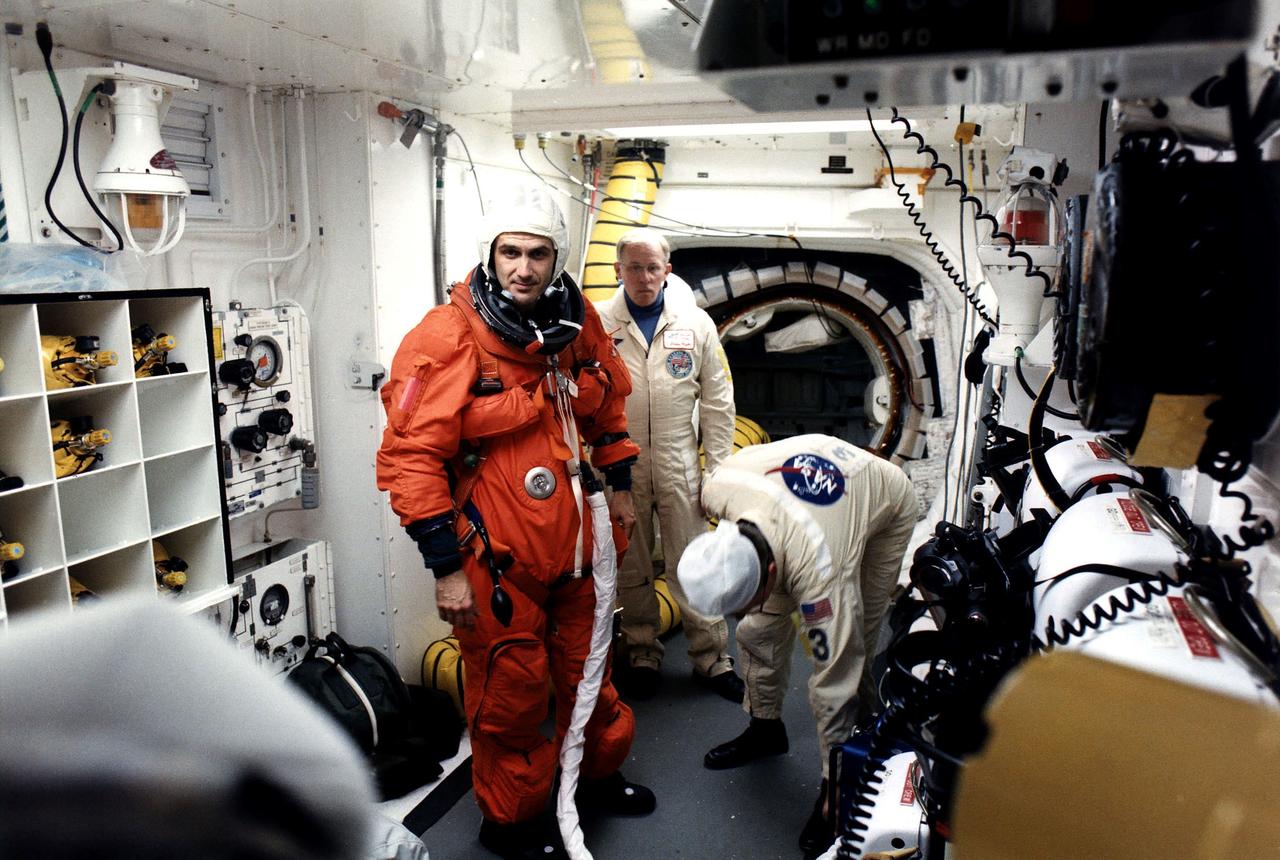
KENNEDY SPACE CENTER, FLA. - STS-81 Mission Specialist Jeff Wisoff prepares to enter the Space Shuttle Atlantis at Launch Pad 39B with help from White Room closeout crew members Danny Wyatt (center) and Al Rochford.

KENNEDY SPACE CENTER, FLA. - STS-83 Payload Commander Janice E. Voss prepares to enter the Space Shuttle Columbia at Launch Pad 39A after getting assistance from the White Room closeout crew that included Bob Saulnier (right).
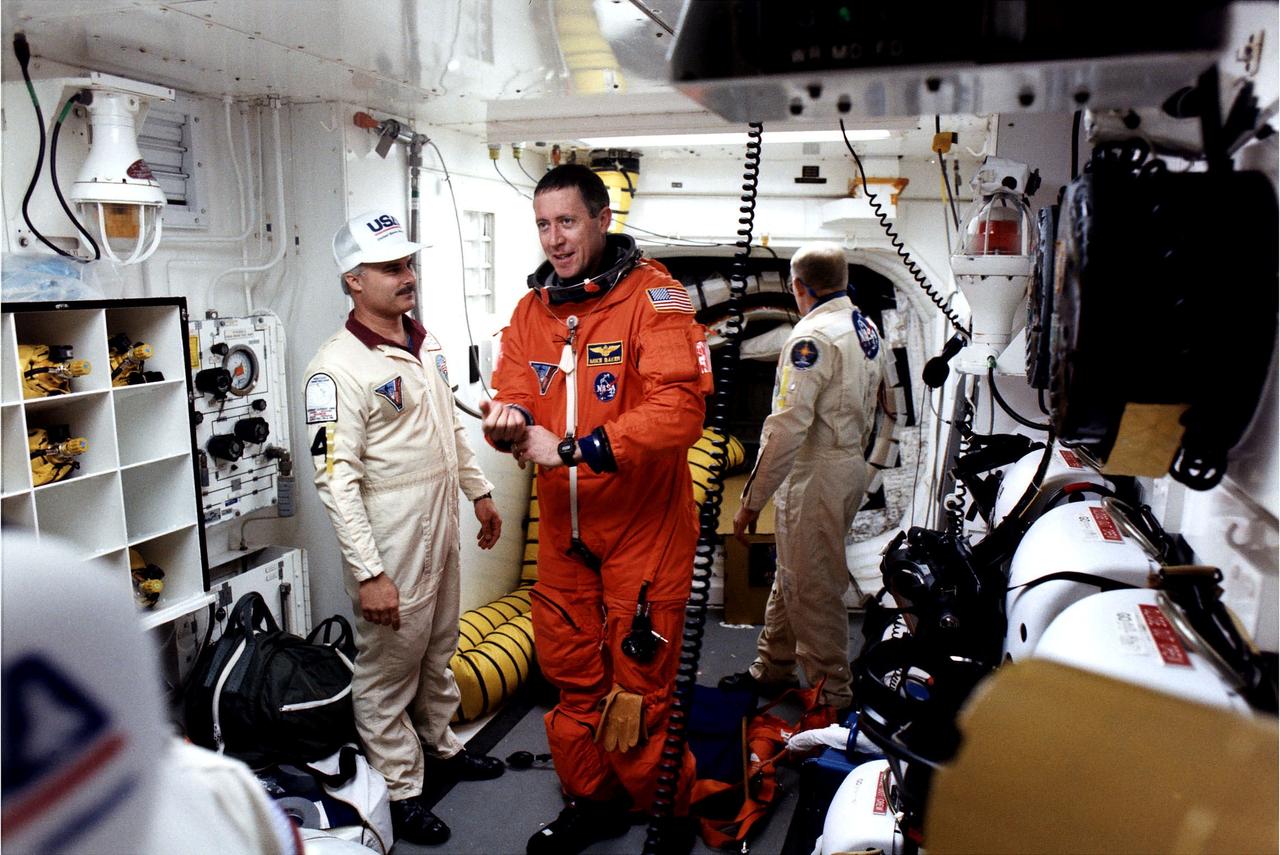
KENNEDY SPACE CENTER, FLA. - STS-81 Mission Commander Michael Baker prepares to enter the Space Shuttle Atlantis at Launch Pad 39B with help from White Room closeout crew members Chris Meinert (left) and Danny Wyatt.
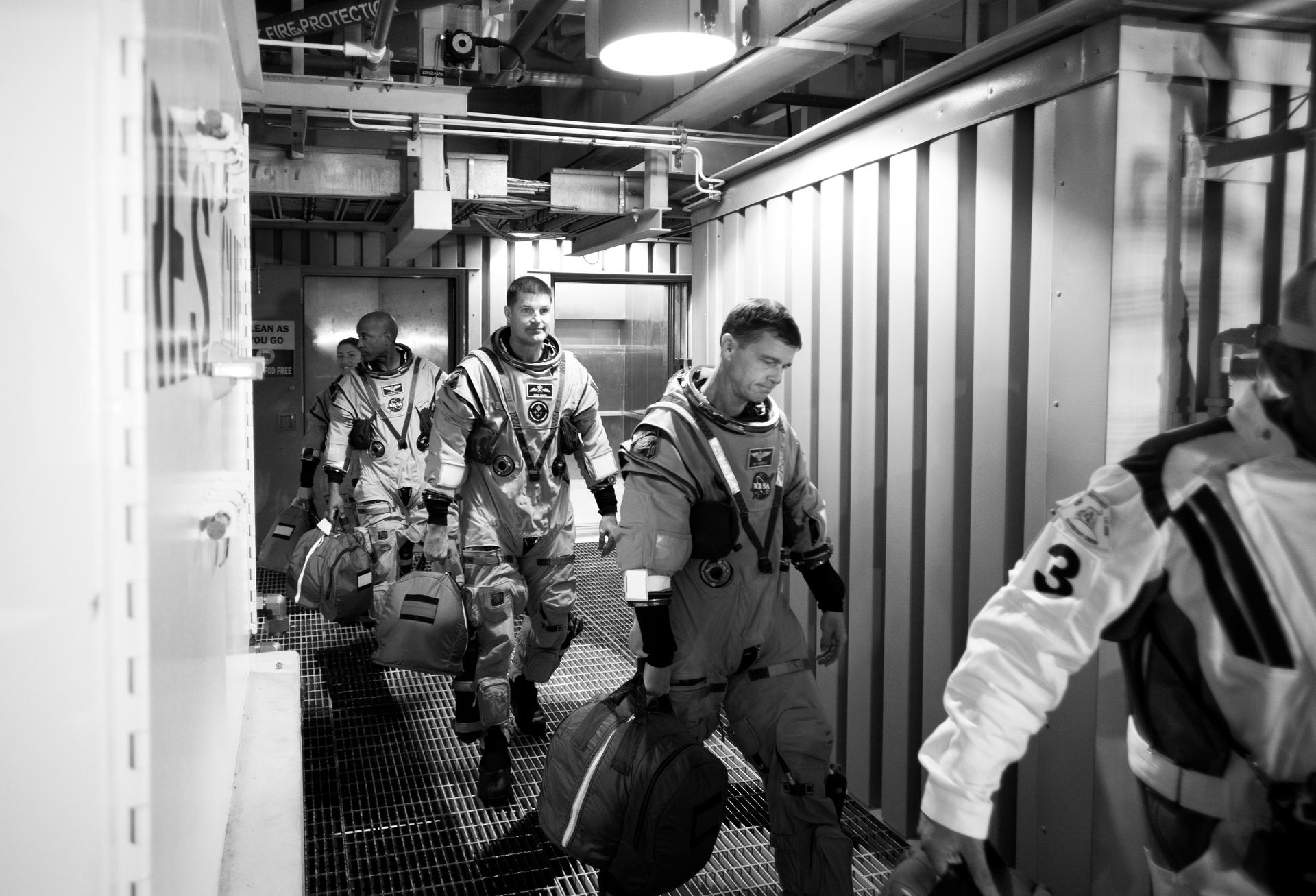
Artemis II crewmembers NASA astronauts Reid Wiseman, commander; Victor Glover, pilot; Christina Koch, mission specialist; and CSA (Canadian Space Agency) astronaut Jeremy Hansen, mission specialist; are led by Bill Owens of the Closeout Crew from the elevator at the 275-foot level of the mobile launcher to the crew access arm as they prepare to board their Orion spacecraft atop NASA’s Space Launch System rocket during the Artemis II countdown demonstration test, Saturday, Dec. 20, 2025, inside the Vehicle Assembly Building at NASA’s Kennedy Space Center in Florida. For this operation, the Artemis II crew and launch teams are simulating the launch day timeline including suit-up, walkout, and spacecraft ingress and egress. Through the Artemis campaign, NASA will send astronauts to explore the Moon for scientific discovery, economic benefits, and to build the foundation for the first crewed missions to Mars, for the benefit of all. Photo Credit: (NASA/Joel Kowsky)
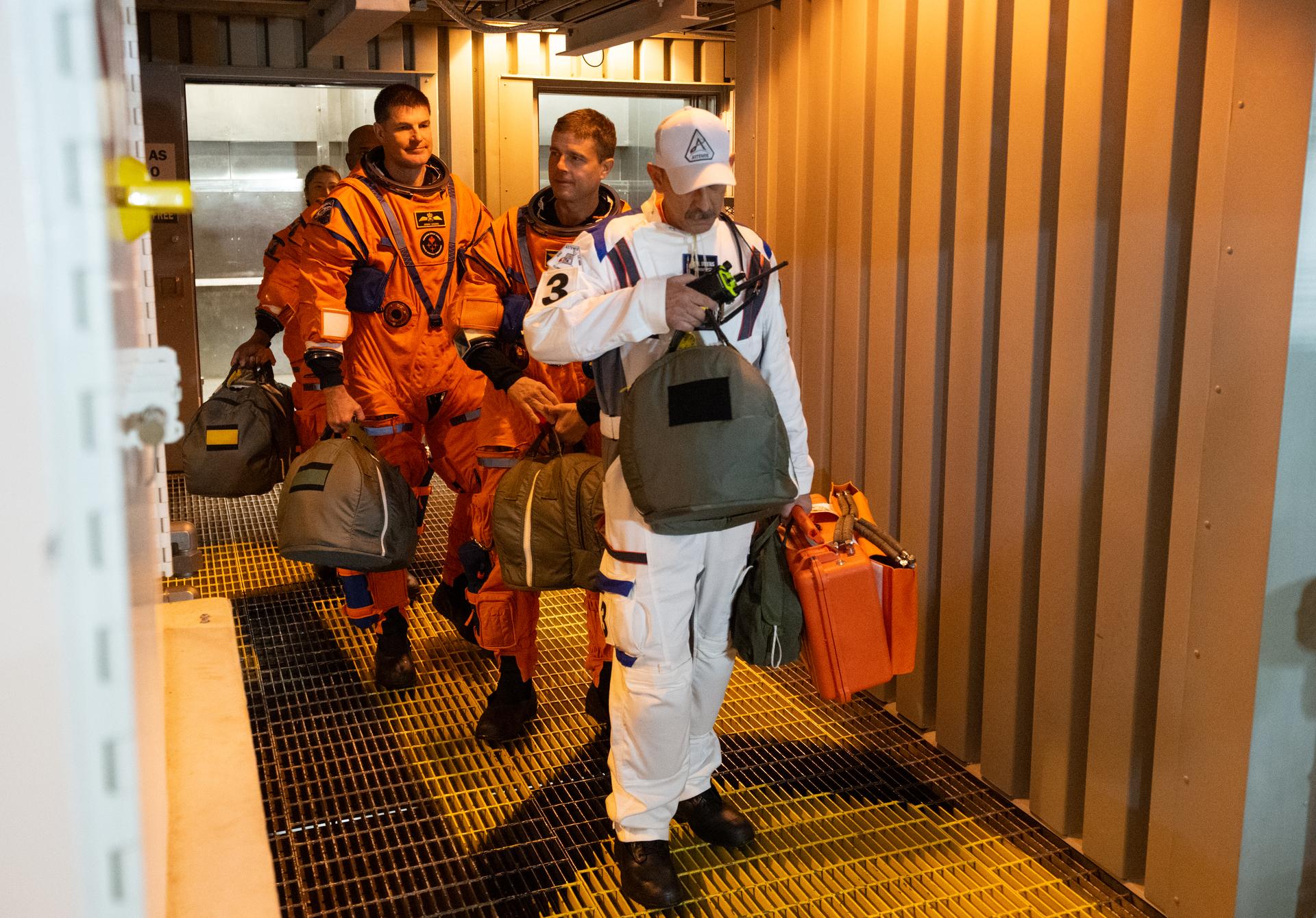
Bill Owens of the Closeout Crew leads the Artemis II crewmembers NASA astronauts Reid Wiseman, commander; Victor Glover, pilot; Christina Koch, mission specialist; and CSA (Canadian Space Agency) astronaut Jeremy Hansen, mission specialist; from the elevator at the 275-foot level of the mobile launcher to the crew access arm as they prepare to board their Orion spacecraft atop NASA’s Space Launch System rocket during the Artemis II countdown demonstration test, Saturday, Dec. 20, 2025, inside the Vehicle Assembly Building at NASA’s Kennedy Space Center in Florida. For this operation, the Artemis II crew and launch teams are simulating the launch day timeline including suit-up, walkout, and spacecraft ingress and egress. Through the Artemis campaign, NASA will send astronauts to explore the Moon for scientific discovery, economic benefits, and to build the foundation for the first crewed missions to Mars, for the benefit of all. Photo Credit: (NASA/Joel Kowsky)
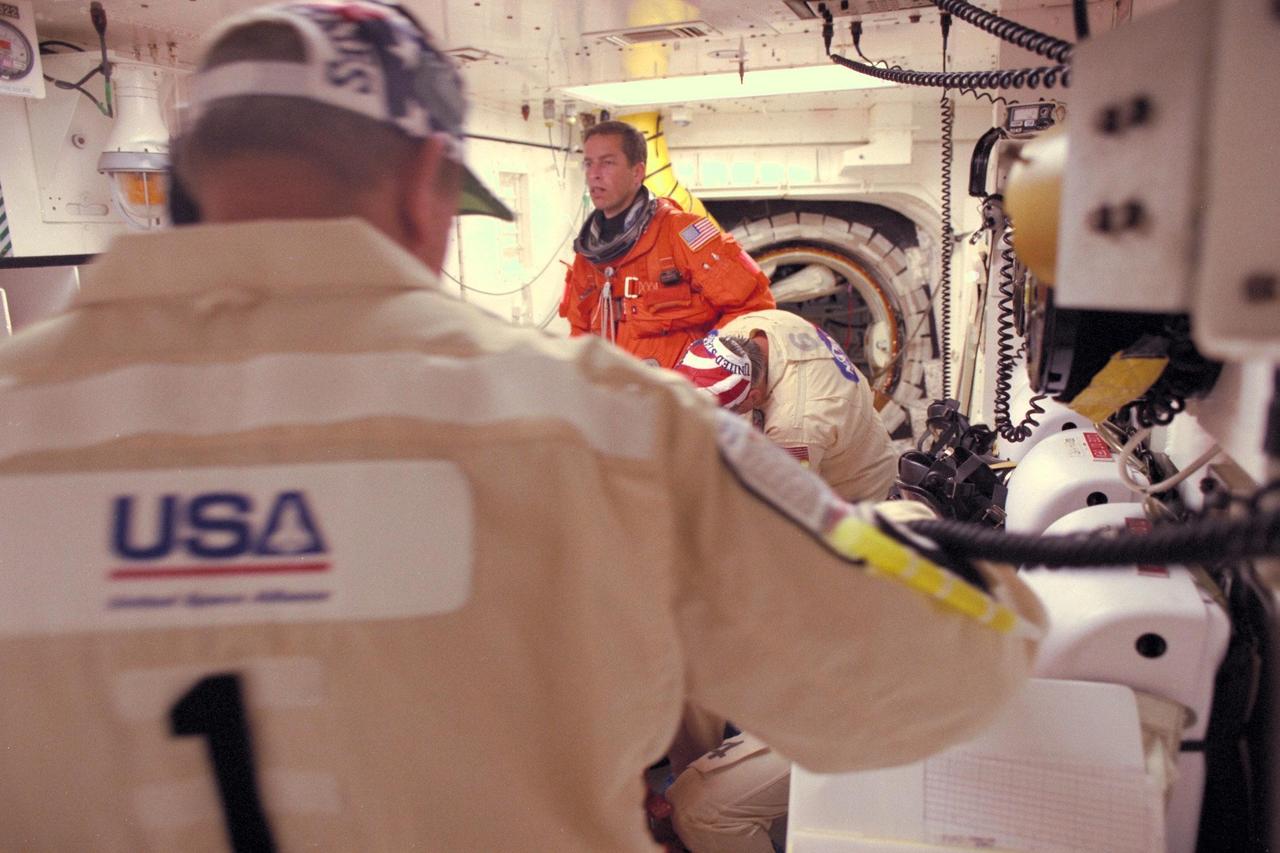
STS-86 Commander James D. Wetherbee prepares to enter the Space Shuttle Atlantis at Launch Pad 39A, with the assistance of white room closeout crew member Jim Davis, a NASA quality assurance specialist. Rick Welty, United Space Alliance orbiter vehicle closeout chief, is in foreground with back to camera
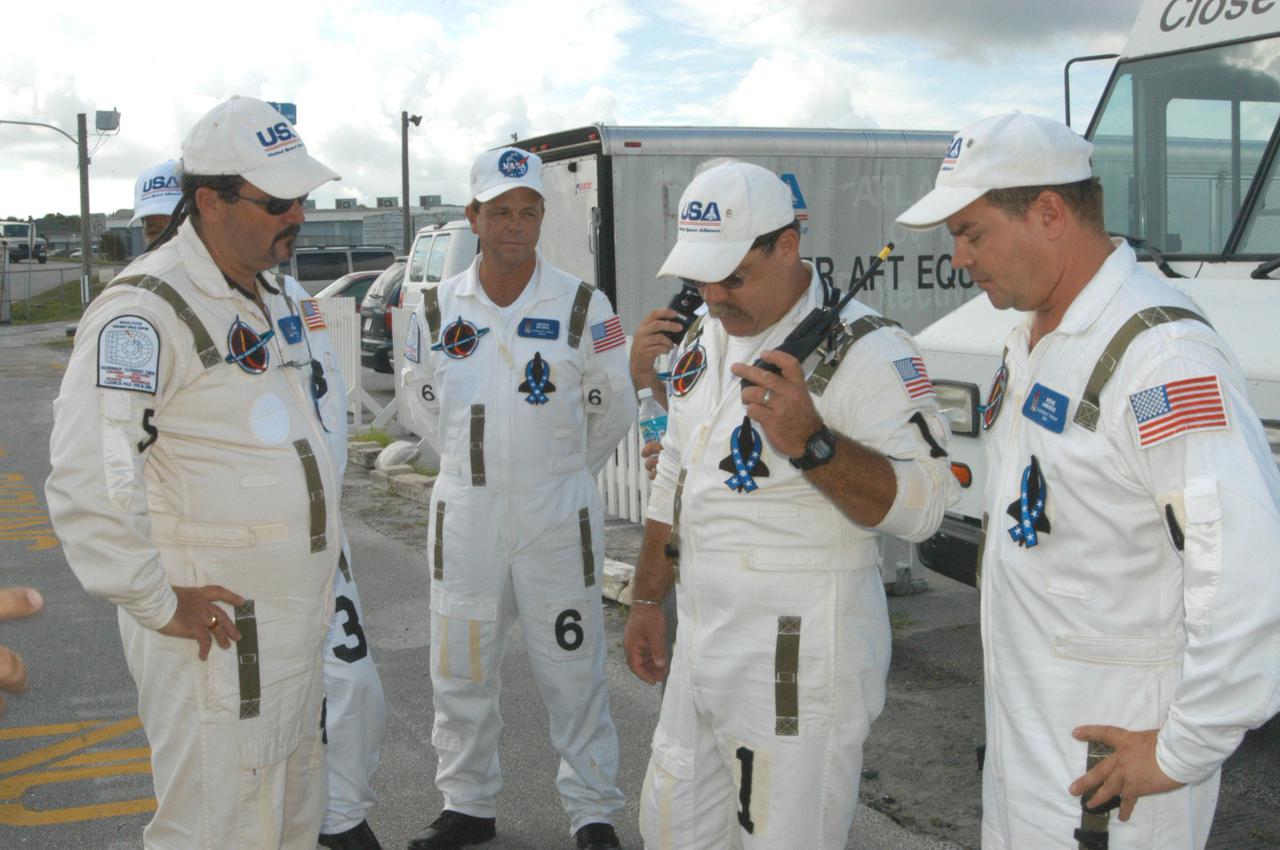
KENNEDY SPACE CENTER, FLA. - The closeout crew is getting ready for their part in the launch of Space Shuttle Discovery on Return to Flight mission STS-114. In the White Room at the end of the Orbiter Access Arm, the closeout crew helps the astronauts put on their helmets, adjust and secure their equipment and climb into the cockpit. Discovery is scheduled to launch on the historic Return to Flight mission STS-114 at 3:51 p.m. July 13 with a crew of seven.
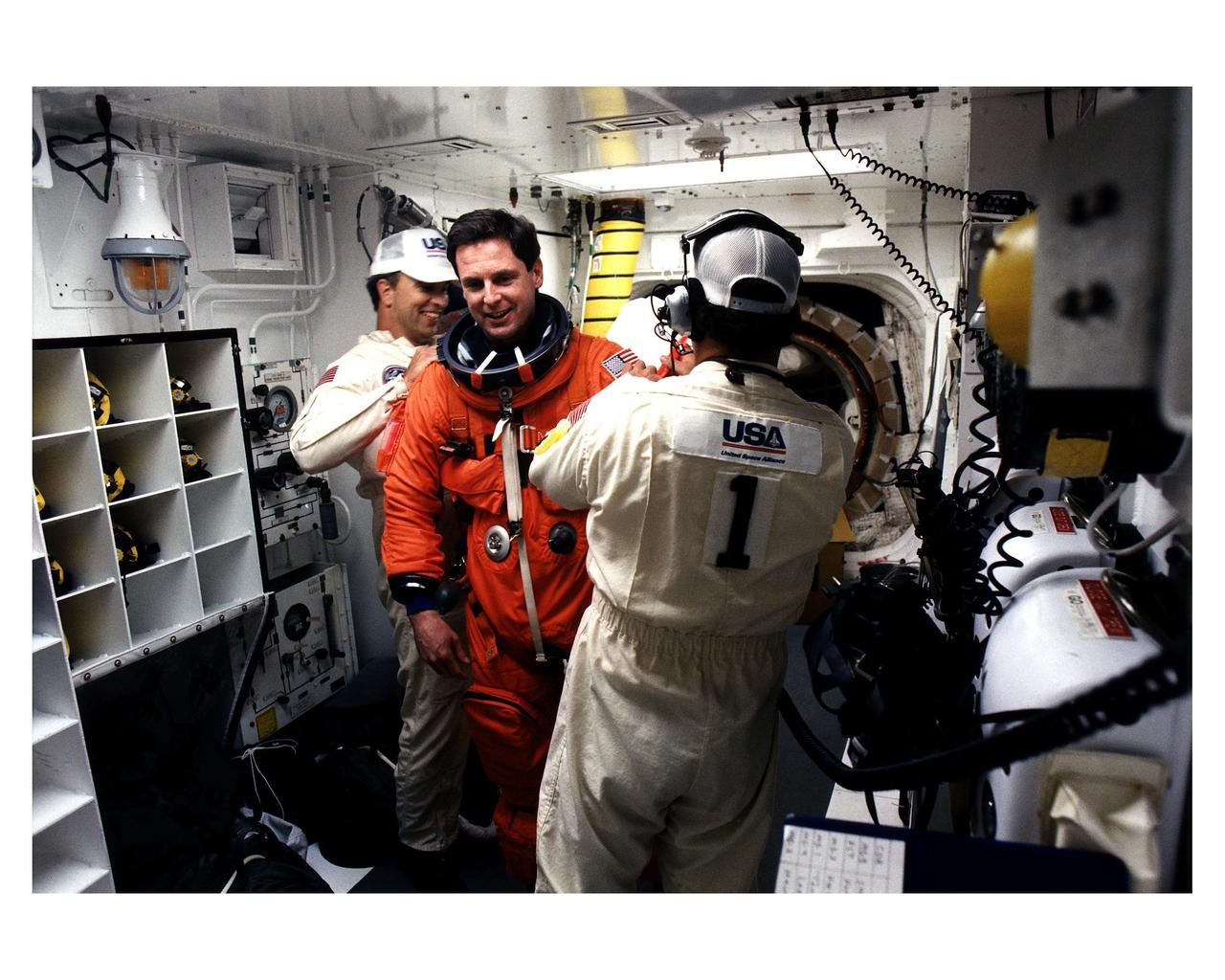
STS-82 Mission Specialist Gregory J. Harbaugh prepares to enter the Space Shuttle Discovery at Launch Pad 39A, with the assistance of white room closeout crew members Dave Law, at left, and Travis Thompson
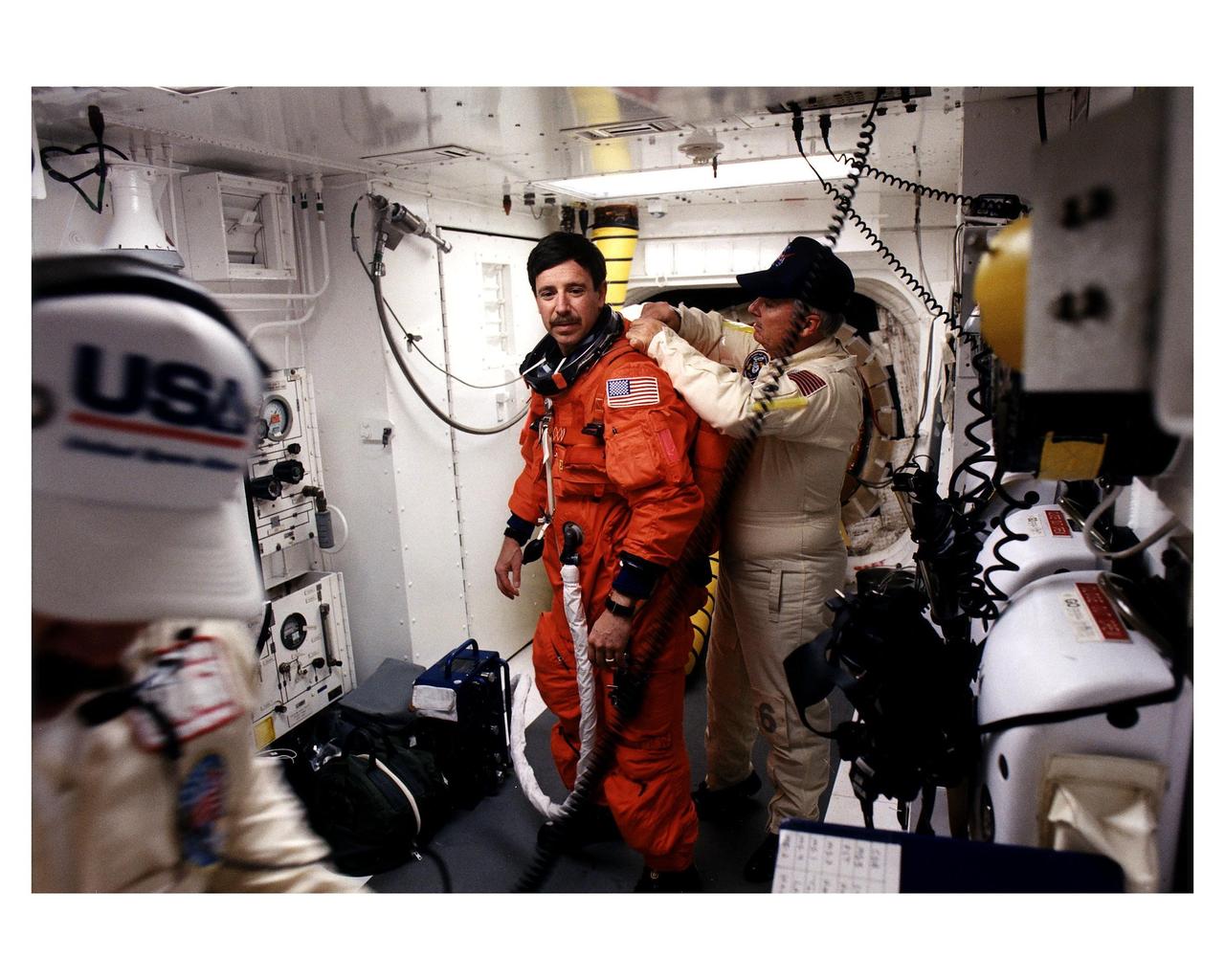
STS-82 Pilot Scott J. "Doc" Horowitz prepares to enter the Space Shuttle Discovery at Launch Pad 39A, with the assistance of white room closeout crew member James Davis

STS-82 Mission Specialist Steven A. Hawley prepares to enter the Space Shuttle Discovery at Launch Pad 39A, with the assistance of white room closeout crew members James Davis, at left, and George Schramm
STS-94 Payload Specialist Roger K. Crouch and Payload Commander Janice E. Voss prepare to enter the Space Shuttle Columbia at Launch Pad 39a with assistance from white room closeout crew members.
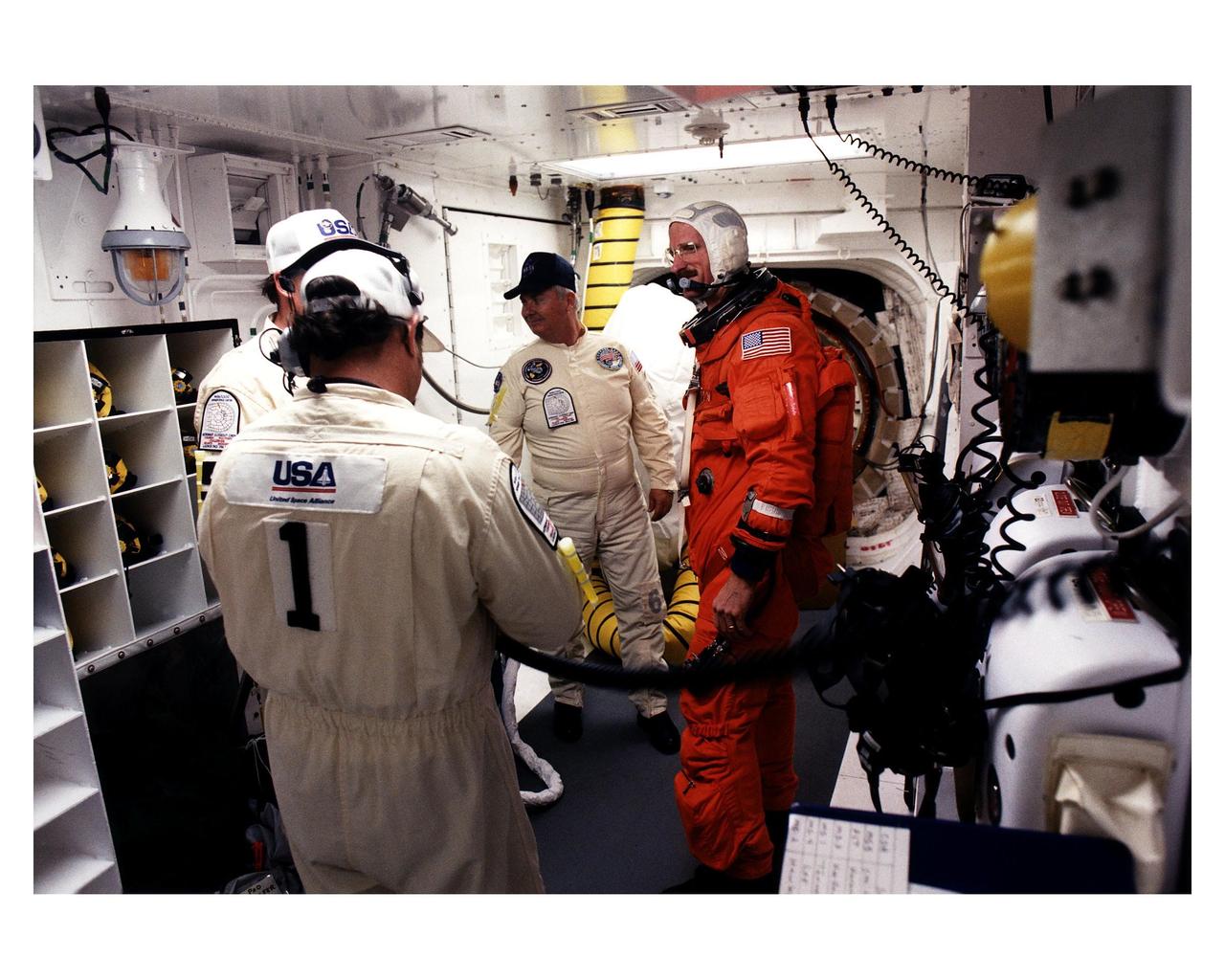
STS-82 Mission Specialist Joseph R. "Joe" Tanner talks to white room closeout crew members before entering the Space Shuttle Discovery at Launch Pad 39A
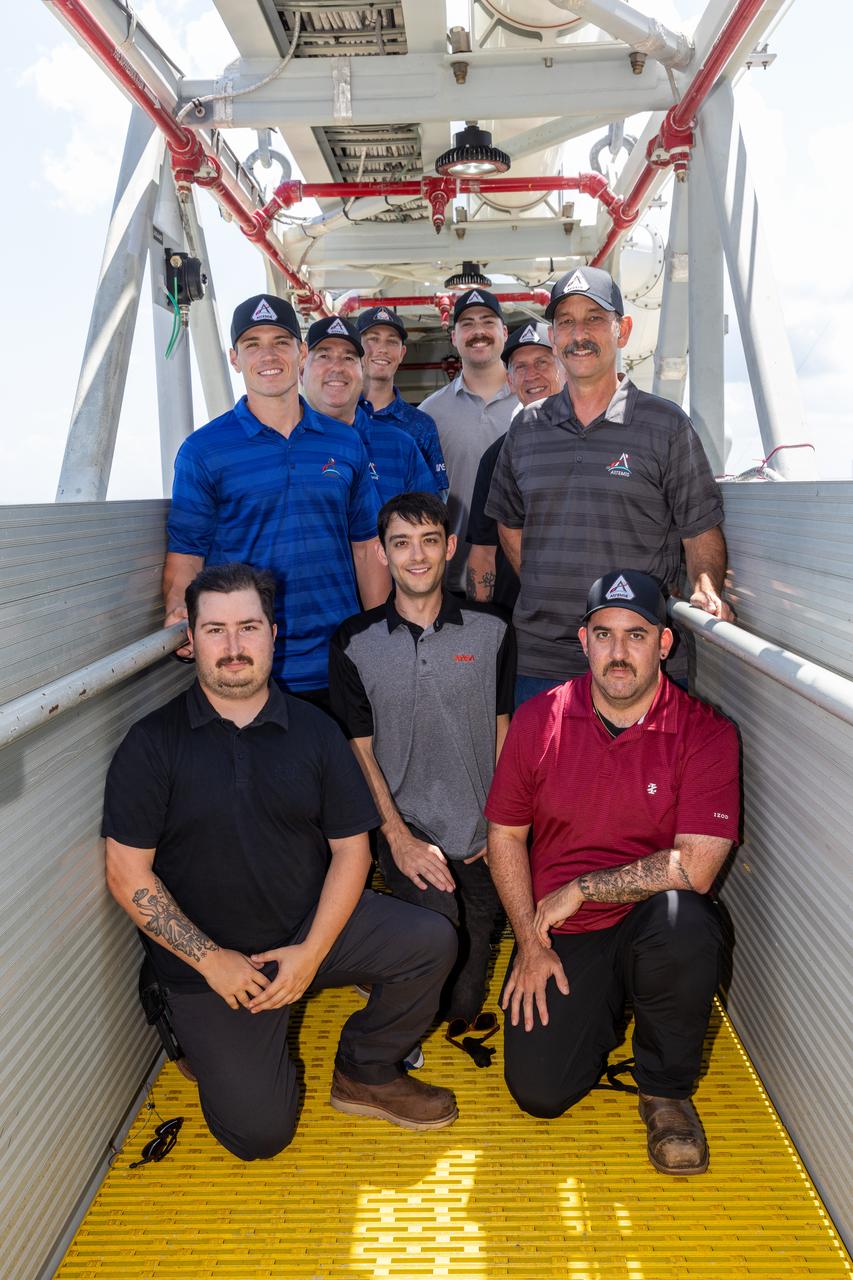
Some of the team members who make up the Artemis closeout team pose for a picture at Launch Complex 39B at NASA’s Kennedy Space Center in Florida on Tuesday, Aug. 13, 2024. Members of the closeout crew, pad rescue team, and the Exploration Ground Systems Program practiced the process of getting inside and out of the emergency egress baskets. While the crew and other personnel will ride the emergency egress baskets to the terminus area in a real emergency, no one rode the baskets for this test. Instead, teams tested the baskets during separate occasions by using water tanks filled to different levels to replicate simulate the weight of passengers.
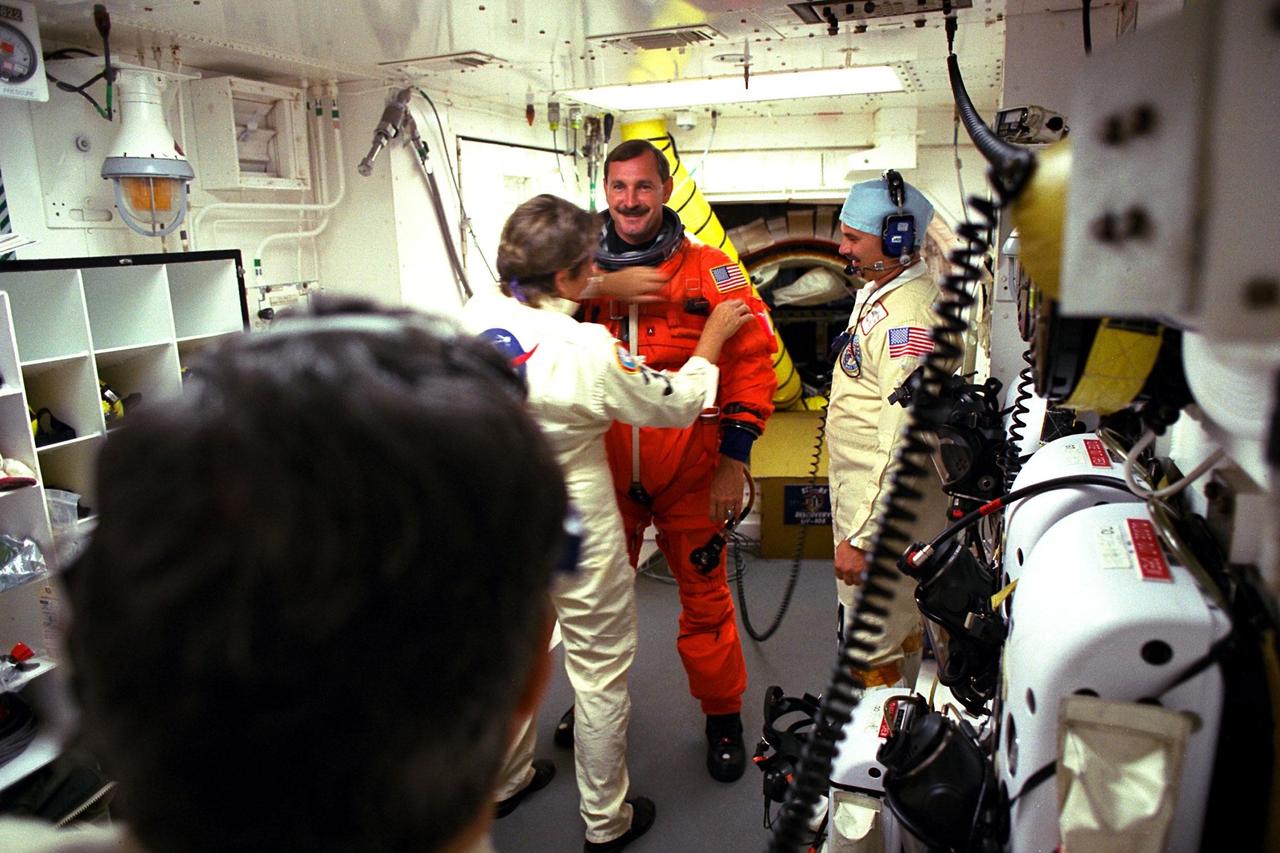
STS-85 Commander Curtis L. Brown, Jr. is assisted with his ascent/reentry flight suit by white room closeout crew members Jean Alexander (left) and Chris Meinert at Launch Pad 39A before he enters the crew cabin of the Space Shuttle orbiter Discovery
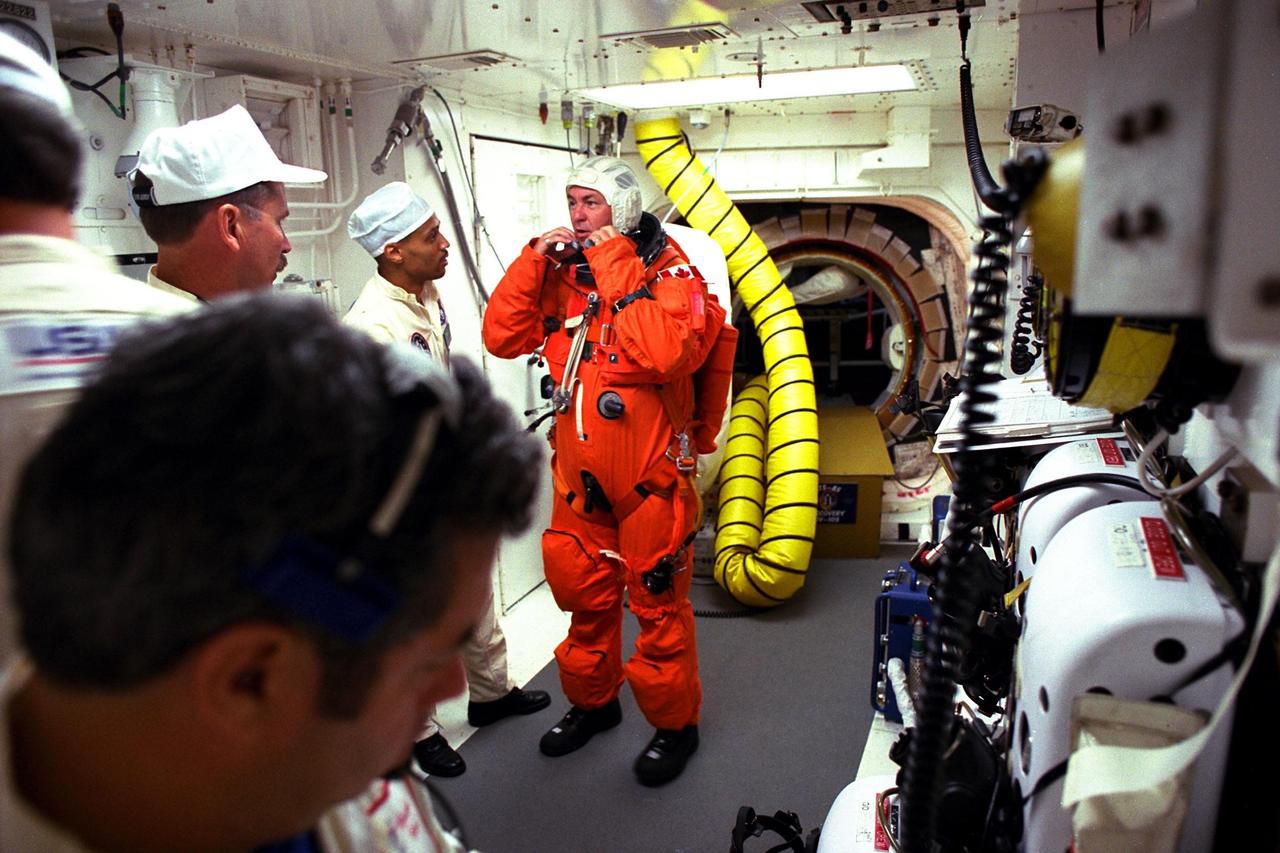
STS-85 Payload Specialist Bjarni V. Tryggvason is assisted with his ascent/reentry flight suit by white room closeout crew members Jack Burritt and Carlos Gillis at Launch Pad 39A before he enters the crew cabin of the Space Shuttle orbiter Discovery
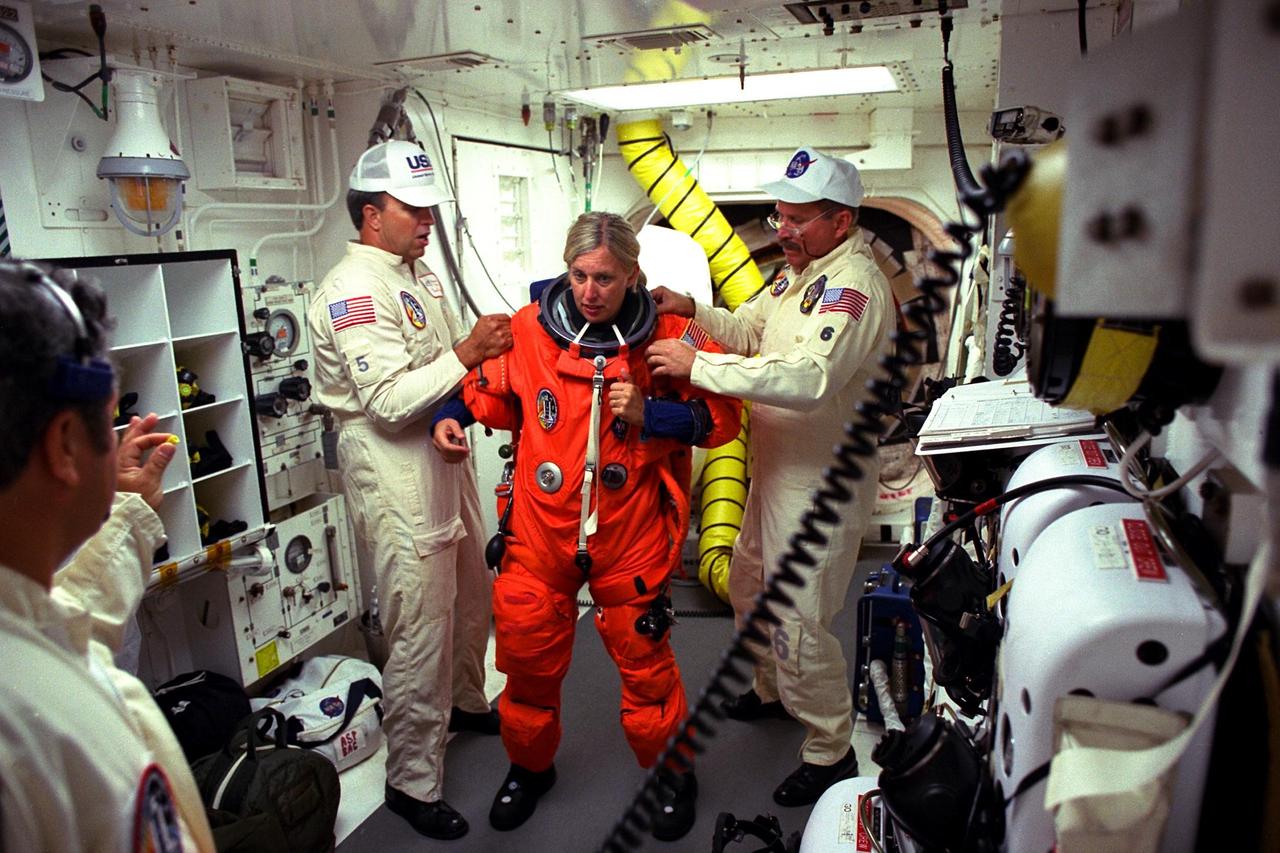
STS-85 Payload Commander N. Jan Davis is assisted with her ascent/reentry flight suit by white room closeout crew members Dave Law (left) and Jack Burritt at Launch Pad 39A before she enters the crew cabin of the Space Shuttle orbiter Discovery
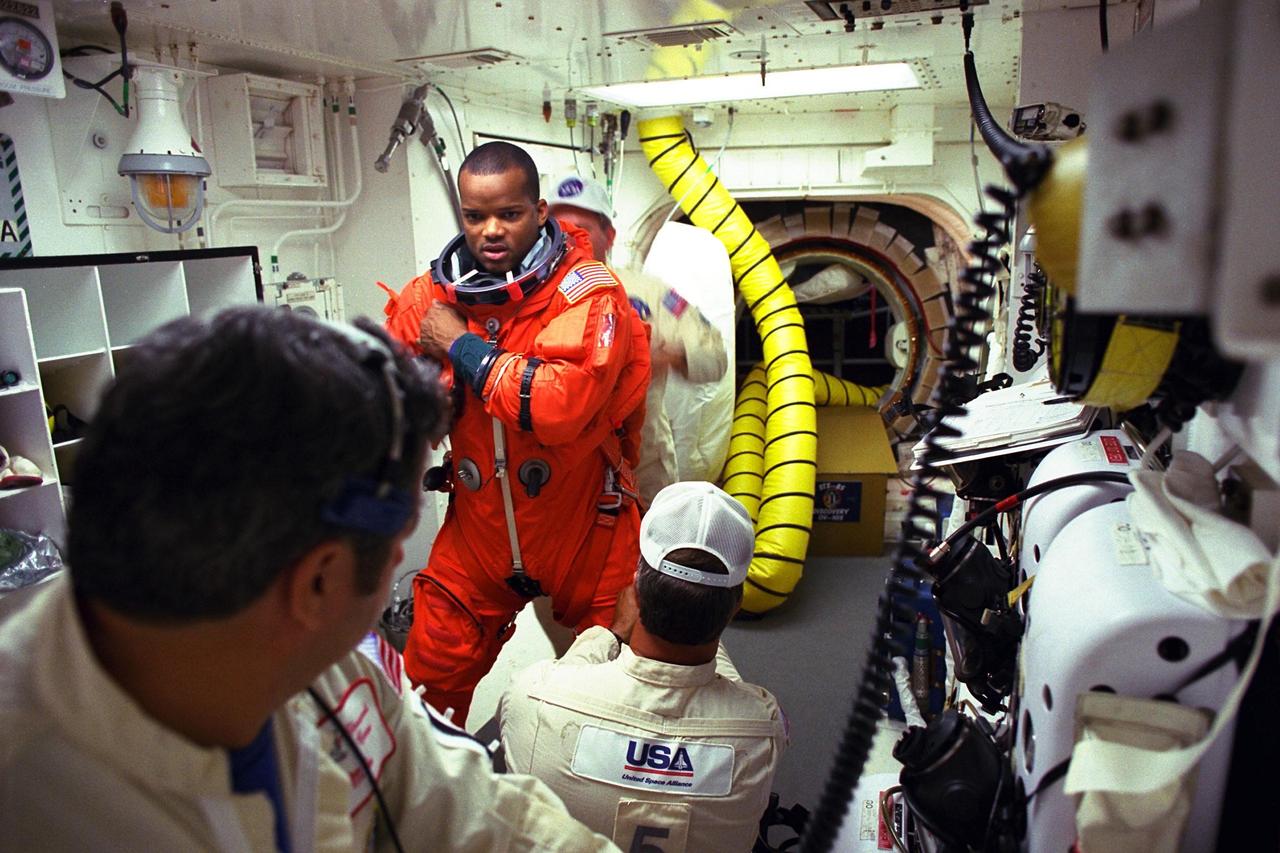
STS-85 Mission Specialist Robert L. Curbeam, Jr. is assisted with his ascent/reentry flight suit by white room closeout crew members Mike Mangione (left foreground) and Dave Law at Launch Pad 39A before he enters the crew cabin of the Space Shuttle orbiter Discovery
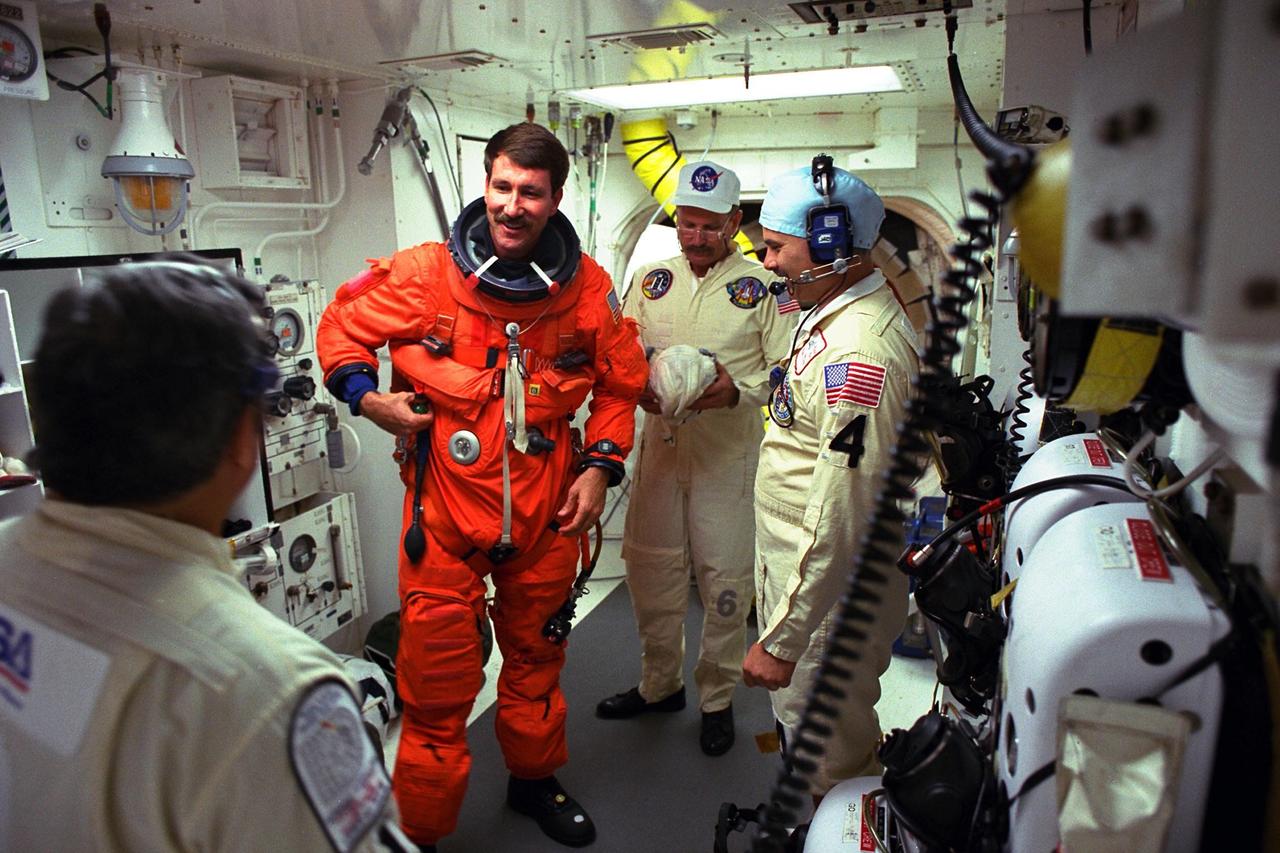
STS-85 Pilot Kent V. Rominger visits with white room closeout crew members Mike Mangione (left foreground), Jack Burritt (center), and Chris Meinert at Launch Pad 39A as they assist him with his ascent/reentry flight suit before he enters the crew cabin of the Space Shuttle orbiter Discovery
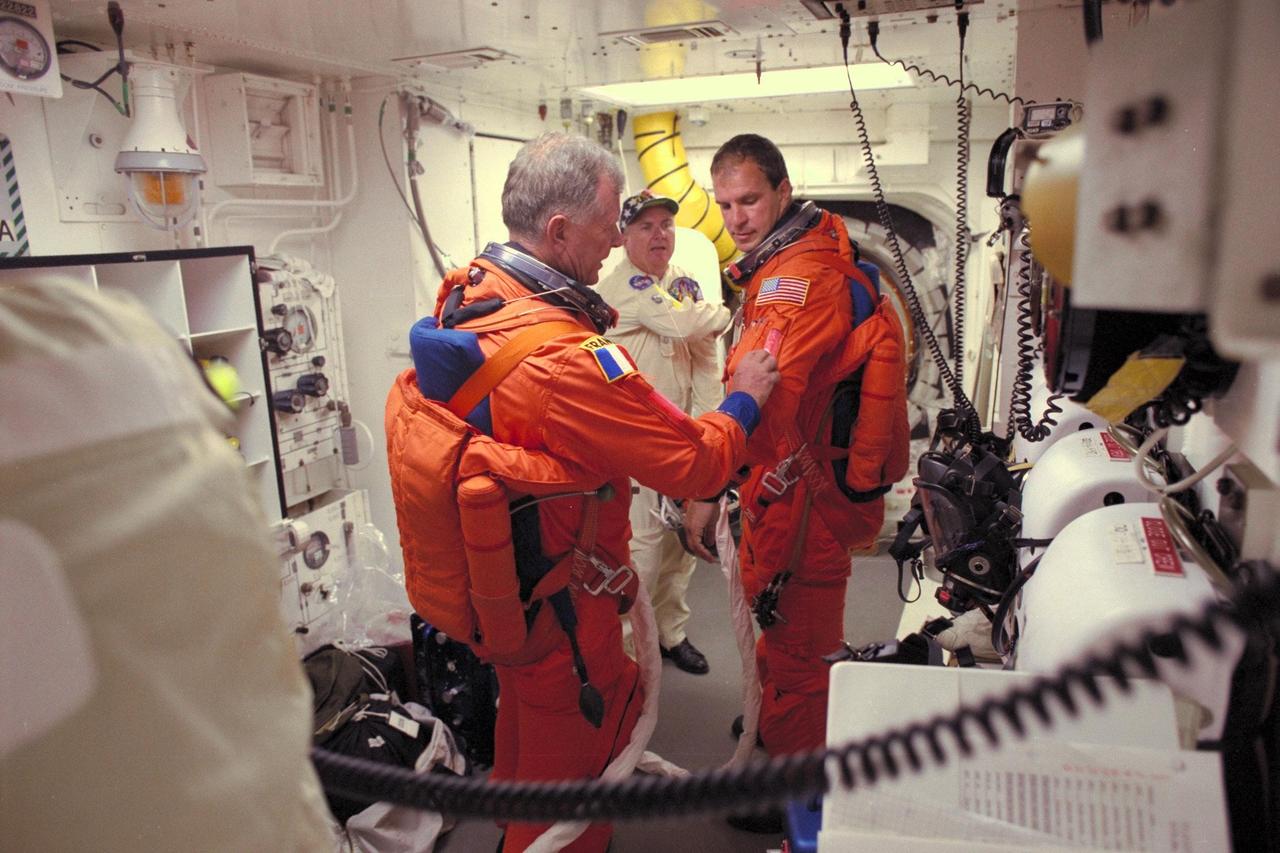
While a white room closeout crew member looks on, STS-86 Pilot Michael J. Bloomfield, at right, gets some assistance from fellow crew member, Mission Specialist Jean-Loup J.M. Chretien of the French Space Agency, CNES, before entering the Space Shuttle Atlantis at Launch Pad 39A

The closeout crew in the White Room pose with two of the STS-98 crew. Kneeling in front is United Space Alliance Mechanical Technician George Schramm. Standing, left to right, are USA Mechanical Technician Vinny Difranzo, Mission Specialist Robert Curbeam, NASA Quality Assurance Specialist Ken Strite, Mission Specialist Marsha Ivins, and USA Orbiter Vehicle Closeout Chief Travis Thompson. The White Room is an environmental chamber at the end of the orbiter access arm that mates with the orbiter to allow personnel to enter the orbiter’s crew compartment. The STS-98 crew is getting ready to enter Atlantis for a simulated launch countdown, part of Terminal Countdown Demonstration Test activities. STS-98 is the seventh construction flight to the International Space Station, carrying as payload the U.S. Lab Destiny, a key element in the construction of the ISS. Launch of STS-98 is scheduled for Jan. 19 at 2:11 a.m. EST
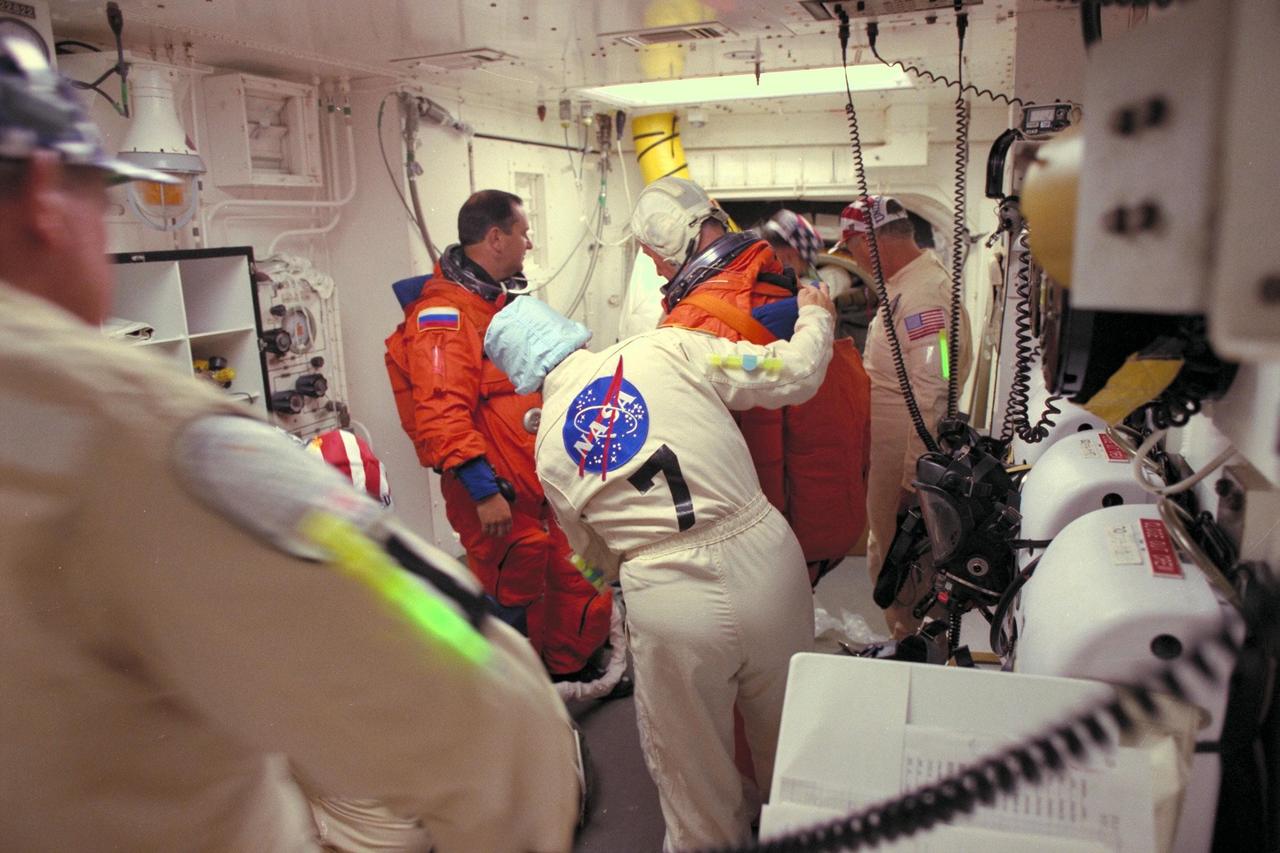
STS-86 Mission Specialist Jean-Loup J.M. Chretien, in orange launch and entry suit at right, and Mission Specialist Vladimir Georgievich Titov prepare to enter the Space Shuttle Atlantis at Launch Pad 39A, with the assistance of white room closeout crew members, including suit technician Valarie McNeal, at center
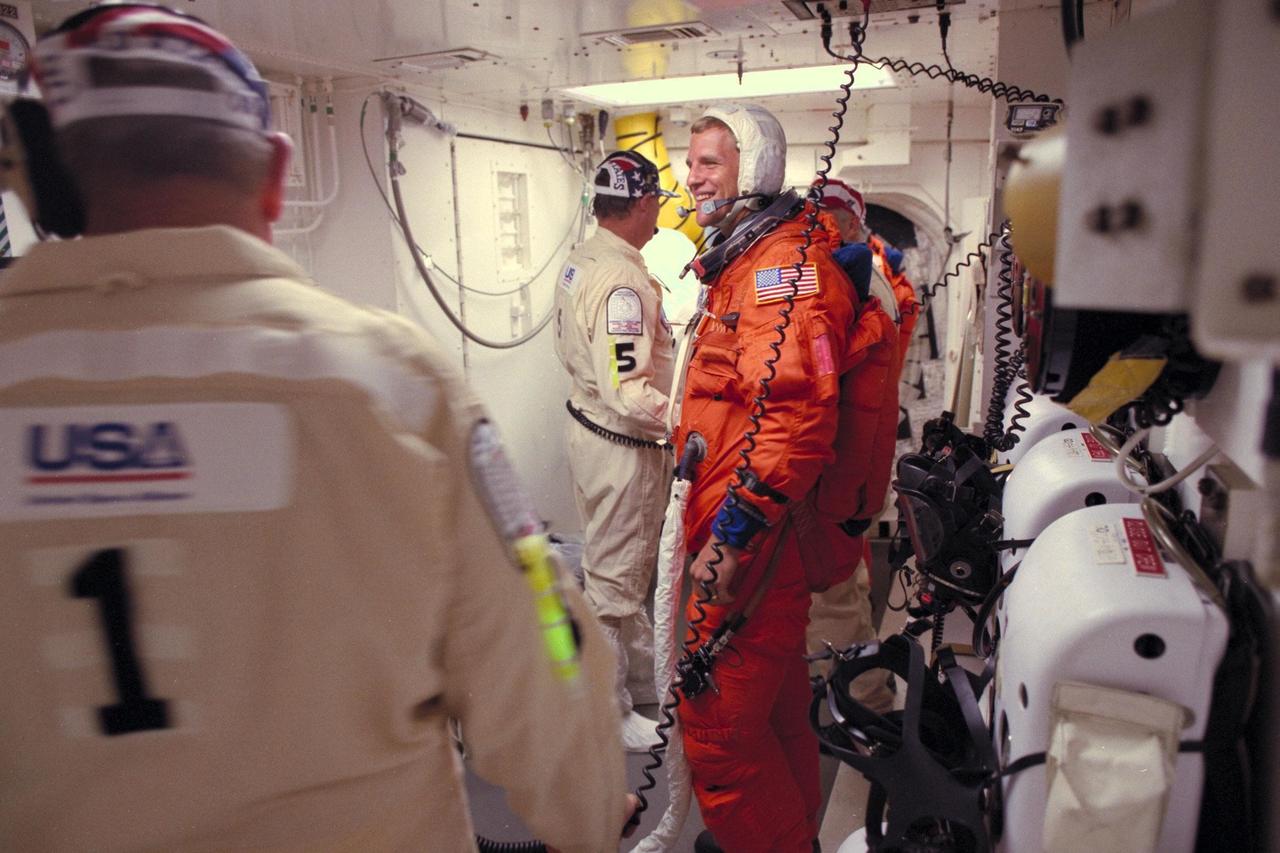
STS-86 crew members, including Mission Specialist Scott E. Parazynski, at center, prepare to enter the Space Shuttle Atlantis at Launch Pad 39A. They are being assisted by Rick Welty, at left, the United Space Alliance (USA) vehicle closeout chief, and George Schramm, USA mechanical technician
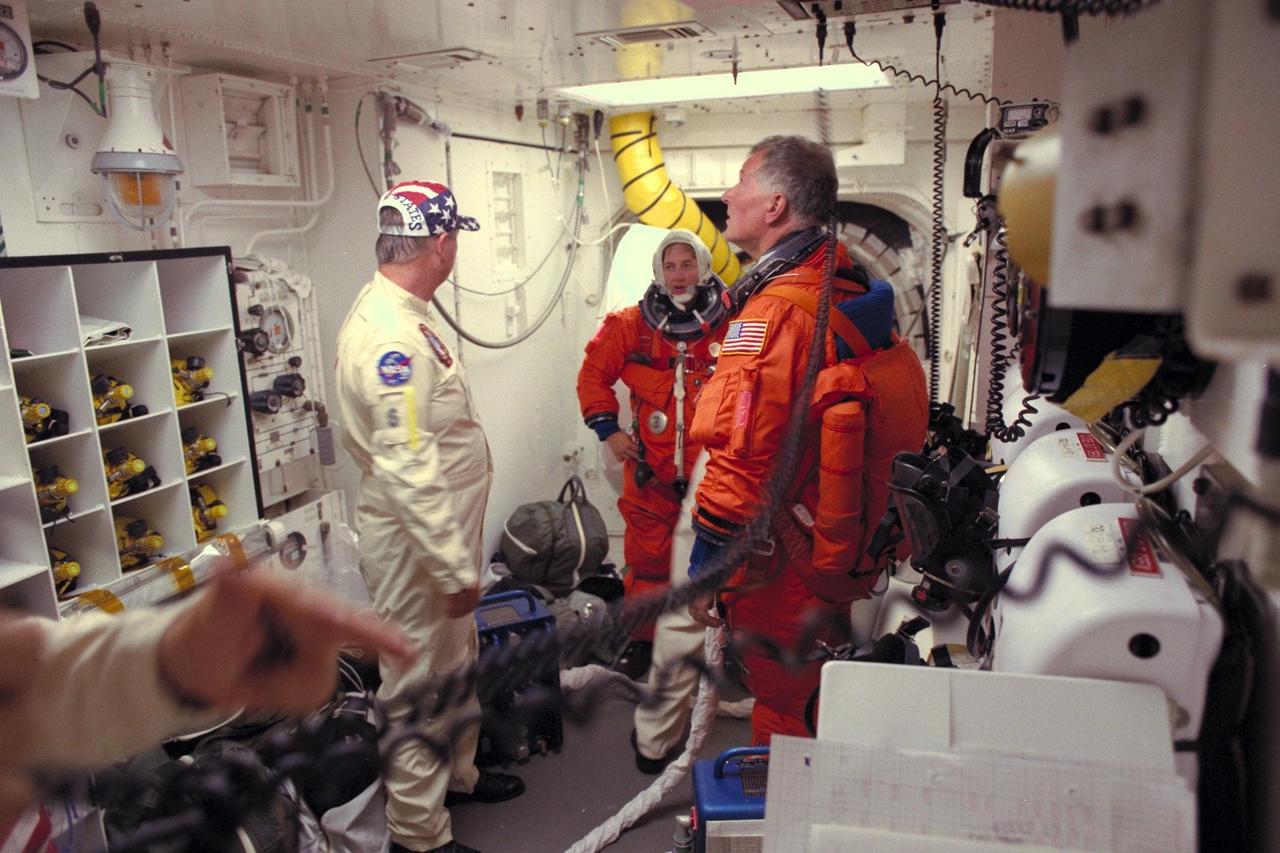
STS-86 Mission Specialists Wendy B. Lawrence, at center facing camera, and Jean-Loup J.M. Chretien of the French Space Agency, CNES, prepare to enter the Space Shuttle Atlantis at Launch Pad 39A, with the assistance of white room closeout crew member Jim Davis, a NASA quality assurance specialist
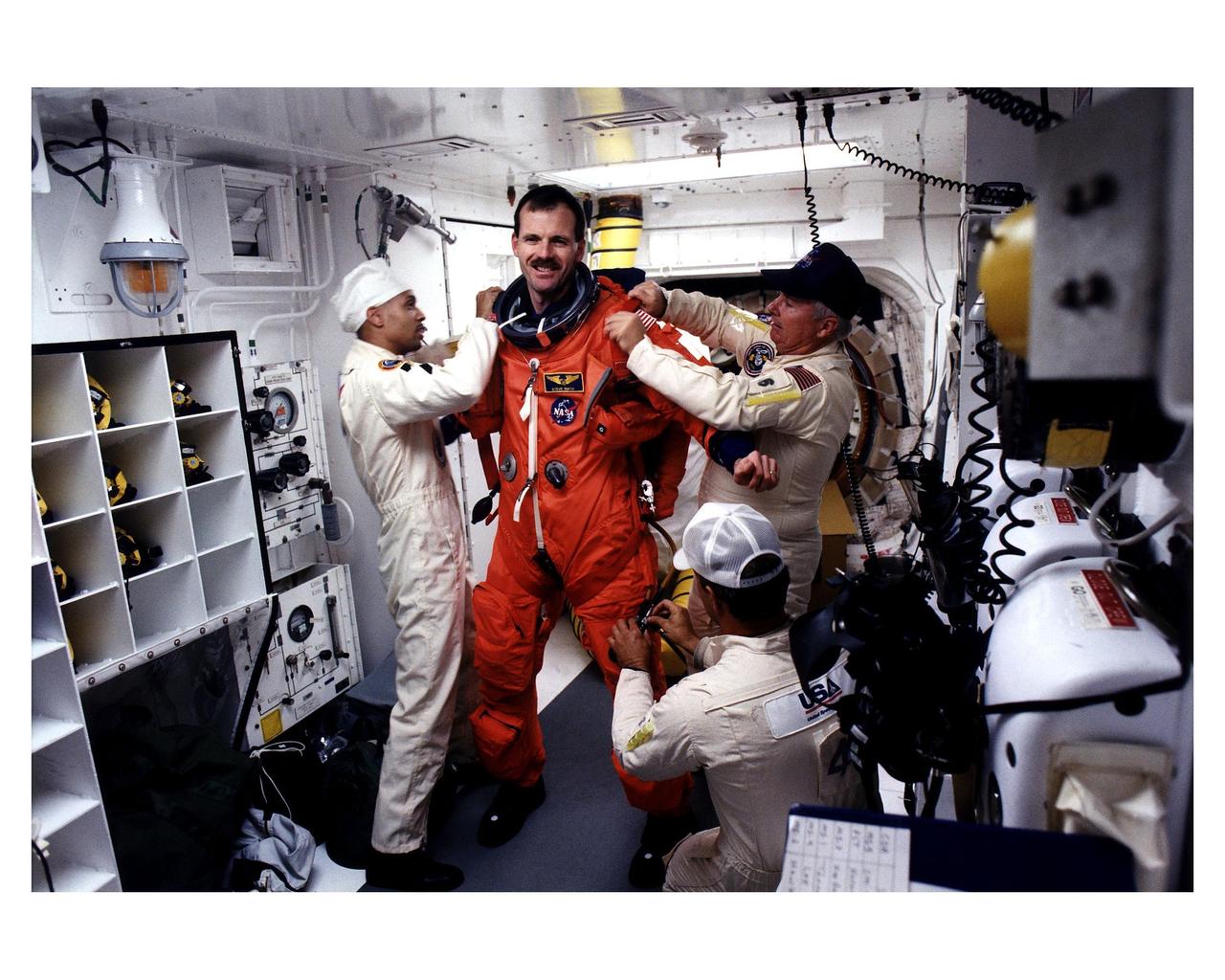
STS-82 Mission Specialist Steven L. Smith prepares to enter the Space Shuttle Discovery at Launch Pad 39A, with the assistance of white room closeout crew members Dave Law, in front; Carlous Gillis, at left; and James Davis
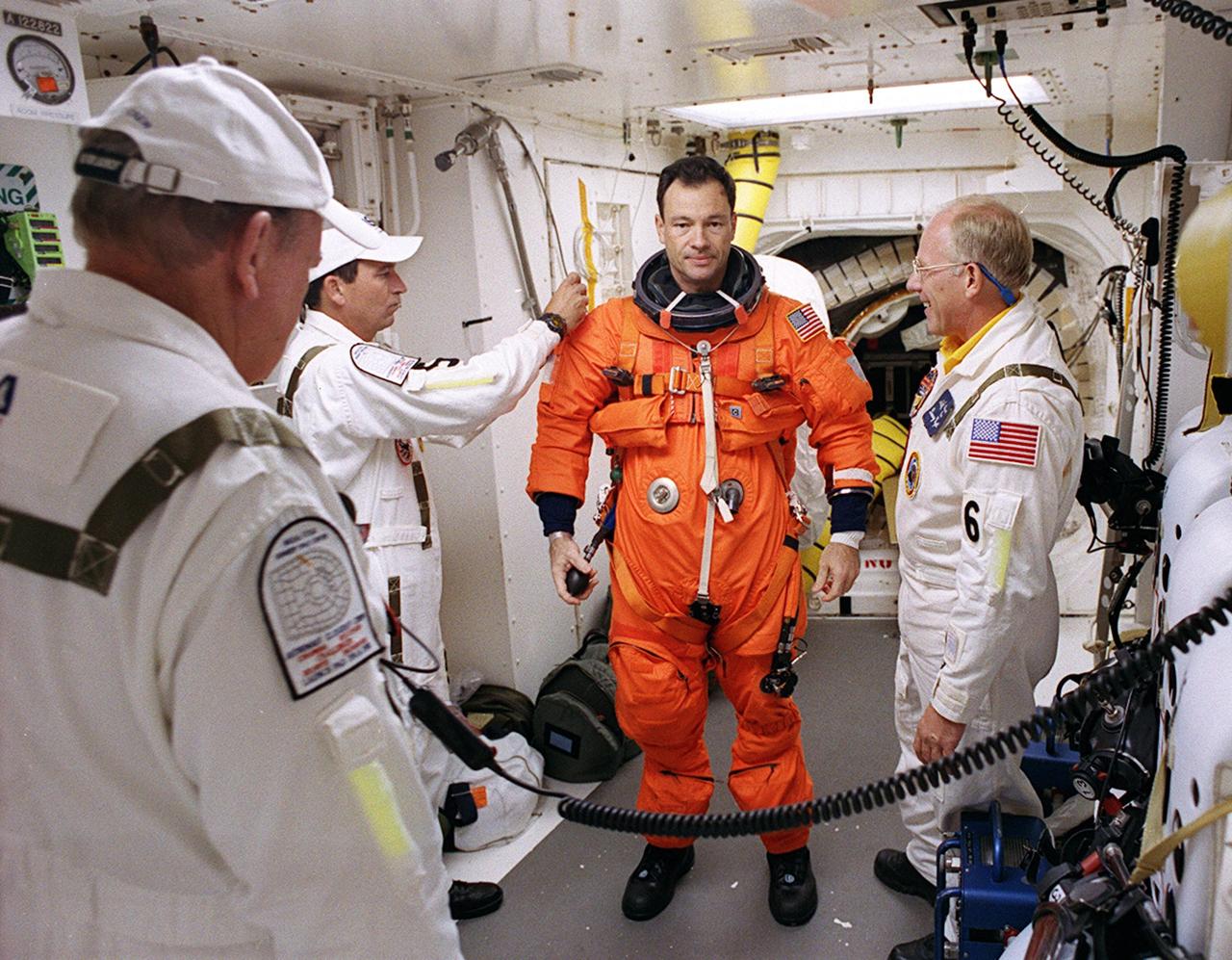
KENNEDY SPACE CENTER, FLA. -- In the White Room on Launch Pad 39A, STS-113 Mission Specialist Michael Lopez-Alegria is helped with his launch and entry suit before entering Space Shuttle Endeavour. Closeout Crew members helping are (from left) Rick Welty, United Space Alliance Vehicle Closeout chief, Bobby Wright, USA mechanical technician, and Danny Wyatt, NASA Quality Assurance specialist. The launch will carry the Expedition 6 crew to the Station and return the Expedition 5 crew to Earth. The major objective of the mission is delivery of the Port 1 (P1) Integrated Truss Assembly, which will be attached to the port side of the S0 truss. Three spacewalks are planned to install and activate the truss and its associated equipment. Launch of Space Shuttle Endeavour on mission STS-113 is scheduled for Nov. 23 at 7:50 p.m. EST.

KENNEDY SPACE CENTER, FLA. -- In the White Room on Launch Pad 39A, Expedition 6 flight engineer Nikolai Budarin is helped with his launch and entry suit before entering Space Shuttle Endeavour. Closeout Crew members helping are (left) Rene Arriens, United Space Alliance mechanical technician, (right) Danny Wyatt, NASA Quality Assurance specialist, and (background) Rick Welty, United Space Alliance Vehicle Closeout chief. The launch will carry the Expedition 6 crew to the Station and return the Expedition 5 crew to Earth. The major objective of the mission is delivery of the Port 1 (P1) Integrated Truss Assembly, which will be attached to the port side of the S0 truss. Three spacewalks are planned to install and activate the truss and its associated equipment. Launch of Space Shuttle Endeavour on mission STS-113 is scheduled for Nov. 23 at 7:50 p.m. EST.
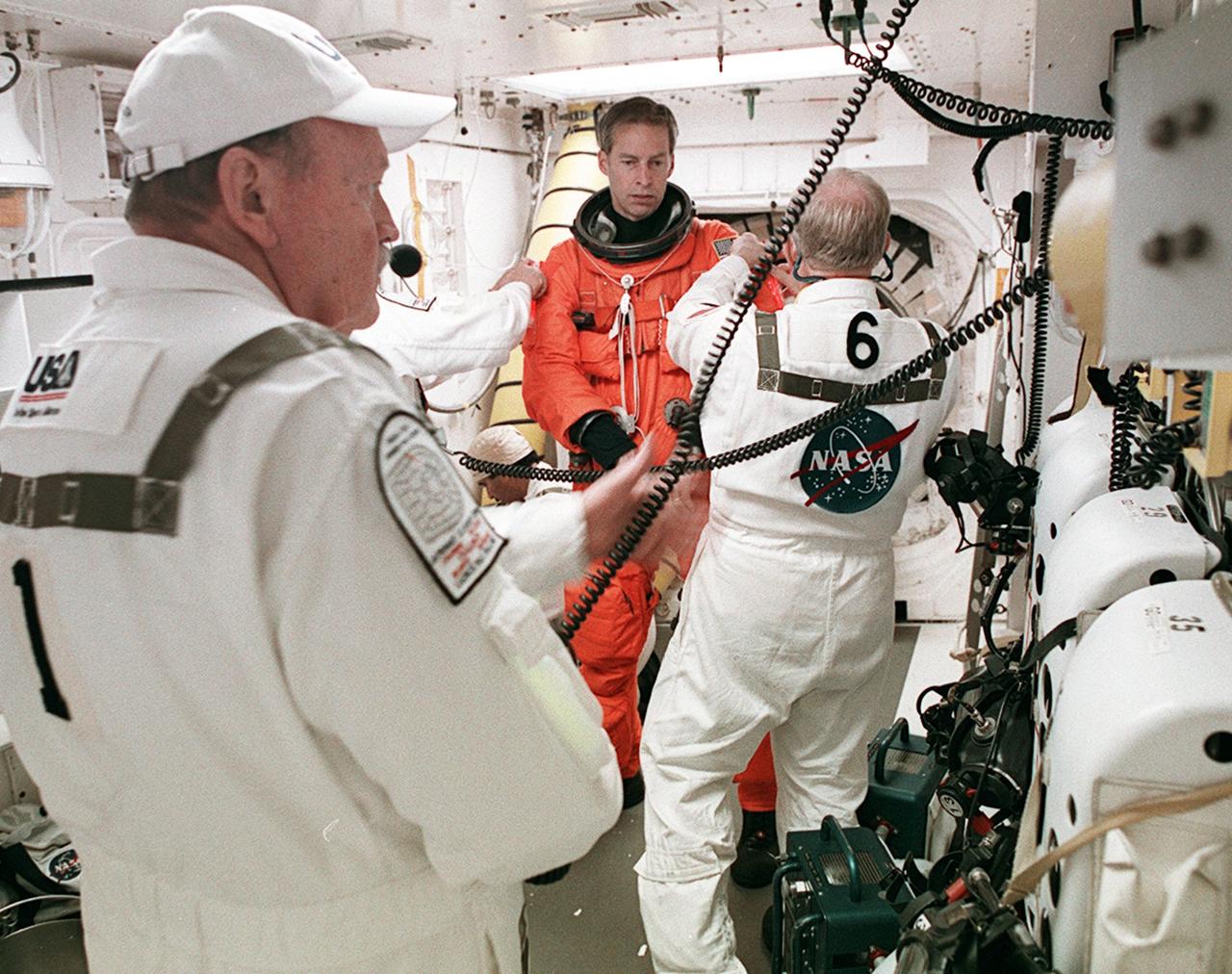
KENNEDY SPACE CENTER, FLA. - In the White Room on Launch Pad 39A, STS-113 Commander Jim Wetherbee is helped with his launch and entry suit before entering Space Shuttle Endeavour. Closeout Crew members helping are (left) Rick Welty, United Space Alliance Vehicle Closeout chief, and (right) Danny Wyatt, NASA Quality Assurance specialist. The launch will carry the Expedition 6 crew to the Station and return the Expedition 5 crew to Earth. The major objective of the mission is delivery of the Port 1 (P1) Integrated Truss Assembly, which will be attached to the port side of the S0 truss. Three spacewalks are planned to install and activate the truss and its associated equipment. Launch of Space Shuttle Endeavour on mission STS-113 is scheduled for Nov. 23 at 7:50 p.m. EST.
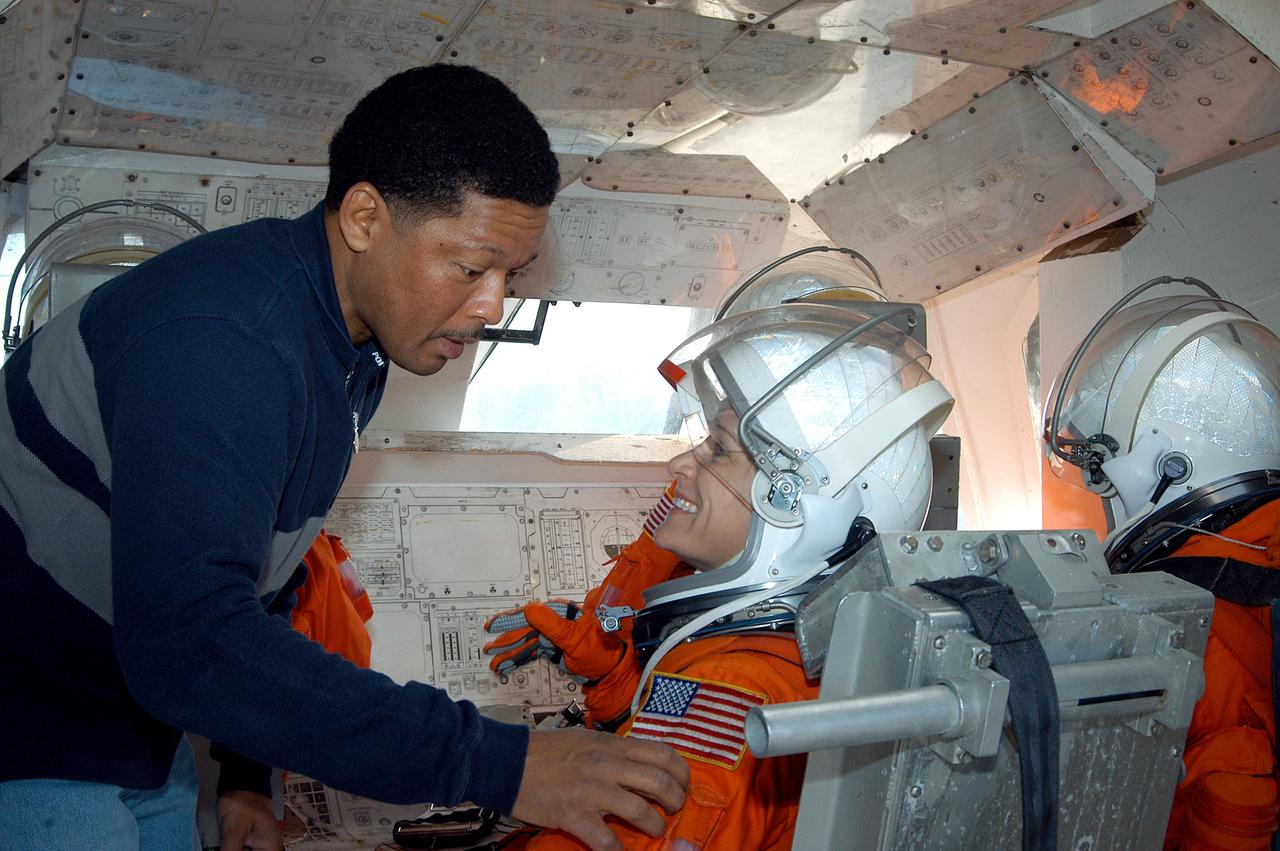
KENNEDY SPACE CENTER, FLA. - Volunteers from the KSC Fire-Rescue team dressed in launch and entry suits settle into seats in an orbiter crew compartment mock-up under the guidance of George Brittingham, USA suit technician on the Closeout Crew. Brittingham is helping Catherine Di Biase, a nurse with Bionetics Life Sciences. They are all taking part in a “Mode VII” emergency landing simulation at Kennedy Space Center. The purpose is to exercise emergency preparedness personnel, equipment and facilities in rescuing astronauts from a downed orbiter and providing immediate medical attention. This simulation presents an orbiter that has crashed short of the Shuttle Landing Facility in a wooded area 2-1/2 miles south of Runway 33. Emergency crews will respond to the volunteer “astronauts” simulating various injuries. Rescuers must remove the crew, provide triage and transport to hospitals those who need further treatment. Local hospitals are participating in the exercise.
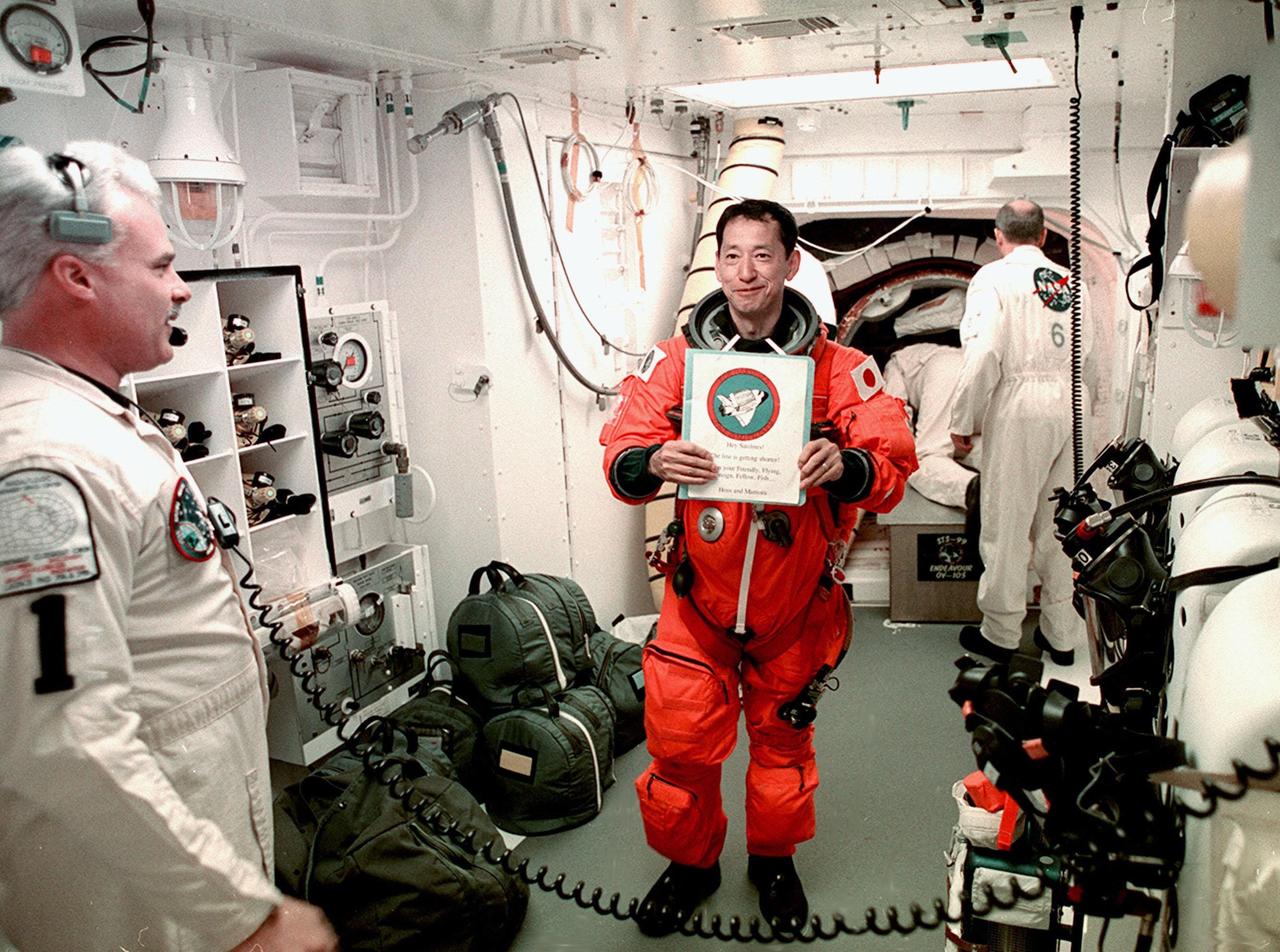
STS-99 Mission Specialist Mamoru Mohri of Japan holds a memento from friends before entering orbiter Endeavour. With him are members of the White Room closeout crew, Chris Meinert (left), closeout chief, and Jack Burritt (background), Quality Assurance specialist. The White Room is an environmental chamber at the end of the orbiter access arm, on the fixed service structure, that provides entry to the orbiter crew compartment. STS-99, known as the Shuttle Radar Topography Mission (SRTM), will chart a new course to produce unrivaled 3-D images of the Earth's surface. The result of the Shuttle Radar Topography Mission could be close to 1 trillion measurements of the Earth's topography. Scheduled for liftoff at 12:30 p.m. EST, the mission is expected to last 11days, with Endeavour landing at KSC Tuesday, Feb. 22, at 4:36 p.m. EST. This is the 97th Shuttle flight and 14th for Shuttle Endeavour
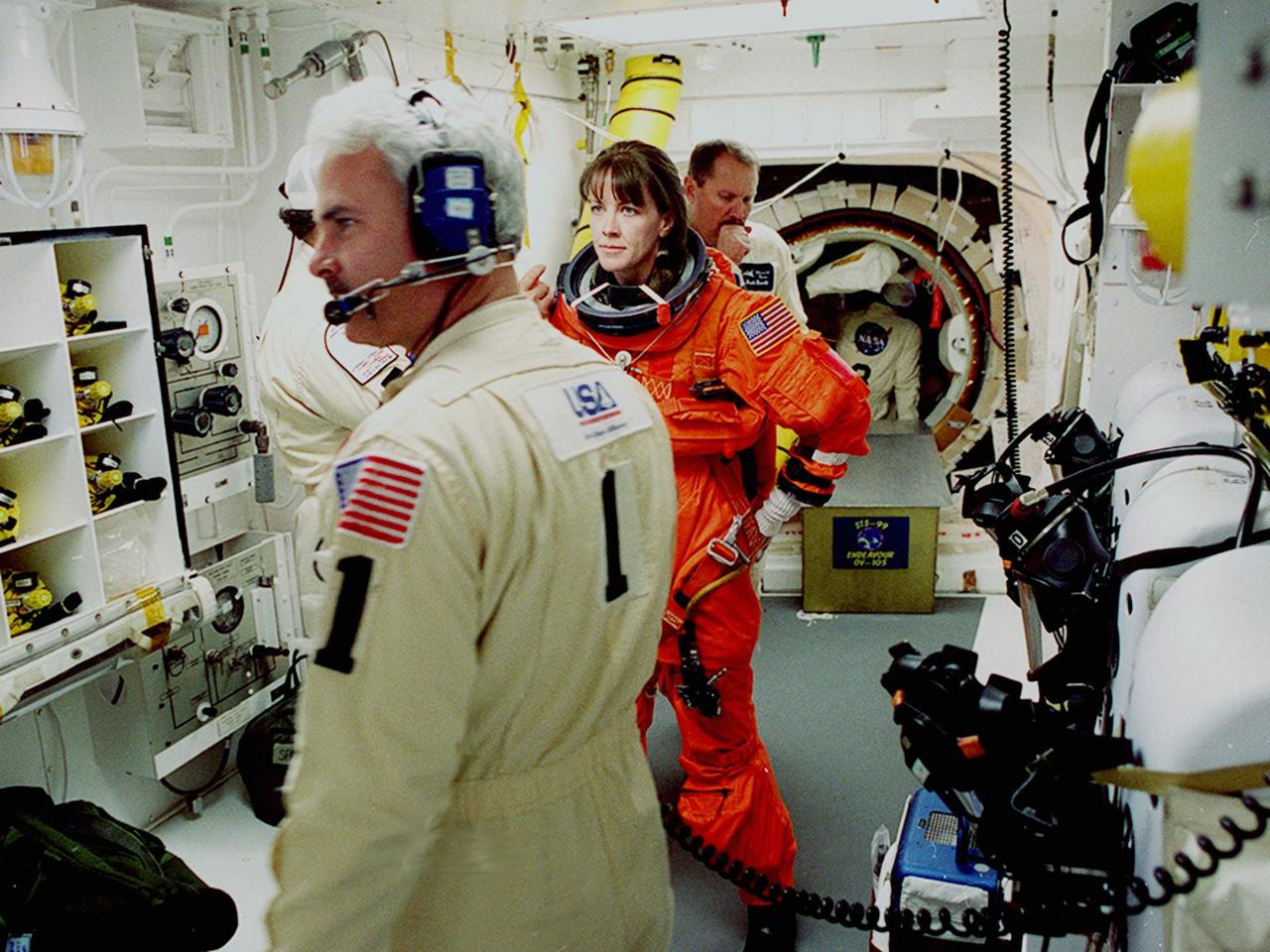
Before entering the orbiter Endeavour, STS-99 Mission Specialist Janet Kavandi is helped with final suit preparations by members of the White Room closeout crew Travis Thompson (hidden), mechanical technician, and Chris Meinert, closeout chief. The White Room is an environmental chamber at the end of the orbiter access arm, on the fixed service structure, that provides entry to the orbiter crew compartment. STS-99, known as the Shuttle Radar Topography Mission (SRTM), will chart a new course to produce unrivaled 3-D images of the Earth's surface. The result of the Shuttle Radar Topography Mission could be close to 1 trillion measurements of the Earth's topography. Scheduled for liftoff at 12:30 p.m. EST, the mission is expected to last 11days, with Endeavour landing at KSC Tuesday, Feb. 22, at 4:36 p.m. EST. This is the 97th Shuttle flight and 14th for Shuttle Endeavour
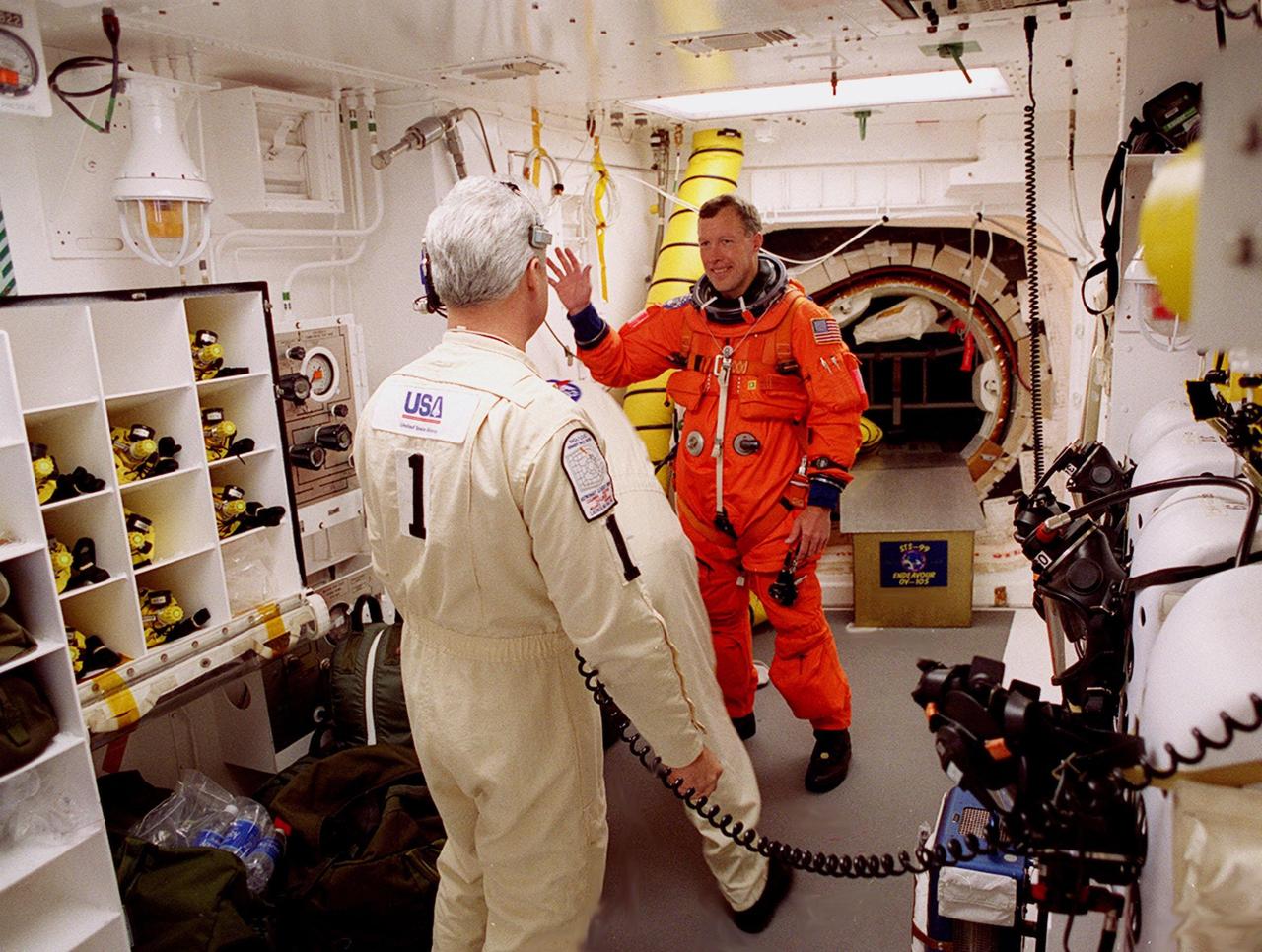
STS-99 Pilot Dominic Gorie appears to wave while the closeout crew in the White Room checks his launch and entry suit before he enters orbiter Endeavour. In the foreground is Chris Meinert, closeout chief. The White Room is an environmental chamber at the end of the orbiter access arm, on the fixed service structure, that provides entry to the orbiter crew compartment. STS-99, known as the Shuttle Radar Topography Mission (SRTM), will chart a new course to produce unrivaled 3-D images of the Earth's surface. The result of the Shuttle Radar Topography Mission could be close to 1 trillion measurements of the Earth's topography. Scheduled for liftoff at 12:30 p.m. EST, the mission is expected to last 11days, with Endeavour landing at KSC Tuesday, Feb. 22, at 4:36 p.m. EST. This is the 97th Shuttle flight and 14th for Shuttle Endeavour
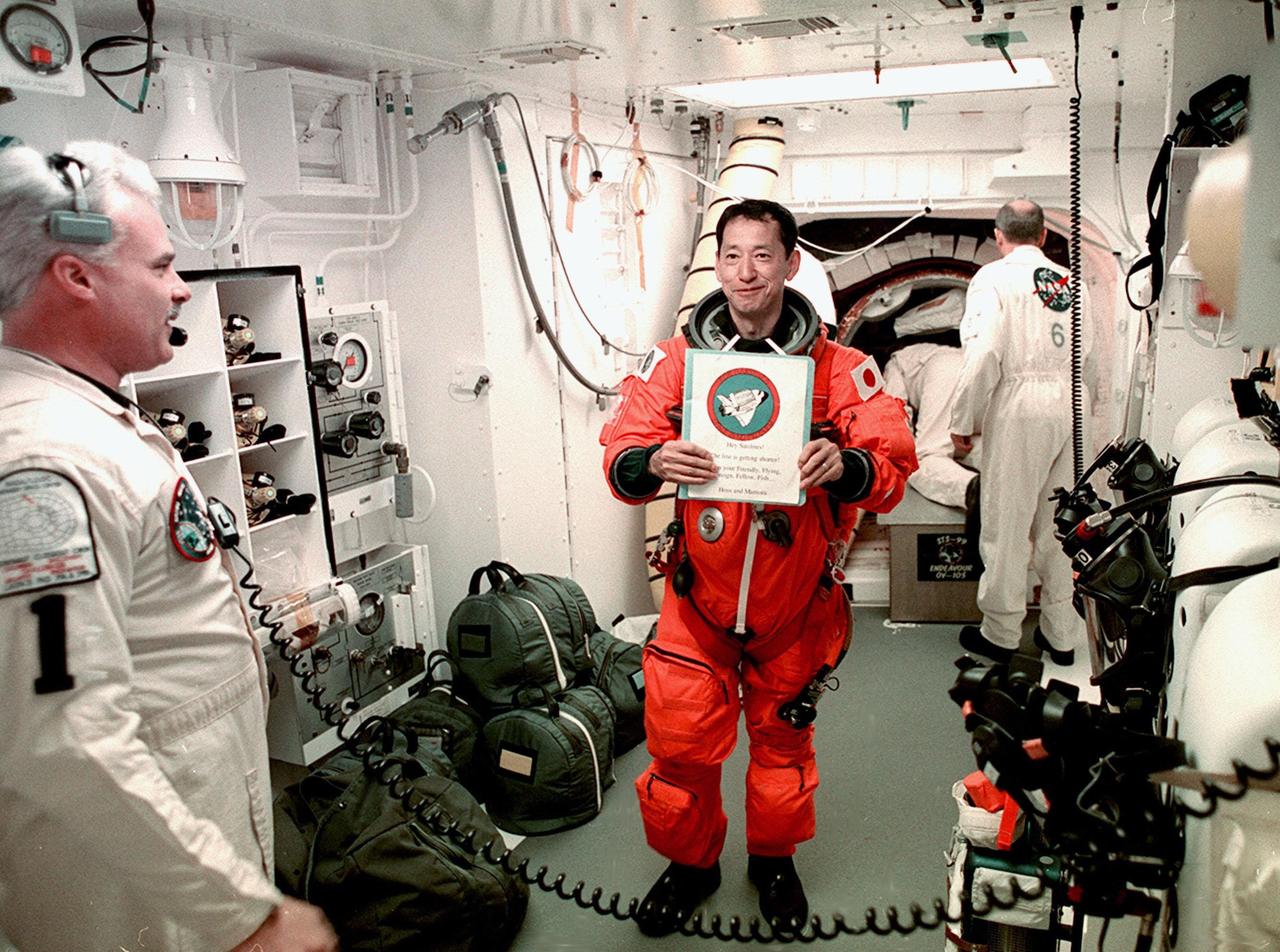
STS-99 Mission Specialist Mamoru Mohri of Japan holds a memento from friends before entering orbiter Endeavour. With him are members of the White Room closeout crew, Chris Meinert (left), closeout chief, and Jack Burritt (background), Quality Assurance specialist. The White Room is an environmental chamber at the end of the orbiter access arm, on the fixed service structure, that provides entry to the orbiter crew compartment. STS-99, known as the Shuttle Radar Topography Mission (SRTM), will chart a new course to produce unrivaled 3-D images of the Earth's surface. The result of the Shuttle Radar Topography Mission could be close to 1 trillion measurements of the Earth's topography. Scheduled for liftoff at 12:30 p.m. EST, the mission is expected to last 11days, with Endeavour landing at KSC Tuesday, Feb. 22, at 4:36 p.m. EST. This is the 97th Shuttle flight and 14th for Shuttle Endeavour
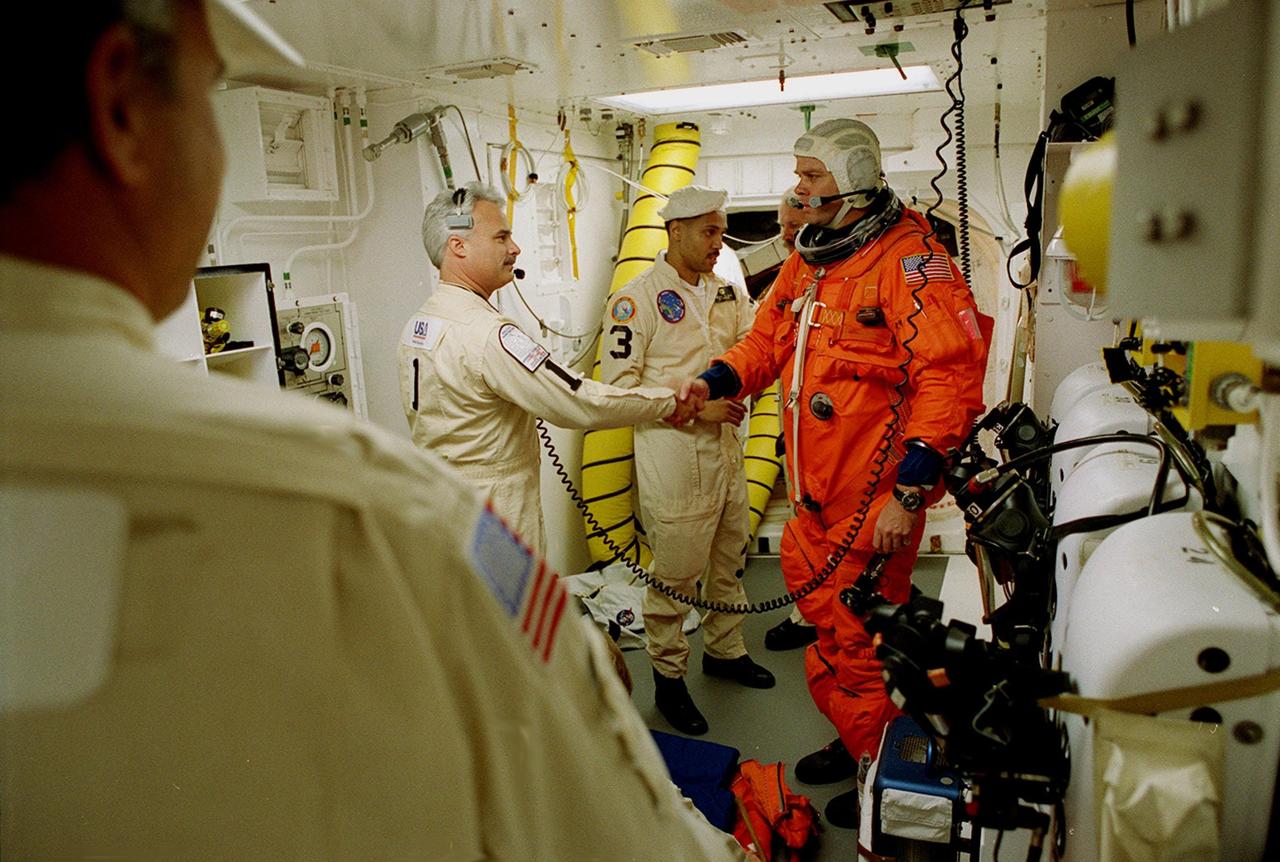
Before entering the orbiter Endeavour, STS-99 Commander Kevin Kregel shakes hands with Chris Meinert, closeout chief of the White Room closeout crew. In the background is Carlos Gillis, suit technician. The White Room is an environmental chamber at the end of the orbiter access arm, on the fixed service structure, that provides entry to the orbiter crew compartment. STS-99, known as the Shuttle Radar Topography Mission (SRTM), will chart a new course to produce unrivaled 3-D images of the Earth's surface. The result of the Shuttle Radar Topography Mission could be close to 1 trillion measurements of the Earth's topography. Scheduled for liftoff at 12:30 p.m. EST, the mission is expected to last 11days, with Endeavour landing at KSC Tuesday, Feb. 22, at 4:36 p.m. EST. This is the 97th Shuttle flight and 14th for Shuttle Endeav

KENNEDY SPACE CENTER, FLA. -- STS-103 Mission Specialist C. Michael Foale (Ph.D.), in his orange launch and entry suit, is assisted by closeout crew members in the White Room before entering the orbiter. At left is United Space Alliance (USA) Orbiter Vehicle Closeout Chief Travis Thompson and USA Mechanical Technician Vinny Defranzo. The White Room is an environmental chamber at the end of the orbiter access arm on the fixed service structure. It provides entry to the orbiter crew compartment. The mission, to service the Hubble Space Telescope, is scheduled to lift off at 7:50 p.m. EST Dec. 19 on mission STS-103, servicing the Hubble Space Telescope. Objectives for the nearly eight-day mission include replacing gyroscopes and an old computer, installing another solid state recorder, and replacing damaged insulation in the telescope. Discovery is expected to land at KSC Monday, Dec. 27, at about 5:24 p.m. EST
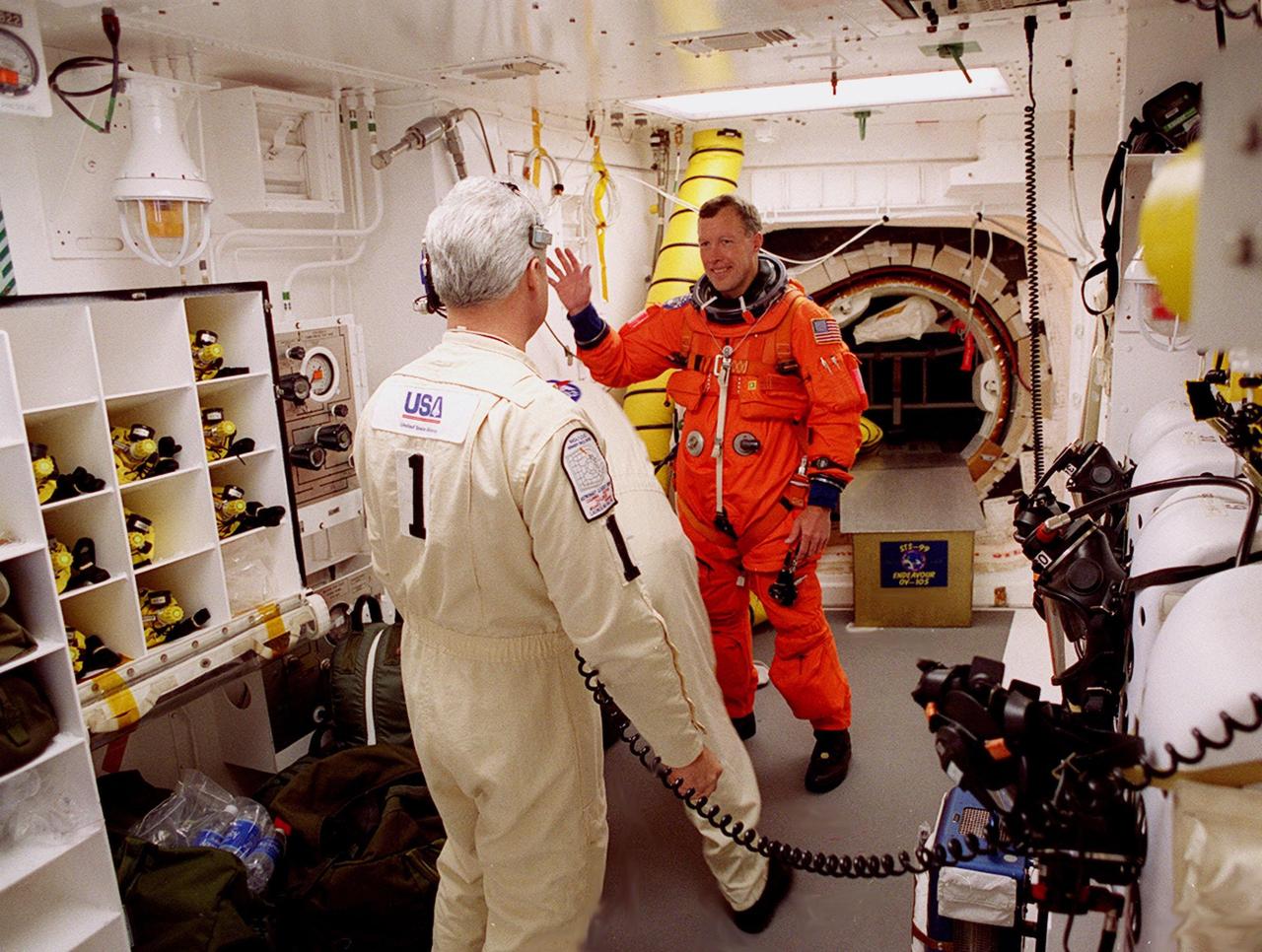
STS-99 Pilot Dominic Gorie appears to wave while the closeout crew in the White Room checks his launch and entry suit before he enters orbiter Endeavour. In the foreground is Chris Meinert, closeout chief. The White Room is an environmental chamber at the end of the orbiter access arm, on the fixed service structure, that provides entry to the orbiter crew compartment. STS-99, known as the Shuttle Radar Topography Mission (SRTM), will chart a new course to produce unrivaled 3-D images of the Earth's surface. The result of the Shuttle Radar Topography Mission could be close to 1 trillion measurements of the Earth's topography. Scheduled for liftoff at 12:30 p.m. EST, the mission is expected to last 11days, with Endeavour landing at KSC Tuesday, Feb. 22, at 4:36 p.m. EST. This is the 97th Shuttle flight and 14th for Shuttle Endeavour

jsc2011e002625 (01/11/2011)--- Training was performed at the Johnson Space Center to familiarize crew with emergency evacuation procedures from the shuttle system. Engineers at JSC (including Susana Tapia Harper & Alma Stephane Tapia) donned Advanced Crew Escape Space Suit System (ACES) suits while the astronaut crew practiced mock evacuations. NASA photo by James Blair

jsc2011e002624 (01/11/2011)--- Training was performed at the Johnson Space Center to familiarize crew with emergency evacuation procedures from the shuttle system. Engineers at JSC (including Susana Tapia Harper & Alma Stephane Tapia) donned Advanced Crew Escape Space Suit System (ACES) suits while the astronaut crew practiced mock evacuations. NASA photo by James Blair

jsc2011e002655 (01/11/2011)--- Training was performed at the Johnson Space Center to familiarize crew with emergency evacuation procedures from the shuttle system. Engineers at JSC (including Susana Tapia Harper & Alma Stephane Tapia) donned Advanced Crew Escape Space Suit System (ACES) suits while the astronaut crew practiced mock evacuations. NASA photo by James Blair
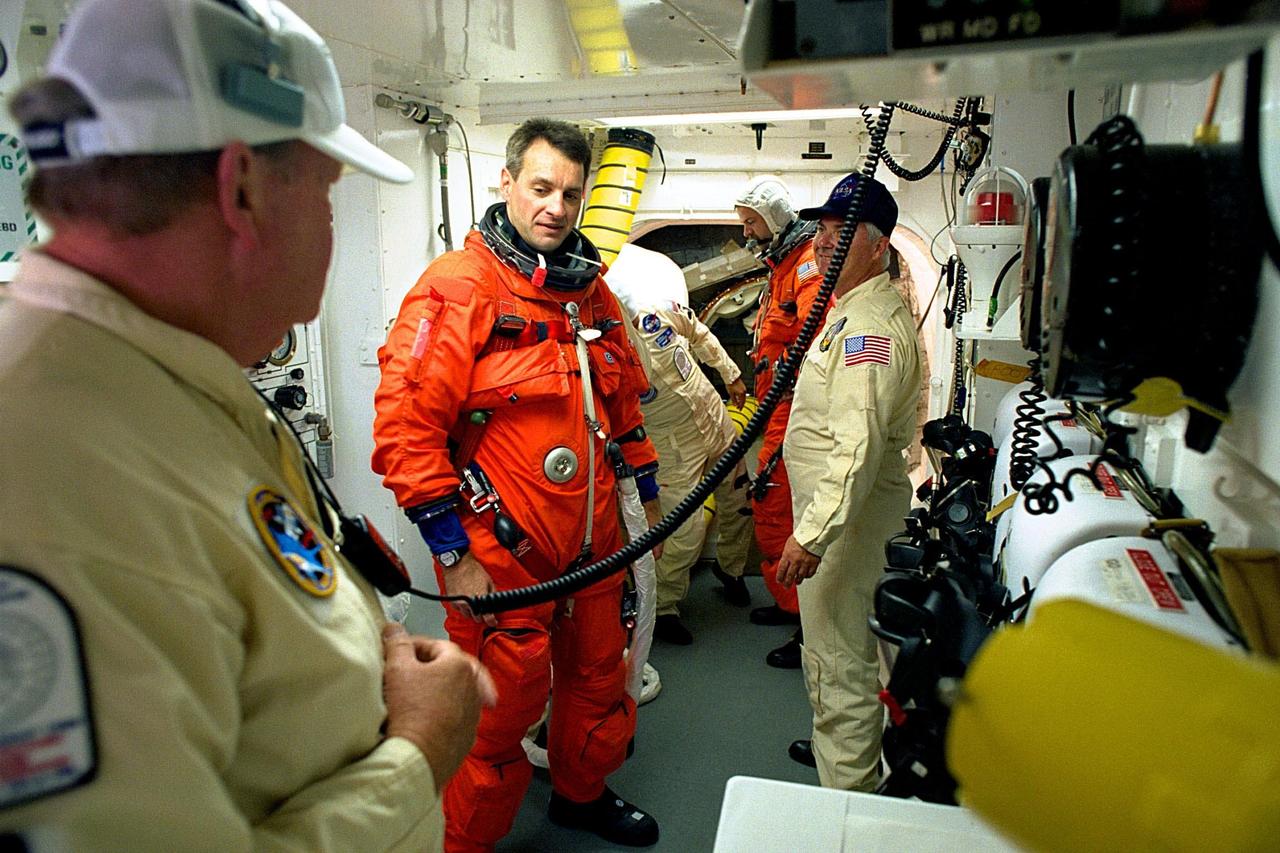
KENNEDY SPACE CENTER, FLA. -- STS-90 Mission Specialist Richard Linnehan, D.V.M., is assisted by NASA and United Space Alliance closeout crew members immediately preceding launch for the nearly 17-day Neurolab mission. Investigations during the Neurolab mission will focus on the effects of microgravity on the nervous system. Linnehan and six fellow crew members will shortly enter the orbiter at KSC's Launch Pad 39B, where the Space Shuttle Columbia will lift off during a launch window that opens at 2:19 p.m. EDT, April 17
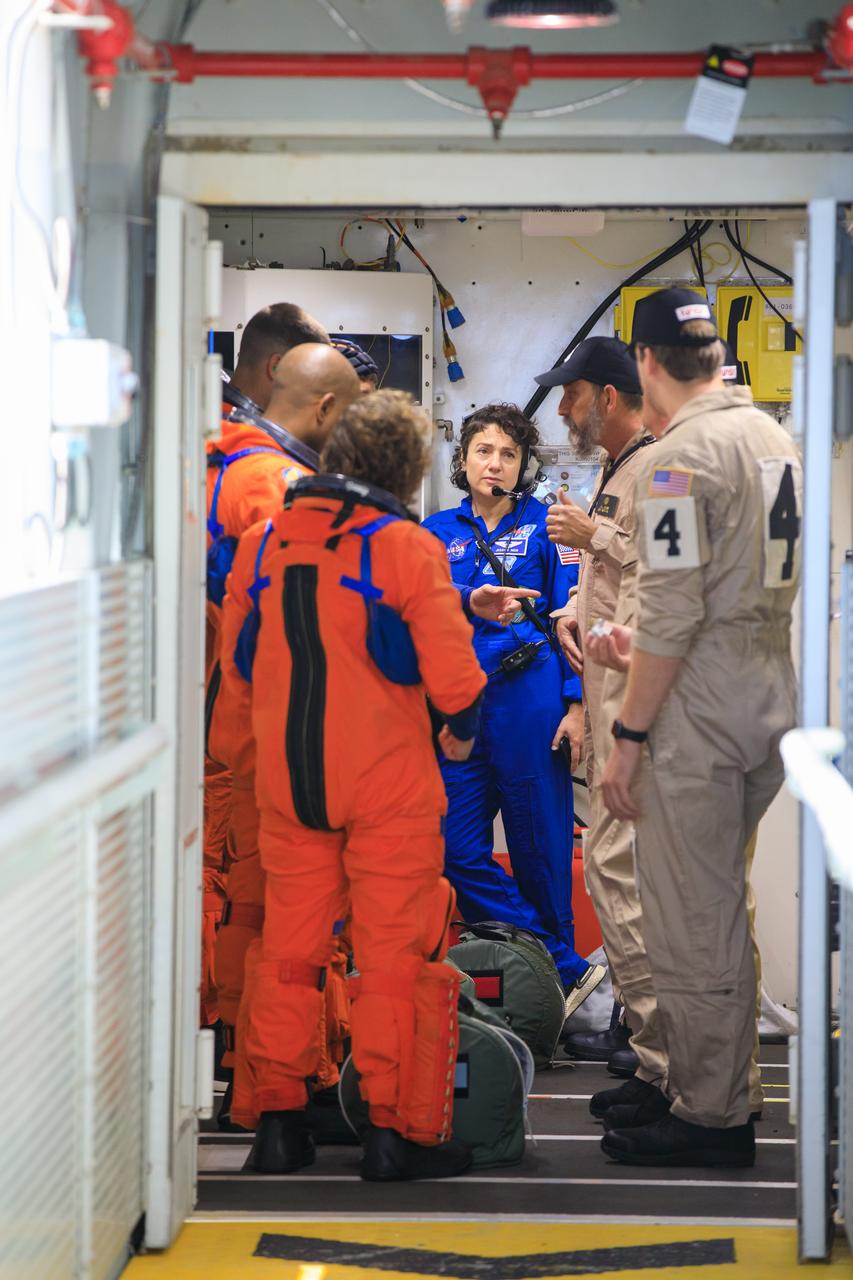
Artemis II NASA astronauts Reid Wiseman, Victor Glover, and Christina Koch, and CSA (Canadian Space Agency) astronaut Jeremy Hansen stand in the white room with fellow NASA astronaut Jessica Meir and closeout team members on the crew access arm of the mobile launcher at Launch Pad 39B as part of an integrated ground systems test at Kennedy Space Center in Florida on Wednesday, Sept. 20, 2023. The test ensures the ground systems team is ready to support the crew timeline on launch day.
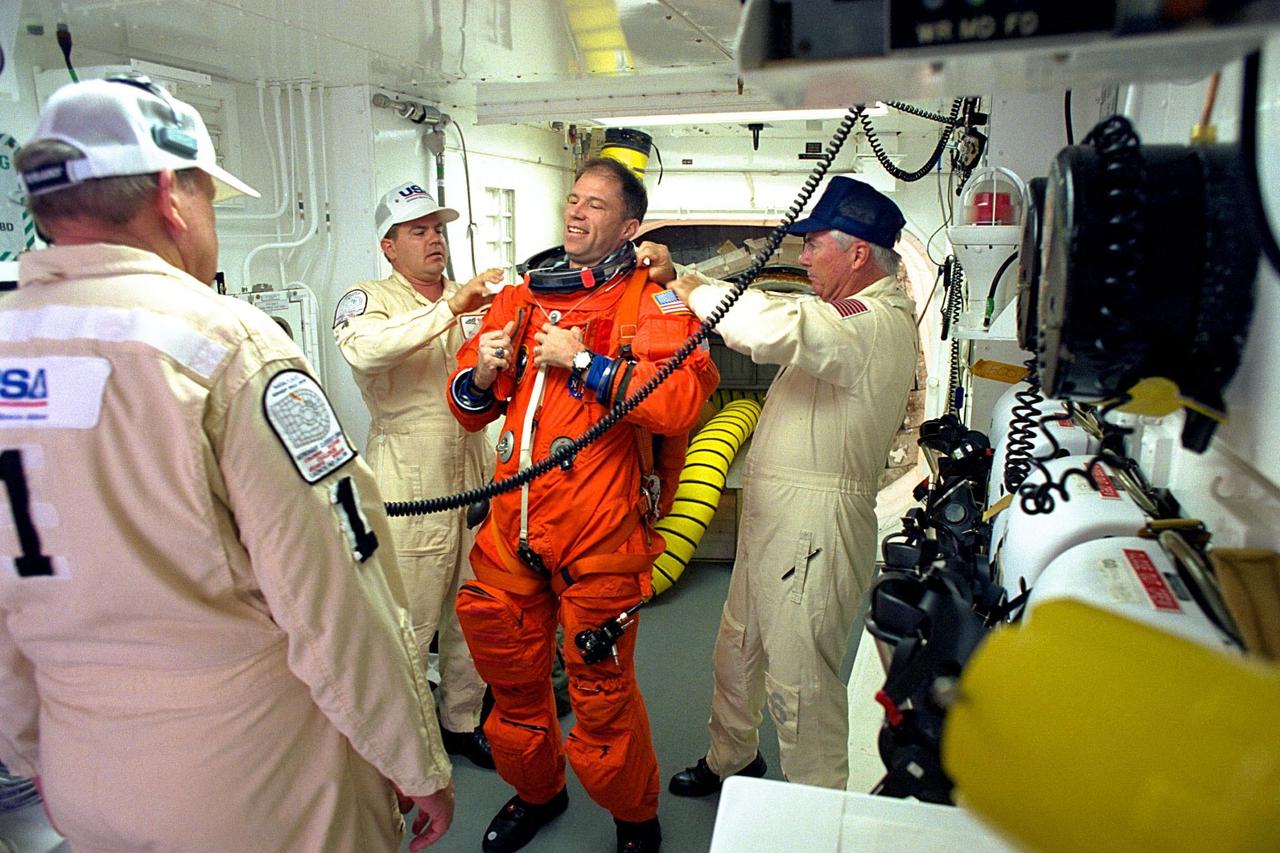
KENNEDY SPACE CENTER, FLA. -- STS-90 Commander Richard Searfoss is assisted by NASA and USA closeout crew members immediately preceding launch for the nearly 17-day Neurolab mission. Investigations during the Neurolab mission will focus on the effects of microgravity on the nervous system. Searfoss and his six fellow crew members will shortly enter the orbiter at KSC's Launch Pad 39B, where the Space Shuttle Columbia will lift off during a launch window that opens at 2:19 p.m. EDT, April 17
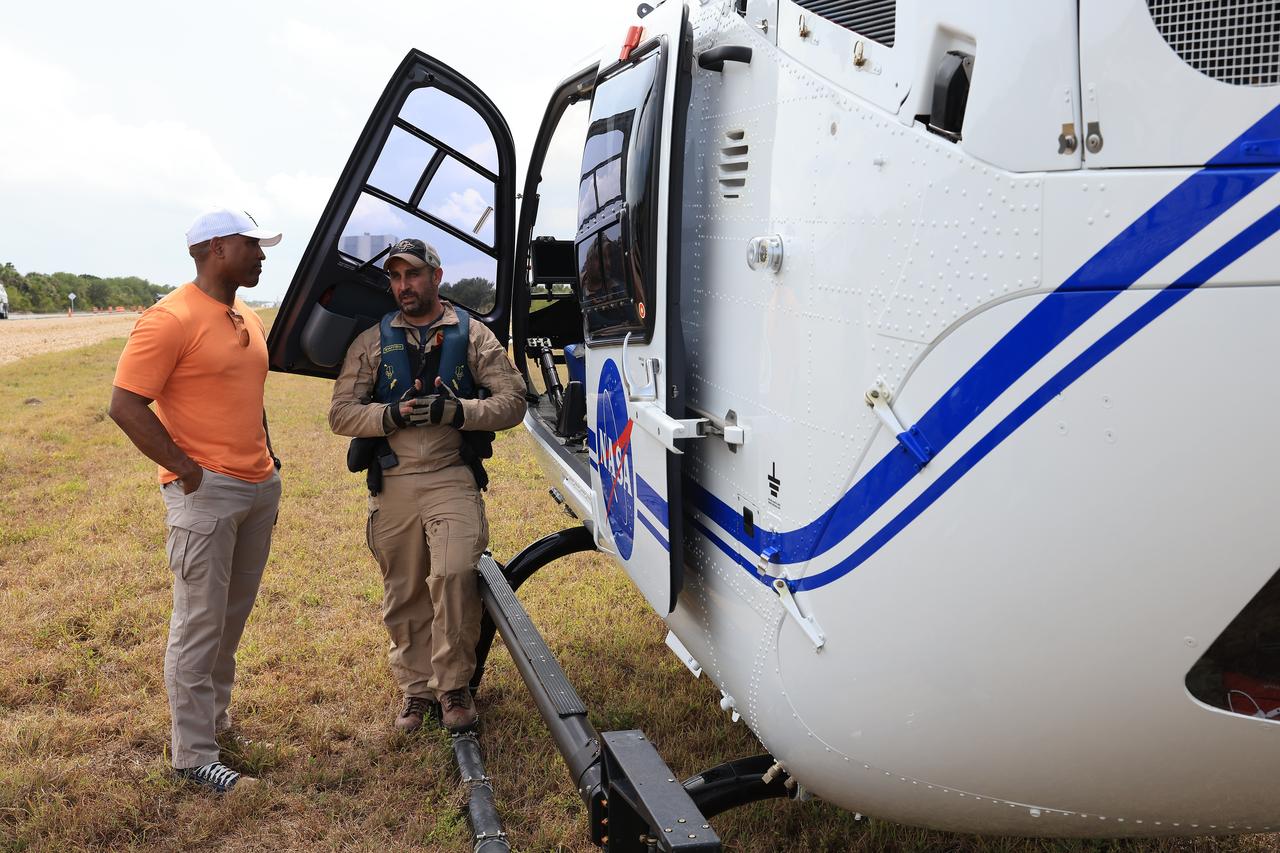
NASA astronaut Victor Glover (left) participates in emergency egress training with medical and fire-rescue personnel and teams near Launch Complex 39B at the agency’s Kennedy Space Center in Florida on Tuesday, May 6, 2025. During the training, Glover and fellow Artemis II crew members and backup members, along with members of the closeout crew, pad rescue team, and NASA’s Exploration Ground Systems Program practiced procedures in the event of an emergency at the launch pad.
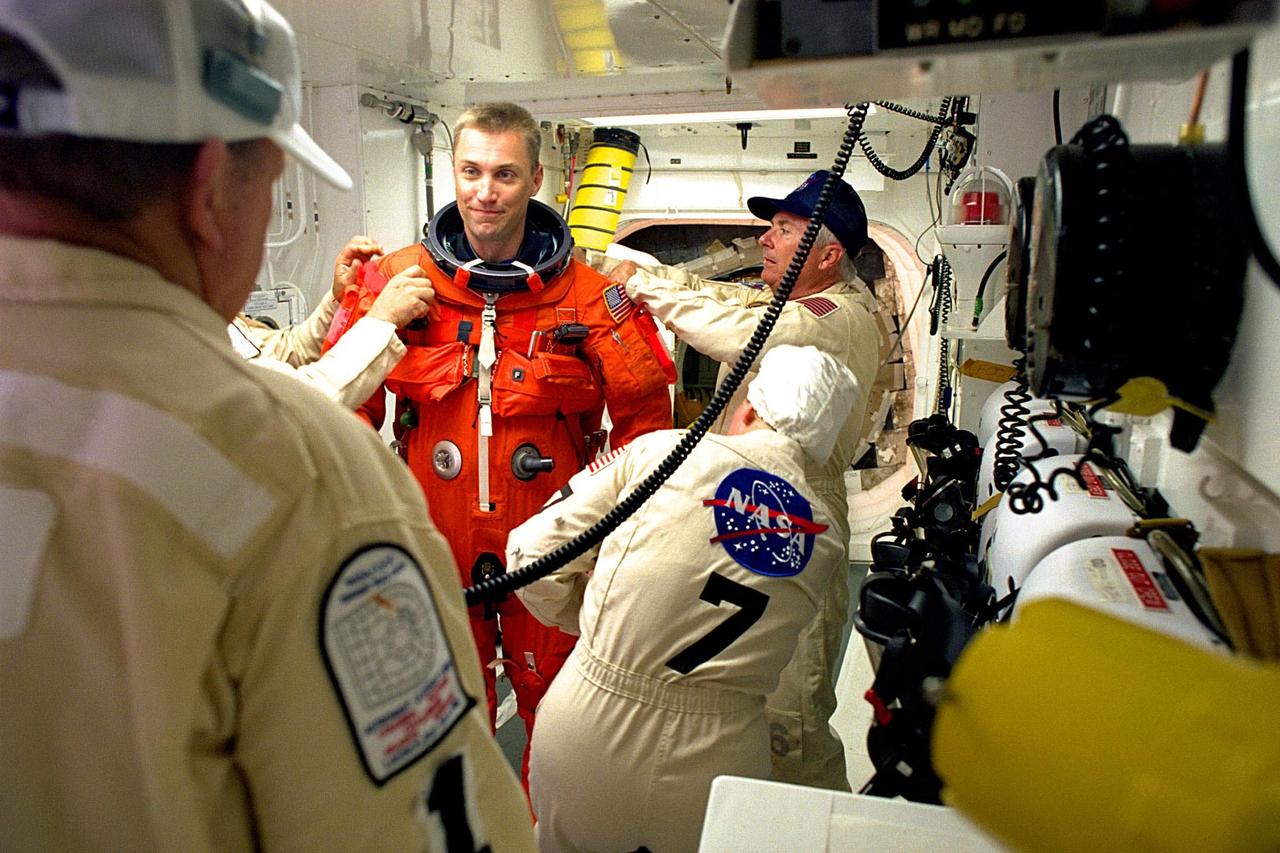
KENNEDY SPACE CENTER, FLA. -- STS-90 Payload Specialist James Pawelczyk, Ph.D., is assisted by NASA and United Space Alliance closeout crew members immediately preceding launch for the nearly 17-day Neurolab mission. Investigations during the Neurolab mission will focus on the effects of microgravity on the nervous system. Pawelczyk and six fellow crew members will shortly enter the orbiter at KSC's Launch Pad 39B, where the Space Shuttle Columbia will lift off during a launch window that opens at 2:19 p.m. EDT, April 17
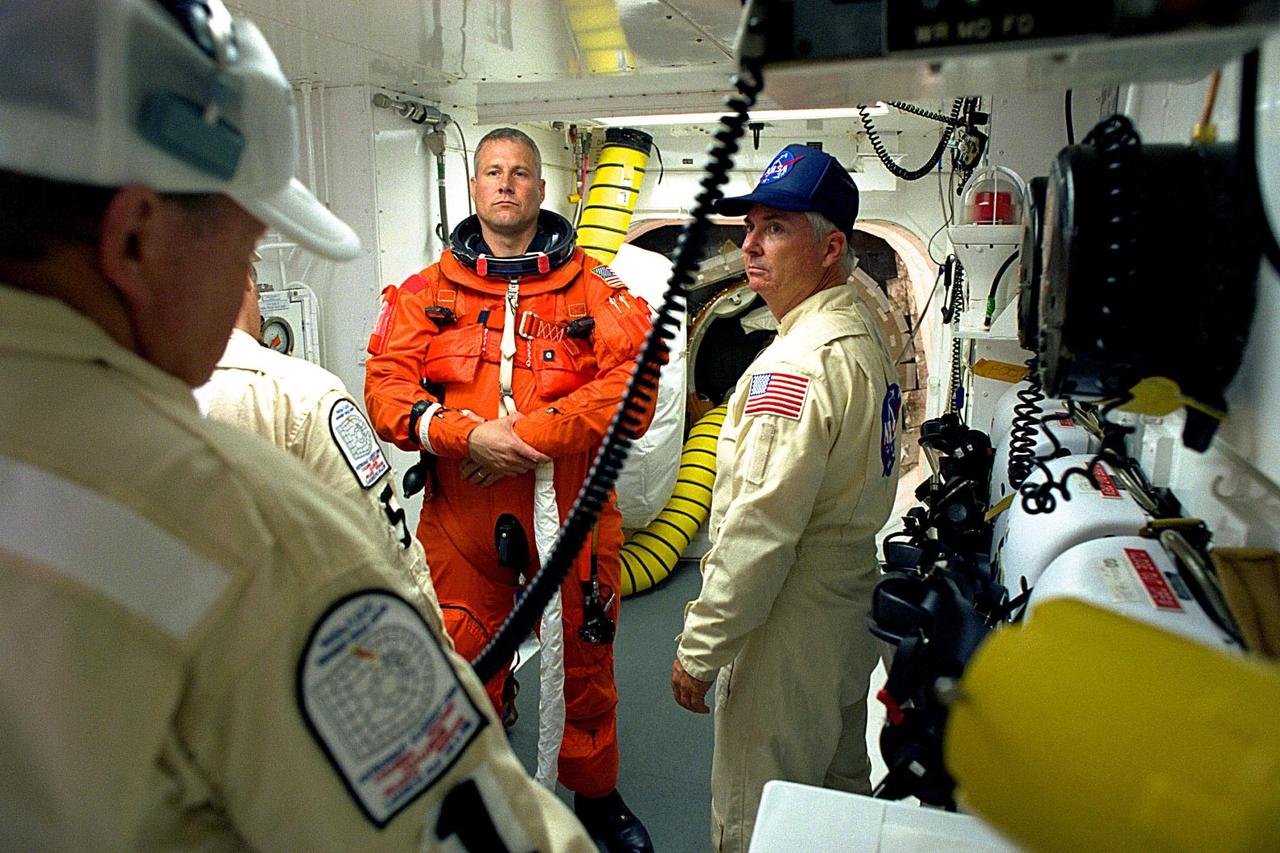
STS-90 Payload Specialist Jay Buckey, M.D., is assisted by NASA and USA closeout crew members immediately preceding launch for the nearly 17-day Neurolab mission. Investigations during the Neurolab mission will focus on the effects of microgravity on the nervous system. Buckey and six fellow crew members will shortly enter the orbiter at KSC's Launch Pad 39B, where the Space Shuttle Columbia will lift off during a launch window that opens at 2:19 p.m. EDT, April 17
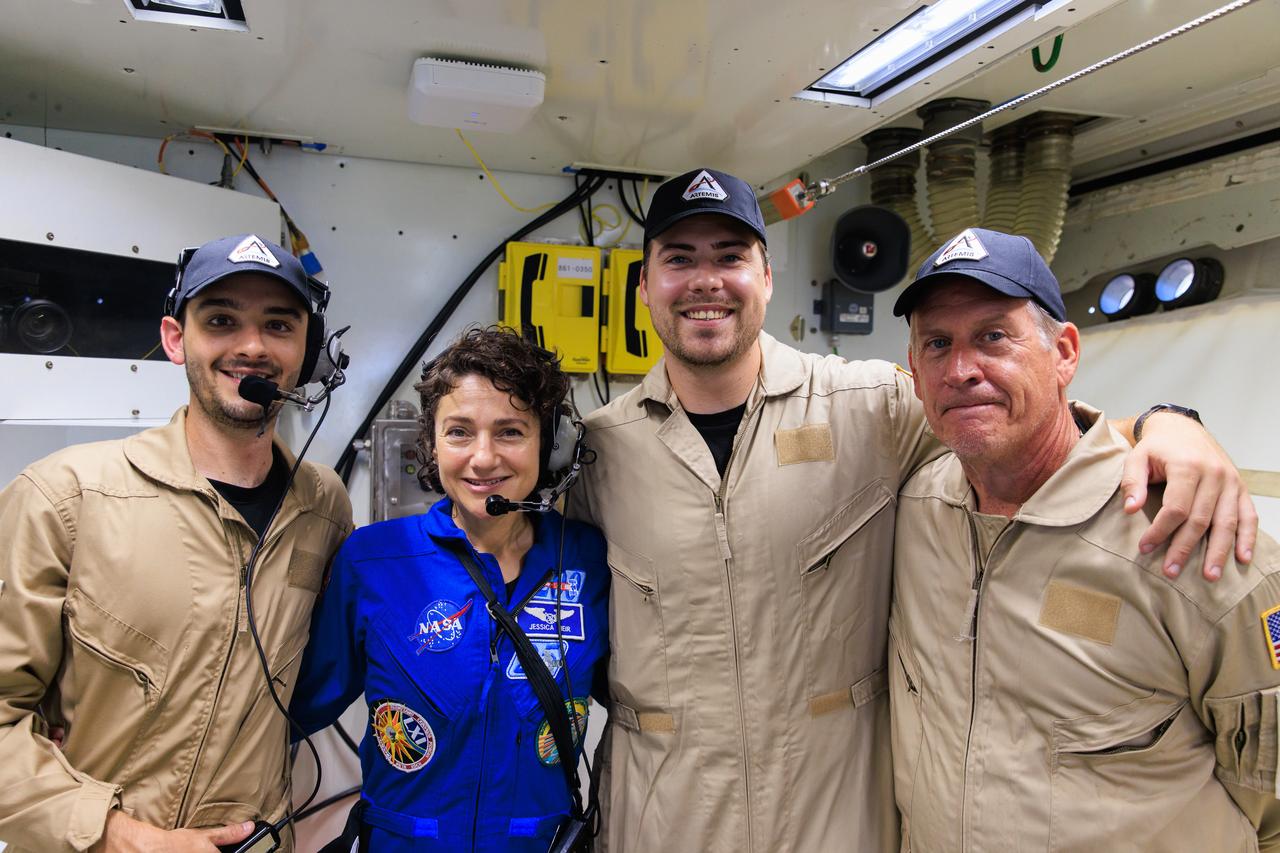
NASA astronaut Jessica Meir poses with members of the closeout team during in the white room on the crew access arm of the mobile launcher at Launch Pad 39B as part of an Artemis II integrated ground systems test at Kennedy Space Center in Florida on Wednesday, Sept. 20, 2023. The test ensures the ground systems team is ready to support the crew timeline on launch day.
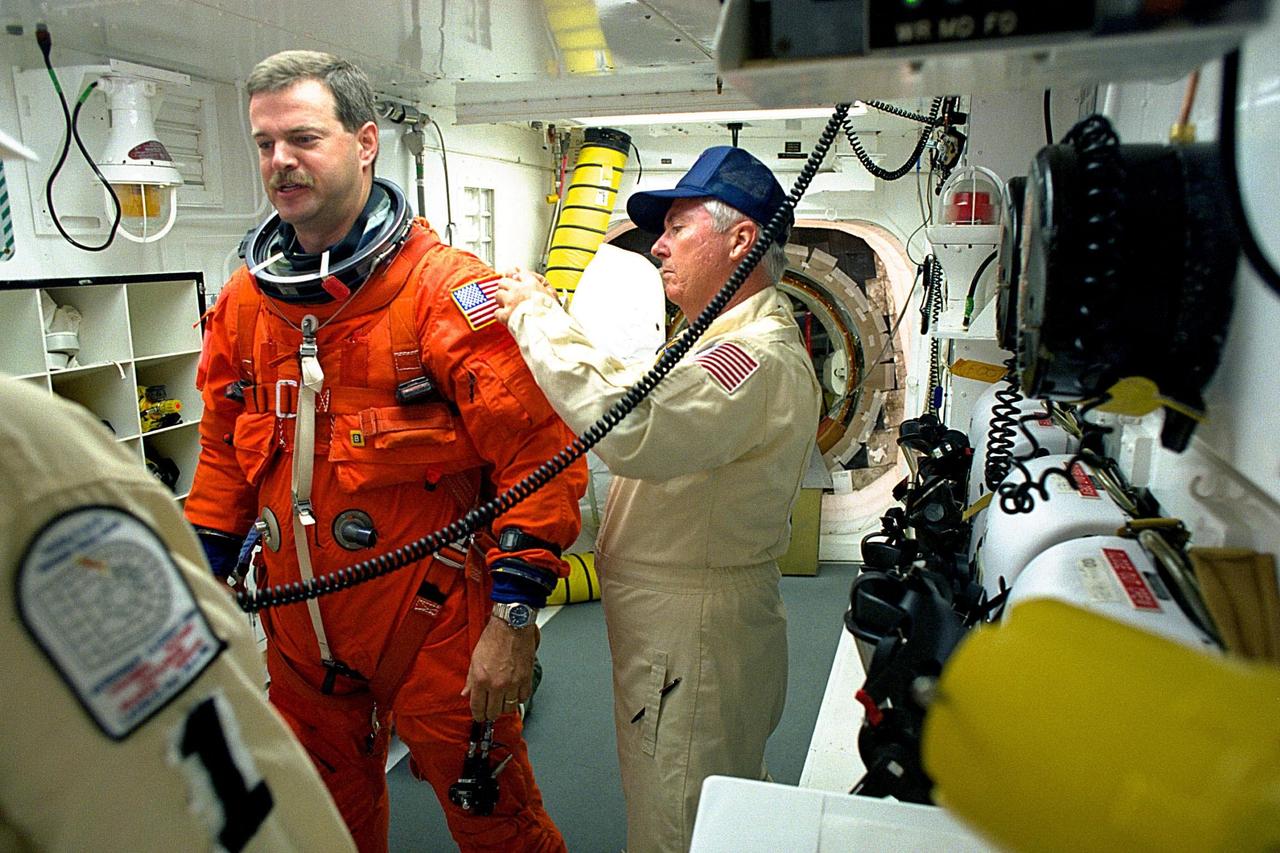
KENNEDY SPACE CENTER, FLA. -- STS-90 Pilot Scott Altman is assisted by NASA and United Space Alliance closeout crew members immediately preceding launch for the nearly 17-day Neurolab mission. Investigations during the Neurolab mission will focus on the effects of microgravity on the nervous system. Altman and six fellow crew members will shortly enter the orbiter at KSC's Launch Pad 39B, where the Space Shuttle Columbia will lift off during a launch window that opens at 2:19 p.m. EDT, April 17
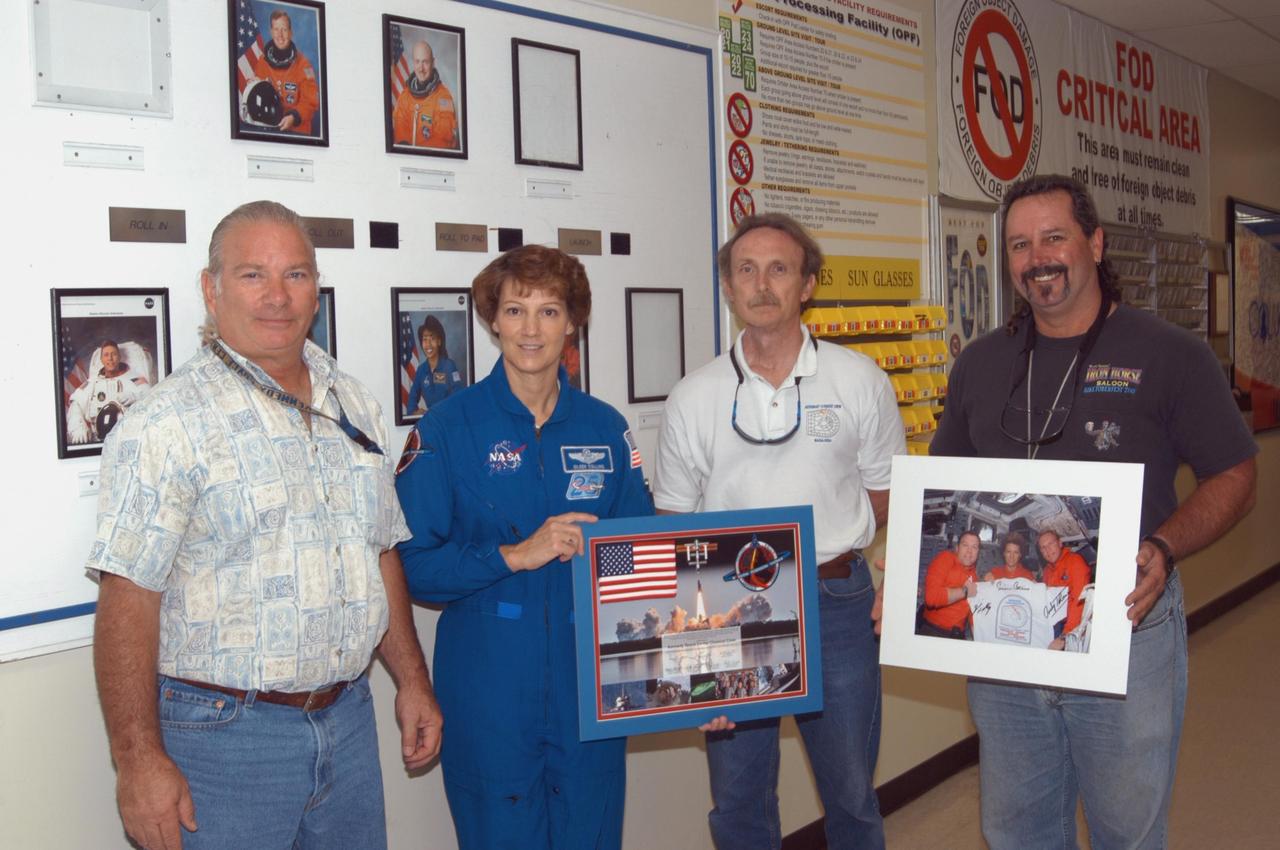
KENNEDY SPACE CENTER, FLA. - In Kennedy Space Center’s Orbiter Processing Facility Bay 3, STS-114 Mission Commander Eileen Collins poses with closeout crew members Paul Arnold, Al Schmidt and Tim Seymour after presented them the photos they are holding. Collins and other crew members are visiting several sites during their return to KSC. They have returned to Florida especially for a celebration in the KSC Visitor Complex of the successful return to flight mission that launched July 26 of this year.
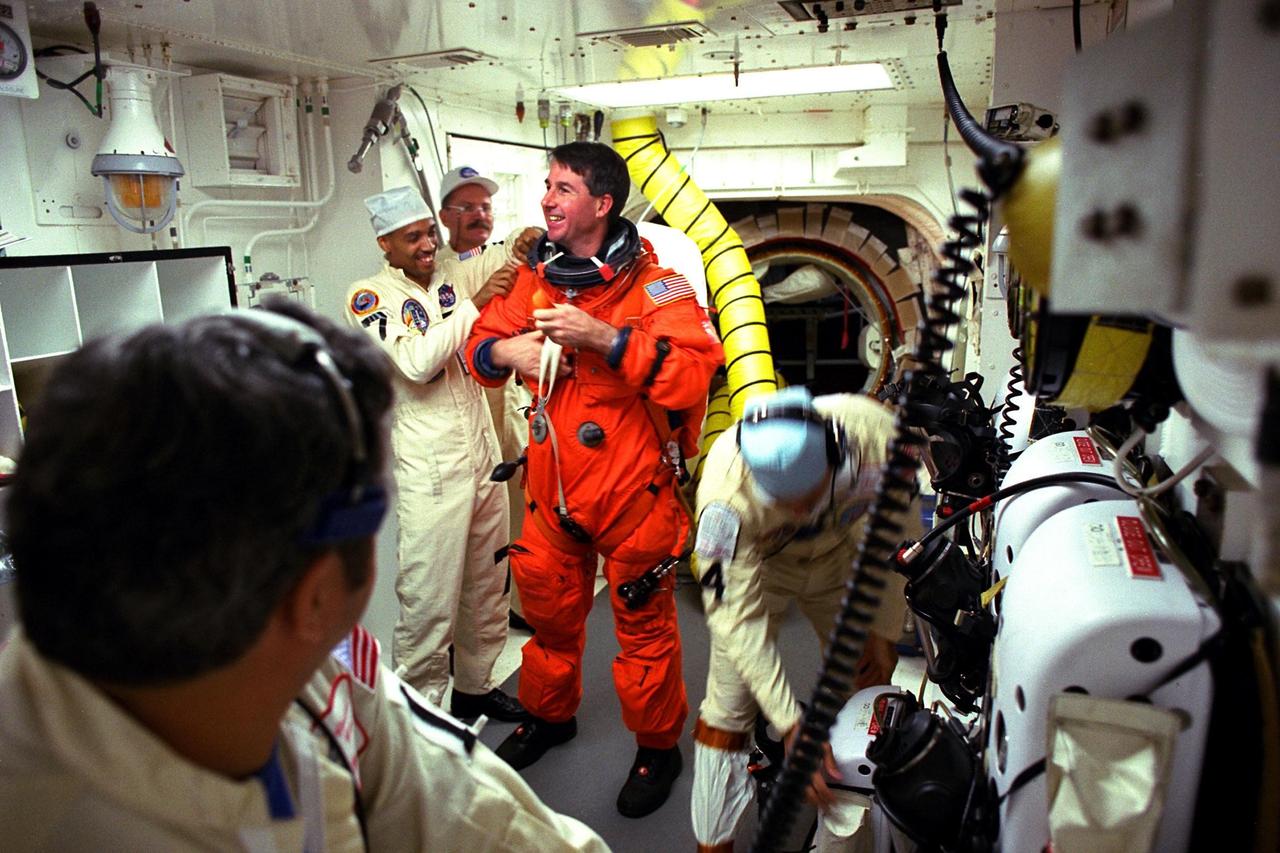
STS-85 Mission Specialist Stephen K. Robinson visits with white room closeout crew members Mike Mangione (left foreground), Carlos Gillis, Jack Burritt (center), and Chris Meinert at Launch Pad 39A as they assist him with his ascent/reentry flight suit before he enters the crew cabin of the Space Shuttle orbiter Discovery
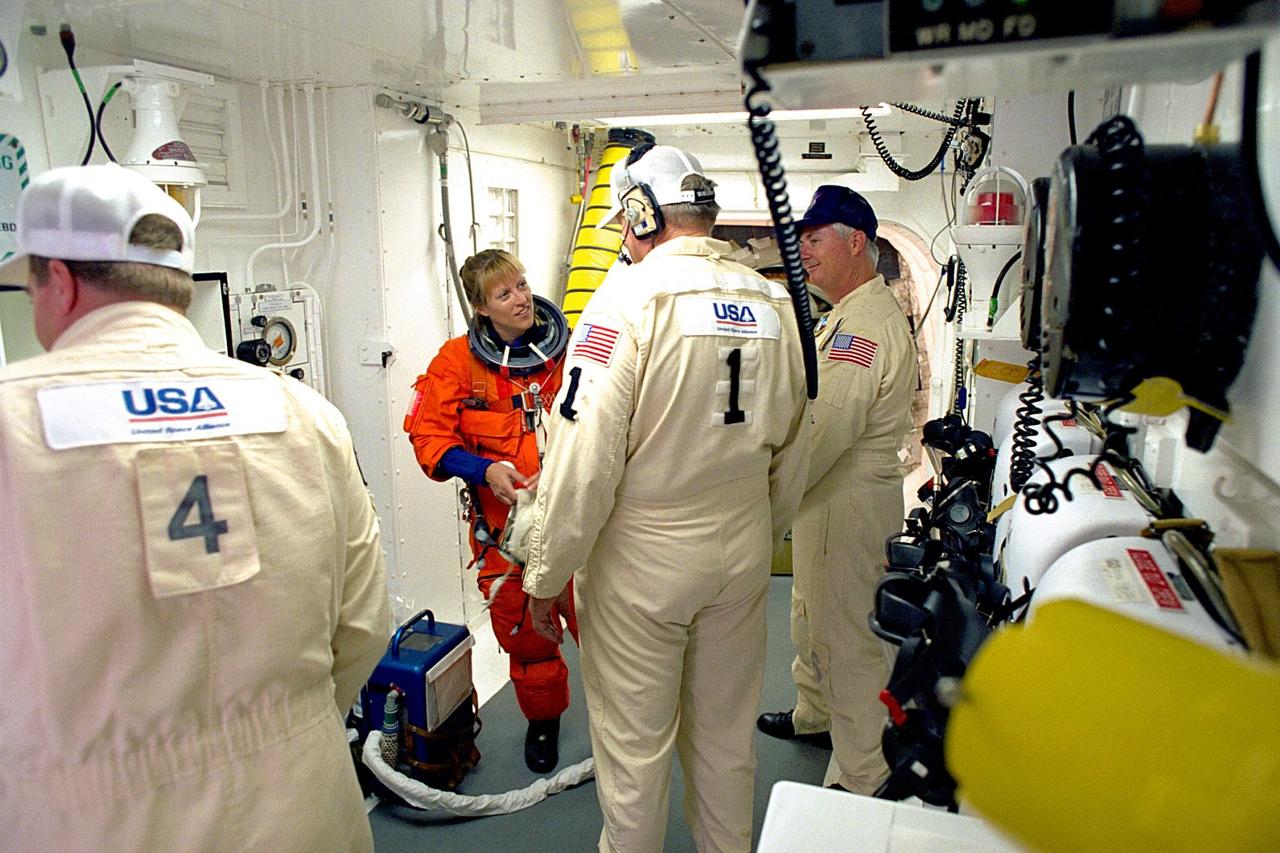
STS-90 Mission Specialist Kathryn (Kay) Hire is assisted by NASA and USA closeout crew members immediately preceding launch for the nearly 17-day Neurolab mission. Investigations during the Neurolab mission will focus on the effects of microgravity on the nervous system. Hire and six fellow crew members will shortly enter the orbiter at KSC's Launch Pad 39B, where the Space Shuttle Columbia will lift off during a launch window that opens at 2:19 p.m. EDT, April 17
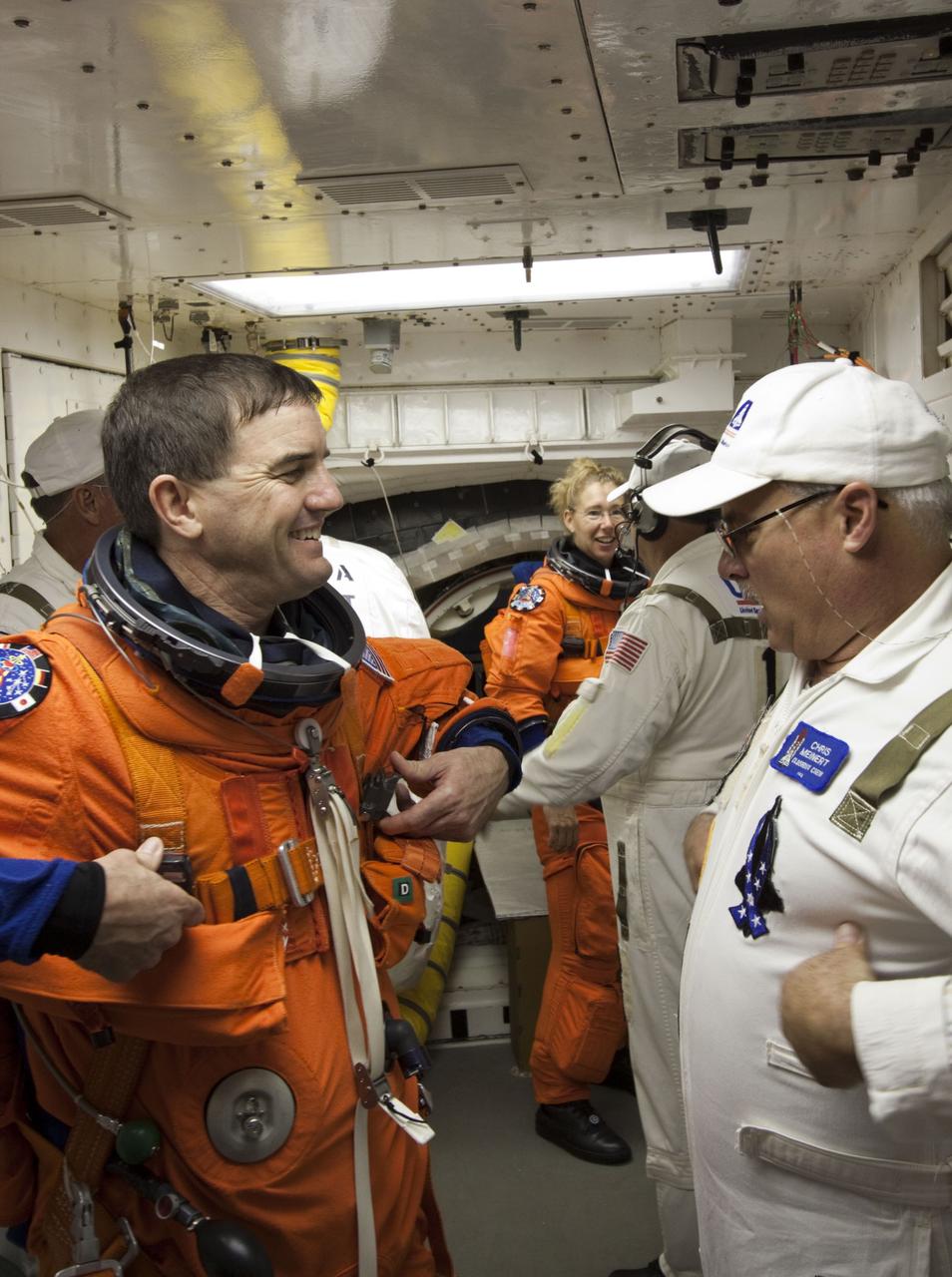
CAPE CANAVERAL, Fla. -- In the White Room at Launch Pad 39A at NASA's Kennedy Space Center in Florida, STS-135 Mission Specialist Rex Walheim prepares to board space shuttle Atlantis through the crew hatch in the background. Members of the Closeout Crew, in white uniforms, are there to assist astronauts with their launch-and-entry suits and the boarding process. Seen in the background is Mission Specialist Sandy Magnus speaking with a Closeout Crew member. The STS-135 crew is at the pad to participate in a launch countdown simulation exercise. As part of the Terminal Countdown Demonstration Test (TCDT), the crew members are strapped into their seats on Atlantis to practice the steps that will be taken on launch day. Shuttle Atlantis and its crew are targeted to lift off July 8, taking with them the Raffaello multi-purpose logistics module packed with supplies and spare parts to the International Space Station. The STS-135 mission also will fly a system to investigate the potential for robotically refueling existing satellites and return a failed ammonia pump module to help NASA better understand the failure mechanism and improve pump designs for future systems. STS-135 will be the 33rd flight of Atlantis, the 37th shuttle mission to the space station, and the 135th and final mission of NASA's Space Shuttle Program. For more information visit, www.nasa.gov/mission_pages/shuttle/shuttlemissions/sts135/index.html. Photo credit: NASA/Jim Grossmann
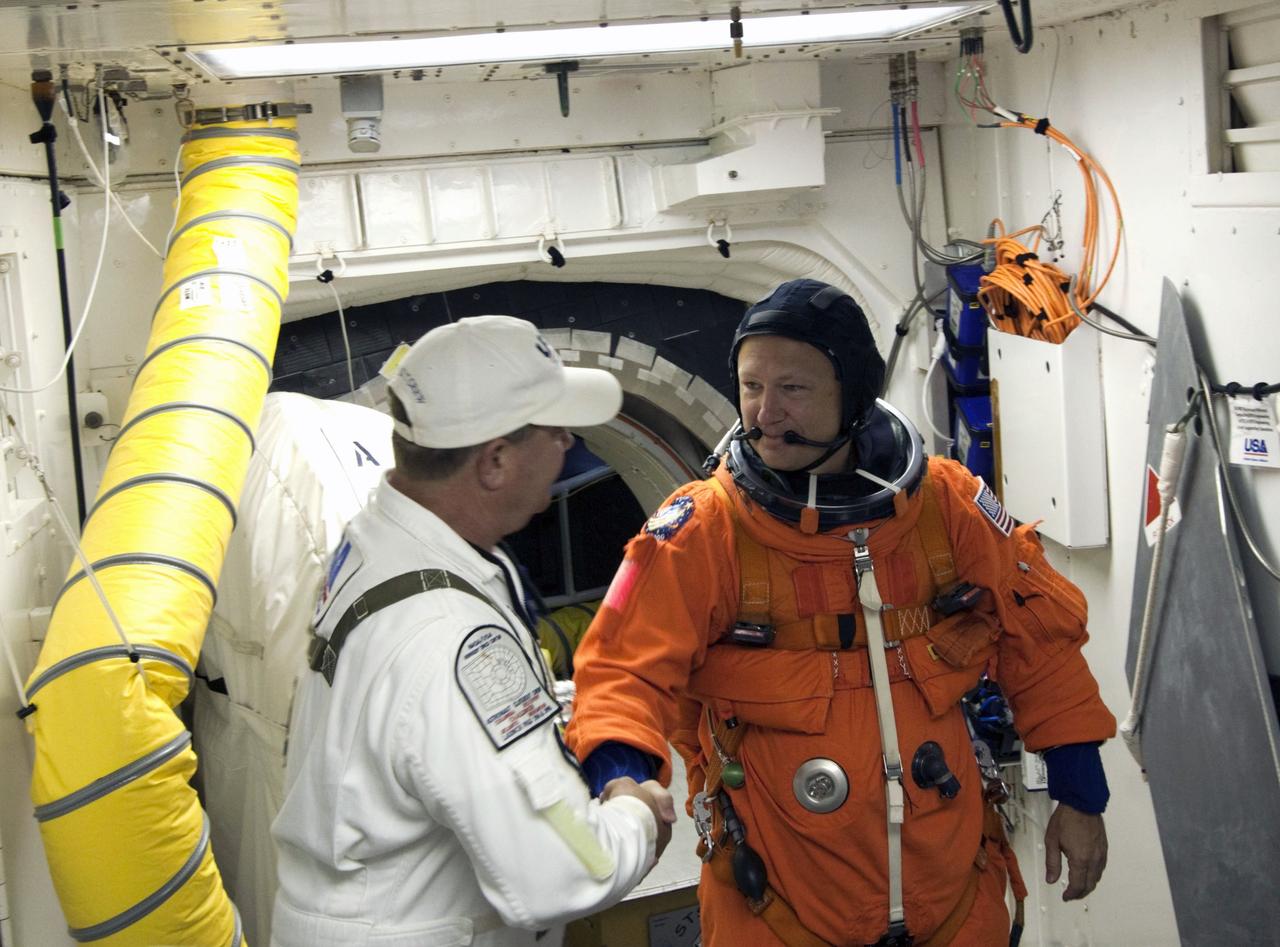
CAPE CANAVERAL, Fla. -- In the White Room at Launch Pad 39A at NASA's Kennedy Space Center in Florida, STS-135 Pilot Doug Hurley thanks Closeout Crew member Rene Arriens for his assistance as he prepares to board space shuttle Atlantis through the crew hatch in the background. Members of the Closeout Crew, in white uniforms, are there to assist astronauts with their launch-and-entry suits and the boarding process. The STS-135 crew members are at the pad to participate in a launch countdown simulation exercise. As part of the Terminal Countdown Demonstration Test (TCDT), the crew members are strapped into their seats on Atlantis to practice the steps that will be taken on launch day. Shuttle Atlantis and its crew are targeted to lift off July 8, taking with them the Raffaello multi-purpose logistics module packed with supplies and spare parts to the International Space Station. The STS-135 mission also will fly a system to investigate the potential for robotically refueling existing satellites and return a failed ammonia pump module to help NASA better understand the failure mechanism and improve pump designs for future systems. STS-135 will be the 33rd flight of Atlantis, the 37th shuttle mission to the space station, and the 135th and final mission of NASA's Space Shuttle Program. For more information visit, www.nasa.gov/mission_pages/shuttle/shuttlemissions/sts135/index.html. Photo credit: NASA/Jim Grossmann
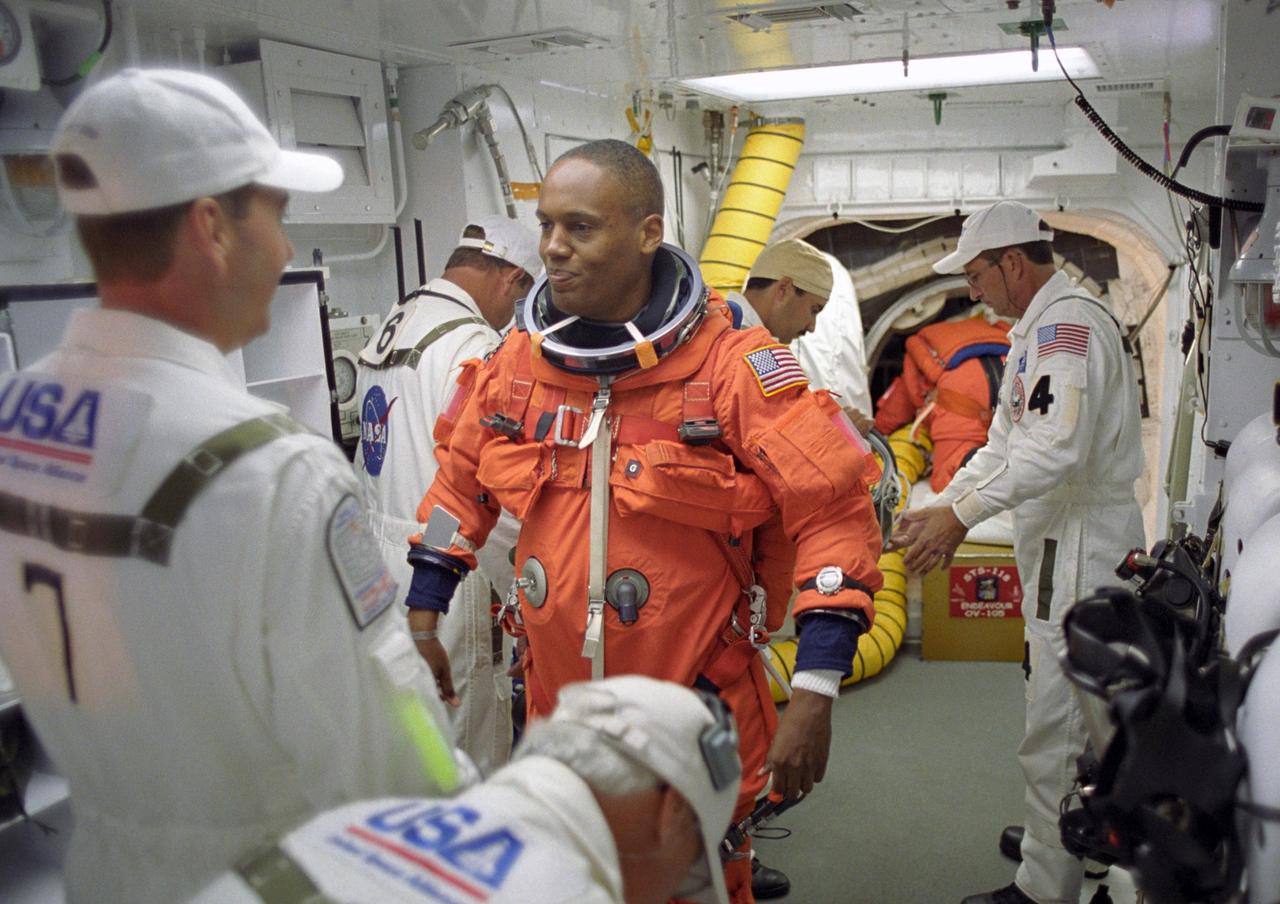
KENNEDY SPACE CENTER, FLA. -- In the White Room on Launch Pad 39A, STS-118 Mission Specialist Alvin Drew is helped with his launch gear by the closeout crew before he enters Space Shuttle Endeavour. Drew is making his first space flight. The outer end of the orbiter access arm ends in an environmental chamber (the White Room) that mates with the orbiter and allows personnel to enter the crew compartment. With assistance, each member of the flight crew dons a parachute pack before crawling through the open hatch into the shuttle. The closeout crew also straps the astronauts into the space shuttle's crew module and takes care of any other last-minute needs that arise. Space Shuttle Endeavour's STS-118 mission is the 22nd shuttle flight to the International Space Station. It will continue space station construction by delivering a third starboard truss segment, S5, and other payloads such as the SPACEHAB module and the external stowage platform 3. Liftoff of Endeavour is scheduled at 6:36 p.m. EDT. Photo credit: NASA/John Kechele, Scott Haun, Tom Farrar
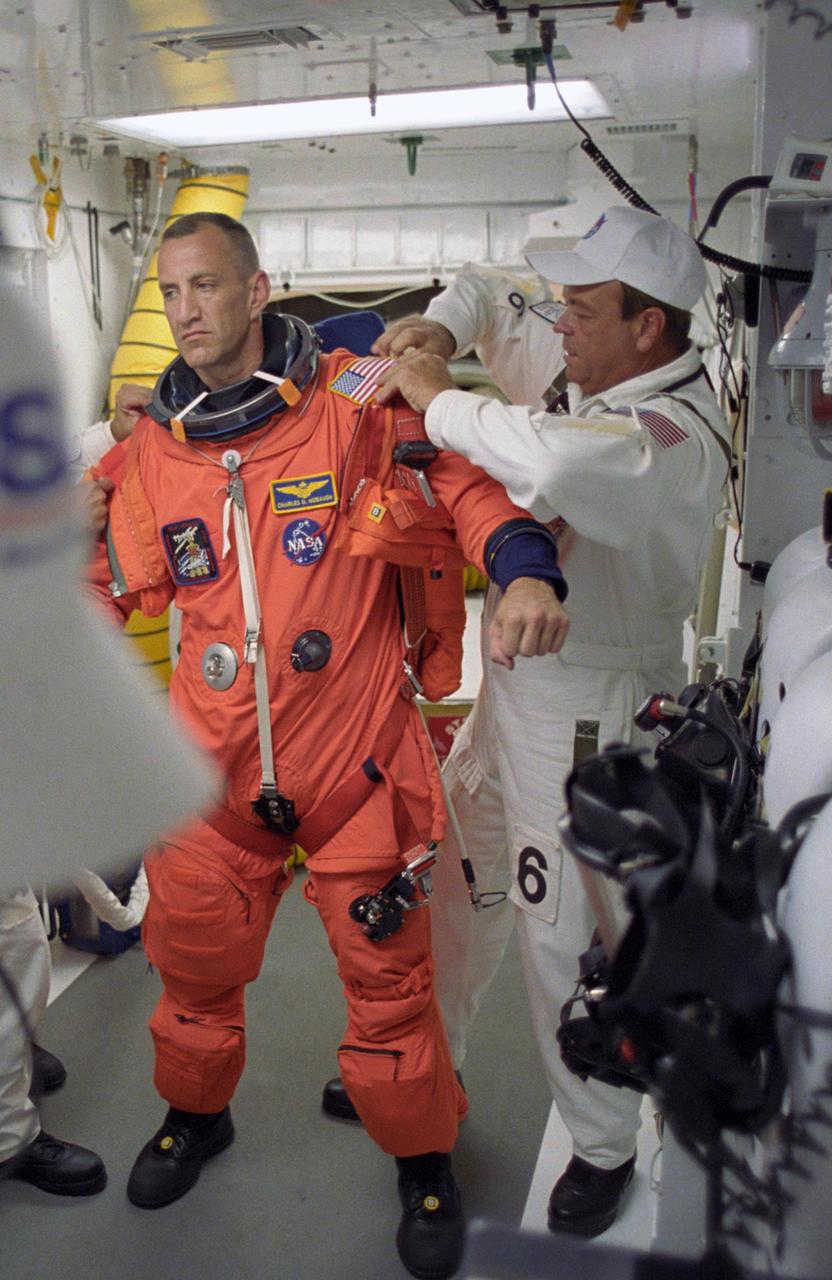
KENNEDY SPACE CENTER, FLA. -- In the White Room on Launch Pad 39A, STS-118 Pilot Charlie Hobaugh is helped by the closeout crew with his parachute before he enters Space Shuttle Endeavour. The outer end of the orbiter access arm ends in an environmental chamber (the White Room) that mates with the orbiter and allows personnel to enter the crew compartment. With assistance, each member of the flight crew dons a parachute pack before crawling through the open hatch into the shuttle. The closeout crew also straps the astronauts into the space shuttle's crew module and takes care of any other last-minute needs that arise. Space Shuttle Endeavour's STS-118 mission is the 22nd shuttle flight to the International Space Station. It will continue space station construction by delivering a third starboard truss segment, S5, and other payloads such as the SPACEHAB module and the external stowage platform 3. Liftoff of Endeavour is scheduled at 6:36 p.m. EDT. Photo credit: NASA/John Kechele, Scott Haun, Tom Farrar
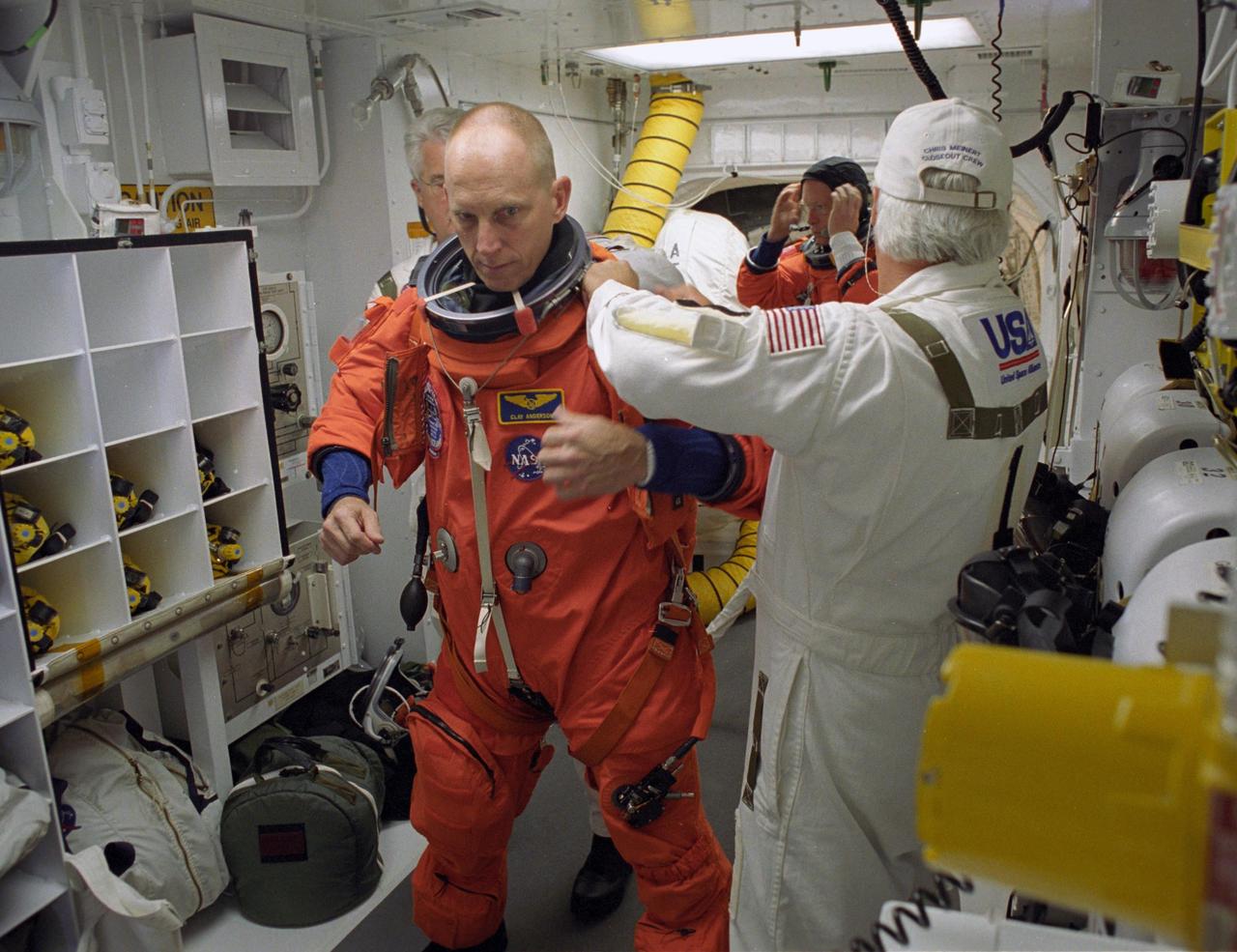
KENNEDY SPACE CENTER, FLA. -- In the White Room on Launch Pad 39A, astronaut Clayton Anderson is helped by the closeout crew to secure his launch suit before climbing into Space Shuttle Atlantis. Anderson is flying to the International Space Station with the STS-117 crew to join the Expedition 15 crew on the space station. Flight Engineer Suni Williams will return to Earth in his place. The mission to the space station is scheduled to launch at 7:38 p.m. EDT. Members of the closeout crew help the astronauts don a parachute pack, strap them into the space shuttle's crew module and take care of any other last-minute needs that arise. The White Room is at the end of the orbiter access arm that extends from the fixed service structure and provides entry into the orbiter. The shuttle is delivering a new segment to the starboard side of the space station's backbone, known as the truss. Three spacewalks are planned to install the S3/S4 truss segment, deploy a set of solar arrays and prepare them for operation. STS-117 is the 118th space shuttle flight, the 21st flight to the station, the 28th flight for Atlantis and the first of four flights planned for 2007. Photo credit: NASA/Tony Gray & Don Kight
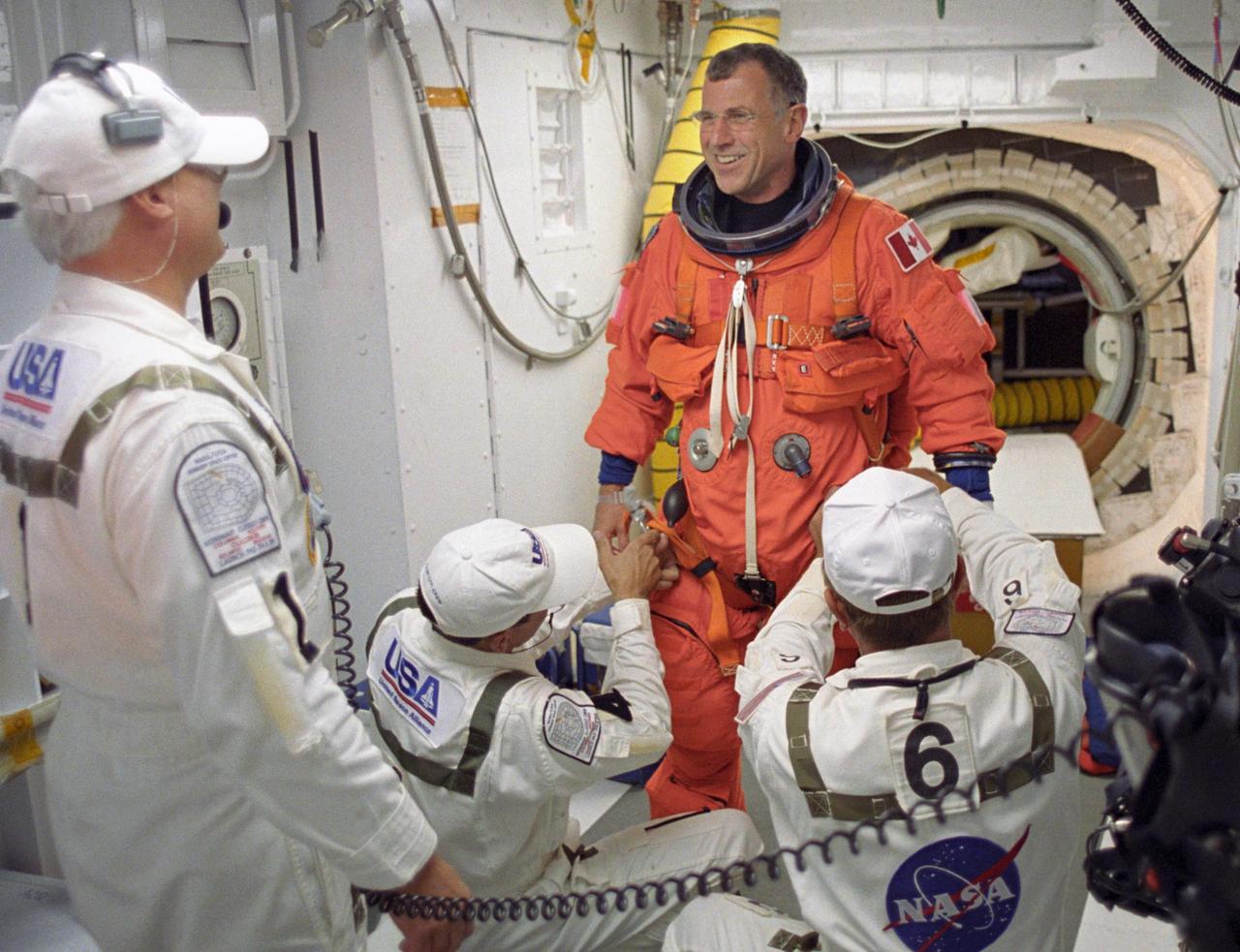
KENNEDY SPACE CENTER, FLA. -- In the White Room on Launch Pad 39A, STS-118 Mission Specialist Dave Williams is helped with his launch gear by the closeout crew before he enters Space Shuttle Endeavour. Williams represents the Canadian Space Agency. The outer end of the orbiter access arm ends in an environmental chamber (the White Room) that mates with the orbiter and allows personnel to enter the crew compartment. With assistance, each member of the flight crew dons a parachute pack before crawling through the open hatch into the shuttle. The closeout crew also straps the astronauts into the space shuttle's crew module and takes care of any other last-minute needs that arise. Space Shuttle Endeavour's STS-118 mission is the 22nd shuttle flight to the International Space Station. It will continue space station construction by delivering a third starboard truss segment, S5, and other payloads such as the SPACEHAB module and the external stowage platform 3. Liftoff of Endeavour is scheduled at 6:36 p.m. EDT. Photo credit: NASA/John Kechele, Scott Haun, Tom Farrar
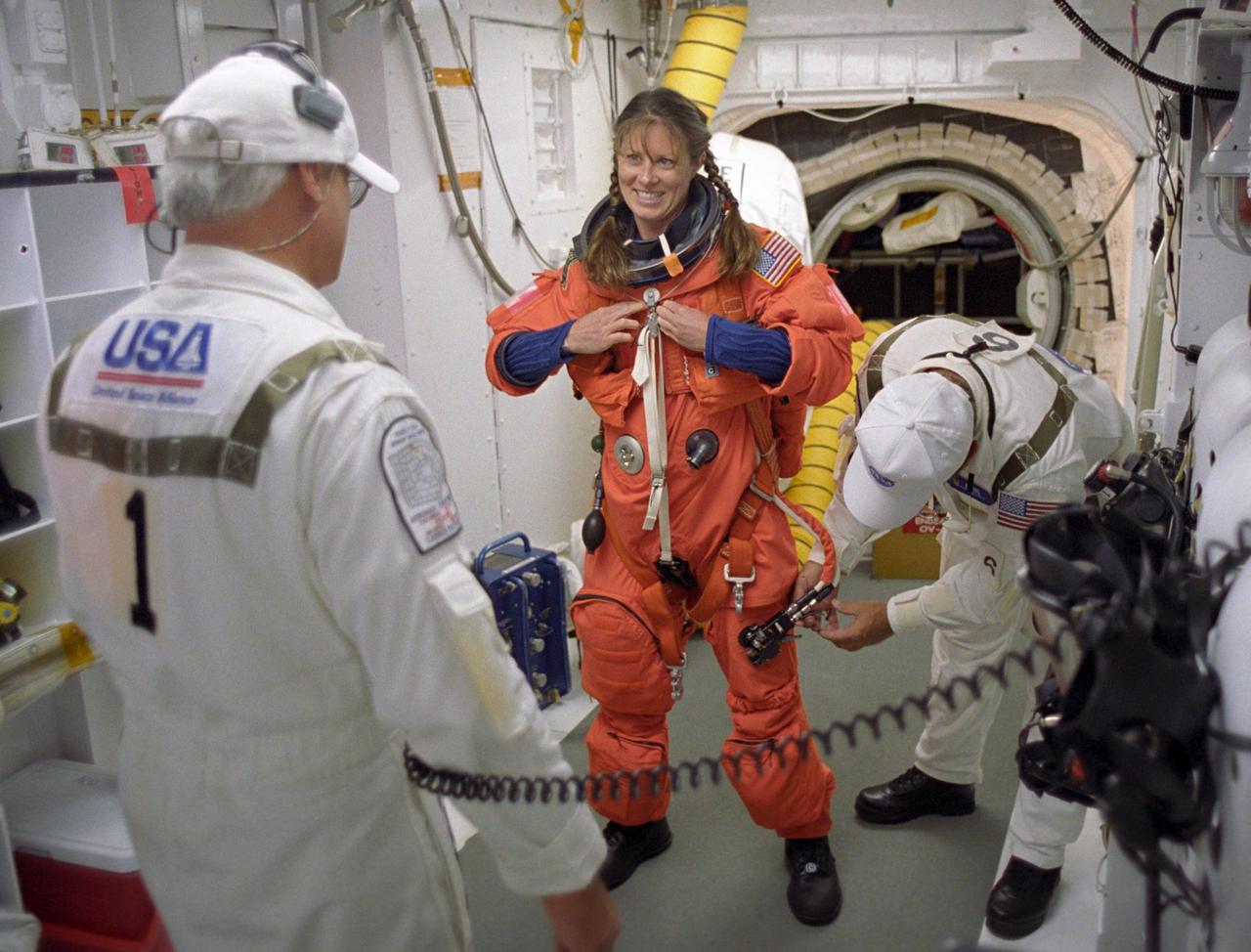
KENNEDY SPACE CENTER, FLA. -- In the White Room on Launch Pad 39A, STS-118 Mission Specialist Tracy Caldwell, with the help of the closeout crew, goes through final preparation of her launch and entry suit before she enters Space Shuttle Endeavour. The outer end of the orbiter access arm ends in an environmental chamber (the White Room) that mates with the orbiter and allows personnel to enter the crew compartment. With assistance, each member of the flight crew dons a parachute pack before crawling through the open hatch into the shuttle. The closeout crew also straps the astronauts into the space shuttle's crew module and takes care of any other last-minute needs that arise. Space Shuttle Endeavour's STS-118 mission is the 22nd shuttle flight to the International Space Station. It will continue space station construction by delivering a third starboard truss segment, S5, and other payloads such as the SPACEHAB module and the external stowage platform 3. Liftoff of Endeavour is scheduled at 6:36 p.m. EDT. Photo credit: NASA/John Kechele, Scott Haun, Tom Farrar
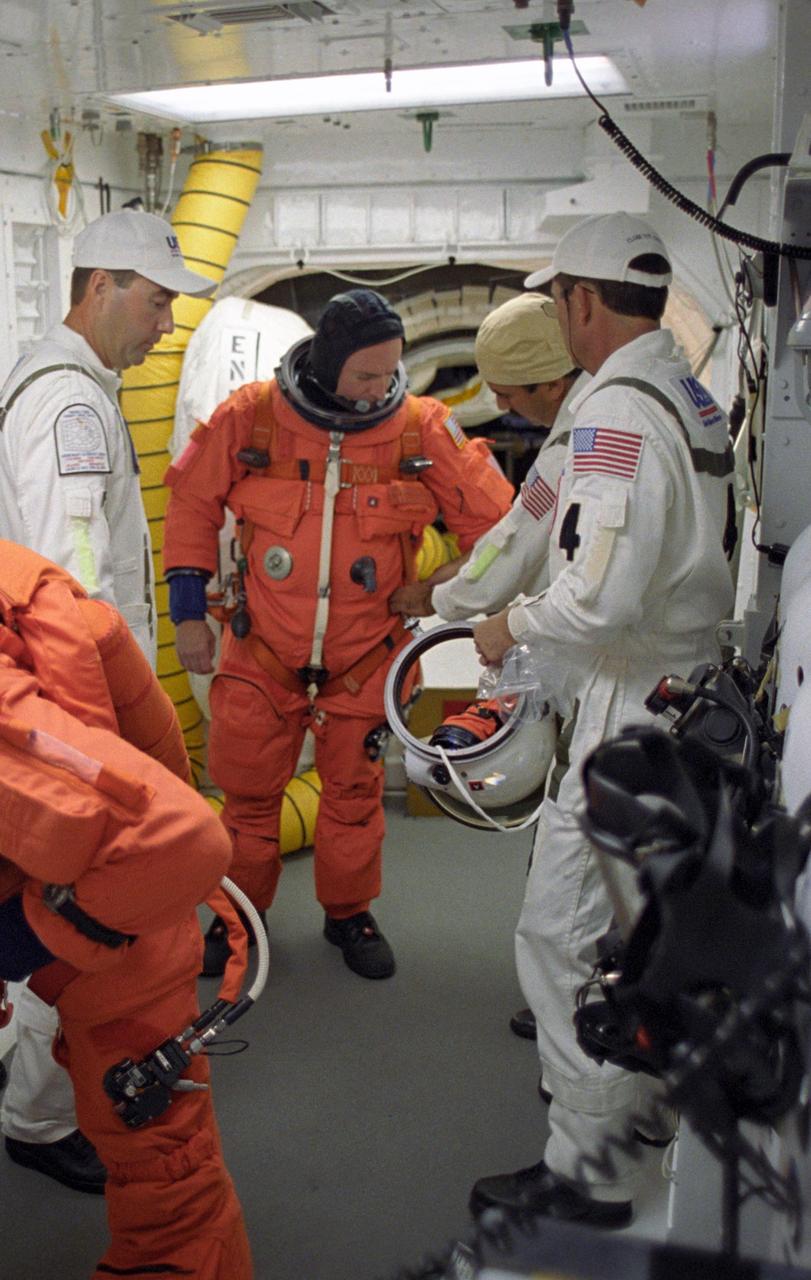
KENNEDY SPACE CENTER, FLA. -- In the White Room on Launch Pad 39A, STS-118 Commander Scott Kelly is helped with his launch gear by the closeout crew before he enters Space Shuttle Endeavour. The outer end of the orbiter access arm ends in an environmental chamber (the White Room) that mates with the orbiter and allows personnel to enter the crew compartment. With assistance, each member of the flight crew dons a parachute pack before crawling through the open hatch into the shuttle. The closeout crew also straps the astronauts into the space shuttle's crew module and takes care of any other last-minute needs that arise. Space Shuttle Endeavour's STS-118 mission is the 22nd shuttle flight to the International Space Station. It will continue space station construction by delivering a third starboard truss segment, S5, and other payloads such as the SPACEHAB module and the external stowage platform 3. Liftoff of Endeavour is scheduled at 6:36 p.m. EDT. Photo credit: NASA/John Kechele, Scott Haun, Tom Farrar
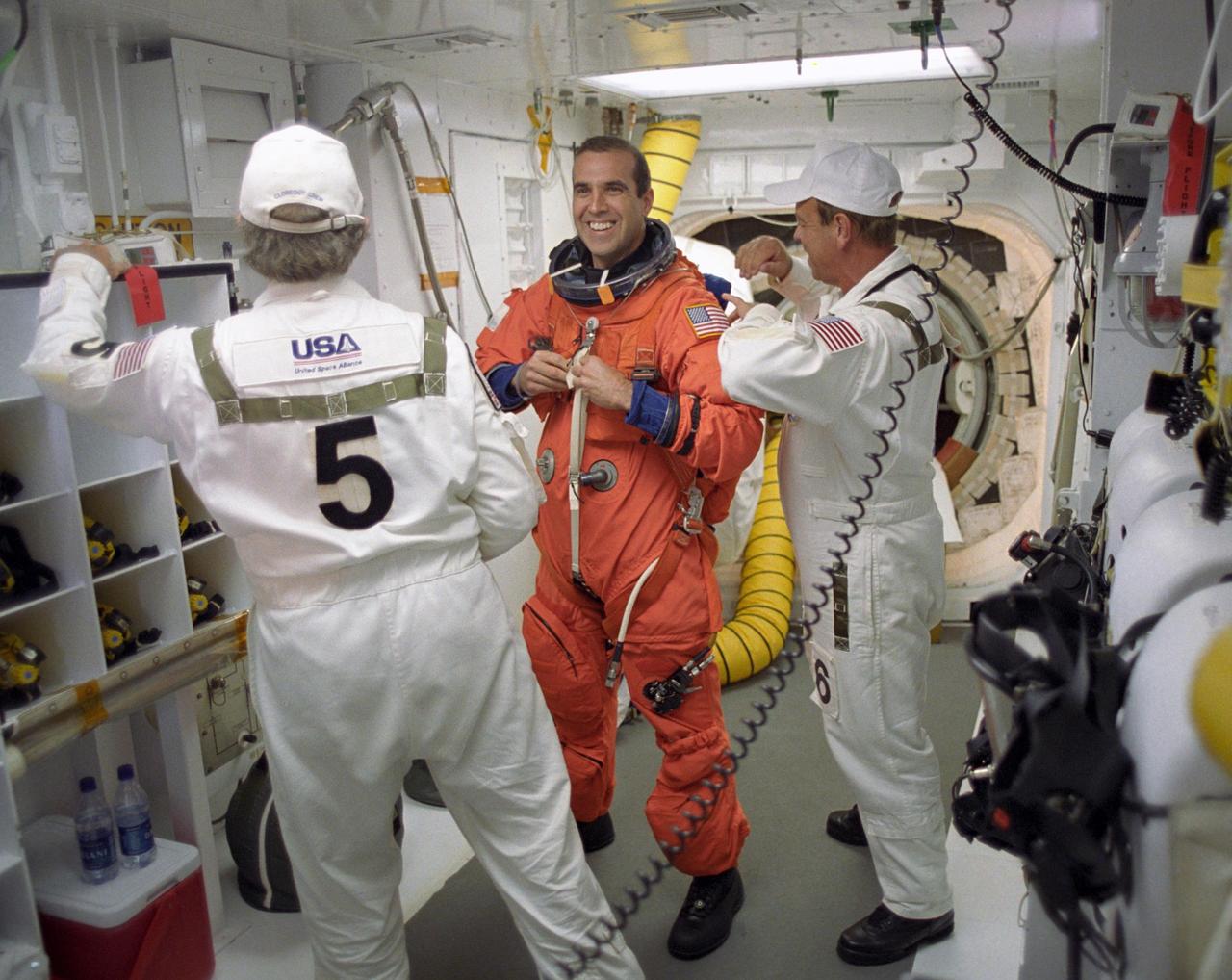
KENNEDY SPACE CENTER, FLA. -- In the White Room on Launch Pad 39A, STS-118 Mission Specialist Rick Mastracchio is helped with his launch gear by the closeout crew before he enters Space Shuttle Endeavour. The outer end of the orbiter access arm ends in an environmental chamber (the White Room) that mates with the orbiter and allows personnel to enter the crew compartment. With assistance, each member of the flight crew dons a parachute pack before crawling through the open hatch into the shuttle. The closeout crew also straps the astronauts into the space shuttle's crew module and takes care of any other last-minute needs that arise. Space Shuttle Endeavour's STS-118 mission is the 22nd shuttle flight to the International Space Station. It will continue space station construction by delivering a third starboard truss segment, S5, and other payloads such as the SPACEHAB module and the external stowage platform 3. Liftoff of Endeavour is scheduled at 6:36 p.m. EDT. Photo credit: NASA/John Kechele, Scott Haun, Tom Farrar
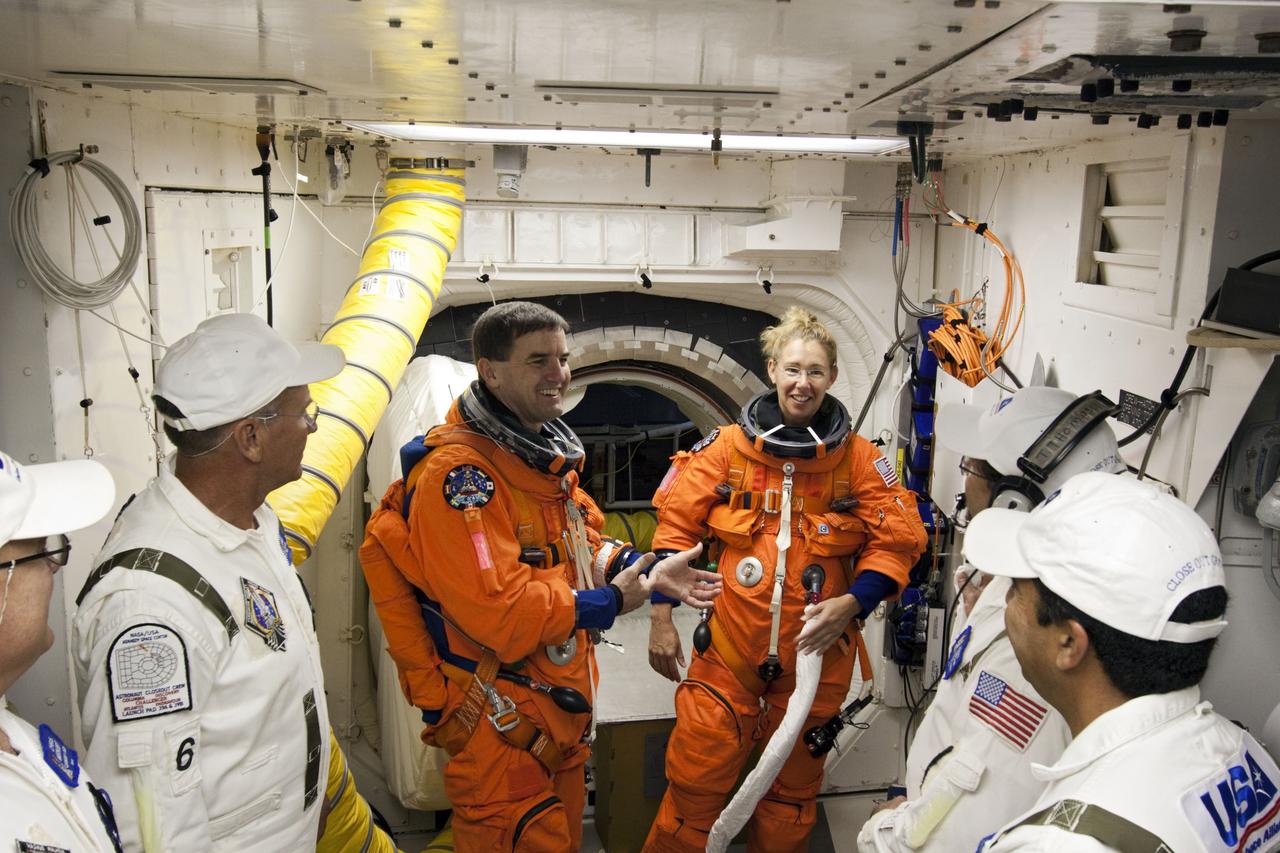
CAPE CANAVERAL, Fla. -- In the White Room at Launch Pad 39A at NASA's Kennedy Space Center in Florida, STS-135 Mission Specialists Rex Walheim and Sandy Magnus enjoy a light moment with the Closeout Crew before boarding space shuttle Atlantis through the crew hatch in the background. Members of the Closeout Crew, in white uniforms, are there to assist astronauts with their launch-and-entry suits and the boarding process. Seen in the background is Mission Specialist Sandy Magnus speaking with a Closeout Crew member. The STS-135 crew is at the pad to participate in a launch countdown simulation exercise. As part of the Terminal Countdown Demonstration Test (TCDT), the crew members are strapped into their seats on Atlantis to practice the steps that will be taken on launch day. Shuttle Atlantis and its crew are targeted to lift off July 8, taking with them the Raffaello multi-purpose logistics module packed with supplies and spare parts to the International Space Station. The STS-135 mission also will fly a system to investigate the potential for robotically refueling existing satellites and return a failed ammonia pump module to help NASA better understand the failure mechanism and improve pump designs for future systems. STS-135 will be the 33rd flight of Atlantis, the 37th shuttle mission to the space station, and the 135th and final mission of NASA's Space Shuttle Program. For more information visit, www.nasa.gov/mission_pages/shuttle/shuttlemissions/sts135/index.html. Photo credit: NASA/Jim Grossmann

CAPE CANAVERAL, Fla. -- On Launch Pad 39B at NASA's Kennedy Space Center, a group of NASA and contractor workers from Kennedy Space Center and other NASA centers, along with the Department of Defense, participate in a flight crew evacuation drill, also referred to as the Mode II/IV Simulation. During the exercise, an emergency condition during launch countdown was simulated and participants did their parts to perform an emergency egress of the flight and ground crew, including the slidewire system. With the simulated emergency in play, Fire Rescue and Closeout Crew workers aided in the extraction and rescue of the crew. Photo credit: NASA/Kim Shiflett

CAPE CANAVERAL, Fla. -- In the Multi-Payload Processing Facility at NASA's Kennedy Space Center in Florida, workers take photos and video of fire and rescue personnel, as well as a closeout crew, participating in an exercise known as crew egress evaluation from an Orion mock-up. The spacecraft is replicated in all areas that could affect a crew's escape, including the area that seals to a launch pad's White Room. The exercise focuses on whether astronauts and their rescue crews can exit the vehicle quickly in the event of a pad emergency. For more information on Orion, visit www.nasa.gov/orion. Photo credit: NASA/Dimitri Gerondidakis

CAPE CANAVERAL, Fla. -- On Launch Pad 39B at NASA's Kennedy Space Center, a group of NASA and contractor workers from Kennedy Space Center and other NASA centers, along with the Department of Defense, participate in a flight crew evacuation drill, also referred to as the Mode II/IV Simulation. During the exercise, an emergency condition during launch countdown was simulated and participants did their parts to perform an emergency egress of the flight and ground crew, in this case from the 195-foot level of the fixed service structure. With the simulated emergency in play, Fire Rescue and Closeout Crew workers aided in the extraction and rescue of the crew. Photo credit: NASA/Kim Shiflett

CAPE CANAVERAL, Fla. -- On Launch Pad 39B at NASA's Kennedy Space Center, a group of NASA and contractor workers from Kennedy Space Center and other NASA centers, along with the Department of Defense, participate in a flight crew evacuation drill, also referred to as the Mode II/IV Simulation. During the exercise, an emergency condition during launch countdown was simulated and participants did their parts to perform an emergency egress of the flight and ground crew. With the simulated emergency in play, Fire Rescue and Closeout Crew workers aided in the extraction and rescue of the crew. Photo credit: NASA/Kim Shiflett
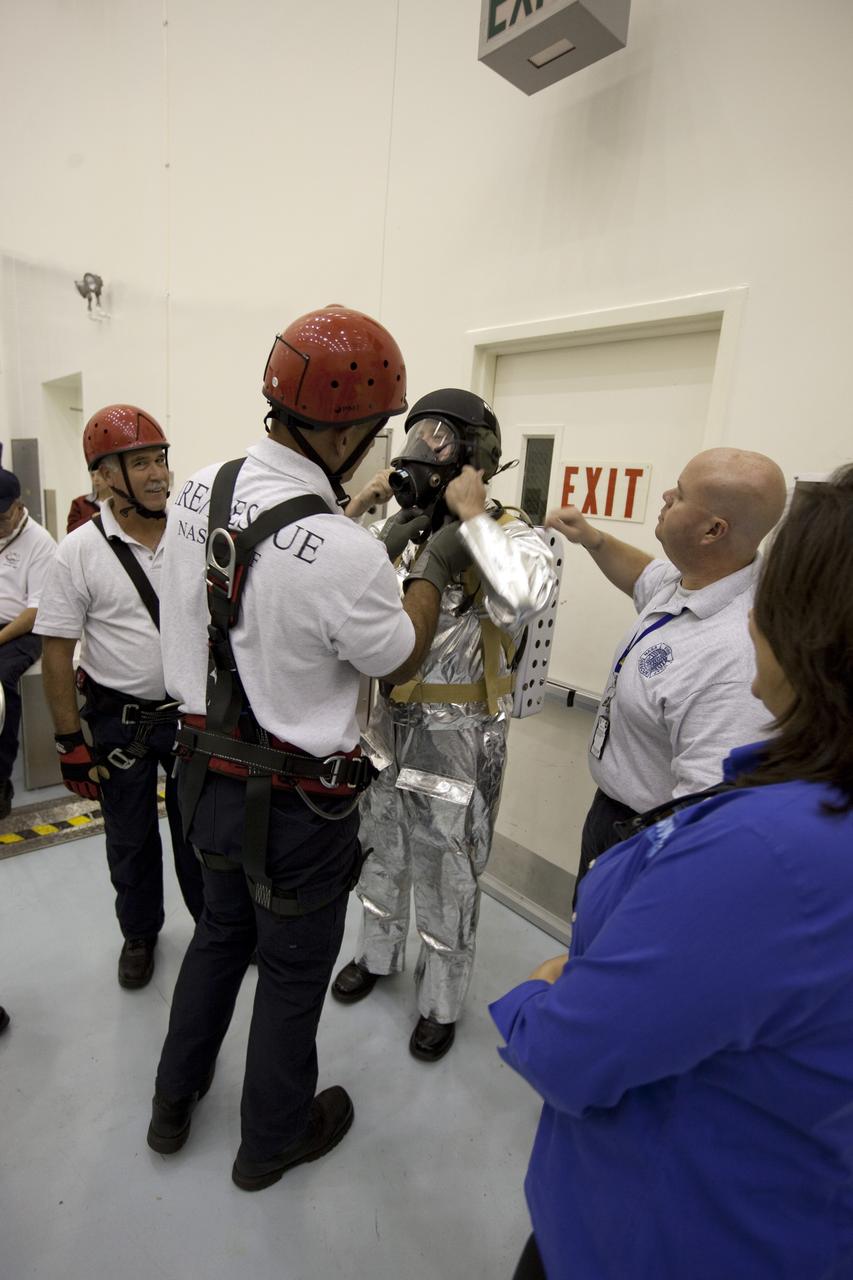
CAPE CANAVERAL, Fla. -- In the Multi-Payload Processing Facility at NASA's Kennedy Space Center in Florida, fire and rescue personnel, as well as a closeout crew, participate in an exercise known as crew egress evaluation from an Orion mock-up. The spacecraft is replicated in all areas that could affect a crew's escape, including the area that seals to a launch pad's White Room. The exercise focuses on whether astronauts and their rescue crews can exit the vehicle quickly in the event of a pad emergency. For more information on Orion, visit www.nasa.gov/orion. Photo credit: NASA/Dimitri Gerondidakis

CAPE CANAVERAL, Fla. -- On Launch Pad 39B at NASA's Kennedy Space Center, a group of NASA and contractor workers from Kennedy Space Center and other NASA centers, along with the Department of Defense, participate in a flight crew evacuation drill, also referred to as the Mode II/IV Simulation. During the exercise, an emergency condition during launch countdown was simulated and participants did their parts to perform an emergency egress of the flight and ground crew, including the slidewire system. With the simulated emergency in play, Fire Rescue and Closeout Crew workers aided in the extraction and rescue of the crew. Photo credit: NASA/Kim Shiflett

CAPE CANAVERAL, Fla. -- On Launch Pad 39B at NASA's Kennedy Space Center, a group of NASA and contractor workers from Kennedy Space Center and other NASA centers, along with the Department of Defense, participate in a flight crew evacuation drill, also referred to as the Mode II/IV Simulation. During the exercise, an emergency condition during launch countdown was simulated and participants did their parts to perform an emergency egress of the flight and ground crew, including the slidewire system. With the simulated emergency in play, Fire Rescue and Closeout Crew workers aided in the extraction and rescue of the crew. Photo credit: NASA/Kim Shiflett
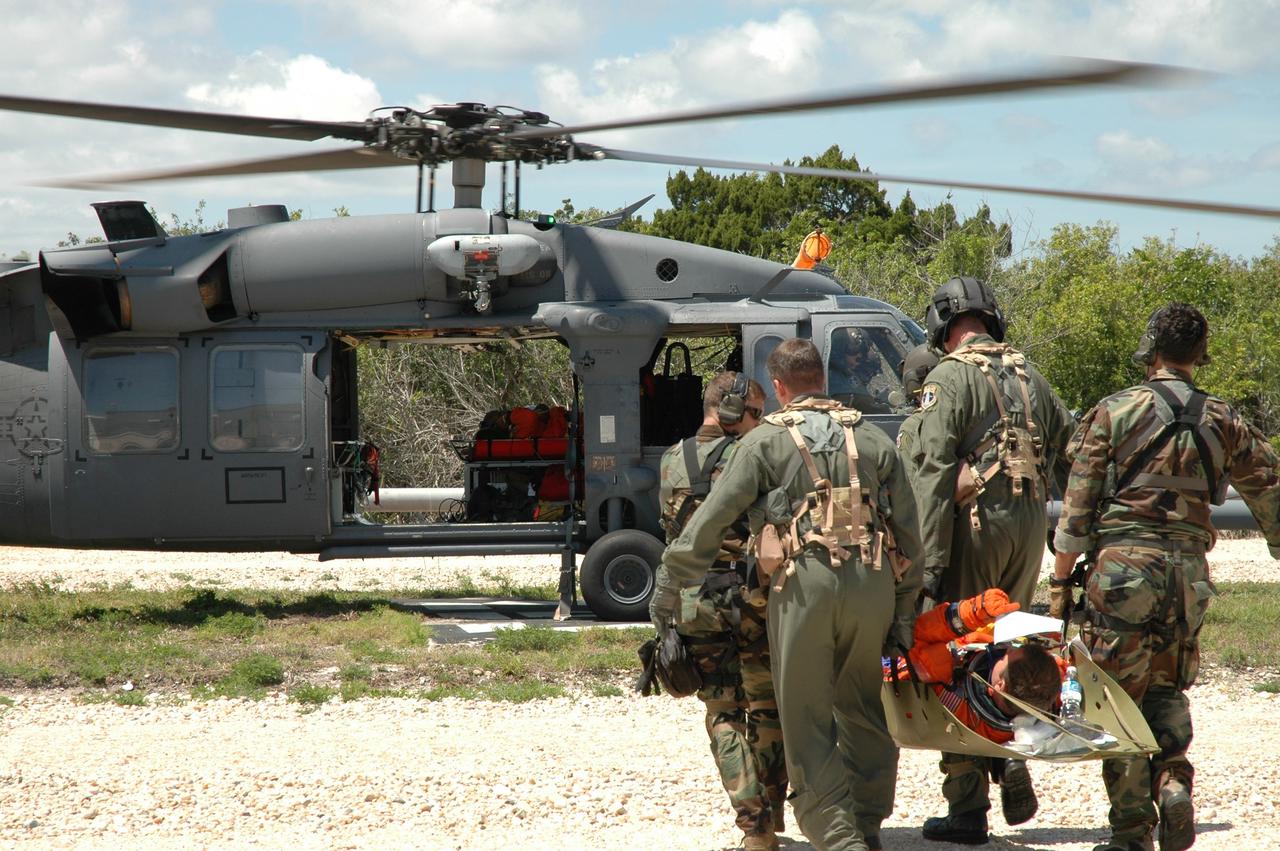
CAPE CANAVERAL, Fla. -- A group of NASA and contractor workers from Kennedy Space Center and other NASA centers, along with the Department of Defense, participate in a flight crew evacuation drill, also referred to as the Mode II/IV Simulation, from Launch Pad 39B. During the exercise, an emergency condition during launch countdown was simulated and participants did their parts to perform an emergency egress of the flight and ground crew. Fire Rescue and Closeout Crew workers transported the flight and ground crews to a triage site. Simulated injuries were treated and those with serious injuries were evacuated by helicopter to local hospitals. Photo credit: NASA/Jim Grossmann
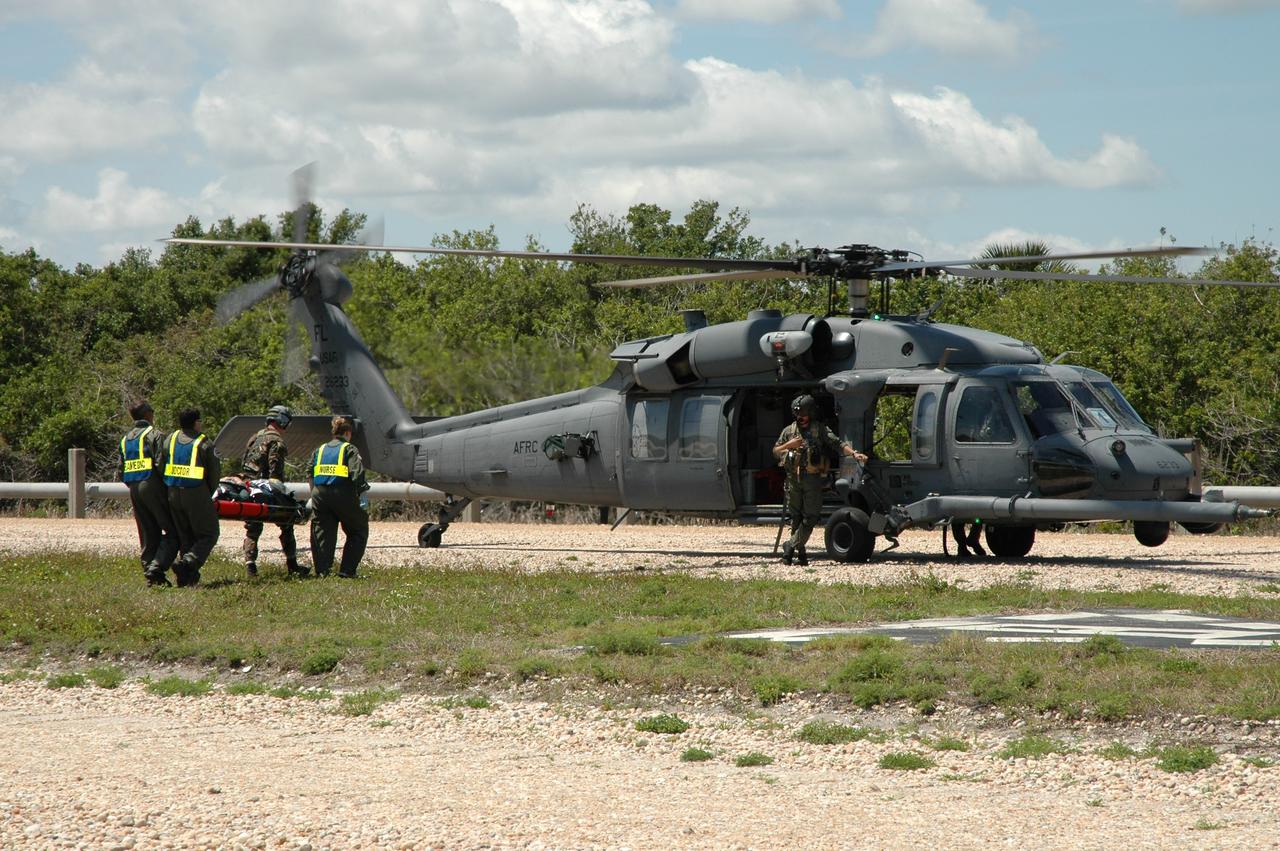
CAPE CANAVERAL, Fla. -- A group of NASA and contractor workers from Kennedy Space Center and other NASA centers, along with the Department of Defense, participate in a flight crew evacuation drill, also referred to as the Mode II/IV Simulation, from Launch Pad 39B. During the exercise, an emergency condition during launch countdown was simulated and participants did their parts to perform an emergency egress of the flight and ground crew. Fire Rescue and Closeout Crew workers transported the flight and ground crews to a triage site. Simulated injuries were treated and those with serious injuries were evacuated by helicopter to local hospitals. Photo credit: NASA/Jim Grossmann

CAPE CANAVERAL, Fla. -- In the Multi-Payload Processing Facility at NASA's Kennedy Space Center in Florida, fire and rescue personnel, as well as a closeout crew, participate in an exercise known as crew egress evaluation from an Orion mock-up. The spacecraft is replicated in all areas that could affect a crew's escape, including the area that seals to a launch pad's White Room. The exercise focuses on whether astronauts and their rescue crews can exit the vehicle quickly in the event of a pad emergency. For more information on Orion, visit www.nasa.gov/orion. Photo credit: NASA/Dimitri Gerondidakis
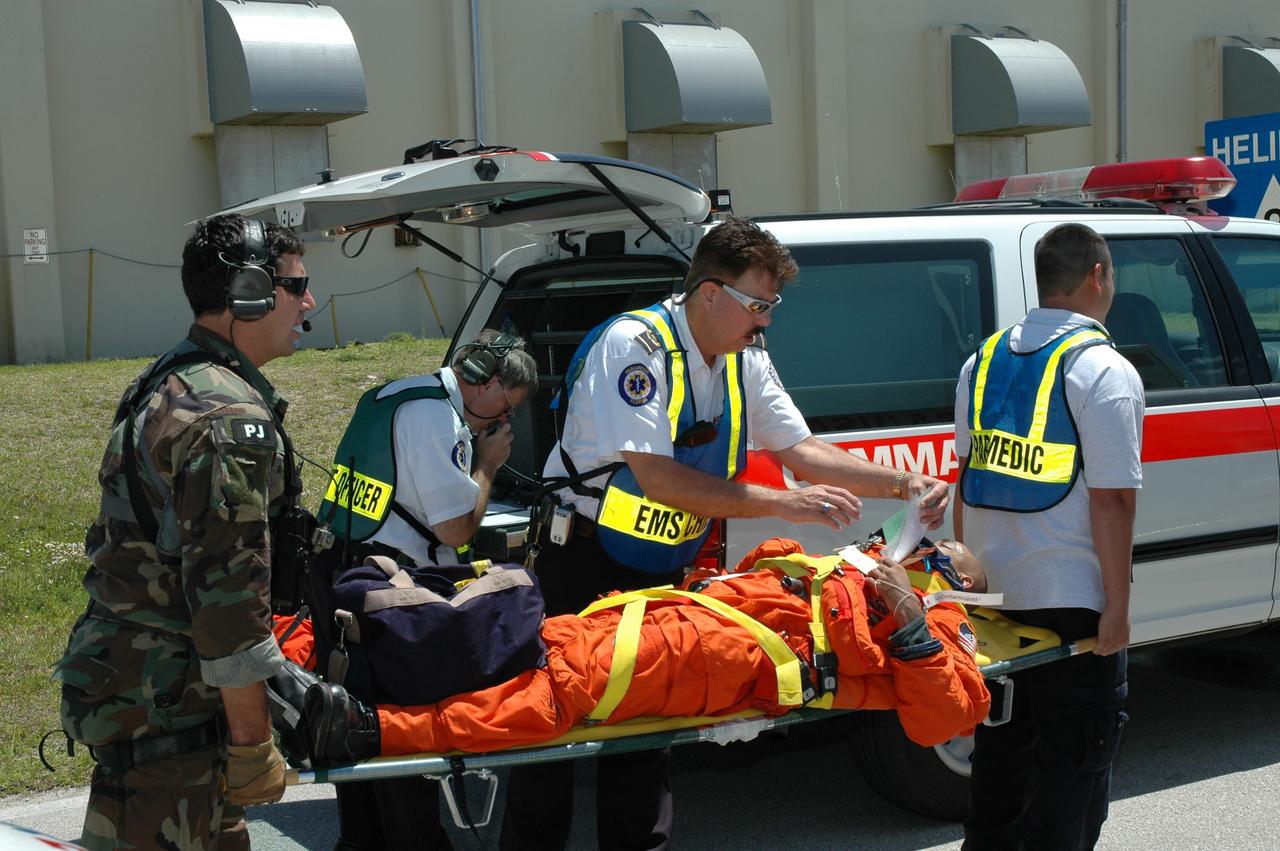
CAPE CANAVERAL, Fla. -- A group of NASA and contractor workers from Kennedy Space Center and other NASA centers, along with the Department of Defense, participate in a flight crew evacuation drill, also referred to as the Mode II/IV Simulation, from Launch Pad 39B. During the exercise, an emergency condition during launch countdown was simulated and participants did their parts to perform an emergency egress of the flight and ground crew. Fire Rescue and Closeout Crew workers transported the flight and ground crews to a triage site. Simulated injuries were treated and those with serious injuries were evacuated by helicopter to local hospitals. Photo credit: NASA/Jim Grossmann
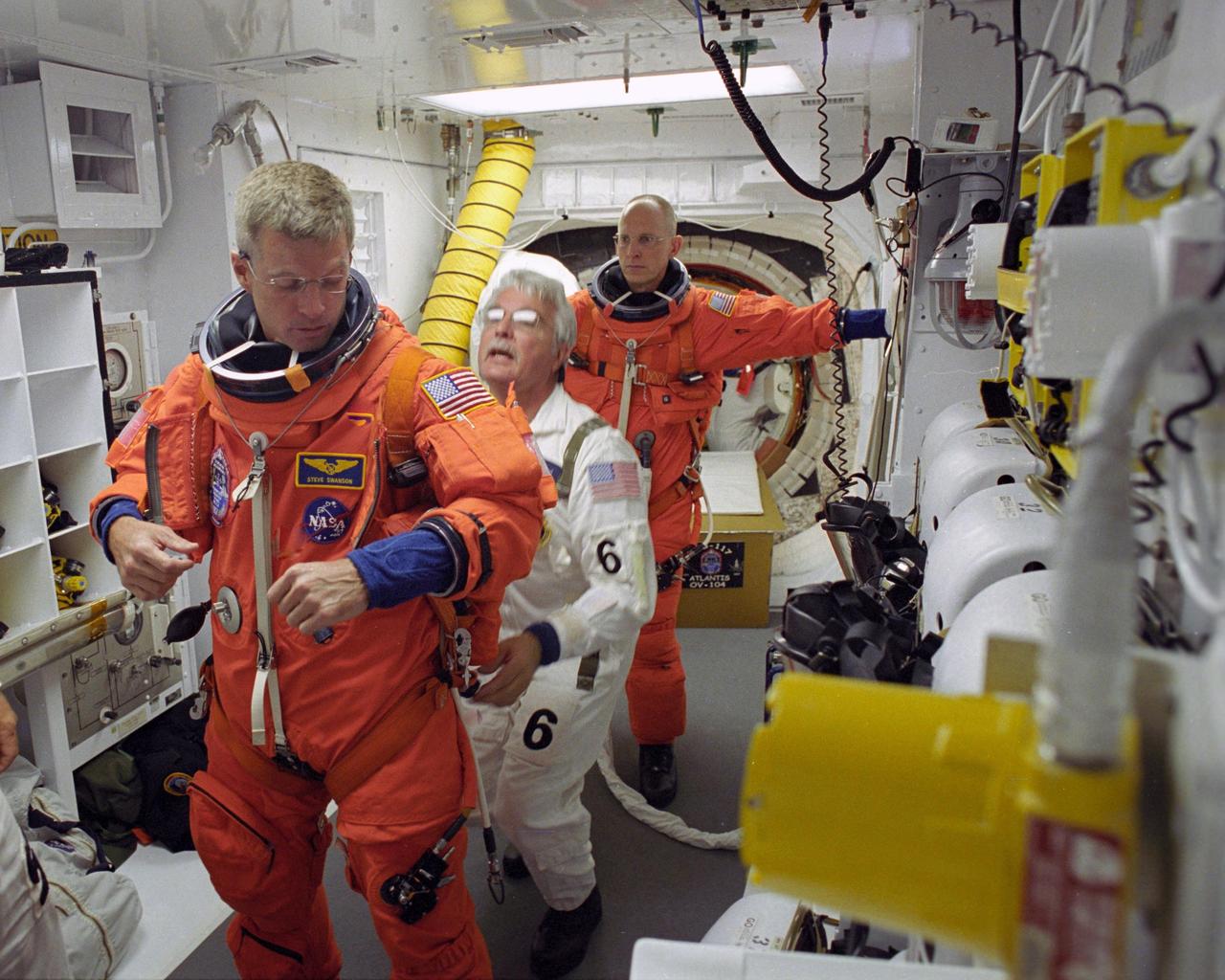
KENNEDY SPACE CENTER, FLA. -- In the White Room on Launch Pad 39A, STS-117 Mission Specialist Steven Swanson is helped by the closeout crew to secure his launch suit before climbing into Space Shuttle Atlantis. Behind Swanson is astronaut Clayton Anderson, waiting his turn. Anderson is joining the Expedition 15 crew on the International Space Station; Flight Engineer Suni Williams will return to Earth in his place. The mission to the space station is scheduled to launch at 7:38 p.m. EDT. Members of the closeout crew help the astronauts don a parachute pack, strap them into the space shuttle's crew module and take care of any other last-minute needs that arise. The White Room is at the end of the orbiter access arm that extends from the fixed service structure and provides entry into the orbiter. The shuttle is delivering a new segment to the starboard side of the space station's backbone, known as the truss. Three spacewalks are planned to install the S3/S4 truss segment, deploy a set of solar arrays and prepare them for operation. STS-117 is the 118th space shuttle flight, the 21st flight to the station, the 28th flight for Atlantis and the first of four flights planned for 2007. Photo credit: NASA/Tony Gray & Don Kight
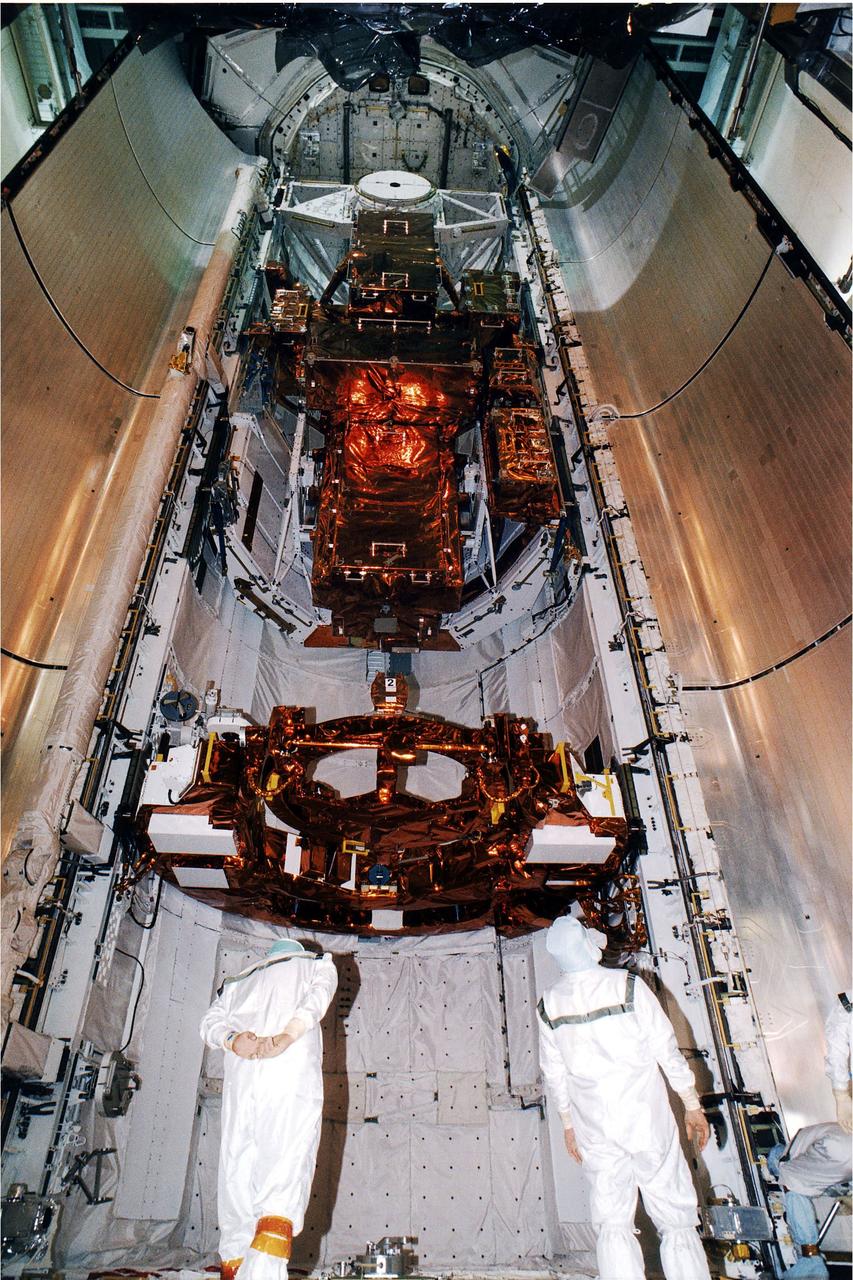
KENNEDY SPACE CENTER, FLA. - At the KSC Launch Pad 39A, two members of the payload closeout crew check equipment as the doors are just about ready to be closed. The Payload inside the bay of Discovery, the orbiter for the STS-82 mission, is ready for the launch of the second Hubble Space Telescope service mission. The payload consists of the Near Infrared Camera and Multi-Object Spectrometer (NICMOS) that will be installed, Fine Guidance Sensor #1 (FGS-1), and the Space Telescope Imaging Spectrograph (STIS) to be installed. The STS-82 will launch with a crew of seven at 3:54 a.m. EST, Feb. 11, 1997. The launch window is 65 minutes in duration. The Mission Commander for STS-82 is Ken Bowersox. The purpose of the mission is to upgrade the scientific capabilities, service or replace aging components on the Telescope and provide a reboost to the optimum altitude.
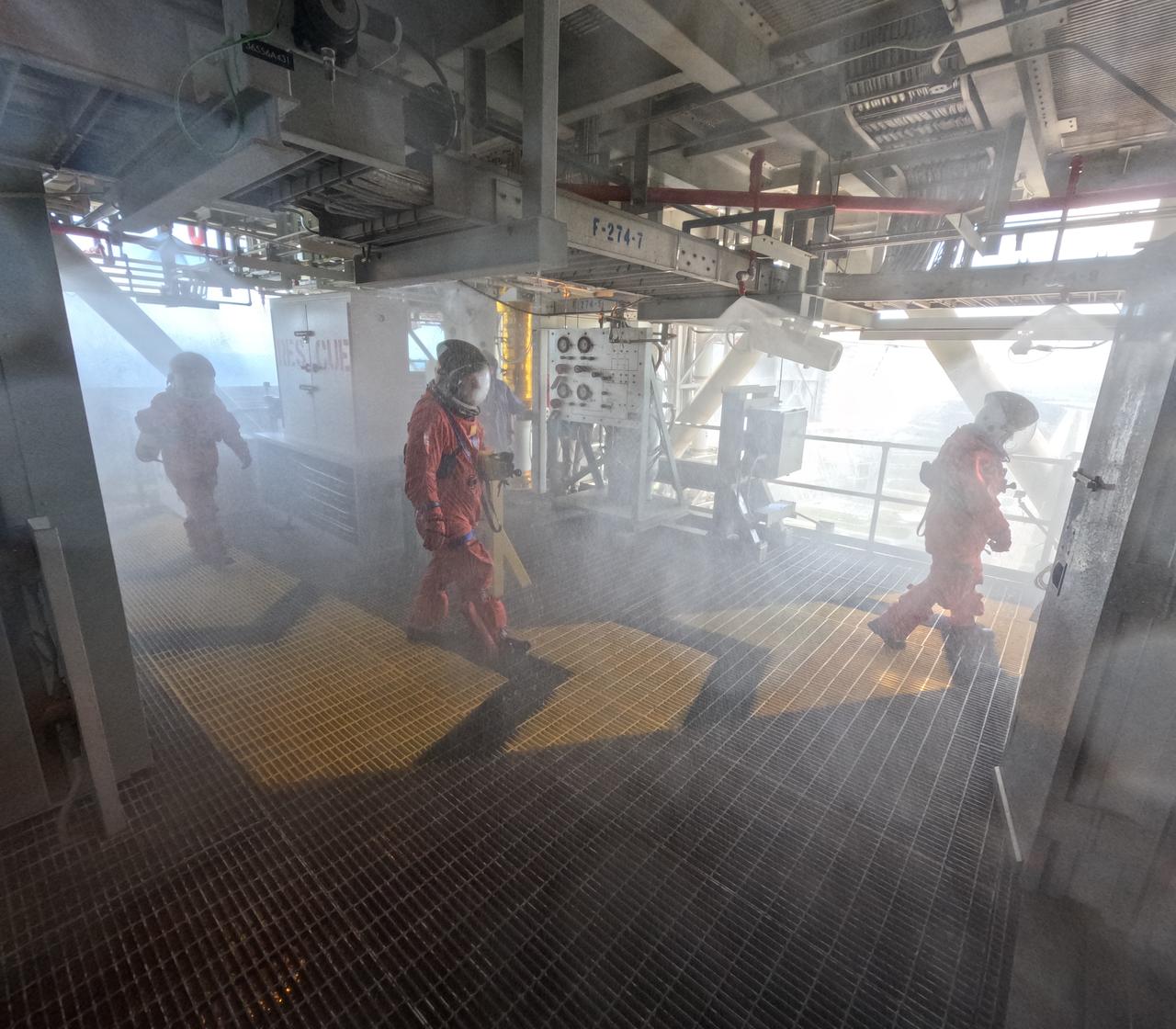
Teams at NASA’s Kennedy Space Center in Florida practice the Artemis mission emergency escape or egress procedures during a series of integrated system verification and validation tests at Launch Pad 39B on Sunday, Aug. 11, 2024. Members of the closeout crew, simulated flight crew, pad rescue team, and the Exploration Ground Systems Program practiced the process of getting inside and out of the emergency egress baskets. While the crew and other personnel will ride the emergency egress baskets to the terminus area in a real emergency, no one rode the baskets for this test. Instead, teams tested the baskets during separate occasions by using water tanks filled to different levels to replicate simulate the weight of passengers.
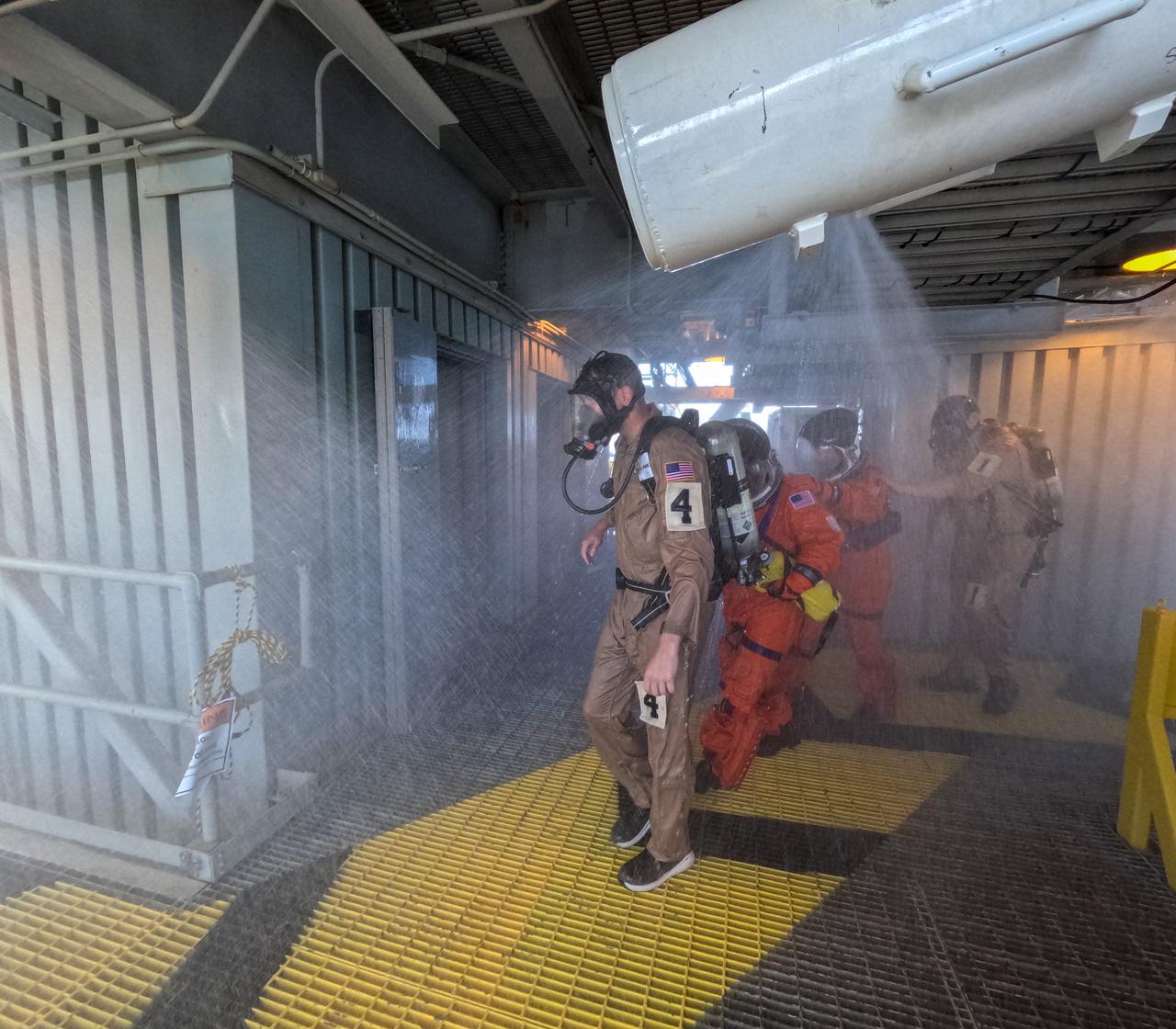
Teams at NASA’s Kennedy Space Center in Florida practice the Artemis mission emergency escape or egress procedures during a series of integrated system verification and validation tests at Launch Pad 39B on Sunday, Aug. 11, 2024. Members of the closeout crew, simulated flight crew, pad rescue team, and the Exploration Ground Systems Program practiced the process of getting inside and out of the emergency egress baskets. While the crew and other personnel will ride the emergency egress baskets to the terminus area in a real emergency, no one rode the baskets for this test. Instead, teams tested the baskets during separate occasions by using water tanks filled to different levels to replicate simulate the weight of passengers.
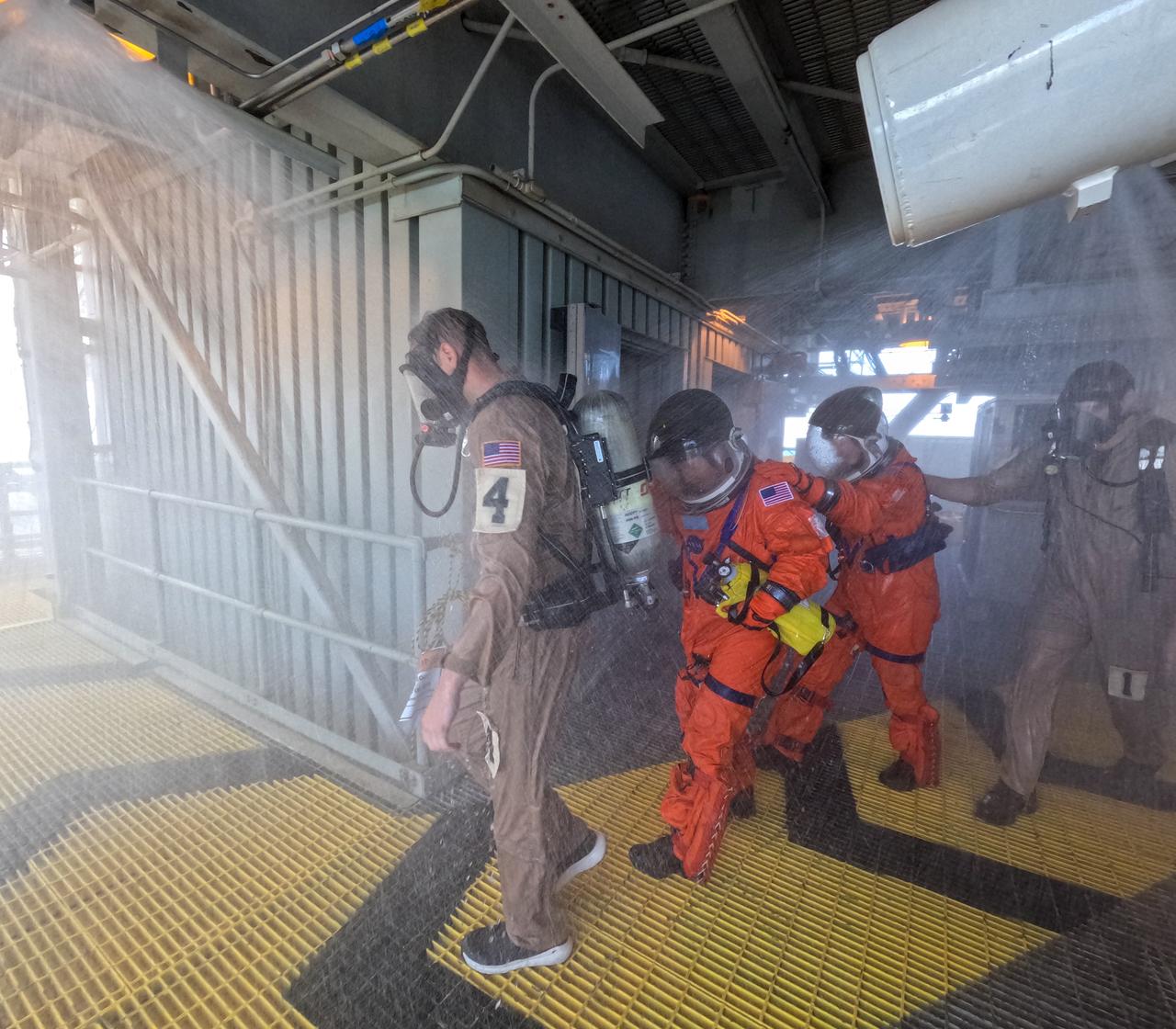
Teams at NASA’s Kennedy Space Center in Florida practice the Artemis mission emergency escape or egress procedures during a series of integrated system verification and validation tests at Launch Pad 39B on Sunday, Aug. 11, 2024. Members of the closeout crew, simulated flight crew, pad rescue team, and the Exploration Ground Systems Program practiced the process of getting inside and out of the emergency egress baskets. While the crew and other personnel will ride the emergency egress baskets to the terminus area in a real emergency, no one rode the baskets for this test. Instead, teams tested the baskets during separate occasions by using water tanks filled to different levels to replicate simulate the weight of passengers.
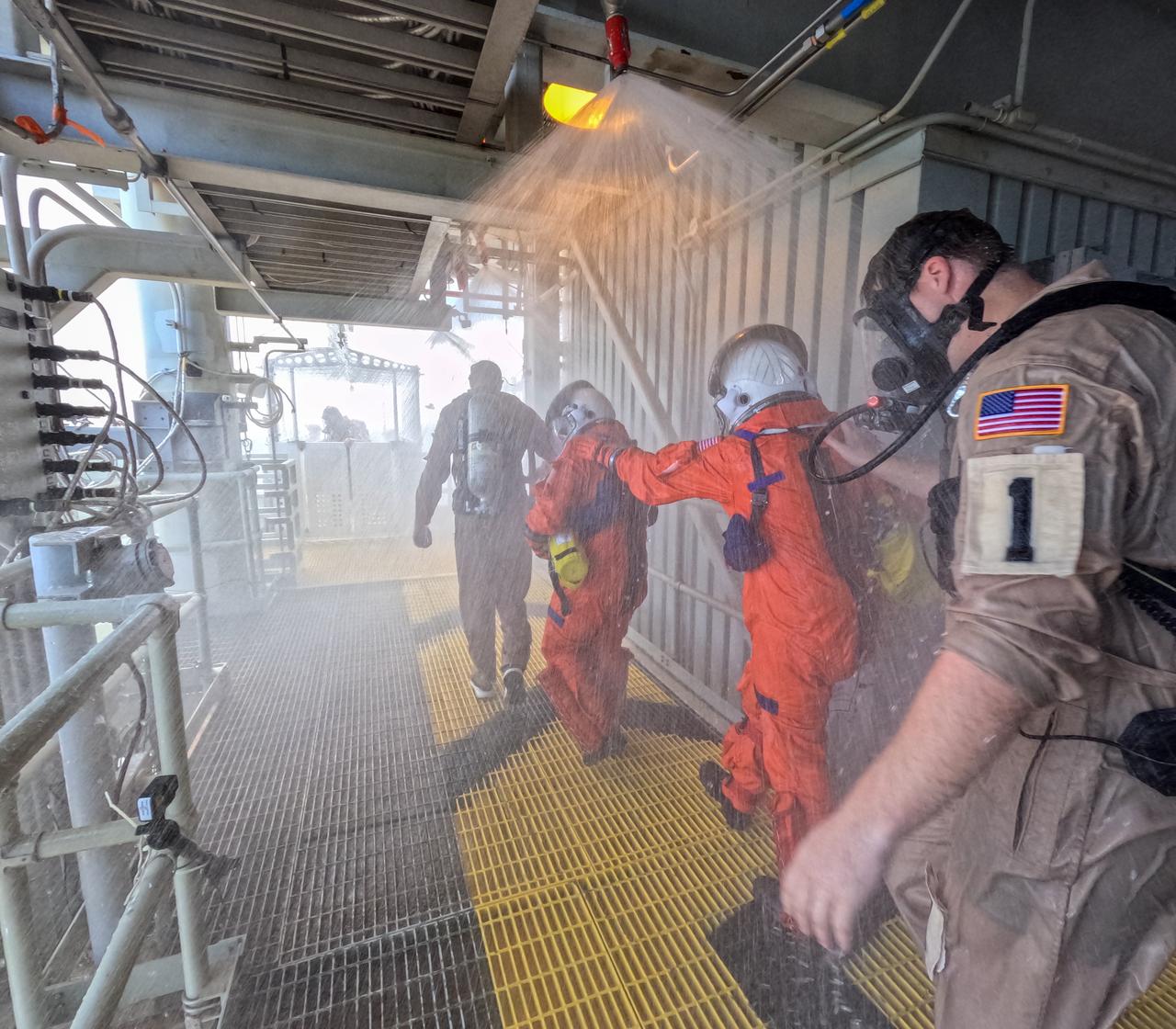
Teams at NASA’s Kennedy Space Center in Florida practice the Artemis mission emergency escape or egress procedures during a series of integrated system verification and validation tests at Launch Pad 39B on Sunday, Aug. 11, 2024. Members of the closeout crew, simulated flight crew, pad rescue team, and the Exploration Ground Systems Program practiced the process of getting inside and out of the emergency egress baskets. While the crew and other personnel will ride the emergency egress baskets to the terminus area in a real emergency, no one rode the baskets for this test. Instead, teams tested the baskets during separate occasions by using water tanks filled to different levels to replicate simulate the weight of passengers.
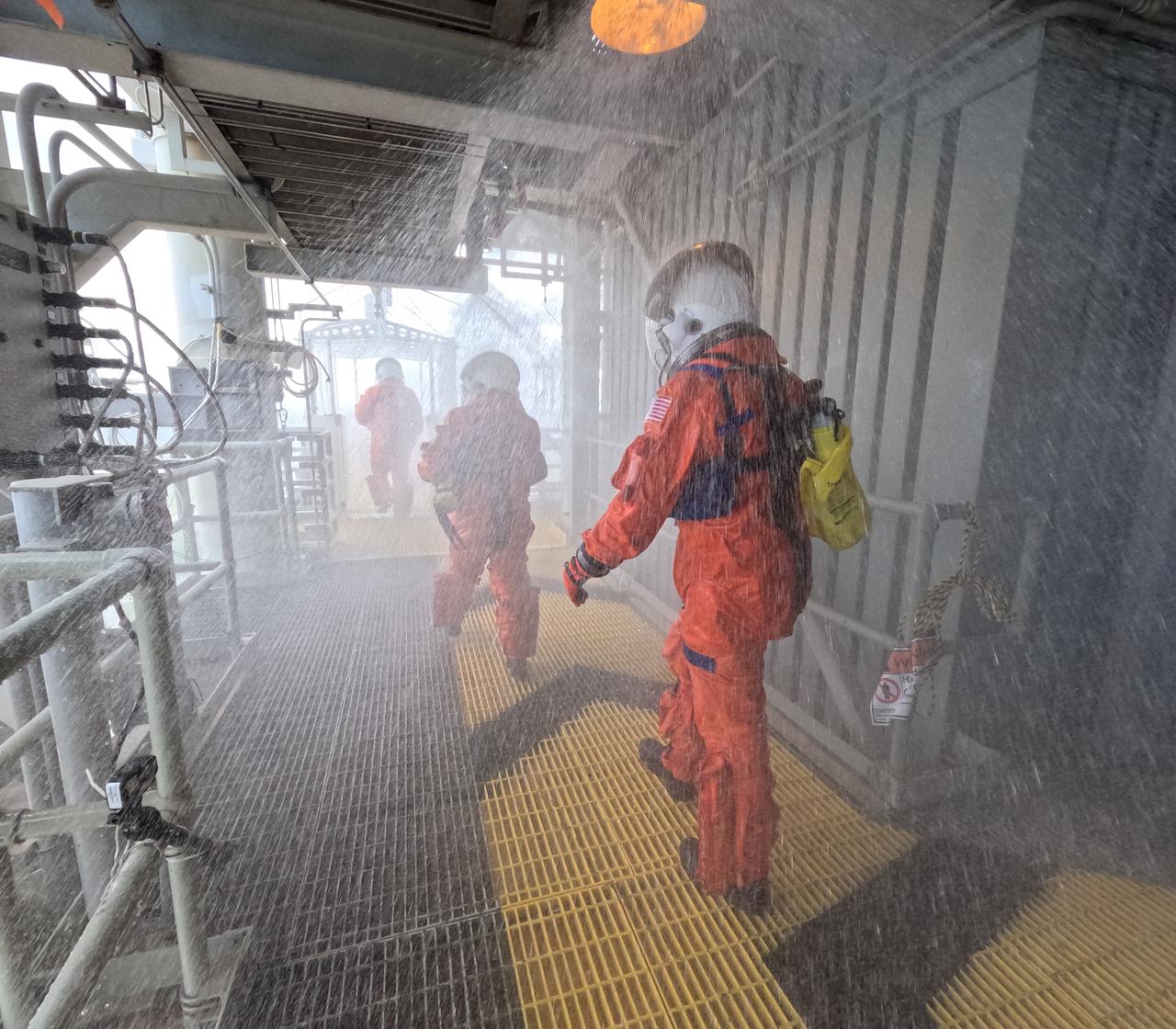
Teams at NASA’s Kennedy Space Center in Florida practice the Artemis mission emergency escape or egress procedures during a series of integrated system verification and validation tests at Launch Pad 39B on Sunday, Aug. 11, 2024. Members of the closeout crew, simulated flight crew, pad rescue team, and the Exploration Ground Systems Program practiced the process of getting inside and out of the emergency egress baskets. While the crew and other personnel will ride the emergency egress baskets to the terminus area in a real emergency, no one rode the baskets for this test. Instead, teams tested the baskets during separate occasions by using water tanks filled to different levels to replicate simulate the weight of passengers.
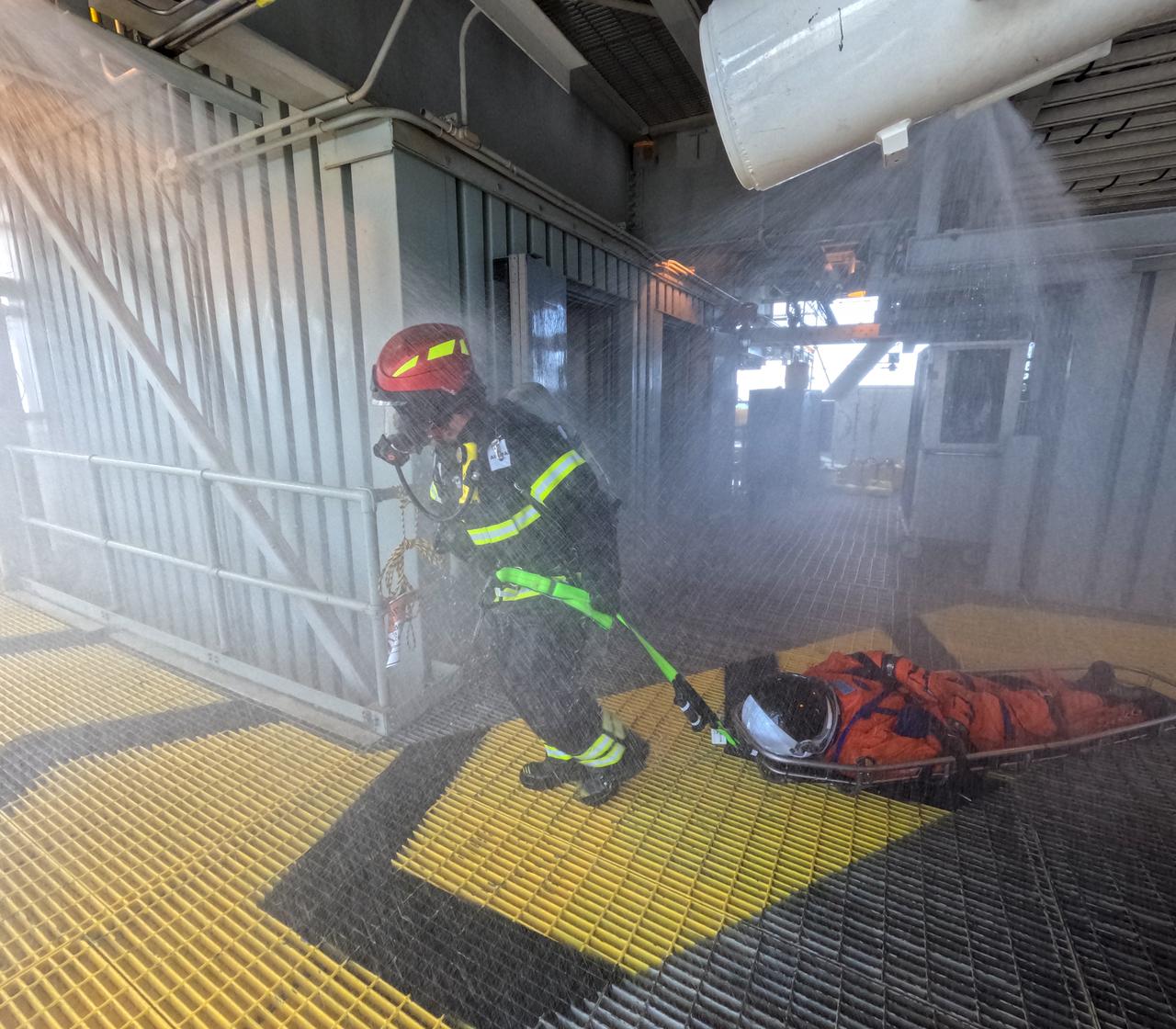
Teams at NASA’s Kennedy Space Center in Florida practice the Artemis mission emergency escape or egress procedures during a series of integrated system verification and validation tests at Launch Pad 39B on Sunday, Aug. 11, 2024. Members of the closeout crew, simulated flight crew, pad rescue team, and the Exploration Ground Systems Program practiced the process of getting inside and out of the emergency egress baskets. While the crew and other personnel will ride the emergency egress baskets to the terminus area in a real emergency, no one rode the baskets for this test. Instead, teams tested the baskets during separate occasions by using water tanks filled to different levels to replicate simulate the weight of passengers.
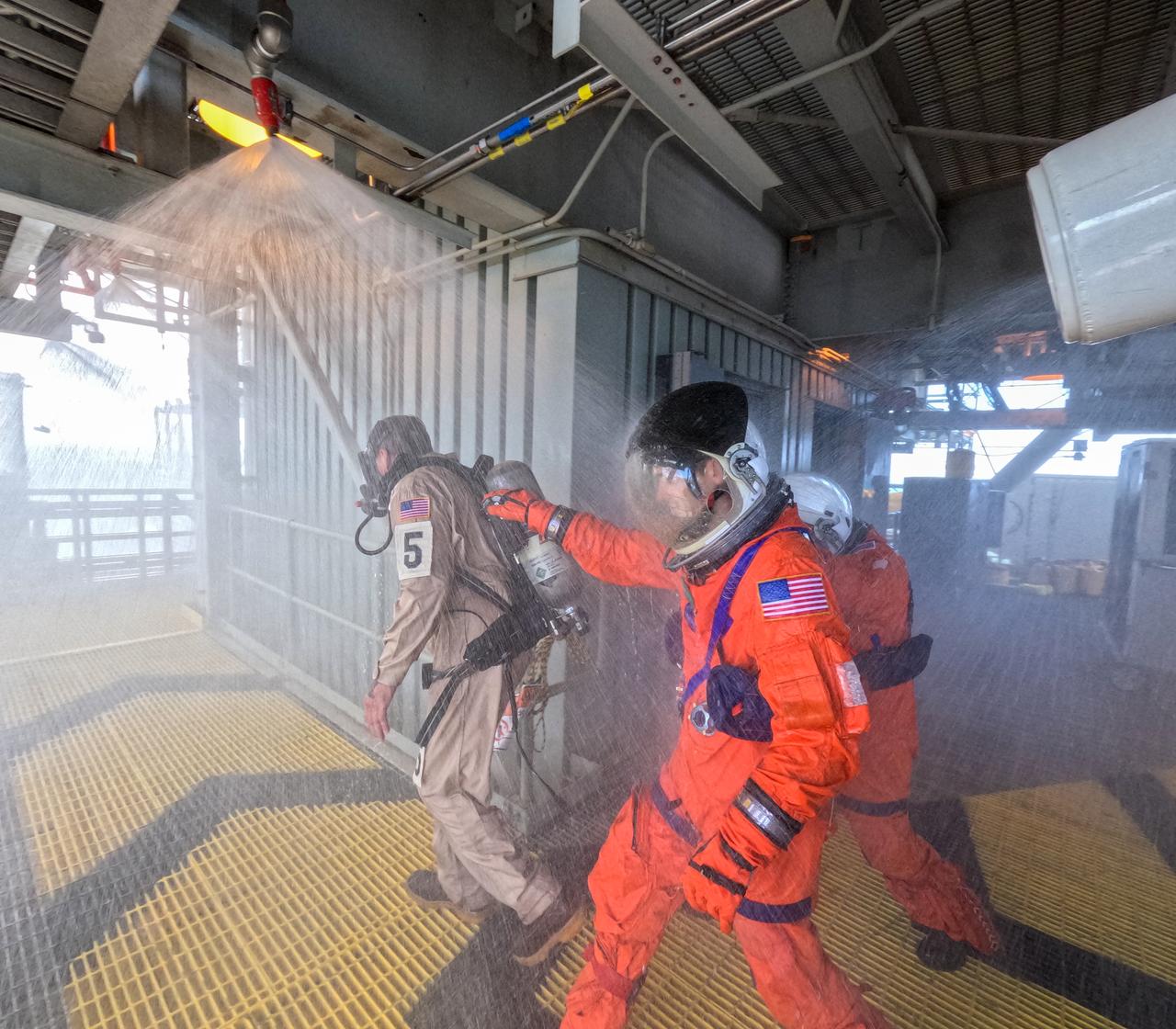
Teams at NASA’s Kennedy Space Center in Florida practice the Artemis mission emergency escape or egress procedures during a series of integrated system verification and validation tests at Launch Pad 39B on Sunday, Aug. 11, 2024. Members of the closeout crew, simulated flight crew, pad rescue team, and the Exploration Ground Systems Program practiced the process of getting inside and out of the emergency egress baskets. While the crew and other personnel will ride the emergency egress baskets to the terminus area in a real emergency, no one rode the baskets for this test. Instead, teams tested the baskets during separate occasions by using water tanks filled to different levels to replicate simulate the weight of passengers.

Teams at NASA’s Kennedy Space Center in Florida practice the Artemis mission emergency escape or egress procedures during a series of integrated system verification and validation tests at Launch Pad 39B on Sunday, Aug. 11, 2024. Members of the closeout crew, simulated flight crew, pad rescue team, and the Exploration Ground Systems Program practiced the process of getting inside and out of the emergency egress baskets. While the crew and other personnel will ride the emergency egress baskets to the terminus area in a real emergency, no one rode the baskets for this test. Instead, teams tested the baskets during separate occasions by using water tanks filled to different levels to replicate simulate the weight of passengers.
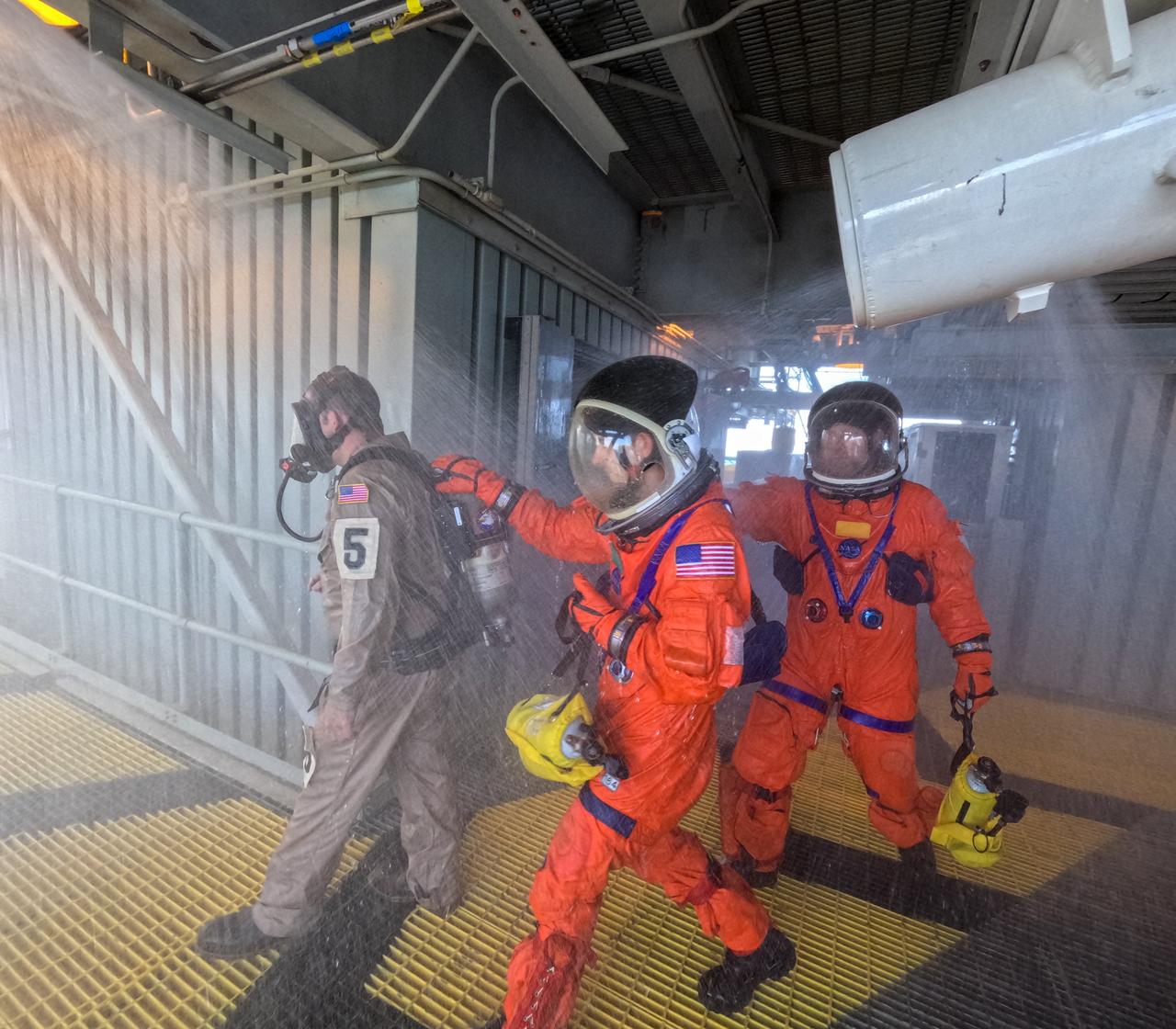
Teams at NASA’s Kennedy Space Center in Florida practice the Artemis mission emergency escape or egress procedures during a series of integrated system verification and validation tests at Launch Pad 39B on Sunday, Aug. 11, 2024. Members of the closeout crew, simulated flight crew, pad rescue team, and the Exploration Ground Systems Program practiced the process of getting inside and out of the emergency egress baskets. While the crew and other personnel will ride the emergency egress baskets to the terminus area in a real emergency, no one rode the baskets for this test. Instead, teams tested the baskets during separate occasions by using water tanks filled to different levels to replicate simulate the weight of passengers.
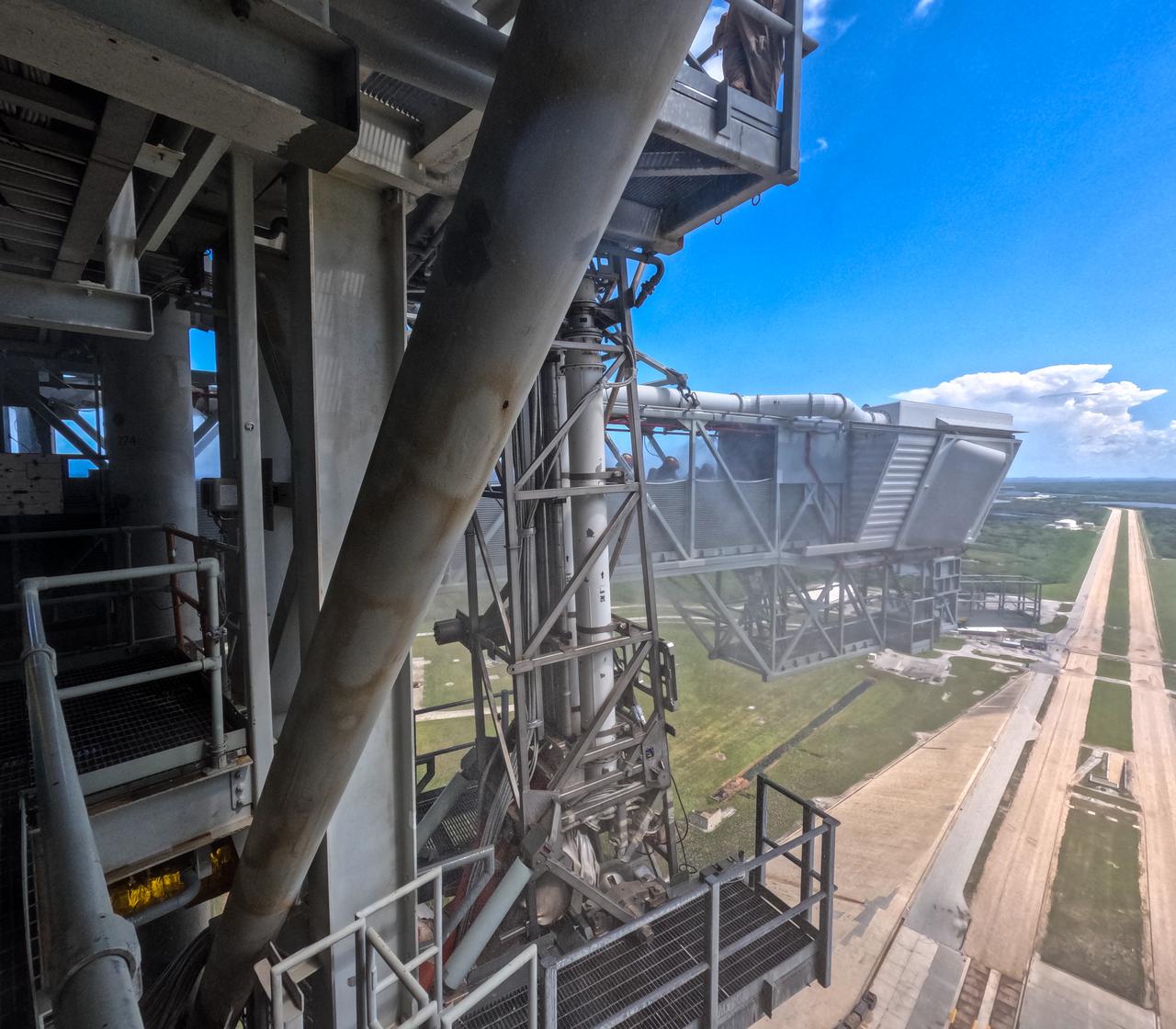
Teams at NASA’s Kennedy Space Center in Florida practice the Artemis mission emergency escape or egress procedures during a series of integrated system verification and validation tests at Launch Pad 39B on Sunday, Aug. 11, 2024. Members of the closeout crew, pad rescue team and the Exploration Ground Systems Program practiced walking to the crew access arm and getting inside and out of the emergency egress baskets. While the crew and other personnel will ride the emergency egress baskets to the terminus area in a real emergency, no one rode the baskets for this test. Instead, teams tested the baskets during separate occasions by using water tanks filled to different levels to replicate simulate the weight of passengers.
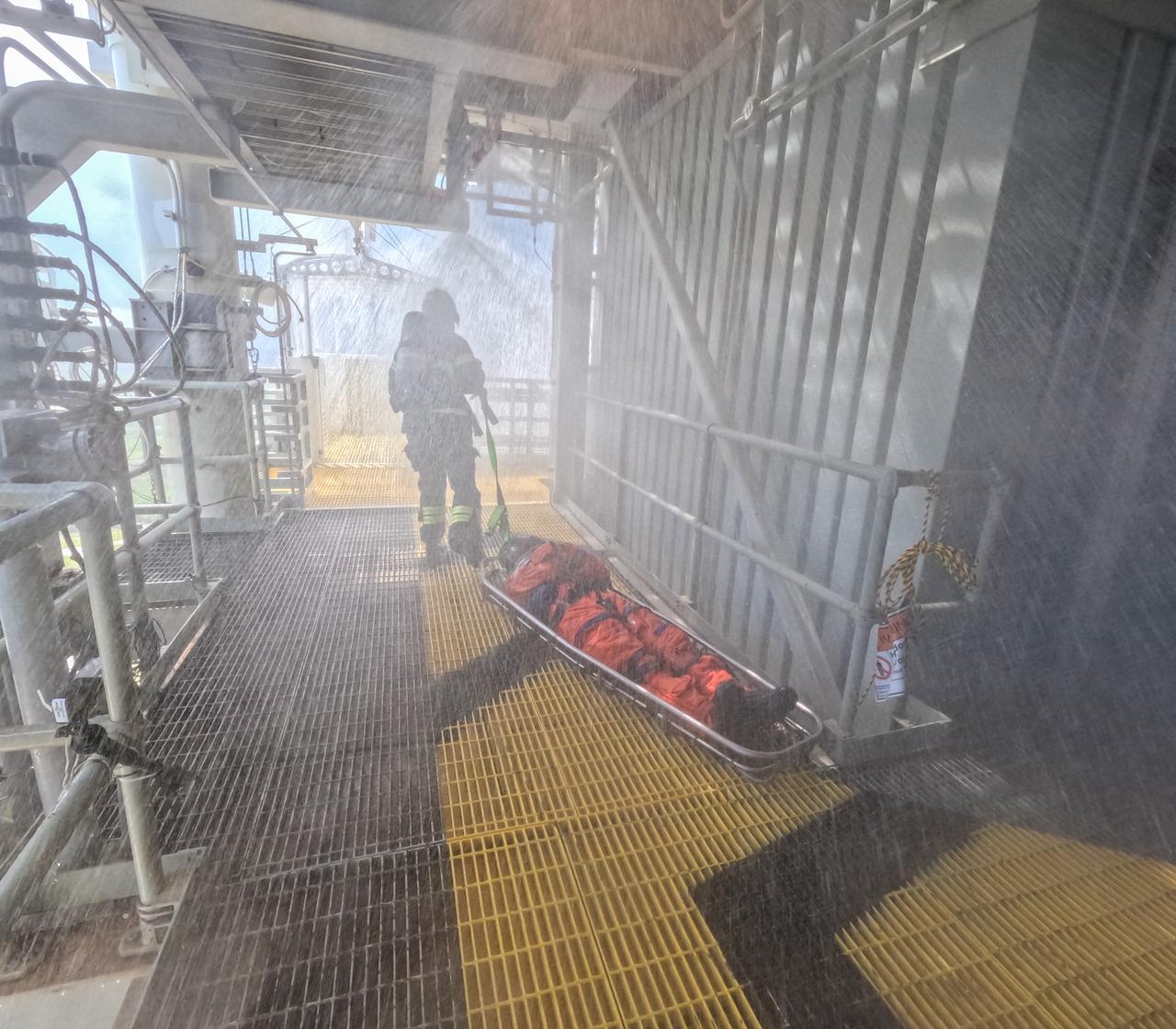
Teams at NASA’s Kennedy Space Center in Florida practice the Artemis mission emergency escape or egress procedures during a series of integrated system verification and validation tests at Launch Pad 39B on Sunday, Aug. 11, 2024. Members of the closeout crew, simulated flight crew, pad rescue team, and the Exploration Ground Systems Program practiced the process of getting inside and out of the emergency egress baskets. While the crew and other personnel will ride the emergency egress baskets to the terminus area in a real emergency, no one rode the baskets for this test. Instead, teams tested the baskets during separate occasions by using water tanks filled to different levels to replicate simulate the weight of passengers.
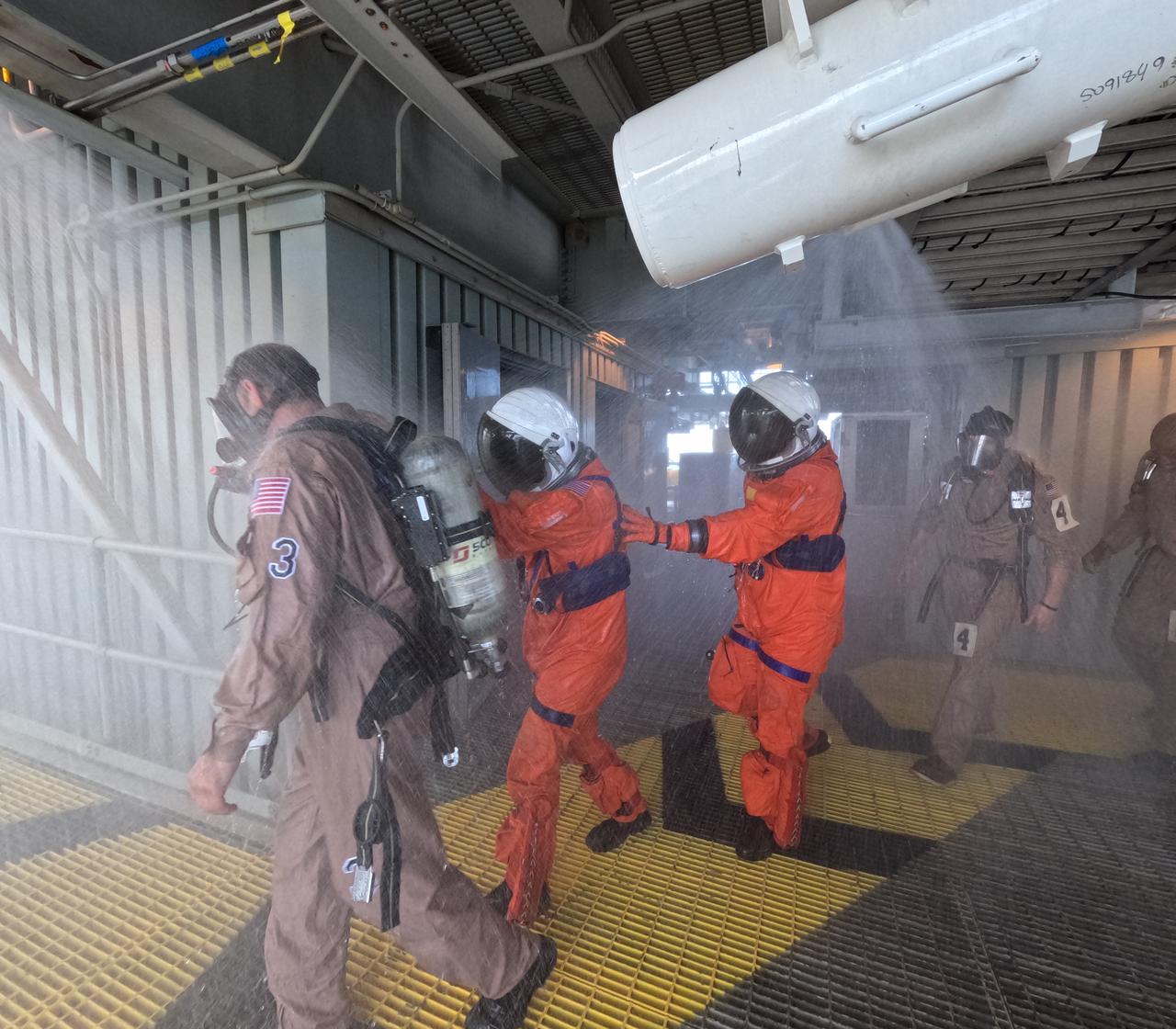
Teams at NASA’s Kennedy Space Center in Florida practice the Artemis mission emergency escape or egress procedures during a series of integrated system verification and validation tests at Launch Pad 39B on Sunday, Aug. 11, 2024. Members of the closeout crew, simulated flight crew, pad rescue team, and the Exploration Ground Systems Program practiced the process of getting inside and out of the emergency egress baskets. While the crew and other personnel will ride the emergency egress baskets to the terminus area in a real emergency, no one rode the baskets for this test. Instead, teams tested the baskets during separate occasions by using water tanks filled to different levels to replicate simulate the weight of passengers.
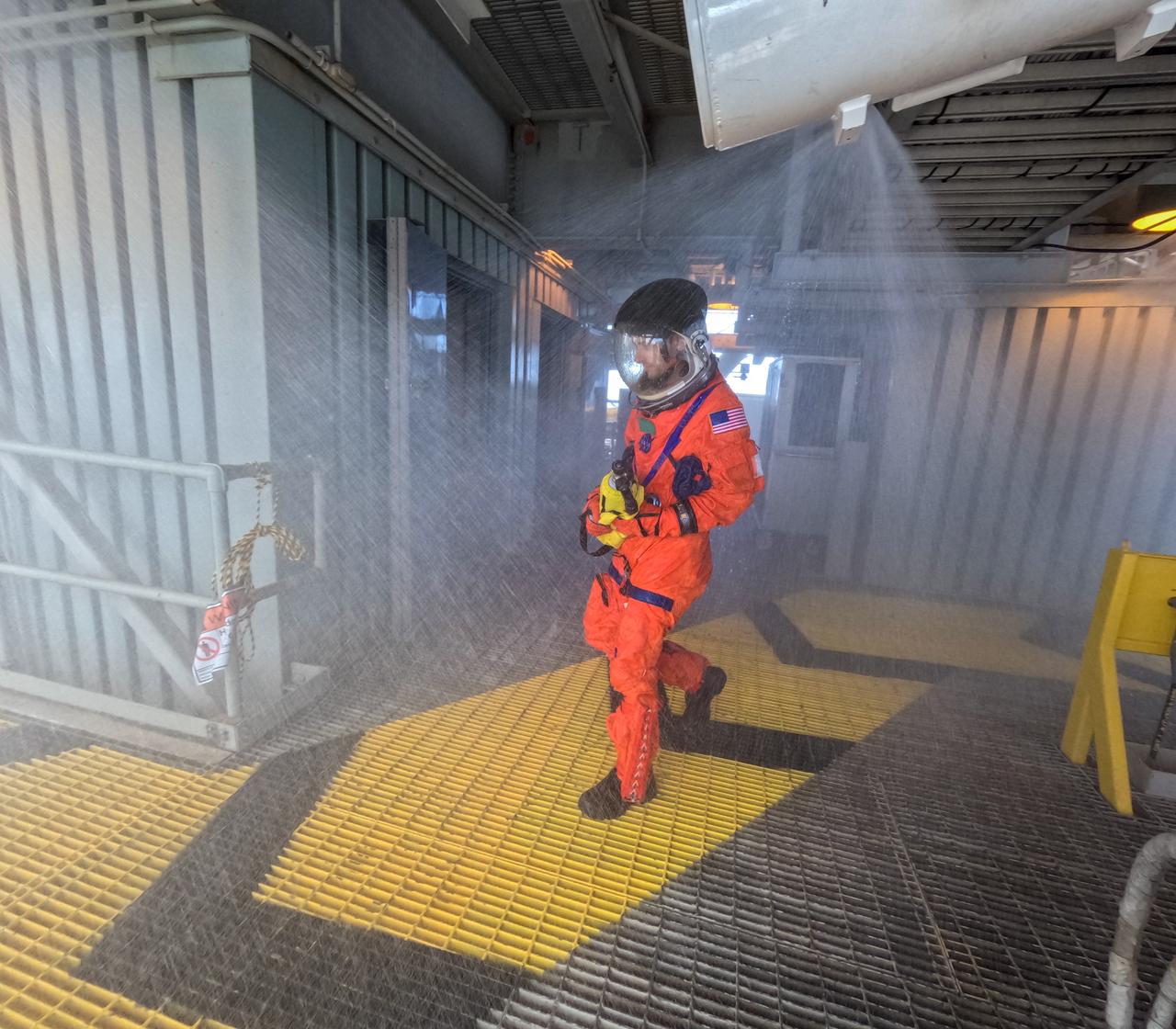
Teams at NASA’s Kennedy Space Center in Florida practice the Artemis mission emergency escape or egress procedures during a series of integrated system verification and validation tests at Launch Pad 39B on Sunday, Aug. 11, 2024. Members of the closeout crew, simulated flight crew, pad rescue team, and the Exploration Ground Systems Program practiced the process of getting inside and out of the emergency egress baskets. While the crew and other personnel will ride the emergency egress baskets to the terminus area in a real emergency, no one rode the baskets for this test. Instead, teams tested the baskets during separate occasions by using water tanks filled to different levels to replicate simulate the weight of passengers.
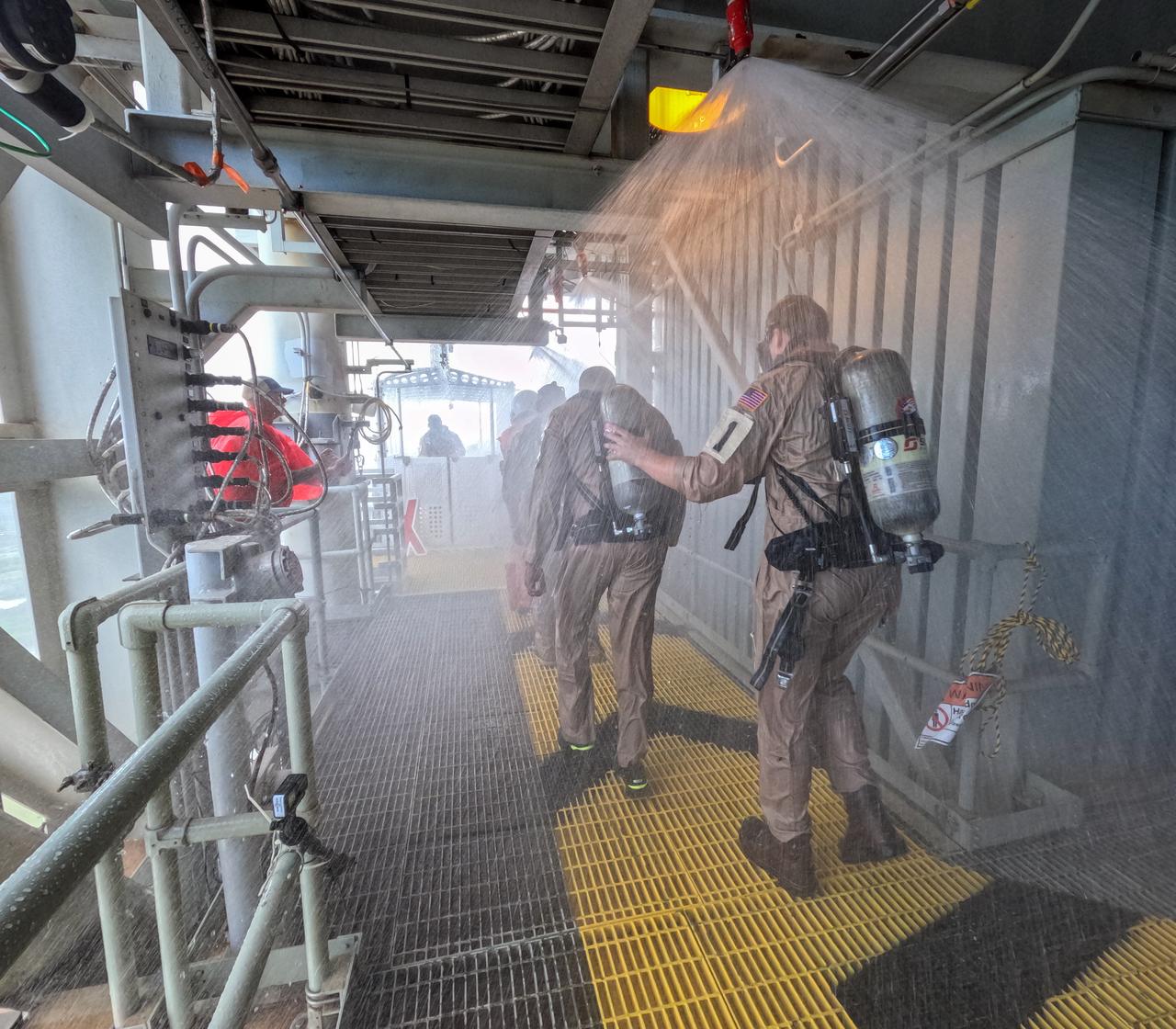
Teams at NASA’s Kennedy Space Center in Florida practice the Artemis mission emergency escape or egress procedures during a series of integrated system verification and validation tests at Launch Pad 39B on Sunday, Aug. 11, 2024. Members of the closeout crew, simulated flight crew, pad rescue team, and the Exploration Ground Systems Program practiced the process of getting inside and out of the emergency egress baskets. While the crew and other personnel will ride the emergency egress baskets to the terminus area in a real emergency, no one rode the baskets for this test. Instead, teams tested the baskets during separate occasions by using water tanks filled to different levels to replicate simulate the weight of passengers.
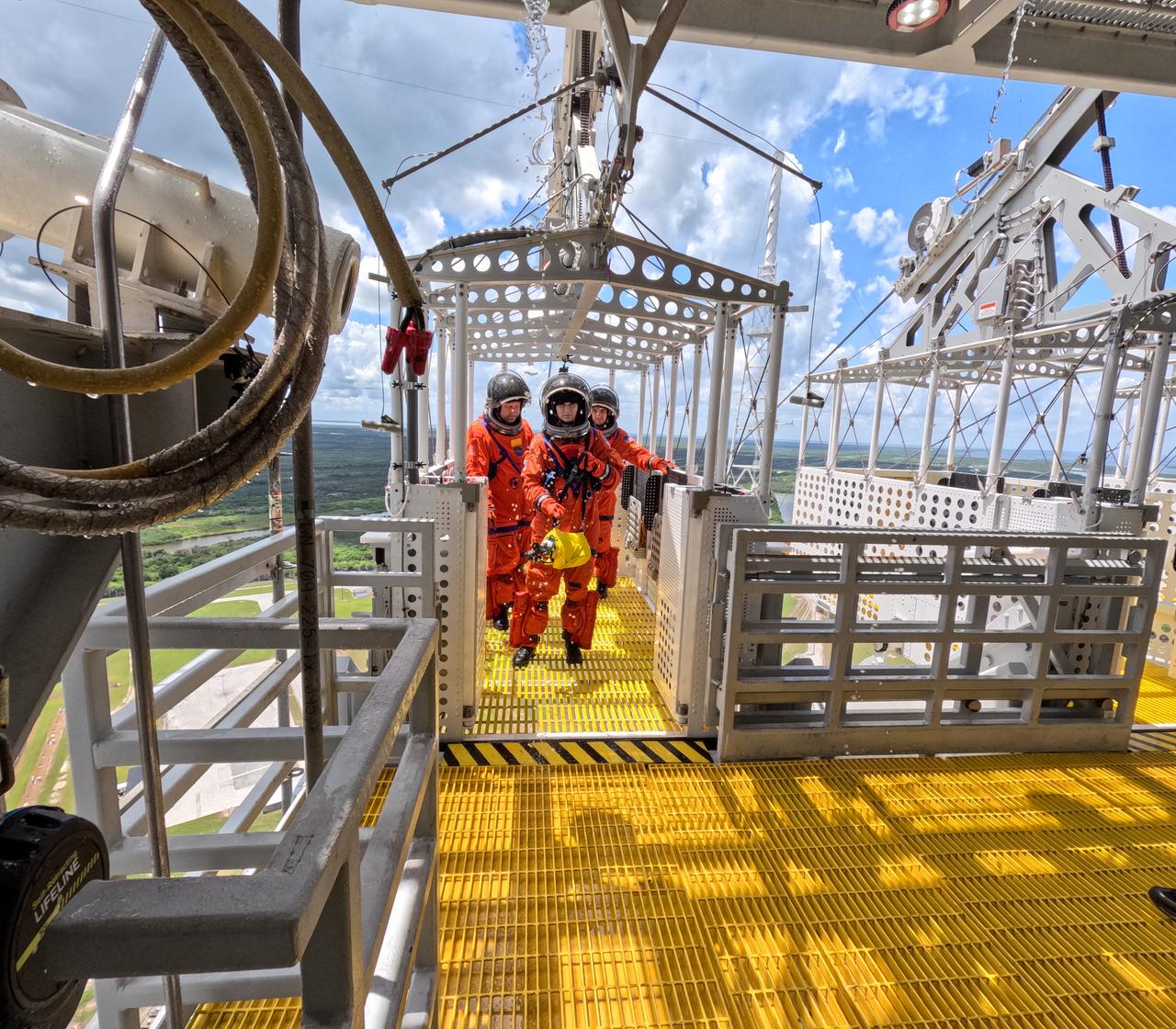
Teams at NASA’s Kennedy Space Center in Florida practice the Artemis mission emergency escape or egress procedures during a series of integrated system verification and validation tests at Launch Pad 39B on Sunday, Aug. 11, 2024. Members of the closeout crew, simulated flight crew, pad rescue team, and the Exploration Ground Systems Program practiced the process of getting inside and out of the emergency egress baskets. While the crew and other personnel will ride the emergency egress baskets to the terminus area in a real emergency, no one rode the baskets for this test. Instead, teams tested the baskets during separate occasions by using water tanks filled to different levels to replicate simulate the weight of passengers.
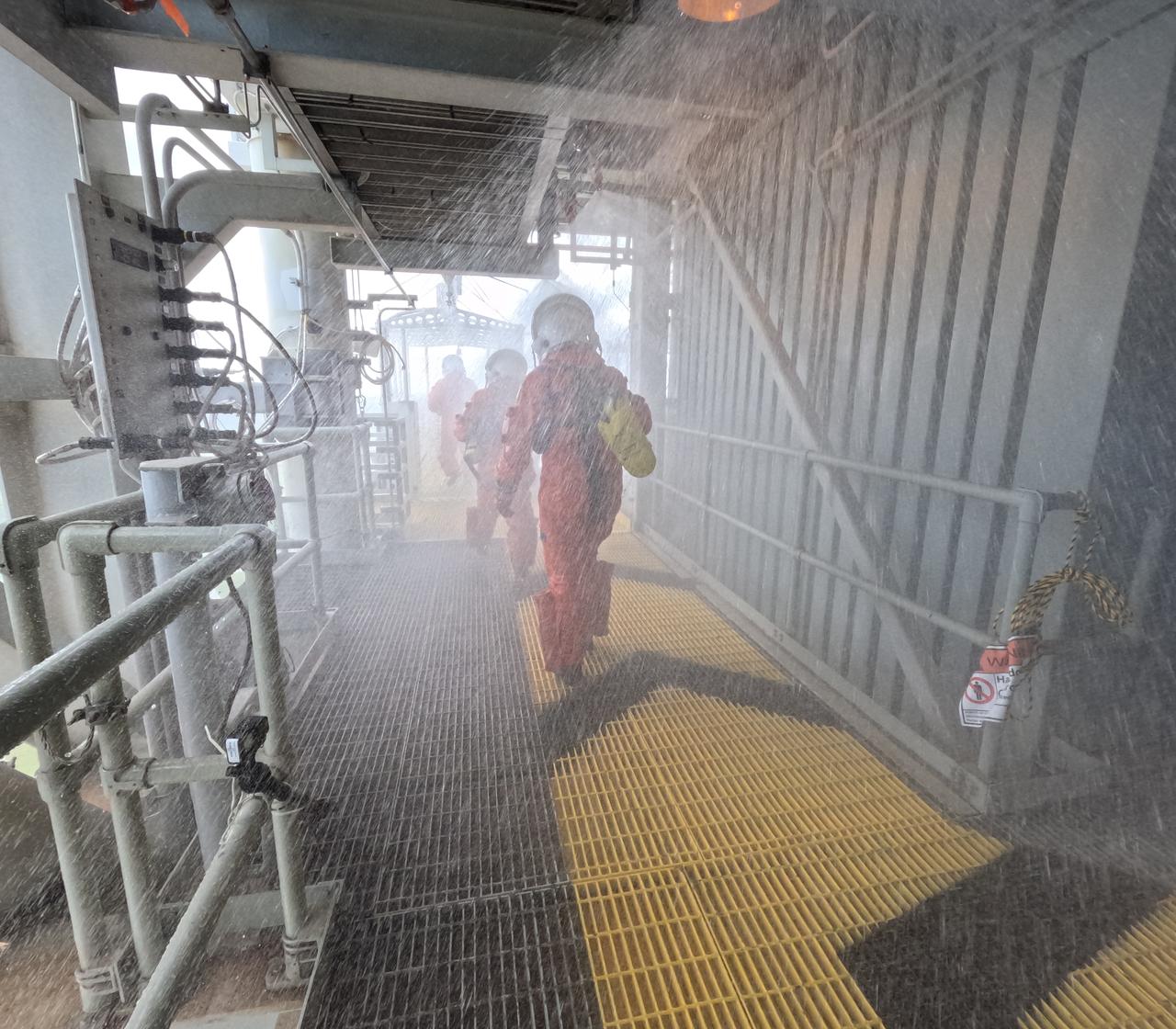
Teams at NASA’s Kennedy Space Center in Florida practice the Artemis mission emergency escape or egress procedures during a series of integrated system verification and validation tests at Launch Pad 39B on Sunday, Aug. 11, 2024. Members of the closeout crew, simulated flight crew, pad rescue team, and the Exploration Ground Systems Program practiced the process of getting inside and out of the emergency egress baskets. While the crew and other personnel will ride the emergency egress baskets to the terminus area in a real emergency, no one rode the baskets for this test. Instead, teams tested the baskets during separate occasions by using water tanks filled to different levels to replicate simulate the weight of passengers.
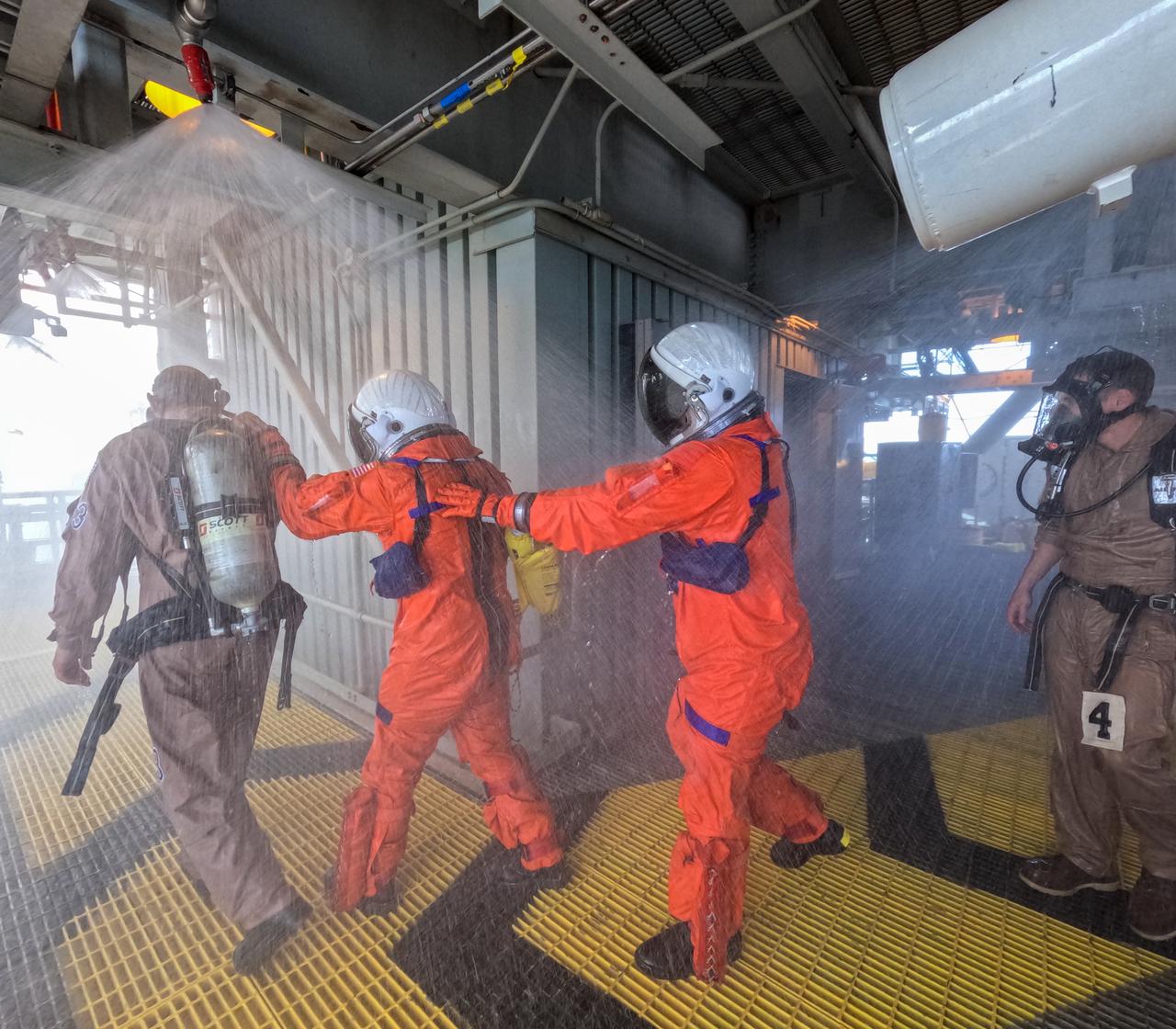
Teams at NASA’s Kennedy Space Center in Florida practice the Artemis mission emergency escape or egress procedures during a series of integrated system verification and validation tests at Launch Pad 39B on Sunday, Aug. 11, 2024. Members of the closeout crew, simulated flight crew, pad rescue team, and the Exploration Ground Systems Program practiced the process of getting inside and out of the emergency egress baskets. While the crew and other personnel will ride the emergency egress baskets to the terminus area in a real emergency, no one rode the baskets for this test. Instead, teams tested the baskets during separate occasions by using water tanks filled to different levels to replicate simulate the weight of passengers.