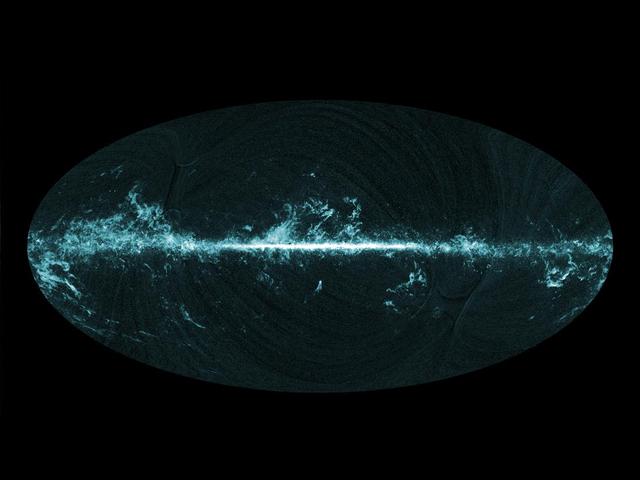
This all-sky image shows the distribution of carbon monoxide CO, a molecule used by astronomers to trace molecular clouds across the sky, as seen by Planck.
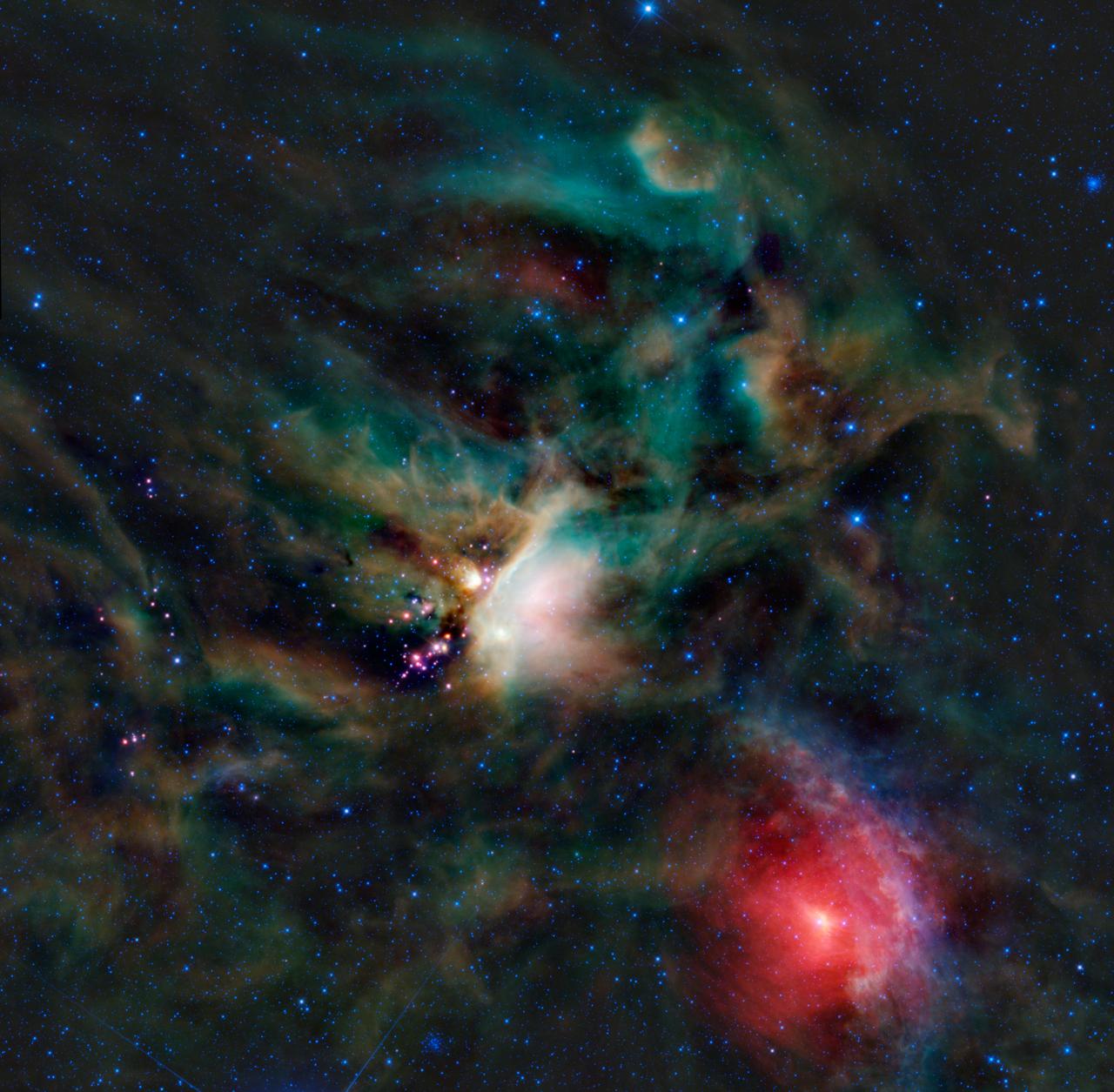
A rich collection of colorful astronomical objects is revealed in this picturesque image of the Rho Ophiuchi cloud complex from NASA Wide-field Infrared Explorer; the cloud is found rising above the plane of the Milky Way in the night sky.
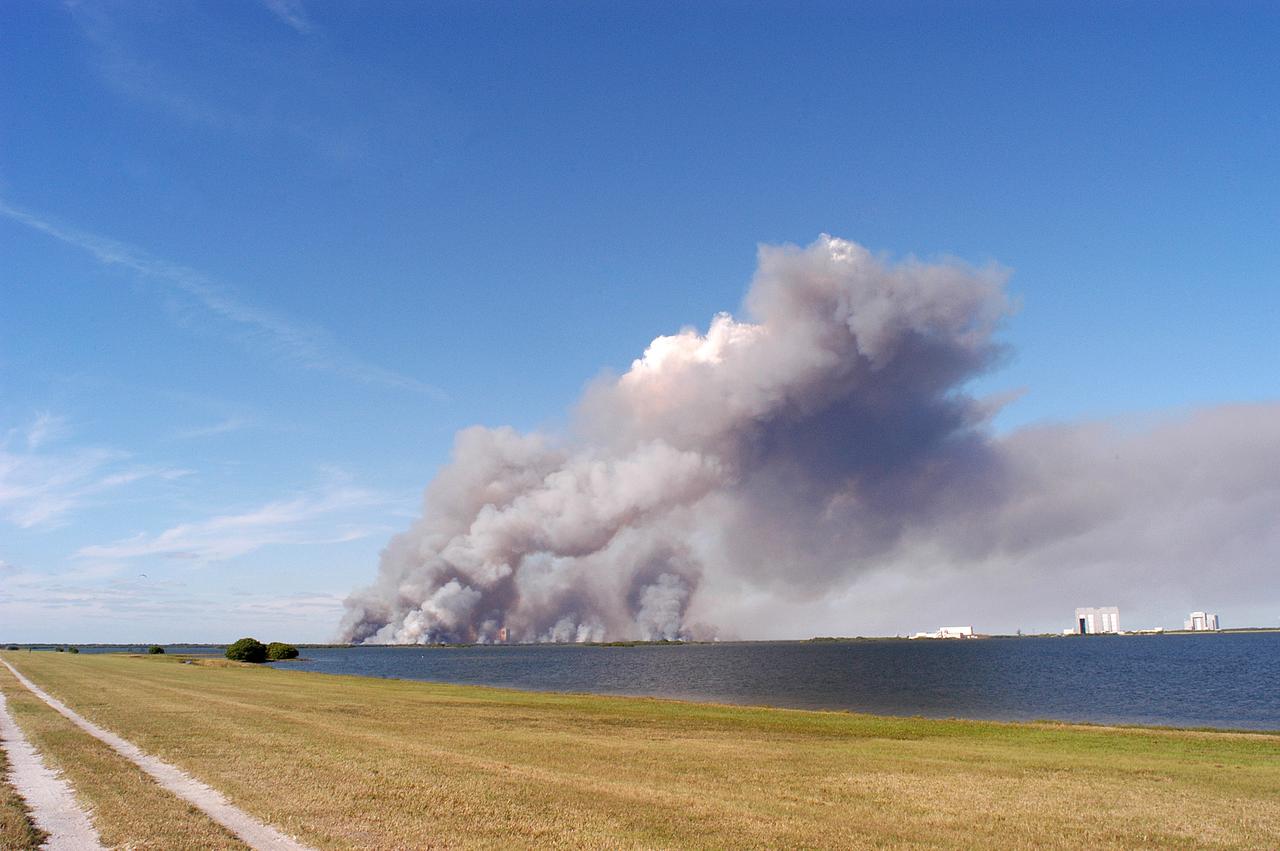
KENNEDY SPACE CENTER, FLA. - A successful controlled burn near KSC’s Launch Complex 39 area creates clouds of smoke in a clear blue sky. The water seen is the Banana River.

Wonders in the Antarctic Sea and Sky NASA aircraft and scientists have returned to the United States after a short ice-surveying mission to #Antarctica. Despite having only a week of flying time, the team returned with crucial scientific data and a trove of spectacular aerial photographs. The flights over Antarctica were part of Operation #IceBridge, a multi-year mission to monitor conditions in Antarctica and the Arctic until a new ice-monitoring satellite, ICESat-2, launches in 2016. ICESat-1 was decommissioned in 2009, and IceBridge aircraft have been flying ever since. Laser altimeter and radar data are the primary products of the mission, but IceBridge project scientist Michael Studinger almost always has his digital camera ready as well. On November 24, 2013, he took this photograph of a multi-layered lenticular cloud hovering near Mount Discovery, a volcano about 70 kilometers (44 miles) southwest of McMurdo. Lenticular #clouds are a type of wave cloud. They usually form when a layer of air near the surface encounters a topographic barrier, gets pushed upward, and flows over it as a series of atmospheric gravity waves. Lenticular clouds form at the crest of the waves, where the air is coolest and water vapor is most likely to condense into cloud droplets. The bulging sea ice in the foreground is a pressure ridge, which formed when separate ice floes collided and piled up on each other. Read more: <a href="http://1.usa.gov/18lXIQS" rel="nofollow">1.usa.gov/18lXIQS</a> Photograph courtesy of Michael Studinger. Caption by Adam Voiland of NASA's Earth Observatory. <b><a href="http://www.nasa.gov/audience/formedia/features/MP_Photo_Guidelines.html" rel="nofollow">NASA image use policy.</a></b> <b><a href="http://www.nasa.gov/centers/goddard/home/index.html" rel="nofollow">NASA Goddard Space Flight Center</a></b> enables NASA’s mission through four scientific endeavors: Earth Science, Heliophysics, Solar System Exploration, and Astrophysics. Goddard plays a leading role in NASA’s accomplishments by contributing compelling scientific knowledge to advance the Agency’s mission. <b>Follow us on <a href="http://twitter.com/NASA_GoddardPix" rel="nofollow">Twitter</a></b> <b>Like us on <a href="http://www.facebook.com/pages/Greenbelt-MD/NASA-Goddard/395013845897?ref=tsd" rel="nofollow">Facebook</a></b> <b>Find us on <a href="http://instagram.com/nasagoddard?vm=grid" rel="nofollow">Instagram</a></b>
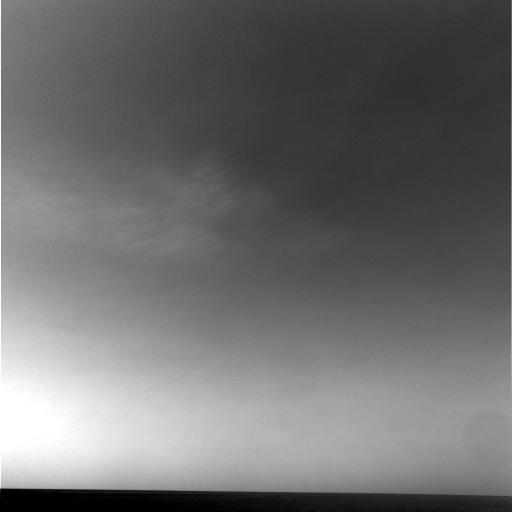
This image shows two side-by-side streaks of wispy, white clouds against a dark gray sky moving from the middle of the frame toward the left. To their right are several fainter, laterally extending rays of wispy clouds moving in the same direction.
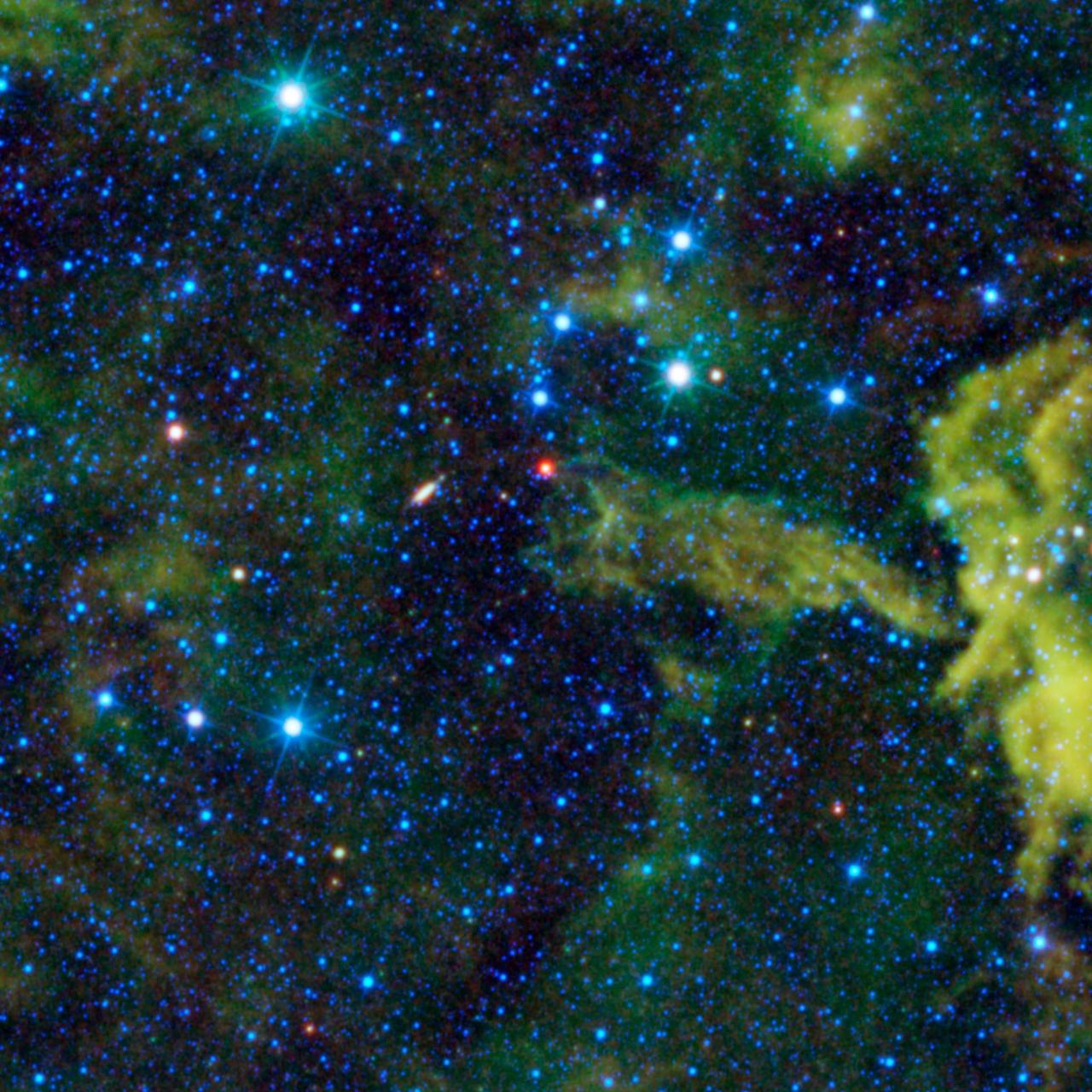
This stellar object is called Spitzer 073425.3-465409, as seen by NASA Wide-field Infrared Survey Explorer; the cloud CG4 might be imagined as a cosmic alligator eating its way across the sky.
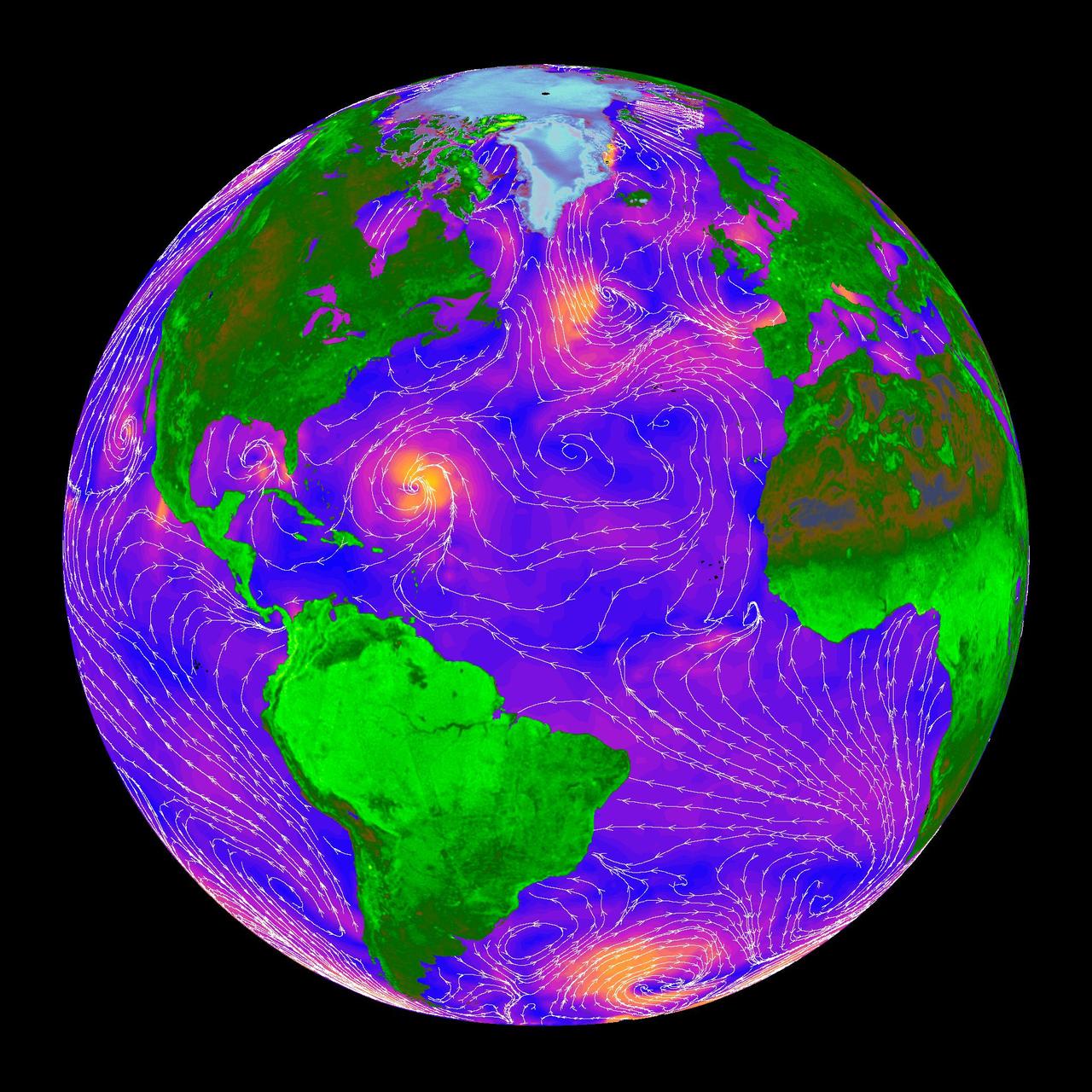
The SeaWinds scatterometer on NASA QuikScat satellite makes global radar measurements day and night, in clear sky and through clouds. Greenland and the polar ice cap are shown here on September 20, 1999.
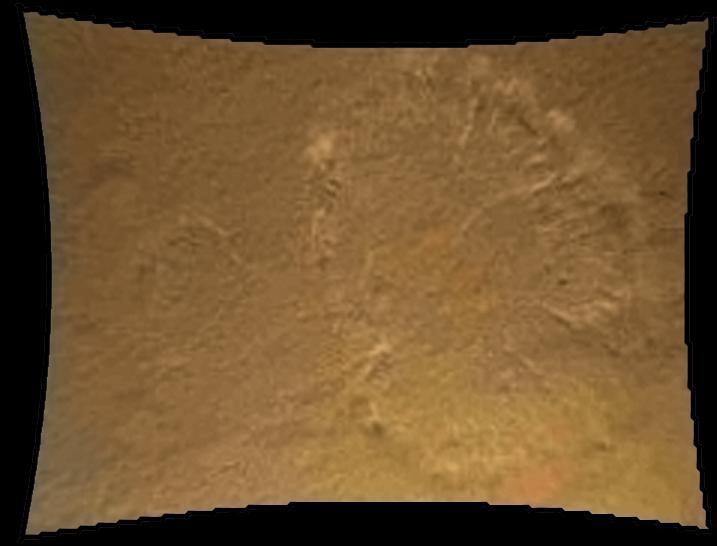
This color thumbnail image was obtained by NASA Curiosity rover. A dust cloud was generated when the Curiosity rover was being lowered to the surface while the sky crane hovered above.
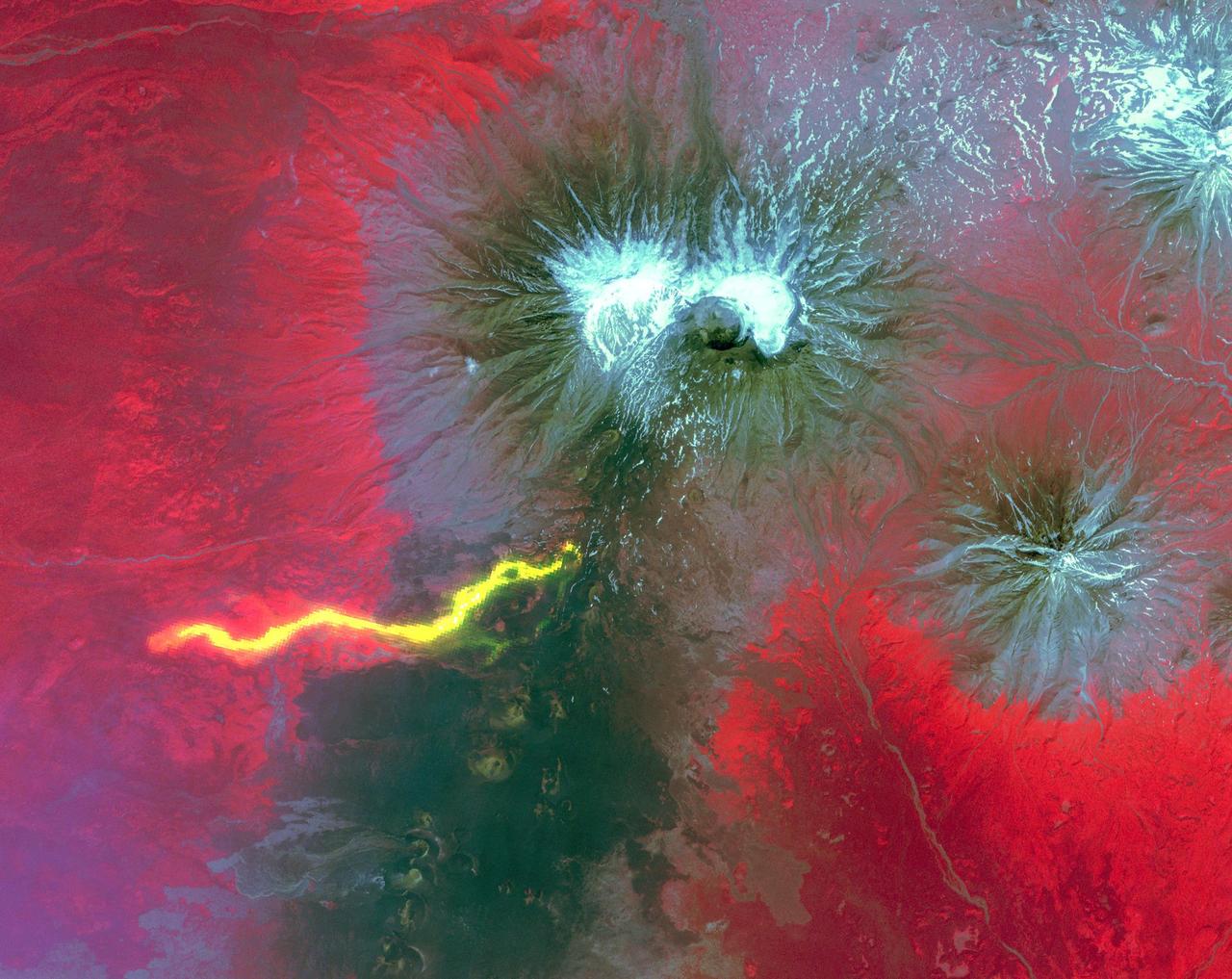
Plosky Tolbachik volcano, in Russia far eastern Kamchatka peninsula, erupted on Nov. 27, 2012 for the first time in 35 years, sending clouds of ash almost 10,000 feet into the sky. This image was acquired by NASA Terra spacecraft.
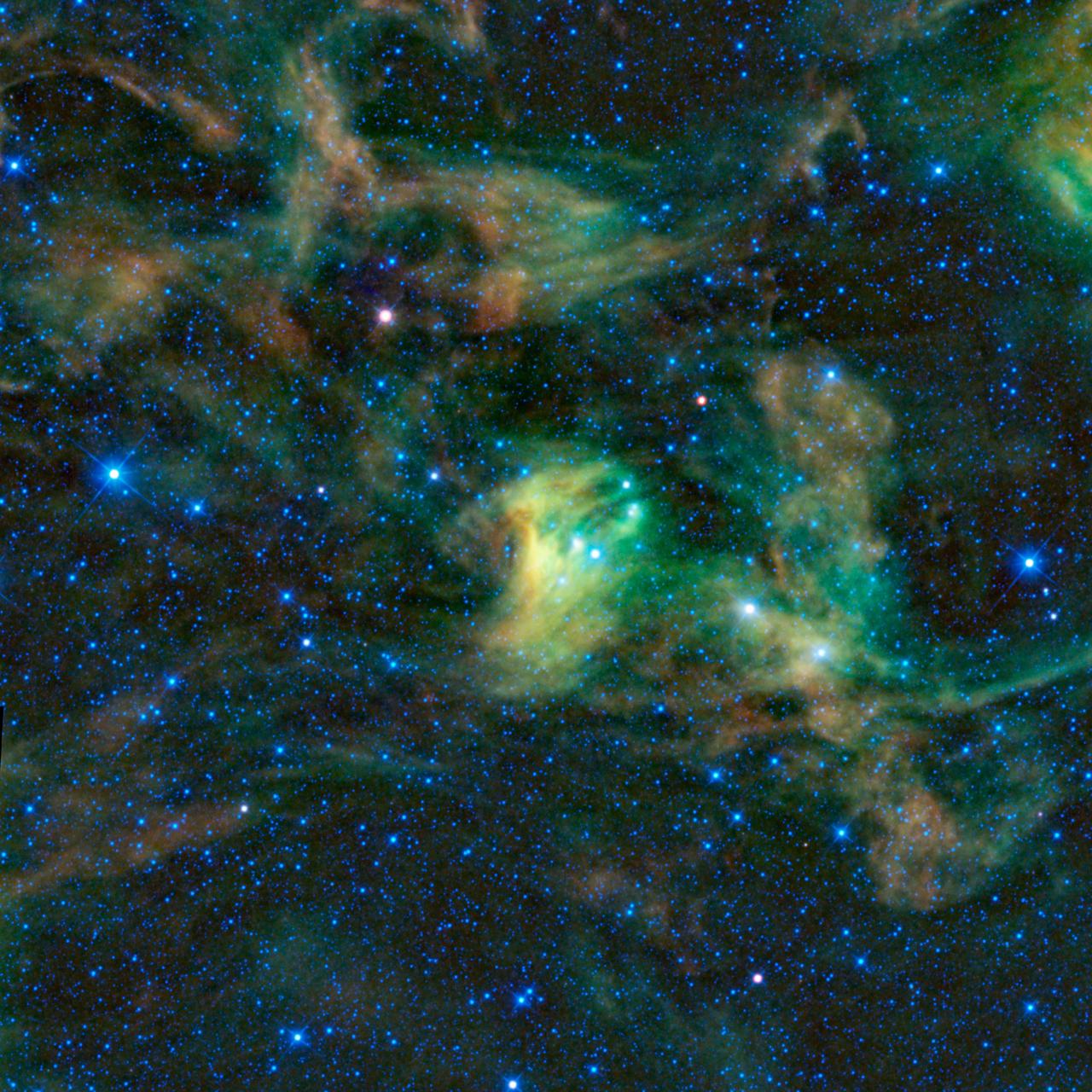
Between the claws of the dreaded scorpion imagined by the ancient Greeks lies this giant dust cloud, imaged by the Wide-field Infrared Survey Explorer. The constellation of Scorpius is prominent in the summer night sky in North America.
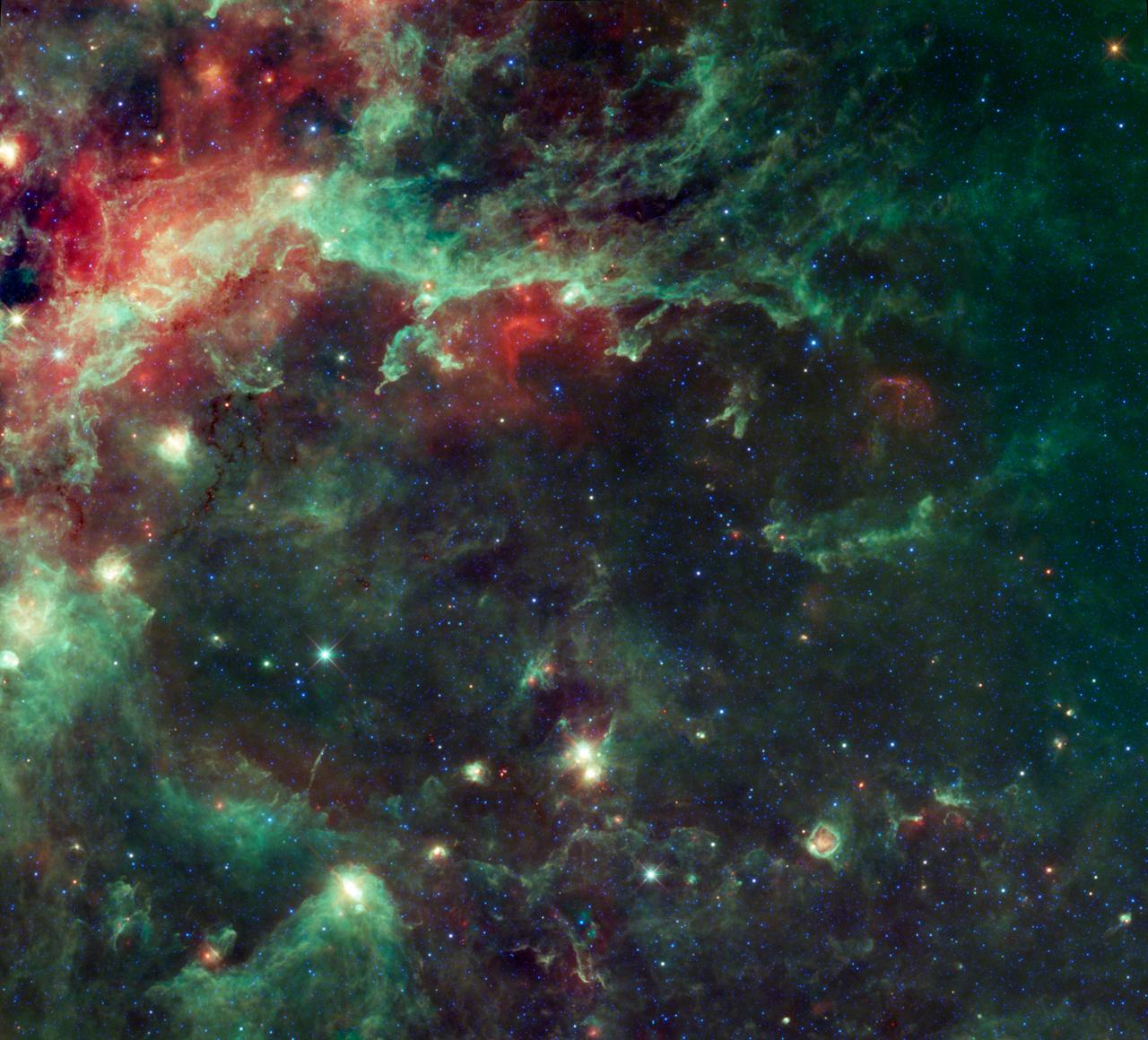
Best known as a swan winging its way across the night, the constellation Cygnus is easily seen in the northern hemisphere summertime sky. NASA WISE telescope captured this image of a huge complex of star-forming clouds and stellar clusters.

Rising from a sea of dust and gas like a giant seahorse, the Horsehead nebula is one of the most photographed objects in the sky. NASA Hubble Space Telescope took a close-up look at this heavenly icon, revealing the cloud intricate structure.
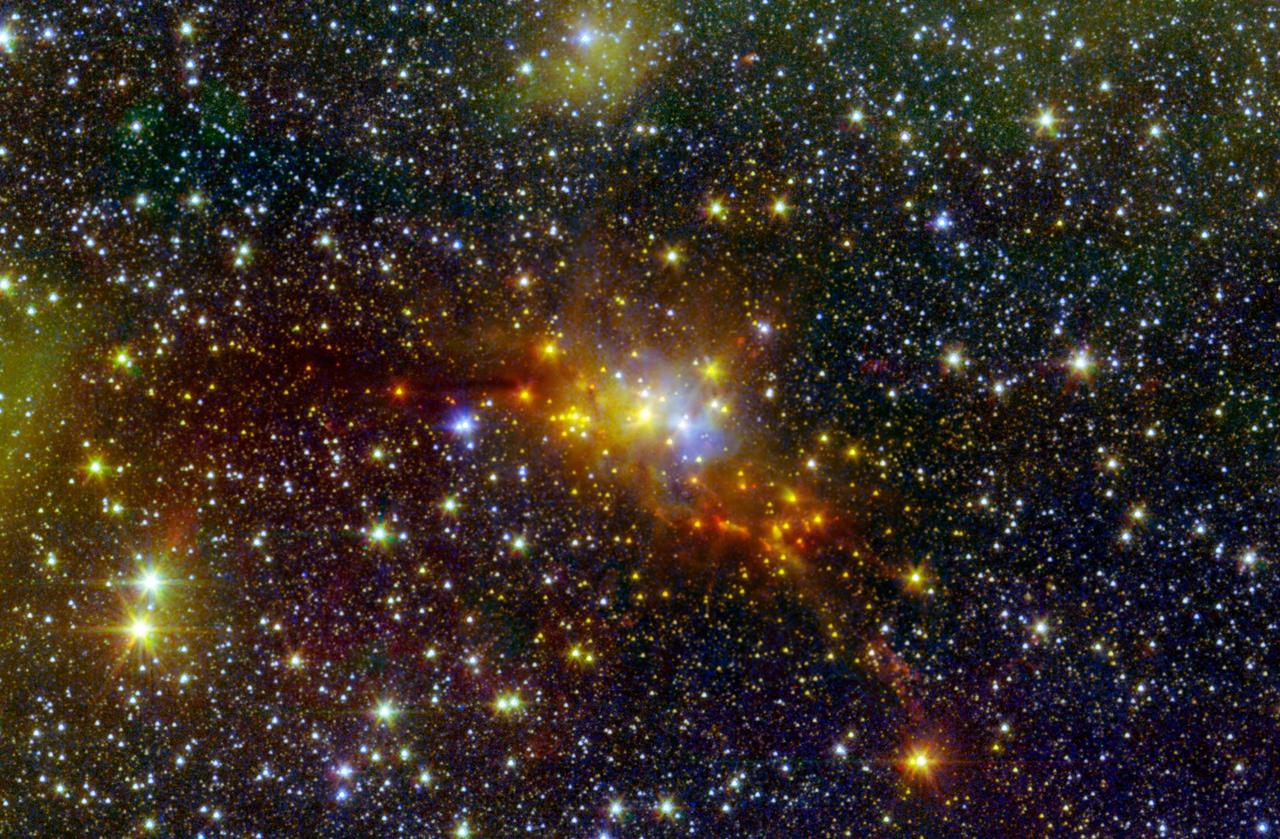
Studied by astronomers, Serpens Cloud Core is one of the youngest collections of stars ever seen in our galaxy. This infrared image combines data from NASA Spitzer with shorter-wavelength observations from the Two Micron All Sky Survey.
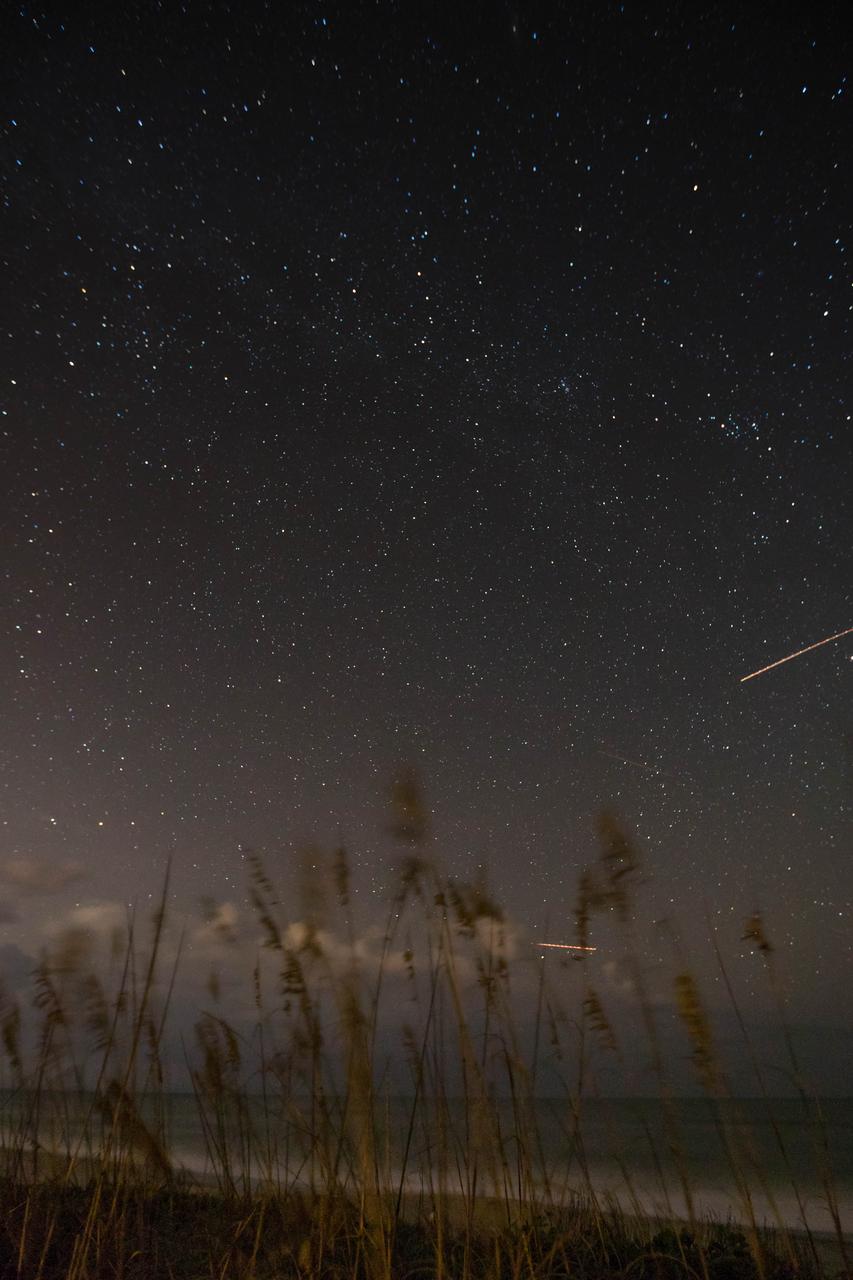
Sea oats are backdropped by the night sky and the Milky Way in this view from the Atlantic shoreline at NASA’s Kennedy Space Center in Florida on Oct. 31, 2019. Lights from aircraft create illuminated streaks above the horizon and at right.
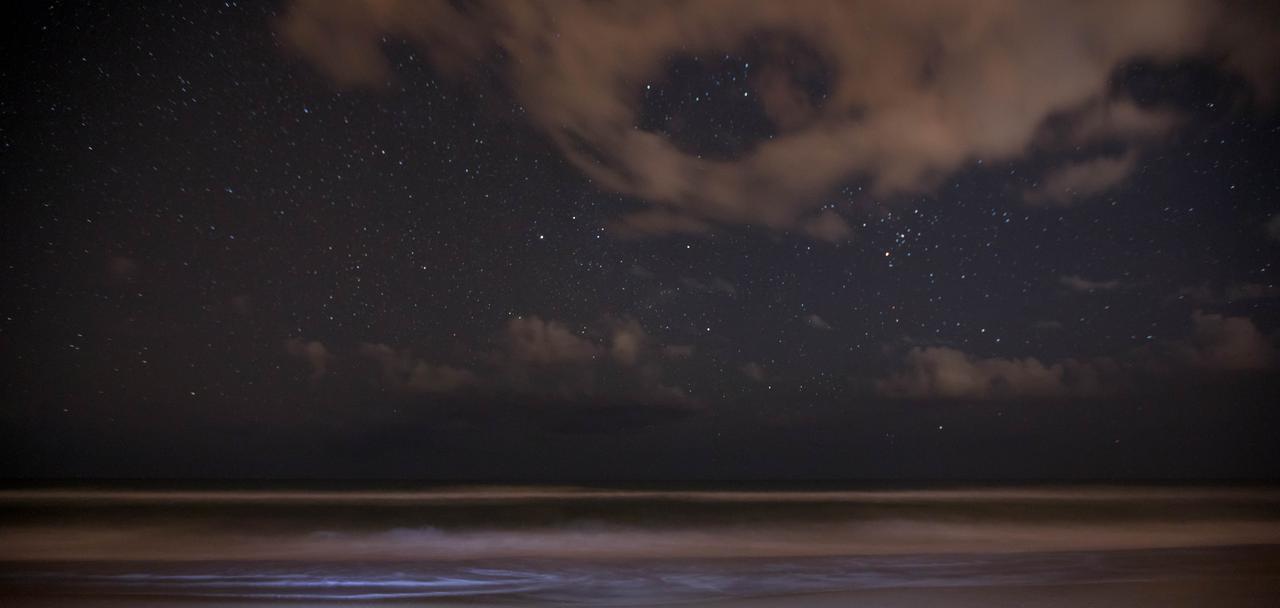
Clouds move inland from the Atlantic Ocean, backdropped by a nighttime vista of stars, in this view from the beach near Launch Complex 39 at NASA’s Kennedy Space Center in Florida on Oct. 31, 2019.
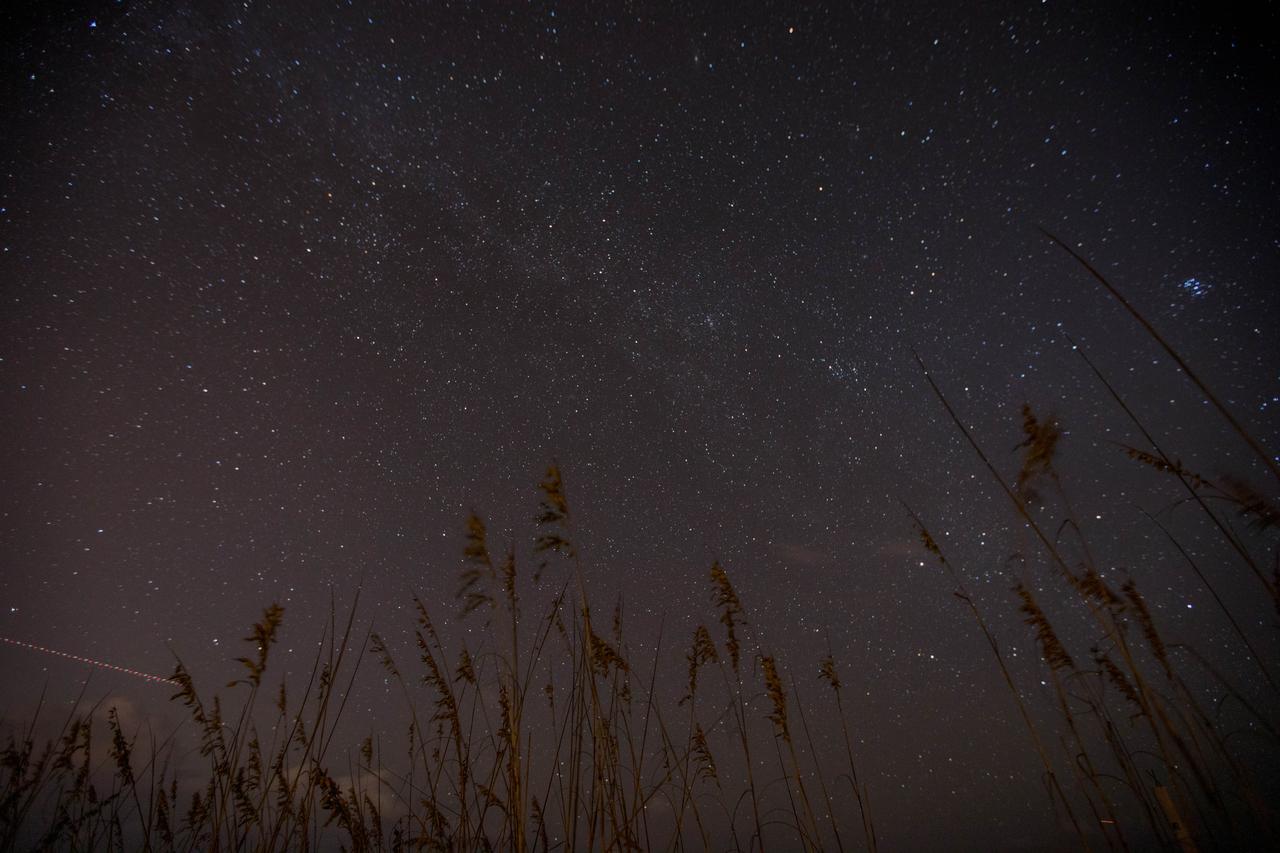
Sea oats frame the night sky, bisected by the Milky Way, in this view from the Atlantic shoreline at NASA’s Kennedy Space Center in Florida on Oct. 31, 2019. The lights of an aircraft create an illuminated streak in the lower left corner.
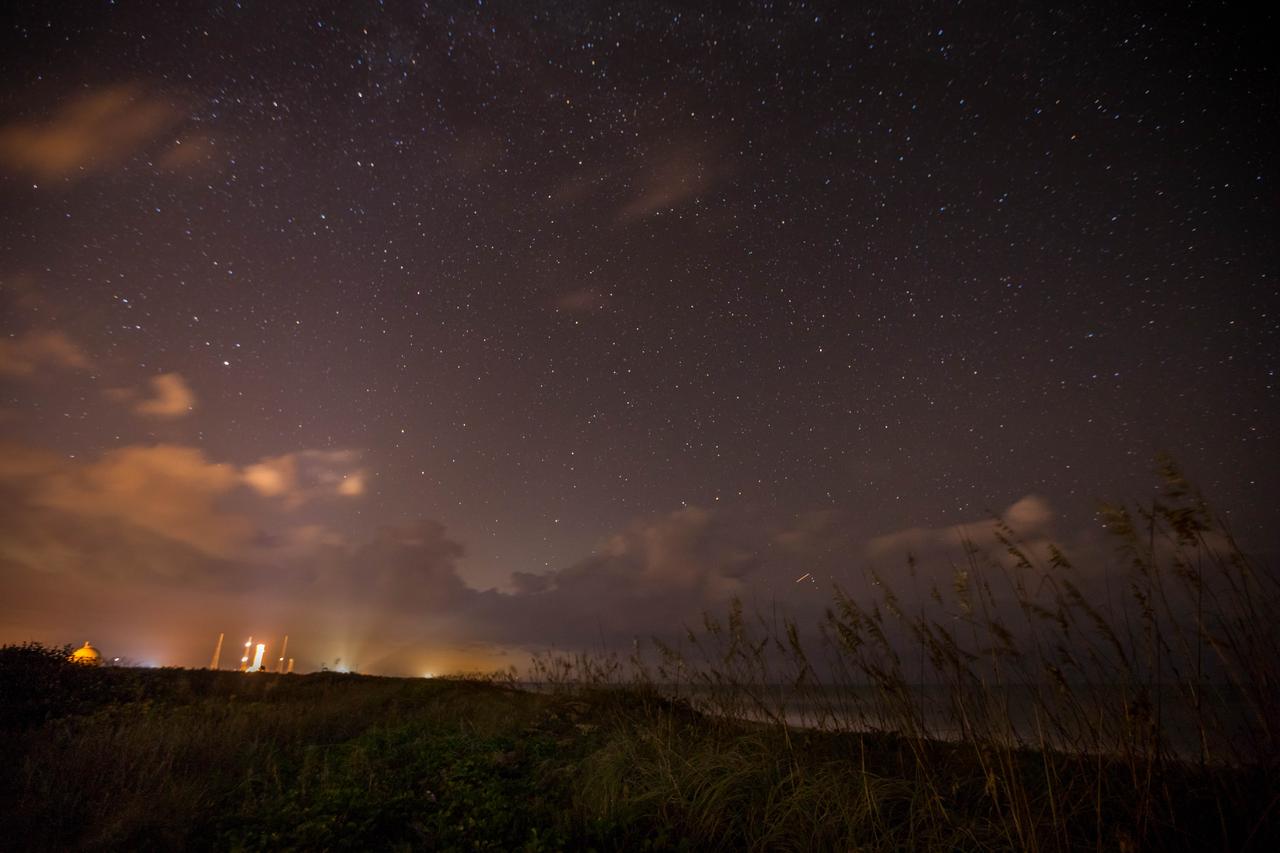
Lights from Launch Complexes 39A and B, left, glow against the night sky in this view from the Atlantic shoreline at NASA’s Kennedy Space Center in Florida on Oct. 31, 2019.
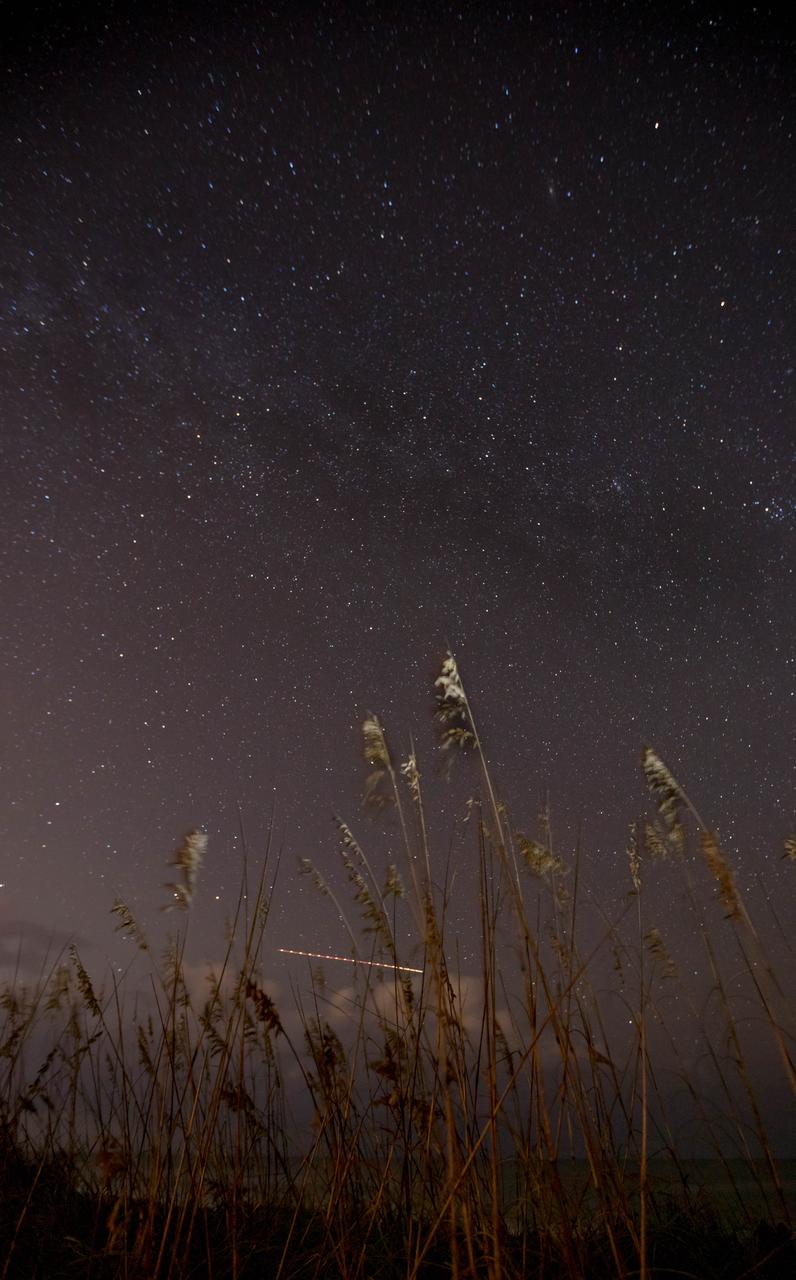
Sea oats are backdropped by the night sky and the Milky Way in this view from the Atlantic shoreline at NASA’s Kennedy Space Center in Florida on Oct. 31, 2019. The lights of an aircraft create an illuminated streak above the horizon.
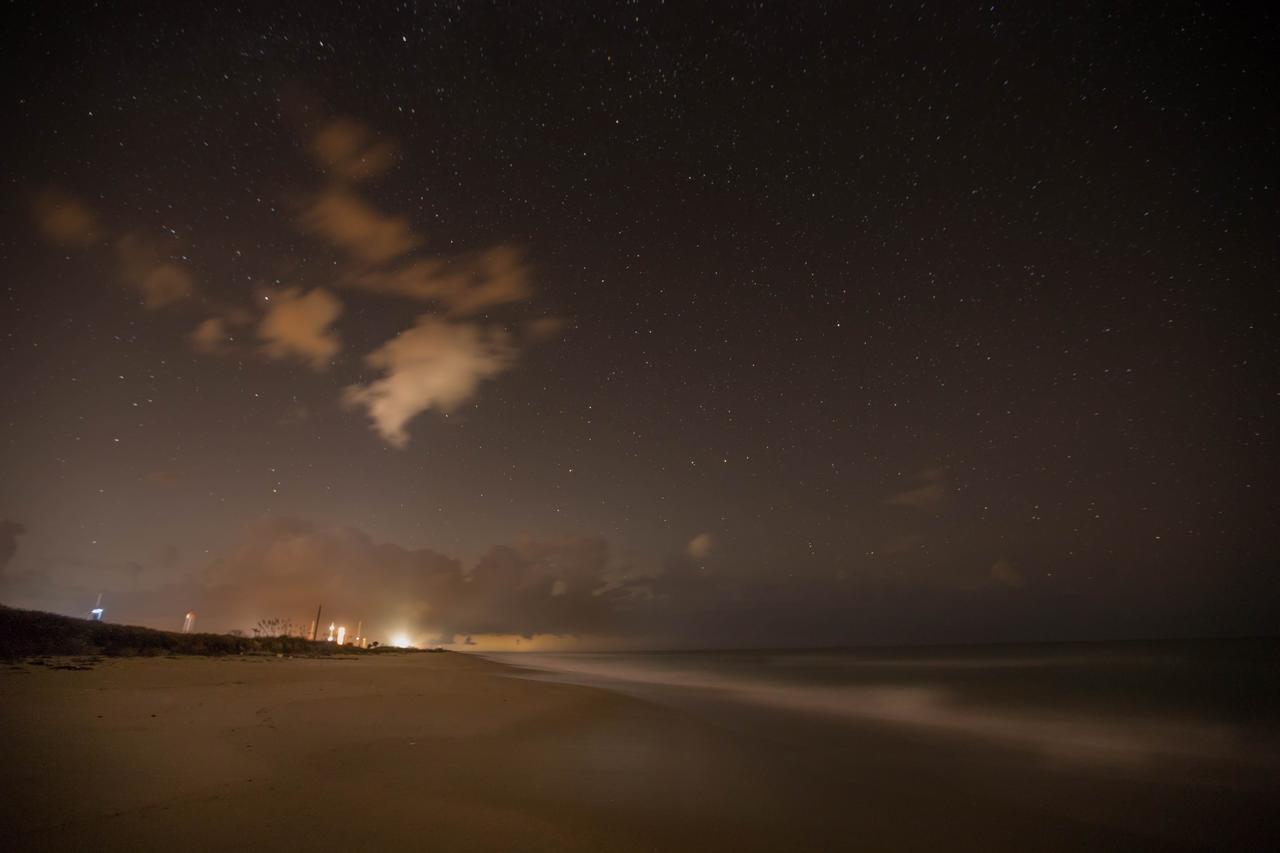
Lights from Launch Complexes 39A and B, left, glow against the night sky in this view from the Atlantic shoreline at NASA’s Kennedy Space Center in Florida on Oct. 31, 2019.
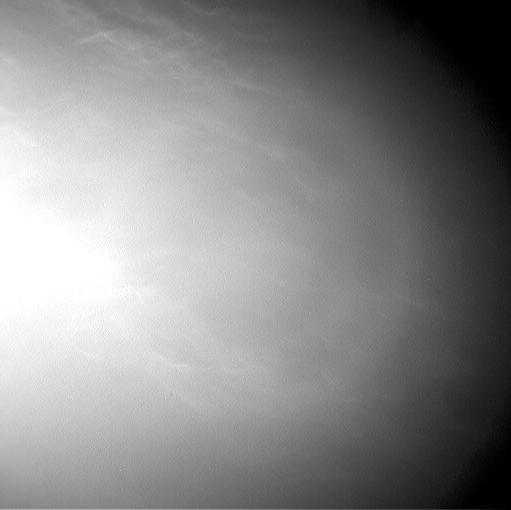
Wispy clouds float across the Martian sky in this accelerated sequence of images from NASA's Curiosity Mars rover. The rover's Navigation Camera (Navcam) took these eight images over a span of four minutes early in the morning of the mission's 1,758th Martian day, or sol (July 17, 2017), aiming nearly straight overhead. This sequence uses raw images, which include a bright ring around the center of the frame that is an artifact of sunlight striking the camera lens even though the Sun is not in the shot. A processed version removing that artifact and emphasizing changes between images is also available. The clouds resemble Earth's cirrus clouds, which are ice crystals at high altitudes. These Martian clouds are likely composed of crystals of water ice that condense onto dust grains in the cold Martian atmosphere. Cirrus wisps appear as ice crystals fall and evaporate in patterns known as "fall streaks" or "mare's tails." Such patterns have been seen before at high latitudes on Mars, for instance by the Phoenix Mars Lander in 2008, and seasonally nearer the equator, for instance by the Opportunity rover. However, Curiosity has not previously observed such clouds so clearly visible from the rover's study area about five degrees south of the equator. The Hubble Space Telescope and spacecraft orbiting Mars have observed a band of clouds to appear near the Martian equator around the time of the Martian year when the planet is farthest from the Sun. With a more elliptical orbit than Earth's, Mars experiences more annual variation than Earth in its distance from the Sun. The most distant point in an orbit around the Sun is called the aphelion. The near-equatorial Martian cloud pattern observed at that time of year is called the "aphelion cloud belt." These new images from Curiosity were taken about two months before aphelion, but the morning clouds observed may be an early stage of the aphelion cloud belt. An animation is available at https://photojournal.jpl.nasa.gov/catalog/PIA21842

iss069e031362 (July 13, 2023) -- As the International Space Station orbited 259 miles above North Africa, clouds covered the sky. To the bottom right of the image, one of the station's roll-out solar arrays peeks through.

CAPE CANAVERAL, Fla. – Gathering clouds filter the painted sky over the turn basin in the Launch Complex 39 Area at NASA's Kennedy Space Center. Photo credit: NASA/Dimitri Gerondidakis

iss067e270867 (Aug. 26, 2022) --- This tranquil orbital pass above a cloud-covered Atlantic Ocean reveals Earth's atmospheric glow beneath a starry sky as the International Space Station soared 271 miles above.

This photograph is a Hubble Space Telescope (HST) image of a sky full of glittering jewels. The HST peered into the Sagittarius star cloud, a narrow dust free region, providing this spectacular glimpse of a treasure chest full of stars.

CAPE CANAVERAL, Fla. – A rising sun paints the sky a blazing orange behind gathering clouds over the Launch Complex 39 Area at NASA's Kennedy Space Center. Photo credit: NASA/Dimitri Gerondidakis
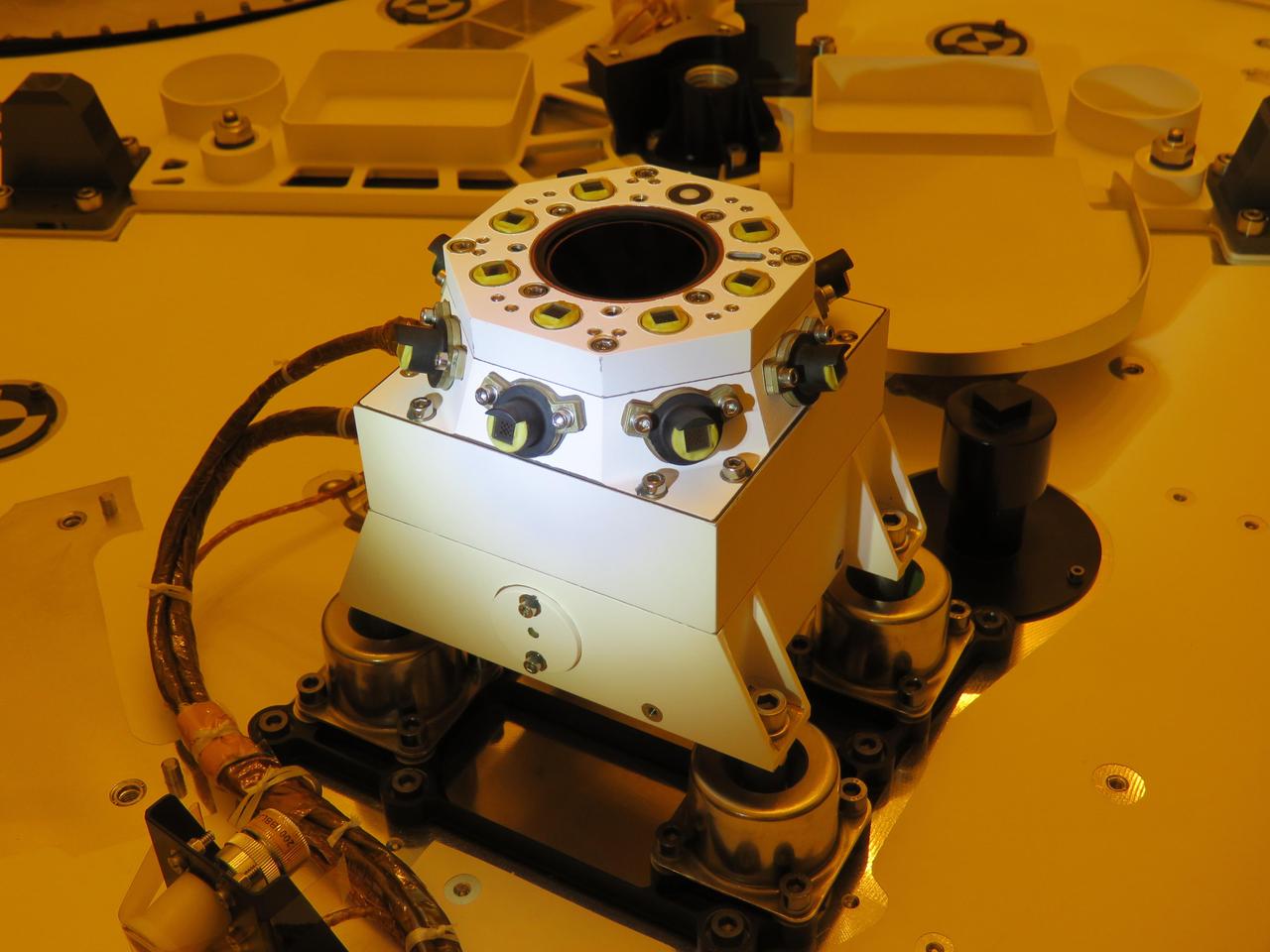
SkyCam is a sky-facing camera aboard NASA's Perseverance Mars rover. As part of the Mars Environmental Dynamics Analyzer (MEDA), the rover's set of weather instruments, SkyCam will take images and video of clouds passing in the Martian sky. MEDA was provided to NASA by the Centro de Astrobiología (CAB) at the Instituto Nacional de Técnica Aeroespacial in Madrid, Spain. A key objective for Perseverance's mission on Mars is astrobiology, including the search for signs of ancient microbial life. The rover will characterize the planet's geology and past climate, pave the way for human exploration of the Red Planet, and be the first mission to collect and cache Martian rock and regolith (broken rock and dust). Subsequent missions, currently under consideration by NASA in cooperation with the European Space Agency, would send spacecraft to Mars to collect these cached samples from the surface and return them to Earth for in-depth analysis. The Mars 2020 mission is part of a larger program that includes missions to the Moon as a way to prepare for human exploration of the Red Planet. Charged with returning astronauts to the Moon by 2024, NASA will establish a sustained human presence on and around the Moon by 2028 through NASA's Artemis lunar exploration plans. https://photojournal.jpl.nasa.gov/catalog/PIA24174

This video shows the SPHEREx observatory's field of view as it scans across a section of the sky, observing the universe in 102 colors, or wavelengths of light. Taken in April 2025, just weeks after the spacecraft's launch, the images show a region inside the Large Magellanic Cloud, a dwarf galaxy near the Milky Way. The wavelengths seen by NASA's SPHEREx (Spectro-Photometer for the History of the Universe, Epoch of Reionization and Ices Explorer) are in the infrared range, which is invisible to the human eye; the infrared wavelengths are represented here by visible light colors. While most telescopes use color filters that block one wavelength at a time, SPHEREx's filters gradually transition through a range of wavelengths, creating the rainbow gradients seen in this video. The telescope takes overlapping images so that every section of the sky is imaged 102 times, each time in a different wavelength. The color filters sit on top of two arrays, each with three detectors, that observe the sky simultaneously. In the video, one array's view moves from purple to green, followed by the second array's view (of the same section of sky), which changes from yellow to red. The images are looped four times. SPHEREx will repeat this scanning motion each day for two years, gradually compiling a map of the entire sky. Every day, it will take about 600 exposures, each of which is made up of six images, one from each of the six detectors. Combining those images, scientists can see the total emission from the observed section of the sky or look at an individual wavelength. Observing individual wavelengths of light from cosmic sources is called spectroscopy. This technique can be used to reveal the composition of objects, because chemical elements and molecules leave a unique signature in the colors they absorb and emit. This is made apparent in the images' lower right quadrant, where a collection of dust appears only in the red and orange wavelengths. This indicates the presence of a particular molecule that radiates in specific wavelengths and not others. Video available at https://photojournal.jpl.nasa.gov/catalog/PIA26351
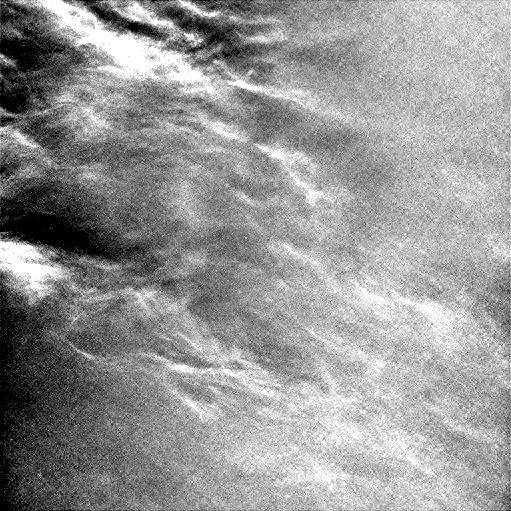
Wispy clouds float across the Martian sky in this accelerated sequence of enhanced images from NASA's Curiosity Mars rover. The rover's Navigation Camera (Navcam) took these eight images over a span of four minutes early in the morning of the mission's 1,758th Martian day, or sol (July 17, 2017), aiming nearly straight overhead. They have been processed by first making a "flat field' adjustment for known differences in sensitivity among pixels and correcting for camera artifacts due to light reflecting within the camera, and then generating an "average" of all the frames and subtracting that average from each frame. This subtraction results in emphasizing any changes due to movement or lighting. The clouds are also visible, though fainter, in a raw image sequence from these same observations. On the same Martian morning, Curiosity also observed clouds near the southern horizon. The clouds resemble Earth's cirrus clouds, which are ice crystals at high altitudes. These Martian clouds are likely composed of crystals of water ice that condense onto dust grains in the cold Martian atmosphere. Cirrus wisps appear as ice crystals fall and evaporate in patterns known as "fall streaks" or "mare's tails." Such patterns have been seen before at high latitudes on Mars, for instance by the Phoenix Mars Lander in 2008, and seasonally nearer the equator, for instance by the Opportunity rover. However, Curiosity has not previously observed such clouds so clearly visible from the rover's study area about five degrees south of the equator. The Hubble Space Telescope and spacecraft orbiting Mars have observed a band of clouds to appear near the Martian equator around the time of the Martian year when the planet is farthest from the Sun. With a more elliptical orbit than Earth's, Mars experiences more annual variation than Earth in its distance from the Sun. The most distant point in an orbit around the Sun is called the aphelion. The near-equatorial Martian cloud pattern observed at that time of year is called the "aphelion cloud belt." These new images from Curiosity were taken about two months before aphelion, but the morning clouds observed may be an early stage of the aphelion cloud belt. An animation is available at https://photojournal.jpl.nasa.gov/catalog/PIA21841
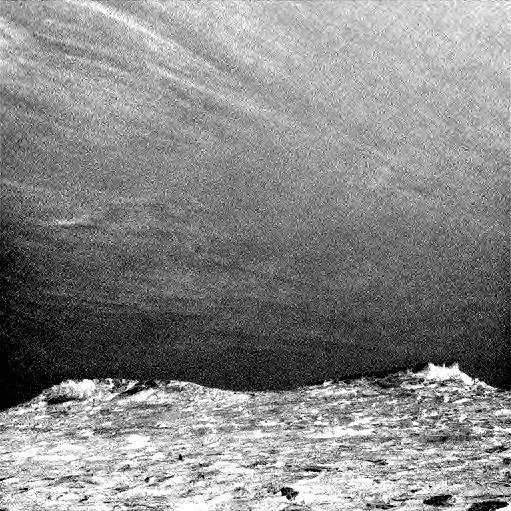
Clouds drift across the sky above a Martian horizon in this accelerated sequence of enhanced images from NASA's Curiosity Mars rover. The rover's Navigation Camera (Navcam) took these eight images over a span of four minutes early in the morning of the mission's 1,758th Martian day, or sol (July 17, 2017), aiming toward the south horizon. They have been processed by first making a "flat field' adjustment for known differences in sensitivity among pixels and correcting for camera artifacts due to light reflecting within the camera, and then generating an "average" of all the frames and subtracting that average from each frame. This subtraction emphasizes changes whether due to movement -- such as the clouds' motion -- or due to lighting -- such as changing shadows on the ground as the morning sunlight angle changed. On the same Martian morning, Curiosity also observed clouds nearly straight overhead. The clouds resemble Earth's cirrus clouds, which are ice crystals at high altitudes. These Martian clouds are likely composed of crystals of water ice that condense onto dust grains in the cold Martian atmosphere. Cirrus wisps appear as ice crystals fall and evaporate in patterns known as "fall streaks" or "mare's tails." Such patterns have been seen before at high latitudes on Mars, for instance by the Phoenix Mars Lander in 2008, and seasonally nearer the equator, for instance by the Opportunity rover. However, Curiosity has not previously observed such clouds so clearly visible from the rover's study area about five degrees south of the equator. The Hubble Space Telescope and spacecraft orbiting Mars have observed a band of clouds to appear near the Martian equator around the time of the Martian year when the planet is farthest from the Sun. With a more elliptical orbit than Earth's, Mars experiences more annual variation than Earth in its distance from the Sun. The most distant point in an orbit around the Sun is called the aphelion. The near-equatorial Martian cloud pattern observed at that time of year is called the "aphelion cloud belt." These new images from Curiosity were taken about two months before aphelion, but the morning clouds observed may be an early stage of the aphelion cloud belt. An animation is available at https://photojournal.jpl.nasa.gov/catalog/PIA21840

Decades of satellite observations and astronaut photographs show that clouds dominate space-based views of Earth. One study based on nearly a decade of satellite data estimated that about 67 percent of Earth’s surface is typically covered by clouds. This is especially the case over the oceans, where other research shows less than 10 percent of the sky is completely clear of clouds at any one time. Over land, 30 percent of skies are completely cloud free. Earth’s cloudy nature is unmistakable in this global cloud fraction map, based on data collected by the Moderate Resolution Imaging Spectroradiometer (MODIS) on the Aqua satellite. While MODIS collects enough data to make a new global map of cloudiness every day, this version of the map shows an average of all of the satellite’s cloud observations between July 2002 and April 2015. Colors range from dark blue (no clouds) to light blue (some clouds) to white (frequent clouds).

KENNEDY SPACE CENTER, FLA. -- Space Shuttle Atlantis, surrounded by the Rotating Service Structure, sits on Launch Pad 39B as it undergoes pre-launch preparations for mission STS-112, scheduled to launch Oct. 2, 2002. The sky above the Shuttle is filled with dark clouds sweeping over Florida from Hurricane Isidore.
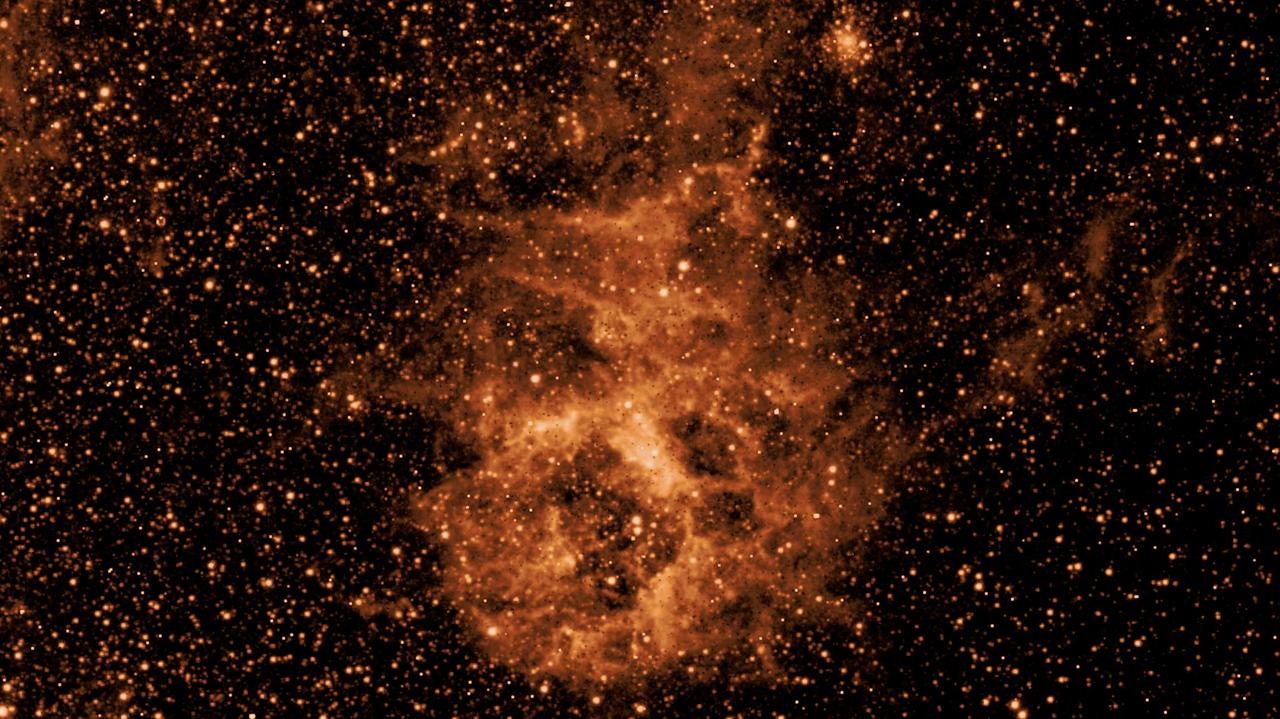
In April 2025, just weeks after its launch, NASA's SPHEREx mission revealed a cloud of dust in a patch of sky inside the Large Magellanic Cloud, a dwarf galaxy near the Milky Way, when making observations in a specific infrared wavelength (3.29 microns). The difference between the images illustrates the power of multiwavelength observations for revealing hidden features of the universe – a key feature of SPHEREx. Observing individual wavelengths of light from cosmic sources is called spectroscopy. This technique can be used to reveal the composition of objects, because chemical elements and molecules leave a unique signature in the colors they absorb and emit. Spectroscopy can also help scientists measure how far away galaxies are, making it essential for SPHEREx's goal of mapping the locations of hundreds of millions of galaxies in 3D. SPHEREx detects infrared light, which is invisible to the human eye, but is represented here in visible colors. The observatory will map the entire sky in 102 infrared colors (or wavelengths of light) to learn more about our universe. To do this, the mission images every object in the sky 102 times, each in a different wavelength. The spacecraft will map the entire sky four times over two years. https://photojournal.jpl.nasa.gov/catalog/PIA26352

This picture of Neptune was produced from images taken through the ultraviolet, violet and green filters of the Voyager 2 wide-angle camera. This 'false' color image has been made to show clearly details of the cloud structure and to paint clouds located at different altitudes with different colors. Dark, deeplying clouds tend to be masked in the ultraviolet wavelength since overlying air molecules are particularly effective in scattering sunlight there which brightens the sky above them. Such areas appear dark blue in this photo. The Great Dark Spot (GDS) and the high southern latitudes have a deep bluish cast in this image, indication they are regions where visible light (but not ultraviolet light) may penetrate to a deeper layer of dark cloud or haze in Neptune's atmosphere. Conversely, the pinkish clouds may be positioned at high altitudes.

Hot Jupiters are exoplanets that orbit their stars so tightly that their temperatures are extremely high, reaching over 2,400 degrees Fahrenheit (1600 Kelvin). They are also tidally locked, so one side of the planet always faces the sun and the other is in permanent darkness. Research suggests that the "dayside" is largely free of clouds, while the "nightside" is heavily clouded. This illustration represents how hot Jupiters of different temperatures and different cloud compositions might appear to a person flying over the dayside of these planets on a spaceship, based on computer modeling. Cooler planets are entirely cloudy, whereas hotter planets have morning clouds only. Clouds of different composition have different colors, whereas the clear sky is bluer than on Earth. For the hottest planets, the atmosphere is hot enough on the evening side to glow like a charcoal. Figure 1 shows an approximation of what various hot Jupiters might look like based on a combination of computer modeling and data from NASA's Kepler Space Telescope. From left to right it shows: sodium sulfide clouds (1000 to 1200 Kelvin), manganese sulfide clouds (1200 to 1600 Kelvin), magnesium silicate clouds (1600 to 1800 Kelvin), magnesium silicate and aluminum oxide clouds (1800 Kelvin) and clouds composed of magnesium silicate, aluminum oxide, iron and calcium titanate (1900 to 2200 Kelvin). http://photojournal.jpl.nasa.gov/catalog/PIA21074

This panoramic view encompasses the entire sky as seen by Two Micron All-Sky Survey. The measured brightnesses of half a billion stars (points) have been combined into colors representing three distinct wavelengths of infrared light: blue at 1.2 microns, green at 1.6 microns, and red at 2.2 microns. This image is centered on the core of our own Milky Way galaxy, toward the constellation of Sagittarius. The reddish stars seemingly hovering in the middle of the Milky Way's disc -- many of them never observed before -- trace the densest dust clouds in our galaxy. The two faint smudges seen in the lower right quadrant are our neighboring galaxies, the Small and Large Magellanic Clouds. http://photojournal.jpl.nasa.gov/catalog/PIA04250
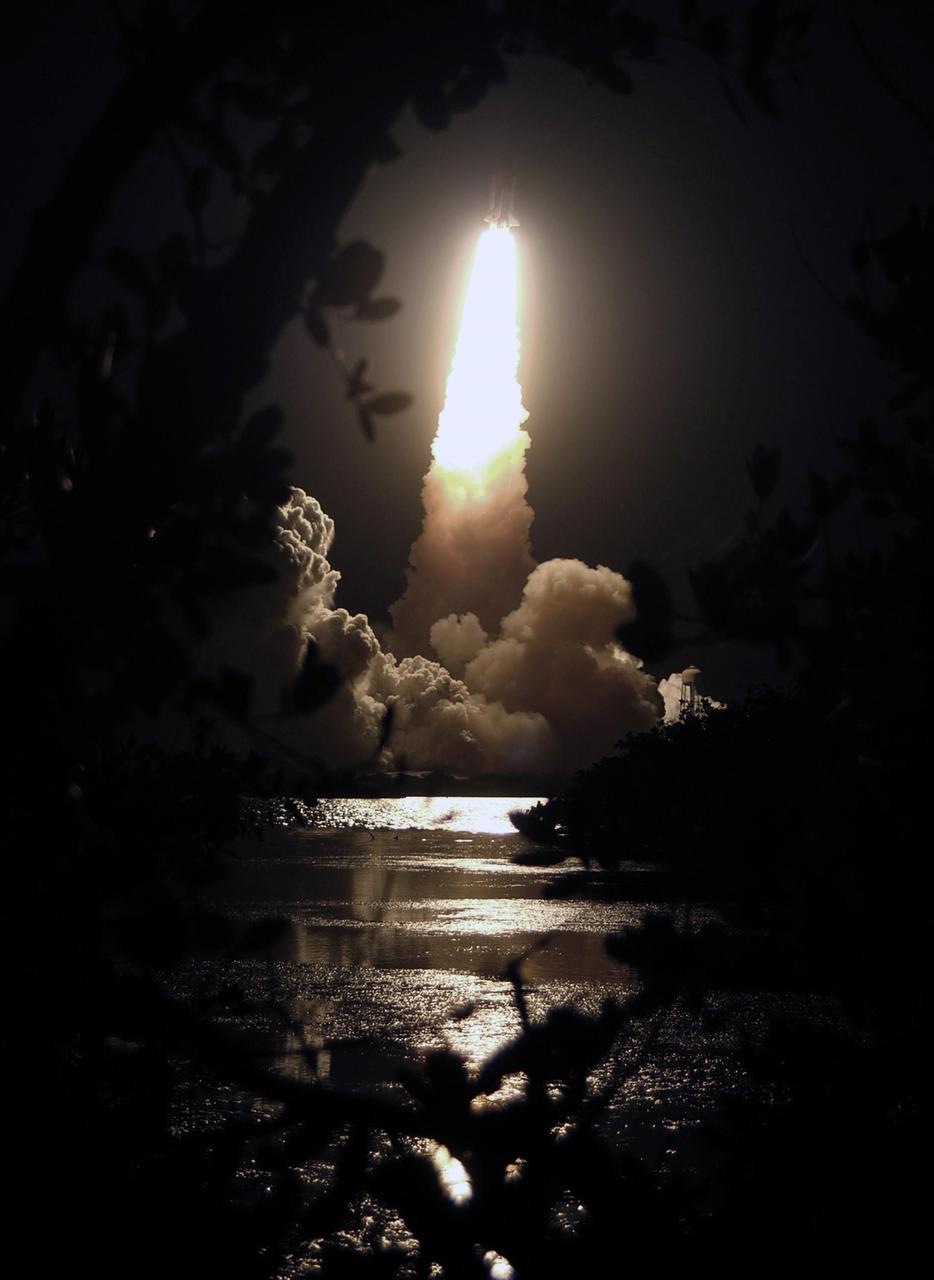
KENNEDY SPACE CENTER, FLA. -- Looking like a shooting star, Space Shuttle Discovery roars into the night sky on mission STS-116. The trailing blaze lighted the sky and nearby water, while clouds of smoke and steam billowed across the launch pad. Liftoff occurred on time at 8:47 p.m. EST. This was the second launch attempt for mission STS-116. The first launch attempt on Dec. 7 was postponed due a low cloud ceiling over Kennedy Space Center. This is Discovery's 33rd mission and the first night launch since 2002. The 20th shuttle mission to the International Space Station, STS-116 carries another truss segment, P5. It will serve as a spacer, mated to the P4 truss that was attached in September. After installing the P5, the crew will reconfigure and redistribute the power generated by two pairs of U.S. solar arrays. Landing is expected Dec. 21 at KSC. Photo courtesy of Nikon/Scott Andrews
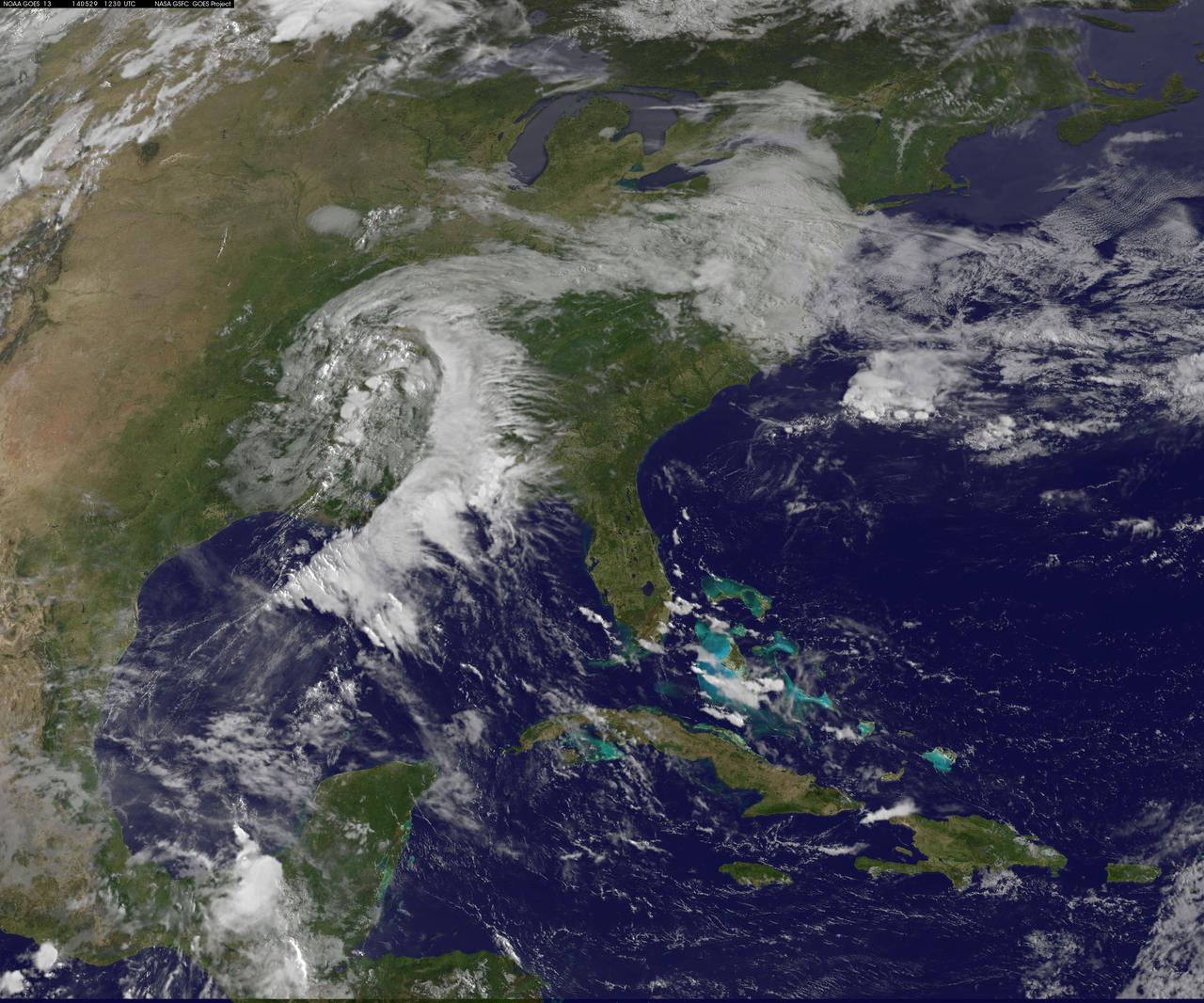
A "backdoor cold front" is bringing April temperatures to the U.S. northeast and Mid-Atlantic today, May 29. The backdoor cold front brings relief to the Mid-Atlantic after temperatures in Washington, D.C. hit 92F on Tuesday, May 27 and 88F on Wednesday, May 28 at Reagan National Airport, according to the National Weather Service (NWS). NWS forecasters expect the high temperature for May 29 to only reach 60F in the District of Columbia. NOAA's GOES-East satellite captured a view of the clouds associated with the backdoor cold front that stretch from southern Illinois to North Carolina. The National Weather Service forecast expects the backdoor cold front to bring showers to the Midwest, Northeast, and Mid-Atlantic today, May 29. According to the National Oceanic and Atmospheric Administration, a backdoor cold front is a cold front moving south or southwest along the Atlantic seaboard and Great Lakes; these are especially common during the spring months. This visible image was taken by NOAA's GOES-East satellite on May 29 at 12:30 UTC (8:30 a.m. EDT). The image was created at NASA/NOAA's GOES Project at NASA's Goddard Space Flight Center in Greenbelt, Maryland. In addition to the backdoor cold front clouds, the GOES-East image shows clouds circling around a low pressure area located in eastern Texas. That low pressure area is expected to bring rain from Texas eastward over the southeastern U.S. According to NOAA's National Weather Service, the slow-moving low pressure area in the Deep South "will bring heavy showers and thunderstorms from Louisiana to Alabama through Thursday. This area is already saturated from previous rainfall, so flash flooding will be possible." Image: NASA/NOAA GOES Project Caption: NASA Goddard/Rob Gutro

After a new small eruption sent an ash cloud 1.24 miles (2 kilometers) into the sky on Dec. 7, 2017, Indonesia's Mount Agung volcano quieted down. This image was acquired Dec. 8 after the latest activity by the Advanced Spaceborne Thermal Emission and Reflection Radiometer (ASTER) instrument on NASA's Terra satellite. The image shows vegetation in red colors. The summit crater has a hot spot (yellow) as detected by ASTER's thermal infrared channels. More than 65,00 residents continue to be evacuated from the volcano's danger zone in case of a major eruption. The image covers an area of 11 by 12.3 miles (17.8 by 19.8 kilometers), and is located at 8.3 degrees south, 115.5 degrees east. https://photojournal.jpl.nasa.gov/catalog/PIA22121
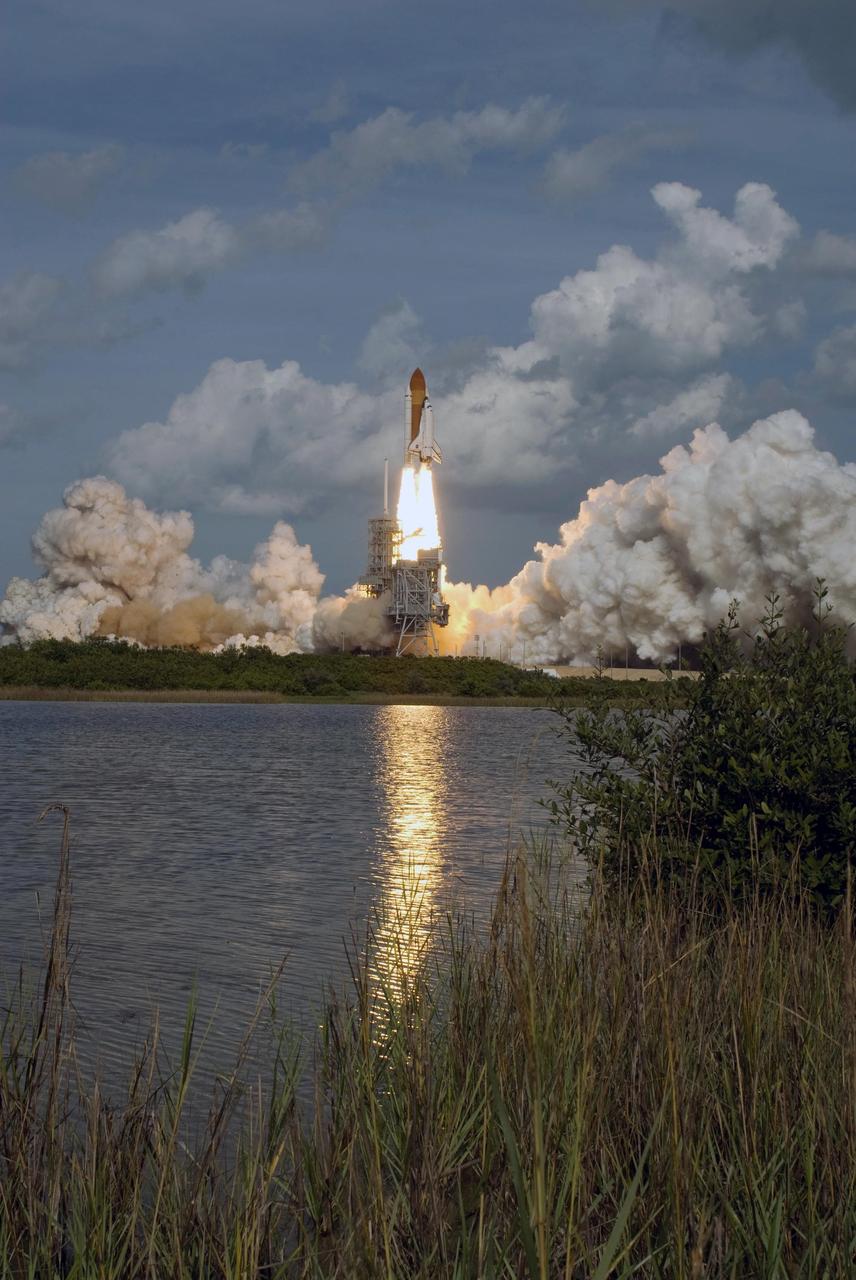
KENNEDY SPACE CENTER, FLA. -- Hurtling away from the clouds of smoke and steam, space shuttle Atlantis hurtles into the cloud-streaked sky on mission STS-122 to the International Space Station. Liftoff was on time at 2:45 p.m. EST. The launch is the third attempt for Atlantis since December 2007 to carry the European Space Agency's Columbus laboratory to the International Space Station. During the 11-day mission, the crew's prime objective is to attach the laboratory to the Harmony module, adding to the station's size and capabilities. Photo credit: NASA/Sandra Joseph, Tony Gray, Robert Murray
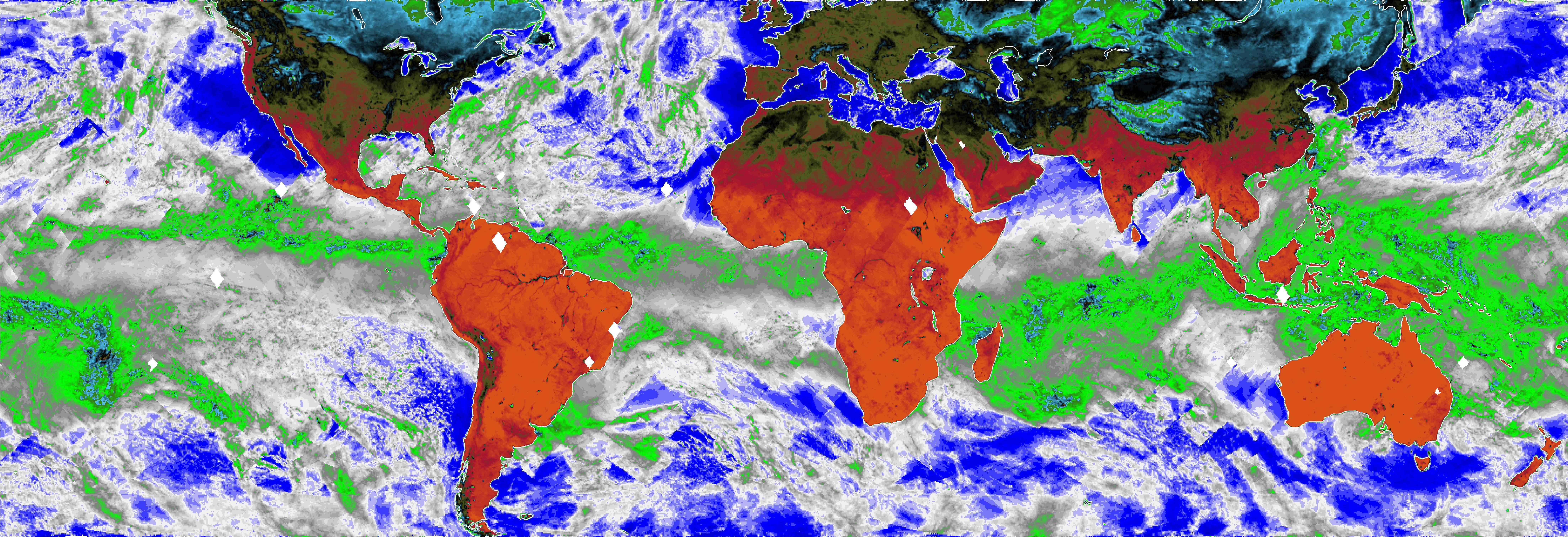
This map, made using the Compact Ocean Wind Vector Radiometer (COWVR) instrument's observations from Jan. 16 to 23, 2022, shows Earth's microwave emissions at a frequency of 34 gigahertz. This frequency provides information on the strength of winds at the ocean surface, the amount of water in clouds, and the amount of water vapor in the atmosphere. Green and white indicate higher water vapor and clouds, while dark blue over the ocean indicates drier air and clear sky. Typical weather patterns for January, such as tropical moisture and rain (the green band stretching across the center of the map), are visible. https://photojournal.jpl.nasa.gov/catalog/PIA24985
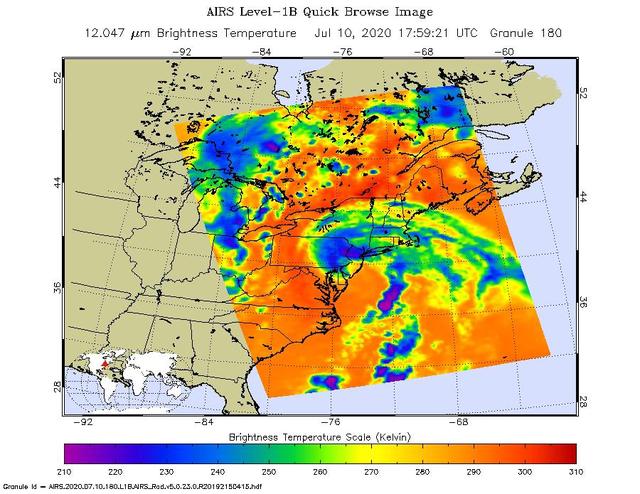
NASA's Atmospheric Infrared Sounder (AIRS) collected this image of Tropical Storm Fay over New England at around 2 p.m. local time on Friday, July 10. The center of the storm made landfall about 10 miles (15 kilometers) north-northeast of Atlantic City, New Jersey, at around 5 p.m. local time, when Fay had maximum sustained winds of around 50 mph (85 kph). In the infrared AIRS image, the purple regions indicate very cold clouds lofted high into the atmosphere by the storm. These clouds are generally linked to heavy rainfall. Warmer clouds closer to the ground show up as green and blue, while the orange areas denote mostly cloud-free parts of the sky. AIRS, together with the Advanced Microwave Sounding Unit (AMSU), measures the infrared and microwave radiation emitted from Earth to study the planet's weather and climate. Both instruments observe Earth from NASA's Aqua satellite, which launched in 2002. AIRS and AMSU work in tandem to make simultaneous observations down to Earth's surface, even in the presence of heavy clouds. With more than 2,000 channels sensing different regions of the atmosphere, the system creates a global, three-dimensional map of atmospheric temperature and humidity, cloud amounts and heights, greenhouse gas concentrations, and many other atmospheric phenomena. https://photojournal.jpl.nasa.gov/catalog/PIA23783
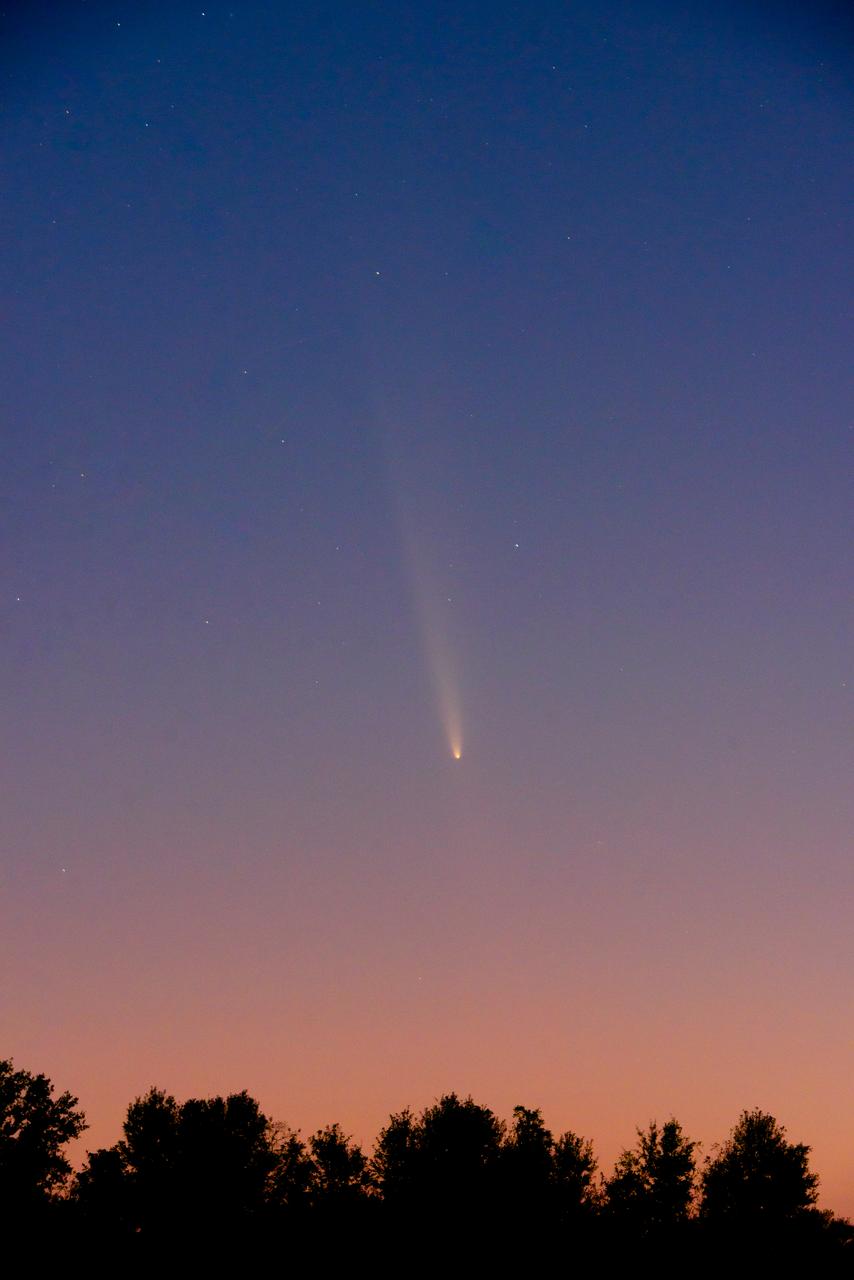
The Oort Cloud comet, called C/2023 A3 Tsuchinshan-ATLAS, passes over Southeast Louisiana near New Orleans, home of NASA’s Michoud Assembly Facility, Sunday, Oct. 13, 2024. The comet is making its first appearance in documented human history; it was last seen in the night sky 80,000 years ago. The Tsuchinshan-ATLAS comet made its first close pass by Earth in mid-October and will remain visible to viewers in the Northern Hemisphere just between the star Arcturus and planet Venus through early November.
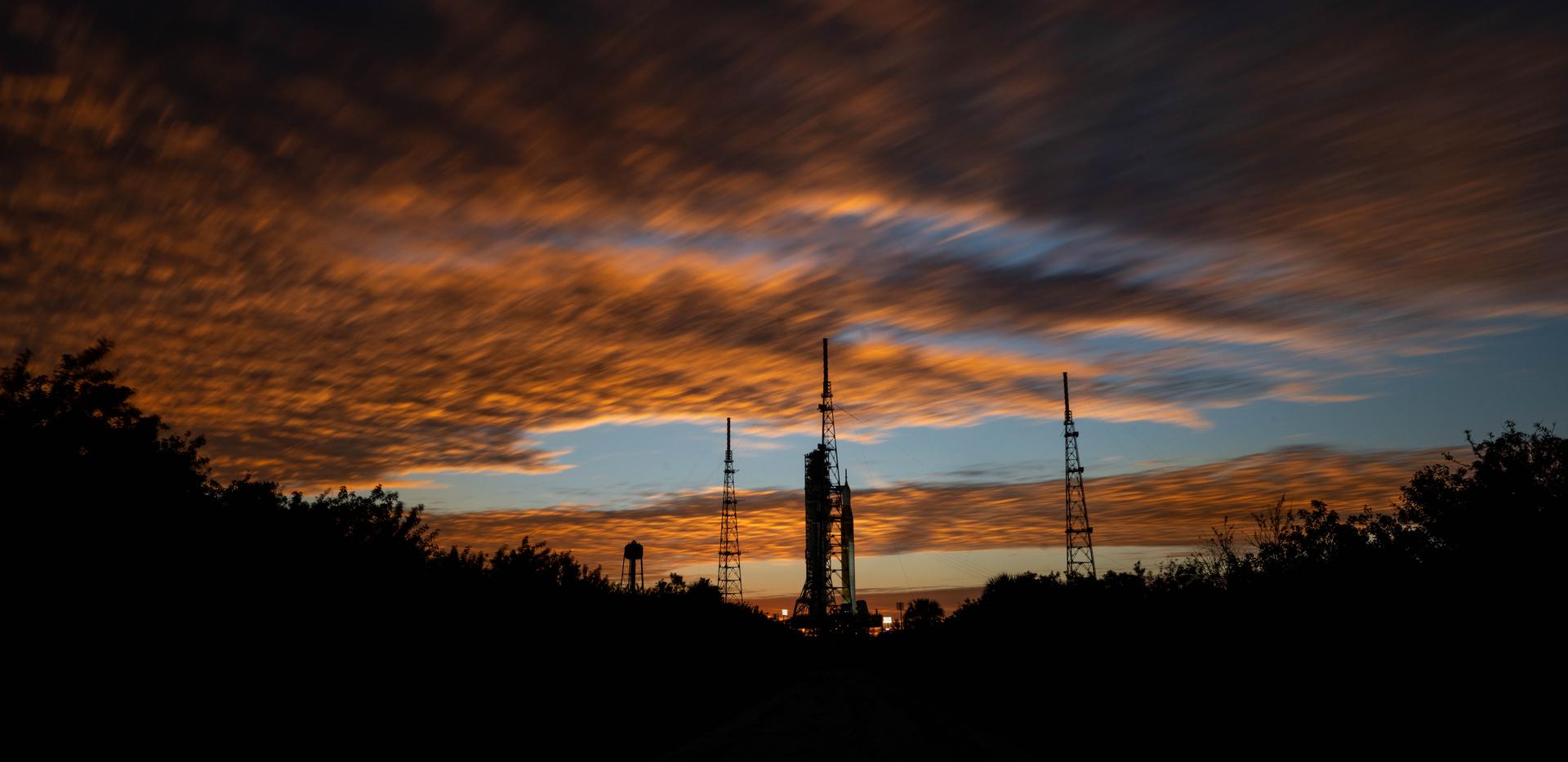
Clouds and the Sun illuminate the sky on Wednesday, Jan. 28, 2026, as NASA’s Artemis II SLS (Space Launch System) rocket and Orion spacecraft stand vertical at Launch Complex 39B at NASA’s Kennedy Space Center in Florida. The Artemis II test flight will take Commander Reid Wiseman, Pilot Victor Glover, and Mission Specialist Christina Koch from NASA and Mission Specialist Jeremy Hansen from the CSA (Canadian Space Agency), around the Moon and back to Earth no later than April 2026.
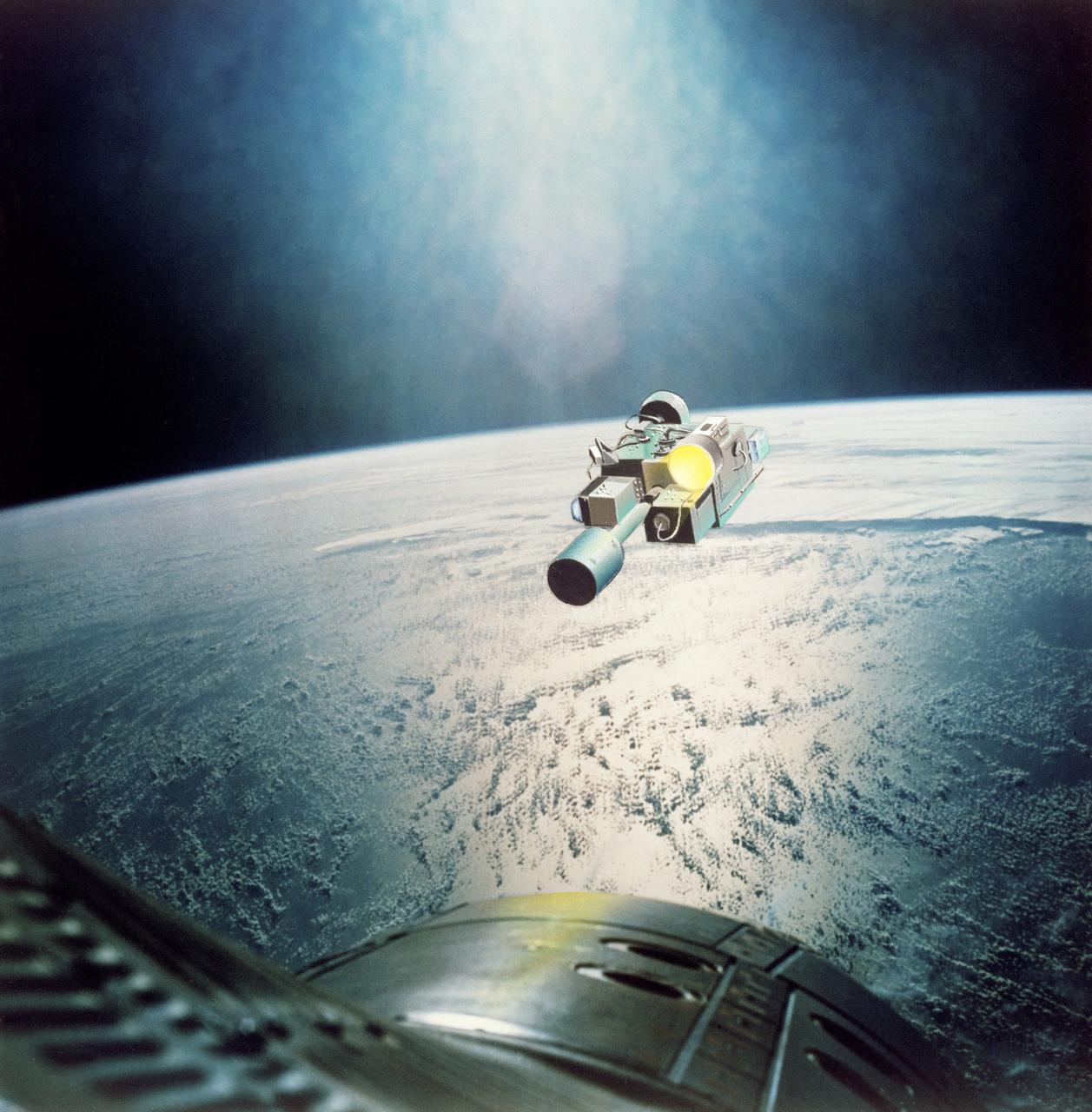
S65-28653 (August 1965) --- Rendezvous Evaluation Pod (REP) in orbit is approached by Gemini spacecraft as seen in this artist's concept using an actual photograph taken on the Gemini-4 mission. The REP is superimposed over a Gemini-4 Earth-sky picture of cloud formations over an ocean. The REP will be used by the crew of the Gemini-5 spacecraft to practice rendezvous techniques.
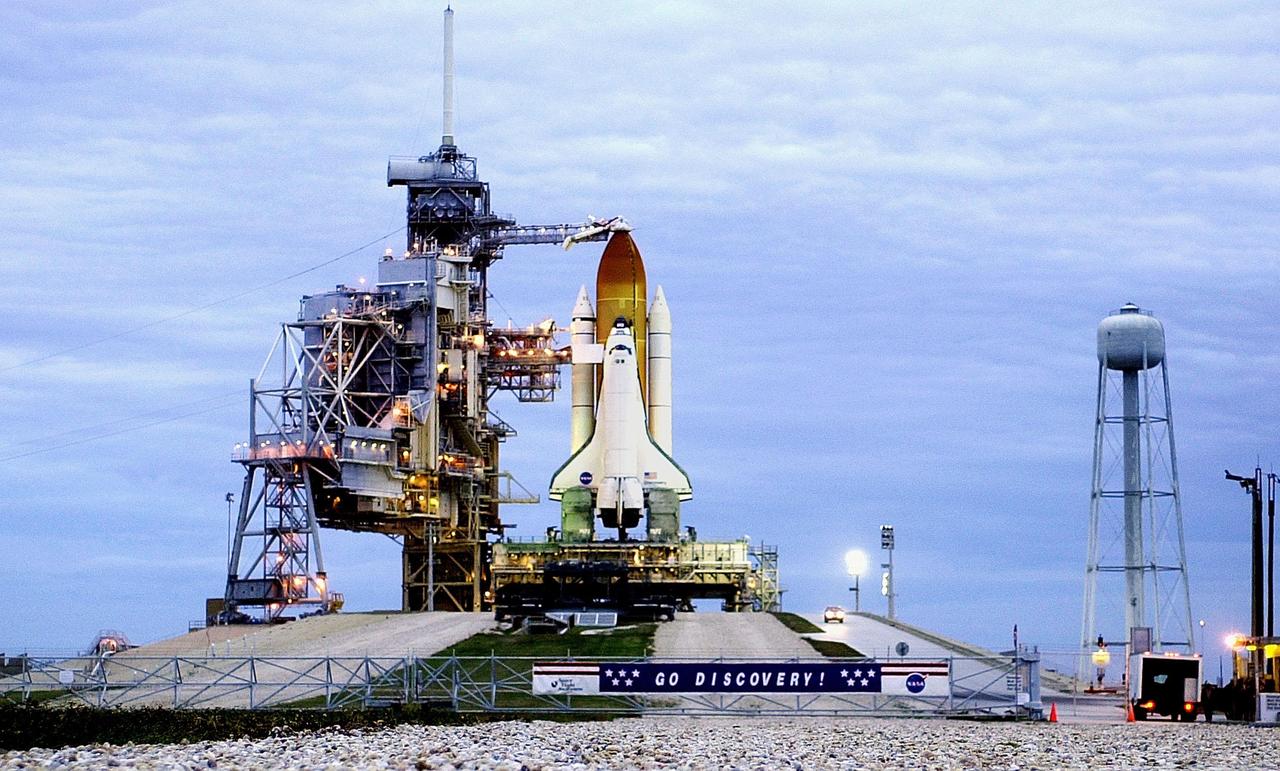
In the pre-dawn hours at Launch Pad 39B under a cloud-filled sky on the east coast of Florida, the Rotating Service Structure is rolled back to reveal the Space Shuttle Discovery poised for flight on mission STS-103. The rollback of the structure was complete at 4:46 a.m. EST. STS-103 is scheduled for launch Dec. 16 at 9:18 p.m. EST. The mission is expected to last about 9 days and 21 hours with a landing at KSC Sunday, Dec. 26, at 6:56 p.m. EST
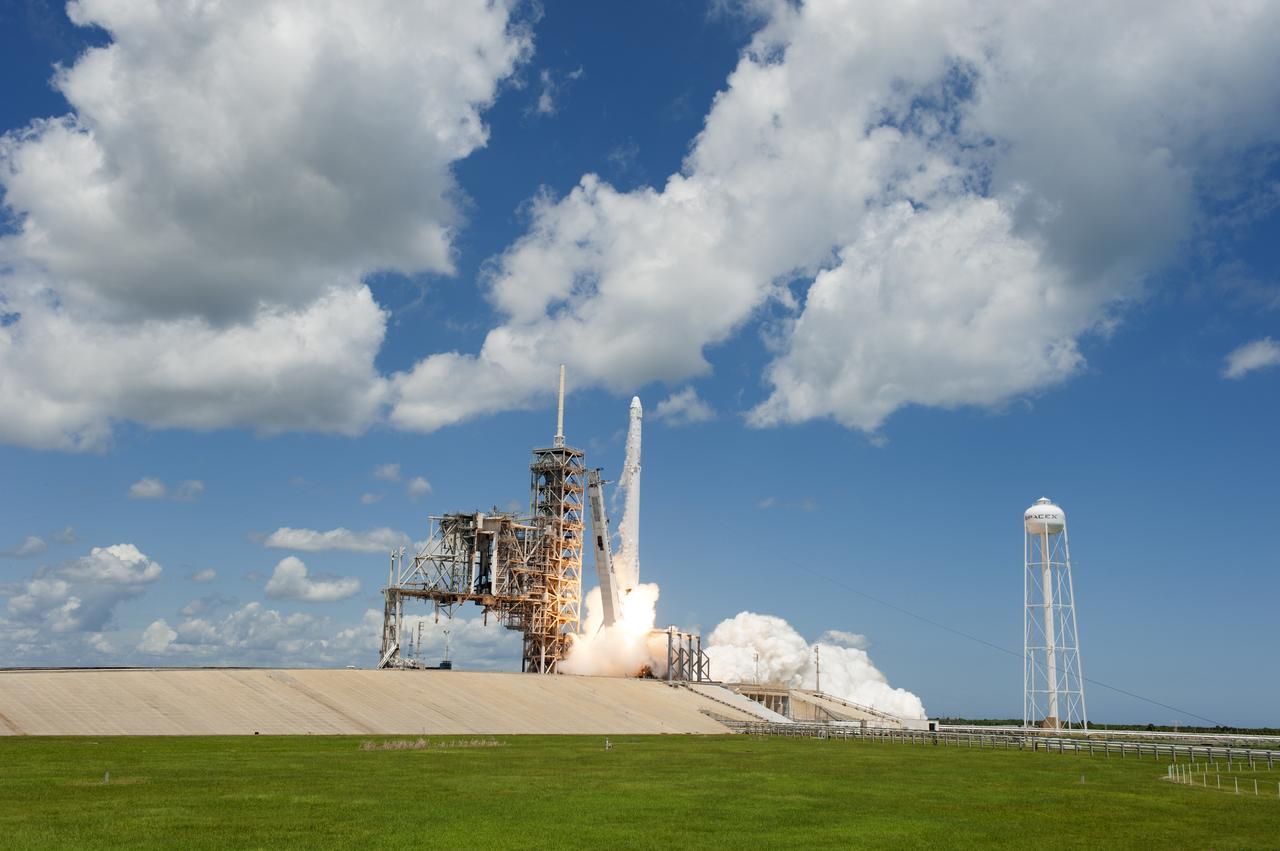
With a backdrop of blue sky and fluffy white clouds, the two-stage Falcon 9 launch vehicle lifts off Launch Complex 39A at NASA's Kennedy Space Center in Florida carrying the Dragon resupply spacecraft to the International Space Station. Liftoff was at 12:31 p.m. EDT. On its 12th commercial resupply services mission to the International Space Station, Dragon will bring up more than 6,400 pounds of supplies and new science experiments and equipment for technology research.
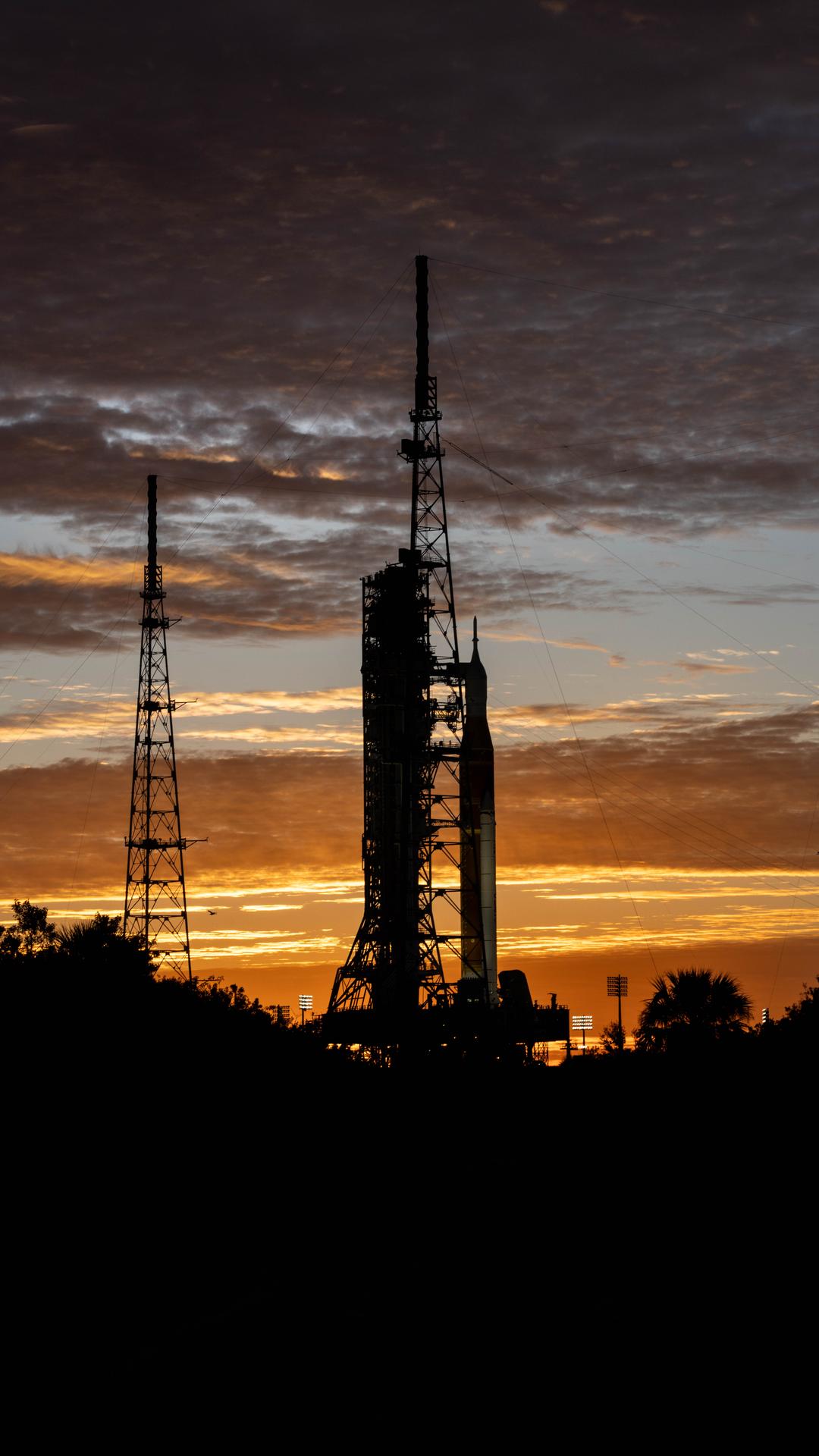
Clouds and the Sun illuminate the sky on Wednesday, Jan. 28, 2026, as NASA’s Artemis II SLS (Space Launch System) rocket and Orion spacecraft stand vertical at Launch Complex 39B at NASA’s Kennedy Space Center in Florida. The Artemis II test flight will take Commander Reid Wiseman, Pilot Victor Glover, and Mission Specialist Christina Koch from NASA and Mission Specialist Jeremy Hansen from the CSA (Canadian Space Agency), around the Moon and back to Earth no later than April 2026.
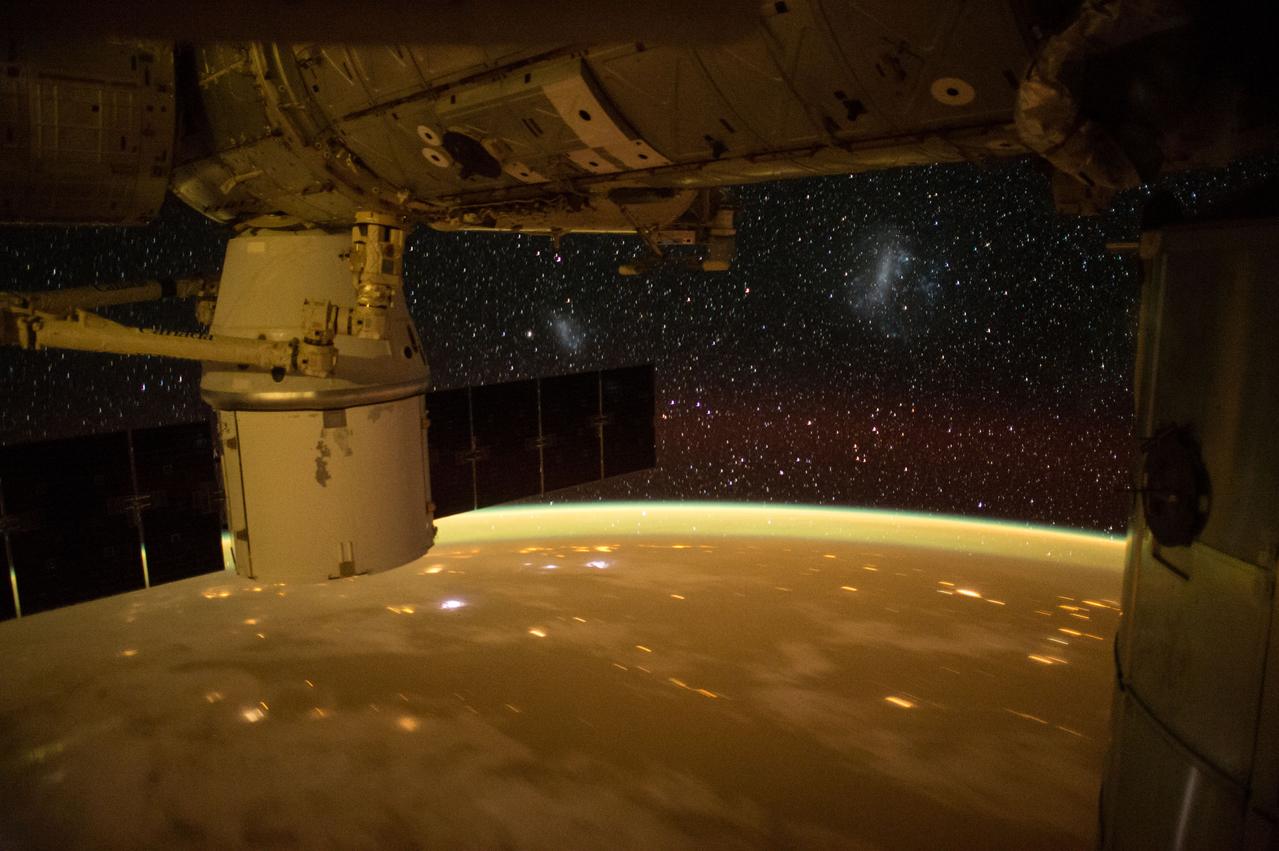
ISS043E125469 (04/18/2015) --- A dying sun turns the Earth gold with cities sparkling to match the stars that spread out from the International Space Station. NASA astronaut Terry Verts tweeted this wondrous image with the attached comment about the stars: " See those light clusters? (center sky left and right)They are Magellanic clouds, a duo of dwarf galaxies seen from the southern hemisphere".
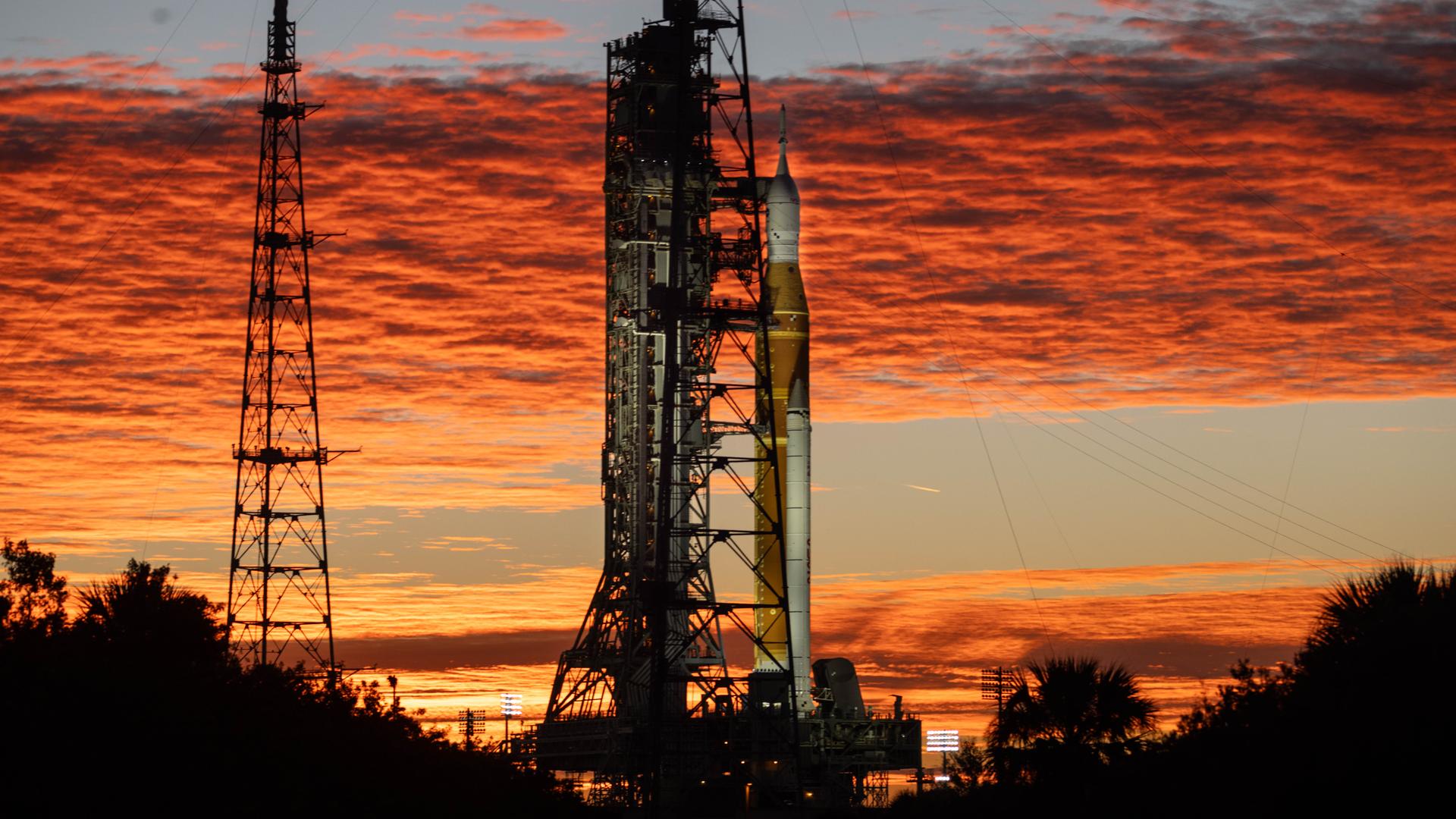
Clouds and the Sun illuminate the sky on Wednesday, Jan. 28, 2026, as NASA’s Artemis II SLS (Space Launch System) rocket and Orion spacecraft stand vertical at Launch Complex 39B at NASA’s Kennedy Space Center in Florida. The Artemis II test flight will take Commander Reid Wiseman, Pilot Victor Glover, and Mission Specialist Christina Koch from NASA and Mission Specialist Jeremy Hansen from the CSA (Canadian Space Agency), around the Moon and back to Earth no later than April 2026.
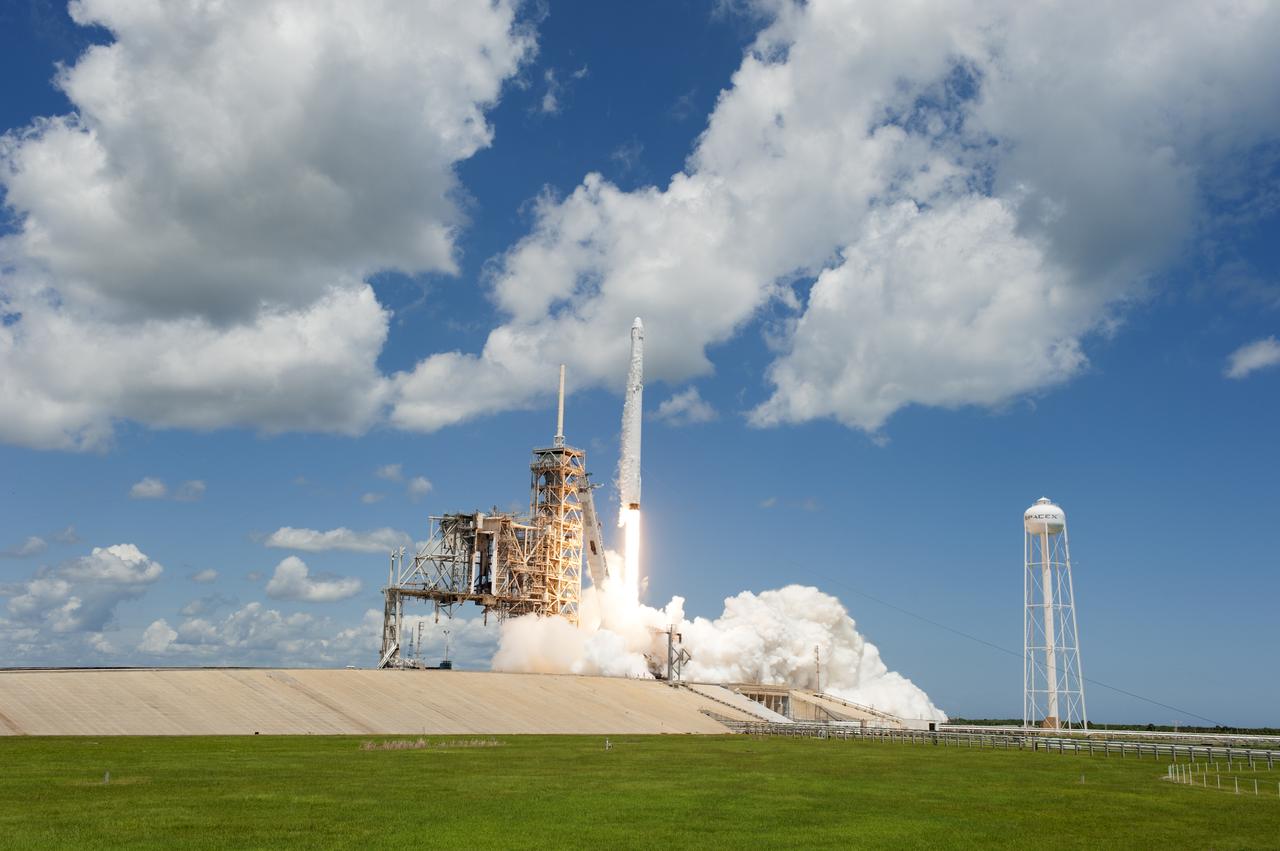
With a backdrop of blue sky and fluffy white clouds, the two-stage Falcon 9 launch vehicle lifts off Launch Complex 39A at NASA's Kennedy Space Center in Florida carrying the Dragon resupply spacecraft to the International Space Station. Liftoff was at 12:31 p.m. EDT. On its 12th commercial resupply services mission to the International Space Station, Dragon will bring up more than 6,400 pounds of supplies and new science experiments and equipment for technology research.
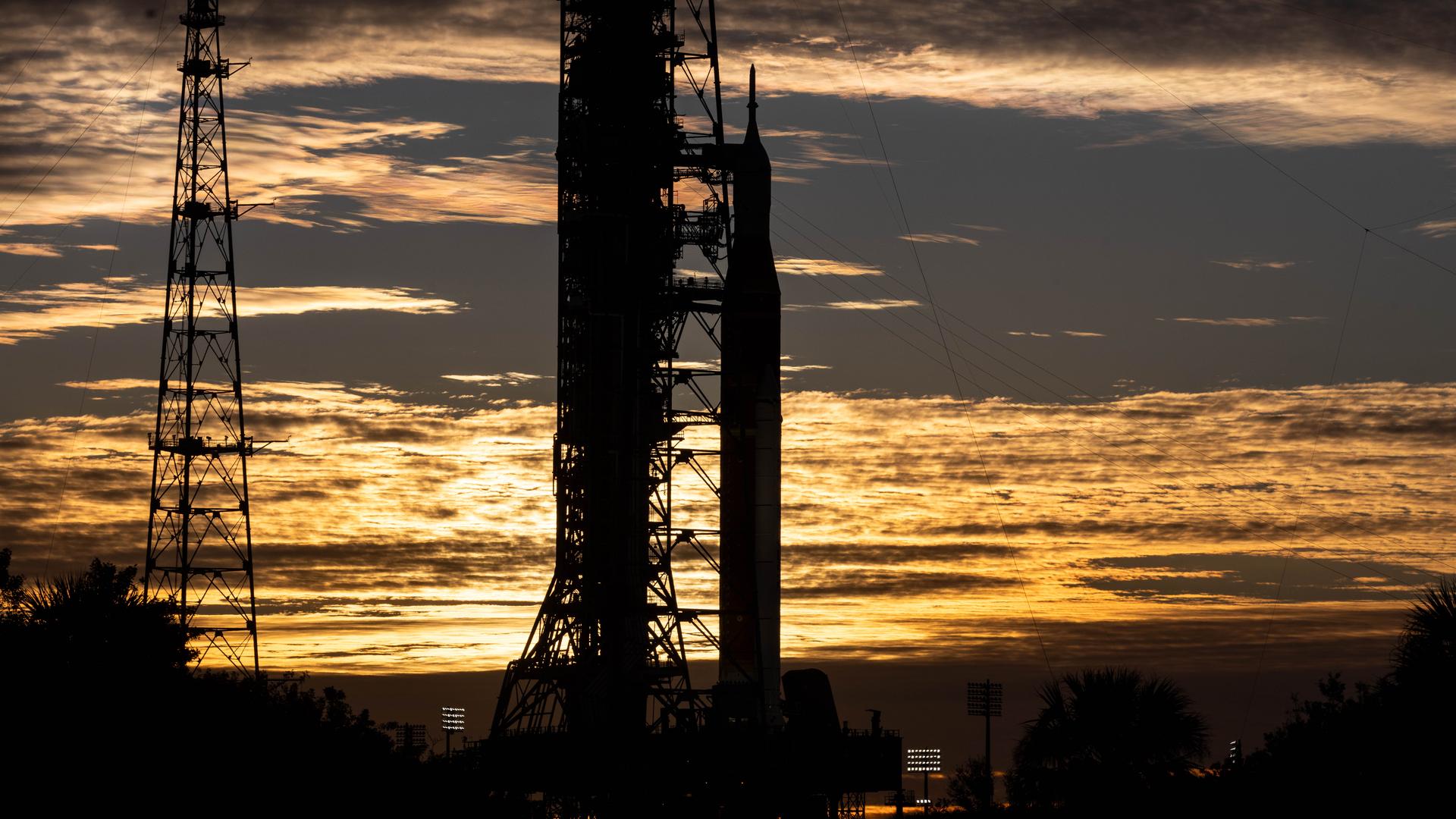
Clouds and the Sun illuminate the sky on Wednesday, Jan. 28, 2026, as NASA’s Artemis II SLS (Space Launch System) rocket and Orion spacecraft stand vertical at Launch Complex 39B at NASA’s Kennedy Space Center in Florida. The Artemis II test flight will take Commander Reid Wiseman, Pilot Victor Glover, and Mission Specialist Christina Koch from NASA and Mission Specialist Jeremy Hansen from the CSA (Canadian Space Agency), around the Moon and back to Earth no later than April 2026.
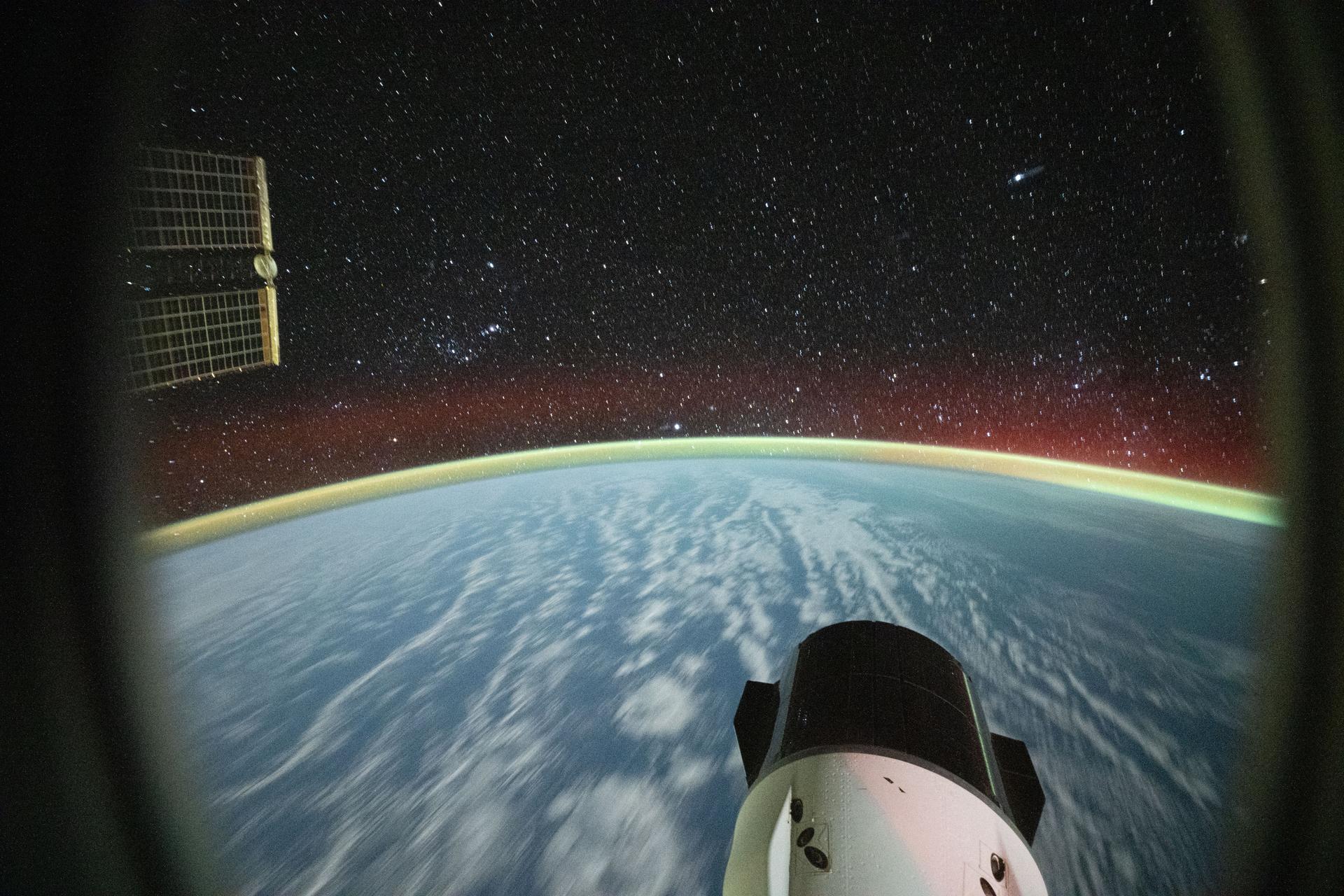
iss073e0818308 (Sept. 29, 2025) --- This long-exposure photograph from the International Space Station was taken 263 miles above the Indian Ocean at approximately 11:02 p.m. local time. The image reveals clouds stretching into a soft blur beneath the orbital outpost, a bright airglow blanketing Earth’s horizon, and faint star trails arcing across the night sky. The SpaceX Dragon cargo spacecraft is visible in the lower foreground, framed by a window aboard the SpaceX Dragon crew spacecraft.
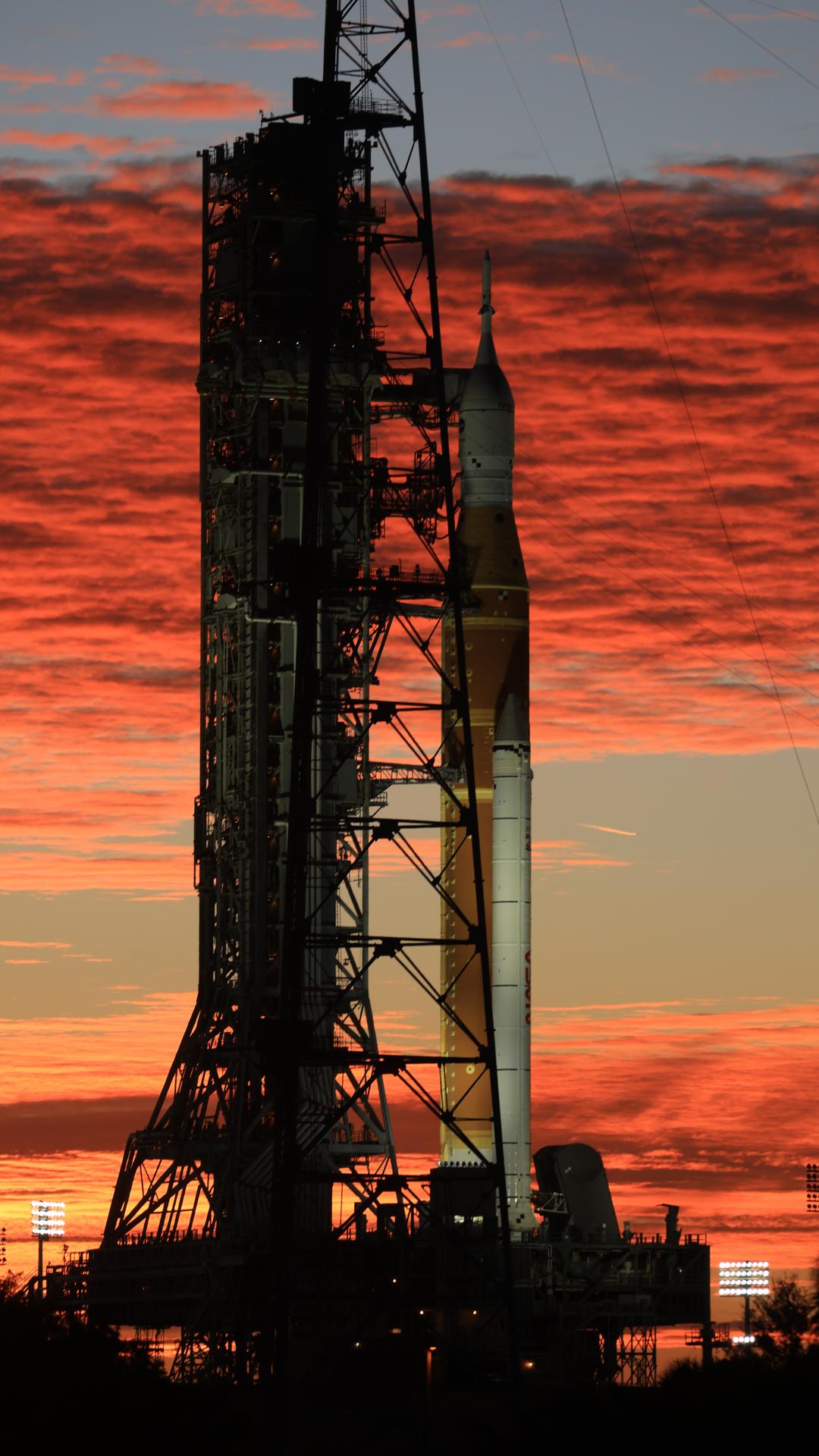
Clouds and the Sun illuminate the sky on Wednesday, Jan. 28, 2026, as NASA’s Artemis II SLS (Space Launch System) rocket and Orion spacecraft stand vertical at Launch Complex 39B at NASA’s Kennedy Space Center in Florida. The Artemis II test flight will take Commander Reid Wiseman, Pilot Victor Glover, and Mission Specialist Christina Koch from NASA and Mission Specialist Jeremy Hansen from the CSA (Canadian Space Agency), around the Moon and back to Earth no later than April 2026.
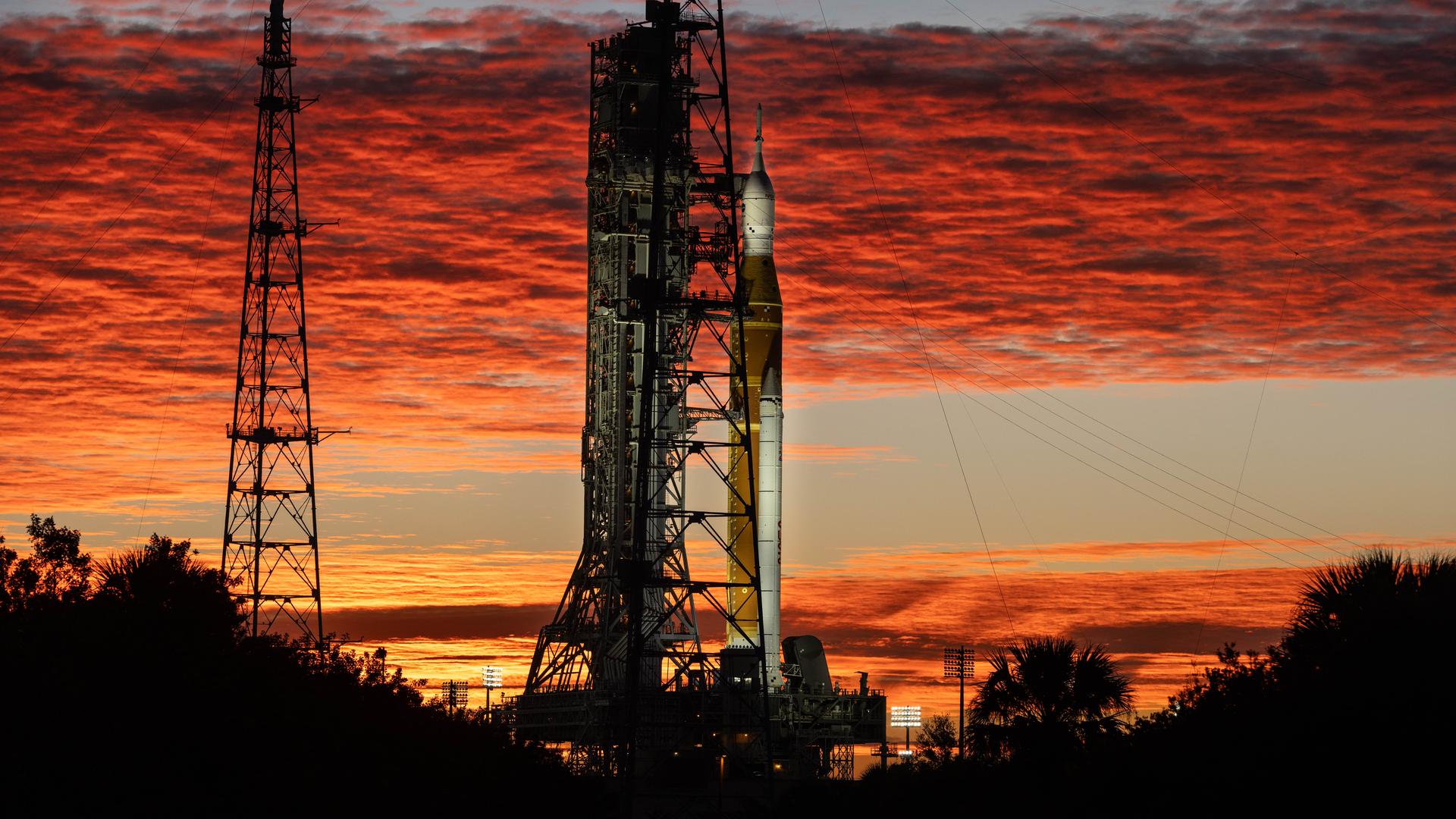
Clouds and the Sun illuminate the sky on Wednesday, Jan. 28, 2026, as NASA’s Artemis II SLS (Space Launch System) rocket and Orion spacecraft stand vertical at Launch Complex 39B at NASA’s Kennedy Space Center in Florida. The Artemis II test flight will take Commander Reid Wiseman, Pilot Victor Glover, and Mission Specialist Christina Koch from NASA and Mission Specialist Jeremy Hansen from the CSA (Canadian Space Agency), around the Moon and back to Earth no later than April 2026.
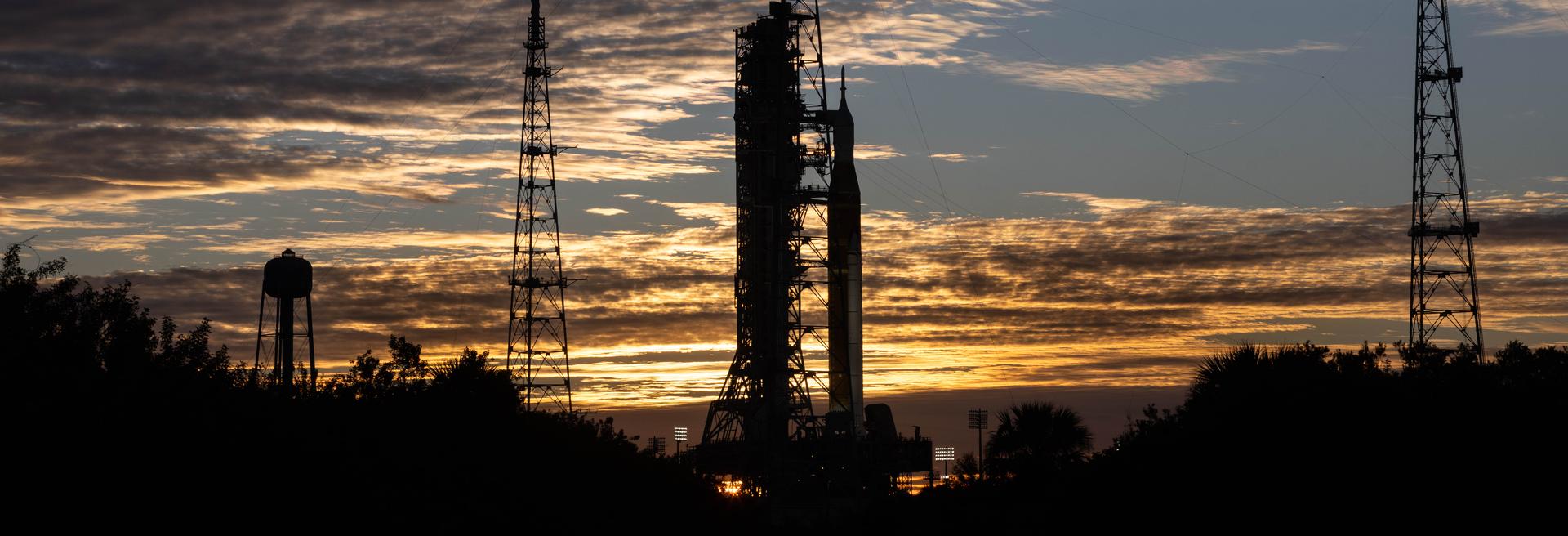
Clouds and the Sun illuminate the sky on Wednesday, Jan. 28, 2026, as NASA’s Artemis II SLS (Space Launch System) rocket and Orion spacecraft stand vertical at Launch Complex 39B at NASA’s Kennedy Space Center in Florida. The Artemis II test flight will take Commander Reid Wiseman, Pilot Victor Glover, and Mission Specialist Christina Koch from NASA and Mission Specialist Jeremy Hansen from the CSA (Canadian Space Agency), around the Moon and back to Earth no later than April 2026.
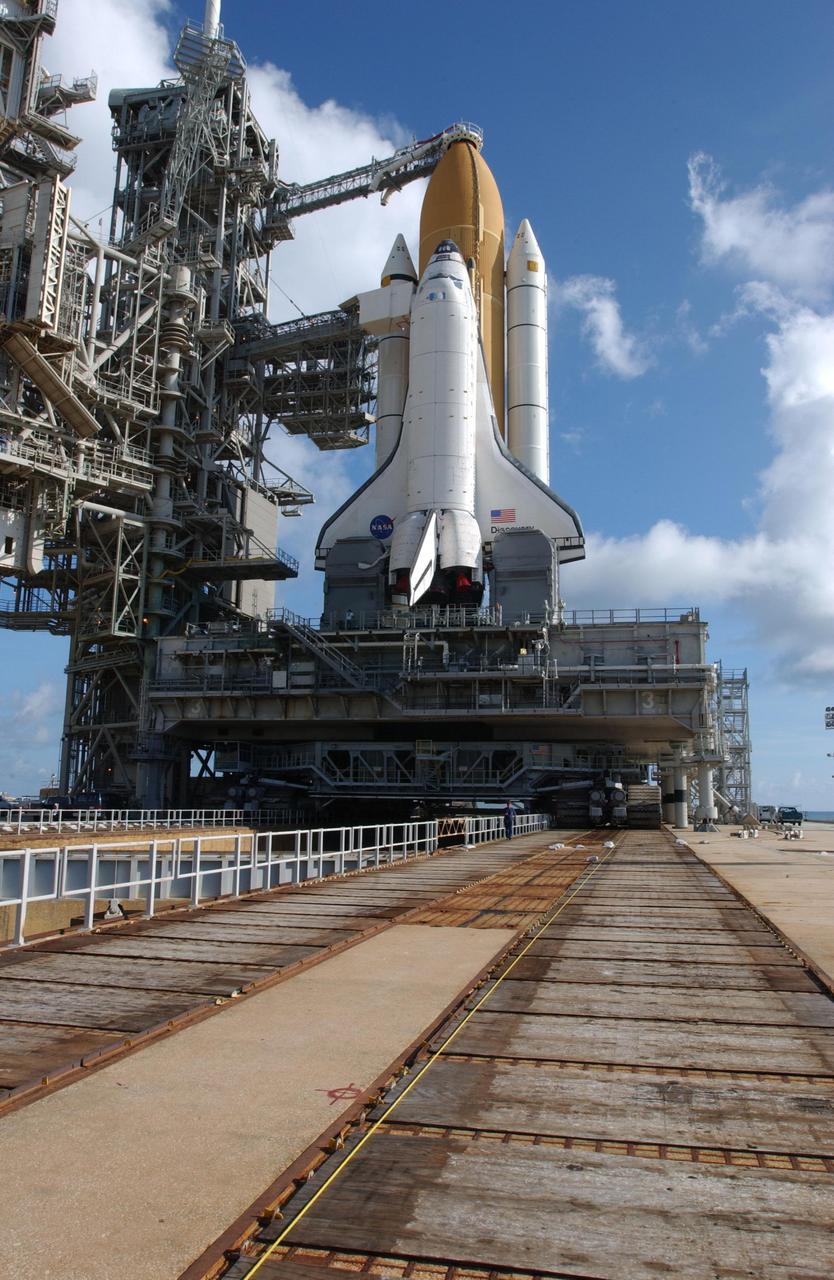
KENNEDY SPACE CENTER, Fla. - With the cloud-spotted blue sky as a backdrop, Space Shuttle Discovery stands ready to undergo launch preparations for mission STS-105. At the bottom of the photo is seen the crawler track on the mound. The crawler-transporter that moved the Shuttle from the Vehicle Assembly Building is beginning to back out from under the mobile launcher platform. Discovery is scheduled to launch in early August on mission STS-105. Photo by Scott Andrews using a Nikon D1X camera
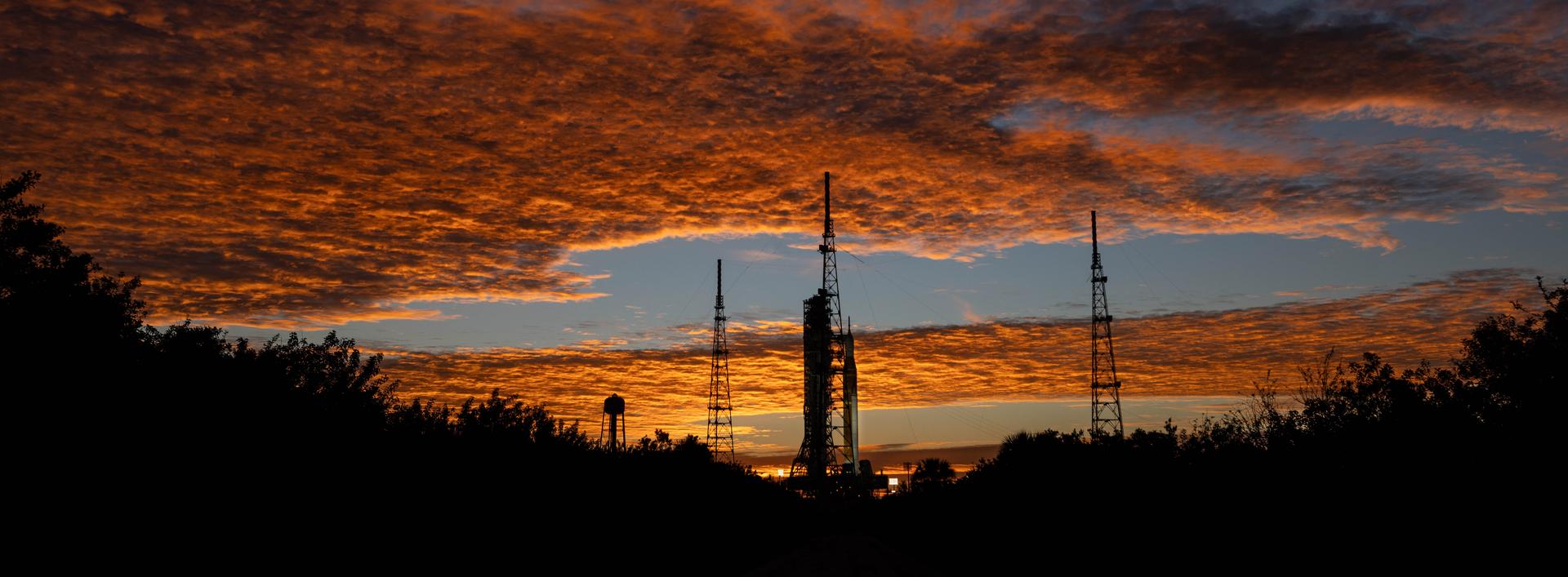
Clouds and the Sun illuminate the sky on Wednesday, Jan. 28, 2026, as NASA’s Artemis II SLS (Space Launch System) rocket and Orion spacecraft stand vertical at Launch Complex 39B at NASA’s Kennedy Space Center in Florida. The Artemis II test flight will take Commander Reid Wiseman, Pilot Victor Glover, and Mission Specialist Christina Koch from NASA and Mission Specialist Jeremy Hansen from the CSA (Canadian Space Agency), around the Moon and back to Earth no later than April 2026.
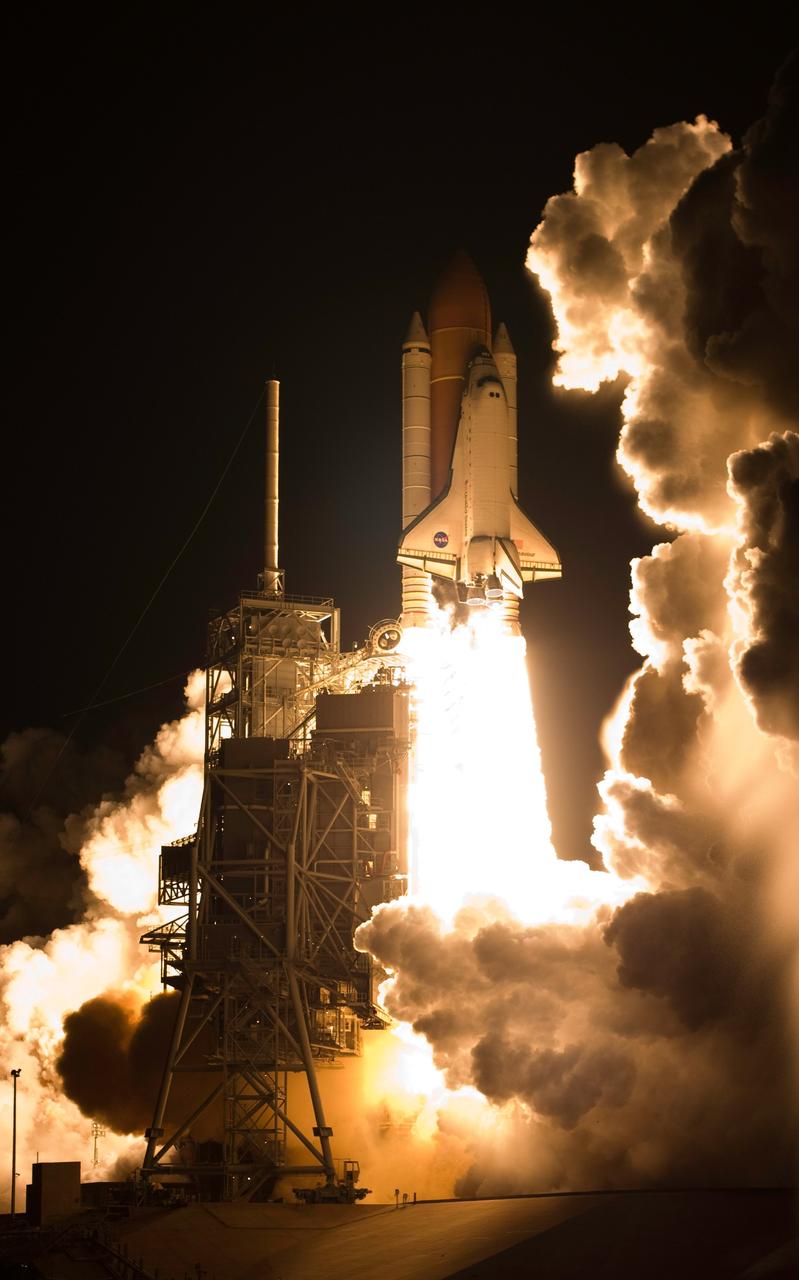
KENNEDY SPACE CENTER, FLA. -- Clouds of smoke and steam seem to envelop space shuttle Atlantis as it leaps into the night sky from Launch Pad 39A at NASA's Kennedy Space Center on the STS-123 mission. Liftoff was on time at 2:28 a.m. EDT. Endeavour's crew will make a record-breaking 16-day mission to the International Space Station and deliver the first section of the Japan Aerospace Exploration Agency's Kibo laboratory and the Canadian Space Agency's two-armed robotic system, Dextre. Photo courtesy of Scott Andrews
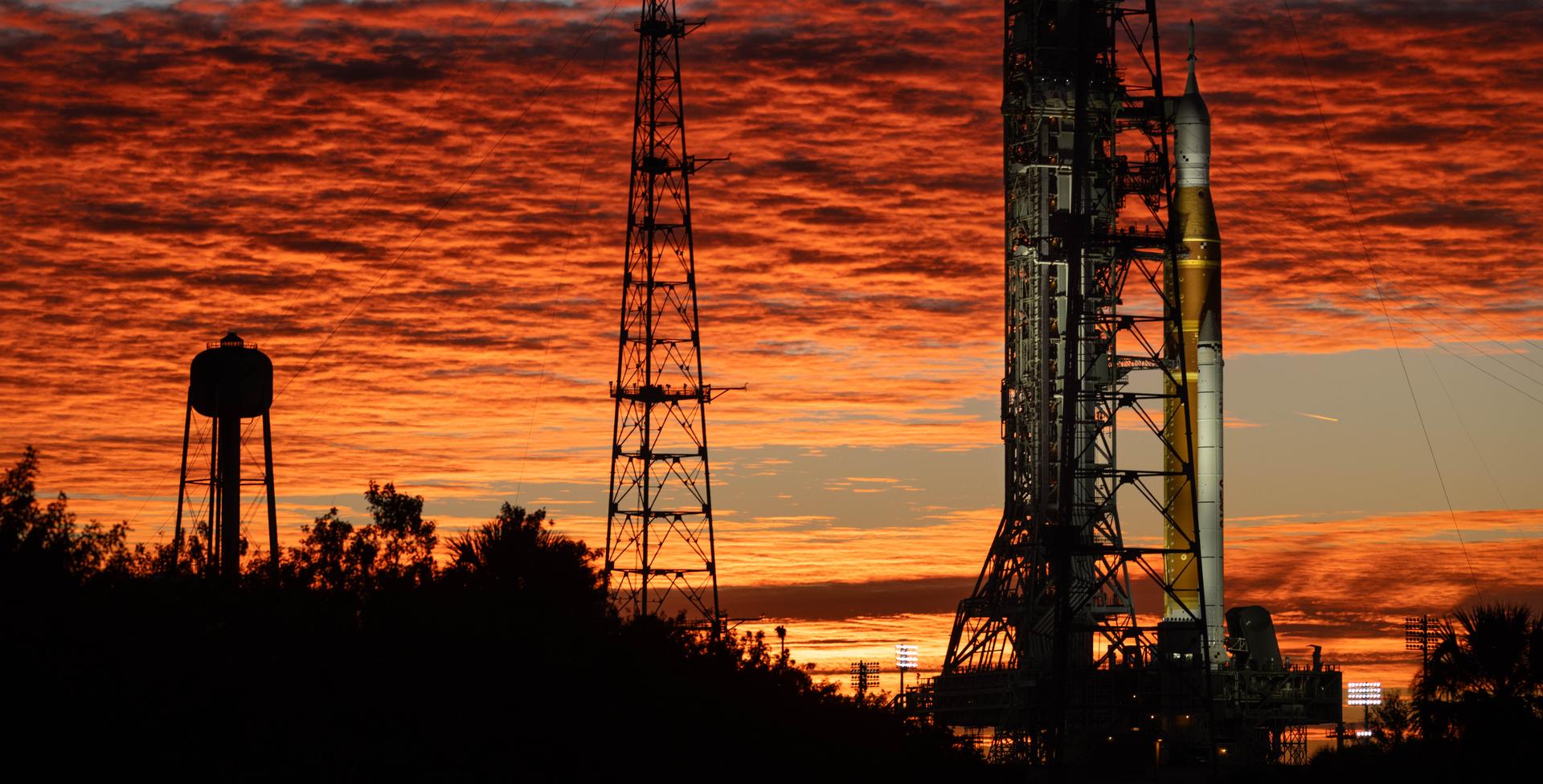
Clouds and the Sun illuminate the sky on Wednesday, Jan. 28, 2026, as NASA’s Artemis II SLS (Space Launch System) rocket and Orion spacecraft stand vertical at Launch Complex 39B at NASA’s Kennedy Space Center in Florida. The Artemis II test flight will take Commander Reid Wiseman, Pilot Victor Glover, and Mission Specialist Christina Koch from NASA and Mission Specialist Jeremy Hansen from the CSA (Canadian Space Agency), around the Moon and back to Earth no later than April 2026.
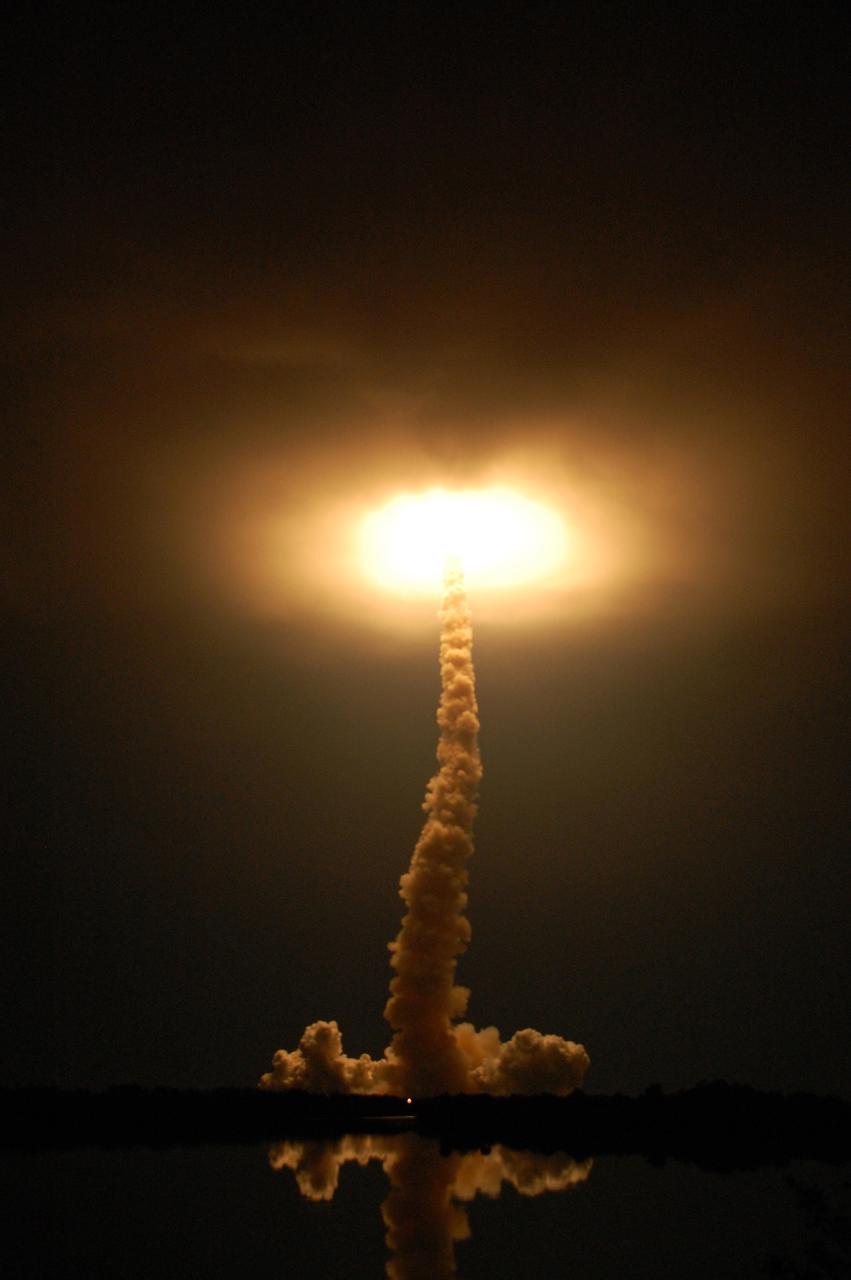
KENNEDY SPACE CENTER, FLA. -- Blazing into the cloud-covered sky, Space shuttle Endeavour lifts off Launch Pad 39A at NASA's Kennedy Space Center on the STS-123 mission. Liftoff was on time at 2:28 a.m. EDT. The crew will make a record-breaking 16-day mission to the International Space Station and deliver the first section of the Japan Aerospace Exploration Agency's Kibo laboratory and the Canadian Space Agency's two-armed robotic system, Dextre. Photo credit: NASA/Fletcher Hildreth
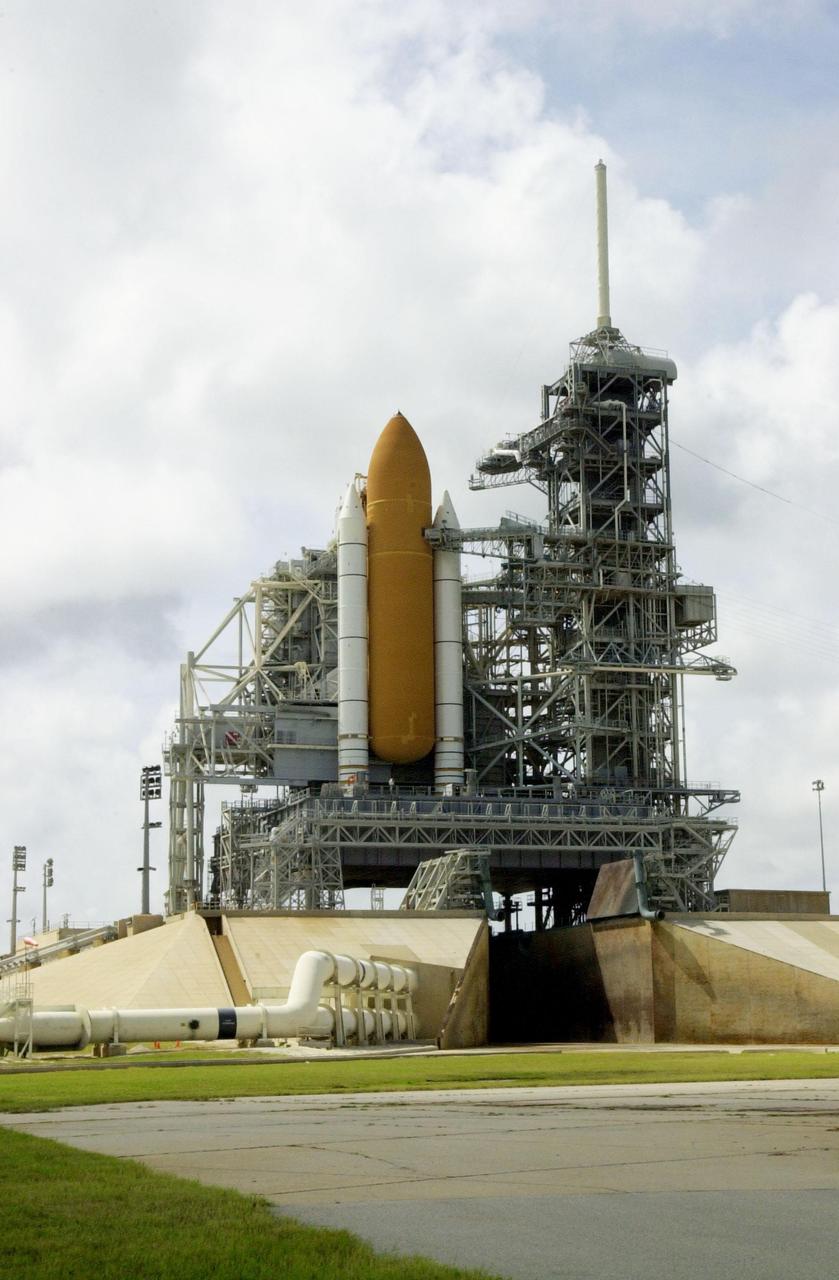
KENNEDY SPACE CENTER, FLA. - With the Rotating Service Structure in place on Launch Pad 39B, all that is visible on Space Shuttle Atlantis is the orange external tank flanked by white solid rocket boosters. The Shuttle is undergoing pre-launch preparations for mission STS-112, scheduled to launch Oct. 2, 2002. The sky above the Shuttle is filled with dark clouds sweeping over Florida from Hurricane Isidore.
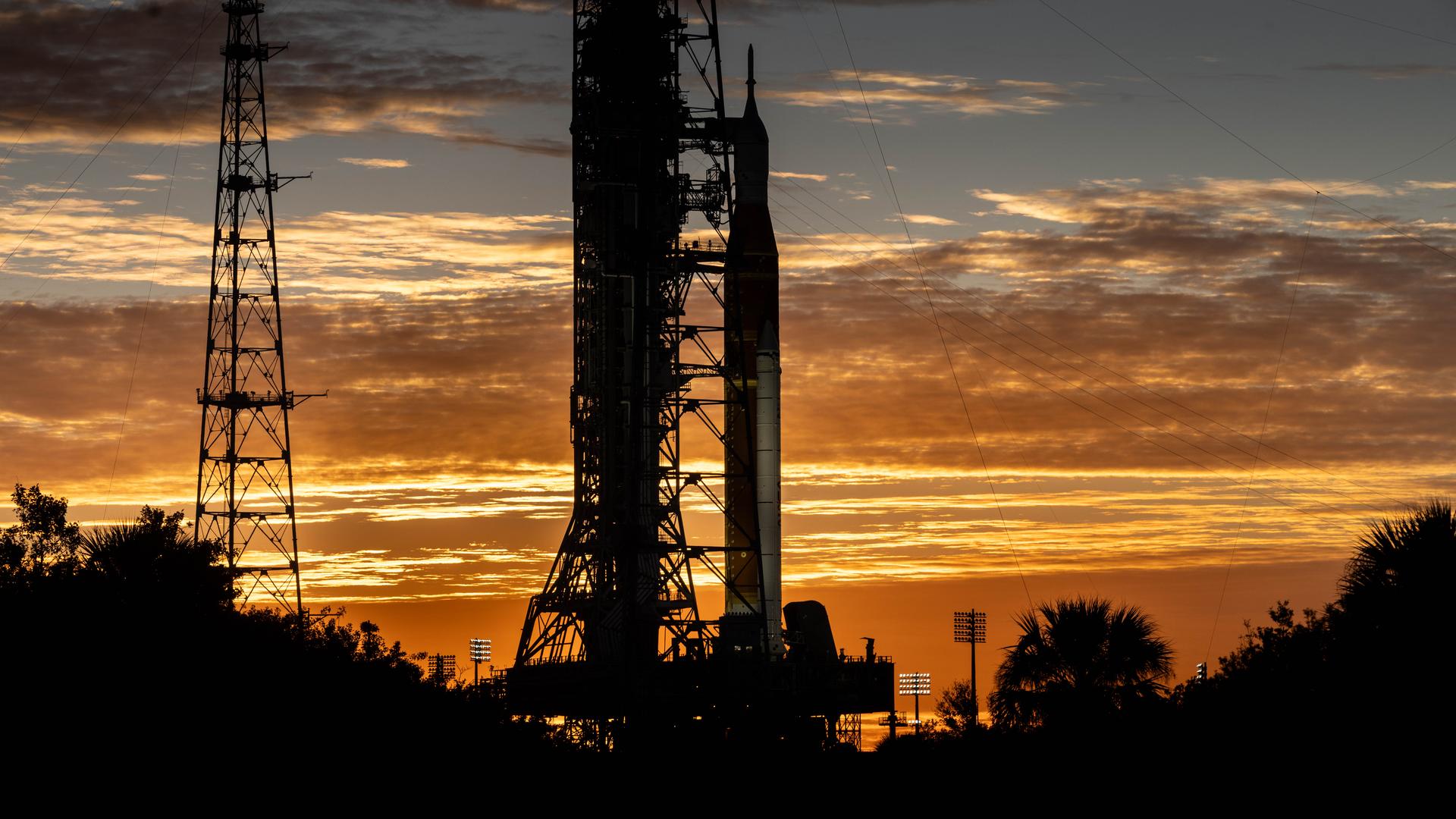
Clouds and the Sun illuminate the sky on Wednesday, Jan. 28, 2026, as NASA’s Artemis II SLS (Space Launch System) rocket and Orion spacecraft stand vertical at Launch Complex 39B at NASA’s Kennedy Space Center in Florida. The Artemis II test flight will take Commander Reid Wiseman, Pilot Victor Glover, and Mission Specialist Christina Koch from NASA and Mission Specialist Jeremy Hansen from the CSA (Canadian Space Agency), around the Moon and back to Earth no later than April 2026.
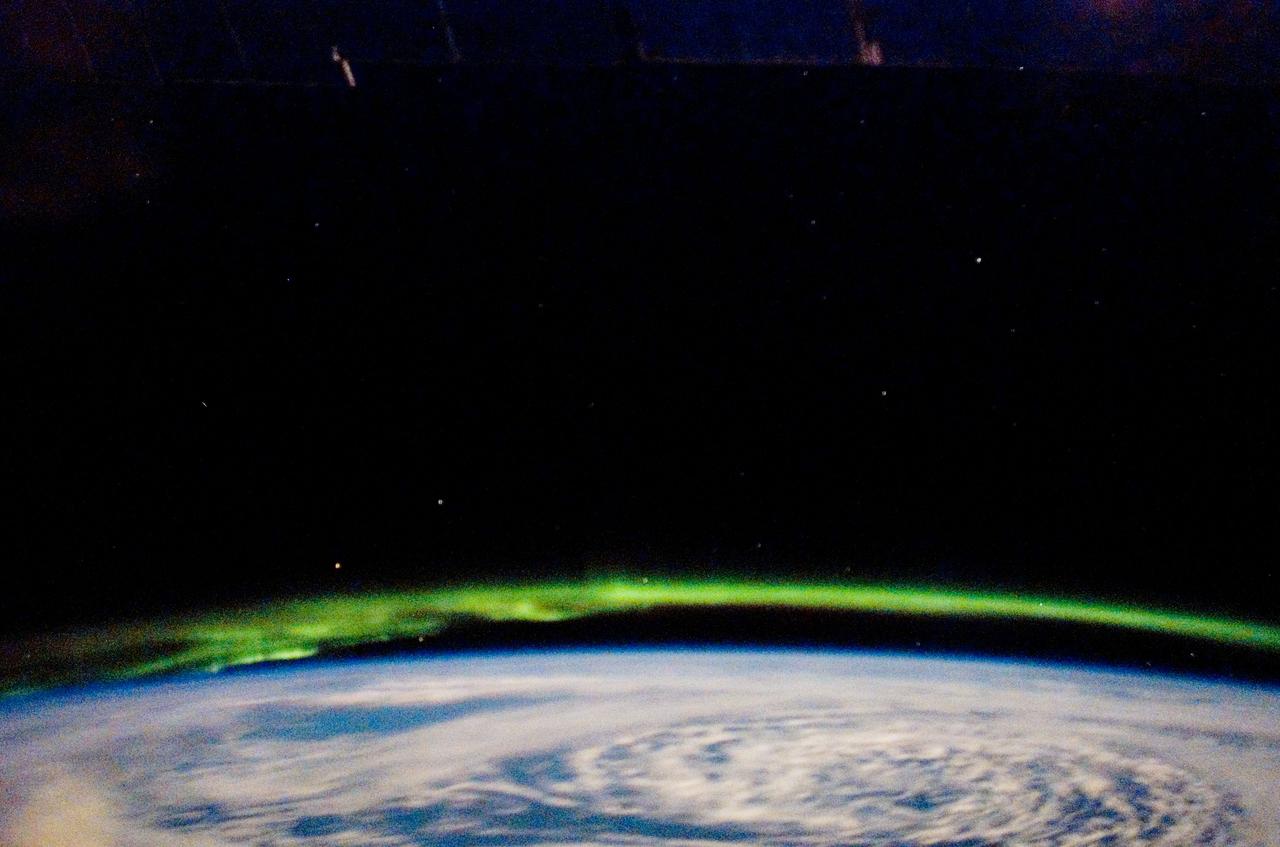
S123-E-008018 (21 March 2008) --- While docked and onboard the International Space Station, a STS-123 Endeavour crewmember captured the glowing green beauty of the Aurora Borealis. Looking northward across the Gulf of Alaska, over a low pressure area (cloud vortex), the aurora brightens the night sky. This image was taken on March 21, 2008 at 09:08:46 (GMT) with a 28 mm lens from the nadir point of 47.9 degrees north latitude and 146.8 degrees west longitude.

A Delta II rocket carrying the Geomagnetic Tail Lab (GEOTAIL) spacecraft lifts off at Launch Complex 17, Kennedy Space Center (KSC) into a cloud-dappled sky. This liftoff marks the first Delta launch under the medium expendable launch vehicle services contract between NASA and McDonnell Douglas Space Systems Co. The GEOTAIL mission, a joint US/Japanese project, is the first in a series of five satellites to study the interactions between the Sun, the Earth's magnetic field, and the Van Allen radiation belts.
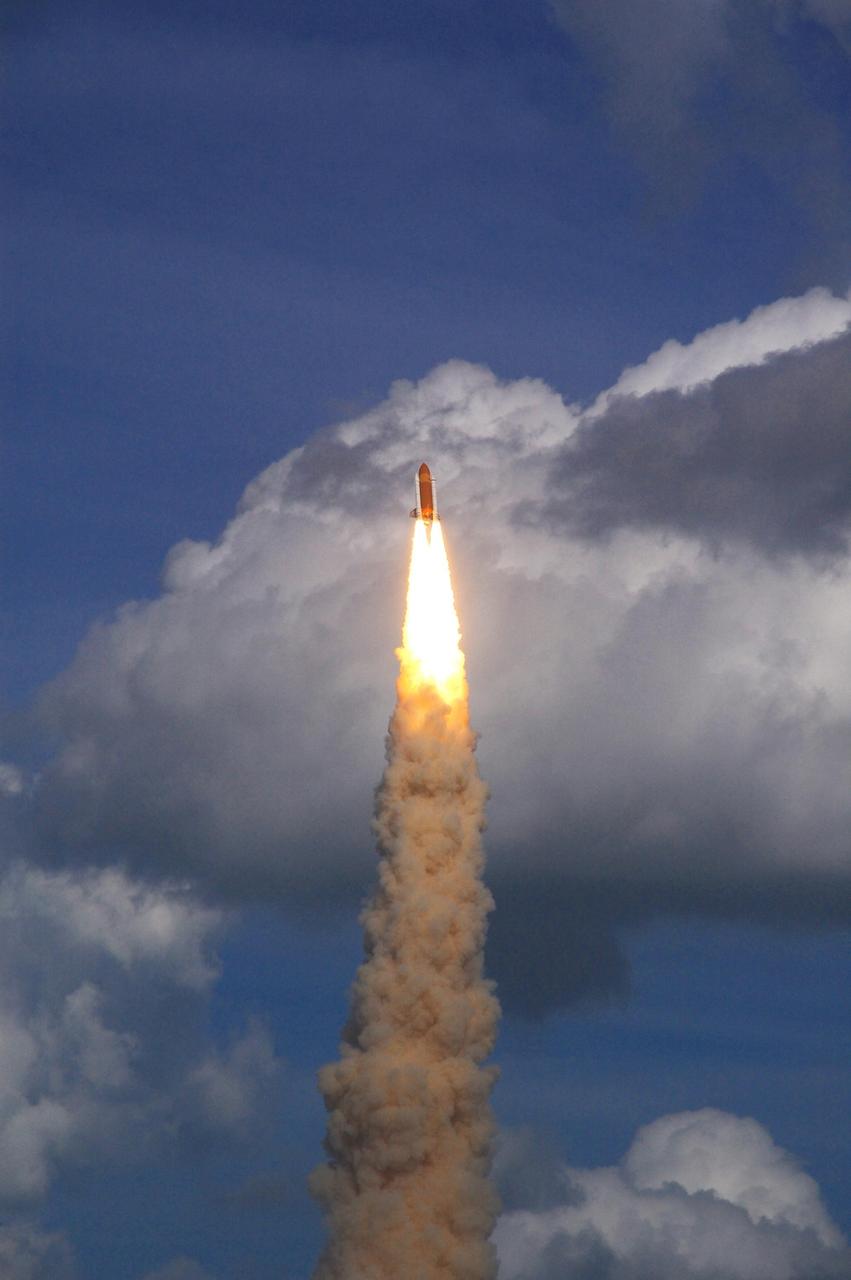
KENNEDY SPACE CENTER, FLA. -- Against a backdrop of clouds, space shuttle Atlantis hurtles into the sky atop a column of fire and smoke on the STS-122 mission. Liftoff was on time at 2:45 p.m. EST. This is the third launch attempt for Atlantis since December 2007 to carry the European Space Agency's Columbus laboratory to the International Space Station. During the 11-day mission, the crew's prime objective is to attach the laboratory to the Harmony module, adding to the station's size and capabilities. Photo credit: NASA/Fletch Hildreth

KENNEDY SPACE CENTER, FLA. - Dark, rain-filled clouds blanket the sky over the Vehicle Assembly Building and Launch Control Center, bringing thunder and heavy rain to the area. This type of weather convinced flight control managers to wave off the two scheduled landing attempts at KSC for Endeavour, returning from mission STS-111
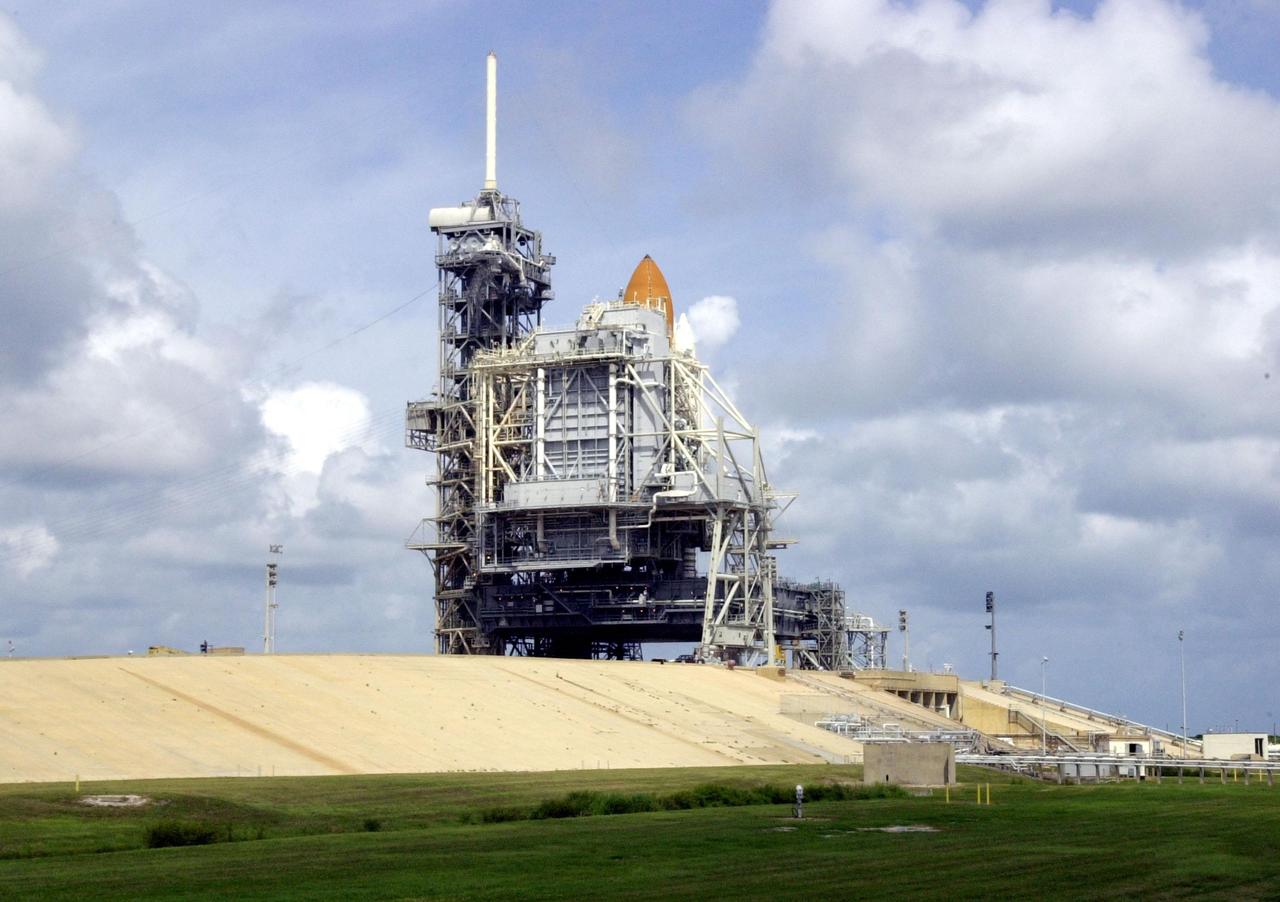
KENNEDY SPACE CENTER, FLA. - Only the tip of the orange external tank on Space Shuttle Atlantis is visible above the Rotating Service Structure surrounding Atlantis on Launch Pad 39B. The Shuttle is undergoing pre-launch preparations for mission STS-112, scheduled to launch Oct. 2, 2002. The sky above the Shuttle is filled with dark clouds sweeping over Florida from Hurricane Isidore.
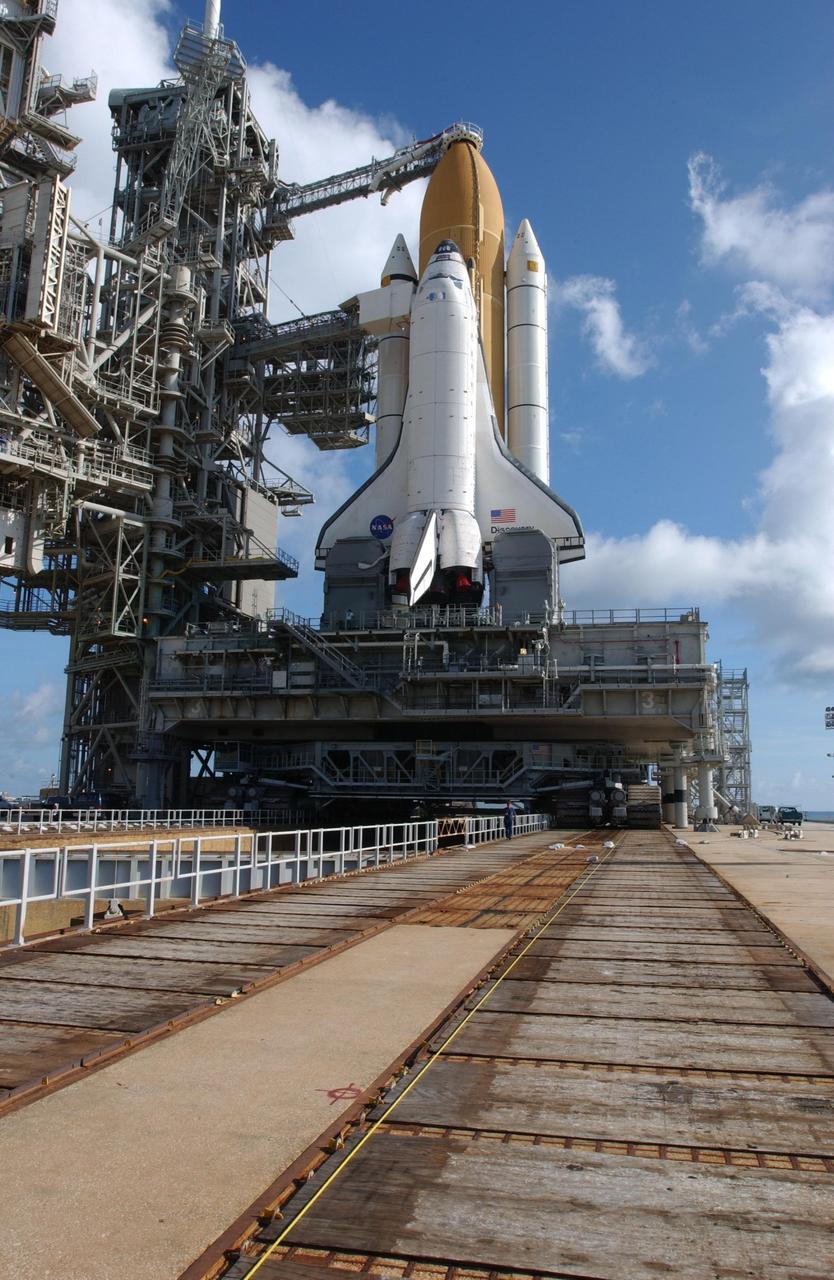
KENNEDY SPACE CENTER, Fla. - With the cloud-spotted blue sky as a backdrop, Space Shuttle Discovery stands ready to undergo launch preparations for mission STS-105. At the bottom of the photo is seen the crawler track on the mound. The crawler-transporter that moved the Shuttle from the Vehicle Assembly Building is beginning to back out from under the mobile launcher platform. Discovery is scheduled to launch in early August on mission STS-105. Photo by Scott Andrews using a Nikon D1X camera
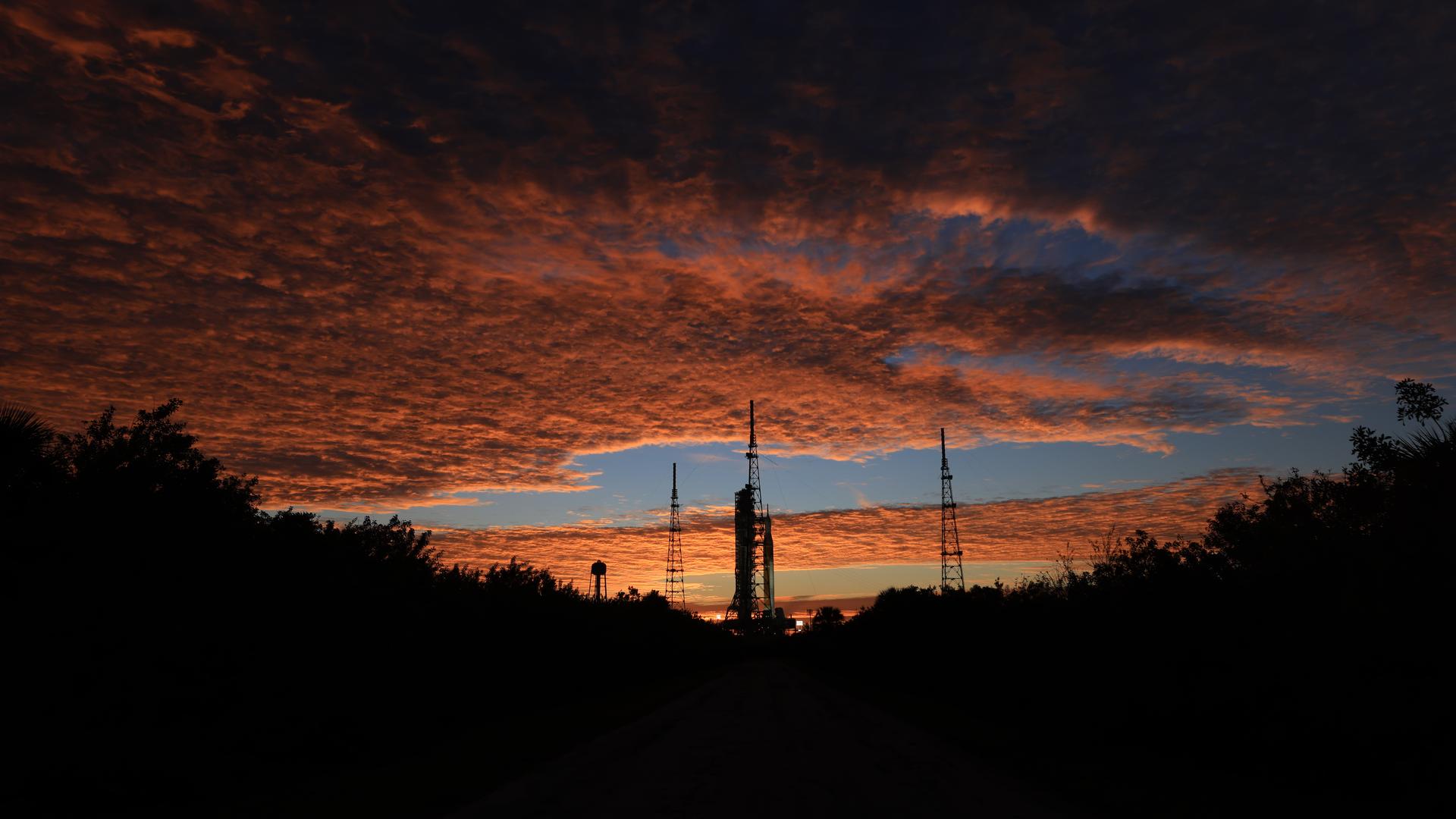
Clouds and the Sun illuminate the sky on Wednesday, Jan. 28, 2026, as NASA’s Artemis II SLS (Space Launch System) rocket and Orion spacecraft stand vertical at Launch Complex 39B at NASA’s Kennedy Space Center in Florida. The Artemis II test flight will take Commander Reid Wiseman, Pilot Victor Glover, and Mission Specialist Christina Koch from NASA and Mission Specialist Jeremy Hansen from the CSA (Canadian Space Agency), around the Moon and back to Earth no later than April 2026.
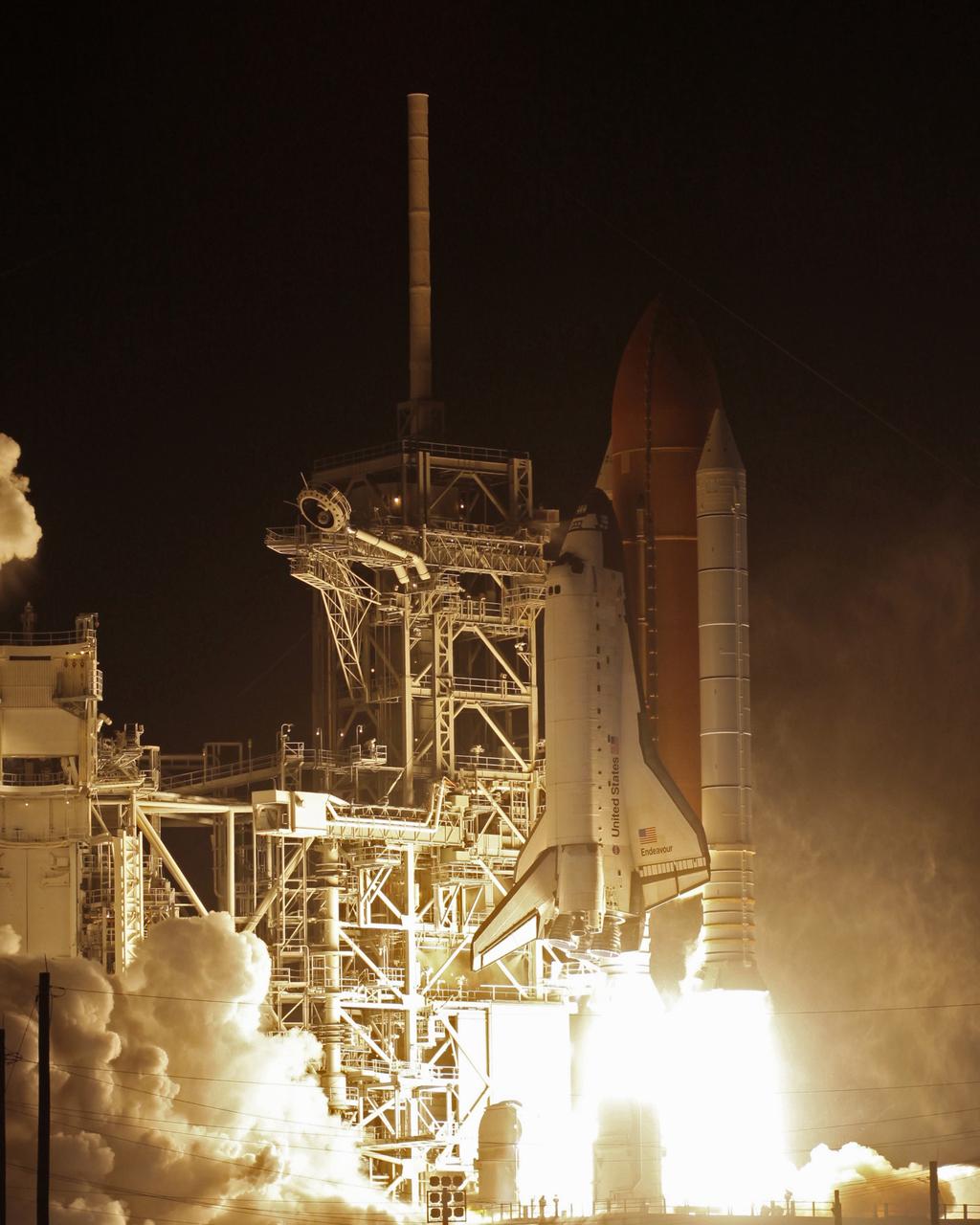
CAPE CANAVERAL, Fla. – Light-filled clouds of smoke and steam roll across Launch Pad 39A at NASA's Kennedy Space Center as space shuttle Endeavour roars into the night sky on the STS-126 mission. Liftoff was on time at 7:55 p.m. EST. STS-126 is the 124th space shuttle flight and the 27th flight to the International Space Station. The mission will feature four spacewalks and work that will prepare the space station to house six crew members for long- duration missions. Photo courtesy of Scott Andrews
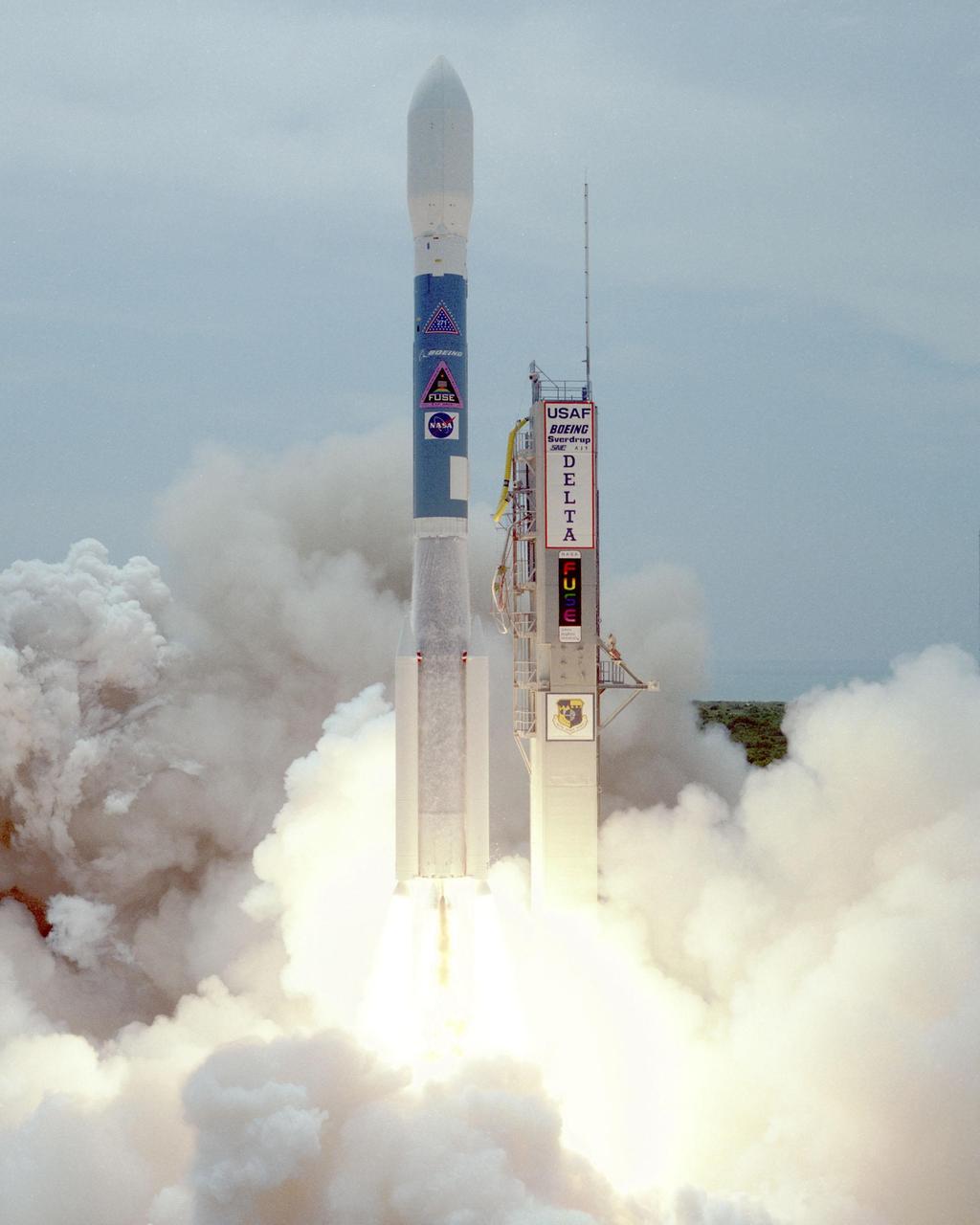
Clouds of smoke and steam billow around the Boeing Delta II rocket as it roars into the sky after liftoff at 11:44 a.m. EDT from Launch Pad 17A, Cape Canaveral Air Station. The rocket is carrying NASA's Far Ultraviolet Spectroscopic Explorer (FUSE) satellite. FUSE was developed to investigate the origin and evolution of the lightest elements in the universe hydrogen and deuterium. In addition, the FUSE satellite will examine the forces and process involved in the evolution of the galaxies, stars and planetary systems by investigating light in the far ultraviolet portion of the electromagnetic spectrum

A blue sky and fluffy clouds serve as the backdrop in this view of the exterior of the Launch Control Center (LCC) at NASA's Kennedy Space Center in Florida. The Apollo and shuttle-era firing rooms in the LCC have been upgraded. Exploration Ground Systems upgraded Firing Room 1 to support the launch of NASA's Space Launch System rocket and Orion spacecraft on Exploration Mission-1 and deep space missions.
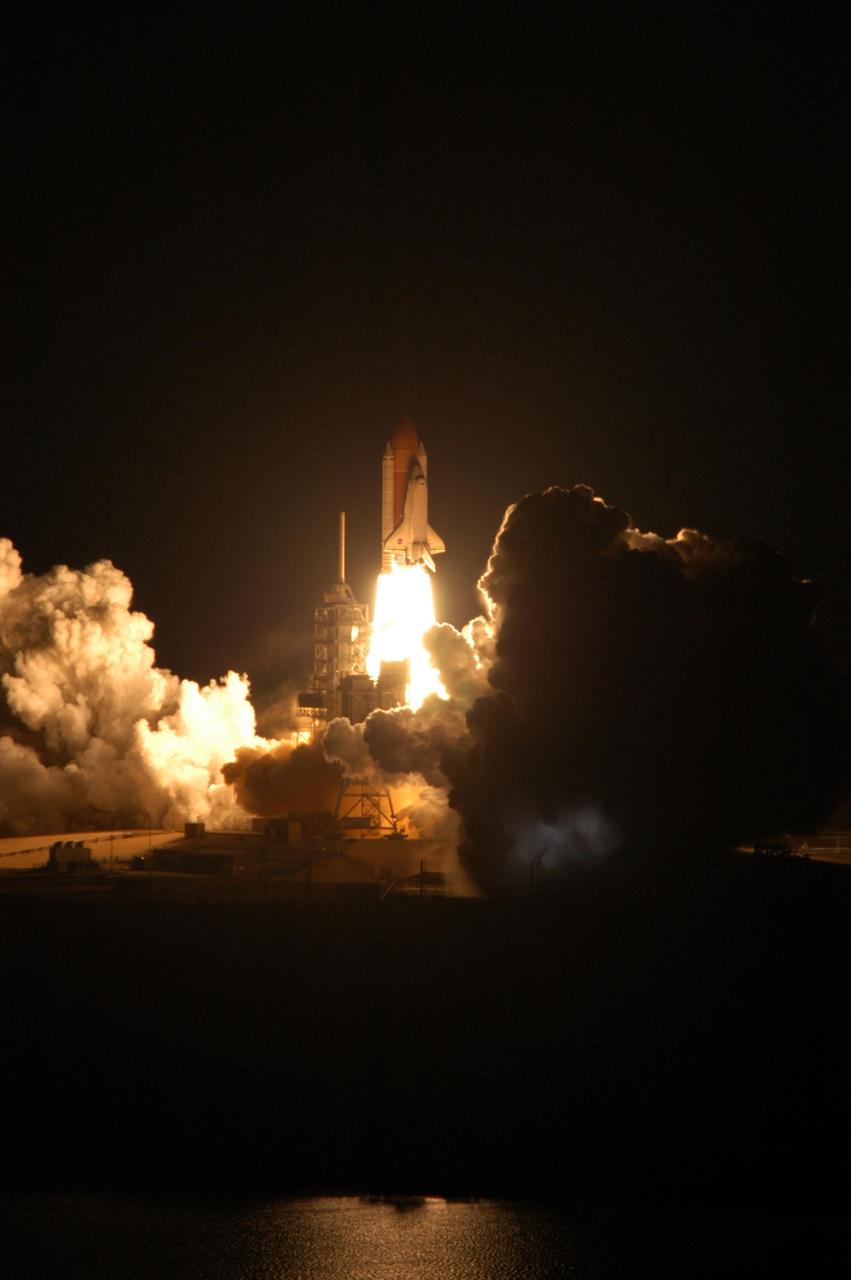
KENNEDY SPACE CENTER, FLA. -- Flooding the night sky with its blazing light, Space Shuttle Discovery leaps toward the sky from Launch Pad 39B on mission STS-116. The launch occurred at 8:47:35 p.m. EST. This was the second launch attempt for mission STS-116. The first launch attempt on Dec. 7 was postponed due a low cloud ceiling over Kennedy Space Center. This is Discovery's 33rd mission and the first night launch since 2002. The 20th shuttle mission to the International Space Station, STS-116 carries another truss segment, P5. It will serve as a spacer, mated to the P4 truss that was attached in September. After installing the P5, the crew will reconfigure and redistribute the power generated by two pairs of U.S. solar arrays. Landing is expected Dec. 21 at KSC. Photo credit: NASA/George Shelton
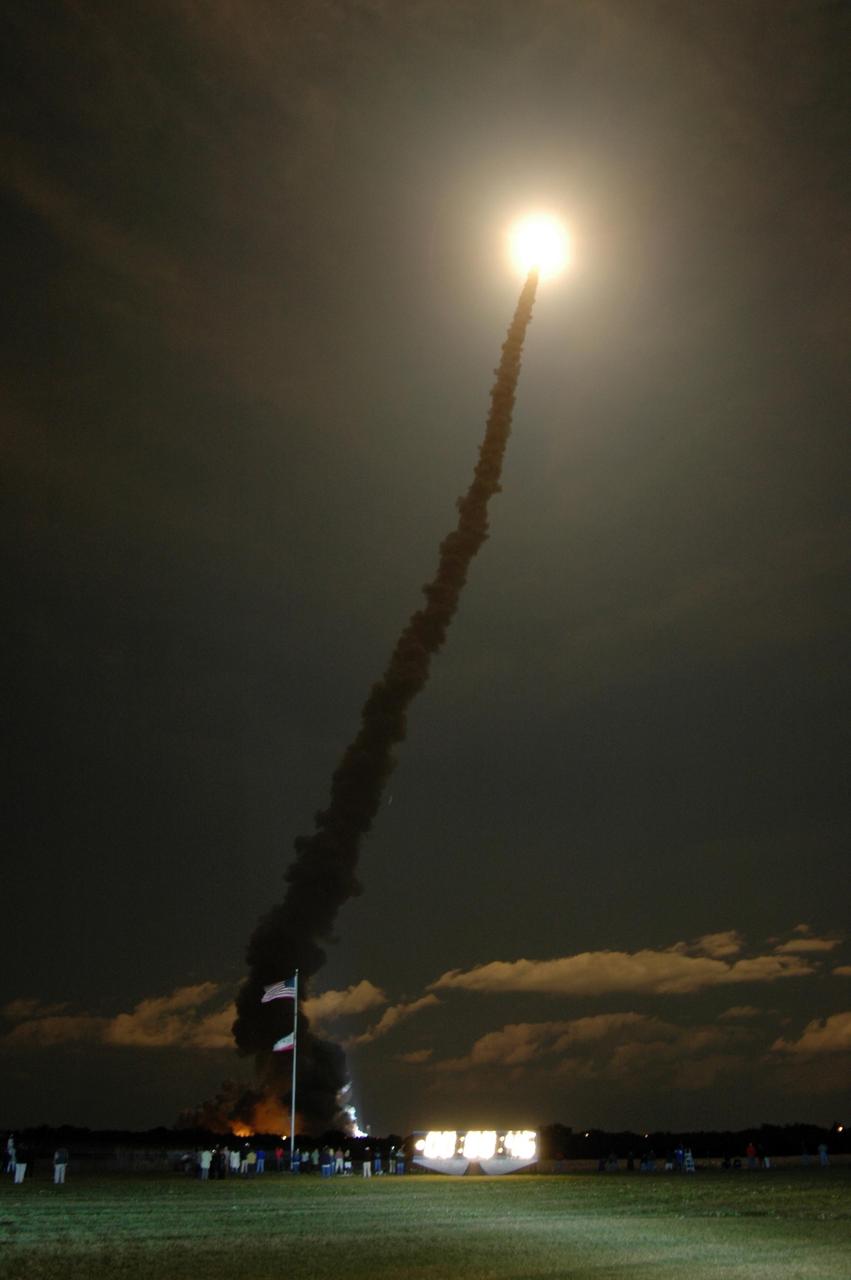
KENNEDY SPACE CENTER, FLA. -- Like a shooting star flooding the night sky with its blazing light, Space Shuttle Discovery leaps toward the sky from Launch Pad 39B on mission STS-116. The launch occurred at 8:47:35 p.m. EST. This was the second launch attempt for mission STS-116. The first launch attempt on Dec. 7 was postponed due a low cloud ceiling over Kennedy Space Center. This is Discovery's 33rd mission and the first night launch since 2002. The 20th shuttle mission to the International Space Station, STS-116 carries another truss segment, P5. It will serve as a spacer, mated to the P4 truss that was attached in September. After installing the P5, the crew will reconfigure and redistribute the power generated by two pairs of U.S. solar arrays. Landing is expected Dec. 21 at KSC. Photo credit: NASA/Jim Grossmann
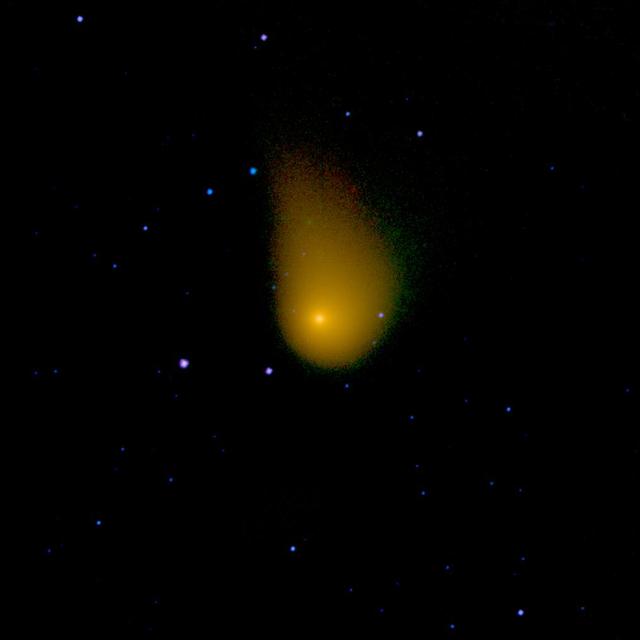
An infrared view from NASA's NEOWISE mission of the Oort cloud comet C/2006 W3 (Christensen). The spacecraft observed this comet on April 20th, 2010 as it traveled through the constellation Sagittarius. Comet Christensen was nearly 370 million miles (600 million kilometers) from Earth at the time. The image is half of a degree of the sky on each side. Infrared light with wavelengths of 3.4, 12 and 22 micron channels are mapped to blue, green, and red, respectively. The signal at these wavelengths is dominated primarily by the comet's dust thermal emission, giving it a golden hue. The WISE spacecraft was put into hibernation in 2011 upon completing its goal of surveying the entire sky in infrared light. WISE cataloged three quarters of a billion objects, including asteroids, stars and galaxies. In August 2013, NASA decided to reinstate the spacecraft on a mission to find and characterize more asteroids. http://photojournal.jpl.nasa.gov/catalog/PIA20118
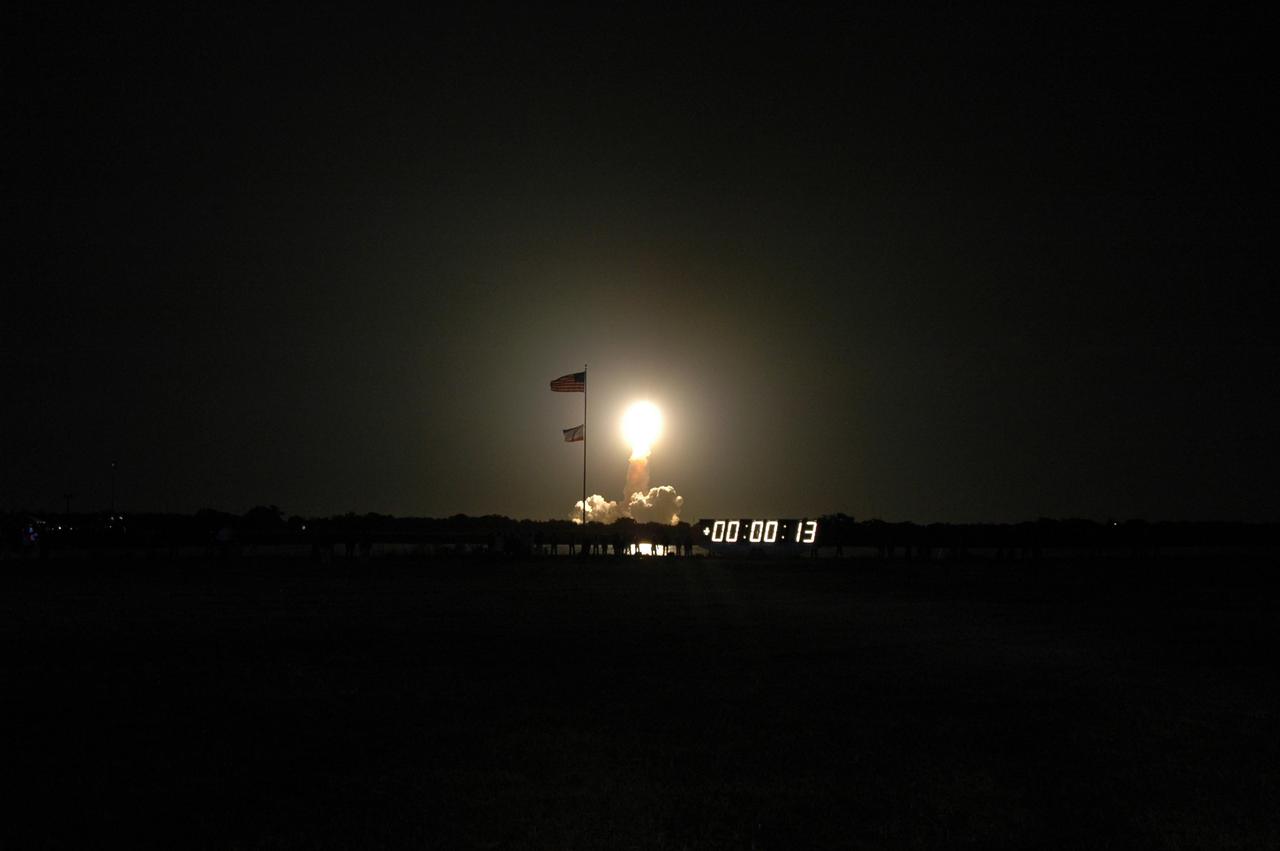
KENNEDY SPACE CENTER, FLA. -- Flooding the night sky with its blazing light, Space Shuttle Discovery leaps toward the sky from Launch Pad 39B on mission STS-116. The launch occurred at 8:47:35 p.m. EST. This was the second launch attempt for mission STS-116. The first launch attempt on Dec. 7 was postponed due a low cloud ceiling over Kennedy Space Center. This is Discovery's 33rd mission and the first night launch since 2002. The 20th shuttle mission to the International Space Station, STS-116 carries another truss segment, P5. It will serve as a spacer, mated to the P4 truss that was attached in September. After installing the P5, the crew will reconfigure and redistribute the power generated by two pairs of U.S. solar arrays. Landing is expected Dec. 21 at KSC. Photo credit: NASA/Jim Grossmann
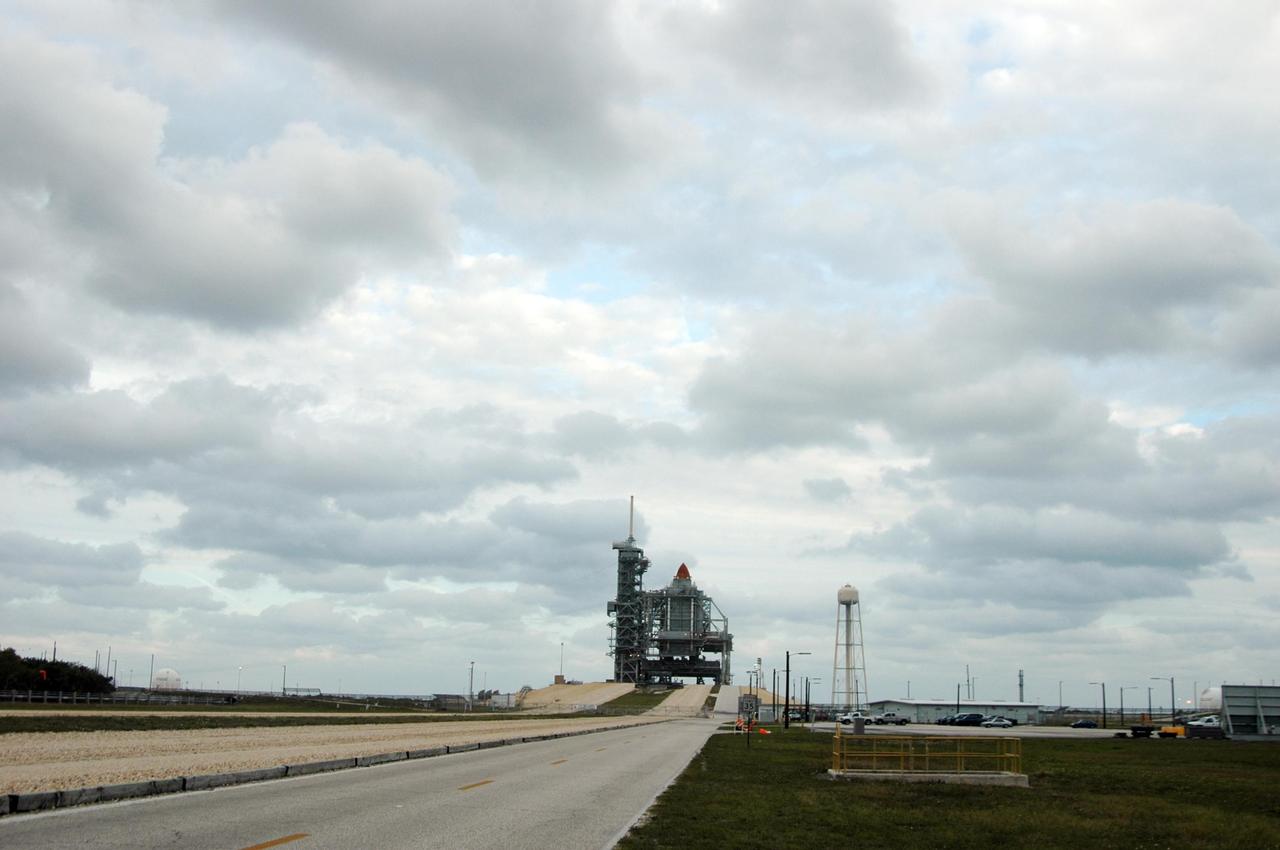
KENNEDY SPACE CENTER, FLA. -- Clouds still dominate the sky over Launch Pad 39B the day after launch of Space Shuttle Discovery was scrubbed. The launch attempt of STS-116 was postponed due a low cloud ceiling over Kennedy Space Center. The next launch attempt was scheduled for Saturday, Dec. 9, at 8:47 p.m. In the photo, the rotating service structure has been rolled into place around the shuttle. This will be Discovery's 33rd mission and the first night launch since 2002. The 20th shuttle mission to the International Space Station, STS-116 carries another truss segment, P5. It will serve as a spacer, mated to the P4 truss that was attached in September. After installing the P5, the crew will reconfigure and redistribute the power generated by two pairs of U.S. solar arrays. Landing is expected Dec. 19 at KSC. Photo credit: NASA/Ken Thornsley
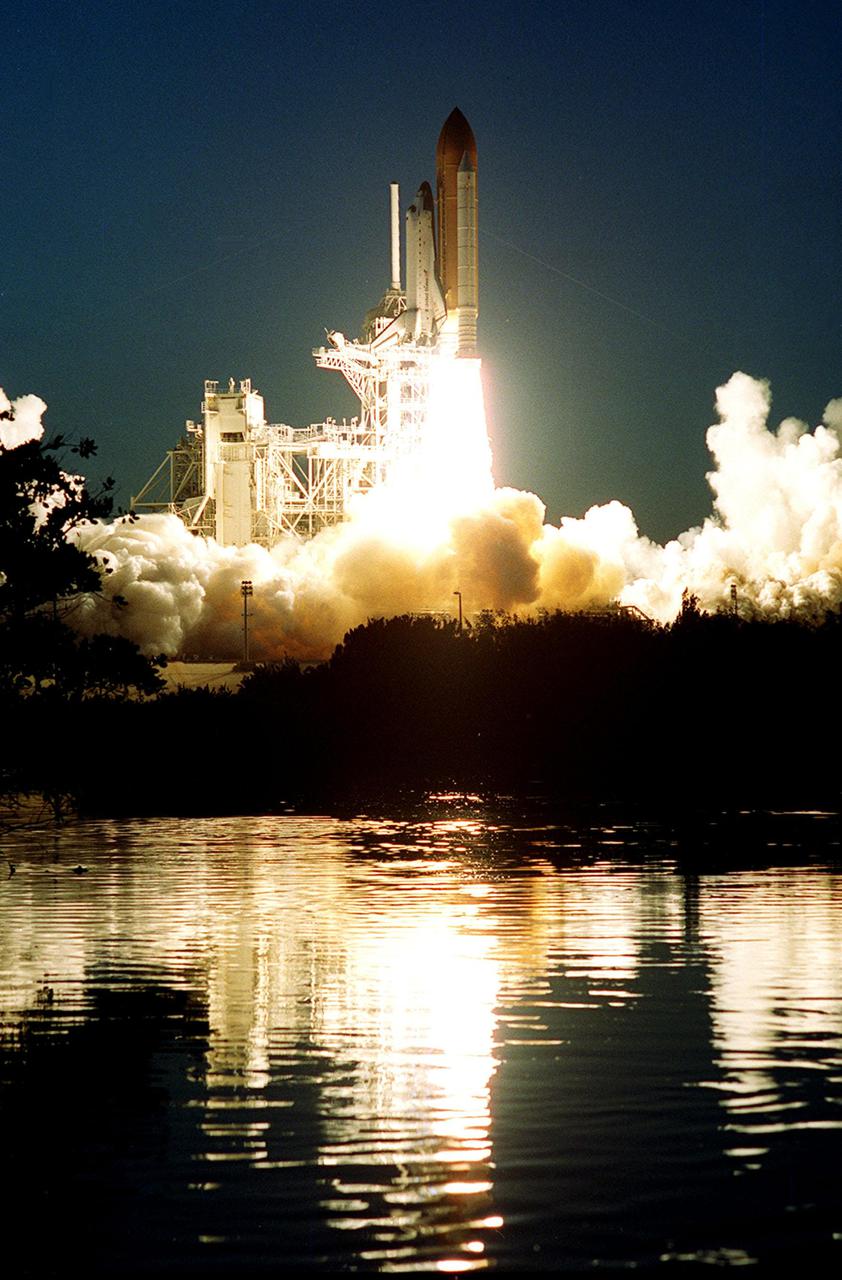
KENNEDY SPACE CENTER, FLA. -- Rising from clouds of smoke and steam, Space Shuttle Atlantis rushes into the night sky as it lifts off from Launch Pad 39A. The glare of the flames and clouds is captured in the water near the pad. Liftoff occurred at 6:13:02 p.m. EST. Along with a crew of five, Atlantis is carrying the U.S. Laboratory Destiny, a key module in the growth of the Space Station. Destiny will be attached to the Unity node on the Space Station using the Shuttle’s robotic arm. Three spacewalks are required to complete the planned construction work during the 11-day mission. This mission marks the seventh Shuttle flight to the Space Station, the 23rd flight of Atlantis and the 102nd flight overall in NASA’s Space Shuttle program. The planned landing is at KSC Feb. 18 about 1:00 p.m. EST
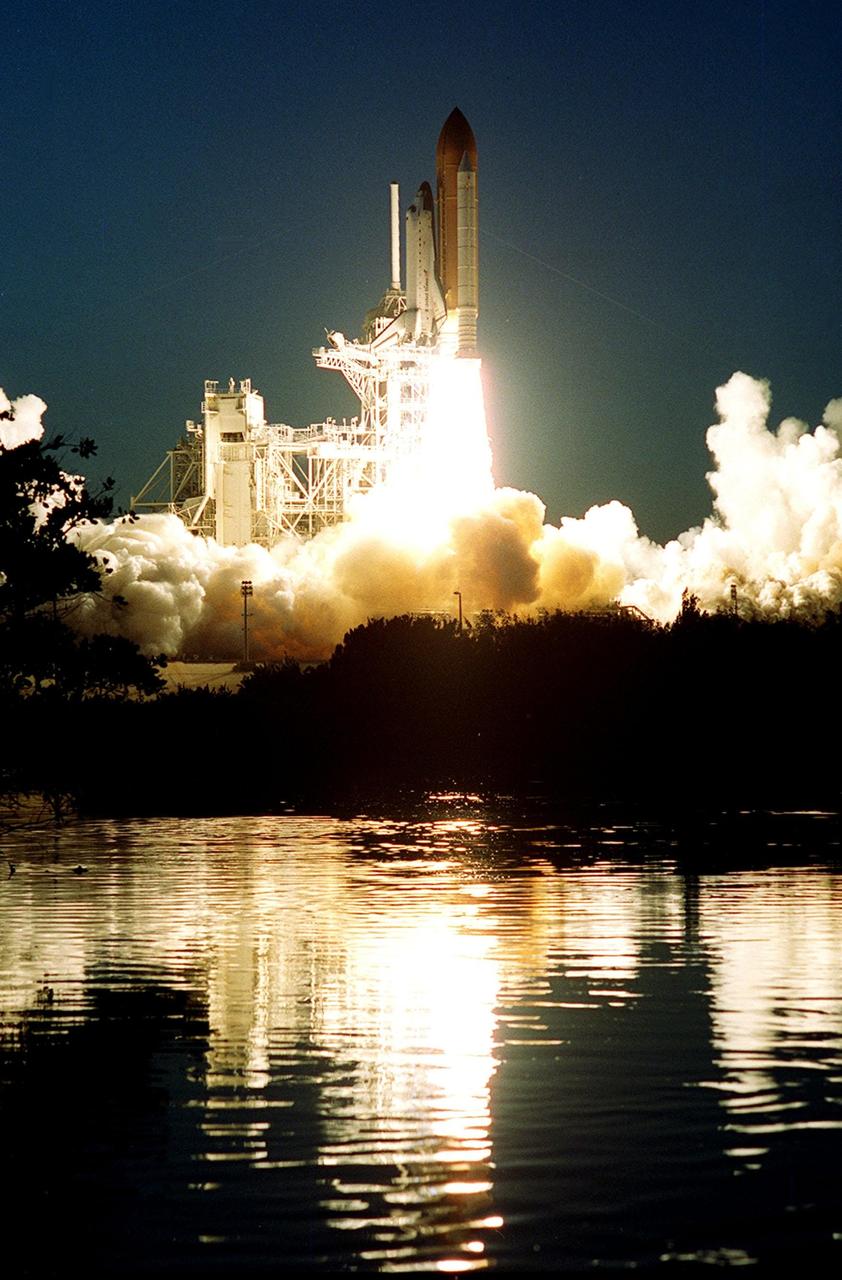
KENNEDY SPACE CENTER, FLA. -- Rising from clouds of smoke and steam, Space Shuttle Atlantis rushes into the night sky as it lifts off from Launch Pad 39A. The glare of the flames and clouds is captured in the water near the pad. Liftoff occurred at 6:13:02 p.m. EST. Along with a crew of five, Atlantis is carrying the U.S. Laboratory Destiny, a key module in the growth of the Space Station. Destiny will be attached to the Unity node on the Space Station using the Shuttle’s robotic arm. Three spacewalks are required to complete the planned construction work during the 11-day mission. This mission marks the seventh Shuttle flight to the Space Station, the 23rd flight of Atlantis and the 102nd flight overall in NASA’s Space Shuttle program. The planned landing is at KSC Feb. 18 about 1:00 p.m. EST
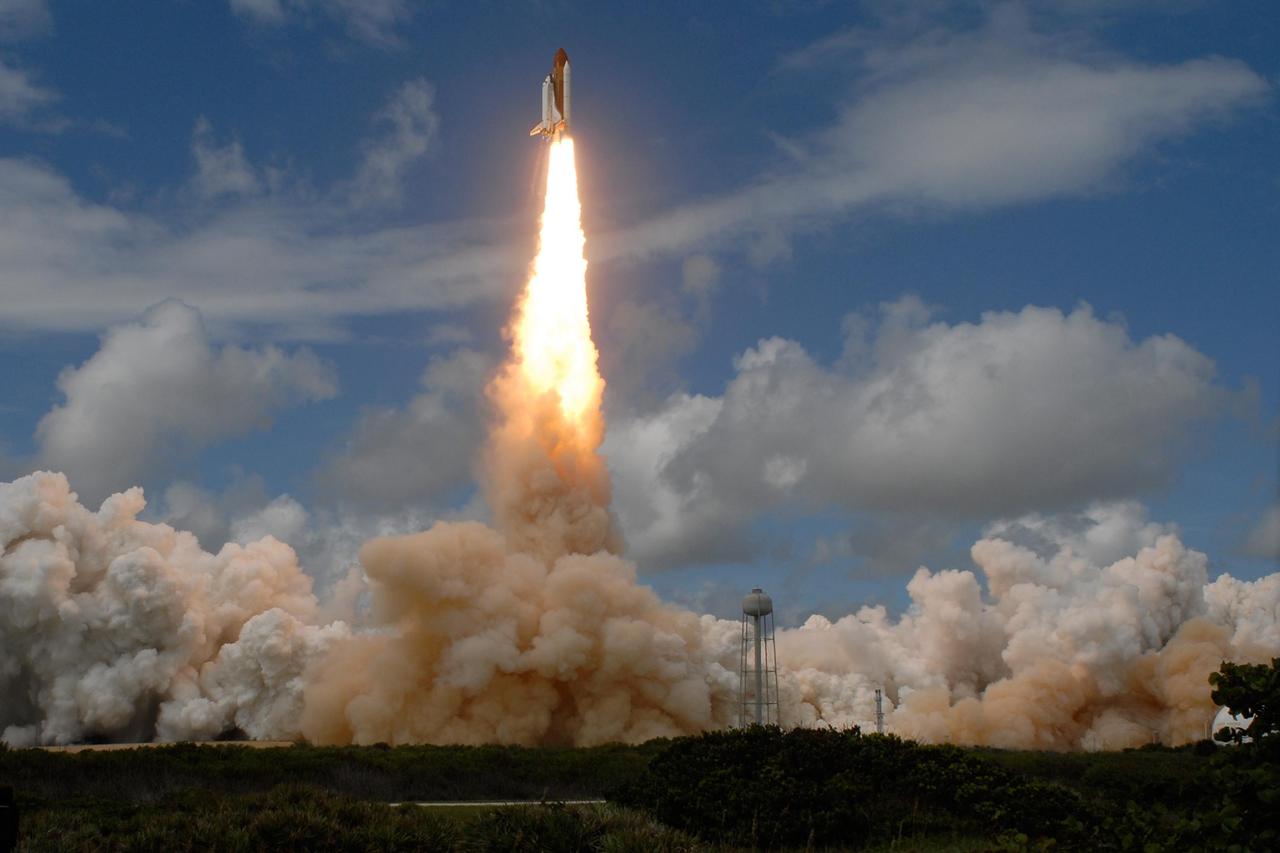
KENNEDY SPACE CENTER, FLA. -- Space shuttle Discovery leaps through the clouds into a blue sky on a column of fire, trailing smoke, as it heads for the International Space Station on mission STS-120. Billows of clouds and smoke stream across Launch Pad 39A at NASA's Kennedy Space Center. Liftoff was on time at 11:38:19 a.m. EDT. Discovery carries the Italian-built U.S. Node 2, called Harmony. During the 14-day STS-120 mission, the crew will install Harmony and move the P6 solar arrays to their permanent position and deploy them. Discovery is expected to complete its mission and return home at 4:47 a.m. EST on Nov. 6. Photo credit: NASA/Sandra Joseph, Tony Gray & Robert Murray
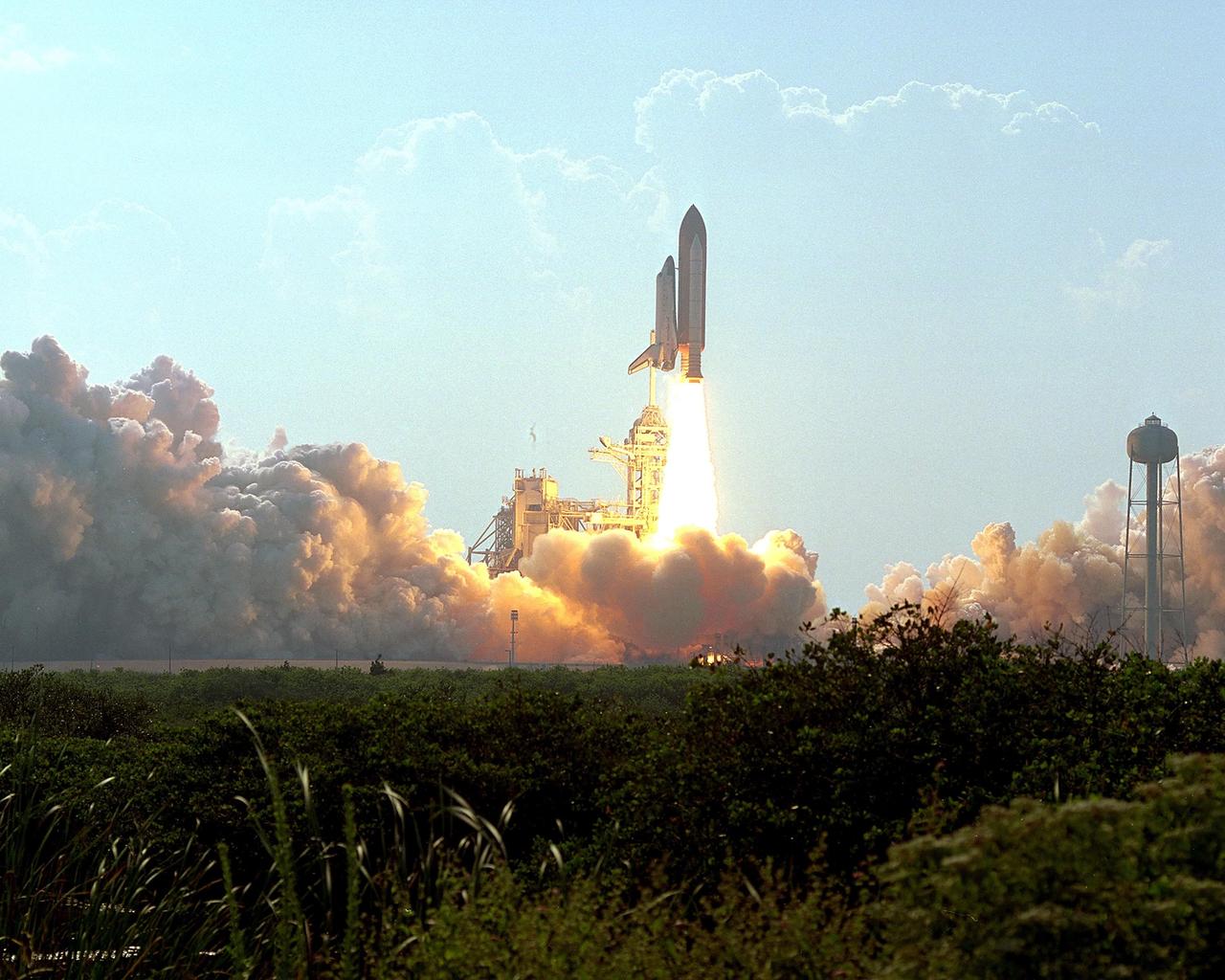
KENNEDY SPACE CENTER, Fla. -- Clouds of smoke and steam roll across the ground as Space Shuttle Discovery hurtles into the blue sky against a backdrop of cumulus clouds. Liftoff from Launch Pad 39A occurred at 5:10:14 p.m. EDT. Besides the Shuttle crew of four, Discovery carries the Expedition Three crew who will replace Expedition Two on the Space Station. The mission payload includes the third flight of the Italian-built Multi-Purpose Logistics Module Leonardo, delivering additional scientific racks, equipment and supplies for the Space Station, and the Early Ammonia Servicer (EAS) tank. The EAS, which will be attached to the Station during two spacewalks, contains spare ammonia for the Station’s cooling system. The three-member Expedition Two crew will be returning to Earth aboard Discovery after a five-month stay on the Station
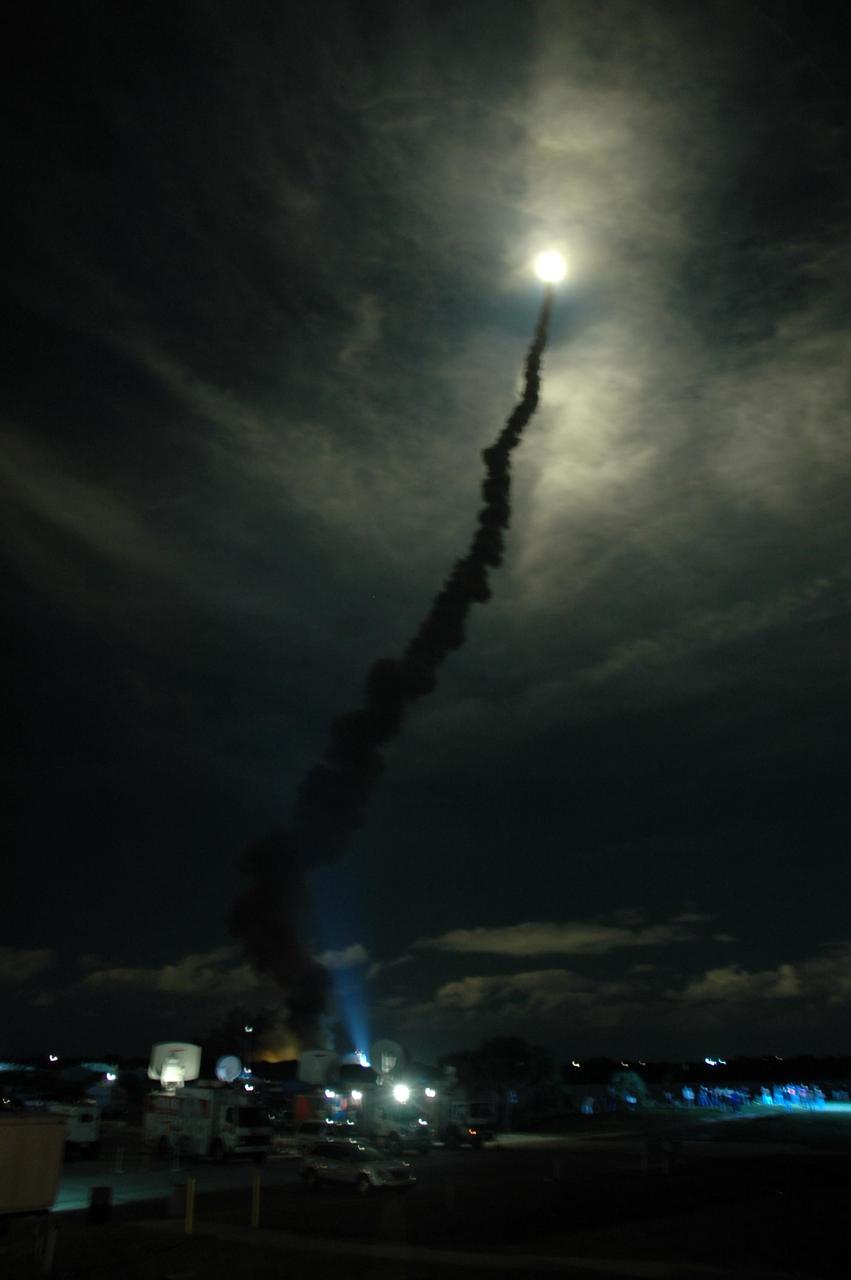
KENNEDY SPACE CENTER, FLA. -- Flooding the night sky with light, Space Shuttle Discovery streaks through the clouds after liftoff from Launch Pad 39B on mission STS-116. The launch occurred at 8:47:35 p.m. EST. This was the second launch attempt for mission STS-116. The first launch attempt on Dec. 7 was postponed due a low cloud ceiling over Kennedy Space Center. This is Discovery's 33rd mission and the first night launch since 2002. The 20th shuttle mission to the International Space Station, STS-116 carries another truss segment, P5. It will serve as a spacer, mated to the P4 truss that was attached in September. After installing the P5, the crew will reconfigure and redistribute the power generated by two pairs of U.S. solar arrays. Landing is expected Dec. 21 at KSC. Photo credit: NASA/Amanda Diller
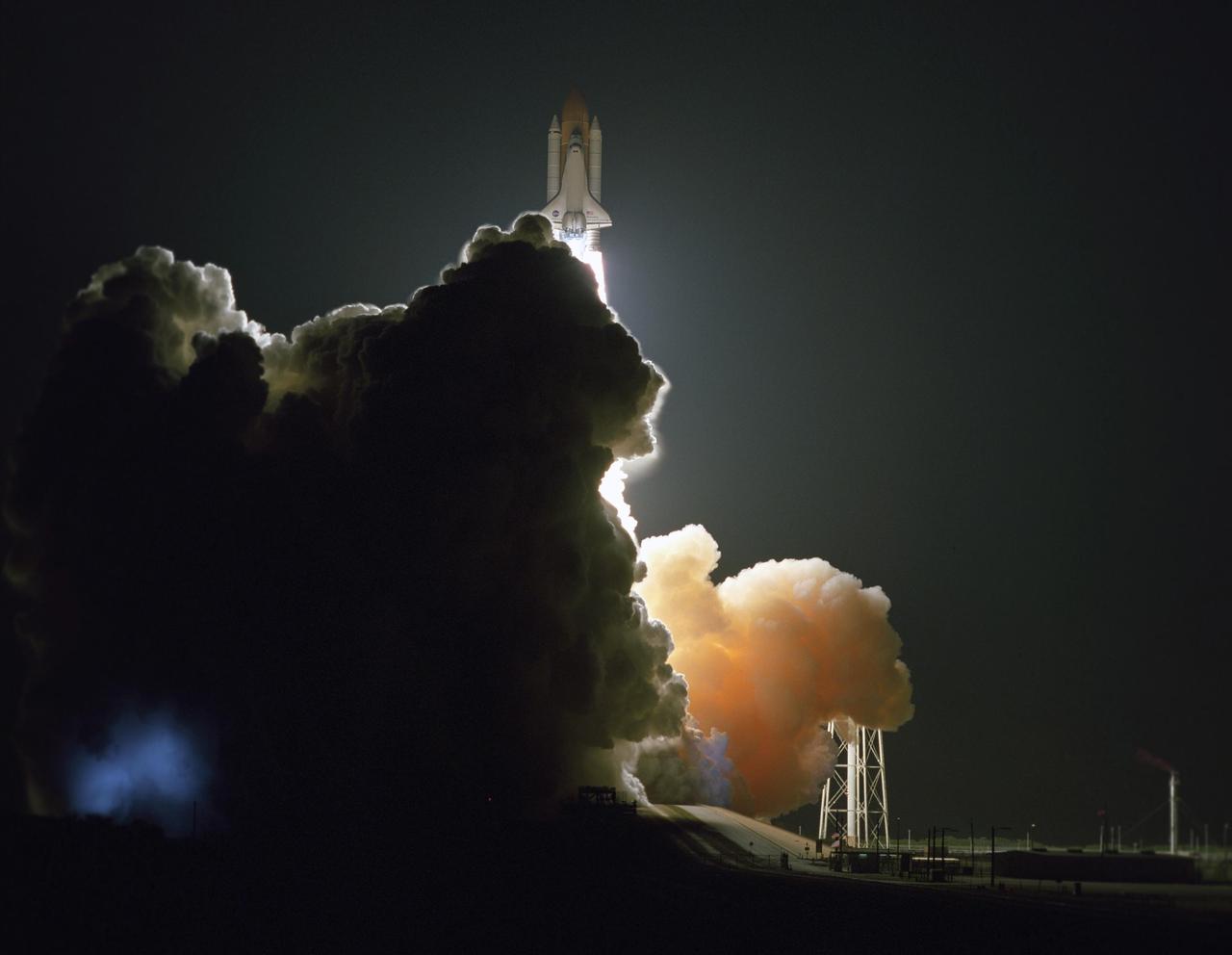
KENNEDY SPACE CENTER, FLA. -- Emerging from behind the clouds of smoke and steam generated by its liftoff, Space Shuttle Discovery leaps toward the sky past the lightning mast on Launch Pad 39B on mission STS-116. Liftoff occurred on time at 8:47 p.m. EST. This was the second launch attempt of Discovery on mission STS-116. The first launch attempt on Dec. 7 was postponed due a low cloud ceiling over Kennedy Space Center. This is Discovery's 33rd mission and the first night launch since 2002. The 20th shuttle mission to the International Space Station, STS-116 carries another truss segment, P5. It will serve as a spacer, mated to the P4 truss that was attached in September. After installing the P5, the crew will reconfigure and redistribute the power generated by two pairs of U.S. solar arrays. Landing is expected Dec. 21 at KSC. Photo credit: NASA/Sandra Joseph, Robert Murray, Chris Lynch
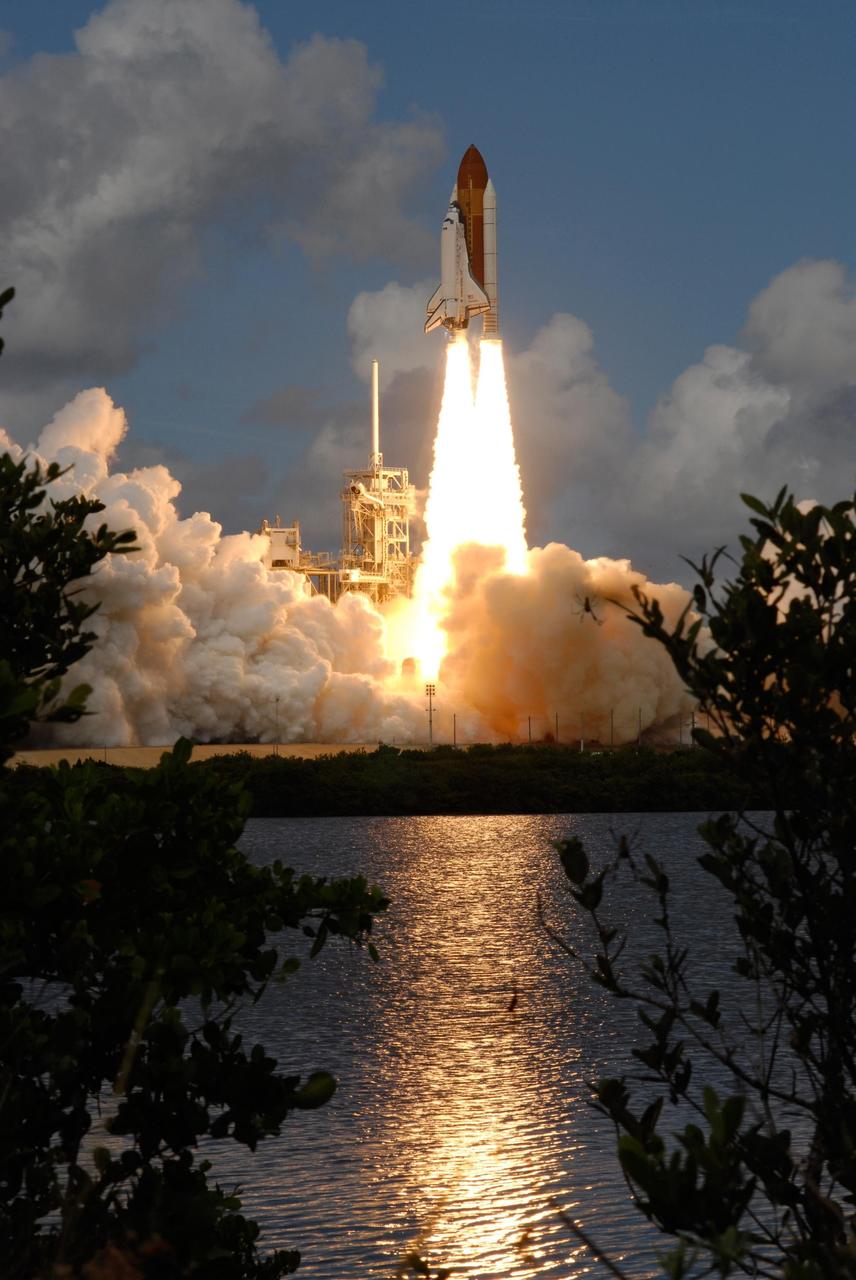
KENNEDY SPACE CENTER, FLA. -- Nearby water reflects the brilliant light of flames beneath space shuttle Discovery as it leaps through the clouds into a blue sky heading for the International Space Station on mission STS-120. Billows of clouds and smoke stream across Launch Pad 39A at NASA's Kennedy Space Center. Liftoff was on time at 11:38:19 a.m. EDT. Discovery carries the Italian-built U.S. Node 2, called Harmony. During the 14-day STS-120 mission, the crew will install Harmony and move the P6 solar arrays to their permanent position and deploy them. Discovery is expected to complete its mission and return home at 4:47 a.m. EST on Nov. 6. Photo credit: NASA/Sandra Joseph, Tony Gray & Robert Murray
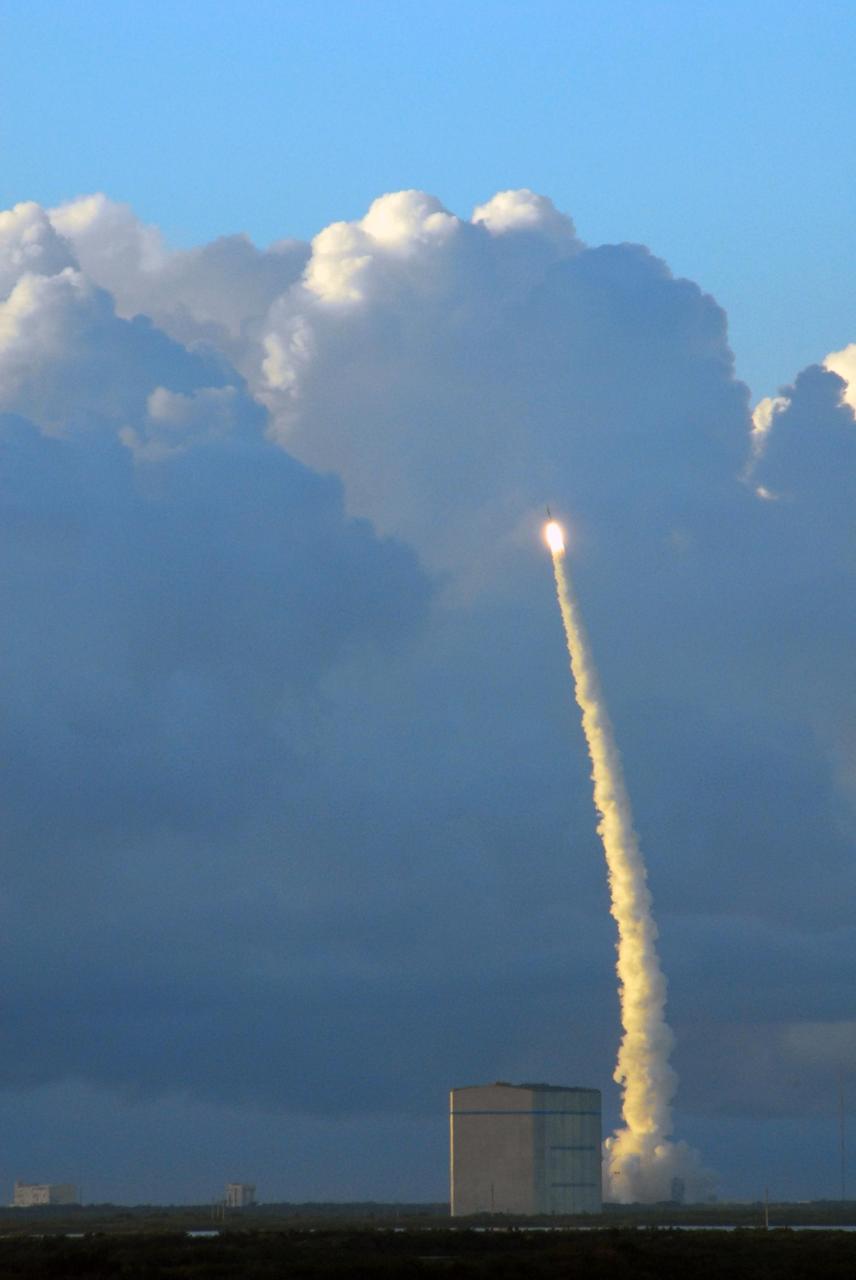
KENNEDY SPACE CENTER, FLA. -- Rising into billowing clouds above the horizon, the Delta II rocket carrying the Dawn spacecraft roars into the sky. Liftoff was at 7:34 a.m. EDT from Pad 17-B at Cape Canaveral Air Force Station. Dawn is the ninth mission in NASA's Discovery Program. The spacecraft will be the first to orbit two planetary bodies, asteroid Vesta and dwarf planet Ceres, during a single mission. Vesta and Ceres lie in the asteroid belt between Mars and Jupiter. It is also NASA's first purely scientific mission powered by three solar electric ion propulsion engines. Photo credit: NASA/George Shelton
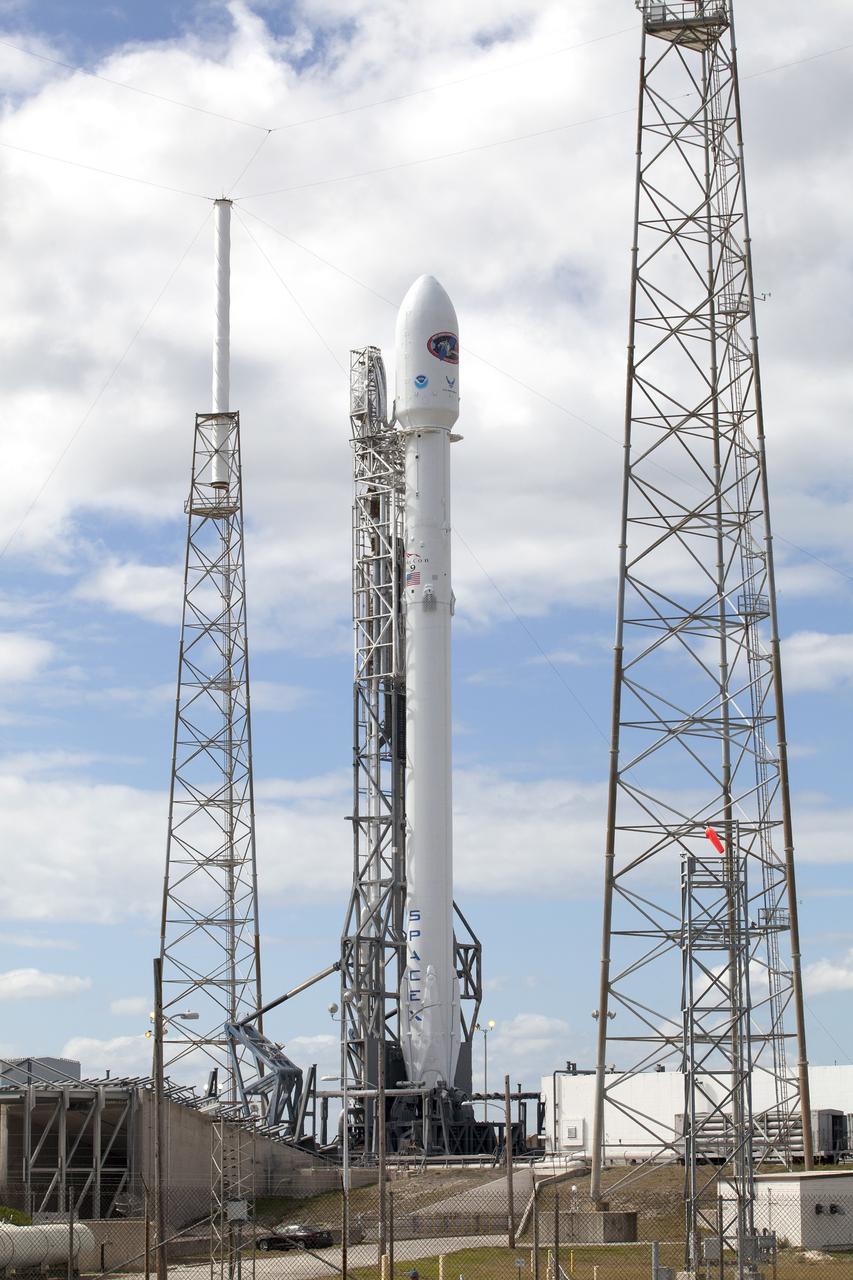
CAPE CANAVERAL, Fla. – CAPE CANAVERAL, Fla. – Backdropped by a blue sky streaked with white clouds, the SpaceX Falcon 9 rocket set to launch NOAA’s Deep Space Climate Observatory spacecraft, or DSCOVR, is flanked by lightning masts at Space Launch Complex 40 at Cape Canaveral Air Force Station in Florida. DSCOVR is a partnership between NOAA, NASA and the U.S. Air Force. DSCOVR will maintain the nation's real-time solar wind monitoring capabilities which are critical to the accuracy and lead time of NOAA's space weather alerts and forecasts. To learn more about DSCOVR, visit http://www.nesdis.noaa.gov/DSCOVR. Photo credit: NASA/Kim Shiflett

KENNEDY SPACE CENTER, FLA. -- Light-filled clouds of smoke and steam roll across Launch Pad 39A at NASA's Kennedy Space Center as space shuttle Endeavour roars into the night sky atop twin towers of flame on the STS-123 mission. Liftoff was on time at 2:28 a.m. EDT. Endeavour's crew will make a record-breaking 16-day mission to the International Space Station and deliver the first section of the Japan Aerospace Exploration Agency's Kibo laboratory and the Canadian Space Agency's two-armed robotic system, Dextre. Photo courtesy of Scott Andrews
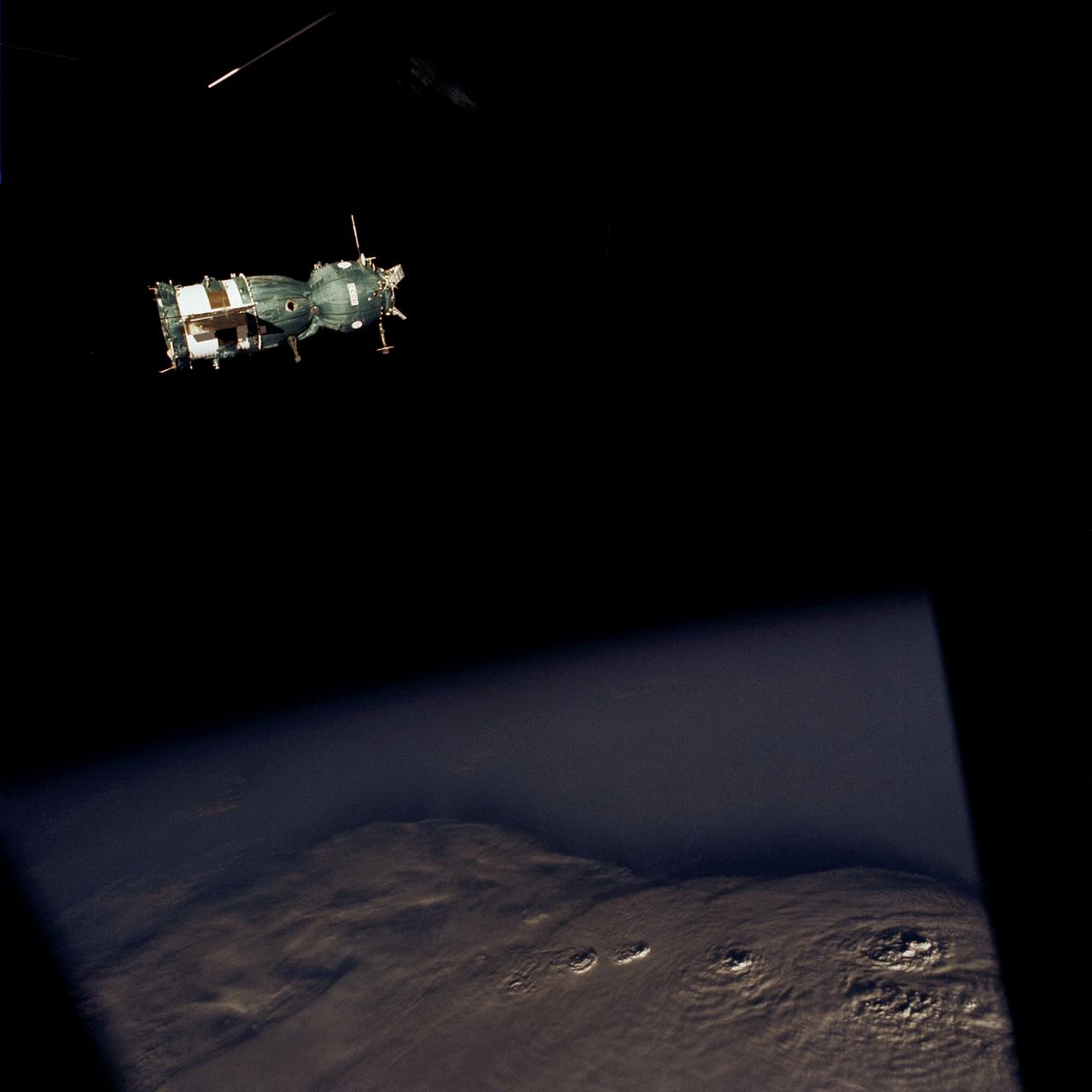
AST-02-096 (18 July 1975) --- This scene photograph from a rendezvous window of the American Apollo spacecraft in Earth orbit shows the Soviet Soyuz spacecraft contrasted against a black-sky background with a heavily cloud-covered Earth below. The three major components of the Soyuz are the spherical-shaped Orbital Module, the bell-shaped Descent Vehicle, the cylindrical-shaped Instrument Assembly Module. The docking system on the Orbital Module was specially designed to interface with the docking system on the Apollo's Docking Module. The ASTP astronauts and cosmonauts visited each other's spacecraft while the Soyuz and Apollo were docked in Earth orbit for two days.

KENNEDY SPACE CENTER, FLA. -- Space shuttle Endeavour races into the night sky past the lightning mast and trailing twin columns of fire after liftoff from Launch Pad 39A at NASA's Kennedy Space Center. The clouds of smoke and steam roll across the launch pad. Liftoff on the STS-123 mission was on time at 2:28 a.m. EDT. Endeavour's crew will make a record-breaking 16-day mission to the International Space Station and deliver the first section of the Japan Aerospace Exploration Agency's Kibo laboratory and the Canadian Space Agency's two-armed robotic system, Dextre. Photo credit: NASA/Rick Wetherington, Tim Terry, Tim Powers
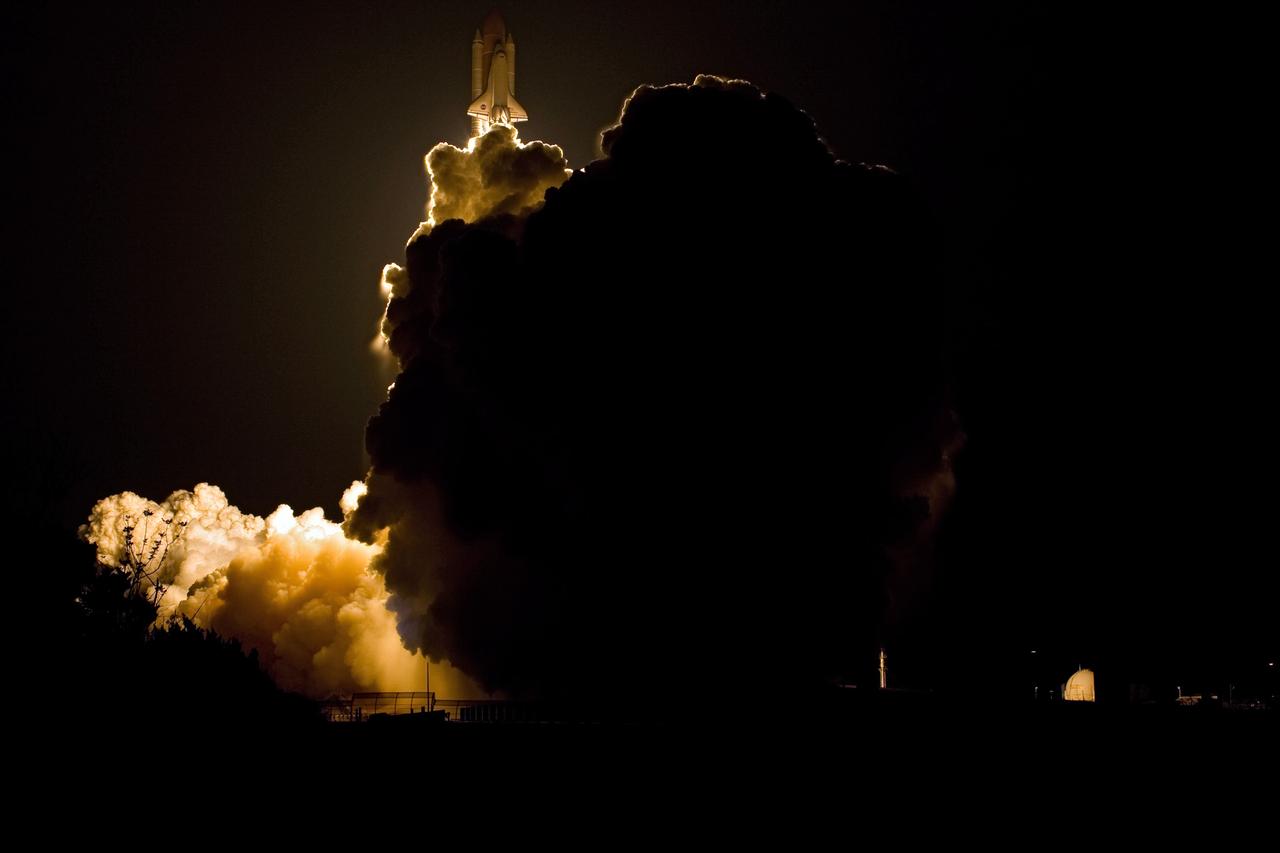
KENNEDY SPACE CENTER, FLA. -- Space shuttle Endeavour hurtles above the clouds of smoke and steam billowing across Launch Pad 39A as it races into the night sky on the STS-123 mission. Liftoff was on time at 2:28 a.m. EDT. The crew will make a record-breaking 16-day mission to the International Space Station and deliver the first section of the Japan Aerospace Exploration Agency's Kibo laboratory and the Canadian Space Agency's two-armed robotic system, Dextre. Photo credit: NASA/Sandra Joseph, Tony Gray, Robert Murray

Space Shuttle Atlantis roars into the moonlit sky while clouds of steam and smoke cascade behind. Liftoff occurred at 6:13:02 p.m. EST. Along with a crew of five, Atlantis is carrying the U.S. Laboratory Destiny, a key module in the growth of the Space Station. Destiny will be attached to the Unity node on the Space Station using the Shuttle’s robotic arm. Three spacewalks are required to complete the planned construction work during the 11-day mission. This mission marks the seventh Shuttle flight to the Space Station, the 23rd flight of Atlantis and the 102nd flight overall in NASA’s Space Shuttle program. The planned landing is at KSC Feb. 18 about 1:39 p.m. EST
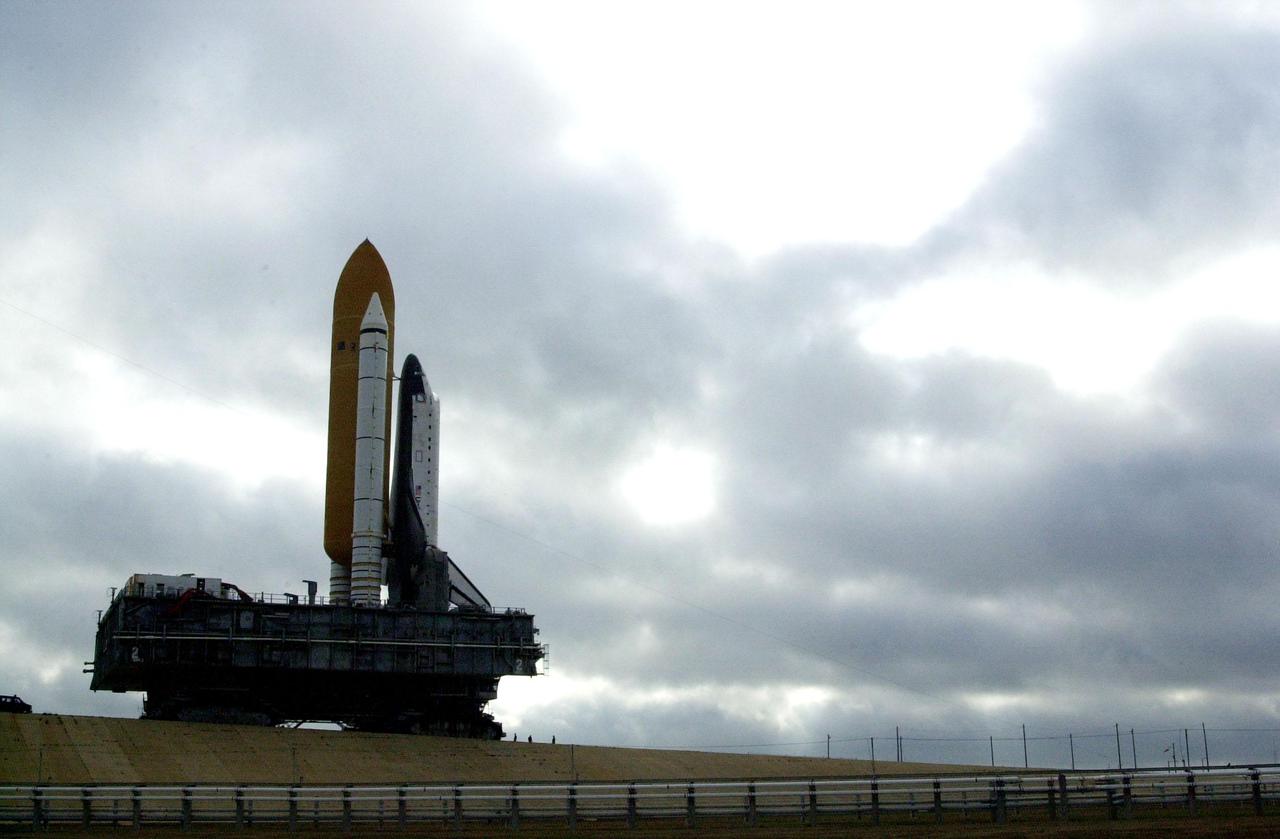
KENNEDY SPACE CENTER, FLA. -- Space Shuttle Atlantis stands out against the fogand cloud-swept sky on its trek aboard the crawler-transporter back to the Vehicle Assembly Building. In the VAB workers will conduct inspections, make continuity checks and conduct X-ray analysis on the 36 solid rocket booster cables located inside each booster’s system tunnel. An extensive evaluation of NASA’s SRB cable inventory revealed conductor damage in four (of about 200) cables on the shelf. Shuttle managers decided to prove the integrity of the system tunnel cables already on Atlantis before launching Jan. 19. The launch has been rescheduled no earlier than Feb. 6

CAPE CANAVERAL, Fla. – Light-filled clouds of smoke and steam roll across Launch Pad 39A at NASA's Kennedy Space Center as space shuttle Endeavour roars into the night sky on the STS-126 mission. Liftoff was on time at 7:55 p.m. EST. STS-126 is the 124th space shuttle flight and the 27th flight to the International Space Station. The mission will feature four spacewalks and work that will prepare the space station to house six crew members for long-duration missions. Photo credit: NASA/Sandra Joseph-Kevin O'Connell
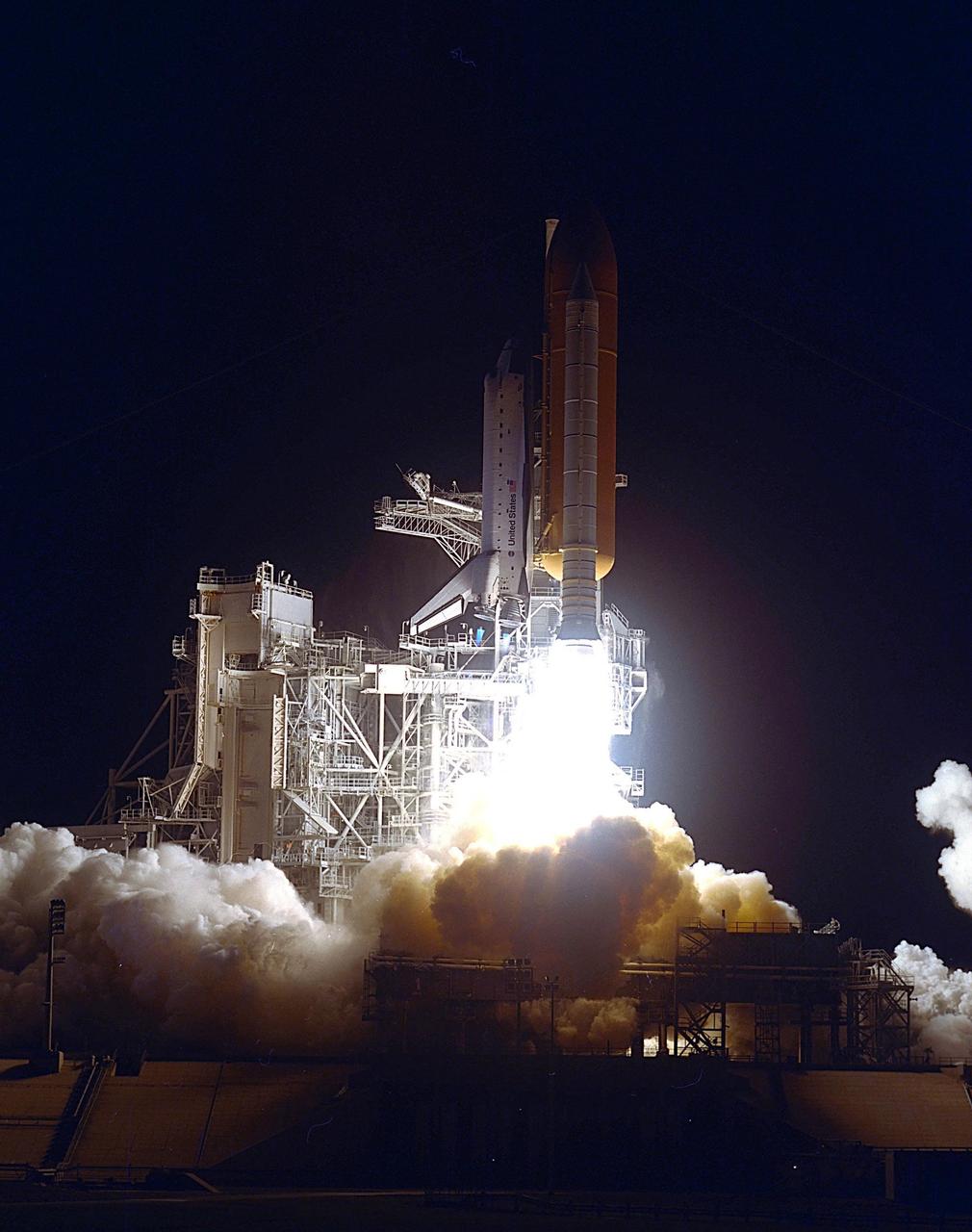
KENNEDY SPACE CENTER, Fla. -- Bursting forth from the clouds of smoke and steam below, Space Shuttle Endeavour hurtles into the night sky after a perfect launch. Liftoff of Endeavour occurred at 10:06:01 p.m. EST on mission STS-97. Endeavour and its five-member crew will deliver U.S. solar arrays to the International Space Station and be the first Shuttle crew to visit the Station’s first resident crew. The 11-day mission includes three spacewalks. This marks the 101st mission in Space Shuttle history and the 25th night launch. Endeavour is expected to land at KSC Dec. 11 at 6:19 p.m. EST
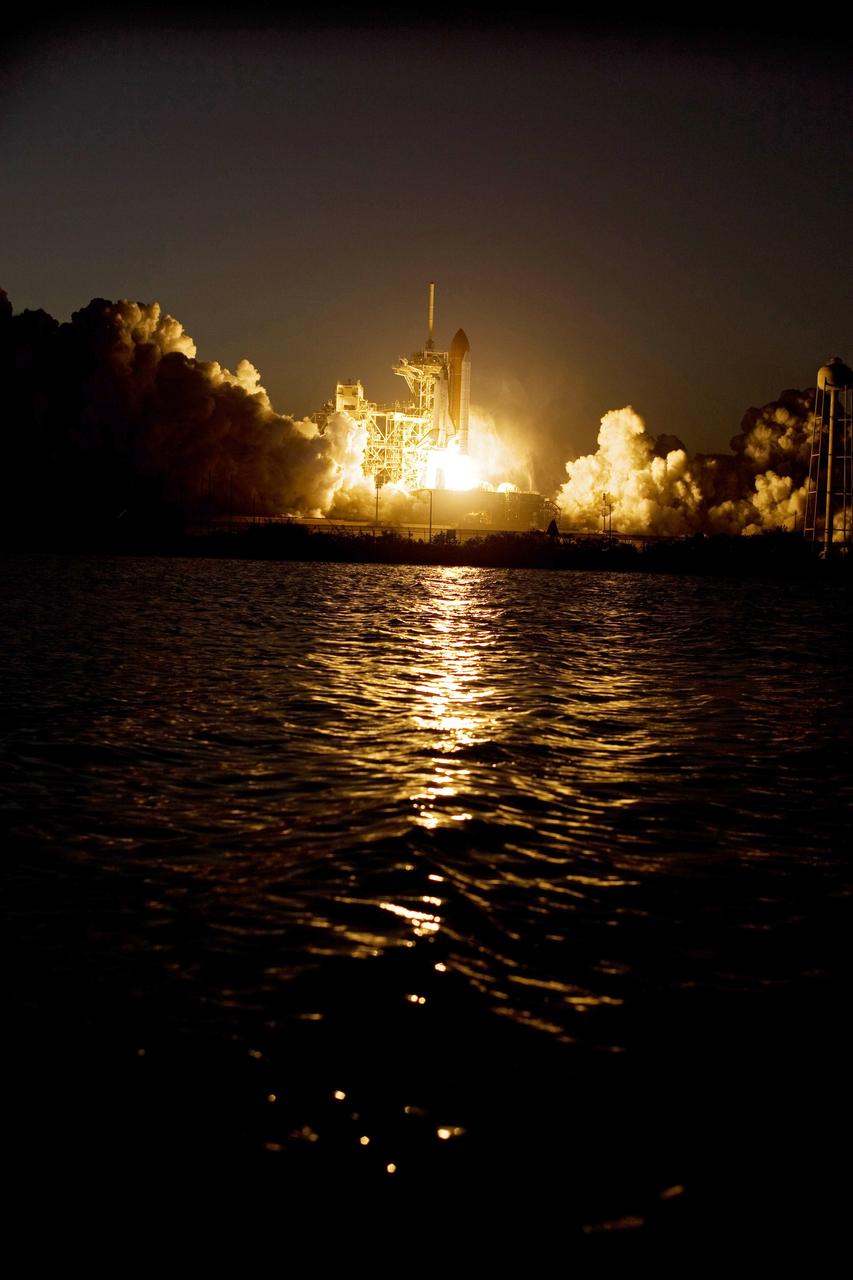
CAPE CANAVERAL, Fla. – Clouds of smoke and steam billow across Launch Pad 39A at NASA's Kennedy Space Center in Florida as space shuttle Discovery roars into the evening sky. Liftoff was on time at 7:43 p.m. EDT. The STS-119 mission is the 28th to the International Space Station and the 125th space shuttle flight. Discovery will deliver the final pair of power-generating solar array wings and the S6 truss segment. Installation of S6 will signal the station's readiness to house a six-member crew for conducting increased science. Photo credit: NASA/Tony Gray, Tom Farrar

CAPE CANAVERAL, Fla. – Light-filled clouds of smoke and steam roll across Launch Pad 39A at NASA's Kennedy Space Center as space shuttle Endeavour hurtles into the night sky on the STS-126 mission. Liftoff was on time at 7:55 p.m. EST. STS-126 is the 124th space shuttle flight and the 27th flight to the International Space Station. The mission will feature four spacewalks and work that will prepare the space station to house six crew members for long-duration missions. Photo credit: NASA/Rick Wetherington-Tim Powers
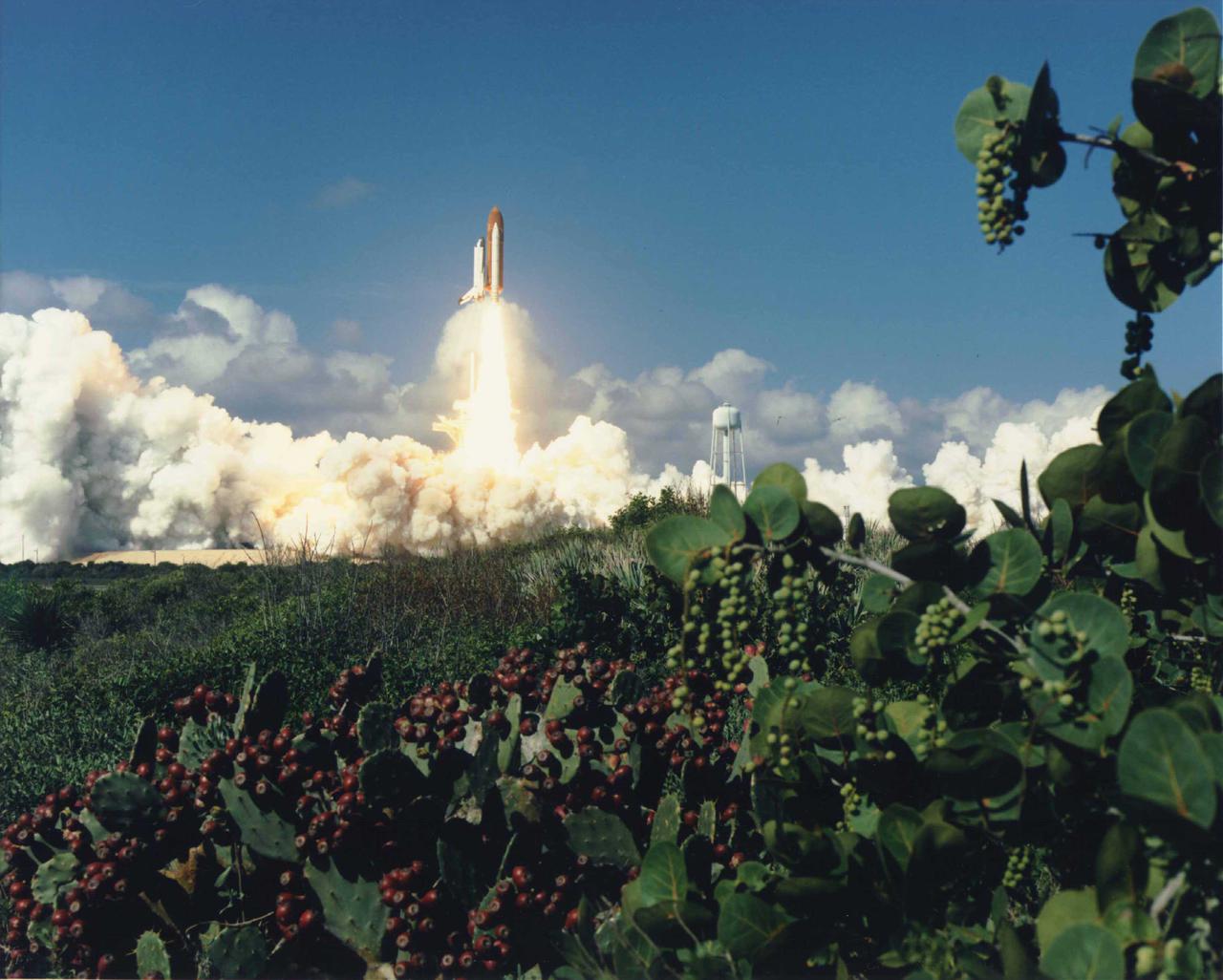
KENNEDY SPACE CENTER, FLA. - The Space Shuttle Columbia climbs a golden tower into a royal blue sky dusted with clouds. The 58th Shuttle flight lifted off from Launch Pad 39B at 10:53:10 a.m. EDT, beginning the longest mission planned in Shuttle program history: two weeks. The Extended Duration Orbiter STS-58 mission will allow the seven-member crew to delve extensively into a number of experiments investigating the adaptation of the human body to space. Spacelab Llife Sciences-2 is the second Spacelab mission dedicated solely to life sciences research.
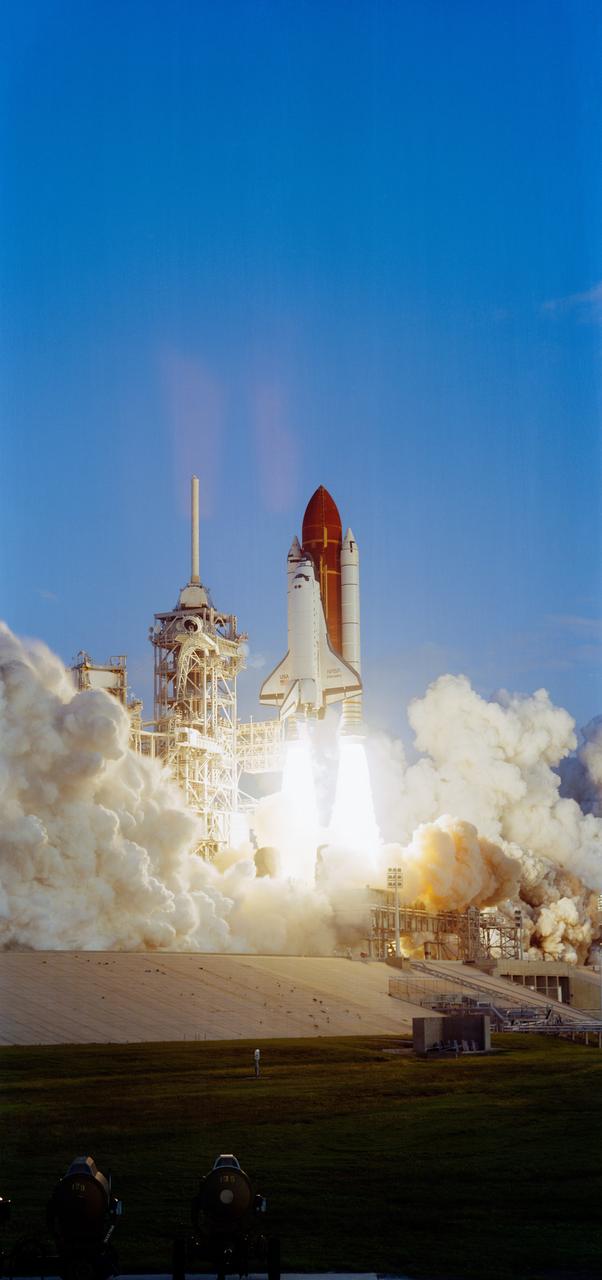
STS-41 Discovery, Orbiter Vehicle (OV) 103, lifts off from the Kennedy Space Center (KSC) Launch Complex (LC) Pad 39 mobile launcher platform at 7:47 am (Eastern Daylight Time (EDT)). OV-103 riding atop the external tank (ET) and flanked by two solid rocket boosters (SRBs), is captured just moments after liftoff. Not yet clear of the fixed service structure (FSS) tower, OV-103 is highlighted against the cloudless morning sky. Exhaust smoke billows from the SRBs and the space shuttle main engines (SSMEs) creating a cloud over the launch pad area.

KENNEDY SPACE CENTER, FLA. -- Blazing towers of flame propel space shuttle Endeavour into the dark sky past the lightning mast on Launch Pad 39A at NASA's Kennedy Space Center on the launch of the STS-123 mission. The light-filled clouds of smoke and steam roll across the launch pad. Liftoff was on time at 2:28 a.m. EDT. Endeavour's crew will make a record-breaking 16-day mission to the International Space Station and deliver the first section of the Japan Aerospace Exploration Agency's Kibo laboratory and the Canadian Space Agency's two-armed robotic system, Dextre. Photo courtesy of Scott Andrews
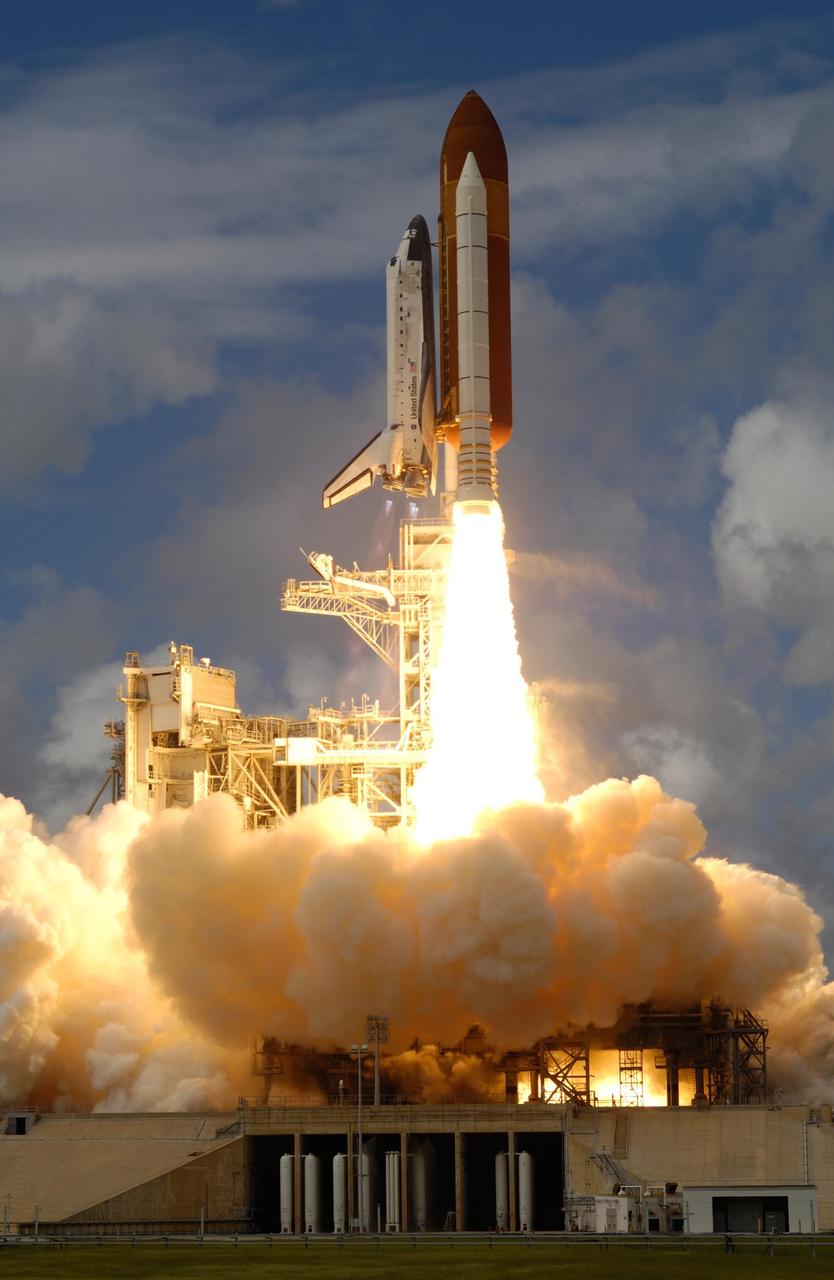
KENNEDY SPACE CENTER, FLA. -- As if rising from a bed of clouds, space shuttle Discovery leaps toward the sky, propelled by columns of fire from the solid rocket boosters, from Launch Pad 39A at NASA's Kennedy Space Center. Liftoff was on time at 11:38:19 a.m. EDT. Discovery carries the Italian-built U.S. Node 2, called Harmony. During the 14-day STS-120 mission, the crew will install Harmony and move the P6 solar arrays to their permanent position and deploy them. Discovery is expected to complete its mission and return home at 4:47 a.m. EST on Nov. 6. Photo courtesy of Nikon/Scott Andrews