
NASA test pilot, Nils Larson, inspects the X-59 cockpit displays and lighting system during system checkouts. The External Vision System (XVS) is displayed on the top screen, and the avionics flight displays, which can show navigation information or aircraft status, are shown on the bottom two screens.
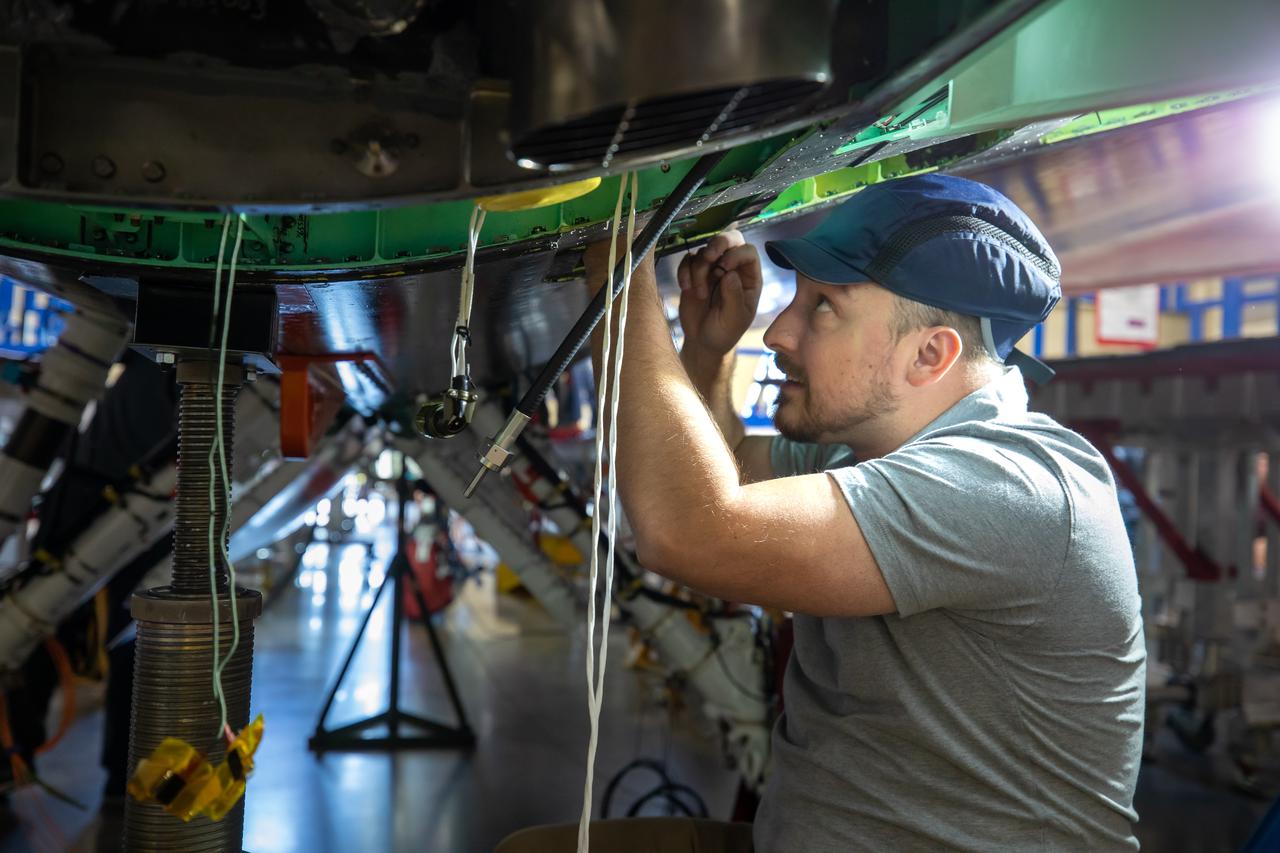
A Lockheed Martin Skunk Works technician works to complete wiring on the X-59 aircraft in preparation for the power-on system checkouts. Once complete, the X-59 aircraft will demonstrate the ability to fly supersonic while reducing the loud sonic boom to a quiet sonic thump and help enable commercial supersonic air travel over land. This aircraft is the centerpiece of NASA’s Quesst mission.

KENNEDY SPACE CENTER, FLA. - During power-up of the orbiter Discovery in the Orbiter Processing Facility, a technician (left) looks at the circuit breaker lights in the cabin. Discovery has been undergoing Orbiter Major Modifications in the past year, ranging from wiring, control panels and black boxes to gaseous and fluid systems tubing and components. These systems were deserviced, disassembled, inspected, modified, reassembled, checked out and reserviced, as were most other systems onboard. The work includes the installation of the Multifunction Electronic Display Subsystem (MEDS) - a state-of-the-art “glass cockpit.”
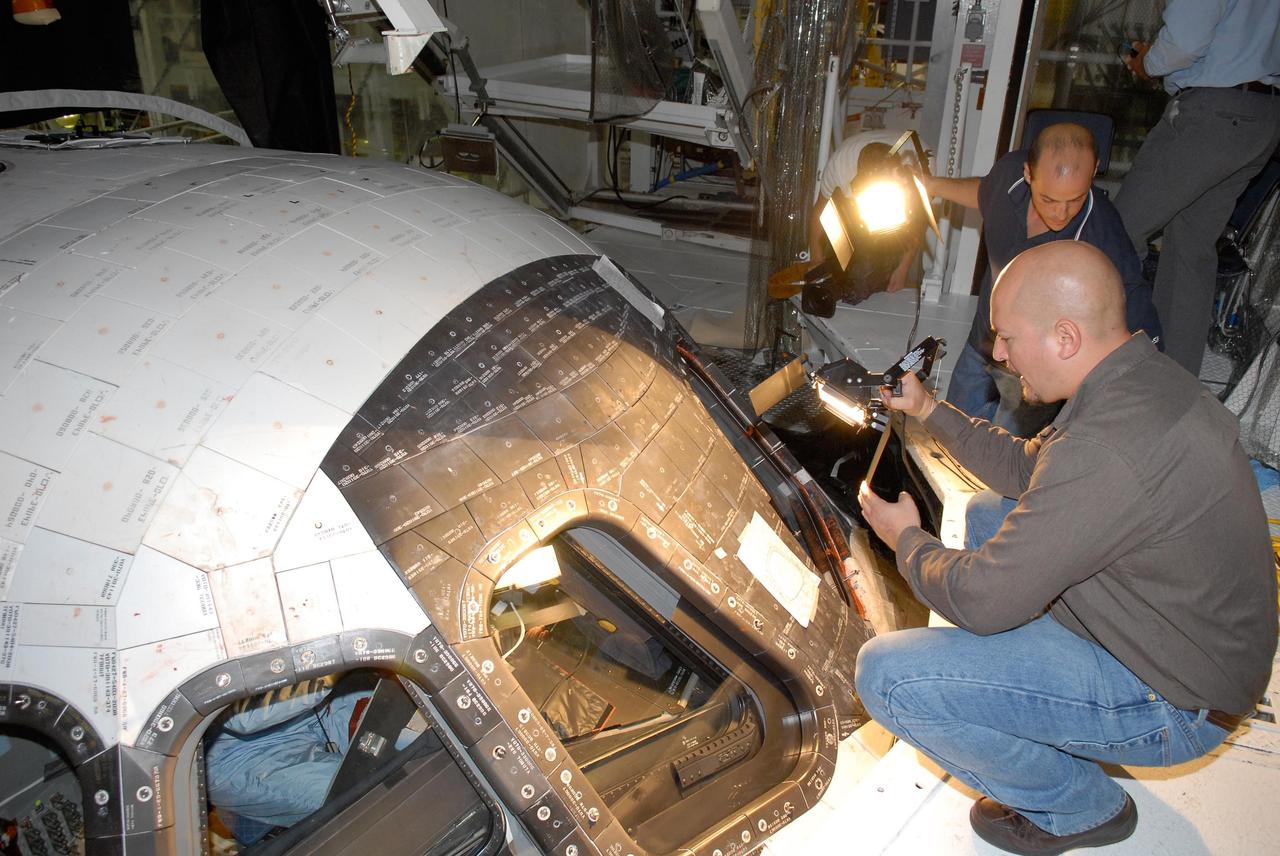
KENNEDY SPACE CENTER, FLA. -- In the Orbiter Processing Facility, United Space Alliance technicians provide lights over the space shuttle Atlantis' cockpit. STS-122 Commander Stephen Frick is inside checking the cockpit for launch readiness. The crew is at Kennedy Space Center to take part in a crew equipment interface test, which helps familiarize them with equipment and payloads for the mission. Among the activities standard to a CEIT are harness training, inspection of the thermal protection system and camera operation for planned extravehicular activities, or EVAs. The mission will carry and install the Columbus Lab, a multifunctional, pressurized laboratory that will be permanently attached to Node 2 of the space station to carry out experiments in materials science, fluid physics and biosciences, as well as to perform a number of technological applications. It is Europe’s largest contribution to the construction of the International Space Station and will support scientific and technological research in a microgravity environment. STS-122 is targeted for launch in December. Photo credit: NASA/Kim Shiflett
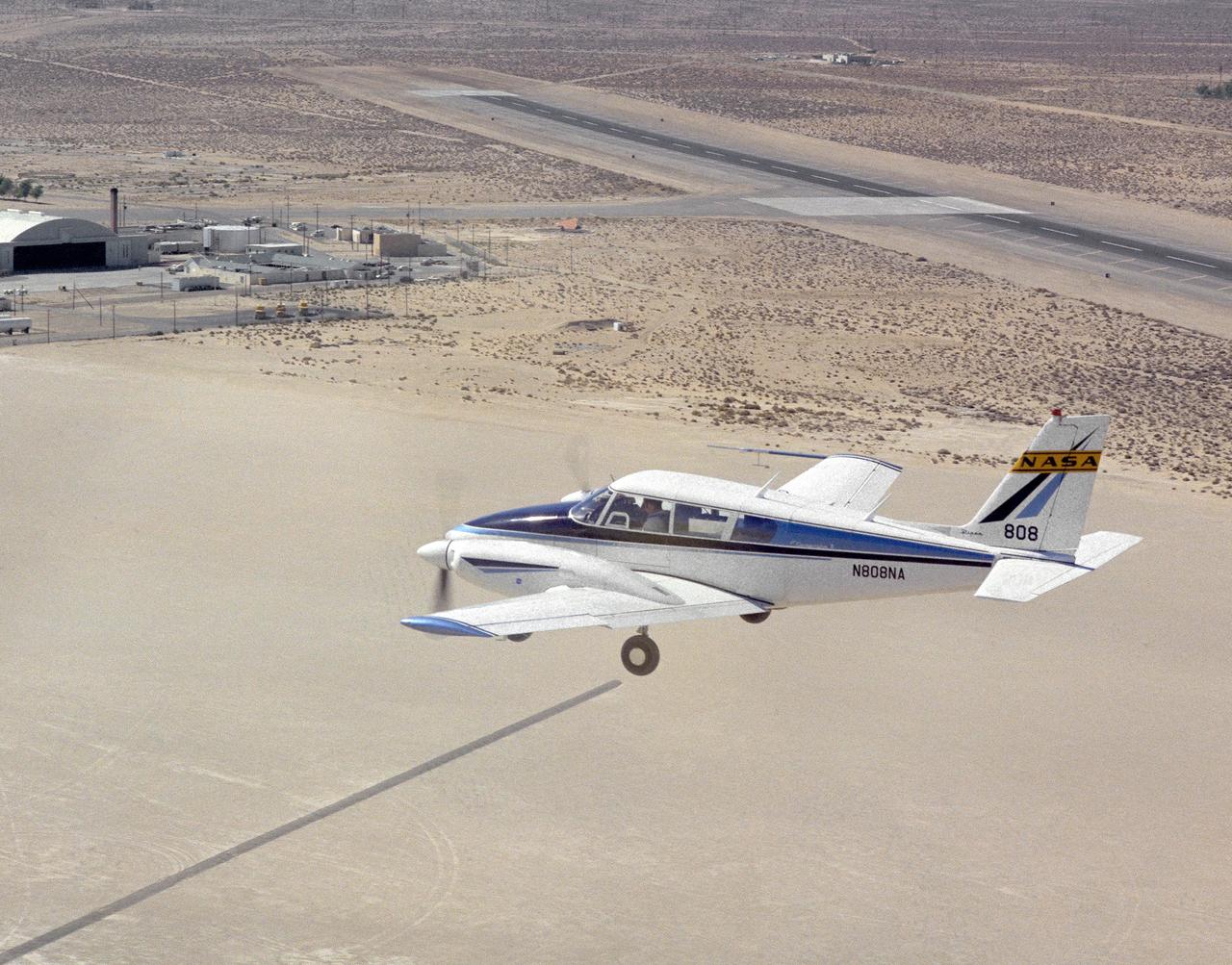
Dryden Flight Research Center's Piper PA-30 Twin Commanche, which helped validate the RPRV concept, descends to a remotely controlled landing on Rogers Dry Lake, unassisted by the onboard pilot. A Piper PA-30 Twin Commanche, known as NASA 808, was used at the NASA Dryden Flight Research Center as a rugged workhorse in a variety of research projects associated with both general aviation and military projects. In the early 1970s, the PA-30, serial number 301498, was used to test a flight technique used to fly Remotely Piloted Research Vehicles (RPRV's). The technique was first tested with the cockpit windows of the light aircraft blacked out while the pilot flew the aircraft utilizing a television monitor which gave him a "pilot's eye" view ahead of the aircraft. Later pilots flew the aircraft from a ground cockpit, a procedure used with all RPRV's. TV and two-way telemetry allow the pilot to be in constant control of the aircraft. The apparatus mounted over the cockpit is a special fish eye lens camera, used to obtain images that are transmitted to the ground based cockpit. This project paved the way for sophisticated, highly successful research programs involving high risk spin, stall, and flight control conditions, such as the HiMAT and the subscale F-15 remotely piloted vehicles. Over the years, NASA 808 has also been used for spin and stall research related to general aviation aircraft and also research to alleviate wake vortices behind large jetliners.
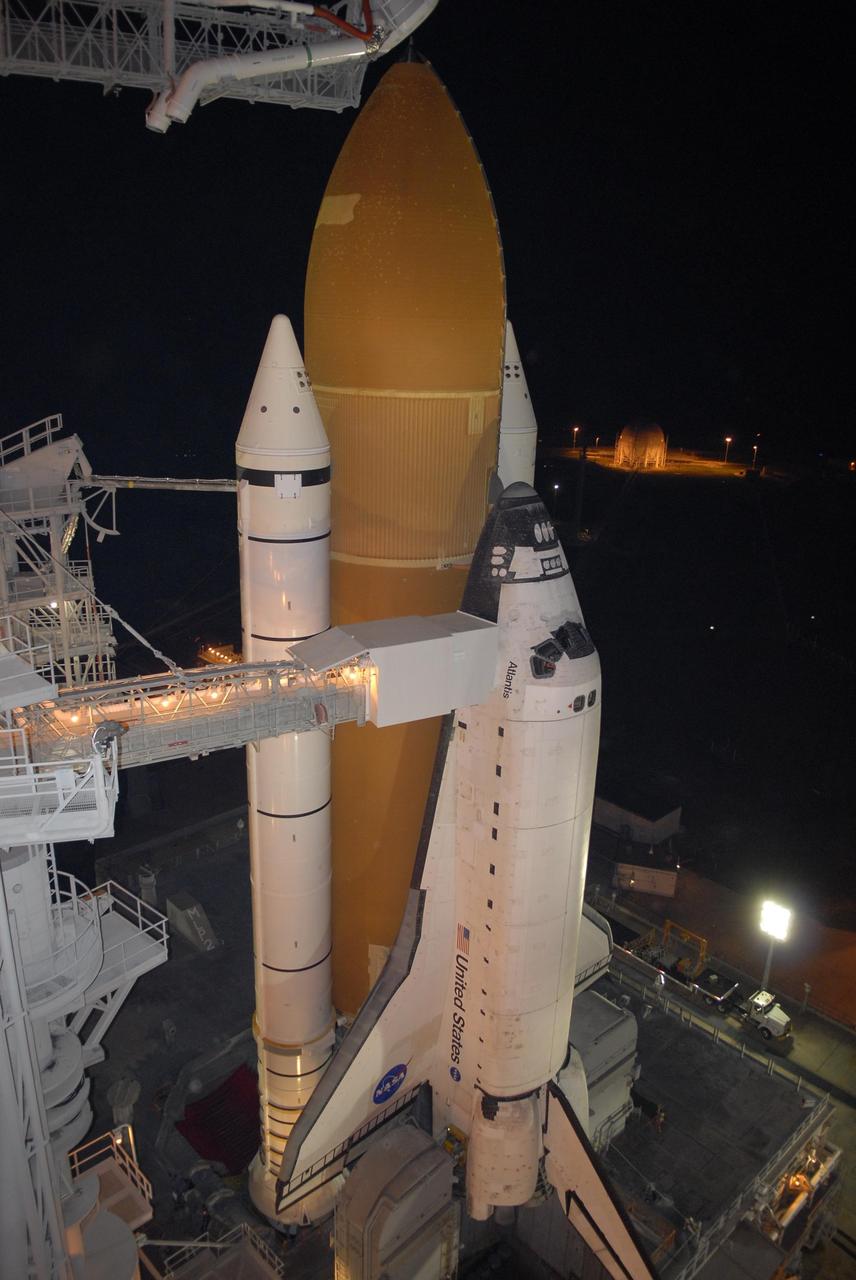
KENNEDY SPACE CENTER, FLA. -- Following rollback of the rotating service structure, or RSS, on Launch Pad 39A, Space Shuttle Atlantis stands bathed in lights atop a mobile launch platform. Rollback is one of the milestones in preparation for the launch of mission STS-117 on June 8. Rollback started at 10:56 p.m. and was complete at 11:34 p.m EDT. The RSS provides protected access to the orbiter for changeout and servicing of payloads at the pad. Connecting the RSS to the cockpit of the shuttle is the orbiter access arm with the White Room extended. The White Room provides access into the orbiter for the astronauts. This mission is the 118th shuttle flight and the 21st U.S. flight to the International Space Station and will deliver and install the S3/S4 truss segment, deploy a set of solar arrays and prepare them for operation. Photo credit: NASA/Kim Shiflett
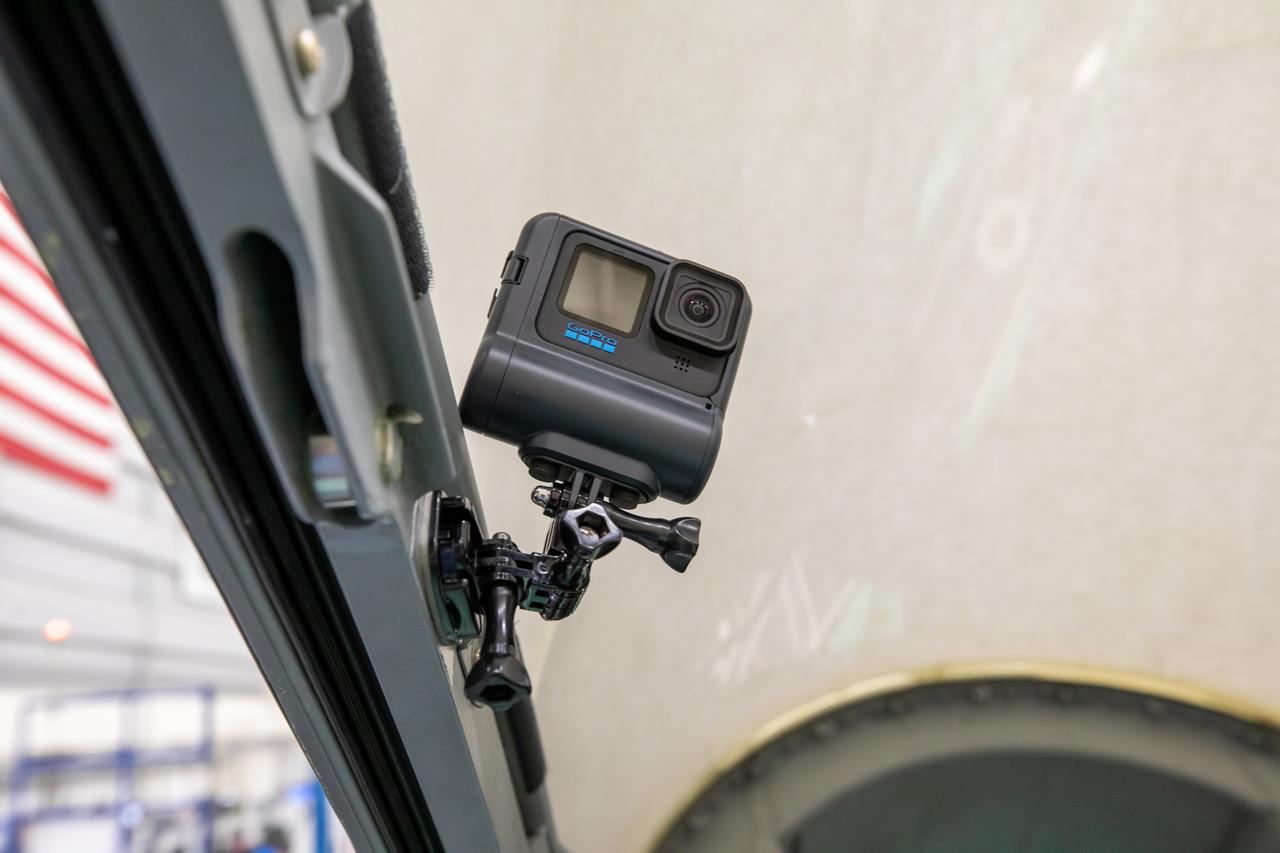
A Go-Pro is mounted on the inside of the X-59’s cockpit to capture the pilots activities during flight.
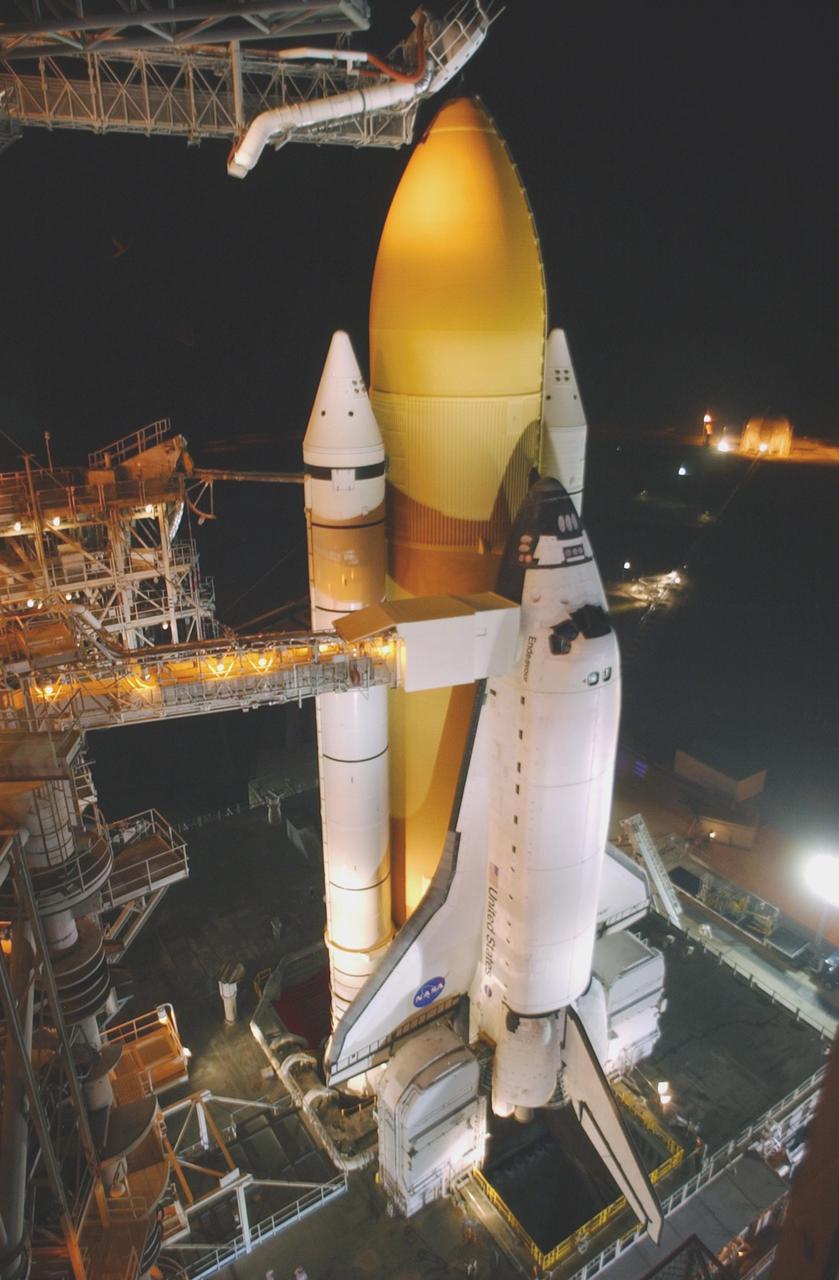
KENNEDY SPACE CENTER, FLA. - After rollback of the Rotating Service Structure, Space Shuttle Endeavour is bathed in light. Seen above the orange external tank behind Endeavour is the "beanie cap," or vent hood assembly at the end of the gaseous oxygen vent arm. The orbiter access arm extends to the cockpit area of Endeavour. At the end of the arm is the White Room, , an environmental chamber that provides crew access into the orbiter. STS-111 is the second Utilization Flight to the International Space Station, carrying the Multi-Purpose Logistics Module Leonardo, the Mobile Base System (MBS), and a replacement wrist/roll joint for the Canadarm 2. Also onboard Space Shuttle Endeavour is the Expedition 5 crew who will replace Expedition 4 on board the Station. The MBS will be installed on the Mobile Transporter to complete the Canadian Mobile Servicing System, or MSS. The mechanical arm will then have the capability to "inchworm" from the U.S. Lab Destiny to the MSS and travel along the truss to work sites. Expedition 4 crew members will return to Earth with the STS-111 crew on Endeavour. Launch is scheduled at 7:44 p.m. EDT, May 30, 2002
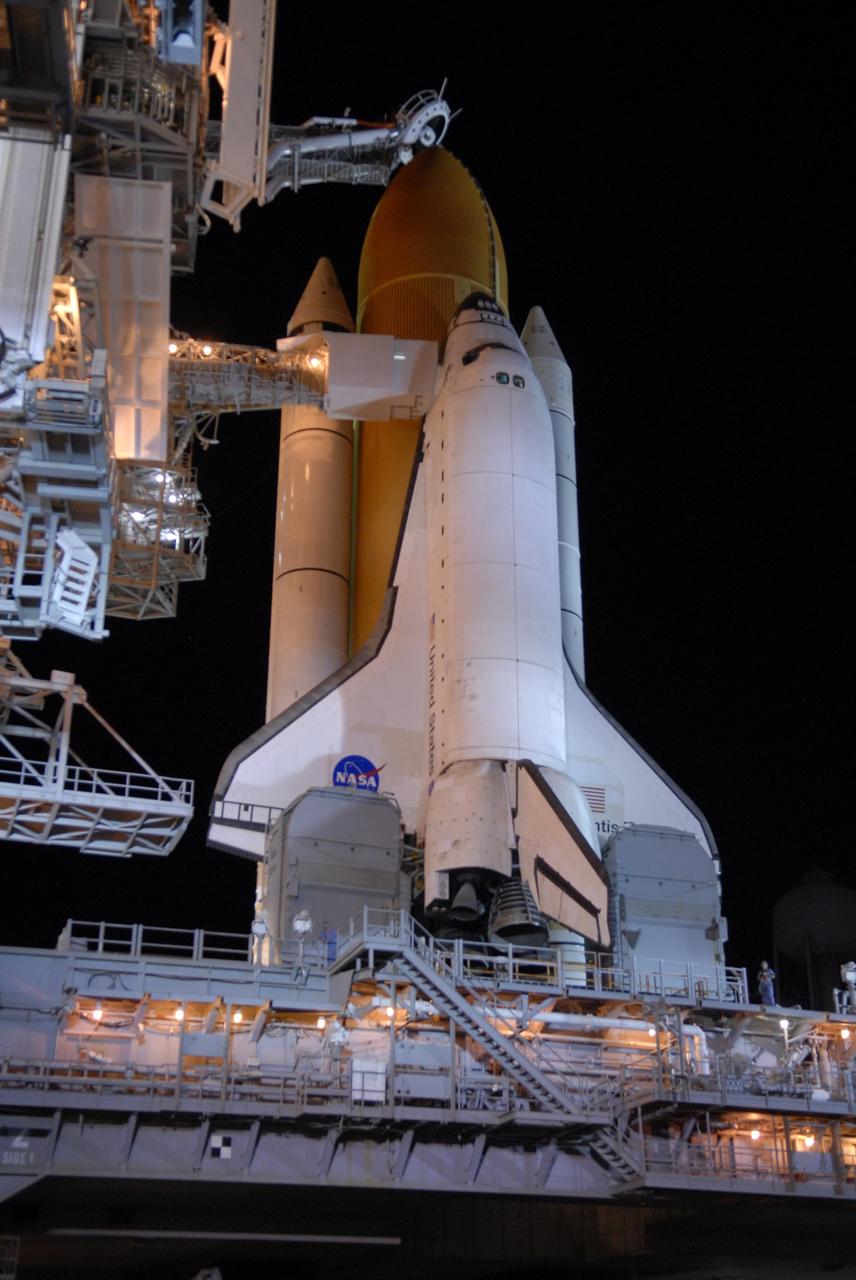
KENNEDY SPACE CENTER, FLA. -- Following rollback of the rotating service structure, or RSS, on Launch Pad 39A, Space Shuttle Atlantis stands bathed in lights atop a mobile launch platform. Rollback is one of the milestones in preparation for the launch of mission STS-117 on June 8. Rollback started at 10:56 p.m. and was complete at 11:34 p.m EDT. The RSS provides protected access to the orbiter for changeout and servicing of payloads at the pad. Connecting the RSS to the cockpit of the shuttle is the orbiter access arm with the White Room extended. The White Room provides access into the orbiter for the astronauts. Above the external tank is the vent hood (known as the "beanie cap") at the end of the gaseous oxygen vent arm. Vapors are created as the liquid oxygen in the external tank boil off. The hood vents the gaseous oxygen vapors away from the space shuttle vehicle. This mission is the 118th shuttle flight and the 21st U.S. flight to the International Space Station and will deliver and install the S3/S4 truss segment, deploy a set of solar arrays and prepare them for operation. Photo credit: NASA/Kim Shiflett
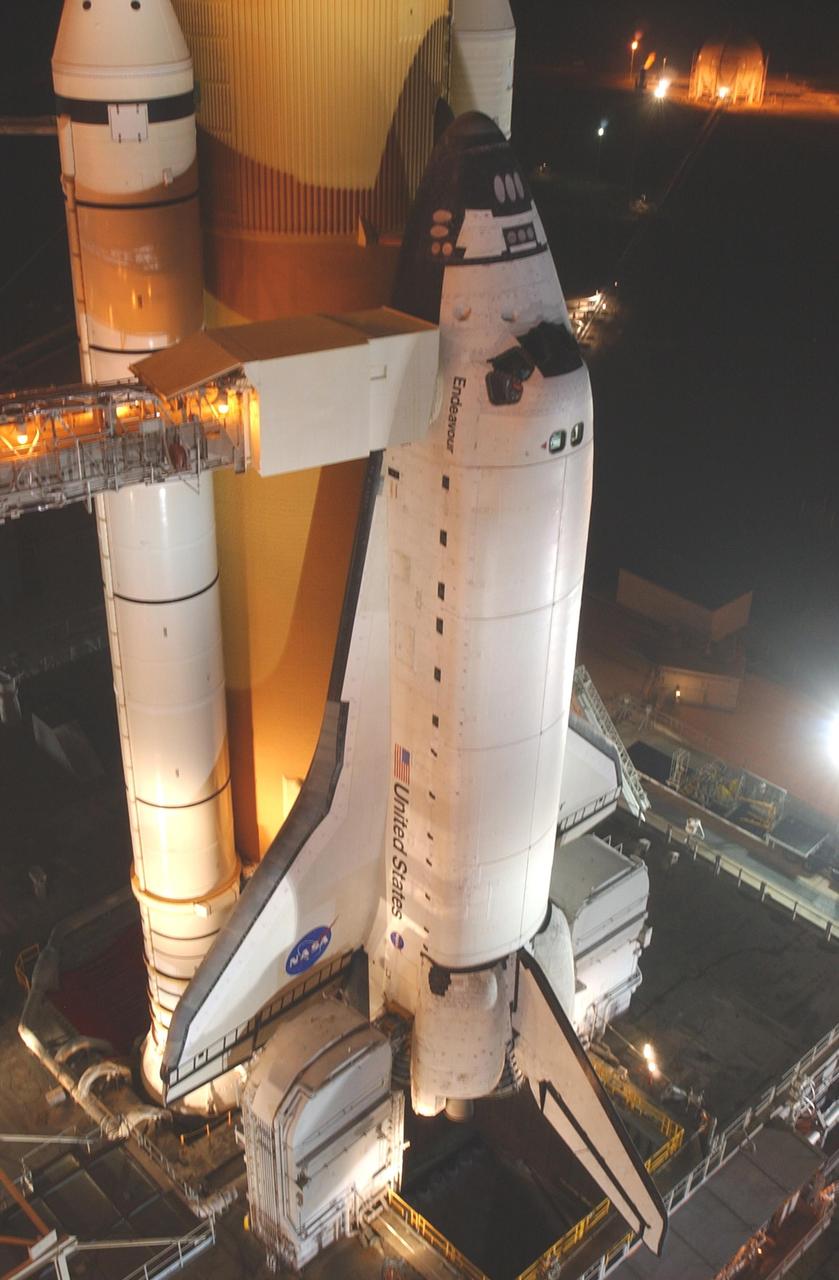
KENNEDY SPACE CENTER, FLA. -- After rollback of the Rotating Service Structure in the early morning hours, Space Shuttle Endeavour sits bathed in light on its Mobile Launcher Platform on Launch Pad 39A. Seen extending to the cockpit area of Endeavour is the orbiter access arm. At the end of the arm is the White Room, an environmental chamber. Below, on either side of Endeavour's tail, are the tail service masts that support fluid, gas and electrical requirements of the orbiter's liquid oxygen and liquid hydrogen aft T-0 umbilicals. STS-111 is the second Utilization Flight to the International Space Station, carrying the Multi-Purpose Logistics Module Leonardo, the Mobile Base System (MBS), and a replacement wrist/roll joint for the Canadarm 2. Also onboard Space Shuttle Endeavour is the Expedition 5 crew who will replace Expedition 4 on board the Station. The MBS will be installed on the Mobile Transporter to complete the Canadian Mobile Servicing System, or MSS. The mechanical arm will then have the capability to "inchworm" from the U.S. Lab Destiny to the MSS and travel along the truss to work sites. Expedition 4 crew members will return to Earth with the STS-111 crew on Endeavour. Launch is scheduled for 7:44 p.m. EDT, May 30, 2002
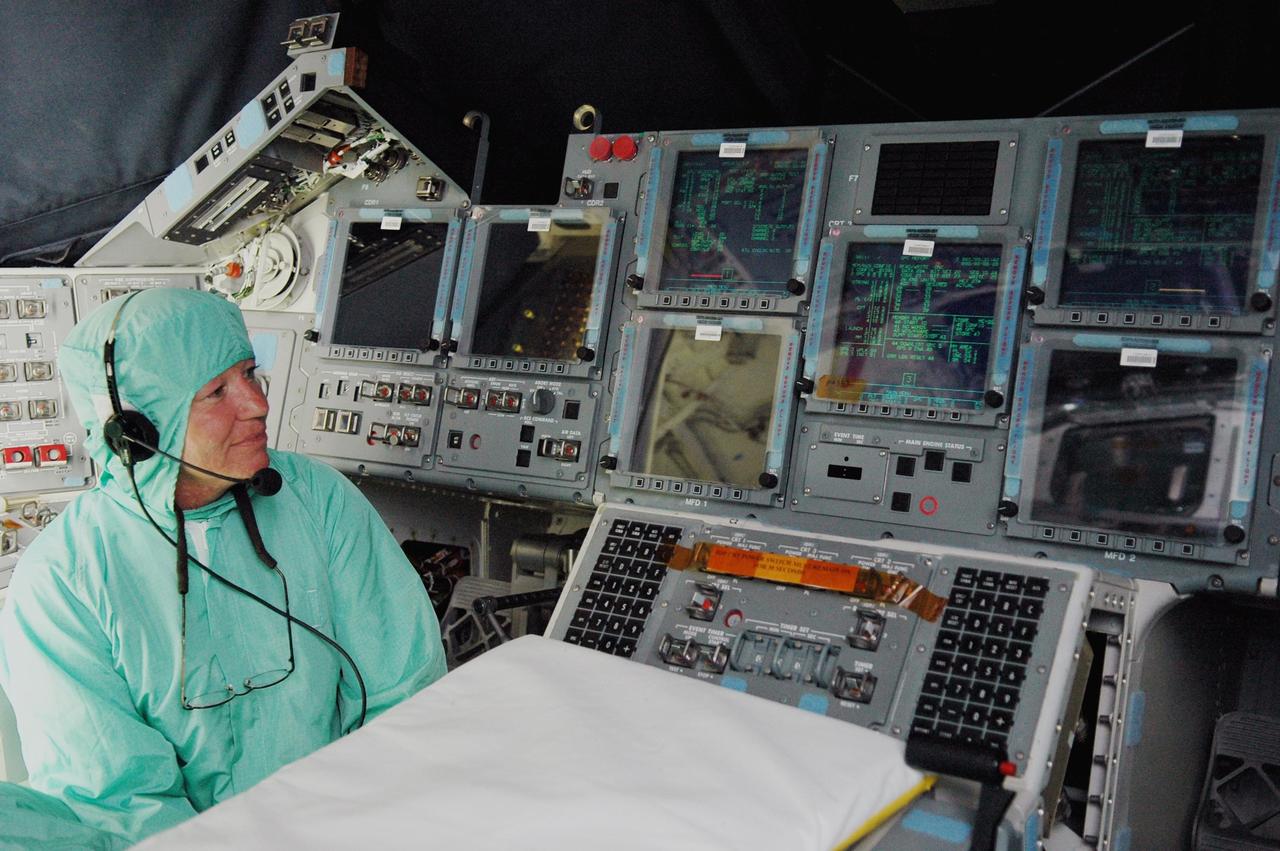
KENNEDY SPACE CENTER, FLA. - In Orbiter Processing Facility bay 2, United Space Alliance technician Loralee Woodbury monitors the lighted display in Space Shuttle Endeavour's cockpit after full powerup, the first time the orbiter has been powered up after nearly two years. Endeavour has been in its Orbiter Major Modification (OMM) period since December 2003. Engineers and technicians spent 900,000 hours performing 124 modifications to the vehicle. These included all recommended return to flight safety modifications, bonding more than 1,000 thermal protection system tiles and inspecting more than 150 miles of wiring throughout Endeavour. Eighty five of the modifications are completed, with work on the additional 39 modifications continuing throughout the next few months. Shuttle major modification periods are scheduled at regular intervals to enhance safety and performance, infuse new technology and allow for thorough inspections of the airframe and wiring of the vehicles. This was the second of these modification periods performed entirely at Kennedy Space Center. Endeavour's previous modification was completed in March 1997.
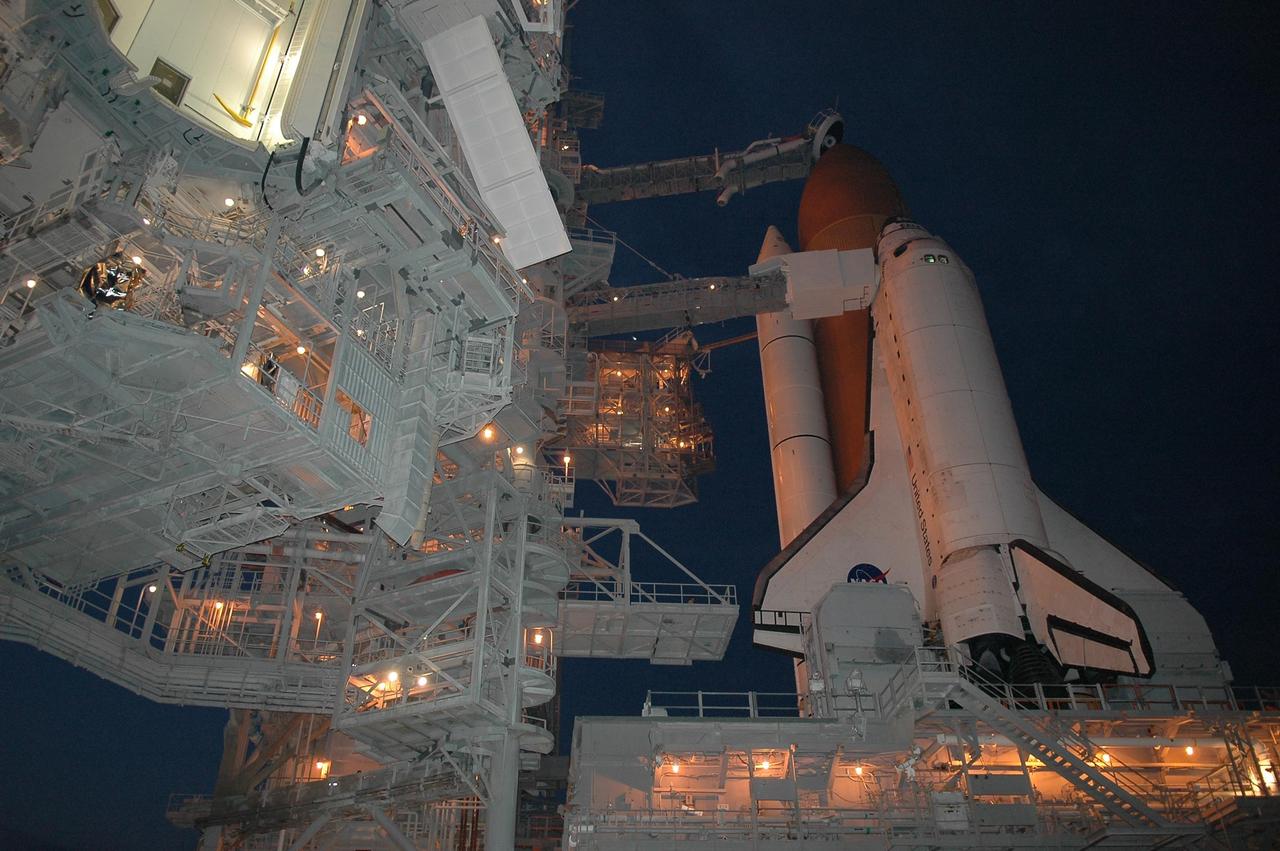
KENNEDY SPACE CENTER, FLA. - After rollback of the rotating service structure (RSS) on Launch Pad 39B, Space Shuttle Discovery stands bathed in lights from the RSS and fixed service structure. The rollback was in preparation for launch July 1 on mission STS-121. Extending toward the cockpit of the shuttle is the orbiter access arm with the White Room extended. The White Room provides access into the orbiter for the astronauts. The RSS provides protected access to the orbiter for changeout and servicing of payloads at the pad. The structure is supported by a rotating bridge that pivots about a vertical axis on the west side of the pad's flame trench. The hinge column rests on the pad surface and is braced to the fixed service structure. Support for the outer end of the bridge is provided by two eight-wheel, motor-driven trucks that move along circular twin rails installed flush with the pad surface. The track crosses the flame trench on a permanent bridge. The RSS is 102 feet long, 50 feet wide and 130 feet high. The structure has orbiter access platforms at five levels to provide access to the payload bay while the orbiter is being serviced in the RSS. Each platform has independent extendable planks that can be arranged to conform to a payload's configuration. This mission is the 115th shuttle flight and the 18th U.S. flight to the International Space Station. Photo credit: NASA/Kim Shiflett
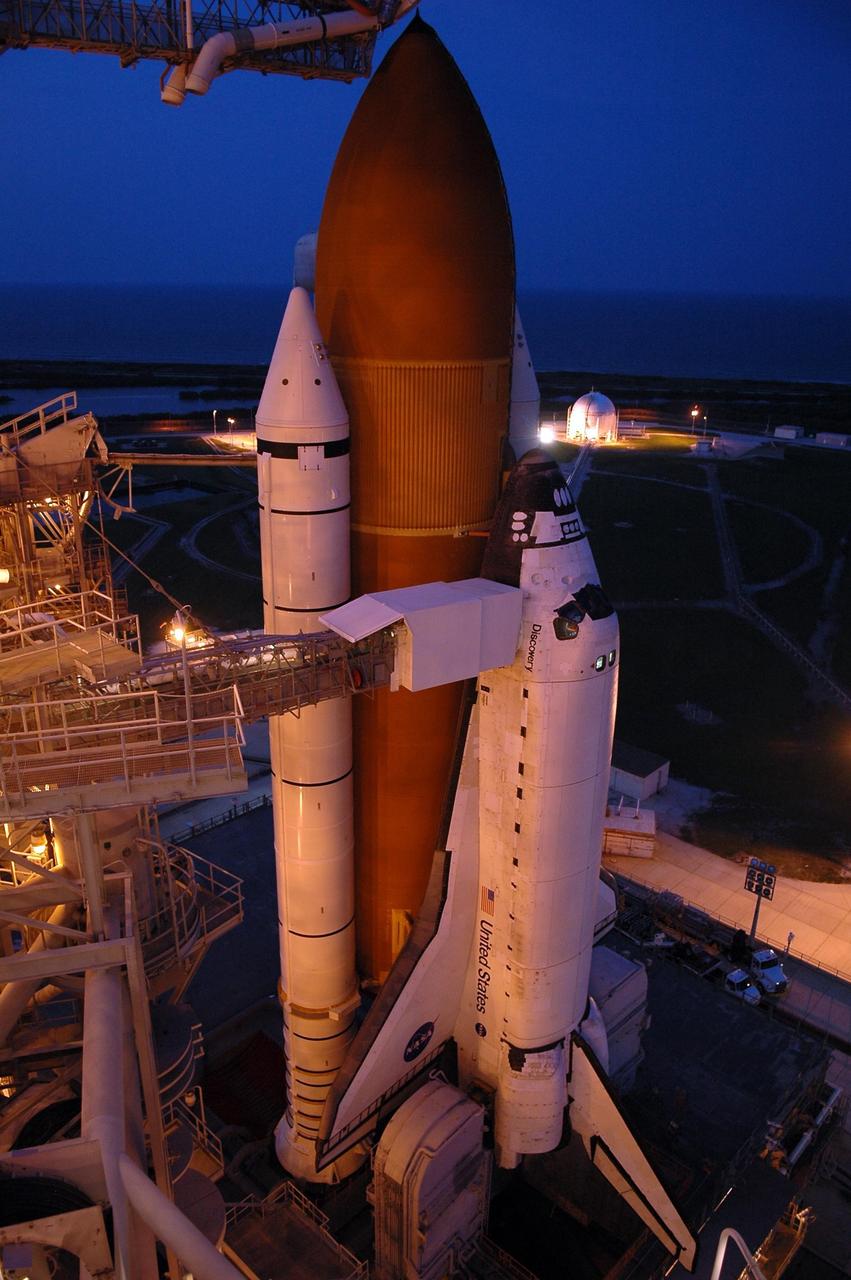
KENNEDY SPACE CENTER, FLA. - After rollback of the rotating service structure (RSS) on Launch Pad 39B, Space Shuttle Discovery stands bathed in lights from the RSS and fixed service structure. The rollback was in preparation for launch July 1 on mission STS-121. Extending toward the cockpit of the shuttle is the orbiter access arm with the White Room extended. The White Room provides access into the orbiter for the astronauts. The RSS provides protected access to the orbiter for changeout and servicing of payloads at the pad. The structure is supported by a rotating bridge that pivots about a vertical axis on the west side of the pad's flame trench. The hinge column rests on the pad surface and is braced to the fixed service structure. Support for the outer end of the bridge is provided by two eight-wheel, motor-driven trucks that move along circular twin rails installed flush with the pad surface. The track crosses the flame trench on a permanent bridge. The RSS is 102 feet long, 50 feet wide and 130 feet high. The structure has orbiter access platforms at five levels to provide access to the payload bay while the orbiter is being serviced in the RSS. Each platform has independent extendable planks that can be arranged to conform to a payload's configuration. This mission is the 115th shuttle flight and the 18th U.S. flight to the International Space Station. Photo credit: NASA/Kim Shiflett
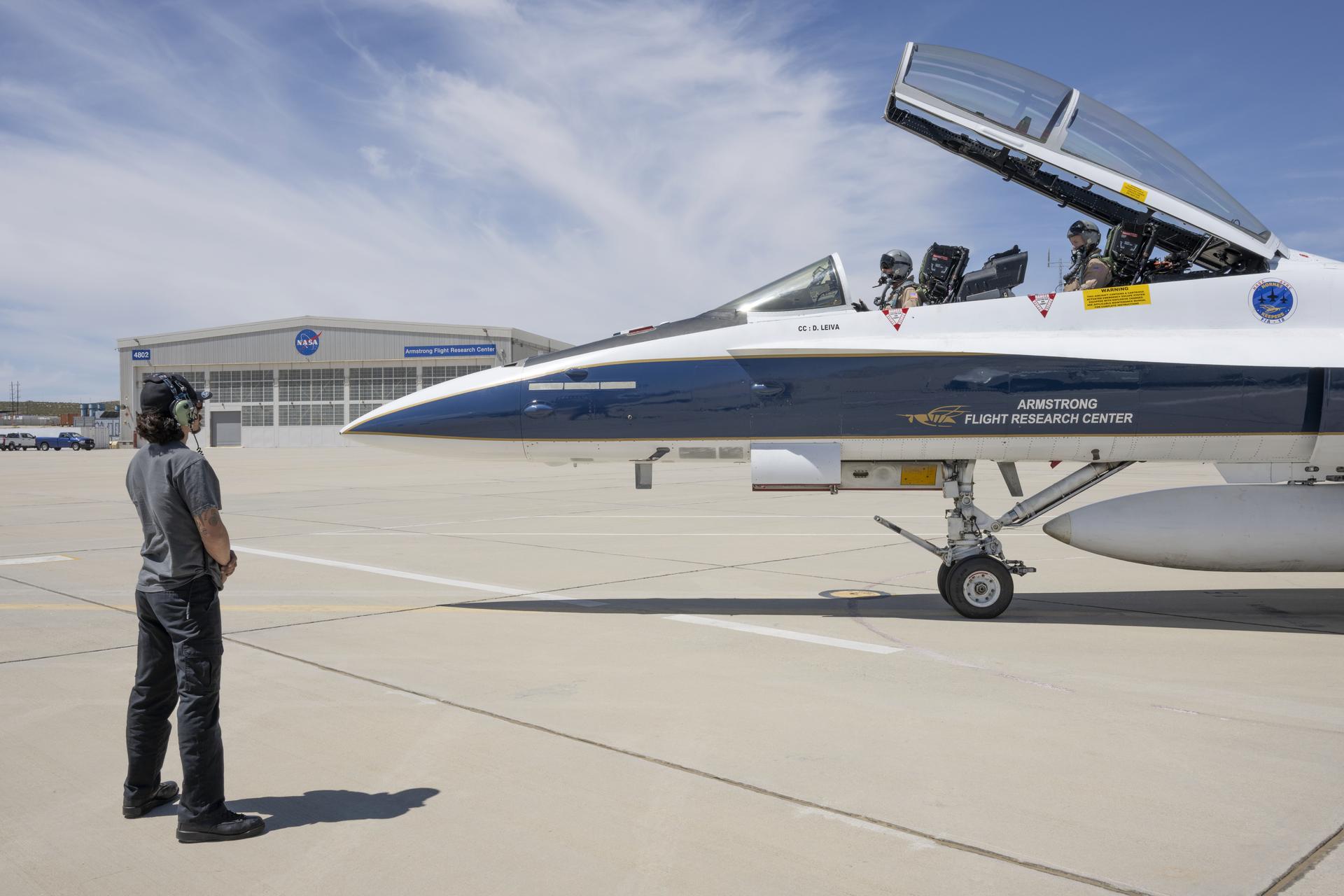
Crew chief, David Leiva, prepares NASA pilot Jim Less and Mike Frederick, aerospace engineer and researcher, for an employee incentive flight in an F/A-18 aircraft at NASA’s Armstrong Flight Research Center in Edwards, California, on Wednesday, April 15, 2026. NASA Administrator Jared Isaacman established the ride‑along program to recognize and reward workforce members for their dedication to advancing the agency’s priorities.
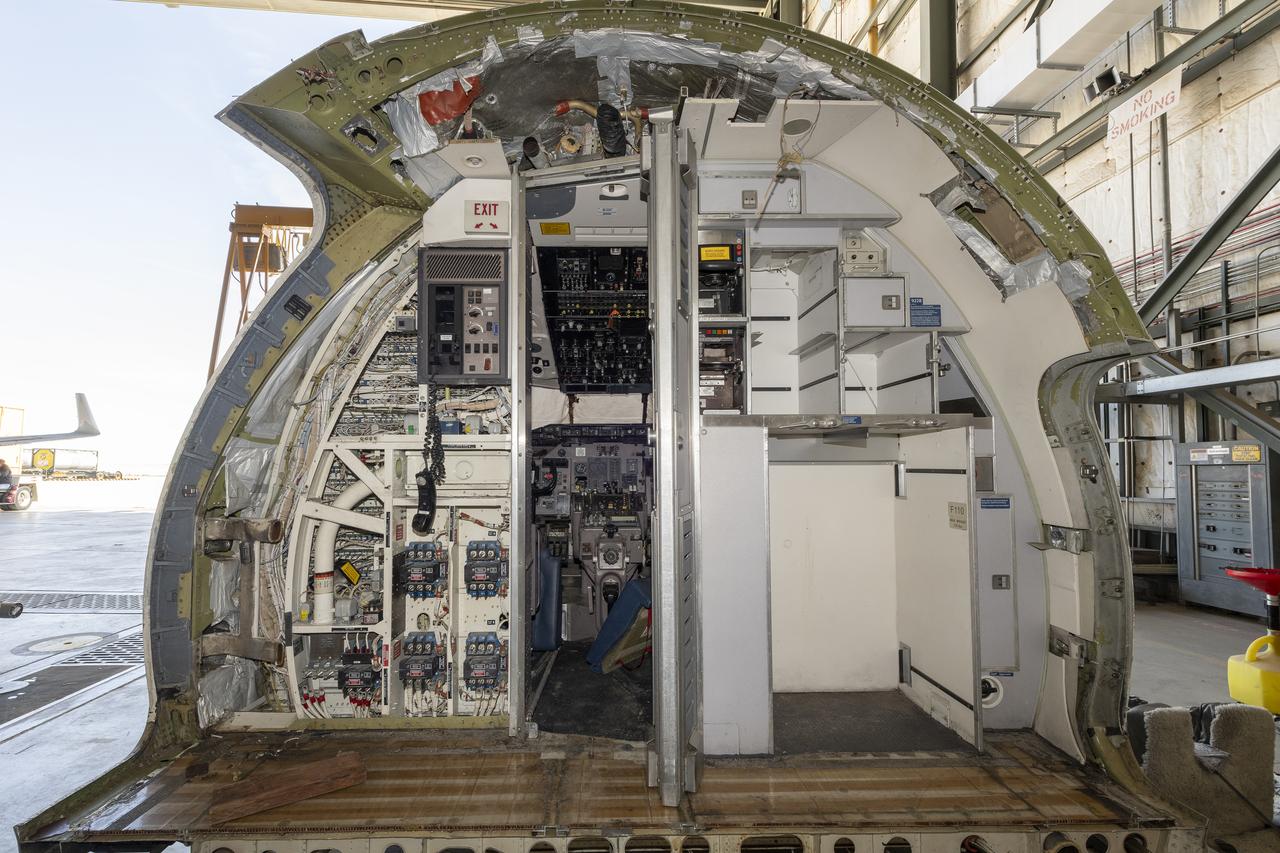
The cockpit of an old MD-90 aircraft arrived at NASA’s Armstrong Flight Research Center in Edwards, California, in March 2024. Parts will be used to build a simulator for NASA’s X-66, the demonstration aircraft for the Sustainable Flight Demonstrator project.
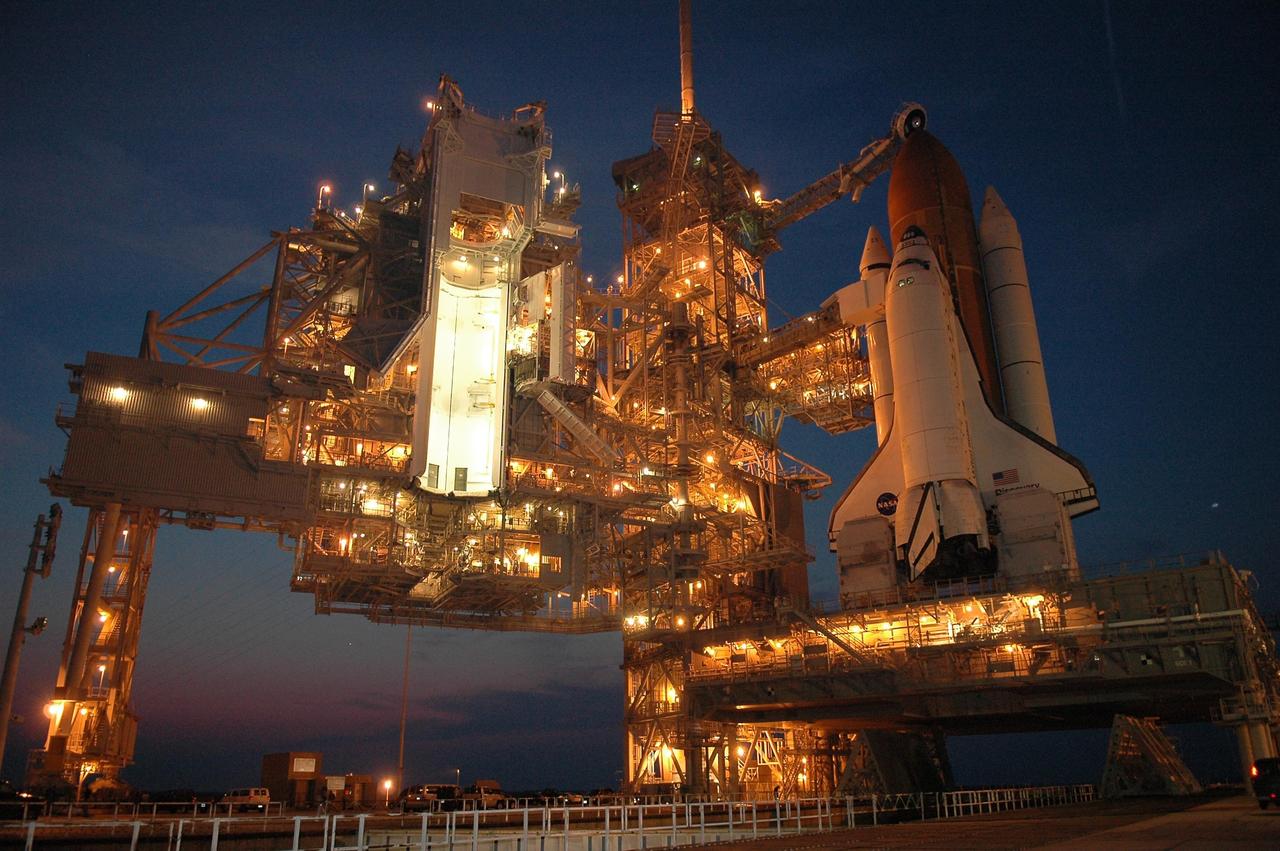
KENNEDY SPACE CENTER, FLA. - Against a dimming sky after sunset, lights on the structures on Launch Pad 39B cast a warm glow on Space Shuttle Discovery. The rotating service structure at left has been rolled back in preparation for launch July 1 on mission STS-121. Extending toward the cockpit of the shuttle is the orbiter access arm with the White Room extended. The White Room provides access into the orbiter for the astronauts. Above the golden external tank is the vent hood (known as the "beanie cap") at the end of the gaseous oxygen vent arm. Vapors are created as the liquid oxygen in the external tank boil off. The hood vents the gaseous oxygen vapors away from the space shuttle vehicle. The RSS provides protected access to the orbiter for changeout and servicing of payloads at the pad. The structure is supported by a rotating bridge that pivots about a vertical axis on the west side of the pad's flame trench. The hinge column rests on the pad surface and is braced to the fixed service structure. Support for the outer end of the bridge is provided by two eight-wheel, motor-driven trucks that move along circular twin rails installed flush with the pad surface. The track crosses the flame trench on a permanent bridge. The RSS is 102 feet long, 50 feet wide and 130 feet high. The structure has orbiter access platforms at five levels to provide access to the payload bay while the orbiter is being serviced in the RSS. Each platform has independent extendable planks that can be arranged to conform to a payload's configuration. This mission is the 115th shuttle flight and the 18th U.S. flight to the International Space Station. Photo credit: NASA/Kim Shiflett
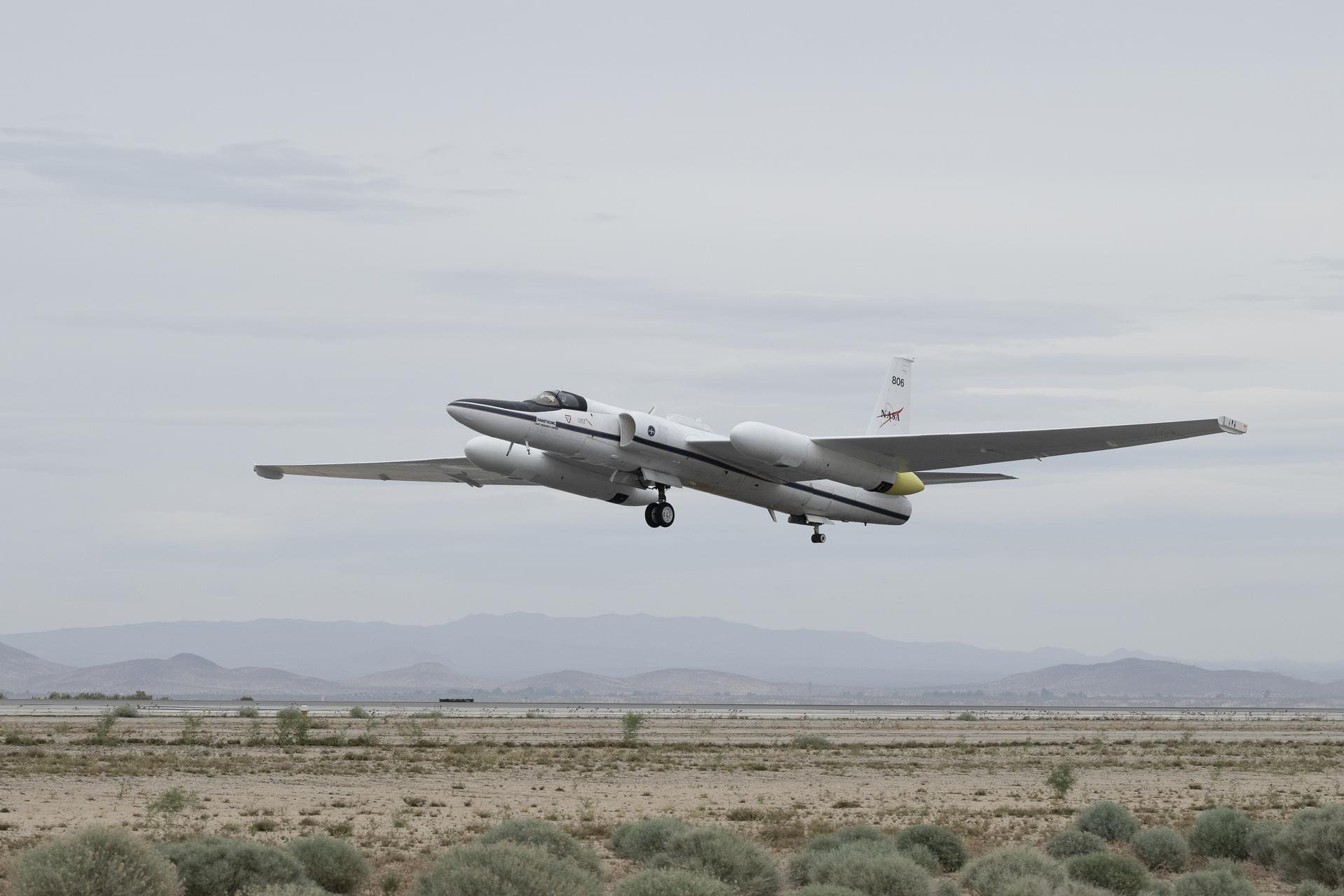
A NASA ER-2 aircraft takes off from NASA’s Armstrong Flight Research Center in Edwards, California, on Tuesday, March 31, 2026, to support the Geological Earth Mapping Experiment (GEMx) airborne science mission.
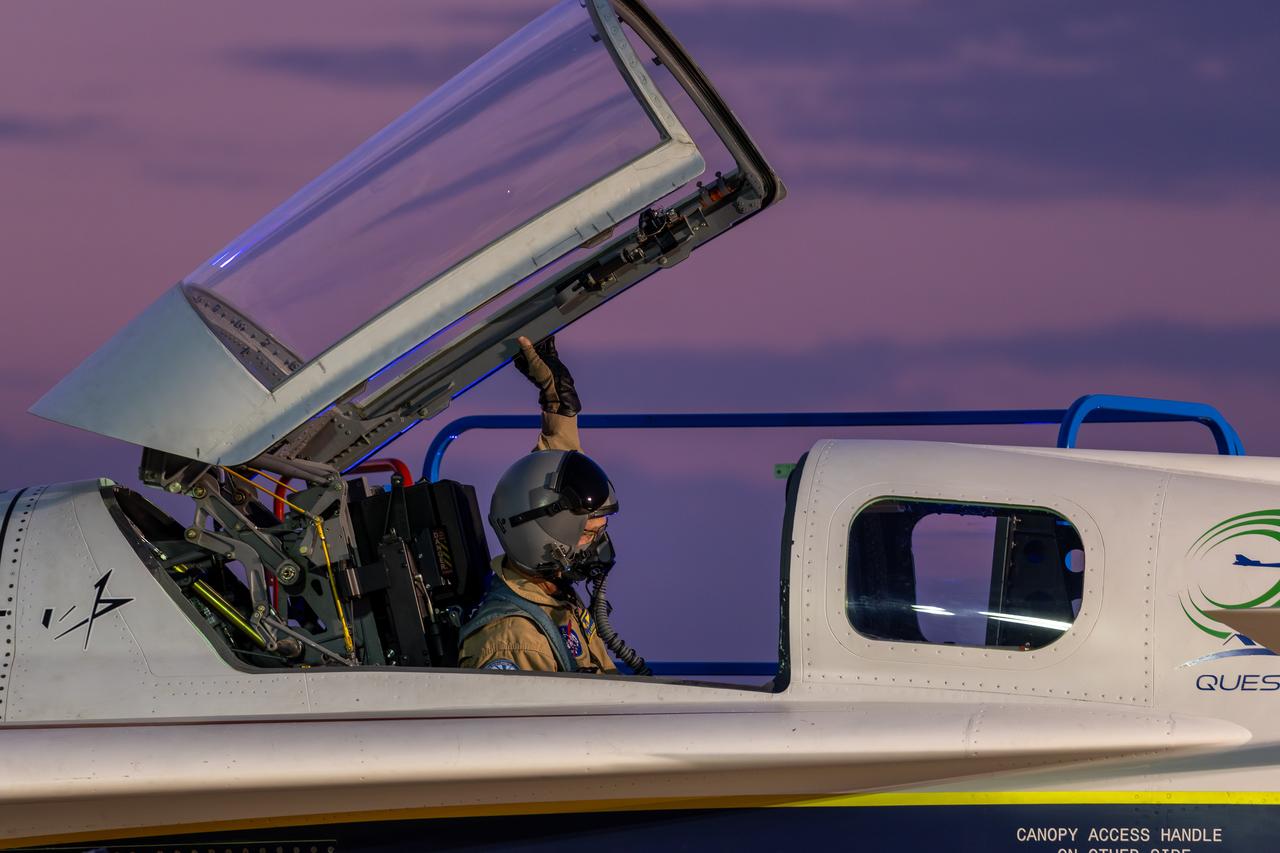
NASA test pilot Nils Larson lowers the canopy of the X-59 quiet supersonic research aircraft during ground tests at Lockheed Martin’s Skunk Works facility in Palmdale, California, on July 18, 2025. The X-59 is the centerpiece of NASA’s Quesst mission to demonstrate quiet supersonic flight and the aircraft is scheduled to make its first flight later this year.
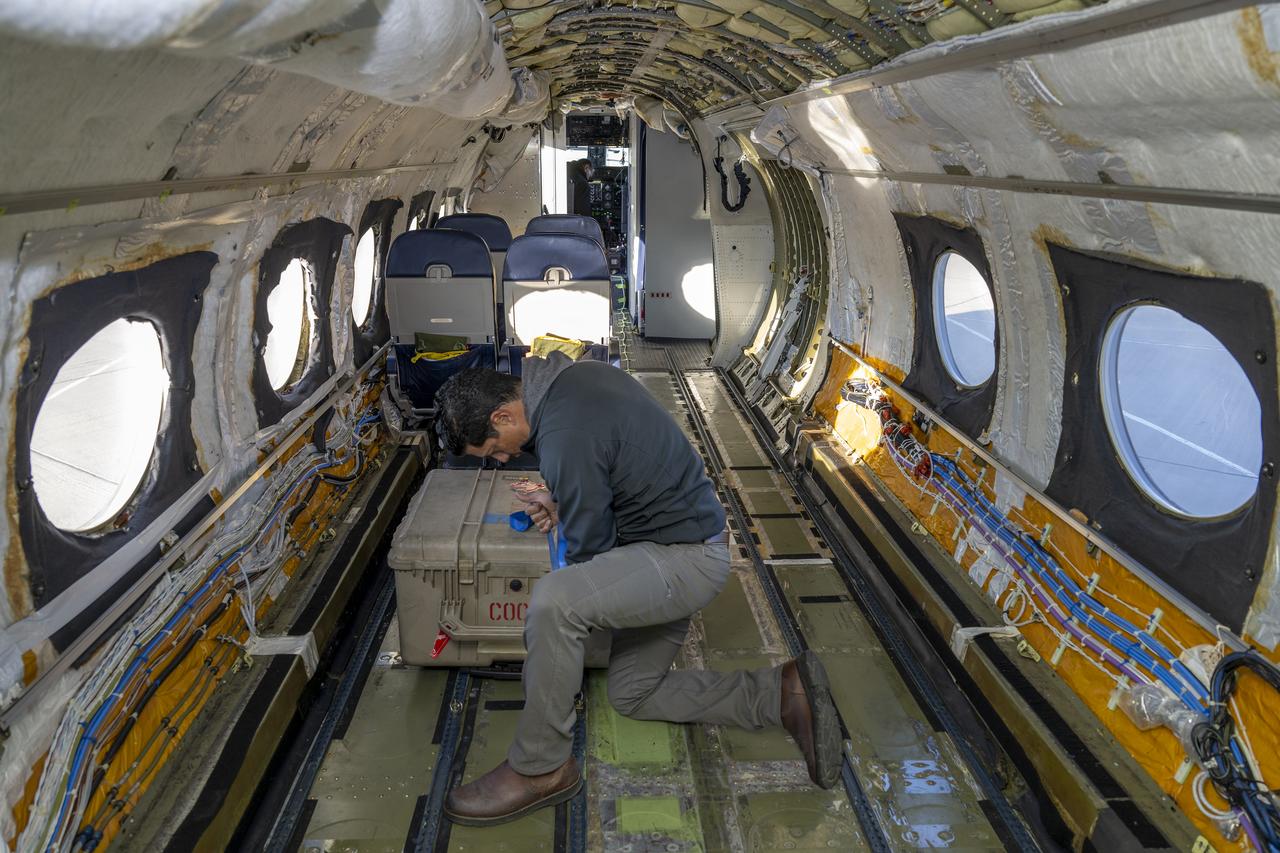
Jose “Manny” Rodriguez, technical engineer at NASA’s Armstrong Flight Research Center in Edwards, California, secures a trunk onboard the G-IV aircraft on March 18, 2025. As the newest member of NASA Armstrong’s airborne science fleet, the G-IV was sent to Avenger Aerospace Solutions in Cartersville, Georgia, for modifications that will optimize the G-IV’s performance as a research aircraft.

NASA test pilot Jim “Clue” Less sits inside the cockpit of the agency’s X-59 quiet supersonic research aircraft ahead of early morning engine runs at NASA’s Armstrong Flight Research Center in Edwards, California, on Thursday, March 12, 2026. The X-59 is part of NASA's Quesst mission, which seeks to demonstrate quiet supersonic flight and gather data that could help define acceptable sound for commercial supersonic travel over land.