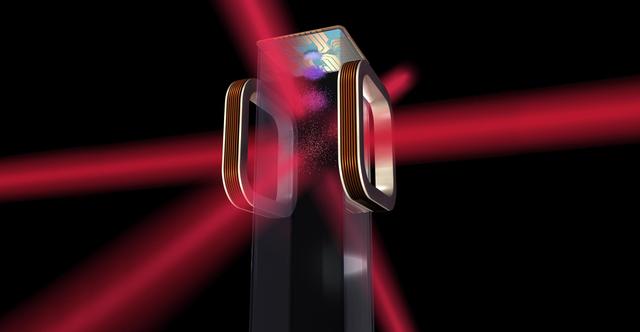
Artist concept of a magneto-optical trap and atom chip to be used by NASA Cold Atom Laboratory CAL aboard the International Space Station.
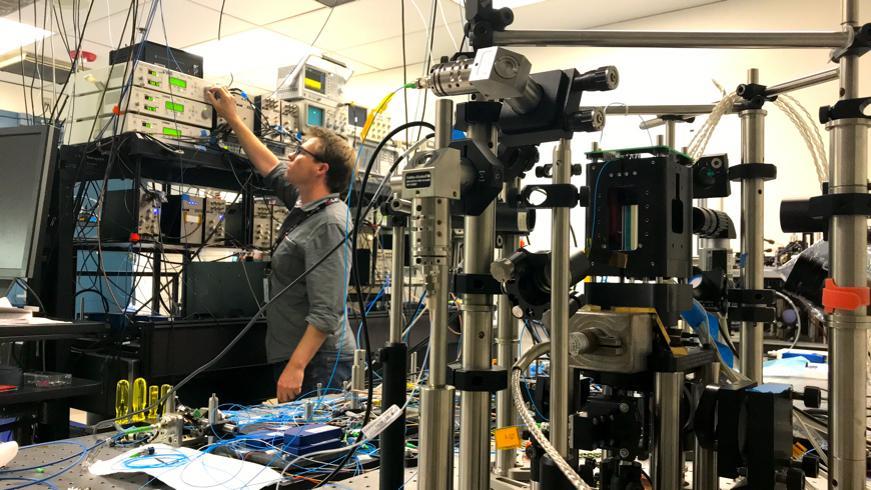
Cold Atom Laboratory (CAL) physicist David Aveline works in the CAL test bed, which is a replica of the CAL facility that stays on Earth. Scientists use the test bed to run tests and understand what is happening inside CAL while it is operating on the International Space Station. https://photojournal.jpl.nasa.gov/catalog/PIA23001
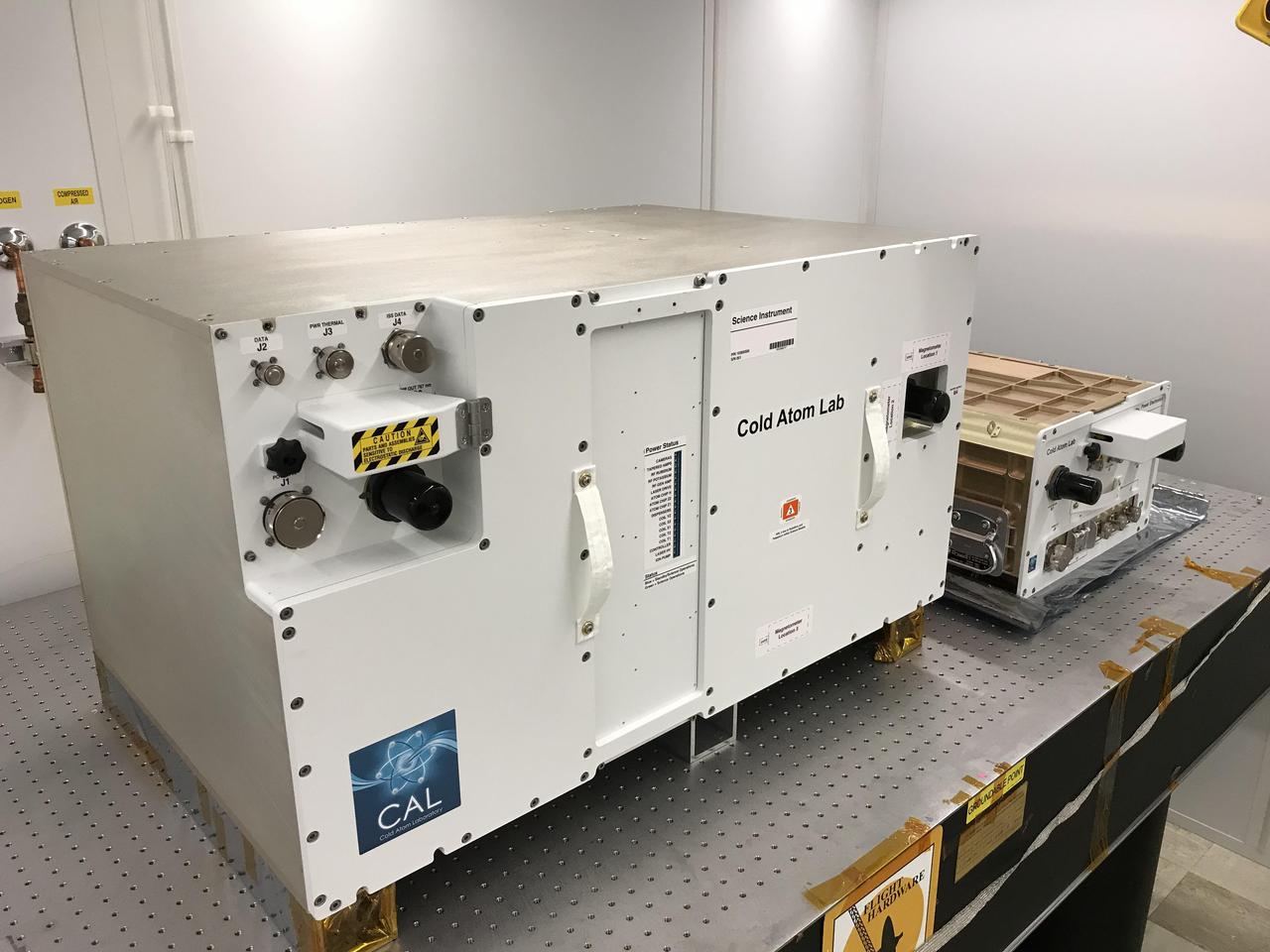
The Cold Atom Laboratory consists of two standardized containers that will be installed on the International Space Station. The larger container is called a "quad locker," and the smaller container is called a "single locker." The quad locker contains CAL's physics package, or the compartment where CAL will produce clouds of ultra-cold atoms. https://photojournal.jpl.nasa.gov/catalog/PIA22562

Astronaut Ricky Arnold assists with the installation of NASA's Cold Atom Laboratory (CAL) on the International Space Station. https://photojournal.jpl.nasa.gov/catalog/PIA22920
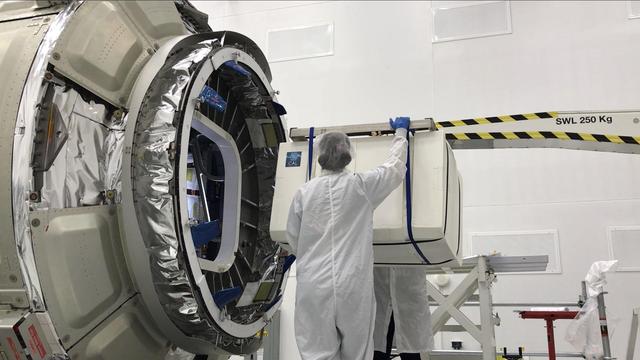
The Cold Atom Laboratory (CAL), packaged in a protective layer, is loaded onto a Northrop Grumman (formerly Orbital ATK) Cygnus spacecraft for its trip to the International Space Station. The facility launched in May 2018 from NASA's Wallops Flight Facility in Virginia. https://photojournal.jpl.nasa.gov/catalog/PIA22919
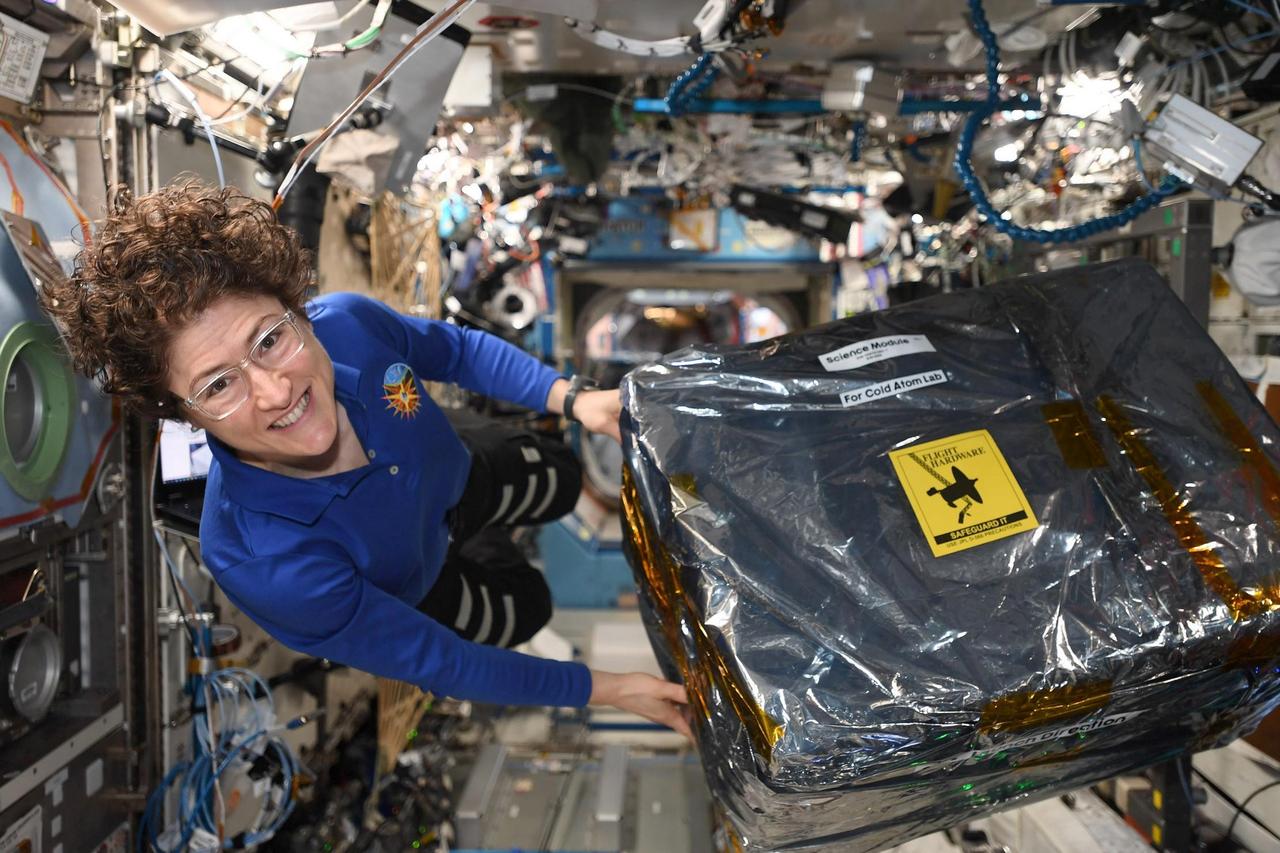
Astronaut Christina Koch unloads new hardware for the Cold Atom Lab aboard the International Space Station the week of Dec. 9, 2020. The Cold Atom Laboratory launched to the space station on May 21, 2018, aboard a Northrop Grumman (formerly Orbital ATK) Cygnus spacecraft from NASA's Wallops Flight Facility in Virginia. Designed and built at JPL, CAL is sponsored by the International Space Station Program at NASA's Johnson Space Center in Houston, and the Space Life and Physical Sciences Research and Applications (SLPSRA) Division of NASA's Human Exploration and Operations Mission Directorate at NASA Headquarters in Washington. https://photojournal.jpl.nasa.gov/catalog/PIA23404
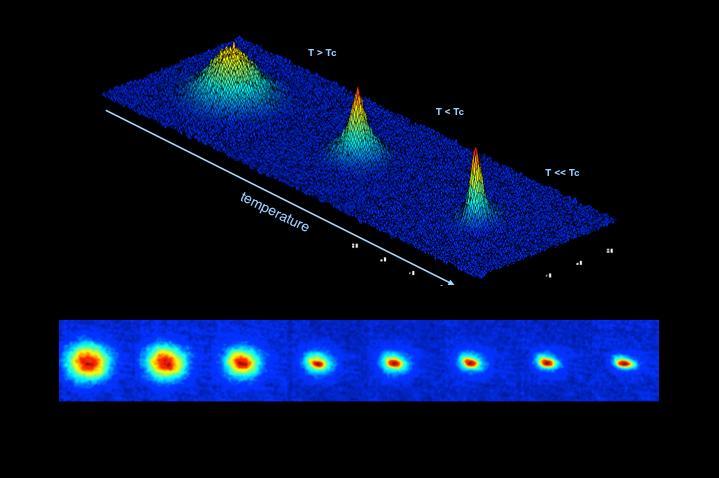
This sequence of false-color images shows the formation of a Bose-Einstein condensate in the Cold Atom Laboratory prototype at NASA Jet Propulsion Laboratory as the temperature gets progressively closer to absolute zero.
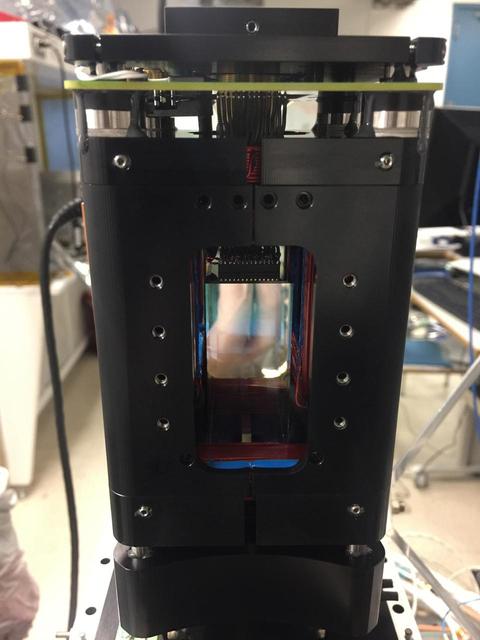
Shown here, the "physics package" inside NASA's Cold Atom Lab, where ultracold clouds of atoms called Bose-Einstein condensates are produced. https://photojournal.jpl.nasa.gov/catalog/PIA22563
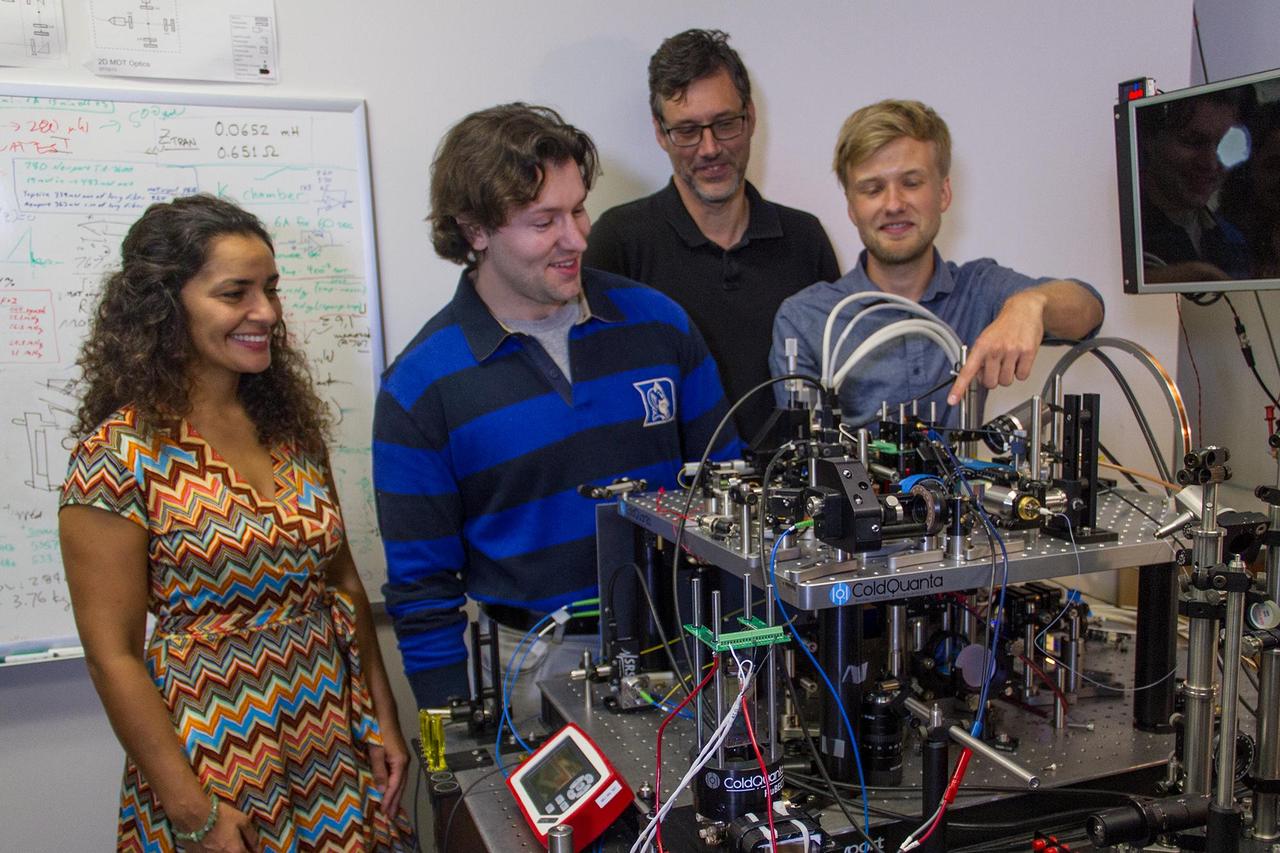
Members of the Cold Atom Laboratory team at NASA Jet Propulsion Laboratory are seen here with their ground-based testbed, which can reliably create a Bose-Einstein condensate.
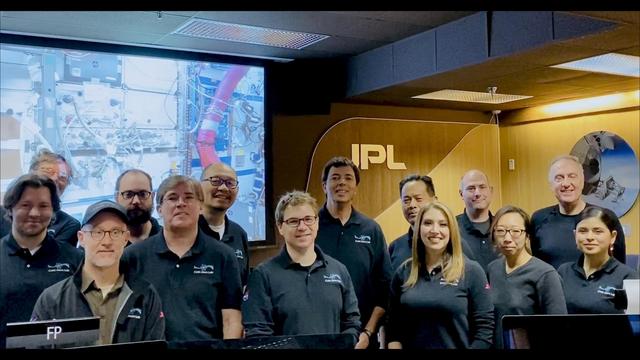
In January 2020, members of the Cold Atom Lab operations team assisted remotely in a hardware upgrade to Cold Atom Lab while the facility was still aboard the International Space Station. https://photojournal.jpl.nasa.gov/catalog/PIA23861

Astronaut Christina Koch assists with a hardware upgrade for NASA's Cold Atom Lab aboard the International Space Station in January 2020. https://photojournal.jpl.nasa.gov/catalog/PIA23862
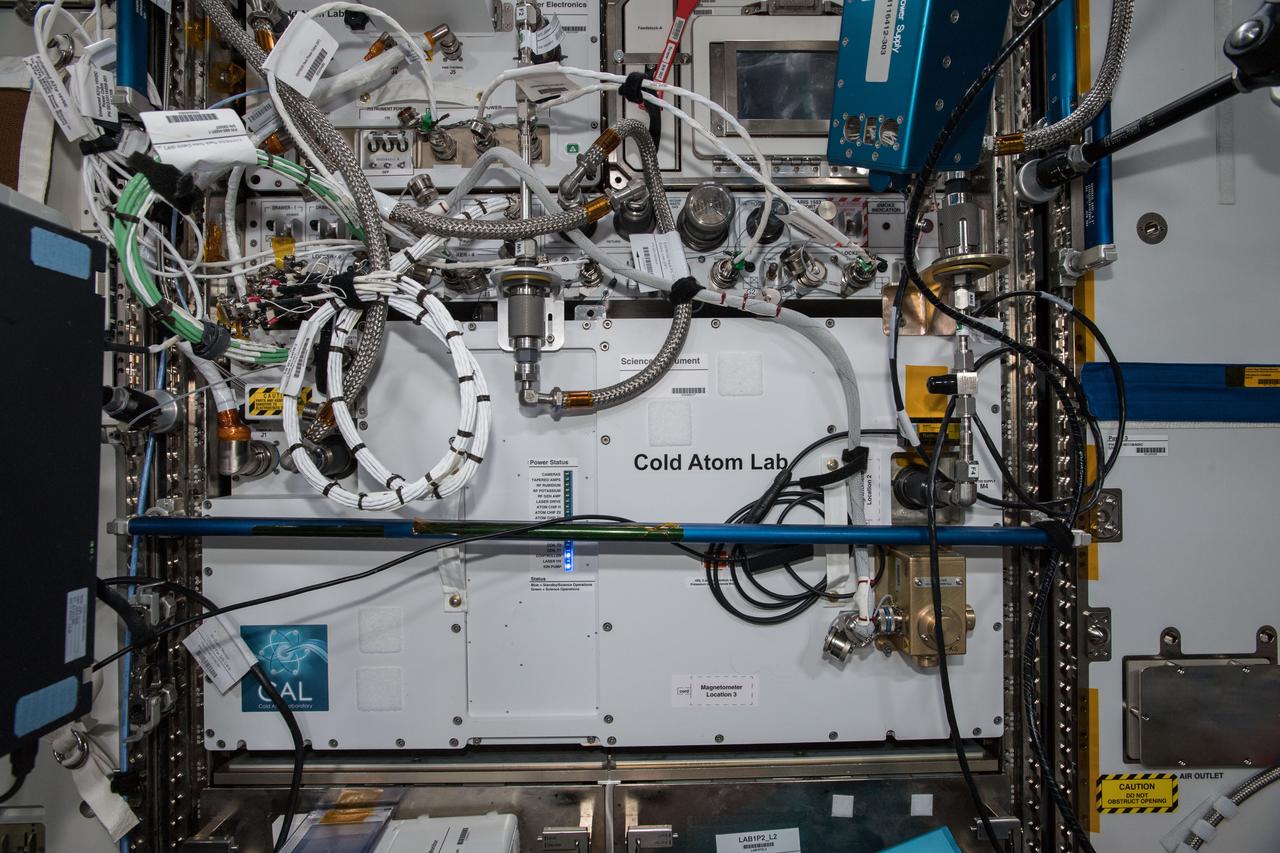
iss057e106407 (11/20/2018) -- A view of the Cold Atom Lab (CAL) in the Destiny module aboard the International Space Station (ISS). The Cold Atom Laboratory (CAL) produces clouds of atoms that are chilled to about one ten billionth of a degree above absolute zero -- much colder than the average temperature of deep space. At these low temperatures, atoms have almost no motion, allowing scientists to study fundamental behaviors and quantum characteristics that are difficult or impossible to probe at higher temperatures

jsc2026e014319 (March 23, 2026) --- Preflight image of the SM-3X module during assembly and testing at NASA’s Jet Propulsion Laboratory in Southern California as part of the Cold Atom Lab (CAL). NASA’s CAL hosts multiple experiments that explore the fundamental nature of atoms by cooling them down to nearly absolute zero (the coldest temperature matter can reach). Science Module 3X increases the number of atoms produced for each experiment and allows scientists to gather more data and further expand the Cold Atom Lab’s research capabilities. Credit: NASA/JPL-Caltech.