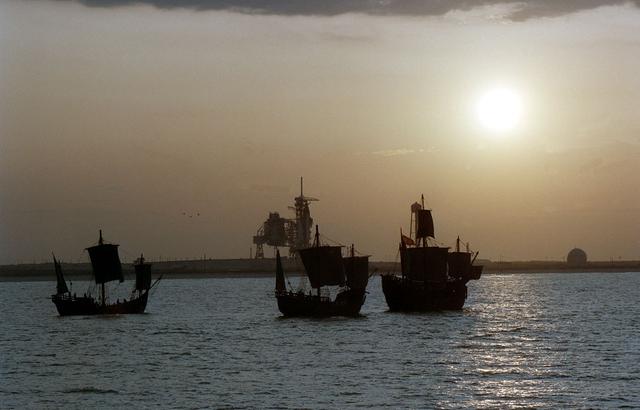
On the 500th arniversary of Christopher Columbus' discovery of the New World, replicas of his three ships sailed past the launch pad at the Kennedy Space Center (KSC) while the space shuttle Columbia sat poised for lift off.
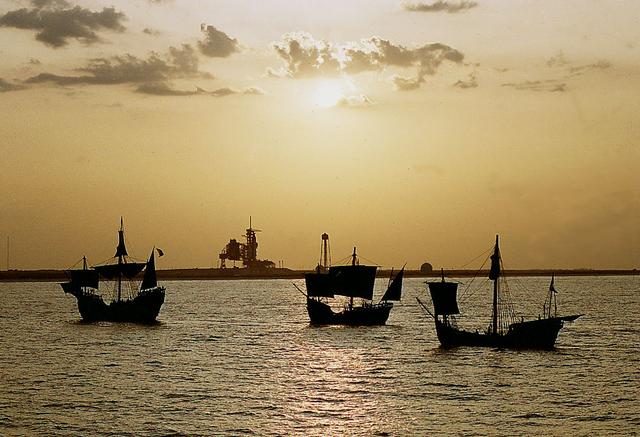
On the 500th arniversary of Christopher Columbus' discovery of the New World, replicas of his three ships sailed past the launch pad at the Kennedy Space Center (KSC) while the space shuttle Columbia sat poised for lift off.
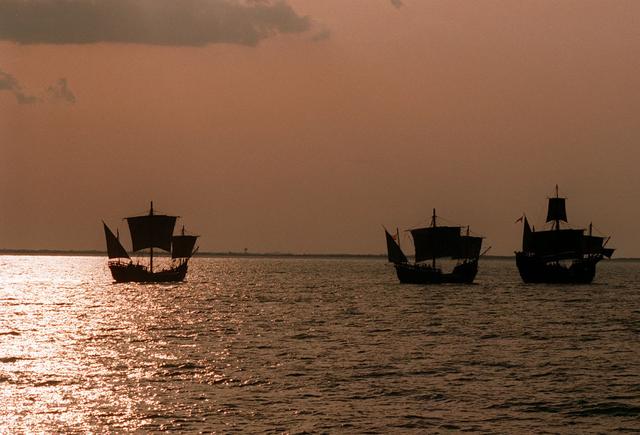
On the 500th arniversary of Christopher Columbus' discovery of the New World, replicas of his three ships sailed past the launch pad at the Kennedy Space Center (KSC) while the space shuttle Columbia sat poised for lift off.
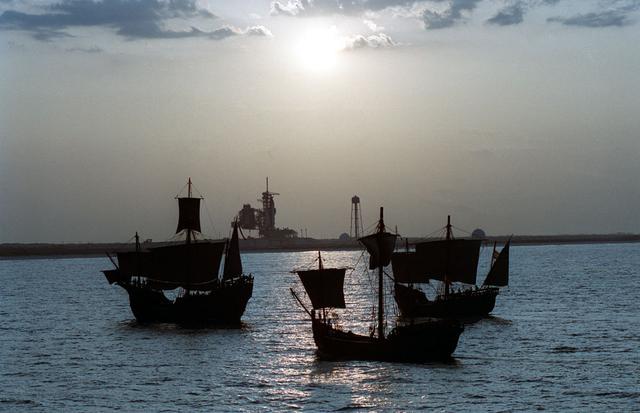
On the 500th arniversary of Christopher Columbus' discovery of the New World, replicas of his three ships sailed past the launch pad at the Kennedy Space Center (KSC) while the space shuttle Columbia sat poised for lift off.
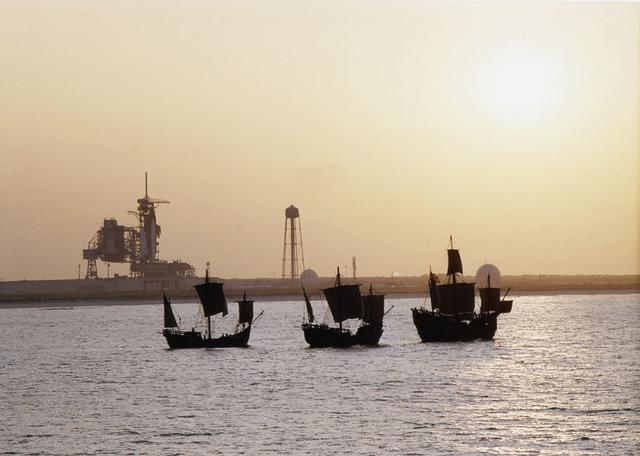
On the 500th arniversary of Christopher Columbus' discovery of the New World, replicas of his three ships sailed past the launch pad at the Kennedy Space Center (KSC) while the space shuttle Columbia sat poised for lift off.
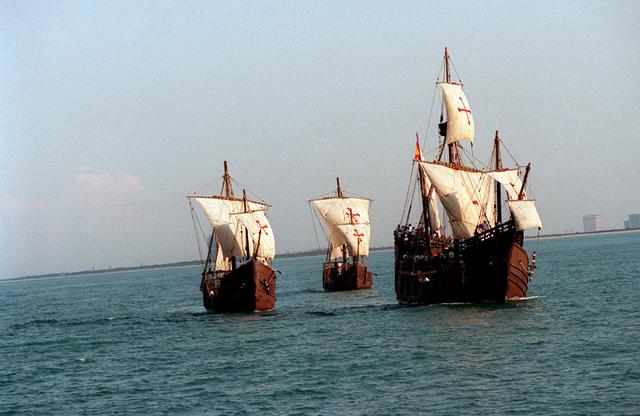
On the 500th arniversary of Christopher Columbus' discovery of the New World, replicas of his three ships sailed past the launch pad at the Kennedy Space Center (KSC) while the space shuttle Columbia sat poised for lift off.
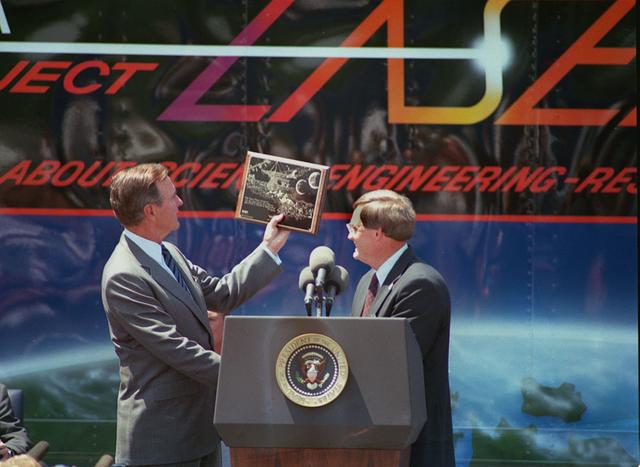
President George Bush receives a placque commemorating the quincentenary of Columbus' voyage to the new world and exploration from Marshall's sixth Center Director Thomas J. Lee (1989-1994) during an address to Marshall employees. The three replicas of Columbus' ships, the Nina, the Pinta, and the Santa Maria sailed by the launch pad at Kennedy Space Center while STS-52 Columbia awaited launch on the anniversary of Columbus' arrival in the New World.
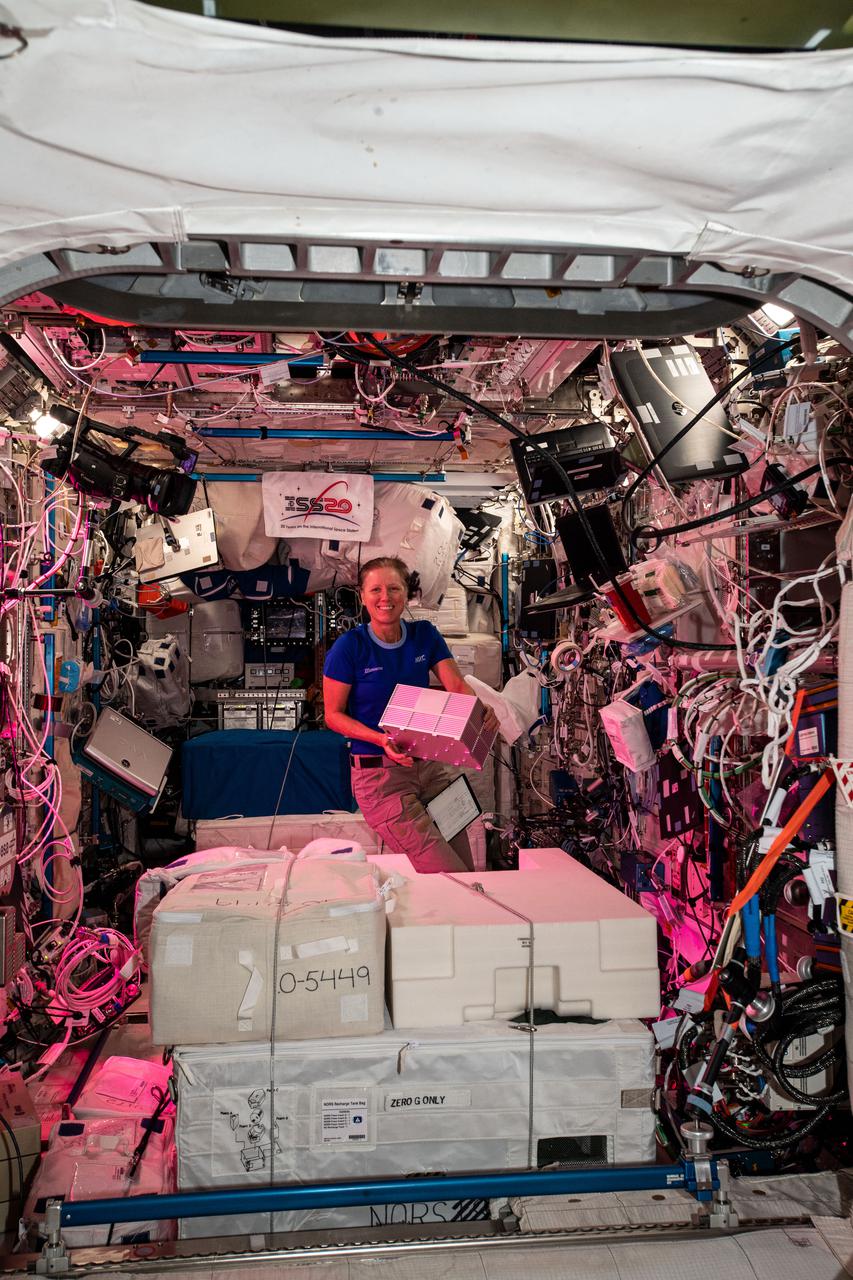
iss064e021978 (Jan. 10, 2021) --- Flight Engineer Shannon Walker of NASA is pictured inside Europe's Columbus laboratory module packing research cargo before loading it inside the SpaceX Cargo Dragon resupply ship ahead of its undocking and departure from the International Space Station on Jan. 12.
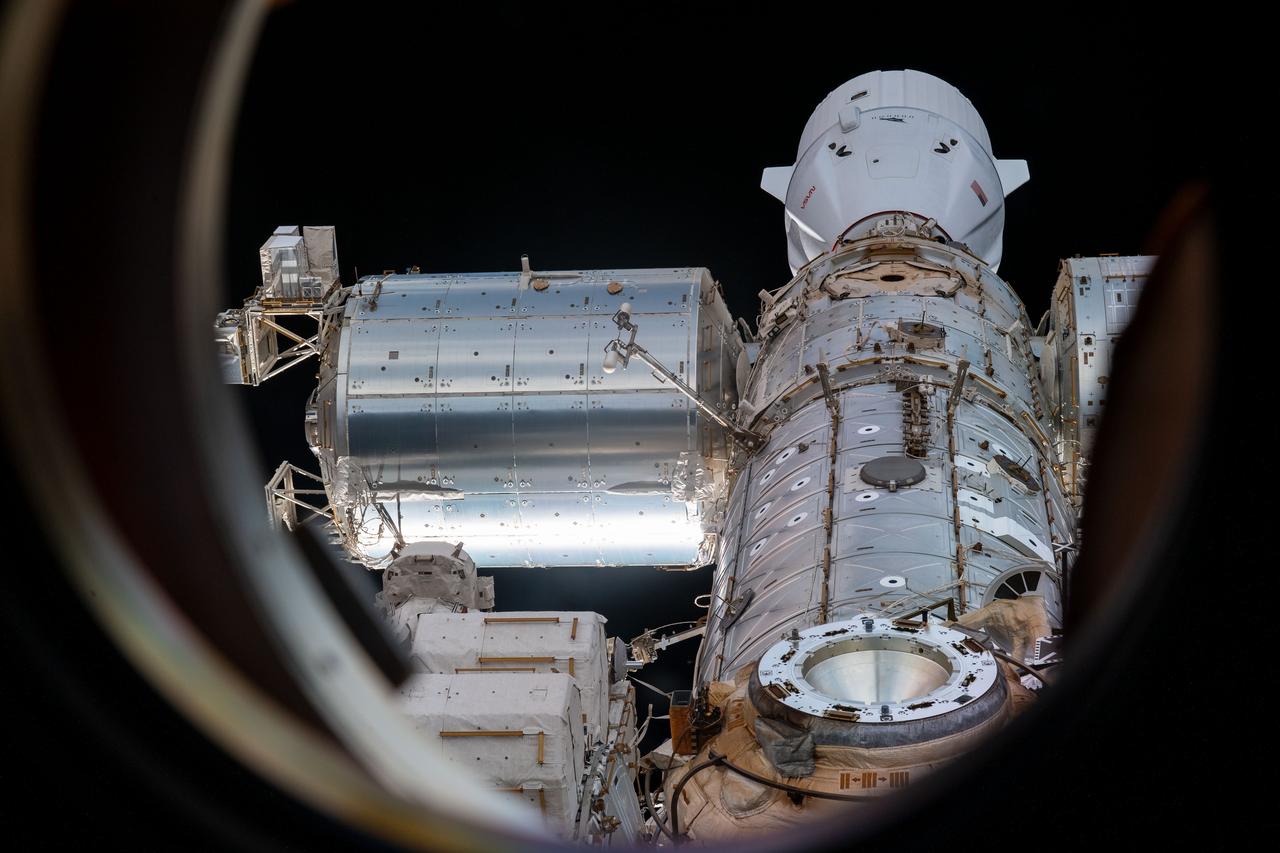
iss067e214074 (Aug. 2, 2022) --- This view of the International Space Station from a window on the orbiting lab's Russian segment shows portions of the Rassvet module's docking port, the U.S. Destiny laboratory module, the Harmony module, Columbus laboratory module, and the Kibo laboratory module. Docked to Harmony at top, is the SpaceX Dragon resupply ship.

iss062e087414 (March 9, 2020) --- The SpaceX Dragon resupply ship is pictured attached to the Earth-facing port on the International Space Station's Harmony module. In the right foreground is the European Space Agency's (ESA) Columbus laboratory module which is attached to the Harmony module's starboard port.
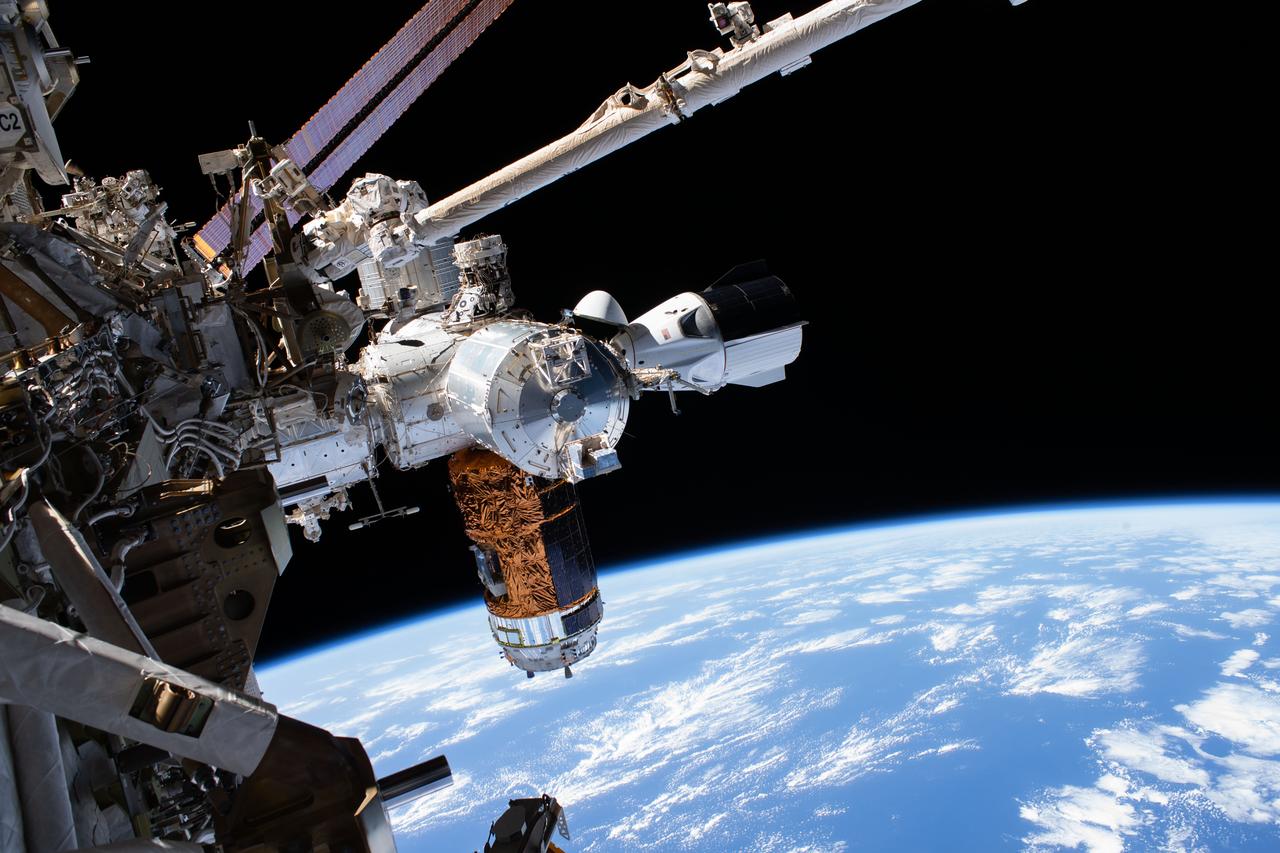
iss063e034054 (July 1, 2020) --- The SpaceX Crew Dragon, the Japanese H-II Transfer Vehicle-9 resupply ship and Europe's Columbus laboratory module figure prominently in this photograph taken during a spacewalk with astronauts Bob Behnken and Chris Cassidy. All three are attached to the U.S. Harmony module with the International Docking Adapter on top.
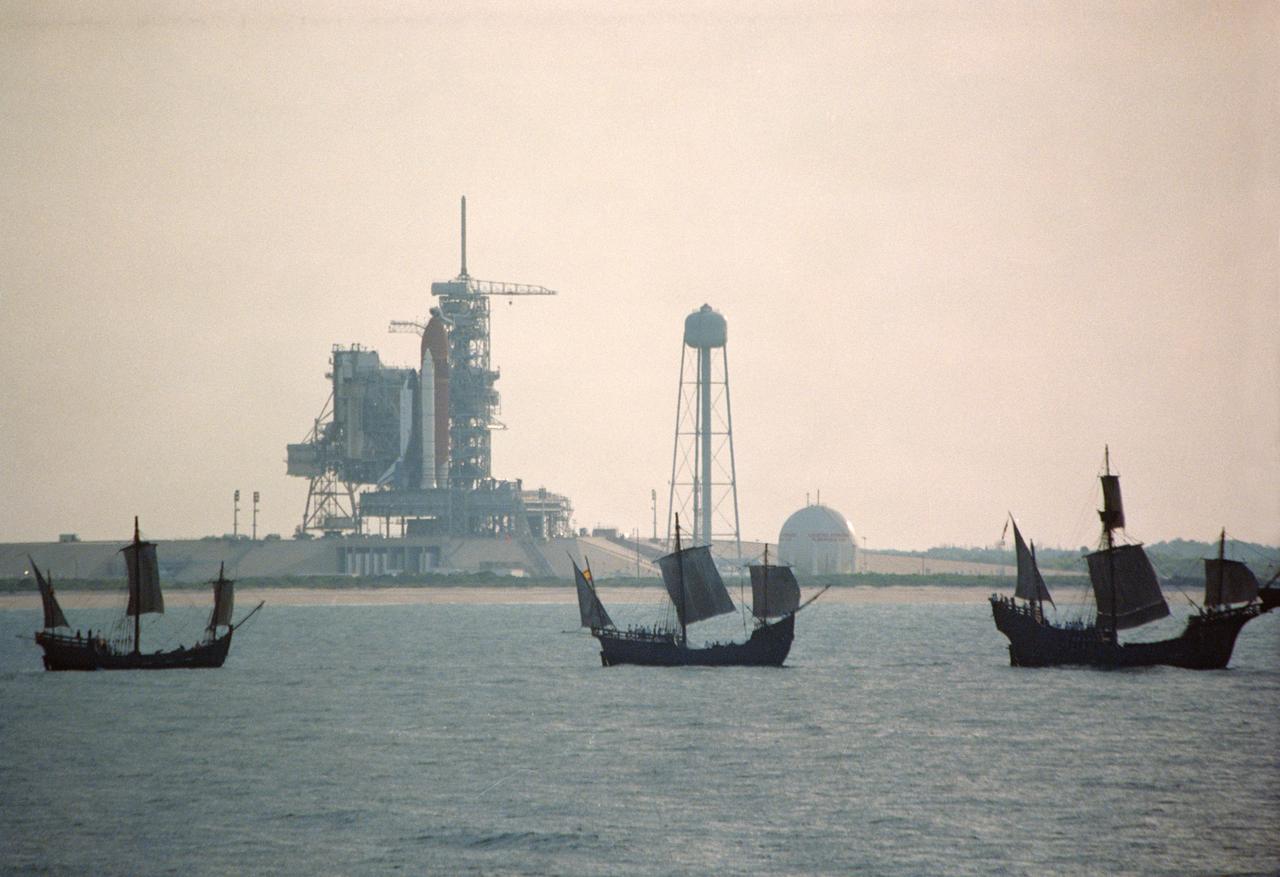
S92-39074 (6 May 1992) --- The centuries-old technology that built Christopher Columbus' three sailing ships passes within a half mile of the 20th-Century Space Shuttle Endeavour, in background, awaiting liftoff on Launch Pad 39B. The replicas of the Santa Maria, Nina, and Pinta wind-powered ships, managed by the Spain '92 Foundation, are on a tour to ports around the Gulf of Mexico and up the Atlantic Coast of the United States. Endeavour is set to lift off on its maiden voyage, STS-49, on May 7, 1992. Video footage of the two types of exploration vessels will be used by NASA for a variety of productions, including the annual Von Braun Exploration forum sponsored by NASA's Marshall Space Flight Center (MSFC), Huntsville, Alabama, in October, 1992. This year's theme is Exploration and the Evolution of Nations. 1992 is the 500th anniversary of Columbus' voyage to the New World.

The Bartolomeo platform that will be carried to the International Space Station aboard SpaceX’s 20th Commercial Resupply Services (CRS-20) mission for NASA is inside its shipping container in the Space Station Processing Facility high bay at the agency’s Kennedy Space Center in Florida on Jan. 30, 2020. Bartolomeo was manufactured by Airbus Defence and Space. The platform will attach to the exterior of the space station’s European Columbus Module. Named for the younger brother of Christopher Columbus, the platform has the capability to host external payloads in low-Earth orbit on the station. CRS-20 is scheduled to launch aboard SpaceX’s Dragon cargo spacecraft atop the company’s Falcon 9 rocket in March 2020.
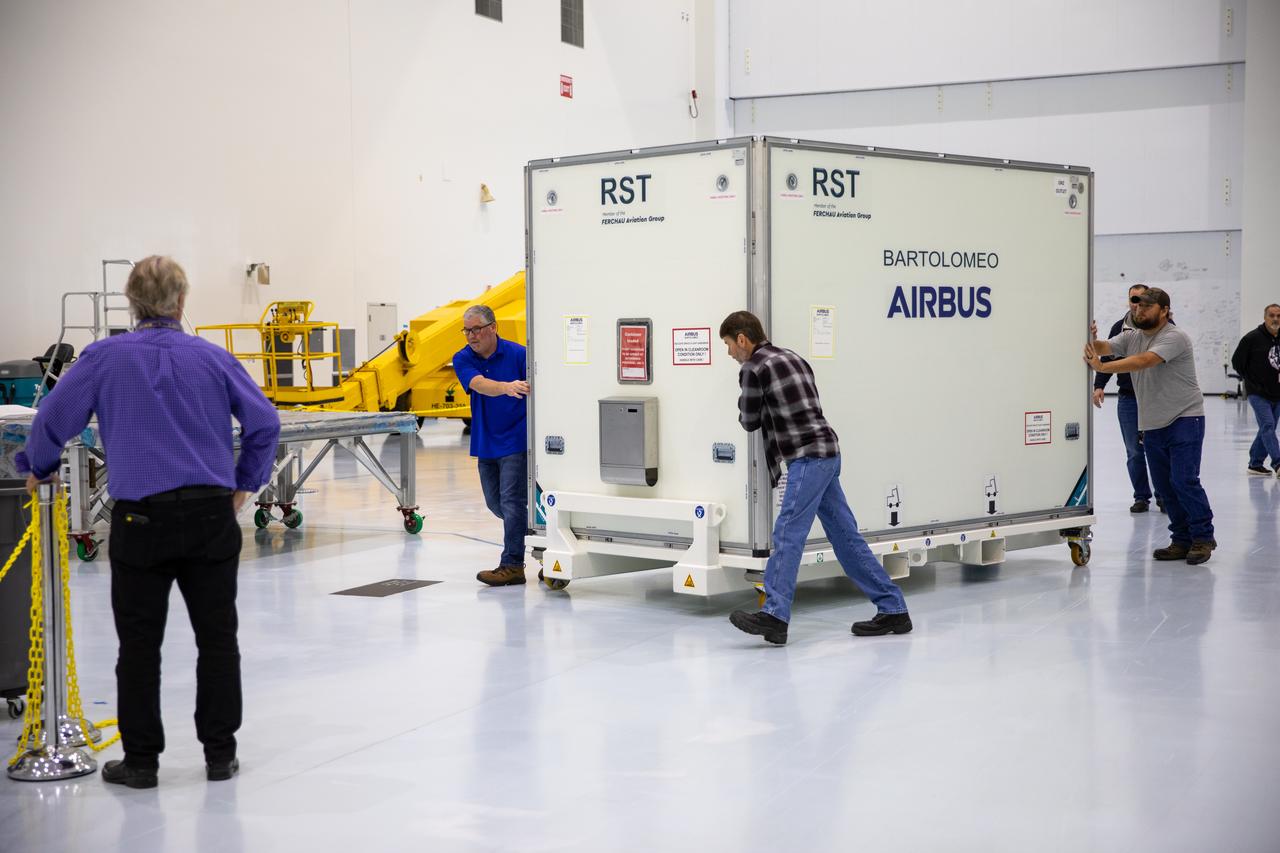
The Bartolomeo platform that will be carried to the International Space Station aboard SpaceX’s 20th Commercial Resupply Services (CRS-20) mission for NASA is moved in its shipping container inside the Space Station Processing Facility high bay at the agency’s Kennedy Space Center in Florida on Jan. 30, 2020. Bartolomeo was manufactured by Airbus Defence and Space. The platform will attach to the exterior of the space station’s European Columbus Module. Named for the younger brother of Christopher Columbus, the platform has the capability to host external payloads in low-Earth orbit on the station. CRS-20 is scheduled to launch aboard SpaceX’s Dragon cargo spacecraft atop the company’s Falcon 9 rocket in March 2020.
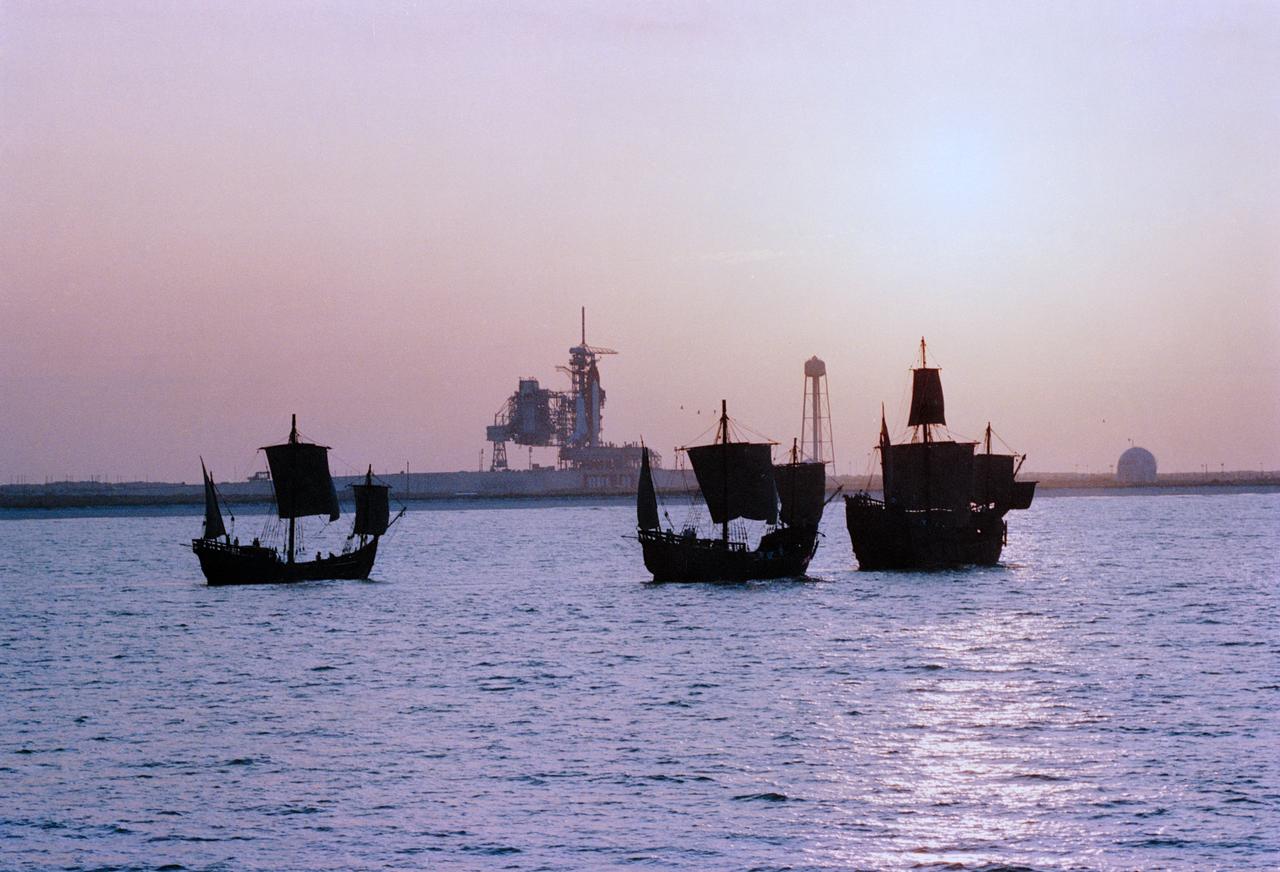
Replicas of Christopher Columbus' sailing ships Santa Maria, Nina, and Pinta sail by Endeavour, Orbiter Vehicle (OV) 105, on Kennedy Space Center (KSC) Launch Complex (LC) Pad 39B awaiting liftoff on its maiden voyage, STS-49. This view was taken from the water showing the three ships silhouetted in the foreground with OV-105 on mobile launcher platform profiled against fixed service structure (FSS) tower and rectracted rotating service structure (RSS) in the background. Next to the launch pad (at right) are the sound suppression water system tower and the liquid hydrogen (LH2) storage tank. View provided by KSC with alternate number KSC-92PC-970.
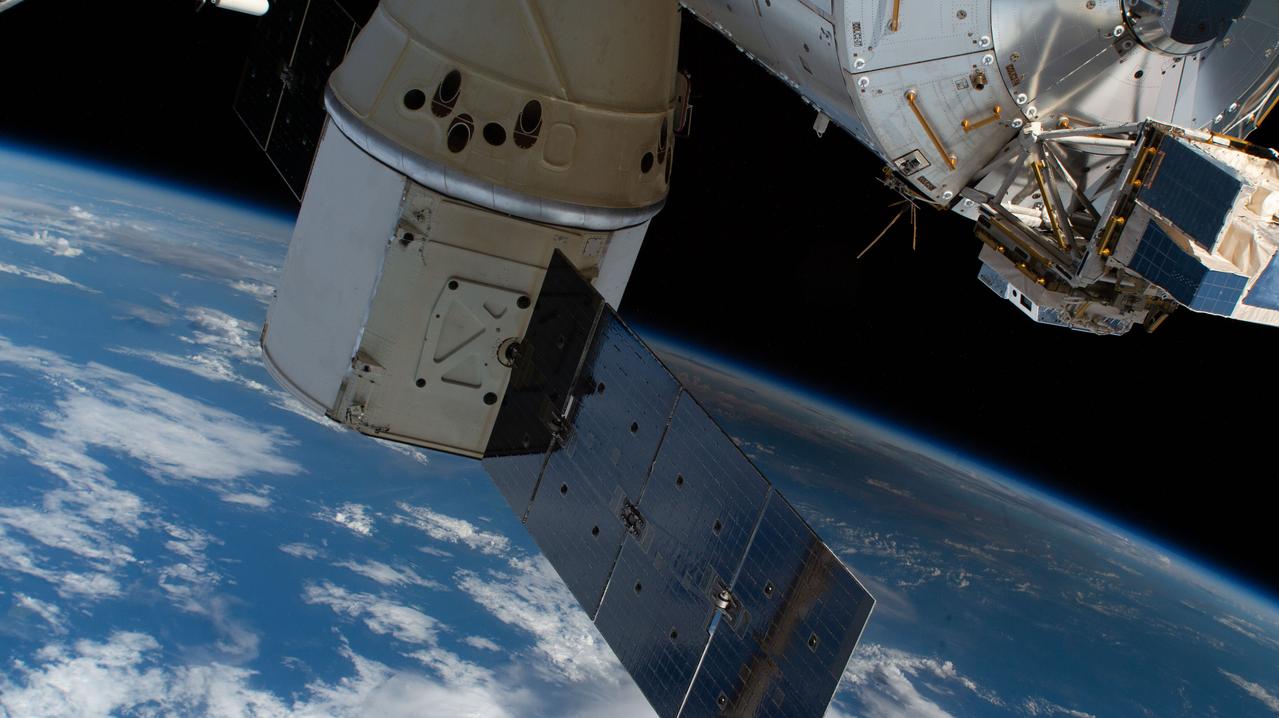
iss061e100234 (Dec. 26, 2019) --- The shadow of the Moon is cast over portions of Malaysia and the Philippines during today's solar eclipse. The International Space Station was orbiting 259 miles above the South China Sea at the time this photograph was taken. In the foreground is the SpaceX Dragon resupply ship and part of the ESA (European Space Agency) Columbus laboratory module.

iss063e034096 (July 1, 2020) --- The SpaceX Crew Dragon (center right), the Japanese H-II Transfer Vehicle-9 resupply ship (center bottom) and Europe's Columbus laboratory module figure prominently in this photograph taken during a spacewalk conducted by astronauts Bob Behnken and Chris Cassidy. All three are attached to the U.S. Harmony module with the International Docking Adapter on top.
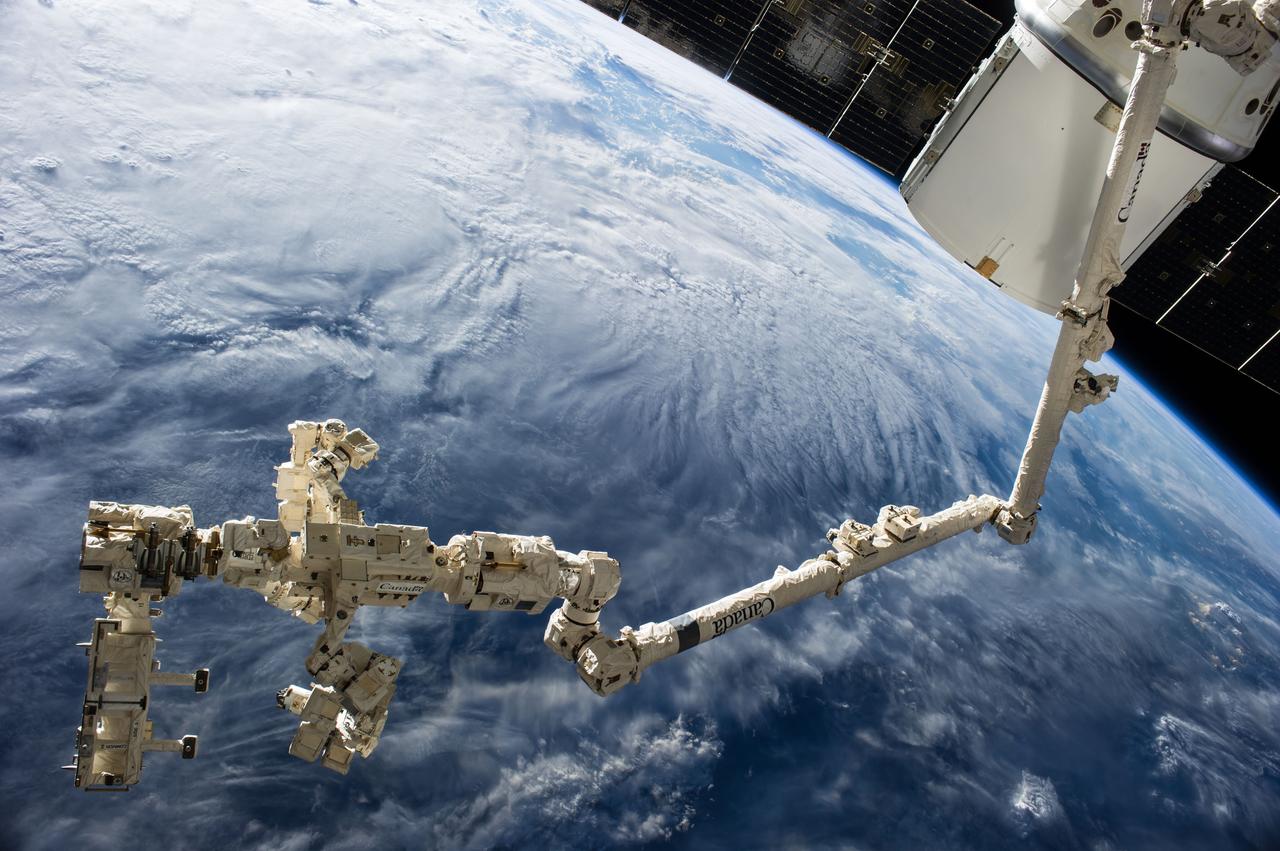
ISS041-E-049099 (30 Sept. 2014) --- The International Space Station?s Canadarm2 and Dextre, also known as the Special Purpose Dextrous Manipulator (SPDM), carry the Rapidscat instrument assembly after removing it from the trunk of the SpaceX Dragon cargo ship (upper right), which is currently docked to the nadir port of the Harmony node. The Rapidscat was then maneuvered for attachment to the nadir adapter that is affixed to the station?s Columbus laboratory.
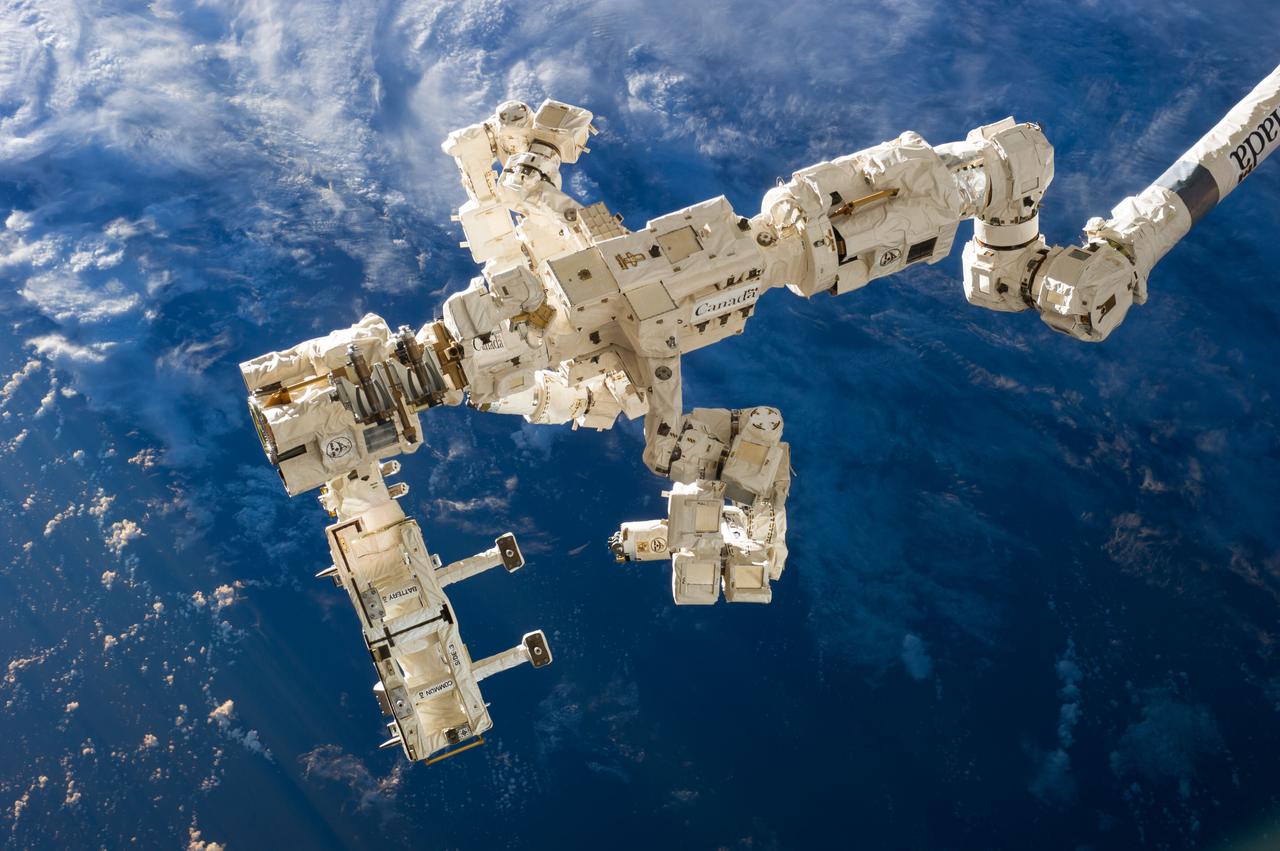
ISS041-E-049091 (30 Sept. 2014) --- The International Space Station?s Canadarm2 and Dextre, also known as the Special Purpose Dextrous Manipulator (SPDM), carry the Rapidscat instrument assembly after removing it from the trunk of the SpaceX Dragon cargo ship, which is currently docked to the nadir port of the Harmony node. The Rapidscat was then maneuvered for attachment to the nadir adapter that is affixed to the station?s Columbus laboratory.
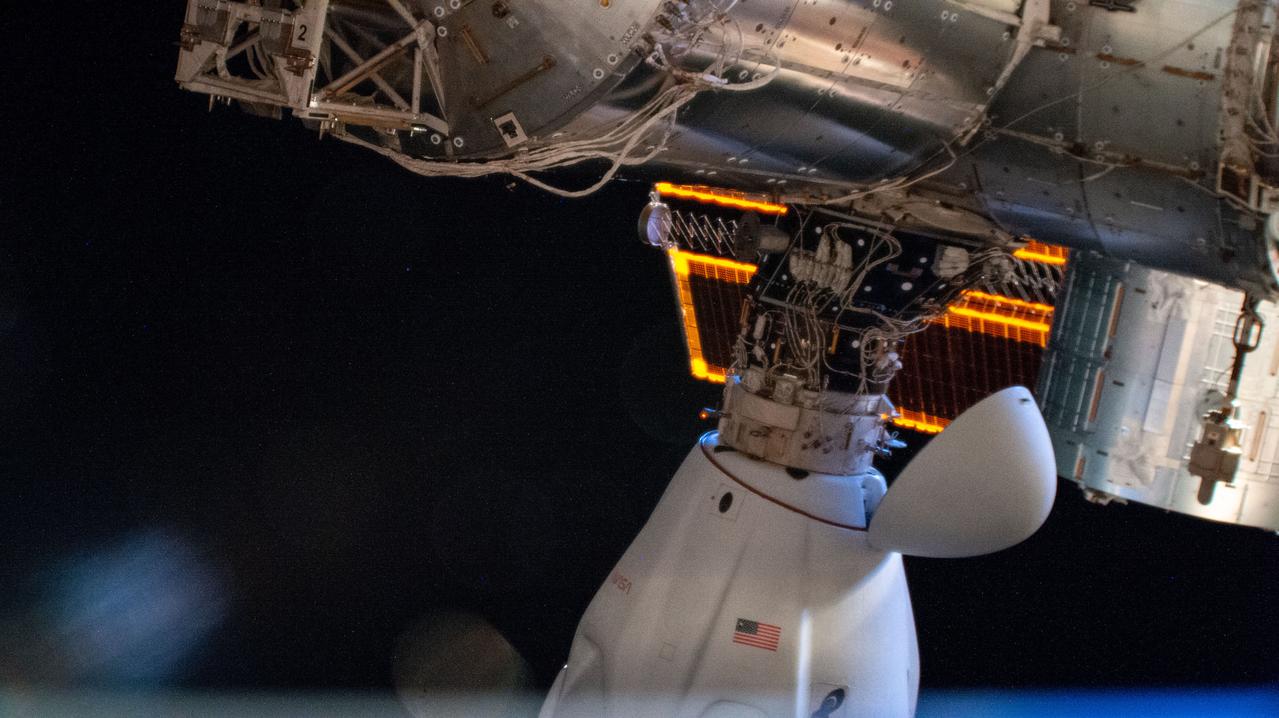
iss067e059474 (May 17, 2022) --- The forward end of the SpaceX Dragon Freedom crew ship, with its nosecone open, is pictured docked to the Harmony module's space-facing port on the International Space Station. Harmony also connects three laboratory modules, including the Columbus lab from ESA (European Space Agency), the Kibo lab from the Japan Aerospace Exploration Agency (JAXA), and the Destiny lab from NASA.

S129-E-007227 (21 Nov. 2009) --- Astronaut Randy Bresnik (near the Columbus laboratory), STS-129 mission specialist, participates in the mission's second session of extravehicular activity (EVA) as construction and maintenance continue on the International Space Station. During the six-hour, eight-minute spacewalk, Bresnik and astronaut Mike Foreman (out of frame), mission specialist, installed a Grappling Adaptor to On-Orbit Railing Assembly, or GATOR, on the Columbus laboratory. GATOR contains a ship-tracking antenna system and a HAM radio antenna. They relocated a floating potential measurement unit that gauges electric charges that build up on the station, deployed a Payload Attach System on the space-facing side of the Starboard 3 truss segment and installed a wireless video system that allows spacewalkers to transmit video to the station and relay it to Earth.

Airbus workers inspect the Bartolomeo platform after it was unpacked from its shipping container in the Space Station Processing Facility high bay at NASA’s Kennedy Space Center in Florida on Jan. 30, 2020. Bartolomeo was manufactured by Airbus Defence and Space. The platform will be delivered to the International Space Station aboard SpaceX’s 20th Commercial Resupply Services (CRS-20) mission for the agency. The platform will attach to the exterior of the space station’s European Columbus Module. Named for the younger brother of Christopher Columbus, the platform has the capability to host external payloads in low-Earth orbit on the station. CRS-20 is scheduled to launch aboard SpaceX’s Dragon cargo spacecraft atop the company’s Falcon 9 rocket in March 2020.
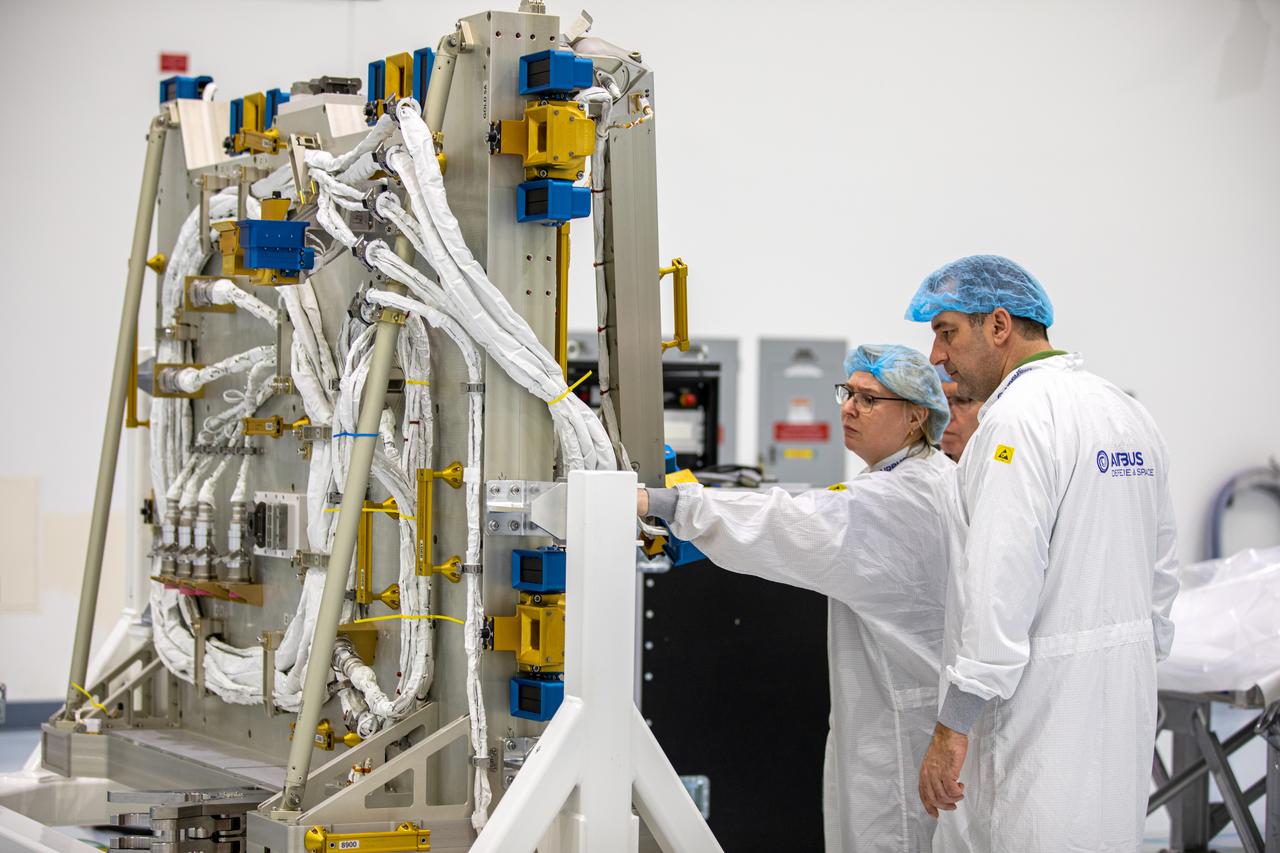
Airbus workers inspect the Bartolomeo platform after it was unpacked from its shipping container in the Space Station Processing Facility high bay at NASA’s Kennedy Space Center in Florida on Jan. 30, 2020. Bartolomeo was manufactured by Airbus Defence and Space. The platform will be delivered to the International Space Station aboard SpaceX’s 20th Commercial Resupply Services (CRS-20) mission for the agency. The platform will attach to the exterior of the space station’s European Columbus Module. Named for the younger brother of Christopher Columbus, the platform has the capability to host external payloads in low-Earth orbit on the station. CRS-20 is scheduled to launch aboard SpaceX’s Dragon cargo spacecraft atop the company’s Falcon 9 rocket in March 2020.
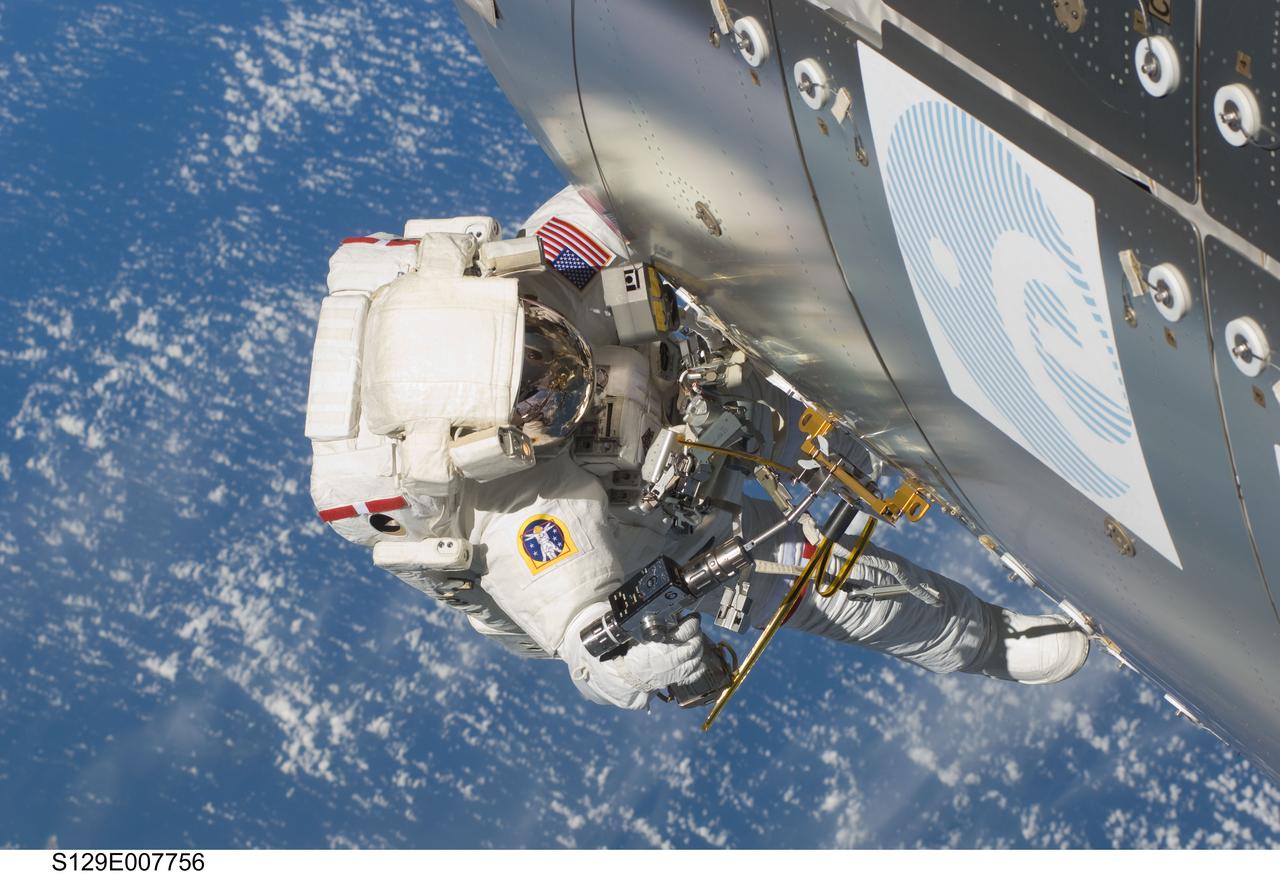
S129-E-007756 (21 Nov. 2009) --- Astronaut Randy Bresnik (near the Columbus laboratory), STS-129 mission specialist, participates in the mission's second session of extravehicular activity (EVA) as construction and maintenance continue on the International Space Station. During the six-hour, eight-minute spacewalk, Bresnik and astronaut Mike Foreman (out of frame), mission specialist, installed a Grappling Adaptor to On-Orbit Railing Assembly, or GATOR, on the Columbus laboratory. GATOR contains a ship-tracking antenna system and a HAM radio antenna. They relocated a floating potential measurement unit that gauges electric charges that build up on the station, deployed a Payload Attach System on the space-facing side of the Starboard 3 truss segment and installed a wireless video system that allows spacewalkers to transmit video to the station and relay it to Earth.
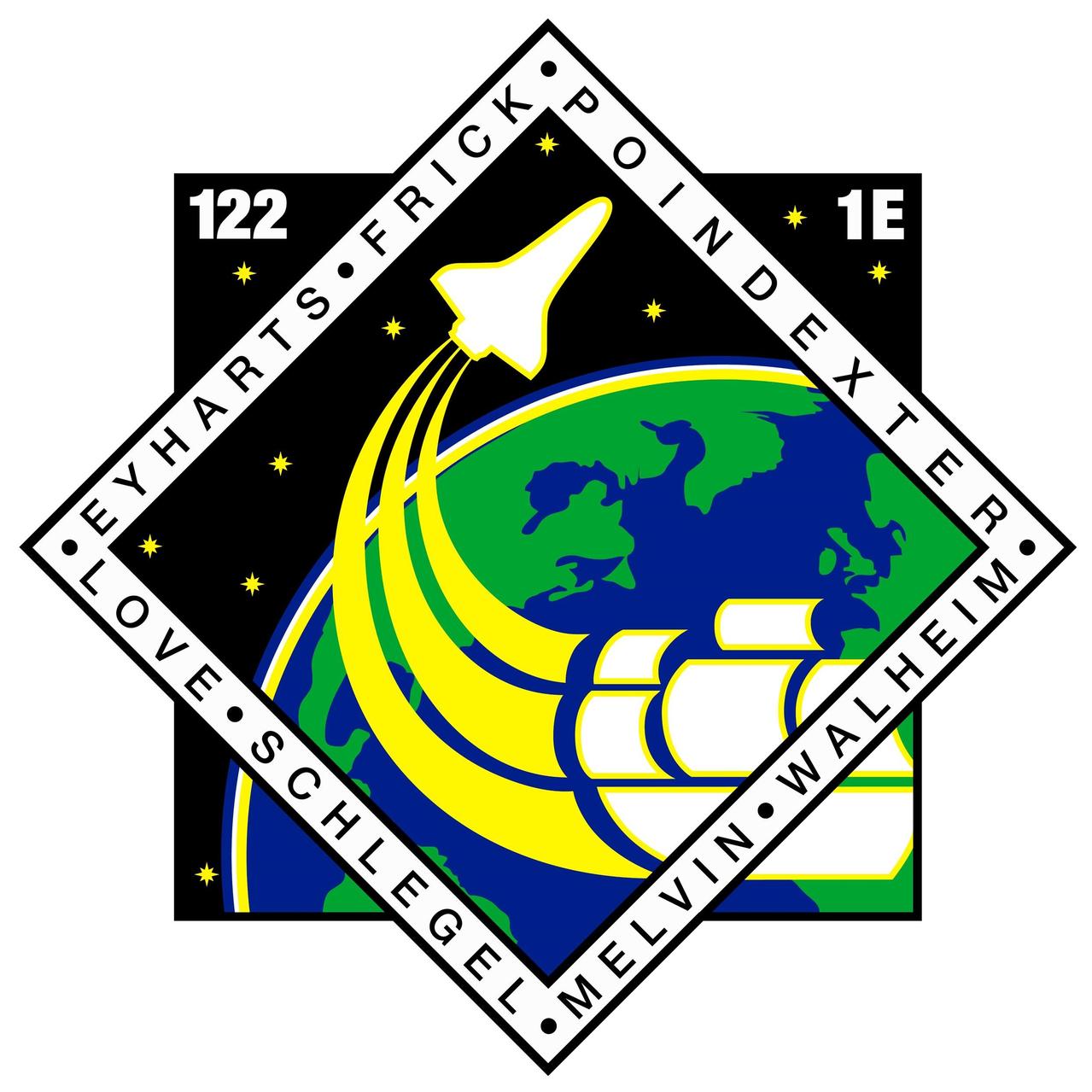
JOHNSON SPACE CENTER, Houston -- STS122-S-001A -- The STS-122 patch depicts the continuation of the voyages of the early explorers to today's frontier, space. The ship denotes the travels of the early expeditions from the east to the west. The space shuttle shows the continuation of that journey along the orbital path from west to east. A little more than 500 years after Columbus sailed to the new world, the STS-122 crew will bring the European laboratory module "Columbus" to the International Space Station to usher in a new era of scientific discovery. The NASA insignia design for space shuttle flights is reserved for use by the astronauts and for other official use as the NASA Administrator may authorize. Public availability has been approved only in the form of illustrations by the various news media. When and if there is any change in this policy, it will be publicly announced.

STS122-S-001A (April 2007) --- The STS-122 patch depicts the continuation of the voyages of the early explorers to today's frontier, space. The ship denotes the travels of the early expeditions from the east to the west. The space shuttle shows the continuation of that journey along the orbital path from west to east. A little more than 500 years after Columbus sailed to the new world, the STS-122 crew will bring the European laboratory module "Columbus" to the International Space Station to usher in a new era of scientific discovery. The NASA insignia design for space shuttle flights is reserved for use by the astronauts and for other official use as the NASA Administrator may authorize. Public availability has been approved only in the forms of illustrations by the various news media. When and if there is any change in this policy, which is not anticipated, the change will be publicly announced. Photo credit: NASA
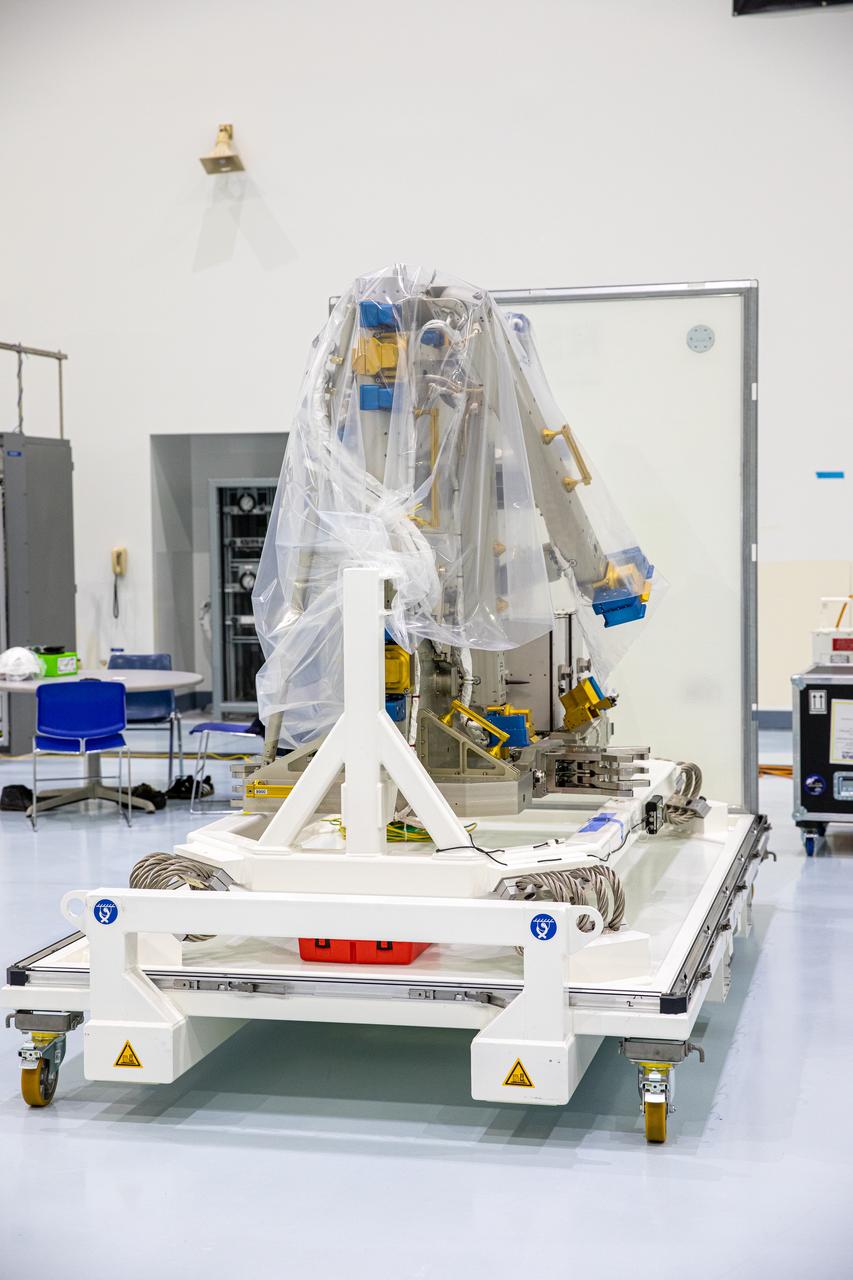
The Bartolomeo platform that will be delivered to the International Space Station is unpacked from its shipping container inside the Space Station Processing Facility high bay at NASA’s Kennedy Space Center in Florida on Jan. 30, 2020. Bartolomeo was manufactured by Airbus Defence and Space. The platform will be delivered to the International Space Station aboard SpaceX’s 20th Commercial Resupply Services (CRS-20) mission for the agency. The platform will attach to the exterior of the space station’s European Columbus Module. Named for the younger brother of Christopher Columbus, the platform has the capability to host external payloads in low-Earth orbit on the station. CRS-20 is scheduled to launch aboard SpaceX’s Dragon cargo spacecraft atop the company’s Falcon 9 rocket in March 2020.
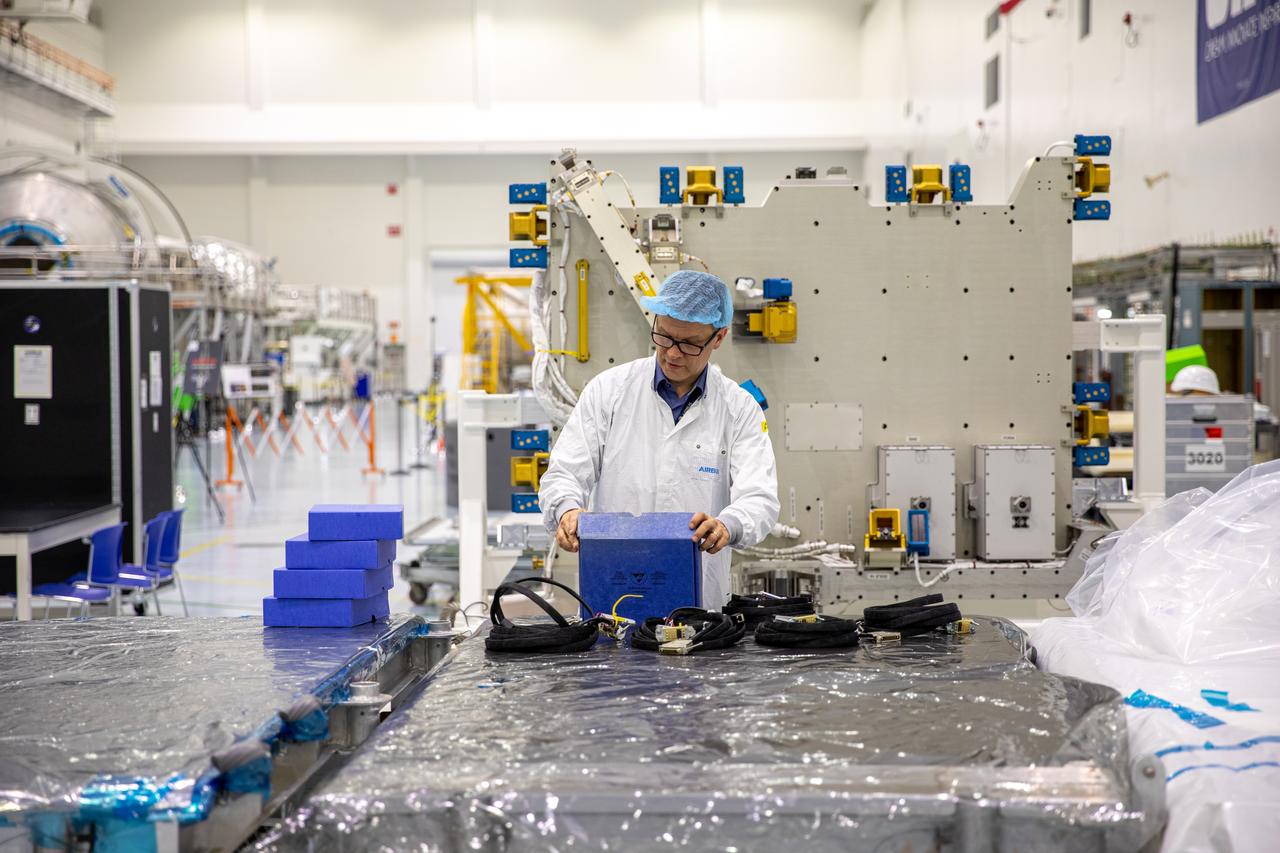
Airbus workers inspects parts for the Bartolomeo platform after it was unpacked from its shipping container in the Space Station Processing Facility high bay at NASA’s Kennedy Space Center in Florida on Jan. 30, 2020. Bartolomeo was manufactured by Airbus Defence and Space. The platform will be delivered to the International Space Station aboard SpaceX’s 20th Commercial Resupply Services (CRS-20) mission for the agency. The platform will attach to the exterior of the space station’s European Columbus Module. Named for the younger brother of Christopher Columbus, the platform has the capability to host external payloads in low-Earth orbit on the station. CRS-20 is scheduled to launch aboard SpaceX’s Dragon cargo spacecraft atop the company’s Falcon 9 rocket in March 2020.

KENNEDY SPACE CENTER, FLA. - In the Space Station Processing Facility, workers guide one of the hatches from the Node-2 module onto a shipping container. The hatches are being removed in preparation for shipment to the Marshall Space Flight Center, Ala., for re-balance certification. The Node-2 will launch on mission 10A, STS-120, to the International Space Station (ISS) currently scheduled for Fall 2006. The installation of the Node-2 on the ISS will signify the completion of the U.S. stage of assembly and increase the living and working space inside the Station to approximately 18,000 cubic feet. Under contract to the Italian Space Agency (ASI), Alenia Spazio in Turin, Italy, led a consortium of European subcontractors to build Node-2. The module was built for NASA under an agreement with the European Space Agency (ESA) in exchange for launch of the European Columbus Laboratory.

KENNEDY SPACE CENTER, FLA. - In the Space Station Processing Facility, workers finish packing one of the hatches from the Node-2 module inside a shipping container. The hatches are being removed in preparation for shipment to the Marshall Space Flight Center, Ala., for re-balance certification. The Node-2 will launch on mission 10A, STS-120, to the International Space Station (ISS) currently scheduled for Fall 2006. The installation of the Node-2 on the ISS will signify the completion of the U.S. stage of assembly and increase the living and working space inside the Station to approximately 18,000 cubic feet. Under contract to the Italian Space Agency (ASI), Alenia Spazio in Turin, Italy, led a consortium of European subcontractors to build Node-2. The module was built for NASA under an agreement with the European Space Agency (ESA) in exchange for launch of the European Columbus Laboratory.

KENNEDY SPACE CENTER, FLA. - In the Space Station Processing Facility, workers prepare to move one of the hatches from the Node-2 module to a shipping container. The hatches are being removed in preparation for shipment to the Marshall Space Flight Center, Ala., for re-balance certification. The Node-2 will launch on mission 10A, STS-120, to the International Space Station (ISS) currently scheduled for Fall 2006. The installation of the Node-2 on the ISS will signify the completion of the U.S. stage of assembly and increase the living and working space inside the Station to approximately 18,000 cubic feet. Under contract to the Italian Space Agency (ASI), Alenia Spazio in Turin, Italy, led a consortium of European subcontractors to build Node-2. The module was built for NASA under an agreement with the European Space Agency (ESA) in exchange for launch of the European Columbus Laboratory.
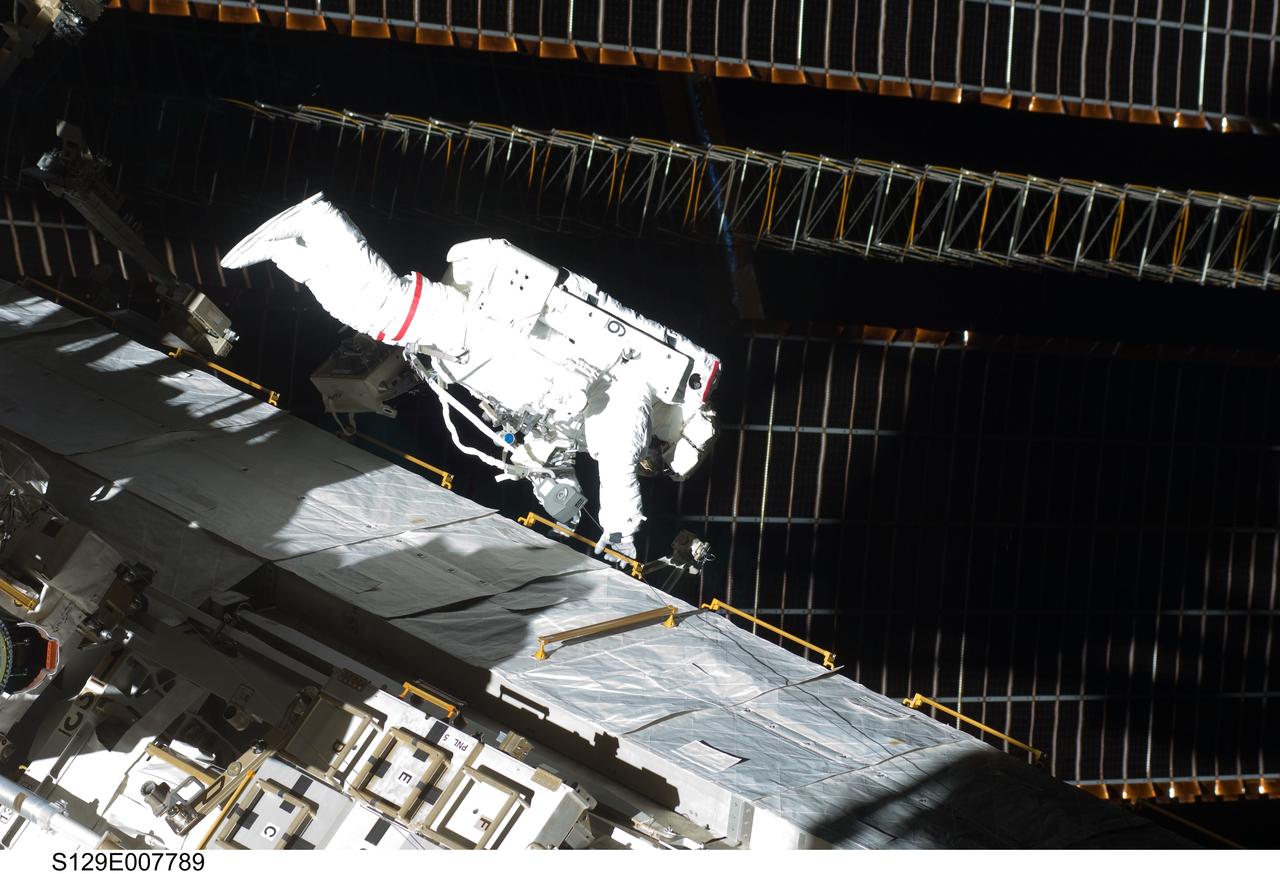
S129-E-007789 (21 Nov. 2009) --- Astronaut Mike Foreman, STS-129 mission specialist, participates in the mission's second session of extravehicular activity (EVA) as construction and maintenance continue on the International Space Station. During the six-hour, eight-minute spacewalk, Foreman and astronaut Randy Bresnik (out of frame), mission specialist, installed a Grappling Adaptor to On-Orbit Railing Assembly, or GATOR, on the Columbus laboratory. GATOR contains a ship-tracking antenna system and a HAM radio antenna. They relocated a floating potential measurement unit that gauges electric charges that build up on the station, deployed a Payload Attach System on the space-facing side of the Starboard 3 truss segment and installed a wireless video system that allows spacewalkers to transmit video to the station and relay it to Earth.
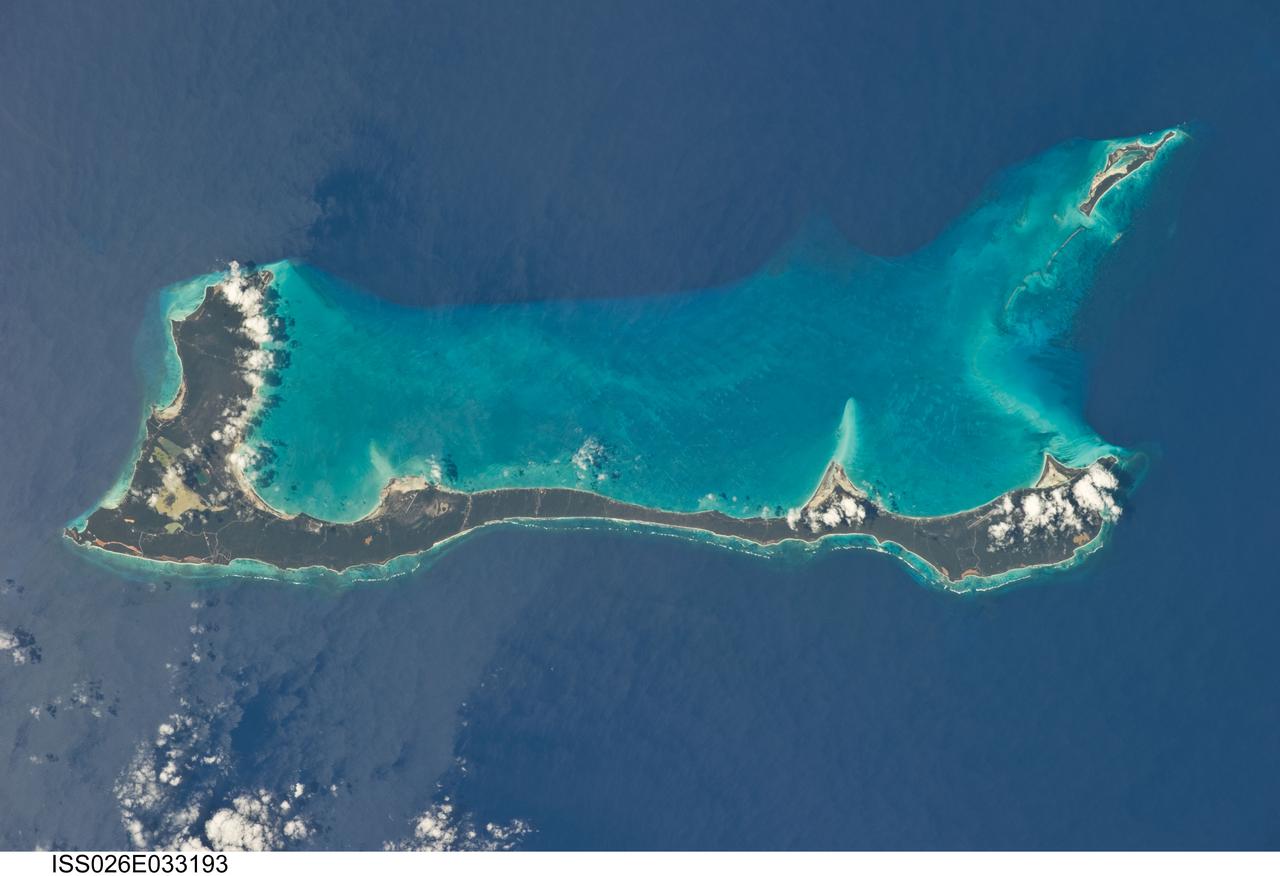
ISS026-E-033193 (10 March 2011) --- Cat Island, Commonwealth of the Bahamas, is featured in this image photographed by an Expedition 26 crew member on the International Space Station. Cat Island is one of 29 islands, 661 cays, and 2,387 islets that form the Commonwealth of the Bahamas. Mount Alvernia, the highest point in the Bahamas at an elevation of approximately 63 meters above sea level, is located on the southeastern part of the island. Like most other islands in the Bahamas, Cat Island is located on a large depositional platform that is composed mainly of carbonate sediments and surrounding reefs. The approximately 77-kilometers-long island is the part of the platform continuously exposed above the water surface; this allows for soil development (brown to tan areas) and establishment of vegetation (green areas) to occur. Shallow water to the west-southwest of the island appears bright blue in this photograph (center) in contrast to the deeper ocean waters to the north, east, and south. The ocean surface near the southeastern half of the island has a slight grey tinge; this is due to sunglint, or light reflecting off of the water surface backs towards the observer onboard the space station. Small white cumulus clouds obscure some parts of the island. Named San Salvador prior to 1925, the island has been put forward as a candidate for Christopher Columbus’ first landfall in the Americas. Cat Island is inhabited, and had a total population of 1,647 in 2000 according to the Department of Statistics of the Bahamas. The smaller island of Little San Salvador to the west is privately owned and used as a port of call for cruise ships.