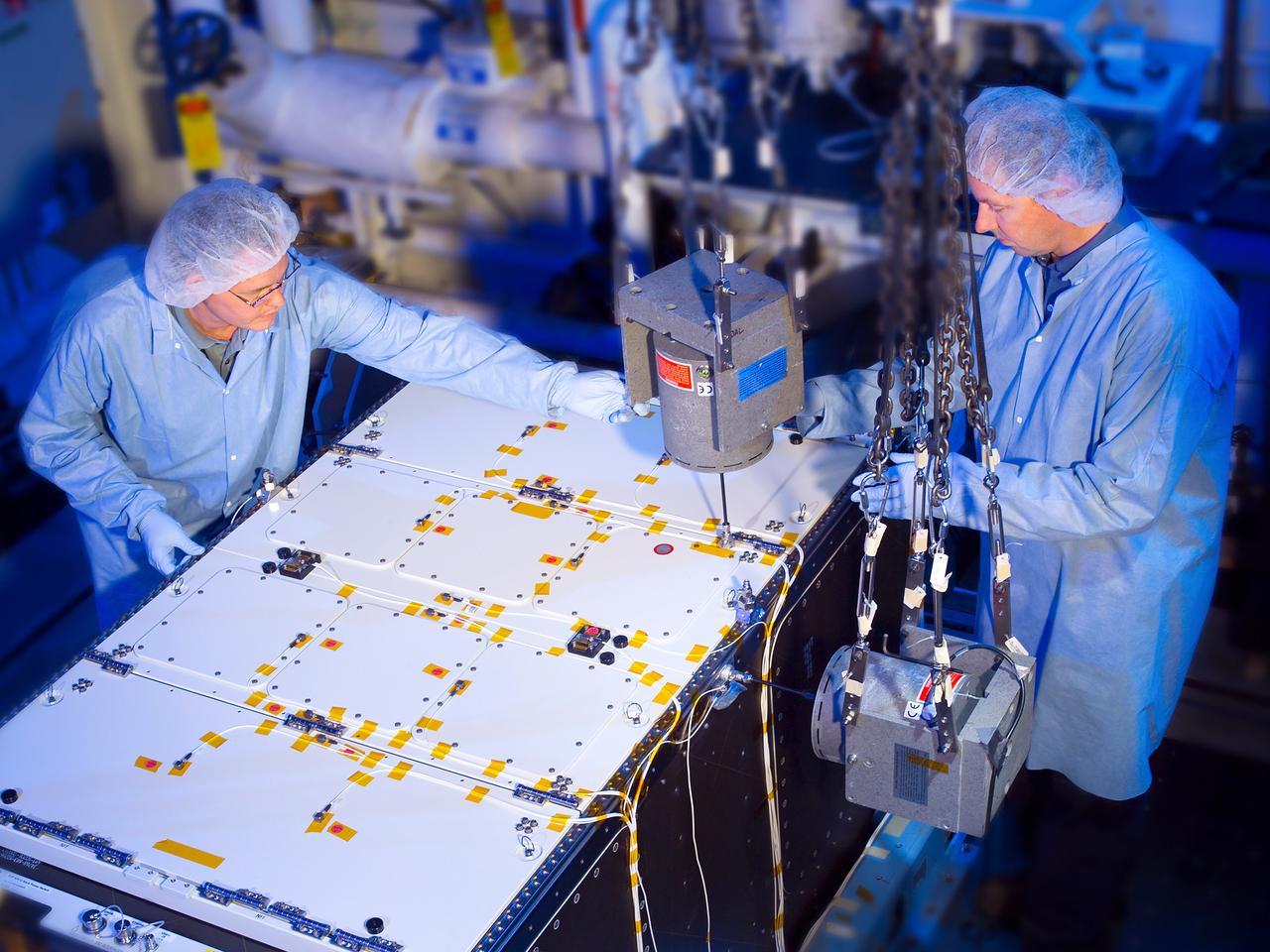
Fluids and Combustion Facility (FCF), Combustion Integration Rack (CIR) during testing in the Structural Dynamics Laboratory (SDL). The Fluids and Combustion Facility (FCF) is a set of two International Space Station (ISS) research facilities designed to support physical and biological experiments in support of technology development and validation in space. The FCF consists of two modular, reconfigurable racks called the Combustion Integration Rack (CIR) and the Fluids Integration Rack (FIR). The CIR and FIR were developed at NASAʼs Glenn Research Center.
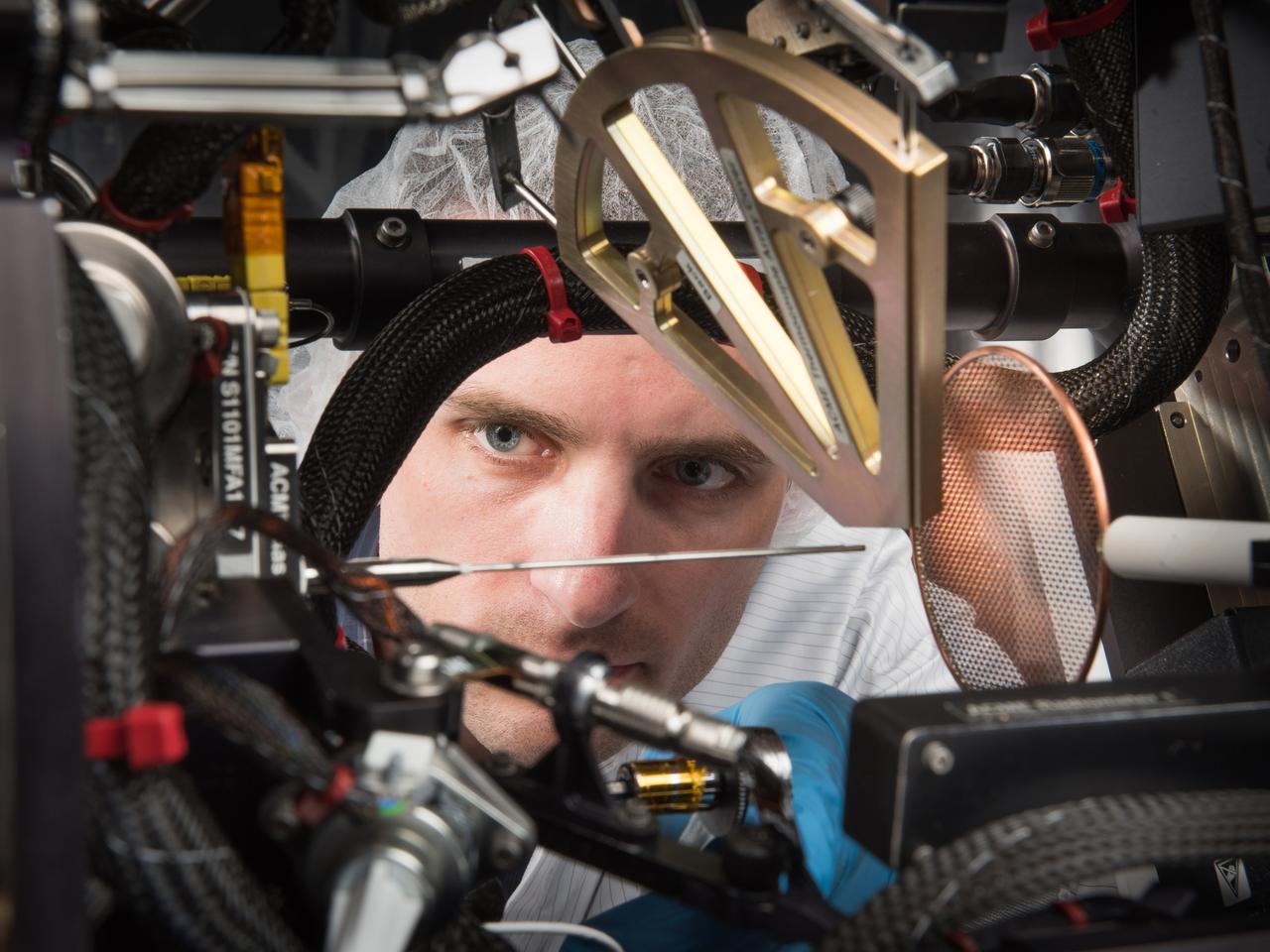
NASA Glenn engineer Christopher Mroczka inspects the gas-jet burner within the Advanced Combustion via Microgravity Experiments, ACME insert for the Combustion Integrated Rack, CIR. The apparatus allows researchers to conduct experiments with flames of gaseous fuels on the International Space Station, ISS
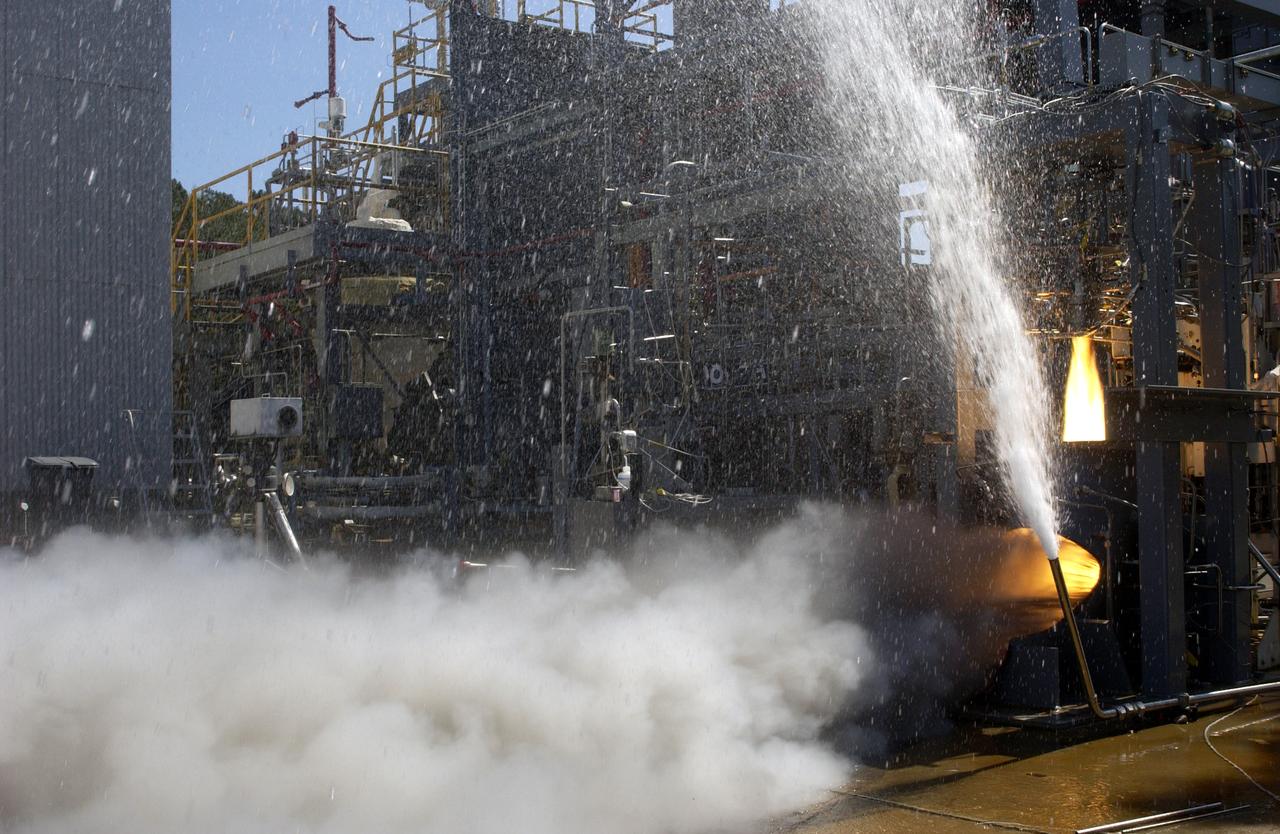
This photograph depicts one of over thirty tests conducted on the Vortex Combustion Chamber Engine at Marshall Space Flight Center's (MSFC) test stand 115, a joint effort between NASA's MSFC and the U.S. Army AMCOM of Redstone Arsenal. The engine tests were conducted to evaluate an irnovative, "self-cooled", vortex combustion chamber, which relies on tangentially injected propellants from the chamber wall producing centrifugal forces that keep the relatively cold liquid propellants near the wall.
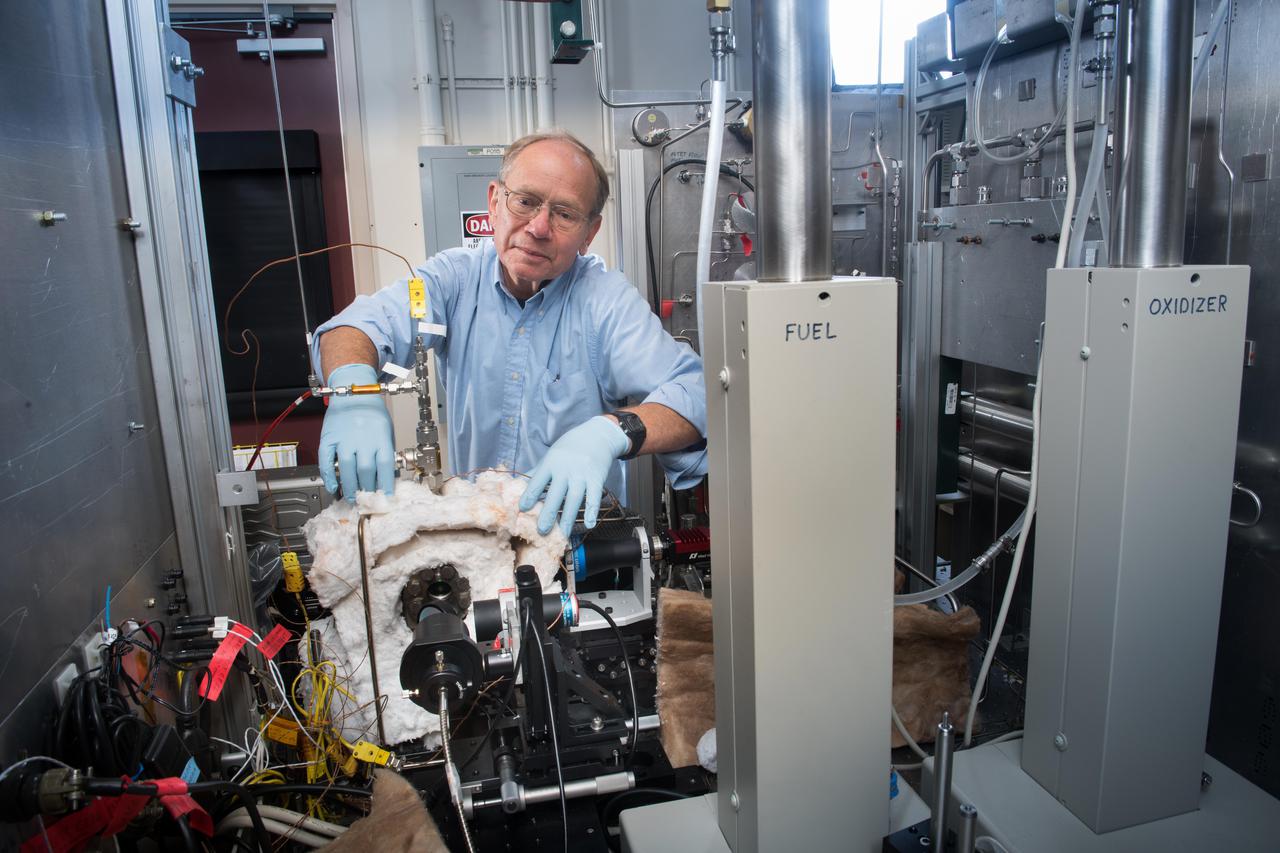
High Pressure Plasma-assisted Combustion
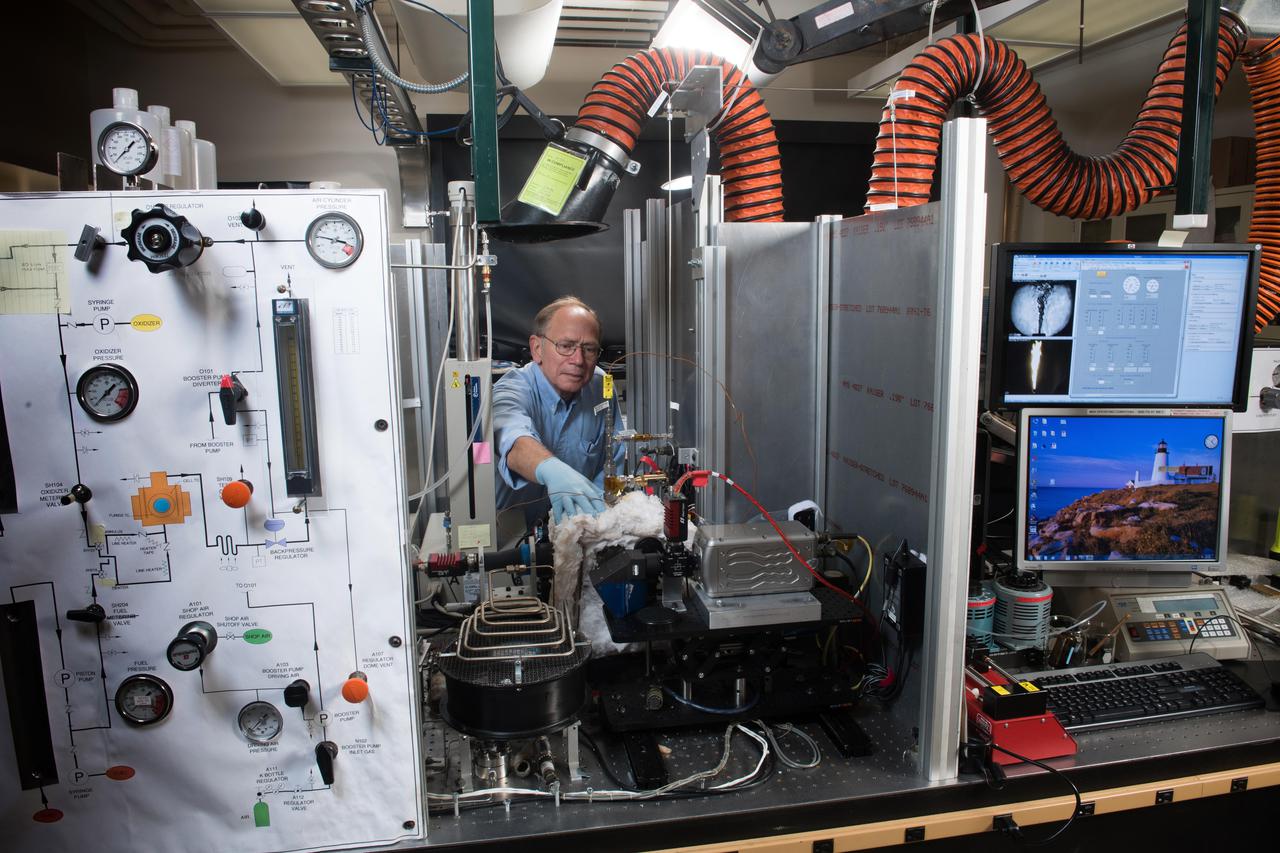
High Pressure Plasma-assisted Combustion
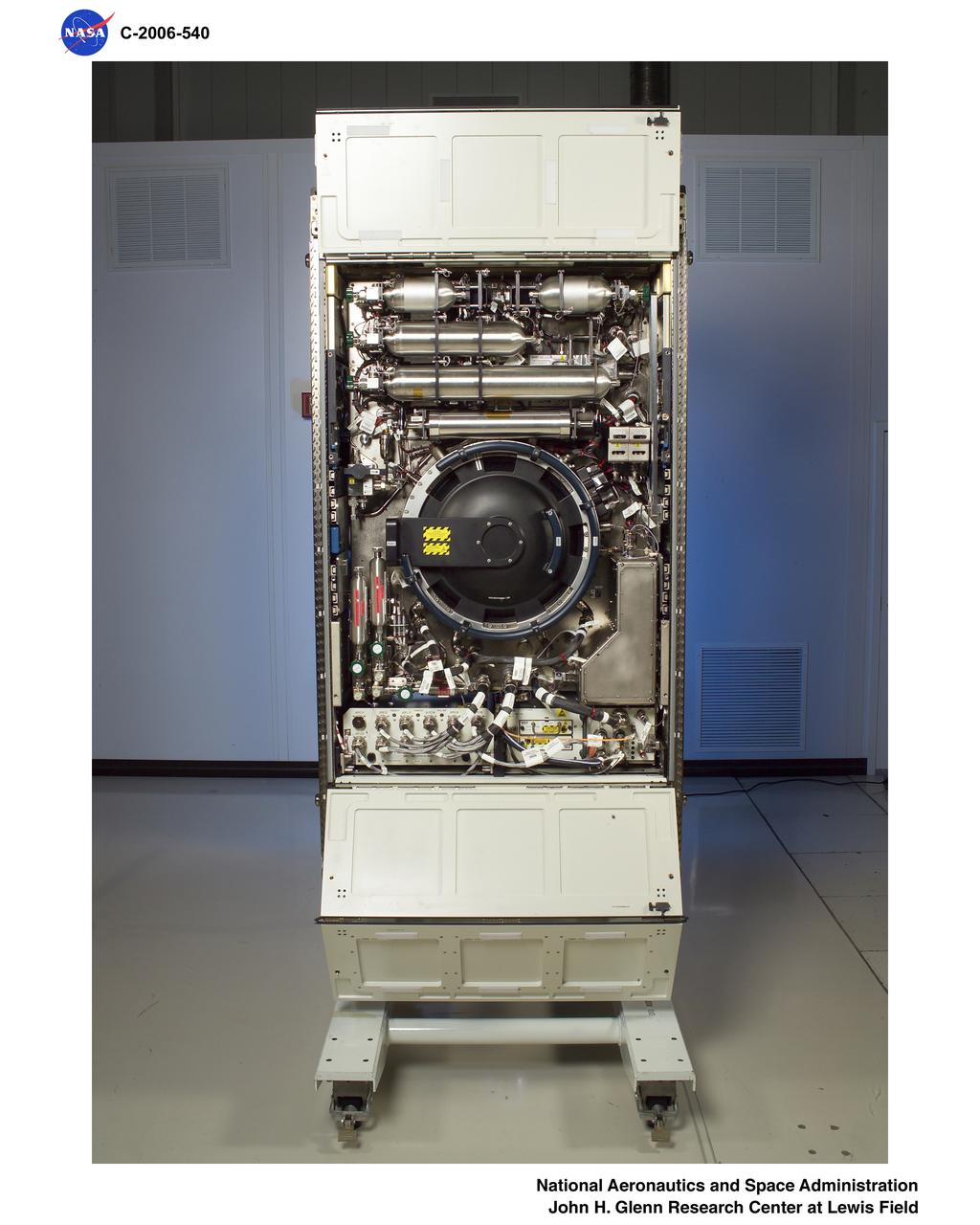
Combustion Integrated Rack (CIR)
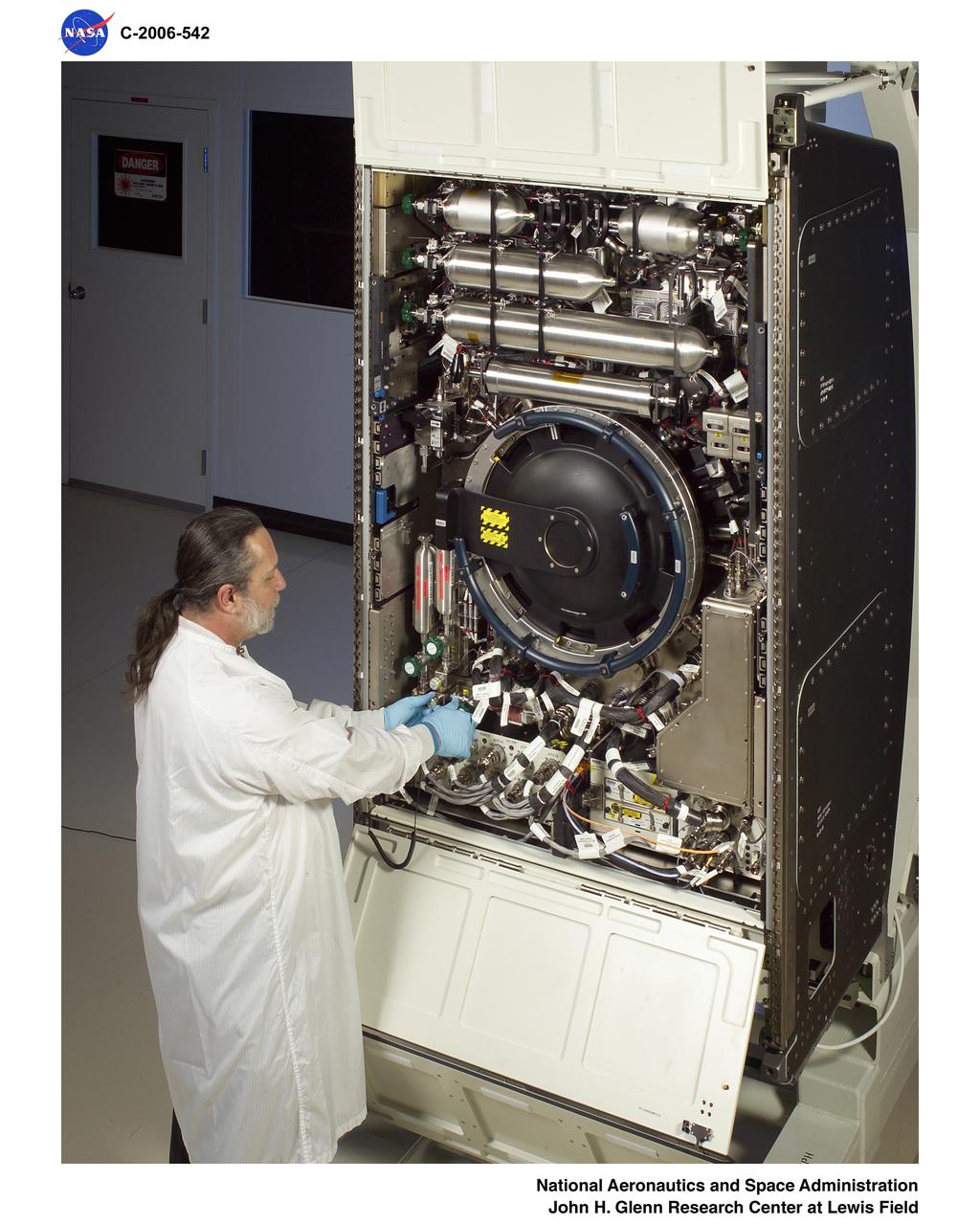
Combustion Integrated Rack (CIR)
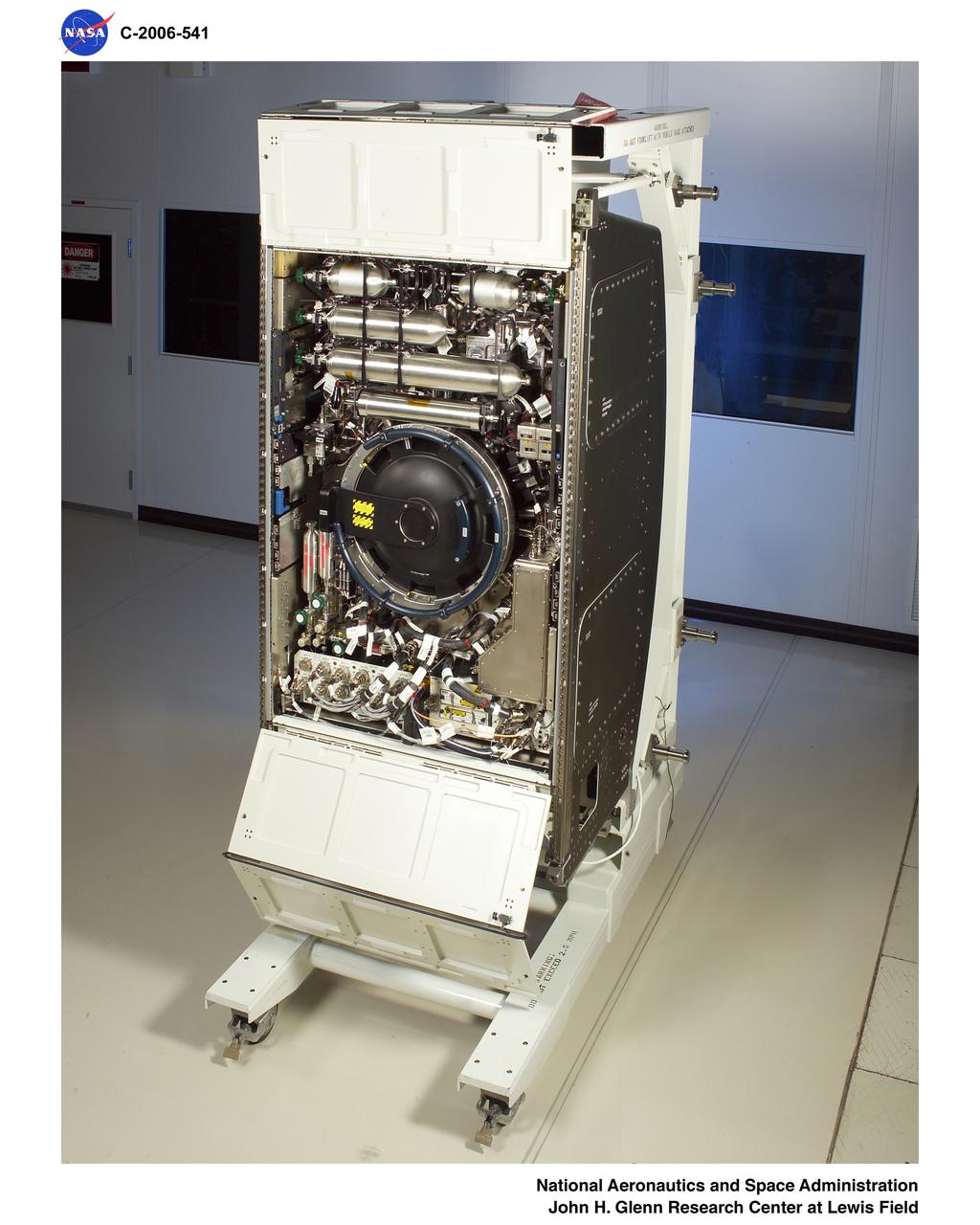
Combustion Integrated Rack (CIR)
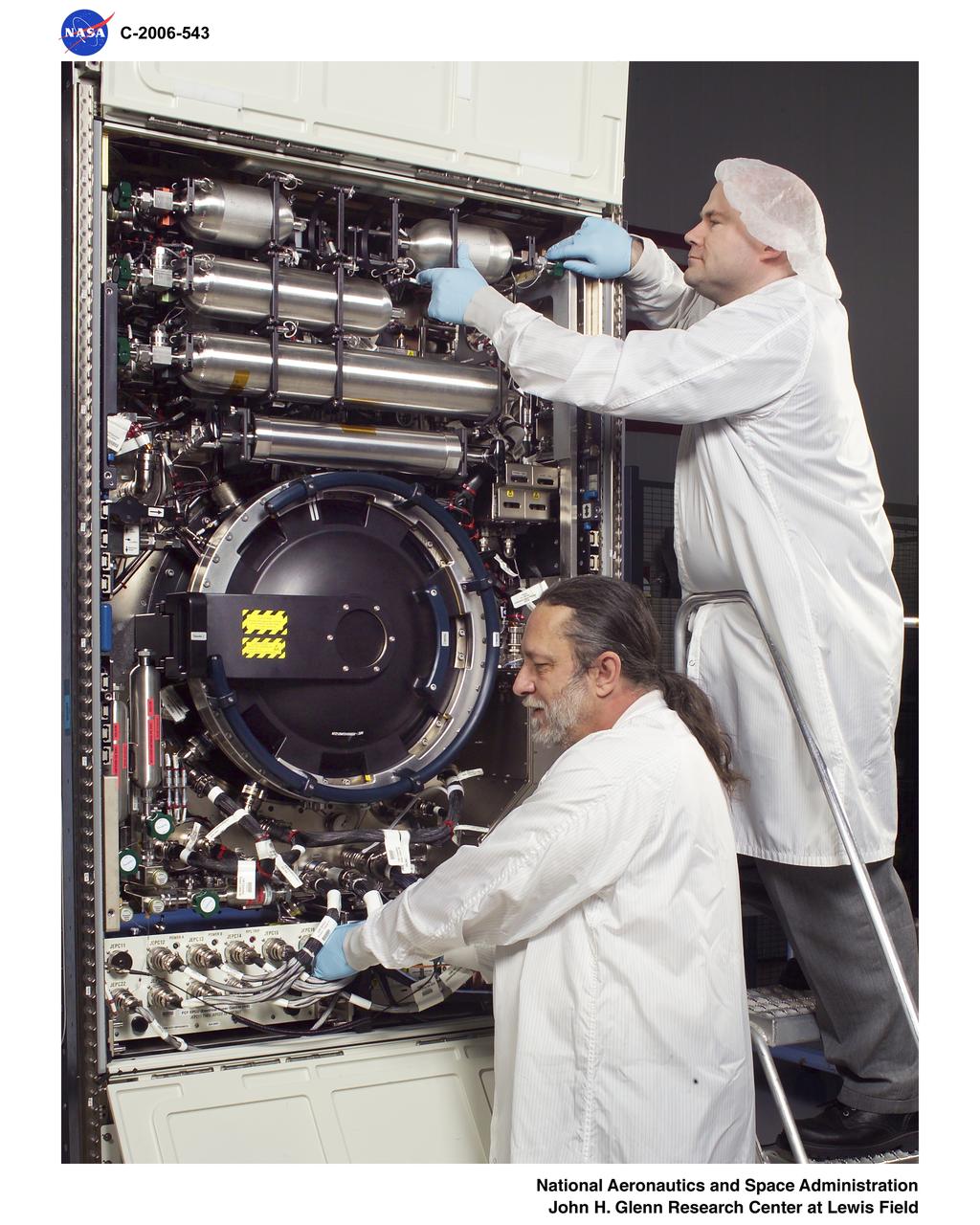
Combustion Integrated Rack (CIR)
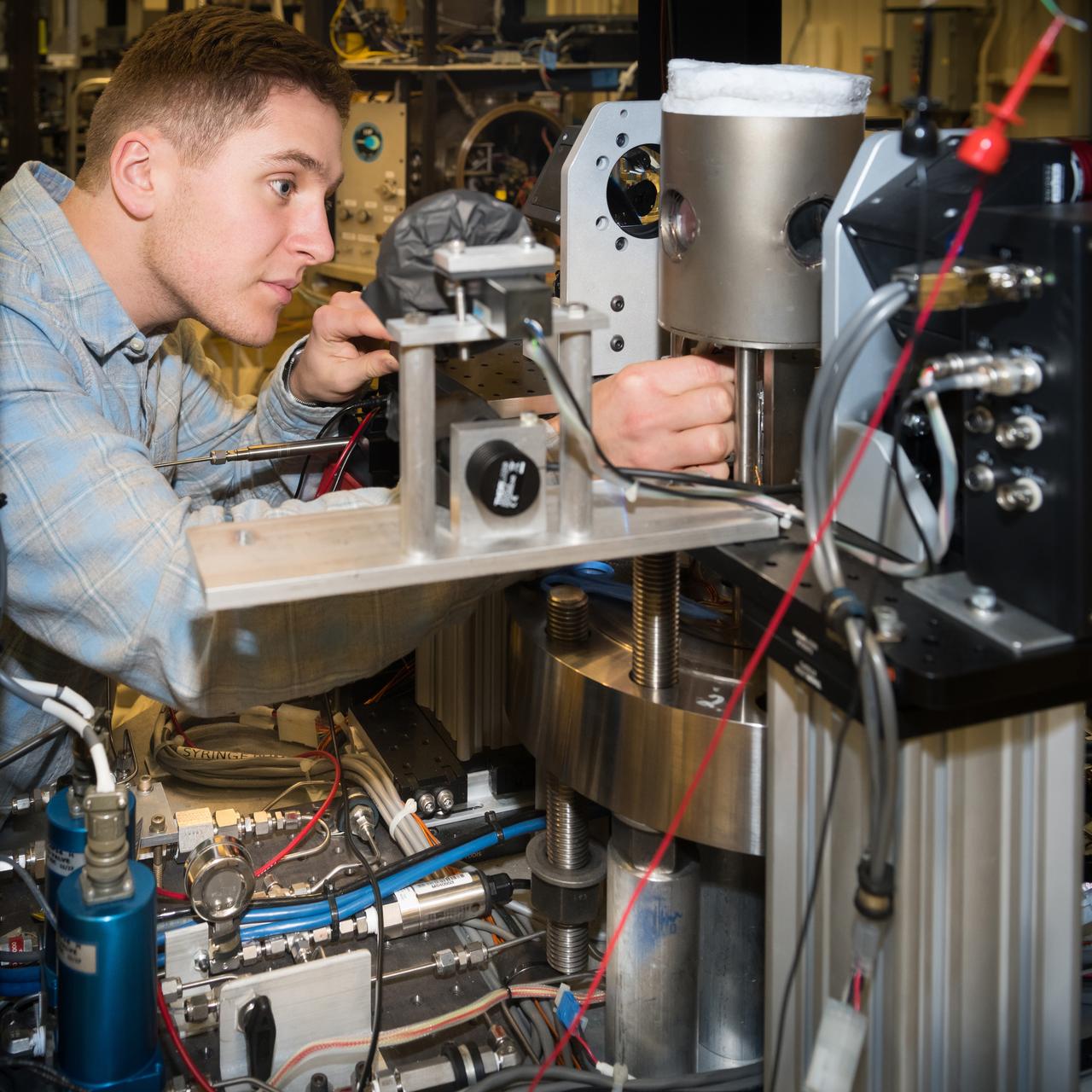
High Pressure Microgravity Combustion Experiment, HPMC, subjects liquid fuel droplets to high pressures and temperatures to study the ignition process in engine conditions, with a goal of improving fuel efficiency. In this configuration, the experiment is capable of testing droplet combustion at up to 100 atm of pressure, testing the droplet deployment system, which inserts the fuel droplet into the experiment.
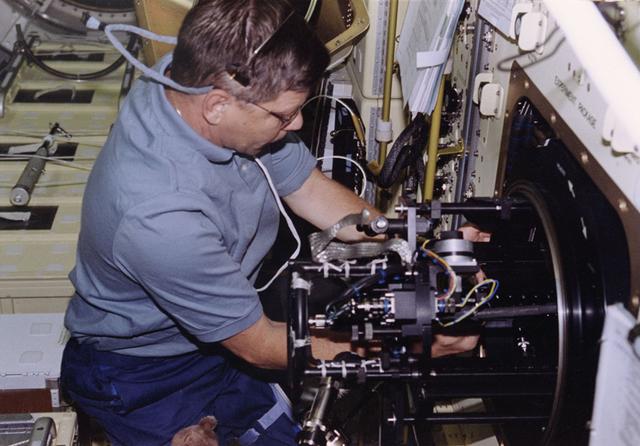
Astronaut Roger Crouch performs a change-out of the experiment in the Combustion Module-1 combustion chamber during STS-94.
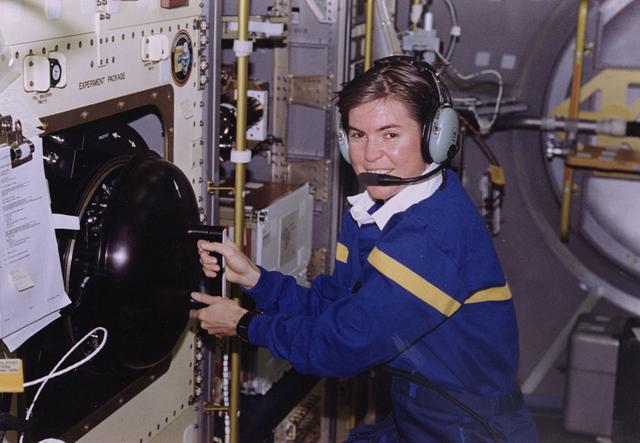
Astronaut Janice Voss is opening the lid of the combustion chamber of the Combustion Module-1 during STS-94
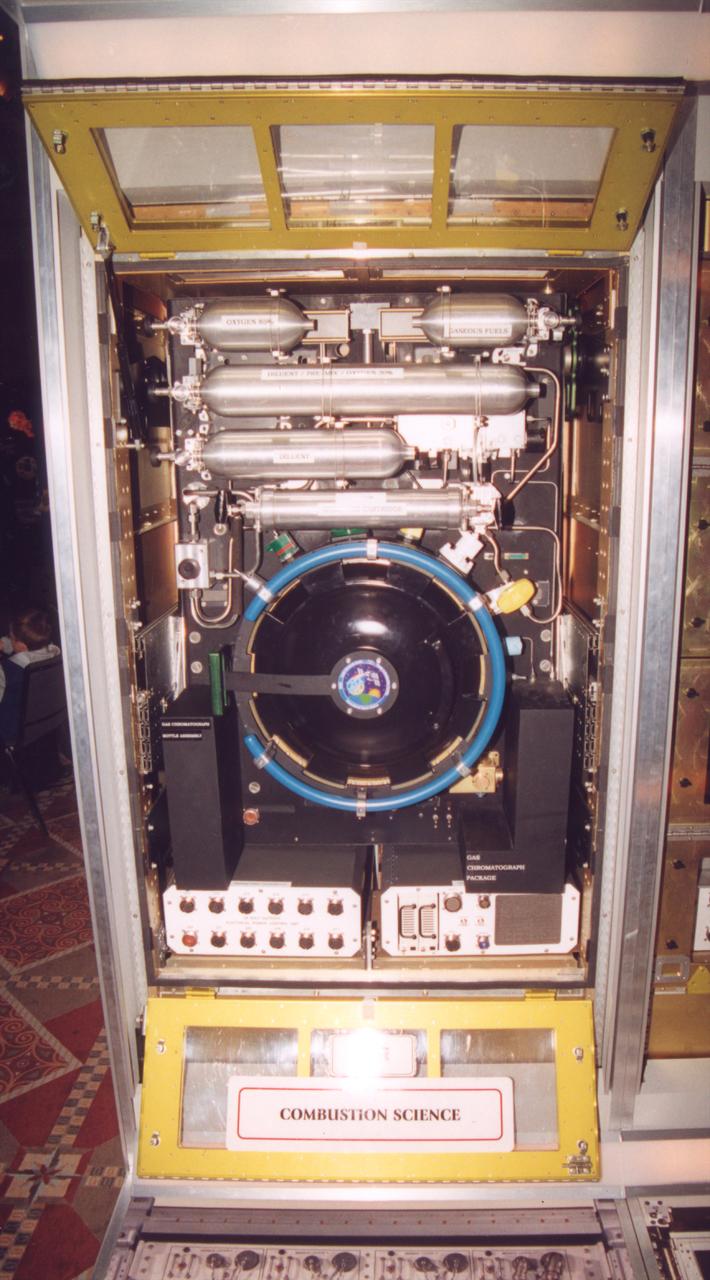
The combustion chamber for the Combustion Integrated Rack section of the Fluids and Combustion Facility (FCF) is shown in its operational configuration. The FCF will be installed, in phases, in the Destiny, the U.S. Laboratory Module of the International Space Station (ISS), and will accommodate multiple users for a range of investigations. This is an engineering mockup; the flight hardware is subject to change as designs are refined. The FCF is being developed by the Microgravity Science Division (MSD) at the NASA Glenn Research Center. (Photo credit: NASA/Marshall Space Flight Center)
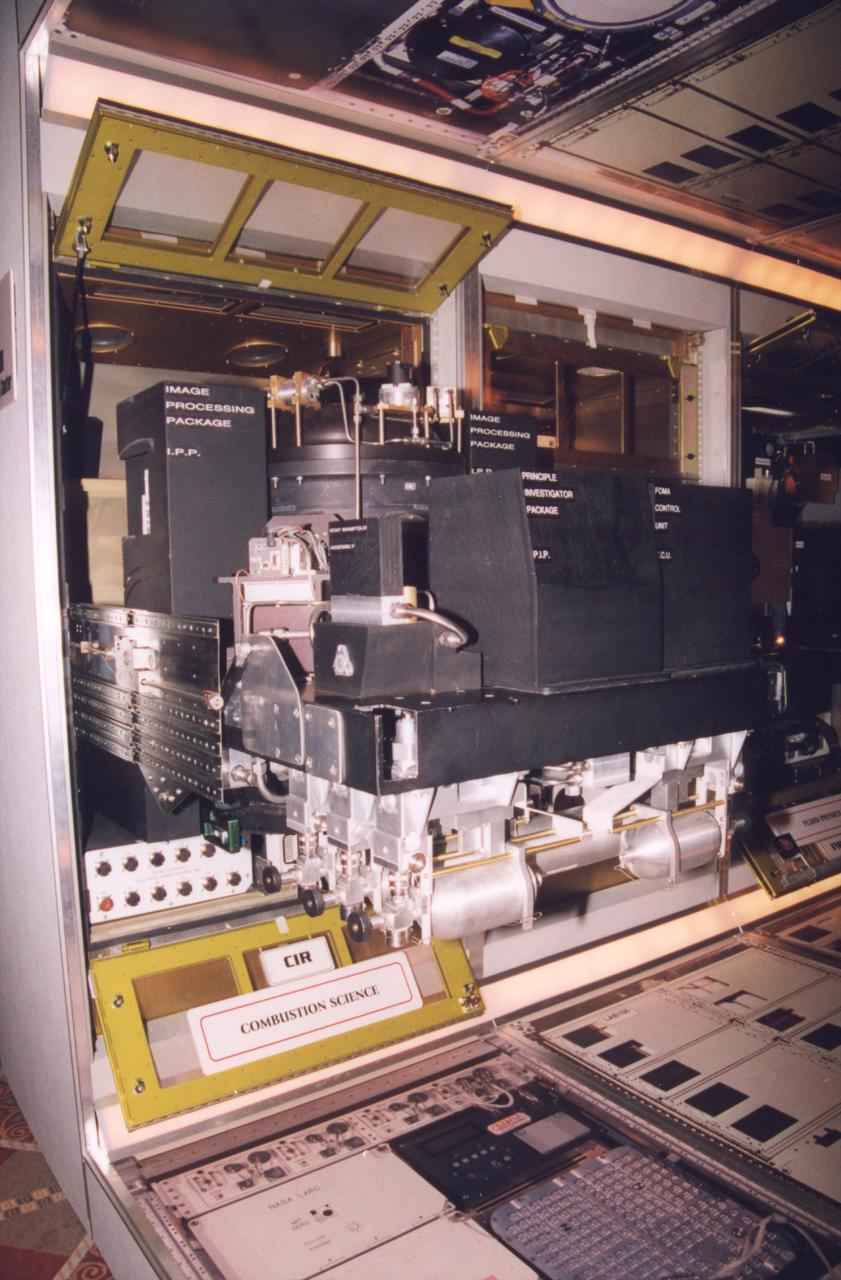
The combustion chamber for the Combustion Integrated Rack section of the Fluids and Combustion Facility (FCF) is shown extracted for servicing and with the optical bench rotated 90 degrees for access to the rear elements. The FCF will be installed, in phases, in the Destiny, the U.S. Laboratory Module of the International Space Station (ISS), and will accommodate multiple users for a range of investigations. This is an engineering mockup; the flight hardware is subject to change as designs are refined. The FCF is being developed by the Microgravity Science Division (MSD) at the NASA Glenn Research Center. (Photo credit: NASA/Marshall Space Flight Center)
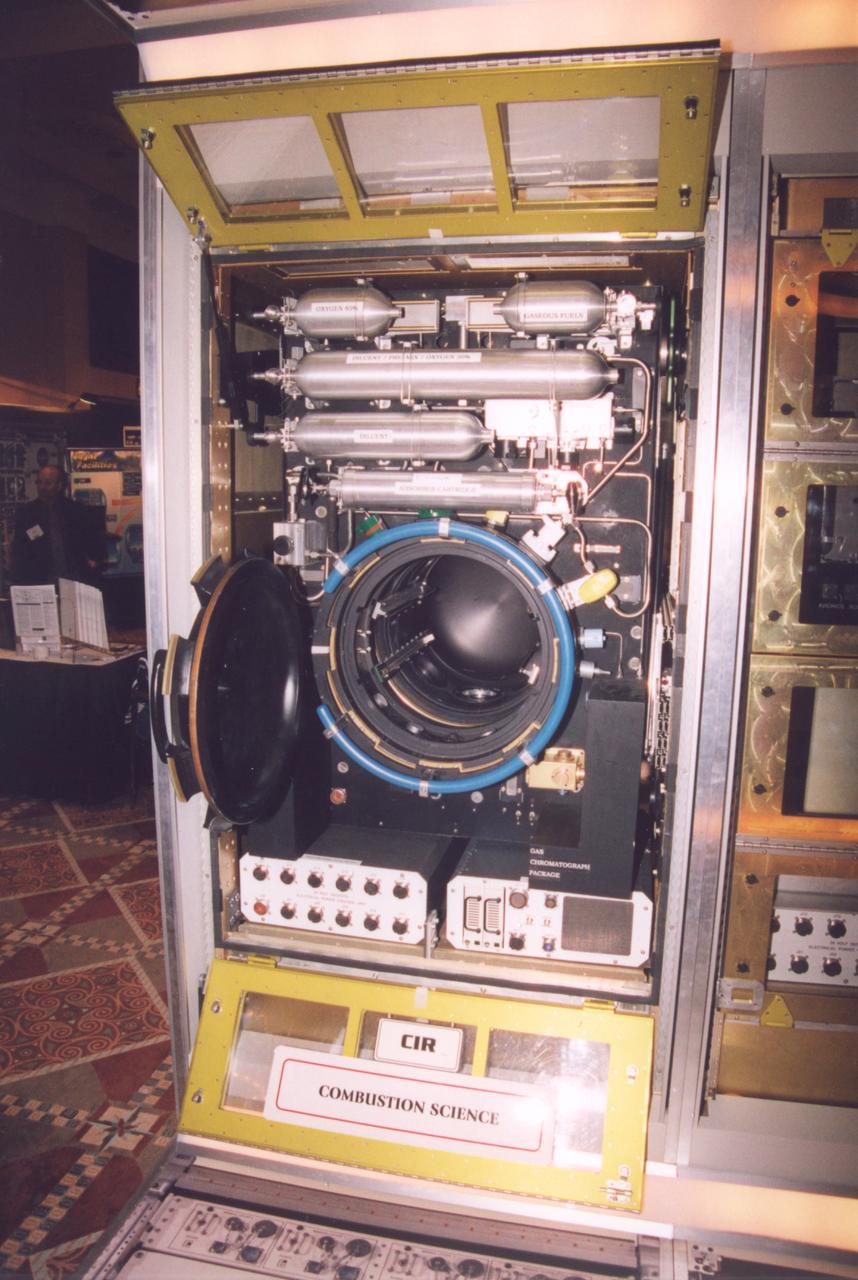
The combustion chamber for the Combustion Integrated Rack section of the Fluids and Combustion Facility (FCF) is shown opened for installation of burn specimens. The FCF will be installed, in phases, in the Destiny, the U.S. Laboratory Module of the International Space Station (ISS), and will accommodate multiple users for a range of investigations. This is an engineering mockup; the flight hardware is subject to change as designs are refined. The FCF is being developed by the Microgravity Science Division (MSD) at the NASA Glenn Research Center. (Photo credit: NASA/Marshall Space Flight Center)
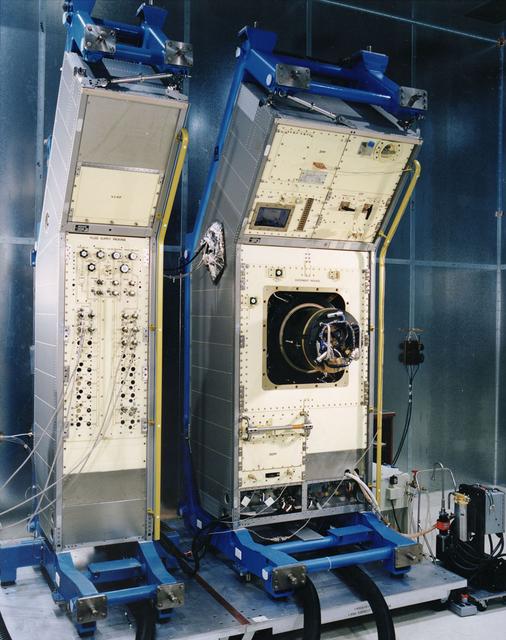
Combustion Module-1 was one of the most complex and technologically sophisticated pieces of hardware ever to be included as a part of a Spacelab mission. Shown here are the two racks which comprised CM-1, the rack on the right shows the combustion chamber with the Structure Of Flame Balls at Low Lewis-numbers (SOFBALL) experiment inside.
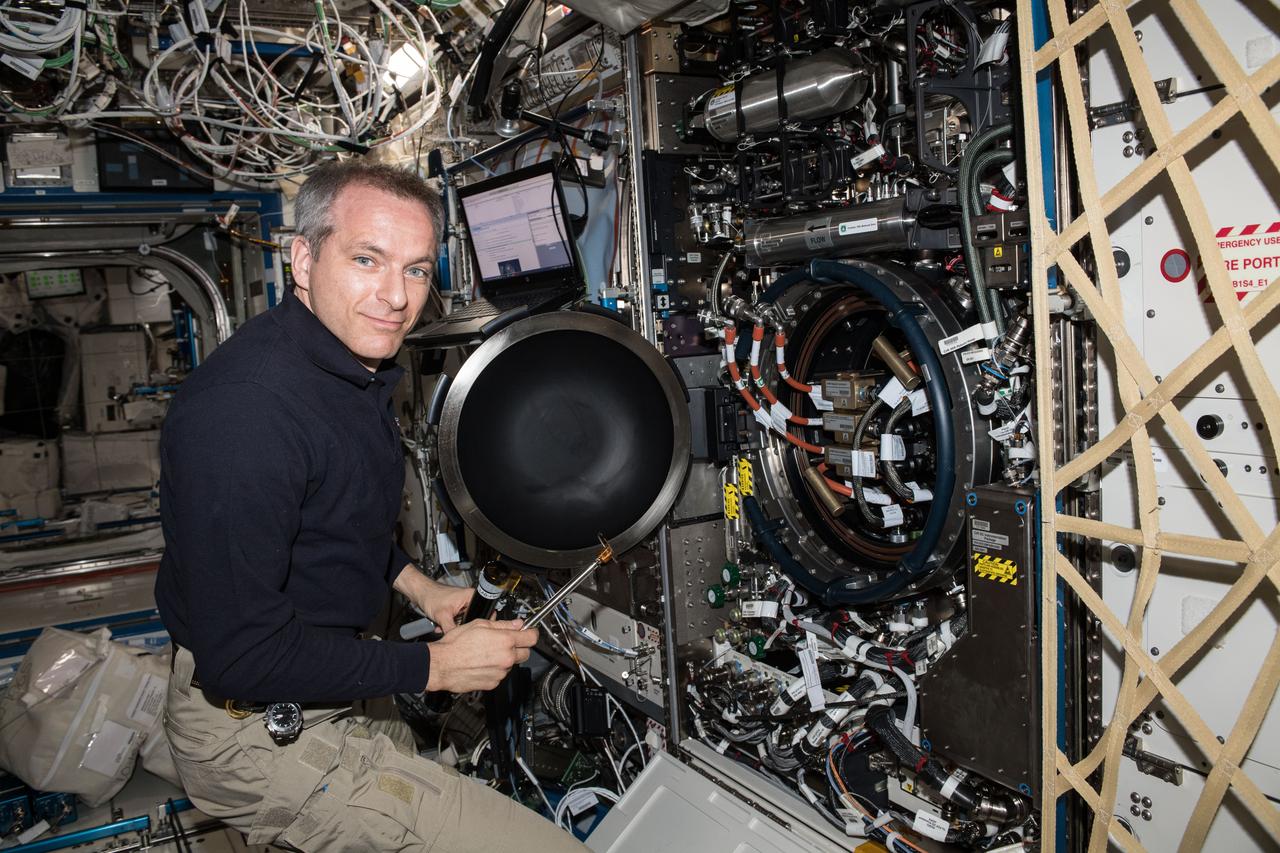
iss058e026380 (Feb. 26, 2019) --- Astronaut David Saint-Jacques of the Canadian Space Agency is inside the U.S. Destiny laboratory module working on the Combustion Integrated Rack. Saint-Jacques replaced fuel flow controllers inside the device for the Advanced Combustion via Microgravity Experiments which are a set of five independent studies of gaseous flames.
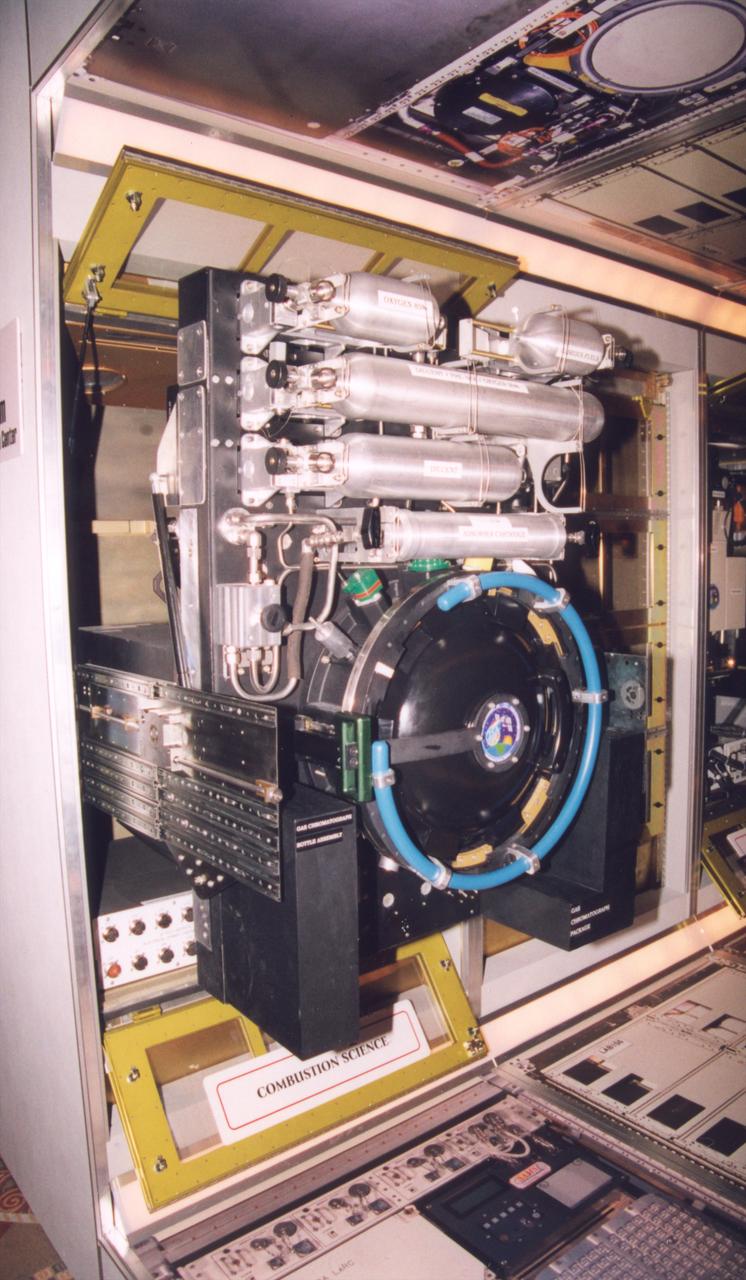
The combustion chamber for the Combustion Integrated Rack section of the Fluids and Combustion Facility (FCF) is shown extracted for servicing. The FCF will be installed, in phases, in the Destiny, the U.S. Laboratory Module of the International Space Station (ISS), and will accommodate multiple users for a range of investigations. This is an engineering mockup; the flight hardware is subject to change as designs are refined. The FCF is being developed by the Microgravity Science Division (MSD) at the NASA Glenn Research Center. (Photo credit: NASA/Marshall Space Flight Center)
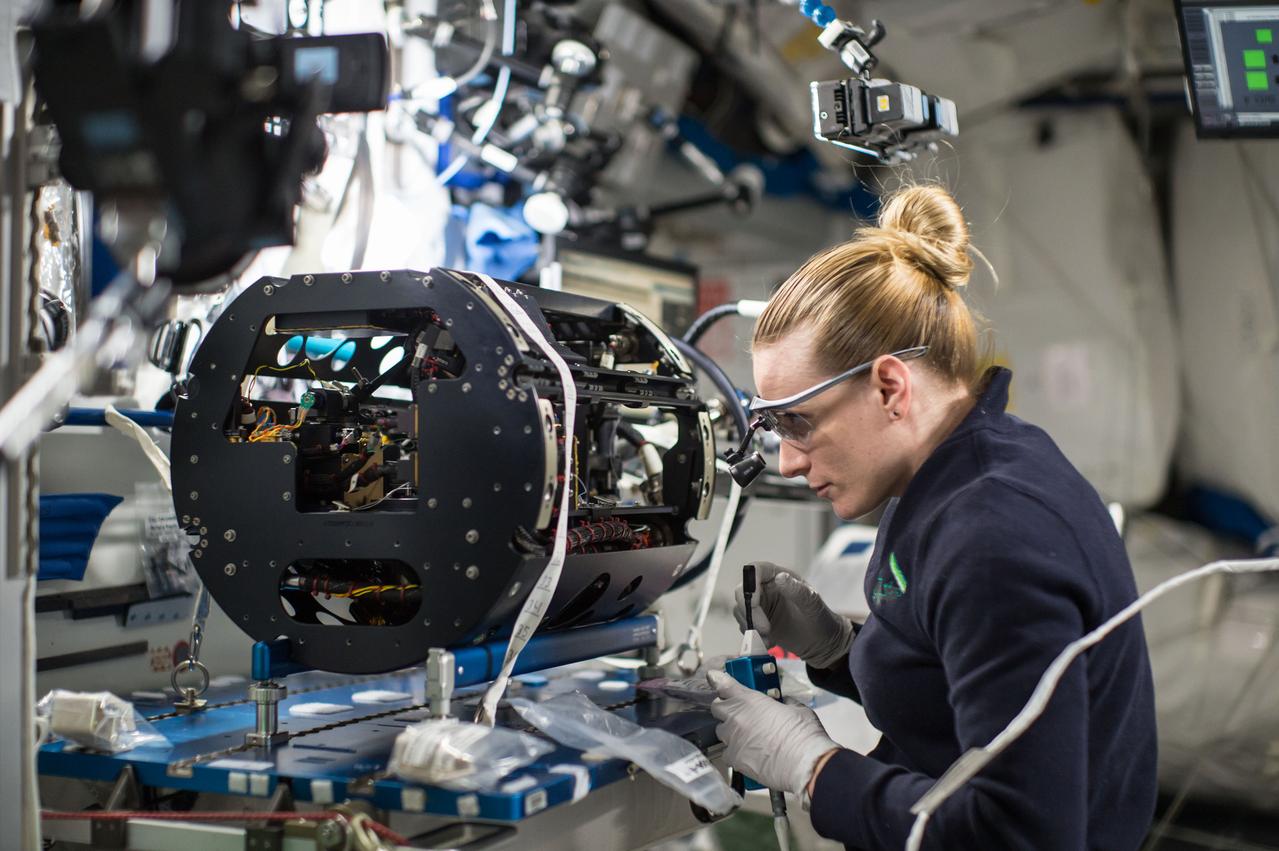
iss049e003808 (9/15/2016) --- NASA astronaut Kate Rubins is photographed replacing two Multi-user Droplet Combustion Apparatus (MDCA) Igniter Tips as part of the Combustion Integration Rack (CIR) Igniter Replacement operations. The CIR is used to perform combustion experiments in microgravity. The CIR can be reconfigured easily on orbit to accommodate a variety of combustion experiments. It consists of an optics bench, a combustion chamber, a fuel and oxidizer management system, environmental management systems, and interfaces for science diagnostics and experiment specific equipment.

ISS049e011638 (09/27/2016) --- Expedition 49 crewmember Takuya Onishi of JAXA works on the setup of the Group Combustion Module (GCM) inside the Japanese Experiment Module. The GCM will be used to house the Group Combustion experiment from the Japan Aerospace Exploration Agency (JAXA) to test a theory that fuel sprays change from partial to group combustion as flames spread across a cloud of droplets.
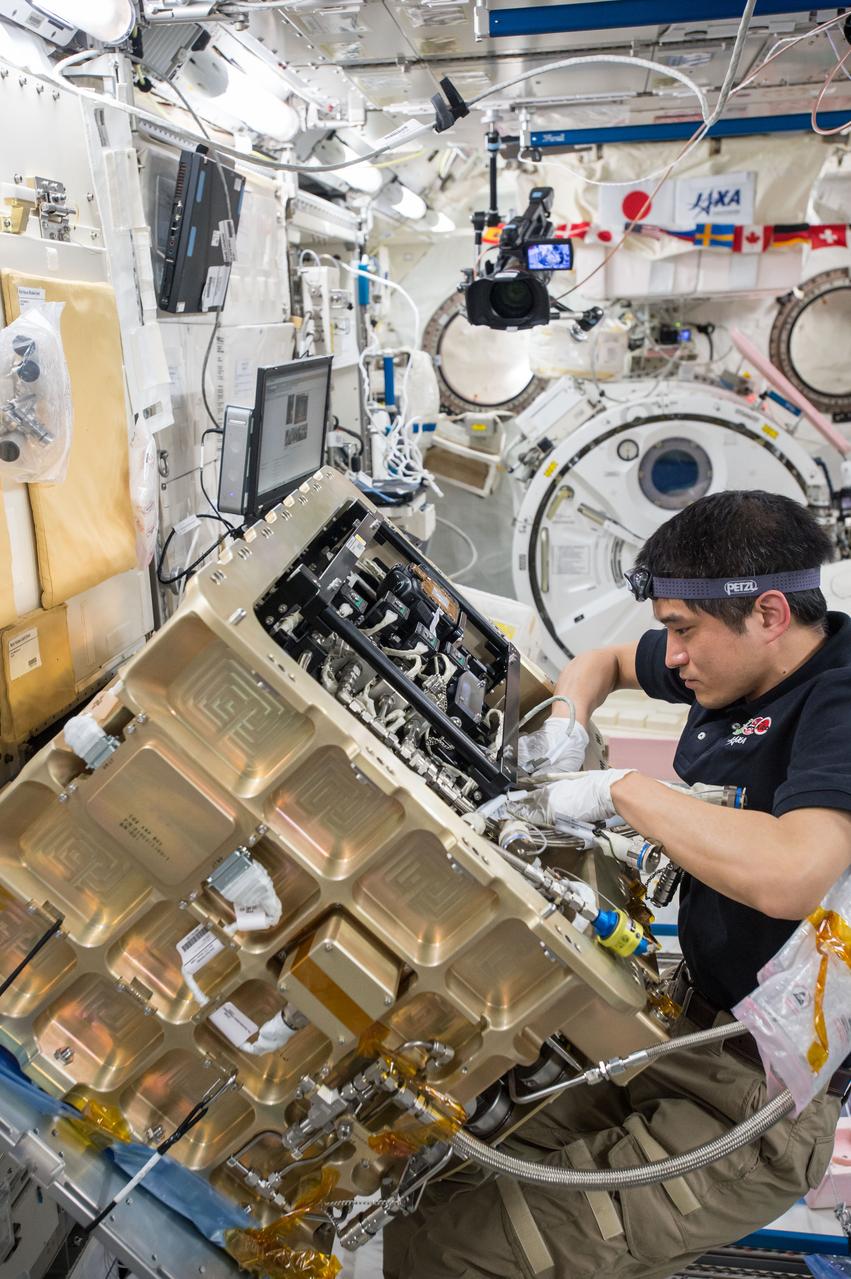
iss049e011944 (9/27/2016) --- Japan Aerospace Exploration Agency (JAXA) astronaut Takuya Onishi is photographed as he starts the first of two days of installation and preparation for the Group Combustion Module (GCM) Installation. The GCM will be installed into the Combustion Chamber.
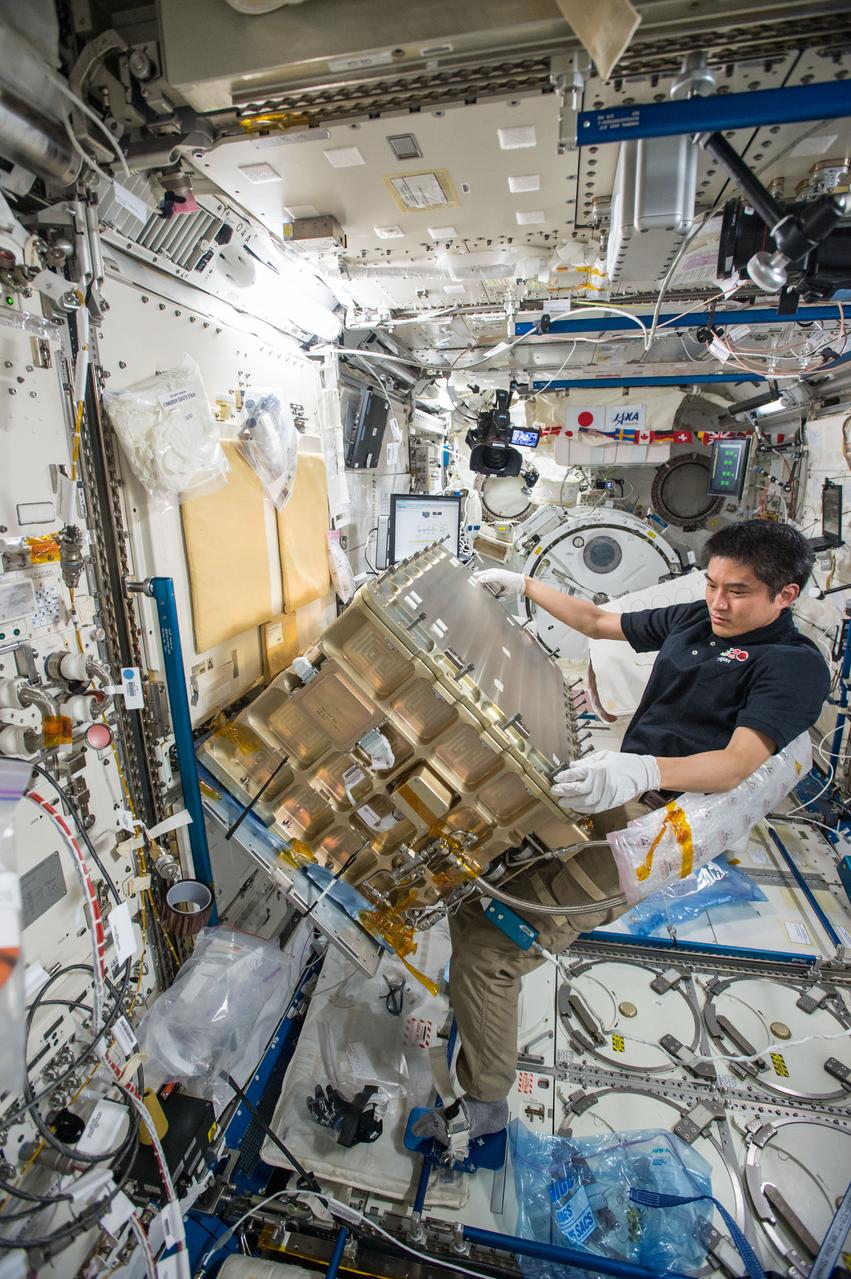
iss049e011873 (9/27/2016) --- Japan Aerospace Exploration Agency (JAXA) astronaut Takuya Onishi is photographed as he starts the first of two days of installation and preparation for the Group Combustion Module (GCM) Installation. The GCM will be installed into the Combustion Chamber.
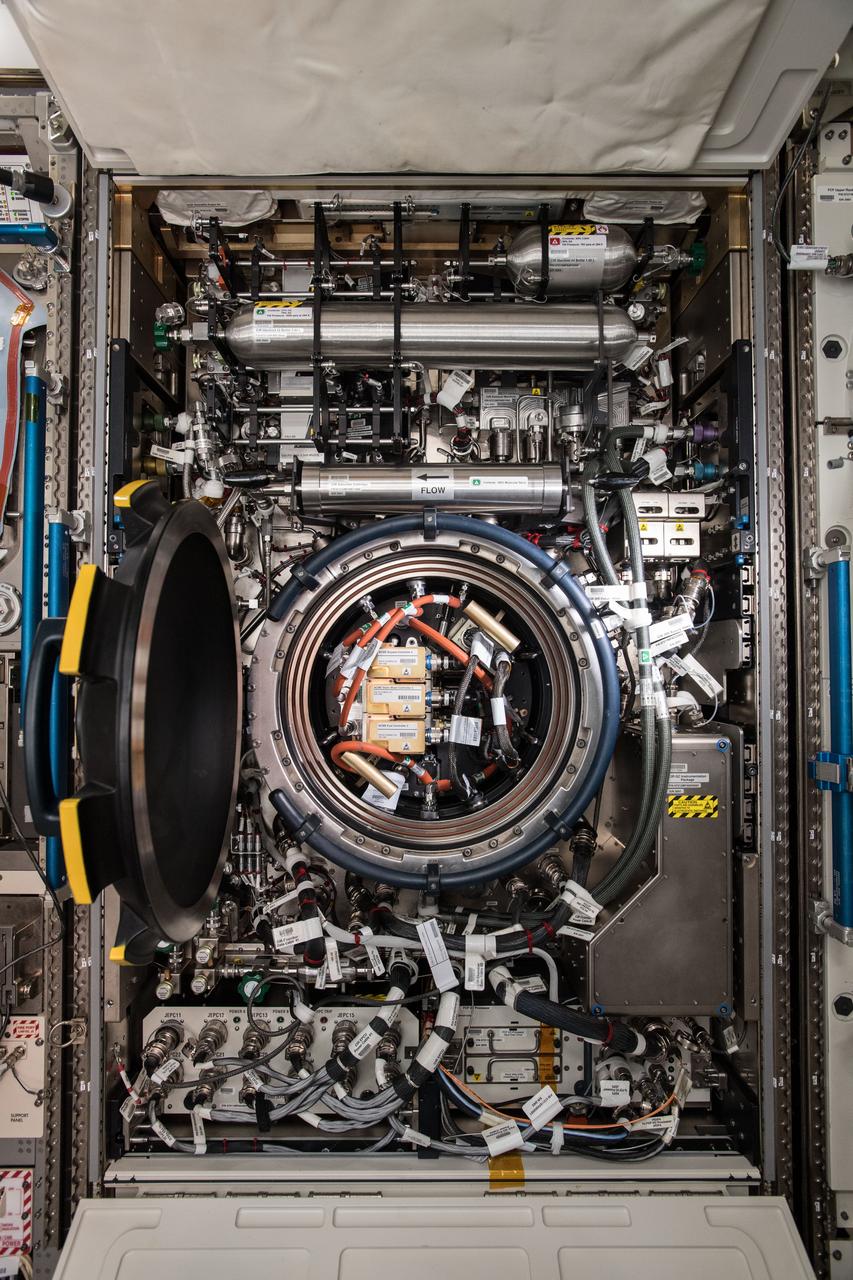
iss056e130654 (Aug. 10, 2018) --- The Combustion Integration Rack (CIR), pictured in its open configuration, is located in the U.S. Destiny laboratory module and includes an optics bench, combustion chamber, fuel and oxidizer control, and five different cameras for performing combustion experiments safely in microgravity.
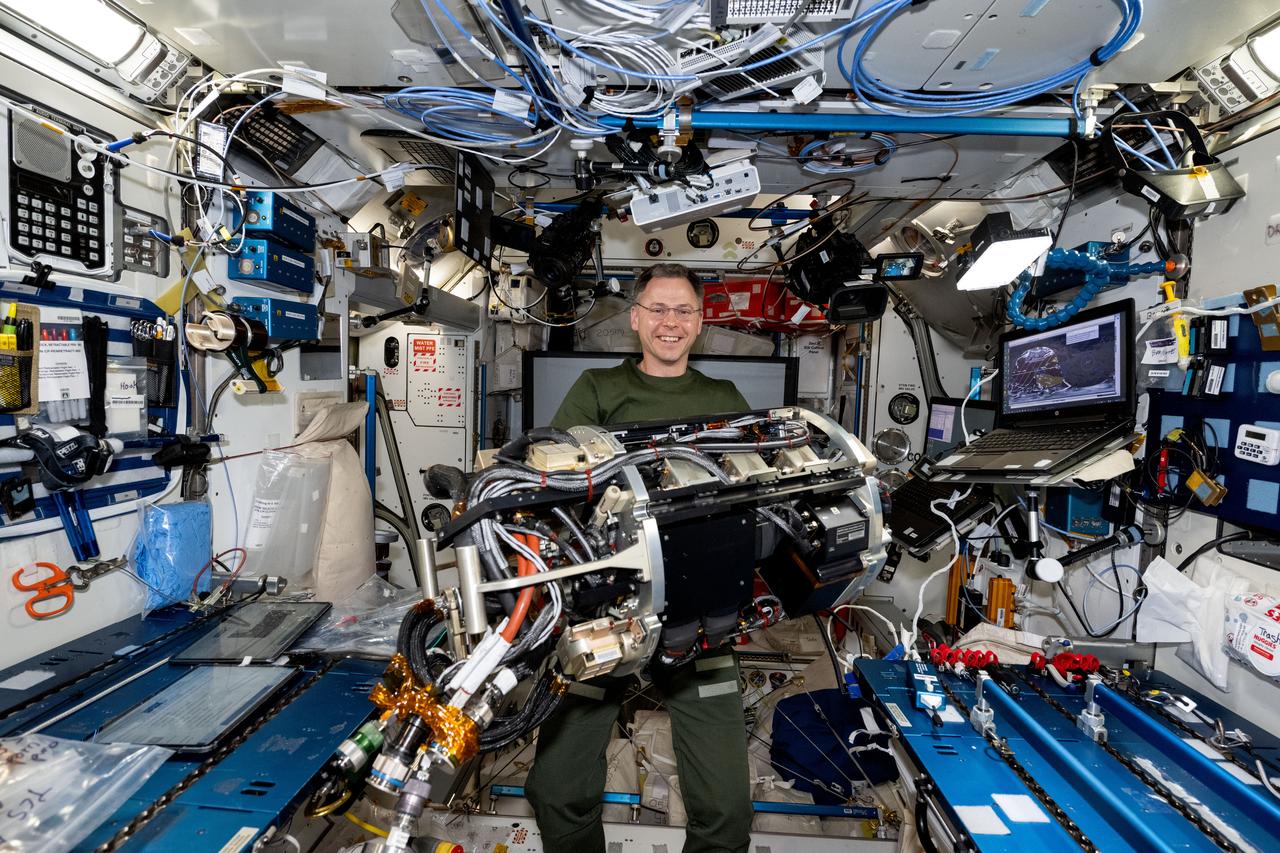
iss072e519705 (Jan. 23, 2025) --- NASA astronaut and Expedition 72 Flight Engineer Nick Hague handles research hardware that is part of the Combustion Integrated Rack that enables safe fuel and flame research aboard the International Space Station.
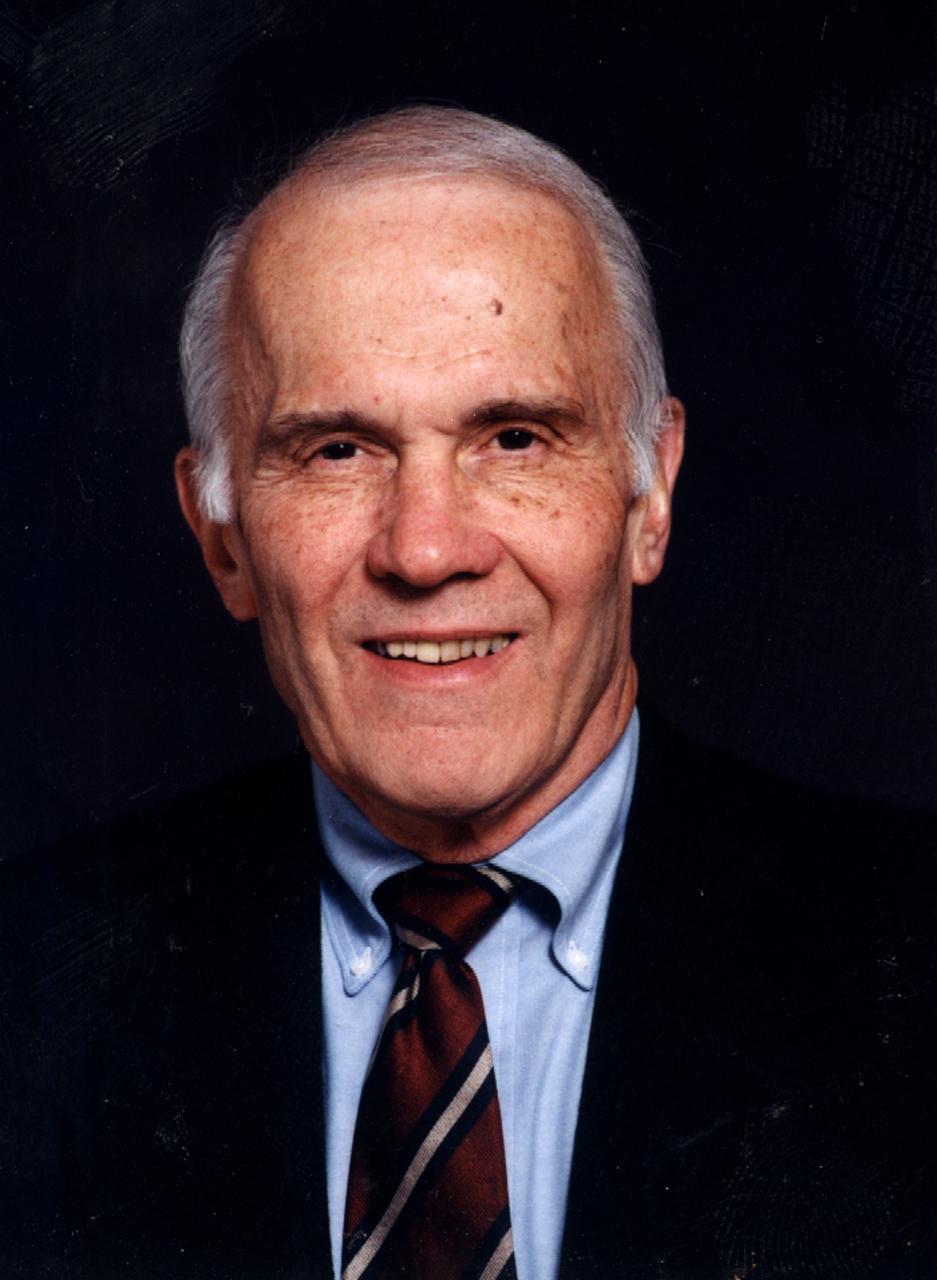
Gerard M. Faeth, University of Michigan, principal investigator in combustion science experiments, including Flow/Soot-Formation in Nonbuoyant Laminar Diffusion Flames, investigation of Laminar Jet Diffusion Flames in Microgravity: A Paradigm for Soot Processes in Turbulent Flames, and Soot Processes in Freely-Propagating Laminar Premixed Flames.
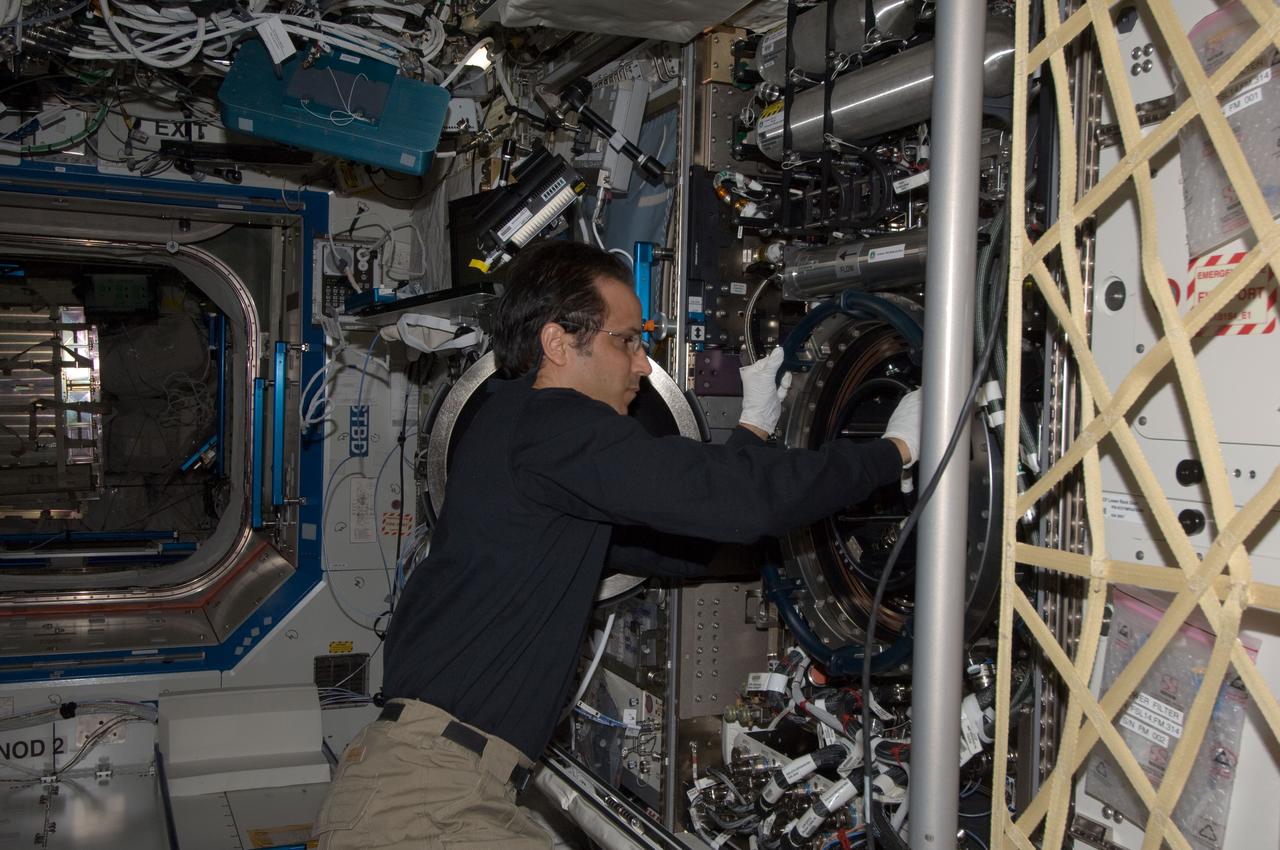
ISS032-E-014574 (7 Aug. 2012) --- NASA astronaut Joe Acaba, Expedition 32 flight engineer, works on the Combustion Integrated Rack (CIR) in the Destiny laboratory of the International Space Station.
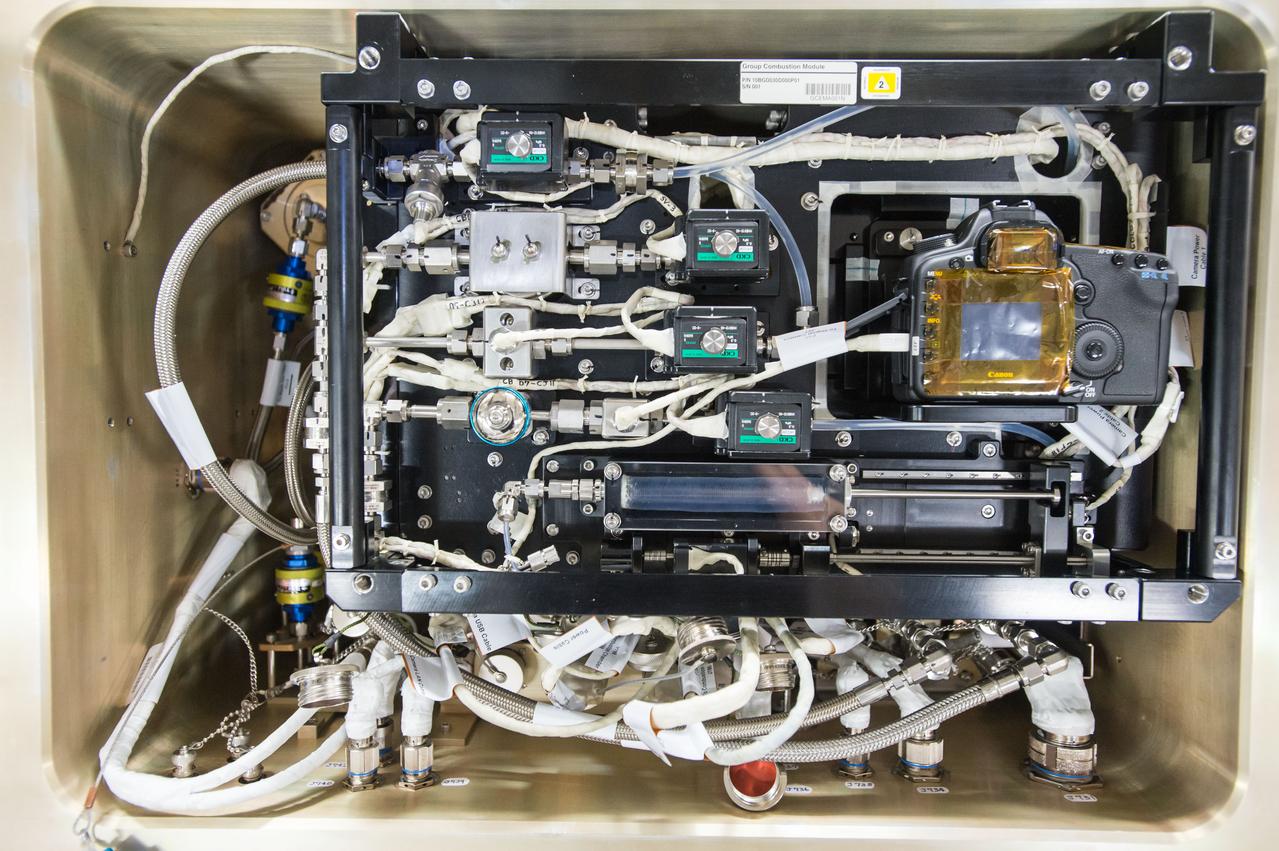
iss049e012007 (9/27/2016) --- Photographic documentation taken during the installation and preparation for the Group Combustion Module (GCM) Installation.
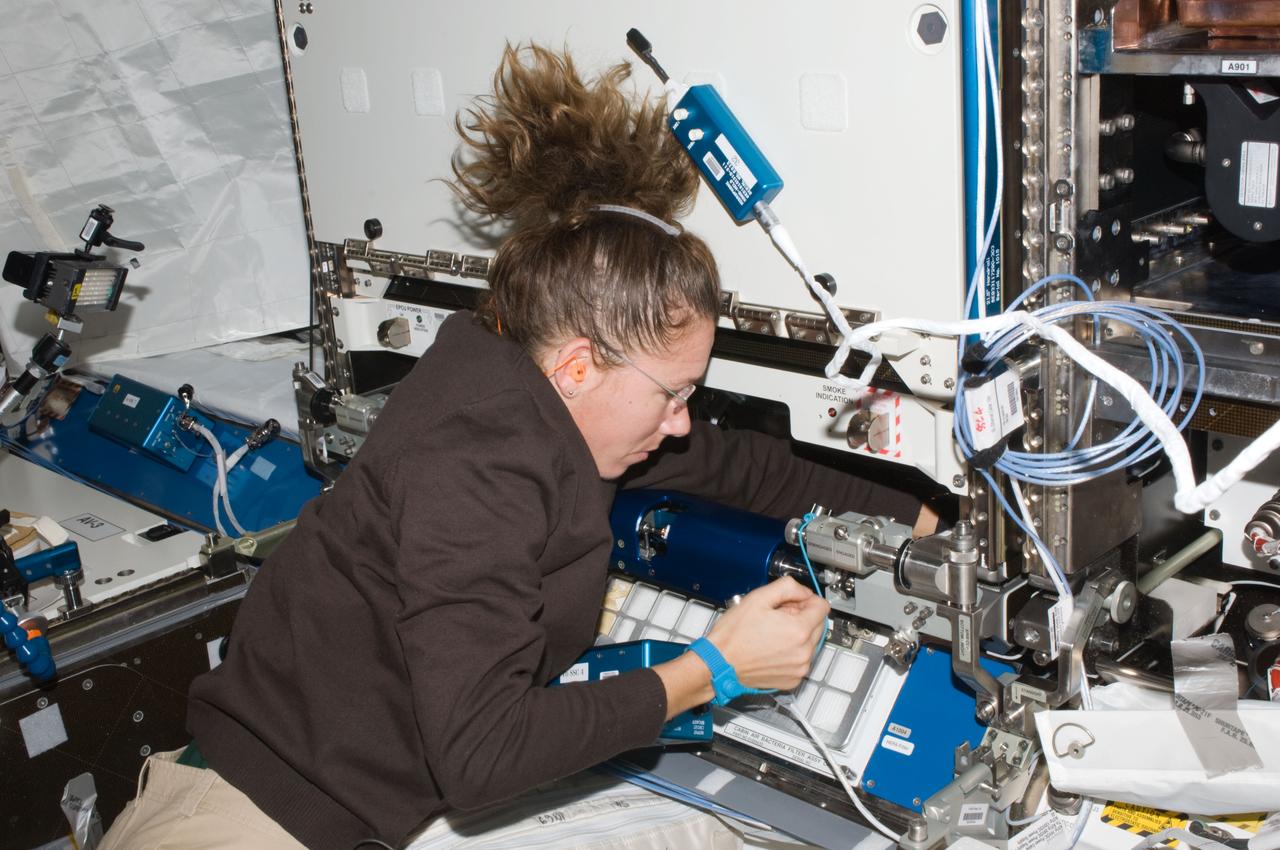
ISS018-E-017796 (5 Jan. 2009) --- Astronaut Sandra Magnus, Expedition 18 flight engineer, works on the Fluids and Combustion Facility (FCF) Combustion Integration Rack (CIR) Passive Rack Isolation System (PaRIS) in the Destiny laboratory of the International Space Station.
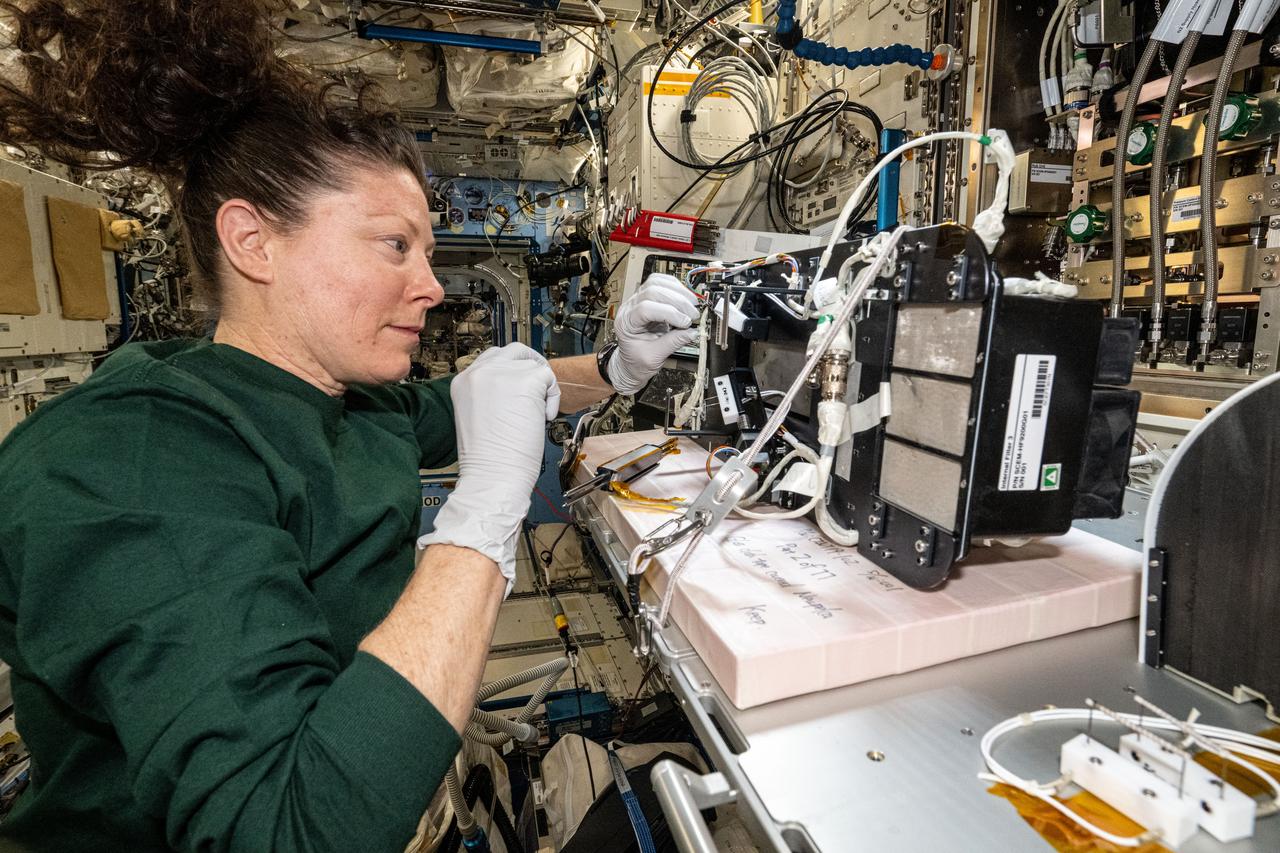
iss071e414661 (Aug. 1, 2024) --- NASA astronaut and Expedition 71 Flight Engineer Tracy C. Dyson services research components inside the Solid Combustion Experiment Module (SCEM) aboard in the Interational Space Station's Kibo laboratory module. The SCEM enables combustion research in microgravity to study how materials burn in weightlessness and improve fire safety techniques aboard spacecraft.
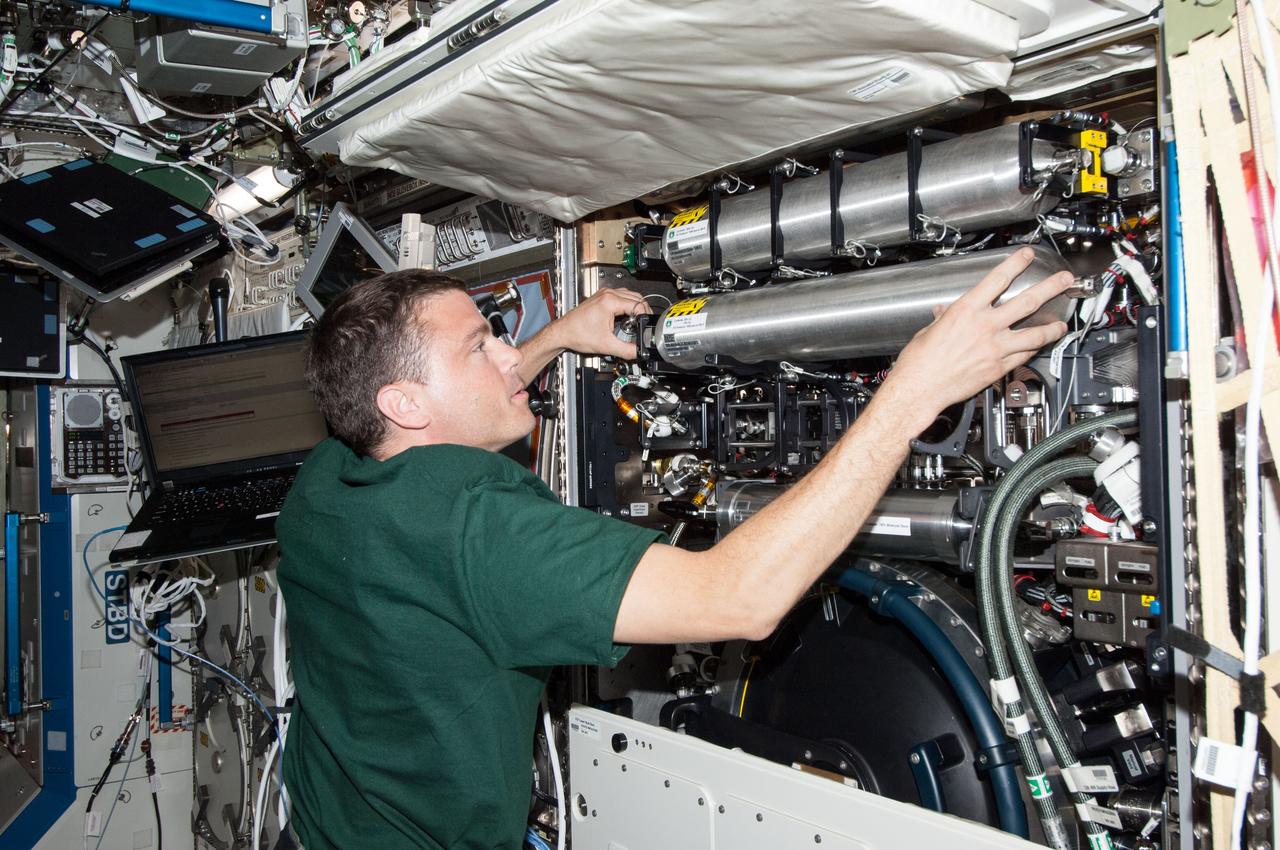
ISS040-E-008521 (9 June 2014) --- NASA astronaut Reid Wiseman, Expedition 40 flight engineer, removes and replaces a new manifold bottle in the Combustion Integration Rack (CIR) in the Destiny laboratory of the International Space Station.
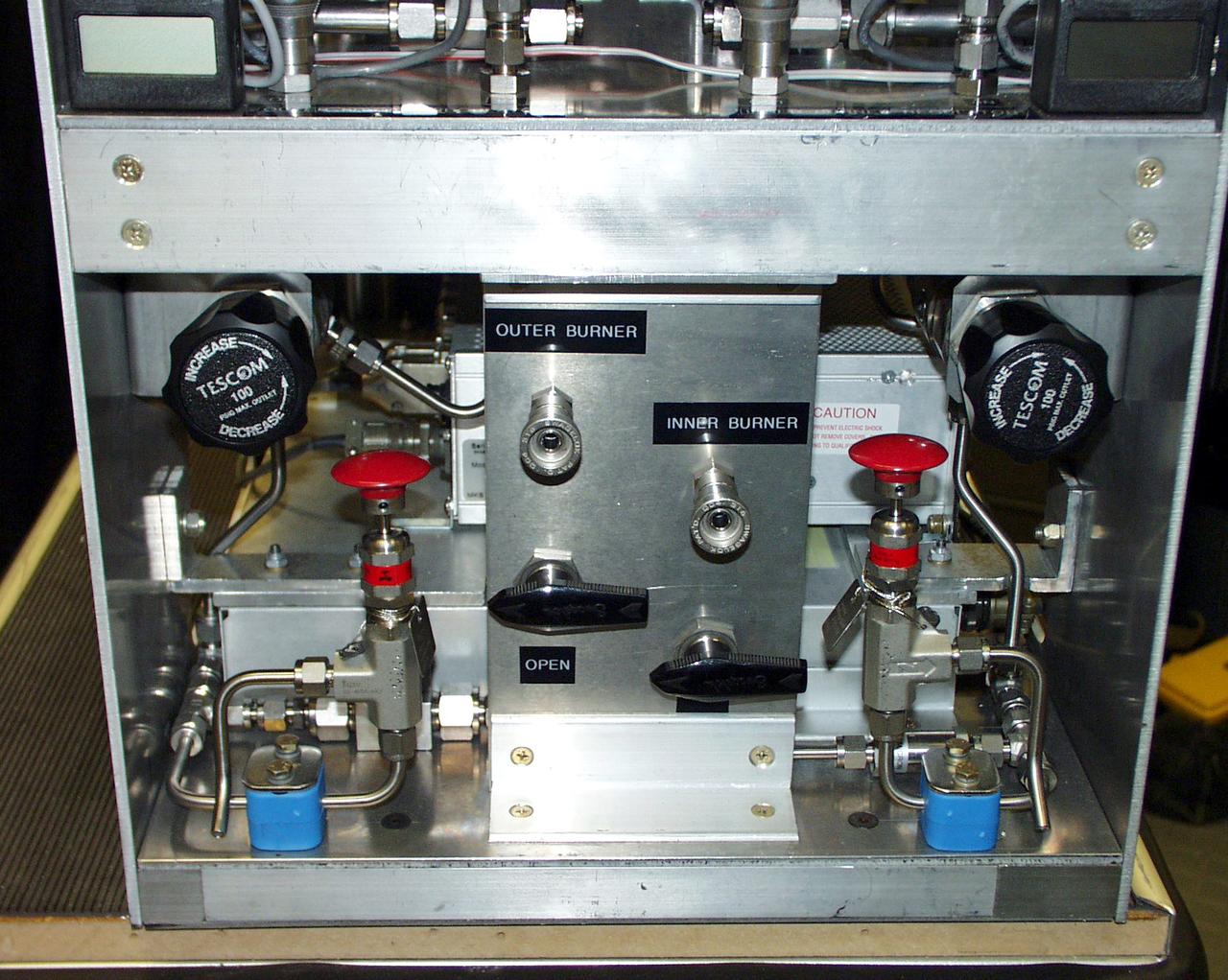
Interior of a combustion experiment apparatus used in the 2.2-second drop tower at NASA's Glenn Research Center. This was shown to students participating in the second Dropping in a Microgravity Environment (DIME) competition held April 23-25, 2002, at NASA's Glenn Research Center. Competitors included two teams from Sycamore High School, Cincinnati, OH, and one each from Bay High School, Bay Village, OH, and COSI Academy, Columbus, OH. DIME is part of NASA's education and outreach activities. Details are on line at http://microgravity.grc.nasa.gov/DIME_2002.html.
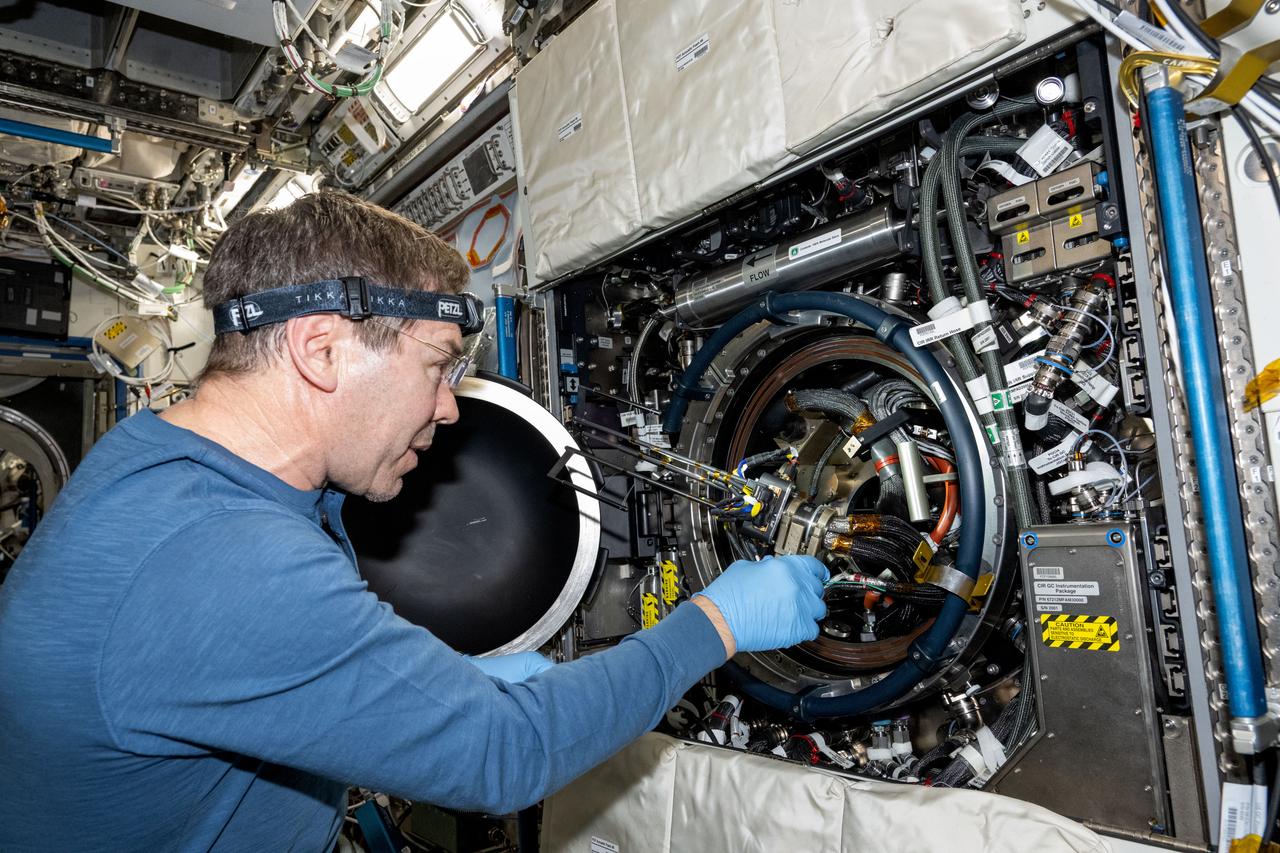
iss071e439784 (Aug. 5, 2024) --- NASA astronaut and Expedition 71 Flight Engineer Mike Barratt replaces fuel bottles and other components inside the Combustion Integrated Rack located inside the Intenational Space Station's Destiny laboratory.

"NASA astronaut Karen Nyberg,Expedition 36 flight engineer,works with the Combustion Integrated Rack (CIR) Alignment Guide Removal.
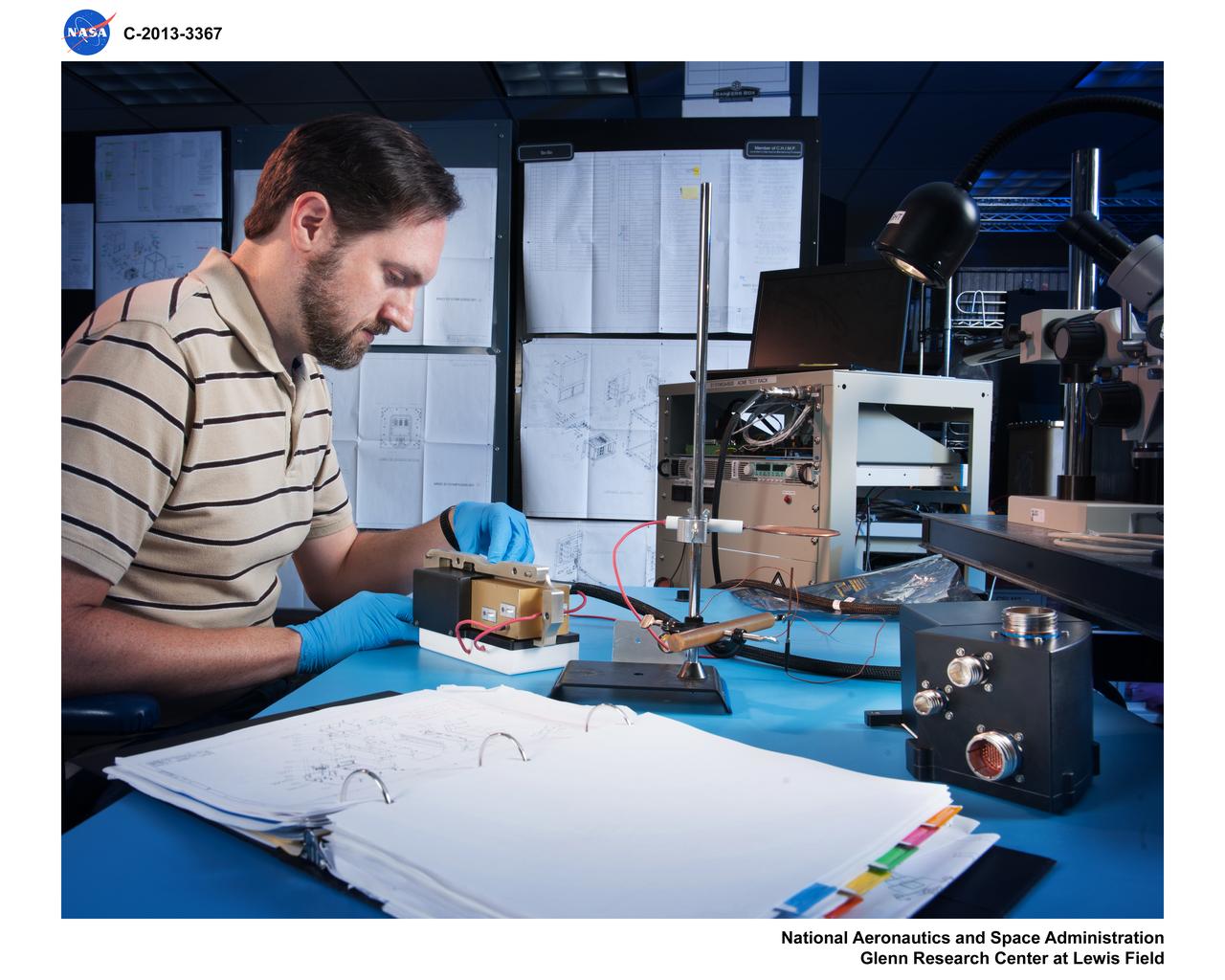
Mechanical Engineer Adrian Drake inspects engineering model hardware built to generate a high-voltage electric field for the Electric-Field Effects on Laminar Diffusion Flames (E-FIELD Flames) experiment of the Advanced Combustion via Microgravity Experiments (ACME) project. ACME’s small computer (i.e., the Cube) for data acquisition and control within the CIR combustion chamber is seen in the right foreground. The E-FIELD Flames tests were conducted in the Combustion Integrated Rack (CIR) on the International Space Station (ISS) in 2018.
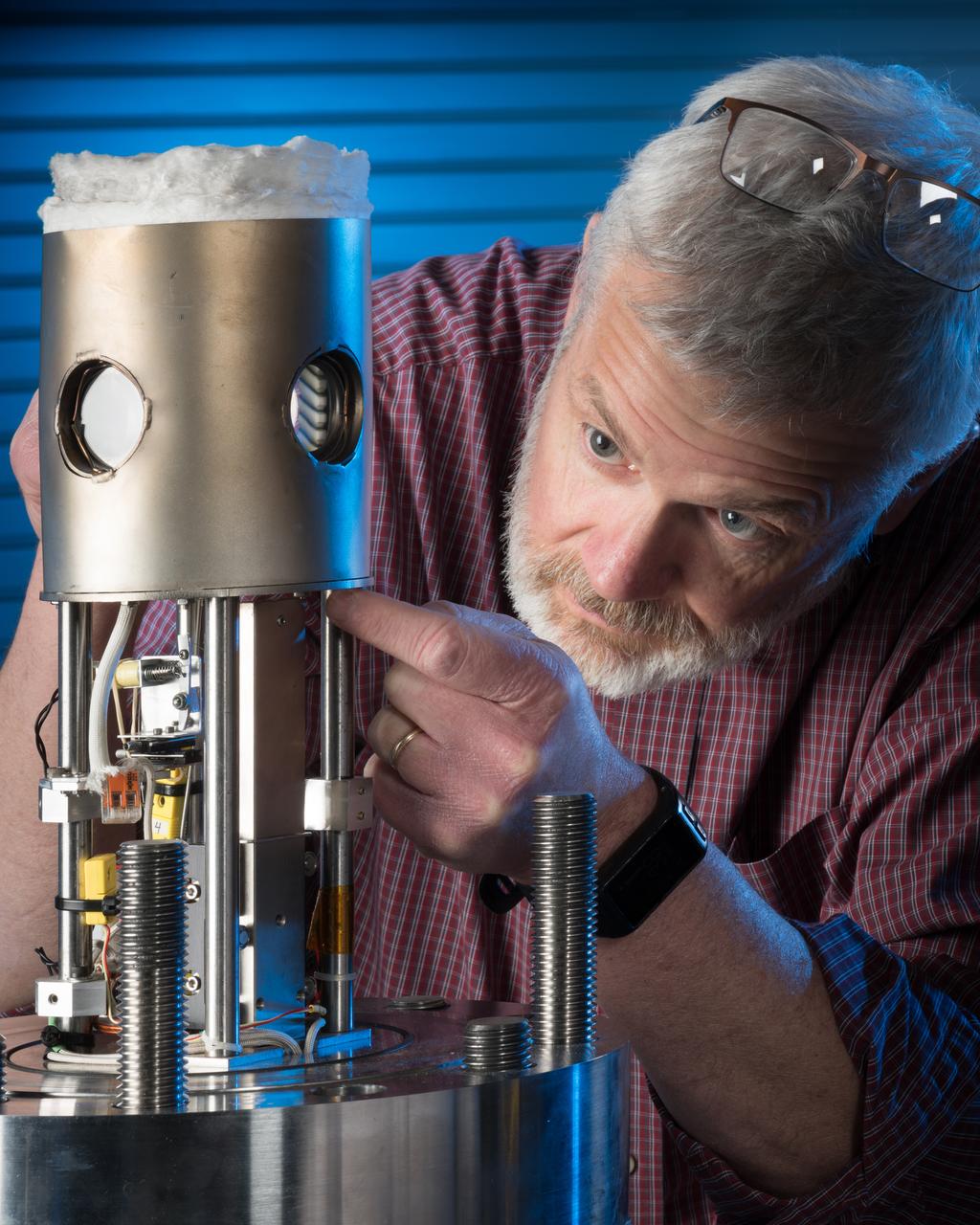
High Pressure Microgravity Combustion Experiment, HPMC, subjects liquid fuel droplets to high pressures and temperatures to study the ignition process in engine conditions, with a goal of improving fuel efficiency. In this configuration, the experiment is capable of testing droplet combustion at up to 100 atm of pressure, testing the droplet deployment system, which inserts the fuel droplet into the experiment.
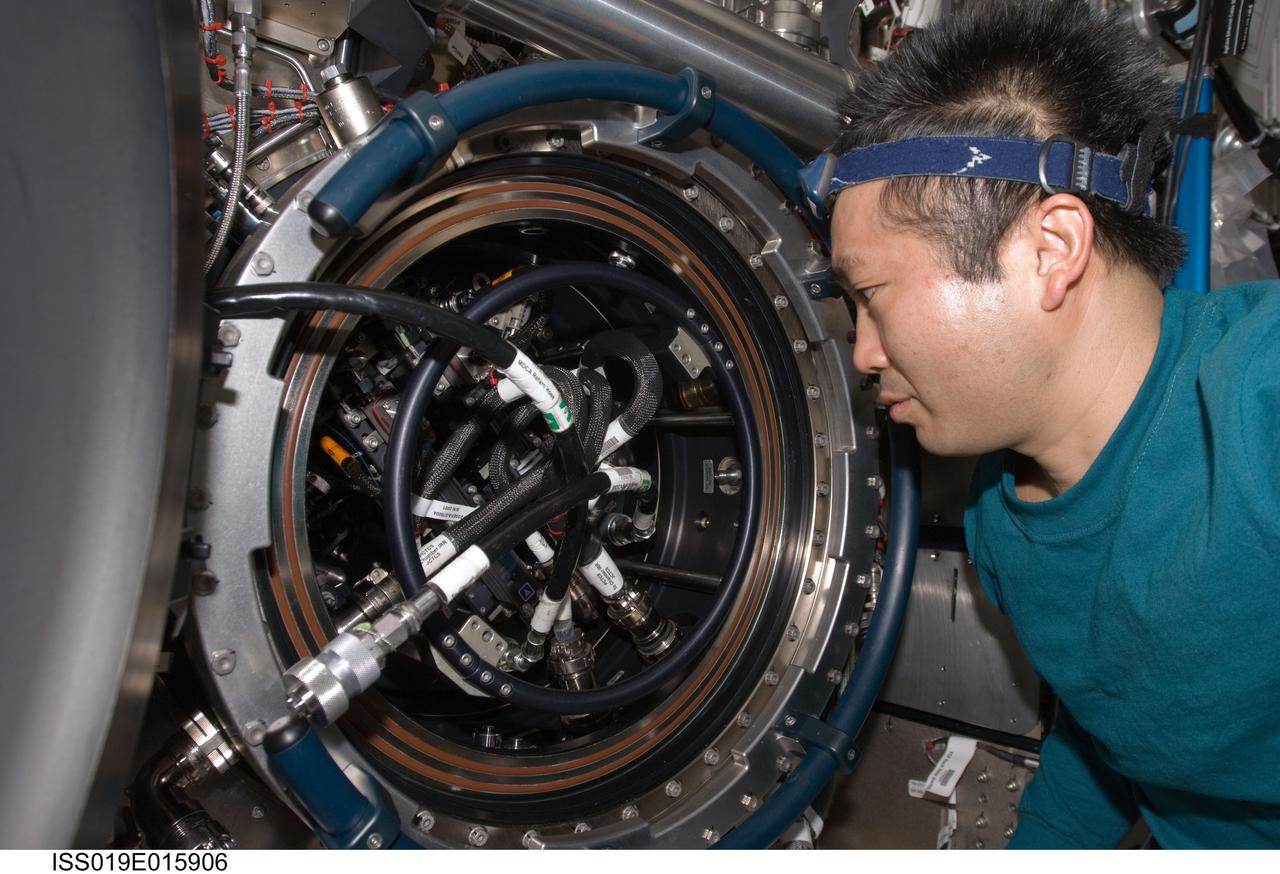
ISS019-E-015906 (12 May 2009) --- Japan Aerospace Exploration Agency (JAXA) astronaut Koichi Wakata, Expedition 19/20 flight engineer, works on the Combustion Integrated Rack (CIR) Multi-user Drop Combustion Apparatus (MDCA) in the Destiny laboratory of the International Space Station. Wakata removed and replaced one fuel reservoir, which required temporary opening the front end cap and removing the fuel supply bypass Quick Disconnect (QD).
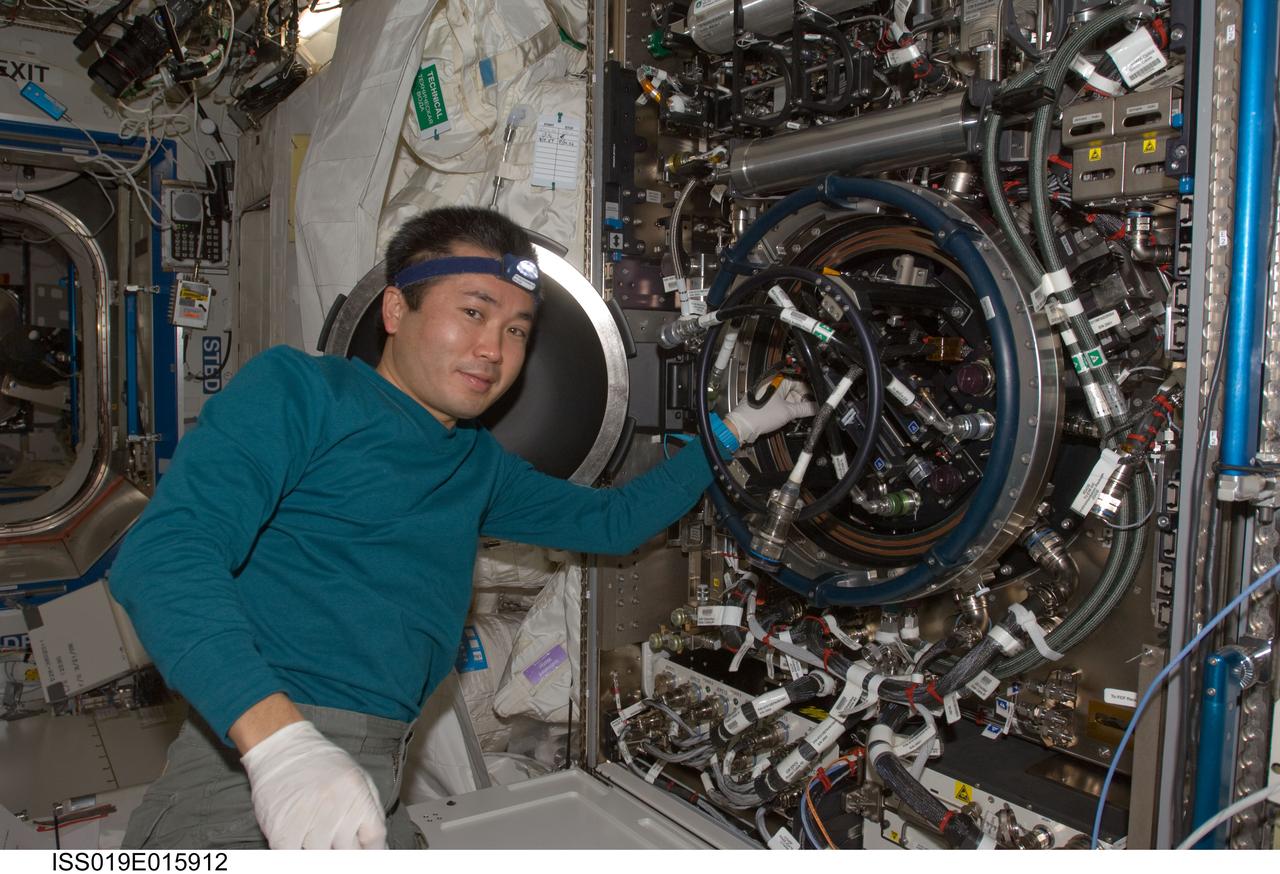
ISS019-E-015912 (12 May 2009) --- Japan Aerospace Exploration Agency (JAXA) astronaut Koichi Wakata, Expedition 19/20 flight engineer, works on the Combustion Integrated Rack (CIR) Multi-user Drop Combustion Apparatus (MDCA) in the Destiny laboratory of the International Space Station. Wakata removed and replaced one fuel reservoir, which required temporary opening the front end cap and removing the fuel supply bypass Quick Disconnect (QD).
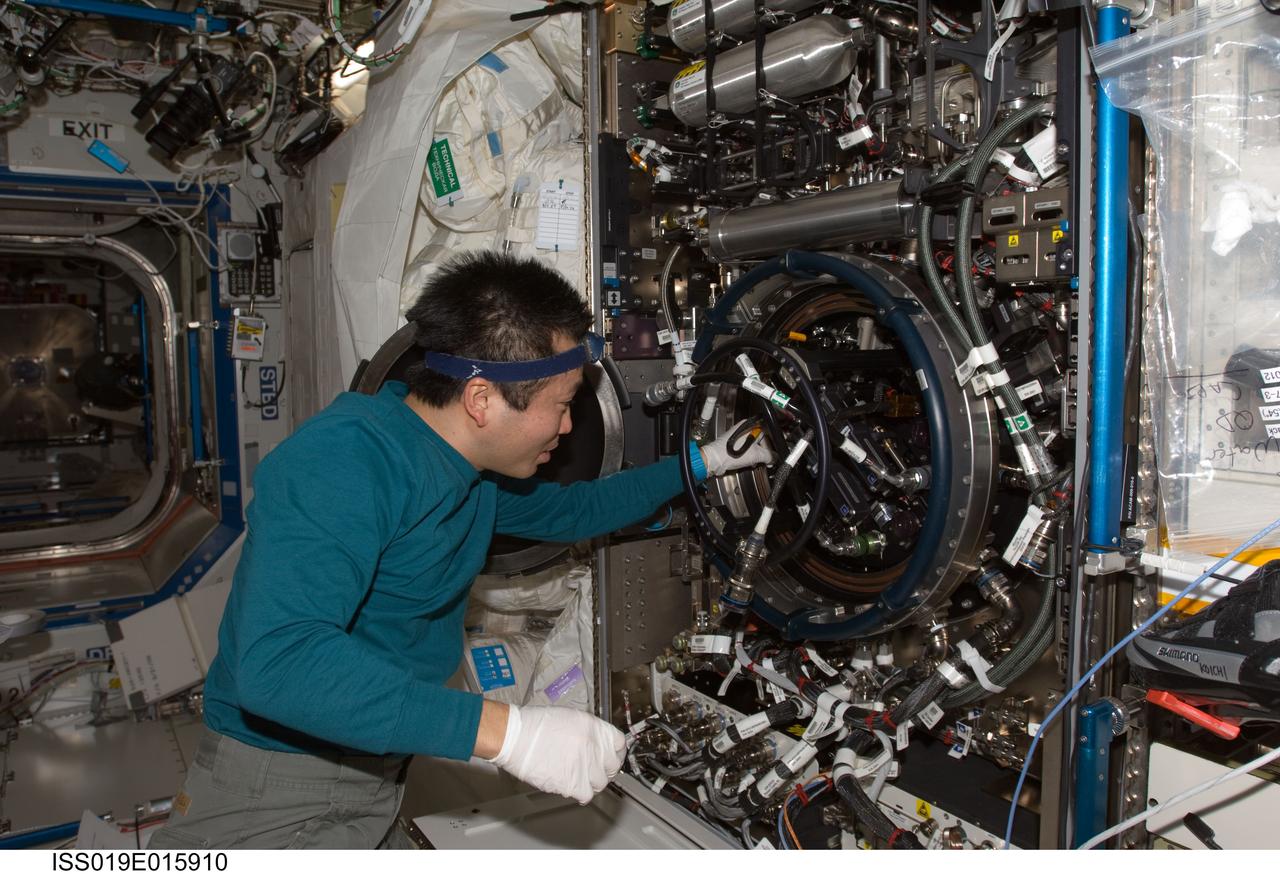
ISS019-E-015910(12 May 2009) --- Japan Aerospace Exploration Agency (JAXA) astronaut Koichi Wakata, Expedition 19/20 flight engineer, works on the Combustion Integrated Rack (CIR) Multi-user Drop Combustion Apparatus (MDCA) in the Destiny laboratory of the International Space Station. Wakata removed and replaced one fuel reservoir, which required temporary opening the front end cap and removing the fuel supply bypass Quick Disconnect (QD).

STS064-10-011 (12 Sept. 1994) --- The Solid Surface Combustion Experiment (SSCE), designed to supply information on flame spread over solid fuel surfaces in the reduced-gravity environment of space, is pictured during flight day four operations. The middeck experiment measured the rate of spreading, the solid-phase temperature, and the gas-phase temperature of flames spreading over rectangular fuel beds. STS-64 marked the seventh trip into space for the Lewis Research Center experiment. Photo credit: NASA or National Aeronautics and Space Administration
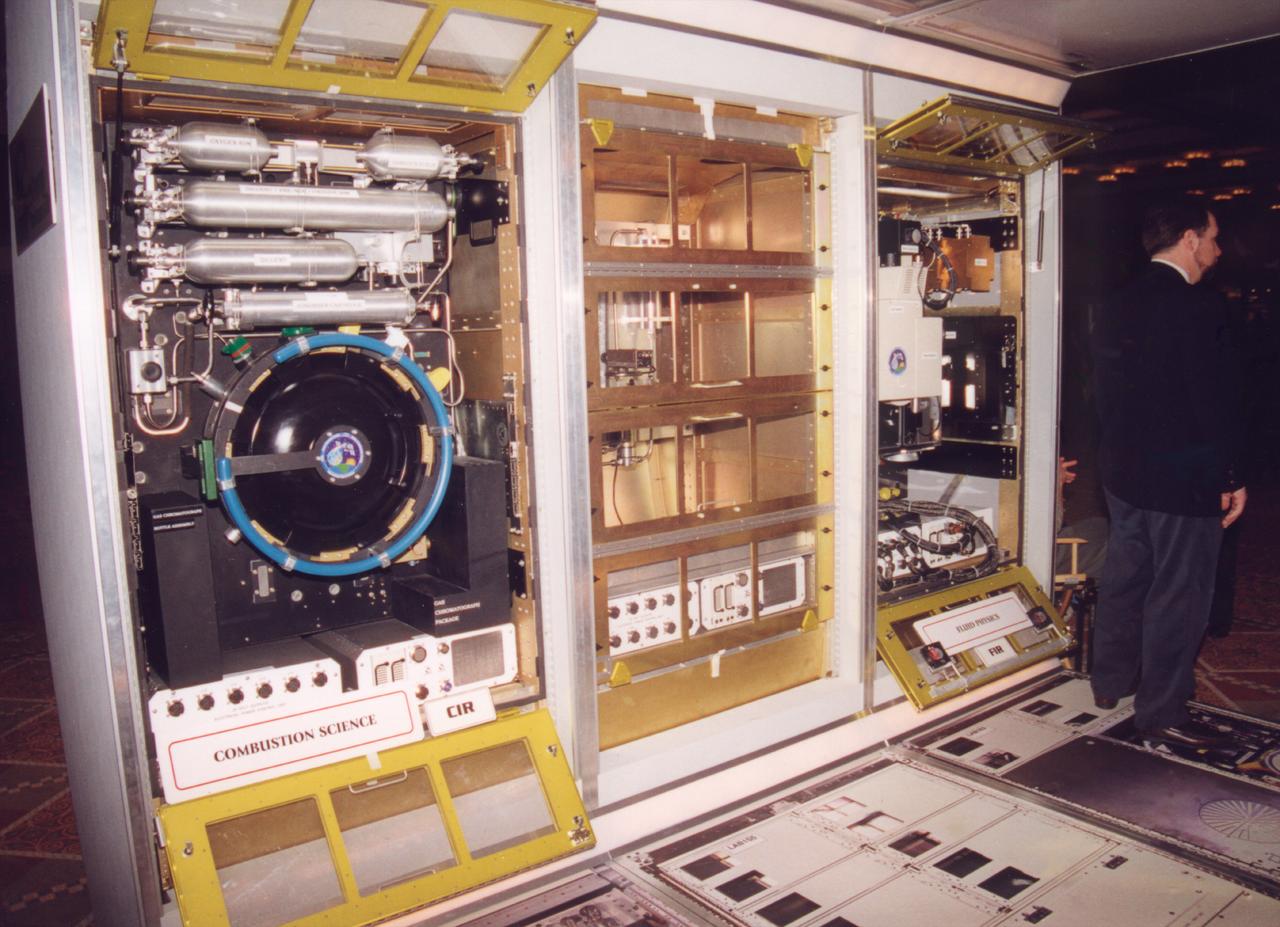
The Fluids and Combustion Facility (FCF) is a modular, multi-user facility to accommodate microgravity science experiments on board Destiny, the U.S. Laboratory Module for the International Space Station (ISS). The FCF will be a permanet facility aboard the ISS, and will be capable of accommodating up to ten science investigations per year. It will support the NASA Science and Technology Research Plans for the International Space Station (ISS) which require sustained systematic research of the effects of reduced gravity in the areas of fluid physics and combustion science. From left to right are the Combustion Integrated Rack, the Shared Rack, and the Fluids Integrated Rack. The FCF is being developed by the Microgravity Science Division (MSD) at the NASA Glenn Research Center. (Photo Credit: NASA/Marshall Space Flight Center)
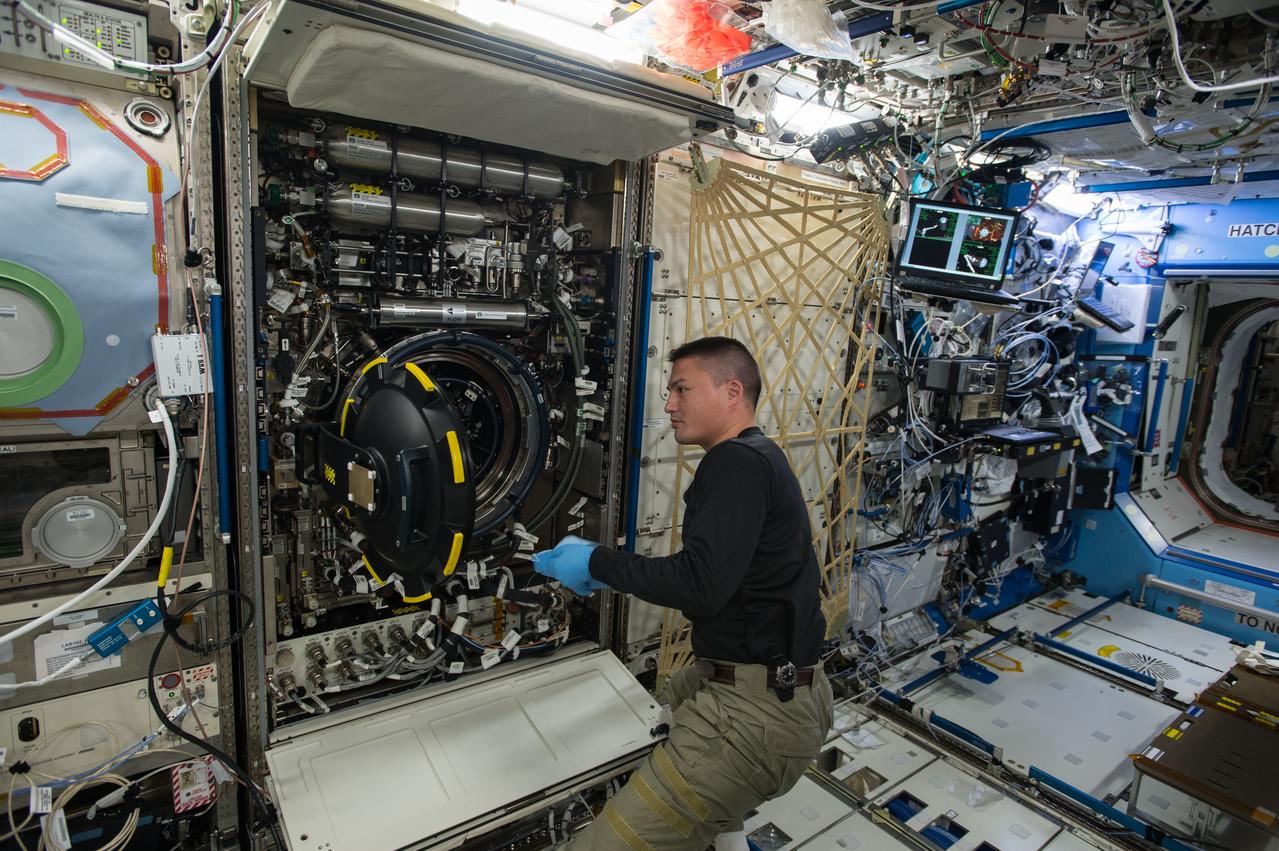
ISS044E064666 (08/20/2015) --- NASA astronaut Kjell Lindgren replaces items inside the Multi-user Droplet Combustion Apparatus found inside the station’s Combustion Integrated Rack (CIR.) The CIR houses hardware capable of performing combustion experiments to further research of combustion in microgravity.
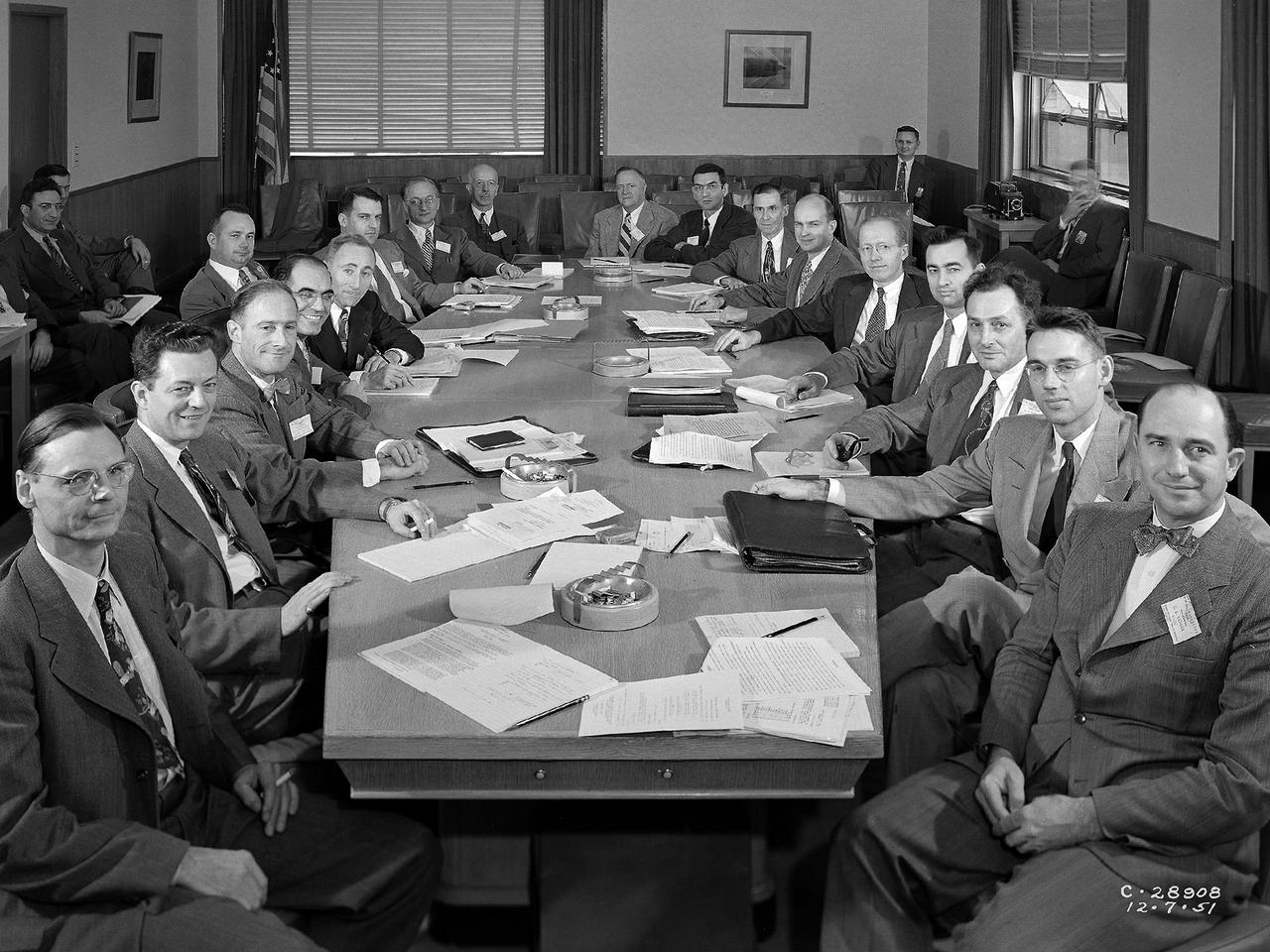
The National Advisory Committee for Aeronautics (NACA) Subcommittee on Combustion holds a meeting at Lewis Flight Propulsion Laboratory in Cleveland, Ohio. The NACA was managed by committees that included members of their own staff along with representatives from industry, the military, other government agencies, and universities. The 17-person Executive Committee was the NACA’s primary administrative body. They met several times a year at the NACA headquarters office in Washington DC to discuss broad issues confronting the US aeronautical community. Jerome Hunsaker, head of the Department of Aeronautical Engineering at the Massachusetts Institute of Technology, served as the NACA chairman from 1941 to 1956. George Lewis was not a member of the Executive Committee but served a key role as the NACA’s Director of Aeronautical Research. The NACA’s organizational chart also included 11 technical committees, several of which had specialized subcommittees. There were over 100 different subcommittees between World War I and 1958. The number of active subcommittees varied over the years. Most existed only for a few years, but some continued for over a decade. The subcommittees met three or four times per year, often at the laboratory most closely associated with the area of research. A team of laboratory researchers presented briefings on their recent activities and plans for the future. The Subcommittee on Combustion existed from 1945 to the NACA’s demise in 1958.
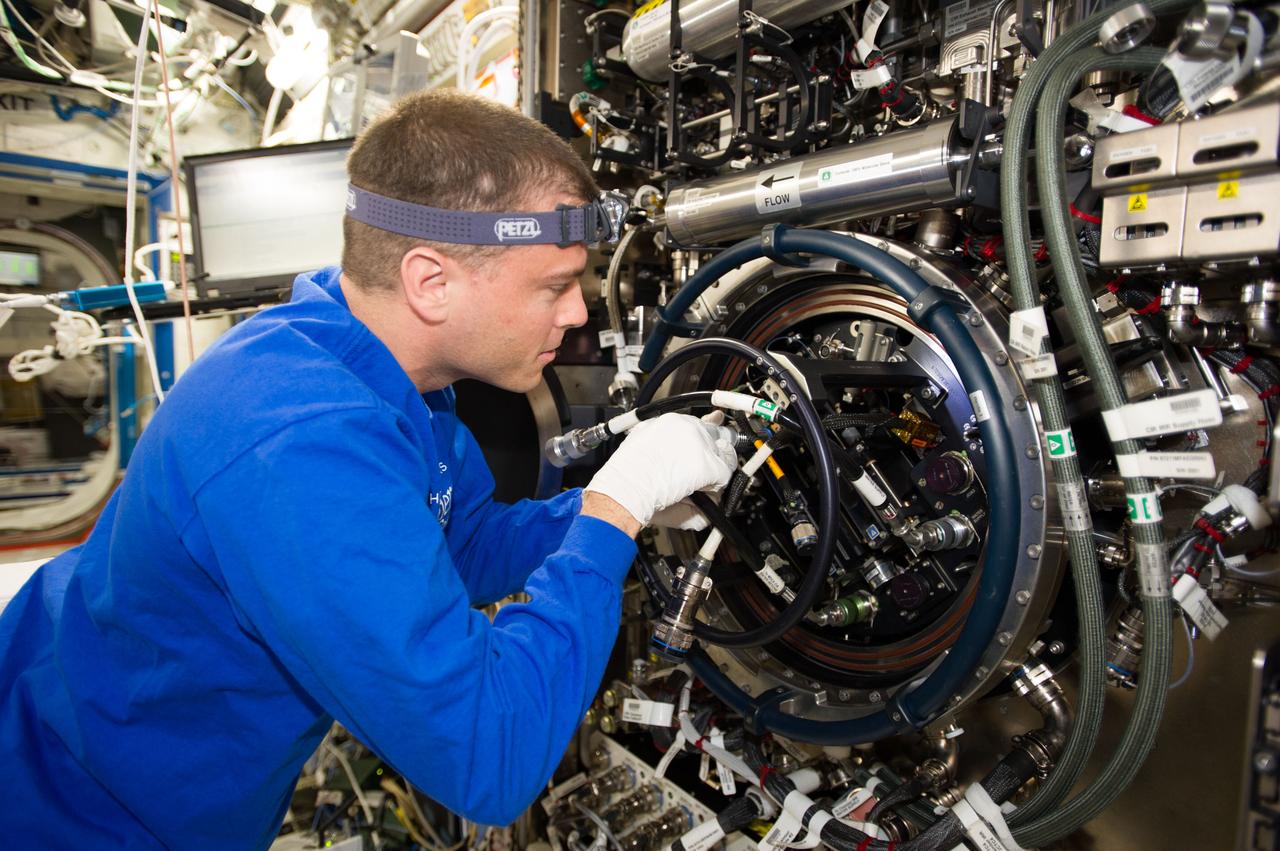
ISS040-E-090493 (11 Aug. 2014) --- NASA astronaut Reid Wiseman, Expedition 40 flight engineer, performs routine in-flight maintenance on the Multi-user Drop Combustion Apparatus (MDCA) inside the Combustion Integrated Rack (CIR) in the Destiny laboratory of the International Space Station. The MDCA contains hardware and software to conduct unique droplet combustion experiments in space.
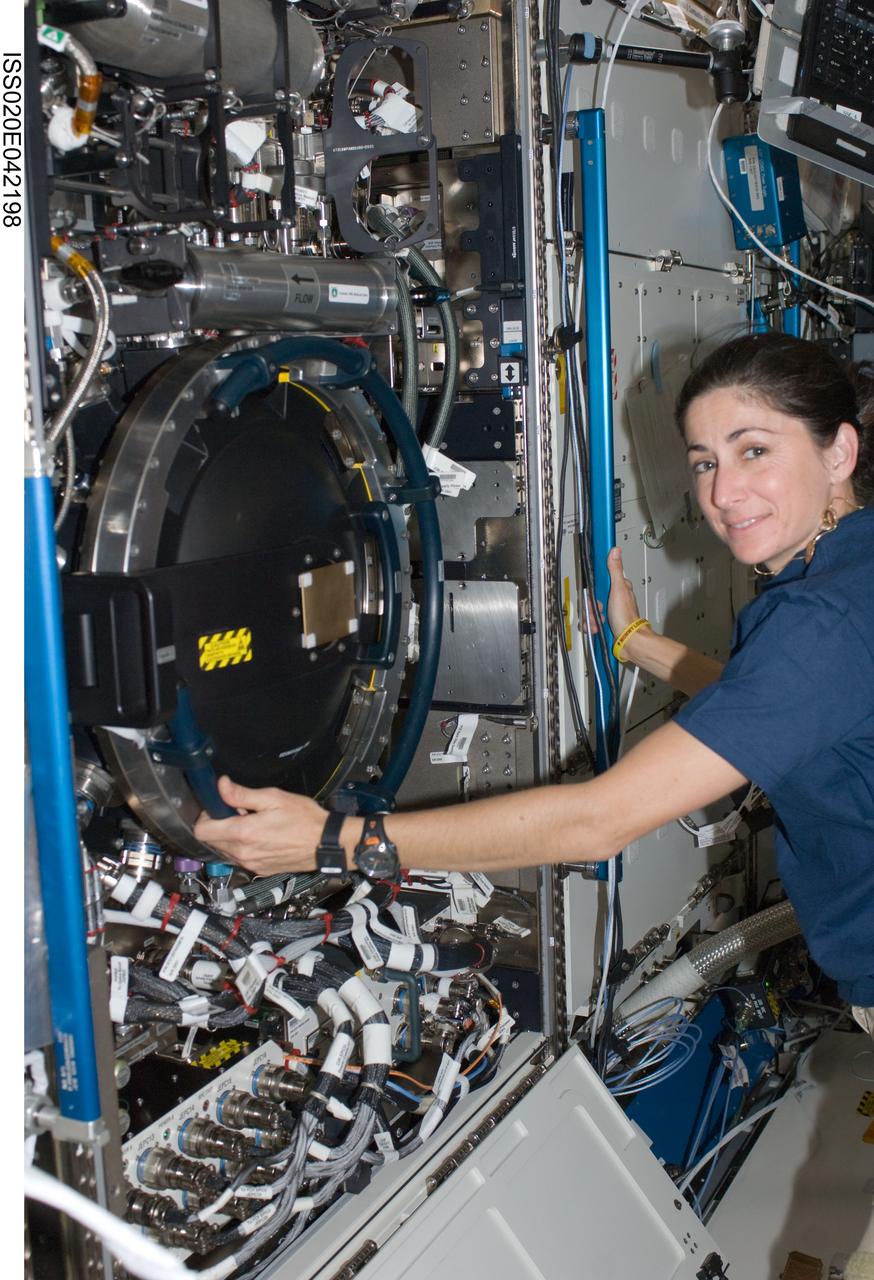
ISS020-E-042198 (26 Sept. 2009) --- NASA astronaut Nicole Stott, Expedition 20 flight engineer, works with the Combustion Integrated Rack (CIR) in the Destiny laboratory of the International Space Station.
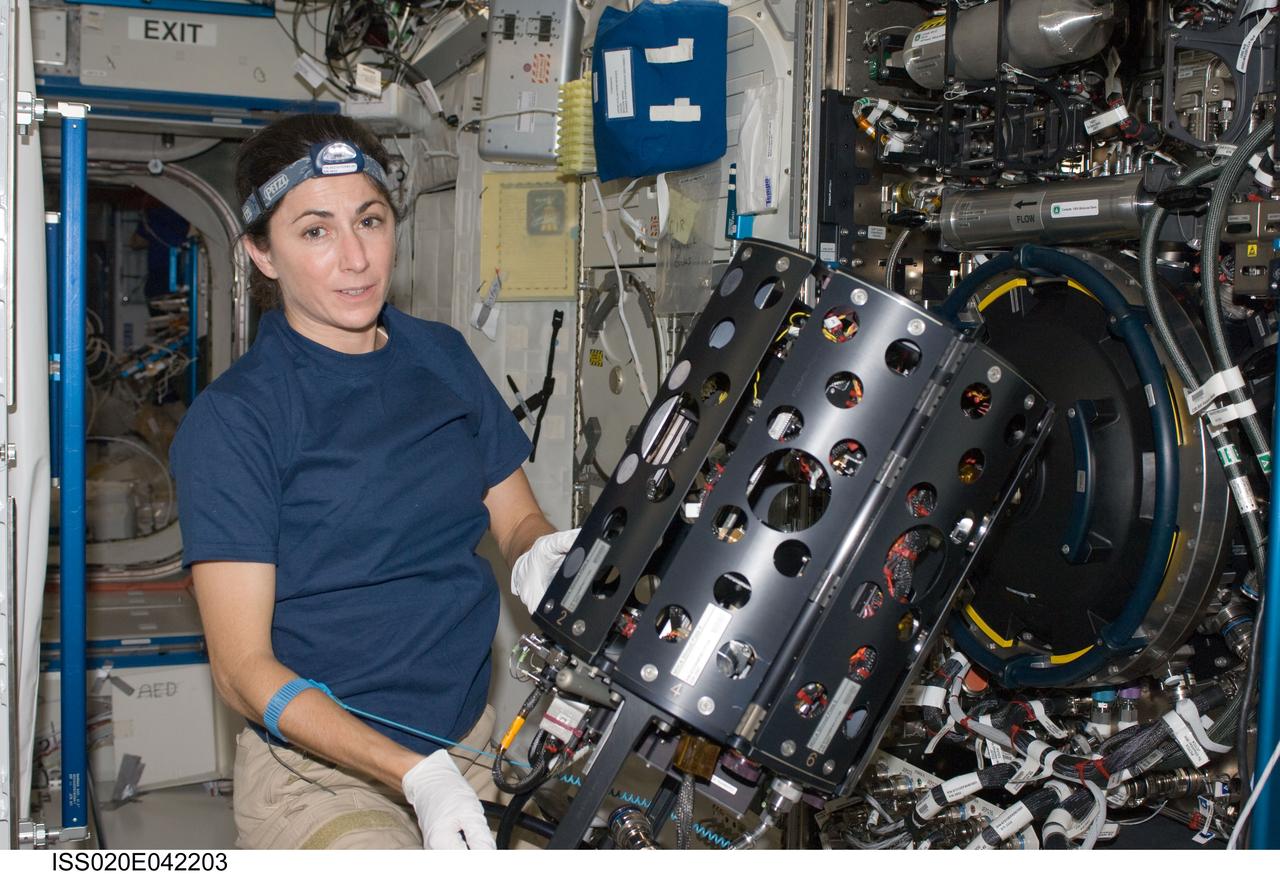
ISS020-E-042203 (26 Sept. 2009) --- NASA astronaut Nicole Stott, Expedition 20 flight engineer, works with the Combustion Integrated Rack (CIR) in the Destiny laboratory of the International Space Station.
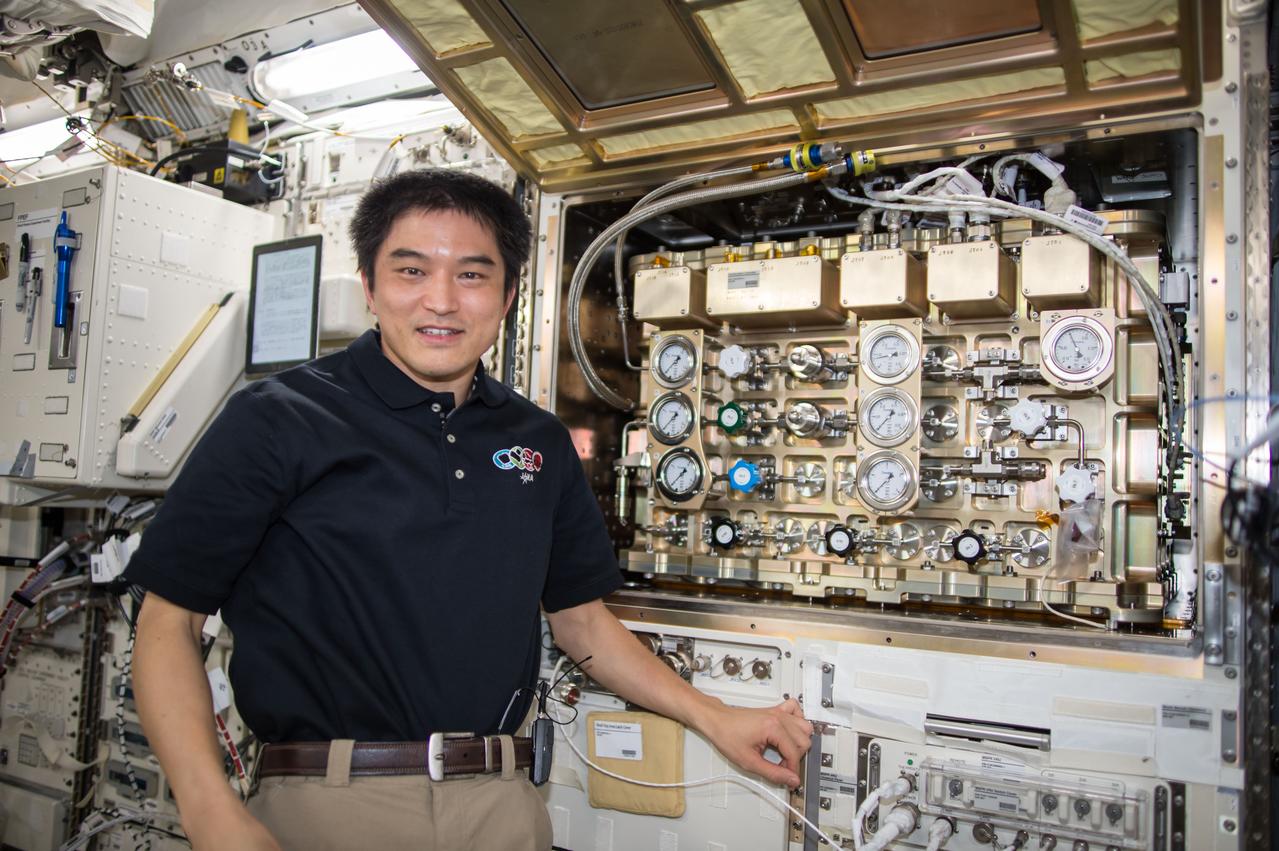
iss049e012031 (9/28/2016) --- Japan Aerospace Exploration Agency (JAXA) astronaut Takuya Onishi with the Multi purpose Small Payload Rack (MSPR) Combustion Chamber (CC) in Japanese Experiment Module (JEM).
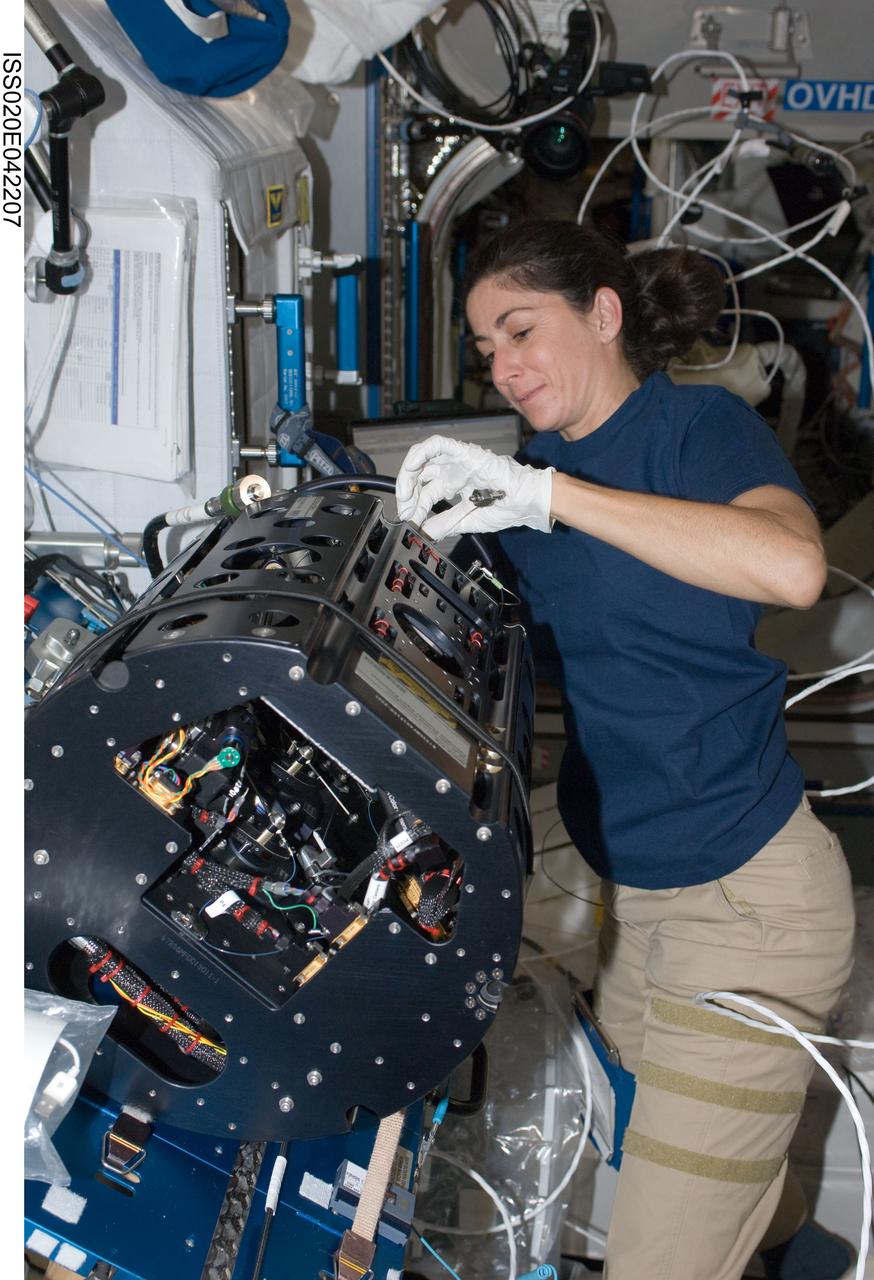
ISS020-E-042207 (26 Sept. 2009) --- NASA astronaut Nicole Stott, Expedition 20 flight engineer, works with the Combustion Integrated Rack (CIR) in the Destiny laboratory of the International Space Station.
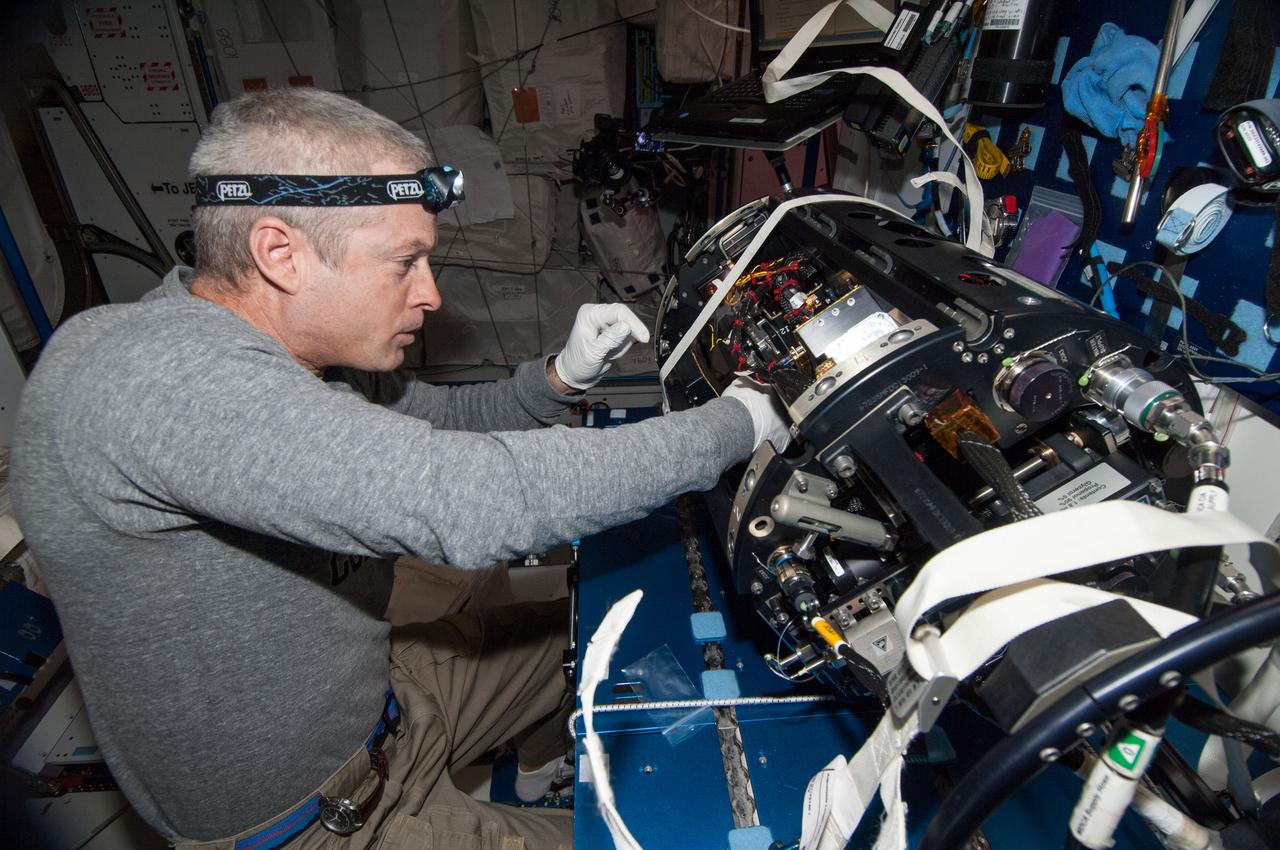
ISS040-E-010261 (11 June 2014) --- NASA astronaut Steve Swanson, Expedition 40 commander, works with the Multi-user Drop Combustion Apparatus (MDCA) at a workstation in the Harmony node of the International Space Station. The MDCA contains hardware and software to conduct unique droplet combustion experiments in space.
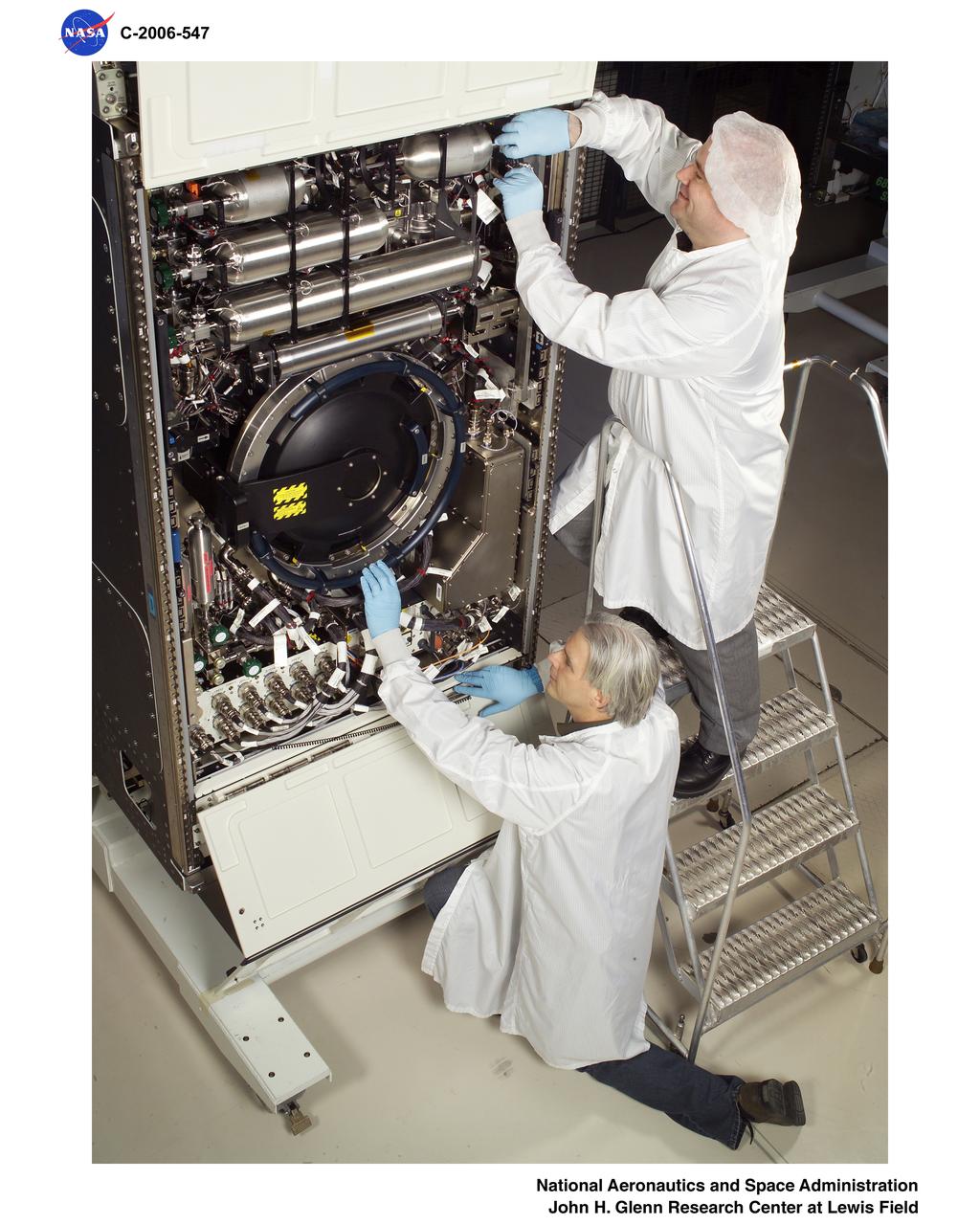
Combustion Integrated Rack (CIR)
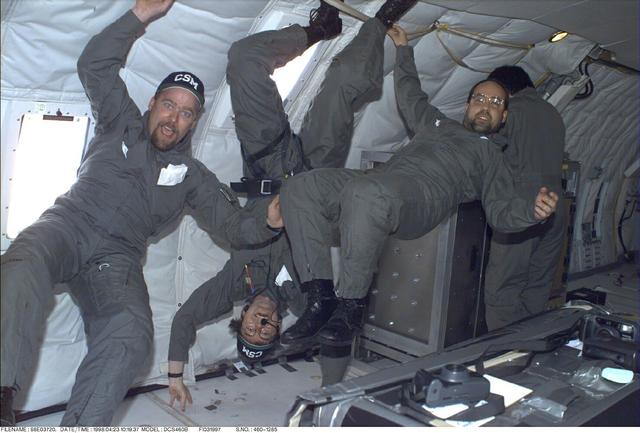
Members of the Water Mist experiment team float in the NASA KC-135 low-g aircraft during preflight tests of the experiment. At center is J. Thomas McKirnon (principal investigator); at right is Angel Abbud-Madrid (co-PI and project scientist). They are with the Center for Commercial Applications of Combustion in Space at the Colorado School of Mines. Water Mist will investigate how best to extinguish flames by using ultrafine droplets of water.
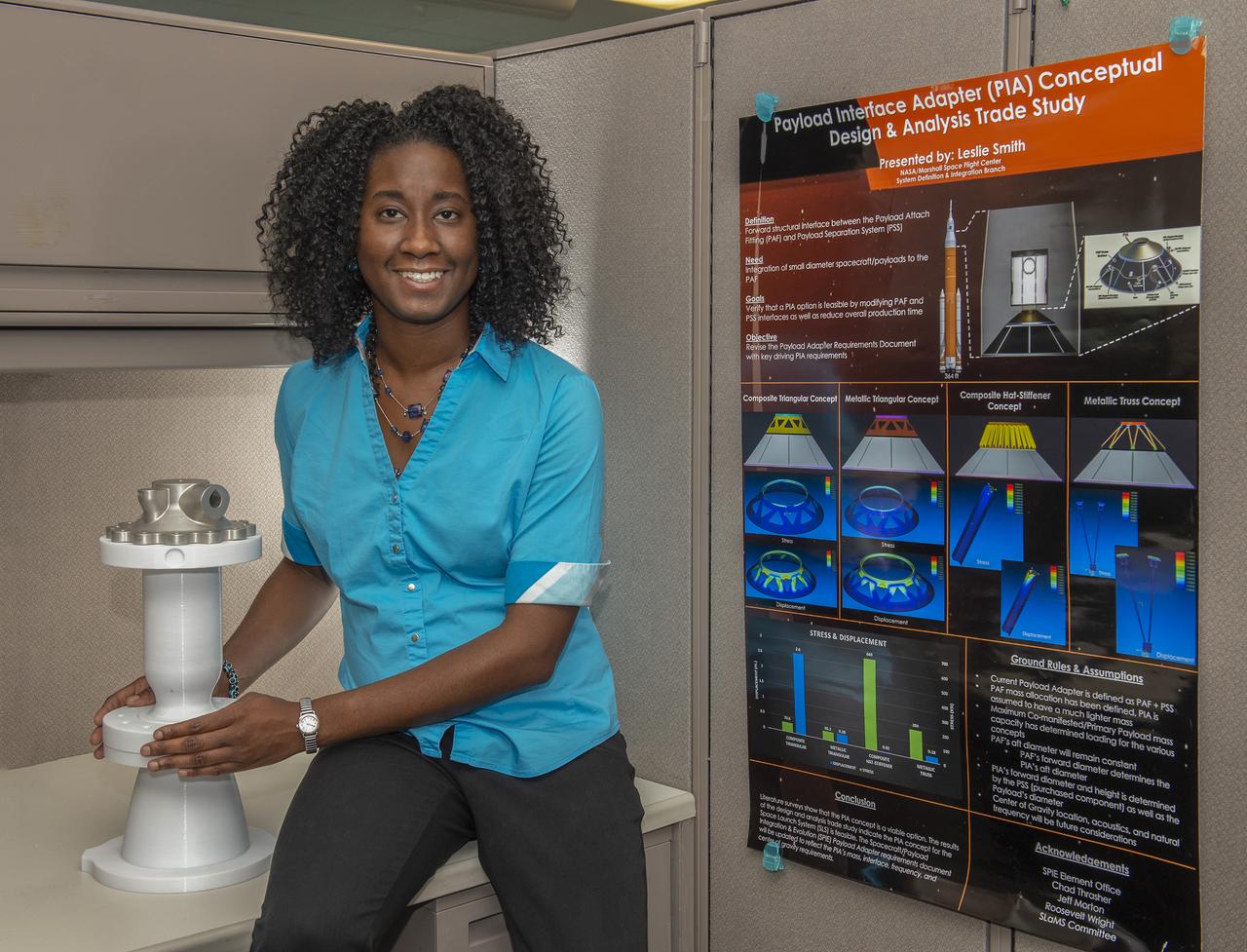
Leslie Smith, Systems Engineer, poses with an additive manufactured small combustion chamber, and poster she designed, of the Payload Interface Adapter (PIA) trade study that depicts four different concepts. The PIA is vital in helping transport various payloads to Beyond Earth Orbit.
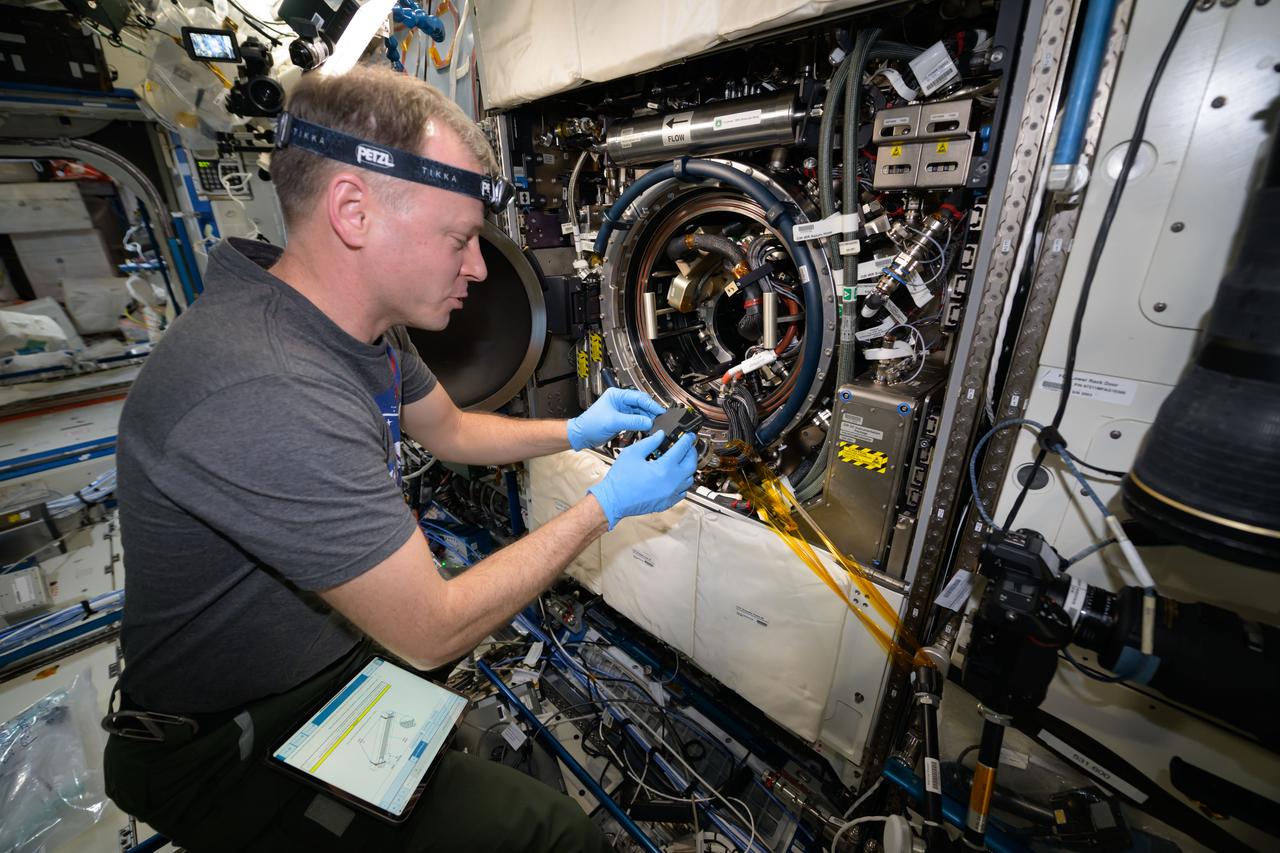
iss072e394546 (Dec. 18, 2024) --- NASA astronaut and Expedition 72 Flight Engineer Nick Hague processes samples inside the Destiny laboratory module's Combustion Integrated Rack. Those samples are being observed for how they burn in weightlessness to learn how to prevent fires on spacecraft.
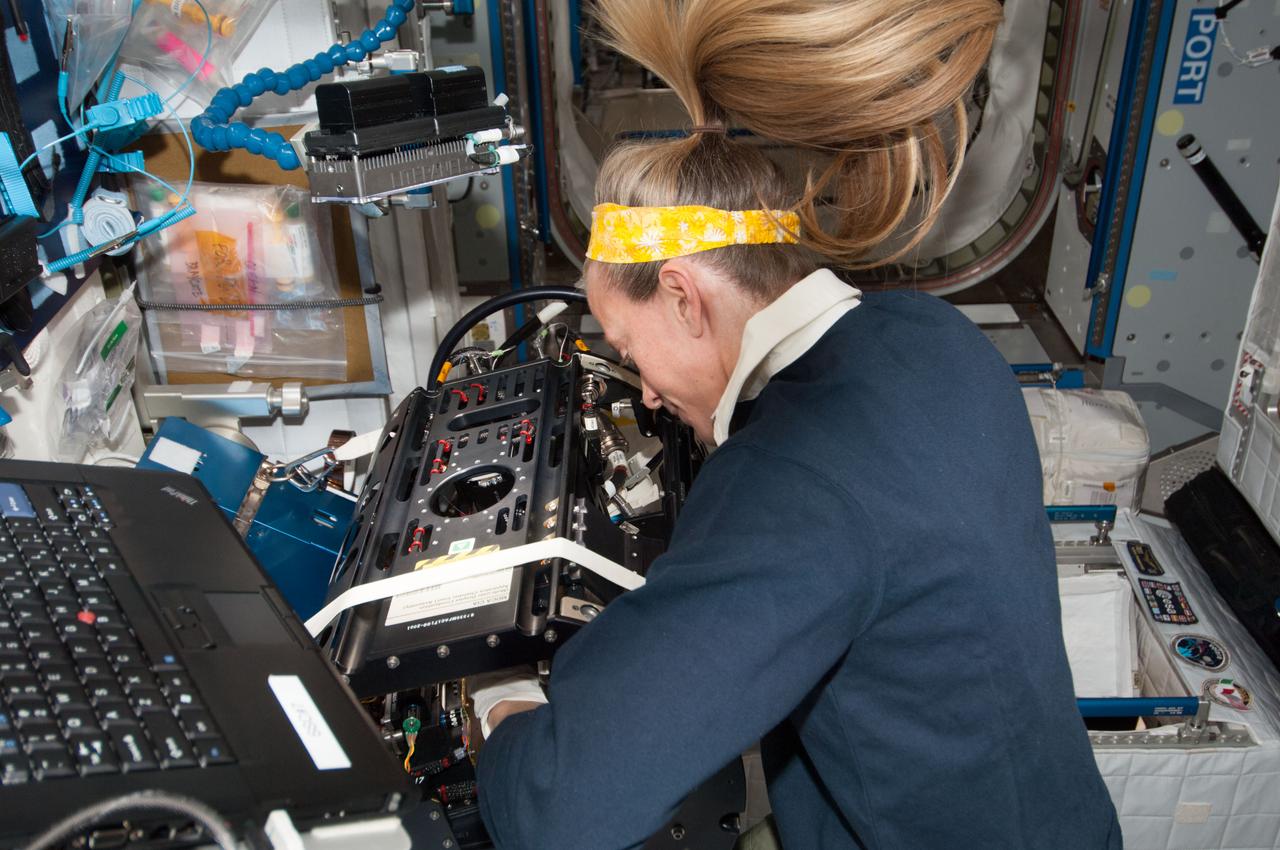
ISS037-E-004956 (2 Oct. 2013) --- NASA astronaut Karen Nyberg, Expedition 37 flight engineer, performs the Multi-user Droplet Combustion Apparatus (MDCA) hardware replacement in the Harmony node of the International Space Station.
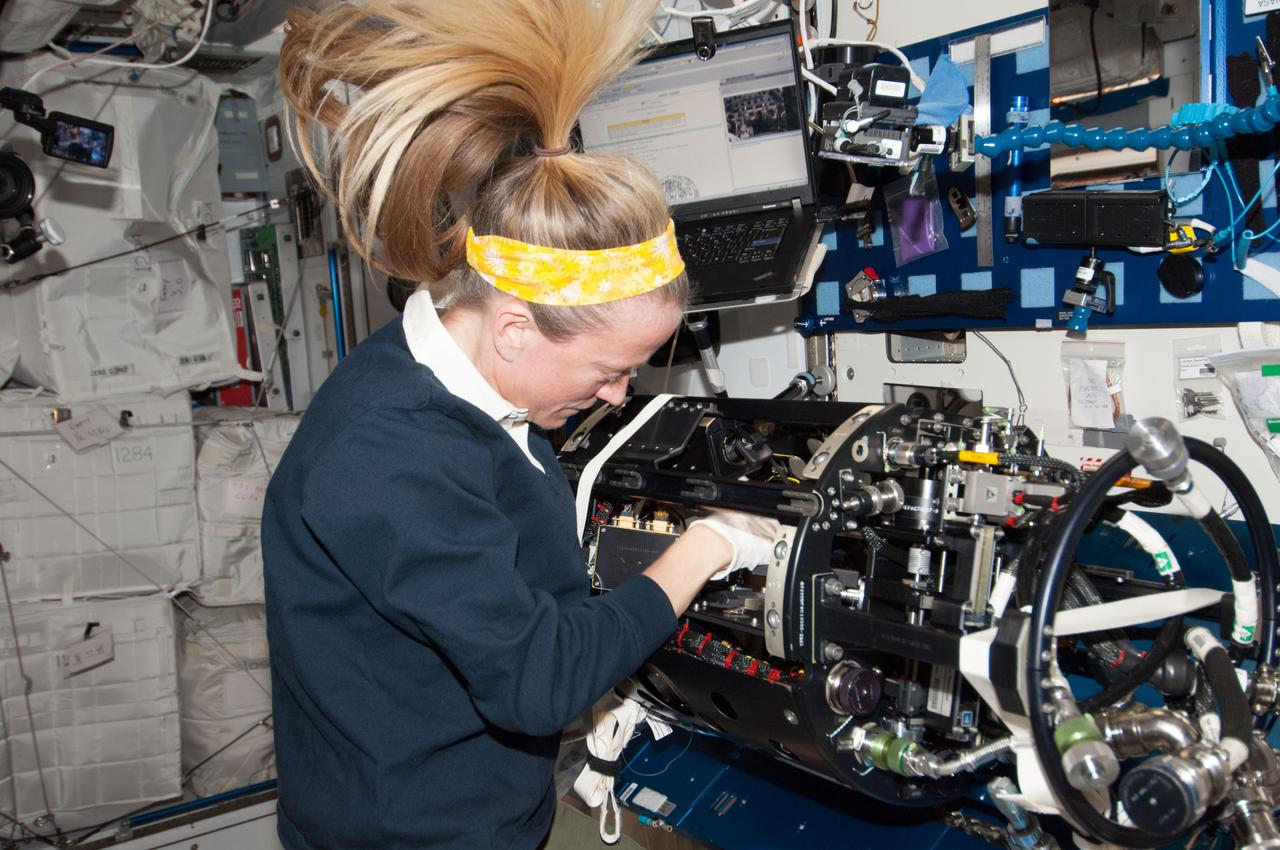
ISS037-E-004959 (2 Oct. 2013) --- NASA astronaut Karen Nyberg, Expedition 37 flight engineer, performs the Multi-user Droplet Combustion Apparatus (MDCA) hardware replacement in the Harmony node of the International Space Station.
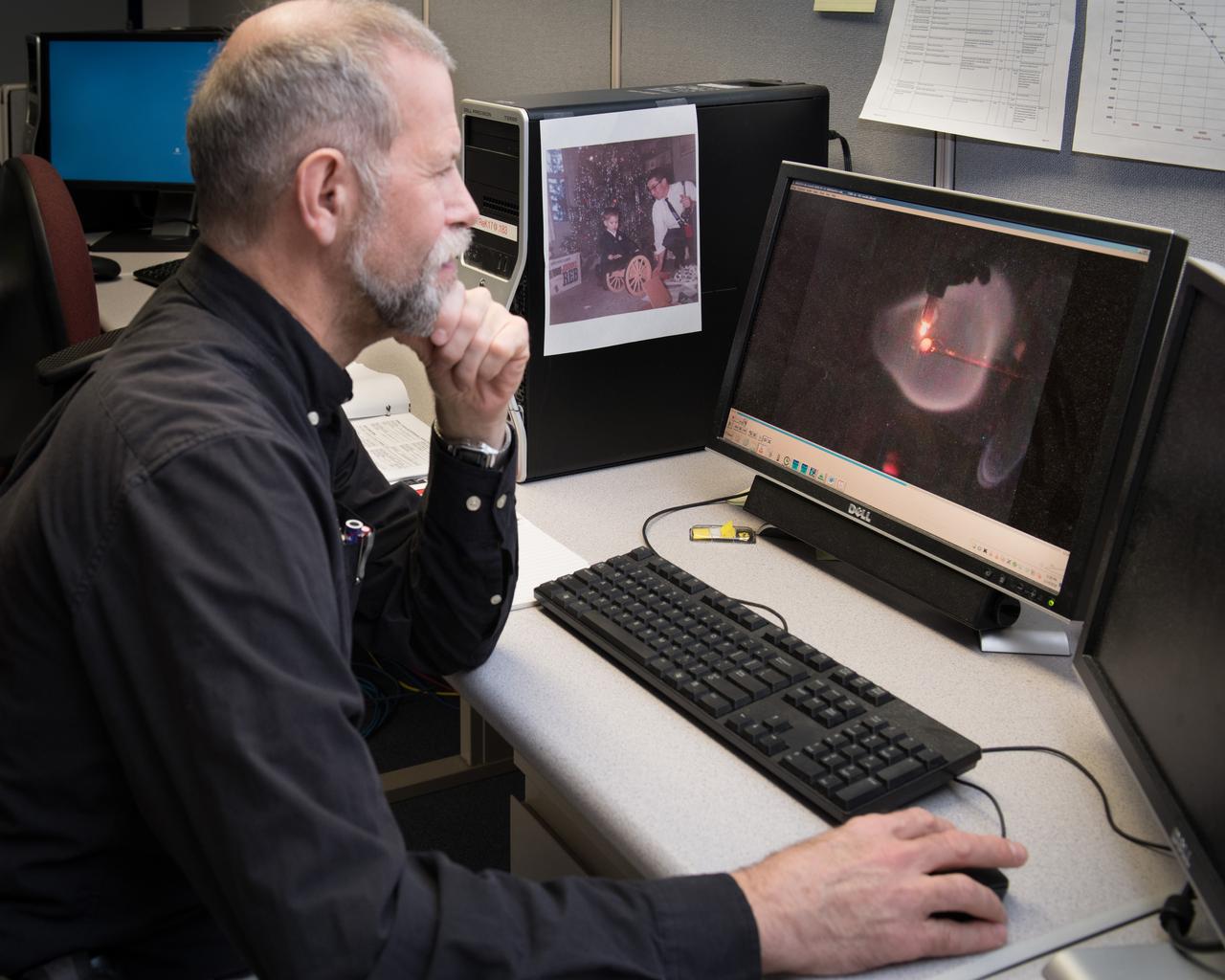
Review of ISS data from the Structure and Response of Spherical Diffusion Flames (s-Flame) experiment - of the Advanced Combustion via Microgravity Experiments. ACME project conducted in the Combustion Integrated Rack, CIR - by ACME Project Scientist Dennis Stocker in the Telescience Support Center,TSC, also known as the Glenn ISS Payload Operations Center, GIPOC
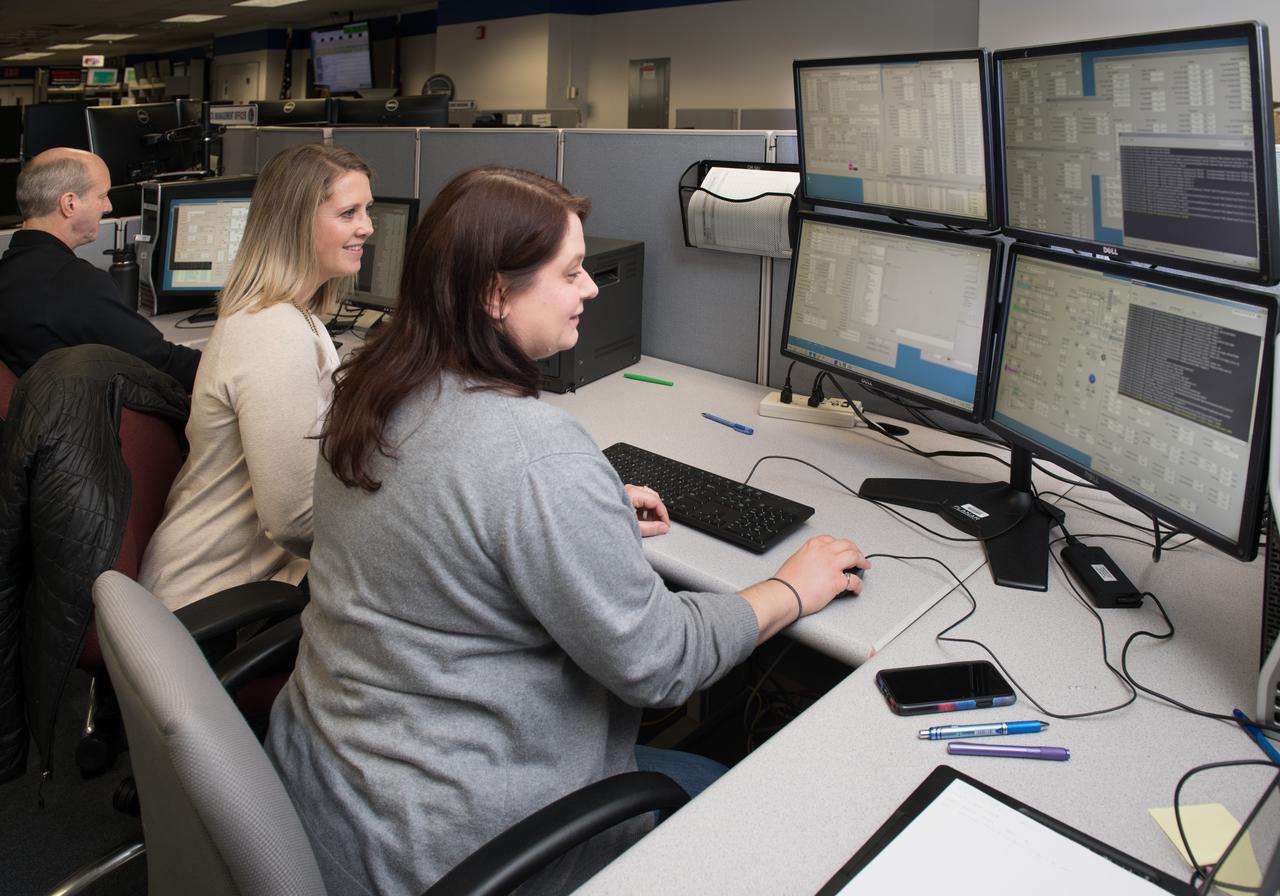
Testing of software with ground hardware for the Structue and Response of Spherical Diffusion Flames, s-Flame, experiment - of the Advanced Combustion via Microgravity Experiments, ACME, project conducted in the ISS Combustion Integrated Rack, CIR - by ACME Software Engineer Jeffrey Eggers, Operations Lead Angela Adams, and Planning Lead Melani Smajdek in the Telescience Support Center, TSC, also known as the Glenn ISS Payload Operations Center, GIPOC
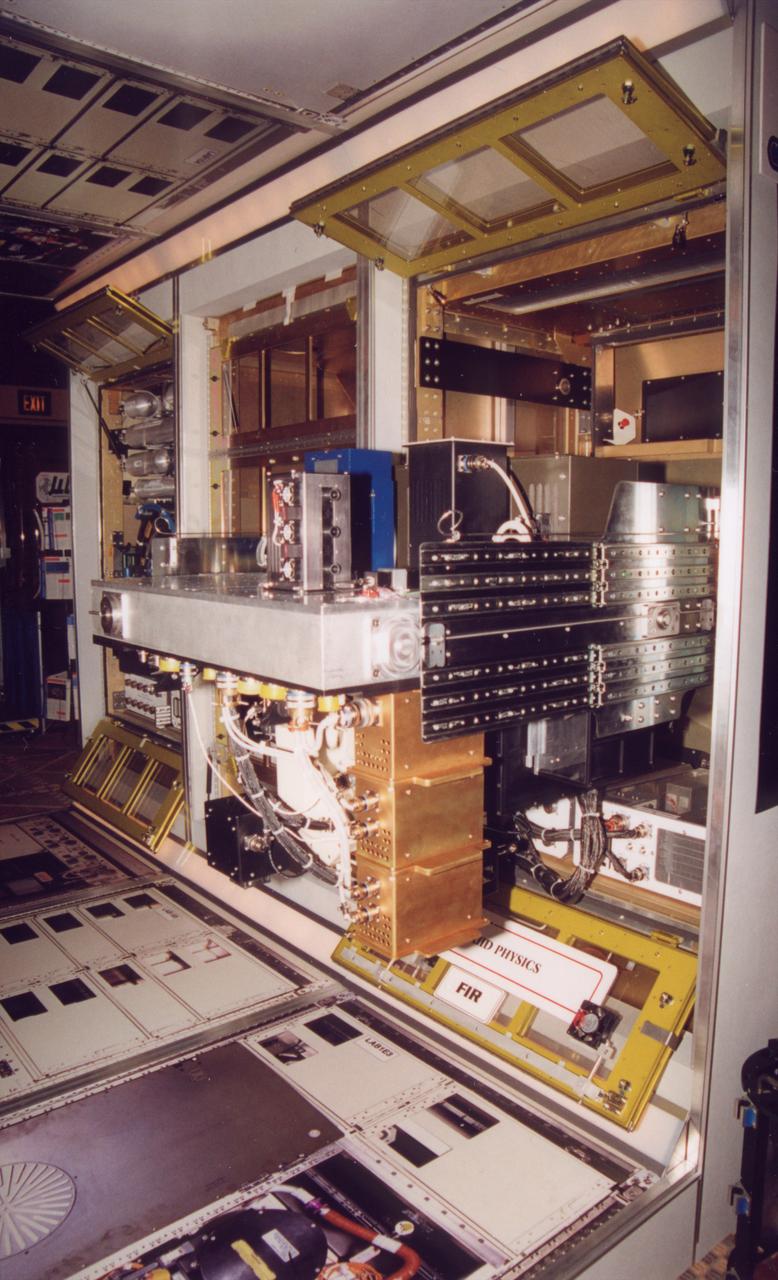
The optical bench for the Fluids Integrated Rack section of the Fluids and Combustion Facility (FCF) is shown extracted for servicing and with the optical bench rotated 90 degrees to access the rear elements. The FCF will be installed, in phases, in the Destiny, the U.S. Laboratory Module of the International Space Station (ISS), and will accommodate multiple users for a range of investigations. This is an engineering mockup; the flight hardware is subject to change as designs are refined. The FCF is being developed by the Microgravity Science Division (MSD) at the NASA Glenn Research Center. (Photo credit: NASA/Marshall Space Flight Center)
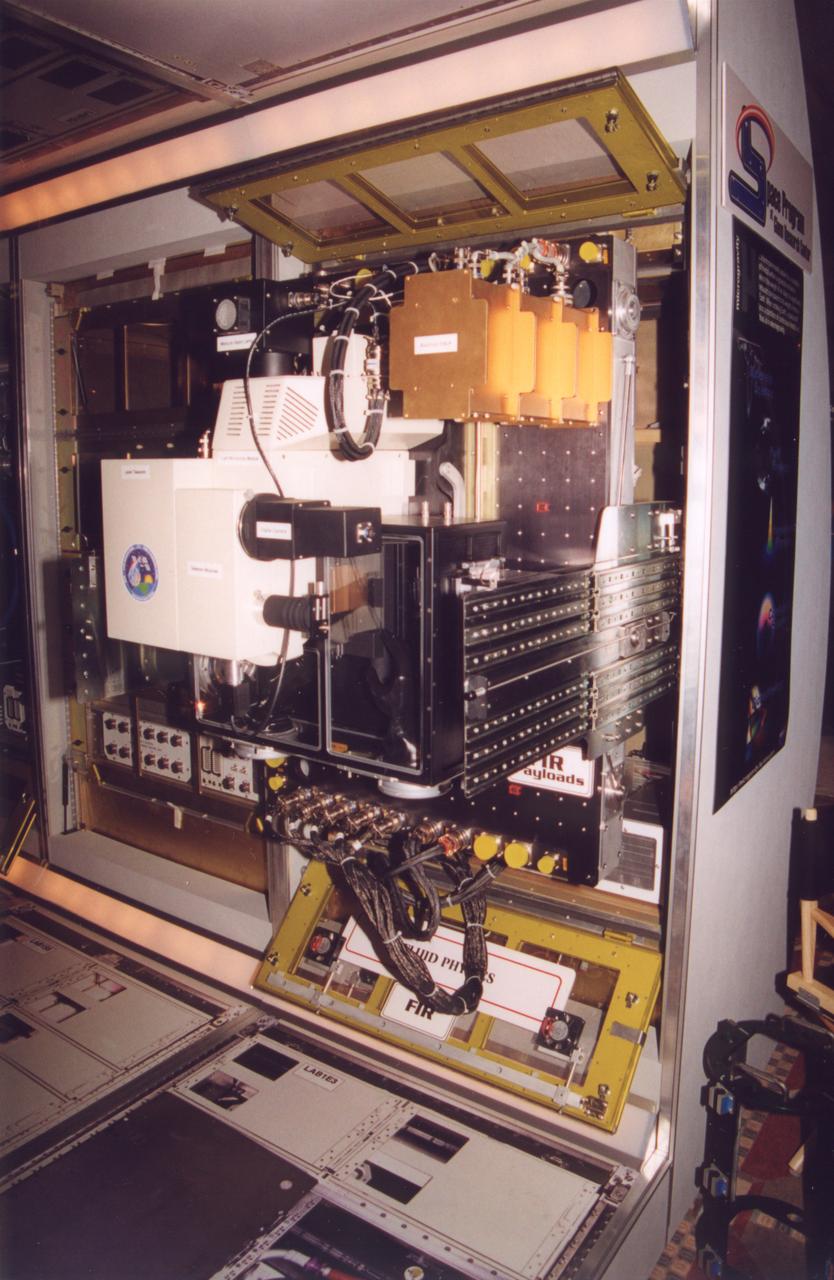
The optical bench for the Fluids Integrated Rack section of the Fluids and Combustion Facility (FCF) is shown extracted for servicing. The FCF will be installed, in phases, in the Destiny, the U.S. Laboratory Module of the International Space Station (ISS), and will accommodate multiple users for a range of investigations. This is an engineering mockup; the flight hardware is subject to change as designs are refined. The FCF is being developed by the Microgravity Science Division (MSD) at the NASA Glenn Research Center. (Photo credit: NASA/Marshall Space Flight Center)
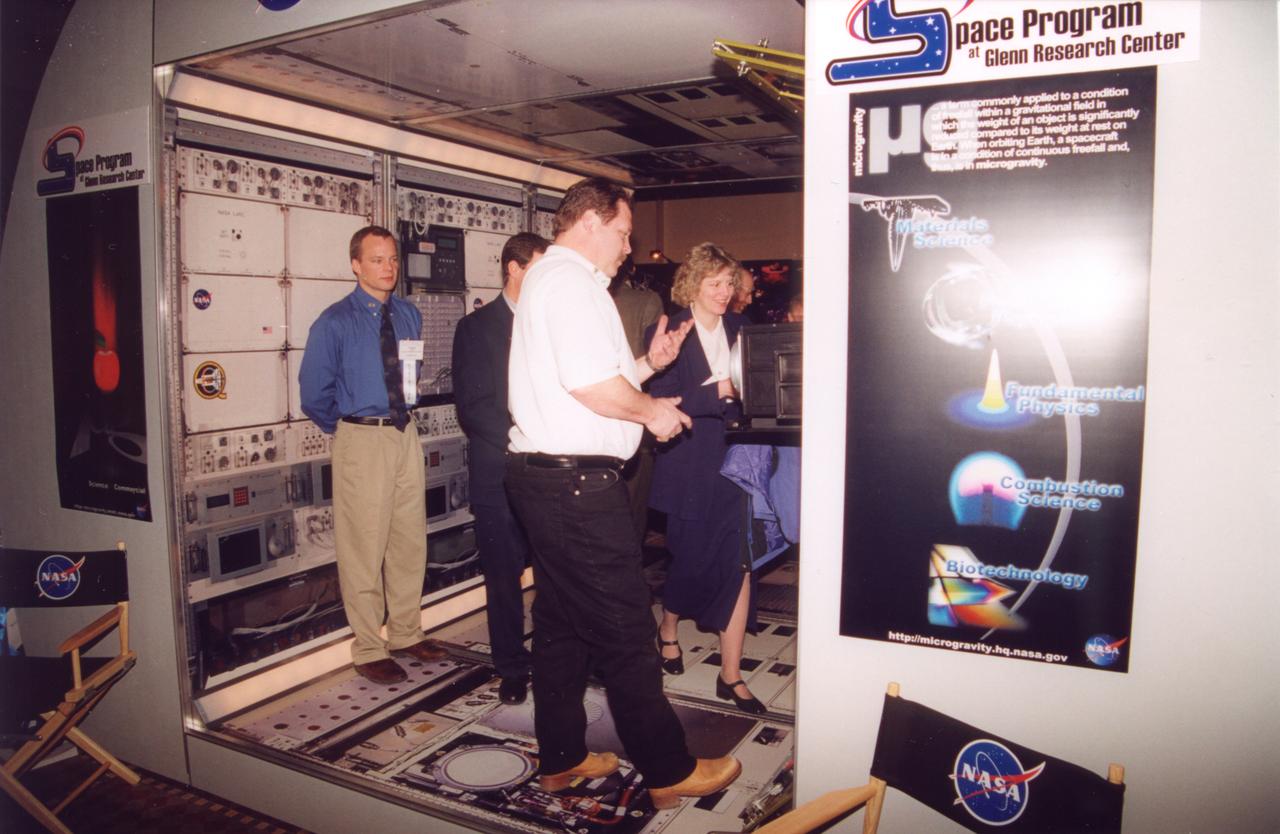
Engineers from NASA's Glenn Research Center, demonstrate access to one of the experiment racks planned for the U.S. Destiny laboratory module on the International Space Station. This mockup has the full diameter, full corridor width, and half the length of the module. The mockup includes engineering mockups of the Fluids and Combustion Facility being developed by NASA's Glenn Research Center. (The full module will be six racks long; the mockup is three rack long) Photo credit: NASA/Marshall Space Flight Center
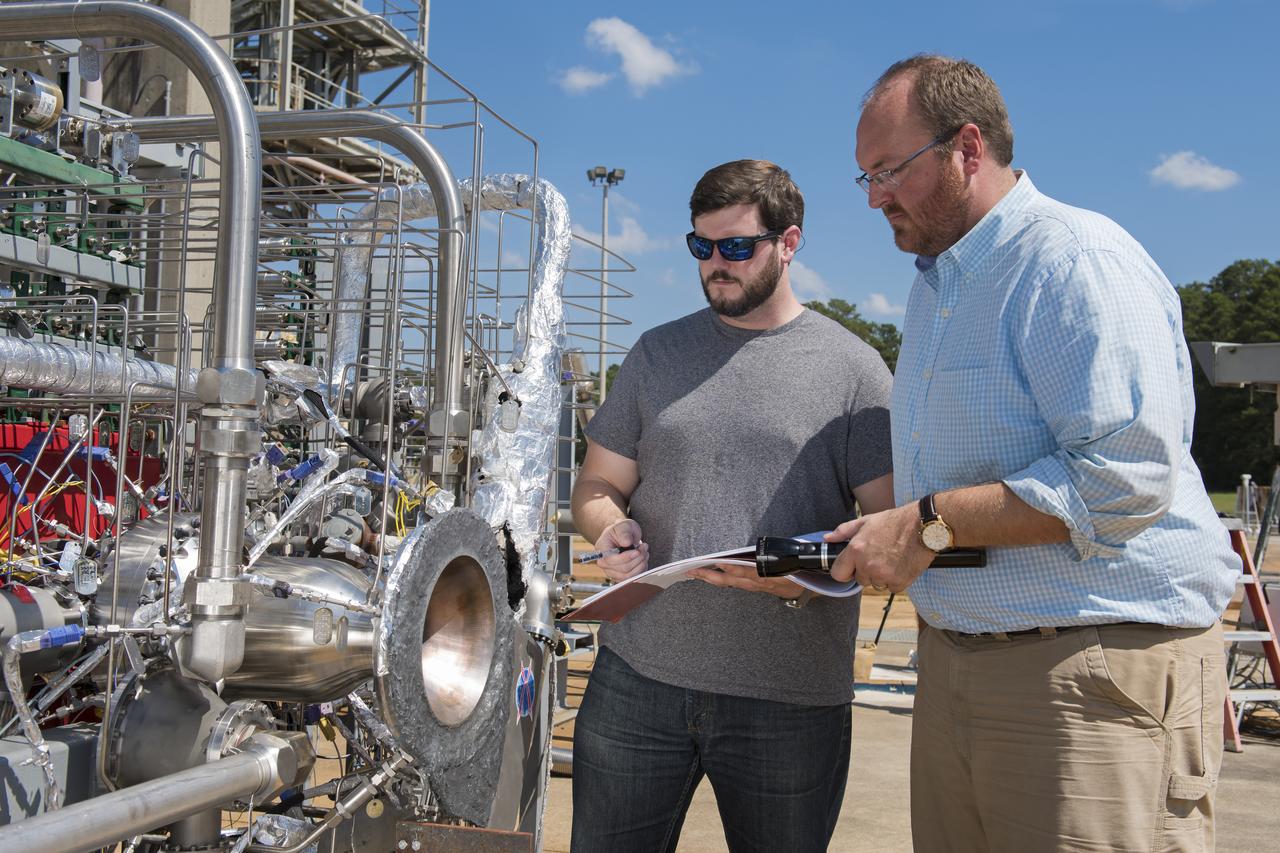
Graham Nelson, right, and Andrew Hanks examine a combustion chamber developed by engineers at NASA's Marshall Space Flight Center in Huntsville, Alabama, for an additively manufactured demonstration breadboard engine project. Nelson is project manager and Hanks is test lead for the project, in which engineers are designing components from scratch to be made entirely by 3-D printing.

The optical bench for the Fluids Integrated Rack section of the Fluids and Combustion Facility (FCF) is shown extracted for servicing and with the optical bench rotated 90 degrees for access to the rear elements. The FCF will be installed, in phases, in the Destiny, the U.S. Laboratory Module of the International Space Station (ISS), and will accommodate multiple users for a range of investigations. This is an engineering mockup; the flight hardware is subject to change as designs are refined. The FCF is being developed by the Microgravity Science Division (MSD) at the NASA Glenn Research Center. (Photo credit: NASA/Marshall Space Flight Center)
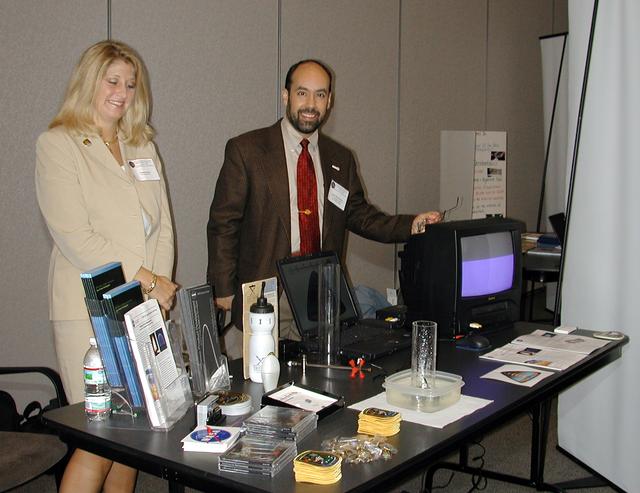
Christi Parker of CST Inc. of Huntsville, AL, and Angel Abbud-Madrid, of the Center for Commercial Applications of Combustion in Space (CCACS) at the Colorado school of Mines, prepare a demonstration of the CCACS Water Mist experiment scheduled to fly on the STS-107 space research mission in 2003. The activity was part of the Space Research and You education event held by NASA's Office of Biological and Physical Research on June 25, 2002, in Arlington, VA, to highlight the research that will be conducted on STS-107. (Digital camera image; no film original.
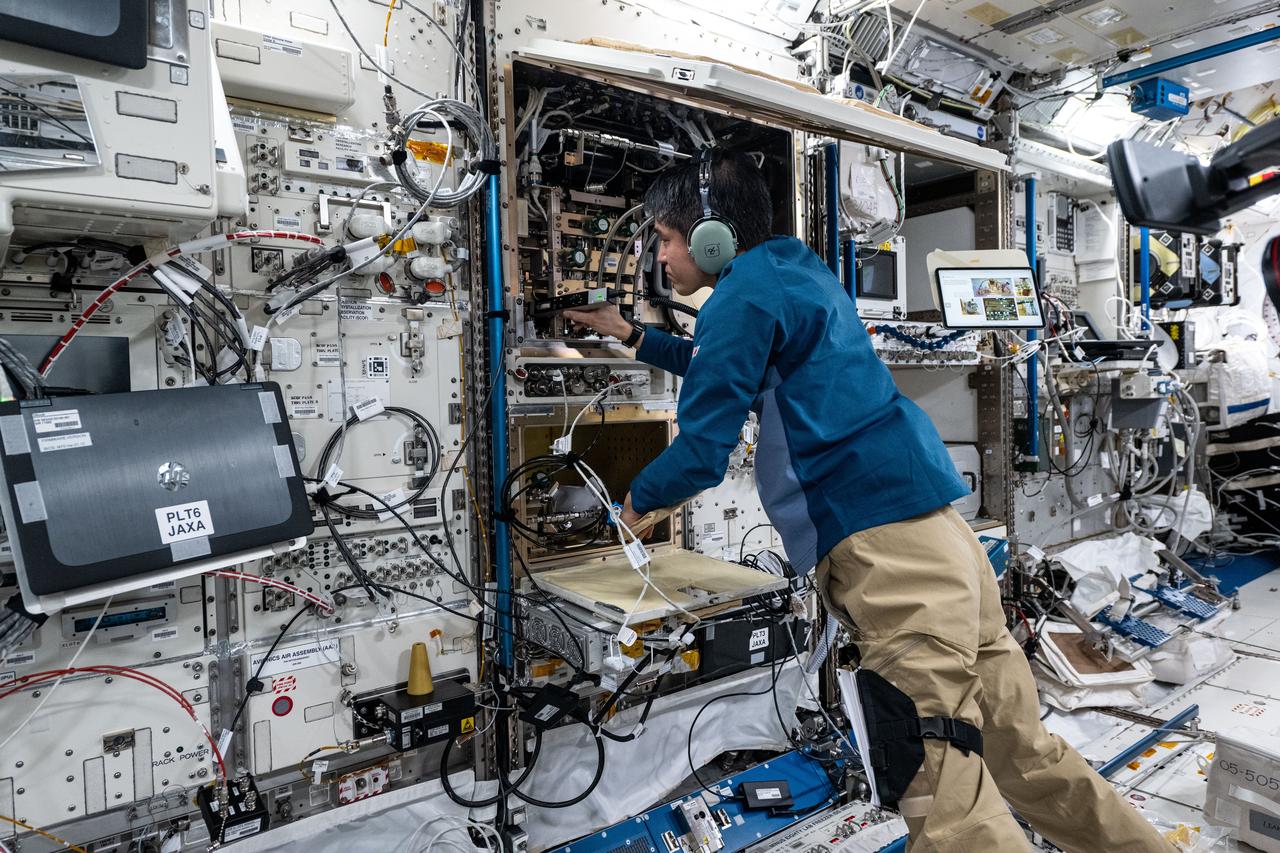
iss073e0379658 (July 16, 2025) --- JAXA (Japan Aerospace Exploration Agency) astronaut and Expedition 73 Commander Takuya Onishi works inside the International Space Station's Kibo laboratory module troubleshooting and inspecting combustion research hardware in the Multipurpose Small Payload Rack.
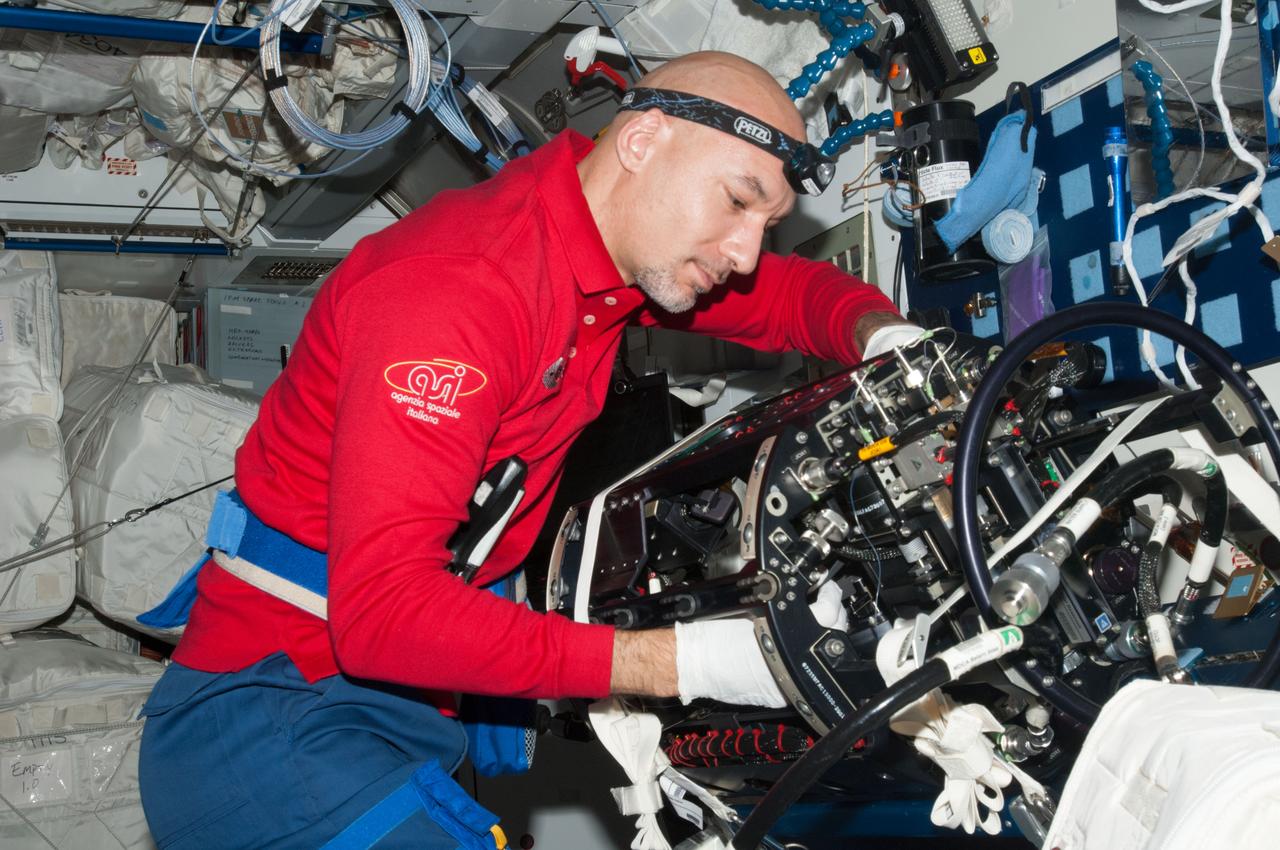
ISS036-E-024637 (24 July 2013) --- European Space Agency astronaut Luca Parmitano, Expedition 36 flight engineer, works on the Multi-User Droplet Combustion Apparatus (MDCA) Chamber Insert Assembly (CIA) at a maintenance work station in the Harmony node of the International Space Station.
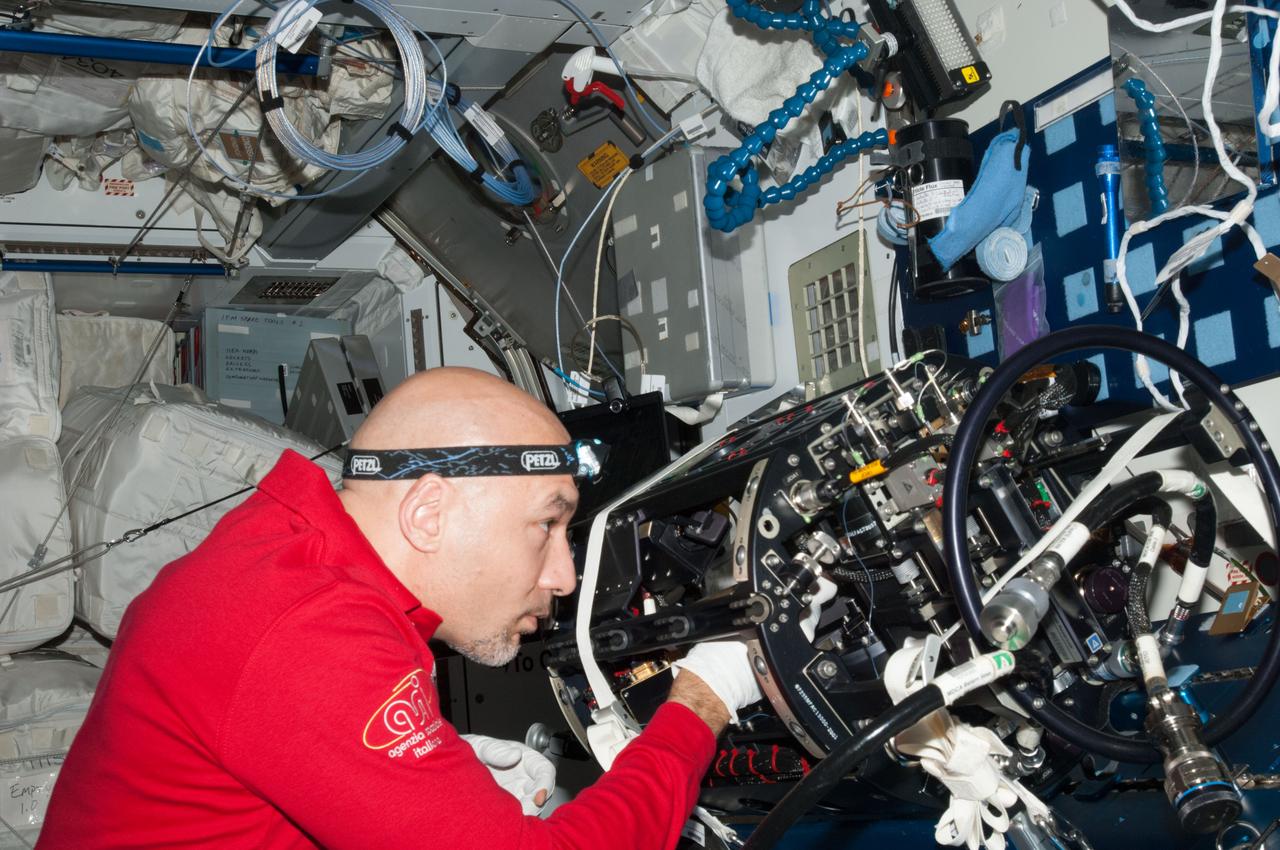
ISS036-E-024605 (24 July 2013) --- European Space Agency astronaut Luca Parmitano, Expedition 36 flight engineer, works on the Multi-User Droplet Combustion Apparatus (MDCA) Chamber Insert Assembly (CIA) at a maintenance work station in the Harmony node of the International Space Station.
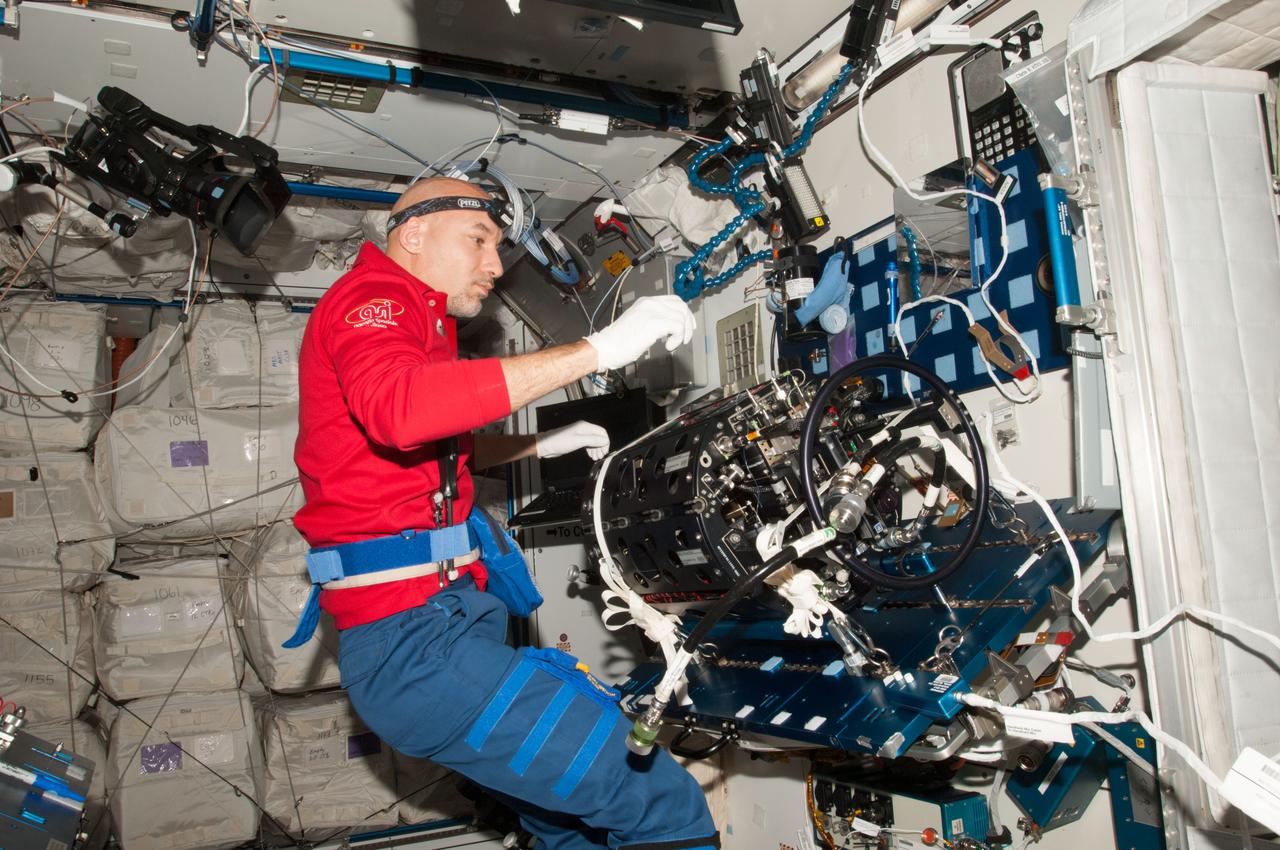
ISS036-E-024569 (24 July 2013) --- European Space Agency astronaut Luca Parmitano, Expedition 36 flight engineer, works on the Multi-User Droplet Combustion Apparatus (MDCA) Chamber Insert Assembly (CIA) at a maintenance work station in the Harmony node of the International Space Station.
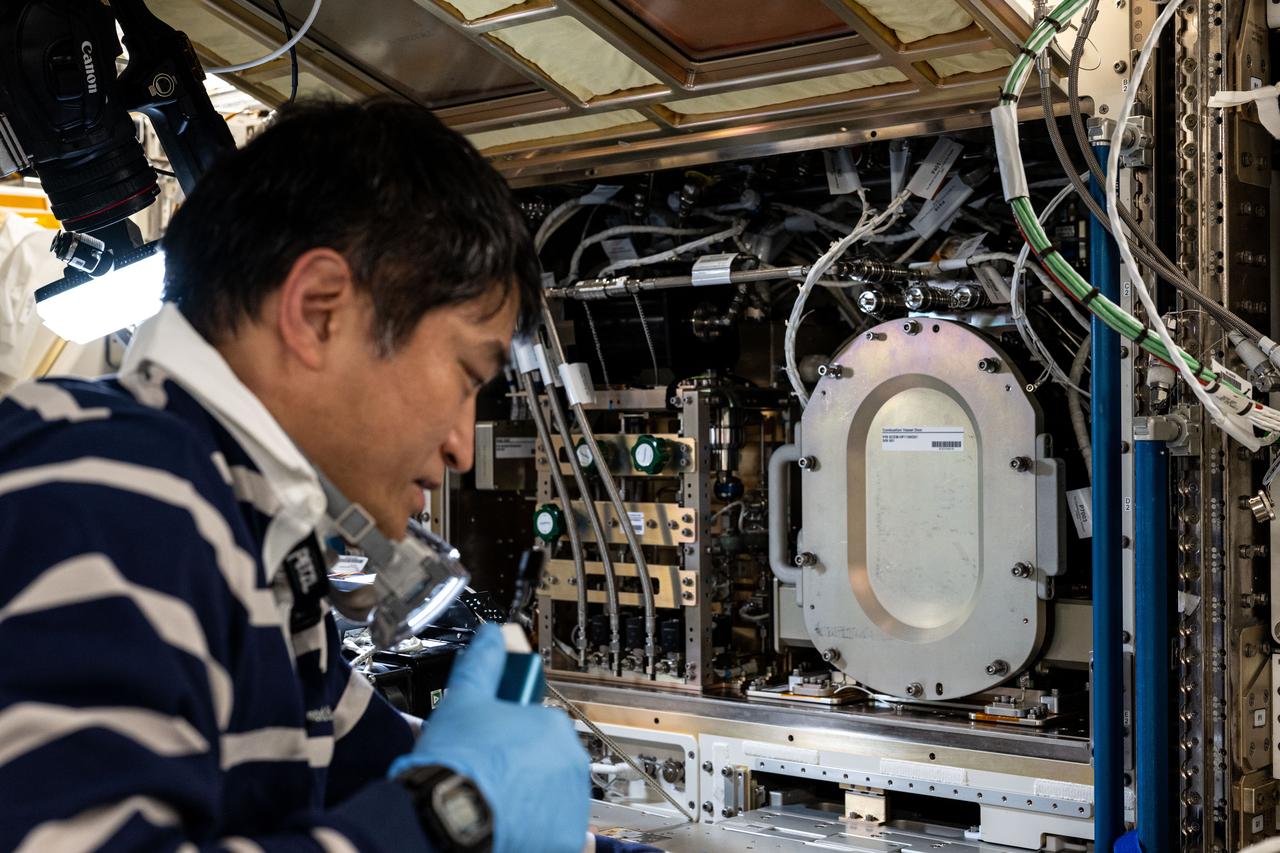
iss073e0030301 (May 13, 2025) --- JAXA (Japan Aerospace Exploration Agency) astronaut and Expedition 73 Commander Takuya Onishi swaps research hardware inside the Kibo laboratory module's solid combustion experiment module. Combustion research aboard the International Space Station helps researchers understand how fuels burn in space, design safer spacecraft, develop new materials, and more aboard the orbital outpost.
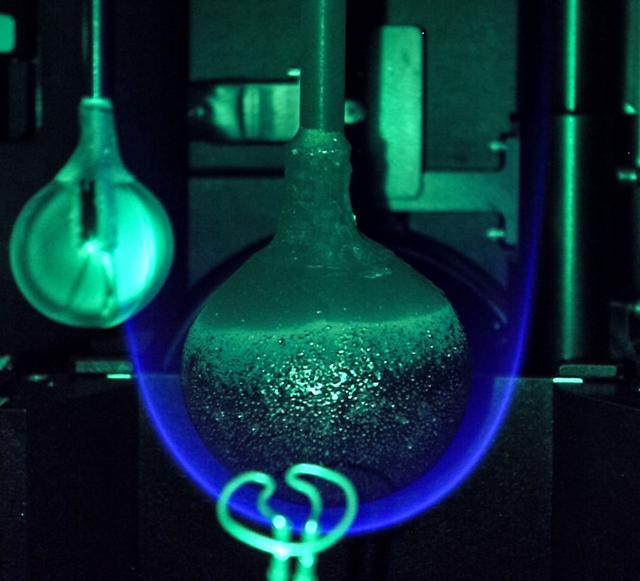
jsc2024e021222 (3/21/2024) --- Solid Fuel Ignition and Extinction (SoFIE) insert supports the Growth and Extinction Limit (GEL) investigation test image taken in the Combustion Integrated Rack (CIR). This image was taken just prior to flame extinction while the green LED was flashing on. The LED allows the fuel surface to be seen during the burn, so that several important parameters can be evaluated, such as how far the flame is from the fuel and how much the fuel is heating up. The igniter wire appears in the camera view, but it is in the foreground and not near the flame. In the background on the left, an unburned acrylic sphere waits for its turn to be tested on another day.
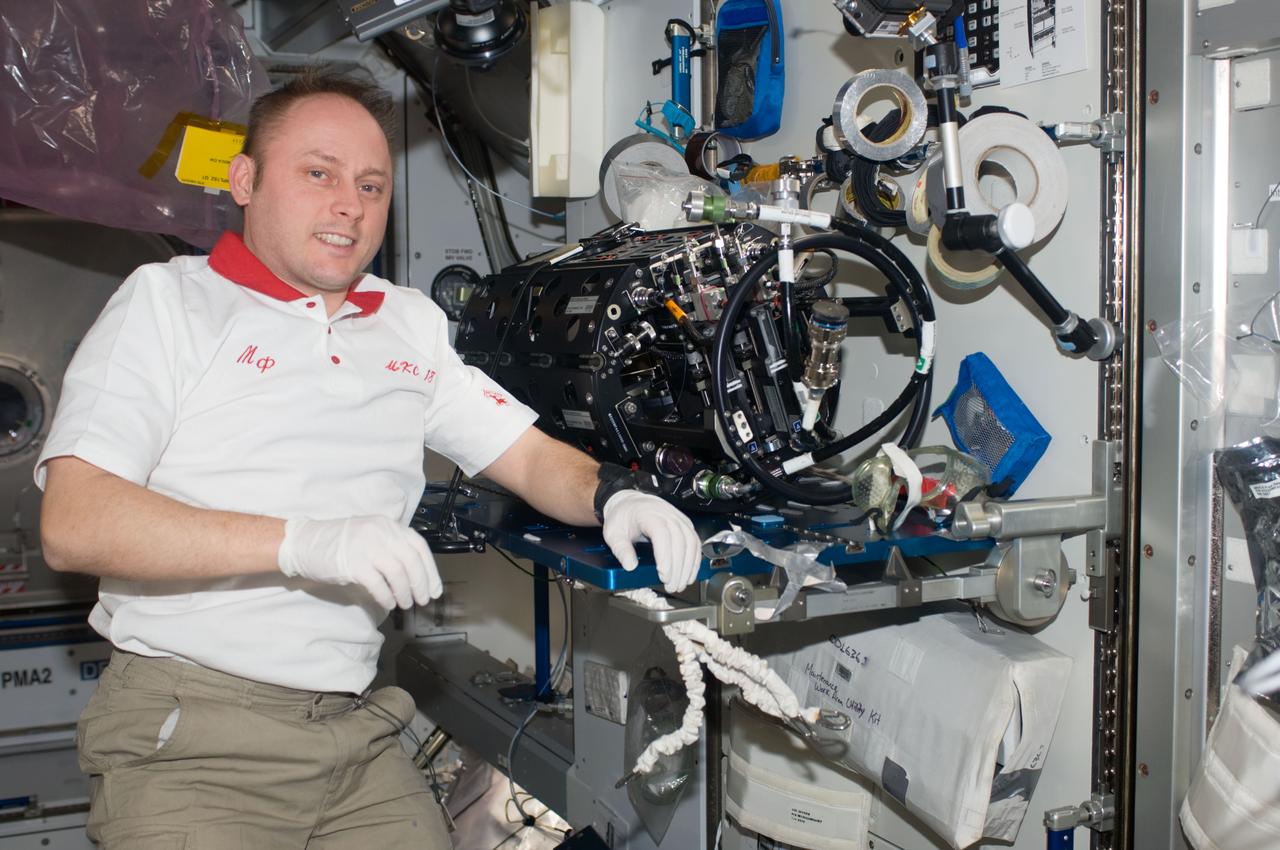
ISS018-E-010645 (6 Dec. 2008) --- Astronaut Michael Fincke, Expedition 18 commander, works on the Multi-User Droplet Combustion Apparatus (MDCA) Chamber Insert Assembly (CIA) in the Harmony node of the International Space Station.
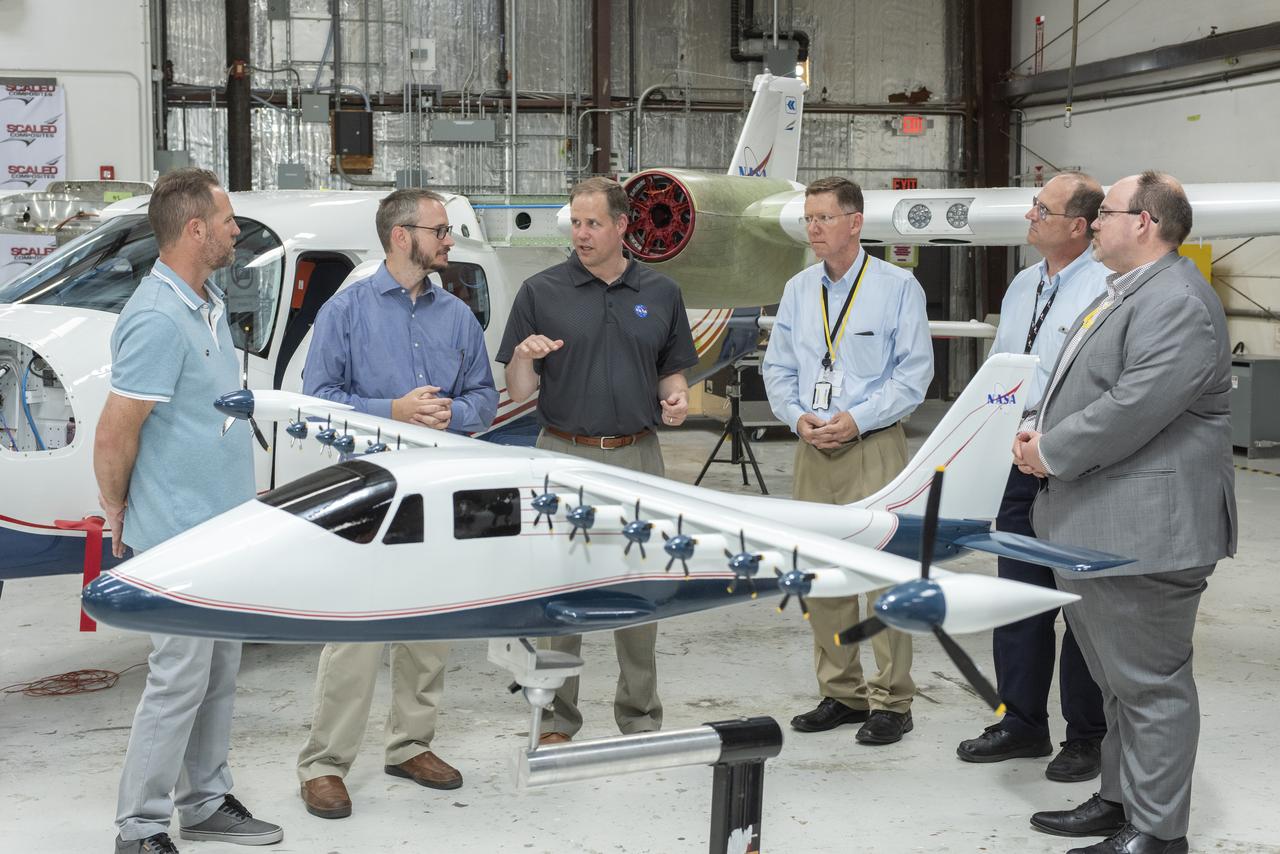
Administrator Bridenstine hears about the progress to modify the Tecnam P2006T from a combustion aircraft to an all-electric aircraft. Armstrong's X-57 team and ESAero, the prime contractor for the plane, are doing the briefing. The final configuration model of X-57 stands in front of group.
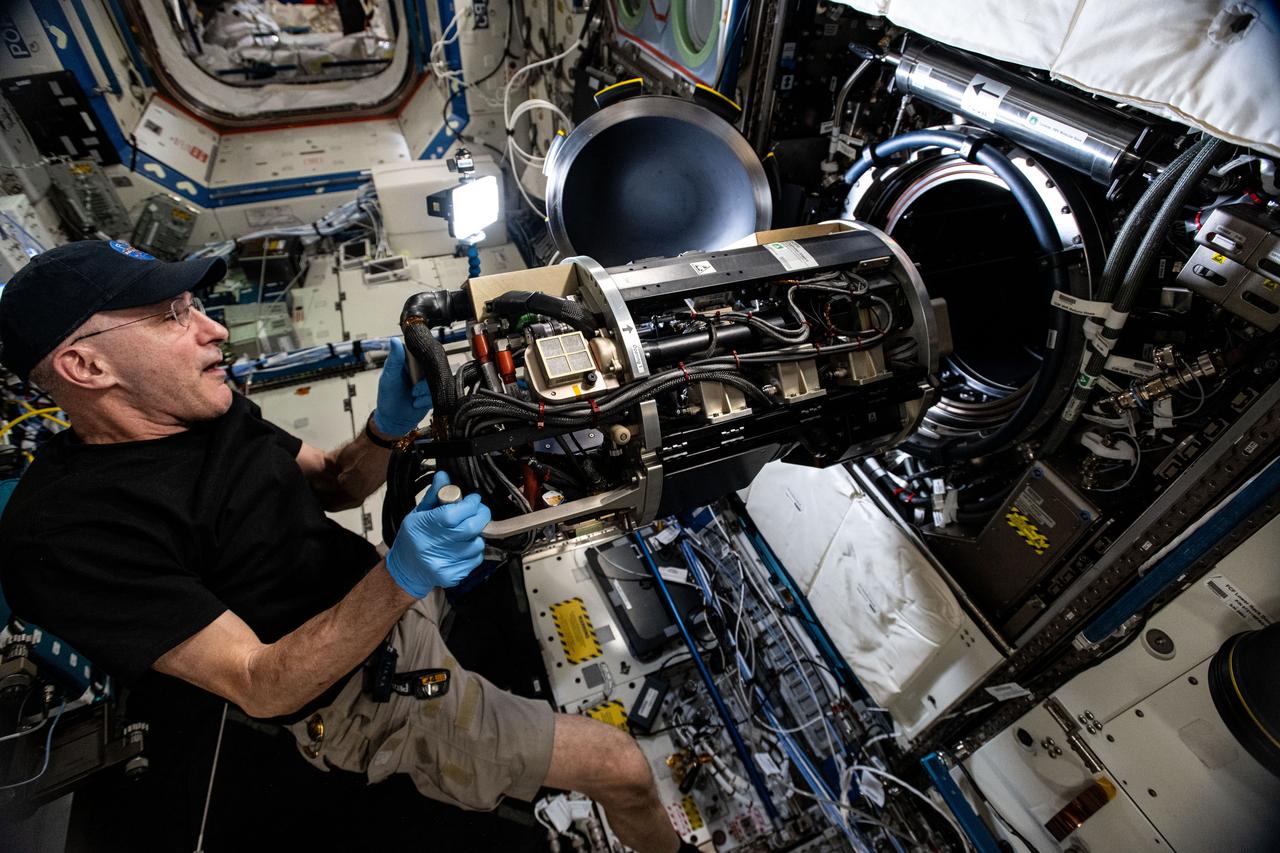
iss072e747154 (March 18, 2025) --- NASA astronaut and Expedition 72 Flight Engineer Don Pettit inserts research hardware into the Combustion Integrated Rack located inside the International Space Station's Destiny laboratory module. Pettit was configuring the SoFIE-MIST, or the Solid Fuel Ignition and Extinction - Material Ignition and Suppression Test, investigation that is exploring the flammability of materials in microgravity to improve spacecraft fire safety.
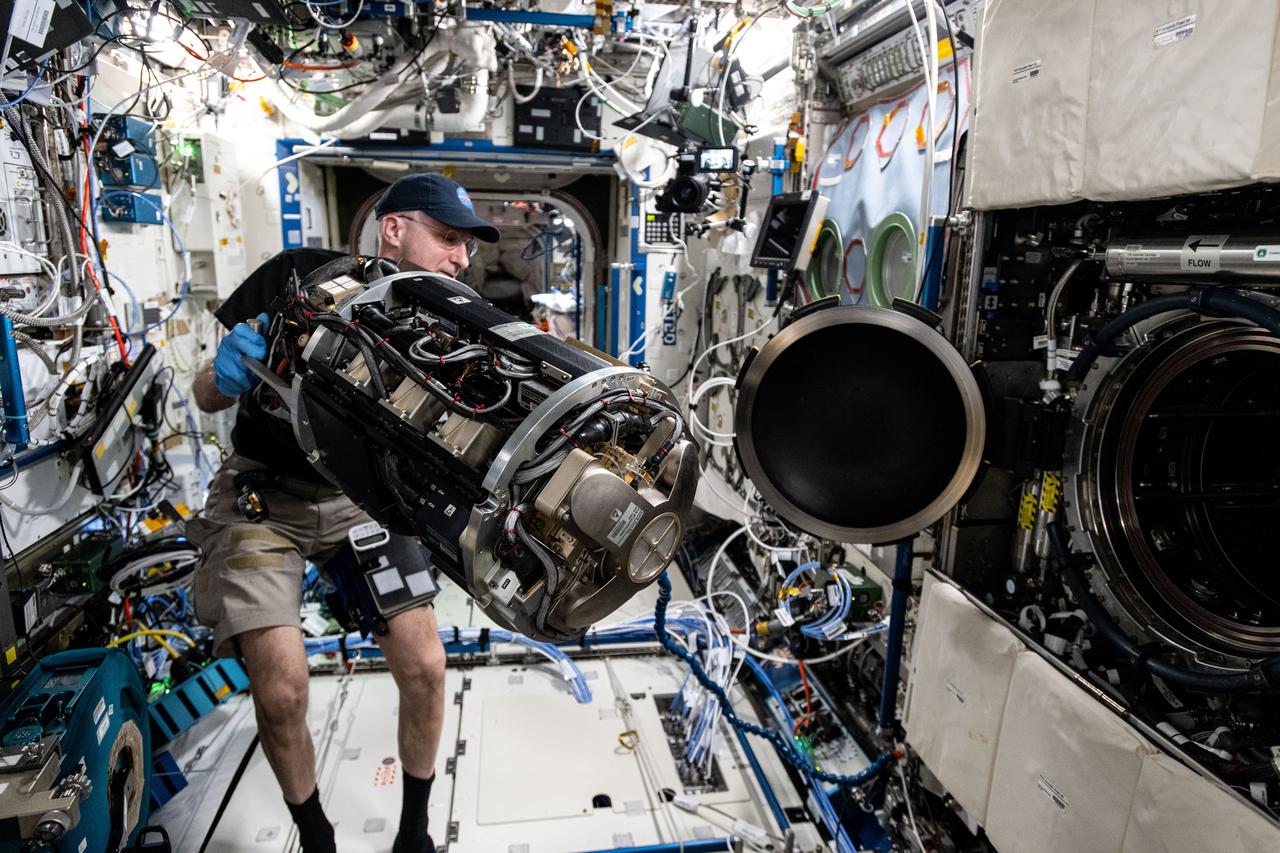
iss072e747148 (March 18, 2025) --- NASA astronaut and Expedition 72 Flight Engineer Don Pettit inserts research hardware into the Combustion Integrated Rack located inside the International Space Station's Destiny laboratory module. Pettit was configuring the SoFIE-MIST, or the Solid Fuel Ignition and Extinction - Material Ignition and Suppression Test, investigation that is exploring the flammability of materials in microgravity to improve spacecraft fire safety.
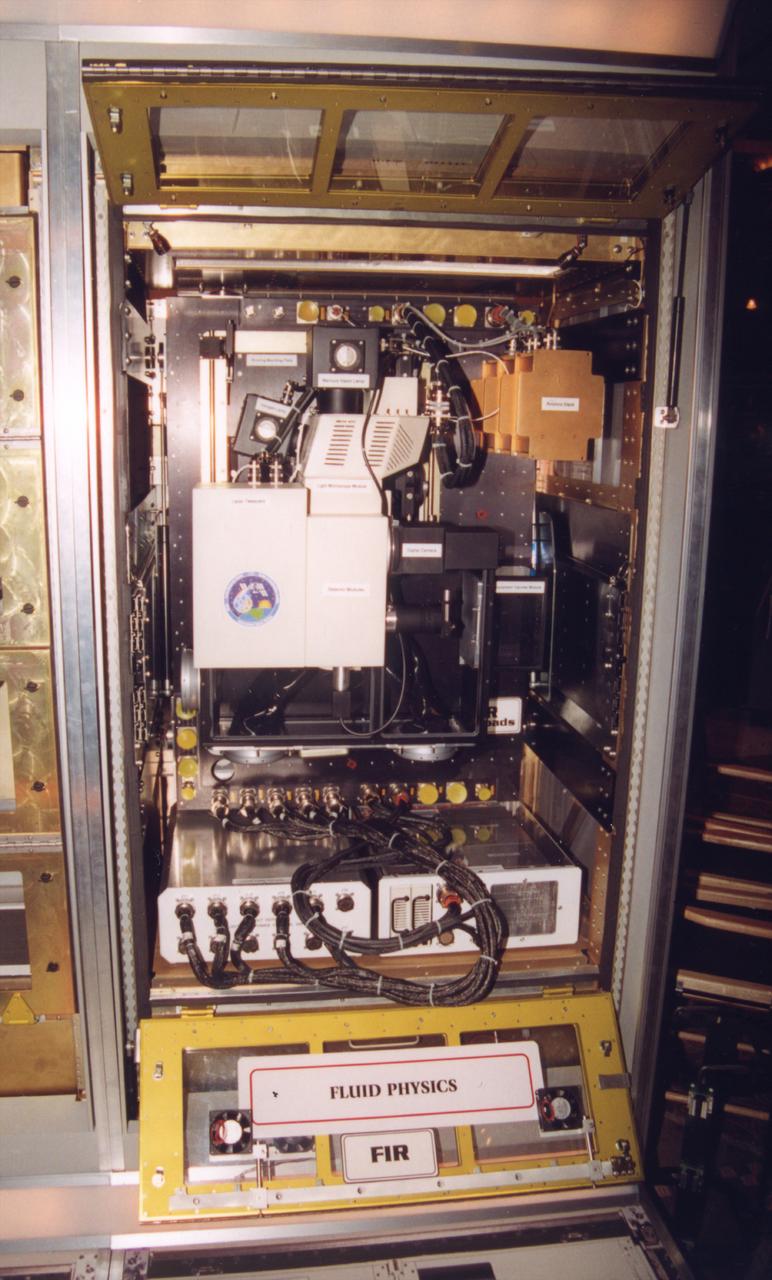
The optical bench for the Fluid Integrated Rack section of the Fluids and Combustion Facility (FCF) is shown in its operational configuration. The FCF will be installed, in phases, in the Destiny, the U.S. Laboratory Module of the International Space Station (ISS), and will accommodate multiple users for a range of investigations. This is an engineering mockup; the flight hardware is subject to change as designs are refined. The FCF is being developed by the Microgravity Science Division (MSD) at the NASA Glenn Research Center. (Photo credit: NASA/Marshall Space Flight Center)
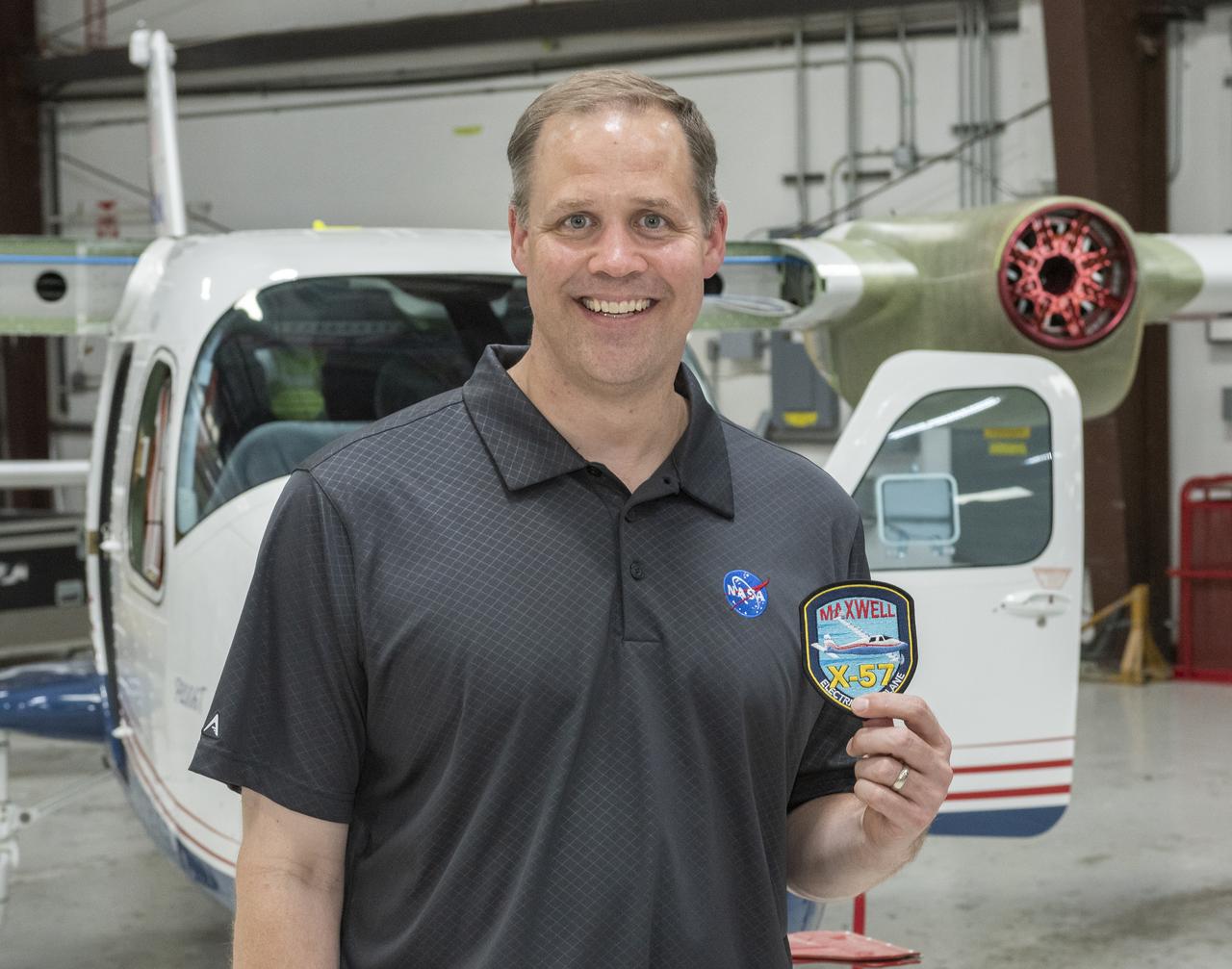
Administrator Bridenstine receives X-57 program patch standing in front of the X-57 being modified from combustion Tecnam P2006T aircraft into all-electric aircraft in Scaled Composites hangar at Mojave Air & Space Port in California.
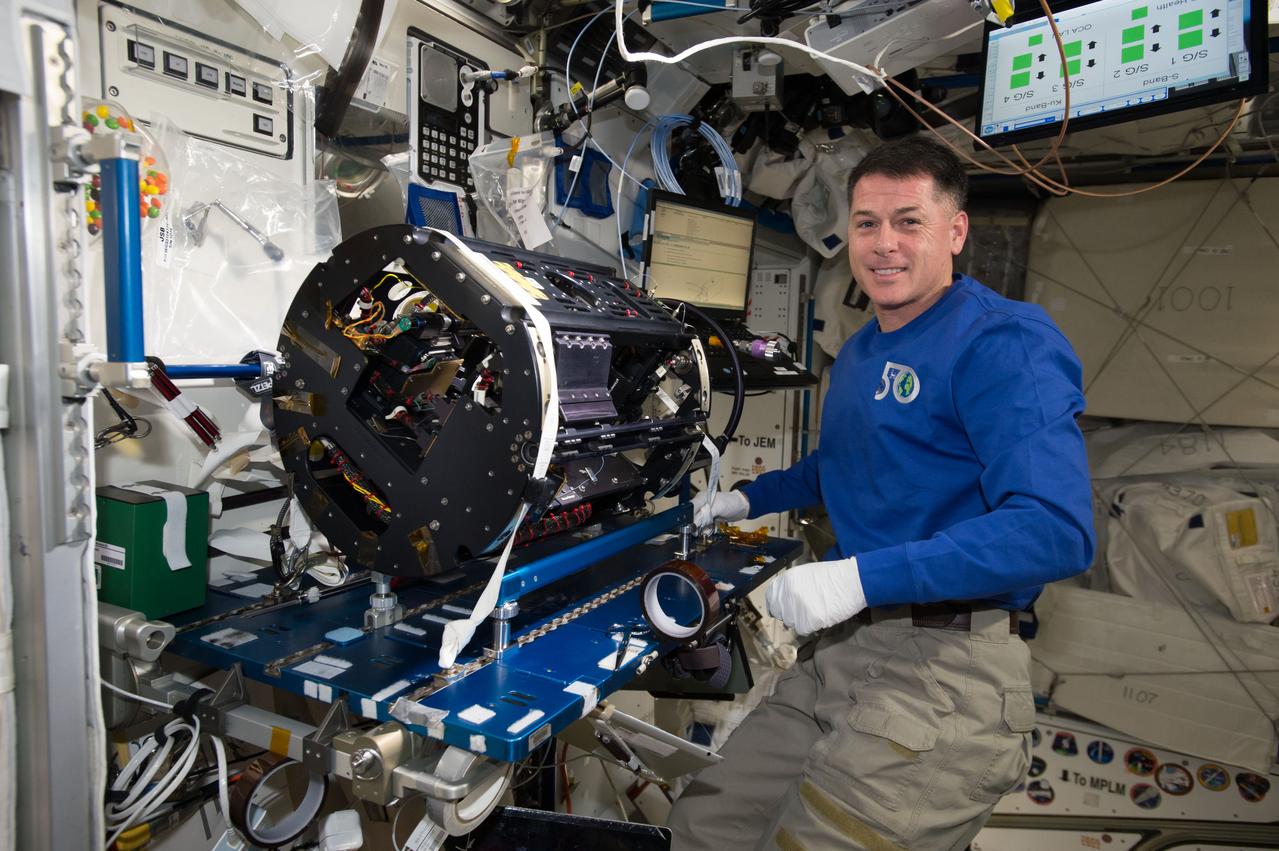
iss050e035112 (1/24/2017) --- NASA astronaut Shane Kimbrough completing the Multi-user Droplet Combustion Apparatus (MDCA) reconfiguration to the Cool Flames Investigation (CFI) setup. The Combustion Integrated Rack (CIR) includes an optics bench, combustion chamber, fuel and oxidizer control, and five different cameras for performing combustion experiments in microgravity.
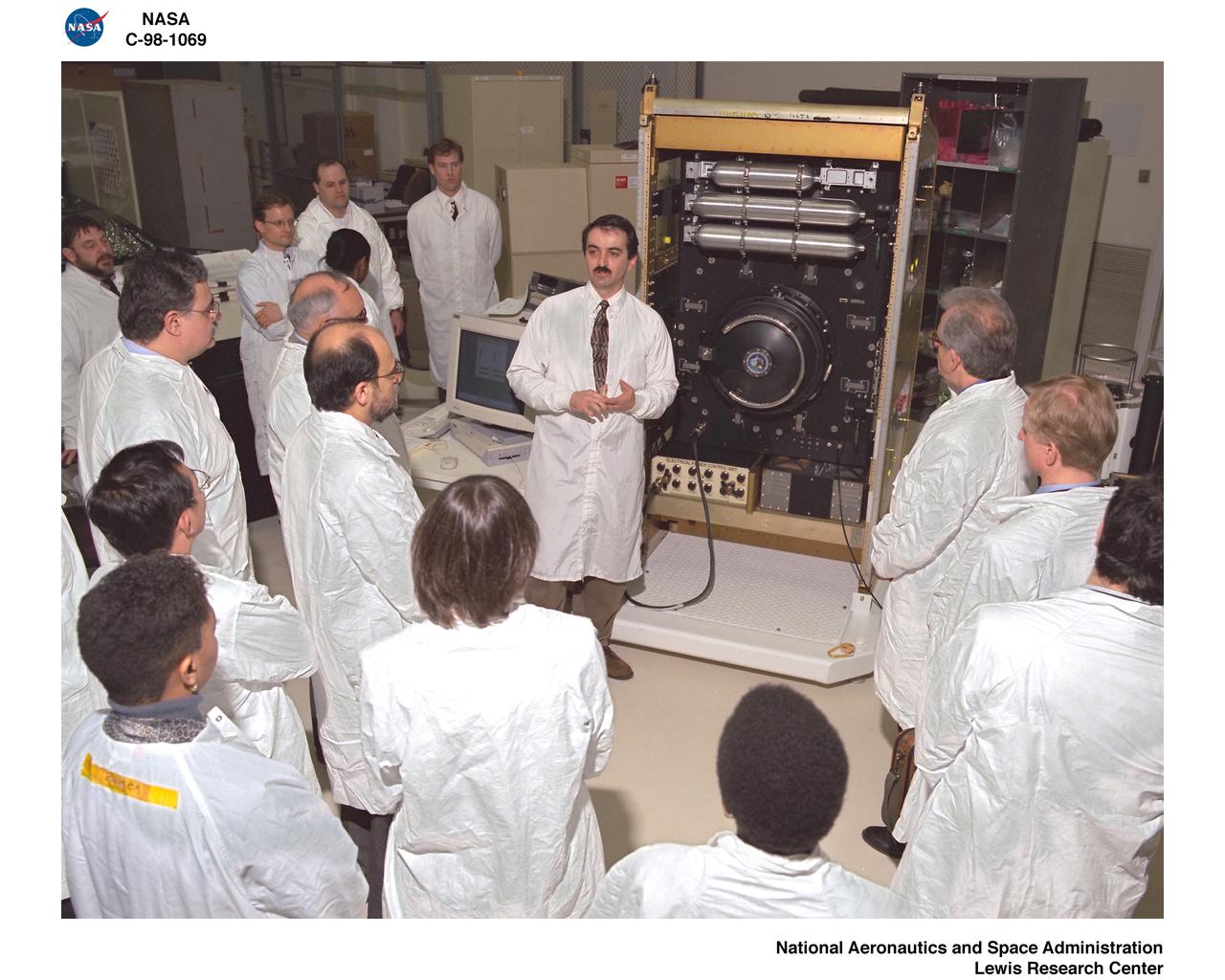
FLUIDS COMBUSTION FACILITY COMBUSTION INTEGRATED RACK INTERNATIONAL MICROGRAVITY WORKING GROUP
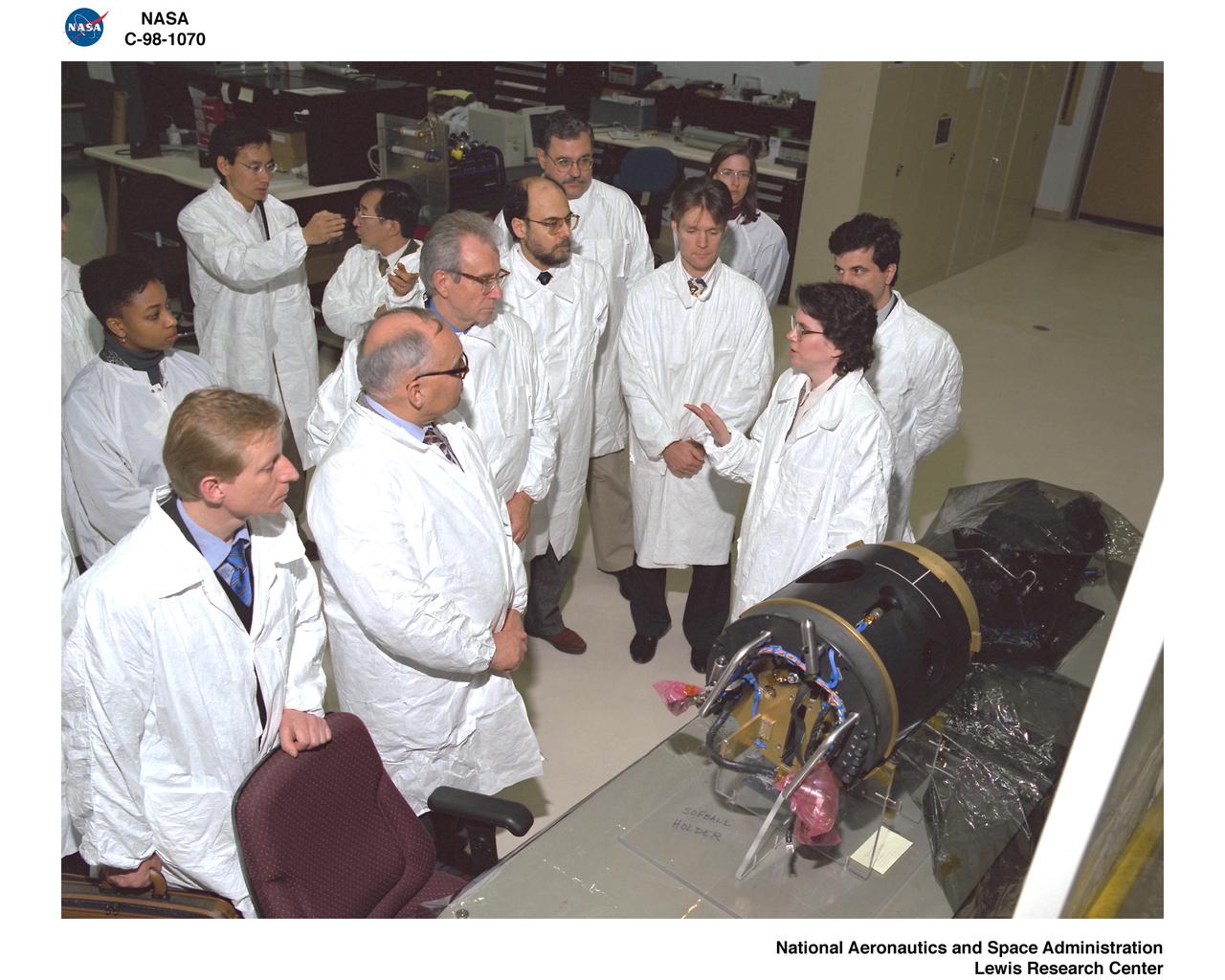
FLUIDS COMBUSTION FACILITY COMBUSTION INTEGRATED RACK INTERNATIONAL MICROGRAVITY WORKING GROUP
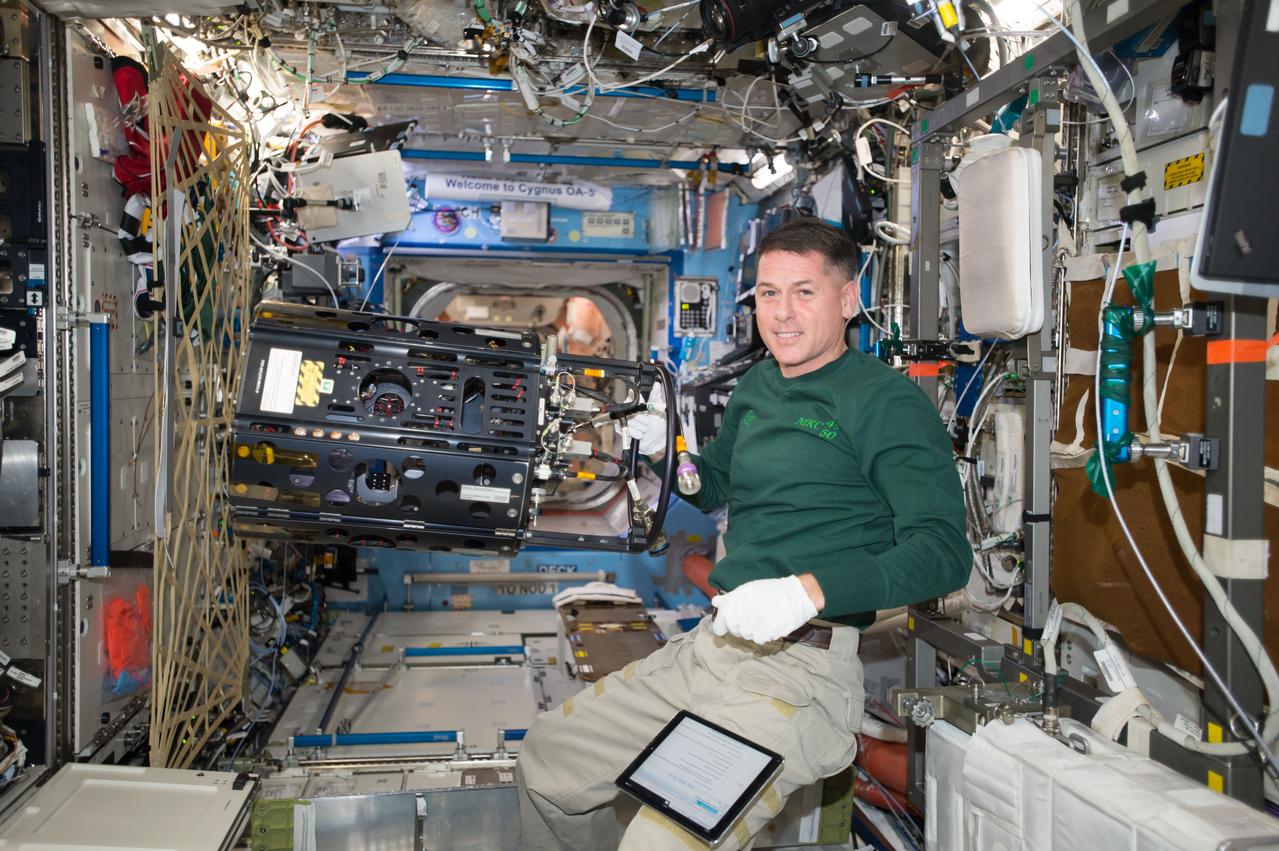
iss050e034393 (1/18/2017) --- NASA astronaut Shane Kimbrough during Combustion Integration Rack (CIR) Multi-user Droplet Combustion Apparatus (MDCA) Troubleshooting in the U.S. Laboratory. MDCA was removed from the CIR Combustion Chamber and spring fastener was repaired. The CIR is used to perform combustion experiments in microgravity. The CIR can be reconfigured easily on orbit to accommodate a variety of combustion experiments.
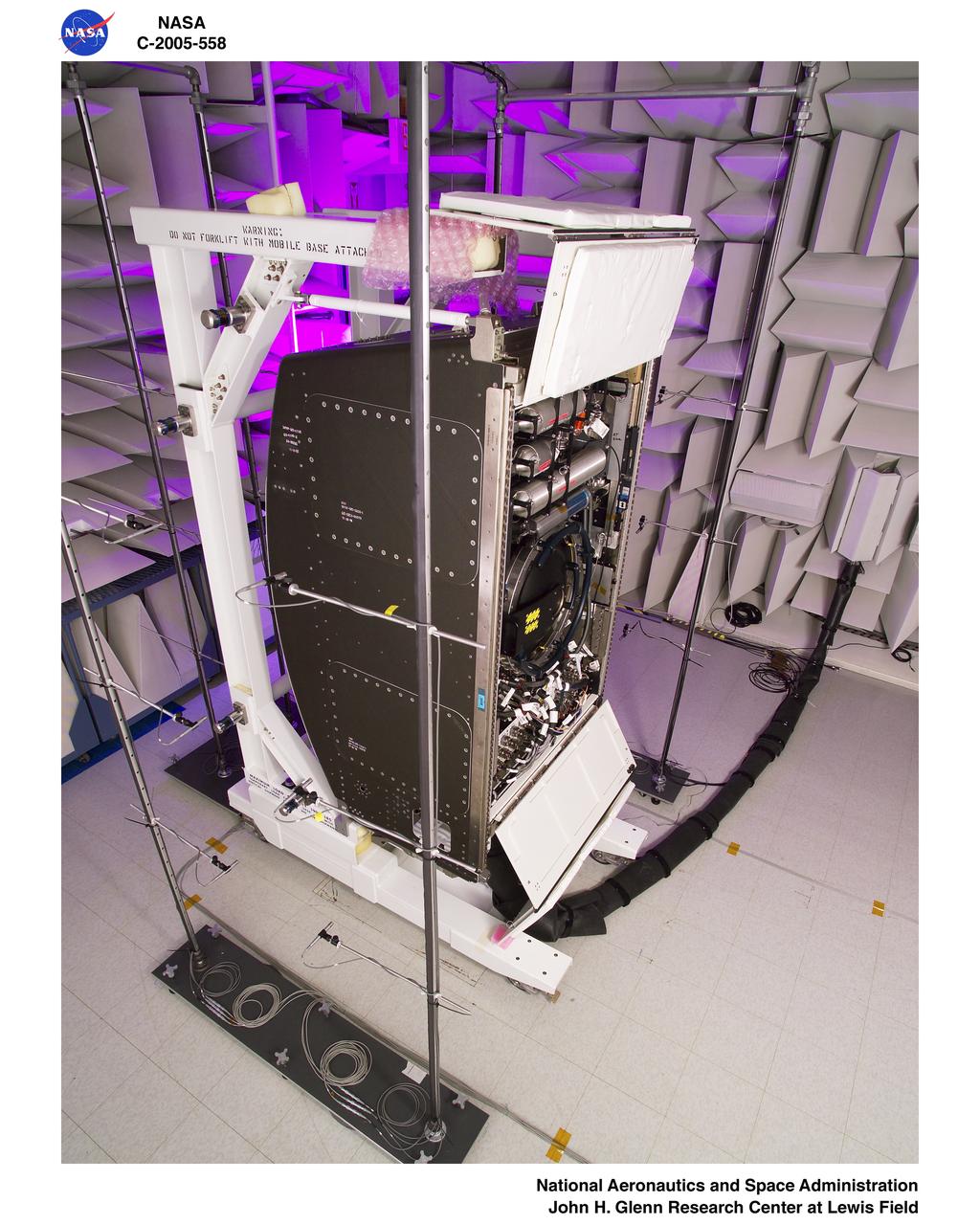
Fluids and Combustion Facility (FCF) Combustion Integrated Rack (CIR) in the Acoustic Testing Laboratory (ATL), Camera file: G6QH5821
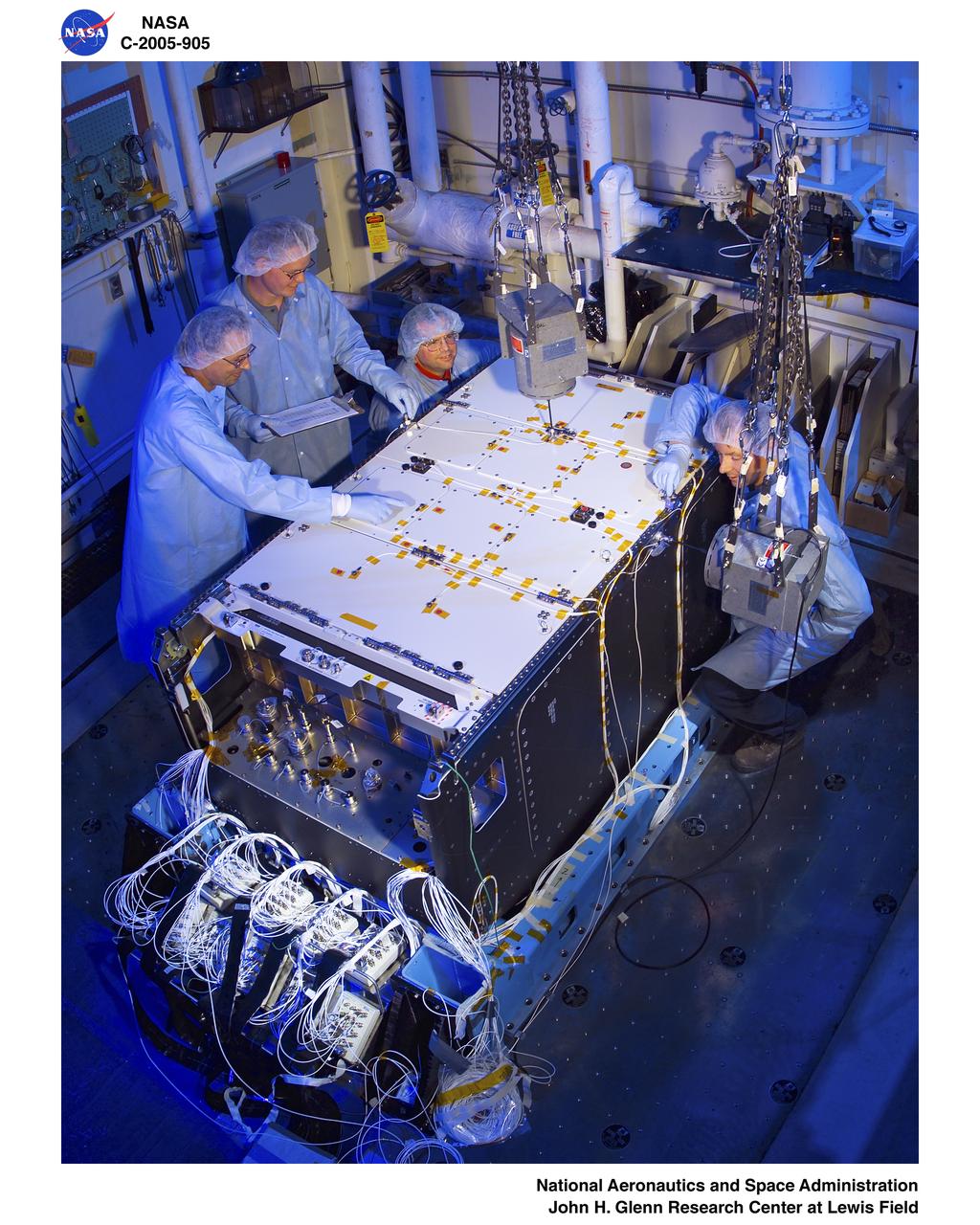
Fluids and Combustion Facility (FCF), Combustion Integration Rack (CIR) during testing in the Structural Dynamics Laboratory (SDL)

Fluids and Combustion Facility (FCF), Combustion Integrated Rack (CIR) during testing in the Structural Dynamics Laboratory (SDL)
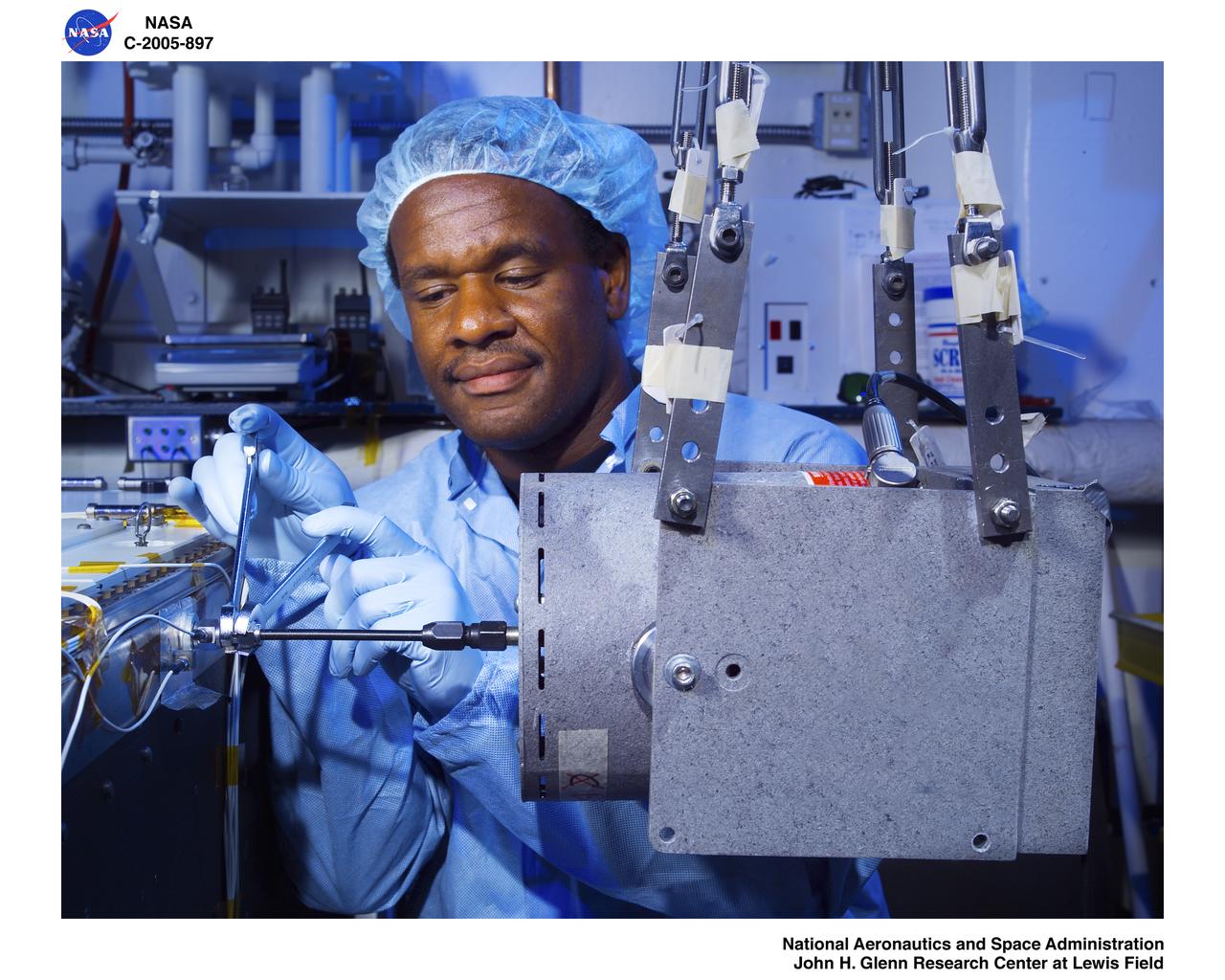
Fluids and Combustion Facility (FCF), Combustion Integration Rack (CIR) during testing in the Structural Dynamics Laboratory (SDL)
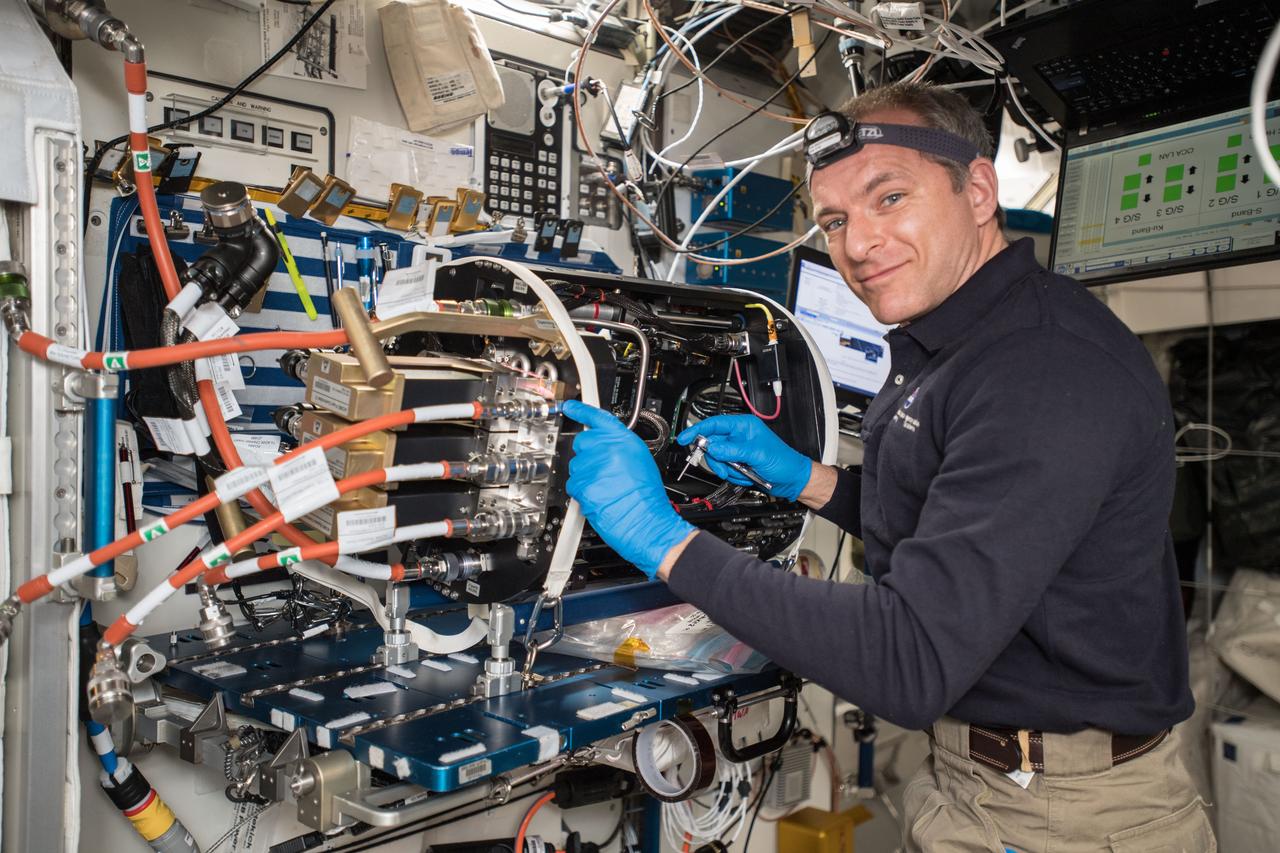
iss058e008801 (Jan. 31, 2019) --- Astronaut David Saint-Jacques of the Canadian Space Agency replaces a control unit and a radiometer inside the Combustion Integrated Rack's (CIR) ACME (Advanced Combustion via Microgravity Experiments) Chamber Insert. The replacement work in the chamber was done on the Unity module's work surface area. The CIR is a fuel and flame research rack housed inside the Destiny laboratory module.
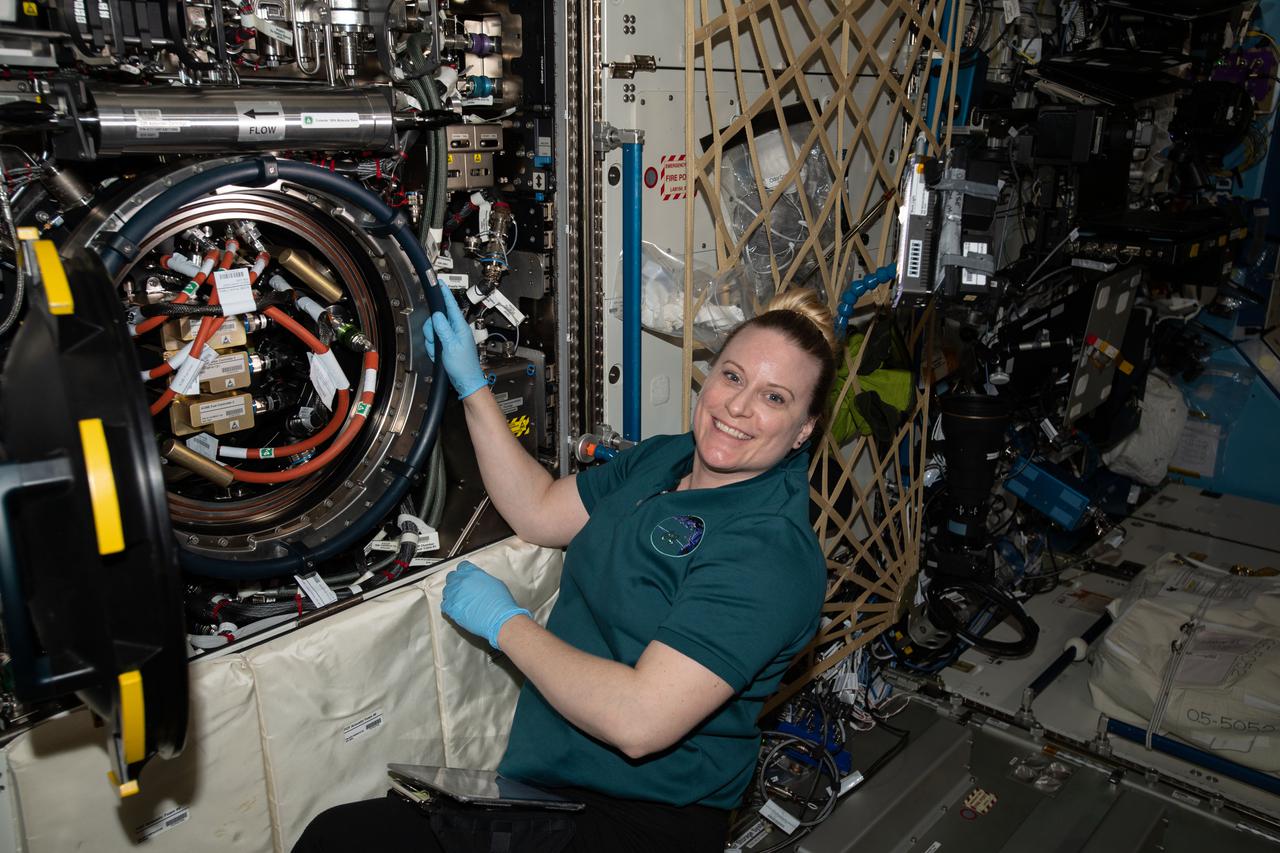
iss064e040971 (March 9, 2021) --- NASA astronaut and Expedition 64 Flight Engineer Kate Rubins opens the Combustion Integrated Rack's combustion chamber to access ACME, or Advanced Combustion via Microgravity Experiments, hardware located in the U.S. Destiny laboratory module.
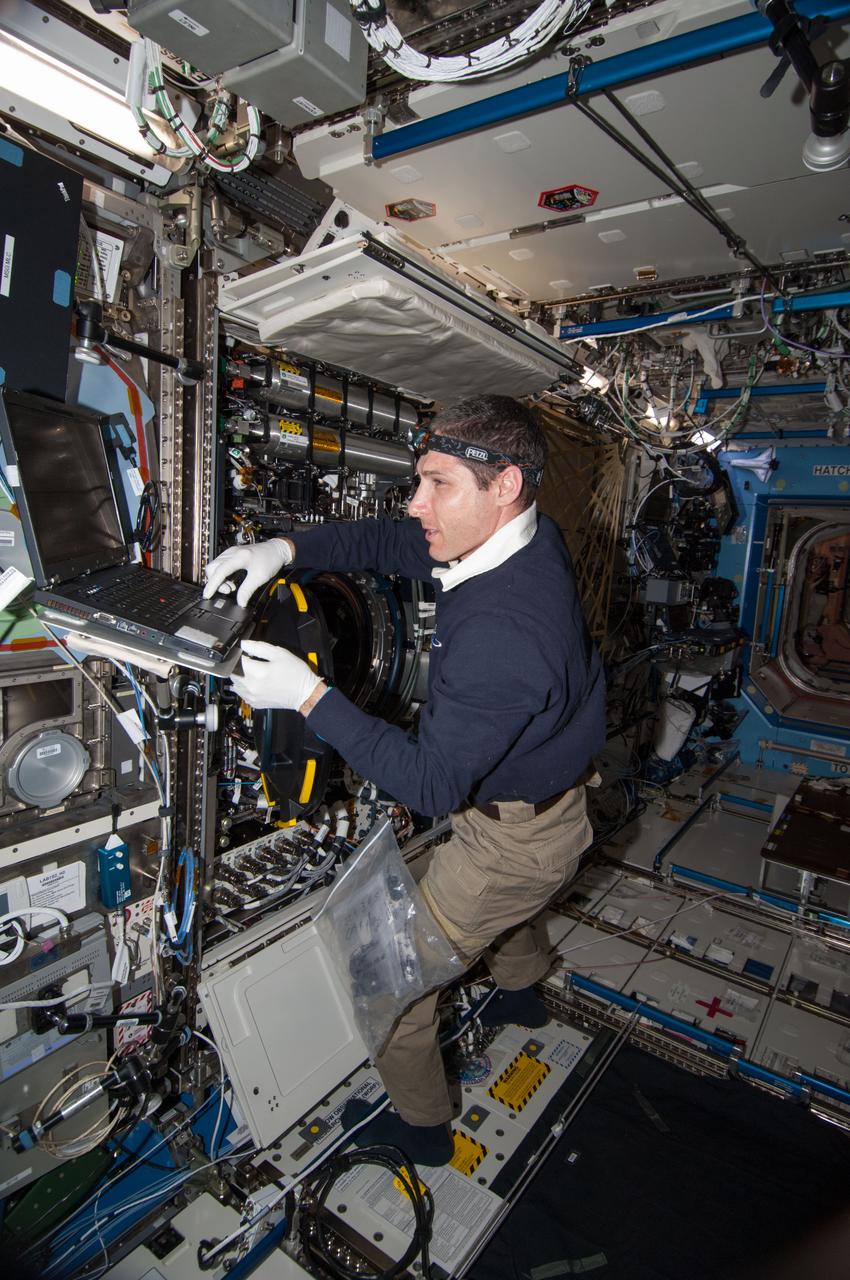
ISS038-E-024145 (30 Dec. 2013) --- NASA astronaut Mike Hopkins, Expedition 38 flight engineer, performs in-flight maintenance on combustion research hardware in the Destiny laboratory of the International Space Station. Hopkins replaced a Multi-user Droplet Combustion Apparatus (MDCA) fuel reservoir inside the Combustion Integrated Rack (CIR).
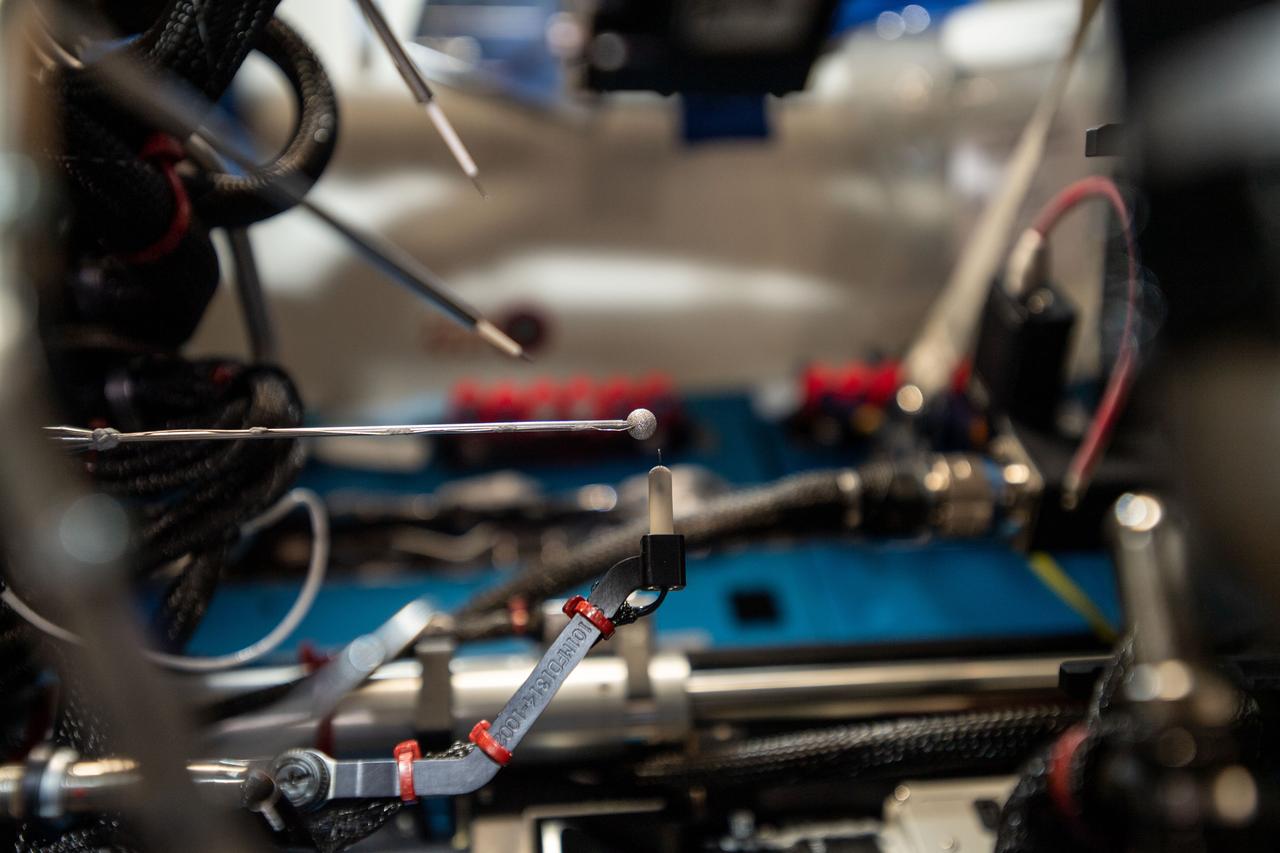
iss059e103188 (6/14/2019) --- Photo documentation taken aboard the International Space Station (ISS) during the Fluids and Combustion Facility (FCF) Combustion Integration Rack (CIR) / Advanced Combustion via Microgravity Experiments (ACME) / Flame Design hardware replacement.
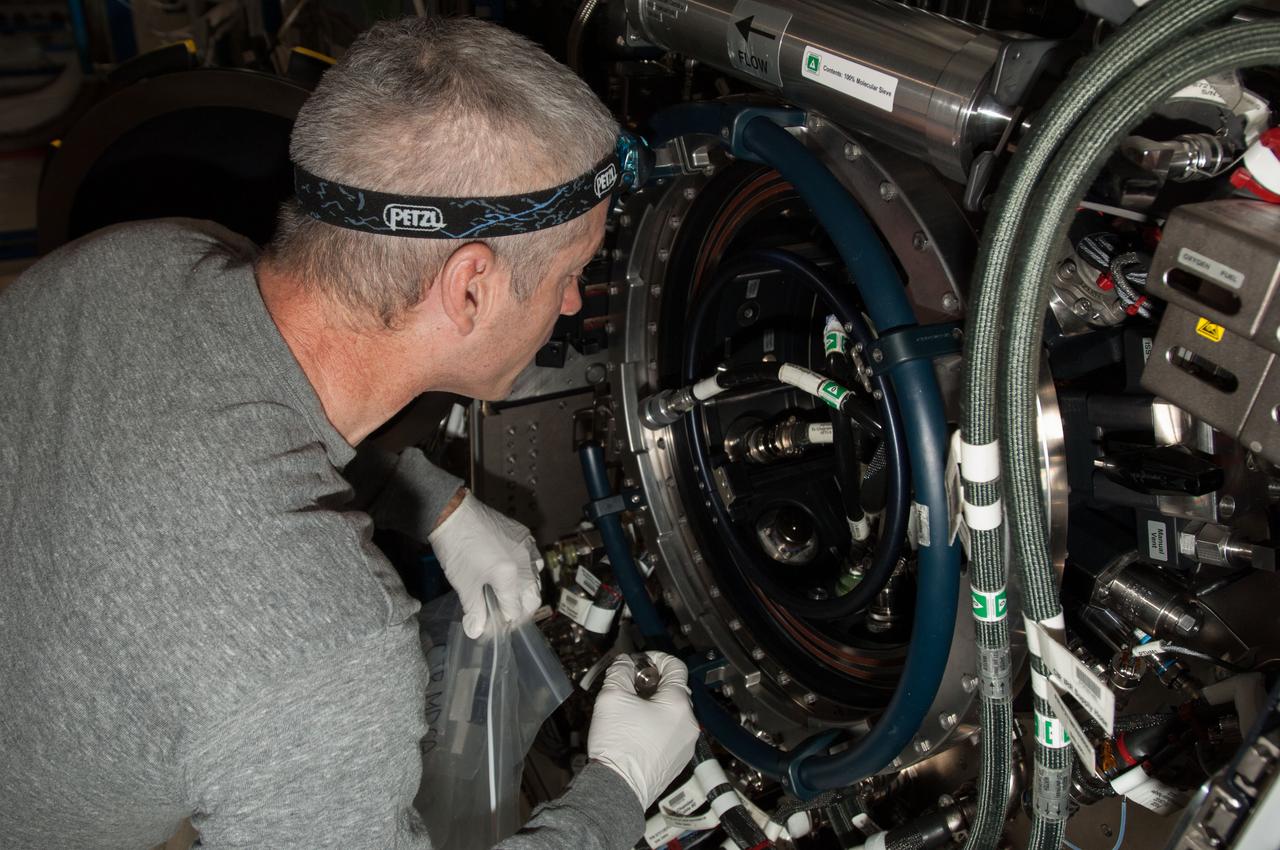
ISS040-E-010496 (11 June 2014) --- NASA astronaut Steve Swanson, Expedition 40 commander, works with the Multi-user Drop Combustion Apparatus (MDCA) inside the Combustion Integrated Rack (CIR) in the Destiny laboratory of the International Space Station. The MDCA contains hardware and software to conduct unique droplet combustion experiments in space.
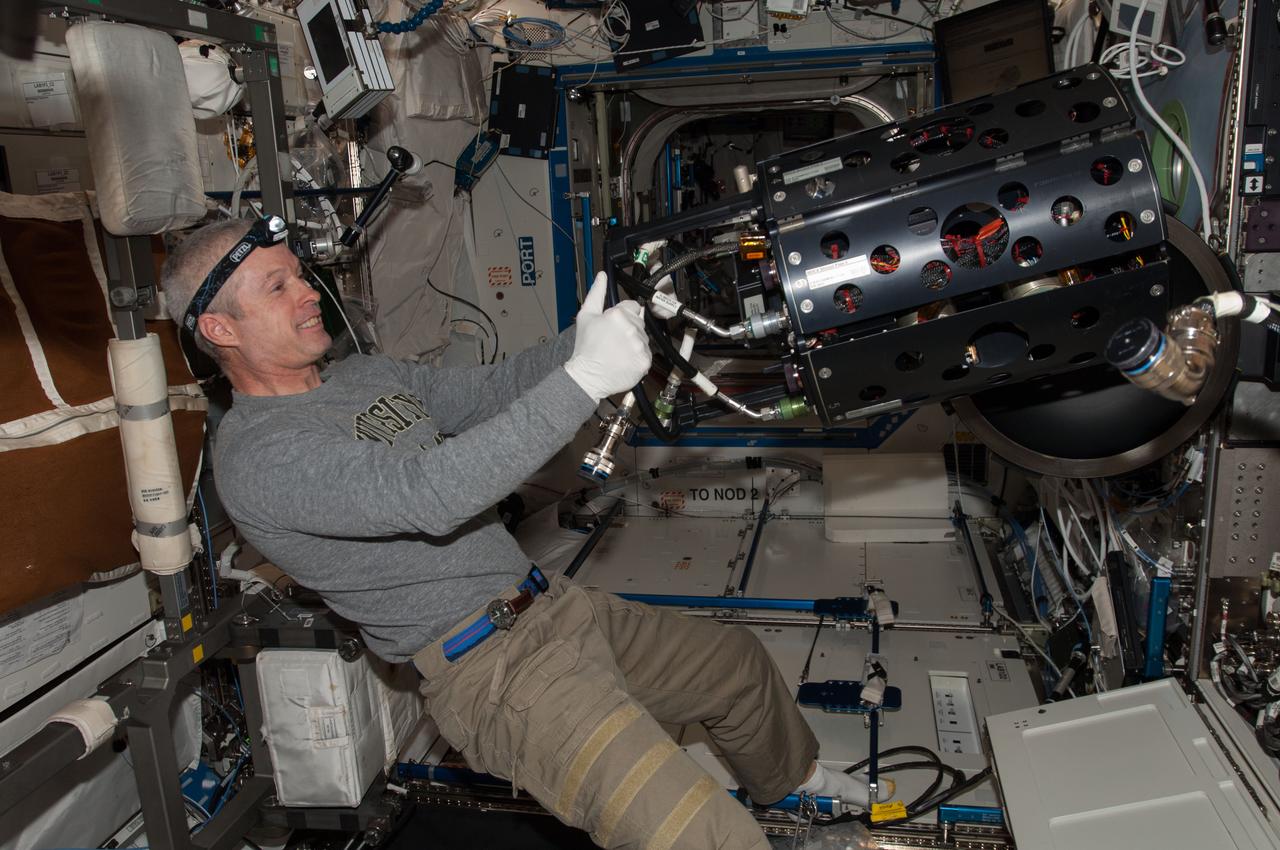
ISS040-E-010502 (11 June 2014) --- NASA astronaut Steve Swanson, Expedition 40 commander, works with the Multi-user Drop Combustion Apparatus (MDCA) inside the Combustion Integrated Rack (CIR) in the Destiny laboratory of the International Space Station. The MDCA contains hardware and software to conduct unique droplet combustion experiments in space.
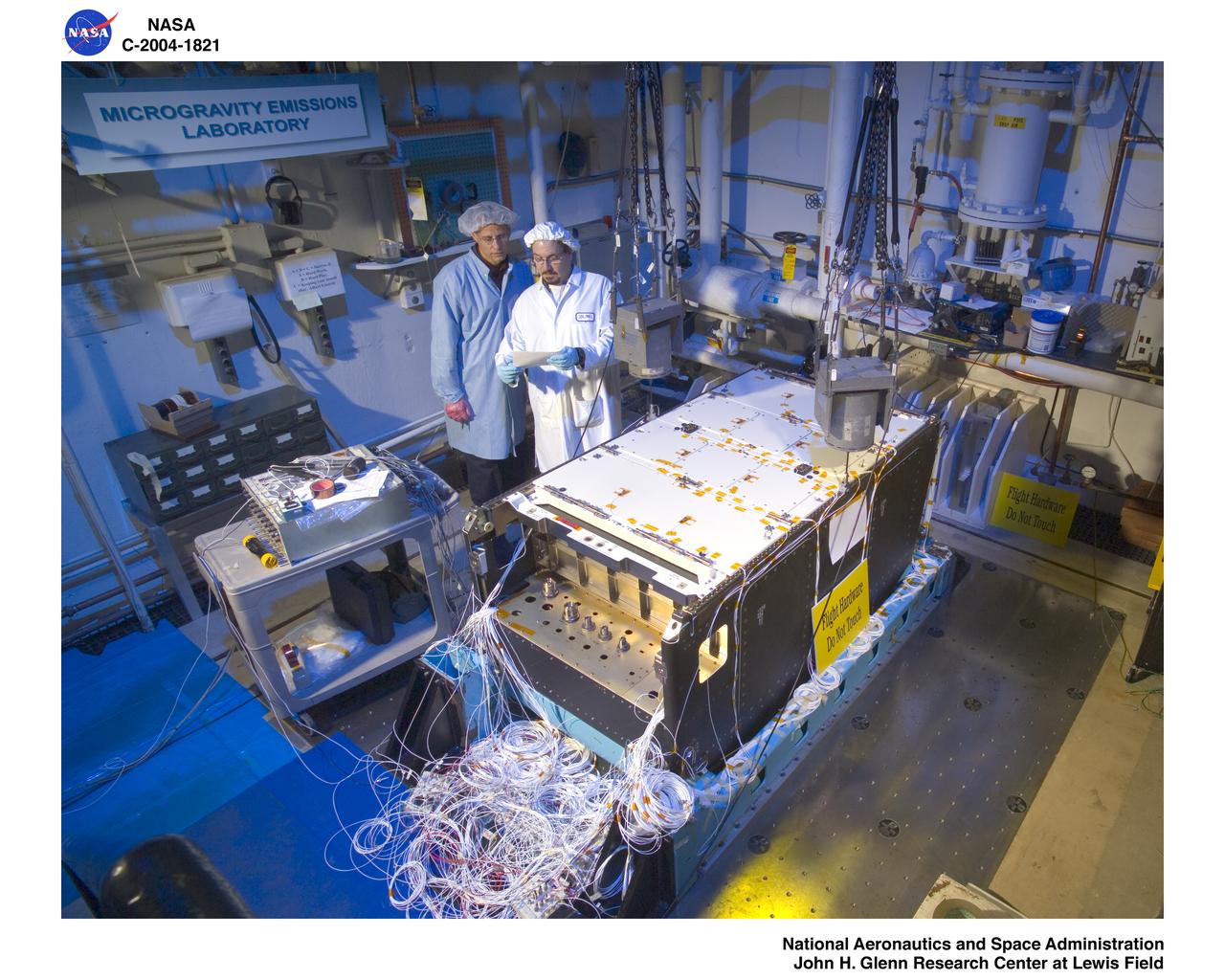
Fluids and Combustion Facility (FCF) Combustion Integrated Rack (CIR) Ground Integration Unit (GIU) Modal Test in the Structural Dynamics Laboratory at NASA Glenn
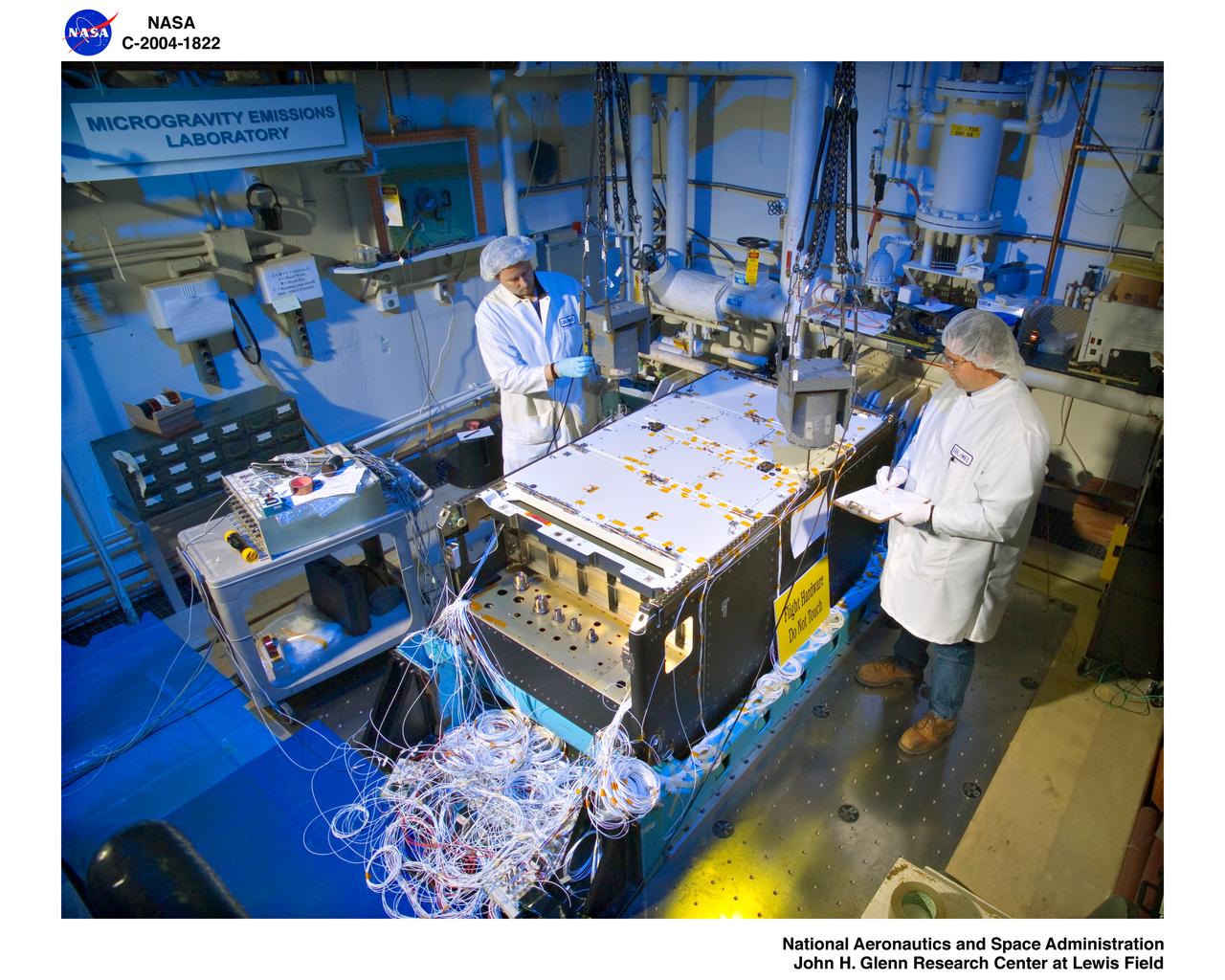
Fluids and Combustion Facility (FCF) Combustion Integrated Rack (CIR) Ground Integration Unit (GIU) Modal Test in the Structural Dynamics Laboratory at NASA Glenn
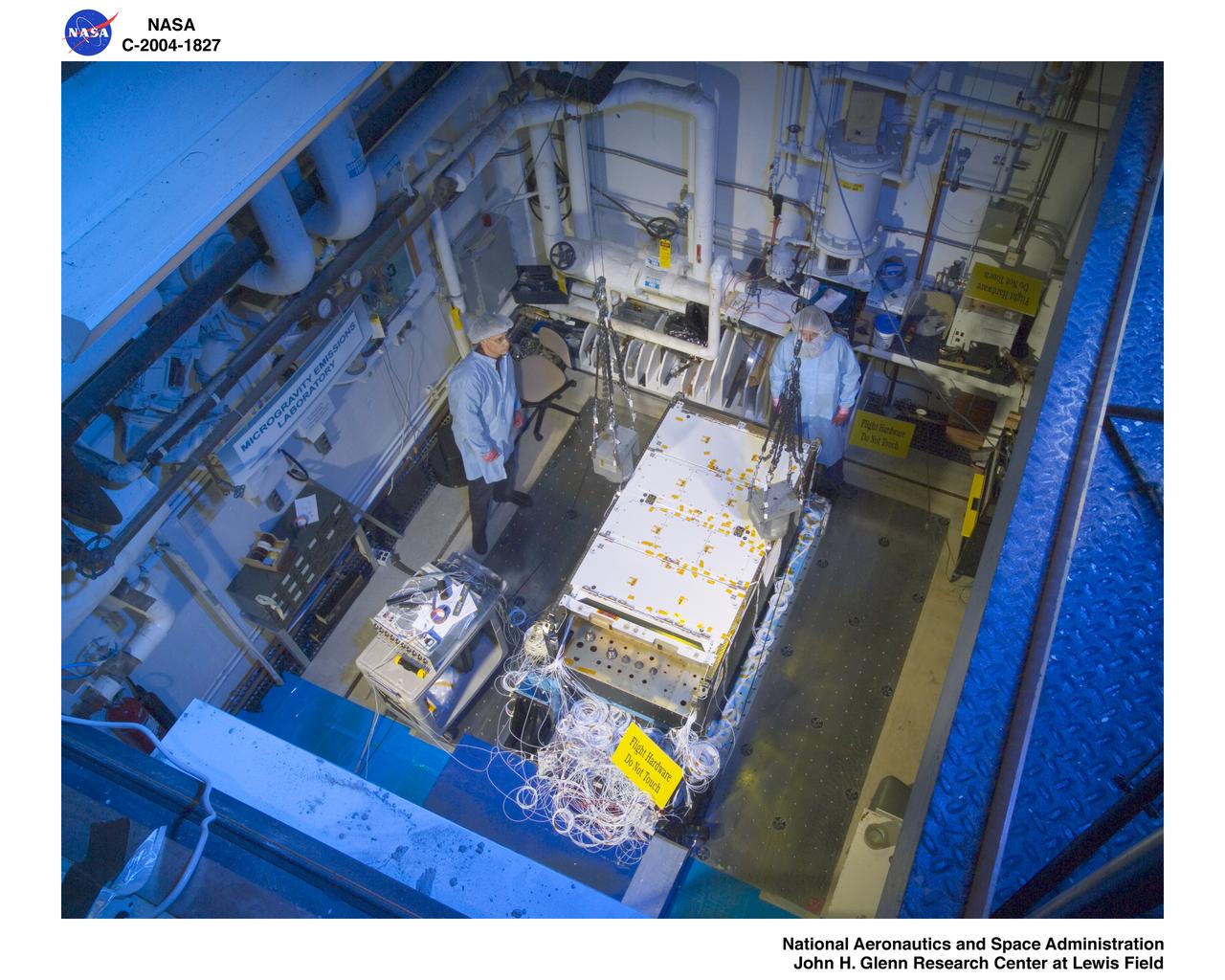
Fluids and Combustion Facility (FCF) Combustion Integrated Rack (CIR) Ground Integration Unit (GIU) Modal Test in the Structural Dynamics Laboratory at NASA Glenn
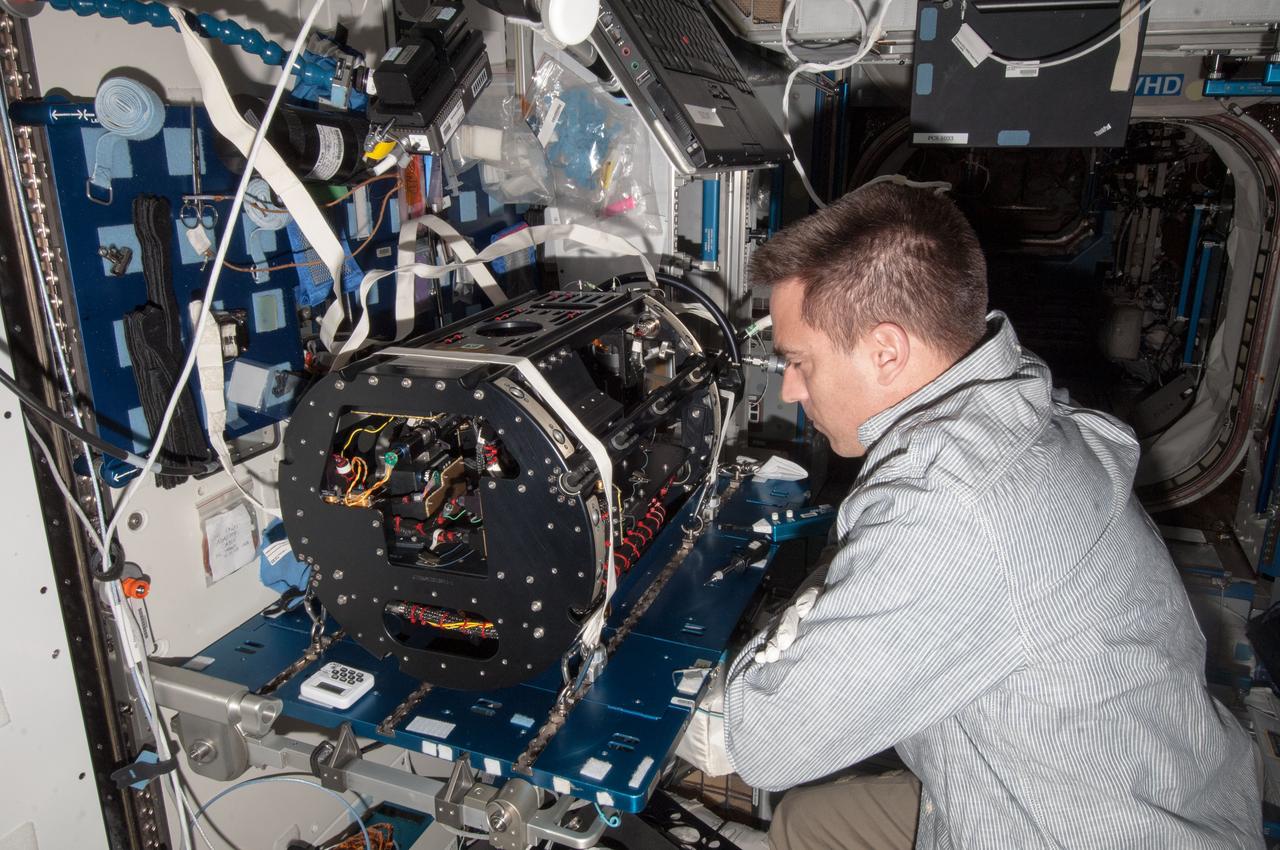
ISS035-E-025557(22 April 2013) ---Multi-user Droplet Combustion Apparatus (MDCA) Hardware Replacement: Cassidy accessed the Combustion Integration Rack (CIR) Combustion Chamber and removed the MDCA Chamber Insert Assembly (CIA). He then replaced the MDCA Needle 1 due to a fuel line that was damaged during previous activities when the MDCA CIA was being removed from the Combustion Chamber.
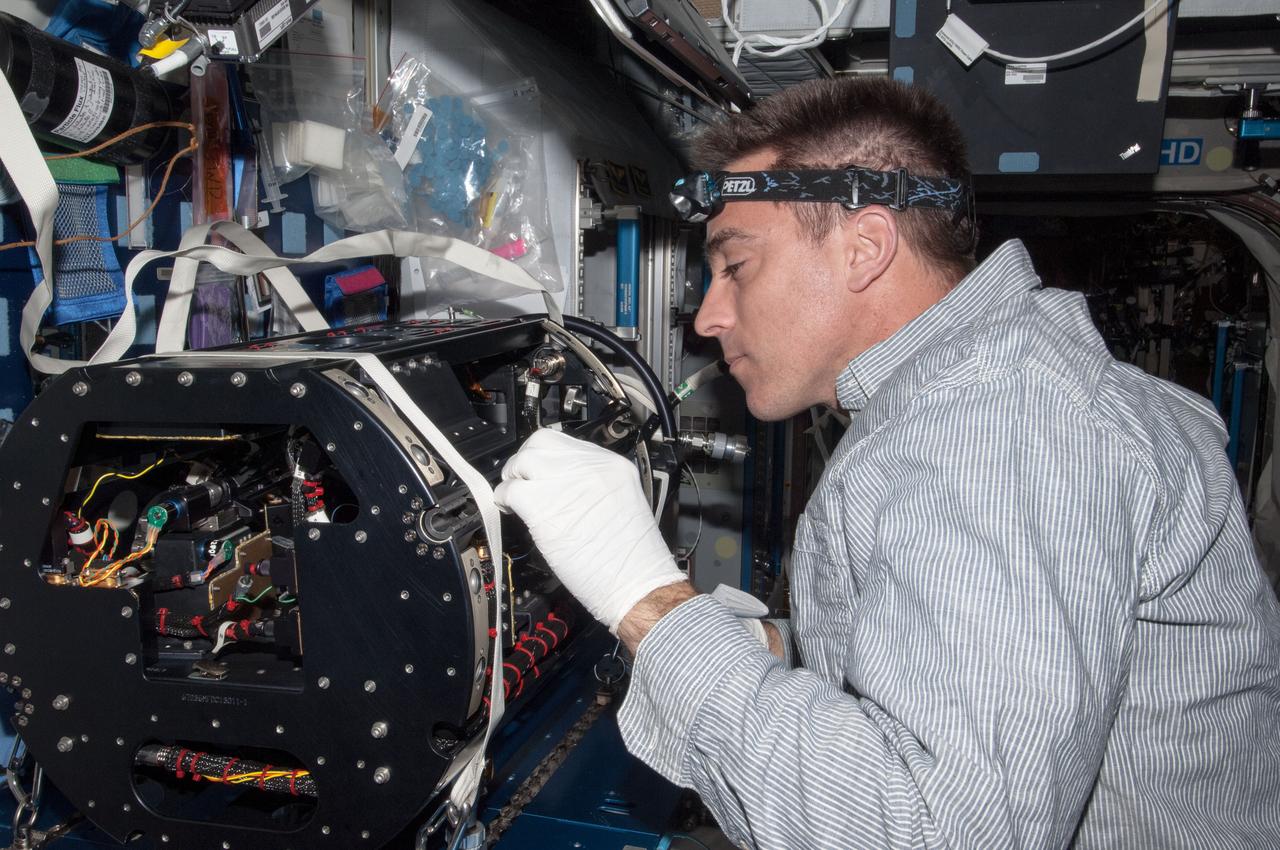
ISS035-E-025557(22 April 2013) ---Multi-user Droplet Combustion Apparatus (MDCA) Hardware Replacement: Cassidy accessed the Combustion Integration Rack (CIR) Combustion Chamber and removed the MDCA Chamber Insert Assembly (CIA). He then replaced the MDCA Needle 1 due to a fuel line that was damaged during previous activities when the MDCA CIA was being removed from the Combustion Chamber.
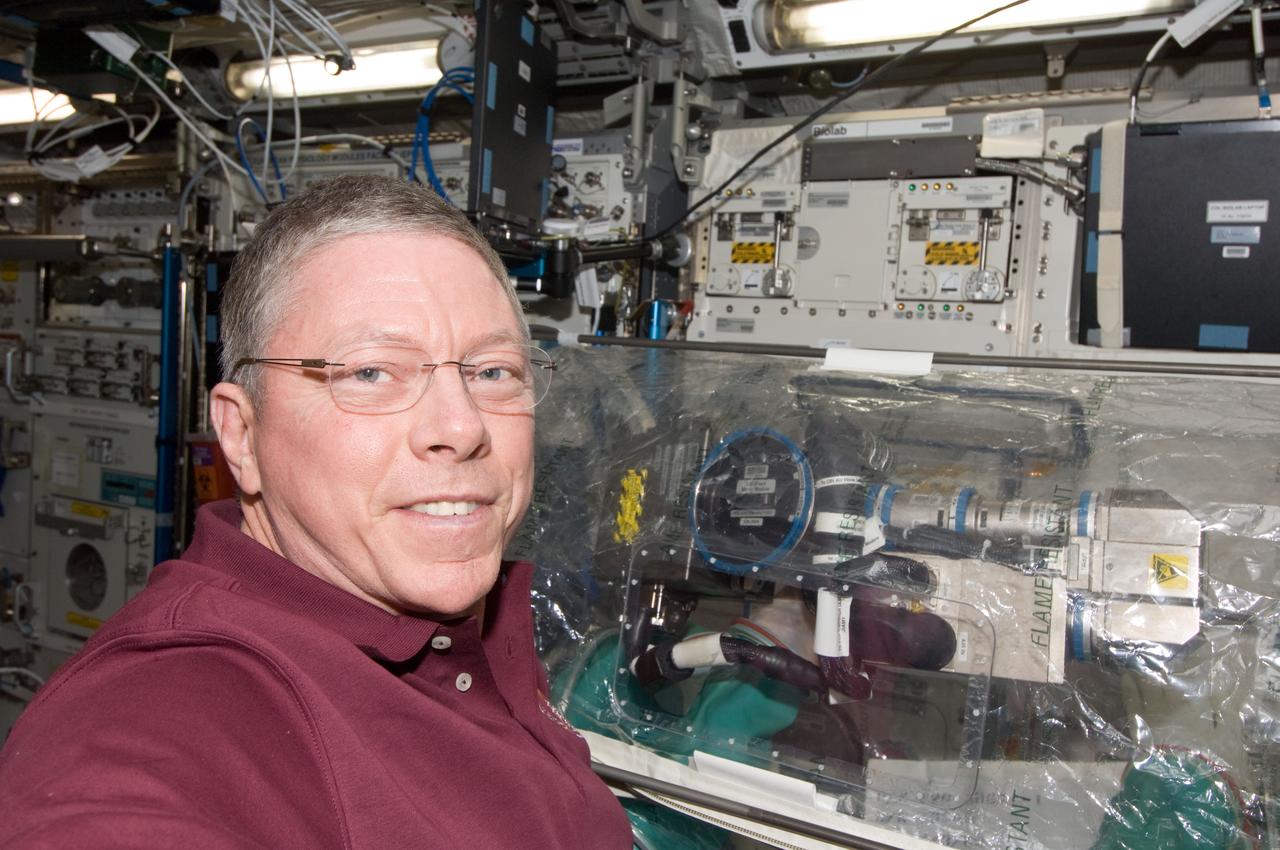
ISS029-E-029756 (17 Oct. 2011) --- NASA astronaut Mike Fossum, Expedition 29 commander, works on the Combustion Integrated Rack / Fluids & Combustion Facility (CIR FCF) in the Destiny laboratory of the International Space Station.
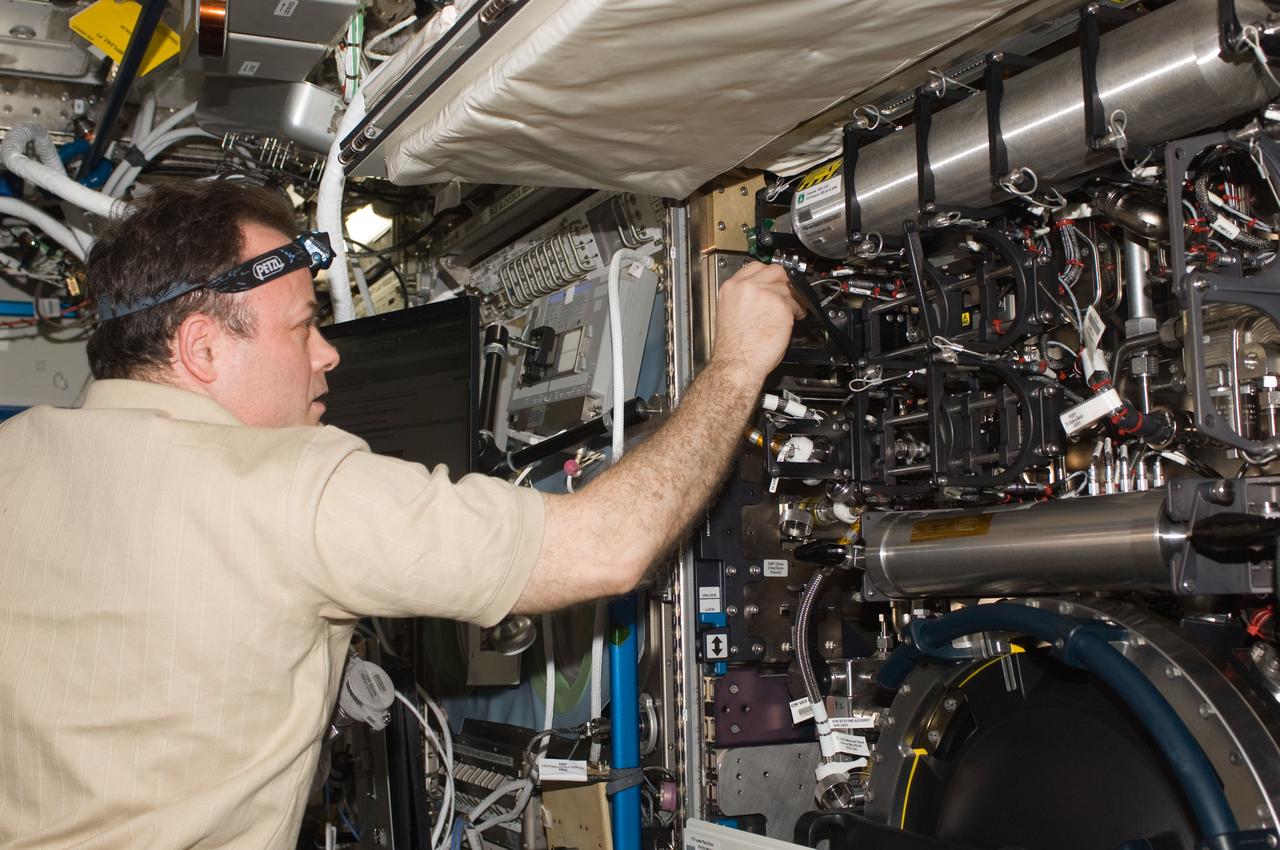
ISS028-E-026400 (17 Aug. 2011) --- NASA astronaut Ron Garan, Expedition 28 flight engineer, works with the Combustion Integrated Rack (CIR) Fluids and Combustion Facility (FCF) in the Destiny laboratory of the International Space Station.
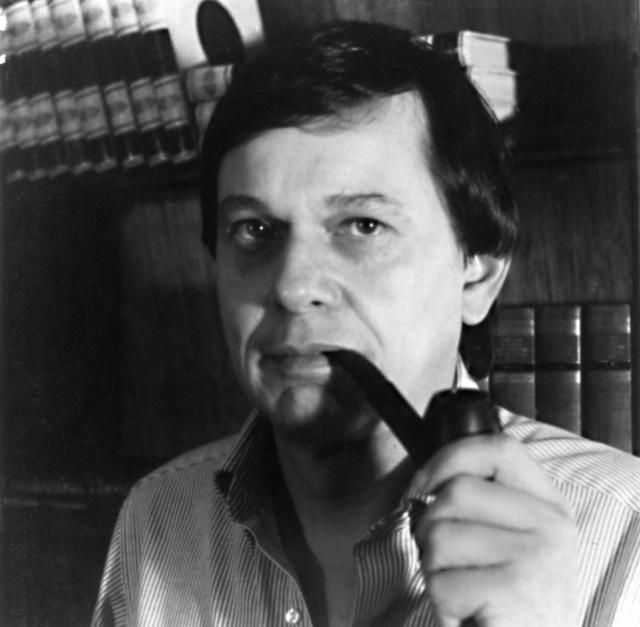
Dr. Forman Williams of the University of California, San Diego. He is principal investigator for Droplet Combustion Experiment (DCE/DCE-2) and High Pressure Combustion of Binary Fuel Sprays experiment.
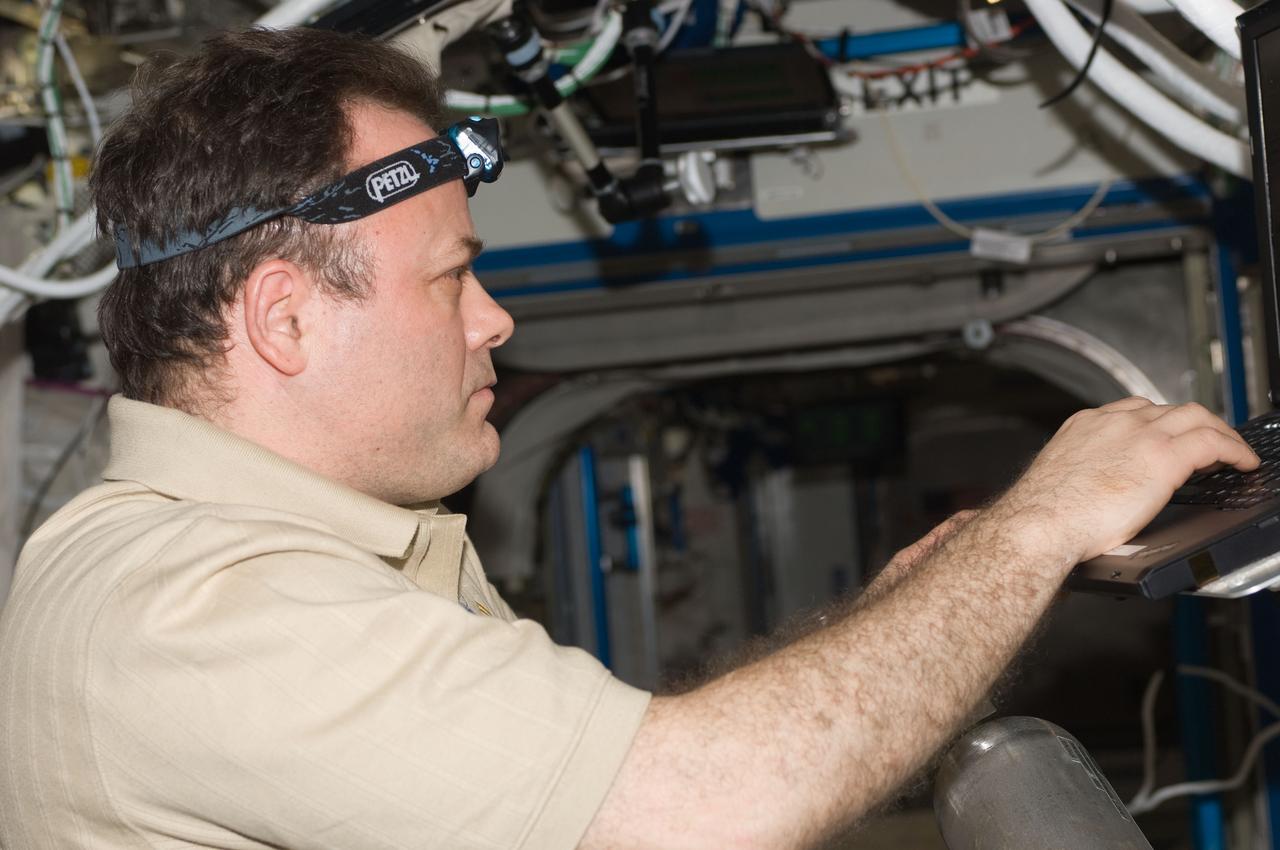
ISS028-E-026402 (17 Aug. 2011) --- NASA astronaut Ron Garan, Expedition 28 flight engineer, works with the Combustion Integrated Rack (CIR) Fluids and Combustion Facility (FCF) in the Destiny laboratory of the International Space Station.
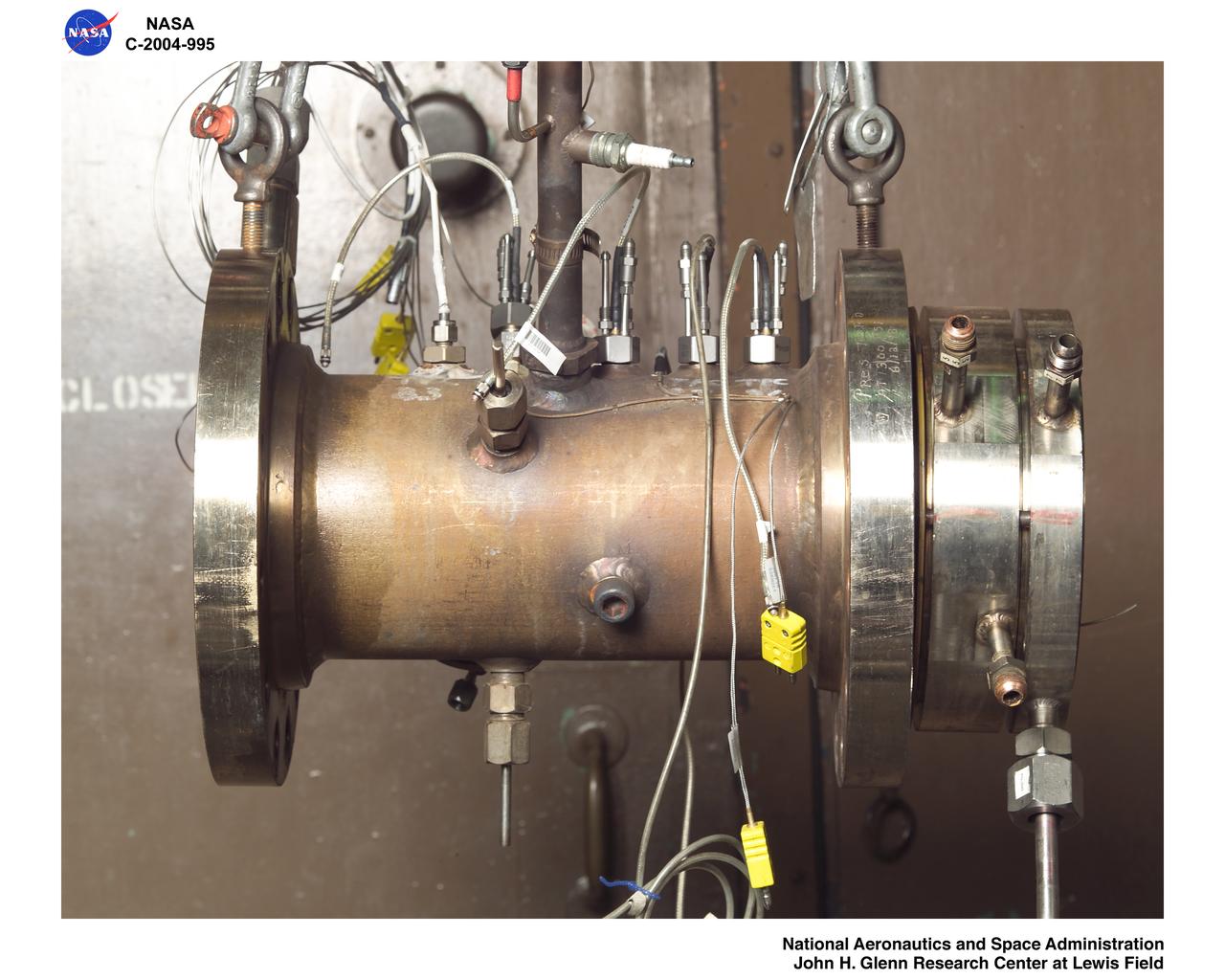
Instability Combustion Experiment
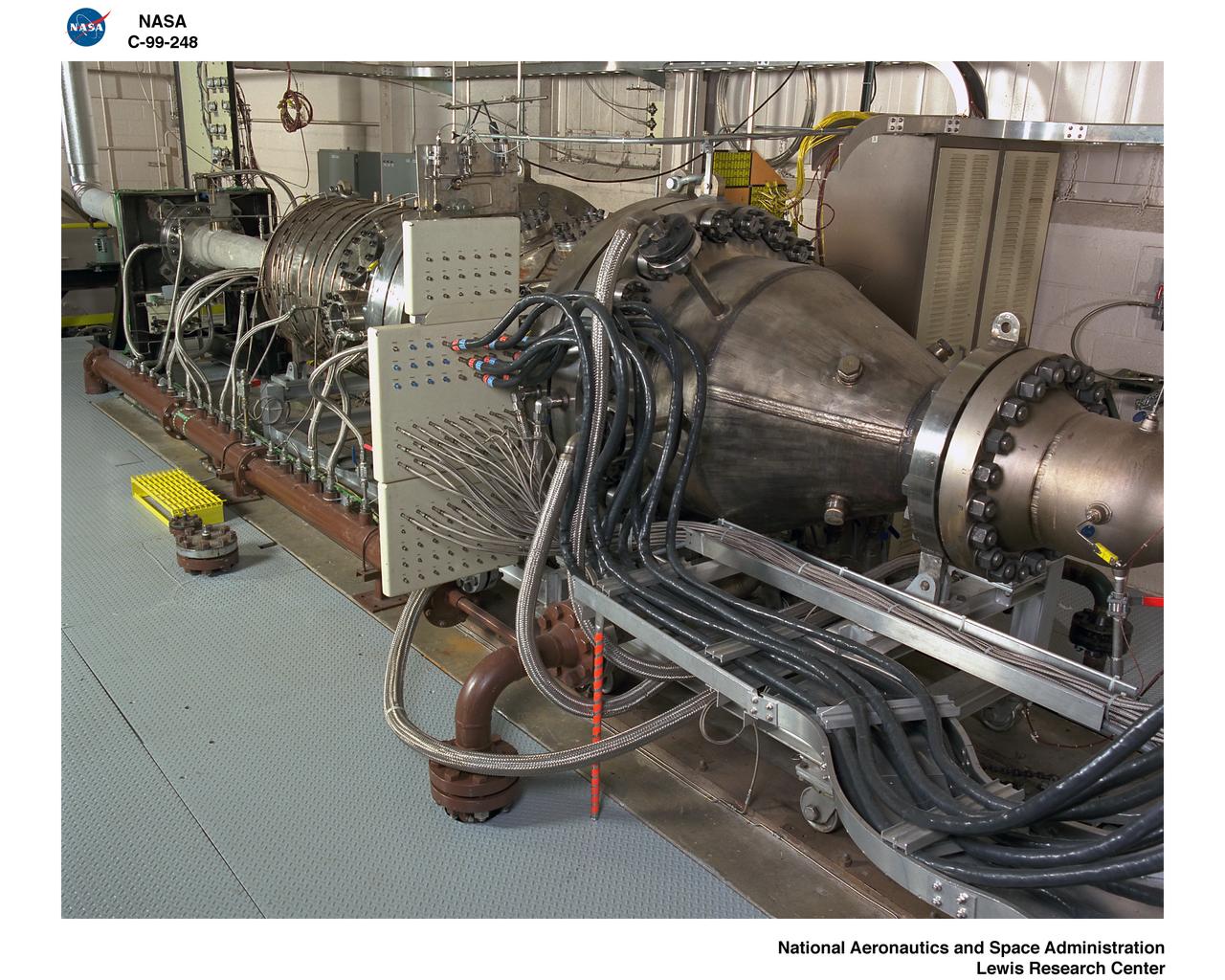
ADVANCED SUBSONIC COMBUSTION RIG
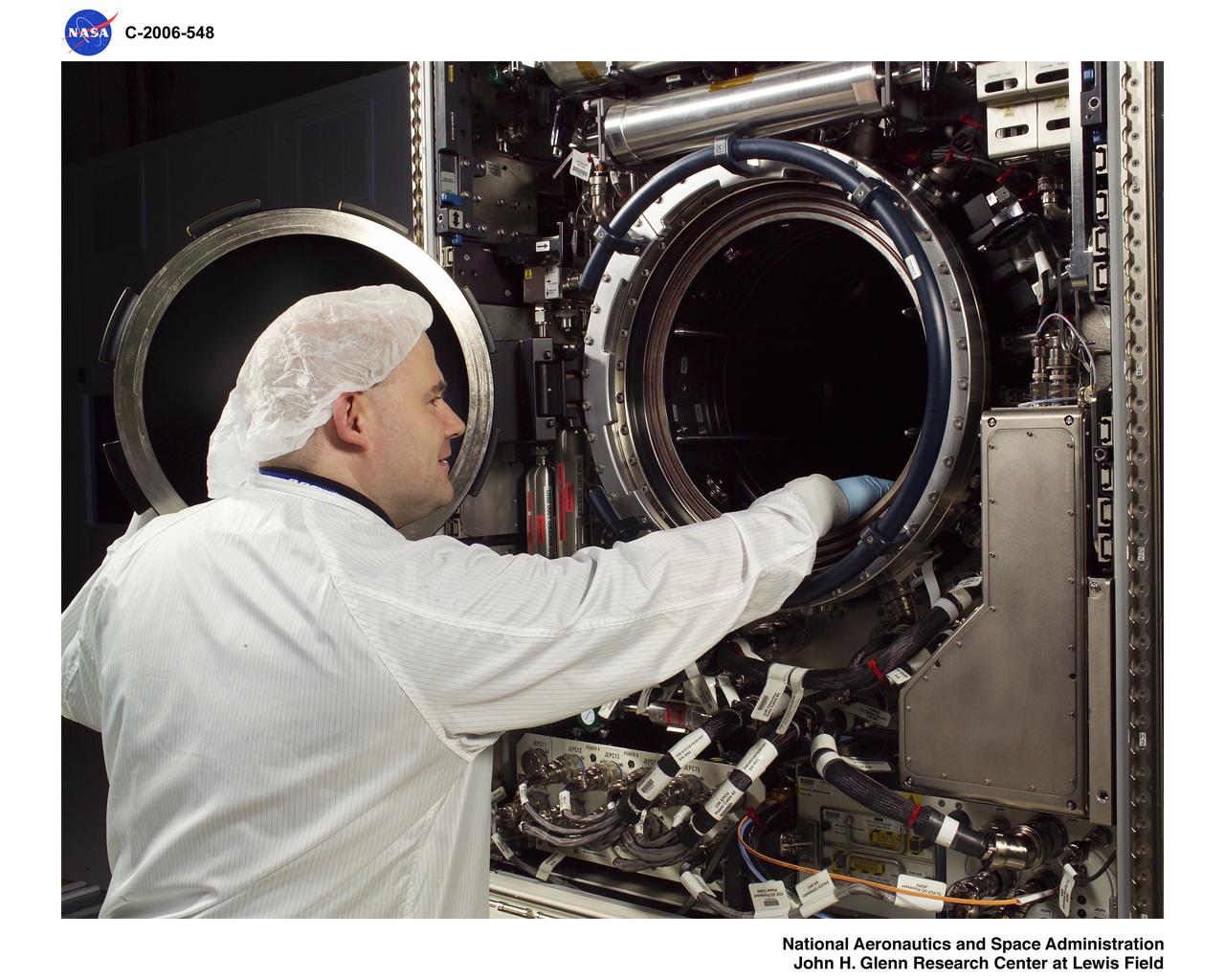
Combustion Integrated Rack (CIR)