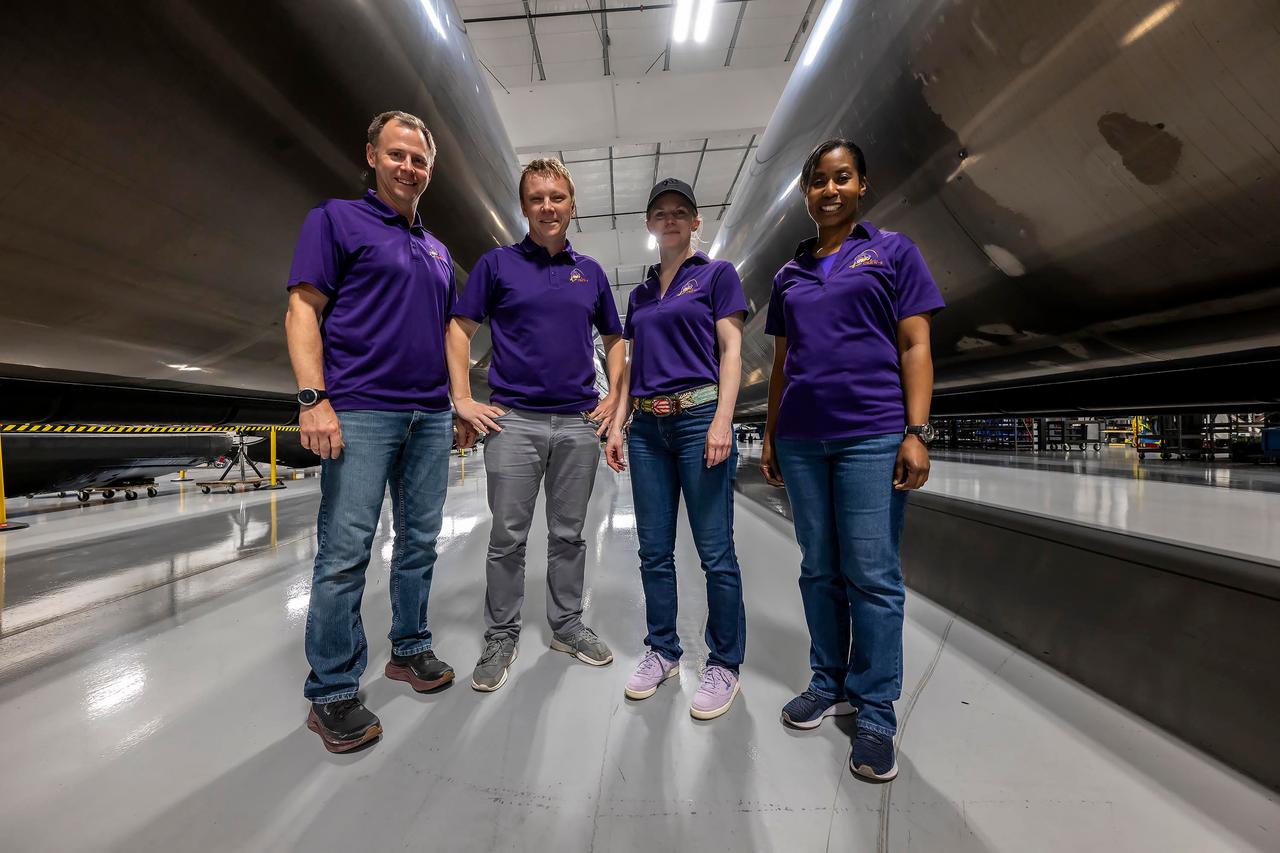
jsc2024e050139 (May 13, 2024) --- NASA’s SpaceX Crew-9 members pose for a photo in between Falcon 9 first-stage boosters that are being refurbished at SpaceX’s HangarX facility at NASA's Kennedy Space Center in Florida for future launches. From left are, Pilot Nick Hague from NASA; Mission Spedialist Alexsandr Gorbunov from Roscosmos; Commander Zena Cardman from NASA; and Mission Specialist Stephanie Wilson from NASA. Credit: SpaceX
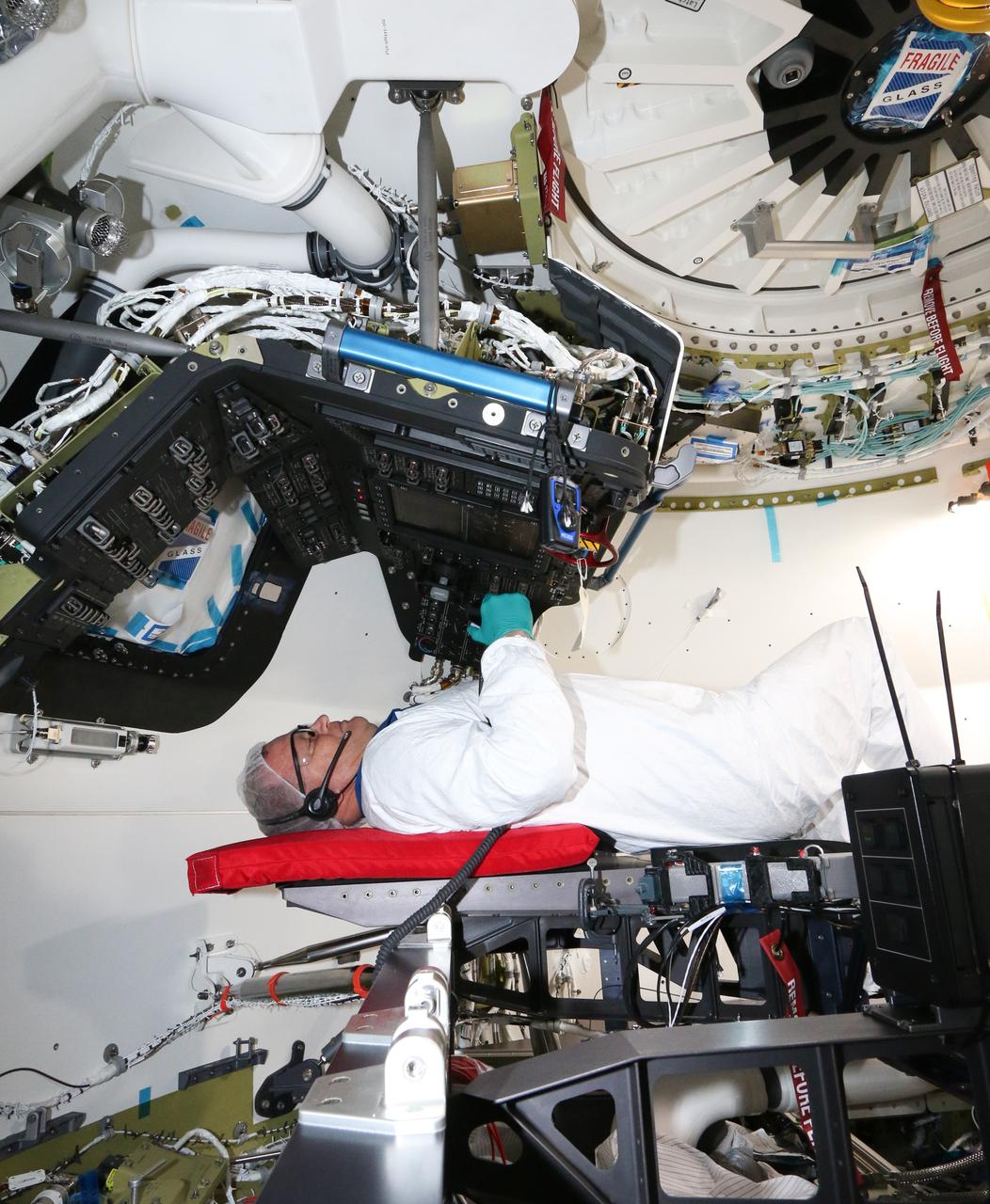
Inside Boeing's Commercial Crew and Cargo Processing Facility at NASA's Kennedy Space Center in Florida, NASA astronaut Eric Boe participates in the first full-up acceptance test of Boeing's CST-100 Starliner, on Aug. 22, 2018. The Starliner will be the first to fly astronauts on the company's Crew Flight Test (CFT), following environmental testing in El Segundo, California. Acceptance testing is a critical part of the spacecraft build progression. Generally, it gives the crew module a clean bill of health that it is built correctly, performs to expectations and is ready to fly.
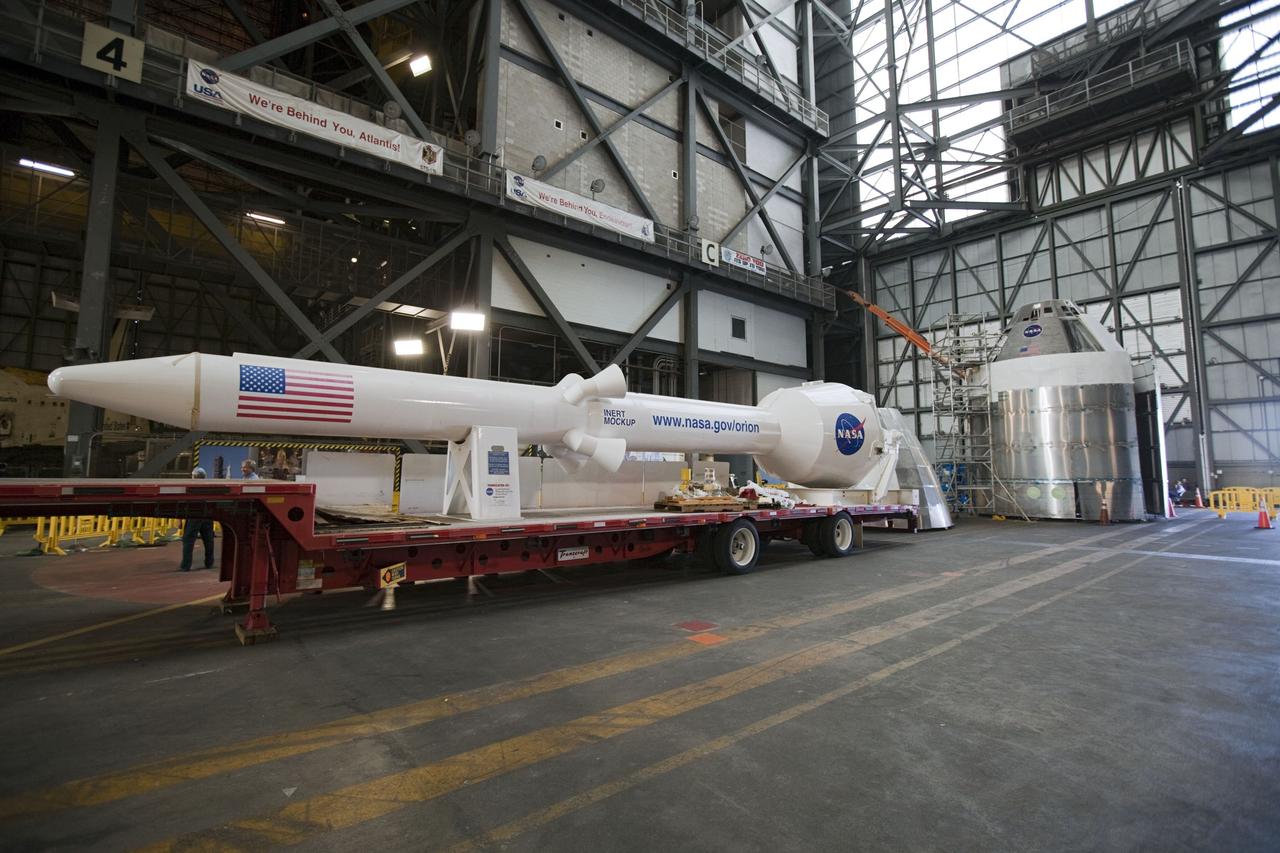
CAPE CANAVERAL, Fla. – Mockup components of an Orion spacecraft are laid out in the transfer aisle of the Vehicle Assembly Building, or VAB, at NASA's Kennedy Space Center in Florida. In the foreground are the Launch Abort System and the aerodynamic shell that will cover the capsule during launch. To the right is the Orion capsule model on top of a service module simulator. Orion is the exploration spacecraft designed to carry crews to space beyond low Earth orbit. It will provide emergency abort capability, sustain the crew during the space travel and provide safe re-entry from deep space return velocities. The first uncrewed test flight of the Orion is scheduled to launch in 2014 atop a Delta IV rocket and in 2017 on a Space Launch System rocket. The Orion mockup is exact in details on the outside, but mostly empty on the inside except for four mockup astronaut seats and hatch. The work in the VAB is crucial to making sure the designs are accurate. For more information, visit http://www.nasa.gov/orion Photo credit: NASA/ Dmitri Gerondidakis
CAPE CANAVERAL, Fla. – The Orion mockup spacecraft sits atop its service module simulator in the transfer aisle of the Vehicle Assembly Building, or VAB, at NASA's Kennedy Space Center in Florida. To the left is the aerodynamic shell that will cover the capsule during launch. Orion is the exploration spacecraft designed to carry crews to space beyond low Earth orbit. It will provide emergency abort capability, sustain the crew during the space travel and provide safe re-entry from deep space return velocities. The first uncrewed test flight of the Orion is scheduled to launch in 2014 atop a Delta IV rocket and in 2017 on a Space Launch System rocket. The Orion mockup is exact in details on the outside, but mostly empty on the inside except for four mockup astronaut seats and hatch. The work in the VAB is crucial to making sure the designs are accurate. For more information, visit http://www.nasa.gov/orion Photo credit: NASA/ Dmitri Gerondidakis
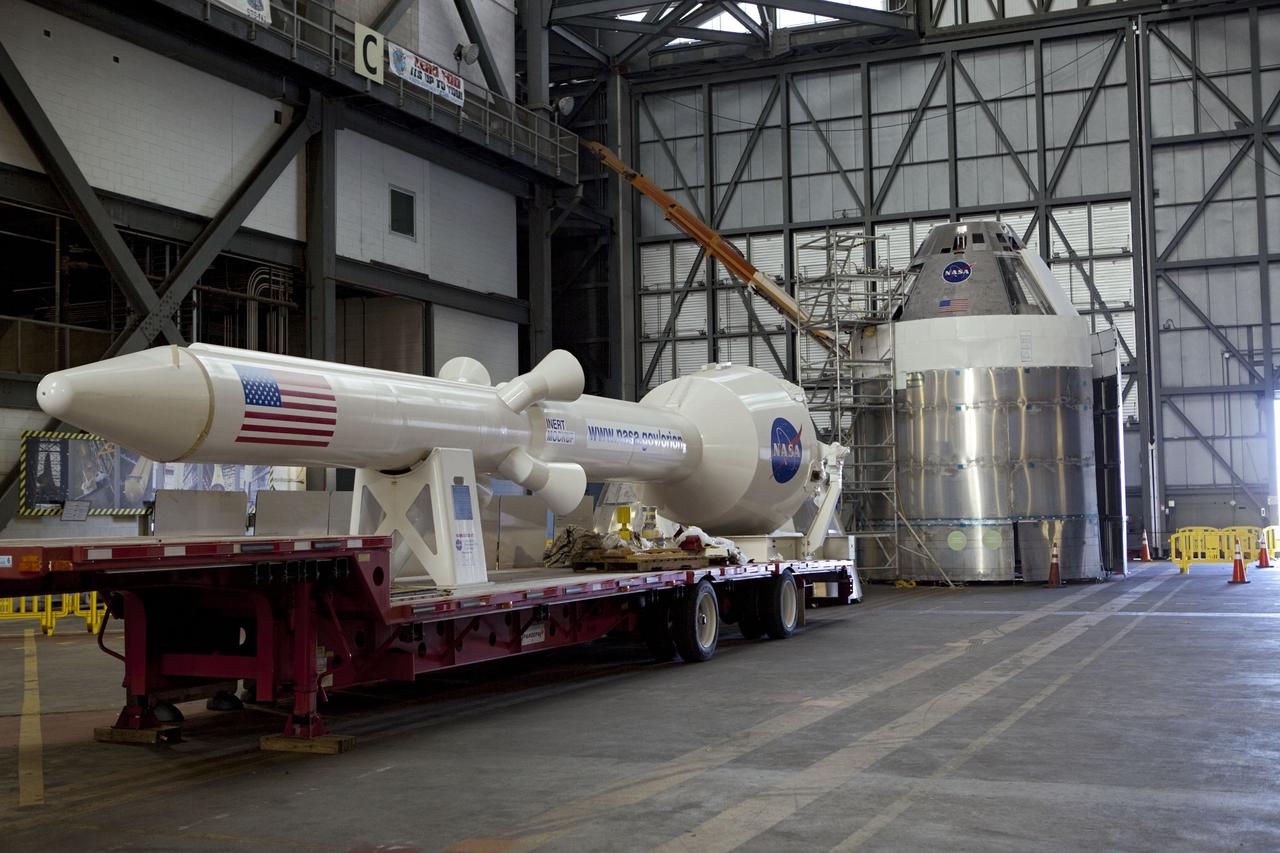
CAPE CANAVERAL, Fla. – Mockup components of an Orion spacecraft are laid out in the transfer aisle of the Vehicle Assembly Building, or VAB, at NASA's Kennedy Space Center in Florida. In the foreground is the Launch Abort System. In the background is the Orion capsule model on top of a service module simulator. Orion is the exploration spacecraft designed to carry crews to space beyond low Earth orbit. It will provide emergency abort capability, sustain the crew during the space travel and provide safe re-entry from deep space return velocities. The first uncrewed test flight of the Orion is scheduled to launch in 2014 atop a Delta IV rocket and in 2017 on a Space Launch System rocket. The Orion mockup is exact in details on the outside, but mostly empty on the inside except for four mockup astronaut seats and hatch. The work in the VAB is crucial to making sure the designs are accurate. For more information, visit http://www.nasa.gov/orion Photo credit: NASA/ Dmitri Gerondidakis
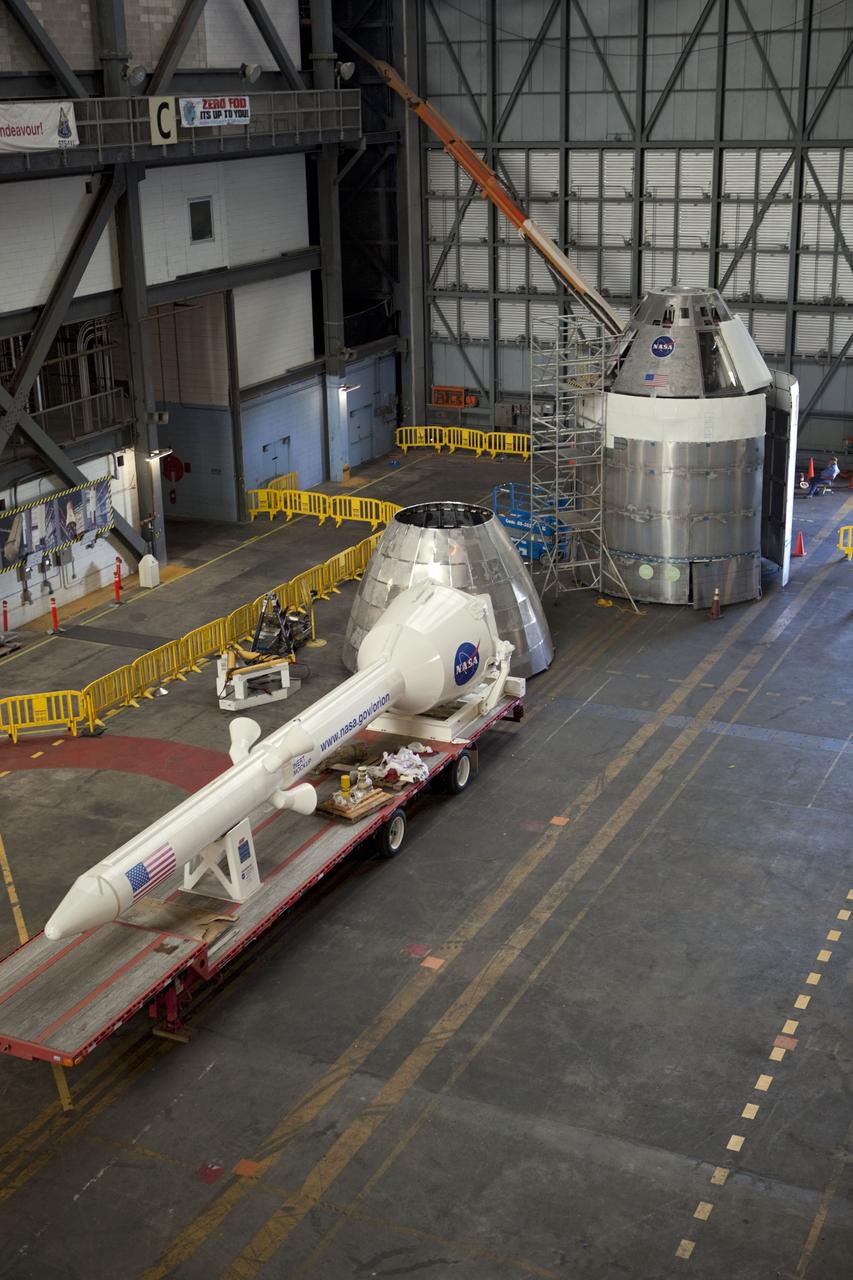
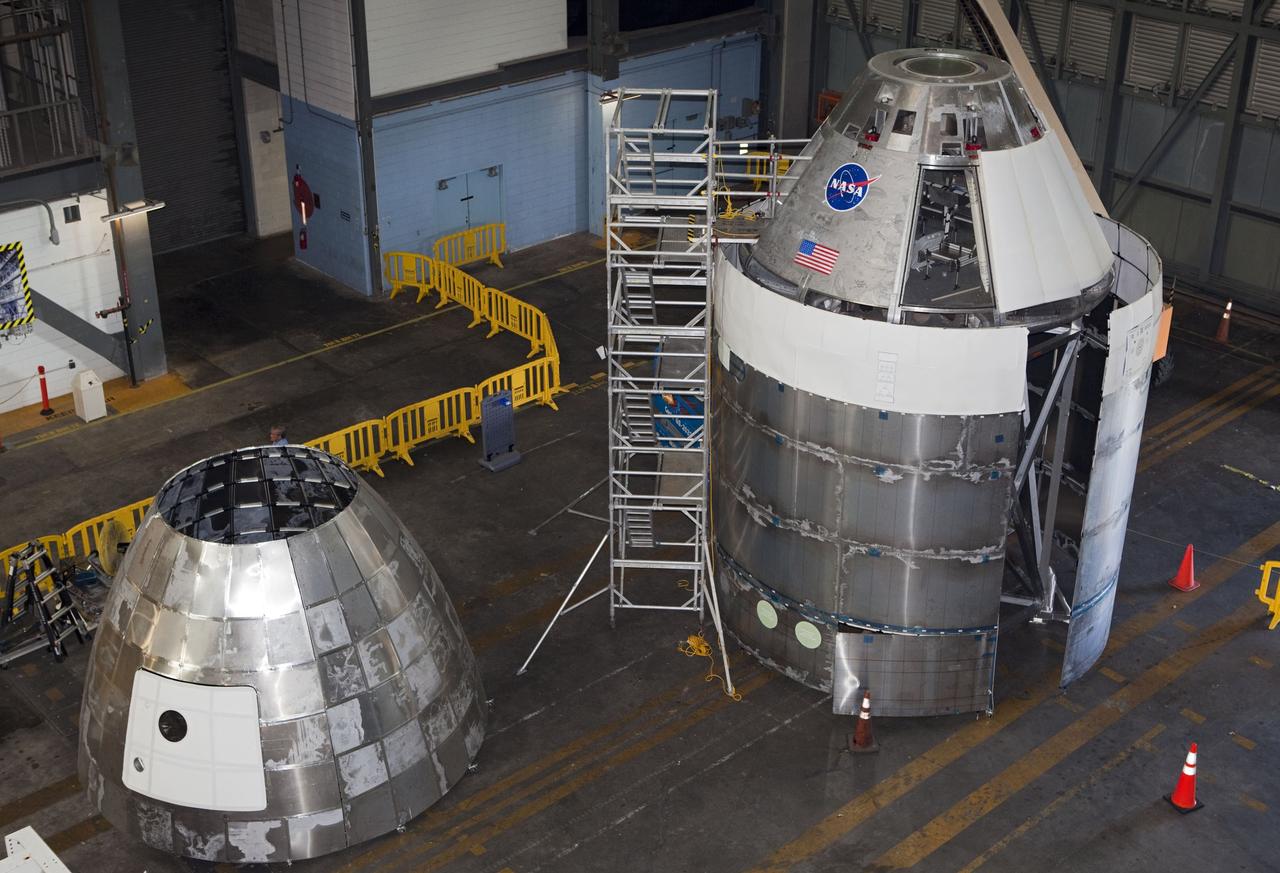
CAPE CANAVERAL, Fla. – Seen from overhead, mockup components of an Orion spacecraft are laid out in the transfer aisle of the Vehicle Assembly Building, or VAB, at NASA's Kennedy Space Center in Florida. In the foreground is the Launch Abort System and the aerodynamic shell that will cover the capsule during launch. To the right is the Orion capsule model on top of a service module simulator. Orion is the exploration spacecraft designed to carry crews to space beyond low Earth orbit. It will provide emergency abort capability, sustain the crew during the space travel and provide safe re-entry from deep space return velocities. The first uncrewed test flight of the Orion is scheduled to launch in 2014 atop a Delta IV rocket and in 2017 on a Space Launch System rocket. The Orion mockup is exact in details on the outside, but mostly empty on the inside except for four mockup astronaut seats and hatch. The work in the VAB is crucial to making sure the designs are accurate. For more information, visit http://www.nasa.gov/orion Photo credit: NASA/ Dmitri Gerondidakis
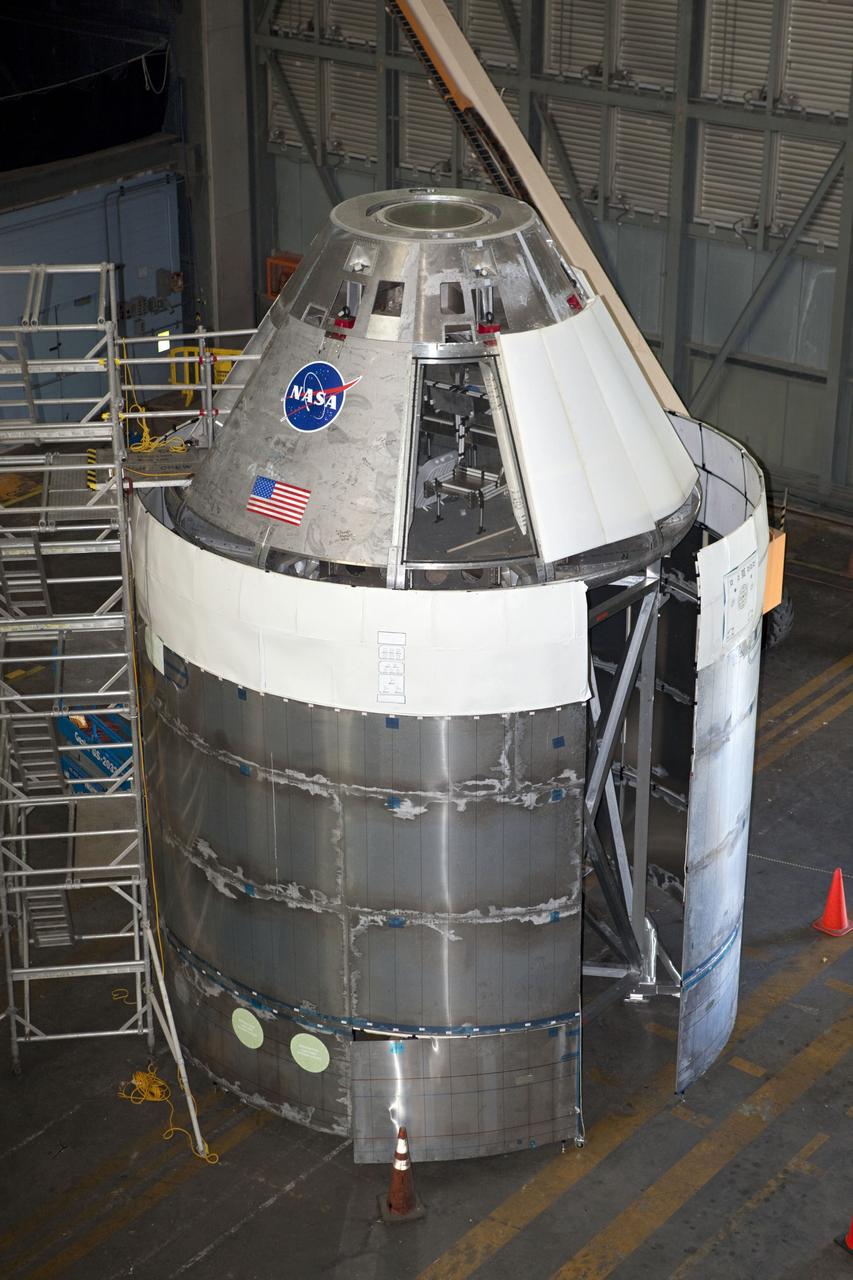
CAPE CANAVERAL, Fla. – The Orion mockup spacecraft sits atop its service module simulator in the transfer aisle of the Vehicle Assembly Building, or VAB, at NASA's Kennedy Space Center in Florida. Orion is the exploration spacecraft designed to carry crews to space beyond low Earth orbit. It will provide emergency abort capability, sustain the crew during the space travel and provide safe re-entry from deep space return velocities. The first uncrewed test flight of the Orion is scheduled to launch in 2014 atop a Delta IV rocket and in 2017 on a Space Launch System rocket. The Orion mockup is exact in details on the outside, but mostly empty on the inside except for four mockup astronaut seats and hatch. The work in the VAB is crucial to making sure the designs are accurate. For more information, visit http://www.nasa.gov/orion Photo credit: NASA/ Dmitri Gerondidakis
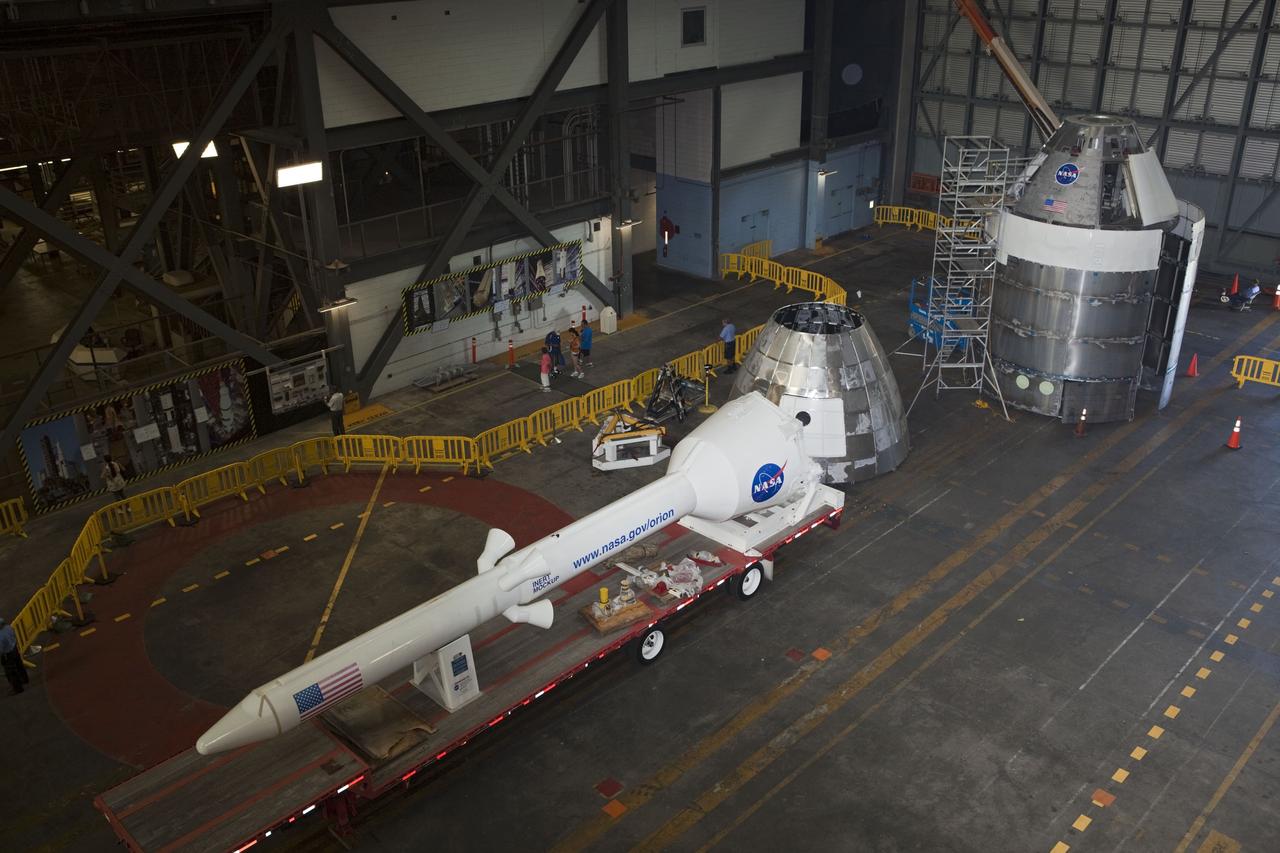
CAPE CANAVERAL, Fla. – Seen from overhead, mockup components of an Orion spacecraft are laid out in the transfer aisle of the Vehicle Assembly Building, or VAB, at NASA's Kennedy Space Center in Florida. In the foreground is the Launch Abort System and the aerodynamic shell that will cover the capsule during launch. To the right is the Orion capsule model on top of a service module simulator. Orion is the exploration spacecraft designed to carry crews to space beyond low Earth orbit. It will provide emergency abort capability, sustain the crew during the space travel and provide safe re-entry from deep space return velocities. The first uncrewed test flight of the Orion is scheduled to launch in 2014 atop a Delta IV rocket and in 2017 on a Space Launch System rocket. The Orion mockup is exact in details on the outside, but mostly empty on the inside except for four mockup astronaut seats and hatch. The work in the VAB is crucial to making sure the designs are accurate. For more information, visit http://www.nasa.gov/orion Photo credit: NASA/ Dmitri Gerondidakis
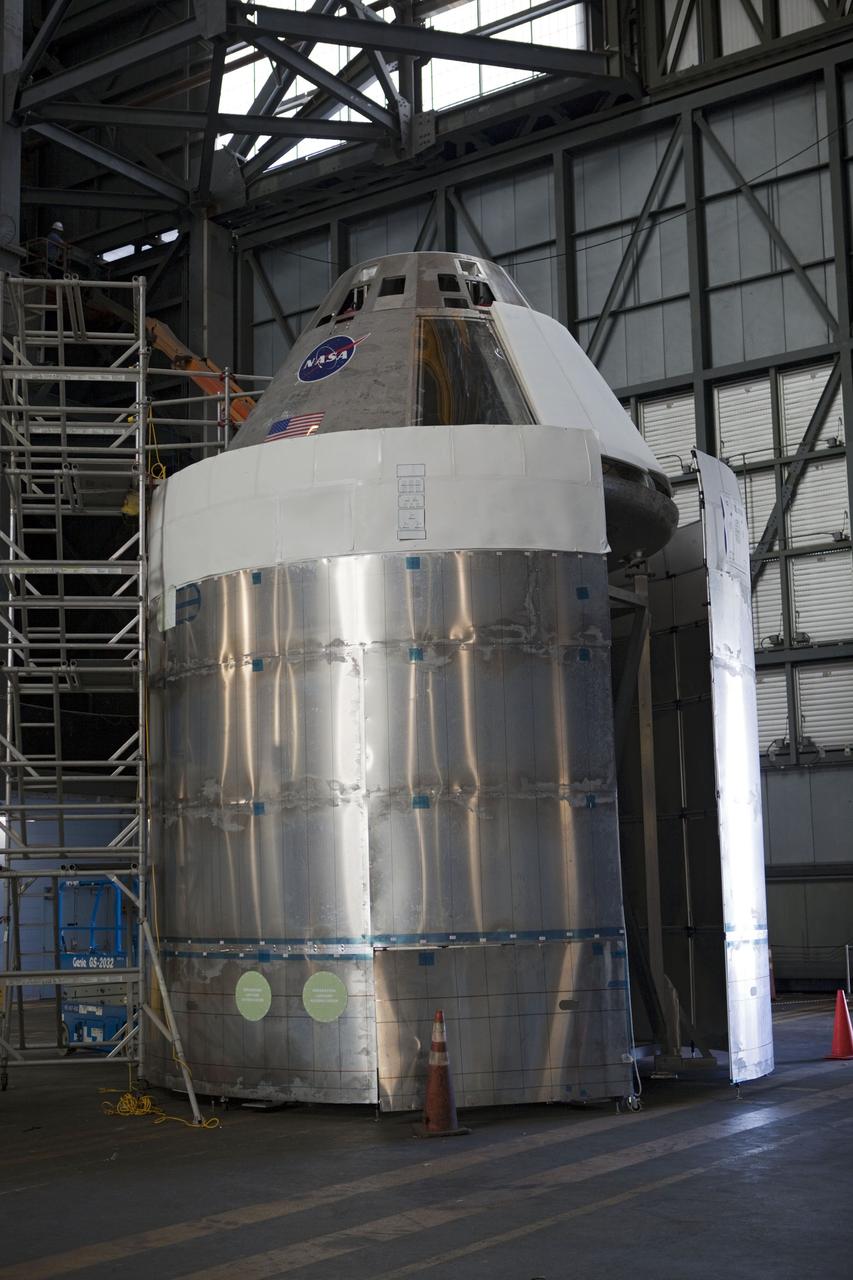
CAPE CANAVERAL, Fla. – The Orion mockup spacecraft sits atop its service module simulator in the transfer aisle of the Vehicle Assembly Building, or VAB, at NASA's Kennedy Space Center in Florida. Orion is the exploration spacecraft designed to carry crews to space beyond low Earth orbit. It will provide emergency abort capability, sustain the crew during the space travel and provide safe re-entry from deep space return velocities. The first uncrewed test flight of the Orion is scheduled to launch in 2014 atop a Delta IV rocket and in 2017 on a Space Launch System rocket. The Orion mockup is exact in details on the outside, but mostly empty on the inside except for four mockup astronaut seats and hatch. The work in the VAB is crucial to making sure the designs are accurate. For more information, visit http://www.nasa.gov/orion Photo credit: NASA/ Dmitri Gerondidakis