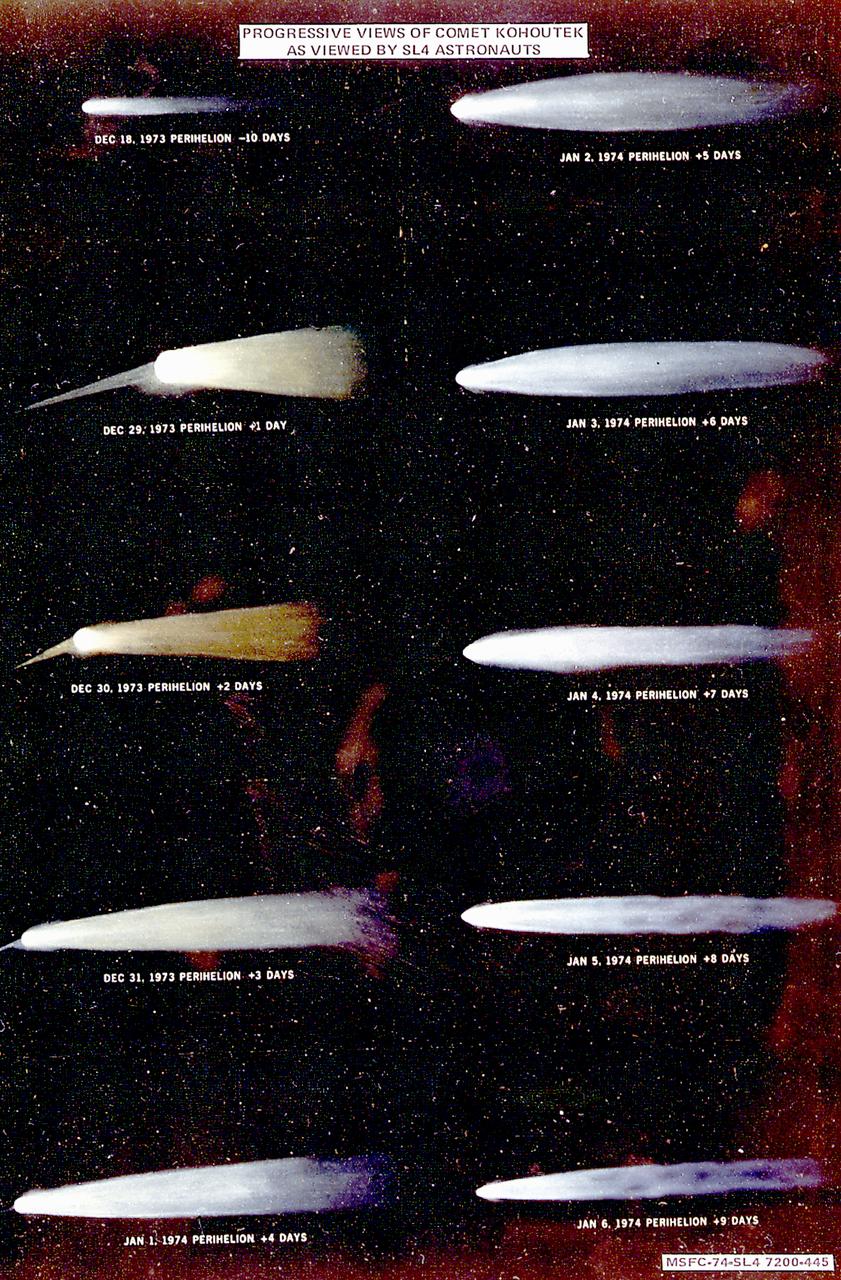
This montage is an artist's conception of progressive views of the Comet Kohoutek based on sketches and a description by Skylab-4 astronaut Edward Gibson. An early discovery of a large comet in an orbit that would reach close to the Sun at the end of 1973 prompted NASA to initiate Operation Kohoutek, a program to coordinate widespread observations of the comet from ground observatories, aircraft, balloons, rockets, unmarned satellites, and Skylab.
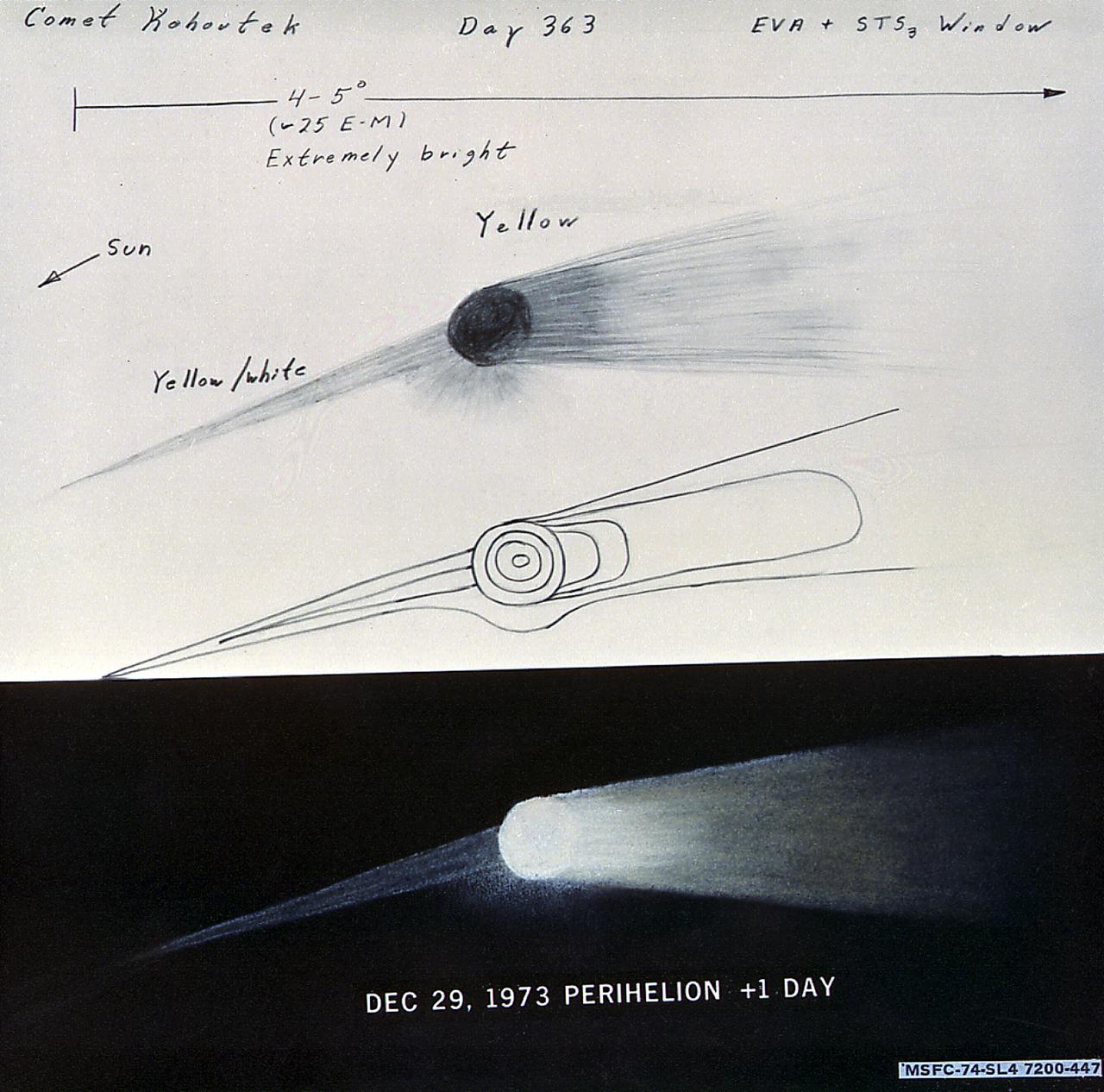
This pencil sketch of the Comet Kohoutek made by Skylab-4 astronaut Edward Gibson illustrates the crew's collective impressions of the comet's appearance on December 29, 1973. An early discovery of a large comet in an orbit that would reach close to the Sun at the end of 1973 prompted NASA to initiate Operation Kohoutek, a program to coordinate widespread observations of the comet from ground observatories, aircraft, balloons, rockets, unmarned satellites, and Skylab.
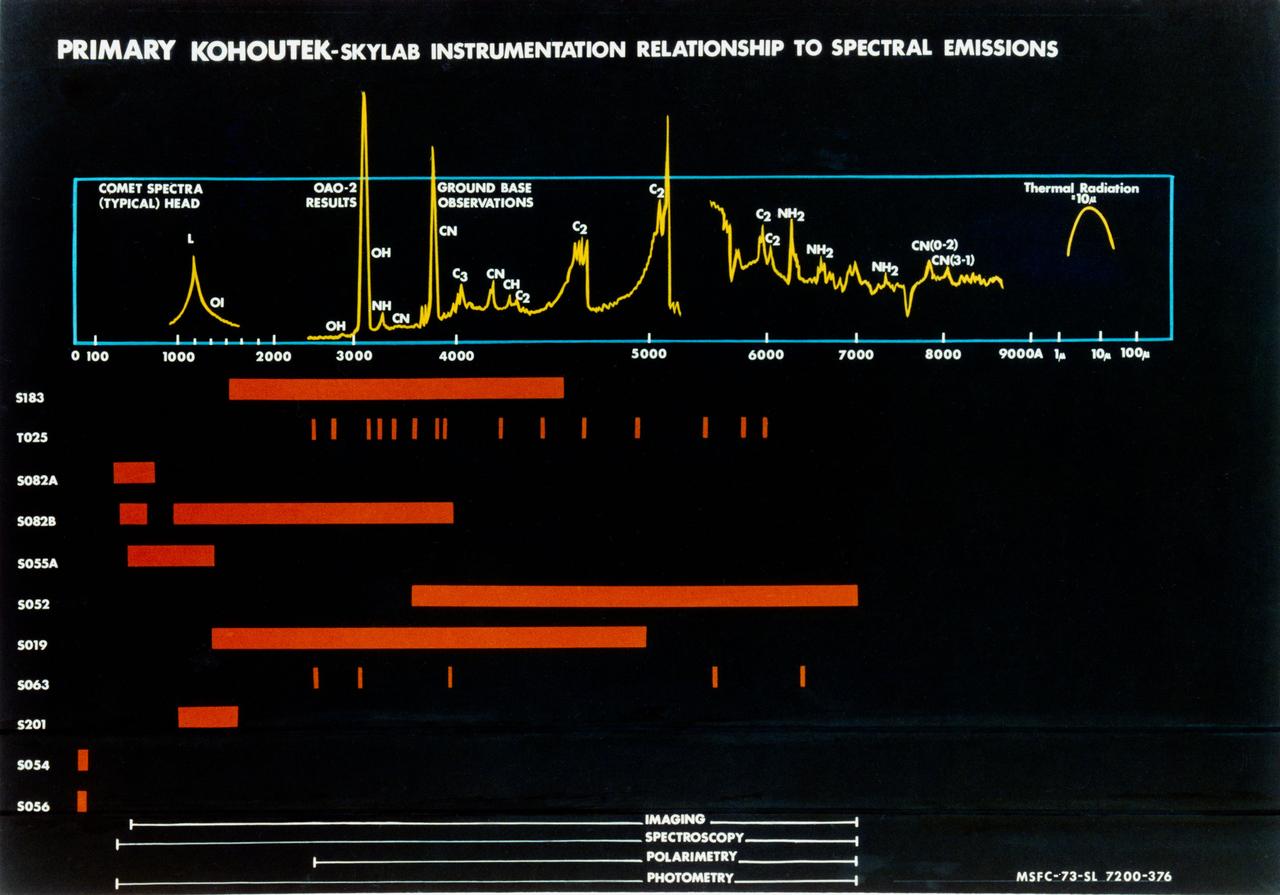
S73-37264 (November 1973) --- Graphical representation of Skylab instrumentation relationship of Comet Kohoutek to Spectral emissions. Photo credit: NASA
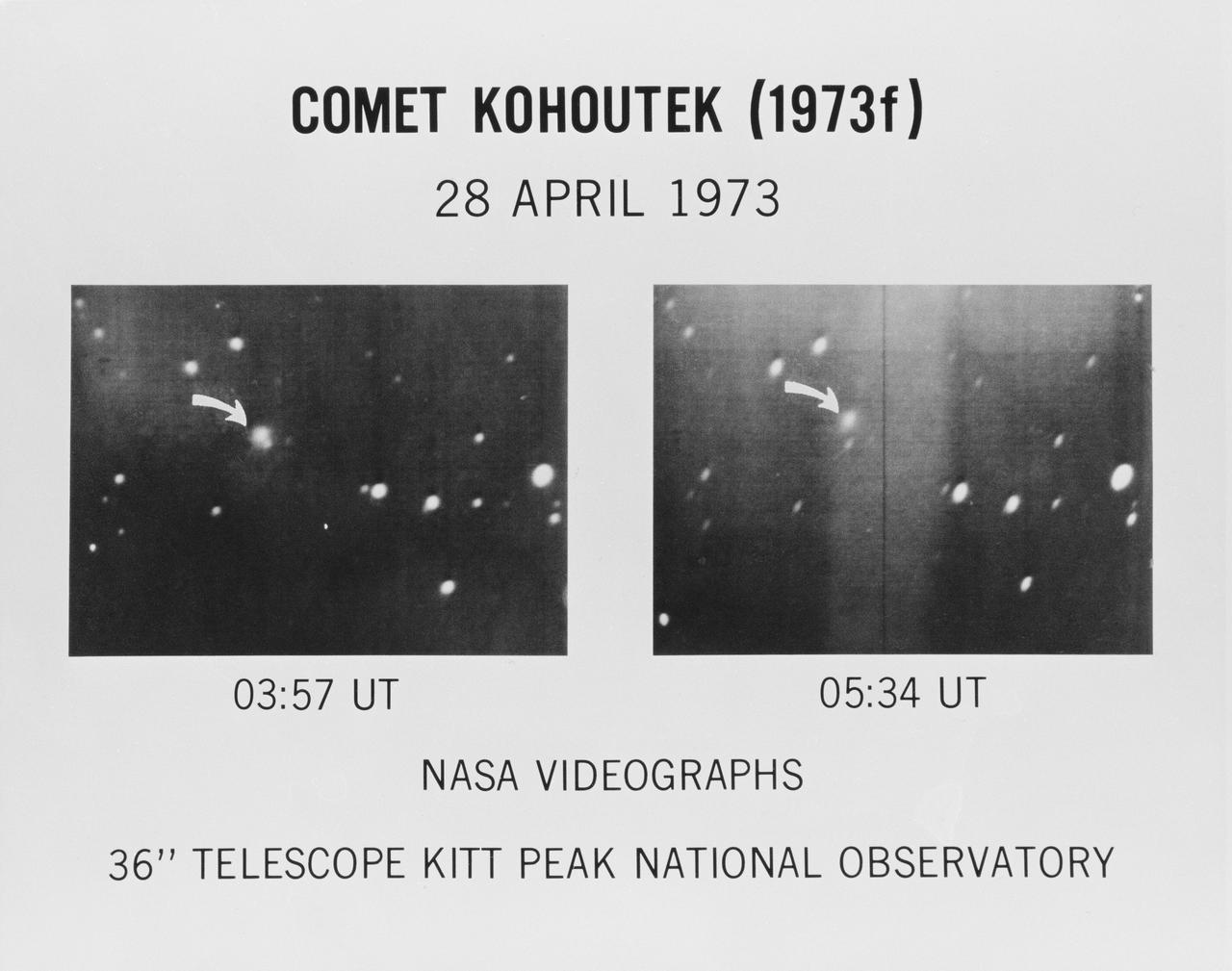
S73-33283 (28 April 1973) --- Videographs of Comet Kohoutek taken by the 36-inch telescope at the Kitt Peak National Observatory on April 28, 1973 for the Skylab program. Photo credit: NASA
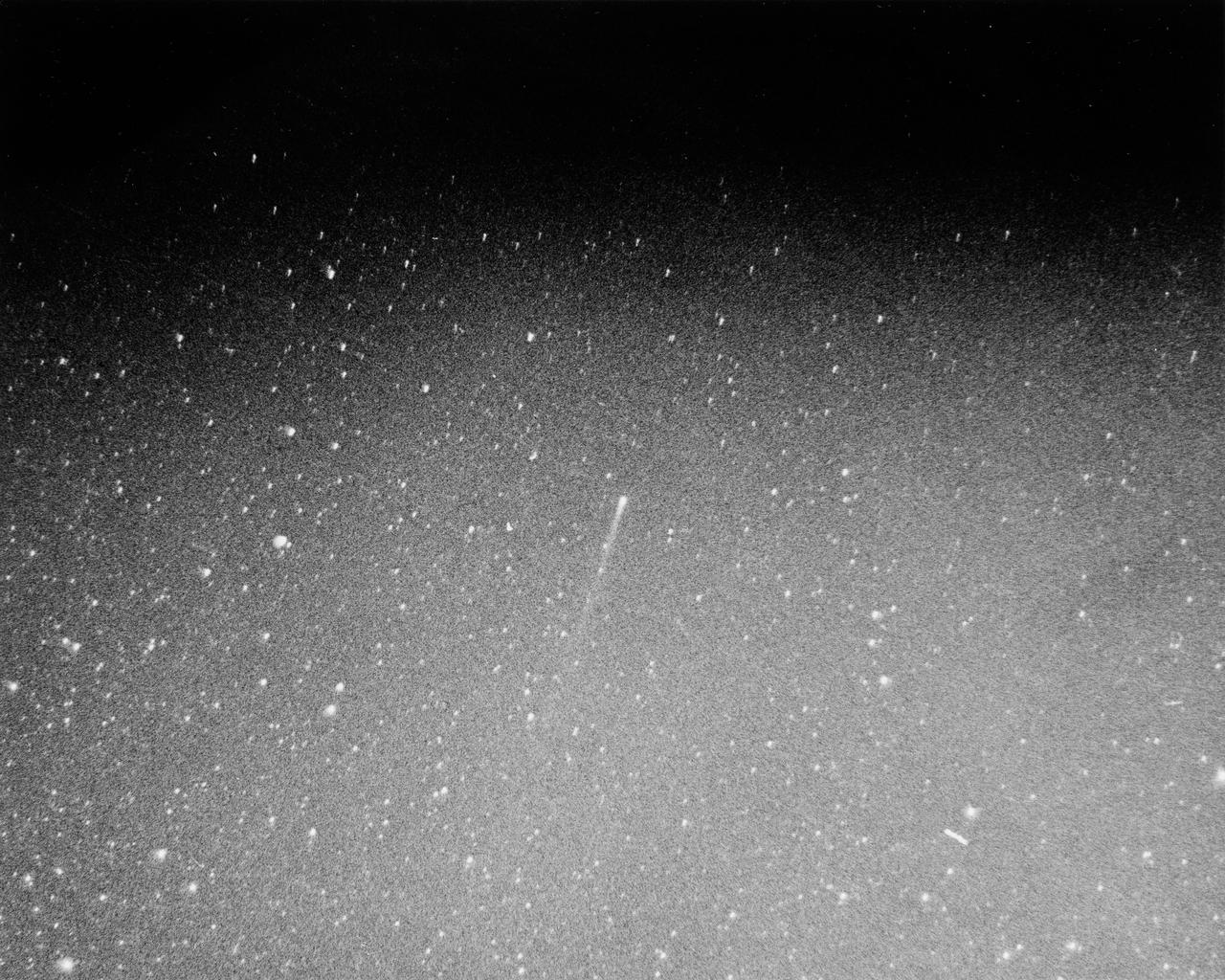
S73-38390 (6 Dec. 1973) --- An Earth-based photograph of the Comet Kohoutek in the sky on Dec. 6, 1973, when the celestial phenomenon was more than 70 million miles from the sun and some 119 million miles from Earth. This picture was taken from a dark mountain top area of Haleakala (Island of Maui) Hawaii, using a 35mm Nikon camera with a 55mm lens, a 300-second exposure at f/1.2 and with Tri-X film. The photographer was Frank Giovane. The indicated visible tail of the comet appears to be about 10 million miles long. Other reports have inferred that the length of the tail is up to 13 million miles. The Skylab 4 crewmen have reported that Kohoutek's tail-length was from two to three degrees or from four to six million miles as viewed with the naked eye from the Skylab space station in Earth orbit. Photo credit: NASA/Frank Giovane
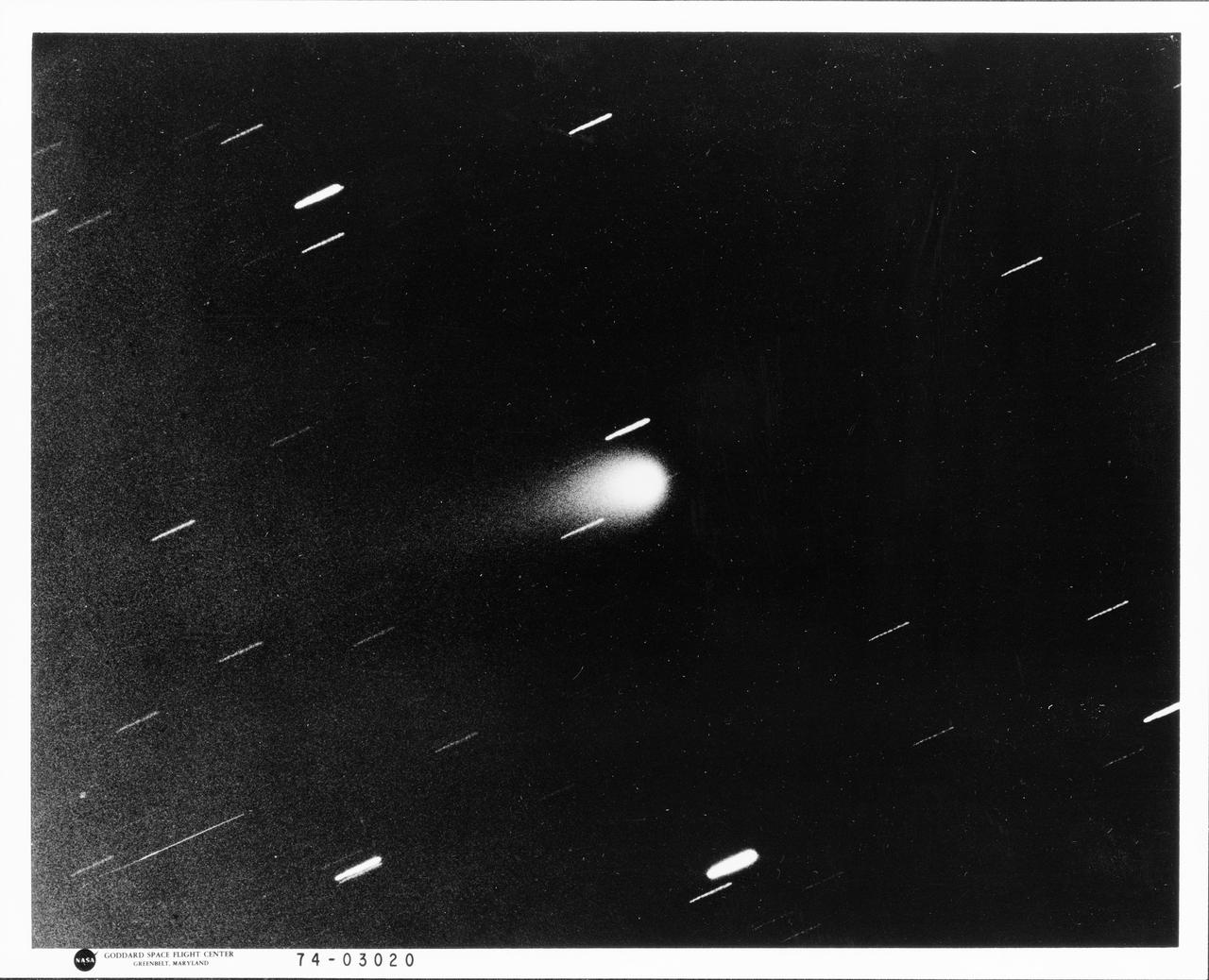
S73-38731 (December 1973) --- Photograph taken of the Comet Kohoutek from the Skylab space station in Earth orbit by a Skylab 4 crew member. Photo credit: NASA
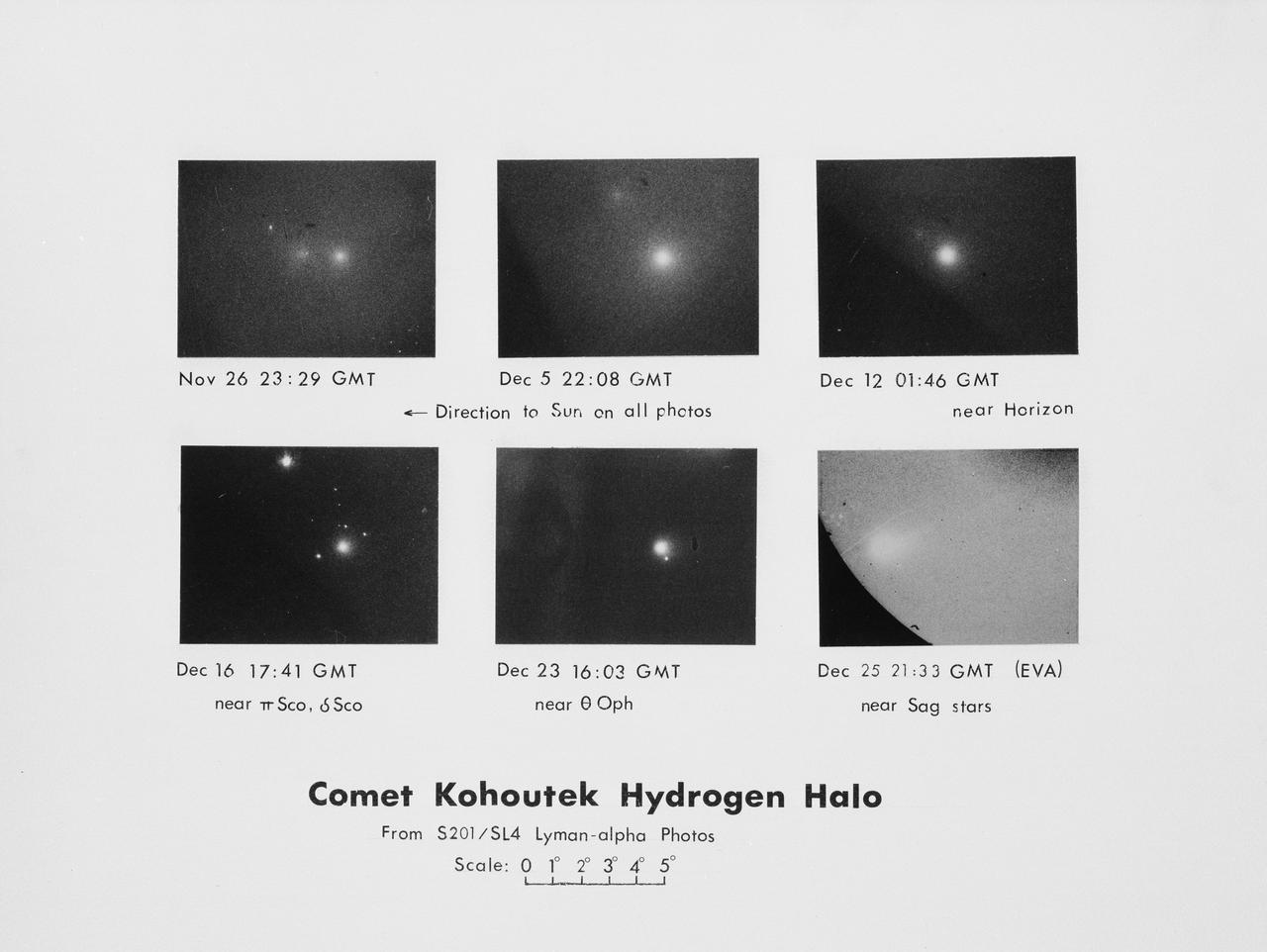
S74-20010 (November-December 1973) --- Six frames of Skylab 4 Far Ultraviolet Electronographic (S201 experiment) photograph showing halo of Comet Kohoutek. Photo credit: NASA
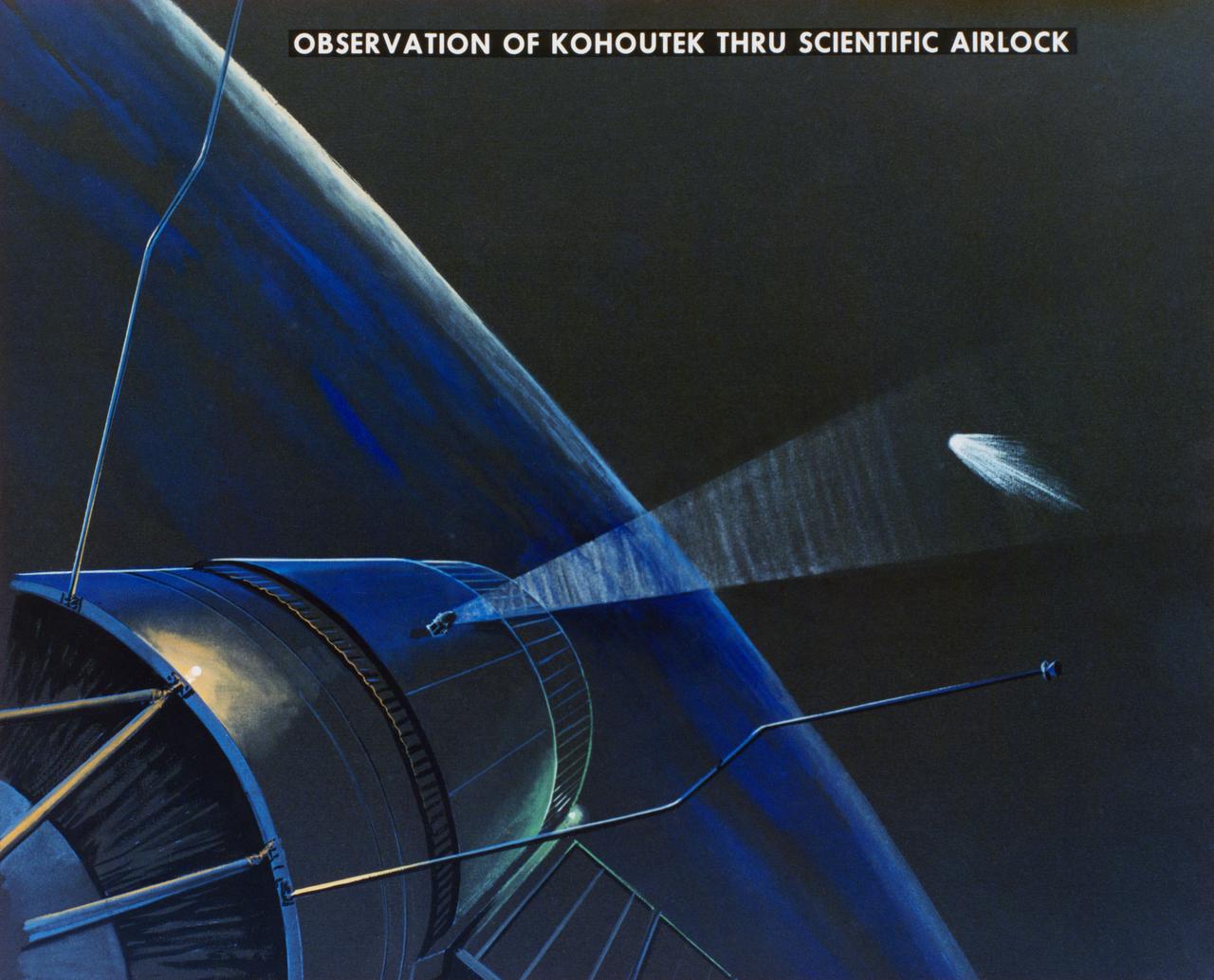
S73-37274 (1973) --- An artist's concept illustrating how the Skylab 4 astronauts will observe, through the scientific airlock of the Orbital Workshop, the passing of the newly-discovered Comet Kohoutek. The favorable location of the Skylab space station in Earth orbit will help provide a comprehensive investigation of the nature and evolution of the coma and tails as the comet approaches, passes, and recedes from the sun. Photo credit: NASA
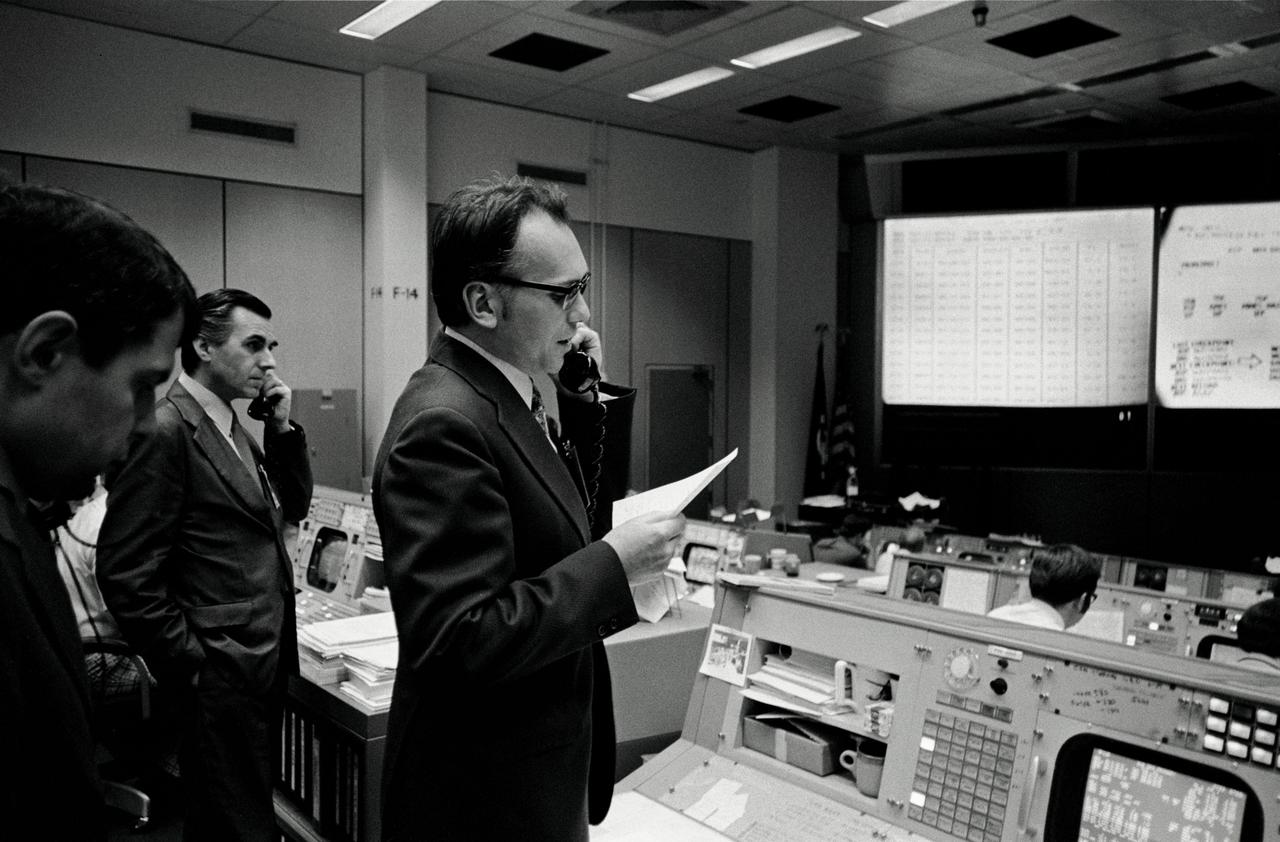
S74-15064 (28 Dec. 1973) --- Dr. Lubos Kohoutek, discoverer of the Comet Kohoutek, is seen in the Mission Operations Control Room in the Mission Control Center during a visit to the Johnson Space Center. He is talking over a radio-telephone with the Skylab 4 crewmen in the Skylab space station in Earth orbit. Professor Kohoutek, a well-known Czechoslovakian astronomer who works at the Hamburg Observatory in West Germany, discussed the comet with astronauts Gerald P. Carr, Edward G. Gibson and William R. Pogue. One of the major objectives of the Skylab 4 mission is to monitor the passing of the Comet Kohoutek. Dr. Zdenek Sekania, who accompanied Dr. Kohoutek on the visit to JSC, is on the telephone in the left background. Dr. Sekania is with the Smithsonian Observatory in Cambridge, Massachusetts. Photo credit: NASA
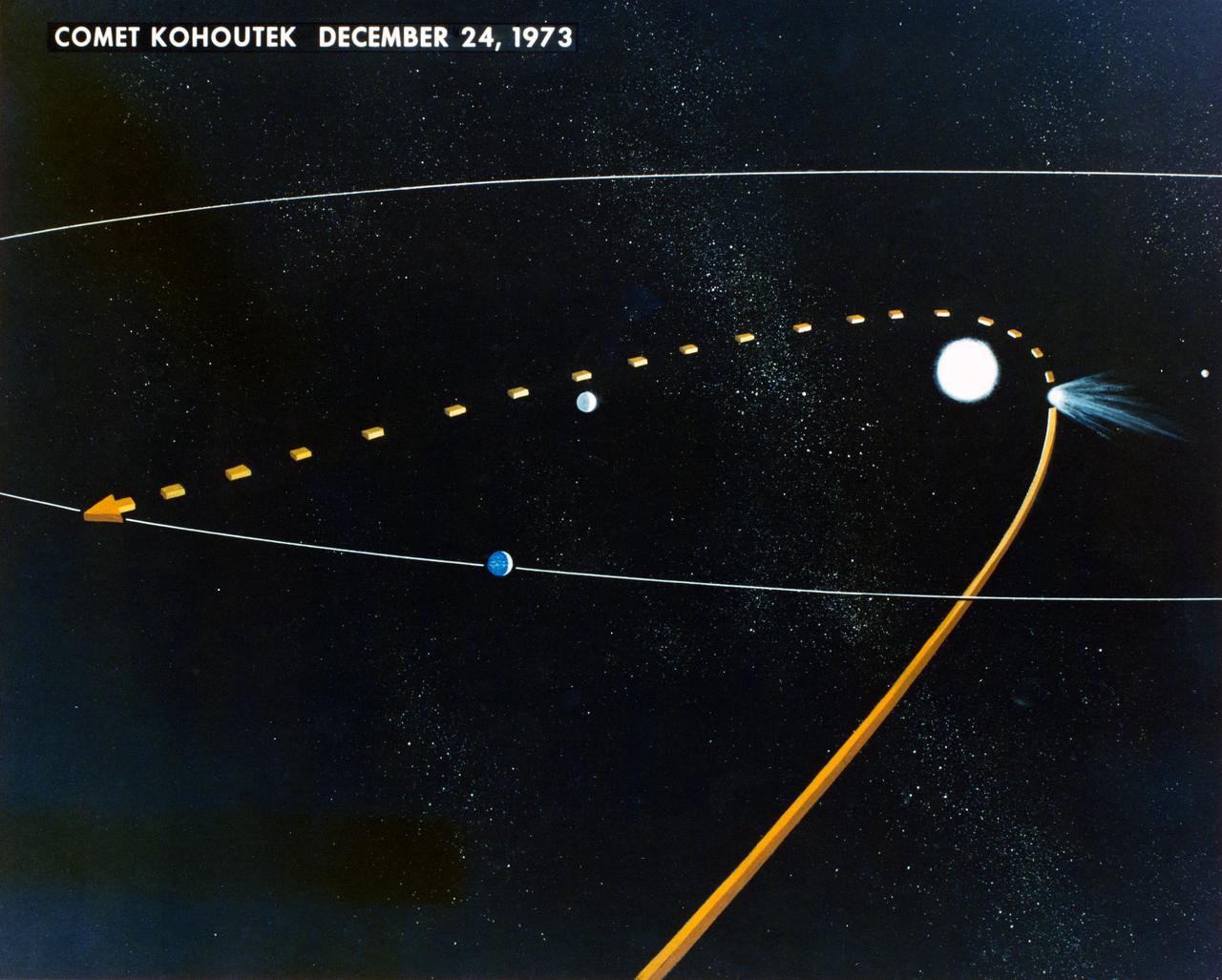
S73-37273 (24 Dec. 1973) --- An artist's concept illustrating the trajectory of the newly-discovered Comet Kohoutek in relation to the sun and to Earth and the plane of Earth's orbit. The picture show's the position of Kohoutek on Christmas Eve, 1973. The Skylab space station in Earth orbit will provide a favorable location from which to observe the passing of the comet. Photo credit: NASA
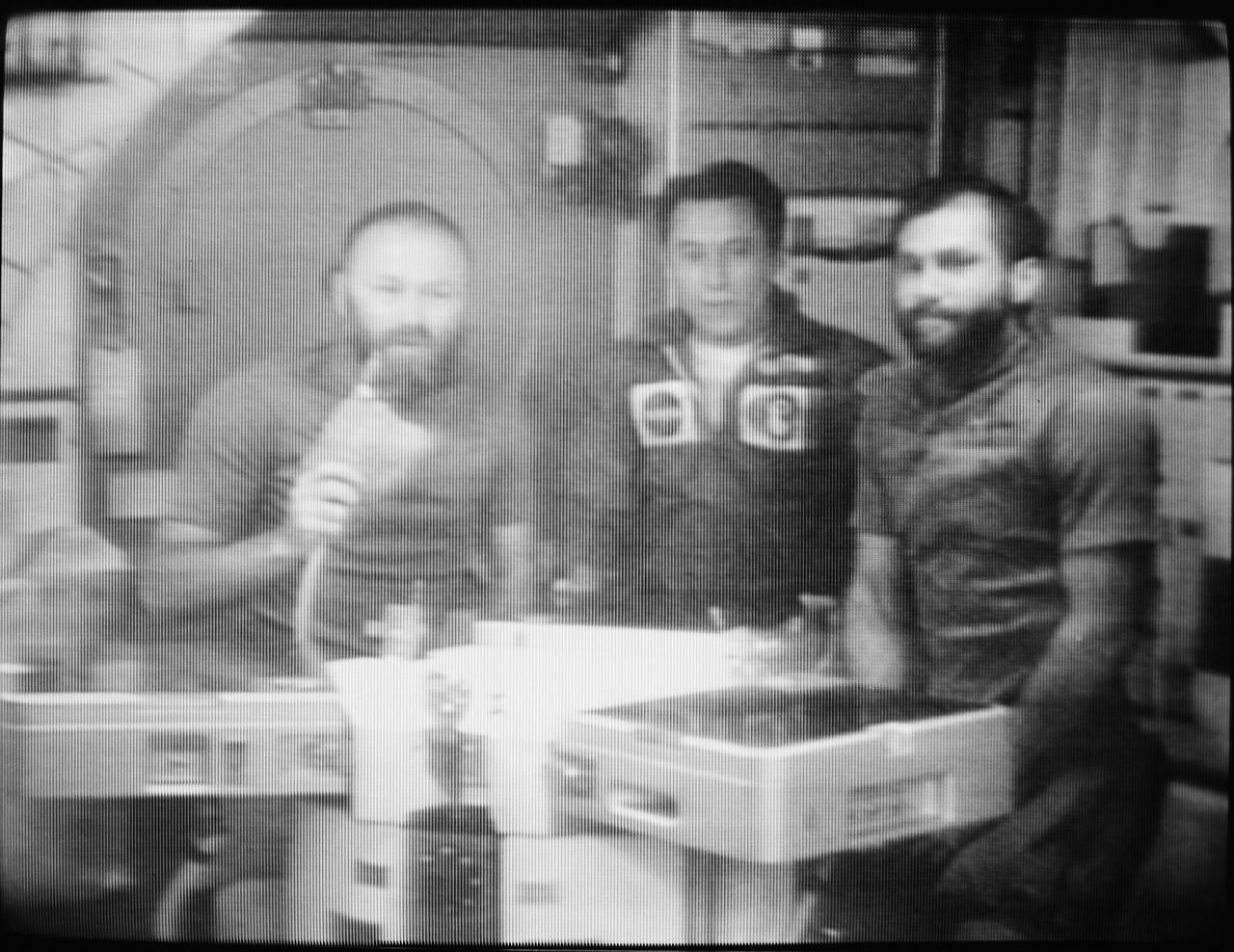
S73-38962 (28 Dec. 1973) --- The three members of the Skylab 4 crew confer via television communication with Dr. Lubos Kohoutek, discoverer of the Comet Kohoutek. This picture of the three astronauts was reproduced from a TV transmission made by a TV camera aboard the space station in Earth orbit. They are, left to right, Gerald P. Carr, commander; Edward G. Gibson, science pilot; and William R. Pogue, pilot. They are seated in the crew quarters wardroom of the Orbital Workshop. Professor Kohoutek, who is employed at the Hamburg Observatory in West Germany, was visiting the Johnson Space Center in Houston when he conferred with the Skylab 4 crewmen. Photo credit: NASA
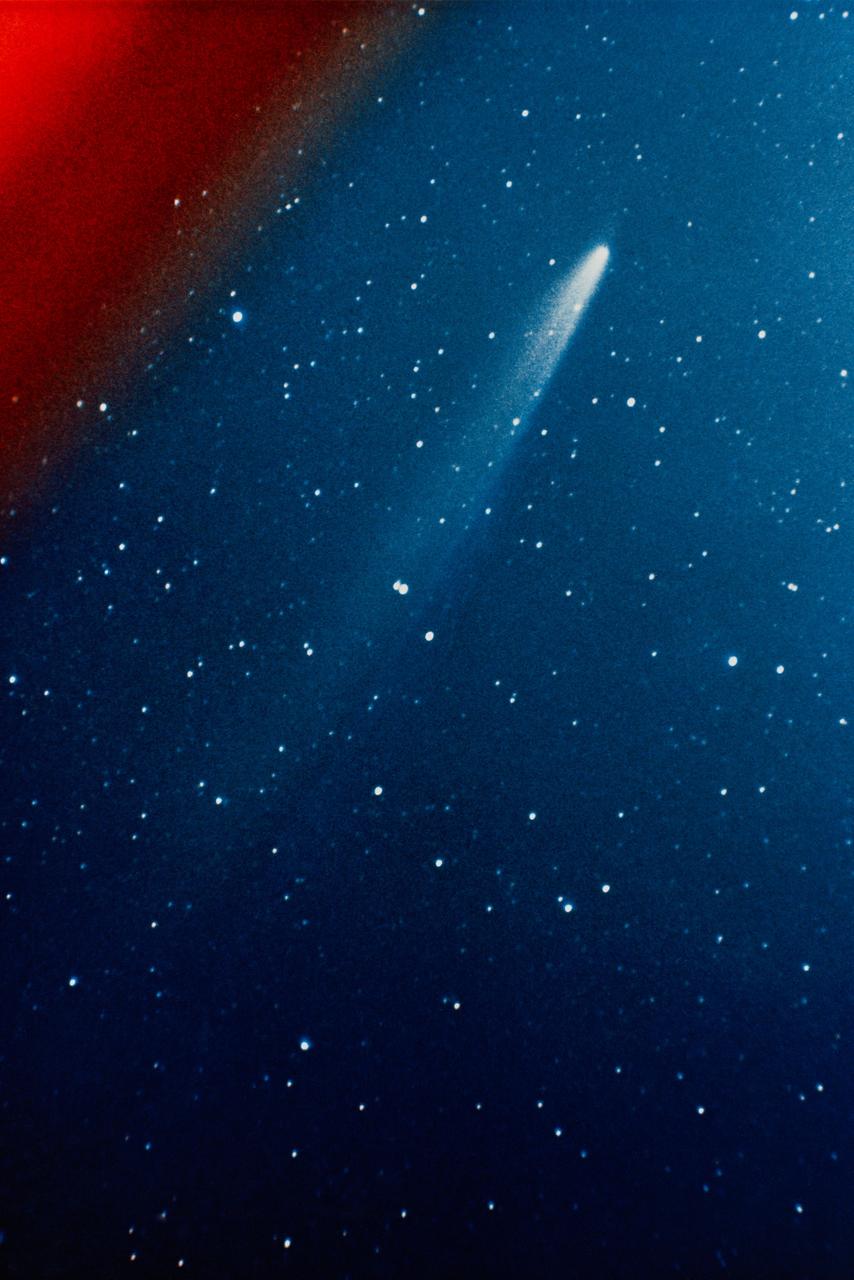
S74-17688 (11 Jan. 1974) --- This color photograph of the comet Kohoutek was taken by members of the lunar and planetary laboratory photographic team from the University of Arizona, at the Catalina Observatory with a 35mm camera on Jan. 11, 1974. Photo credit: NASA
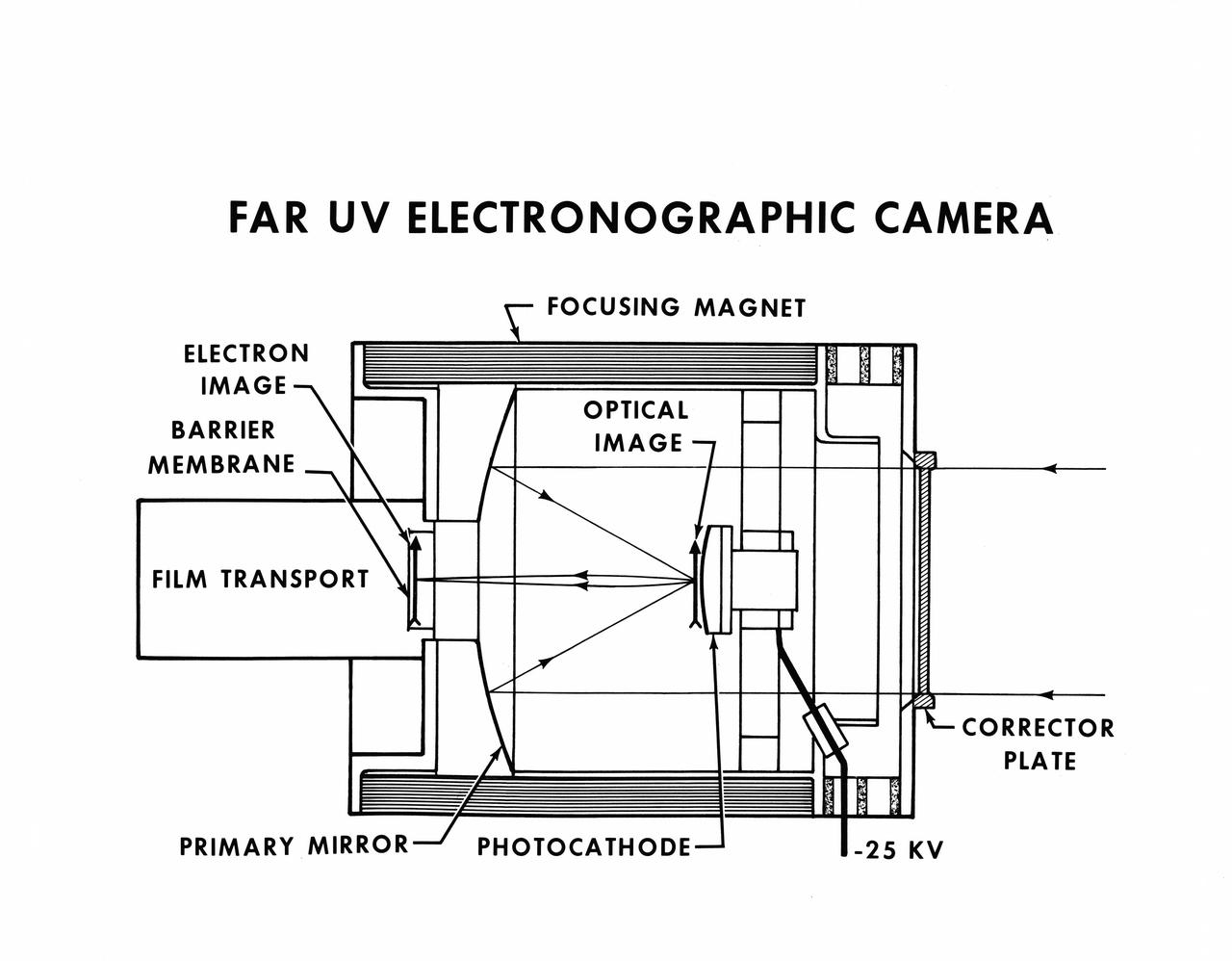
S73-36910 (November 1973) --- An engineer's drawing of the Skylab 4 Far Ultraviolet Electronographic camera (Experiment S201). Arrows point to various features and components of the camera. As the Comet Kohoutek streams through space at speeds of 100,000 miles per hour, the Skylab 4 crewmen will use the S201 UV camera to photograph features of the comet not visible from the Earth's surface. While the comet is some distance from the sun, the camera will be pointed through the scientific airlock in the wall of the Skylab space station Orbital Workshop (OWS). By using a movable mirror system built for the Ultraviolet Stellar Astronomy (S019) Experiment and rotating the space station, the S201 camera will be able to photograph the comet around the side of the space station. Photo credit: NASA
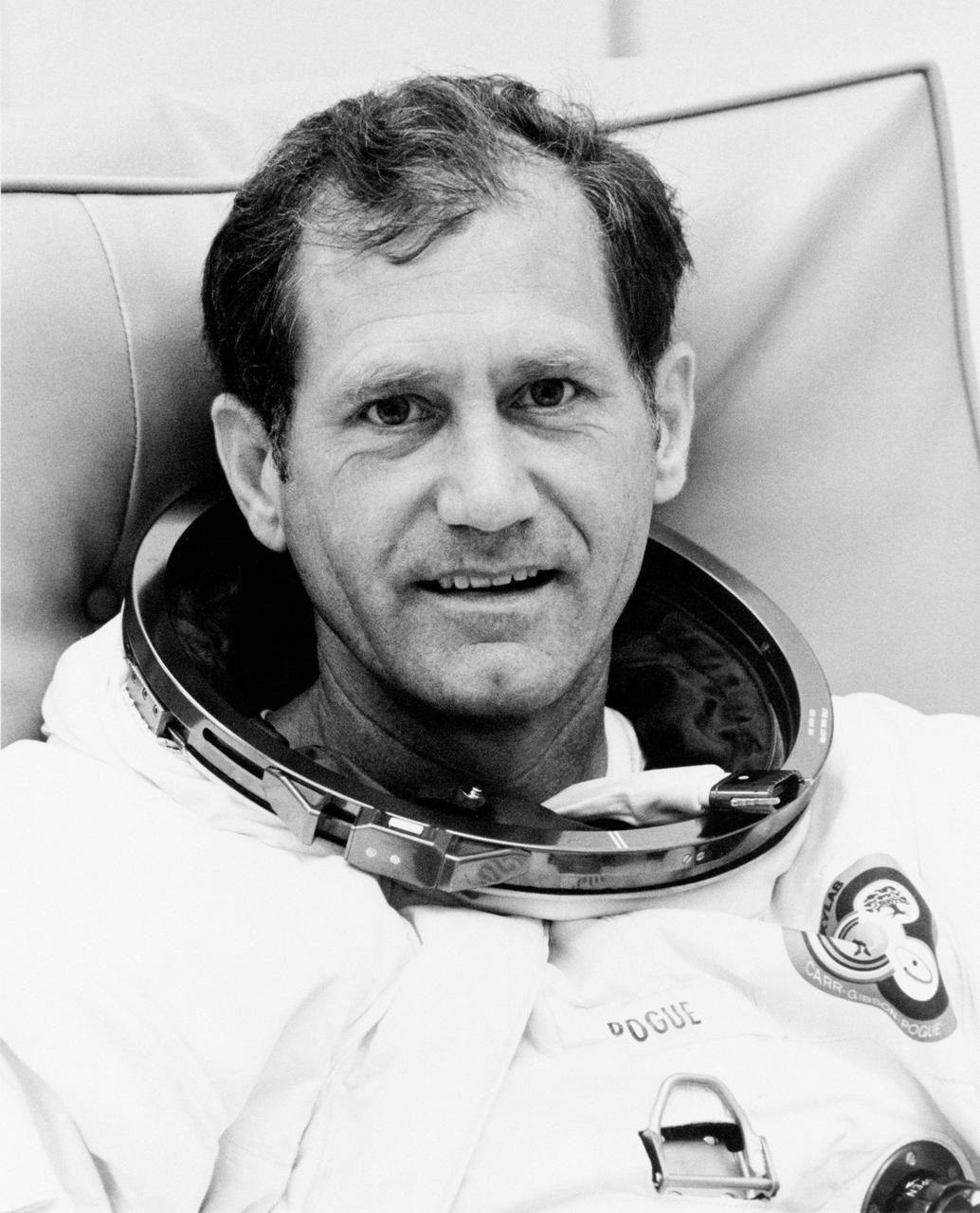
S73-36905 (8 Nov. 1973) --- Astronaut William R. Pogue, pilot of the Skylab 4 mission, relaxes during spacesuit pressure and fit checks at the Kennedy Space Center, Florida. This shoulder and head shot of Pogue was taken a few days before the scheduled Skylab 4 launch. This third and last visit to the Skylab space station in Earth orbit will return additional information on the Earth and sun, as well as provide favorable location from which to observe the recently discovered Comet Kohoutek. The other two members of the Skylab 4 crew will be astronaut Gerald P. Carr, commander; and scientist-astronaut Edward G. Gibson, science pilot. Photo credit: NASA
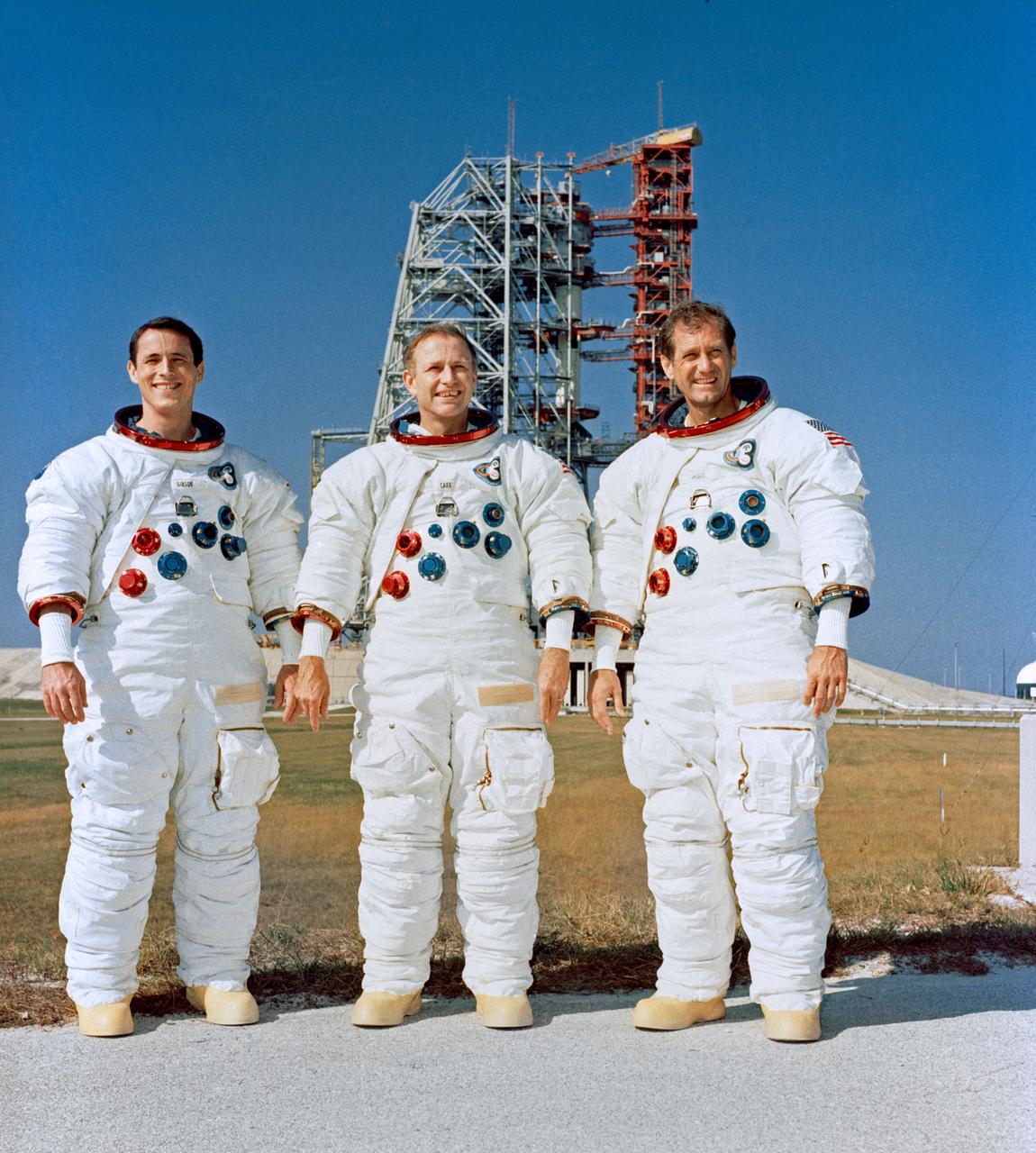
S73-37248 (8 Nov. 1973) --- The three members of the Skylab 4 crew are photographed standing near Pad B, Launch Complex 39, Kennedy Space Center, Florida, during preflight activity. They are, left to right, scientist-astronaut Edward G. Gibson, science pilot; astronaut Gerald P. Carr, commander; and astronaut William R. Pogue, pilot. The Skylab 4/Saturn 1B space vehicle is on the pad in the background. Skylab 4, the third and last manned visit to the Skylab space station in Earth orbit, will return additional information on the Earth and sun, as well as provide a favorable location from which to observe the recently discovered Comet Kohoutek. Photo credit: NASA
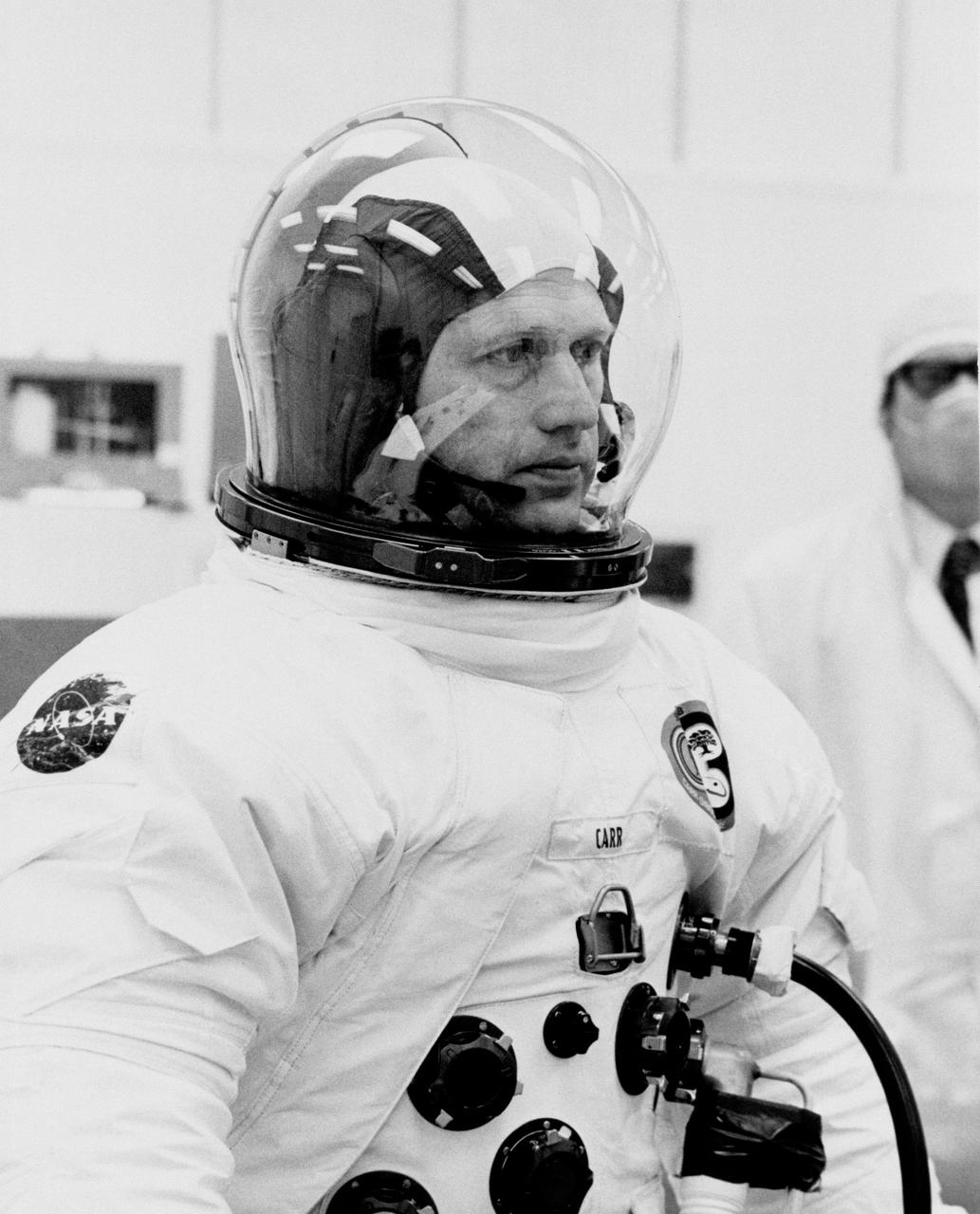
S73-36908 (8 Nov. 1973) --- Astronaut Gerald P. Carr, commander of the Skylab 4 mission, undergoes spacesuit pressure and fit checks at the Kennedy Space Center, Florida. This shoulder and head shot of Carr was taken a few days before the scheduled Skylab 4 launch. This third and last visit to the Skylab space station in Earth orbit will return additional information on the Earth and sun, as well as provide a favorable location from which to observe the recently discovered Comet Kohoutek. The other two members of the Skylab 4 crew will be astronaut William R. Pogue, pilot; and scientist-astronaut Edward G. Gibson, science pilot. Photo credit: NASA
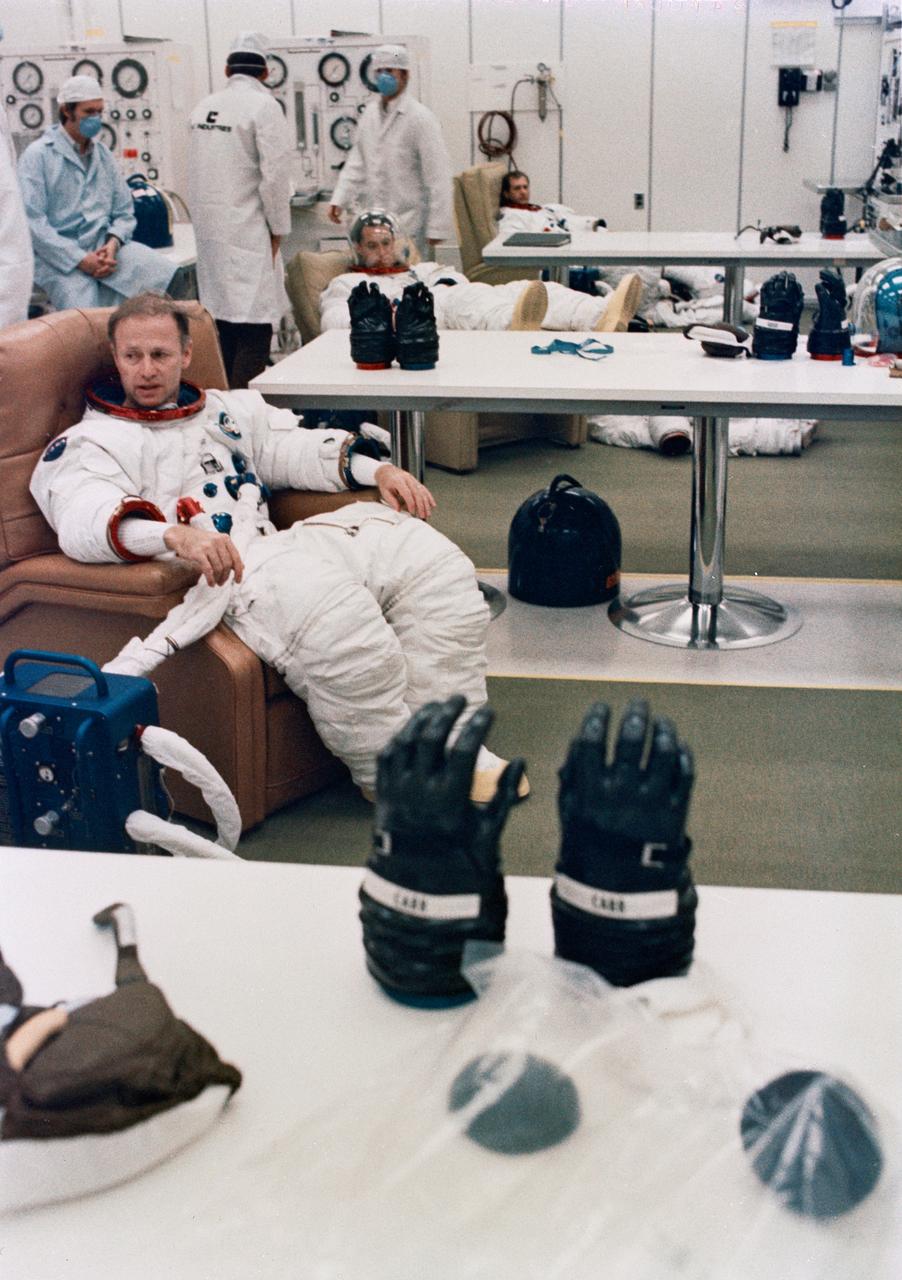
S73-36900 (8 Nov. 1973) --- The three members of the Skylab 4 crew undergo spacesuit fit and pressure checks in the suiting building during preflight activity at the Kennedy Space Center, Florida. They are astronaut Gerald P. Carr (foreground), commander; scientist-astronaut Edward G. Gibson (center), science pilot; and astronaut William R. Pogue (background), pilot. Skylab 4, the third and last visit to the Skylab space station in Earth orbit, will return additional information on the Earth and sun, as well as provide a favorable location from which to observe the recently discovered Comet Kohoutek. Photo credit: NASA
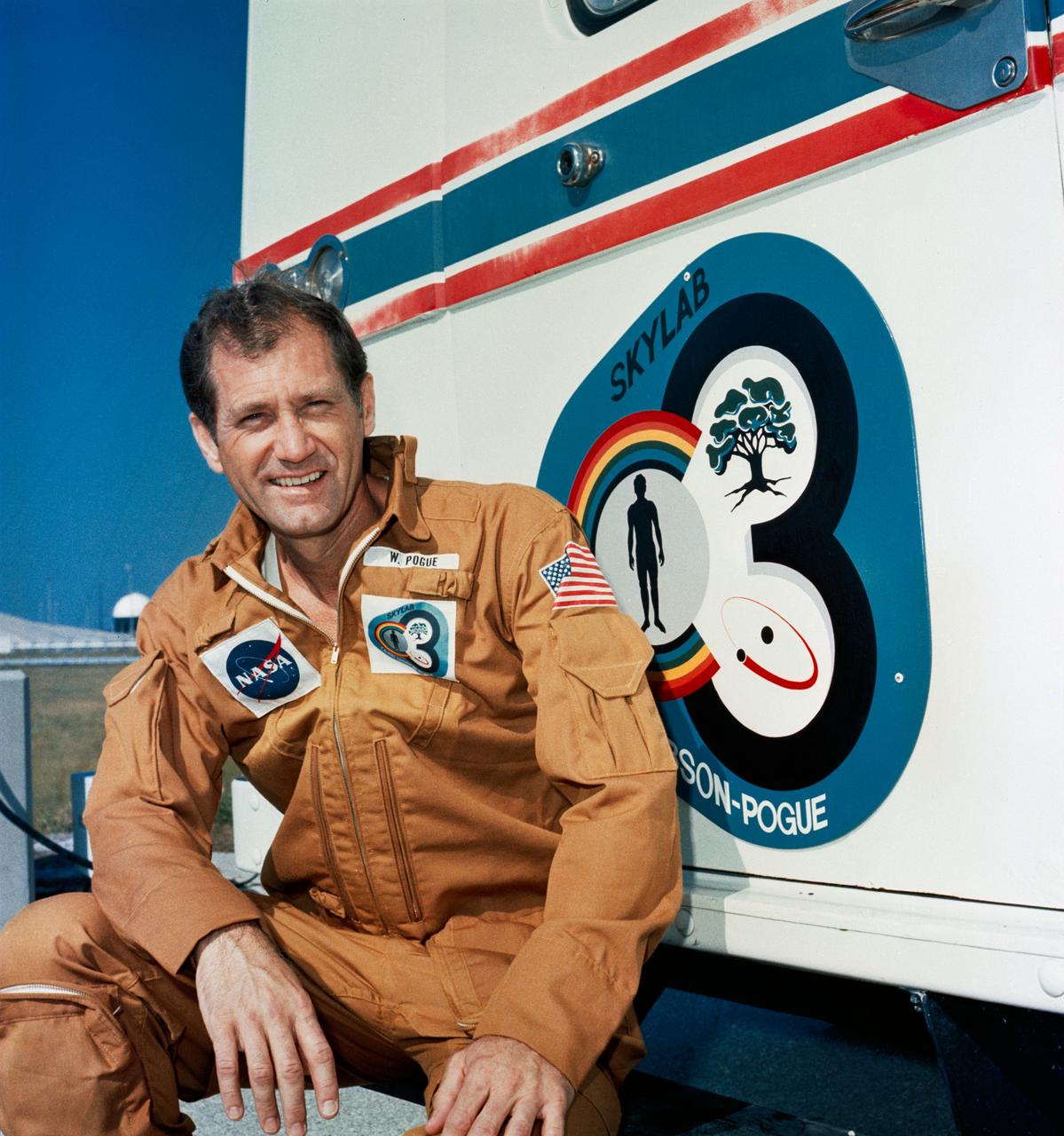
S73-36901 (8 Nov. 1973) --- Astronaut William R. Pogue, pilot of the Skylab 4 mission, relaxes on the running board of the transfer van during a visit to the Skylab 4/Saturn 1B space vehicle at Pad B, Launch Complex 39, Kennedy Space Center, Florida. On the morning of the launch the transfer van will transport astronauts Pogue, Gerald P. Carr, commander; and Edward G. Gibson, science pilot, from the suiting building to Pad B. Skylab 4, the third and last visit to the Skylab space station in Earth orbit, will return additional information on the Earth and sun, as well as provide a favorable location from which to observe the recently discovered Comet Kohoutek. Photo credit: NASA

S74-17306 (5 Dec. 1973) --- Scientist-astronaut Edward G. Gibson, Skylab 4 science pilot, stands at the Apollo Telescope Mount (ATM) console in the Multiple Docking Adapter (MDA) of the Skylab space station cluster in Earth orbit. This picture was taken with a hand-held 35mm Nikon camera. The ATM console was one of the busiest areas of the space station during the 84-day third manned Skylab mission, as Comet Kohoutek and solar activity were closely followed by the ATM and monitored by the crewmen from the ATM console. As Gibson demonstrated during a television transmission on Dec. 5, 1973, the ATM console controls several instruments on the solar telescope. Joining Gibson for the record-setting Skylab 4 mission were astronauts Gerald P. Carr, commander, and William R. Pogue, pilot. Photo credit: NASA
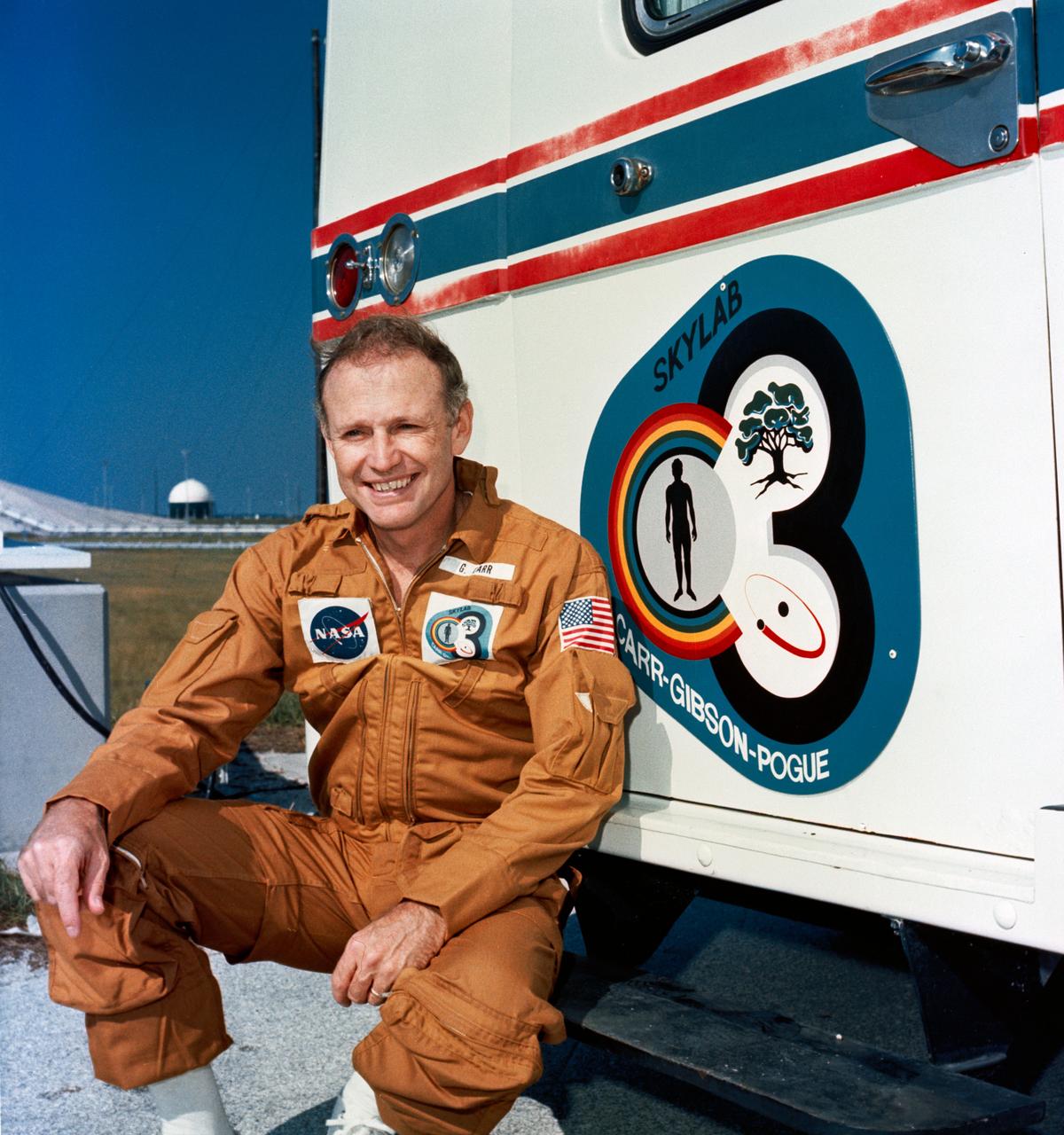
S73-36902 (8 Nov. 1973) --- Astronaut Gerald P. Carr, commander of the Skylab 4 mission, relaxes on the running board of the transfer van during a visit to the Skylab 4/Saturn 1B space vehicle at Pad B, Launch Complex 39, at the Kennedy Space Center, Florida. On the morning of the launch the transfer van will transport astronauts Carr; William R. Pogue, pilot; and Edward G. Gibson, science pilot, from the suiting building to Pad B. Skylab 4, the third and last visit to the Skylab space station in Earth orbit, will return additional information the Earth and sun, as well as provide a favorable location from which to observe the recently discovered Comet Kohoutek. Photo credit: NASA
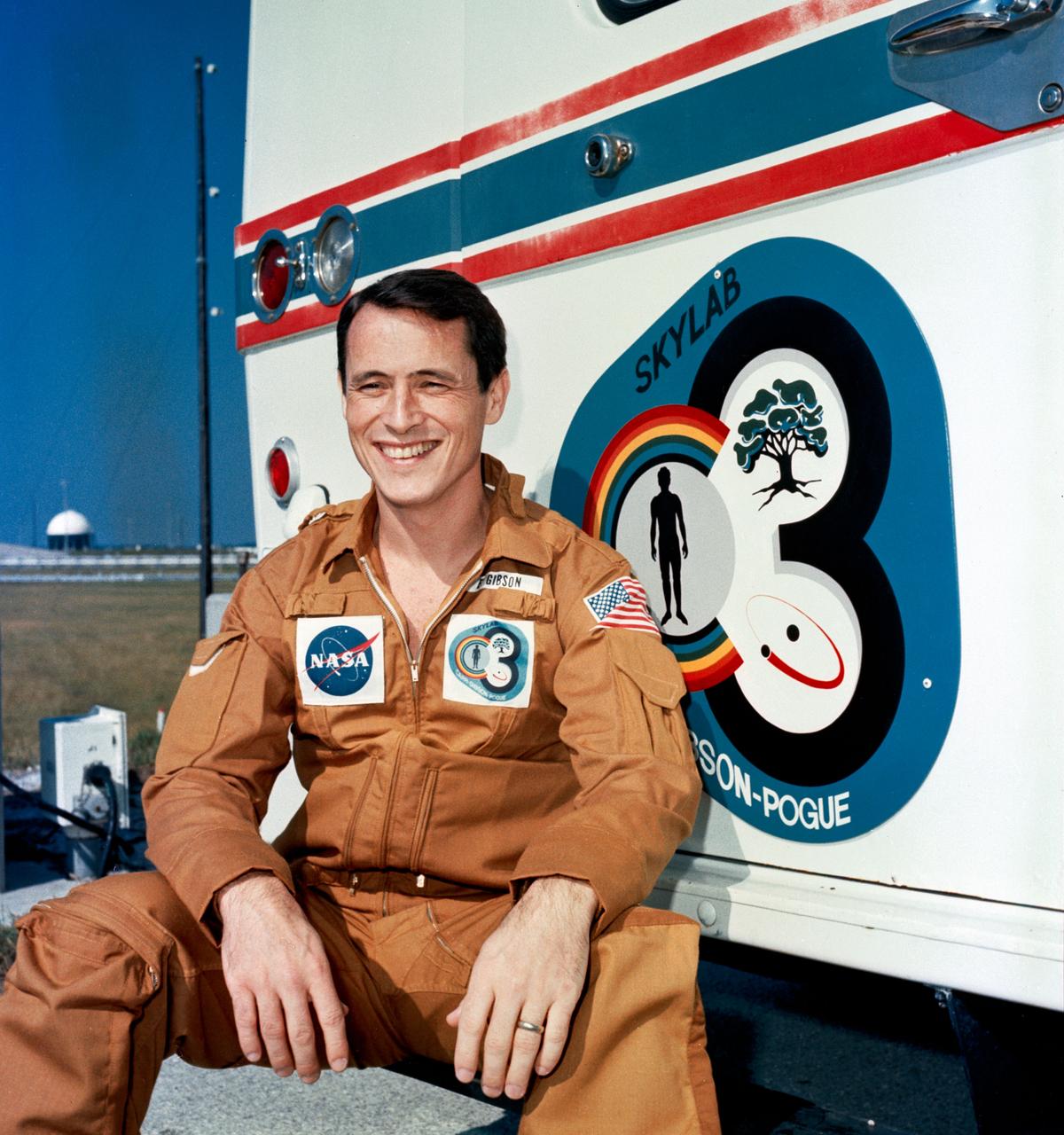
S73-36903 (8 Nov. 1973) --- Scientist-astronaut Edward G. Gibson, Skylab 4 science pilot, relaxes on the running board of the transfer van during a visit to the Skylab 4/Saturn 1B space vehicle at Pad B, Launch Complex 39, Kennedy Space Center, Florida. On the morning of the launch the transfer van will transport astronauts Gibson; Gerald P. Carr, commander; and William R. Pogue, pilot, from the suiting building to Pad B. Skylab 4, the third and last visit to the Skylab space station in Earth orbit, will return additional information on the Earth and sun, as well as provide a favorable location from which to observe the recently discovered Comet Kohoutek. Photo credit: NASA