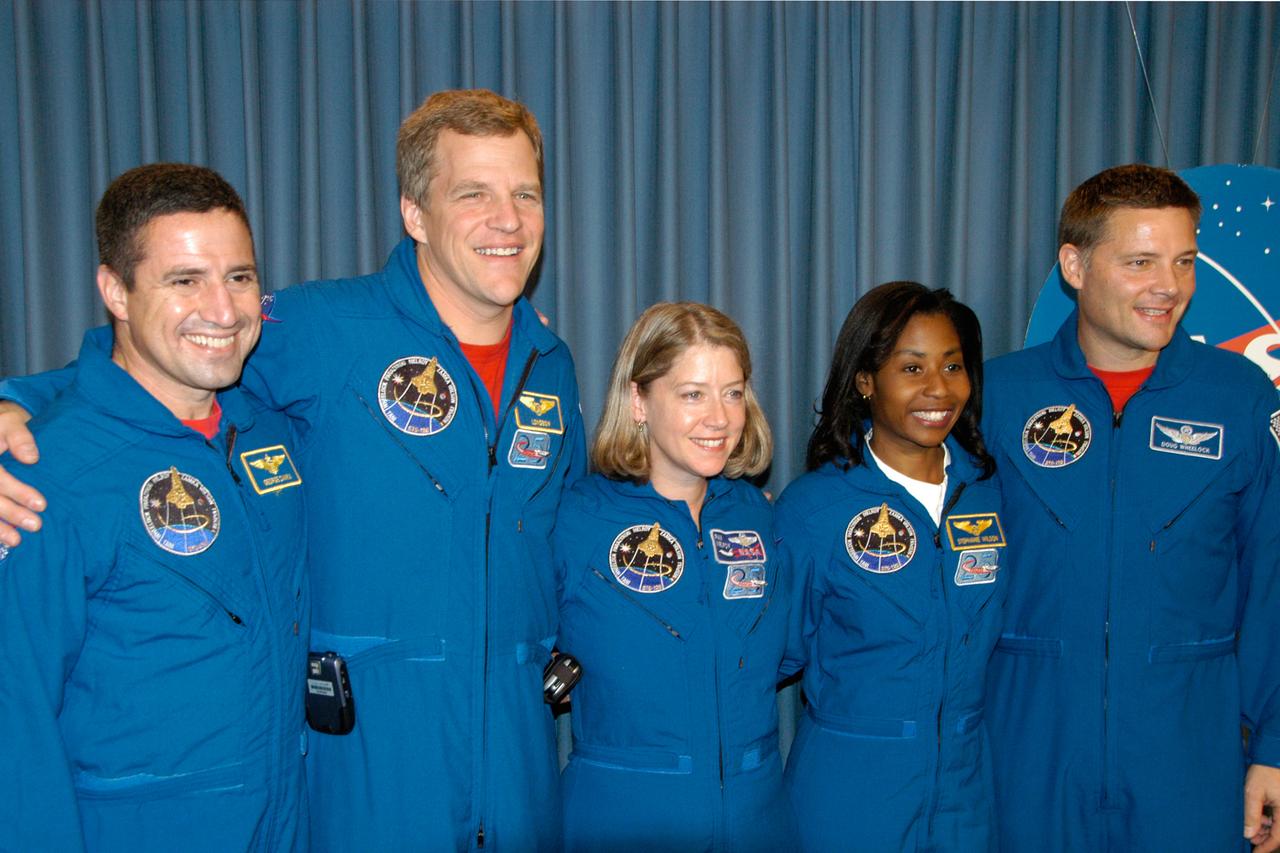
After a post-landing news conference, members of the STS-120 crew pose for photographers. From left are Pilot George Zamka, Mission Specialist Scott Parazynski, Commander Pamela Melroy and Mission Specialists Stephanie Wilson and Doug Wheelock. The crew completed a 15-day mission to the International Space Station with a smooth landing on Runway 33. Main gear touchdown was 1:01:16 p.m. Wheel stop was at 1:02:07 p.m. Mission elapsed time was 15 days, 2 hours, 24 minutes and 2 seconds. Mission STS-120 continued the construction of the station with the installation of the Harmony Node 2 module and the relocation of the P6 truss.
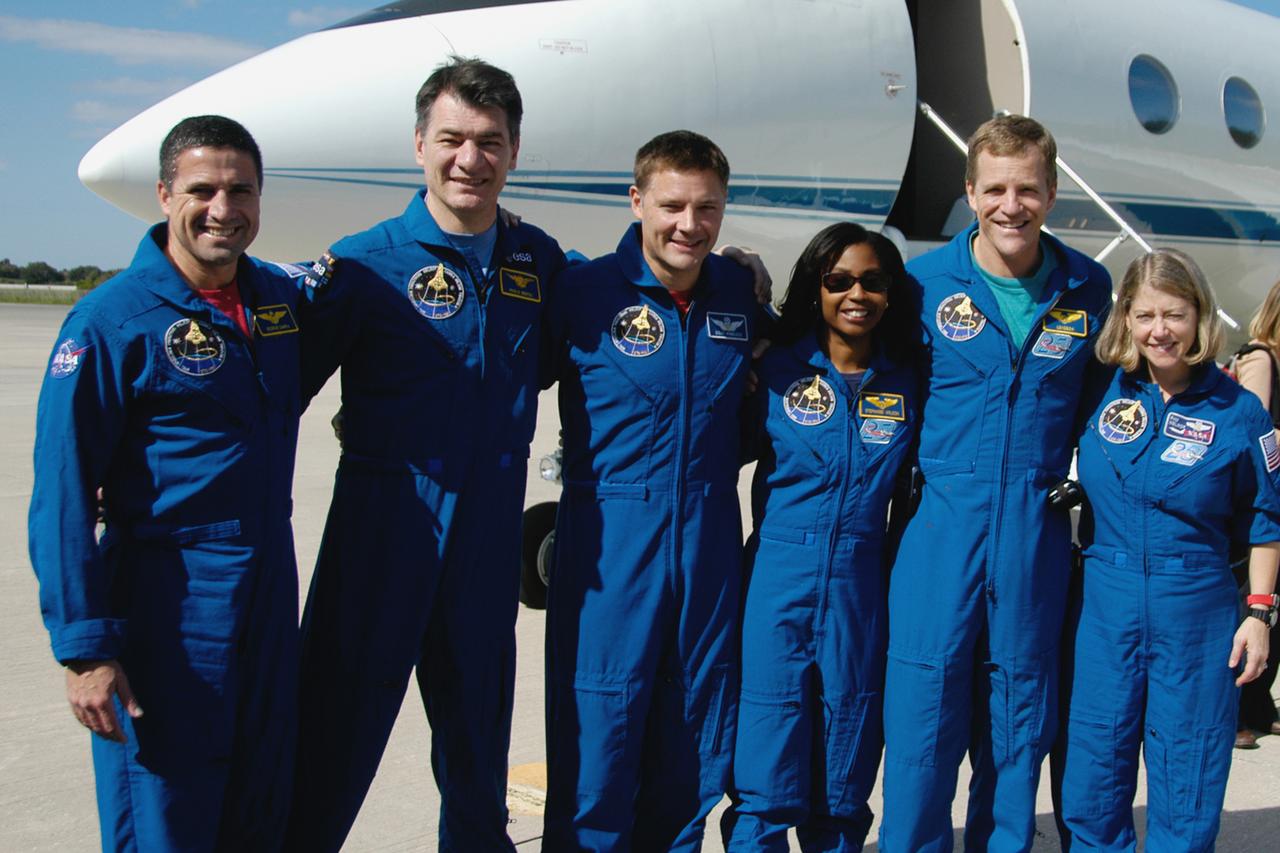
The STS-120 crew members are ready for their return to flight to Houston. From left are Pilot George Zamka, Mission Specialists Paolo Nespoli, Doug Wheelock, Stephanie Wilson and Scott Parazynski, and Commander Pamela Melroy. A welcoming ceremony for the crew is planned at NASA's Hangar 276 on the south end of Ellington Field in Texas. On the 15-day mission, the STS-120 crew continued the construction of the station with the installation of the Harmony Node 2 module and the relocation of the P6 truss. They landed Nov. 7 at NASA's Kennedy Space Center.
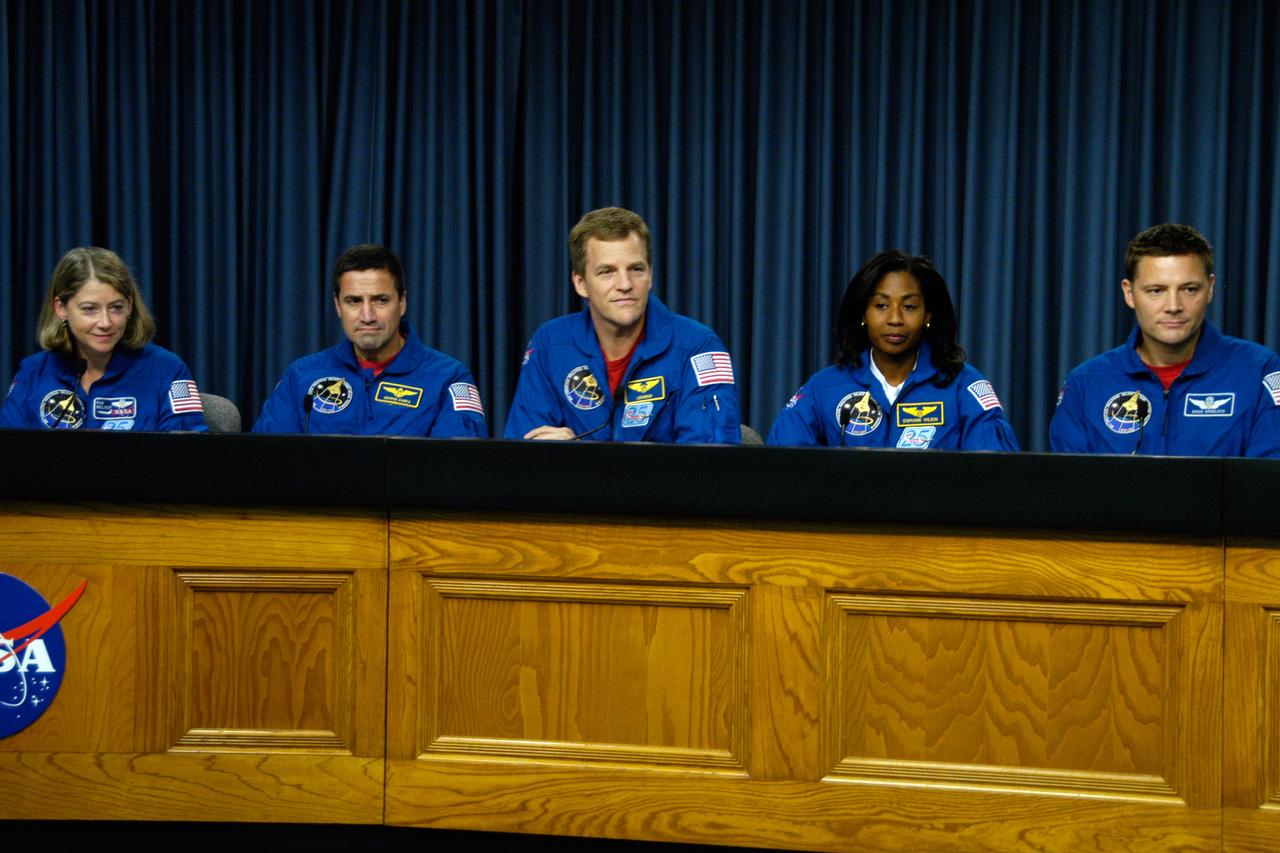
Members of the STS-120 crew take part in a news conference after their successful landing aboard space shuttle Discovery at NASA's Kennedy Space Center. From left are Commander Pamela Melroy, Pilot George Zamka and mission specialists Scott Parazynski, Stephanie Wilson and Doug Wheelock. The crew completed a 15-day mission to the International Space Station with a smooth landing on Runway 33. Main gear touchdown was 1:01:16 p.m. Wheel stop was at 1:02:07 p.m. Mission elapsed time was 15 days, 2 hours, 24 minutes and 2 seconds. Mission STS-120 continued the construction of the station with the installation of the Harmony Node 2 module and the relocation of the P6 truss.

JSC2003-E-34617 (11 April 2003) --- Astronaut Pamela A. Melroy, commander
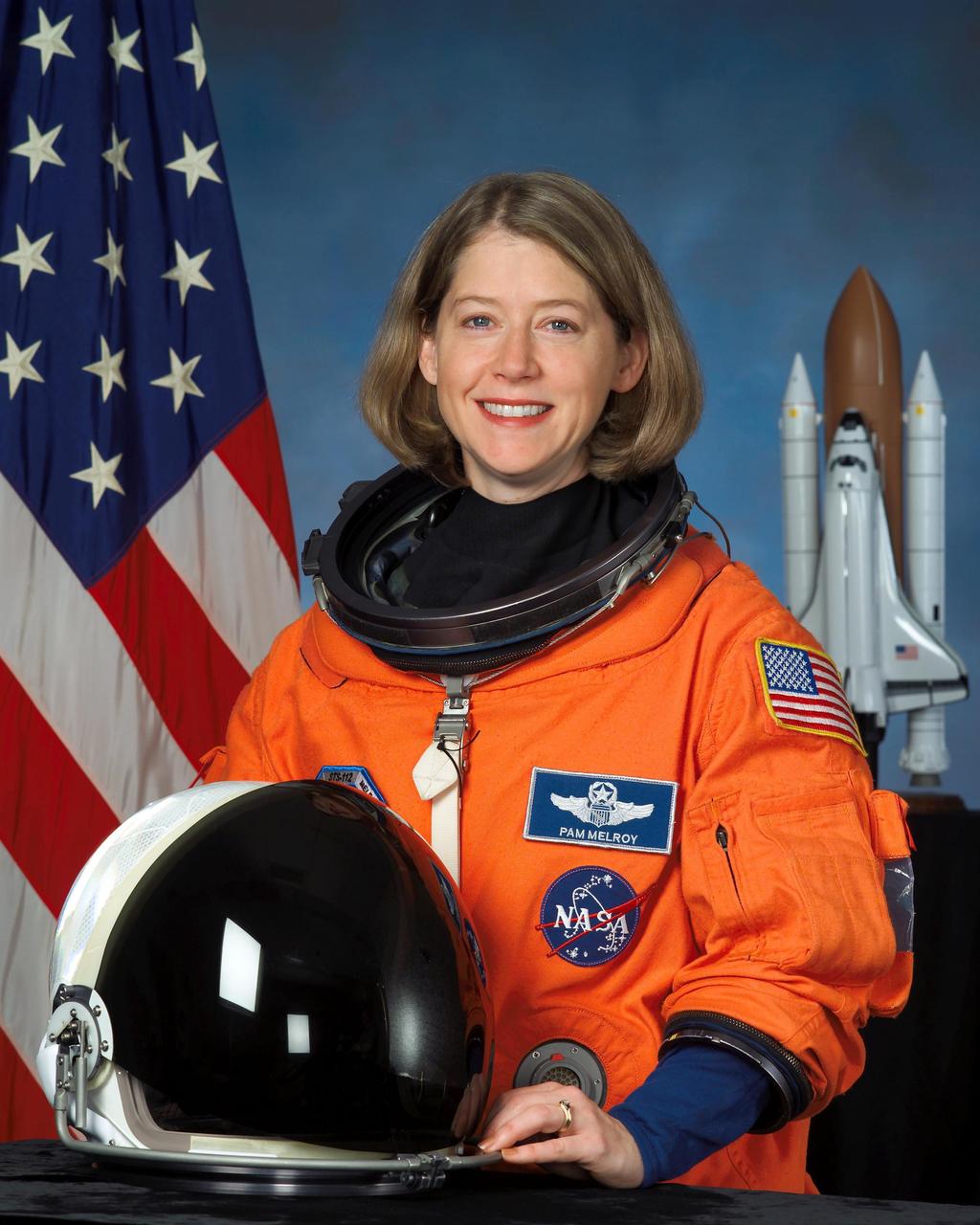
JOHNSON SPACE CENTER, Houston, Texas -- JSC2003-E-34617 -- Astronaut Pamela A. Melroy, commander
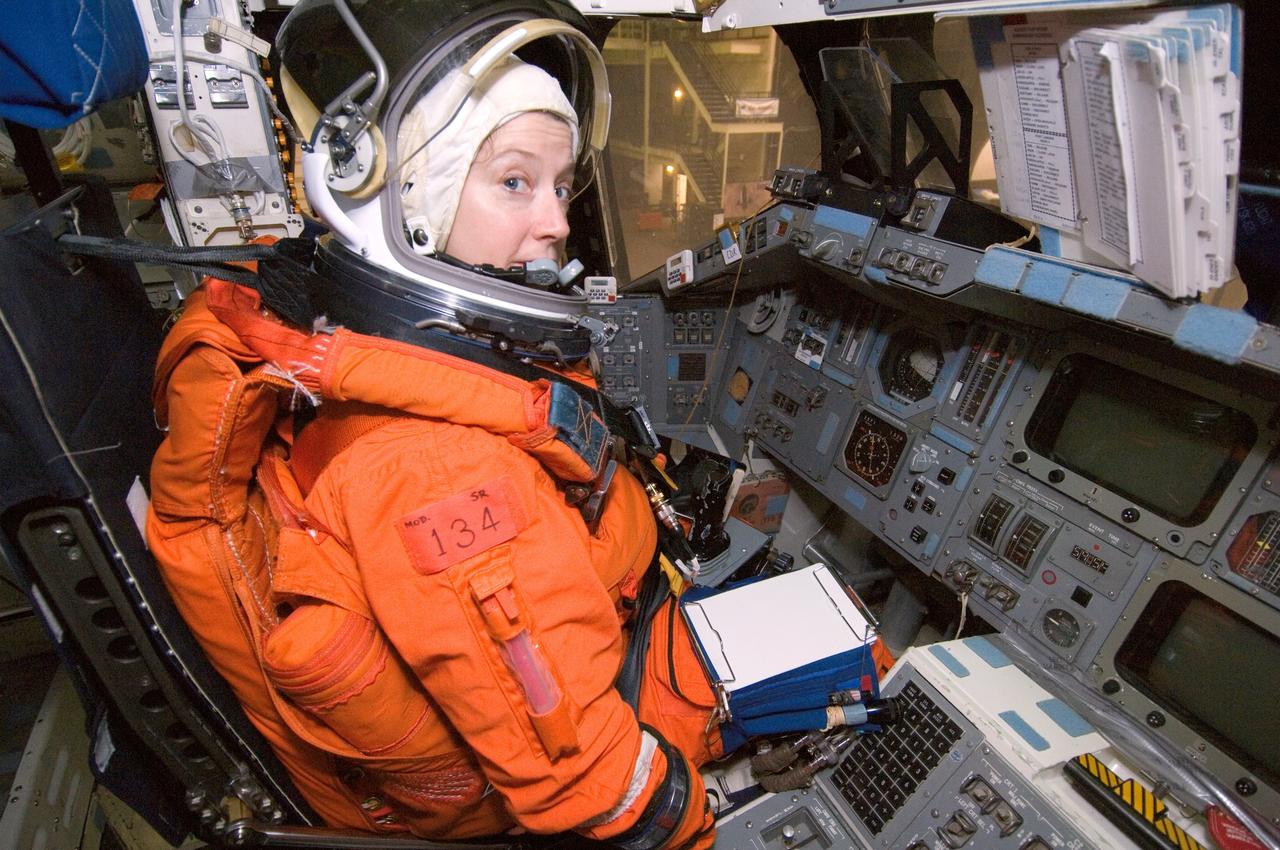
JSC2007-E-18112 (9 April 2007) --- While seated at the commander's station, astronaut Pamela A. Melroy, STS-120 commander, participates in a training session in the crew compartment trainer (CCT-2) in the Space Vehicle Mockup Facility at Johnson Space Center. Melroy is wearing a training version of her shuttle launch and entry suit.
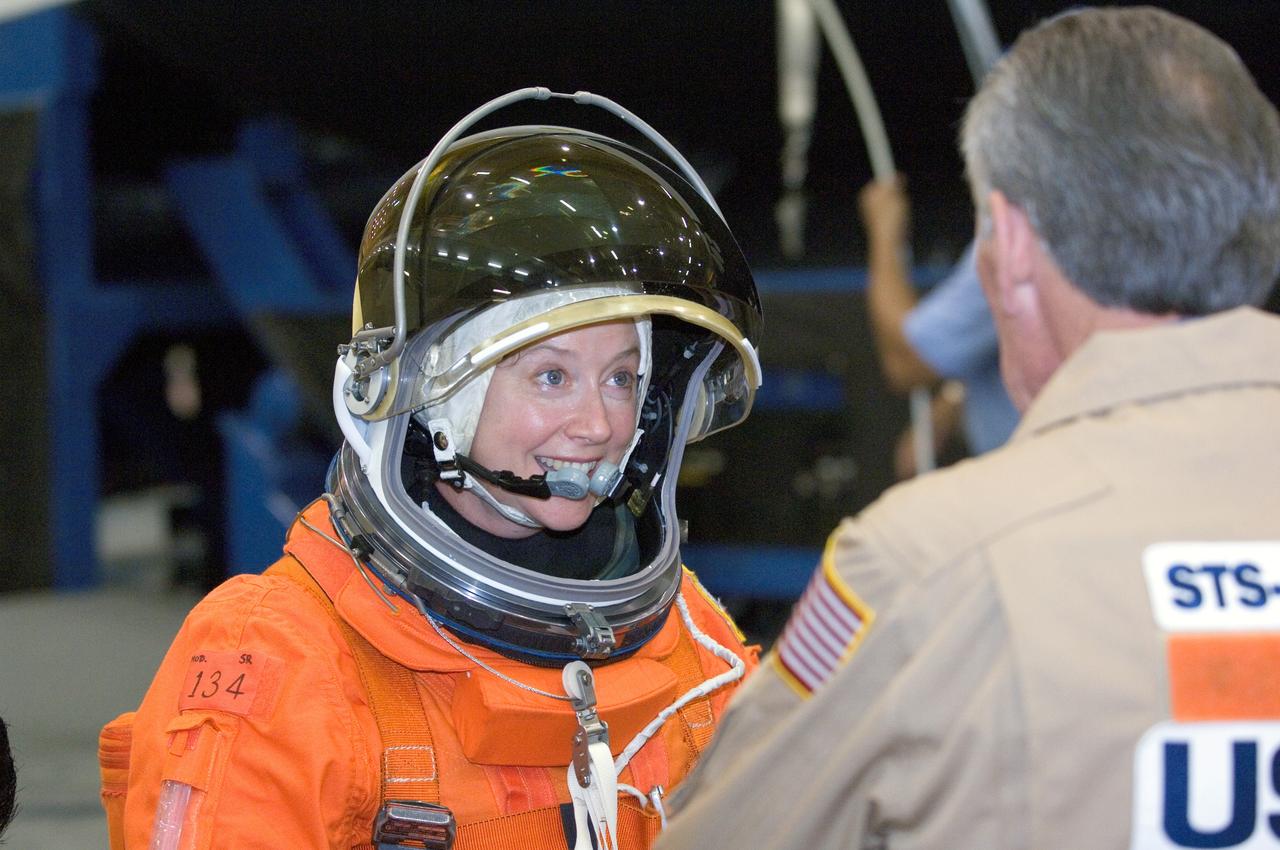
JSC2007-E-18125 (9 April 2007) --- Astronaut Pamela A. Melroy, STS-120 commander, and United Space Alliance crew trainer John Hazelhurst exchange thoughts during a training session in the Space Vehicle Mockup Facility at Johnson Space Center. Melroy is wearing a training version of her shuttle launch and entry suit.
Donned in a training version of her shuttle launch and entry suit, astronaut Pamela A. Melroy, STS-120 commander, awaits the start of a training session in the Space Vehicle Mockup Facility at Johnson Space Center. Melroy and her crew were preparing for their STS-120 mission duties. Launch occurred on October 23, 2007.
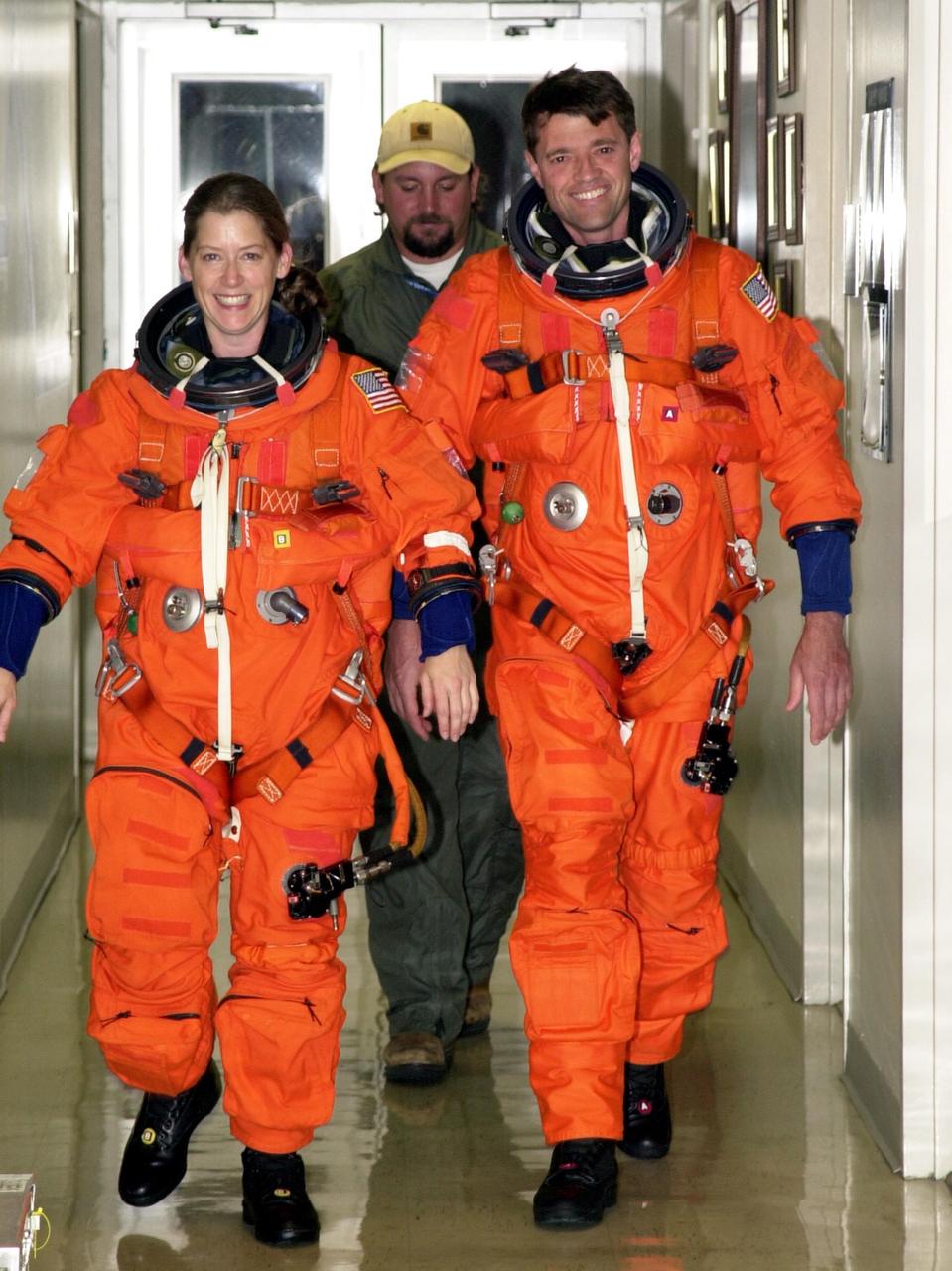
KENNEDY SPACE CENTER, FLA. --STS-112 Pilot Pamela Melroy (left) and Commander Jeffrey Ashby are suited up and ready to participate in landing exercises in the Shuttle Training Aircraft at the Shuttle Landing Facility.
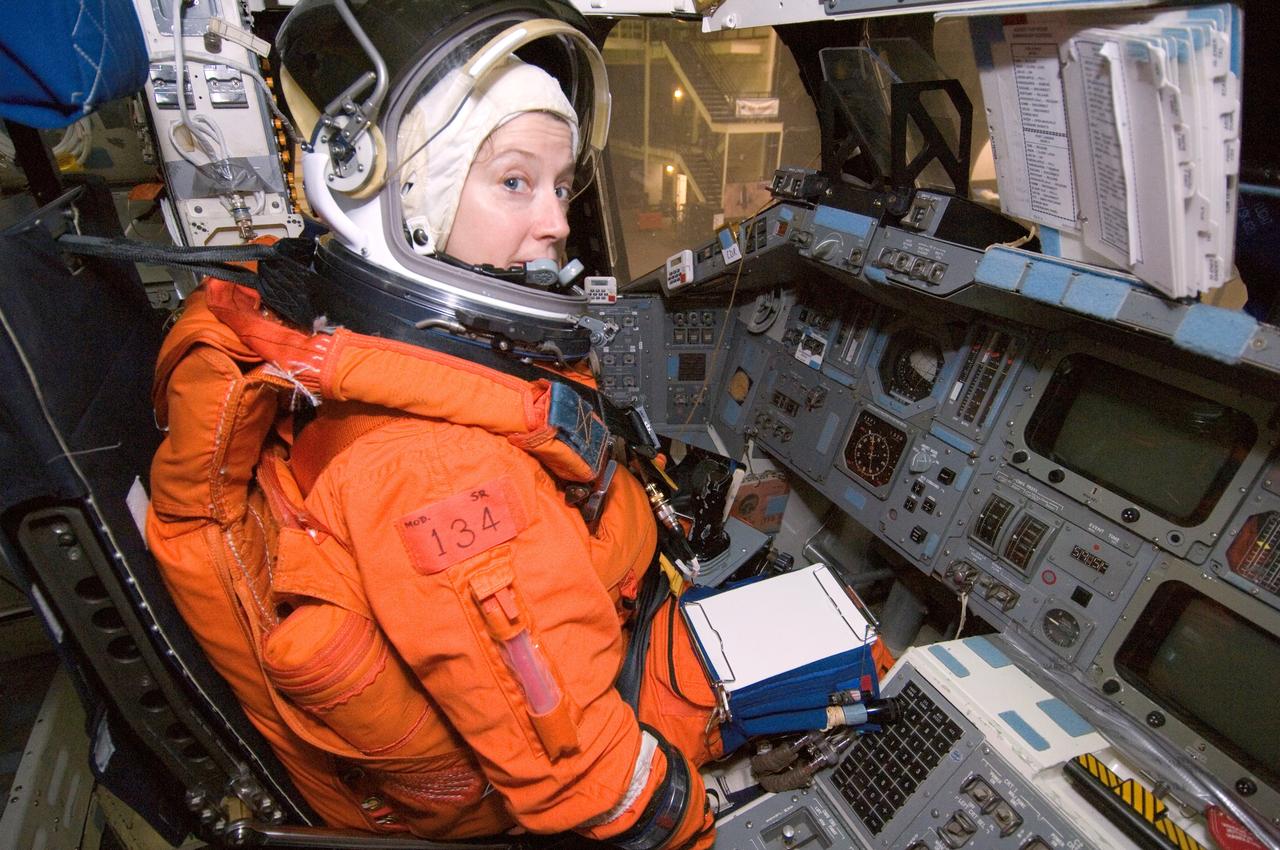
While seated at the commander's station, astronaut Pamela A. Melroy, STS-120 commander, participates in a training session in the crew compartment trainer (CCT-2) in the Space Vehicle Mockup Facility at Johnson Space Center. Preparing for the STS-120 mission which launched October 23, 2007, Melroy is wearing a training version of her shuttle launch and entry suit.
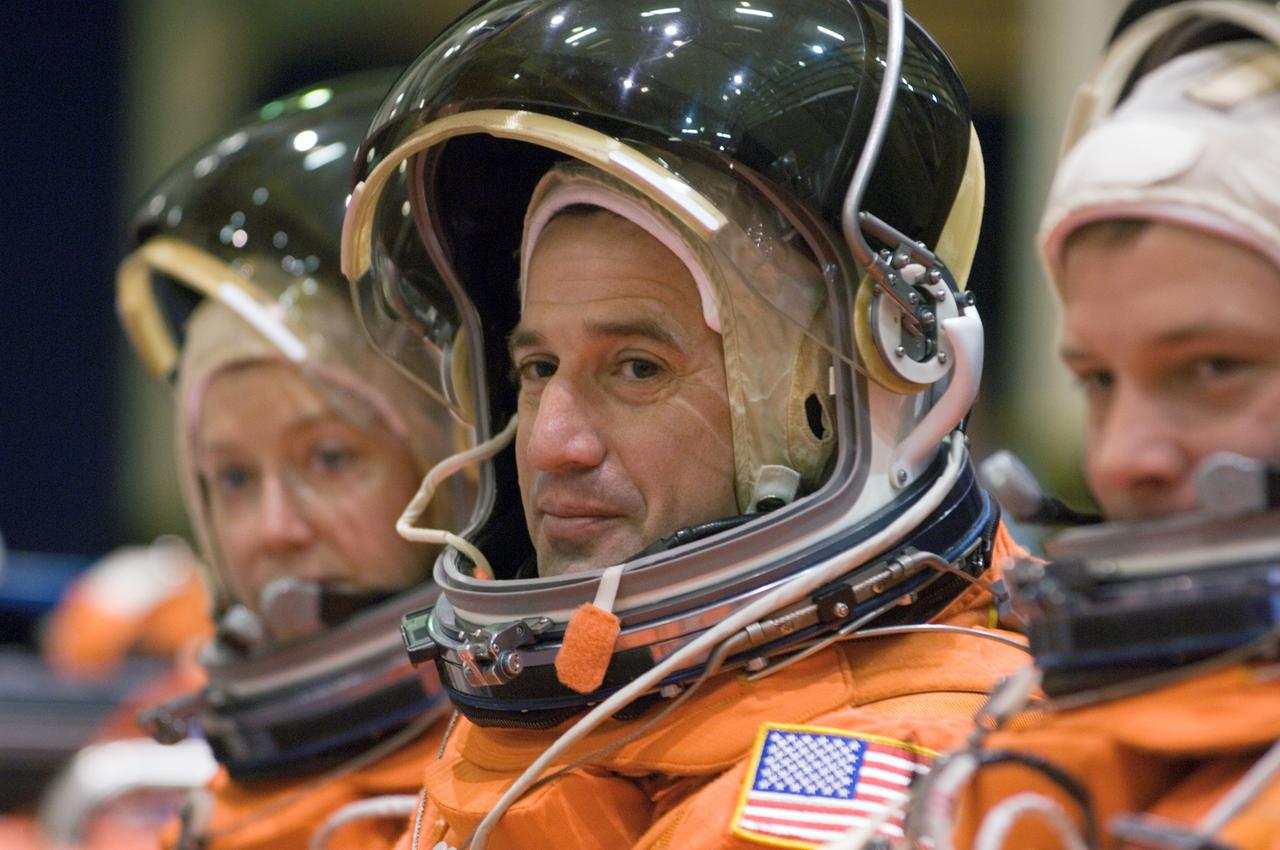
JSC2007-E-18128 (9 April 2007) --- Attired in training versions of their shuttle launch and entry suits, astronauts Pamela A. Melroy (left), STS-120 commander; George D. Zamka, pilot; and Douglas H. Wheelock, mission specialist, await the start of a training session in the Space Vehicle Mockup Facility at Johnson Space Center.
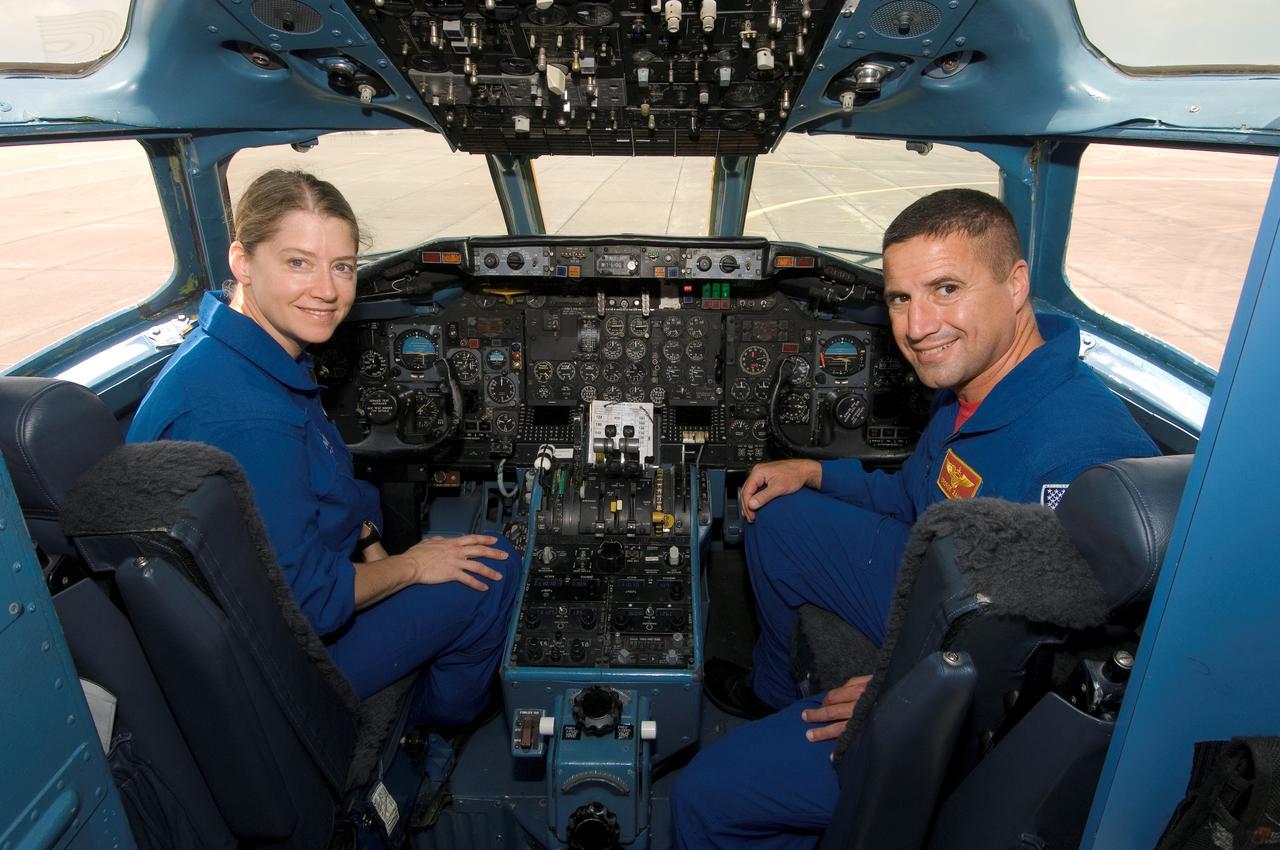
JSC2007-E-43538 (9 Aug. 2007) --- Astronauts Pamela A. Melroy, STS-120 commander, and George D. Zamka, pilot, pose for a photo in the cockpit of a NASA DC-9 aircraft during a Heavy Aircraft Training (HAT) session.
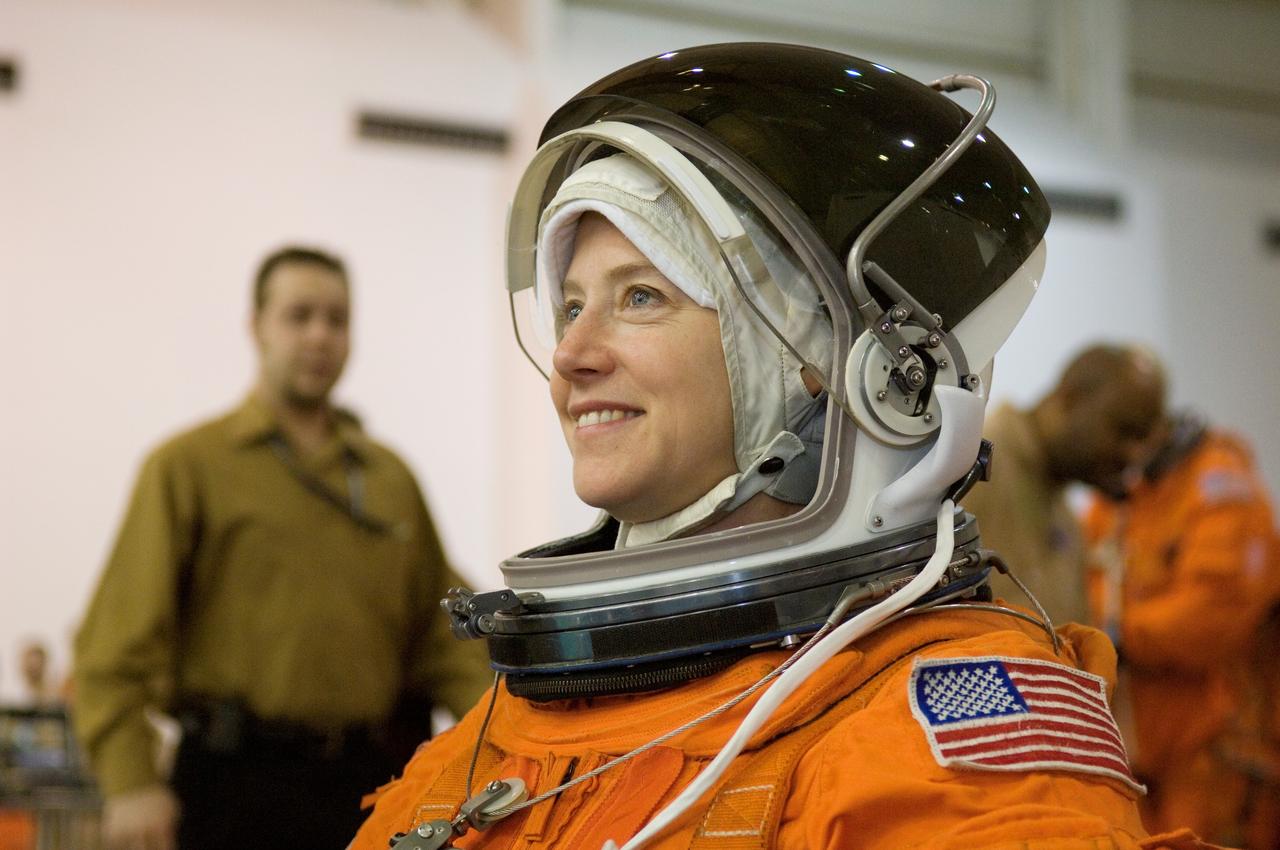
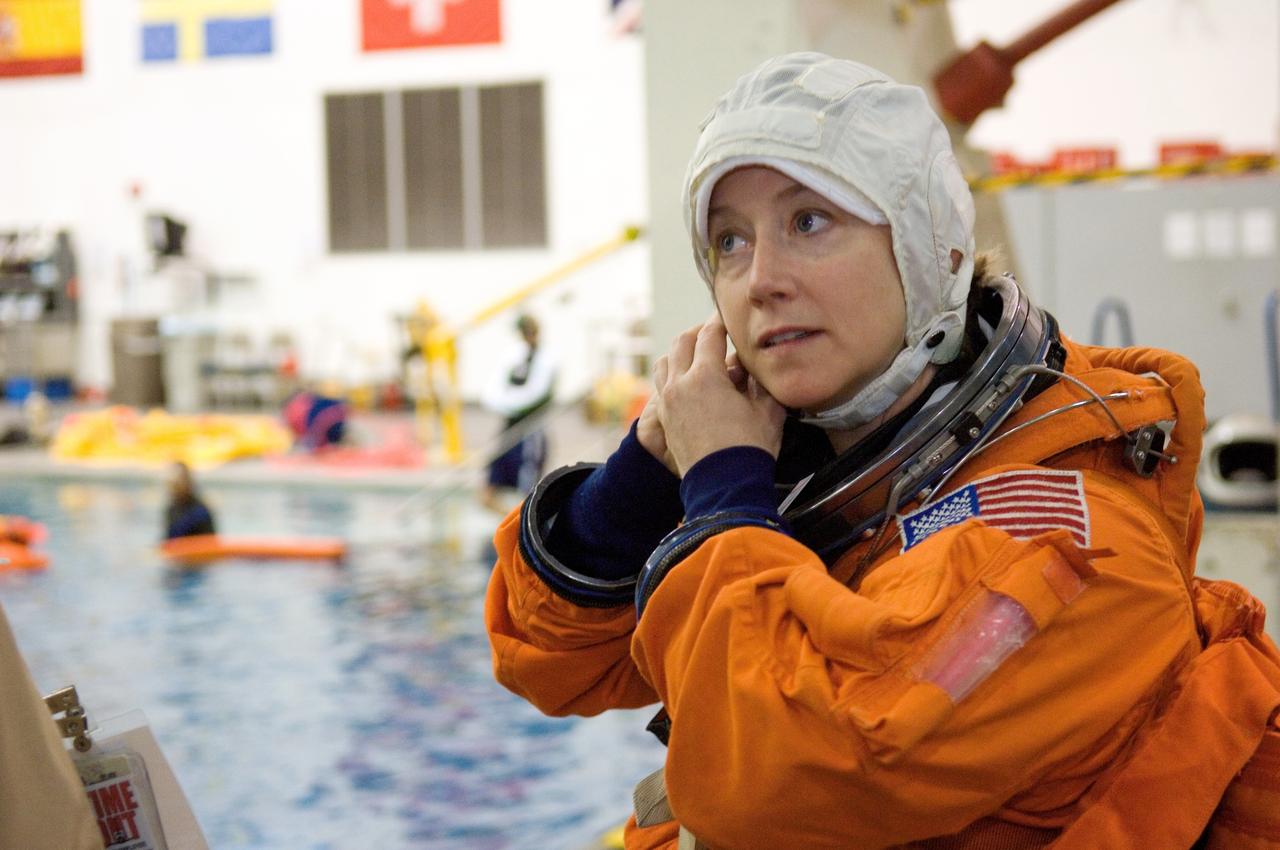
JSC2007-E-06440 (31 Jan. 2007) --- Astronaut Pamela A. Melroy, STS-120 commander, attired in a training version of her shuttle launch and entry suit, awaits the start of a water survival training session in the Neutral Buoyancy Laboratory (NBL) near Johnson Space Center.
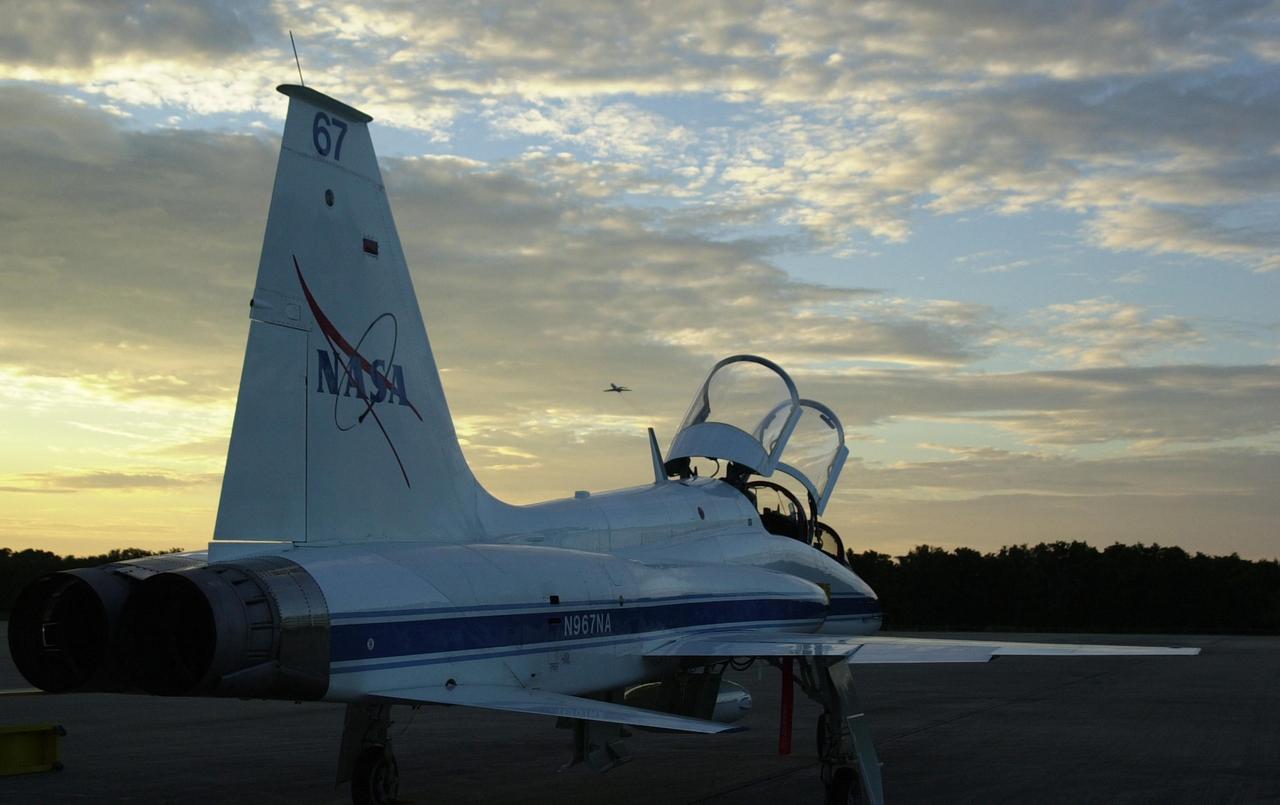
KENNEDY SPACE CENTER, FLA. --Framed by a T-38 on the Shuttle Landing Facility, the Shuttle Training Aircraft can be seen in the distance against the sunset. Commander Jeffrey Ashby and Pilot Pamela Melroy are going through landing exercises on the SLF.
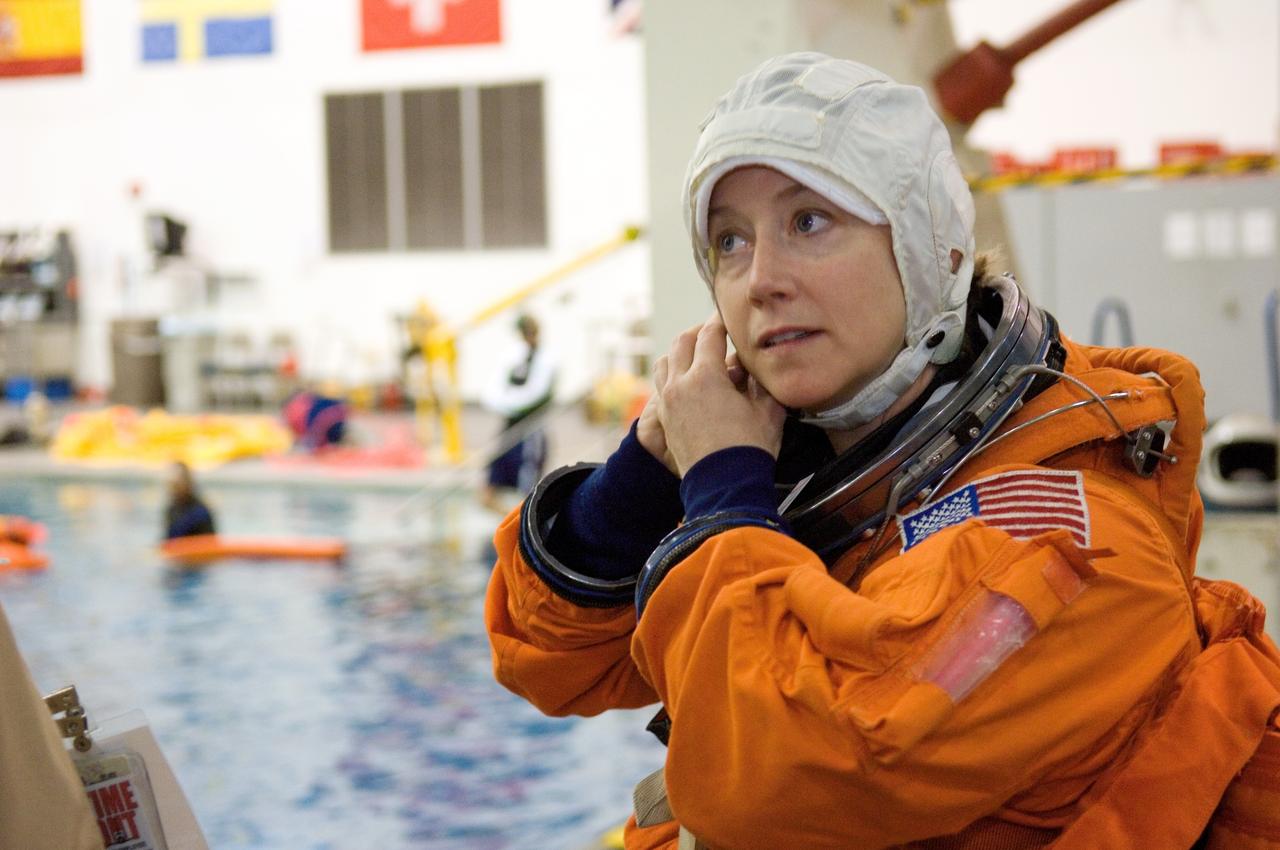
JSC2007-E-06431 (31 Jan. 2007) --- Astronaut Pamela A. Melroy, STS-120 commander, dons a training version of her shuttle launch and entry suit in preparation for a water survival training session in the Neutral Buoyancy Laboratory (NBL) near Johnson Space Center.
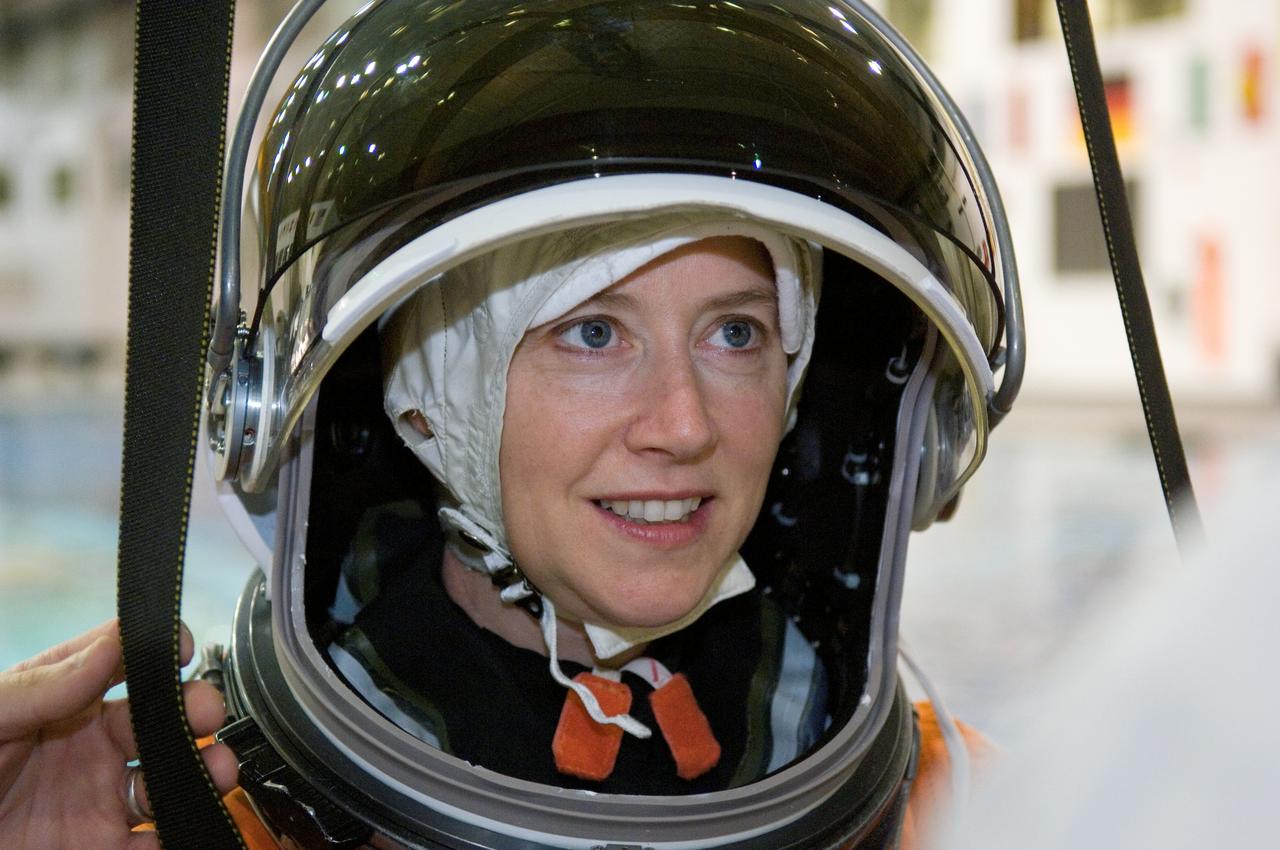
JSC2007-E-06445 (31 Jan. 2007) --- Astronaut Pamela A. Melroy, STS-120 commander, attired in a training version of her shuttle launch and entry suit, awaits the start of a water survival training session in the Neutral Buoyancy Laboratory (NBL) near Johnson Space Center.
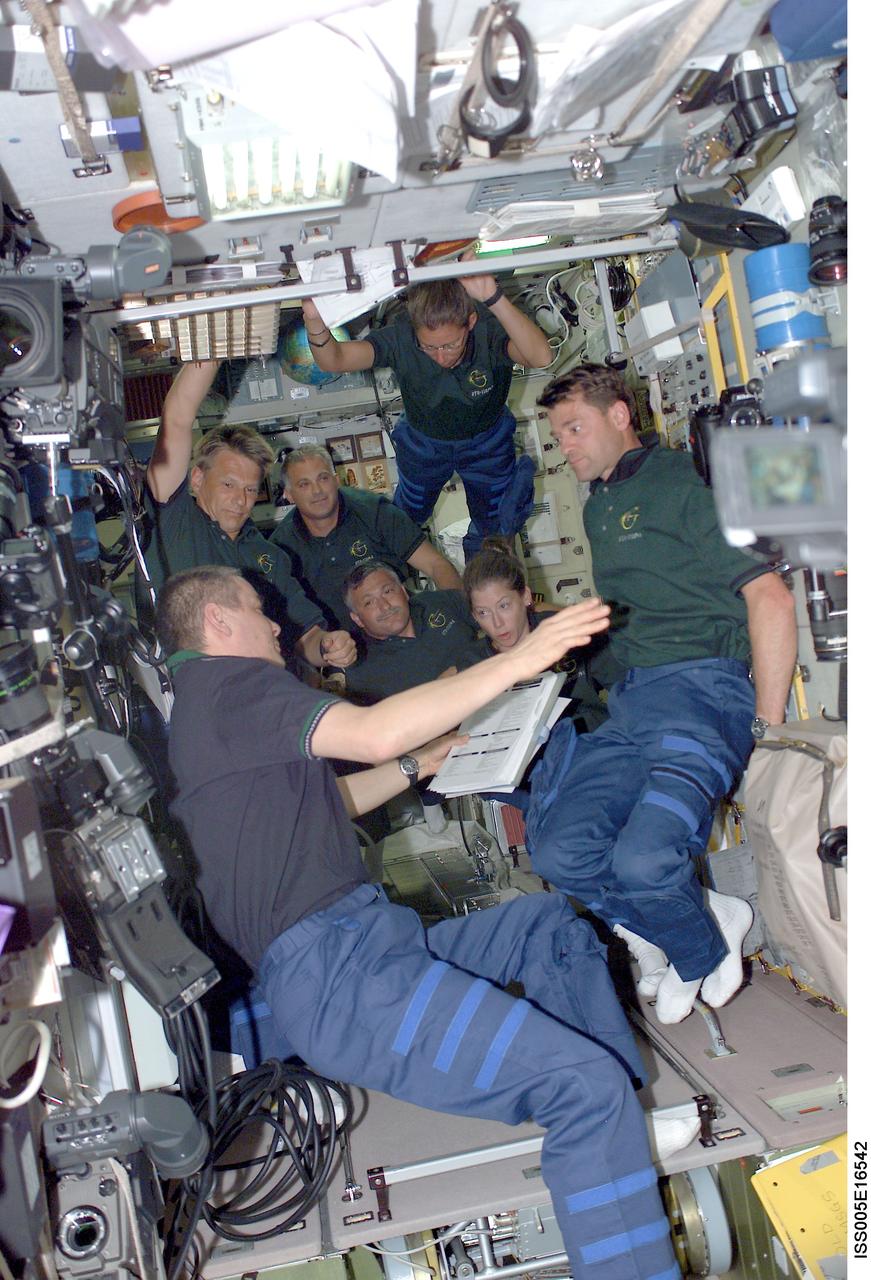
ISS005-E-16542 (9 October 2002) --- Cosmonaut Valery G. Korzun, Expedition Five mission commander, and the STS-112 crewmembers were photographed in the Zvezda Service Module on the International Space Station (ISS). Others pictured are astronauts Jeffrey S. Ashby, STS-112 mission commander; Pamela A. Melroy, pilot; Sandra H. Magnus, Piers J. Sellers, David A. Wolf, and cosmonaut Fyodor N. Yurchikhin, all mission specialists. Korzun and Yurchikhin represent Rosaviakosmos.
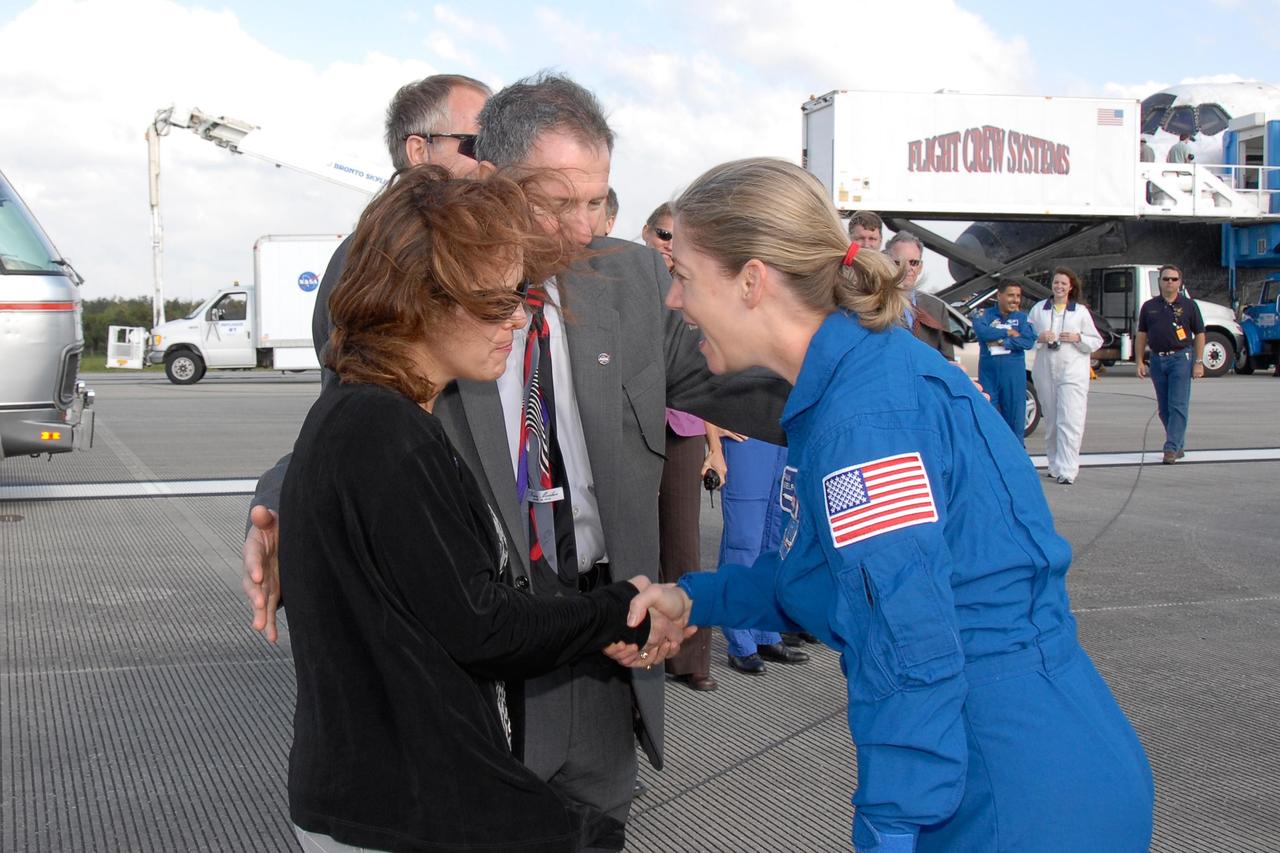
KENNEDY SPACE CENTER, FLA. -- STS-120 Commander Pamela Melroy is greeted by NASA Administrator Mike Griffin and his wife, Rebecca Griffin. Melroy and the Discovery crew completed the 15-day mission STS-120, with an on-time landing at 1:01:16 p.m. Wheel stop was at 1:02:07 p.m. Mission elapsed time was 15 days, 2 hours, 24 minutes and 2 seconds.Mission STS-120 continued the construction of the station with the installation of the Harmony Node 2 module and the relocation of the P6 truss. Photo credit: NASA//Kim Shiflett

KENNEDY SPACE CENTER, FLA. -- STS-120 Commander Pamela Melroy is greeted by NASA Administrator Mike Griffin. His wife, Rebecca Griffin, is at his side. Behind Griffin is Associate Administrator for NASA Space Operations William Gerstenmaier. Melroy and the Discovery crew completed the 15-day mission STS-120, with an on-time landing at 1:01:16 p.m. Wheel stop was at 1:02:07 p.m. Mission elapsed time was 15 days, 2 hours, 24 minutes and 2 seconds. Mission STS-120 continued the construction of the station with the installation of the Harmony Node 2 module and the relocation of the P6 truss. Photo credit: NASA//Kim Shiflett
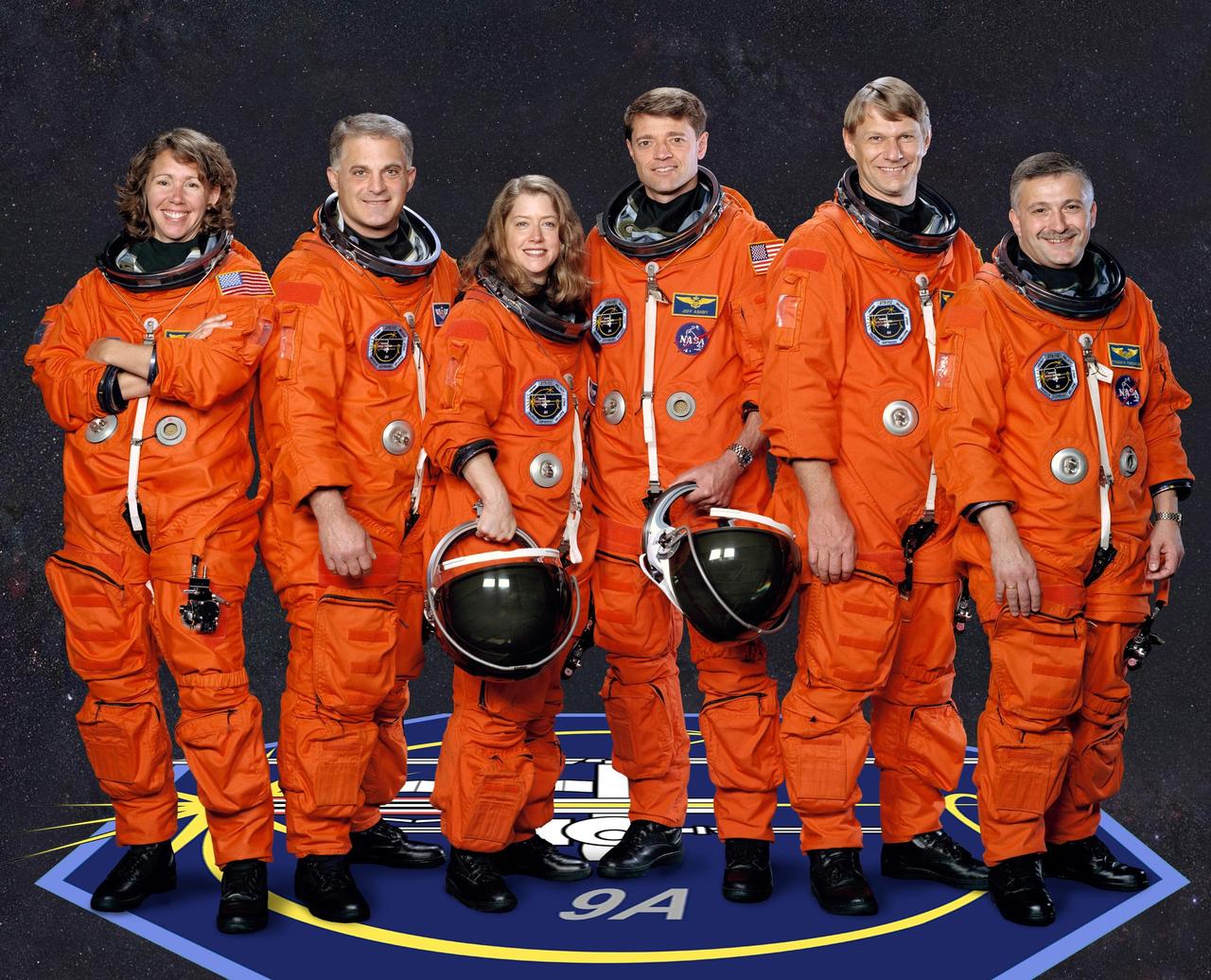
JOHNSON SPACE CENTER, HOUSTON, TEXAS -- (STS112-S-002) These five astronauts and cosmonaut take a break from training to pose for the STS-112 crew portrait. Astronauts Pamela A. Melroy and Jeffrey S. Ashby, pilot and commander respectively, are in the center of the photo. The mission specialists are from left to right, astronauts Sandra H. Magnus, David A. Wolf and Piers J. Sellers, and cosmonaut Fyodor Yurchikhin, who represents Rosaviakosmos.
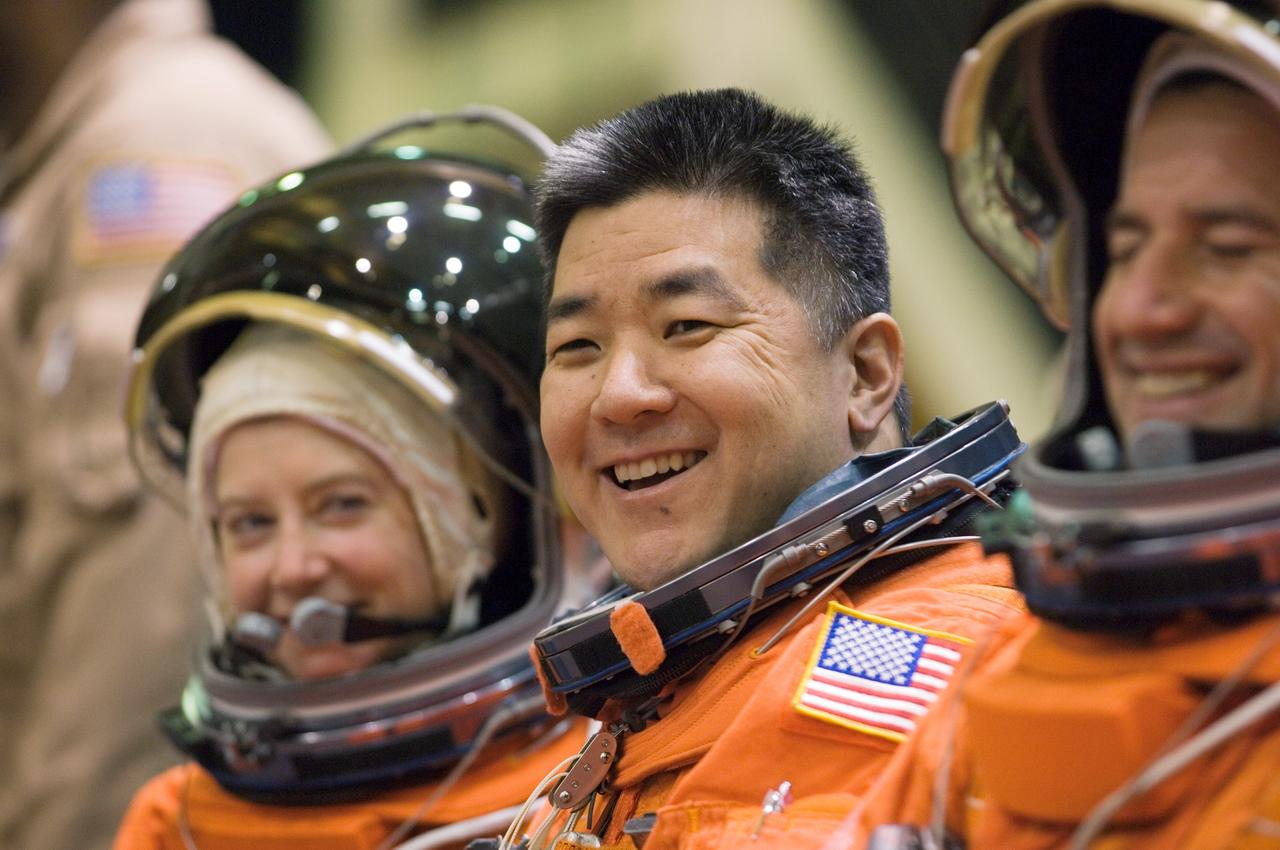
JSC2007-E-18096 (9 April 2007) --- Astronauts Pamela A. Melroy (left), STS-120 commander; Daniel M. Tani, Expedition 16 flight engineer; and George D. Zamka, STS-120 pilot, enjoy a light moment as they await the start of a training session in the Space Vehicle Mockup Facility at Johnson Space Center. Tani is scheduled to join Expedition 16 as flight engineer after launching to the International Space Station on mission STS-120 and is scheduled to return home on mission STS-122.
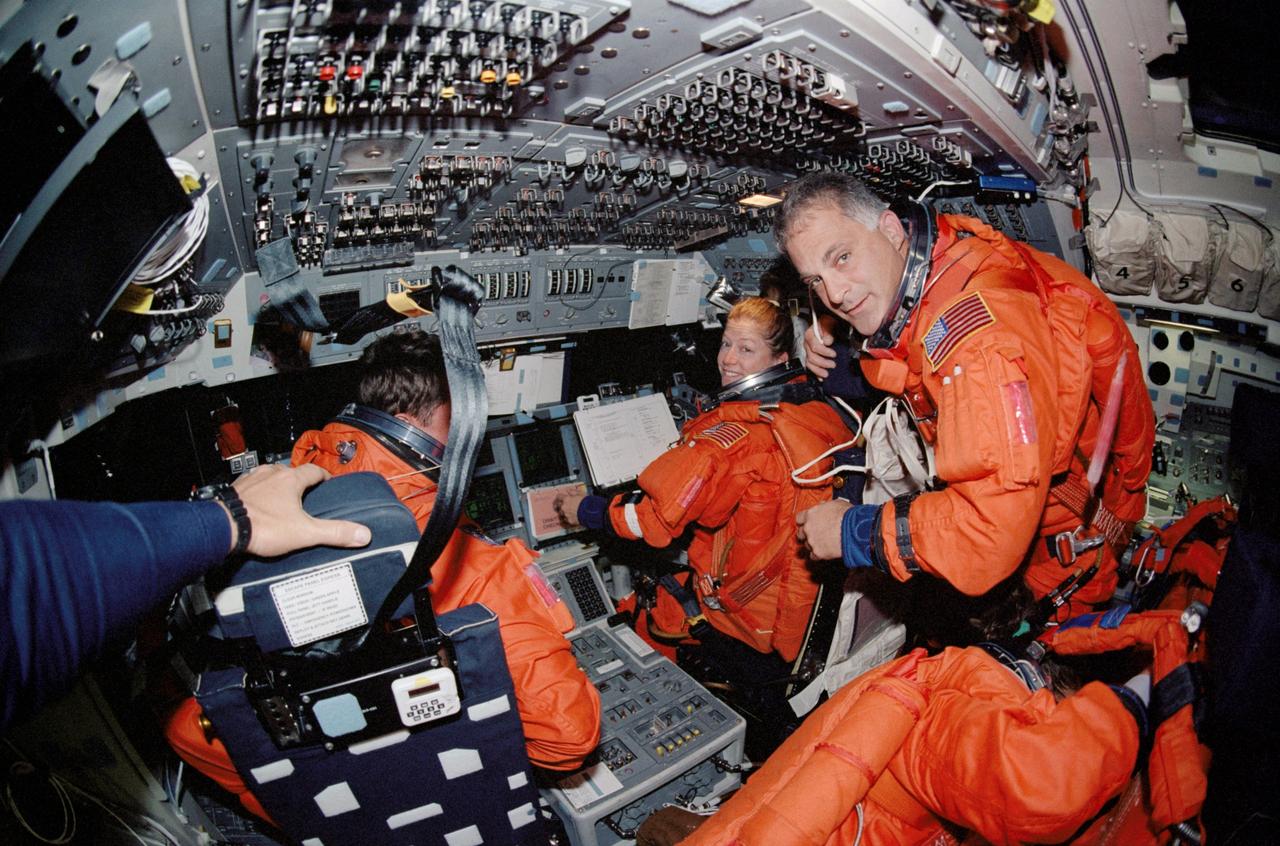
STS112-337-036 (18 October 2002) --- A “fish-eye” lens on a 35mm camera records astronauts Jeffrey S. Ashby (left), STS-112 mission commander; Pamela A. Melroy, pilot; and David A. Wolf, mission specialist, on the forward flight deck of the Space Shuttle Atlantis. Attired in their shuttle launch and entry suits, the crew prepares for the entry phase of the flight.
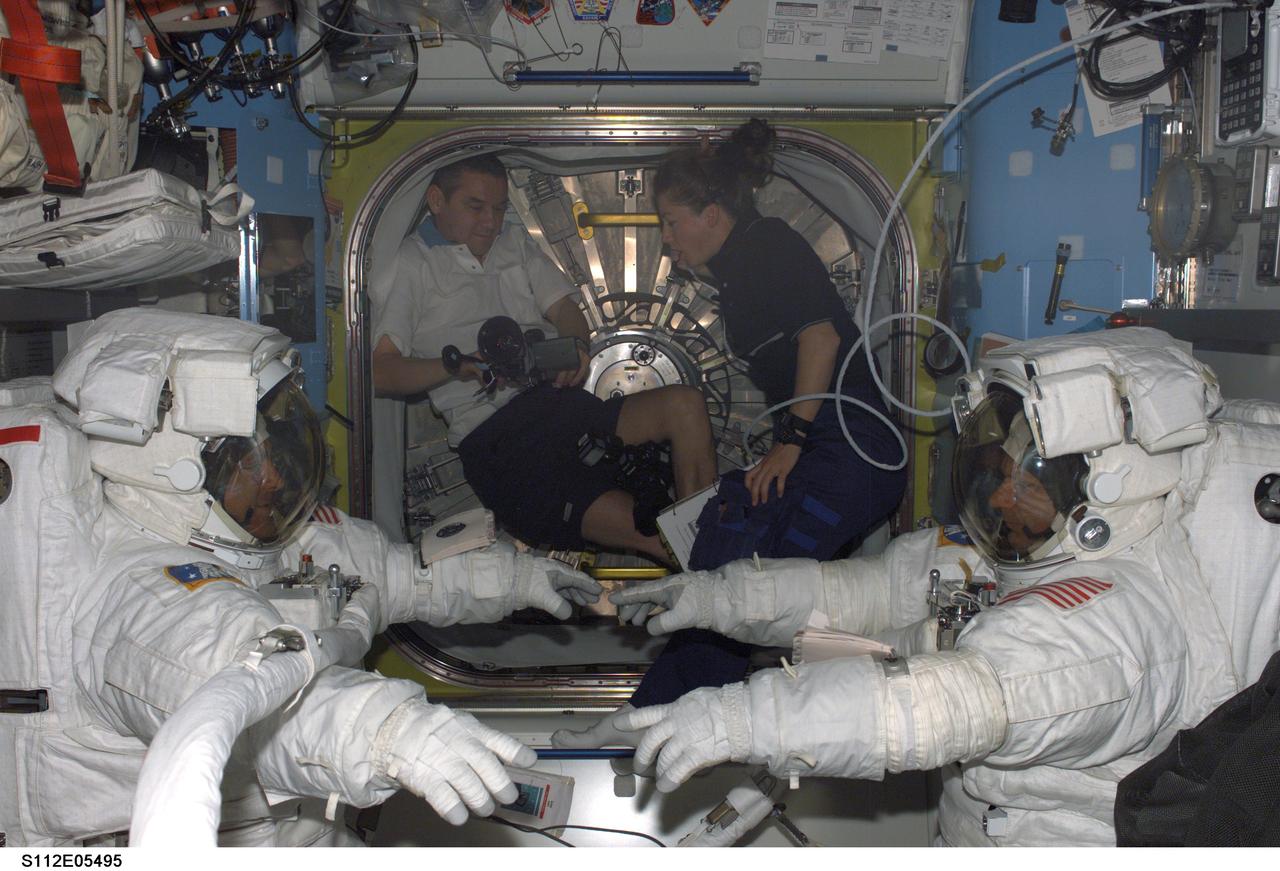
STS112-E-05495 (14 October 2002) --- Astronauts David A. Wolf (left) and Piers J. Sellers, STS-112 mission specialists attired in their Extravehicular Mobility Unit (EMU) space suits, are photographed in the Quest Airlock on the International Space Station (ISS) prior to the third scheduled session of extravehicular activity (EVA). Cosmonaut Valery G. Korzun (left), Expedition Five mission commander, and astronaut Pamela A. Melroy, STS-112 pilot, were visible in the background. Korzun represents Rosaviakosmos.
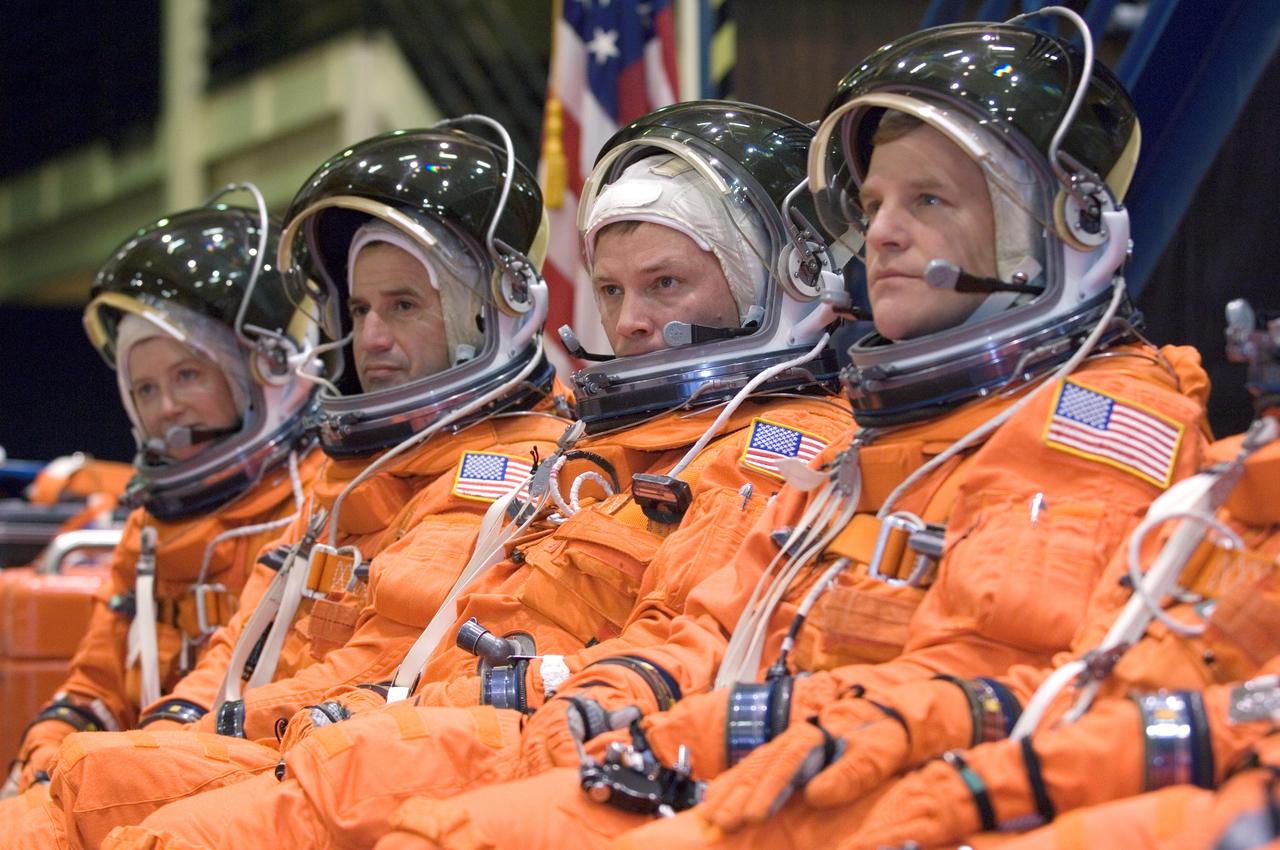
JSC2007-E-18132 (9 April 2007) --- Attired in training versions of their shuttle launch and entry suits, astronauts Pamela A. Melroy (left), STS-120 commander; George D. Zamka, pilot; Douglas H. Wheelock and Scott E. Parazynski, both mission specialists, await the start of a training session in the Space Vehicle Mockup Facility at Johnson Space Center.
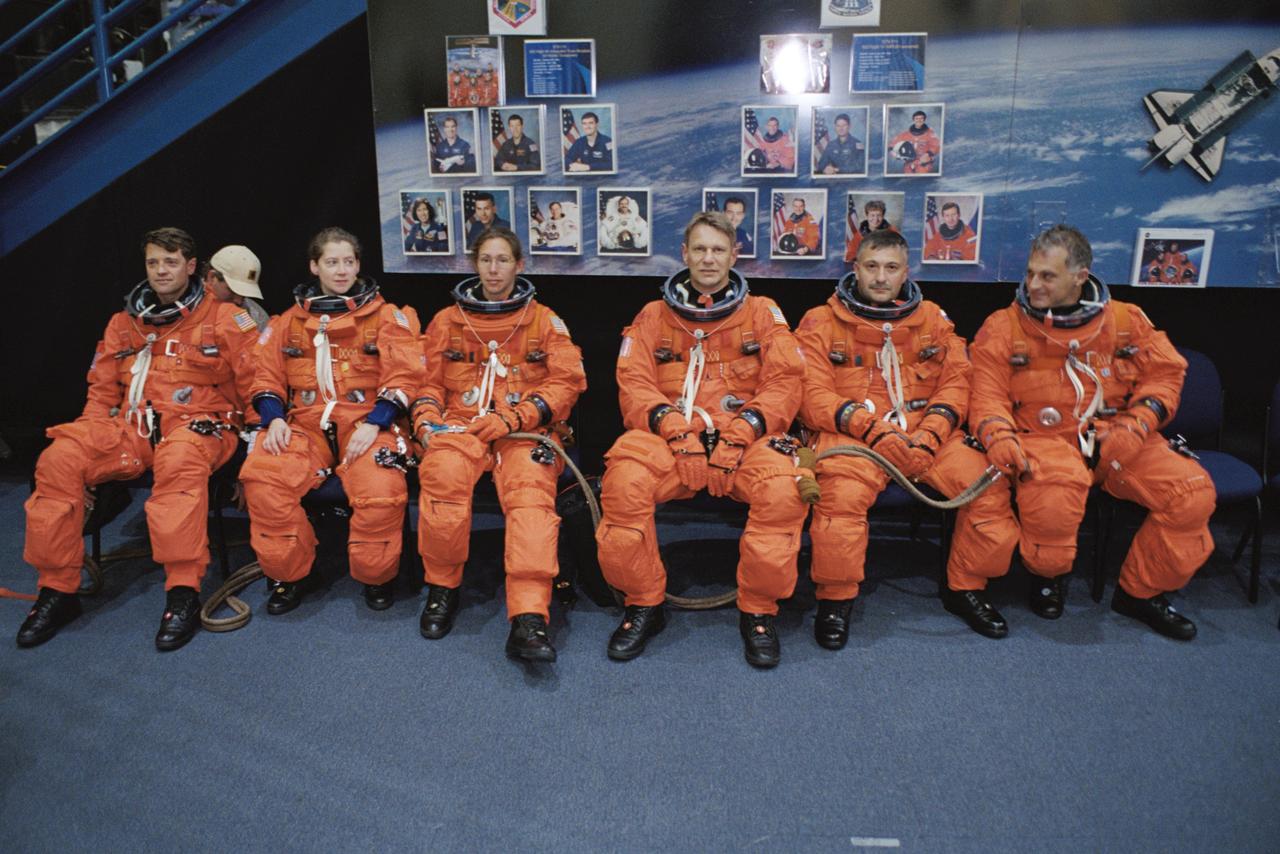
JSC2002-00800 (12 April 2002) --- Attired in training versions of the shuttle launch and entry suit, the STS-112 crew wait for the start of a photo and training session in the Space Vehicle Mockup Facility at the Johnson Space Center (JSC). Seated from the left are astronauts Jeffrey S. Ashby, mission commander; Pamela A. Melroy, pilot; Sandra H. Magnus, Piers J. Sellers, cosmonaut Fyodor N. Yurchikhin and astronaut David A. Wolf, all mission specialists. Yurchikhin represents Rosaviakosmos.
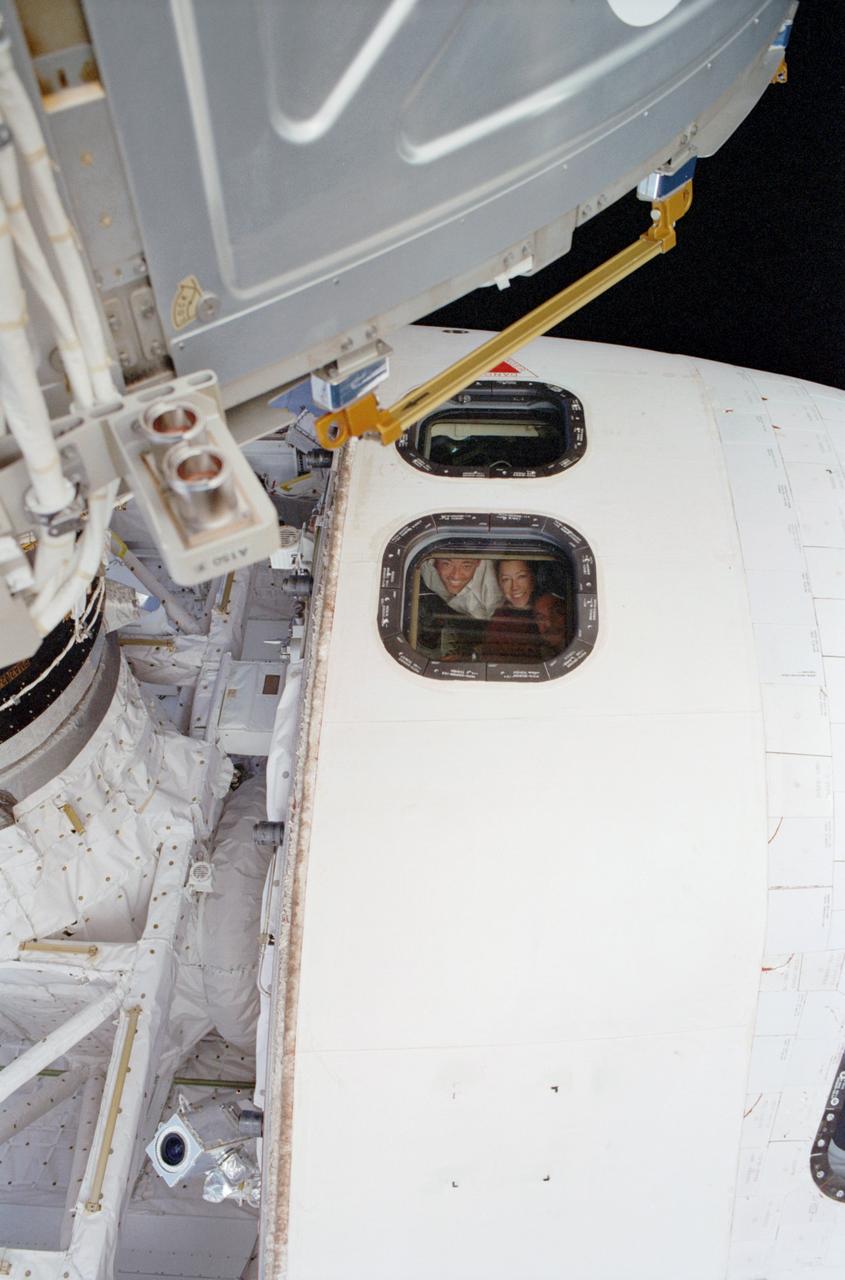
STS112-304-005 (12 October 2002) --- This scene, showing a portion of the forward section of the Space Shuttle Atlantis, was photographed by one of the space walking astronauts. Astronauts Jeffrey S. Ashby, STS-112 mission commander; Pamela A. Melroy, pilot; and cosmonaut Fyodor N. Yurchikhin, mission specialist, can be seen through an overheard aft flight deck window. Yurchikhin represents Rosaviakosmos.
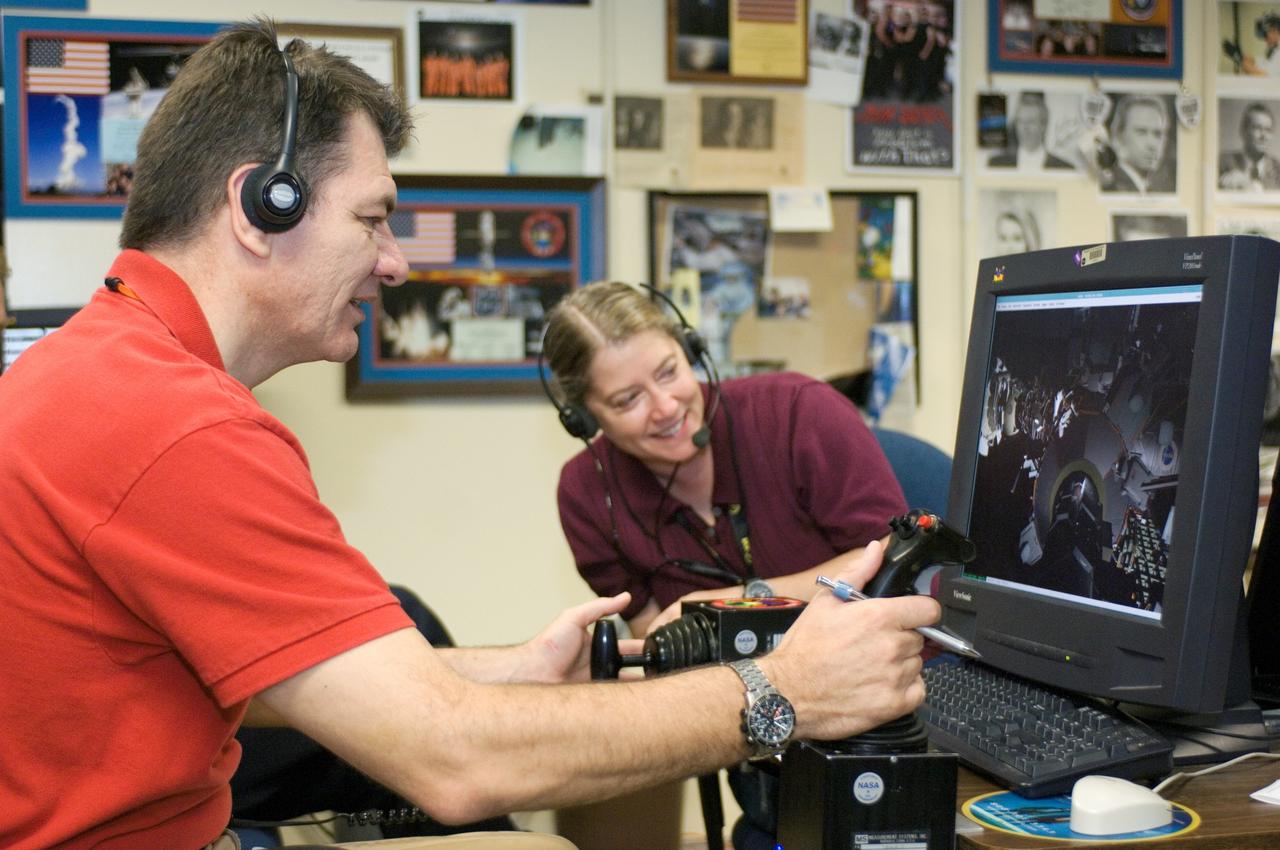
JSC2007-E-41540 (9 Aug. 2007) --- Astronauts Pamela A. Melroy, STS-120 commander, and European Space Agency's (ESA) Paolo Nespoli, mission specialist, use the virtual reality lab at Johnson Space Center to train for their duties aboard the space shuttle and space station. This type of computer interface, paired with virtual reality training hardware and software, helps to prepare the entire team for dealing with space station elements.
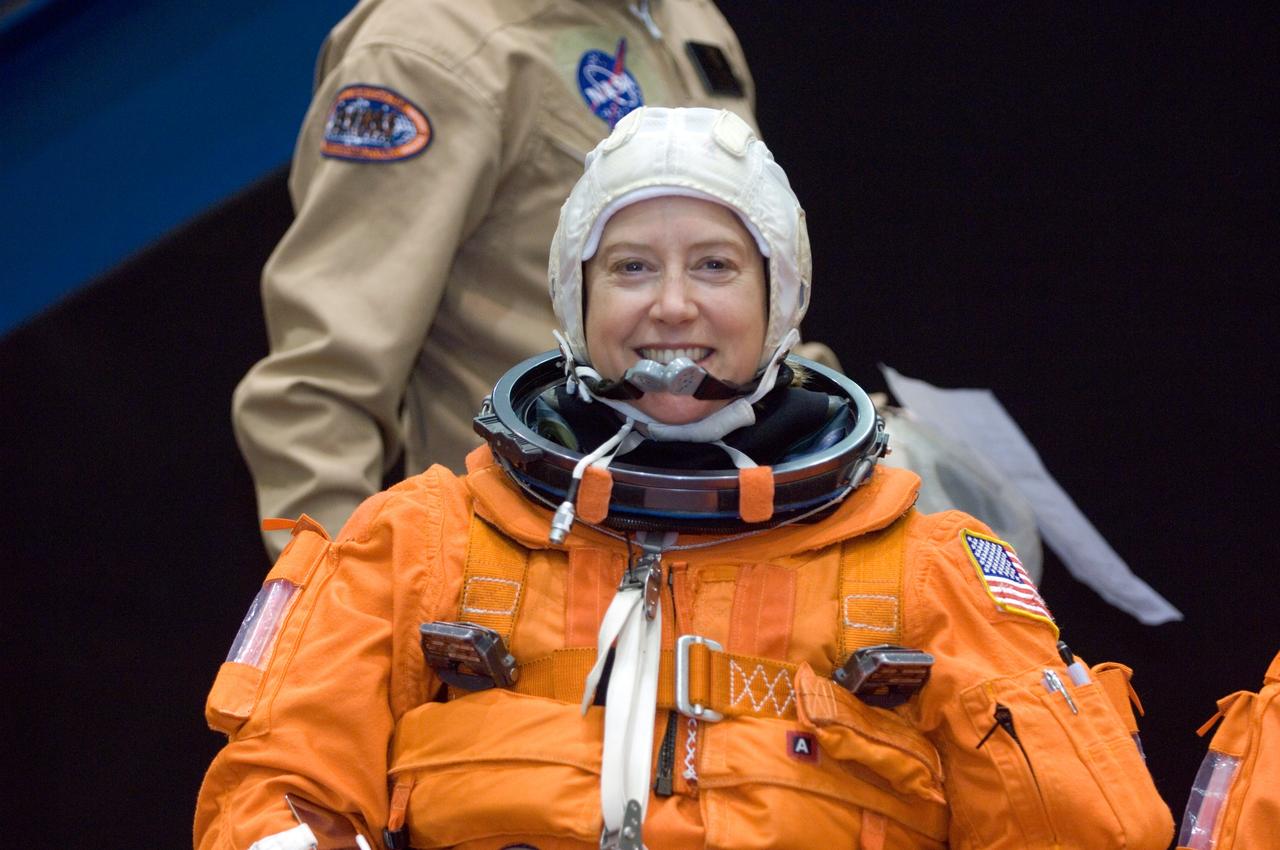
JSC2007-E-08820 (7 Feb. 2007) --- Attired in a training version of her shuttle launch and entry suit, astronaut Pamela A. Melroy, STS-120 commander, awaits the start of a post insertion/de-orbit training session in one of the full-scale trainers (out of frame) in the Space Vehicle Mockup Facility at Johnson Space Center.

JSC2002-00799 (12 April 2002) --- Astronauts Jeffrey S. Ashby (left) and Pamela A. Melroy, STS-112 mission commander and pilot, respectively, wait for the start of a mission training session in the Space Vehicle Mockup Facility at the Johnson Space Center (JSC). STS-112 will be the 15th shuttle mission to visit the International Space Station (ISS).
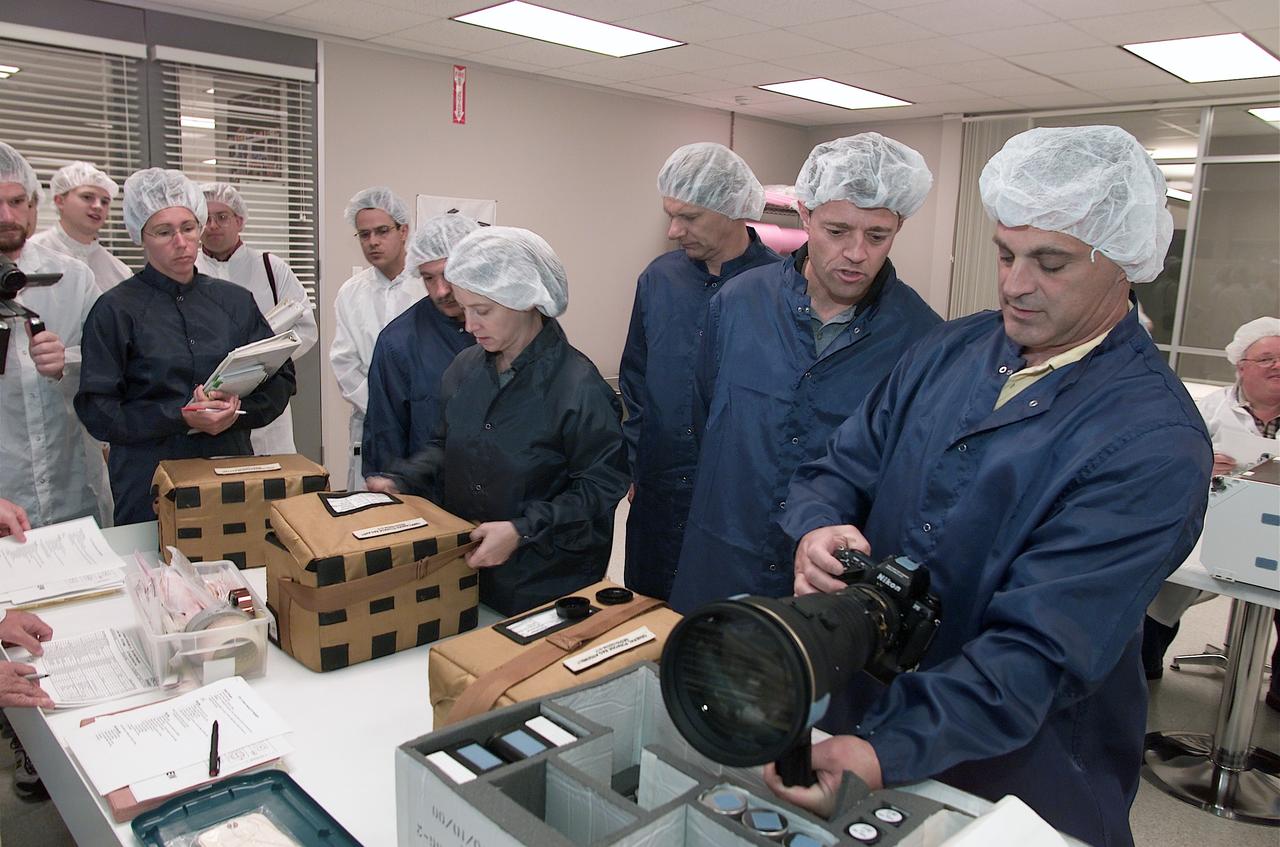
JSC2002-E-30477 (29 July 2002) --- The STS-112 crewmembers inspect flight hardware during a crew equipment bench review in an offsite facility near the Johnson Space Center (JSC). From the left are astronaut Sandra H. Magnus, cosmonaut Fyodor N. Yurchikhin, both mission specialists; astronauts Pamela A. Melroy, pilot; Piers J. Sellers, mission specialist; Jeffrey S. Ashby, mission commander, and David A. Wolf, mission specialist. Yurchikhin represents Rosaviakosmos.
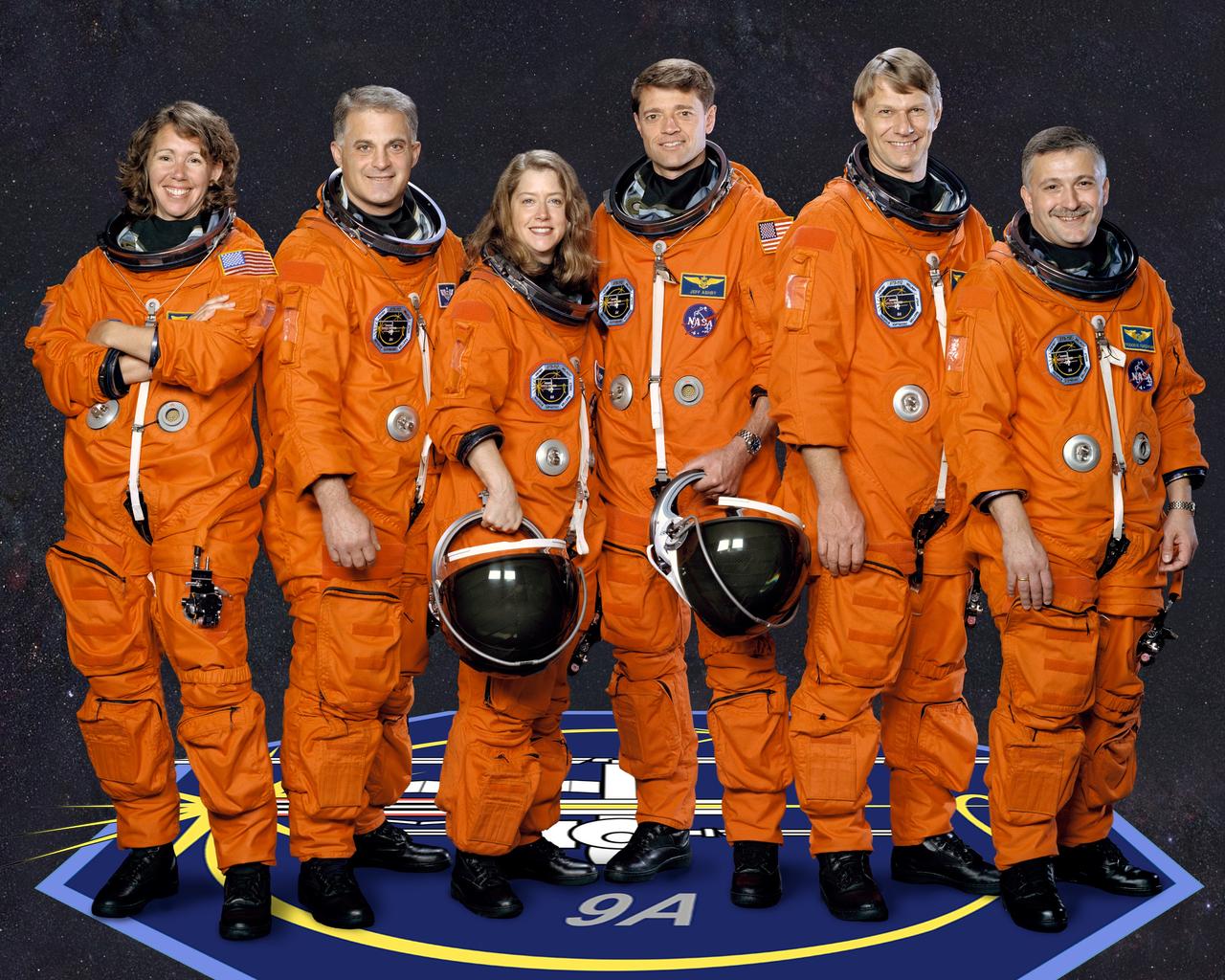
STS112-S-002 (May 2002) --- These five astronauts and cosmonaut take a break from training to pose for the STS-112 crew portrait. Astronauts Jeffrey S. Ashby and Pamela A. Melroy, commander and pilot, respectively, are in the center of the photo. The mission specialists are, from left to right, astronauts Sandra H. Magnus, David A. Wolf and Piers J. Sellers and cosmonaut Fyodor Yurchikhin, who represents Rosaviakosmos.
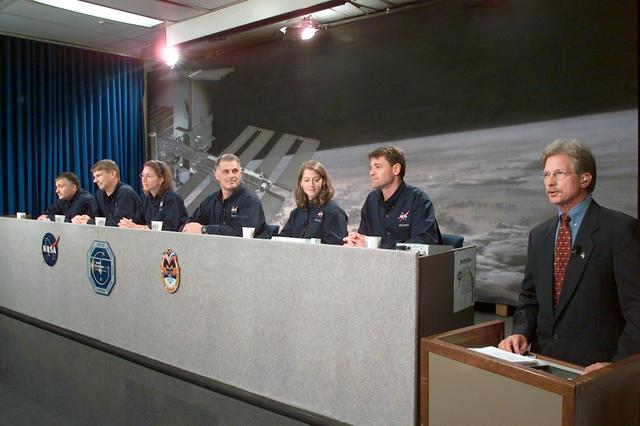
JSC2002-E-36208 (6 September 2002) --- The STS-112 crewmembers along with Public Affairs Office (PAO) moderator Doug Peterson (right) are photographed during a pre-flight press conference at Johnson Space Center (JSC). From the left are cosmonaut Fyodor N. Yurchikhin, astronauts Piers J. Sellers, Sandra H. Magnus, David A. Wolf, all mission specialists; Pamela A. Melroy and Jeffrey S. Ashby, pilot and mission commander, respectively. Yurchikhin represents Rosaviakosmos.
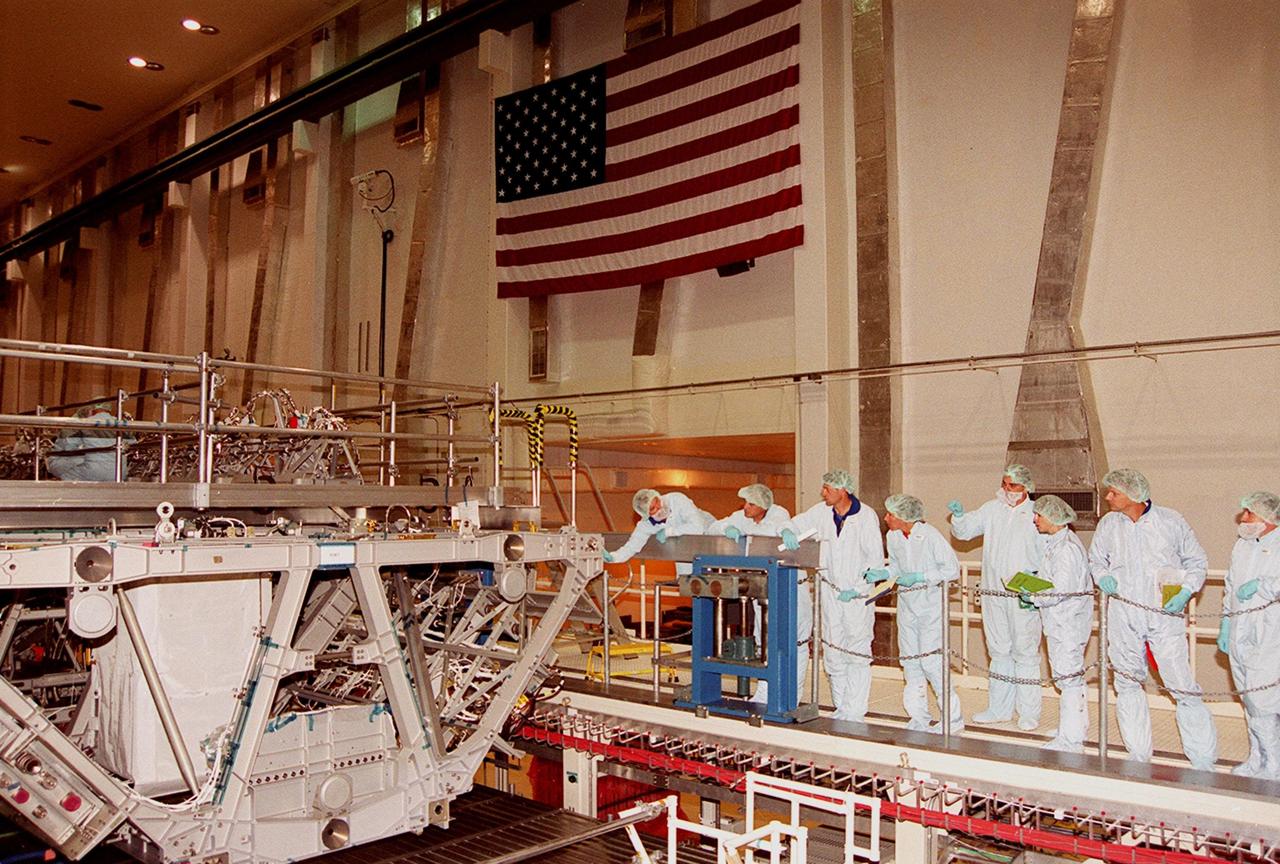
KENNEDY SPACE CENTER, Fla. -- In the Operations and Checkout Bldg,, members of the STS-112 crew look over the Integrated Truss Structure (ITS) S1 that will be part of the payload on the mission. The crew comprises Commander Jeffrey S. Ashby, Pilot Pamela A. Melroy and Mission Specialists David A. Wolf, Piers J. Sellers, Sandra H. Magnus and Fyodor Nikolayevich Yurchikhin, a cosmonaut with the Russian Aviation and Space Agency. Mission STS-112 is scheduled for launch in July 2002
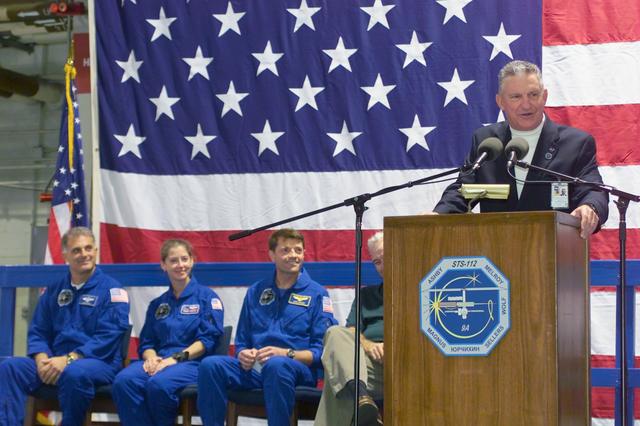
JSC2002-E-42177 (19 October 2002) --- Lt. General Jefferson D. Howell, Jr., JSC Director, addresses a crowd on hand at Ellington Field's Hangar 990 during crew return ceremonies for the STS-112 crewmembers. Pictured in the background, from the left, are astronauts David A. Wolf, mission specialist; Pamela A. Melroy, pilot; and Jeffrey S. Ashby, mission commander. NASA Administrator Sean O'Keefe is partially obscured by the lectern.
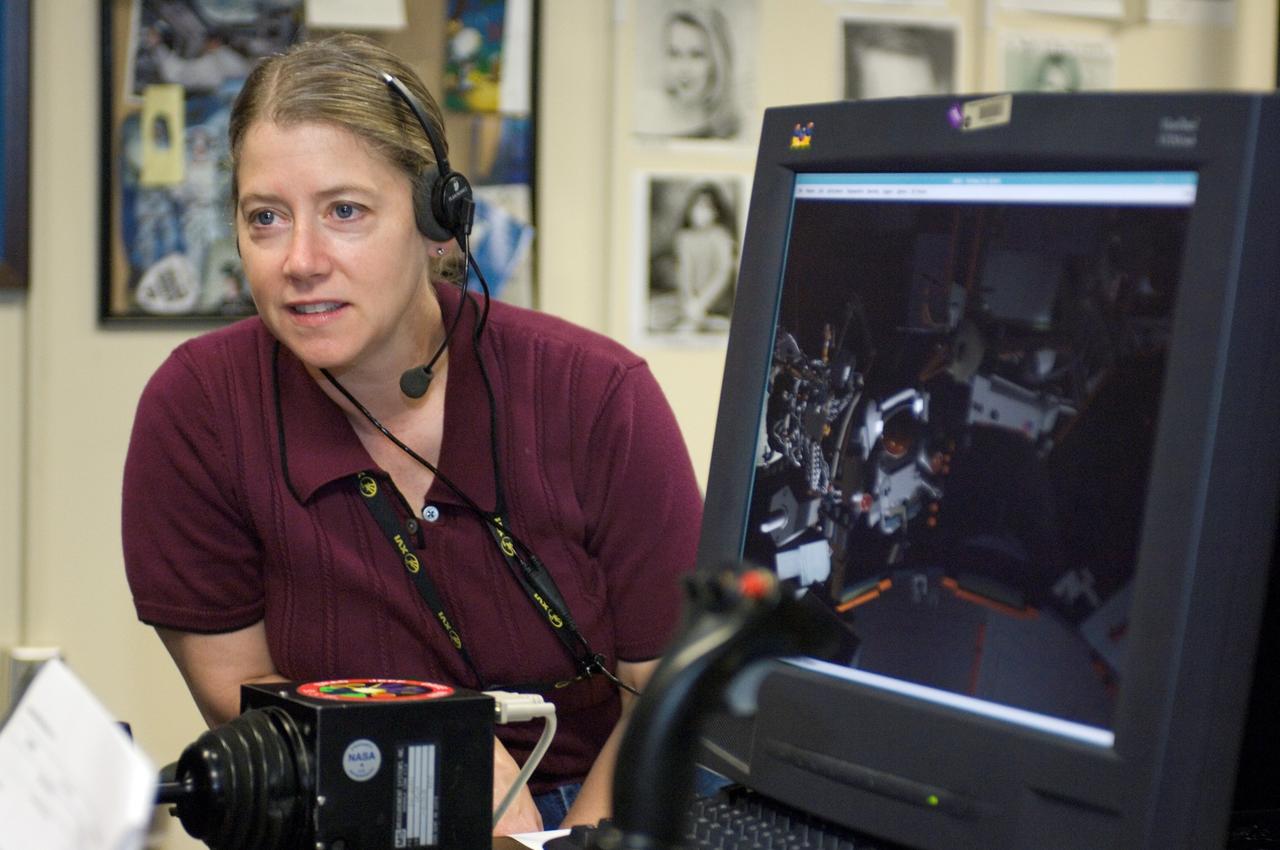
JSC2007-E-41539 (9 Aug. 2007) --- Astronaut Pamela A. Melroy, STS-120 commander, uses the virtual reality lab at Johnson Space Center to train for her duties aboard the space shuttle and space station. This type of computer interface, paired with virtual reality training hardware and software, helps to prepare the entire team for dealing with space station elements.
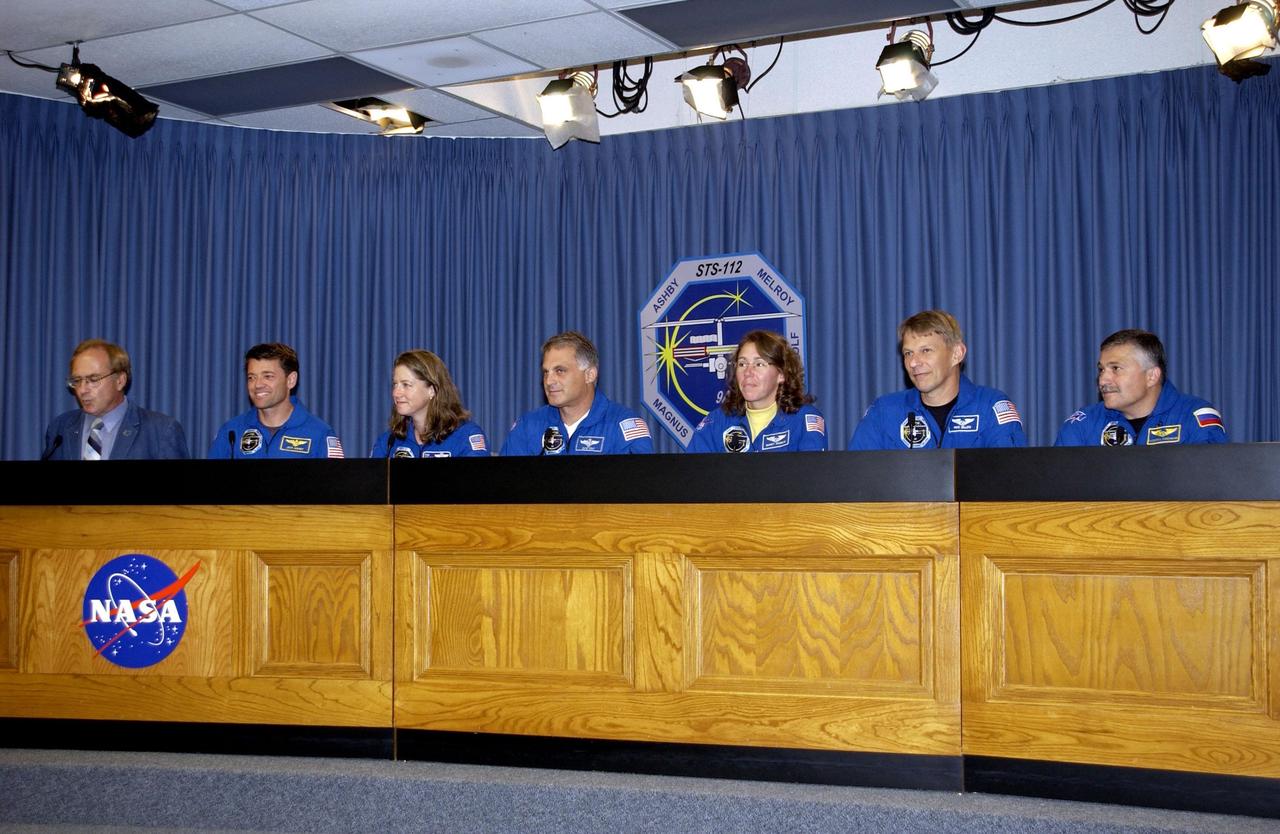
KENNEDY SPACE CENTER, FLA. -- The STS-112 crew takes part in a post-landing briefing for the media. Moderating, at left, is George Diller, with the NASA News Center. The crew, from left, are Commander Jeffrey Ashby, Pilot Pamela Melroy and Mission Specialists David Wolf, Sandra Magnus, Piers Sellers and cosmonaut Fyodor Yurchikhin. Mission STS-112 was the 15th assembly flight to the International Space Station, installing the S1 truss. The landing was the 60th at KSC in the history of the Shuttle program.
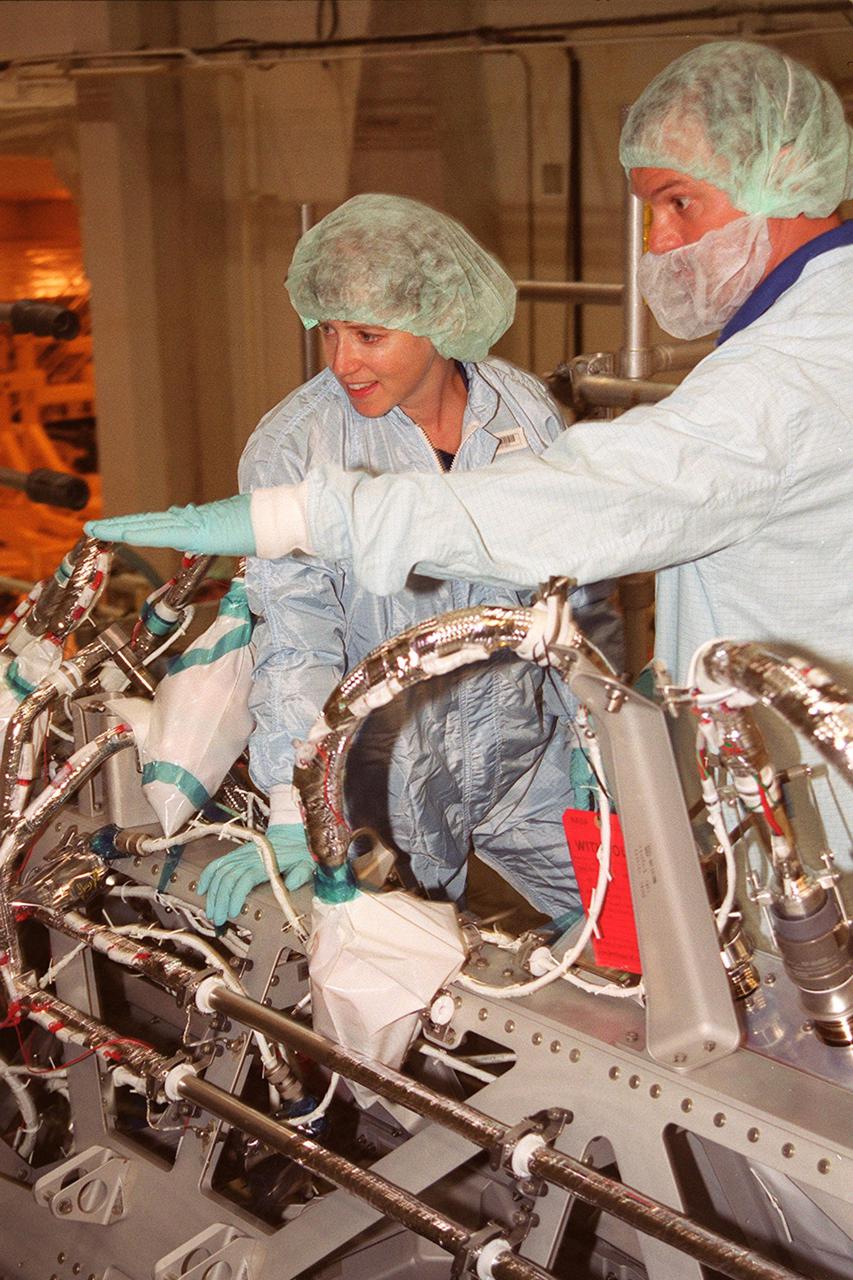
KENNEDY SPACE CENTER, Fla. -- In the Operations and Checkout Bldg., STS-112 Pilot Pamela A. Melroy gets a close look at the Integrated Truss Structure (ITS) S1 that will be part of the payload on the mission. Other members of the crew are Commander Jeffrey S. Ashby and Mission Specialists David A. Wolf, Piers J. Sellers, Sandra H. Magnus and Fyodor Nikolayevich Yurchikhin, a cosmonaut with the Russian Aviation and Space Agency. Mission STS-112 is scheduled for launch in July 2002
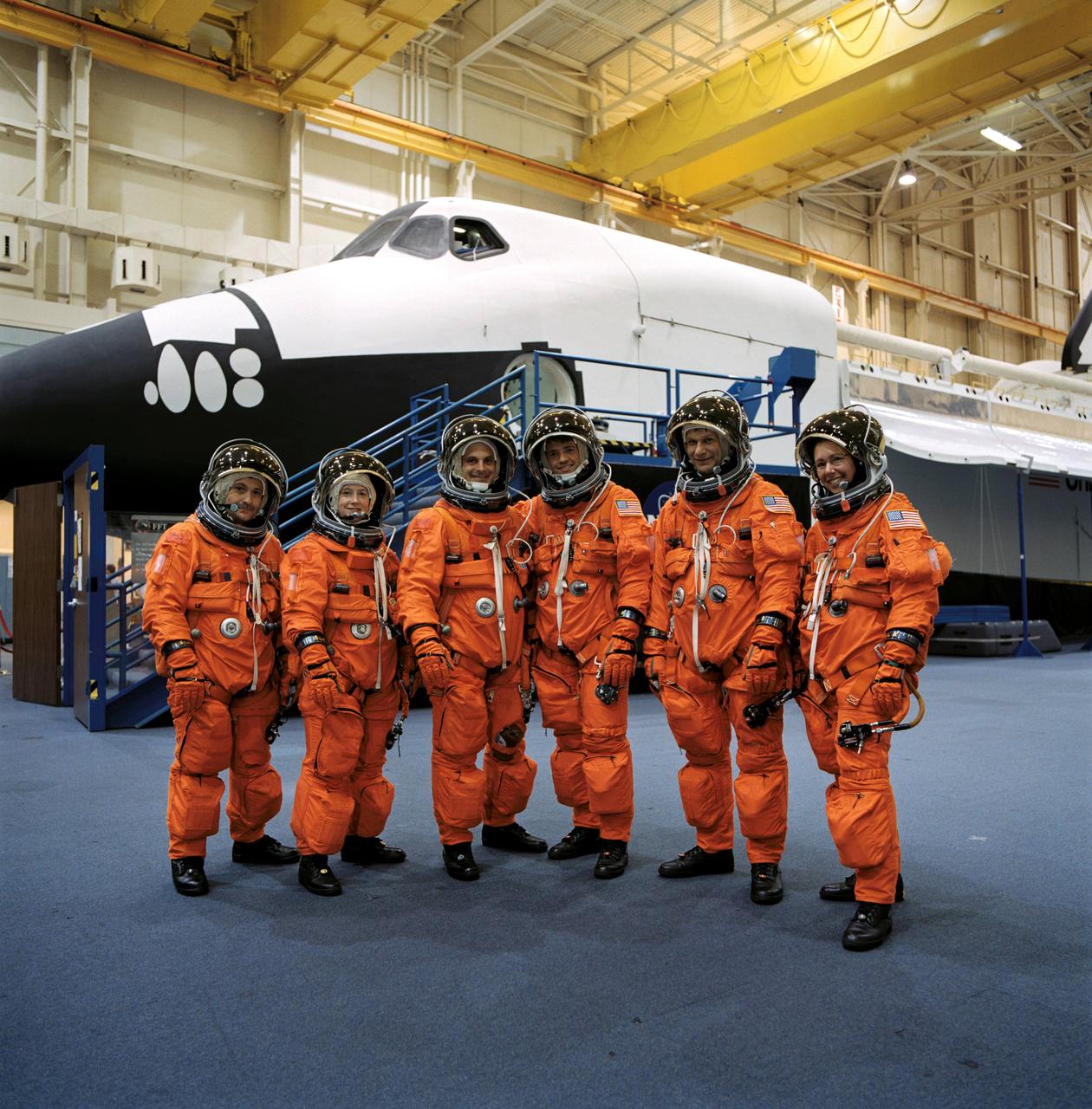
JSC2002-00882 (24 April 2002) --- The STS-112 crewmembers, attired in training versions of the full-pressure launch and entry suit, pose for a crew photo prior to a training session in the Space Vehicle Mockup Facility at the Johnson Space Center (JSC). From the left are cosmonaut Fyodor N. Yurchikhin, mission specialist; astronauts Pamela A. Melroy, pilot; David A. Wolf, mission specialist; Jeffrey S. Ashby, mission commander; Piers J. Sellers and Sandra H. Magnus, both mission specialists. Yurchikhin represents Rosaviakosmos.
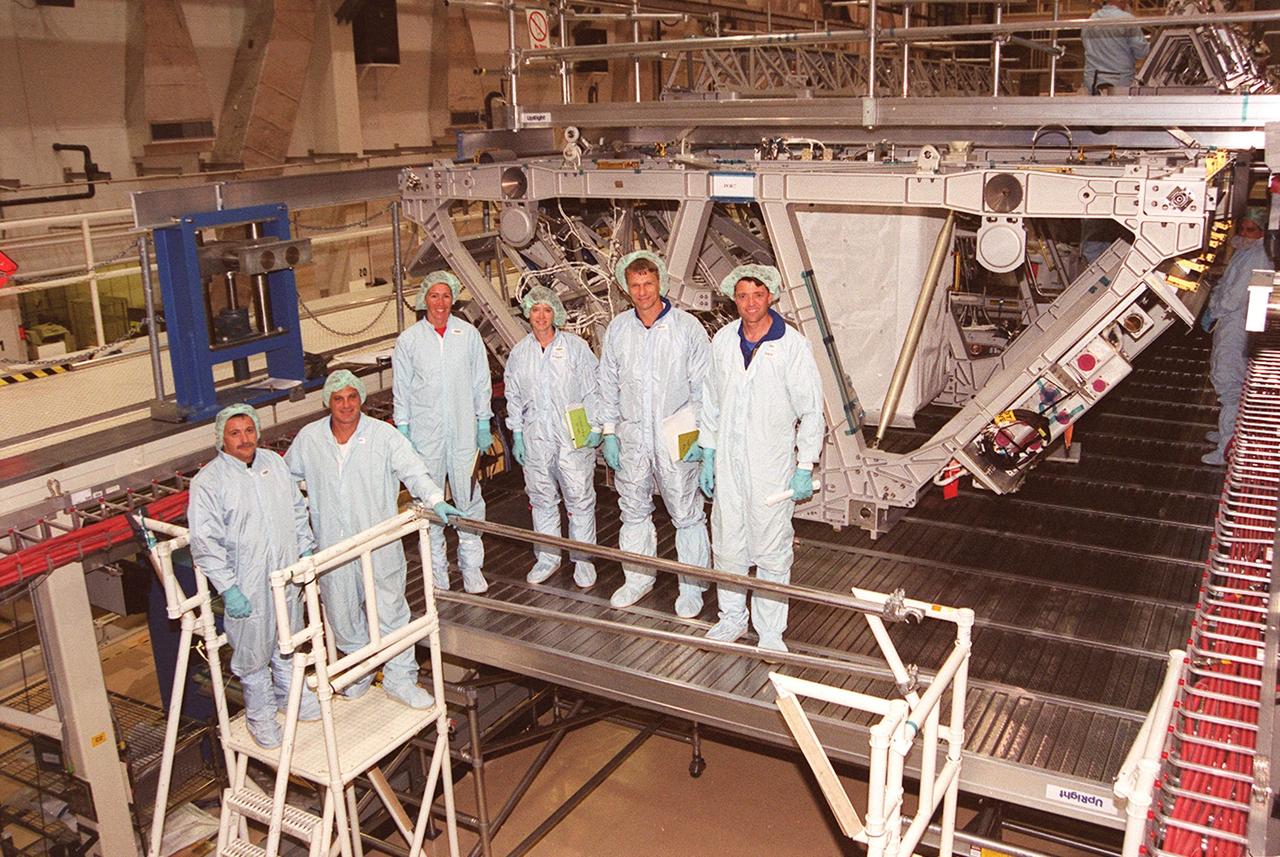
KENNEDY SPACE CENTER, Fla. -- Members of the STS-112 crew pose for a photo while looking over the Integrated Truss Structure (ITS) S1 (behind them). The ITS S1 is part of the payload on the mission. Standing left to right are Mission Specialists Fyodor Nikolayevich Yurchikhin, a cosmonaut with the Russian Aviation and Space Agency, David A. Wolf, and Sandra H. Magnus; Pilot Pamela A. Melroy; Mission Specialist Piers J. Sellers; and Commander Jeffrey S. Ashby. Mission STS-112 is scheduled for launch in July 2002
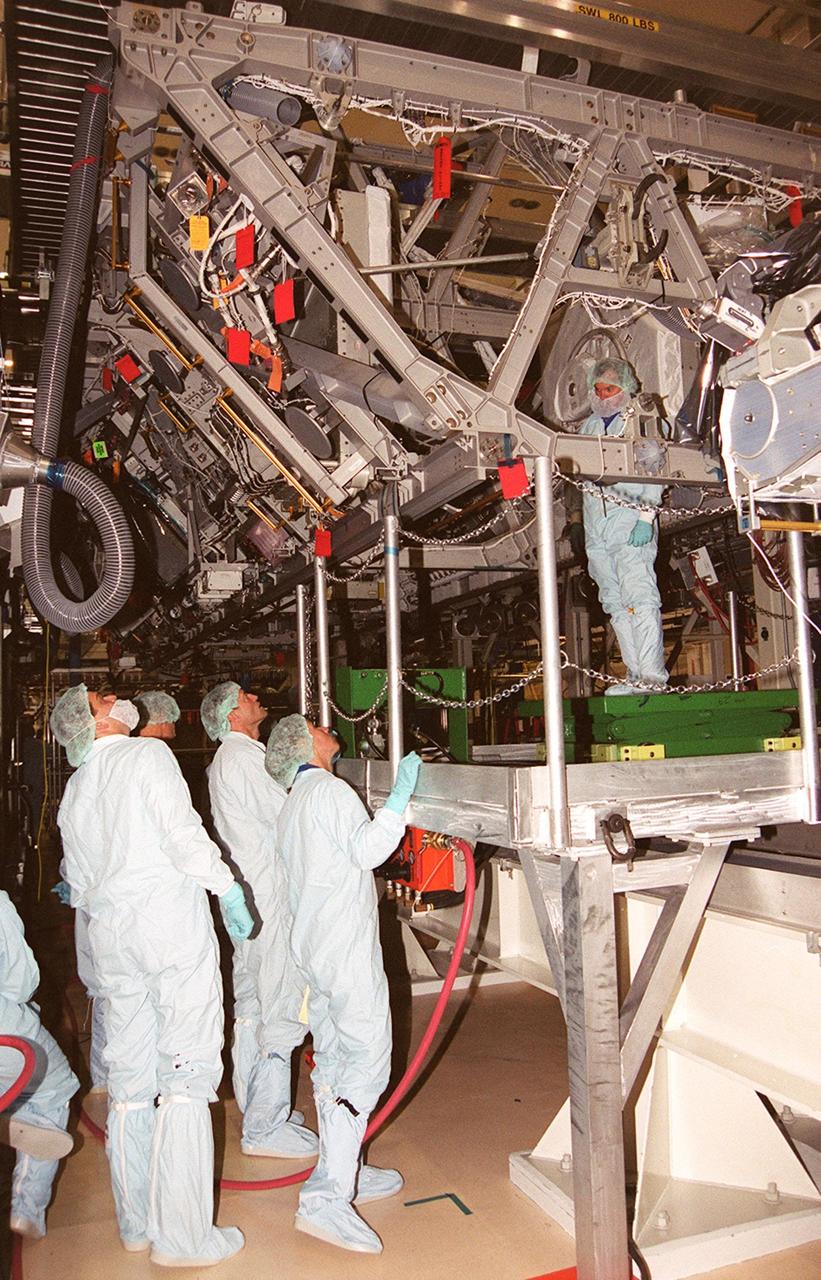
KENNEDY SPACE CENTER, Fla. - From the floor of the Operations and Checkout Bldg,, members of the STS-112 crew look over the Integrated Truss Structure (ITS) S1 above them that will be part of the payload on the mission. The crew comprises Commander Jeffrey S. Ashby, Pilot Pamela A. Melroy and Mission Specialists David A. Wolf, Piers J. Sellers, Sandra H. Magnus and Fyodor Nikolayevich Yurchikhin, a cosmonaut with the Russian Aviation and Space Agency. Mission STS-112 is scheduled for launch in July 2002.
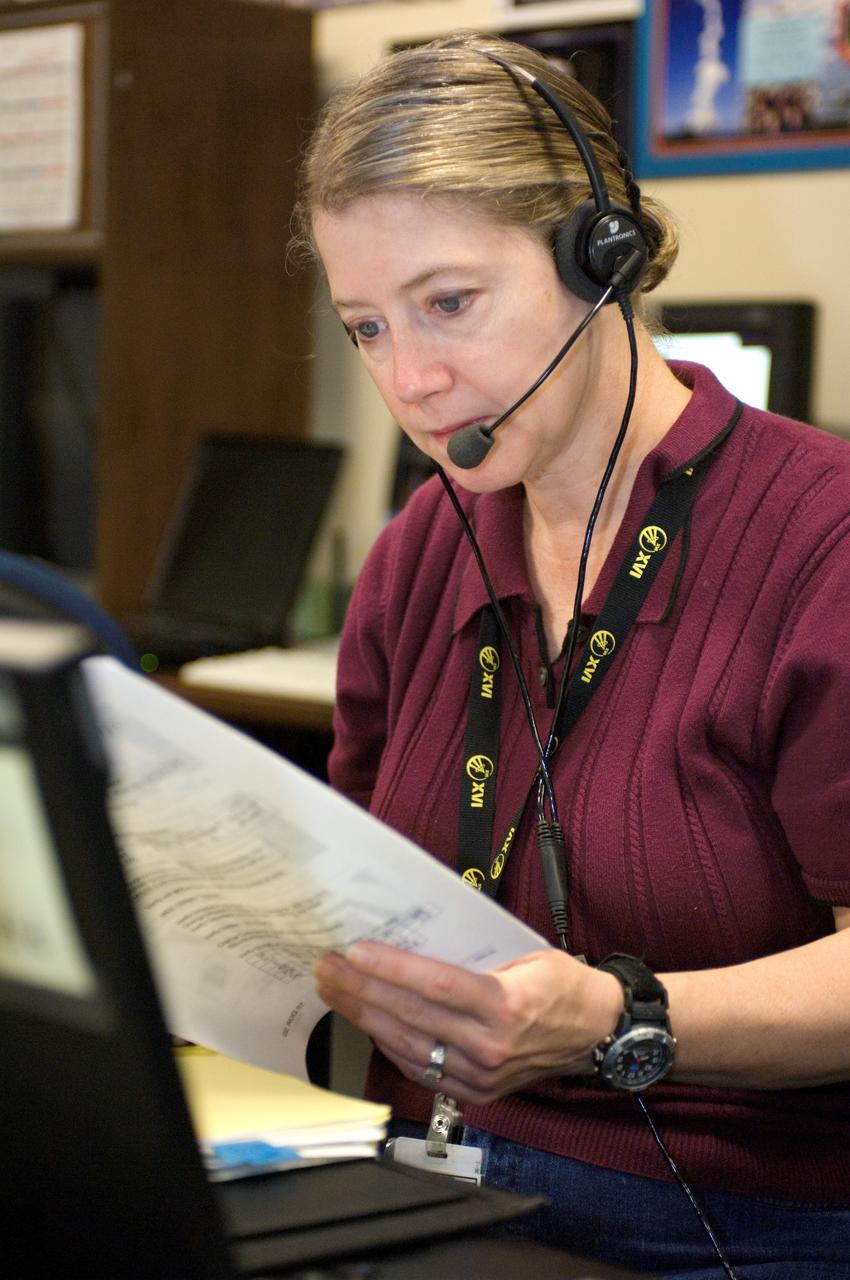
JSC2007-E-41531 (9 Aug. 2007) --- Astronaut Pamela A. Melroy, STS-120 commander, uses the virtual reality lab at Johnson Space Center to train for her duties aboard the space shuttle and space station. This type of computer interface, paired with virtual reality training hardware and software, helps to prepare the entire team for dealing with space station elements.
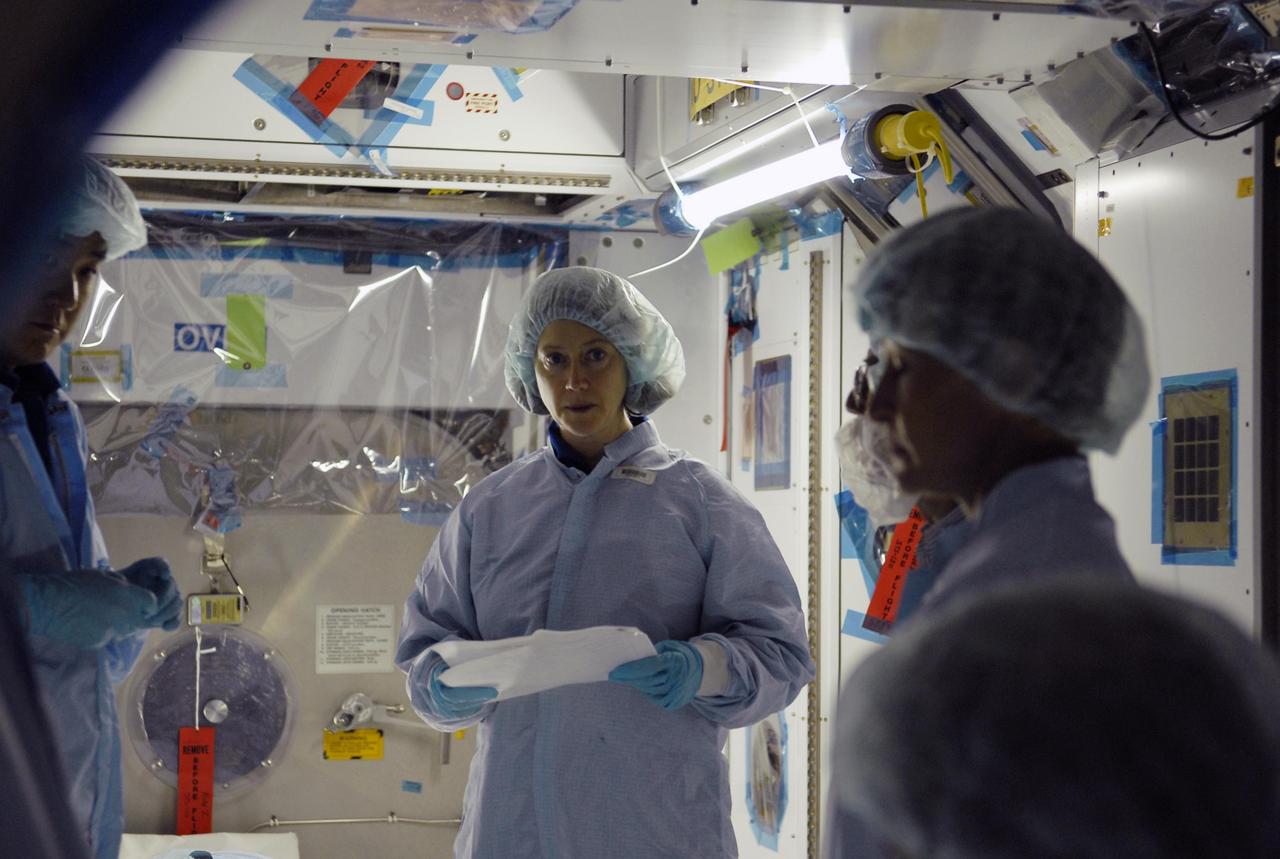
KENNEDY SPACE CENTER, FLA. -- In In the Space Station Processing Facility, STS-120 Commander Pamela Melroy (center) learns more about the Node 2, another element to be added to the International Space Station. She and other crew members are at KSC for equipment familiarization. Node 2 will provide a passageway between three station science experiment facilities: the U.S. Destiny Laboratory, the Kibo Japanese Experiment Module, and the European Columbus Laboratory. STS-120 is targeted for launch on October 20. Photo credit: NASA/Kim Shiflett
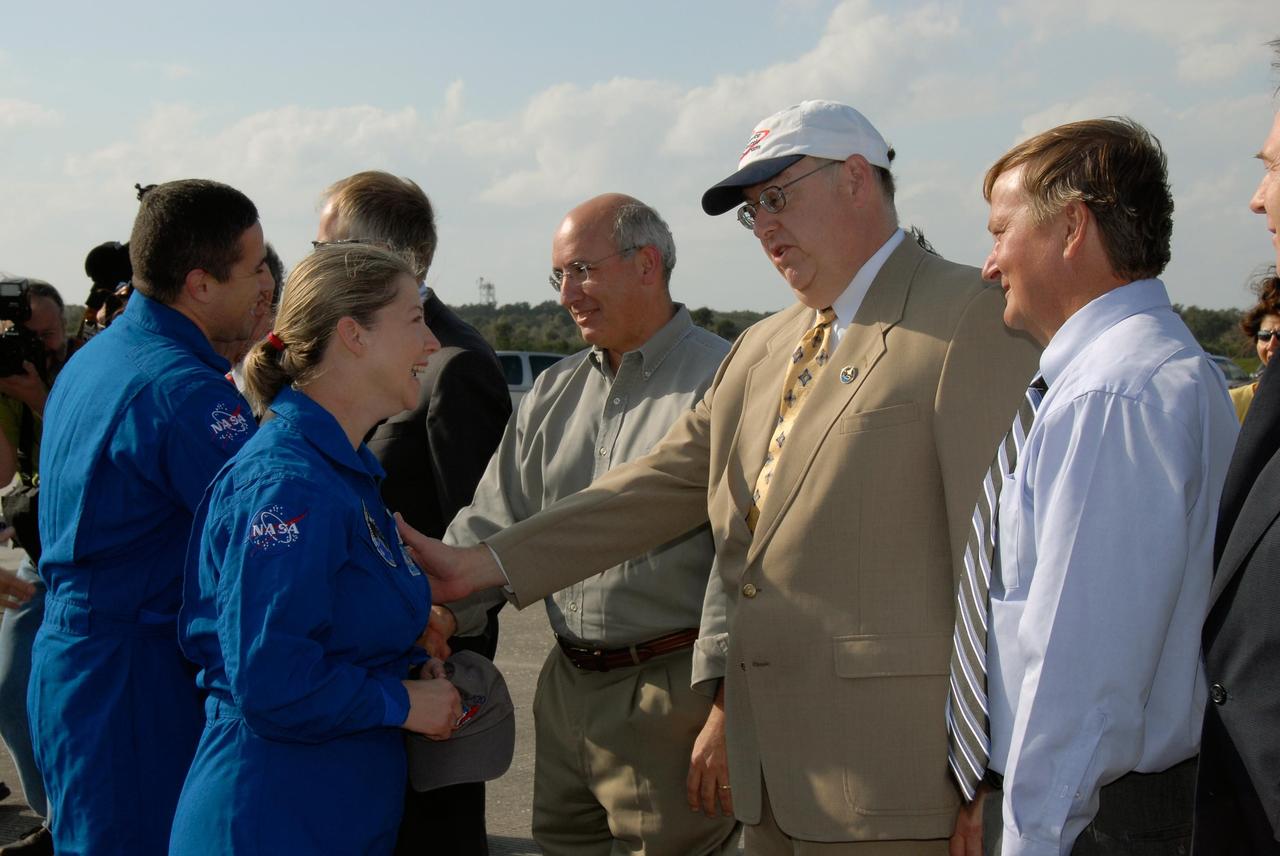
KENNEDY SPACE CENTER, FLA. -- At left, STS-120 Pilot George Zamka and Commander Pamela Melroy are greeted by NASA and Kennedy VIPs after completing their successful mission. Shuttle Program Manager Wayne Hale talks to Melroy. On the right is Shuttle Launch Director Mike Leinbach. Melroy and the Discovery crew completed the 15-day mission STS-120, with an on-time landing at 1:01:16 p.m. Wheel stop was at 1:02:07 p.m. Mission elapsed time was 15 days, 2 hours, 24 minutes and 2 seconds. Mission STS-120 continued the construction of the station with the installation of the Harmony Node 2 module and the relocation of the P6 truss. Photo credit: NASA/Kim Shiflett
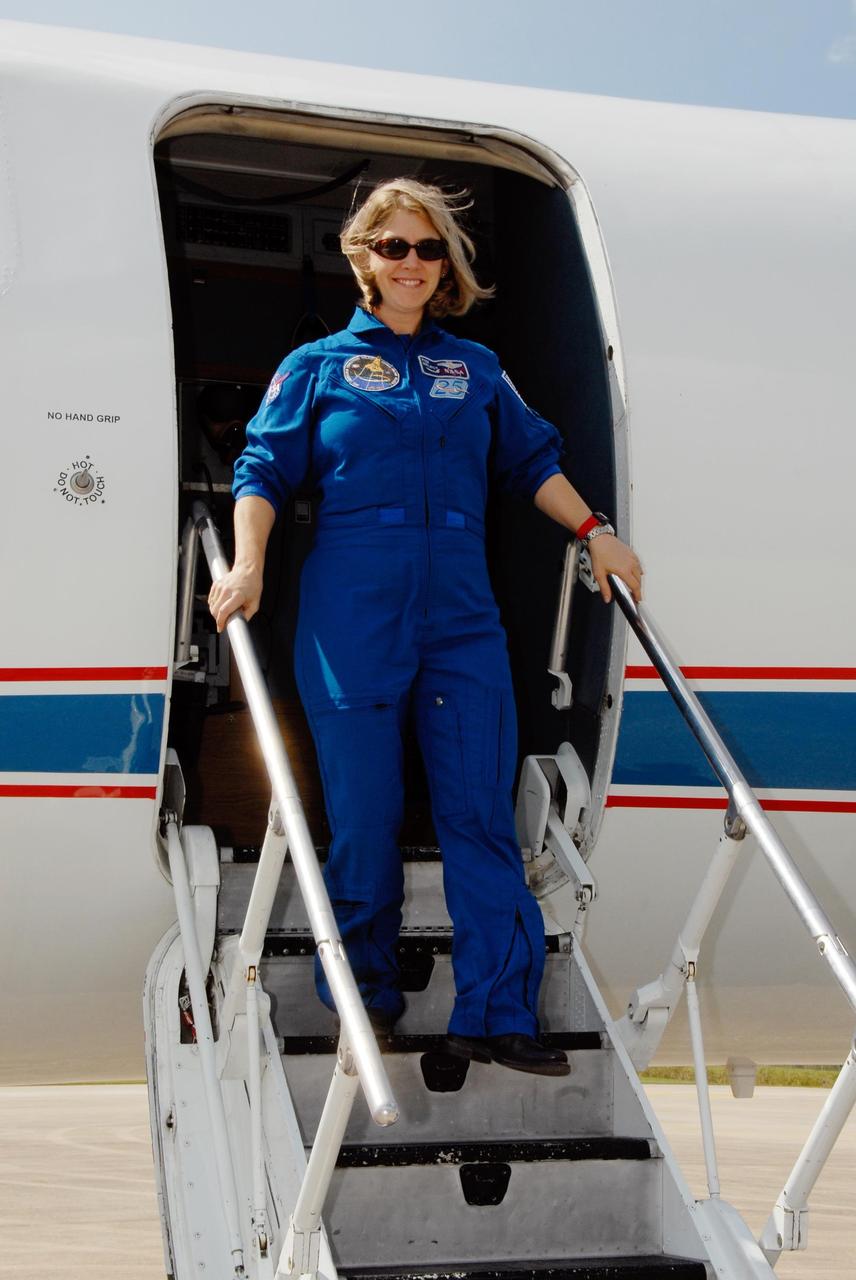
KENNEDY SPACE CENTER, FLA. -- STS-120 Commander Pamela Melroy exits the Shuttle Training Aircraft after arrival at NASA's Kennedy Space Center. Melroy will be making her third shuttle flight, the second woman to command a shuttle mission. The crew has returned to Kennedy to prepare for launch aboard space shuttle Discovery at 11:38 a.m. EDT on Oct. 23. The mission will be the 23rd shuttle flight to the International Space Station, delivering the Italian-built U.S. Node 2, called Harmony. The 14-day mission includes five spacewalks -- four by shuttle crew members and one by the station’s Expedition 16 crew -- to install Harmony and move the P6 solar arrays to their permanent position and deploy them. Discovery is expected to complete its mission and return home at 4:47 a.m. EST on Nov. 6. Photo credit: NASA/Kim Shiflett
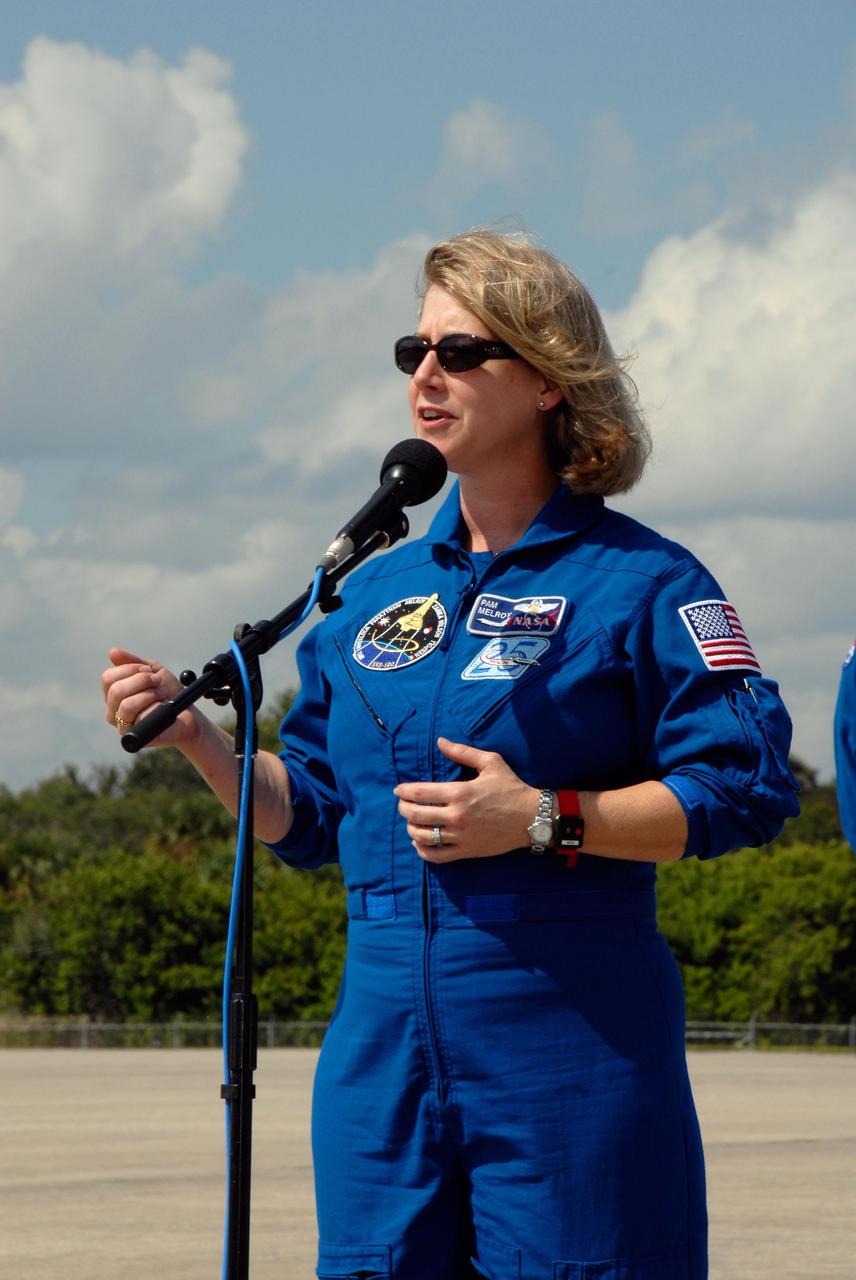
KENNEDY SPACE CENTER, FLA. -- At the Shuttle Landing Facility of NASA's Kennedy Space Center, STS-120 Commander Pamela Melroy addresses the spectators who welcomed the crew's arrival. Melroy will be making her third shuttle flight, the second woman to command a shuttle mission. The crew has returned to Kennedy to prepare for launch aboard space shuttle Discovery at 11:38 a.m. EDT on Oct. 23. The mission will be the 23rd shuttle flight to the International Space Station, delivering the Italian-built U.S. Node 2, called Harmony. The 14-day mission includes five spacewalks -- four by shuttle crew members and one by the station’s Expedition 16 crew -- to install Harmony and move the P6 solar arrays to their permanent position and deploy them. Discovery is expected to complete its mission and return home at 4:47 a.m. EST on Nov. 6. Photo credit: NASA/Kim Shiflett
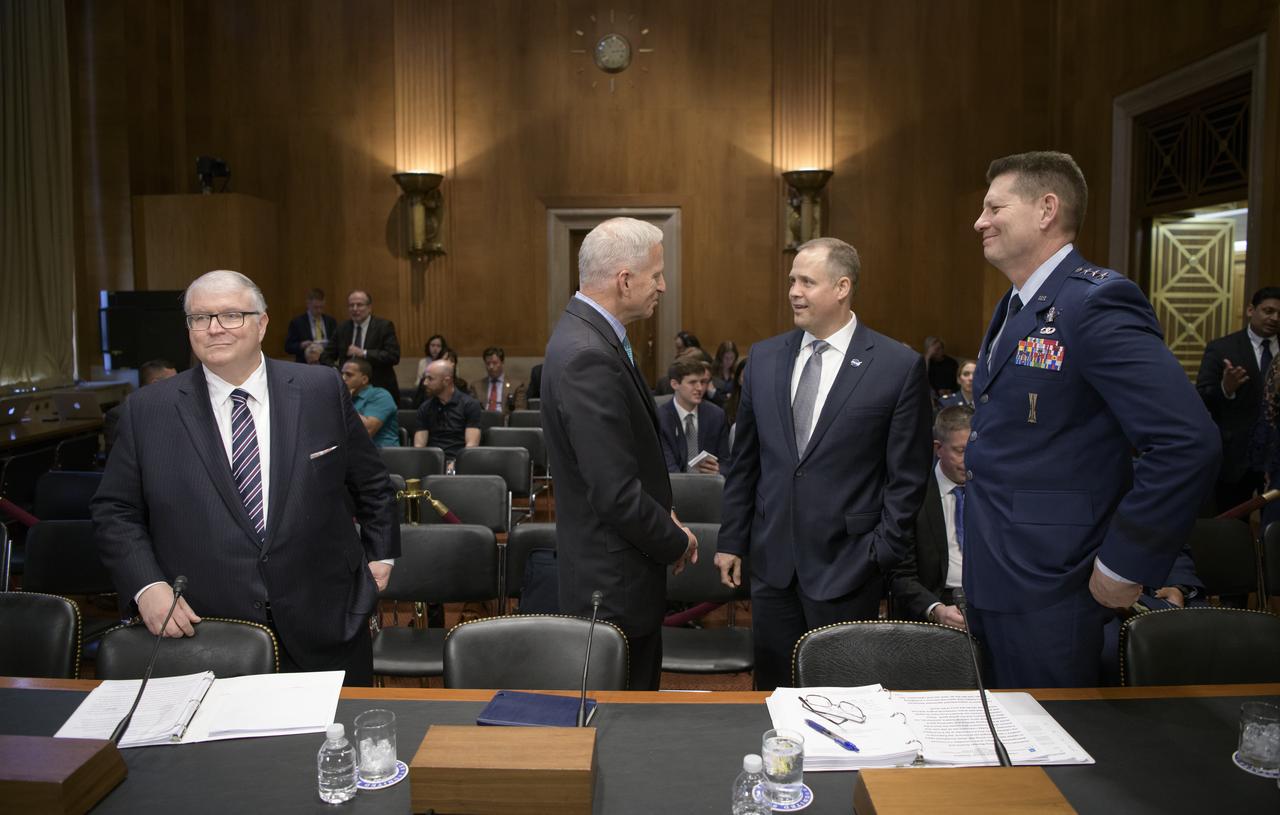
Kevin O’Connell, Director, Office of Space Commerce, Department of Commerce, left, Robert Cardillo, Former Director, National Geospatial-Intelligence Agency, NASA Administrator Jim Bridenstine, and Lt. Gen. David D. Thompson, Vice Commander, Space Command, United States Air Force, right, gather ahead of testifying along with Col. Pamela A. Melroy, United States Air Force (ret.) (former astronaut), before the Aviation and Space Subcommittee of the Senate Commerce, Science, and Transportation Committee, Tuesday, May 14, 2019, at the Dirksen Senate Office Building in Washington. Photo Credit: (NASA/Bill Ingalls)
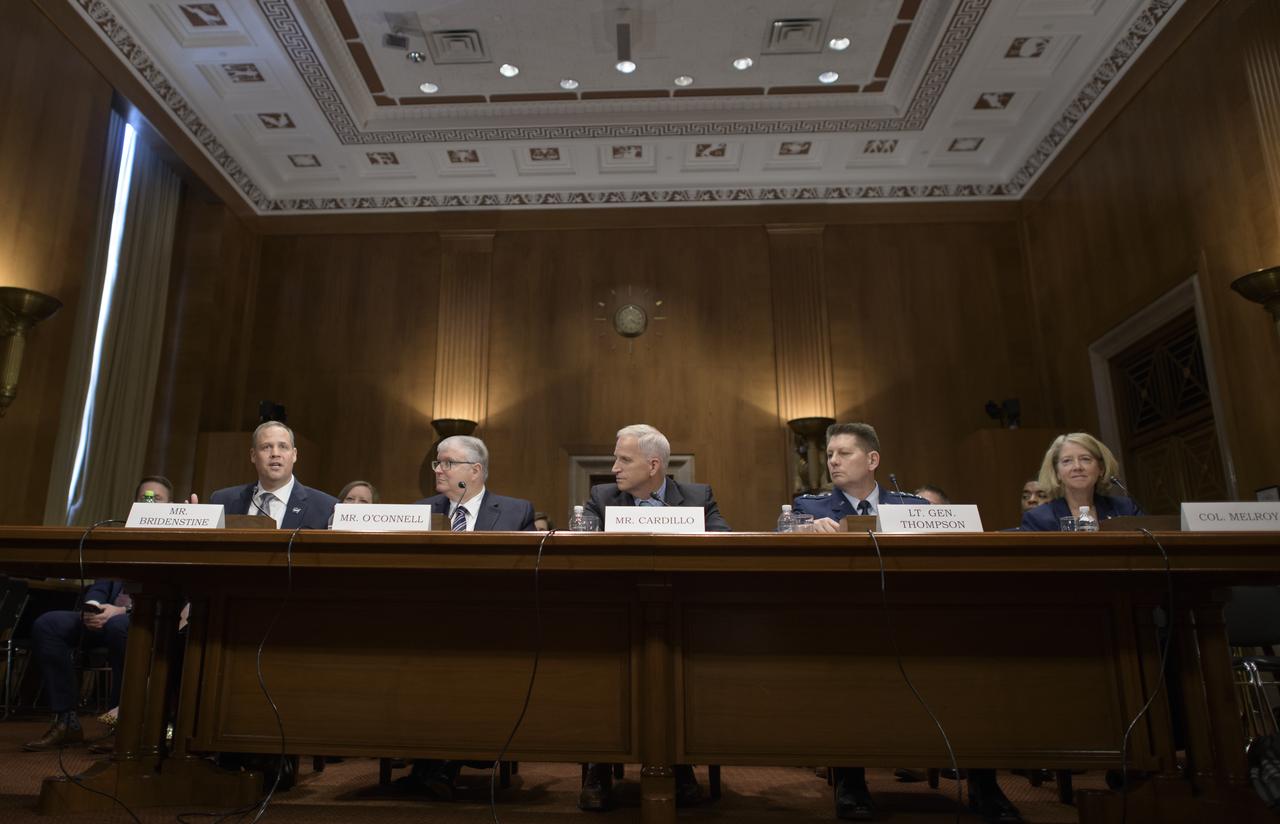
NASA Administrator Jim Bridenstine, left, Kevin O’Connell, Director, Office of Space Commerce, Department of Commerce, Robert Cardillo, Former Director, National Geospatial-Intelligence Agency, Lt. Gen. David D. Thompson, Vice Commander, Space Command, United States Air Force, and Col. Pamela A. Melroy, United States Air Force (ret.) (former astronaut), right, testify before the Senate Aviation and Space Subcommittee during a hearing titled “The Emerging Space Environment: Operational, Technical, and Policy Challenges.”, Tuesday, May 14, 2019, at the Dirksen Senate Office Building in Washington. Photo Credit: (NASA/Bill Ingalls)

KENNEDY SPACE CENTER, FLA. -- Seated in the cockpit of the shuttle training aircraft, or STA, STS-120 Commander Pamela Melroy is eager to begin landing practice on NASA's Shuttle Landing Facility runway. A modified Grumman American Aviation-built Gulf Stream II jet, the STA simulates an orbiter's cockpit, motion and visual cues and handling qualities. In flight, the STA duplicates the orbiter's atmospheric descent trajectory from approximately 35,000 feet altitude to landing on a runway. Melroy and other crew members are at Kennedy Space Center to take part in the terminal countdown demonstration test, which also includes a simulated launch countdown. Mission STS-120 is targeted for Oct. 23. Photo credit: NASA/Kim Shiflett
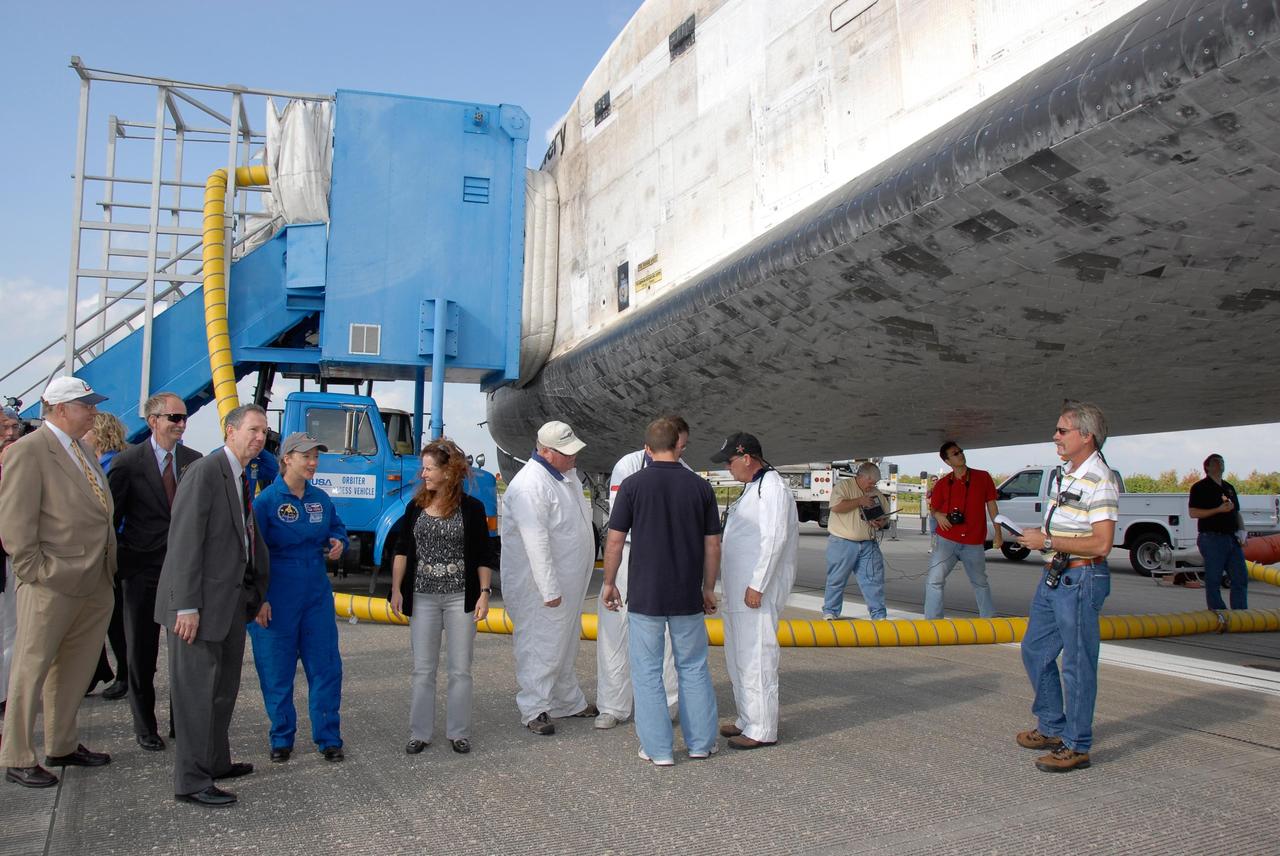
KENNEDY SPACE CENTER, FLA. -- At center, STS-120 Commander Pamela Melroy begins a checkout of space shuttle Discovery. With her are, from left, Shuttle Program Manager Wayne Hale, Associate Administrator for NASA Space Operations William Gerstenmaier and NASA Administrator Mike Griffin. On the right is Rebecca Griffin, wife of the administrator. Melroy and the Discovery crew completed the 15-day mission STS-120, with an on-time landing at 1:01:16 p.m. Wheel stop was at 1:02:07 p.m. Mission elapsed time was 15 days, 2 hours, 24 minutes and 2 seconds. Mission STS-120 continued the construction of the station with the installation of the Harmony Node 2 module and the relocation of the P6 truss. Photo credit: NASA/Kim Shiflett
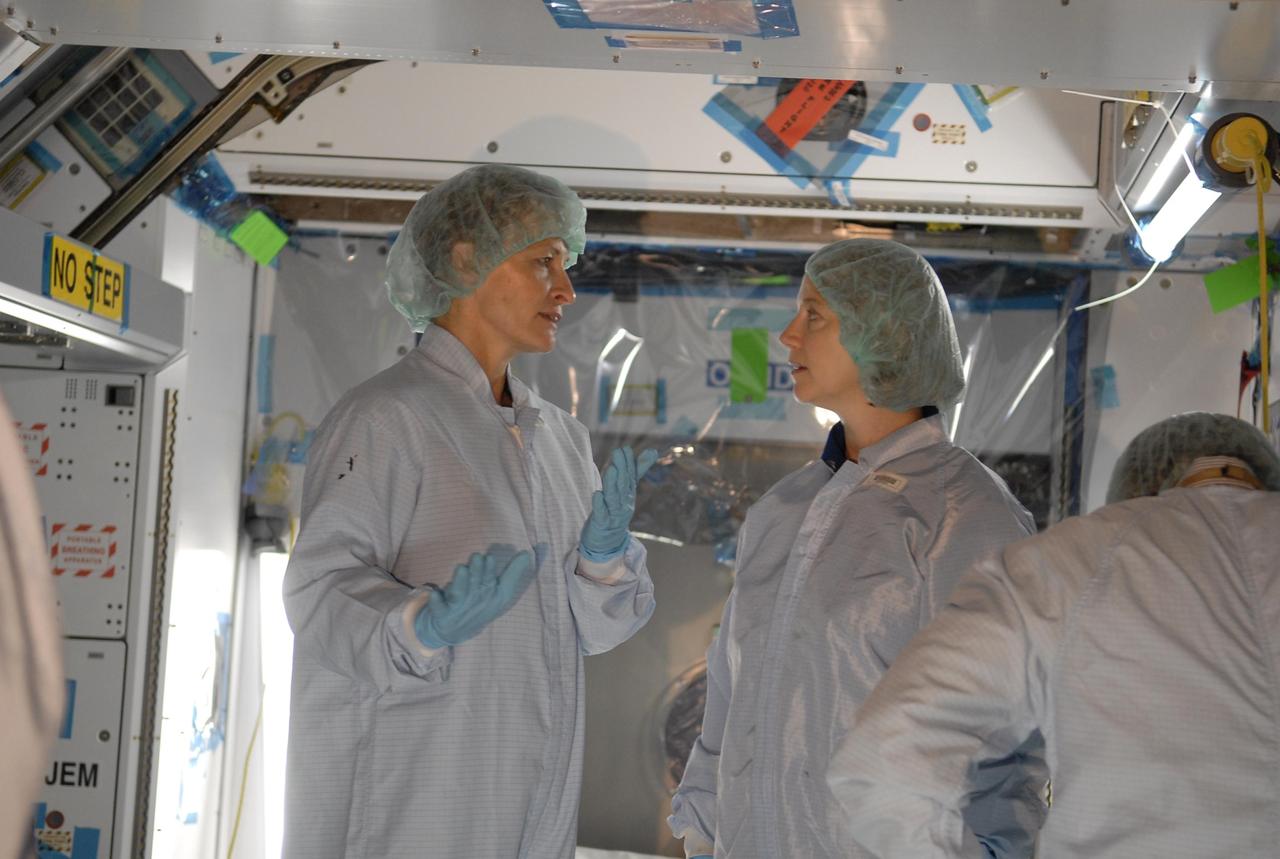
KENNEDY SPACE CENTER, FLA. -- In In the Space Station Processing Facility, STS-120 Commander Pamela Melroy (center) learns more about the Node 2, another element to be added to the International Space Station. With her is astronaut Peggy Whitson, who served on Expedition 5 aboard the space station. During her 6-month stay aboard the space station, Dr. Whitson installed the Mobile Base System, the S1 truss segment, and the P1 truss segment. Melroy and other crew members are at KSC for equipment familiarization. Node 2 will provide a passageway between three station science experiment facilities: the U.S. Destiny Laboratory, the Kibo Japanese Experiment Module, and the European Columbus Laboratory. STS-120 is targeted for launch on October 20. Photo credit: NASA/Kim Shiflett
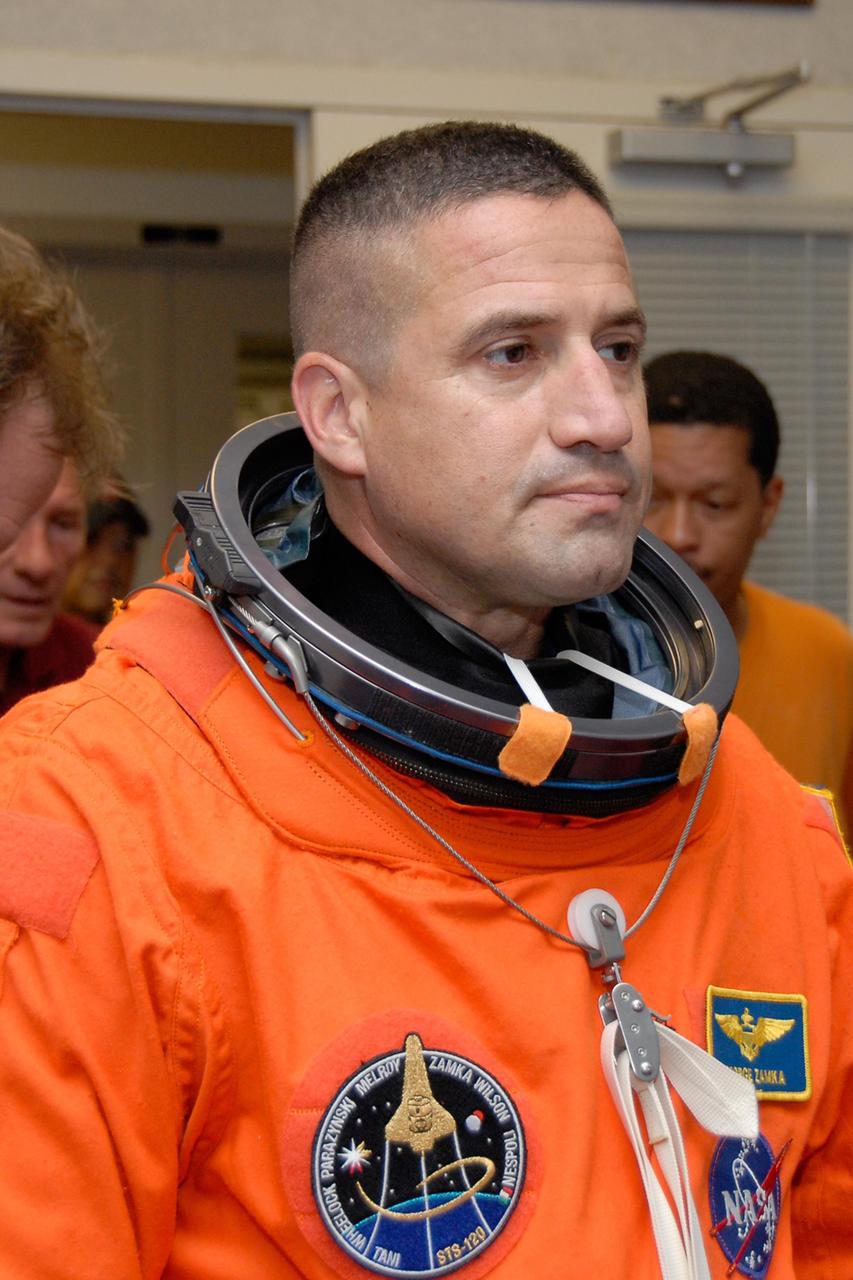
KENNEDY SPACE CENTER, FLA. -- STS-120 Pilot George Zamka dons his launch and entry suit. He will join Commander Pamela Melroy in practicing landing on NASA's Shuttle Landing Facility runway in the shuttle training aircraft, or STA. A modified Grumman American Aviation-built Gulf Stream II jet, the STA simulates an orbiter's cockpit, motion and visual cues and handling qualities. In flight, the STA duplicates the orbiter's atmospheric descent trajectory from approximately 35,000 feet altitude to landing on a runway. Melroy and other crew members are at Kennedy Space Center to take part in the terminal countdown demonstration test, which also includes a simulated launch countdown. Mission STS-120 is targeted for Oct. 23. Photo credit: NASA/Kim Shiflett
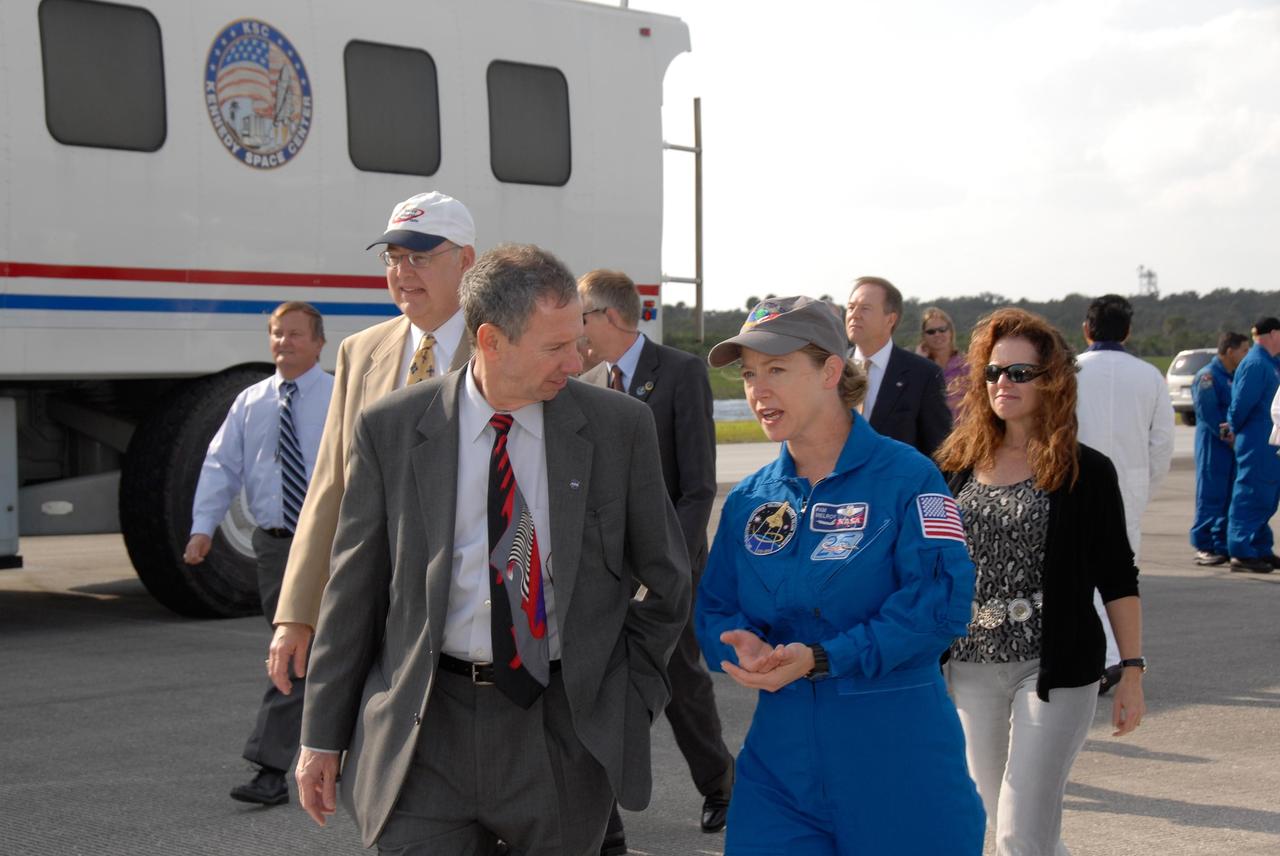
KENNEDY SPACE CENTER, FLA. -- NASA Administrator Mike Griffin talks to STS-120 Commander Pamela Melroy as they walk across the Shuttle Landing Facility at NASA's Kennedy Space Center. On the left are Shuttle Launch Director Mike Leinbach and Shuttle Program Manager Wayne Hale. At right is Rebecca Griffin, wife of the administrator. Melroy and the Discovery crew completed the 15-day mission STS-120, with an on-time landing at 1:01:16 p.m. Wheel stop was at 1:02:07 p.m. Mission elapsed time was 15 days, 2 hours, 24 minutes and 2 seconds. Mission STS-120 continued the construction of the station with the installation of the Harmony Node 2 module and the relocation of the P6 truss. Photo credit: NASA/Kim Shiflett
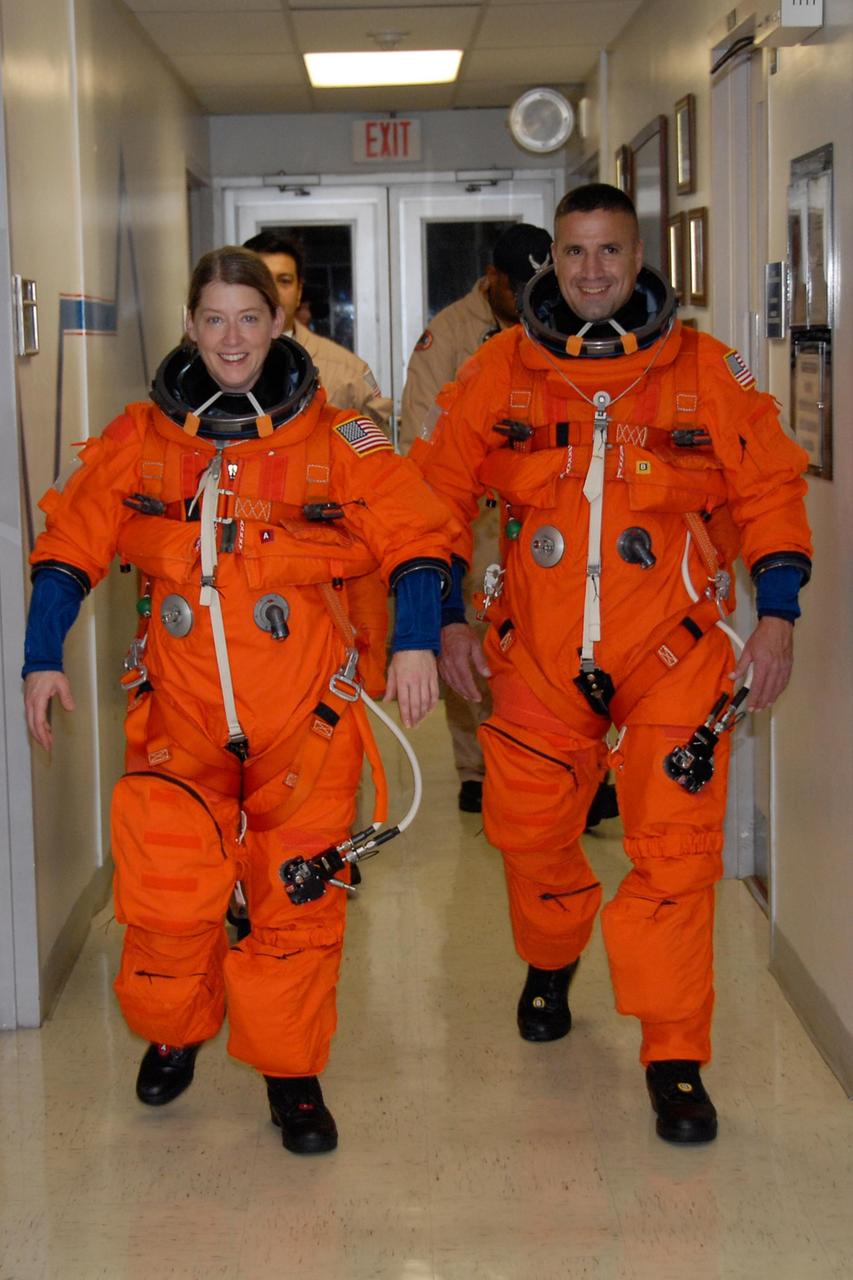
KENNEDY SPACE CENTER, FLA. -- STS-120 Commander Pamela Melroy and Pilot George Zamka are suited in their orange launch and entry suits and on their way to NASA's Shuttle Landing Facility to practice landing in the shuttle training aircraft, or STA. A modified Grumman American Aviation-built Gulf Stream II jet, the STA simulates an orbiter's cockpit, motion and visual cues and handling qualities. In flight, the STA duplicates the orbiter's atmospheric descent trajectory from approximately 35,000 feet altitude to landing on a runway. Melroy and other crew members are at Kennedy Space Center to take part in the terminal countdown demonstration test, which also includes a simulated launch countdown. Mission STS-120 is targeted for Oct. 23. Photo credit: NASA/Kim Shiflett
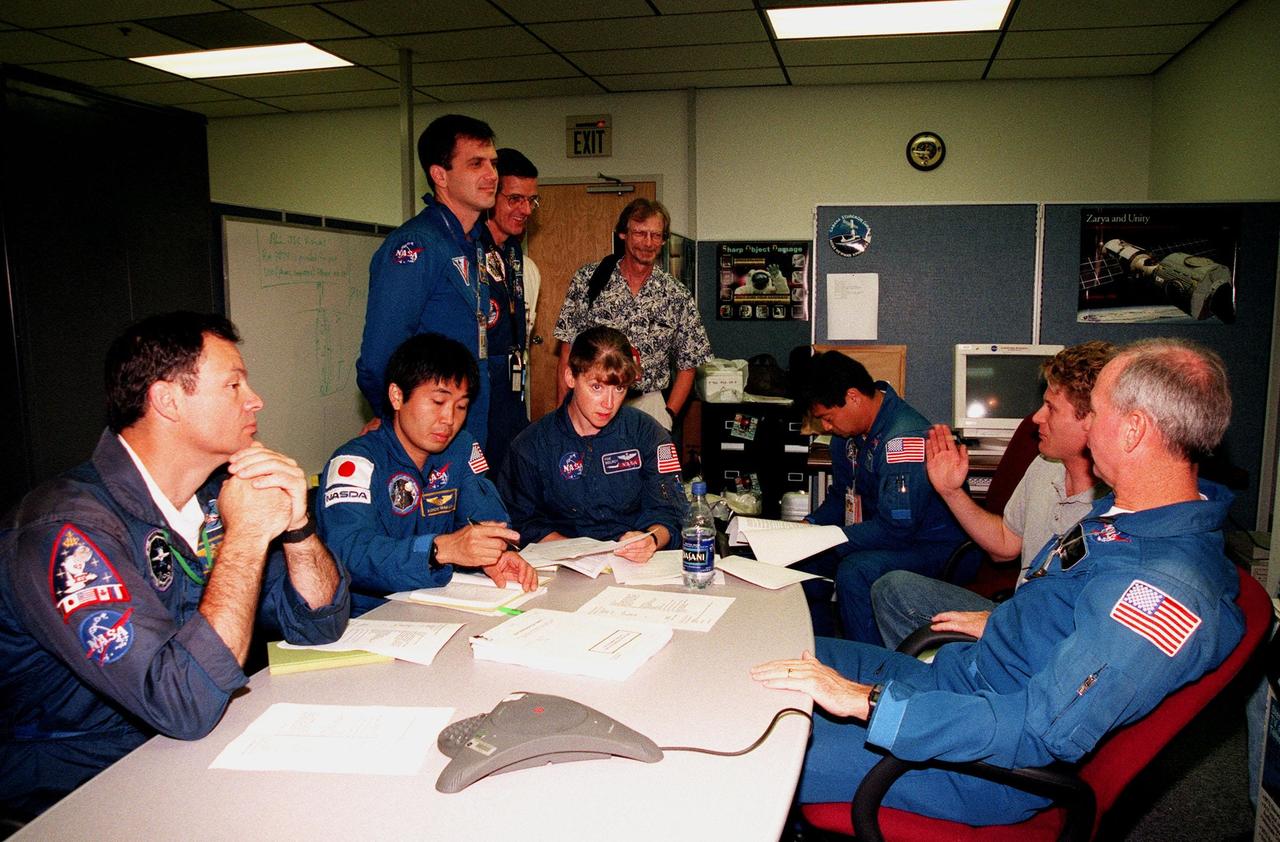
STS-92 crew members discuss results of a Leak Seal Kit Fit Check on the Pressurized Mating Adapter -3, part of their mission payload, with JSC and Boeing representatives. From left are Mission Specialists Michael E. Lopez-Alegria; Koichi Wakata, who represents the National Space Development Agency of Japan (NASDA); (standing) Peter J.K. "Jeff" Wisoff (Ph.D.) and William Surles "Bill" McArthur Jr.; (seated) Pilot Pamela A. Melroy; Dave Moore (behind Melroy), with Boeing; Mission Specialist Leroy Chiao (Ph.D.); Brian Warkentine, with JSC; and Commander Brian Duffy. The mission payload also includes an integrated truss structure (Z-1 truss). Launch of STS-92 is scheduled for Feb. 24, 2000
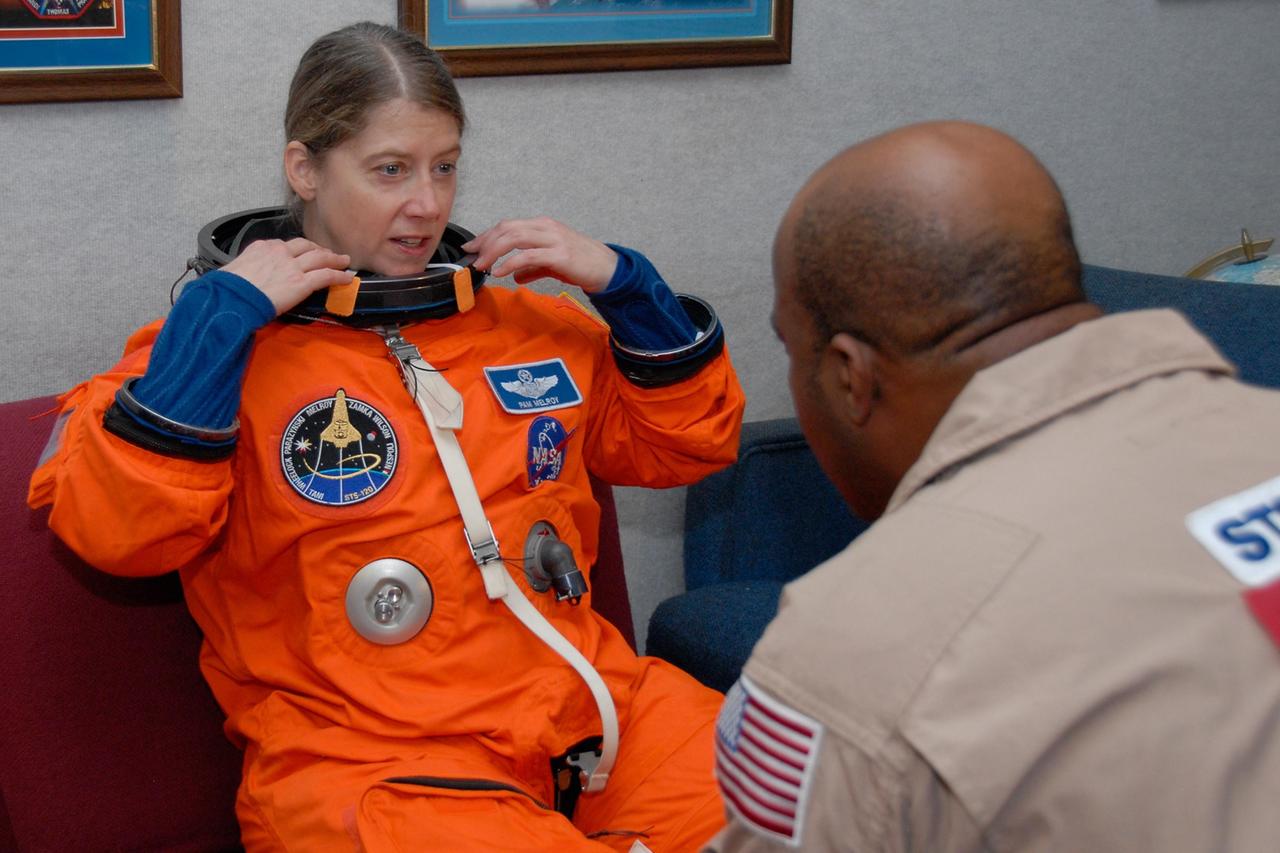
KENNEDY SPACE CENTER, FLA. -- STS-120 Commander Pamela Melroy dons her launch and entry suit. She will be practicing landing on NASA's Shuttle Landing Facility runway in the shuttle training aircraft, or STA. A modified Grumman American Aviation-built Gulf Stream II jet, the STA simulates an orbiter's cockpit, motion and visual cues and handling qualities. In flight, the STA duplicates the orbiter's atmospheric descent trajectory from approximately 35,000 feet altitude to landing on a runway. Melroy and other crew members are at Kennedy Space Center to take part in the terminal countdown demonstration test, which also includes a simulated launch countdown. Mission STS-120 is targeted for Oct. 23. Photo credit: NASA/Kim Shiflett
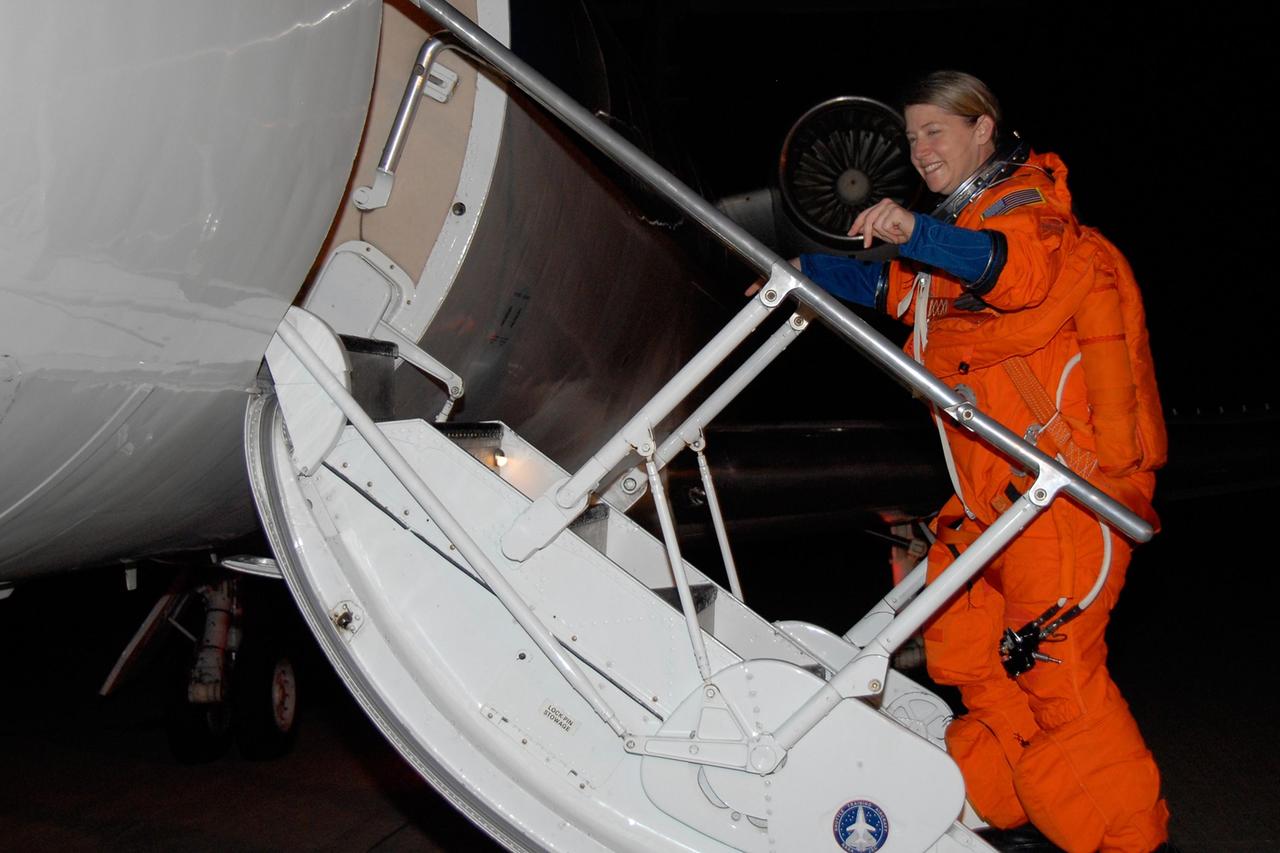
KENNEDY SPACE CENTER, FLA. -- STS-120 Commander Pamela Melroy is eager to enter the shuttle training aircraft, or STA, to practice landing on NASA's Shuttle Landing Facility runway. A modified Grumman American Aviation-built Gulf Stream II jet, the STA simulates an orbiter's cockpit, motion and visual cues and handling qualities. In flight, the STA duplicates the orbiter's atmospheric descent trajectory from approximately 35,000 feet altitude to landing on a runway. Melroy and other crew members are at Kennedy Space Center to take part in the terminal countdown demonstration test, which also includes a simulated launch countdown. Mission STS-120 is targeted for Oct. 23. Photo credit: NASA/Kim Shiflett
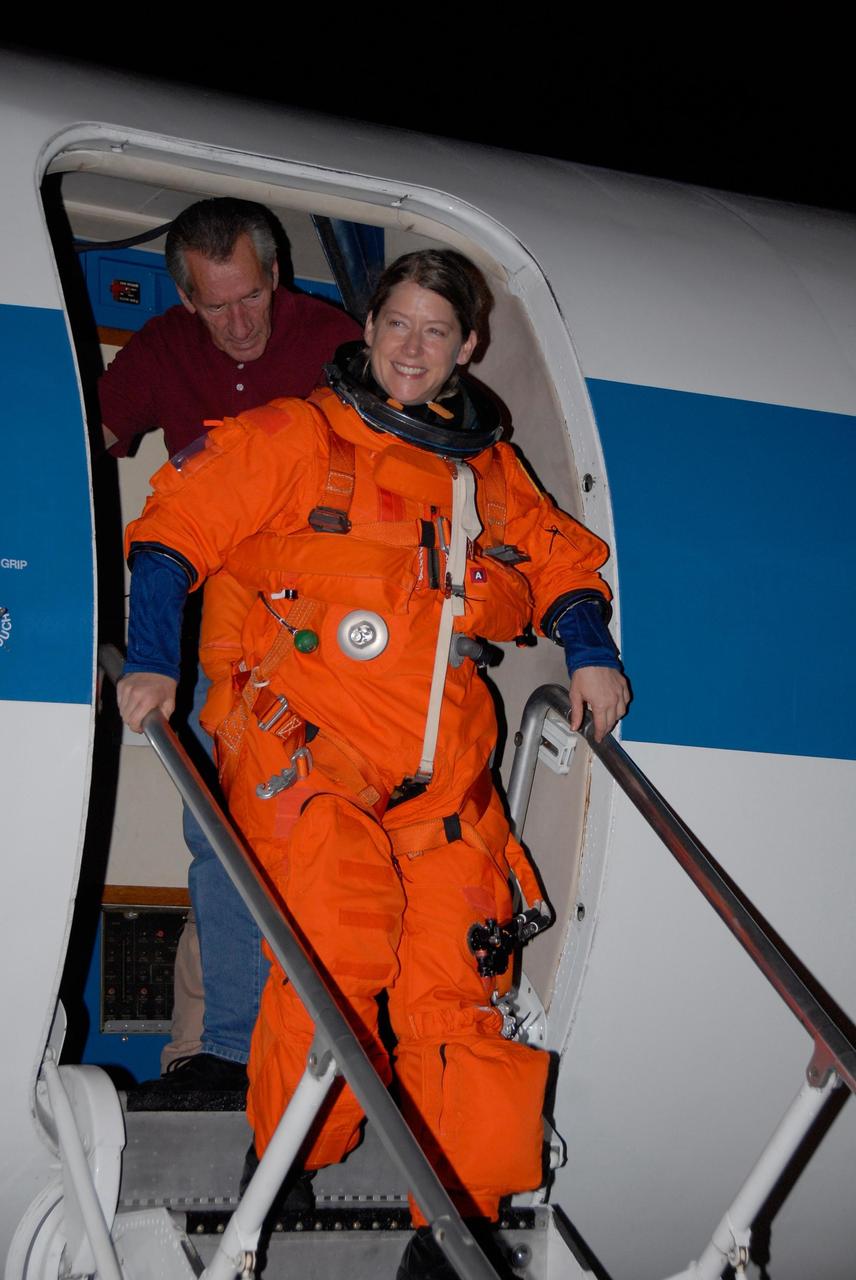
KENNEDY SPACE CENTER, FLA. -- STS-120 Commander Pamela Melroy disembarks from the shuttle training aircraft, or STA, after successful landing practice on NASA's Shuttle Landing Facility runway. A modified Grumman American Aviation-built Gulf Stream II jet, the STA simulates an orbiter's cockpit, motion and visual cues and handling qualities. In flight, the STA duplicates the orbiter's atmospheric descent trajectory from approximately 35,000 feet altitude to landing on a runway. Melroy and other crew members are at Kennedy Space Center to take part in the terminal countdown demonstration test, which also includes a simulated launch countdown. Mission STS-120 is targeted for Oct. 23. Photo credit: NASA/Kim Shiflett
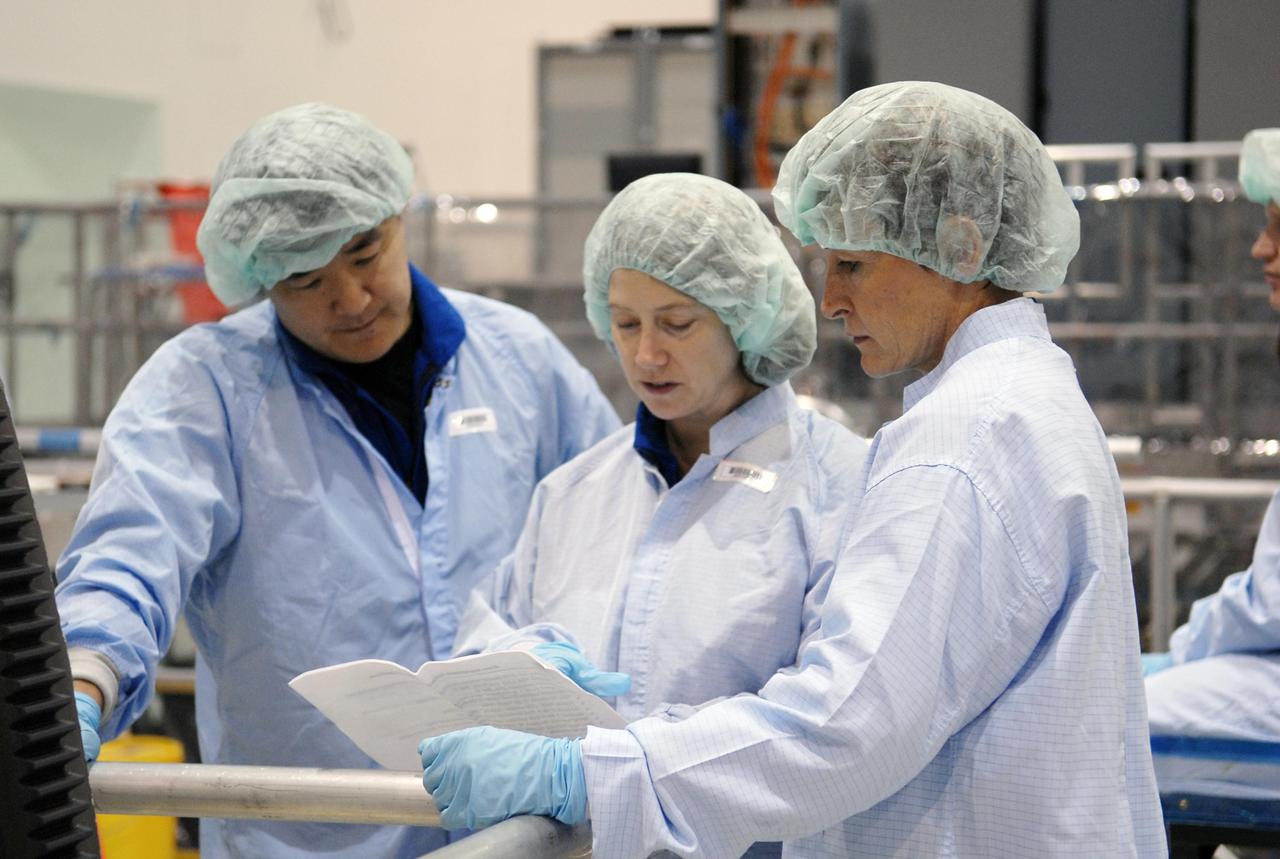
KENNEDY SPACE CENTER, FLA. -- In the Space Station Processing Facility, STS-120 Mission Specialist Daniel Tani (left) and Commander Pamela Melroy learn some details about the Node 2, another element to be added to the International Space Station. With them, at right, is astronaut Peggy Whitson, who served on Expedition 5 aboard the space station. During her 6-month stay aboard the space station, Dr. Whitson installed the Mobile Base System, the S1 truss segment, and the P1 truss segment. Tani, Melroy and other crew members are at KSC for equipment familiarization. Tani will be joining the Expedition 15 crew on the space station as flight engineer. Node 2 will provide a passageway between three station science experiment facilities: the U.S. Destiny Laboratory, the Kibo Japanese Experiment Module, and the European Columbus Laboratory. STS-120 is targeted for launch on October 20. Photo credit: NASA/Kim Shiflett
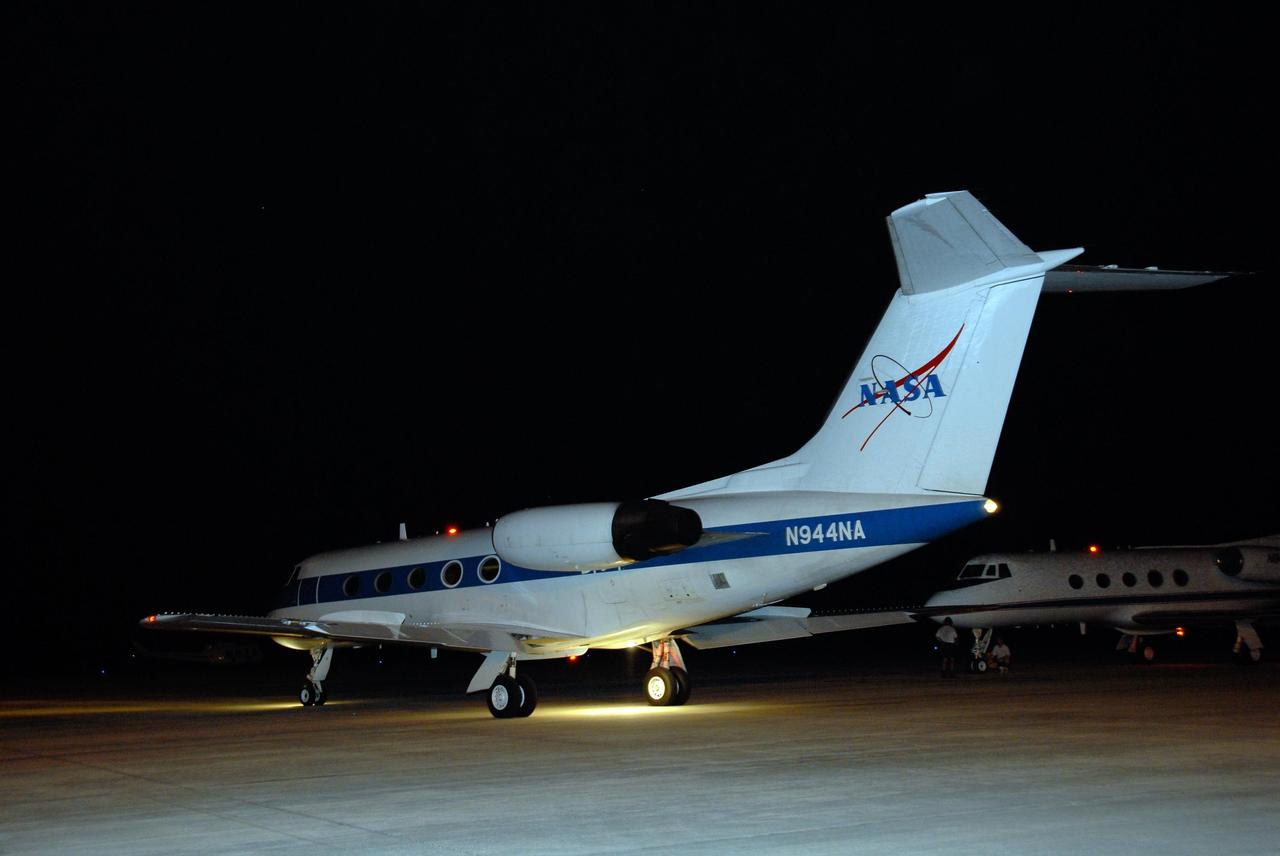
KENNEDY SPACE CENTER, FLA. -- The shuttle training aircraft, or STA, moves toward the runway on NASA's Shuttle Landing Facility. In the cockpit are STS-120 Commander Pamela Melroy and Pilot George Zamka, who will begin landing practice on the runway. A modified Grumman American Aviation-built Gulf Stream II jet, the STA simulates an orbiter's cockpit, motion and visual cues and handling qualities. In flight, the STA duplicates the orbiter's atmospheric descent trajectory from approximately 35,000 feet altitude to landing on a runway. Melroy and other crew members are at Kennedy Space Center to take part in the terminal countdown demonstration test, which also includes a simulated launch countdown. Mission STS-120 is targeted for Oct. 23. Photo credit: NASA/Kim Shiflett
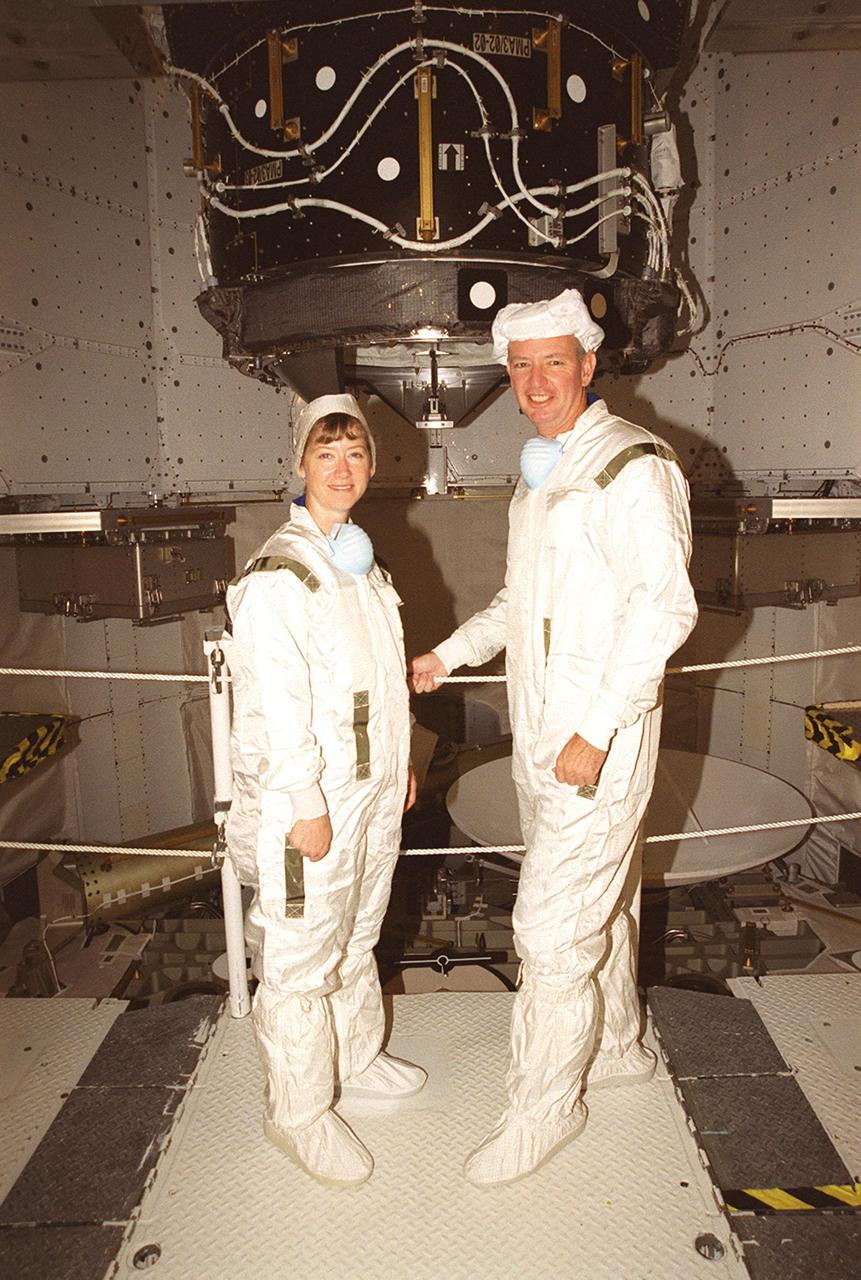
KENNEDY SPACE CENTER, FLA. -- STS-92 Pilot Pamela Ann Melroy (left) and Commander Brian Duffy pose for a photo during payload inspection in Space Shuttle Discovery’s payload bay. Behind them is the Pressurized Mating Adapter. The STS-92 crew has been inspecting the payload in preparation for launch Oct. 5, 2000. The mission is the fifth flight for the construction of the International Space Station. The payload also includes the Integrated Truss Structure Z-1. During the 11-day mission, four extravehicular activities (EVAs), or space walks, are planned
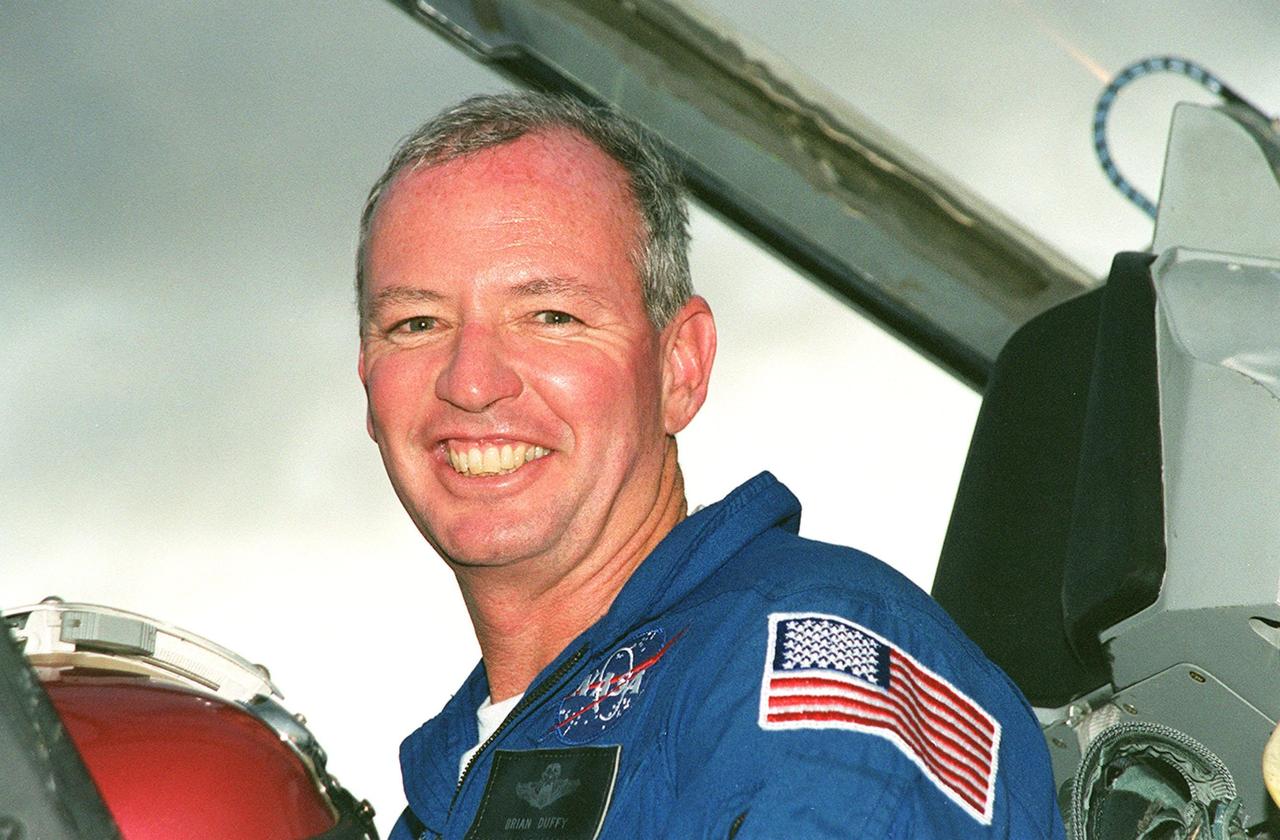
KENNEDY SPACE CENTER, FLA. -- STS-92 Commander Brian Duffy is happy to return to KSC for the launch of Space Shuttle Discovery on Oct. 5. . He and other crew members Pilot Pamela Ann Melroy and Mission Specialists Koichi Wakata of Japan, Leroy Chiao, Peter J.K. “Jeff” Wisoff, Michael E. Lopez-Alegria and William S. McArthur Jr. expressed their eagerness to launch to a waiting group of media at the Shuttle Landing Facility. The mission is the fifth flight for the construction of the International Space Station. The payload includes the Integrated Truss Structure Z-1 and the third Pressurized Mating Adapter. During the 11-day mission, four extravehicular activities (EVAs), or space walks, are planned.
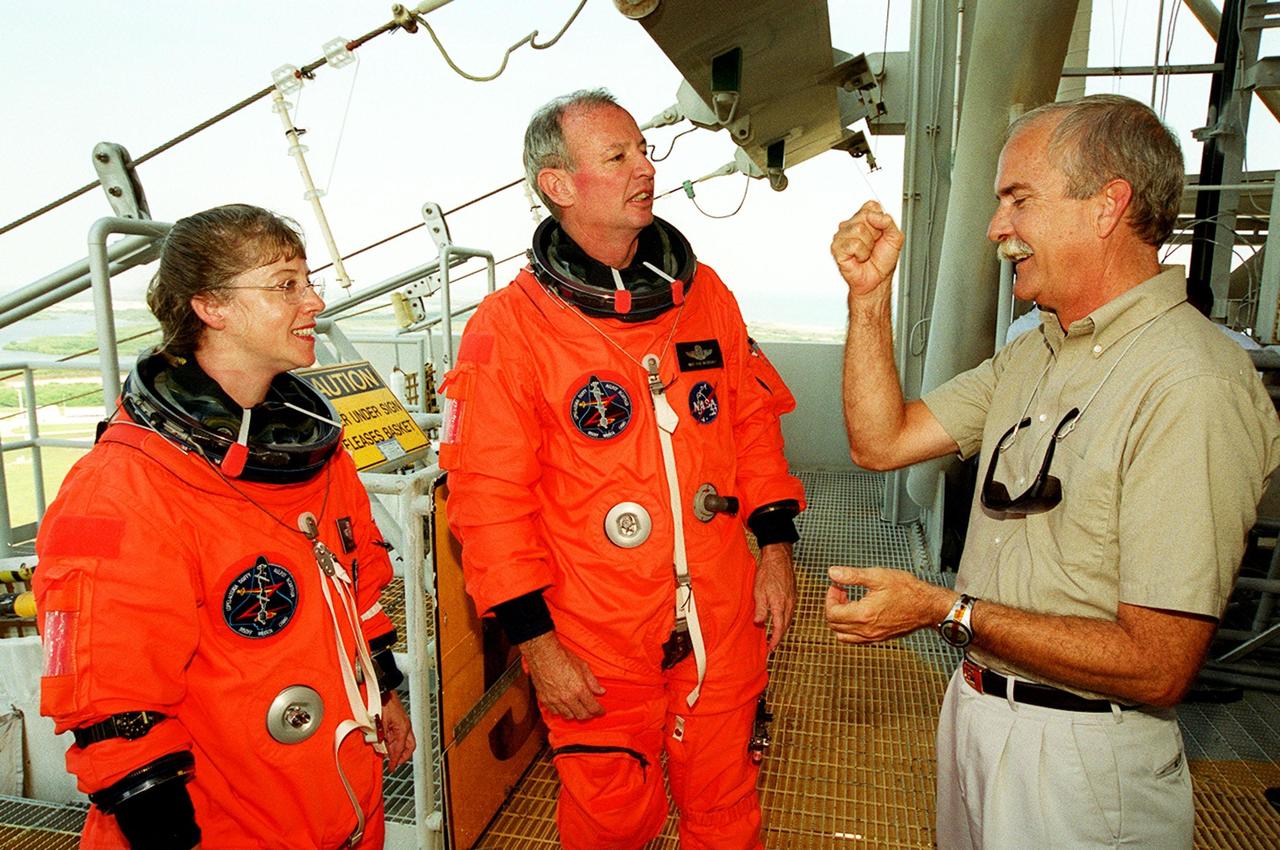
KENNEDY SPACE CENTER, FLA. -- On the 195-foot level of the Fixed Service Structure on Launch Pad 39A, STS-92 Pilot Pamela Ann Melroy and Commander Brian Duffy learn more about the emergency egress training they and the rest of the crew have received. The training is part of Terminal Countdown Demonstration Test activities that also include a simulated countdown. STS-92 is scheduled to launch Oct. 5 at 9:38 p.m. EDT on the fifth flight to the International Space Station. It will carry two elements of the Space Station, the Integrated Truss Structure Z1 and the third Pressurized Mating Adapter. The mission is also the 100th flight in the Shuttle program
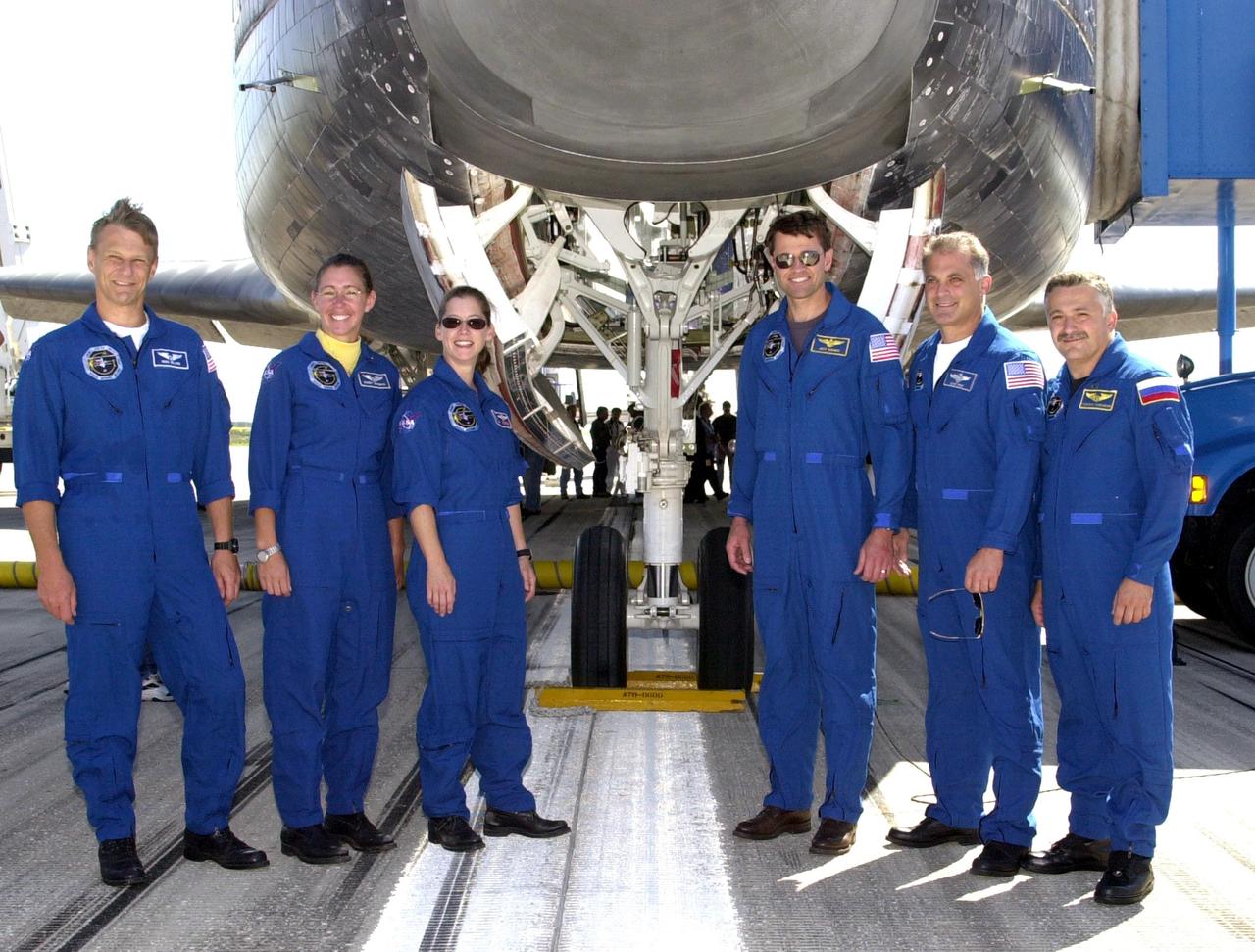
KENNEDY SPACE CENTER, FLA. -- After a flawless landing on runway 33 of the Shuttle Landing Facility, the STS-112 crew poses in front of Atlantis. From left are Mission Specialists Piers Sellers and Sandra Magnus, Pilot Pamela Melroy, Commander Jeffrey Ashby, and Mission Specialists David Wolf and Fyodor Yurchikhin, who represents the Russian Space Agency. Main gear touchdown occurred at 11:43:40 a.m. EDT; nose gear touchdown at 11:43:48 a.m.; and wheel stop at 11:44:35 a.m. Mission elapsed time was 10:19:58:44. STS-112 expanded the size of the Station with the addition of the S1 truss segment.
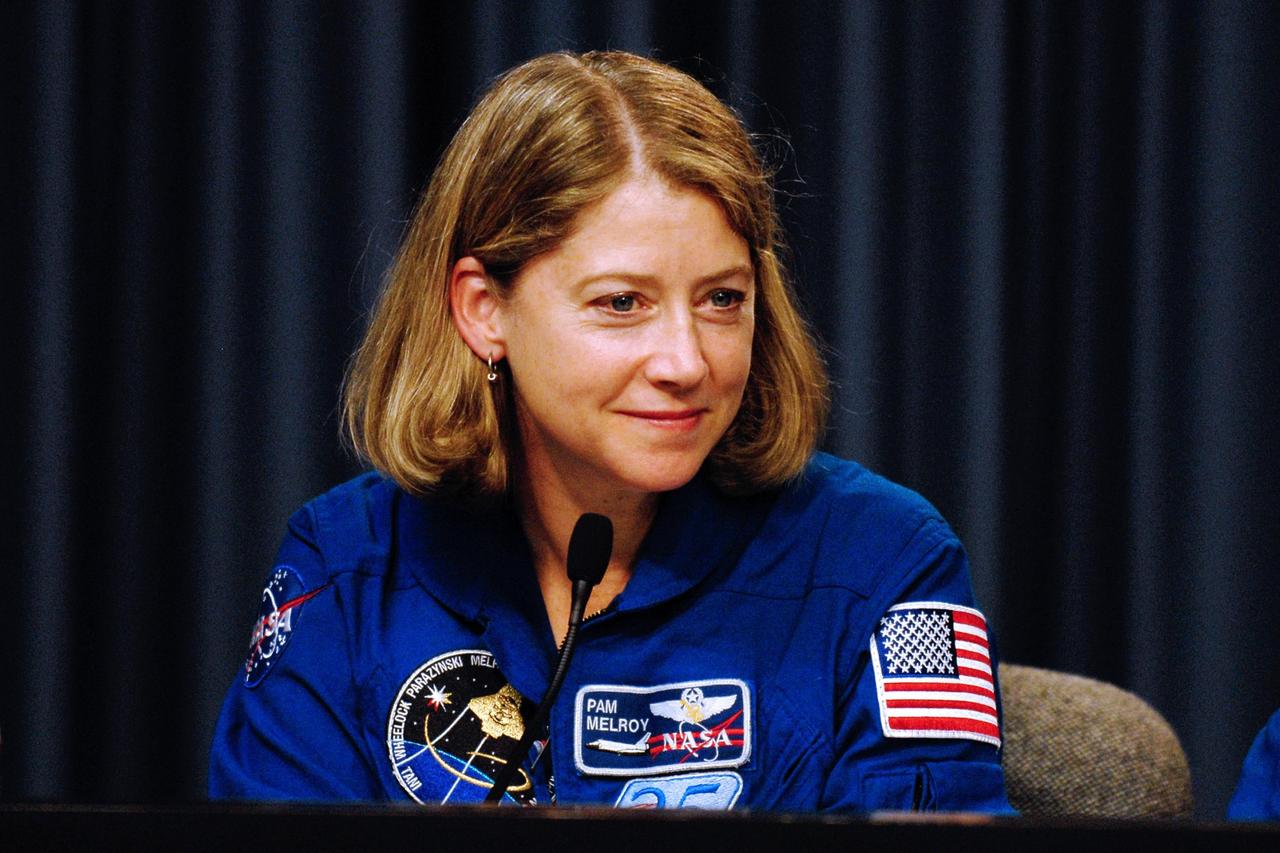
KENNEDY SPACE CENTER, FLA. -- STS-120 Commander Pamela Melroy takes part in a news conference after the crew's successful landing aboard space shuttle Discovery at NASA's Kennedy Space Center. The crew completed a 15-day mission to the International Space Station with a smooth landing on Runway 33. Main gear touchdown was 1:01:16 p.m. Wheel stop was at 1:02:07 p.m. Mission elapsed time was 15 days, 2 hours, 24 minutes and 2 seconds. Mission STS-120 continued the construction of the station with the installation of the Harmony Node 2 module and the relocation of the P6 truss. Photo credit: NASA/Kim Shiflett
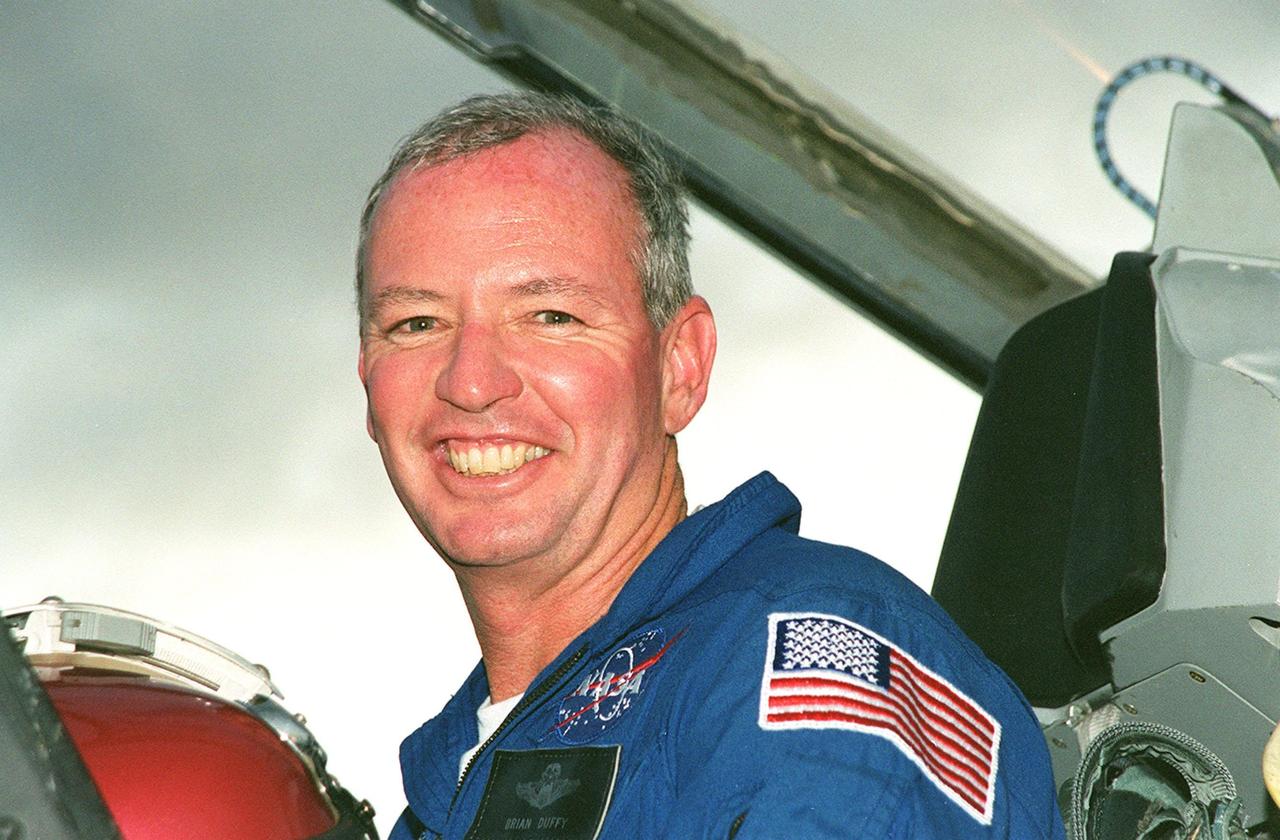
KENNEDY SPACE CENTER, FLA. -- STS-92 Commander Brian Duffy is happy to return to KSC for the launch of Space Shuttle Discovery on Oct. 5. . He and other crew members Pilot Pamela Ann Melroy and Mission Specialists Koichi Wakata of Japan, Leroy Chiao, Peter J.K. “Jeff” Wisoff, Michael E. Lopez-Alegria and William S. McArthur Jr. expressed their eagerness to launch to a waiting group of media at the Shuttle Landing Facility. The mission is the fifth flight for the construction of the International Space Station. The payload includes the Integrated Truss Structure Z-1 and the third Pressurized Mating Adapter. During the 11-day mission, four extravehicular activities (EVAs), or space walks, are planned.
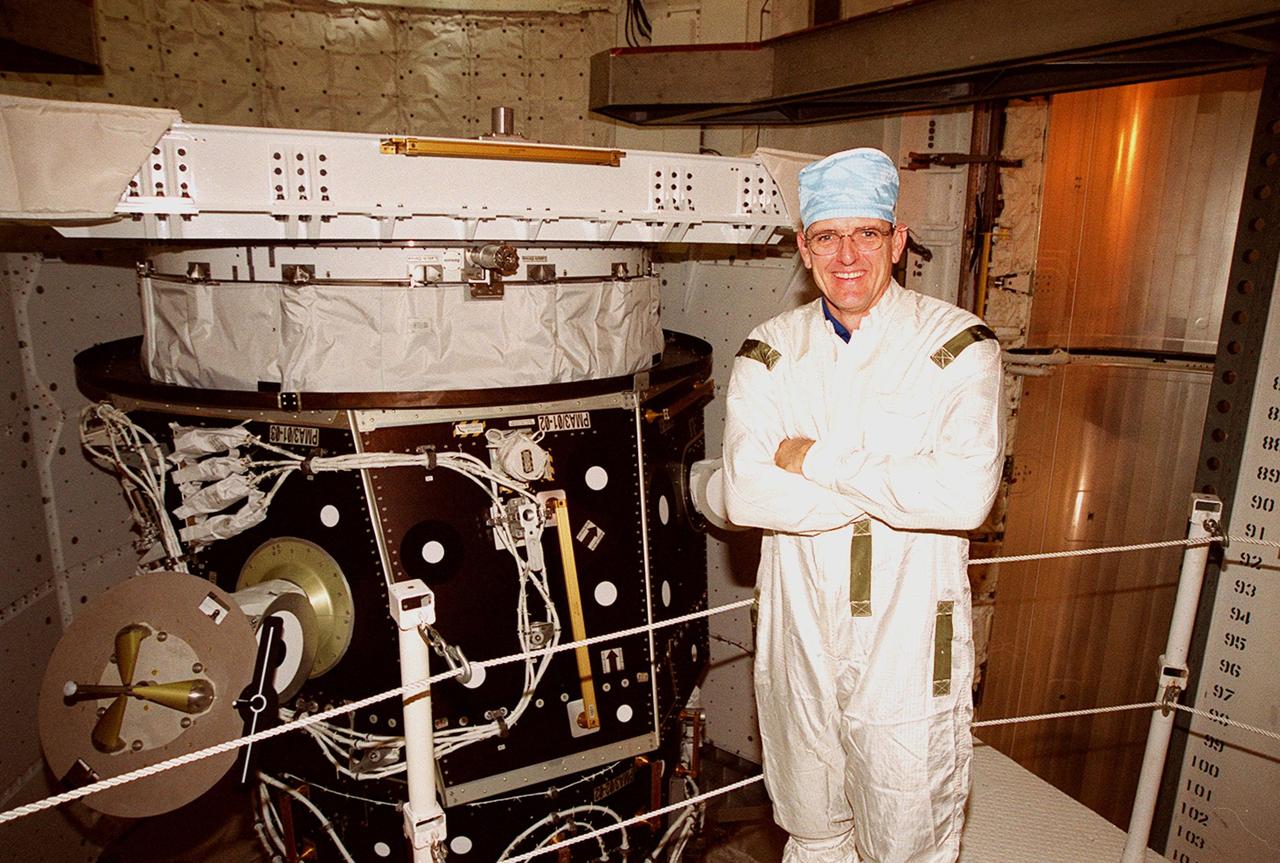
STS-92 Mission Specialist William S. McArthur Jr. smiles for the camera during inspection of the payload (left) in Space Shuttle Discovery’s payload bay. He and other crew members Commander Brian Duffy, Pilot Pamela Ann Melroy and Mission Specialists Koichi Wakata of Japan, Leroy Chiao, Peter J.K. “Jeff” Wisoff and Michael E. Lopez-Alegria are preparing for launch on Oct. 5, 2000. The mission is the fifth flight for the construction of the International Space Station. The payload includes the Integrated Truss Structure Z-1 and the third Pressurized Mating Adapter. During the 11-day mission, four extravehicular activities (EVAs), or space walks, are planned
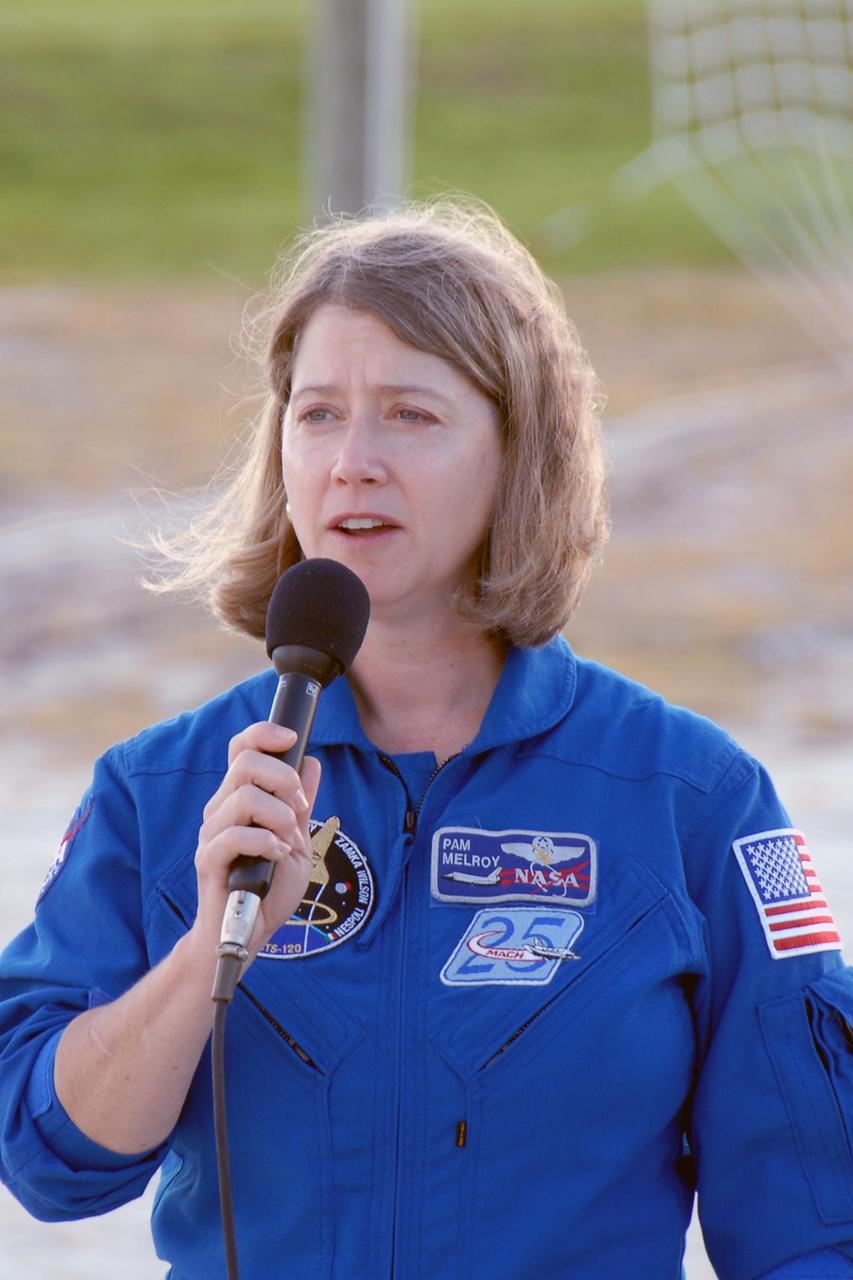
KENNEDY SPACE CENTER, FLA. -- STS-120 Commander Pamela Melroy responds to a question from the media during a press conference at the slidewire basket landing on Launch Pad 39A. The crew is at NASA's Kennedy Space Center to take part in terminal countdown demonstration test activities that include emergency egress procedures and a simulated launch countdown. Mission STS-120, which will carry the Italian-built U.S. Node 2 to the International Space Station, is targeted for launch on Oct. 23. Tani will remain aboard the station and return with the STS-122 crew, targeted to launch Dec. 6. Photo credit: NASA/Kim Shiflett
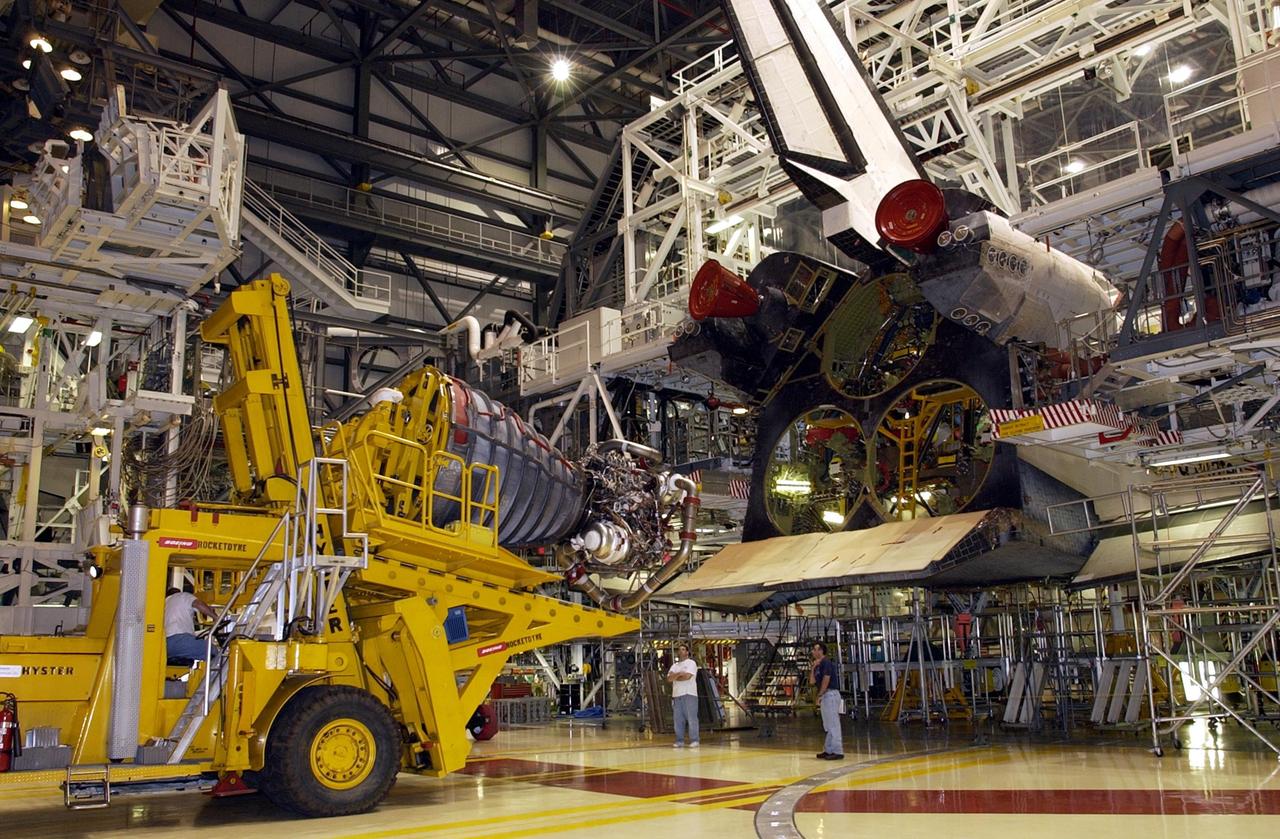
KENNEDY SPACE CENTER, FLA. -- The first Space Shuttle Main Engine (SSME) is installed on Space Shuttle Atlantis following the welding repair of the propulsion system flow liners as preparations to launch mission STS-112 continue. Mission STS-112 is an assembly flight to the International Space Station and is targeted for launch no earlier than Sept. 28, 2002. Members of the STS-112 crew are Commander Jeffrey Ashby; Pilot Pamela Melroy; and Mission Specialists David Wolf, Piers Sellers, Sandra Magnus, and Fyodor Yurchikhin of the Russian Space Agency.
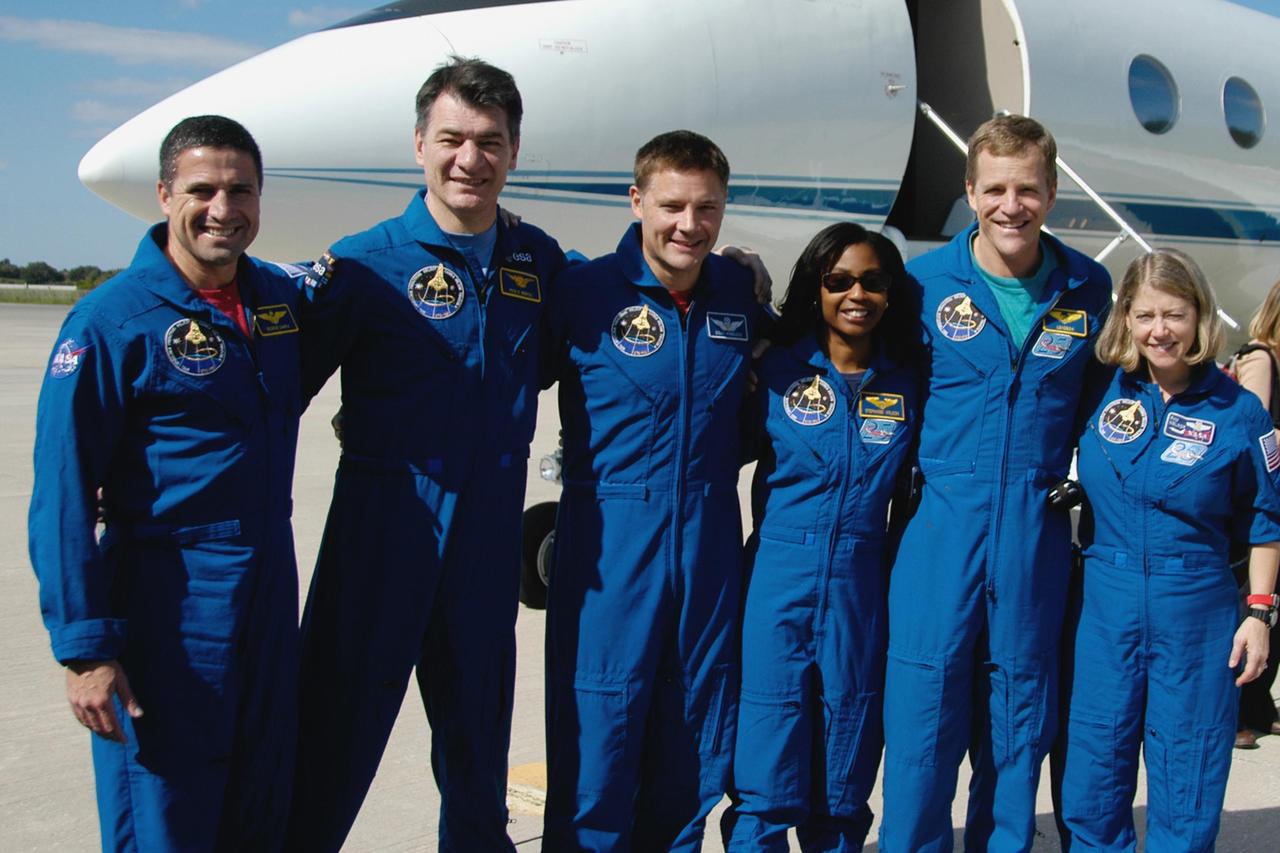
KENNEDY SPACE CENTER, FLA. -- The STS-120 crew members are ready for their return to flight to Houston. From left are Pilot George Zamka, Mission Specialists Paolo Nespoli, Doug Wheelock, Stephanie Wilson and Scott Parazynski, and Commander Pamela Melroy. A welcoming ceremony for the crew is planned at NASA's Hangar 276 on the south end of Ellington Field in Texas. On the 15-day mission, the STS-120 crew continued the construction of the station with the installation of the Harmony Node 2 module and the relocation of the P6 truss. They landed Nov. 7 at NASA's Kennedy Space Center . Photo credit: NASA/George Shelton
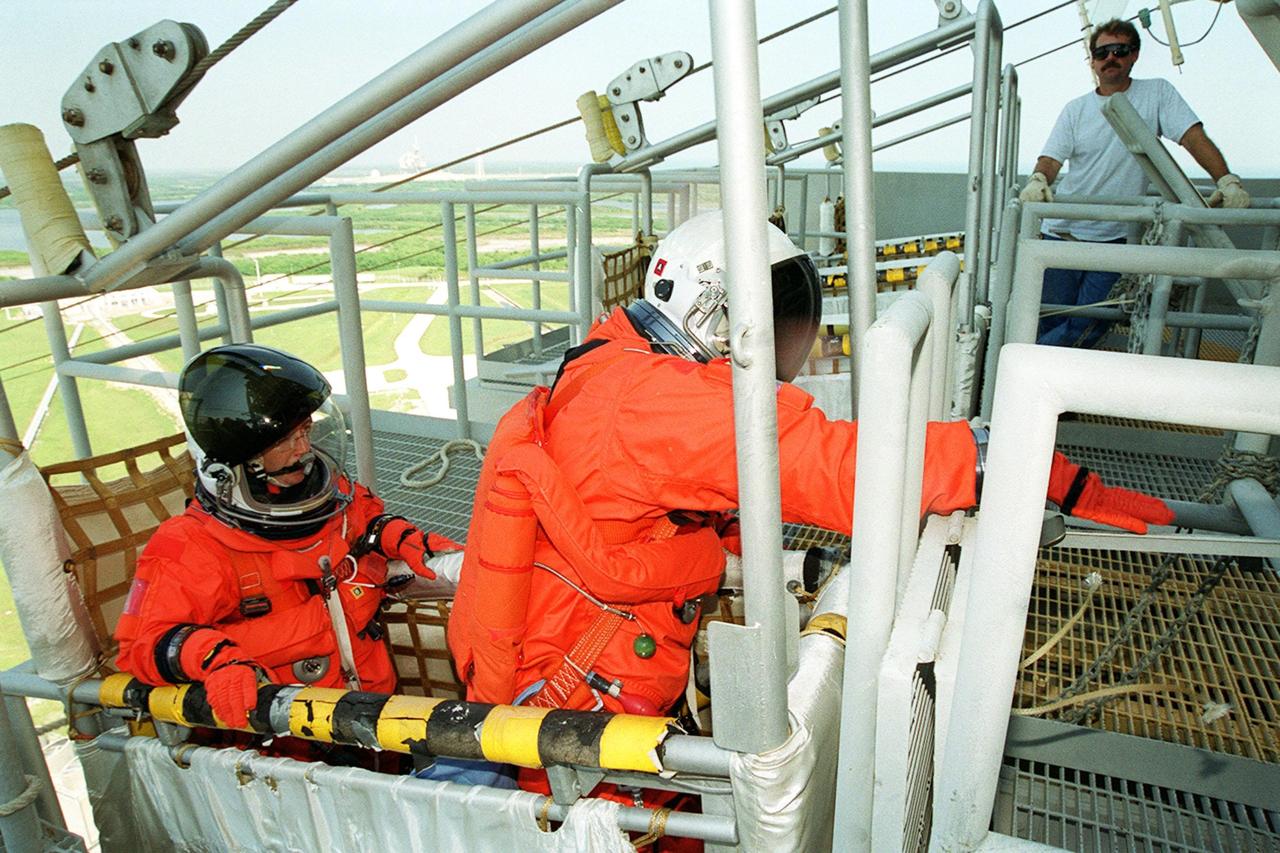
KENNEDY SPACE CENTER, FLA. -- On the 195-foot level of the Fixed Service Structure on Launch Pad 39A, STS-92 Pilot Pamela Ann Melroy (left) sits in the slidewire basket while Commander Brian Duffy reaches for the lever to release the basket. They and other crew members are taking part in emergency egress training, one of the Terminal Countdown Demonstration Test activities that also include a simulated countdown. STS-92 is scheduled to launch Oct. 5 at 9:38 p.m. EDT on the fifth flight to the International Space Station. It will carry two elements of the Space Station, the Integrated Truss Structure Z1 and the third Pressurized Mating Adapter. The mission is also the 100th flight in the Shuttle program
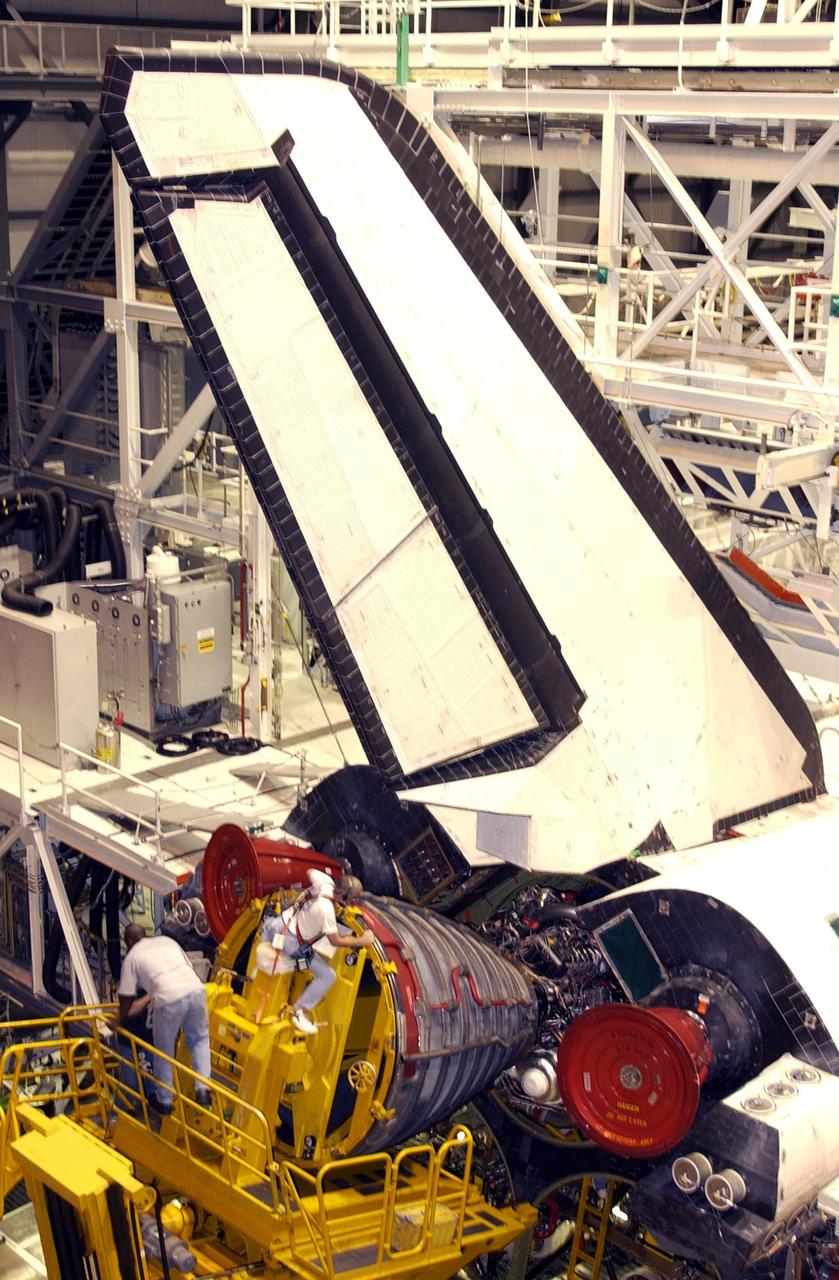
KENNEDY SPACE CENTER, FLA. -- The first Space Shuttle Main Engine (SSME) is installed on Space Shuttle Atlantis following the welding repair of the propulsion system flow liners as preparations to launch mission STS-112 continue. Angela DiMattia is the move director for Rocketdyne. Rocketdyne employee Gerald Braham is seen here behind the engine offering additional guidance. Mission STS-112 is an assembly flight to the International Space Station and is targeted for launch no earlier than Sept. 28, 2002. Members of the STS-112 crew are Commander Jeffrey Ashby; Pilot Pamela Melroy; and Mission Specialists David Wolf, Piers Sellers, Sandra Magnus, and Fyodor Yurchikhin of the Russian Space Agency.
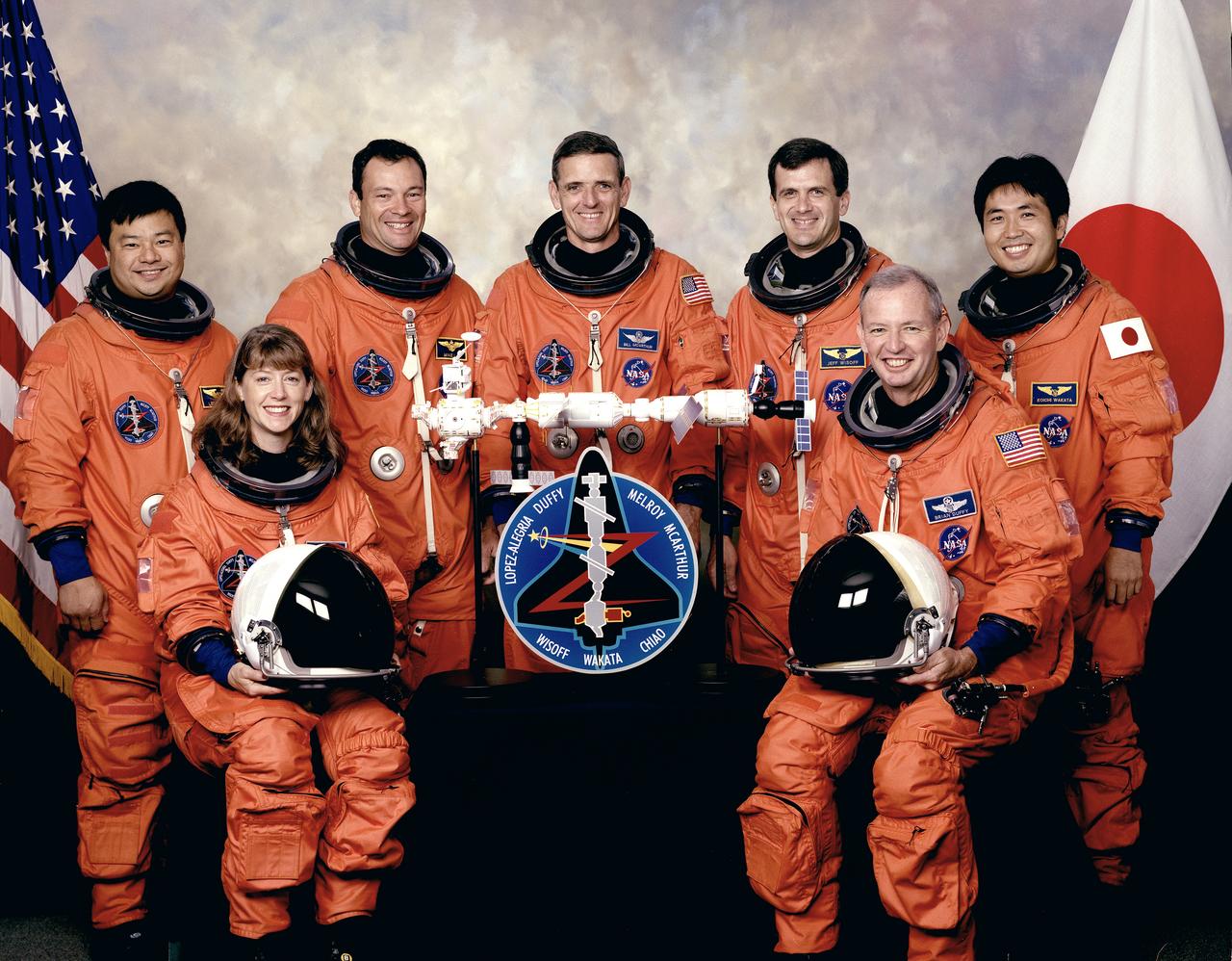
These seven astronauts composed the crew for the STS-92 mission. In front are astronauts Pamela A. Melroy, pilot; and Brian Duffy, mission commander. In the rear, from the left, are astronauts Leroy Chiao, Michael E. Lopez-Alegria, William S. McArthur, Jr., Peter J.K. (Jeff) Wisoff, and Koichi Wakata, all mission specialists. Wakata represents Japan's National Space Development Agency (NASDA). Launched aboard the Space Shuttle Discovery on October 11, 2000, the 100th shuttle flight was the second to deliver hardware to the International Space Station (ISS). During Four space walks, the crew installed the Z1 truss and the Pressurized Mating Adapter (PMA) 3.
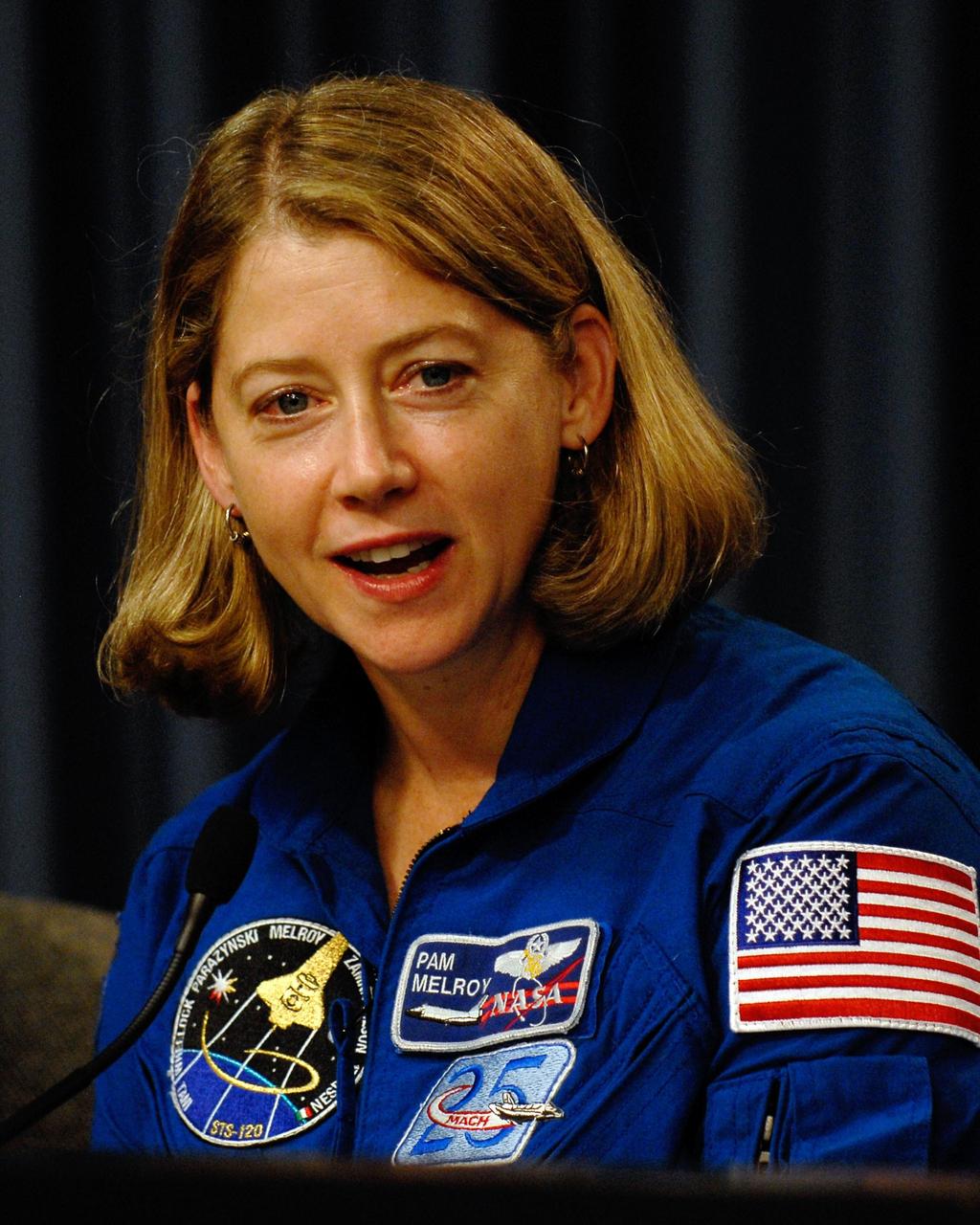
KENNEDY SPACE CENTER, FLA. -- STS-120 Commander Pamela Melroy takes part in a news conference after the crew's successful landing aboard space shuttle Discovery at NASA's Kennedy Space Center. The crew completed a 15-day mission to the International Space Station with a smooth landing on Runway 33. Main gear touchdown was 1:01:16 p.m. Wheel stop was at 1:02:07 p.m. Mission elapsed time was 15 days, 2 hours, 24 minutes and 2 seconds. Mission STS-120 continued the construction of the station with the installation of the Harmony Node 2 module and the relocation of the P6 truss. Photo credit: NASA/Kim Shiflett
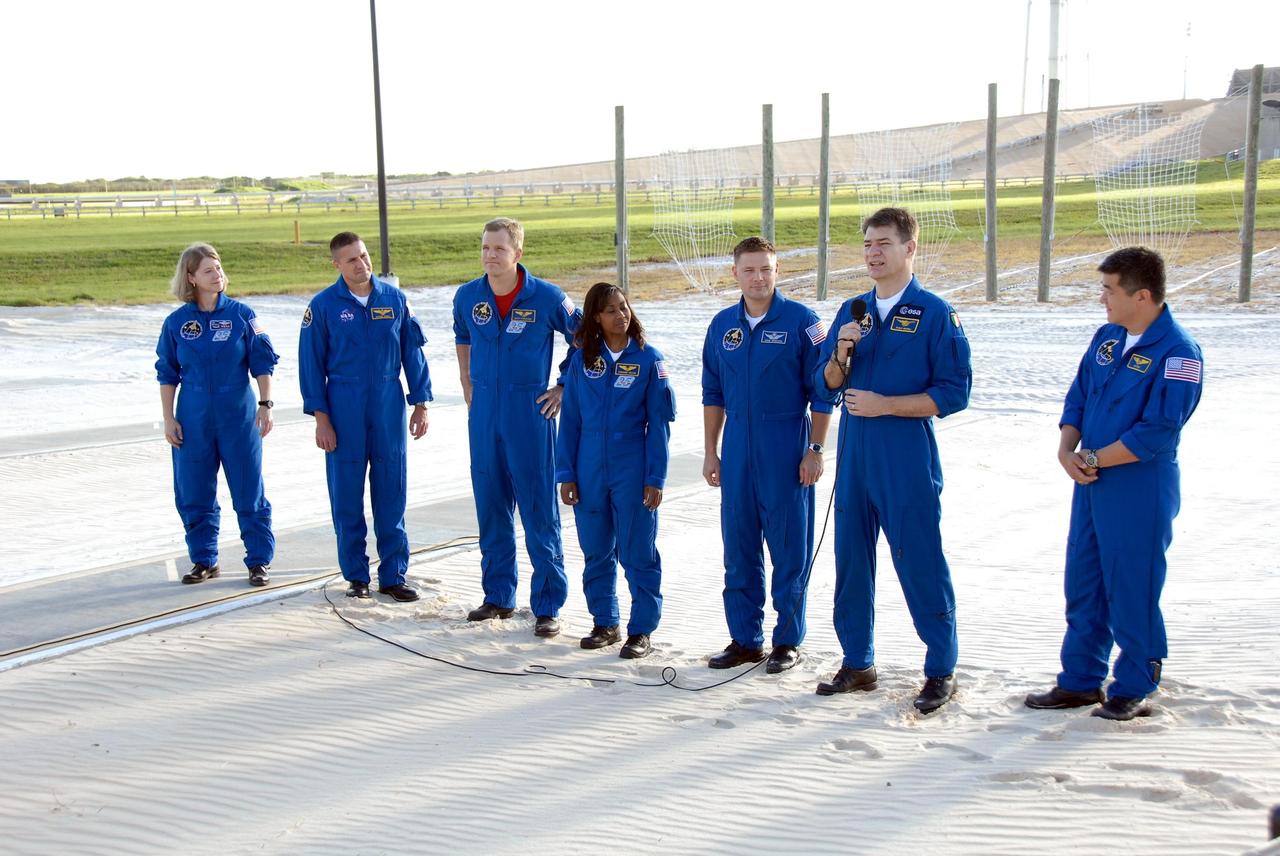
KENNEDY SPACE CENTER, FLA. -- At the slidewire basket landing on Launch Pad 39A, the STS-120 crew responds to questions from the media. With the microphone is Mission Specialist Paolo Nespoli, who represents the European Space Agency. The rest of the crew are, from left, Commander Pamela Melroy, Pilot George Zamka and Mission Specialists Scott Parazynski, Stephanie Wilson, Doug Wheelock and Daniel Tani. Mission STS-120, which will carry the Italian-built U.S. Node 2 to the International Space Station, is targeted for launch on Oct. 23. Tani will remain aboard the station and return with the STS-122 crew, targeted to launch Dec. 6. Photo credit: NASA/Kim Shiflett
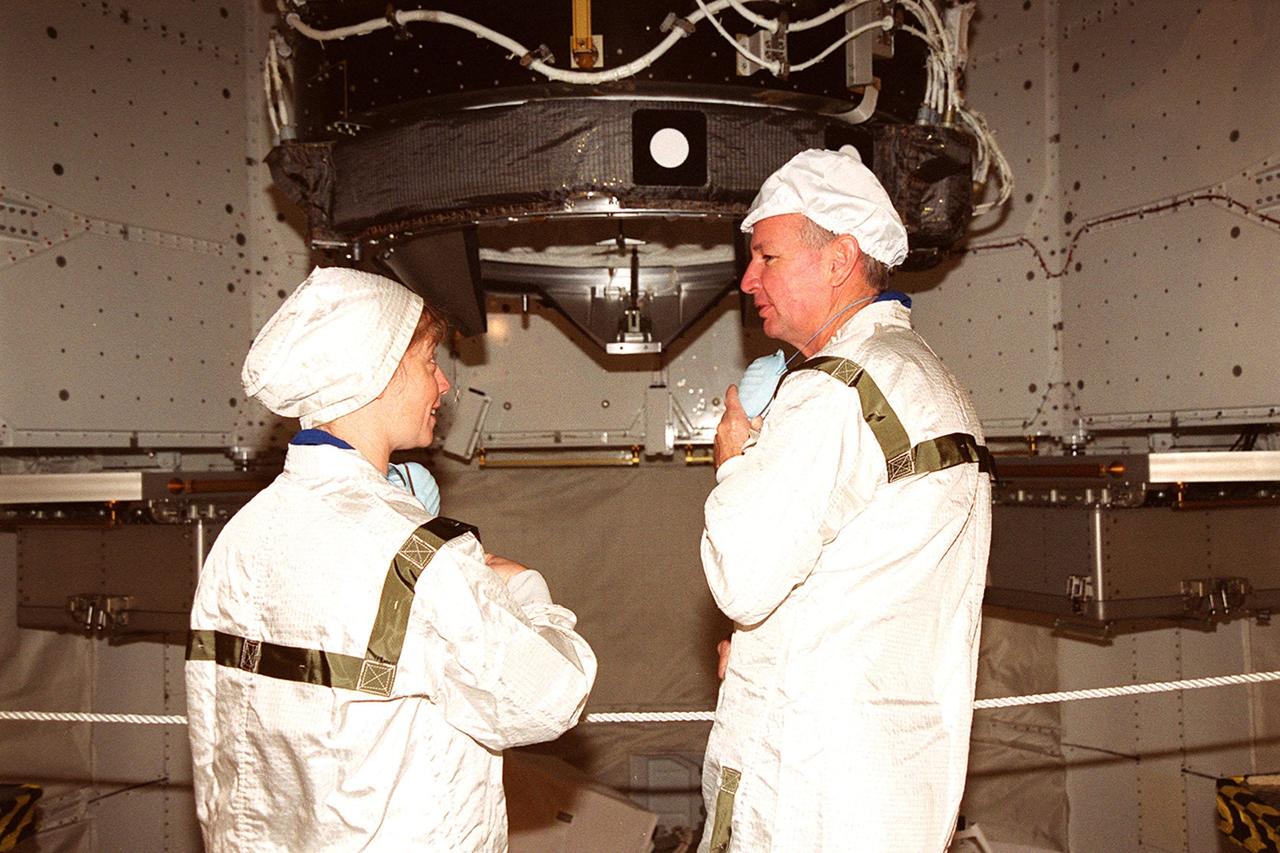
KENNEDY SPACE CENTER, FLA. -- In Space Shuttle Discovery’s payload bay, STS-92 Pilot Pamela Ann Melroy (left) and Commander Brian Duffy share thoughts about the mission as they inspect part of the payload (behind them), the Pressurized Mating Adapter. The STS-92 crew has been inspecting the payload in preparation for launch Oct. 5, 2000. The mission is the fifth flight for the construction of the International Space Station. The payload also includes the Integrated Truss Structure Z-1. During the 11-day mission, four extravehicular activities (EVAs), or space walks, are planned
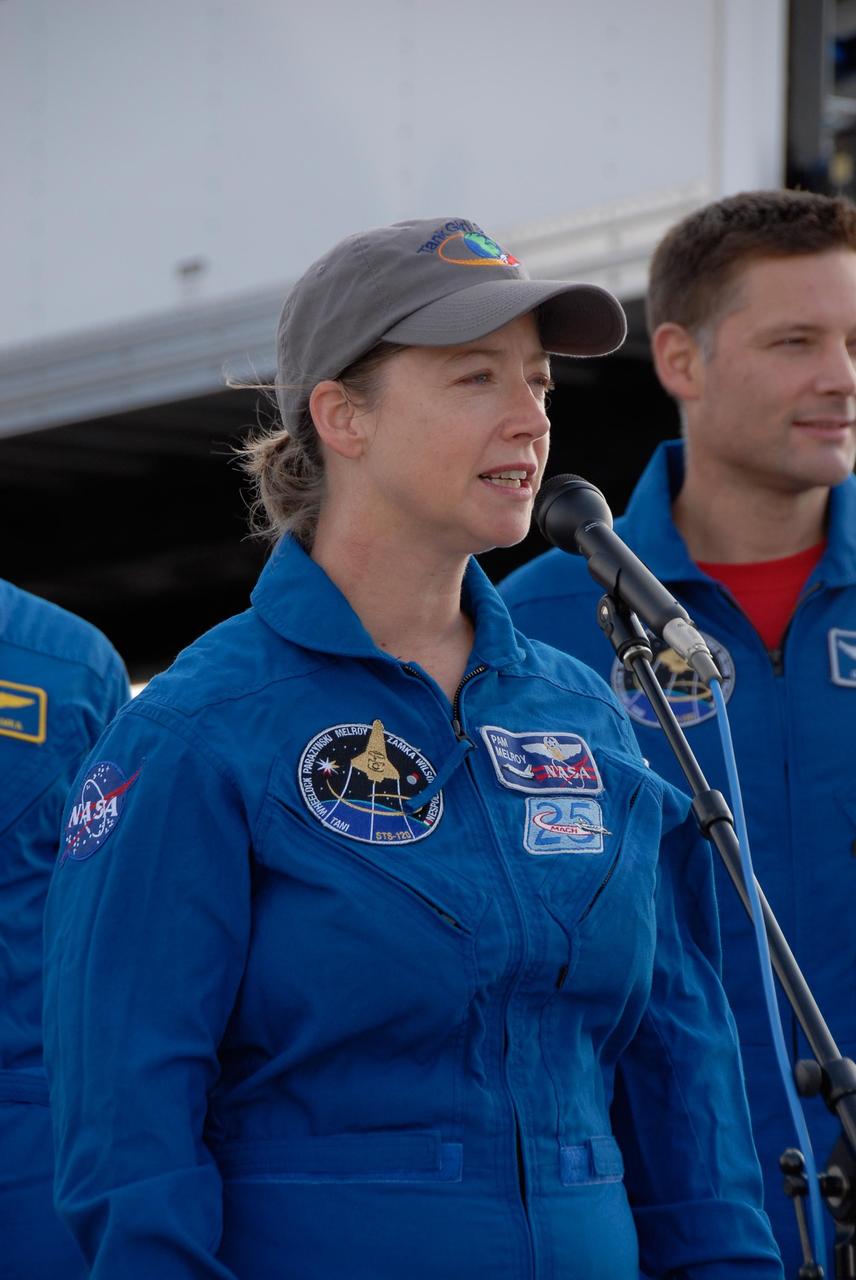
KENNEDY SPACE CENTER, FLA. -- STS-120 Commander Pamela Melroy talks to media and guests on the Shuttle Landing Facility at NASA's Kennedy Space Center after landing space shuttle Discovery. Seen at right is mission specialist Doug Wheelock. The Discovery crew completed mission STS-120 with an on-time landing at 1:01:16 p.m. Wheel stop was at 1:02:07 p.m. Mission elapsed time was 15 days, 2 hours, 24 minutes and 2 seconds. Mission STS-120 continued the construction of the station with the installation of the Harmony Node 2 module and the relocation of the P6 truss. Photo credit: NASA/Kim Shiflett
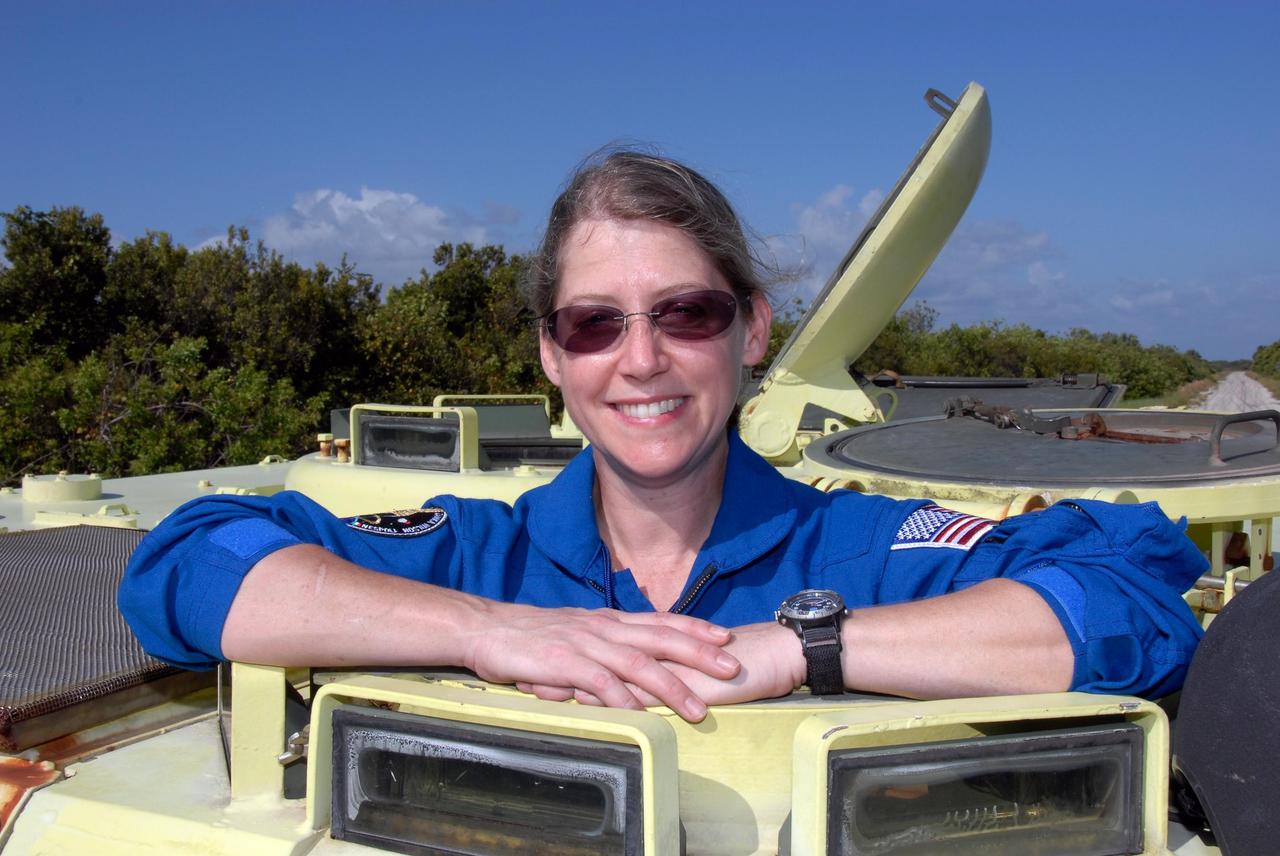
KENNEDY SPACE CENTER, FLA. -- STS-120 Commander Pamela Melroy is ready for her turn at driving practice in the M-113 armored personnel carrier. The M-113 is part of emergency exit procedures from Launch Pad 39A. The training is part of terminal countdown demonstration test, or TCDT, activities the crew is undertaking at NASA's Kennedy Space Center. The TCDT also includes equipment familiarization and a simulated launch countdown. Mission STS-120, which will carry the Italian-built U.S. Node 2 to the International Space Station, is targeted for launch on Oct. 23. Photo credit: NASA/Kim Shiflett
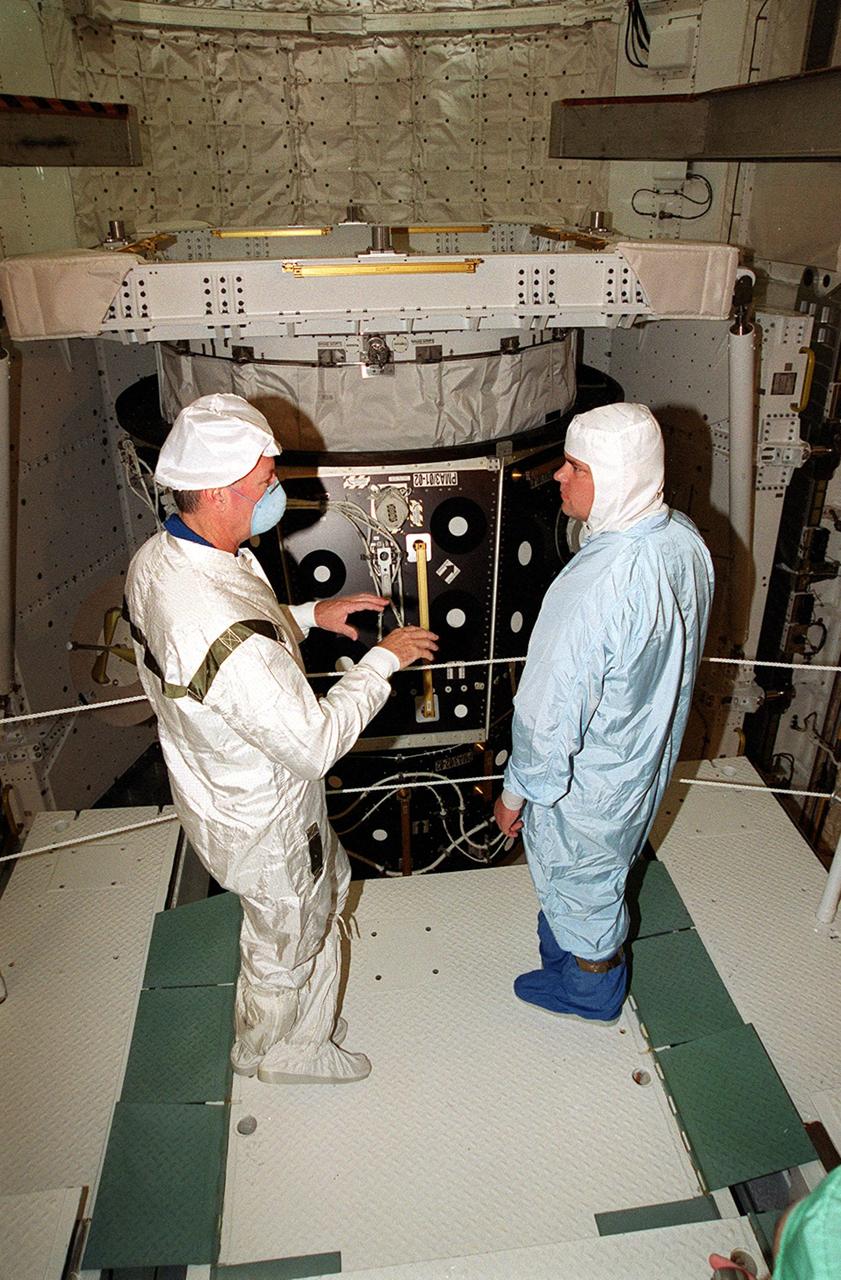
STS-92 Commander Brian Duffy (left) talks with a worker during inspection of the payload (behind them) in Space Shuttle Discovery’s payload bay. He and other crew members Pilot Pamela Ann Melroy and Mission Specialists Koichi Wakata of Japan, Leroy Chiao, Peter J.K. “Jeff” Wisoff, Michael E. Lopez-Alegria and William S. McArthur Jr. are preparing for launch on Oct. 5, 2000. The mission is the fifth flight for the construction of the International Space Station. The payload includes the Integrated Truss Structure Z-1 and the third Pressurized Mating Adapter. During the 11-day mission, four extravehicular activities (EVAs), or space walks, are planned
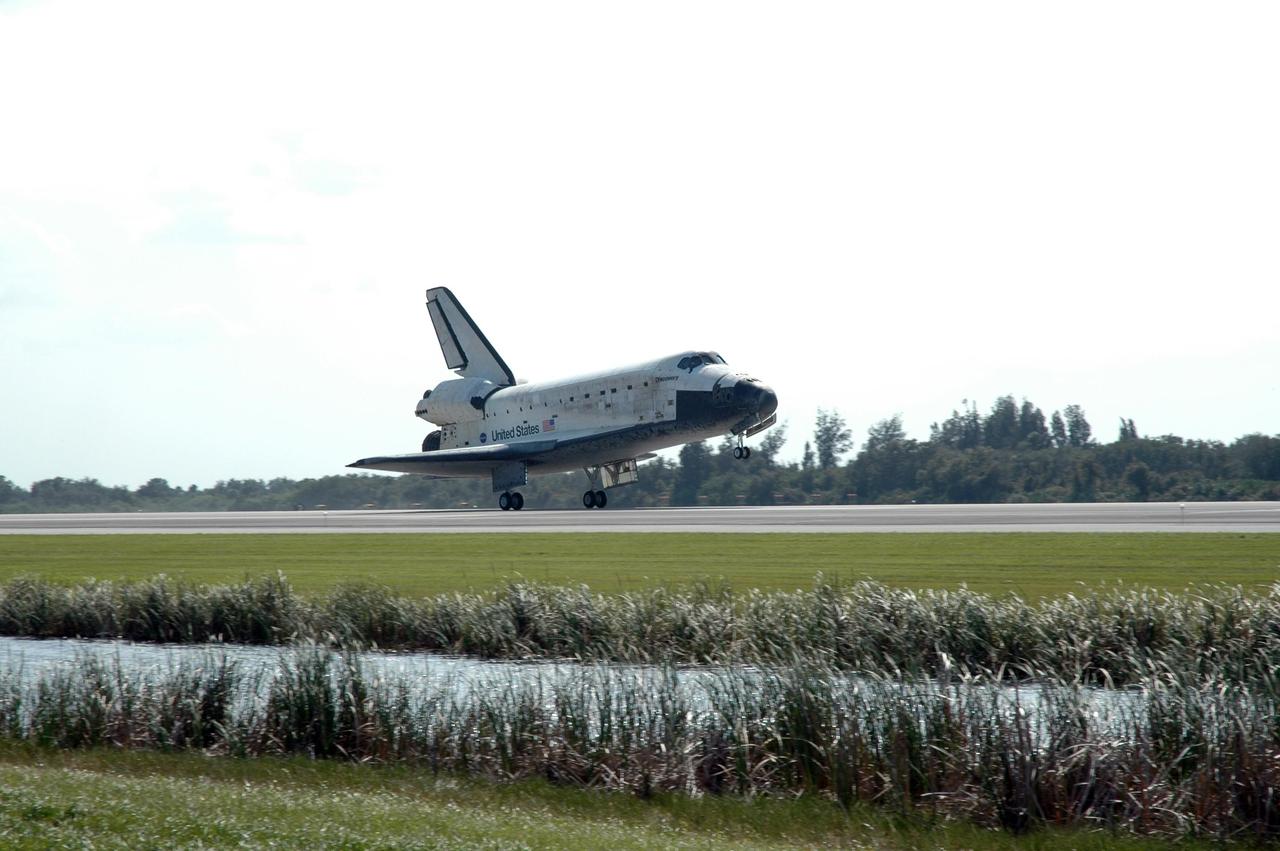
KENNEDY SPACE CENTER, FLA. -- Space shuttle Discovery touches down on Runway 33 of the Shuttle Landing Facility at NASA's Kennedy Space Center, concluding the 15-day mission STS-120. Commander Pamela Melroy is at the controls, along with Pilot George Zamka. Main gear touchdown was 1:01:16 p.m. Wheel stop was at 1:02:07 p.m. Mission elapsed time was 15 days, 2 hours, 24 minutes and 2 seconds. The STS-120 crew continued the construction of the station with the installation of the Harmony Node 2 module and the relocation of the P6 truss. Photo credit: NASA/Jim Grossmann
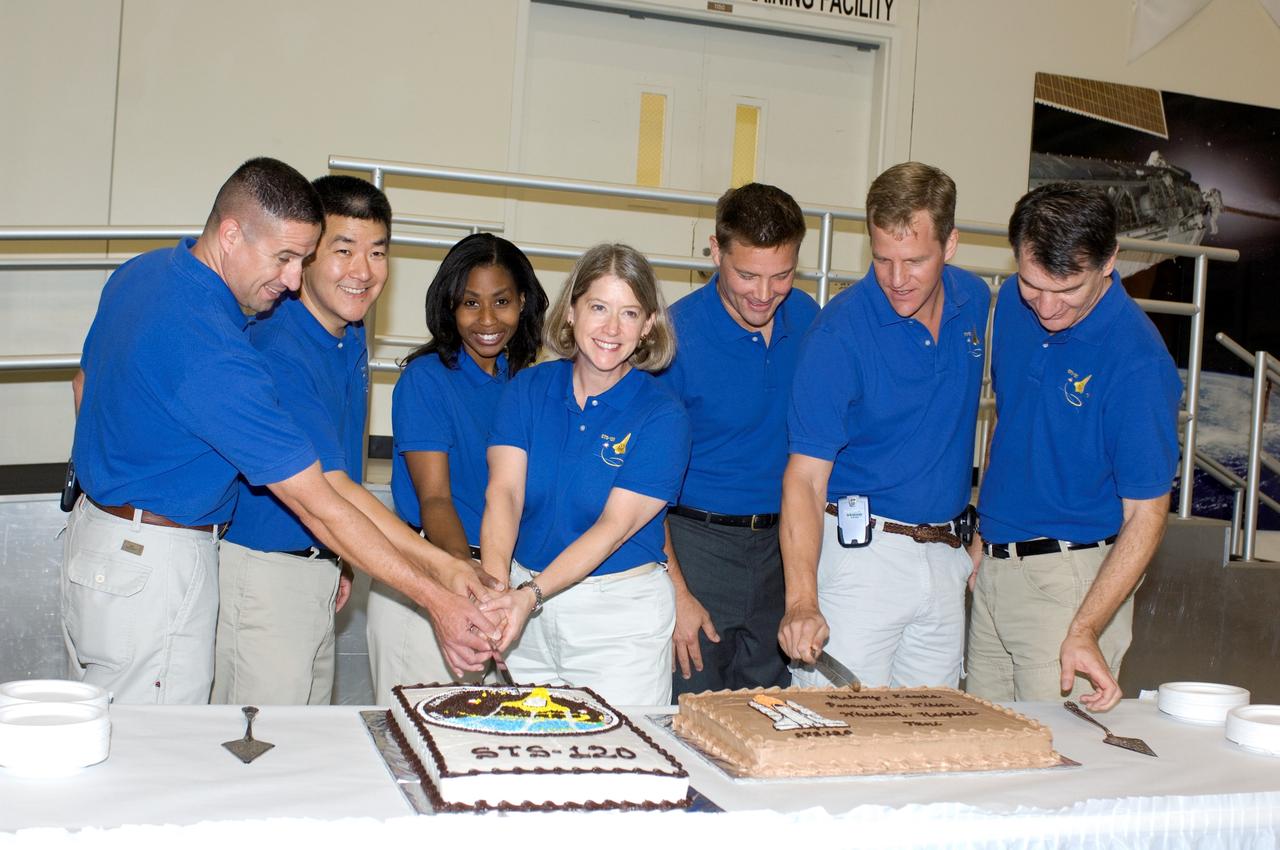
JSC2007-E-44684 (29 Aug. 2007) --- The STS-120 crewmembers celebrate the end of formal crew training with a cake-cutting ceremony in the Jake Garn Simulation and Training Facility at Johnson Space Center. Pictured from the left are astronauts George D. Zamka, pilot; Daniel M. Tani, Expedition 16 flight engineer; Stephanie D. Wilson, mission specialist; Pamela A. Melroy, commander; Douglas H. Wheelock, Scott E. Parazynski, and European Space Agency's (ESA) Paolo Nespoli, all mission specialists. Tani is scheduled to join Expedition 16 after launching to the International Space Station on mission STS-120.
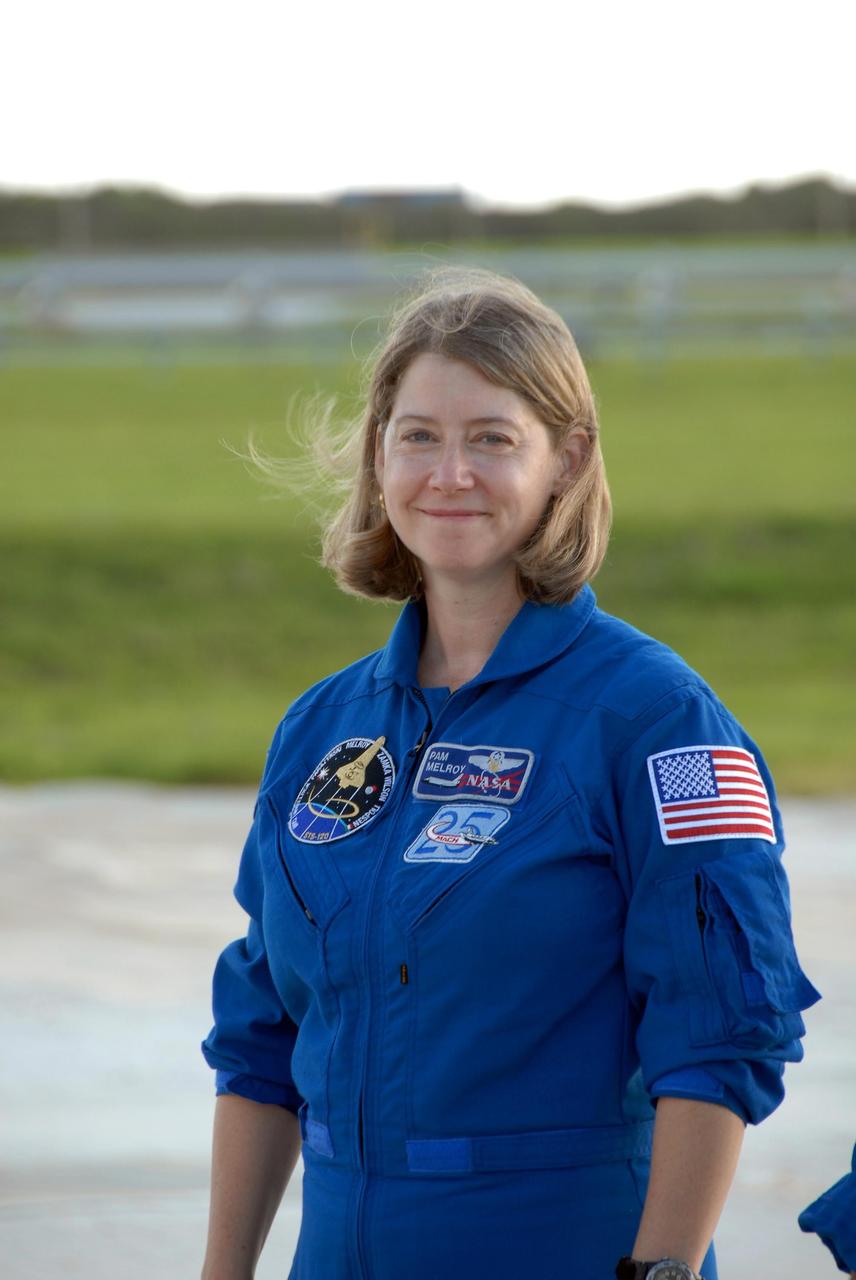
KENNEDY SPACE CENTER, FLA. -- STS-120 Commander Pamela Melroy takes the stage with her shuttle crew on Launch Pad 39A for a media conference. The crew is at NASA's Kennedy Space Center to take part in terminal countdown demonstration test activities that include emergency egress procedures and a simulated launch countdown. Mission STS-120, which will carry the Italian-built U.S. Node 2 to the International Space Station, is targeted for launch on Oct. 23. Tani will remain aboard the station and return with the STS-122 crew, targeted to launch Dec. 6. Photo credit: NASA/Kim Shiflett
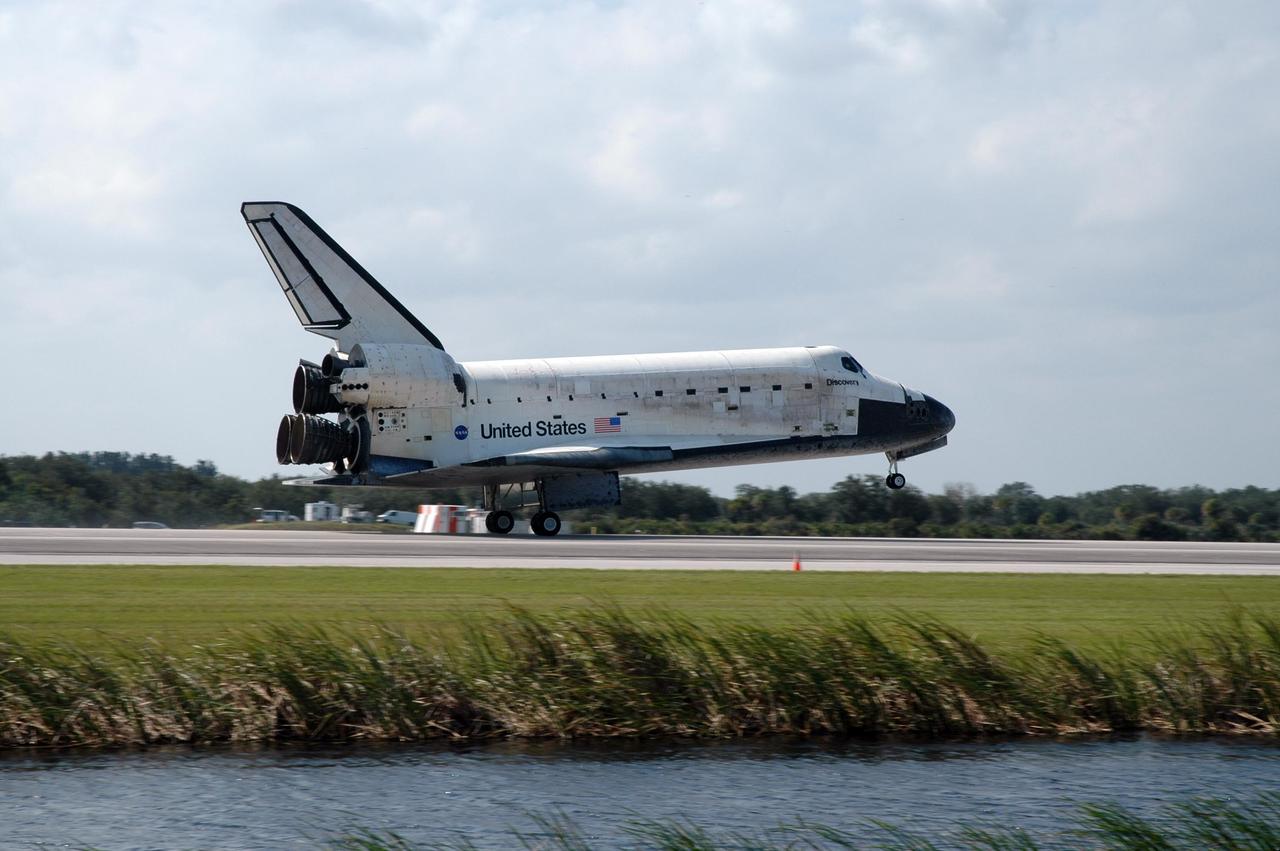
KENNEDY SPACE CENTER, FLA. -- Space shuttle Discovery touches down on Runway 33 of the Shuttle Landing Facility at NASA's Kennedy Space Center, concluding the 15-day mission STS-120. Commander Pamela Melroy is at the controls, along with Pilot George Zamka. Main gear touchdown was 1:01:16 p.m. Wheel stop was at 1:02:07 p.m. Mission elapsed time was 15 days, 2 hours, 24 minutes and 2 seconds. The STS-120 crew continued the construction of the station with the installation of the Harmony Node 2 module and the relocation of the P6 truss. Photo credit: NASA/Jim Grossmann
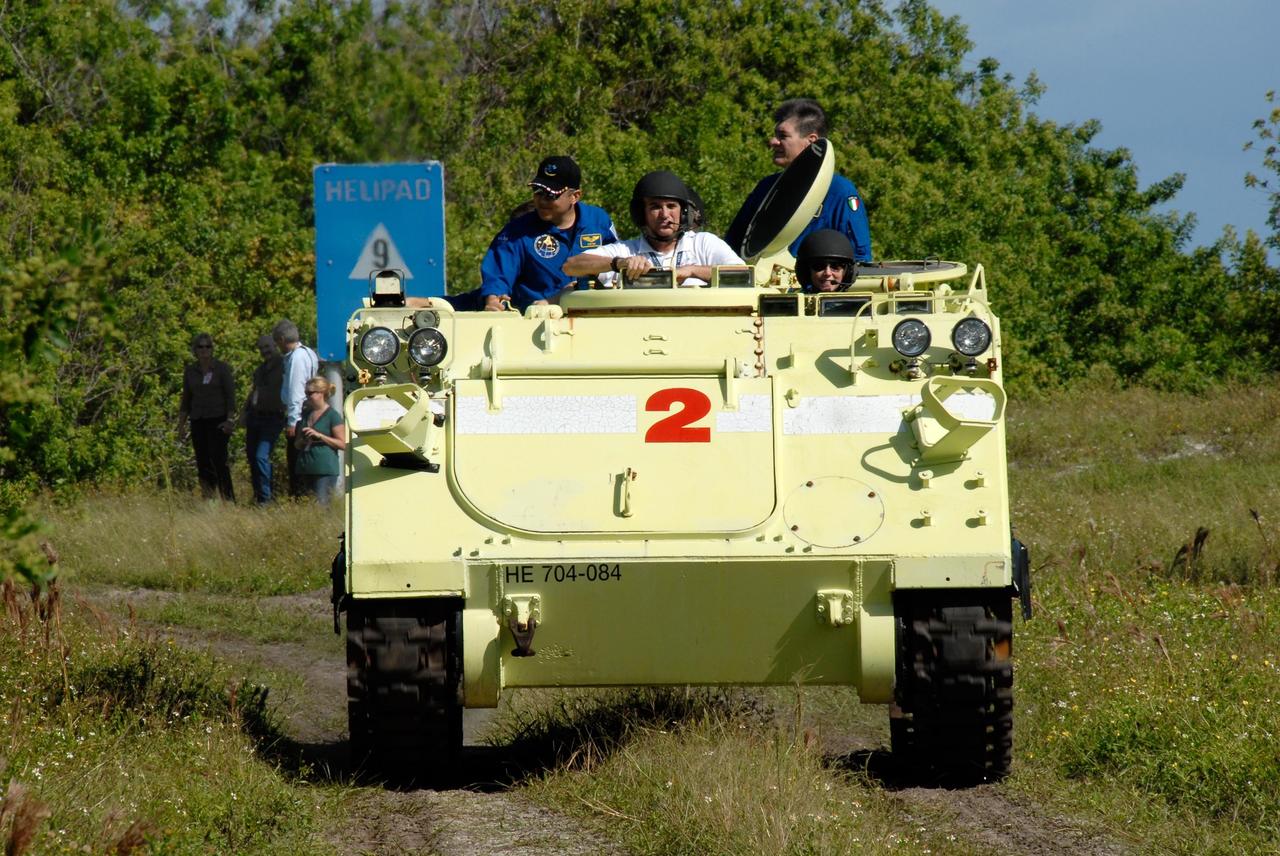
KENNEDY SPACE CENTER, FLA. -- STS-120 Commander Pamela Melroy drives the M-113 armored personnel carrier near Launch Pad 39A as part of emergency exit procedures. Beside her in front is the trainer. In the rear are Mission Specialists Daniel Tani and Paolo Nespoli, who represents the European Space Agency. The training is part of terminal countdown demonstration test, or TCDT, activities the crew is undertaking at NASA's Kennedy Space Center. The TCDT also includes equipment familiarization and a simulated launch countdown. Mission STS-120, which will carry the Italian-built U.S. Node 2 to the International Space Station, is targeted for launch on Oct. 23. Photo credit: NASA/Kim Shiflett
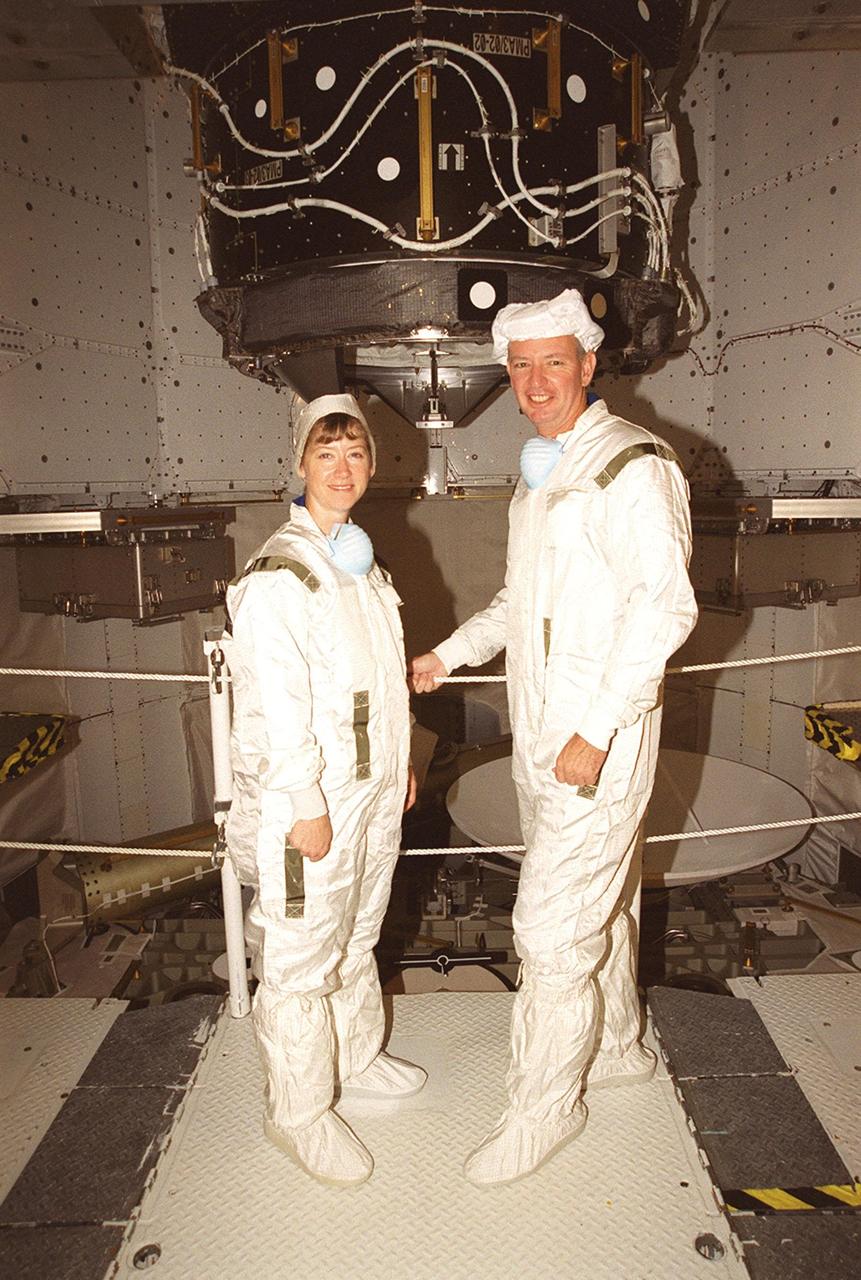
KENNEDY SPACE CENTER, FLA. -- STS-92 Pilot Pamela Ann Melroy (left) and Commander Brian Duffy pose for a photo during payload inspection in Space Shuttle Discovery’s payload bay. Behind them is the Pressurized Mating Adapter. The STS-92 crew has been inspecting the payload in preparation for launch Oct. 5, 2000. The mission is the fifth flight for the construction of the International Space Station. The payload also includes the Integrated Truss Structure Z-1. During the 11-day mission, four extravehicular activities (EVAs), or space walks, are planned
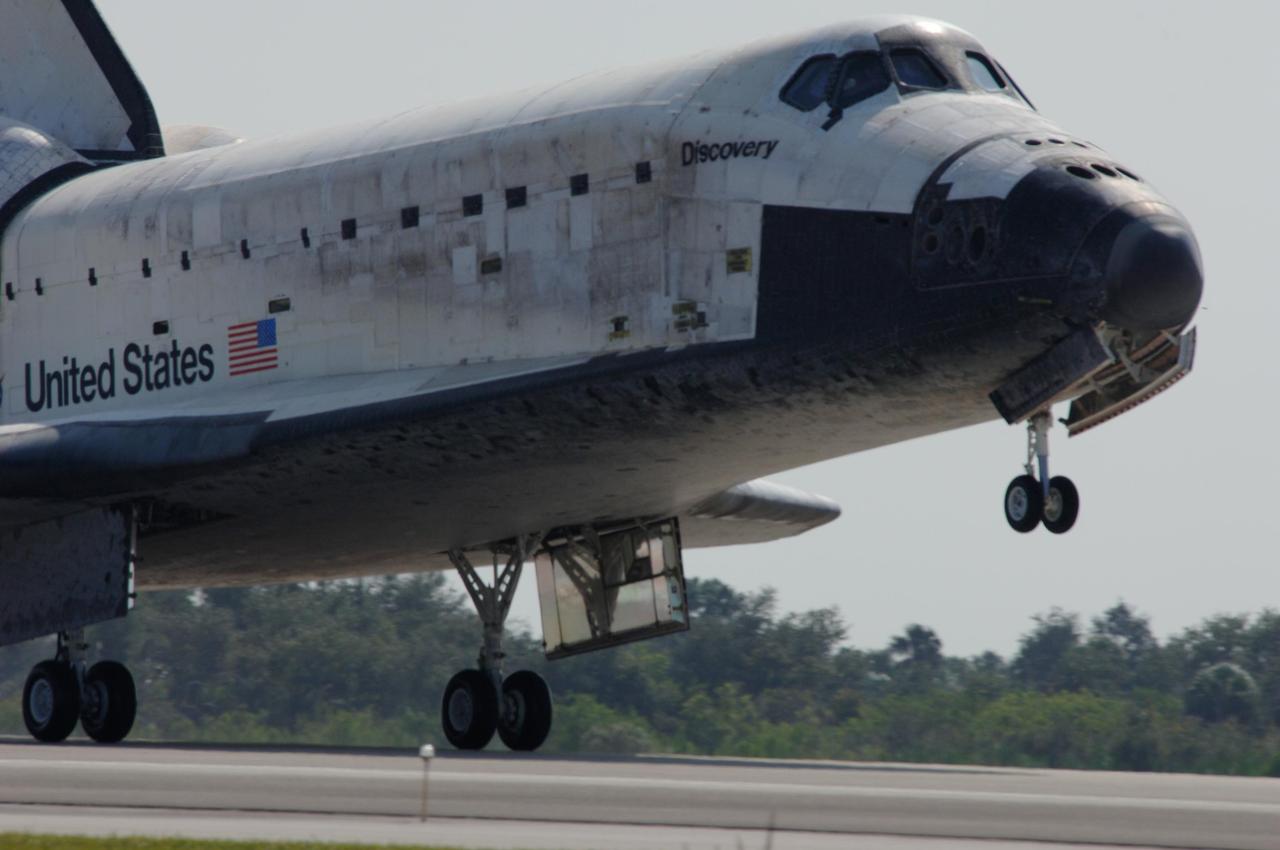
KENNEDY SPACE CENTER, FLA. -- Space shuttle Discovery lands smoothly on Runway 33 of the Shuttle Landing Facility at NASA's Kennedy Space Center, concluding the 15-day mission STS-120. Commander Pamela Melroy is at the controls, along with Pilot George Zamka. Main gear touchdown was 1:01:16 p.m. Wheel stop was at 1:02:07 p.m. Mission elapsed time was 15 days, 2 hours, 24 minutes and 2 seconds. The STS-120 crew continued the construction of the station with the installation of the Harmony Node 2 module and the relocation of the P6 truss. Photo credit: NASA/Raphael Hernandez
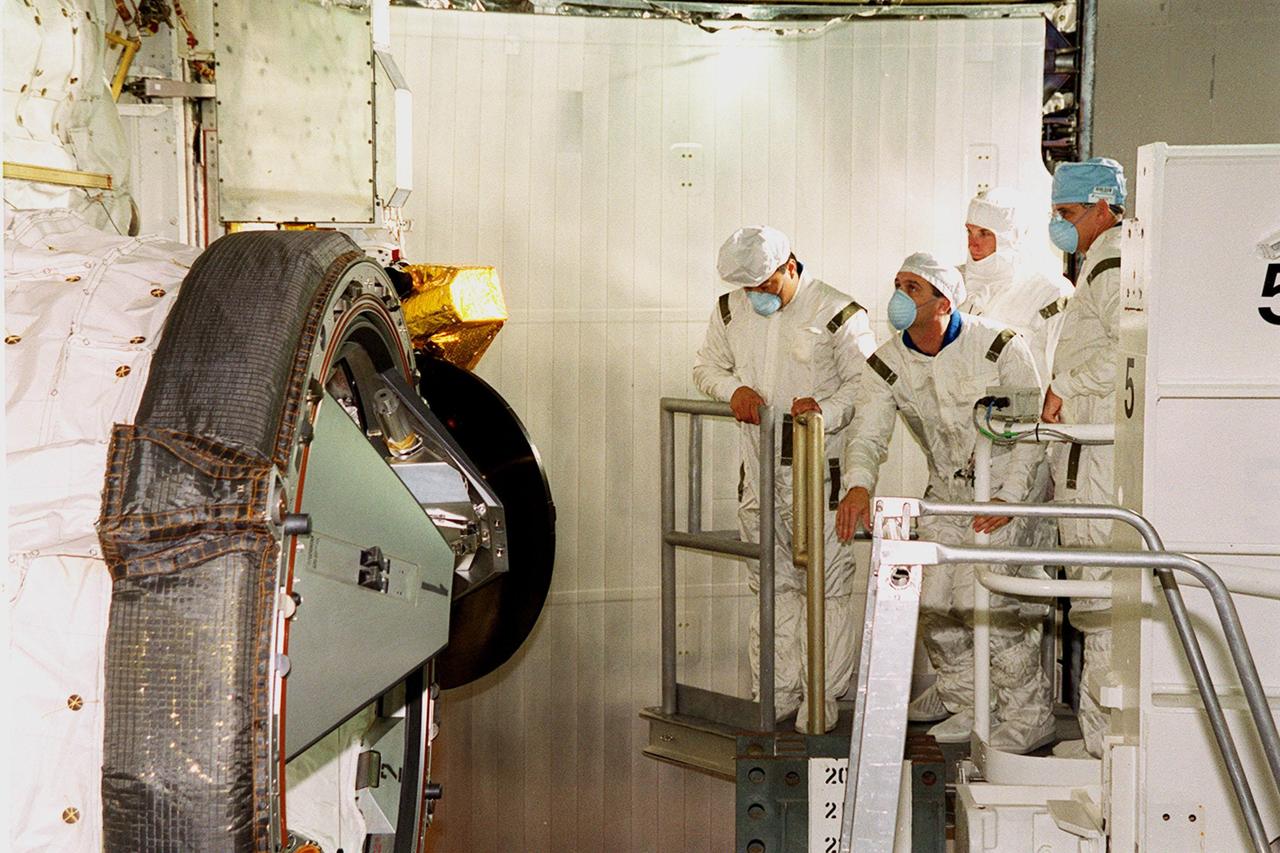
Members of the STS-92 crew look over the payload (left) in Space Shuttle Discovery’s payload bay. Left to right, in masks, are Mission Specialists Leroy Chiao, Peter J.K. “Jeff” Wisoff and William S. McArthur Jr. They and the other crew members Commander Brian Duffy, Pilot Pamela Ann Melroy and Mission Specialists Koichi Wakata of Japan, and Michael E. Lopez-Alegria are preparing for launch on Oct. 5, 2000. The mission is the fifth flight for the construction of the International Space Station. The payload includes the Integrated Truss Structure Z-1 and the third Pressurized Mating Adapter. During the 11-day mission, four extravehicular activities (EVAs), or space walks, are planned
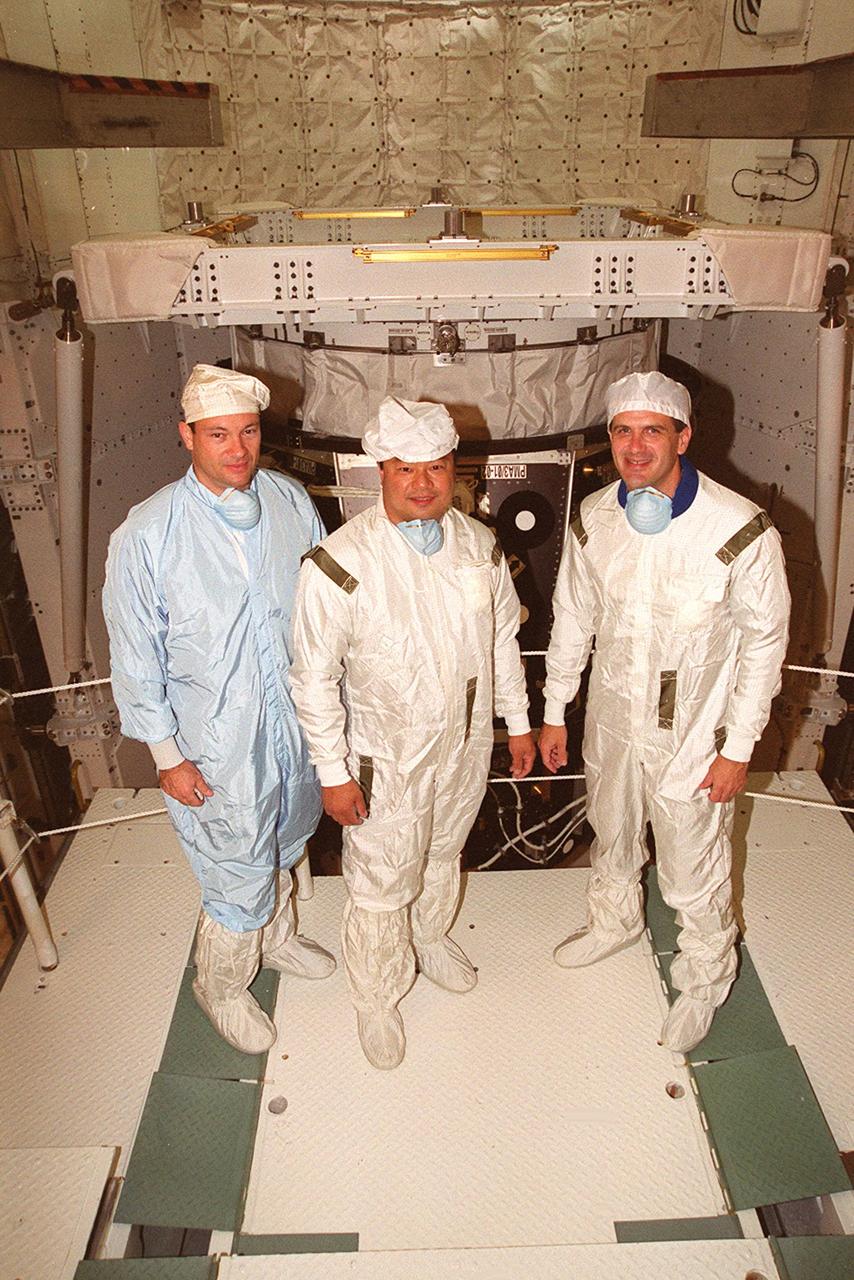
KENNEDY SPACE CENTER, FLA. -- During inspection of the payload in Space Shuttle Discovery’s payload bay (background), STS-92 Mission Specialists Michael E. Lopez-Alegria, Leroy Chiao and Peter J.K. “Jeff” Wisoff pause for a photo. They and other crew members Commander Brian Duffy, Pilot Pamela Ann Melroy and Mission Specialists Koichi Wakata of Japan and William S. McArthur Jr. are preparing for launch on Oct. 5, 2000. The mission is the fifth flight for the construction of the International Space Station. The payload includes the Integrated Truss Structure Z-1 and the third Pressurized Mating Adapter. During the 11-day mission, four extravehicular activities (EVAs), or space walks, are planned
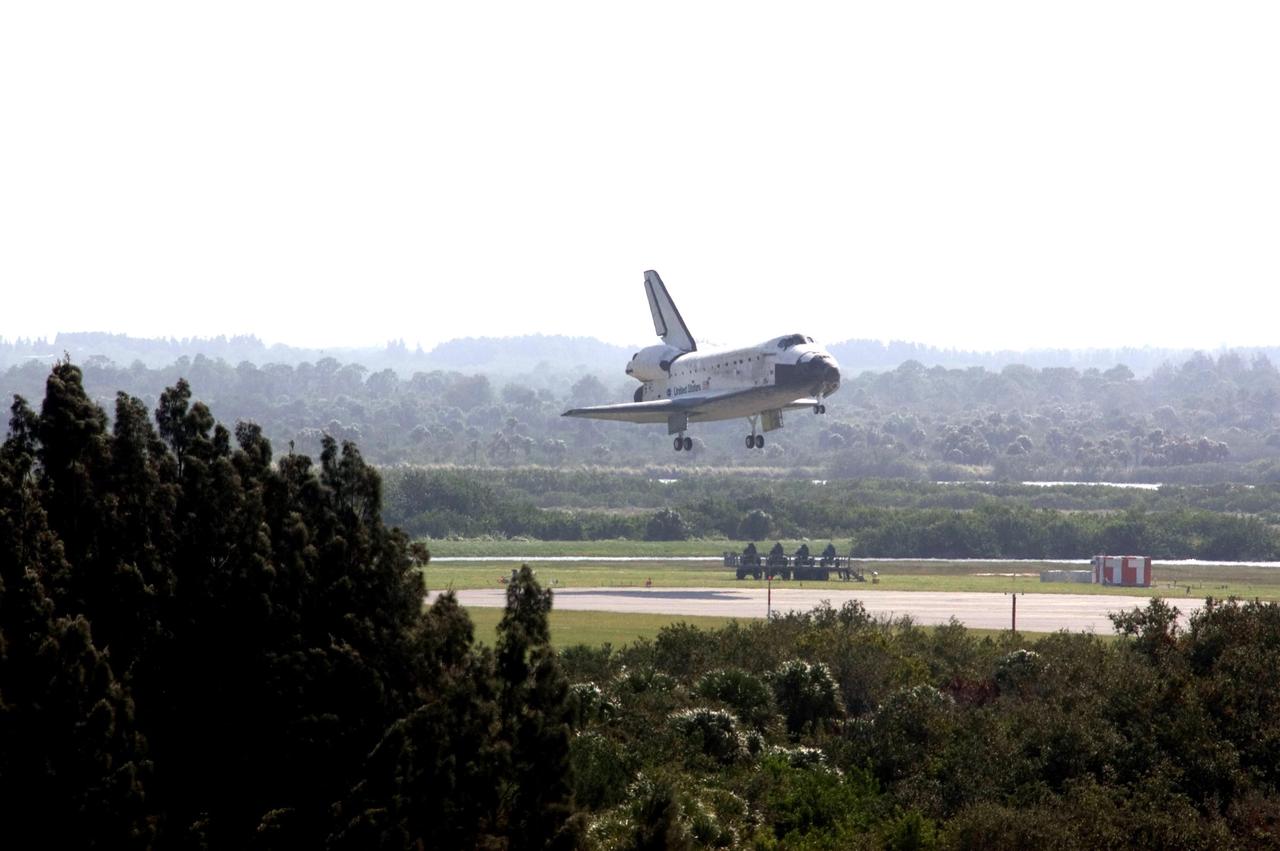
KENNEDY SPACE CENTER, FLA. -- Space shuttle Discovery sinks below the tree line as it approaches landing on Runway 33 of the Shuttle Landing Facility at NASA's Kennedy Space Center, concluding the 15-day mission STS-120. Commander Pamela Melroy is at the controls, along with Pilot George Zamka. Main gear touchdown was 1:01:16 p.m. Wheel stop was at 1:02:07 p.m. Mission elapsed time was 15 days, 2 hours, 24 minutes and 2 seconds. Mission STS-120 continued the construction of the station with the installation of the Harmony Node 2 module and the relocation of the P6 truss. Photo credit: NASA/Scott Haun
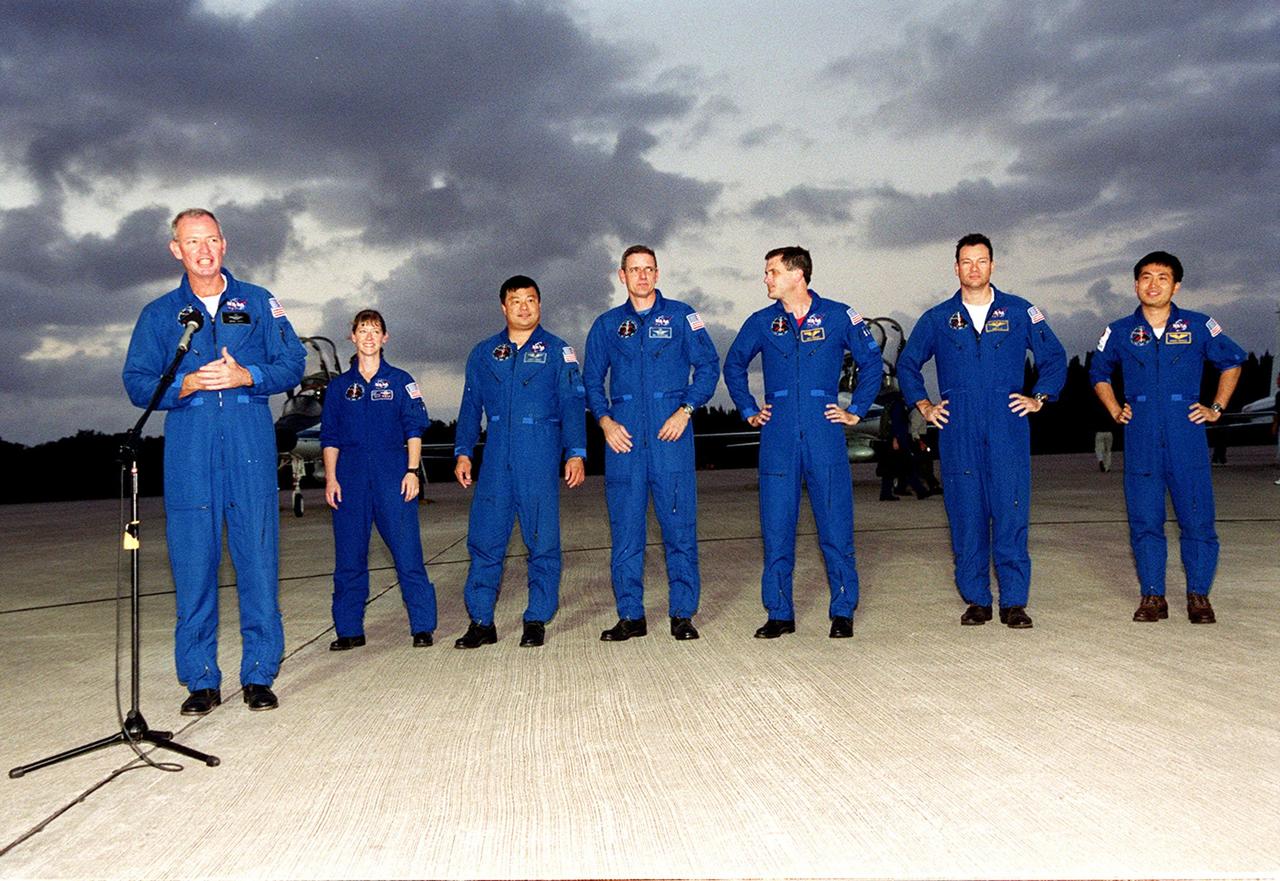
KENNEDY SPACE CENTER, FLA. -- After their arrival at KSC’s Shuttle Landing Facility, the STS-92 crew paused to talk to the media, who were waiting nearby. At the microphone is Commander Brian Duffy. Standing behind him, left to right, are Pilot Pamela Ann Melroy and Mission Specialists Leroy Chiao, William S. McArthur Jr., Peter J.K. “Jeff” Wisoff, Michael E. Lopez-Alegria and Koichi Wakata of Japan. The mission is the fifth flight for the construction of the International Space Station. The payload includes the Integrated Truss Structure Z-1 and the third Pressurized Mating Adapter. During the 11-day mission, four extravehicular activities (EVAs), or space walks, are planned
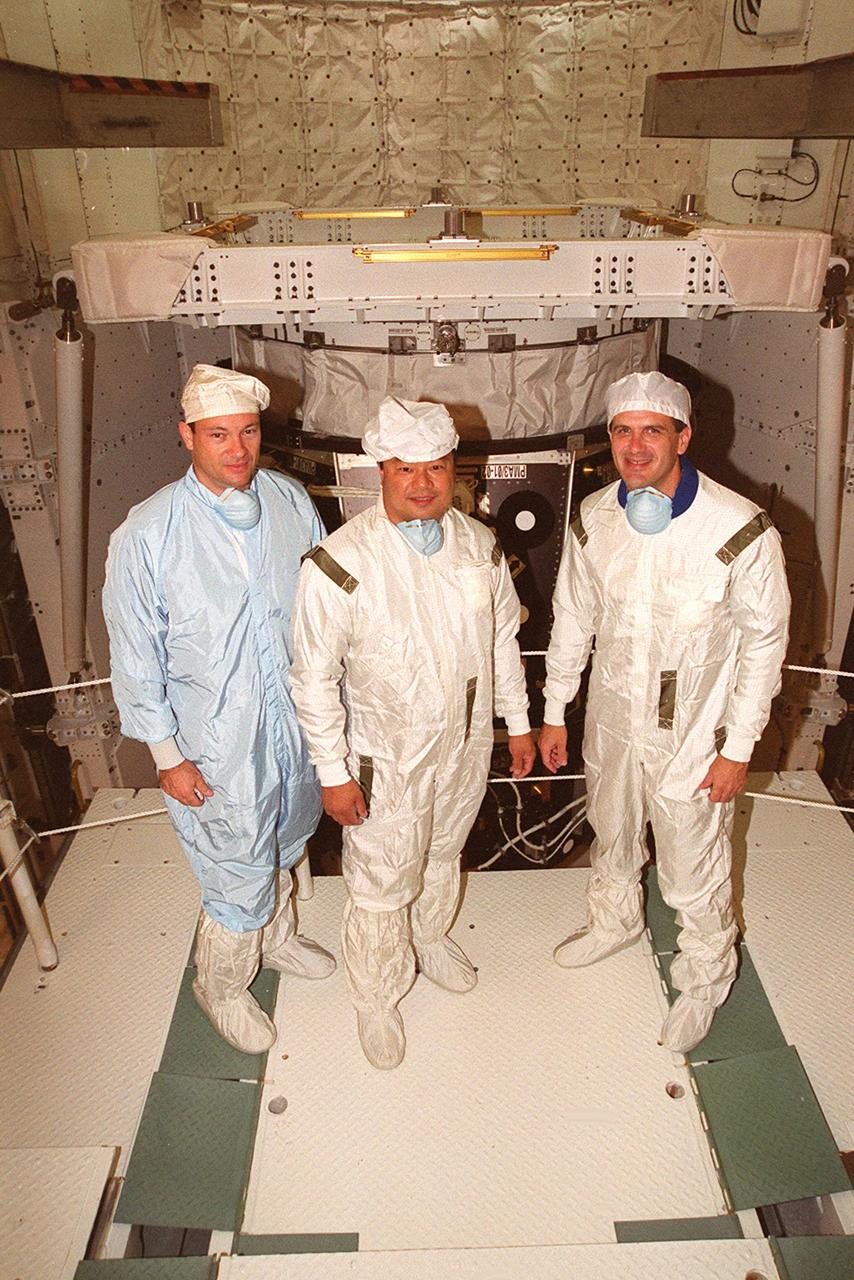
KENNEDY SPACE CENTER, FLA. -- During inspection of the payload in Space Shuttle Discovery’s payload bay (background), STS-92 Mission Specialists Michael E. Lopez-Alegria, Leroy Chiao and Peter J.K. “Jeff” Wisoff pause for a photo. They and other crew members Commander Brian Duffy, Pilot Pamela Ann Melroy and Mission Specialists Koichi Wakata of Japan and William S. McArthur Jr. are preparing for launch on Oct. 5, 2000. The mission is the fifth flight for the construction of the International Space Station. The payload includes the Integrated Truss Structure Z-1 and the third Pressurized Mating Adapter. During the 11-day mission, four extravehicular activities (EVAs), or space walks, are planned
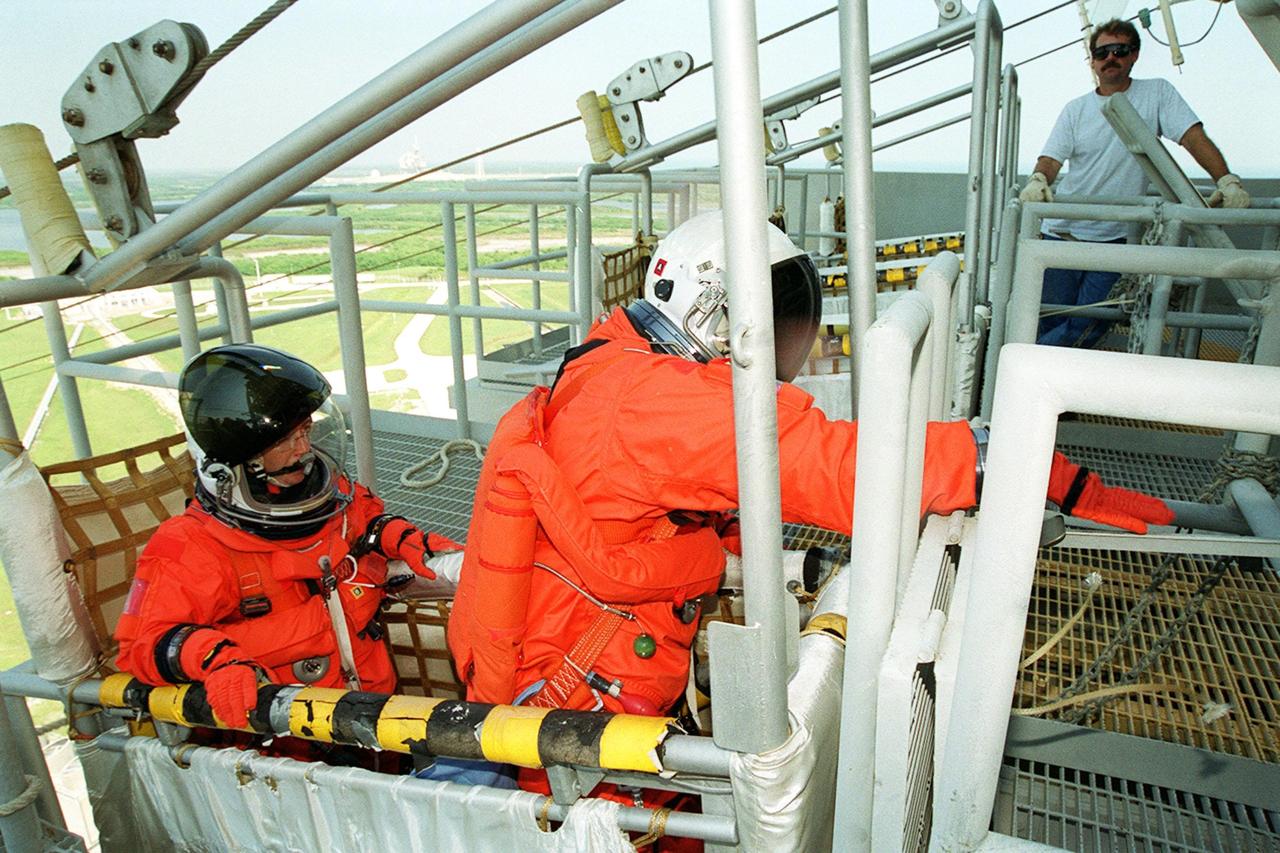
KENNEDY SPACE CENTER, FLA. -- On the 195-foot level of the Fixed Service Structure on Launch Pad 39A, STS-92 Pilot Pamela Ann Melroy (left) sits in the slidewire basket while Commander Brian Duffy reaches for the lever to release the basket. They and other crew members are taking part in emergency egress training, one of the Terminal Countdown Demonstration Test activities that also include a simulated countdown. STS-92 is scheduled to launch Oct. 5 at 9:38 p.m. EDT on the fifth flight to the International Space Station. It will carry two elements of the Space Station, the Integrated Truss Structure Z1 and the third Pressurized Mating Adapter. The mission is also the 100th flight in the Shuttle program
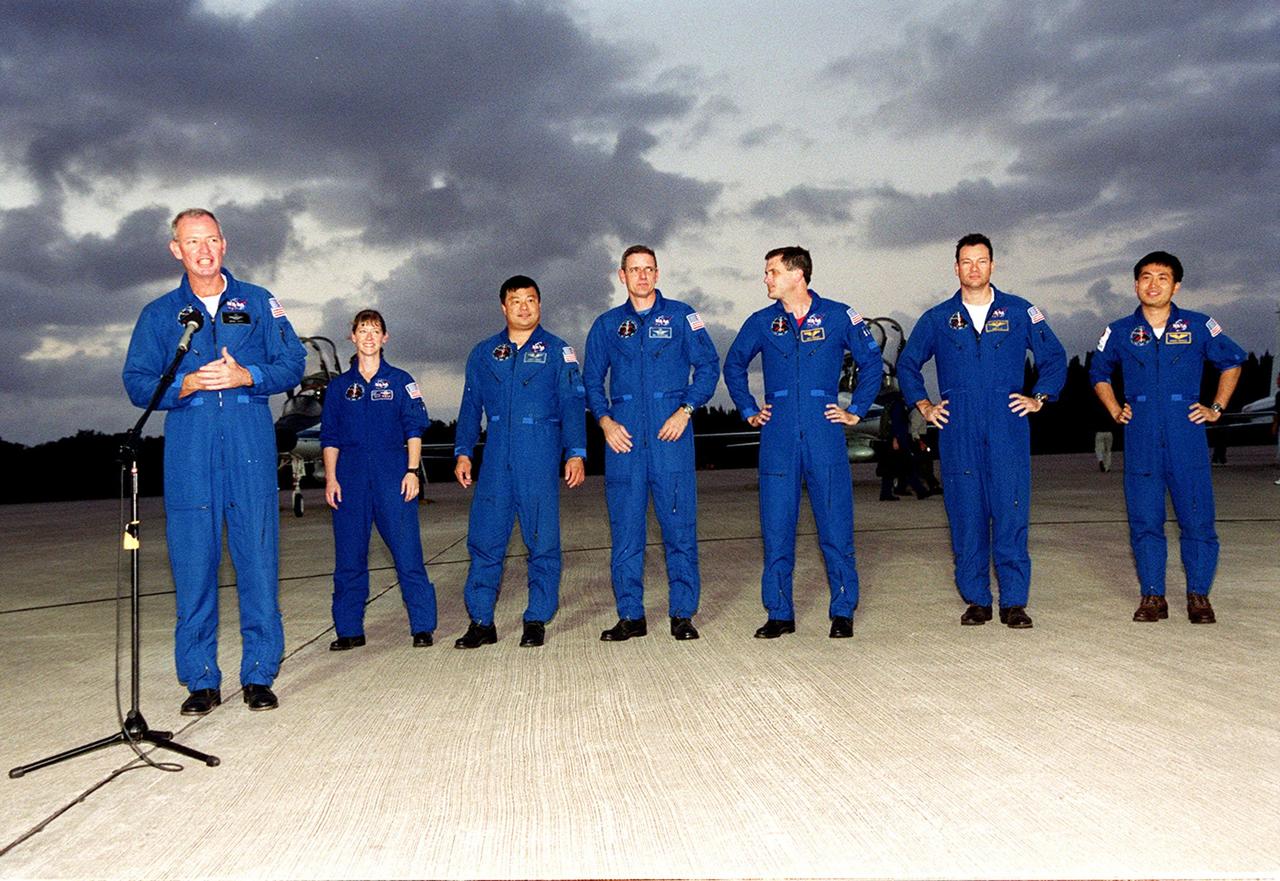
KENNEDY SPACE CENTER, FLA. -- After their arrival at KSC’s Shuttle Landing Facility, the STS-92 crew paused to talk to the media, who were waiting nearby. At the microphone is Commander Brian Duffy. Standing behind him, left to right, are Pilot Pamela Ann Melroy and Mission Specialists Leroy Chiao, William S. McArthur Jr., Peter J.K. “Jeff” Wisoff, Michael E. Lopez-Alegria and Koichi Wakata of Japan. The mission is the fifth flight for the construction of the International Space Station. The payload includes the Integrated Truss Structure Z-1 and the third Pressurized Mating Adapter. During the 11-day mission, four extravehicular activities (EVAs), or space walks, are planned
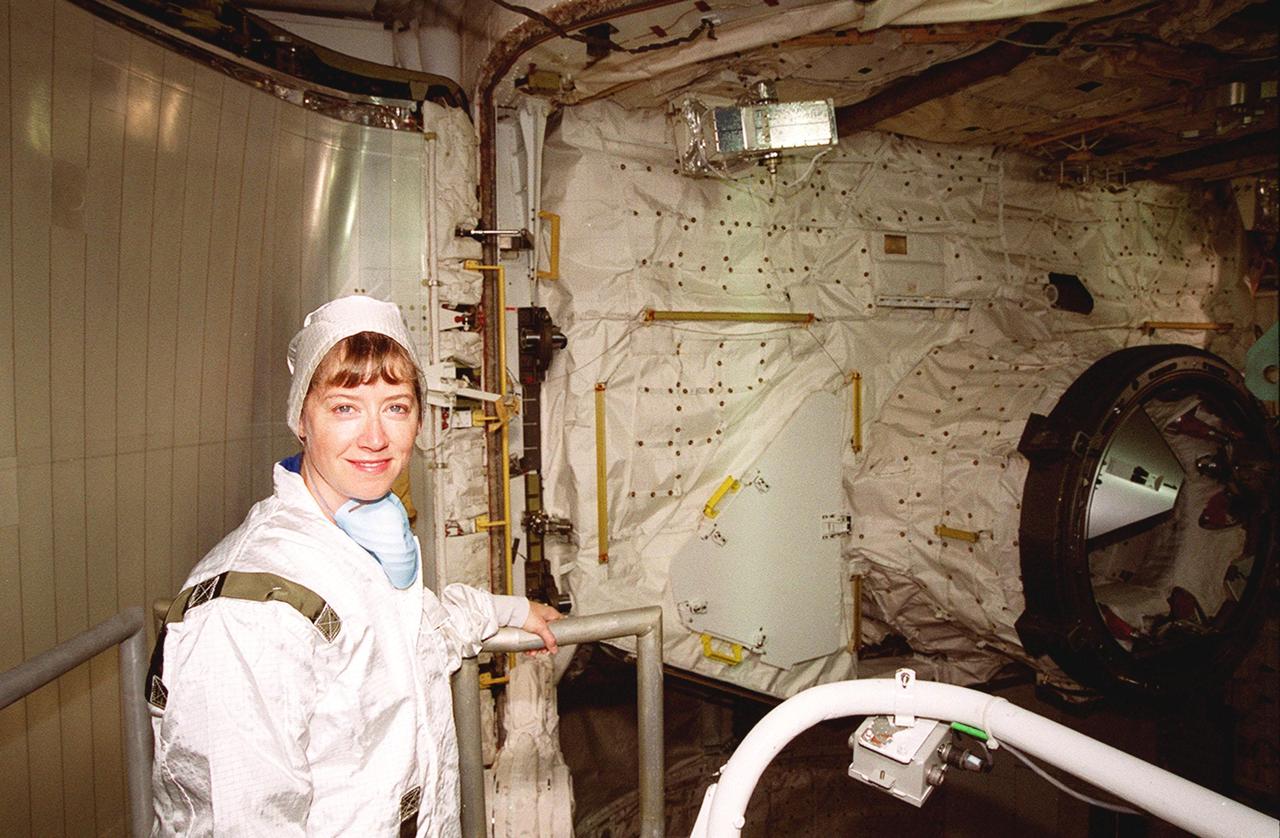
STS-92 Pamela Ann Melroy pauses during inspection of the payload (behind her) in Space Shuttle Discovery’s payload bay. She and other crew members Commander Brian Duffy and Mission Specialists Koichi Wakata of Japan, Leroy Chiao, Peter J.K. “Jeff” Wisoff. Michael E. Lopez-Alegria and William S. McArthur Jr. are preparing for launch on Oct. 5, 2000. The mission is the fifth flight for the construction of the International Space Station. The payload includes the Integrated Truss Structure Z-1 and the third Pressurized Mating Adapter. During the 11-day mission, four extravehicular activities (EVAs), or space walks, are planned

KENNEDY SPACE CENTER, FLA. -- STS-120 Commander Pamela Melroy poses for another photo after driving practice in the M-113 armored personnel carrier. The M-113 is part of emergency exit procedures from Launch Pad 39A. The training is part of terminal countdown demonstration test, or TCDT, activities the crew is undertaking at NASA's Kennedy Space Center. The TCDT also includes equipment familiarization and a simulated launch countdown. Mission STS-120, which will carry the Italian-built U.S. Node 2 to the International Space Station, is targeted for launch on Oct. 23. Photo credit: NASA/Kim Shiflett
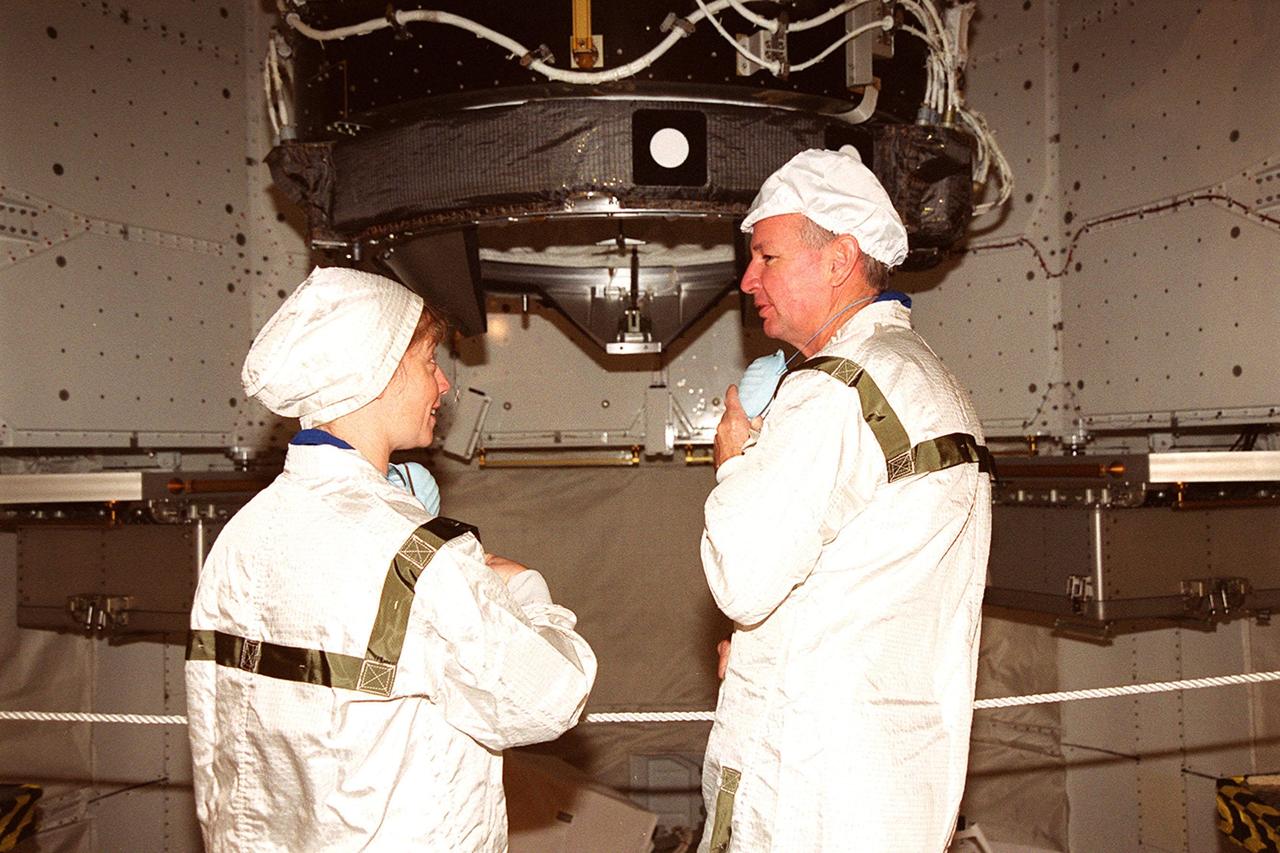
KENNEDY SPACE CENTER, FLA. -- In Space Shuttle Discovery’s payload bay, STS-92 Pilot Pamela Ann Melroy (left) and Commander Brian Duffy share thoughts about the mission as they inspect part of the payload (behind them), the Pressurized Mating Adapter. The STS-92 crew has been inspecting the payload in preparation for launch Oct. 5, 2000. The mission is the fifth flight for the construction of the International Space Station. The payload also includes the Integrated Truss Structure Z-1. During the 11-day mission, four extravehicular activities (EVAs), or space walks, are planned
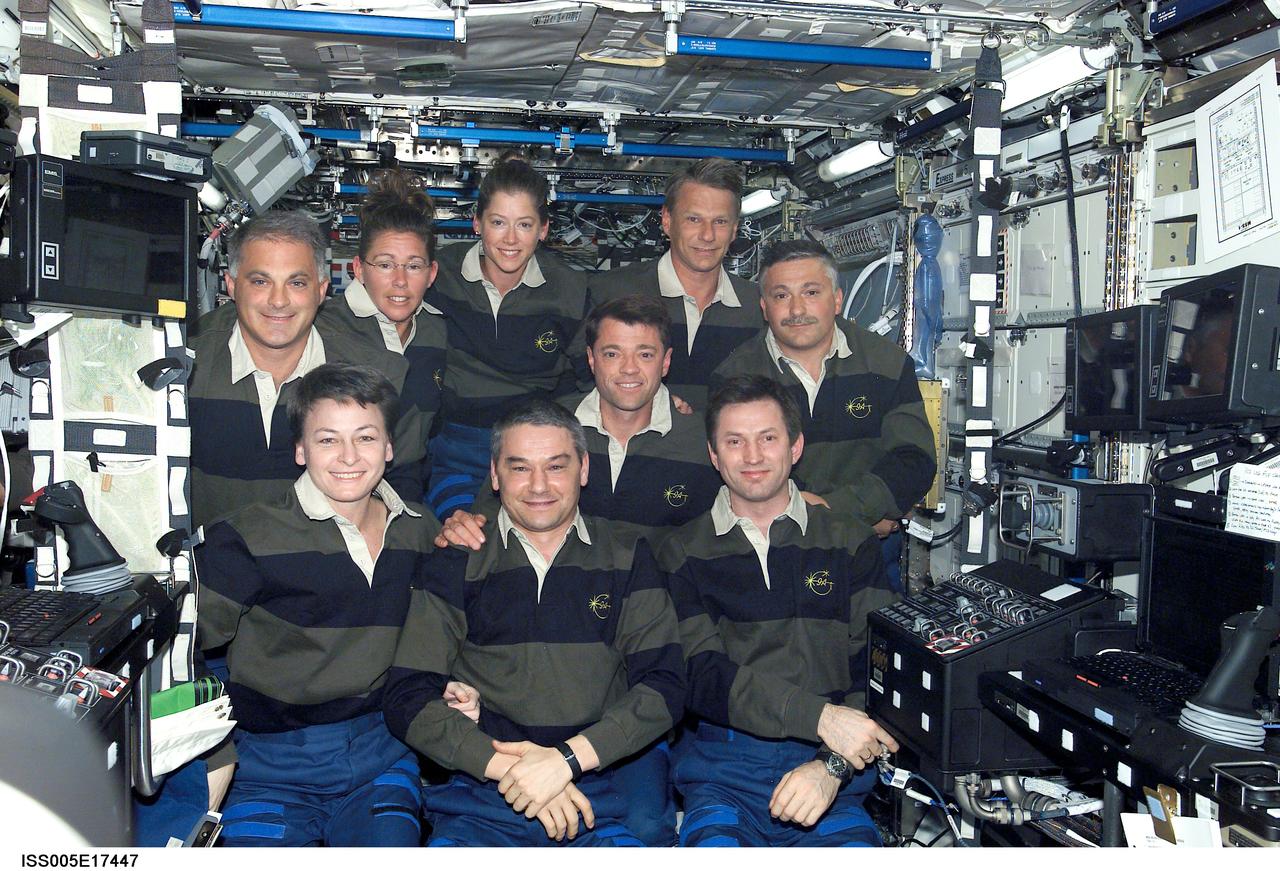
ISS005-E-17447 (13 October 2002) --- The Expedition Five and STS-112 crews assemble for a group photo in the Destiny laboratory on the International Space Station (ISS). From the left, front row, are astronaut Peggy A. Whitson, Expedition Five flight engineer; cosmonauts Valery G. Korzun and Sergei Y. Treschev, Expedition Five mission commander and flight engineer, respectively. From the left, back row, are astronauts David A. Wolf, Sandra H. Magnus, both STS-112 mission specialists; Pamela A. Melroy, Jeffrey S. Ashby, STS-112 pilot and mission commander, respectively; Piers J. Sellers and cosmonaut Fyodor N. Yurchikhin, both STS-112 mission specialists. Korzun, Treschev and Yurchikhin represent Rosaviakosmos.
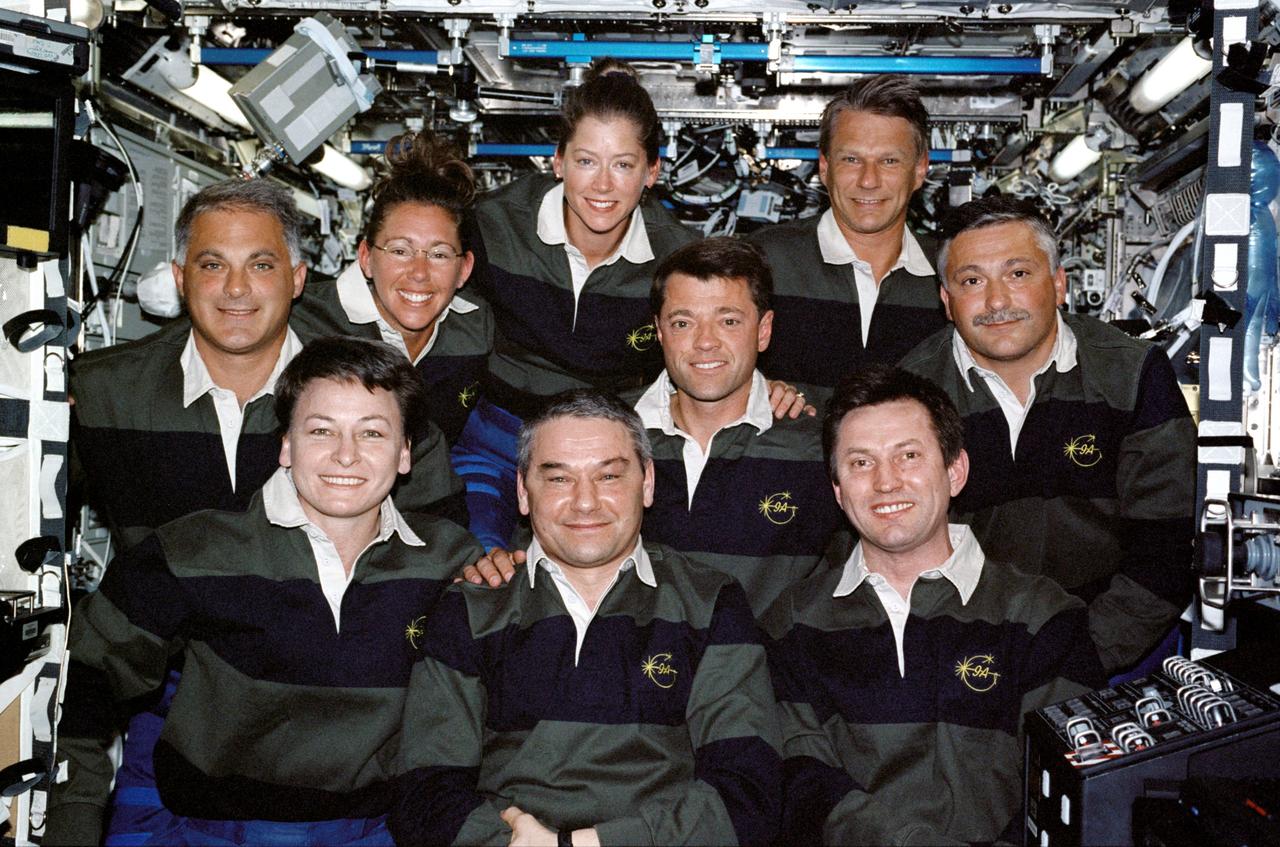
STS112-331-031 (13 October 2002) --- The Expedition Five and STS-112 crews assemble for a group photo in the Destiny laboratory on the International Space Station (ISS). From the left, front row, are astronaut Peggy A. Whitson, Expedition Five flight engineer; cosmonauts Valery G. Korzun and Sergei Y. Treschev, Expedition Five mission commander and flight engineer, respectively. From the left, back row, are astronauts David A. Wolf, Sandra H. Magnus, both STS-112 mission specialists; Pamela A. Melroy, Jeffrey S. Ashby, STS-112 pilot and mission commander, respectively; Piers J. Sellers and cosmonaut Fyodor N. Yurchikhin, both STS-112 mission specialists. Korzun, Treschev and Yurchikhin represent Rosaviakosmos.
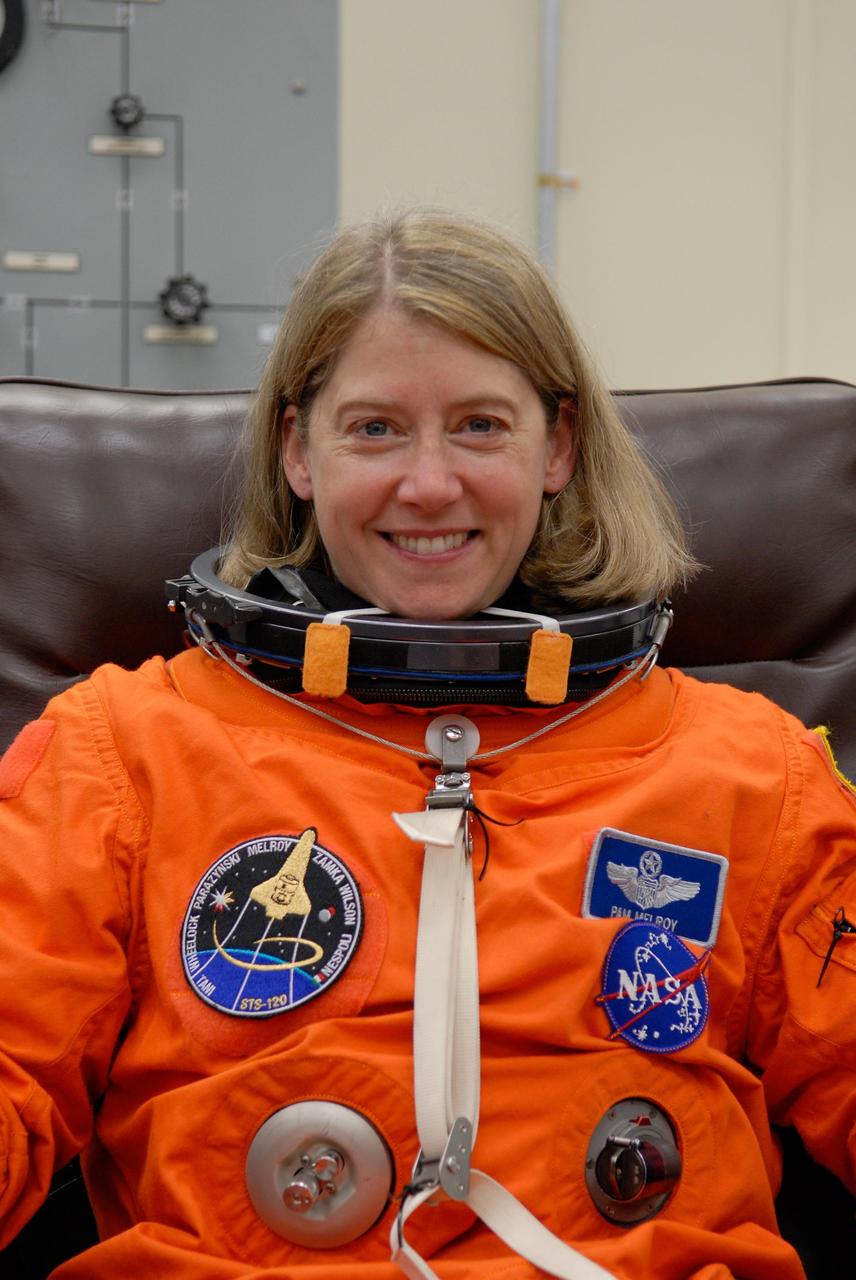
KENNEDY SPACE CENTER, FLA. -- At NASA's Kennedy Space Center, the STS-120 crew don their launch and entry suits before heading to Launch Pad 39A for launch aboard space shuttle Discovery to the International Space Station. Seen here is Commander Pamela Melroy, who is making her third shuttle flight. She is only the second woman to command a shuttle mission. Discovery is scheduled for liftoff at 11:38 a.m. EDT. The mission will be the 23rd assembly flight to the space station and the 34th flight for Discovery. Payload on the mission is the Italian-built U.S. Node 2, called Harmony. During the 14-day mission, the crew will install Harmony and move the P6 solar arrays to their permanent position and deploy them. Discovery is expected to complete its mission and return home at 4:47 a.m. EST on Nov. 6. Photo credit: NASA/Kim Shiflett
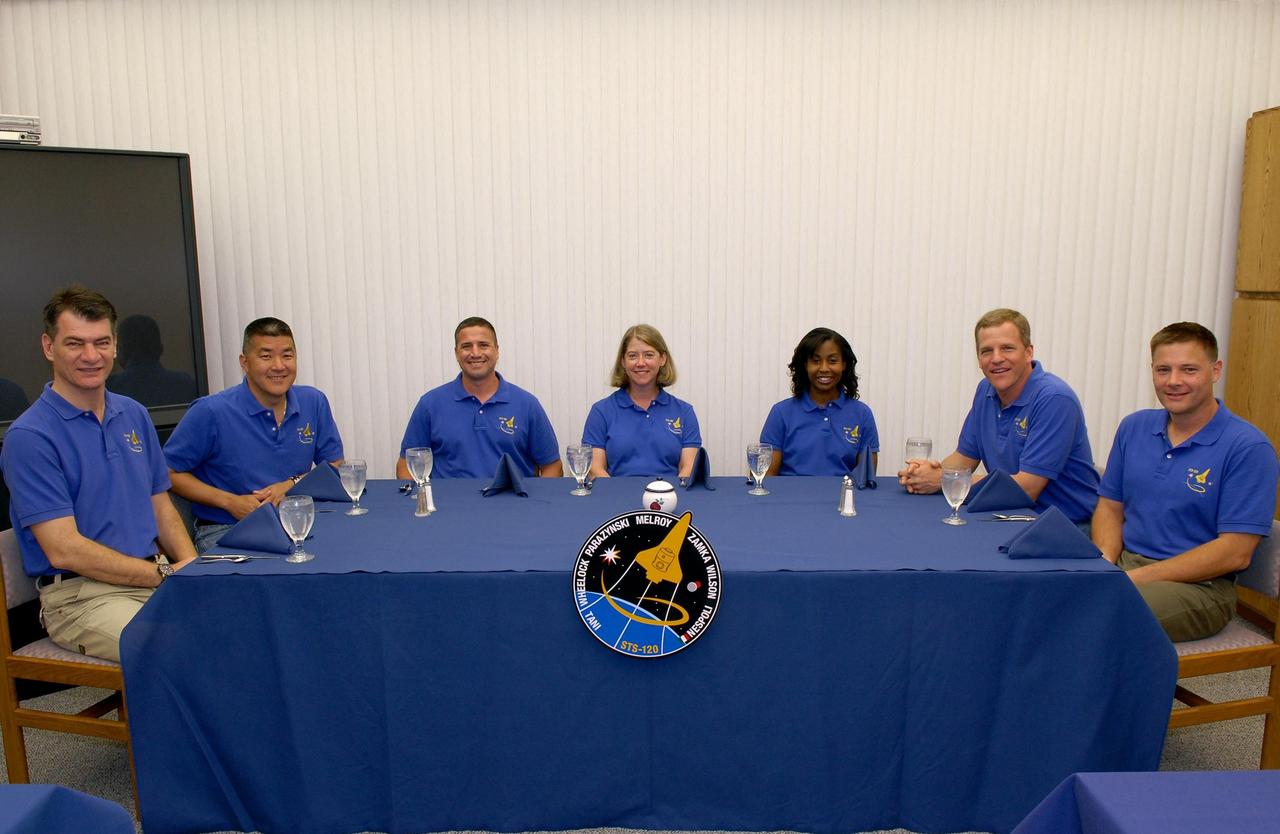
KENNEDY SPACE CENTER, FLA. -- At NASA's Kennedy Space Center, the STS-120 crew members have gathered for the traditional breakfast before launch on space shuttle Discovery to the International Space Station. Around the table, from left, are Mission Specialists Paolo Nespoli and Daniel Tani, Pilot George Zamka, Commander Pamela Melroy and Mission Specialists Stephanie Wilson, Scott Parazynski and Doug Wheelock. Melroy is only the second woman to command a shuttle mission. Discovery is scheduled for liftoff from Launch Pad 39A at 11:38 a.m. EDT. The mission will be the 23rd assembly flight to the space station and the 34th flight for Discovery. Payload on the mission is the Italian-built U.S. Node 2, called Harmony. During the 14-day mission, the crew will install Harmony and move the P6 solar arrays to their permanent position and deploy them. Discovery is expected to complete its mission and return home at 4:47 a.m. EST on Nov. 6. Photo credit: NASA/Kim Shiflett
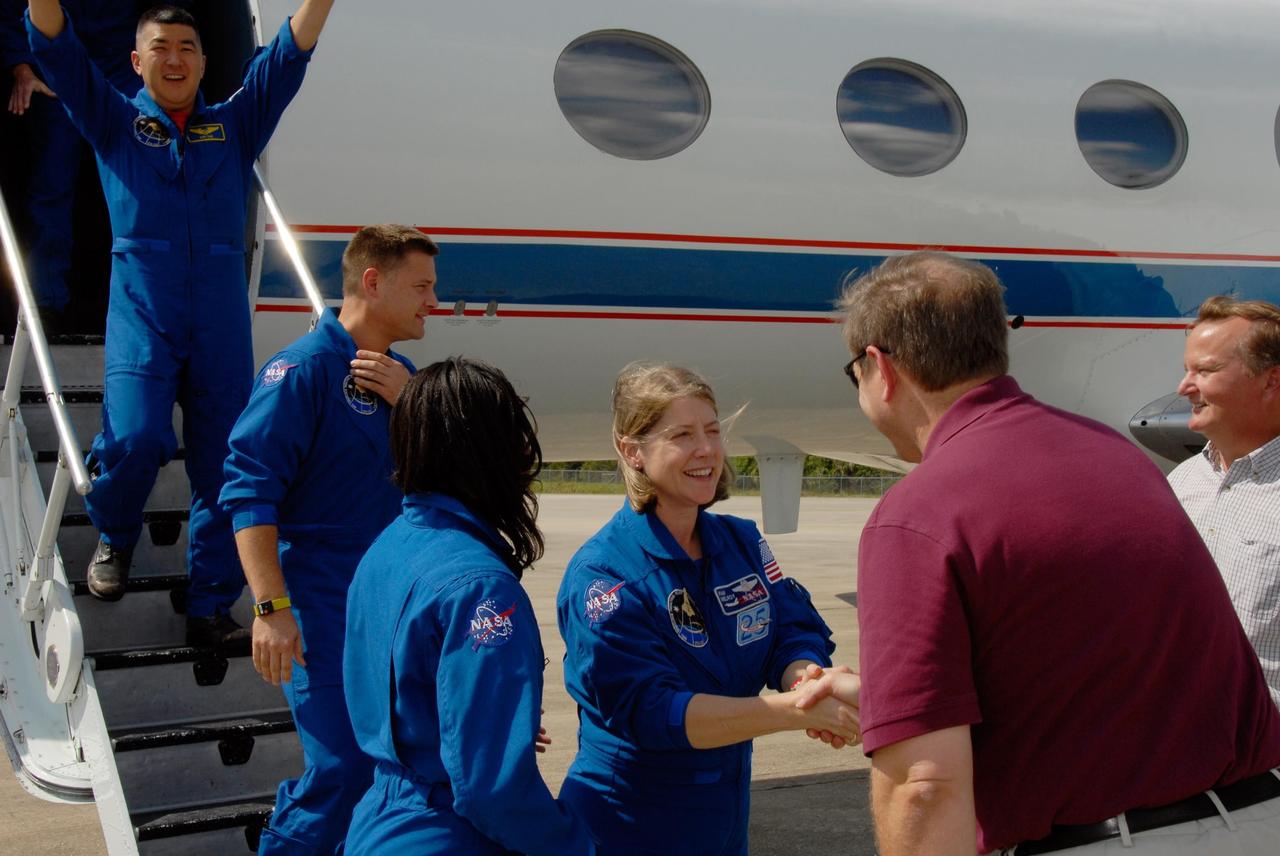
KENNEDY SPACE CENTER, FLA. -- STS-120 Commander Pamela Melroy is greeted by Mike Wetmore, director of Launch Vehicle Processing, as she exits the Shuttle Training Aircraft with the crew at NASA's Kennedy Space Center. Melroy will be making her third shuttle flight, the second woman to command a shuttle mission. Next to her is Mission Specialist Stephanie Wilson. Behind them on the steps are Mission Specialists Doug Wheelock and Dan Tani (at top), who will be remaining behind to join the Expedition 16 crew after the mission is complete. At right is Shuttle Launch Director Mike Leinbach. The crew has returned to Kennedy to prepare for launch aboard space shuttle Discovery at 11:38 a.m. EDT on Oct. 23. The mission will be the 23rd shuttle flight to the International Space Station, delivering the Italian-built U.S. Node 2, called Harmony. The 14-day mission includes five spacewalks -- four by shuttle crew members and one by the station’s Expedition 16 crew -- to install Harmony and move the P6 solar arrays to their permanent position and deploy them. Discovery is expected to complete its mission and return home at 4:47 a.m. EST on Nov. 6. Photo credit: NASA/Kim Shiflett