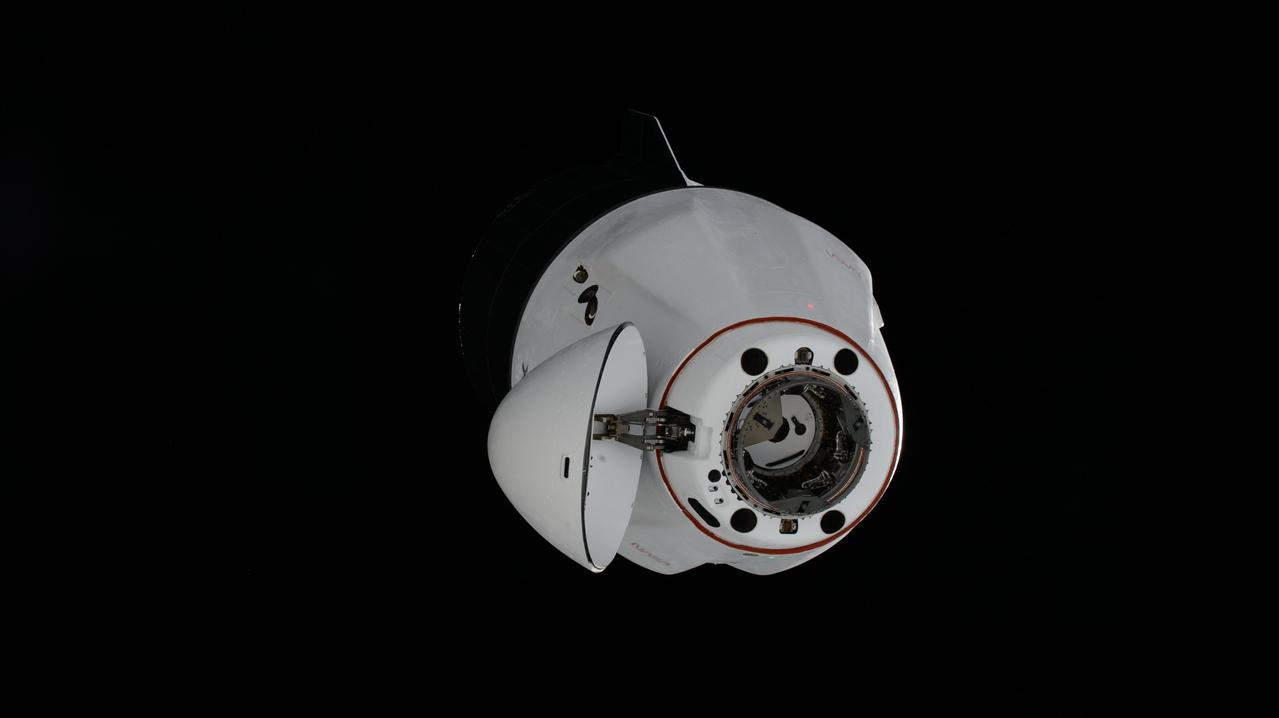
iss070e129463 (March 23, 2024) --- The SpaceX Dragon cargo spacecraft, on NASA's 30th Commercial Resupply Services (CRS-30) mission, approaches the International Space Station for a docking to the Harmony module's space-facing port.
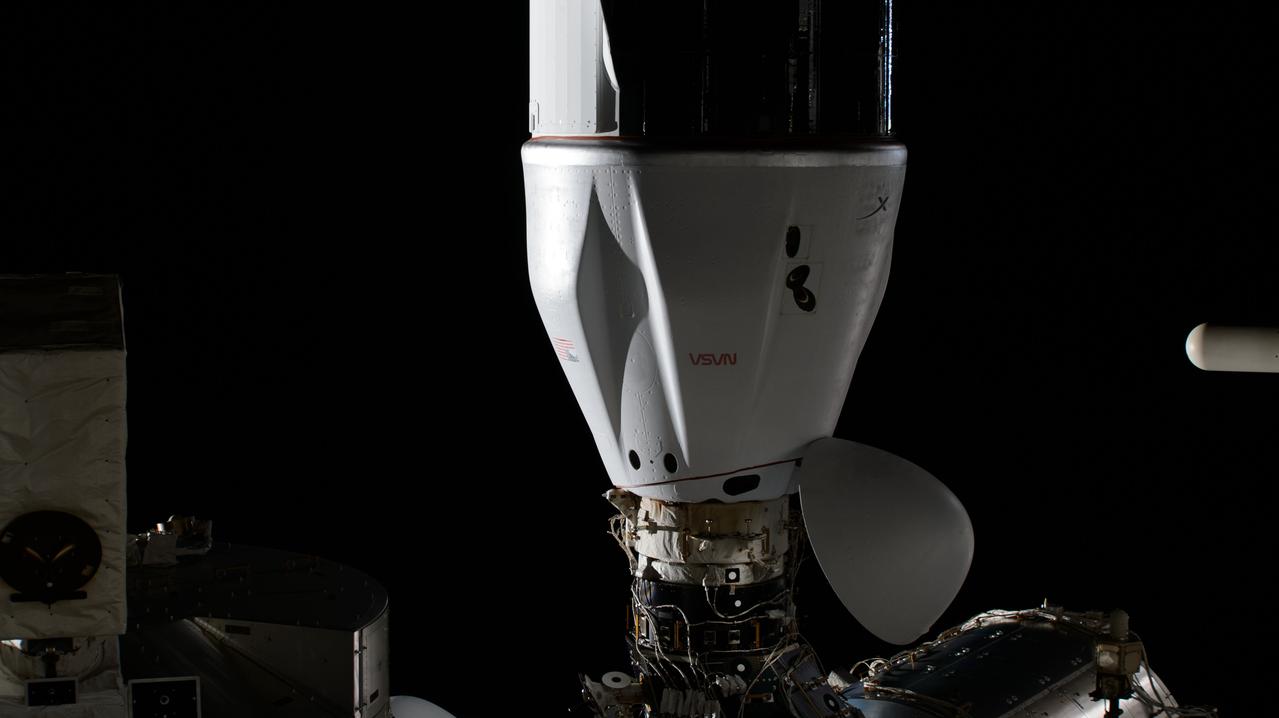
iss070e129455 (March 23, 2024) --- The SpaceX Dragon cargo spacecraft, on NASA's 30th Commercial Resupply Services (CRS-30) mission, is pictured docked to the space-facing port on the International Space Station's Harmony module.

iss070e129454 (March 23, 2024) --- The SpaceX Dragon cargo craft, on NASA's 30th Commercial Resupply Services (CRS-30) mission, approaches the International Space Station for a docking to the Harmony module's space-facing port.
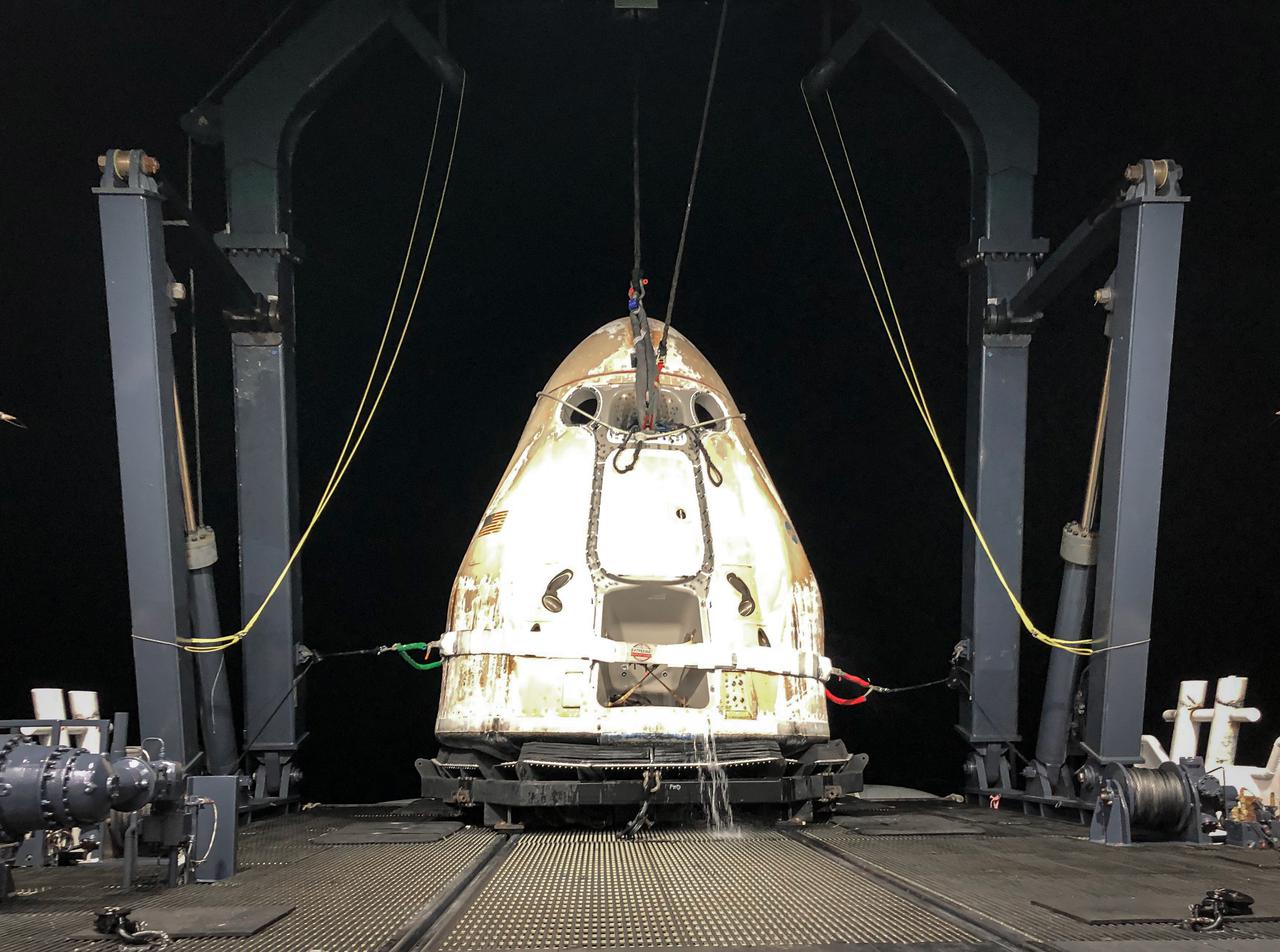
SpaceX’s Cargo Dragon spacecraft is lifted aboard a recovery vessel after splashing down in the Atlantic Ocean off the coast of Florida on Thursday, Sept. 30, 2021. The capsule, carrying cargo that flew aboard NASA’s SpaceX 23rd commercial resupply services mission, undocked from the International Space Station Thursday at approximately 9 a.m. The event marked the first time a Cargo Dragon splashed down in the Atlantic Ocean. Cargo from the capsule was delivered to the Launch and Landing Facility at Kennedy Space Center.

A SpaceX Falcon 9 rocket lifts off from Launch Complex 39A at NASA’s Kennedy Space Center in Florida at 3:14 a.m. on Aug. 29, 2021, carrying the Dragon spacecraft on its journey to the International Space Station for NASA and SpaceX’s 23rd commercial resupply services mission. Dragon delivered new science investigations, supplies, and equipment to the crew aboard the orbiting laboratory.
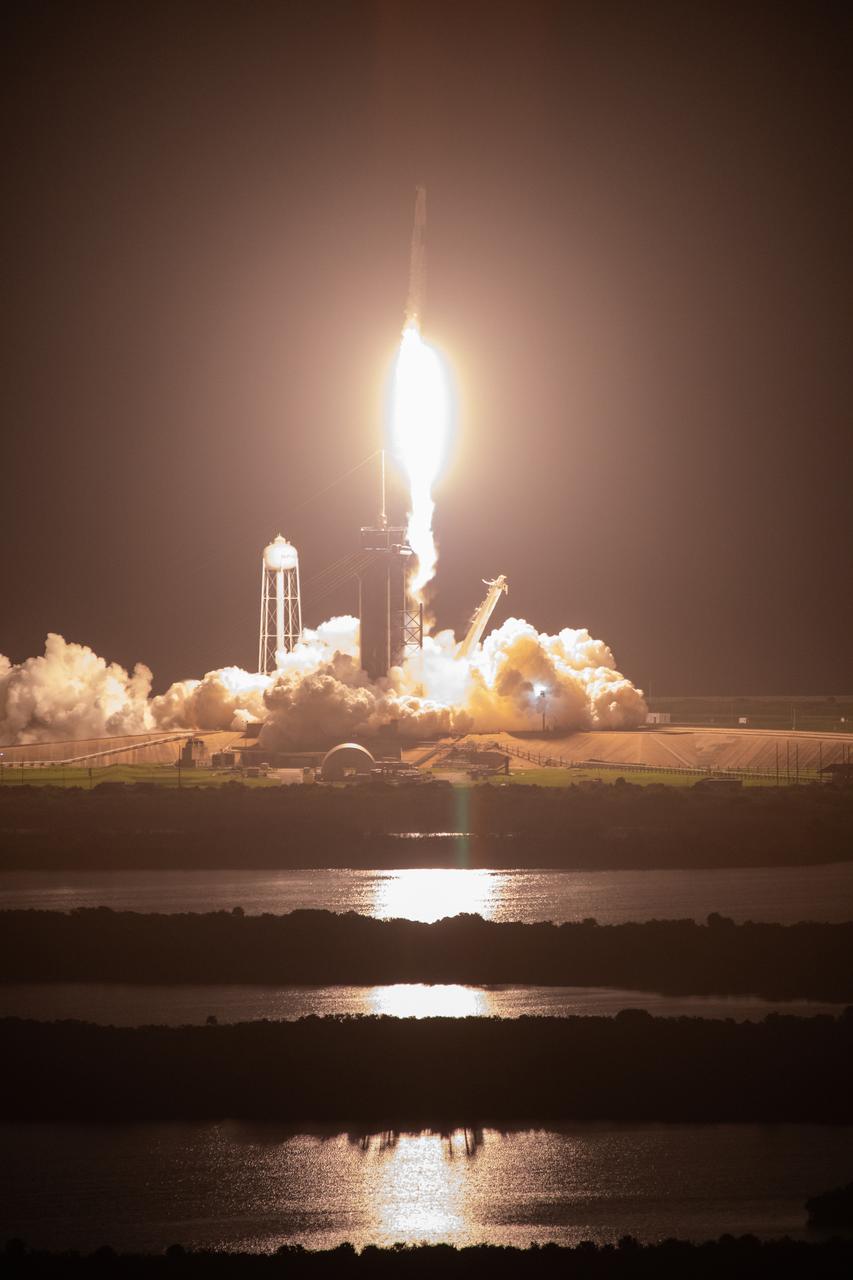
A SpaceX Falcon 9 rocket lifts off from Launch Complex 39A at NASA’s Kennedy Space Center in Florida at 3:14 a.m. on Aug. 29, 2021, carrying the Dragon spacecraft on its journey to the International Space Station for NASA and SpaceX’s 23rd commercial resupply services mission. Dragon will deliver new science investigations, supplies, and equipment to the crew aboard the orbiting laboratory.
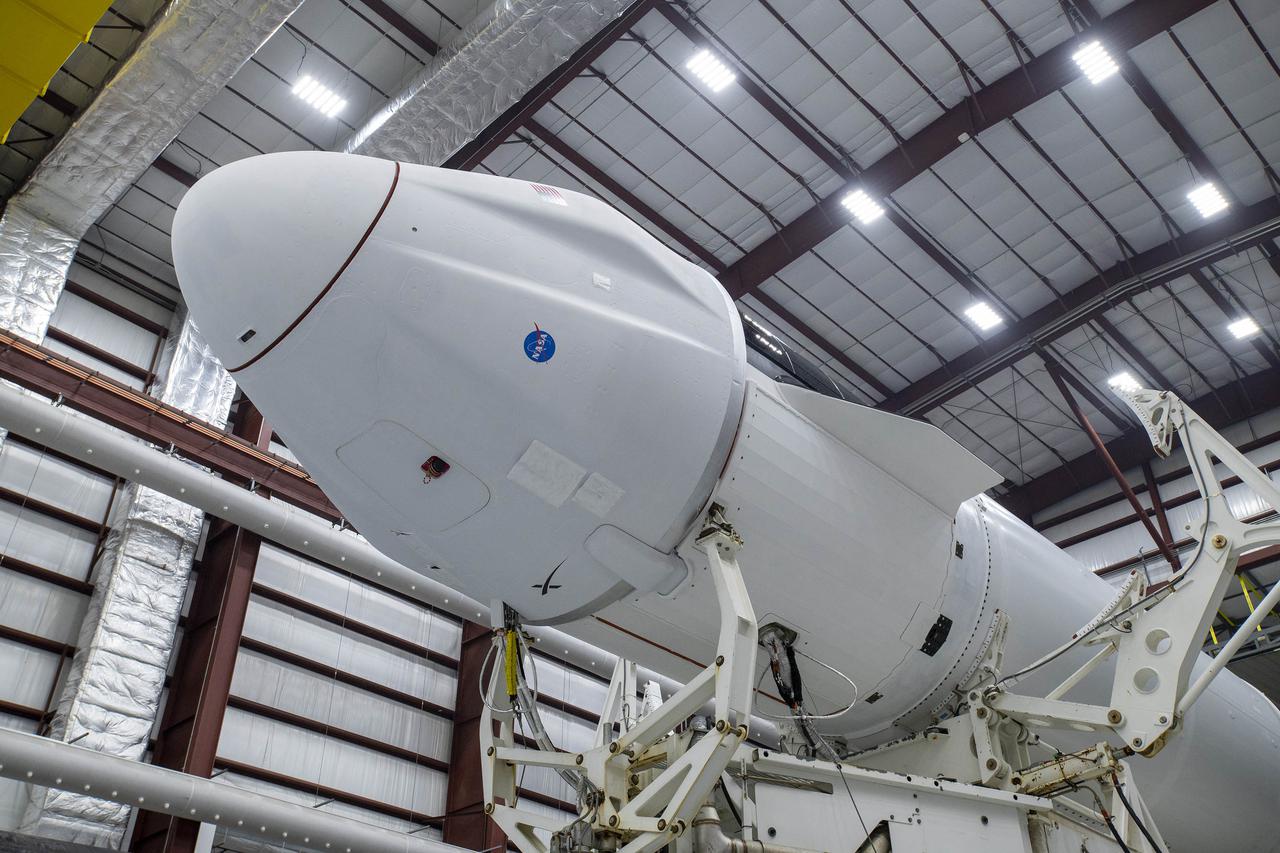
A SpaceX Falcon 9 rocket, topped with the Dragon spacecraft, is seen inside the company’s hangar at NASA’s Kennedy Space Center in Florida on Aug. 24, 2021, prior to being rolled out to the launch pad in preparation for the 23rd commercial resupply services launch. The mission will deliver new science investigations, supplies, and equipment to the crew aboard the International Space Station. Liftoff is scheduled for 3:37 a.m. EDT on Saturday, Aug. 28, from Kennedy’s Launch Complex 39A.
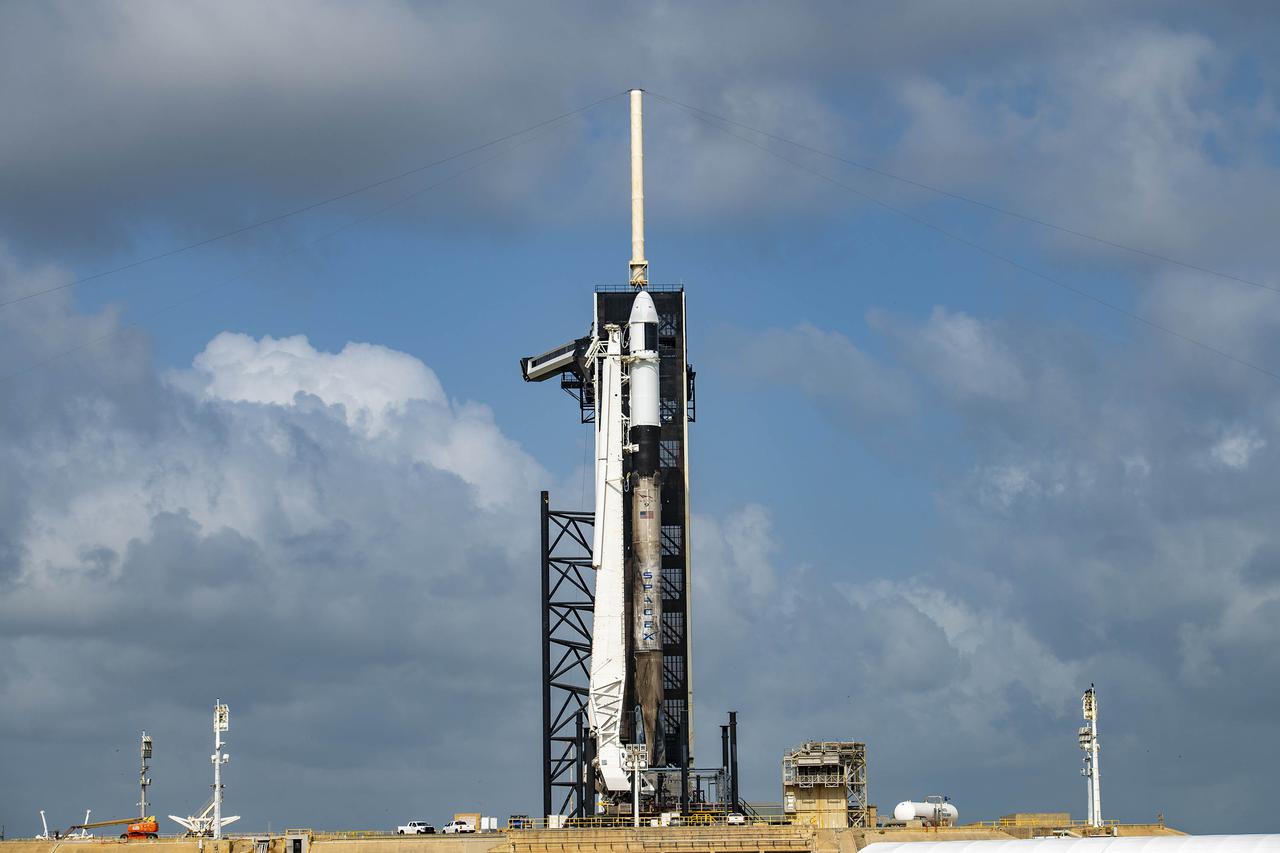
A SpaceX Falcon 9 rocket, with the company’s uncrewed Dragon spacecraft atop, is raised to a vertical position at NASA Kennedy Space Center’s Launch Complex 39A on Aug. 25, 2021, in preparation for the 23rd commercial resupply services launch to the International Space Station. The mission will deliver new science investigations, supplies, and equipment to the crew aboard the orbiting laboratory. Liftoff is scheduled for 3:37 a.m. EDT on Saturday, Aug. 28.
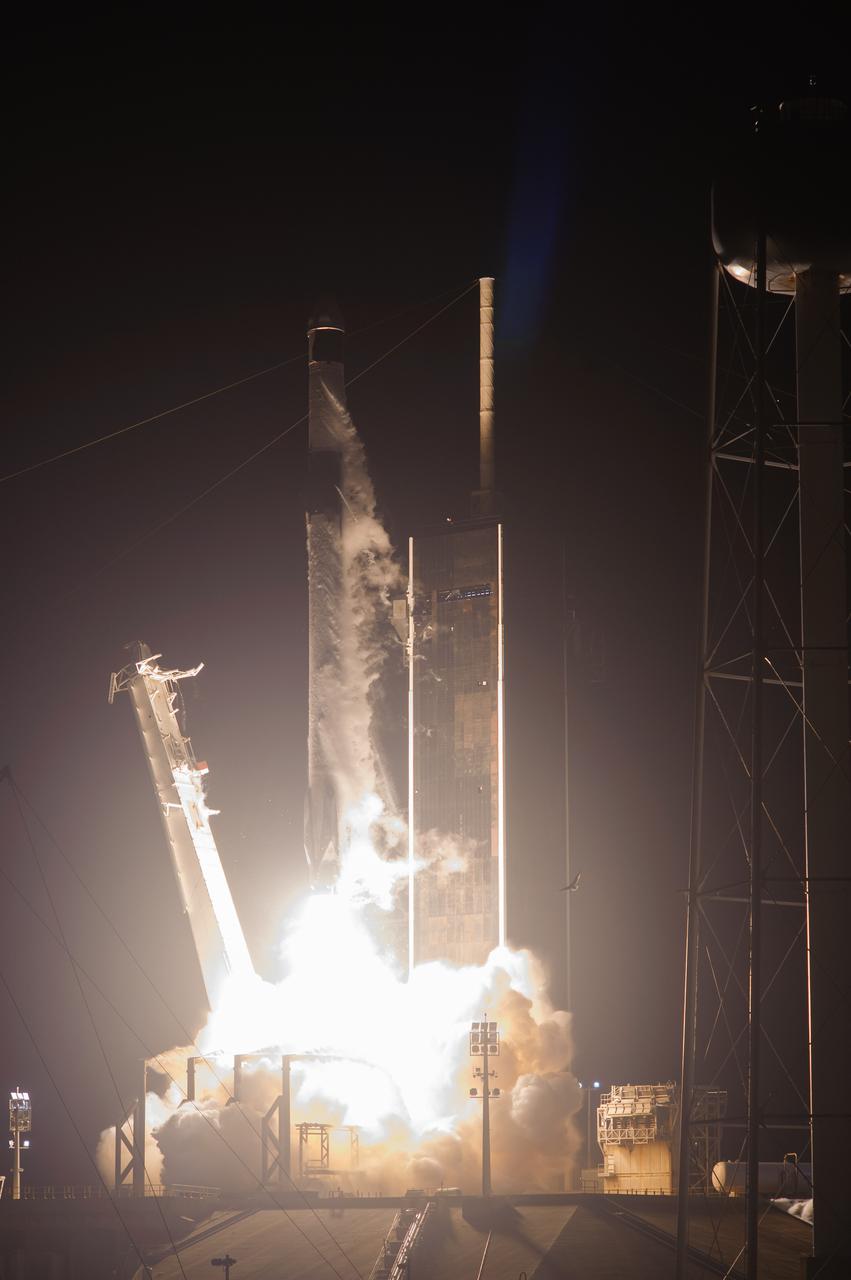
A SpaceX Falcon 9 rocket, with the uncrewed Dragon spacecraft atop, lifts off from Launch Complex 39A at NASA’s Kennedy Space Center in Florida on Aug. 29, 2021, for the company’s 23rd commercial resupply services mission to the International Space Station. The mission delivered new science investigations, supplies, and equipment to the international crew aboard the orbiting laboratory. Liftoff occurred at 3:14 a.m. EDT.
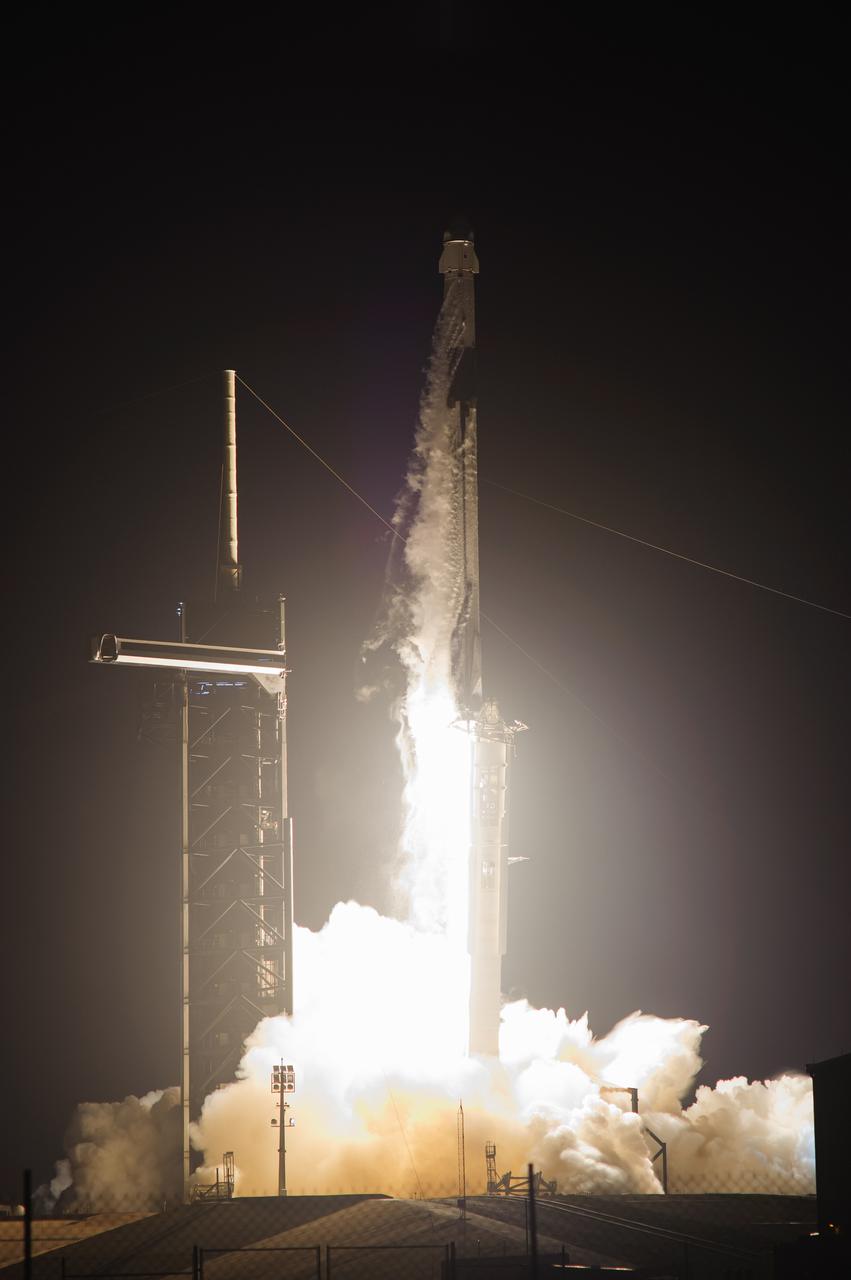
A SpaceX Falcon 9 rocket, with the uncrewed Dragon spacecraft atop, lifts off from Launch Complex 39A at NASA’s Kennedy Space Center in Florida on Aug. 29, 2021, for the company’s 23rd commercial resupply services mission to the International Space Station. The mission delivered new science investigations, supplies, and equipment to the international crew aboard the orbiting laboratory. Liftoff occurred at 3:14 a.m. EDT.
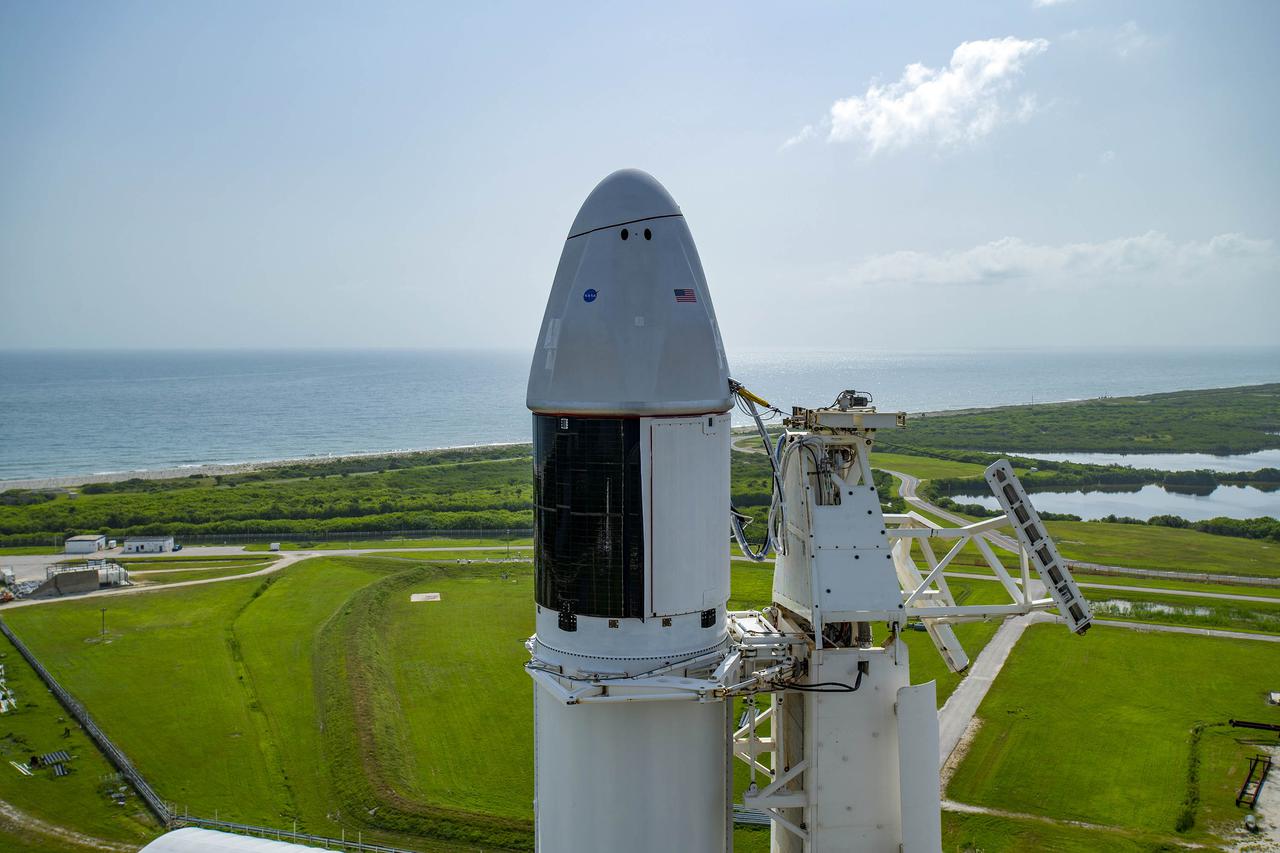
Seen here is an up-close view of the SpaceX Dragon spacecraft atop the company’s Falcon 9 rocket after being raised to a vertical position at NASA’s Kennedy Space Center in Florida on Aug. 25, 2021, in preparation for the 23rd commercial resupply services launch to the International Space Station. The mission will deliver new science investigations, supplies, and equipment to the crew aboard the orbiting laboratory. Liftoff is scheduled for 3:37 a.m. EDT on Saturday, Aug. 28, from Kennedy’s Launch Complex 39A.
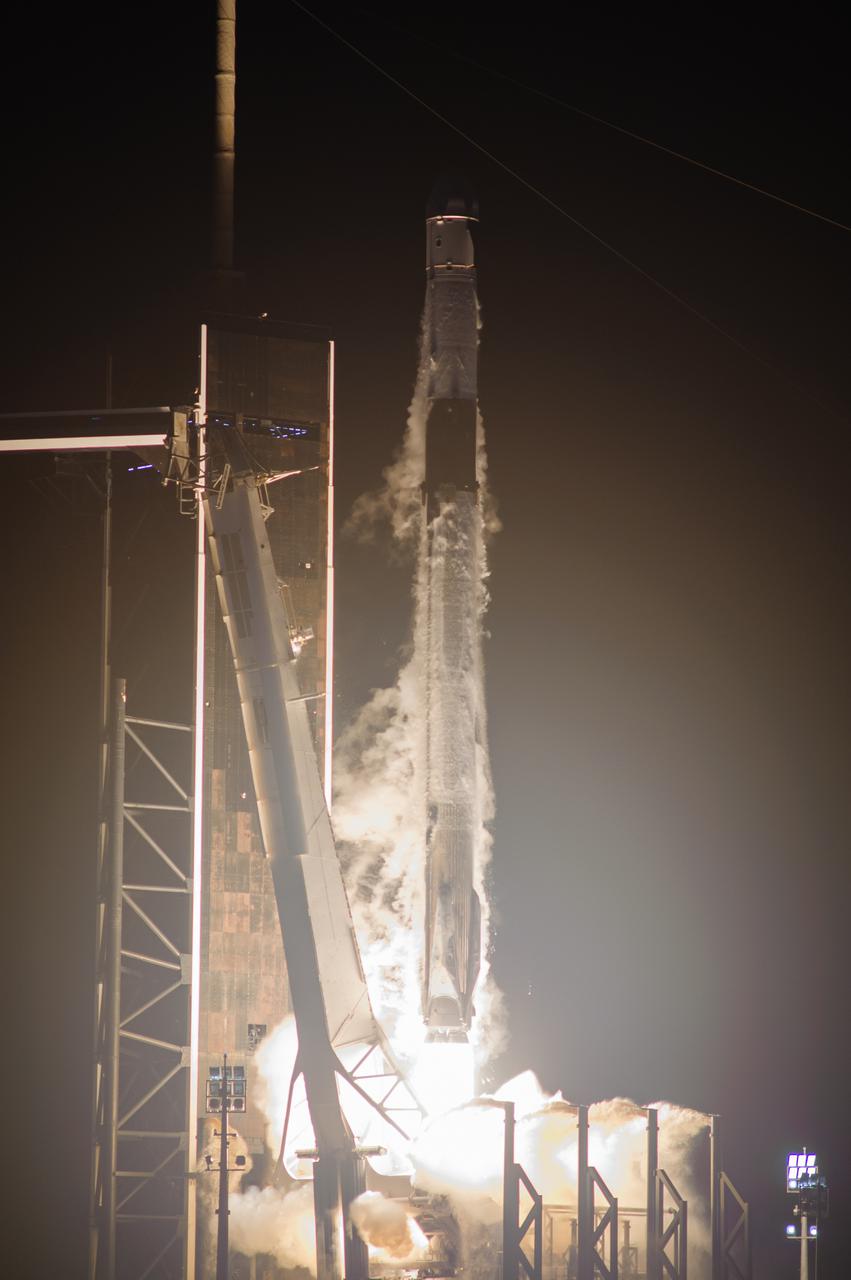
A SpaceX Falcon 9 rocket, with the uncrewed Dragon spacecraft atop, lifts off from Launch Complex 39A at NASA’s Kennedy Space Center in Florida on Aug. 29, 2021, for the company’s 23rd commercial resupply services mission to the International Space Station. The mission delivered new science investigations, supplies, and equipment to the international crew aboard the orbiting laboratory. Liftoff occurred at 3:14 a.m. EDT.
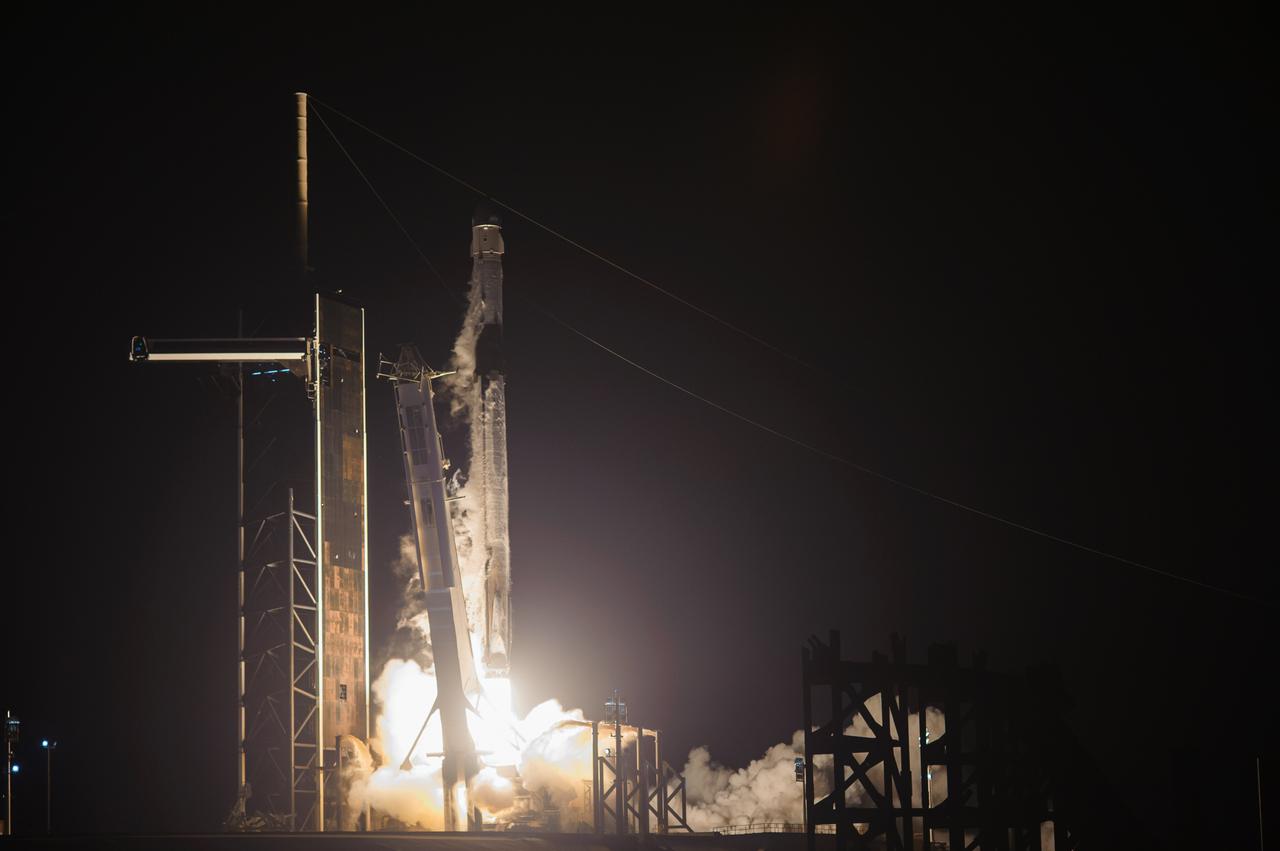
A SpaceX Falcon 9 rocket lifts off from Launch Complex 39A at NASA’s Kennedy Space Center in Florida at 3:14 a.m. on Aug. 29, 2021, carrying the Dragon spacecraft on its journey to the International Space Station for NASA and SpaceX’s 23rd commercial resupply services mission. Dragon delivered new science investigations, supplies, and equipment to the crew aboard the orbiting laboratory.
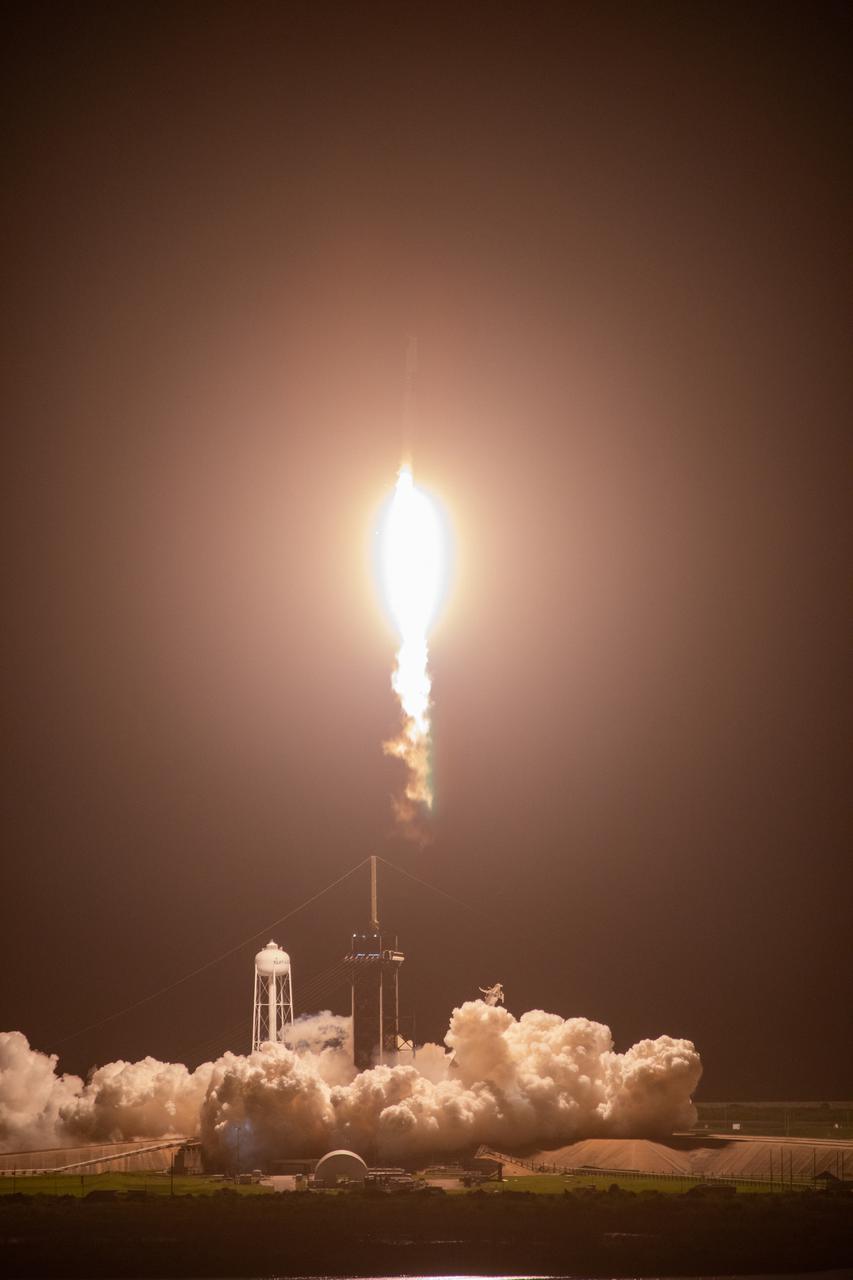
A SpaceX Falcon 9 rocket, topped with the uncrewed Dragon spacecraft, soars upward after lifting off from NASA Kennedy Space Center’s Launch Complex 39A in Florida at 3:14 a.m. on Aug. 29, 2021. Dragon will deliver new science investigations, supplies, and equipment to the International Space Station for NASA and SpaceX’s 23rd commercial resupply services mission.
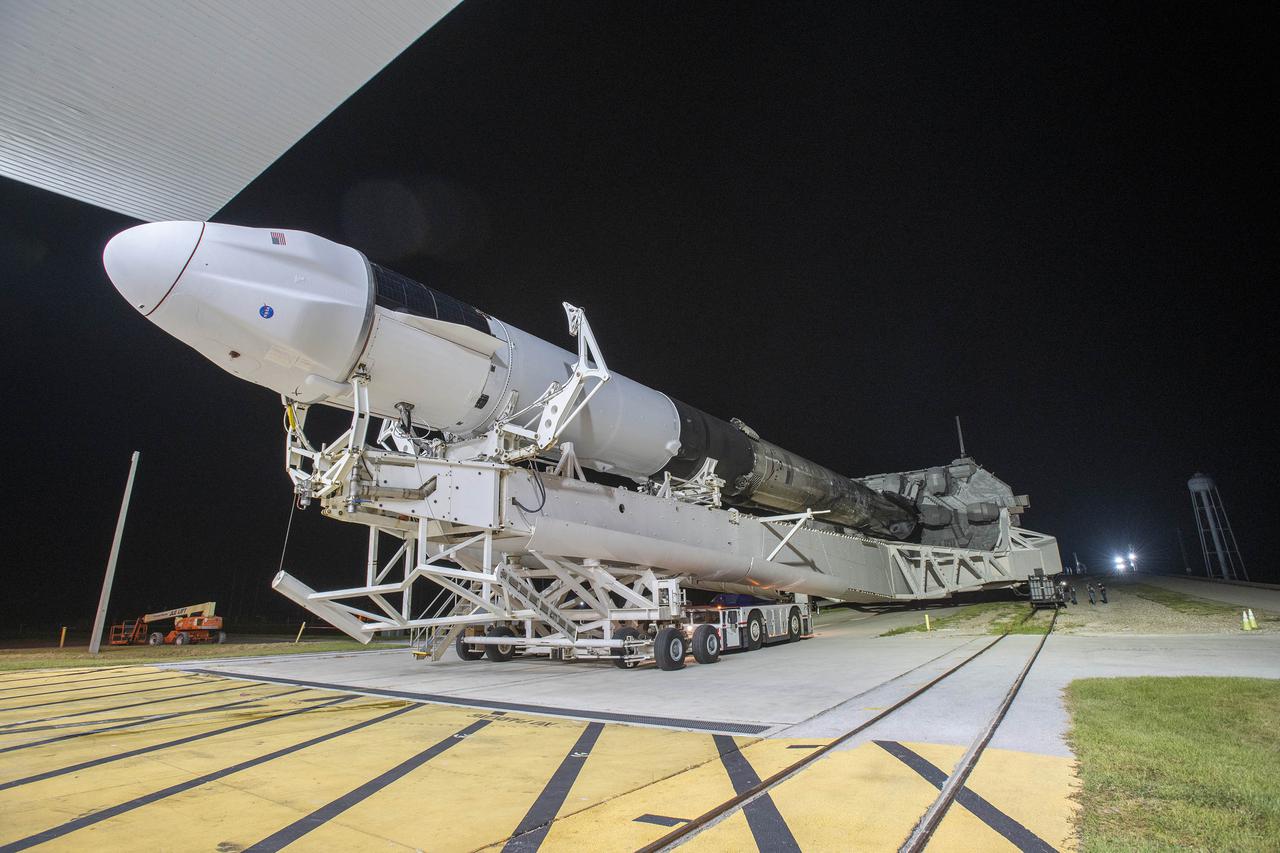
SpaceX’s Dragon spacecraft, seen atop the company’s Falcon 9 rocket, is rolled out to the launch pad at NASA’s Kennedy Space Center in Florida on Aug. 24, 2021, in preparation for the 23rd commercial resupply services launch. The mission will deliver new science investigations, supplies, and equipment to the crew aboard the International Space Station. Liftoff is scheduled for 3:37 a.m. EDT on Saturday, Aug. 28, from Kennedy’s Launch Complex 39A.
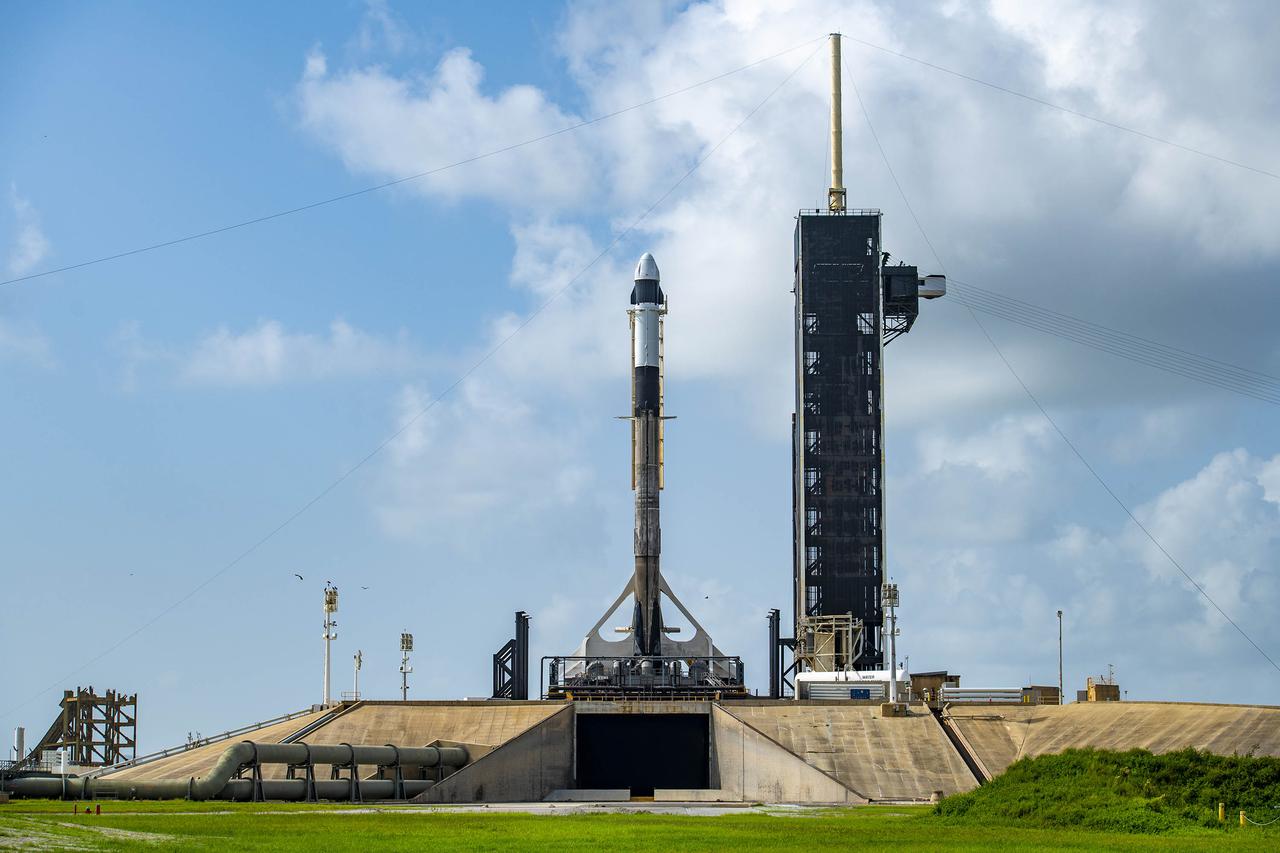
A SpaceX Falcon 9 rocket, with the company’s uncrewed Dragon spacecraft atop, is raised to a vertical position at NASA Kennedy Space Center’s Launch Complex 39A on Aug. 25, 2021, in preparation for the 23rd commercial resupply services launch to the International Space Station. The mission will deliver new science investigations, supplies, and equipment to the crew aboard the orbiting laboratory. Liftoff is scheduled for 3:37 a.m. EDT on Saturday, Aug. 28.

A SpaceX Falcon 9 rocket lifts off from Launch Complex 39A at NASA’s Kennedy Space Center in Florida at 3:14 a.m. on Aug. 29, 2021, carrying the Dragon spacecraft on its journey to the International Space Station for NASA and SpaceX’s 23rd commercial resupply services mission. Dragon delivered new science investigations, supplies, and equipment to the crew aboard the orbiting laboratory.
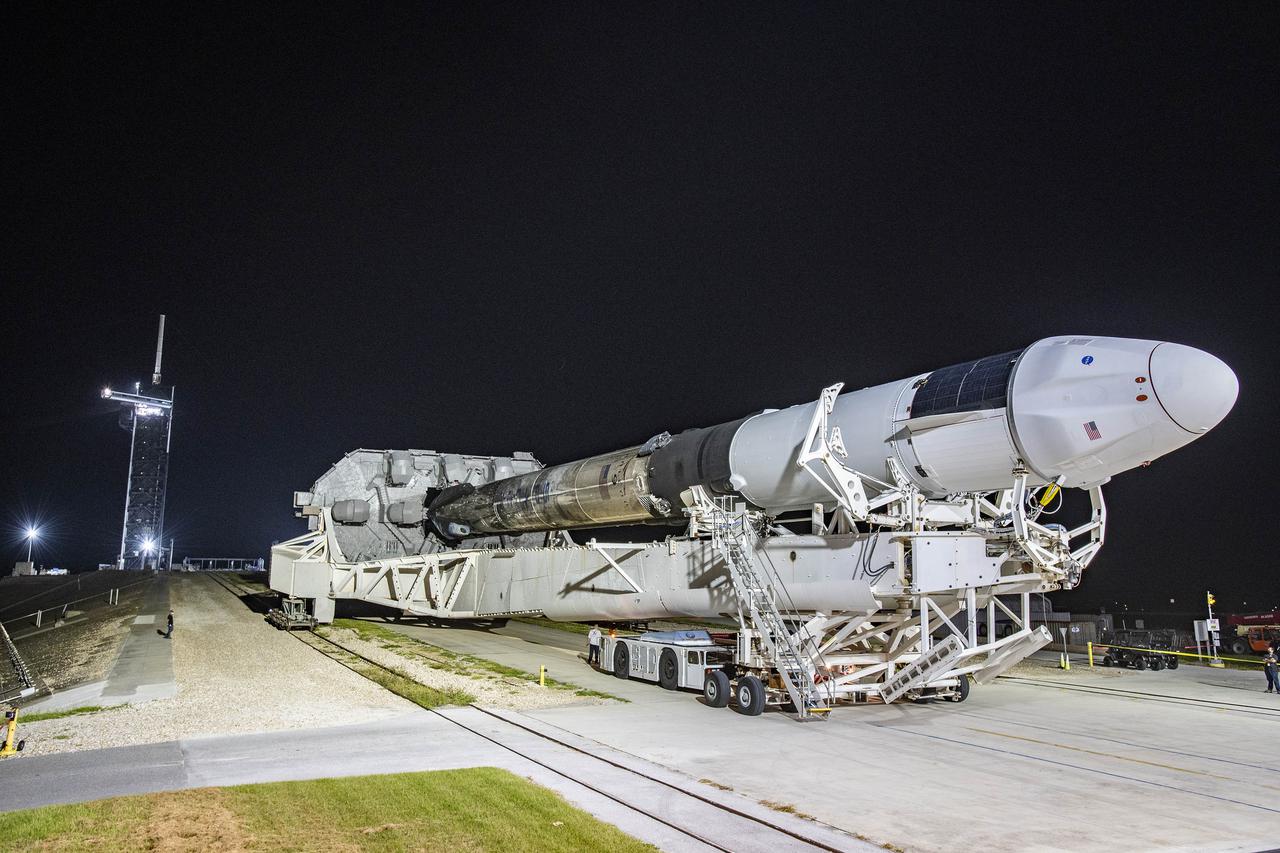
SpaceX’s Dragon spacecraft, seen atop the company’s Falcon 9 rocket, is rolled out to the launch pad at NASA’s Kennedy Space Center in Florida on Aug. 24, 2021, in preparation for the 23rd commercial resupply services launch. The mission will deliver new science investigations, supplies, and equipment to the crew aboard the International Space Station. Liftoff is scheduled for 3:37 a.m. EDT on Saturday, Aug. 28, from Kennedy’s Launch Complex 39A.

A SpaceX Falcon 9 rocket, with the company’s uncrewed Dragon spacecraft atop, is raised to a vertical position at NASA Kennedy Space Center’s Launch Complex 39A on Aug. 25, 2021, in preparation for the 23rd commercial resupply services launch to the International Space Station. The mission will deliver new science investigations, supplies, and equipment to the crew aboard the orbiting laboratory. Liftoff is scheduled for 3:37 a.m. EDT on Saturday, Aug. 28.
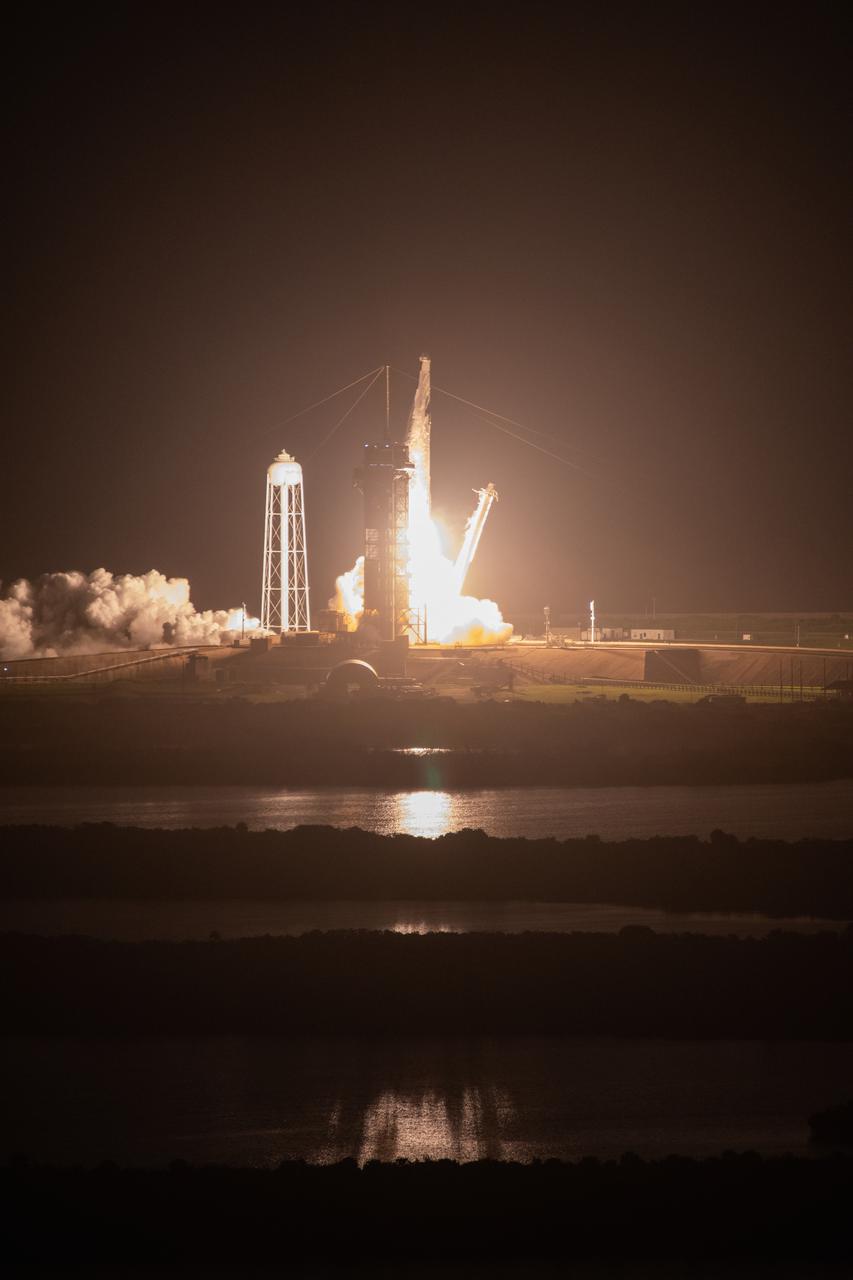
A SpaceX Falcon 9 rocket, with the uncrewed Dragon spacecraft atop, lifts off from Launch Complex 39A at NASA’s Kennedy Space Center in Florida on Aug. 29, 2021, for the company’s 23rd commercial resupply services mission to the International Space Station. The mission will deliver new science investigations, supplies, and equipment to the international crew aboard the orbiting laboratory. Liftoff occurred at 3:14 a.m. EDT.
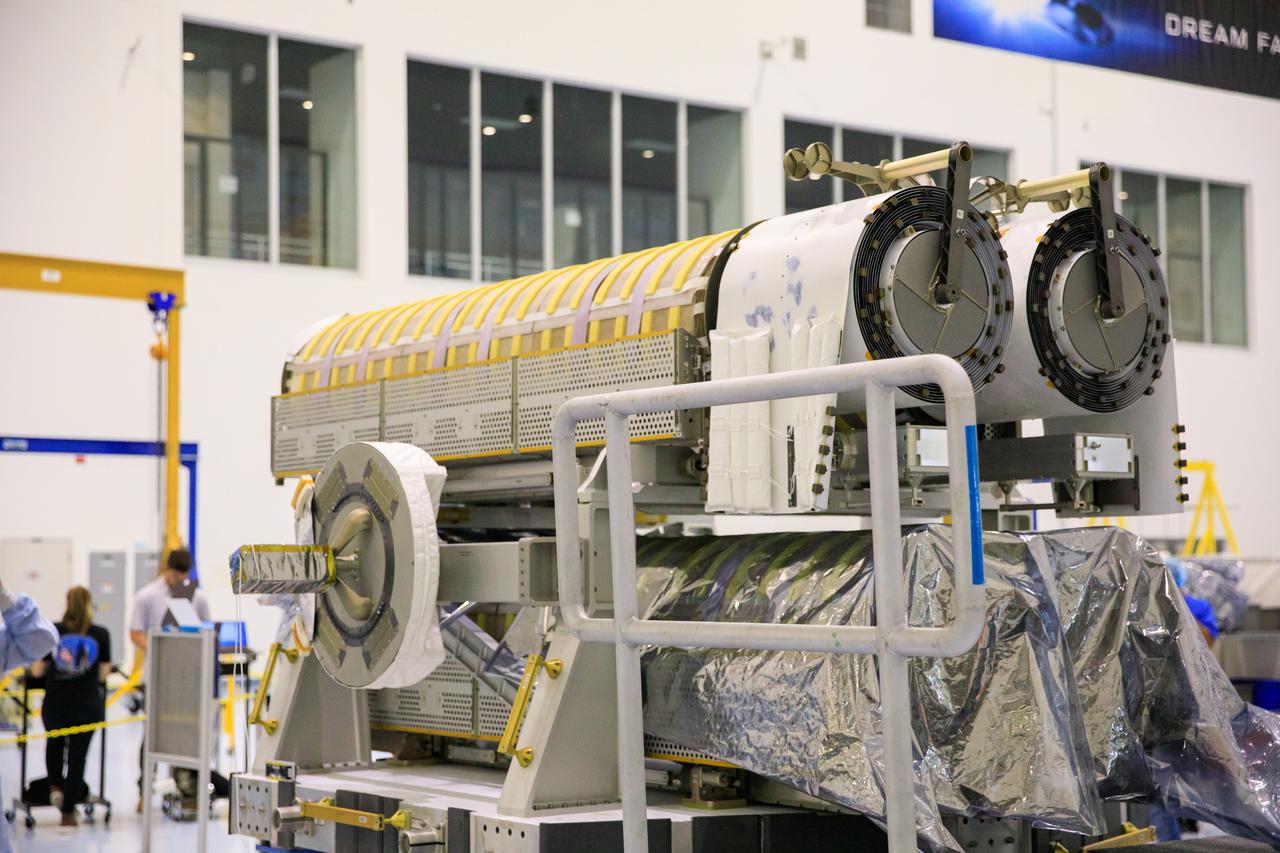
Inside the Space Station Processing Facility high bay at NASA's Kennedy Space Center in Florida, a set of International Space Station Roll Out Solar Arrays (iROSA) have been secured onto a platform on March 23, 2023. They are being prepared for delivery to the space station aboard SpaceX’s Dragon cargo carrier on the company’s 28th commercial resupply services (CRS-28) mission to the space station. iROSA is a new type of solar panel that rolls open in space and is more compact than current rigid panel designs.
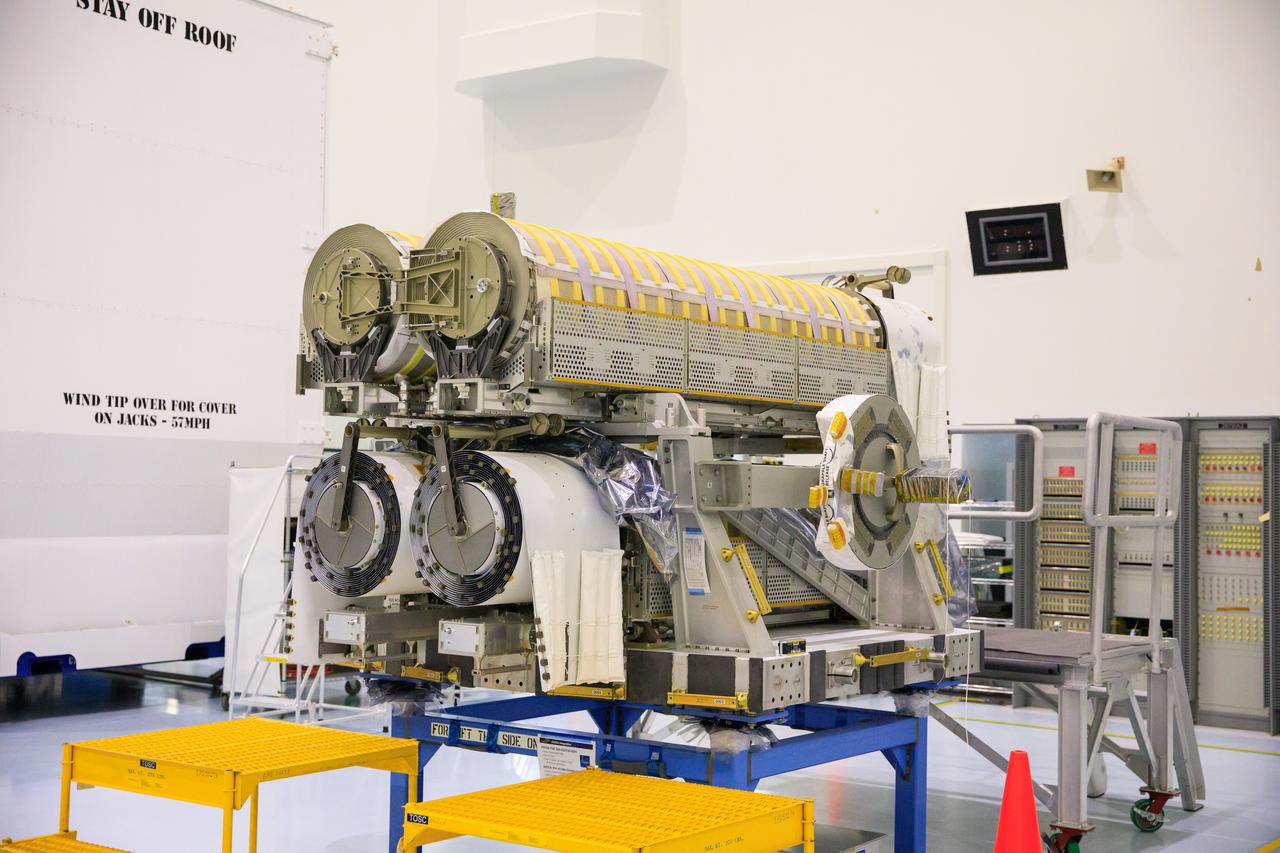
Inside the Space Station Processing Facility high bay at NASA's Kennedy Space Center in Florida, a set of International Space Station Roll Out Solar Arrays (iROSA) have been secured onto a platform on March 23, 2023. They are being prepared for delivery to the space station aboard SpaceX’s Dragon cargo carrier on the company’s 28th commercial resupply services (CRS-28) mission to the space station. iROSA is a new type of solar panel that rolls open in space and is more compact than current rigid panel designs.

Karl Hasenstein, the principal investigator for the Plant Habitat-02, or PH-02, plants radish seeds in seed carriers for the Addvanced Plant Habitat (APH) in the Space Life Sciences Lab at Kennedy Space Center on Sept. 23, 2020. The carriers will fly aboard Northrop Grumman’s 14th commercial resupply services mission to the International Space Station. The launch, aboard Northrop Grumman’s Cygnus spacecraft, is targeted for Sept. 29 from NASA’s Wallops Flight Facility in Virginia. Astronauts will grow radish plants in the APH, NASA’s largest and most advanced growth chamber on station.
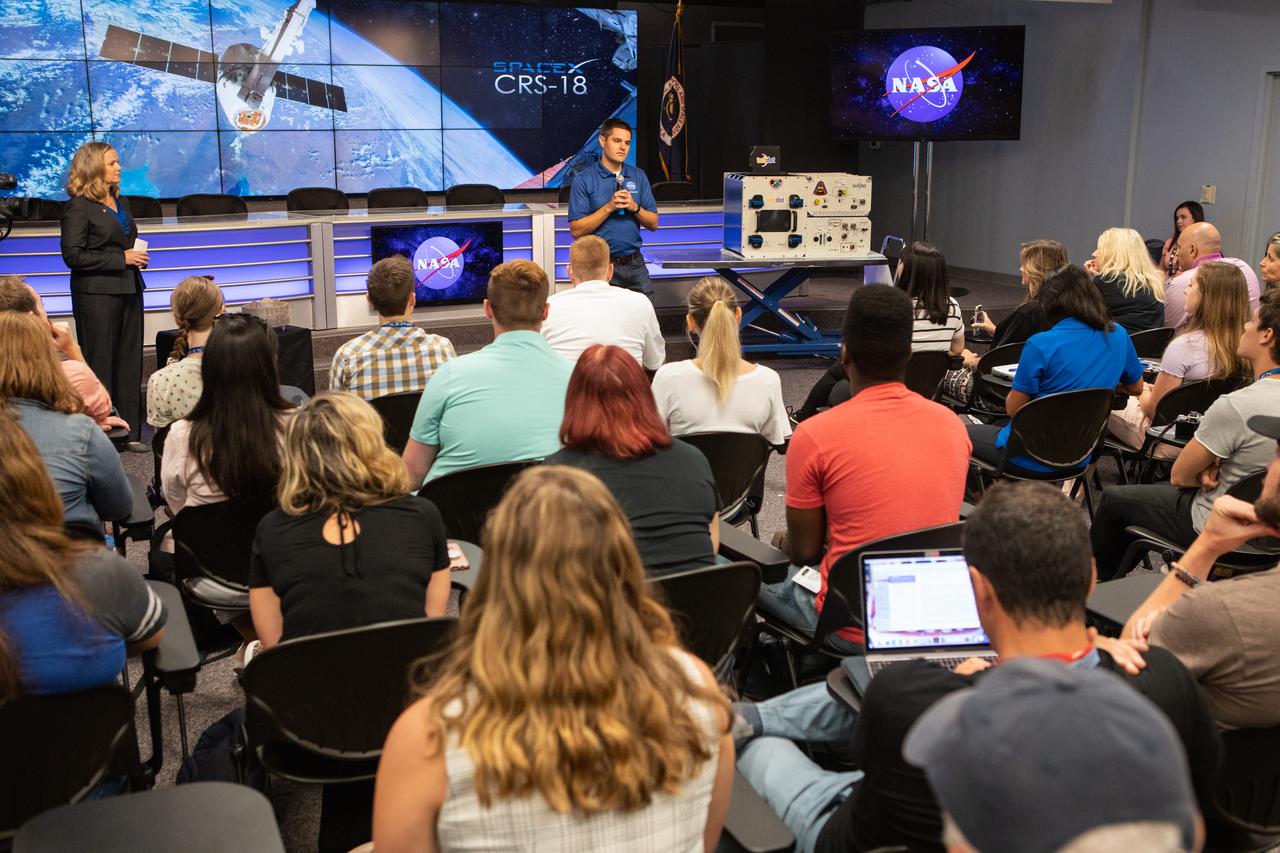
Jason August, International Space Station Mission Evaluation Room manager, talks to NASA Social participants about the International Docking Adapter-3 payload during a What’s On Board science briefing at the agency’s Kennedy Space Center in Florida on July 23, 2019. The briefing was held for SpaceX’s 18th Commercial Resupply Services (CRS-18) mission to the station. The SpaceX Falcon 9 rocket and uncrewed Dragon spacecraft are scheduled to launch July 24, 2019, from Space Launch Complex 40 at Florida’s Cape Canaveral Air Force Station.
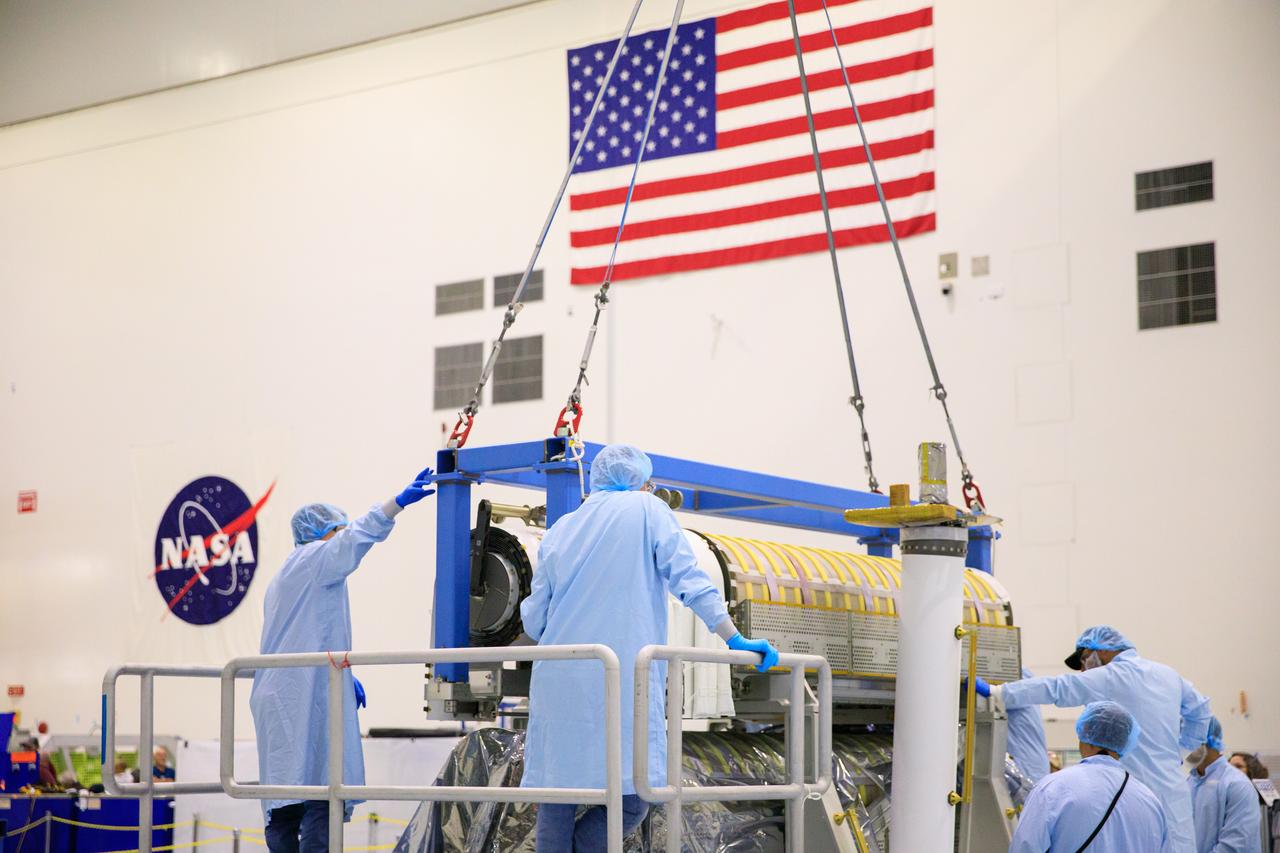
Inside the Space Station Processing Facility high bay at NASA's Kennedy Space Center in Florida, technicians assist as a crane is used to lower a set of International Space Station Roll Out Solar Arrays (iROSA) onto a platform on March 23, 2023. They are being prepared for delivery to the space station aboard SpaceX’s Dragon cargo carrier on the company’s 28th commercial resupply services (CRS-28) mission to the space station. iROSA is a new type of solar panel that rolls open in space and is more compact than current rigid panel designs.

Karl Hasenstein, the principal investigator for the Plant Habitat-02, or PH-02, plants radish seeds in seed carriers for the Addvanced Plant Habitat (APH) in the Space Life Sciences Lab at Kennedy Space Center on Sept. 23, 2020. The carriers will fly aboard Northrop Grumman’s 14th commercial resupply services mission to the International Space Station. The launch, aboard Northrop Grumman’s Cygnus spacecraft, is targeted for Sept. 29 from NASA’s Wallops Flight Facility in Virginia. Astronauts will grow radish plants in the APH, NASA’s largest and most advanced growth chamber on station.

Karl Hasenstein, the principal investigator for the Plant Habitat-02, or PH-02, plants radish seeds in seed carriers for the Addvanced Plant Habitat (APH) in the Space Life Sciences Lab at Kennedy Space Center on Sept. 23, 2020. The carriers will fly aboard Northrop Grumman’s 14th commercial resupply services mission to the International Space Station. The launch, aboard Northrop Grumman’s Cygnus spacecraft, is targeted for Sept. 29 from NASA’s Wallops Flight Facility in Virginia. Astronauts will grow radish plants in the APH, NASA’s largest and most advanced growth chamber on station.

Karl Hasenstein, the principal investigator for the Plant Habitat-02, or PH-02, plants radish seeds in seed carriers for the Addvanced Plant Habitat (APH) in the Space Life Sciences Lab at Kennedy Space Center on Sept. 23, 2020. The carriers will fly aboard Northrop Grumman’s 14th commercial resupply services mission to the International Space Station. The launch, aboard Northrop Grumman’s Cygnus spacecraft, is targeted for Sept. 29 from NASA’s Wallops Flight Facility in Virginia. Astronauts will grow radish plants in the APH, NASA’s largest and most advanced growth chamber on station.

Karl Hasenstein, the principal investigator for the Plant Habitat-02, or PH-02, plants radish seeds in seed carriers for the Addvanced Plant Habitat (APH) in the Space Life Sciences Lab at Kennedy Space Center on Sept. 23, 2020. The carriers will fly aboard Northrop Grumman’s 14th commercial resupply services mission to the International Space Station. The launch, aboard Northrop Grumman’s Cygnus spacecraft, is targeted for Sept. 29 from NASA’s Wallops Flight Facility in Virginia. Astronauts will grow radish plants in the APH, NASA’s largest and most advanced growth chamber on station.
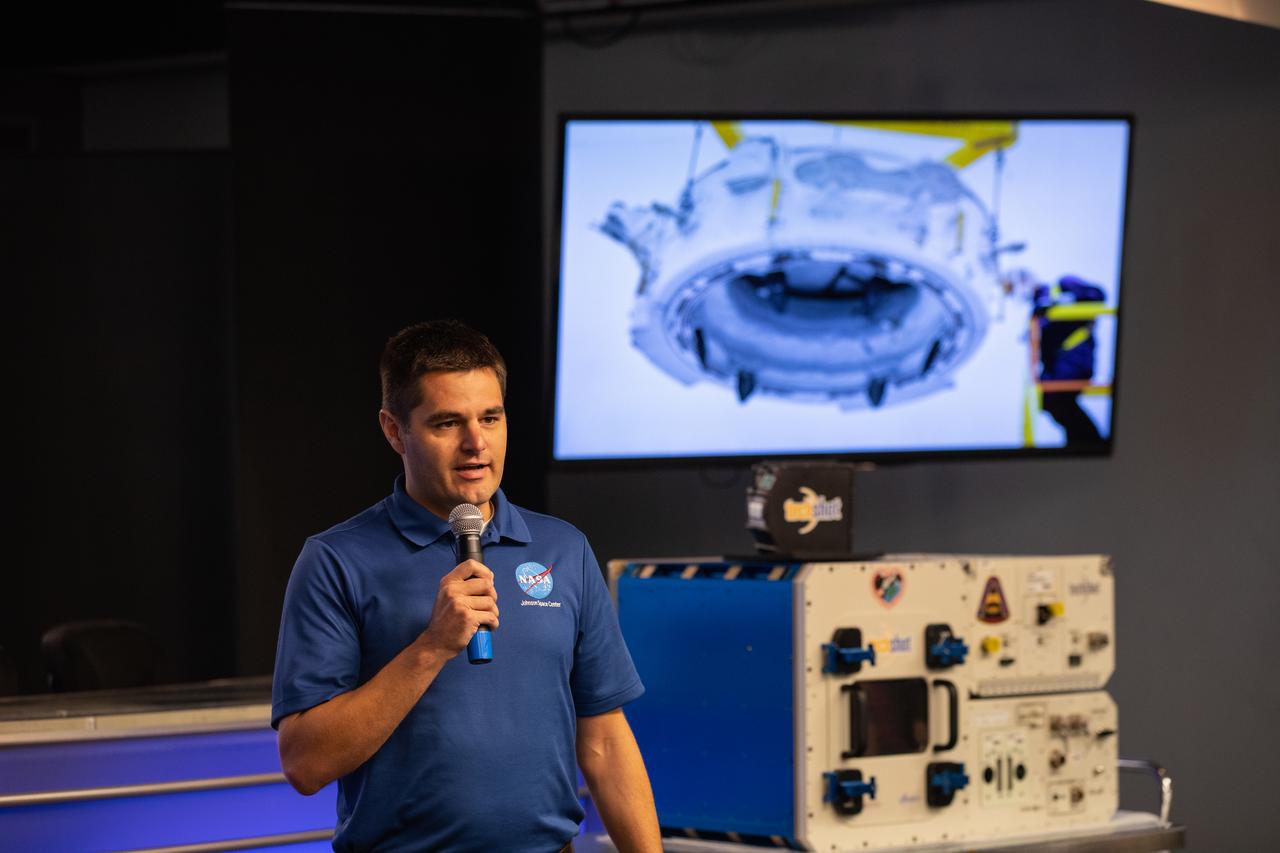
Jason August, International Space Station Mission Evaluation Room manager, talks to NASA Social participants about the International Docking Adapter-3 payload during a What’s On Board science briefing at the agency’s Kennedy Space Center in Florida on July 23, 2019. The briefing was held for SpaceX’s 18th Commercial Resupply Services (CRS-18) mission to the station. The SpaceX Falcon 9 rocket and uncrewed Dragon spacecraft are scheduled to launch July 24, 2019, from Space Launch Complex 40 at Florida’s Cape Canaveral Air Force Station.
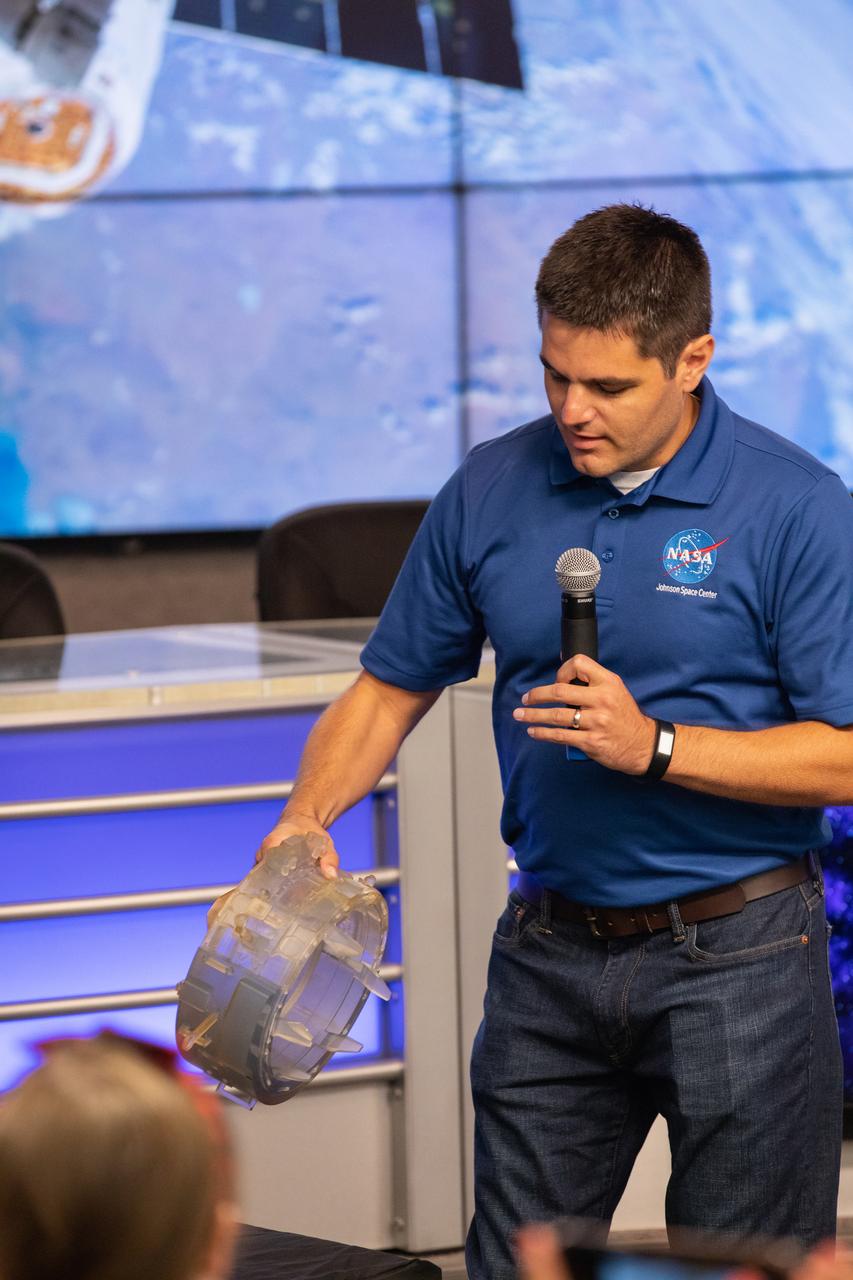
Jason August, International Space Station Mission Evaluation Room manager, talks to NASA Social participants about the International Docking Adapter-3 payload during a What’s On Board science briefing at the agency’s Kennedy Space Center in Florida on July 23, 2019. The briefing was held for SpaceX’s 18th Commercial Resupply Services (CRS-18) mission to the station. The SpaceX Falcon 9 rocket and uncrewed Dragon spacecraft are scheduled to launch July 24, 2019, from Space Launch Complex 40 at Florida’s Cape Canaveral Air Force Station.
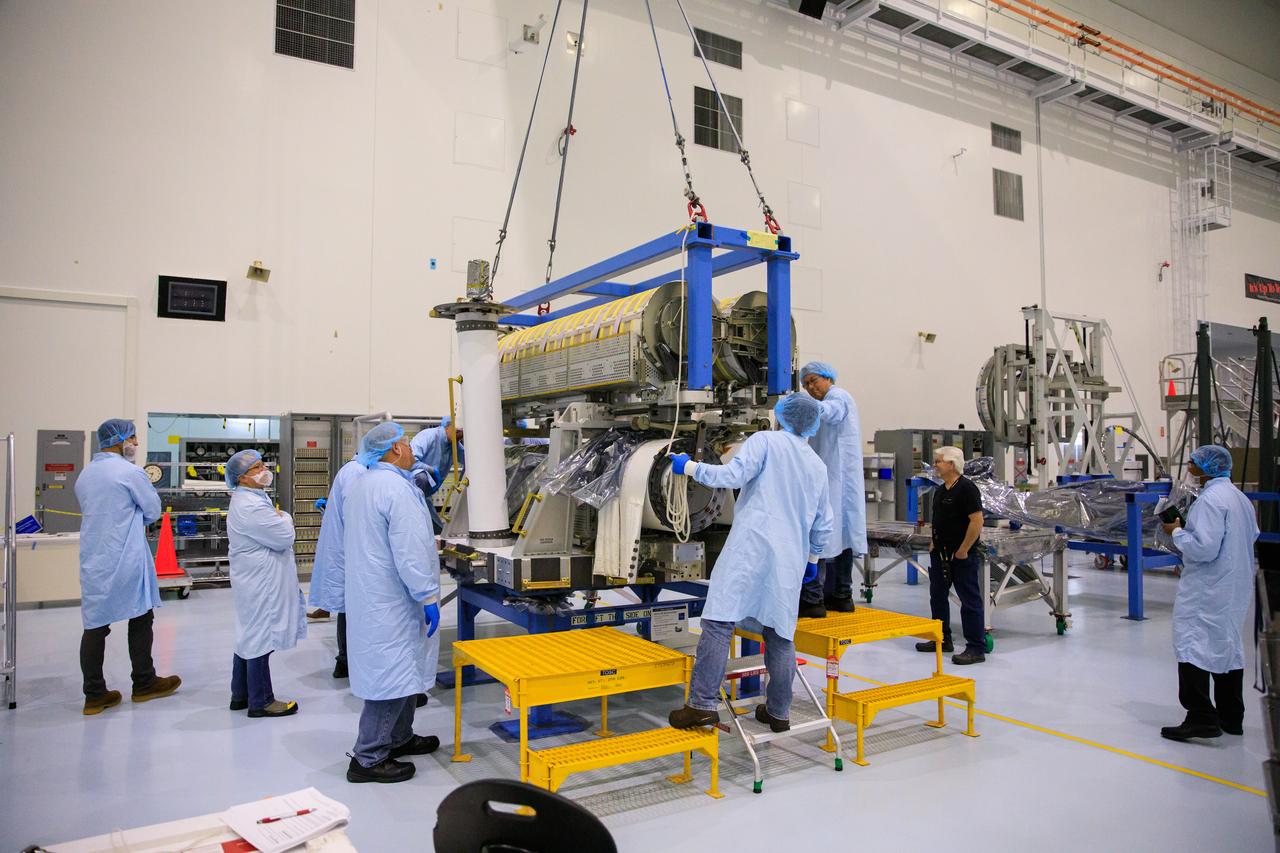
Inside the Space Station Processing Facility high bay at NASA's Kennedy Space Center in Florida, technicians assist as a crane is used to lower a set of International Space Station Roll Out Solar Arrays (iROSA) onto a platform on March 23, 2023. They are being prepared for delivery to the space station aboard SpaceX’s Dragon cargo carrier on the company’s 28th commercial resupply services (CRS-28) mission to the space station. iROSA is a new type of solar panel that rolls open in space and is more compact than current rigid panel designs.
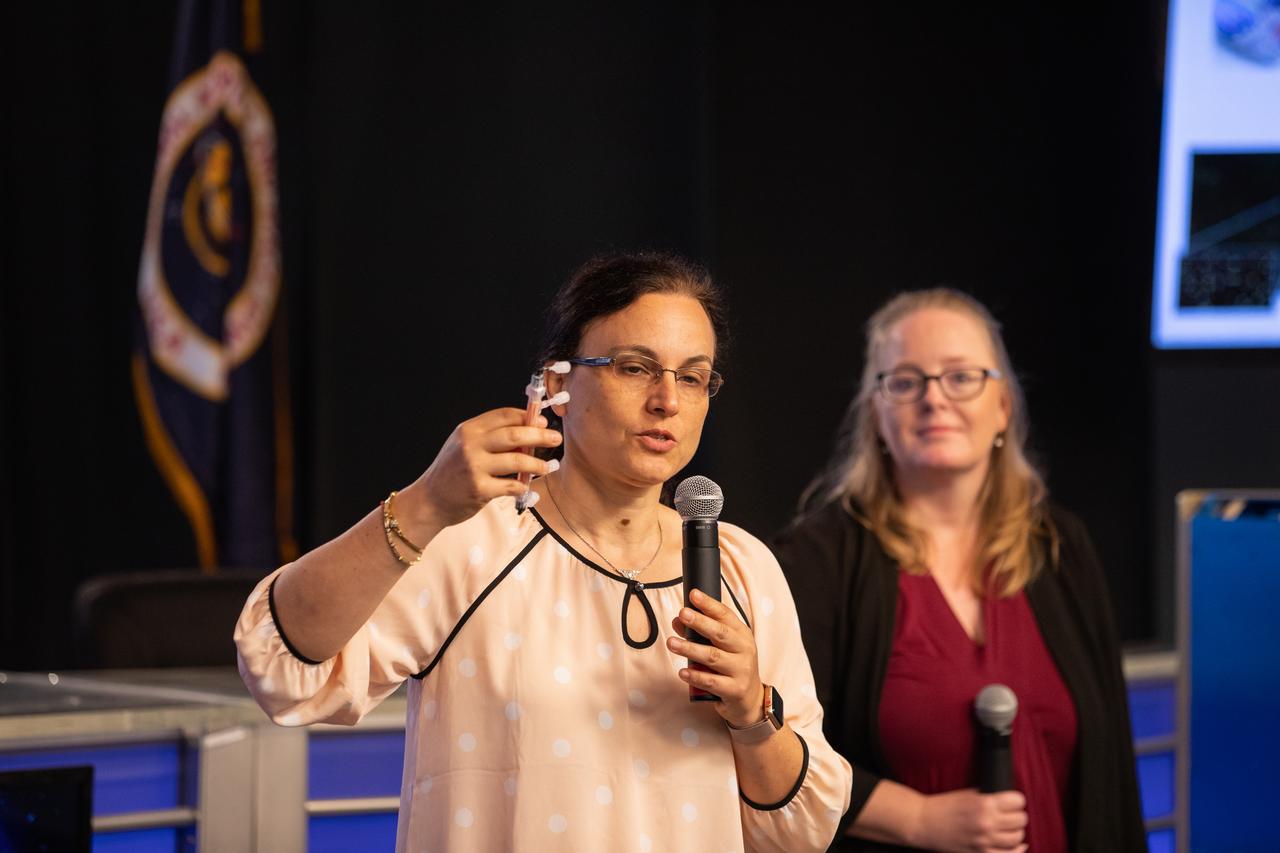
Rasha Hammamieh, Ph.D., left, the U.S. Army’s principal investigator for the Cell Science-02 investigation, and co-investigator Melissa Kacena, Ph.D., with the Indiana University School of Medicine, talk to NASA Social participants during a What’s On Board science briefing at the agency’s Kennedy Space Center in Florida on July 23, 2019. The briefing was held for SpaceX’s 18th Commercial Resupply Services (CRS-18) mission to the International Space Station. The SpaceX Falcon 9 rocket and uncrewed Dragon spacecraft are scheduled to launch July 24, 2019, from Space Launch Complex 40 at Florida’s Cape Canaveral Air Force Station.

Karl Hasenstein, the principal investigator for the Plant Habitat-02, or PH-02, plants radish seeds in seed carriers for the Addvanced Plant Habitat (APH) in the Space Life Sciences Lab at Kennedy Space Center on Sept. 23, 2020. The carriers will fly aboard Northrop Grumman’s 14th commercial resupply services mission to the International Space Station. The launch, aboard Northrop Grumman’s Cygnus spacecraft, is targeted for Sept. 29 from NASA’s Wallops Flight Facility in Virginia. Astronauts will grow radish plants in the APH, NASA’s largest and most advanced growth chamber on station.
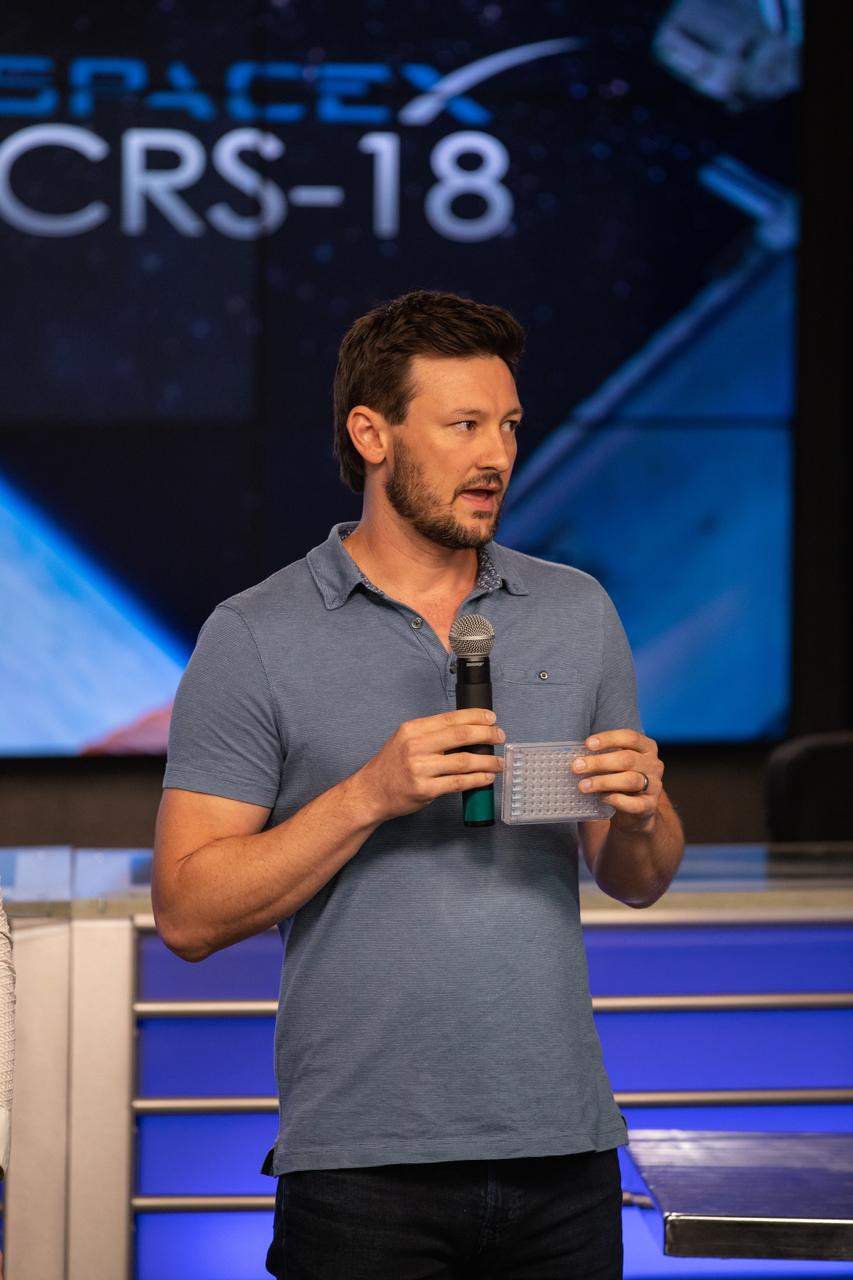
Andres Bratt-Leal, Ph.D., of Aspen Neuroscience, talks to NASA Social participants during a What’s On Board science briefing at the agency’s Kennedy Space Center in Florida on July 23, 2019. Bratt-Leal is a principal investigator for the Effects of Microgravity on Microglia 3-Dimensional Models of Parkinson’s Disease and Multiple Sclerosis (Space Tango-Induced Pluripotent Stem Cells) payload. The briefing was held for SpaceX’s 18th Commercial Resupply Services (CRS-18) mission to the International Space Station. The SpaceX Falcon 9 rocket and uncrewed Dragon spacecraft are scheduled to launch July 24, 2019, from Space Launch Complex 40 at Florida’s Cape Canaveral Air Force Station.

Karl Hasenstein, the principal investigator for the Plant Habitat-02, or PH-02, plants radish seeds in seed carriers for the Addvanced Plant Habitat (APH) in the Space Life Sciences Lab at Kennedy Space Center on Sept. 23, 2020. The carriers will fly aboard Northrop Grumman’s 14th commercial resupply services mission to the International Space Station. The launch, aboard Northrop Grumman’s Cygnus spacecraft, is targeted for Sept. 29 from NASA’s Wallops Flight Facility in Virginia. Astronauts will grow radish plants in the APH, NASA’s largest and most advanced growth chamber on station.

Karl Hasenstein, the principal investigator for the Plant Habitat-02, or PH-02, plants radish seeds in seed carriers for the Addvanced Plant Habitat (APH) in the Space Life Sciences Lab at Kennedy Space Center on Sept. 23, 2020. The carriers will fly aboard Northrop Grumman’s 14th commercial resupply services mission to the International Space Station. The launch, aboard Northrop Grumman’s Cygnus spacecraft, is targeted for Sept. 29 from NASA’s Wallops Flight Facility in Virginia. Astronauts will grow radish plants in the APH, NASA’s largest and most advanced growth chamber on station.

Inside the Space Station Processing Facility high bay at NASA's Kennedy Space Center in Florida, technicians assist as a crane is used to lift and stack the third set of two International Space Station Roll Out Solar Arrays (iROSA) onto a platform on March 23, 2023. They are being prepared for delivery to the space station aboard SpaceX’s Dragon cargo carrier on the company’s 28th commercial resupply services (CRS-28) mission to the space station. iROSA is a new type of solar panel that rolls open in space and is more compact than current rigid panel designs.

Karl Hasenstein, the principal investigator for the Plant Habitat-02, or PH-02, plants radish seeds in seed carriers for the Addvanced Plant Habitat (APH) in the Space Life Sciences Lab at Kennedy Space Center on Sept. 23, 2020. The carriers will fly aboard Northrop Grumman’s 14th commercial resupply services mission to the International Space Station. The launch, aboard Northrop Grumman’s Cygnus spacecraft, is targeted for Sept. 29 from NASA’s Wallops Flight Facility in Virginia. Astronauts will grow radish plants in the APH, NASA’s largest and most advanced growth chamber on station.

Karl Hasenstein, the principal investigator for the Plant Habitat-02, or PH-02, plants radish seeds in seed carriers for the Addvanced Plant Habitat (APH) in the Space Life Sciences Lab at Kennedy Space Center on Sept. 23, 2020. The carriers will fly aboard Northrop Grumman’s 14th commercial resupply services mission to the International Space Station. The launch, aboard Northrop Grumman’s Cygnus spacecraft, is targeted for Sept. 29 from NASA’s Wallops Flight Facility in Virginia. Astronauts will grow radish plants in the APH, NASA’s largest and most advanced growth chamber on station.
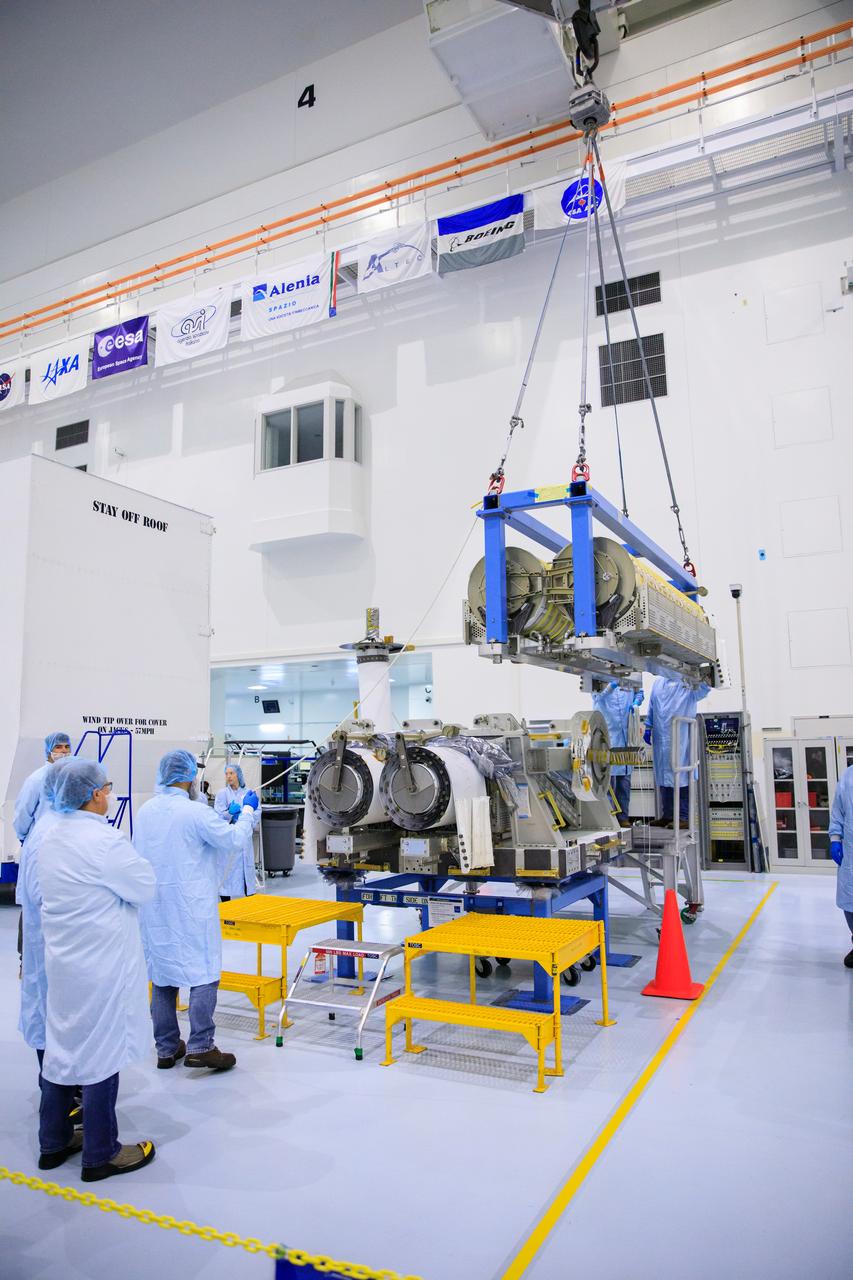
Inside the Space Station Processing Facility high bay at NASA's Kennedy Space Center in Florida, technicians monitor the progress as a crane is used to lift and stack the third set of two International Space Station Roll Out Solar Arrays (iROSA) onto a platform on March 23, 2023. They are being prepared for delivery to the space station aboard SpaceX’s Dragon cargo carrier on the company’s 28th commercial resupply services (CRS-28) mission to the space station. iROSA is a new type of solar panel that rolls open in space and is more compact than current rigid panel designs.
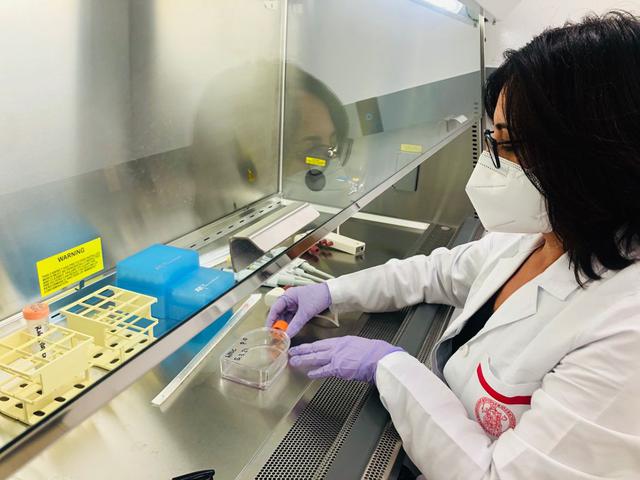
Dr. Valeria Lucci, with the department of biology at the University of Naples Federico II in Italy, prepares the Reducing Arthritis Dependent Inflammation First Phase (READI FP) experiment inside the Space Station Processing Facility at NASA’s Kennedy Space Center in Florida. READI FP, which evaluates how microgravity and space radiation affect the generation of bone tissue, will fly aboard SpaceX’s Cargo Dragon spacecraft on the company’s 23rd commercial resupply services mission to the International Space Station. Liftoff is targeted for Saturday, Aug. 28, at 3:37 a.m. EDT, from Kennedy’s Launch Complex 39A.
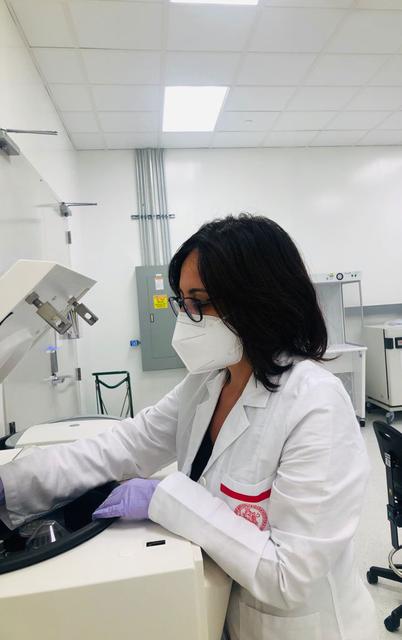
Dr. Valeria Lucci, with the department of biology at the University of Naples Federico II in Italy, prepares the Reducing Arthritis Dependent Inflammation First Phase (READI FP) experiment inside the Space Station Processing Facility at NASA’s Kennedy Space Center in Florida. READI FP, which evaluates how microgravity and space radiation affect the generation of bone tissue, will fly aboard SpaceX’s Cargo Dragon spacecraft on the company’s 23rd commercial resupply services mission to the International Space Station. Liftoff is targeted for Saturday, Aug. 28, at 3:37 a.m. EDT, from Kennedy’s Launch Complex 39A.
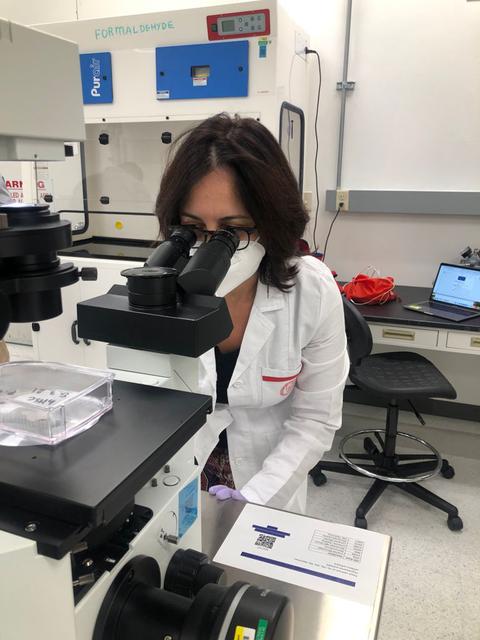
Dr. Valeria Lucci, with the department of biology at the University of Naples Federico II in Italy, prepares the Reducing Arthritis Dependent Inflammation First Phase (READI FP) experiment inside the Space Station Processing Facility at NASA’s Kennedy Space Center in Florida. READI FP, which evaluates how microgravity and space radiation affect the generation of bone tissue, will fly aboard SpaceX’s Cargo Dragon spacecraft on the company’s 23rd commercial resupply services mission to the International Space Station. Liftoff is targeted for Saturday, Aug. 28, at 3:37 a.m. EDT, from Kennedy’s Launch Complex 39A.

Valentina Fossati, Ph.D., of the New York Stem Foundation Research Institute, left, and Andres Bratt-Leal, Ph.D., of Aspen Neuroscience, talk to NASA Social participants during a What’s On Board science briefing at the agency’s Kennedy Space Center in Florida on July 23, 2019. Bratt-Leal and Fossati are principal investigators for the Effects of Microgravity on Microglia 3-Dimensional Models of Parkinson’s Disease and Multiple Sclerosis (Space Tango-Induced Pluripotent Stem Cells) payload. The briefing was held for SpaceX’s 18th Commercial Resupply Services (CRS-18) mission to the International Space Station. The SpaceX Falcon 9 rocket and uncrewed Dragon spacecraft are scheduled to launch July 24, 2019, from Space Launch Complex 40 at Florida’s Cape Canaveral Air Force Station.
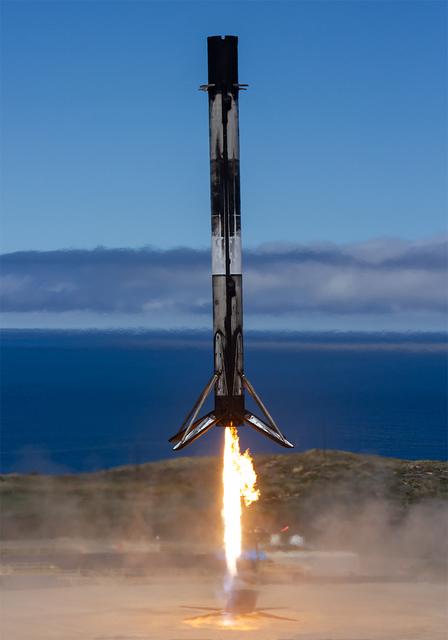
A SpaceX Falcon 9 first stage booster lands on Landing Zone 4 following liftoff of NASA’s TRACERS (Tandem Reconnection and Cusp Electrodynamics Reconnaissance Satellites) mission at Space Launch Complex 4 East at Vandenberg Space Force Base in California on Wednesday, July 23, 2025. This was the 16th flight for the first stage booster, which has previously launched these NASA missions - PACE (Plankton, Aerosol, Cloud, ocean Ecosystem, NASA’s SpaceX Crew-7, and Commercial Resupply Services-29. The TRACERS mission will study magnetic reconnection around Earth — a process in which electrically charged plasmas exchange energy in the atmosphere — to understand how the Sun’s solar wind interacts with the magnetosphere, Earth’s protective magnetic shield.
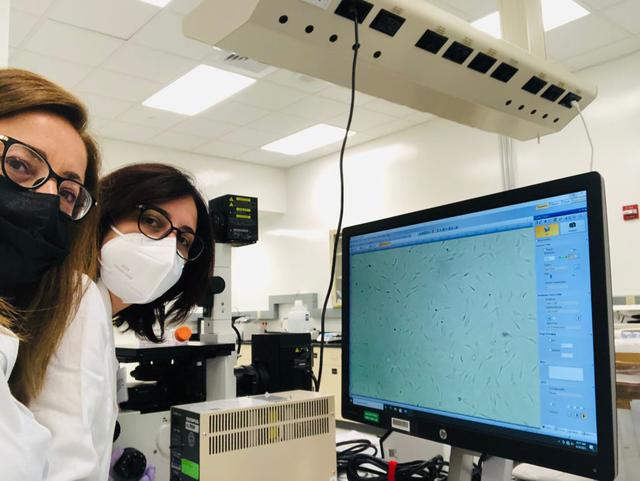
From left, Dr. Tiziana Angrisano and Dr. Valeria Lucci, with the department of biology at the University of Naples Federico II in Italy, prepare the Reducing Arthritis Dependent Inflammation First Phase (READI FP) experiment inside the Space Station Processing Facility at NASA’s Kennedy Space Center in Florida. READI FP, which evaluates how microgravity and space radiation affect the generation of bone tissue, will fly aboard SpaceX’s Cargo Dragon spacecraft on the company’s 23rd commercial resupply services mission to the International Space Station. Liftoff is targeted for Saturday, Aug. 28, at 3:37 a.m. EDT, from Kennedy’s Launch Complex 39A.
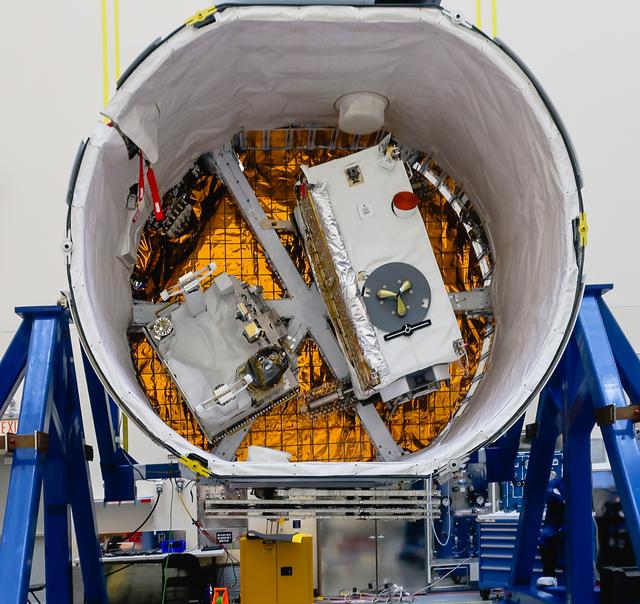
NASA’s Orbiting Carbon Observatory-3 (OCO-3) and Space Test Program-Houston 6 (STP-H6) are in view installed in the truck of SpaceX’s Dragon spacecraft inside the SpaceX facility at NASA’s Kennedy Space Center in Florida on March 23, 2019. OCO-3 and STP-H6 will be delivered to the International Space Station on SpaceX’s 17th Commercial Resupply Services mission (CRS-17) for NASA. STP-H6 is an x-ray communication investigation that will be used to perform a space-based demonstration of a new technology for generating beams of modulated x-rays. This technology may be useful for providing efficient communication to deep space probes, or communicating with hypersonic vehicles where plasma sheaths prevent traditional radio communications. OCO-3 will be robotically installed on the exterior of the space station’s Japanese Experiment Module Exposed Facility Unit, where it will measure and map carbon dioxide from space to provide further understanding of the relationship between carbon and climate. CRS-17 is scheduled to launch from Space Launch Complex 40 on Cape Canaveral Air Force Station in late April.