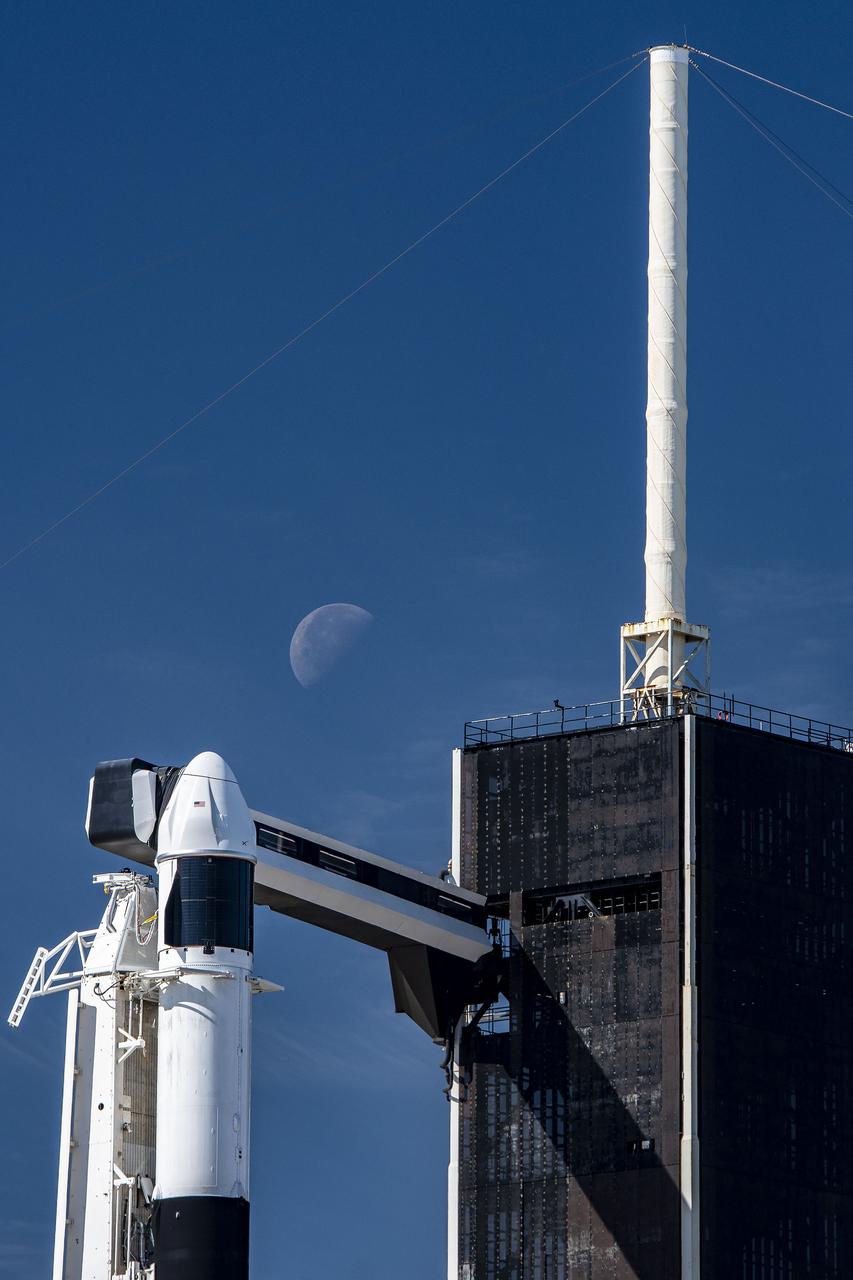
Seen here is a up-close view of the SpaceX Dragon spacecraft atop the company’s Falcon 9 rocket in the vertical position at NASA’s Kennedy Space Center in Florida on March 14, 2023, in preparation for the 27th commercial resupply services launch to the International Space Station. The mission will deliver new science investigations, supplies, and equipment to the crew aboard the space station, including the final two experiments comprising the National Institutes for Health and International Space Station National Laboratory’s Tissue Chips in Space initiative, Cardinal Heart 2.0 and Engineered Heart Tissues-2. Liftoff is scheduled for 8:30 p.m. EDT on Tuesday, March 14, from Kennedy’s Launch Complex 39A.
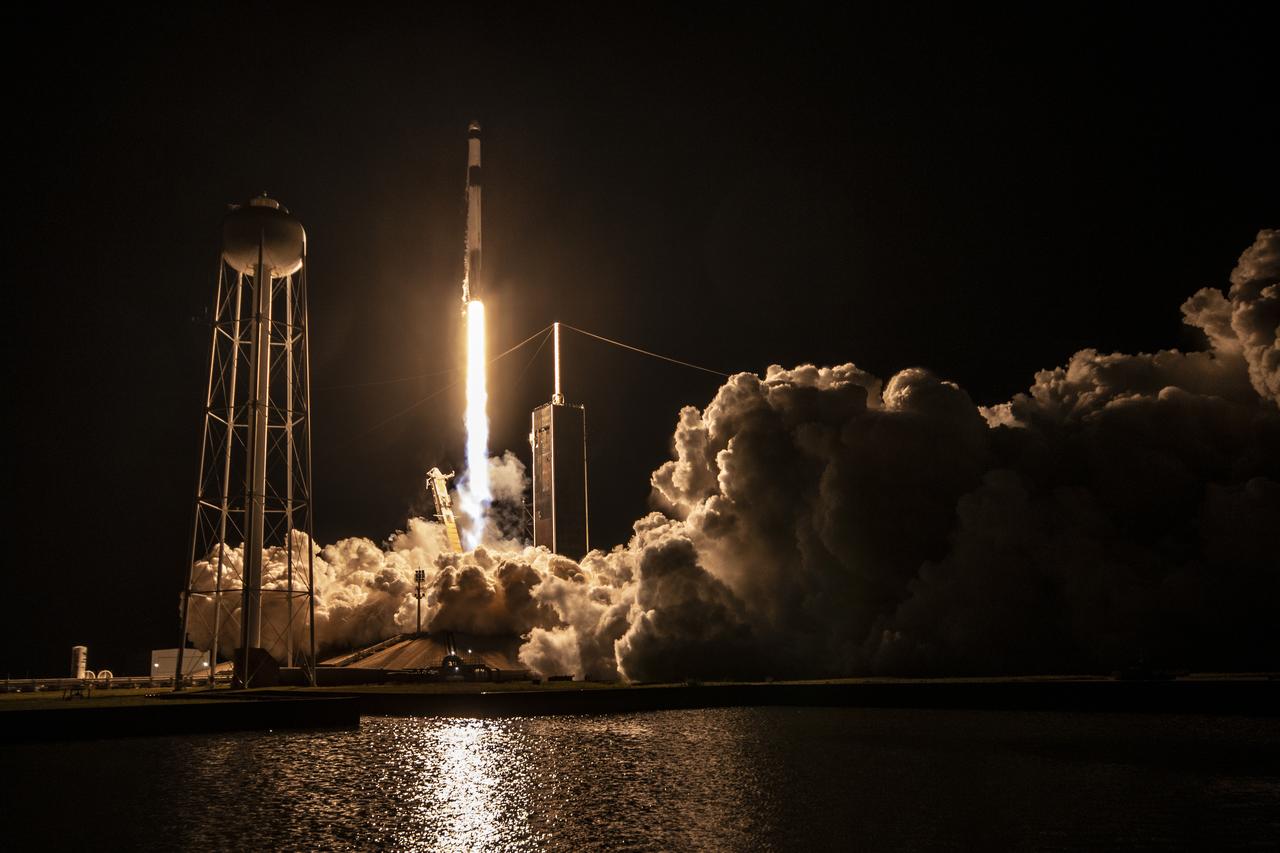
A SpaceX Falcon 9 rocket soars upward after its liftoff from Launch Complex 39A at NASA’s Kennedy Space Center in Florida on March 14, 2023, on the company’s 27th Commercial Resupply Services mission for the agency to the International Space Station. Liftoff was at 8:30 p.m. EDT. The Dragon spacecraft will deliver more than 6,000 pounds of science and research, supplies, and equipment to the crew aboard the space station, including the final two experiments comprising the National Institutes for Health and International Space Station National Laboratory’s Tissue Chips in Space initiative, Cardinal Heart 2.0 and Engineered Heart Tissues-2. The spacecraft is expected to spend about a month attached to the orbiting outpost before it returns to Earth with research and return cargo, splashing down off the coast of Florida.
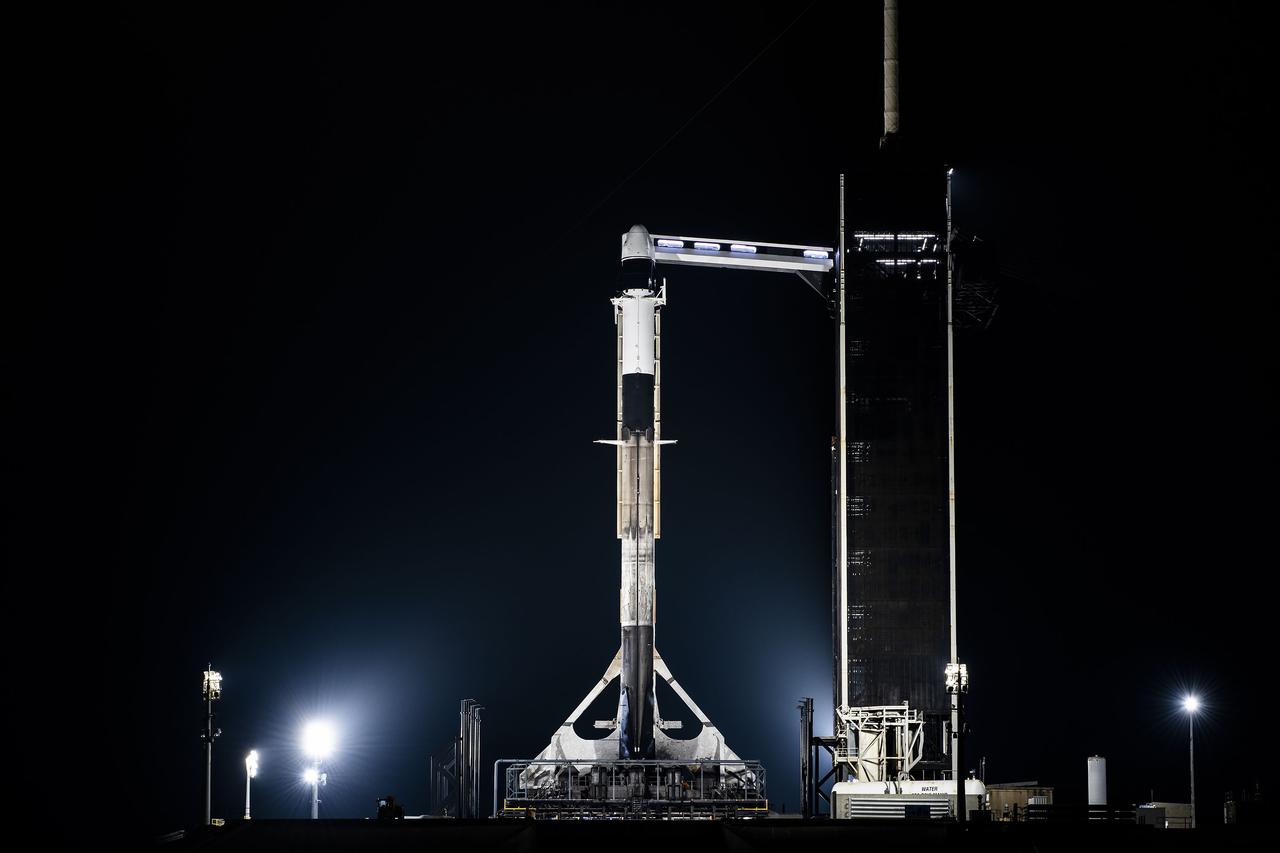
A SpaceX Falcon 9 rocket, with the company’s Dragon spacecraft atop, is raised to a vertical position at NASA Kennedy Space Center’s Launch Complex 39A on March 13, 2023, in preparation for the 27th commercial resupply services launch to the International Space Station. The mission will deliver new science investigations, supplies, and equipment to the crew aboard the space station, including the final two experiments comprising the National Institutes for Health and International Space Station National Laboratory’s Tissue Chips in Space initiative, Cardinal Heart 2.0 and Engineered Heart Tissues-2. Liftoff is scheduled for 8:30 p.m. EDT on Tuesday, March 14, from Kennedy’s Launch Complex 39A.
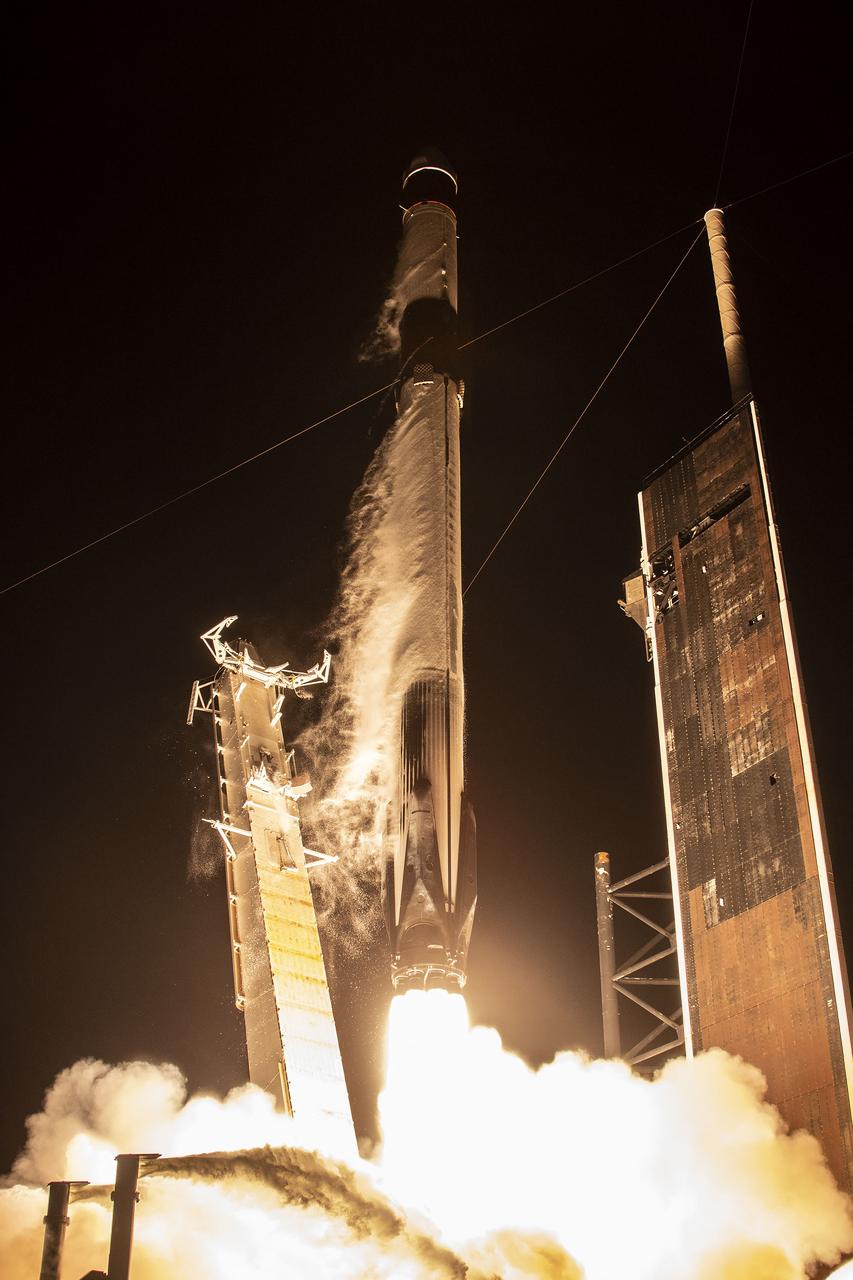
The SpaceX Falcon 9 rocket carrying the Dragon spacecraft lifts off from Launch Complex 39A at NASA’s Kennedy Space Center in Florida on March 14, 2023, on the company’s 27th commercial resupply services mission for the agency to the International Space Station. Liftoff was at 8:30 p.m. EDT. Dragon will deliver more than 6,000 pounds of cargo, including a variety of NASA investigations, supplies, and equipment to the crew aboard the space station, including the final two experiments comprising the National Institutes for Health and International Space Station National Laboratory’s Tissue Chips in Space initiative, Cardinal Heart 2.0 and Engineered Heart Tissues-2. The spacecraft is expected to spend about a month attached to the orbiting outpost before it returns to Earth with research and return cargo, splashing down off the coast of Florida.
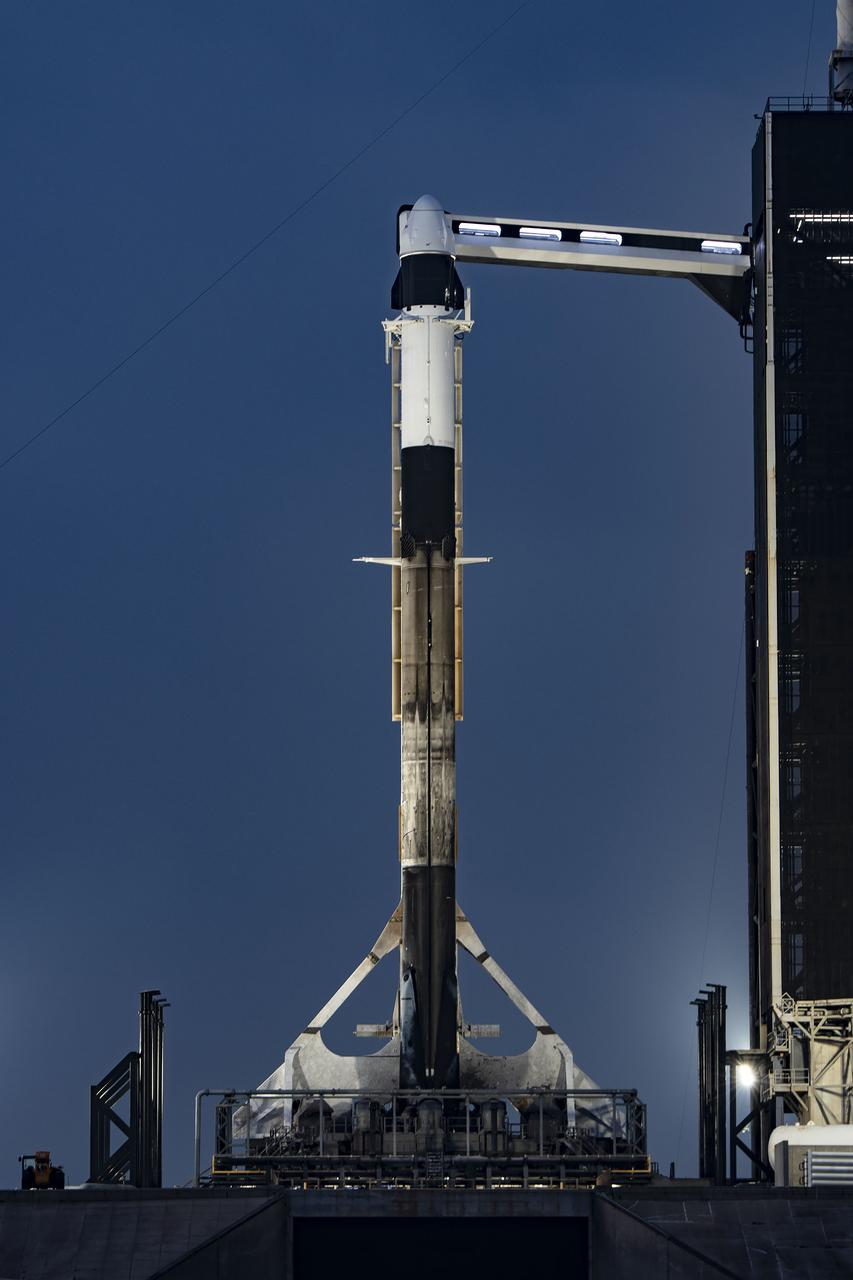
A SpaceX Falcon 9 rocket, with the company’s Dragon spacecraft atop, is secured in the vertical position at NASA Kennedy Space Center’s Launch Complex 39A on March 13, 2023, in preparation for the 27th commercial resupply services launch to the International Space Station. The mission will deliver new science investigations, supplies, and equipment to the crew aboard the space station, including the final two experiments comprising the National Institutes for Health and International Space Station National Laboratory’s Tissue Chips in Space initiative, Cardinal Heart 2.0 and Engineered Heart Tissues-2. Liftoff is scheduled for 8:30 p.m. EDT on Tuesday, March 14, from Kennedy’s Launch Complex 39A.
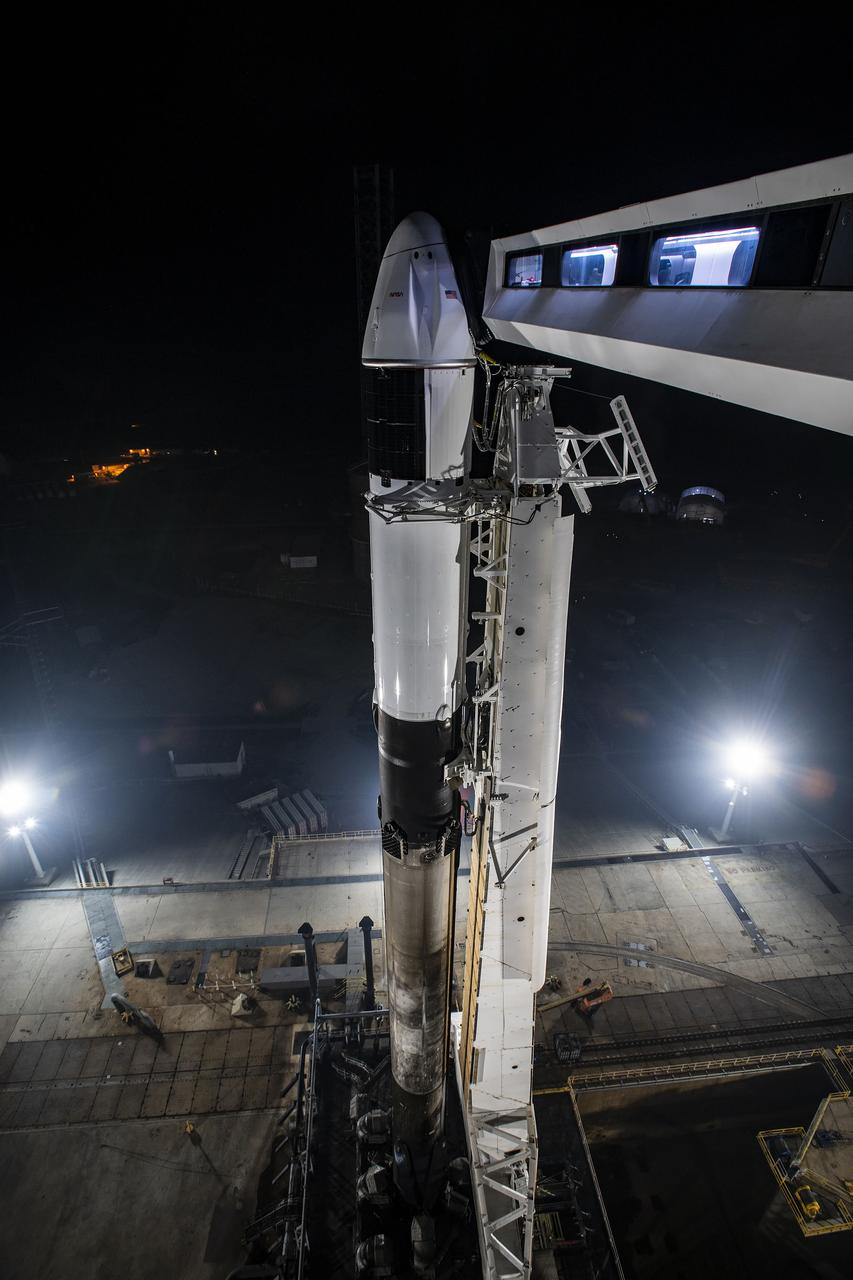
A SpaceX Falcon 9 rocket, with the company’s Dragon spacecraft atop, is secured in the vertical position at NASA Kennedy Space Center’s Launch Complex 39A on March 13, 2023, in preparation for the 27th commercial resupply services launch to the International Space Station. The mission will deliver new science investigations, supplies, and equipment to the crew aboard the space station, including the final two experiments comprising the National Institutes for Health and International Space Station National Laboratory’s Tissue Chips in Space initiative, Cardinal Heart 2.0 and Engineered Heart Tissues-2. Liftoff is scheduled for 8:30 p.m. EDT on Tuesday, March 14, from Kennedy’s Launch Complex 39A
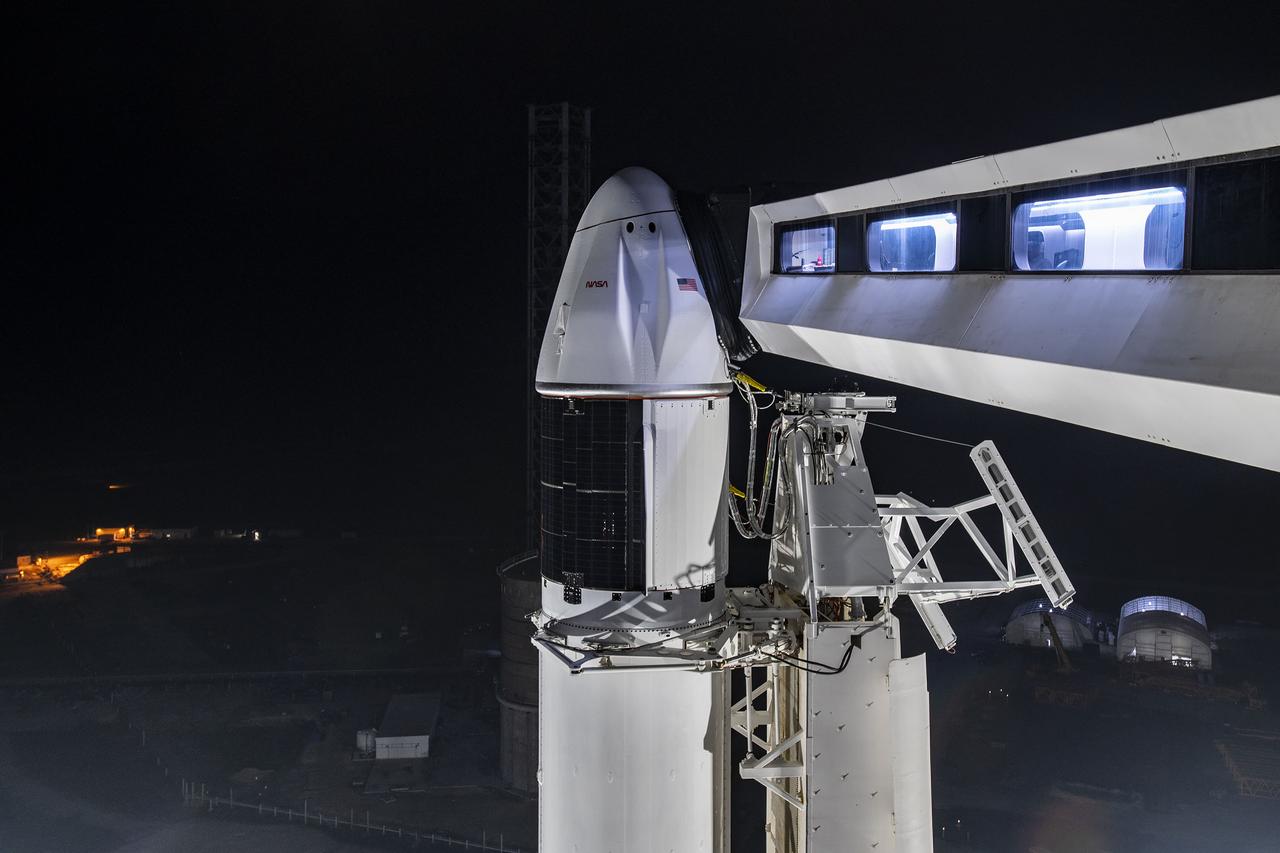
Seen here is an up-close view of the SpaceX Dragon spacecraft atop the company’s Falcon 9 rocket after being raised to a vertical position at NASA’s Kennedy Space Center in Florida on March 13, 2023, in preparation for the 27th commercial resupply services launch to the International Space Station. The mission will deliver new science investigations, supplies, and equipment to the crew aboard the space station, including the final two experiments comprising the National Institutes for Health and International Space Station National Laboratory’s Tissue Chips in Space initiative, Cardinal Heart 2.0 and Engineered Heart Tissues-2. Liftoff is scheduled for 8:30 p.m. EDT on Tuesday, March 14, from Kennedy’s Launch Complex 39A.
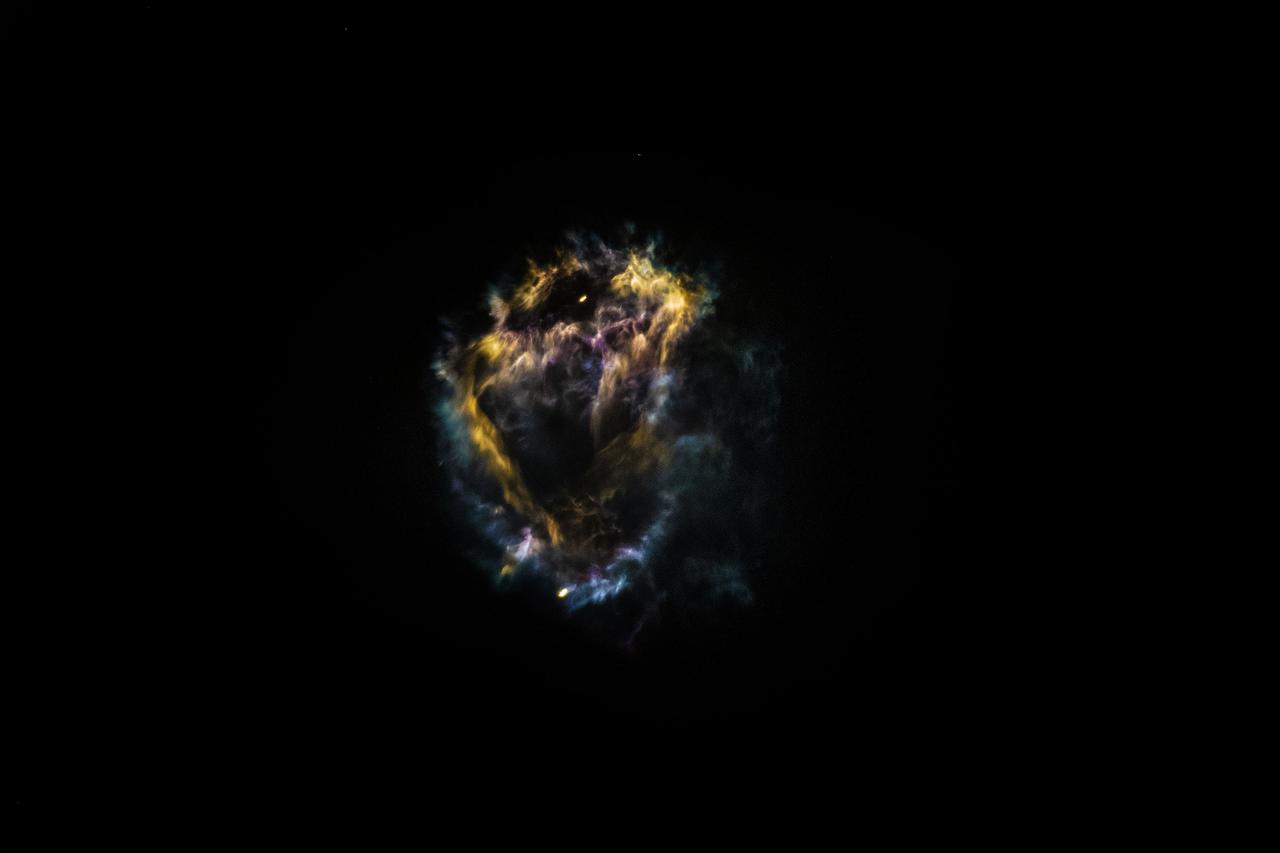
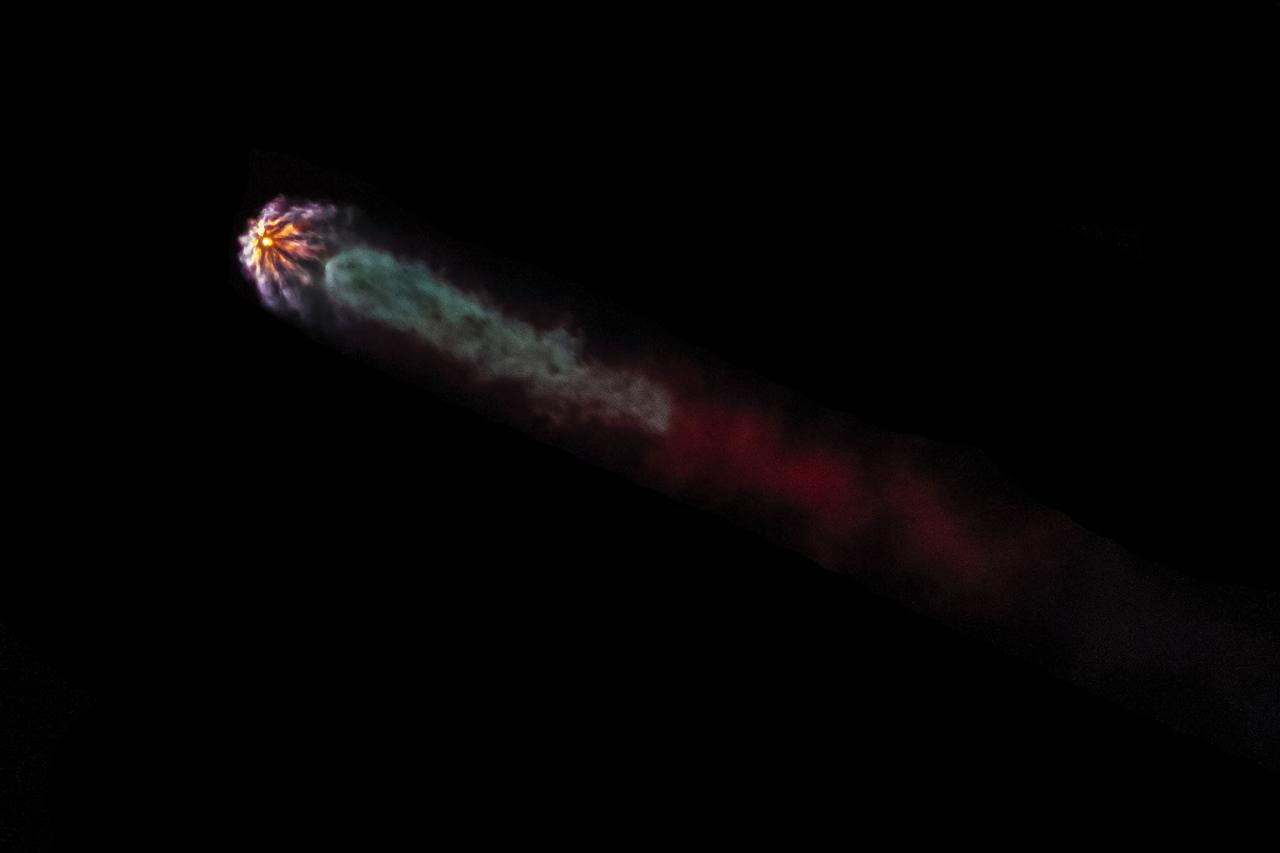
The SpaceX Falcon 9 rocket’s first stage separates from the Dragon spacecraft a few minutes after liftoff from Launch Complex 39A at NASA’s Kennedy Space Center in Florida on March 14, 2023, on the company’s 27th commercial resupply services mission for the agency to the International Space Station. Liftoff was at 8:30 p.m. EDT. Dragon will deliver more than 6,000 pounds of cargo, including a variety of NASA investigations, supplies, and equipment to the crew aboard the space station, including the final two experiments comprising the National Institutes for Health and International Space Station National Laboratory’s Tissue Chips in Space initiative, Cardinal Heart 2.0 and Engineered Heart Tissues-2. The spacecraft is expected to spend about a month attached to the orbiting outpost before it returns to Earth with research and return cargo, splashing down off the coast of Florida.
A SpaceX Falcon 9 rocket soars upward after its liftoff from Launch Complex 39A at NASA’s Kennedy Space Center in Florida on March 14, 2023, on the company’s 27th Commercial Resupply Services mission for the agency to the International Space Station. Liftoff was at 8:30 p.m. EDT. The Dragon spacecraft will deliver more than 6,000 pounds of science and research, supplies, and equipment to the crew aboard the space station, including the final two experiments comprising the National Institutes for Health and International Space Station National Laboratory’s Tissue Chips in Space initiative, Cardinal Heart 2.0 and Engineered Heart Tissues-2. The spacecraft is expected to spend about a month attached to the orbiting outpost before it returns to Earth with research and return cargo, splashing down off the coast of Florida.
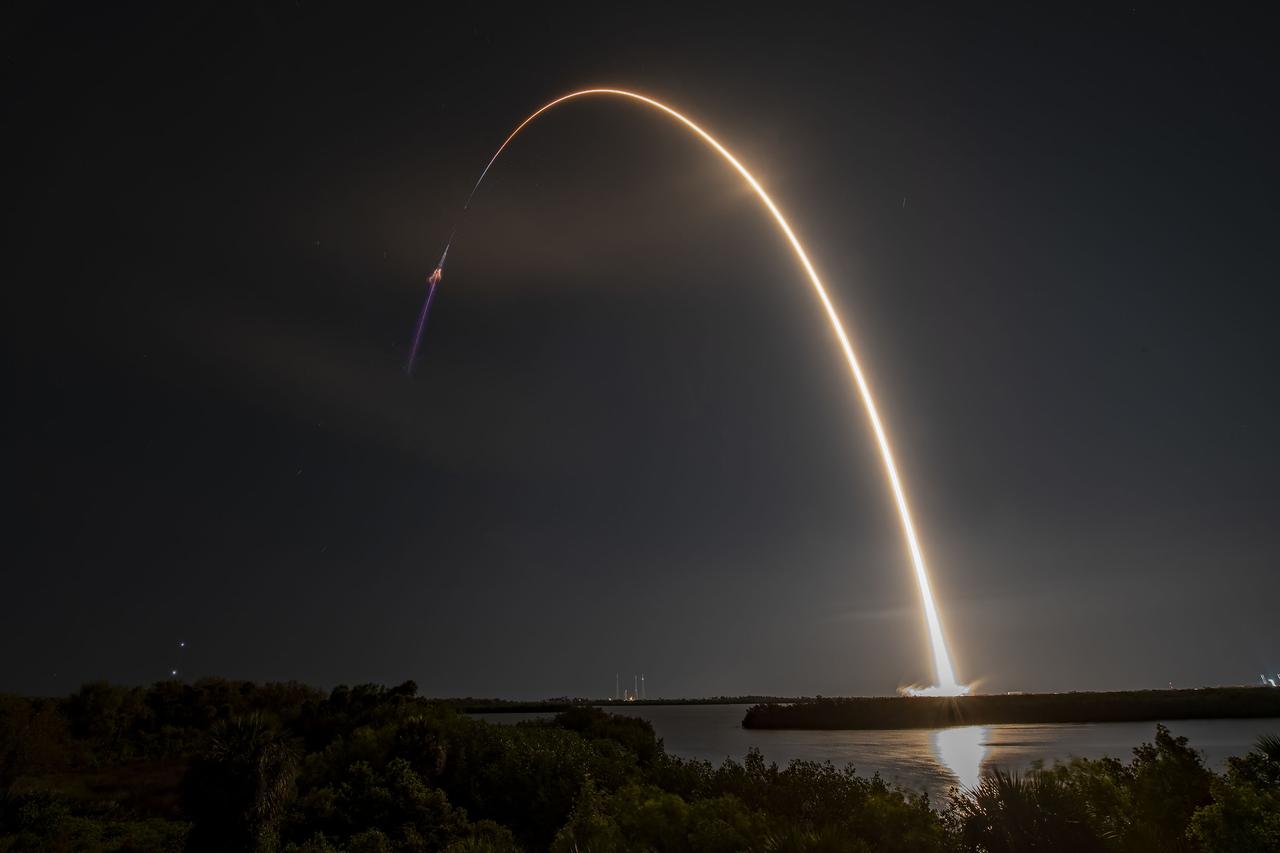
Creating a golden streak in the night sky, a SpaceX Falcon 9 rocket soars upward after liftoff from Launch Complex 39A at NASA’s Kennedy Space Center in Florida on March 14, 2023, on the company’s 27th Commercial Resupply Services mission for the agency to the International Space Station. Liftoff was at 8:30 p.m. EDT. The Dragon spacecraft will deliver more than 6,000 pounds of science and research, supplies, and equipment to the crew aboard the space station, including the final two experiments comprising the National Institutes for Health and International Space Station National Laboratory’s Tissue Chips in Space initiative, Cardinal Heart 2.0 and Engineered Heart Tissues-2. The spacecraft is expected to spend about a month attached to the orbiting outpost before it returns to Earth with research and return cargo, splashing down off the coast of Florida.
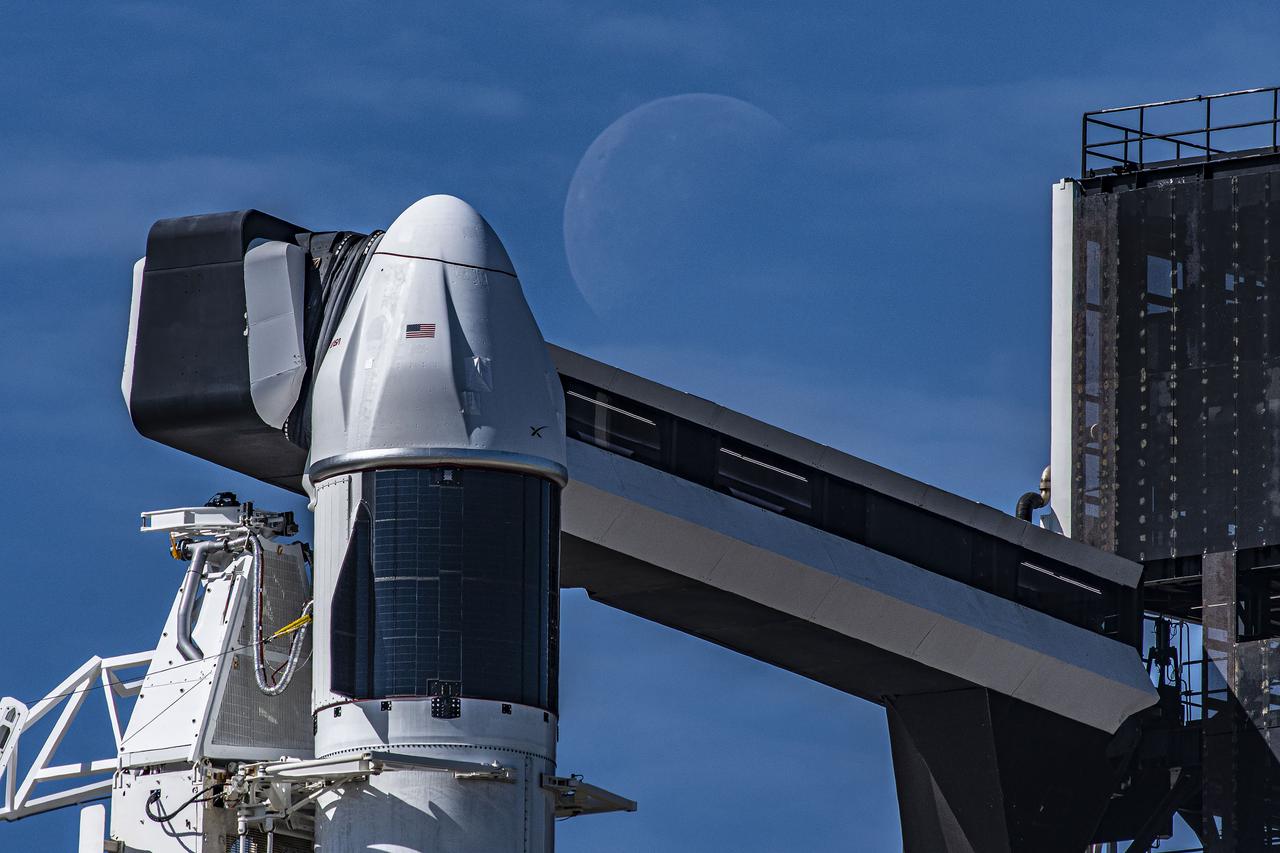
Seen here is a up-close view of the SpaceX Dragon spacecraft atop the company’s Falcon 9 rocket in the vertical position at NASA’s Kennedy Space Center in Florida on March 14, 2023, in preparation for the 27th commercial resupply services launch to the International Space Station. The mission will deliver new science investigations, supplies, and equipment to the crew aboard the space station, including the final two experiments comprising the National Institutes for Health and International Space Station National Laboratory’s Tissue Chips in Space initiative, Cardinal Heart 2.0 and Engineered Heart Tissues-2. Liftoff is scheduled for 8:30 p.m. EDT on Tuesday, March 14, from Kennedy’s Launch Complex 39A.
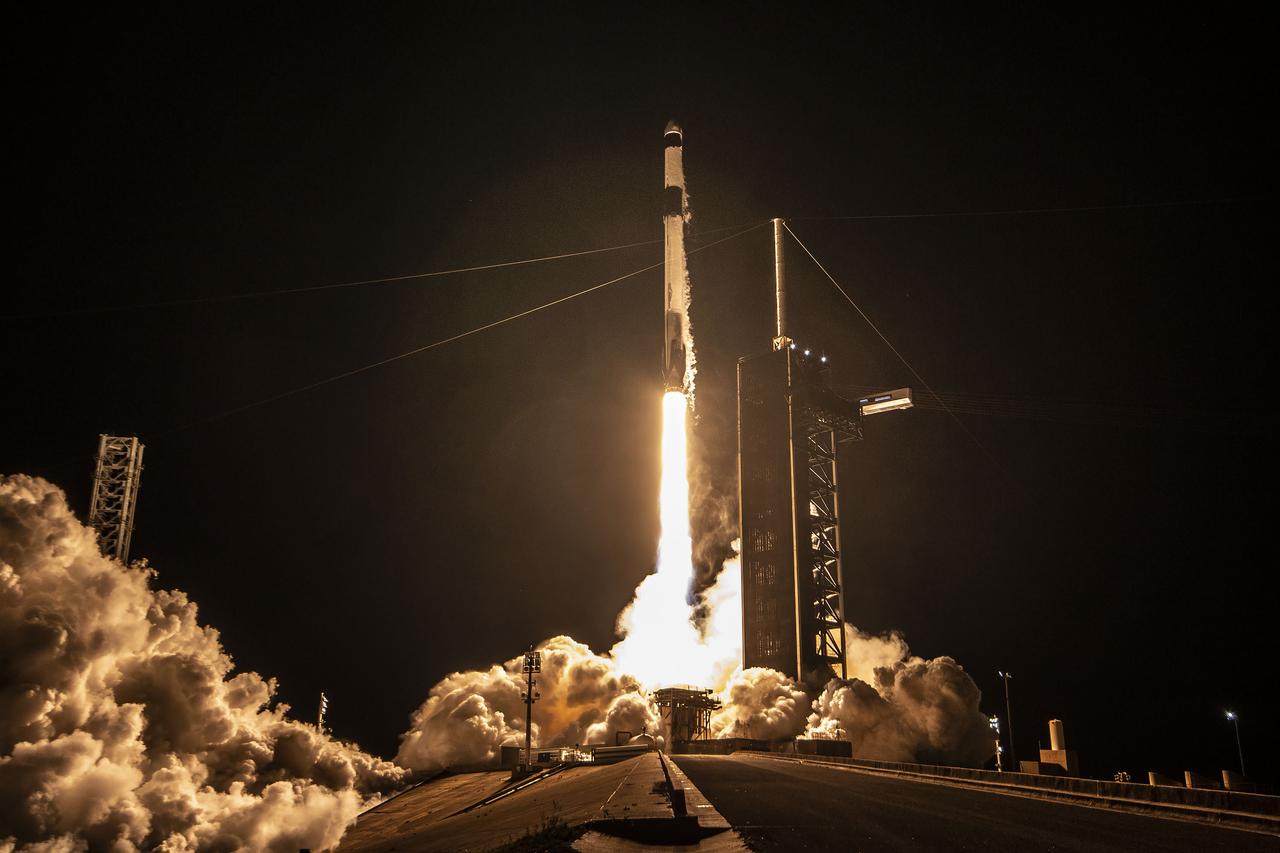
The SpaceX Falcon 9 rocket carrying the Dragon spacecraft lifts off from Launch Complex 39A at NASA’s Kennedy Space Center in Florida on March 14, 2023, on the company’s 27th commercial resupply services mission for the agency to the International Space Station. Liftoff was at 8:30 p.m. EDT. Dragon will deliver more than 6,000 pounds of cargo, including a variety of NASA investigations, supplies, and equipment to the crew aboard the space station, including the final two experiments comprising the National Institutes for Health and International Space Station National Laboratory’s Tissue Chips in Space initiative, Cardinal Heart 2.0 and Engineered Heart Tissues-2. The spacecraft is expected to spend about a month attached to the orbiting outpost before it returns to Earth with research and return cargo, splashing down off the coast of Florida.
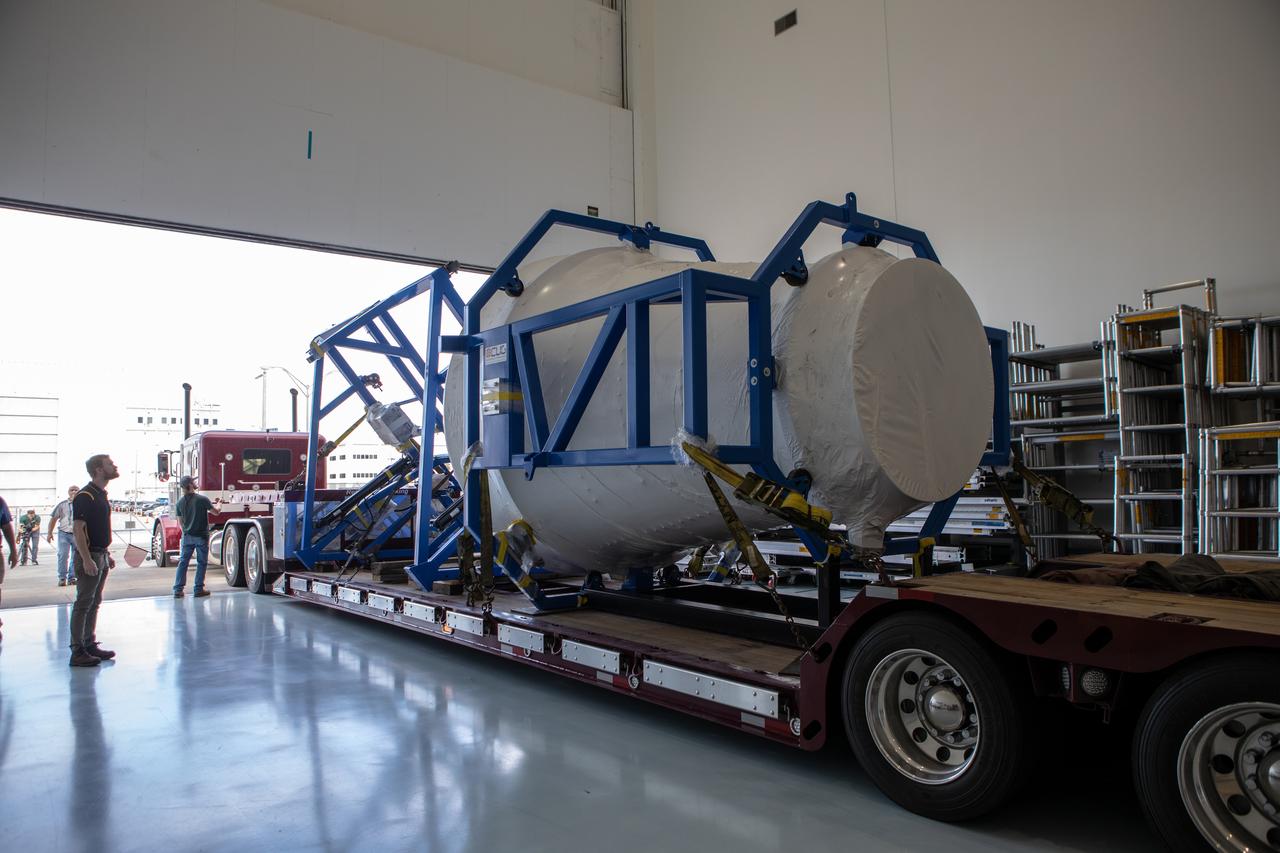
A truck carrying the cargo logistics module for Sierra Nevada Corporation’s Dream Chaser, the company’s reusable spaceplane, enters the Space Station Processing Facility high bay at NASA’s Kennedy Space Center in Florida on Aug. 27, 2019. The cargo module – a 15-foot attachment to Dream Chaser – provides extra storage for payloads and provides cargo disposal upon re-entry into Earth’s atmosphere. Dream Chaser will deliver more than 12,000 pounds of cargo to the International Space Station under the agency’s Commercial Resupply Services 2 contract. The spacecraft and cargo module will begin resupply and return services missions to the space station in late 2021.
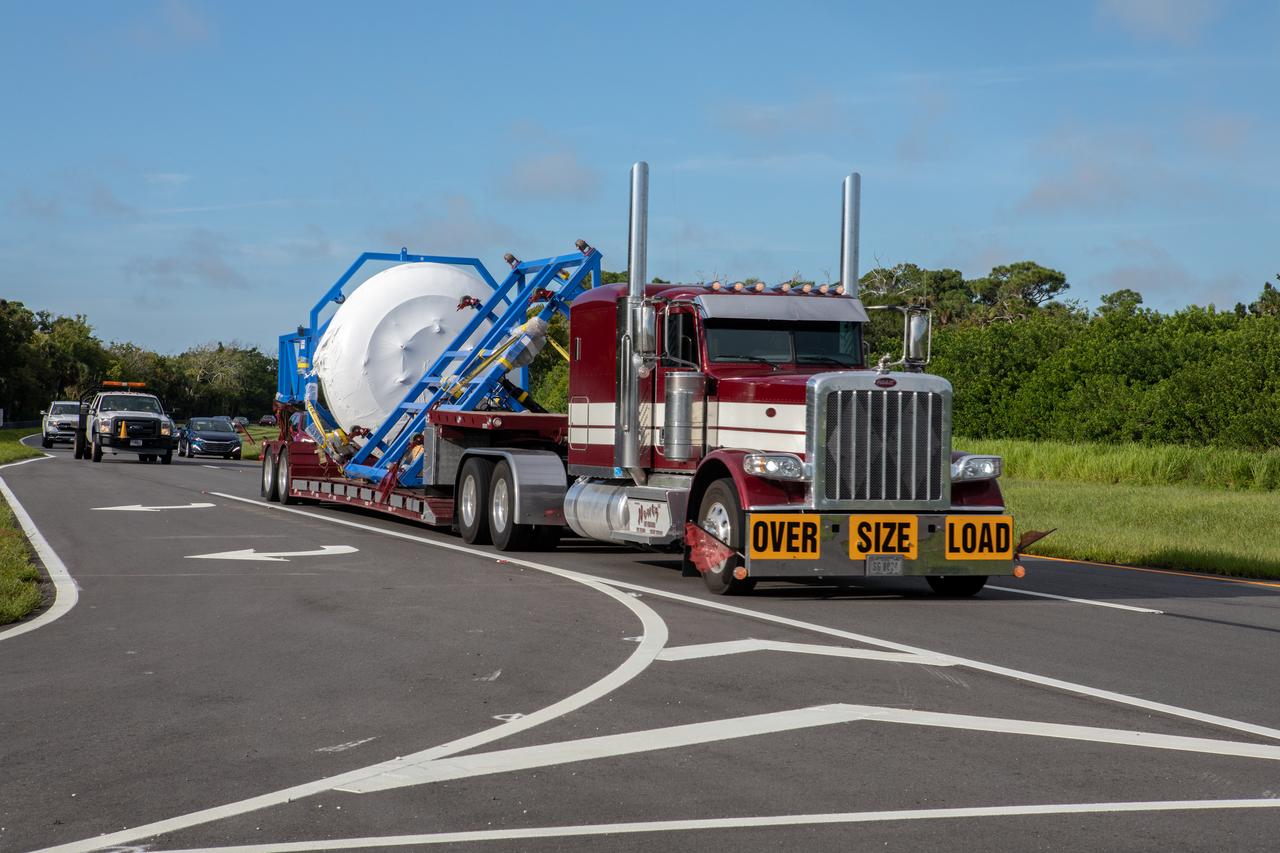
The cargo logistics module for Sierra Nevada Corporation’s Dream Chaser, the company’s reusable spaceplane, is in transit to the Space Station Processing Facility at NASA’s Kennedy Space Center in Florida on Aug. 27, 2019. The cargo module – a 15-foot attachment to Dream Chaser – provides extra storage for payloads and provides cargo disposal upon re-entry into Earth’s atmosphere. Dream Chaser will deliver more than 12,000 pounds of cargo to the International Space Station under NASA’s Commercial Resupply Services 2 contract. The spacecraft and cargo module will begin resupply and return services missions to the space station in late 2021.
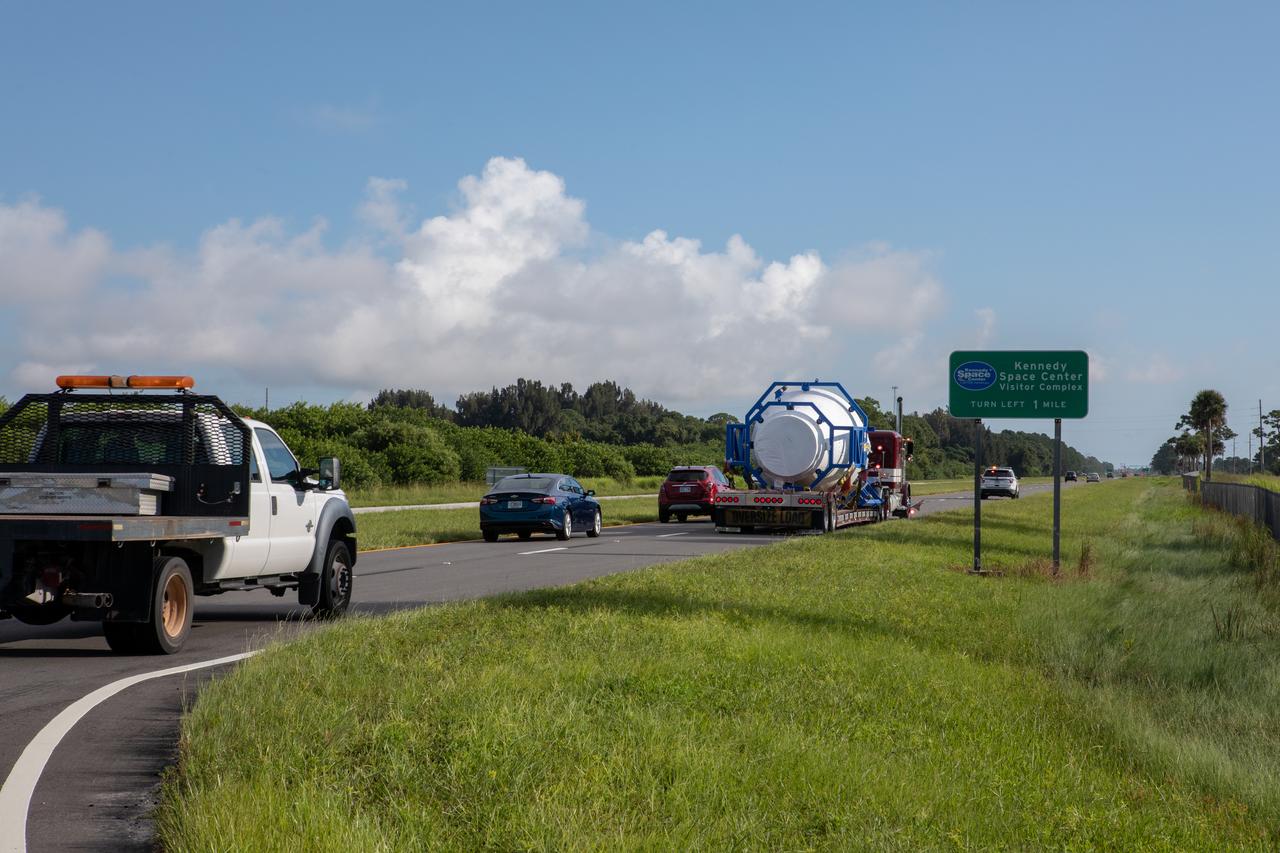
The cargo logistics module for Sierra Nevada Corporation’s Dream Chaser, the company’s reusable spaceplane, arrives at NASA’s Kennedy Space Center in Florida on Aug. 27, 2019. The cargo module – secured atop a truck – is being taken to Kennedy’s Space Station Processing Facility. A 15-foot attachment to Dream Chaser, the cargo module provides extra storage for payloads and provides cargo disposal upon re-entry into Earth’s atmosphere. Dream Chaser will deliver more than 12,000 pounds of cargo to the International Space Station under NASA’s Commercial Resupply Services 2 contract. The spacecraft and cargo module will begin resupply and return services missions to the space station in late 2021.
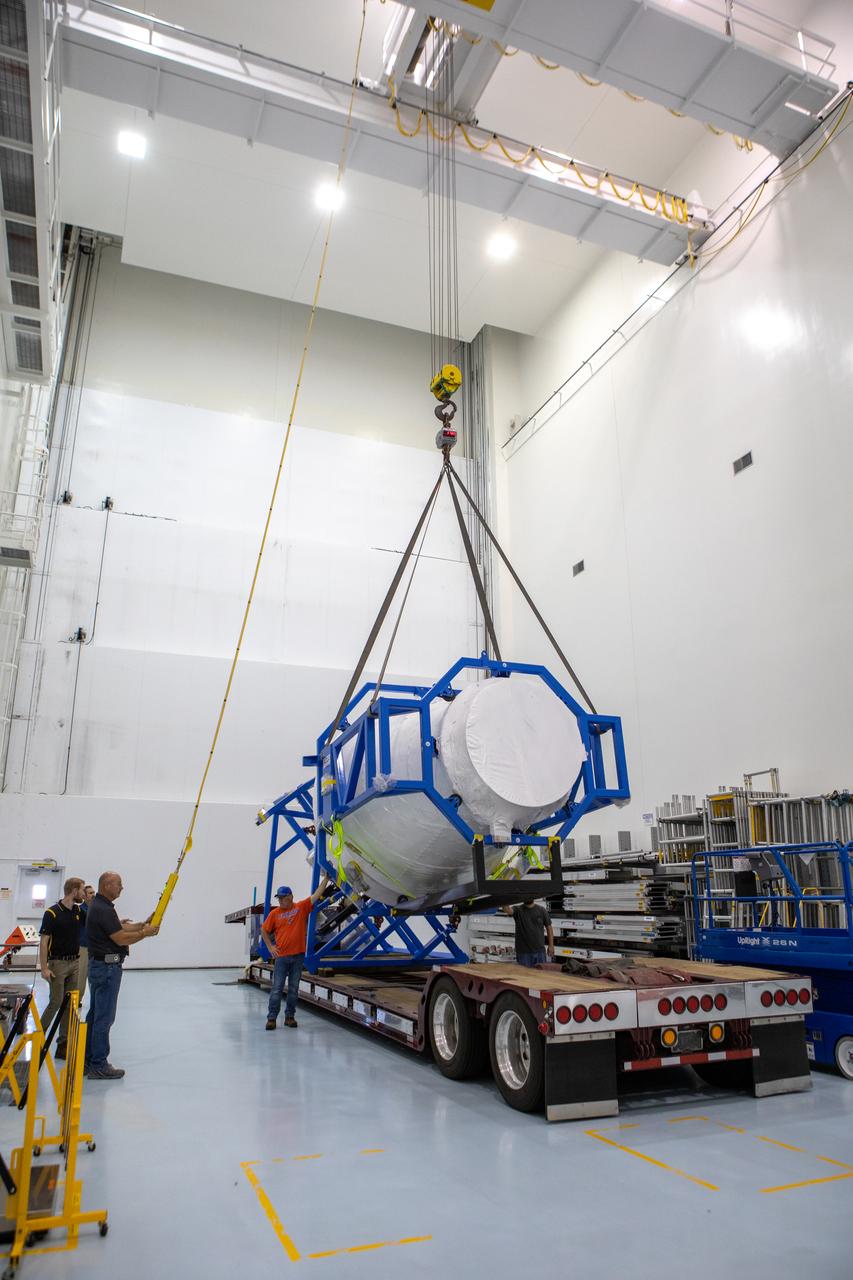
The cargo logistics module for Sierra Nevada Corporation’s Dream Chaser, the company’s reusable spaceplane, is lifted from the bed of a truck following its arrival at the Space Station Processing Facility high bay at NASA’s Kennedy Space Center in Florida on Aug. 27, 2019. The cargo module – a 15-foot attachment to Dream Chaser – provides extra storage for payloads and provides cargo disposal upon re-entry into Earth’s atmosphere. Dream Chaser will deliver more than 12,000 pounds of cargo to the International Space Station under the agency’s Commercial Resupply Services 2 contract. The spacecraft and cargo module will begin resupply and return services missions to the space station in late 2021.
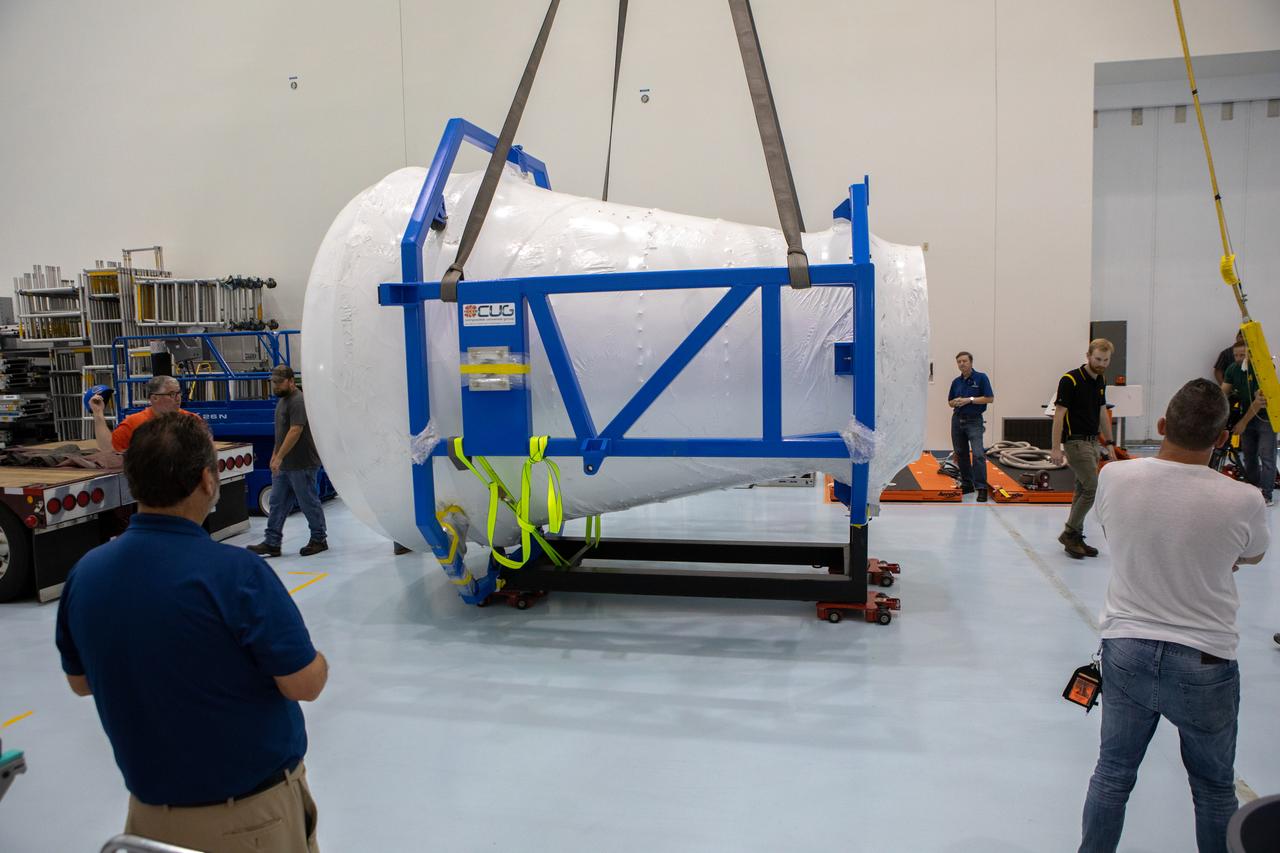
The cargo logistics module for Sierra Nevada Corporation’s Dream Chaser, the company’s reusable spaceplane, arrives at the Space Station Processing Facility high bay at NASA’s Kennedy Space Center in Florida on Aug. 27, 2019. The cargo module – a 15-foot attachment to Dream Chaser – provides extra storage for payloads and provides cargo disposal upon re-entry into Earth’s atmosphere. Dream Chaser will deliver more than 12,000 pounds of cargo to the International Space Station under the agency’s Commercial Resupply Services 2 contract. The spacecraft and cargo module will begin resupply and return services missions to the space station in late 2021.
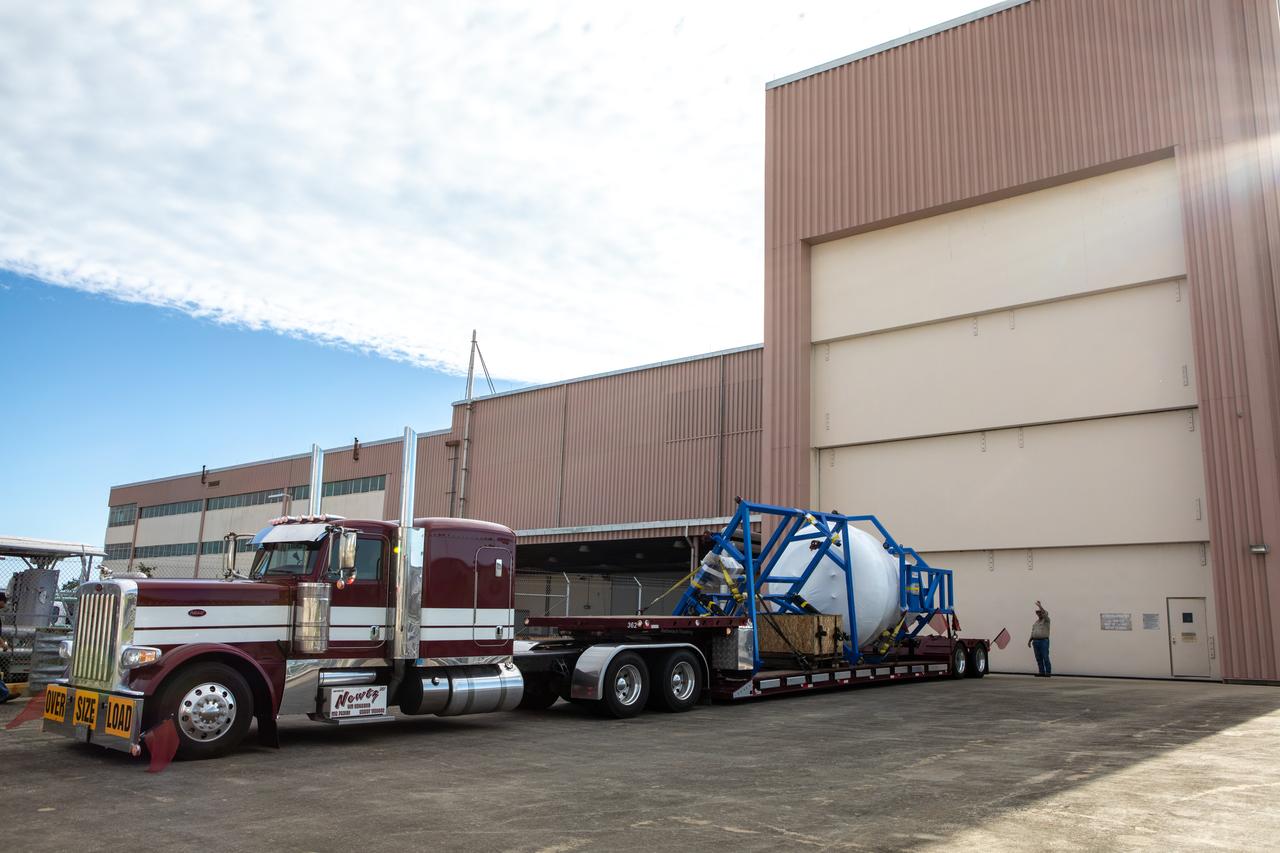
A truck carrying the cargo logistics module for Sierra Nevada Corporation’s Dream Chaser, the company’s reusable spaceplane, arrives at the Space Station Processing Facility high bay entrance at NASA’s Kennedy Space Center in Florida on Aug. 27, 2019. The cargo module – a 15-foot attachment to Dream Chaser – provides extra storage for payloads and provides cargo disposal upon re-entry into Earth’s atmosphere. Dream Chaser will deliver more than 12,000 pounds of cargo to the International Space Station under the agency’s Commercial Resupply Services 2 contract. The spacecraft and cargo module will begin resupply and return services missions to the space station in late 2021.
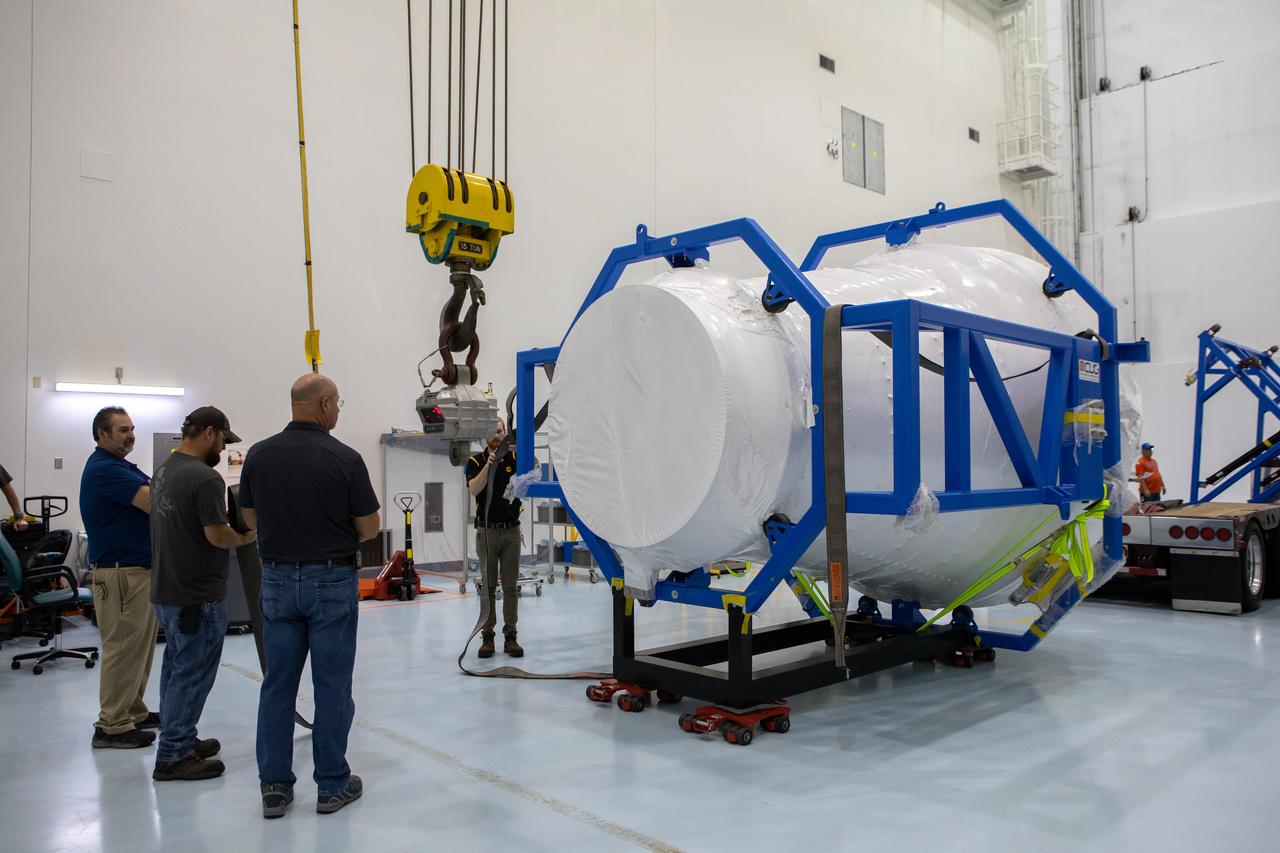
The cargo logistics module for Sierra Nevada Corporation’s Dream Chaser, the company’s reusable spaceplane, is photographed inside the Space Station Processing Facility high bay at NASA’s Kennedy Space Center in Florida following its arrival on Aug. 27, 2019. The cargo module – a 15-foot attachment to Dream Chaser – provides extra storage for payloads and provides cargo disposal upon re-entry into Earth’s atmosphere. Dream Chaser will deliver more than 12,000 pounds of cargo to the International Space Station under the agency’s Commercial Resupply Services 2 contract. The spacecraft and cargo module will begin resupply and return services missions to the space station in late 2021.
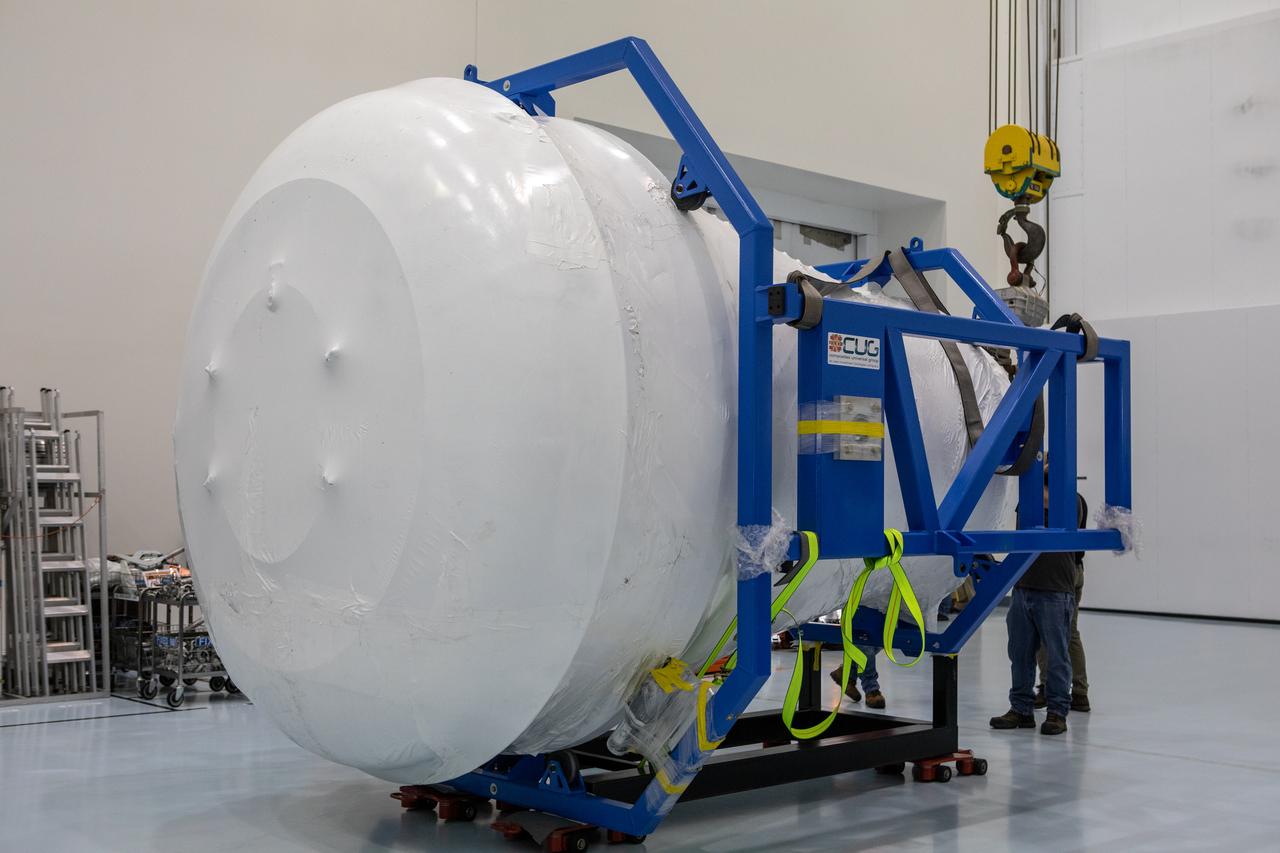
The cargo logistics module for Sierra Nevada Corporation’s Dream Chaser, the company’s reusable spaceplane, is photographed inside the Space Station Processing Facility high bay at NASA’s Kennedy Space Center in Florida following its arrival on Aug. 27, 2019. The cargo module – a 15-foot attachment to Dream Chaser – provides extra storage for payloads and provides cargo disposal upon re-entry into Earth’s atmosphere. Dream Chaser will deliver more than 12,000 pounds of cargo to the International Space Station under the agency’s Commercial Resupply Services 2 contract. The spacecraft and cargo module will begin resupply and return services missions to the space station in late 2021.
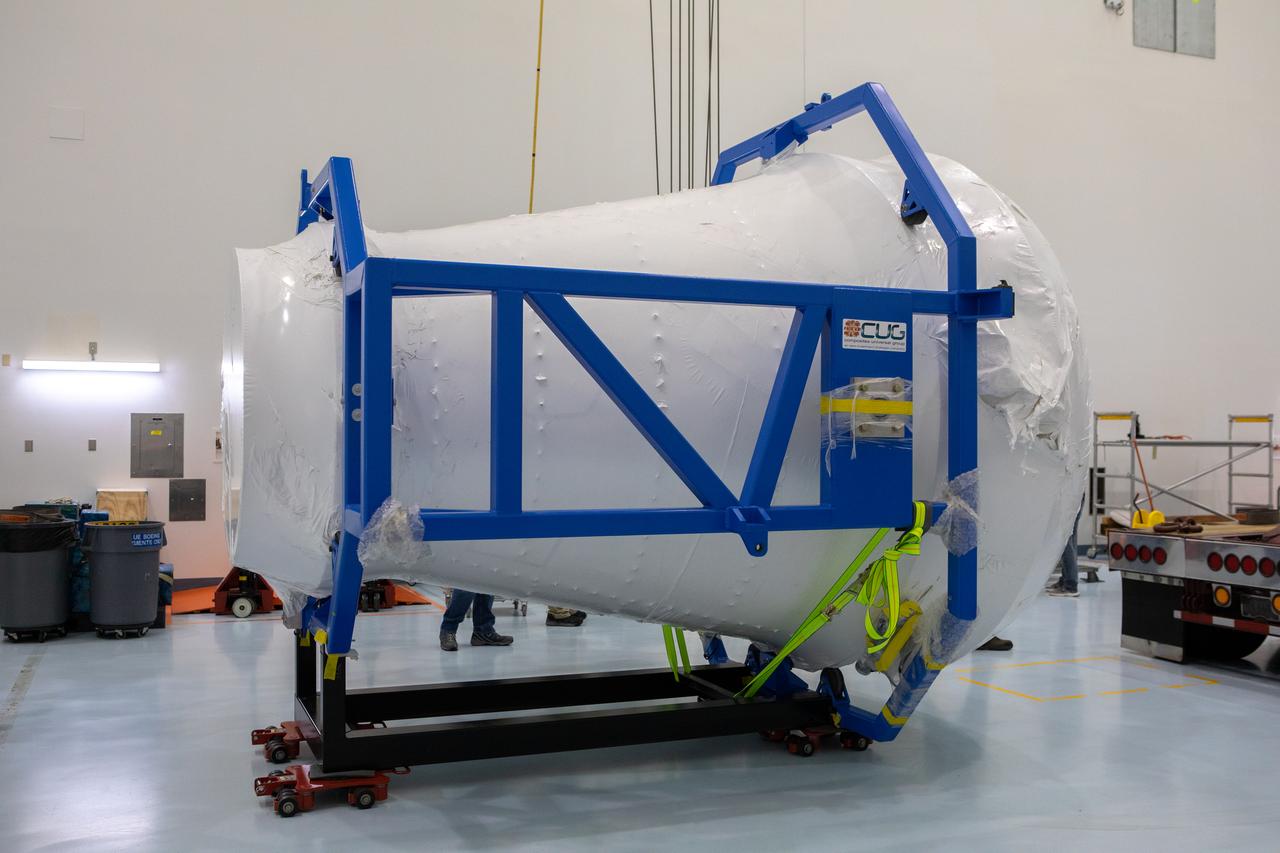
The cargo logistics module for Sierra Nevada Corporation’s Dream Chaser, the company’s reusable spaceplane, is photographed inside the Space Station Processing Facility high bay at NASA’s Kennedy Space Center in Florida following its arrival on Aug. 27, 2019. The cargo module – a 15-foot attachment to Dream Chaser – provides extra storage for payloads and provides cargo disposal upon re-entry into Earth’s atmosphere. Dream Chaser will deliver more than 12,000 pounds of cargo to the International Space Station under the agency’s Commercial Resupply Services 2 contract. The spacecraft and cargo module will begin resupply and return services missions to the space station in late 2021.
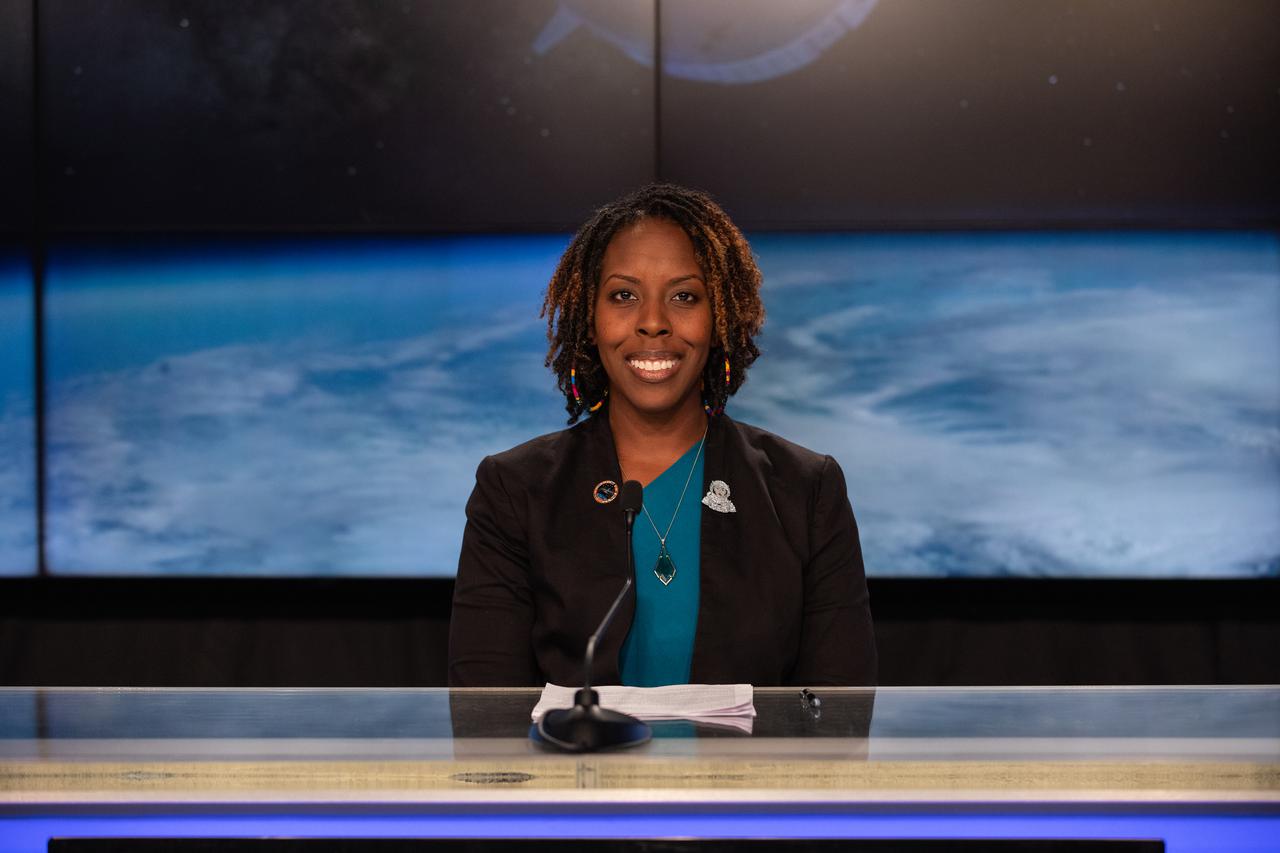
Jennifer Scott Williams, manager for the Applications Client Support Office for the International Space Station Program, participates in a prelaunch news conference for SpaceX’s 23rd commercial resupply services mission at NASA’s Kennedy Space Center in Florida on Aug. 27, 2021. The mission will deliver new science investigations, supplies, and equipment to the crew aboard the orbiting laboratory. Liftoff of the Falcon 9 rocket and Dragon spacecraft is scheduled for 3:37 a.m. EDT on Saturday, Aug. 28, from Kennedy’s Launch Complex 39A.
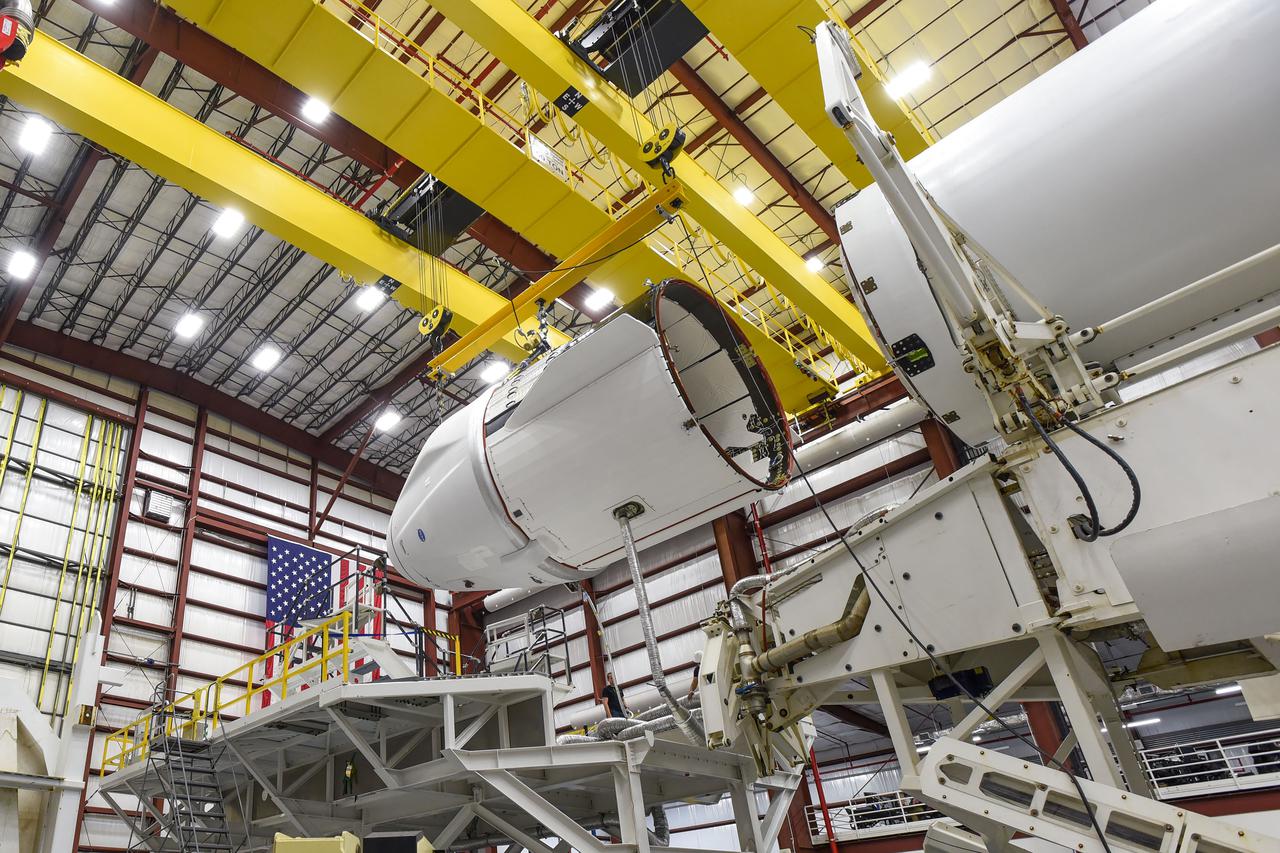
The SpaceX Dragon spacecraft that will fly on the company’s 22nd commercial resupply services mission to the International Space Station is now ready for its journey to space. On Thursday, May 27, teams transported the spacecraft from SpaceX’s processing facility at Cape Canaveral Space Force Station into the hangar at nearby Kennedy Space Center’s Launch Complex 39A, where it was attached to the Falcon 9 rocket. Liftoff of the Falcon 9 is scheduled for 1:29 p.m. EDT on Thursday, June 3.
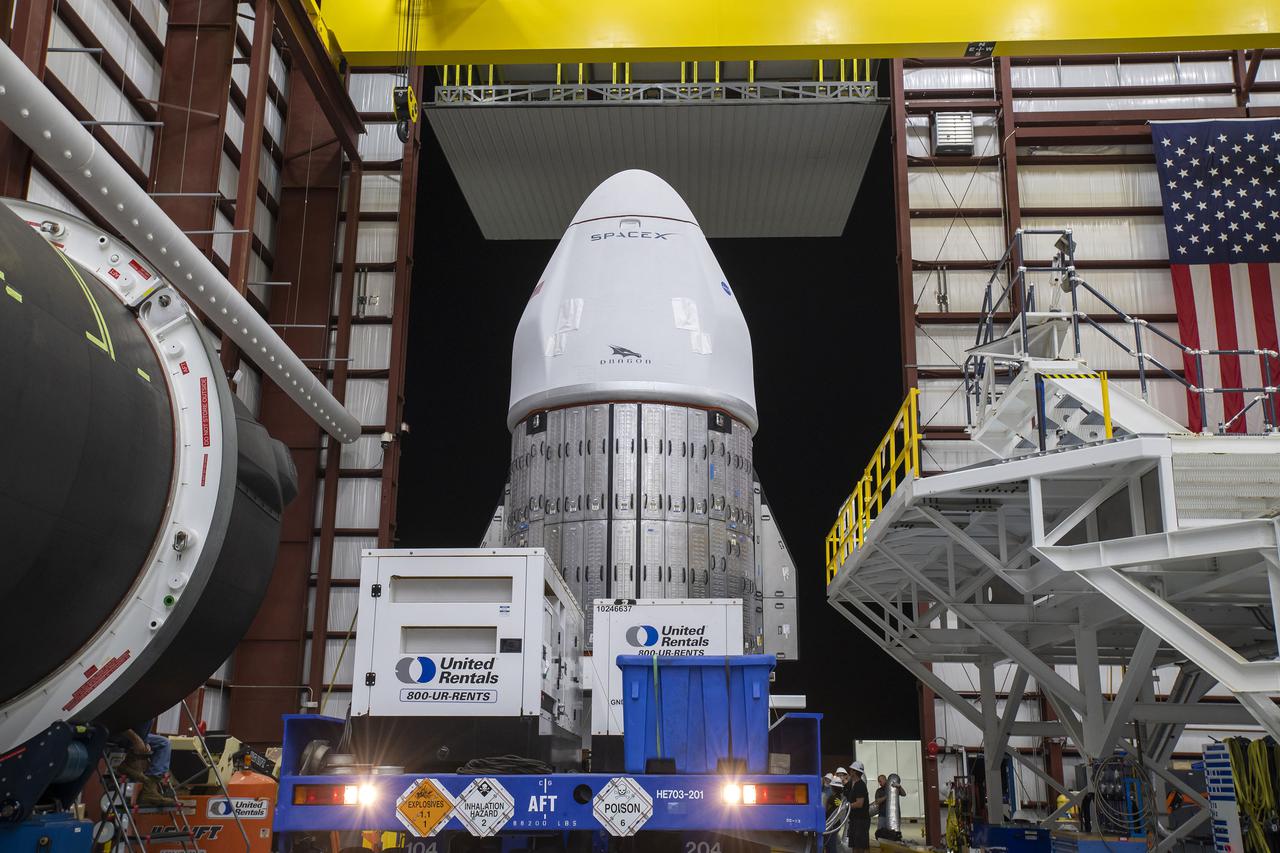
The SpaceX Dragon spacecraft that will fly on the company’s 22nd commercial resupply services mission to the International Space Station is now ready for its journey to space. On Thursday, May 27, teams transported the spacecraft from SpaceX’s processing facility at Cape Canaveral Space Force Station into the hangar at nearby Kennedy Space Center’s Launch Complex 39A, where it was attached to the Falcon 9 rocket. Liftoff of the Falcon 9 is scheduled for 1:29 p.m. EDT on Thursday, June 3.
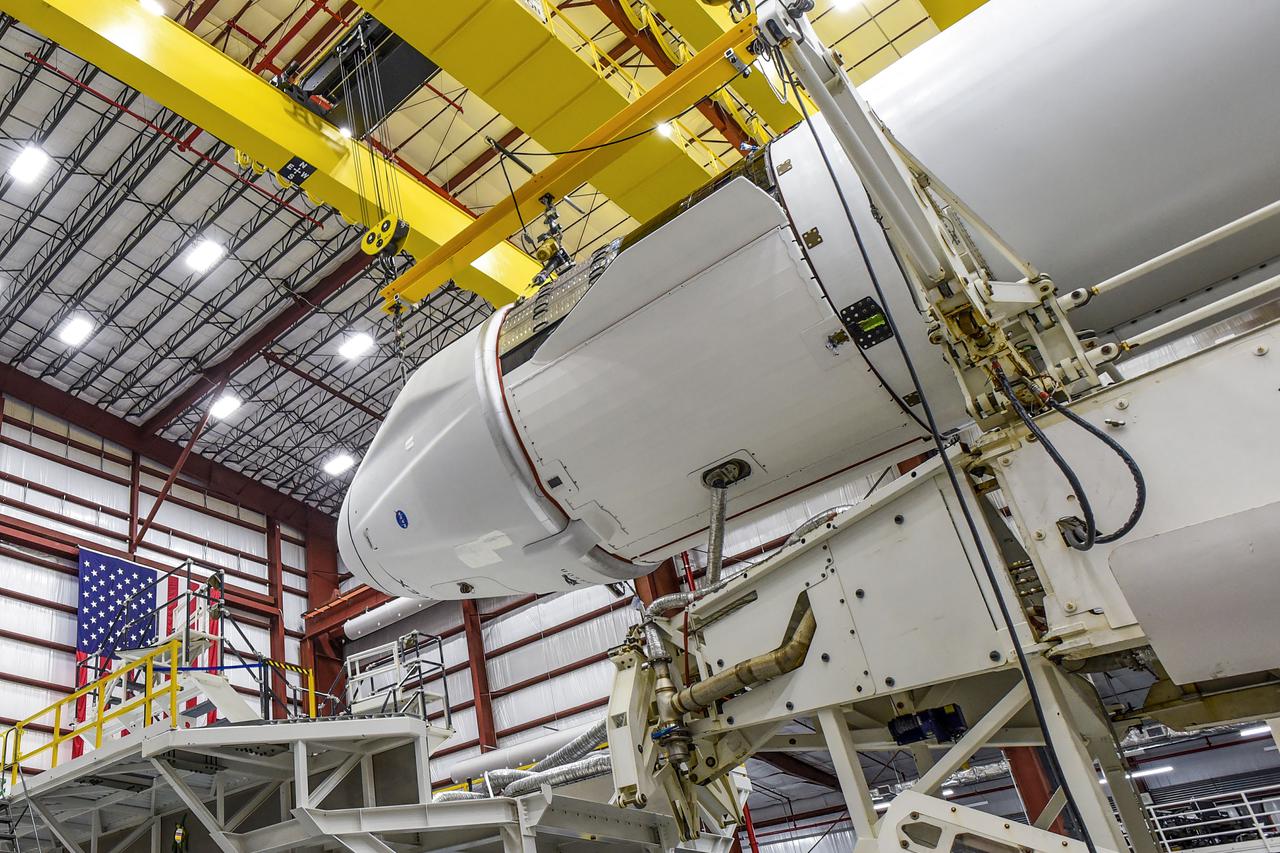
The SpaceX Dragon spacecraft that will fly on the company’s 22nd commercial resupply services mission to the International Space Station is now ready for its journey to space. On Thursday, May 27, teams transported the spacecraft from SpaceX’s processing facility at Cape Canaveral Space Force Station into the hangar at nearby Kennedy Space Center’s Launch Complex 39A, where it was attached to the Falcon 9 rocket. Liftoff of the Falcon 9 is scheduled for 1:29 p.m. EDT on Thursday, June 3.
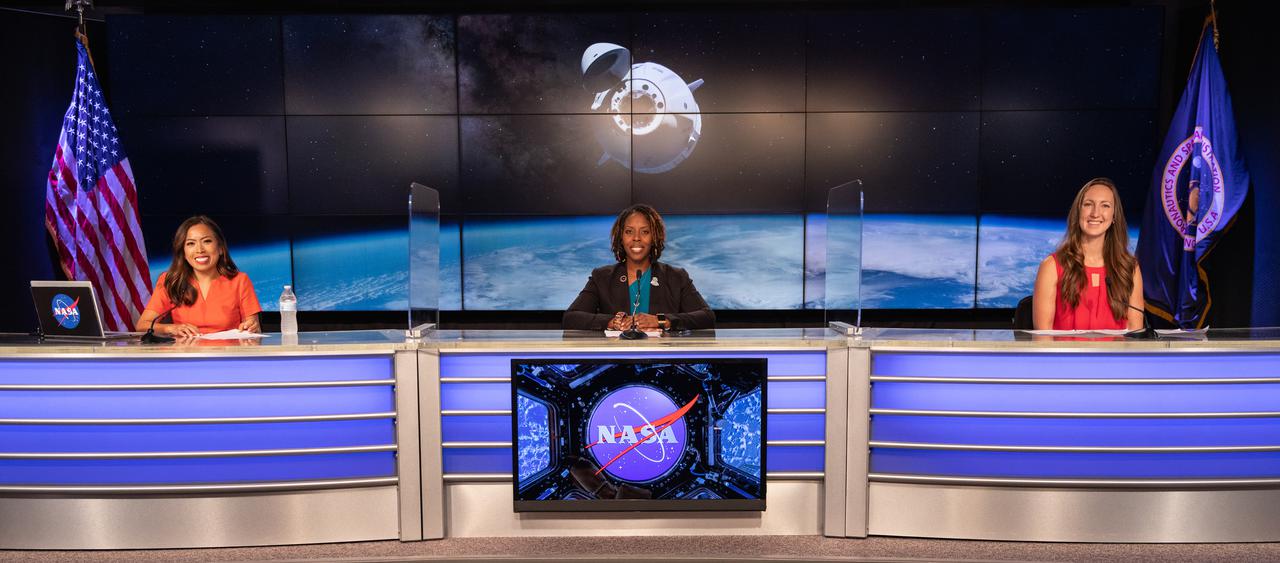
From left, NASA Communications’ Megan Cruz; Jennifer Scott Williams, manager for the Applications Client Support Office for the International Space Station Program; and Sarah Walker, director of Dragon mission management for SpaceX participate in a prelaunch news conference for SpaceX’s 23rd commercial resupply services mission at NASA’s Kennedy Space Center in Florida on Aug. 27, 2021. SpaceX’s Falcon 9 rocket, with the Dragon spacecraft atop, is targeted to lift off from Kennedy’s Launch Complex 39A at 3:37 a.m. on Saturday, Aug. 28. The mission will deliver new science investigations, supplies, and equipment to the crew aboard the International Space Station.

The SpaceX Falcon 9 rocket carrying the Dragon spacecraft lifts off from Launch Complex 39A at NASA’s Kennedy Space Center in Florida on March 14, 2023, on the company’s 27th commercial resupply services mission for the agency to the International Space Station. Liftoff was at 8:30 p.m. EDT. Dragon will deliver more than 6,000 pounds of cargo, including a variety of NASA investigations, supplies, and equipment to the crew aboard the space station, including the final two experiments comprising the National Institutes for Health and International Space Station National Laboratory’s Tissue Chips in Space initiative, Cardinal Heart 2.0 and Engineered Heart Tissues-2. The spacecraft is expected to spend about a month attached to the orbiting outpost before it returns to Earth with research and return cargo, splashing down off the coast of Florida.
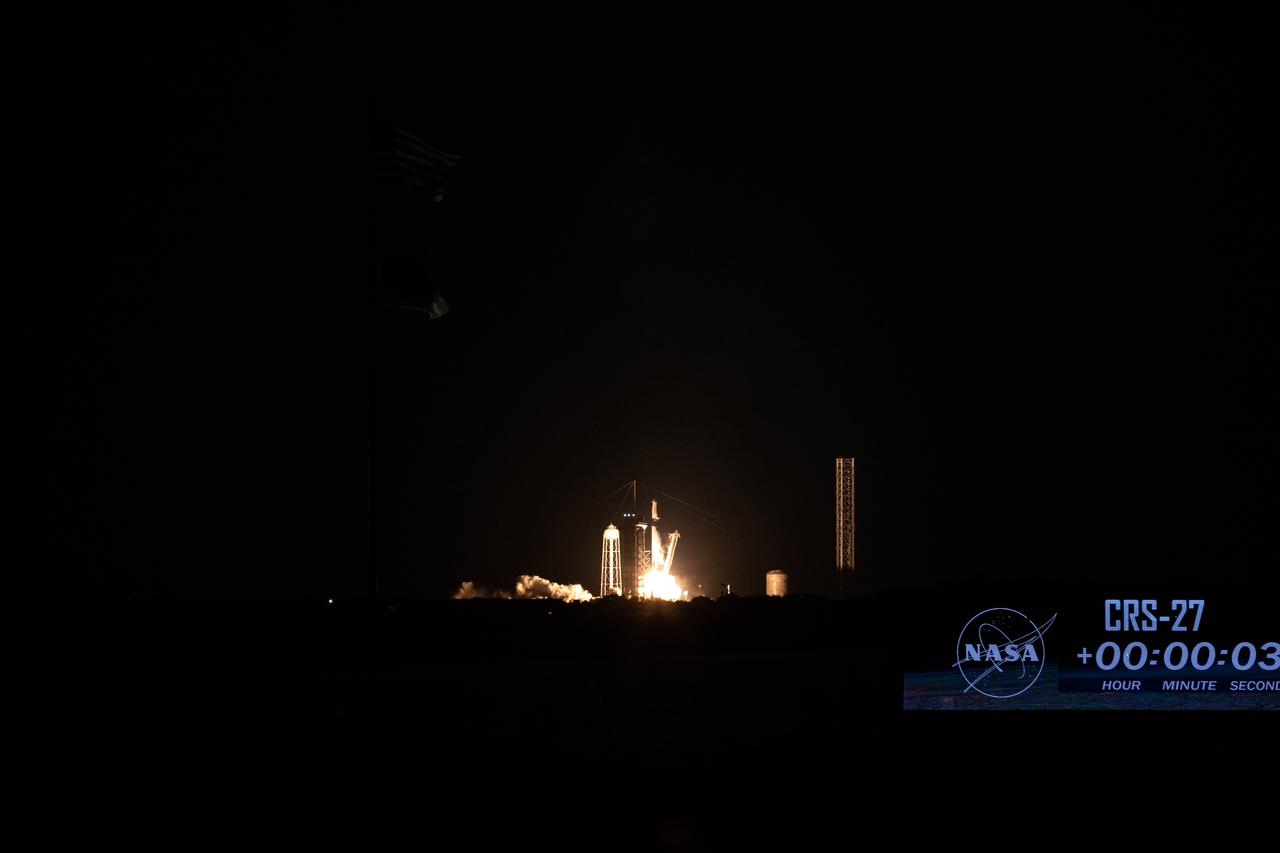
The SpaceX Falcon 9 rocket carrying the Dragon spacecraft lifts off from Launch Complex 39A at NASA’s Kennedy Space Center in Florida on March 14, 2023, on the company’s 27th commercial resupply services mission for the agency to the International Space Station. Liftoff was at 8:30 p.m. EDT. Dragon will deliver more than 6,000 pounds of cargo, including a variety of NASA investigations, supplies, and equipment to the crew aboard the space station, including the final two experiments comprising the National Institutes for Health and International Space Station National Laboratory’s Tissue Chips in Space initiative, Cardinal Heart 2.0 and Engineered Heart Tissues-2. The spacecraft is expected to spend about a month attached to the orbiting outpost before it returns to Earth with research and return cargo, splashing down off the coast of Florida.

Creating a golden streak in the night sky, a SpaceX Falcon 9 rocket carrying the Dragon spacecraft soars upward after liftoff from Launch Complex 39A at NASA’s Kennedy Space Center in Florida on March 14, 2023, on the company’s 27th Commercial Resupply Services mission for the agency to the International Space Station. Liftoff was at 8:30 p.m. EDT. The Dragon spacecraft will deliver more than 6,000 pounds of science and research, supplies, and equipment to the crew aboard the space station, including the final two experiments comprising the National Institutes for Health and International Space Station National Laboratory’s Tissue Chips in Space initiative, Cardinal Heart 2.0 and Engineered Heart Tissues-2. The spacecraft is expected to spend about a month attached to the orbiting outpost before it returns to Earth with research and return cargo, splashing down off the coast of Florida.

The SpaceX Falcon 9 rocket carrying the Dragon spacecraft lifts off from Launch Complex 39A at NASA’s Kennedy Space Center in Florida on March 14, 2023, on the company’s 27th commercial resupply services mission for the agency to the International Space Station. Liftoff was at 8:30 p.m. EDT. Dragon will deliver more than 6,000 pounds of cargo, including a variety of NASA investigations, supplies, and equipment to the crew aboard the space station, including the final two experiments comprising the National Institutes for Health and International Space Station National Laboratory’s Tissue Chips in Space initiative, Cardinal Heart 2.0 and Engineered Heart Tissues-2. The spacecraft is expected to spend about a month attached to the orbiting outpost before it returns to Earth with research and return cargo, splashing down off the coast of Florida.

The SpaceX Falcon 9 rocket carrying the Dragon spacecraft lifts off from Launch Complex 39A at NASA’s Kennedy Space Center in Florida on March 14, 2023, on the company’s 27th commercial resupply services mission for the agency to the International Space Station. Liftoff was at 8:30 p.m. EDT. Dragon will deliver more than 6,000 pounds of cargo, including a variety of NASA investigations, supplies, and equipment to the crew aboard the space station, including the final two experiments comprising the National Institutes for Health and International Space Station National Laboratory’s Tissue Chips in Space initiative, Cardinal Heart 2.0 and Engineered Heart Tissues-2. The spacecraft is expected to spend about a month attached to the orbiting outpost before it returns to Earth with research and return cargo, splashing down off the coast of Florida.

A SpaceX Falcon 9 rocket soars upward after its liftoff from Launch Complex 39A at NASA’s Kennedy Space Center in Florida on March 14, 2023, on the company’s 27th Commercial Resupply Services mission for the agency to the International Space Station. Liftoff was at 8:30 p.m. EDT. The Dragon spacecraft will deliver more than 6,000 pounds of science and research, supplies, and equipment to the crew aboard the space station, including the final two experiments comprising the National Institutes for Health and International Space Station National Laboratory’s Tissue Chips in Space initiative, Cardinal Heart 2.0 and Engineered Heart Tissues-2. The spacecraft is expected to spend about a month attached to the orbiting outpost before it returns to Earth with research and return cargo, splashing down off the coast of Florida.

The SpaceX Falcon 9 rocket carrying the Dragon spacecraft lifts off from Launch Complex 39A at NASA’s Kennedy Space Center in Florida on March 14, 2023, on the company’s 27th commercial resupply services mission for the agency to the International Space Station. Liftoff was at 8:30 p.m. EDT. Dragon will deliver more than 6,000 pounds of cargo, including a variety of NASA investigations, supplies, and equipment to the crew aboard the space station, including the final two experiments comprising the National Institutes for Health and International Space Station National Laboratory’s Tissue Chips in Space initiative, Cardinal Heart 2.0 and Engineered Heart Tissues-2. The spacecraft is expected to spend about a month attached to the orbiting outpost before it returns to Earth with research and return cargo, splashing down off the coast of Florida.
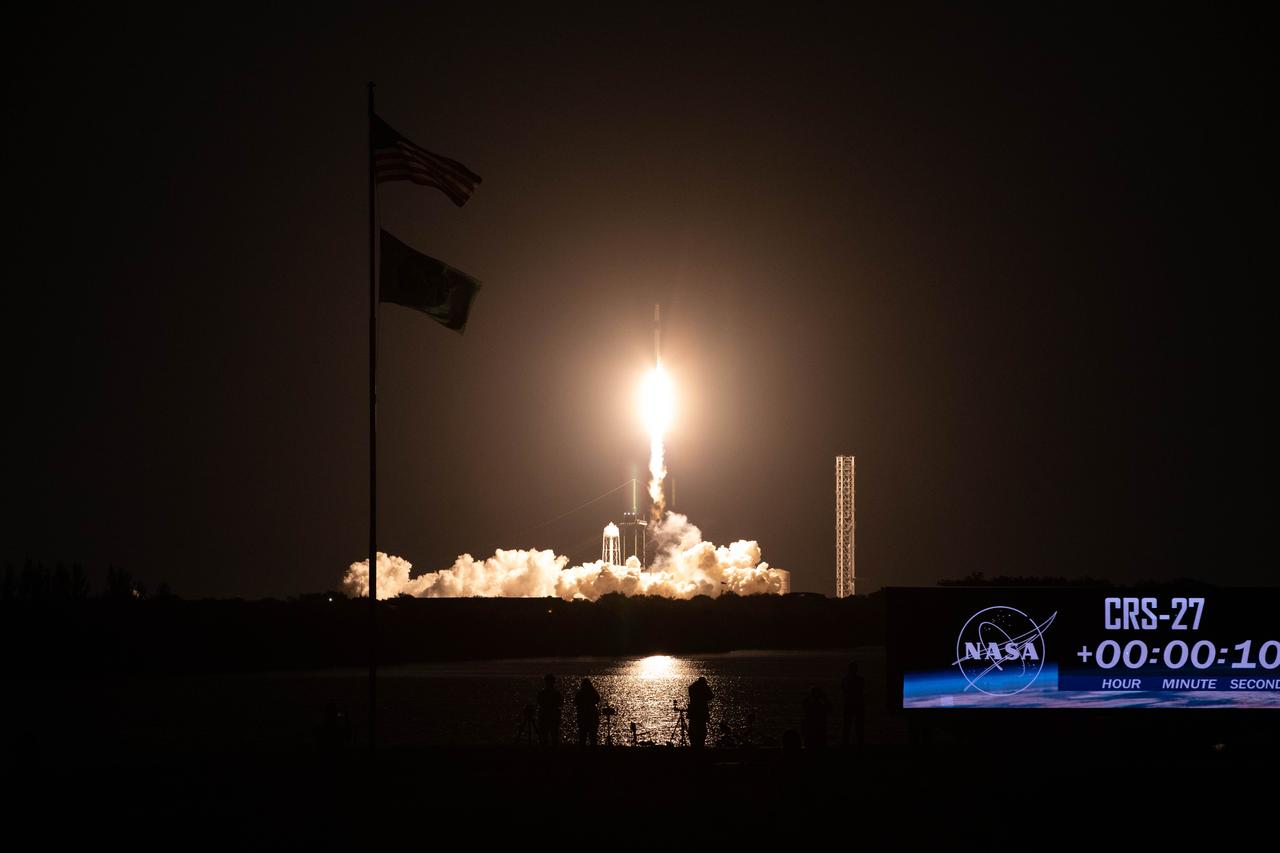
The SpaceX Falcon 9 rocket carrying the Dragon spacecraft lifts off from Launch Complex 39A at NASA’s Kennedy Space Center in Florida on March 14, 2023, on the company’s 27th commercial resupply services mission for the agency to the International Space Station. Liftoff was at 8:30 p.m. EDT. Dragon will deliver more than 6,000 pounds of cargo, including a variety of NASA investigations, supplies, and equipment to the crew aboard the space station, including the final two experiments comprising the National Institutes for Health and International Space Station National Laboratory’s Tissue Chips in Space initiative, Cardinal Heart 2.0 and Engineered Heart Tissues-2. The spacecraft is expected to spend about a month attached to the orbiting outpost before it returns to Earth with research and return cargo, splashing down off the coast of Florida.

The SpaceX Falcon 9 rocket carrying the Dragon spacecraft lifts off from Launch Complex 39A at NASA’s Kennedy Space Center in Florida on March 14, 2023, on the company’s 27th commercial resupply services mission for the agency to the International Space Station. Liftoff was at 8:30 p.m. EDT. Dragon will deliver more than 6,000 pounds of cargo, including a variety of NASA investigations, supplies, and equipment to the crew aboard the space station, including the final two experiments comprising the National Institutes for Health and International Space Station National Laboratory’s Tissue Chips in Space initiative, Cardinal Heart 2.0 and Engineered Heart Tissues-2. The spacecraft is expected to spend about a month attached to the orbiting outpost before it returns to Earth with research and return cargo, splashing down off the coast of Florida.
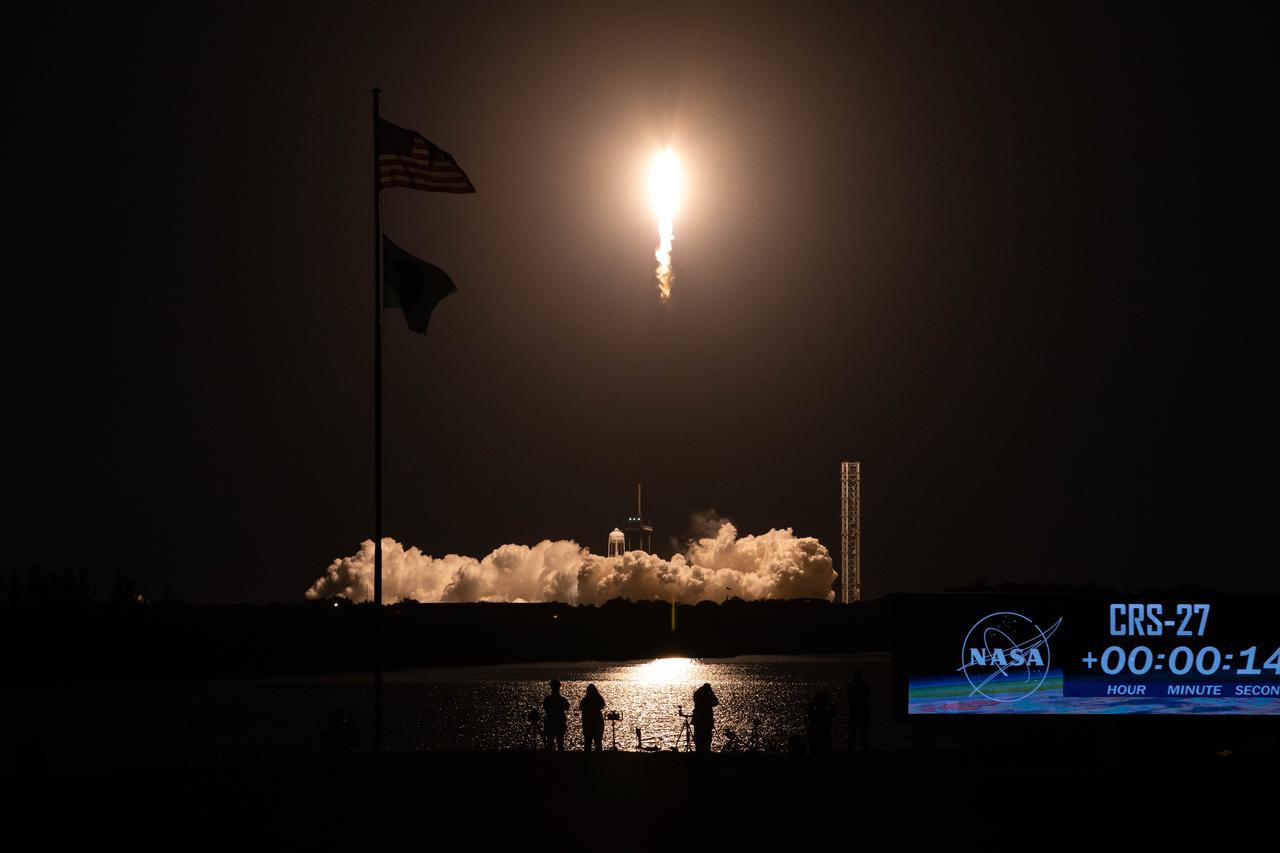
A SpaceX Falcon 9 rocket soars upward after its liftoff from Launch Complex 39A at NASA’s Kennedy Space Center in Florida on March 14, 2023, on the company’s 27th Commercial Resupply Services mission for the agency to the International Space Station. Liftoff was at 8:30 p.m. EDT. The Dragon spacecraft will deliver more than 6,000 pounds of science and research, supplies, and equipment to the crew aboard the space station, including the final two experiments comprising the National Institutes for Health and International Space Station National Laboratory’s Tissue Chips in Space initiative, Cardinal Heart 2.0 and Engineered Heart Tissues-2. The spacecraft is expected to spend about a month attached to the orbiting outpost before it returns to Earth with research and return cargo, splashing down off the coast of Florida.
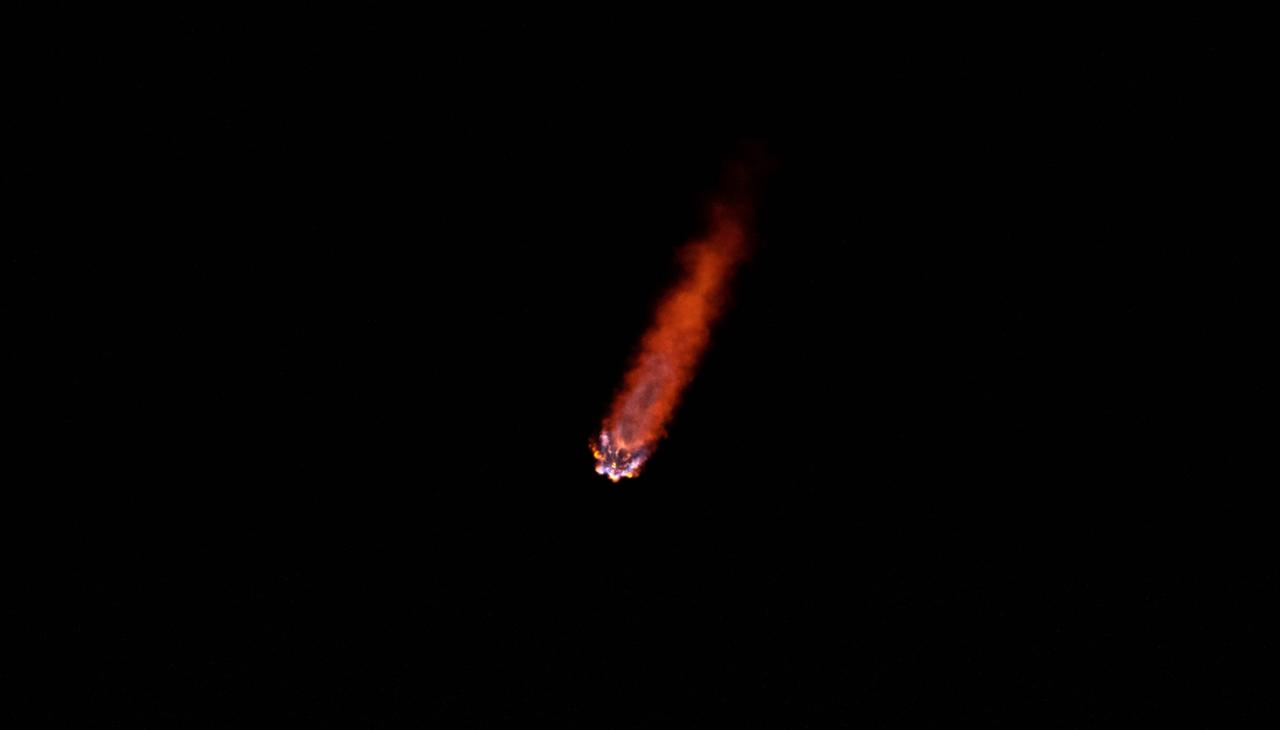
A SpaceX Falcon 9 rocket soars upward after its liftoff from Launch Complex 39A at NASA’s Kennedy Space Center in Florida on March 14, 2023, on the company’s 27th Commercial Resupply Services mission for the agency to the International Space Station. Liftoff was at 8:30 p.m. EDT. The Dragon spacecraft will deliver more than 6,000 pounds of science and research, supplies, and equipment to the crew aboard the space station, including the final two experiments comprising the National Institutes for Health and International Space Station National Laboratory’s Tissue Chips in Space initiative, Cardinal Heart 2.0 and Engineered Heart Tissues-2. The spacecraft is expected to spend about a month attached to the orbiting outpost before it returns to Earth with research and return cargo, splashing down off the coast of Florida.
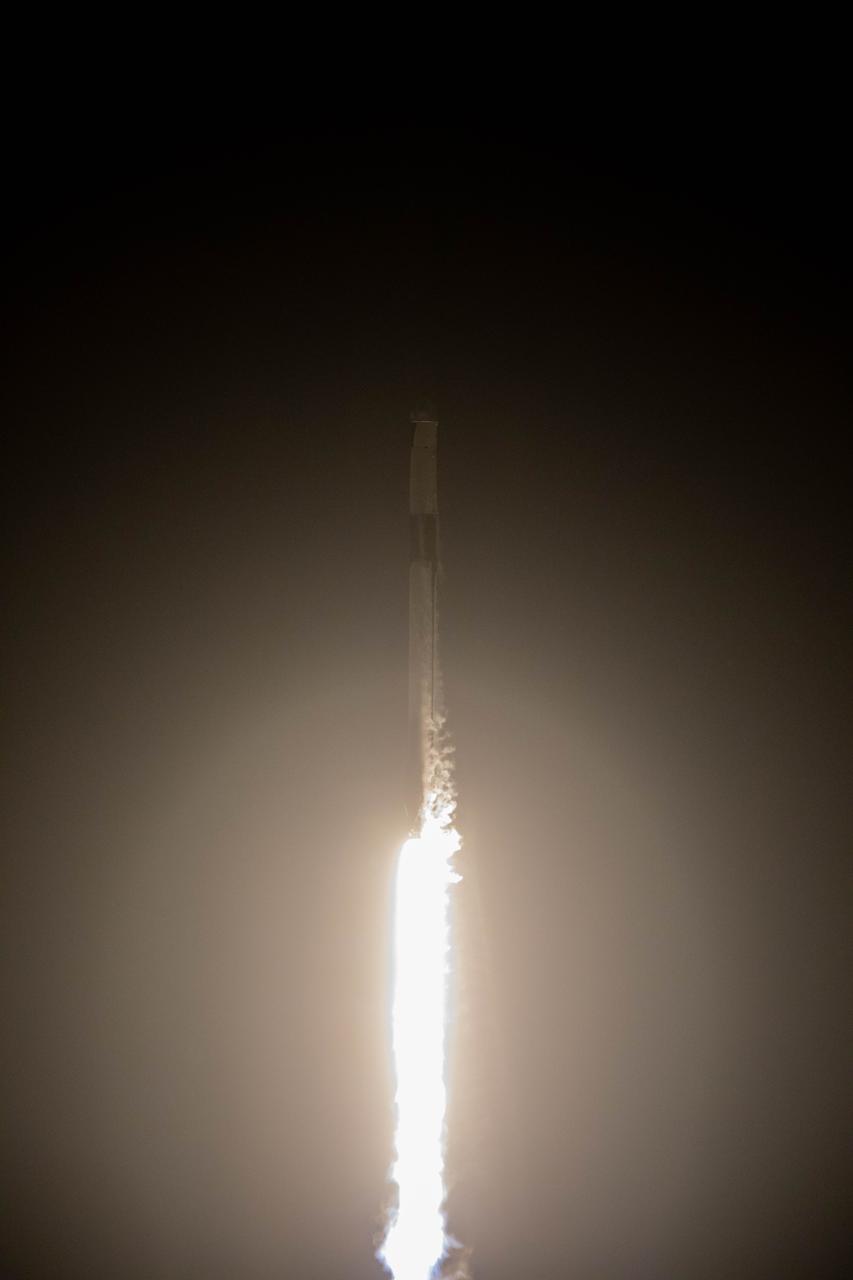
A SpaceX Falcon 9 rocket soars upward after its liftoff from Launch Complex 39A at NASA’s Kennedy Space Center in Florida on March 14, 2023, on the company’s 27th Commercial Resupply Services mission for the agency to the International Space Station. Liftoff was at 8:30 p.m. EDT. The Dragon spacecraft will deliver more than 6,000 pounds of science and research, supplies, and equipment to the crew aboard the space station, including the final two experiments comprising the National Institutes for Health and International Space Station National Laboratory’s Tissue Chips in Space initiative, Cardinal Heart 2.0 and Engineered Heart Tissues-2. The spacecraft is expected to spend about a month attached to the orbiting outpost before it returns to Earth with research and return cargo, splashing down off the coast of Florida.