
The upgraded version of SpaceX’s Cargo Dragon spacecraft, Dragon 2, is seen atop a Falcon 9 rocket on Dec. 2, 2020, as they prepare to be rolled out to Launch Complex 39A at NASA’s Kennedy Space Center in Florida for the company’s 21st Commercial Resupply Services (CRS-21) launch. The first launch for SpaceX under NASA’s second Commercial Resupply Services contract, CRS-21 will deliver critical supplies, equipment, and material to support a variety of science and research investigations that will take place aboard the International Space Station. Liftoff is scheduled for 11:39 a.m. EST on Saturday, Dec. 5.

A SpaceX Falcon 9 rocket, topped with the upgraded version of the Cargo Dragon spacecraft, is seen inside the company’s hangar at NASA’s Kennedy Space Center in Florida on Dec. 2, 2020, prior to being rolled out to the launch pad in preparation for the 21st Commercial Resupply Services (CRS-21) launch. The first launch for SpaceX under NASA’s second Commercial Resupply Services contract, CRS-21 will deliver critical supplies, equipment, and material to support a variety of science and research investigations that will take place aboard the International Space Station. Liftoff is scheduled for 11:39 a.m. EST on Saturday, Dec. 5, from Kennedy’s Launch Complex 39A.

A SpaceX Falcon 9 rocket, topped with the upgraded version of the Cargo Dragon spacecraft, is seen inside the company’s hangar at NASA’s Kennedy Space Center in Florida on Dec. 2, 2020, prior to being rolled out to the launch pad in preparation for the 21st Commercial Resupply Services (CRS-21) launch. The first launch for SpaceX under NASA’s second Commercial Resupply Services contract, CRS-21 will deliver critical supplies, equipment, and material to support a variety of science and research investigations that will take place aboard the International Space Station. Liftoff is scheduled for 11:39 a.m. EST on Saturday, Dec. 5, from Kennedy’s Launch Complex 39A.
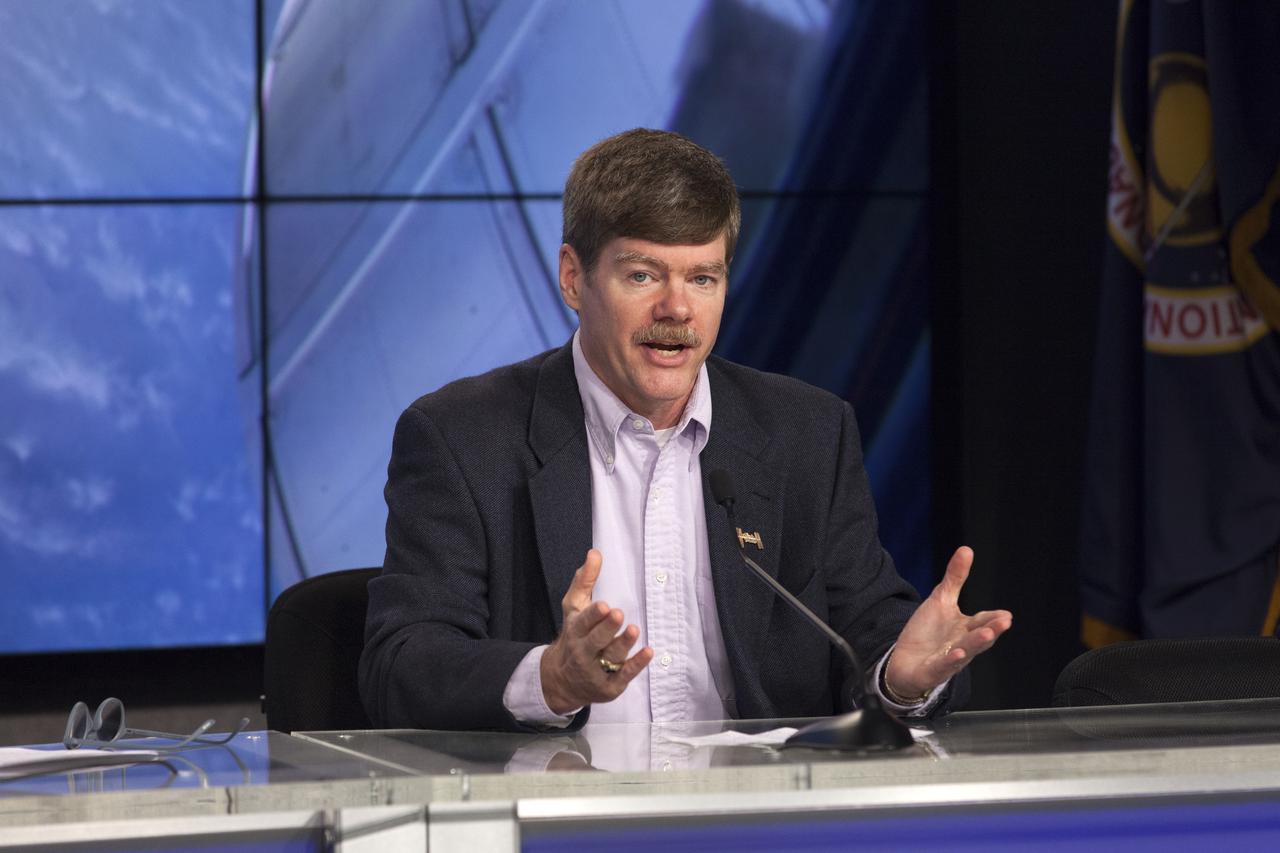
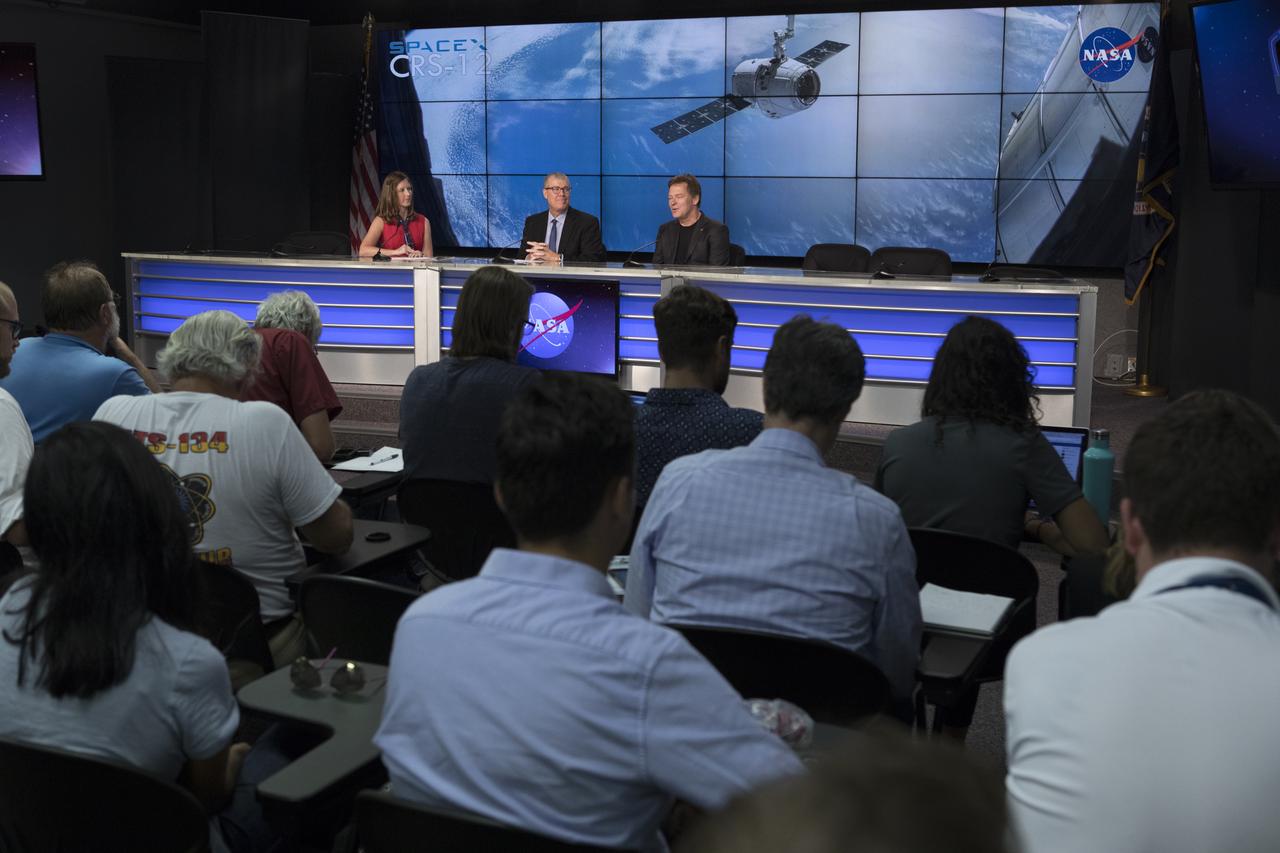
In the Kennedy Space Center’s Press Site auditorium, Pete Hasbrook, associate program scientist for the International Space Station Program, speaks to members of the media during a prelaunch news conference for the SpaceX CRS-12 commercial resupply services mission to the International Space Station. A Dragon spacecraft is scheduled to be launched from Kennedy’s Launch Complex 39A on Aug. 14 atop a SpaceX Falcon 9 rocket on the company's 12th Commercial Resupply Services mission to the space station.

In the Kennedy Space Center’s Press Site auditorium, members of the media participate with NASA and industry leaders in a prelaunch news conference for the SpaceX CRS-13 commercial resupply services mission to the International Space Station. A Dragon spacecraft is scheduled to be launched from Space Launch Complex 40 at Cape Canaveral Air Force Station at 11:46 a.m. EST, on Dec. 12, 2017. The SpaceX Falcon 9 rocket will lift off on the company's 13th Commercial Resupply Services mission to the space station.

In the Kennedy Space Center’s Press Site auditorium, Jessica Jensen, director of Dragon Mission Management for SpaceX, speaks to members of the media during a prelaunch news conference for the SpaceX CRS-15 Commercial Resupply Services mission to the International Space Station. A SpaceX Dragon spacecraft is scheduled to be launched from Space Launch Complex 40 at Cape Canaveral Air Force Station. The SpaceX Falcon 9 rocket will lift off on the company's 15th Commercial Resupply Services mission to the space station.
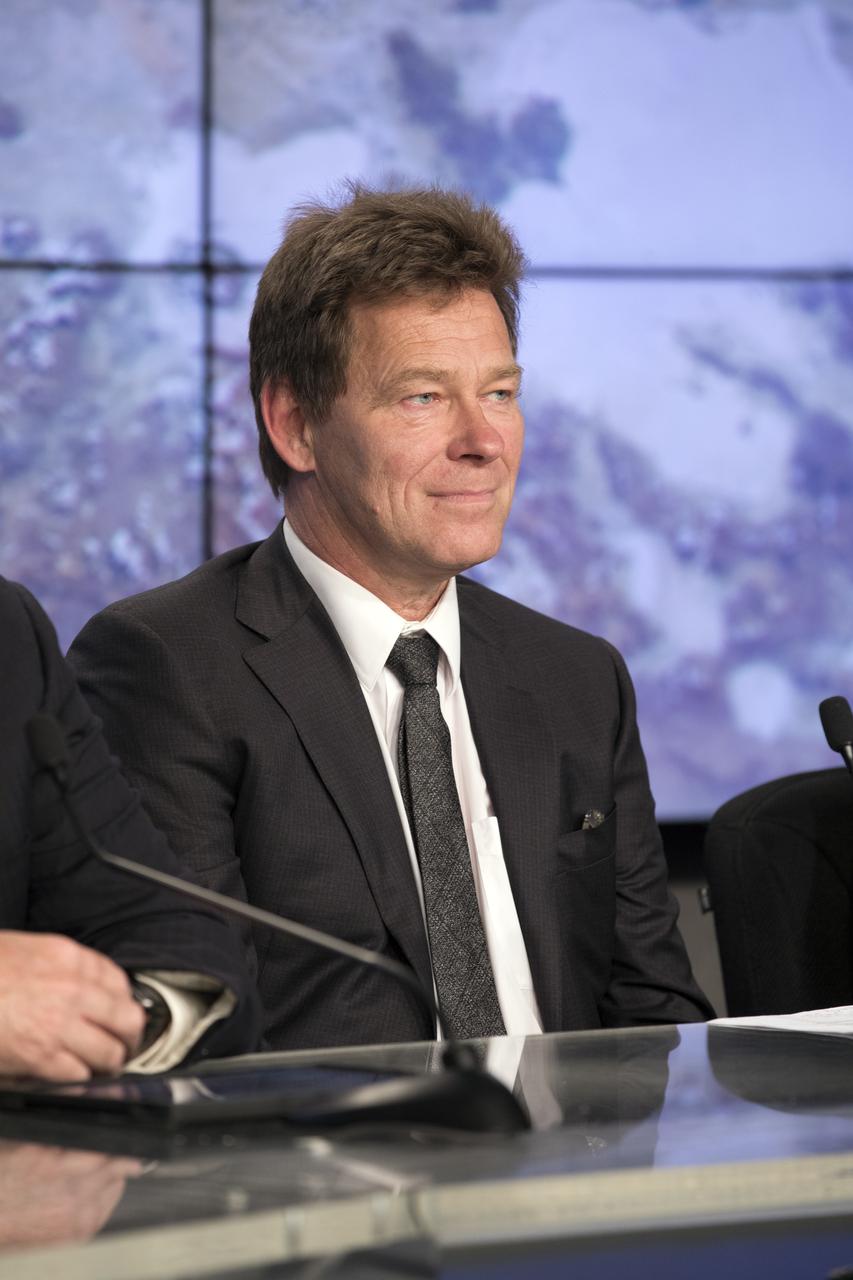
In the Kennedy Space Center’s Press Site auditorium, Hans Koenigsmann, vice president of Flight Reliability for SpaceX, speaks to members of the media during a prelaunch news conference for the SpaceX CRS-11 commercial resupply services mission to the International Space Station. A Dragon spacecraft is scheduled to be launched from Kennedy’s Launch Complex 39A on June 1 atop a SpaceX Falcon 9 rocket on the company's 11th Commercial Resupply Services mission to the space station.

In the Kennedy Space Center’s Press Site auditorium, Mike McAleenan, launch weather officer for the U.S. Air Force 45th Weather Squadron, speaks to members of the media during a prelaunch news conference for the SpaceX CRS-11 commercial resupply services mission to the International Space Station. A Dragon spacecraft is scheduled to be launched from Kennedy’s Launch Complex 39A on June 1 atop a SpaceX Falcon 9 rocket on the company's 11th Commercial Resupply Services mission to the space station.

In the Kennedy Space Center’s Press Site auditorium, Dan Hartman, NASA deputy manager of the International Space Station Program, speaks to members of the media during a prelaunch news conference for the SpaceX CRS-12 commercial resupply services mission to the International Space Station. A Dragon spacecraft is scheduled to be launched from Kennedy’s Launch Complex 39A on Aug. 14 atop a SpaceX Falcon 9 rocket on the company's 12th Commercial Resupply Services mission to the space station.
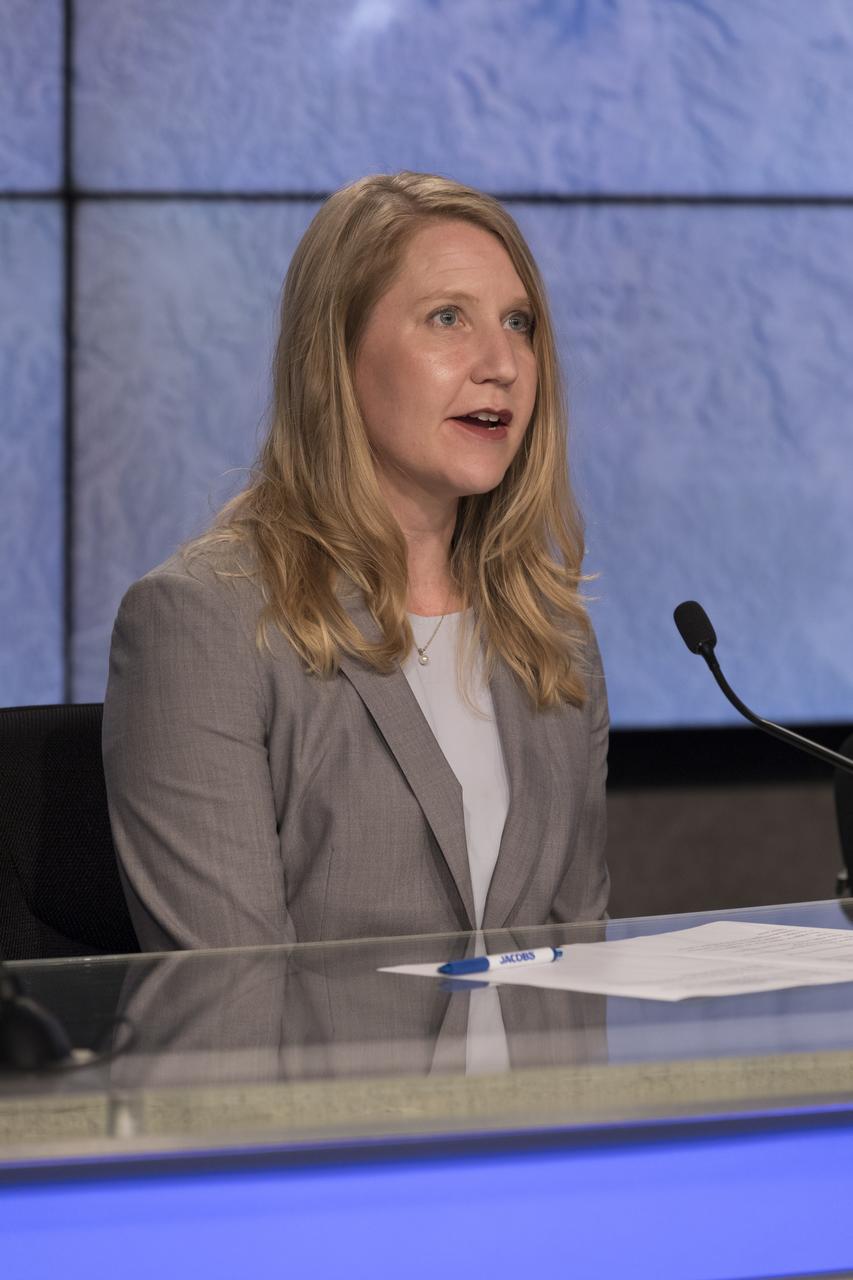
In the Kennedy Space Center’s Press Site auditorium, Stephanie Schierholz of NASA Communications, speaks to members of the media during a prelaunch news conference for the SpaceX CRS-15 Commercial Resupply Services mission to the International Space Station. A SpaceX Dragon spacecraft is scheduled to be launched from Space Launch Complex 40 at Cape Canaveral Air Force Station. The SpaceX Falcon 9 rocket will lift off on the company's 15th Commercial Resupply Services mission to the space station.

In the Kennedy Space Center’s Press Site auditorium, David Brady, assistant program scientist for the International Space Station Program, speaks to members of the media during a prelaunch news conference for the SpaceX CRS-15 Commercial Resupply Services mission to the International Space Station. A SpaceX Dragon spacecraft is scheduled to be launched from Space Launch Complex 40 at Cape Canaveral Air Force Station. The SpaceX Falcon 9 rocket will lift off on the company's 15th Commercial Resupply Services mission to the space station.

In the Kennedy Space Center’s Press Site auditorium, Cheryl Warner of NASA Communications speaks to members of the media during a prelaunch news conference for the SpaceX CRS-13 commercial resupply services mission to the International Space Station. A Dragon spacecraft is scheduled to be launched from Space Launch Complex 40 at Cape Canaveral Air Force Station at 11:46 a.m. EST, on Dec. 12, 2017. The SpaceX Falcon 9 rocket will lift off on the company's 13th Commercial Resupply Services mission to the space station.

In the Kennedy Space Center’s Press Site auditorium, Hans Koenigsmann, vice president of Build and Flight Reliability for SpaceX, speaks to members of the media during a prelaunch news conference for the SpaceX CRS-12 commercial resupply services mission to the International Space Station. A Dragon spacecraft is scheduled to be launched from Kennedy’s Launch Complex 39A on Aug. 14 atop a SpaceX Falcon 9 rocket on the company's 12th Commercial Resupply Services mission to the space station.
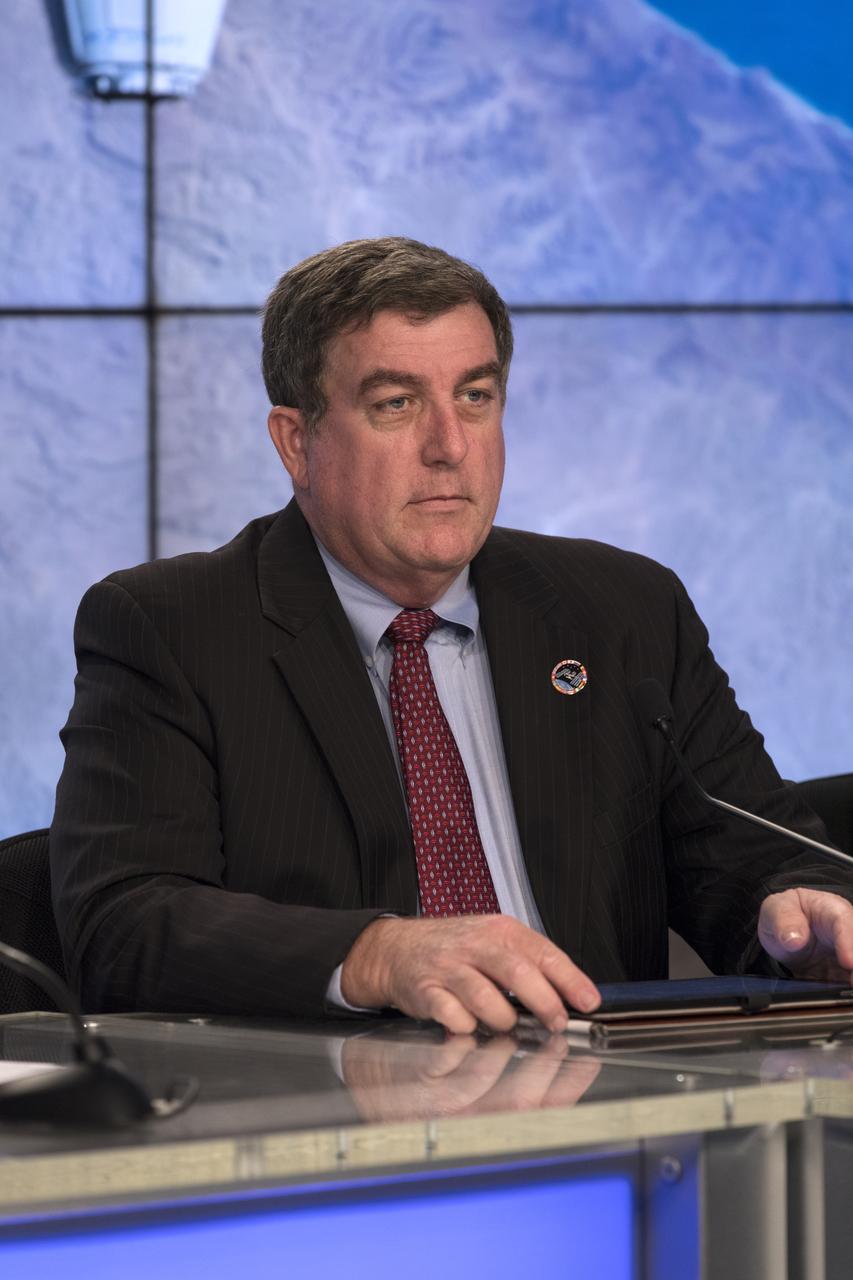
In the Kennedy Space Center’s Press Site auditorium, Kirk Shireman, manager of the International Space Station Program, speaks to members of the media during a prelaunch news conference for the SpaceX CRS-15 Commercial Resupply Services mission to the International Space Station. A SpaceX Dragon spacecraft is scheduled to be launched from Space Launch Complex 40 at Cape Canaveral Air Force Station. The SpaceX Falcon 9 rocket will lift off on the company's 15th Commercial Resupply Services mission to the space station.
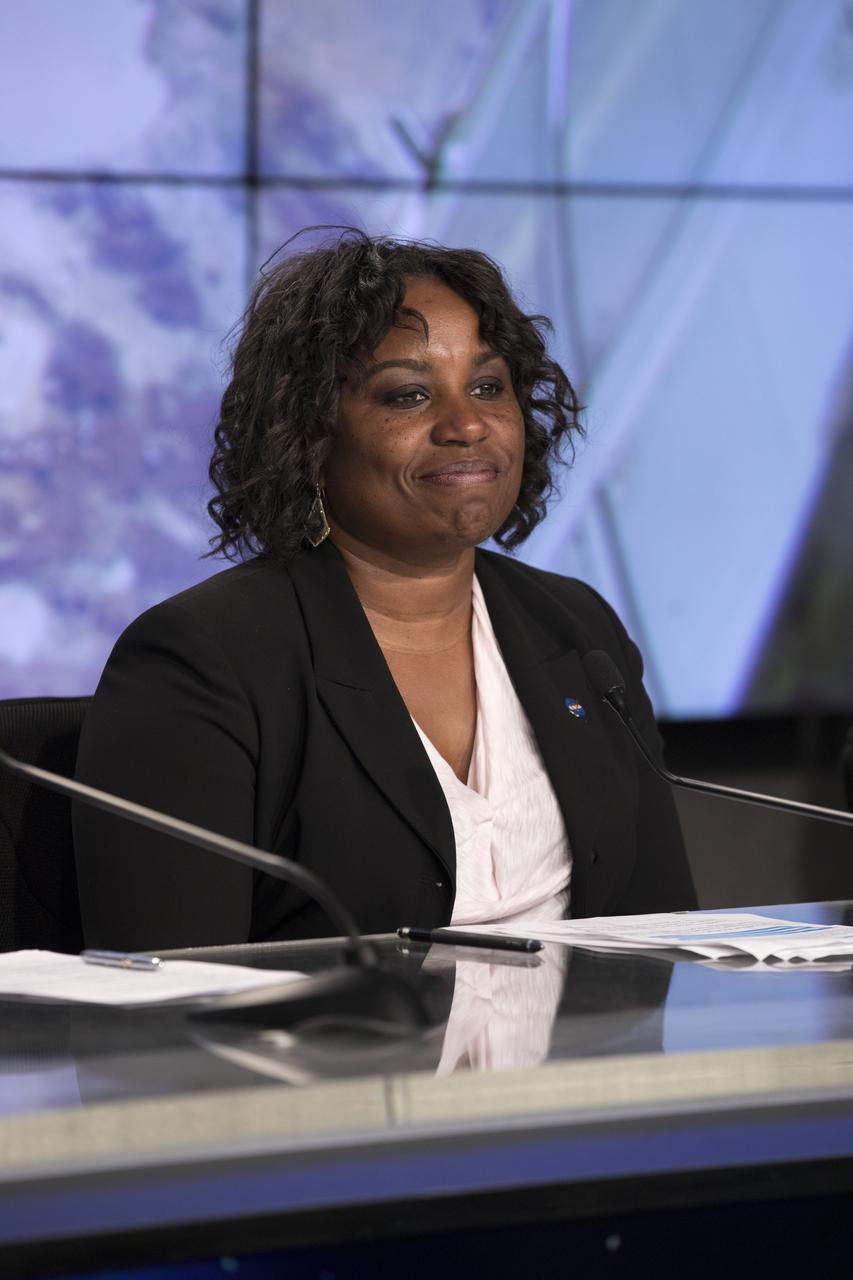
In the Kennedy Space Center’s Press Site auditorium, Camille Alleyne, associate program scientist for the International Space Station at NASA’s Johnson Space Center, speaks to members of the media during a prelaunch news conference for the SpaceX CRS-11 commercial resupply services mission to the International Space Station. A Dragon spacecraft is scheduled to be launched from Kennedy’s Launch Complex 39A on June 1 atop a SpaceX Falcon 9 rocket on the company's 11th Commercial Resupply Services mission to the space station.
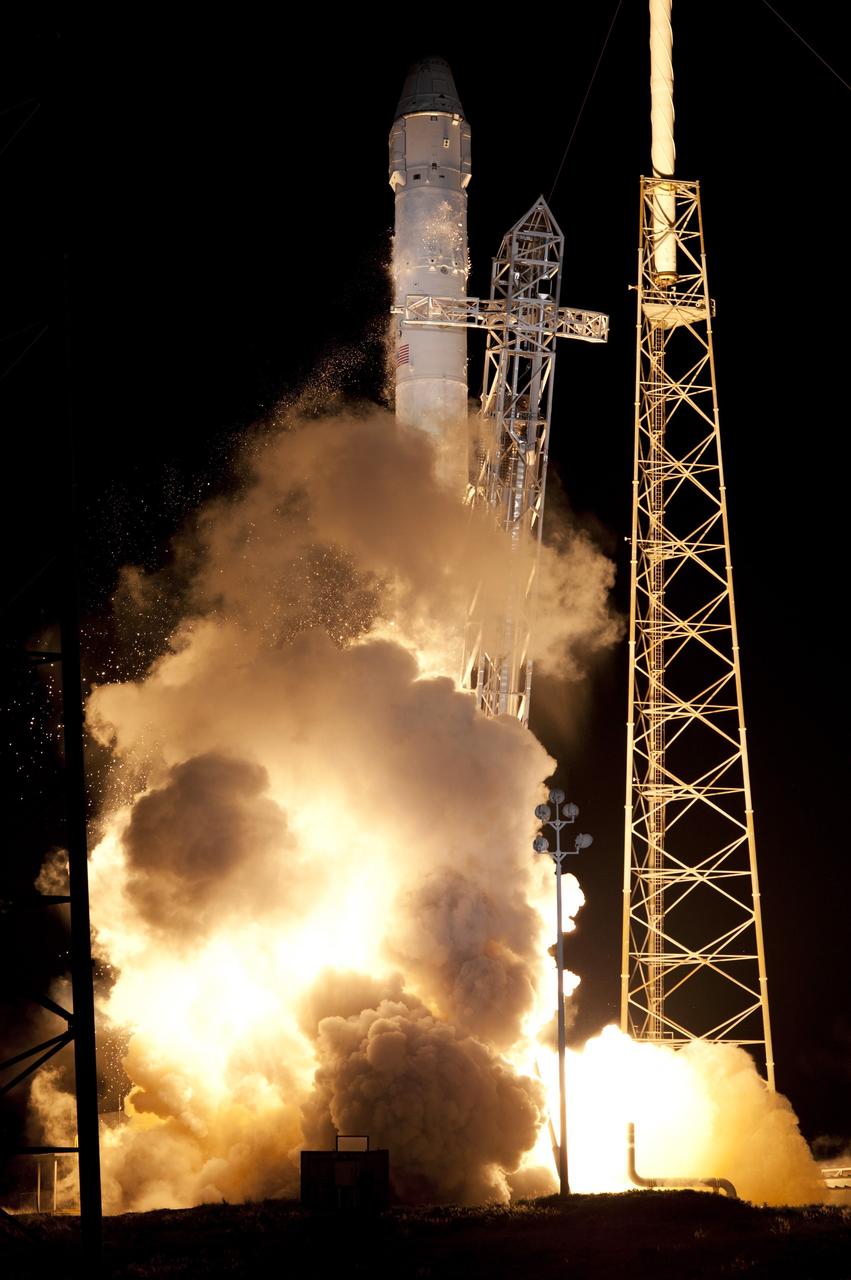
CAPE CANAVERAL, Fla. - Space Launch Complex 40 on Cape Canaveral Air Force Station in Florida comes alive as the Merlin engines ignite under the Falcon 9 rocket carrying a Dragon capsule to orbit. Liftoff was at 8:35 p.m. EDT. Space Exploration Technologies Corp., or SpaceX, built both the rocket and capsule for NASA's first Commercial Resupply Services, or CRS-1, mission to the International Space Station. SpaceX CRS-1 is an important step toward making America’s microgravity research program self-sufficient by providing a way to deliver and return significant amounts of cargo, including science experiments, to and from the orbiting laboratory. NASA has contracted for 12 commercial resupply flights from SpaceX and eight from the Orbital Sciences Corp. For more information, visit http://www.nasa.gov/mission_pages/station/living/launch/index.html Photo credit: NASA/ Rick Wetherington and Tim Powers
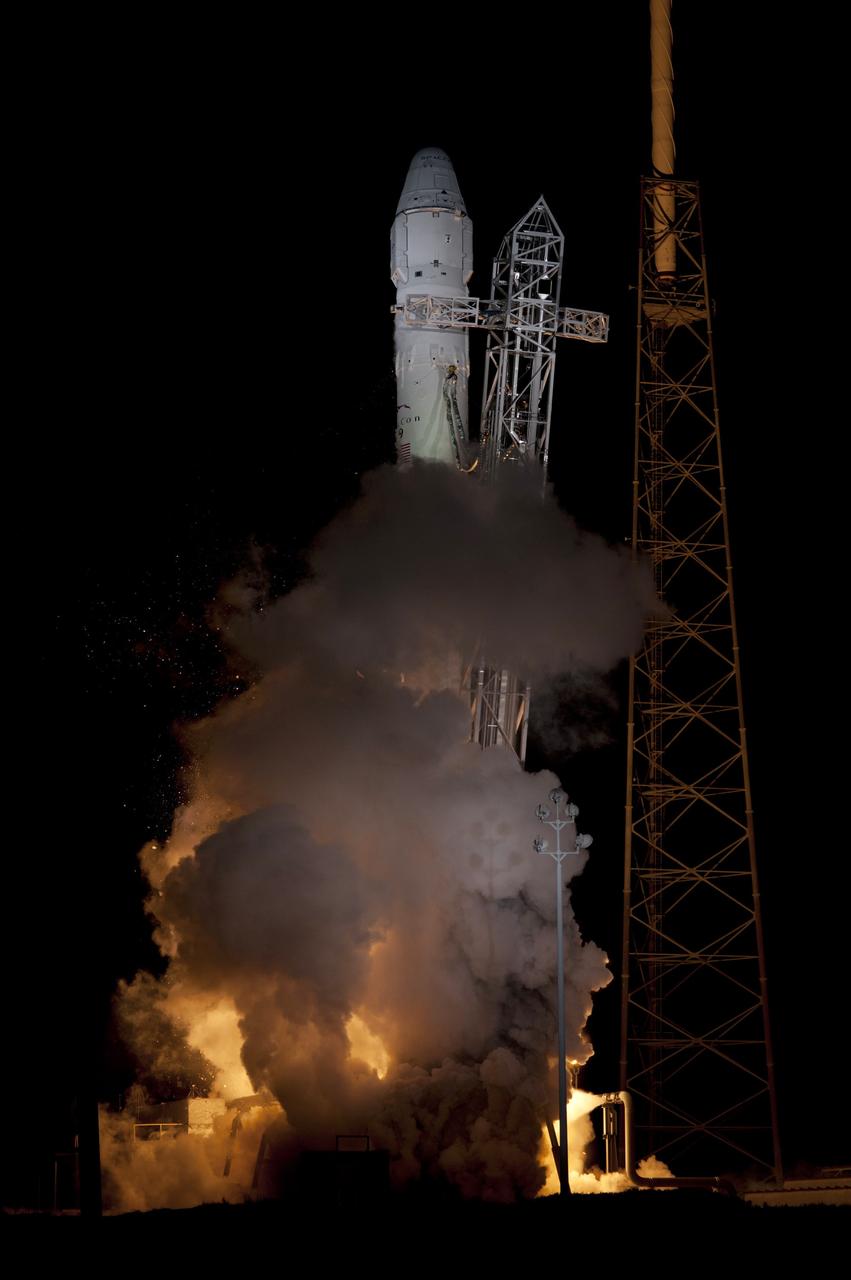
CAPE CANAVERAL, Fla. - Space Launch Complex 40 on Cape Canaveral Air Force Station in Florida comes alive as the Merlin engines ignite under the Falcon 9 rocket carrying a Dragon capsule to orbit. Liftoff was at 8:35 p.m. EDT. Space Exploration Technologies Corp., or SpaceX, built both the rocket and capsule for NASA's first Commercial Resupply Services, or CRS-1, mission to the International Space Station. SpaceX CRS-1 is an important step toward making America’s microgravity research program self-sufficient by providing a way to deliver and return significant amounts of cargo, including science experiments, to and from the orbiting laboratory. NASA has contracted for 12 commercial resupply flights from SpaceX and eight from the Orbital Sciences Corp. For more information, visit http://www.nasa.gov/mission_pages/station/living/launch/index.html Photo credit: NASA/ Rick Wetherington and Tim Powers
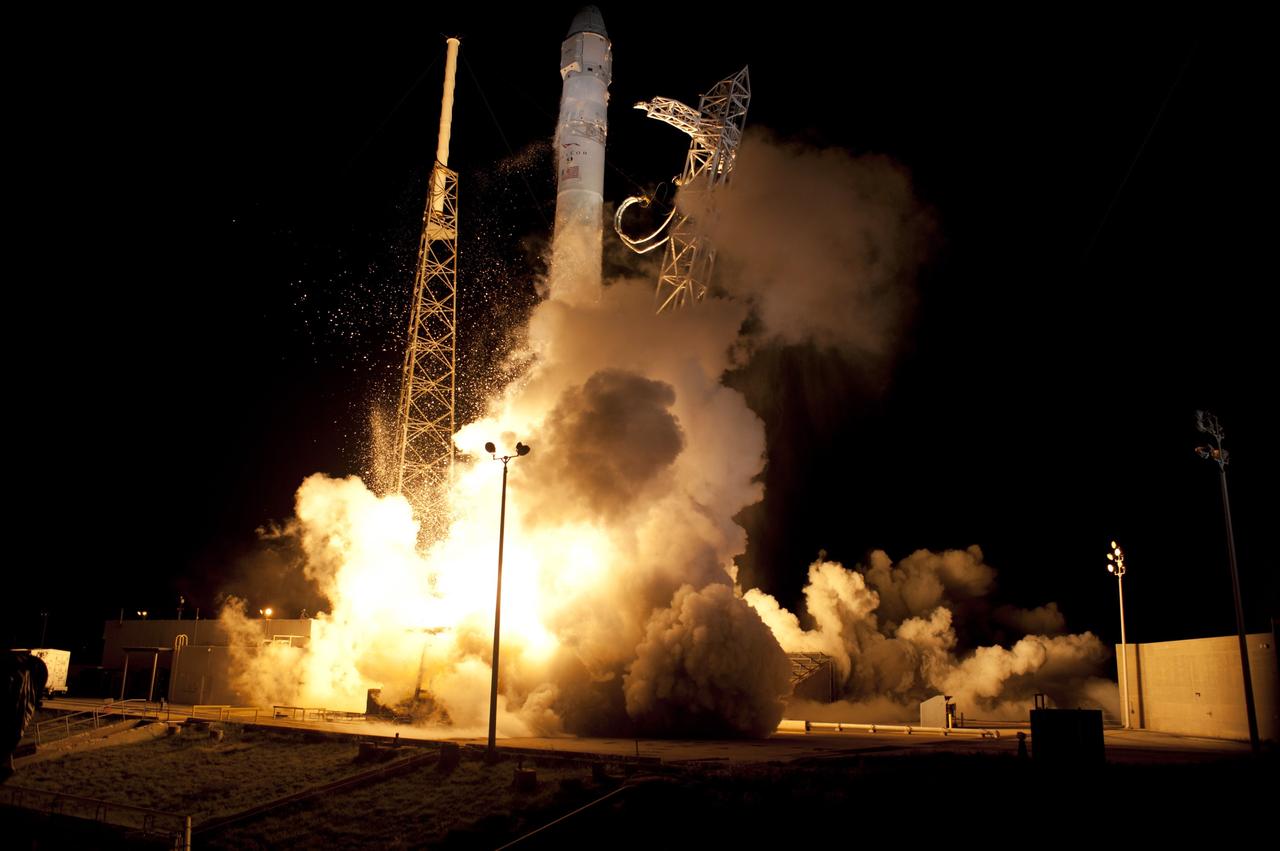
CAPE CANAVERAL, Fla. - Space Launch Complex 40 on Cape Canaveral Air Force Station in Florida comes alive as the Merlin engines ignite under the Falcon 9 rocket carrying a Dragon capsule to orbit. Liftoff was at 8:35 p.m. EDT. Space Exploration Technologies Corp., or SpaceX, built both the rocket and capsule for NASA's first Commercial Resupply Services, or CRS-1, mission to the International Space Station. SpaceX CRS-1 is an important step toward making America’s microgravity research program self-sufficient by providing a way to deliver and return significant amounts of cargo, including science experiments, to and from the orbiting laboratory. NASA has contracted for 12 commercial resupply flights from SpaceX and eight from the Orbital Sciences Corp. For more information, visit http://www.nasa.gov/mission_pages/station/living/launch/index.html Photo credit: NASA/ Rick Wetherington and Tim Powers
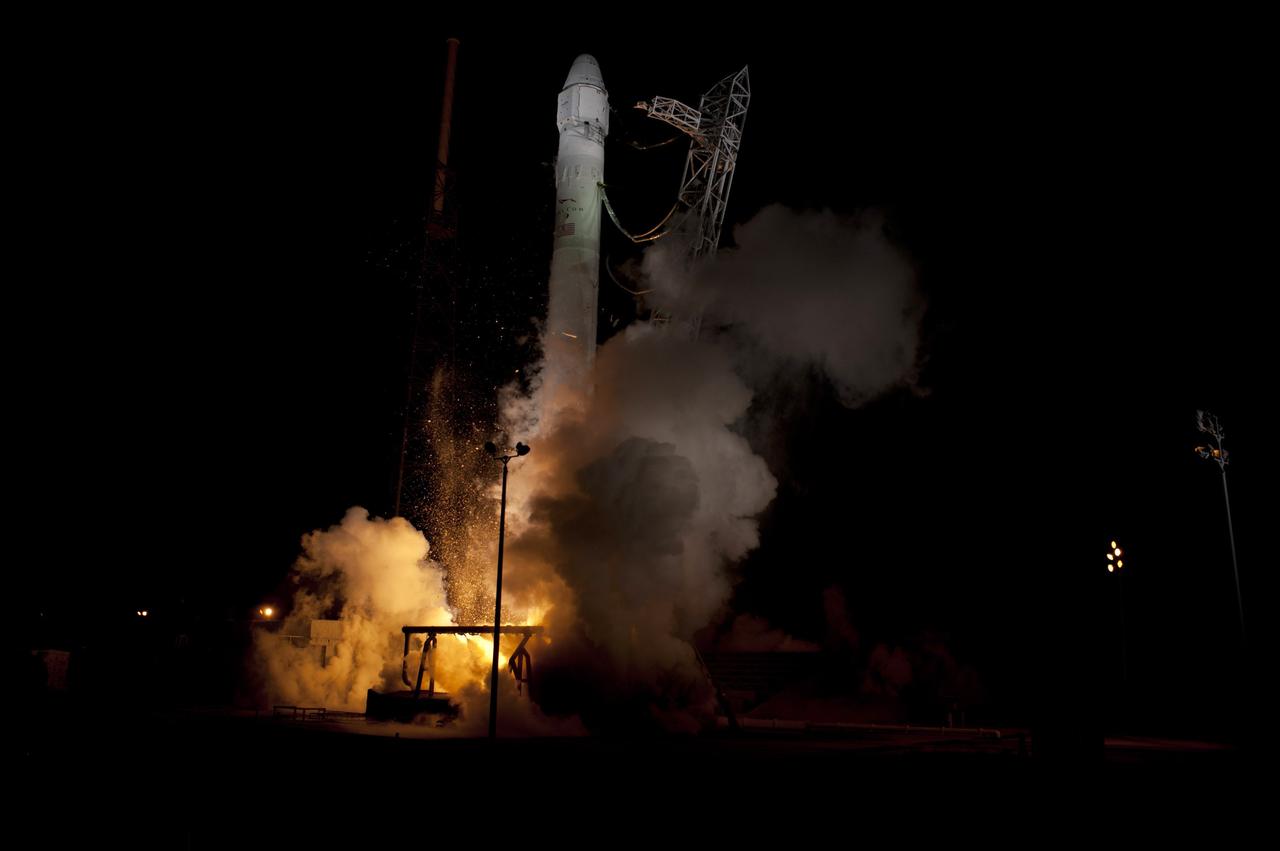
CAPE CANAVERAL, Fla. - Space Launch Complex 40 on Cape Canaveral Air Force Station in Florida comes alive as the Merlin engines ignite under the Falcon 9 rocket carrying a Dragon capsule to orbit. Liftoff was at 8:35 p.m. EDT. Space Exploration Technologies Corp., or SpaceX, built both the rocket and capsule for NASA's first Commercial Resupply Services, or CRS-1, mission to the International Space Station. SpaceX CRS-1 is an important step toward making America’s microgravity research program self-sufficient by providing a way to deliver and return significant amounts of cargo, including science experiments, to and from the orbiting laboratory. NASA has contracted for 12 commercial resupply flights from SpaceX and eight from the Orbital Sciences Corp. For more information, visit http://www.nasa.gov/mission_pages/station/living/launch/index.html Photo credit: NASA/ Rick Wetherington and Tim Powers
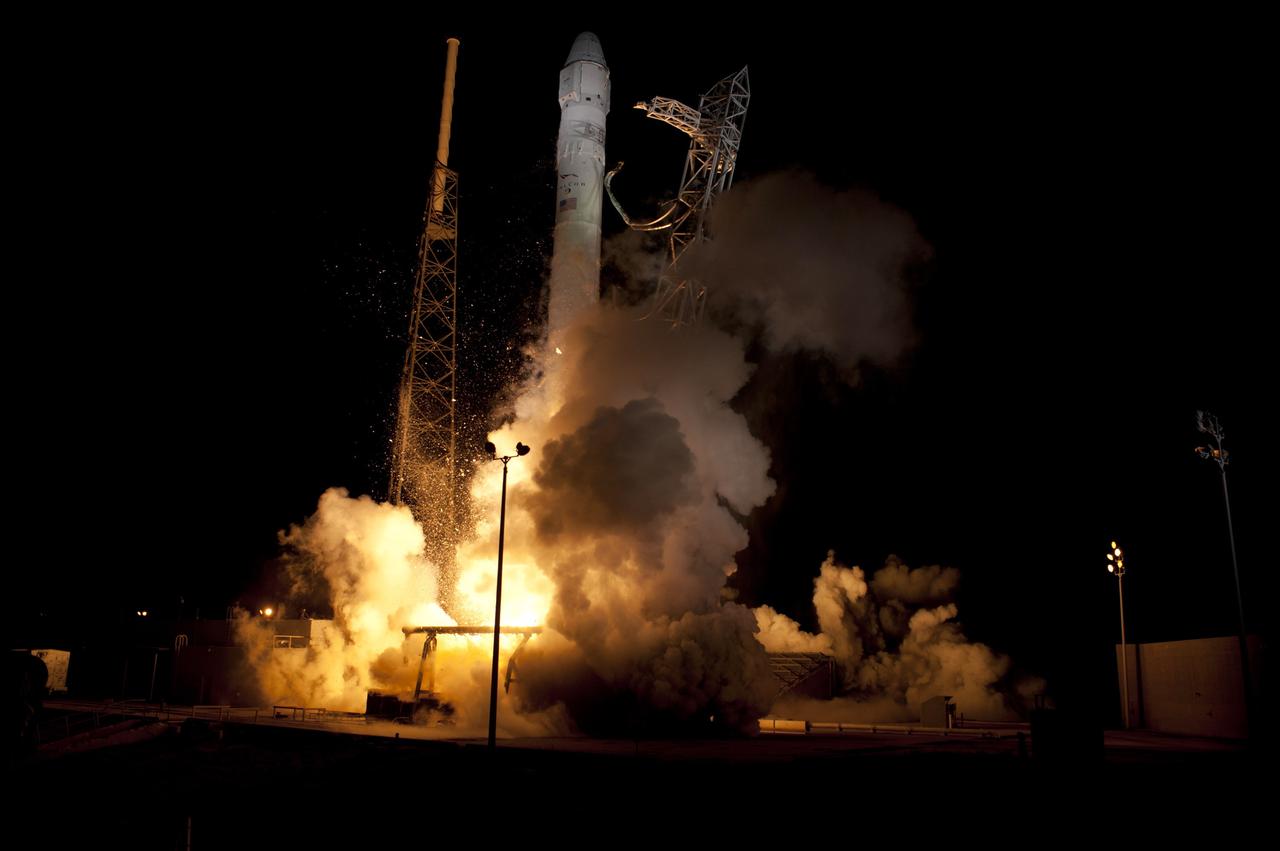
CAPE CANAVERAL, Fla. - Space Launch Complex 40 on Cape Canaveral Air Force Station in Florida comes alive as the Merlin engines ignite under the Falcon 9 rocket carrying a Dragon capsule to orbit. Liftoff was at 8:35 p.m. EDT. Space Exploration Technologies Corp., or SpaceX, built both the rocket and capsule for NASA's first Commercial Resupply Services, or CRS-1, mission to the International Space Station. SpaceX CRS-1 is an important step toward making America’s microgravity research program self-sufficient by providing a way to deliver and return significant amounts of cargo, including science experiments, to and from the orbiting laboratory. NASA has contracted for 12 commercial resupply flights from SpaceX and eight from the Orbital Sciences Corp. For more information, visit http://www.nasa.gov/mission_pages/station/living/launch/index.html Photo credit: NASA/ Rick Wetherington and Tim Powers
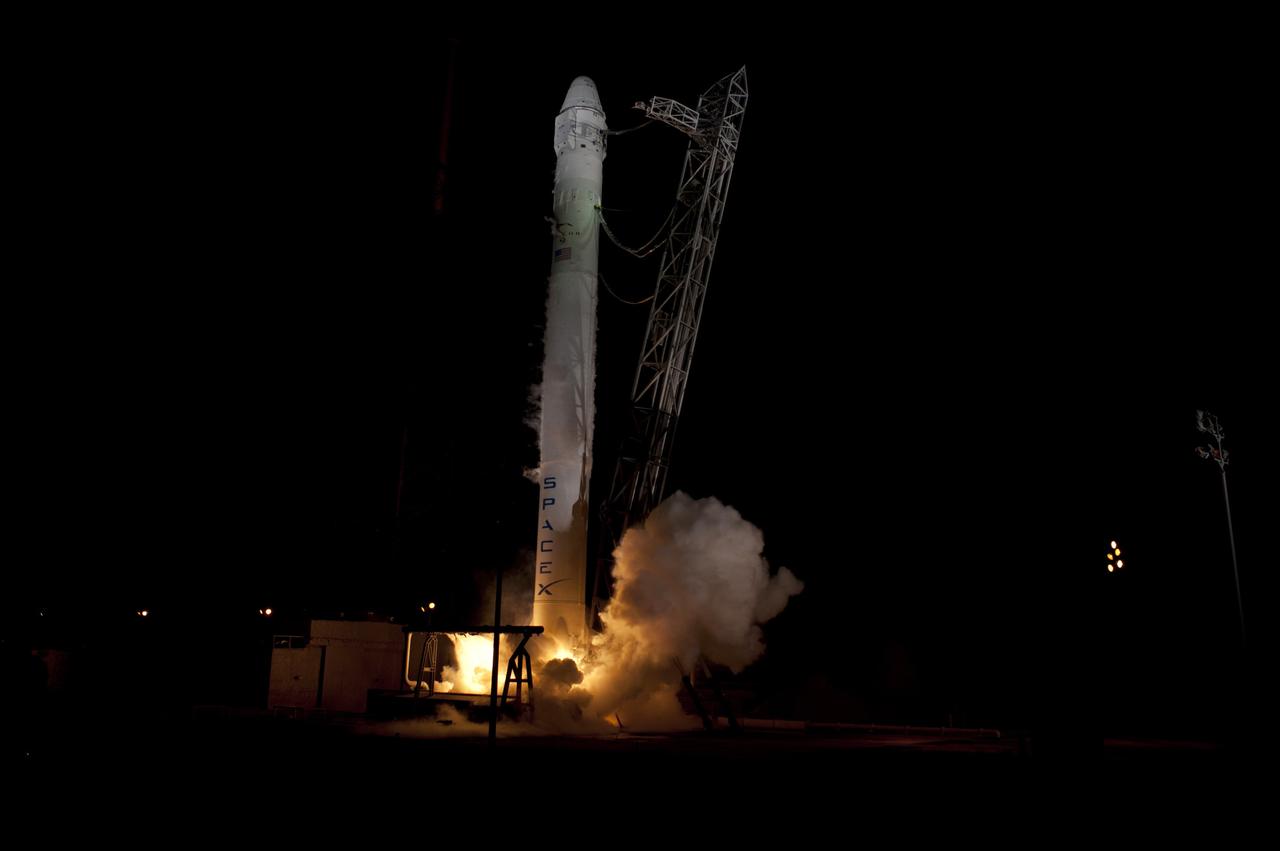
CAPE CANAVERAL, Fla. - Space Launch Complex 40 on Cape Canaveral Air Force Station in Florida comes alive as the Merlin engines ignite under the Falcon 9 rocket carrying a Dragon capsule to orbit. Liftoff was at 8:35 p.m. EDT. Space Exploration Technologies Corp., or SpaceX, built both the rocket and capsule for NASA's first Commercial Resupply Services, or CRS-1, mission to the International Space Station. SpaceX CRS-1 is an important step toward making America’s microgravity research program self-sufficient by providing a way to deliver and return significant amounts of cargo, including science experiments, to and from the orbiting laboratory. NASA has contracted for 12 commercial resupply flights from SpaceX and eight from the Orbital Sciences Corp. For more information, visit http://www.nasa.gov/mission_pages/station/living/launch/index.html Photo credit: NASA/ Rick Wetherington and Tim Powers
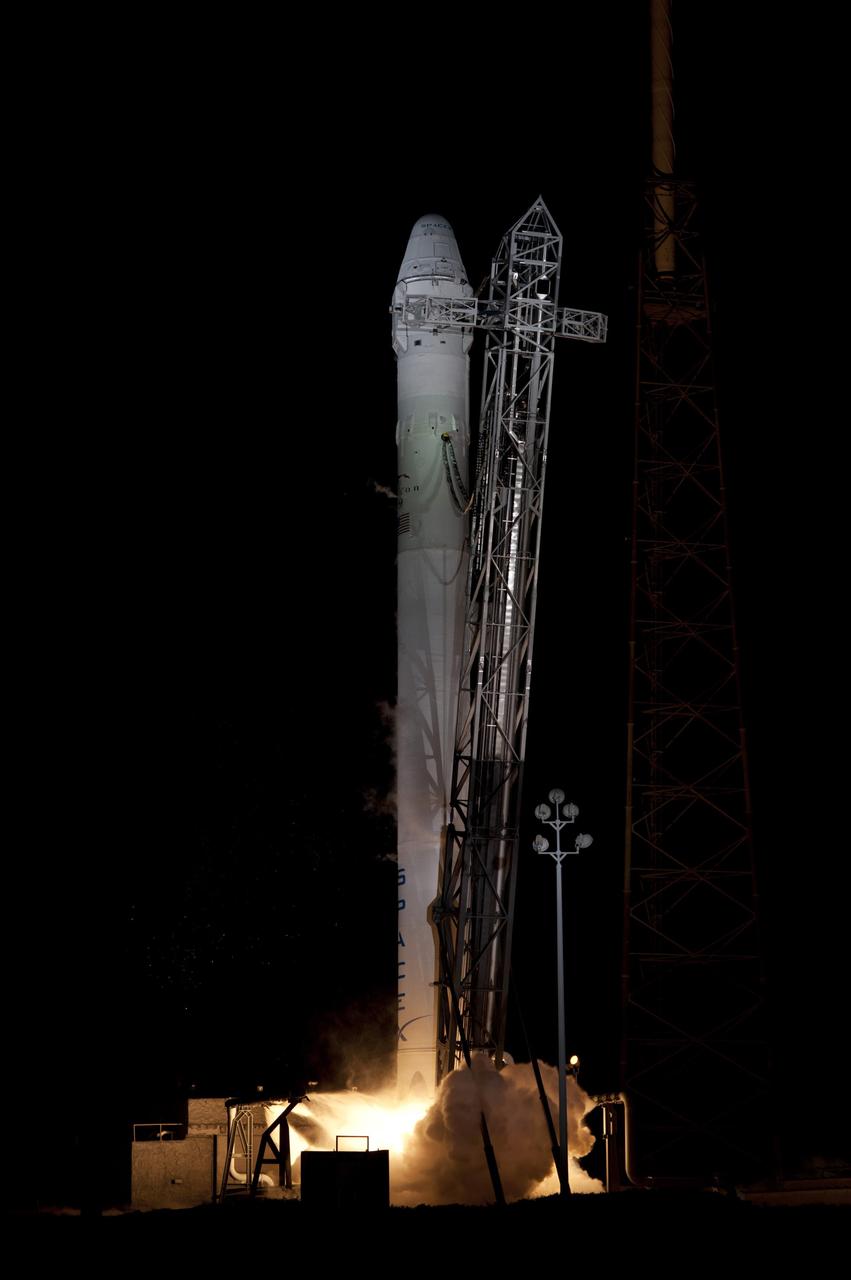
CAPE CANAVERAL, Fla. - Space Launch Complex 40 on Cape Canaveral Air Force Station in Florida comes alive as the Merlin engines ignite under the Falcon 9 rocket carrying a Dragon capsule to orbit. Liftoff was at 8:35 p.m. EDT. Space Exploration Technologies Corp., or SpaceX, built both the rocket and capsule for NASA's first Commercial Resupply Services, or CRS-1, mission to the International Space Station. SpaceX CRS-1 is an important step toward making America’s microgravity research program self-sufficient by providing a way to deliver and return significant amounts of cargo, including science experiments, to and from the orbiting laboratory. NASA has contracted for 12 commercial resupply flights from SpaceX and eight from the Orbital Sciences Corp. For more information, visit http://www.nasa.gov/mission_pages/station/living/launch/index.html Photo credit: NASA/ Rick Wetherington and Tim Powers
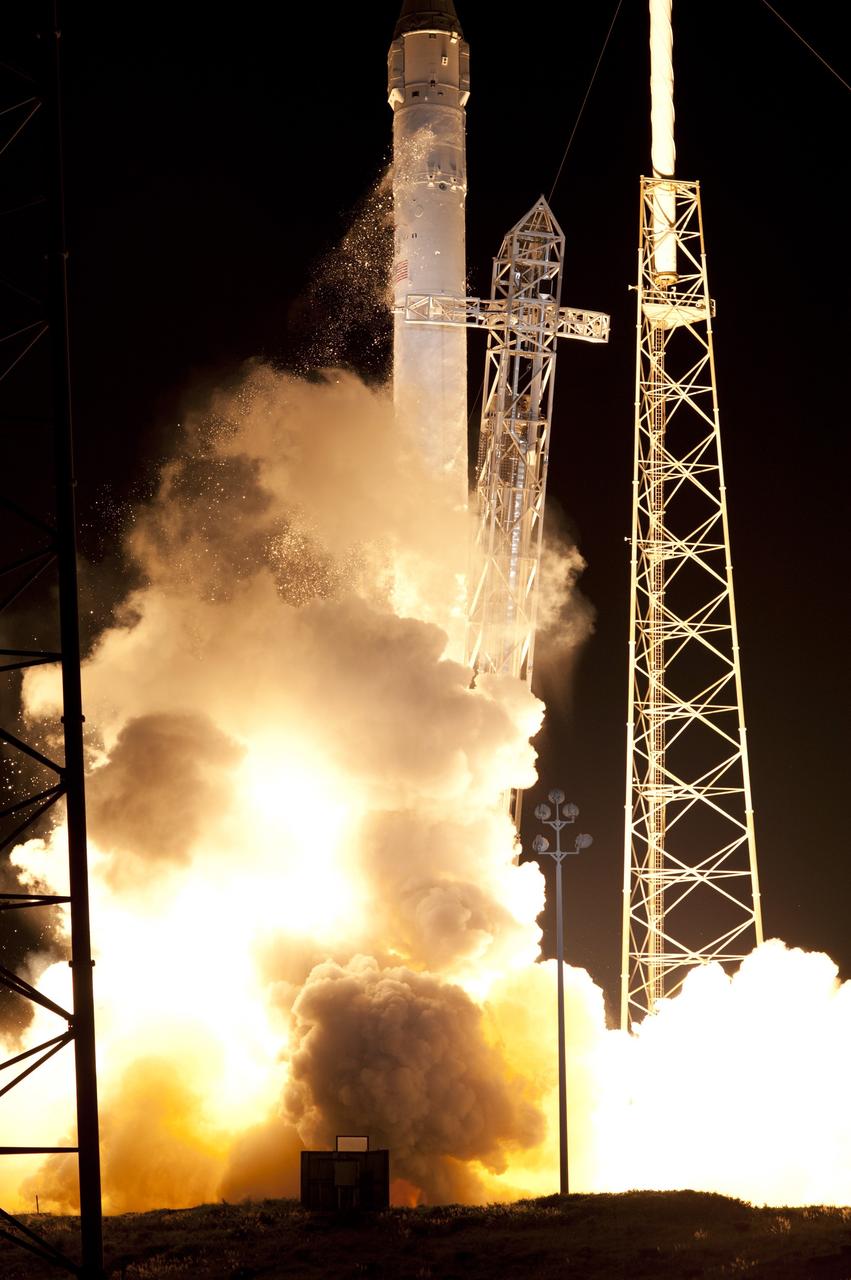
CAPE CANAVERAL, Fla. - Space Launch Complex 40 on Cape Canaveral Air Force Station in Florida comes alive as the Merlin engines ignite under the Falcon 9 rocket carrying a Dragon capsule to orbit. Liftoff was at 8:35 p.m. EDT. Space Exploration Technologies Corp., or SpaceX, built both the rocket and capsule for NASA's first Commercial Resupply Services, or CRS-1, mission to the International Space Station. SpaceX CRS-1 is an important step toward making America’s microgravity research program self-sufficient by providing a way to deliver and return significant amounts of cargo, including science experiments, to and from the orbiting laboratory. NASA has contracted for 12 commercial resupply flights from SpaceX and eight from the Orbital Sciences Corp. For more information, visit http://www.nasa.gov/mission_pages/station/living/launch/index.html Photo credit: NASA/ Rick Wetherington and Tim Powers
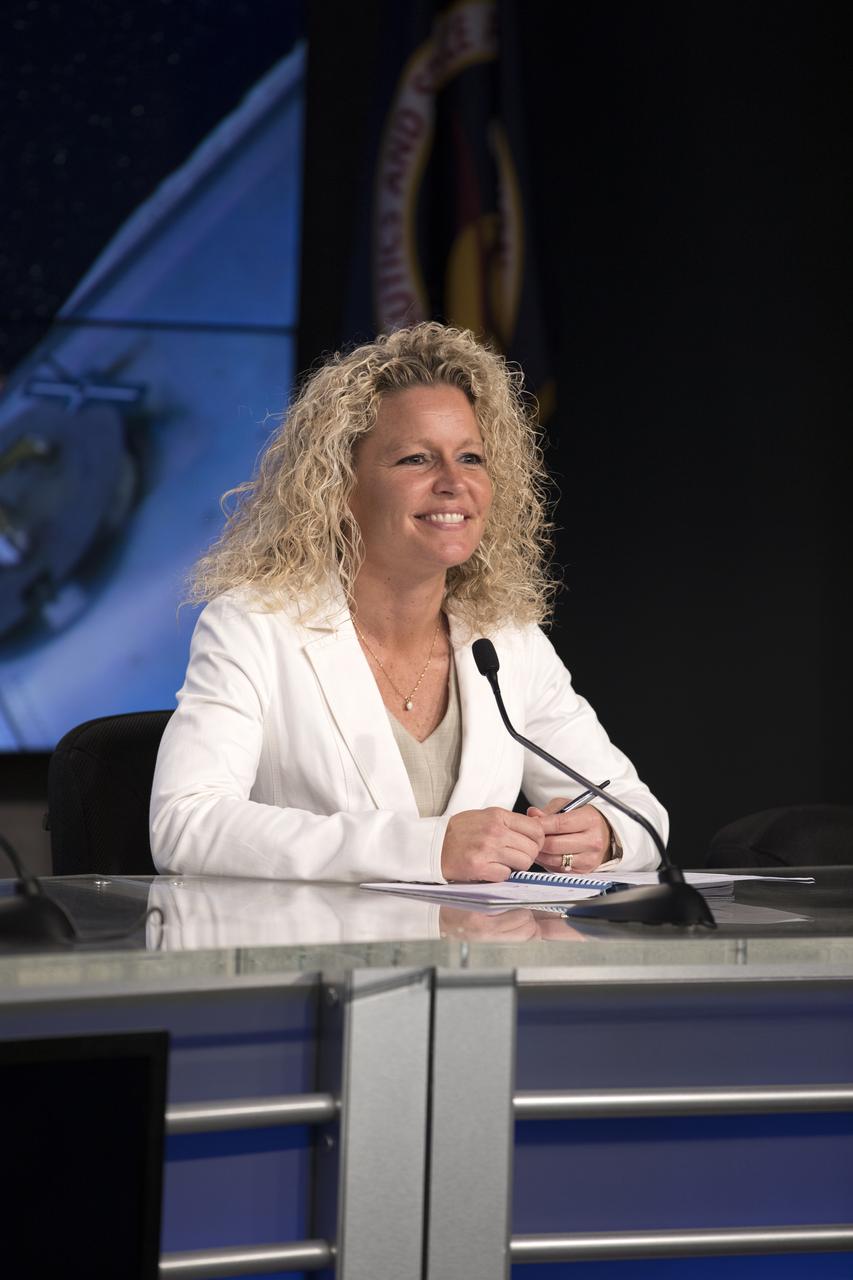
In the Press Site auditorium of NASA's Kennedy Space Center in Florida, Pam Underwood, manager of the Operations Integration Division of the Federal Aviation Administration Office of Commercial Space Transportation, speaks to the news media at a post-launch news conference following the liftoff of SpaceX CRS-10, a commercial resupply services mission to the International Space Station. SpaceX CRS-10 lifted off atop a Falcon 9 rocket from Kennedy's Launch Complex 39A at 9:39 a.m. EST.

In the Press Site auditorium of NASA's Kennedy Space Center in Florida, Stephanie Martin of NASA Communications, speaks to media at a post-launch news conference following the liftoff of SpaceX CRS-12, a commercial resupply services mission to the International Space Station. SpaceX CRS-12 lifted off atop a Falcon 9 rocket from Kennedy's Launch Complex 39A at 12:31 p.m. EDT.
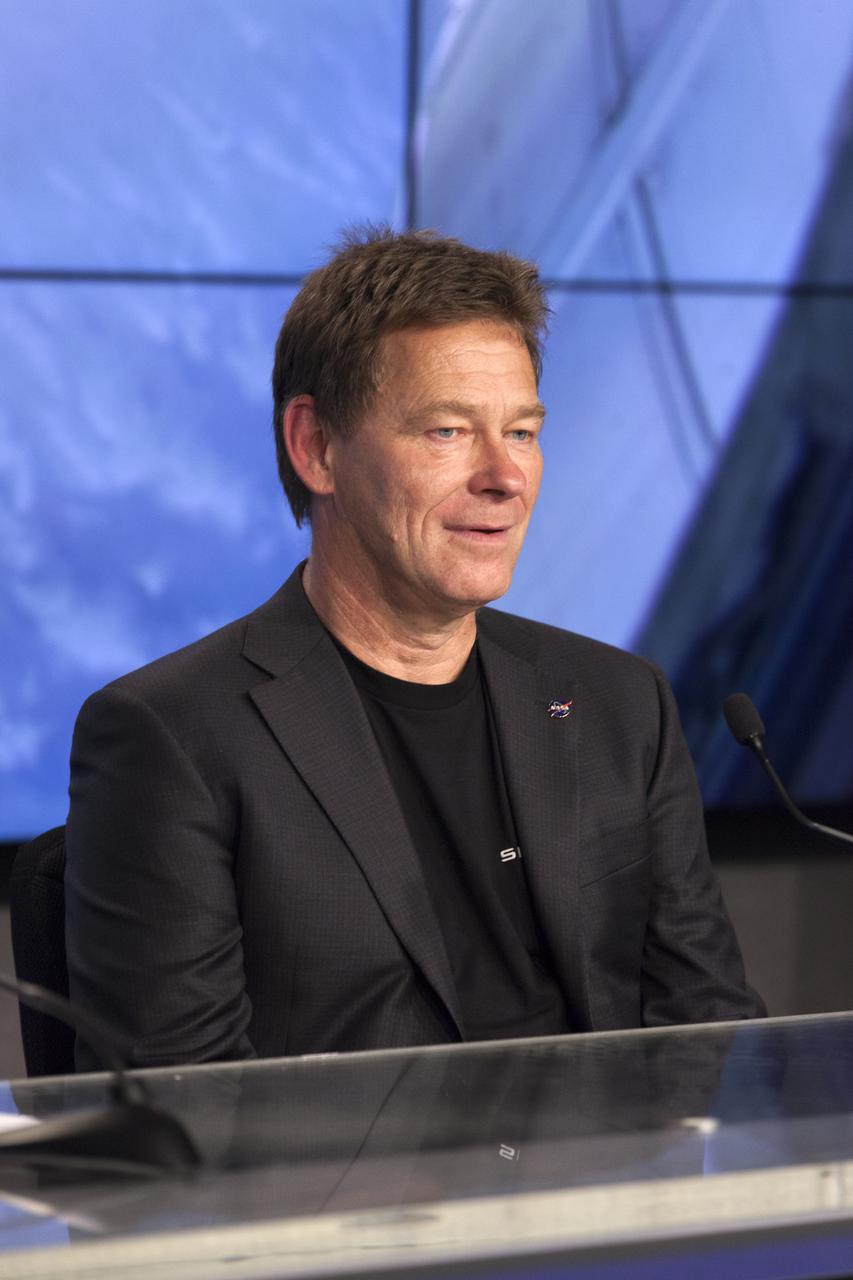
In the Press Site auditorium of NASA's Kennedy Space Center in Florida, Hans Koenigsmann, SpaceX vice president of Flight and Build Reliability, speaks to media at a post-launch news conference following the liftoff of SpaceX CRS-12, a commercial resupply services mission to the International Space Station. SpaceX CRS-12 lifted off atop a Falcon 9 rocket from Kennedy's Launch Complex 39A at 12:31 p.m. EDT.
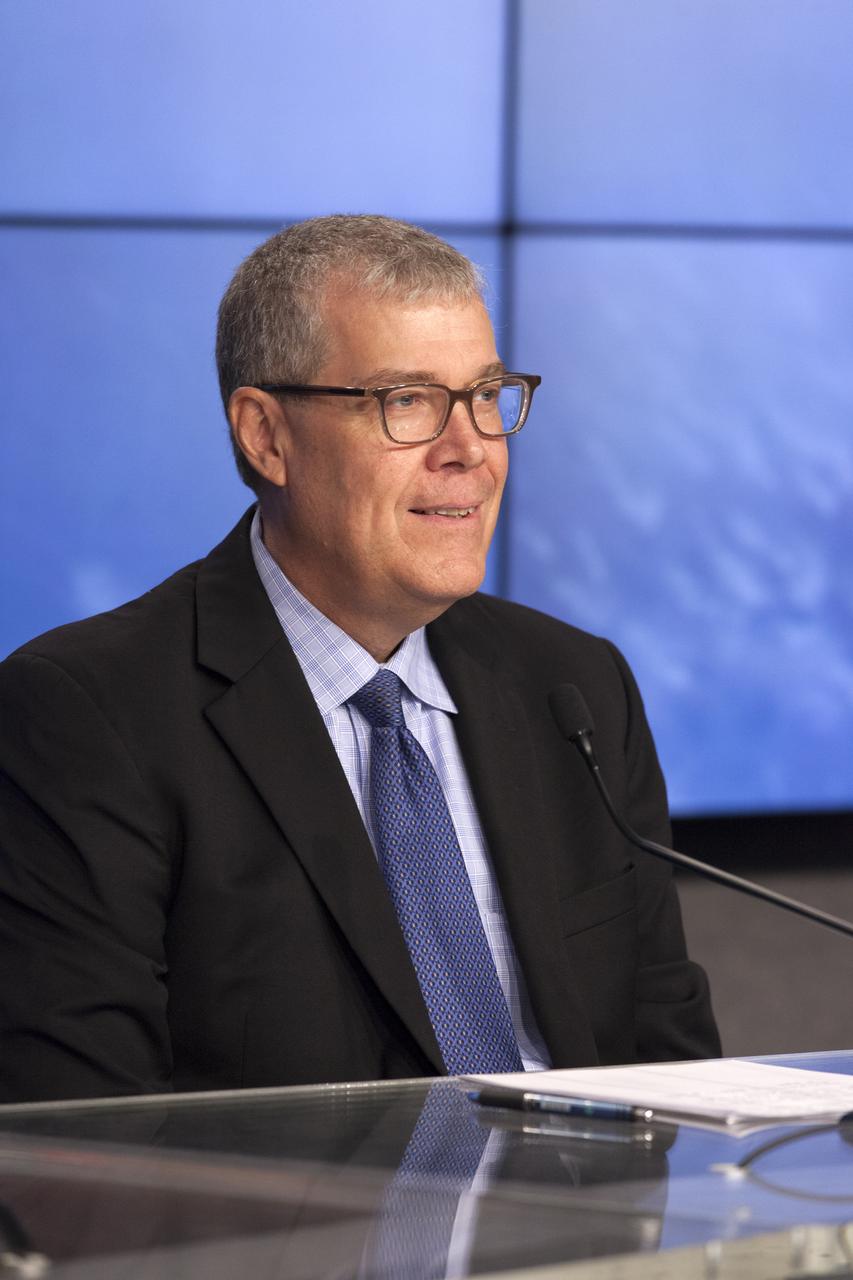
In the Press Site auditorium of NASA's Kennedy Space Center in Florida, Dan Hartman, NASA deputy manager of the International Space Station Program, speaks to media at a post-launch news conference following the liftoff of SpaceX CRS-12, a commercial resupply services mission to the International Space Station. SpaceX CRS-12 lifted off atop a Falcon 9 rocket from Kennedy's Launch Complex 39A at 12:31 p.m. EDT.
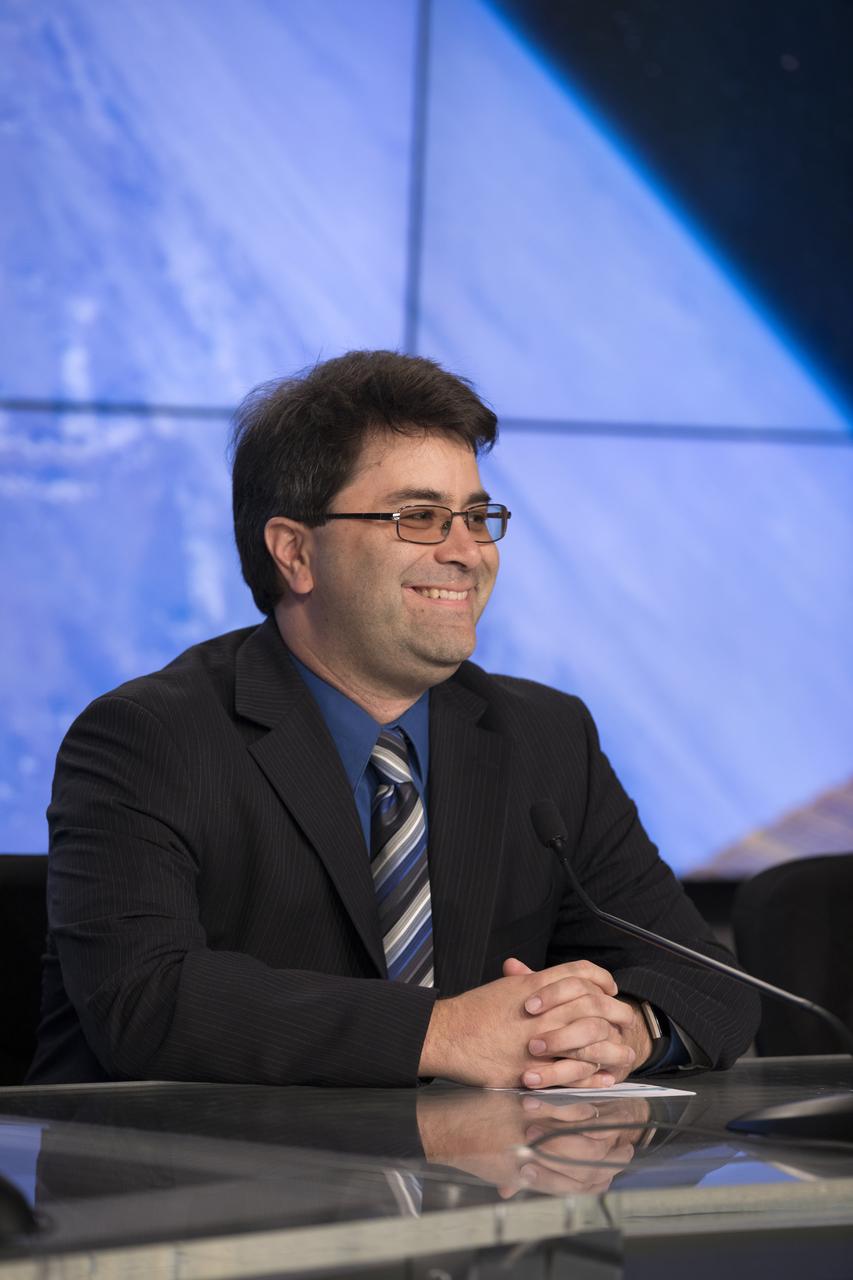
In the Press Site auditorium of NASA's Kennedy Space Center in Florida, William Spetch, deputy manager of the International Space Station Transportation Office, speaks to the news media at a post-launch news conference following the liftoff of SpaceX CRS-10, a commercial resupply services mission to the International Space Station. SpaceX CRS-10 lifted off atop a Falcon 9 rocket from Kennedy's Launch Complex 39A at 9:39 a.m. EST.

In the Press Site auditorium of NASA's Kennedy Space Center in Florida, Jessica Jensen, Dragon mission manager for SpaceX, speaks to the news media at a post-launch news conference following the liftoff of SpaceX CRS-10, a commercial resupply services mission to the International Space Station. SpaceX CRS-10 lifted off atop a Falcon 9 rocket from Kennedy's Launch Complex 39A at 9:39 a.m. EST.
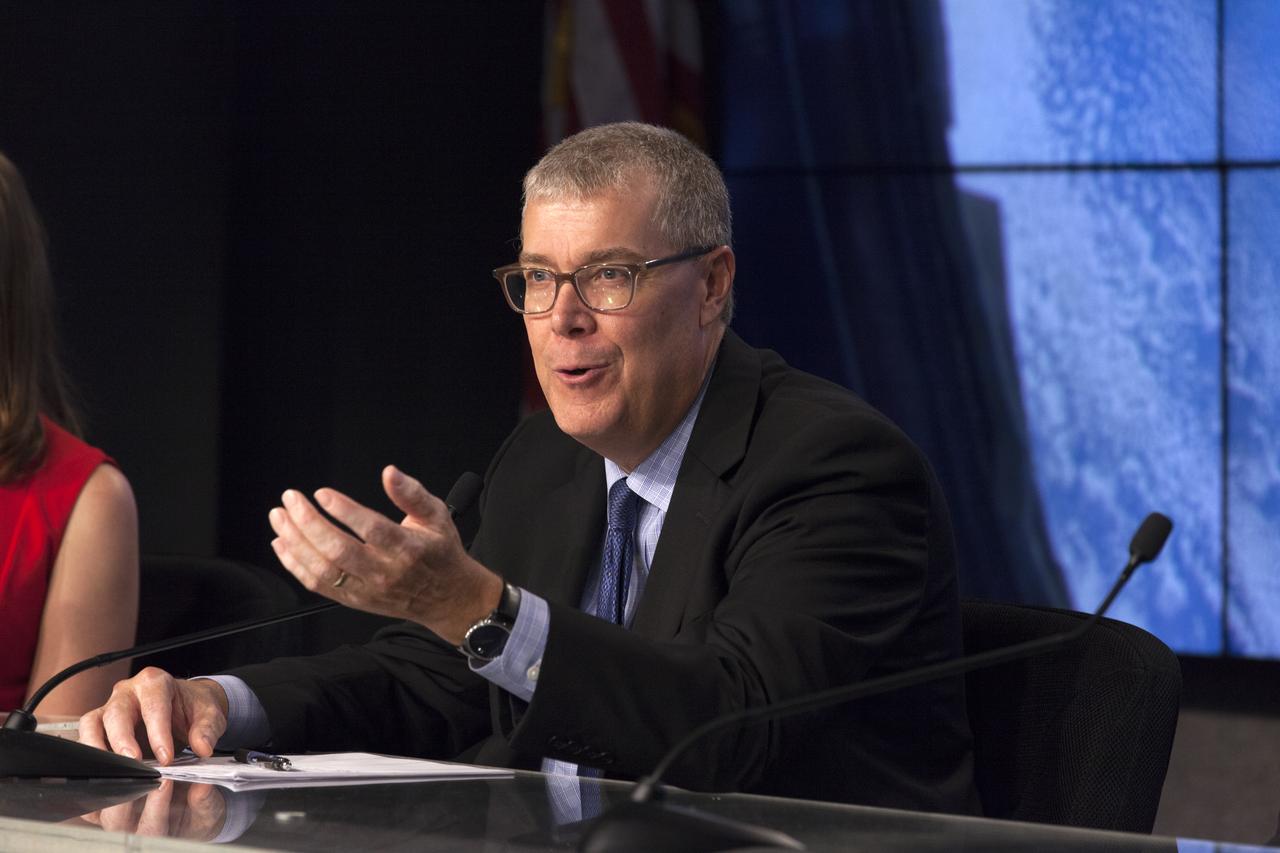
In the Press Site auditorium of NASA's Kennedy Space Center in Florida, Dan Hartman, NASA deputy manager of the International Space Station Program, speaks to media at a post-launch news conference following the liftoff of SpaceX CRS-12, a commercial resupply services mission to the International Space Station. SpaceX CRS-12 lifted off atop a Falcon 9 rocket from Kennedy's Launch Complex 39A at 12:31 p.m. EDT.
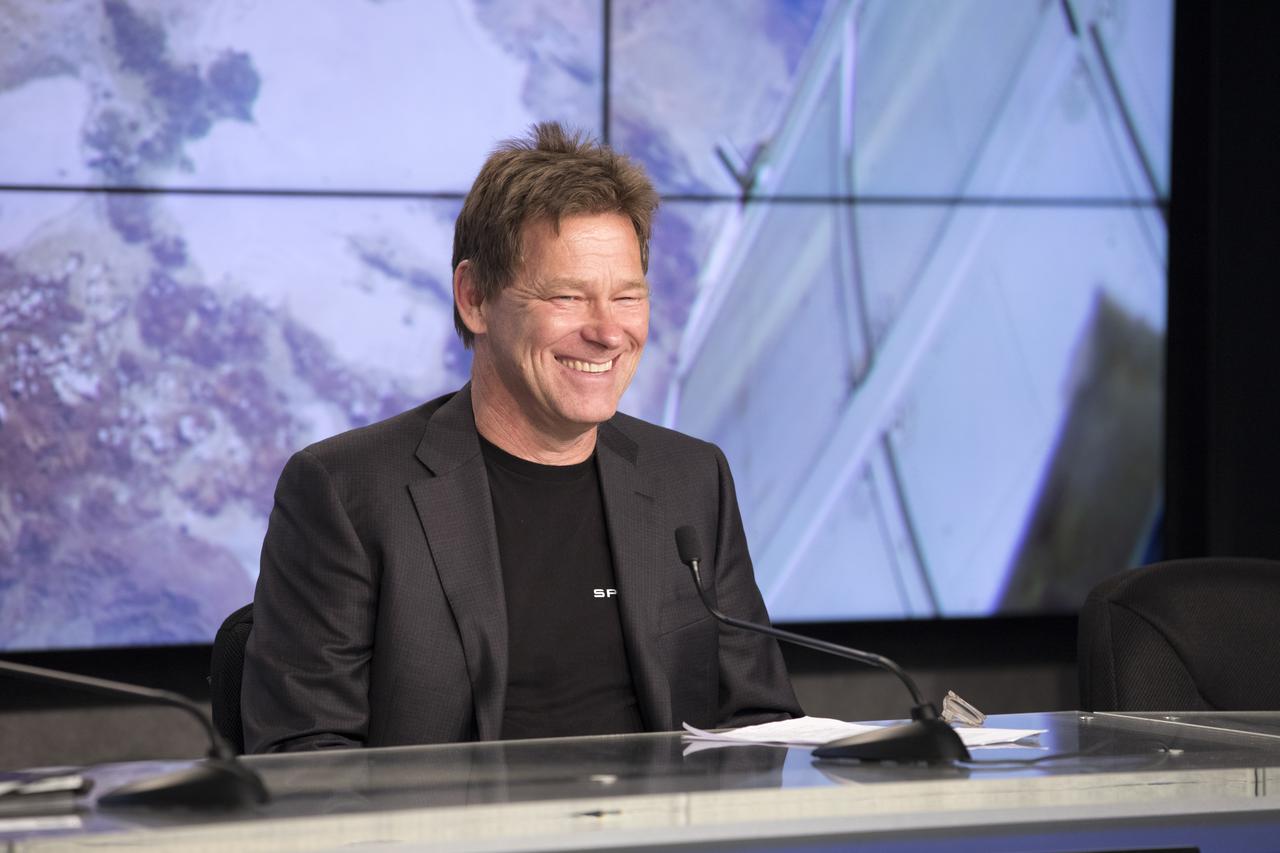
In the Press Site auditorium of NASA's Kennedy Space Center in Florida, Hans Koenigsmann, vice president of Flight Reliability for SpaceX. SpaceX, speaks to media at a post-launch news conference following the liftoff of SpaceX CRS-11, a commercial resupply services mission to the International Space Station. SpaceX CRS-11 lifted off atop a Falcon 9 rocket from Kennedy's Launch Complex 39A at 5:07 p.m. EDT.

In the Press Site auditorium of NASA's Kennedy Space Center in Florida, Jessica Jensen, Dragon mission manager for SpaceX, speaks to the news media at a post-launch news conference following the liftoff of SpaceX CRS-10, a commercial resupply services mission to the International Space Station. SpaceX CRS-10 lifted off atop a Falcon 9 rocket from Kennedy's Launch Complex 39A at 9:39 a.m. EST.
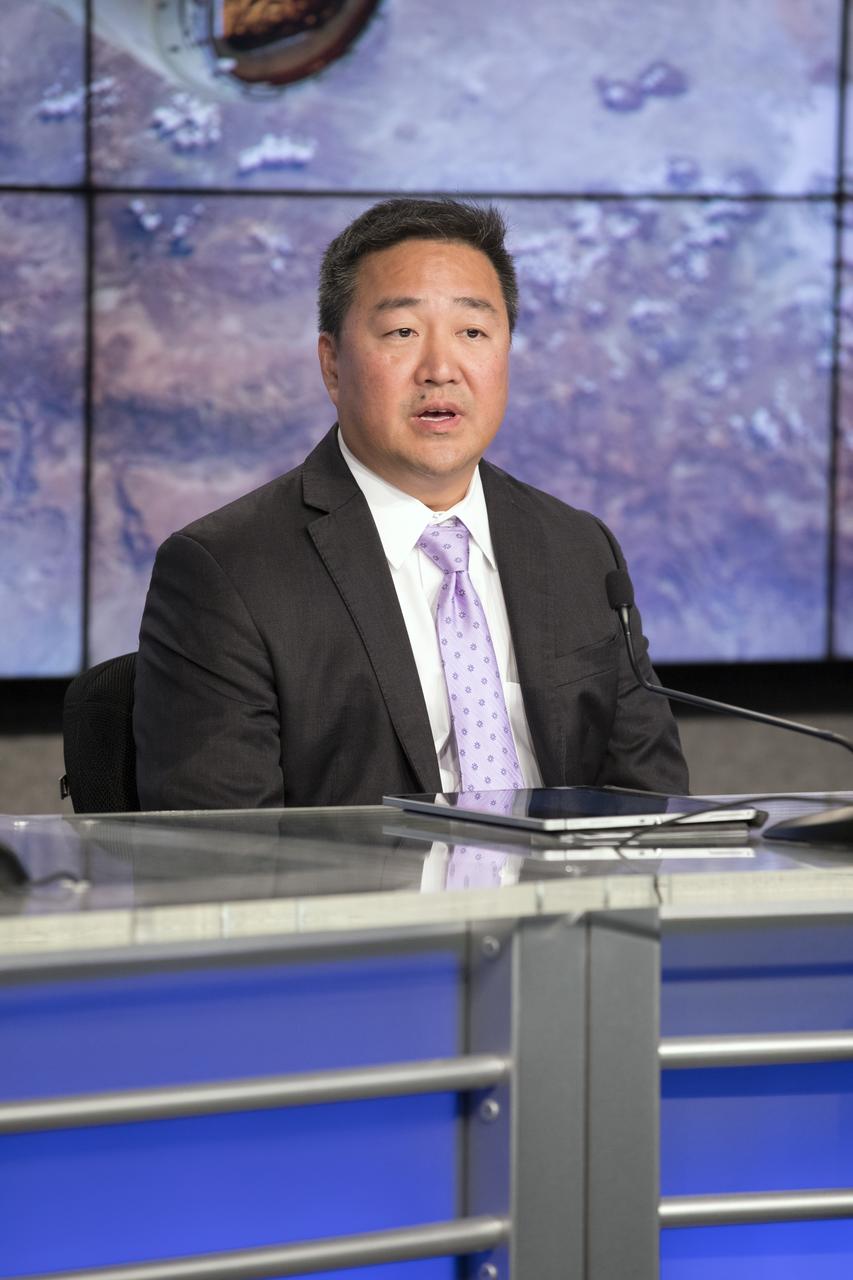
In the Press Site auditorium of NASA's Kennedy Space Center in Florida, Ven Feng, NASA's manager of the International Space Station Transportation Integration Office, speaks to media at a post-launch news conference following the liftoff of SpaceX CRS-11, a commercial resupply services mission to the International Space Station. SpaceX CRS-11 lifted off atop a Falcon 9 rocket from Kennedy's Launch Complex 39A at 5:07 p.m. EDT.
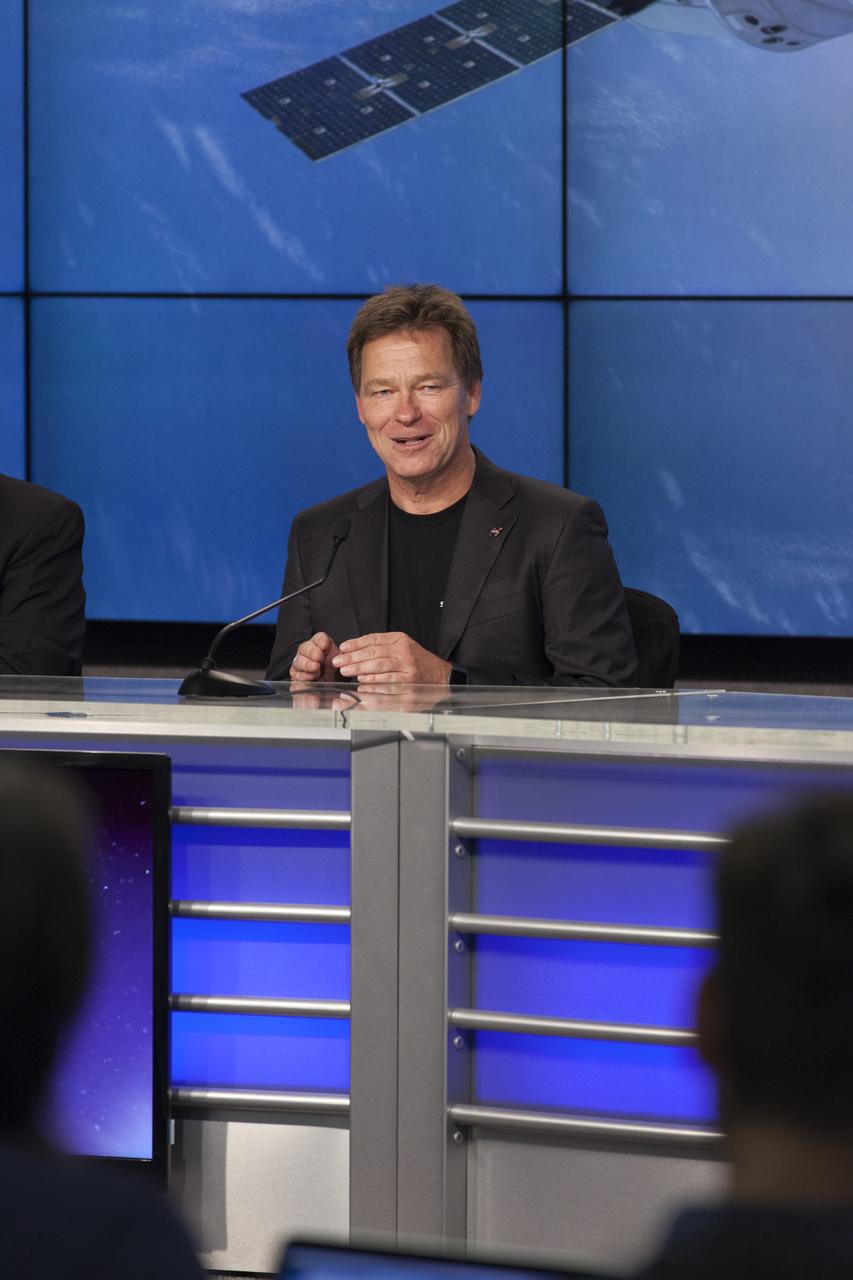
In the Press Site auditorium of NASA's Kennedy Space Center in Florida, Hans Koenigsmann, SpaceX vice president of Flight and Build Reliability, speaks to media at a post-launch news conference following the liftoff of SpaceX CRS-12, a commercial resupply services mission to the International Space Station. SpaceX CRS-12 lifted off atop a Falcon 9 rocket from Kennedy's Launch Complex 39A at 12:31 p.m. EDT.
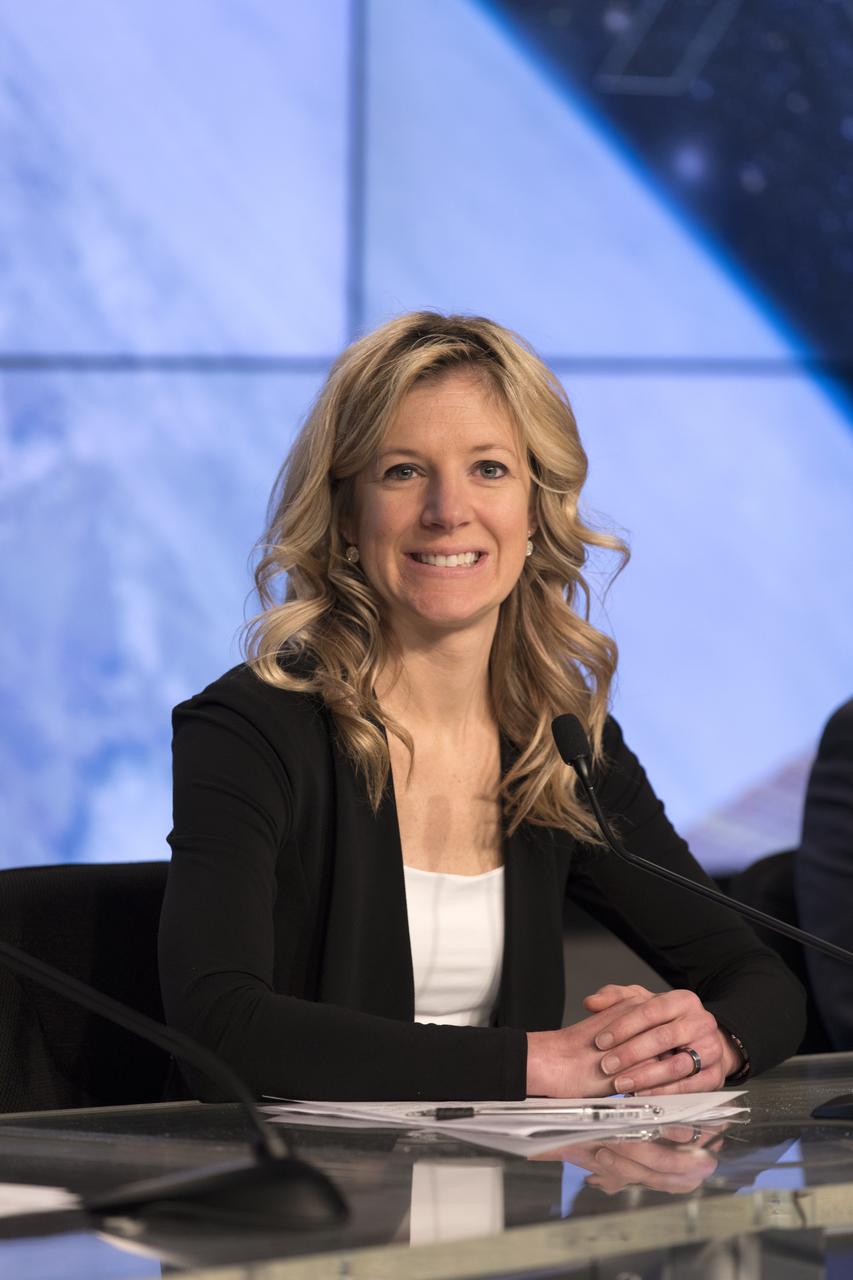
In the Kennedy Space Center’s Press Site auditorium, Jessica Jensen, SpaceX director of Dragon Mission Management, speaks to members of the media during a prelaunch news conference for the SpaceX CRS-13 commercial resupply services mission to the International Space Station. A Dragon spacecraft is scheduled to be launched from Space Launch Complex 40 at Cape Canaveral Air Force Station at 11:46 a.m. EST, on Dec. 12, 2017. The SpaceX Falcon 9 rocket will lift off on the company's 13th Commercial Resupply Services mission to the space station.
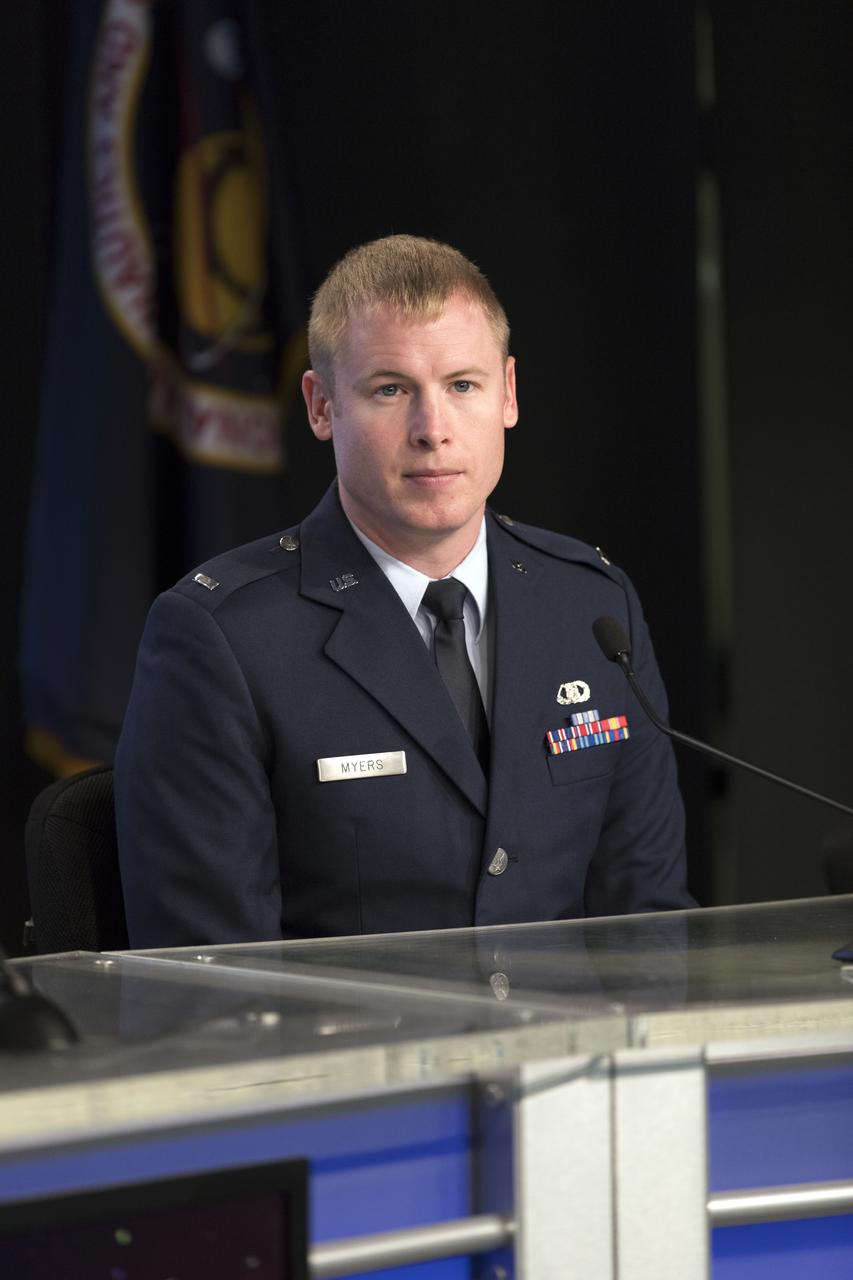
In the Kennedy Space Center’s Press Site auditorium, Lt. David Myers, weather officer for the 45th Weather Squadron, speaks to members of the media during a prelaunch news conference for the SpaceX CRS-13 commercial resupply services mission to the International Space Station. A Dragon spacecraft is scheduled to be launched from Space Launch Complex 40 at Cape Canaveral Air Force Station at 11:46 a.m. EST, on Dec. 12, 2017. The SpaceX Falcon 9 rocket will lift off on the company's 13th Commercial Resupply Services mission to the space station.
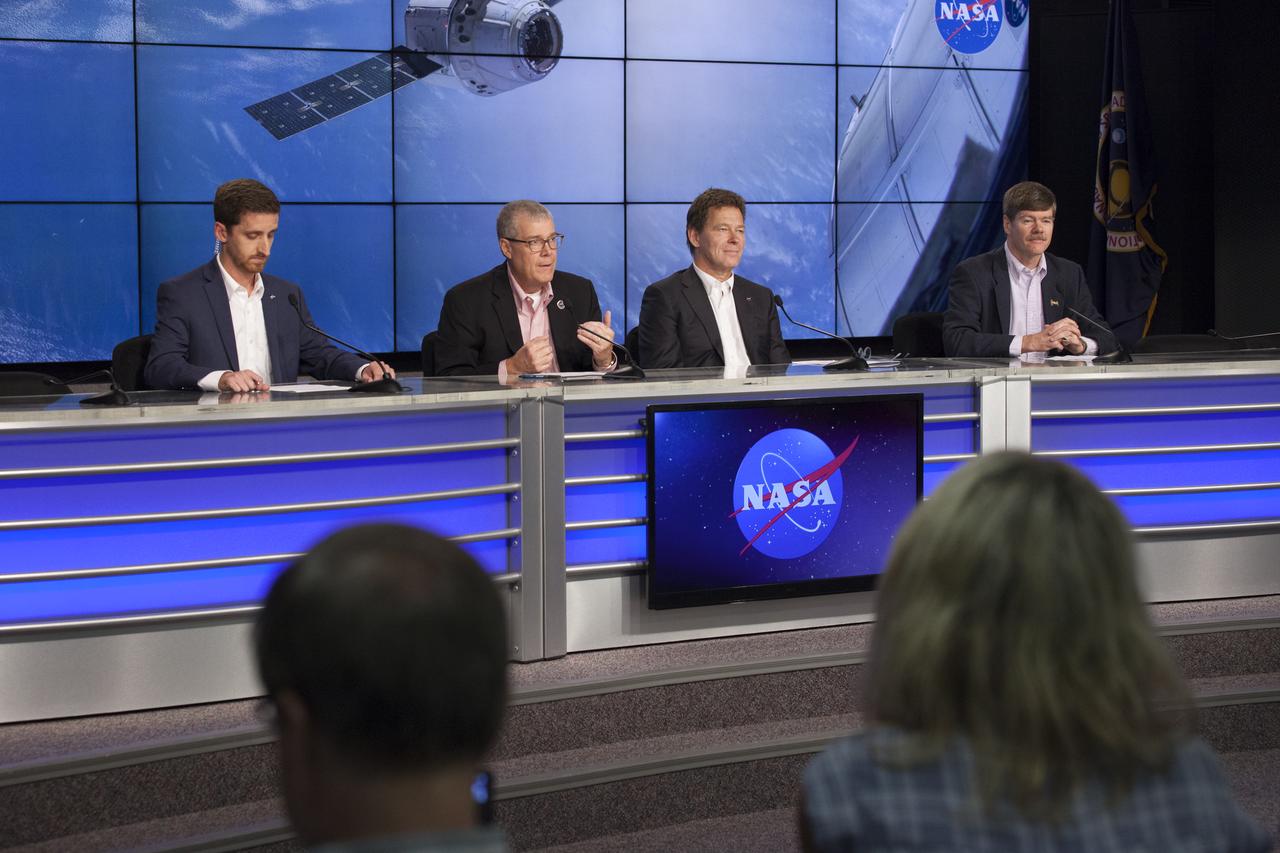
In the Kennedy Space Center’s Press Site auditorium, agency and industry leaders speak to members of the media during a prelaunch news conference for the SpaceX CRS-12 commercial resupply services mission to the International Space Station. From left are: Josh Finch of NASA Communications; Dan Hartman, NASA deputy manager of the International Space Station Program, Hans Koenigsmann, vice president of Build and Flight Reliability for SpaceX, and Pete Hasbrook, associate program scientist for the International Space Station Program. A Dragon spacecraft is scheduled to be launched from Kennedy’s Launch Complex 39A on Aug. 14 atop a SpaceX Falcon 9 rocket on the company's 12th Commercial Resupply Services mission to the space station.
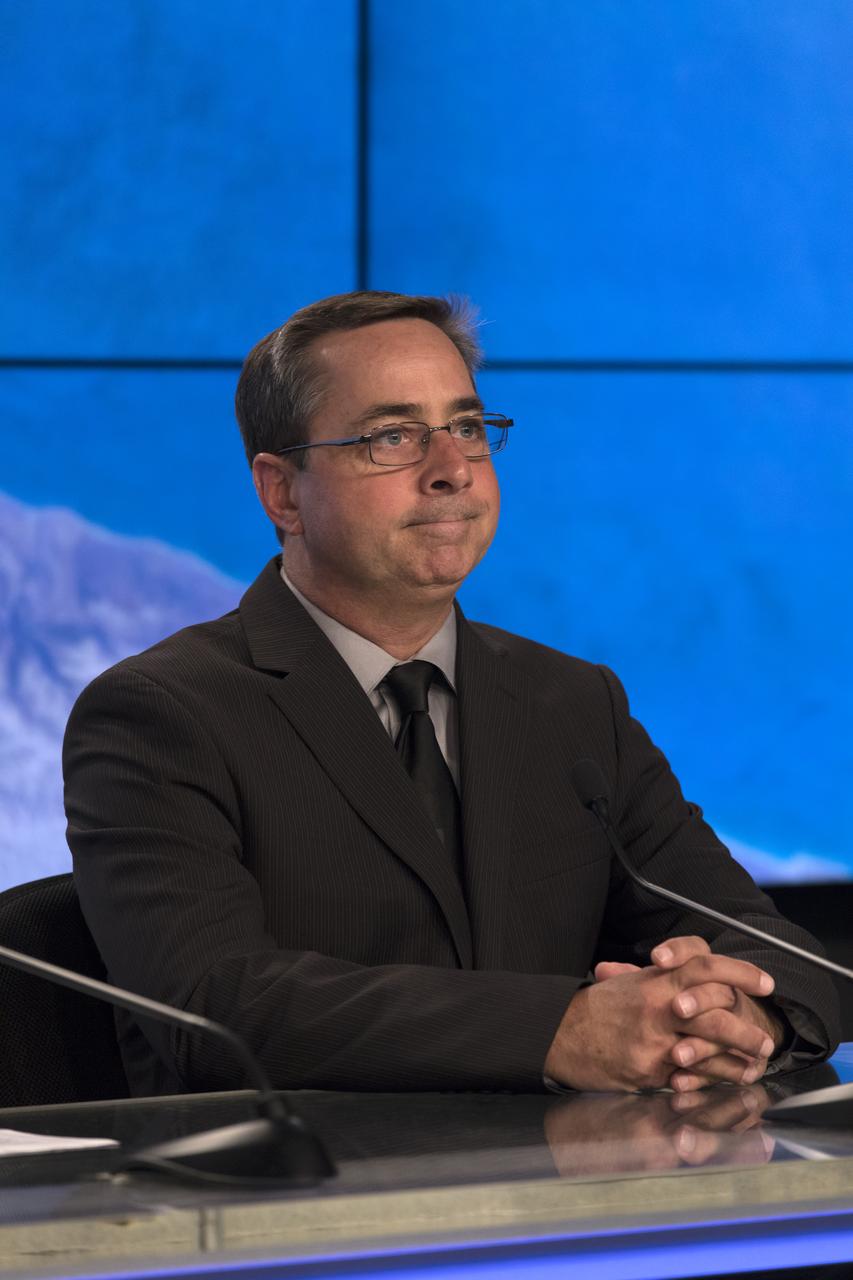
In the Kennedy Space Center’s Press Site auditorium, Mike McAleenan, launch weather officer for the U.S. Air Force 45th Weather Squadron at Cape Canaveral Air Force Station, speaks to members of the media during a prelaunch news conference for the SpaceX CRS-15 Commercial Resupply Services mission to the International Space Station. A SpaceX Dragon spacecraft is scheduled to be launched from Space Launch Complex 40 at Cape Canaveral Air Force Station. The SpaceX Falcon 9 rocket will lift off on the company's 15th Commercial Resupply Services mission to the space station.
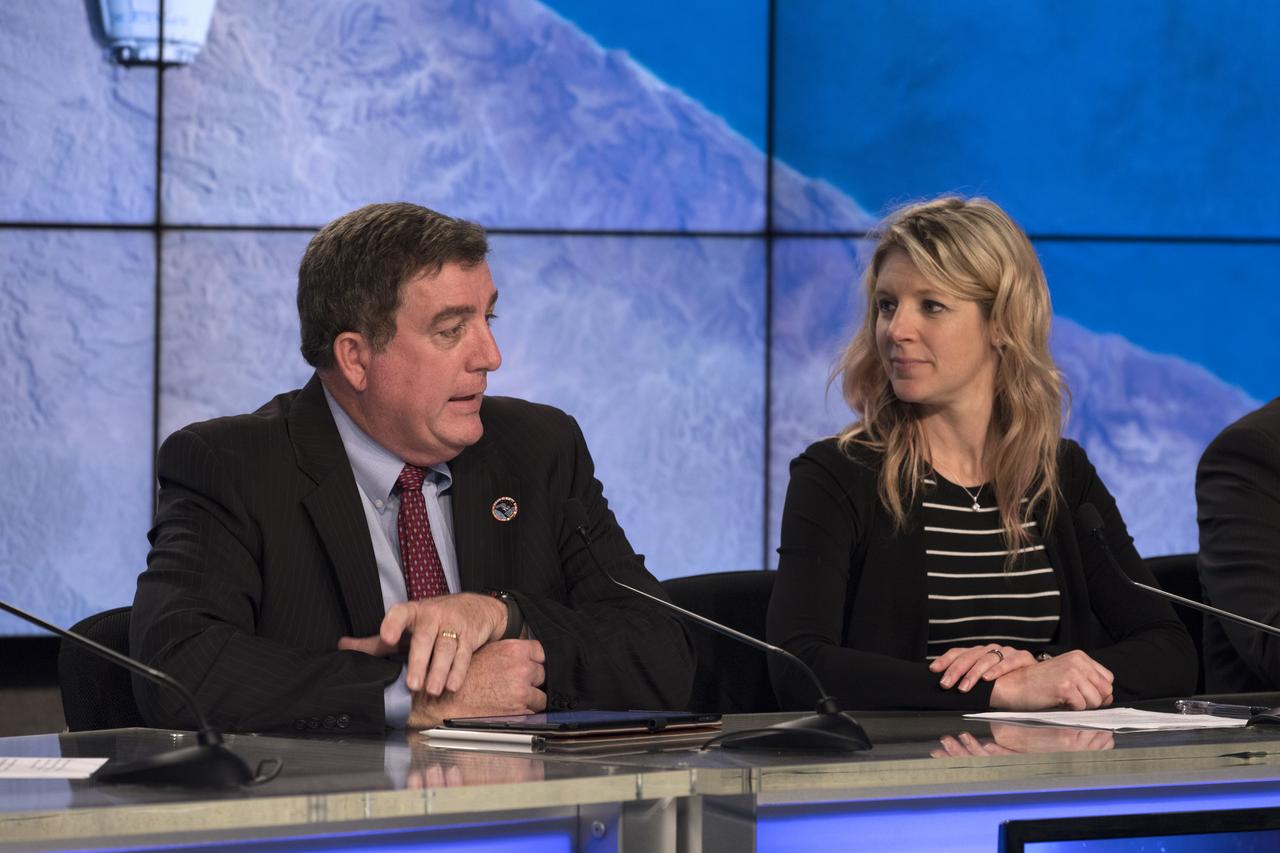
In the Kennedy Space Center’s Press Site auditorium, Kirk Shireman, manager of the International Space Station Program, left, and Jessica Jensen, director of Dragon Mission Management for SpaceX, speak to members of the media during a prelaunch news conference for the SpaceX CRS-15 Commercial Resupply Services mission to the International Space Station. A SpaceX Dragon spacecraft is scheduled to be launched from Space Launch Complex 40 at Cape Canaveral Air Force Station. The SpaceX Falcon 9 rocket will lift off on the company's 15th Commercial Resupply Services mission to the space station.
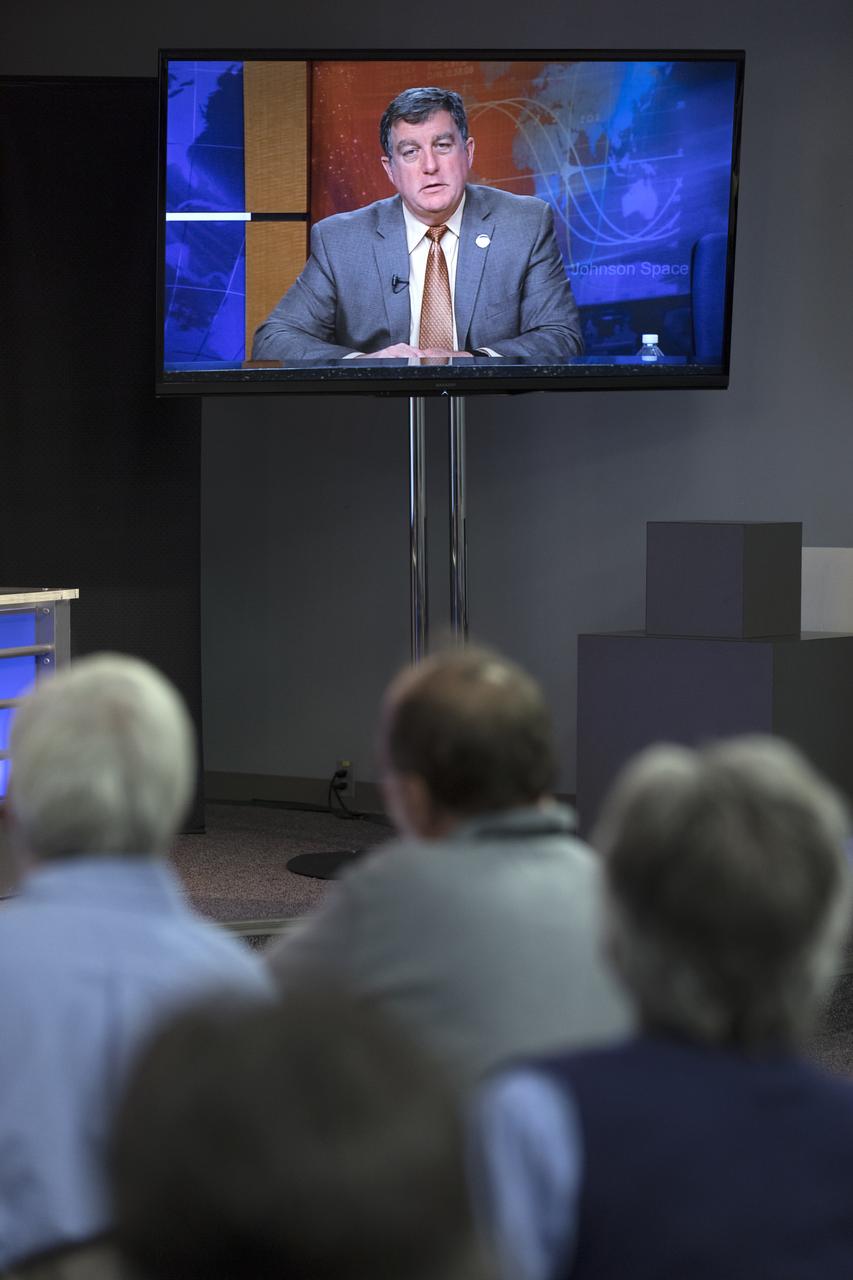
In the Kennedy Space Center’s Press Site auditorium, Kirk Shireman, International Space Station Program manager at Johnson, participates by video link speaking to members of the media during a prelaunch news conference for the SpaceX CRS-13 commercial resupply services mission to the International Space Station. A Dragon spacecraft is scheduled to be launched from Space Launch Complex 40 at Cape Canaveral Air Force Station at 11:46 a.m. EST, on Dec. 12, 2017. The SpaceX Falcon 9 rocket will lift off on the company's 13th Commercial Resupply Services mission to the space station.
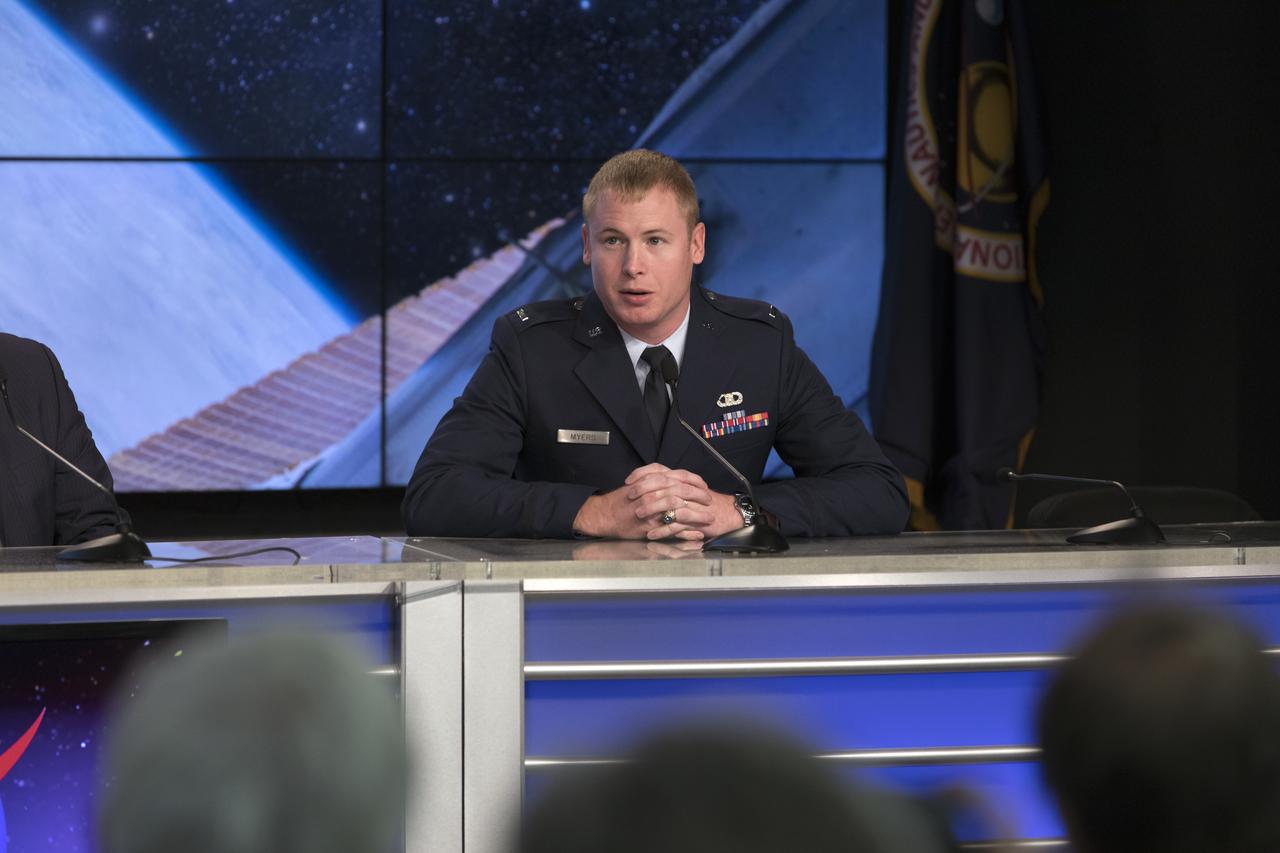
In the Kennedy Space Center’s Press Site auditorium, Lt. David Myers, weather officer for the 45th Weather Squadron, speaks to members of the media during a prelaunch news conference for the SpaceX CRS-13 commercial resupply services mission to the International Space Station. A Dragon spacecraft is scheduled to be launched from Space Launch Complex 40 at Cape Canaveral Air Force Station at 11:46 a.m. EST, on Dec. 12, 2017. The SpaceX Falcon 9 rocket will lift off on the company's 13th Commercial Resupply Services mission to the space station.
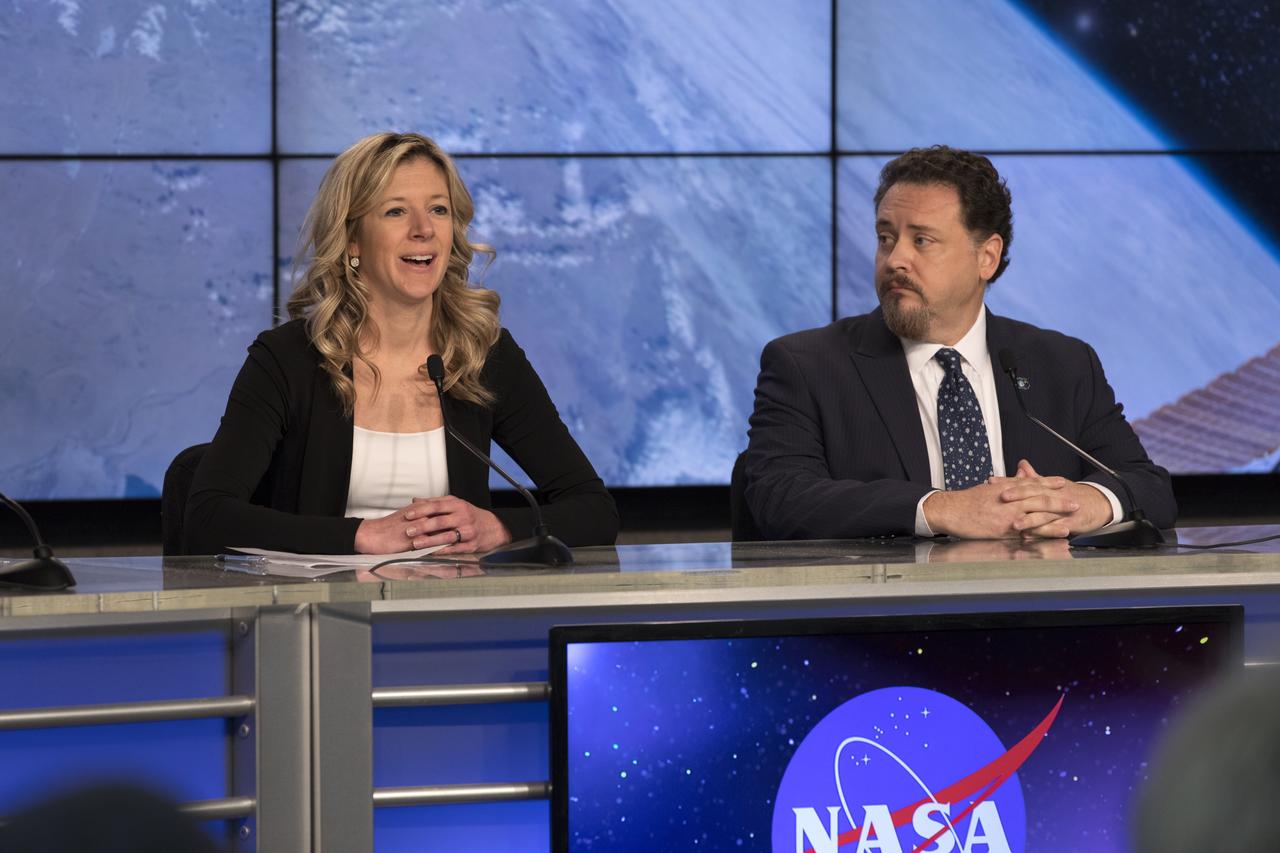
In the Kennedy Space Center’s Press Site auditorium, Jessica Jensen, SpaceX director of Dragon Mission Management, left, and Kirt Costello, deputy chief scientist for the International Space Station Program Science Office at NASA’s Johnson Space Center in Houston, speak to members of the media during a prelaunch news conference for the SpaceX CRS-13 commercial resupply services mission to the International Space Station. A Dragon spacecraft is scheduled to be launched from Space Launch Complex 40 at Cape Canaveral Air Force Station at 11:46 a.m. EST, on Dec. 12, 2017. The SpaceX Falcon 9 rocket will lift off on the company's 13th Commercial Resupply Services mission to the space station.
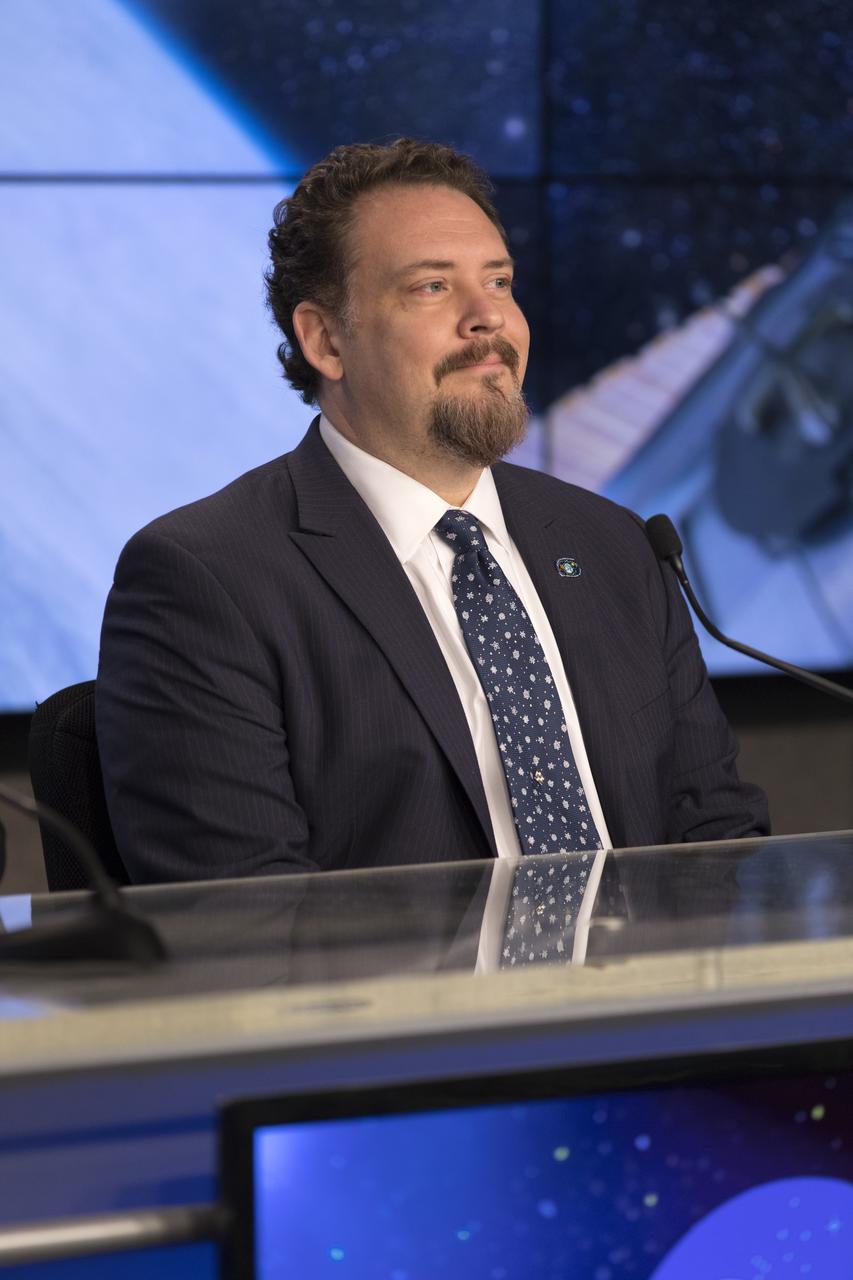
In the Kennedy Space Center’s Press Site auditorium, Kirt Costello, deputy chief scientist for the International Space Station Program Science Office at NASA’s Johnson Space Center in Houston, speaks to members of the media during a prelaunch news conference for the SpaceX CRS-13 commercial resupply services mission to the International Space Station. A Dragon spacecraft is scheduled to be launched from Space Launch Complex 40 at Cape Canaveral Air Force Station at 11:46 a.m. EST, on Dec. 12, 2017. The SpaceX Falcon 9 rocket will lift off on the company's 13th Commercial Resupply Services mission to the space station.
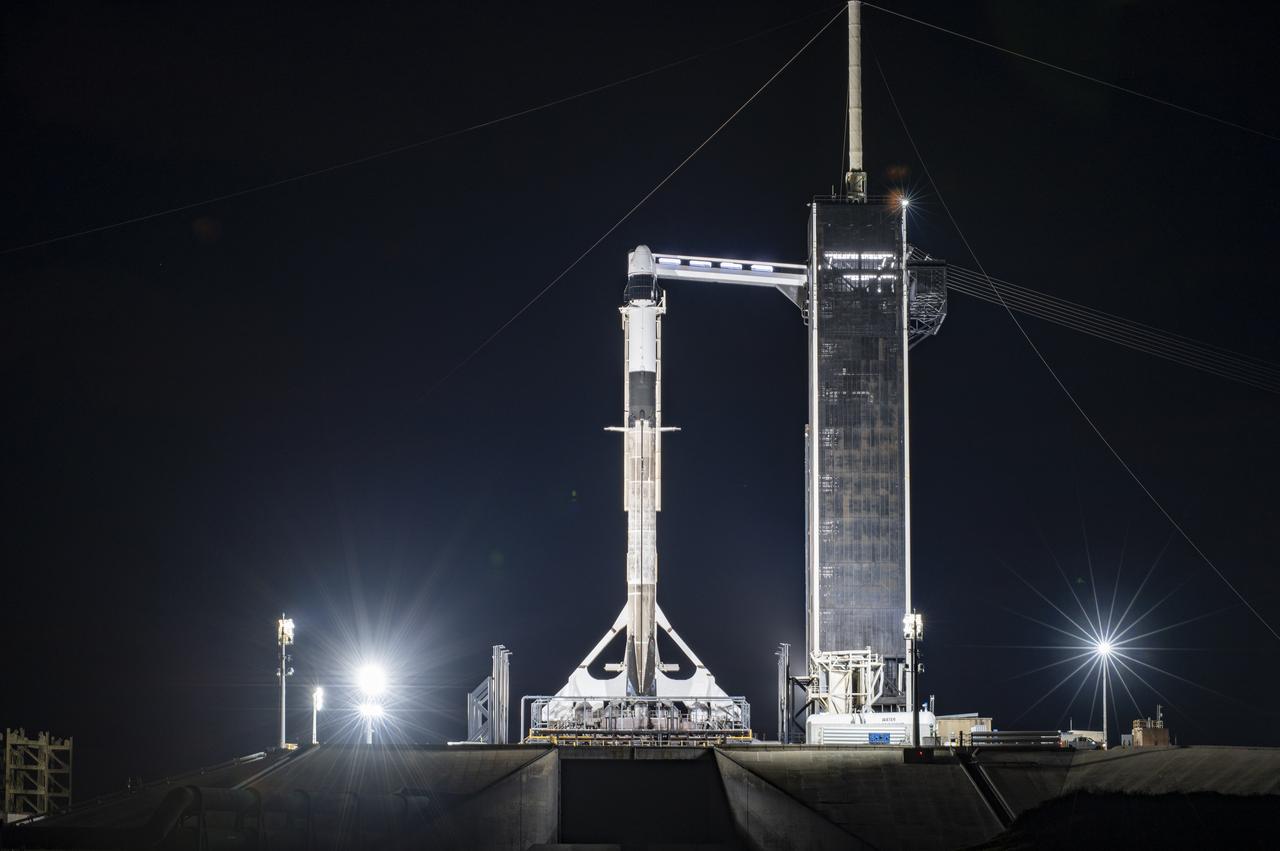
A SpaceX Falcon 9 rocket, topped with the company’s upgraded version of the Dragon spacecraft, stands vertical at NASA Kennedy Space Center’s Launch Complex 39A in Florida on Wednesday, Dec. 2, 2020. The first mission for SpaceX under NASA’s second Commercial Resupply Services contract, CRS-21 is scheduled to lift off from Launch Complex 39A on Saturday, Dec. 5, at 11:39 a.m. EST. The mission will deliver critical supplies and equipment to the International Space Station.
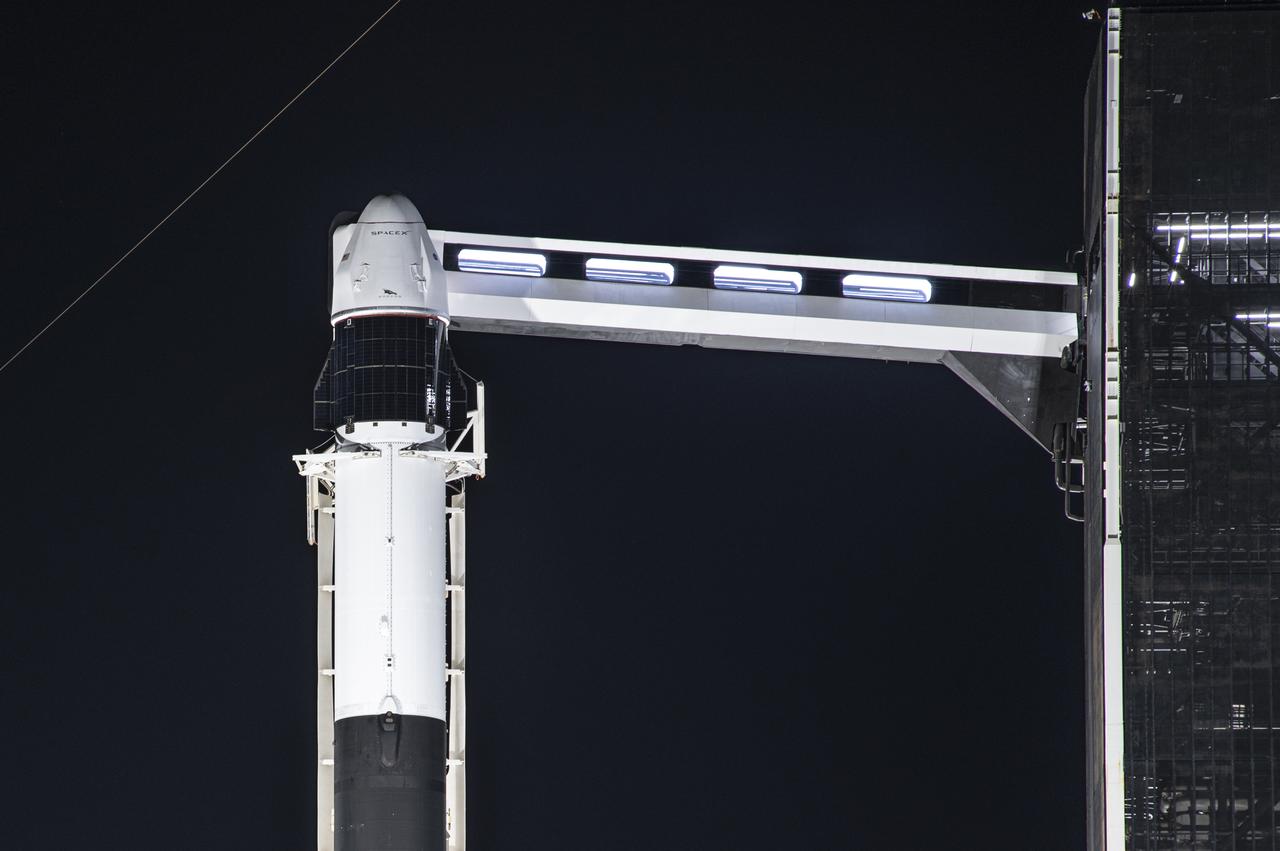
A SpaceX Falcon 9 rocket, topped with the company’s upgraded version of the Dragon spacecraft, stands vertical at NASA Kennedy Space Center’s Launch Complex 39A in Florida on Wednesday, Dec. 2, 2020. The first mission for SpaceX under NASA’s second Commercial Resupply Services contract, CRS-21 is scheduled to lift off from Launch Complex 39A on Saturday, Dec. 5, at 11:39 a.m. EST. The mission will deliver critical supplies and equipment to the International Space Station.
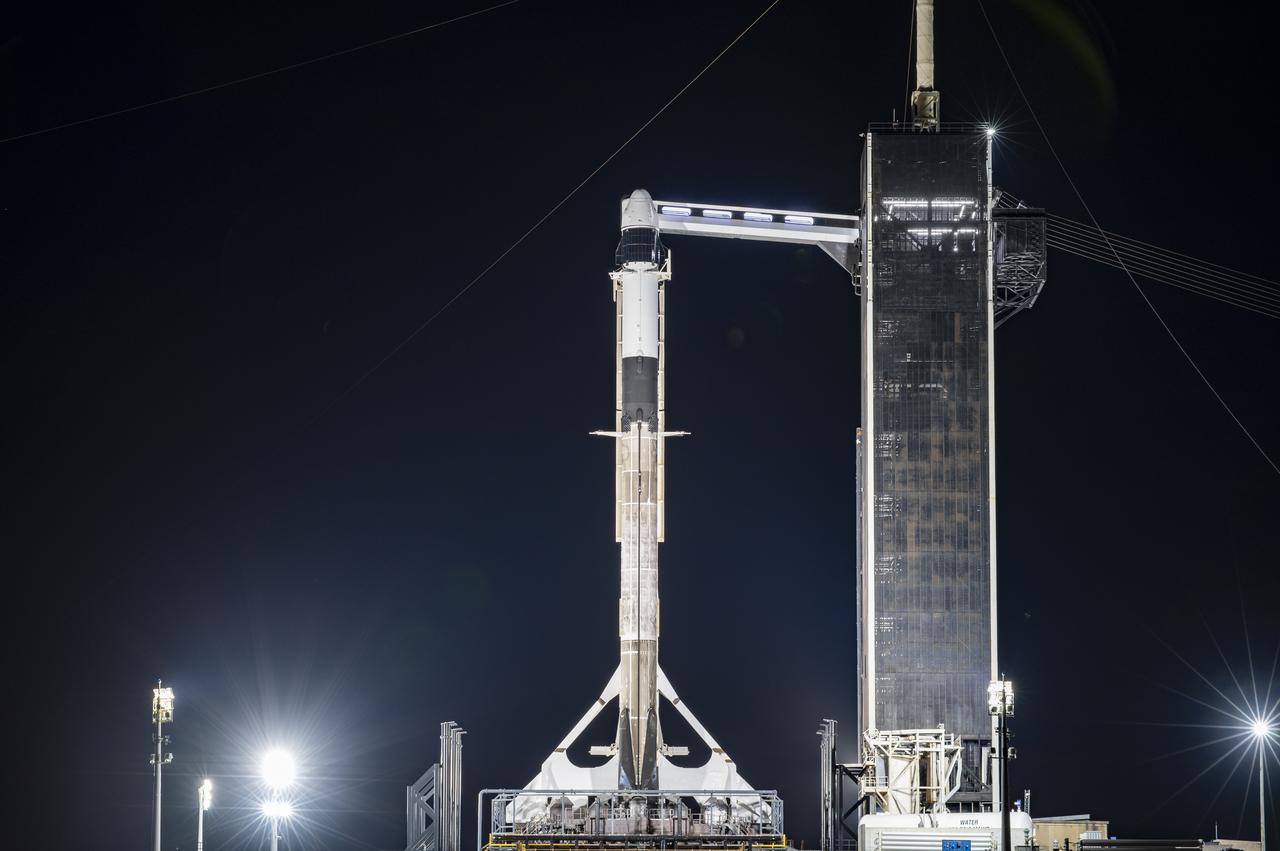
A SpaceX Falcon 9 rocket, topped with the company’s upgraded version of the Dragon spacecraft, stands vertical at NASA Kennedy Space Center’s Launch Complex 39A in Florida on Wednesday, Dec. 2, 2020. The first mission for SpaceX under NASA’s second Commercial Resupply Services contract, CRS-21 is scheduled to lift off from Launch Complex 39A on Saturday, Dec. 5, at 11:39 a.m. EST. The mission will deliver critical supplies and equipment to the International Space Station.
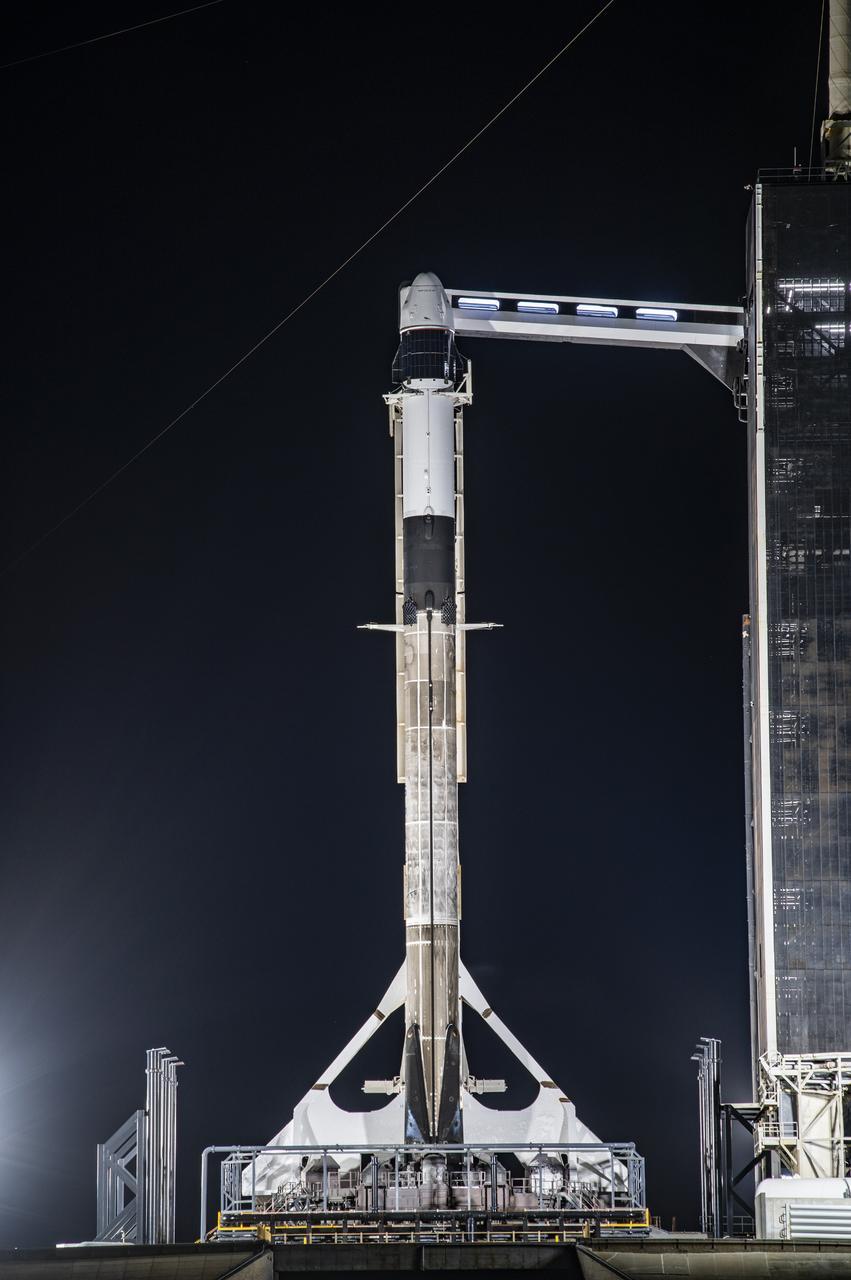
A SpaceX Falcon 9 rocket, topped with the company’s upgraded version of the Dragon spacecraft, stands vertical at NASA Kennedy Space Center’s Launch Complex 39A in Florida on Wednesday, Dec. 2, 2020. The first mission for SpaceX under NASA’s second Commercial Resupply Services contract, CRS-21 is scheduled to lift off from Launch Complex 39A on Saturday, Dec. 5, at 11:39 a.m. EST. The mission will deliver critical supplies and equipment to the International Space Station.
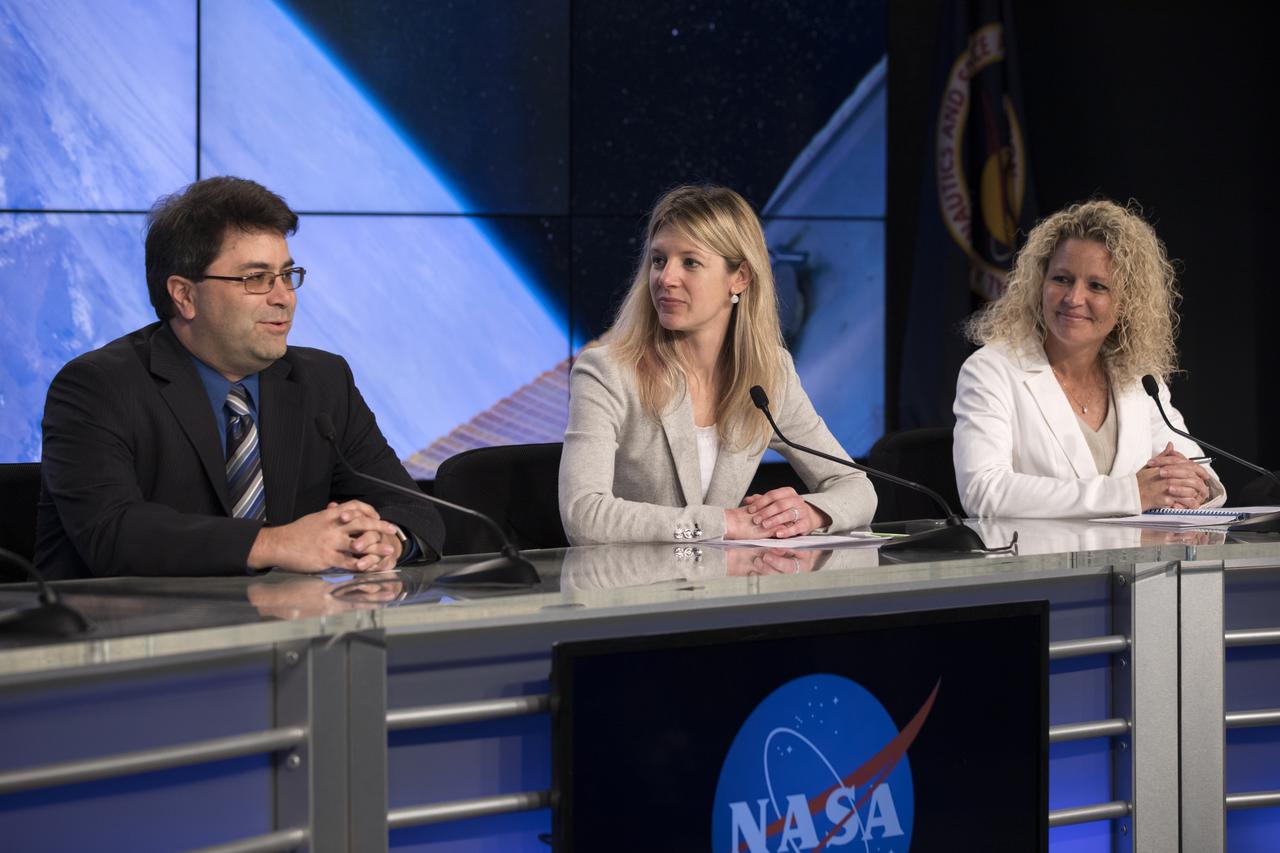
In the Press Site auditorium of NASA's Kennedy Space Center in Florida, NASA and industry leaders speak to media at a post-launch news conference following the liftoff of SpaceX CRS-10, a commercial resupply services mission to the International Space Station. From left are: William Spetch, deputy manager of the International Space Station Transportation Office; Jessica Jensen, Dragon mission manager for SpaceX; and Pam Underwood, manager of the Operations Integration Division of the Federal Aviation Administration Office of Commercial Space Transportation. SpaceX CRS-10 lifted off atop a Falcon 9 rocket from Kennedy's Launch Complex 39A at 9:39 a.m. EST.
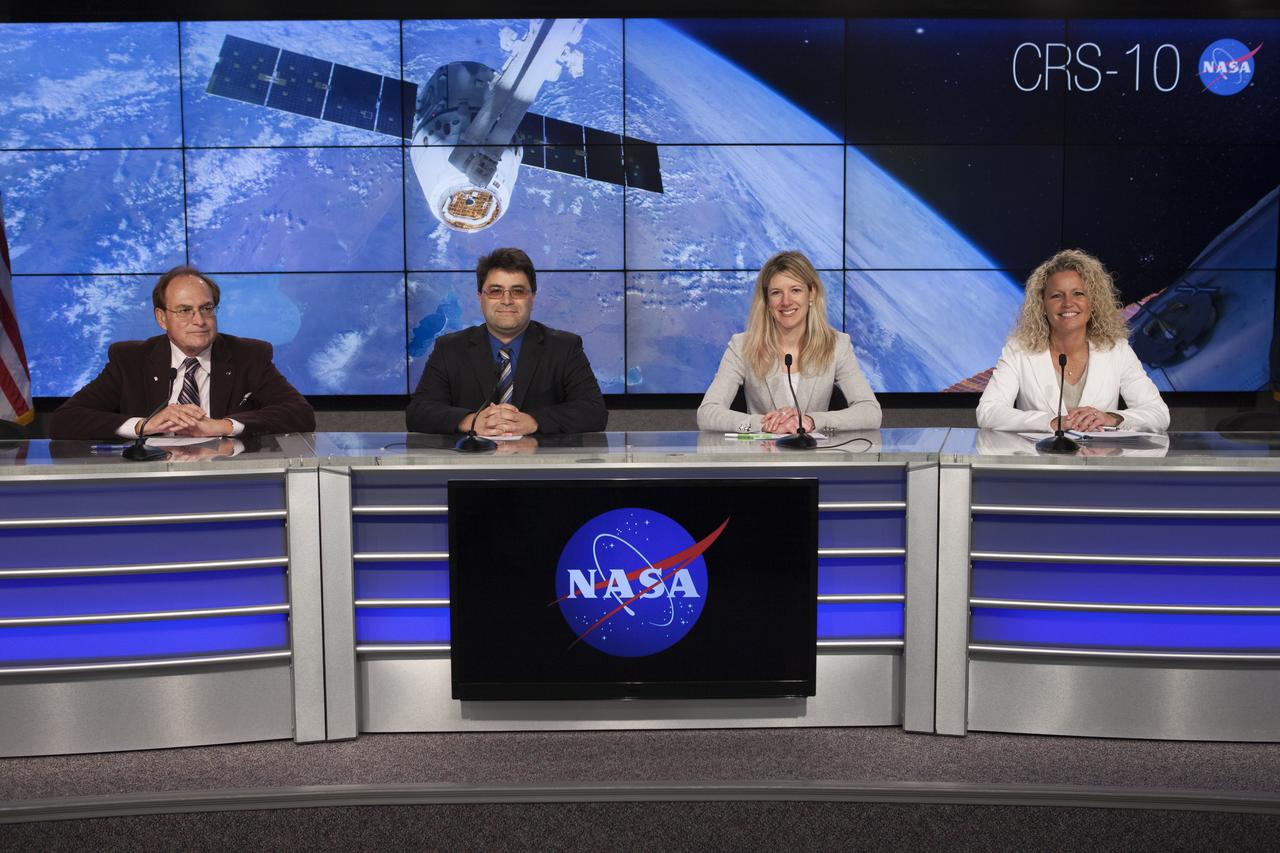
In the Press Site auditorium of NASA's Kennedy Space Center in Florida, NASA and industry leaders speak to media at a post-launch news conference following the liftoff of SpaceX CRS-10, a commercial resupply services mission to the International Space Station. From left are: George Diller, NASA Communications; William Spetch, deputy manager of the International Space Station Transportation Office; Jessica Jensen, Dragon mission manager for SpaceX; and Pam Underwood, manager of the Operations Integration Division of the Federal Aviation Administration Office of Commercial Space Transportation. SpaceX CRS-10 lifted off atop a Falcon 9 rocket from Kennedy's Launch Complex 39A at 9:39 a.m. EST.
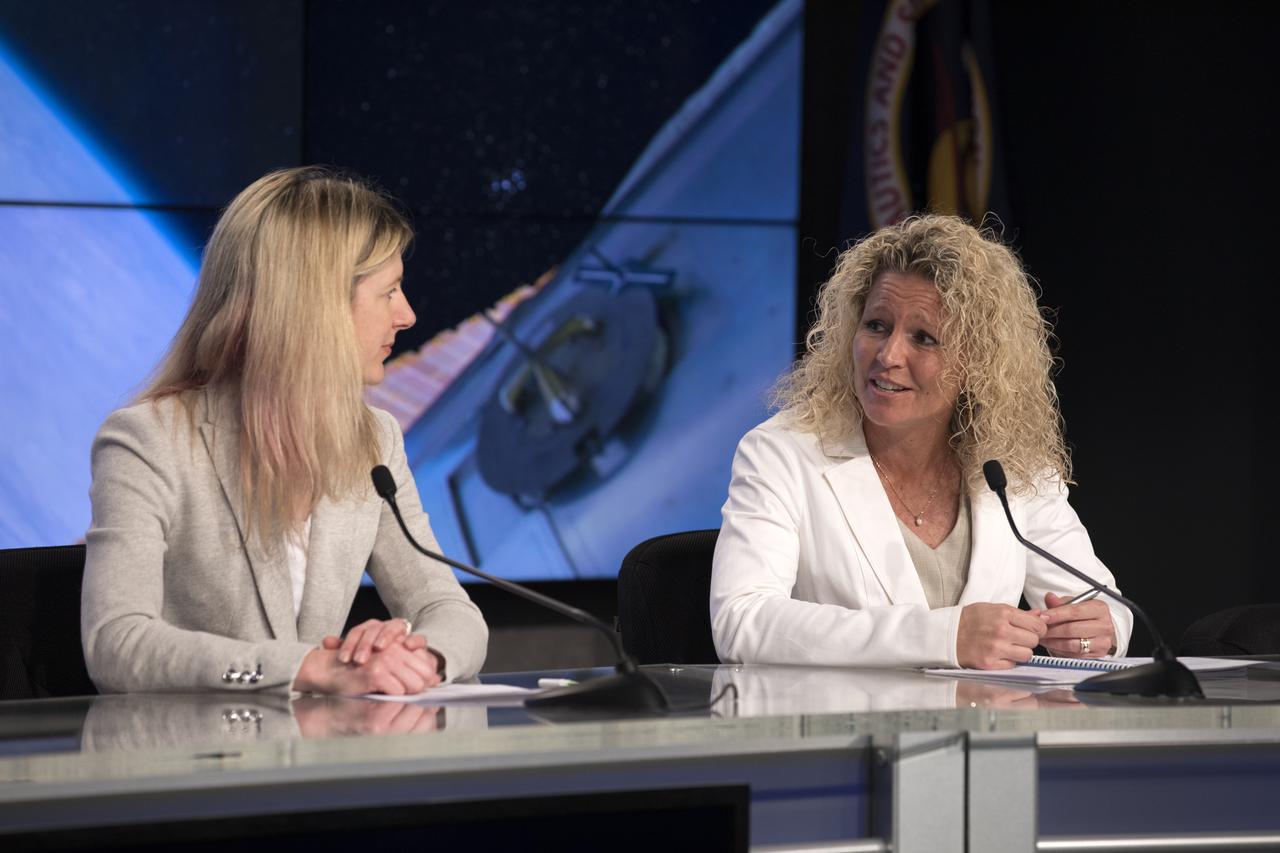
In the Press Site auditorium of NASA's Kennedy Space Center in Florida, NASA and industry leaders speak to media at a post-launch news conference following the liftoff of SpaceX CRS-10, a commercial resupply services mission to the International Space Station. From left are: Jessica Jensen, Dragon mission manager for SpaceX; and Pam Underwood, manager of the Operations Integration Division of the Federal Aviation Administration Office of Commercial Space Transportation. SpaceX CRS-10 lifted off atop a Falcon 9 rocket from Kennedy's Launch Complex 39A at 9:39 a.m. EST.
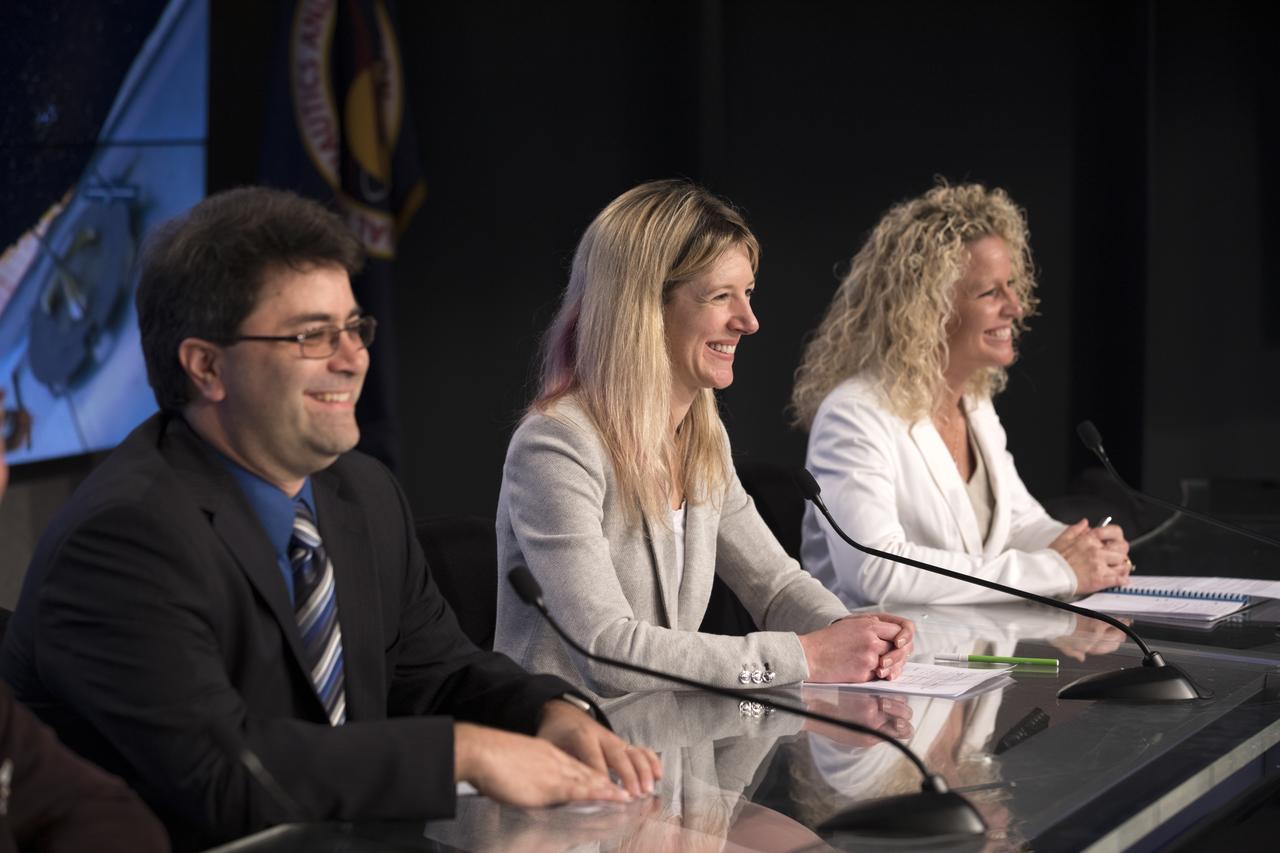
In the Press Site auditorium of NASA's Kennedy Space Center in Florida, NASA and industry leaders speak to media at a post-launch news conference following the liftoff of SpaceX CRS-10, a commercial resupply services mission to the International Space Station. From left are: William Spetch, deputy manager of the International Space Station Transportation Office; Jessica Jensen, Dragon mission manager for SpaceX; and Pam Underwood, manager of the Operations Integration Division of the Federal Aviation Administration Office of Commercial Space Transportation. SpaceX CRS-10 lifted off atop a Falcon 9 rocket from Kennedy's Launch Complex 39A at 9:39 a.m. EST.
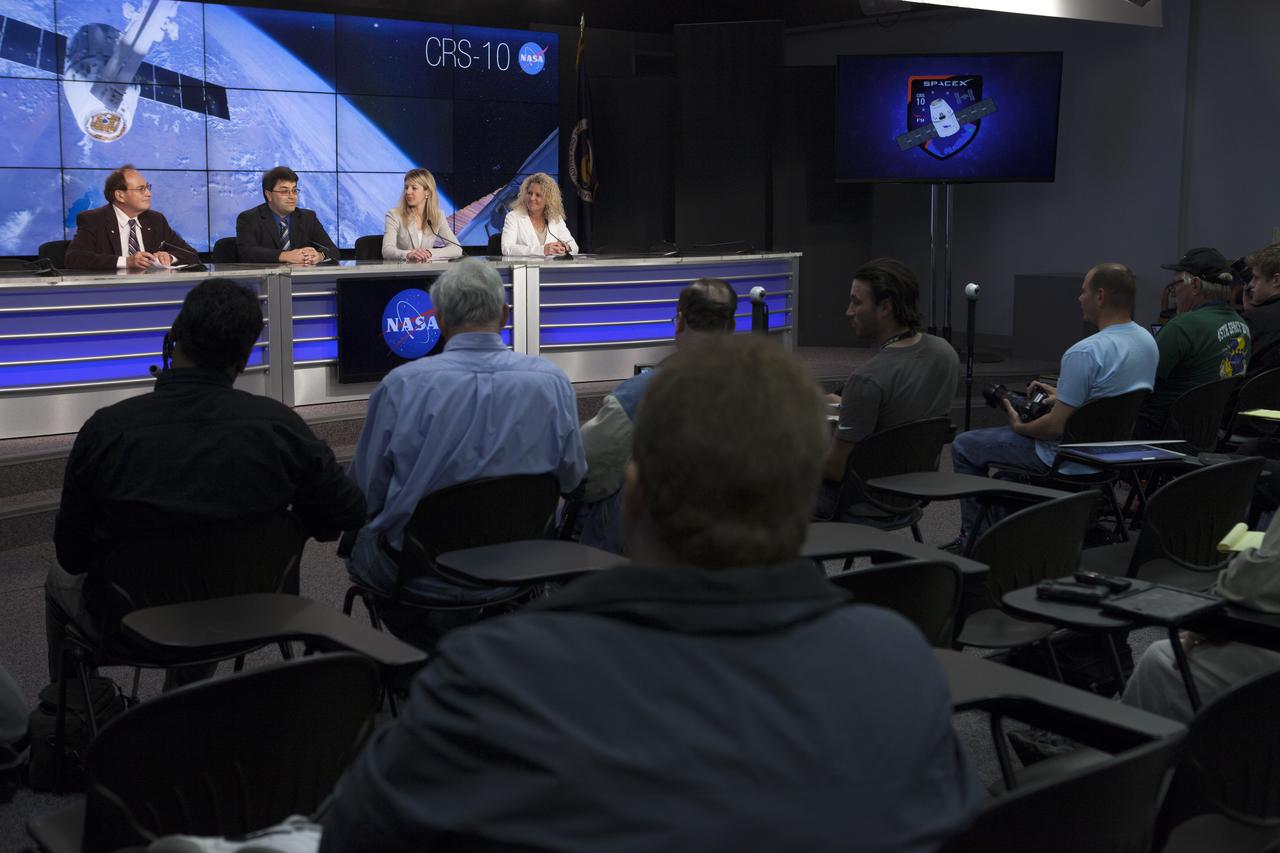
In the Press Site auditorium of NASA's Kennedy Space Center in Florida, NASA and industry leaders speak to media at a post-launch news conference following the liftoff of SpaceX CRS-10, a commercial resupply services mission to the International Space Station. From left are: George Diller, NASA Communications; William Spetch, deputy manager of the International Space Station Transportation Office; Jessica Jensen, Dragon mission manager for SpaceX; and Pam Underwood, manager of the Operations Integration Division of the Federal Aviation Administration Office of Commercial Space Transportation. SpaceX CRS-10 lifted off atop a Falcon 9 rocket from Kennedy's Launch Complex 39A at 9:39 a.m. EST.
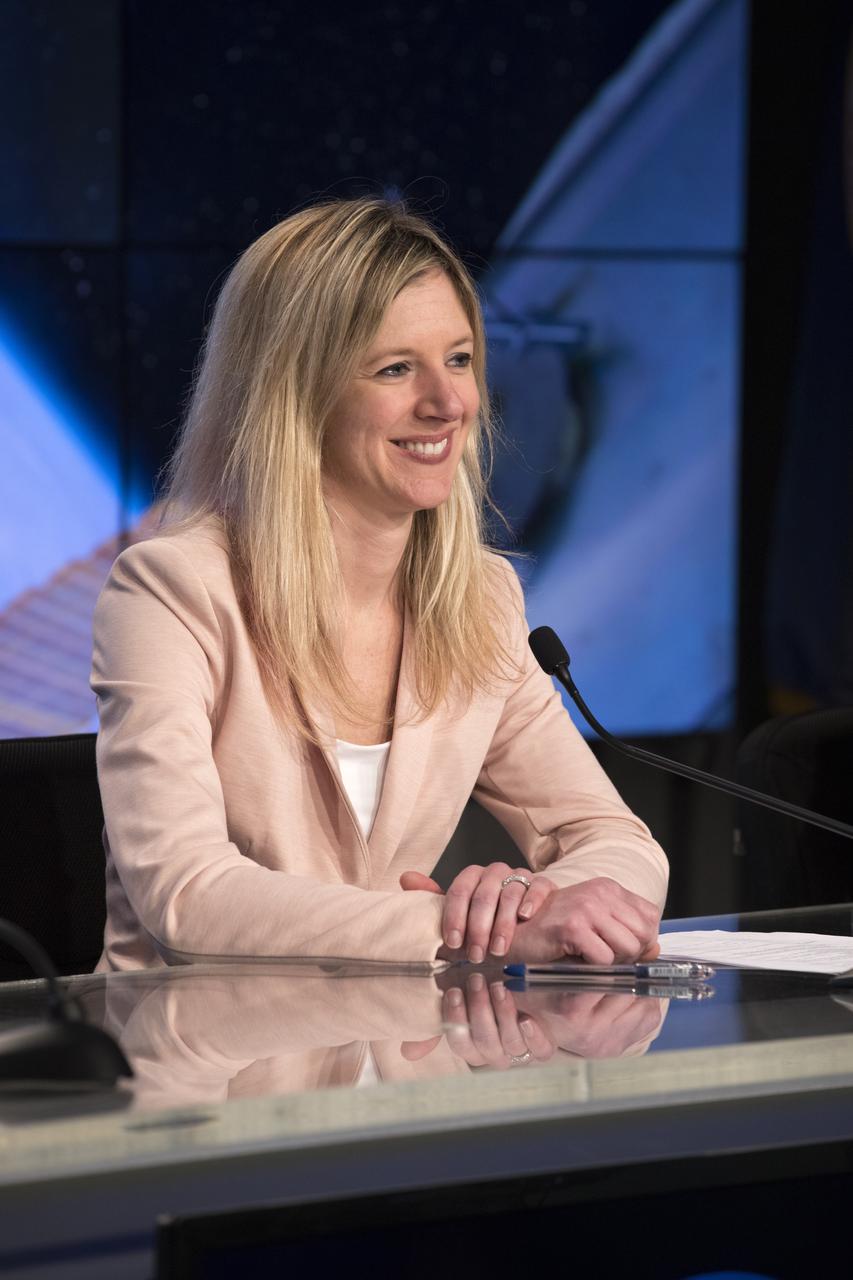
In the Kennedy Space Center’s Press Site auditorium, agency and industry leaders speak to members of the media at a prelaunch news conference for the SpaceX CRS-10 commercial resupply services mission to the International Space Station. Jessica Jensen, director of Dragon mission management for SpaceX, answers questions.
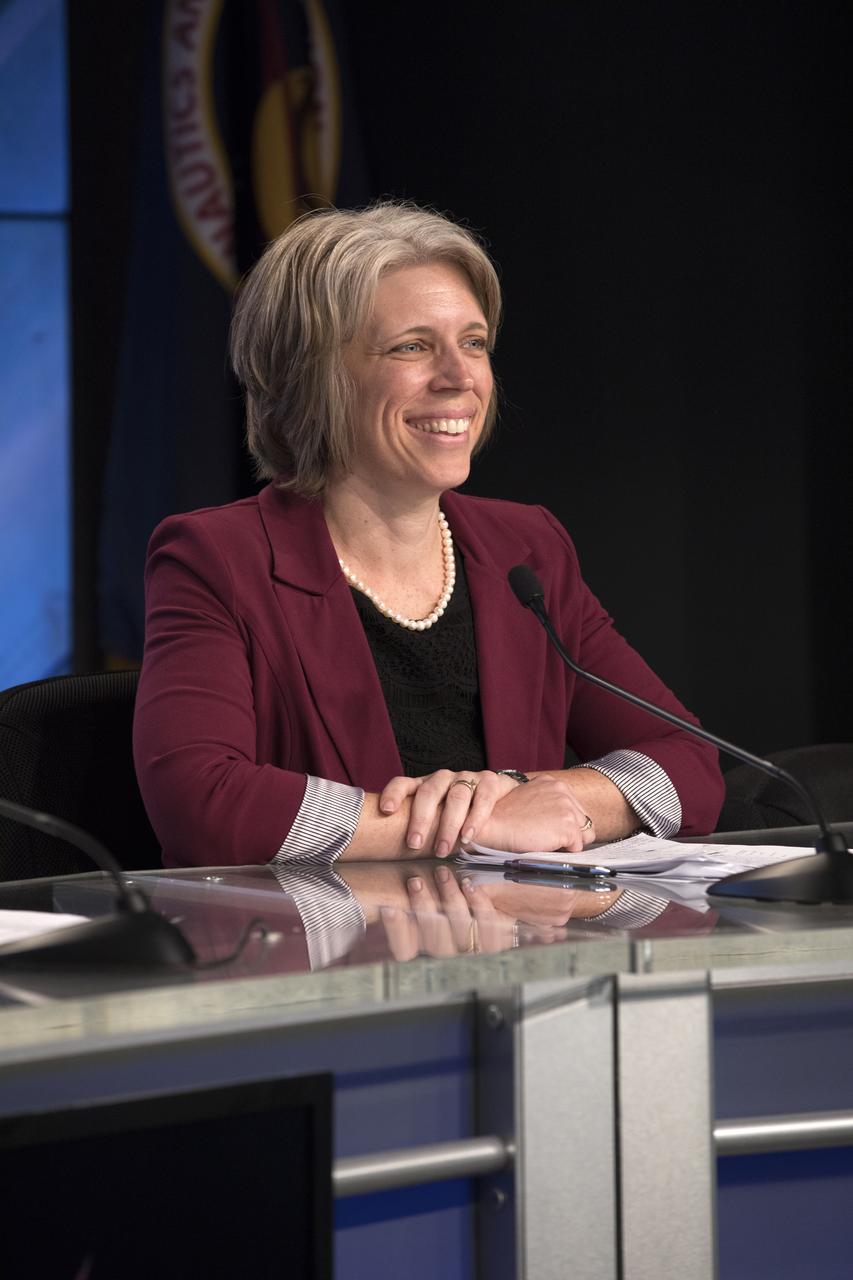
In the Kennedy Space Center’s Press Site auditorium, agency and industry leaders speak to members of the media at a prelaunch news conference for the SpaceX CRS-10 commercial resupply services mission to the International Space Station. Tara Ruttley, associate scientist for the International Space Station Program at Johnson Space Center in Houston answers questions.
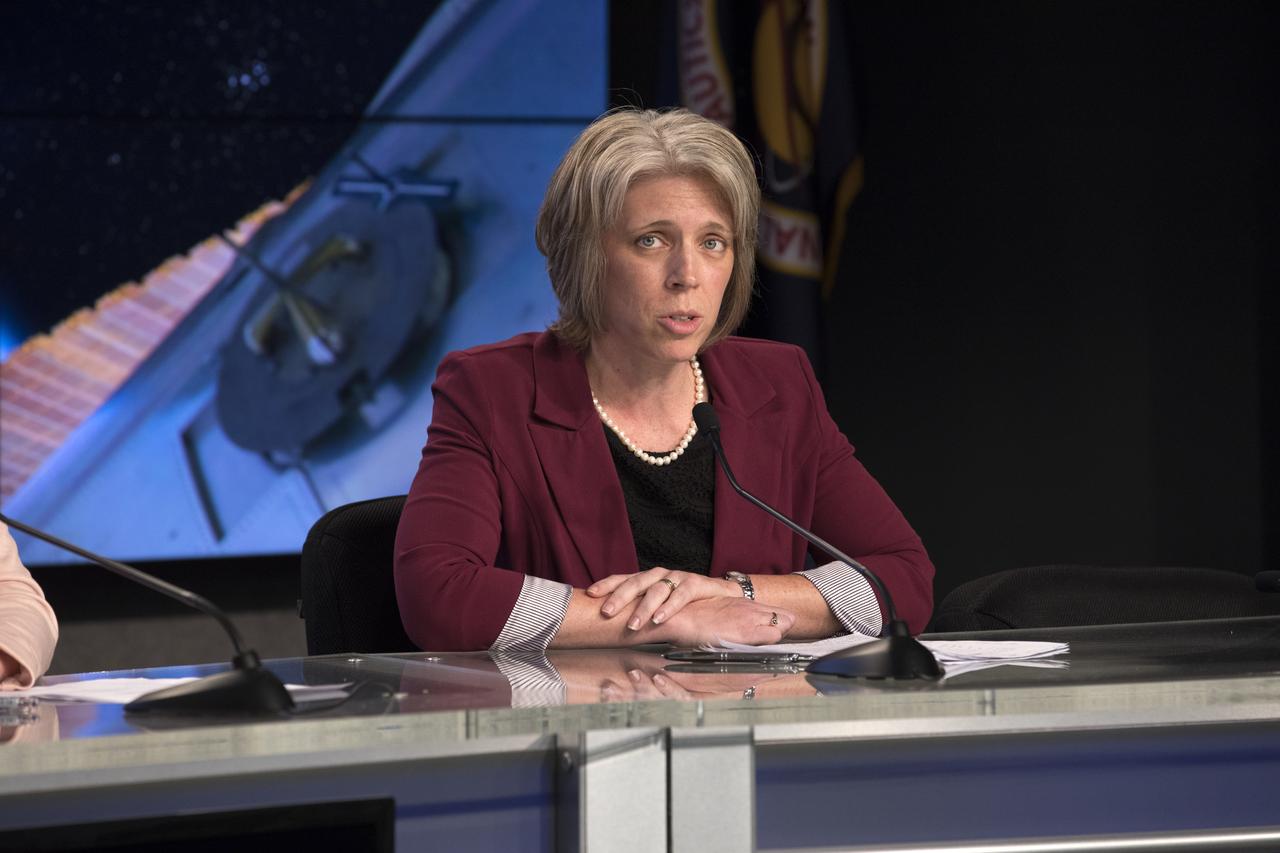
In the Kennedy Space Center’s Press Site auditorium, agency and industry leaders speak to members of the media at a prelaunch news conference for the SpaceX CRS-10 commercial resupply services mission to the International Space Station. Tara Ruttley, associate scientist for the International Space Station Program at Johnson Space Center in Houston, answers questions.
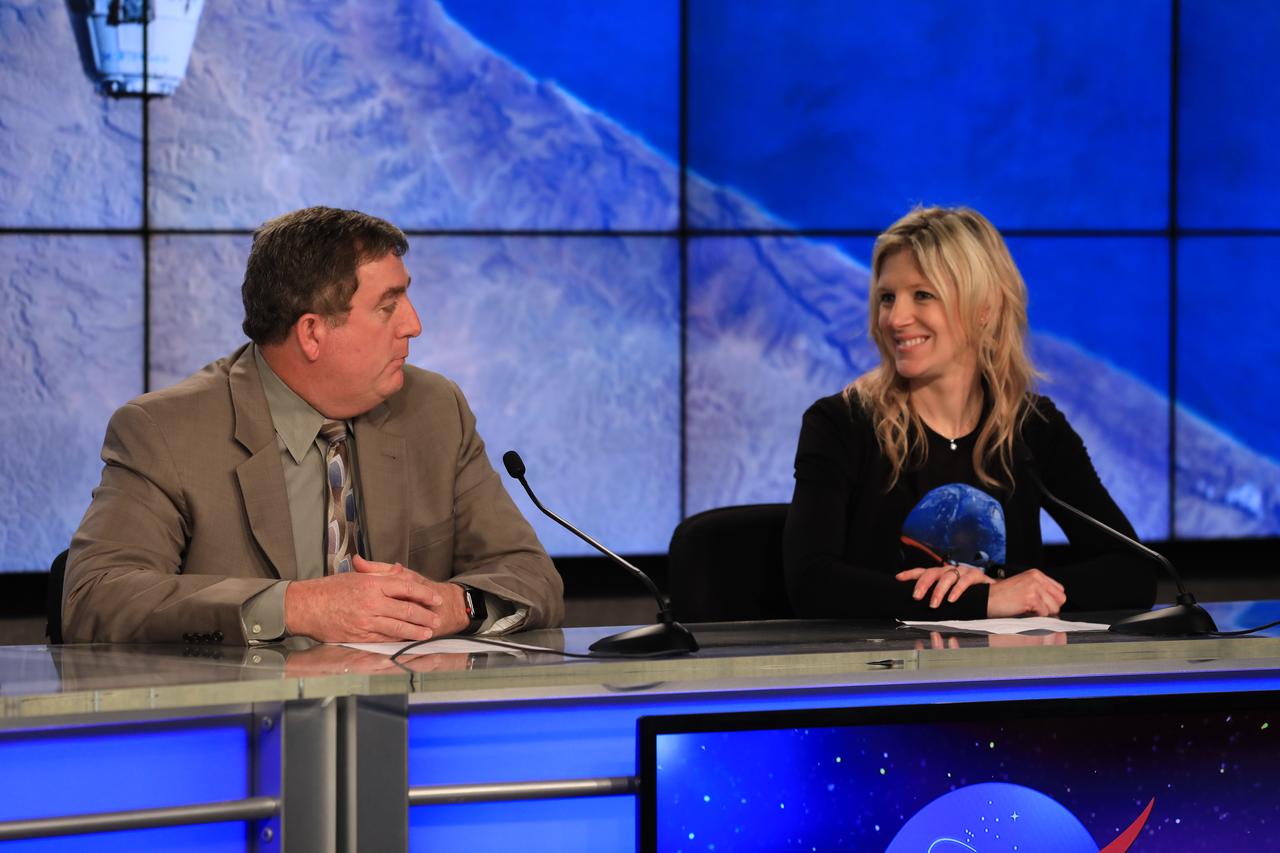
In the Press Site auditorium of NASA's Kennedy Space Center in Florida, from left, Kirk Shireman, manager, International Space Station Program, and Jessica Jensen, Director, Dragon Mission Management, SpaceX, speak to media at a post-launch news conference following the liftoff of SpaceX CRS-15. The flight is a commercial resupply services mission to the International Space Station. SpaceX CRS-15 lifted off atop a Falcon 9 rocket from Space Launch Complex 40 at Cape Canaveral Air Force Station on Friday, June 29, 2018, at 5:42 a.m. EDT with supplies and materials to support multiple critical science and research investigations.
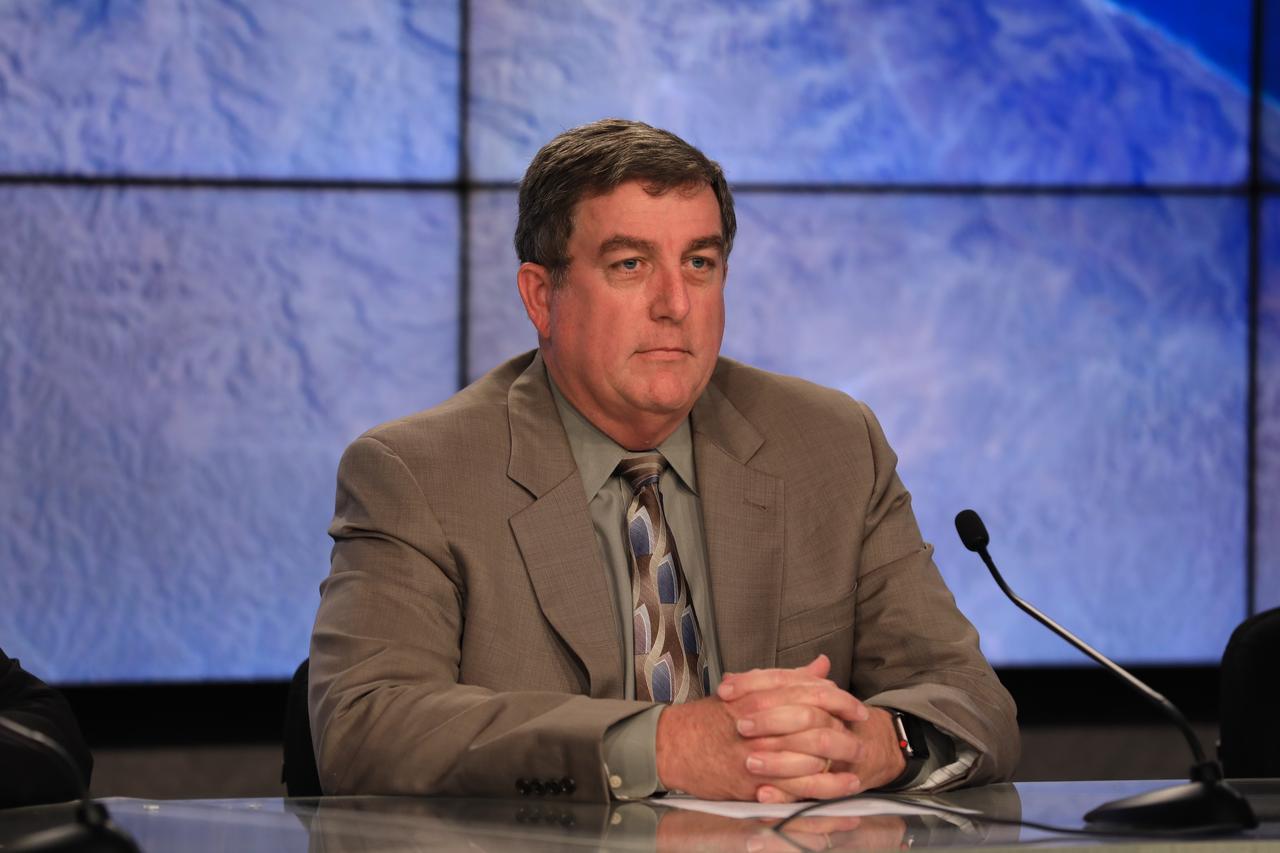
In the Press Site auditorium of NASA's Kennedy Space Center in Florida, Kirk Shireman, manager, International Space Station Program, speaks to media at a post-launch news conference following the liftoff of SpaceX CRS-15. The flight is a commercial resupply services mission to the International Space Station. SpaceX CRS-15 lifted off atop a Falcon 9 rocket from Space Launch Complex 40 at Cape Canaveral Air Force Station on Friday, June 29, 2018, at 5:42 a.m. EDT with supplies and materials to support multiple critical science and research investigations.
In the Press Site auditorium of NASA's Kennedy Space Center in Florida, NASA and industry leaders speak to media at a post-launch news conference following the liftoff of SpaceX CRS-12, a commercial resupply services mission to the International Space Station. From left are: Stephanie Martin of NASA Communications, Dan Hartman, NASA deputy manager of the International Space Station Program, and Hans Koenigsmann, SpaceX vice president of Flight and Build Reliability. SpaceX CRS-12 lifted off atop a Falcon 9 rocket from Kennedy's Launch Complex 39A at 12:31 p.m. EDT.
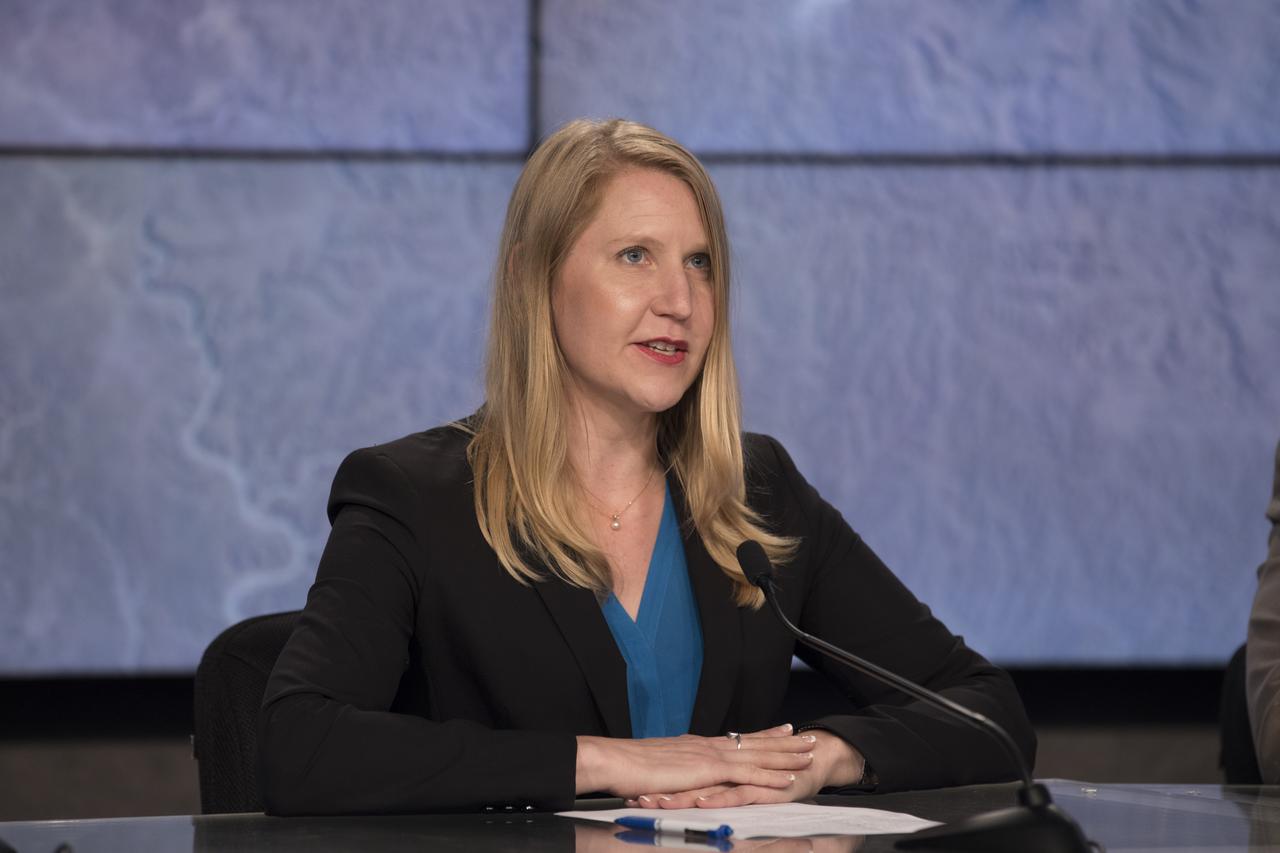
In the Press Site auditorium of NASA's Kennedy Space Center in Florida, Stephanie Schierholz of NASA Communications speaks to media at a post-launch news conference following the liftoff of SpaceX CRS-15. The flight is a commercial resupply services mission to the International Space Station. SpaceX CRS-15 lifted off atop a Falcon 9 rocket from Space Launch Complex 40 at Cape Canaveral Air Force Station on Friday, June 29, 2018, at 5:42 a.m. EDT with supplies and materials to support multiple critical science and research investigations.
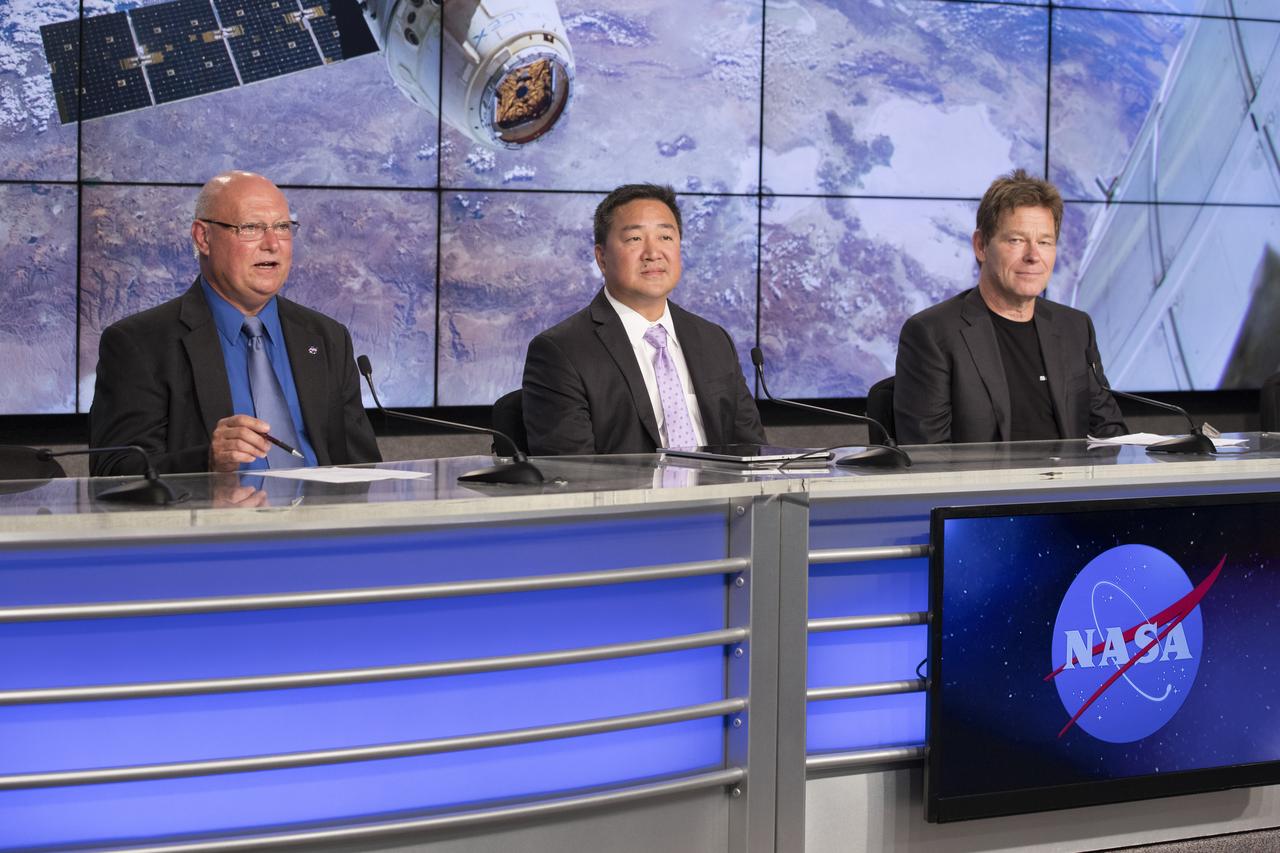
In the Press Site auditorium of NASA's Kennedy Space Center in Florida, NASA and industry leaders speak to media at a post-launch news conference following the liftoff of SpaceX CRS-11, a commercial resupply services mission to the International Space Station. From left are: Mike Curie of NASA Communications, Ven Feng, NASA's manager of the International Space Station Transportation Integration Office, and Hans Koenigsmann, vice president of Flight Reliability for SpaceX. SpaceX CRS-11 lifted off atop a Falcon 9 rocket from Kennedy's Launch Complex 39A at 5:07 p.m. EDT.
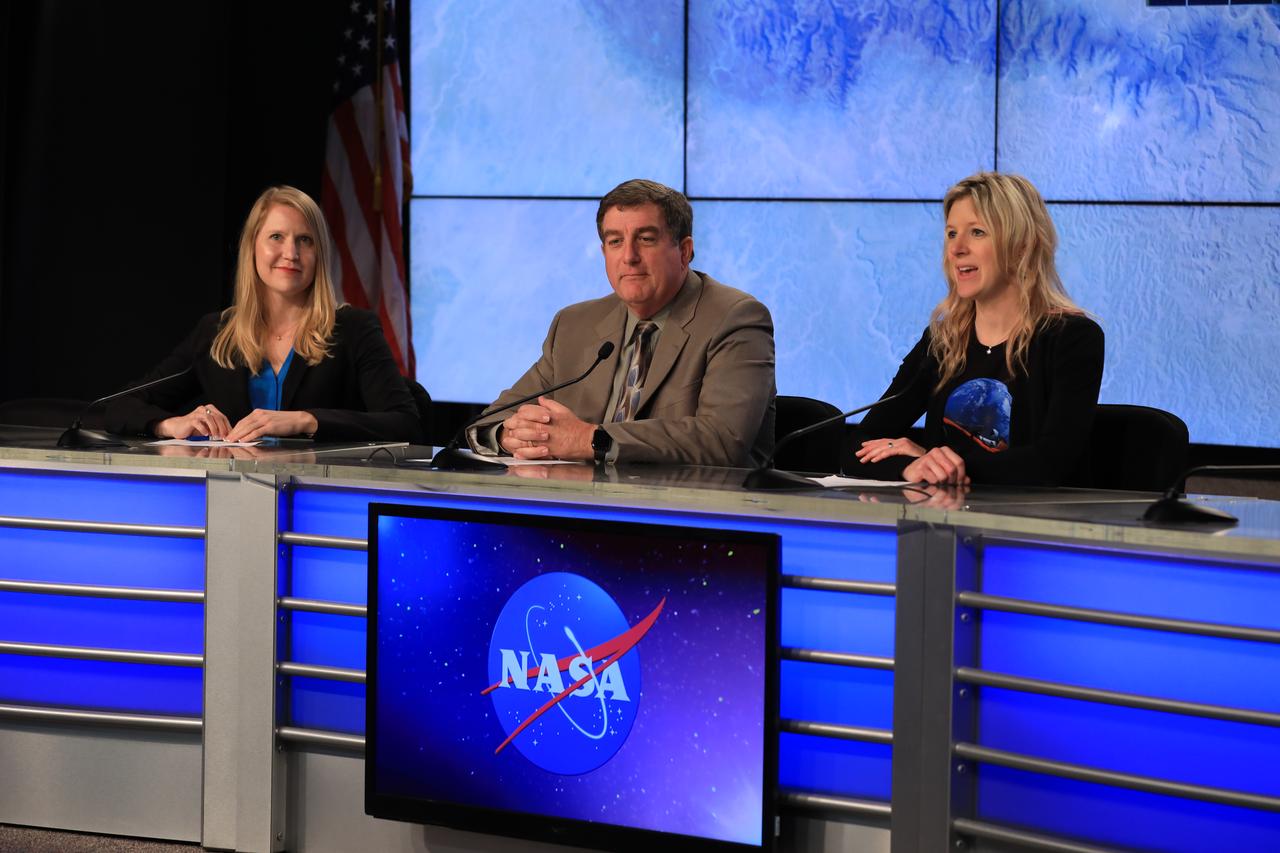
In the Press Site auditorium of NASA's Kennedy Space Center in Florida, from left, Stephanie Schierholz of NASA Communications, Kirk Shireman, manager, International Space Station Program, and Jessica Jensen, Director, Dragon Mission Management, SpaceX, speak to media at a post-launch news conference following the liftoff of SpaceX CRS-15. The flight is a commercial resupply services mission to the International Space Station. SpaceX CRS-15 lifted off atop a Falcon 9 rocket from Space Launch Complex 40 at Cape Canaveral Air Force Station on Friday, June 29, 2018, at 5:42 a.m. EDT with supplies and materials to support multiple critical science and research investigations.
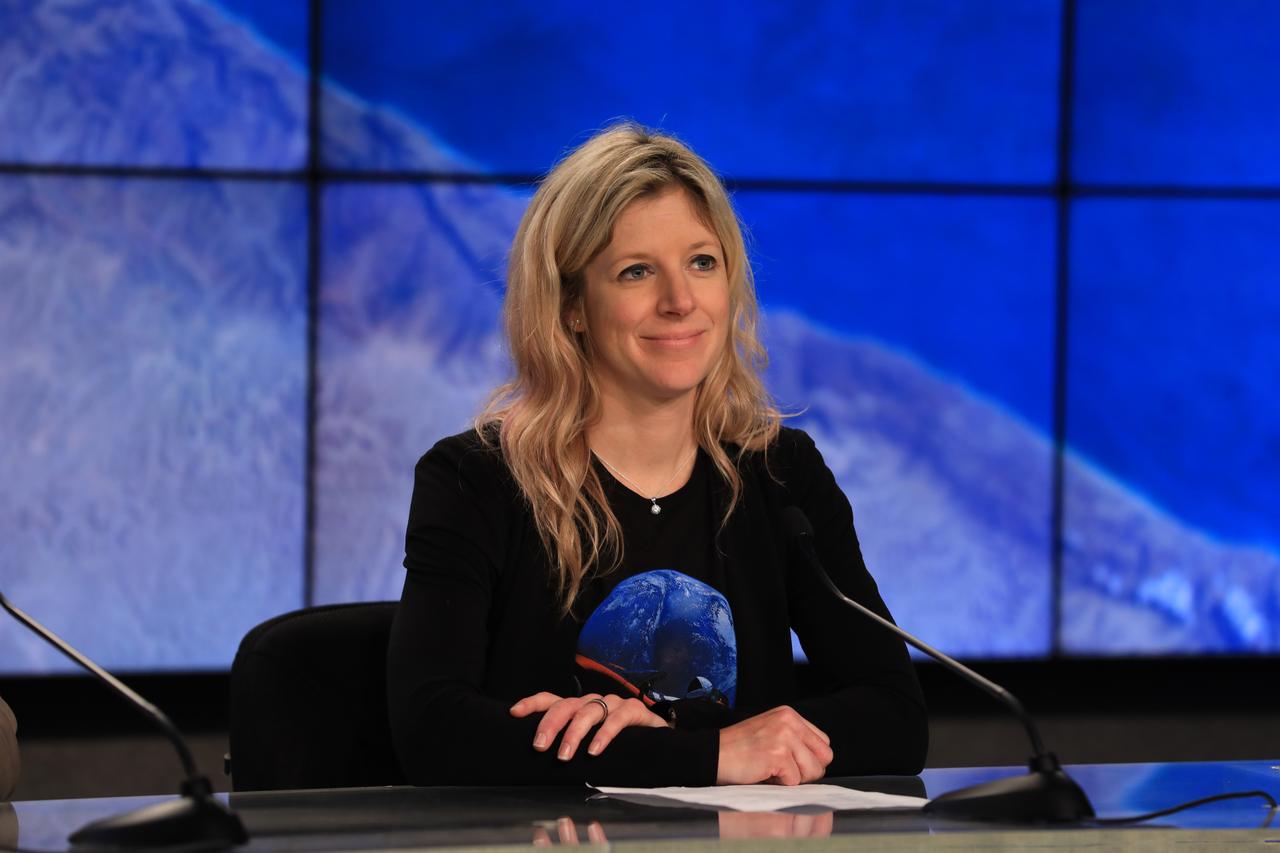
In the Press Site auditorium of NASA's Kennedy Space Center in Florida, Jessica Jensen, Director, Dragon Mission Management, SpaceX, speaks to media at a post-launch news conference following the liftoff of SpaceX CRS-15. The flight is a commercial resupply services mission to the International Space Station. SpaceX CRS-15 lifted off atop a Falcon 9 rocket from Space Launch Complex 40 at Cape Canaveral Air Force Station on Friday, June 29, 2018, at 5:42 a.m. EDT with supplies and materials to support multiple critical science and research investigations.
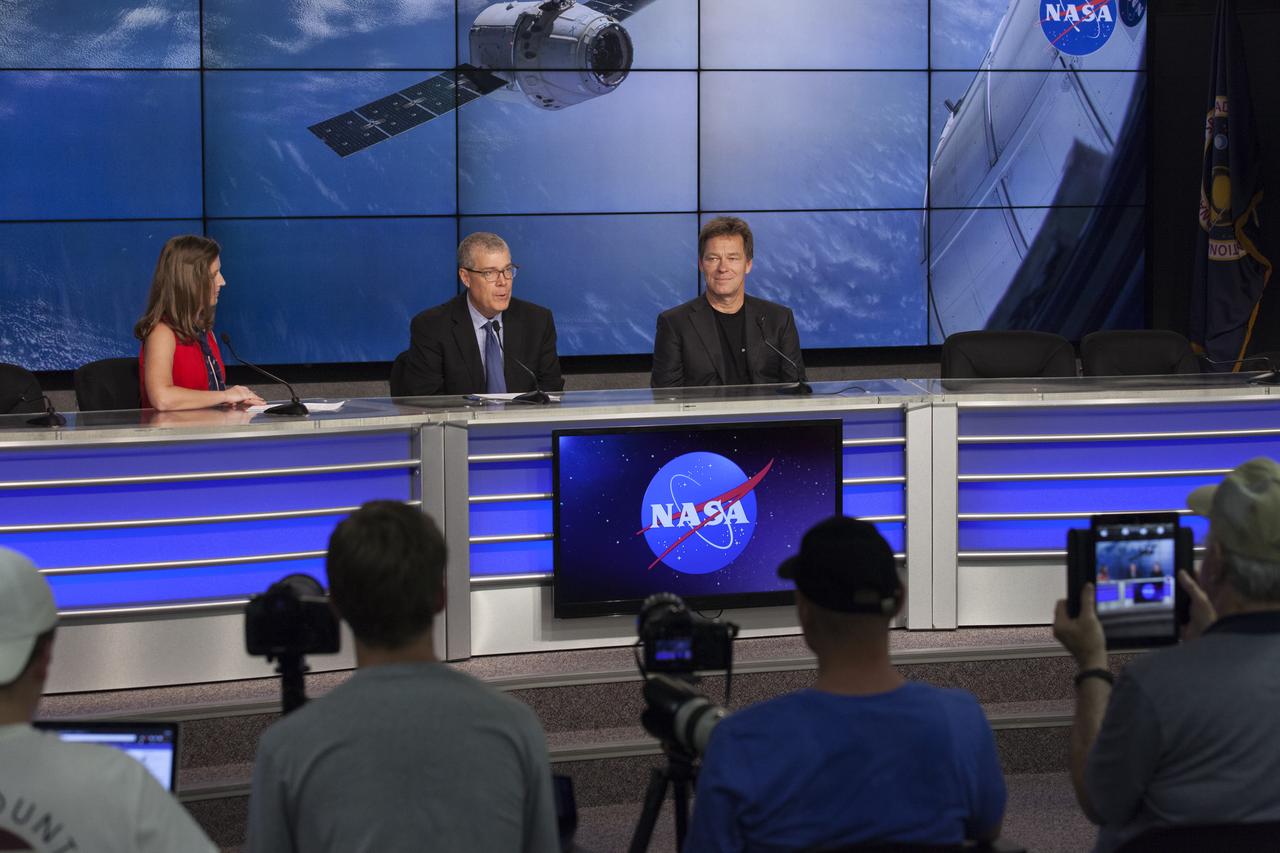
In the Press Site auditorium of NASA's Kennedy Space Center in Florida, NASA and industry leaders speak to media at a post-launch news conference following the liftoff of SpaceX CRS-12, a commercial resupply services mission to the International Space Station. From left are: Stephanie Martin of NASA Communications, Dan Hartman, NASA deputy manager of the International Space Station Program, and Hans Koenigsmann, SpaceX vice president of Flight and Build Reliability. SpaceX CRS-12 lifted off atop a Falcon 9 rocket from Kennedy's Launch Complex 39A at 12:31 p.m. EDT.
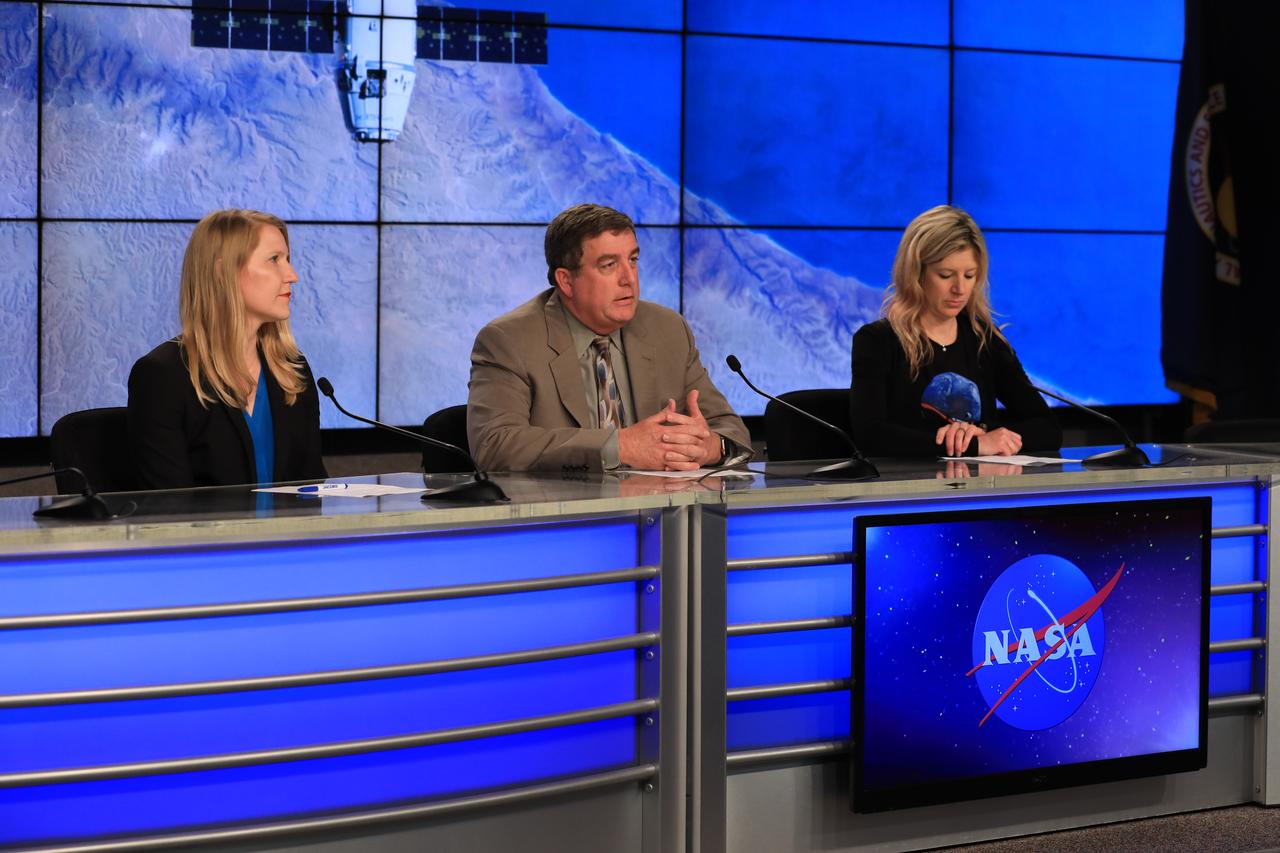
In the Press Site auditorium of NASA's Kennedy Space Center in Florida, from left, Stephanie Schierholz of NASA Communications, Kirk Shireman, manager, International Space Station Program, and Jessica Jensen, Director, Dragon Mission Management, SpaceX, speak to media at a post-launch news conference following the liftoff of SpaceX CRS-15. The flight is a commercial resupply services mission to the International Space Station. SpaceX CRS-15 lifted off atop a Falcon 9 rocket from Space Launch Complex 40 at Cape Canaveral Air Force Station on Friday, June 29, 2018, at 5:42 a.m. EDT with supplies and materials to support multiple critical science and research investigations.
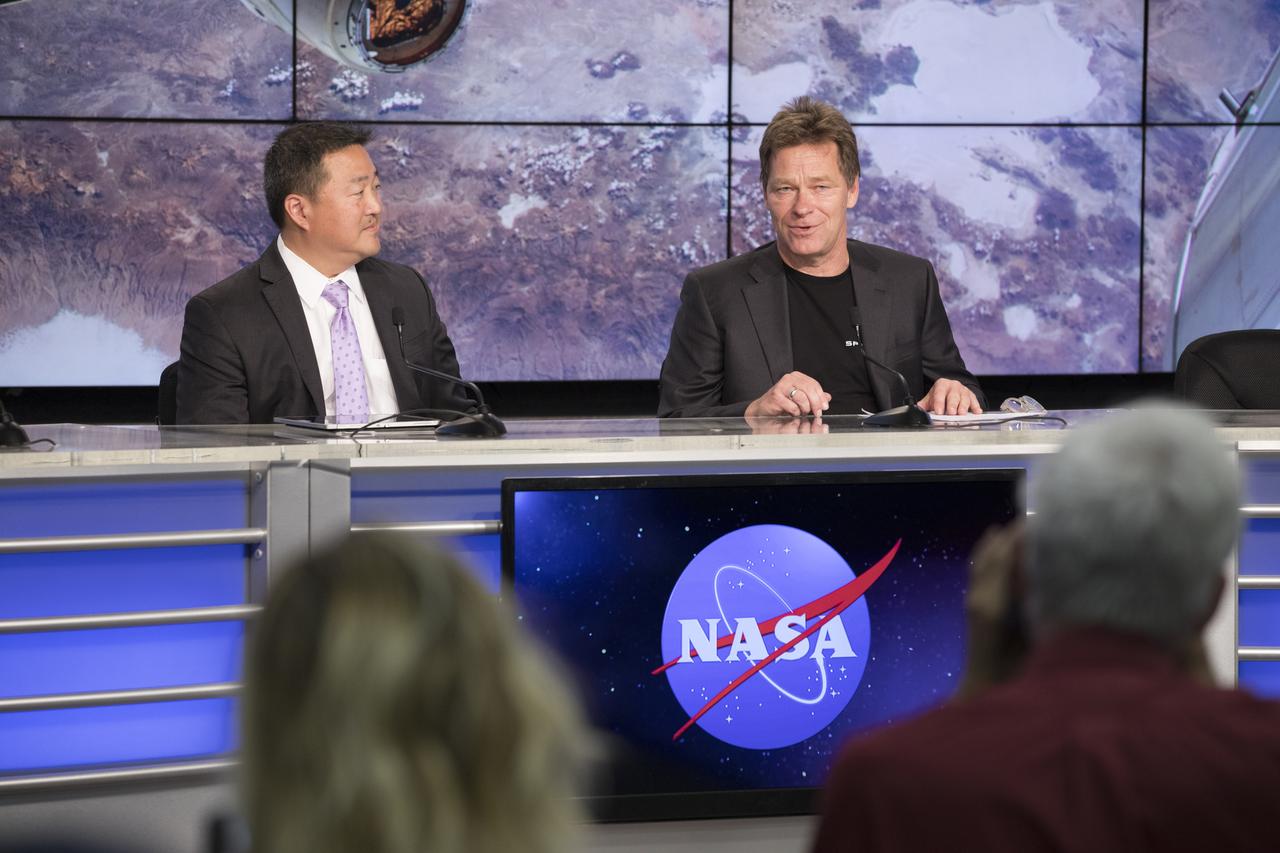
In the Press Site auditorium of NASA's Kennedy Space Center in Florida, NASA and industry leaders speak to media at a post-launch news conference following the liftoff of SpaceX CRS-11, a commercial resupply services mission to the International Space Station. From left are: Ven Feng, NASA's manager of the International Space Station Transportation Integration Office, and Hans Koenigsmann, vice president of Flight Reliability for SpaceX. SpaceX CRS-11 lifted off atop a Falcon 9 rocket from Kennedy's Launch Complex 39A at 5:07 p.m. EDT.
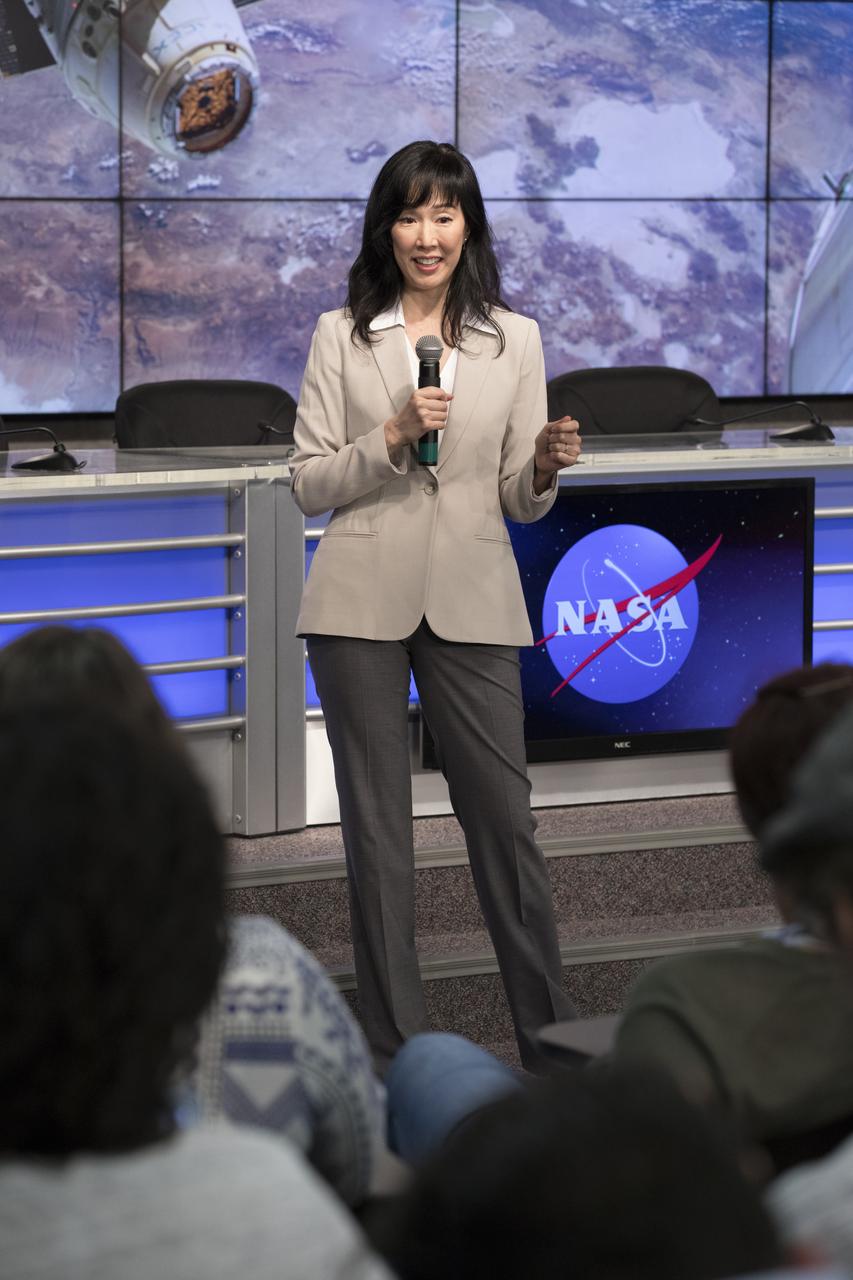
Dr. Chia Soo, principle investigator for Systemic Therapy of NELL-1 for Osteoporosis investigation, speaks to members of social media in the Kennedy Space Center’s Press Site auditorium. The briefing focused on experiments and instruments to be delivered to the International Space Station on SpaceX CRS-11. A Dragon spacecraft is scheduled to be launched from Kennedy’s Launch Complex 39A on June 1 atop a SpaceX Falcon 9 rocket on the company's 11th Commercial Resupply Services mission to the space station.
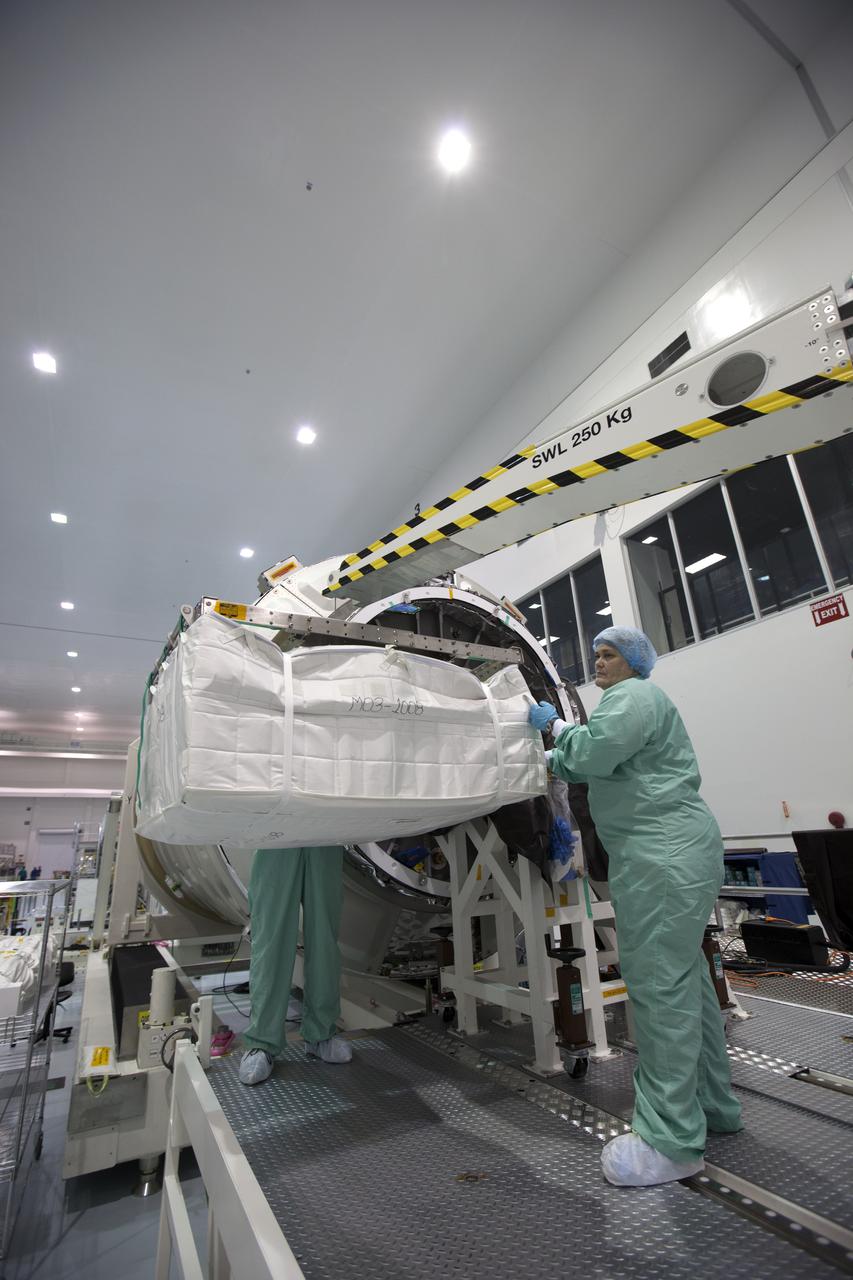
In the Space Station Processing Facility at NASA's Kennedy Space Center in Florida, technicians and engineers load thousands of pounds of supplies, equipment and scientific research materials aboard a Cygnus spacecraft's pressurized cargo module (PCM) for the Orbital ATK CRS-7 mission to the International Space Station. Scheduled to launch on March 19, 2017, the commercial resupply services mission will lift off atop a United Launch Alliance Atlas V rocket from Space launch Complex 41 at Cape Canaveral Air Force Station.
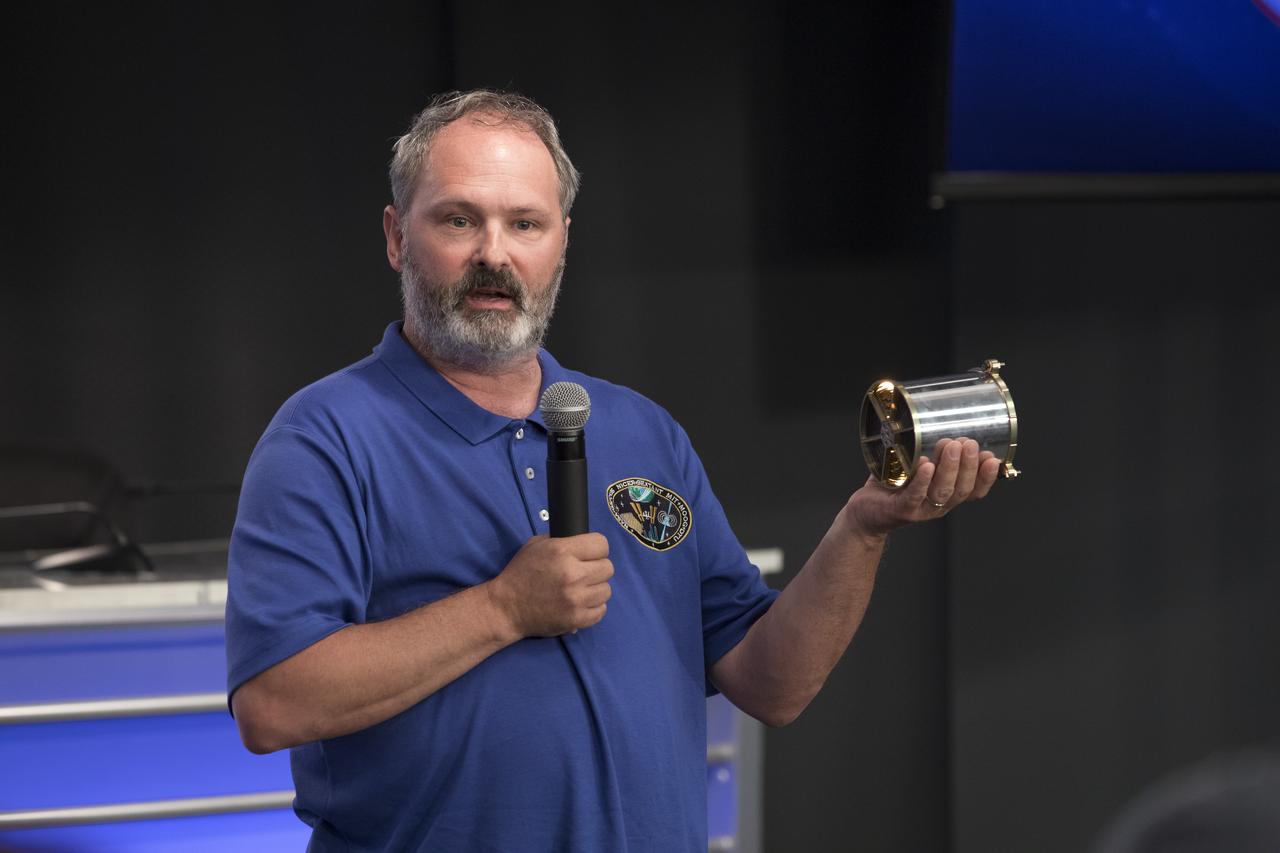
Keith Gendreau, principle investigator for the Neutron star Interior Composition Explorer, or NICER, speaks to members of social media in the Kennedy Space Center’s Press Site auditorium. The briefing focused on the purpose of their experiments and instruments to be delivered to the International Space Station on SpaceX CRS-11. A Dragon spacecraft is scheduled to be launched from Kennedy’s Launch Complex 39A on June 1 atop a SpaceX Falcon 9 rocket on the company's 11th Commercial Resupply Services mission to the space station.
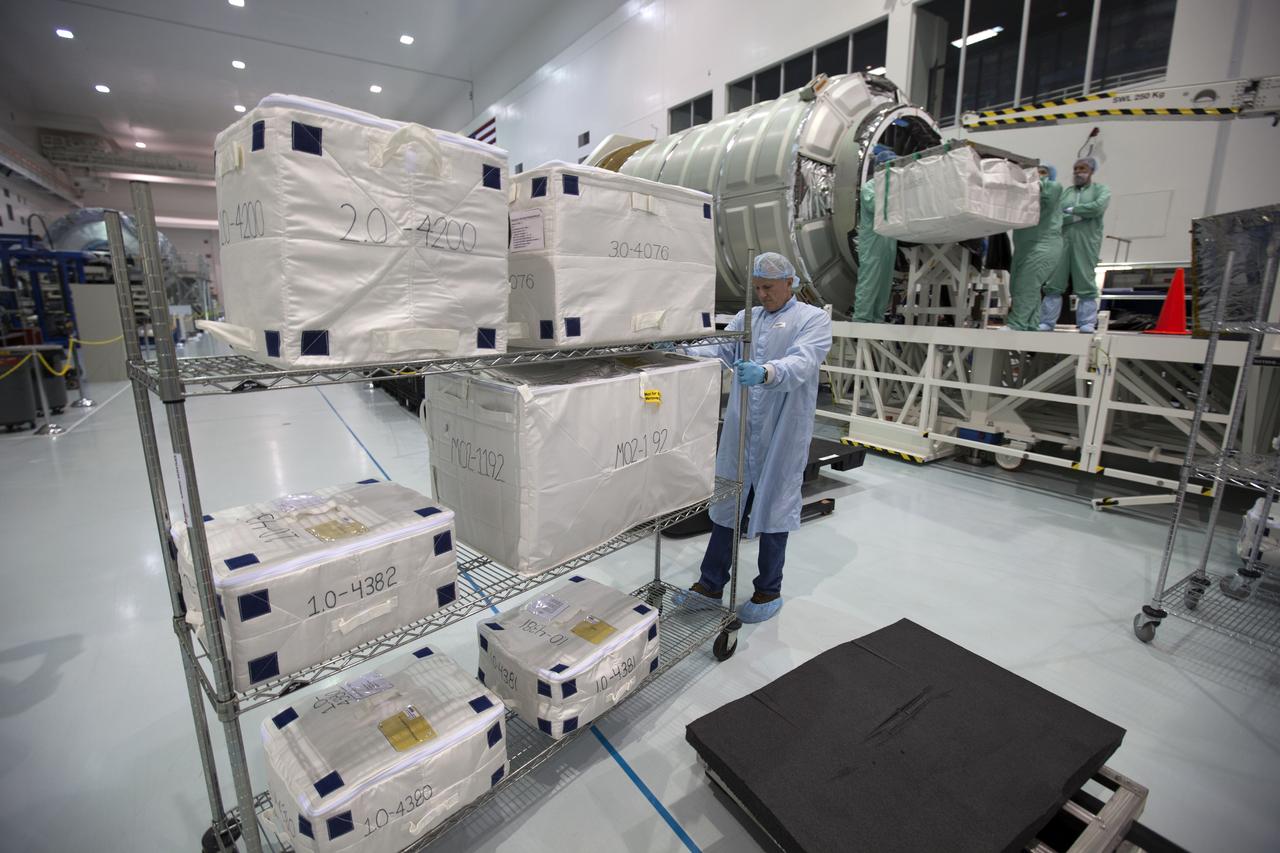
In the Space Station Processing Facility at NASA's Kennedy Space Center in Florida, technicians and engineers load thousands of pounds of supplies, equipment and scientific research materials aboard a Cygnus spacecraft's pressurized cargo module (PCM) for the Orbital ATK CRS-7 mission to the International Space Station. Scheduled to launch on March 19, 2017, the commercial resupply services mission will lift off atop a United Launch Alliance Atlas V rocket from Space launch Complex 41 at Cape Canaveral Air Force Station.
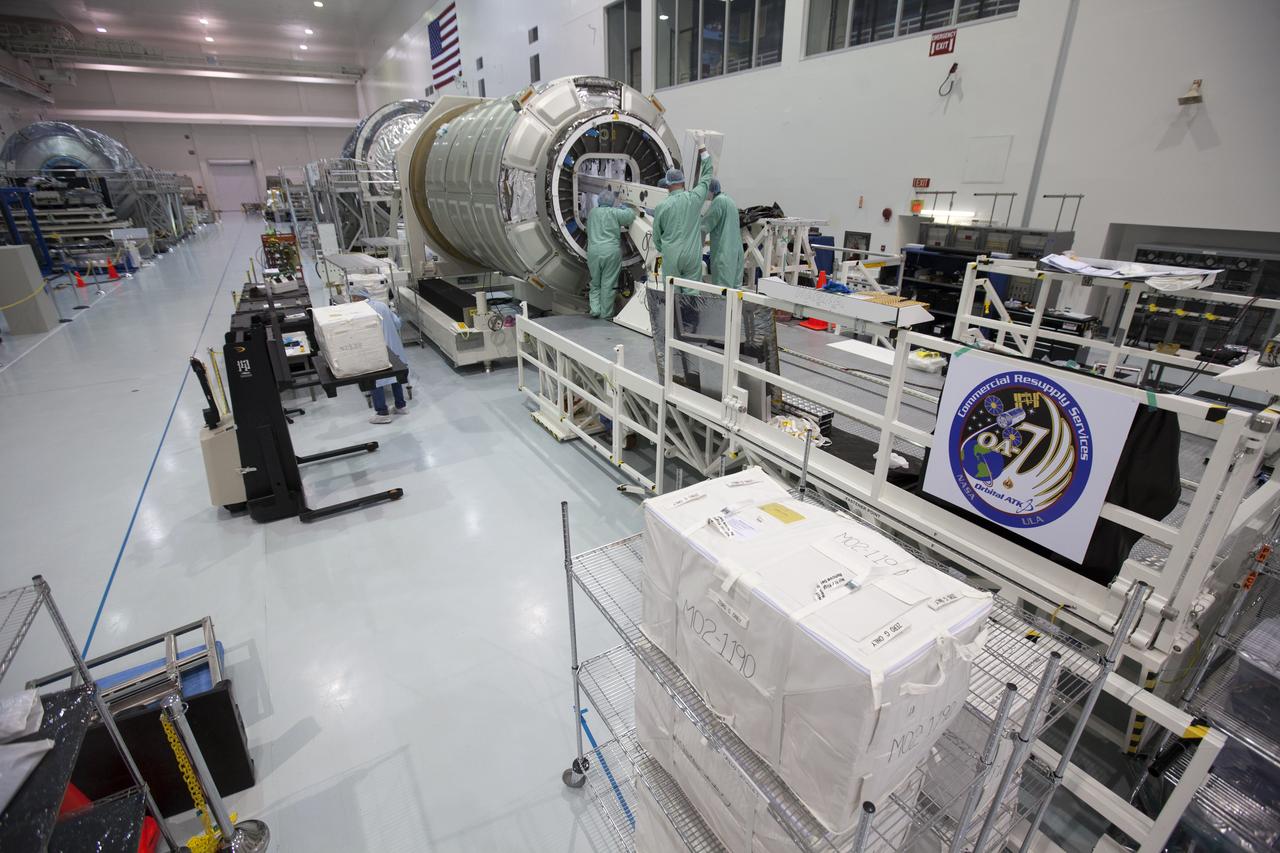
In the Space Station Processing Facility at NASA's Kennedy Space Center in Florida, technicians and engineers load thousands of pounds of supplies, equipment and scientific research materials aboard a Cygnus spacecraft's pressurized cargo module (PCM) for the Orbital ATK CRS-7 mission to the International Space Station. Scheduled to launch on March 19, 2017, the commercial resupply services mission will lift off atop a United Launch Alliance Atlas V rocket from Space launch Complex 41 at Cape Canaveral Air Force Station.
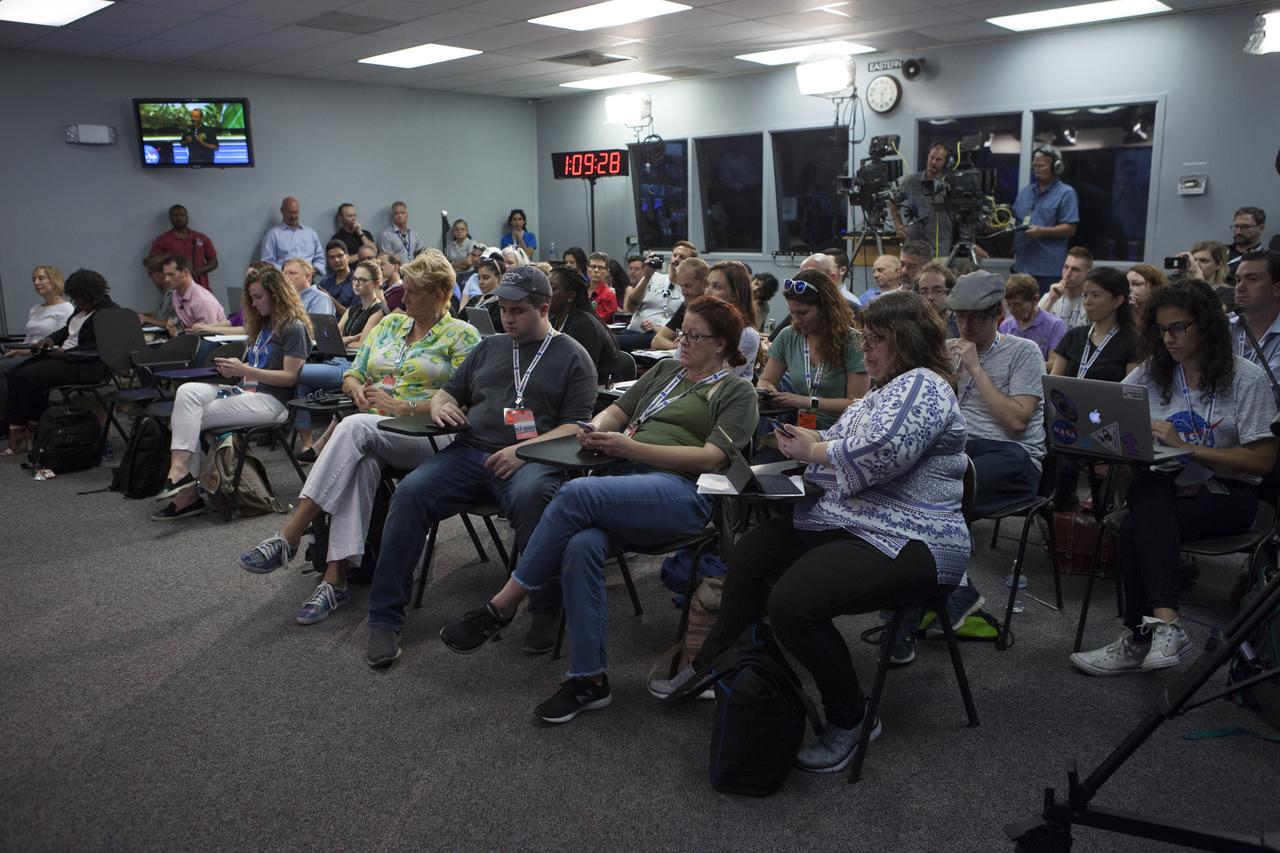
In the Kennedy Space Center’s Press Site auditorium, members of social media attend a briefing on the purpose of experiments and instruments to be delivered to the International Space Station on SpaceX CRS-11. A Dragon spacecraft is scheduled to be launched from Kennedy’s Launch Complex 39A on June 1 atop a SpaceX Falcon 9 rocket on the company's 11th Commercial Resupply Services mission to the space station.
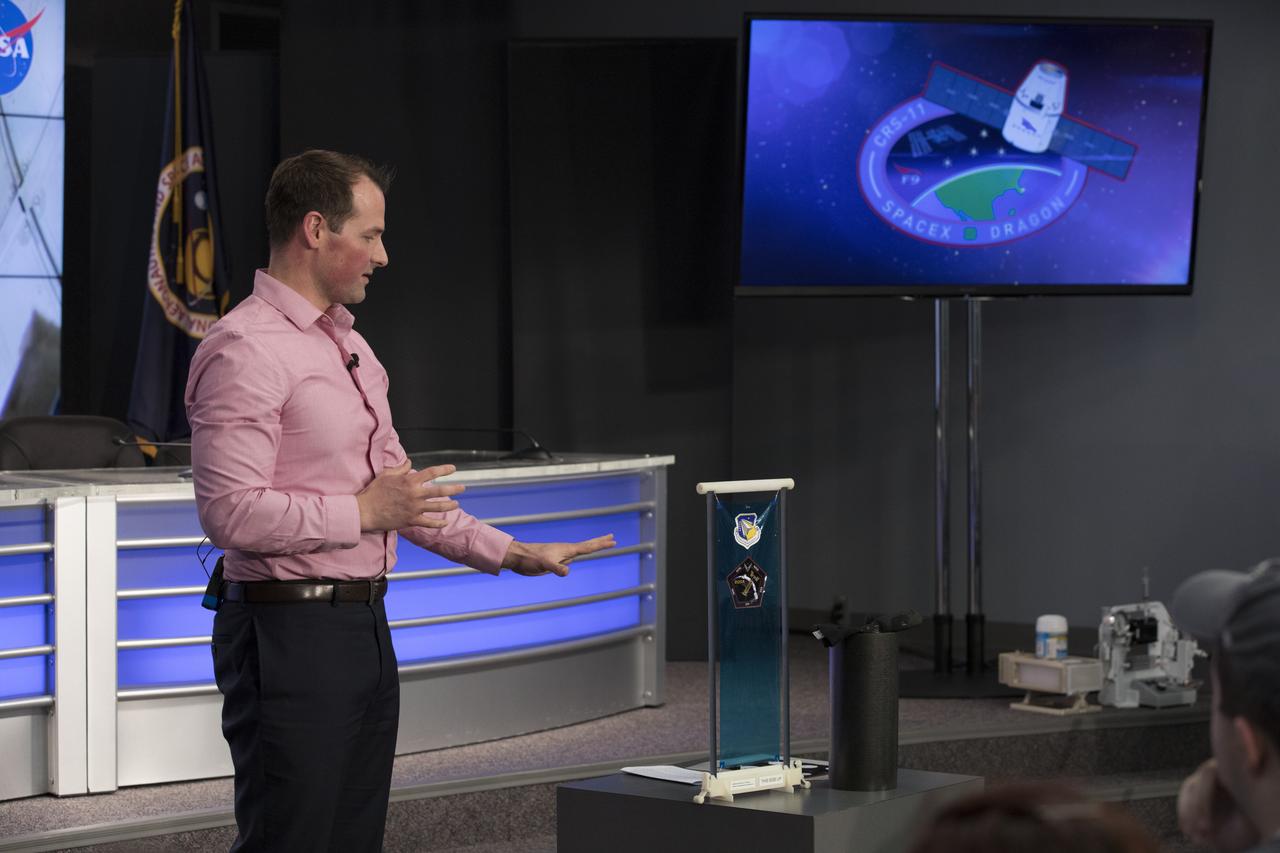
Jeremy Banik, principle investigator the Roll-Out Solar Array, or ROSA, demonstration, speaks to members of social media in the Kennedy Space Center’s Press Site auditorium. The briefing focused on experiments and instruments to be delivered to the International Space Station on SpaceX CRS-11. A Dragon spacecraft is scheduled to be launched from Kennedy’s Launch Complex 39A on June 1 atop a SpaceX Falcon 9 rocket on the company's 11th Commercial Resupply Services mission to the space station.
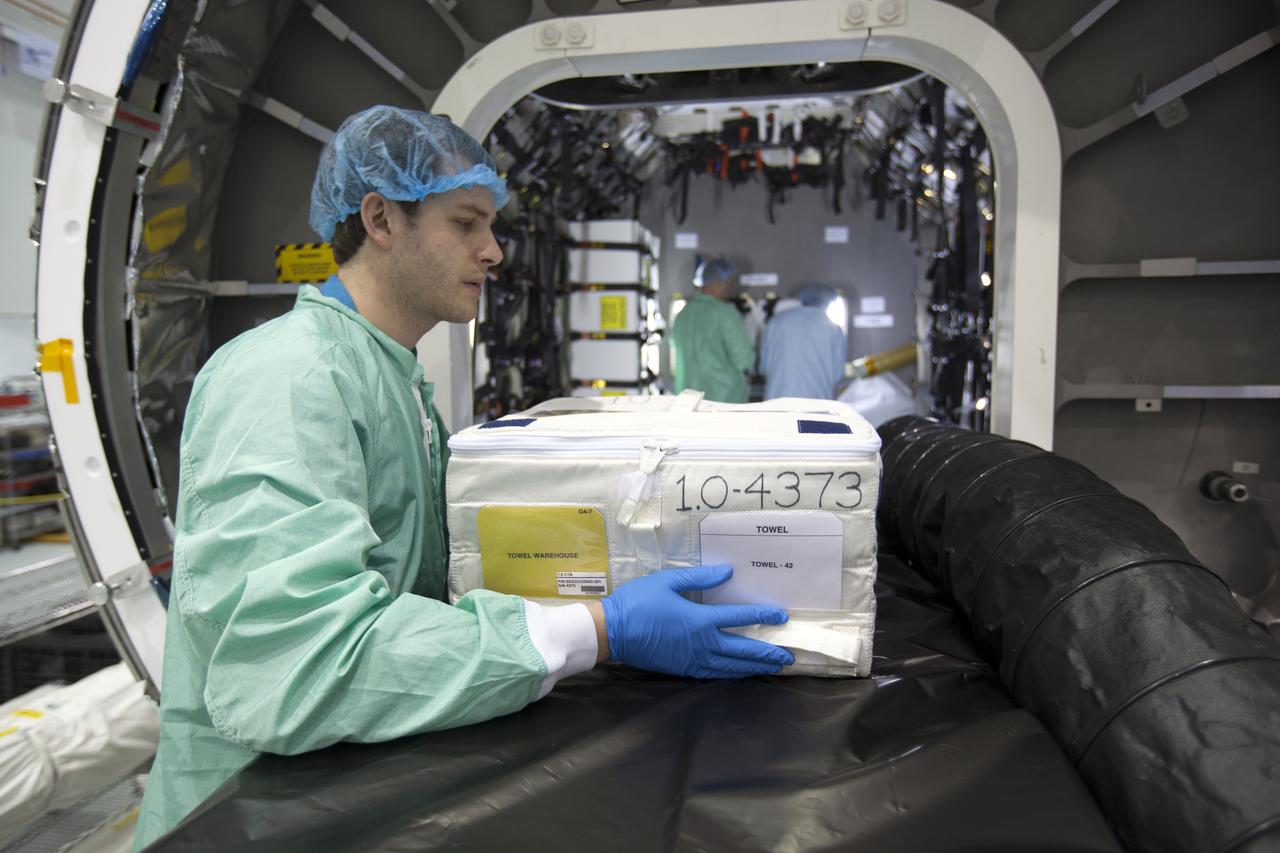
In the Space Station Processing Facility at NASA's Kennedy Space Center in Florida, thousands of pounds of supplies, equipment and scientific research materials are prepared for loading aboard a Cygnus spacecraft's pressurized cargo module (PCM) for the Orbital ATK CRS-7 mission to the International Space Station. Scheduled to launch on March 19, 2017, the commercial resupply services mission will lift off atop a United Launch Alliance Atlas V rocket from Space launch Complex 41 at Cape Canaveral Air Force Station.
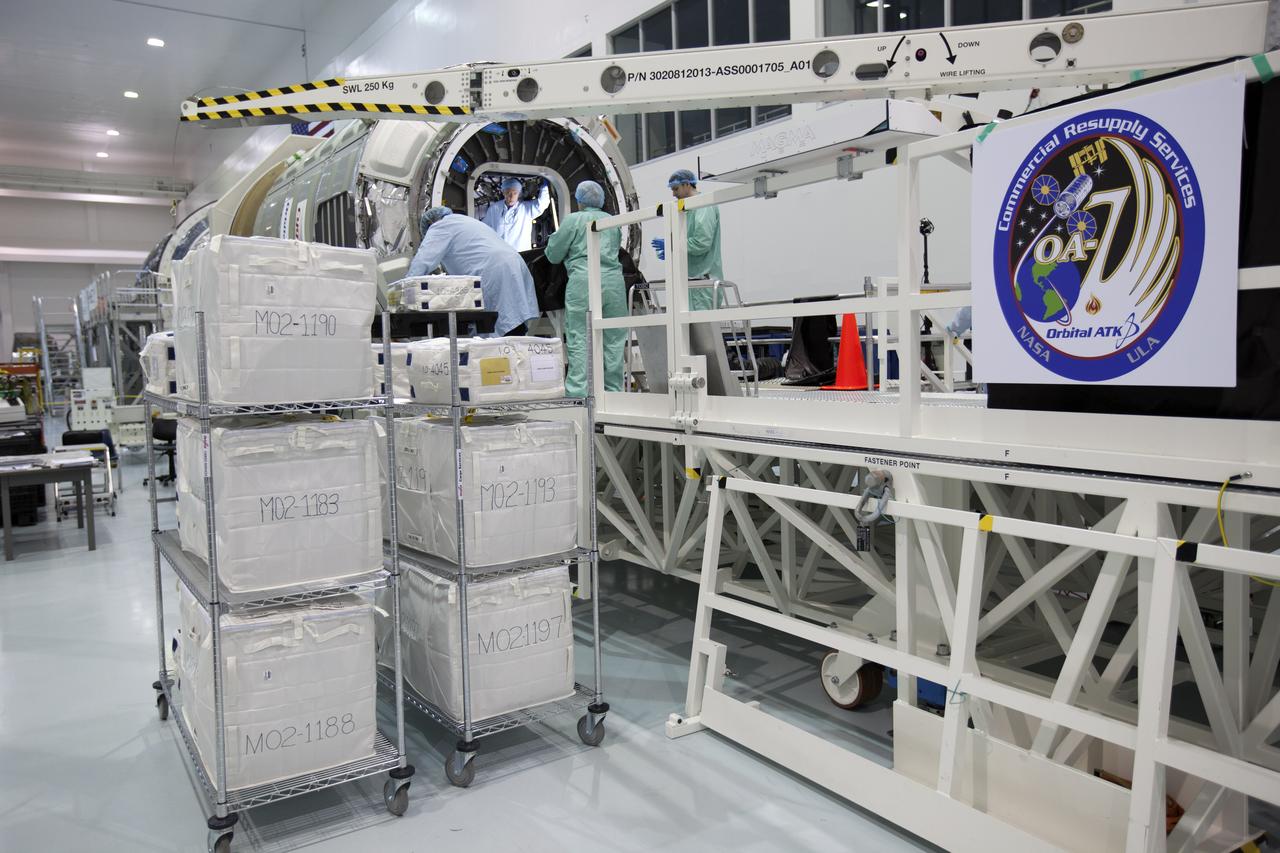
In the Space Station Processing Facility at NASA's Kennedy Space Center in Florida, technicians and engineers load thousands of pounds of supplies, equipment and scientific research materials aboard a Cygnus spacecraft's pressurized cargo module (PCM) for the Orbital ATK CRS-7 mission to the International Space Station. Scheduled to launch on March 19, 2017, the commercial resupply services mission will lift off atop a United Launch Alliance Atlas V rocket from Space launch Complex 41 at Cape Canaveral Air Force Station.
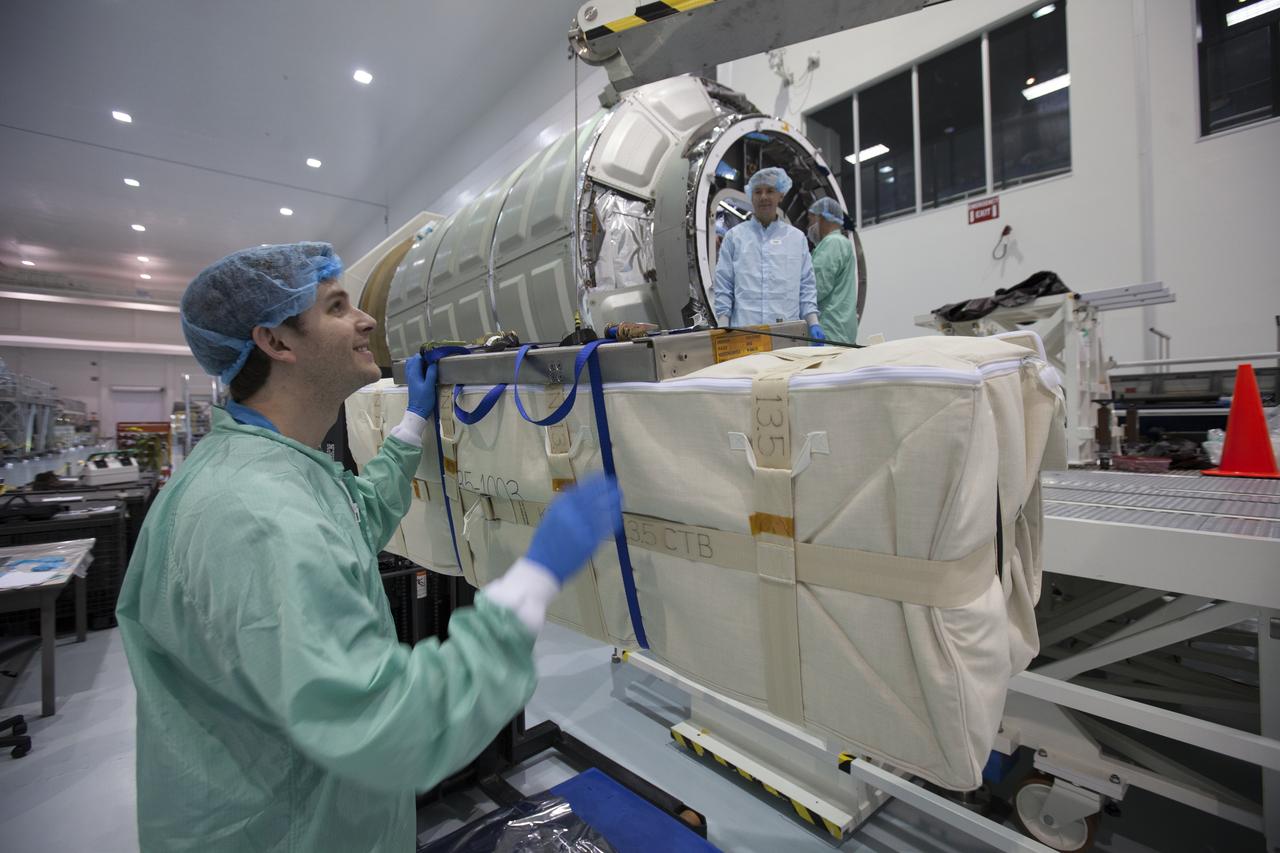
In the Space Station Processing Facility at NASA's Kennedy Space Center in Florida, technicians and engineers load thousands of pounds of supplies, equipment and scientific research materials aboard a Cygnus spacecraft's pressurized cargo module (PCM) for the Orbital ATK CRS-7 mission to the International Space Station. Scheduled to launch on March 19, 2017, the commercial resupply services mission will lift off atop a United Launch Alliance Atlas V rocket from Space launch Complex 41 at Cape Canaveral Air Force Station.
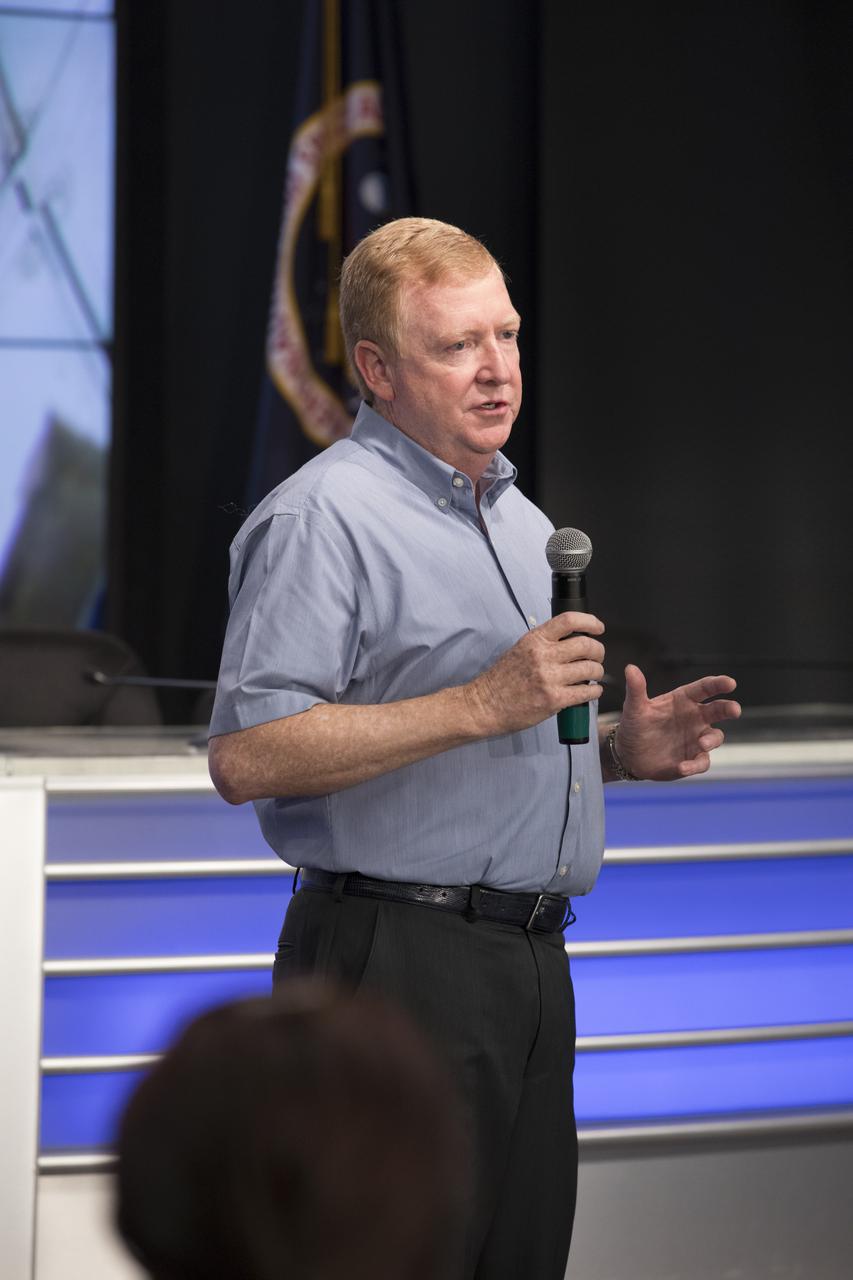
Paul Galloway, program manager for an Earth imaging platform called the Multiple User System for Earth Sensing, or MUSES, speaks to members of social media in the Kennedy Space Center’s Press Site auditorium. The briefing focused on experiments and instruments to be delivered to the International Space Station on SpaceX CRS-11. A Dragon spacecraft is scheduled to be launched from Kennedy’s Launch Complex 39A on June 1 atop a SpaceX Falcon 9 rocket on the company's 11th Commercial Resupply Services mission to the space station.
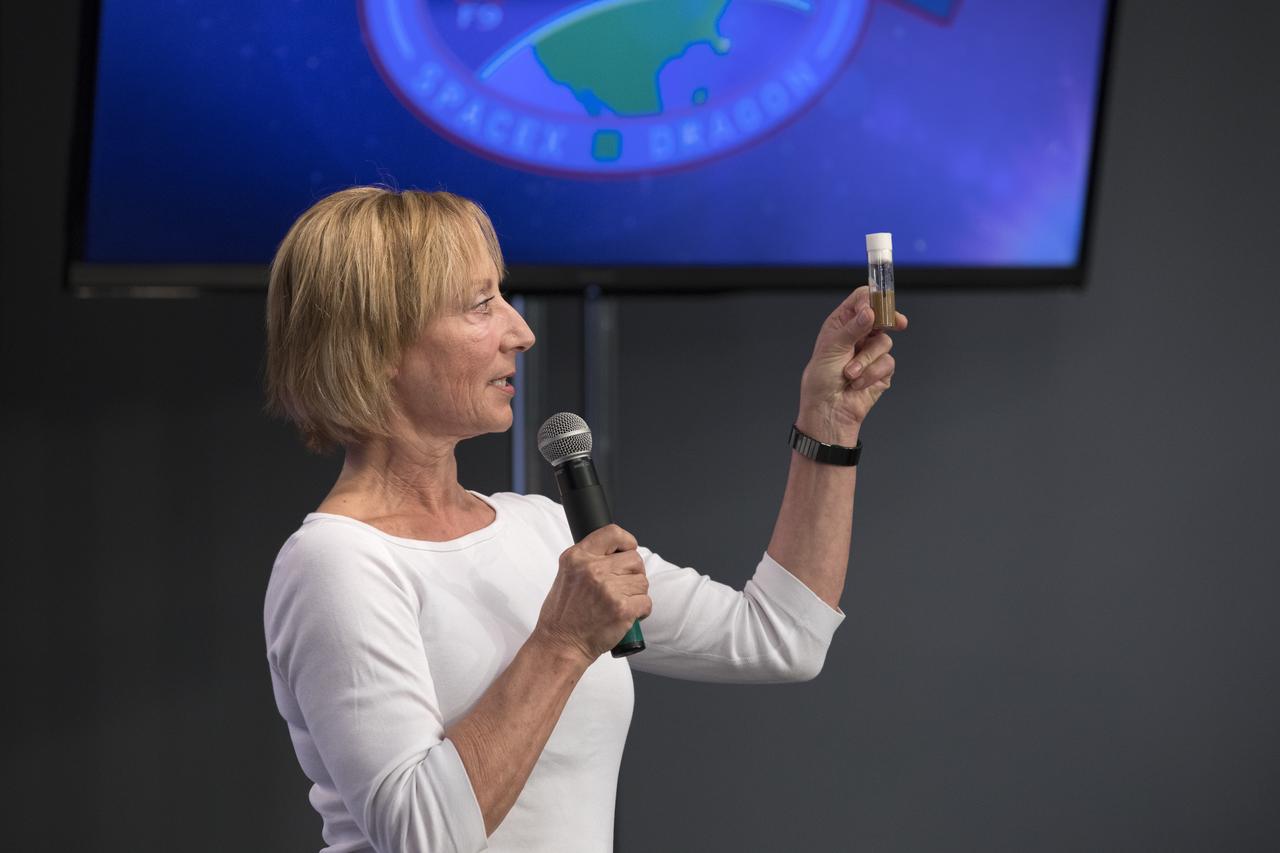
Dr. Karen Ocorr, co-investigator for the Fruit Fly Lab-02, speaks to members of social media in the Kennedy Space Center’s Press Site auditorium. The briefing focused on experiments and instruments to be delivered to the International Space Station on SpaceX CRS-11. A Dragon spacecraft is scheduled to be launched from Kennedy’s Launch Complex 39A on June 1 atop a SpaceX Falcon 9 rocket on the company's 11th Commercial Resupply Services mission to the space station.
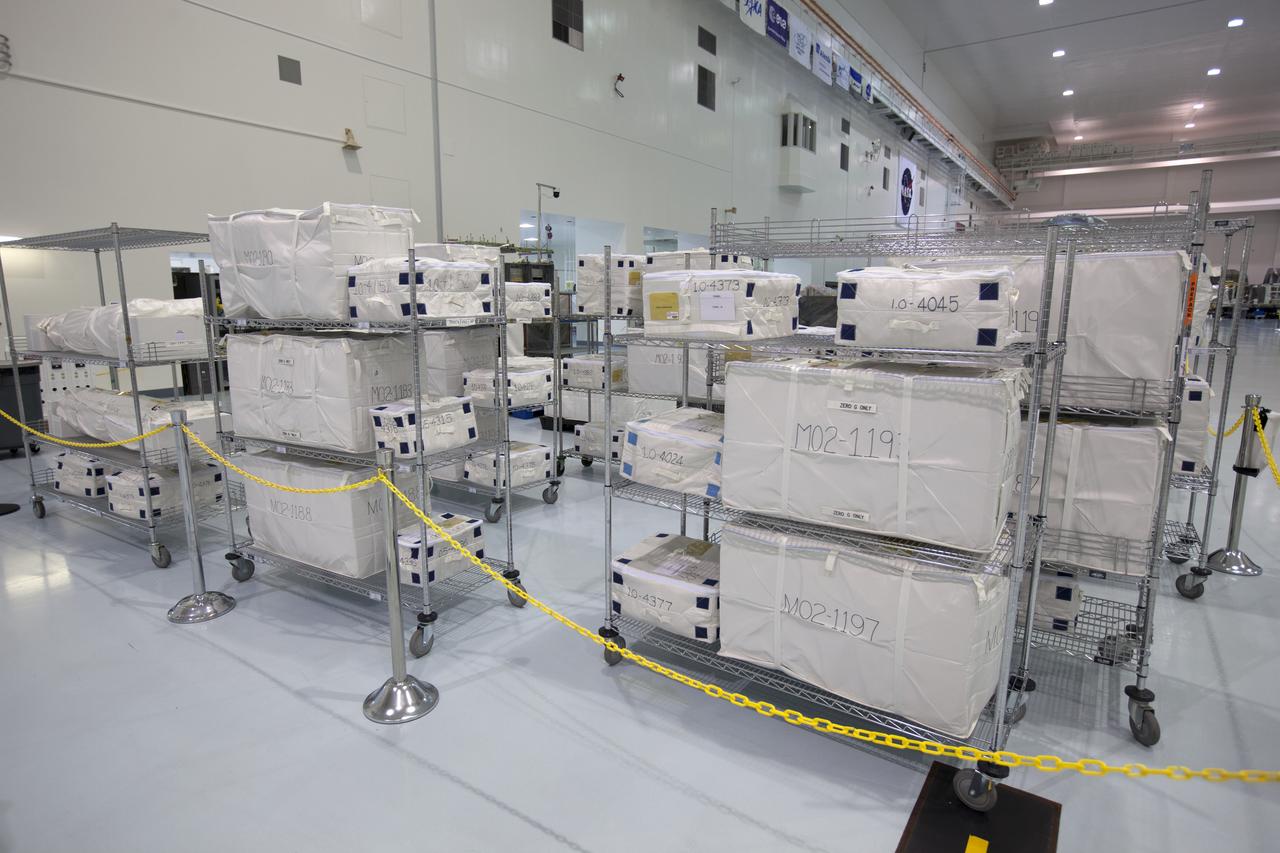
In the Space Station Processing Facility at NASA's Kennedy Space Center in Florida, thousands of pounds of supplies, equipment and scientific research materials are prepared for loading aboard a Cygnus spacecraft's pressurized cargo module (PCM) for the Orbital ATK CRS-7 mission to the International Space Station. Scheduled to launch on March 19, 2017, the commercial resupply services mission will lift off atop a United Launch Alliance Atlas V rocket from Space launch Complex 41 at Cape Canaveral Air Force Station.
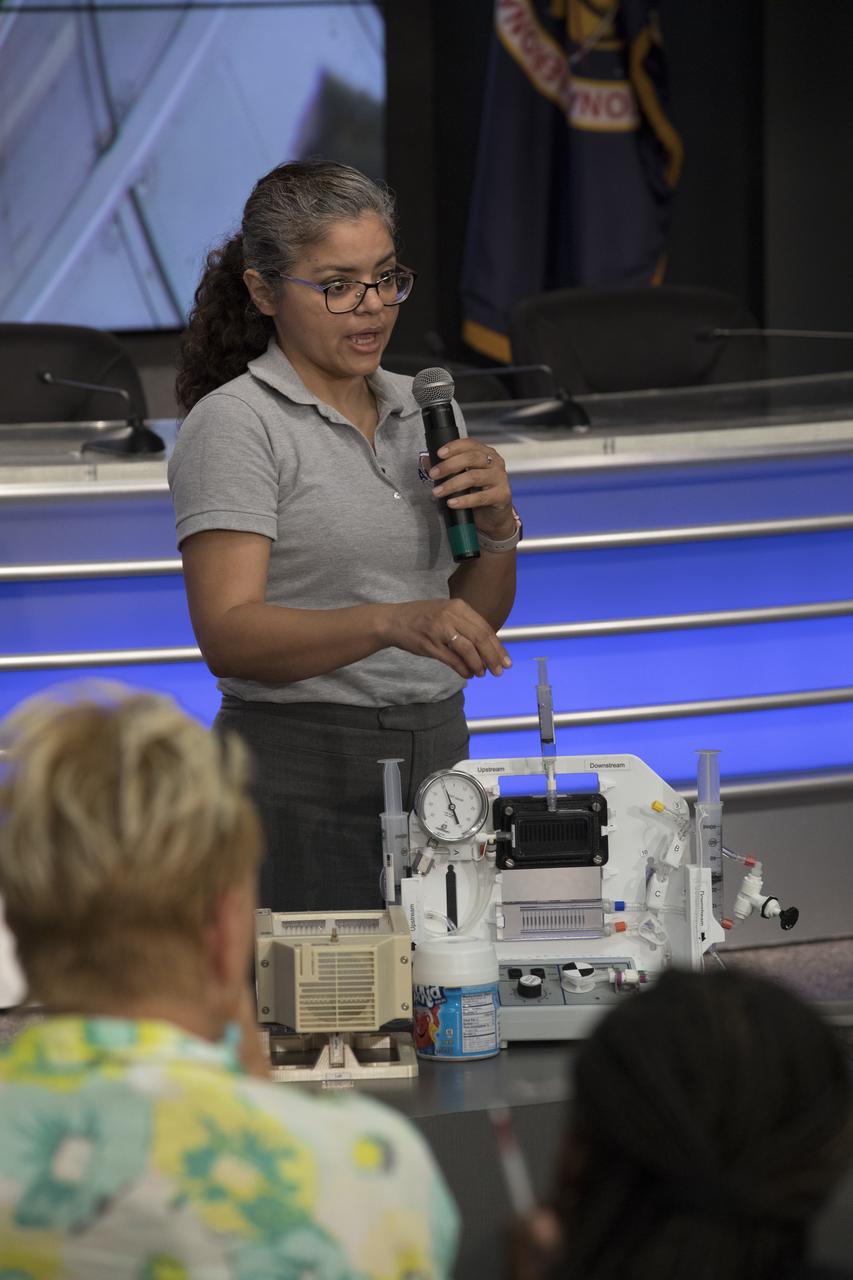
Miriam Sargusingh, project lead for the Capillary Structures for Exploration Life Support, or CSELS, experiment, speaks to members of social media in the Kennedy Space Center’s Press Site auditorium. The briefing focused on experiments and instruments to be delivered to the International Space Station on SpaceX CRS-11. A Dragon spacecraft is scheduled to be launched from Kennedy’s Launch Complex 39A on June 1 atop a SpaceX Falcon 9 rocket on the company's 11th Commercial Resupply Services mission to the space station.
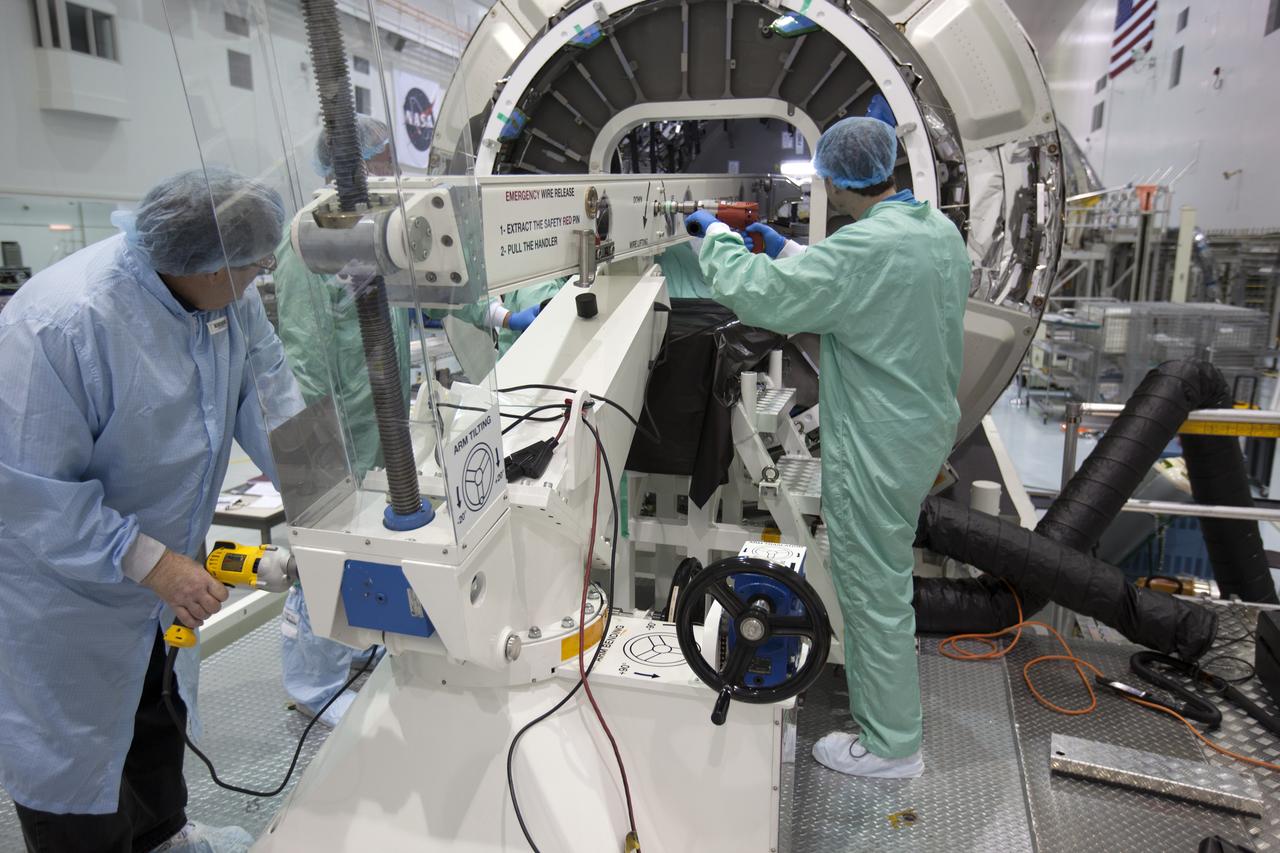
In the Space Station Processing Facility at NASA's Kennedy Space Center in Florida, technicians and engineers load thousands of pounds of supplies, equipment and scientific research materials aboard a Cygnus spacecraft's pressurized cargo module (PCM) for the Orbital ATK CRS-7 mission to the International Space Station. Scheduled to launch on March 19, 2017, the commercial resupply services mission will lift off atop a United Launch Alliance Atlas V rocket from Space launch Complex 41 at Cape Canaveral Air Force Station.
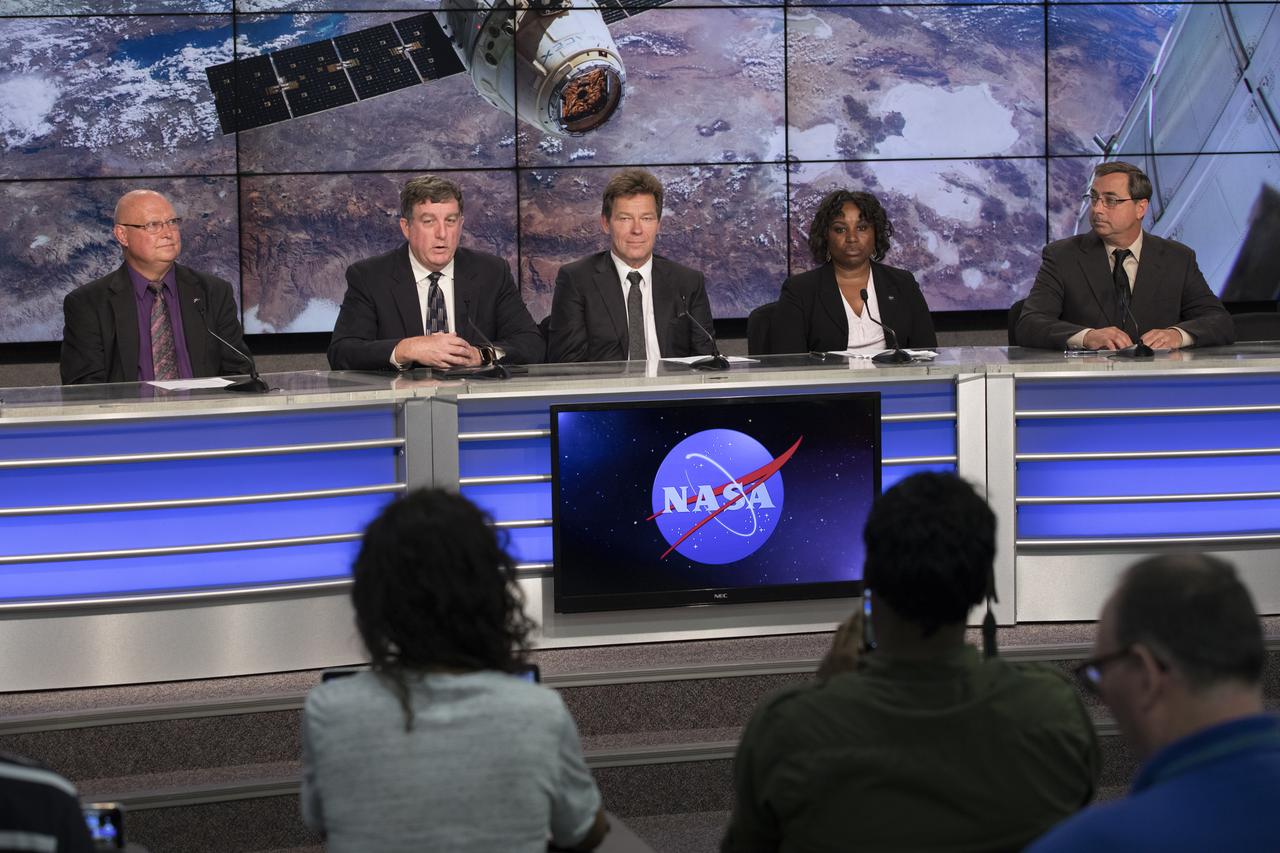
In the Kennedy Space Center’s Press Site auditorium, agency and industry leaders speak to members of the media during a prelaunch news conference for the SpaceX CRS-11 commercial resupply services mission to the International Space Station. From left are: Mike Curie of NASA Communications, Kirk Shireman, NASA's International Space Station Program manager, Hans Koenigsmann, vice president of Flight Reliability for SpaceX, Camille Alleyne, associate program scientist for the International Space Station at NASA’s Johnson Space Center, and Mike McAleenan, launch weather officer for the U.S. Air Force 45th Weather Squadron. A Dragon spacecraft is scheduled to be launched from Kennedy’s Launch Complex 39A on June 1 atop a SpaceX Falcon 9 rocket on the company's 11th Commercial Resupply Services mission to the space station.
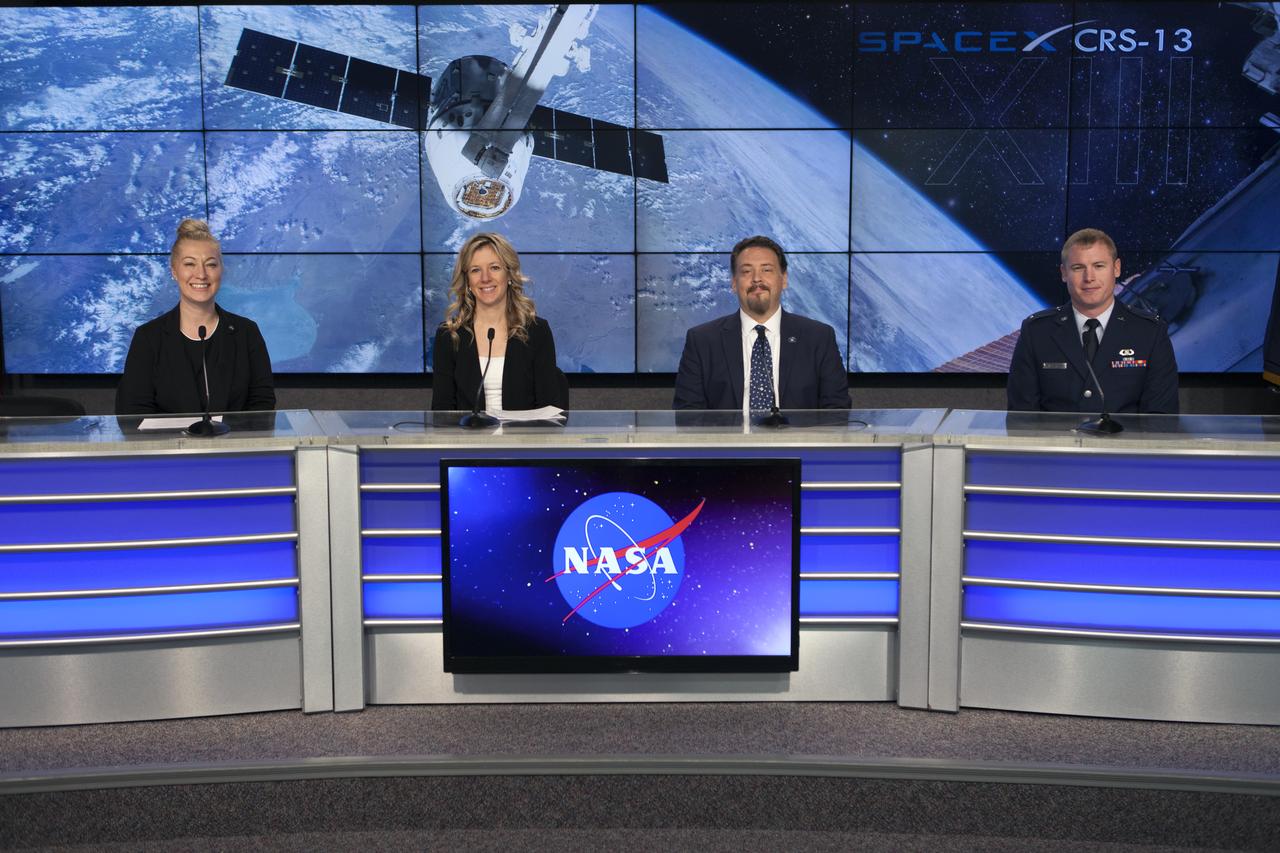
In the Kennedy Space Center’s Press Site auditorium, NASA and industry leaders speak to members of the media during a prelaunch news conference for the SpaceX CRS-13 commercial resupply services mission to the International Space Station. From left are: Cheryl Warner of NASA Communications, Jessica Jensen, SpaceX director of Dragon Mission Management, Kirt Costello, deputy chief scientist for the International Space Station Program Science Office at NASA’s Johnson Space Center in Houston, and Lt. David Myers, weather officer for the 45th Weather Squadron. Kirk Shireman, International Space Station Program manager at Johnson, participated by video link. A Dragon spacecraft is scheduled to be launched from Space Launch Complex 40 at Cape Canaveral Air Force Station at 11:46 a.m. EST, on Dec. 12, 2017. The SpaceX Falcon 9 rocket will lift off on the company's 13th Commercial Resupply Services mission to the space station.
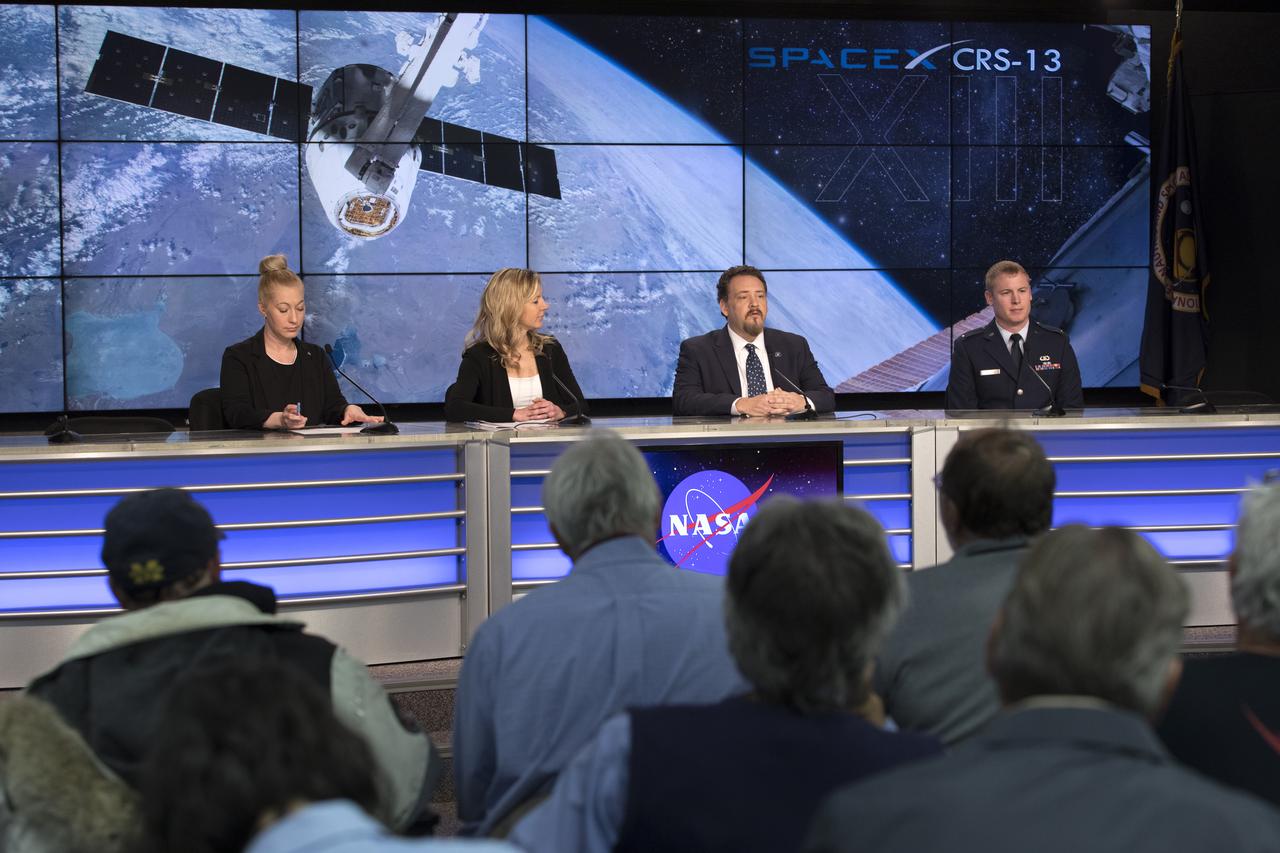
In the Kennedy Space Center’s Press Site auditorium, NASA and industry leaders speak to members of the media during a prelaunch news conference for the SpaceX CRS-13 commercial resupply services mission to the International Space Station. From left are: Cheryl Warner of NASA Communications, Jessica Jensen, SpaceX director of Dragon Mission Management, Kirt Costello, deputy chief scientist for the International Space Station Program Science Office at NASA’s Johnson Space Center in Houston, and Lt. David Myers, weather officer for the 45th Weather Squadron. Kirk Shireman, International Space Station Program manager at Johnson, participated by video link. A Dragon spacecraft is scheduled to be launched from Space Launch Complex 40 at Cape Canaveral Air Force Station at 11:46 a.m. EST, on Dec. 12, 2017. The SpaceX Falcon 9 rocket will lift off on the company's 13th Commercial Resupply Services mission to the space station.
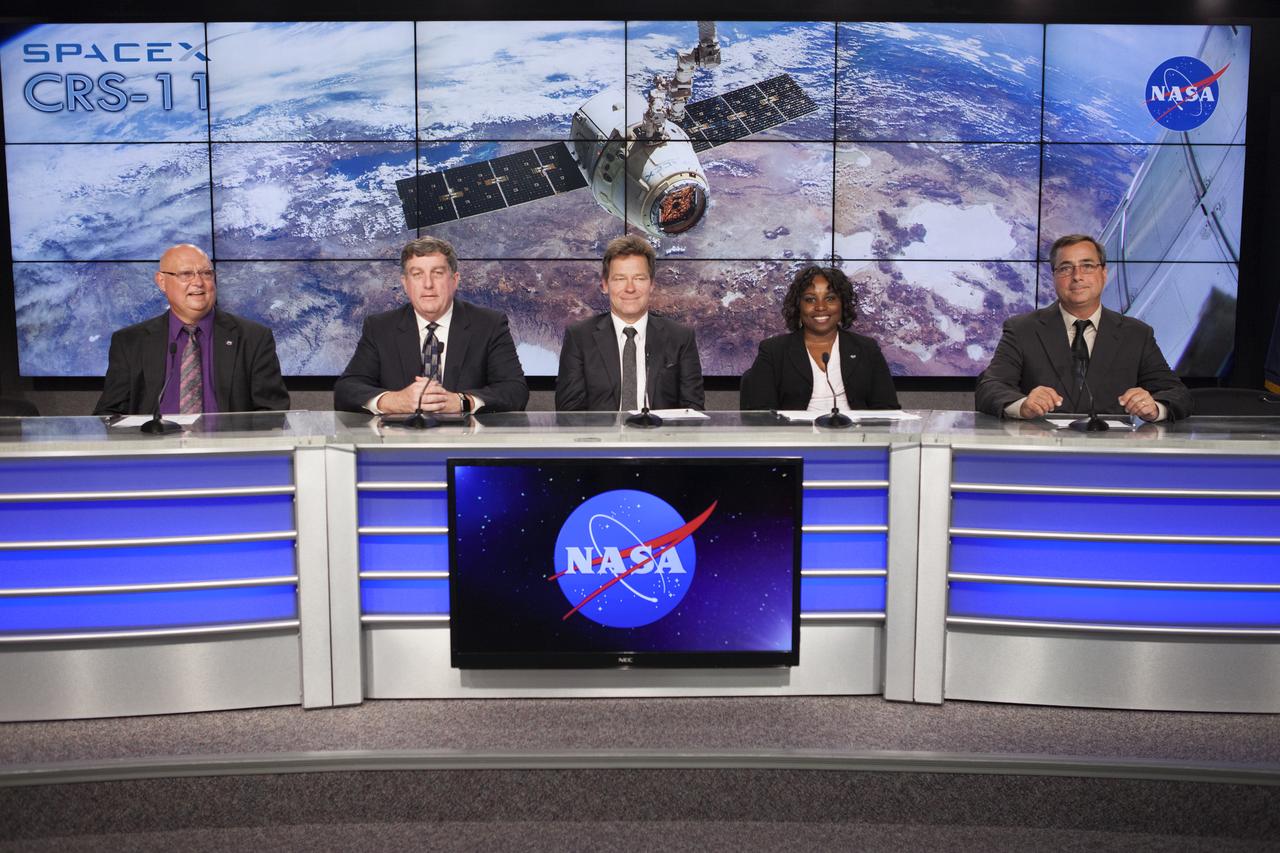
In the Kennedy Space Center’s Press Site auditorium, agency and industry leaders speak to members of the media during a prelaunch news conference for the SpaceX CRS-11 commercial resupply services mission to the International Space Station. From left are: Mike Curie of NASA Communications, Kirk Shireman, NASA's International Space Station Program manager, Hans Koenigsmann, vice president of Flight Reliability for SpaceX, Camille Alleyne, associate program scientist for the International Space Station at NASA’s Johnson Space Center, and Mike McAleenan, launch weather officer for the U.S. Air Force 45th Weather Squadron. A Dragon spacecraft is scheduled to be launched from Kennedy’s Launch Complex 39A on June 1 atop a SpaceX Falcon 9 rocket on the company's 11th Commercial Resupply Services mission to the space station.
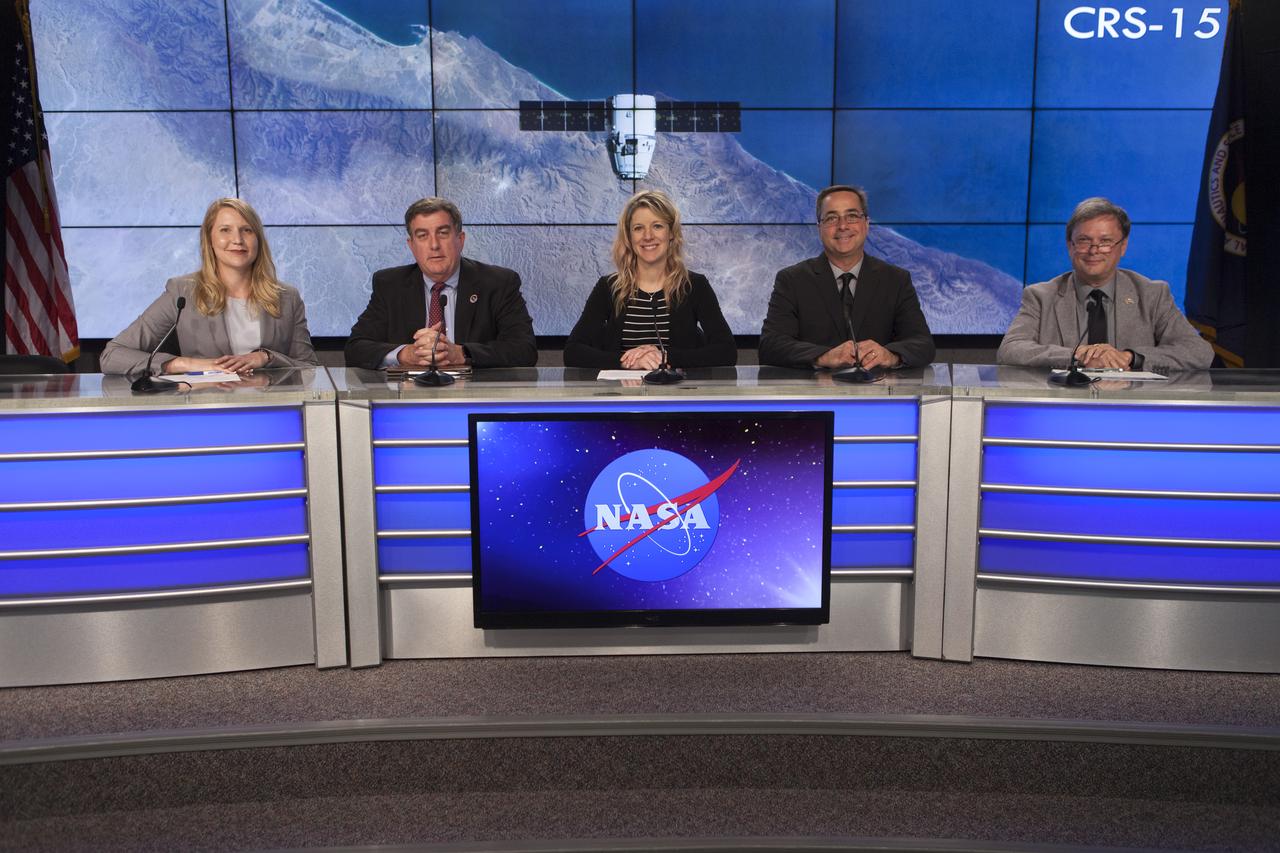
In the Kennedy Space Center’s Press Site auditorium, agency and industry leaders speak to members of the media during a prelaunch news conference for the SpaceX CRS-15 Commercial Resupply Services mission to the International Space Station. From left are: Stephanie Schierholz of NASA Communications,Kirk Shireman, NASA manager of the International Space Station Program, Jessica Jensen, director of Dragon Mission Management for SpaceX, Mike McAleenan, launch weather officer for the U.S. Air Force 45th Weather Squadron at Cape Canaveral Air Force Station, and David Brady, assistant program scientist for the International Space Station Program. A SpaceX Dragon spacecraft is scheduled to be launched from Space Launch Complex 40 at Cape Canaveral Air Force Station. The SpaceX Falcon 9 rocket will lift off on the company's 15th Commercial Resupply Services mission to the space station.
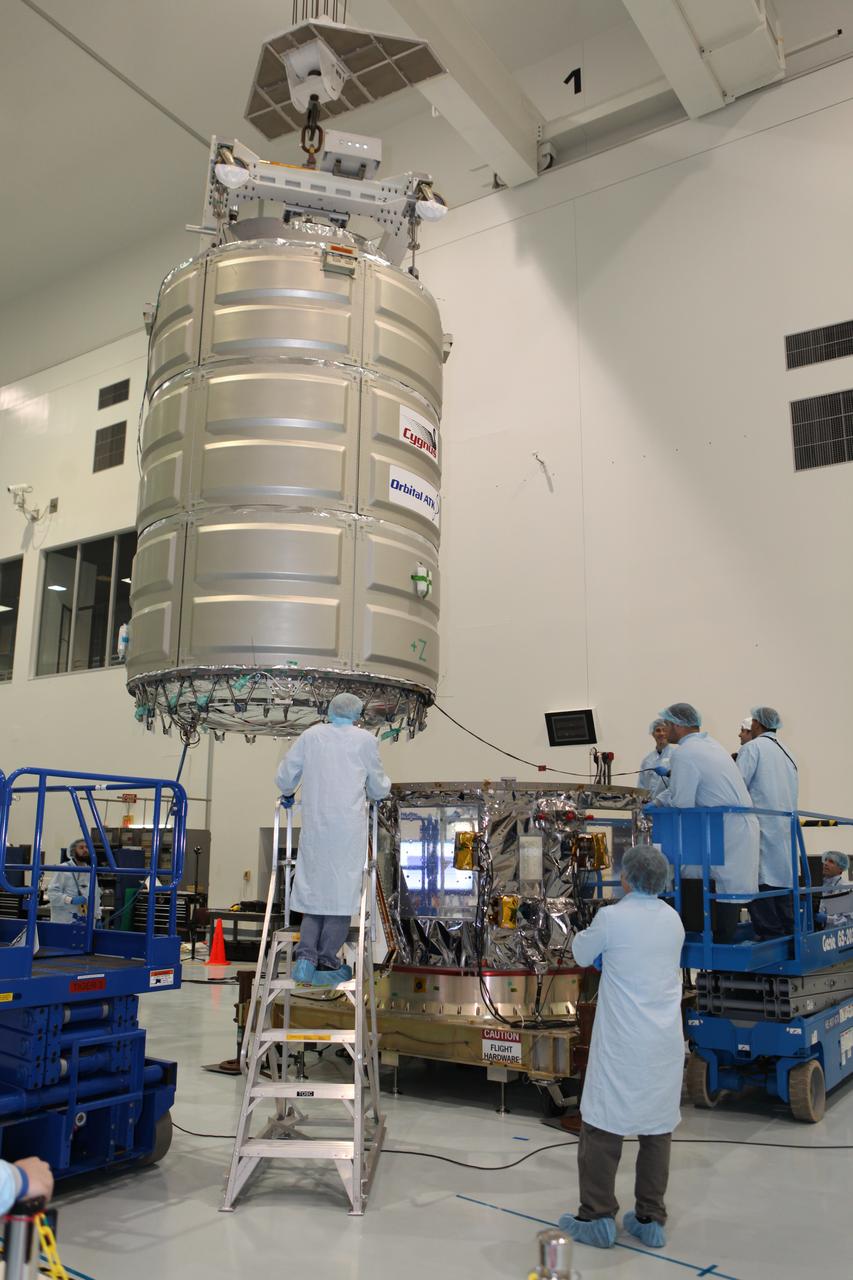
In the Space Station Processing Facility at NASA's Kennedy Space Center in Florida, technicians and engineers use a crane to move a Cygnus spacecraft's pressurized cargo module for mating to its service module. Cygnus is being prepared to deliver thousands of pounds of supplies, equipment and scientific research materials on the Orbital ATK CRS-7 mission to the International Space Station. Scheduled to launch on March 19, 2017, the commercial resupply services mission will lift off atop a United Launch Alliance Atlas V rocket from Space launch Complex 41 at Cape Canaveral Air Force Station.
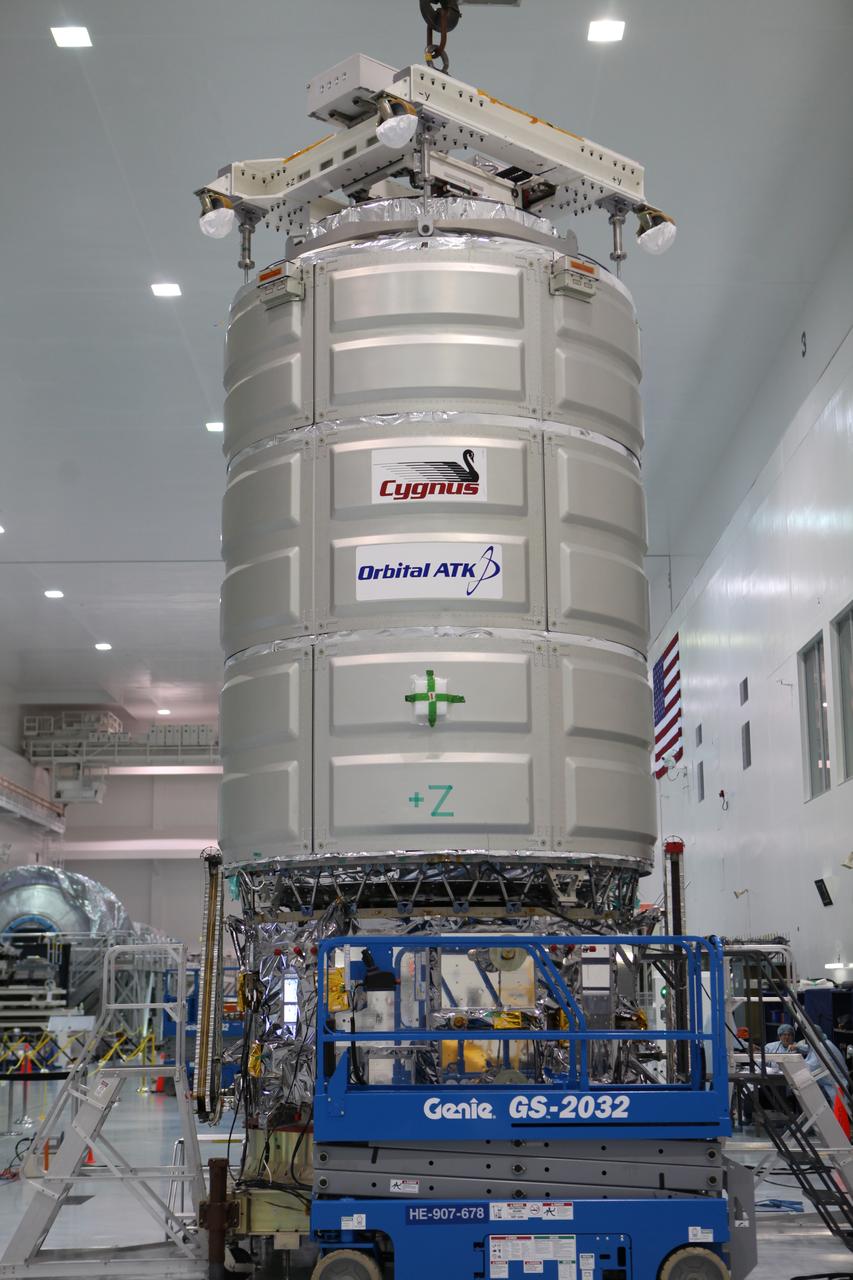
In the Space Station Processing Facility at NASA's Kennedy Space Center in Florida, technicians and engineers test a Cygnus spacecraft after its pressurized cargo module was mated to its service module. Cygnus is being prepared to deliver thousands of pounds of supplies, equipment and scientific research materials on the Orbital ATK CRS-7 mission to the International Space Station. Scheduled to launch on March 19, 2017, the commercial resupply services mission will lift off atop a United Launch Alliance Atlas V rocket from Space launch Complex 41 at Cape Canaveral Air Force Station.
In the Space Station Processing Facility at NASA's Kennedy Space Center in Florida, technicians and engineers use a crane to move a Cygnus spacecraft's pressurized cargo module for mating to its service module. Cygnus is being prepared to deliver thousands of pounds of supplies, equipment and scientific research materials on the Orbital ATK CRS-7 mission to the International Space Station. Scheduled to launch on March 19, 2017, the commercial resupply services mission will lift off atop a United Launch Alliance Atlas V rocket from Space launch Complex 41 at Cape Canaveral Air Force Station.
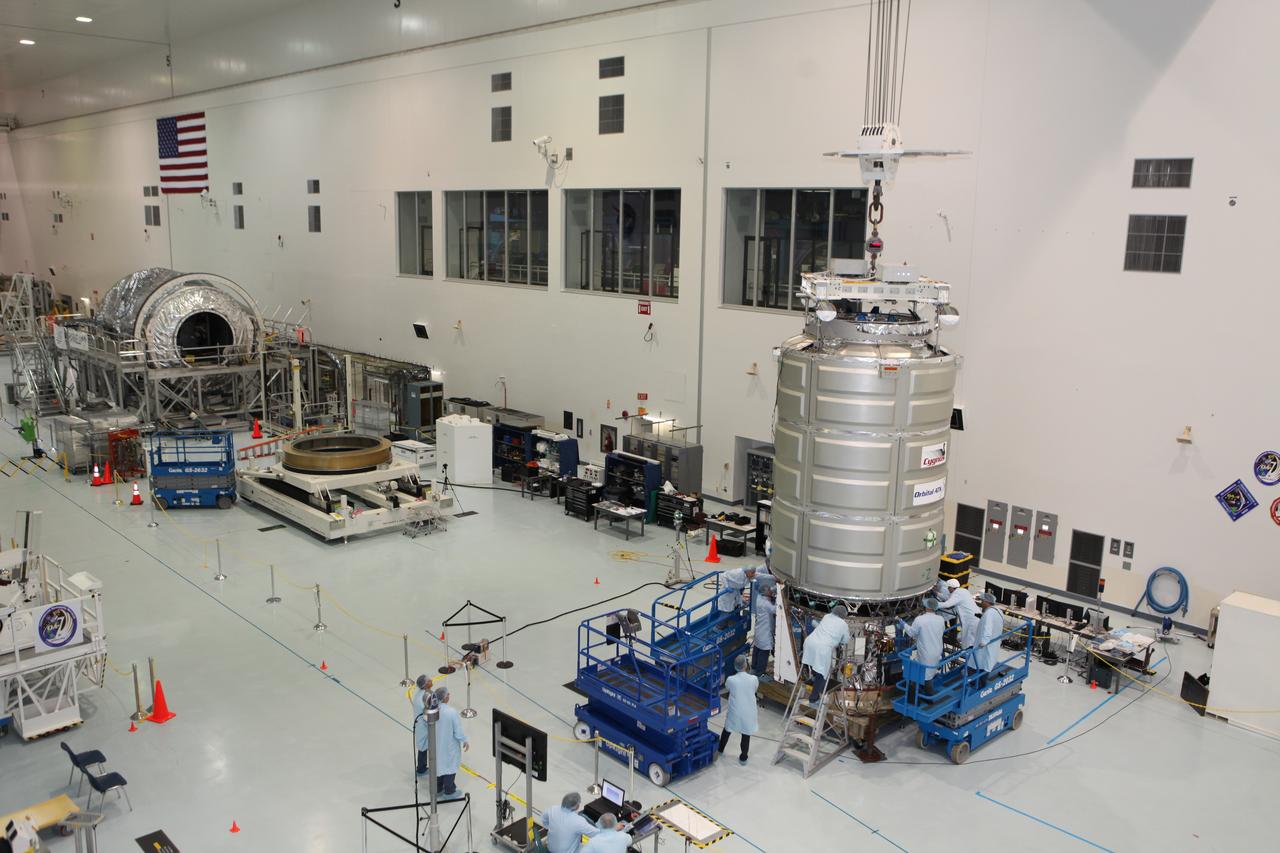
In the Space Station Processing Facility at NASA's Kennedy Space Center in Florida, technicians and engineers mate a Cygnus spacecraft's pressurized cargo module to its service module. Cygnus is being prepared to deliver thousands of pounds of supplies, equipment and scientific research materials on the Orbital ATK CRS-7 mission to the International Space Station. Scheduled to launch on March 19, 2017, the commercial resupply services mission will lift off atop a United Launch Alliance Atlas V rocket from Space launch Complex 41 at Cape Canaveral Air Force Station.
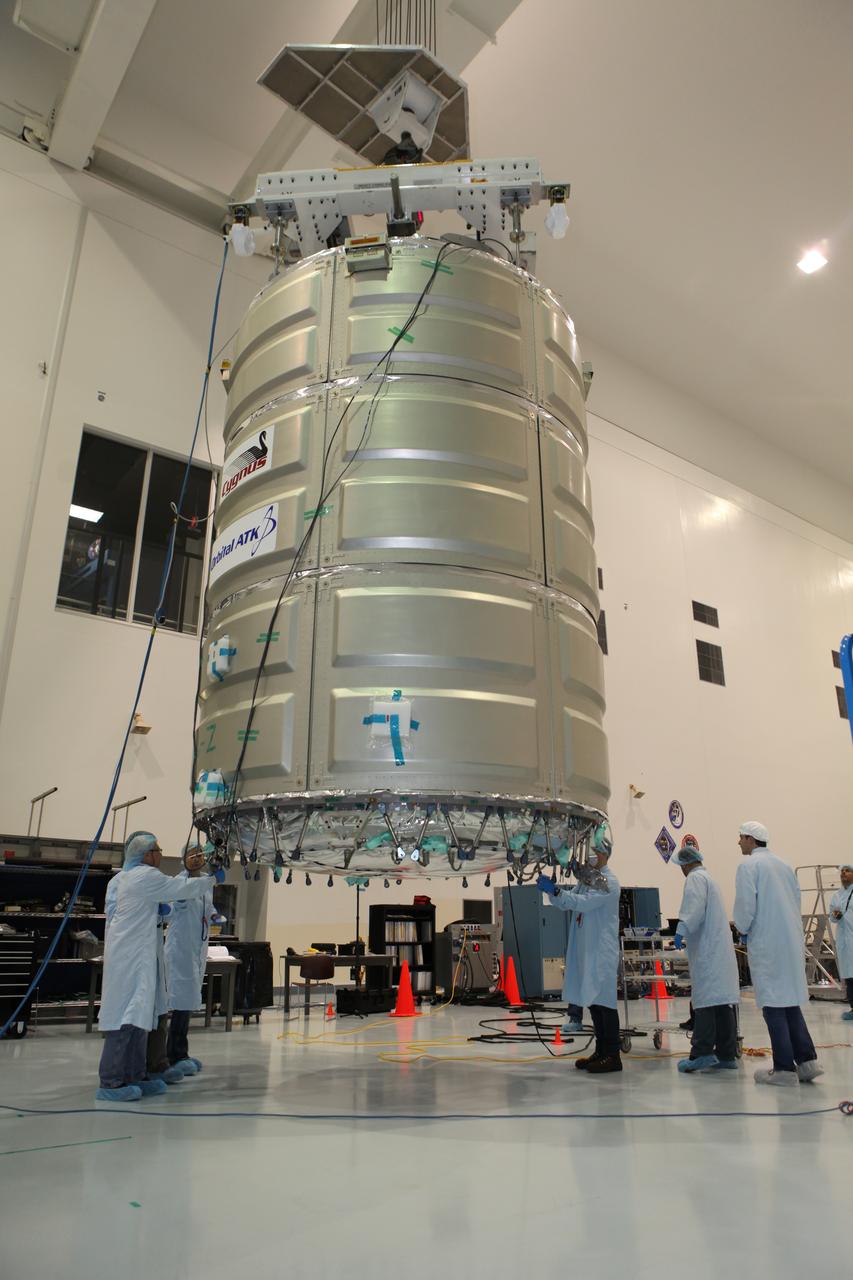
In the Space Station Processing Facility at NASA's Kennedy Space Center in Florida, technicians and engineers use a crane to move a Cygnus spacecraft's pressurized cargo module for mating to its service module. Cygnus is being prepared to deliver thousands of pounds of supplies, equipment and scientific research materials on the Orbital ATK CRS-7 mission to the International Space Station. Scheduled to launch on March 19, 2017, the commercial resupply services mission will lift off atop a United Launch Alliance Atlas V rocket from Space launch Complex 41 at Cape Canaveral Air Force Station.
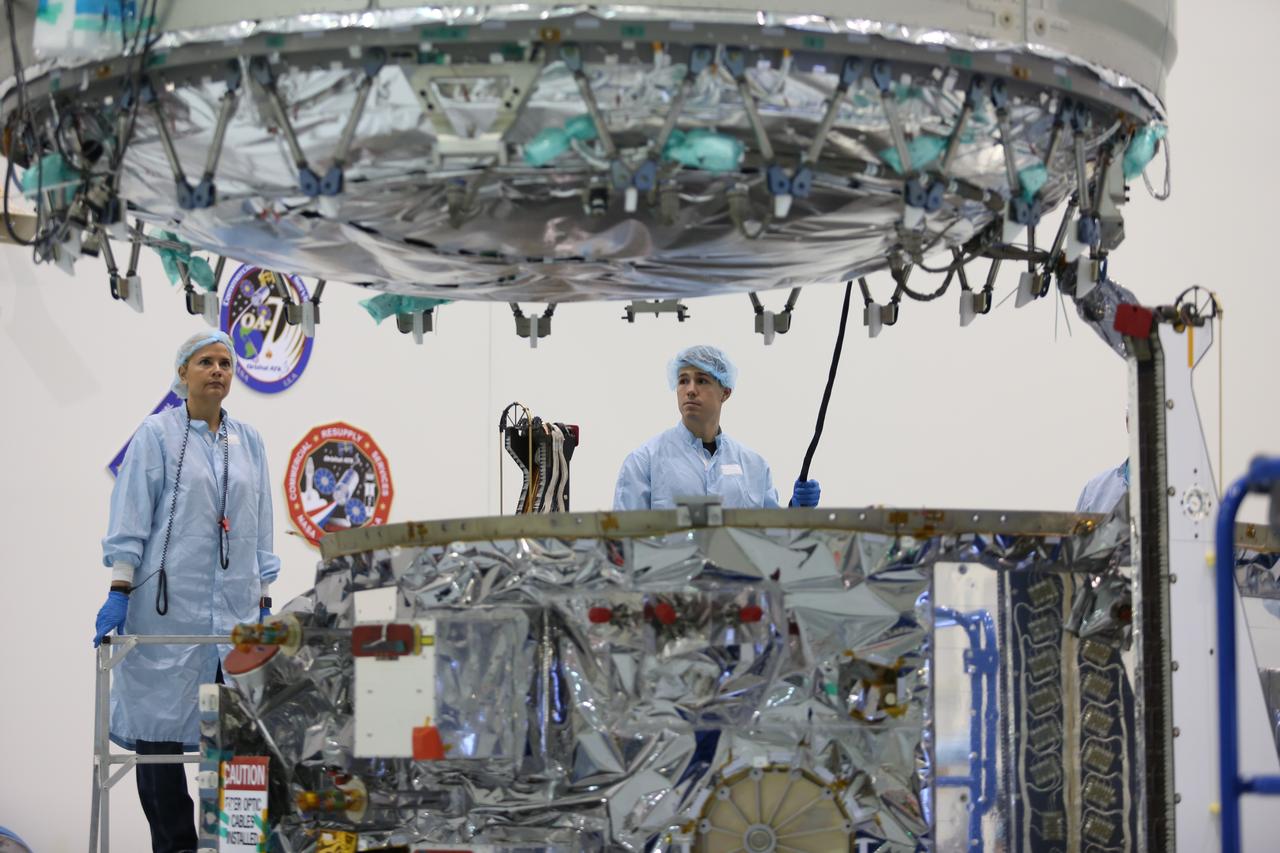
In the Space Station Processing Facility at NASA's Kennedy Space Center in Florida, technicians and engineers prepare a Cygnus spacecraft's pressurized cargo module for mating to its service module. Cygnus is being prepared to deliver thousands of pounds of supplies, equipment and scientific research materials on the Orbital ATK CRS-7 mission to the International Space Station. Scheduled to launch on March 19, 2017, the commercial resupply services mission will lift off atop a United Launch Alliance Atlas V rocket from Space launch Complex 41 at Cape Canaveral Air Force Station.
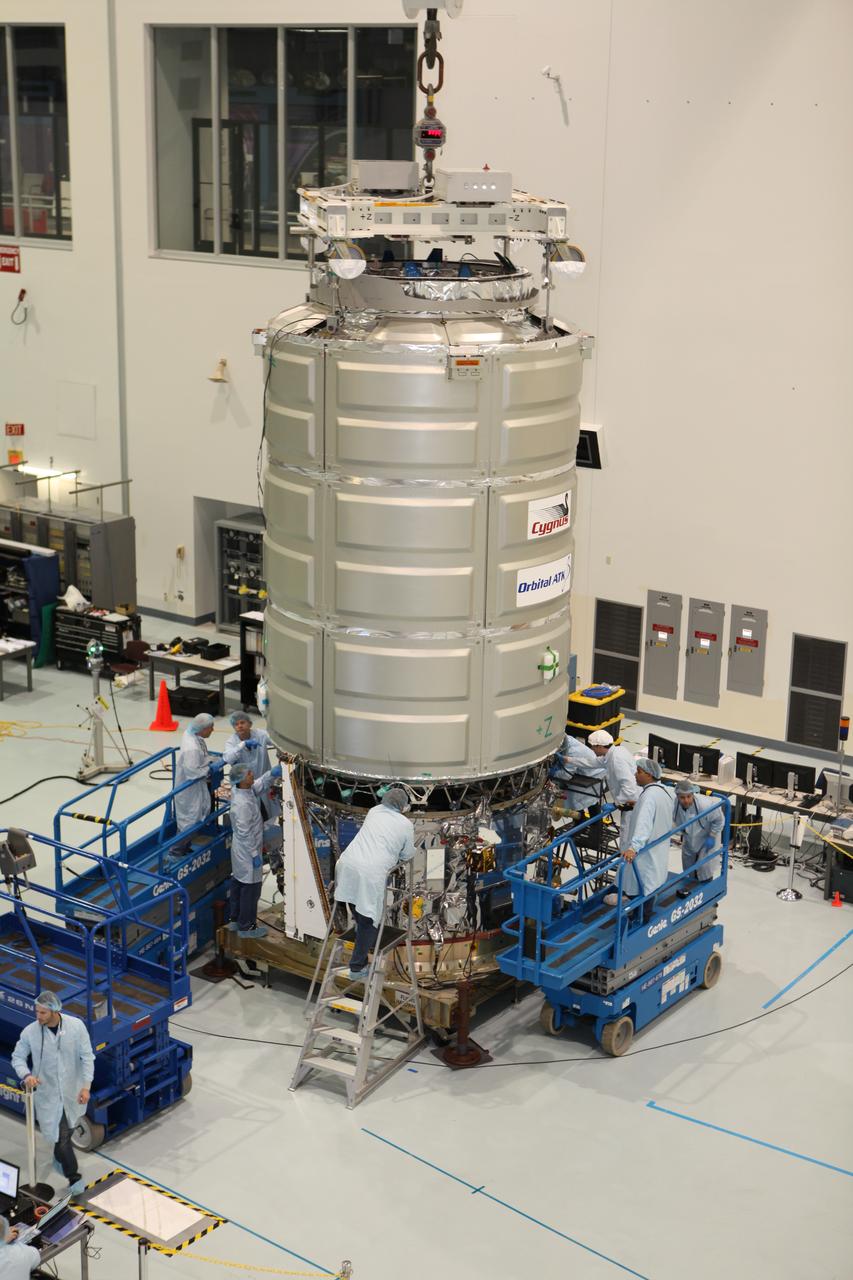
In the Space Station Processing Facility at NASA's Kennedy Space Center in Florida, technicians and engineers mate a Cygnus spacecraft's pressurized cargo module to its service module. Cygnus is being prepared to deliver thousands of pounds of supplies, equipment and scientific research materials on the Orbital ATK CRS-7 mission to the International Space Station. Scheduled to launch on March 19, 2017, the commercial resupply services mission will lift off atop a United Launch Alliance Atlas V rocket from Space launch Complex 41 at Cape Canaveral Air Force Station.
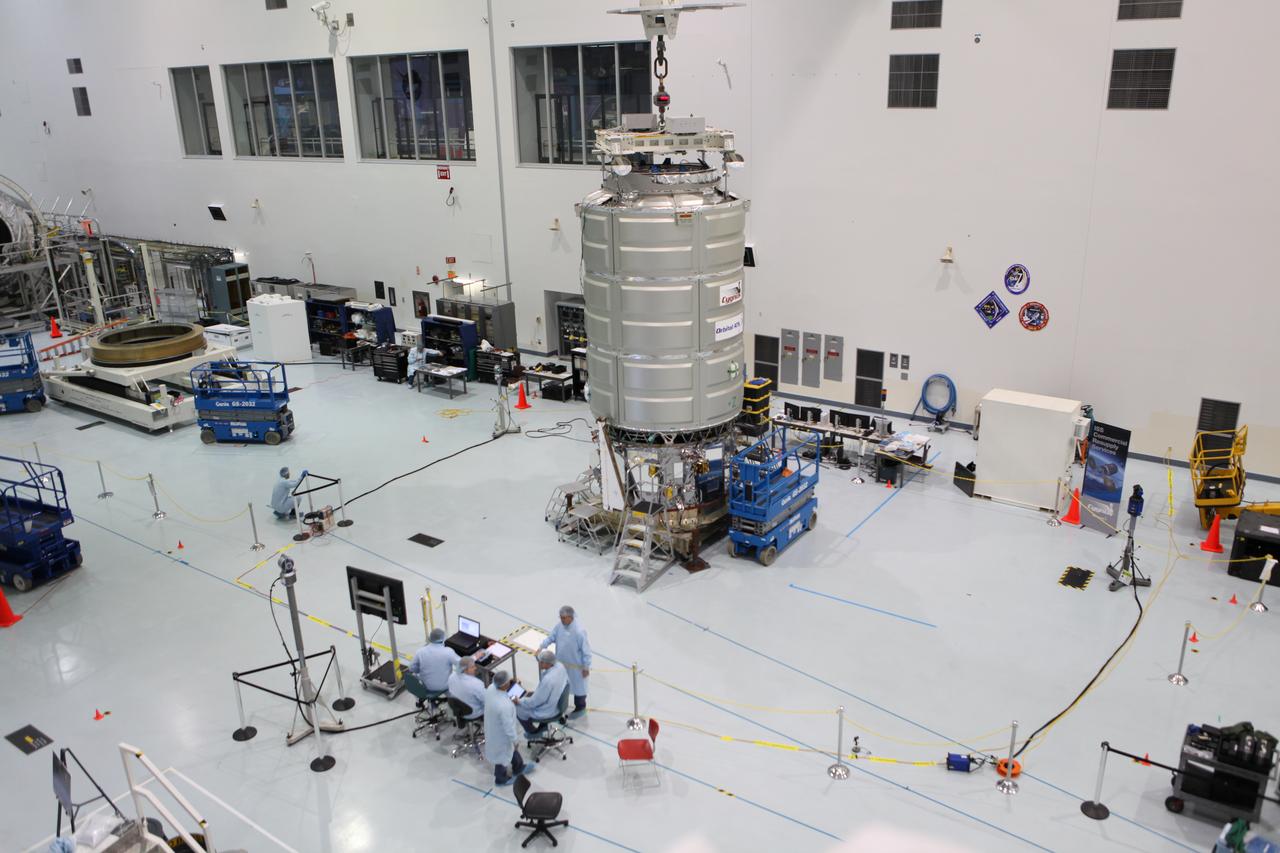
In the Space Station Processing Facility at NASA's Kennedy Space Center in Florida, technicians and engineers test a Cygnus spacecraft after its pressurized cargo module was mated to its service module. Cygnus is being prepared to deliver thousands of pounds of supplies, equipment and scientific research materials on the Orbital ATK CRS-7 mission to the International Space Station. Scheduled to launch on March 19, 2017, the commercial resupply services mission will lift off atop a United Launch Alliance Atlas V rocket from Space launch Complex 41 at Cape Canaveral Air Force Station.
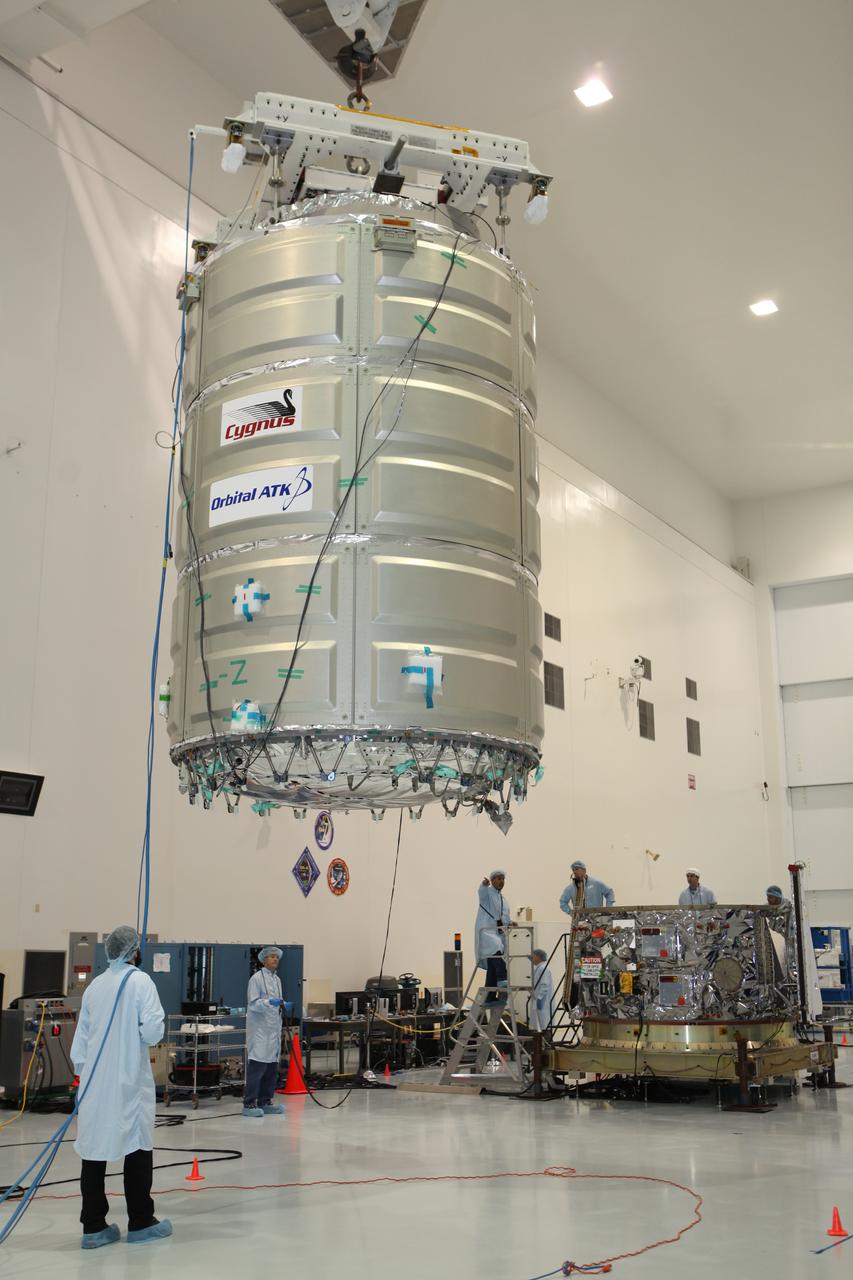
In the Space Station Processing Facility at NASA's Kennedy Space Center in Florida, technicians and engineers use a crane to move a Cygnus spacecraft's pressurized cargo module for mating to its service module. Cygnus is being prepared to deliver thousands of pounds of supplies, equipment and scientific research materials on the Orbital ATK CRS-7 mission to the International Space Station. Scheduled to launch on March 19, 2017, the commercial resupply services mission will lift off atop a United Launch Alliance Atlas V rocket from Space launch Complex 41 at Cape Canaveral Air Force Station.
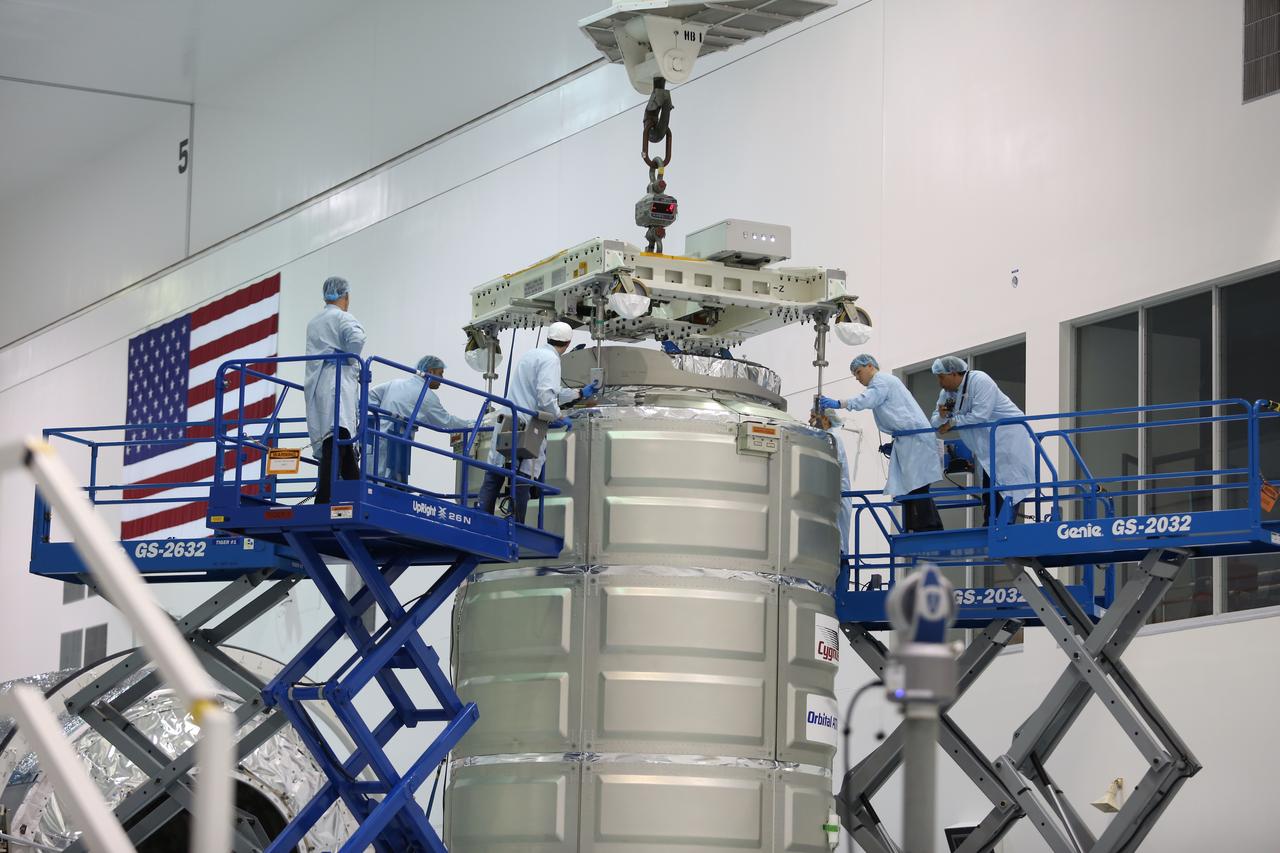
In the Space Station Processing Facility at NASA's Kennedy Space Center in Florida, technicians and engineers prepare a Cygnus spacecraft's pressurized cargo module for mating to its service module. Cygnus is being prepared to deliver thousands of pounds of supplies, equipment and scientific research materials on the Orbital ATK CRS-7 mission to the International Space Station. Scheduled to launch on March 19, 2017, the commercial resupply services mission will lift off atop a United Launch Alliance Atlas V rocket from Space launch Complex 41 at Cape Canaveral Air Force Station.
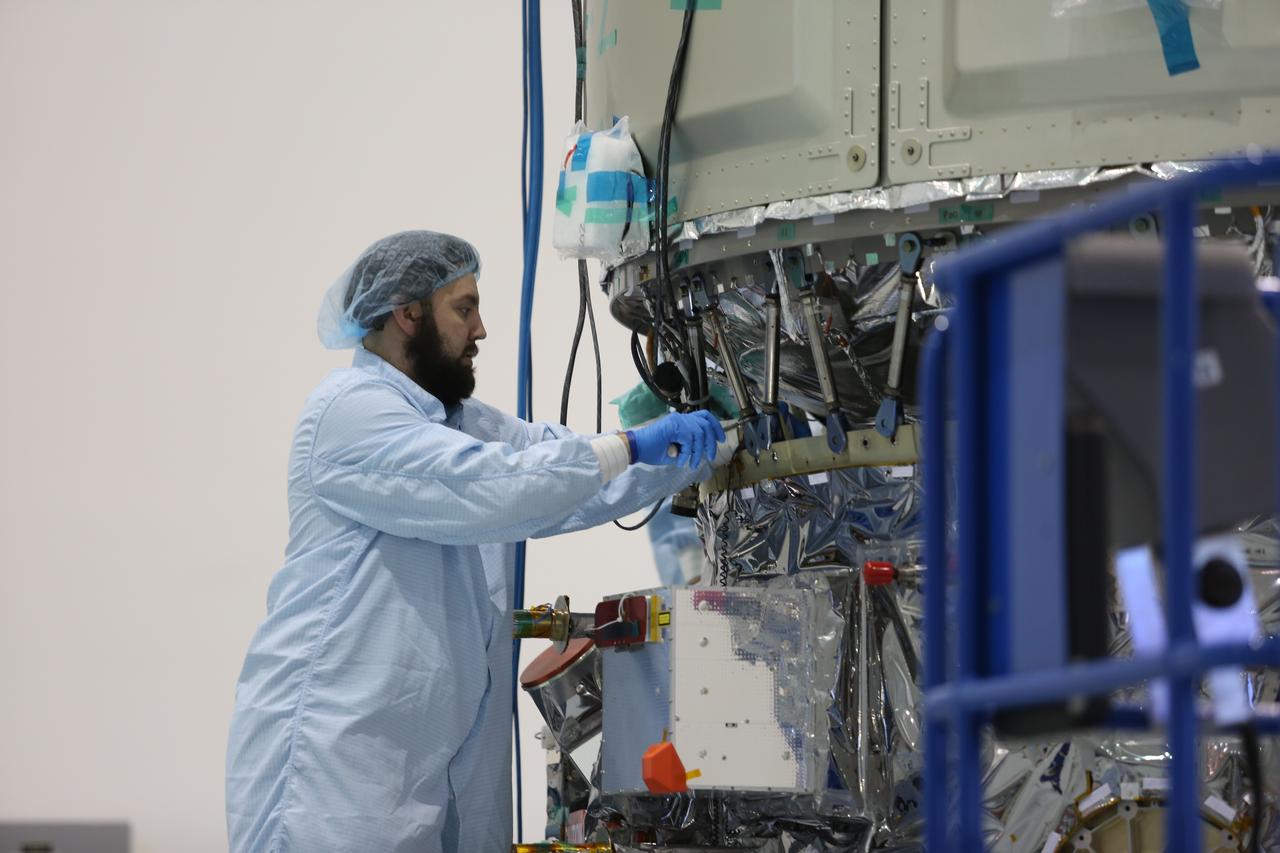
In the Space Station Processing Facility at NASA's Kennedy Space Center in Florida, technicians and engineers prepare a Cygnus spacecraft's pressurized cargo module for mating to its service module. Cygnus is being prepared to deliver thousands of pounds of supplies, equipment and scientific research materials on the Orbital ATK CRS-7 mission to the International Space Station. Scheduled to launch on March 19, 2017, the commercial resupply services mission will lift off atop a United Launch Alliance Atlas V rocket from Space launch Complex 41 at Cape Canaveral Air Force Station.
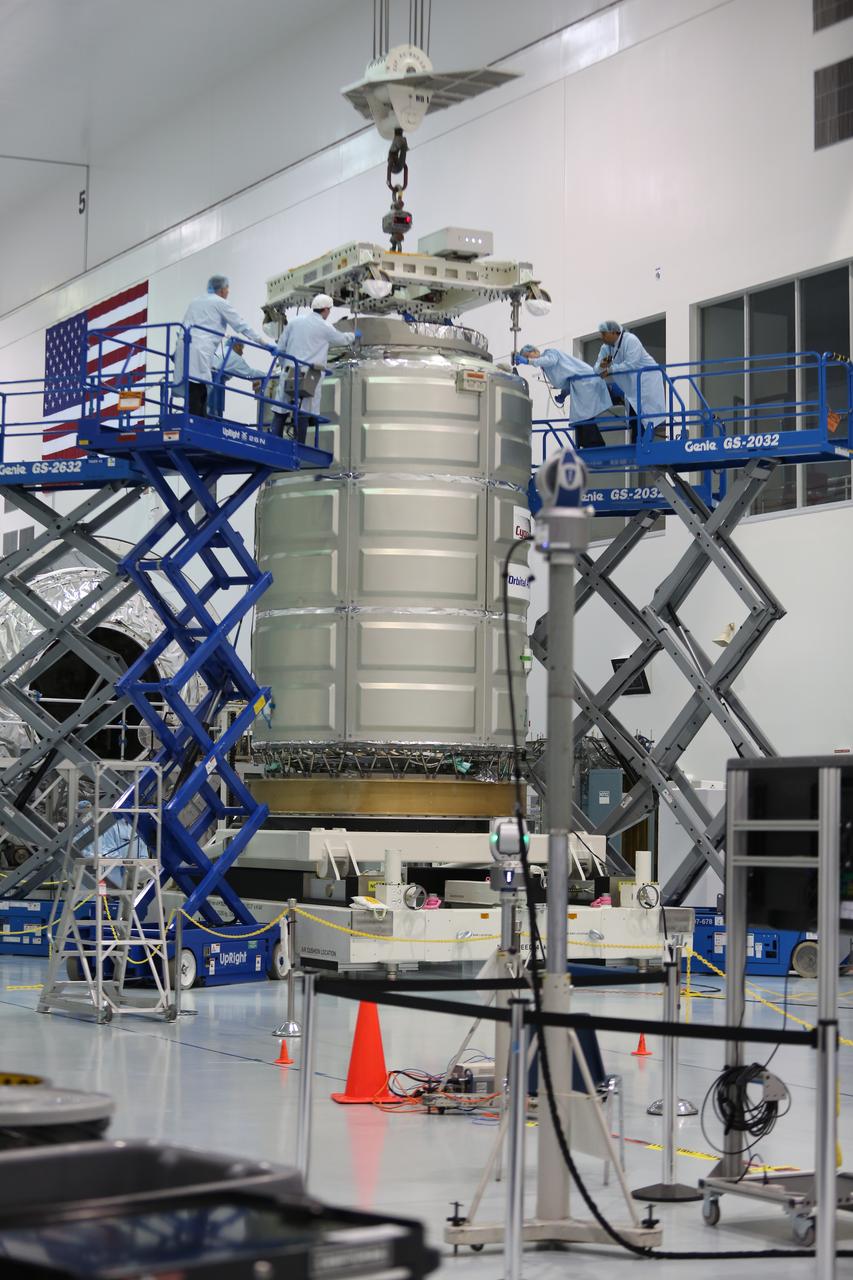
In the Space Station Processing Facility at NASA's Kennedy Space Center in Florida, technicians and engineers prepare a Cygnus spacecraft's pressurized cargo module for mating to its service module. Cygnus is being prepared to deliver thousands of pounds of supplies, equipment and scientific research materials on the Orbital ATK CRS-7 mission to the International Space Station. Scheduled to launch on March 19, 2017, the commercial resupply services mission will lift off atop a United Launch Alliance Atlas V rocket from Space launch Complex 41 at Cape Canaveral Air Force Station.
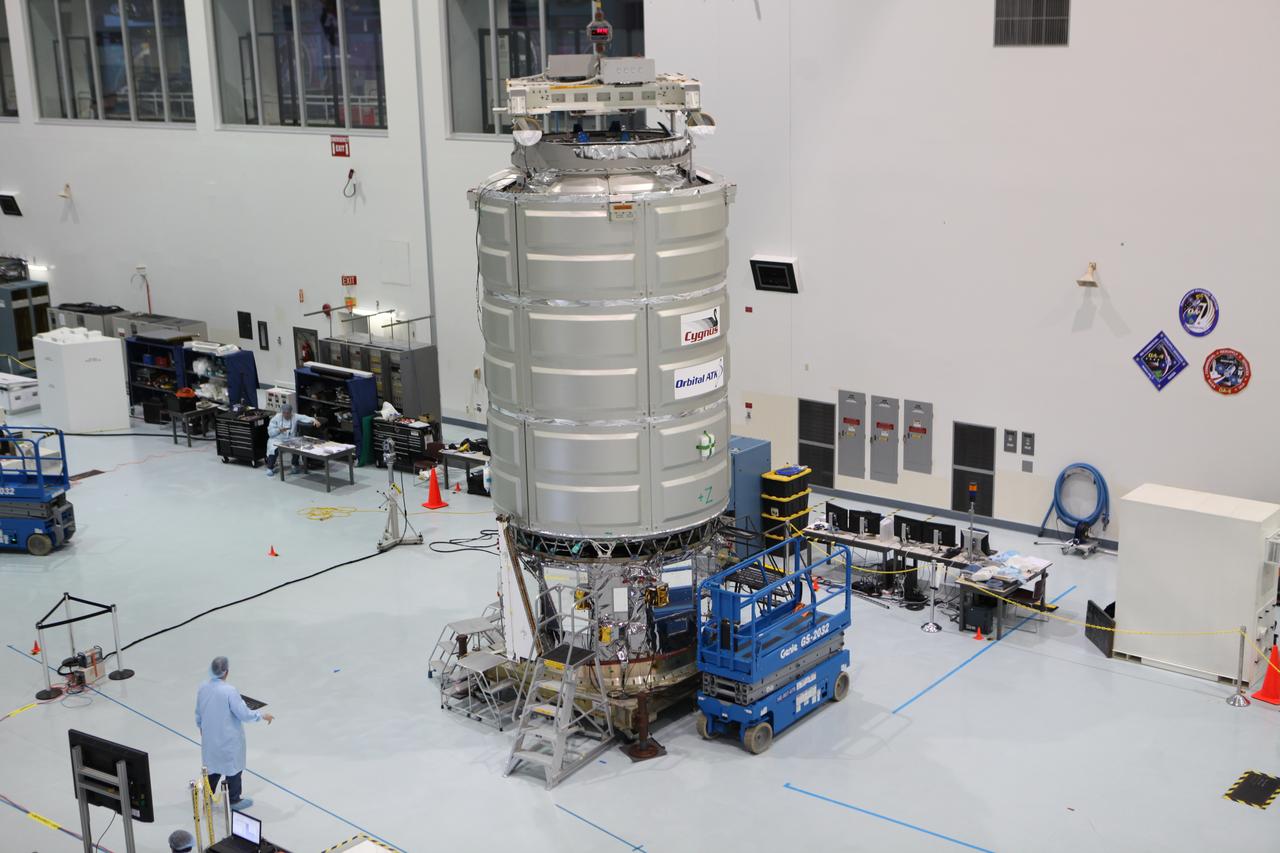
In the Space Station Processing Facility at NASA's Kennedy Space Center in Florida, technicians and engineers test a Cygnus spacecraft after its pressurized cargo module was mated to its service module. Cygnus is being prepared to deliver thousands of pounds of supplies, equipment and scientific research materials on the Orbital ATK CRS-7 mission to the International Space Station. Scheduled to launch on March 19, 2017, the commercial resupply services mission will lift off atop a United Launch Alliance Atlas V rocket from Space launch Complex 41 at Cape Canaveral Air Force Station.
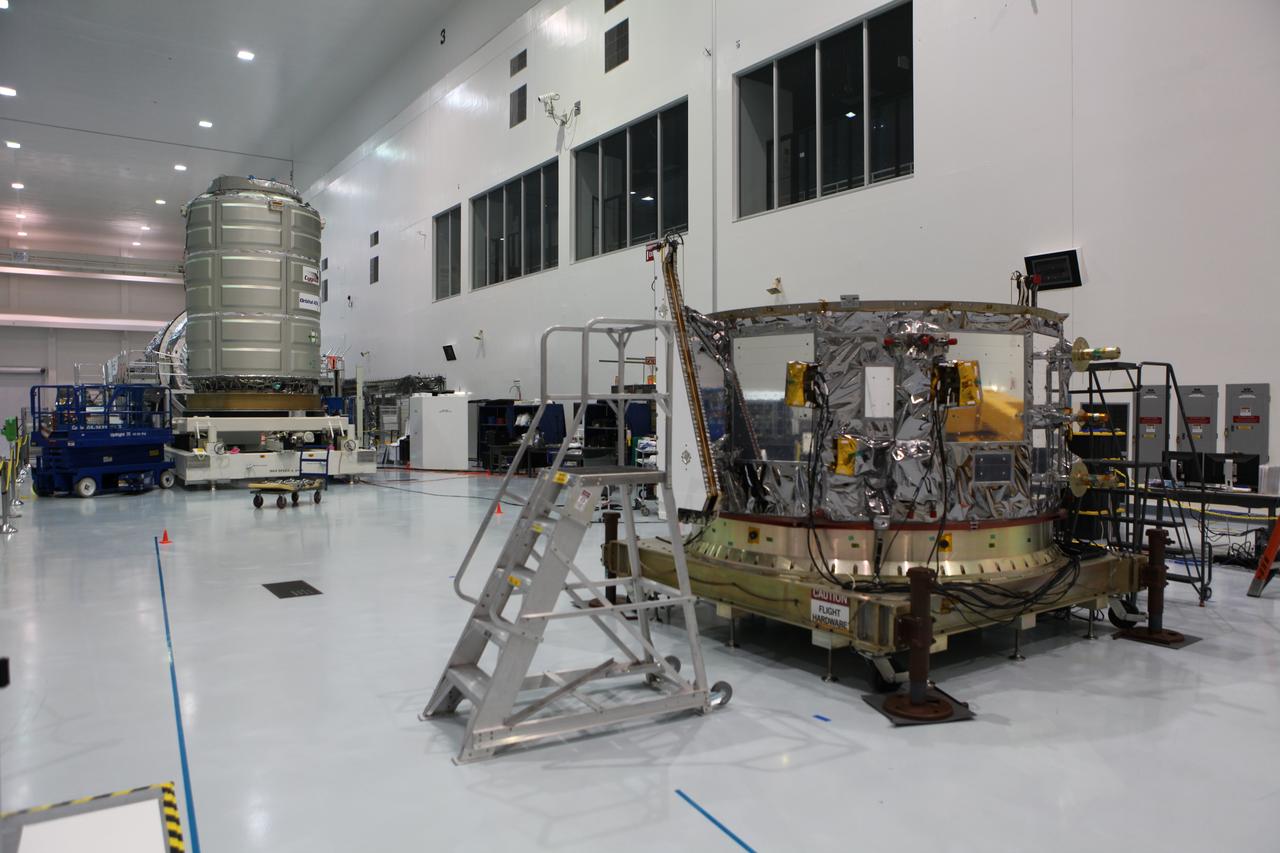
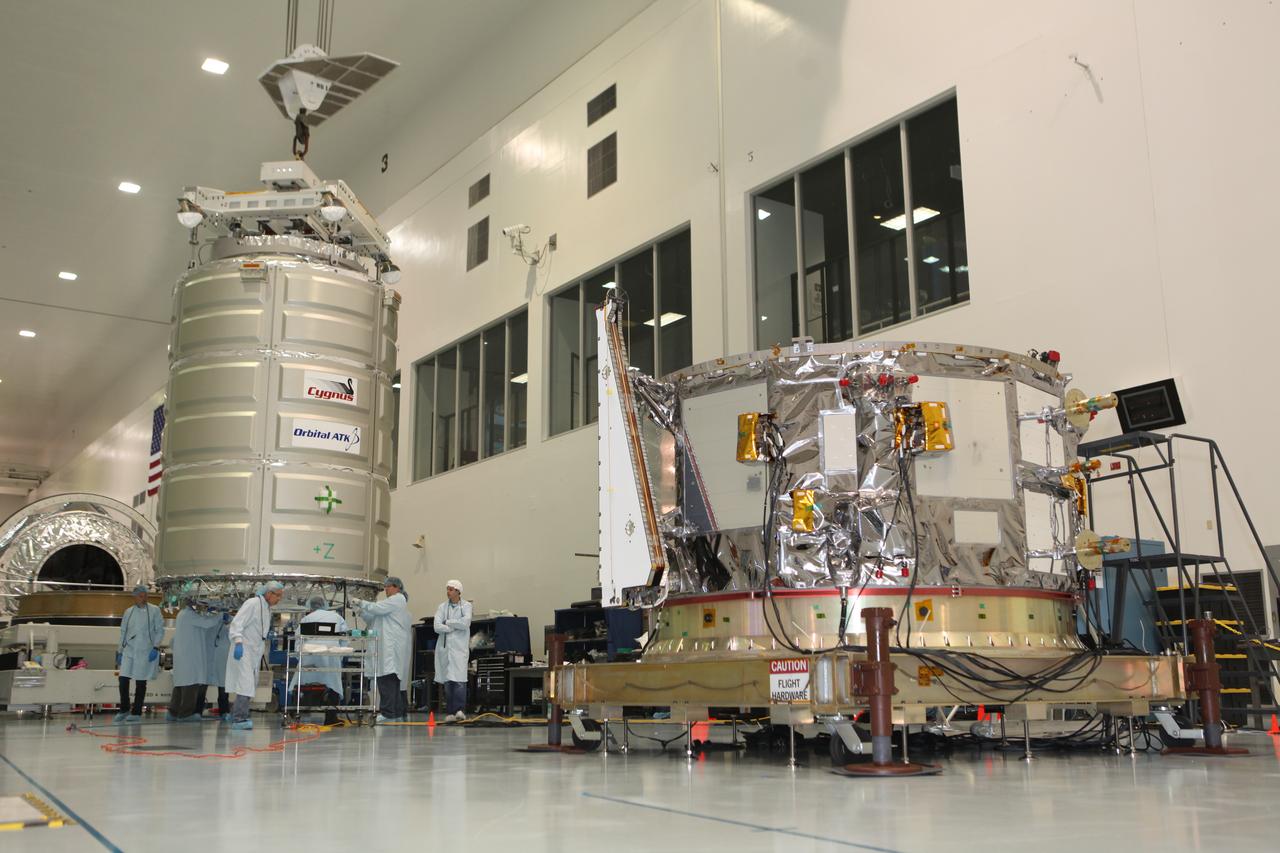
In the Space Station Processing Facility at NASA's Kennedy Space Center in Florida, a Cygnus spacecraft's pressurized cargo module (background) and its service module (foreground) are being prepared for mating for the Orbital ATK CRS-7 mission to the International Space Station. Cygnus is being prepared to deliver thousands of pounds of supplies, equipment and scientific research materials on the Scheduled to launch on March 19, 2017, the commercial resupply services mission will lift off atop a United Launch Alliance Atlas V rocket from Space launch Complex 41 at Cape Canaveral Air Force Station.
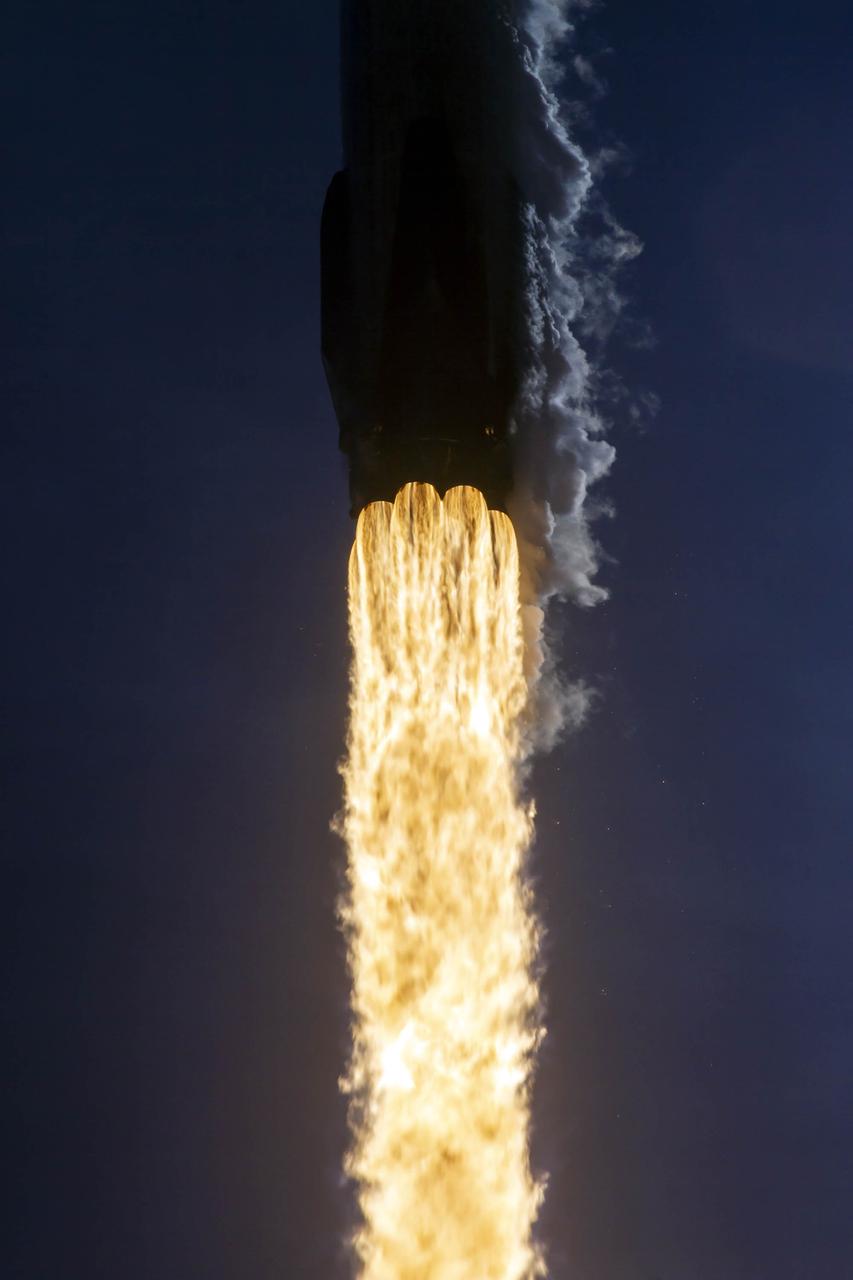
A SpaceX Falcon 9 rocket lifts off from Launch Complex 39A at Kennedy Space Center in Florida at 11:17 a.m. EST on Dec. 6, 2020, carrying the uncrewed cargo Dragon spacecraft on its journey to the International Space Station for NASA and SpaceX’s 21st Commercial Resupply Services (CRS-21) mission. Dragon will deliver more than 6,400 pounds of science investigations and cargo to the orbiting laboratory. The mission marks the first launch for SpaceX under NASA’s CRS-2 contract.