
NASA announces the agency’s five-part plan to open the International Space Station to expanded commercial and marketing activities and private astronaut missions to the station and enable additional commercial destinations in low-Earth orbit, Friday, June 7, 2019 at the Nasdaq MarketSite in New York City. NASA will continue to maintain human presence and research in low-Earth orbit, and the long-term goal is to achieve a robust economy from which NASA can purchase services at a lower cost. Photo Credit: (NASA/Bill Ingalls)

A Nasdaq moderator, center, talks with NASA Director of Commercial Spaceflight Development Phil McAlister, left, ISS National Lab Vice President and Chief Operating Officer Ken Shields, NASA Advisory Council Regulatory and Policy Committee Chair Mike Gold, and NASA Deputy Chief Financial Officer for Integration Doug Comstock, right, during a live social media event shortly after NASA announced a five-part plan to open the International Space Station to expanded commercial and marketing activities and private astronaut missions to the station and enable additional commercial destinations in low-Earth orbit, Friday, June 7, 2019 at the Nasdaq MarketSite in New York City. NASA will continue to maintain human presence and research in low-Earth orbit, and the long-term goal is to achieve a robust economy from which NASA can purchase services at a lower cost. Photo Credit: (NASA/Bill Ingalls)

A Nasdaq moderator, center, talks with NASA Director of Commercial Spaceflight Development Phil McAlister, left, ISS National Lab Vice President and Chief Operating Officer Ken Shields, NASA Advisory Council Regulatory and Policy Committee Chair Mike Gold, and NASA Deputy Chief Financial Officer for Integration Doug Comstock, right, during a live social media event shortly after NASA announced a five-part plan to open the International Space Station to expanded commercial and marketing activities and private astronaut missions to the station and enable additional commercial destinations in low-Earth orbit, Friday, June 7, 2019 at the Nasdaq MarketSite in New York City. NASA will continue to maintain human presence and research in low-Earth orbit, and the long-term goal is to achieve a robust economy from which NASA can purchase services at a lower cost. Photo Credit: (NASA/Bill Ingalls)

NASA astronaut Christina Koch onboard the International Space Station gives remarks in a video during a briefing where NASA announced the agency’s five-part plan to open the International Space Station to expanded commercial and marketing activities and private astronaut missions to the station and enable additional commercial destinations in low-Earth orbit, Friday, June 7, 2019 at the Nasdaq MarketSite in New York City. NASA will continue to maintain human presence and research in low-Earth orbit, and the long-term goal is to achieve a robust economy from which NASA can purchase services at a lower cost. Photo Credit: (NASA/Bill Ingalls)

NASA International Space Station Deputy Director Robyn Gatens answers questions during a briefing where NASA announced the agency’s five-part plan to open the International Space Station to expanded commercial and marketing activities and private astronaut missions to the station and enable additional commercial destinations in low-Earth orbit, Friday, June 7, 2019 at the Nasdaq MarketSite in New York City. NASA will continue to maintain human presence and research in low-Earth orbit, and the long-term goal is to achieve a robust economy from which NASA can purchase services at a lower cost. Photo Credit: (NASA/Bill Ingalls)

The Nasdaq MarketSite tower displays a congratulatory message to NASA as the agency announces a five-part plan to open the International Space Station to expanded commercial and marketing activities and private astronaut missions to the station and enable additional commercial destinations in low-Earth orbit, Friday, June 7, 2019 at Nasdaq MarketSite in New York City. NASA will continue to maintain human presence and research in low-Earth orbit, and the long-term goal is to achieve a robust economy from which NASA can purchase services at a lower cost. Photo Credit: (NASA/Bill Ingalls)

NASA Chief Financial Officer Jeff DeWit gives remarks during a briefing where NASA announced the agency’s five-part plan to open the International Space Station to expanded commercial and marketing activities and private astronaut missions to the station and enable additional commercial destinations in low-Earth orbit, Friday, June 7, 2019 at the Nasdaq MarketSite in New York City. NASA will continue to maintain human presence and research in low-Earth orbit, and the long-term goal is to achieve a robust economy from which NASA can purchase services at a lower cost. Photo Credit: (NASA/Bill Ingalls)

NASA Associate Administrator for the Human Exploration and Operations Directorate William Gerstenmaier gives remarks during a briefing where NASA announced the agency’s five-part plan to open the International Space Station to expanded commercial and marketing activities and private astronaut missions to the station and enable additional commercial destinations in low-Earth orbit, Friday, June 7, 2019 at the Nasdaq MarketSite in New York City. NASA will continue to maintain human presence and research in low-Earth orbit, and the long-term goal is to achieve a robust economy from which NASA can purchase services at a lower cost. Photo Credit: (NASA/Bill Ingalls)

NASA Public Affairs Officer Stephanie Schierholz moderates a briefing where NASA announced the agency’s five-part plan to open the International Space Station to expanded commercial and marketing activities and private astronaut missions to the station and enable additional commercial destinations in low-Earth orbit, Friday, June 7, 2019 at the Nasdaq MarketSite in New York City. NASA will continue to maintain human presence and research in low-Earth orbit, and the long-term goal is to achieve a robust economy from which NASA can purchase services at a lower cost. Photo Credit: (NASA/Bill Ingalls)

A Nasdaq moderator, center, talks with NanoRacks CEO Jeff Manber, left, NASA Manager of the International Space Station Research Office Marybeth Edeen, AlphaSpace Founder and Chairman Stephanie Murphy, and Made in Space Vice President of Advanced Programs and Concepts Justin Kugler, right, during a live social media event shortly after NASA announced a five-part plan to open the International Space Station to expanded commercial and marketing activities and private astronaut missions to the station and enable additional commercial destinations in low-Earth orbit, Friday, June 7, 2019 at the Nasdaq MarketSite in New York City. NASA will continue to maintain human presence and research in low-Earth orbit, and the long-term goal is to achieve a robust economy from which NASA can purchase services at a lower cost. Photo Credit: (NASA/Bill Ingalls)
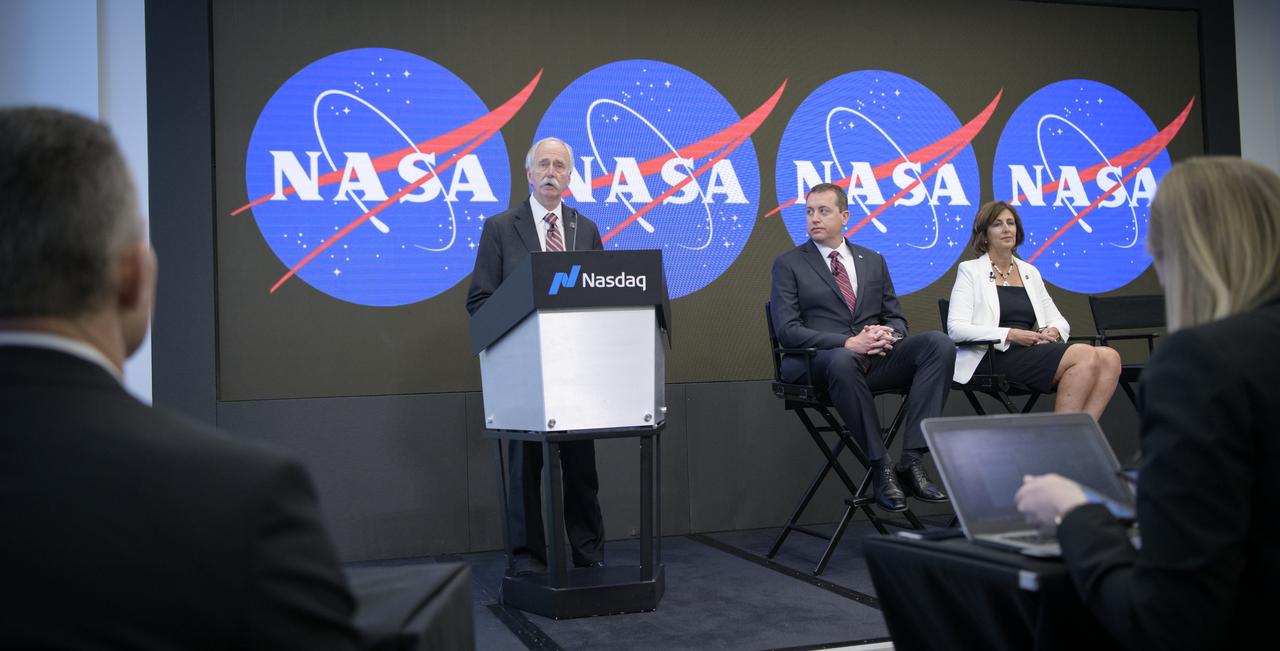
NASA Associate Administrator for the Human Exploration and Operations Directorate William Gerstenmaier, left, NASA Chief Financial Officer Jeff DeWit, center, and NASA International Space Station Deputy Director Robyn Gatens announce the agency’s five-part plan to open the International Space Station to expanded commercial and marketing activities and private astronaut missions to the station and enable additional commercial destinations in low-Earth orbit, Friday, June 7, 2019 at the Nasdaq MarketSite in New York City. NASA will continue to maintain human presence and research in low-Earth orbit, and the long-term goal is to achieve a robust economy from which NASA can purchase services at a lower cost. Photo Credit: (NASA/Bill Ingalls)
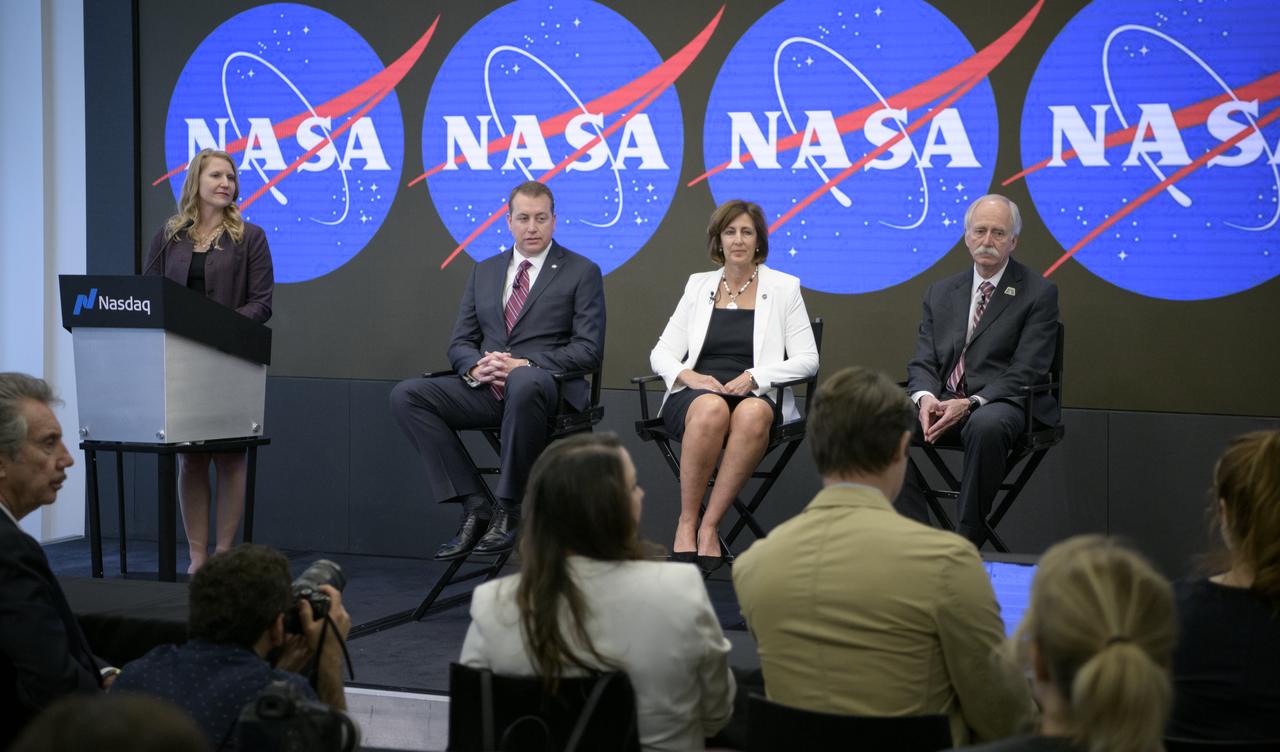
NASA Public Affairs Officer Stephanie Schierholz, standing left, moderates a media briefing with NASA Chief Financial Officer Jeff DeWit, left, NASA International Space Station Deputy Director Robyn Gatens, center, and NASA Associate Administrator for the Human Exploration and Operations Directorate William Gerstenmaier where they announced the agency’s five-part plan to open the International Space Station to expanded commercial and marketing activities and private astronaut missions to the station and enable additional commercial destinations in low-Earth orbit, Friday, June 7, 2019 at the Nasdaq MarketSite in New York City. NASA will continue to maintain human presence and research in low-Earth orbit, and the long-term goal is to achieve a robust economy from which NASA can purchase services at a lower cost. Photo Credit: (NASA/Bill Ingalls)
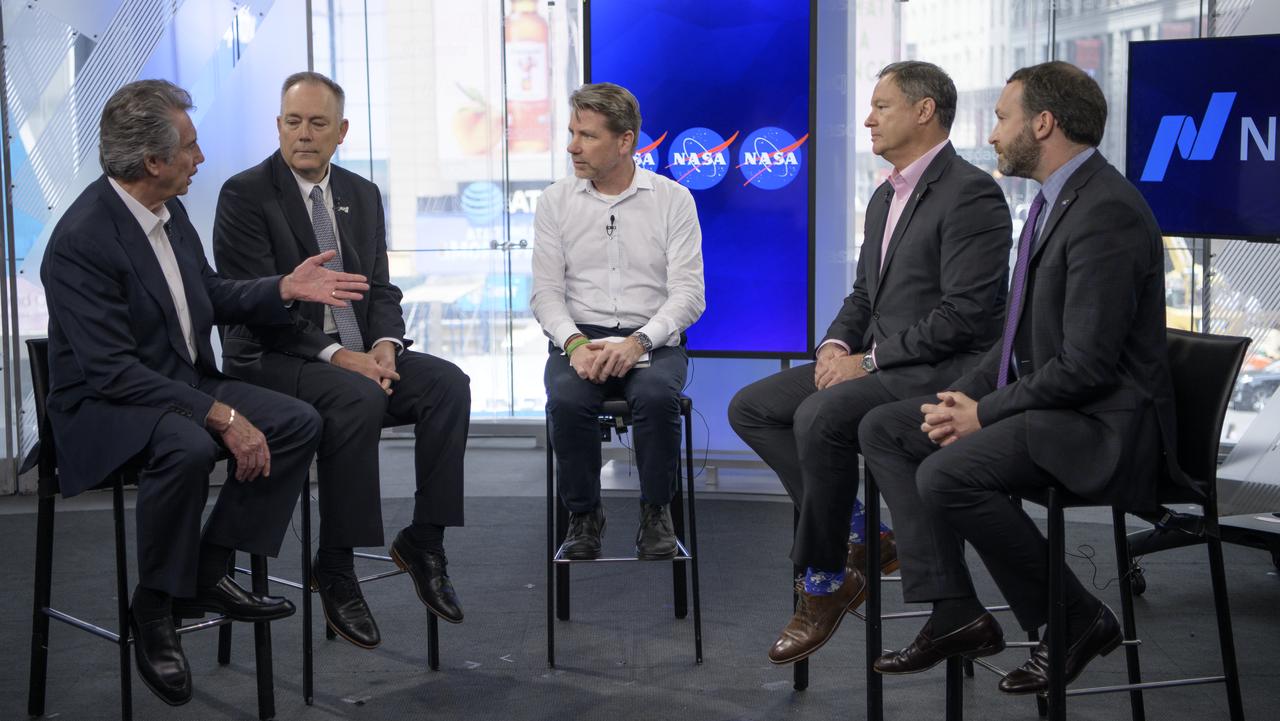
A Nasdaq moderator, center, talks with Bigelow Aerospace, LLC Founder and President Robert Bigelow, left, Boeing Global Sales and Marketing, Space Exploration, Kevin Foley, Axiom Vice President of Business Development Michael Lopez-Alegria, and NASA Senior Economic Advisor Alex MacDonald, right, during a live social media event shortly after NASA announced a five-part plan to open the International Space Station to expanded commercial and marketing activities and private astronaut missions to the station and enable additional commercial destinations in low-Earth orbit, Friday, June 7, 2019 at the Nasdaq MarketSite in New York City. NASA will continue to maintain human presence and research in low-Earth orbit, and the long-term goal is to achieve a robust economy from which NASA can purchase services at a lower cost. Photo Credit: (NASA/Bill Ingalls)
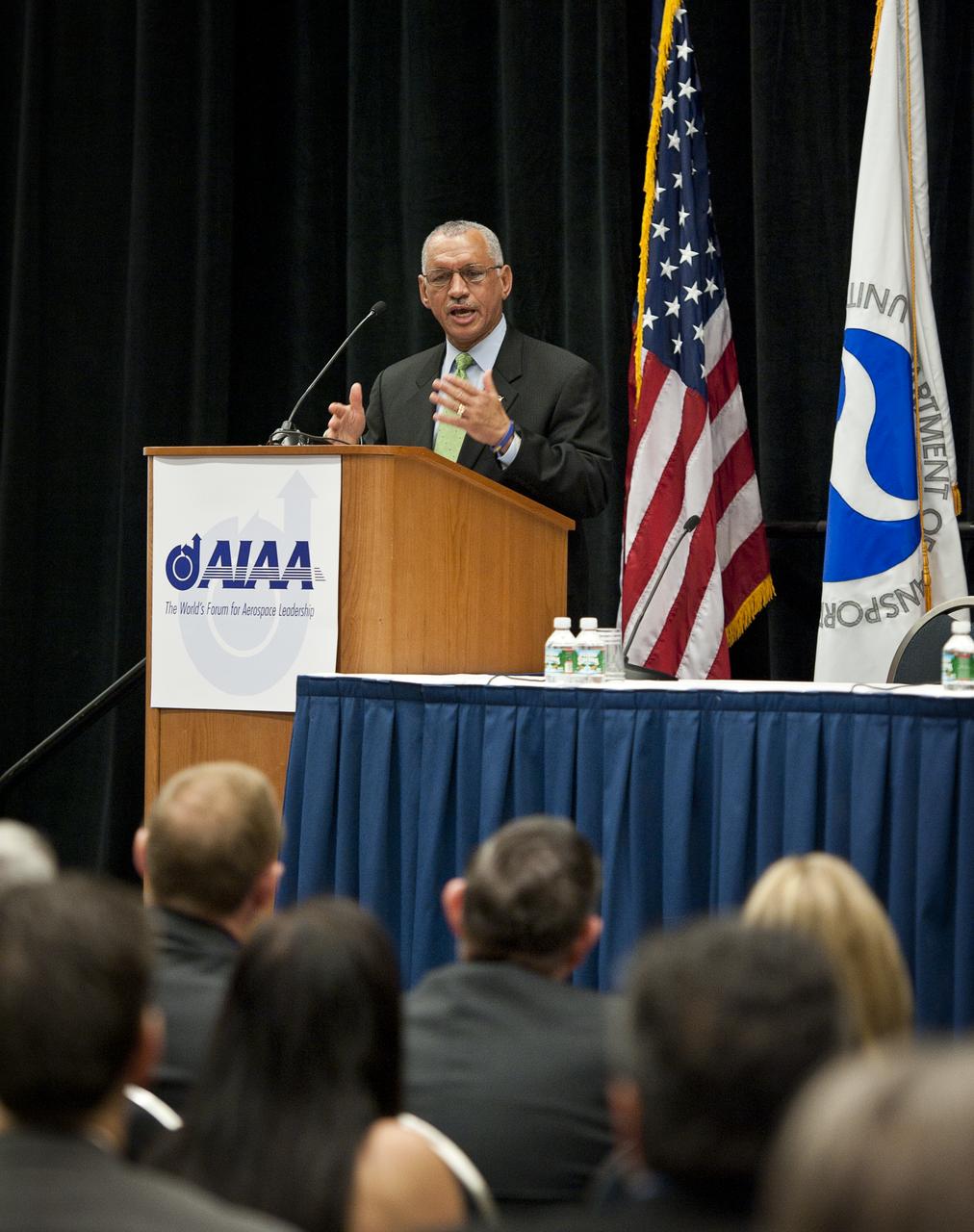
NASA Administrator Charles Bolden speaks at the 14th Annual Federal Aviation Administration (FAA) Commercial Space Transport Conference at the Washington Convention Center on Wednesday, Feb. 9, 2001. Photo Credit: (NASA/Carla Cioffi)
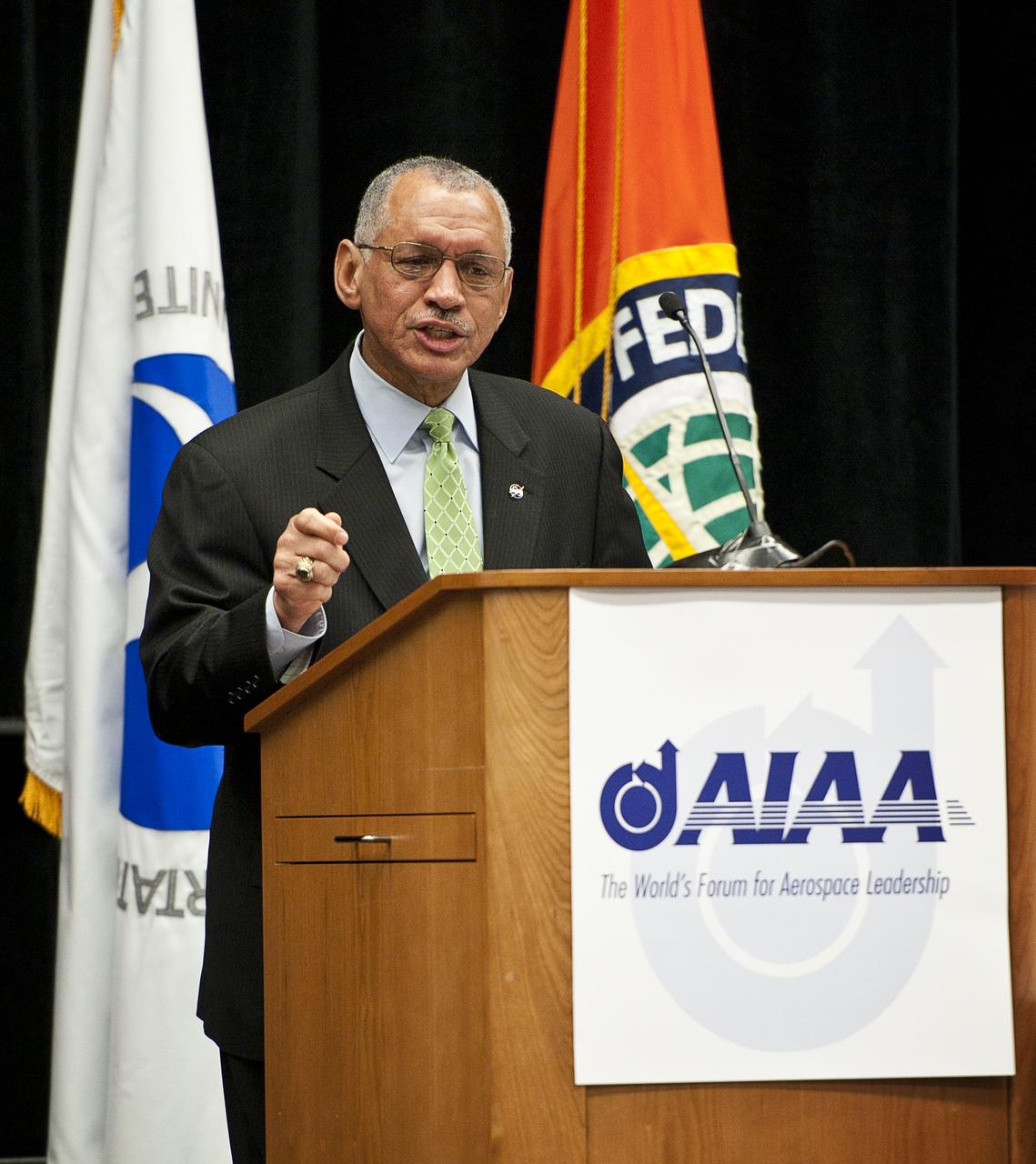
NASA Administrator Charles Bolden speaks at the 14th Annual Federal Aviation Administration (FAA) Commercial Space Transport Conference at the Washington Convention Center on Wednesday, Feb. 9, 2001. Photo Credit: (NASA/Carla Cioffi)
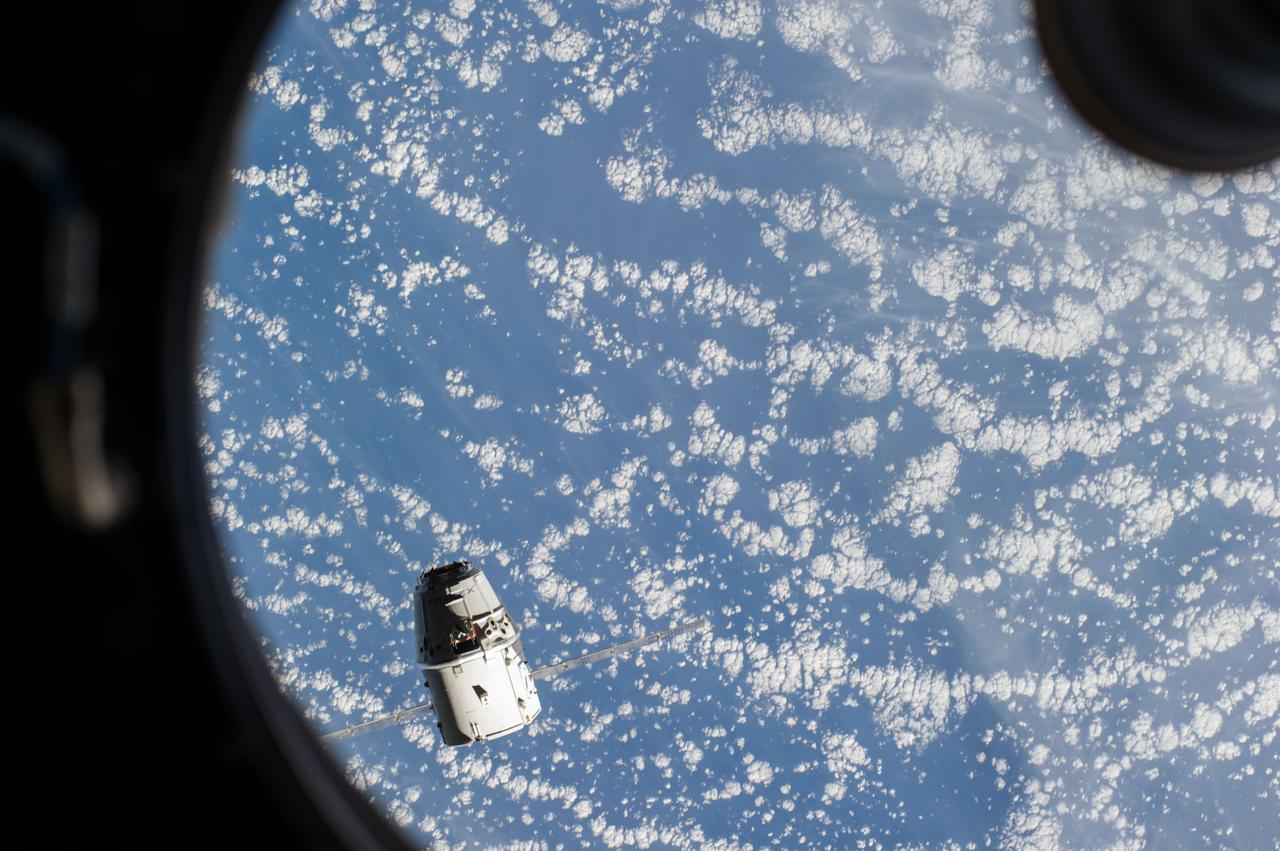
ISS041-E-020806 (23 Sept. 2014) --- Photographed by an Expedition 41 crew member from the windows of the Cupola, the SpaceX Dragon commercial cargo craft approaches the International Space Station on Sept. 23, 2014.
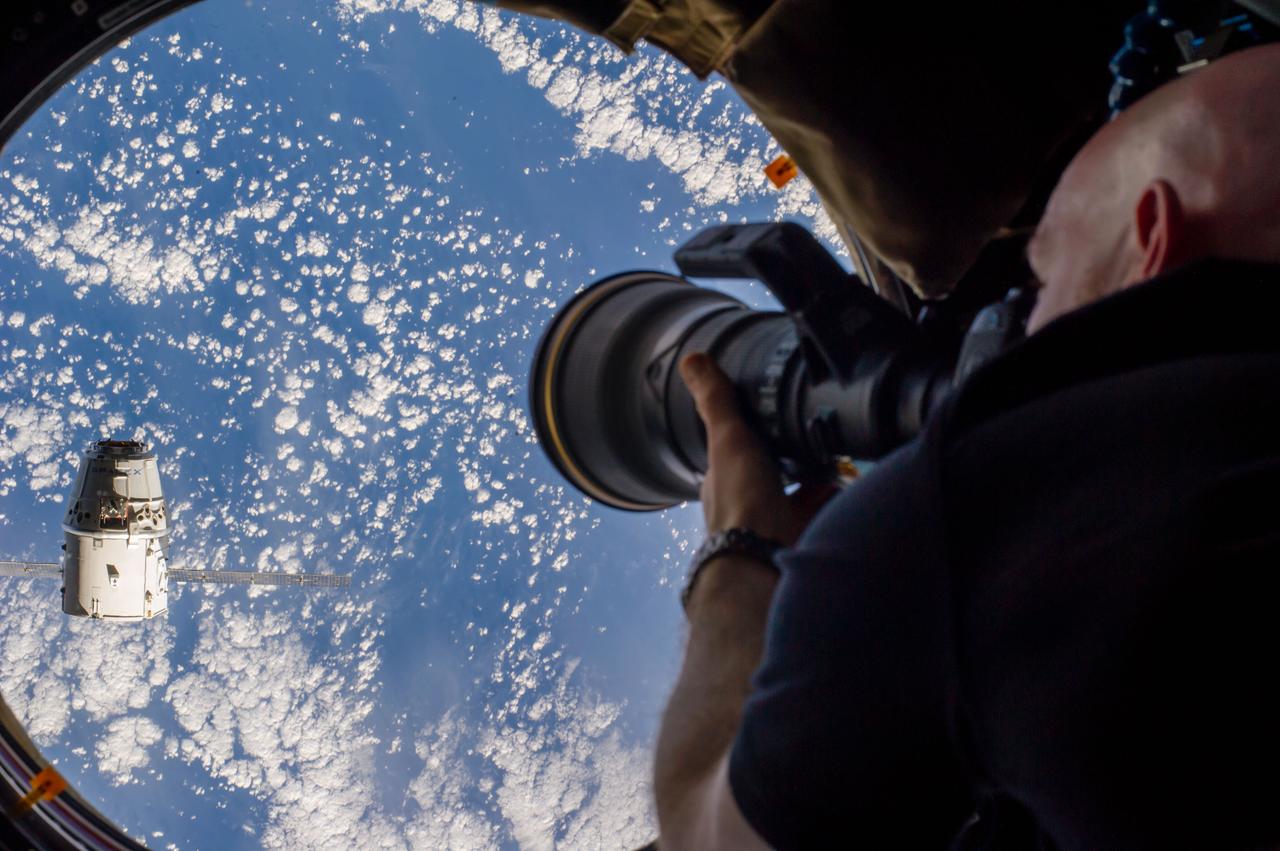
ISS041-E-020816 (23 Sept. 2014) --- European Space Agency astronaut Alexander Gerst, Expedition 41 flight engineer, uses a still camera at a window in the Cupola of the International Space Station as the SpaceX Dragon commercial cargo craft approaches the International Space Station on Sept. 23, 2014.
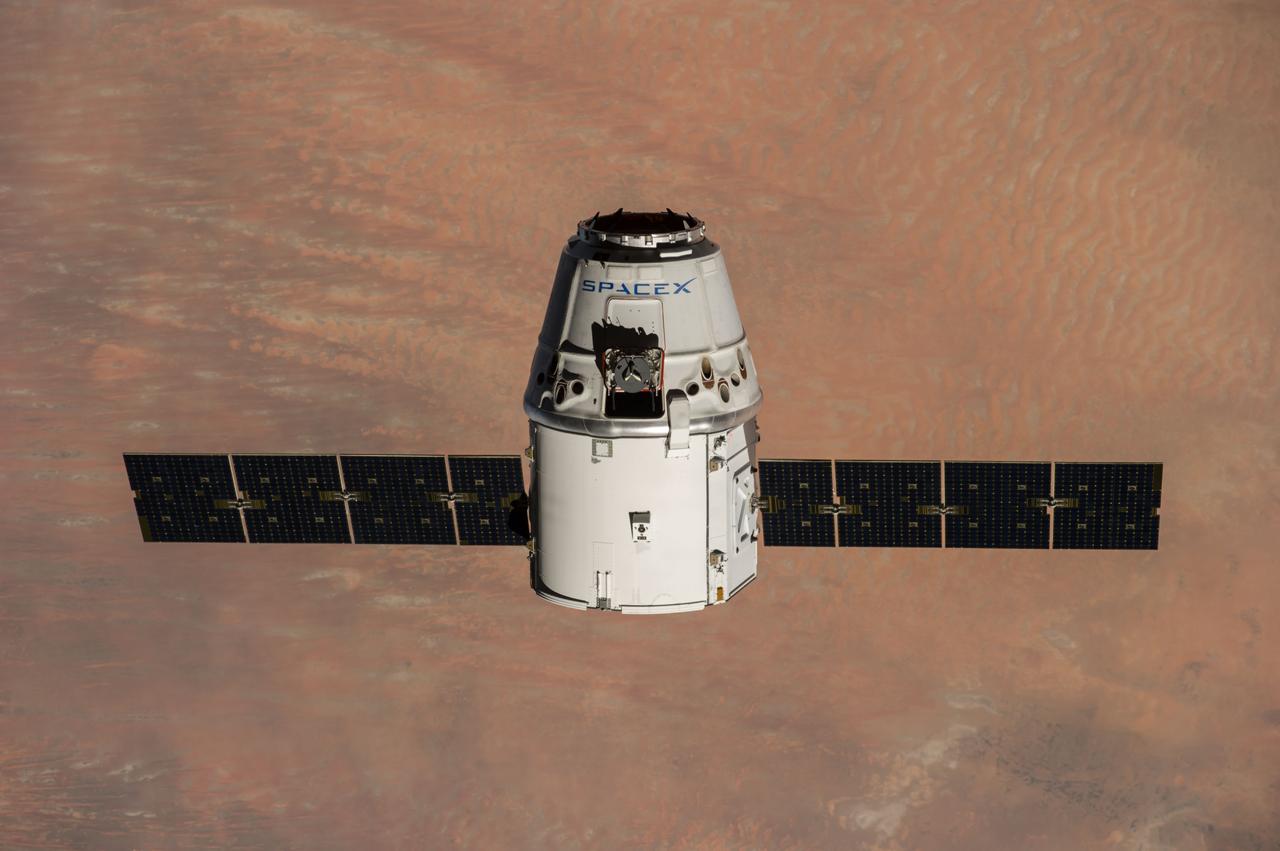
ISS041-E-020882 (23 Sept. 2014) --- The SpaceX Dragon commercial cargo craft approaches the International Space Station on Sept. 23, 2014 for grapple and berthing. European Space Agency astronaut Alexander Gerst and NASA astronaut Reid Wiseman, both Expedition 41 flight engineers, were at the controls of the robotics workstation in the Cupola when the Canadarm2 grappled Dragon at 6:52 a.m. (EDT). Dragon will spend the next four weeks attached to the Harmony node as the Expedition 41 crew unloads 4,885 pounds of (2,216 kg) crew supplies, hardware, experiments, and computer gear and spacewalk equipment.
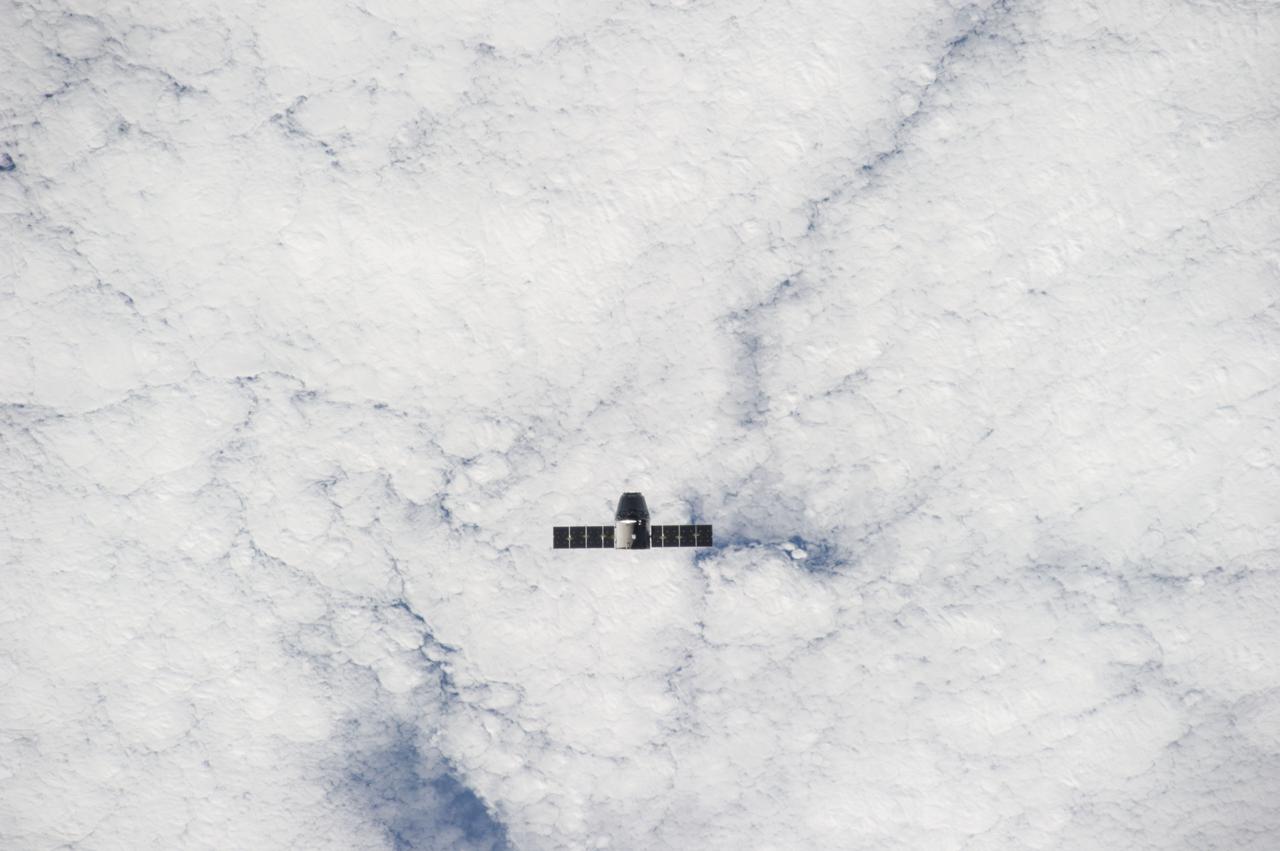
ISS041-E-020655 (23 Sept. 2014) --- The SpaceX Dragon commercial cargo craft approaches the International Space Station on Sept. 23, 2014 for grapple and berthing. European Space Agency astronaut Alexander Gerst and NASA astronaut Reid Wiseman, both Expedition 41 flight engineers, were at the controls of the robotics workstation in the Cupola when the Canadarm2 grappled Dragon at 6:52 a.m. (EDT). Dragon will spend the next four weeks attached to the Harmony node as the Expedition 41 crew unloads 4,885 pounds of (2,216 kg) crew supplies, hardware, experiments, and computer gear and spacewalk equipment.
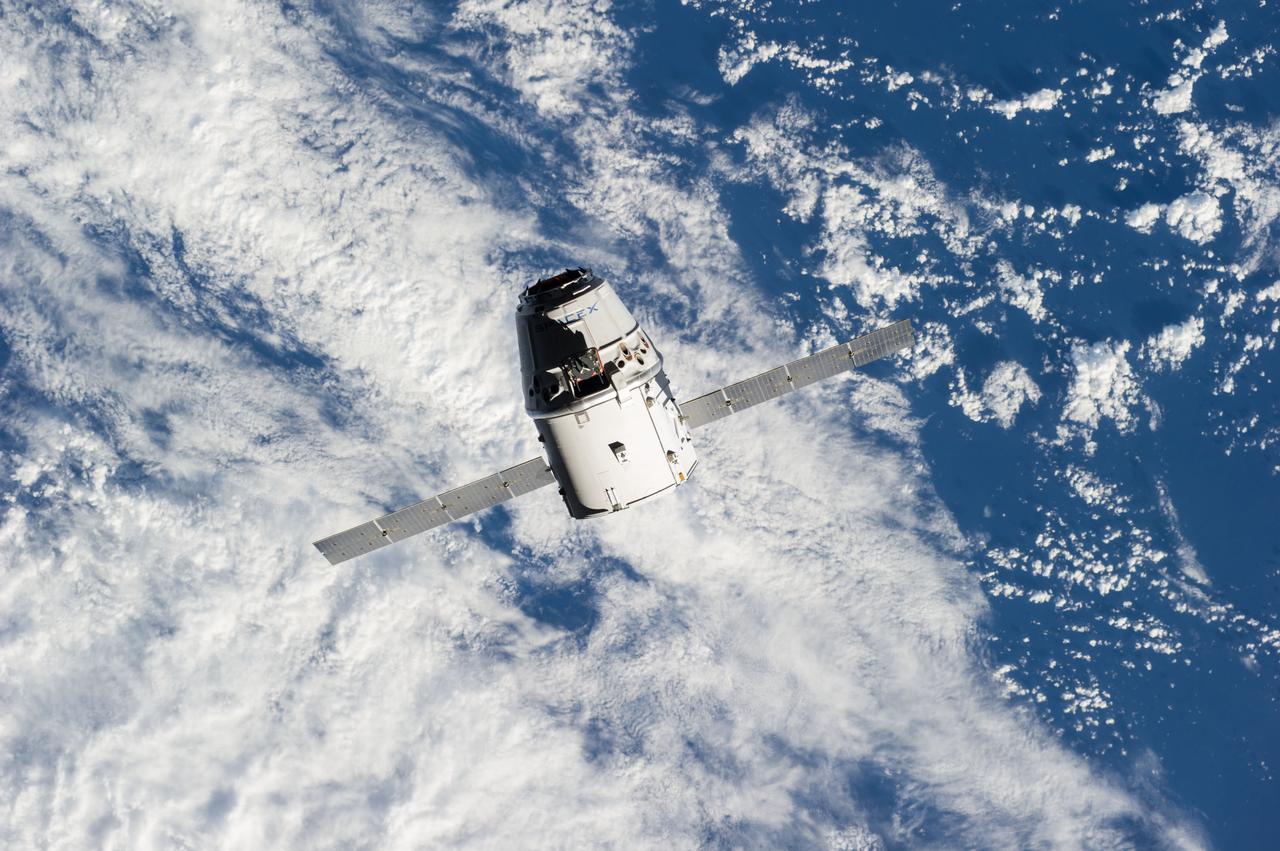
ISS041-E-020833 (23 Sept. 2014) --- The SpaceX Dragon commercial cargo craft approaches the International Space Station on Sept. 23, 2014 for grapple and berthing. European Space Agency astronaut Alexander Gerst and NASA astronaut Reid Wiseman, both Expedition 41 flight engineers, were at the controls of the robotics workstation in the Cupola when the Canadarm2 grappled Dragon at 6:52 a.m. (EDT). Dragon will spend the next four weeks attached to the Harmony node as the Expedition 41 crew unloads 4,885 pounds of (2,216 kg) crew supplies, hardware, experiments, and computer gear and spacewalk equipment.
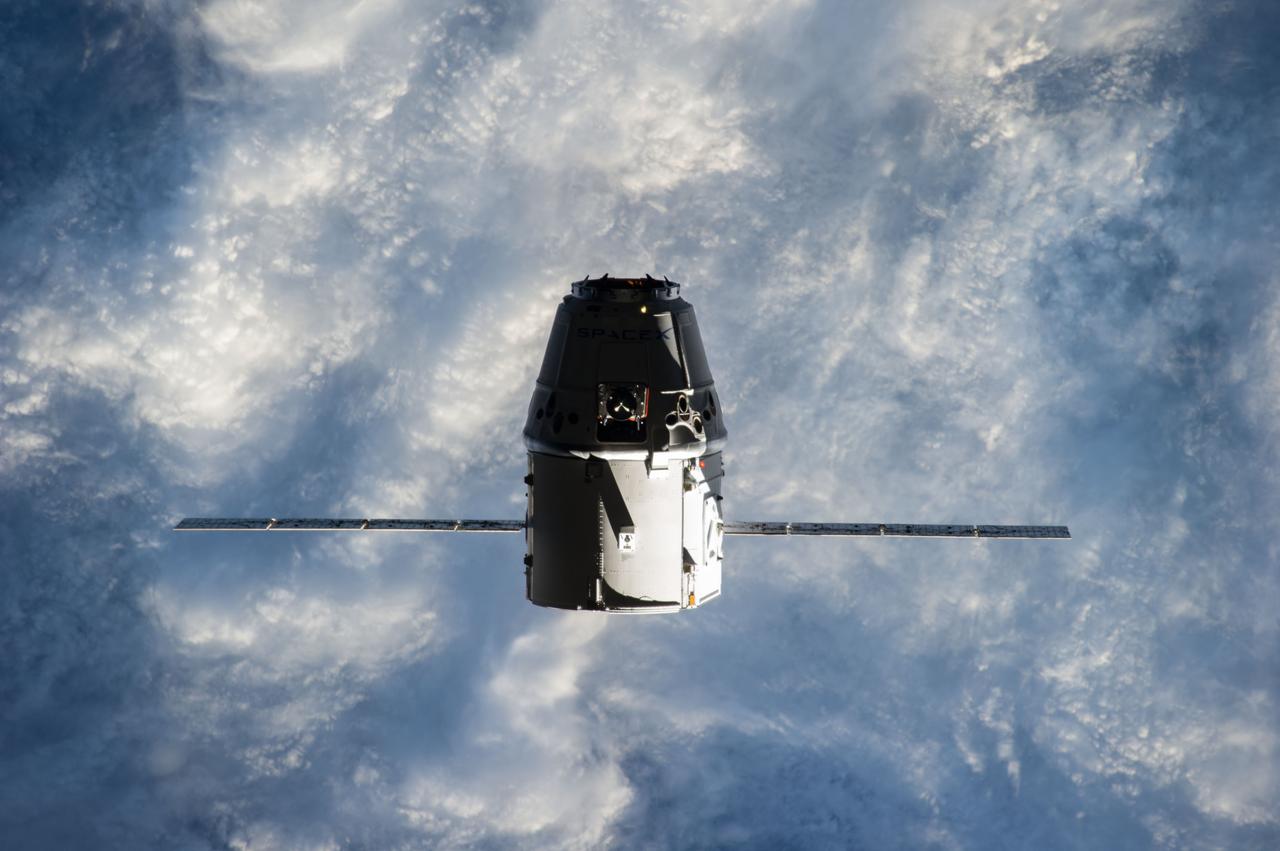
ISS041-E-020800 (23 Sept. 2014) --- The SpaceX Dragon commercial cargo craft approaches the International Space Station on Sept. 23, 2014 for grapple and berthing. European Space Agency astronaut Alexander Gerst and NASA astronaut Reid Wiseman, both Expedition 41 flight engineers, were at the controls of the robotics workstation in the Cupola when the Canadarm2 grappled Dragon at 6:52 a.m. (EDT). Dragon will spend the next four weeks attached to the Harmony node as the Expedition 41 crew unloads 4,885 pounds of (2,216 kg) crew supplies, hardware, experiments, and computer gear and spacewalk equipment.
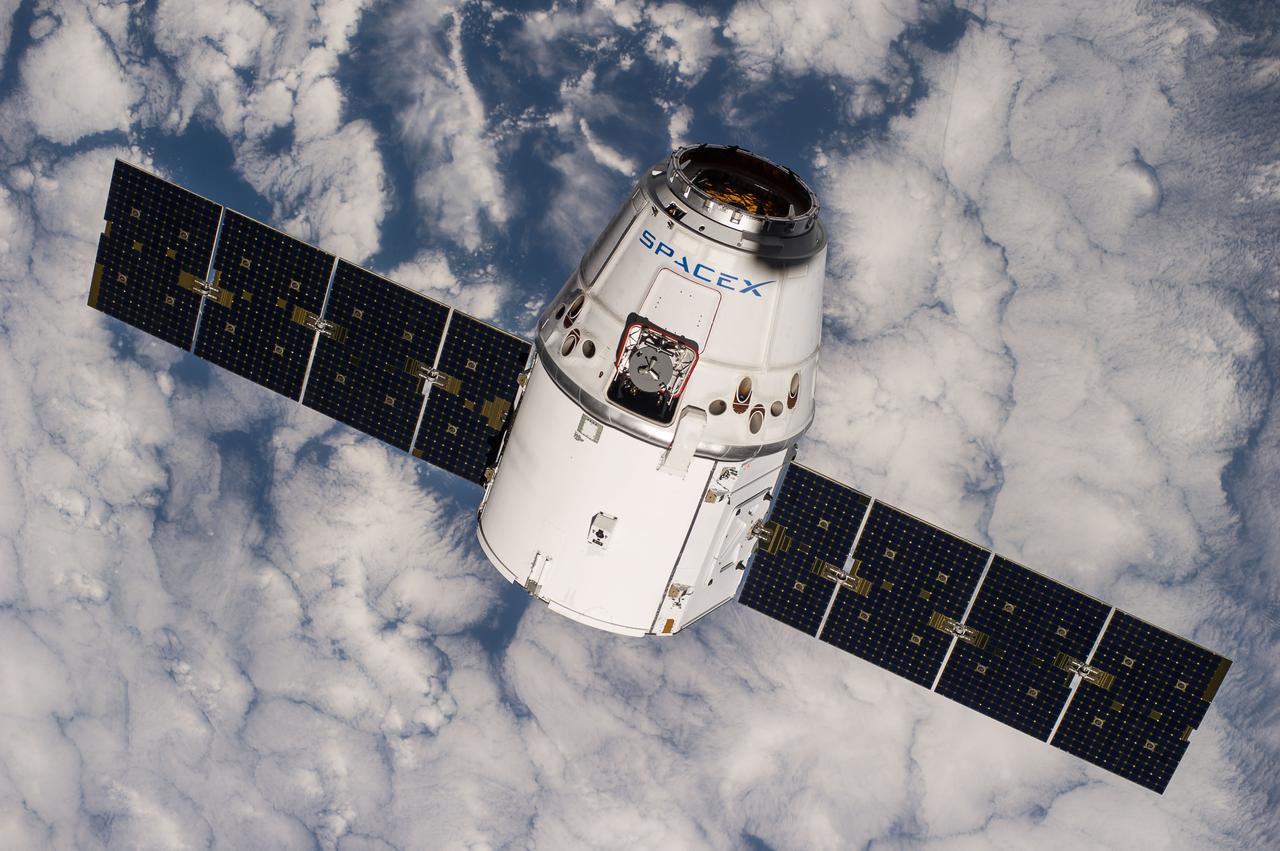
ISS041-E-020918 (23 Sept. 2014) --- The SpaceX Dragon commercial cargo craft approaches the International Space Station on Sept. 23, 2014 for grapple and berthing. European Space Agency astronaut Alexander Gerst and NASA astronaut Reid Wiseman, both Expedition 41 flight engineers, were at the controls of the robotics workstation in the Cupola when the Canadarm2 grappled Dragon at 6:52 a.m. (EDT). Dragon will spend the next four weeks attached to the Harmony node as the Expedition 41 crew unloads 4,885 pounds of (2,216 kg) crew supplies, hardware, experiments, and computer gear and spacewalk equipment.
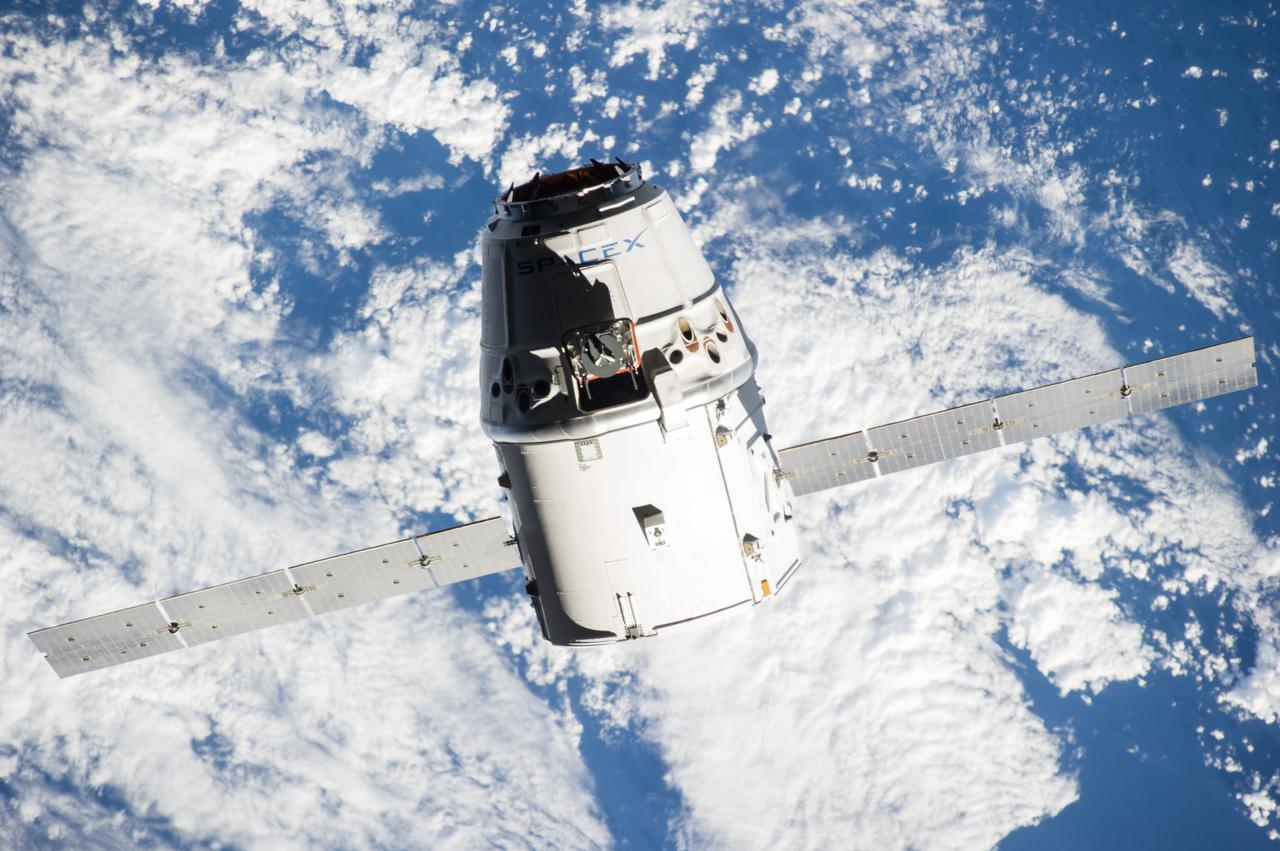
ISS041-E-020821 (23 Sept. 2014) --- The SpaceX Dragon commercial cargo craft approaches the International Space Station on Sept. 23, 2014 for grapple and berthing. European Space Agency astronaut Alexander Gerst and NASA astronaut Reid Wiseman, both Expedition 41 flight engineers, were at the controls of the robotics workstation in the Cupola when the Canadarm2 grappled Dragon at 6:52 a.m. (EDT). Dragon will spend the next four weeks attached to the Harmony node as the Expedition 41 crew unloads 4,885 pounds of (2,216 kg) crew supplies, hardware, experiments, and computer gear and spacewalk equipment.

ISS041-E-020857 (23 Sept. 2014) --- The SpaceX Dragon commercial cargo craft approaches the International Space Station on Sept. 23, 2014 for grapple and berthing. European Space Agency astronaut Alexander Gerst and NASA astronaut Reid Wiseman, both Expedition 41 flight engineers, were at the controls of the robotics workstation in the Cupola when the Canadarm2 grappled Dragon at 6:52 a.m. (EDT). Dragon will spend the next four weeks attached to the Harmony node as the Expedition 41 crew unloads 4,885 pounds of (2,216 kg) crew supplies, hardware, experiments, and computer gear and spacewalk equipment.
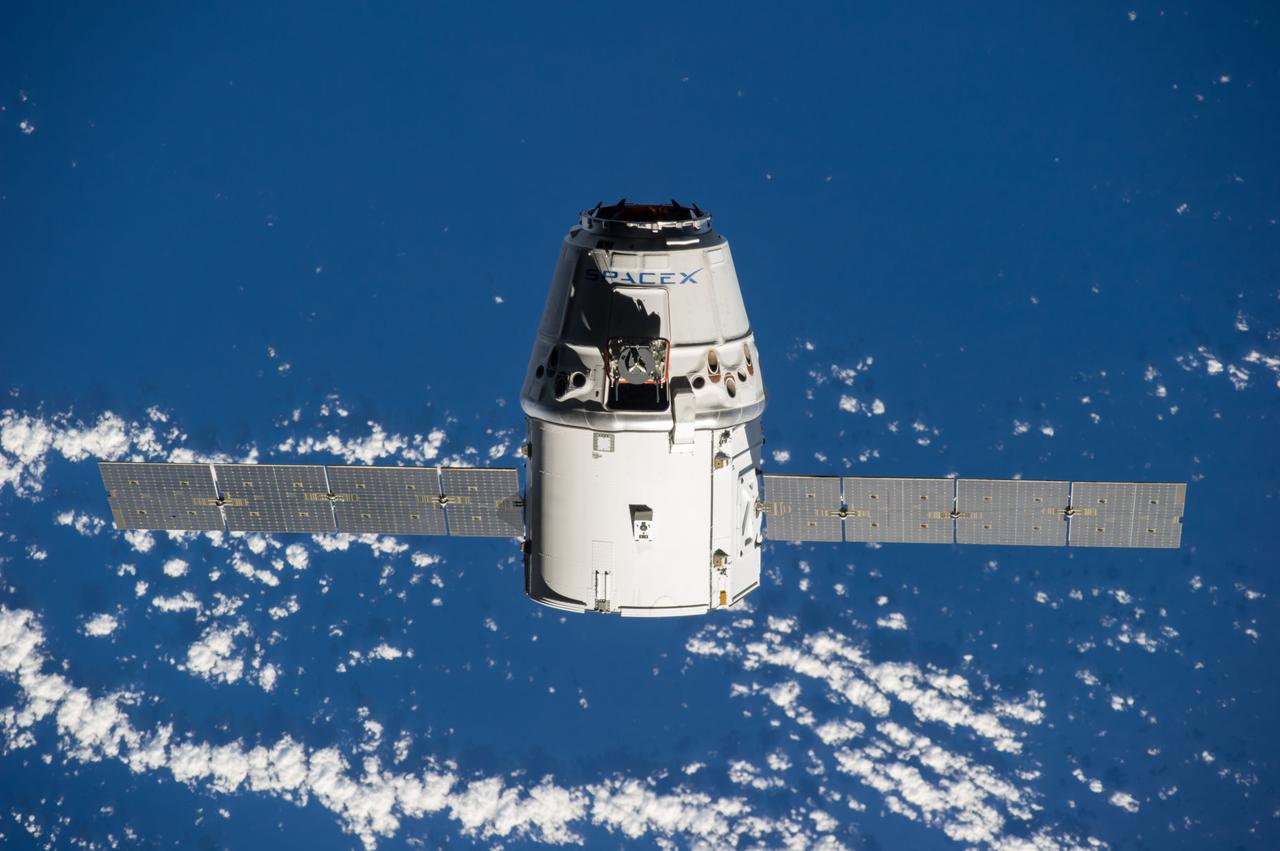
ISS041-E-020854 (23 Sept. 2014) --- The SpaceX Dragon commercial cargo craft approaches the International Space Station on Sept. 23, 2014 for grapple and berthing. European Space Agency astronaut Alexander Gerst and NASA astronaut Reid Wiseman, both Expedition 41 flight engineers, were at the controls of the robotics workstation in the Cupola when the Canadarm2 grappled Dragon at 6:52 a.m. (EDT). Dragon will spend the next four weeks attached to the Harmony node as the Expedition 41 crew unloads 4,885 pounds of (2,216 kg) crew supplies, hardware, experiments, and computer gear and spacewalk equipment.
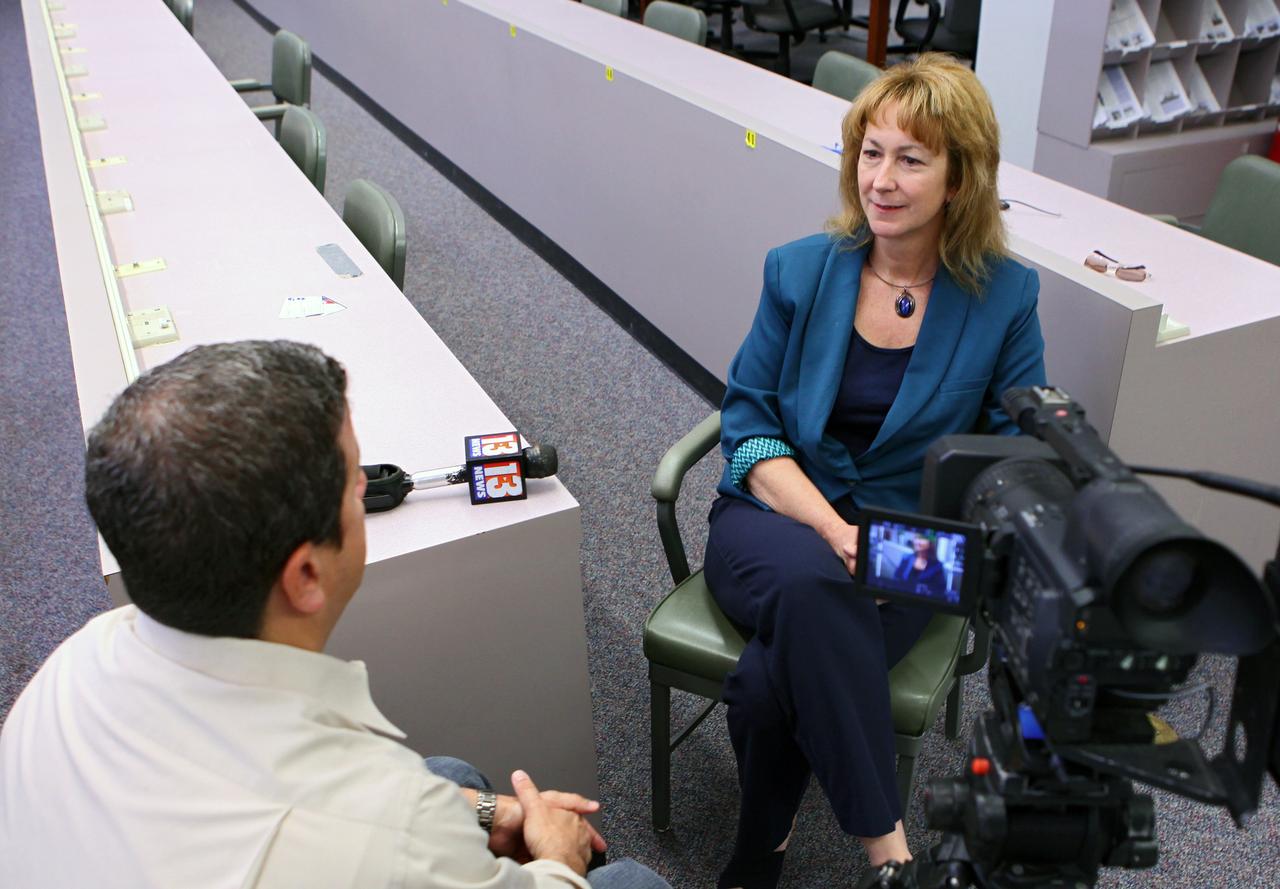
CAPE CANAVERAL, Fla. -- To start the new year, Joyce M. Riquelme from Kennedy's Center Planning and Development Office discusses the space center's direction with TV news reporter Greg Pallone of Channel 13 in Orlando.The office's purpose is to develop the world’s premier spaceport, meeting government and commercial space industry needs through comprehensive resource planning and the formation of partnerships to ensure the economic vitality of Kennedy Space Center. Photo credit: NASA/Kim Shiflett
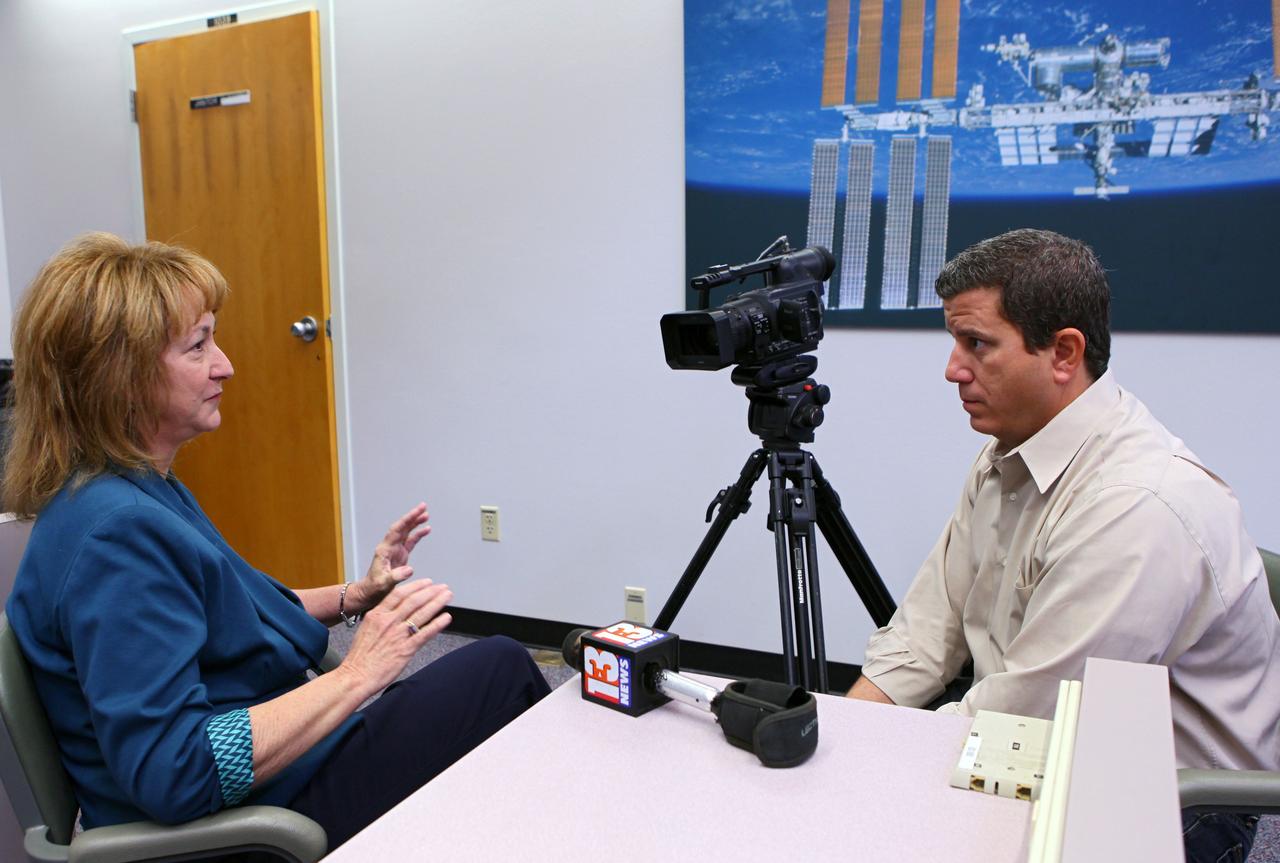
CAPE CANAVERAL, Fla. -- To start the new year, Joyce M. Riquelme from Kennedy's Center Planning and Development Office discusses the space center's direction with TV news reporter Greg Pallone of Channel 13 in Orlando.The office's purpose is to develop the world’s premier spaceport, meeting government and commercial space industry needs through comprehensive resource planning and the formation of partnerships to ensure the economic vitality of Kennedy Space Center. Photo credit: NASA/Kim Shiflett

In the Kennedy Space Center’s Press Site auditorium, David Brady, assistant program scientist for the International Space Station Program, speaks to members of the media during a prelaunch news conference for the SpaceX CRS-15 Commercial Resupply Services mission to the International Space Station. A SpaceX Dragon spacecraft is scheduled to be launched from Space Launch Complex 40 at Cape Canaveral Air Force Station. The SpaceX Falcon 9 rocket will lift off on the company's 15th Commercial Resupply Services mission to the space station.
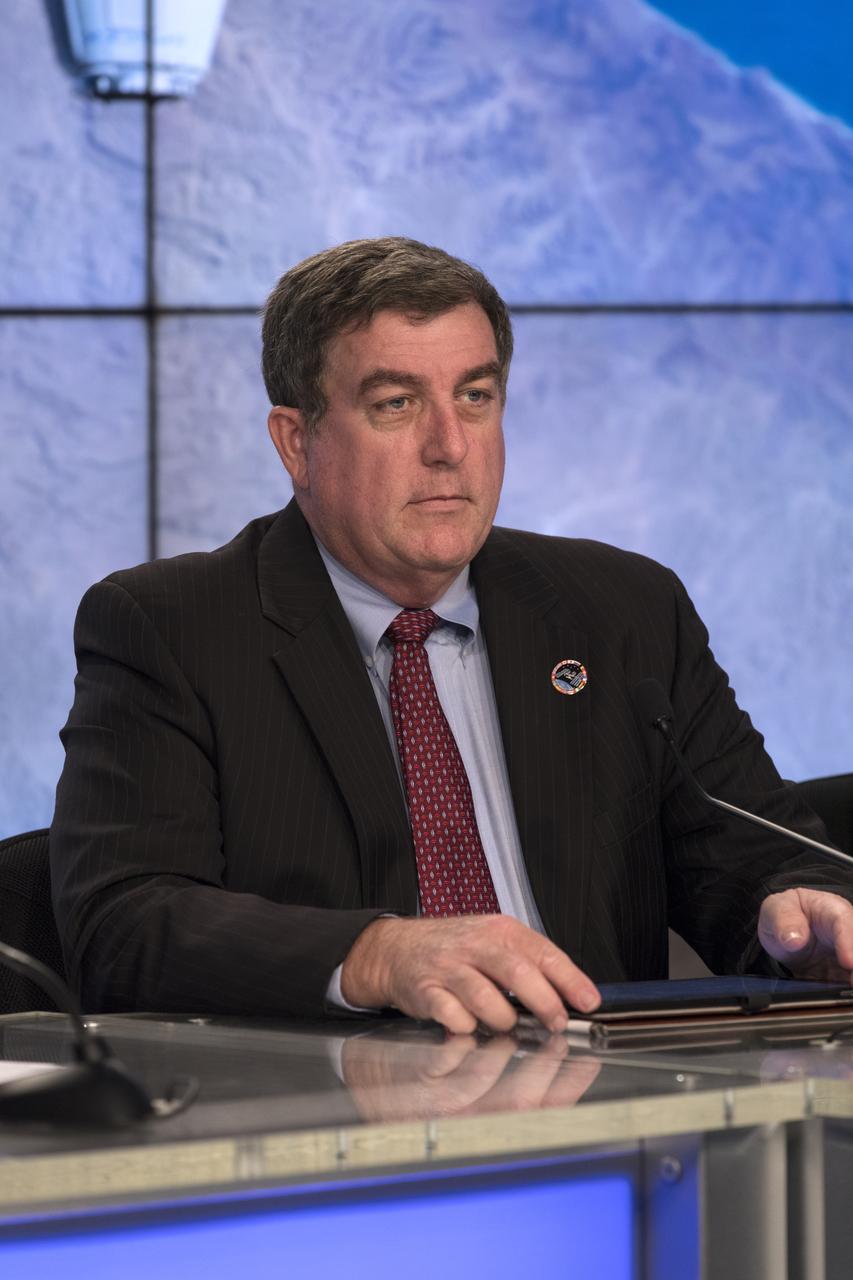
In the Kennedy Space Center’s Press Site auditorium, Kirk Shireman, manager of the International Space Station Program, speaks to members of the media during a prelaunch news conference for the SpaceX CRS-15 Commercial Resupply Services mission to the International Space Station. A SpaceX Dragon spacecraft is scheduled to be launched from Space Launch Complex 40 at Cape Canaveral Air Force Station. The SpaceX Falcon 9 rocket will lift off on the company's 15th Commercial Resupply Services mission to the space station.
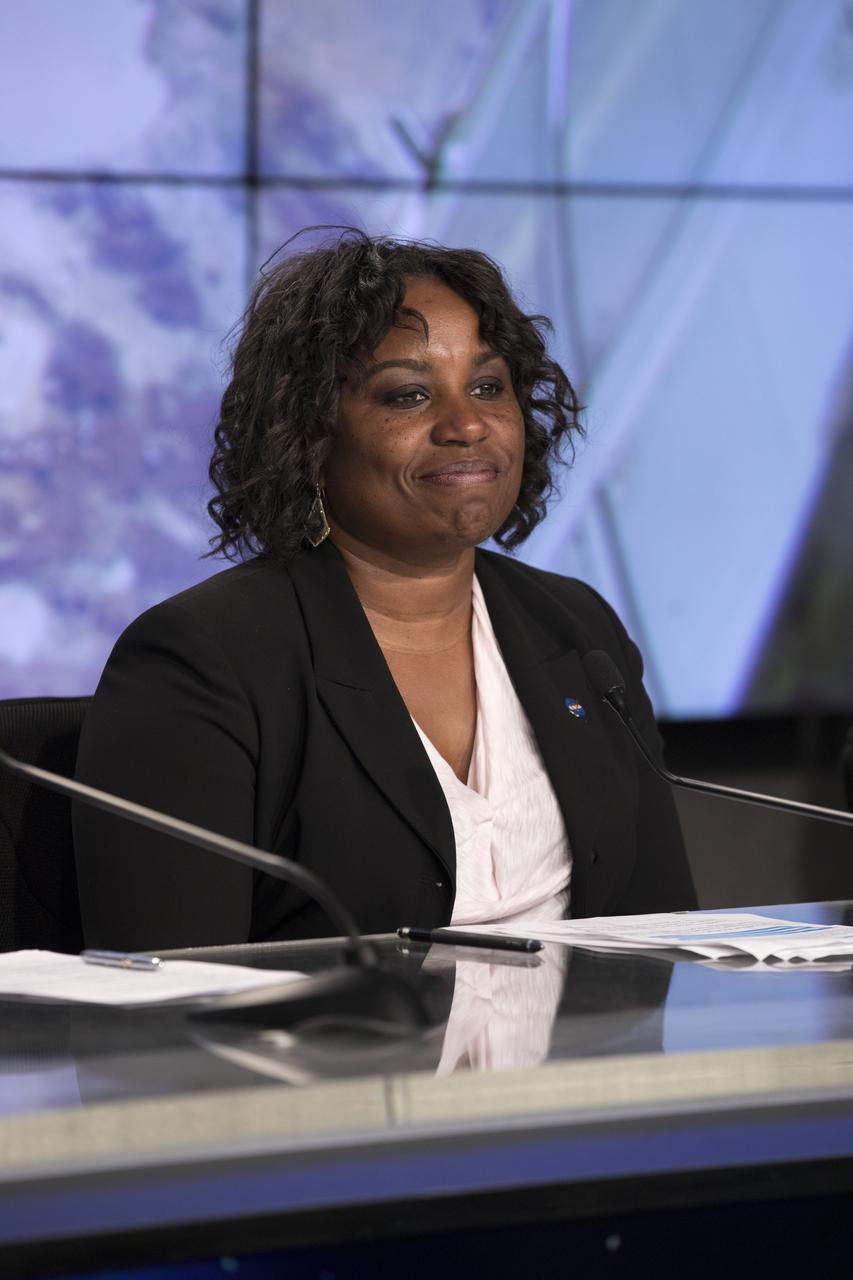
In the Kennedy Space Center’s Press Site auditorium, Camille Alleyne, associate program scientist for the International Space Station at NASA’s Johnson Space Center, speaks to members of the media during a prelaunch news conference for the SpaceX CRS-11 commercial resupply services mission to the International Space Station. A Dragon spacecraft is scheduled to be launched from Kennedy’s Launch Complex 39A on June 1 atop a SpaceX Falcon 9 rocket on the company's 11th Commercial Resupply Services mission to the space station.
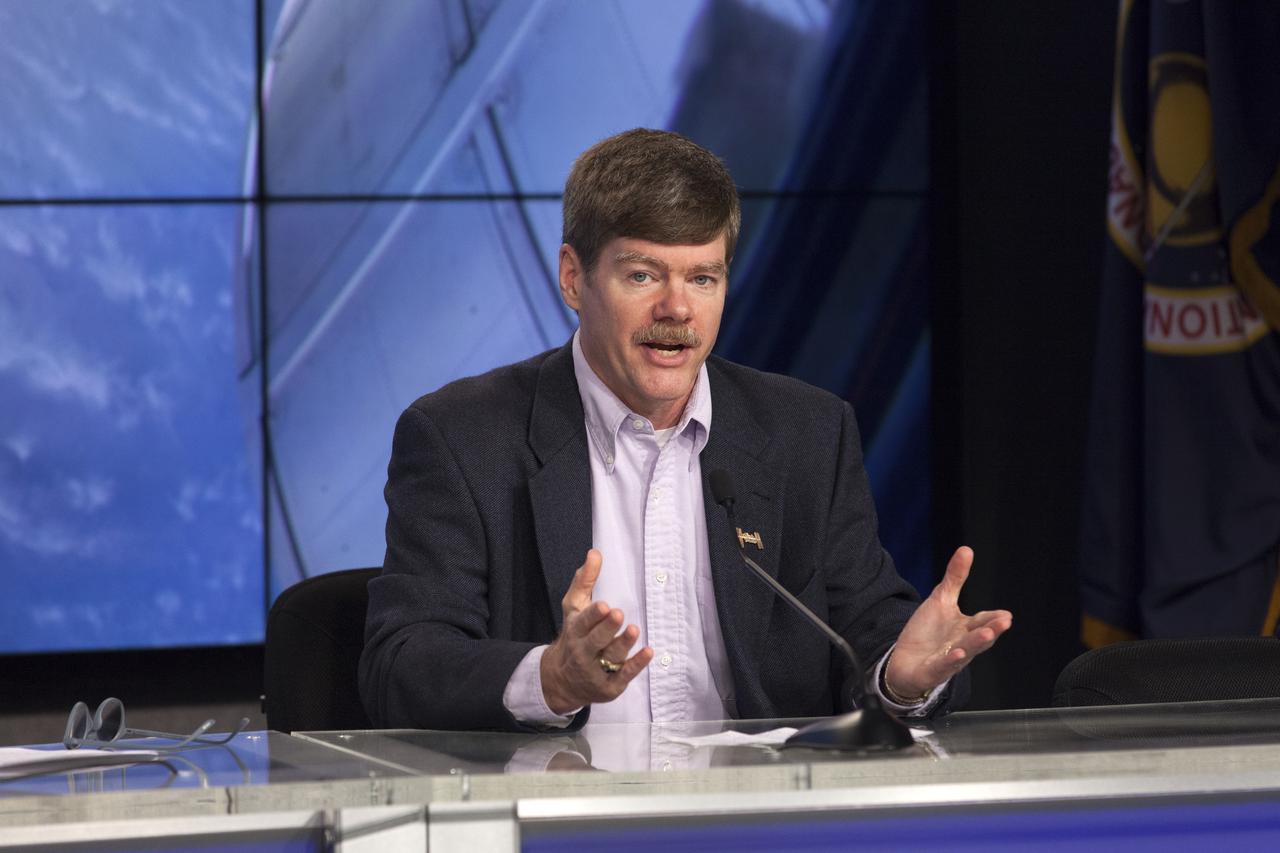
In the Kennedy Space Center’s Press Site auditorium, Pete Hasbrook, associate program scientist for the International Space Station Program, speaks to members of the media during a prelaunch news conference for the SpaceX CRS-12 commercial resupply services mission to the International Space Station. A Dragon spacecraft is scheduled to be launched from Kennedy’s Launch Complex 39A on Aug. 14 atop a SpaceX Falcon 9 rocket on the company's 12th Commercial Resupply Services mission to the space station.

In the Kennedy Space Center’s Press Site auditorium, members of the media participate with NASA and industry leaders in a prelaunch news conference for the SpaceX CRS-13 commercial resupply services mission to the International Space Station. A Dragon spacecraft is scheduled to be launched from Space Launch Complex 40 at Cape Canaveral Air Force Station at 11:46 a.m. EST, on Dec. 12, 2017. The SpaceX Falcon 9 rocket will lift off on the company's 13th Commercial Resupply Services mission to the space station.

In the Kennedy Space Center’s Press Site auditorium, Jessica Jensen, director of Dragon Mission Management for SpaceX, speaks to members of the media during a prelaunch news conference for the SpaceX CRS-15 Commercial Resupply Services mission to the International Space Station. A SpaceX Dragon spacecraft is scheduled to be launched from Space Launch Complex 40 at Cape Canaveral Air Force Station. The SpaceX Falcon 9 rocket will lift off on the company's 15th Commercial Resupply Services mission to the space station.

In the Kennedy Space Center’s Press Site auditorium, Dan Hartman, NASA deputy manager of the International Space Station Program, speaks to members of the media during a prelaunch news conference for the SpaceX CRS-12 commercial resupply services mission to the International Space Station. A Dragon spacecraft is scheduled to be launched from Kennedy’s Launch Complex 39A on Aug. 14 atop a SpaceX Falcon 9 rocket on the company's 12th Commercial Resupply Services mission to the space station.
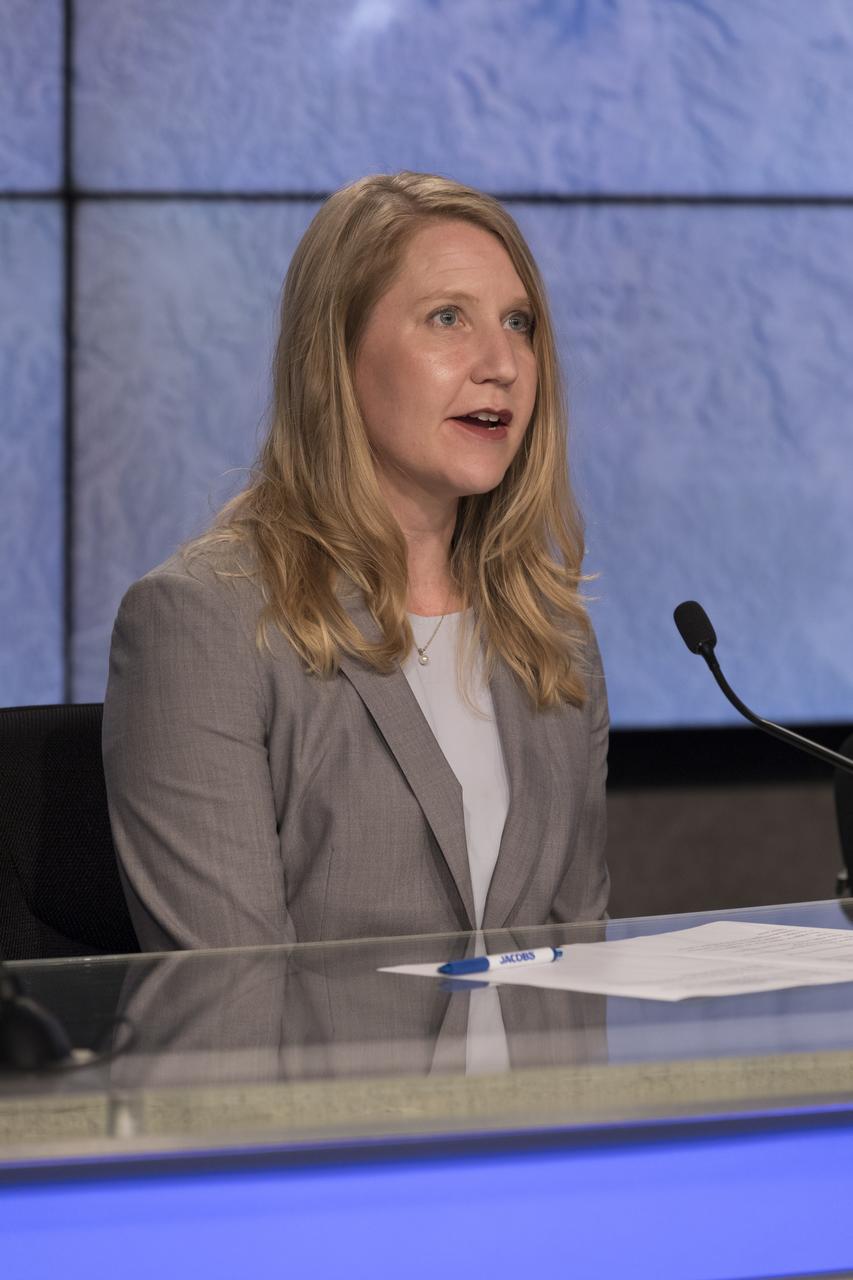
In the Kennedy Space Center’s Press Site auditorium, Stephanie Schierholz of NASA Communications, speaks to members of the media during a prelaunch news conference for the SpaceX CRS-15 Commercial Resupply Services mission to the International Space Station. A SpaceX Dragon spacecraft is scheduled to be launched from Space Launch Complex 40 at Cape Canaveral Air Force Station. The SpaceX Falcon 9 rocket will lift off on the company's 15th Commercial Resupply Services mission to the space station.

In the Kennedy Space Center’s Press Site auditorium, Cheryl Warner of NASA Communications speaks to members of the media during a prelaunch news conference for the SpaceX CRS-13 commercial resupply services mission to the International Space Station. A Dragon spacecraft is scheduled to be launched from Space Launch Complex 40 at Cape Canaveral Air Force Station at 11:46 a.m. EST, on Dec. 12, 2017. The SpaceX Falcon 9 rocket will lift off on the company's 13th Commercial Resupply Services mission to the space station.
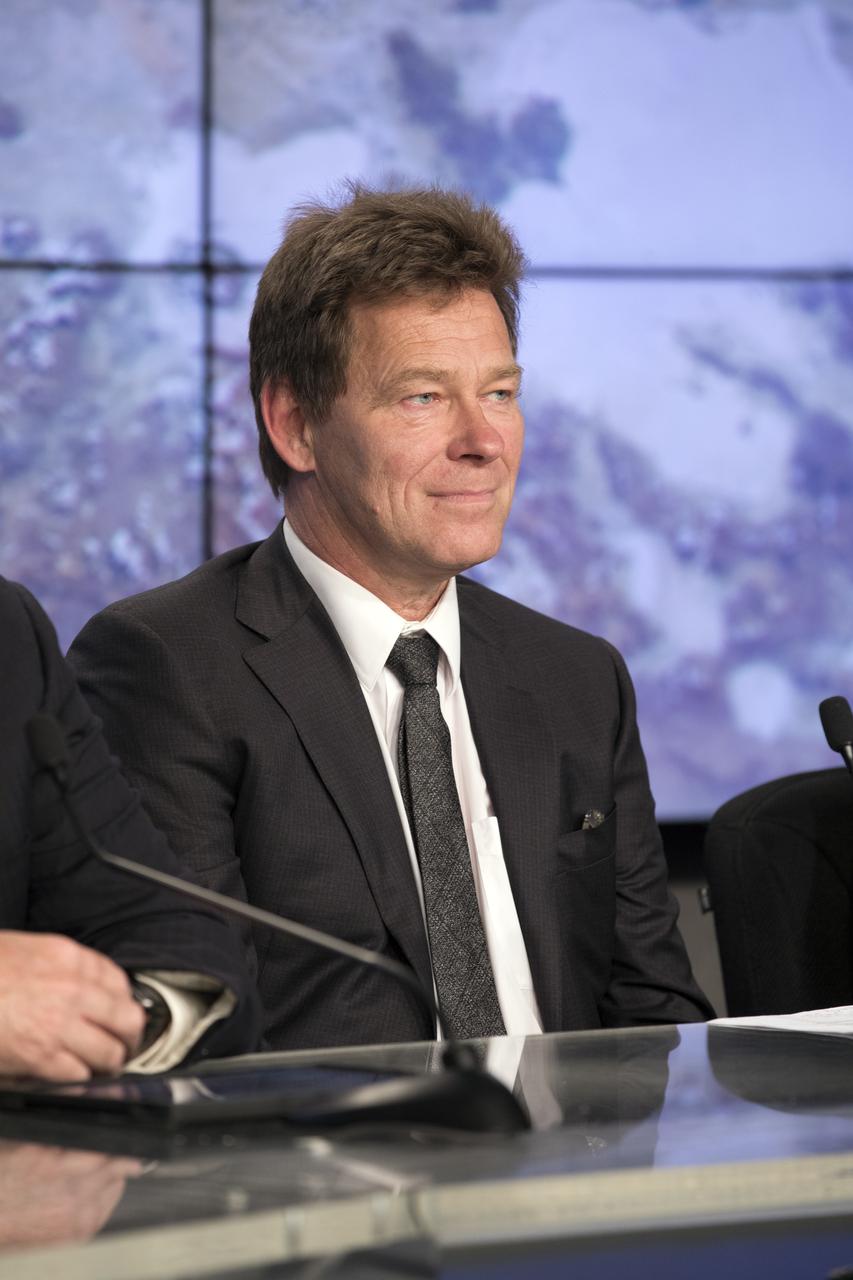
In the Kennedy Space Center’s Press Site auditorium, Hans Koenigsmann, vice president of Flight Reliability for SpaceX, speaks to members of the media during a prelaunch news conference for the SpaceX CRS-11 commercial resupply services mission to the International Space Station. A Dragon spacecraft is scheduled to be launched from Kennedy’s Launch Complex 39A on June 1 atop a SpaceX Falcon 9 rocket on the company's 11th Commercial Resupply Services mission to the space station.

In the Kennedy Space Center’s Press Site auditorium, Mike McAleenan, launch weather officer for the U.S. Air Force 45th Weather Squadron, speaks to members of the media during a prelaunch news conference for the SpaceX CRS-11 commercial resupply services mission to the International Space Station. A Dragon spacecraft is scheduled to be launched from Kennedy’s Launch Complex 39A on June 1 atop a SpaceX Falcon 9 rocket on the company's 11th Commercial Resupply Services mission to the space station.
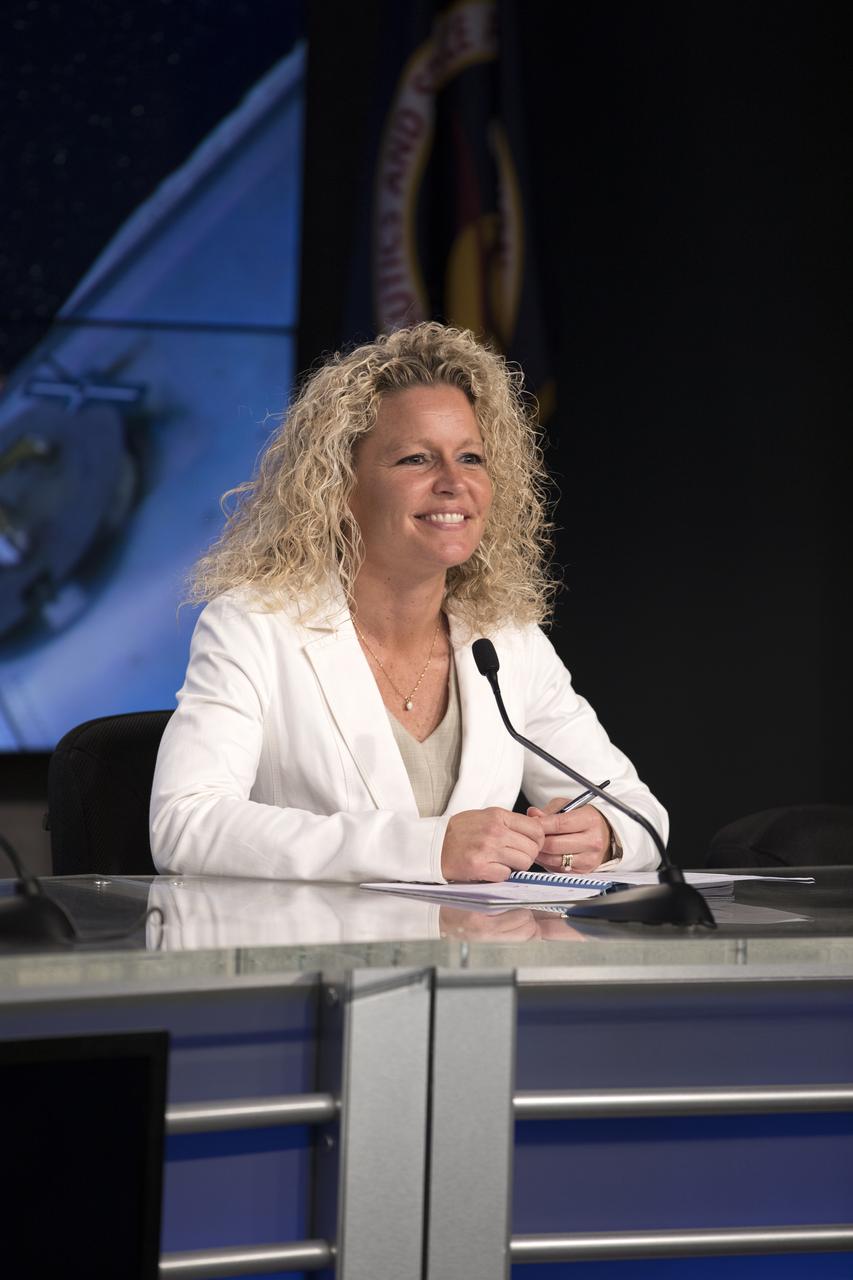
In the Press Site auditorium of NASA's Kennedy Space Center in Florida, Pam Underwood, manager of the Operations Integration Division of the Federal Aviation Administration Office of Commercial Space Transportation, speaks to the news media at a post-launch news conference following the liftoff of SpaceX CRS-10, a commercial resupply services mission to the International Space Station. SpaceX CRS-10 lifted off atop a Falcon 9 rocket from Kennedy's Launch Complex 39A at 9:39 a.m. EST.

In the Kennedy Space Center’s Press Site auditorium, Hans Koenigsmann, vice president of Build and Flight Reliability for SpaceX, speaks to members of the media during a prelaunch news conference for the SpaceX CRS-12 commercial resupply services mission to the International Space Station. A Dragon spacecraft is scheduled to be launched from Kennedy’s Launch Complex 39A on Aug. 14 atop a SpaceX Falcon 9 rocket on the company's 12th Commercial Resupply Services mission to the space station.
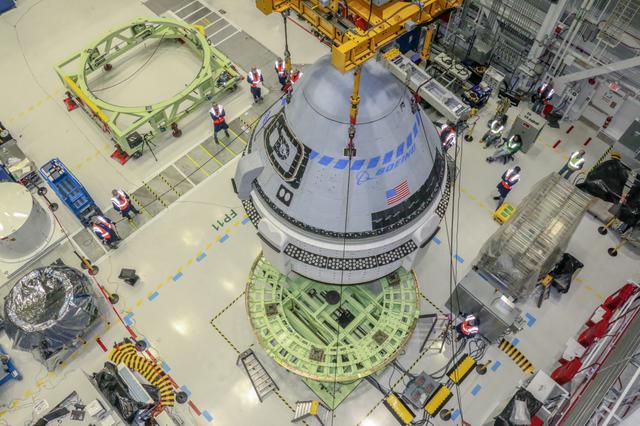
Boeing’s CST-100 Starliner undergoes weight and center of gravity checks in the Commercial Crew and Cargo Processing Facility at Kennedy Space Center in Florida on July 13, 2021. The operations are in preparation for the company’s second Orbital Flight Test (OFT-2), as part of NASA’s Commercial Crew Program.

The upgraded version of SpaceX’s Cargo Dragon spacecraft, Dragon 2, is seen atop a Falcon 9 rocket on Dec. 2, 2020, as they prepare to be rolled out to Launch Complex 39A at NASA’s Kennedy Space Center in Florida for the company’s 21st Commercial Resupply Services (CRS-21) launch. The first launch for SpaceX under NASA’s second Commercial Resupply Services contract, CRS-21 will deliver critical supplies, equipment, and material to support a variety of science and research investigations that will take place aboard the International Space Station. Liftoff is scheduled for 11:39 a.m. EST on Saturday, Dec. 5.

A SpaceX Falcon 9 rocket, topped with the upgraded version of the Cargo Dragon spacecraft, is seen inside the company’s hangar at NASA’s Kennedy Space Center in Florida on Dec. 2, 2020, prior to being rolled out to the launch pad in preparation for the 21st Commercial Resupply Services (CRS-21) launch. The first launch for SpaceX under NASA’s second Commercial Resupply Services contract, CRS-21 will deliver critical supplies, equipment, and material to support a variety of science and research investigations that will take place aboard the International Space Station. Liftoff is scheduled for 11:39 a.m. EST on Saturday, Dec. 5, from Kennedy’s Launch Complex 39A.

A SpaceX Falcon 9 rocket, topped with the upgraded version of the Cargo Dragon spacecraft, is seen inside the company’s hangar at NASA’s Kennedy Space Center in Florida on Dec. 2, 2020, prior to being rolled out to the launch pad in preparation for the 21st Commercial Resupply Services (CRS-21) launch. The first launch for SpaceX under NASA’s second Commercial Resupply Services contract, CRS-21 will deliver critical supplies, equipment, and material to support a variety of science and research investigations that will take place aboard the International Space Station. Liftoff is scheduled for 11:39 a.m. EST on Saturday, Dec. 5, from Kennedy’s Launch Complex 39A.
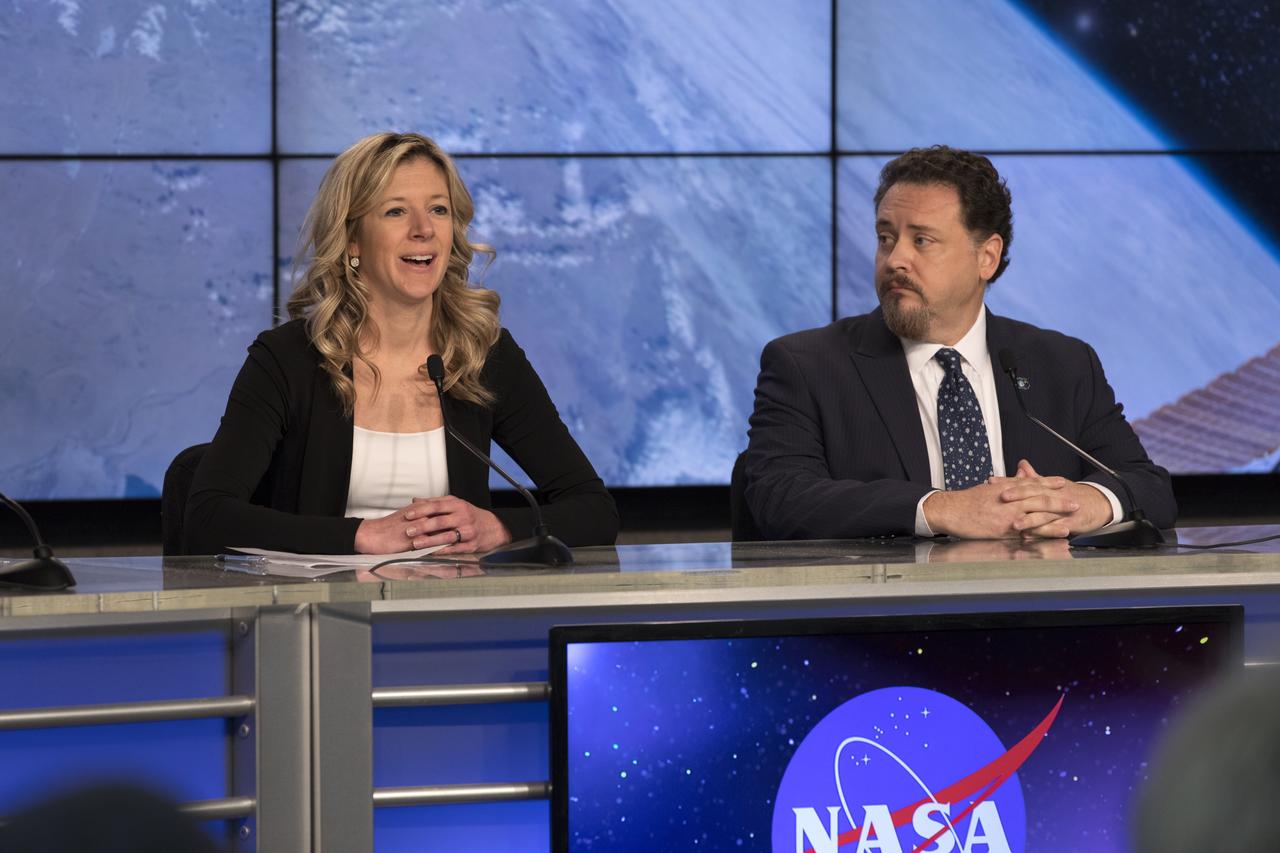
In the Kennedy Space Center’s Press Site auditorium, Jessica Jensen, SpaceX director of Dragon Mission Management, left, and Kirt Costello, deputy chief scientist for the International Space Station Program Science Office at NASA’s Johnson Space Center in Houston, speak to members of the media during a prelaunch news conference for the SpaceX CRS-13 commercial resupply services mission to the International Space Station. A Dragon spacecraft is scheduled to be launched from Space Launch Complex 40 at Cape Canaveral Air Force Station at 11:46 a.m. EST, on Dec. 12, 2017. The SpaceX Falcon 9 rocket will lift off on the company's 13th Commercial Resupply Services mission to the space station.
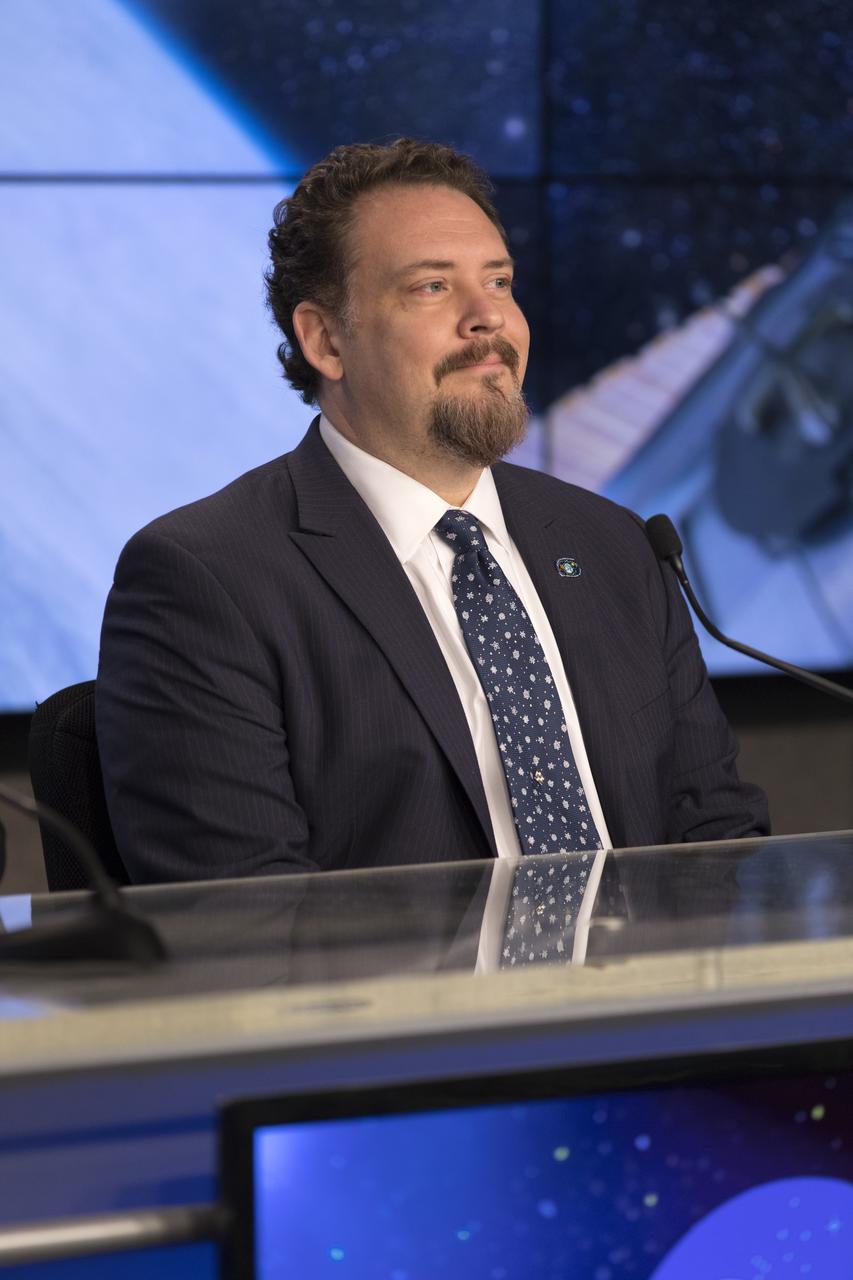
In the Kennedy Space Center’s Press Site auditorium, Kirt Costello, deputy chief scientist for the International Space Station Program Science Office at NASA’s Johnson Space Center in Houston, speaks to members of the media during a prelaunch news conference for the SpaceX CRS-13 commercial resupply services mission to the International Space Station. A Dragon spacecraft is scheduled to be launched from Space Launch Complex 40 at Cape Canaveral Air Force Station at 11:46 a.m. EST, on Dec. 12, 2017. The SpaceX Falcon 9 rocket will lift off on the company's 13th Commercial Resupply Services mission to the space station.
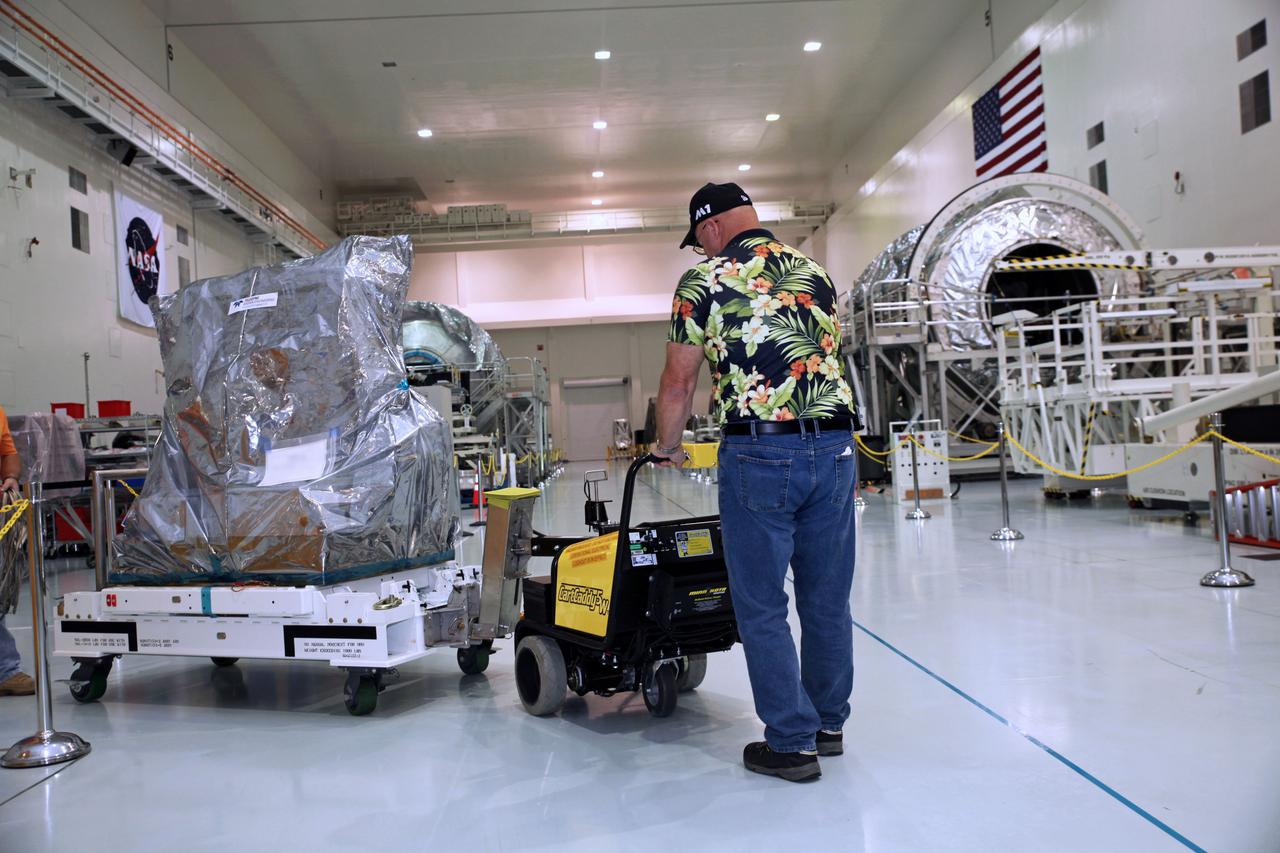
Inside the Space Station Processing Facility high bay at NASA's Kennedy Space Center in Florida, the Multiple User System for Earth Sensing, or MUSES, payload is being prepared for transfer out of the high bay. MUSES will be delivered to the International Space Station aboard the SpaceX Dragon cargo carrier on the company’s 11th commercial resupply services mission to the space station. MUSES, developed by Teledyne Brown, is part of the company's new commercial space-based digital imaging business. MUSES hosts earth-viewing instruments, such as high-resolution digital cameras, hyperspectral imagers, and provides precision pointing and other accommodations.
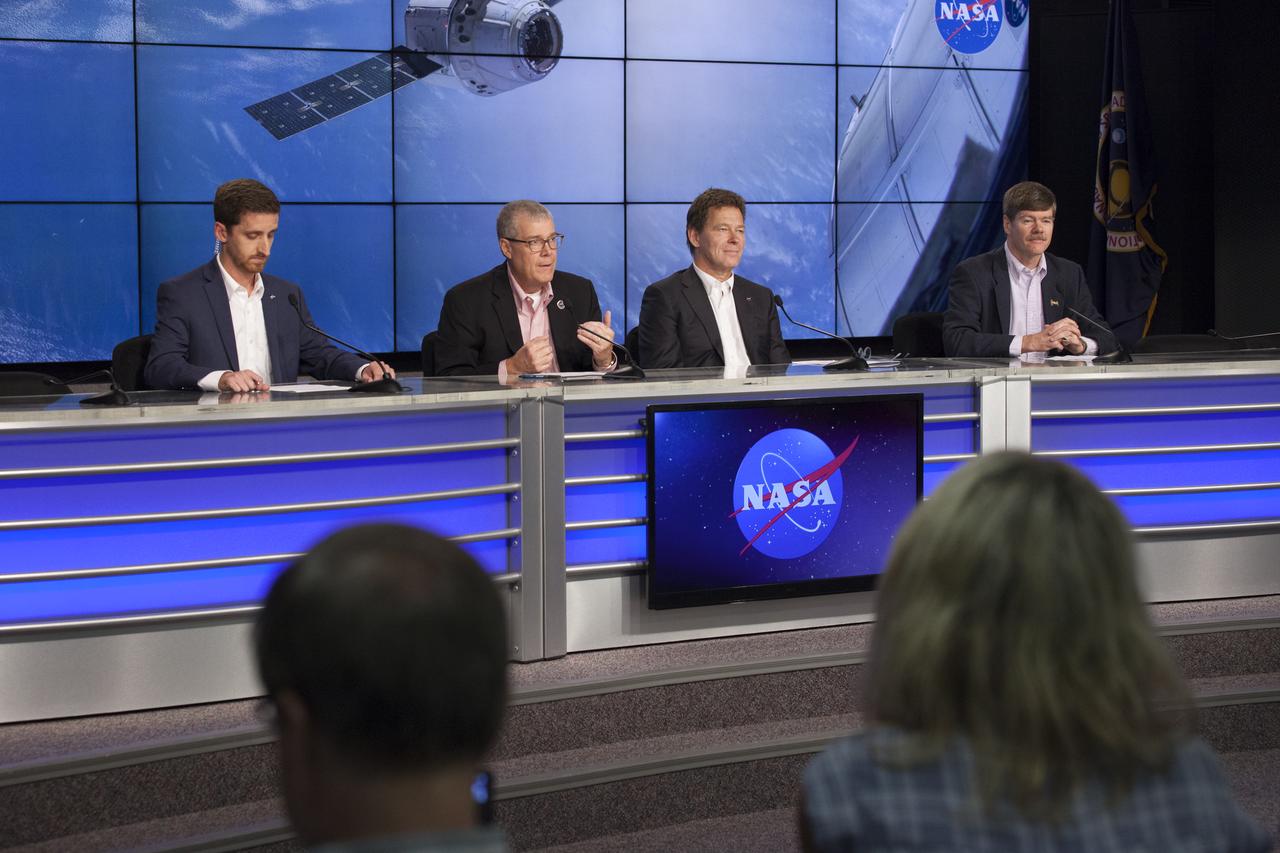
In the Kennedy Space Center’s Press Site auditorium, agency and industry leaders speak to members of the media during a prelaunch news conference for the SpaceX CRS-12 commercial resupply services mission to the International Space Station. From left are: Josh Finch of NASA Communications; Dan Hartman, NASA deputy manager of the International Space Station Program, Hans Koenigsmann, vice president of Build and Flight Reliability for SpaceX, and Pete Hasbrook, associate program scientist for the International Space Station Program. A Dragon spacecraft is scheduled to be launched from Kennedy’s Launch Complex 39A on Aug. 14 atop a SpaceX Falcon 9 rocket on the company's 12th Commercial Resupply Services mission to the space station.
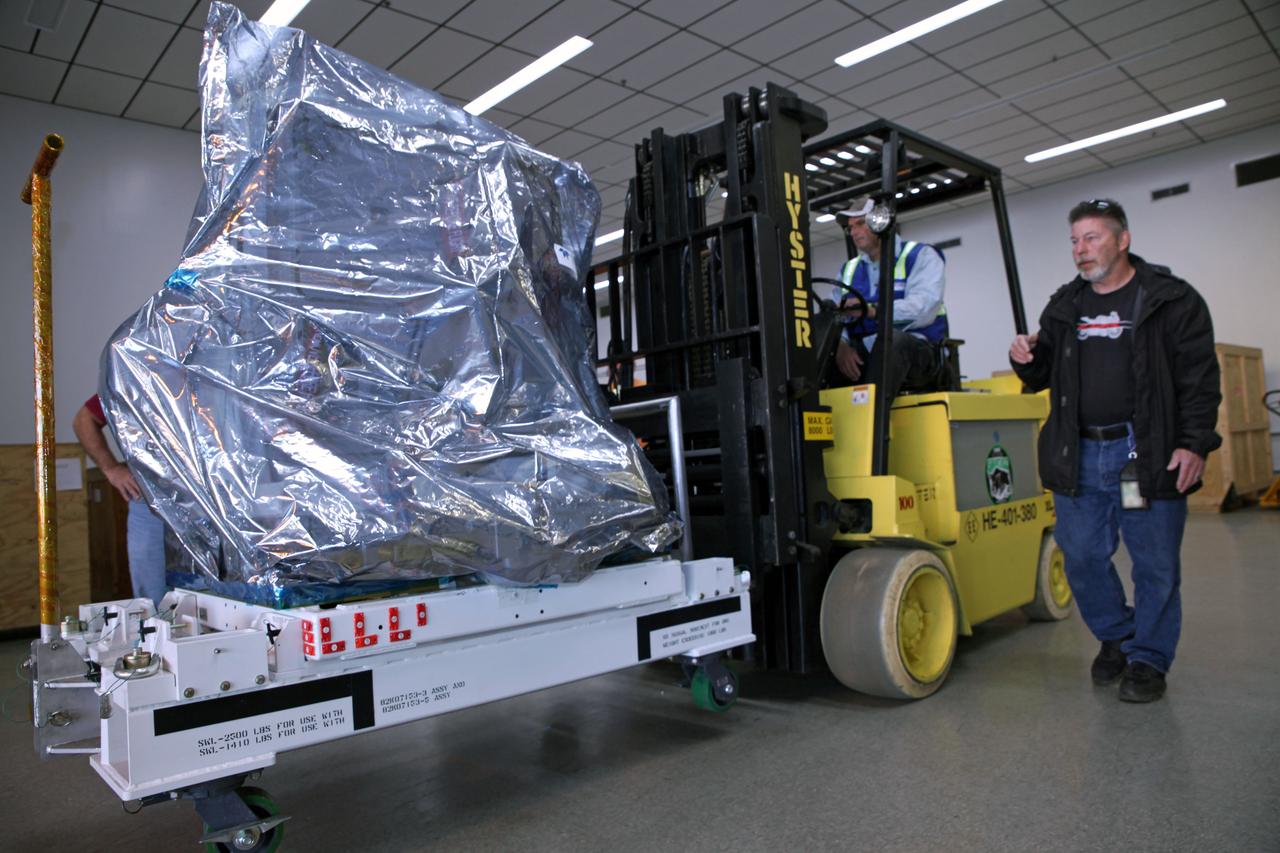
Technicians use a Hyster forklift to move the Multiple User System for Earth Sensing, or MUSES, payload out of the Space Station Processing Facility high bay at NASA's Kennedy Space Center in Florida. MUSES will be delivered to the International Space Station aboard the SpaceX Dragon cargo carrier on the company’s 11th commercial resupply services mission to the space station. MUSES, developed by Teledyne Brown, is part of the company's new commercial space-based digital imaging business. MUSES hosts earth-viewing instruments, such as high-resolution digital cameras, hyperspectral imagers, and provides precision pointing and other accommodations.
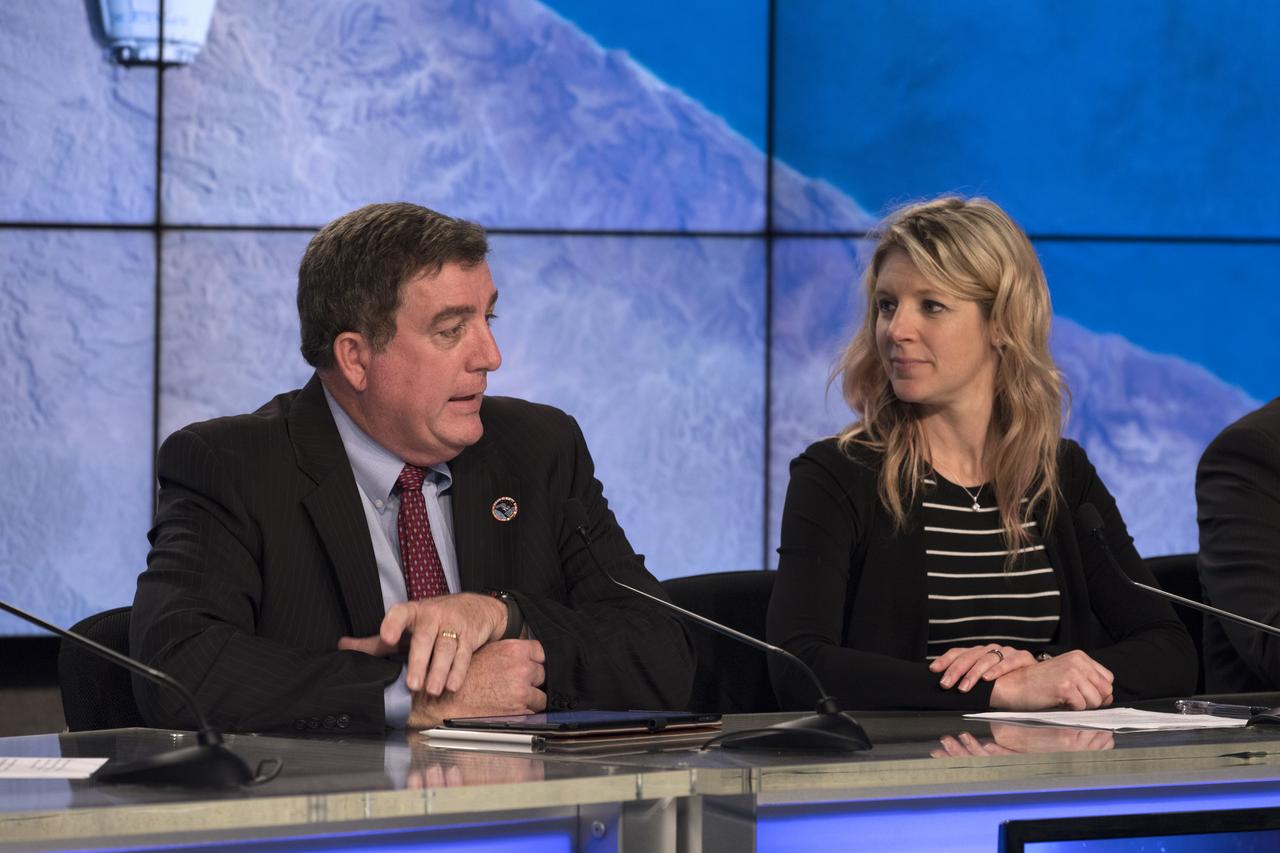
In the Kennedy Space Center’s Press Site auditorium, Kirk Shireman, manager of the International Space Station Program, left, and Jessica Jensen, director of Dragon Mission Management for SpaceX, speak to members of the media during a prelaunch news conference for the SpaceX CRS-15 Commercial Resupply Services mission to the International Space Station. A SpaceX Dragon spacecraft is scheduled to be launched from Space Launch Complex 40 at Cape Canaveral Air Force Station. The SpaceX Falcon 9 rocket will lift off on the company's 15th Commercial Resupply Services mission to the space station.
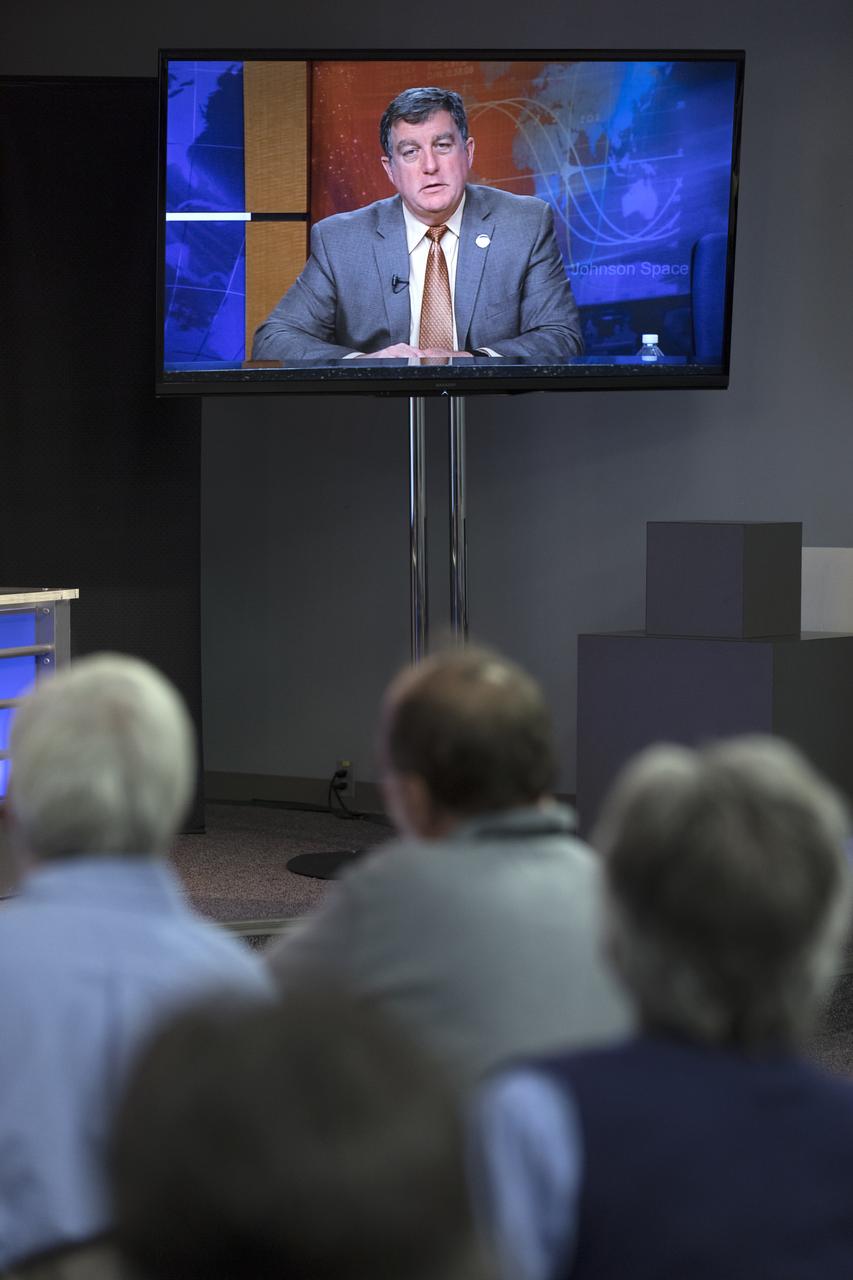
In the Kennedy Space Center’s Press Site auditorium, Kirk Shireman, International Space Station Program manager at Johnson, participates by video link speaking to members of the media during a prelaunch news conference for the SpaceX CRS-13 commercial resupply services mission to the International Space Station. A Dragon spacecraft is scheduled to be launched from Space Launch Complex 40 at Cape Canaveral Air Force Station at 11:46 a.m. EST, on Dec. 12, 2017. The SpaceX Falcon 9 rocket will lift off on the company's 13th Commercial Resupply Services mission to the space station.
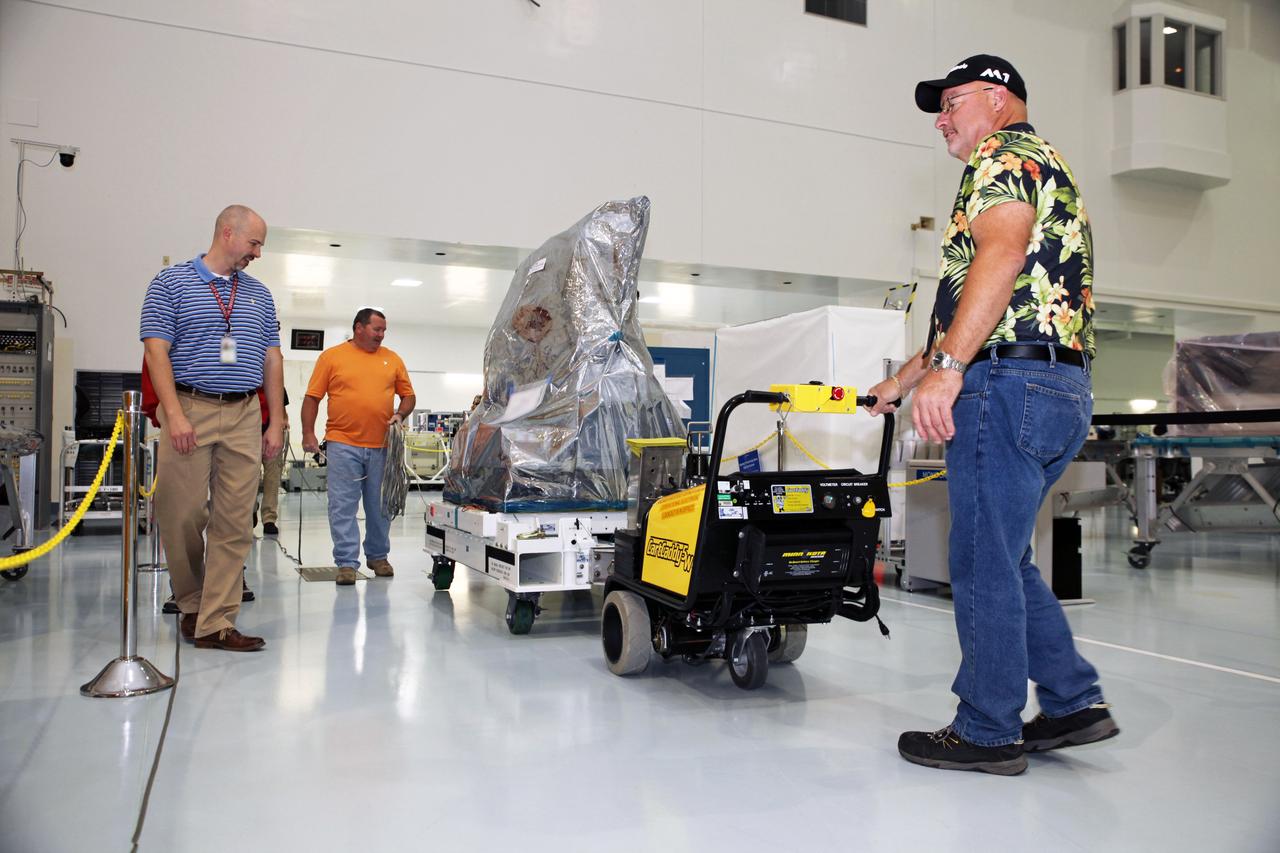
Inside the Space Station Processing Facility high bay at NASA's Kennedy Space Center in Florida, the Multiple User System for Earth Sensing, or MUSES, payload is being prepared for transfer out of the high bay. MUSES will be delivered to the International Space Station aboard the SpaceX Dragon cargo carrier on the company’s 11th commercial resupply services mission to the space station. MUSES, developed by Teledyne Brown, is part of the company's new commercial space-based digital imaging business. MUSES hosts earth-viewing instruments, such as high-resolution digital cameras, hyperspectral imagers, and provides precision pointing and other accommodations.
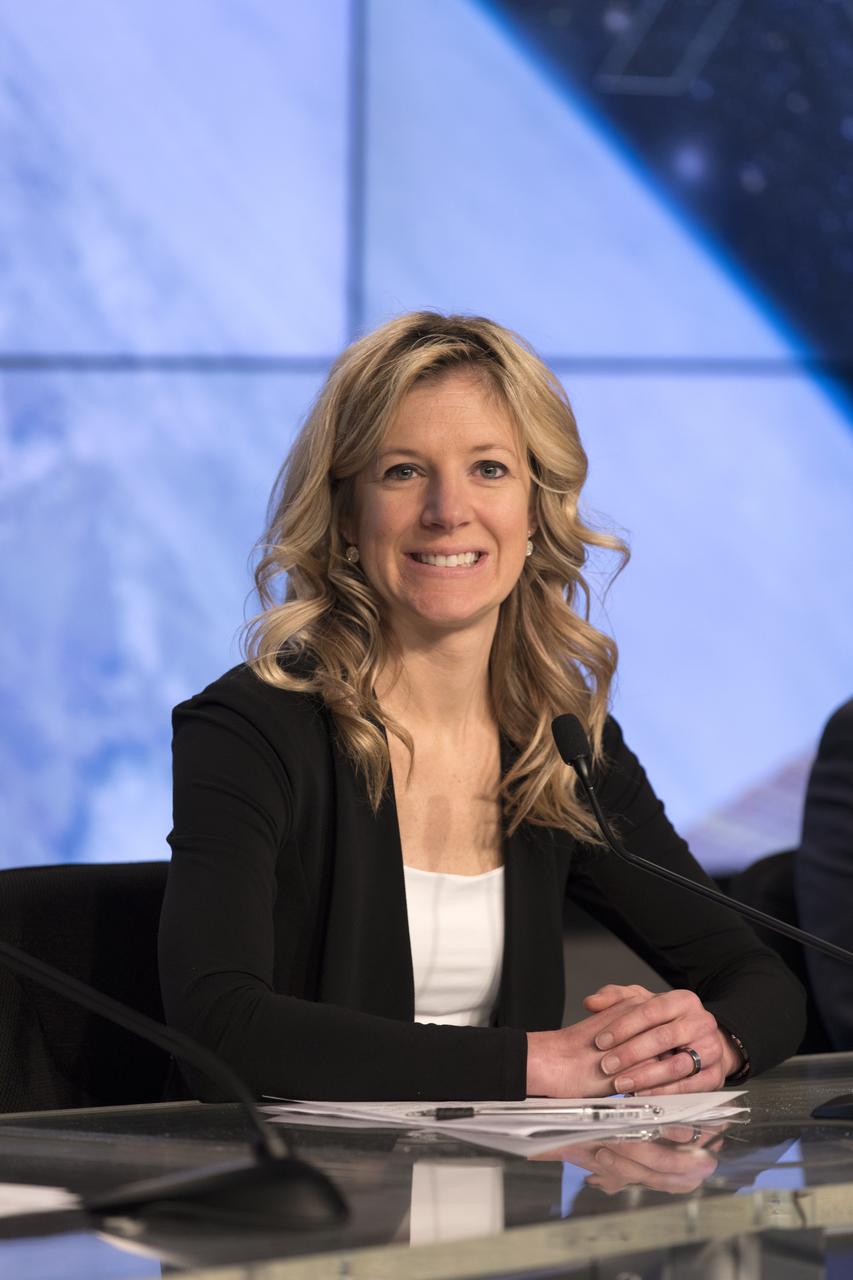
In the Kennedy Space Center’s Press Site auditorium, Jessica Jensen, SpaceX director of Dragon Mission Management, speaks to members of the media during a prelaunch news conference for the SpaceX CRS-13 commercial resupply services mission to the International Space Station. A Dragon spacecraft is scheduled to be launched from Space Launch Complex 40 at Cape Canaveral Air Force Station at 11:46 a.m. EST, on Dec. 12, 2017. The SpaceX Falcon 9 rocket will lift off on the company's 13th Commercial Resupply Services mission to the space station.
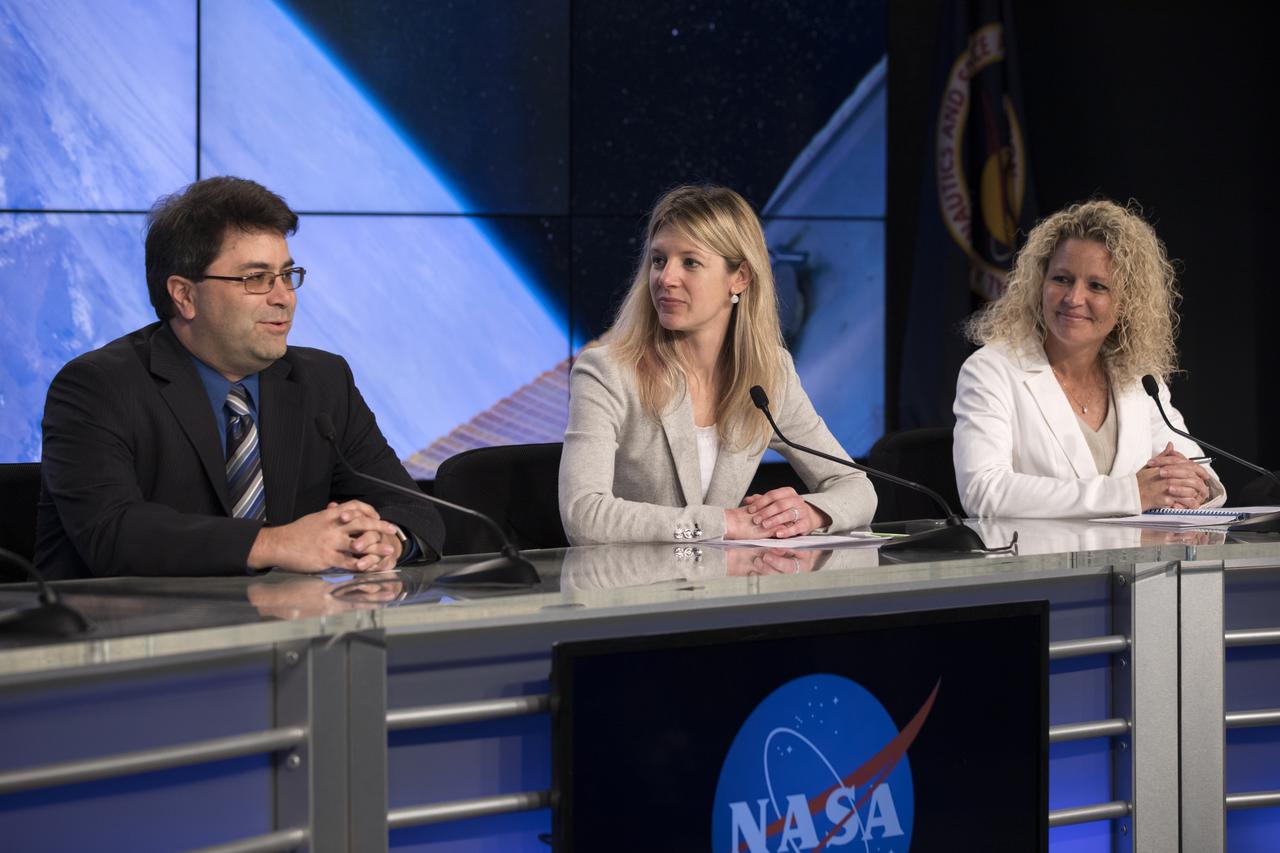
In the Press Site auditorium of NASA's Kennedy Space Center in Florida, NASA and industry leaders speak to media at a post-launch news conference following the liftoff of SpaceX CRS-10, a commercial resupply services mission to the International Space Station. From left are: William Spetch, deputy manager of the International Space Station Transportation Office; Jessica Jensen, Dragon mission manager for SpaceX; and Pam Underwood, manager of the Operations Integration Division of the Federal Aviation Administration Office of Commercial Space Transportation. SpaceX CRS-10 lifted off atop a Falcon 9 rocket from Kennedy's Launch Complex 39A at 9:39 a.m. EST.
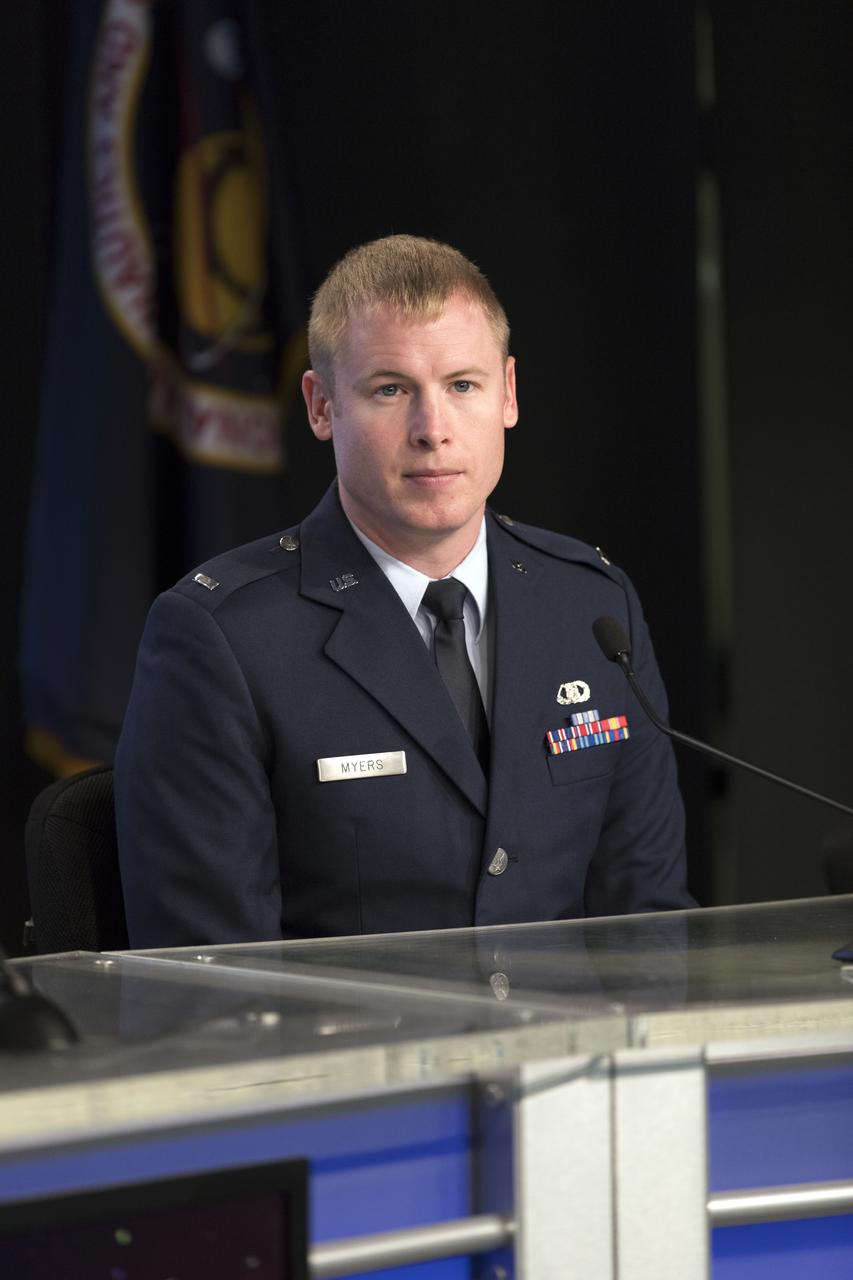
In the Kennedy Space Center’s Press Site auditorium, Lt. David Myers, weather officer for the 45th Weather Squadron, speaks to members of the media during a prelaunch news conference for the SpaceX CRS-13 commercial resupply services mission to the International Space Station. A Dragon spacecraft is scheduled to be launched from Space Launch Complex 40 at Cape Canaveral Air Force Station at 11:46 a.m. EST, on Dec. 12, 2017. The SpaceX Falcon 9 rocket will lift off on the company's 13th Commercial Resupply Services mission to the space station.
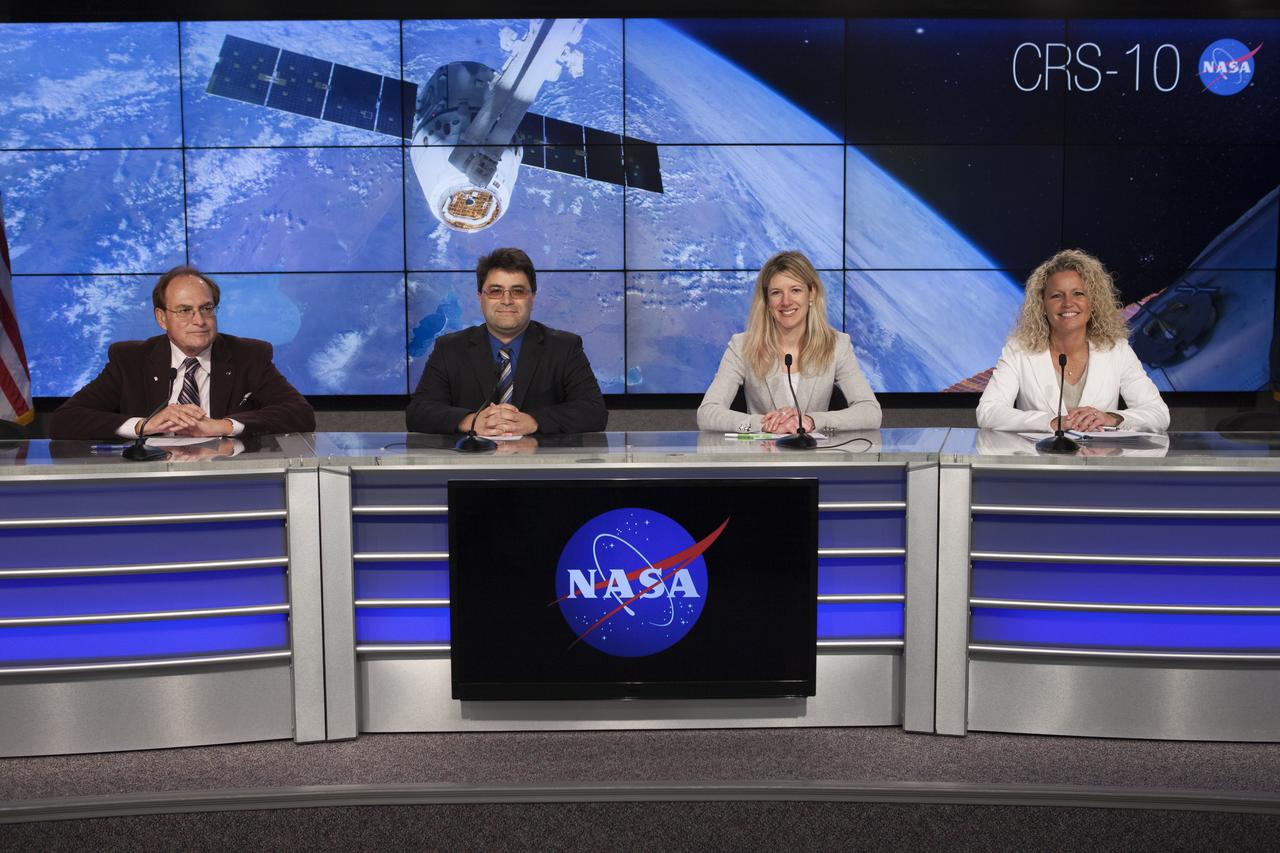
In the Press Site auditorium of NASA's Kennedy Space Center in Florida, NASA and industry leaders speak to media at a post-launch news conference following the liftoff of SpaceX CRS-10, a commercial resupply services mission to the International Space Station. From left are: George Diller, NASA Communications; William Spetch, deputy manager of the International Space Station Transportation Office; Jessica Jensen, Dragon mission manager for SpaceX; and Pam Underwood, manager of the Operations Integration Division of the Federal Aviation Administration Office of Commercial Space Transportation. SpaceX CRS-10 lifted off atop a Falcon 9 rocket from Kennedy's Launch Complex 39A at 9:39 a.m. EST.
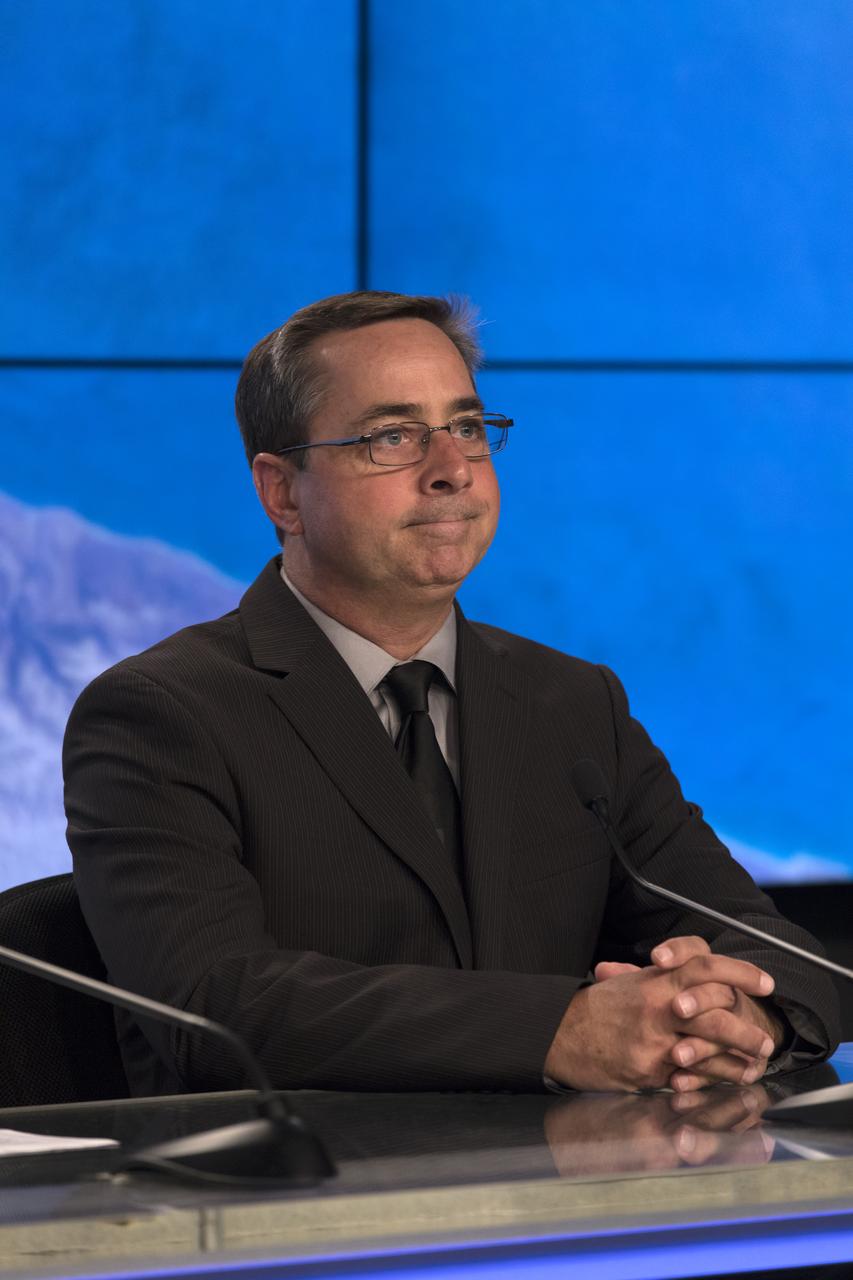
In the Kennedy Space Center’s Press Site auditorium, Mike McAleenan, launch weather officer for the U.S. Air Force 45th Weather Squadron at Cape Canaveral Air Force Station, speaks to members of the media during a prelaunch news conference for the SpaceX CRS-15 Commercial Resupply Services mission to the International Space Station. A SpaceX Dragon spacecraft is scheduled to be launched from Space Launch Complex 40 at Cape Canaveral Air Force Station. The SpaceX Falcon 9 rocket will lift off on the company's 15th Commercial Resupply Services mission to the space station.
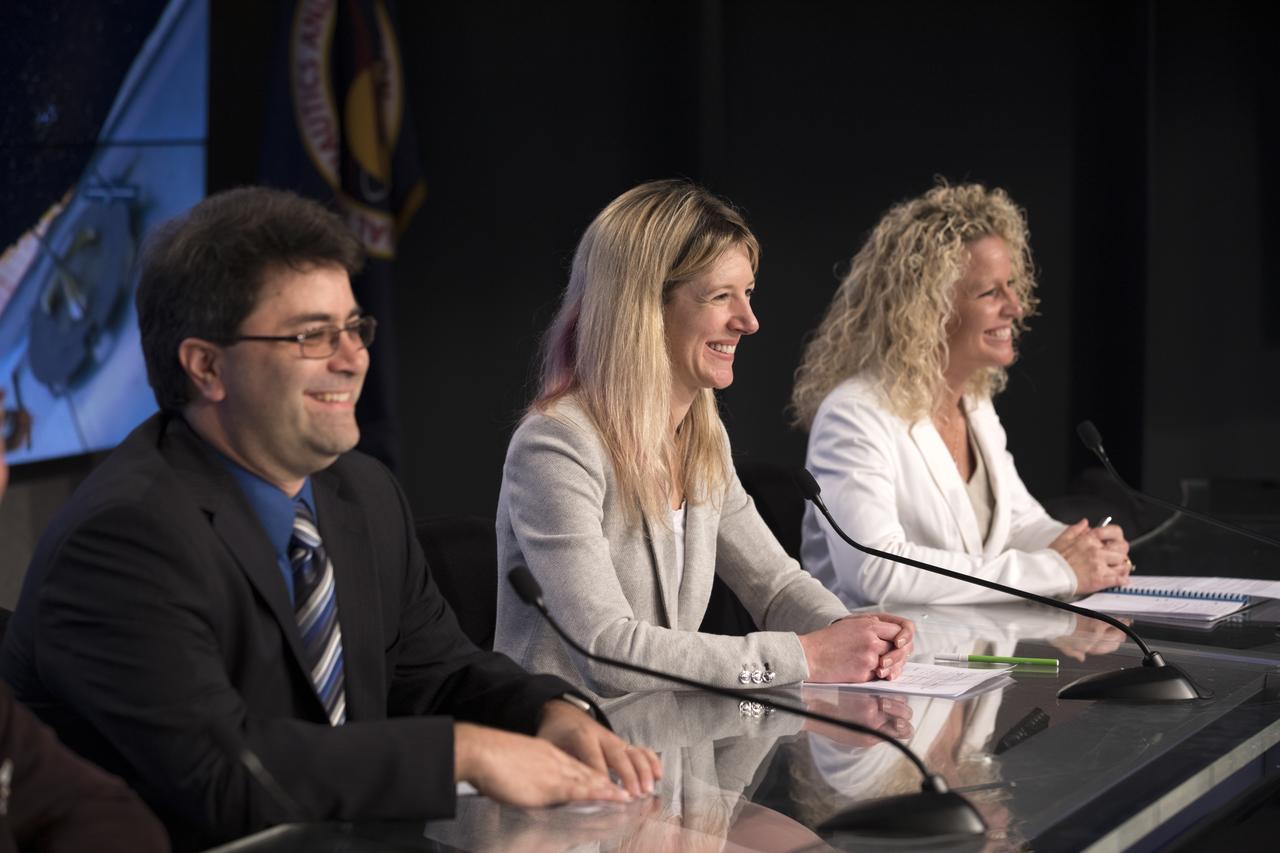
In the Press Site auditorium of NASA's Kennedy Space Center in Florida, NASA and industry leaders speak to media at a post-launch news conference following the liftoff of SpaceX CRS-10, a commercial resupply services mission to the International Space Station. From left are: William Spetch, deputy manager of the International Space Station Transportation Office; Jessica Jensen, Dragon mission manager for SpaceX; and Pam Underwood, manager of the Operations Integration Division of the Federal Aviation Administration Office of Commercial Space Transportation. SpaceX CRS-10 lifted off atop a Falcon 9 rocket from Kennedy's Launch Complex 39A at 9:39 a.m. EST.
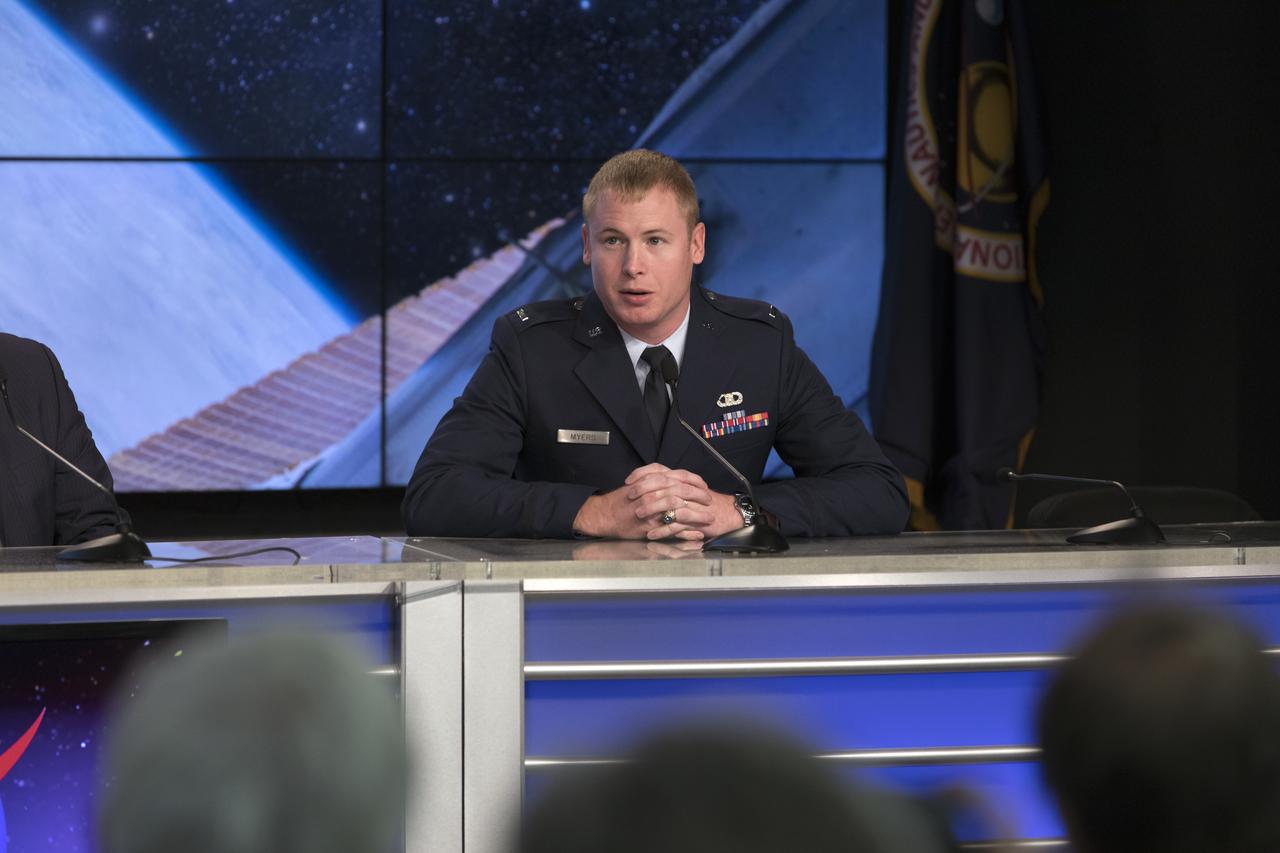
In the Kennedy Space Center’s Press Site auditorium, Lt. David Myers, weather officer for the 45th Weather Squadron, speaks to members of the media during a prelaunch news conference for the SpaceX CRS-13 commercial resupply services mission to the International Space Station. A Dragon spacecraft is scheduled to be launched from Space Launch Complex 40 at Cape Canaveral Air Force Station at 11:46 a.m. EST, on Dec. 12, 2017. The SpaceX Falcon 9 rocket will lift off on the company's 13th Commercial Resupply Services mission to the space station.
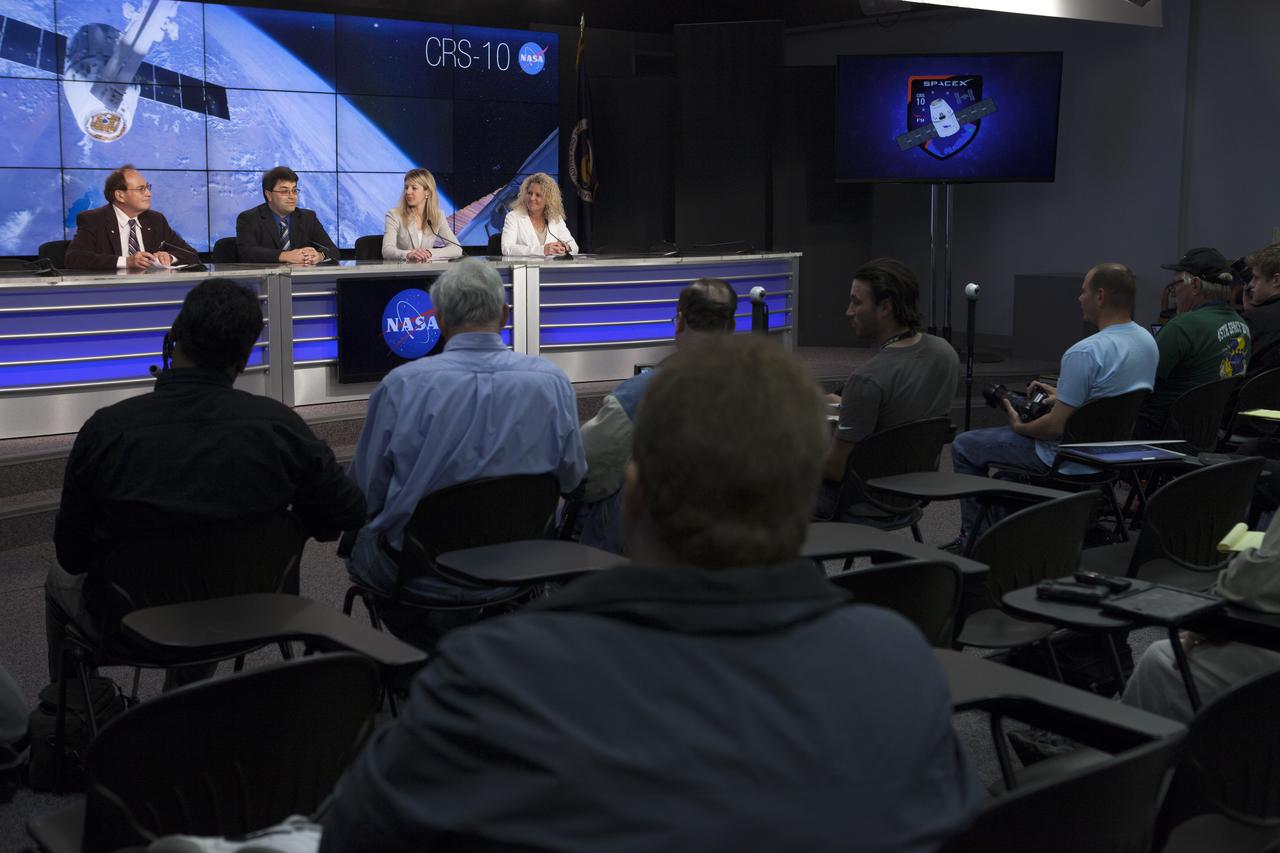
In the Press Site auditorium of NASA's Kennedy Space Center in Florida, NASA and industry leaders speak to media at a post-launch news conference following the liftoff of SpaceX CRS-10, a commercial resupply services mission to the International Space Station. From left are: George Diller, NASA Communications; William Spetch, deputy manager of the International Space Station Transportation Office; Jessica Jensen, Dragon mission manager for SpaceX; and Pam Underwood, manager of the Operations Integration Division of the Federal Aviation Administration Office of Commercial Space Transportation. SpaceX CRS-10 lifted off atop a Falcon 9 rocket from Kennedy's Launch Complex 39A at 9:39 a.m. EST.
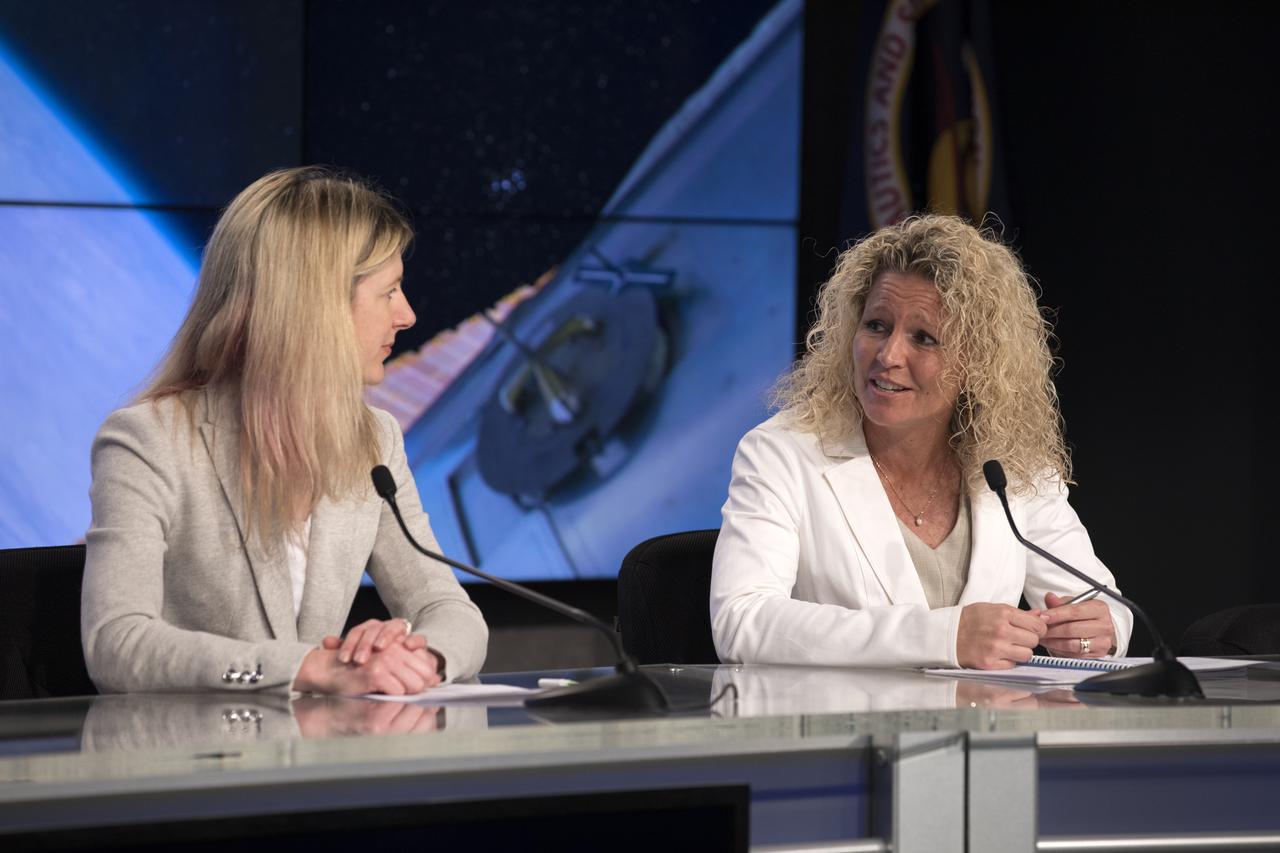
In the Press Site auditorium of NASA's Kennedy Space Center in Florida, NASA and industry leaders speak to media at a post-launch news conference following the liftoff of SpaceX CRS-10, a commercial resupply services mission to the International Space Station. From left are: Jessica Jensen, Dragon mission manager for SpaceX; and Pam Underwood, manager of the Operations Integration Division of the Federal Aviation Administration Office of Commercial Space Transportation. SpaceX CRS-10 lifted off atop a Falcon 9 rocket from Kennedy's Launch Complex 39A at 9:39 a.m. EST.
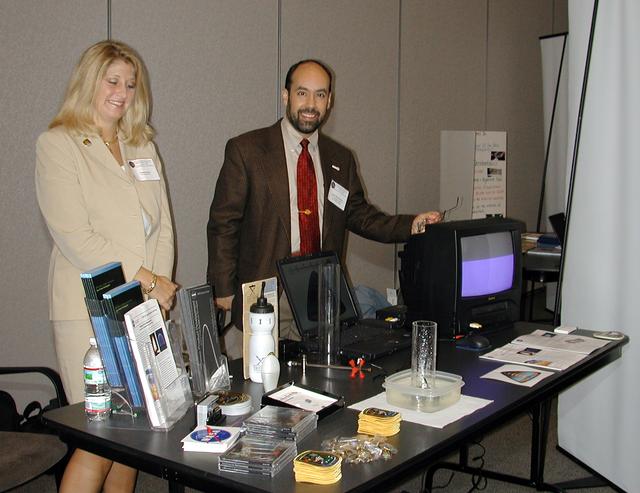
Christi Parker of CST Inc. of Huntsville, AL, and Angel Abbud-Madrid, of the Center for Commercial Applications of Combustion in Space (CCACS) at the Colorado school of Mines, prepare a demonstration of the CCACS Water Mist experiment scheduled to fly on the STS-107 space research mission in 2003. The activity was part of the Space Research and You education event held by NASA's Office of Biological and Physical Research on June 25, 2002, in Arlington, VA, to highlight the research that will be conducted on STS-107. (Digital camera image; no film original.
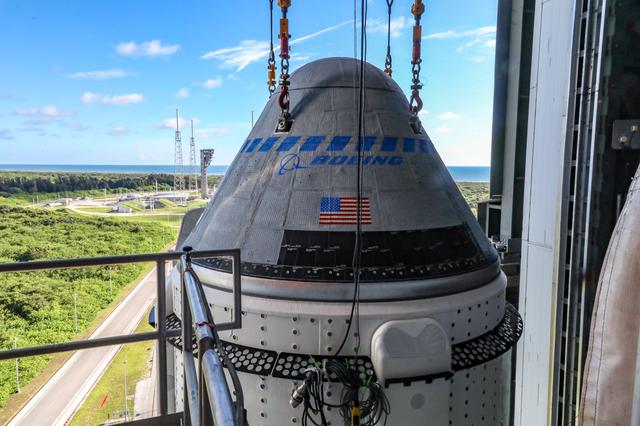
The Boeing CST-100 Starliner spacecraft is secured atop a United Launch Alliance Atlas V rocket at the Vertical Integration Facility at Space Launch Complex 41 at Cape Canaveral Space Force Station in Florida on July 17, 2021. Starliner will launch on the Atlas V for Boeing’s second Orbital Flight Test (OFT-2) for NASA’s Commercial Crew Program. The spacecraft rolled out from Boeing’s Commercial Crew and Cargo Processing Facility at NASA’s Kennedy Space Center earlier in the day.
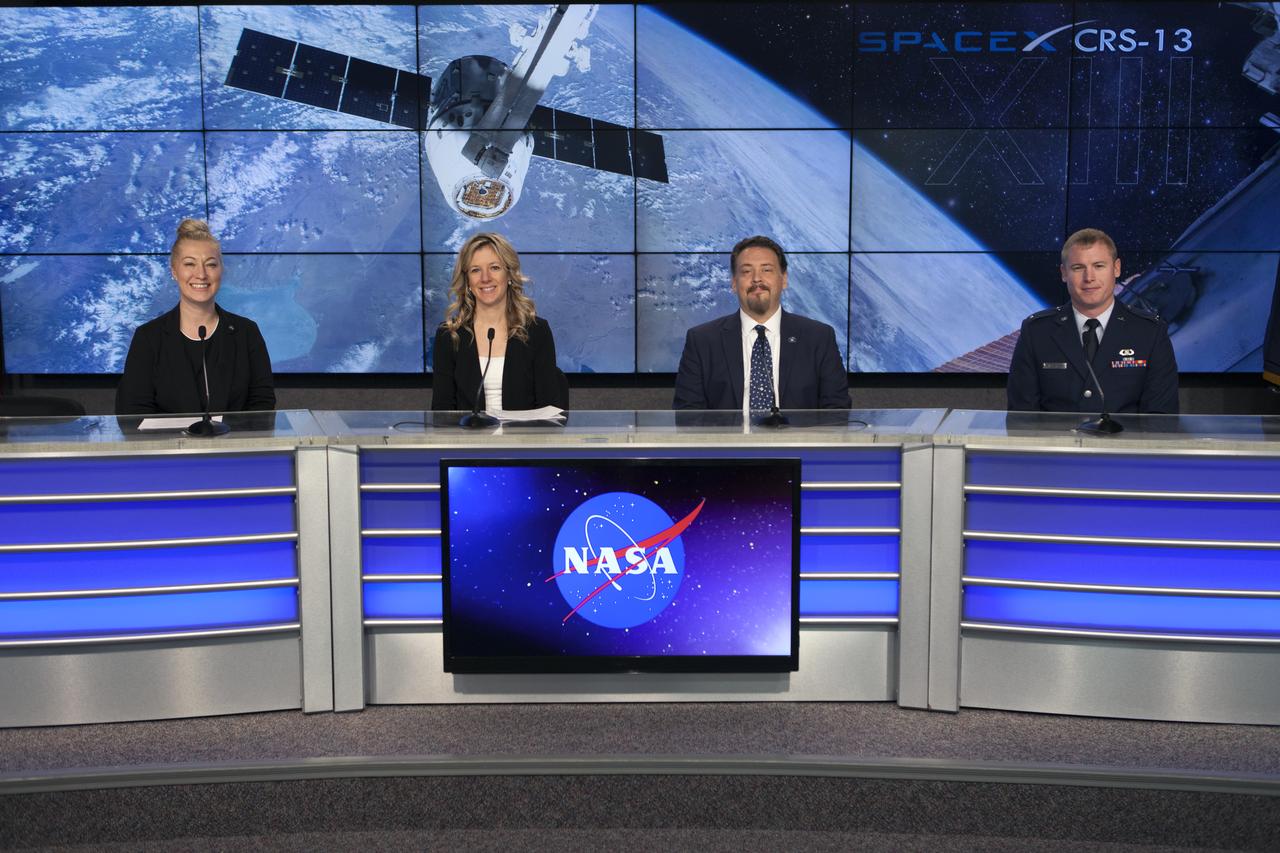
In the Kennedy Space Center’s Press Site auditorium, NASA and industry leaders speak to members of the media during a prelaunch news conference for the SpaceX CRS-13 commercial resupply services mission to the International Space Station. From left are: Cheryl Warner of NASA Communications, Jessica Jensen, SpaceX director of Dragon Mission Management, Kirt Costello, deputy chief scientist for the International Space Station Program Science Office at NASA’s Johnson Space Center in Houston, and Lt. David Myers, weather officer for the 45th Weather Squadron. Kirk Shireman, International Space Station Program manager at Johnson, participated by video link. A Dragon spacecraft is scheduled to be launched from Space Launch Complex 40 at Cape Canaveral Air Force Station at 11:46 a.m. EST, on Dec. 12, 2017. The SpaceX Falcon 9 rocket will lift off on the company's 13th Commercial Resupply Services mission to the space station.
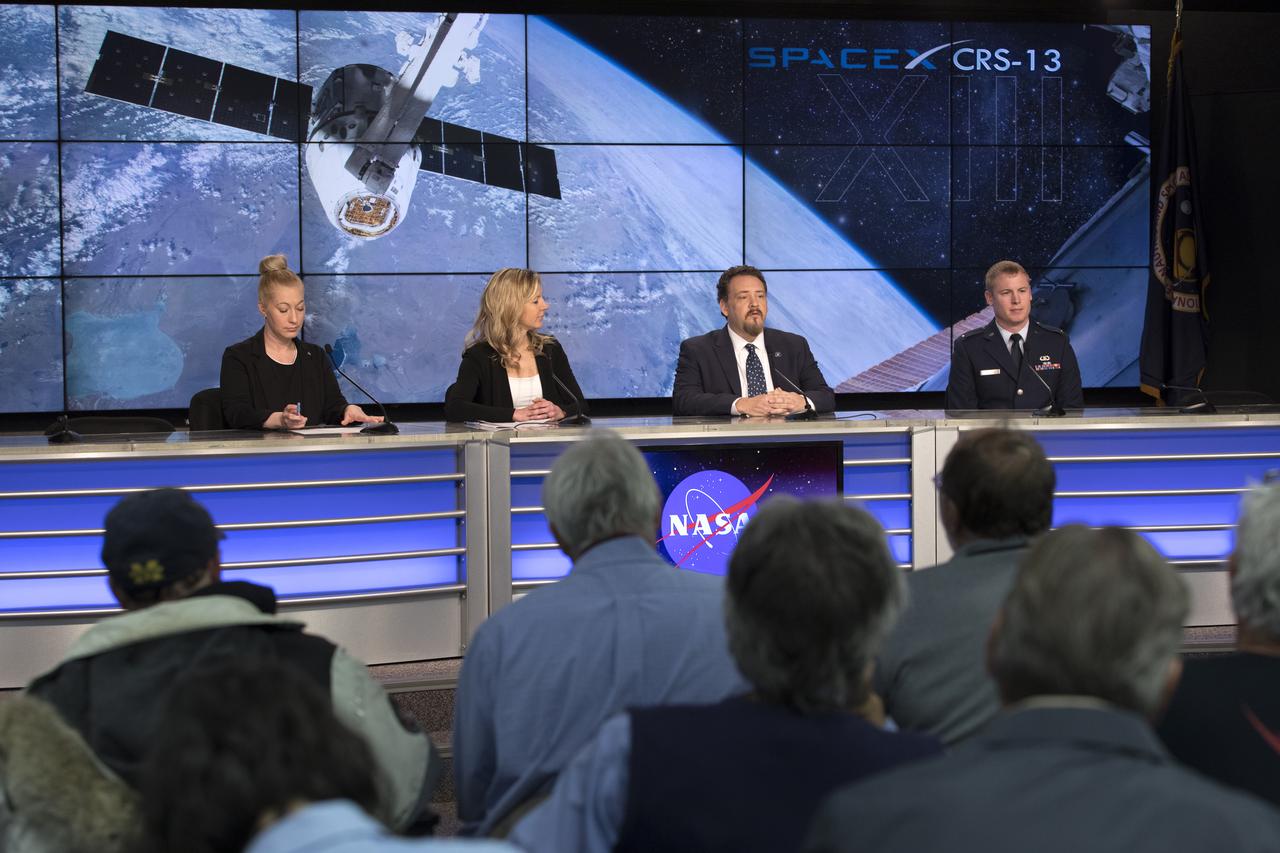
In the Kennedy Space Center’s Press Site auditorium, NASA and industry leaders speak to members of the media during a prelaunch news conference for the SpaceX CRS-13 commercial resupply services mission to the International Space Station. From left are: Cheryl Warner of NASA Communications, Jessica Jensen, SpaceX director of Dragon Mission Management, Kirt Costello, deputy chief scientist for the International Space Station Program Science Office at NASA’s Johnson Space Center in Houston, and Lt. David Myers, weather officer for the 45th Weather Squadron. Kirk Shireman, International Space Station Program manager at Johnson, participated by video link. A Dragon spacecraft is scheduled to be launched from Space Launch Complex 40 at Cape Canaveral Air Force Station at 11:46 a.m. EST, on Dec. 12, 2017. The SpaceX Falcon 9 rocket will lift off on the company's 13th Commercial Resupply Services mission to the space station.
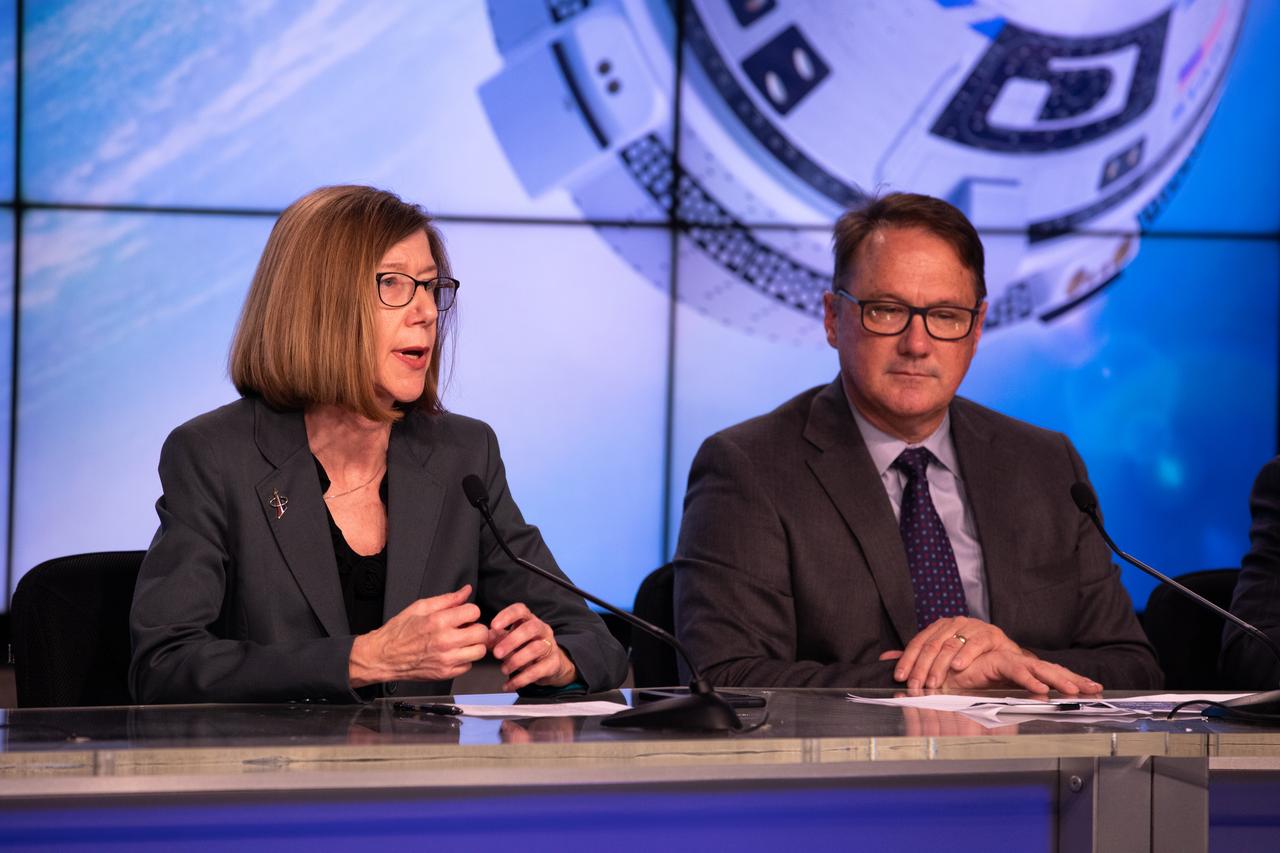
Kathy Lueders, NASA Commercial Crew Program, at left, and John Mulholland, vice president and program manager, Boeing Commercial Crew Program, speak during a prelaunch briefing for Boeing’s Orbital Flight Test at the agency’s Kennedy Space Center in Florida, Dec. 17, 2019. Boeing’s CST-100 Starliner spacecraft will launch atop a United Launch Alliance Atlas V rocket from Space Launch Complex 41 at Cape Canaveral Air Force Station. The uncrewed Orbital Flight Test will be the Starliner’s first flight to the International Space Station for NASA’s Commercial Crew Program.
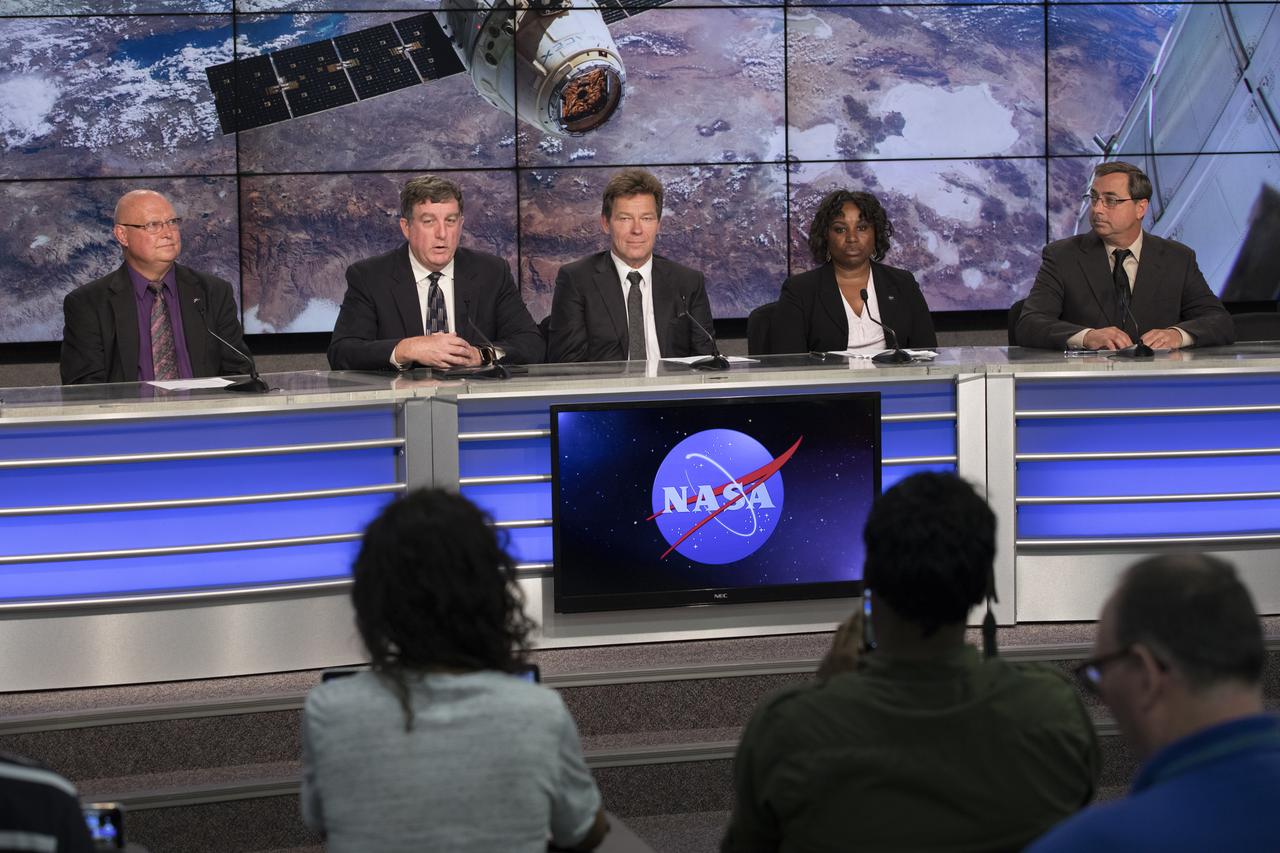
In the Kennedy Space Center’s Press Site auditorium, agency and industry leaders speak to members of the media during a prelaunch news conference for the SpaceX CRS-11 commercial resupply services mission to the International Space Station. From left are: Mike Curie of NASA Communications, Kirk Shireman, NASA's International Space Station Program manager, Hans Koenigsmann, vice president of Flight Reliability for SpaceX, Camille Alleyne, associate program scientist for the International Space Station at NASA’s Johnson Space Center, and Mike McAleenan, launch weather officer for the U.S. Air Force 45th Weather Squadron. A Dragon spacecraft is scheduled to be launched from Kennedy’s Launch Complex 39A on June 1 atop a SpaceX Falcon 9 rocket on the company's 11th Commercial Resupply Services mission to the space station.
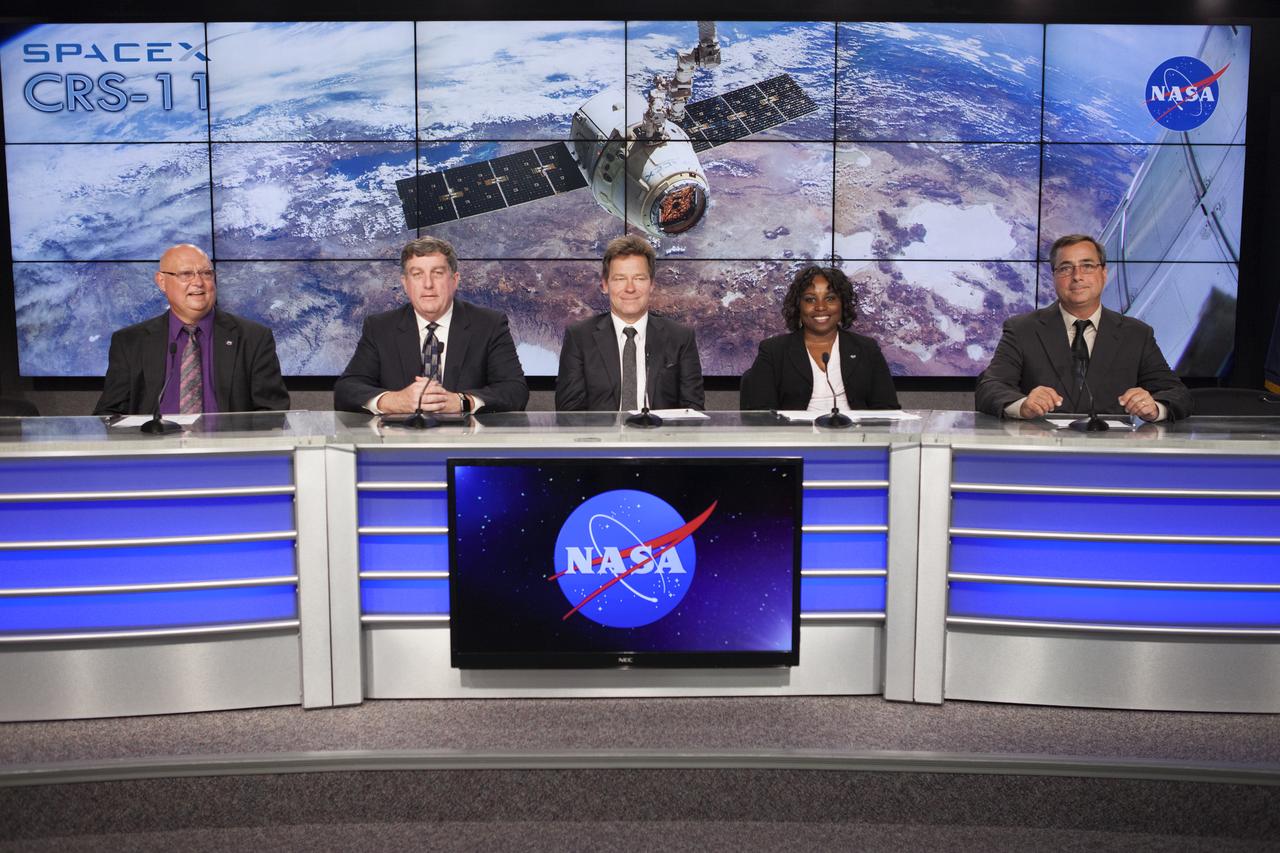
In the Kennedy Space Center’s Press Site auditorium, agency and industry leaders speak to members of the media during a prelaunch news conference for the SpaceX CRS-11 commercial resupply services mission to the International Space Station. From left are: Mike Curie of NASA Communications, Kirk Shireman, NASA's International Space Station Program manager, Hans Koenigsmann, vice president of Flight Reliability for SpaceX, Camille Alleyne, associate program scientist for the International Space Station at NASA’s Johnson Space Center, and Mike McAleenan, launch weather officer for the U.S. Air Force 45th Weather Squadron. A Dragon spacecraft is scheduled to be launched from Kennedy’s Launch Complex 39A on June 1 atop a SpaceX Falcon 9 rocket on the company's 11th Commercial Resupply Services mission to the space station.
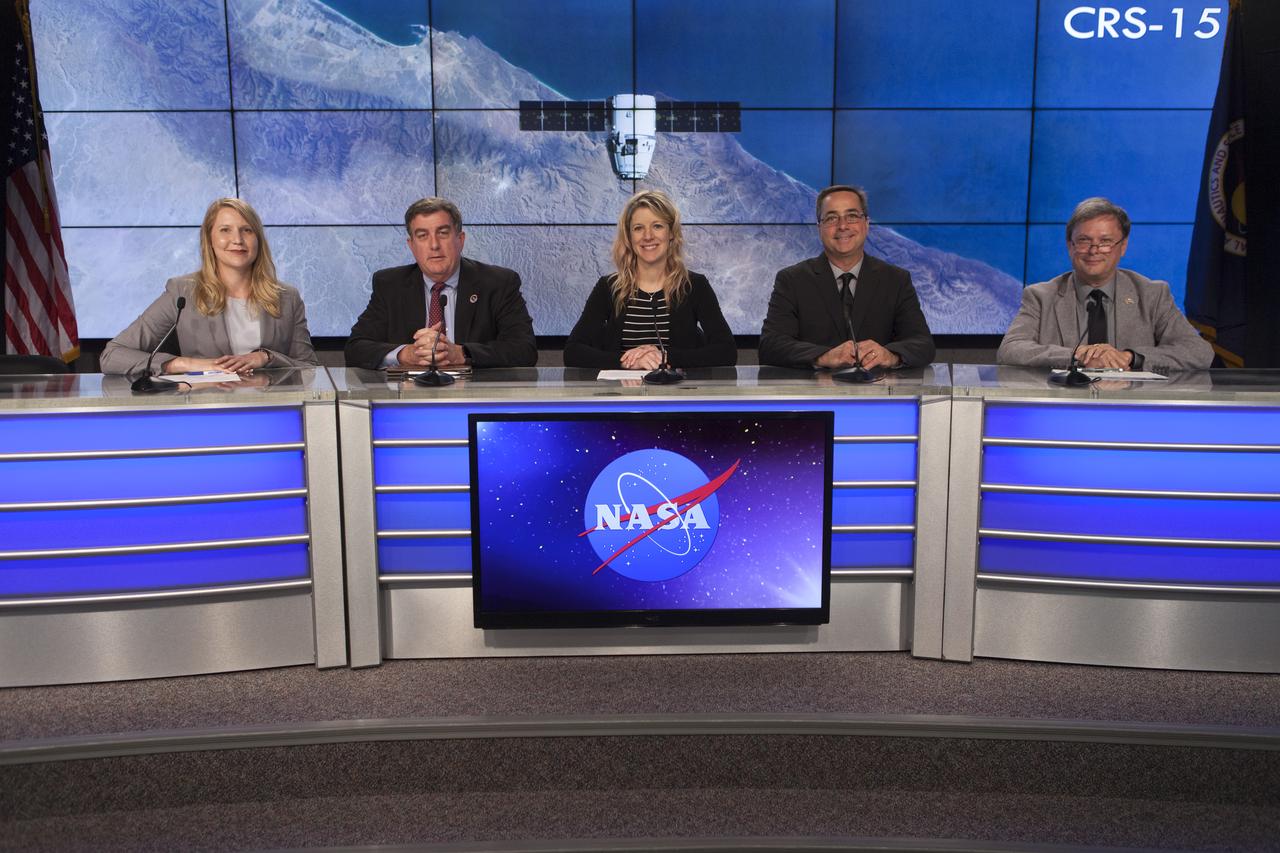
In the Kennedy Space Center’s Press Site auditorium, agency and industry leaders speak to members of the media during a prelaunch news conference for the SpaceX CRS-15 Commercial Resupply Services mission to the International Space Station. From left are: Stephanie Schierholz of NASA Communications,Kirk Shireman, NASA manager of the International Space Station Program, Jessica Jensen, director of Dragon Mission Management for SpaceX, Mike McAleenan, launch weather officer for the U.S. Air Force 45th Weather Squadron at Cape Canaveral Air Force Station, and David Brady, assistant program scientist for the International Space Station Program. A SpaceX Dragon spacecraft is scheduled to be launched from Space Launch Complex 40 at Cape Canaveral Air Force Station. The SpaceX Falcon 9 rocket will lift off on the company's 15th Commercial Resupply Services mission to the space station.
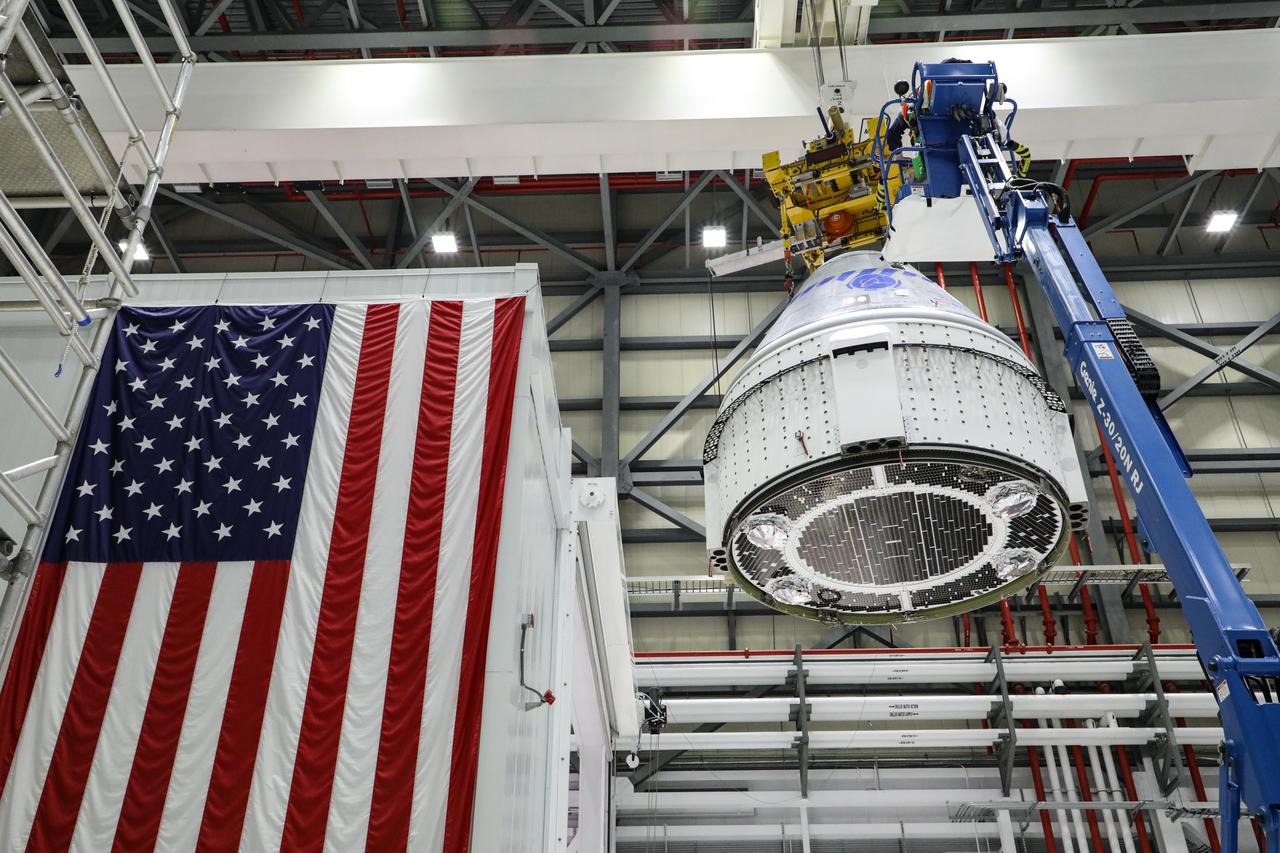
On July 13, 2021, inside the Commercial Crew and Cargo Processing Facility at Kennedy Space Center in Florida, Boeing’s CST-100 Starliner spacecraft moved from Hazardous Processing Area to the Weight and Center of Gravity machine and then transferred to the KMAG. The operations are in preparation for the company’s second Orbital Flight Test (OFT-2), as part of NASA’s Commercial Crew Program.
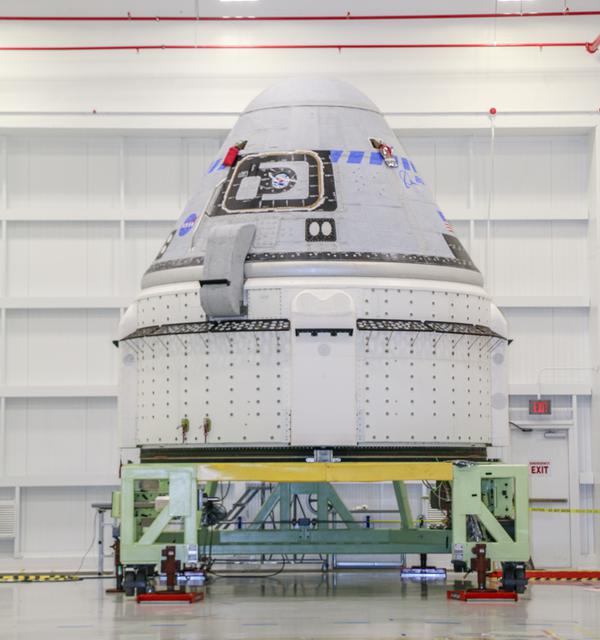
The Boeing CST-100 Starliner spacecraft to be flown on Orbital Flight Test-2 (OFT-2) is seen in the Commercial Crew and Cargo Processing Facility at NASA’s Kennedy Space Center in Florida on July 12, 2021. Part of the agency’s Commercial Crew Program, OFT-2 is a critical developmental milestone on the company’s path to fly crew missions for NASA.
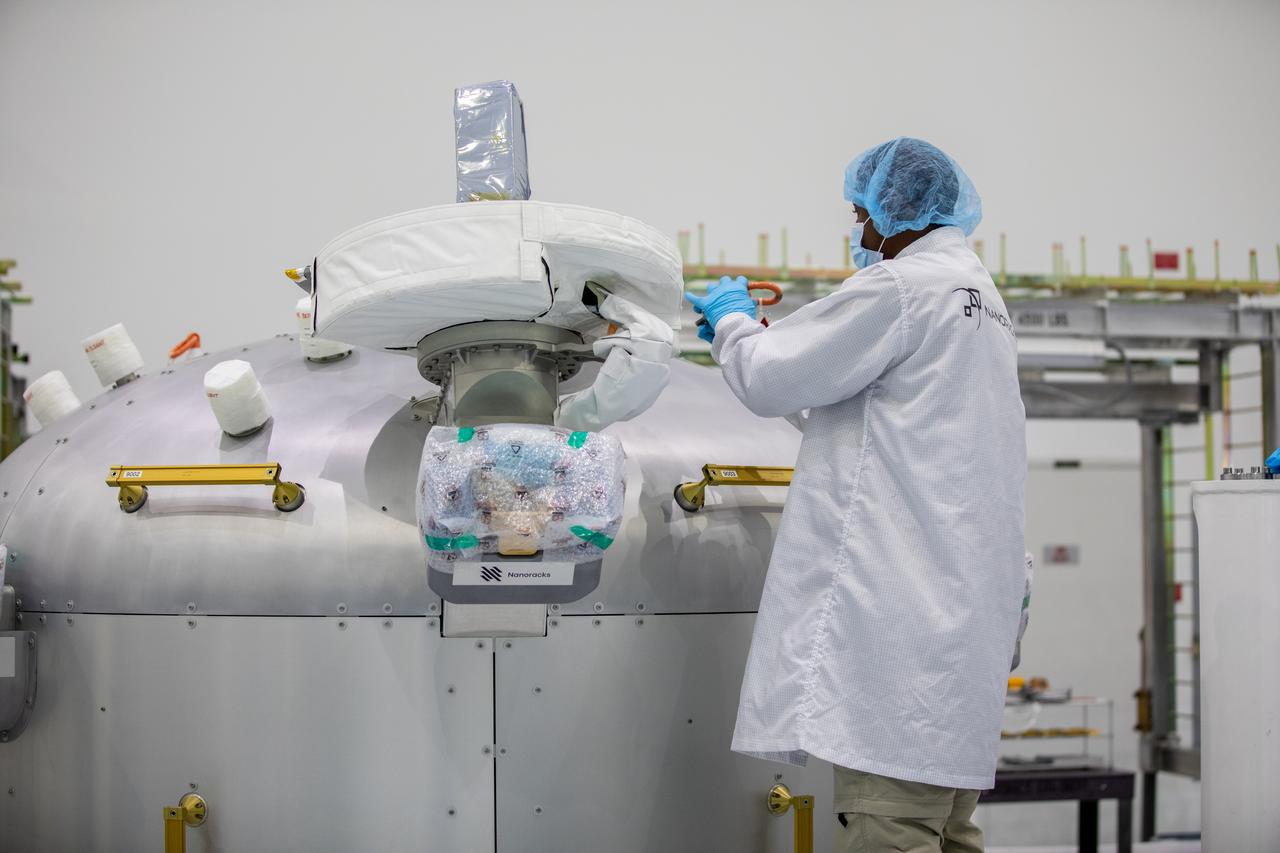
A Nanoracks technician works on the Nanoracks Bishop Airlock inside the Space Station Processing Facility at NASA's Kennedy Space Center in Florida on Sept. 29, 2020. The next-generation Nanoracks payload facility is being prepared for its flight to the International Space Station on SpaceX’s 21st commercial resupply services mission (CRS-21) to the International Space Station. The Bishop Airlock is the first commercially funded airlock for the space station. It will provide payload hosting, robotics testing, satellite deployment, and serve as an outside toolbox for station crew spacewalks, and more. CRS-21 is scheduled to launch on a SpaceX Falcon 9 rocket no earlier than November from Launch Complex 39A at Kennedy Space Center.
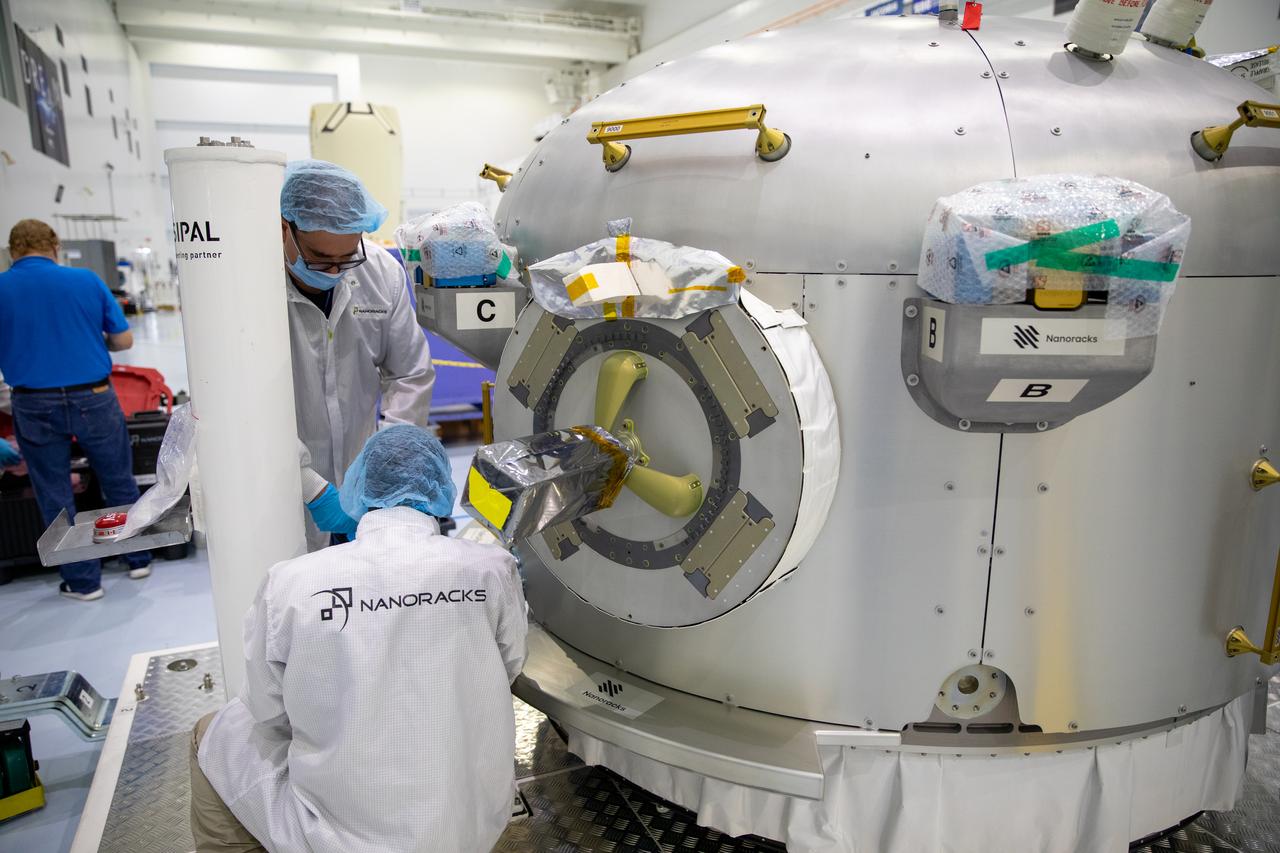
Nanoracks technicians work on the NanoRacks Bishop Airlock inside the Space Station Processing Facility at NASA's Kennedy Space Center in Florida on Sept. 29, 2020. The next-generation Nanoracks payload facility is being prepared for its flight to the International Space Station on SpaceX’s 21st commercial resupply services mission (CRS-21) to the International Space Station. The Bishop Airlock is the first commercially funded airlock for the space station. It will provide payload hosting, robotics testing, satellite deployment, serve as an outside toolbox for station crew spacewalks, and more. CRS-21 is scheduled to launch on a SpaceX Falcon 9 rocket no earlier than November from Launch Complex 39A at Kennedy Space Center.
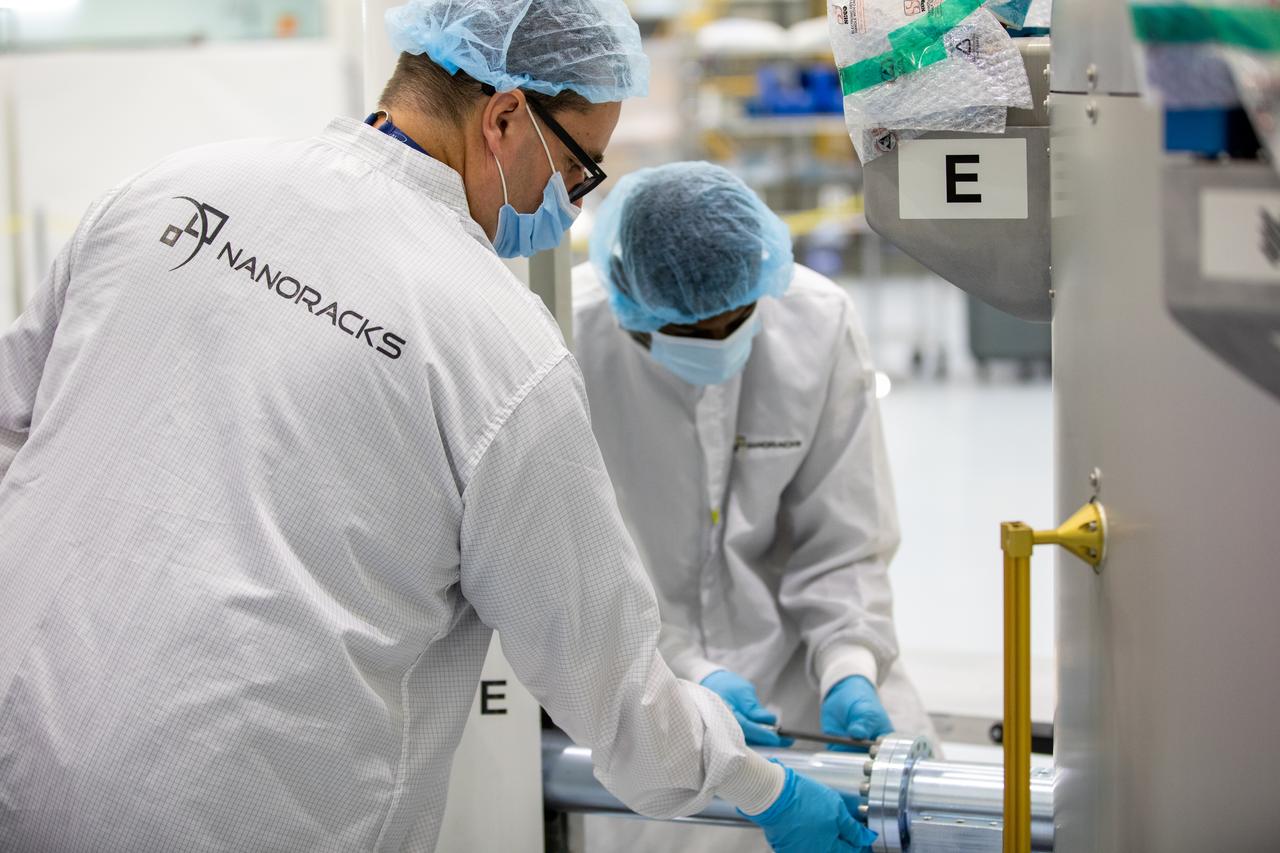
Nanoracks technicians work on the Nanoracks Bishop Airlock inside the Space Station Processing Facility at NASA's Kennedy Space Center in Florida on Sept. 29, 2020. The next-generation Nanoracks payload facility is being prepared for its flight to the International Space Station on SpaceX’s 21st commercial resupply services mission (CRS-21) to the International Space Station. The Bishop Airlock is the first commercially funded airlock for the space station. It will provide payload hosting, robotics testing, satellite deployment, serve as an outside toolbox for station crew spacewalks, and more. CRS-21 is scheduled to launch on a SpaceX Falcon 9 rocket no earlier than November from Launch Complex 39A at Kennedy Space Center.
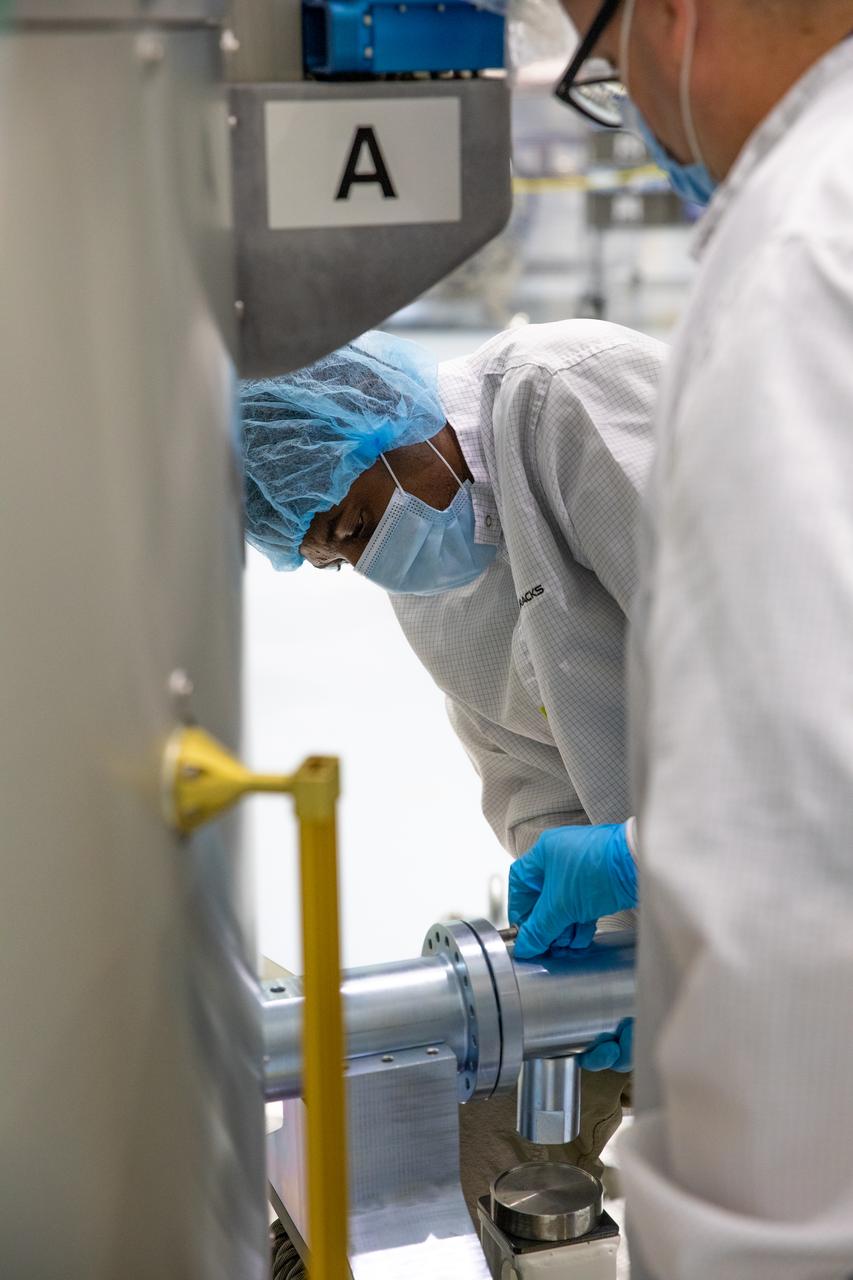
Nanoracks technicians work on the NanoRacks Bishop Airlock inside the Space Station Processing Facility at NASA's Kennedy Space Center in Florida on Sept. 29, 2020. The next-generation Nanoracks payload facility is being prepared for its flight to the International Space Station on SpaceX’s 21st commercial resupply services mission (CRS-21) to the International Space Station. The Bishop Airlock is the first commercially funded airlock for the space station. It will provide payload hosting, robotics testing, satellite deployment, serve as an outside toolbox for station crew spacewalks, and more. CRS-21 is scheduled to launch on a SpaceX Falcon 9 rocket no earlier than November from Launch Complex 39A at Kennedy Space Center.
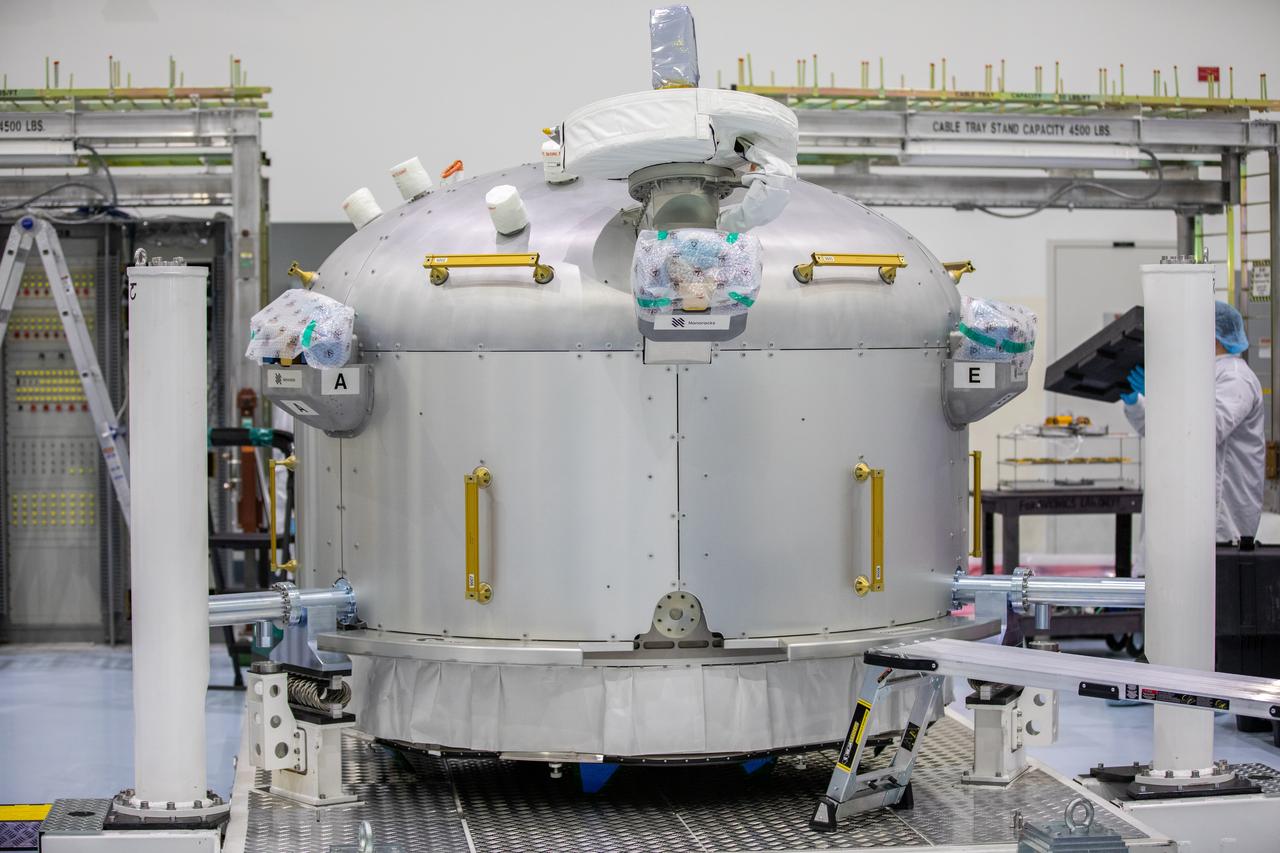
The Nanoracks Bishop Airlock is in view inside the Space Station Processing Facility at NASA's Kennedy Space Center in Florida on Sept. 29, 2020. The next-generation Nanoracks payload facility is being prepared for its flight to the International Space Station on SpaceX’s 21st commercial resupply services mission (CRS-21) to the International Space Station. The Bishop Airlock is the first commercially funded airlock for the space station. It will provide payload hosting, robotics testing, satellite deployment, serve as an outside toolbox for station crew spacewalks, and more. CRS-21 is scheduled to launch on a SpaceX Falcon 9 rocket no earlier than November from Launch Complex 39A at Kennedy Space Center.
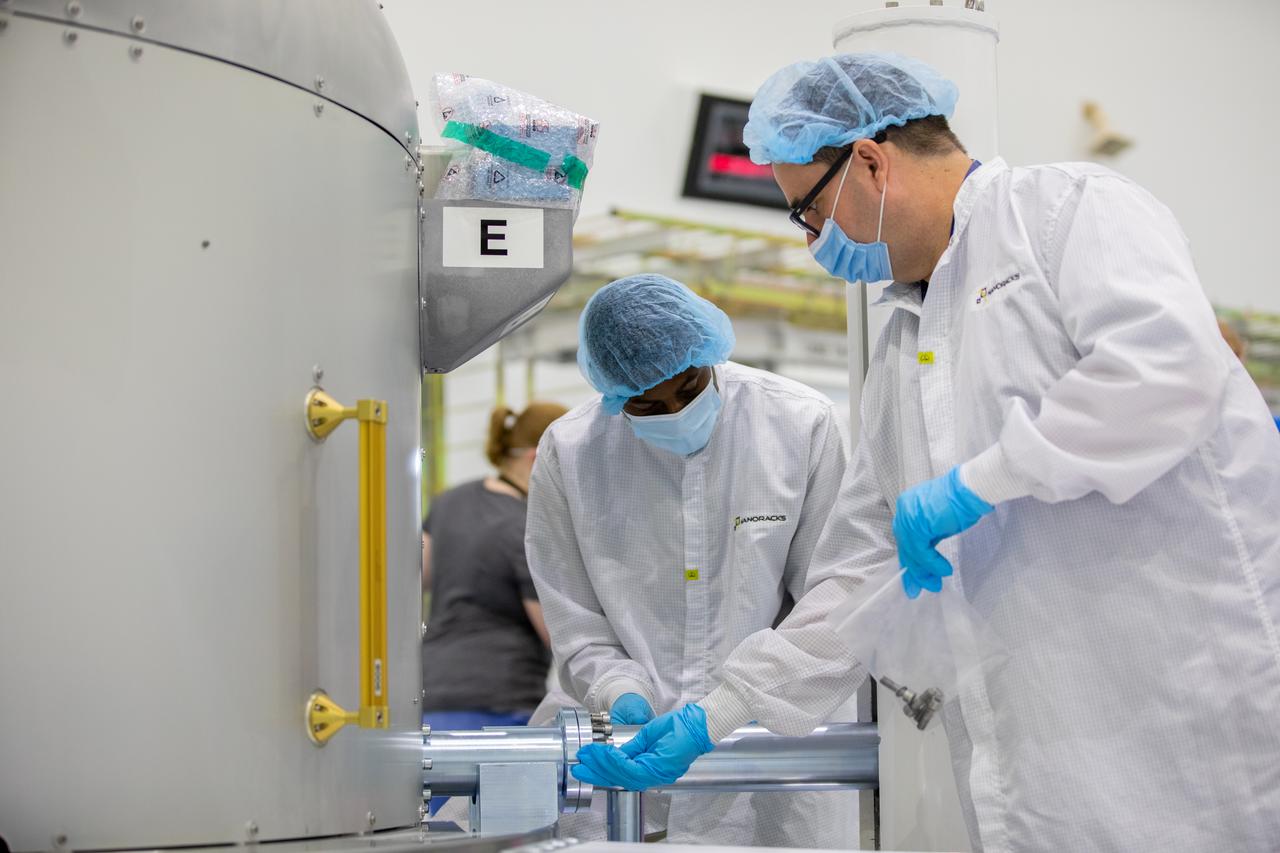
Nanoracks technicians work on the NanoRacks Bishop Airlock inside the Space Station Processing Facility at NASA's Kennedy Space Center in Florida on Sept. 29, 2020. The next-generation Nanoracks payload facility is being prepared for its flight to the International Space Station on SpaceX’s 21st commercial resupply services mission (CRS-21) to the International Space Station. The Bishop Airlock is the first commercially funded airlock for the space station. It will provide payload hosting, robotics testing, satellite deployment, serve as an outside toolbox for station crew spacewalks, and more. CRS-21 is scheduled to launch on a SpaceX Falcon 9 rocket no earlier than November from Launch Complex 39A at Kennedy Space Center.
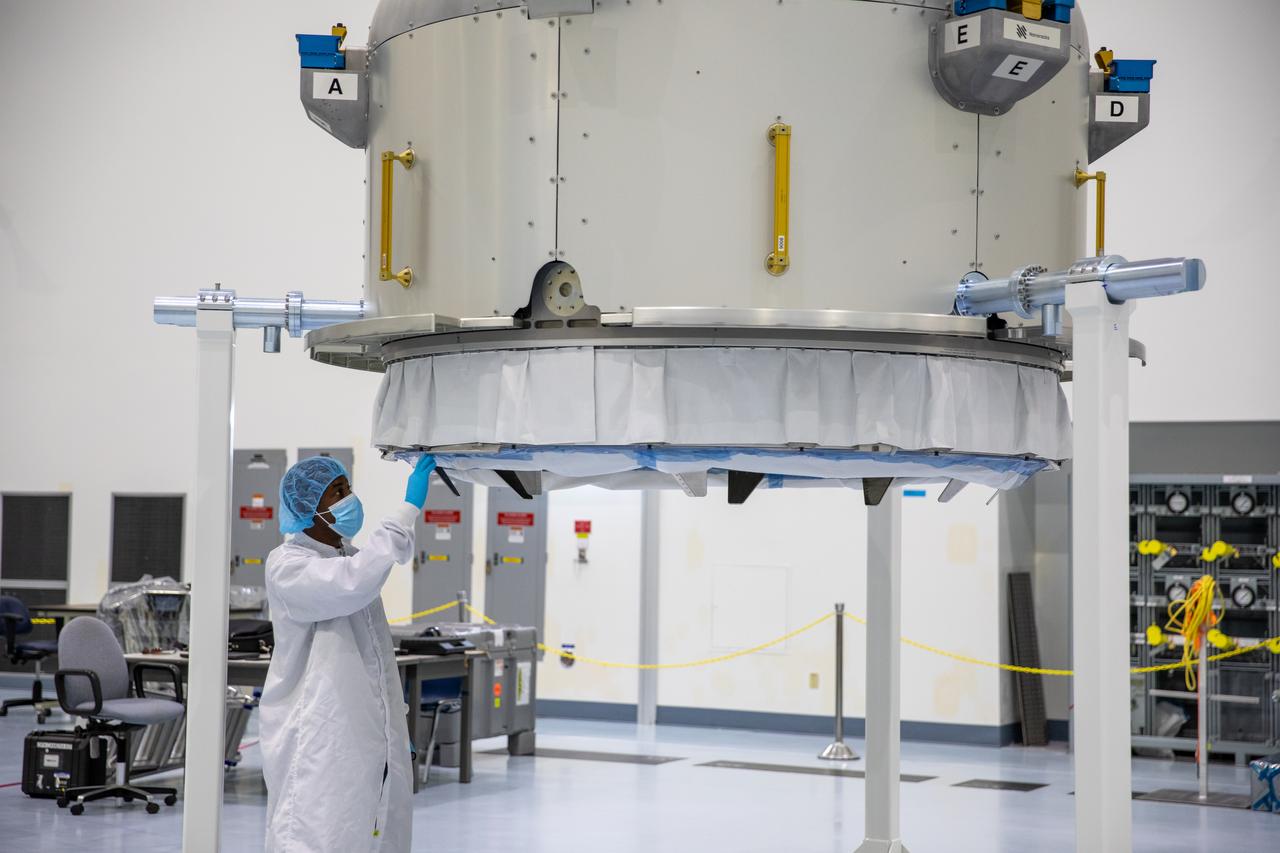
A Nanoracks technician works on the Nanoracks Bishop Airlock inside the Space Station Processing Facility at NASA's Kennedy Space Center in Florida on Oct. 7, 2020. The next-generation Nanoracks payload facility is being prepared for its flight to the International Space Station on SpaceX’s 21st commercial resupply services mission (CRS-21) to the International Space Station. The Bishop Airlock is the first commercially funded airlock for the space station. It will provide payload hosting, robotics testing, satellite deployment, and serve as an outside toolbox for station crew spacewalks, and more. CRS-21 is scheduled to launch on a SpaceX Falcon 9 from Kennedy’s Launch Complex 39A.
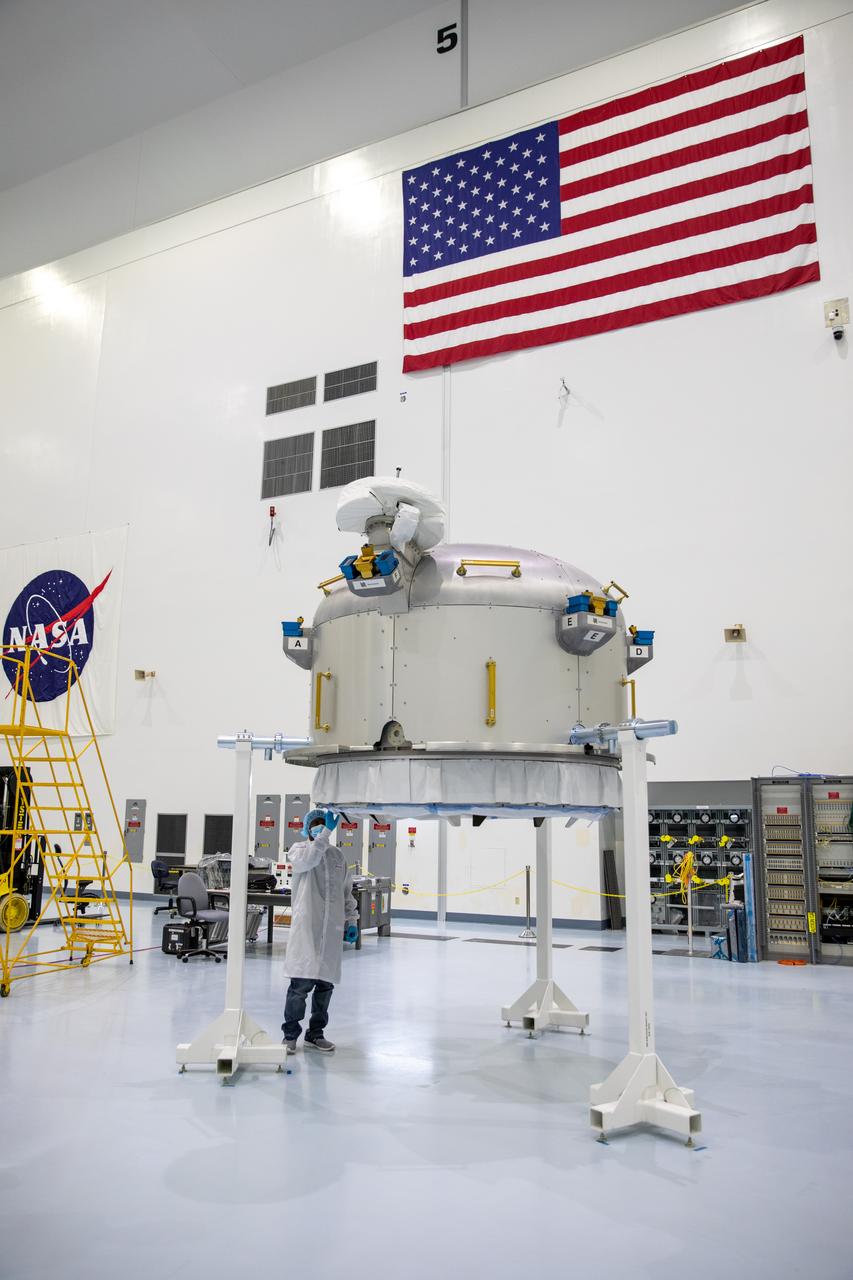
A Nanoracks technician works on the Nanoracks Bishop Airlock inside the Space Station Processing Facility at NASA's Kennedy Space Center in Florida on Oct. 7, 2020. The next-generation Nanoracks payload facility is being prepared for its flight to the International Space Station on SpaceX’s 21st commercial resupply services mission (CRS-21) to the International Space Station. The Bishop Airlock is the first commercially funded airlock for the space station. It will provide payload hosting, robotics testing, satellite deployment, serve as an outside toolbox for station crew spacewalks, and more. CRS-21 is scheduled to launch on a SpaceX Falcon 9 from Kennedy’s Launch Complex 39A.
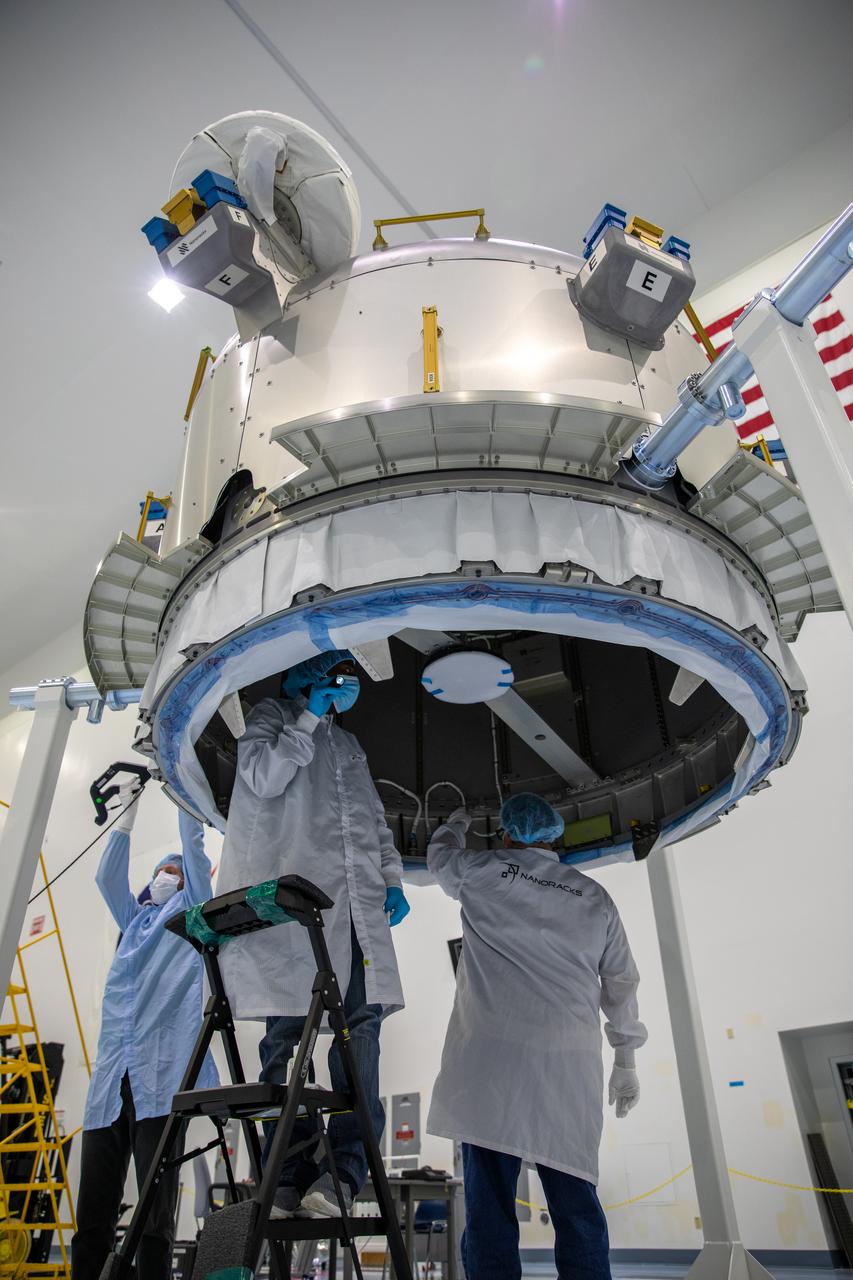
Nanoracks technicians work on the NanoRacks Bishop Airlock inside the Space Station Processing Facility at NASA's Kennedy Space Center in Florida on Oct. 7, 2020. The next-generation Nanoracks payload facility is being prepared for its flight to the International Space Station on SpaceX’s 21st commercial resupply services mission (CRS-21) to the International Space Station. The Bishop Airlock is the first commercially funded airlock for the space station. It will provide payload hosting, robotics testing, satellite deployment, serve as an outside toolbox for station crew spacewalks, and more. CRS-21 is scheduled to launch on a SpaceX Falcon 9 from Kennedy’s Launch Complex 39A.
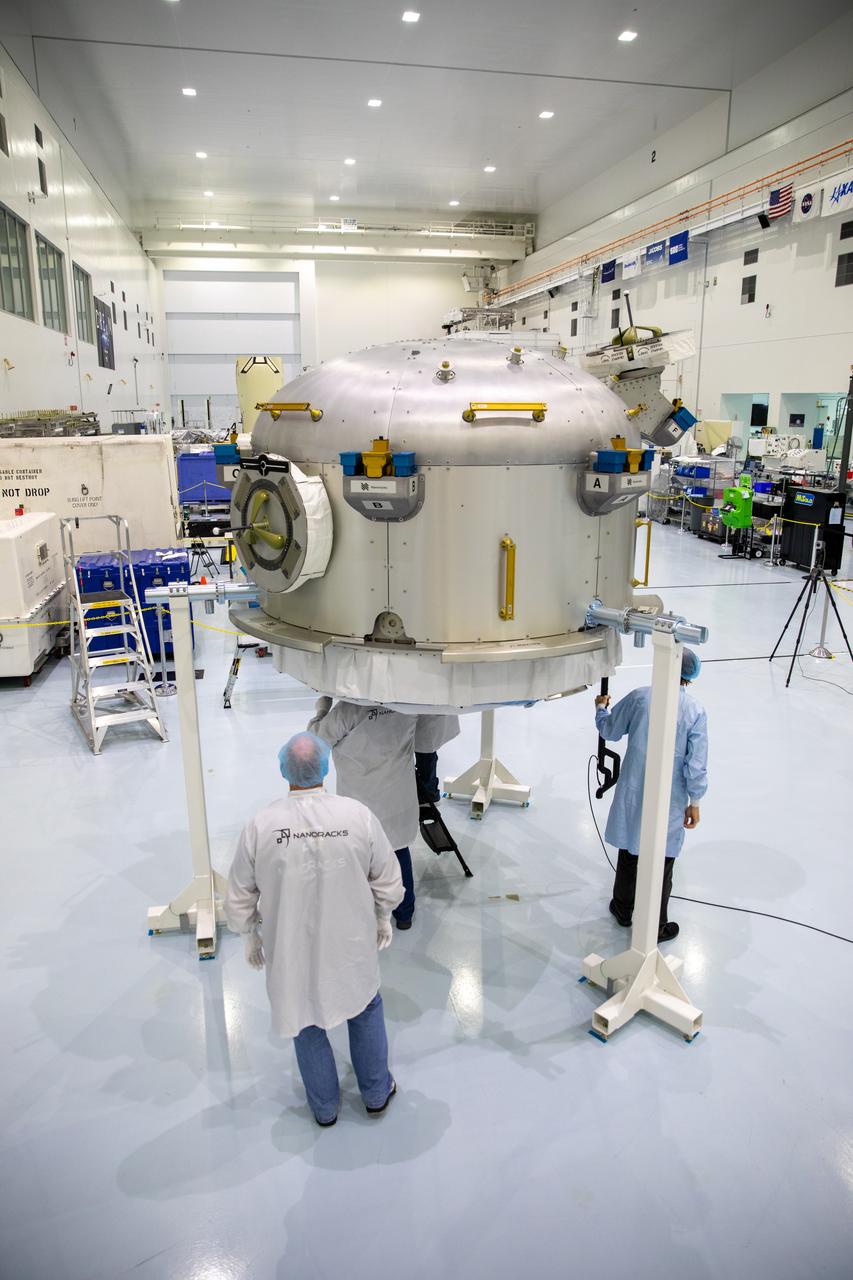
Nanoracks technicians work on the Nanoracks Bishop Airlock inside the Space Station Processing Facility at NASA's Kennedy Space Center in Florida on Oct. 7, 2020. The next-generation Nanoracks payload facility is being prepared for its flight to the International Space Station on SpaceX’s 21st commercial resupply services mission (CRS-21) to the International Space Station. The Bishop Airlock is the first commercially funded airlock for the space station. It will provide payload hosting, robotics testing, satellite deployment, serve as an outside toolbox for station crew spacewalks, and more. CRS-21 is scheduled to launch on a SpaceX Falcon 9 from Kennedy’s Launch Complex 39A.
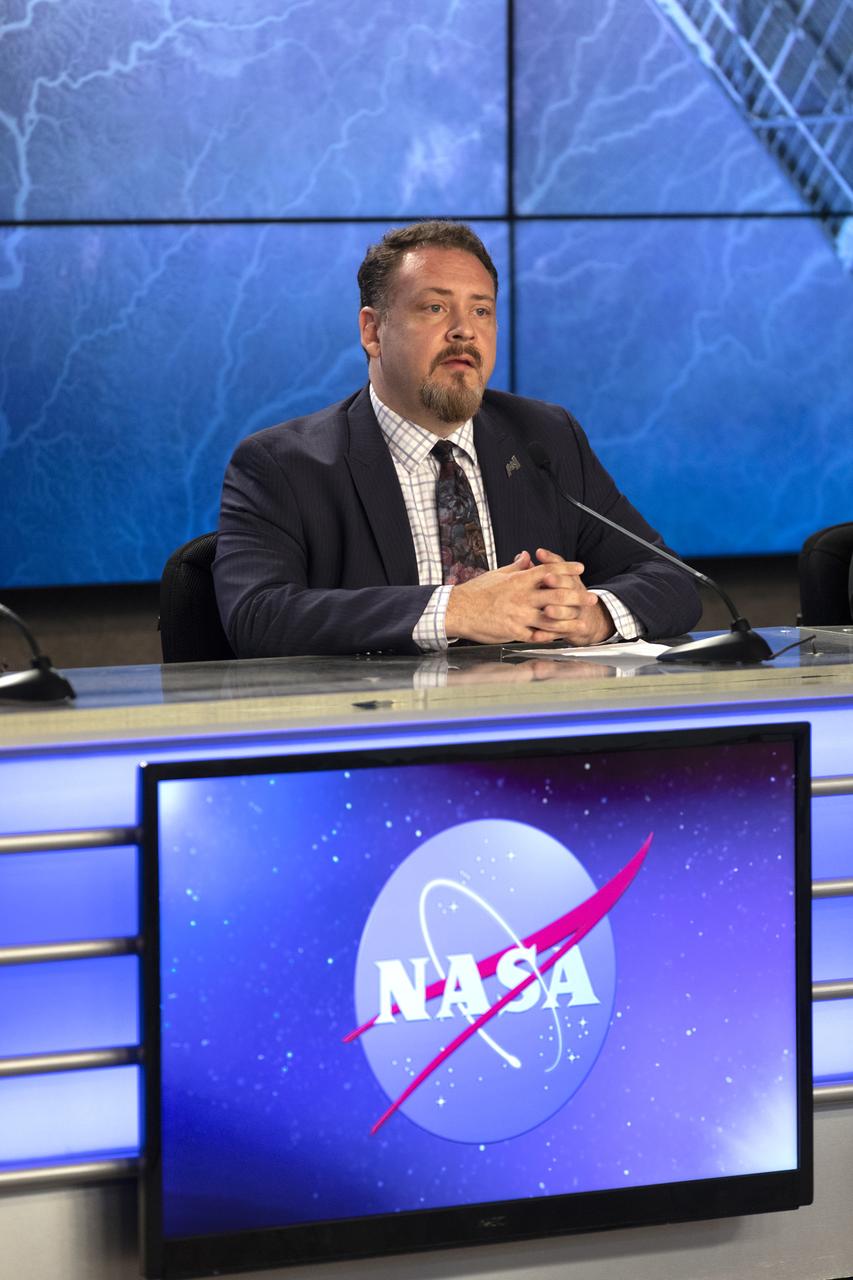
In the Kennedy Space Center’s Press Site auditorium, Kirt Costello, International Space Station program chief scientist at NASA's Johnson Space Center in Houston, speaks to members of the media during a prelaunch news conference for the SpaceX CRS-16 commercial resupply services mission to the International Space Station. A Dragon spacecraft is scheduled to be launched from Space Launch Complex 40 at Cape Canaveral Air Force Station. The SpaceX Falcon 9 rocket will lift off on the company's 16th Commercial Resupply Services mission to the space station.
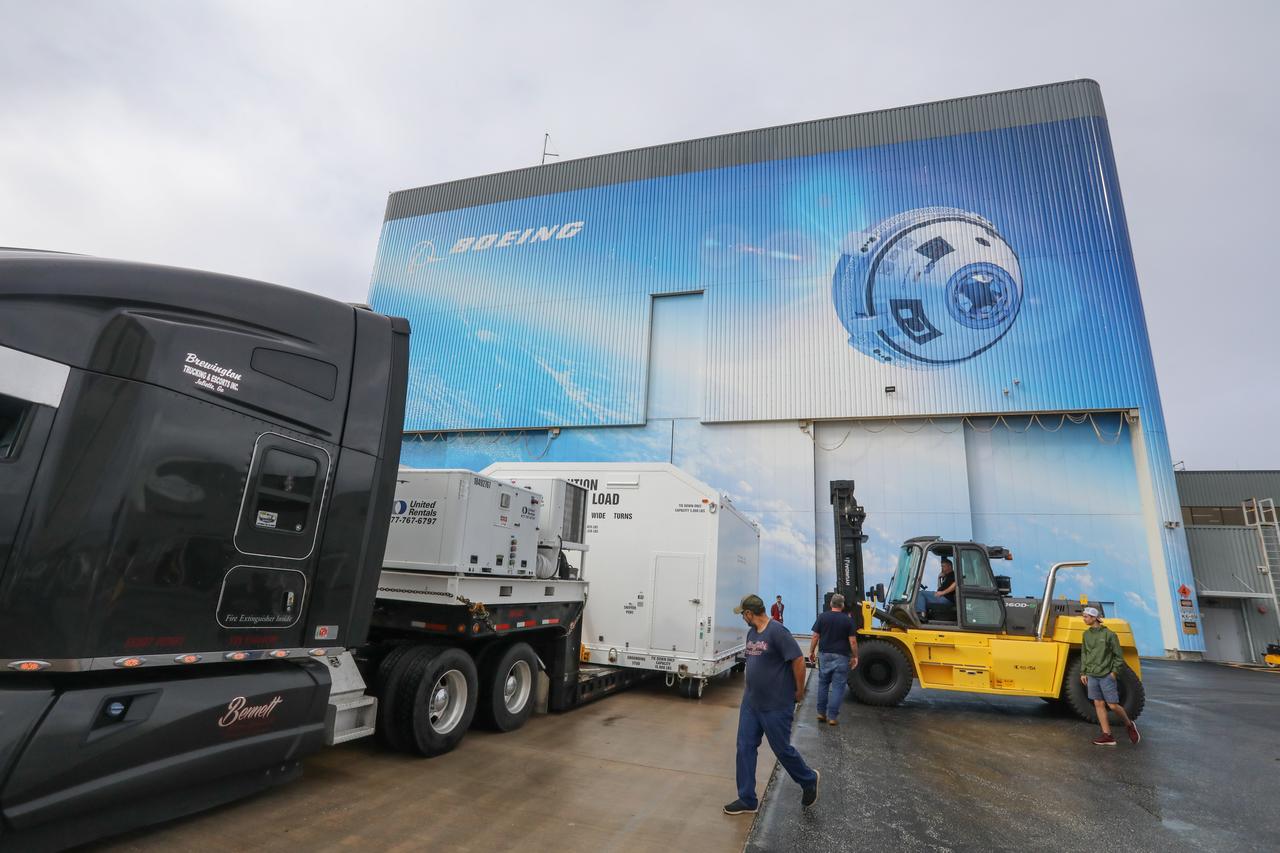
On Nov. 12, 2018, the crated spacecraft destined to fly astronauts to the International Space Station in Boeing's Crew Flight Test (CFT) departs the Commercial Crew and Cargo Processing Facility (C3PF) at NASA's Kennedy Space Center in Florida in preparation for transport to the company's testing facilities in El Segundo, California. The company's CST-100 Starliner will be undergoing a series of environmental tests designed to simulate what the spacecraft will experience during different stages of flight as part of NASA's Commercial Crew Program (CCP). The agency's CCP will return human spaceflight launches to U.S. soil, providing safe, reliable and cost-effective access to low-Earth orbit on systems that meet our safety and mission requirements.
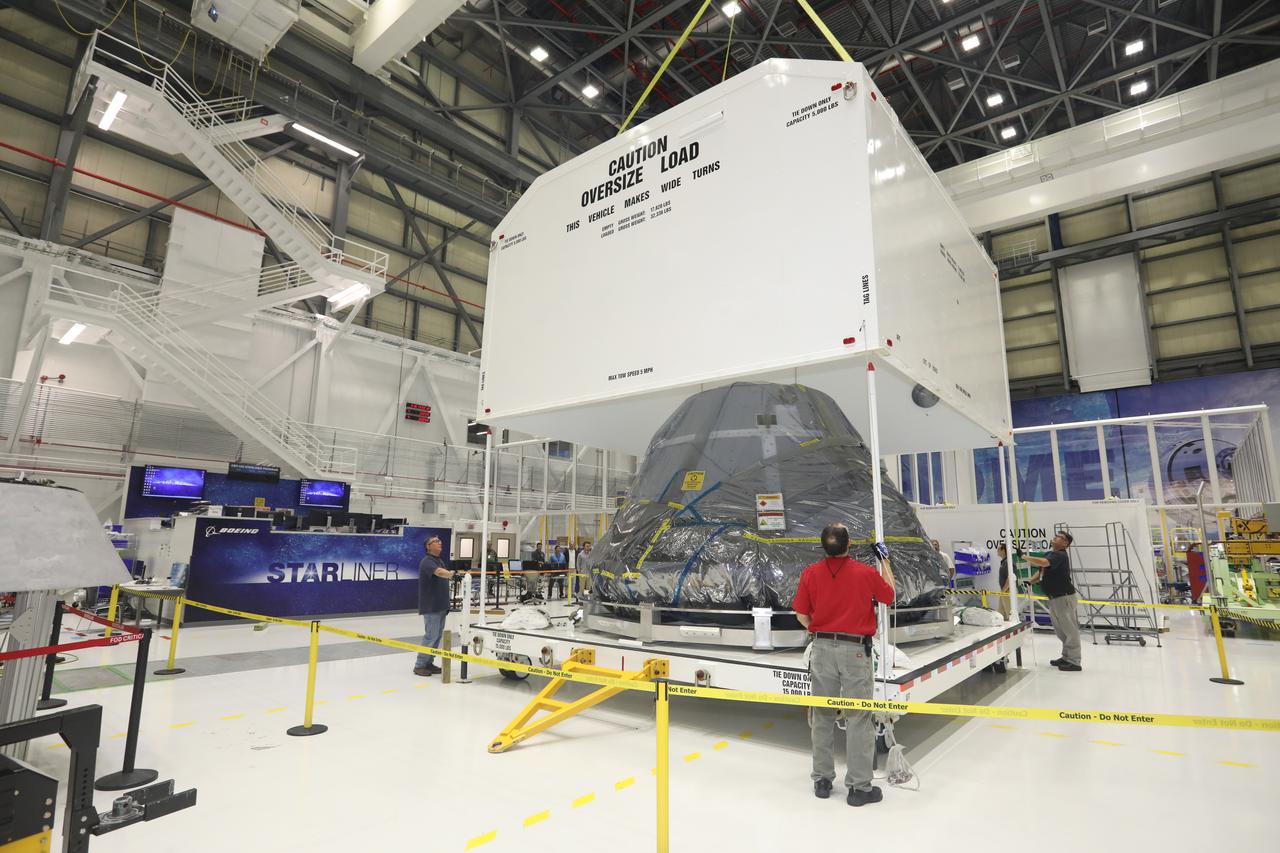
Inside the Commercial Crew and Cargo Processing Facility (C3PF) at NASA's Kennedy Space Center in Florida on Nov. 11, 2018, the spacecraft destined to fly astronauts to the International Space Station in Boeing's Crew Flight Test (CFT) is crated in preparation for transport to the company's testing facilities in El Segundo, California. The company's CST-100 Starliner will be undergoing a series of environmental tests designed to simulate what the spacecraft will experience during different stages of flight as part of NASA's Commercial Crew Program (CCP). The agency's CCP will return human spaceflight launches to U.S. soil, providing safe, reliable and cost-effective access to low-Earth orbit on systems that meet our safety and mission requirements.
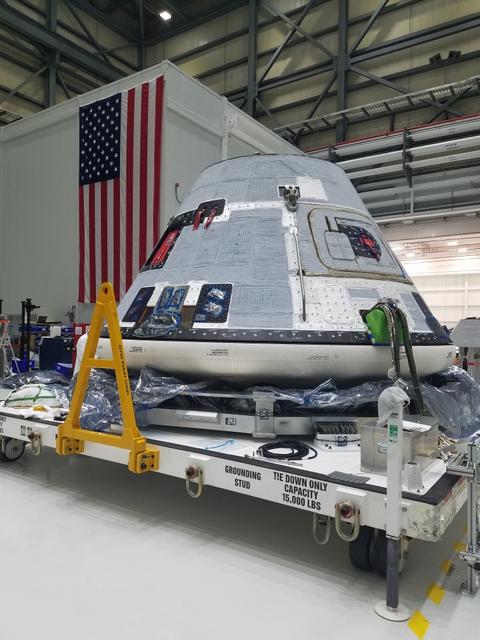
Inside the Commercial Crew and Cargo Processing Facility (C3PF) at NASA's Kennedy Space Center in Florida on Nov. 11, 2018, the spacecraft destined to fly astronauts to the International Space Station in Boeing's Crew Flight Test (CFT) is prepared for transport to the company's testing facilities in El Segundo, California. The company's CST-100 Starliner will be undergoing a series of environmental tests designed to simulate what the spacecraft will experience during different stages of flight as part of NASA's Commercial Crew Program (CCP). The agency's CCP will return human spaceflight launches to U.S. soil, providing safe, reliable and cost-effective access to low-Earth orbit on systems that meet our safety and mission requirements.
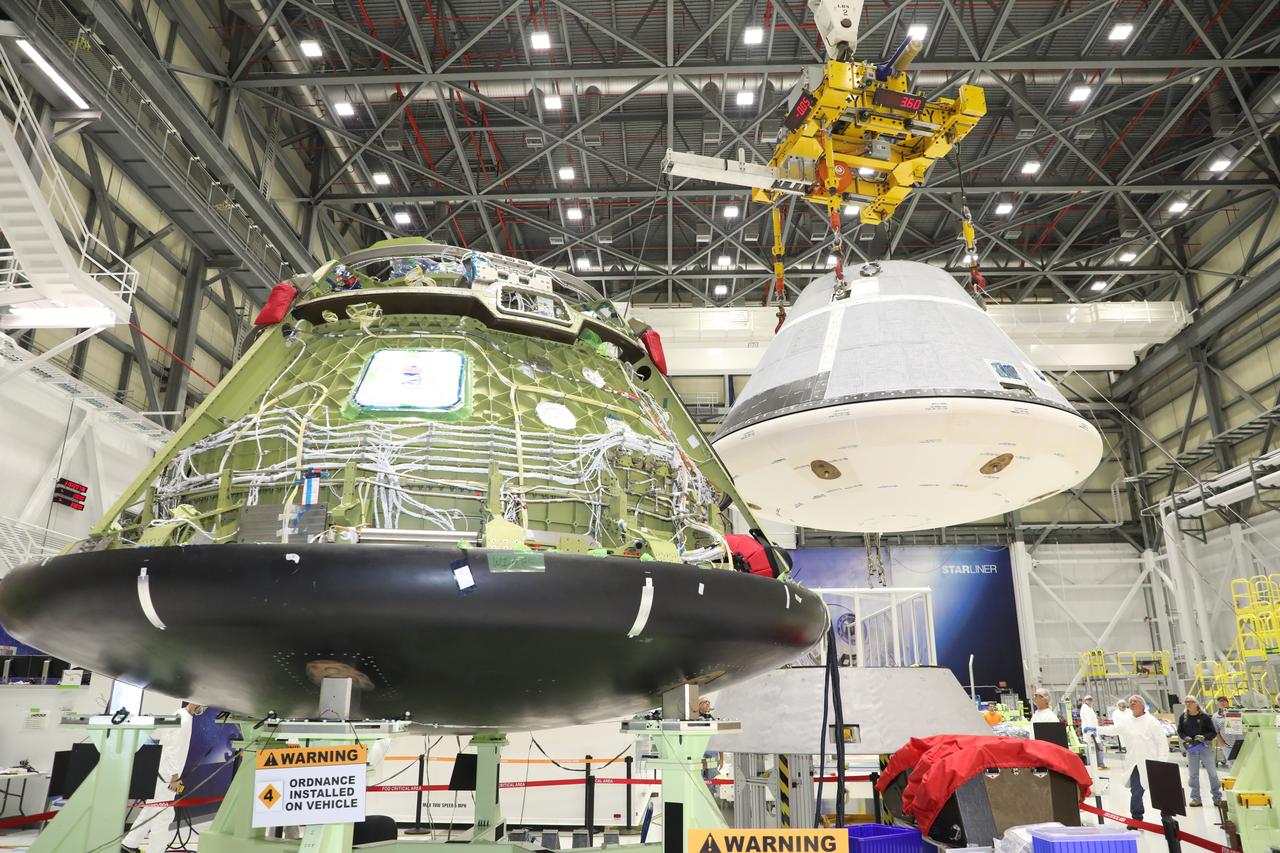
Seen in the foreground inside the Commercial Crew and Cargo Processing Facility (C3PF) at NASA's Kennedy Space Center in Florida on Nov. 11, 2018, the spacecraft destined to fly astronauts to the International Space Station in Boeing's Crew Flight Test (CFT) is prepared for transport to the company's testing facilities in El Segundo, California. The company's CST-100 Starliner will be undergoing a series of environmental tests designed to simulate what the spacecraft will experience during different stages of flight as part of NASA's Commercial Crew Program (CCP). The agency's CCP will return human spaceflight launches to U.S. soil, providing safe, reliable and cost-effective access to low-Earth orbit on systems that meet our safety and mission requirements.
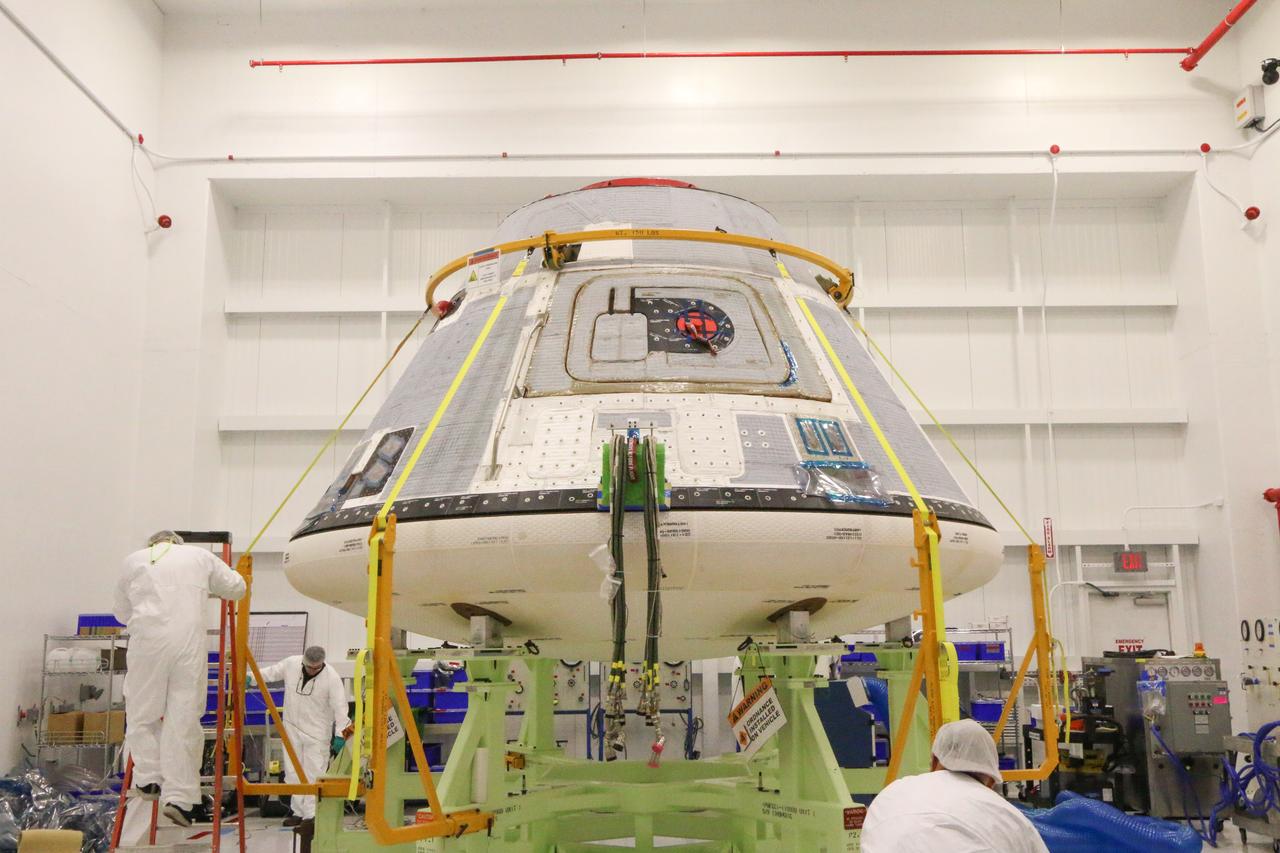
Inside the Commercial Crew and Cargo Processing Facility (C3PF) at NASA's Kennedy Space Center in Florida on Nov. 11, 2018, the spacecraft destined to fly astronauts to the International Space Station in Boeing's Crew Flight Test (CFT) is prepared for transport to the company's testing facilities in El Segundo, California. The company's CST-100 Starliner will be undergoing a series of environmental tests designed to simulate what the spacecraft will experience during different stages of flight as part of NASA's Commercial Crew Program (CCP). The agency's CCP will return human spaceflight launches to U.S. soil, providing safe, reliable and cost-effective access to low-Earth orbit on systems that meet our safety and mission requirements.
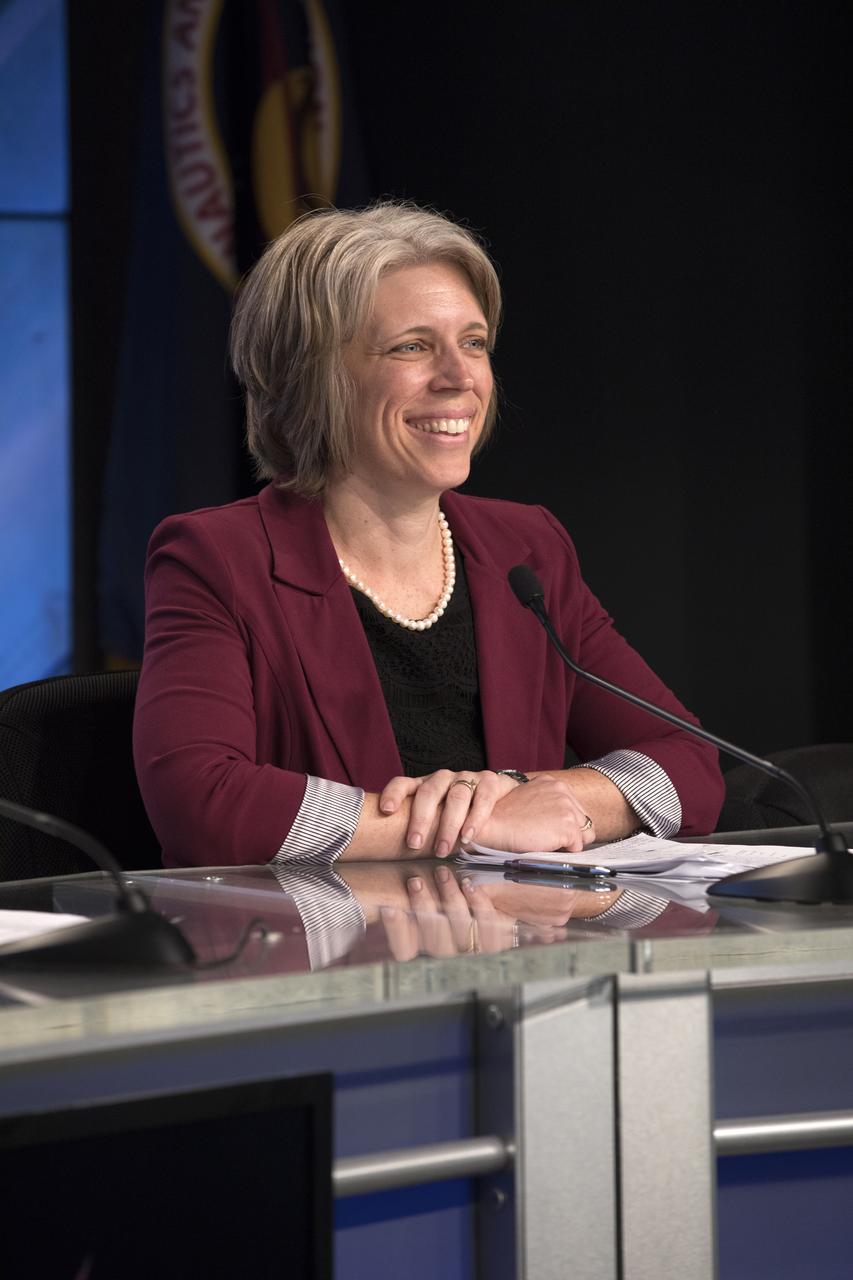
In the Kennedy Space Center’s Press Site auditorium, agency and industry leaders speak to members of the media at a prelaunch news conference for the SpaceX CRS-10 commercial resupply services mission to the International Space Station. Tara Ruttley, associate scientist for the International Space Station Program at Johnson Space Center in Houston answers questions.
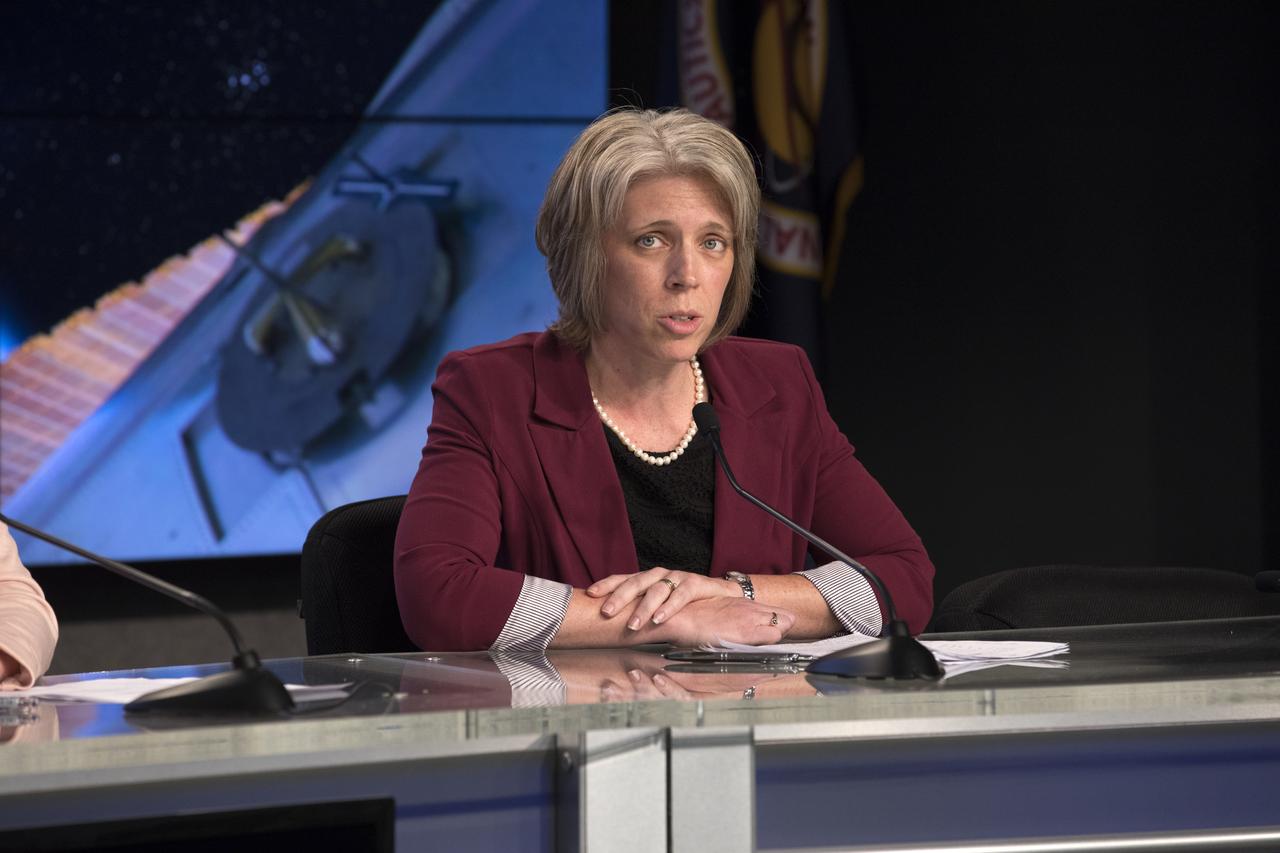
In the Kennedy Space Center’s Press Site auditorium, agency and industry leaders speak to members of the media at a prelaunch news conference for the SpaceX CRS-10 commercial resupply services mission to the International Space Station. Tara Ruttley, associate scientist for the International Space Station Program at Johnson Space Center in Houston, answers questions.
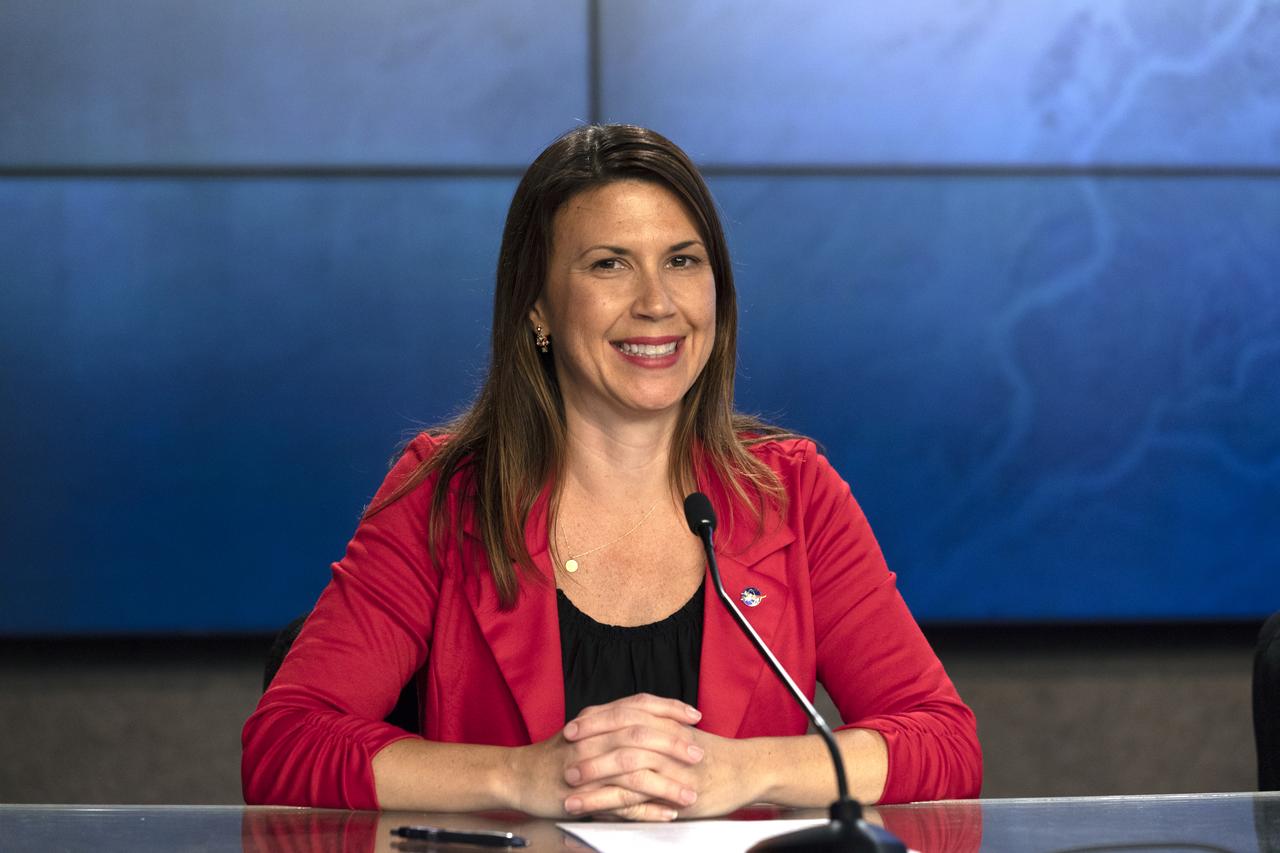
In the Kennedy Space Center’s Press Site auditorium, Tori McLendon of NASA Communications, speaks to members of the media during a prelaunch news conference for the SpaceX CRS-16 commercial resupply services mission to the International Space Station. A Dragon spacecraft is scheduled to be launched from Space Launch Complex 40 at Cape Canaveral Air Force Station. The SpaceX Falcon 9 rocket will lift off on the company's 16th Commercial Resupply Services mission to the space station.
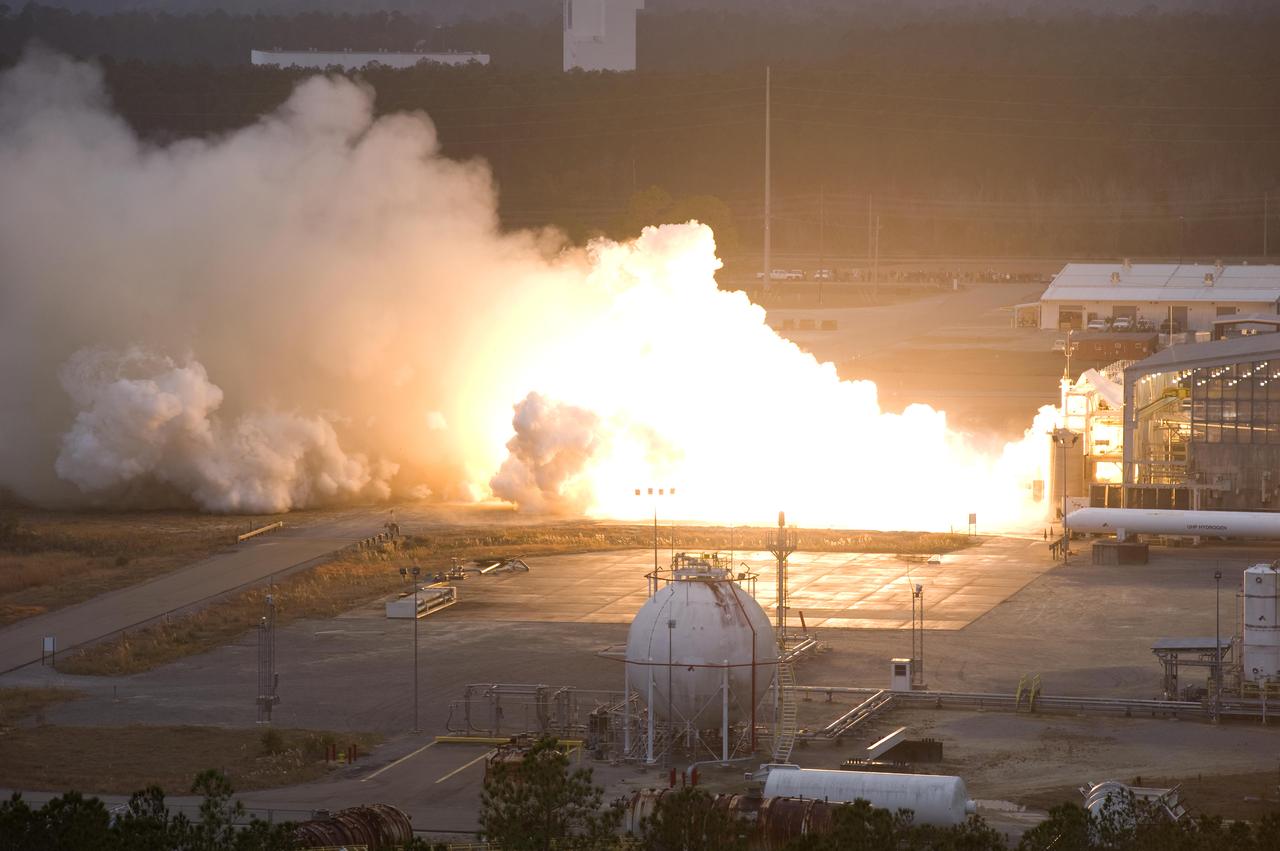
John C. Stennis Space Center engineers conduct a 55-second test fire of Aerojet's liquid-fuel AJ26 rocket engine that will power the first stage of Orbital Sciences Corporation's Taurus II space launch vehicle. The Dec. 17, 2010 test was conducted on the E-1 Test Stand at Stennis in support of NASA's Commercial Transportation Services partnerships to enable commercial cargo flights to the International Space Station. Orbital is under contract with NASA to provide eight cargo missions to the space station through 2015.
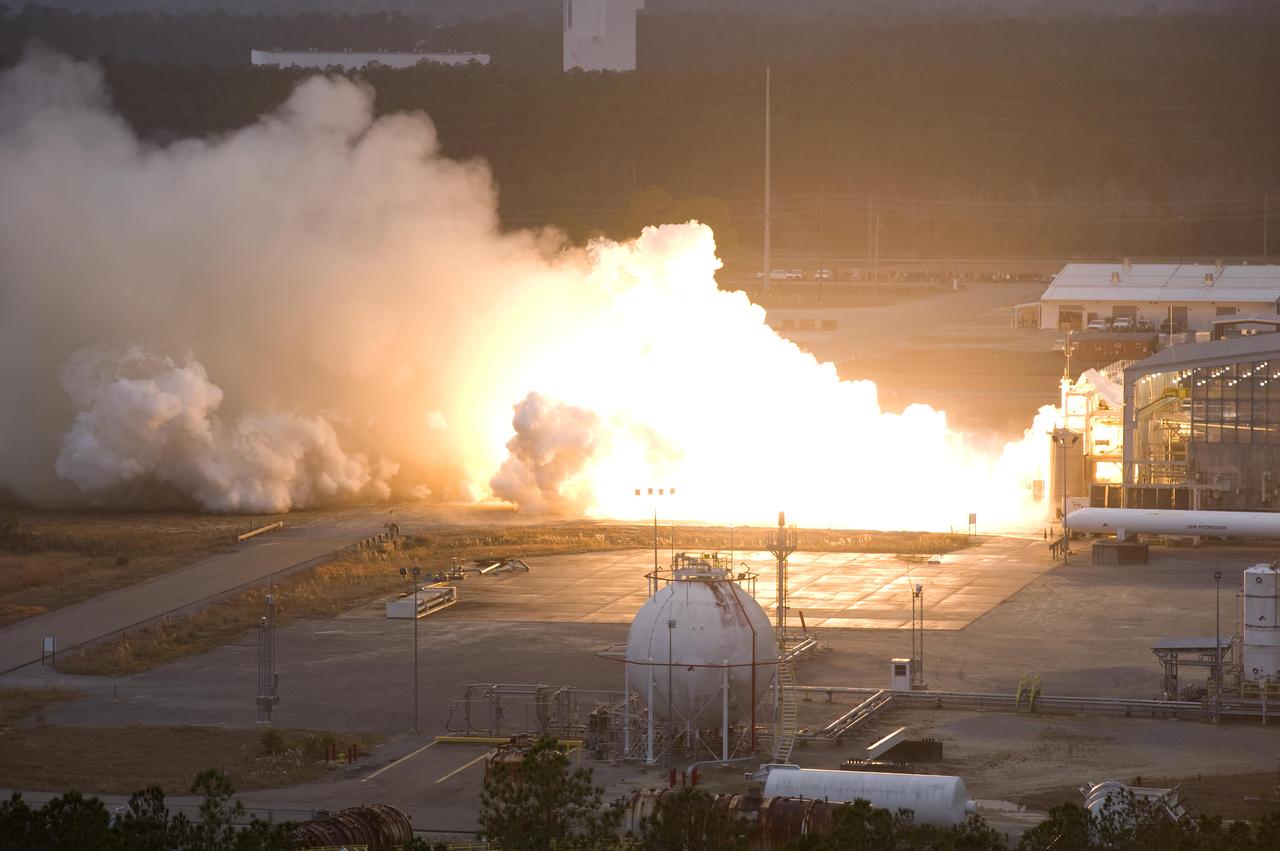
John C. Stennis Space Center engineers conduct a 55-second test fire of Aerojet's liquid-fuel AJ26 rocket engine that will power the first stage of Orbital Sciences Corporation's Taurus II space launch vehicle. The Dec. 17, 2010 test was conducted on the E-1 Test Stand at Stennis in support of NASA's Commercial Transportation Services partnerships to enable commercial cargo flights to the International Space Station. Orbital is under contract with NASA to provide eight cargo missions to the space station through 2015.
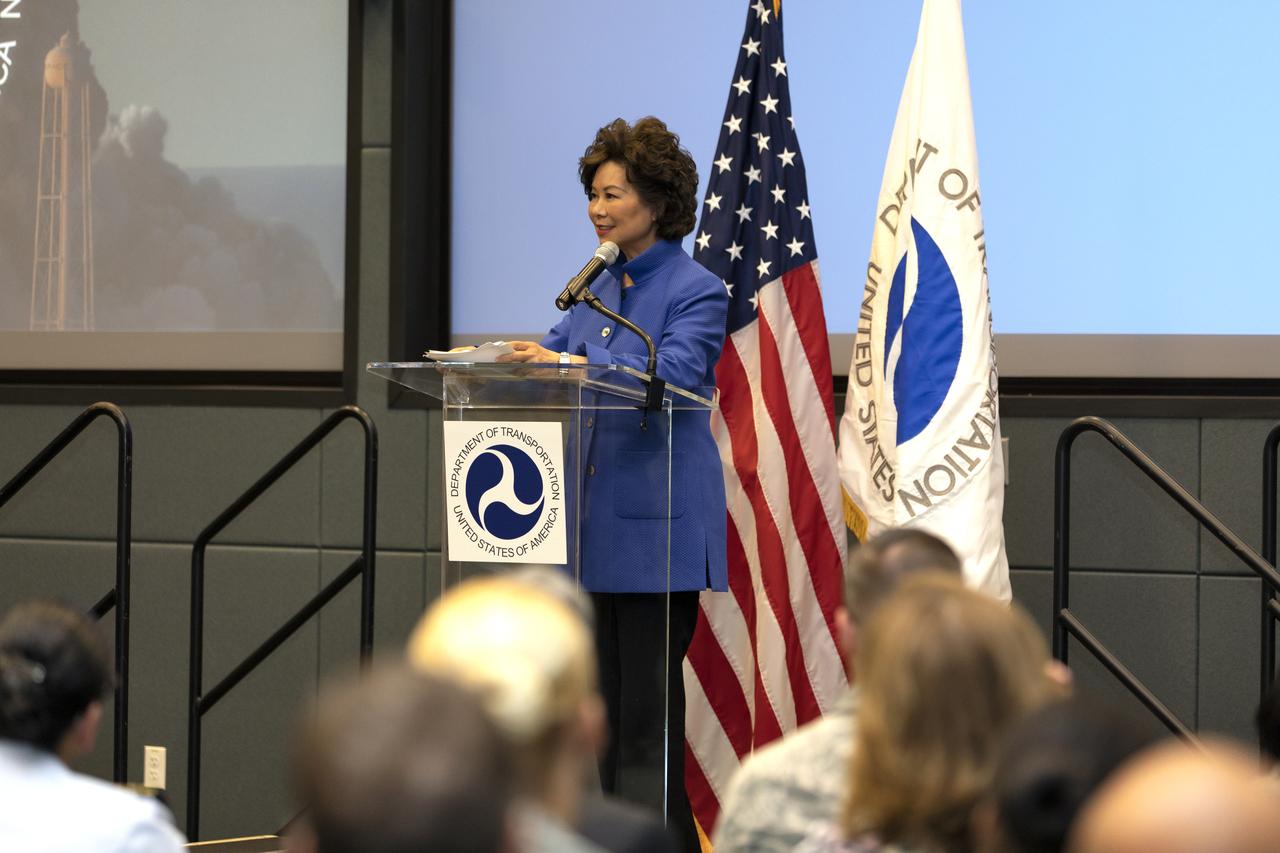
Secretary Elaine L. Chao, of the U.S. Department of Transportation (DOT), visits NASA’s Kennedy Space Center in Florida on April 24, 2019. She spoke to Kennedy’s leadership in the Operations and Support Building II and discussed the DOT’s role in enabling commercial space.
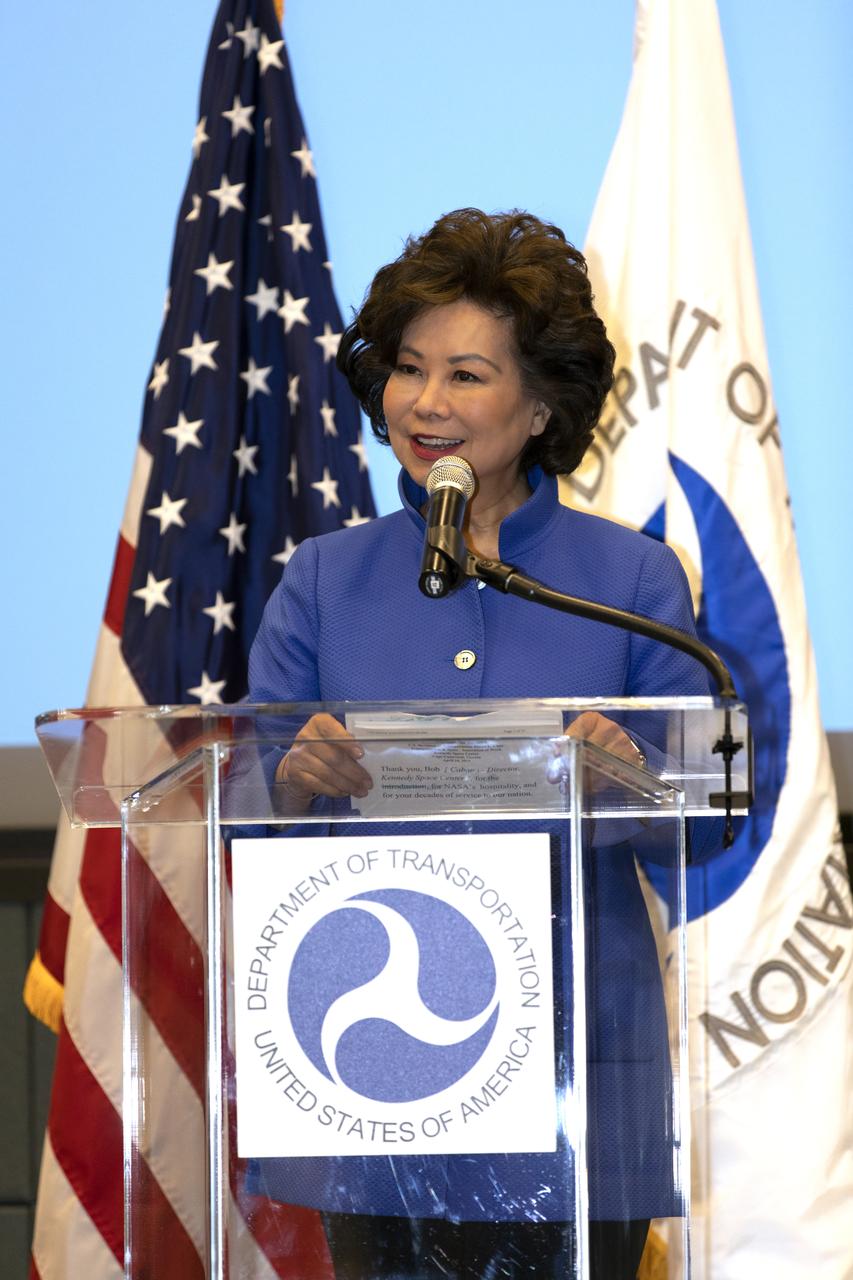
Secretary Elaine L. Chao, of the U.S. Department of Transportation (DOT), visits NASA’s Kennedy Space Center in Florida on April 24, 2019. She spoke to Kennedy’s leadership in the Operations and Support Building II and discussed the DOT’s role in enabling commercial space.
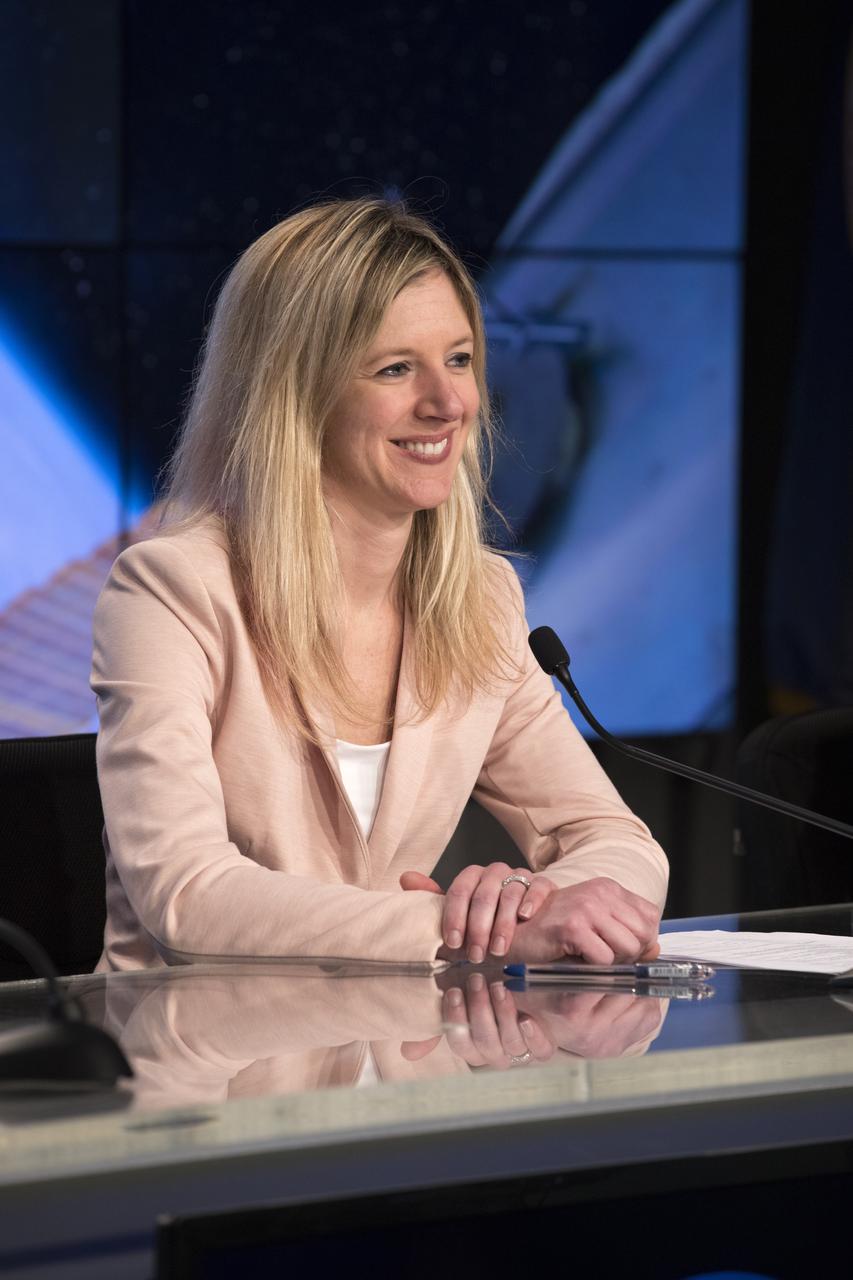
In the Kennedy Space Center’s Press Site auditorium, agency and industry leaders speak to members of the media at a prelaunch news conference for the SpaceX CRS-10 commercial resupply services mission to the International Space Station. Jessica Jensen, director of Dragon mission management for SpaceX, answers questions.
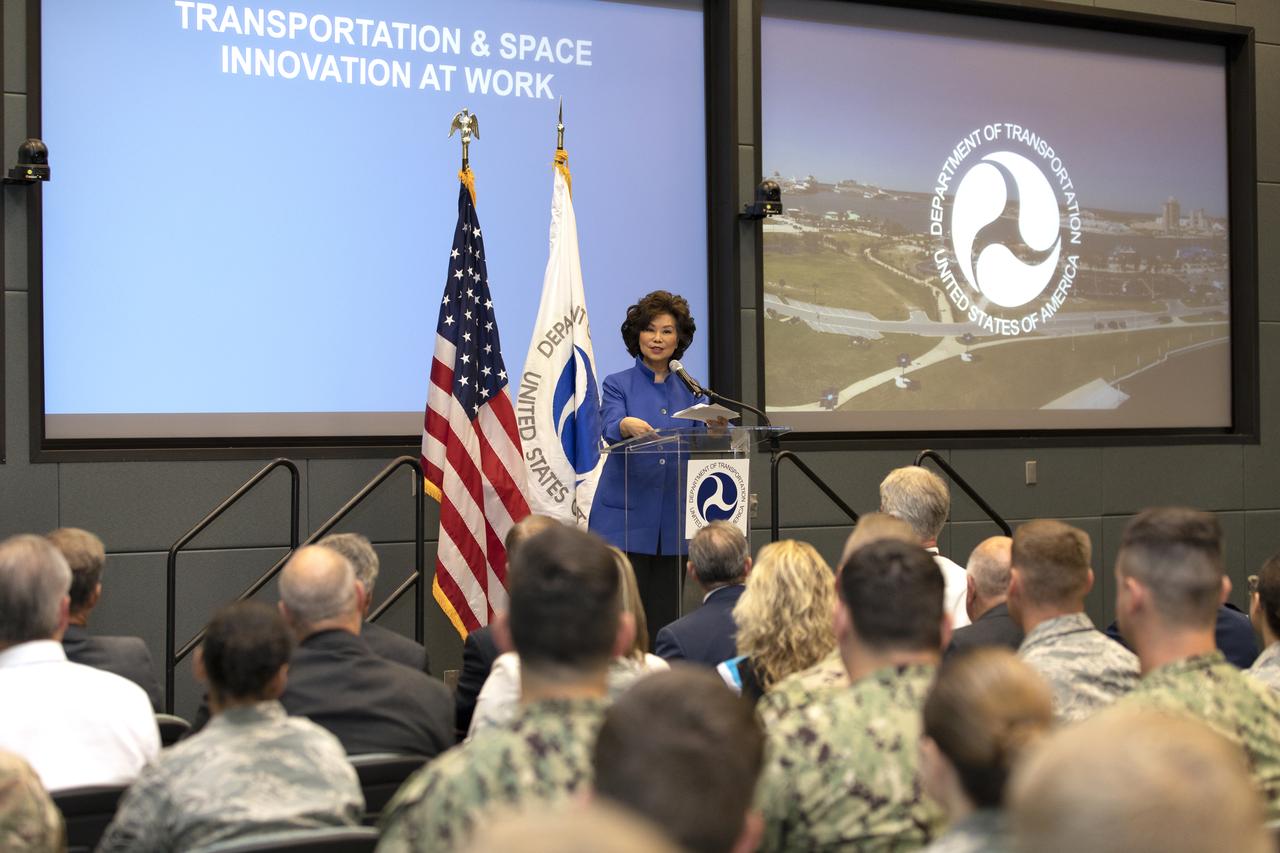
Secretary Elaine L. Chao, of the U.S. Department of Transportation (DOT), visits NASA’s Kennedy Space Center in Florida on April 24, 2019. She spoke to Kennedy’s leadership in the Operations and Support Building II and discussed the DOT’s role in enabling commercial space.

A team of engineers from NASA's John C. Stennis Space Center, Orbital Sciences Corporation and Aerojet conduct a successful test of an Aerojet AJ26 rocket engine on March 19. Stennis is testing AJ26 engines for Orbital Sciences to power commercial cargo missions to the International Space Station. Orbital has partnered with NASA through the Commercial Orbital Transportation Services initiative to carry out eight cargo missions to the space station by 2015, using Taurus II rockets.
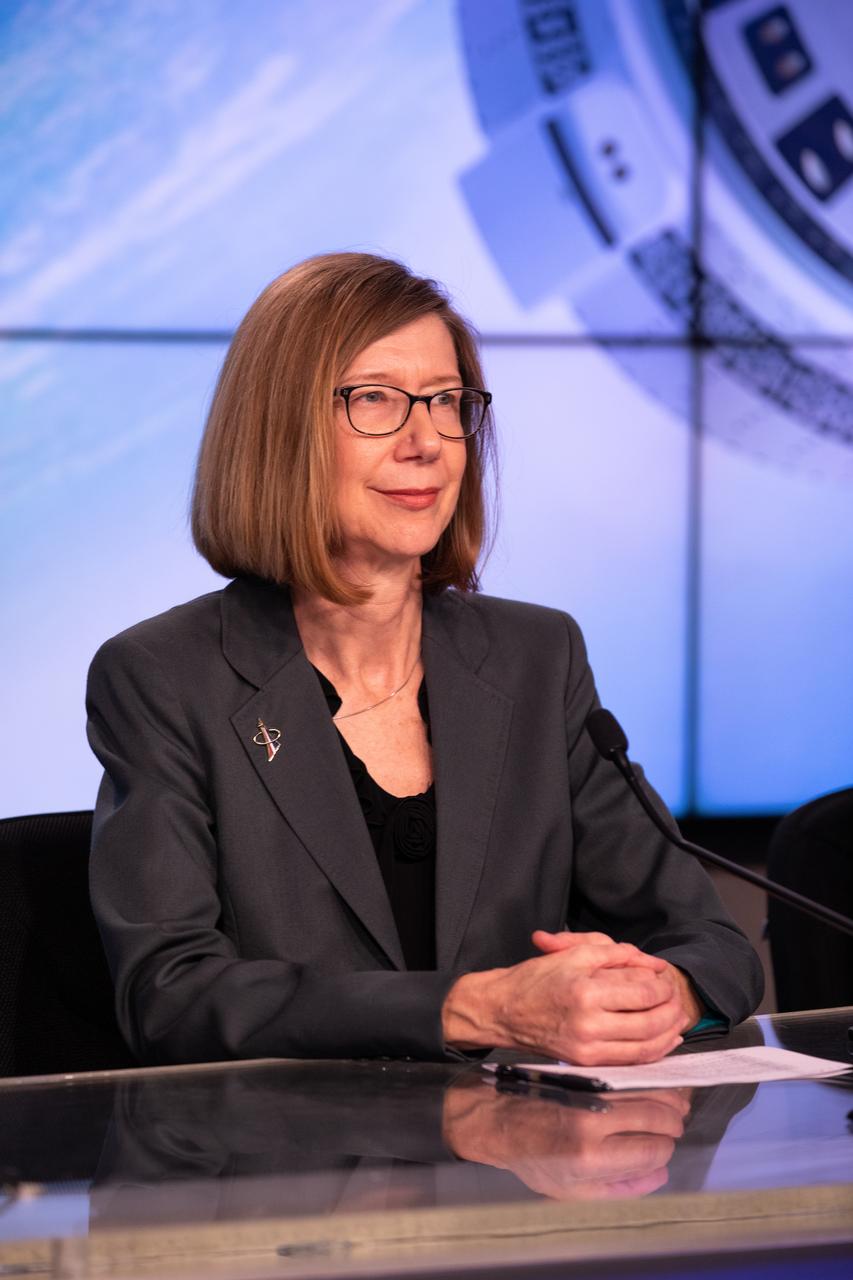
Kathy Lueders, NASA Commercial Crew Program, speaks during a prelaunch briefing for Boeing’s Orbital Flight Test at the agency’s Kennedy Space Center in Florida, Dec. 17, 2019. Boeing’s CST-100 Starliner spacecraft will launch atop a United Launch Alliance Atlas V rocket from Space Launch Complex 41 at Cape Canaveral Air Force Station. The uncrewed Orbital Flight Test will be the Starliner’s first flight to the International Space Station for NASA’s Commercial Crew Program.
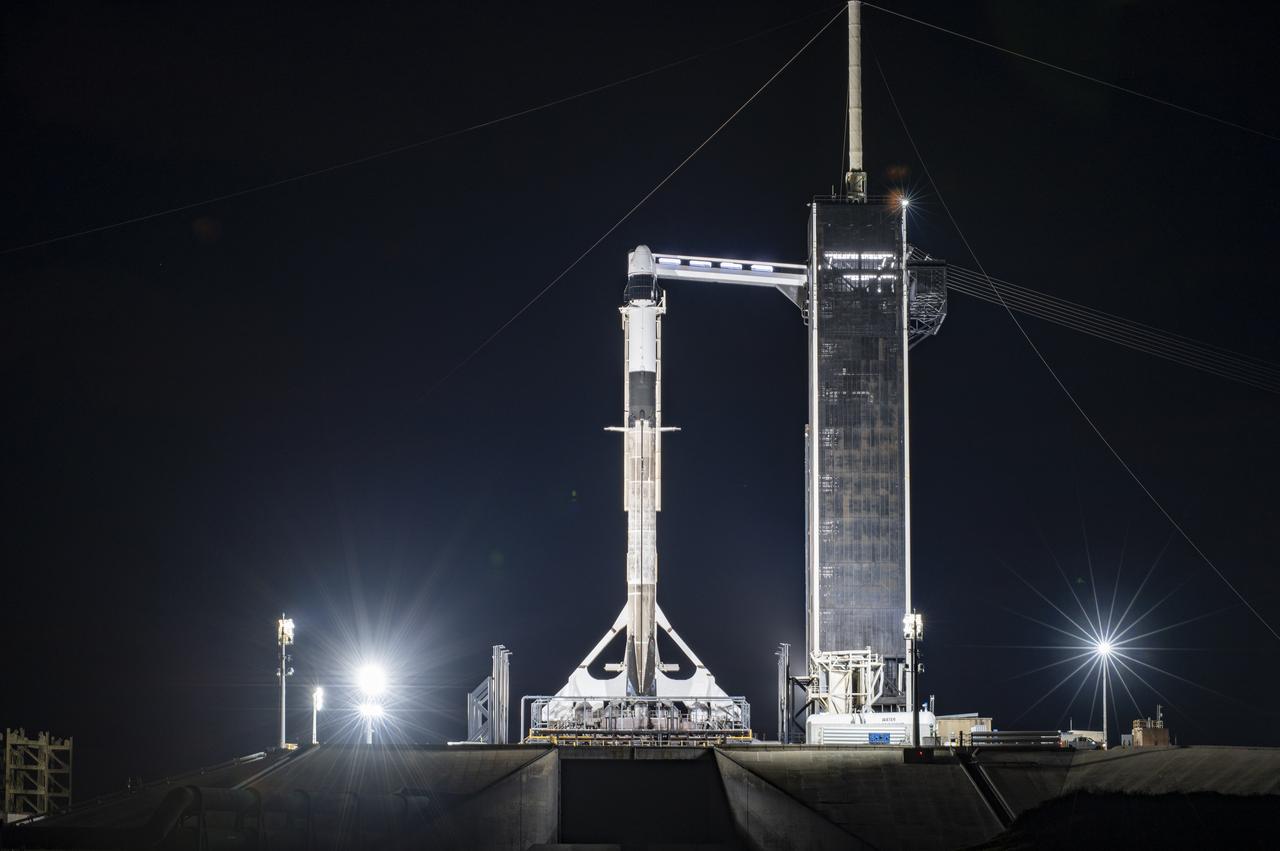
A SpaceX Falcon 9 rocket, topped with the company’s upgraded version of the Dragon spacecraft, stands vertical at NASA Kennedy Space Center’s Launch Complex 39A in Florida on Wednesday, Dec. 2, 2020. The first mission for SpaceX under NASA’s second Commercial Resupply Services contract, CRS-21 is scheduled to lift off from Launch Complex 39A on Saturday, Dec. 5, at 11:39 a.m. EST. The mission will deliver critical supplies and equipment to the International Space Station.
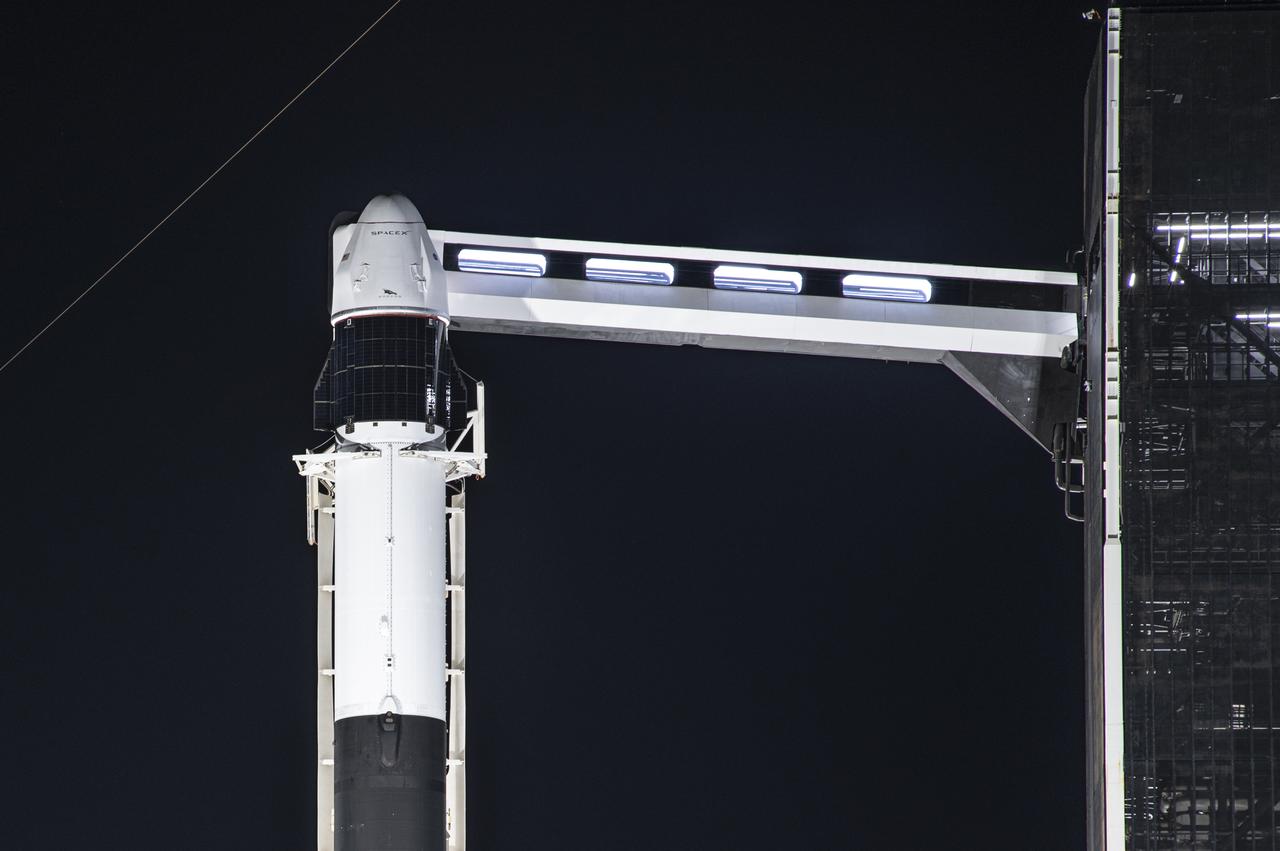
A SpaceX Falcon 9 rocket, topped with the company’s upgraded version of the Dragon spacecraft, stands vertical at NASA Kennedy Space Center’s Launch Complex 39A in Florida on Wednesday, Dec. 2, 2020. The first mission for SpaceX under NASA’s second Commercial Resupply Services contract, CRS-21 is scheduled to lift off from Launch Complex 39A on Saturday, Dec. 5, at 11:39 a.m. EST. The mission will deliver critical supplies and equipment to the International Space Station.