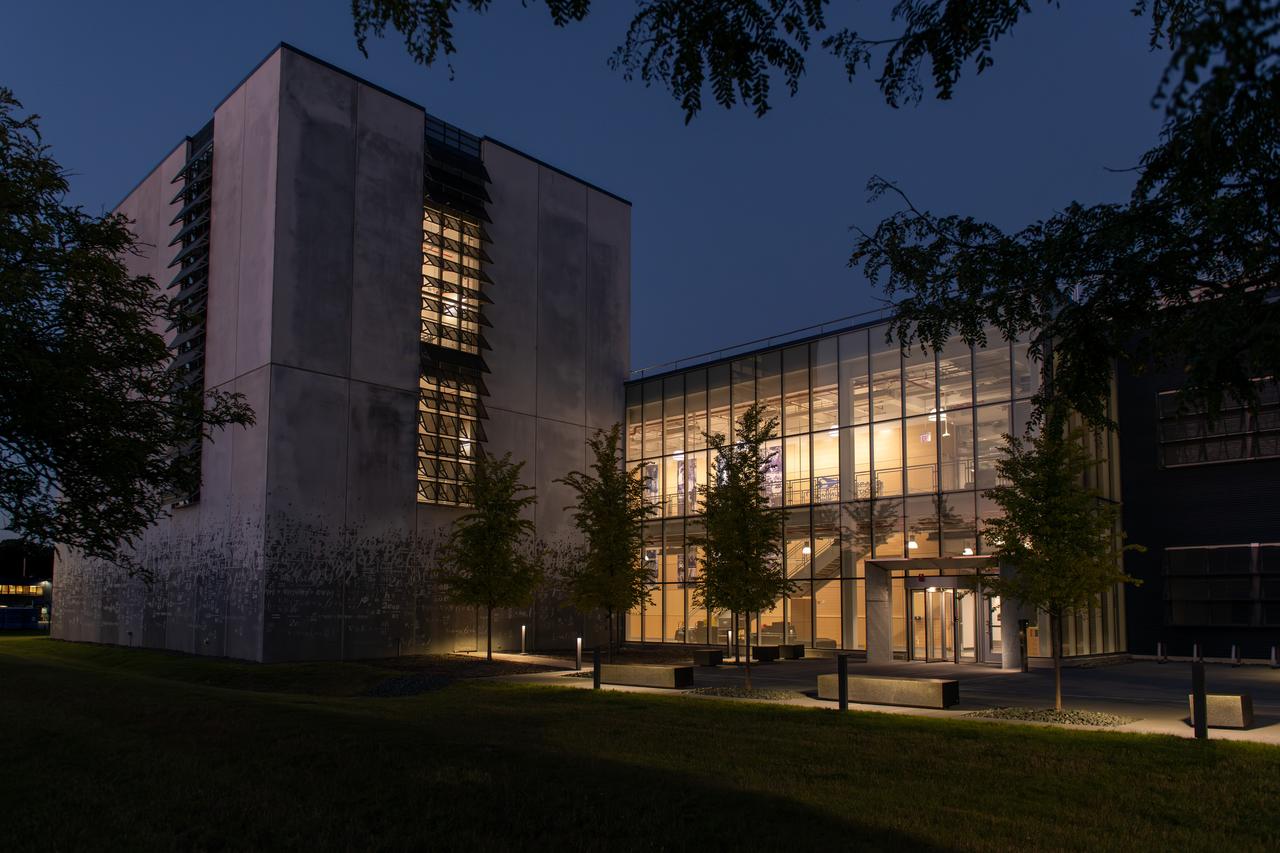
The new Aerospace Communications Facility allows researchers to develop various types of communication, including RF, cellular, optical, and quantum to support the agency’s Artemis and Advanced Air Mobility Missions.
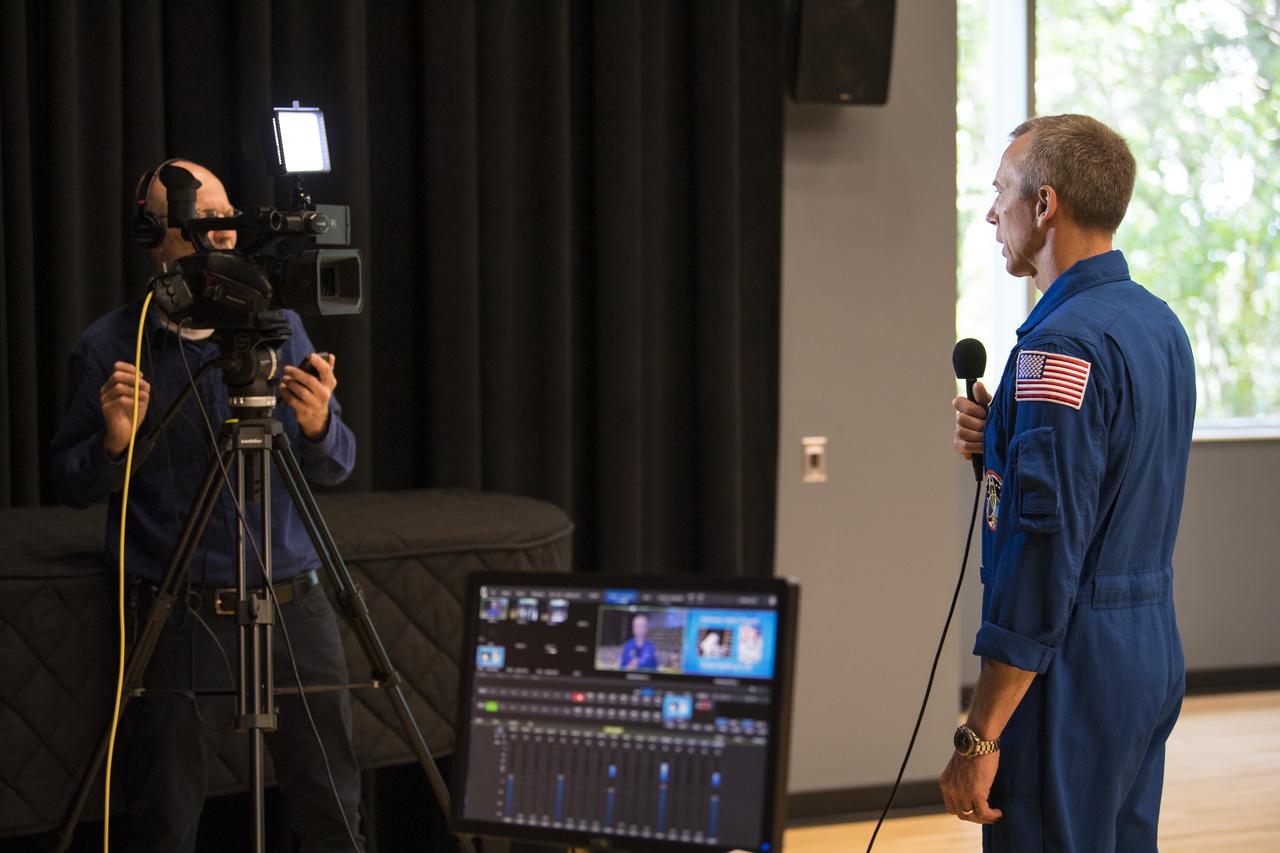
NASA astronaut Drew Feustel is interviewed about his community college experience and why he chose to be an astronaut at Northern Virginia Community College's Alexandria campus, Monday, May 6, 2019 in Virginia. Photo Credit: (NASA/Aubrey Gemignani)
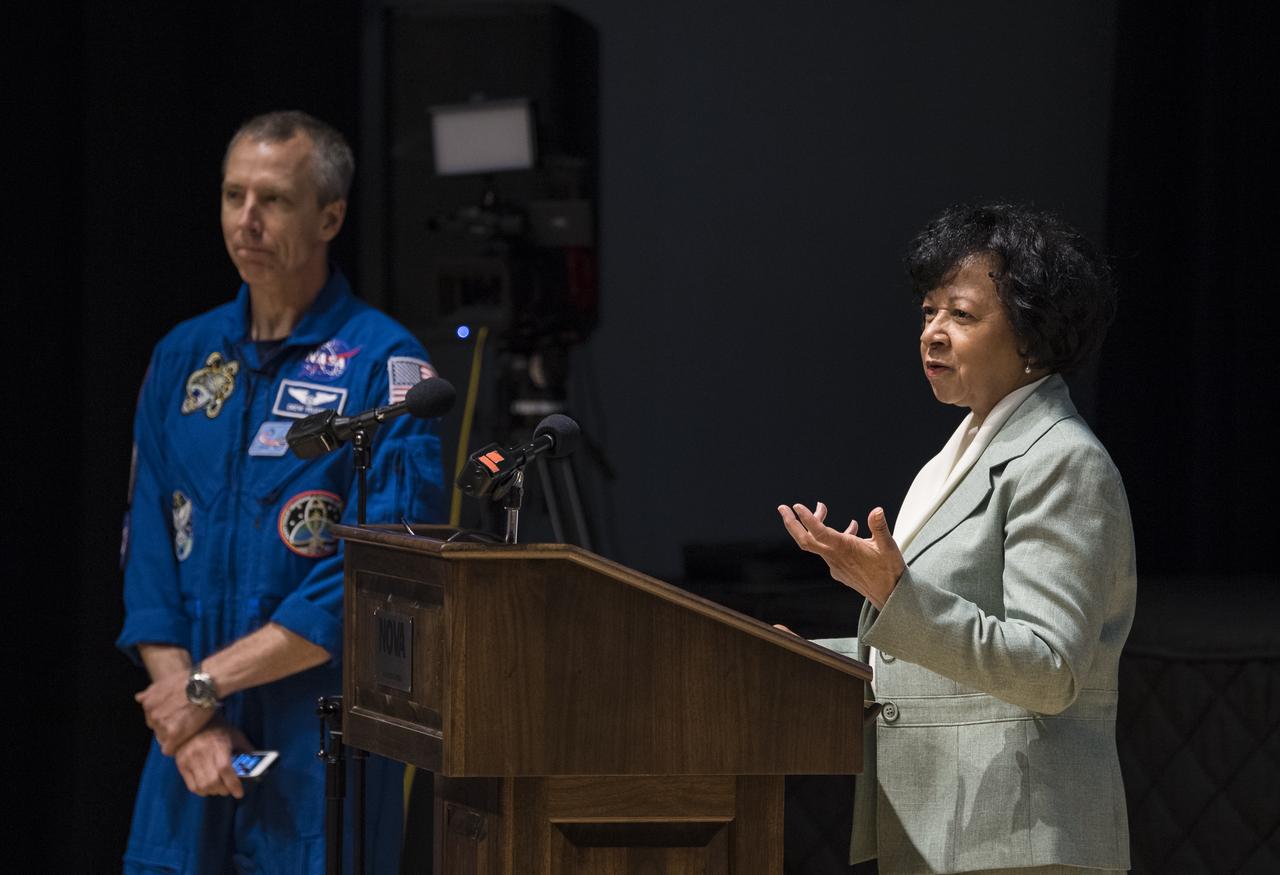
NASA astronaut Drew Feustel is introduced by Northern Virginia Community College's Alexandria campus provost, Dr. Annette Haggray, Monday, May 6, 2019 in Virginia. Photo Credit: (NASA/Aubrey Gemignani)
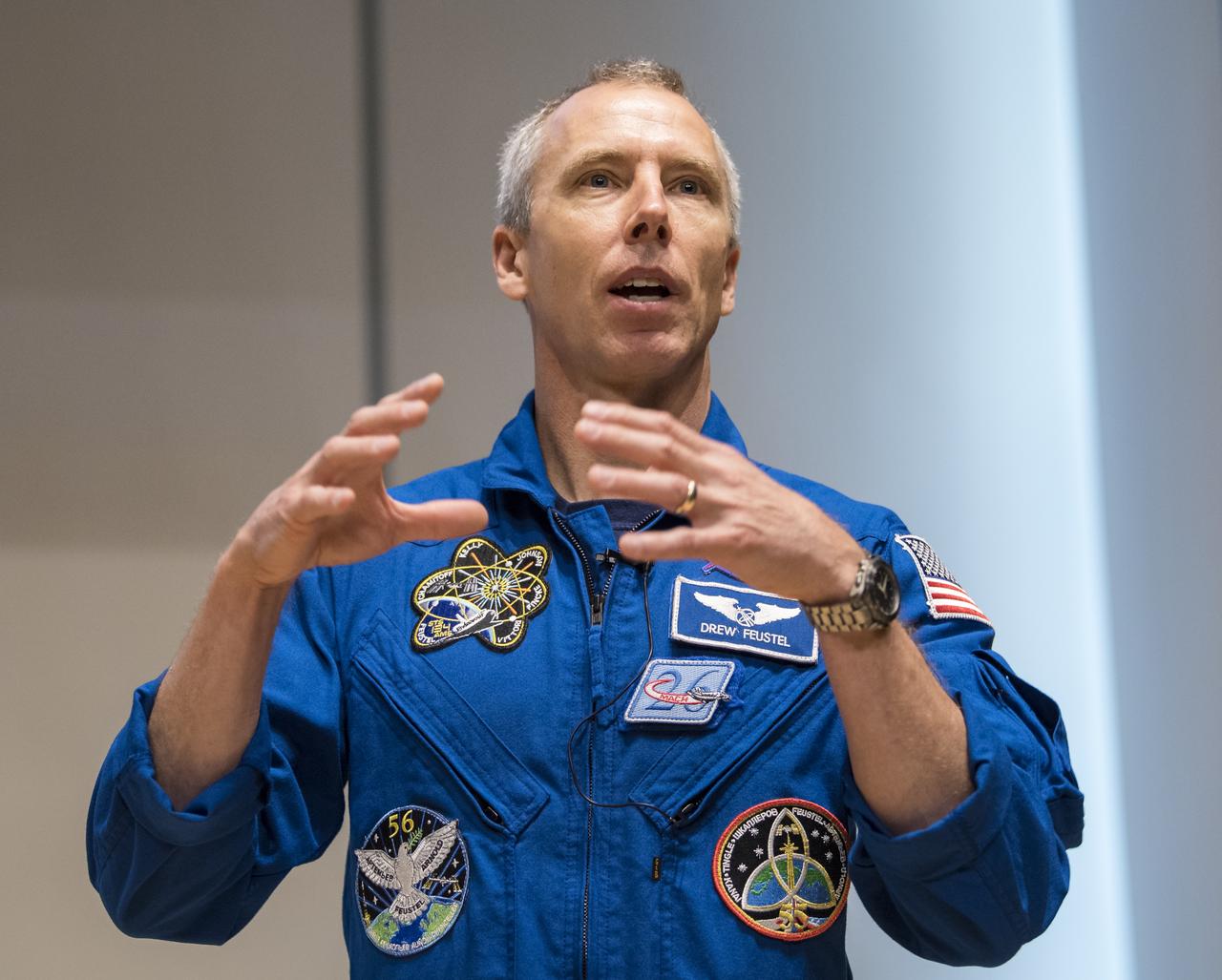
NASA astronaut Drew Feustel speaks about his experience on two shuttle missions, STS-125 and STS-134, as well as Expeditions 55 and 56 on the International Space Station, at Northern Virginia Community College's Alexandria campus, Monday, May 6, 2019 in Virginia. Photo Credit: (NASA/Aubrey Gemignani)
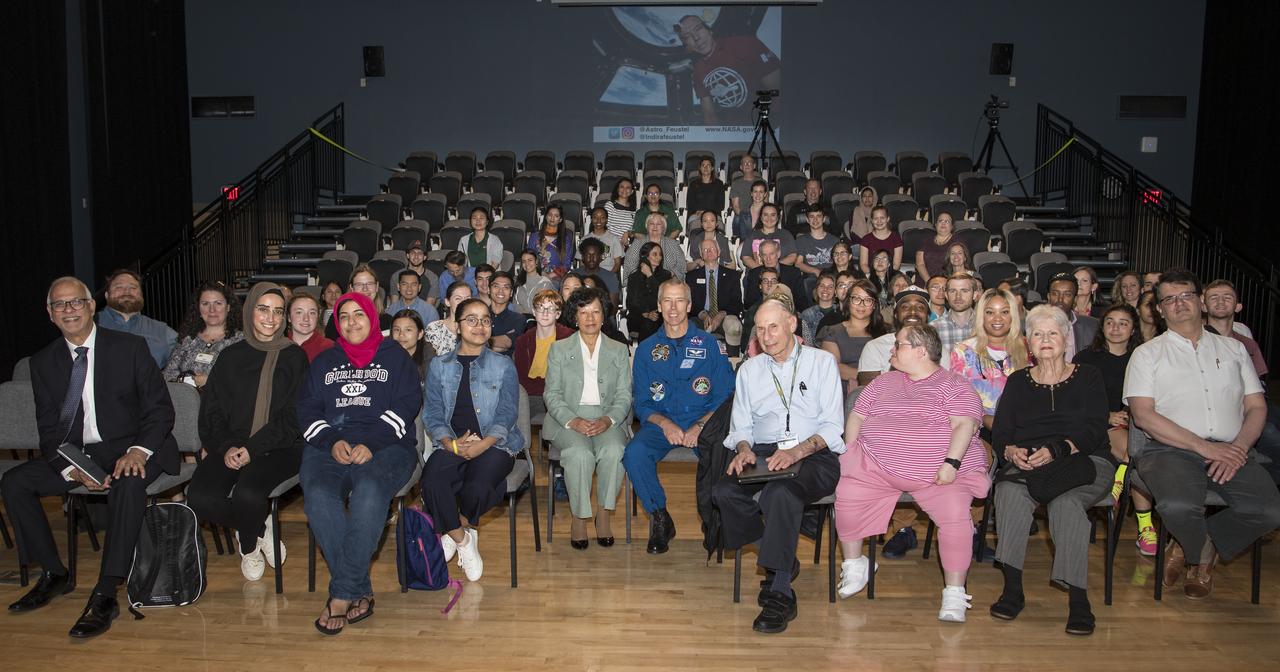
NASA astronaut Drew Feustel, center right, poses for a photo with Northern Virginia Community College's Alexandria campus provost, Dr. Annette Haggray, center left, and attendees of his presentation on spaceflight, Monday, May 6, 2019 in Virginia. Photo Credit: (NASA/Aubrey Gemignani)
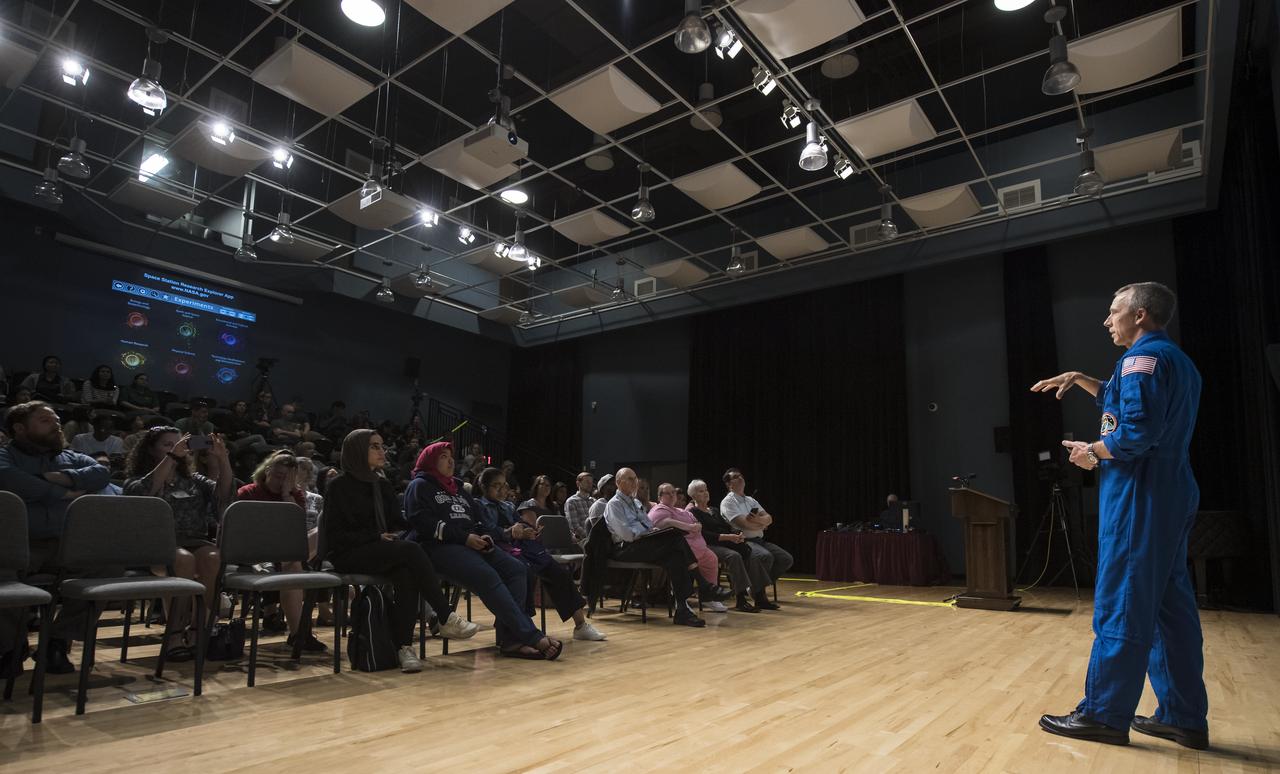
NASA astronaut Drew Feustel speaks about his experience on two shuttle missions, STS-125 and STS-134, as well as Expeditions 55 and 56 on the International Space Station, at Northern Virginia Community College's Alexandria campus, Monday, May 6, 2019 in Virginia. Photo Credit: (NASA/Aubrey Gemignani)
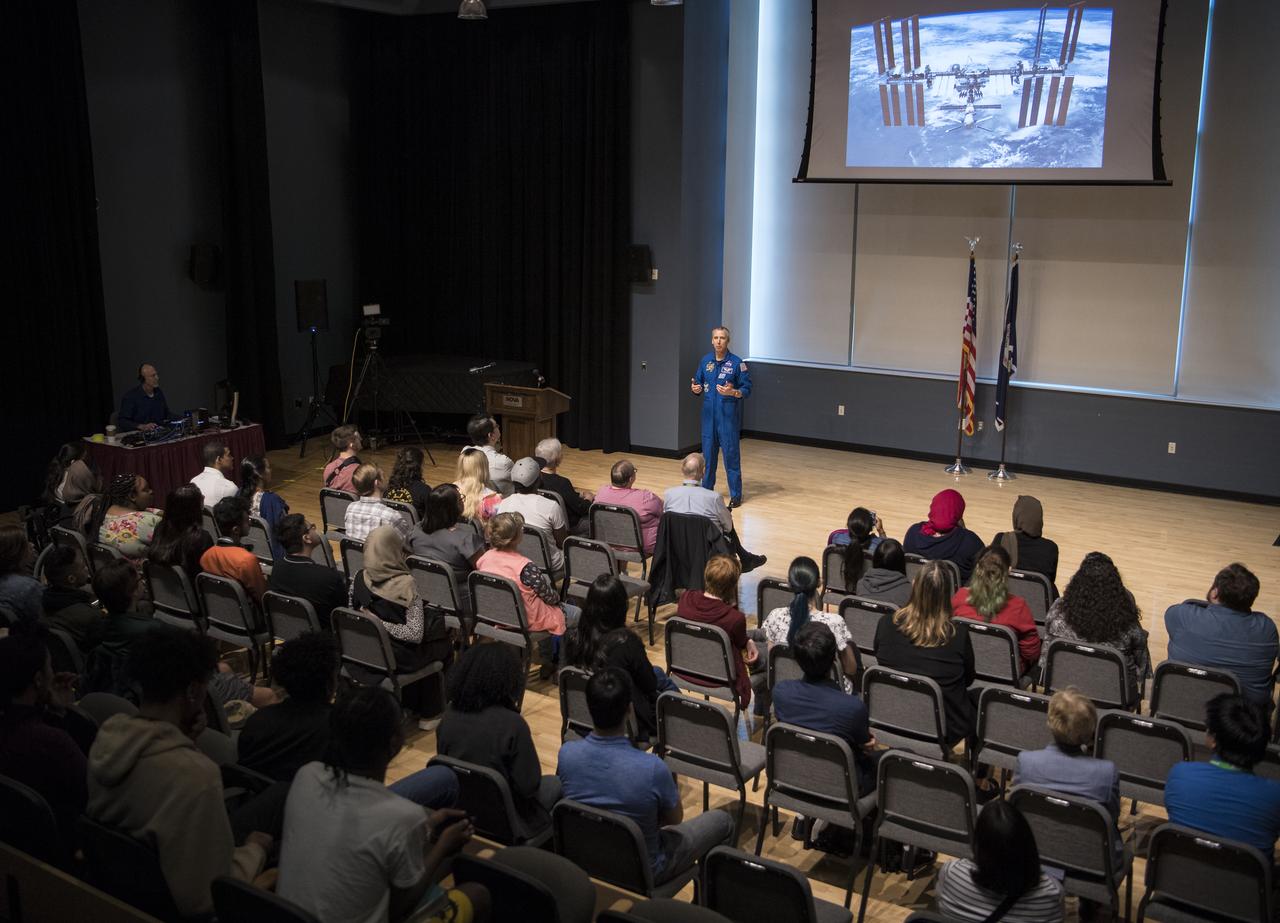
NASA astronaut Drew Feustel speaks about his experience on two shuttle missions, STS-125 and STS-134, as well as Expeditions 55 and 56 on the International Space Station, at Northern Virginia Community College's Alexandria campus, Monday, May 6, 2019 in Virginia. Photo Credit: (NASA/Aubrey Gemignani)
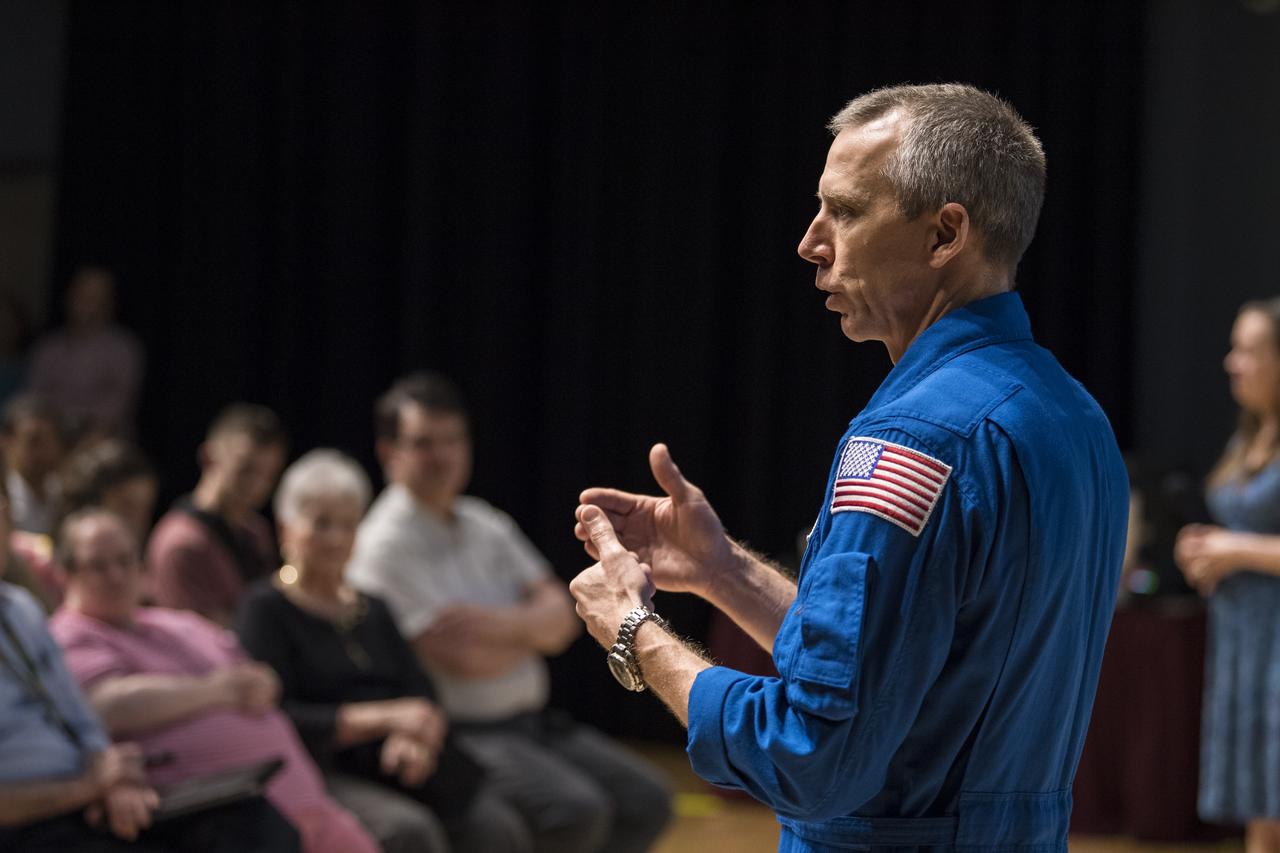
NASA astronaut Drew Feustel speaks about his experience on two shuttle missions, STS-125 and STS-134, as well as Expeditions 55 and 56 on the International Space Station, at Northern Virginia Community College's Alexandria campus, Monday, May 6, 2019 in Virginia. Photo Credit: (NASA/Aubrey Gemignani)
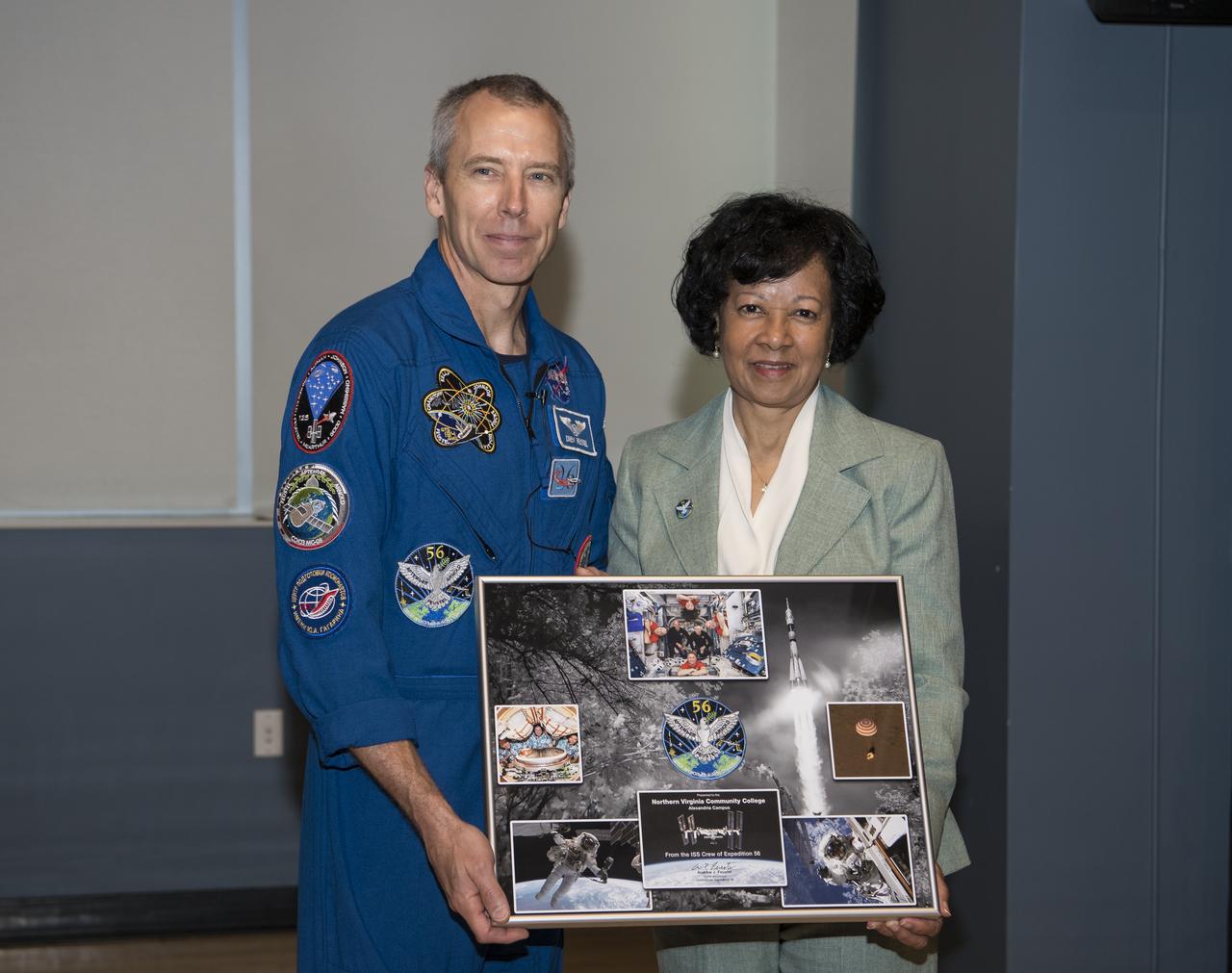
NASA astronaut Drew Feustel, left, poses for a photo with Northern Virginia Community College's Alexandria campus provost, Dr. Annette Haggray, after presenting her with a montage from Expeditions 55 and 56, Monday, May 6, 2019 in Virginia. Photo Credit: (NASA/Aubrey Gemignani)
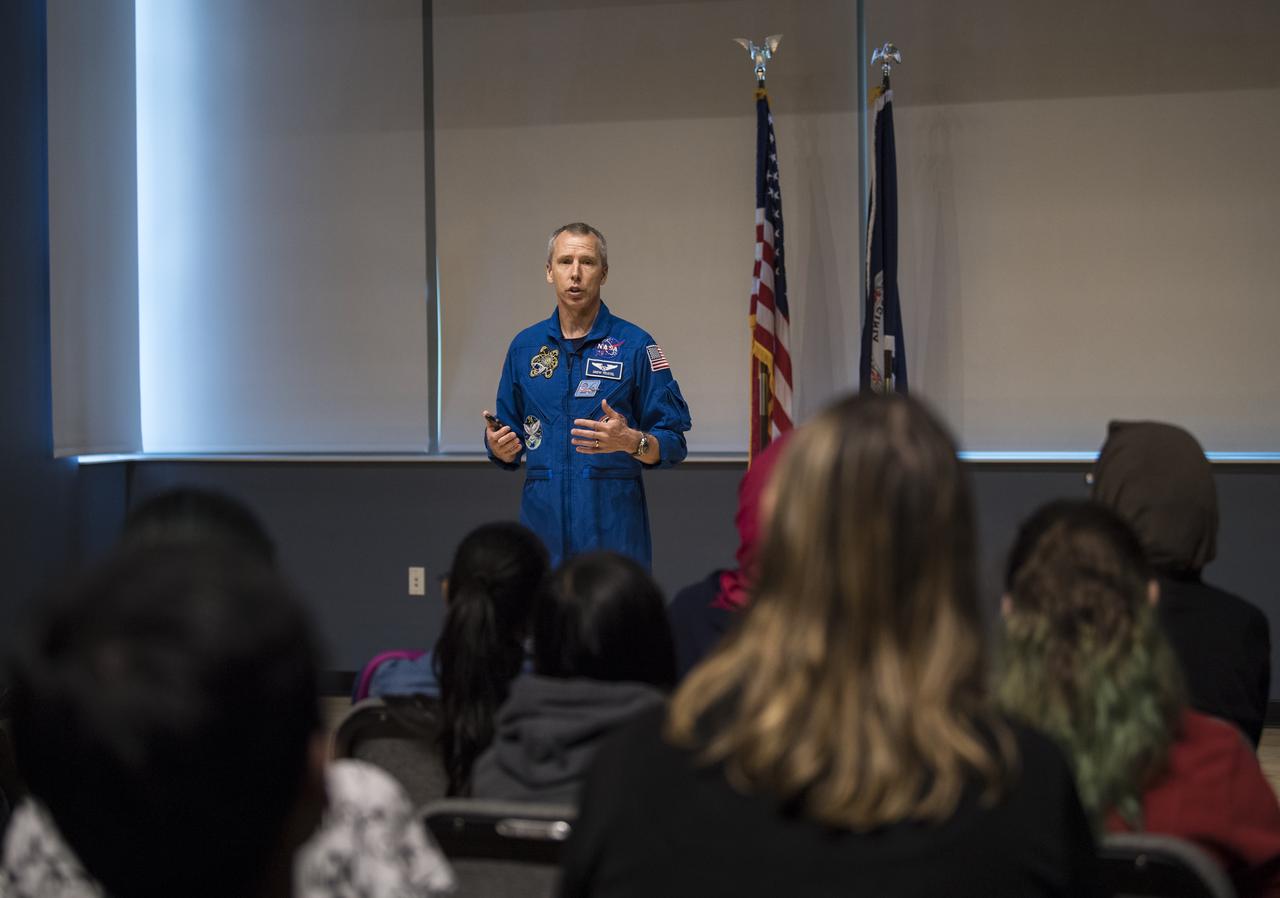
NASA astronaut Drew Feustel speaks about his experience on two shuttle missions, STS-125 and STS-134, as well as Expeditions 55 and 56 on the International Space Station, at Northern Virginia Community College's Alexandria campus, Monday, May 6, 2019 in Virginia. Photo Credit: (NASA/Aubrey Gemignani)
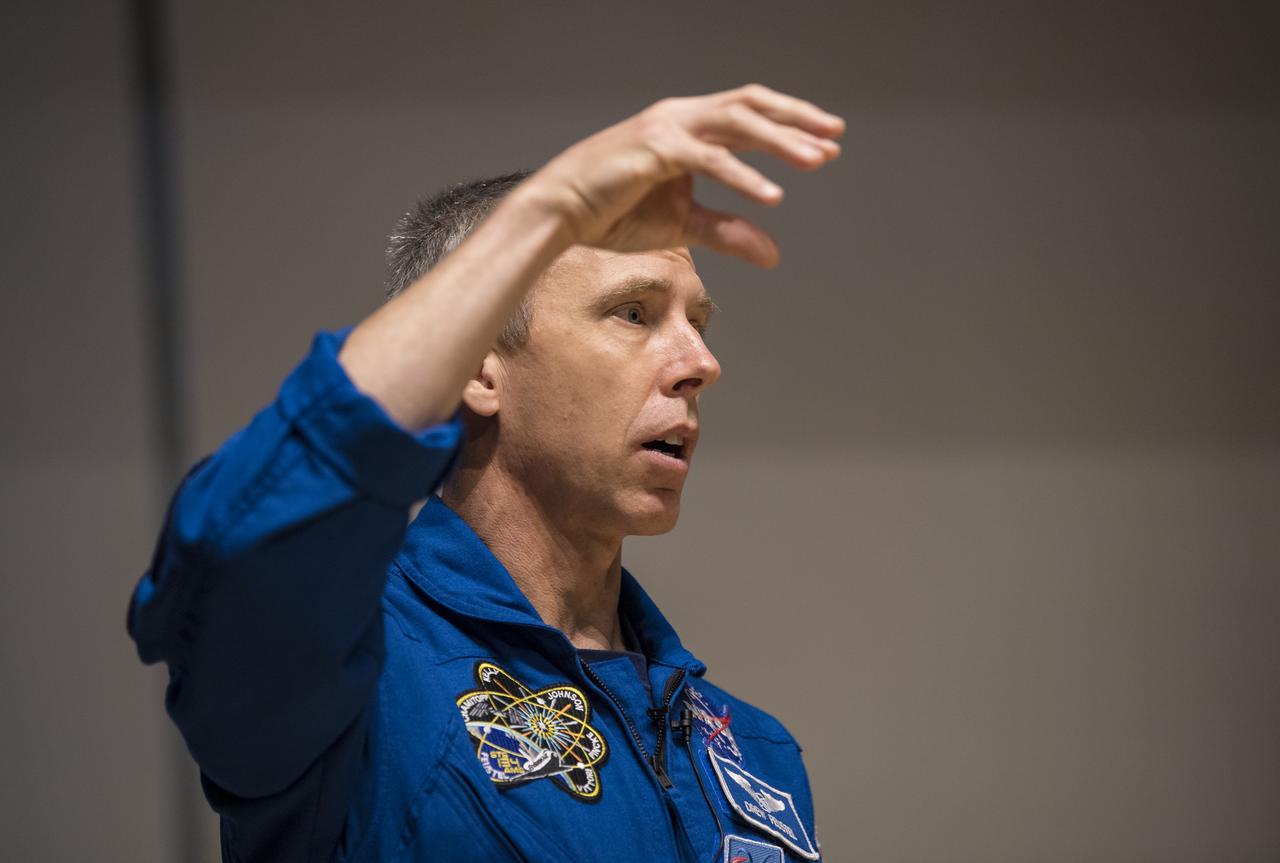
NASA astronaut Drew Feustel speaks about his experience on two shuttle missions, STS-125 and STS-134, as well as Expeditions 55 and 56 on the International Space Station, at Northern Virginia Community College's Alexandria campus, Monday, May 6, 2019 in Virginia. Photo Credit: (NASA/Aubrey Gemignani)
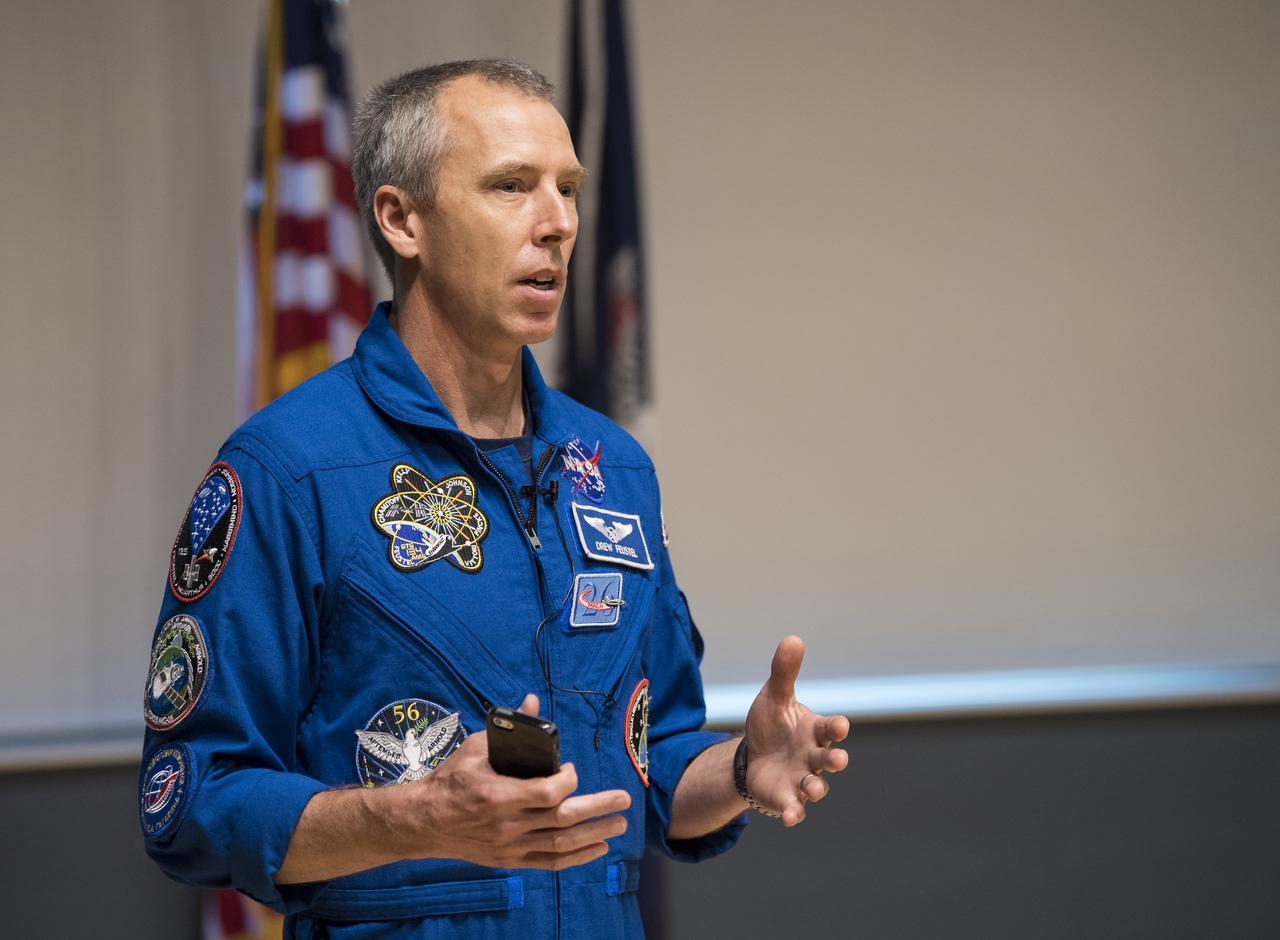
NASA astronaut Drew Feustel speaks about his experience on two shuttle missions, STS-125 and STS-134, as well as Expeditions 55 and 56 on the International Space Station, at Northern Virginia Community College's Alexandria campus, Monday, May 6, 2019 in Virginia. Photo Credit: (NASA/Aubrey Gemignani)
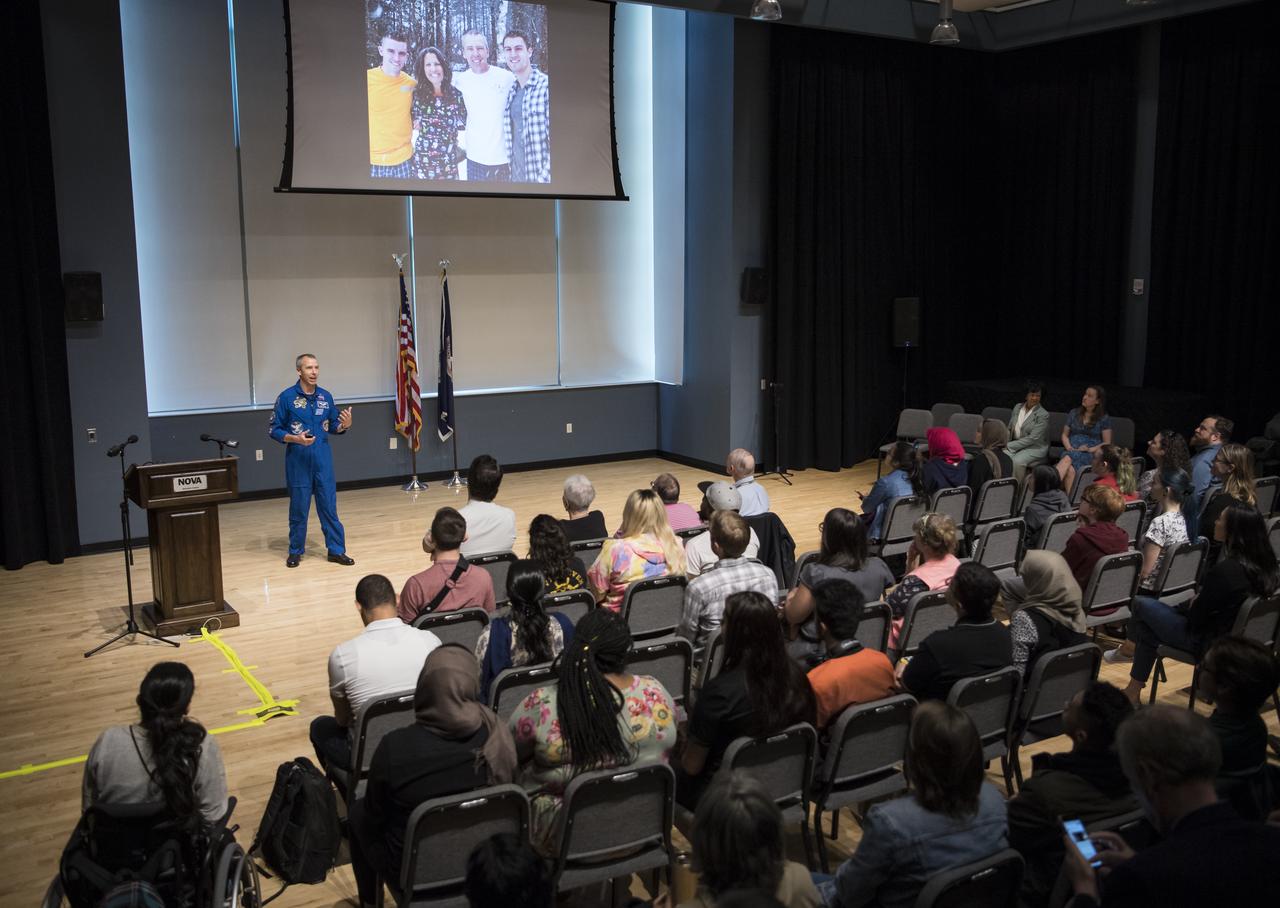
NASA astronaut Drew Feustel speaks about his experience on two shuttle missions, STS-125 and STS-134, as well as Expeditions 55 and 56 on the International Space Station, at Northern Virginia Community College's Alexandria campus, Monday, May 6, 2019 in Virginia. Photo Credit: (NASA/Aubrey Gemignani)
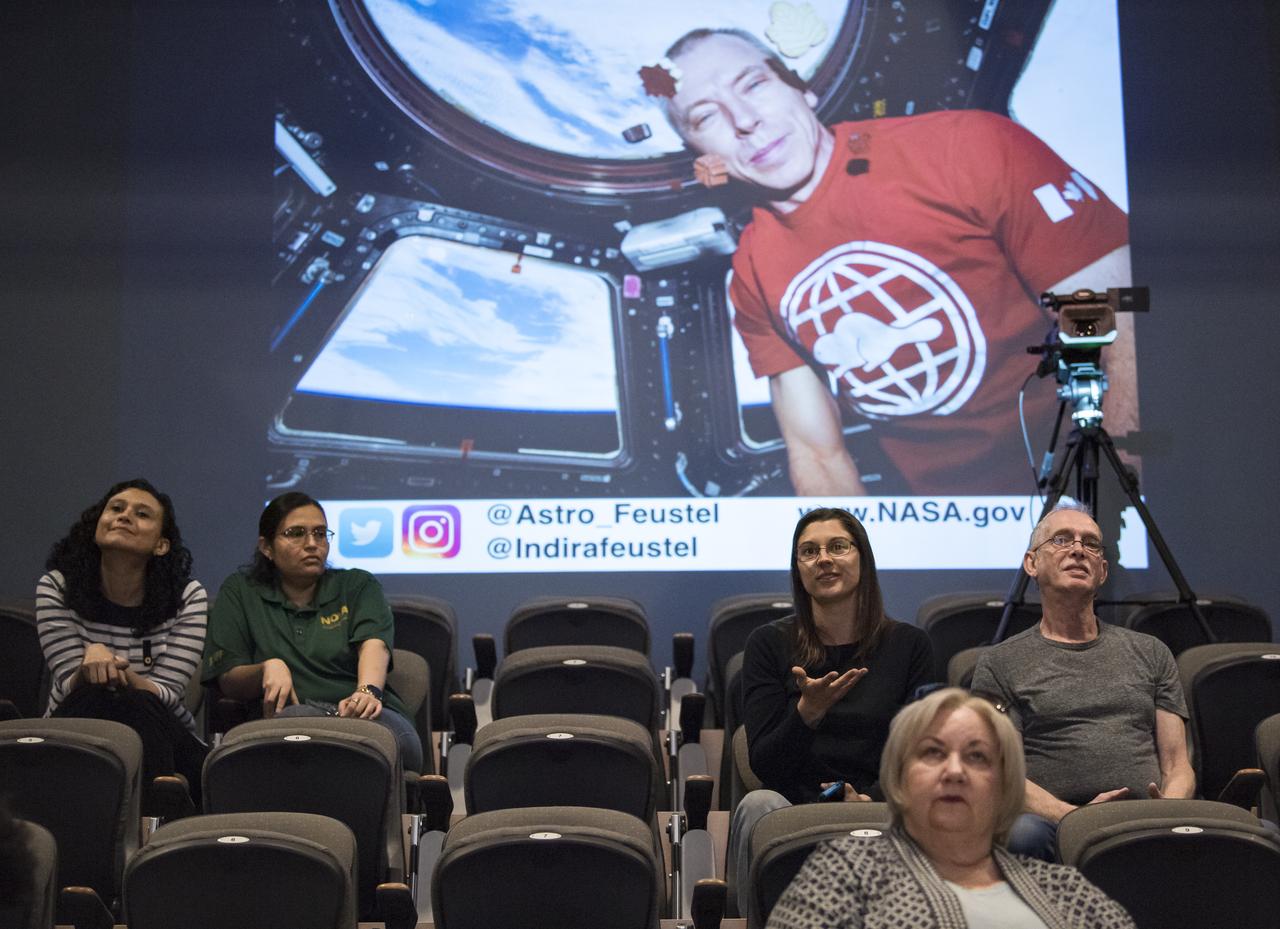
An audience member asks a question after NASA astronaut Drew Feustel gave a presentation about his experience on two shuttle missions, STS-125 and STS-134, as well as Expeditions 55 and 56 on the International Space Station, at Northern Virginia Community College's Alexandria campus, Monday, May 6, 2019 in Virginia. Photo Credit: (NASA/Aubrey Gemignani)
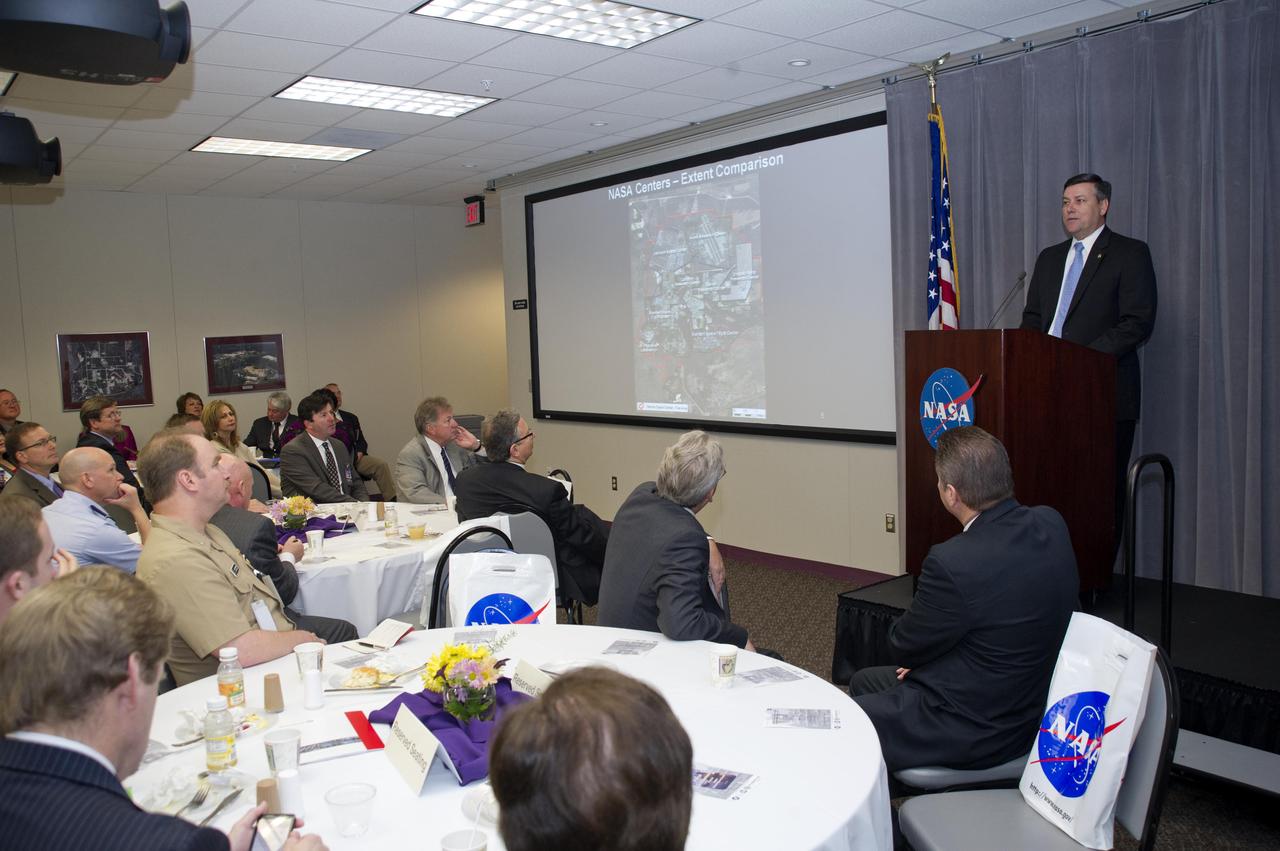
Stennis Space Center Director Patrick Scheuermann addresses community leaders and area officials during a March 1, 2012, event. More than 100 people attended the gathering, which featured reports about rocket engine testing and other work under way at the federal city facility.
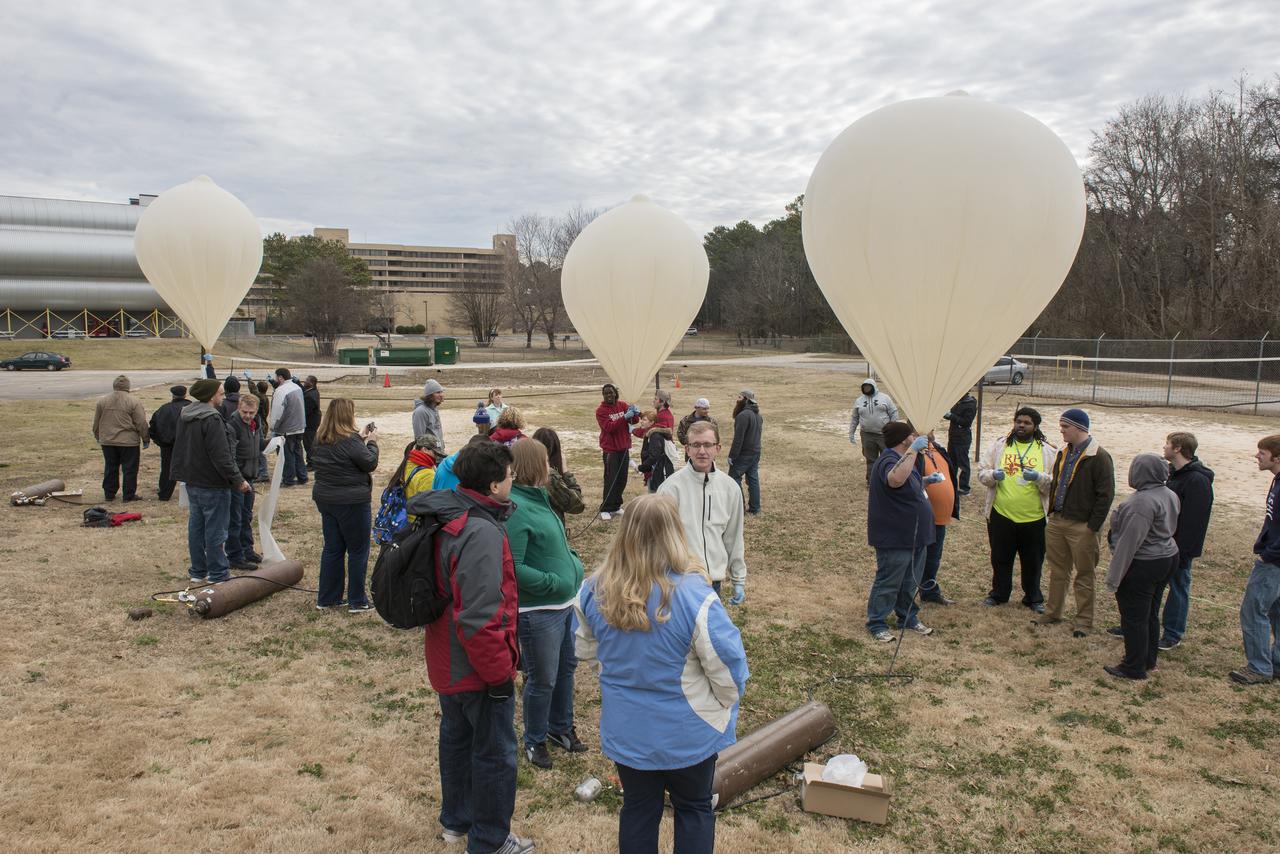
STUDENTS FROM COMMUNITY COLLEGES THROUGHOUT THE SOUTH CAME TOGETHER AT THE U.S. SPACE AND ROCKET CENTER FOR THE BALLOONSAT LAUNCH EVENT. EACH COMMUNITY COLLEGE TEAM ASSEMBLED ITS OWN PAYLOAD, DESIGNED TO DOWNLOAD SCIENTIFIC AND ATMOSPHERIC INFORMATION, AND THEN 2 WEATHER BALLOONS WERE SENT ALOFT TO APPROXIMATELY 100,000 FEET WITH THE PAYLOADS. THE PAYLOADS WERE RECOVERED IN N. GEORGIA AND TAKEN BACK TO THE INDIVIDUAL SCHOOLS FOR DOWNLOADING.
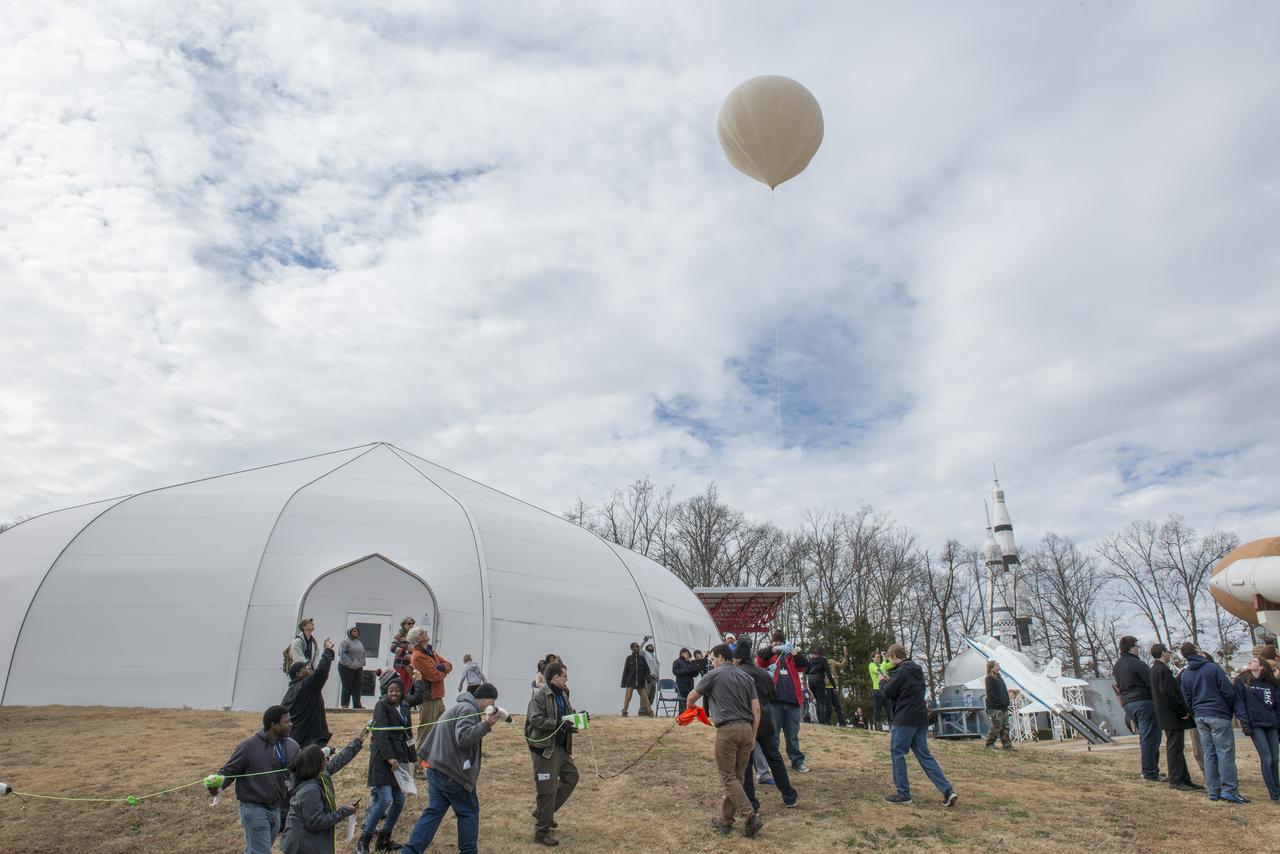
STUDENTS FROM COMMUNITY COLLEGES THROUGHOUT THE SOUTH CAME TOGETHER AT THE U.S. SPACE AND ROCKET CENTER FOR THE BALLOONSAT LAUNCH EVENT. EACH COMMUNITY COLLEGE TEAM ASSEMBLED ITS OWN PAYLOAD, DESIGNED TO DOWNLOAD SCIENTIFIC AND ATMOSPHERIC INFORMATION, AND THEN 2 WEATHER BALLOONS WERE SENT ALOFT TO APPROXIMATELY 100,000 FEET WITH THE PAYLOADS. THE PAYLOADS WERE RECOVERED IN N. GEORGIA AND TAKEN BACK TO THE INDIVIDUAL SCHOOLS FOR DOWNLOADING.
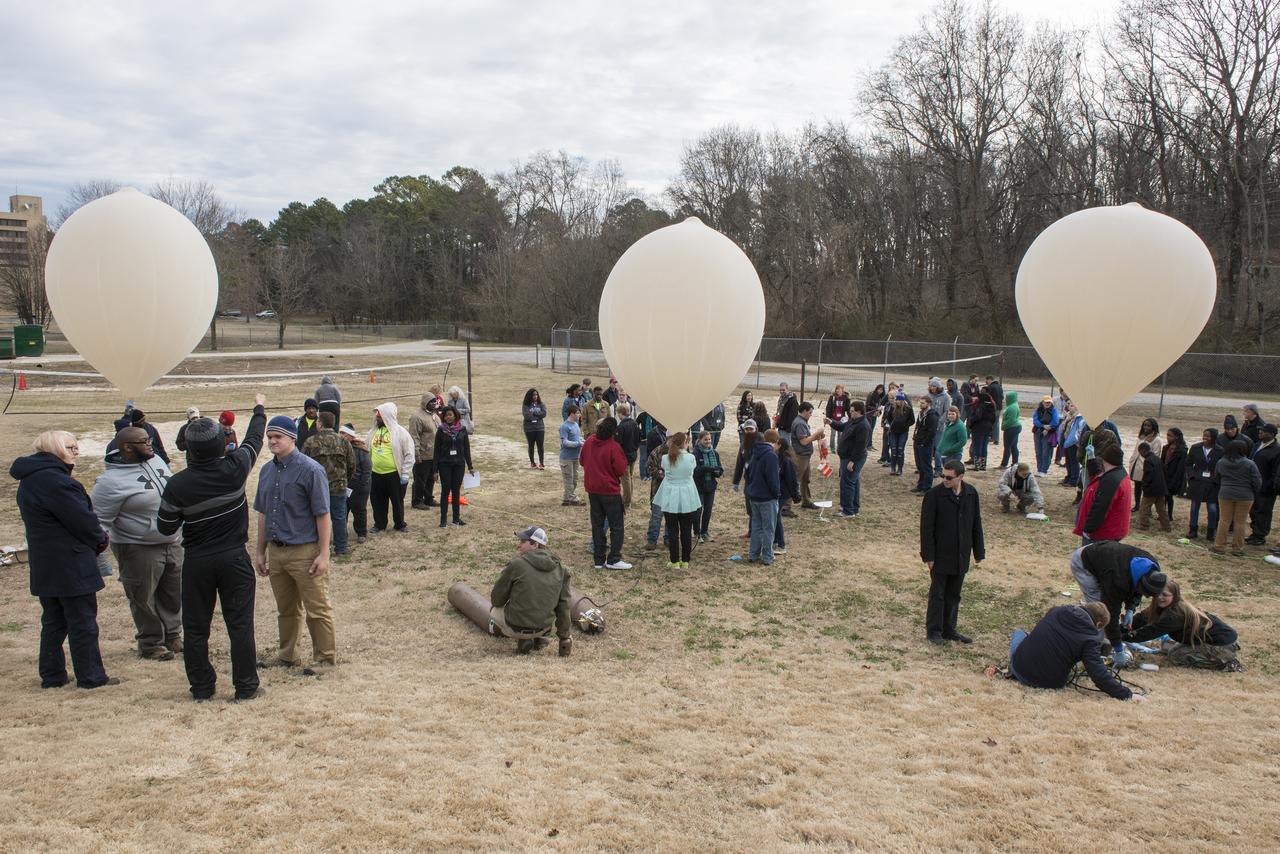
STUDENTS FROM COMMUNITY COLLEGES THROUGHOUT THE SOUTH CAME TOGETHER AT THE U.S. SPACE AND ROCKET CENTER FOR THE BALLOONSAT LAUNCH EVENT. EACH COMMUNITY COLLEGE TEAM ASSEMBLED ITS OWN PAYLOAD, DESIGNED TO DOWNLOAD SCIENTIFIC AND ATMOSPHERIC INFORMATION, AND THEN 2 WEATHER BALLOONS WERE SENT ALOFT TO APPROXIMATELY 100,000 FEET WITH THE PAYLOADS. THE PAYLOADS WERE RECOVERED IN N. GEORGIA AND TAKEN BACK TO THE INDIVIDUAL SCHOOLS FOR DOWNLOADING.
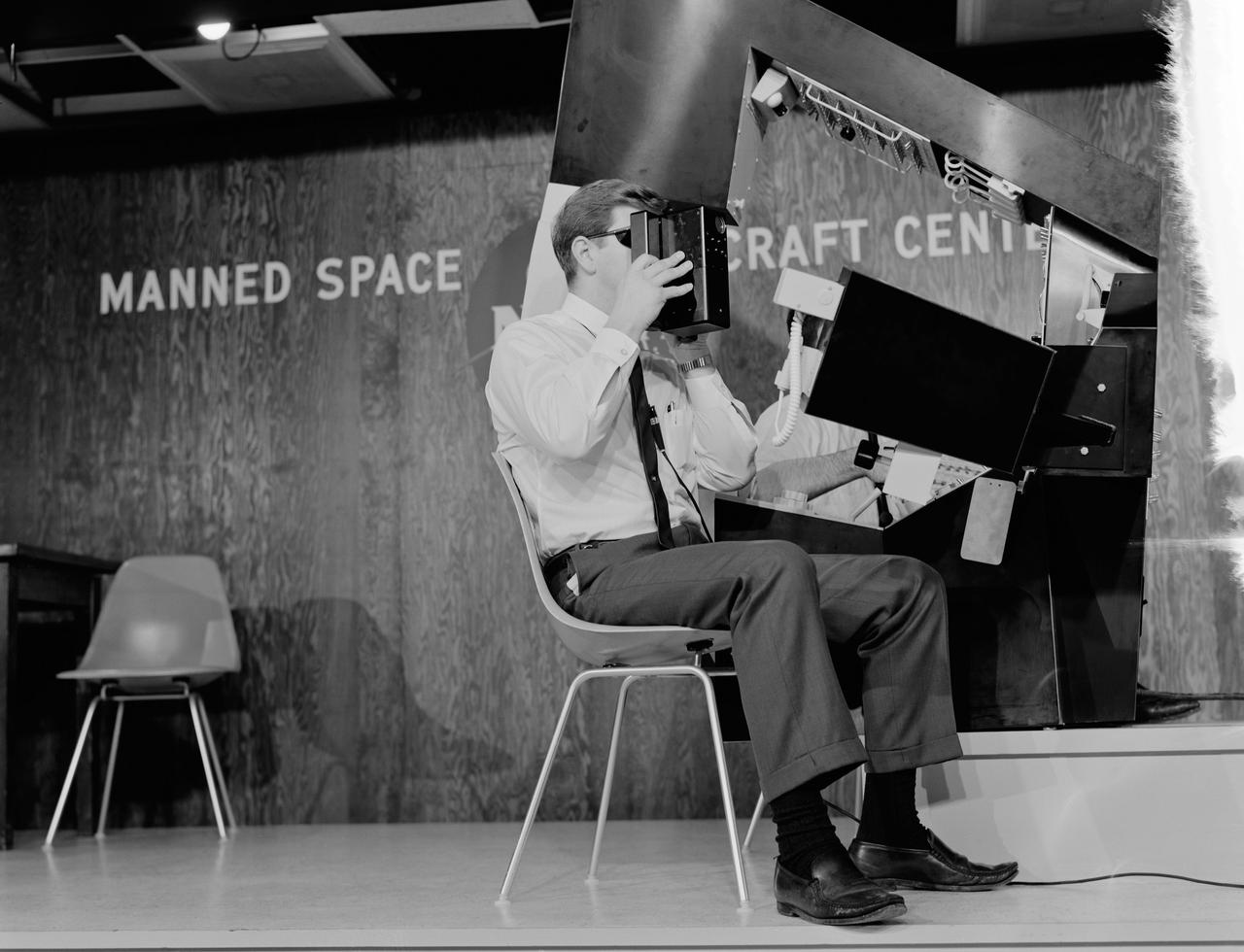
S65-42598 (10 Nov. 1965) --- Douglas S. Idlly, Electromagnetic Systems Branch, Instrumentation and Electronic Systems Division, illustrates an Optical Communications Transmitter (LASER) during a briefing at the news center of the Manned Spacecraft Center in Houston, Texas. Photo credit: NASA

Kelvin Manning, at left, Kennedy Space Center’s associate director, technical, visits one of the exhibitors at the Community Leaders Update, hosted by the center on Feb. 18, 2020, at the Kennedy Space Center Visitor Complex. At right is Tassos Abadiotakis, KIAC program manager. A panel discussion was moderated by Center Director Bob Cabana during the update. Attendees included community leaders, business executives, partners, educators and government leaders. After the presentation, guests had the opportunity to ask questions and visit displays from the programs and some of the commercial partners.

Steve Payne, far left, with NASA’s Commercial Crew Program, visits with a guest during a Community Leaders Update hosted by Kennedy Space Center on Feb. 18, 2020, at the Kennedy Space Center Visitor Complex. A panel discussion was moderated by Center Director Bob Cabana during the update. Attendees included community leaders, business executives, partners, educators and government leaders. After the presentation, guests had the opportunity to ask questions and visit displays from the programs and some of the commercial partners.

A guest visits with representatives from United Launch Alliance during the Community Leaders Update hosted by NASA Kennedy Space Center on Feb. 18, 2020, at the Kennedy Space Center Visitor Complex in Florida. A panel discussion was moderated by Center Director Bob Cabana during the update. Attendees included community leaders, business executives, partners, educators and government leaders. After the presentation, guests had the opportunity to ask questions and visit displays from the programs and some of the commercial partners.

A guest visits an exhibit from Boeing, one of NASA’s Commercial Crew Program partners, during a Community Leaders Update hosted by Kennedy Space Center on Feb. 18, 2020, at the Kennedy Space Center Visitor Complex in Florida. A panel discussion was moderated by Center Director Bob Cabana during the update. Attendees included community leaders, business executives, partners, educators and government leaders. After the presentation, guests had the opportunity to ask questions and visit displays from the programs and some of the commercial partners.

Steve Payne, with NASA’s Commercial Crew Program, speaks with a guest during a Community Leaders Update hosted by Kennedy Space Center on Feb. 18, 2020, at the Kennedy Space Center Visitor Complex in Florida. A panel discussion was moderated by Center Director Bob Cabana during the update. Attendees included community leaders, business executives, partners, educators and government leaders. After the presentation, guests had the opportunity to ask questions and visit displays from the programs and some of the commercial partners.

Barbara Brown, center, chief technologist, Exploration Research and Technology Programs, participates in a panel discussion during a Community Leaders Update hosted by Kennedy Space Center on Feb. 18, 2020, at the Kennedy Space Center Visitor Complex in Florida. At left is Jenny Lyons, deputy manager, Gateway Logistics Element. At right is Jeremy Parsons, deputy manager, Exploration Ground Systems. The panel discussion was moderated by Center Director Bob Cabana. Attendees included community leaders, business executives, partners, educators and government leaders. After the presentation, guests had the opportunity to ask questions and visit displays from the programs and some of the commercial partners.

Attendees visit NASA and contractor exhibits during a Community Leaders Update hosted by NASA Kennedy Space Center on Feb. 18, 2020, at the Kennedy Space Center Visitor Complex in Florida. Center Director Bob Cabana moderated a panel discussion featuring senior leaders from Exploration Ground Systems, Spaceport Integration and Services, Exploration Research and Technology Programs, Gateway Logistics Element, and Center Planning and Development. Attendees included community leaders, business executives, partners, educators and government leaders. After the presentation, guests had the opportunity to ask questions and visit displays from the programs and some of the commercial partners.

A business leader visits an exhibitor booth during a Community Leaders Update hosted by NASA Kennedy Space Center on Feb. 18, 2020, at the Kennedy Space Center Visitor Complex in Florida. Center Director Bob Cabana moderated a panel discussion featuring senior leaders from Exploration Ground Systems, Spaceport Integration and Services, Exploration Research and Technology Programs, Gateway Logistics Element, and Center Planning and Development. Attendees included community leaders, business executives, partners, educators and government leaders. After the presentation, guests had the opportunity to ask questions and visit displays from the programs and some of the commercial partners.
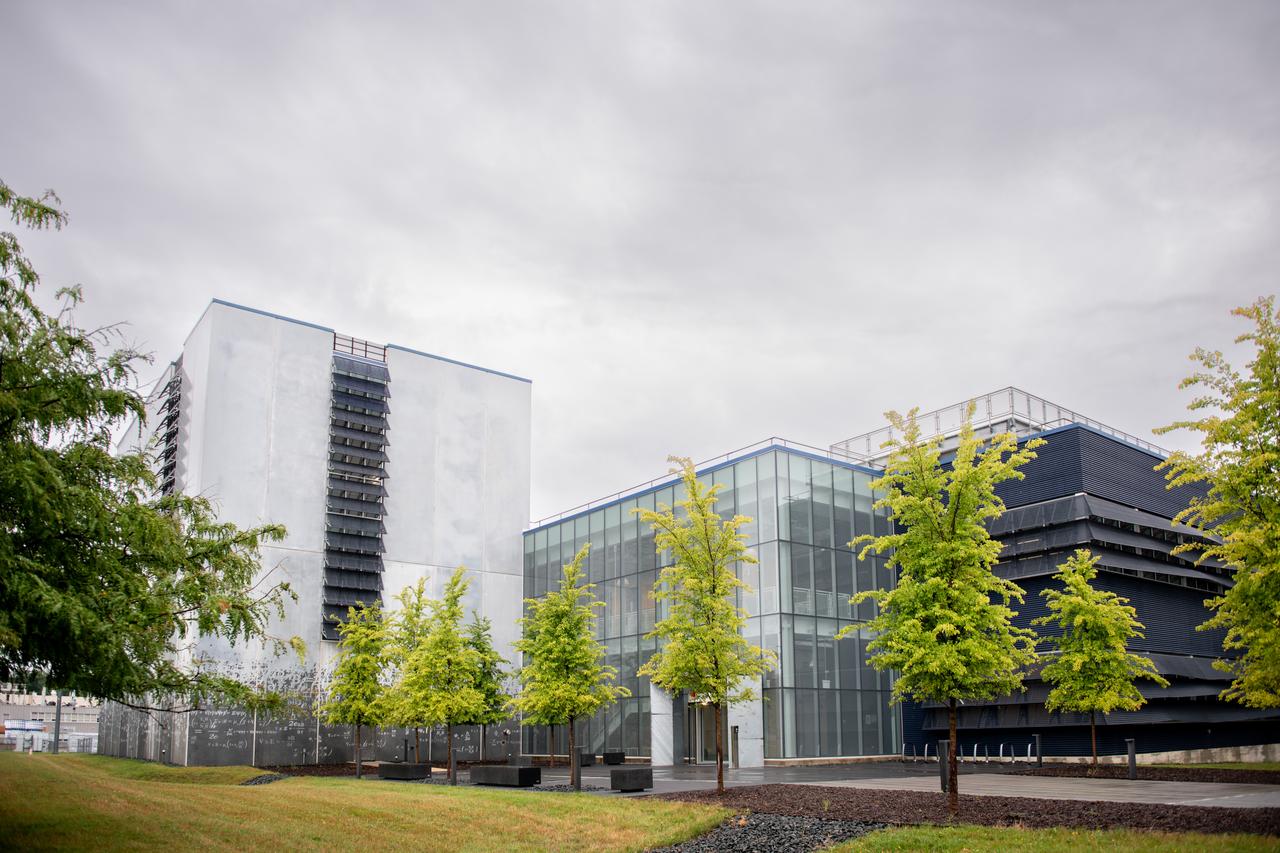
NASA’s Glenn Research Center opened the doors to a brand-new mission-focused facility that will support the agency’s Artemis and Advanced Air Mobility missions. On Aug. 30, NASA management and local officials cut the ribbon to the Aerospace Communications Facility (ACF), a new building designed for advanced radio frequency (RF) and optical communication technology research and development. Photo Credit: (NASA/Sara Lowthian-Hanna)
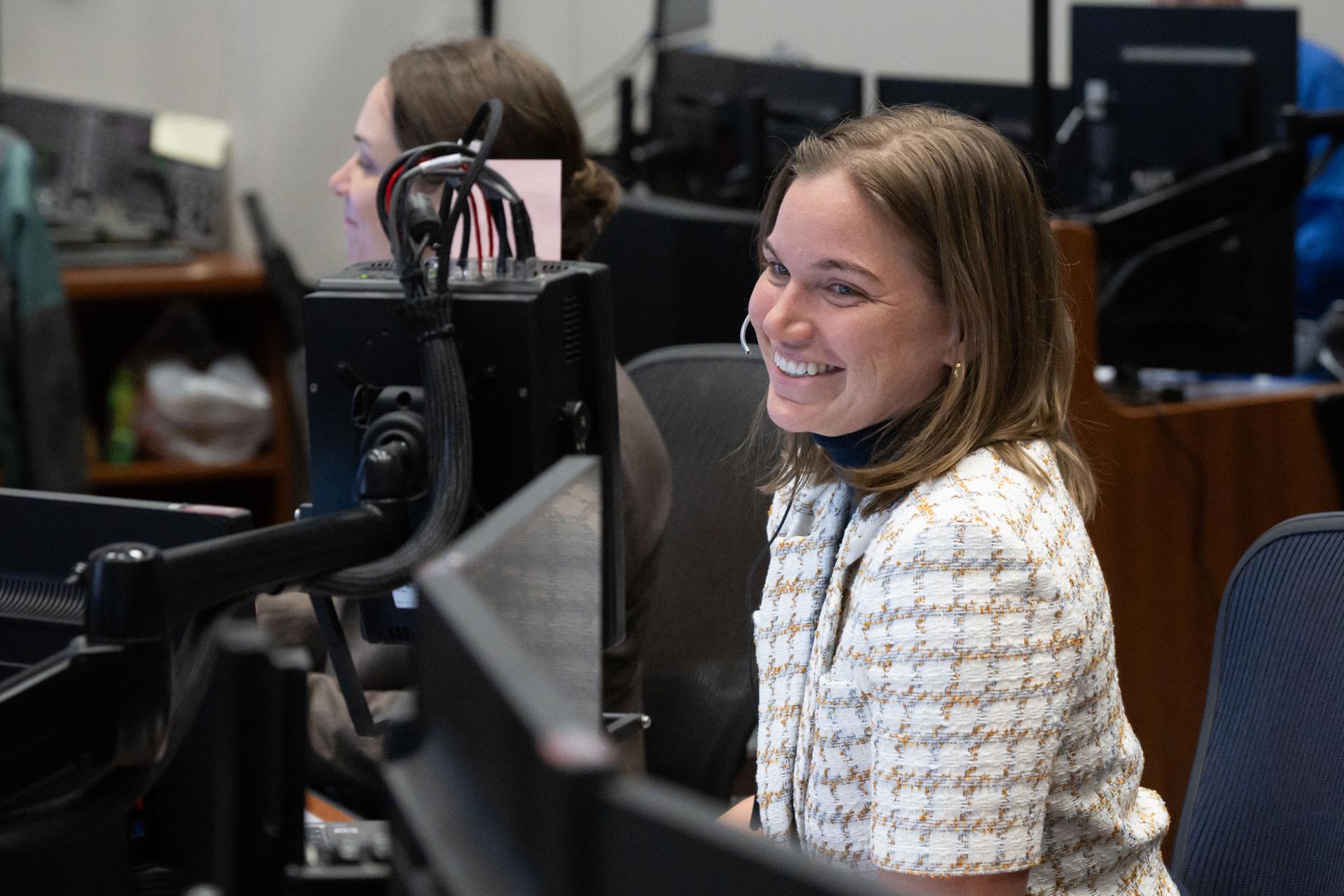
jsc2026e021107 (April 4, 2026) – CSA (Canadian Space Agency) astronaut and backup Artemis II crew member Jenni Gibbons serves as capsule communicator (capcom) during an Orion manual piloting demonstration on the fourth day of the mission. Credit: NASA/Bill Stafford
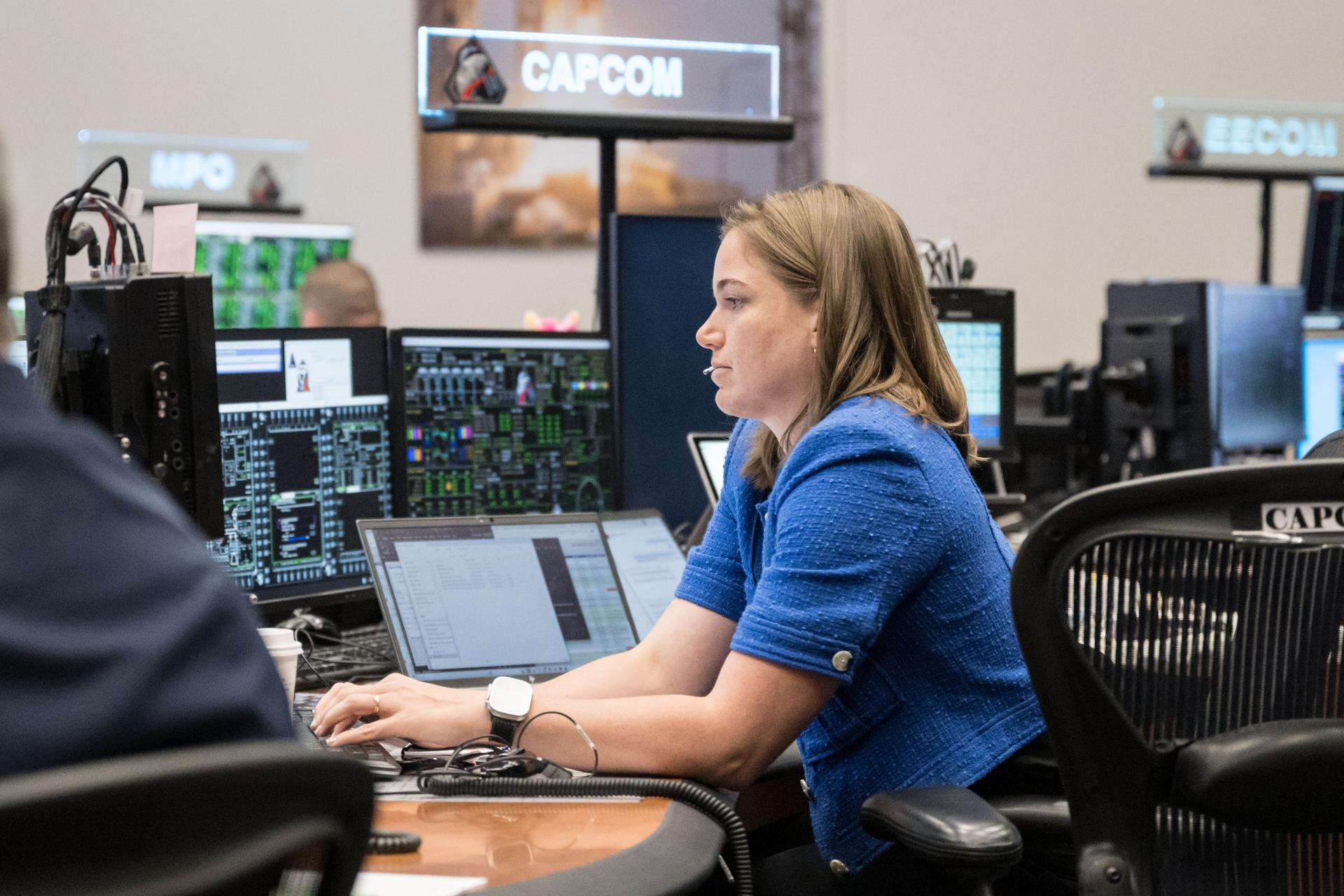
jsc2026e020046 (April 2, 2026) – CSA (Canadian Space Agency) astronaut and backup Artemis II crew member Jenni Gibbons serves as capsule communicator (capcom) during the mission’s translunar injection burn, which sent the crew in Orion out of Earth orbit and on a trajectory toward the Moon.
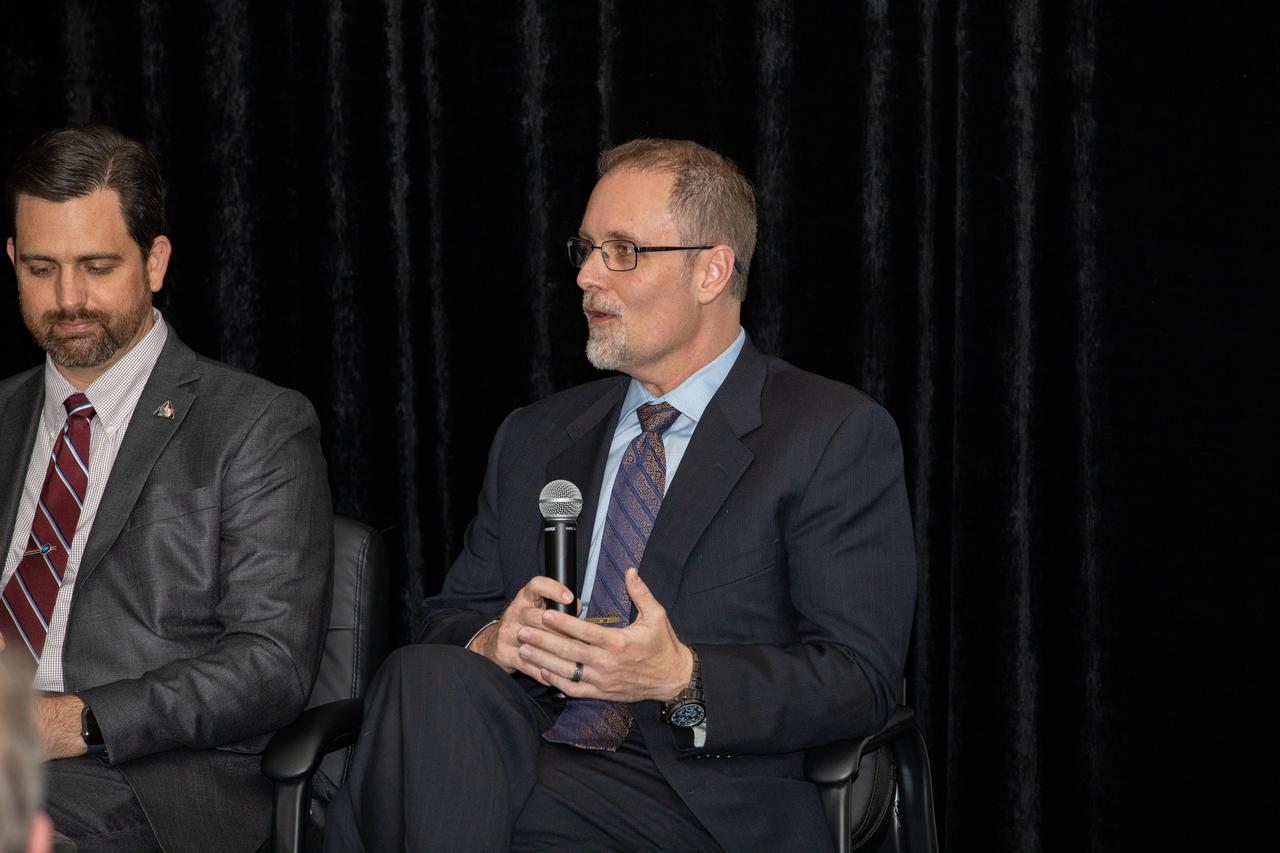
Phil Meade, at right, associate director, Spaceport Integration and Services, participates in a panel discussion during a Community Leaders Update hosted by NASA Kennedy Space Center on Feb. 18, 2020, at the Kennedy Space Center Visitor Complex. At left is Jeremy Parsons, deputy manager, Exploration Ground Systems. Center Director Bob Cabana moderated a panel discussion featuring senior leaders from Exploration Ground Systems, Spaceport Integration and Services, Exploration Research and Technology Programs, Gateway Logistics Element, and Center Planning and Development. Attendees included community leaders, business executives, partners, educators and government leaders. After the presentation, guests had the opportunity to ask questions and visit displays from the programs and some of the commercial partners.
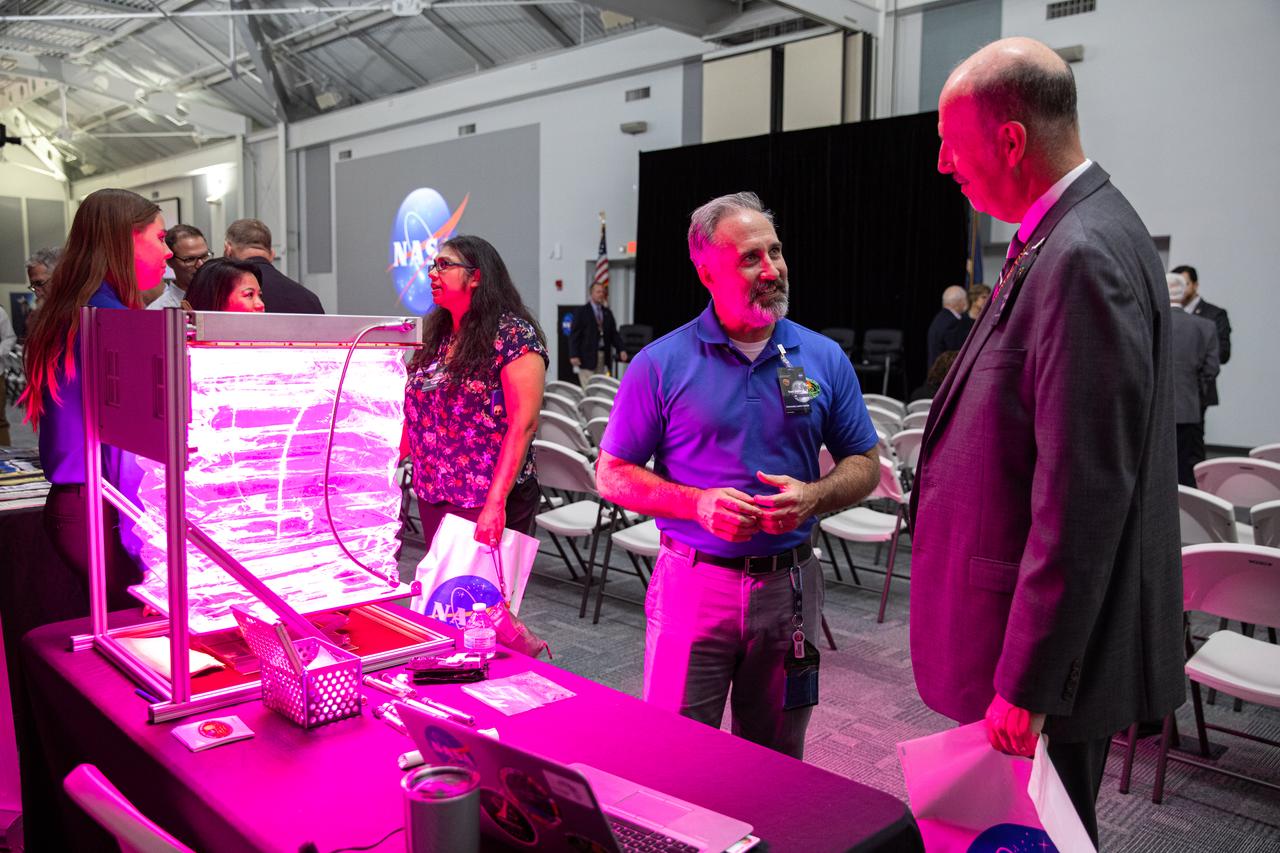
NASA Kennedy Space Center hosted a Community Leaders Update on Feb. 18, 2020, at the Kennedy Space Center Visitor Complex in Florida. Trent Smith, left, NASA Veggie project manager, talks to an attendee about the Veggie plant growth system that is currently in use on the International Space Station. Center Director Bob Cabana moderated a panel discussion featuring senior leaders from Exploration Ground Systems, Spaceport Integration and Services, Exploration Research and Technology Programs, Gateway Logistics Element, and Center Planning and Development. Attendees included community leaders, business executives, partners, educators and government leaders. After the presentation, guests had the opportunity to ask questions and visit displays from the programs and some of the commercial partners.
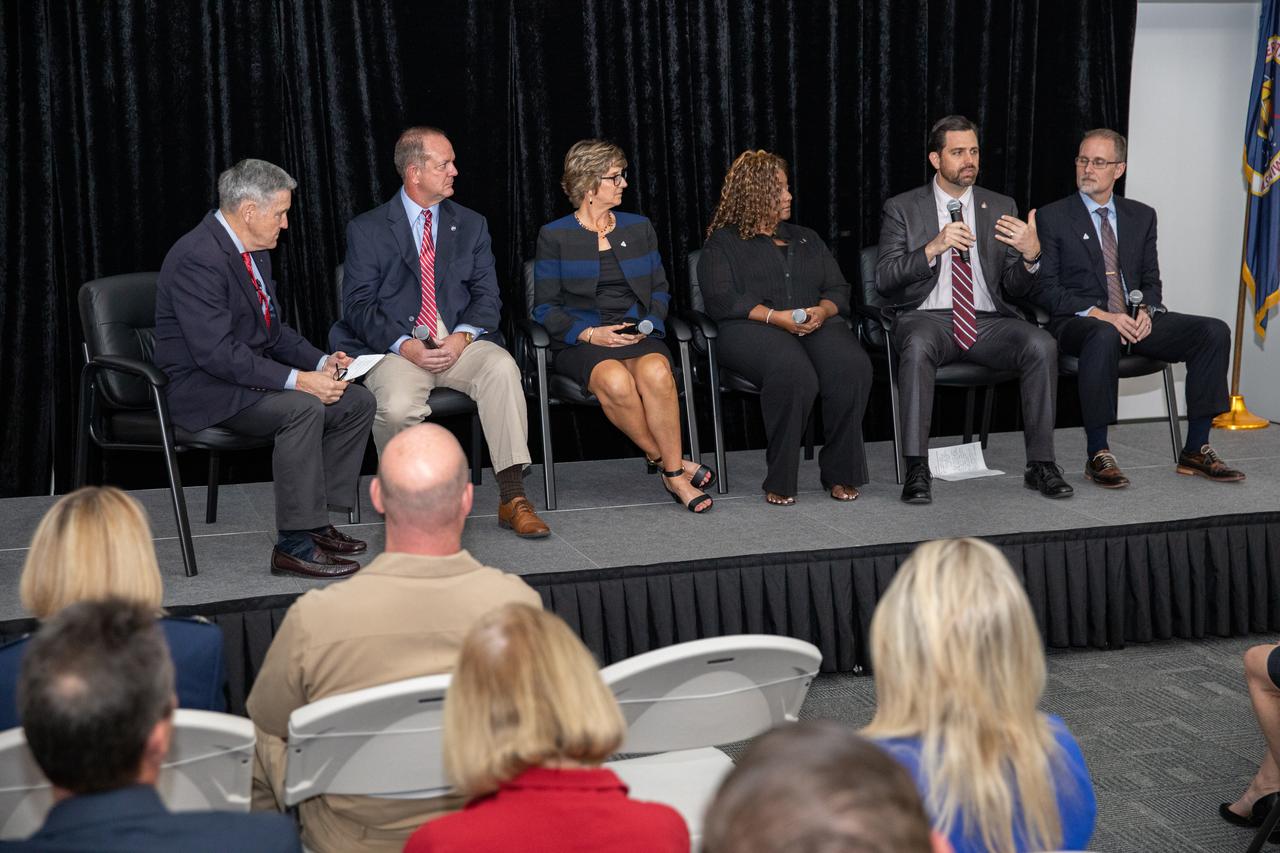
NASA Kennedy Space Center Director Bob Cabana, far left, moderates a panel discussion with senior leaders of NASA and center programs during a Community Leaders Update on Feb. 18, 2020, at the Kennedy Space Center Visitor Complex. From second from left are Tom Engler, director, Center Planning and Development; Jenny Lyons, deputy manager, Gateway Logistics Element; Barbara Brown, chief technologist, Exploration Research and Technology Programs; Jeremy Parsons, deputy manager, Exploration Ground Systems; and Phil Meade, associate director, Spaceport Integration and Services. Attendees included community leaders, business executives, partners, educators and government leaders. After the presentation, guests had the opportunity to ask questions and visit displays from the programs and some of the commercial partners.
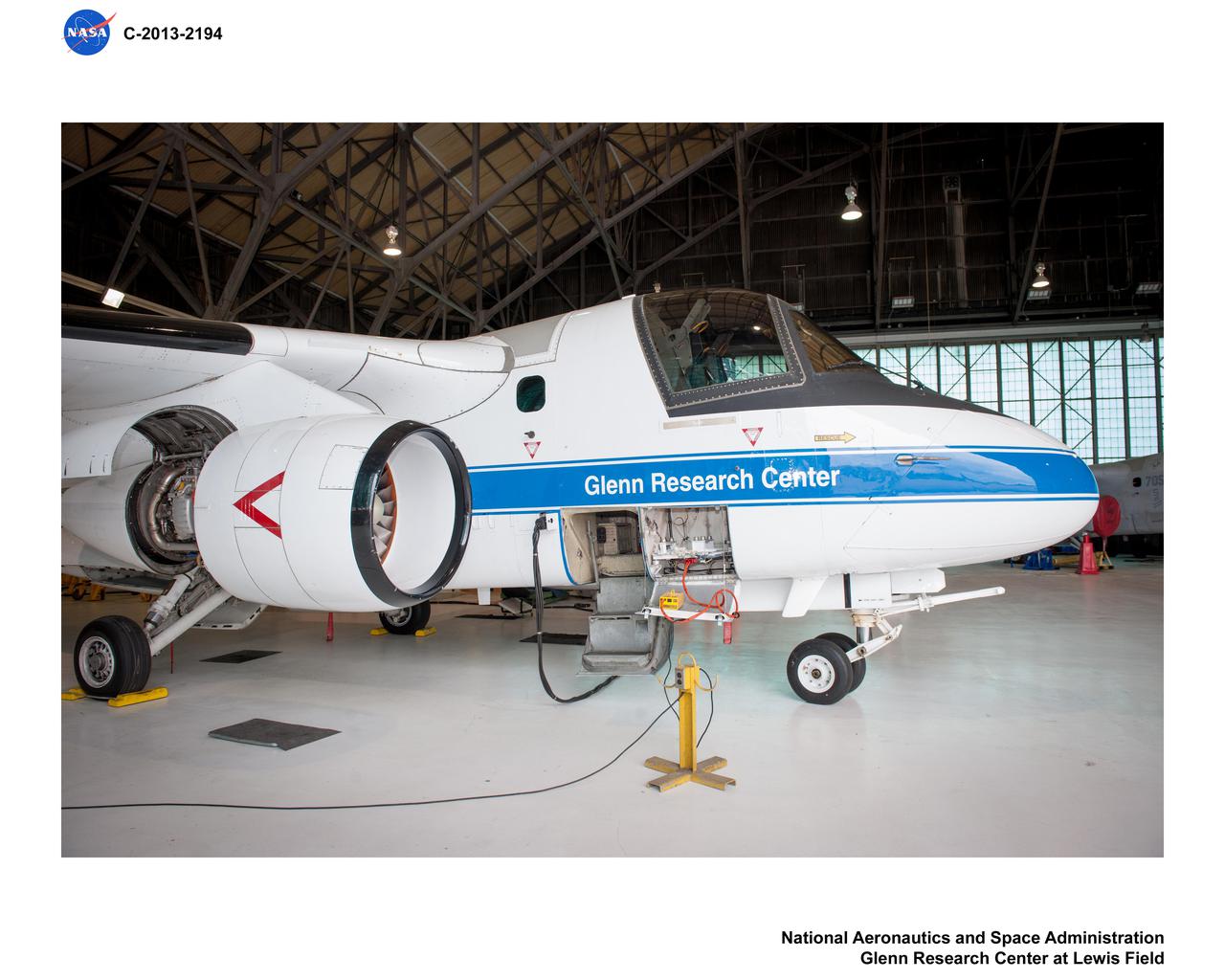
NASA, Lockheed Martin S-3B Viking Aircraft #N601NA, Unmanned Aircraft Communications Project
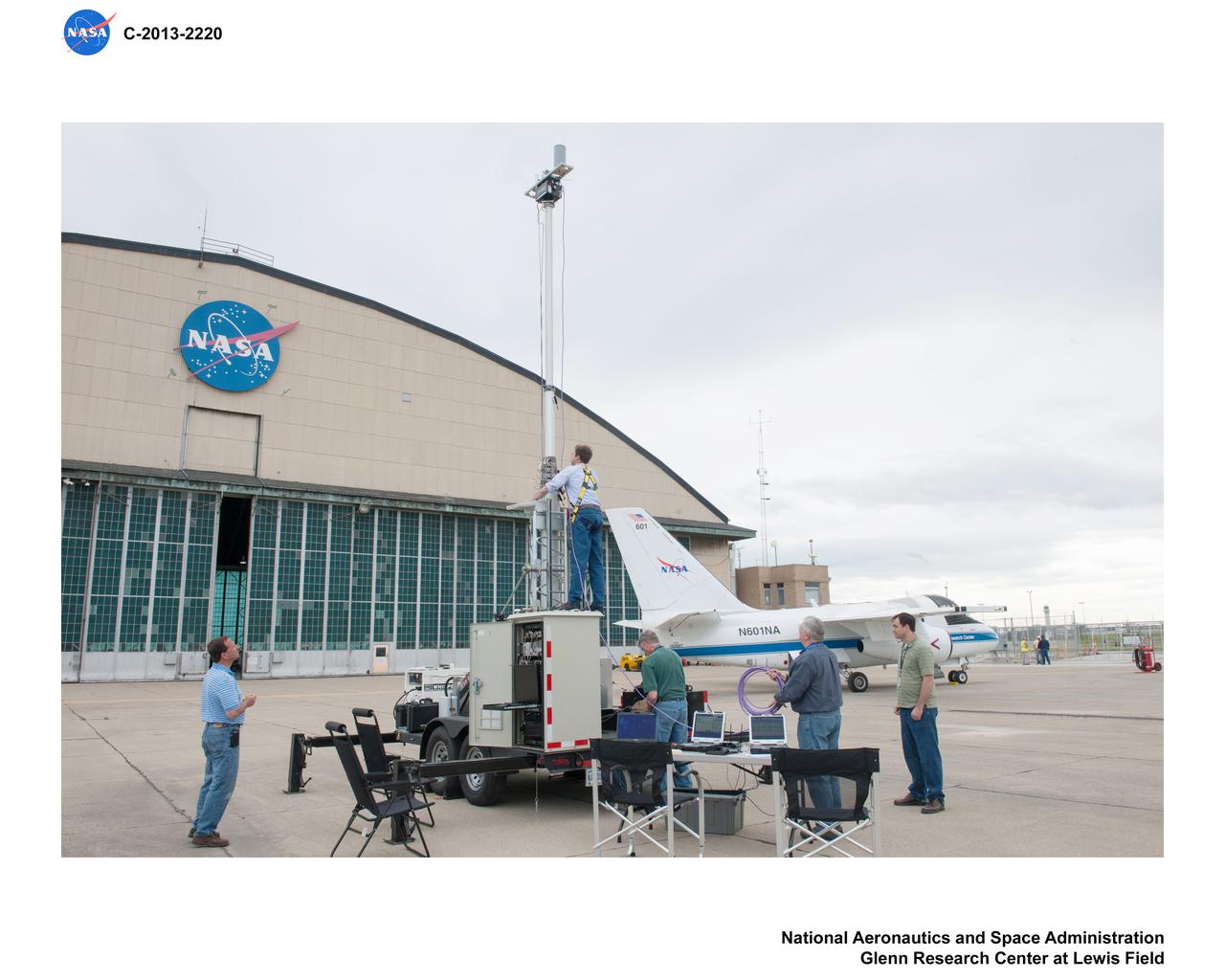
NASA, Lockheed Martin S-3B Viking Aircraft #N601NA, Unmanned Aircraft Communications Project
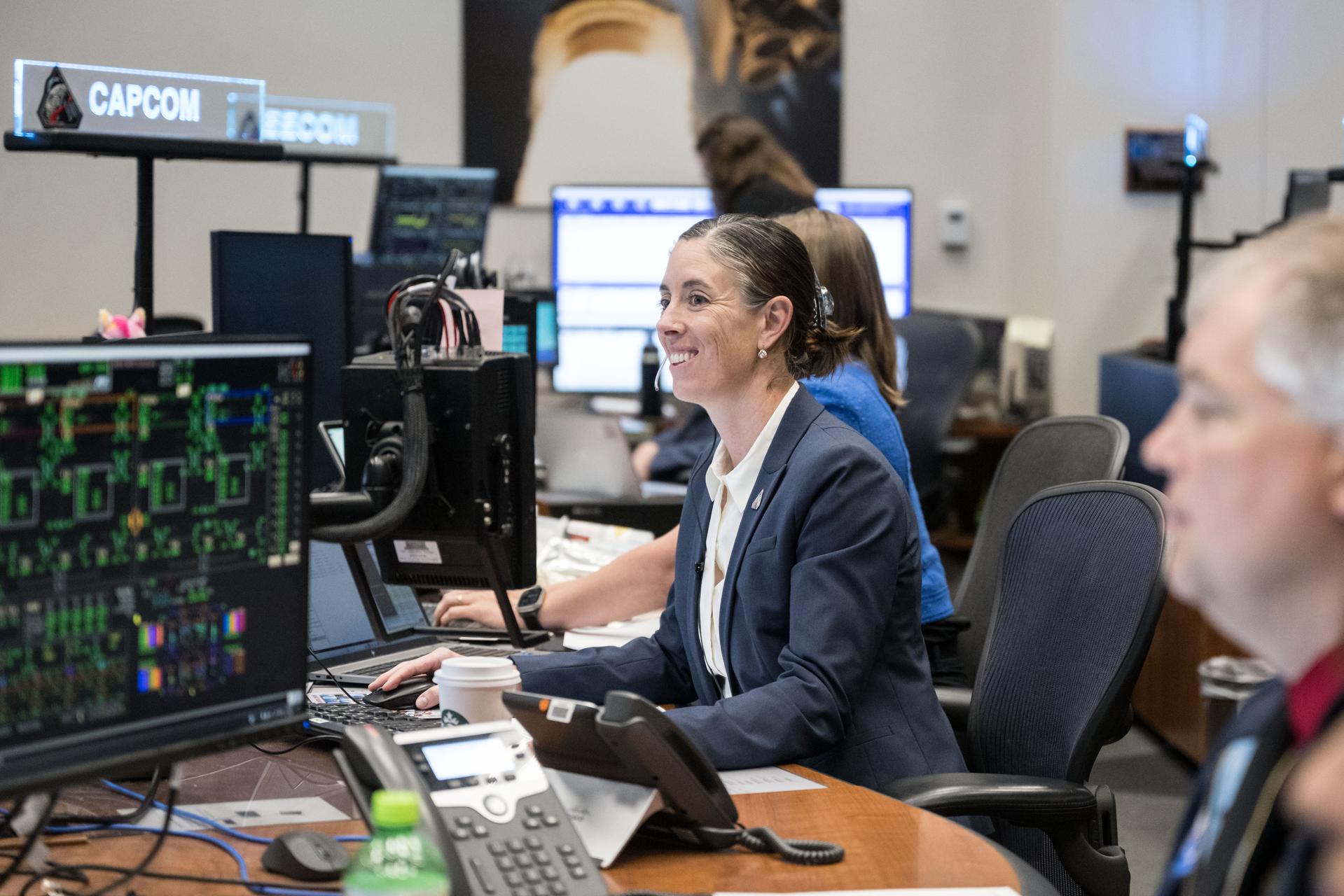
jsc2026e019614 (April 2, 2026) – NASA astronaut Chris Birch serves as capsule communicator (capcom) in the Mission Control Center at NASA’s Johnson Space Center during the mission’s translunar injection burn, which sent the crew in Orion out of Earth orbit and on a trajectory toward the Moon.
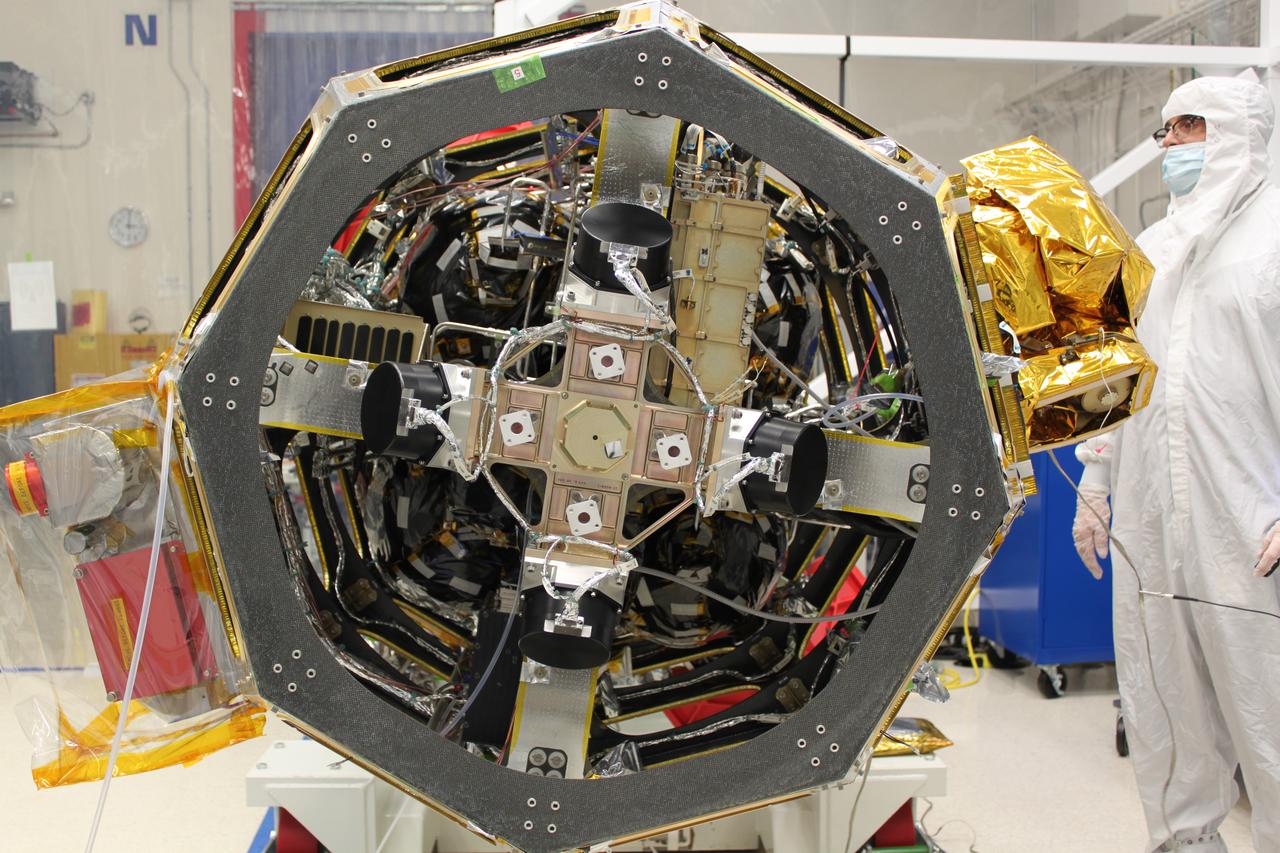
A new NASA-developed, laser-based space communication system will enable higher rates of satellite communications similar in capability to high-speed fiber optic networks on Earth. The space terminal for the Lunar Laser Communication Demonstration (LLCD), NASA's first high-data-rate laser communication system, was recently integrated onto the Lunar Atmosphere and Dust Environment Explorer (LADEE) spacecraft. LLCD will demonstrate laser communications from lunar orbit to Earth at six times the rate of the best modern-day advanced radio communication systems. Credit: NASA ----- What is LADEE? The Lunar Atmosphere and Dust Environment Explorer (LADEE) is designed to study the Moon's thin exosphere and the lunar dust environment. An "exosphere" is an atmosphere that is so thin and tenuous that molecules don't collide with each other. Studying the Moon's exosphere will help scientists understand other planetary bodies with exospheres too, like Mercury and some of Jupiter's bigger moons. The orbiter will determine the density, composition and temporal and spatial variability of the Moon's exosphere to help us understand where the species in the exosphere come from and the role of the solar wind, lunar surface and interior, and meteoric infall as sources. The mission will also examine the density and temporal and spatial variability of dust particles that may get lofted into the atmosphere. The mission also will test several new technologies, including a modular spacecraft bus that may reduce the cost of future deep space missions and demonstrate two-way high rate laser communication for the first time from the Moon. LADEE now is ready to launch when the window opens on Sept. 6, 2013. Read more: <a href="http://www.nasa.gov/ladee" rel="nofollow">www.nasa.gov/ladee</a> <b><a href="http://www.nasa.gov/audience/formedia/features/MP_Photo_Guidelines.html" rel="nofollow">NASA image use policy.</a></b> <b><a href="http://www.nasa.gov/centers/goddard/home/index.html" rel="nofollow">NASA Goddard Space Flight Center</a></b> enables NASA’s mission through four scientific endeavors: Earth Science, Heliophysics, Solar System Exploration, and Astrophysics. Goddard plays a leading role in NASA’s accomplishments by contributing compelling scientific knowledge to advance the Agency’s mission. <b>Follow us on <a href="http://twitter.com/NASA_GoddardPix" rel="nofollow">Twitter</a></b> <b>Like us on <a href="http://www.facebook.com/pages/Greenbelt-MD/NASA-Goddard/395013845897?ref=tsd" rel="nofollow">Facebook</a></b> <b>Find us on <a href="http://instagram.com/nasagoddard?vm=grid" rel="nofollow">Instagram</a></b>

Student Assistant Antoinette Davis (left) of Utica; Carmella Forsythe, 13, of Clinton; Terri Henderson, 14, of Clinton; Tyra Greer, 12, of Port Gibson; and Kala Battle, 14, of Edwards, answer curriculum questions about NASA's Return to Flight mission exhibit at StenniSphere, the visitor center at NASA's Stennis Space Center (SSC) near Bay St. Louis, Miss. The girls were on a field trip to StenniSphere with fellow participants in Hinds Community College's MSEIP (Minority Science Engineering Improvement Program) summer program. MSEIP encourages students to pursue and prepare for careers in science, technology, engineering and math.
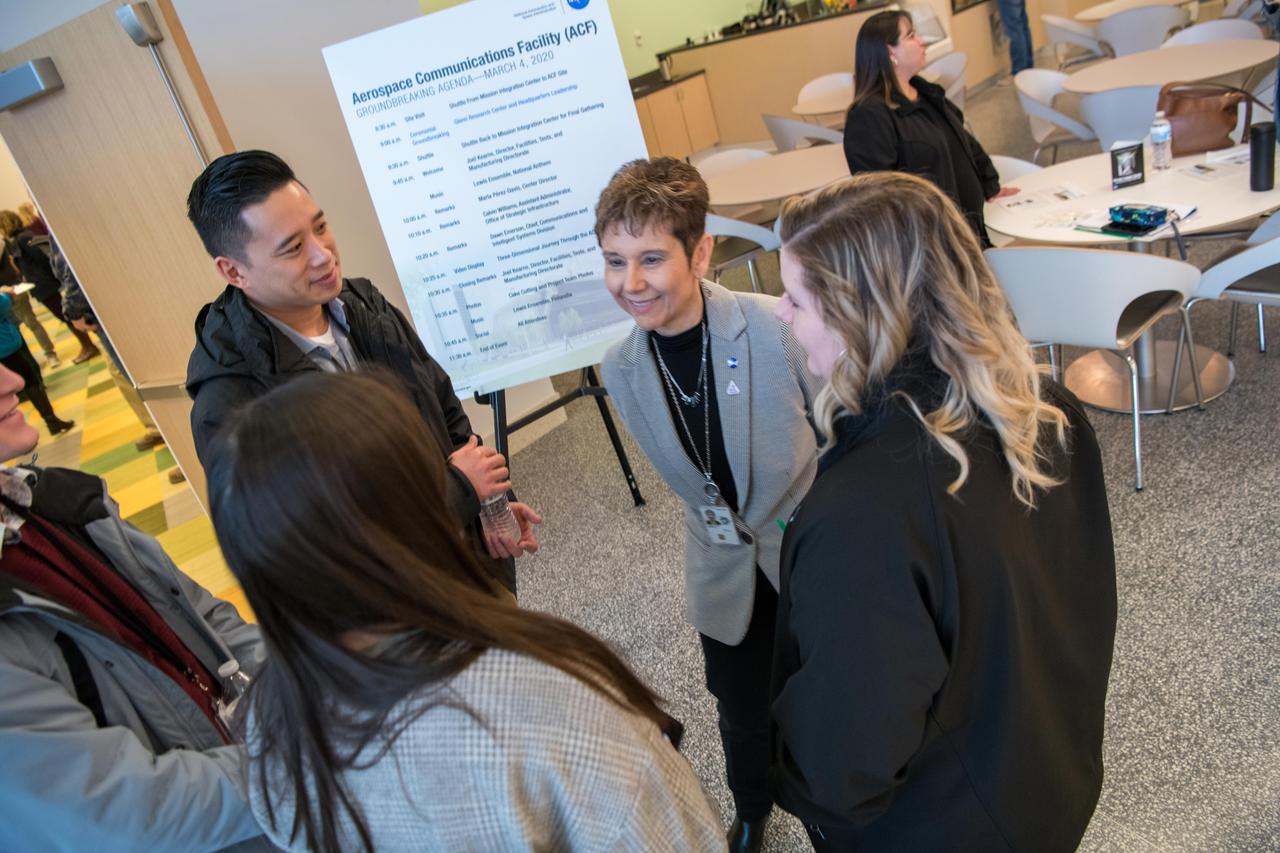
Aerospace Communications Facility, ACF Groundbreaking Ceremony
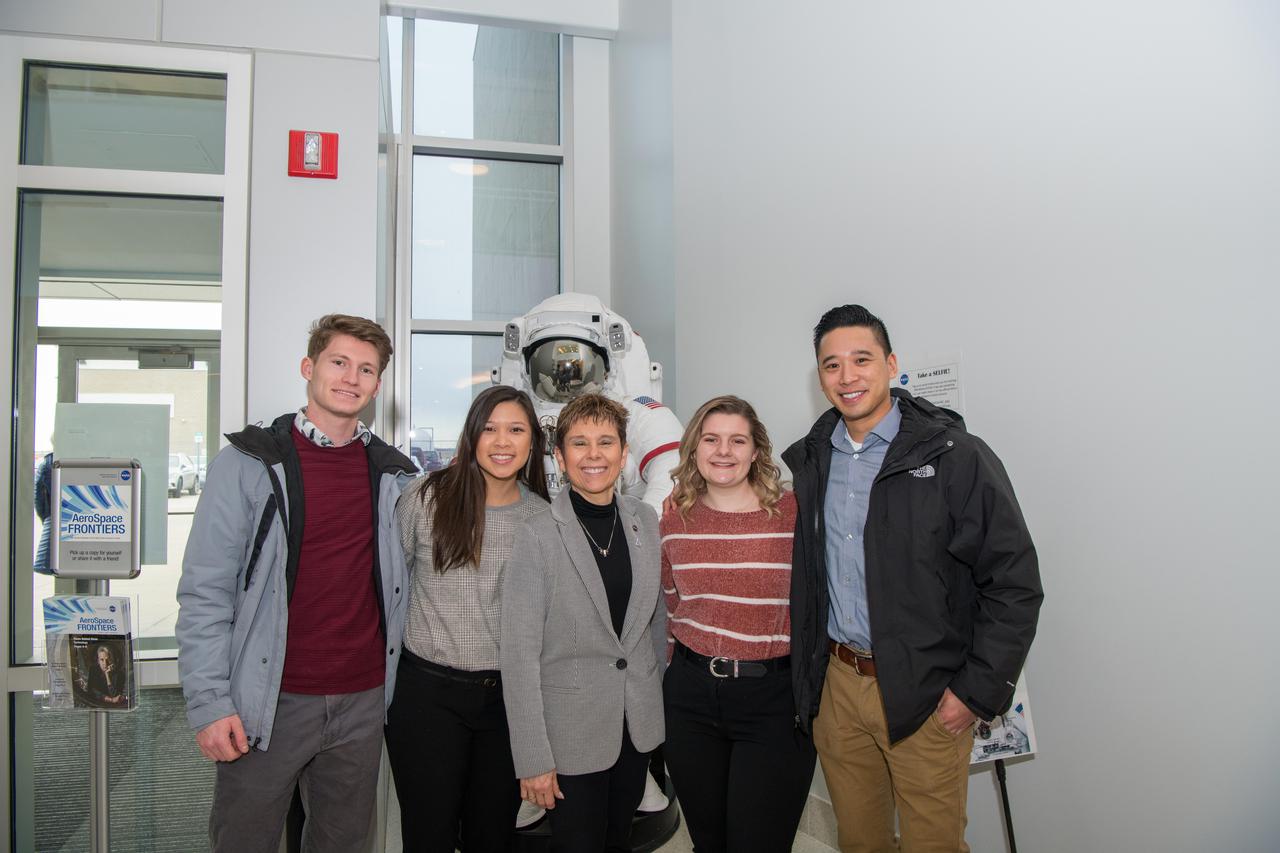
Aerospace Communications Facility, ACF Groundbreaking Ceremony
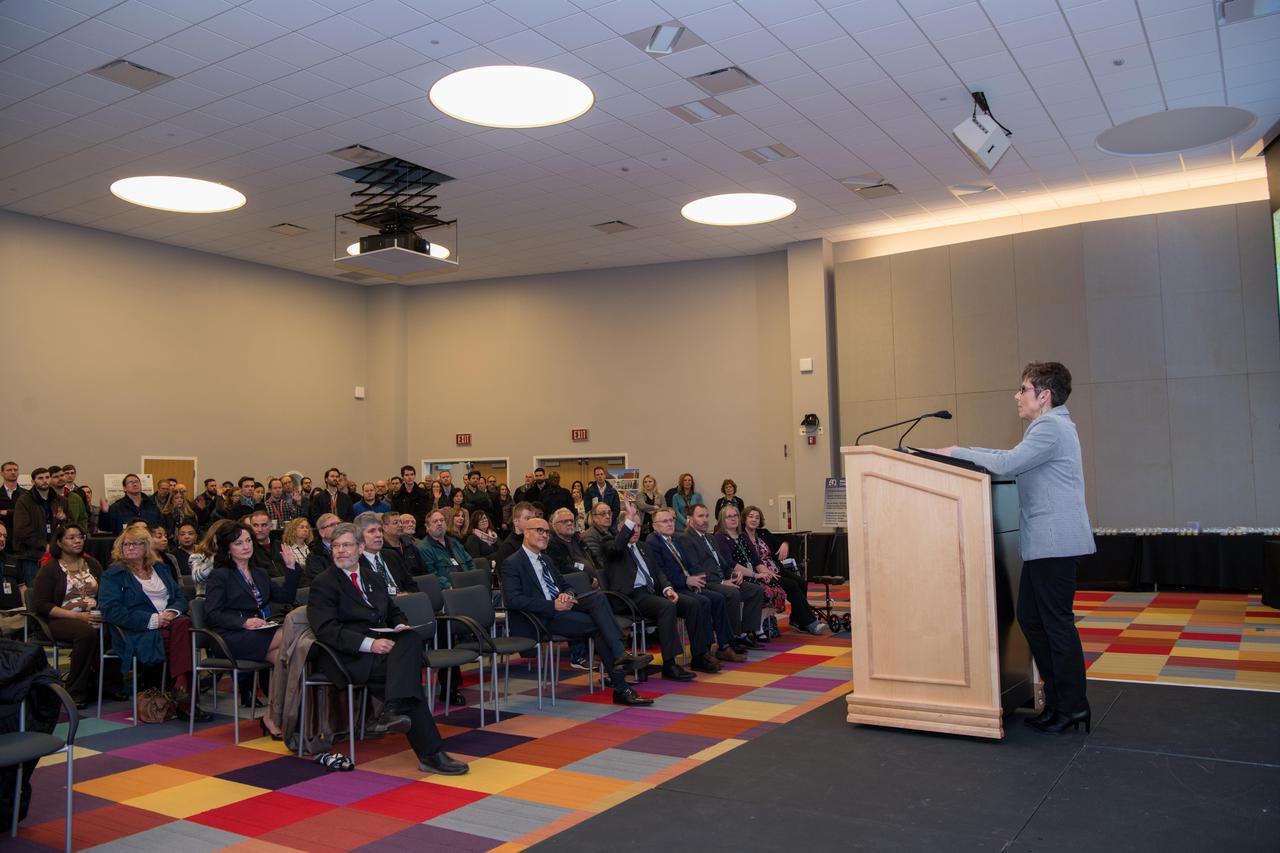
Aerospace Communications Facility, ACF Groundbreaking Ceremony
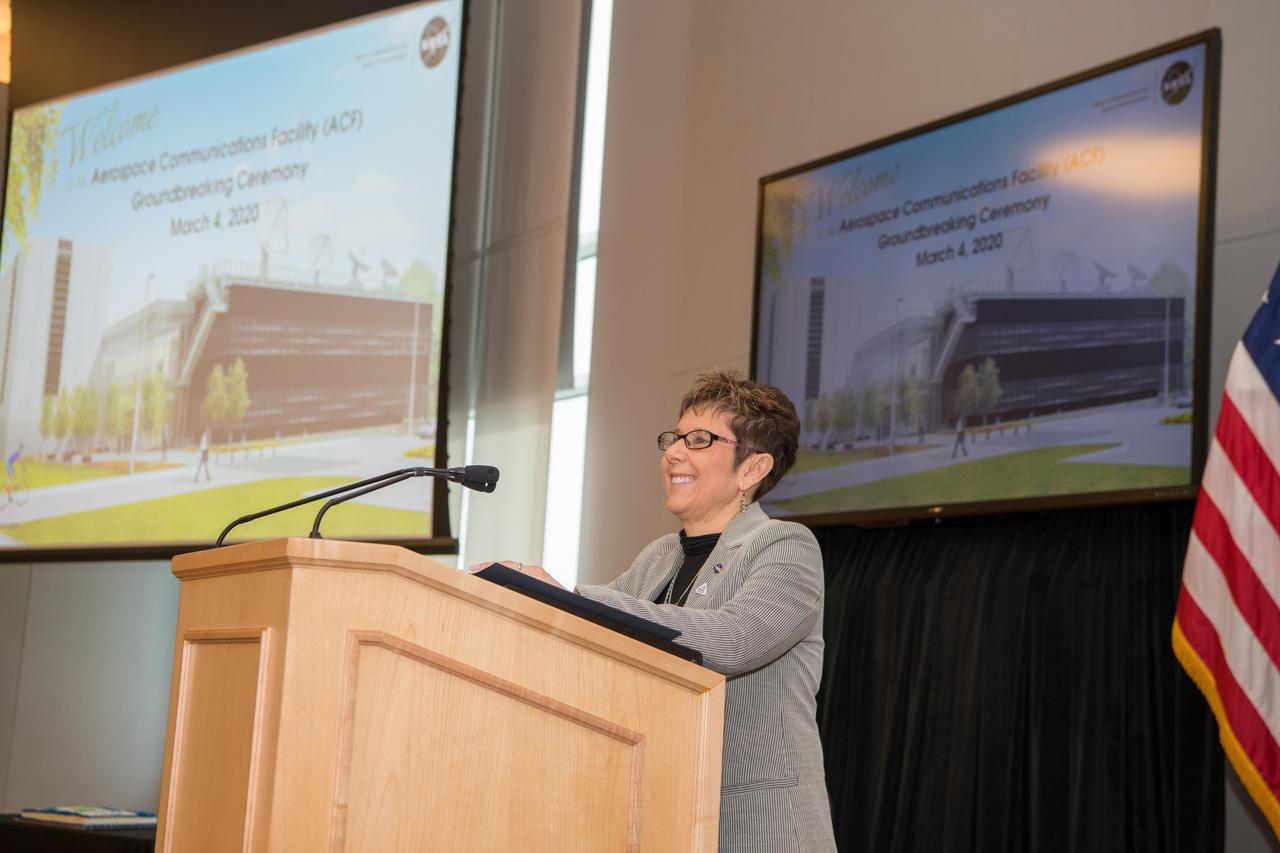
Aerospace Communications Facility, ACF Groundbreaking Ceremony
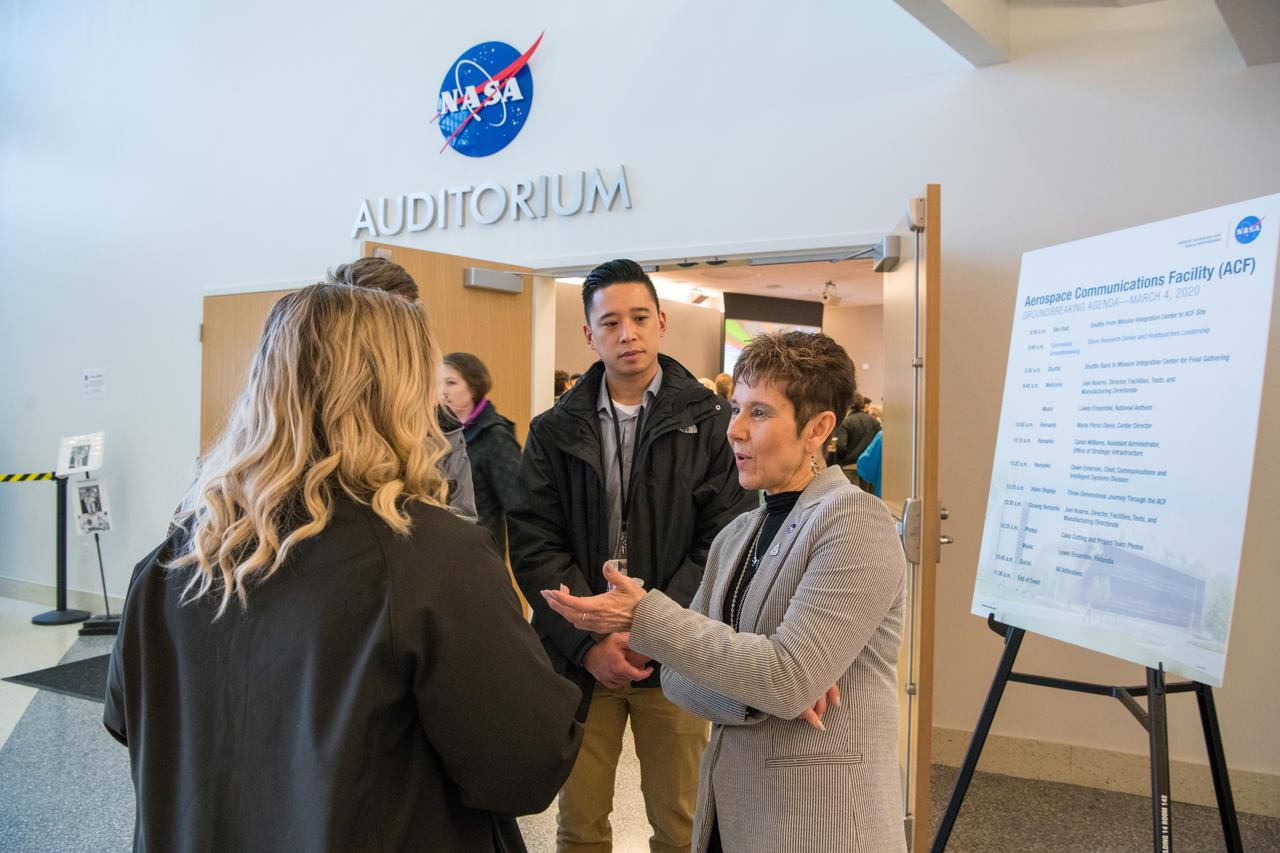
Aerospace Communications Facility, ACF Groundbreaking Ceremony
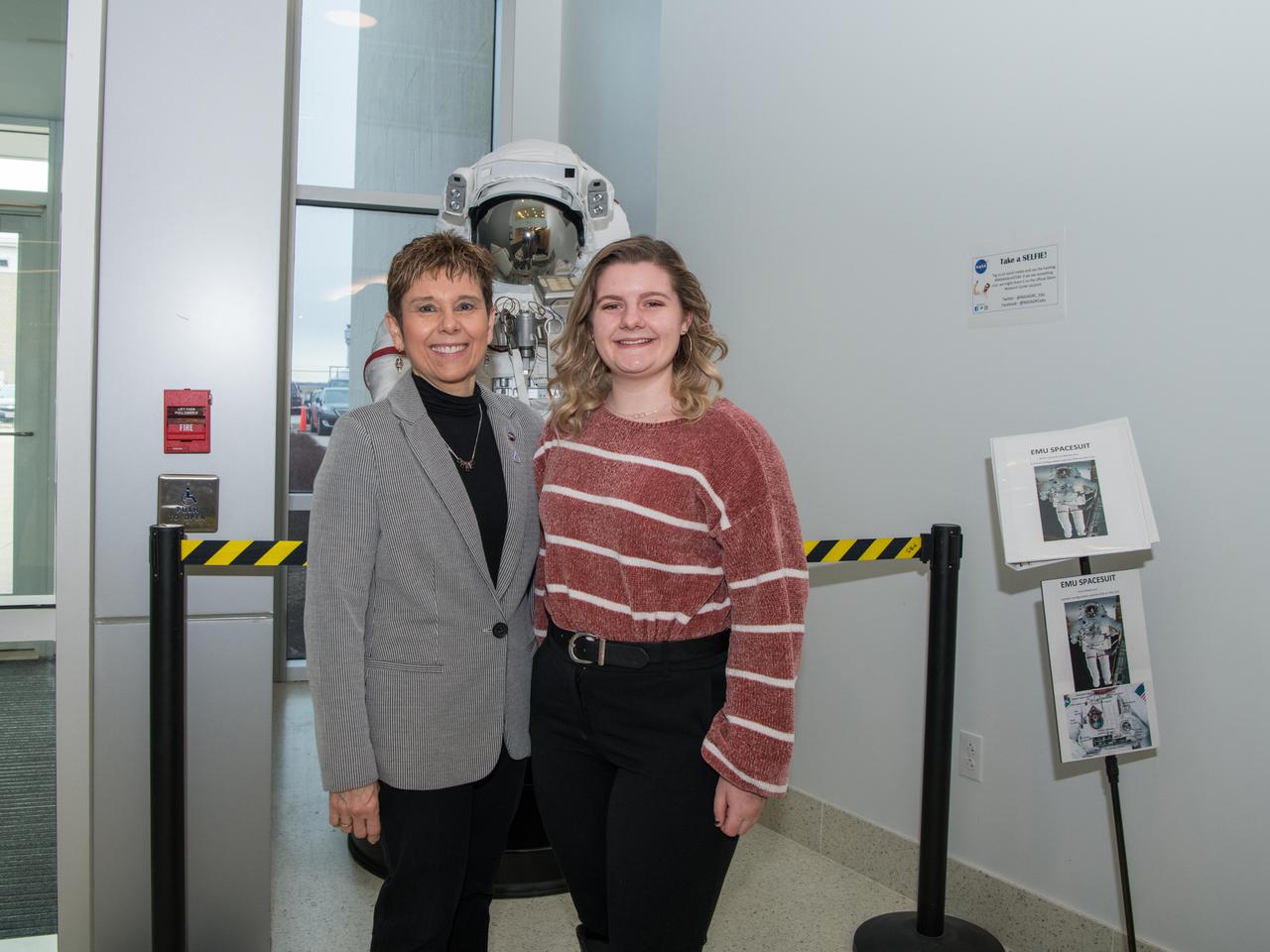
Aerospace Communications Facility, ACF Groundbreaking Ceremony
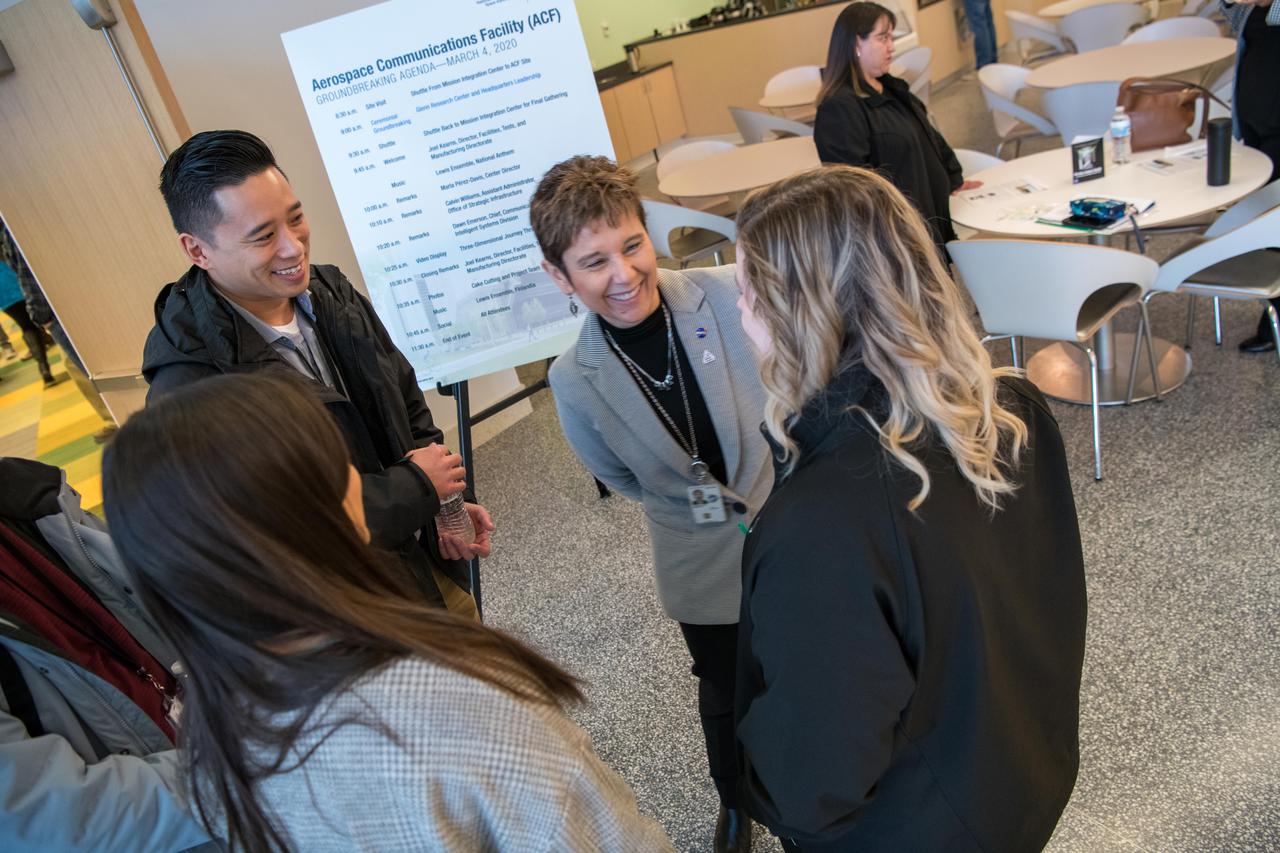
Aerospace Communications Facility, ACF Groundbreaking Ceremony
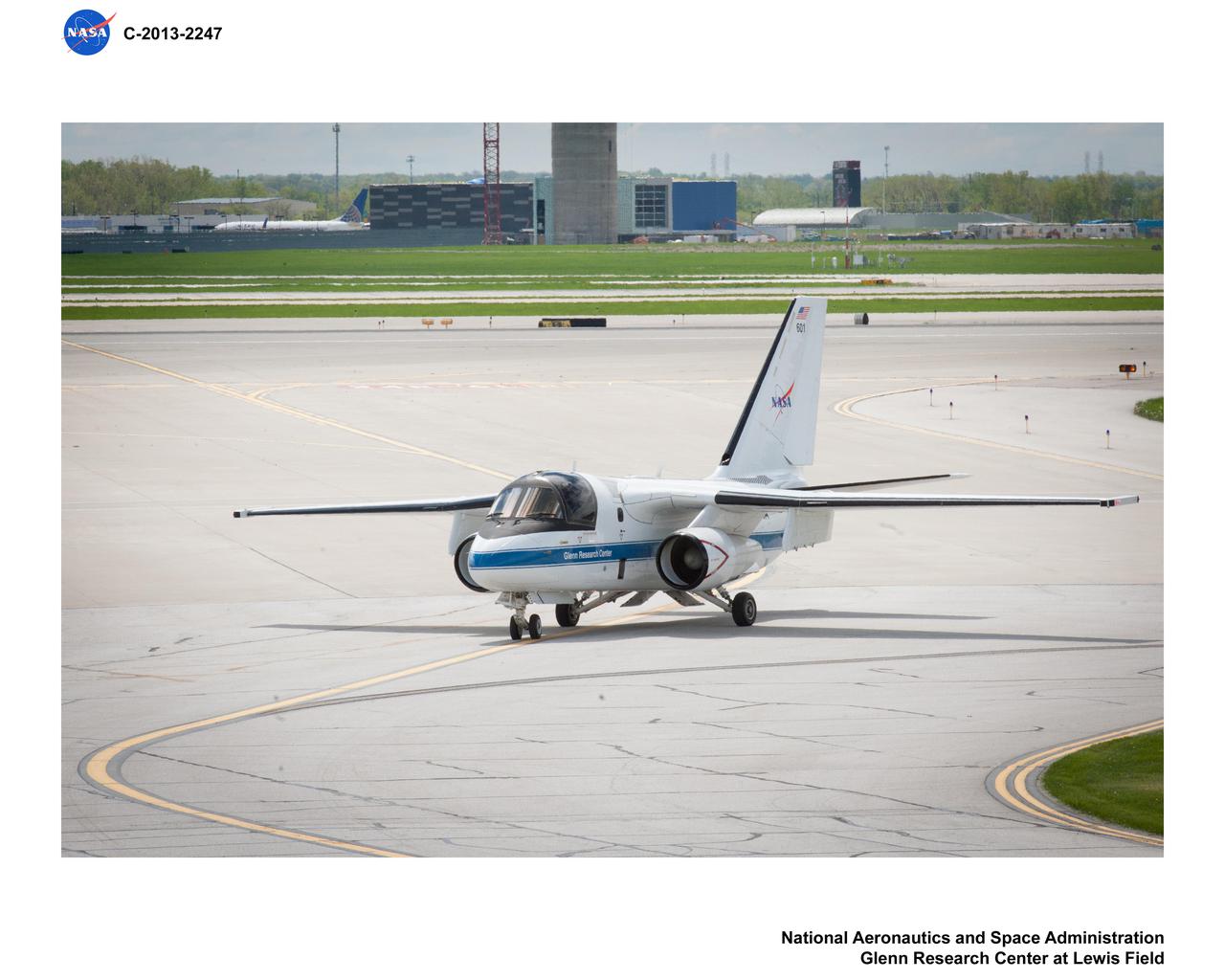
NASA, Lockheed Martin S-3B Viking Aircraft #N601NA, prepares for departure from Cleveland Hopkins Airport in support of the Unmanned Aircraft Communications Project
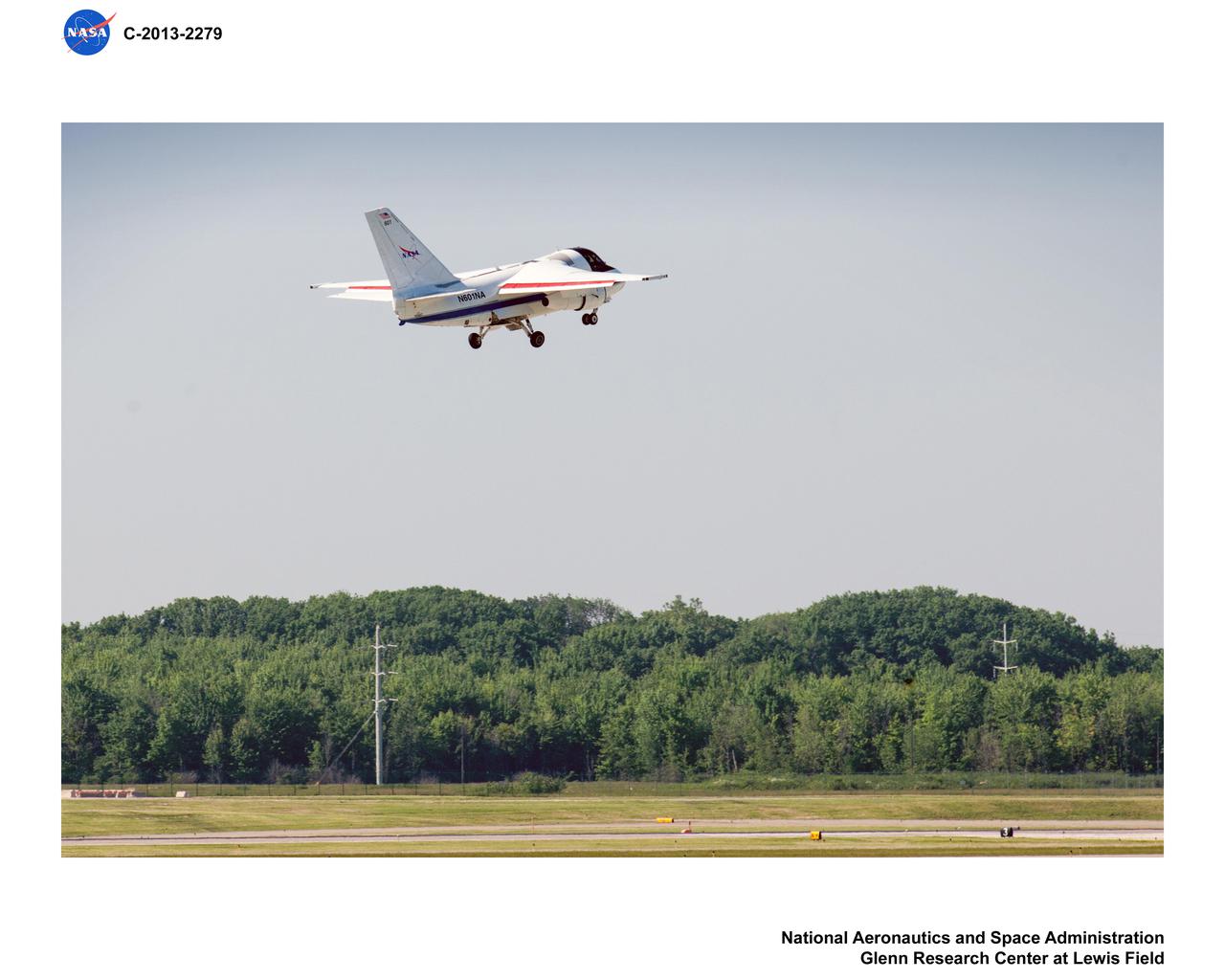
NASA, Lockheed Martin S-3B Viking Aircraft #N601NA, takes off from Cleveland Hopkins Airport, in support of the Unmanned Aircraft Communications Project
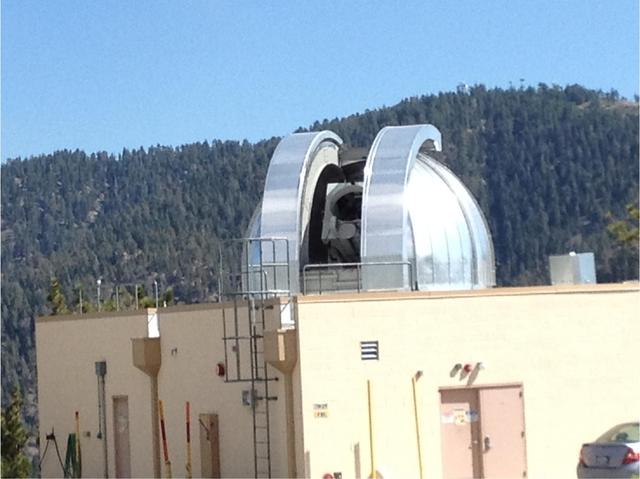
NASA Optical Communications Telescope Laboratory OCTL dome is located in Table Mountain, California. It is used in conjunction with the The Optical PAyload for Lasercomm Science OPALS.
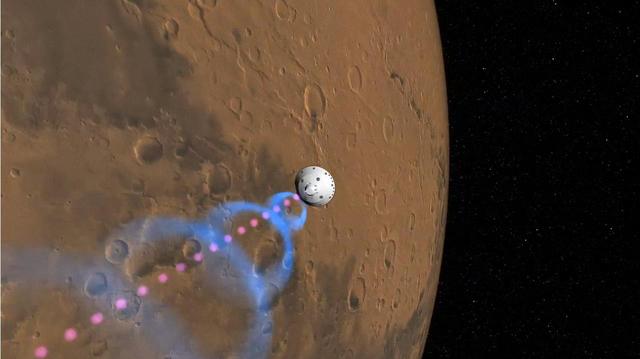
This frame from an artist animation shows how NASA Curiosity rover will communicate with Earth via two of NASA Mars orbiters, Mars Reconnaissance Orbiter and Odyssey.
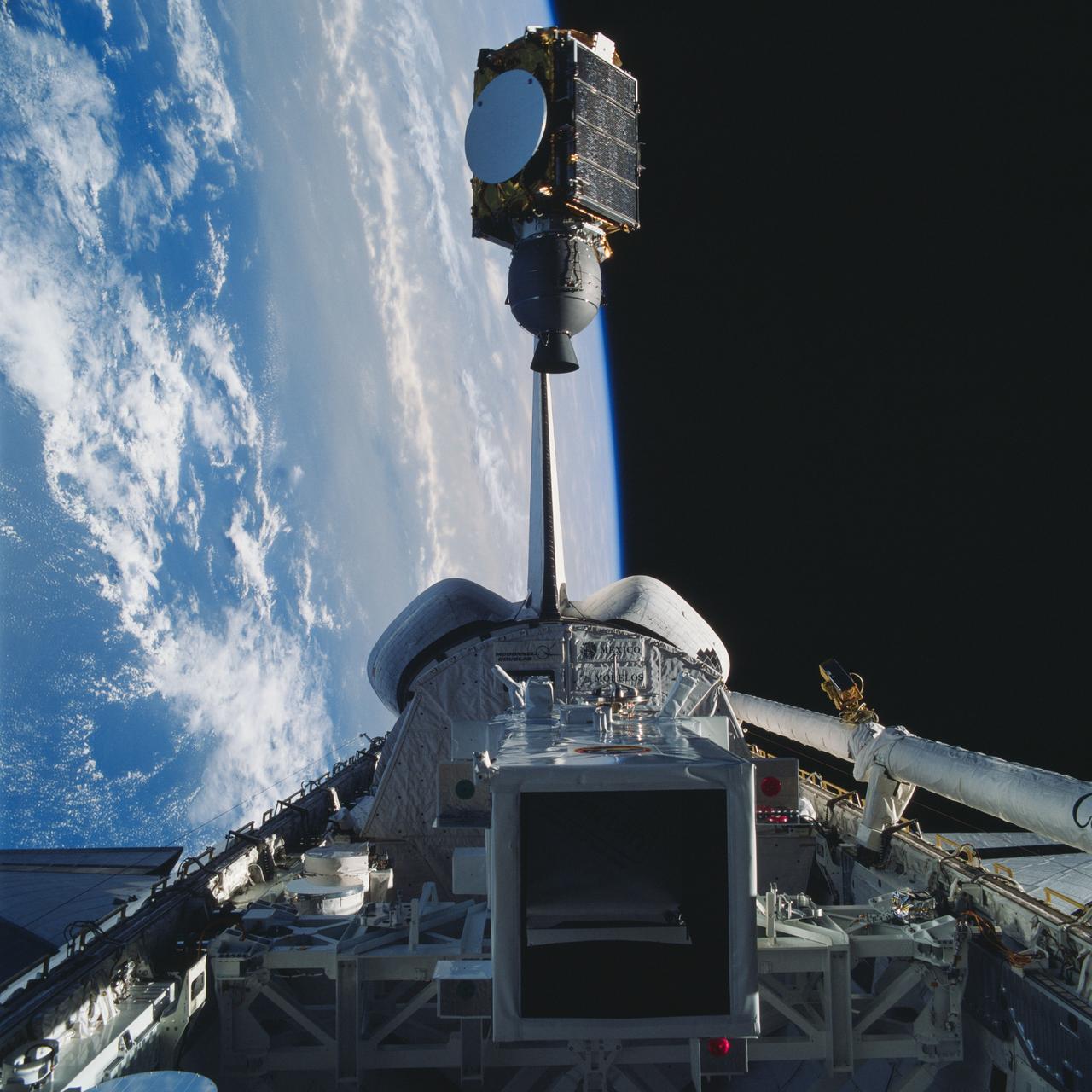
Arabsat communications satellite deploying from Discovery's payload bay. Cloudy Earth's surface can be seen to the left of the frame.
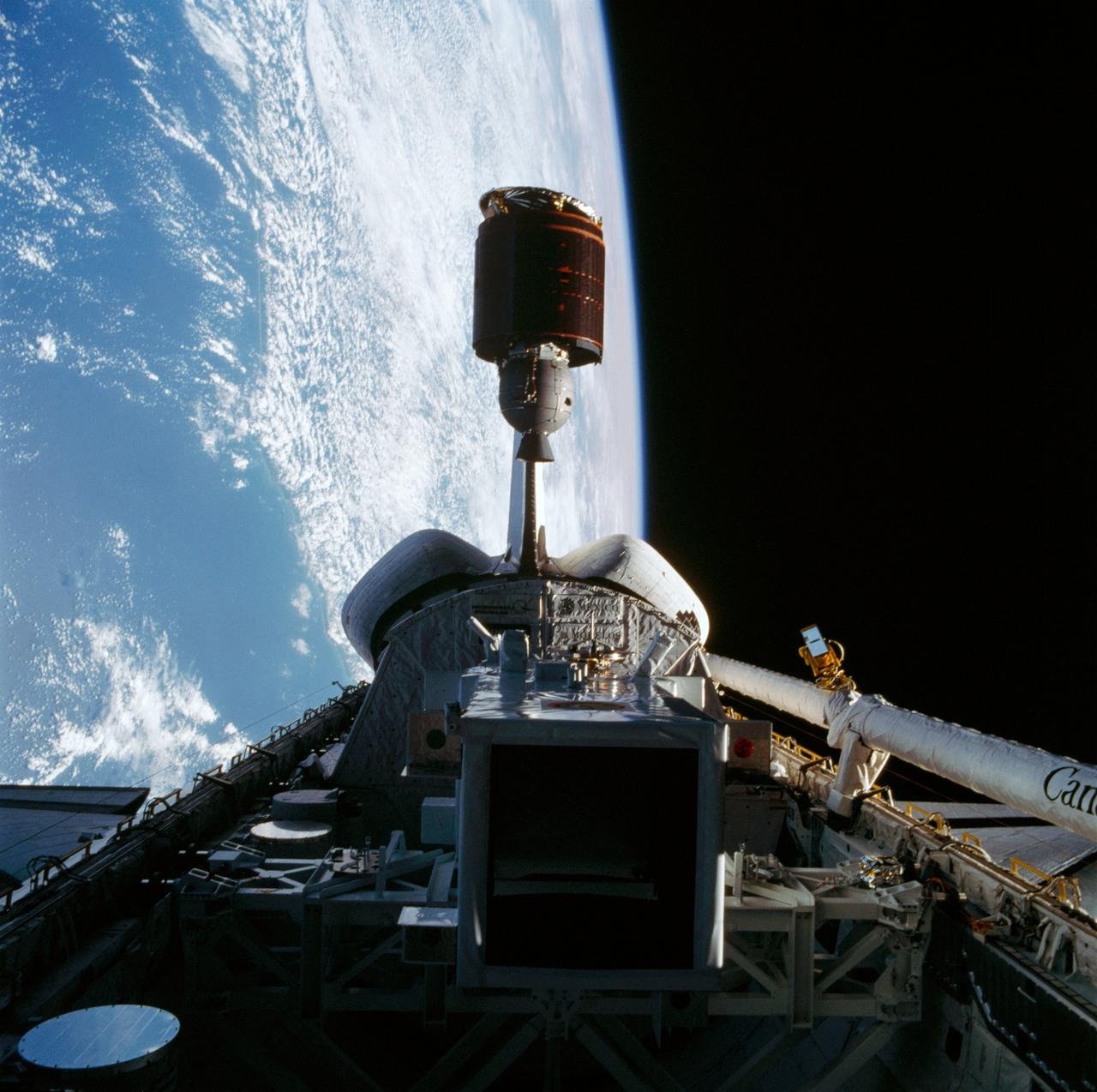
Telstar 3-D communications satellite deploying from Discovery's payload bay. Cloudy Earth's surface can be seen to the left of the frame.
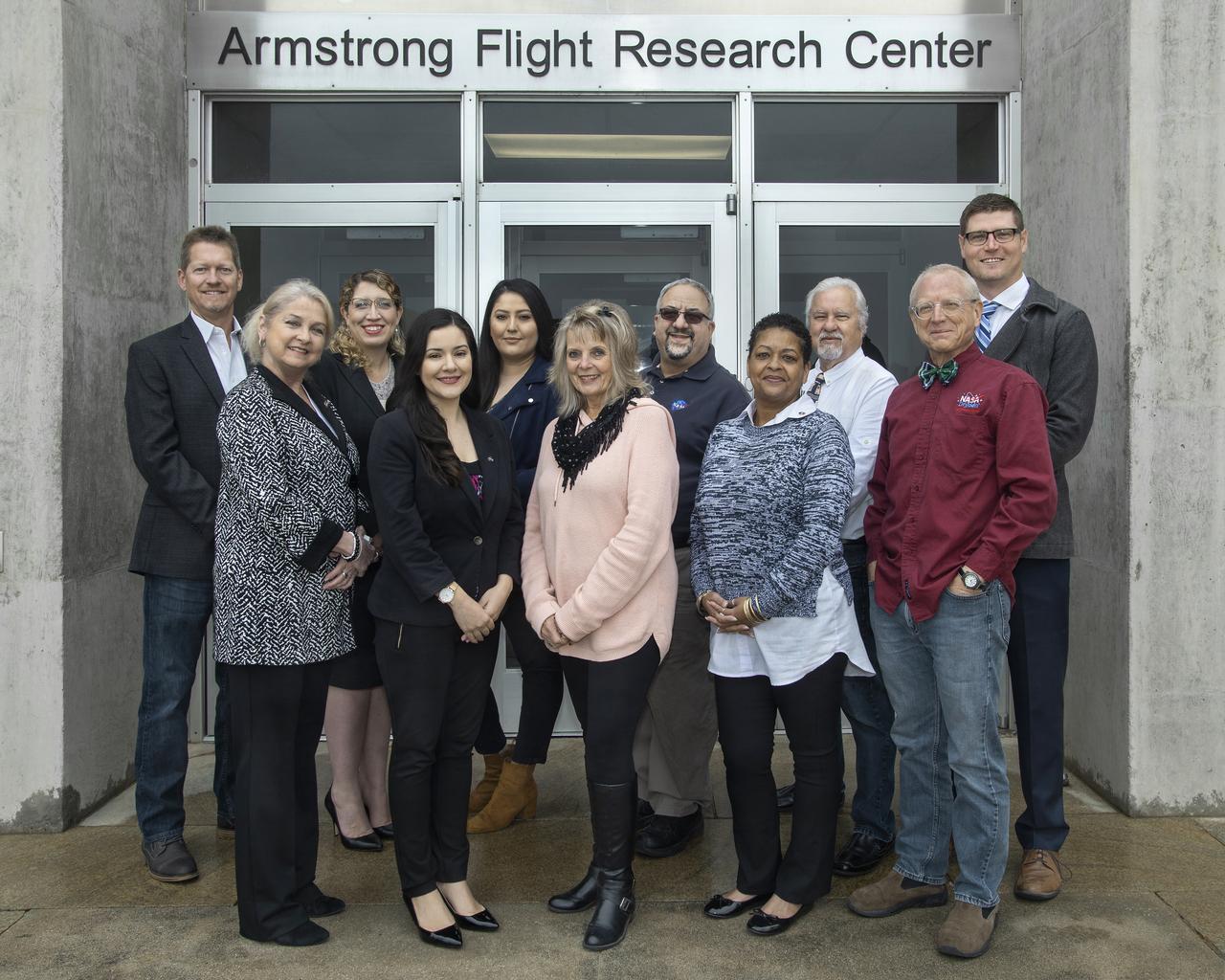
Armstrong Flight Research Center Office of Strategic Communication group photo in front of the Center's building 4800. Back row (left to right) Kevin Rohrer, Kate Squires, Jessica Arreola, Jay Levine, Steve Lighthill and Matt Kamlet. Bottom row (left to right) Leslie Williams, Elvia Valenzuela, Mary Anne Harness, Kim Lewis-Bias and Christian Gelzer.
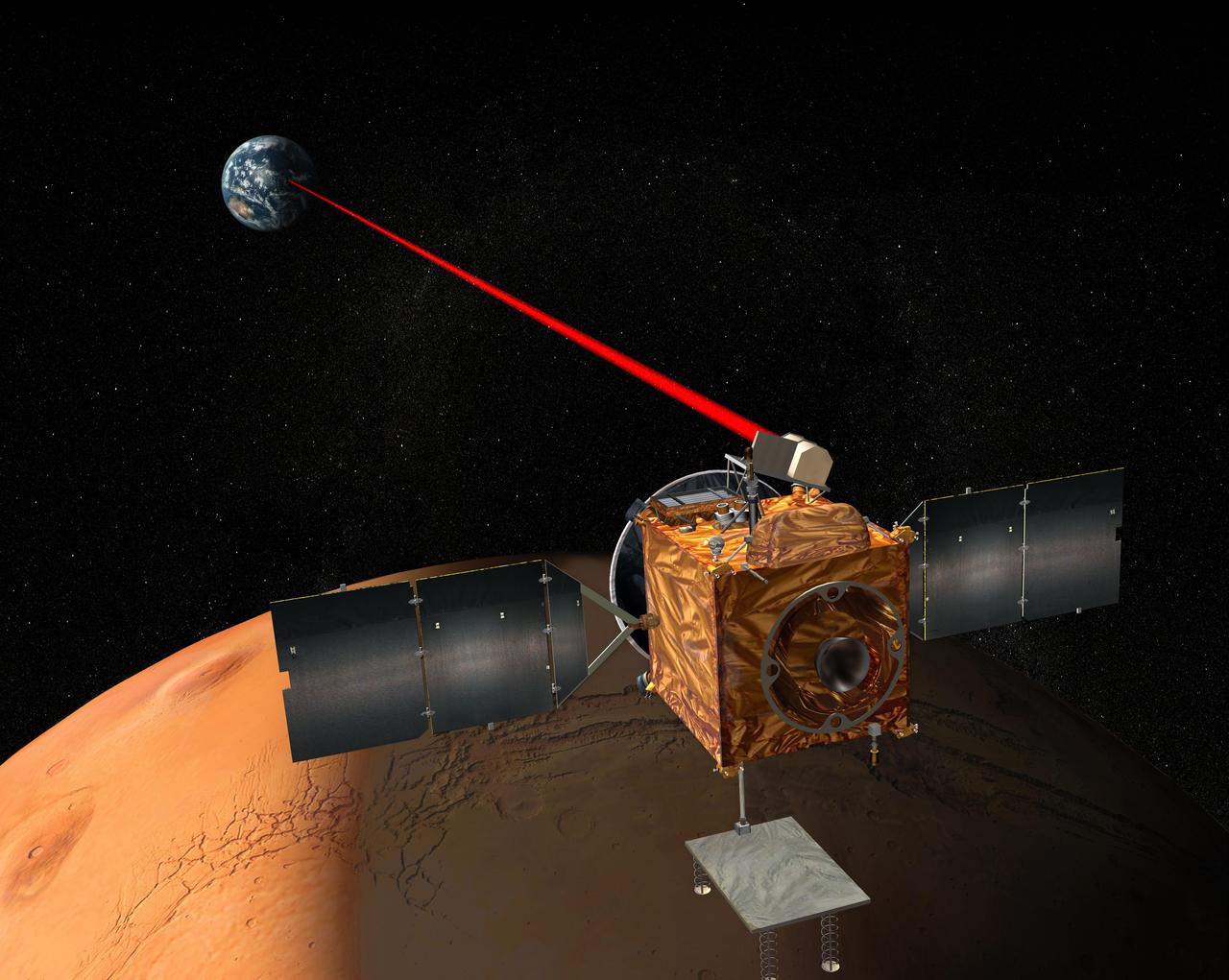
This illustration depicts a concept for operation of an optical communications system on NASA Mars Telecommunications Orbiter.
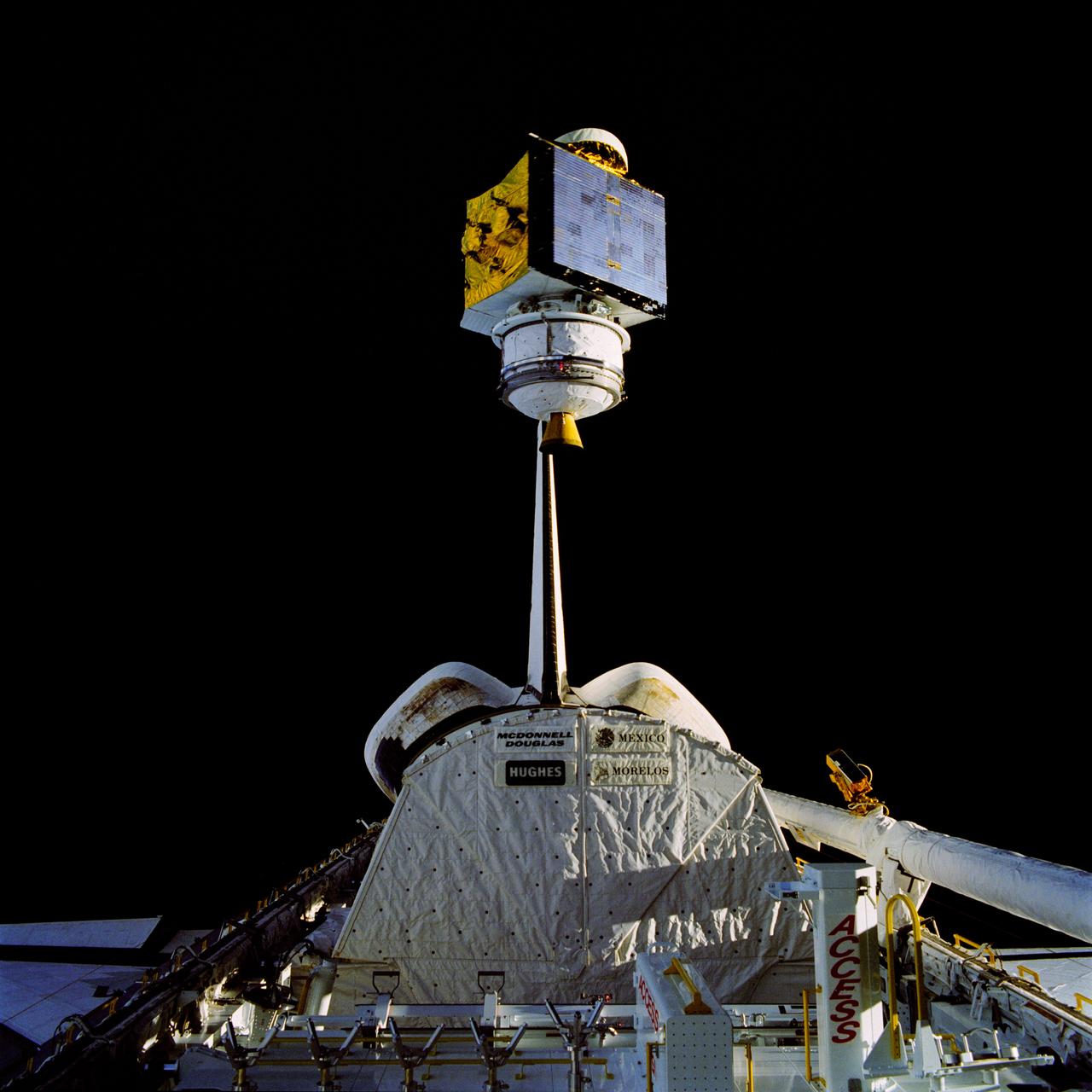
61B-38-36W (28 Nov 1985) --- The 4,144-pound RCA Satcom K-2 communications satellite is photographed as it spins from the cargo bay of the Earth-orbiting Atlantis. A TV camera at right records the deployment for a later playback to Earth. This frame was photographed with a handheld Hasselblad camera inside the spacecraft.
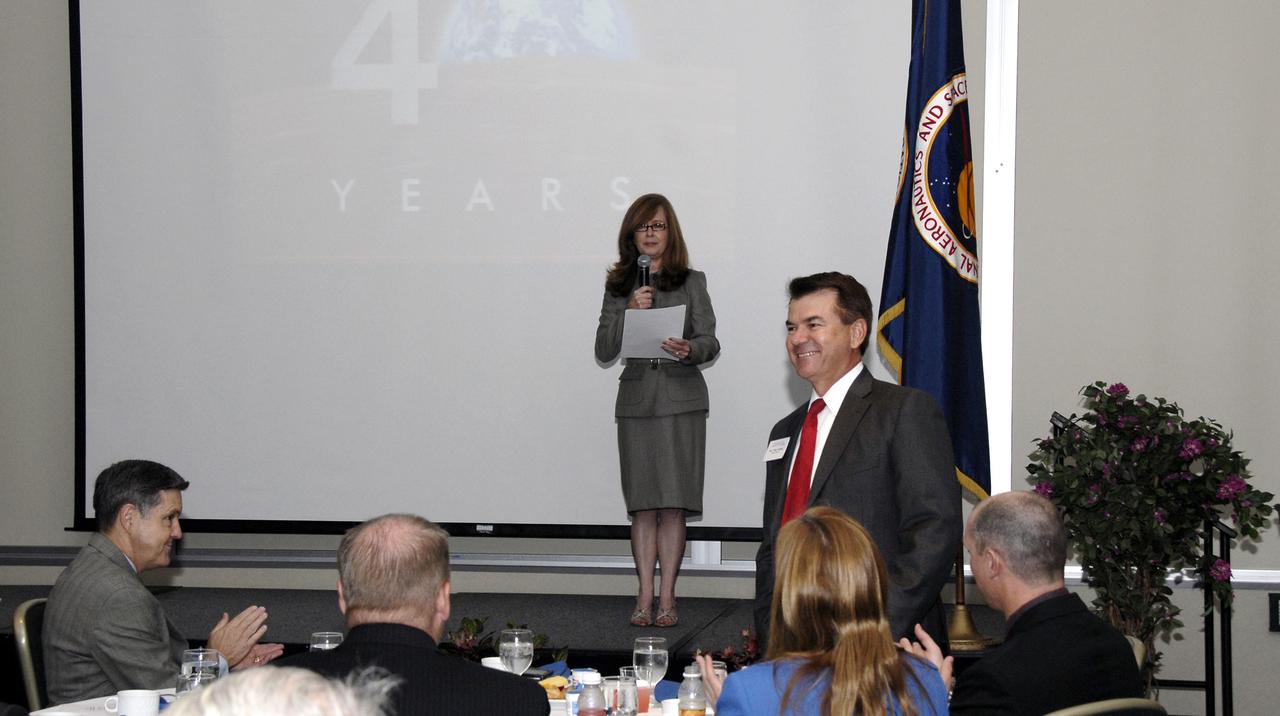
CAPE CANAVERAL, Fla. – NASA Kennedy Space Center's External Relations Director Lisa Malone introduces Florida Senator Thad Altman during the annual Community Leaders Breakfast held in the Debus Center at Kennedy Space Center's Visitor Complex. Seated at far left is Center Director Bob Cabana. Community leaders, business executives, educators, community organizers and state and local government representatives heard Cabana provide an overview of operations at the space center and a look ahead at upcoming missions and activities. Photo credit: NASA/Kim Shiflett
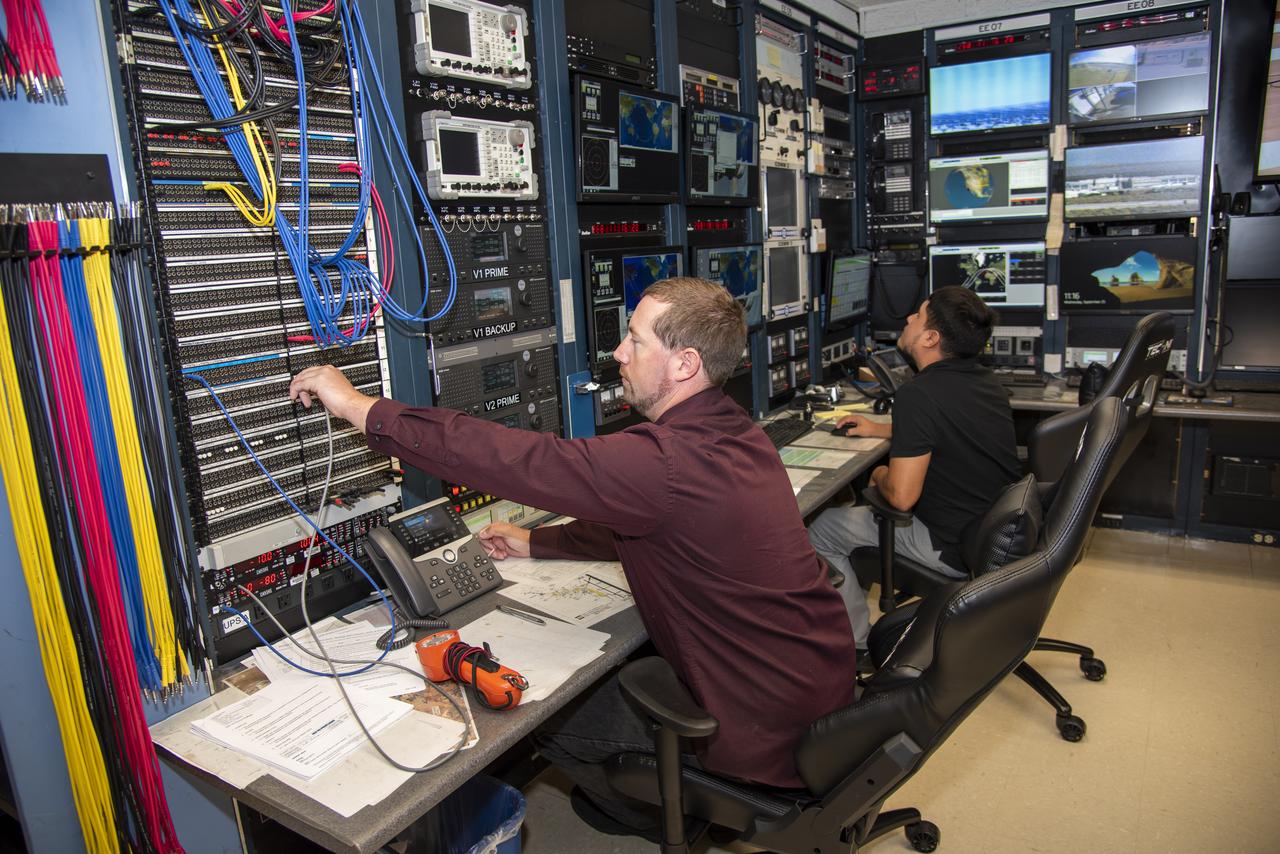
Jeff Koenig and Carlos Torres  at NASA’s Armstrong Flight Research Center in California prepare to support communications with the International Space Station and the Soyuz spacecraft scheduled for a rendezvous later that day.
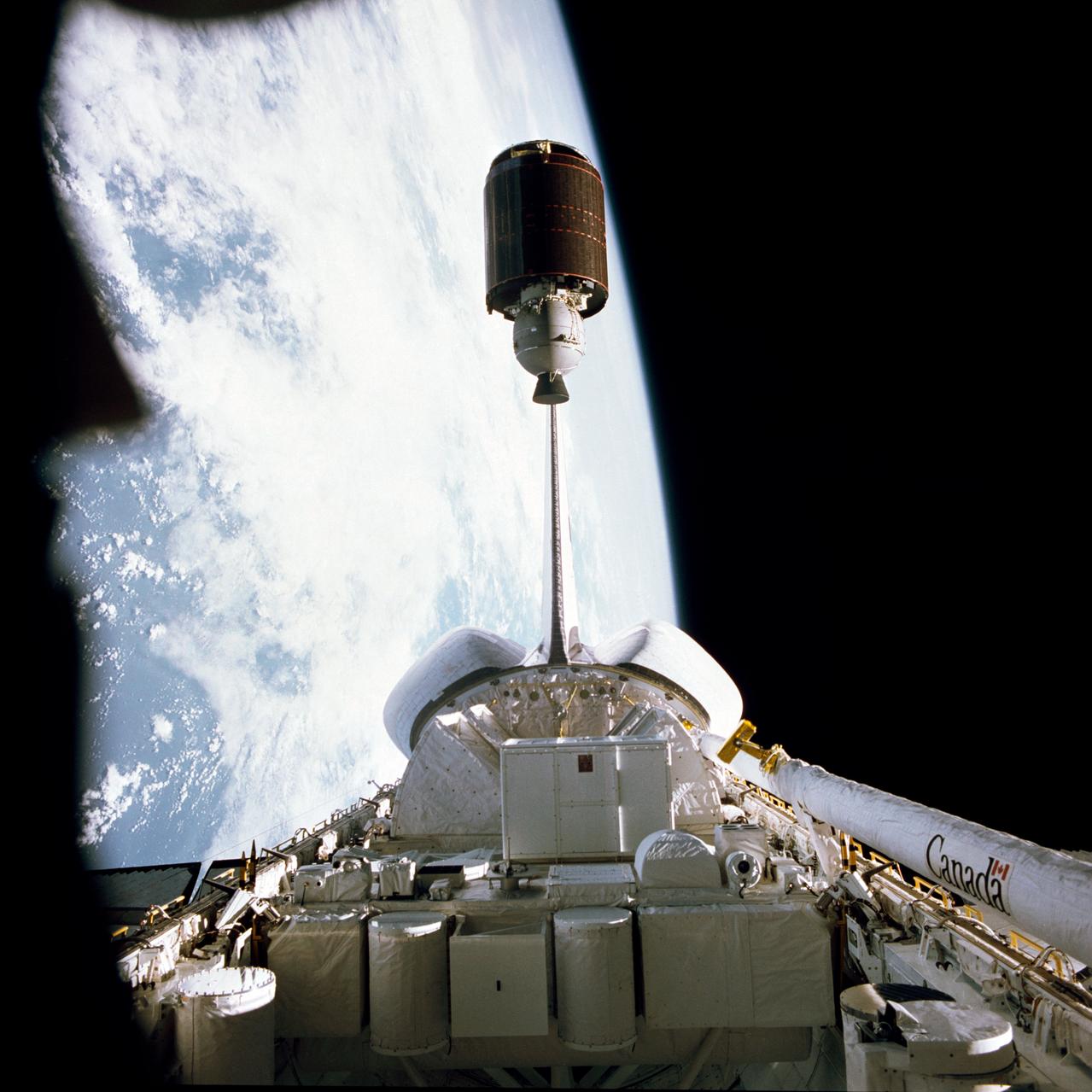
S83-35764 (19 June 1983) --- The Indonesian Palapa B communications satellite is just about to clear the vertical stabilizer of the Earth-orbiting Space Shuttle Challenger to begin its way toward its Earth-orbital destination. Also visible in this 70mm exposure, photographed through the flight deck?s aft windows, are the Shuttle pallet satellite, the experiment package for NASA?s office of space and terrestrial applications (OSTA-2), the now vacated protective cradles for Palapa and Telesat Canada?s Anik C2 satellites, some getaway special (GAS) canisters and the Canadian-built remote manipulator system (RMS) arm.
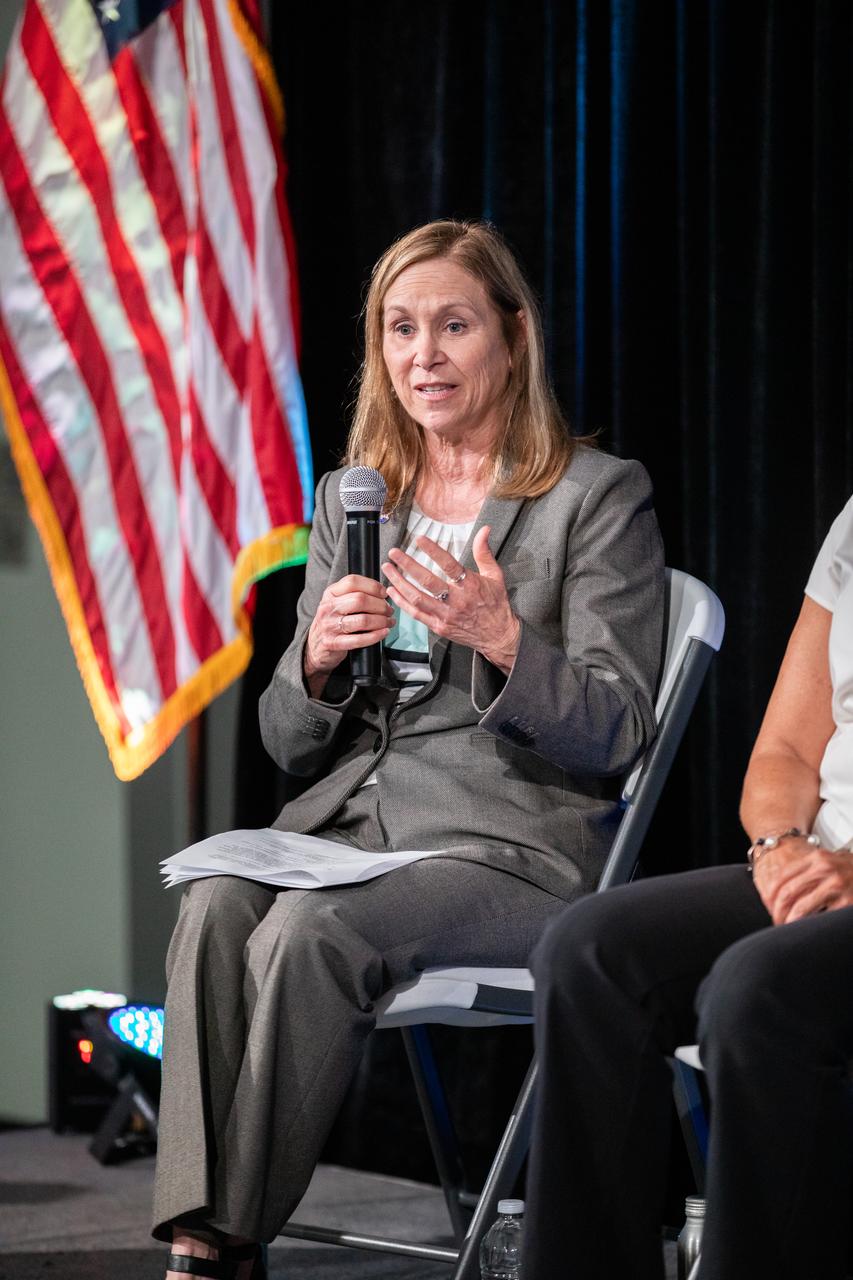
NASA Kennedy Space Center Director Janet Petro, with senior leaders of NASA and center programs, holds a center Community Leaders Update on Thursday, May 23, 2024, at the Kennedy Space Center Visitor Complex. The panel discussed how the programs based at NASA Kennedy support the agency’s efforts to return humans to the Moon in preparation for Mars and answered questions from guests.
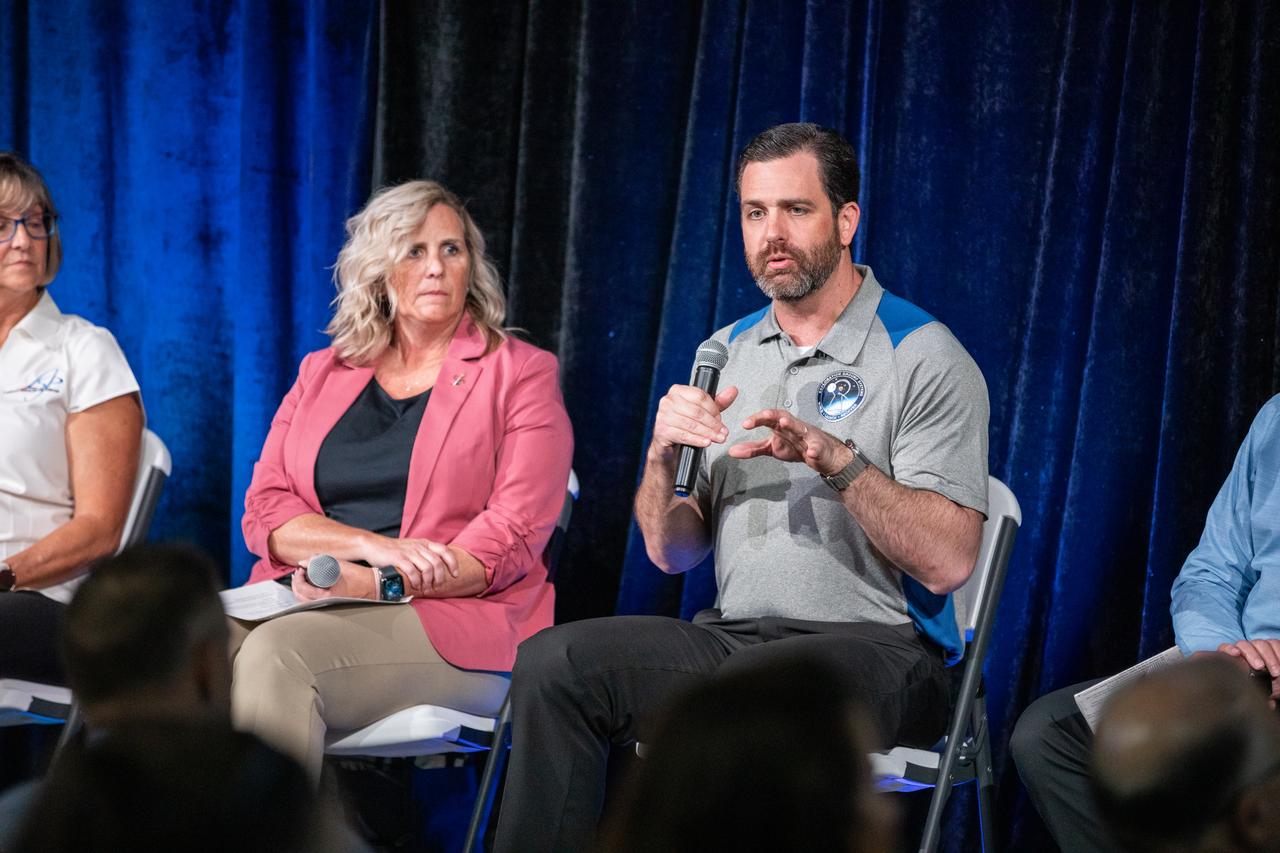
Jeremy Parsons, deputy manager, NASA’s Exploration Ground Systems, speaks to a crowd gathered for the NASA Kennedy Space Center Community Leaders Update on Thursday, May 23, 2024, at the center’s Visitor Complex. At left, Dana Hutcherson, deputy manager, Commercial Crew Program, were among the panelists discussing how programs based at NASA Kennedy support the agency’s efforts to return humans to the Moon in preparation for Mars and answered questions from guests.

Mark Weise, manager, NASA’s Gateway Deep Space Logistics, speaks to a crowd gathered for the 2024 Kennedy Space Center Community Leaders Update on Thursday, May 23, 2024, at the center’s Visitor Complex. Weise and other senior leaders discussed how programs based at NASA Kennedy support the agency’s efforts to return humans to the Moon in preparation for Mars and answered questions from guests.

From left, NASA Kennedy Space Center Director Janet Petro; Jenny Lyons, deputy manager, Launch Services Program; and Dana Hutcherson, deputy manager, Commercial Crew Program, speak to the crowd during the center’s Community Leaders Update on Thursday, May 23, 2024, at the Kennedy Space Center Visitor Complex. The panel discussed how programs based at NASA Kennedy support the agency’s efforts to return humans to the Moon and prepare for Mars, and they answered audience questions.
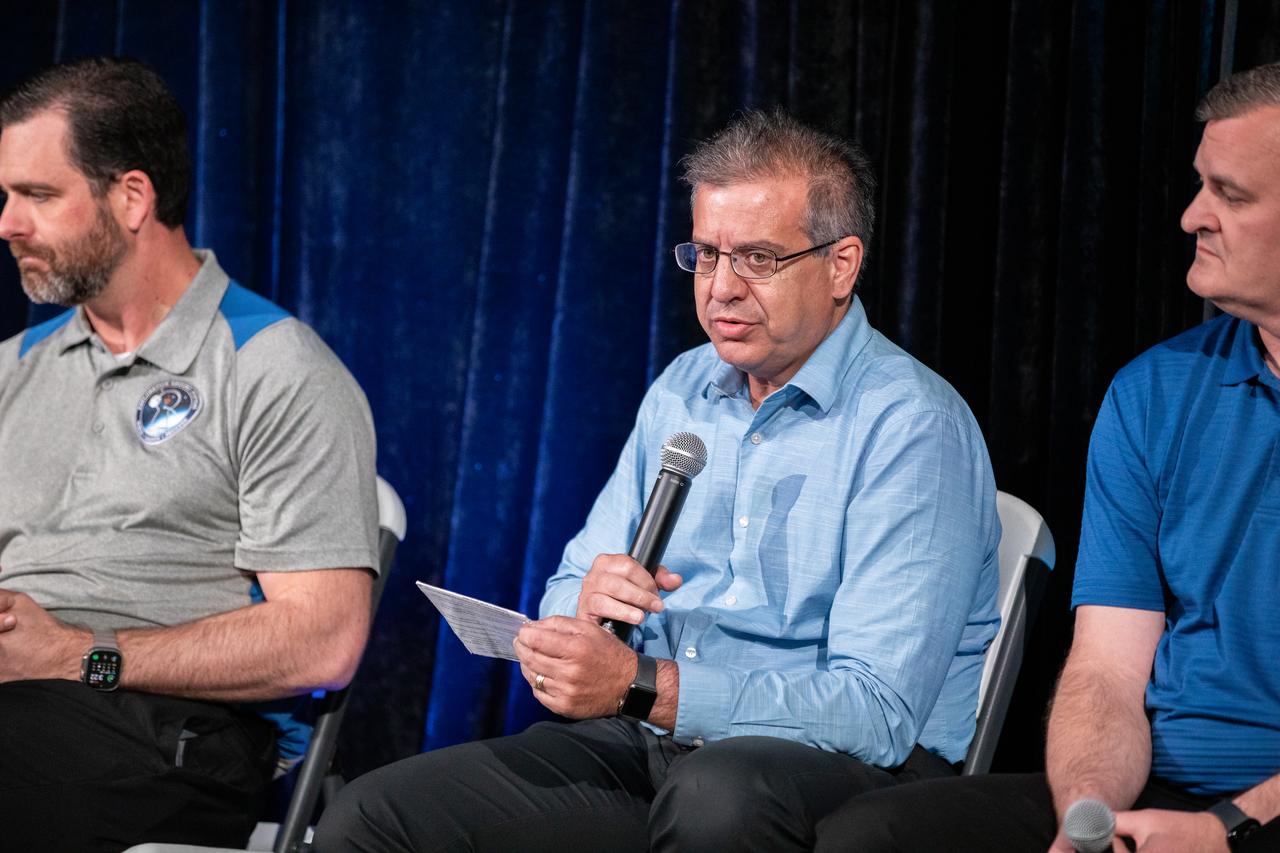
In the middle, Emilio Cruz, deputy director, NASA’s Exploration Research and Technology Programs, speaks to a crowd gathered for the 2024 Kennedy Space Center Community Leaders Update on Thursday, May 23, 2024, held at the center’s Visitor Complex. From left, Jeremy Parsons, deputy manager, NASA’s Exploration Ground Systems, and Mark Weise, manager, Gateway Deep Space Logistics, discussed how programs based at NASA Kennedy support the agency’s efforts to return humans to the Moon in preparation for Mars and answered questions from guests.
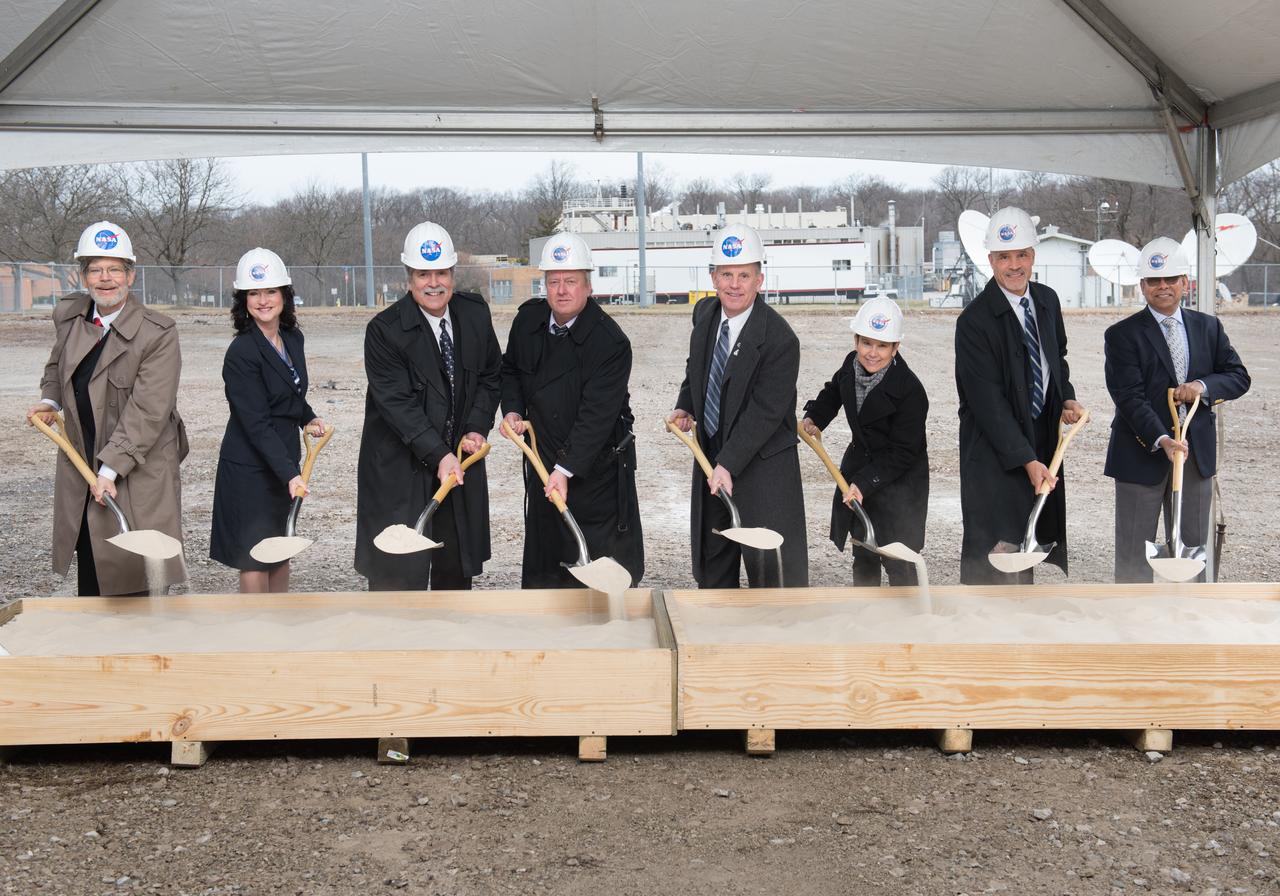
NASA Glenn Research Center Director and Senior Management at the Aerospace Communications Facility, ACF Groundbreaking Ceremony
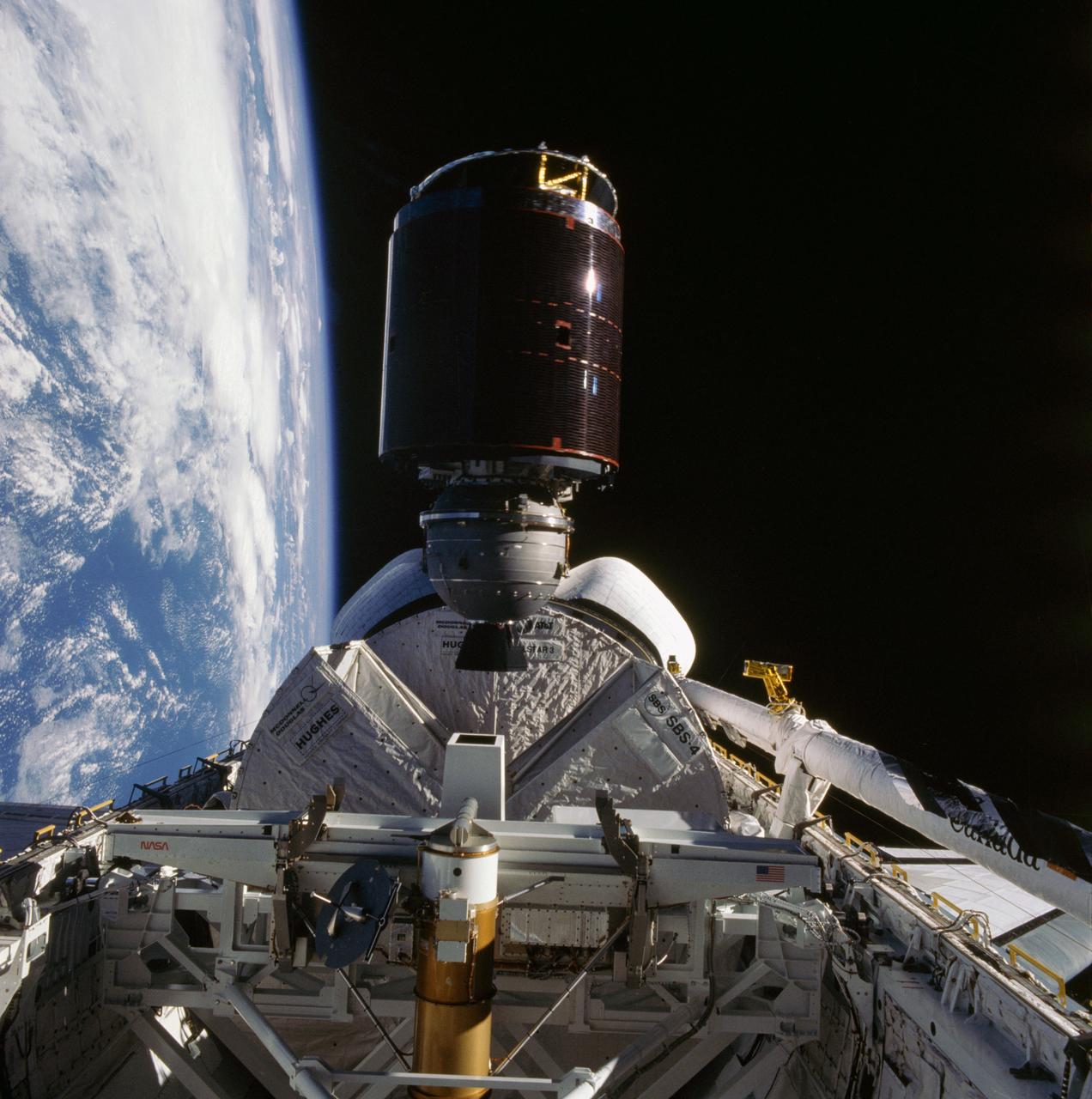
41D-36-034 (30 Aug 1984) --- Less than nine hours after the first launch of the Discovery, its astronaut crewmembers photographed deployment of the SBS-4 communications satellite. The cylindrical spacecraft spins and rises from its cradle-like protective shield to begin life in space. A number of maneuvers will place it in its desired orbit. A 70mm camera, aimed through the spacecraft’s aft flight deck windows, was used to expose the frame.
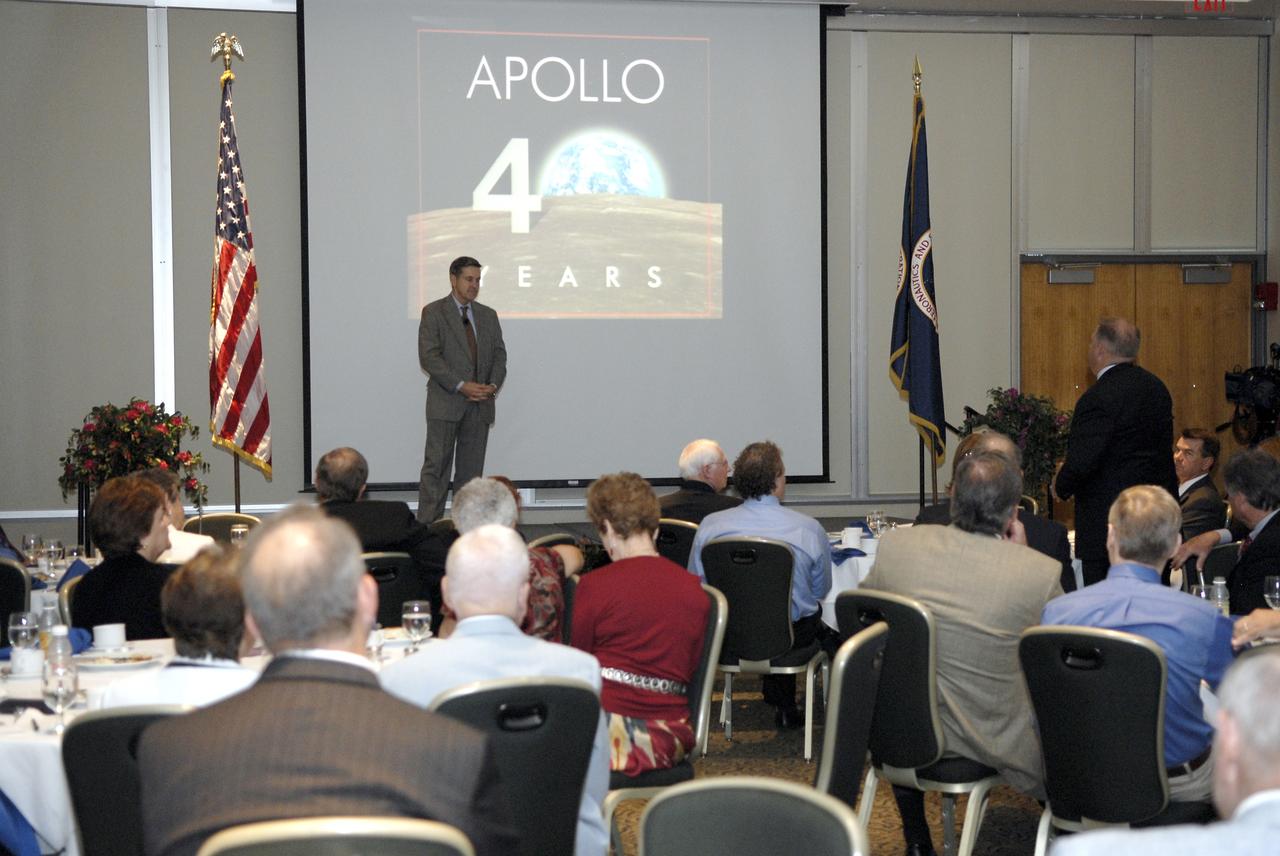
CAPE CANAVERAL, Fla. – NASA Kennedy Space Center Bob Cabana talks to guests at the annual Community Leaders Breakfast held in the Debus Center at Kennedy Space Center's Visitor Complex. Community leaders, business executives, educators, community organizers and state and local government heard Cabana provide an overview of operations at the space center and a look ahead at upcoming missions and activities. Photo credit: NASA/Kim Shiflett
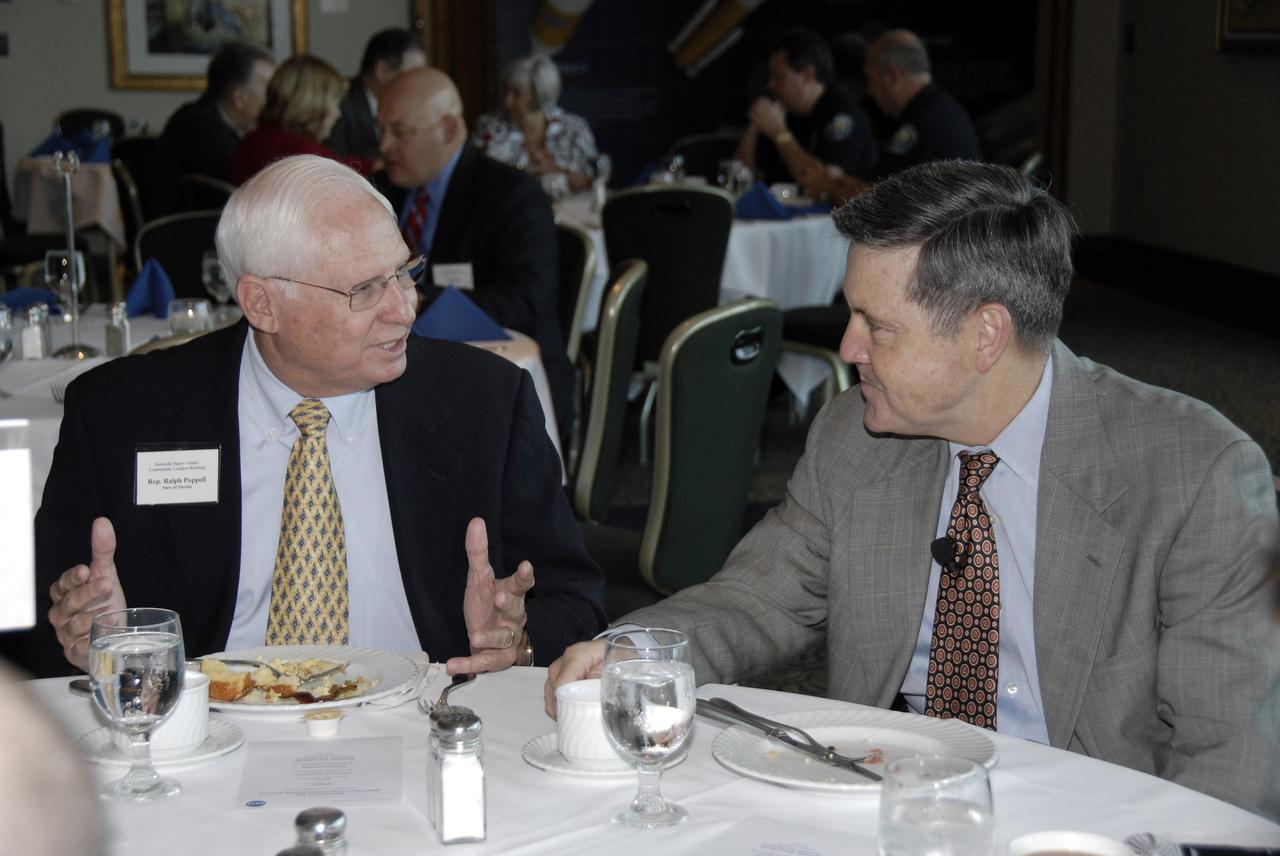
CAPE CANAVERAL, Fla. – Florida Rep. Ralph Poppell (left) talks with Kennedy Space Center Director Bob Cabana during the annual Community Leaders Breakfast held in the Debus Center at Kennedy Space Center's Visitor Complex. Community leaders, business executives, educators, community organizers and state and local government heard Cabana provide an overview of operations at the space center and a look ahead at upcoming missions and activities. Photo credit: NASA/Kim Shiflett
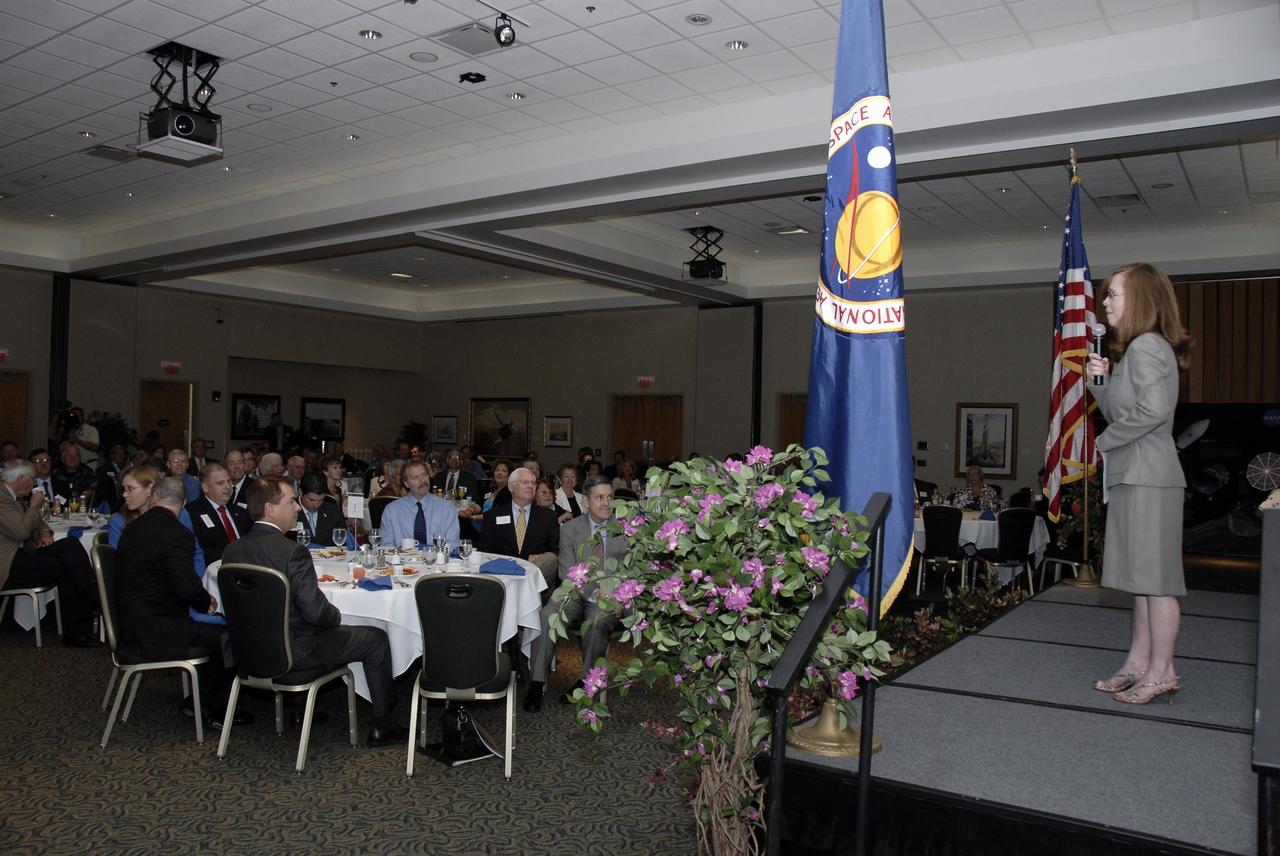
CAPE CANAVERAL, Fla. – NASA Kennedy Space Center's External Relations Director Lisa Malone hosts the annual Community Leaders Breakfast held in the Debus Center at Kennedy Space Center's Visitor Complex. On the right at the table at left are Florida Rep. Ralph Poppell and Center Director Bob Cabana. Community leaders, business executives, educators, community organizers and state and local government heard Cabana provide an overview of operations at the space center and a look ahead at upcoming missions and activities. Photo credit: NASA/Kim Shiflett
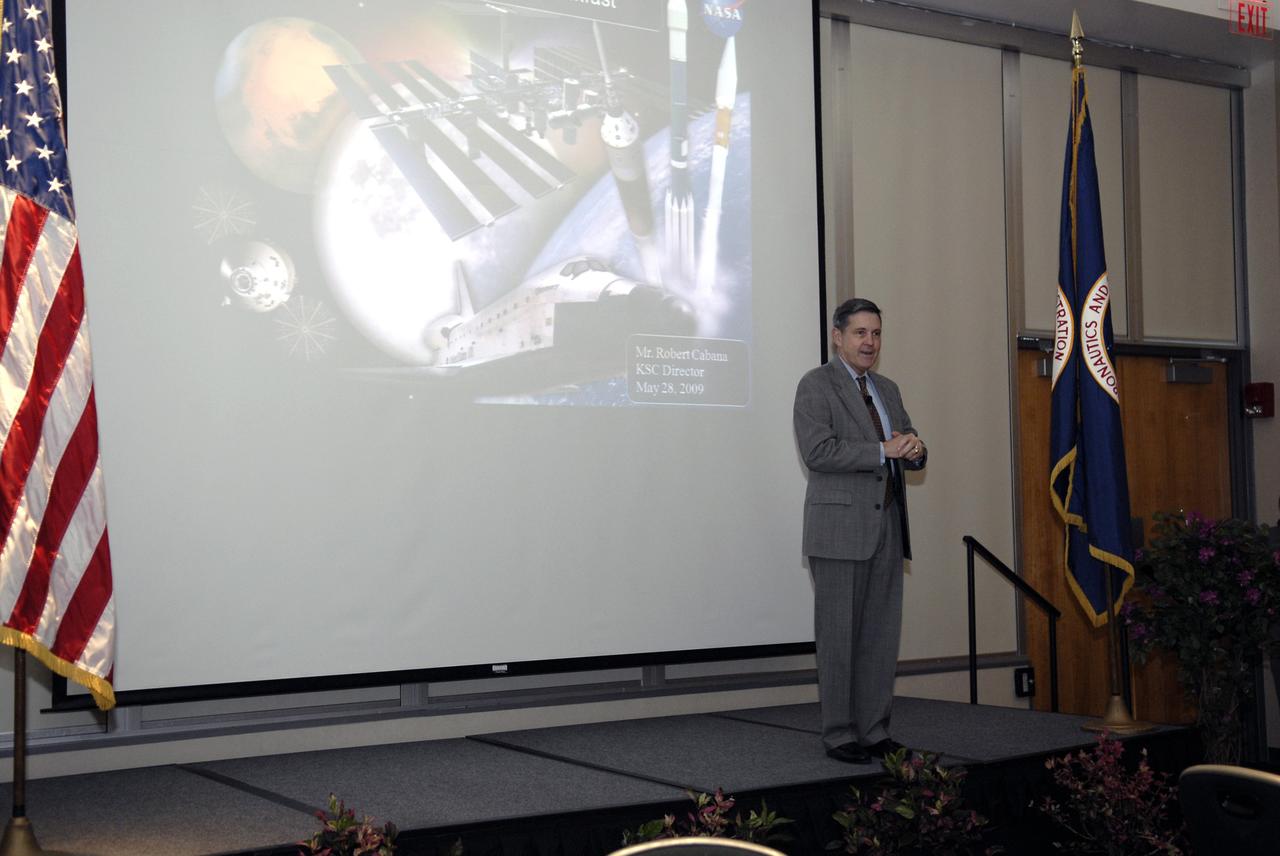
CAPE CANAVERAL, Fla. – NASA Kennedy Space Center Bob Cabana talks to guests at the annual Community Leaders Breakfast held in the Debus Center at Kennedy's Visitor Complex. Community leaders, business executives, educators, community organizers and state and local government heard Cabana provide an overview of operations at the space center and a look ahead at upcoming missions and activities. Photo credit: NASA/Kim Shiflett
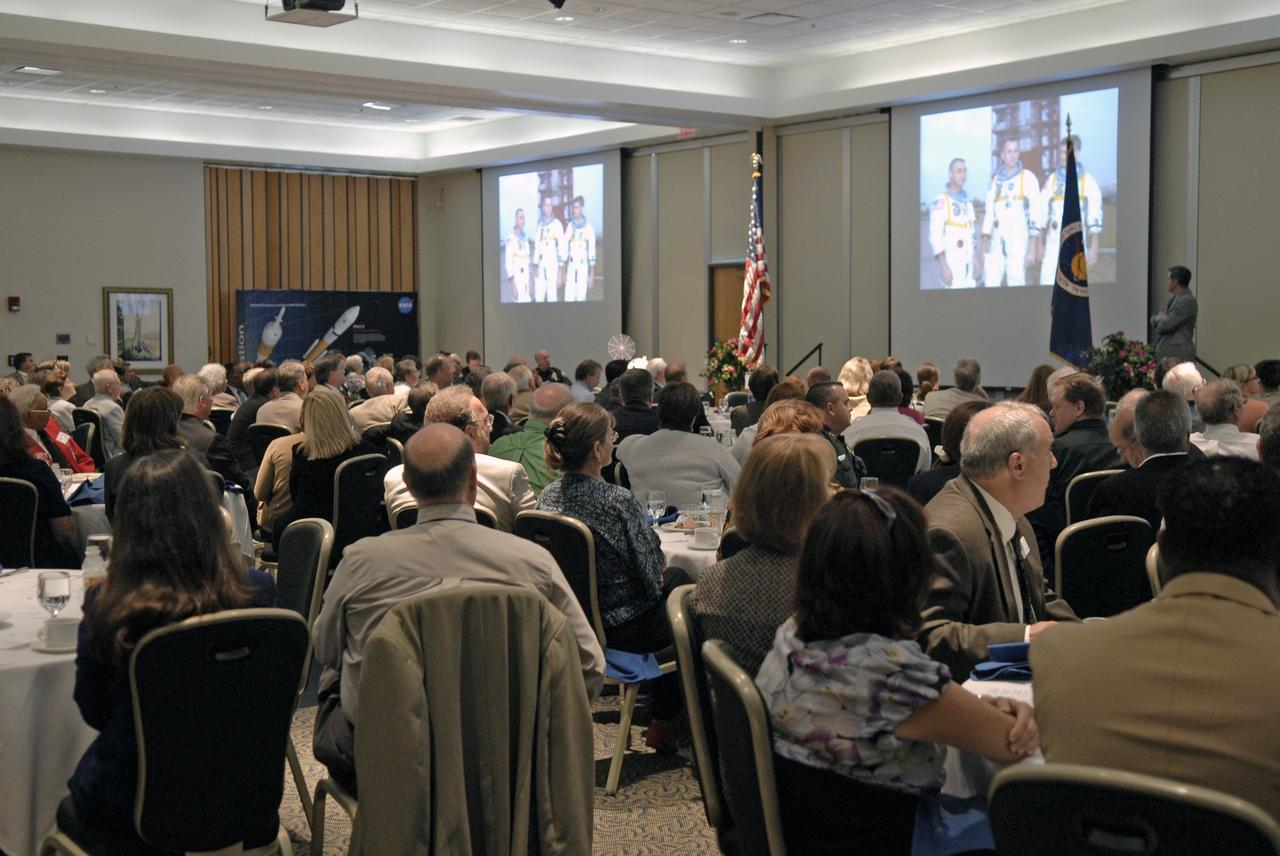
CAPE CANAVERAL, Fla. – Guests at the annual Community Leaders Breakfast held in the Debus Center at Kennedy Space Center's Visitor Complex enjoy reminiscing about the early days of the Space Shuttle Program with Center Director Bob Cabana, far right on stage. Community leaders, business executives, educators, community organizers and state and local government heard Cabana provide an overview of operations at the space center and a look ahead at upcoming missions and activities. Photo credit: NASA/Kim Shiflett
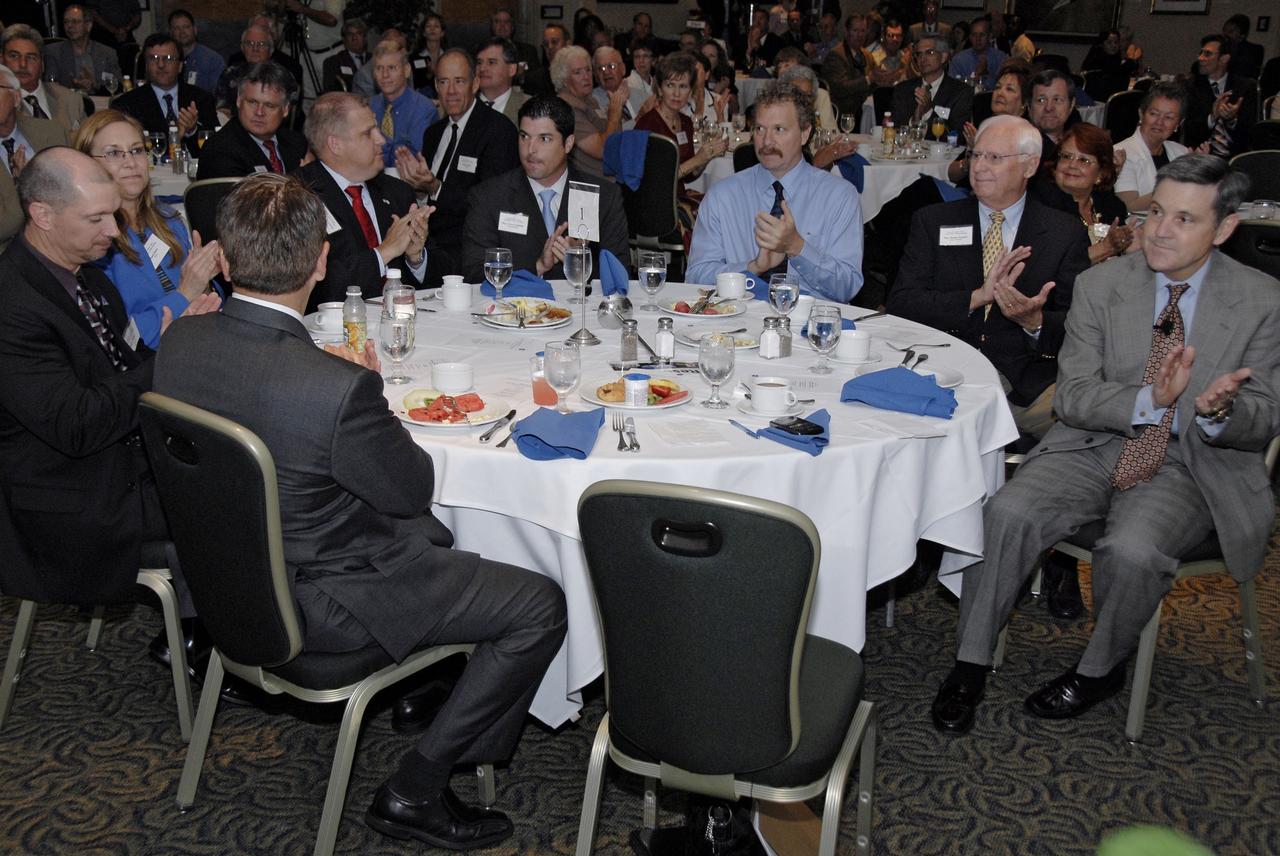
CAPE CANAVERAL, Fla. – Introductions are made at the annual Community Leaders Breakfast held in the Debus Center at Kennedy Space Center's Visitor Complex. Seated at far right are Center Director Bob Cabana and, on the left, Florida Rep. Ralph Poppell. Community leaders, business executives, educators, community organizers and state and local government heard Cabana provide an overview of operations at the space center and a look ahead at upcoming missions and activities. Photo credit: NASA/Kim Shiflett
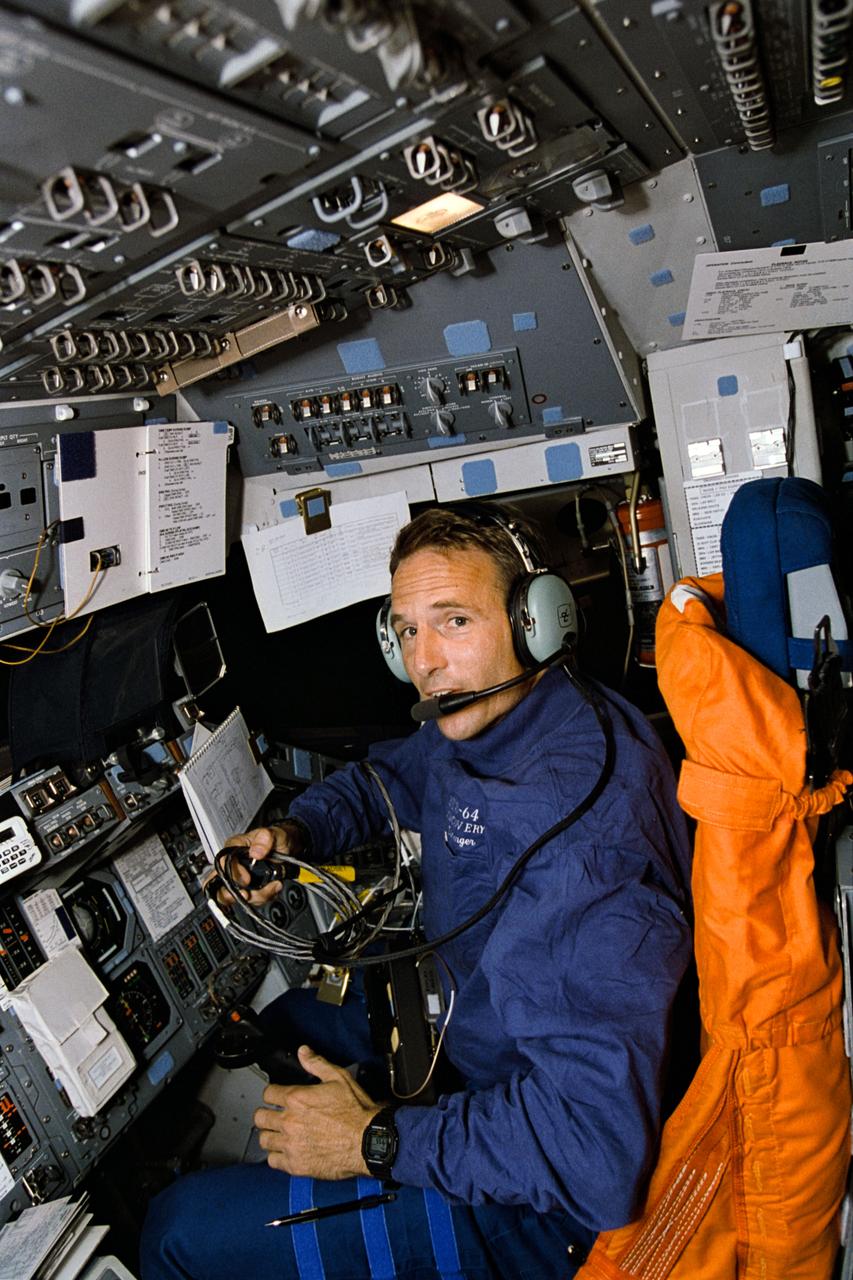
STS064-20-026 (9-20 Sept. 1994) --- Astronaut Jerry M. Linenger, STS-64 mission specialist, uses the Shuttle Amateur Radio Experiment (SAREX) to communicate with students on Earth. Various members of the crew made contact with a number of other "hams" around the world during the almost 11-day mission in Earth orbit. Photo credit: NASA or National Aeronautics and Space Administration

The communication antenna is used primarily for test flights to receive downlink flight data and video from test aircraft and also to support command uplink of data to test aircraft for command and control. It is one of two such assets of the Dryden Aeronautical Test Range at NASA’s Armstrong Flight Research Center in California.

The communication antenna is used primarily for test flights to receive downlink flight data and video from test aircraft and also to support command uplink of data to test aircraft for command and control. It is one of two such assets of the Dryden Aeronautical Test Range at NASA’s Armstrong Flight Research Center in California.
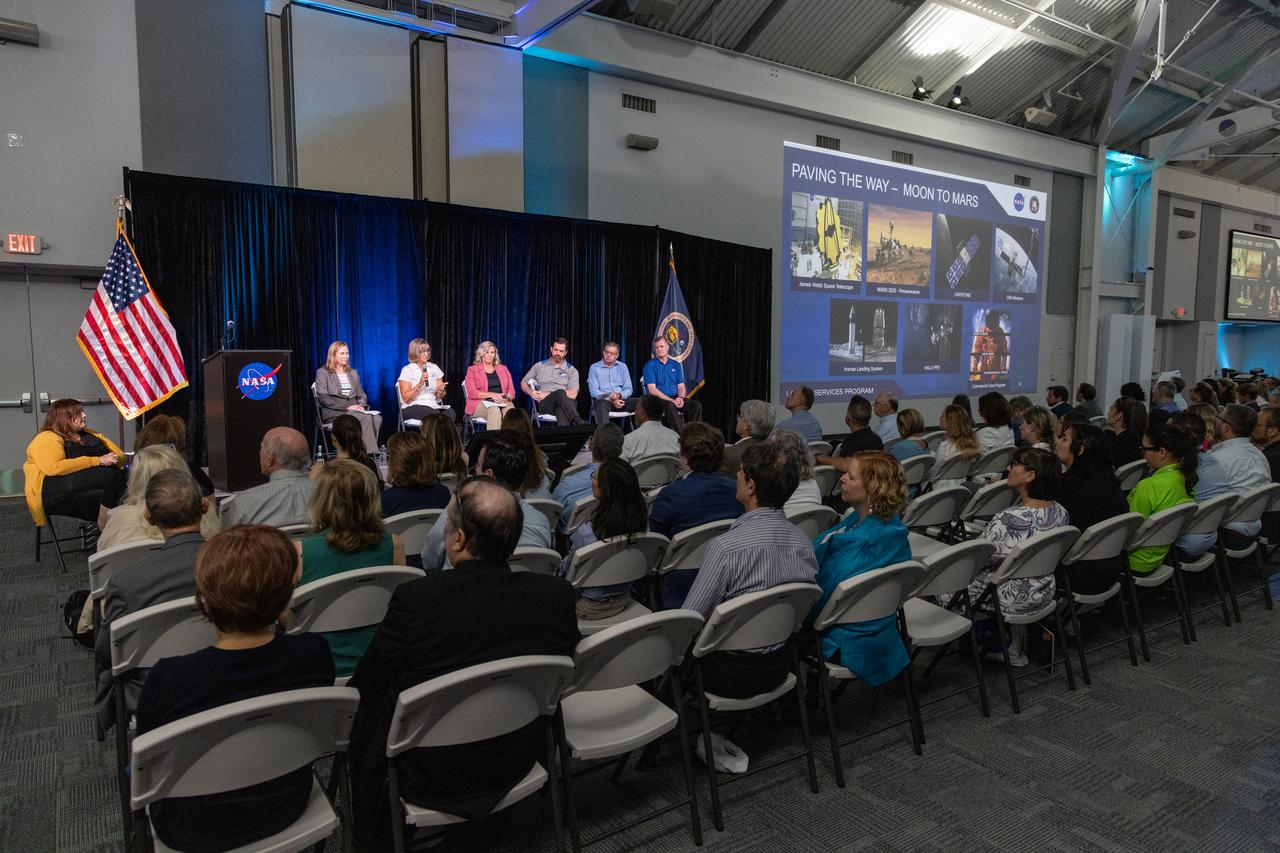
NASA Kennedy Space Center Director Janet Petro, with senior leaders of NASA and center programs, holds a Community Leaders Update on Thursday, May 23, 2024, at the Kennedy Space Center Visitor Complex. The panel discussed how programs based at NASA Kennedy support the agency’s efforts to return humans to the Moon and prepare for Mars, and they answered questions from guests. From second to left, Jenny Lyons, deputy manager, Launch Services Program; Dana Hutcherson, deputy manager, Commercial Crew Program; Jeremy Parsons, deputy manager, Exploration Ground Systems; Emilio Cruz, deputy director, Exploration Research and Technology Programs; and Mark Weise, manager, Gateway Deep Space Logistics.
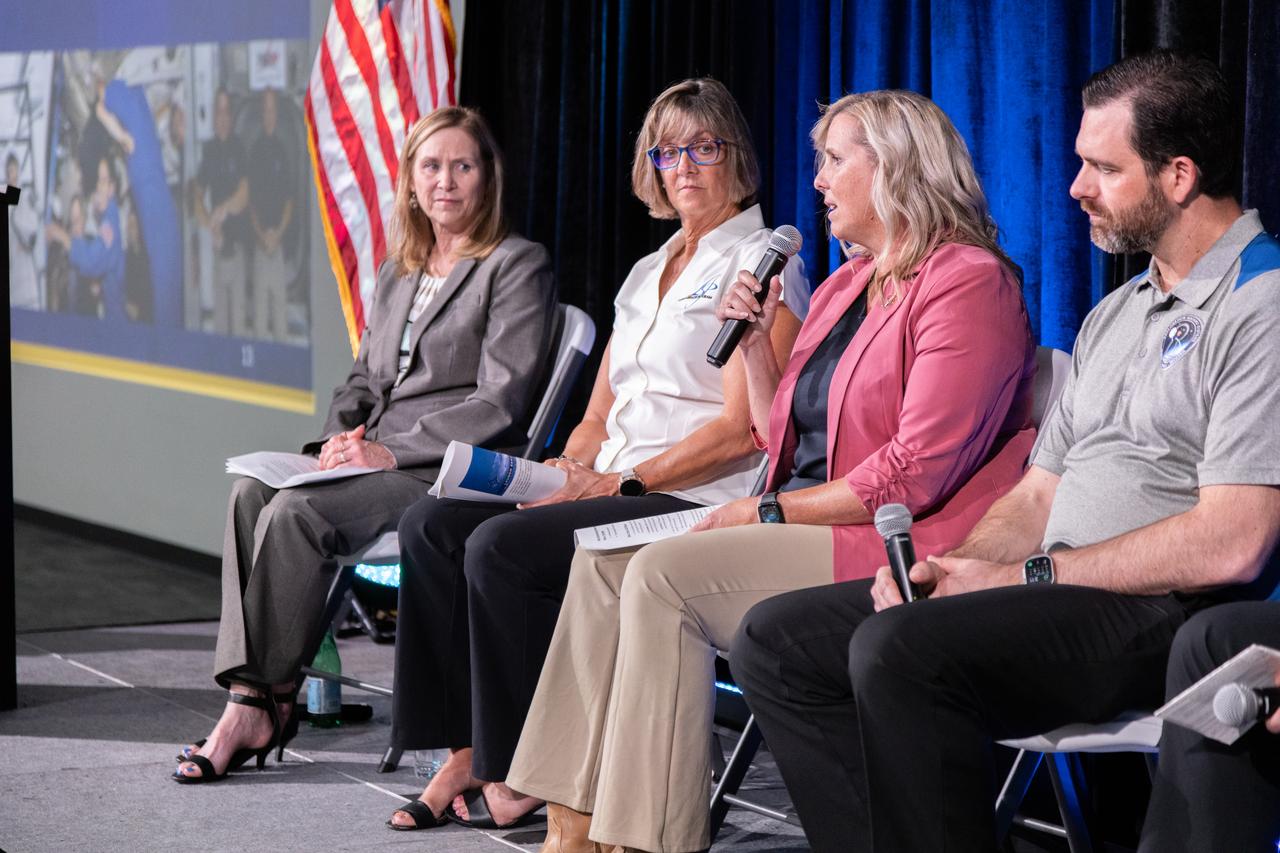
Dana Hutcherson, deputy manager, NASA’s Commercial Crew Program, speaks to a crowd gathered for the 2024 Kennedy Space Center Community Leaders Update on Thursday, May 23, 2024, held at the center’s Visitor Complex. She is joined by, from left, NASA Kennedy Space Center Director Janet Petro, Jenny Lyons, deputy manager, Launch Services Program, and Jeremy Parsons, deputy manager, Exploration Ground System. Together the panelists discussed how programs based at NASA Kennedy support the agency’s efforts to return humans to the Moon in preparation for Mars and answered audience questions.
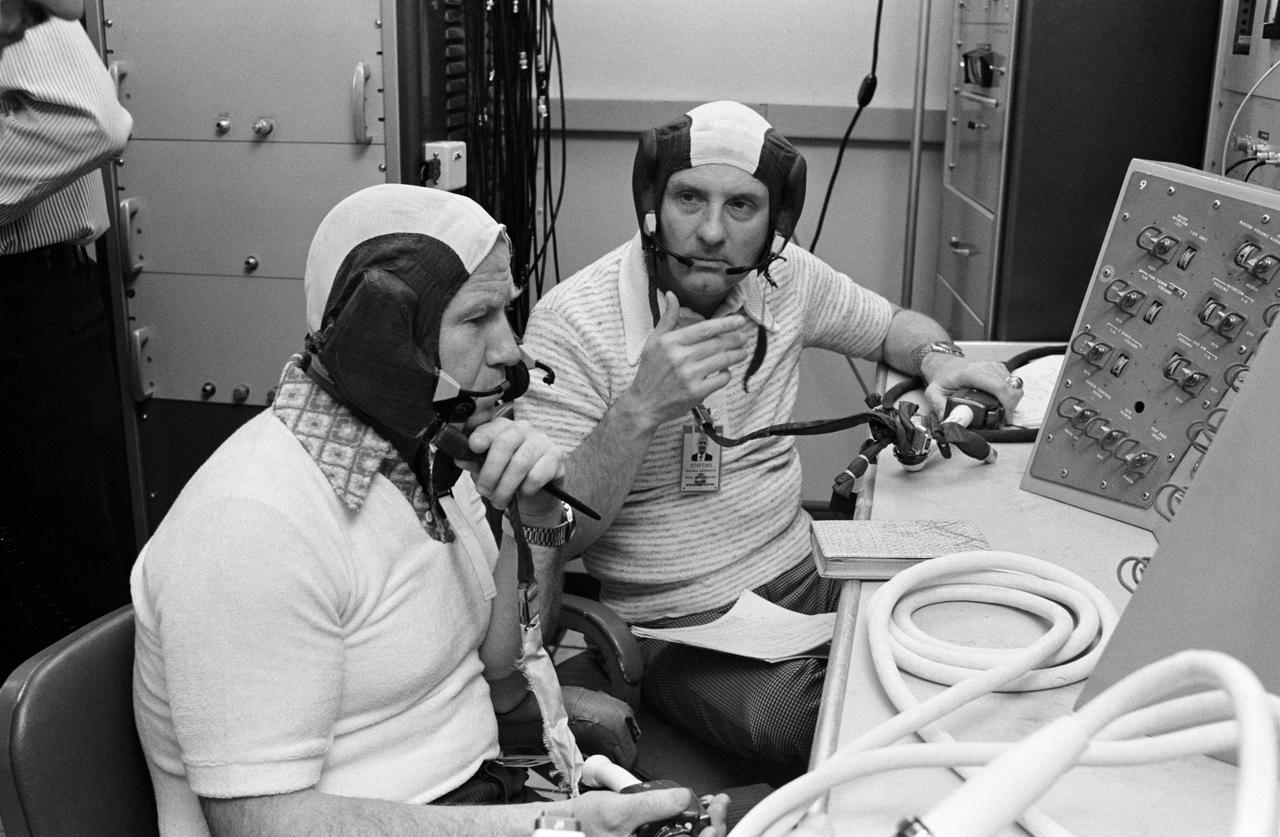
S74-20807 (23 April 1974) --- Cosmonaut Aleksey A. Leonov (foreground) is briefed on the Apollo communications test system console in the Building 440 laboratory during the joint U.S.-USSR Apollo-Soyuz Test Project training activity at the Johnson Space Center. Leonov is the commander of the Soviet ASTP crew. Leonov is being briefed by astronaut Thomas P. Stafford, commander of the American ASTP crew.
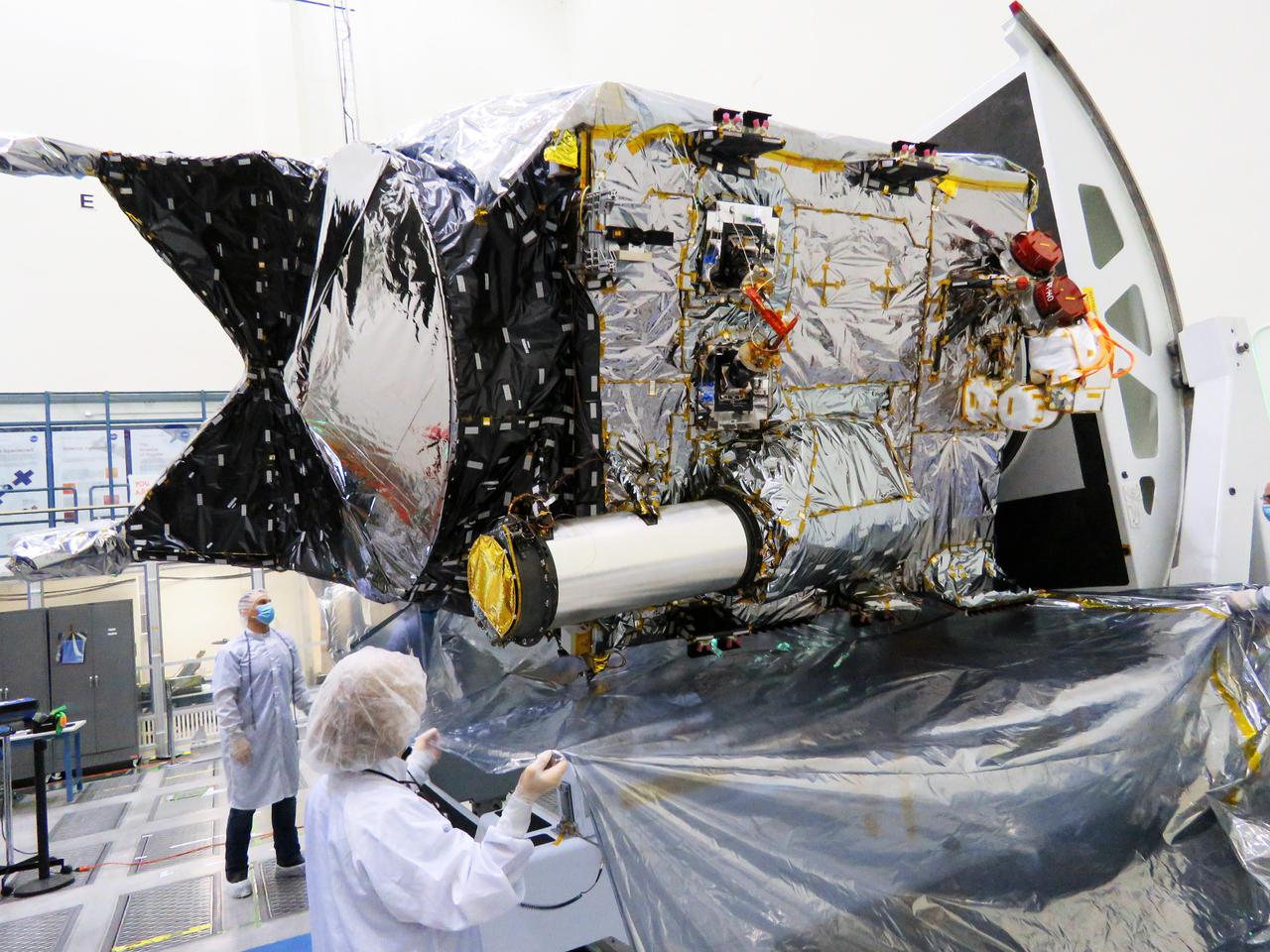
The Deep Space Optical Communications (DSOC) technology demonstration's flight laser transceiver can be easily identified on NASA's Psyche spacecraft, seen in this December 2021 photograph inside a clean room at the agency's Jet Propulsion Laboratory in Southern California. DSOC's tube-like gray/silver sunshade can be seen protruding from the side of the spacecraft. The bulge to which the sunshade is attached is DSOC's transceiver, which consists of a near-infrared laser transmitter to send high-rate data to Earth and a sensitive photon-counting camera to receive ground-transmitted low-rate data. The DSOC experiment is the agency's first demonstration of optical communications beyond the Earth-Moon system. DSOC is a system that consists of this flight laser transceiver, a ground laser transmitter, and a ground laser receiver. New advanced technologies have been implemented in each of these elements. The transceiver will "piggyback" on NASA's Psyche spacecraft when it launches in August 2022 to the metal-rich asteroid of the same name. The DSOC technology demonstration will begin shortly after launch and continue as the spacecraft travels from Earth to its gravity-assist flyby of Mars. https://photojournal.jpl.nasa.gov/catalog/PIA24570
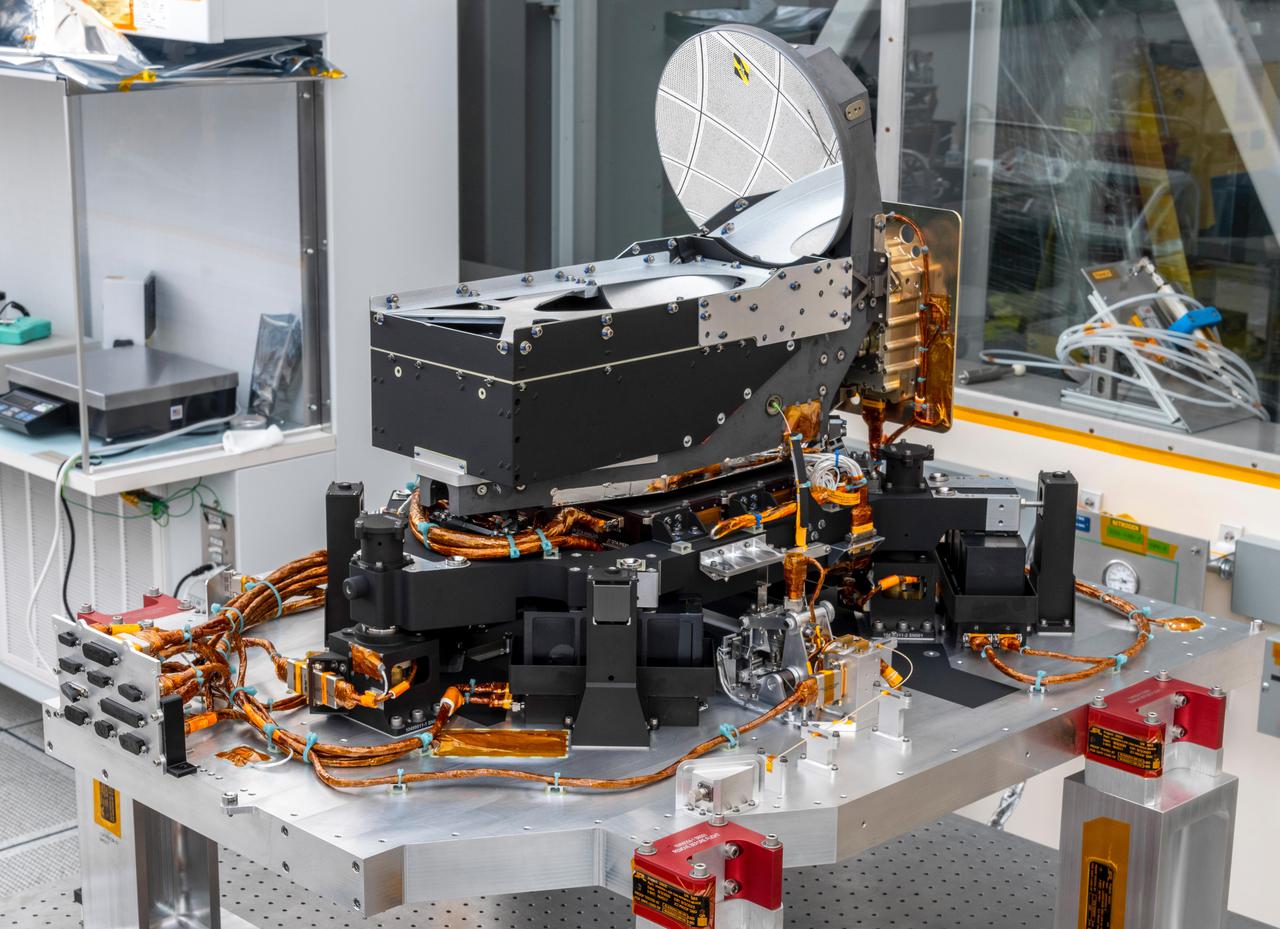
The Deep Space Optical Communications (DSOC) technology demonstration's flight laser transceiver is shown at NASA's Jet Propulsion Laboratory in Southern California in April 2021, before being installed inside its box-like enclosure that was later integrated with NASA's Psyche spacecraft. The transceiver consists of a near-infrared laser transmitter to send high-rate data to Earth, and a sensitive photon-counting camera to receive ground-transmitted low-rate data. The transceiver is mounted on an assembly of struts and actuators – shown in this photograph – that stabilizes the optics from spacecraft vibrations. The DSOC experiment is the agency's first demonstration of optical communications beyond the Earth-Moon system. DSOC is a system that consists of this flight laser transceiver, a ground laser transmitter, and a ground laser receiver. New advanced technologies have been implemented in each of these elements. The transceiver will "piggyback" on NASA's Psyche spacecraft when it launches in August 2022 to the metal-rich asteroid of the same name. The DSOC technology demonstration will begin shortly after launch and continue as the spacecraft travels from Earth to its gravity-assist flyby of Mars. https://photojournal.jpl.nasa.gov/catalog/PIA24569
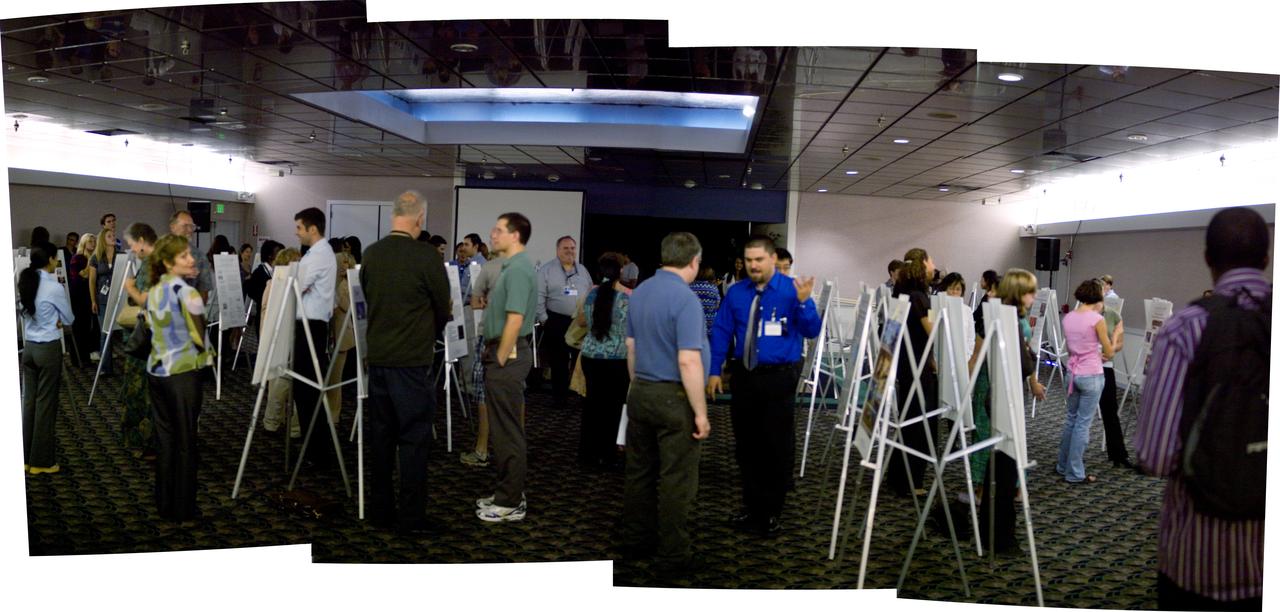
Foothill-DeAnza Community College Dstrict Internship Program poster Session NOTE: Photo taken by Summer Photo Intern Nick Tran.
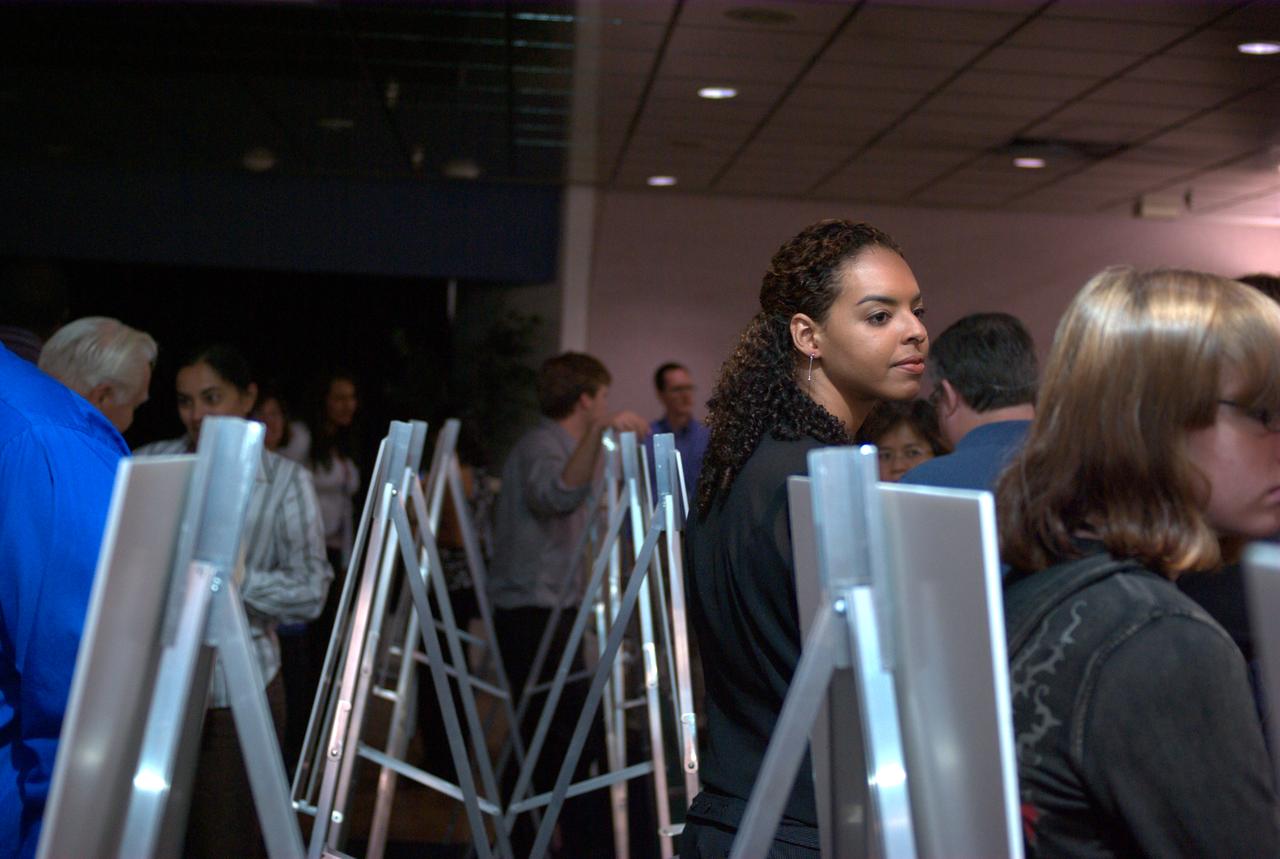
Foothill-DeAnza Community College Dstrict Internship Program poster Session NOTE: Photo taken by Summer Photo Intern Nick Tran.
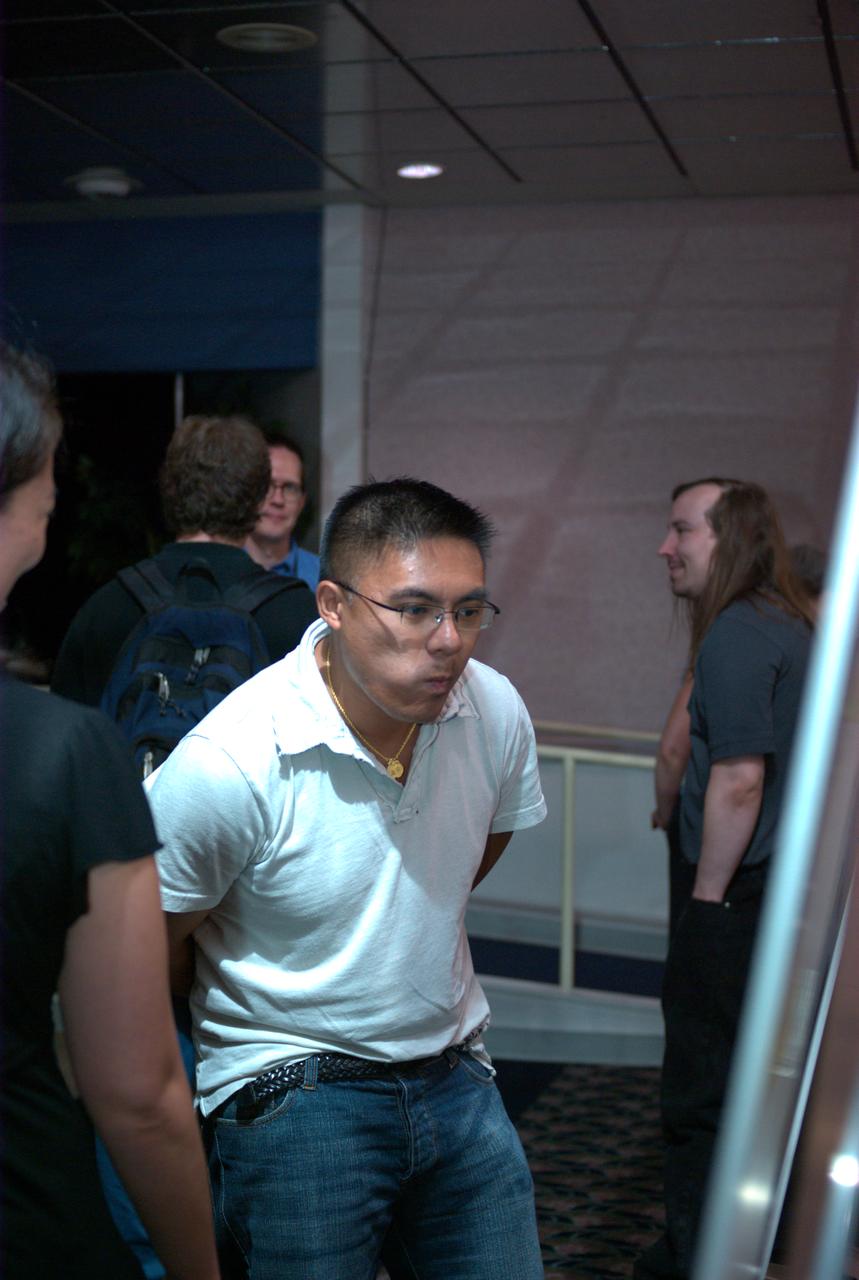
Foothill-DeAnza Community College Dstrict Internship Program poster Session NOTE: Photo taken by Summer Photo Intern Nick Tran.
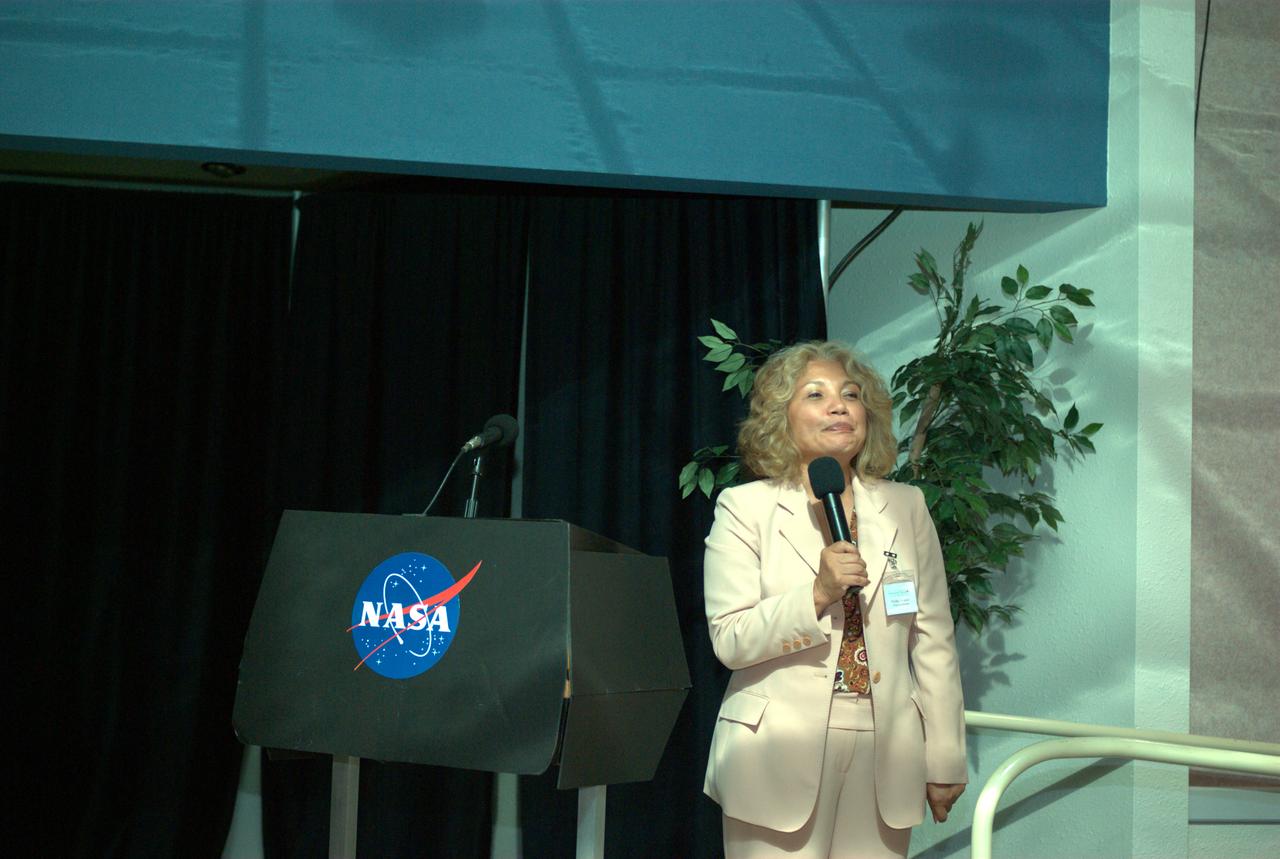
Foothill-DeAnza Community College Dstrict Internship Program poster Session NOTE: Photo taken by Summer Photo Intern Nick Tran.
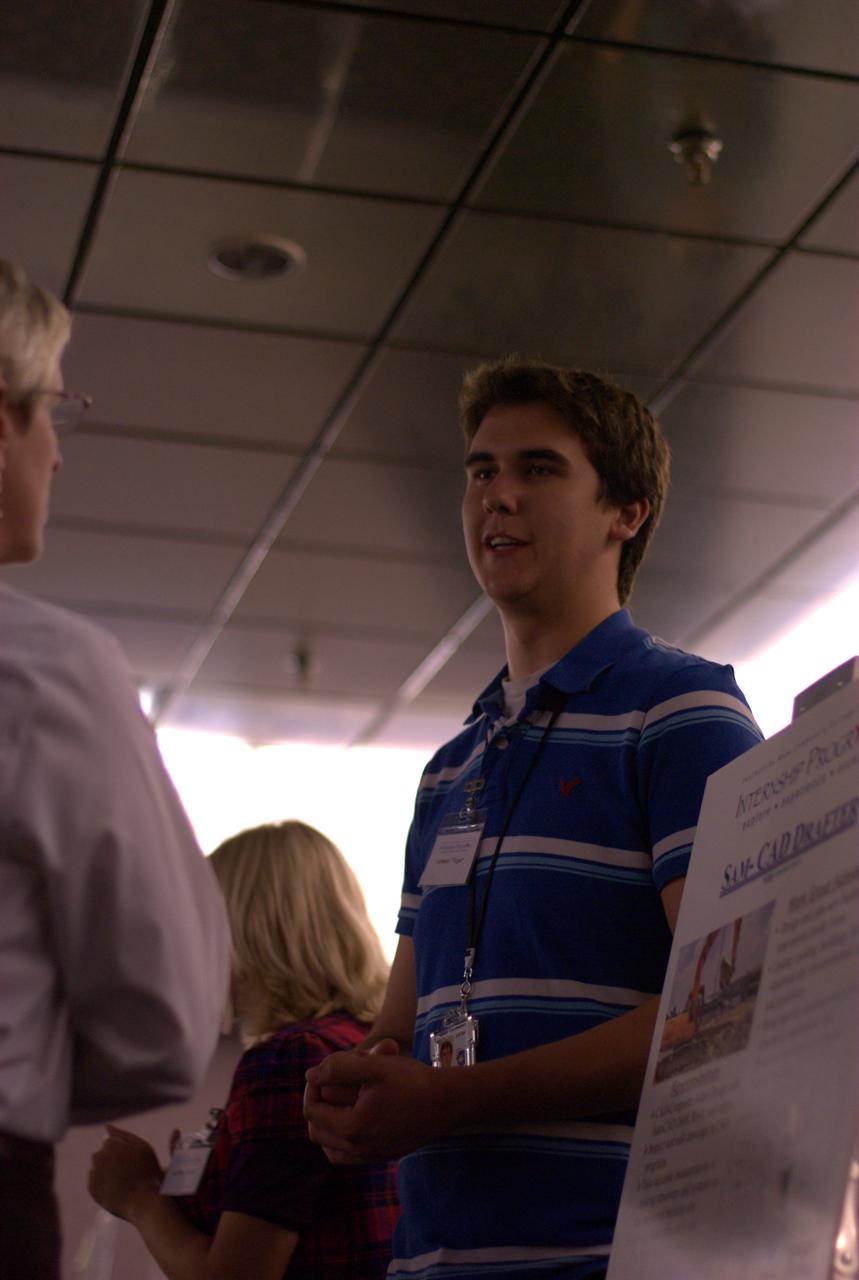
Foothill-DeAnza Community College Dstrict Internship Program poster Session NOTE: Photo taken by Summer Photo Intern Nick Tran.
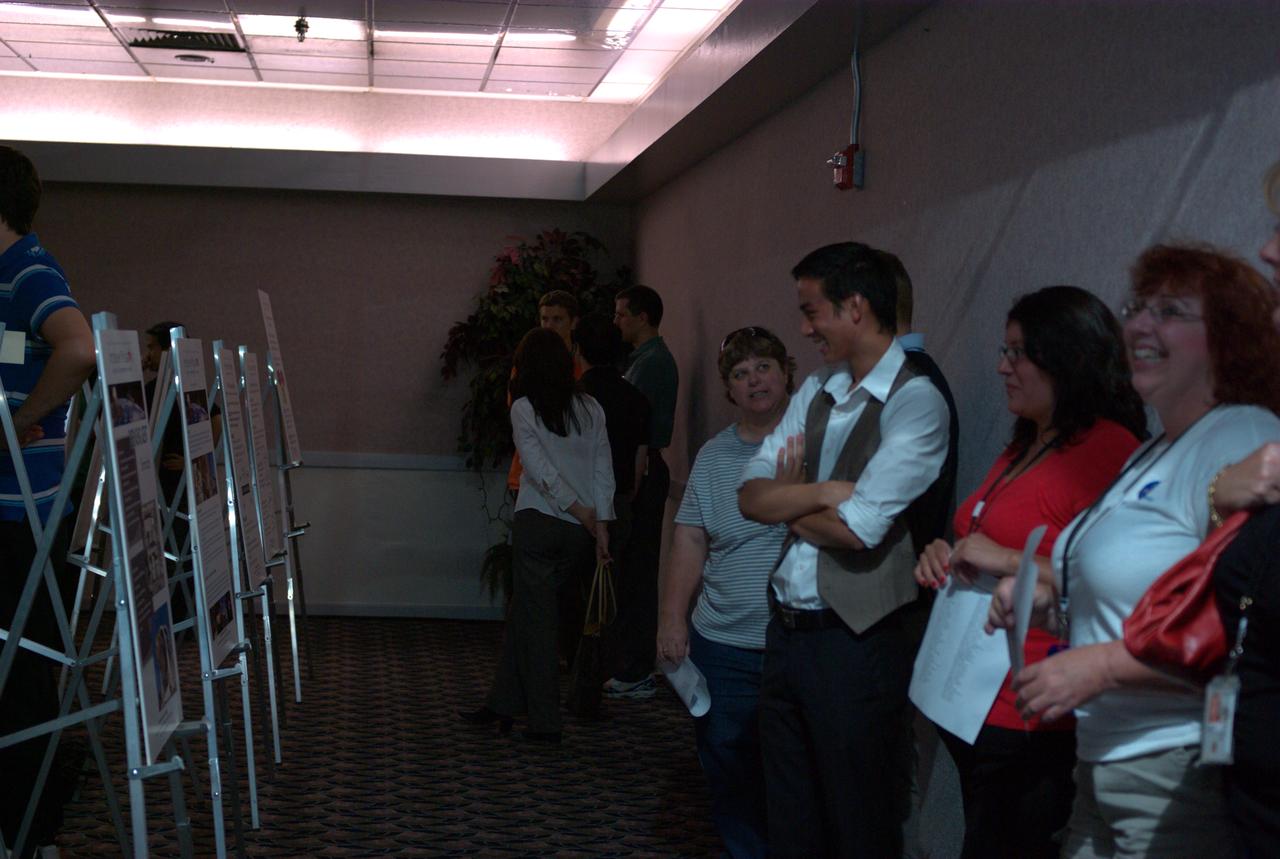
Foothill-DeAnza Community College Dstrict Internship Program poster Session NOTE: Photo taken by Summer Photo Intern Nick Tran.
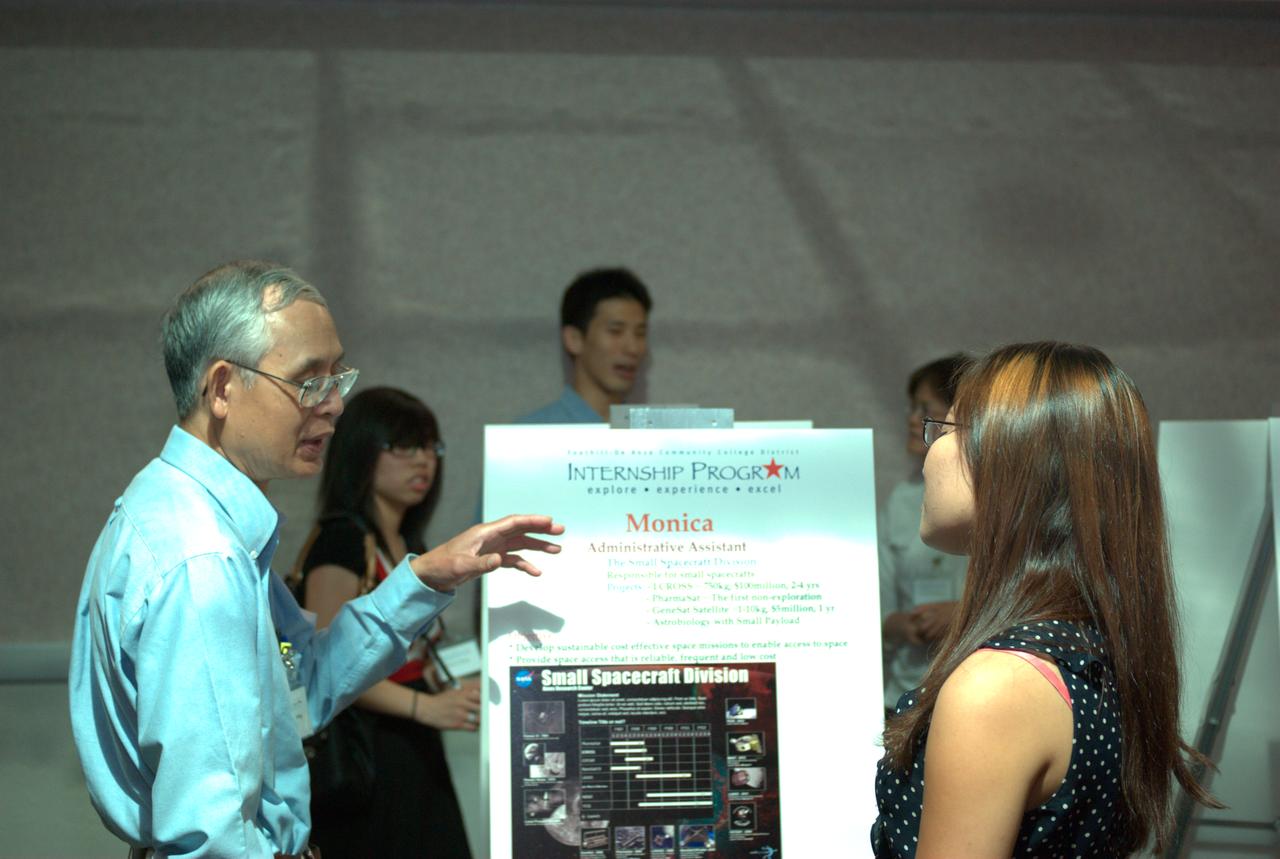
Foothill-DeAnza Community College Dstrict Internship Program poster Session NOTE: Photo taken by Summer Photo Intern Nick Tran.
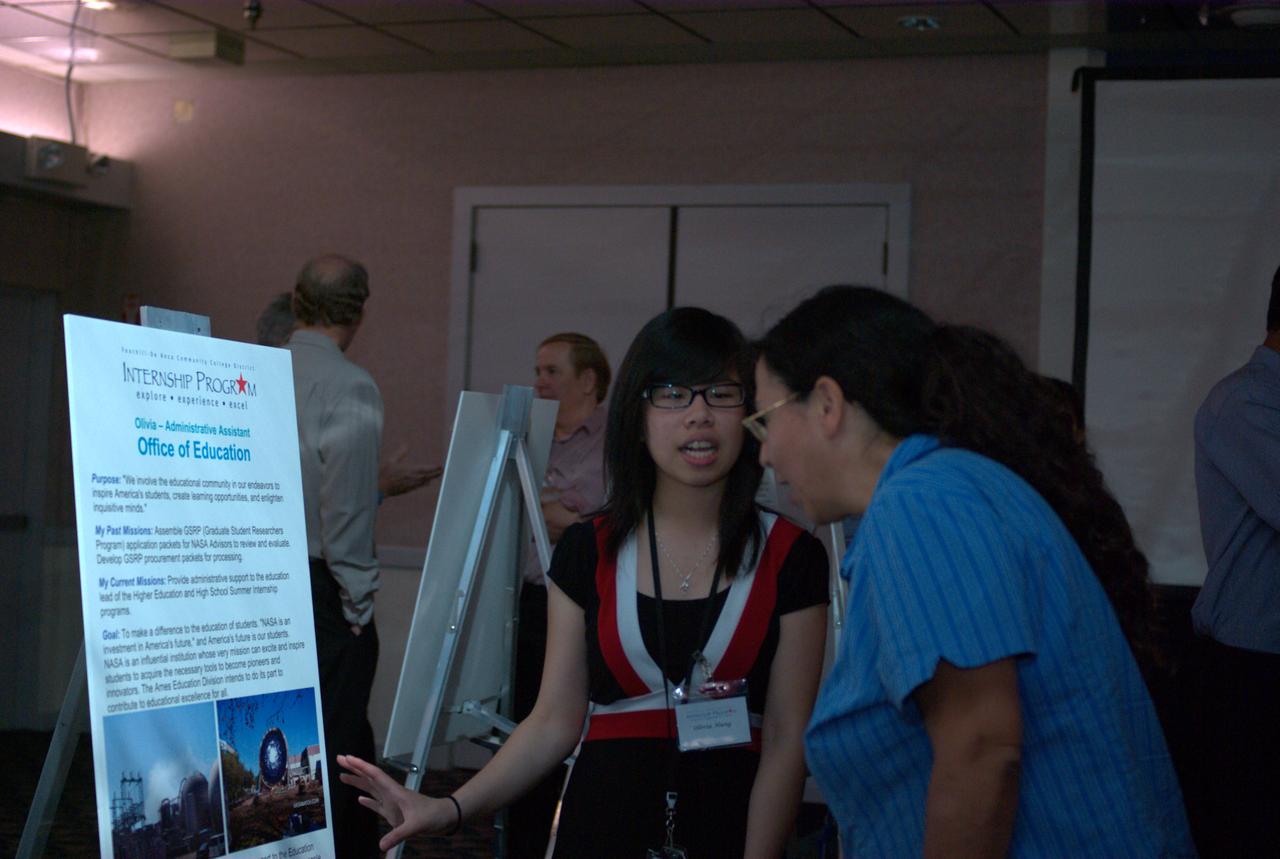
Foothill-DeAnza Community College Dstrict Internship Program poster Session NOTE: Photo taken by Summer Photo Intern Nick Tran.
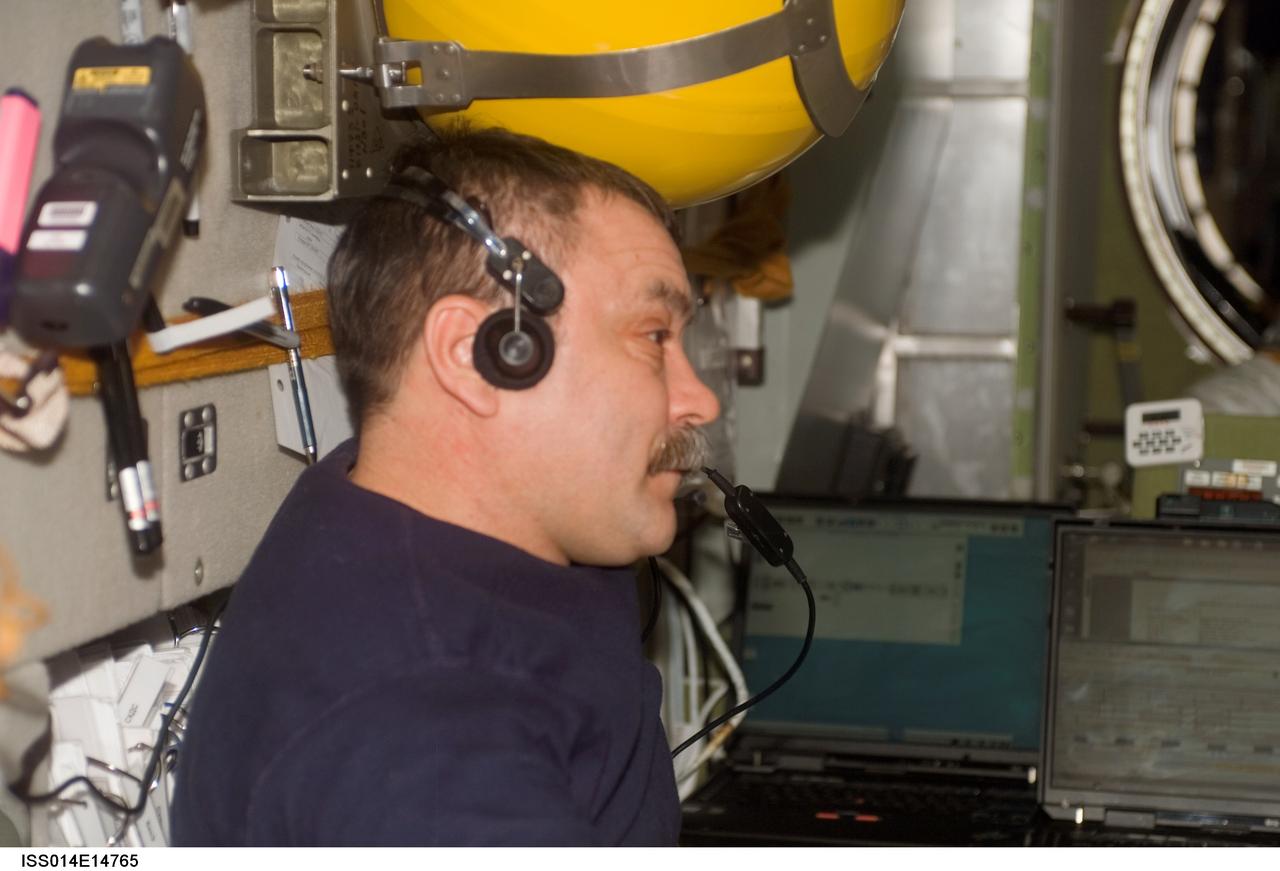
ISS014-E-14765 (24 Feb. 2007) --- Cosmonaut Mikhail Tyurin, Expedition 14 flight engineer representing Russia's Federal Space Agency, uses a communication system in the Zvezda Service Module of the International Space Station.
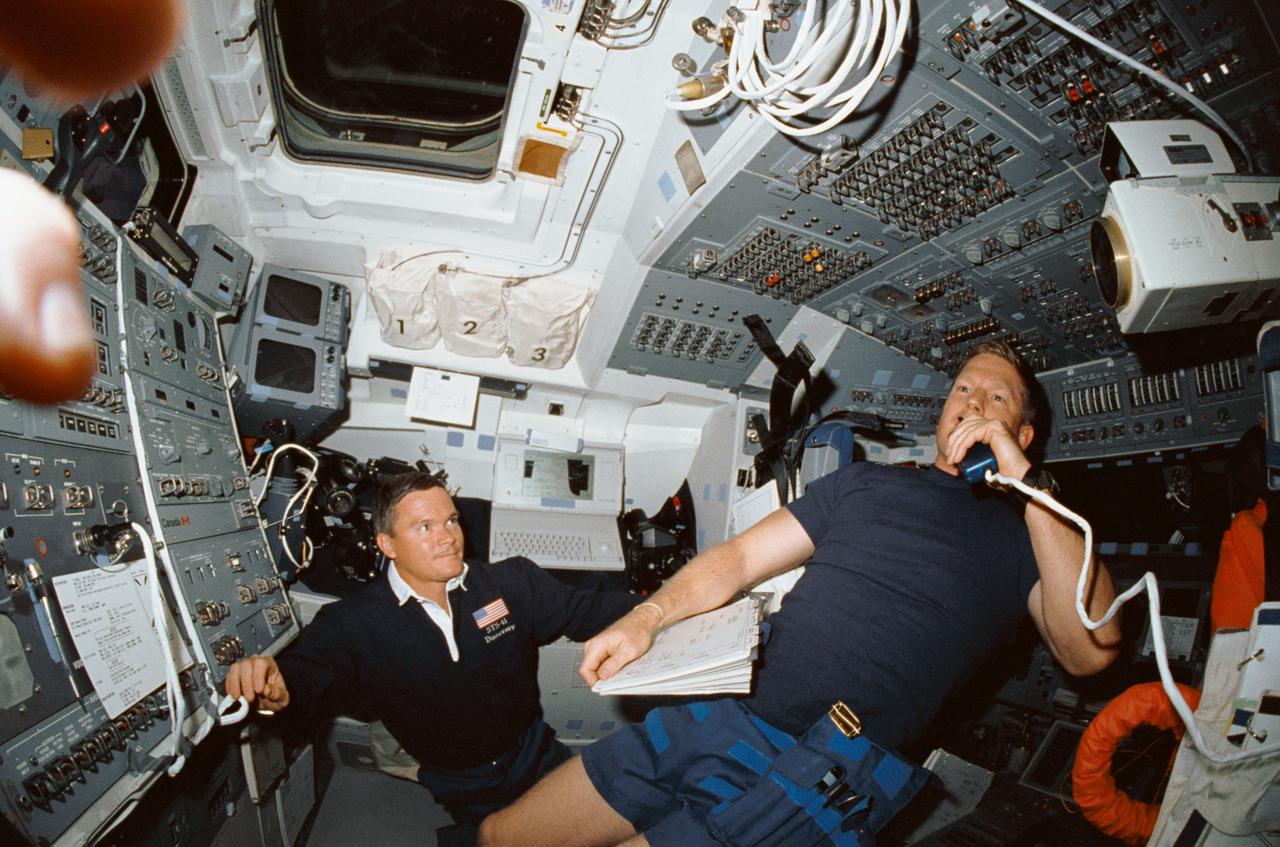
STS041-02-035 (6-10 Oct 1990) --- A fish-eye lens view shows two of STS-41's three mission specialists on the flight deck of Discovery. Astronaut William M. Shepherd, right, communicates with ground controllers as Astronaut Bruce E. Melnick looks on.
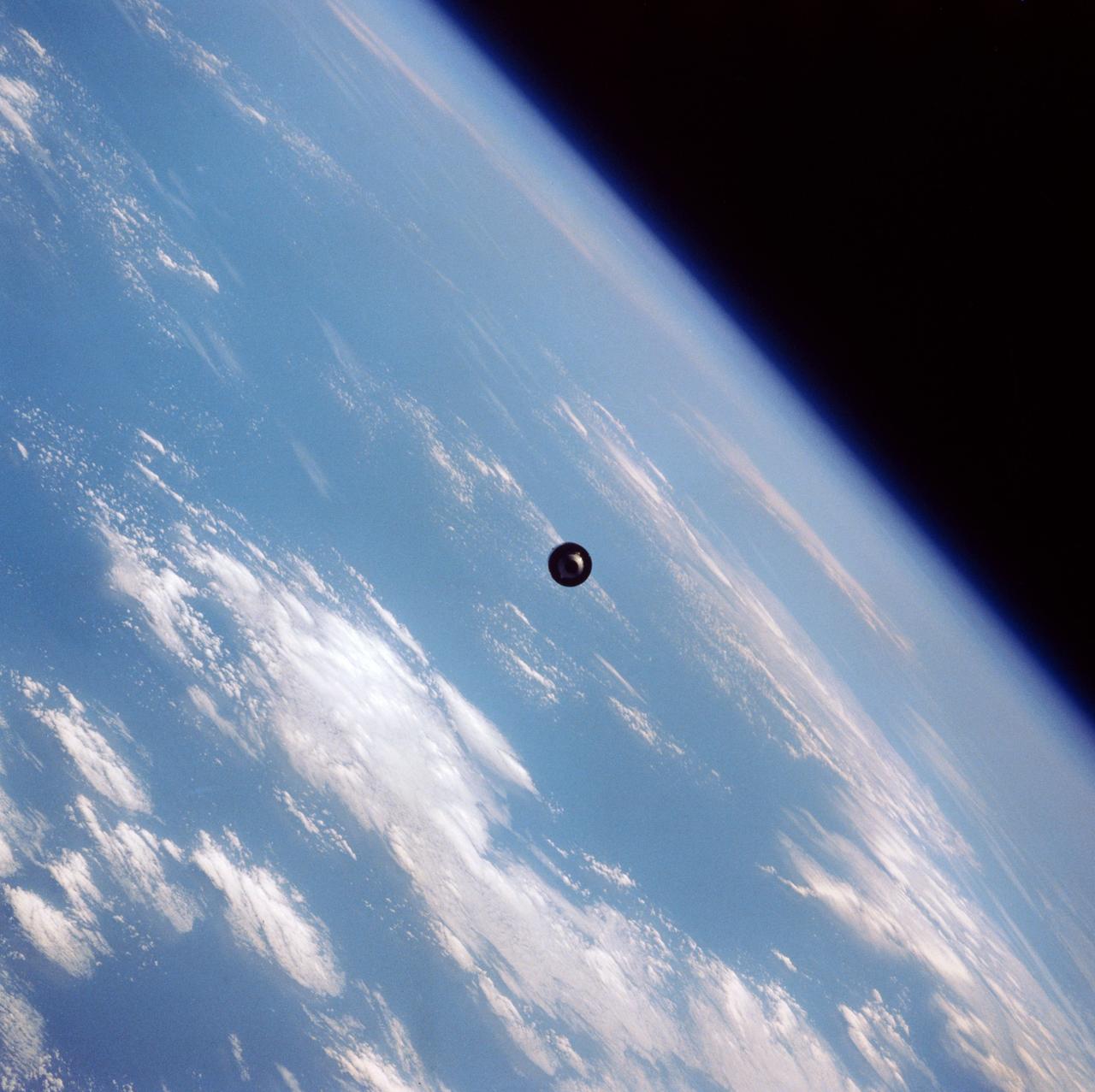
41D-39-068 (1 Sept 1984) --- Quickly moving away from the Space Shuttle Discovery is the Telstar 3 communications satellite, deployed September 1, 1984. The 41-D crew successfully completed three satellite placements, of which this was the last. Telstar was the second 41-D deployed satellite to be equipped with a payload assist module (PAM-D). The frame was exposed with a 70mm camera.
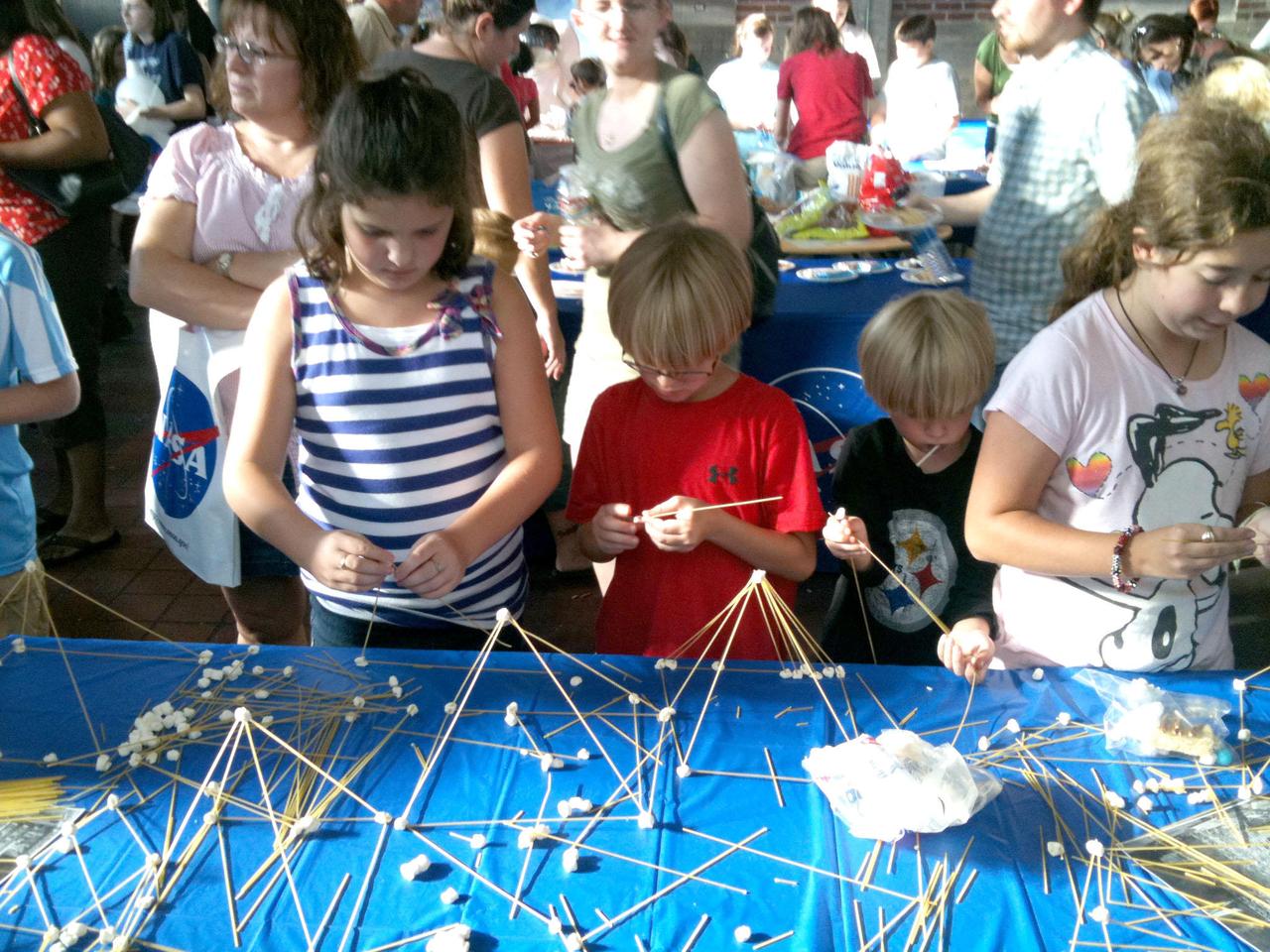
Stennis Space Center visited three Mississippi communities Sept. 11-13, offering interactive and space-related exhibits and presentations to visitors in Grenada, Oxford and Tupelo. Young visitors to the Powerhouse Community and Arts Center in Oxford enjoyed hands-on educational activities during the NASA Night event Sept. 11.
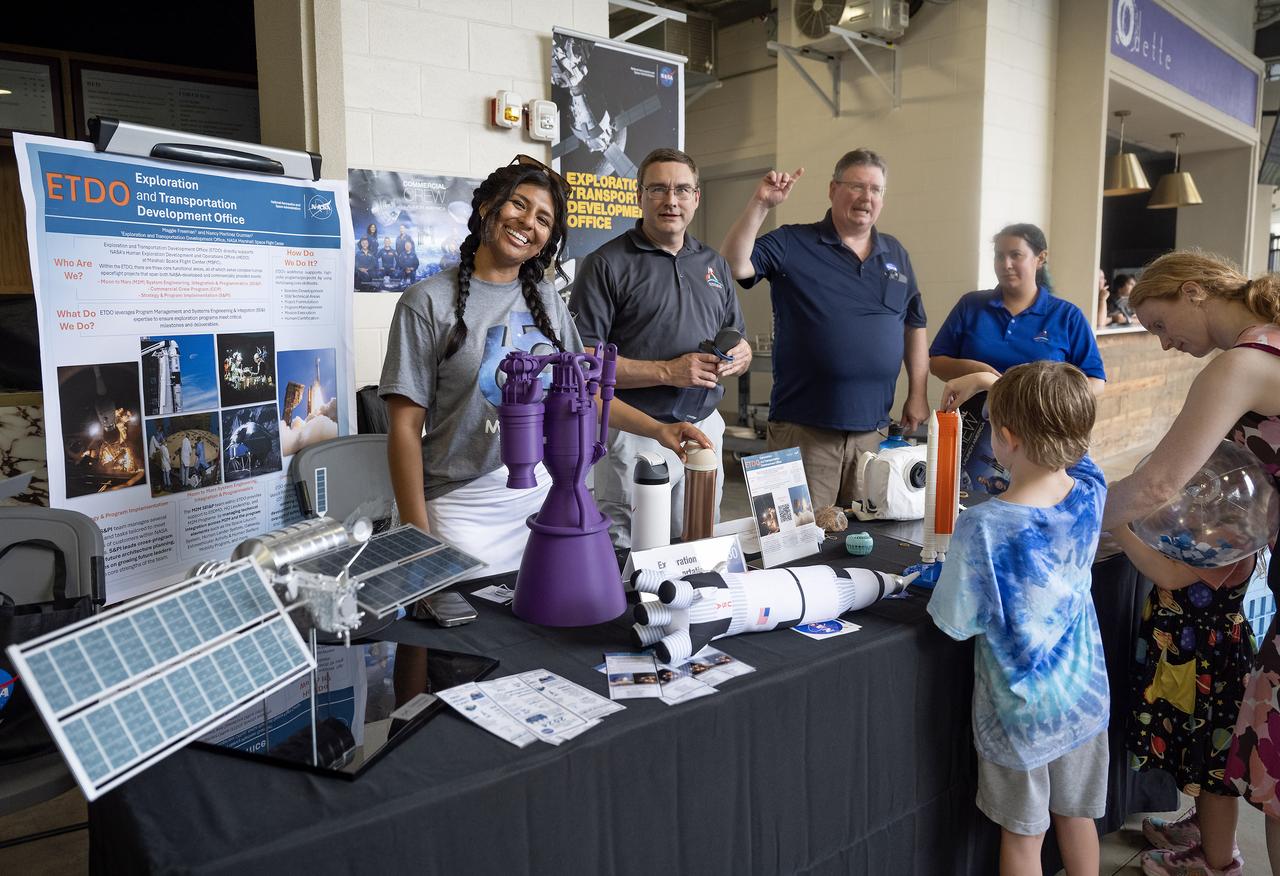
NASA’s Marshall Space Flight Center celebrated the 65th anniversary of its founding on July 19, 2025, with a free, public celebration at The Orion Amphitheater in Huntsville, Alabama. Thousands of team members, families, and “Rocket City” residents took part, enjoying live music, games, food, and exhibits commemorating Marshall’s legacy of ingenuity and service to the U.S. space program. During a program for the celebration, guests heard remarks from Joseph Pelfrey, director of NASA Marshall, Huntsville Mayor Tommy Battle, and Kamerra Liles, assistant general manager of The Orion Amphitheater, followed by Pelfrey sharing a new video overview about Marshall. The program continued with a video presentation from NASA astronauts from the Expedition 72 crew – which contributed more than 1,000 total hours of scientific studies on plant growth, stem cell growth for treating diseases, the resilience of microorganisms to the harsh space environment, and more on the International Space Station. NASA astronauts Suni Williams and Don Pettit, who served as space station commander and flight engineer, respectively, shared their experiences in space with the community and told the audience how vital Marshall’s on the ground support was to their mission success. Marshall has shaped and expanded human space exploration every decade since the NASA center opened its doors on July 1, 1960. The center’s civil service and contract workers built the nation’s flagship rockets, from the Saturn V to the SLS (Space Launch System), managed the space shuttle propulsion program, delivered the Chandra X-ray Observatory and critical elements of the International Space Station to orbit, and continue to spearhead numerous advances in science and engineering.
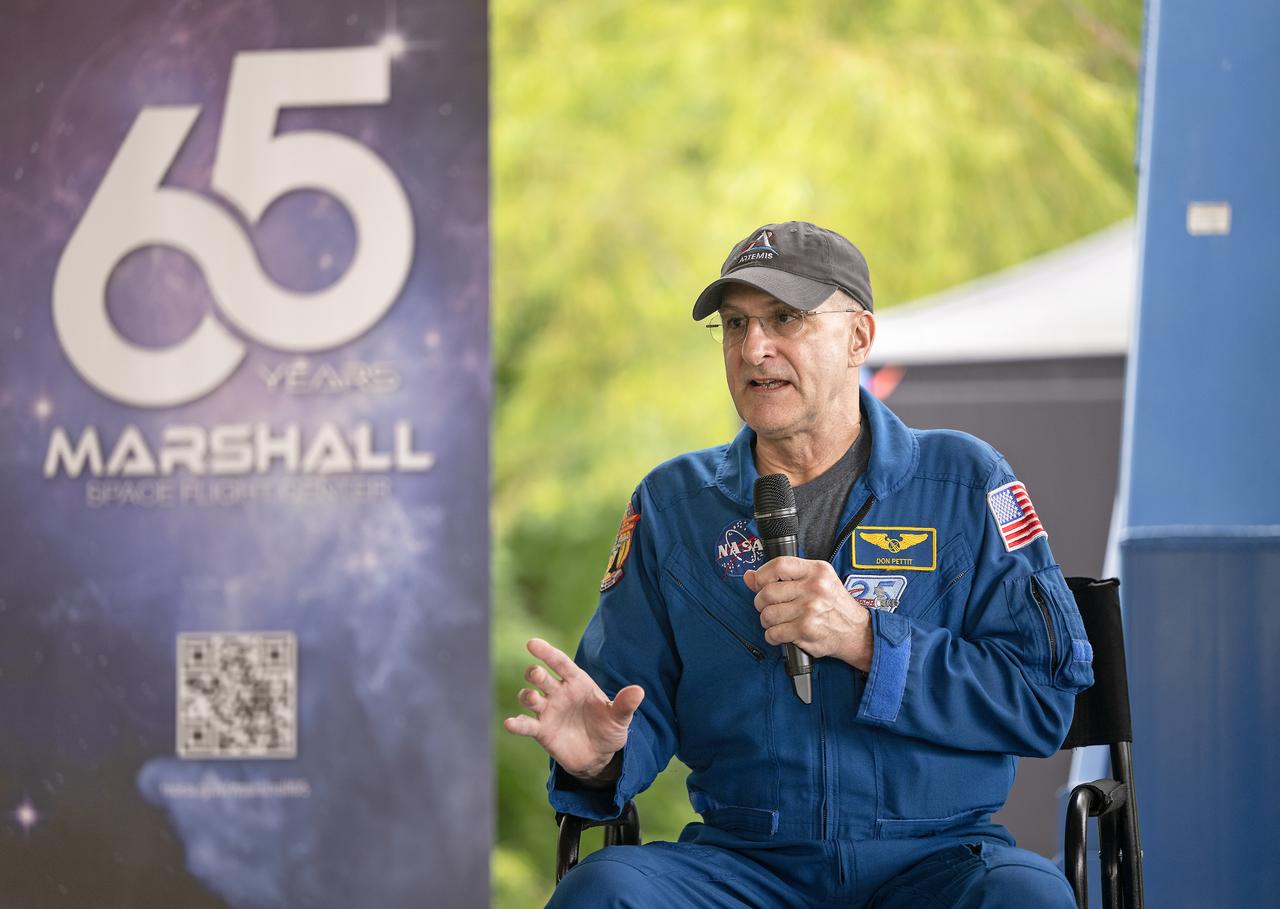
NASA’s Marshall Space Flight Center celebrated the 65th anniversary of its founding on July 19, 2025, with a free, public celebration at The Orion Amphitheater in Huntsville, Alabama. Thousands of team members, families, and “Rocket City” residents took part, enjoying live music, games, food, and exhibits commemorating Marshall’s legacy of ingenuity and service to the U.S. space program. During a program for the celebration, guests heard remarks from Joseph Pelfrey, director of NASA Marshall, Huntsville Mayor Tommy Battle, and Kamerra Liles, assistant general manager of The Orion Amphitheater, followed by Pelfrey sharing a new video overview about Marshall. The program continued with a video presentation from NASA astronauts from the Expedition 72 crew – which contributed more than 1,000 total hours of scientific studies on plant growth, stem cell growth for treating diseases, the resilience of microorganisms to the harsh space environment, and more on the International Space Station. NASA astronauts Suni Williams and Don Pettit, who served as space station commander and flight engineer, respectively, shared their experiences in space with the community and told the audience how vital Marshall’s on the ground support was to their mission success. Marshall has shaped and expanded human space exploration every decade since the NASA center opened its doors on July 1, 1960. The center’s civil service and contract workers built the nation’s flagship rockets, from the Saturn V to the SLS (Space Launch System), managed the space shuttle propulsion program, delivered the Chandra X-ray Observatory and critical elements of the International Space Station to orbit, and continue to spearhead numerous advances in science and engineering.
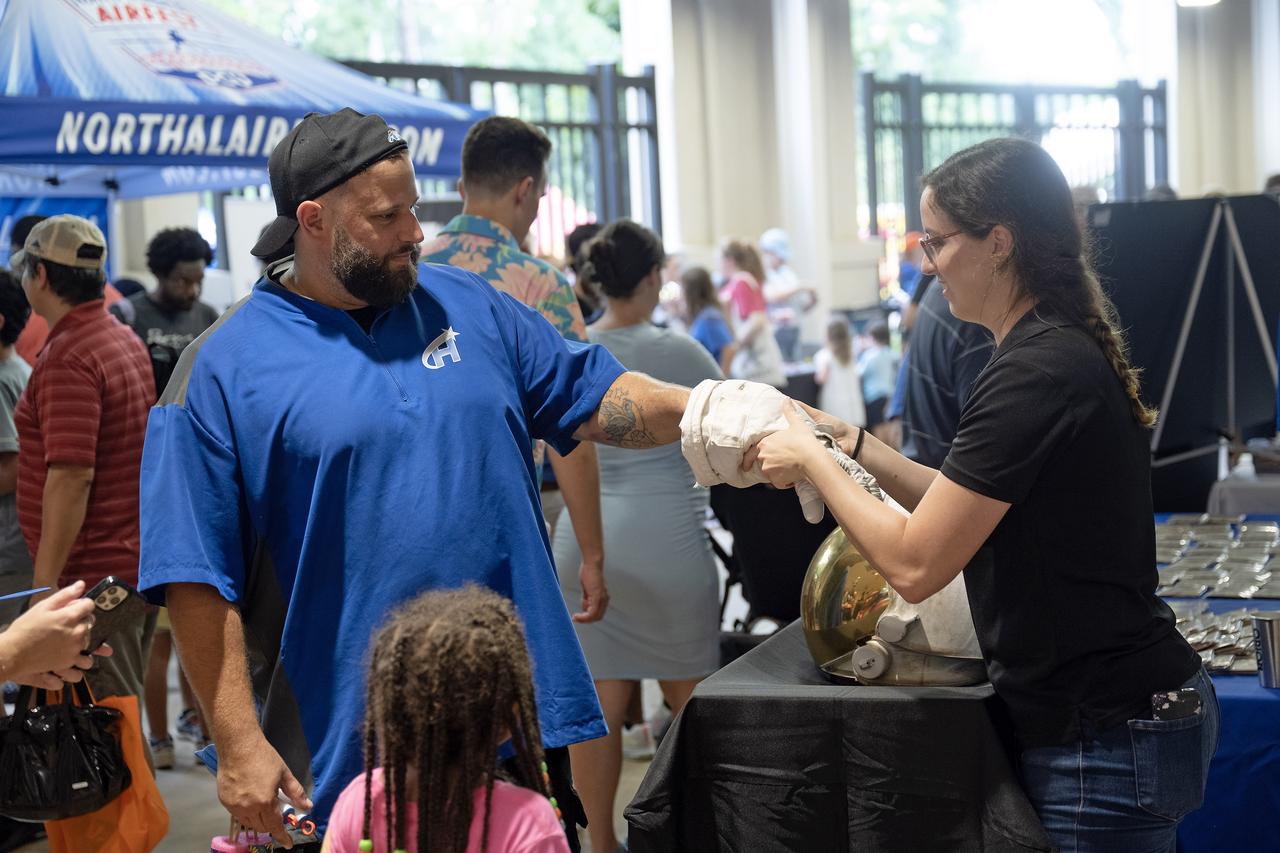
NASA’s Marshall Space Flight Center celebrated the 65th anniversary of its founding on July 19, 2025, with a free, public celebration at The Orion Amphitheater in Huntsville, Alabama. Thousands of team members, families, and “Rocket City” residents took part, enjoying live music, games, food, and exhibits commemorating Marshall’s legacy of ingenuity and service to the U.S. space program. During a program for the celebration, guests heard remarks from Joseph Pelfrey, director of NASA Marshall, Huntsville Mayor Tommy Battle, and Kamerra Liles, assistant general manager of The Orion Amphitheater, followed by Pelfrey sharing a new video overview about Marshall. The program continued with a video presentation from NASA astronauts from the Expedition 72 crew – which contributed more than 1,000 total hours of scientific studies on plant growth, stem cell growth for treating diseases, the resilience of microorganisms to the harsh space environment, and more on the International Space Station. NASA astronauts Suni Williams and Don Pettit, who served as space station commander and flight engineer, respectively, shared their experiences in space with the community and told the audience how vital Marshall’s on the ground support was to their mission success. Marshall has shaped and expanded human space exploration every decade since the NASA center opened its doors on July 1, 1960. The center’s civil service and contract workers built the nation’s flagship rockets, from the Saturn V to the SLS (Space Launch System), managed the space shuttle propulsion program, delivered the Chandra X-ray Observatory and critical elements of the International Space Station to orbit, and continue to spearhead numerous advances in science and engineering.
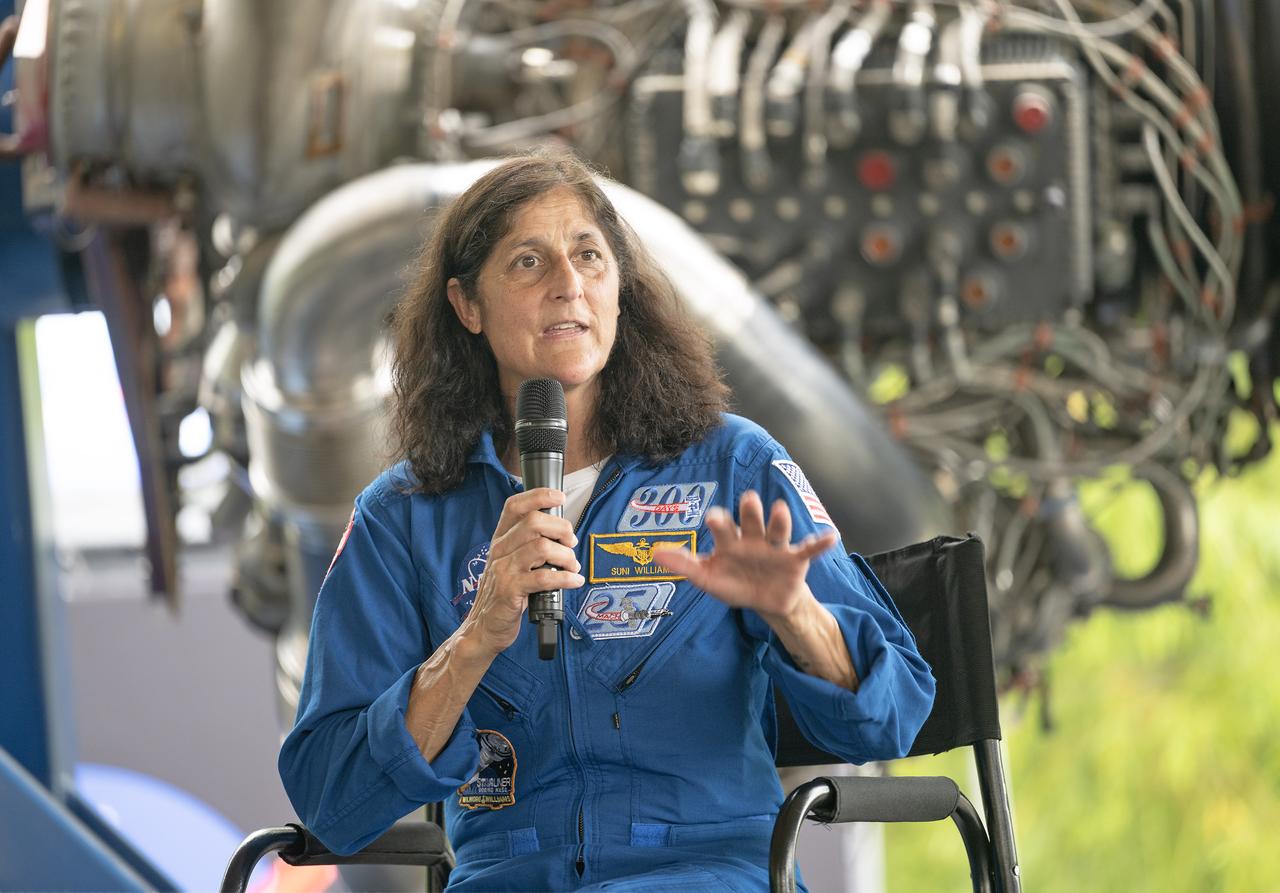
NASA’s Marshall Space Flight Center celebrated the 65th anniversary of its founding on July 19, 2025, with a free, public celebration at The Orion Amphitheater in Huntsville, Alabama. Thousands of team members, families, and “Rocket City” residents took part, enjoying live music, games, food, and exhibits commemorating Marshall’s legacy of ingenuity and service to the U.S. space program. During a program for the celebration, guests heard remarks from Joseph Pelfrey, director of NASA Marshall, Huntsville Mayor Tommy Battle, and Kamerra Liles, assistant general manager of The Orion Amphitheater, followed by Pelfrey sharing a new video overview about Marshall. The program continued with a video presentation from NASA astronauts from the Expedition 72 crew – which contributed more than 1,000 total hours of scientific studies on plant growth, stem cell growth for treating diseases, the resilience of microorganisms to the harsh space environment, and more on the International Space Station. NASA astronauts Suni Williams and Don Pettit, who served as space station commander and flight engineer, respectively, shared their experiences in space with the community and told the audience how vital Marshall’s on the ground support was to their mission success. Marshall has shaped and expanded human space exploration every decade since the NASA center opened its doors on July 1, 1960. The center’s civil service and contract workers built the nation’s flagship rockets, from the Saturn V to the SLS (Space Launch System), managed the space shuttle propulsion program, delivered the Chandra X-ray Observatory and critical elements of the International Space Station to orbit, and continue to spearhead numerous advances in science and engineering.
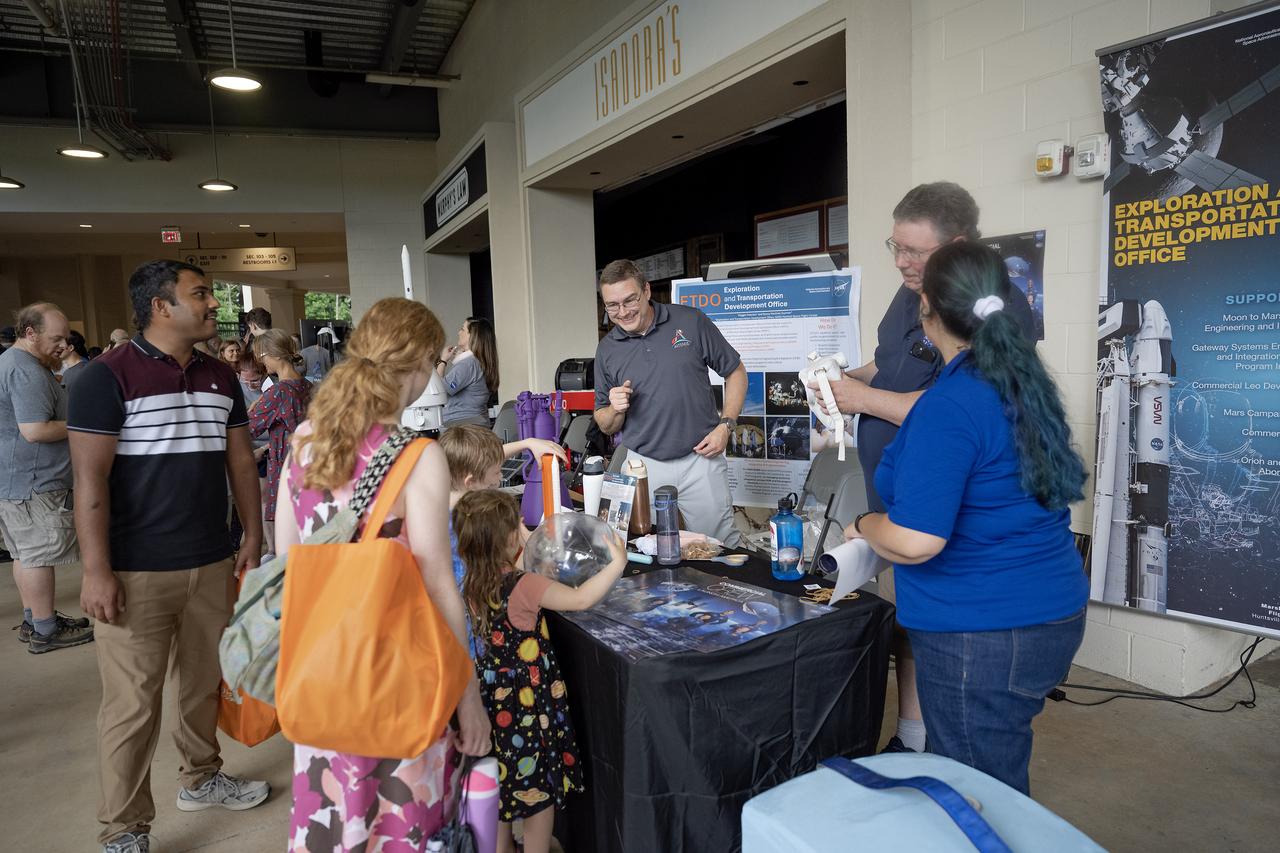
NASA’s Marshall Space Flight Center celebrated the 65th anniversary of its founding on July 19, 2025, with a free, public celebration at The Orion Amphitheater in Huntsville, Alabama. Thousands of team members, families, and “Rocket City” residents took part, enjoying live music, games, food, and exhibits commemorating Marshall’s legacy of ingenuity and service to the U.S. space program. During a program for the celebration, guests heard remarks from Joseph Pelfrey, director of NASA Marshall, Huntsville Mayor Tommy Battle, and Kamerra Liles, assistant general manager of The Orion Amphitheater, followed by Pelfrey sharing a new video overview about Marshall. The program continued with a video presentation from NASA astronauts from the Expedition 72 crew – which contributed more than 1,000 total hours of scientific studies on plant growth, stem cell growth for treating diseases, the resilience of microorganisms to the harsh space environment, and more on the International Space Station. NASA astronauts Suni Williams and Don Pettit, who served as space station commander and flight engineer, respectively, shared their experiences in space with the community and told the audience how vital Marshall’s on the ground support was to their mission success. Marshall has shaped and expanded human space exploration every decade since the NASA center opened its doors on July 1, 1960. The center’s civil service and contract workers built the nation’s flagship rockets, from the Saturn V to the SLS (Space Launch System), managed the space shuttle propulsion program, delivered the Chandra X-ray Observatory and critical elements of the International Space Station to orbit, and continue to spearhead numerous advances in science and engineering.
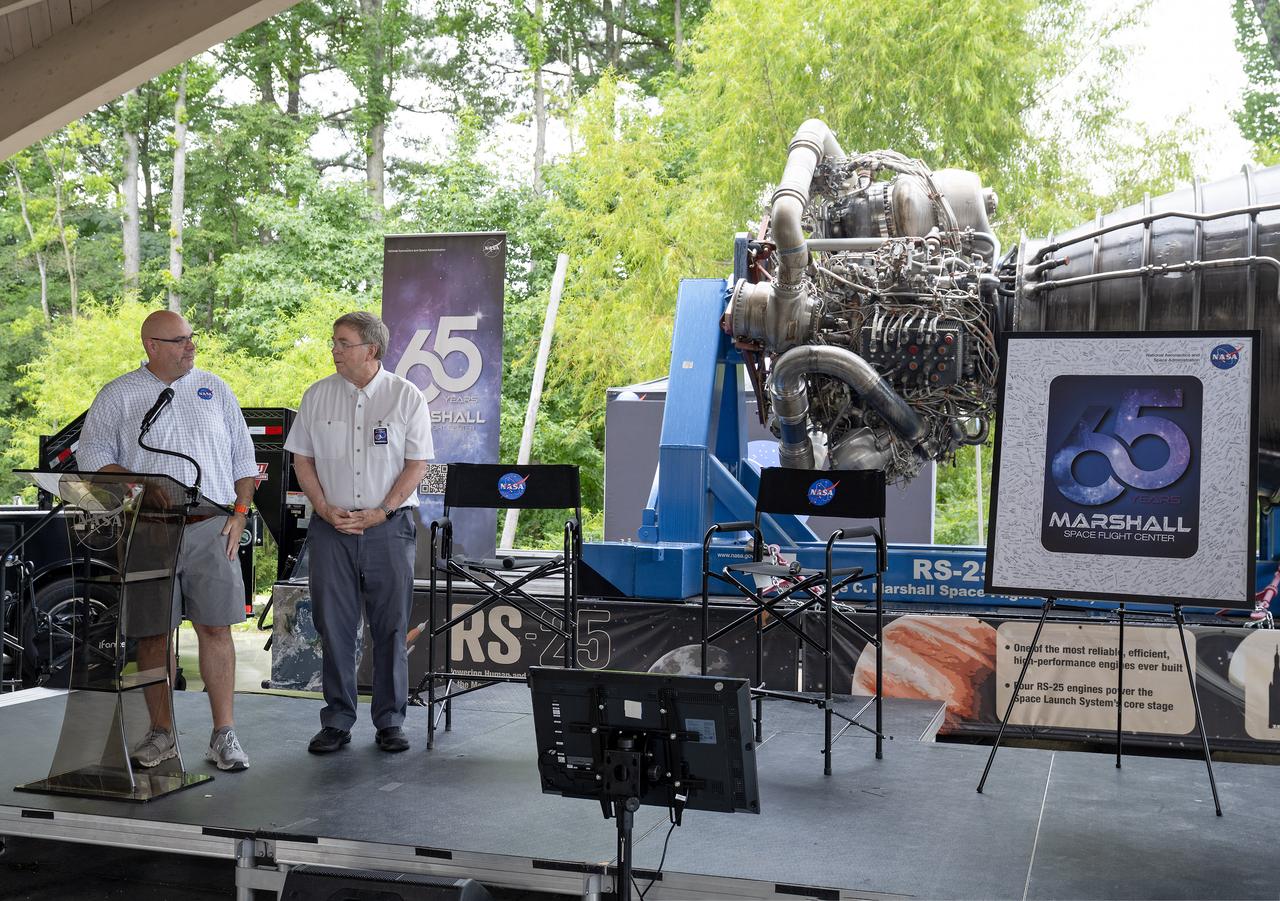
NASA’s Marshall Space Flight Center celebrated the 65th anniversary of its founding on July 19, 2025, with a free, public celebration at The Orion Amphitheater in Huntsville, Alabama. Thousands of team members, families, and “Rocket City” residents took part, enjoying live music, games, food, and exhibits commemorating Marshall’s legacy of ingenuity and service to the U.S. space program. During a program for the celebration, guests heard remarks from Joseph Pelfrey, director of NASA Marshall, Huntsville Mayor Tommy Battle, and Kamerra Liles, assistant general manager of The Orion Amphitheater, followed by Pelfrey sharing a new video overview about Marshall. The program continued with a video presentation from NASA astronauts from the Expedition 72 crew – which contributed more than 1,000 total hours of scientific studies on plant growth, stem cell growth for treating diseases, the resilience of microorganisms to the harsh space environment, and more on the International Space Station. NASA astronauts Suni Williams and Don Pettit, who served as space station commander and flight engineer, respectively, shared their experiences in space with the community and told the audience how vital Marshall’s on the ground support was to their mission success. Marshall has shaped and expanded human space exploration every decade since the NASA center opened its doors on July 1, 1960. The center’s civil service and contract workers built the nation’s flagship rockets, from the Saturn V to the SLS (Space Launch System), managed the space shuttle propulsion program, delivered the Chandra X-ray Observatory and critical elements of the International Space Station to orbit, and continue to spearhead numerous advances in science and engineering.
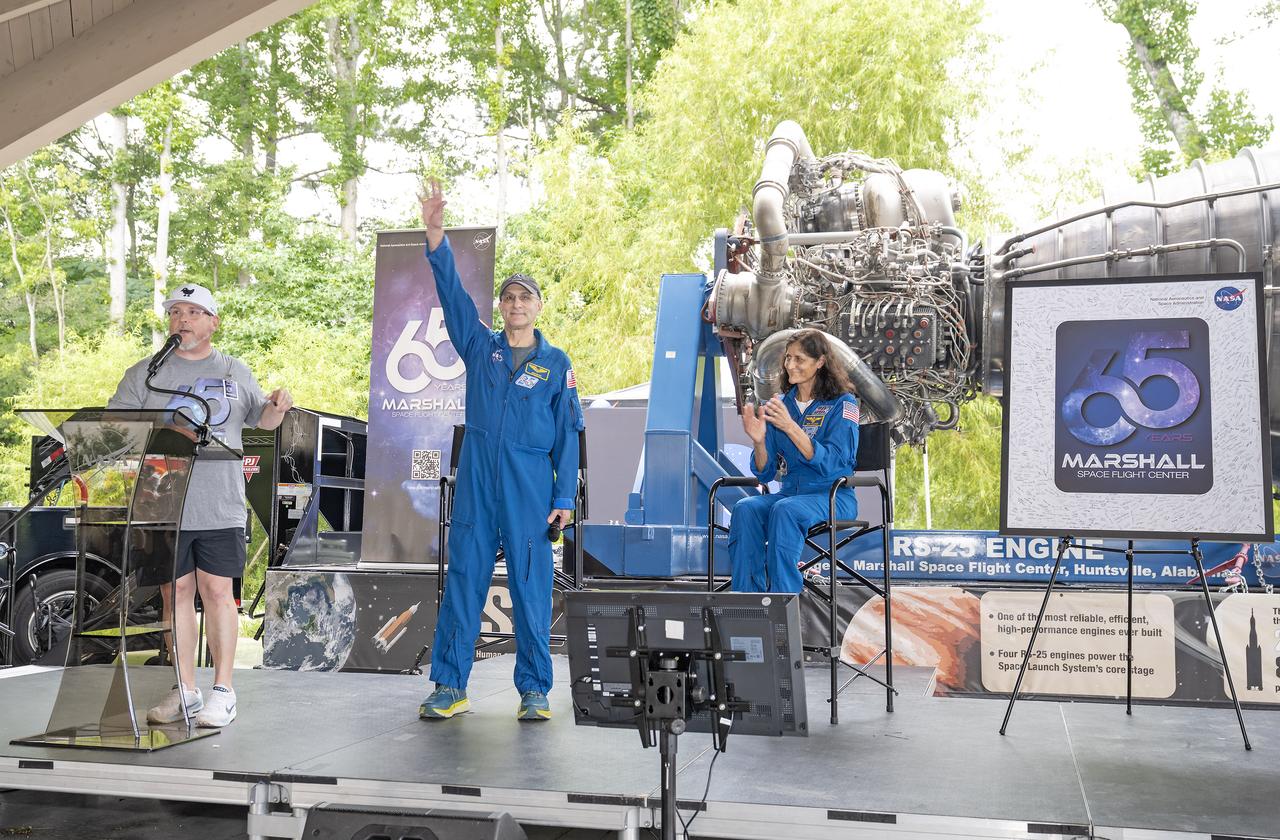
NASA’s Marshall Space Flight Center celebrated the 65th anniversary of its founding on July 19, 2025, with a free, public celebration at The Orion Amphitheater in Huntsville, Alabama. Thousands of team members, families, and “Rocket City” residents took part, enjoying live music, games, food, and exhibits commemorating Marshall’s legacy of ingenuity and service to the U.S. space program. During a program for the celebration, guests heard remarks from Joseph Pelfrey, director of NASA Marshall, Huntsville Mayor Tommy Battle, and Kamerra Liles, assistant general manager of The Orion Amphitheater, followed by Pelfrey sharing a new video overview about Marshall. The program continued with a video presentation from NASA astronauts from the Expedition 72 crew – which contributed more than 1,000 total hours of scientific studies on plant growth, stem cell growth for treating diseases, the resilience of microorganisms to the harsh space environment, and more on the International Space Station. NASA astronauts Suni Williams and Don Pettit, who served as space station commander and flight engineer, respectively, shared their experiences in space with the community and told the audience how vital Marshall’s on the ground support was to their mission success. Marshall has shaped and expanded human space exploration every decade since the NASA center opened its doors on July 1, 1960. The center’s civil service and contract workers built the nation’s flagship rockets, from the Saturn V to the SLS (Space Launch System), managed the space shuttle propulsion program, delivered the Chandra X-ray Observatory and critical elements of the International Space Station to orbit, and continue to spearhead numerous advances in science and engineering.
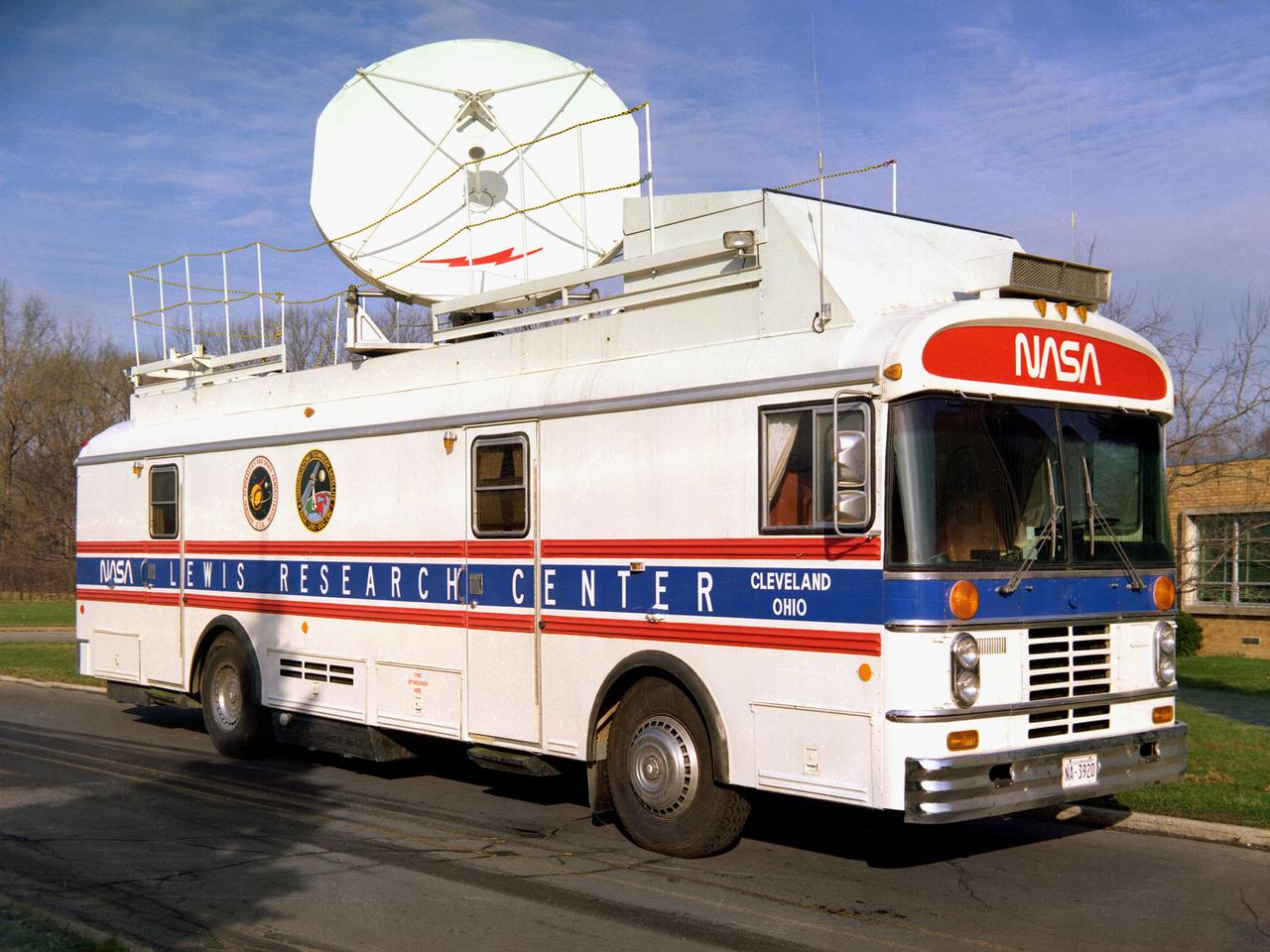
This vehicle served as a mobile terminal for the Communications Technology Satellite. The Communications Technology Satellite was an experimental communications satellite launched in January 1976 by the National Aeronautics and Space Administration (NASA) and the Canadian Department of Communications. The satellite operated in a new frequency band reserved for broadcast satellites with transmitting power levels that were 10 to 20 times higher than those of contemporary satellites. Throughout 1977 and 1978 NASA allowed qualified groups to utilize the satellite from one of the three ground-based transmission centers. NASA’s Lewis Research Center in Cleveland, Ohio was NASA’s lead center on the project. Lewis was responsible for the control and coordination of all US experiments on the satellite. The center housed the satellite’s main control center which included eight parabolic reflector antennae ranging from 2 to 15 feet in diameter. Many of the satellite’s components had been tested in simulated space conditions at Lewis. The Lewis-designed vehicle seen here served as a field unit for transmitting and receiving wideband signals and narrowband voice. The vehicle permitted live television interviews, recording equipment, and cameras. An 8-foot diameter parabolic reflector was mounted on the roof. The interior of the vehicle had workstations, monitors, transmitting equipment, and a lounge area.
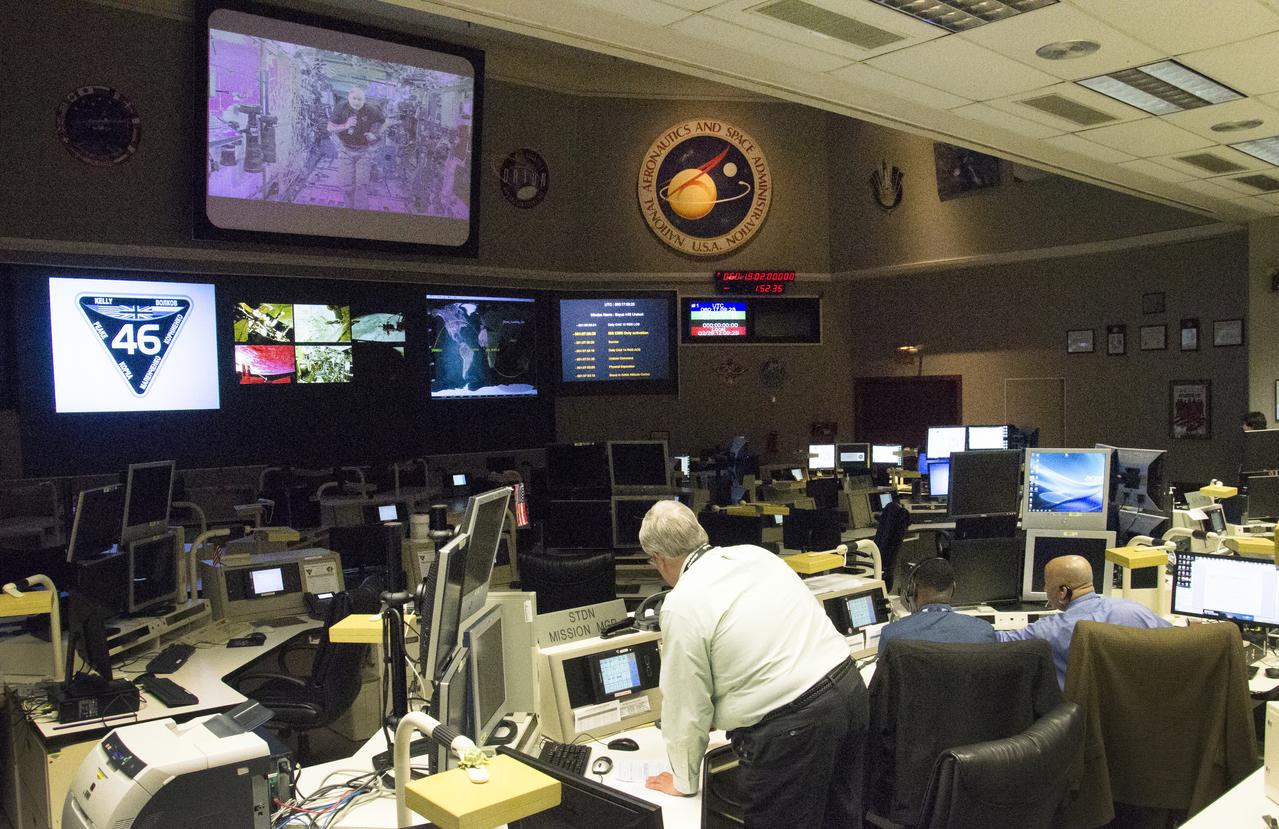
NASA's Goddard Space Flight Center in Greenbelt, Maryland, will monitor the landing of NASA Astronaut Scott Kelly and Russian Cosmonaut Mikhail Kornienko from their #YearInSpace Mission. Goddard's Networks Integration Center, pictured above, leads all coordination for space-to-ground communications support for the International Space Station and provides contingency support for the Soyuz TMA-18M 44S spacecraft, ensuring complete communications coverage through NASA's Space Network. The Soyuz 44S spacecraft will undock at 8:02 p.m. EST this evening from the International Space Station. It will land approximately three and a half hours later, at 11:25 p.m. EST in Kazakhstan. Both Kelly and Kornienko have spent 340 days aboard the International Space Station, preparing humanity for long duration missions and exploration into deep space. Read more: <a href="http://www.nasa.gov/feature/goddard/2016/ending-year-in-space-nasa-goddard-network-maintains-communications-from-space-to-ground" rel="nofollow">www.nasa.gov/feature/goddard/2016/ending-year-in-space-na...</a> Credit: NASA/Goddard/Rebecca Roth <b><a href="http://www.nasa.gov/audience/formedia/features/MP_Photo_Guidelines.html" rel="nofollow">NASA image use policy.</a></b> <b><a href="http://www.nasa.gov/centers/goddard/home/index.html" rel="nofollow">NASA Goddard Space Flight Center</a></b> enables NASA’s mission through four scientific endeavors: Earth Science, Heliophysics, Solar System Exploration, and Astrophysics. Goddard plays a leading role in NASA’s accomplishments by contributing compelling scientific knowledge to advance the Agency’s mission. <b>Follow us on <a href="http://twitter.com/NASAGoddardPix" rel="nofollow">Twitter</a></b> <b>Like us on <a href="http://www.facebook.com/pages/Greenbelt-MD/NASA-Goddard/395013845897?ref=tsd" rel="nofollow">Facebook</a></b> <b>Find us on <a href="http://instagrid.me/nasagoddard/?vm=grid" rel="nofollow">Instagram</a></b>
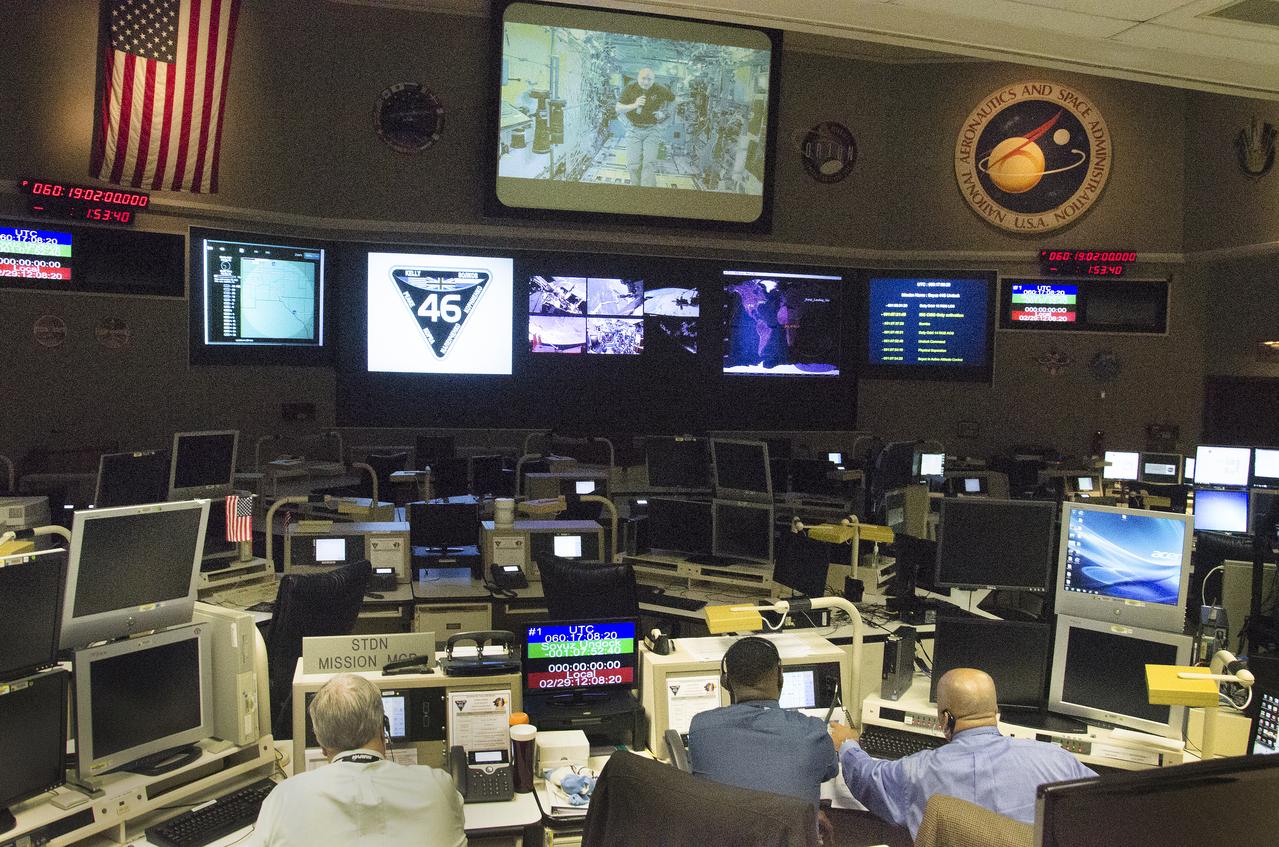
NASA's Goddard Space Flight Center in Greenbelt, Maryland, will monitor the landing of NASA Astronaut Scott Kelly and Russian Cosmonaut Mikhail Kornienko from their #YearInSpace Mission. Goddard's Networks Integration Center, pictured above, leads all coordination for space-to-ground communications support for the International Space Station and provides contingency support for the Soyuz TMA-18M 44S spacecraft, ensuring complete communications coverage through NASA's Space Network. The Soyuz 44S spacecraft will undock at 8:02 p.m. EST this evening from the International Space Station. It will land approximately three and a half hours later, at 11:25 p.m. EST in Kazakhstan. Both Kelly and Kornienko have spent 340 days aboard the International Space Station, preparing humanity for long duration missions and exploration into deep space. Read more: <a href="http://www.nasa.gov/feature/goddard/2016/ending-year-in-space-nasa-goddard-network-maintains-communications-from-space-to-ground" rel="nofollow">www.nasa.gov/feature/goddard/2016/ending-year-in-space-na...</a> Credit: NASA/Goddard/Rebecca Roth <b><a href="http://www.nasa.gov/audience/formedia/features/MP_Photo_Guidelines.html" rel="nofollow">NASA image use policy.</a></b> <b><a href="http://www.nasa.gov/centers/goddard/home/index.html" rel="nofollow">NASA Goddard Space Flight Center</a></b> enables NASA’s mission through four scientific endeavors: Earth Science, Heliophysics, Solar System Exploration, and Astrophysics. Goddard plays a leading role in NASA’s accomplishments by contributing compelling scientific knowledge to advance the Agency’s mission. <b>Follow us on <a href="http://twitter.com/NASAGoddardPix" rel="nofollow">Twitter</a></b> <b>Like us on <a href="http://www.facebook.com/pages/Greenbelt-MD/NASA-Goddard/395013845897?ref=tsd" rel="nofollow">Facebook</a></b> <b>Find us on <a href="http://instagrid.me/nasagoddard/?vm=grid" rel="nofollow">Instagram</a></b>