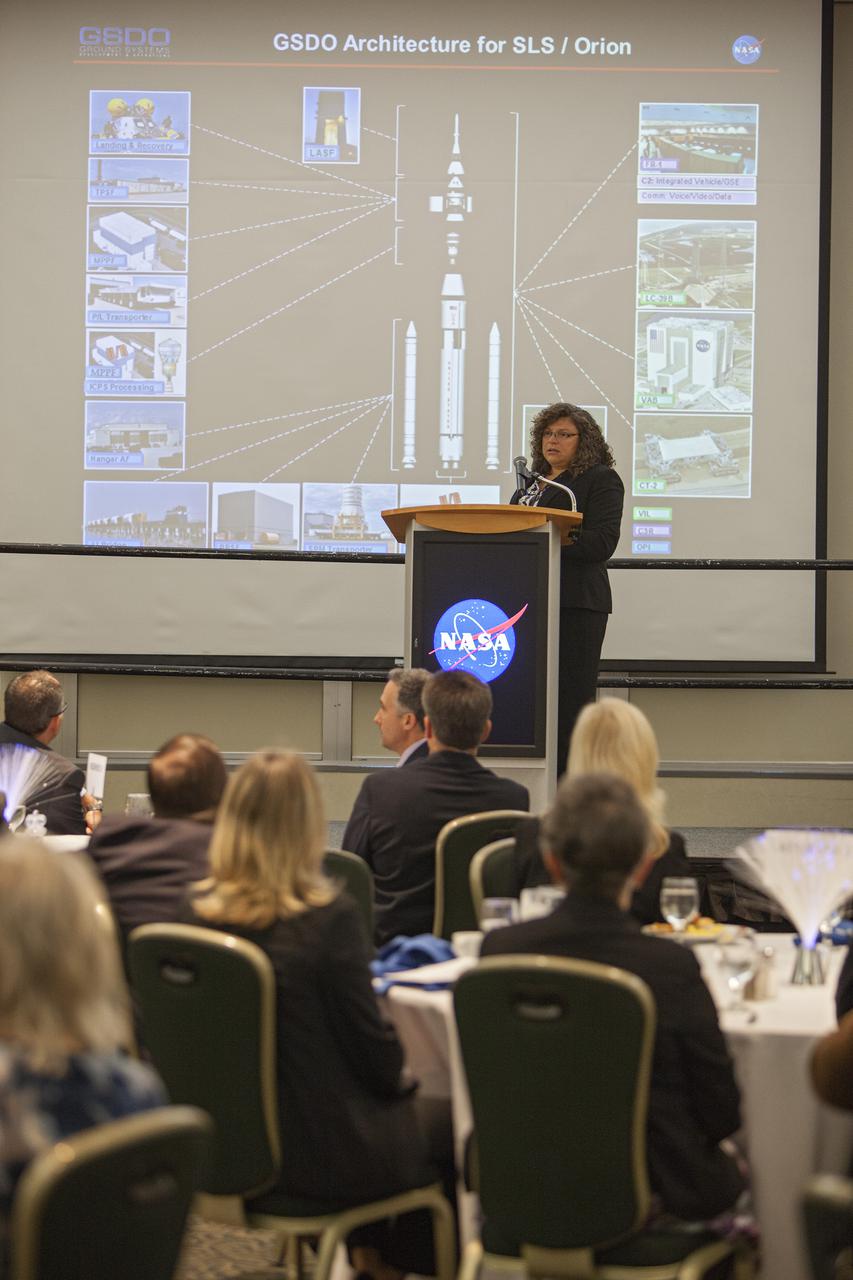
CAPE CANAVERAL, Fla. -- Ruth Gardner, Exploration Systems manager in Ground System Development and Operations at the Kennedy Space Center provided an on current and future activities at the Florida spaceport during the annual Community Leaders Briefing. The reports were part of the annual Community Leaders Briefing at the Kurt H. Debus Conference Center at the Kennedy Space Center Visitor Complex attended by local, state and U.S. government representatives, along with individuals from business and industry. Photo credit: NASA_Dimitri Gerondidakis
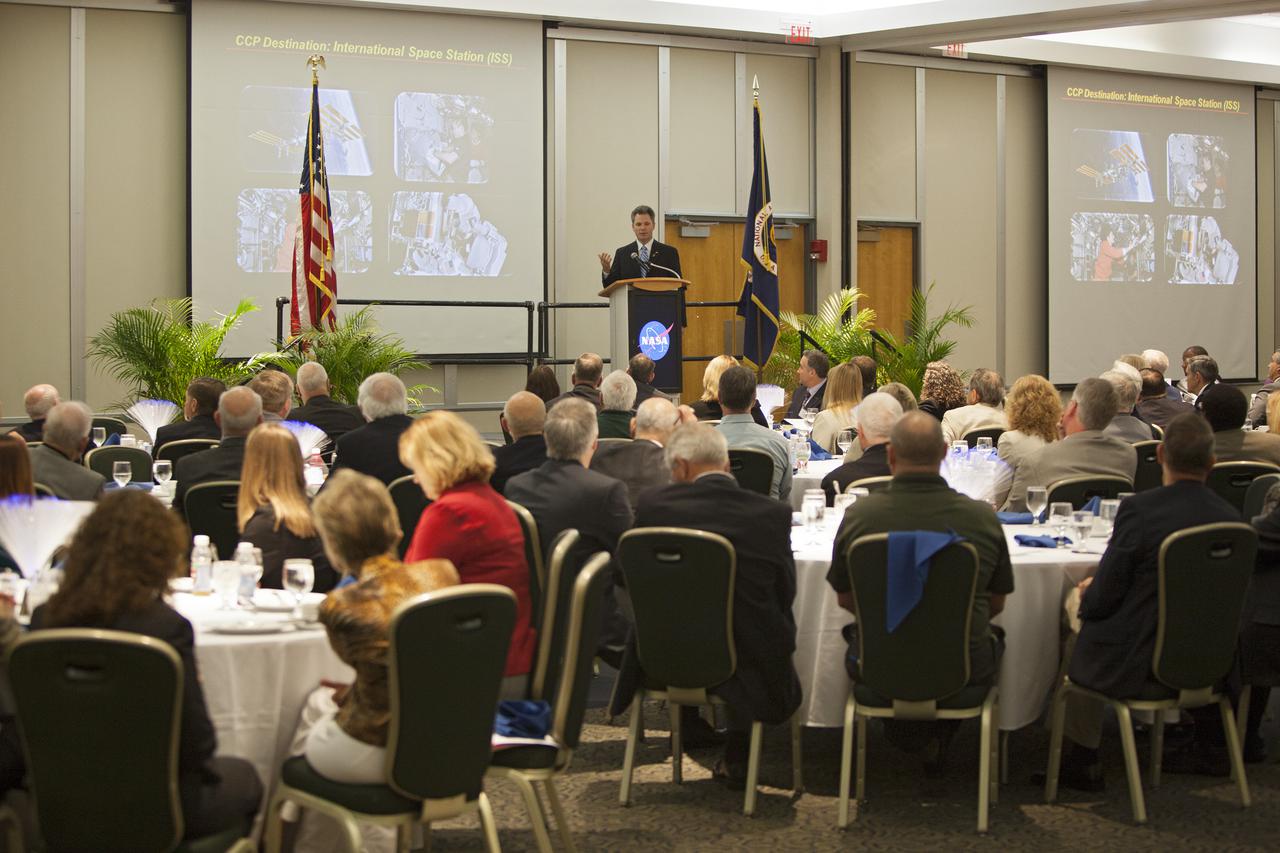
CAPE CANAVERAL, Fla. -- Scott Thurston, manager of the Commercial Crew Program’s Partner Integration Office at the Kennedy Space Center provided an on current and future activities at the Florida spaceport during the annual Community Leaders Briefing. The reports were part of the annual Community Leaders Briefing at the Kurt H. Debus Conference Center at the Kennedy Space Center Visitor Complex attended by local, state and U.S. government representatives, along with individuals from business and industry. Photo credit: NASA_Dimitri Gerondidakis
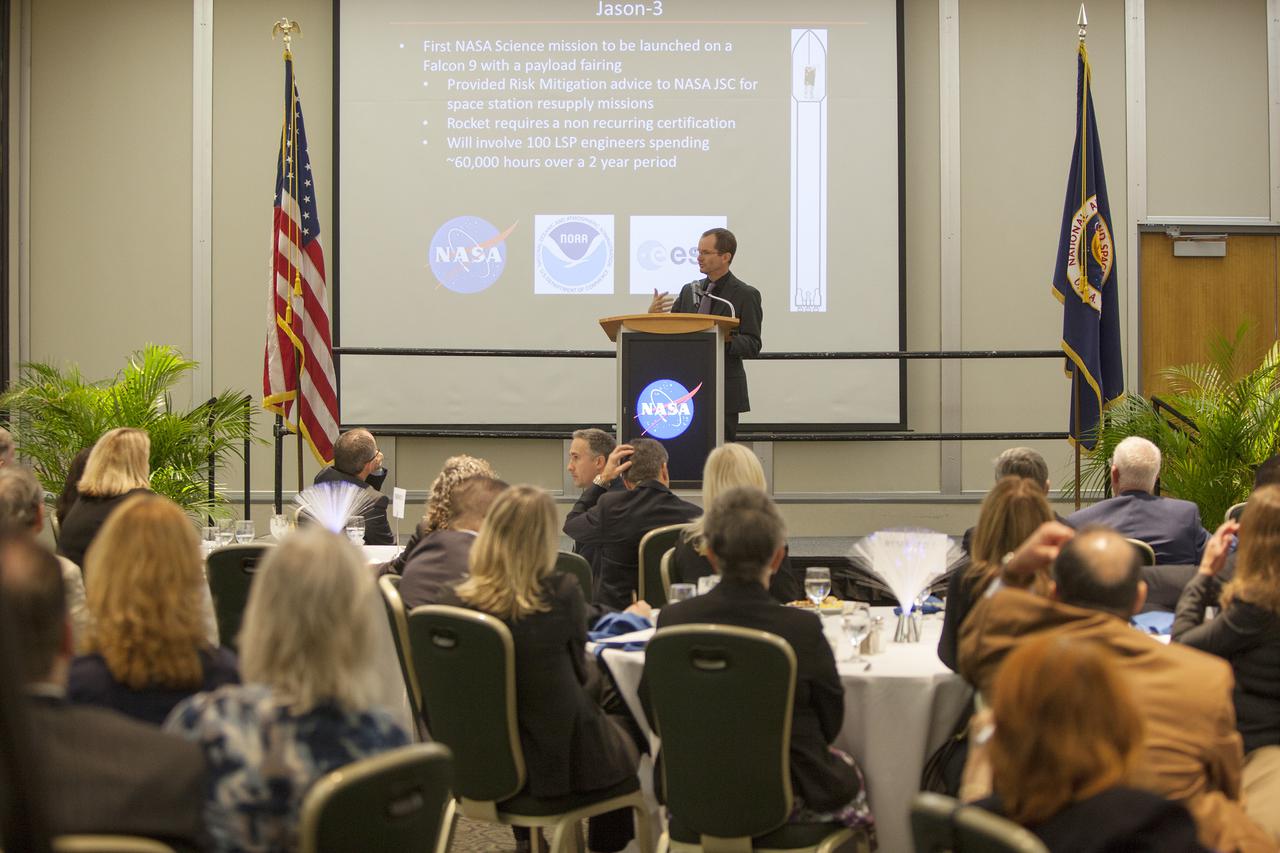
CAPE CANAVERAL, Fla. -- Darren Bedell, System Integration manager in the Launch Services Program Office at the Kennedy Space Center provided an on current and future activities at the Florida spaceport during the annual Community Leaders Briefing. The reports were part of the annual Community Leaders Briefing at the Kurt H. Debus Conference Center at the Kennedy Space Center Visitor Complex attended by local, state and U.S. government representatives, along with individuals from business and industry. Photo credit: NASA_Dimitri Gerondidakis
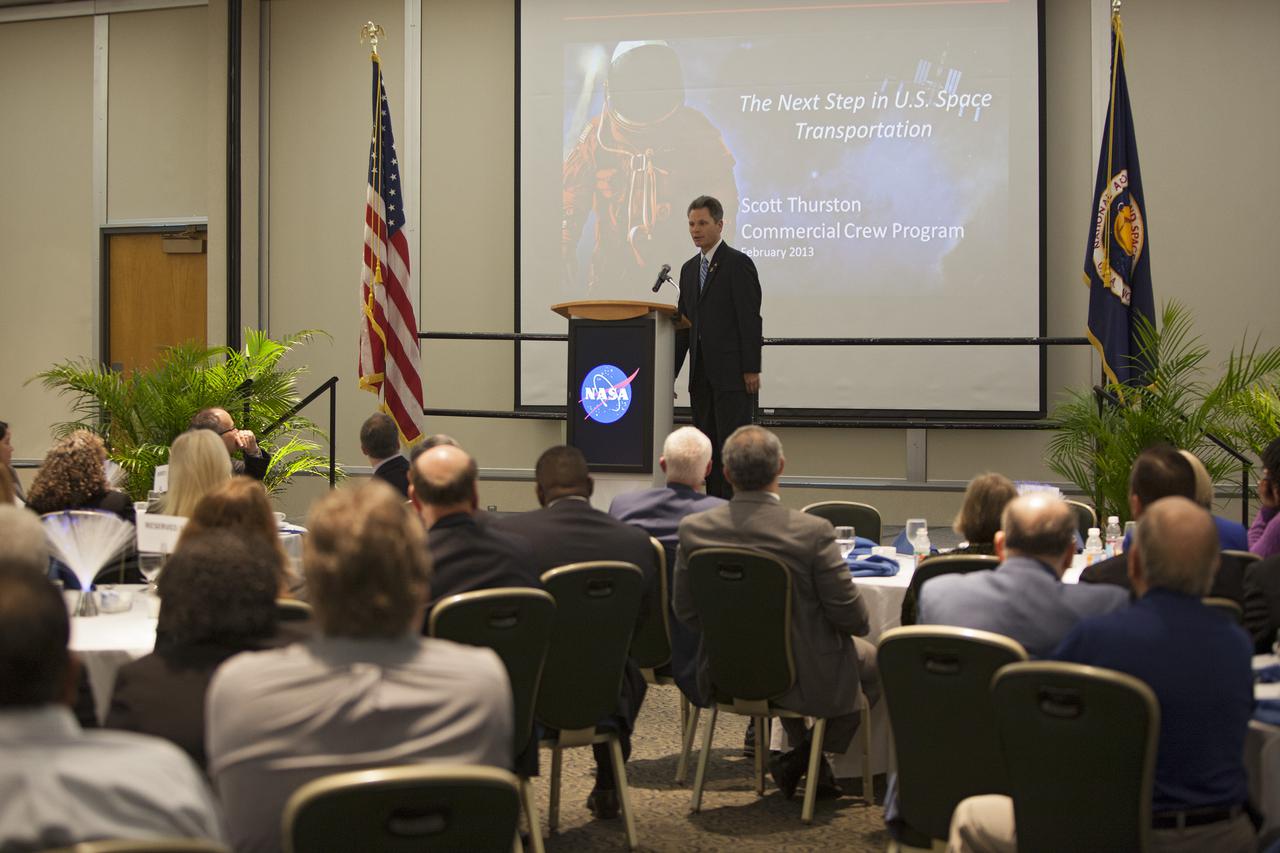
CAPE CANAVERAL, Fla. -- Scott Thurston, manager of the Commercial Crew Program’s Partner Integration Office at the Kennedy Space Center provided an on current and future activities at the Florida spaceport during the annual Community Leaders Briefing. The reports were part of the annual Community Leaders Briefing at the Kurt H. Debus Conference Center at the Kennedy Space Center Visitor Complex attended by local, state and U.S. government representatives, along with individuals from business and industry. Photo credit: NASA_Dimitri Gerondidakis
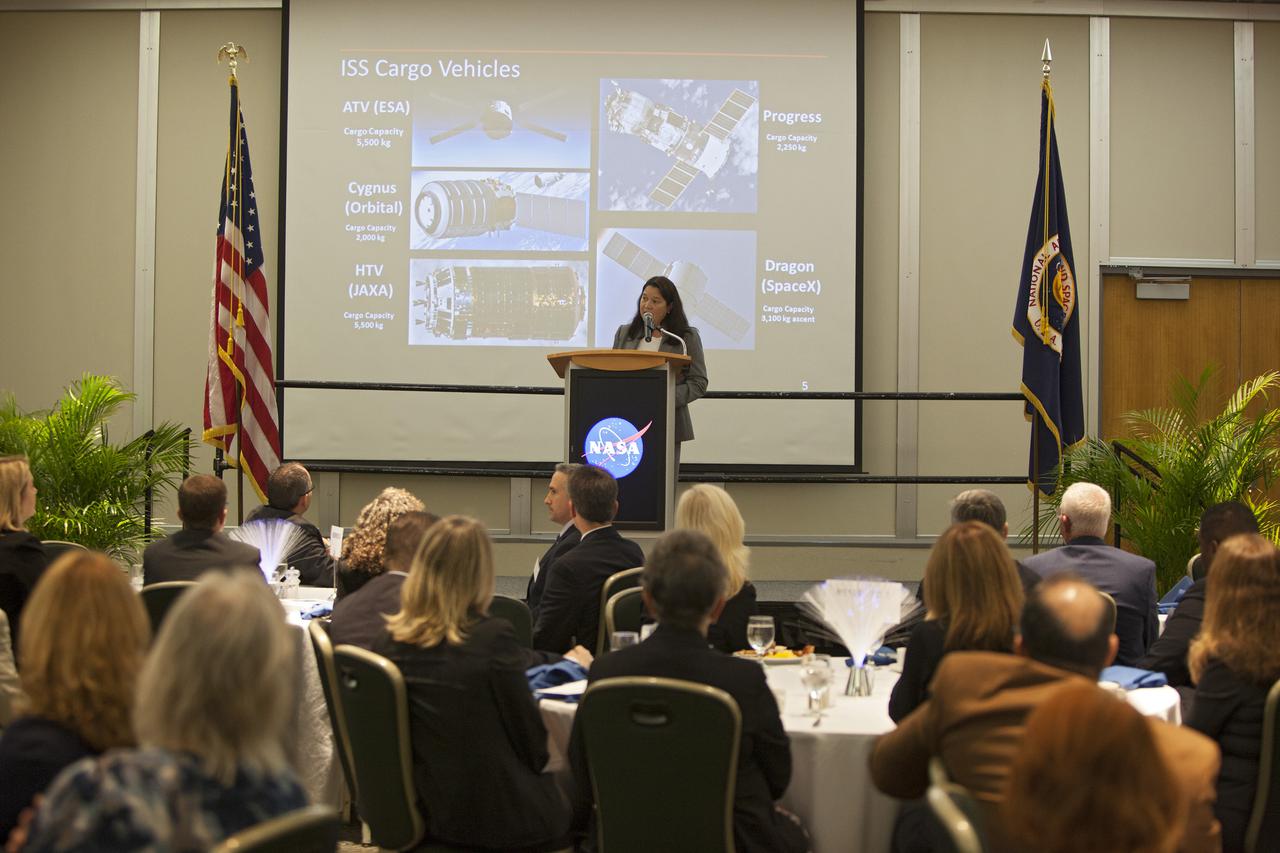
CAPE CANAVERAL, Fla. -- Josie Burnett, director of International Space Station Processing and Ground Research Project Office at the Kennedy Space Center, provided an on current and future activities at the Florida spaceport during the annual Community Leaders Briefing. The reports were part of the annual Community Leaders Briefing at the Kurt H. Debus Conference Center at the Kennedy Space Center Visitor Complex attended by local, state and U.S. government representatives, along with individuals from business and industry. Photo credit: NASA_Dimitri Gerondidakis

Kelvin Manning, at left, Kennedy Space Center’s associate director, technical, visits one of the exhibitors at the Community Leaders Update, hosted by the center on Feb. 18, 2020, at the Kennedy Space Center Visitor Complex. At right is Tassos Abadiotakis, KIAC program manager. A panel discussion was moderated by Center Director Bob Cabana during the update. Attendees included community leaders, business executives, partners, educators and government leaders. After the presentation, guests had the opportunity to ask questions and visit displays from the programs and some of the commercial partners.
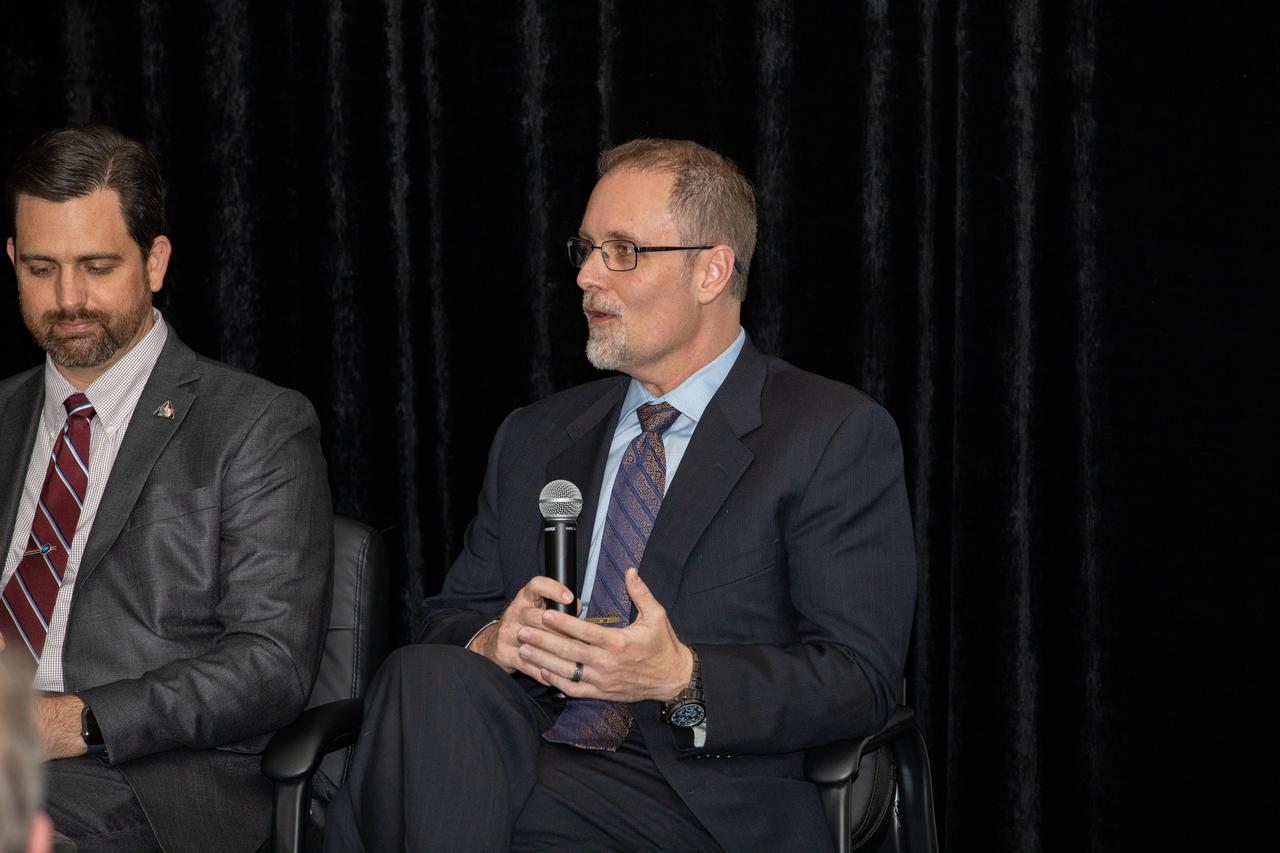
Phil Meade, at right, associate director, Spaceport Integration and Services, participates in a panel discussion during a Community Leaders Update hosted by NASA Kennedy Space Center on Feb. 18, 2020, at the Kennedy Space Center Visitor Complex. At left is Jeremy Parsons, deputy manager, Exploration Ground Systems. Center Director Bob Cabana moderated a panel discussion featuring senior leaders from Exploration Ground Systems, Spaceport Integration and Services, Exploration Research and Technology Programs, Gateway Logistics Element, and Center Planning and Development. Attendees included community leaders, business executives, partners, educators and government leaders. After the presentation, guests had the opportunity to ask questions and visit displays from the programs and some of the commercial partners.

Barbara Brown, center, chief technologist, Exploration Research and Technology Programs, participates in a panel discussion during a Community Leaders Update hosted by Kennedy Space Center on Feb. 18, 2020, at the Kennedy Space Center Visitor Complex in Florida. At left is Jenny Lyons, deputy manager, Gateway Logistics Element. At right is Jeremy Parsons, deputy manager, Exploration Ground Systems. The panel discussion was moderated by Center Director Bob Cabana. Attendees included community leaders, business executives, partners, educators and government leaders. After the presentation, guests had the opportunity to ask questions and visit displays from the programs and some of the commercial partners.

Steve Payne, far left, with NASA’s Commercial Crew Program, visits with a guest during a Community Leaders Update hosted by Kennedy Space Center on Feb. 18, 2020, at the Kennedy Space Center Visitor Complex. A panel discussion was moderated by Center Director Bob Cabana during the update. Attendees included community leaders, business executives, partners, educators and government leaders. After the presentation, guests had the opportunity to ask questions and visit displays from the programs and some of the commercial partners.

A guest visits with representatives from United Launch Alliance during the Community Leaders Update hosted by NASA Kennedy Space Center on Feb. 18, 2020, at the Kennedy Space Center Visitor Complex in Florida. A panel discussion was moderated by Center Director Bob Cabana during the update. Attendees included community leaders, business executives, partners, educators and government leaders. After the presentation, guests had the opportunity to ask questions and visit displays from the programs and some of the commercial partners.

A guest visits an exhibit from Boeing, one of NASA’s Commercial Crew Program partners, during a Community Leaders Update hosted by Kennedy Space Center on Feb. 18, 2020, at the Kennedy Space Center Visitor Complex in Florida. A panel discussion was moderated by Center Director Bob Cabana during the update. Attendees included community leaders, business executives, partners, educators and government leaders. After the presentation, guests had the opportunity to ask questions and visit displays from the programs and some of the commercial partners.
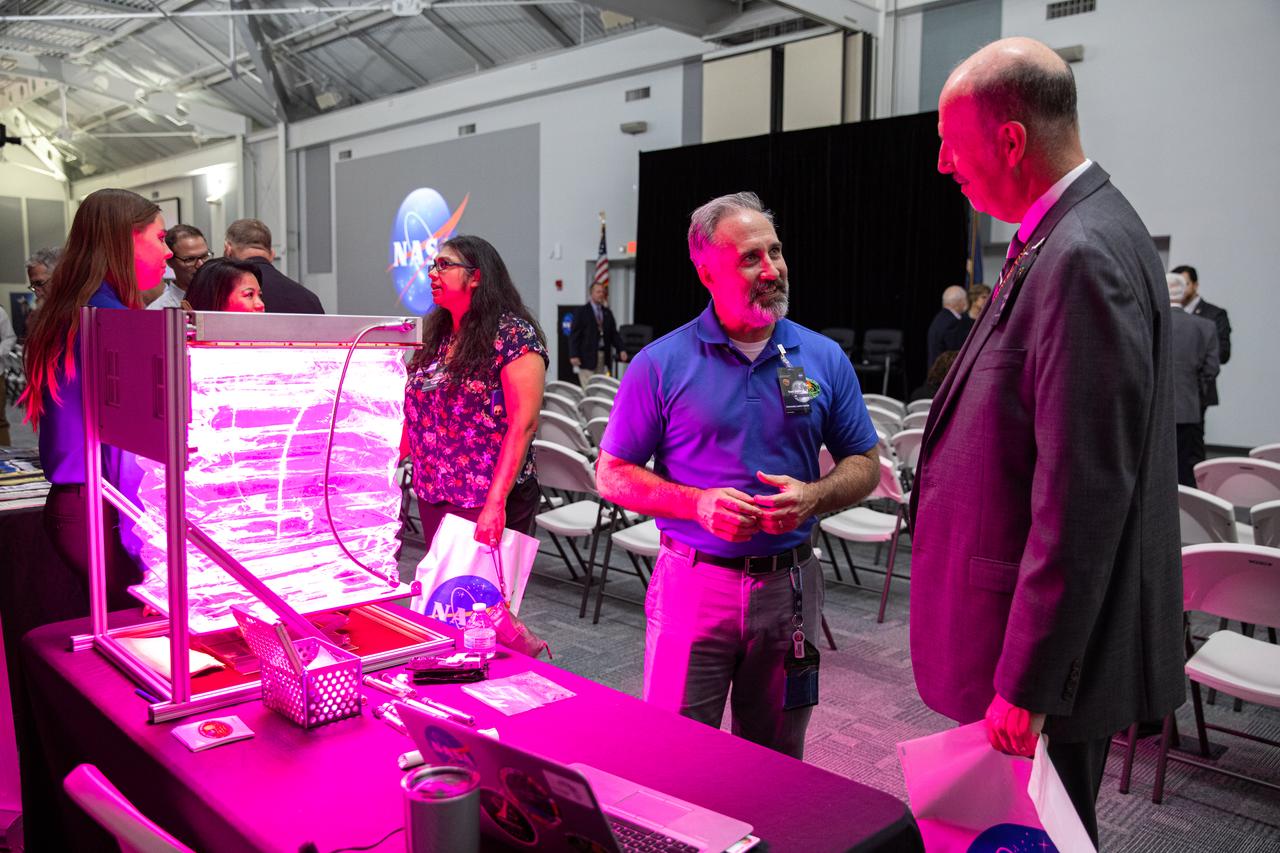
NASA Kennedy Space Center hosted a Community Leaders Update on Feb. 18, 2020, at the Kennedy Space Center Visitor Complex in Florida. Trent Smith, left, NASA Veggie project manager, talks to an attendee about the Veggie plant growth system that is currently in use on the International Space Station. Center Director Bob Cabana moderated a panel discussion featuring senior leaders from Exploration Ground Systems, Spaceport Integration and Services, Exploration Research and Technology Programs, Gateway Logistics Element, and Center Planning and Development. Attendees included community leaders, business executives, partners, educators and government leaders. After the presentation, guests had the opportunity to ask questions and visit displays from the programs and some of the commercial partners.

Attendees visit NASA and contractor exhibits during a Community Leaders Update hosted by NASA Kennedy Space Center on Feb. 18, 2020, at the Kennedy Space Center Visitor Complex in Florida. Center Director Bob Cabana moderated a panel discussion featuring senior leaders from Exploration Ground Systems, Spaceport Integration and Services, Exploration Research and Technology Programs, Gateway Logistics Element, and Center Planning and Development. Attendees included community leaders, business executives, partners, educators and government leaders. After the presentation, guests had the opportunity to ask questions and visit displays from the programs and some of the commercial partners.

Steve Payne, with NASA’s Commercial Crew Program, speaks with a guest during a Community Leaders Update hosted by Kennedy Space Center on Feb. 18, 2020, at the Kennedy Space Center Visitor Complex in Florida. A panel discussion was moderated by Center Director Bob Cabana during the update. Attendees included community leaders, business executives, partners, educators and government leaders. After the presentation, guests had the opportunity to ask questions and visit displays from the programs and some of the commercial partners.

A business leader visits an exhibitor booth during a Community Leaders Update hosted by NASA Kennedy Space Center on Feb. 18, 2020, at the Kennedy Space Center Visitor Complex in Florida. Center Director Bob Cabana moderated a panel discussion featuring senior leaders from Exploration Ground Systems, Spaceport Integration and Services, Exploration Research and Technology Programs, Gateway Logistics Element, and Center Planning and Development. Attendees included community leaders, business executives, partners, educators and government leaders. After the presentation, guests had the opportunity to ask questions and visit displays from the programs and some of the commercial partners.
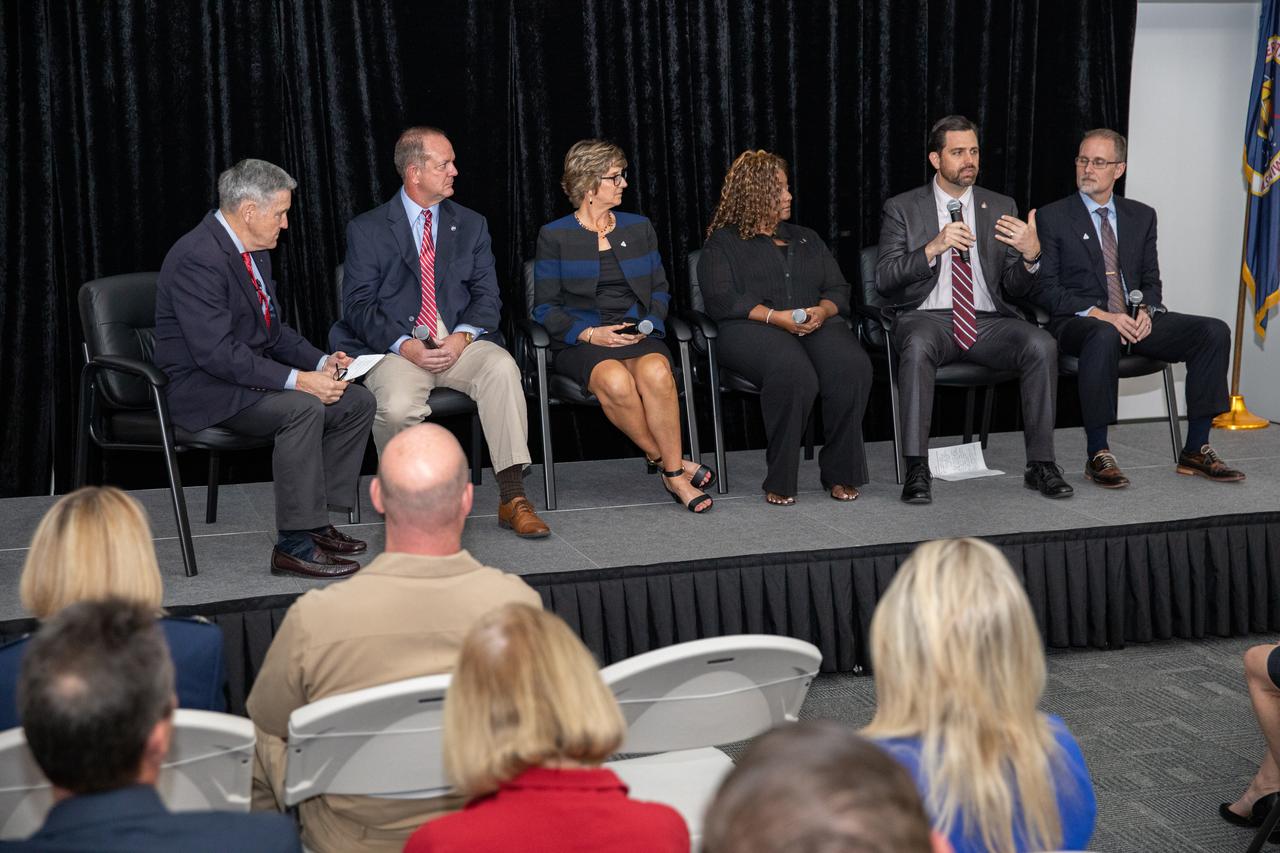
NASA Kennedy Space Center Director Bob Cabana, far left, moderates a panel discussion with senior leaders of NASA and center programs during a Community Leaders Update on Feb. 18, 2020, at the Kennedy Space Center Visitor Complex. From second from left are Tom Engler, director, Center Planning and Development; Jenny Lyons, deputy manager, Gateway Logistics Element; Barbara Brown, chief technologist, Exploration Research and Technology Programs; Jeremy Parsons, deputy manager, Exploration Ground Systems; and Phil Meade, associate director, Spaceport Integration and Services. Attendees included community leaders, business executives, partners, educators and government leaders. After the presentation, guests had the opportunity to ask questions and visit displays from the programs and some of the commercial partners.

CAPE CANAVERAL, Fla. -- Kennedy Space Center Director Bob Cabana and several members of his leadership team provided an on current and future activities at the Florida spaceport during the annual Community Leaders Briefing. Cabana explained that the space center has a great deal of work going on in support of current and future space program projects. The reports were part of the annual Community Leaders Briefing at the Kurt H. Debus Conference Center at the Kennedy Space Center Visitor Complex attended by local, state and U.S. government representatives, along with individuals from business and industry. Photo credit: NASA_Dimitri Gerondidakis
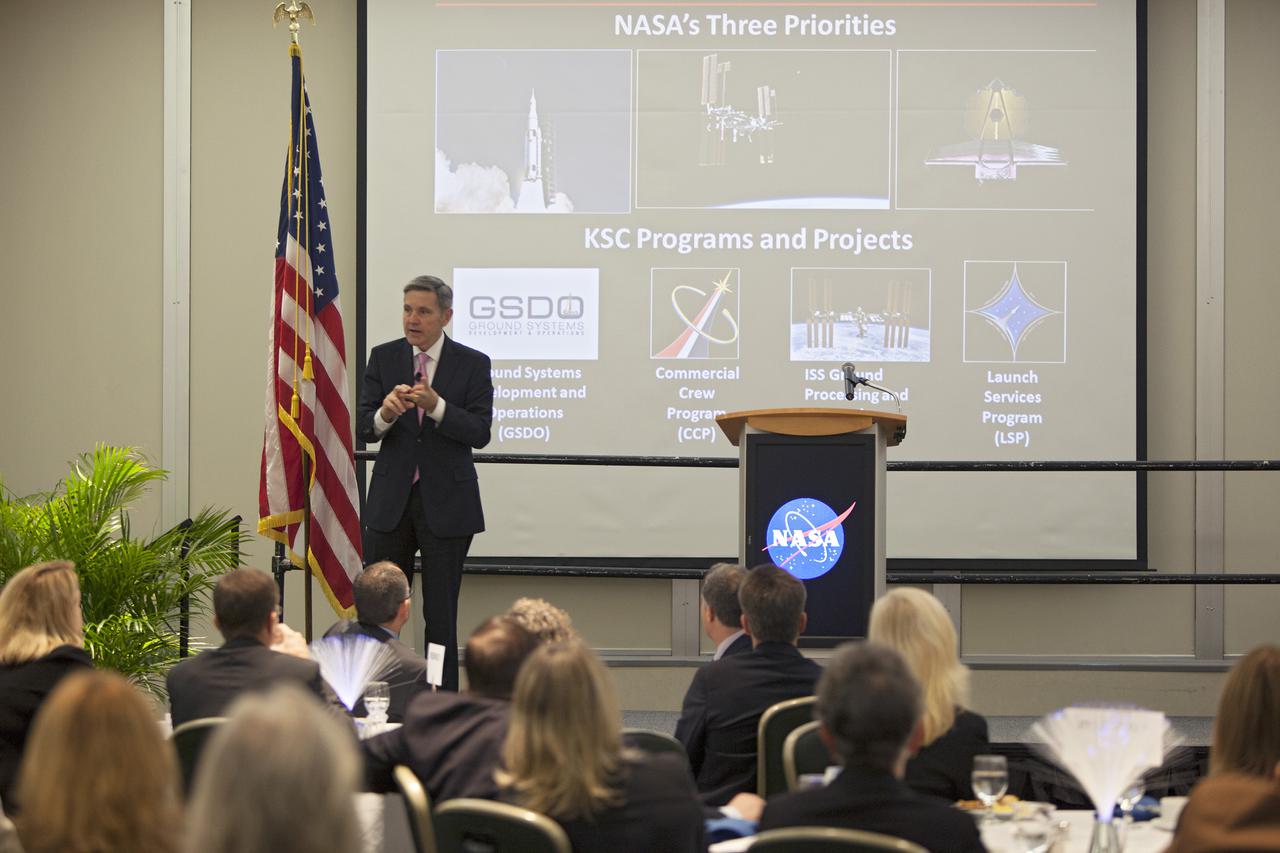
CAPE CANAVERAL, Fla. -- Kennedy Space Center Director Bob Cabana and several members of his leadership team provided an on current and future activities at the Florida spaceport during the annual Community Leaders Briefing. Cabana explained that the space center has a great deal of work going on in support of current and future space program projects. The reports were part of the annual Community Leaders Briefing at the Kurt H. Debus Conference Center at the Kennedy Space Center Visitor Complex attended by local, state and U.S. government representatives, along with individuals from business and industry. Photo credit: NASA_Dimitri Gerondidakis
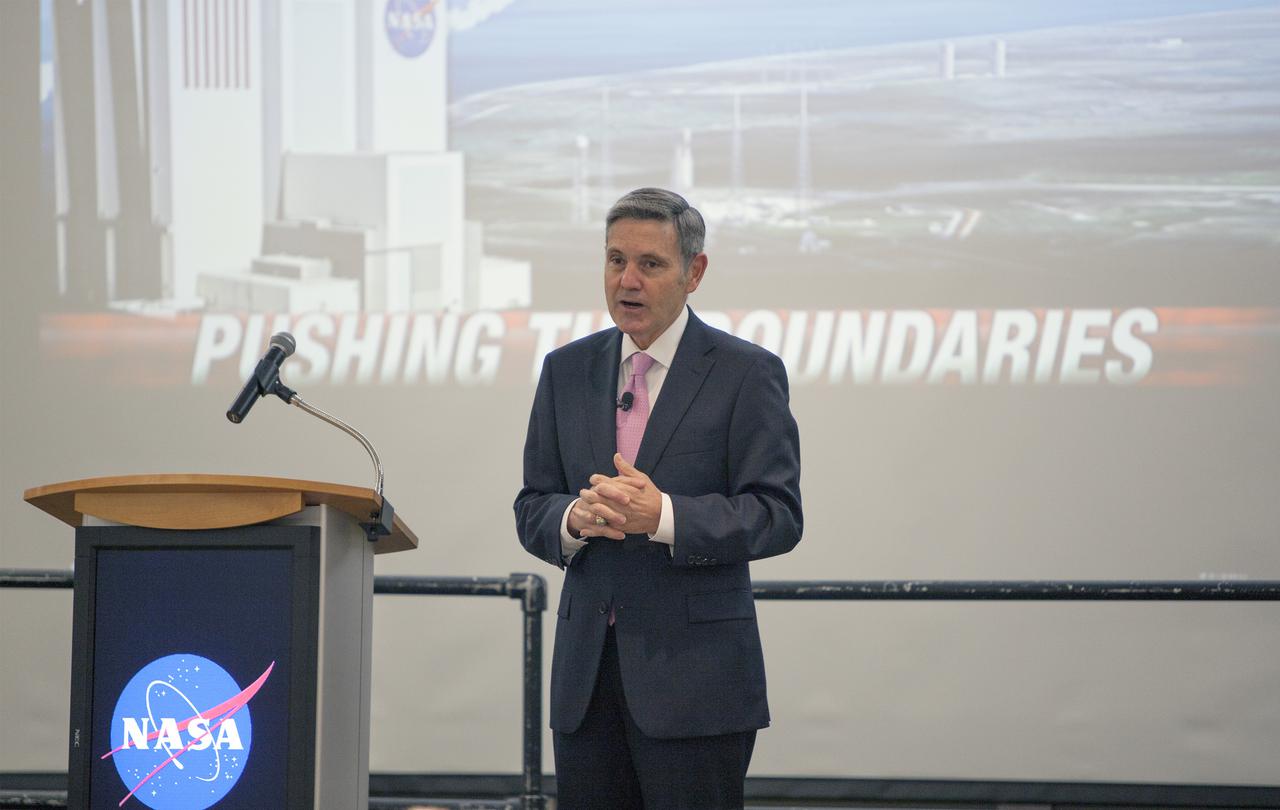
CAPE CANAVERAL, Fla. -- Kennedy Space Center Director Bob Cabana and several members of his leadership team provided an on current and future activities at the Florida spaceport during the annual Community Leaders Briefing. Cabana explained that the space center has a great deal of work going on in support of current and future space program projects. The reports were part of the annual Community Leaders Briefing at the Kurt H. Debus Conference Center at the Kennedy Space Center Visitor Complex attended by local, state and U.S. government representatives, along with individuals from business and industry. Photo credit: NASA_Dimitri Gerondidakis
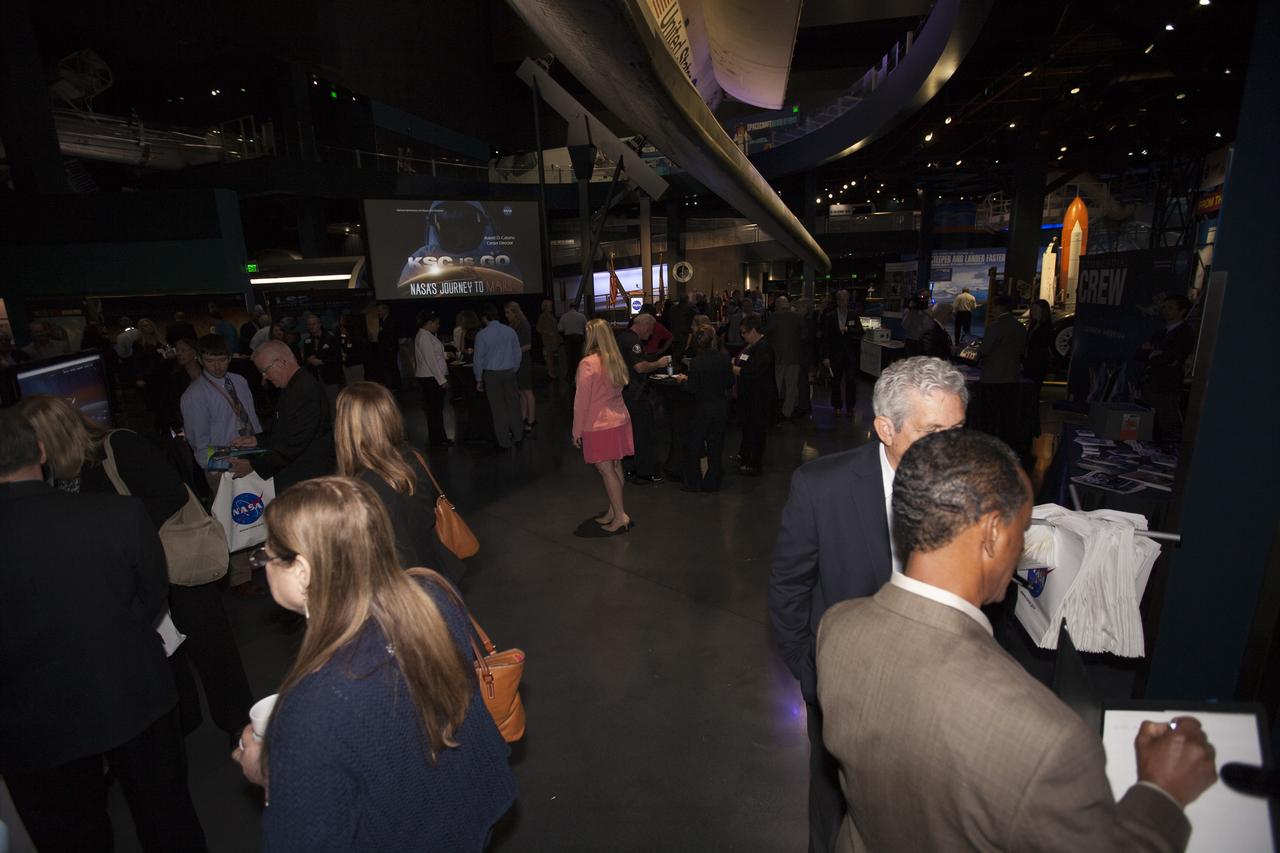
In the Space Shuttle Atlantis exhibit facility at the Kennedy Space Center's Visitor Complex, guests are briefed on work taking place in the Florida spaceport. This followed a presentation by center director Bob Cabana who updated community leaders on current and future activities at the space center.
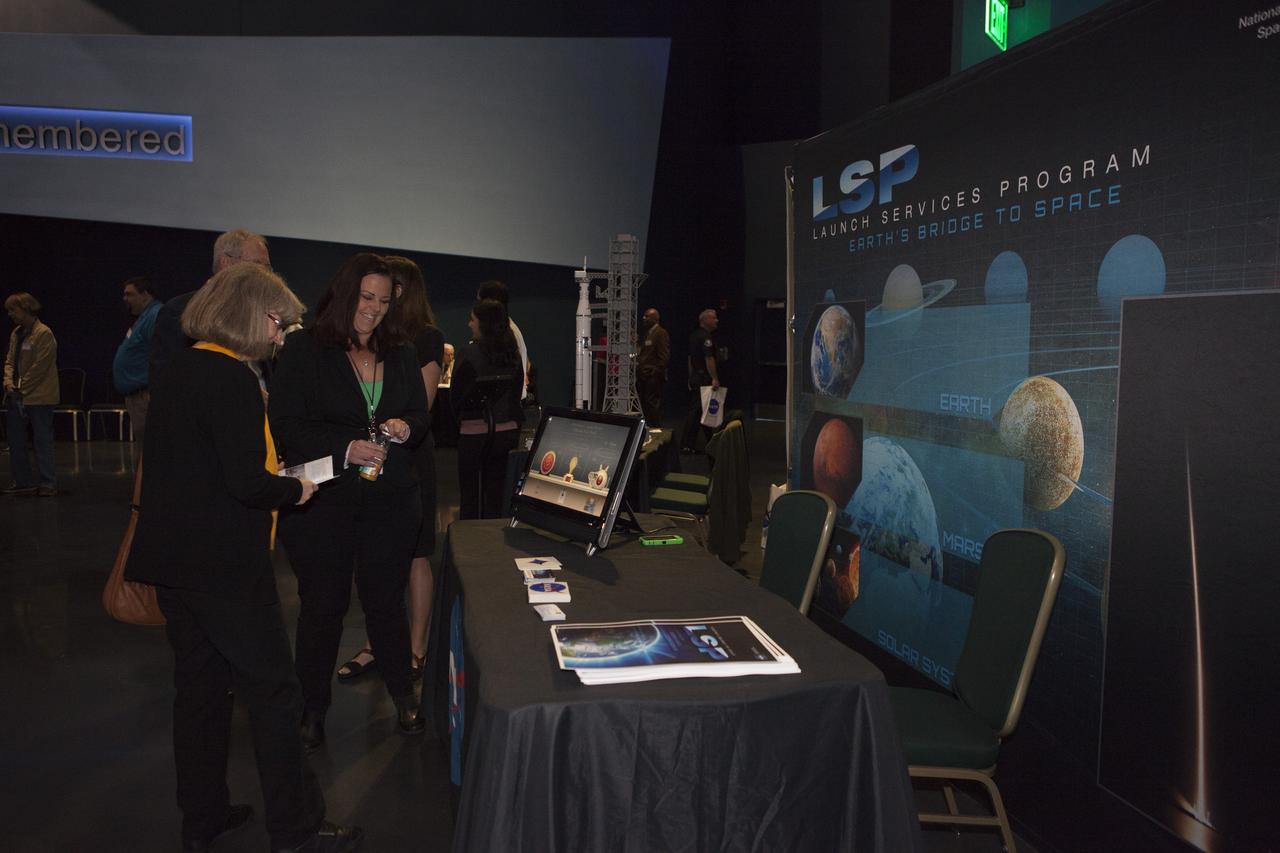
In the Space Shuttle Atlantis exhibit facility at the Kennedy Space Center's Visitor Complex, a guest is briefed on work taking place in the Florida spaceport's Launch Services Program. This followed a presentation by center director Bob Cabana who updated community leaders on current and future activities at the space center.

In the Space Shuttle Atlantis exhibit facility at the Kennedy Space Center's Visitor Complex, a guest is briefed on work taking place in the Florida spaceport's Commercial Crew Program. This followed a presentation by center director Bob Cabana who updated community leaders on current and future activities at the space center.
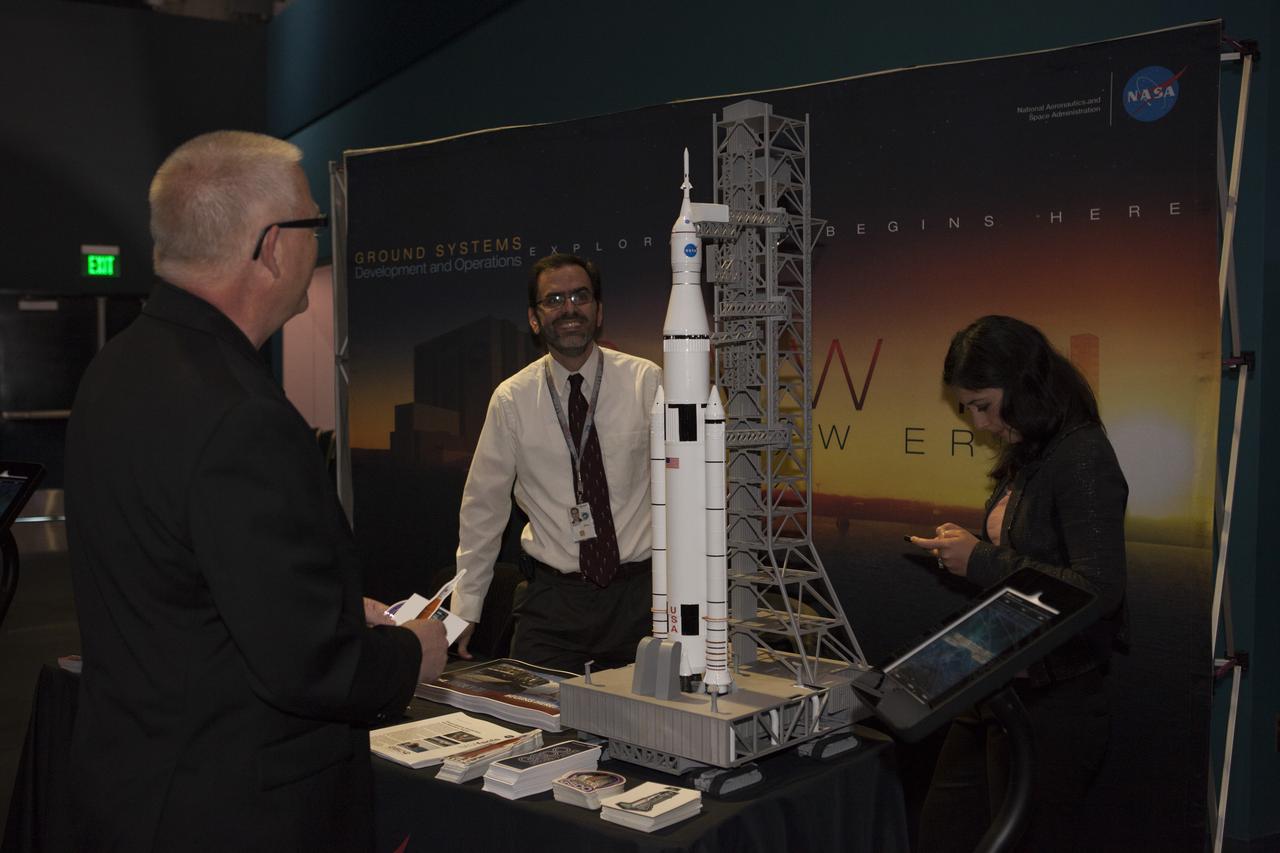
In the Space Shuttle Atlantis exhibit facility at the Kennedy Space Center's Visitor Complex, a guest is briefed on work taking place in the Florida spaceport's Ground Systems Development and Operations Program. This followed a presentation by center director Bob Cabana who updated community leaders on current and future activities at the space center.
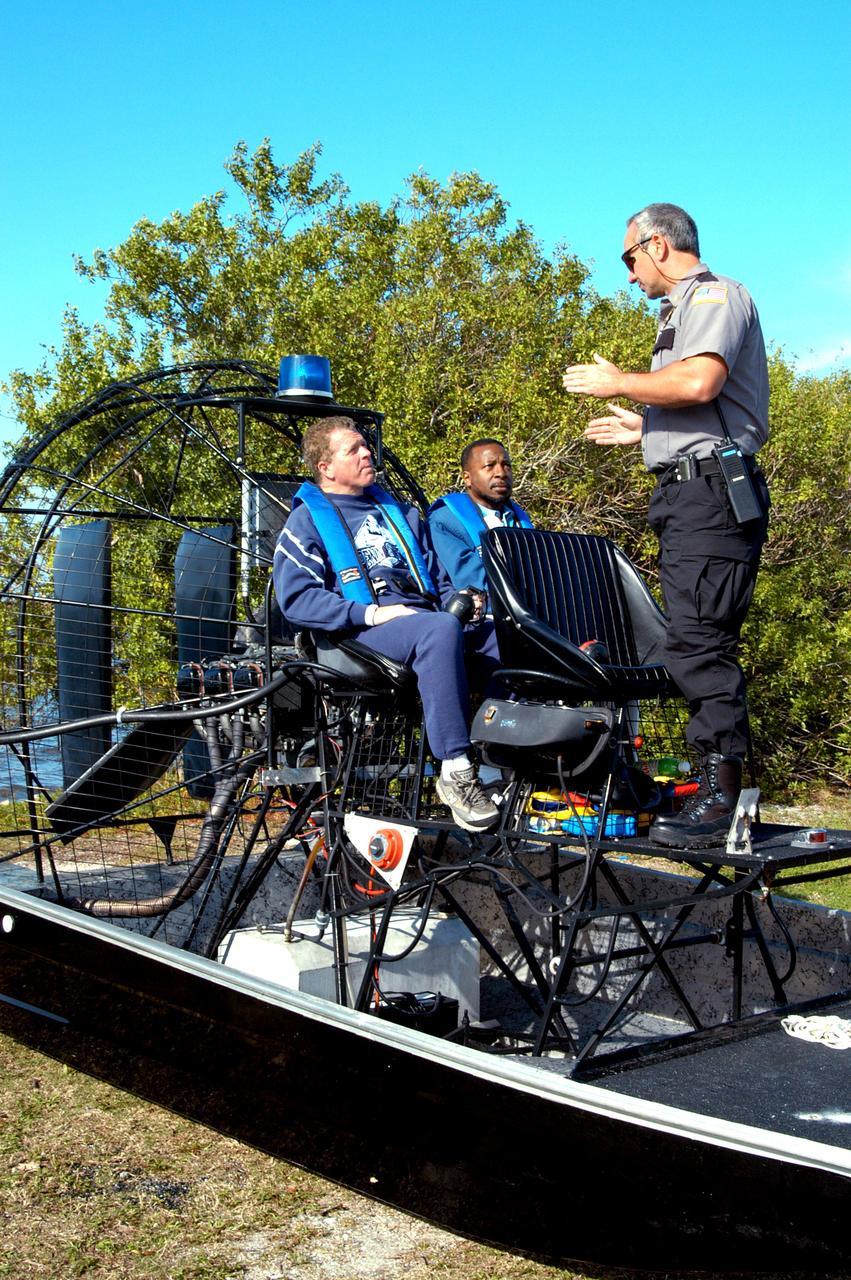
KENNEDY SPACE CENTER, FLA. - Before going on an air boat ride around Kennedy Space Center, Congressman Tom Feeney and Deputy Director Woodrow Whitlow Jr. are briefed about the trip. During January and February, Congressman Feeney traveled the entire coastline of Florida’s 24th District, and concluded his walks March 1 in Brevard County. On his walks, he met with constituents and community leaders to discuss legislative issues that will be addressed by the 108th Congress. Feeney ended his beach walk at the KSC Visitor Complex main entrance.
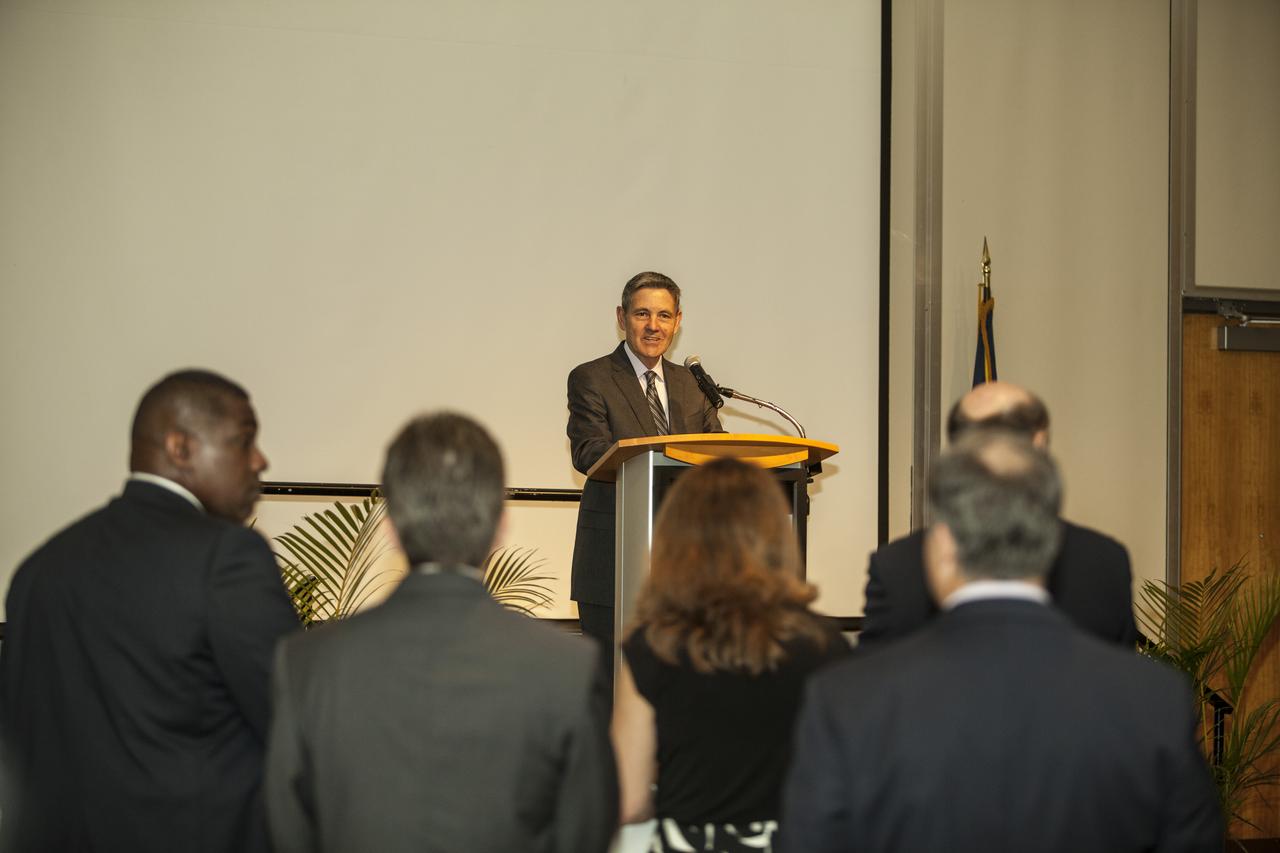
CAPE CANAVERAL, Fla. – NASA Kennedy Space Center Director Robert Cabana briefs the community leaders, business executives, educators, community organizers, and state and local government leaders attending the Kennedy Space Center Director in the Kennedy Space Center Visitor Complex Debus Center. Attendees talked with Cabana and other senior Kennedy managers and visited displays featuring updates on Kennedy programs and projects, including International Space Station, Commercial Crew, Ground System Development and Operations, Launch Services, Center Planning and Development, Technology, KSC Swamp Works and NASA Education. The morning concluded with a tour of the new Space Shuttle Atlantis exhibit at the visitor complex. For more information, visit http://www.nasa.gov/kennedy. Photo credit: NASA/Daniel Casper
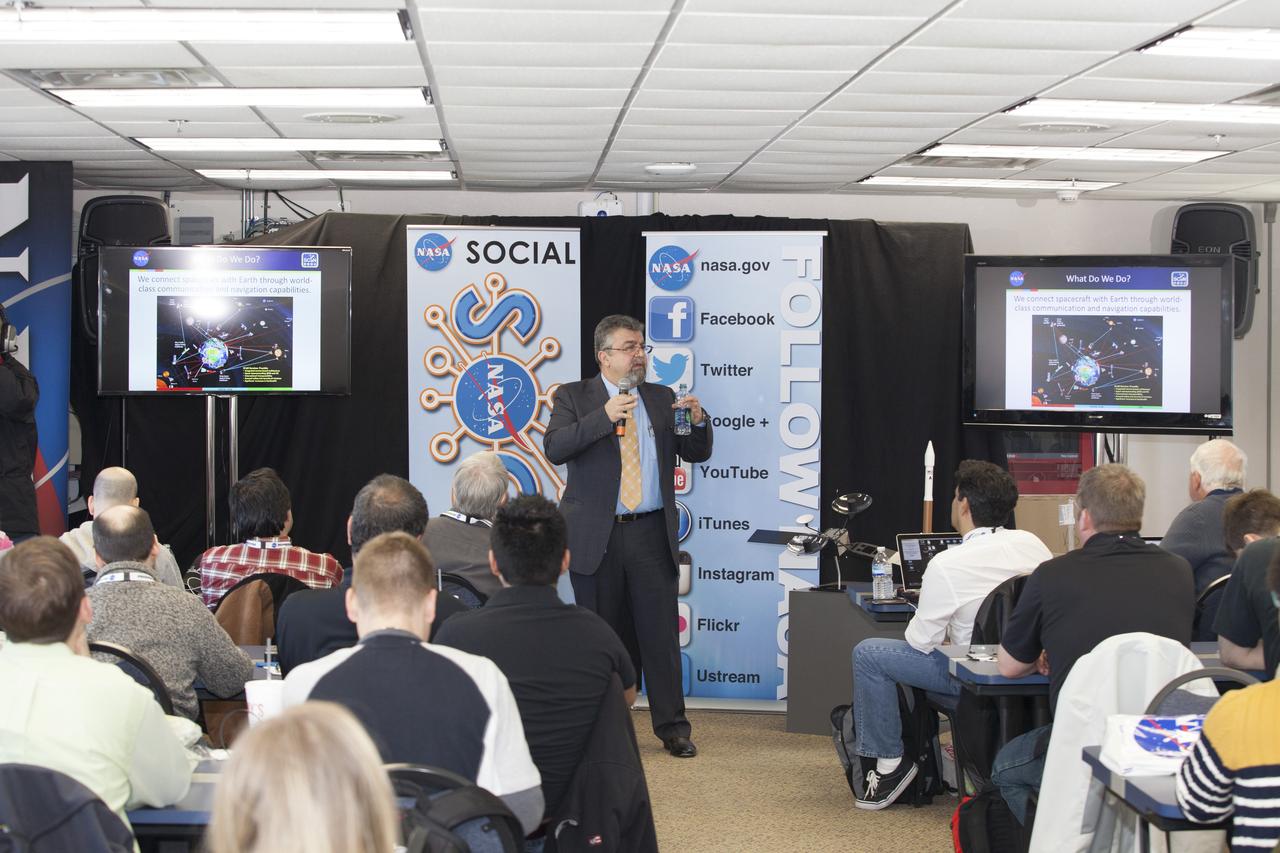
CAPE CANAVERAL, Fla. -- In the NASA News Center annex at NASA's Kennedy Space Center in Florida, social media participants listen to a briefing by Badri Younes, deputy associate administrator, Space Communications and Navigation SCaN NASA Human Exploration and Operations Mission Directorate at NASA Headquarters in Washington D.C. The social media participants gathered at the Florida spaceport for the launch of the Tracking and Data Relay Satellite, or TDRS-L spacecraft. Their visit included tours of key facilities and participating in presentations by key NASA leaders who updated the space agency's current efforts. Photo credit: NASA/Dan Casper

In the Kennedy Space Center’s Press Site auditorium, NASA and industry leaders speak to members of the media during a mission science briefing for the agency’s Cyclone Global Navigation Satellite System, or CYGNSS, spacecraft. From left are: Sean Potter of NASA Communications; Dr. Chris Ruf, CYGNSS principal investigator, Department of Climate and Space Sciences and Engineering at the University of Michigan; Aaron Ridley, CYGNSS constellation scientist in the Climate and Space Department at the University of Michigan in Ann Arbor, Michigan; and Mary Morris, doctoral student in the Department of Climate and Space Sciences and Engineering at the University of Michigan. The eight CYGNSS satellites will make frequent and accurate measurements of ocean surface winds throughout the life cycle of tropical storms and hurricanes. The data will help scientists probe key air-sea interaction processes that take place near the core of storms, which are rapidly changing and play a crucial role in the beginning and intensification of hurricanes.
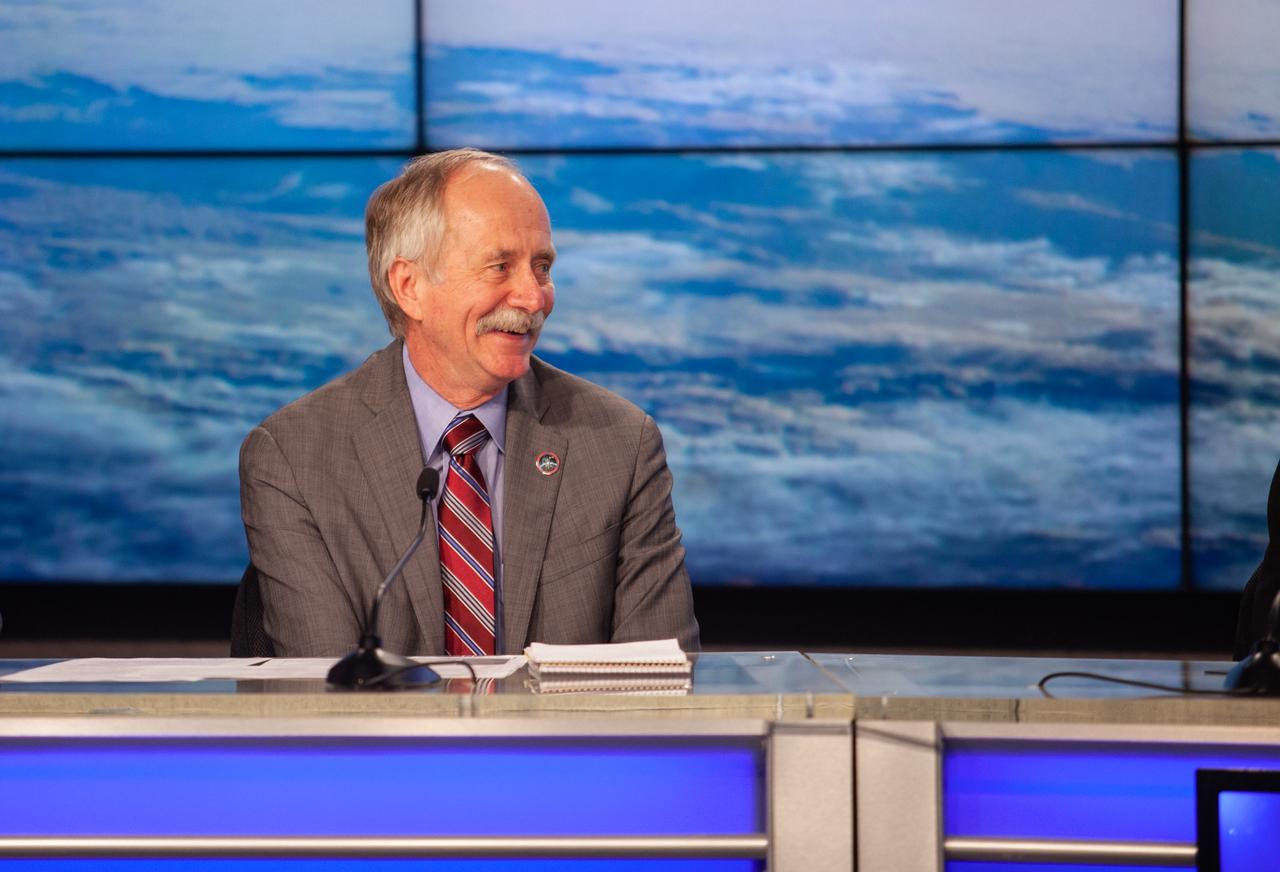
In Kennedy Space Center’s Press Site auditorium, agency and industry leaders speak to members of the media on Friday, Feb. 22, during the post-flight readiness review briefing for the SpaceX Demo-1 Commercial Crew Program (CCP) mission to the International Space Station. From left are: Josh Finch of NASA Communications and William Gerstenmaier, associate administrator, NASA Human Exploration and Operations. The inaugural uncrewed flight of the SpaceX Crew Dragon, known as Demo-1, is targeted to lift off from Kennedy’s Launch Complex 39A on Saturday, March 2. EST. A SpaceX Falcon 9 rocket will launch the Crew Dragon on a mission designed to validate end-to-end systems and capabilities, leading to certification to fly crew.
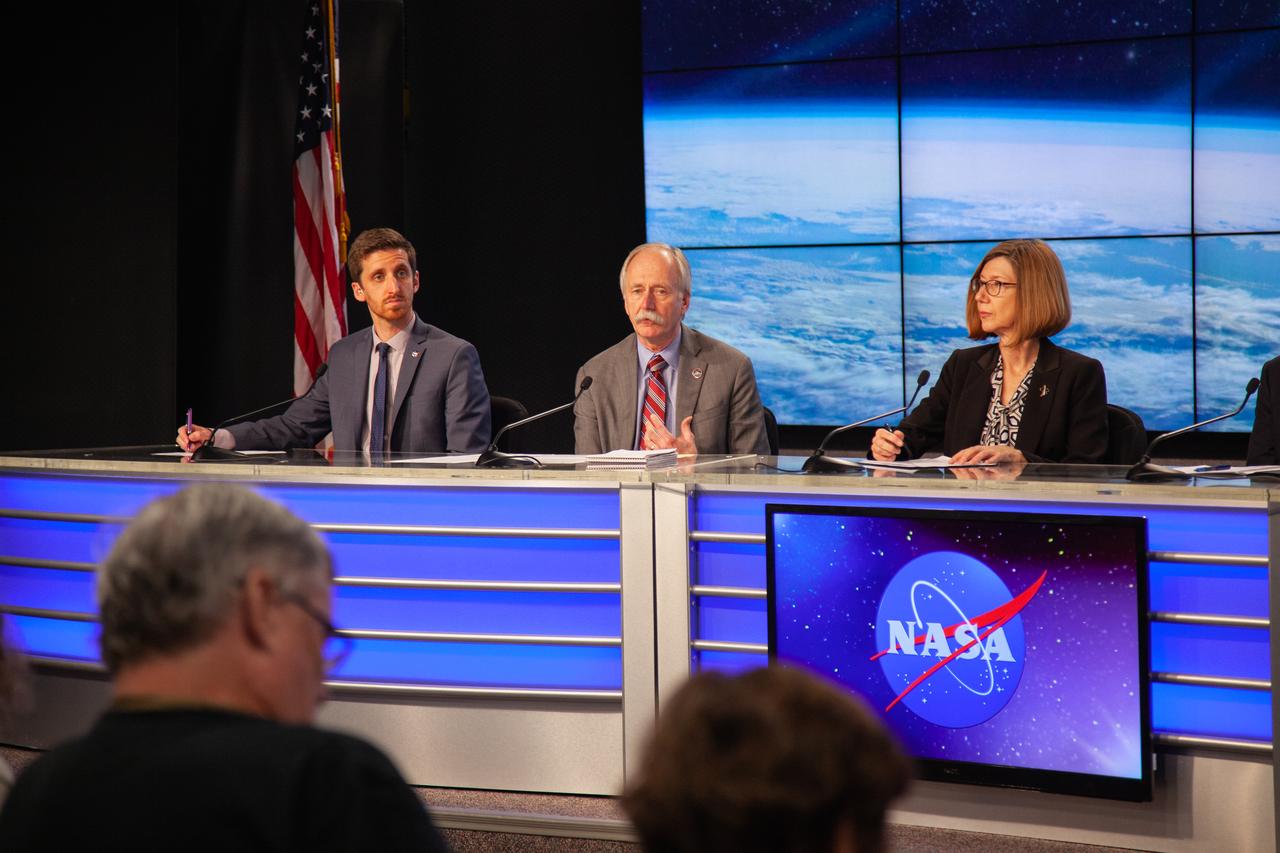
In Kennedy Space Center’s Press Site auditorium, agency and industry leaders speak to members of the media on Friday, Feb. 22, during the post-flight readiness review briefing for the SpaceX Demo-1 Commercial Crew Program (CCP) mission to the International Space Station. From left are: Josh Finch of NASA Communications; William Gerstenmaier, associate administrator, NASA Human Exploration and Operations; and Kathy Lueders, manager, NASA Commercial Crew Program. The inaugural uncrewed flight of the SpaceX Crew Dragon, known as Demo-1, is targeted to lift off from Kennedy’s Launch Complex 39A on Saturday, March 2. EST. A SpaceX Falcon 9 rocket will launch the Crew Dragon on a mission designed to validate end-to-end systems and capabilities, leading to certification to fly crew.
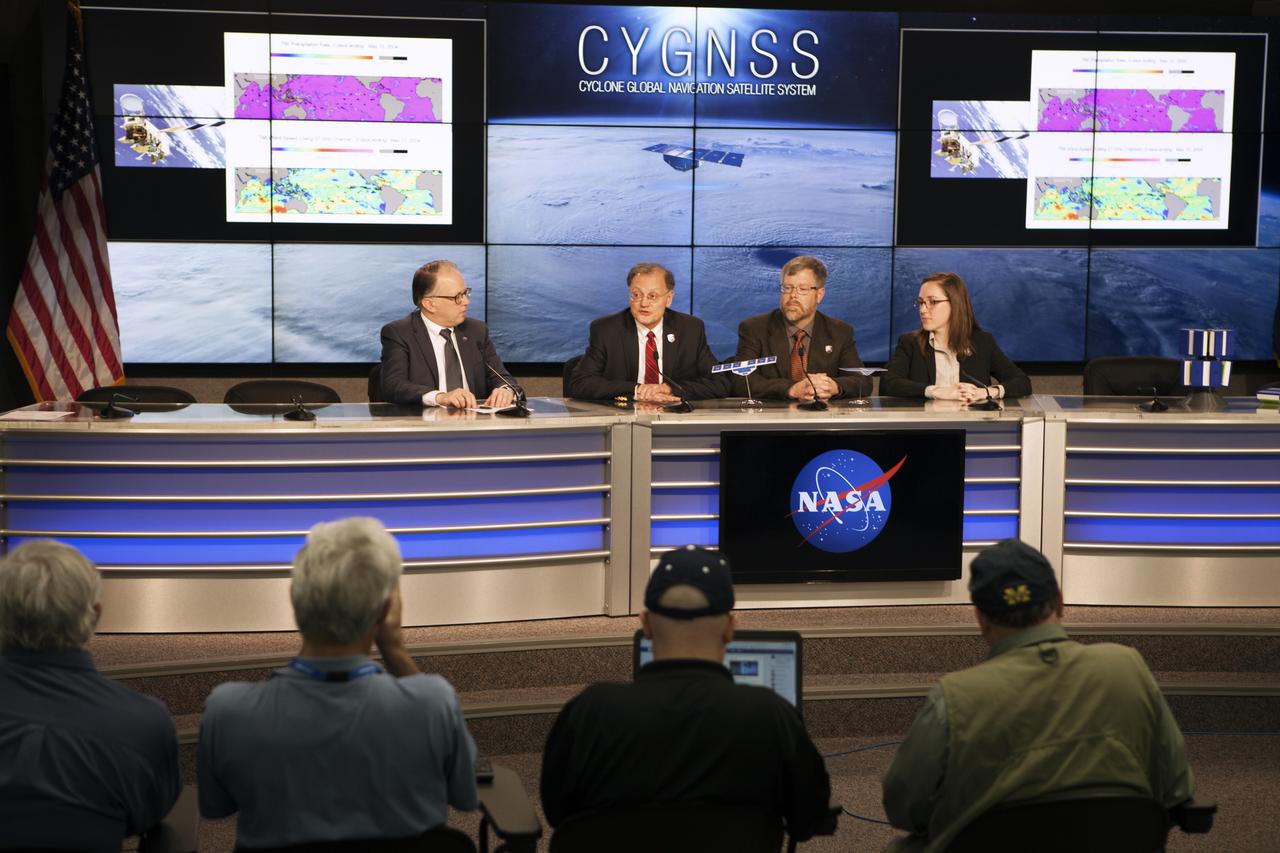
In the Kennedy Space Center’s Press Site auditorium, NASA and industry leaders speak to members of the media during a mission science briefing for the agency’s Cyclone Global Navigation Satellite System, or CYGNSS, spacecraft. From left are: Sean Potter of NASA Communications; Dr. Chris Ruf, CYGNSS principal investigator, Department of Climate and Space Sciences and Engineering at the University of Michigan; Aaron Ridley, CYGNSS constellation scientist in the Climate and Space Department at the University of Michigan in Ann Arbor, Michigan; and Mary Morris, doctoral student in the Department of Climate and Space Sciences and Engineering at the University of Michigan. The eight CYGNSS satellites will make frequent and accurate measurements of ocean surface winds throughout the life cycle of tropical storms and hurricanes. The data will help scientists probe key air-sea interaction processes that take place near the core of storms, which are rapidly changing and play a crucial role in the beginning and intensification of hurricanes.
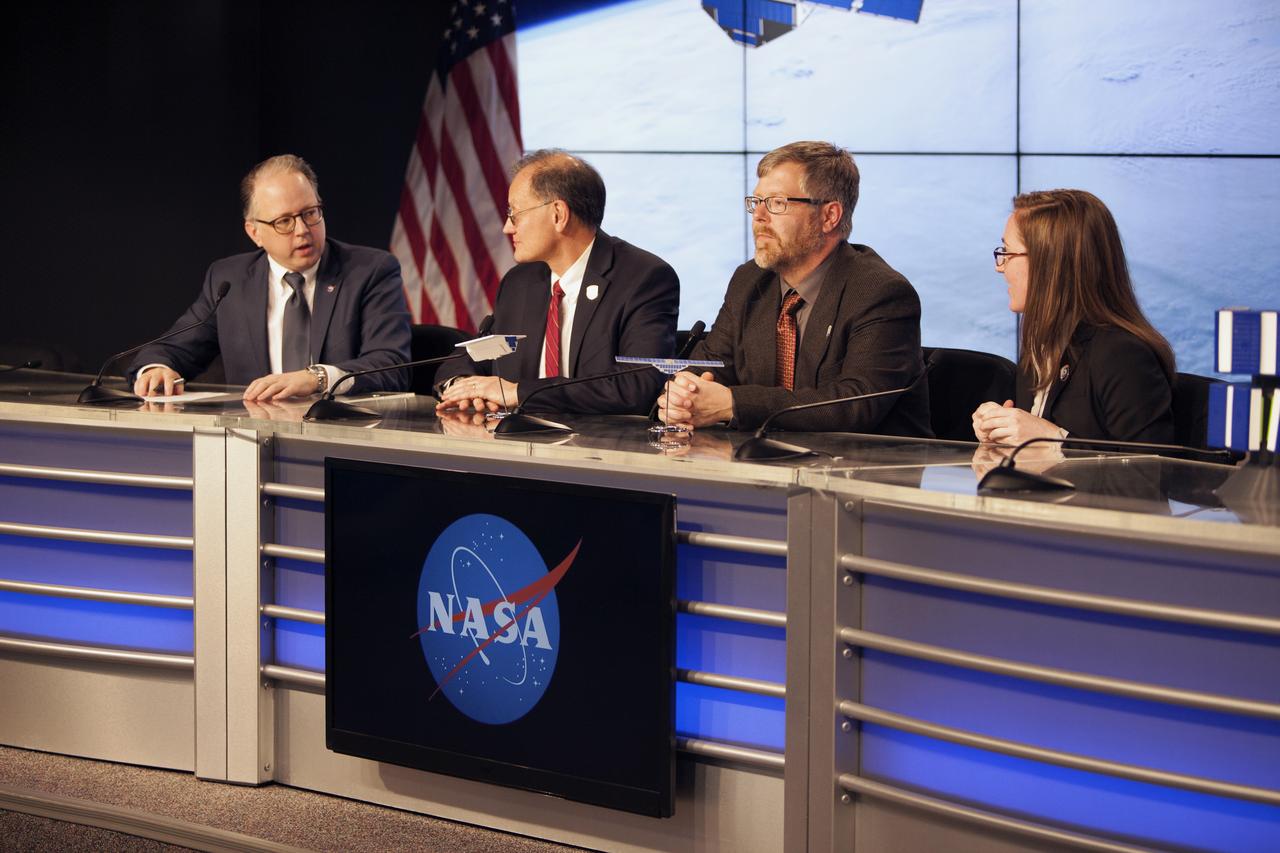
In the Kennedy Space Center’s Press Site auditorium, NASA and industry leaders speak to members of the media during a mission science briefing for the agency’s Cyclone Global Navigation Satellite System, or CYGNSS, spacecraft. From left are: Sean Potter of NASA Communications; Dr. Chris Ruf, CYGNSS principal investigator, Department of Climate and Space Sciences and Engineering at the University of Michigan; Aaron Ridley, CYGNSS constellation scientist in the Climate and Space Department at the University of Michigan in Ann Arbor, Michigan; and Mary Morris, doctoral student in the Department of Climate and Space Sciences and Engineering at the University of Michigan. The eight CYGNSS satellites will make frequent and accurate measurements of ocean surface winds throughout the life cycle of tropical storms and hurricanes. The data will help scientists probe key air-sea interaction processes that take place near the core of storms, which are rapidly changing and play a crucial role in the beginning and intensification of hurricanes.
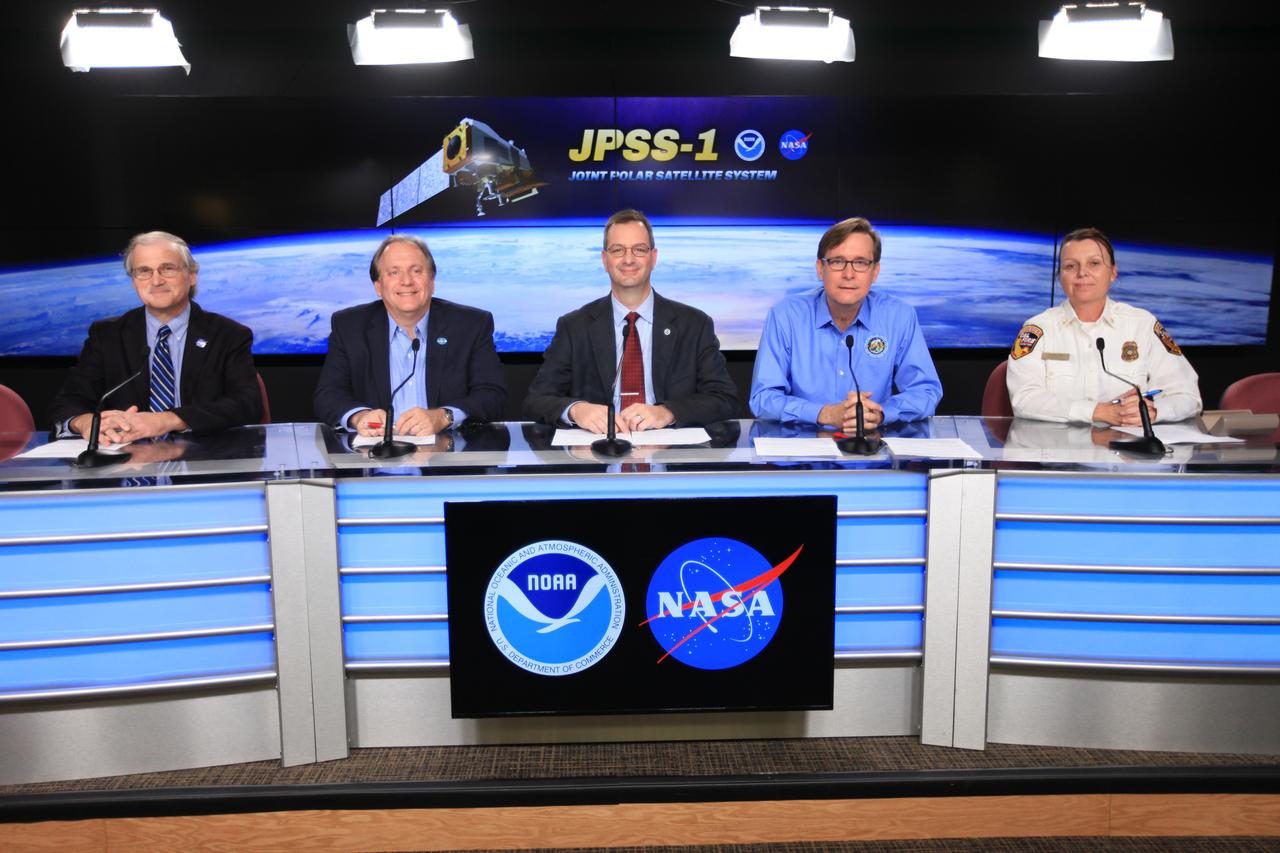
At Vandenberg Air Force Base in California, leaders from NASA, NOAA and the California Department of Forestry and Fire Protection speak to members of the media during a briefing focused on research planned for the Joint Polar Satellite System-1, or JPSS-1. Participants from left are Steve Cole of NASA Communications, Mitch Goldberg, NOAA's chief program scientist for the Joint Polar Satellite System, Joe Pica, director of NOAA’s National Weather Service Office of Observations, James Gleason, NASA senior project scientist for the Joint Polar Satellite System, and Jana Luis, division chief Predictive Services at the California Department of Forestry and Fire Protection. Built by Ball Aerospace and Technologies Corp. of Boulder, Colorado, JPSS is the first in a series four next-generation environmental satellites in a collaborative program between the NOAA and NASA. Liftoff atop a United Launch Alliance Delta II rocket is scheduled to take place from Vandenberg's Space Launch Complex 2 at 1:47 a.m. PST (4:47 a.m. EST), on Nov. 14, 2017.

At Vandenberg Air Force Base in California, leaders from NASA, NOAA and the California Department of Forestry and Fire Protection speak to members of the media during a briefing focused on research planned for the Joint Polar Satellite System-1, or JPSS-1. Participants from left are Steve Cole of NASA Communications, Mitch Goldberg, NOAA's chief program scientist for the Joint Polar Satellite System, Joe Pica, director of NOAA’s National Weather Service Office of Observations, James Gleason, NASA senior project scientist for the Joint Polar Satellite System, and Jana Luis, division chief Predictive Services at the California Department of Forestry and Fire Protection. Built by Ball Aerospace and Technologies Corp. of Boulder, Colorado, JPSS is the first in a series four next-generation environmental satellites in a collaborative program between the NOAA and NASA. Liftoff atop a United Launch Alliance Delta II rocket is scheduled to take place from Vandenberg's Space Launch Complex 2 at 1:47 a.m. PST (4:47 a.m. EST), on Nov. 14, 2017.
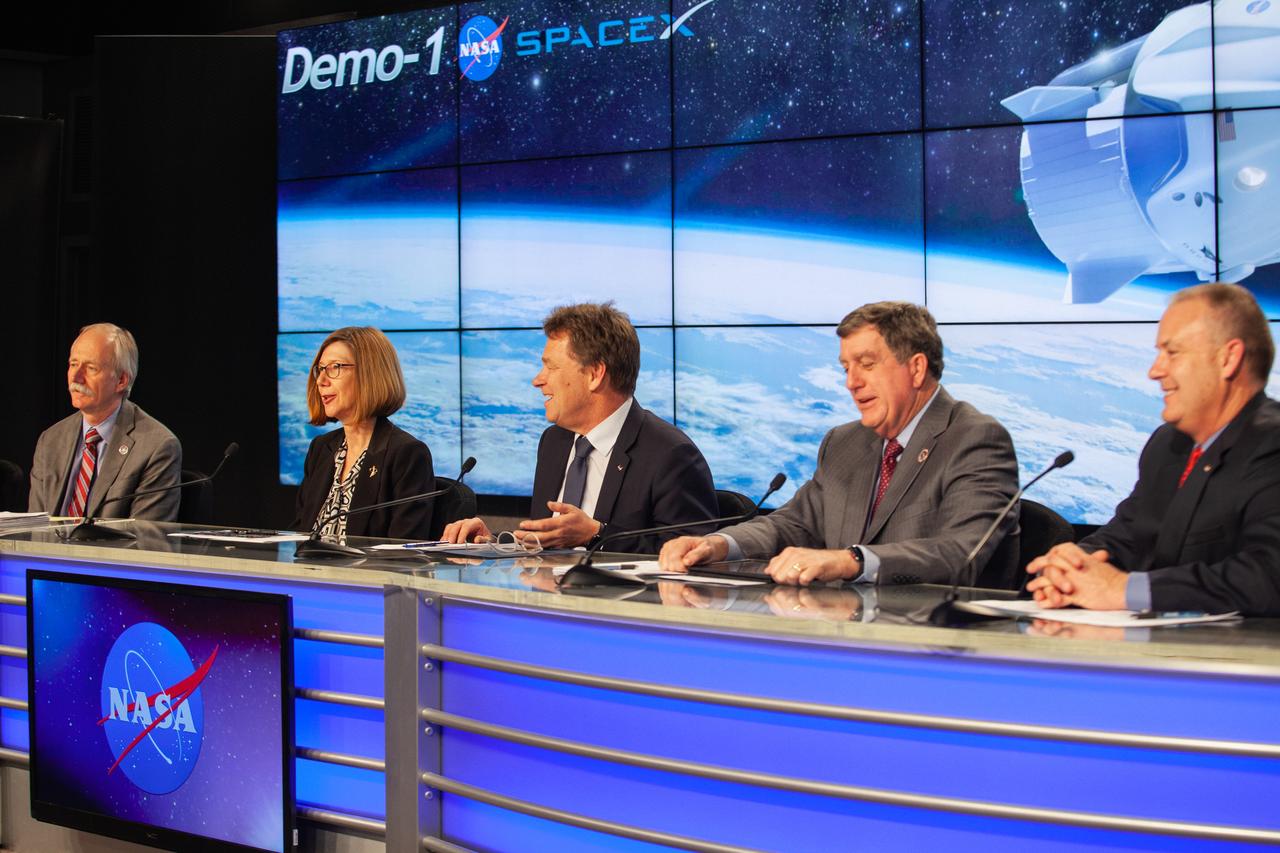
In Kennedy Space Center’s Press Site auditorium, agency and industry leaders speak to members of the media on Friday, Feb. 22, during the post-flight readiness review briefing for the SpaceX Demo-1 Commercial Crew Program (CCP) mission to the International Space Station. From left are: Josh Finch of NASA Communications; William Gerstenmaier, associate administrator, NASA Human Exploration and Operations; Kathy Lueders, manager, NASA Commercial Crew Program; Hans Koenigsmann, vice president, Build and Flight Reliability, SpaceX; Kirk Shireman, International Space Station Program manager; and Norm Knight, deputy director, NASA Johnson Space Center Flight Operations. The inaugural uncrewed flight of the SpaceX Crew Dragon, known as Demo-1, is targeted to lift off from Kennedy’s Launch Complex 39A on Saturday, March 2. EST. A SpaceX Falcon 9 rocket will launch the Crew Dragon on a mission designed to validate end-to-end systems and capabilities, leading to certification to fly crew.
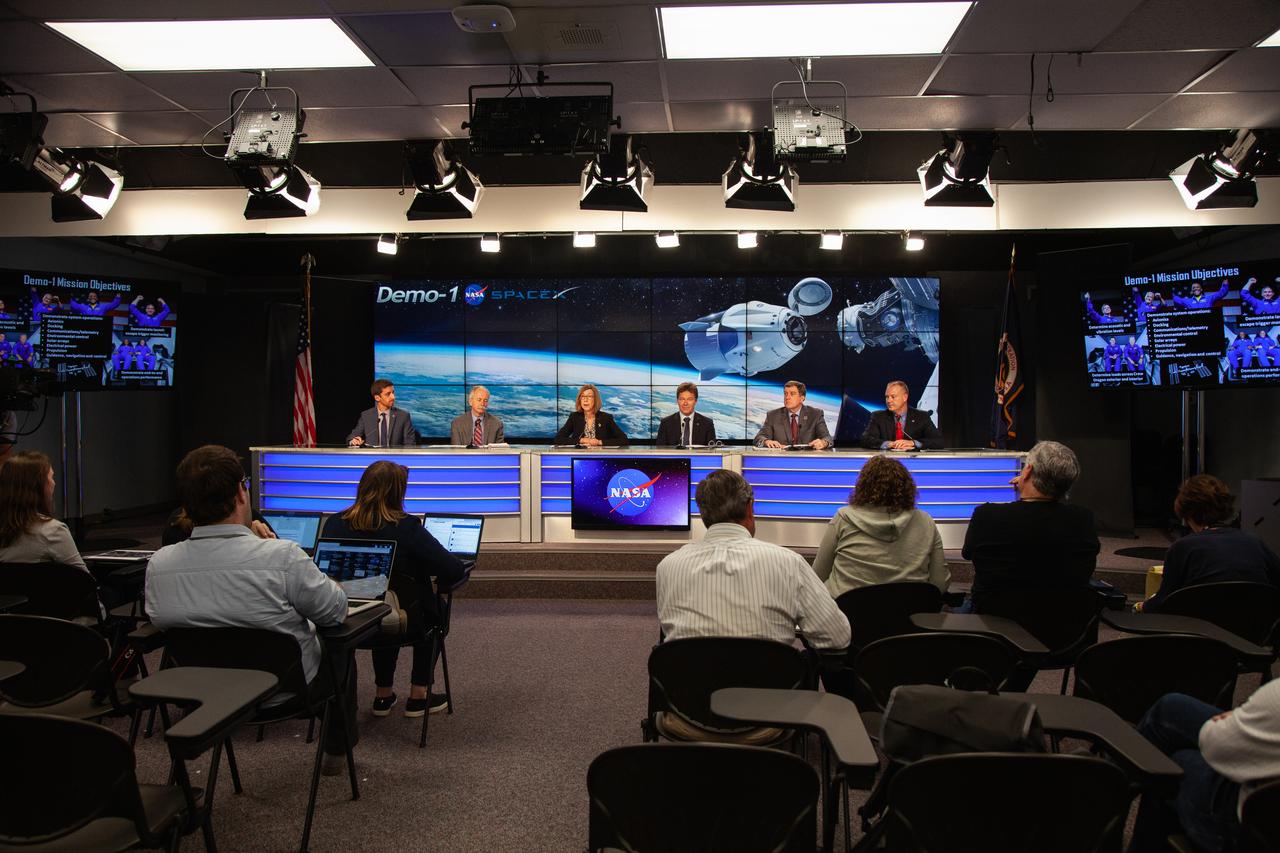
In Kennedy Space Center’s Press Site auditorium, agency and industry leaders speak to members of the media on Friday, Feb. 22, during the post-flight readiness review briefing for the SpaceX Demo-1 Commercial Crew Program (CCP) mission to the International Space Station. From left are: Josh Finch of NASA Communications; William Gerstenmaier, associate administrator, NASA Human Exploration and Operations; Kathy Lueders, manager, NASA Commercial Crew Program; Hans Koenigsmann, vice president, Build and Flight Reliability, SpaceX; Kirk Shireman, International Space Station Program manager; and Norm Knight, deputy director, NASA Johnson Space Center Flight Operations. The inaugural uncrewed flight of the SpaceX Crew Dragon, known as Demo-1, is targeted to lift off from Kennedy’s Launch Complex 39A on Saturday, March 2. EST. A SpaceX Falcon 9 rocket will launch the Crew Dragon on a mission designed to validate end-to-end systems and capabilities, leading to certification to fly crew.
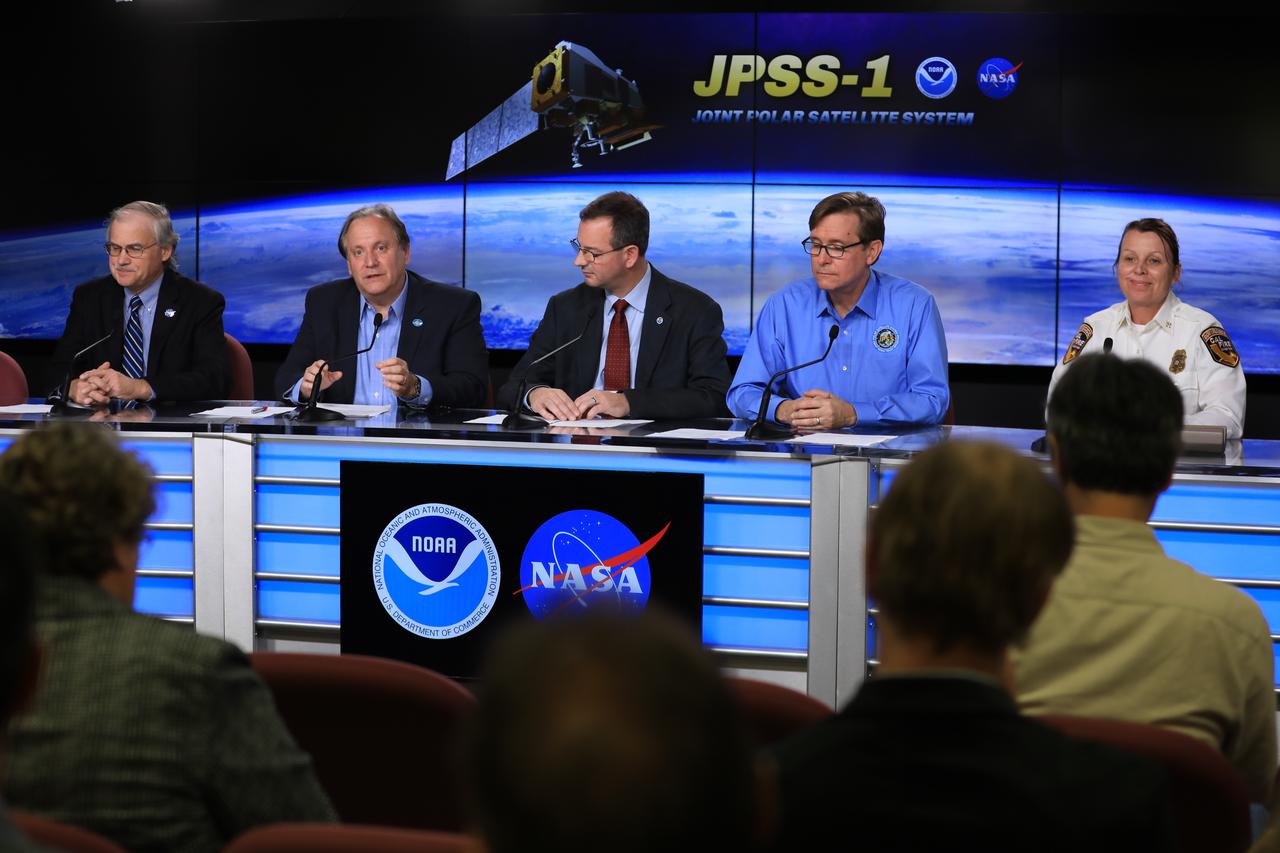
At Vandenberg Air Force Base in California, leaders from NASA, NOAA and the California Department of Forestry and Fire Protection speak to members of the media during a briefing focused on research planned for the Joint Polar Satellite System-1, or JPSS-1. Participants from left are Steve Cole of NASA Communications, Mitch Goldberg, NOAA's chief program scientist for the Joint Polar Satellite System, Joe Pica, director of NOAA’s National Weather Service Office of Observations, James Gleason, NASA senior project scientist for the Joint Polar Satellite System, and Jana Luis, division chief Predictive Services at the California Department of Forestry and Fire Protection. Built by Ball Aerospace and Technologies Corp. of Boulder, Colorado, JPSS is the first in a series four next-generation environmental satellites in a collaborative program between the NOAA and NASA. Liftoff atop a United Launch Alliance Delta II rocket is scheduled to take place from Vandenberg's Space Launch Complex 2 at 1:47 a.m. PST (4:47 a.m. EST), on Nov. 14, 2017.
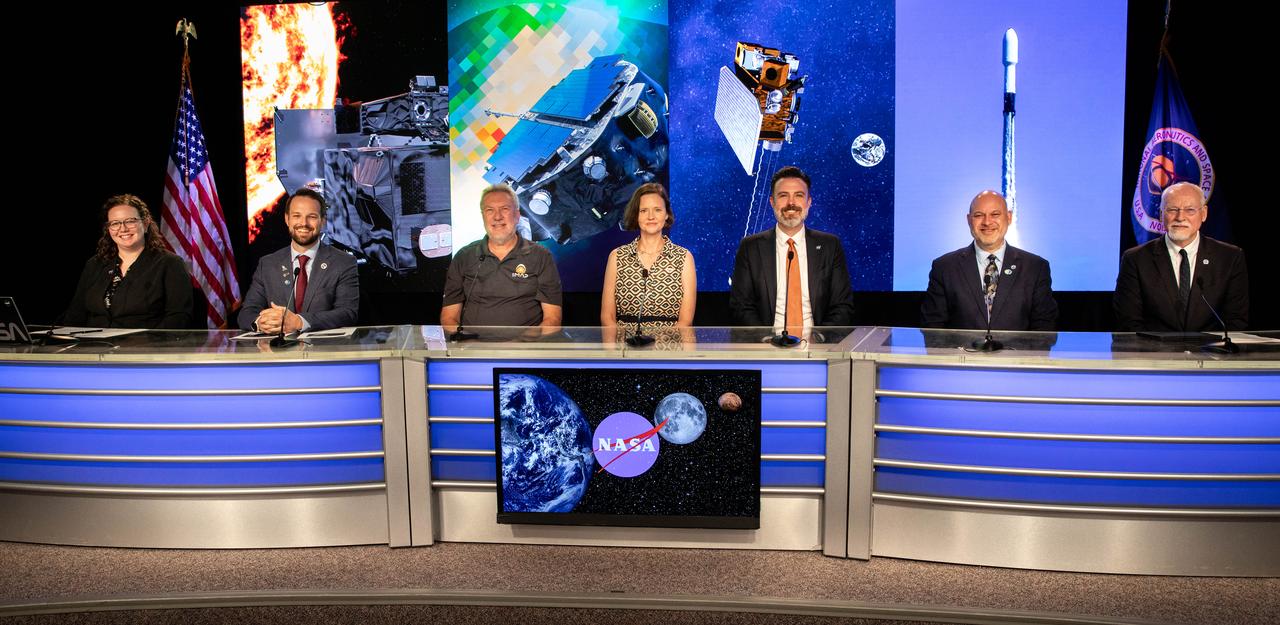
NASA, NOAA, and mission leaders participate in a science briefing on NASA’s IMAP (Interstellar Mapping and Acceleration Probe) mission and its two rideshares – NASA’s exosphere-studying Carruthers Geocorona Observatory and National Oceanic and Atmospheric Administration’s (NOAA) Space Weather Follow On–Lagrange 1 (SWFO-L1) observatory – at the agency’s Kennedy Space Center in Florida on Sunday, Sept. 21, 2025. From left are: Sarah Frazier, NASA Communications; Joe Westlake, director, Heliophysics Division, NASA Headquarters in Washington; David McComas, IMAP principal investigator, Princeton University; Lara Waldrop, Carruthers Geocorona Observatory principal investigator, University of Illinois Urbana-Champaign; Jamie Favors, director, Space Weather Program, Heliophysics Division, NASA Headquarters; Clinton Wallace, director, NOAA Space Weather Prediction Center; James Spann, senior scientist, NOAA Office of Space Weather Observations. NASA’s IMAP will use 10 science instruments to study and map the heliosphere, a vast magnetic bubble surrounding the Sun protecting our solar system from radiation incoming from interstellar space. The missions will orbit the Sun near Lagrange point 1, about one million miles from Earth. Launch is targeted for 7:32 a.m. EDT, Tuesday, Sept. 23, from Launch Complex 39A at NASA Kennedy.
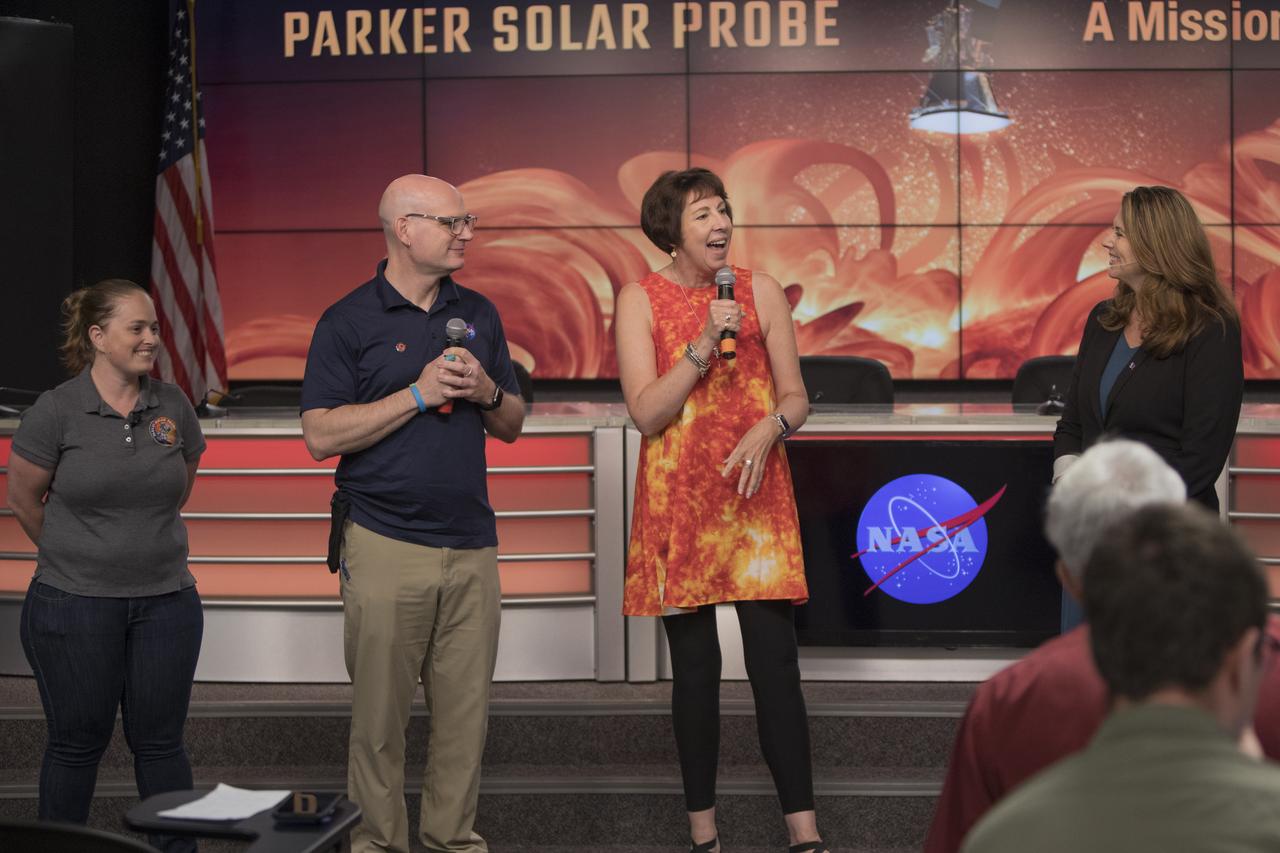
In the Kennedy Space Center’s Press Site auditorium, on Friday, July 20, 2018, agency and mission leaders speak to members of the media during a prelaunch briefing for the Parker Solar Probe mission. From left are: Betsy Congdon, Thermal Protection System engineer with Johns Hopkins Applied Physics Laboratory, Alex Young, solar scientist at NASA's Goddard Space Flight Center in Greenbelt, Maryland, Nicky Fox, project scientist with the Johns Hopkins University APL, and Karen Fox of NASA Communications. The Parker Solar Probe will lift off on a United Launch Alliance Delta IV Heavy rocket from Space Launch Complex 37 at Cape Canaveral Air Force Station in Florida. The spacecraft was built by Applied Physics Laboratory of Johns Hopkins University in Laurel in Maryland. The mission will perform the closest-ever observations of a star when it travels through the Sun's atmosphere, called the corona. The probe will rely on measurements and imaging to revolutionize understanding of the corona and the Sun-Earth connection.