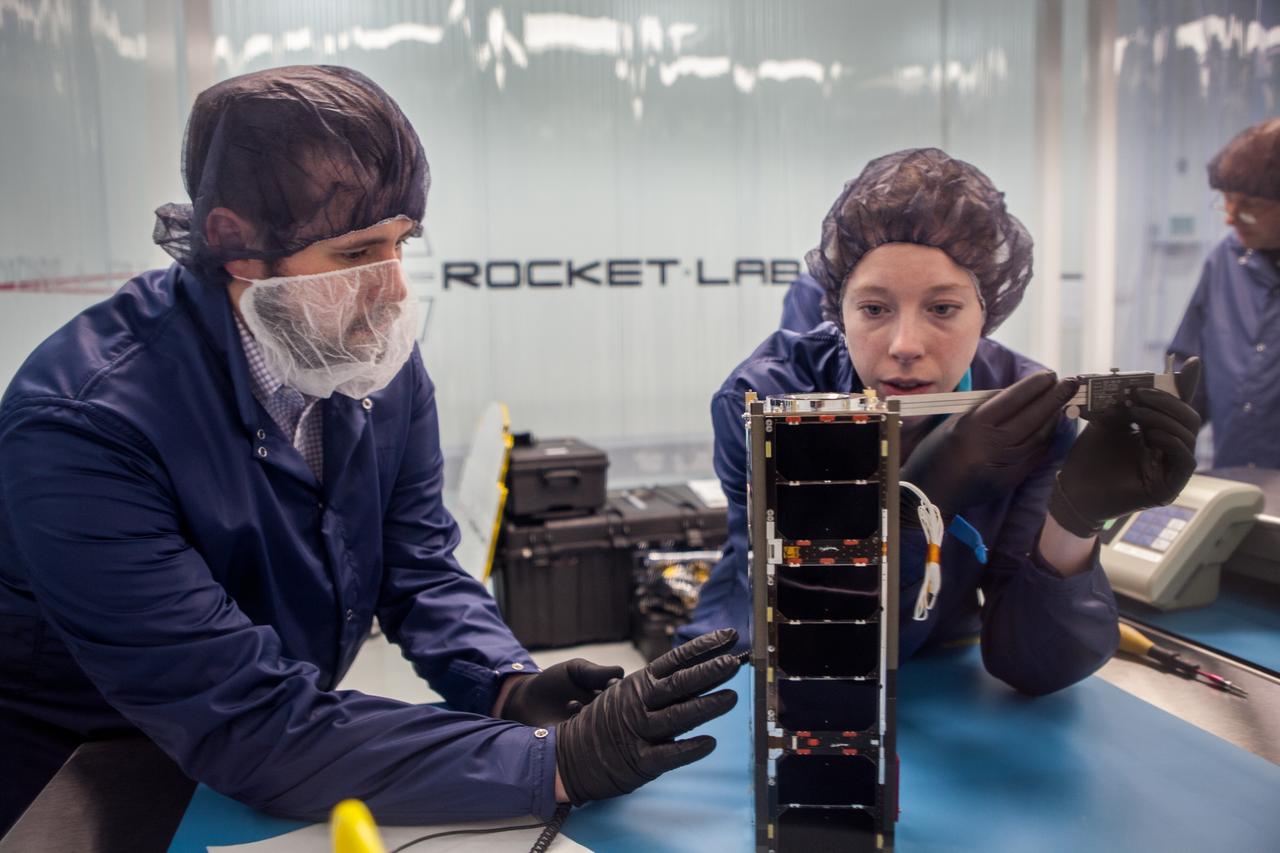
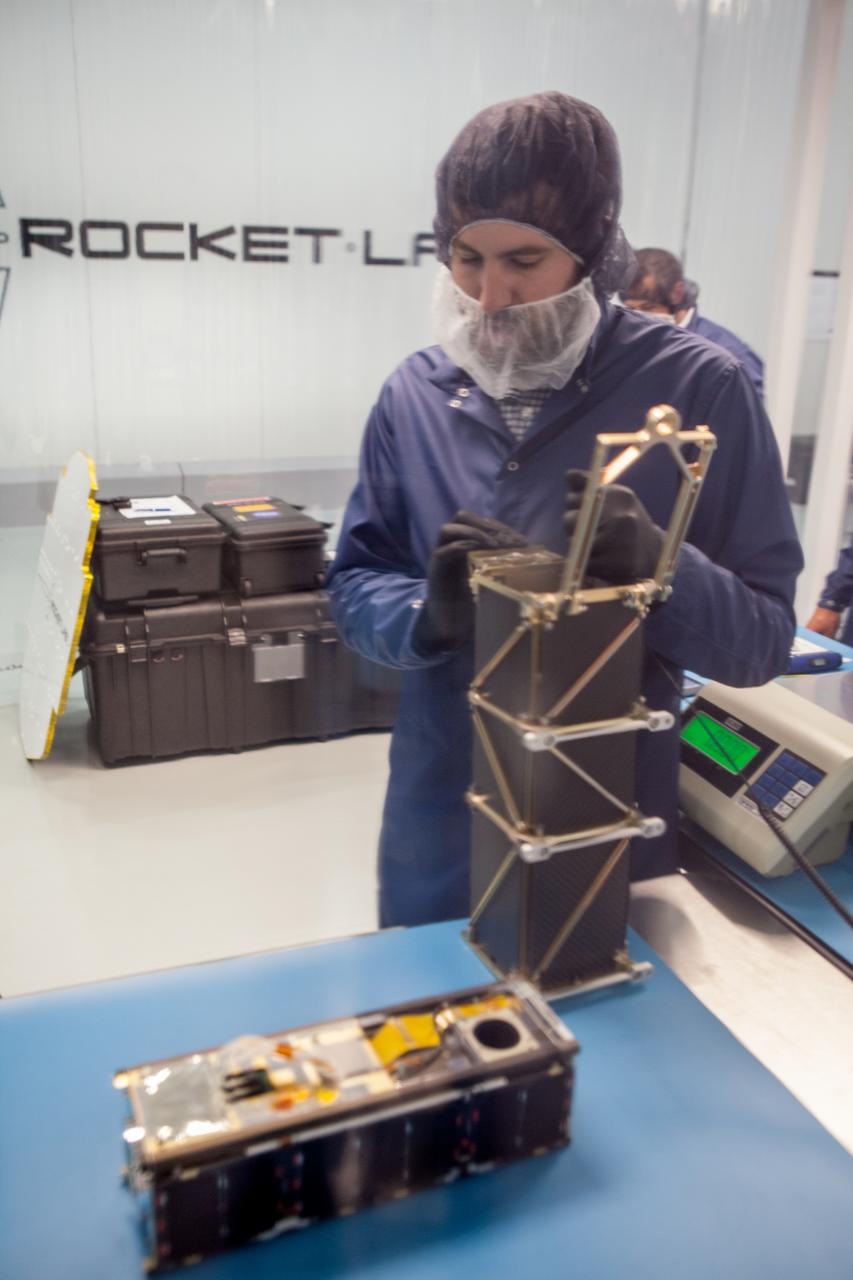
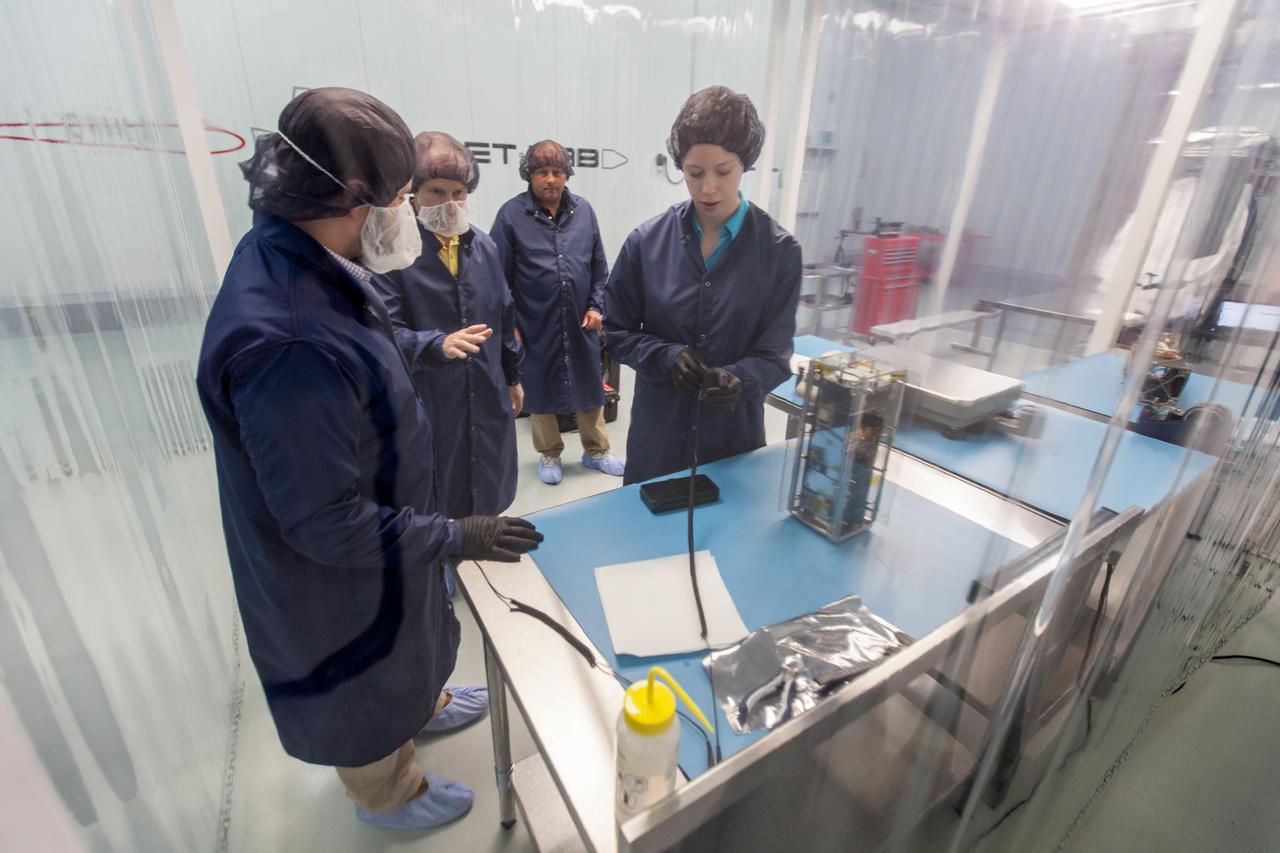
A host of CubeSats, or small satellites, are undergoing the final stages of processing at Rocket Lab USA’s facility in Huntington Beach, California, for NASA’s first mission dedicated solely to spacecraft of their size. This will be the first launch under the agency’s new Venture Class Launch Services. Scientists, including those from NASA and various universities, began arriving at the facility in early April with spacecraft small enough to be a carry-on to be prepared for launch. A team from NASA’s Goddard Spaceflight Center in Greenbelt, Maryland, completed final checkouts of a CubeSat called the Compact Radiation Belt Explorer (CeREs), before placing the satellite into a dispenser to hold the spacecraft during launch inside the payload fairing. Among its missions, the satellite will examine the radiation belt and how electrons are energized and lost, particularly during events called microbursts — when sudden swarms of electrons stream into the atmosphere. This facility is the final stop for designers and builders of the CubeSats, but the journey will continue for the spacecraft. Rocket Lab will soon ship the satellites to New Zealand for launch aboard the company’s Electron orbital rocket on the Mahia Peninsula this summer. The CubeSats will be flown on an Educational Launch of Nanosatellites (ELaNa) mission to space through NASA’s CubeSat Launch Initiative. CeREs is one of the 10 ELaNa CubeSats scheduled to be a part of this mission.
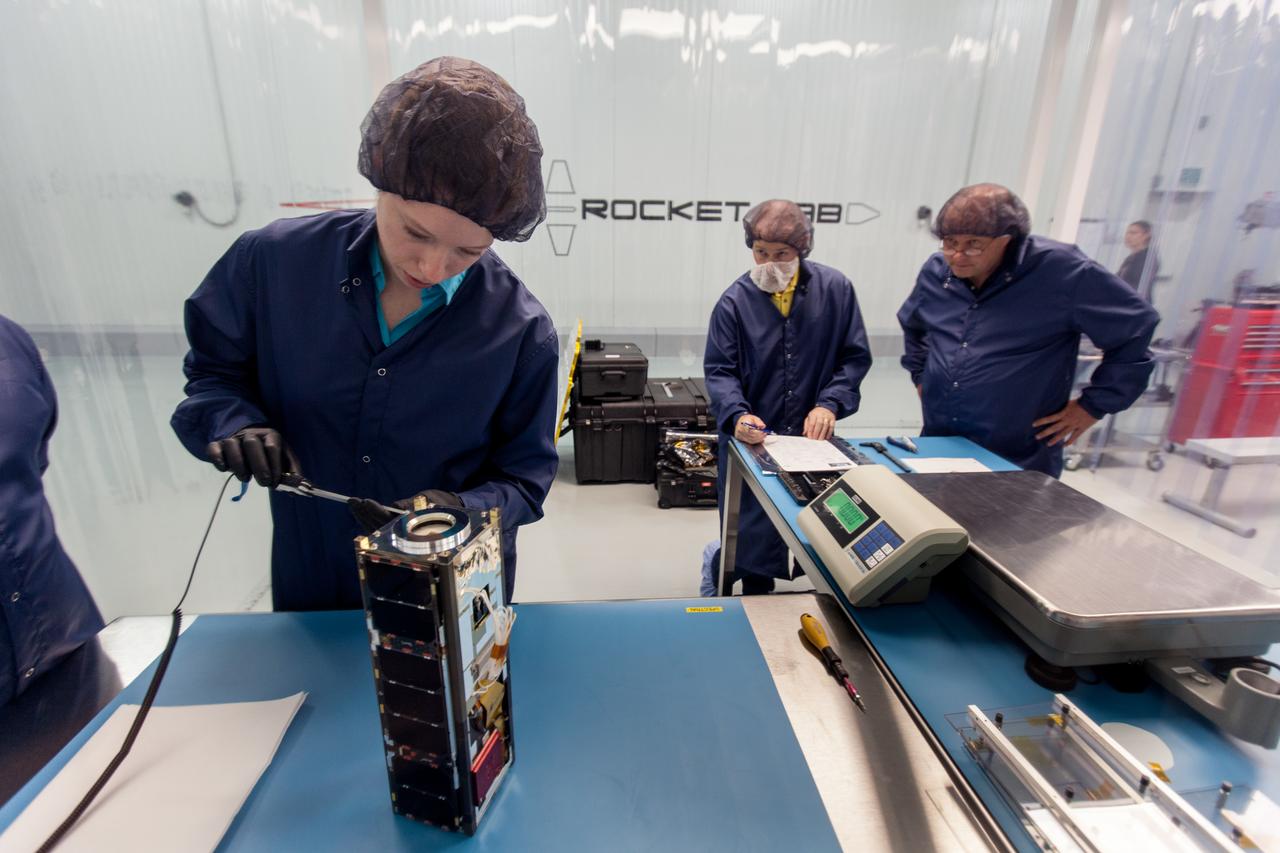
The CubeSat CeREs — short for Compact Radiation Belt Explorer. Its final destination: Earth’s radiation belts. Our planet is nestled in the center of two immense doughnut-shaped rings of radiation that swell and shrink in response to solar activity. This is a dynamic region of near-Earth space through which spacecraft and astronauts travel; understanding the belts’ behavior is crucial for ensuring their safety. From its high inclination, low-Earth orbit, the CubeSat — no larger than a loaf of bread — will face the tumultuous storms of the radiation belts. In particular, CeREs will examine how radiation belt electrons are energized and lost, particularly during events called microbursts — when sudden swarms of electrons stream into the atmosphere. CeREs will also inspect and characterize the high-energy particles that arrive at near-Earth space by way of the solar wind, the constant flow of charged particles from the Sun, 93 million miles away. The CubeSat was designed and built at NASA’s Goddard Space Flight Center in Greenbelt, Maryland.
The CubeSat CeREs — short for Compact Radiation Belt Explorer. Its final destination: Earth’s radiation belts. Our planet is nestled in the center of two immense doughnut-shaped rings of radiation that swell and shrink in response to solar activity. This is a dynamic region of near-Earth space through which spacecraft and astronauts travel; understanding the belts’ behavior is crucial for ensuring their safety. From its high inclination, low-Earth orbit, the CubeSat — no larger than a loaf of bread — will face the tumultuous storms of the radiation belts. In particular, CeREs will examine how radiation belt electrons are energized and lost, particularly during events called microbursts — when sudden swarms of electrons stream into the atmosphere. CeREs will also inspect and characterize the high-energy particles that arrive at near-Earth space by way of the solar wind, the constant flow of charged particles from the Sun, 93 million miles away. The CubeSat was designed and built at NASA’s Goddard Space Flight Center in Greenbelt, Maryland.
The CubeSat CeREs — short for Compact Radiation Belt Explorer. Its final destination: Earth’s radiation belts. Our planet is nestled in the center of two immense doughnut-shaped rings of radiation that swell and shrink in response to solar activity. This is a dynamic region of near-Earth space through which spacecraft and astronauts travel; understanding the belts’ behavior is crucial for ensuring their safety. From its high inclination, low-Earth orbit, the CubeSat — no larger than a loaf of bread — will face the tumultuous storms of the radiation belts. In particular, CeREs will examine how radiation belt electrons are energized and lost, particularly during events called microbursts — when sudden swarms of electrons stream into the atmosphere. CeREs will also inspect and characterize the high-energy particles that arrive at near-Earth space by way of the solar wind, the constant flow of charged particles from the Sun, 93 million miles away. The CubeSat was designed and built at NASA’s Goddard Space Flight Center in Greenbelt, Maryland.