In the mobile service tower on Pad 17-B at Cape Canaveral Air Force Station, the first half of the fairing is moved into place around the THEMIS spacecraft. The fairing is a molded structure that fits flush with the outside surface of the Delta II upper stage booster and forms an aerodynamically smooth nose cone, protecting the spacecraft during launch and ascent. THEMIS is an acronym for Time History of Events and Macroscale Interactions during Substorms. THEMIS consists of five identical probes that will track violent, colorful eruptions near the North Pole. This will be the largest number of scientific satellites NASA ever launched into orbit aboard a single rocket. The THEMIS mission aims to unravel the tantalizing mystery behind auroral substorms, an avalanche of magnetic energy powered by the solar wind that intensifies the northern and southern lights. The mission will investigate what causes auroras in the Earth’s atmosphere to dramatically change from slowly shimmering waves of light to wildly shifting streaks of bright color. Launch of THEMIS is scheduled for Feb. 15 aboard a Delta II rocket, with the launch service being conducted by the United Launch Alliance.
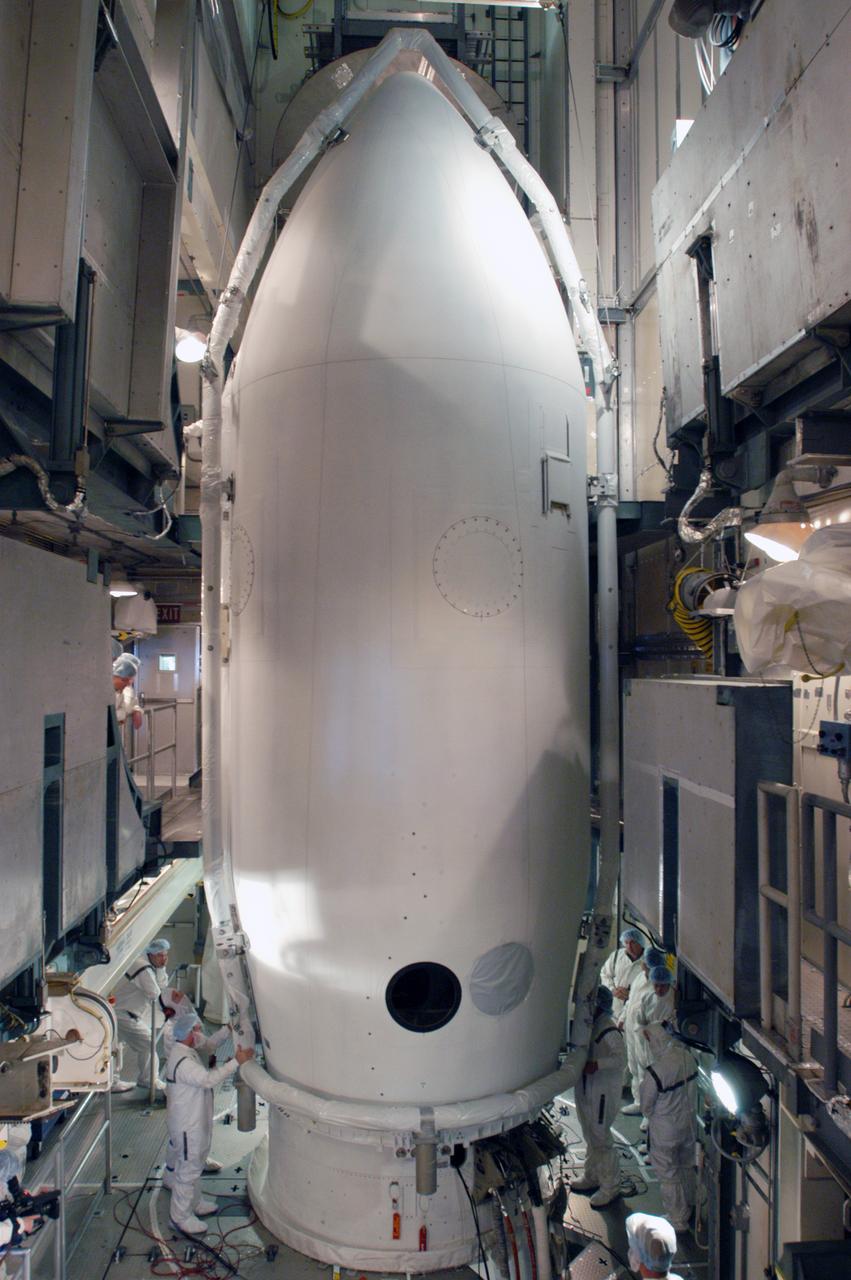
In the mobile service tower on Pad 17-B at Cape Canaveral Air Force Station, workers prepare to join the two fairing segments around the THEMIS spacecraft. The fairing is a molded structure that fits flush with the outside surface of the Delta II upper stage booster and forms an aerodynamically smooth nose cone, protecting the spacecraft during launch and ascent. THEMIS is an acronym for Time History of Events and Macroscale Interactions during Substorms. THEMIS consists of five identical probes that will track violent, colorful eruptions near the North Pole. This will be the largest number of scientific satellites NASA ever launched into orbit aboard a single rocket. The THEMIS mission aims to unravel the tantalizing mystery behind auroral substorms, an avalanche of magnetic energy powered by the solar wind that intensifies the northern and southern lights. The mission will investigate what causes auroras in the Earth’s atmosphere to dramatically change from slowly shimmering waves of light to wildly shifting streaks of bright color. Launch of THEMIS is scheduled for Feb. 15 aboard a Delta II rocket, with the launch service being conducted by the United Launch Alliance.

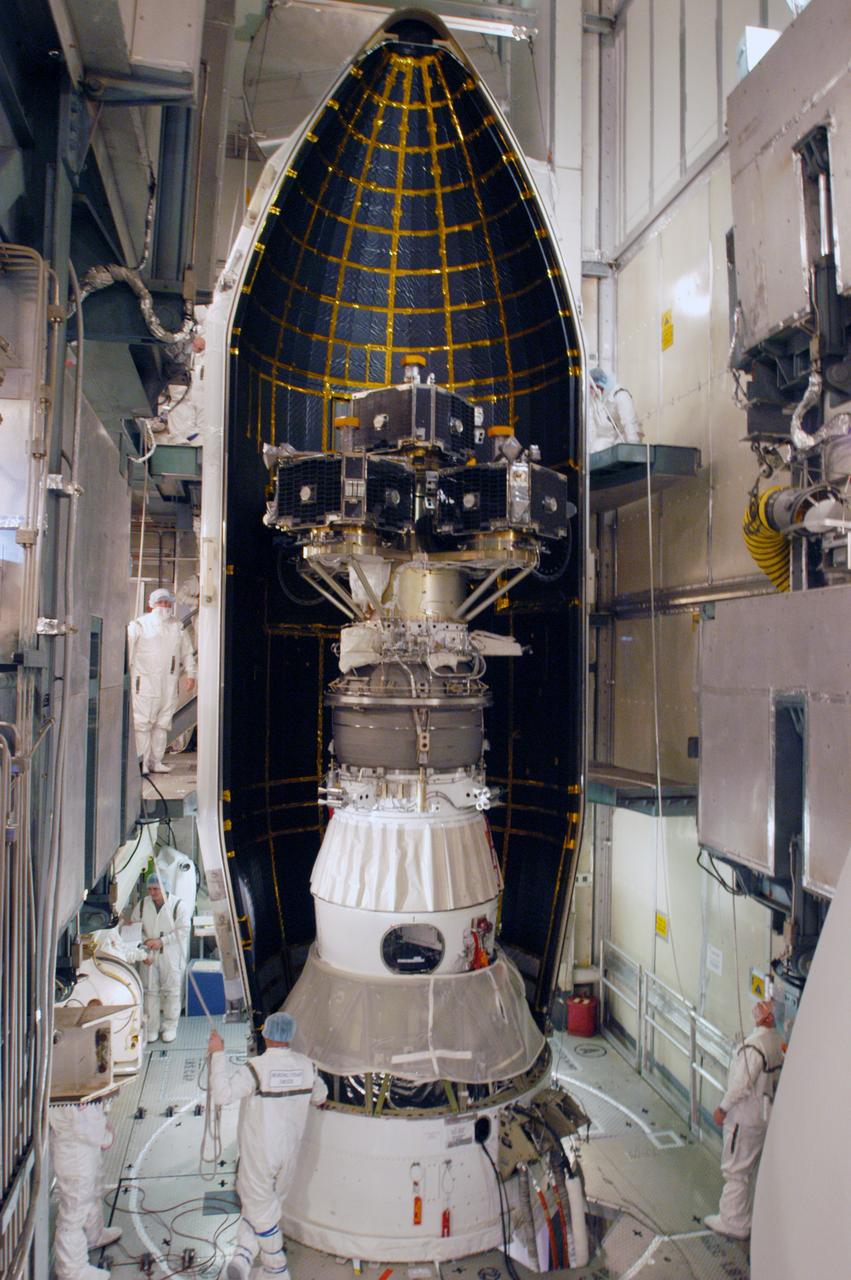
In the mobile service tower on Pad 17-B at Cape Canaveral Air Force Station, the first half of the fairing is in place around the THEMIS spacecraft and workers turn to wait for the second half. The fairing is a molded structure that fits flush with the outside surface of the Delta II upper stage booster and forms an aerodynamically smooth nose cone, protecting the spacecraft during launch and ascent. THEMIS is an acronym for Time History of Events and Macroscale Interactions during Substorms. THEMIS consists of five identical probes that will track violent, colorful eruptions near the North Pole. This will be the largest number of scientific satellites NASA ever launched into orbit aboard a single rocket. The THEMIS mission aims to unravel the tantalizing mystery behind auroral substorms, an avalanche of magnetic energy powered by the solar wind that intensifies the northern and southern lights. The mission will investigate what causes auroras in the Earth’s atmosphere to dramatically change from slowly shimmering waves of light to wildly shifting streaks of bright color. Launch of THEMIS is scheduled for Feb. 15 aboard a Delta II rocket, with the launch service being conducted by the United Launch Alliance.
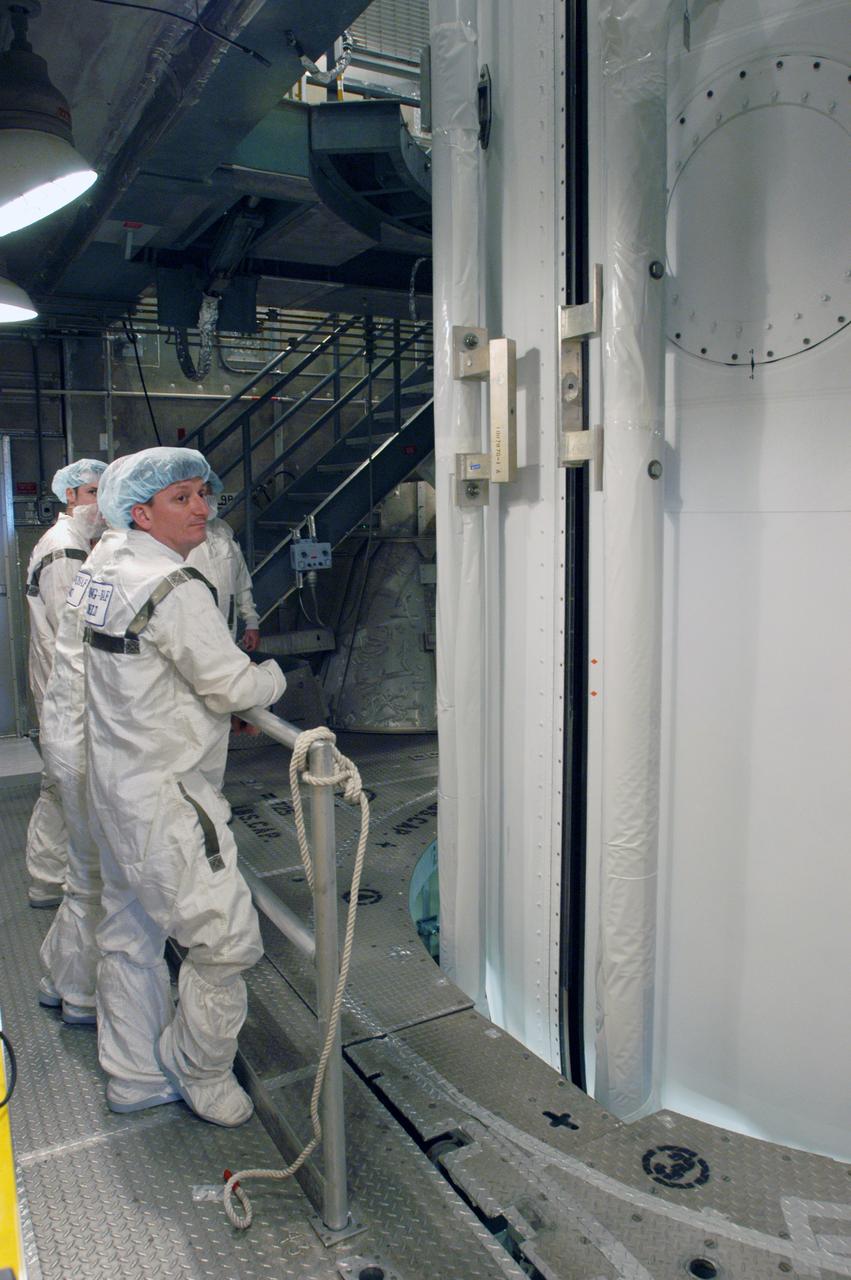
In the mobile service tower on Pad 17-B at Cape Canaveral Air Force Station, the two fairing segments come together around the THEMIS spacecraft. The fairing is a molded structure that fits flush with the outside surface of the Delta II upper stage booster and forms an aerodynamically smooth nose cone, protecting the spacecraft during launch and ascent. THEMIS is an acronym for Time History of Events and Macroscale Interactions during Substorms. THEMIS consists of five identical probes that will track violent, colorful eruptions near the North Pole. This will be the largest number of scientific satellites NASA ever launched into orbit aboard a single rocket. The THEMIS mission aims to unravel the tantalizing mystery behind auroral substorms, an avalanche of magnetic energy powered by the solar wind that intensifies the northern and southern lights. The mission will investigate what causes auroras in the Earth’s atmosphere to dramatically change from slowly shimmering waves of light to wildly shifting streaks of bright color. Launch of THEMIS is scheduled for Feb. 15 aboard a Delta II rocket, with the launch service being conducted by the United Launch Alliance.
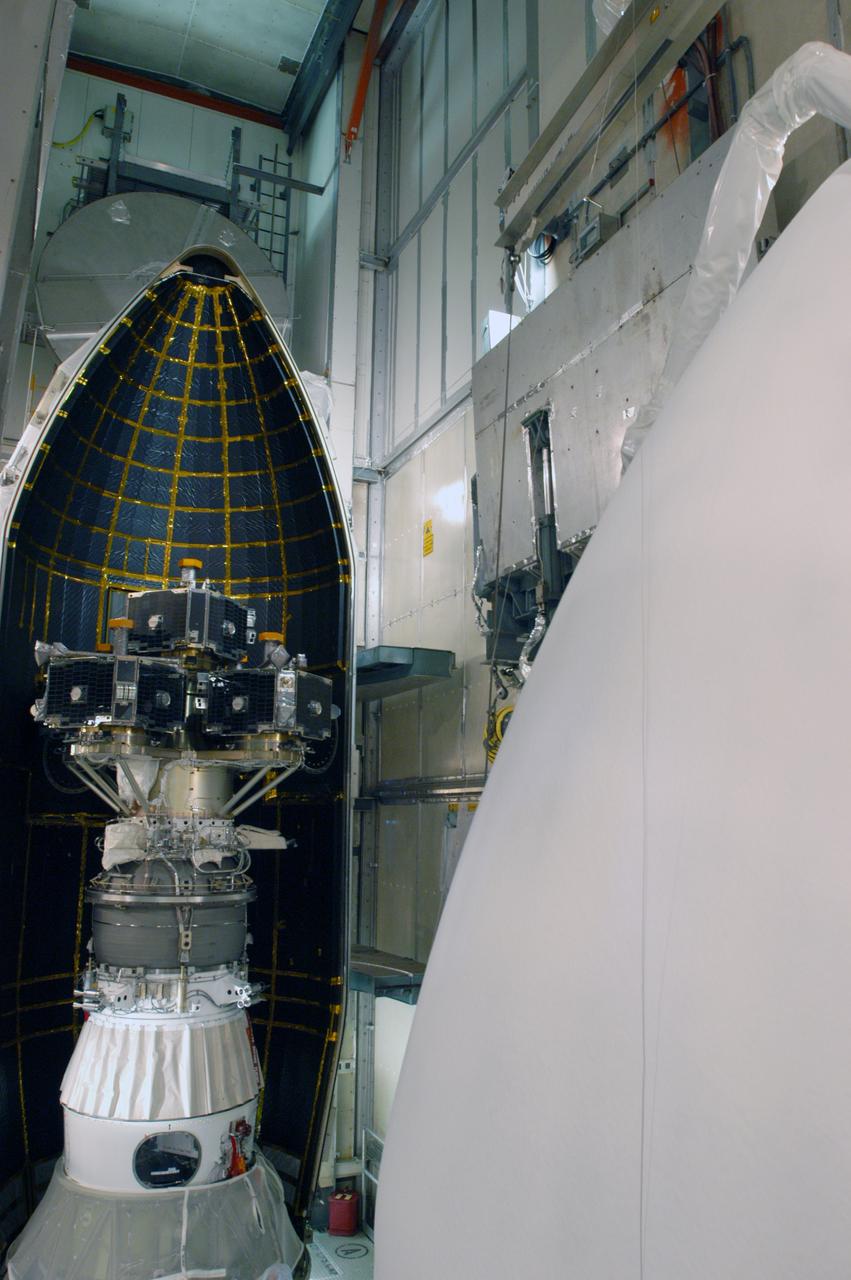
In the mobile service tower on Pad 17-B at Cape Canaveral Air Force Station, the second half of the fairing, at right, moves toward the waiting THEMIS spacecraft. The first half has already been put in place. The fairing is a molded structure that fits flush with the outside surface of the Delta II upper stage booster and forms an aerodynamically smooth nose cone, protecting the spacecraft during launch and ascent. THEMIS is an acronym for Time History of Events and Macroscale Interactions during Substorms. THEMIS consists of five identical probes that will track violent, colorful eruptions near the North Pole. This will be the largest number of scientific satellites NASA ever launched into orbit aboard a single rocket. The THEMIS mission aims to unravel the tantalizing mystery behind auroral substorms, an avalanche of magnetic energy powered by the solar wind that intensifies the northern and southern lights. The mission will investigate what causes auroras in the Earth’s atmosphere to dramatically change from slowly shimmering waves of light to wildly shifting streaks of bright color. Launch of THEMIS is scheduled for Feb. 15 aboard a Delta II rocket, with the launch service being conducted by the United Launch Alliance.
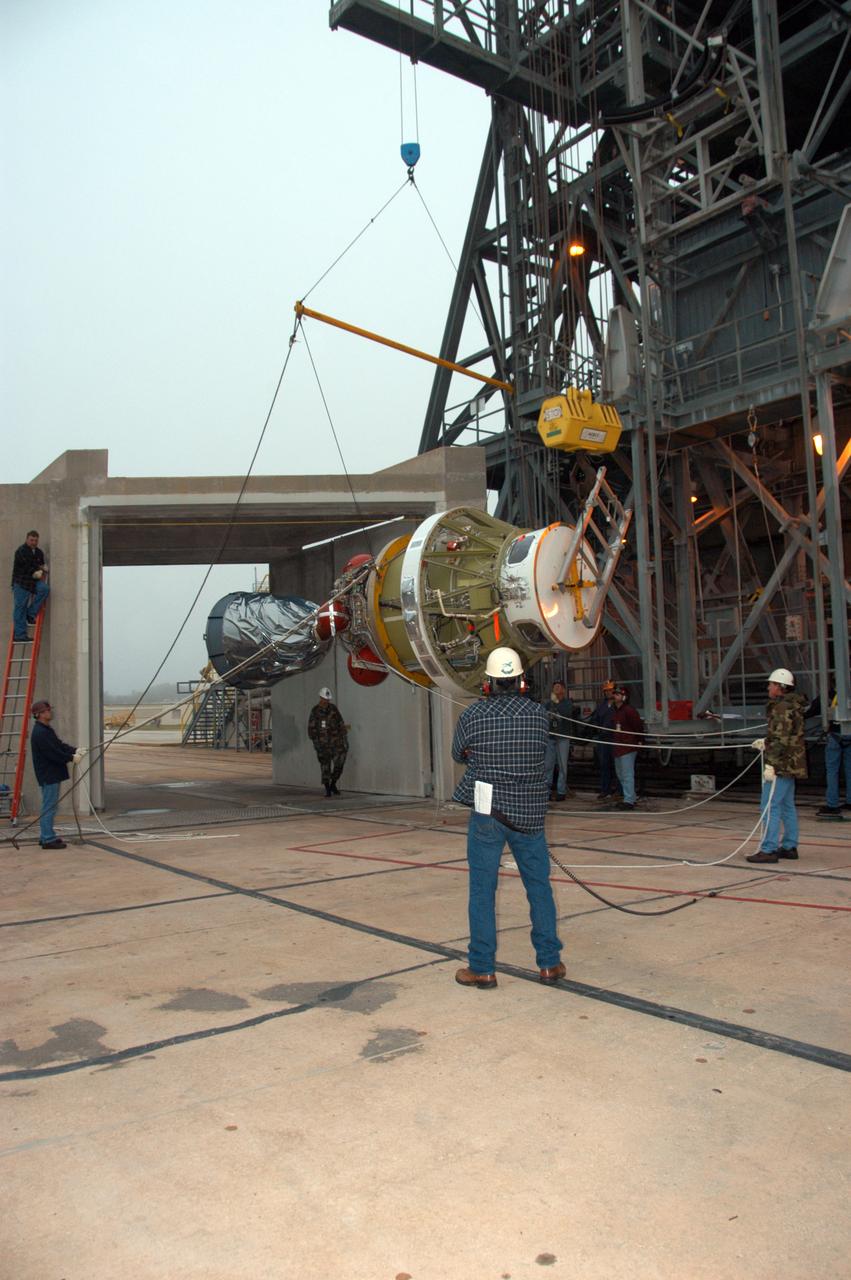
On Pad 17-B at Cape Canaveral Air Force Station, workers stand by while an overhead crane lifts the Delta II second stage to a vertical position. The second stage will be lifted into the mobile service tower and mated with the first stage already in place. The Delta II is the launch vehicle for the THEMIS spacecraft. THEMIS consists of five identical probes, the largest number of scientific satellites ever launched into orbit aboard a single rocket. This unique constellation of satellites will resolve the tantalizing mystery of what causes the spectacular sudden brightening of the aurora borealis and aurora australis - the fiery skies over the Earth's northern and southern polar regions. THEMIS is scheduled to launch Feb. 15 from Cape Canaveral Air Force Station.
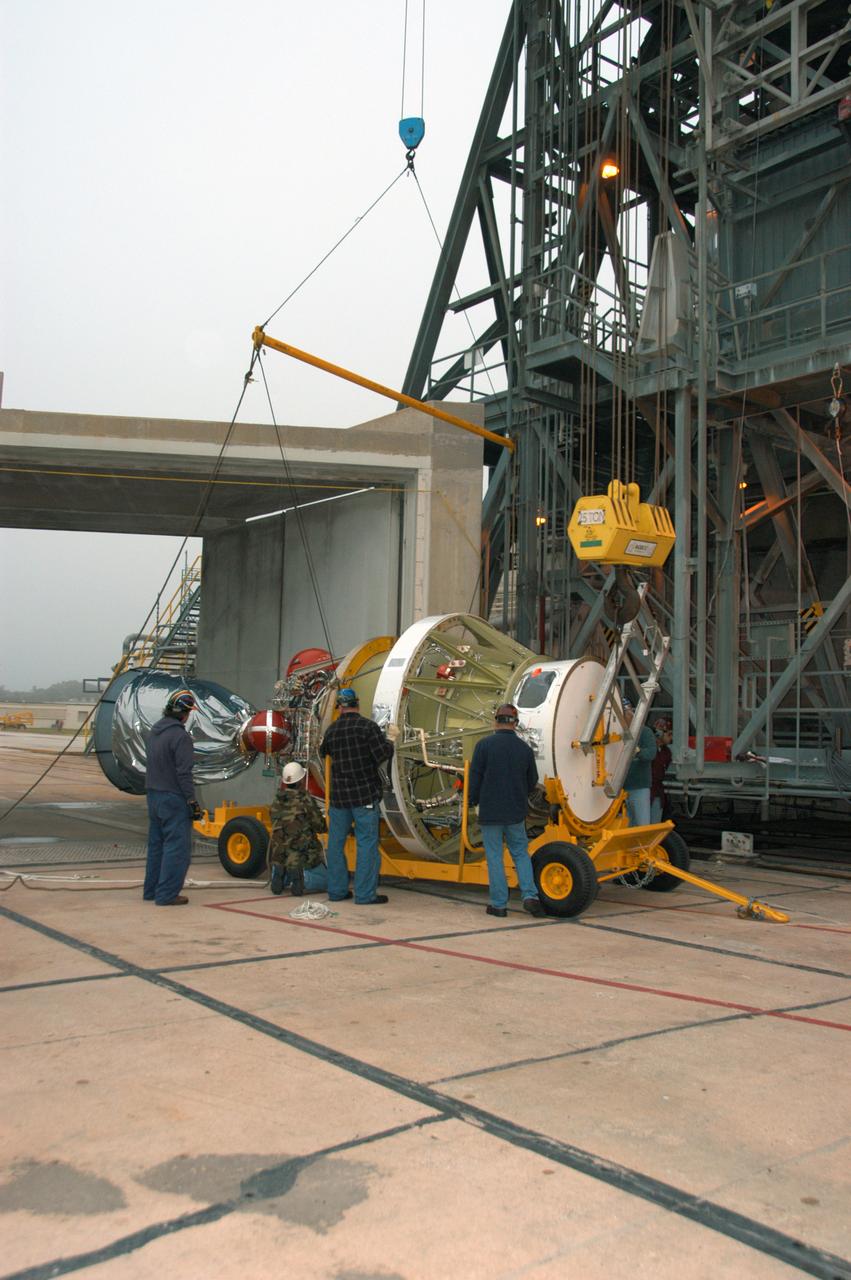
On Pad 17-B at Cape Canaveral Air Force Station, workers attach an overhead crane to the Delta II second stage in order to raise it to vertical. It will be lifted into the mobile service tower and mated with the first stage already in place. The Delta II is the launch vehicle for the THEMIS spacecraft. THEMIS consists of five identical probes, the largest number of scientific satellites ever launched into orbit aboard a single rocket. This unique constellation of satellites will resolve the tantalizing mystery of what causes the spectacular sudden brightening of the aurora borealis and aurora australis - the fiery skies over the Earth's northern and southern polar regions. THEMIS is scheduled to launch Feb. 15 from Cape Canaveral Air Force Station.
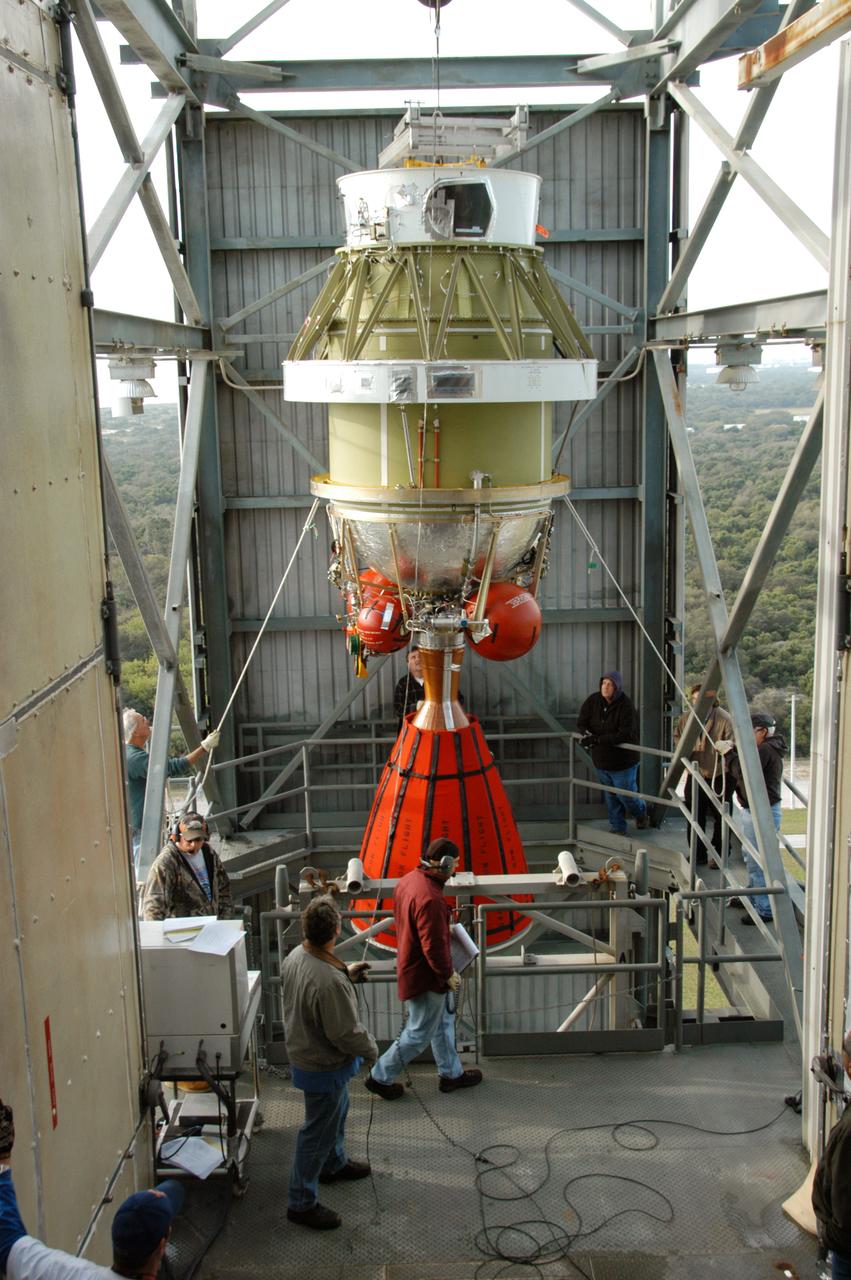
On Pad 17-B at Cape Canaveral Air Force Station, the Delta II second stage arrives at level 9 of the tower. The second stage will be moved inside and mated with the first stage already in place. The Delta II is the launch vehicle for the THEMIS spacecraft THEMIS consists of five identical probes, the largest number of scientific satellites ever launched into orbit aboard a single rocket. This unique constellation of satellites will resolve the tantalizing mystery of what causes the spectacular sudden brightening of the aurora borealis and aurora australis - the fiery skies over the Earth's northern and southern polar regions. THEMIS is scheduled to launch Feb. 15 from Cape Canaveral Air Force Station.
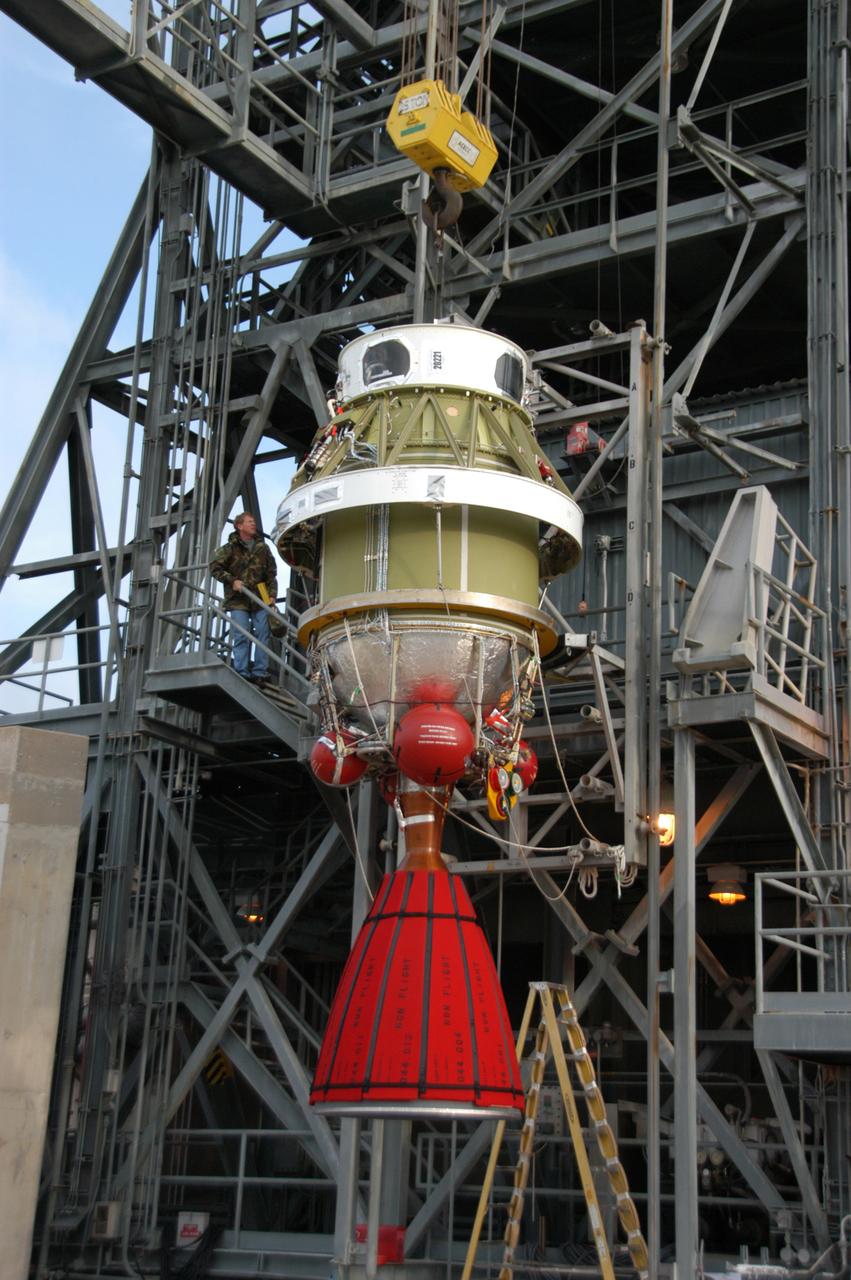
On Pad 17-B at Cape Canaveral Air Force Station, the Delta II second stage is being lifted alongside the mobile service tower. Once inside, it will be mated with the first stage already in place. The Delta II is the launch vehicle for the THEMIS spacecraft. THEMIS consists of five identical probes, the largest number of scientific satellites ever launched into orbit aboard a single rocket. This unique constellation of satellites will resolve the tantalizing mystery of what causes the spectacular sudden brightening of the aurora borealis and aurora australis - the fiery skies over the Earth's northern and southern polar regions. THEMIS is scheduled to launch Feb. 15 from Cape Canaveral Air Force Station.
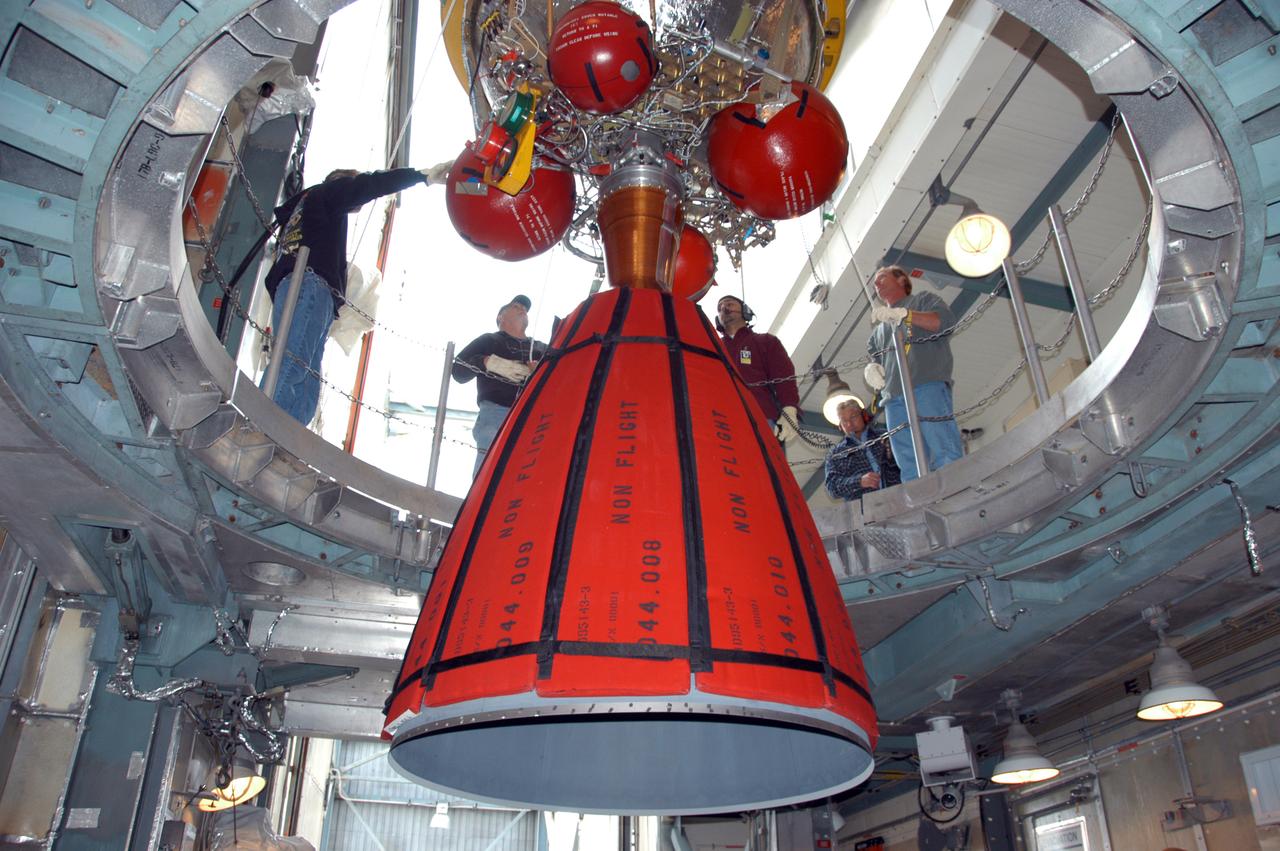
On Pad 17-B at Cape Canaveral Air Force Station, the Delta II second stage is being lowered toward the Delta II first stage, already in place inside the mobile service tower. The Delta II is the launch vehicle for the THEMIS spacecraft. THEMIS consists of five identical probes, the largest number of scientific satellites ever launched into orbit aboard a single rocket. This unique constellation of satellites will resolve the tantalizing mystery of what causes the spectacular sudden brightening of the aurora borealis and aurora australis - the fiery skies over the Earth's northern and southern polar regions. THEMIS is scheduled to launch Feb. 15 from Cape Canaveral Air Force Station.
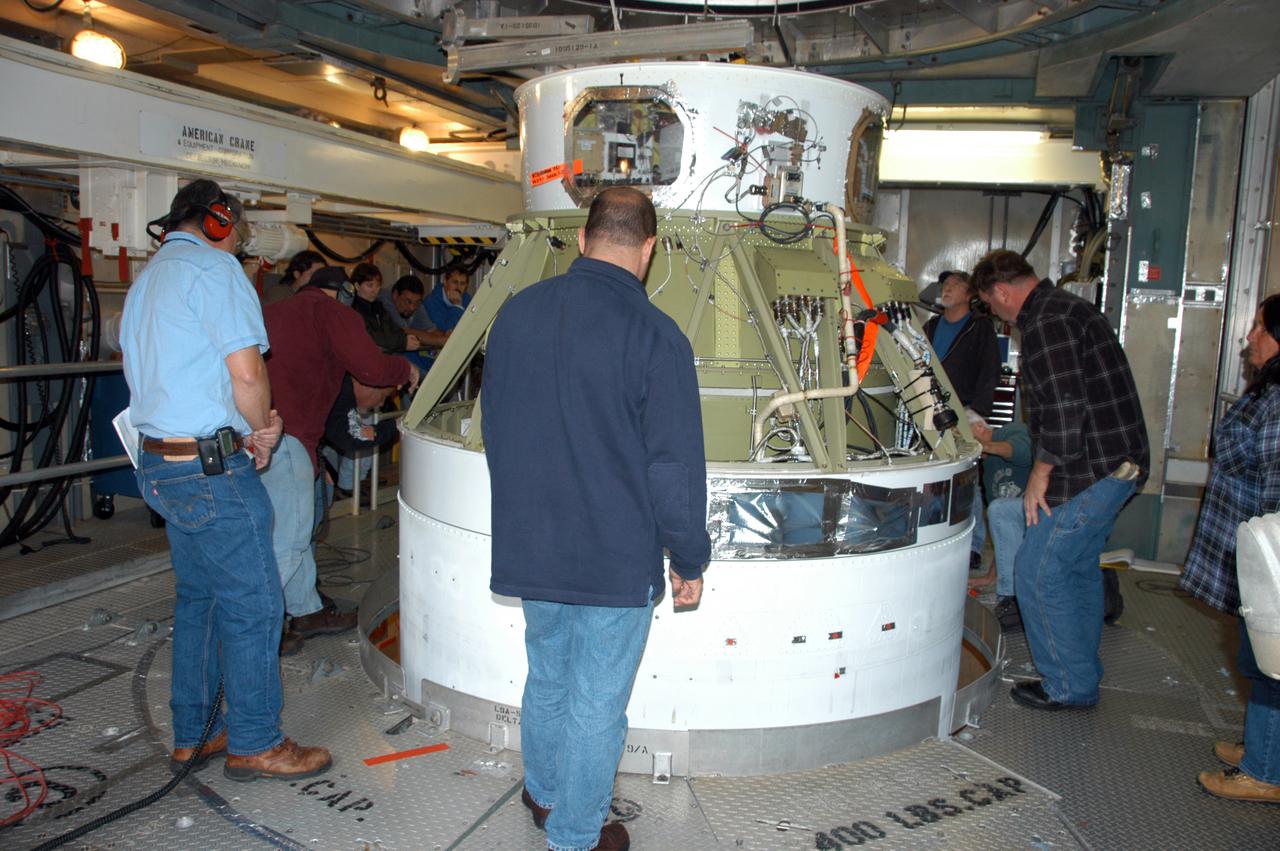
Inside the mobile service tower on Pad 17-B at Cape Canaveral Air Force Station, the Delta II second stage is mated with the first stage. The Delta II is the launch vehicle for the THEMIS spacecraft. THEMIS consists of five identical probes, the largest number of scientific satellites ever launched into orbit aboard a single rocket. This unique constellation of satellites will resolve the tantalizing mystery of what causes the spectacular sudden brightening of the aurora borealis and aurora australis - the fiery skies over the Earth's northern and southern polar regions. THEMIS is scheduled to launch Feb. 15 from Cape Canaveral Air Force Station.
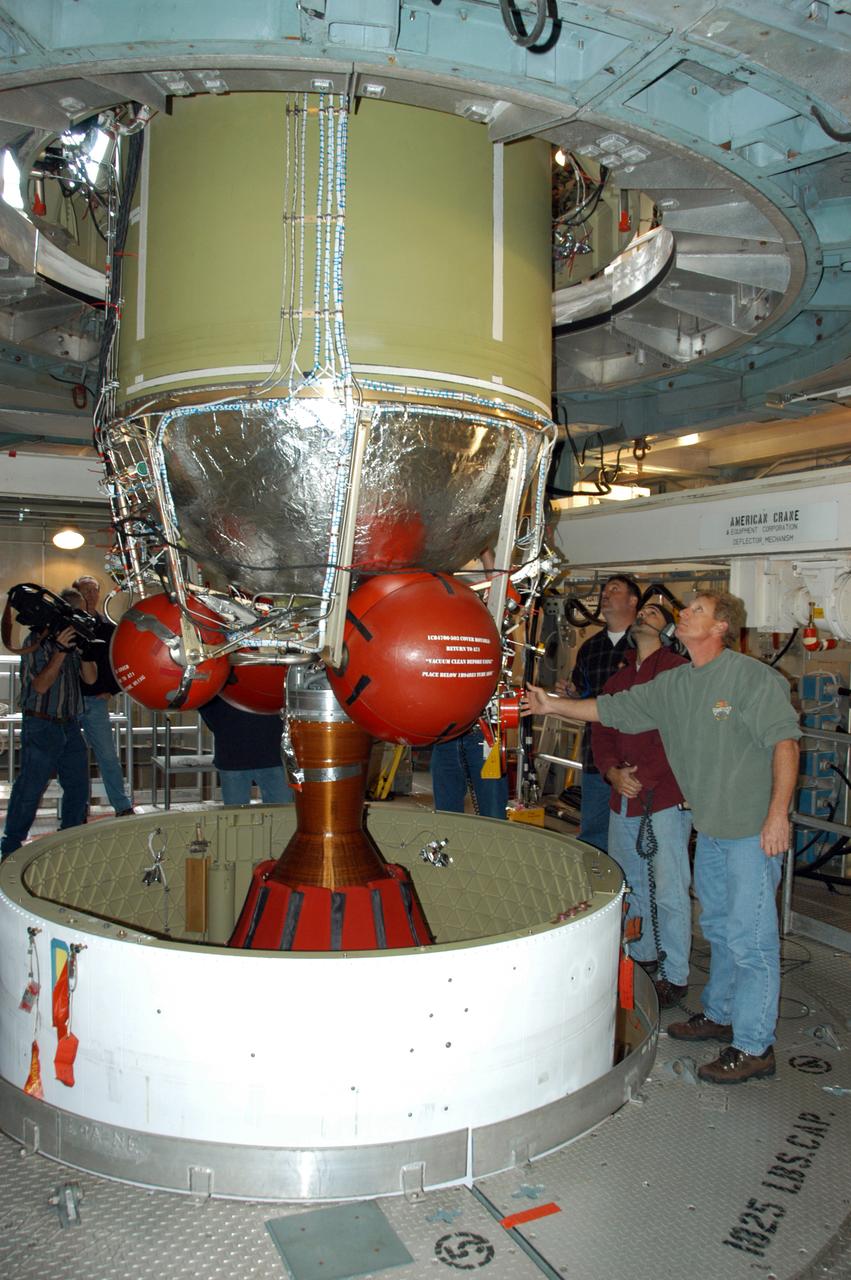
On Pad 17-B at Cape Canaveral Air Force Station, the Delta II second stage is being lowered toward the Delta II first stage, already in place inside the mobile service tower. The Delta II is the launch vehicle for the THEMIS spacecraft. THEMIS consists of five identical probes, the largest number of scientific satellites ever launched into orbit aboard a single rocket. This unique constellation of satellites will resolve the tantalizing mystery of what causes the spectacular sudden brightening of the aurora borealis and aurora australis - the fiery skies over the Earth's northern and southern polar regions. THEMIS is scheduled to launch Feb. 15 from Cape Canaveral Air Force Station.
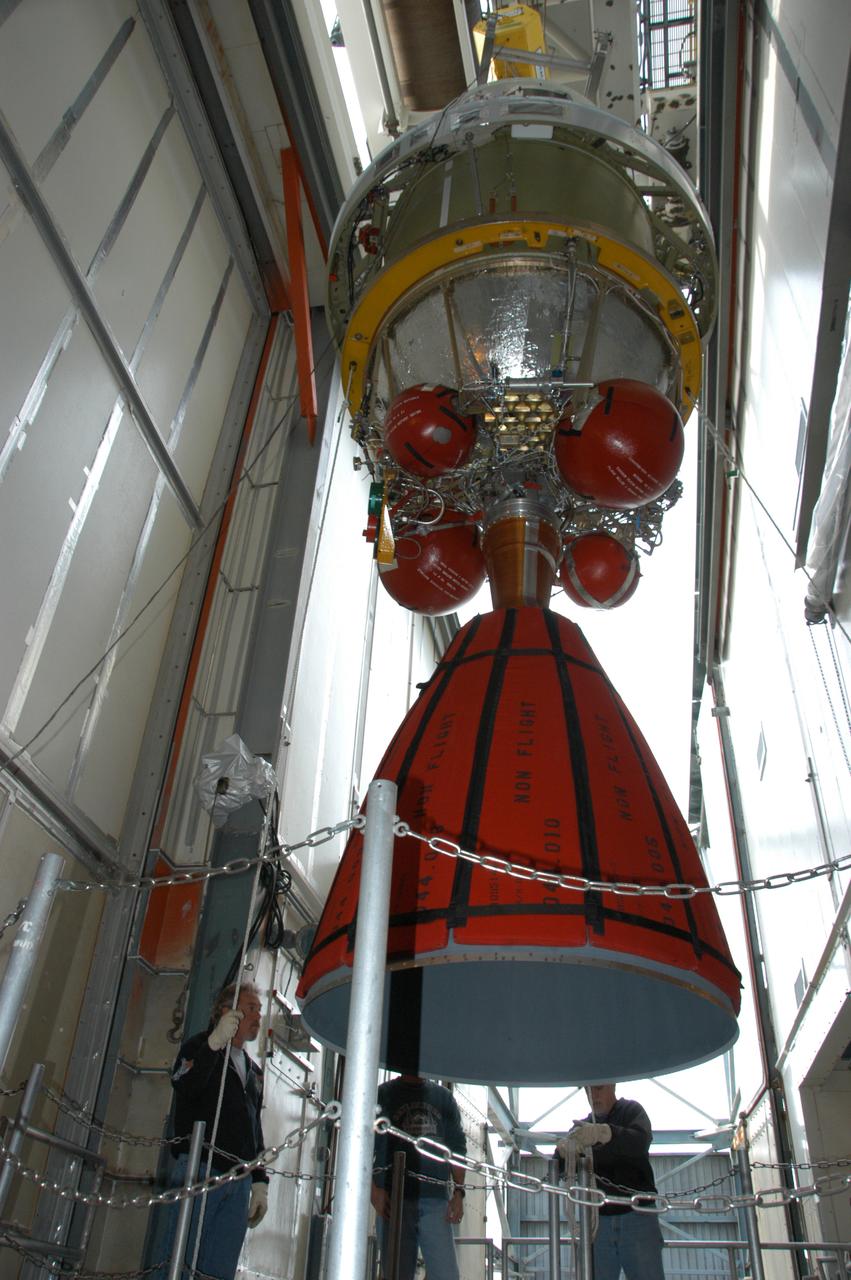
On Pad 17-B at Cape Canaveral Air Force Station, the Delta II second stage is moved inside level 9 of the tower. It will be mated with the first stage already in place. The Delta II is the launch vehicle for the THEMIS spacecraft. THEMIS consists of five identical probes, the largest number of scientific satellites ever launched into orbit aboard a single rocket. This unique constellation of satellites will resolve the tantalizing mystery of what causes the spectacular sudden brightening of the aurora borealis and aurora australis - the fiery skies over the Earth's northern and southern polar regions. THEMIS is scheduled to launch Feb. 15 from Cape Canaveral Air Force Station.
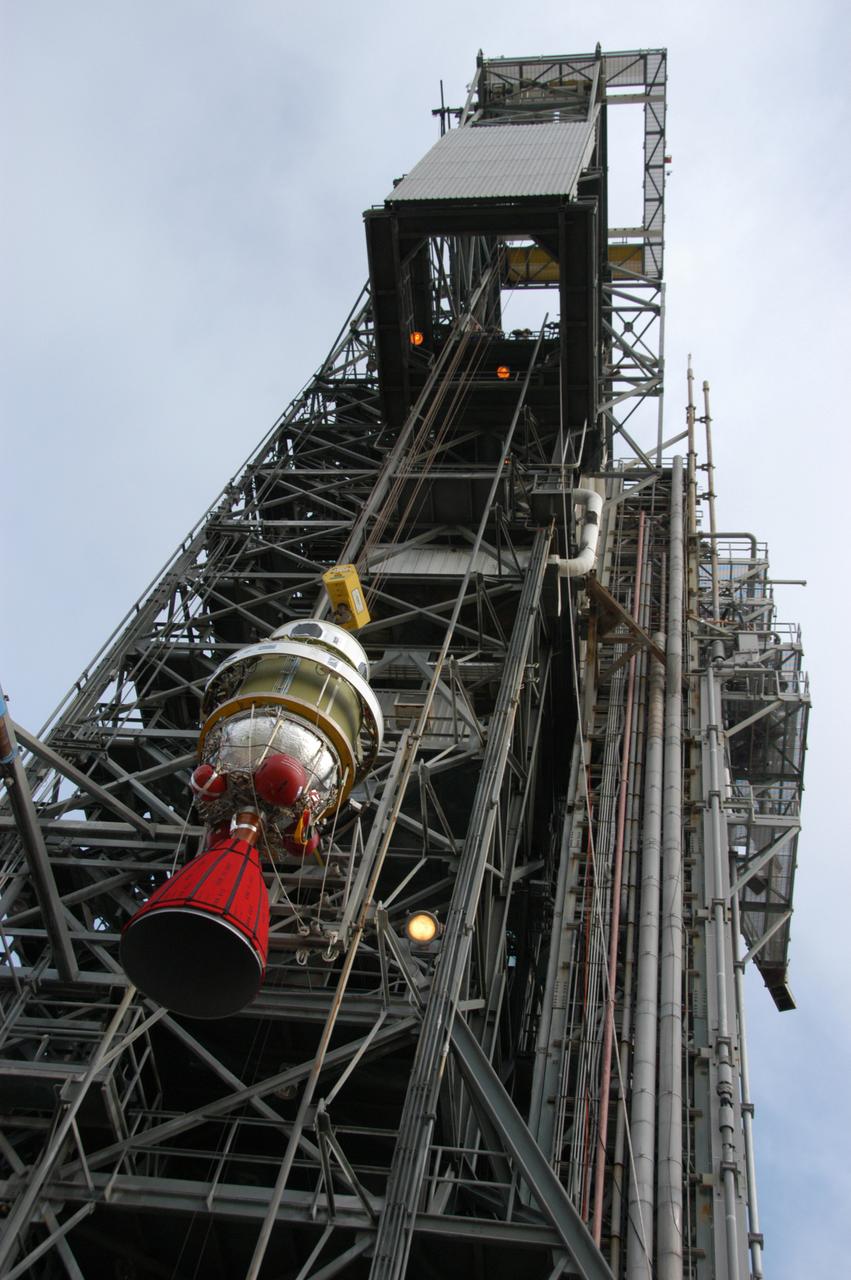
On Pad 17-B at Cape Canaveral Air Force Station, the Delta II second stage is being lifted alongside the mobile service tower. Once inside, it will be mated with the first stage already in place. The Delta II is the launch vehicle for the THEMIS spacecraft. THEMIS consists of five identical probes, the largest number of scientific satellites ever launched into orbit aboard a single rocket. This unique constellation of satellites will resolve the tantalizing mystery of what causes the spectacular sudden brightening of the aurora borealis and aurora australis - the fiery skies over the Earth's northern and southern polar regions. THEMIS is scheduled to launch Feb. 15 from Cape Canaveral Air Force Station.
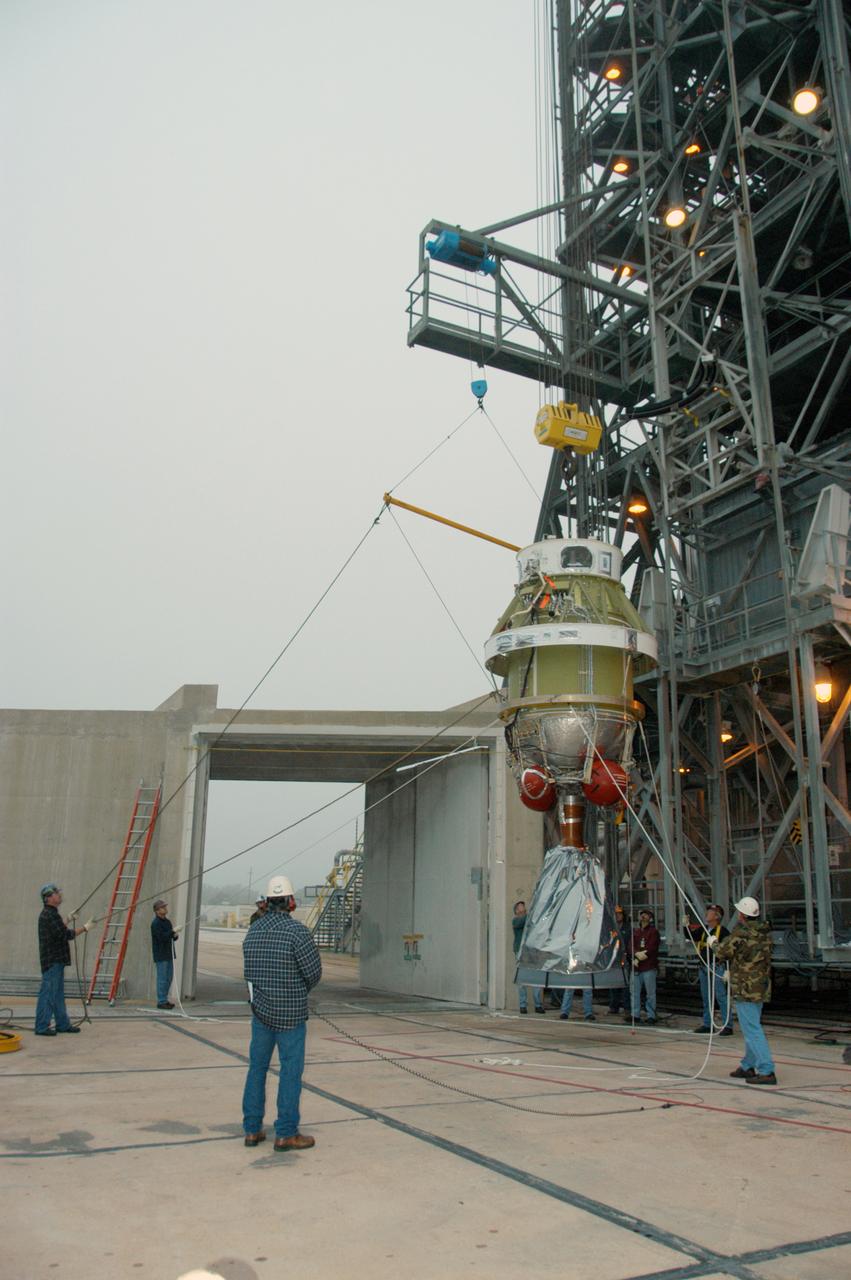
On Pad 17-B at Cape Canaveral Air Force Station, the Delta II second stage is lifted toward the mobile service tower. Once inside, it will be mated with the first stage already in place. The Delta II is the launch vehicle for the THEMIS spacecraft. THEMIS consists of five identical probes, the largest number of scientific satellites ever launched into orbit aboard a single rocket. This unique constellation of satellites will resolve the tantalizing mystery of what causes the spectacular sudden brightening of the aurora borealis and aurora australis - the fiery skies over the Earth's northern and southern polar regions. THEMIS is scheduled to launch Feb. 15 from Cape Canaveral Air Force Station.

The first stage of a United Launch Alliance Delta II rocket moves into place in front of at the mobile service tower on Launch Pad 17-B at Cape Canaveral Air Force Station in Florida. The rocket will be raised to a vertical position and lifted into the tower. The rocket is the launch vehicle for the THEMIS spacecraft, consisting of five identical probes, the largest number of scientific satellites ever launched into orbit aboard a single rocket. This unique constellation of satellites will resolve the tantalizing mystery of what causes the spectacular sudden brightening of the aurora borealis and aurora australis - the fiery skies over the Earth's northern and southern polar regions. After the first stage is in the mobile service tower on the pad, nine solid rocket boosters will be placed around the base of the first stage and attached in sets of three. THEMIS is scheduled to launch aboard the Delta II at 6:07 p.m. EST on Feb. 15.
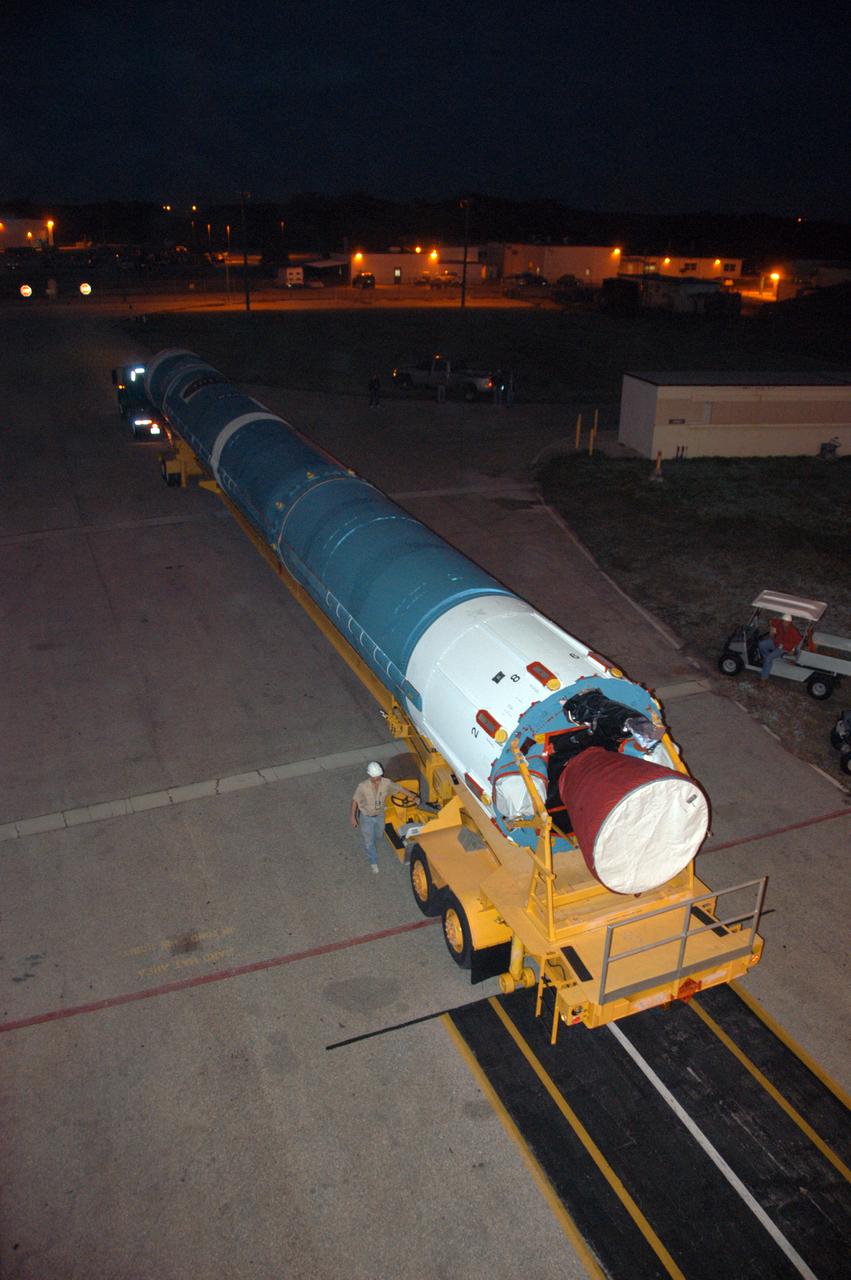
The first stage of a United Launch Alliance Delta II rocket is on its way to Launch Pad 17-B on Cape Canaveral Air Force Station in Florida. The rocket is the launch vehicle for the THEMIS spacecraft, consisting of five identical probes, the largest number of scientific satellites ever launched into orbit aboard a single rocket. This unique constellation of satellites will resolve the tantalizing mystery of what causes the spectacular sudden brightening of the aurora borealis and aurora australis - the fiery skies over the Earth's northern and southern polar regions. After the first stage is in the mobile service tower on the pad, nine solid rocket boosters will be placed around the base of the first stage and attached in sets of three. THEMIS is scheduled to launch aboard the Delta II at 6:07 p.m. EST on Feb. 15.

On Launch Pad 17-B at Cape Canaveral Air Force Station in Florida, the first stage of a United Launch Alliance Delta II rocket is raised off its transporter to a vertical position. The rocket will then be lifted into the mobile service tower. The rocket is the launch vehicle for the THEMIS spacecraft, consisting of five identical probes, the largest number of scientific satellites ever launched into orbit aboard a single rocket. This unique constellation of satellites will resolve the tantalizing mystery of what causes the spectacular sudden brightening of the aurora borealis and aurora australis - the fiery skies over the Earth's northern and southern polar regions. After the first stage is in the mobile service tower on the pad, nine solid rocket boosters will be placed around the base of the first stage and attached in sets of three. THEMIS is scheduled to launch aboard the Delta II at 6:07 p.m. EST on Feb. 15.
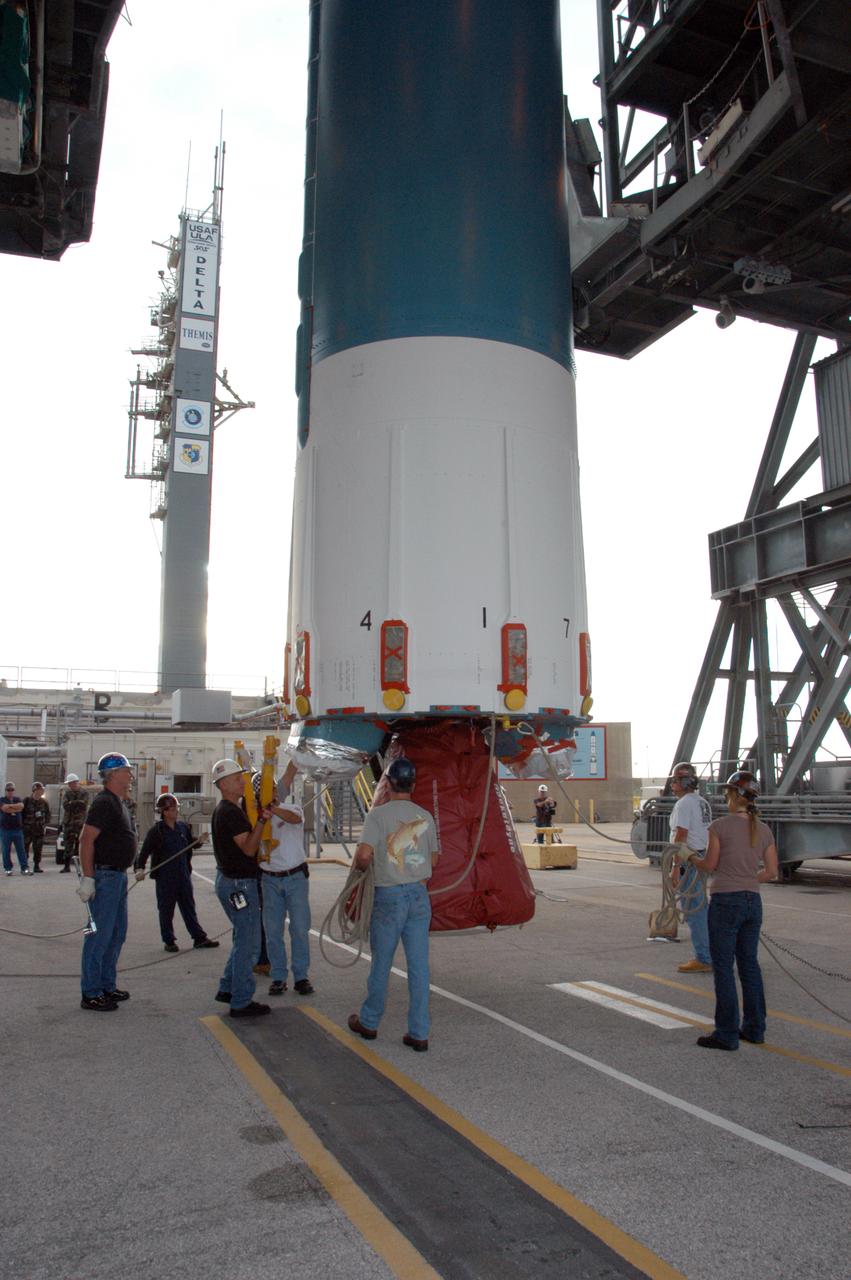
On Launch Pad 17-B at Cape Canaveral Air Force Station in Florida, workers check the lines attached to the lower end of the United Launch Alliance Delta II rocket before it is lifted into the mobile service tower. The rocket is the launch vehicle for the THEMIS spacecraft, consisting of five identical probes, the largest number of scientific satellites ever launched into orbit aboard a single rocket. This unique constellation of satellites will resolve the tantalizing mystery of what causes the spectacular sudden brightening of the aurora borealis and aurora australis - the fiery skies over the Earth's northern and southern polar regions. After the first stage is in the mobile service tower on the pad, nine solid rocket boosters will be placed around the base of the first stage and attached in sets of three. THEMIS is scheduled to launch aboard the Delta II at 6:07 p.m. EST on Feb. 15.

The first stage of a United Launch Alliance Delta II rocket leaves for Launch Pad 17-B on Cape Canaveral Air Force Station in Florida. The rocket is the launch vehicle for the THEMIS spacecraft, consisting of five identical probes, the largest number of scientific satellites ever launched into orbit aboard a single rocket. This unique constellation of satellites will resolve the tantalizing mystery of what causes the spectacular sudden brightening of the aurora borealis and aurora australis - the fiery skies over the Earth's northern and southern polar regions. After the first stage is in the mobile service tower on the pad, nine solid rocket boosters will be placed around the base of the first stage and attached in sets of three. THEMIS is scheduled to launch aboard the Delta II at 6:07 p.m. EST on Feb. 15.

On Launch Pad 17-B at Cape Canaveral Air Force Station in Florida, a crane (foreground) raises the first stage of a United Launch Alliance Delta II rocket off its transporter to a vertical position. The rocket will then be lifted into the mobile service tower. The rocket is the launch vehicle for the THEMIS spacecraft, consisting of five identical probes, the largest number of scientific satellites ever launched into orbit aboard a single rocket. This unique constellation of satellites will resolve the tantalizing mystery of what causes the spectacular sudden brightening of the aurora borealis and aurora australis - the fiery skies over the Earth's northern and southern polar regions. After the first stage is in the mobile service tower on the pad, nine solid rocket boosters will be placed around the base of the first stage and attached in sets of three. THEMIS is scheduled to launch aboard the Delta II at 6:07 p.m. EST on Feb. 15.
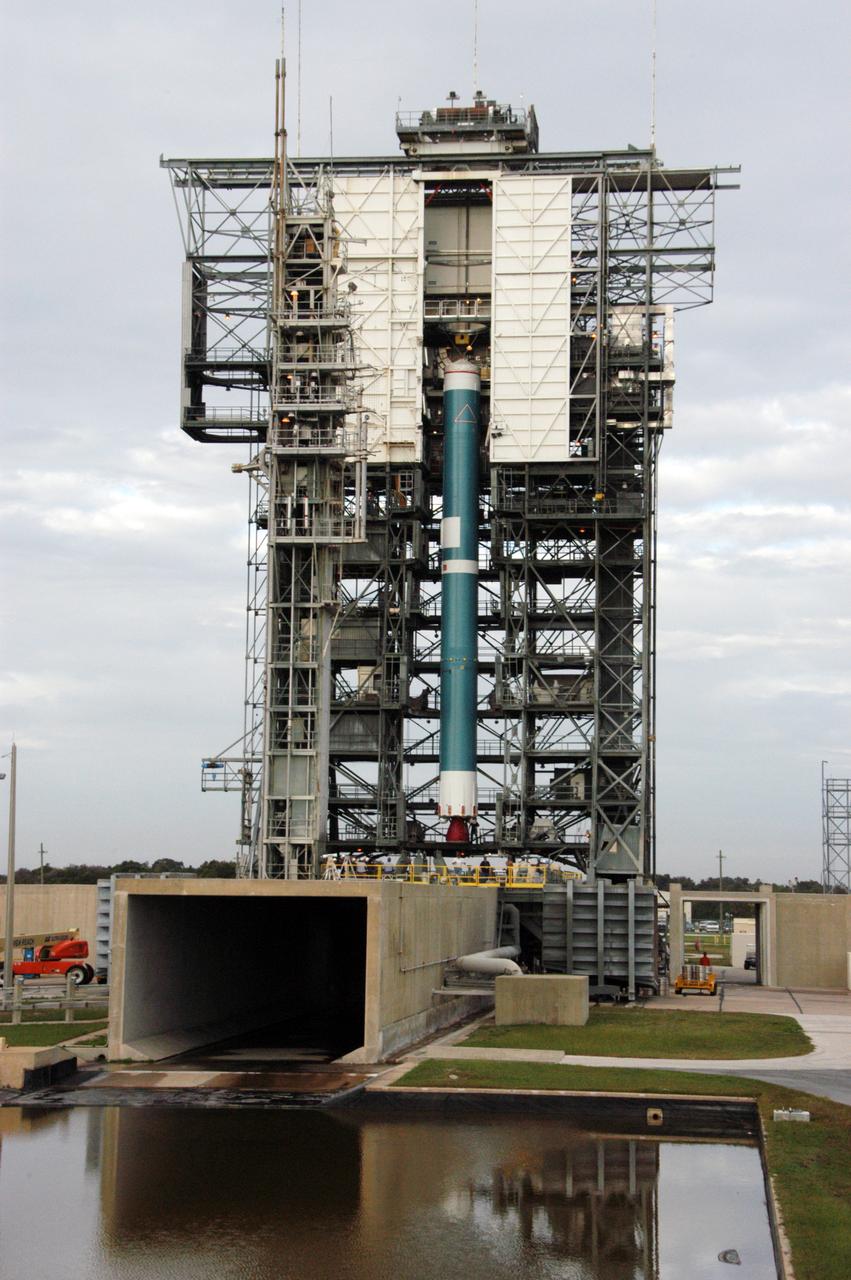
On Launch Pad 17-B at Cape Canaveral Air Force Station in Florida, the United Launch Alliance Delta II rocket is moved inside the mobile service tower where nine solid rocket boosters will be attached in sets of three. The rocket is the launch vehicle for the THEMIS spacecraft, consisting of five identical probes, the largest number of scientific satellites ever launched into orbit aboard a single rocket. This unique constellation of satellites will resolve the tantalizing mystery of what causes the spectacular sudden brightening of the aurora borealis and aurora australis - the fiery skies over the Earth's northern and southern polar regions. THEMIS is scheduled to launch aboard the Delta II at 6:07 p.m. EST on Feb. 15.

The first stage of a United Launch Alliance Delta II rocket arrives at the mobile service tower on Launch Pad 17-B at Cape Canaveral Air Force Station in Florida. The rocket is the launch vehicle for the THEMIS spacecraft, consisting of five identical probes, the largest number of scientific satellites ever launched into orbit aboard a single rocket. This unique constellation of satellites will resolve the tantalizing mystery of what causes the spectacular sudden brightening of the aurora borealis and aurora australis - the fiery skies over the Earth's northern and southern polar regions. After the first stage is in the mobile service tower on the pad, nine solid rocket boosters will be placed around the base of the first stage and attached in sets of three. THEMIS is scheduled to launch aboard the Delta II at 6:07 p.m. EST on Feb. 15.
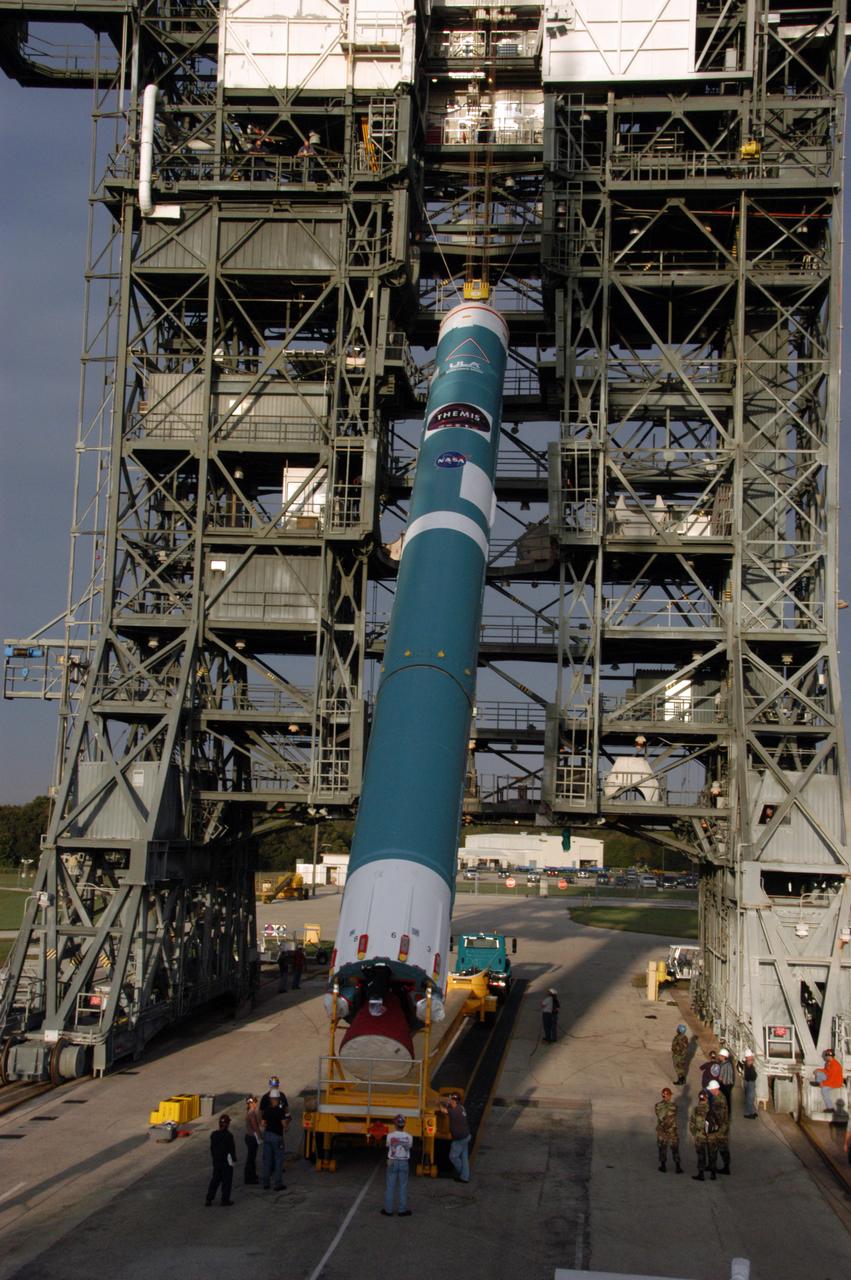
On Launch Pad 17-B at Cape Canaveral Air Force Station in Florida, the first stage of a United Launch Alliance Delta II rocket is raised off its transporter to a vertical position. The rocket will then be lifted into the mobile service tower. The rocket is the launch vehicle for the THEMIS spacecraft, consisting of five identical probes, the largest number of scientific satellites ever launched into orbit aboard a single rocket. This unique constellation of satellites will resolve the tantalizing mystery of what causes the spectacular sudden brightening of the aurora borealis and aurora australis - the fiery skies over the Earth's northern and southern polar regions. After the first stage is in the tower on the pad, nine solid rocket boosters will be placed around the base of the first stage and attached in sets of three. THEMIS is scheduled to launch aboard the Delta II at 6:07 p.m. EST on Feb. 15.
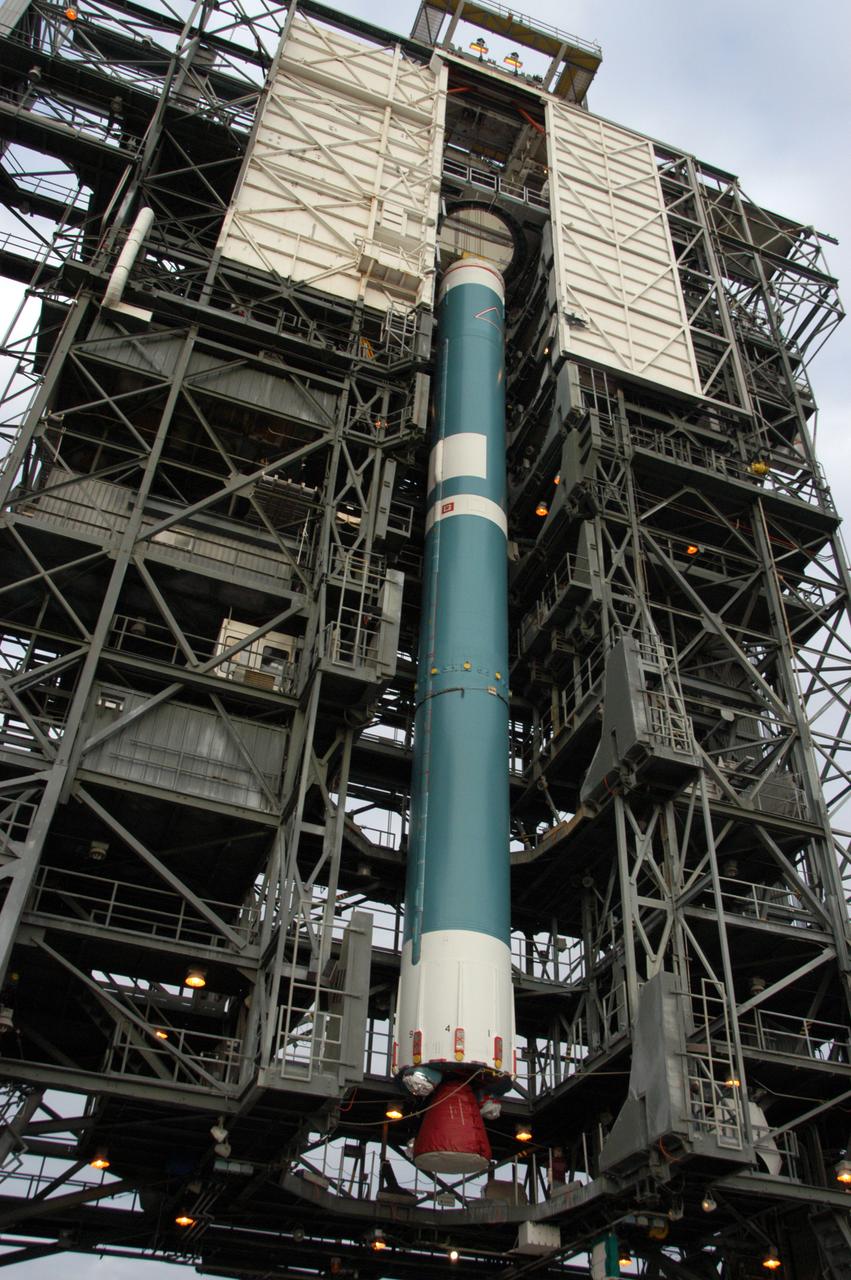
On Launch Pad 17-B at Cape Canaveral Air Force Station in Florida, the United Launch Alliance Delta II rocket is lifted up into the mobile service tower. The rocket is the launch vehicle for the THEMIS spacecraft, consisting of five identical probes, the largest number of scientific satellites ever launched into orbit aboard a single rocket. This unique constellation of satellites will resolve the tantalizing mystery of what causes the spectacular sudden brightening of the aurora borealis and aurora australis - the fiery skies over the Earth's northern and southern polar regions. After the first stage is in the tower on the pad, nine solid rocket boosters will be placed around the base of the first stage and attached in sets of three. THEMIS is scheduled to launch aboard the Delta II at 6:07 p.m. EST on Feb. 15.
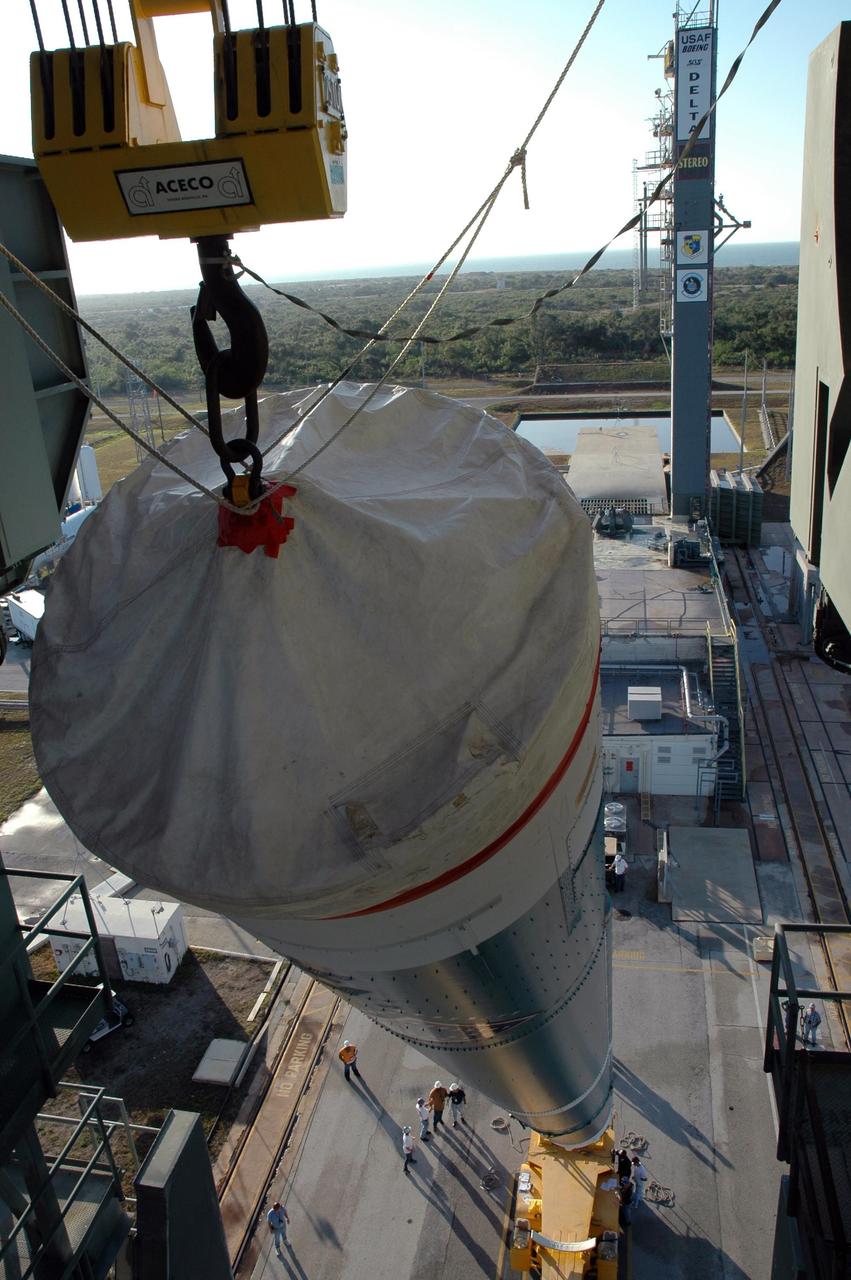
KENNEDY SPACE CENTER, FLA. - The first stage of the Boeing Delta II rocket, slated to launch NASA's Solar Terrestrial Relations Observatory (STEREO), is lifted into a vertical position for installation into the mobile service tower at Pad 17B on Cape Canaveral Air Force Station. Preparations are under way for a liftoff no earlier than July 22. STEREO consists of two spacecraft whose mission is the first to take measurements of the sun and solar wind in 3-D. This new view will improve our understanding of space weather and its impact on the Earth. Photo credit: NASA/Jim Grossmann
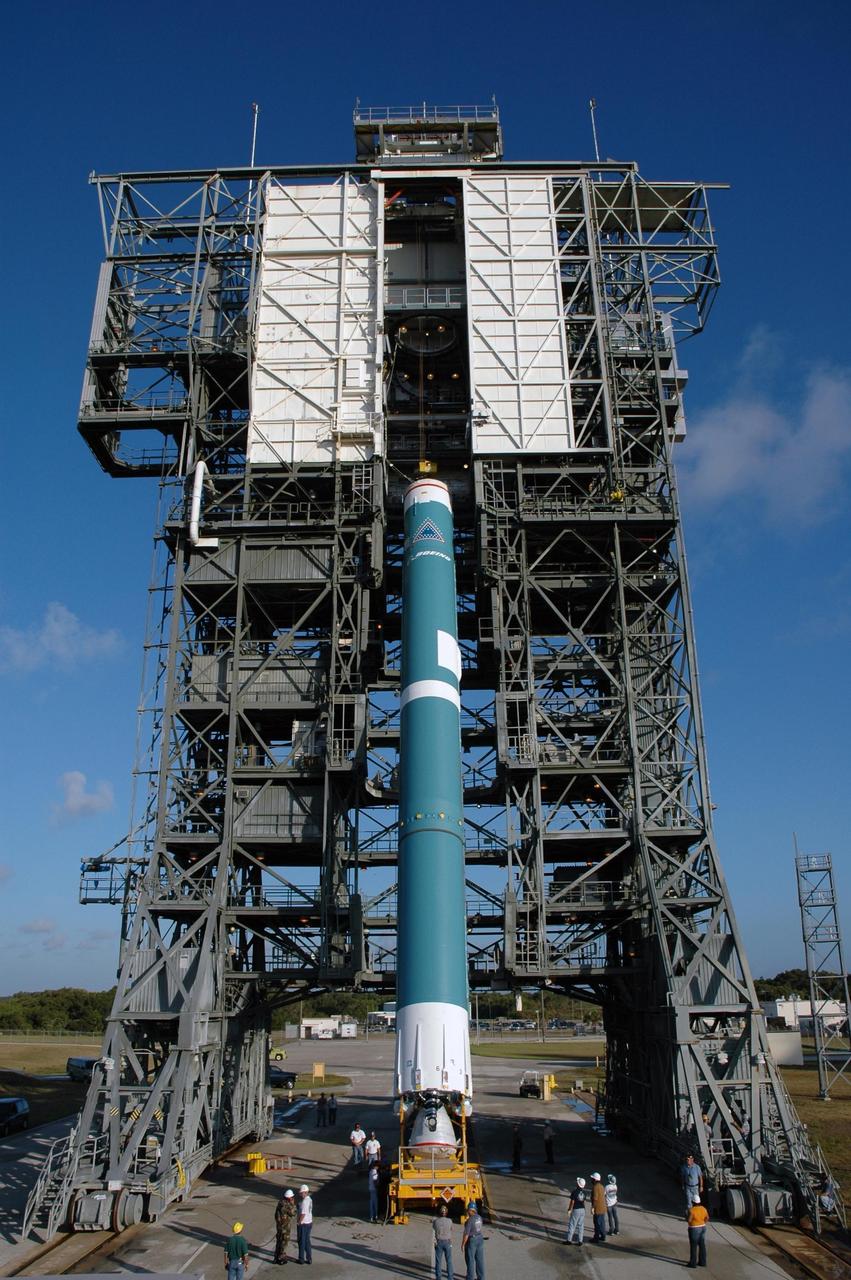
KENNEDY SPACE CENTER, FLA. - The first stage of the Boeing Delta II rocket, slated to launch NASA's Solar Terrestrial Relations Observatory (STEREO), is lifted into a vertical position for installation into the mobile service tower at Pad 17B on Cape Canaveral Air Force Station. Preparations are under way for a liftoff no earlier than July 22. STEREO consists of two spacecraft whose mission is the first to take measurements of the sun and solar wind in 3-D. This new view will improve our understanding of space weather and its impact on the Earth. Photo credit: NASA/Jim Grossmann
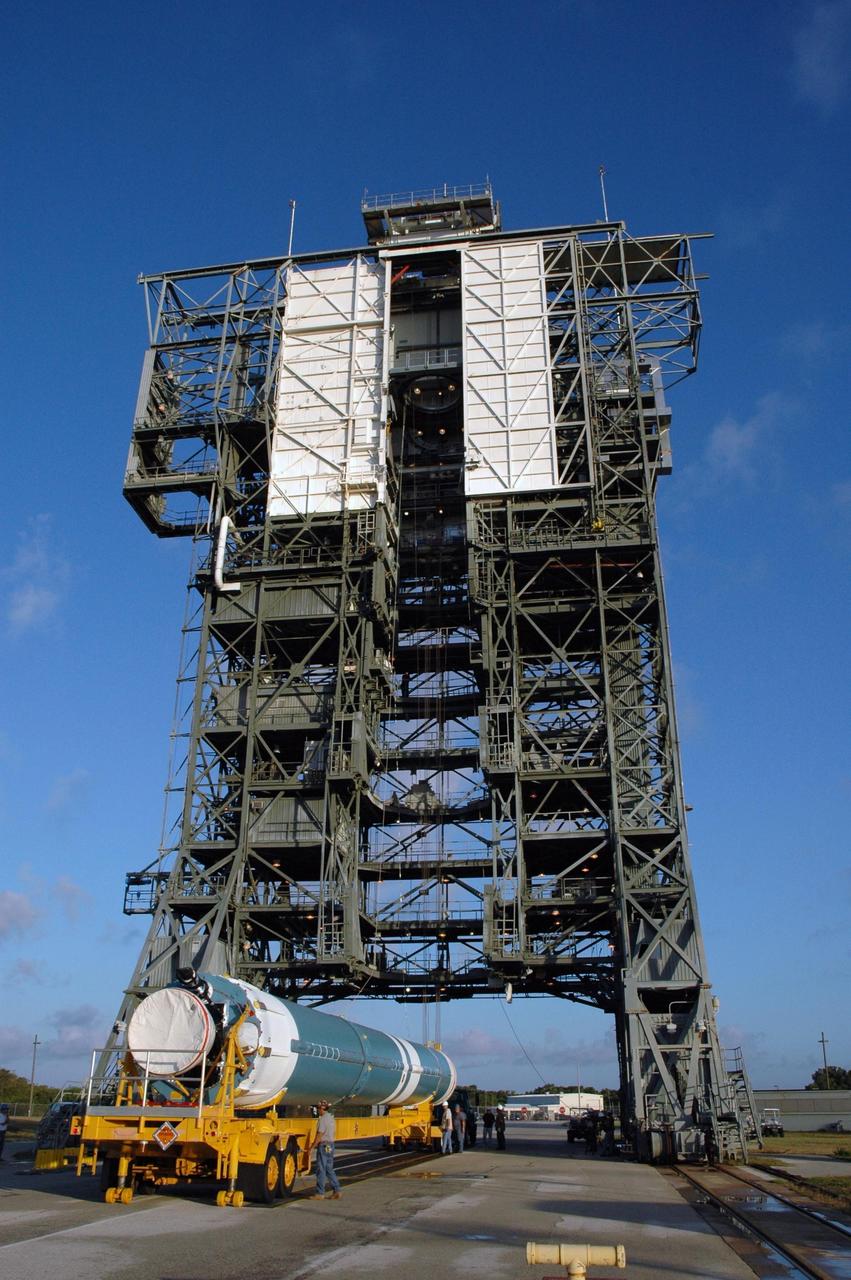
KENNEDY SPACE CENTER, FLA. - The first stage of the Boeing Delta II rocket, slated to launch NASA's Solar Terrestrial Relations Observatory (STEREO), arrives at Pad 17B on Cape Canaveral Air Force Station. Preparations are under way for a liftoff no earlier than July 22. STEREO consists of two spacecraft whose mission is the first to take measurements of the sun and solar wind in 3-D. This new view will improve our understanding of space weather and its impact on the Earth. Photo credit: NASA/Jim Grossmann
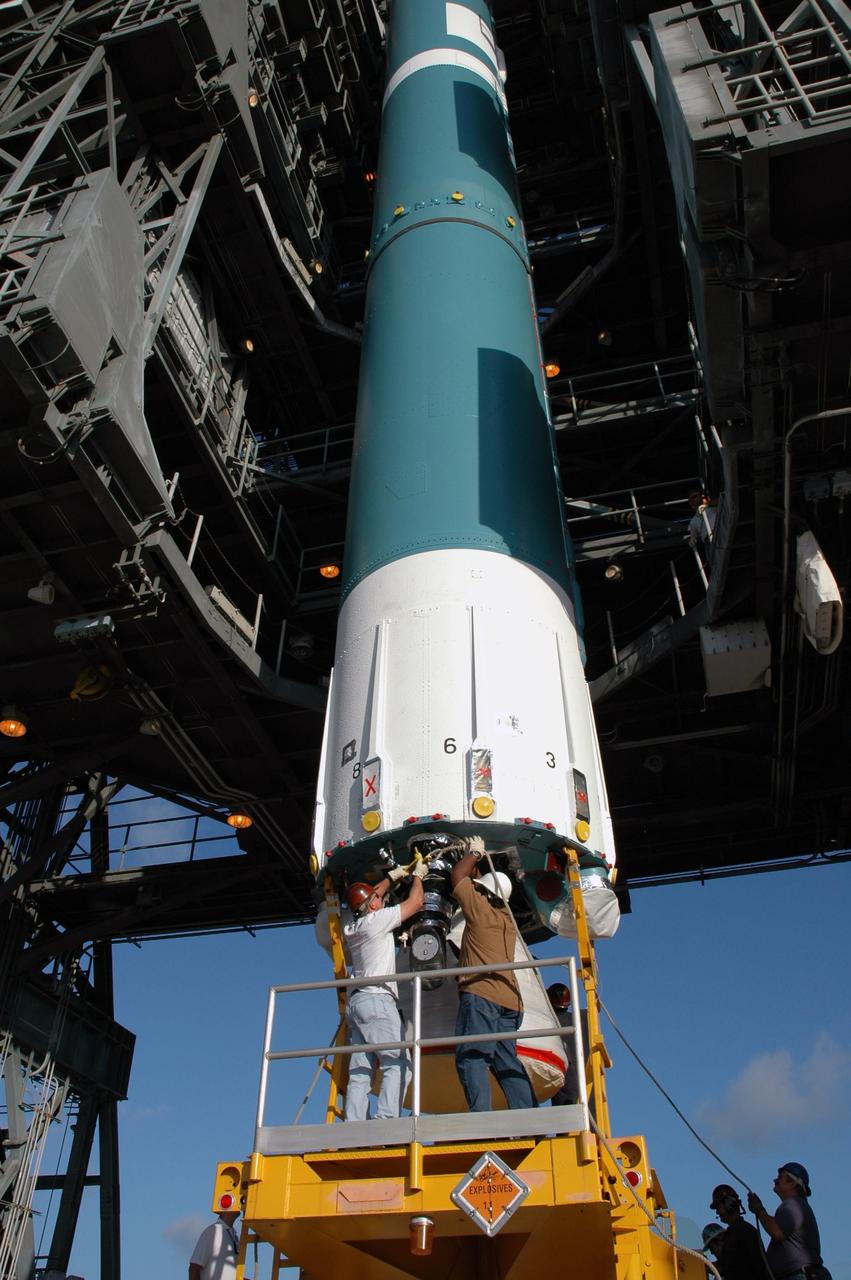
KENNEDY SPACE CENTER, FLA. - Workers prepare the first stage of the Boeing Delta II rocket, slated to launch NASA's Solar Terrestrial Relations Observatory (STEREO), for installation into the mobile service tower at Pad 17B on Cape Canaveral Air Force Station. Preparations are under way for a liftoff no earlier than July 22. STEREO consists of two spacecraft whose mission is the first to take measurements of the sun and solar wind in 3-D. This new view will improve our understanding of space weather and its impact on the Earth. Photo credit: NASA/Jim Grossmann
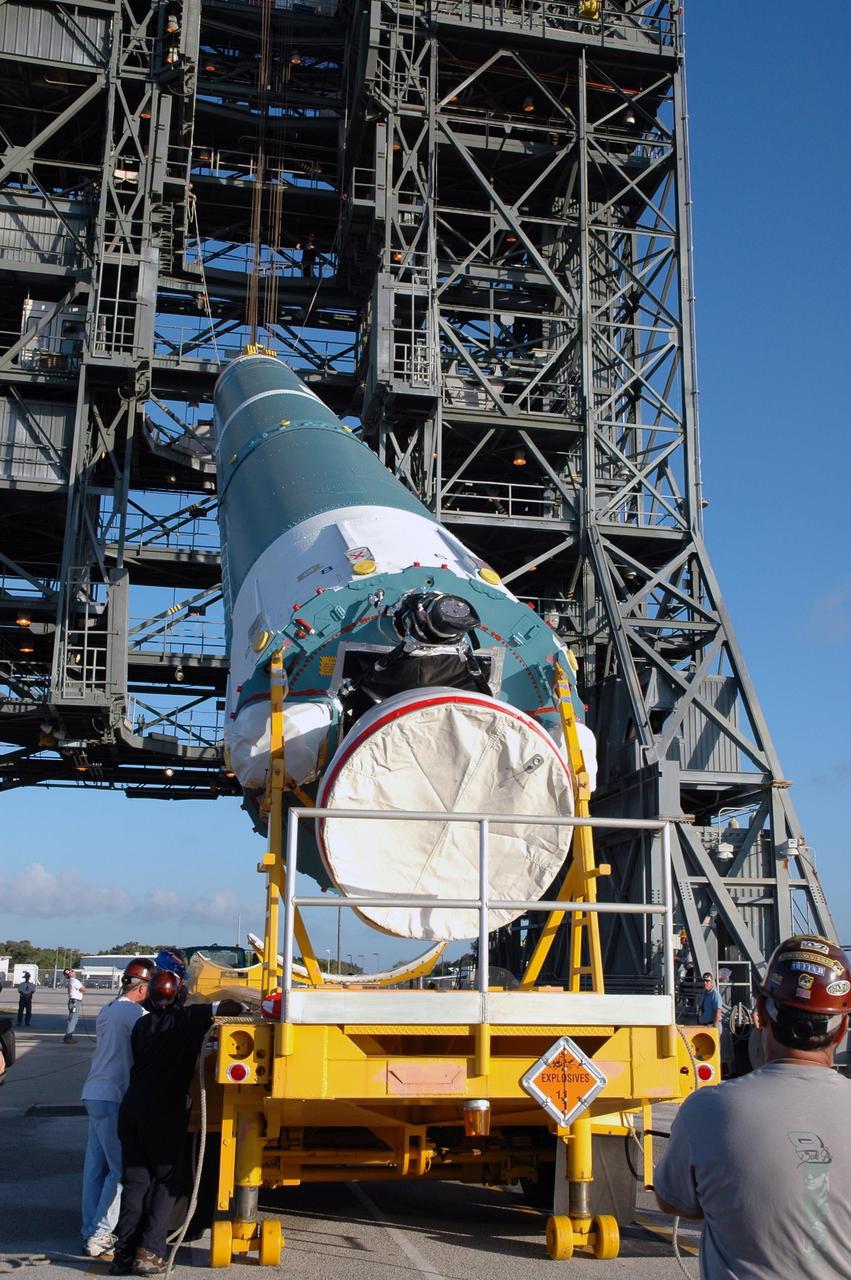
KENNEDY SPACE CENTER, FLA. - Workers supervise the lift of the first stage of the Boeing Delta II rocket, slated to launch NASA's Solar Terrestrial Relations Observatory (STEREO), into the mobile service tower at Pad 17B on Cape Canaveral Air Force Station. Preparations are under way for a liftoff no earlier than July 22. STEREO consists of two spacecraft whose mission is the first to take measurements of the sun and solar wind in 3-D. This new view will improve our understanding of space weather and its impact on the Earth. Photo credit: NASA/Jim Grossmann
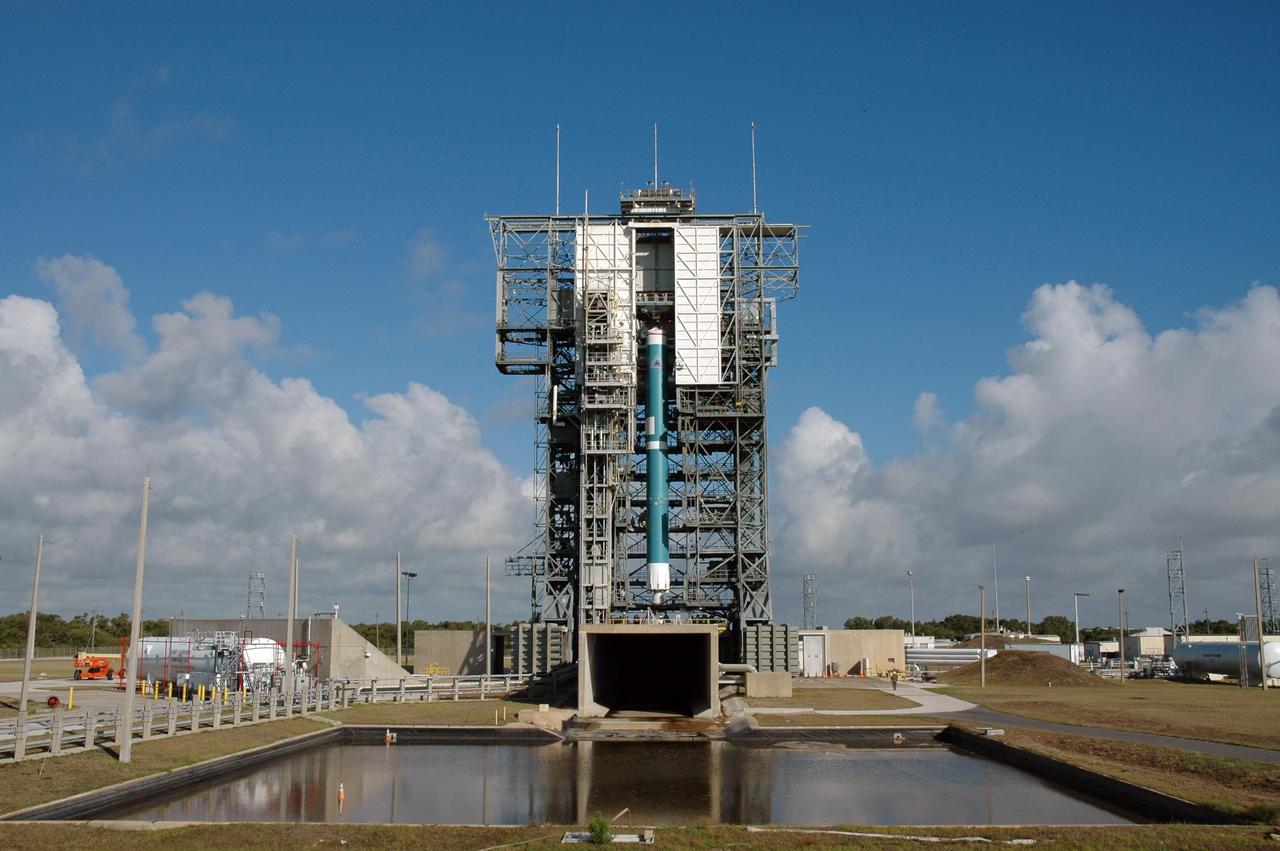
KENNEDY SPACE CENTER, FLA. - The first stage of the Boeing Delta II rocket, slated to launch NASA's Solar Terrestrial Relations Observatory (STEREO), is in position in the mobile service tower at Pad 17B on Cape Canaveral Air Force Station for stacking with the rocket's other stages. Preparations are under way for a liftoff no earlier than July 22. STEREO consists of two spacecraft whose mission is the first to take measurements of the sun and solar wind in 3-D. This new view will improve our understanding of space weather and its impact on the Earth. Photo credit: NASA/Jim Grossmann
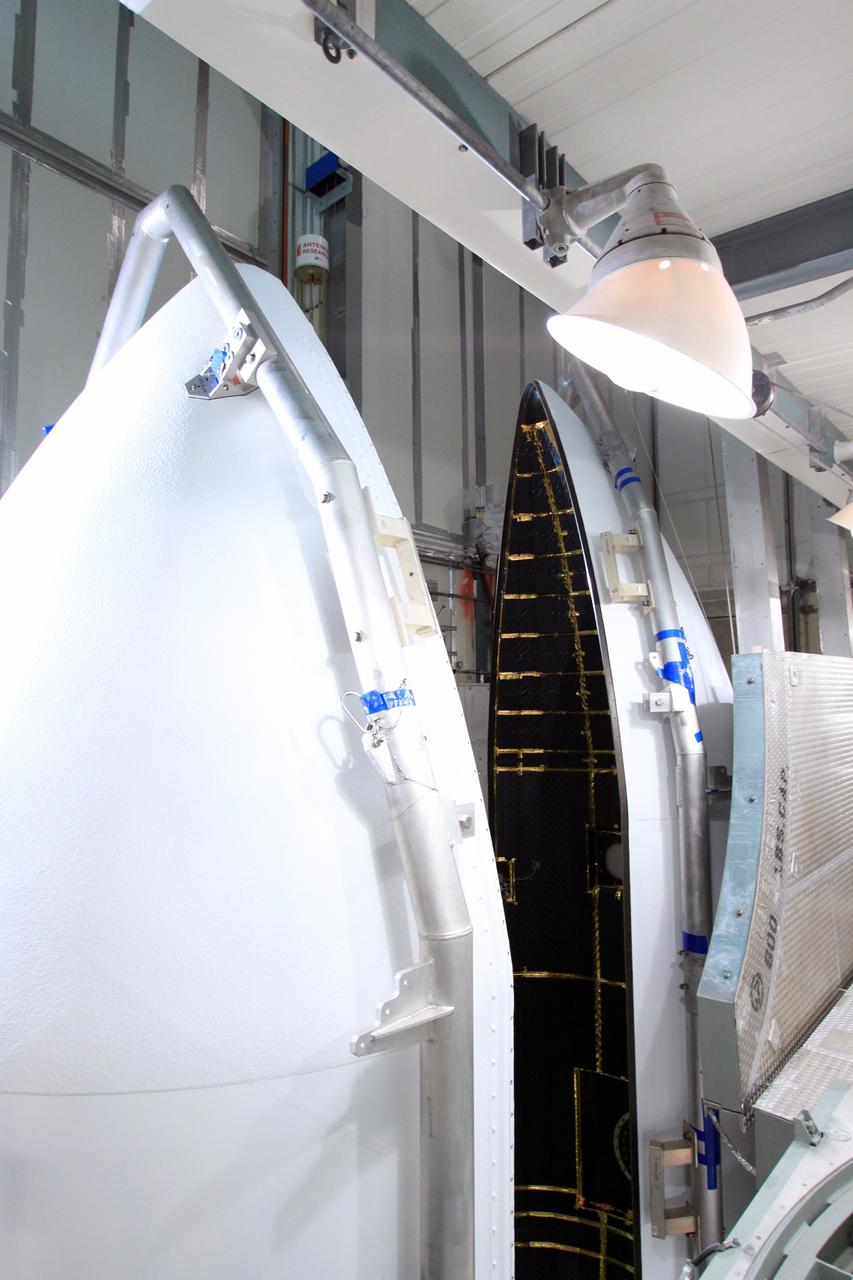
CAPE CANAVERAL, Fla. -- At Space Launch Complex 17B on Cape Canaveral Air Force Station in Florida, the sections of the clamshell-shaped Delta payload fairing close in around NASA's twin Gravity Recovery and Interior Laboratory spacecraft. The fairing will protect the spacecraft from the impact of aerodynamic pressure and heating during ascent and will be jettisoned once the spacecraft is outside the Earth's atmosphere. Launch aboard a United Launch Alliance Delta II rocket from Pad 17B is scheduled for Sept. 8. The spacecraft will fly in tandem orbits around the moon for several months to measure its gravity field. GRAIL's primary science objectives are to determine the structure of the lunar interior, from crust to core, and to advance understanding of the thermal evolution of the moon. For more information, visit http://www.nasa.gov/grail. Photo credit: NASA/Jim Grossmann
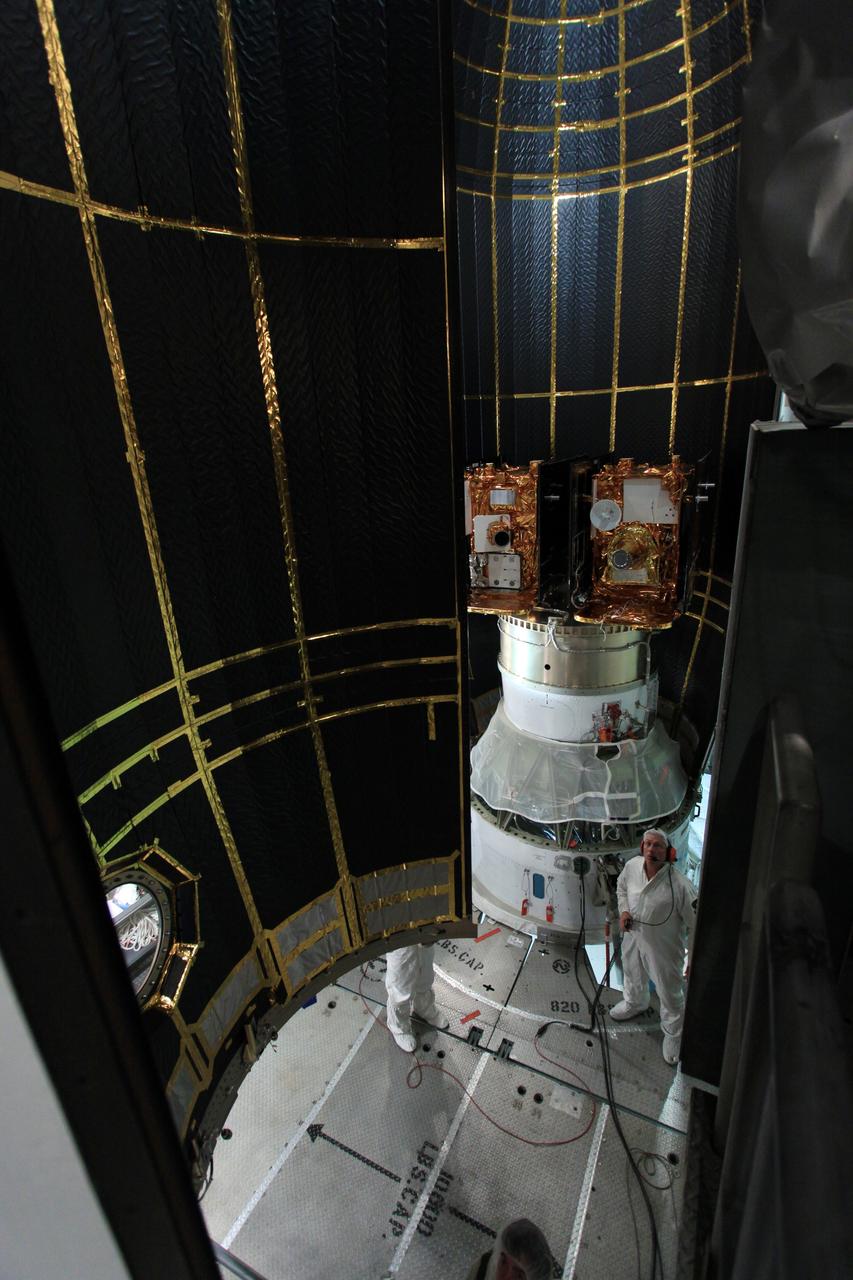
CAPE CANAVERAL, Fla. -- At Space Launch Complex 17B on Cape Canaveral Air Force Station in Florida, the second half of the clamshell-shaped Delta payload fairing swings into place around NASA's twin Gravity Recovery and Interior Laboratory spacecraft under the scrutiny of a spacecraft technician. The fairing will protect the spacecraft from the impact of aerodynamic pressure and heating during ascent and will be jettisoned once the spacecraft is outside the Earth's atmosphere. Launch aboard a United Launch Alliance Delta II rocket from Pad 17B is scheduled for Sept. 8. The spacecraft will fly in tandem orbits around the moon for several months to measure its gravity field. GRAIL's primary science objectives are to determine the structure of the lunar interior, from crust to core, and to advance understanding of the thermal evolution of the moon. For more information, visit http://www.nasa.gov/grail. Photo credit: NASA/Jim Grossmann
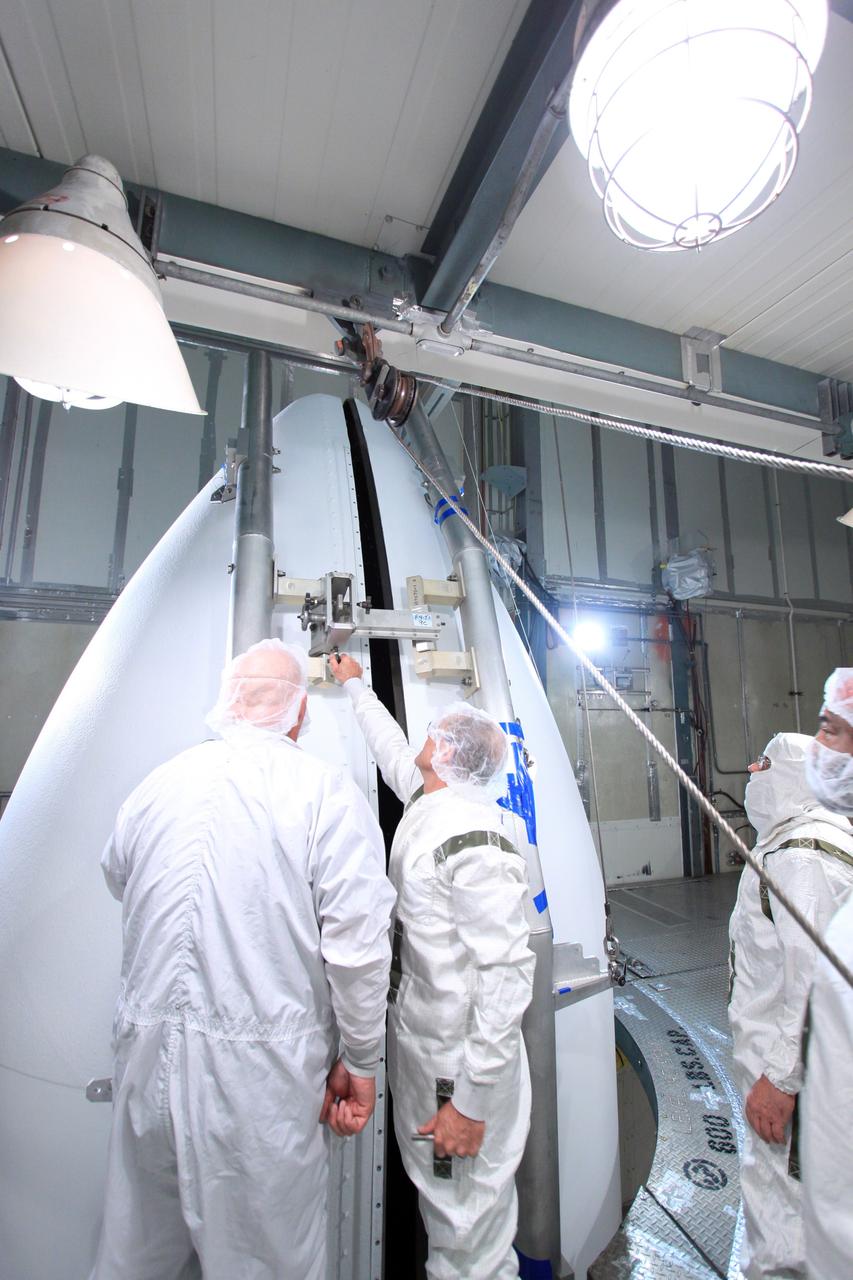
CAPE CANAVERAL, Fla. -- At Space Launch Complex 17B on Cape Canaveral Air Force Station in Florida, spacecraft technicians secure the sections of the clamshell-shaped Delta payload fairing around NASA's twin Gravity Recovery and Interior Laboratory spacecraft. The fairing will protect the spacecraft from the impact of aerodynamic pressure and heating during ascent and will be jettisoned once the spacecraft is outside the Earth's atmosphere. Launch aboard a United Launch Alliance Delta II rocket from Pad 17B is scheduled for Sept. 8. The spacecraft will fly in tandem orbits around the moon for several months to measure its gravity field. GRAIL's primary science objectives are to determine the structure of the lunar interior, from crust to core, and to advance understanding of the thermal evolution of the moon. For more information, visit http://www.nasa.gov/grail. Photo credit: NASA/Jim Grossmann
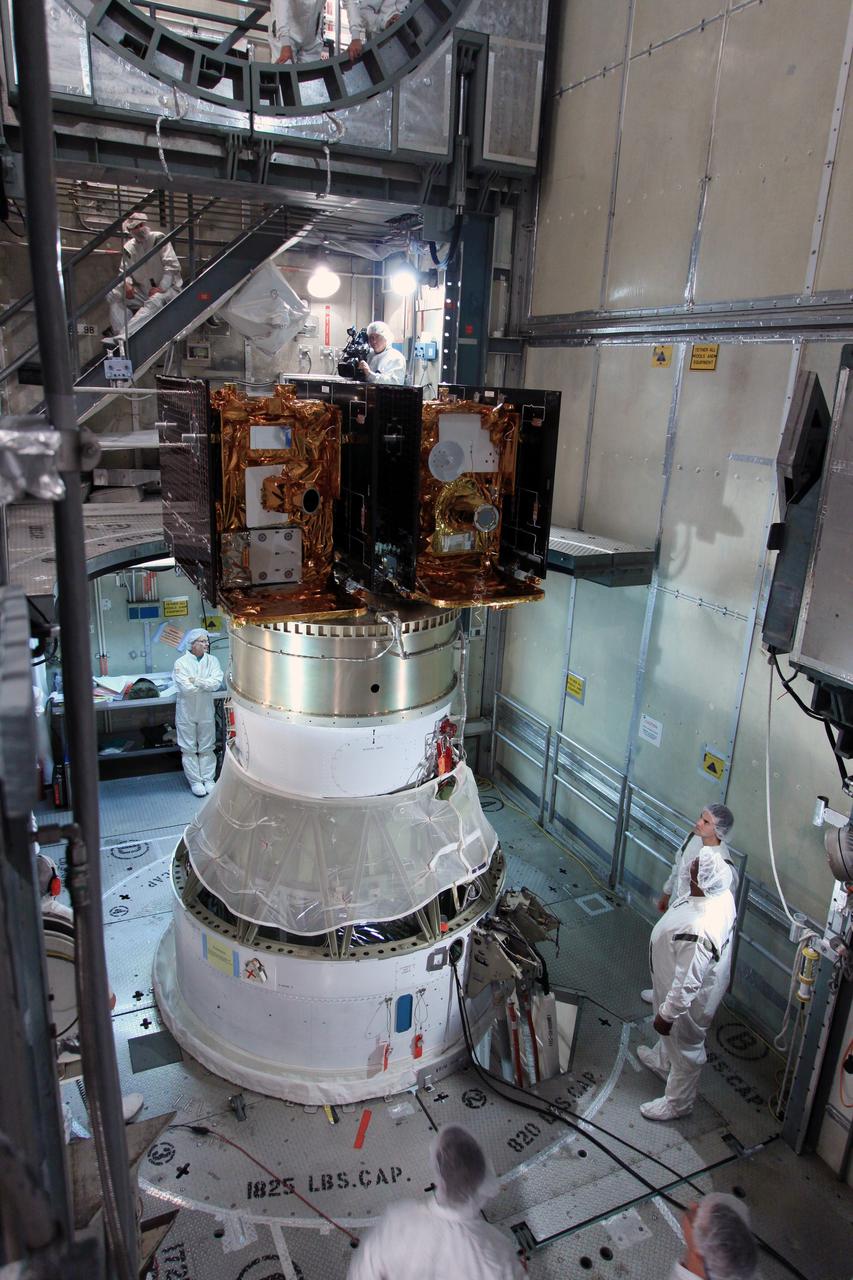
CAPE CANAVERAL, Fla. -- At Space Launch Complex 17B on Cape Canaveral Air Force Station in Florida, NASA's twin Gravity Recovery and Interior Laboratory spacecraft are secured atop a Delta II rocket awaiting enclosure in the Delta payload fairing. The fairing will protect the spacecraft from the impact of aerodynamic pressure and heating during ascent and will be jettisoned once the spacecraft is outside the Earth's atmosphere. Launch aboard a United Launch Alliance Delta II rocket from Pad 17B is scheduled for Sept. 8. The spacecraft will fly in tandem orbits around the moon for several months to measure its gravity field. GRAIL's primary science objectives are to determine the structure of the lunar interior, from crust to core, and to advance understanding of the thermal evolution of the moon. For more information, visit http://www.nasa.gov/grail. Photo credit: NASA/Jim Grossmann
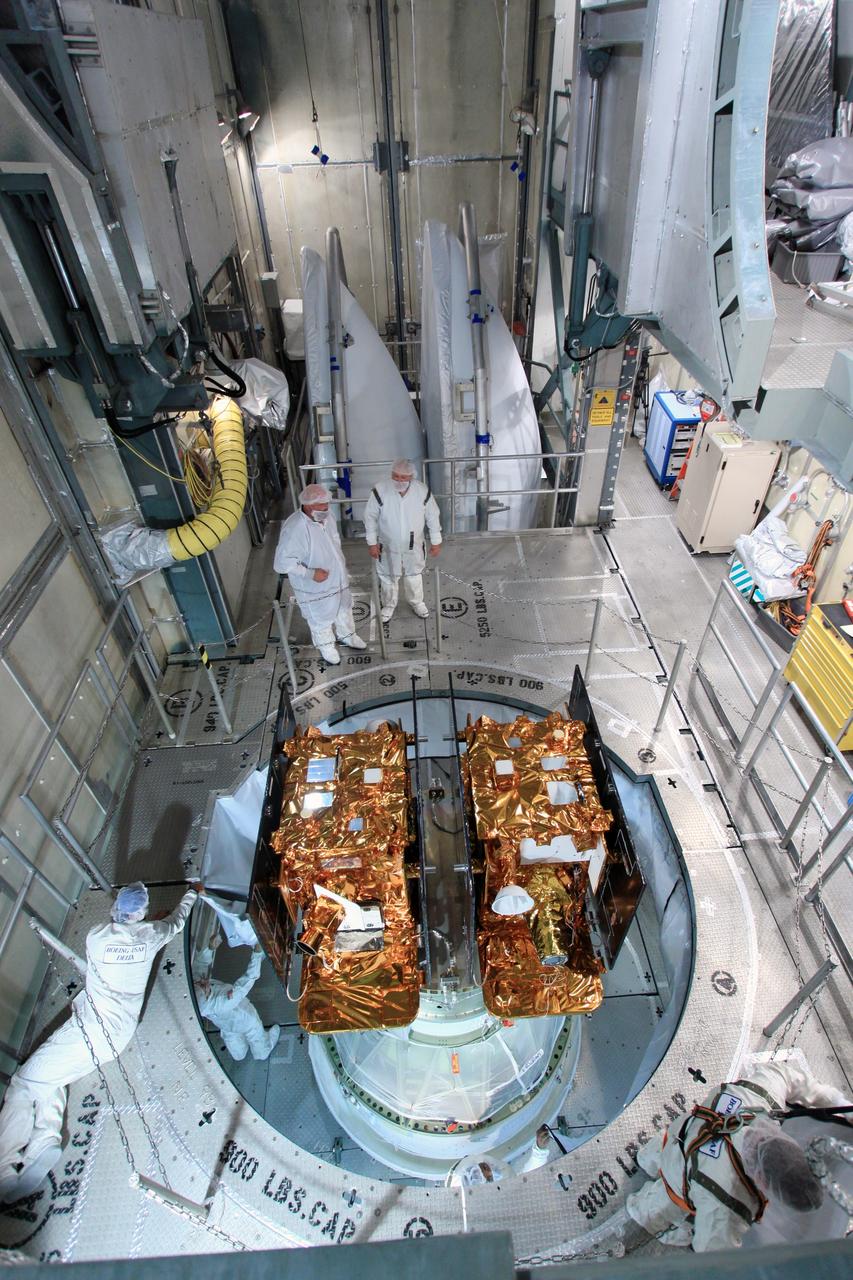
CAPE CANAVERAL, Fla. -- At Space Launch Complex 17B on Cape Canaveral Air Force Station in Florida, NASA's twin Gravity Recovery and Interior Laboratory spacecraft are uncovered and ready for enclosure in the Delta payload fairing. The fairing will protect the spacecraft from the impact of aerodynamic pressure and heating during ascent and will be jettisoned once the spacecraft is outside the Earth's atmosphere. Launch aboard a United Launch Alliance Delta II rocket from Pad 17B is scheduled for Sept. 8. The spacecraft will fly in tandem orbits around the moon for several months to measure its gravity field. GRAIL's primary science objectives are to determine the structure of the lunar interior, from crust to core, and to advance understanding of the thermal evolution of the moon. For more information, visit http://www.nasa.gov/grail. Photo credit: NASA/Jim Grossmann
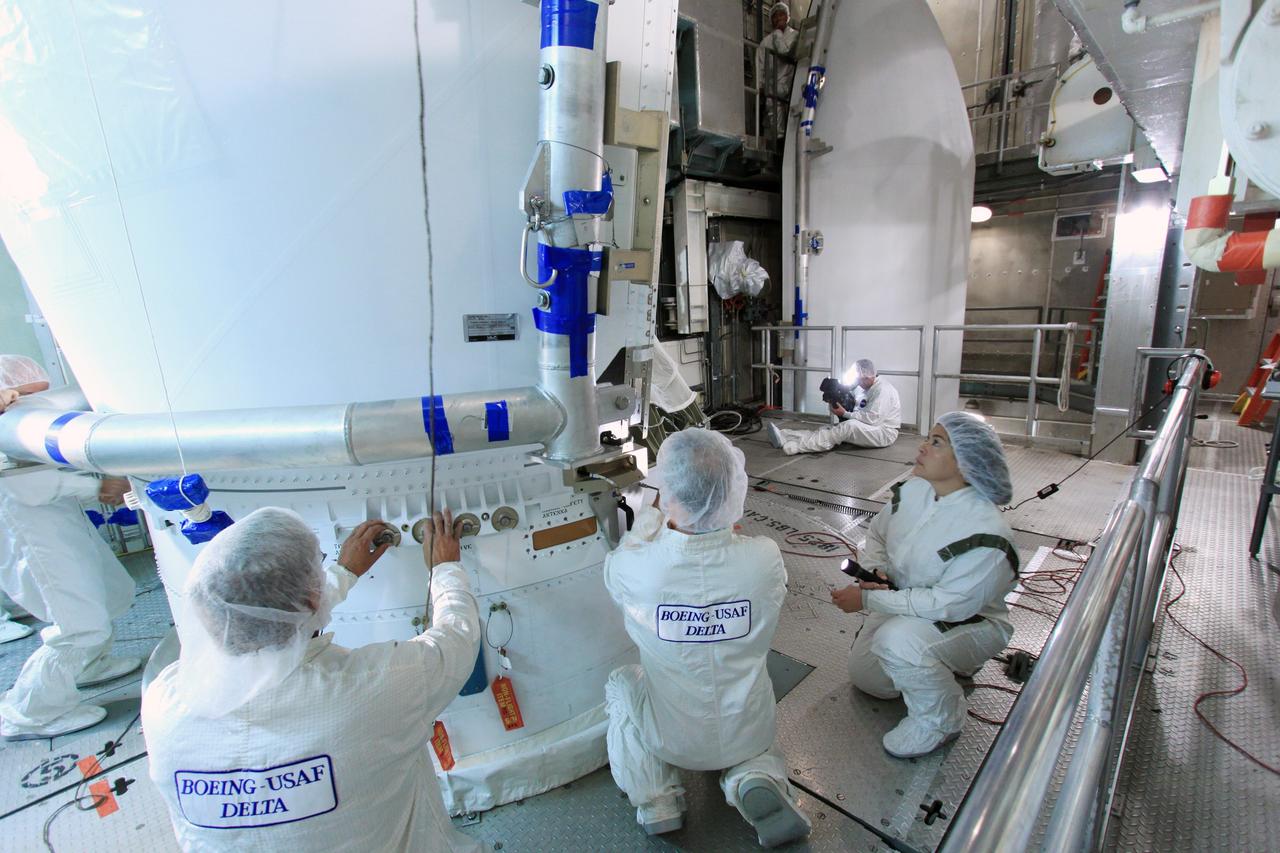
CAPE CANAVERAL, Fla. -- At Space Launch Complex 17B on Cape Canaveral Air Force Station in Florida, spacecraft technicians dressed in clean room attire, known as "bunny" suits, secure half of the clamshell-shaped Delta payload fairing around NASA's twin Gravity Recovery and Interior Laboratory spacecraft. The fairing will protect the spacecraft from the impact of aerodynamic pressure and heating during ascent and will be jettisoned once the spacecraft is outside the Earth's atmosphere. Launch aboard a United Launch Alliance Delta II rocket from Pad 17B is scheduled for Sept. 8. The spacecraft will fly in tandem orbits around the moon for several months to measure its gravity field. GRAIL's primary science objectives are to determine the structure of the lunar interior, from crust to core, and to advance understanding of the thermal evolution of the moon. For more information, visit http://www.nasa.gov/grail. Photo credit: NASA/Jim Grossmann
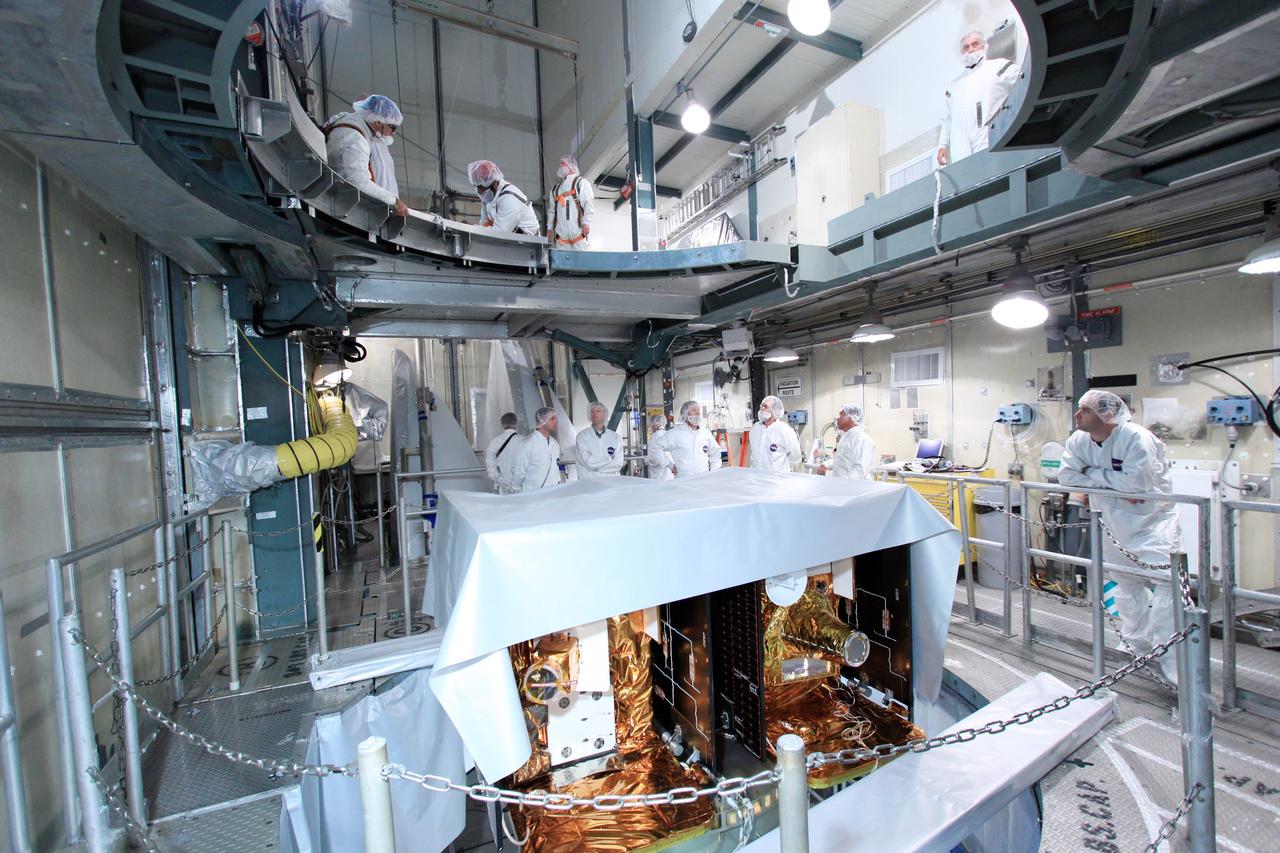
CAPE CANAVERAL, Fla. -- At Space Launch Complex 17B on Cape Canaveral Air Force Station in Florida, spacecraft technicians dressed in clean room attire, known as "bunny" suits, prepare to enclose NASA's twin Gravity Recovery and Interior Laboratory spacecraft in the Delta payload fairing. The fairing will protect the spacecraft from the impact of aerodynamic pressure and heating during ascent and will be jettisoned once the spacecraft is outside the Earth's atmosphere. Launch aboard a United Launch Alliance Delta II rocket from Pad 17B is scheduled for Sept. 8. The spacecraft will fly in tandem orbits around the moon for several months to measure its gravity field. GRAIL's primary science objectives are to determine the structure of the lunar interior, from crust to core, and to advance understanding of the thermal evolution of the moon. For more information, visit http://www.nasa.gov/grail. Photo credit: NASA/Jim Grossmann
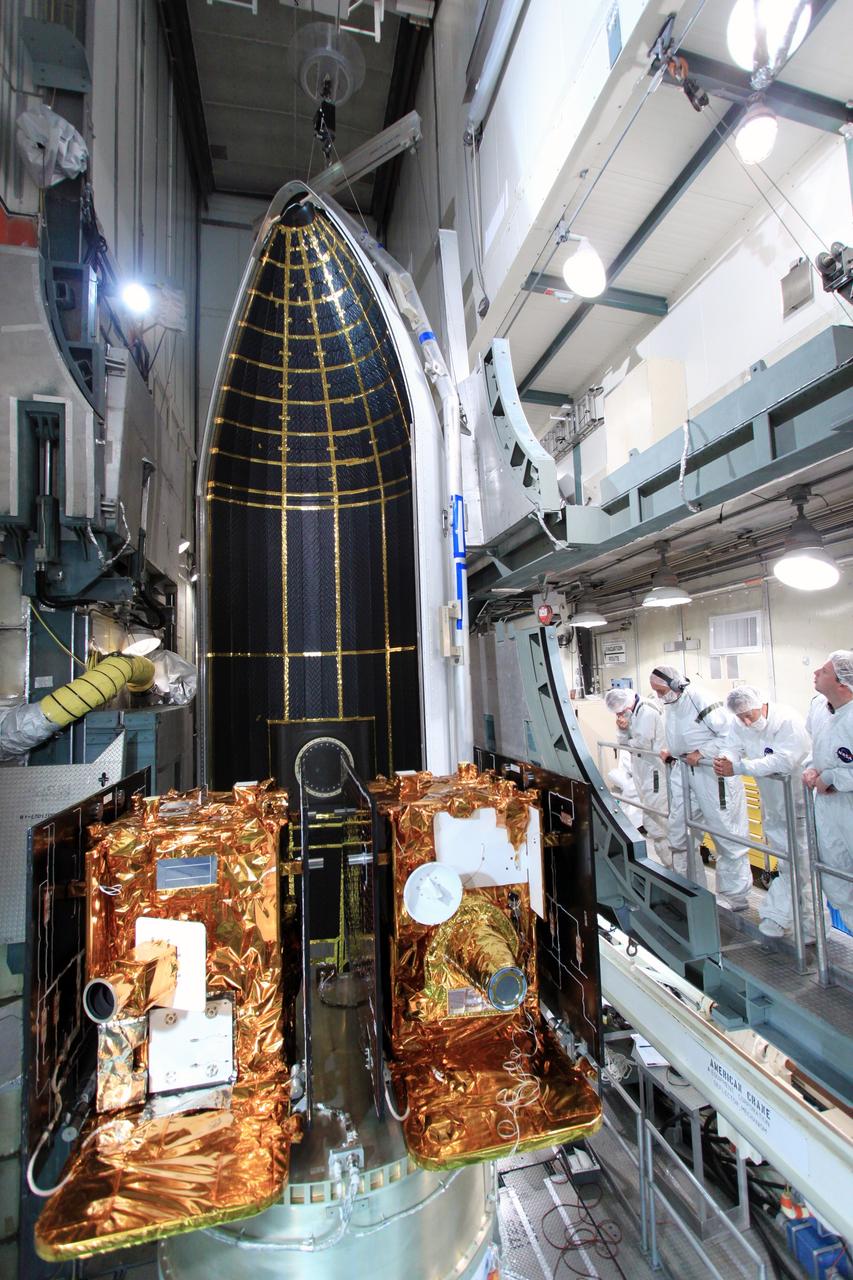
CAPE CANAVERAL, Fla. -- At Space Launch Complex 17B on Cape Canaveral Air Force Station in Florida, a section of the clamshell-shaped Delta payload fairing moves into place to enclose NASA's twin Gravity Recovery and Interior Laboratory spacecraft. The fairing will protect the spacecraft from the impact of aerodynamic pressure and heating during ascent and will be jettisoned once the spacecraft is outside the Earth's atmosphere. Launch aboard a United Launch Alliance Delta II rocket from Pad 17B is scheduled for Sept. 8. The spacecraft will fly in tandem orbits around the moon for several months to measure its gravity field. GRAIL's primary science objectives are to determine the structure of the lunar interior, from crust to core, and to advance understanding of the thermal evolution of the moon. For more information, visit http://www.nasa.gov/grail. Photo credit: NASA/Jim Grossmann
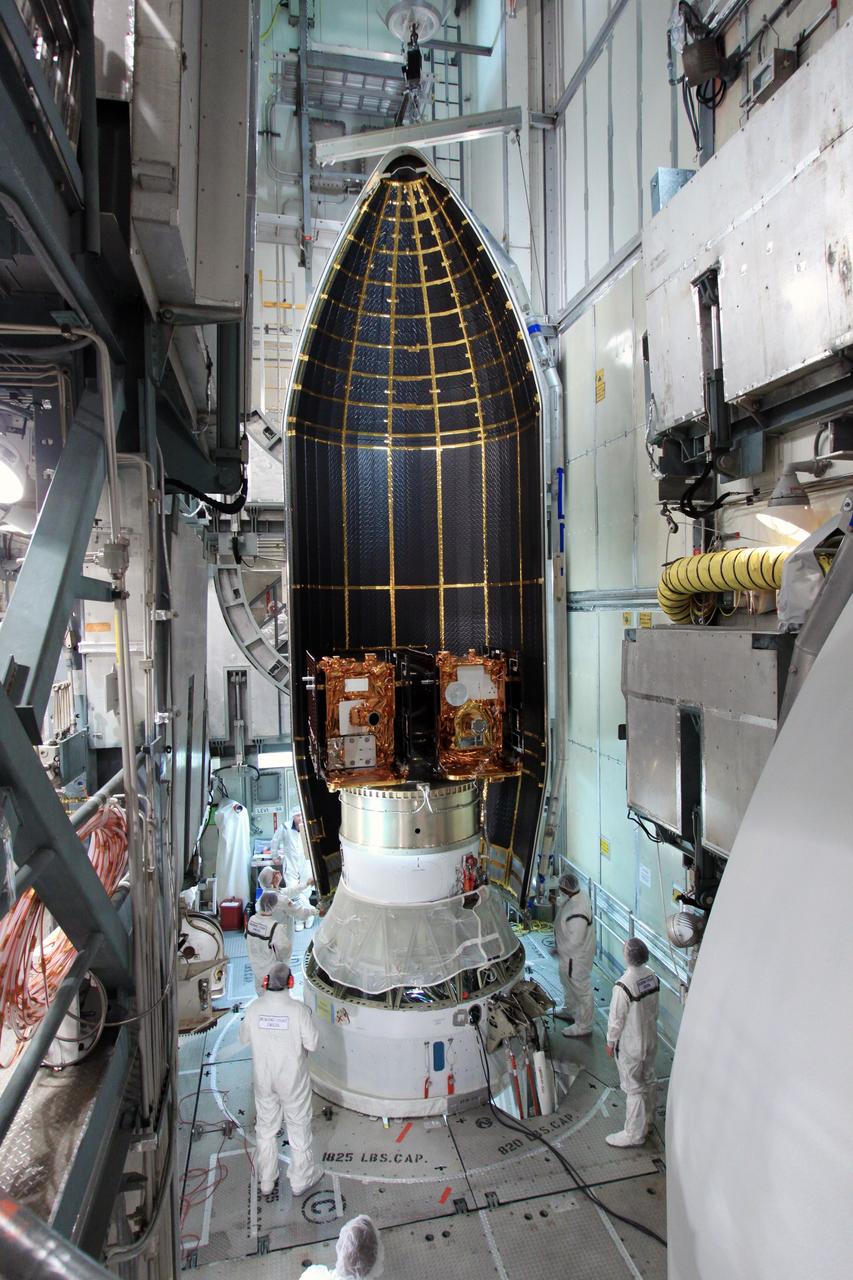
CAPE CANAVERAL, Fla. -- At Space Launch Complex 17B on Cape Canaveral Air Force Station in Florida, spacecraft technicians monitor the movement of a section of the clamshell-shaped Delta payload fairing as it encloses NASA's twin Gravity Recovery and Interior Laboratory spacecraft. The fairing will protect the spacecraft from the impact of aerodynamic pressure and heating during ascent and will be jettisoned once the spacecraft is outside the Earth's atmosphere. Launch aboard a United Launch Alliance Delta II rocket from Pad 17B is scheduled for Sept. 8. The spacecraft will fly in tandem orbits around the moon for several months to measure its gravity field. GRAIL's primary science objectives are to determine the structure of the lunar interior, from crust to core, and to advance understanding of the thermal evolution of the moon. For more information, visit http://www.nasa.gov/grail. Photo credit: NASA/Jim Grossmann
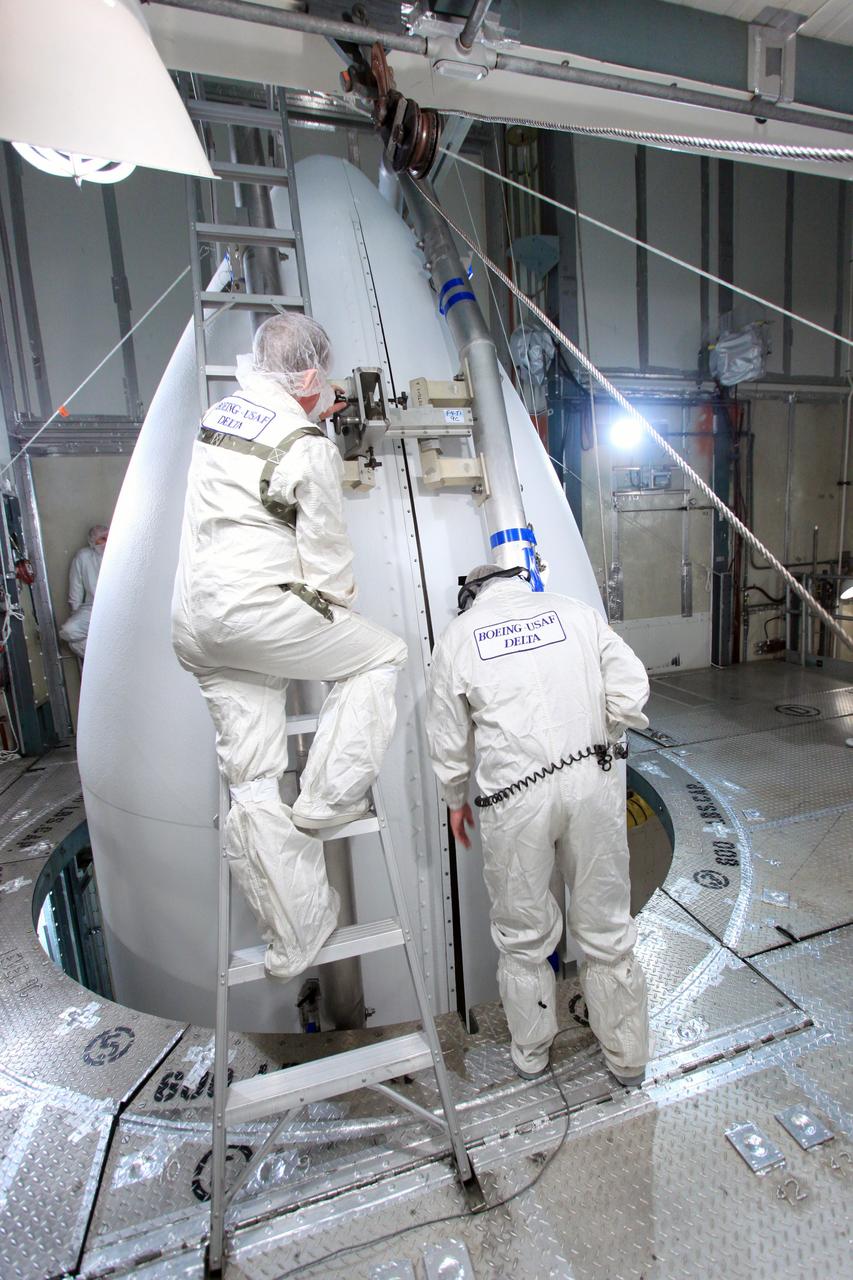
CAPE CANAVERAL, Fla. -- At Space Launch Complex 17B on Cape Canaveral Air Force Station in Florida, NASA's twin Gravity Recovery and Interior Laboratory spacecraft are hidden from view as spacecraft technicians secure the sections of the clamshell-shaped Delta payload fairing around them. The fairing will protect the spacecraft from the impact of aerodynamic pressure and heating during ascent and will be jettisoned once the spacecraft is outside the Earth's atmosphere. Launch aboard a United Launch Alliance Delta II rocket from Pad 17B is scheduled for Sept. 8. The spacecraft will fly in tandem orbits around the moon for several months to measure its gravity field. GRAIL's primary science objectives are to determine the structure of the lunar interior, from crust to core, and to advance understanding of the thermal evolution of the moon. For more information, visit http://www.nasa.gov/grail. Photo credit: NASA/Jim Grossmann
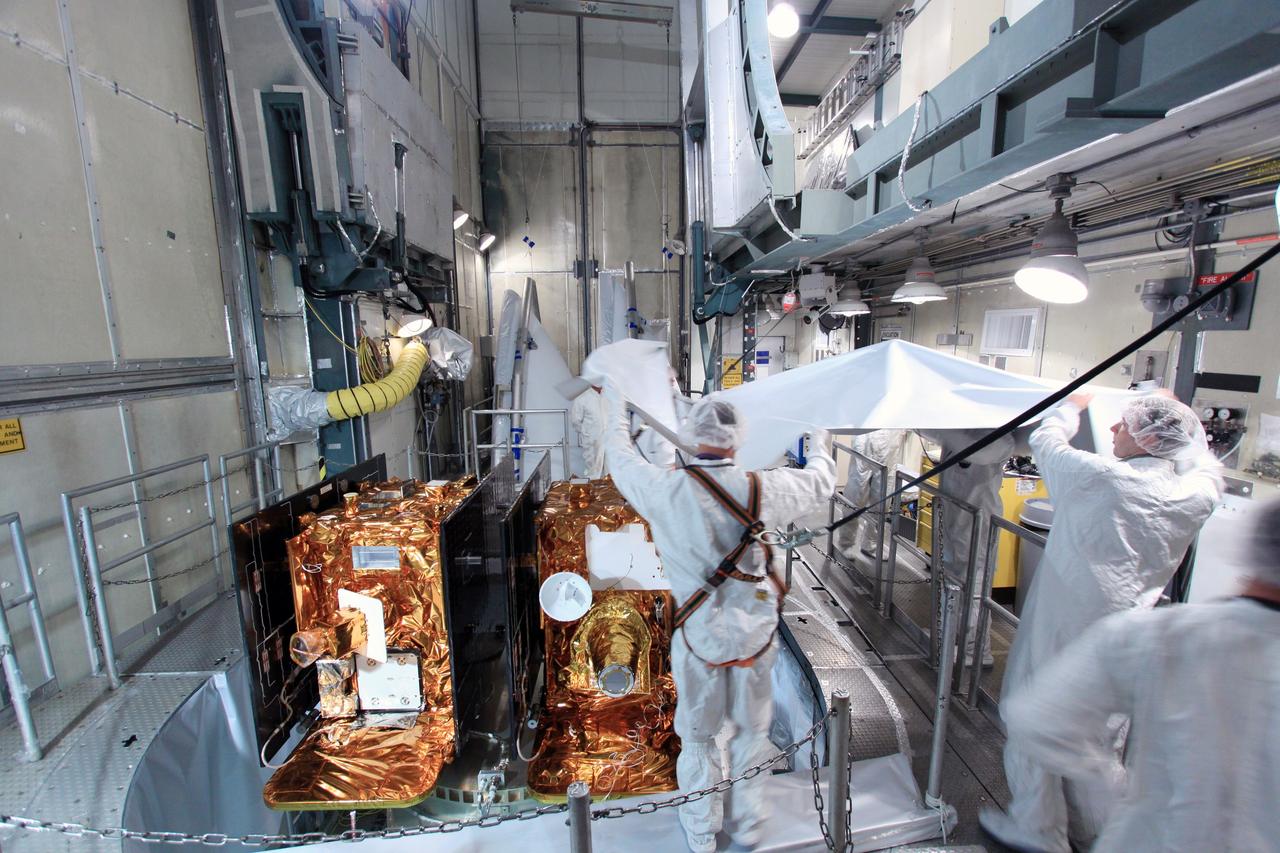
CAPE CANAVERAL, Fla. -- At Space Launch Complex 17B on Cape Canaveral Air Force Station in Florida, spacecraft technicians dressed in clean room attire, known as "bunny" suits, uncover NASA's twin Gravity Recovery and Interior Laboratory spacecraft during preparations to enclose it in the Delta payload fairing. The fairing will protect the spacecraft from the impact of aerodynamic pressure and heating during ascent and will be jettisoned once the spacecraft is outside the Earth's atmosphere. Launch aboard a United Launch Alliance Delta II rocket from Pad 17B is scheduled for Sept. 8. The spacecraft will fly in tandem orbits around the moon for several months to measure its gravity field. GRAIL's primary science objectives are to determine the structure of the lunar interior, from crust to core, and to advance understanding of the thermal evolution of the moon. For more information, visit http://www.nasa.gov/grail. Photo credit: NASA/Jim Grossmann
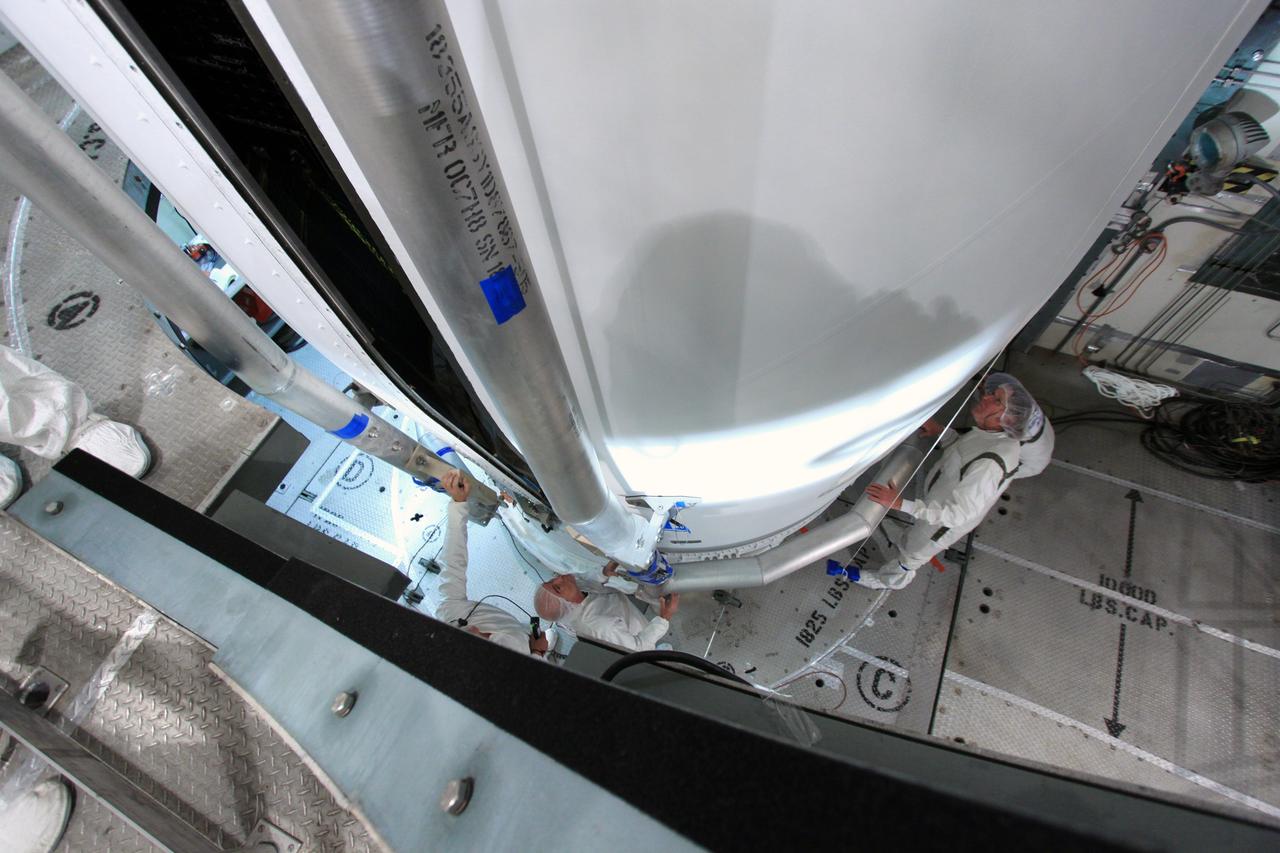
CAPE CANAVERAL, Fla. -- At Space Launch Complex 17B on Cape Canaveral Air Force Station in Florida, this spacecraft technician may be the last person to glimpse NASA's twin Gravity Recovery and Interior Laboratory spacecraft as the sections of the Delta payload fairing close around them. The fairing will protect the spacecraft from the impact of aerodynamic pressure and heating during ascent and will be jettisoned once the spacecraft is outside the Earth's atmosphere. Launch aboard a United Launch Alliance Delta II rocket from Pad 17B is scheduled for Sept. 8. The spacecraft will fly in tandem orbits around the moon for several months to measure its gravity field. GRAIL's primary science objectives are to determine the structure of the lunar interior, from crust to core, and to advance understanding of the thermal evolution of the moon. For more information, visit http://www.nasa.gov/grail. Photo credit: NASA/Jim Grossmann
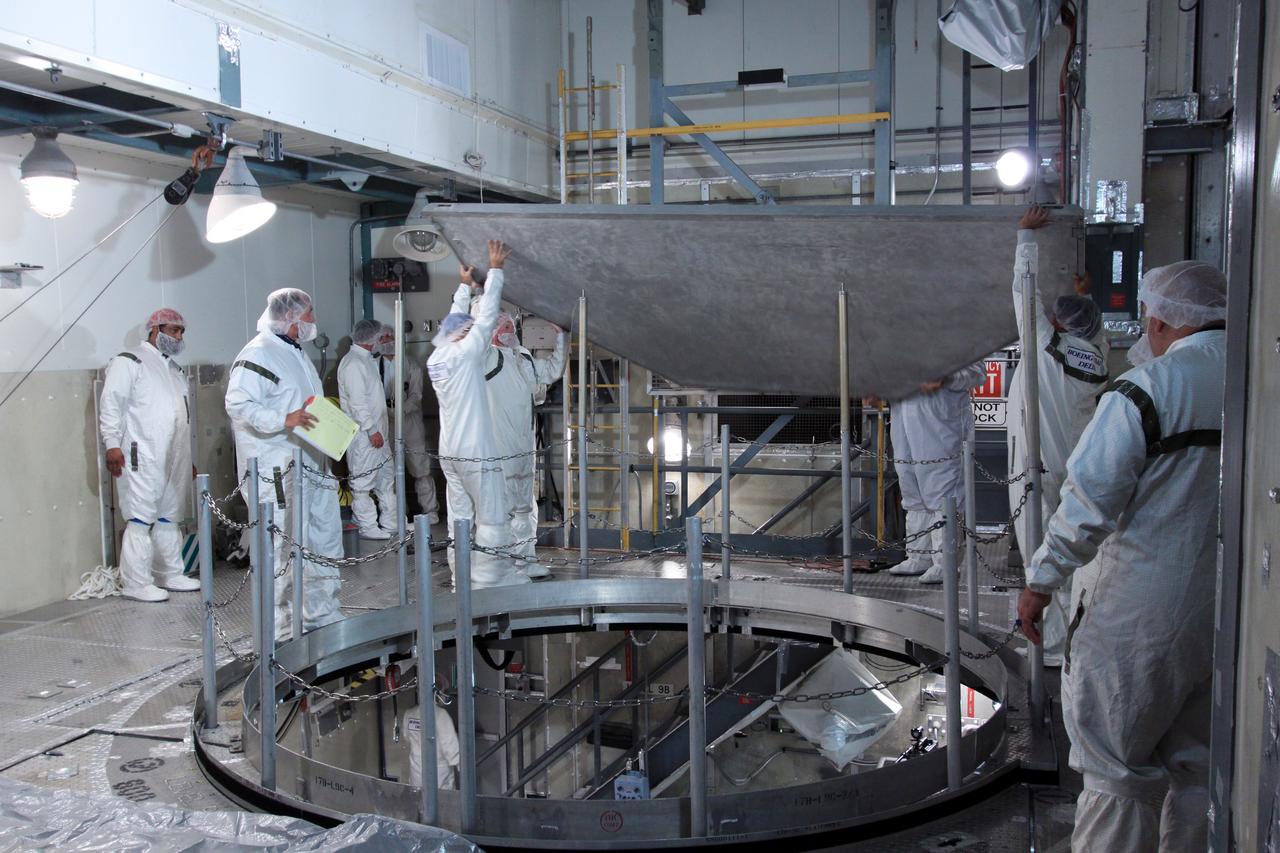
CAPE CANAVERAL, Fla. -- At Space Launch Complex 17B on Cape Canaveral Air Force Station in Florida, preparations are under way to enclose NASA's twin Gravity Recovery and Interior Laboratory spacecraft in the Delta payload fairing. The fairing will protect the spacecraft from the impact of aerodynamic pressure and heating during ascent and will be jettisoned once the spacecraft is outside the Earth's atmosphere. Launch aboard a United Launch Alliance Delta II rocket from Pad 17B is scheduled for Sept. 8. The spacecraft will fly in tandem orbits around the moon for several months to measure its gravity field. GRAIL's primary science objectives are to determine the structure of the lunar interior, from crust to core, and to advance understanding of the thermal evolution of the moon. For more information, visit http://www.nasa.gov/grail. Photo credit: NASA/Jim Grossmann
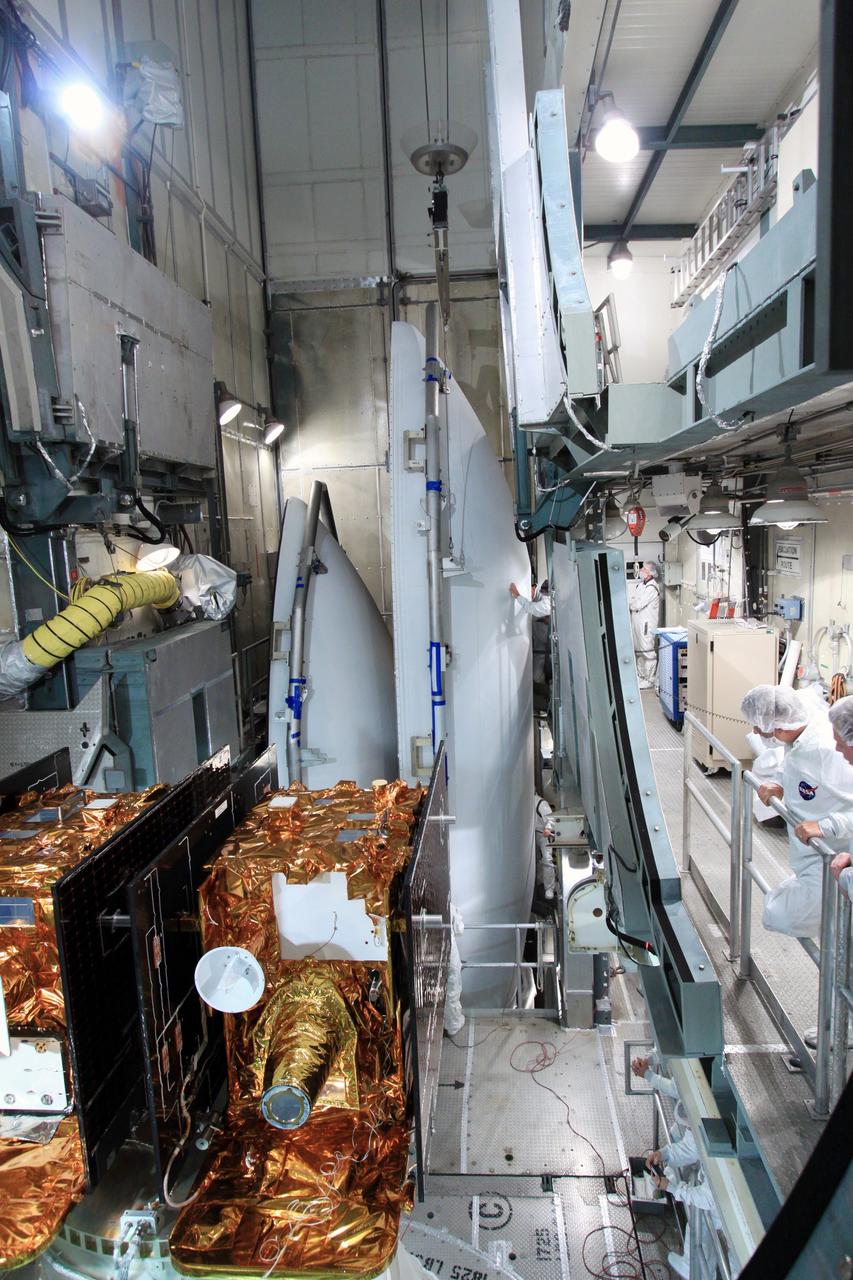
CAPE CANAVERAL, Fla. -- At Space Launch Complex 17B on Cape Canaveral Air Force Station in Florida, sections of the clamshell-shaped Delta payload fairing, in the background, are ready to enclose NASA's twin Gravity Recovery and Interior Laboratory spacecraft. The fairing will protect the spacecraft from the impact of aerodynamic pressure and heating during ascent and will be jettisoned once the spacecraft is outside the Earth's atmosphere. Launch aboard a United Launch Alliance Delta II rocket from Pad 17B is scheduled for Sept. 8. The spacecraft will fly in tandem orbits around the moon for several months to measure its gravity field. GRAIL's primary science objectives are to determine the structure of the lunar interior, from crust to core, and to advance understanding of the thermal evolution of the moon. For more information, visit http://www.nasa.gov/grail. Photo credit: NASA/Jim Grossmann
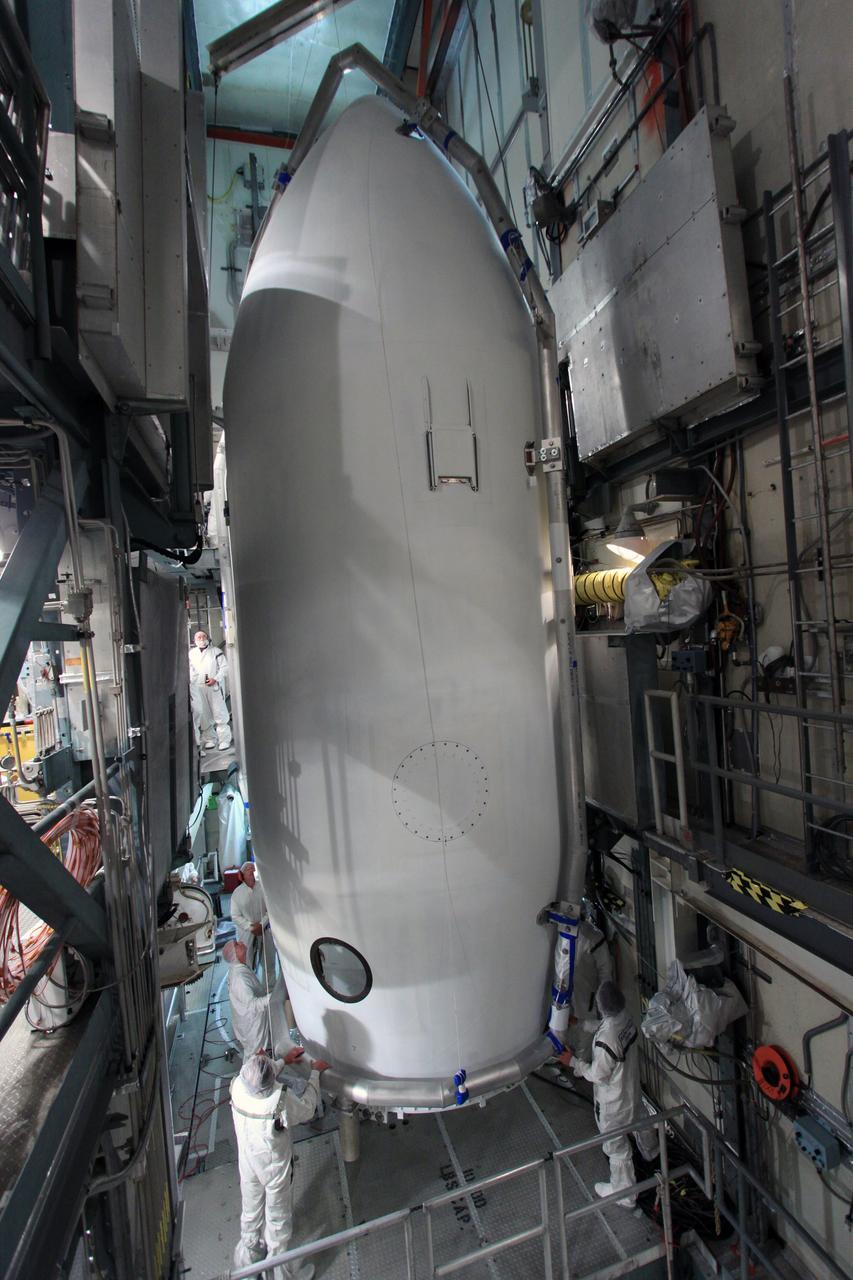
CAPE CANAVERAL, Fla. -- At Space Launch Complex 17B on Cape Canaveral Air Force Station in Florida, the sections of the Delta payload fairing form a protective cocoon around NASA's twin Gravity Recovery and Interior Laboratory spacecraft. The fairing will protect the spacecraft from the impact of aerodynamic pressure and heating during ascent and will be jettisoned once the spacecraft is outside the Earth's atmosphere. Launch aboard a United Launch Alliance Delta II rocket from Pad 17B is scheduled for Sept. 8. The spacecraft will fly in tandem orbits around the moon for several months to measure its gravity field. GRAIL's primary science objectives are to determine the structure of the lunar interior, from crust to core, and to advance understanding of the thermal evolution of the moon. For more information, visit http://www.nasa.gov/grail. Photo credit: NASA/Jim Grossmann
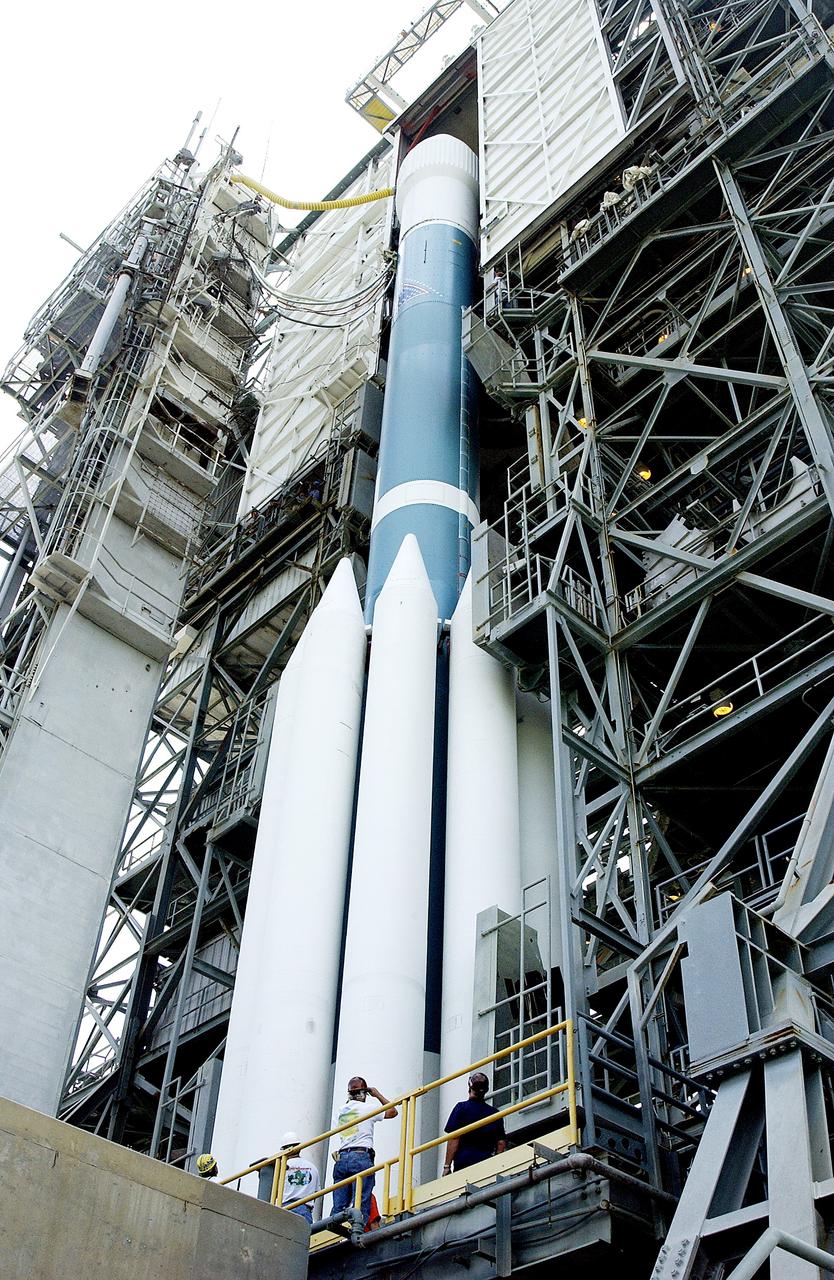
KENNEDY SPACE CENTER, FLA. - The Mobile Service Tower is rolled back at Space Launch Complex 17B, Cape Canaveral Air Force Station, to reveal the Delta II Heavy launch vehicle ready for launch of the Mars Exploration Rover-B (MER-B) mission, with the rover "Opportunity" aboard. The second of twin rovers being sent to Mars, it is equipped with a robotic arm, a drilling tool, three spectrometers, and four pairs of cameras that allow it to have a human-like, 3D view of the terrain. Each rover could travel as far as 100 meters in one day to act as Mars scientists' eyes and hands, exploring an environment where humans are not yet able to go. MER-B is scheduled to launch on June 28 at one of two available times, 11:56:16 p.m. EDT or 12:37:59 a.m. EDT on June 29.
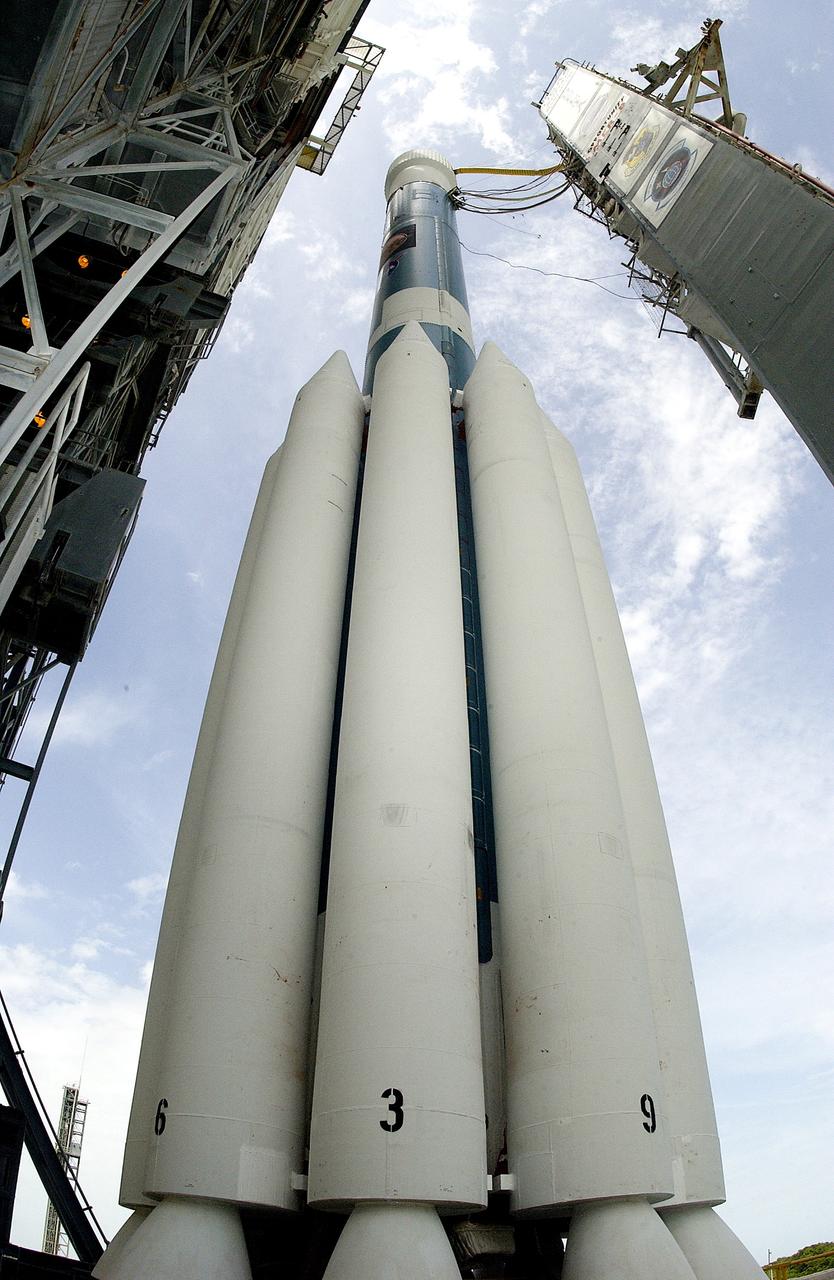
KENNEDY SPACE CENTER, FLA. - The Mobile Service Tower is rolled back at Space Launch Complex 17B, Cape Canaveral Air Force Station, to reveal the Delta II Heavy launch vehicle ready for launch of the Mars Exploration Rover-B (MER-B) mission, with the rover "Opportunity" aboard. The second of twin rovers being sent to Mars, it is equipped with a robotic arm, a drilling tool, three spectrometers, and four pairs of cameras that allow it to have a human-like, 3D view of the terrain. Each rover could travel as far as 100 meters in one day to act as Mars scientists' eyes and hands, exploring an environment where humans are not yet able to go. MER-B is scheduled to launch on June 28 at one of two available times, 11:56:16 p.m. EDT or 12:37:59 a.m. EDT on June 29.

KENNEDY SPACE CENTER, FLA. - The Mobile Service Tower is rolled back at Space Launch Complex 17B, Cape Canaveral Air Force Station, to reveal the Delta II Heavy launch vehicle ready for launch of the Mars Exploration Rover-B (MER-B) mission, with the rover "Opportunity" aboard. The second of twin rovers being sent to Mars, it is equipped with a robotic arm, a drilling tool, three spectrometers, and four pairs of cameras that allow it to have a human-like, 3D view of the terrain. Each rover could travel as far as 100 meters in one day to act as Mars scientists' eyes and hands, exploring an environment where humans are not yet able to go. MER-B is scheduled to launch on June 28 at one of two available times, 11:56:16 p.m. EDT or 12:37:59 a.m. EDT on June 29.
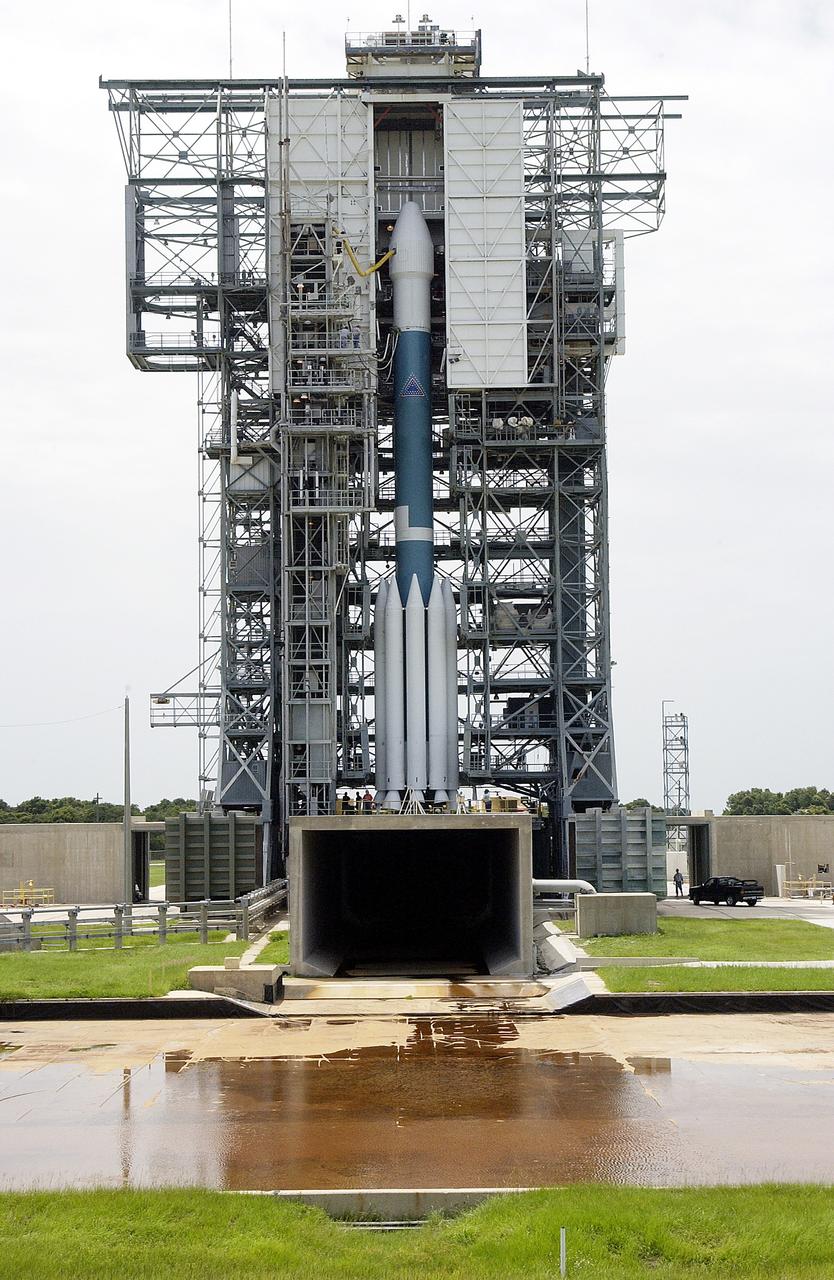
KENNEDY SPACE CENTER, FLA. - The Mobile Service Tower is rolled back at Space Launch Complex 17B, Cape Canaveral Air Force Station, to reveal the Delta II Heavy launch vehicle ready for launch of the Mars Exploration Rover-B (MER-B) mission, with the rover "Opportunity" aboard. The second of twin rovers being sent to Mars, it is equipped with a robotic arm, a drilling tool, three spectrometers, and four pairs of cameras that allow it to have a human-like, 3D view of the terrain. Each rover could travel as far as 100 meters in one day to act as Mars scientists' eyes and hands, exploring an environment where humans are not yet able to go. MER-B is scheduled to launch on June 28 at one of two available times, 11:56:16 p.m. EDT or 12:37:59 a.m. EDT on June 29.
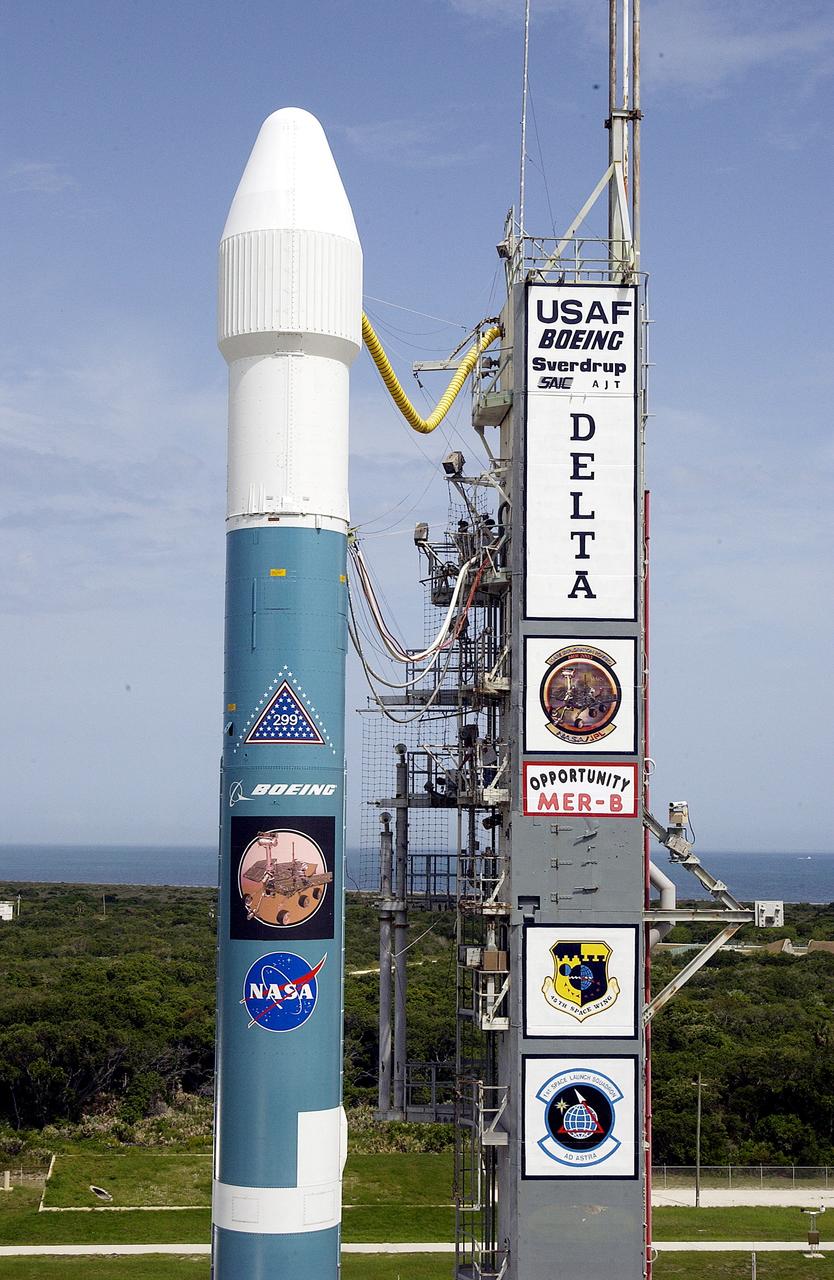
KENNEDY SPACE CENTER, FLA. - The Mobile Service Tower is rolled back at Space Launch Complex 17B, Cape Canaveral Air Force Station, to reveal the Delta II Heavy launch vehicle ready for launch of the Mars Exploration Rover-B (MER-B) mission, with the rover "Opportunity" aboard. The second of twin rovers being sent to Mars, it is equipped with a robotic arm, a drilling tool, three spectrometers, and four pairs of cameras that allow it to have a human-like, 3D view of the terrain. Each rover could travel as far as 100 meters in one day to act as Mars scientists' eyes and hands, exploring an environment where humans are not yet able to go. MER-B is scheduled to launch on June 28 at one of two available times, 11:56:16 p.m. EDT or 12:37:59 a.m. EDT on June 29.
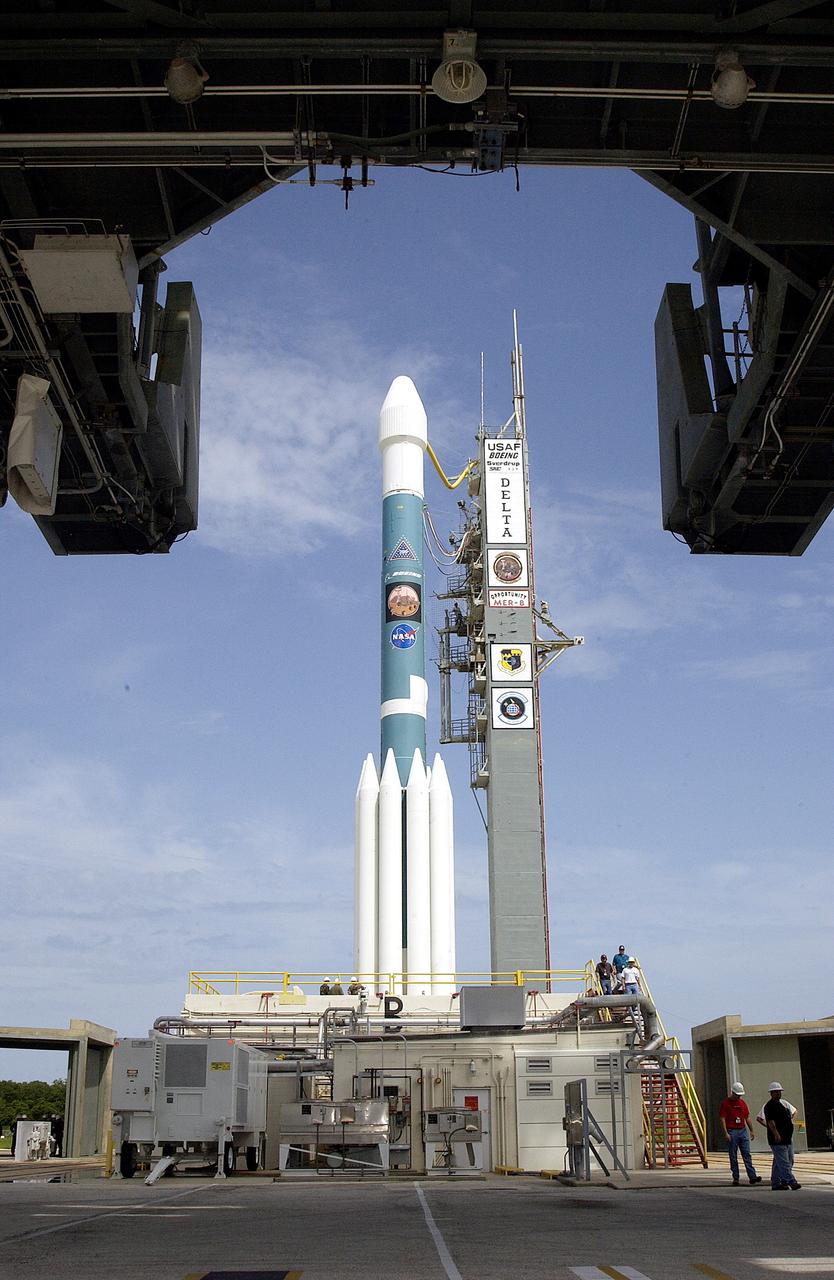
KENNEDY SPACE CENTER, FLA. - The Mobile Service Tower is rolled back at Space Launch Complex 17B, Cape Canaveral Air Force Station, to reveal the Delta II Heavy launch vehicle ready for launch of the Mars Exploration Rover-B (MER-B) mission, with the rover "Opportunity" aboard. The second of twin rovers being sent to Mars, it is equipped with a robotic arm, a drilling tool, three spectrometers, and four pairs of cameras that allow it to have a human-like, 3D view of the terrain. Each rover could travel as far as 100 meters in one day to act as Mars scientists' eyes and hands, exploring an environment where humans are not yet able to go. MER-B is scheduled to launch on June 28 at one of two available times, 11:56:16 p.m. EDT or 12:37:59 a.m. EDT on June 29.
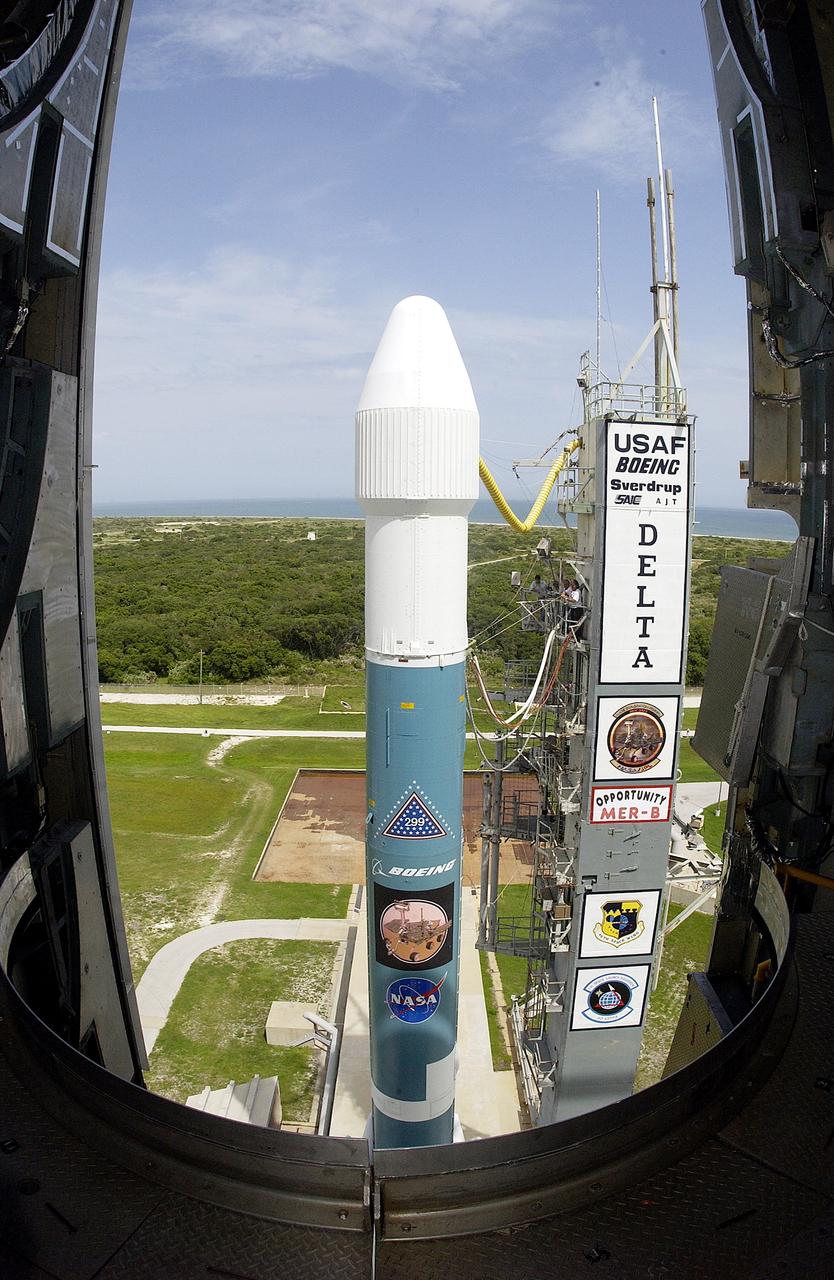
KENNEDY SPACE CENTER, FLA. - The Mobile Service Tower is rolled back at Space Launch Complex 17B, Cape Canaveral Air Force Station, to reveal the Delta II Heavy launch vehicle ready for launch of the Mars Exploration Rover-B (MER-B) mission, with the rover "Opportunity" aboard. The second of twin rovers being sent to Mars, it is equipped with a robotic arm, a drilling tool, three spectrometers, and four pairs of cameras that allow it to have a human-like, 3D view of the terrain. Each rover could travel as far as 100 meters in one day to act as Mars scientists' eyes and hands, exploring an environment where humans are not yet able to go. MER-B is scheduled to launch on June 28 at one of two available times, 11:56:16 p.m. EDT or 12:37:59 a.m. EDT on June 29.
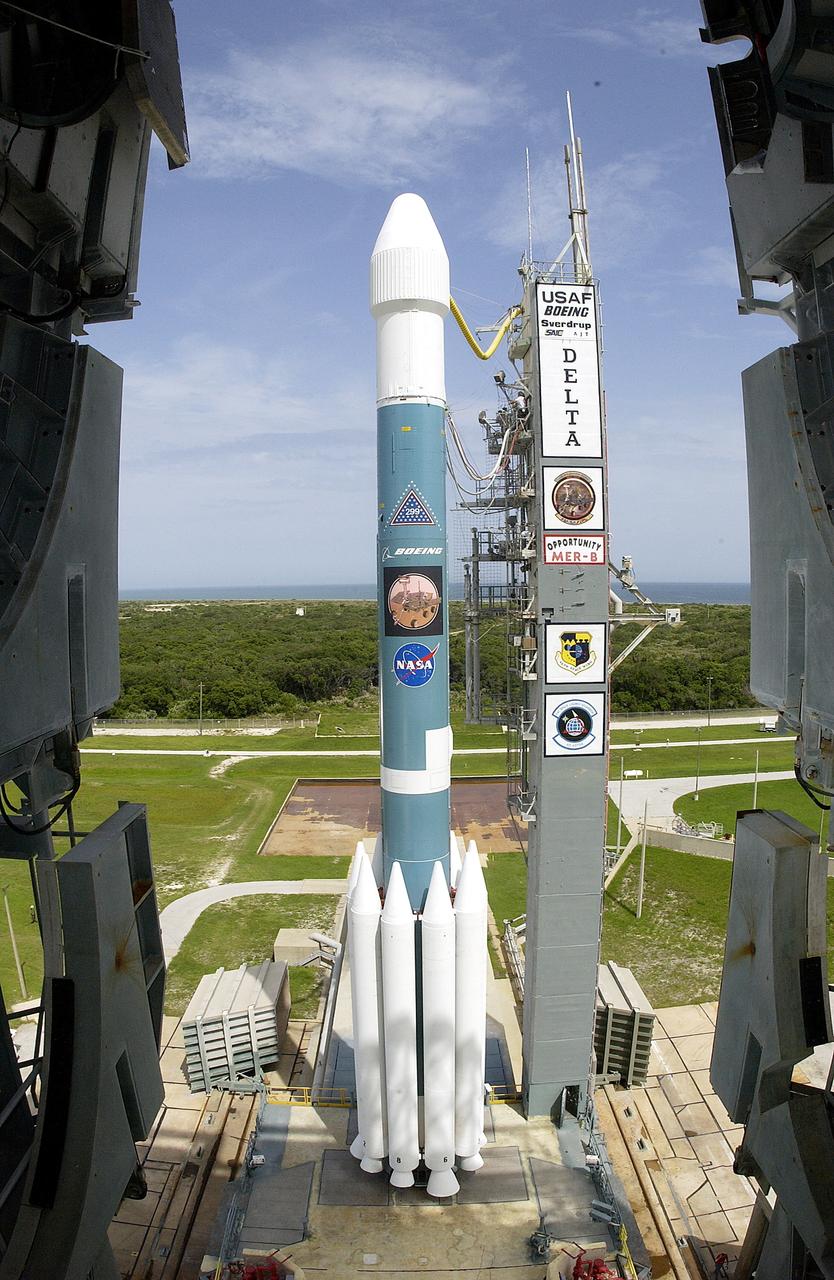
KENNEDY SPACE CENTER, FLA. - The Mobile Service Tower is rolled back at Space Launch Complex 17B, Cape Canaveral Air Force Station, to reveal the Delta II Heavy launch vehicle ready for launch of the Mars Exploration Rover-B (MER-B) mission, with the rover "Opportunity" aboard. The second of twin rovers being sent to Mars, it is equipped with a robotic arm, a drilling tool, three spectrometers, and four pairs of cameras that allow it to have a human-like, 3D view of the terrain. Each rover could travel as far as 100 meters in one day to act as Mars scientists' eyes and hands, exploring an environment where humans are not yet able to go. MER-B is scheduled to launch on June 28 at one of two available times, 11:56:16 p.m. EDT or 12:37:59 a.m. EDT on June 29.
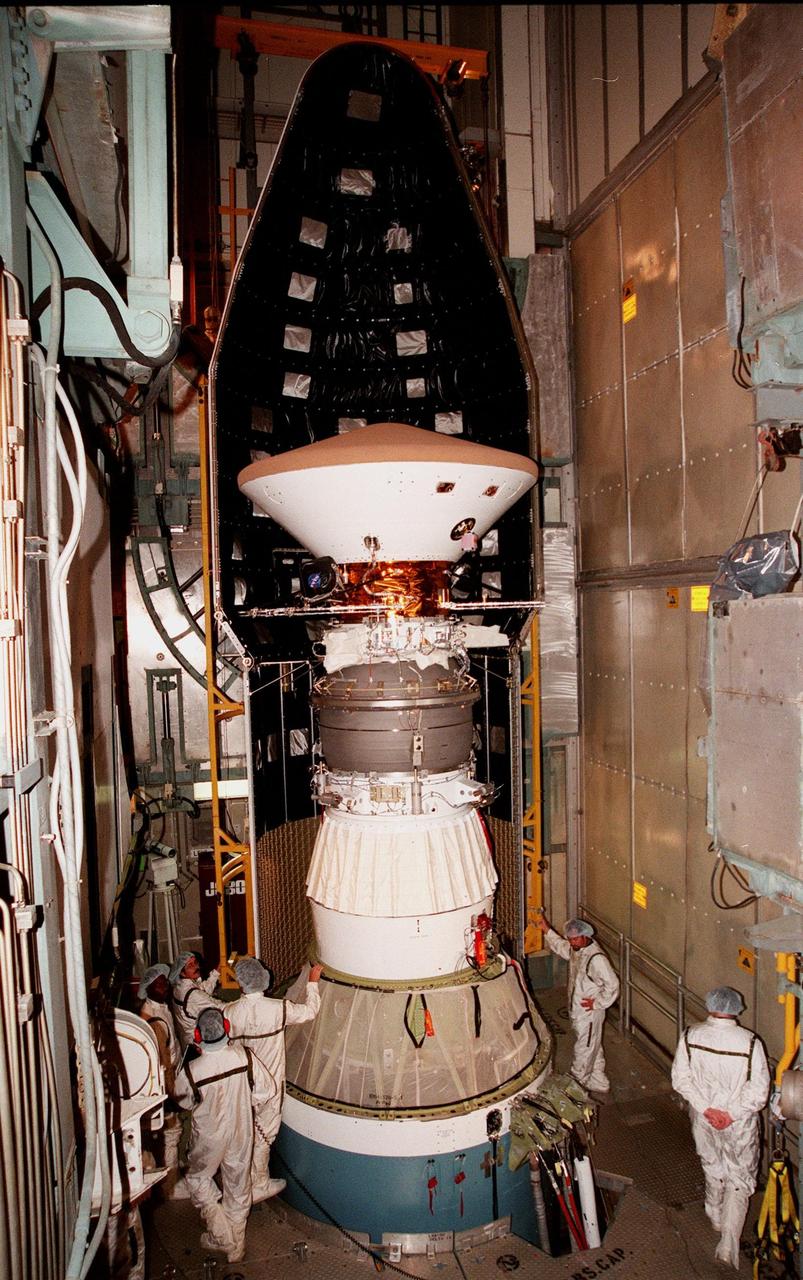
KENNEDY SPACE CENTER, FLA. -- At Launch Complex 17B, Cape Canaveral Air Station, workers begin fitting the fairing around the upper stages of the Boeing Delta II rocket and Mars Polar Lander. The rocket is scheduled to launch Jan. 3, 1999. The lander is a solar-powered spacecraft designed to touch down on the Martian surface near the northern-most boundary of the south pole in order to study the water cycle there. The lander also will help scientists learn more about climate change and current resources on Mars, studying such things as frost, dust, water vapor and condensates in the Martian atmosphere. It is the second spacecraft to be launched in a pair of Mars Surveyor '98 missions
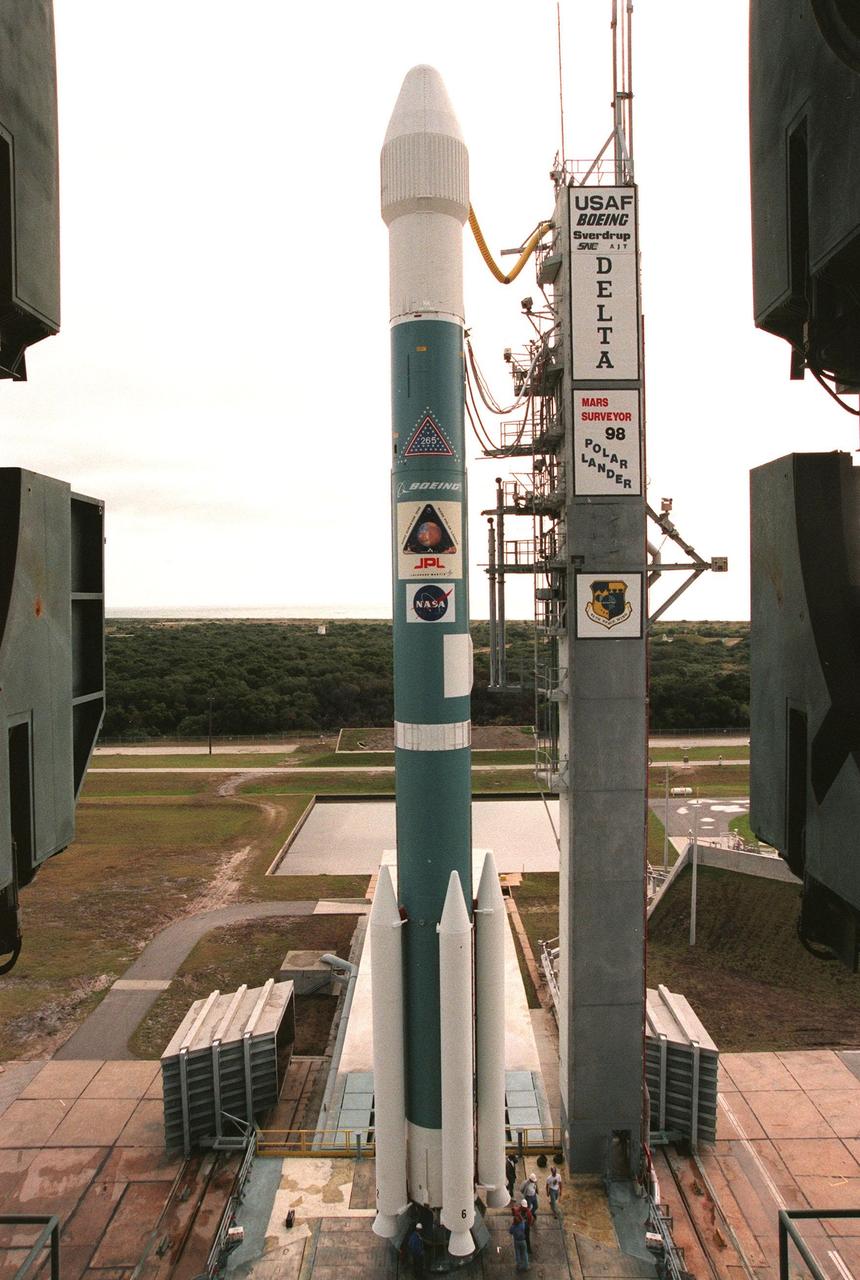
KENNEDY SPACE CENTER, FLA. -- After launch tower retraction, the Boeing Delta II rocket carrying NASA's Mars Polar lander waits for liftoff, scheduled for 3:21 p.m. EST, at Launch Complex 17B, Cape Canaveral Air Station. The lander is a solar-powered spacecraft designed to touch down on the Martian surface near the northern-most boundary of the south pole in order to study the water cycle there. The lander also will help scientists learn more about climate change and current resources on Mars, studying such things as frost, dust, water vapor and condensates in the Martian atmosphere. It is the second spacecraft to be launched in a pair of Mars Surveyor 98 missions
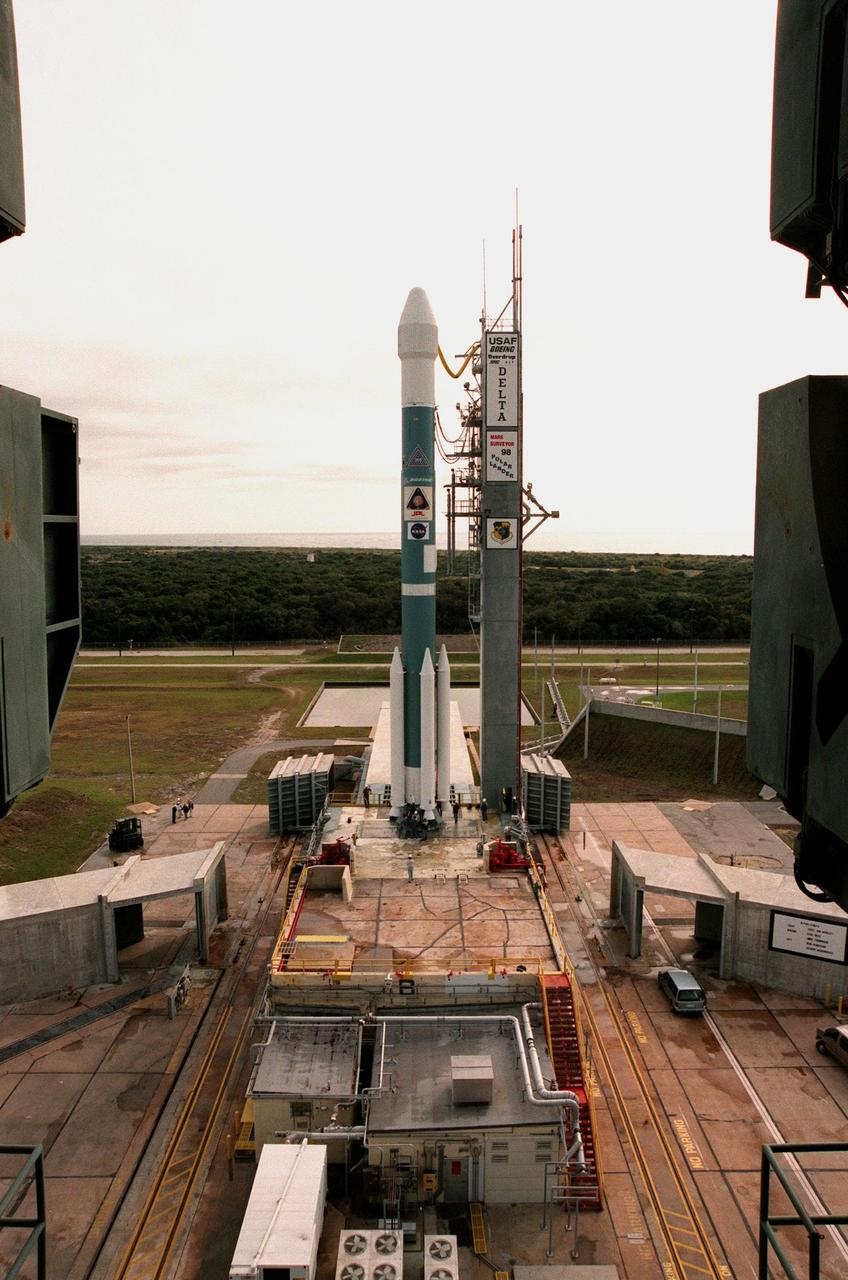
KENNEDY SPACE CENTER, FLA. -- After launch tower rollback, the Boeing Delta II rocket carrying NASA's Mars Polar lander awaits liftoff, scheduled for 3:21 p.m. EST, at Launch Complex 17B, Cape Canaveral Air Station. The lander is a solar-powered spacecraft designed to touch down on the Martian surface near the northern-most boundary of the south pole in order to study the water cycle there. The lander also will help scientists learn more about climate change and current resources on Mars, studying such things as frost, dust, water vapor and condensates in the Martian atmosphere. It is the second spacecraft to be launched in a pair of Mars Surveyor '98 missions
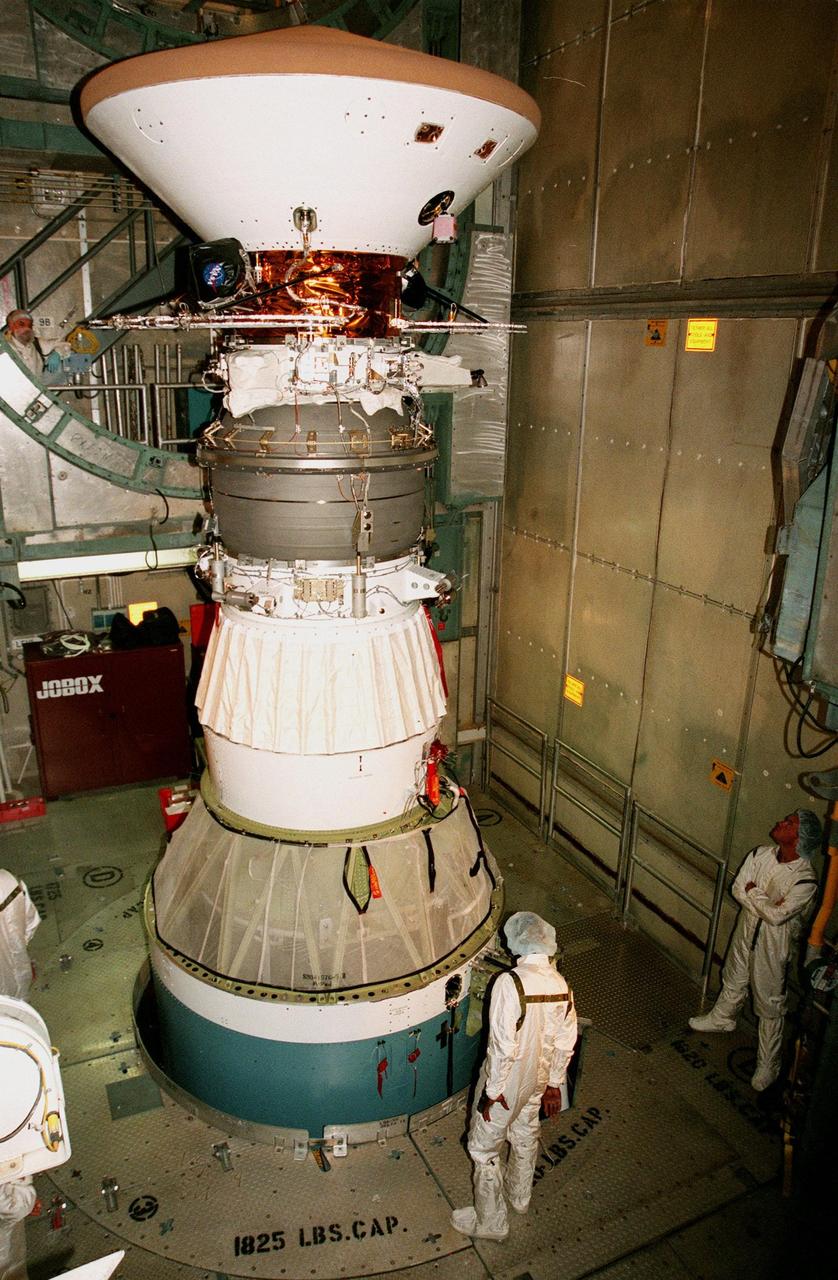
KENNEDY SPACE CENTER, FLA. -- At Launch Complex 17B, Cape Canaveral Air Station, workers look over the Mars Polar Lander (top) atop the Boeing Delta II rocket as it sits ready for the fairing to be attached. The rocket is scheduled to launch Jan. 3, 1999. The lander is a solar-powered spacecraft designed to touch down on the Martian surface near the northern-most boundary of the south pole in order to study the water cycle there. The lander also will help scientists learn more about climate change and current resources on Mars, studying such things as frost, dust, water vapor and condensates in the Martian atmosphere. It is the second spacecraft to be launched in a pair of Mars Surveyor '98 missions
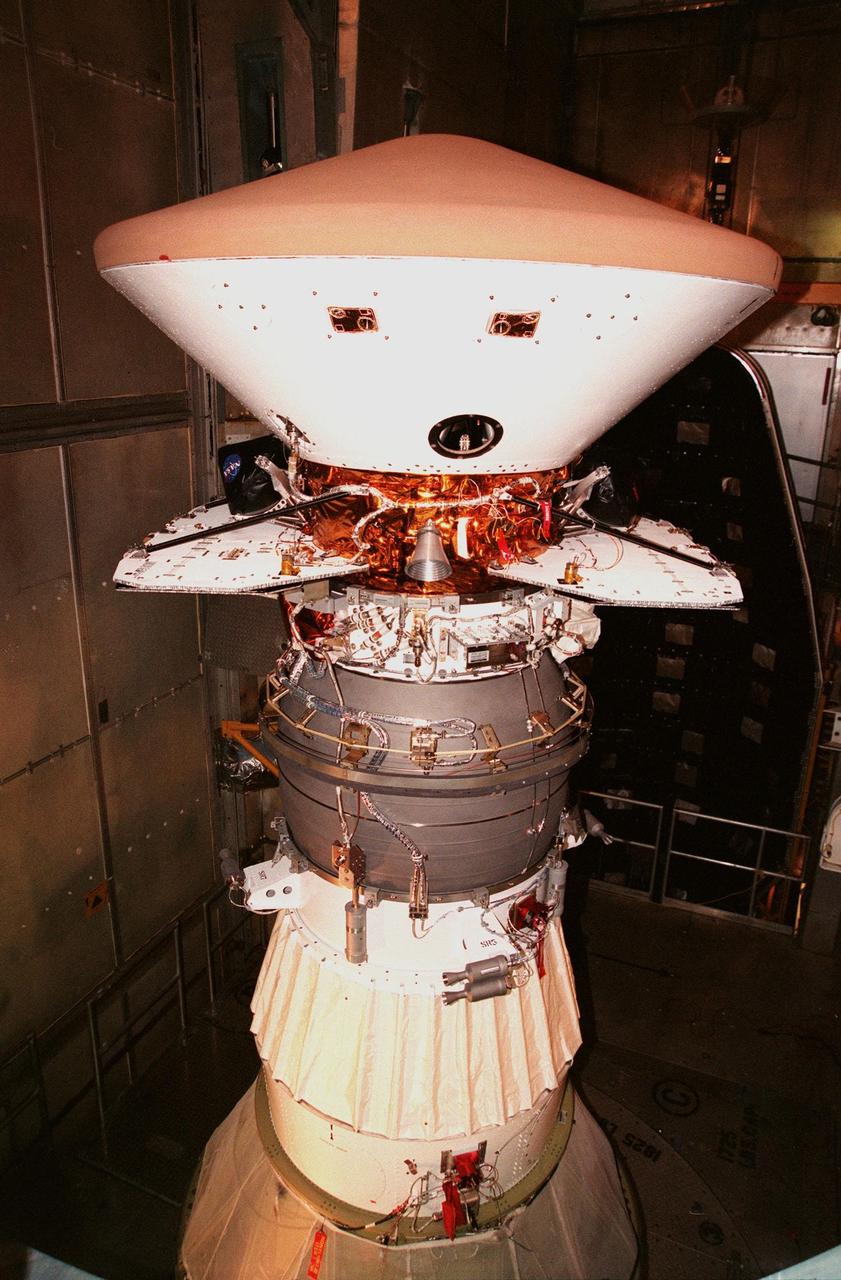
KENNEDY SPACE CENTER, FLA. -- At Launch Complex 17B, Cape Canaveral Air Station, the Mars Polar Lander (top) and the Boeing Delta II rocket to which it's attached sit ready for the fairing to be attached. The rocket is scheduled to launch Jan. 3, 1999. The lander is a solar-powered spacecraft designed to touch down on the Martian surface near the northern-most boundary of the south pole in order to study the water cycle there. The lander also will help scientists learn more about climate change and current resources on Mars, studying such things as frost, dust, water vapor and condensates in the Martian atmosphere. It is the second spacecraft to be launched in a pair of Mars Surveyor '98 missions
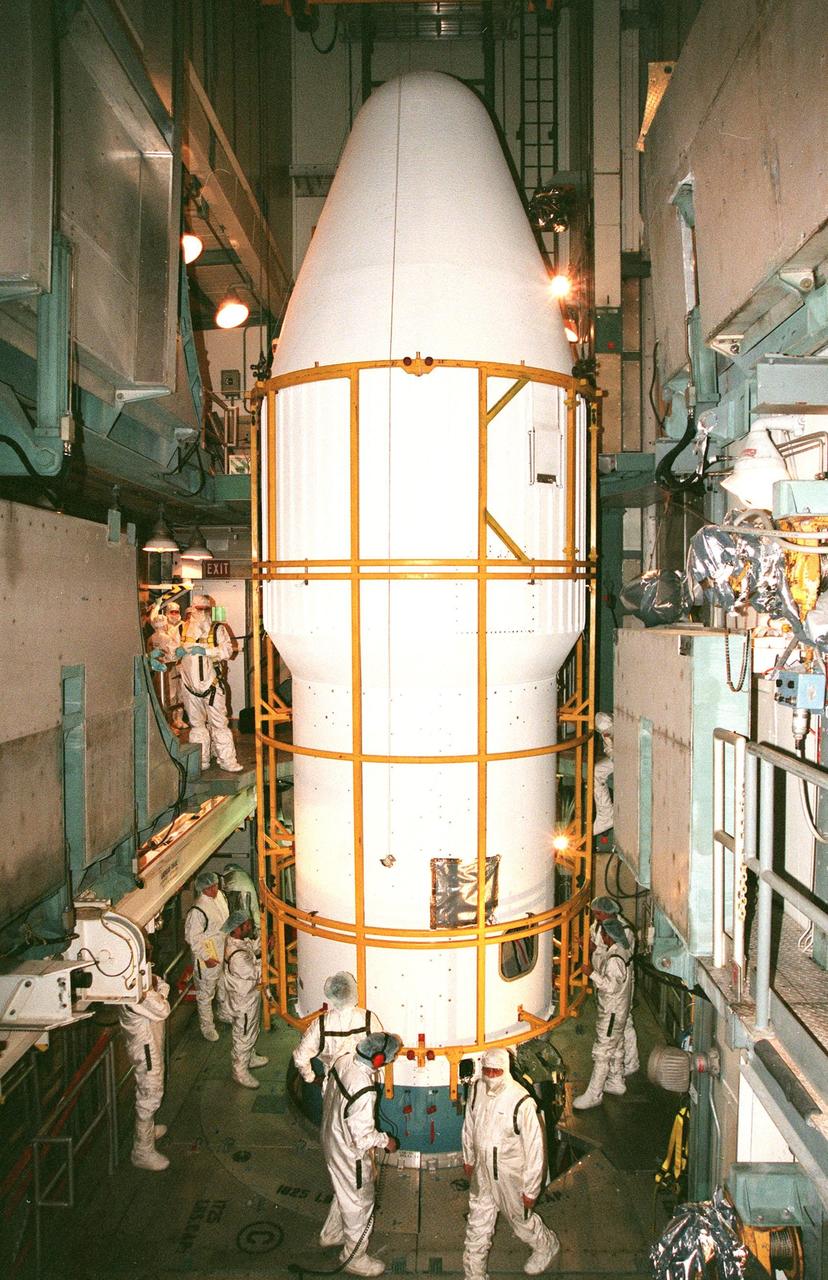
KENNEDY SPACE CENTER, FLA. -- At Launch Complex 17B, Cape Canaveral Air Station, workers check the closure of the fairing around the upper stages of the Boeing Delta II rocket and Mars Polar Lander. The rocket is scheduled to launch Jan. 3, 1999. The lander is a solar-powered spacecraft designed to touch down on the Martian surface near the northern-most boundary of the south pole in order to study the water cycle there. The lander also will help scientists learn more about climate change and current resources on Mars, studying such things as frost, dust, water vapor and condensates in the Martian atmosphere. It is the second spacecraft to be launched in a pair of Mars Surveyor '98 missions
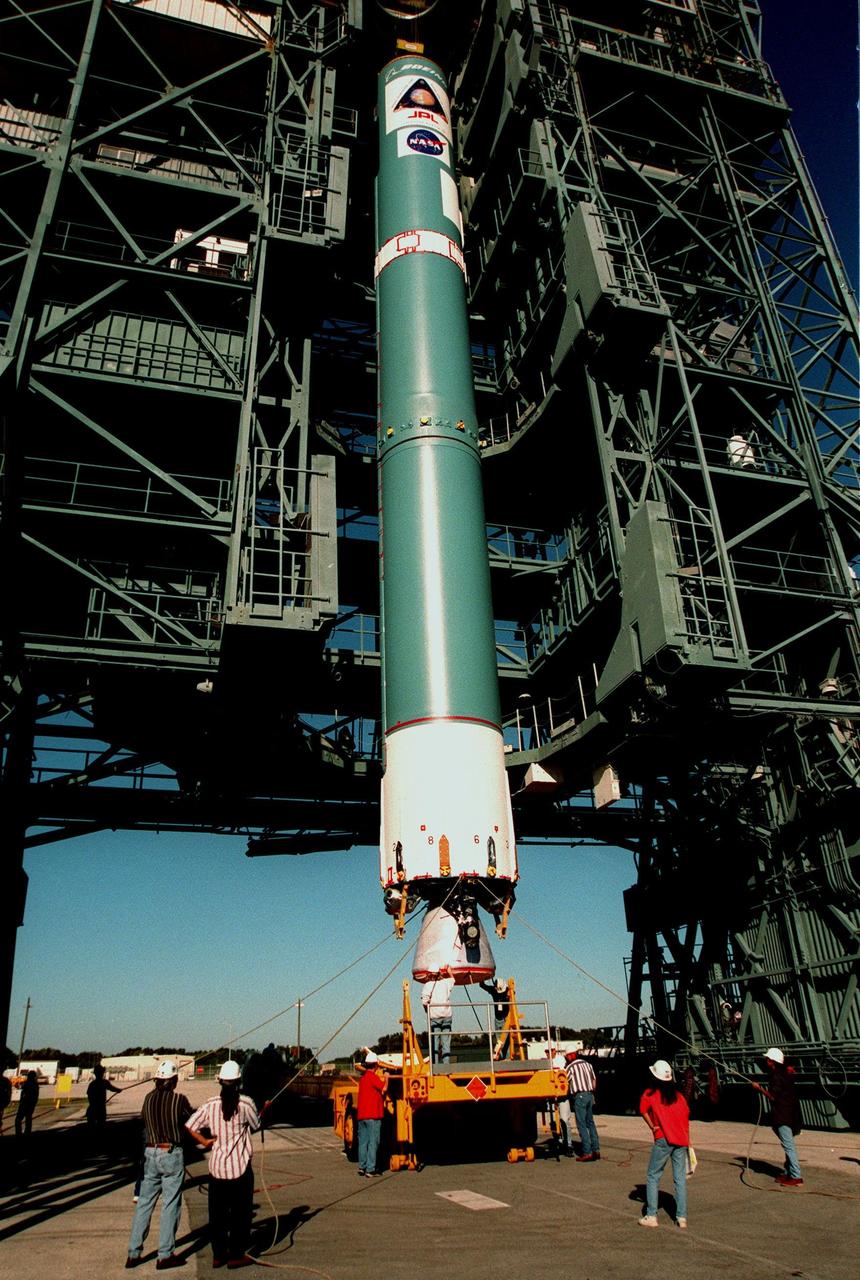
KENNEDY SPACE CENTER, FLA. -- Workers guide the lifting of the first stage of a Delta II rocket up the gantry at Launch Complex 17B, Cape Canaveral Air Station. The rocket will be used to launch the Mars Polar Lander on Jan. 3, 1999. The lander is a solar-powered spacecraft designed to touch down on the Martian surface near the northern-most boundary of the south pole in order to study the water cycle there. The lander also will help scientists learn more about climate change and current resources on Mars, studying such things as frost, dust, water vapor and condensates in the Martian atmosphere. It is the second spacecraft to be launched in a pair of Mars '98 missions. The first is the Mars Climate Orbiter, to be launched aboard a Delta II rocket from Launch Complex 17A on Dec. 10, 1998
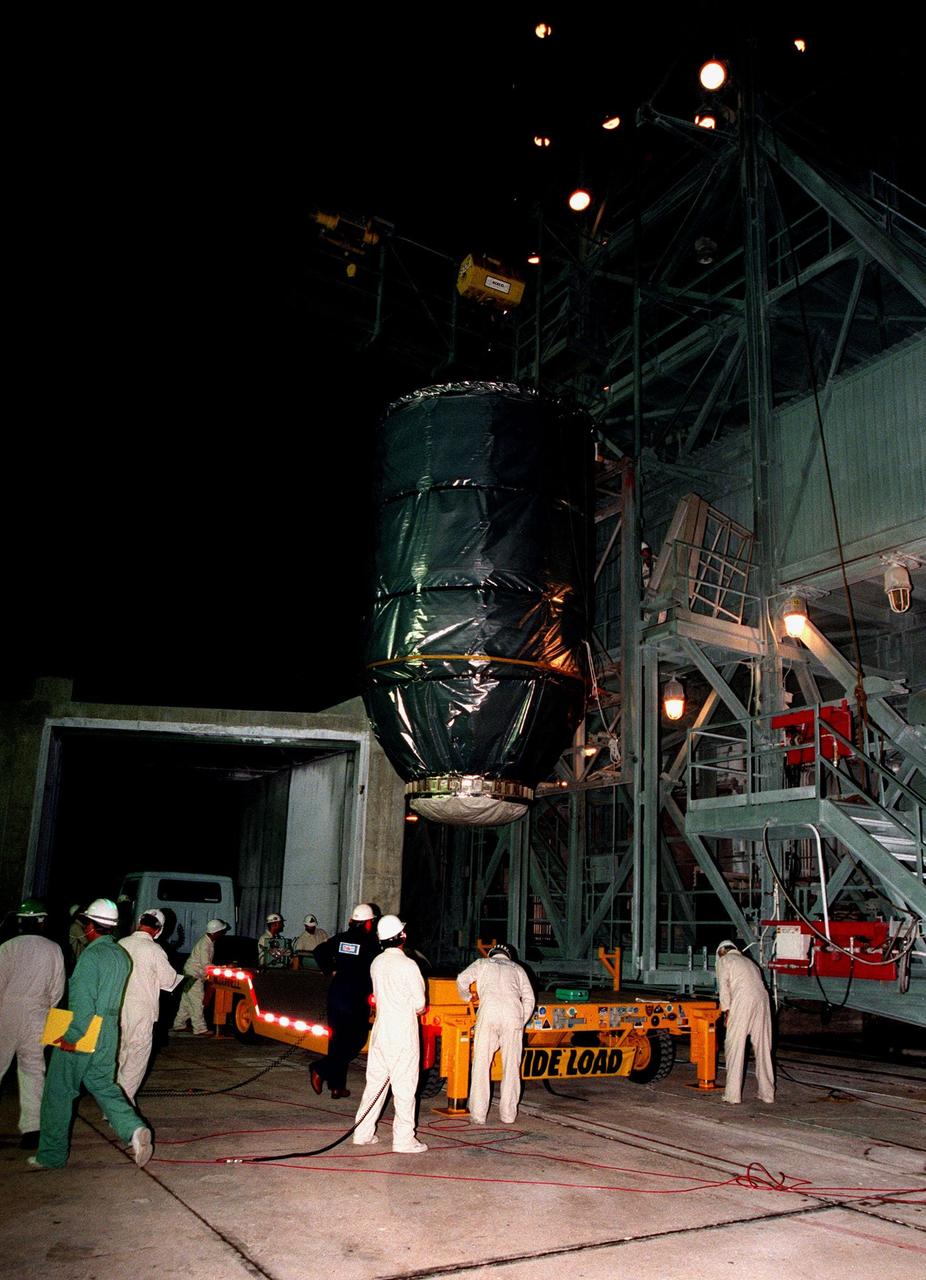
KENNEDY SPACE CENTER, FLA. -- The Mars Polar Lander spacecraft is lifted off the trailer of that transported it to the gantry at Launch Complex 17B, Cape Canaveral Air Station. The lander, which will be launched aboard a Boeing Delta II rocket on Jan. 3, 1999, is a solar-powered spacecraft designed to touch down on the Martian surface near the northern-most boundary of the south pole in order to study the water cycle there. The lander also will help scientists learn more about climate change and current resources on Mars, studying such things as frost, dust, water vapor and condensates in the Martian atmosphere. It is the second spacecraft to be launched in a pair of Mars '98 missions. The first is the Mars Climate Orbiter, which was launched aboard a Delta II rocket from Launch Complex 17A on Dec. 11, 1998

KENNEDY SPACE CENTER, FLA. -- Workers mate the Mars Polar Lander (top) to the Boeing Delta II rocket at Launch Complex 17B, Cape Canaveral Air Station. The rocket is scheduled to launch Jan. 3, 1999. The lander is a solar-powered spacecraft designed to touch down on the Martian surface near the northern-most boundary of the south pole in order to study the water cycle there. The lander also will help scientists learn more about climate change and current resources on Mars, studying such things as frost, dust, water vapor and condensates in the Martian atmosphere. It is the second spacecraft to be launched in a pair of Mars Surveyor '98 missions. The first is the Mars Climate Orbiter, which was launched aboard a Delta II rocket from Launch Complex 17A on Dec. 11, 1998
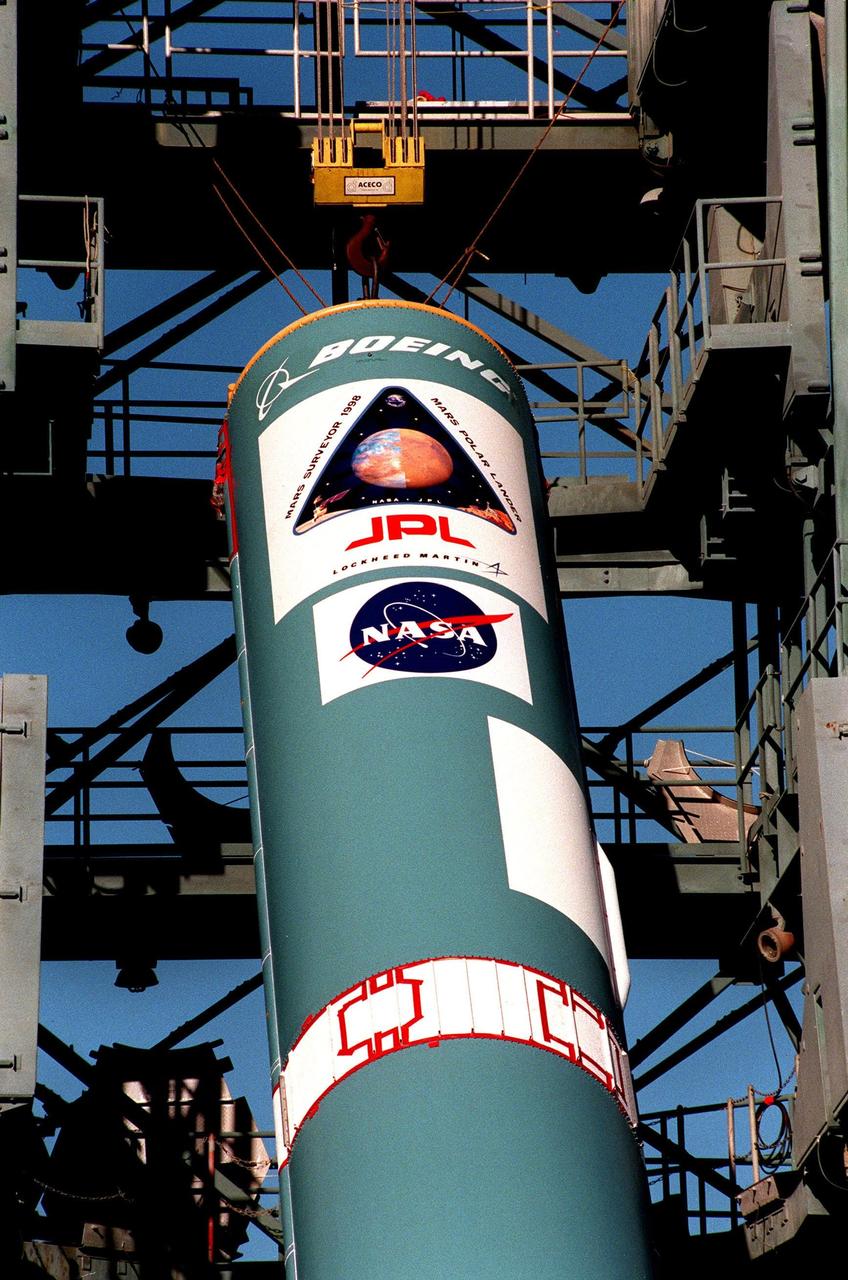
The first stage of a Delta II rocket is lifted up the gantry at Launch Complex 17B, Cape Canaveral Air Station. The rocket will be used to launch the Mars Polar Lander on Jan. 3, 1999. The lander is a solar-powered spacecraft designed to touch down on the Martian surface near the northern-most boundary of the south pole in order to study the water cycle there. The lander also will help scientists learn more about climate change and current resources on Mars, studying such things as frost, dust, water vapor and condensates in the Martian atmosphere. It is the second spacecraft to be launched in a pair of Mars '98 missions. The first is the Mars Climate Orbiter, to be launched aboard a Delta II rocket from Launch Complex 17A on Dec. 10, 1998
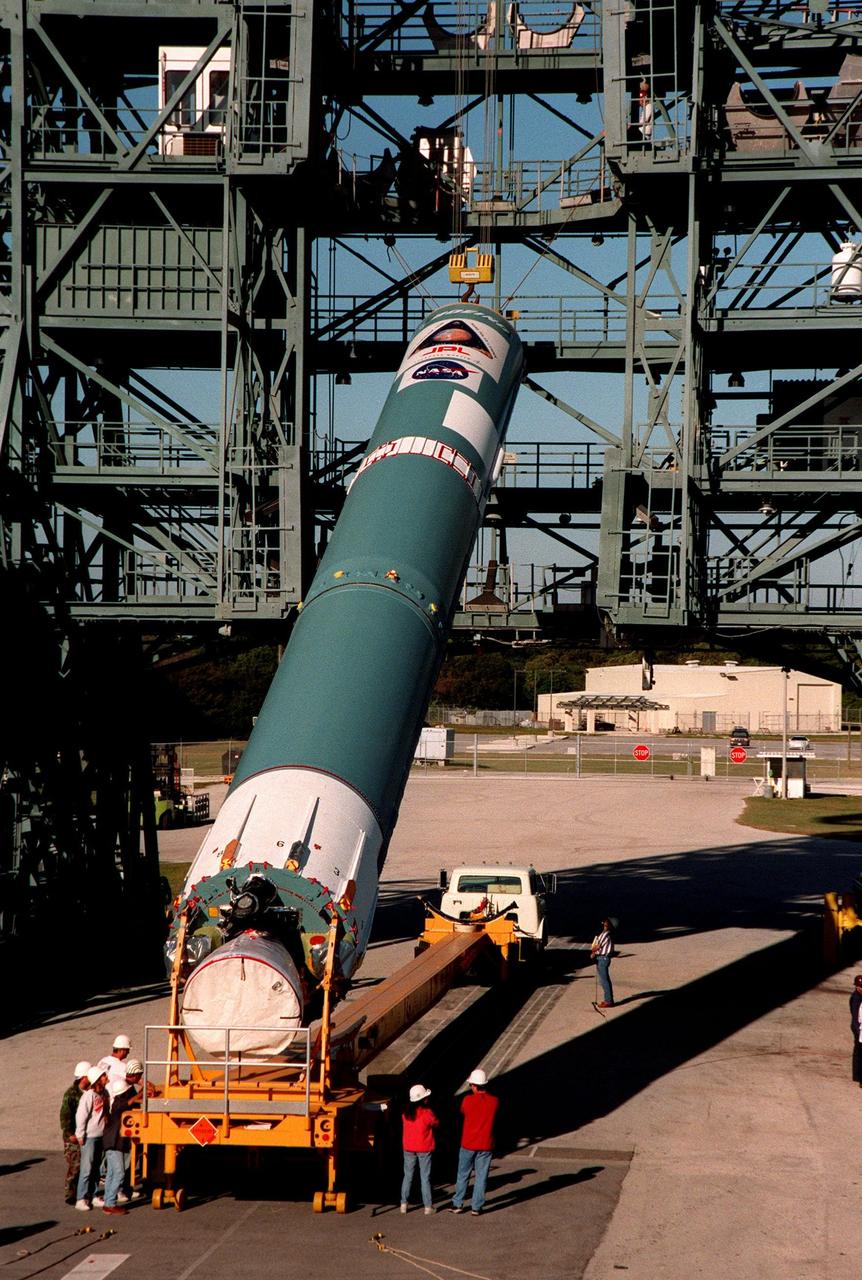
KENNEDY SPACE CENTER, FLA. -- The first stage of a Delta II rocket arrives at Launch Complex 17B, Cape Canaveral Air Station. The rocket will be used to launch the Mars Polar Lander on Jan. 3, 1999. The lander is a solar-powered spacecraft designed to touch down on the Martian surface near the northern-most boundary of the south pole in order to study the water cycle there. The lander also will help scientists learn more about climate change and current resources on Mars, studying such things as frost, dust, water vapor and condensates in the Martian atmosphere. It is the second spacecraft to be launched in a pair of Mars '98 missions. The first is the Mars Climate Orbiter, to be launched aboard a Delta II rocket from Launch Complex 17A on Dec. 10, 1998
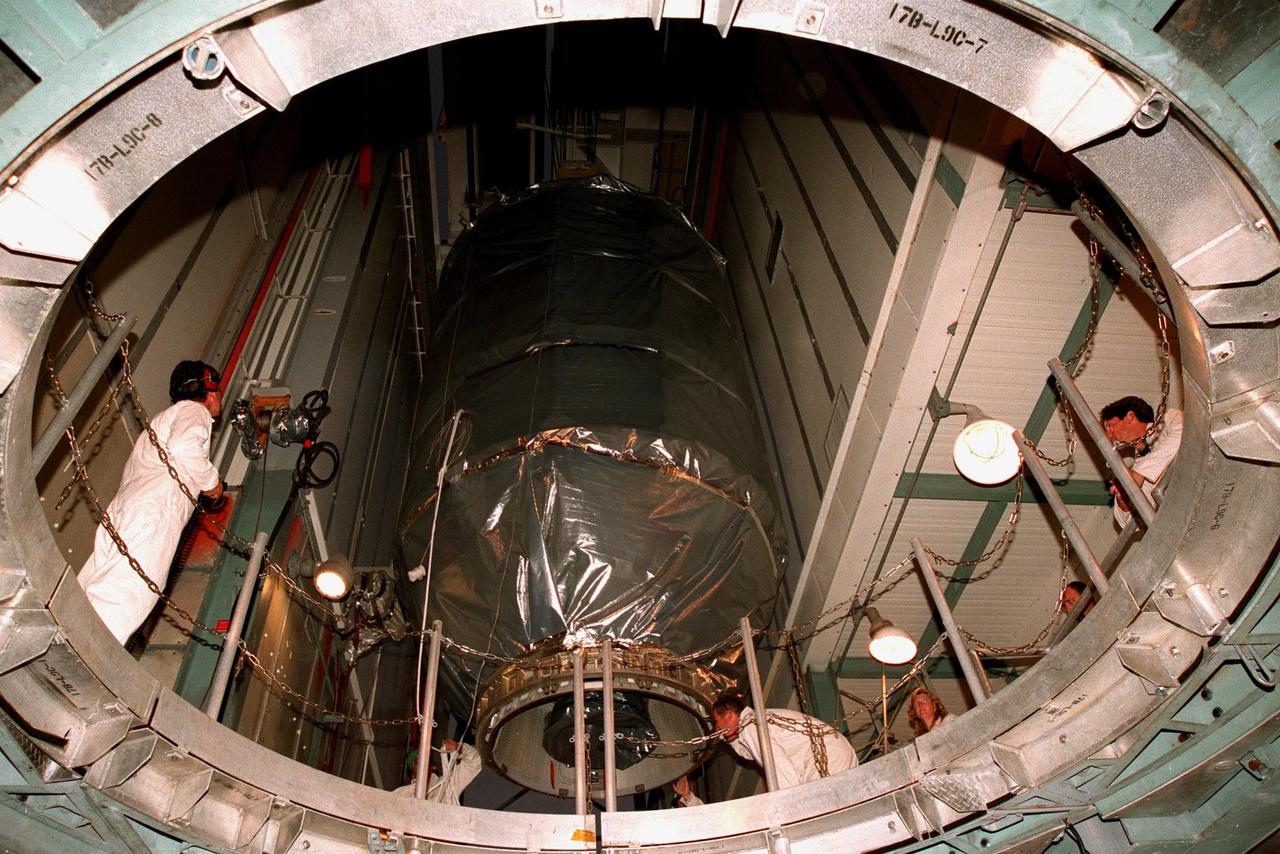
KENNEDY SPACE CENTER, FLA. -- Inside the gantry at Launch Complex 17B, Cape Canaveral Air Station, the Mars Polar Lander spacecraft is lowered to mate it with the Boeing Delta II rocket that will launch it on Jan. 3, 1999. The lander is a solar-powered spacecraft designed to touch down on the Martian surface near the northern-most boundary of the south pole in order to study the water cycle there. The lander also will help scientists learn more about climate change and current resources on Mars, studying such things as frost, dust, water vapor and condensates in the Martian atmosphere. It is the second spacecraft to be launched in a pair of Mars Surveyor'98 missions. The first is the Mars Climate Orbiter, which was launched aboard a Delta II rocket from Launch Complex 17A on Dec. 11, 1998
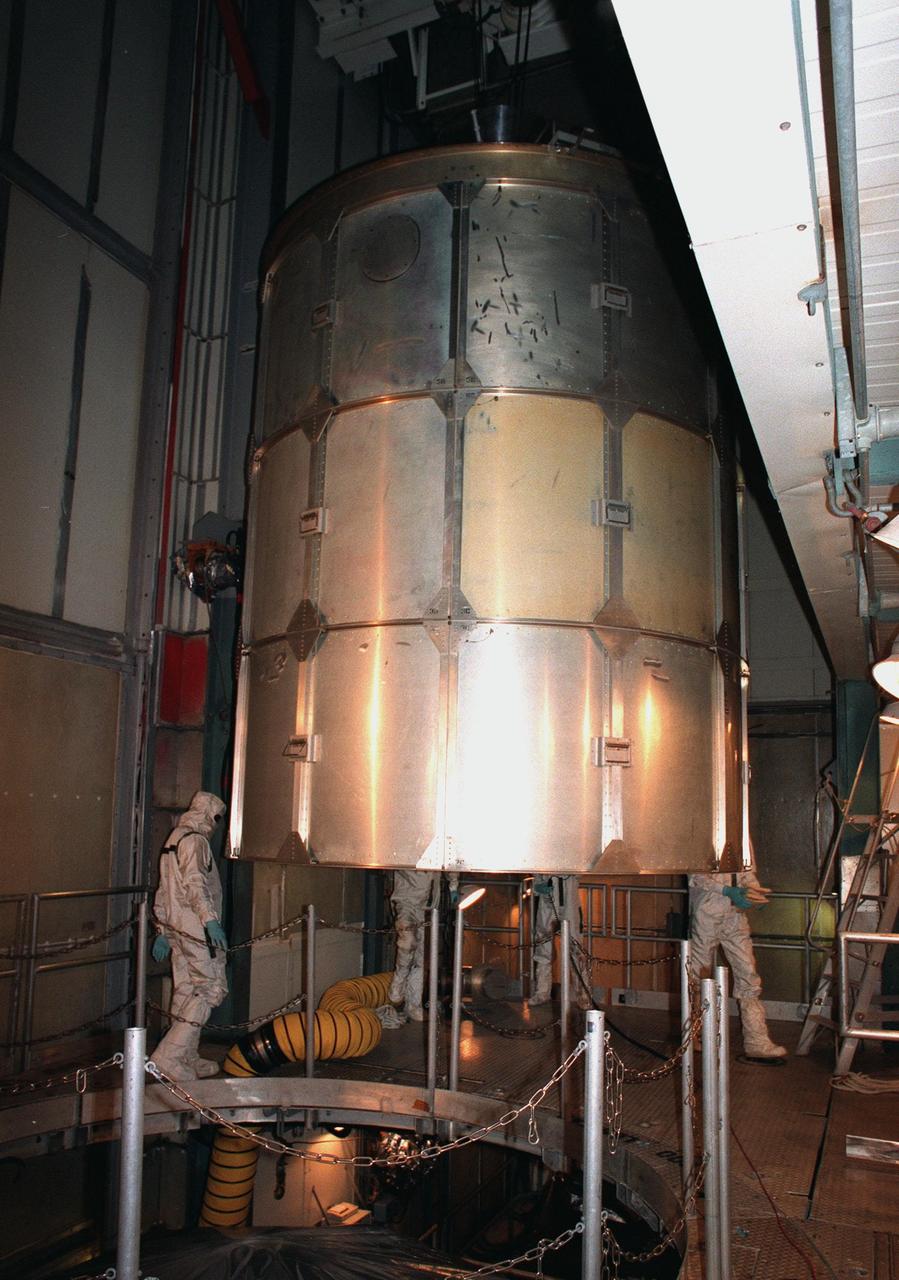
KENNEDY SPACE CENTER, FLA. -- At Launch Complex 17B, Cape Canaveral Air Station, the protective covering on the Mars Polar Lander is lifted up and out of the way. The lander, in the opening below, is being mated to the Boeing Delta II rocket that will launch it on Jan. 3, 1999. The lander is a solar-powered spacecraft designed to touch down on the Martian surface near the northern-most boundary of the south pole in order to study the water cycle there. The lander also will help scientists learn more about climate change and current resources on Mars, studying such things as frost, dust, water vapor and condensates in the Martian atmosphere. It is the second spacecraft to be launched in a pair of Mars Surveyor'98 missions. The first is the Mars Climate Orbiter, which was launched aboard a Delta II rocket from Launch Complex 17A on Dec. 11, 1998
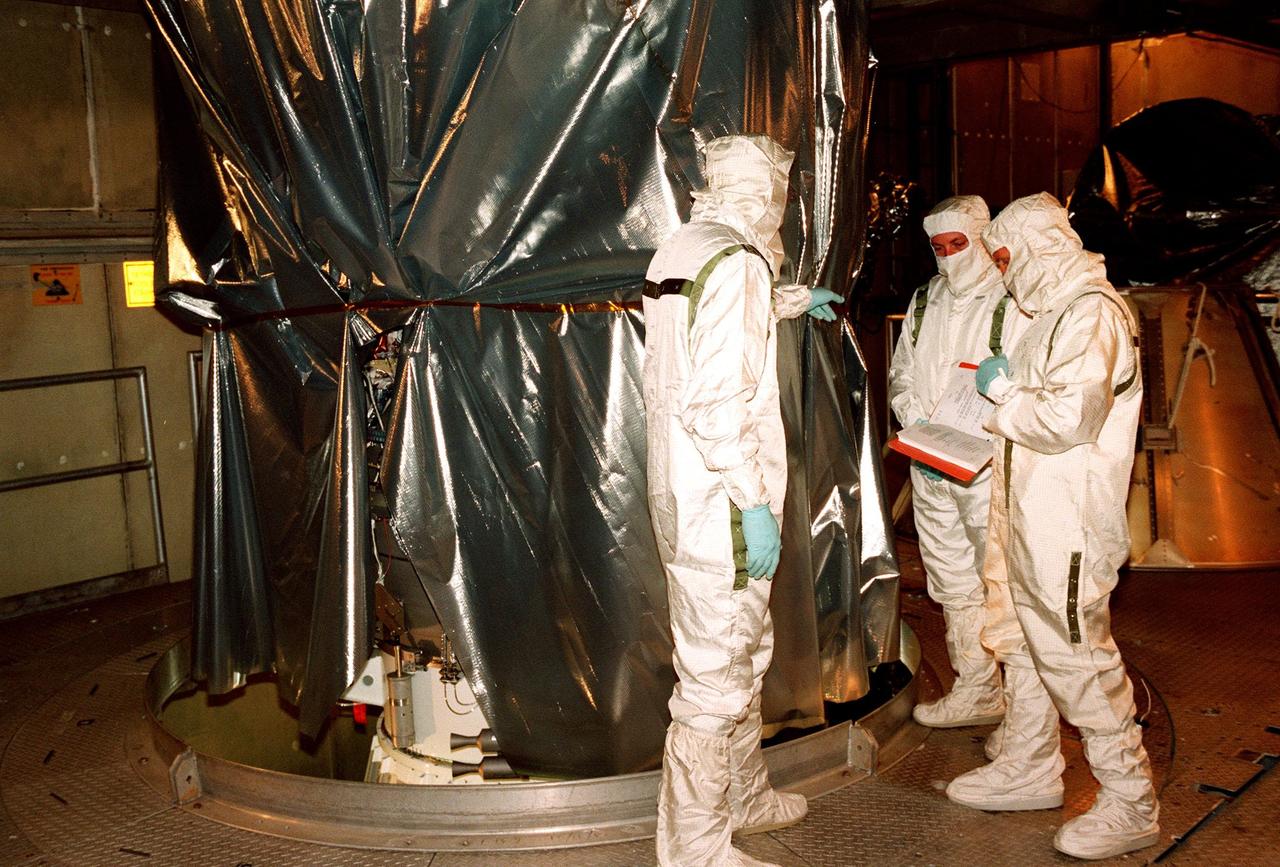
KENNEDY SPACE CENTER, FLA. -- At Launch Complex 17B, Cape Canaveral Air Station, workers get ready to remove the protective wrapping on the Mars Polar Lander to be launched aboard a Boeing Delta II rocket on Jan. 3, 1999. The lander is a solar-powered spacecraft designed to touch down on the Martian surface near the northern-most boundary of the south pole in order to study the water cycle there. The lander also will help scientists learn more about climate change and current resources on Mars, studying such things as frost, dust, water vapor and condensates in the Martian atmosphere. It is the second spacecraft to be launched in a pair of Mars Surveyor'98 missions. The first is the Mars Climate Orbiter, which was launched aboard a Delta II rocket from Launch Complex 17A on Dec. 11, 1998
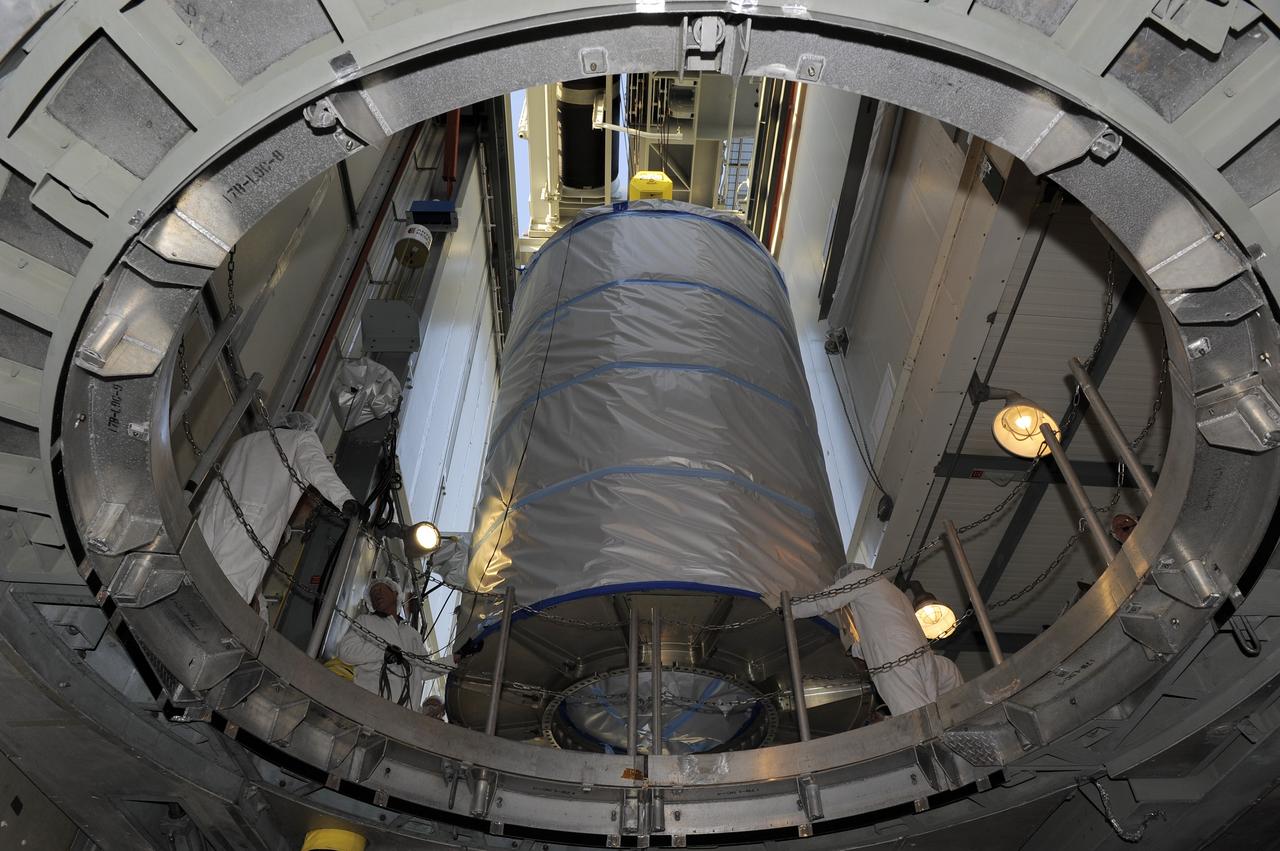
CAPE CANAVERAL, Fla. -- Technicians lower NASA's twin Gravity Recovery and Interior Laboratory (GRAIL) spacecraft into place atop a United Launch Alliance Delta II rocket on Space Launch Complex 17B at Cape Canaveral Air Force Station in Florida. The lunar probes are attached to a spacecraft adapter ring in their side-by-side launch configuration and wrapped in plastic to prevent contamination outside the clean room. The spacecraft will fly in tandem orbits around the moon for several months to measure its gravity field. GRAIL's primary science objectives are to determine the structure of the lunar interior, from crust to core, and to advance understanding of the thermal evolution of the moon. Launch is scheduled for Sept. 8. For more information, visit www.nasa.gov/grail. Photo credit: NASA/Kim Shiflett
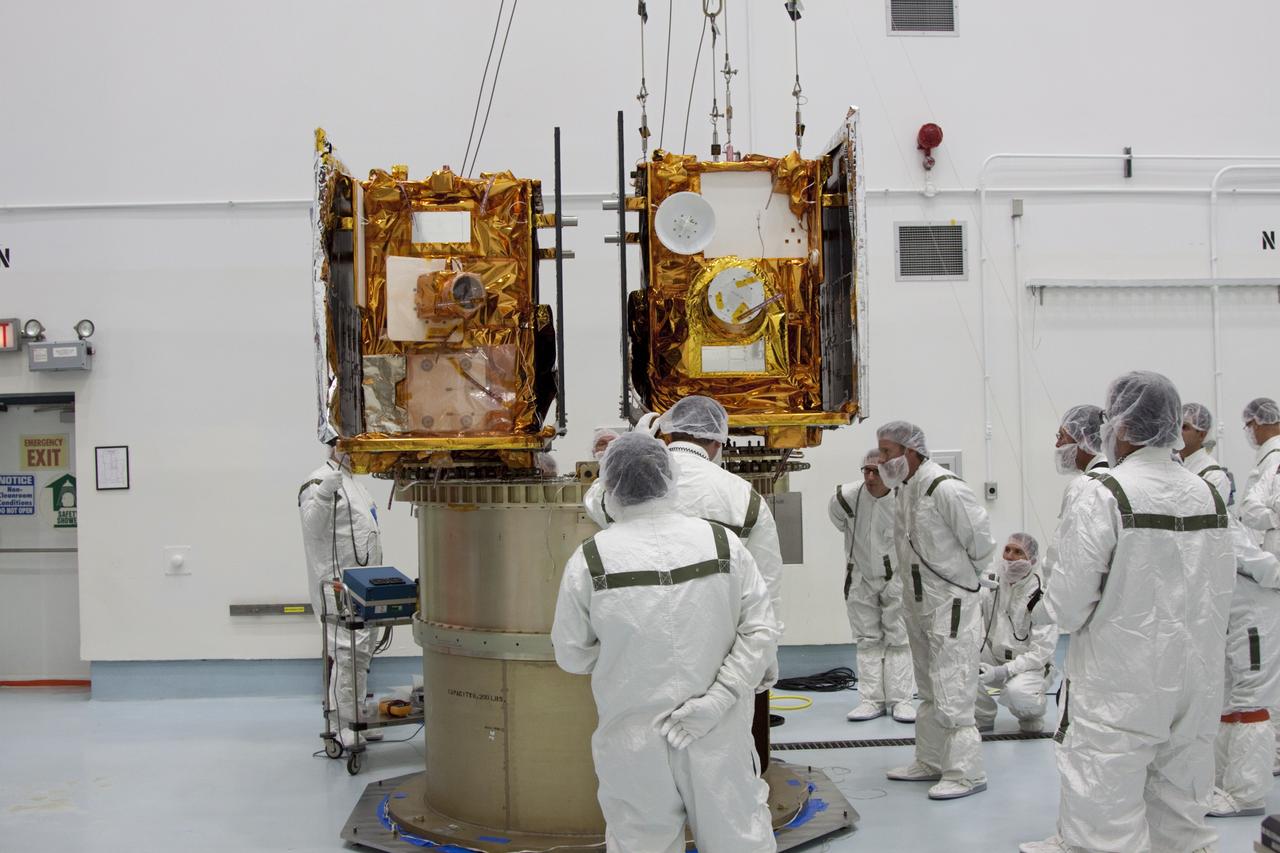
CAPE CANAVERAL, Fla. -- At Astrotech Space Operation's payload processing facility in Titusville, Fla., Lockheed Martin technicians monitor the placement of NASA's Gravity Recovery and Interior Laboratory-A (GRAIL-A) lunar probe on the spacecraft adapter ring. GRAIL-B is already secured to the ring, at left. After the twin GRAIL spacecraft are attached to the adapter ring in their side-by-side launch configuration, they will be transported to the launch pad. GRAIL will fly in tandem orbits around the moon for several months to measure its gravity field. GRAIL's primary science objectives are to determine the structure of the lunar interior, from crust to core, and to advance understanding of the thermal evolution of the moon. Launch aboard a United Launch Alliance Delta II rocket from Space Launch Complex 17B on Cape Canaveral Air Force Station is scheduled for Sept. 8. For more information, visit http://www.nasa.gov/grail. Photo credit: NASA/Jim Grossmann
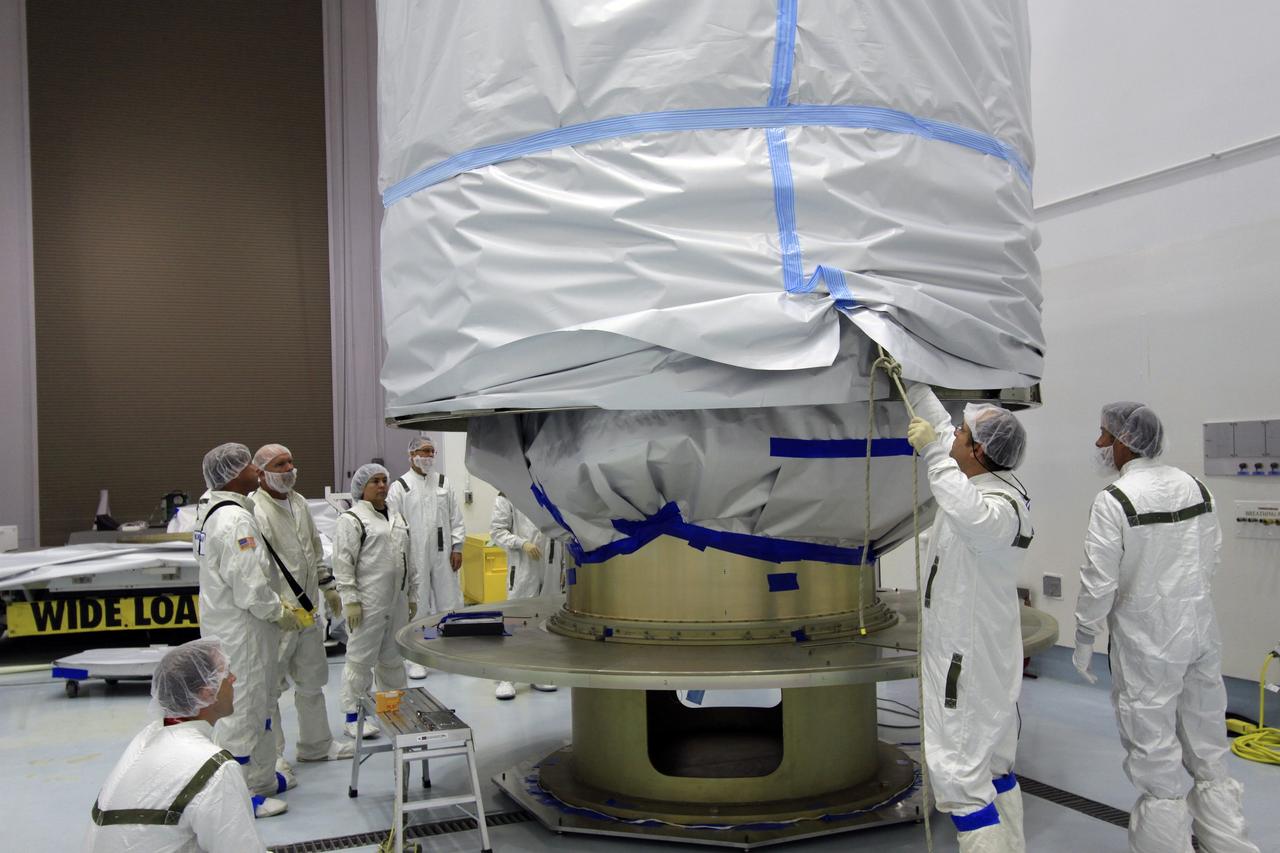
CAPE CANAVERAL, Fla. -- At Astrotech Space Operation's payload processing facility in Titusville, Fla., a protective canister is lowered around NASA's twin Gravity Recovery and Interior Laboratory spacecraft during preparations to transport them to the launch pad. The lunar probes are attached to a spacecraft adapter ring in their side-by-side launch configuration and wrapped in plastic to prevent contamination outside the clean room. The spacecraft will fly in tandem orbits around the moon for several months to measure its gravity field. GRAIL's primary science objectives are to determine the structure of the lunar interior, from crust to core, and to advance understanding of the thermal evolution of the moon. Launch aboard a United Launch Alliance Delta II rocket from Space Launch Complex 17B on Cape Canaveral Air Force Station is scheduled for Sept. 8. For more information, visit http://www.nasa.gov/grail. Photo credit: NASA/Jim Grossmann
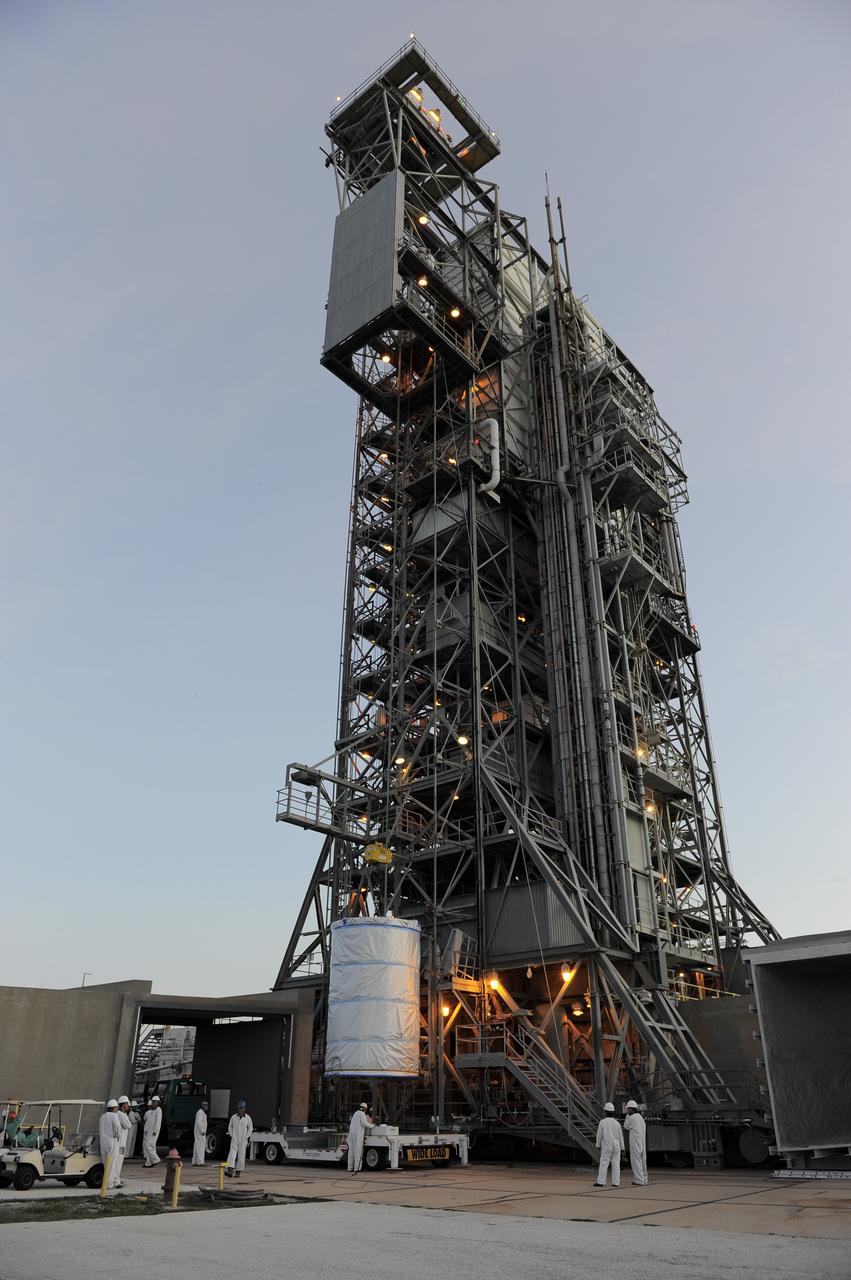
CAPE CANAVERAL, Fla. -- NASA's twin Gravity Recovery and Interior Laboratory (GRAIL) spacecraft are lifted to the top of their launch pad at Space Launch Complex 17B at Cape Canaveral Air Force Station in Florida. The lunar probes are attached to a spacecraft adapter ring in their side-by-side launch configuration and wrapped in plastic to prevent contamination outside the clean room in the Astrotech Space Operation's payload processing facility in Titusville, Fla. The spacecraft will fly in tandem orbits around the moon for several months to measure its gravity field. GRAIL's primary science objectives are to determine the structure of the lunar interior, from crust to core, and to advance understanding of the thermal evolution of the moon. Launch aboard a United Launch Alliance Delta II rocket is scheduled for Sept. 8. For more information, visit www.nasa.gov/grail. Photo credit: NASA/Kim Shiflett
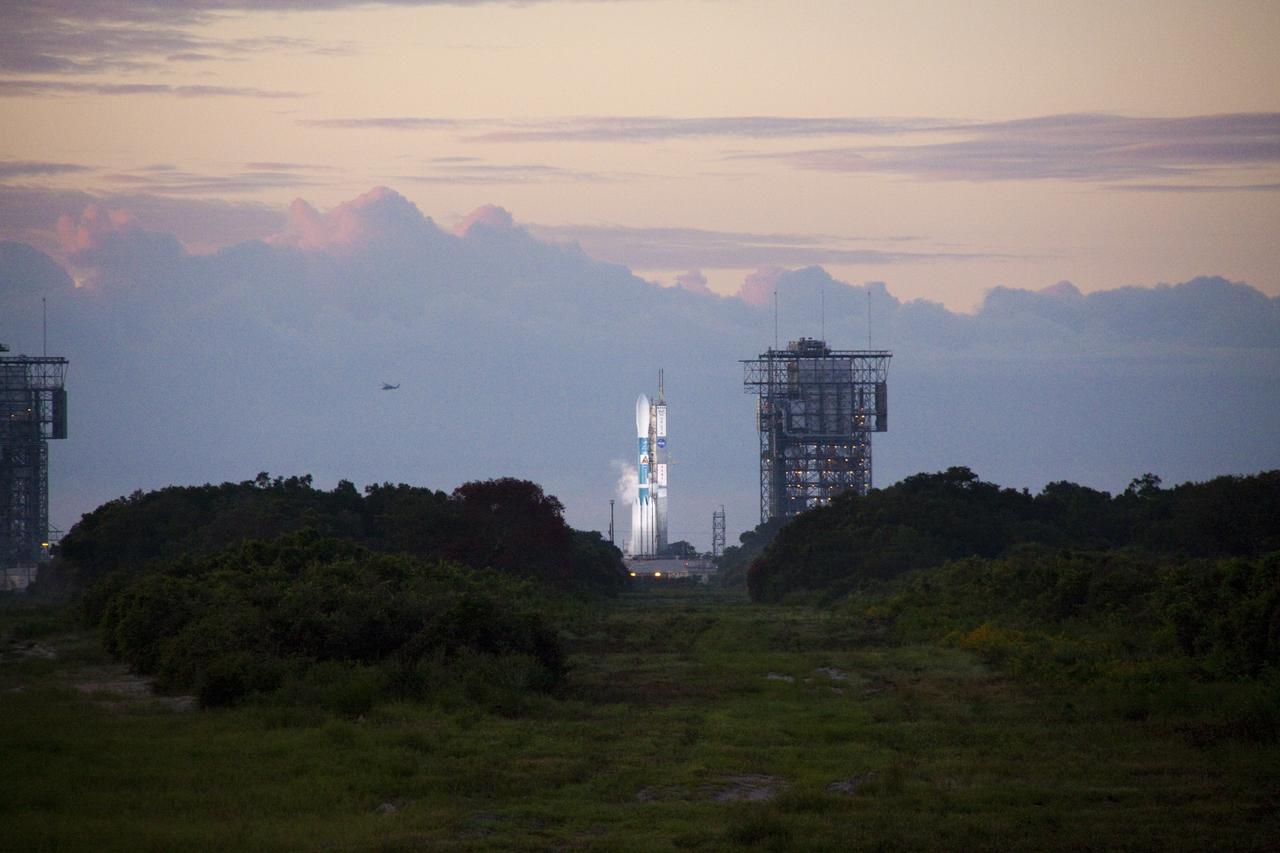
CAPE CANAVERAL, Fla. -- Launch preparations are under way as dawn breaks at Space Launch Complex 17B on Cape Canaveral Air Force Station for NASA's Gravity Recovery and Interior Laboratory mission aboard a United Launch Alliance Delta II Heavy rocket. GRAIL will fly twin spacecraft in tandem around the moon to precisely measure and map variations in the moon's gravitational field. The mission will provide the most accurate global gravity field to date for any planet, including Earth. This detailed information will reveal differences in the density of the moon's crust and mantle and will help answer fundamental questions about the moon's internal structure, thermal evolution, and history of collisions with asteroids. The aim is to map the moon's gravity field so completely that future lunar vehicles can safely navigate anywhere on the moon’s surface. Launch is scheduled for 8:37:06 a.m. EDT Sept. 8. For more information, visit http://www.nasa.gov/grail. Photo credit: NASA
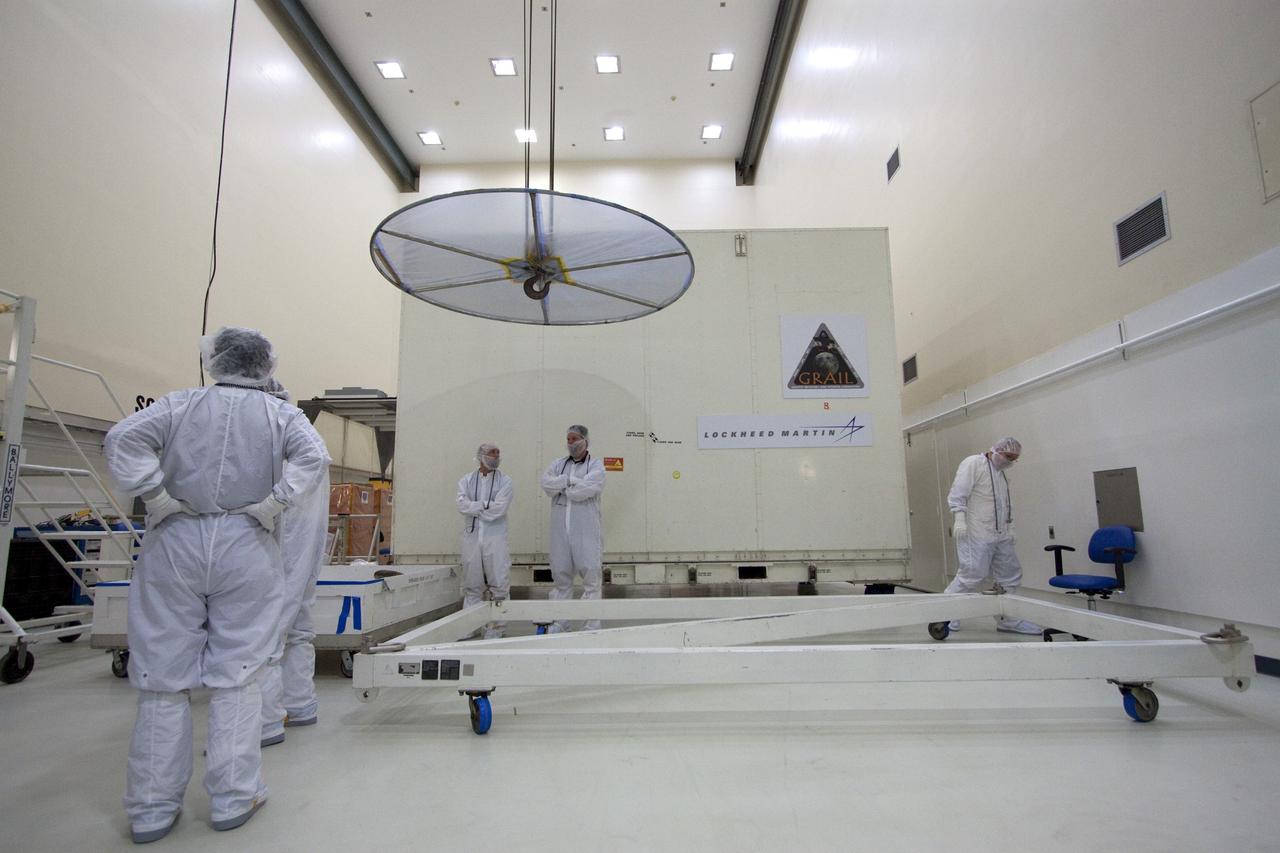
CAPE CANAVERAL, Fla. -- Technicians in the Astrotech payload processing facility in Titusville, Fla., prepare to unpack NASA's Gravity Recovery and Interior Laboratory, or GRAIL, twin spacecraft for testing and processing. GRAIL was built at the Lockheed Martin plant in Denver, Colo. The United Launch Alliance Delta II rocket that will carry GRAIL into lunar orbit already is fully stacked at NASA's Space Launch Complex 17B and launch is scheduled for Sept. 8. The GRAIL mission is a part of NASA's Discovery Program. GRAIL will fly twin spacecraft in tandem orbits around the moon for several months to measure its gravity field. The mission also will answer longstanding questions about Earth's moon and provide scientists a better understanding of how Earth and other rocky planets in the solar system formed. For more information, visit http://science.nasa.gov/missions/grail/. Photo credit: NASA/Jack Pfaller
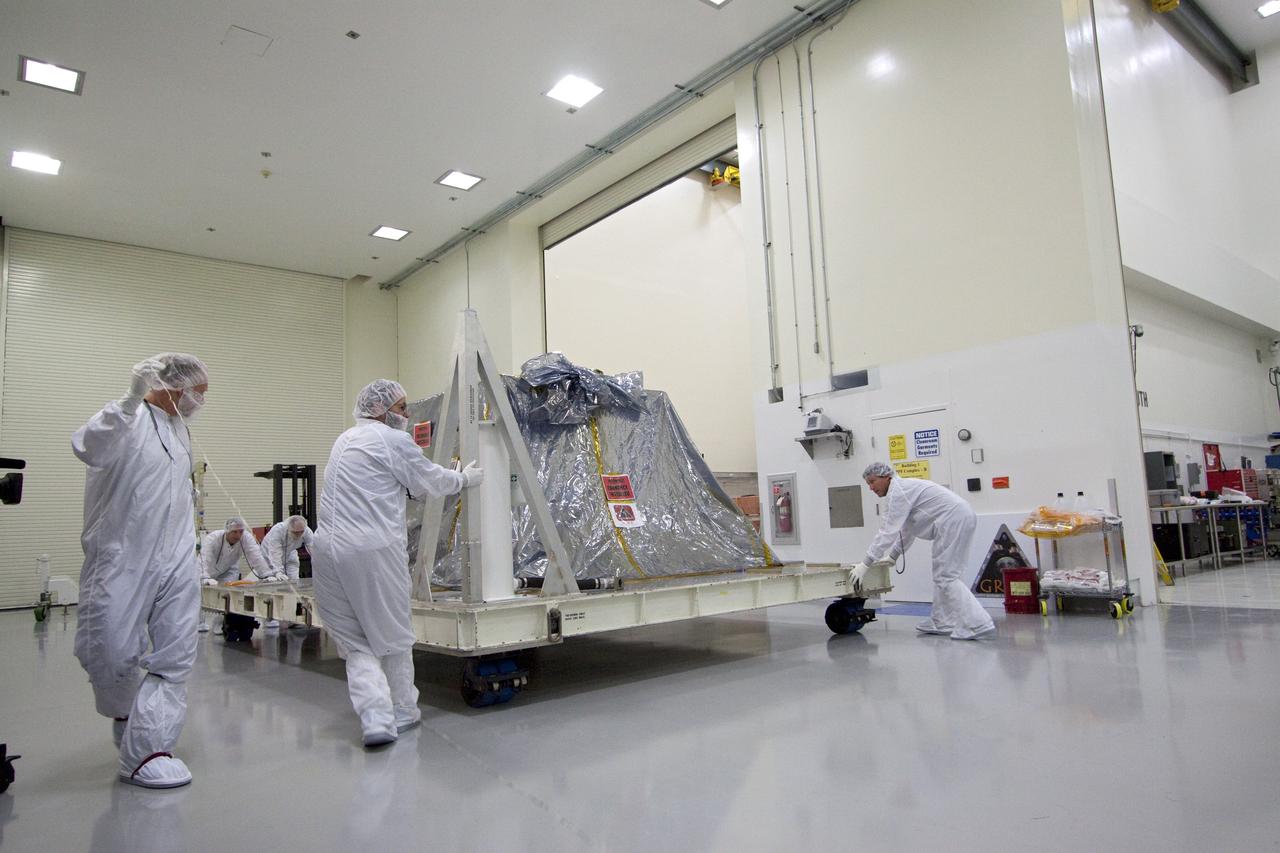
CAPE CANAVERAL, Fla. -- Technicians in the Astrotech payload processing facility in Titusville, Fla., roll NASA's Gravity Recovery and Interior Laboratory, or GRAIL, twin spacecraft toward a test stand where they will be processed for launch. GRAIL was built at the Lockheed Martin plant in Denver, Colo. The United Launch Alliance Delta II rocket that will carry GRAIL into lunar orbit already is fully stacked at NASA's Space Launch Complex 17B and launch is scheduled for Sept. 8. The GRAIL mission is a part of NASA's Discovery Program. GRAIL will fly twin spacecraft in tandem orbits around the moon for several months to measure its gravity field. The mission also will answer longstanding questions about Earth's moon and provide scientists a better understanding of how Earth and other rocky planets in the solar system formed. For more information, visit http://science.nasa.gov/missions/grail/. Photo credit: NASA/Jack Pfaller
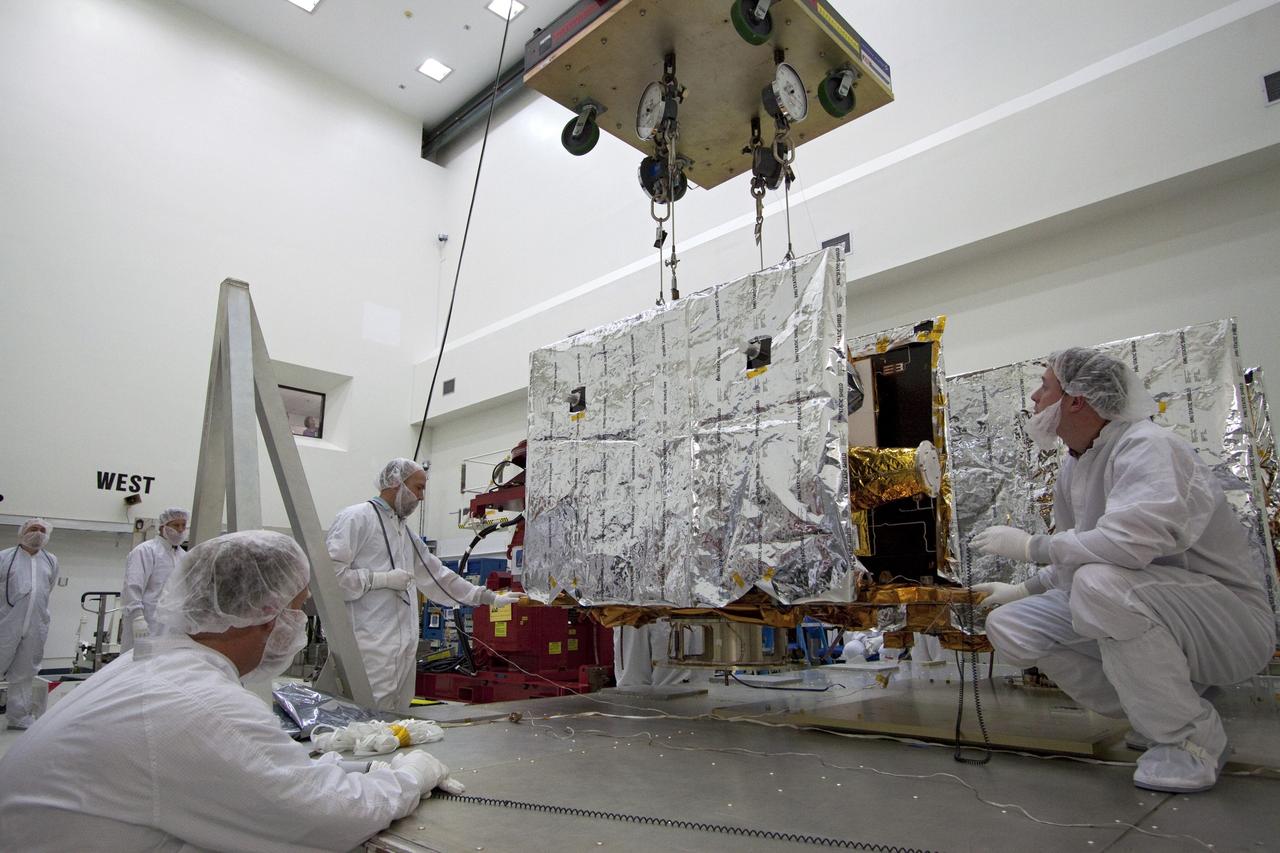
CAPE CANAVERAL, Fla. -- Technicians begin to lift one of two spacecraft for NASA's Gravity Recovery and Interior Laboratory, or GRAIL, to a test stand in the Astrotech payload processing facility in Titusville, Fla. The twin spacecraft were built at the Lockheed Martin plant in Denver, Colo. The United Launch Alliance Delta II rocket that will carry GRAIL into lunar orbit already is fully stacked at NASA's Space Launch Complex 17B and launch is scheduled for Sept. 8. The GRAIL mission is a part of NASA's Discovery Program. GRAIL will fly twin spacecraft in tandem orbits around the moon for several months to measure its gravity field. The mission also will answer longstanding questions about Earth's moon and provide scientists a better understanding of how Earth and other rocky planets in the solar system formed. For more information, visit http://science.nasa.gov/missions/grail/. Photo credit: NASA/Jack Pfaller
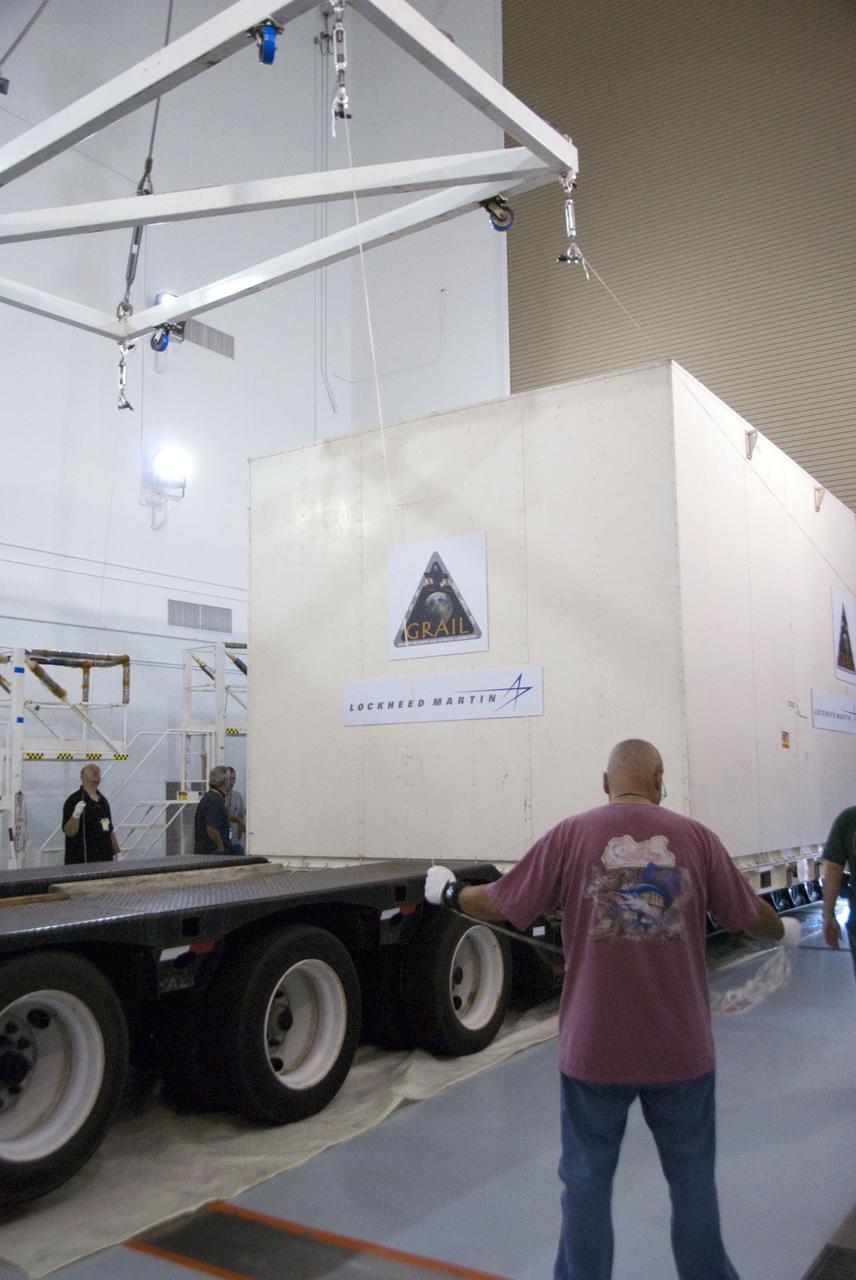
CAPE CANAVERAL, Fla. -- Lockheed Martin technicians oversee the lift of the protective canister housing NASA's twin Gravity Recovery and Interior Laboratory lunar spacecraft from the transporter in the Hazardous Processing Facility (HPF) at Astrotech Space Operation's payload processing facility in Titusville, Fla. In the HPF, the spacecraft will undergo two days of fueling activities. GRAIL will fly in tandem orbits around the moon for several months to measure its gravity field. GRAIL's primary science objectives are to determine the structure of the lunar interior, from crust to core, and to advance understanding of the thermal evolution of the moon. Launch aboard a United Launch Alliance Delta II rocket from Space Launch Complex 17B on Cape Canaveral Air Force Station is scheduled for Sept. 8. For more information, visit http://www.nasa.gov/grail. Photo credit: NASA/Charisse Nahser
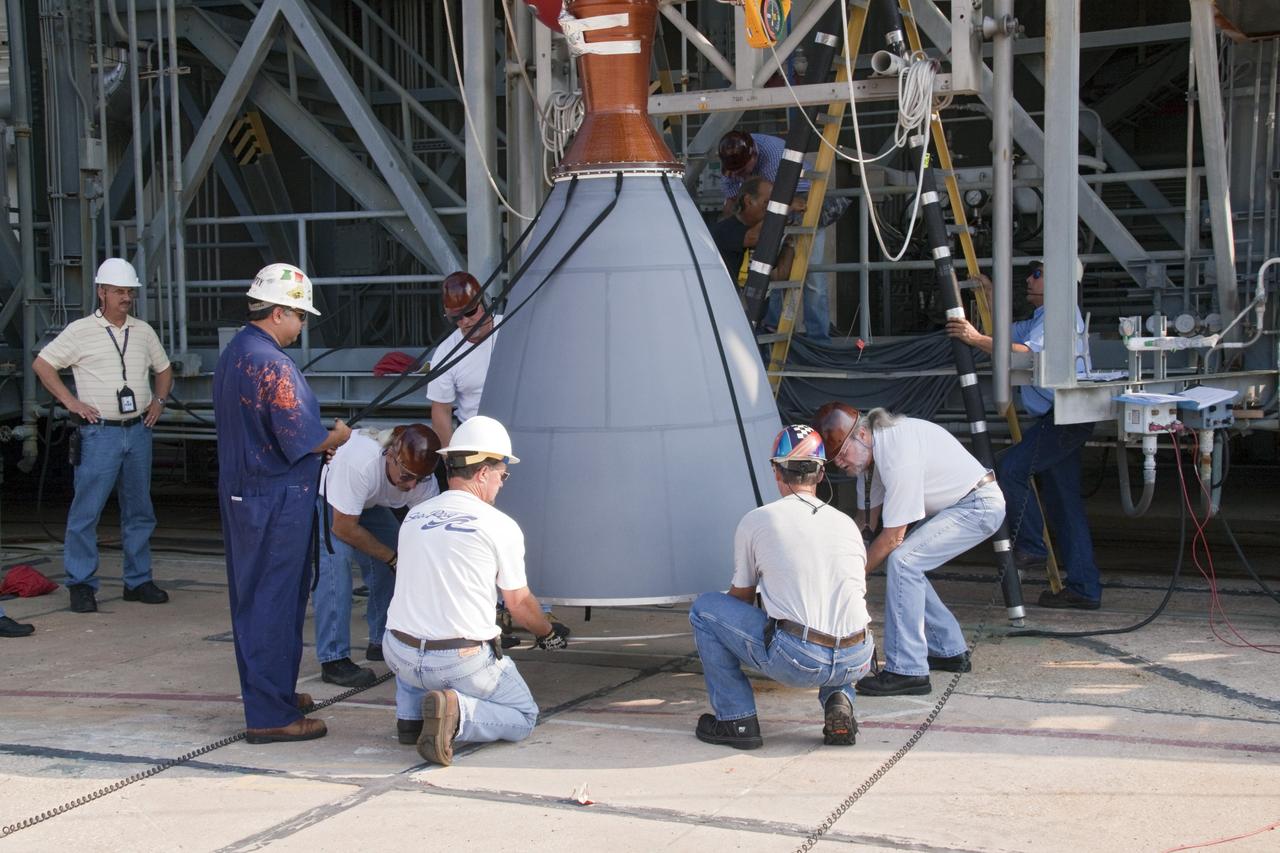
CAPE CANAVERAL, Fla. -- At NASA's Space Launch Complex 17B in Florida, workers secure the engine bell on the second stage of a United Launch Alliance Delta II launch vehicle before it is hoisted into the mobile service tower. The Delta II will carry NASA's Gravity Recovery and Interior Laboratory, or GRAIL, spacecraft into lunar orbit. The GRAIL mission is a part of NASA's Discovery Program. GRAIL will fly twin spacecraft in tandem orbits around the moon for several months to measure its gravity field. The mission also will answer longstanding questions about Earth's moon and provide scientists a better understanding of how Earth and other rocky planets in the solar system formed. GRAIL is scheduled to launch Sept. 8. For more information visit: http://science.nasa.gov/missions/grail/. Photo credit: NASA/Jack Pfaller
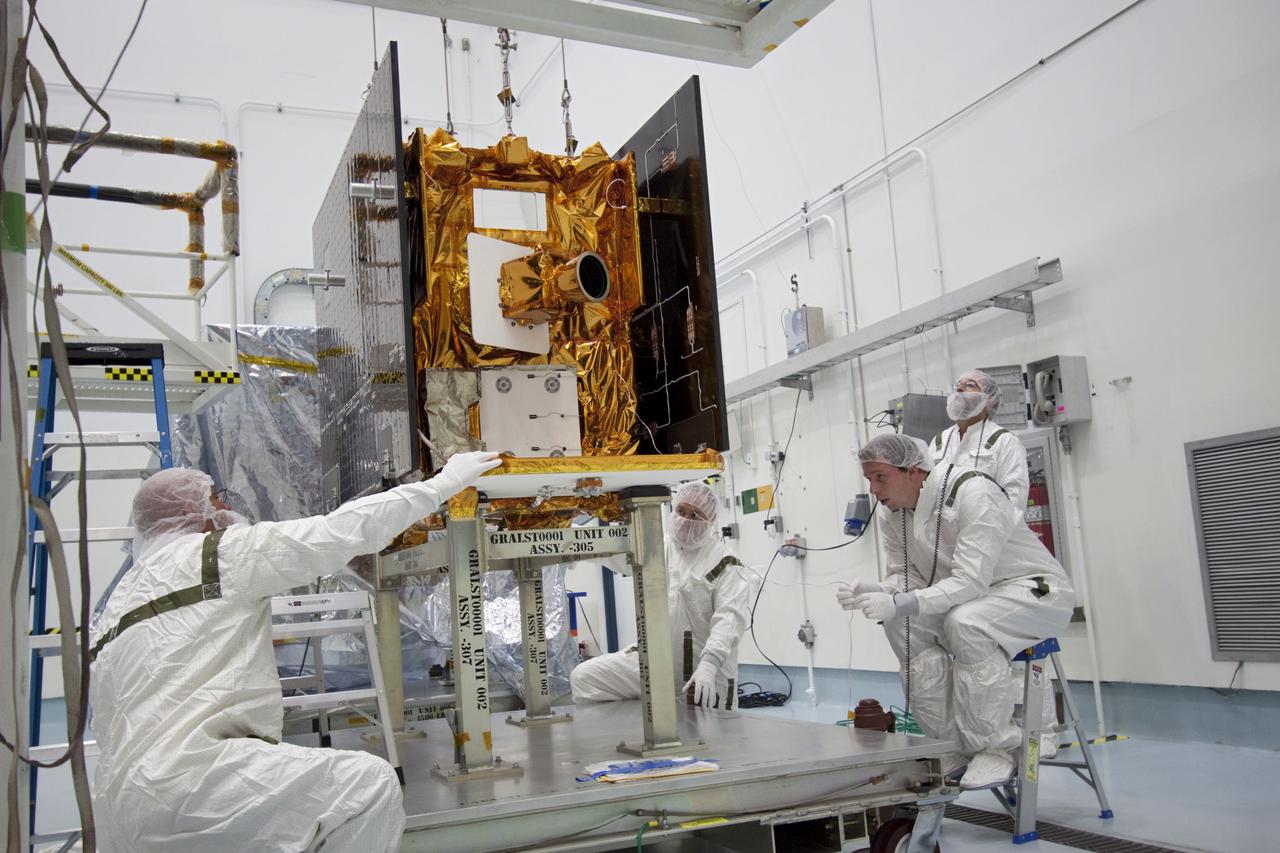
CAPE CANAVERAL, Fla. -- At Astrotech Space Operation's payload processing facility in Titusville, Fla., Lockheed Martin technicians secure a portable scale to one of NASA's twin Gravity Recovery and Interior Laboratory lunar spacecraft. The spacecraft will be lifted and weighed before they are stacked in their launch configuration in preparation for transport to the launch pad. GRAIL will fly in tandem orbits around the moon for several months to measure its gravity field. GRAIL's primary science objectives are to determine the structure of the lunar interior, from crust to core, and to advance understanding of the thermal evolution of the moon. Launch aboard a United Launch Alliance Delta II rocket from Space Launch Complex 17B on Cape Canaveral Air Force Station is scheduled for Sept. 8. For more information, visit http://www.nasa.gov/grail. Photo credit: NASA/Jim Grossmann
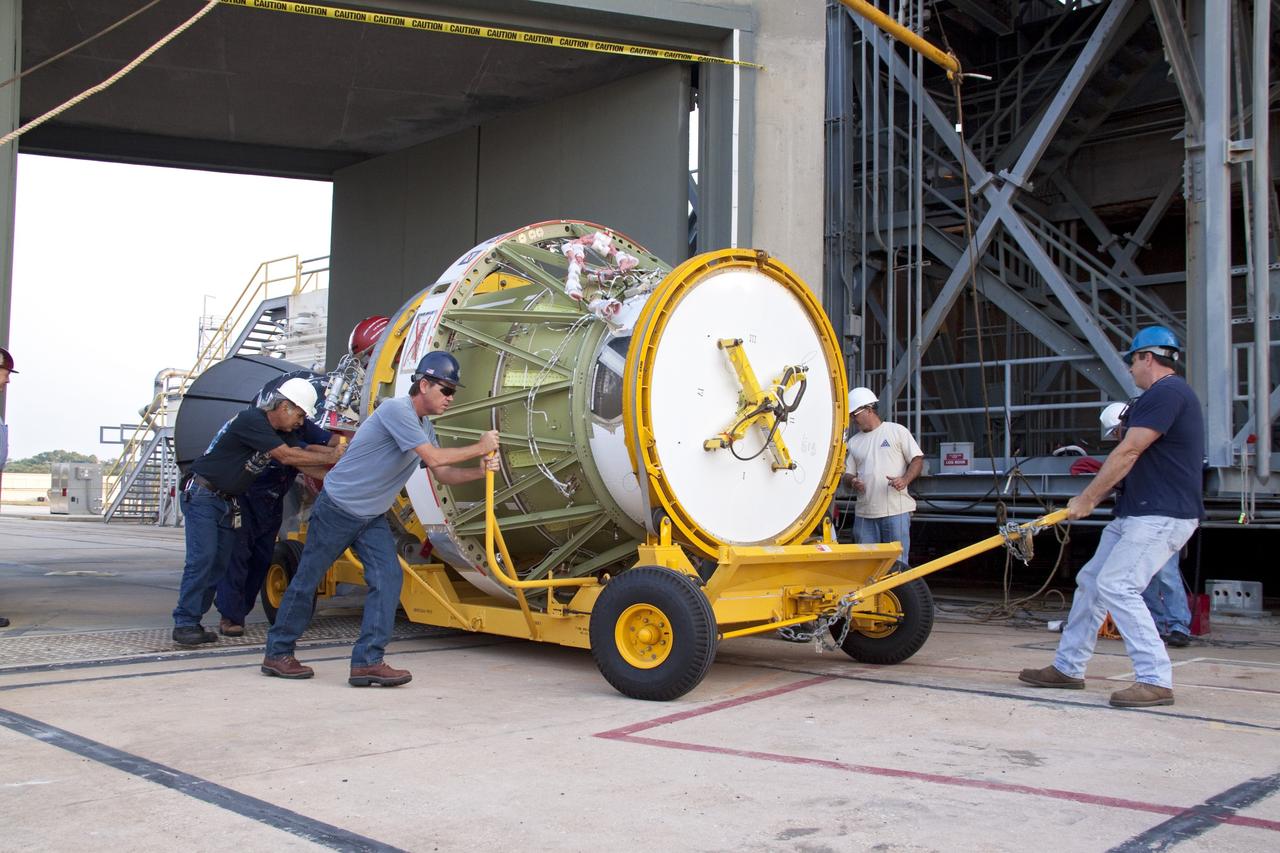
CAPE CANAVERAL, Fla. -- At NASA's Space Launch Complex 17B in Florida, workers move the second stage of a United Launch Alliance Delta II launch vehicle toward the mobile service tower. It will then be hoisted atop the first stage. The Delta II will carry NASA's Gravity Recovery and Interior Laboratory, or GRAIL, spacecraft into lunar orbit. The GRAIL mission is a part of NASA's Discovery Program. GRAIL will fly twin spacecraft in tandem orbits around the moon for several months to measure its gravity field. The mission also will answer longstanding questions about Earth's moon and provide scientists a better understanding of how Earth and other rocky planets in the solar system formed. GRAIL is scheduled to launch Sept. 8. For more information visit: http://science.nasa.gov/missions/grail/. Photo credit: NASA/Jack Pfaller
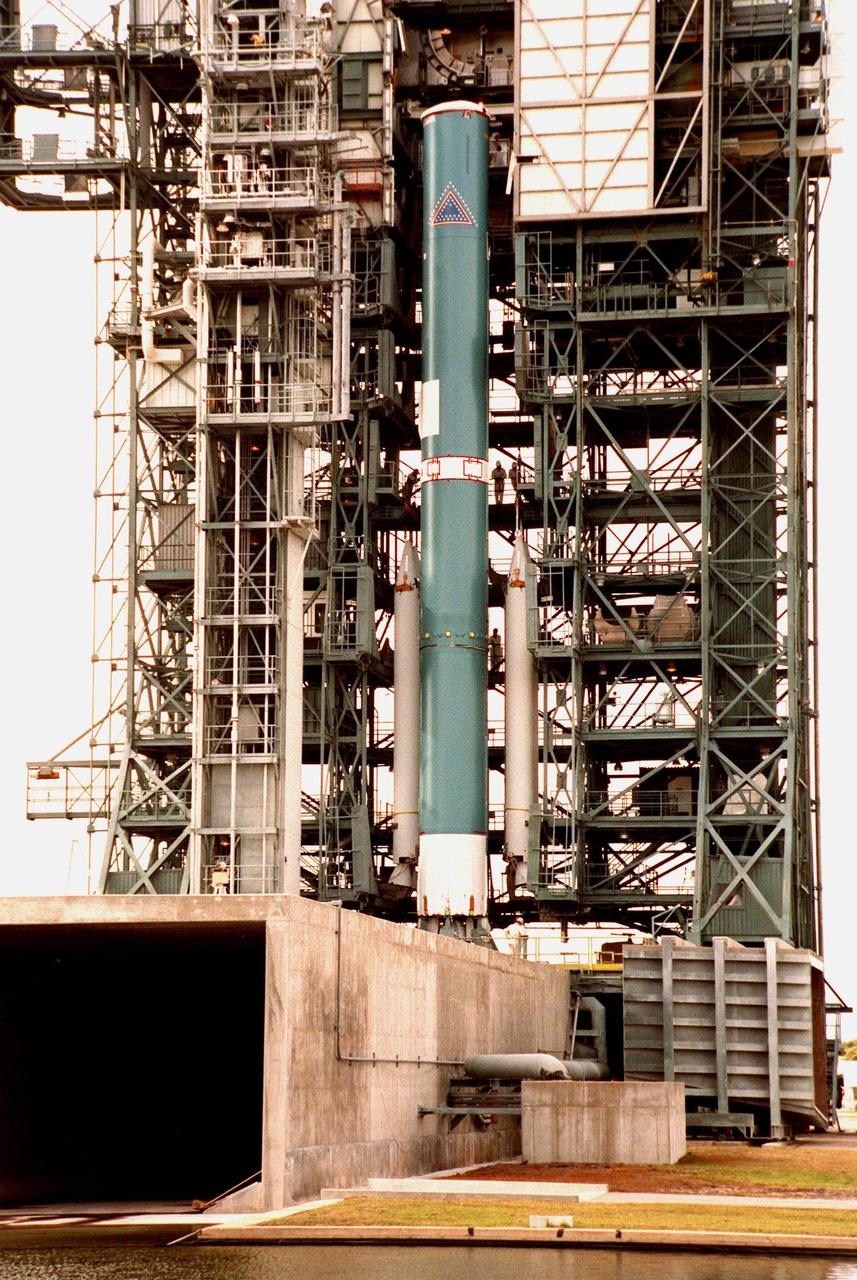
KENNEDY SPACE CENTER, FLA. -- On Pad 17B, Cape Canaveral Air Station, the gantry holding the solid rocket boosters is moved into place next to the Delta II rocket carrying the Mars Polar Lander. The rocket will be used to launch the Mars Polar Lander on Jan. 3, 1999. The lander is a solar-powered spacecraft designed to touch down on the Martian surface near the northern-most boundary of the south pole in order to study the water cycle there. The lander also will help scientists learn more about climate change and current resources on Mars, studying such things as frost, dust, water vapor and condensates in the Martian atmosphere. It is the second spacecraft to be launched in a pair of Mars '98 missions. The first is the Mars Climate Orbiter, to be launched aboard a Delta II rocket from Launch Complex 17A in December 1998
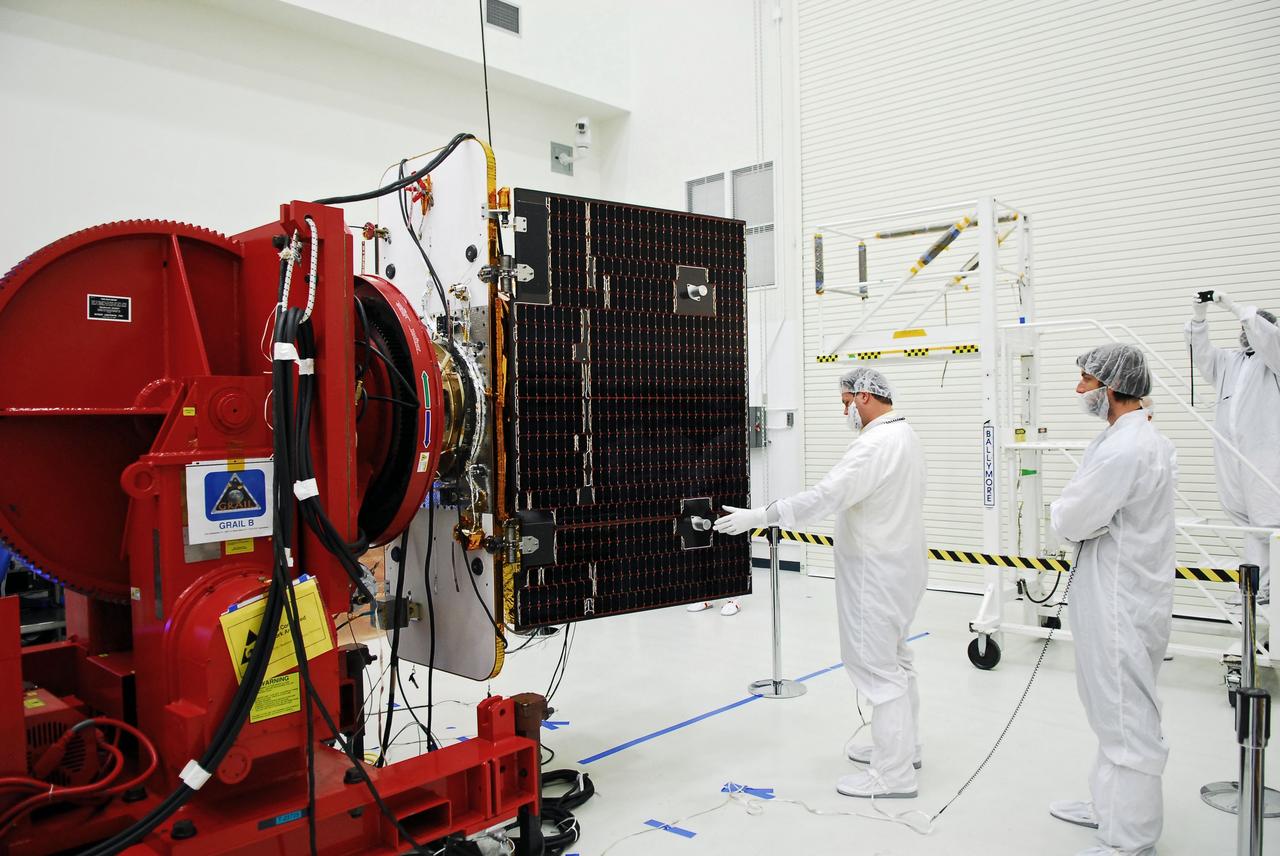
CAPE CANAVERAL, Fla. -- Technicians at Astrotech payload processing facility in Titusville, Fla., are conducting solar panel deployment tests on NASA's Gravity Recovery and Interior Laboratory, or GRAIL, twin spacecraft. The United Launch Alliance Delta II rocket that will carry GRAIL into lunar orbit already is fully stacked at NASA's Space Launch Complex 17B, and launch is scheduled for Sept. 8. The GRAIL mission is a part of NASA's Discovery Program. GRAIL will fly the twin spacecraft in tandem orbits around the moon for several months to measure its gravity field. The mission also will answer longstanding questions about Earth's moon and provide scientists a better understanding of how Earth and other rocky planets in the solar system formed. For more information, visit http://solarsystem.nasa.gov/grail/. Photo credit: NASA/Jim Grossmann
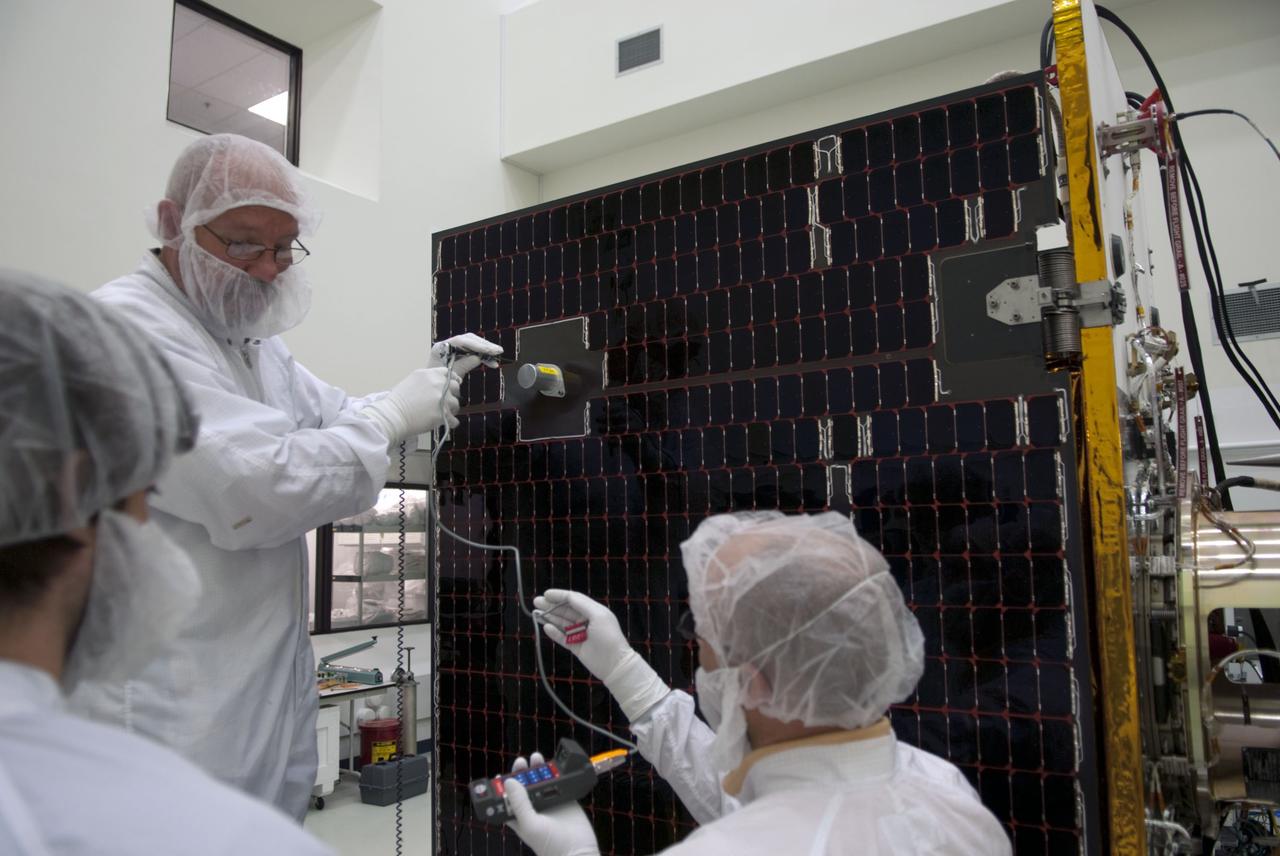
CAPE CANAVERAL, Fla. -- Technicians at Astrotech payload processing facility in Titusville, Fla., are preparing NASA's Gravity Recovery and Interior Laboratory, or GRAIL, twin spacecraft for solar panel deployment testing. The United Launch Alliance Delta II rocket that will carry GRAIL into lunar orbit already is fully stacked at NASA's Space Launch Complex 17B, and launch is scheduled for Sept. 8. The GRAIL mission is a part of NASA's Discovery Program. GRAIL will fly the twin spacecraft in tandem orbits around the moon for several months to measure its gravity field. The mission also will answer longstanding questions about Earth's moon and provide scientists a better understanding of how Earth and other rocky planets in the solar system formed. For more information, visit http://solarsystem.nasa.gov/grail/. Photo credit: NASA/Jim Grossmann
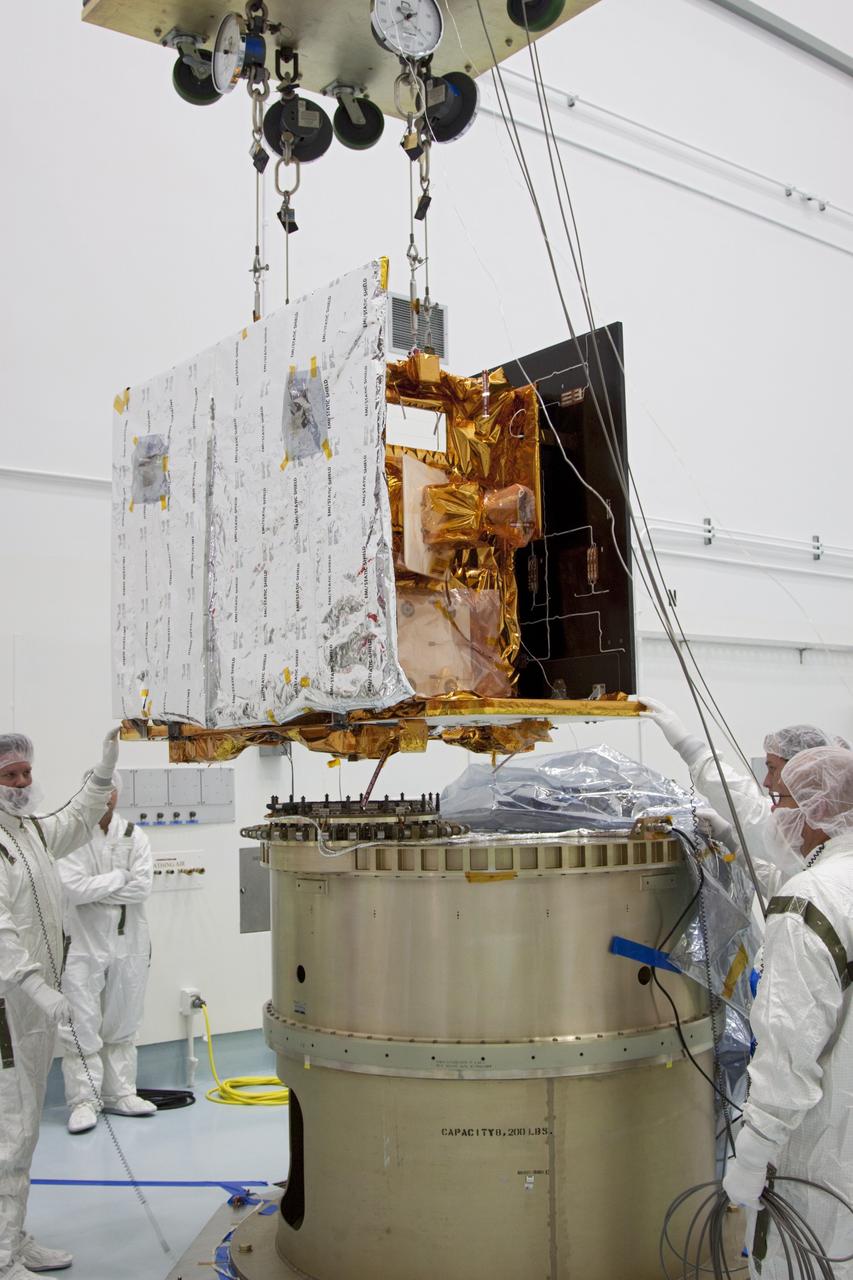
CAPE CANAVERAL, Fla. -- At Astrotech Space Operation's payload processing facility in Titusville, Fla., NASA's Gravity Recovery and Interior Laboratory-B (GRAIL-B) lunar probe is lowered toward the spacecraft adapter ring. After the twin GRAIL spacecraft are attached to the adapter ring in their side-by-side launch configuration, they will be transported to the launch pad. GRAIL will fly in tandem orbits around the moon for several months to measure its gravity field. GRAIL's primary science objectives are to determine the structure of the lunar interior, from crust to core, and to advance understanding of the thermal evolution of the moon. Launch aboard a United Launch Alliance Delta II rocket from Space Launch Complex 17B on Cape Canaveral Air Force Station is scheduled for Sept. 8. For more information, visit http://www.nasa.gov/grail. Photo credit: NASA/Jim Grossmann
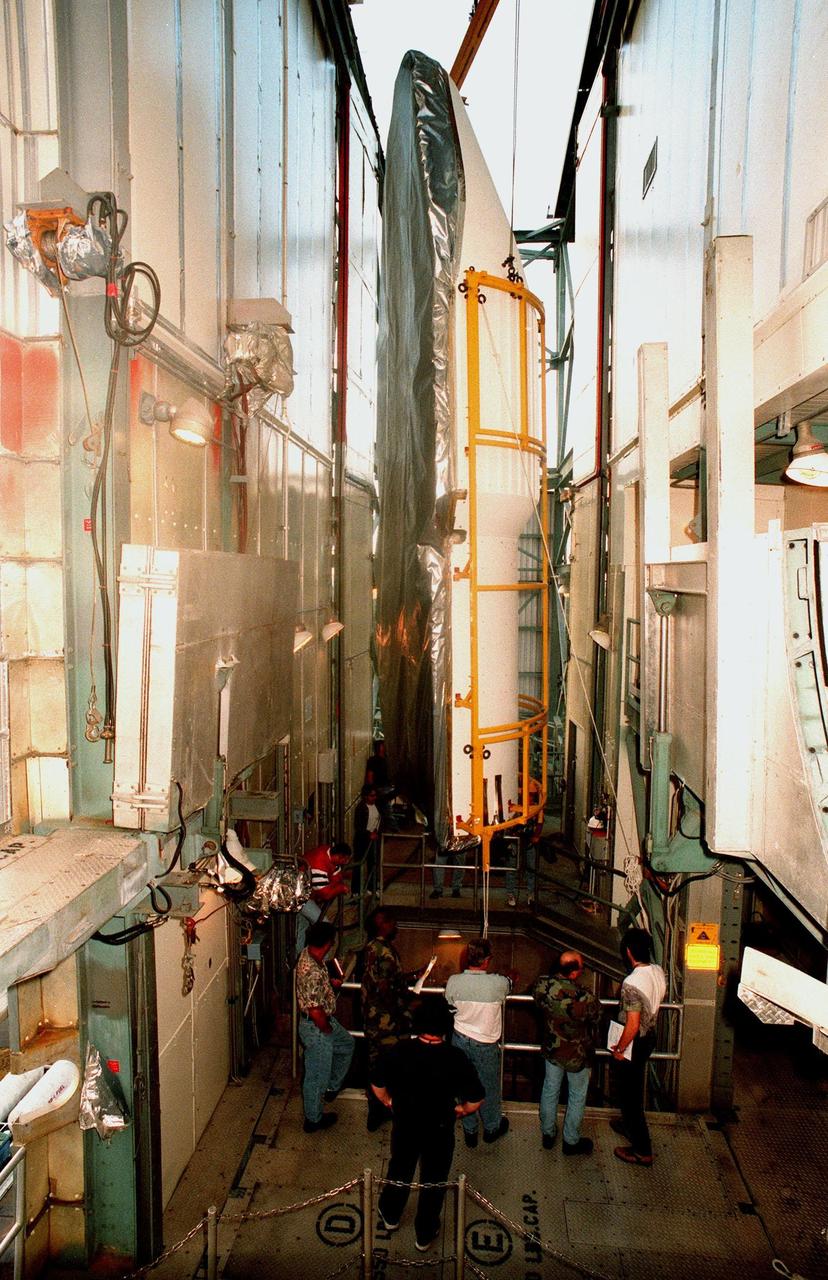
KENNEDY SPACE CENTER, FLA. -- Inside the gantry on Pad 17B, Cape Canaveral Air Station, the fairing for the upper stages of the Delta II rocket carrying the Mars Polar Lander waits to be lowered into the white room. The rocket will be used to launch the Mars Polar Lander on Jan. 3, 1999. The lander is a solar-powered spacecraft designed to touch down on the Martian surface near the northern-most boundary of the south pole in order to study the water cycle there. The lander also will help scientists learn more about climate change and current resources on Mars, studying such things as frost, dust, water vapor and condensates in the Martian atmosphere. It is the second spacecraft to be launched in a pair of Mars '98 missions. The first is the Mars Climate Orbiter, to be launched aboard a Delta II rocket from Launch Complex 17A in December 1998
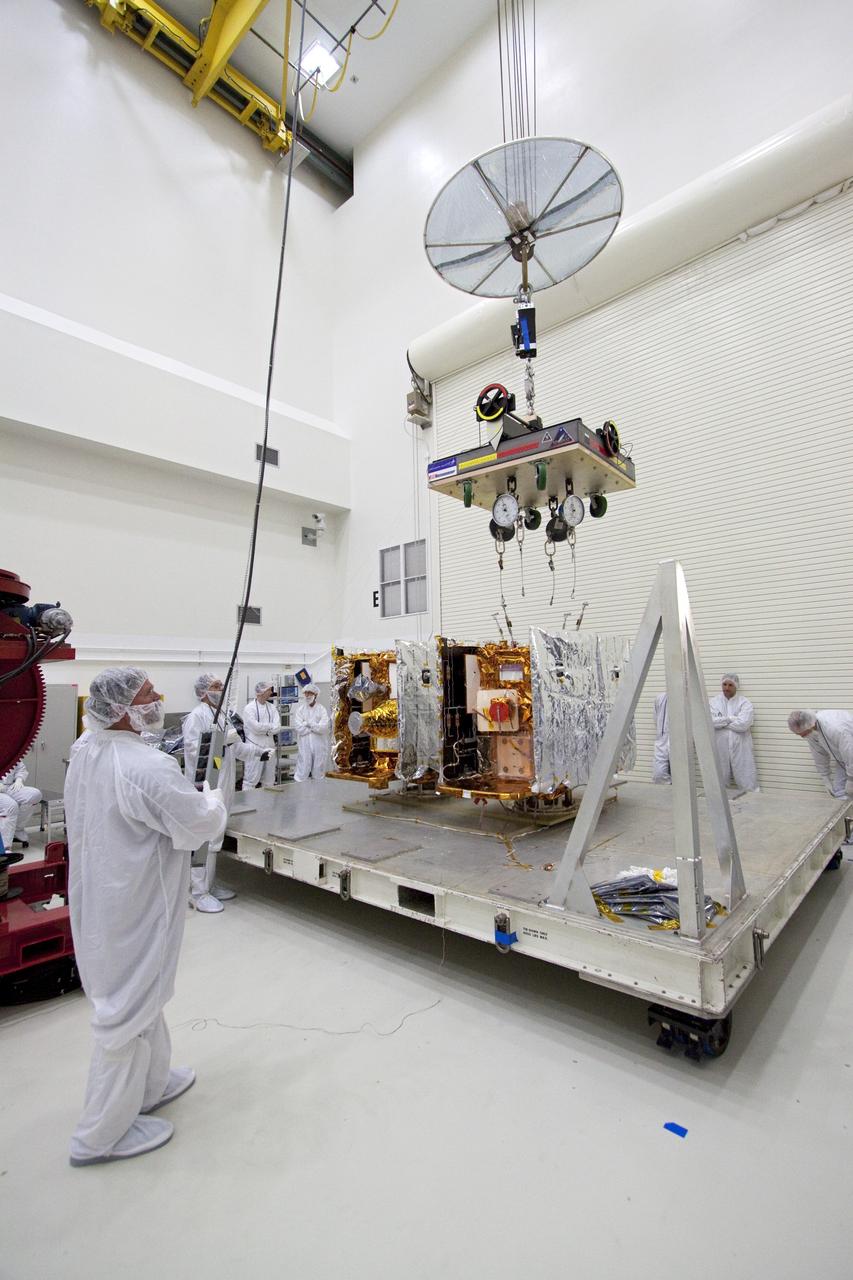
CAPE CANAVERAL, Fla. -- Technicians prepare to lift one of two spacecraft for NASA's Gravity Recovery and Interior Laboratory, or GRAIL, to a test stand in the Astrotech payload processing facility in Titusville, Fla. The twin spacecraft were built at the Lockheed Martin plant in Denver, Colo. The United Launch Alliance Delta II rocket that will carry GRAIL into lunar orbit already is fully stacked at NASA's Space Launch Complex 17B and launch is scheduled for Sept. 8. The GRAIL mission is a part of NASA's Discovery Program. GRAIL will fly twin spacecraft in tandem orbits around the moon for several months to measure its gravity field. The mission also will answer longstanding questions about Earth's moon and provide scientists a better understanding of how Earth and other rocky planets in the solar system formed. For more information, visit http://science.nasa.gov/missions/grail/. Photo credit: NASA/Jack Pfaller
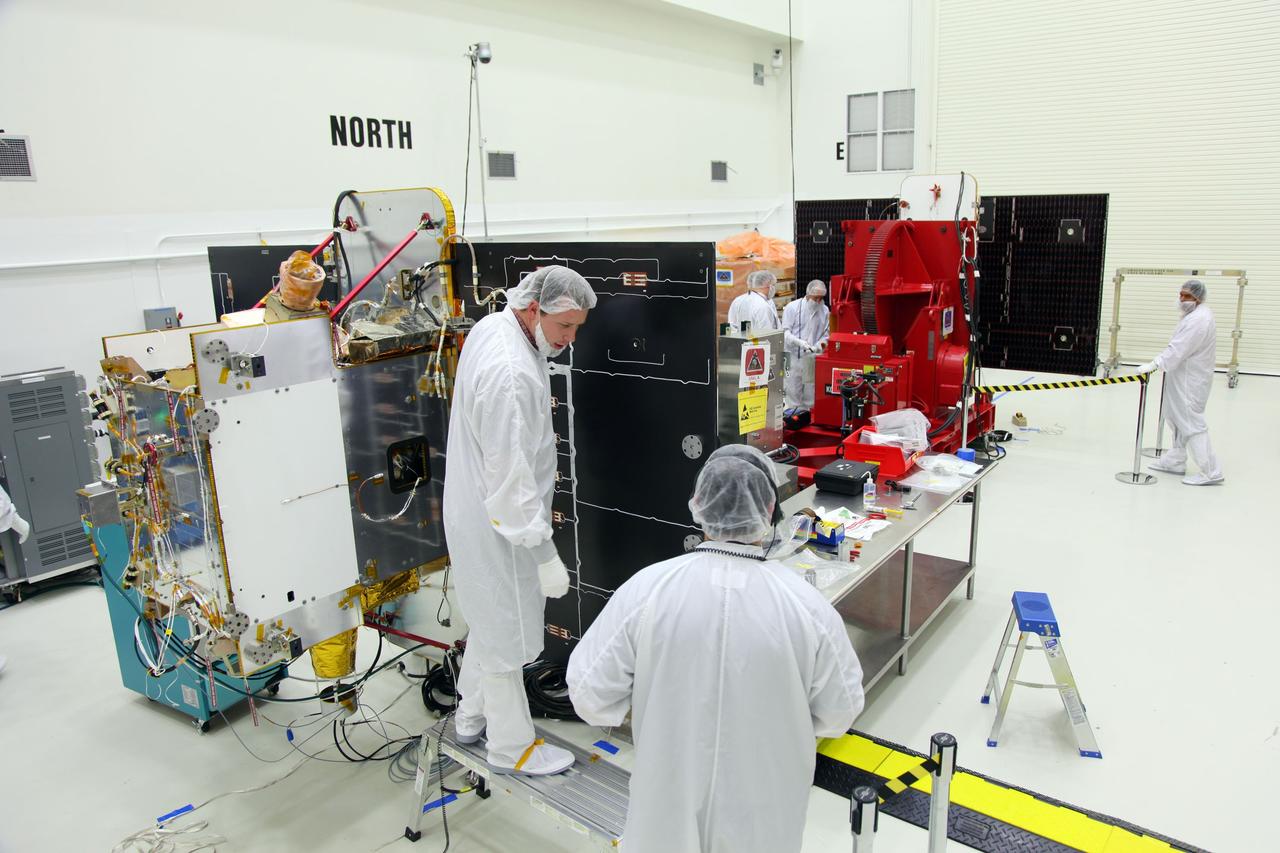
CAPE CANAVERAL, Fla. -- In the Astrotech payload processing facility in Titusville, Fla., technicians prepare a solar panel for attachment to NASA's Gravity Recovery and Interior Laboratory, or GRAIL. The United Launch Alliance Delta II rocket that will carry the twin GRAIL spacecraft into lunar orbit is fully stacked at NASA's Space Launch Complex 17B and launch is scheduled for Sept. 8. The GRAIL mission is a part of NASA's Discovery Program. GRAIL will fly twin spacecraft in tandem orbits around the moon for several months to measure its gravity field. The mission also will answer longstanding questions about Earth's moon and provide scientists a better understanding of how Earth and other rocky planets in the solar system formed. For more information, visit http://solarsystem.nasa.gov/grail. Photo credit: NASA/Frank Michaux
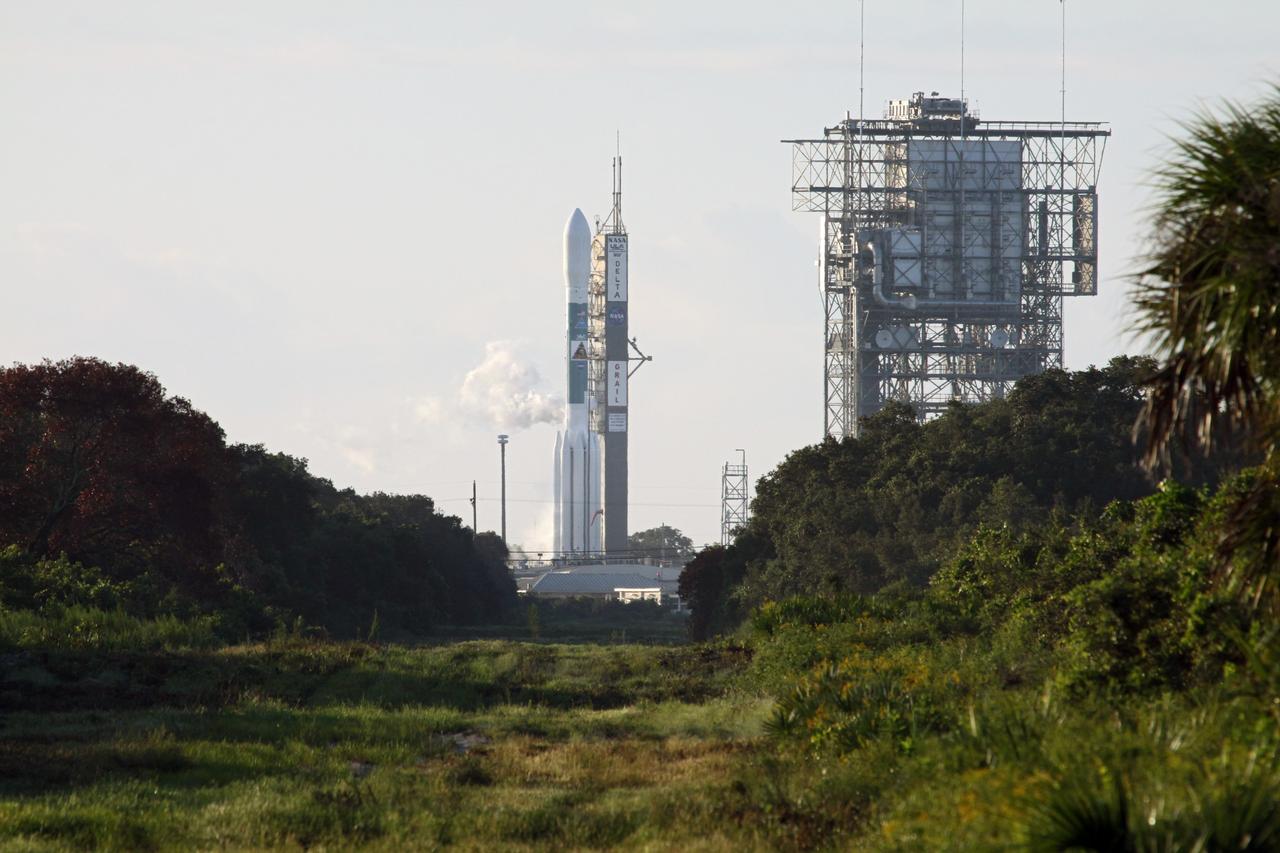
CAPE CANAVERAL, Fla. -- The countdown to launch of the United Launch Alliance Delta II Heavy rocket for NASA's Gravity Recovery and Interior Laboratory mission nears T-0 at Space Launch Complex 17B on Cape Canaveral Air Force Station. Liftoff is scheduled for 8:37:06 a.m. EDT. GRAIL will fly twin spacecraft in tandem around the moon to precisely measure and map variations in the moon's gravitational field. The mission will provide the most accurate global gravity field to date for any planet, including Earth. This detailed information will reveal differences in the density of the moon's crust and mantle and will help answer fundamental questions about the moon's internal structure, thermal evolution, and history of collisions with asteroids. The aim is to map the moon's gravity field so completely that future lunar vehicles can safely navigate anywhere on the moon’s surface. For more information, visit http://www.nasa.gov/grail. Photo credit: NASA/Ken Thornsley
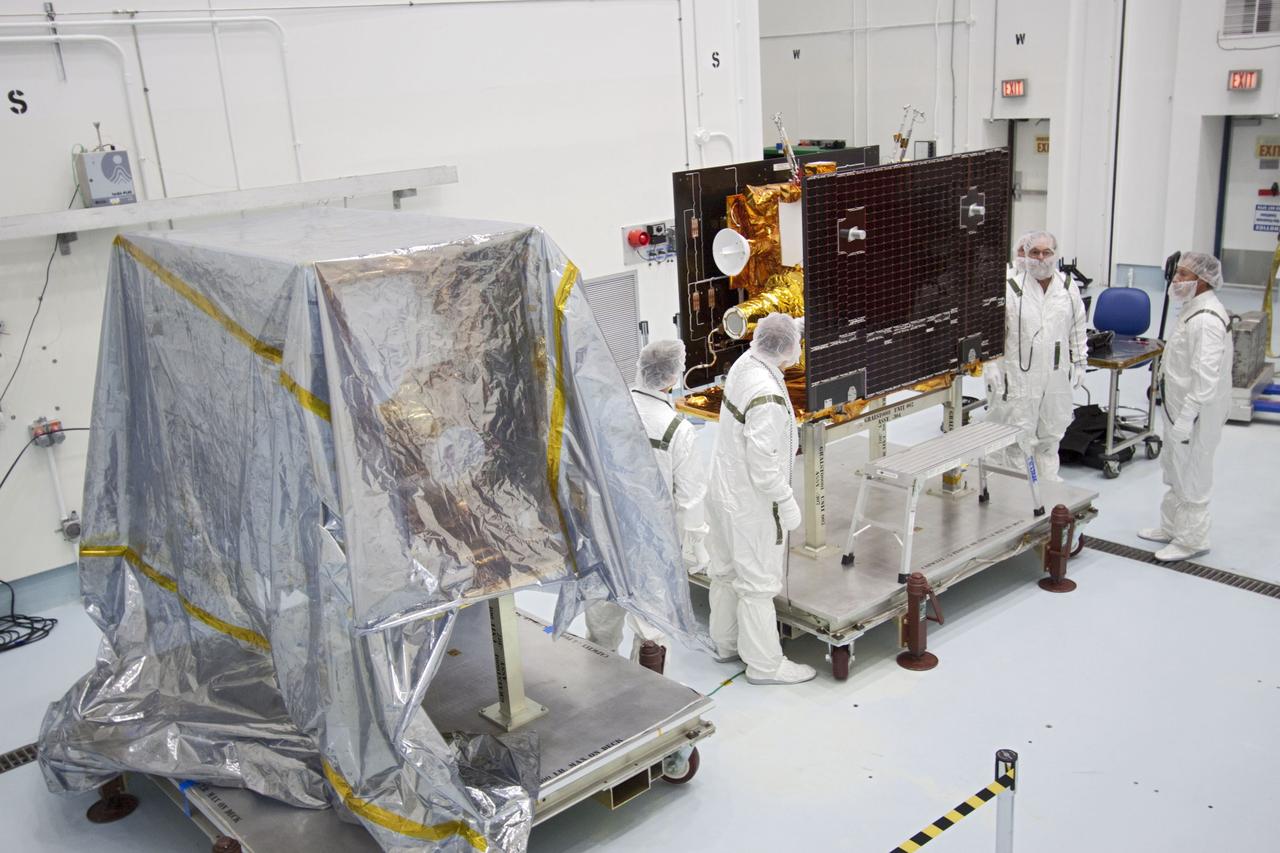
CAPE CANAVERAL, Fla. -- At Astrotech Space Operation's payload processing facility in Titusville, Fla., Lockheed Martin technicians determine the readiness of one of NASA's twin Gravity Recovery and Interior Laboratory lunar spacecraft before the spacecraft are stacked in their launch configuration in preparation for transport to the launch pad. GRAIL will fly in tandem orbits around the moon for several months to measure its gravity field. GRAIL's primary science objectives are to determine the structure of the lunar interior, from crust to core, and to advance understanding of the thermal evolution of the moon. Launch aboard a United Launch Alliance Delta II rocket from Space Launch Complex 17B on Cape Canaveral Air Force Station is scheduled for Sept. 8. For more information, visit http://www.nasa.gov/grail. Photo credit: NASA/Jim Grossmann
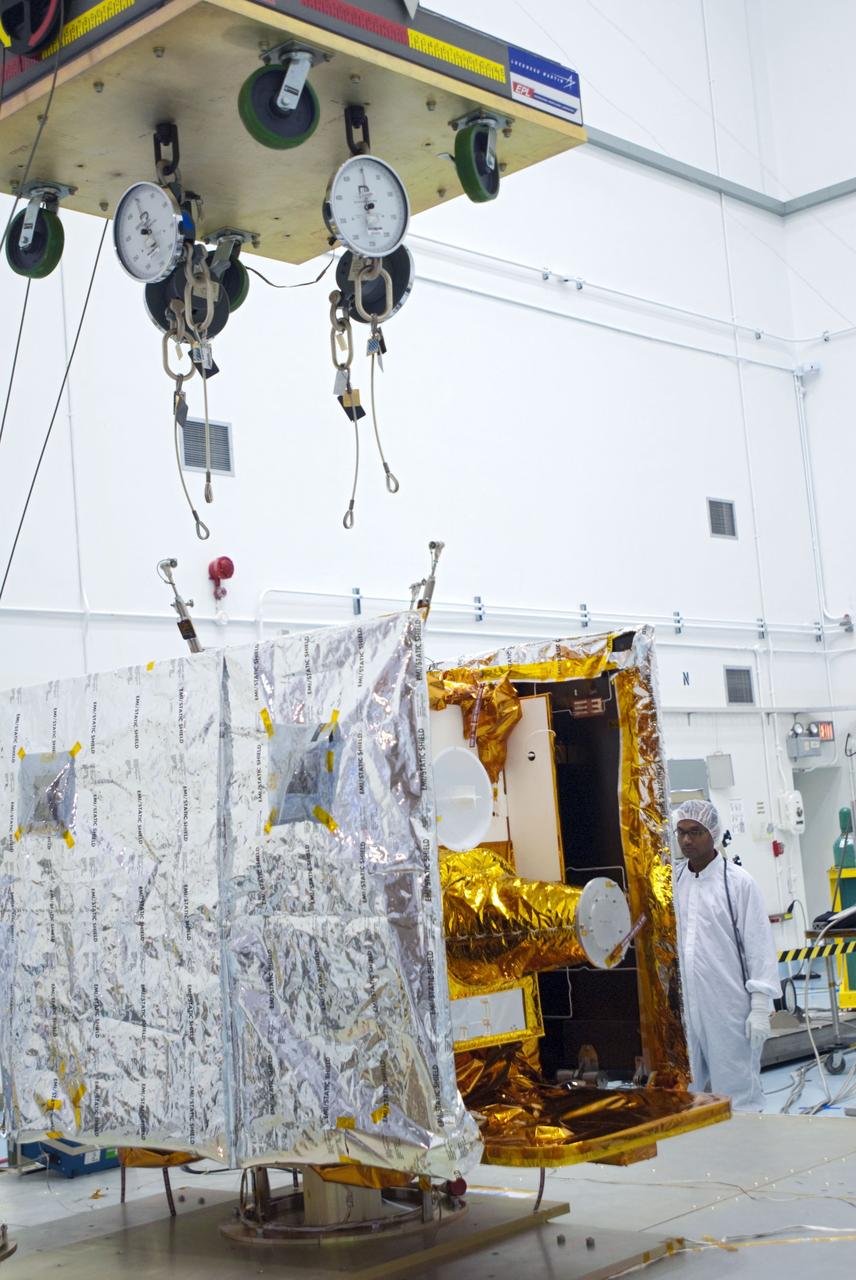
CAPE CANAVERAL, Fla. -- Preparations are under way to lift the second of NASA's twin Gravity Recovery and Interior Laboratory lunar spacecraft to a workstand in the Hazardous Processing Facility (HPF) at Astrotech Space Operation's payload processing facility in Titusville, Fla. In the HPF, the spacecraft will undergo two days of fueling activities. GRAIL will fly in tandem orbits around the moon for several months to measure its gravity field. GRAIL's primary science objectives are to determine the structure of the lunar interior, from crust to core, and to advance understanding of the thermal evolution of the moon. Launch aboard a United Launch Alliance Delta II rocket from Space Launch Complex 17B on Cape Canaveral Air Force Station is scheduled for Sept. 8. For more information, visit http://www.nasa.gov/grail. Photo credit: NASA/Charisse Nahser
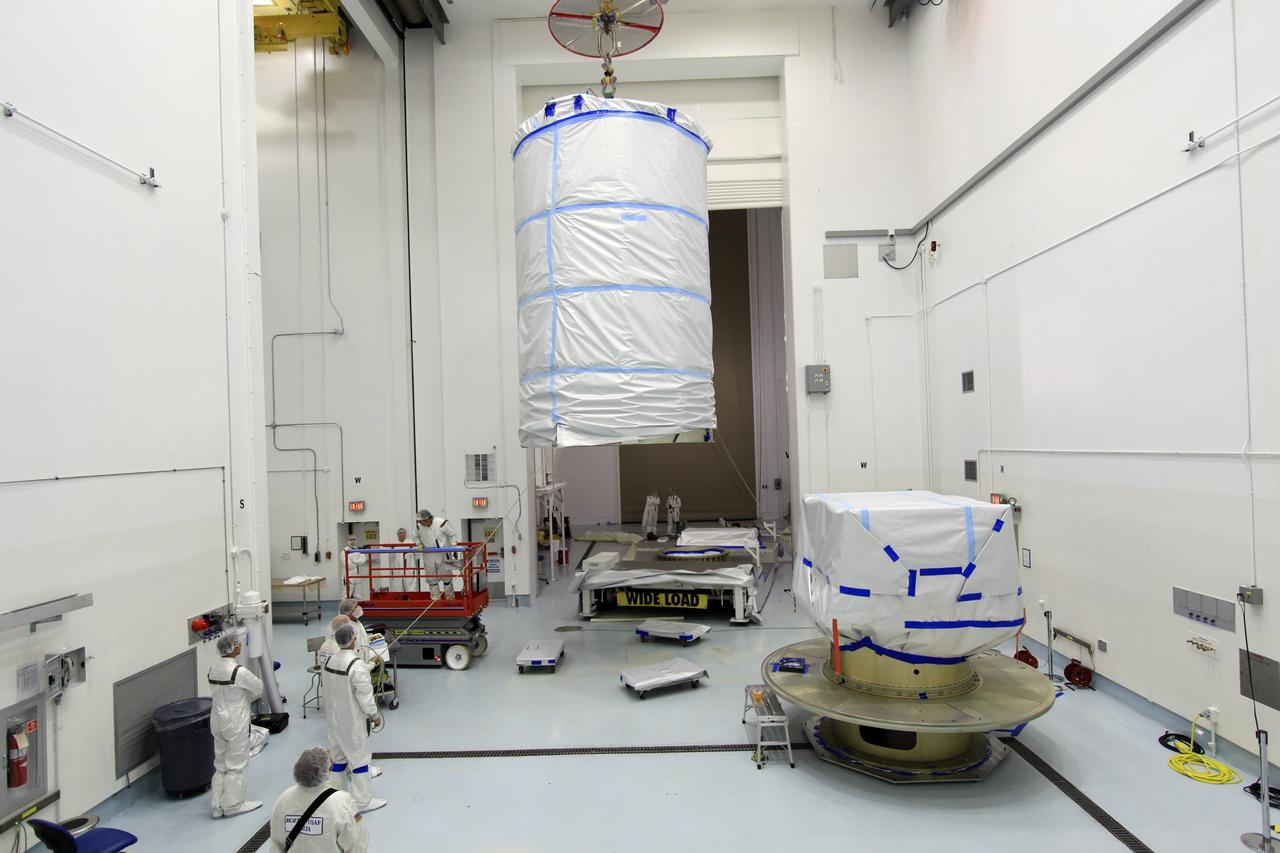
CAPE CANAVERAL, Fla. -- At Astrotech Space Operation's payload processing facility in Titusville, Fla., a crane lifts the protective canister that will enclose NASA's twin Gravity Recovery and Interior Laboratory spacecraft, at right, during transport to the launch pad. The lunar probes are attached to a spacecraft adapter ring in their side-by-side launch configuration and wrapped in plastic to prevent contamination outside the clean room. The spacecraft will fly in tandem orbits around the moon for several months to measure its gravity field. GRAIL's primary science objectives are to determine the structure of the lunar interior, from crust to core, and to advance understanding of the thermal evolution of the moon. Launch aboard a United Launch Alliance Delta II rocket from Space Launch Complex 17B on Cape Canaveral Air Force Station is scheduled for Sept. 8. For more information, visit http://www.nasa.gov/grail. Photo credit: NASA/Jim Grossmann
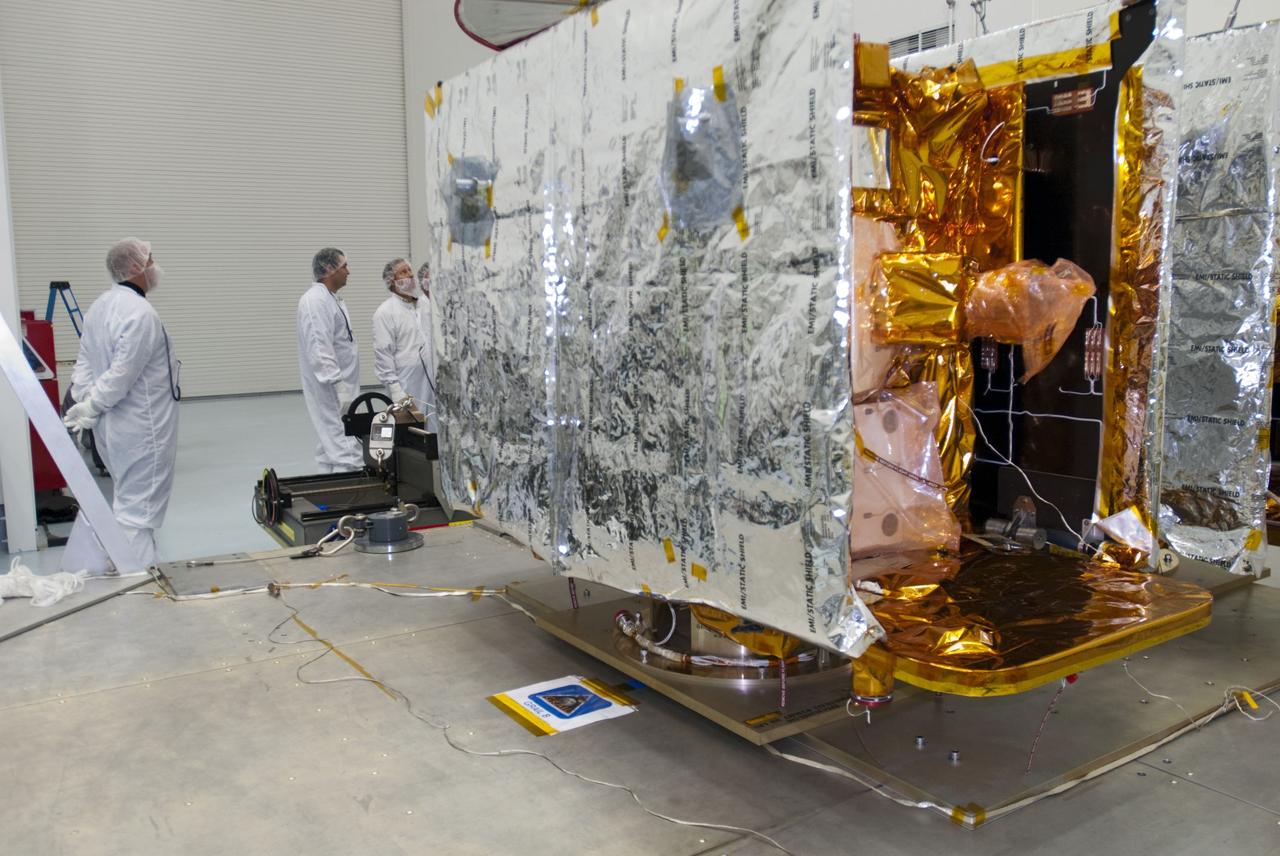
CAPE CANAVERAL, Fla. -- Lockheed Martin technicians examine NASA's twin Gravity Recovery and Interior Laboratory lunar spacecraft before they are moved onto workstands in the Hazardous Processing Facility (HPF) at Astrotech Space Operation's payload processing facility in Titusville, Fla. In the HPF, the spacecraft will undergo two days of fueling activities. GRAIL will fly in tandem orbits around the moon for several months to measure its gravity field. GRAIL's primary science objectives are to determine the structure of the lunar interior, from crust to core, and to advance understanding of the thermal evolution of the moon. Launch aboard a United Launch Alliance Delta II rocket from Space Launch Complex 17B on Cape Canaveral Air Force Station is scheduled for Sept. 8. For more information, visit http://www.nasa.gov/grail. Photo credit: NASA/Charisse Nahser
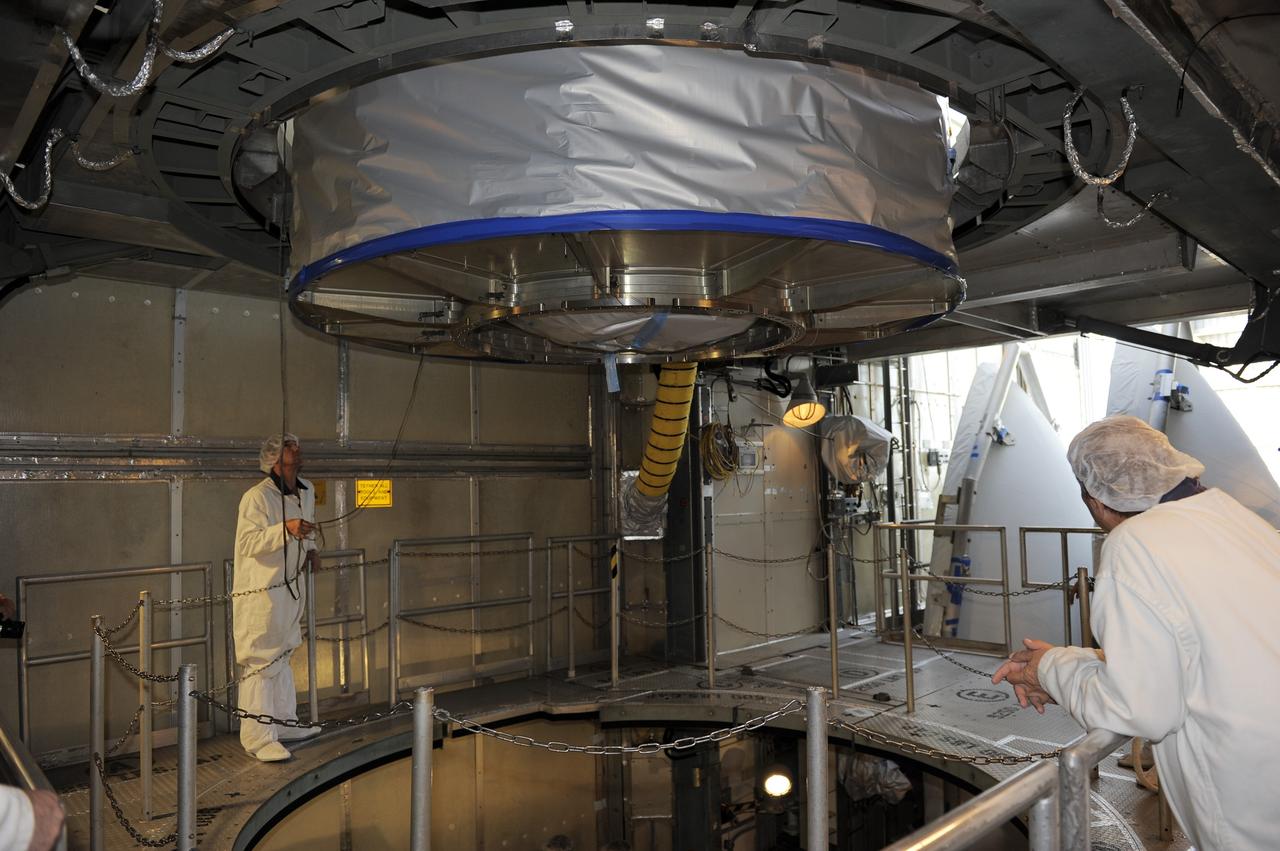
CAPE CANAVERAL, Fla. -- Technicians lower NASA's twin Gravity Recovery and Interior Laboratory (GRAIL) spacecraft into place atop a United Launch Alliance Delta II rocket on Space Launch Complex 17B at Cape Canaveral Air Force Station in Florida. The lunar probes are attached to a spacecraft adapter ring in their side-by-side launch configuration and wrapped in plastic to prevent contamination outside the clean room. The spacecraft will fly in tandem orbits around the moon for several months to measure its gravity field. GRAIL's primary science objectives are to determine the structure of the lunar interior, from crust to core, and to advance understanding of the thermal evolution of the moon. Launch is scheduled for Sept. 8. For more information, visit www.nasa.gov/grail. Photo credit: NASA/Kim Shiflett
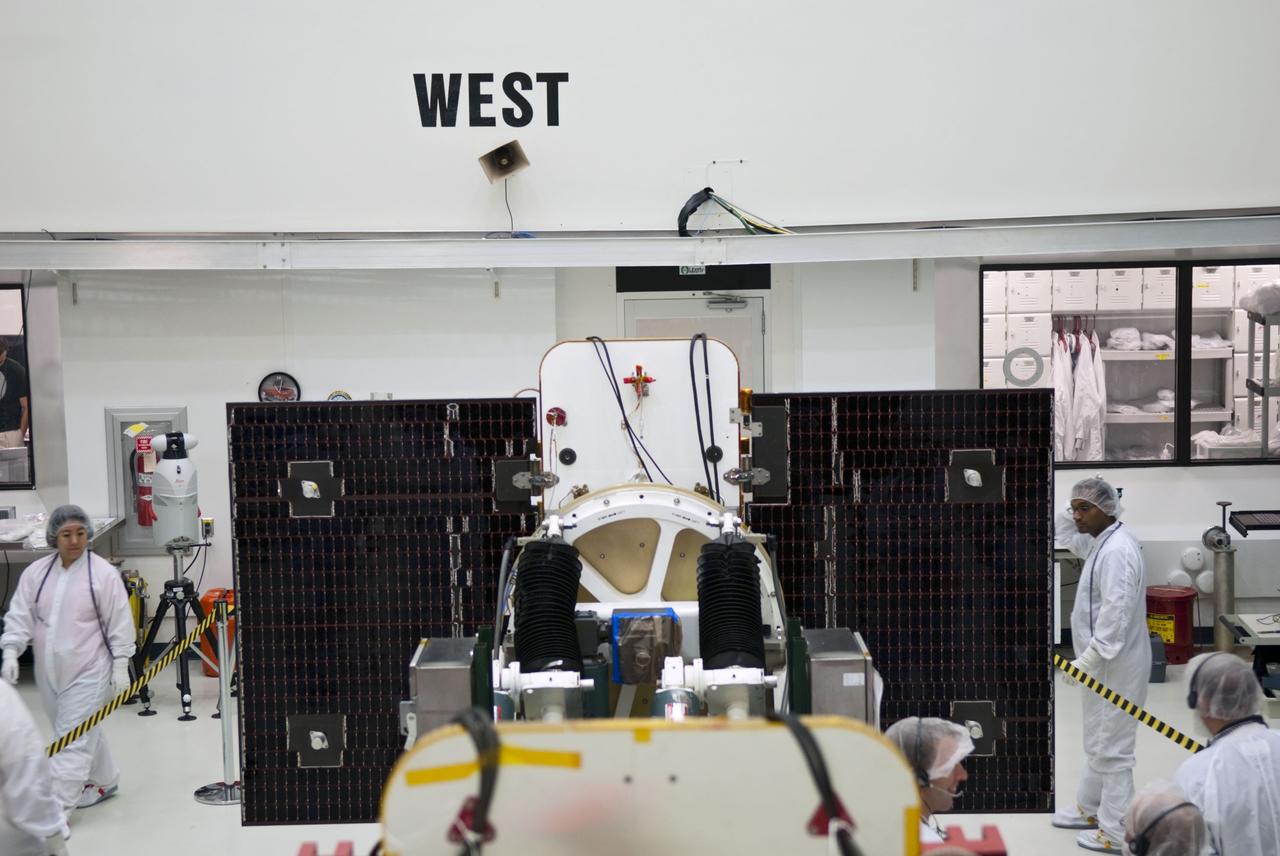
CAPE CANAVERAL, Fla. -- Technicians at Astrotech payload processing facility in Titusville, Fla., are conducting solar panel deployment tests on NASA's Gravity Recovery and Interior Laboratory, or GRAIL, twin spacecraft. The United Launch Alliance Delta II rocket that will carry GRAIL into lunar orbit already is fully stacked at NASA's Space Launch Complex 17B, and launch is scheduled for Sept. 8. The GRAIL mission is a part of NASA's Discovery Program. GRAIL will fly the twin spacecraft in tandem orbits around the moon for several months to measure its gravity field. The mission also will answer longstanding questions about Earth's moon and provide scientists a better understanding of how Earth and other rocky planets in the solar system formed. For more information, visit http://solarsystem.nasa.gov/grail/. Photo credit: NASA/Jim Grossmann
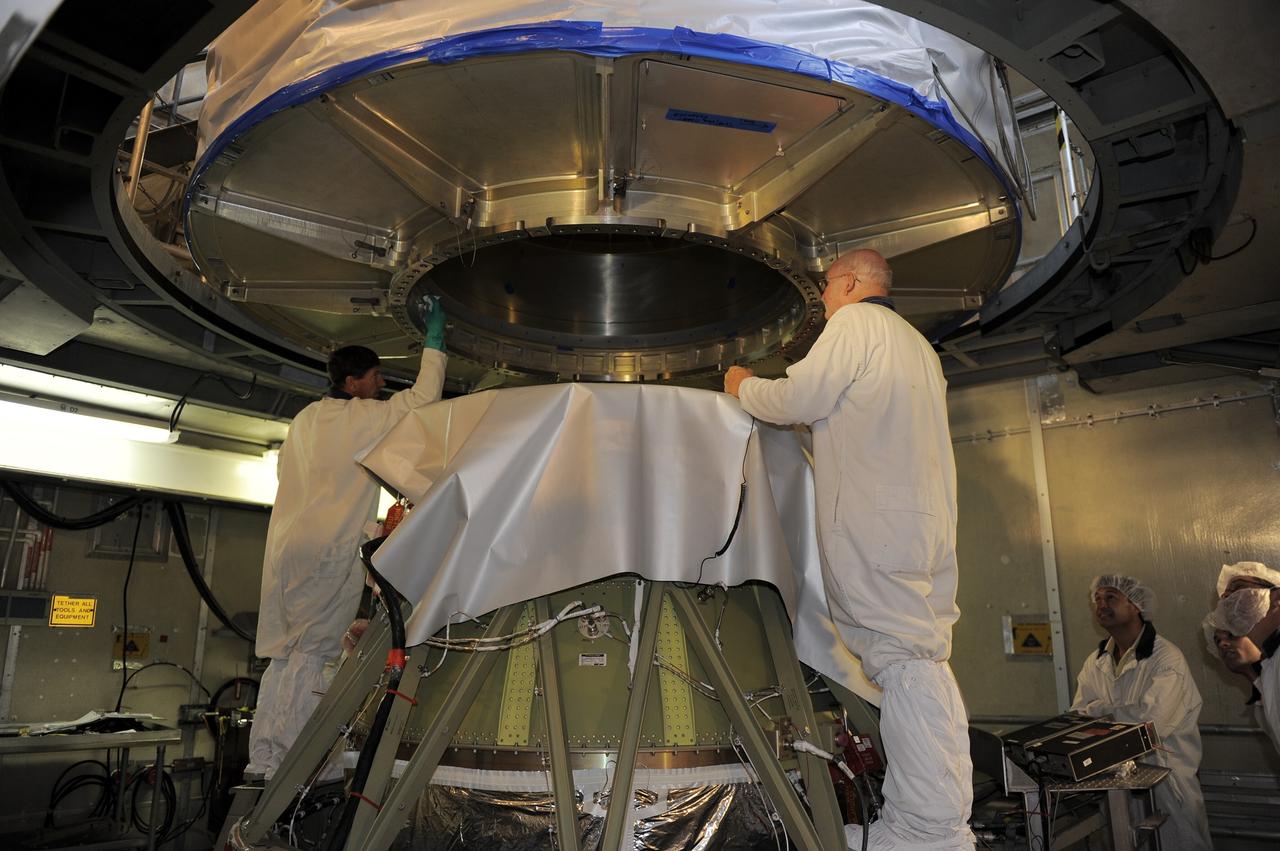
CAPE CANAVERAL, Fla. -- Technicians lower NASA's twin Gravity Recovery and Interior Laboratory (GRAIL) spacecraft into place atop a United Launch Alliance Delta II rocket on Space Launch Complex 17B at Cape Canaveral Air Force Station in Florida. The lunar probes are attached to a spacecraft adapter ring in their side-by-side launch configuration and wrapped in plastic to prevent contamination outside the clean room. The spacecraft will fly in tandem orbits around the moon for several months to measure its gravity field. GRAIL's primary science objectives are to determine the structure of the lunar interior, from crust to core, and to advance understanding of the thermal evolution of the moon. Launch is scheduled for Sept. 8. For more information, visit www.nasa.gov/grail. Photo credit: NASA/Kim Shiflett
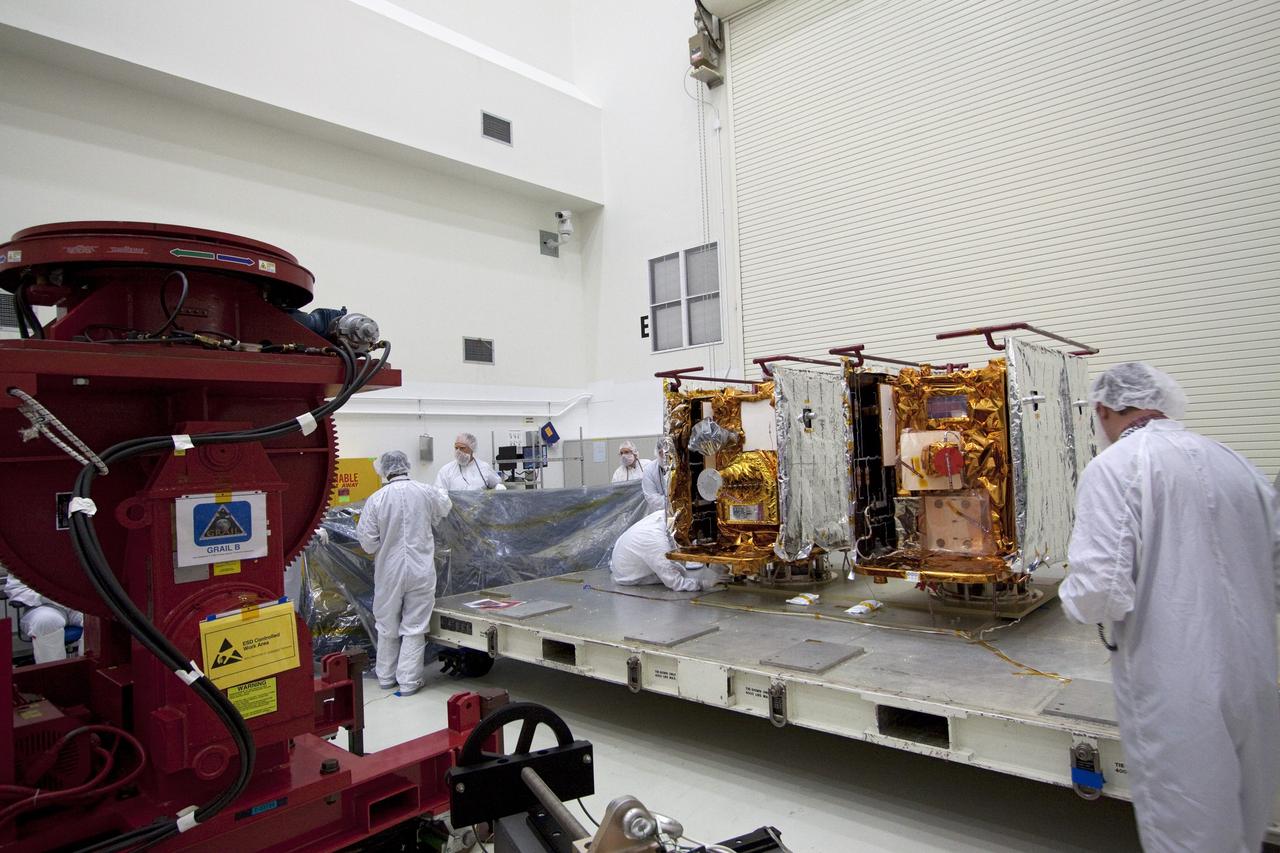
CAPE CANAVERAL, Fla. -- Technicians in the Astrotech payload processing facility in Titusville, Fla., prepare NASA's Gravity Recovery and Interior Laboratory, or GRAIL, twin spacecraft for testing and processing. GRAIL was built at the Lockheed Martin plant in Denver, Colo. The United Launch Alliance Delta II rocket that will carry GRAIL into lunar orbit already is fully stacked at NASA's Space Launch Complex 17B and launch is scheduled for Sept. 8. The GRAIL mission is a part of NASA's Discovery Program. GRAIL will fly twin spacecraft in tandem orbits around the moon for several months to measure its gravity field. The mission also will answer longstanding questions about Earth's moon and provide scientists a better understanding of how Earth and other rocky planets in the solar system formed. For more information, visit http://science.nasa.gov/missions/grail/. Photo credit: NASA/Jack Pfaller
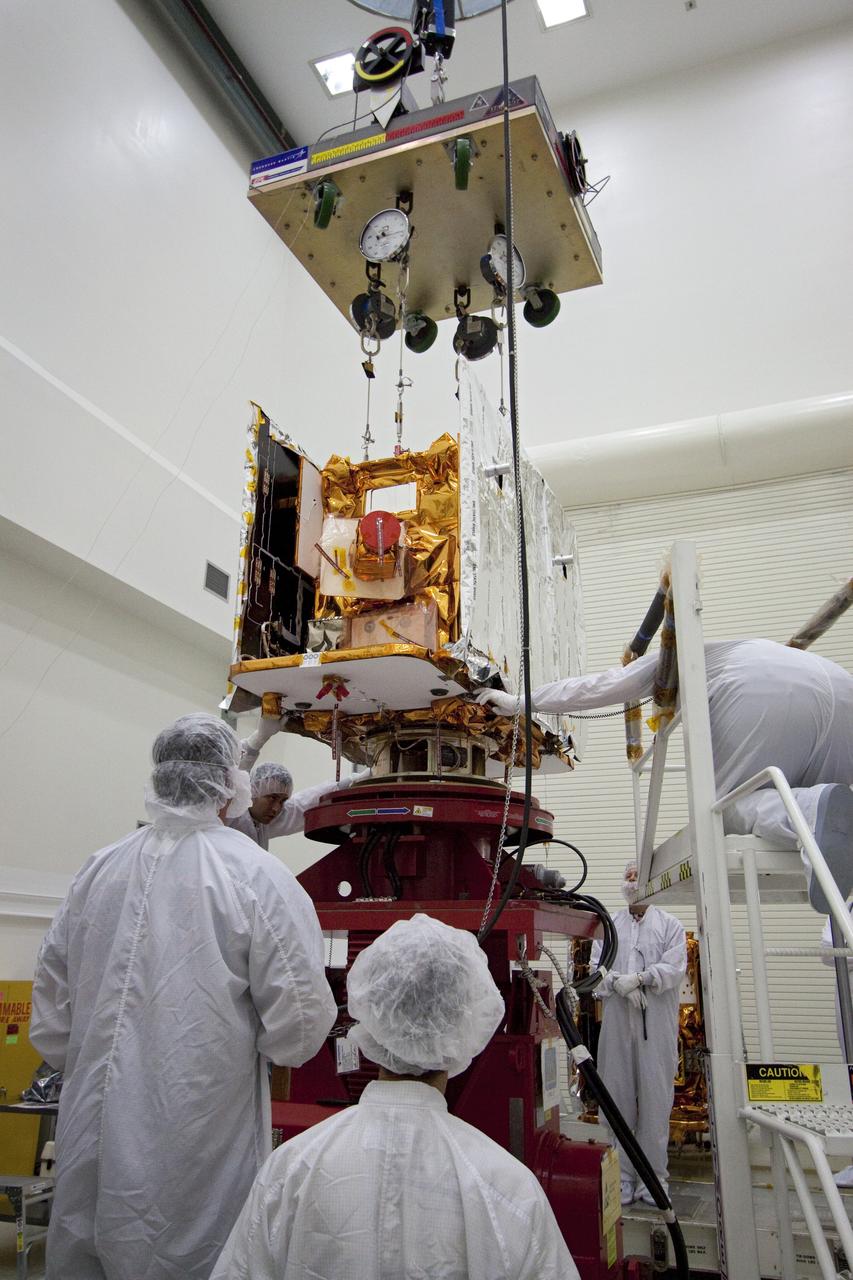
CAPE CANAVERAL, Fla. -- Technicians lower one of two spacecraft for NASA's Gravity Recovery and Interior Laboratory, or GRAIL, to a test stand in the Astrotech payload processing facility in Titusville, Fla. The twin spacecraft were built at the Lockheed Martin plant in Denver, Colo. The United Launch Alliance Delta II rocket that will carry GRAIL into lunar orbit already is fully stacked at NASA's Space Launch Complex 17B and launch is scheduled for Sept. 8. The GRAIL mission is a part of NASA's Discovery Program. GRAIL will fly twin spacecraft in tandem orbits around the moon for several months to measure its gravity field. The mission also will answer longstanding questions about Earth's moon and provide scientists a better understanding of how Earth and other rocky planets in the solar system formed. For more information, visit http://science.nasa.gov/missions/grail/. Photo credit: NASA/Jack Pfaller
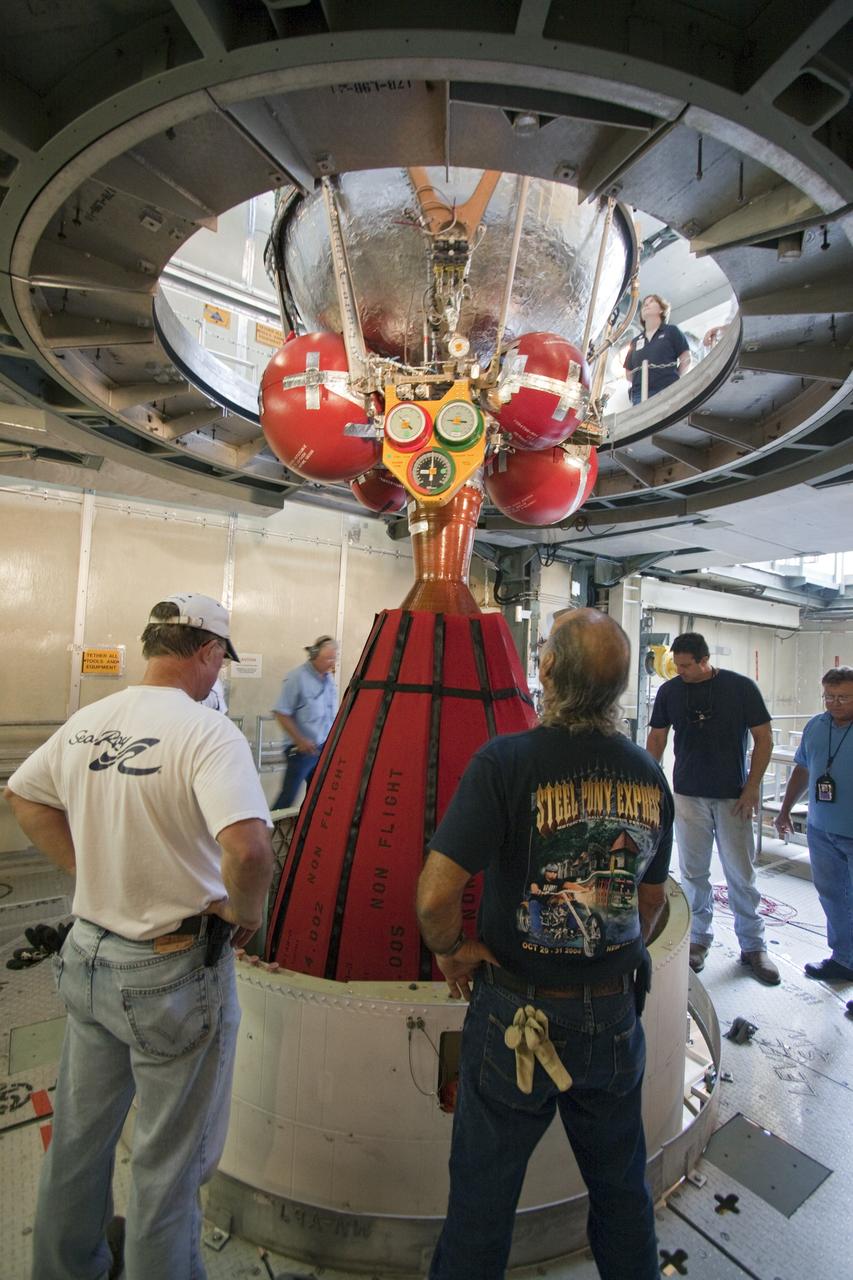
CAPE CANAVERAL, Fla. -- At NASA's Space Launch Complex 17B in Florida, workers using an overhead crane lower the second stage of a United Launch Alliance Delta II launch vehicle toward the first stage for mating. The payload fairing then will be raised into the white room of the mobile service tower. The Delta II will carry NASA's Gravity Recovery and Interior Laboratory, or GRAIL, spacecraft into lunar orbit. The GRAIL mission is a part of NASA's Discovery Program. GRAIL will fly twin spacecraft in tandem orbits around the moon for several months to measure its gravity field. The mission also will answer longstanding questions about Earth's moon and provide scientists a better understanding of how Earth and other rocky planets in the solar system formed. GRAIL is scheduled to launch Sept. 8. For more information visit: http://science.nasa.gov/missions/grail/. Photo credit: NASA/Jack Pfaller
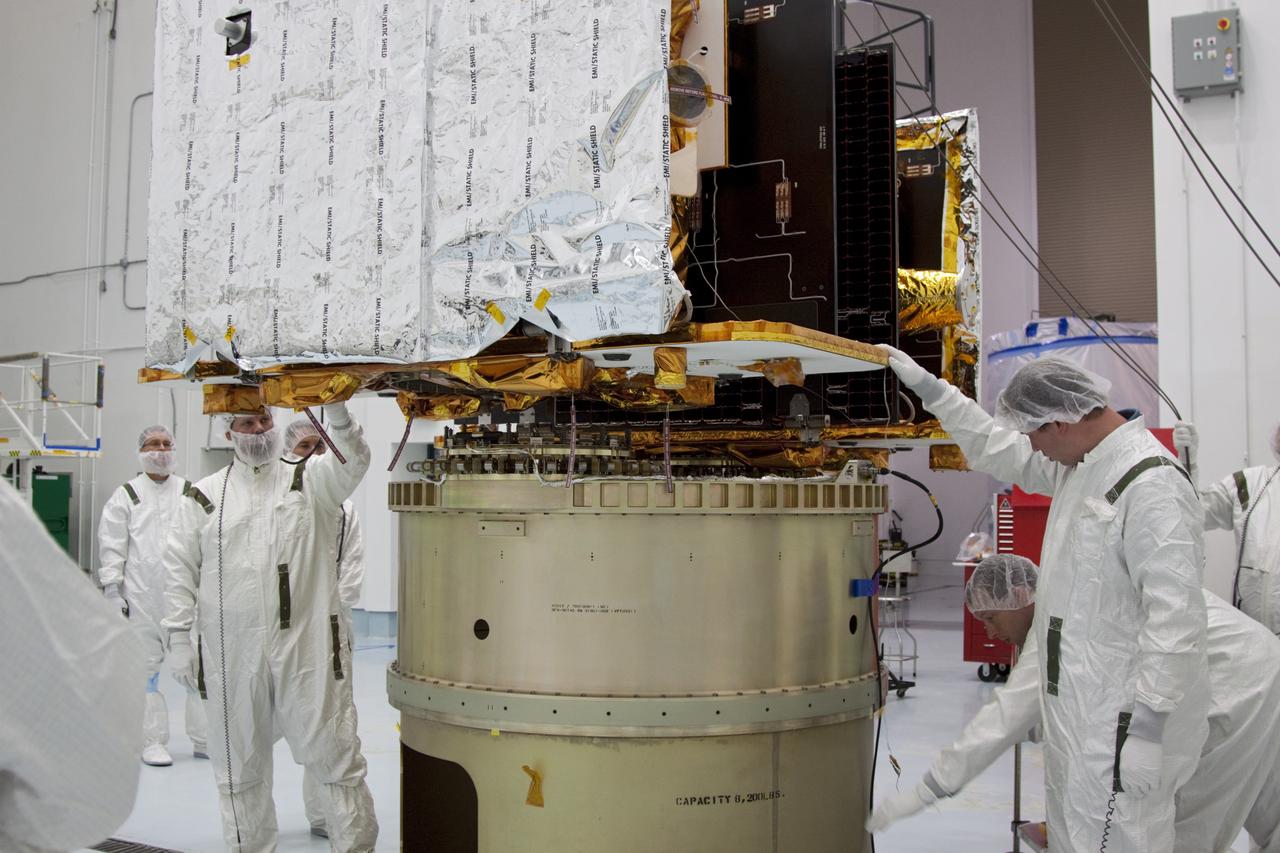
CAPE CANAVERAL, Fla. -- At Astrotech Space Operation's payload processing facility in Titusville, Fla., Lockheed Martin technicians verify that NASA's Gravity Recovery and Interior Laboratory-A (GRAIL-A) lunar probe is lowered into the correct position on the spacecraft adapter ring. After the twin GRAIL spacecraft are attached to the adapter ring in their side-by-side launch configuration, they will be transported to the launch pad. GRAIL will fly in tandem orbits around the moon for several months to measure its gravity field. GRAIL's primary science objectives are to determine the structure of the lunar interior, from crust to core, and to advance understanding of the thermal evolution of the moon. Launch aboard a United Launch Alliance Delta II rocket from Space Launch Complex 17B on Cape Canaveral Air Force Station is scheduled for Sept. 8. For more information, visit http://www.nasa.gov/grail. Photo credit: NASA/Jim Grossmann
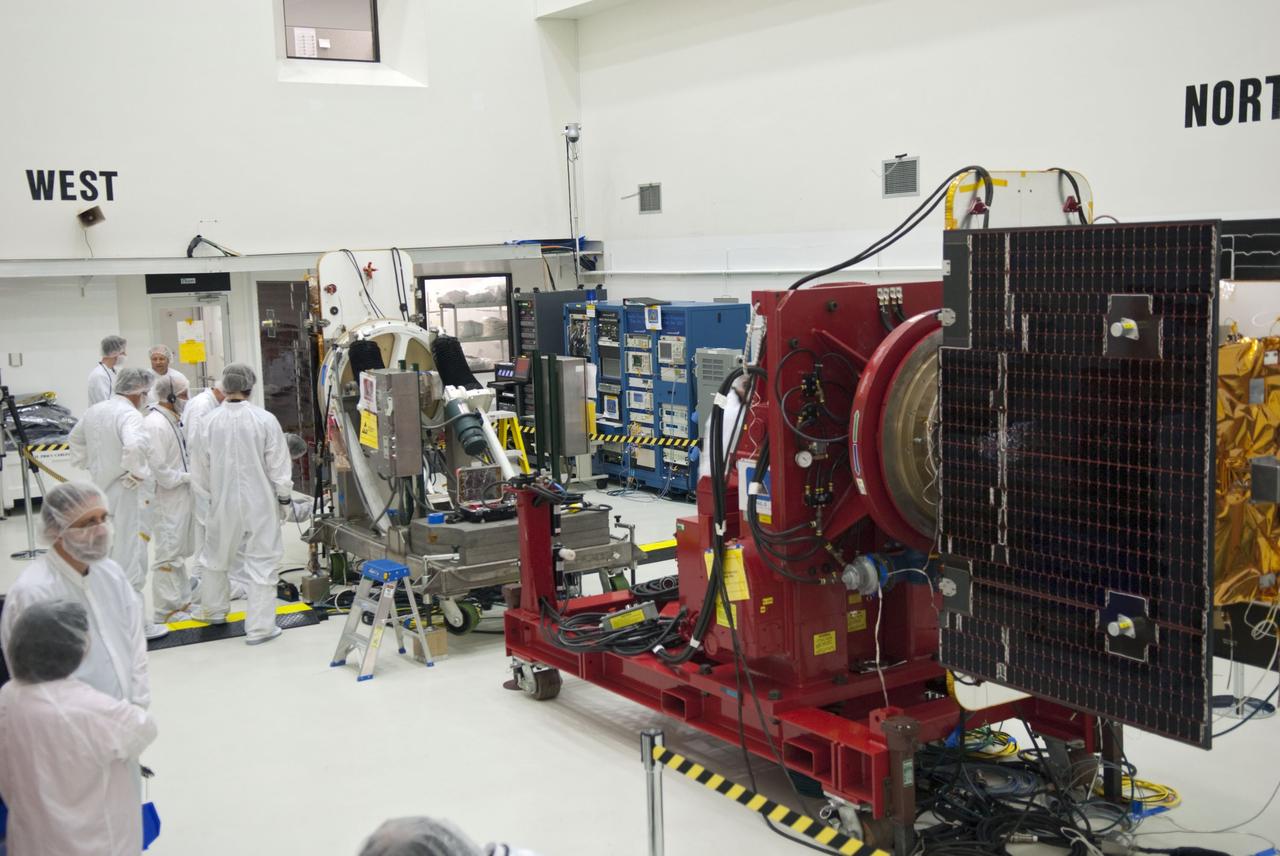
CAPE CANAVERAL, Fla. -- Technicians at Astrotech payload processing facility in Titusville, Fla., are conducting solar panel deployment tests on NASA's Gravity Recovery and Interior Laboratory, or GRAIL, twin spacecraft. The United Launch Alliance Delta II rocket that will carry GRAIL into lunar orbit already is fully stacked at NASA's Space Launch Complex 17B, and launch is scheduled for Sept. 8. The GRAIL mission is a part of NASA's Discovery Program. GRAIL will fly the twin spacecraft in tandem orbits around the moon for several months to measure its gravity field. The mission also will answer longstanding questions about Earth's moon and provide scientists a better understanding of how Earth and other rocky planets in the solar system formed. For more information, visit http://solarsystem.nasa.gov/grail/. Photo credit: NASA/Jim Grossmann