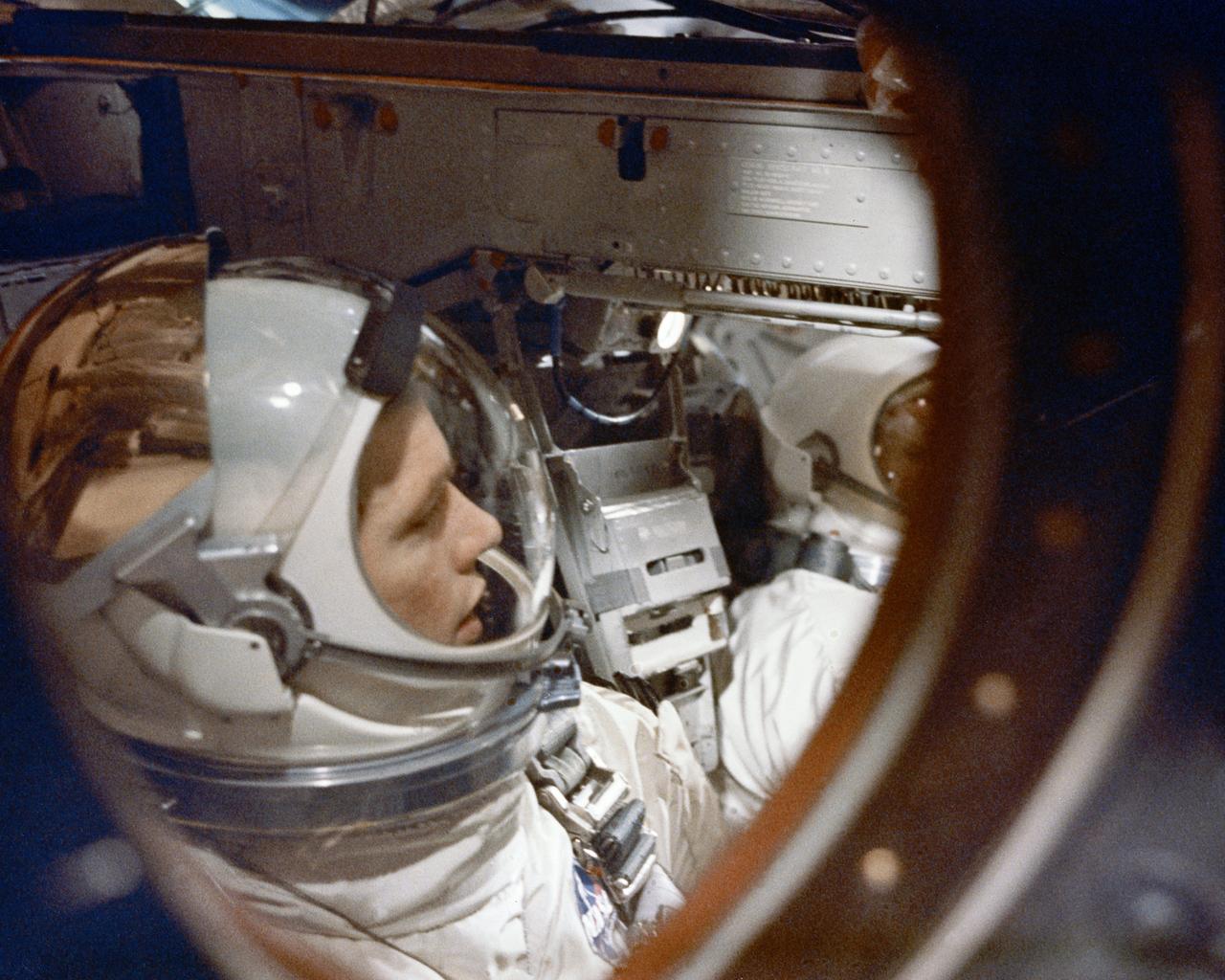
KSC-66C-1838 Gemini-8 Spacecraft is being checked out at Complex 19 during a Simulated Countdown.
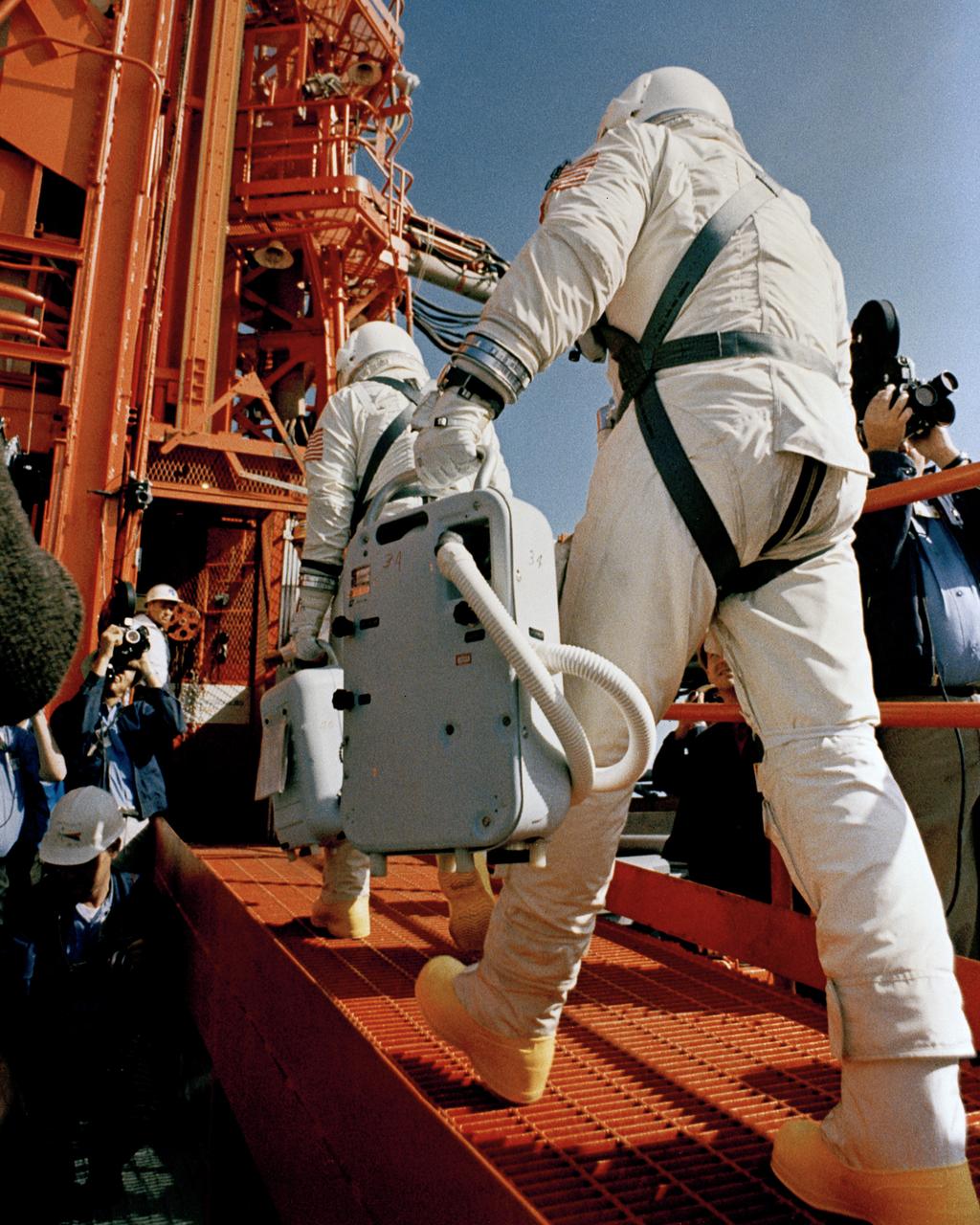
KSC-66C-1861 Gemini-8 Astronauts Neil Armstrong and David Scott are shown entering elevator at Complex 19, Cape Kennedy. (jrs)
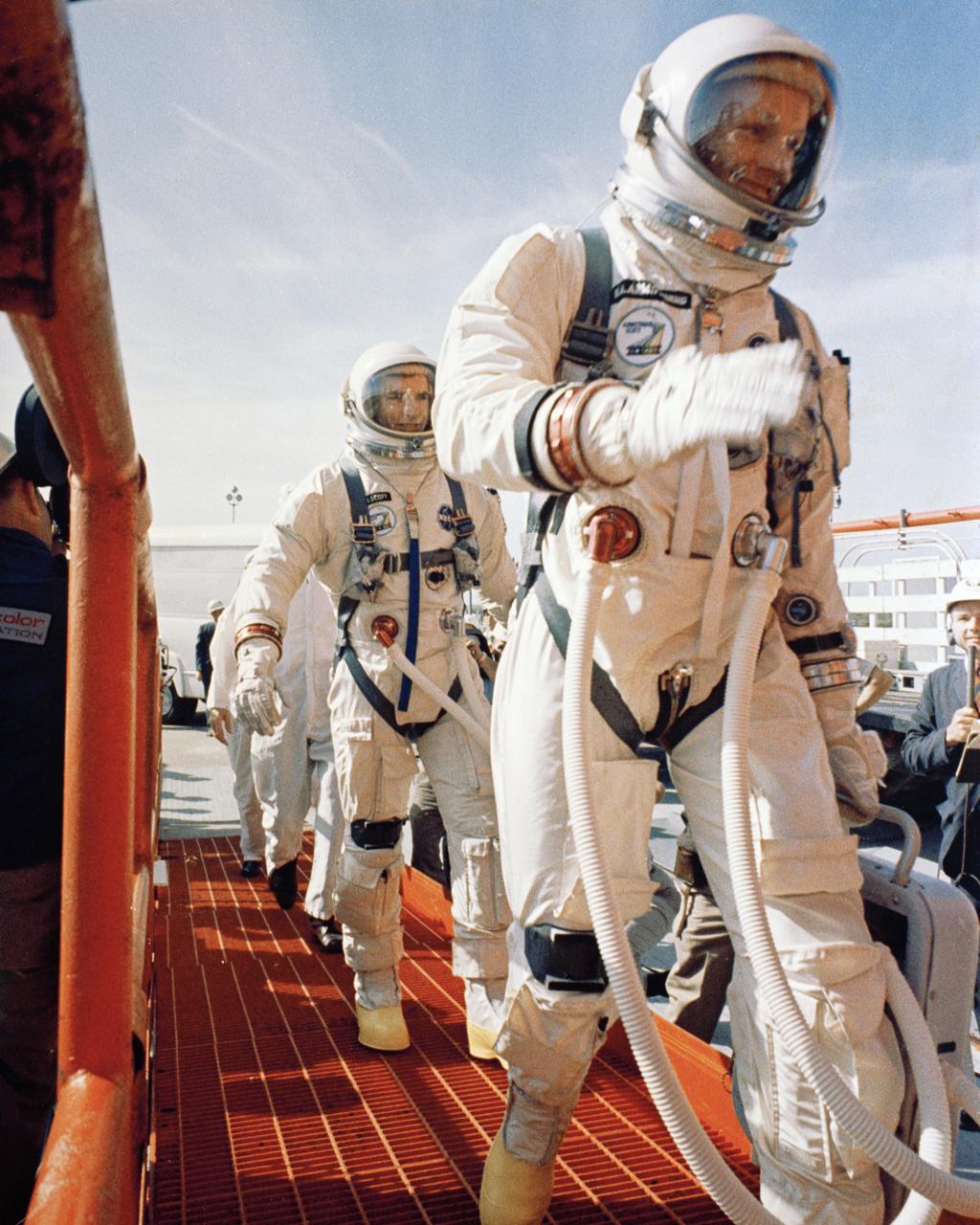
KSC-66C-1863 Gemini-8 Astronauts Neil Armstrong and David Scott prepare to enter elevator at Complex 19, Cape Kennedy. (jrs)
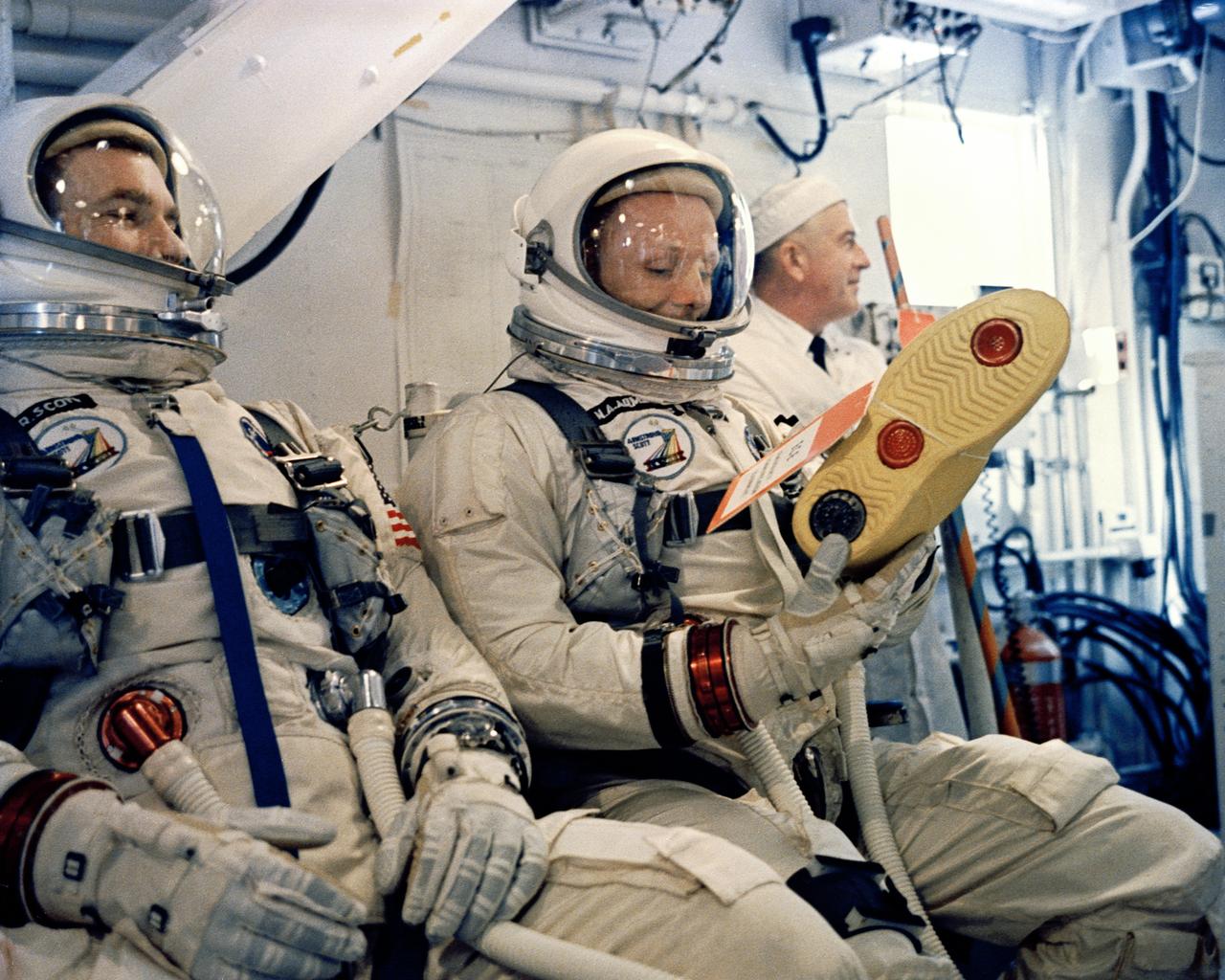
KSC-66C-1875 Astronauts David Scott and Neil Armstrong wait for the order to board their Gemini 8 Spacecraft in the White Room at Cape Kennedy, Complex 19. (jrs)
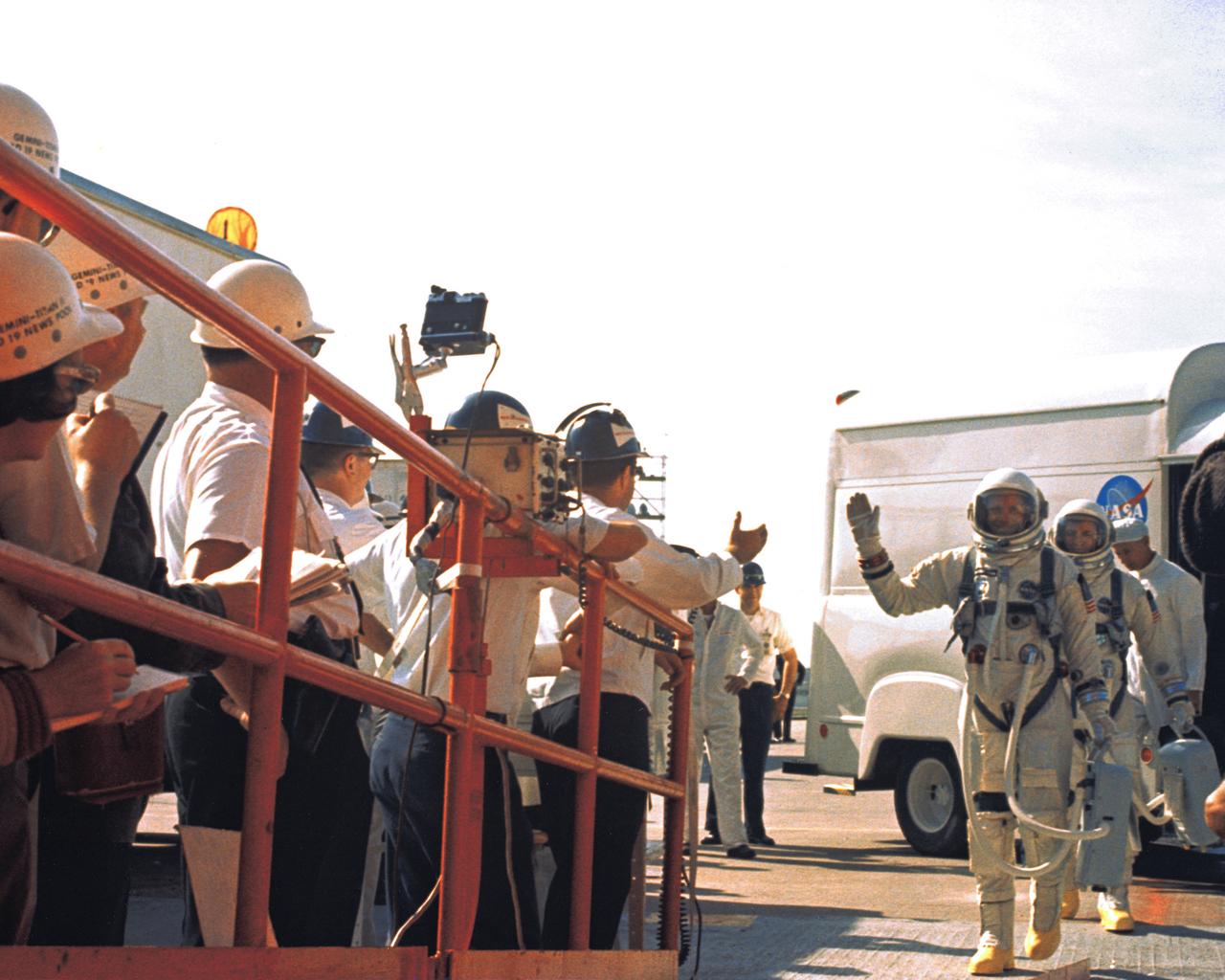
KSC-66C-1855 Gemini-8 Astronauts Neil A. Armstrong and David R. Scott leave Transfer Van at Complex 19, Cape Kennedy prior to boarding their Gemini 8 Spacecraft. (jrs)
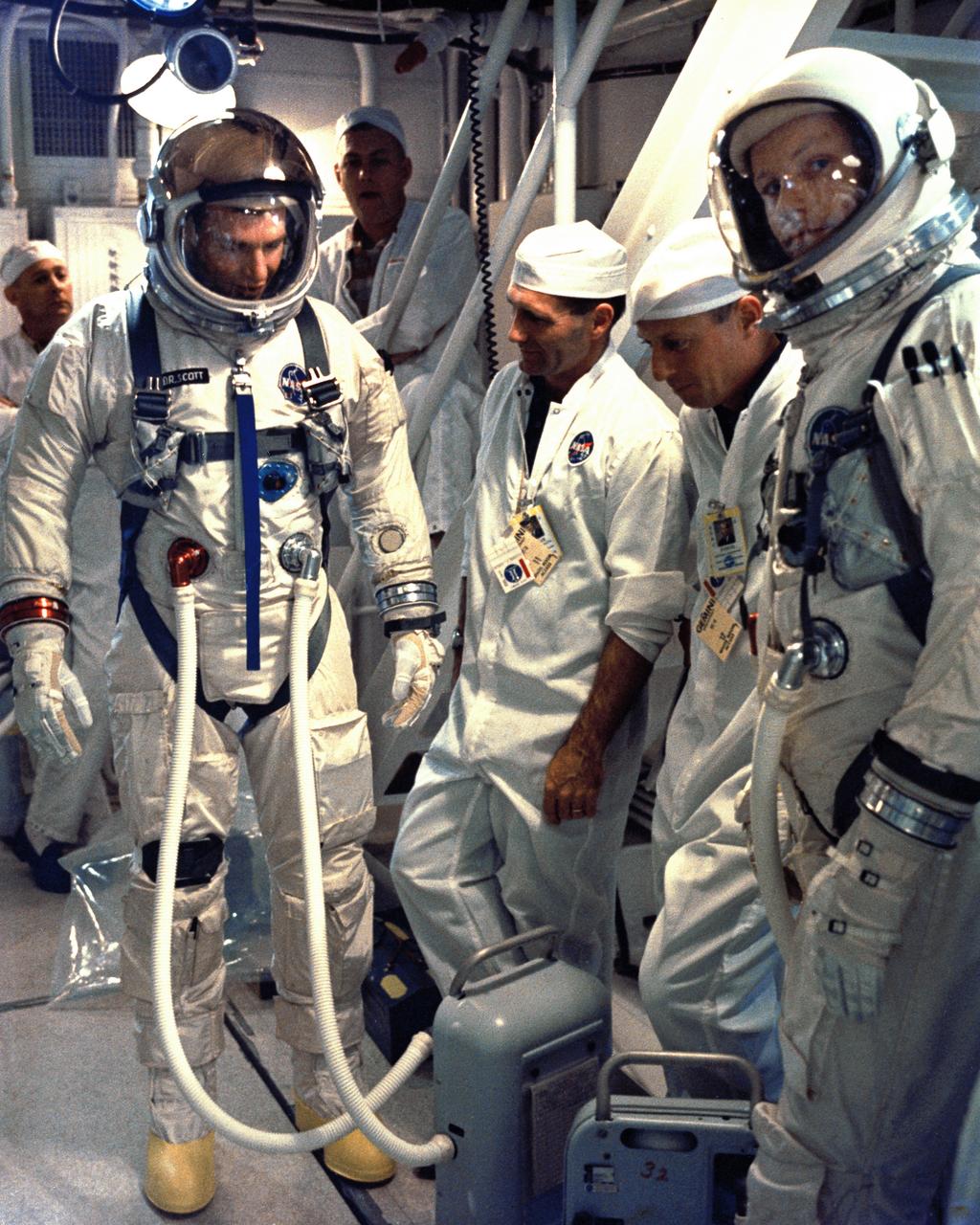
KSC-66C-1841 Gemini-8 Astronauts Neil A. Armstrong, Command Pilot, and David R. Scott, Pilot, arrive at White Room, Complex 19 to enter Spacecraft for Simulation Test. (jrs)
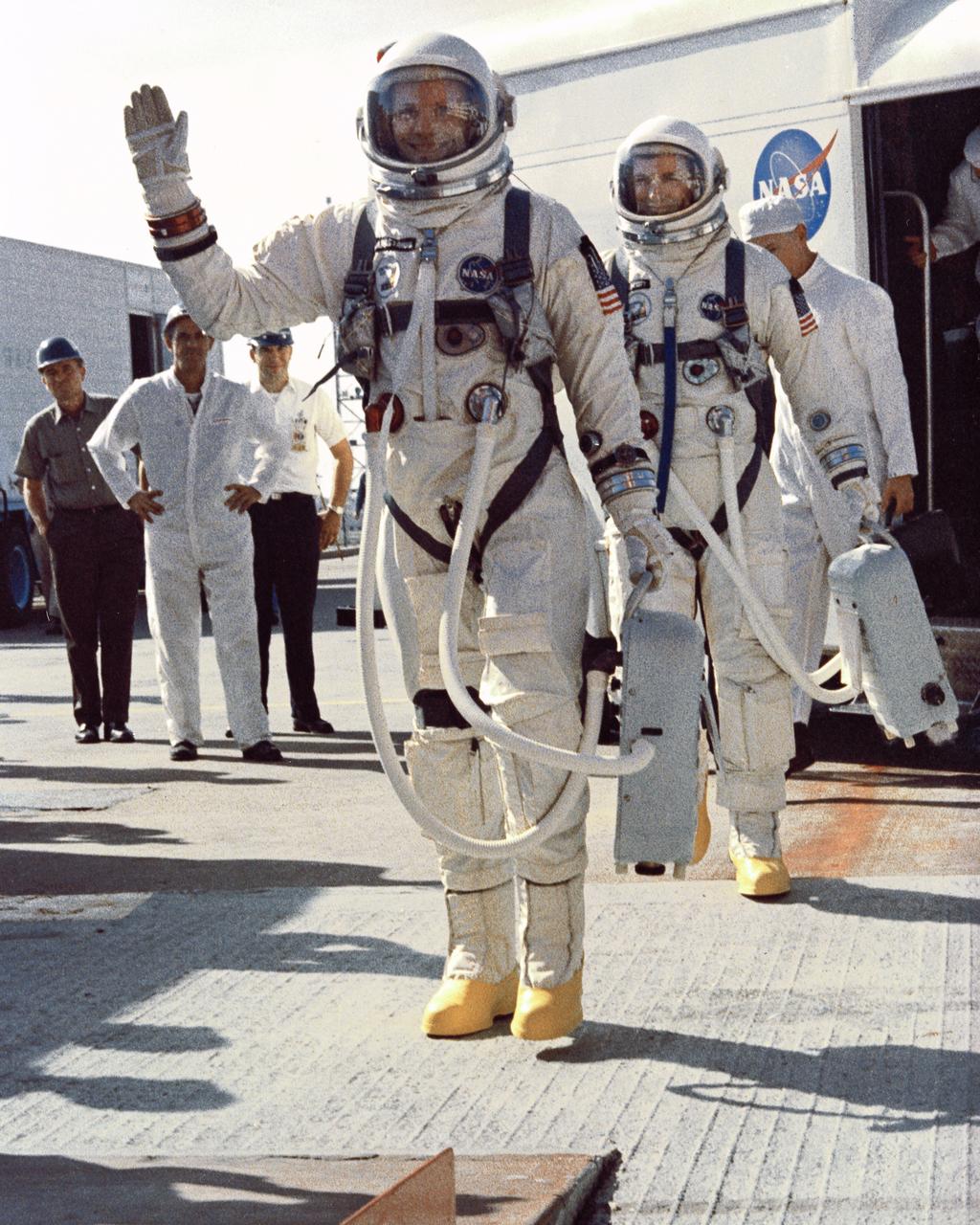
KSC-66C-1867 Gemini-8 Astronauts Neil A. Armstrong and David R. Scott leave Transfer Van at Complex 19, Cape Kennedy prior to boarding their Gemini 8 Spacecraft. (jrs)
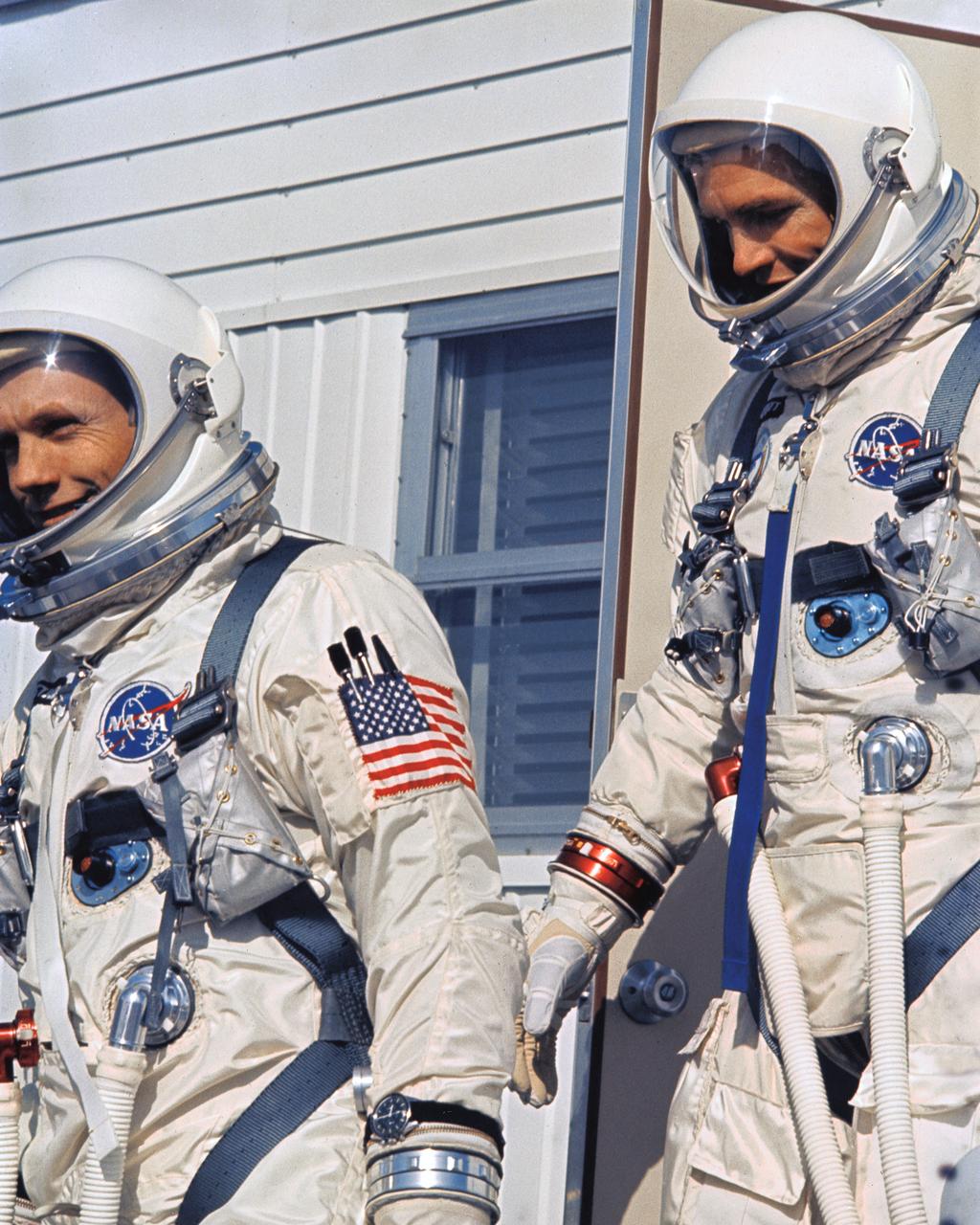
KSC-66C-1851 Astronauts Neil Armstrong and David Scott leave Suiting Trailer to enter Transfer Van, Complex 19, Cape Kennedy prior to boarding their Spacecraft for Gemini 8 Mission. (jrs)
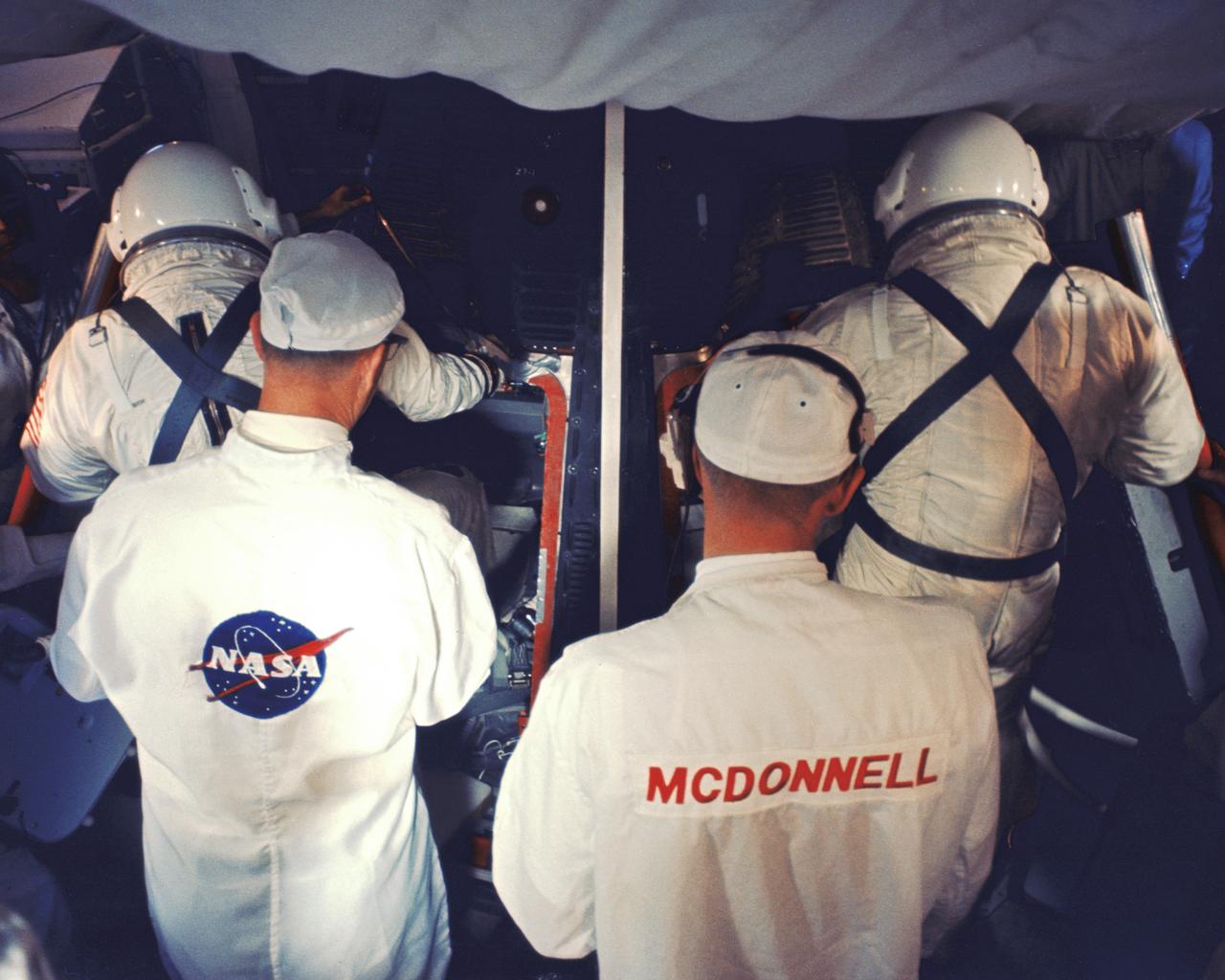
KSC-66C-1852 Gemini-8 Astronauts Neil A. Armstrong and David R. Scott are helped into their Gemini 8 Spacecraft by White Room technicians at Complex 19, Cape Kennedy, Prior to Liftoff. (jrs)
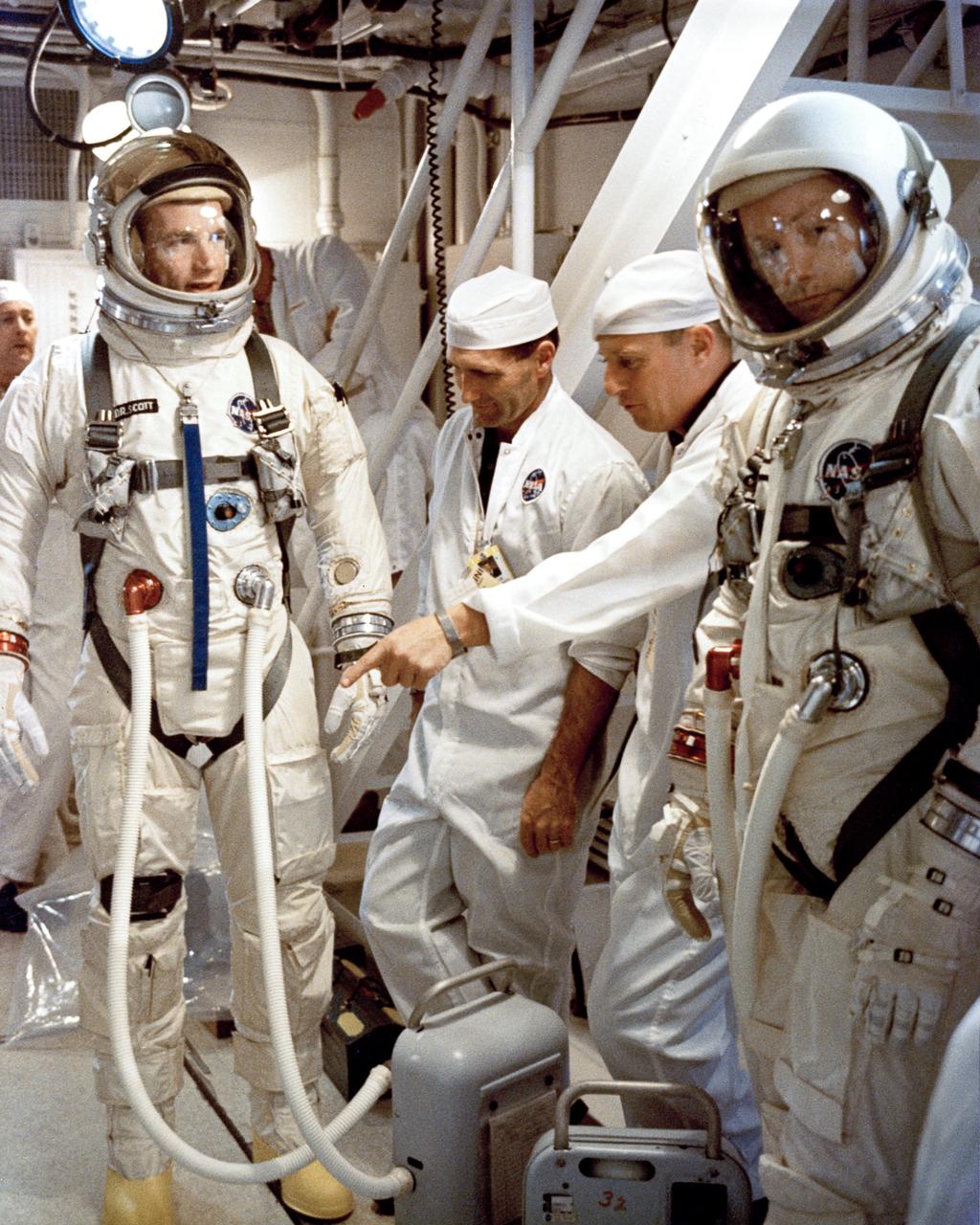
KSC-66C-1836 Gemini-8 Astronauts Neil A. Armstrong, Command Pilot, and David R. Scott, Pilot arrive at White Room, Complex 19 to enter Spacecraft for Simulation Test. (jrs)

A What’s On Board Briefing for SpaceX’s 19th Commercial Resupply Services (CRS-19) mission for NASA to the International Space Station took place on Dec. 3, 2019, at the agency’s Kennedy Space Center in Florida. Paul Ferkul, an investigator for the Confined Combustion experiment, discuss the investigation which studies how fire spreads and behaves in confined spaces. The SpaceX Falcon 9 rocket and Dragon cargo module are scheduled to launch on Dec. 4, 2019, from Space Launch Complex 40 on Cape Canaveral Air Force Station in Florida.
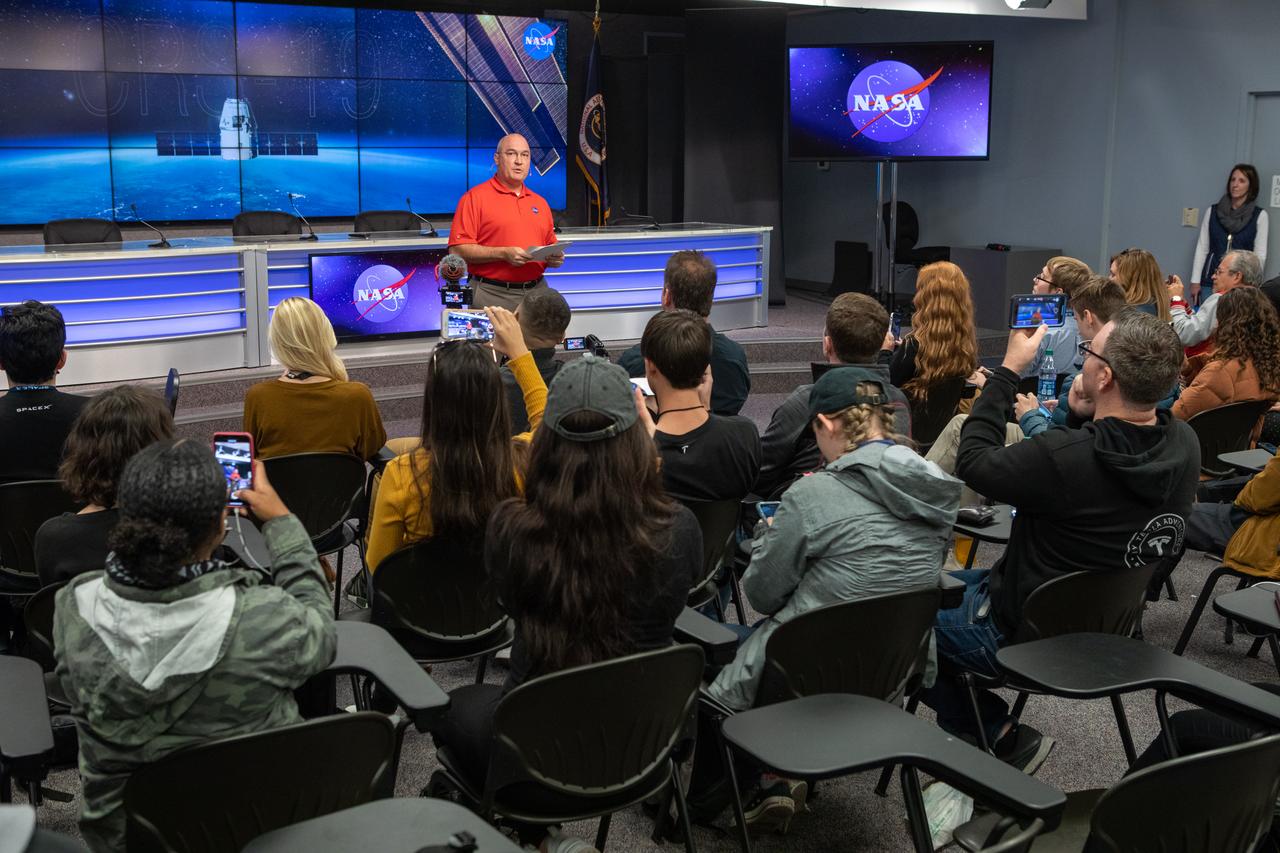
Greg Harland, NASA Communications, moderates a What’s On Board Briefing for SpaceX’s 19th Commercial Resupply Services (CRS-19) mission for NASA to the International Space Station on Dec. 3, 2019, at the agency’s Kennedy Space Center in Florida. The SpaceX Falcon 9 rocket and Dragon cargo module are scheduled to launch on Dec. 4, 2019, from Space Launch Complex 40 on Cape Canaveral Air Force Station in Florida.
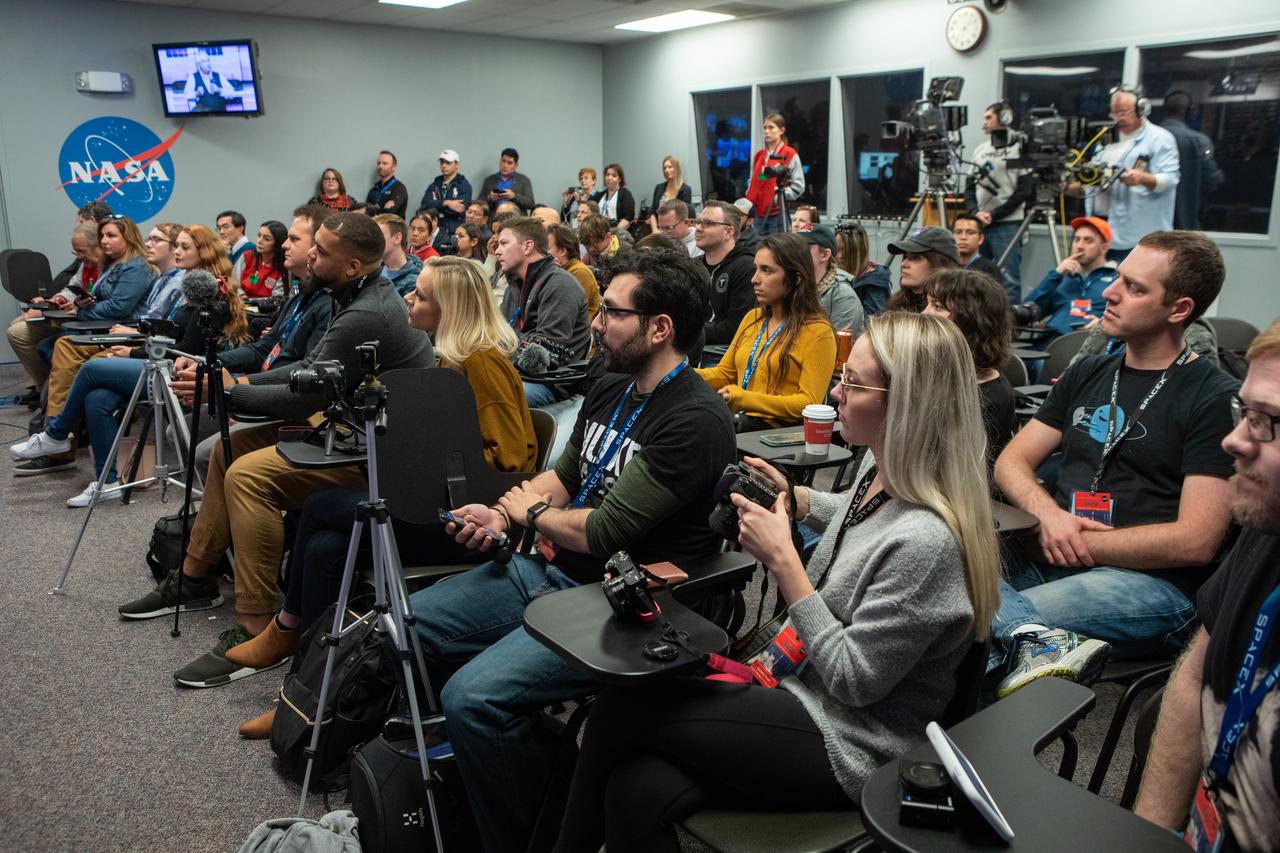
Members of the news and social media listen to a What's On Board Briefing on Dec. 3, 2019, for SpaceX's 19th Commercial Resupply Services (CRS-19) mission for NASA to the International Space Station at the agency's Kennedy Space Center in Florida. The SpaceX Falcon 9 rocket and Dragon cargo module are scheduled to launch on Dec. 4, 2019, from Space Launch Complex 40 on Cape Canaveral Air Force Station in Florida.
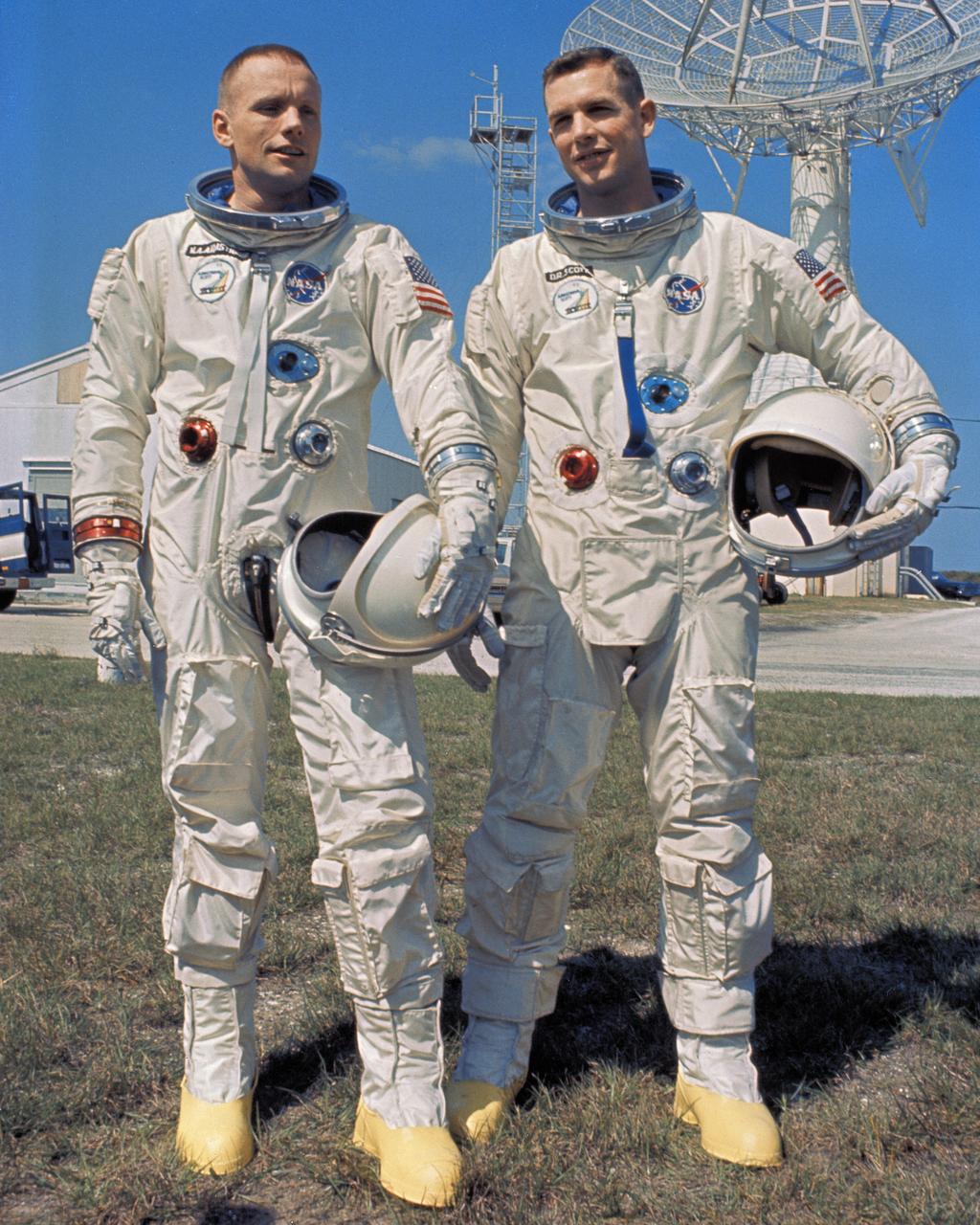
KSC-66C-1846 Gemini-8 Astronauts Neil A. Armstrong, Command Pilot, and David R. Scott, Pilot, during a Photo Session for the Press outside Mission Control Center, Cape Kennedy, FLA. (jrs)
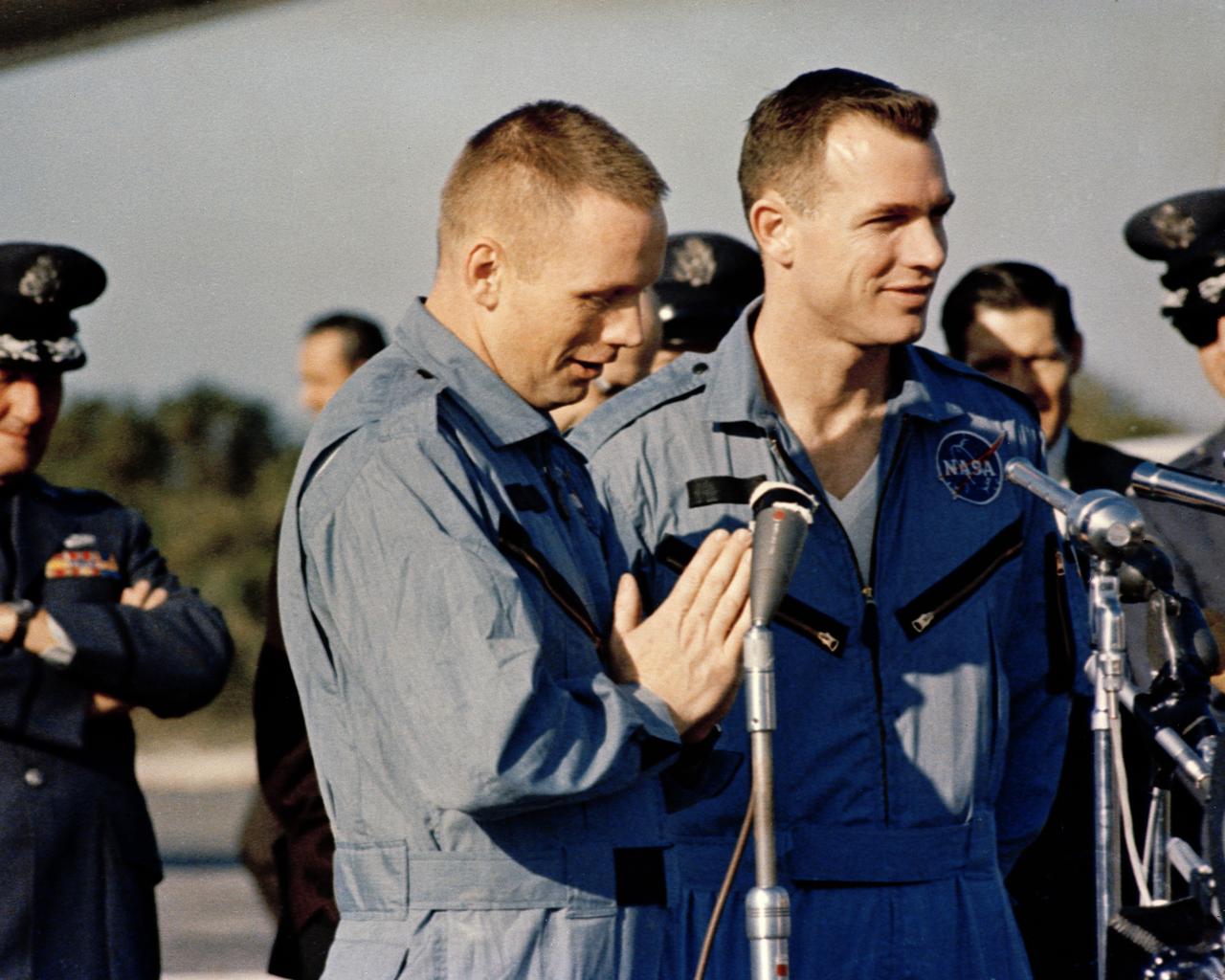
KSC-66C-1881 Astronauts Neil Armstrong and David Scott say a few words for the crowd that greeted them on their arrival at Skid Strip from Hawaii. (jrs)
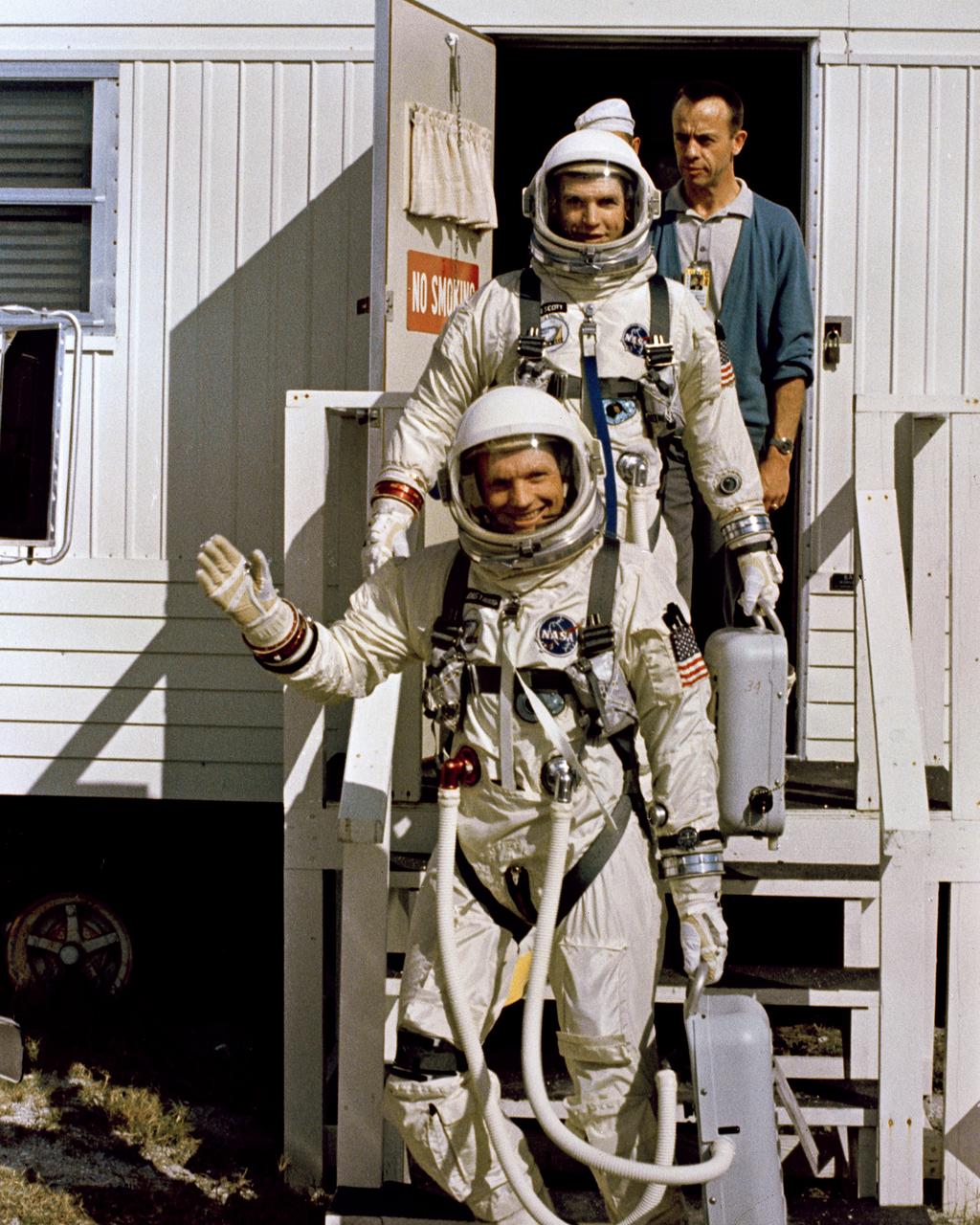
KSC-66C-1869 Astronauts Neil Armstrong and David Scott leave Suiting Trailer and enter Transfer Van at Cape Kennedy prior to boarding their Spacecraft for Gemini 8 Mission. (jrs)
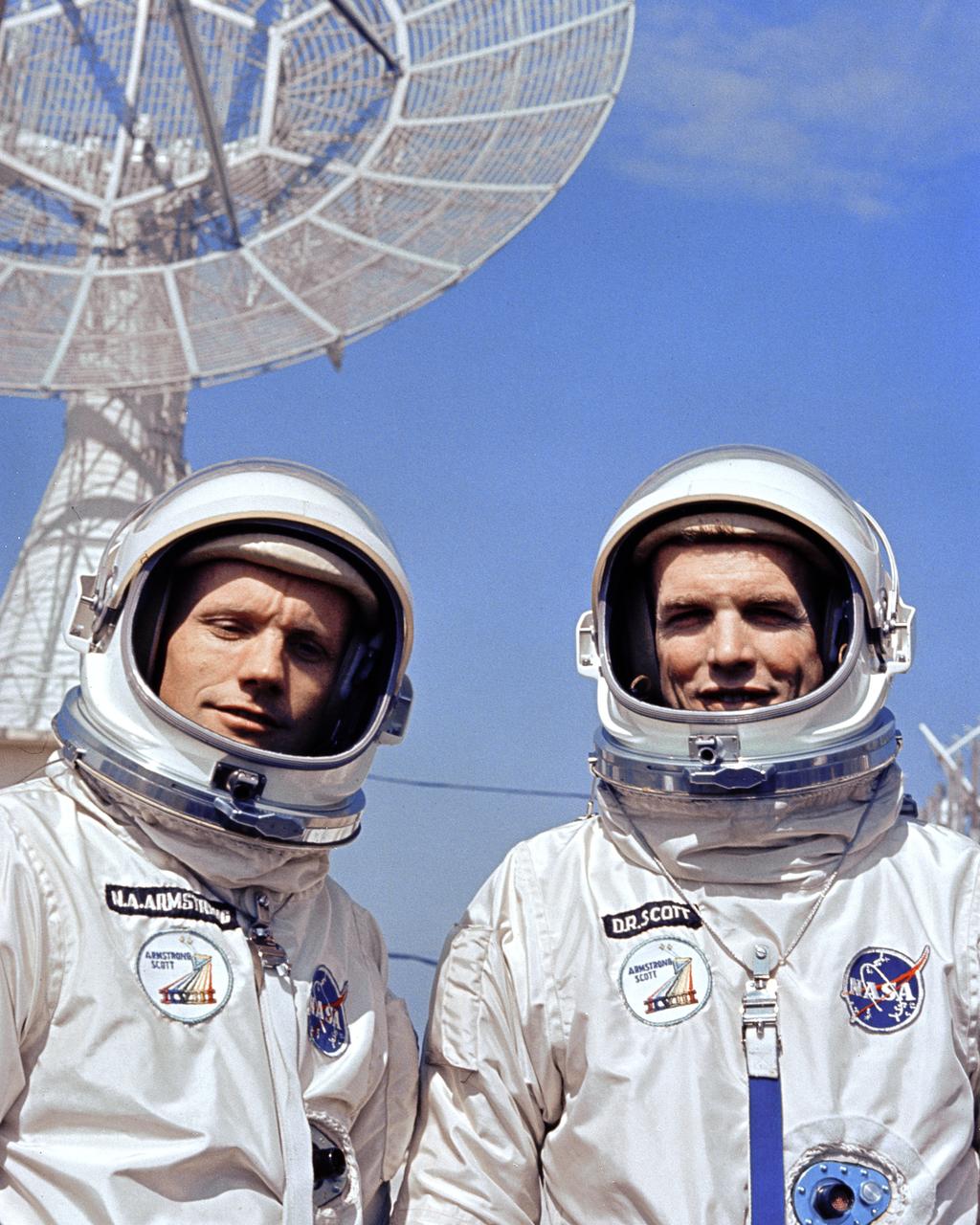
KSC-66C-1845 Gemini-8 Astronauts Neil A. Armstrong, Command Pilot, and David R. Scott, Pilot, during a Photo Session for the Press outside Mission Control Center, Cape Kennedy. (jrs)
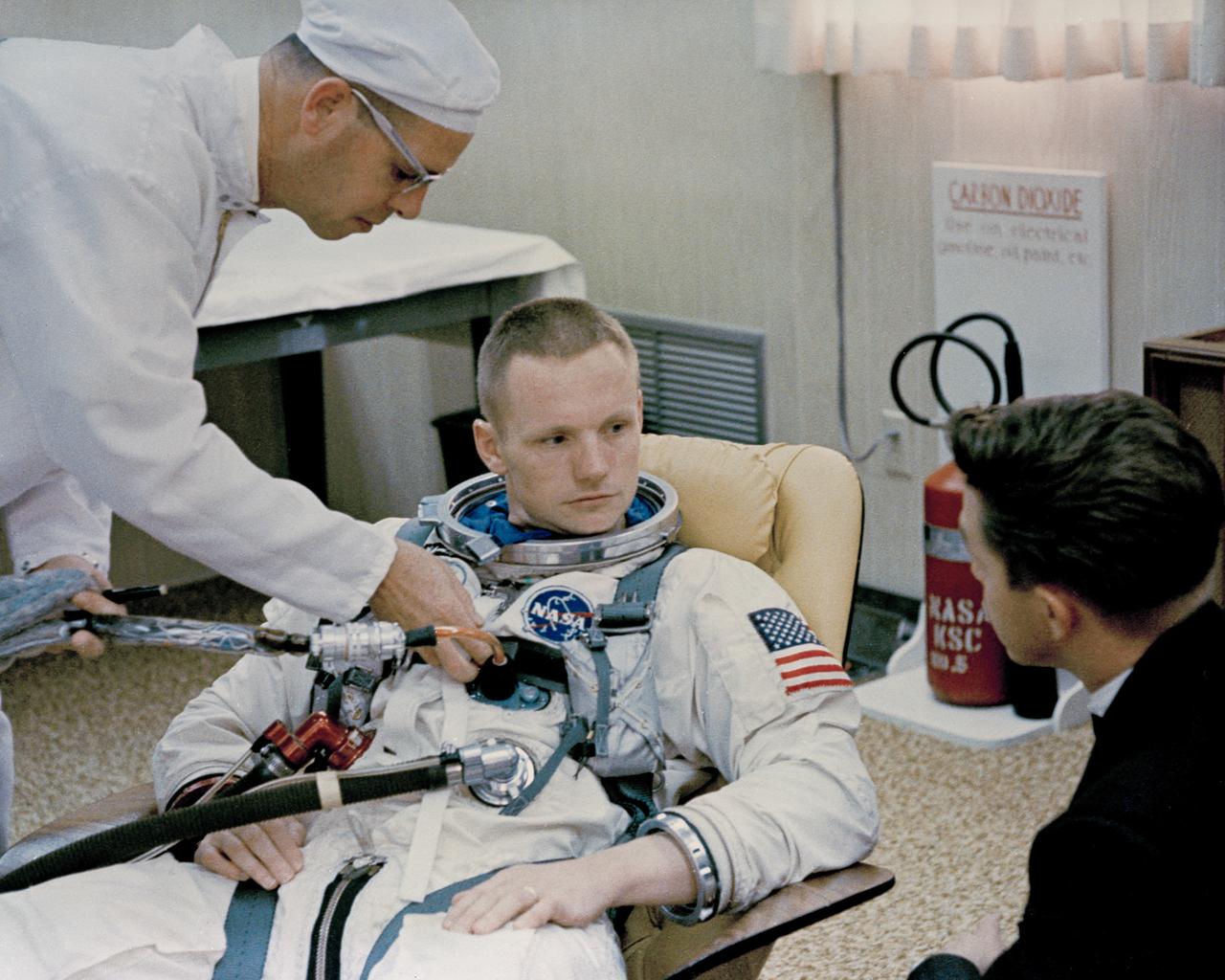
KSC-66C-1849 Gemini 8 Astronaut Neil Armstrong is aided by Suit Technician Jim Garrepy, during preparations for Gemini 8 Mission (jrs)
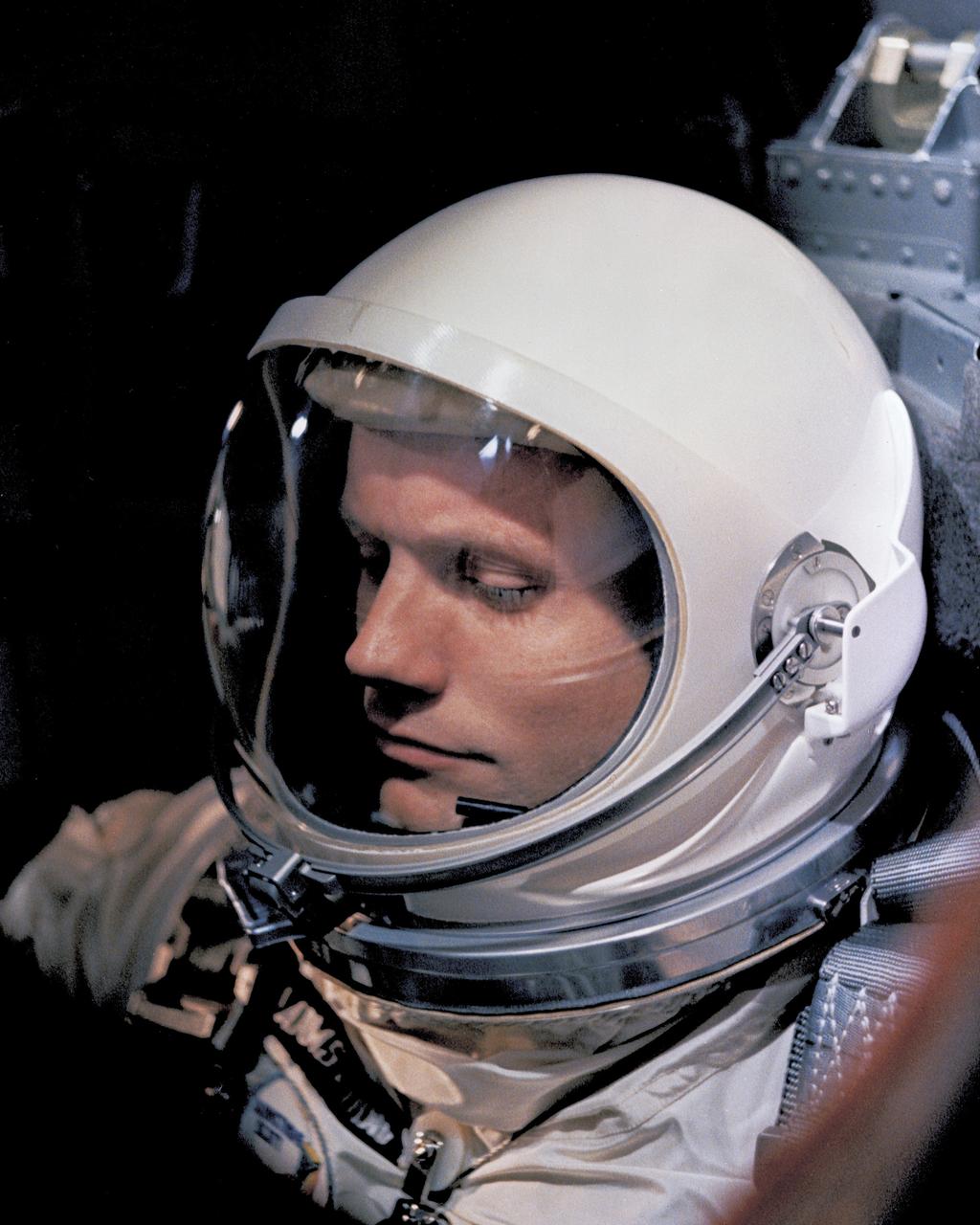
KSC-66C-1872 Gemini 8 Command Pilot Neil A. Armstrong seen through window of Gemini 8 Spacecraft just before liftoff. (jrs)
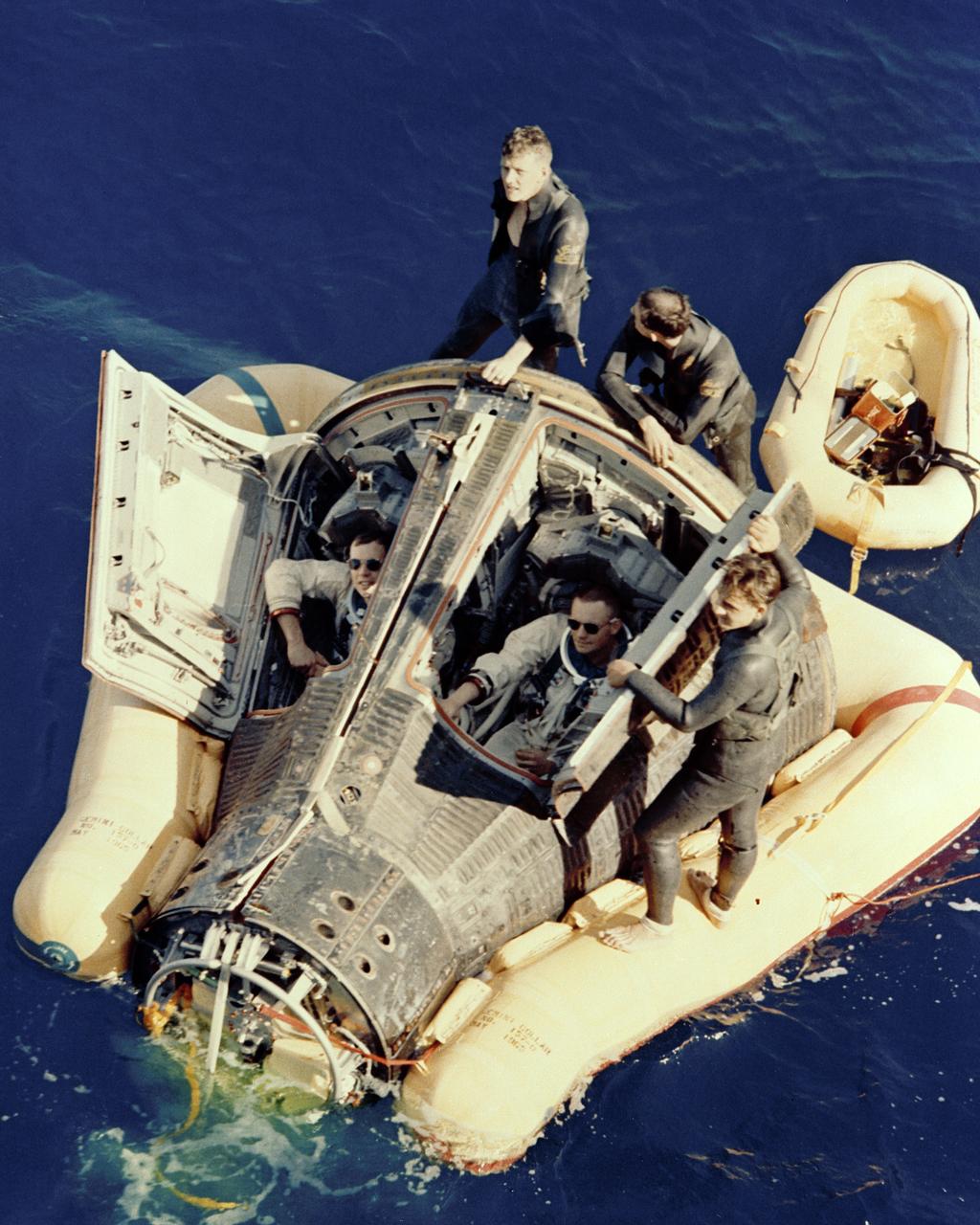
KSC-66C-1879 GT-8 recovery with Astronauts Neil A. Armstrong, Command Pilot and David R. Scott, Pilot in pacific after their GT-8 Flight.
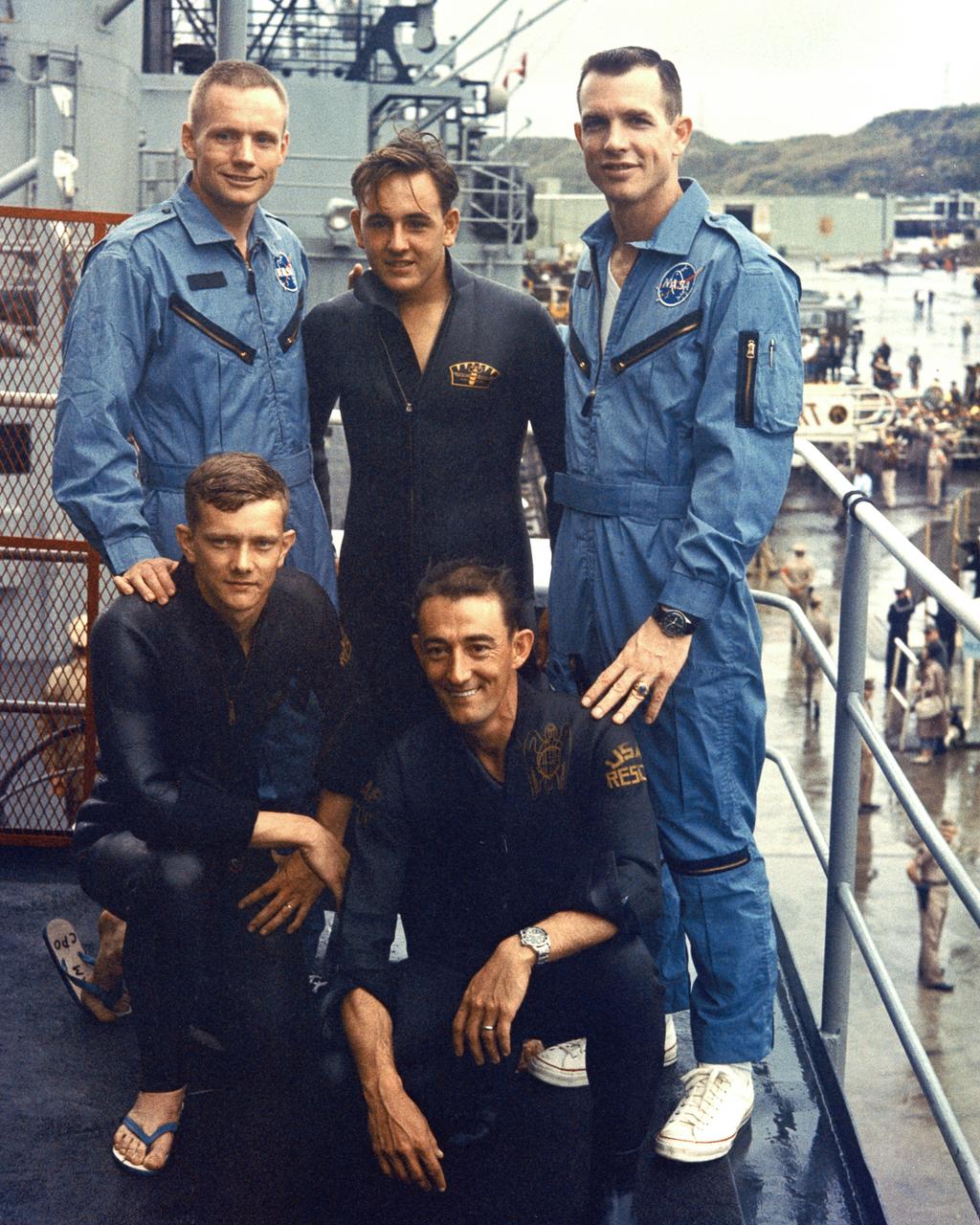
KSC-66C-1878 Gemini 8 Astronauts pose with the PARA-RESCUE team. Left-to-right, top: Neil Armstrong, E. M. Neil, David Scott; bottom row: L. D. Huyett and G. N. Moore. (jrs)

KSC-66C-1850 Gemini 8 Astronaut Neil Armstrong is aided by Suit Technician Jim Garrepy, during preparations for today’s Gemini 8 Mission (jrs)
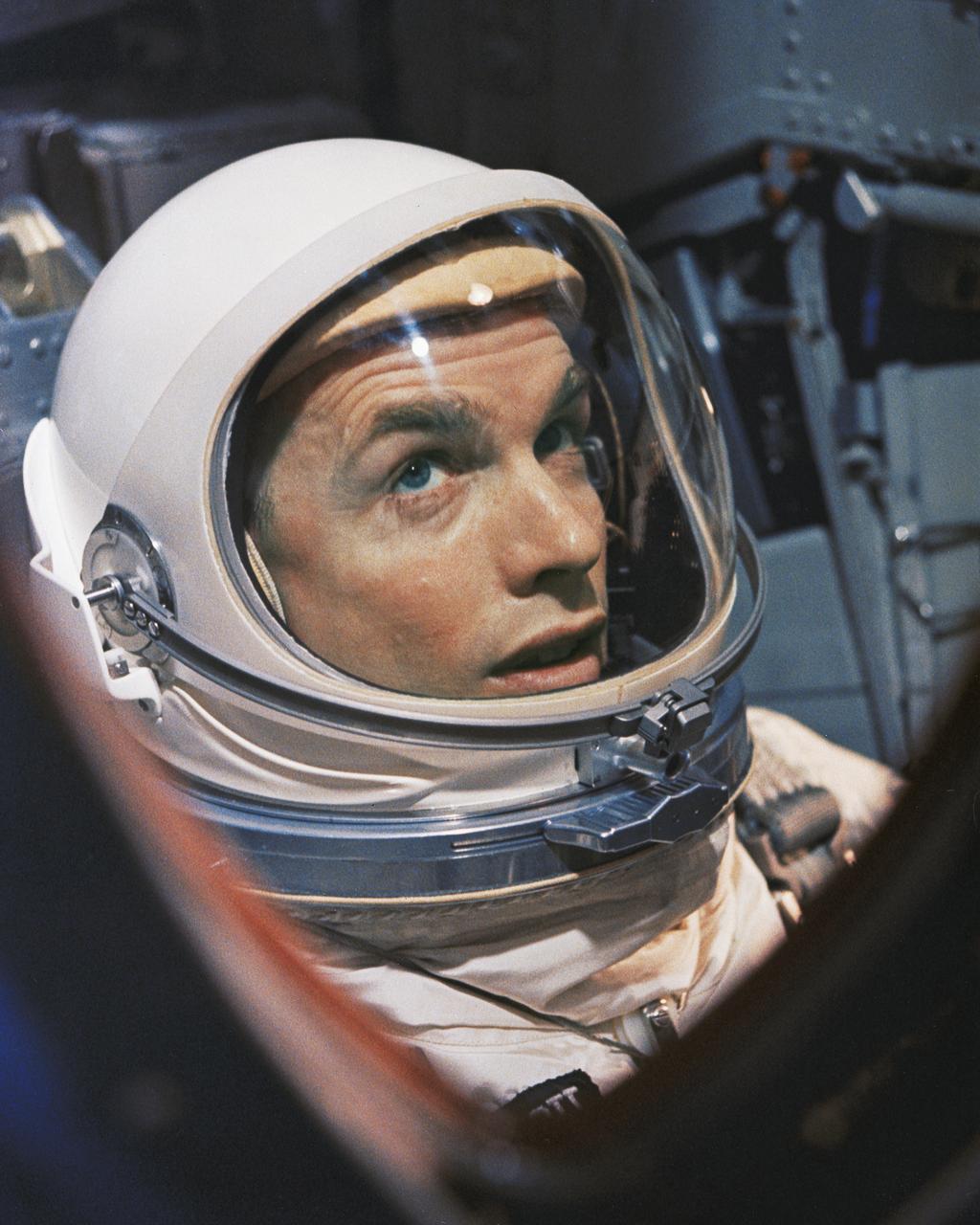
KSC-66C-1871 Gemini 8 Pilot David R. Scott seen through window of Gemini 8 Spacecraft just before liftoff. (jrs)
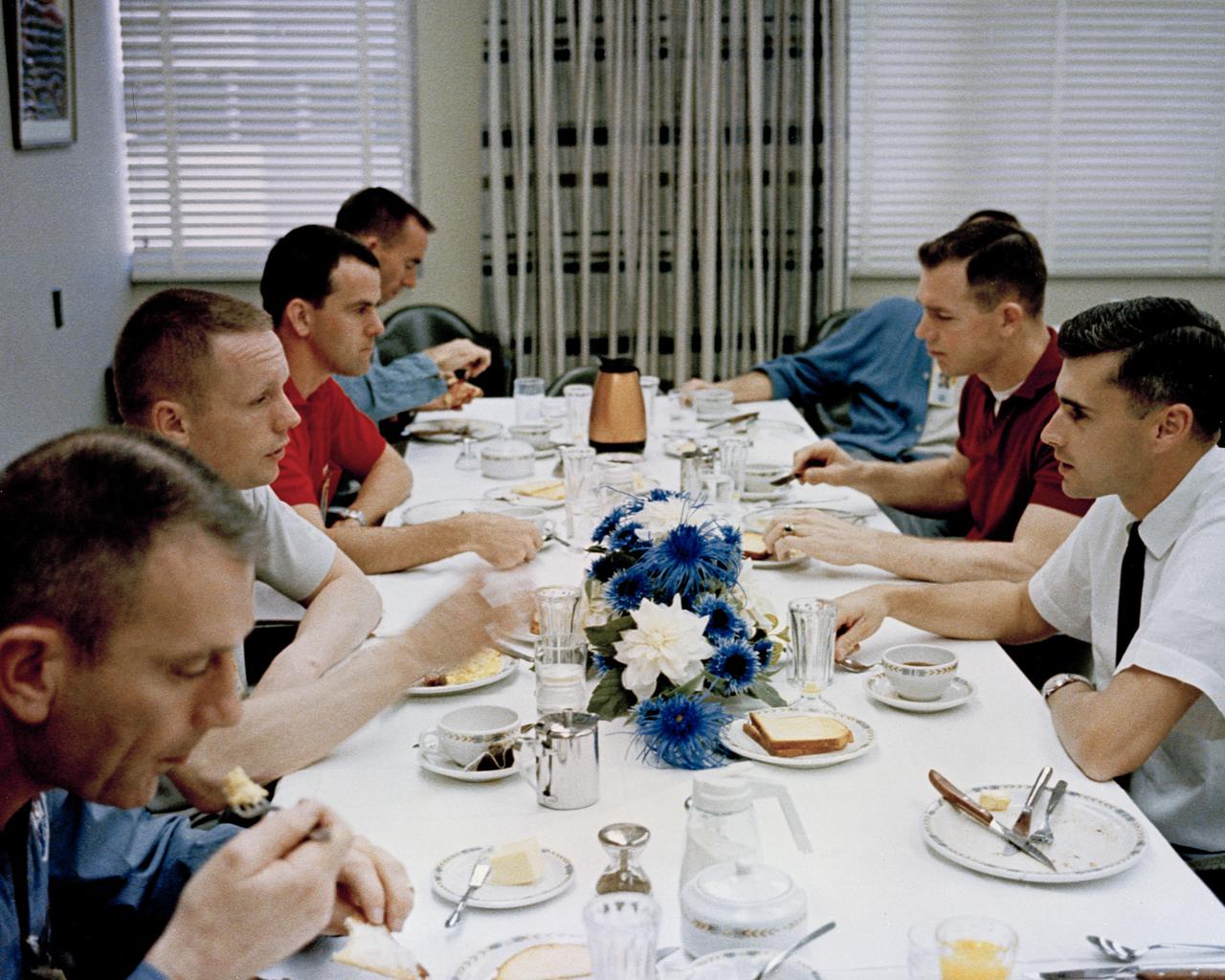
KSC-66C-1847 Gemini-8 Astronauts Neil Armstrong and David Scott enjoy breakfast with fellow Astronauts prior to Liftoff. (jrs)
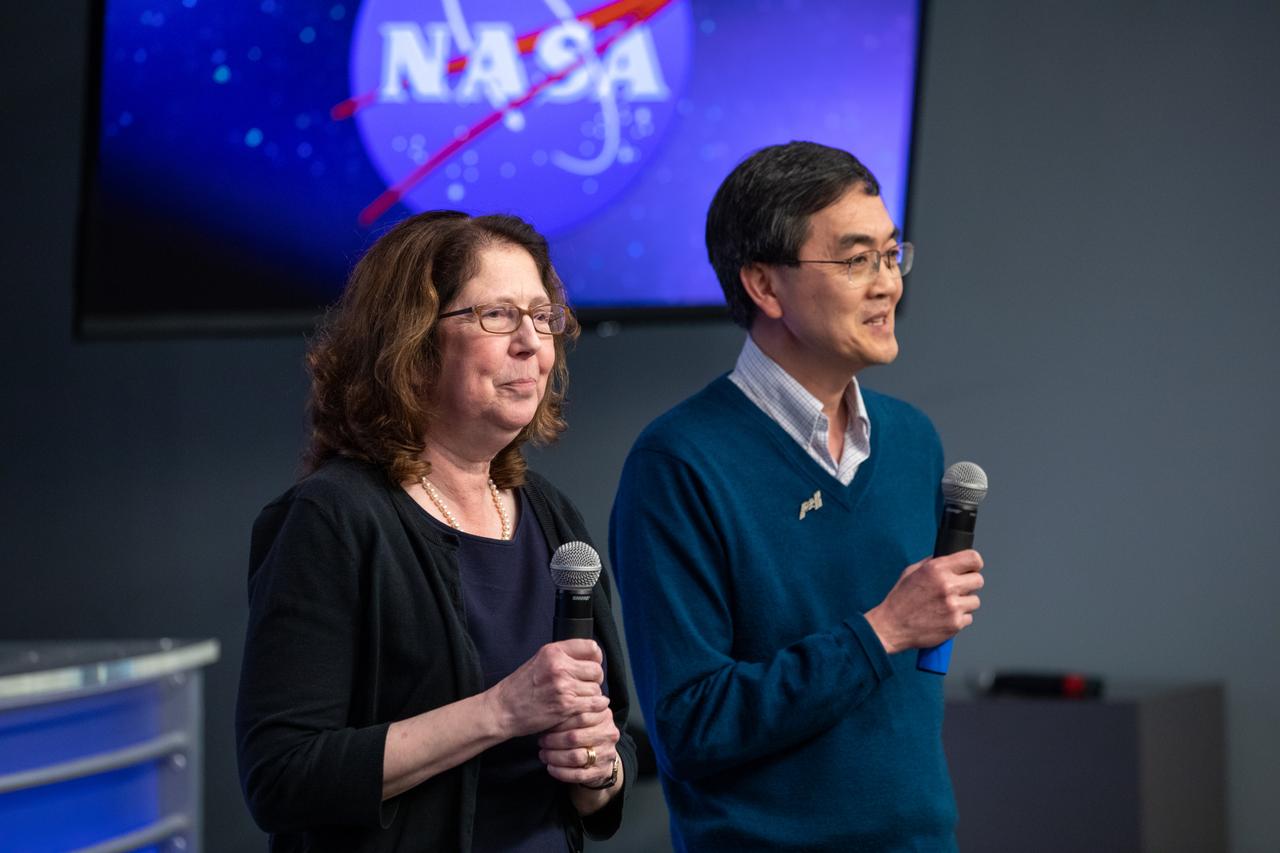
A What’s On Board Briefing for SpaceX’s 19th Commercial Resupply Services (CRS-19) mission for NASA to the International Space Station took place on Dec. 3, 2019, at the agency’s Kennedy Space Center in Florida. Se-Jin Lee (at right) professor at the Jackson Laboratory and University of Connecticut School of Medicine, and principal investigator of Rodent Research-19, and Emily Germain-Lee, professor at the University of Connecticut School of Medicine and chief of endocrinology and diabetes, Connecticut Children’s Medical Center, present their research to members of the media. They discussed the research on molecular signaling pathways that influence muscle degradation to prevent skeletal muscle and bone loss during spaceflight, and enhance recovery following return to Earth. The SpaceX Falcon 9 rocket and Dragon cargo module are scheduled to launch on Dec. 4, 2019, from Space Launch Complex 40 on Cape Canaveral Air Force Station in Florida.

A What’s On Board Briefing for SpaceX’s 19th Commercial Resupply Services (CRS-19) mission for NASA to the International Space Station took place on Dec. 3, 2019, at the agency’s Kennedy Space Center in Florida. Se-Jin Lee, professor at the Jackson Laboratory and University of Connecticut School of Medicine, and principal investigator of Rodent Research-19 presents his research to members of the media. He discussed the research on molecular signaling pathways that influence muscle degradation to prevent skeletal muscle and bone loss during spaceflight, and enhance recovery following return to Earth. The SpaceX Falcon 9 rocket and Dragon cargo module are scheduled to launch on Dec. 4, 2019, from Space Launch Complex 40 on Cape Canaveral Air Force Station in Florida.
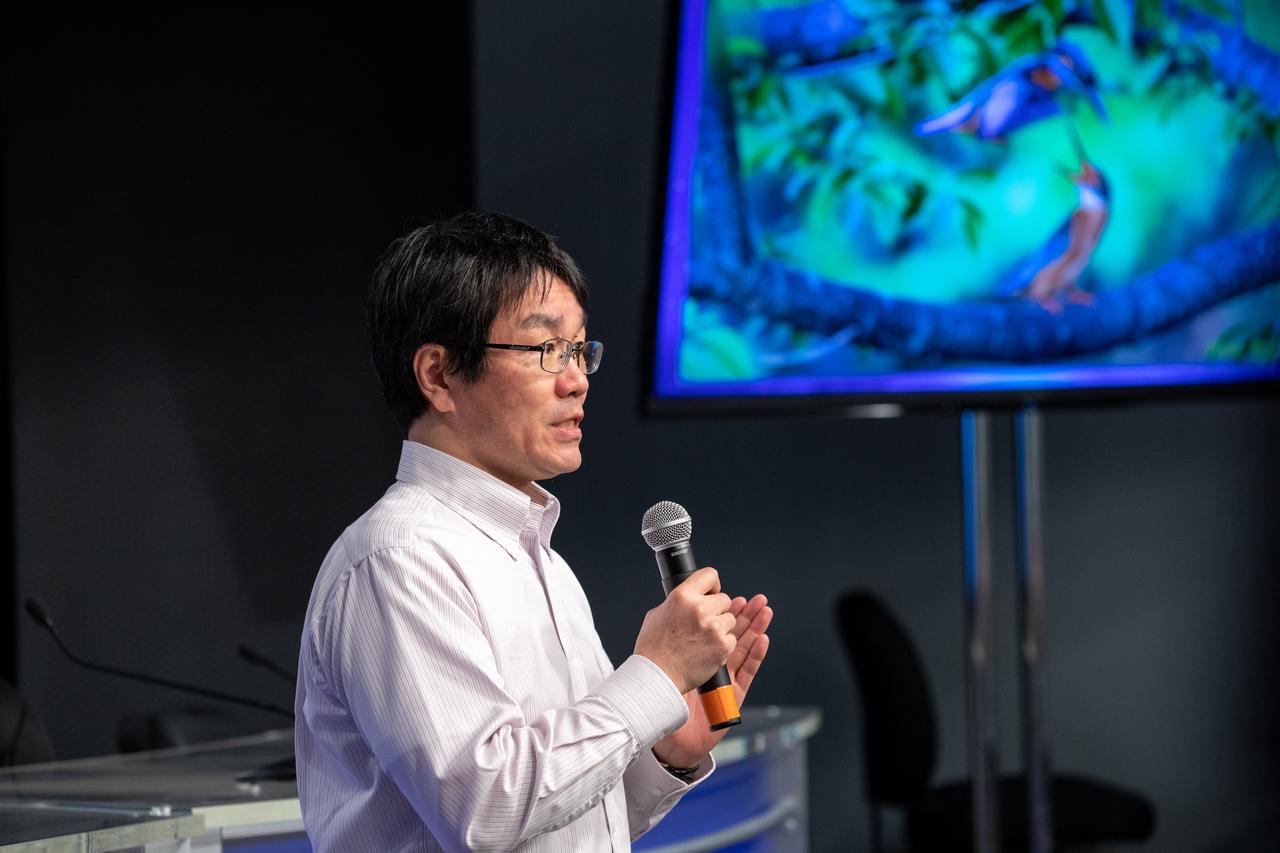
A What’s On Board Briefing for SpaceX’s 19th Commercial Resupply Services (CRS-19) mission for NASA to the International Space Station took place on Dec. 3, 2019, at the agency’s Kennedy Space Center in Florida. Akira Iwasaki, professor at the University of Tokyo and principal investigator for the Hyperspectral Imager Suite (HISUI) developed by the Japanese government, discusses the next-generation, hyperspectral Earth imaging system. The SpaceX Falcon 9 rocket and Dragon cargo module are scheduled to launch on Dec. 4, 2019, from Space Launch Complex 40 on Cape Canaveral Air Force Station in Florida

A What’s On Board Briefing for SpaceX’s 19th Commercial Resupply Services (CRS-19) mission for NASA to the International Space Station took place on Dec. 3, 2019, at the agency’s Kennedy Space Center in Florida. Rosa Reyna gonzales, student researcher for AzTechSat-1, the first Mexican-developed nanosatellite to be launched from the space station, discusses her role in the experiment and how the investigation will demonstrate communication between a CubeSat and the GlobalStar Constellation satellite network in low-Earth orbit. The SpaceX Falcon 9 rocket and Dragon cargo module are scheduled to launch on Dec. 4, 2019, from Space Launch Complex 40 on Cape Canaveral Air Force Station in Florida.
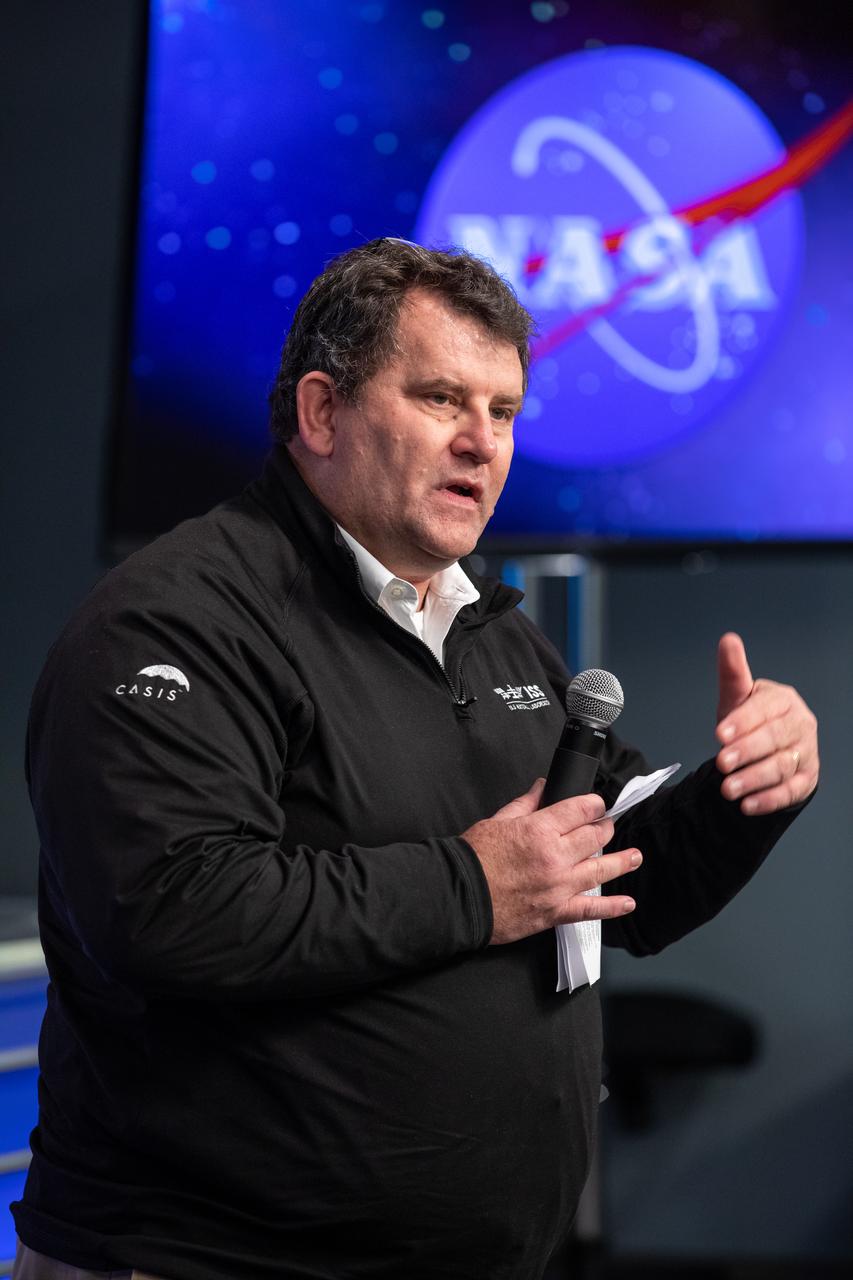
A What’s On Board Briefing for SpaceX’s 19th Commercial Resupply Services (CRS-19) mission for NASA to the International Space Station took place on Dec. 3, 2019, at the agency’s Kennedy Space Center in Florida. Michael Roberts, interim chief scientist for the International Space Station U.S. National Laboratory, discusses the lab’s work in advancing science in space, and in developing partnerships that drive industrialization through microgravity research. The SpaceX Falcon 9 rocket and Dragon cargo module are scheduled to launch on Dec. 4, 2019, from Space Launch Complex 40 on Cape Canaveral Air Force Station in Florida.
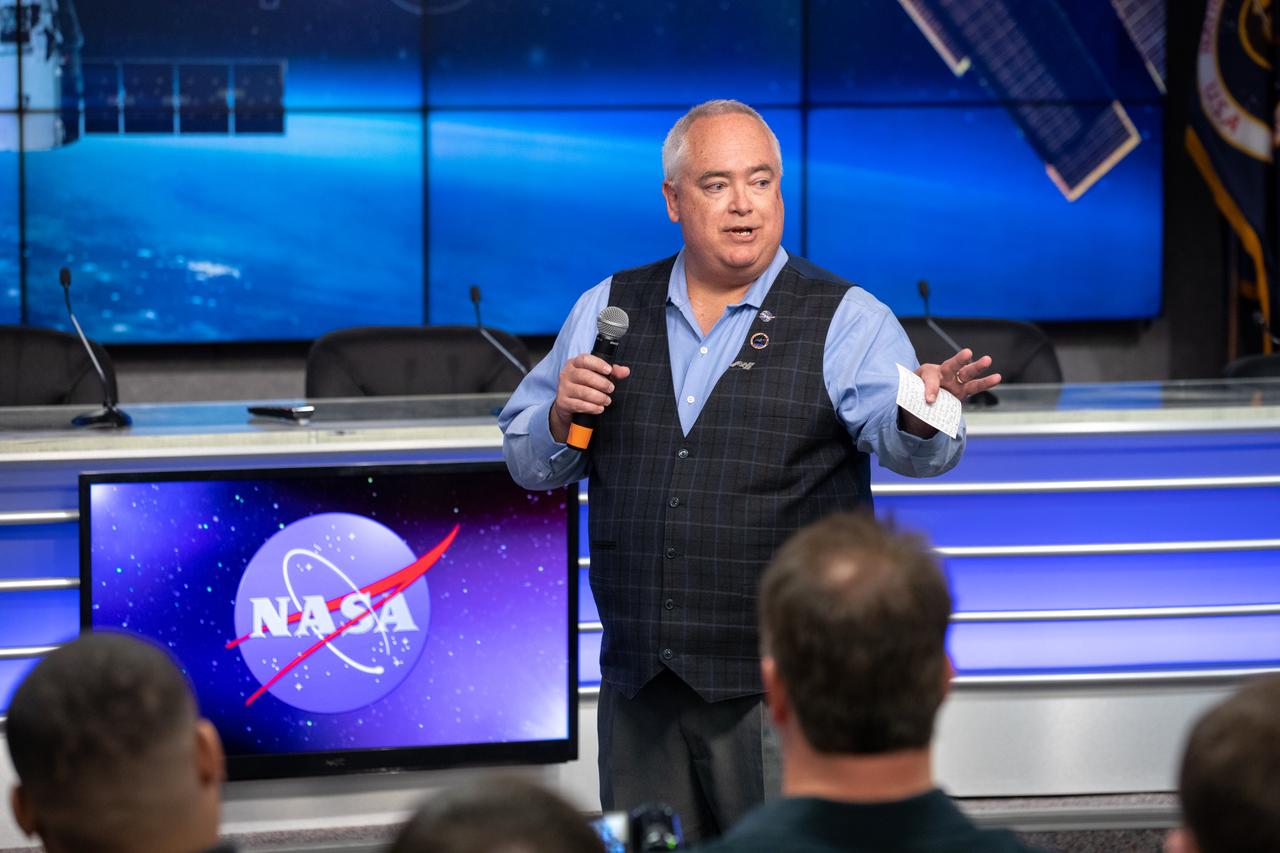
A What's on Board Briefing for SpaceX's 19th Commercial Resupply Services (CRS-19) mission for NASA to the International Space Station took place on Dec. 3, 2019, at the agency's Kennedy Space Center in Florida. Bryan Dansberry, assistant program scientist for NASA's International Space Station Program Science Office shares an overview of the research being conducted aboard the space station and how it benefits exploration and humanity. The SpaceX Falcon 9 rocket and Dragon cargo module are scheduled to launch on Dec. 4, 2019, from Space Launch Complex 40 at Cape Canaveral Air Force Station in Florida.
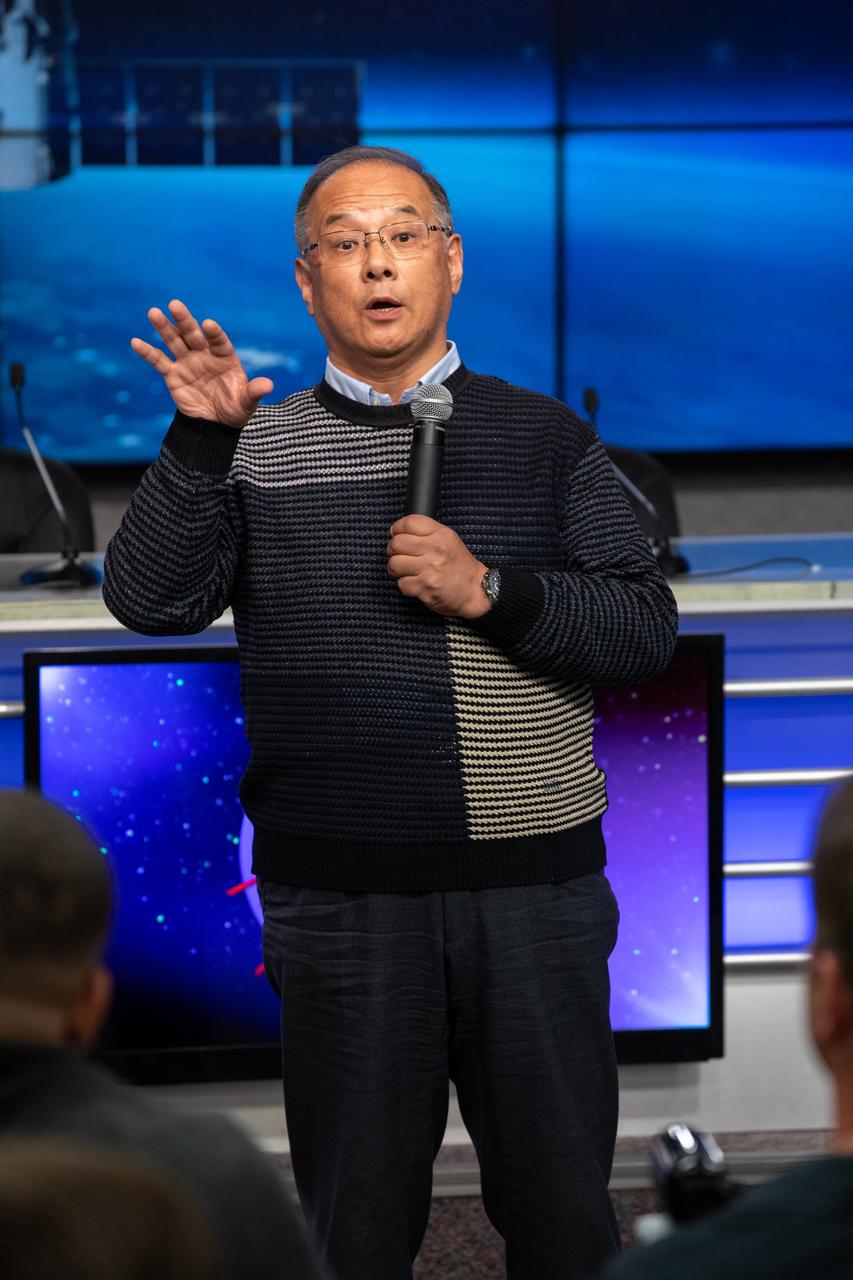
A What’s On Board Briefing for SpaceX’s 19th Commercial Resupply Services (CRS-19) mission for NASA to the International Space Station took place on Dec. 3, 2019, at the agency’s Kennedy Space Center in Florida. Shoichiro Mihara, mission manager for the Hyperspectral Imager Suite (HISUI) developed by the Japanese government, discusses the next-generation, hyperspectral Earth imaging system. The SpaceX Falcon 9 rocket and Dragon cargo module are scheduled to launch on Dec. 4, 2019, from Space Launch Complex 40 on Cape Canaveral Air Force Station in Florida

A What’s On Board Briefing for SpaceX’s 19th Commercial Resupply Services (CRS-19) mission for NASA to the International Space Station took place on Dec. 3, 2019, at the agency’s Kennedy Space Center in Florida. Ya-Ting Liao, an investigator for the Confined Combustion experiment, discusses the investigation which studies how fire spreads and behaves in confined spaces. The SpaceX Falcon 9 rocket and Dragon cargo module are scheduled to launch on Dec. 4, 2019, from Space Launch Complex 40 on Cape Canaveral Air Force Station in Florida.

A What’s On Board Briefing for SpaceX’s 19th Commercial Resupply Services (CRS-19) mission for NASA to the International Space Station took place on Dec. 3, 2019, at the agency’s Kennedy Space Center in Florida. Emily Germain-Lee, professor at the University of Connecticut School of Medicine and chief of endocrinology and diabetes, Connecticut Children’s Medical Center, discussed her on molecular signaling pathways that influence muscle degradation to prevent skeletal muscle and bone loss during spaceflight, and enhance recovery following return to Earth. The SpaceX Falcon 9 rocket and Dragon cargo module are scheduled to launch on Dec. 4, 2019, from Space Launch Complex 40 on Cape Canaveral Air Force Station in Florida.
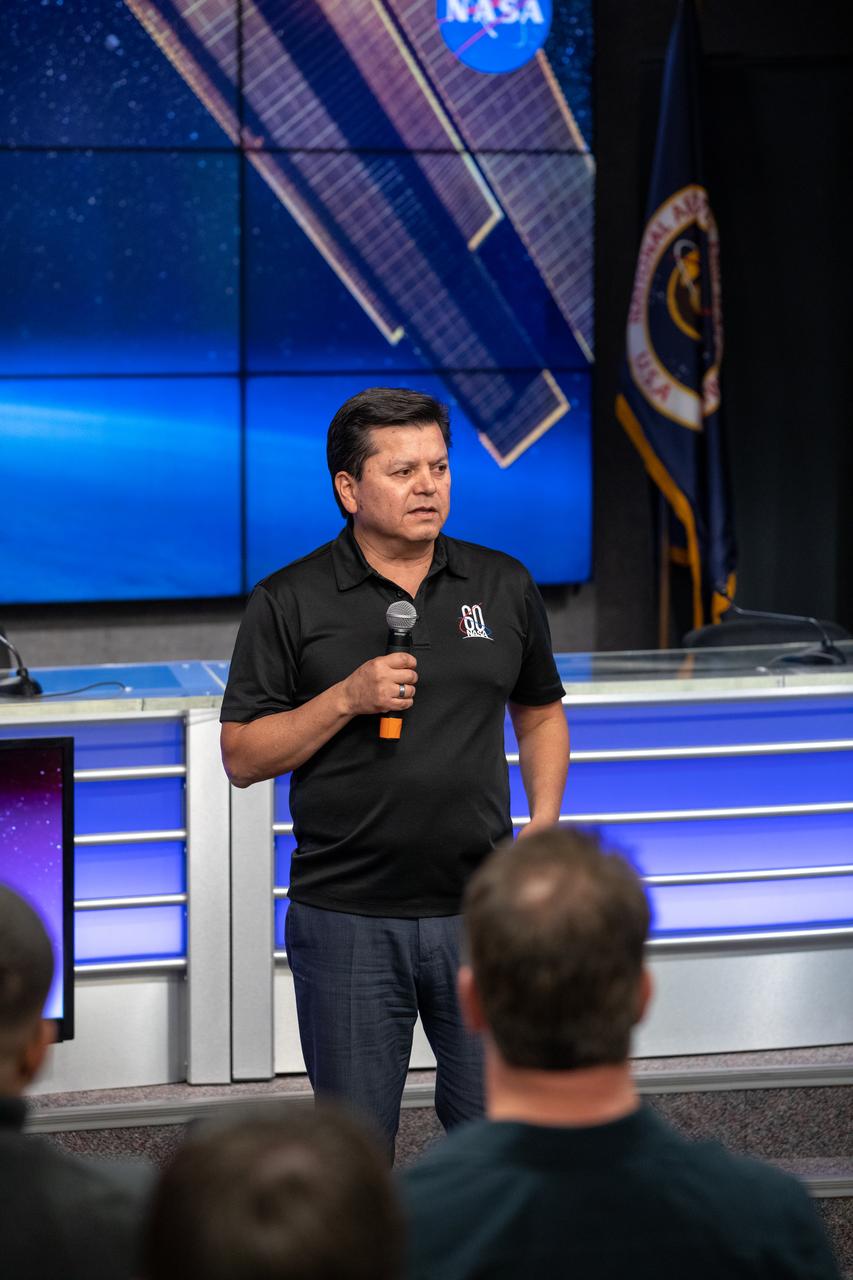
A What’s On Board Briefing for SpaceX’s 19th Commercial Resupply Services (CRS-19) mission for NASA to the International Space Station took place on Dec. 3, 2019, at the agency’s Kennedy Space Center in Florida. Andres Martinez, principal investigator for AzTechSat-1, the first Mexican-developed nanosatellite to be launched from the space station, discusses how the investigation will demonstrate communication between a CubeSat and the GlobalStar Constellation satellite network in low-Earth orbit. The SpaceX Falcon 9 rocket and Dragon cargo module are scheduled to launch on Dec. 4, 2019, from Space Launch Complex 40 on Cape Canaveral Air Force Station in Florida.
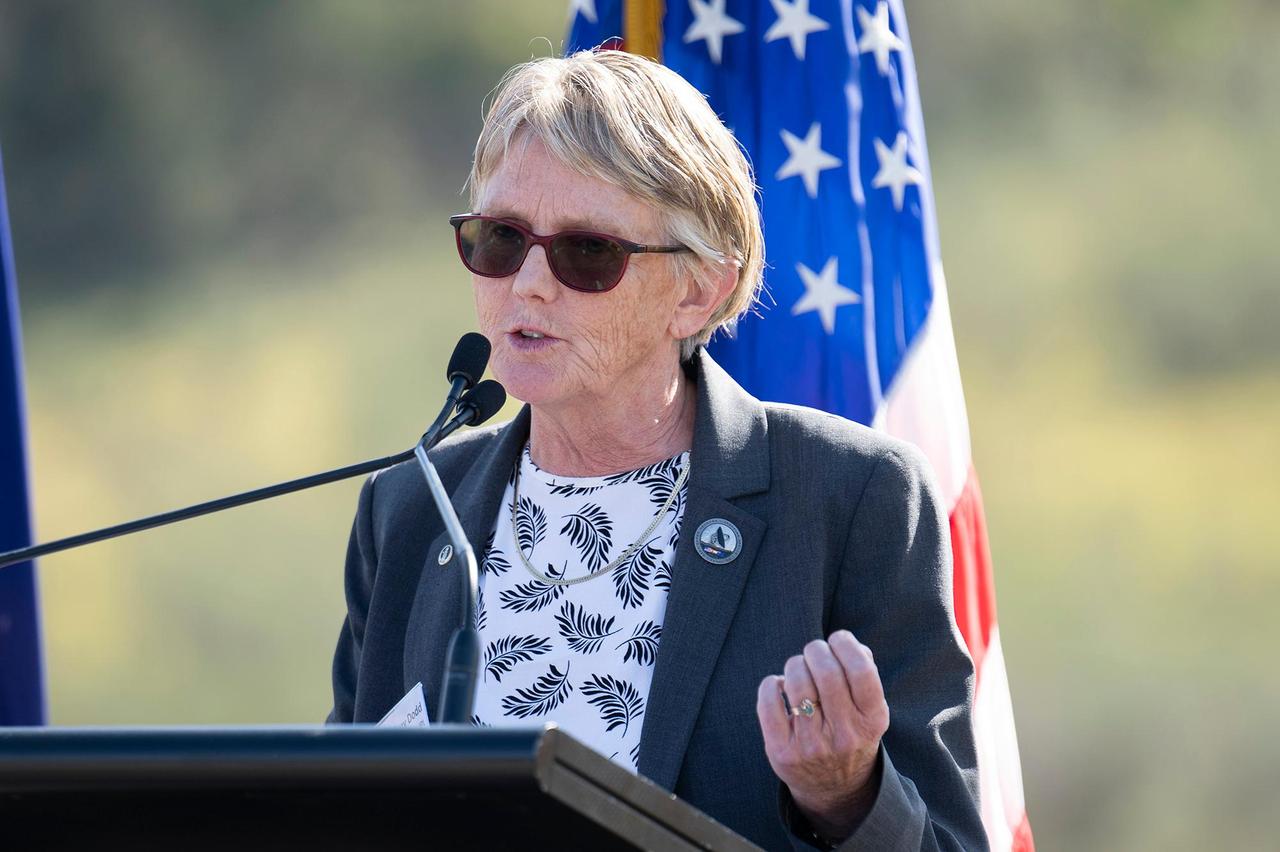
Suzanne Dodd, the director for the Interplanetary Network Directorate at NASA's Jet Propulsion Laboratory in Southern California, addresses an audience at the Deep Space Network's Canberra complex on March 19, 2025. That day marked 60 years since the Australian facility joined the network. JPL's Interplanetary Network Directorate oversees the Deep Space Network's three complexes in Canberra, Madrid, and Goldstone, near Barstow, California. JPL manages the Deep Space Network for the agency's Space Communications and Navigation program at NASA Headquarters in Washington. https://photojournal.jpl.nasa.gov/catalog/PIA26585
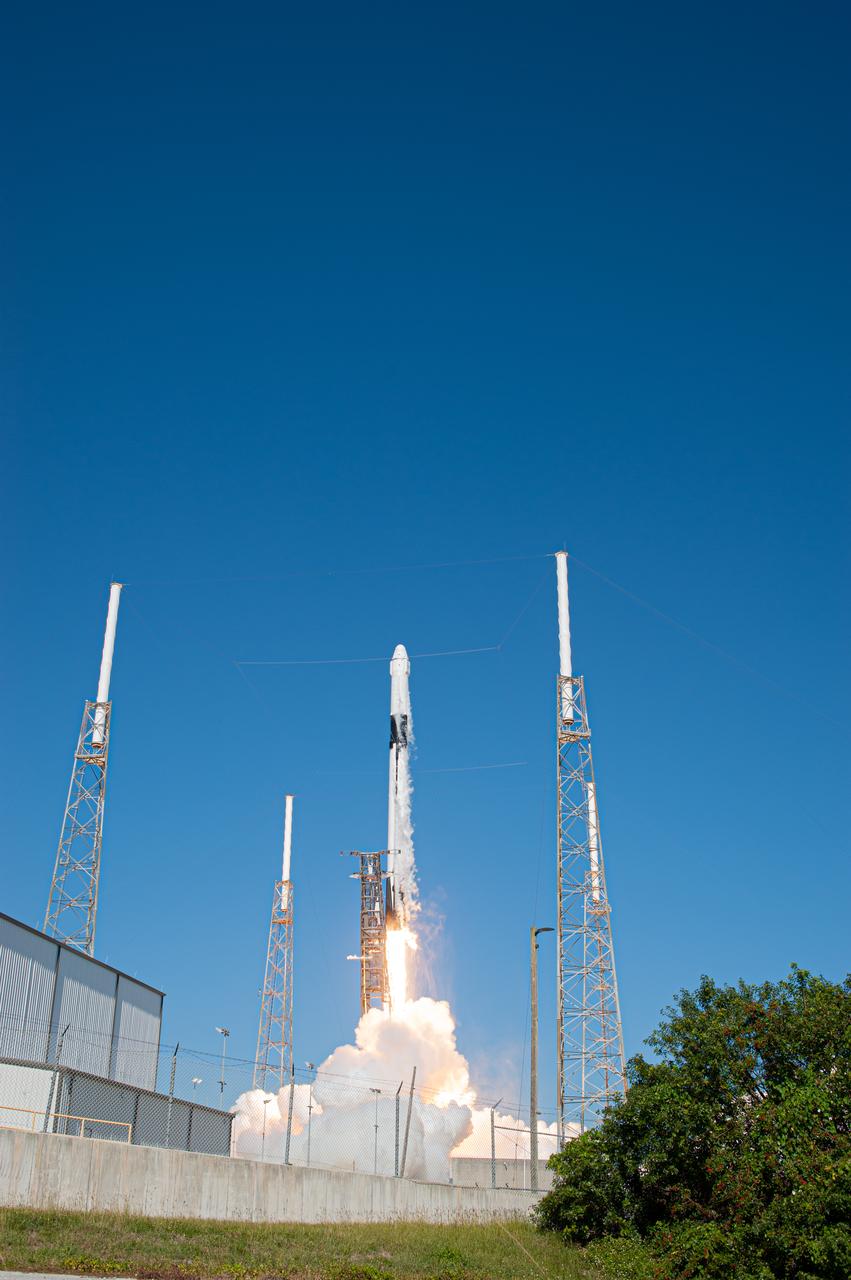
The SpaceX Falcon 9 rocket with the Dragon cargo module climbs upward after liftoff from Space Launch Complex 40 on Cape Canaveral Air Force Station in Florida in the early afternoon on Dec. 5, 2019. Liftoff was at 12:29 p.m. EST. This is SpaceX’s 19th Commercial Resupply Services (CRS-19) mission for NASA to the International Space Station. The Dragon cargo module will deliver more than 5,700 pounds of science and research, crew supplies and vehicle hardware to the orbital laboratory and its crew.
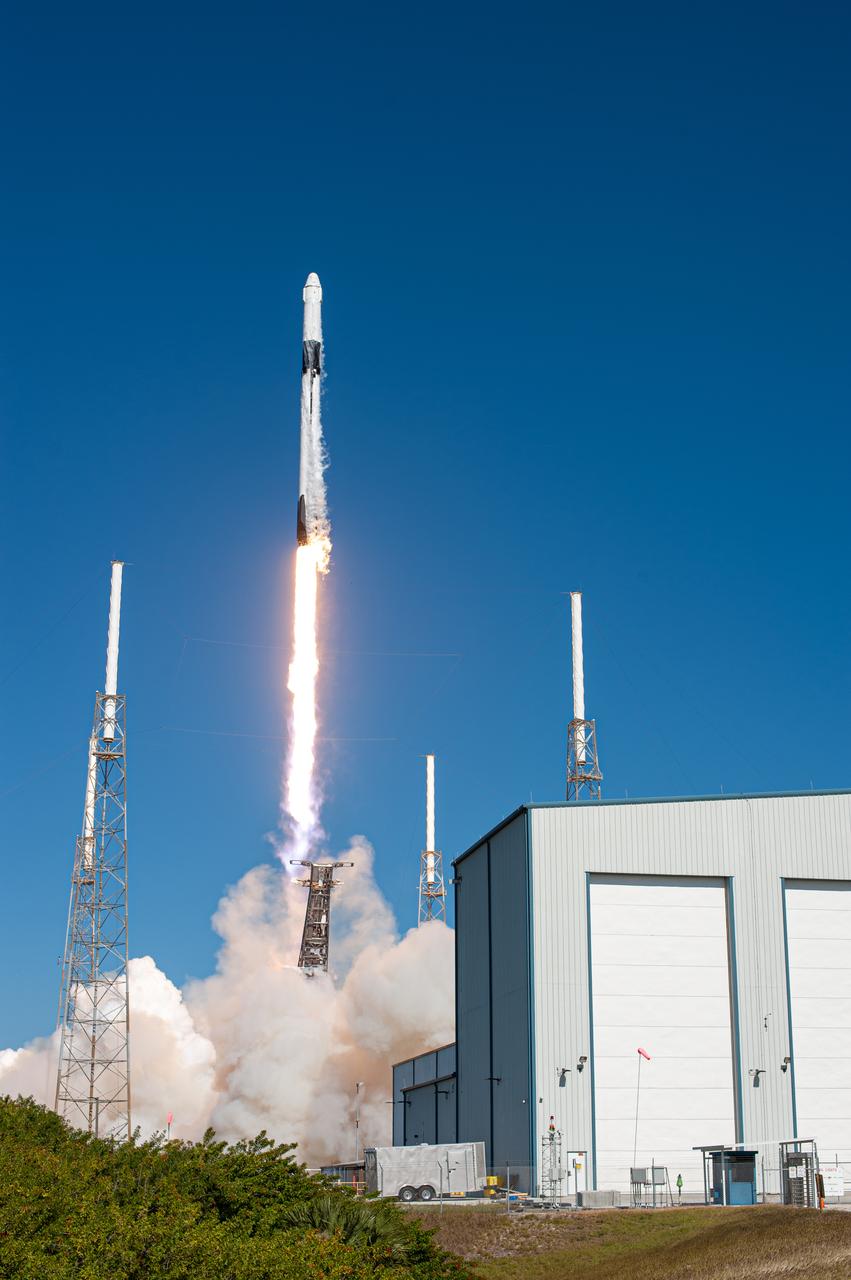
The SpaceX Falcon 9 rocket with the Dragon cargo module climbs upward after liftoff from Space Launch Complex 40 on Cape Canaveral Air Force Station in Florida in the early afternoon on Dec. 5, 2019. Liftoff was at 12:29 p.m. EST. This is SpaceX’s 19th Commercial Resupply Services (CRS-19) mission for NASA to the International Space Station. The Dragon cargo module will deliver more than 5,700 pounds of science and research, crew supplies and vehicle hardware to the orbital laboratory and its crew.
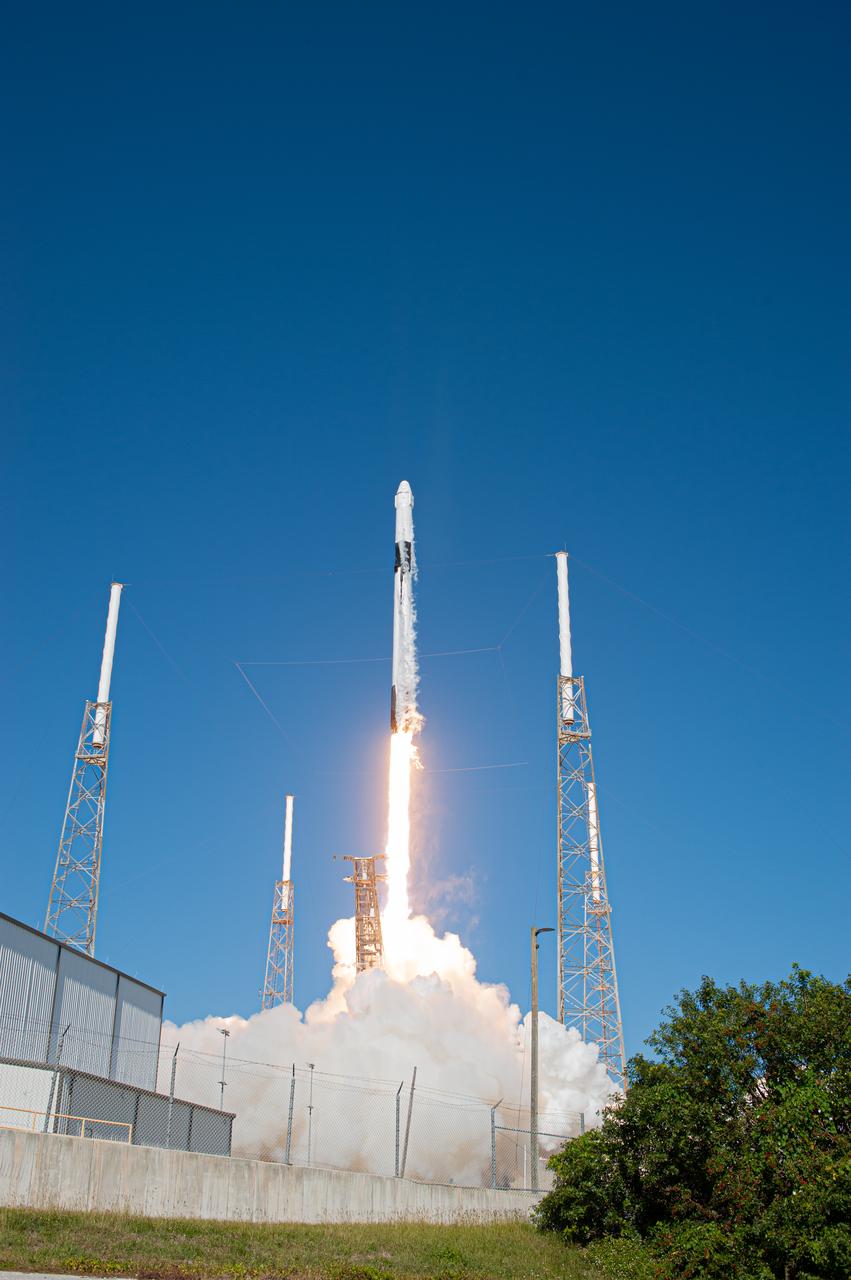
The SpaceX Falcon 9 rocket with the Dragon cargo module climbs upward after liftoff from Space Launch Complex 40 on Cape Canaveral Air Force Station in Florida in the early afternoon on Dec. 5, 2019. Liftoff was at 12:29 p.m. EST. This is SpaceX’s 19th Commercial Resupply Services (CRS-19) mission for NASA to the International Space Station. The Dragon cargo module will deliver more than 5,700 pounds of science and research, crew supplies and vehicle hardware to the orbital laboratory and its crew.
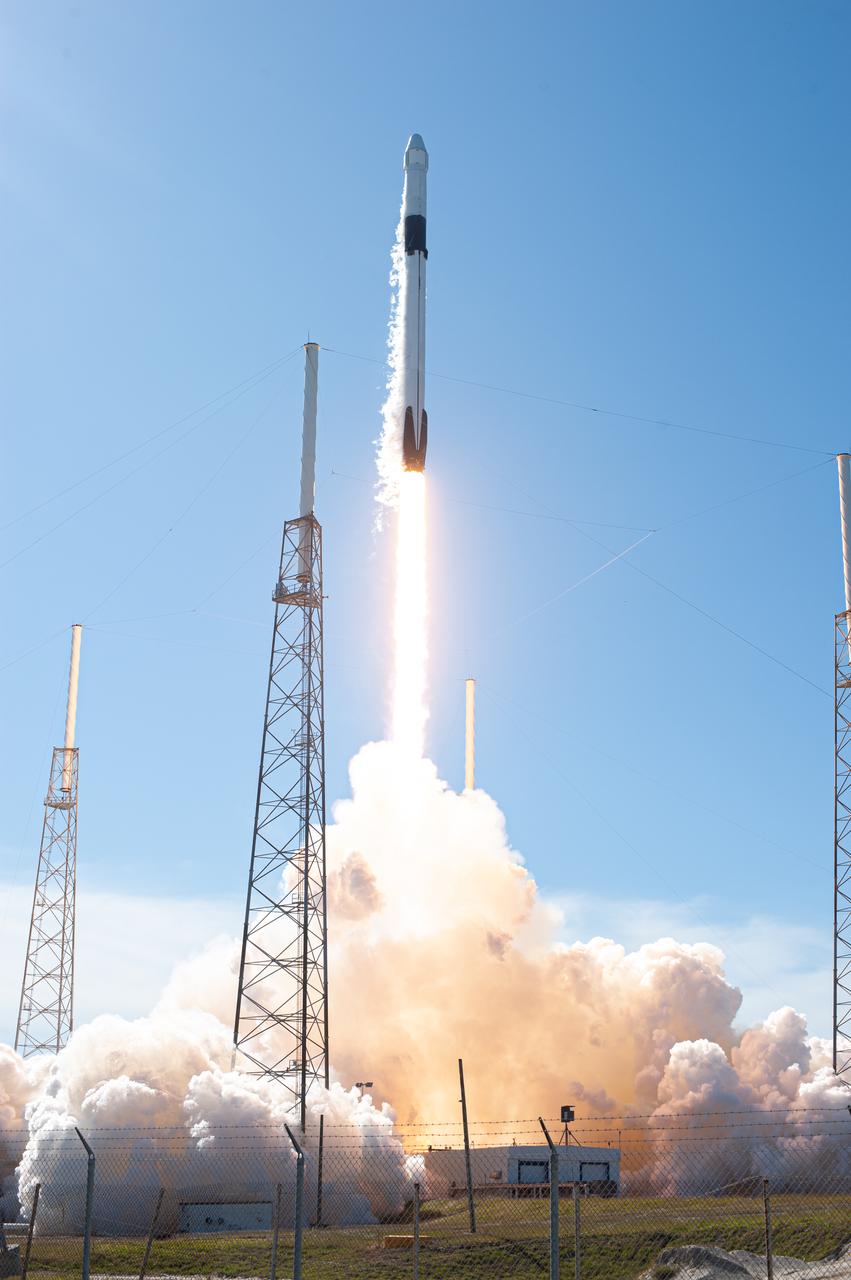
The SpaceX Falcon 9 rocket with the Dragon cargo module lifts off Space Launch Complex 40 on Cape Canaveral Air Force Station in Florida in the early afternoon on Dec. 5, 2019. Liftoff was at 12:29 p.m. EST. This is SpaceX’s 19th Commercial Resupply Services (CRS-19) mission for NASA to the International Space Station. The Dragon cargo module will deliver more than 5,700 pounds of science and research, crew supplies and vehicle hardware to the orbital laboratory and its crew.
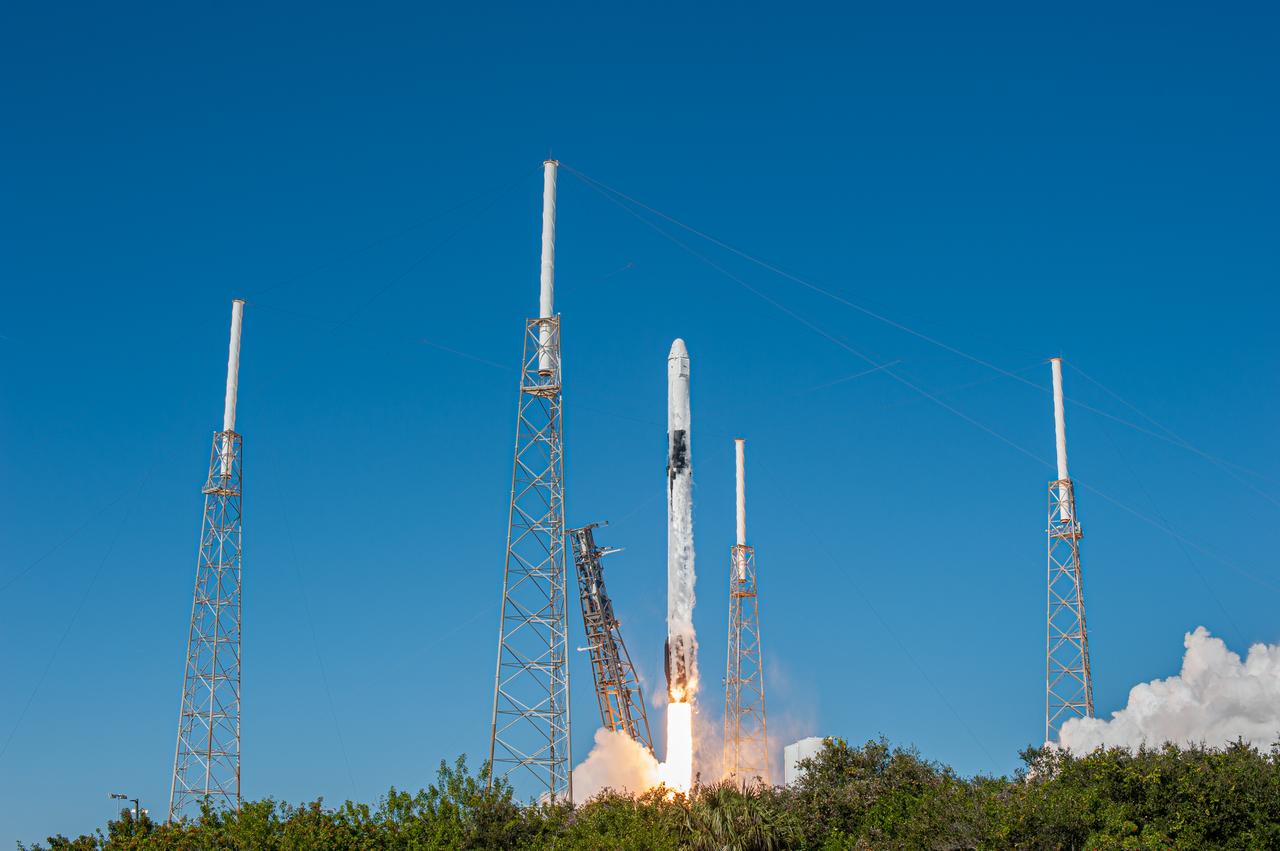
The SpaceX Falcon 9 rocket with the Dragon cargo module lifts off Space Launch Complex 40 on Cape Canaveral Air Force Station in Florida in the early afternoon on Dec. 5, 2019. Liftoff was at 12:29 p.m. EST. This is SpaceX’s 19th Commercial Resupply Services (CRS-19) mission for NASA to the International Space Station. The Dragon cargo module will deliver more than 5,700 pounds of science and research, crew supplies and vehicle hardware to the orbital laboratory and its crew.
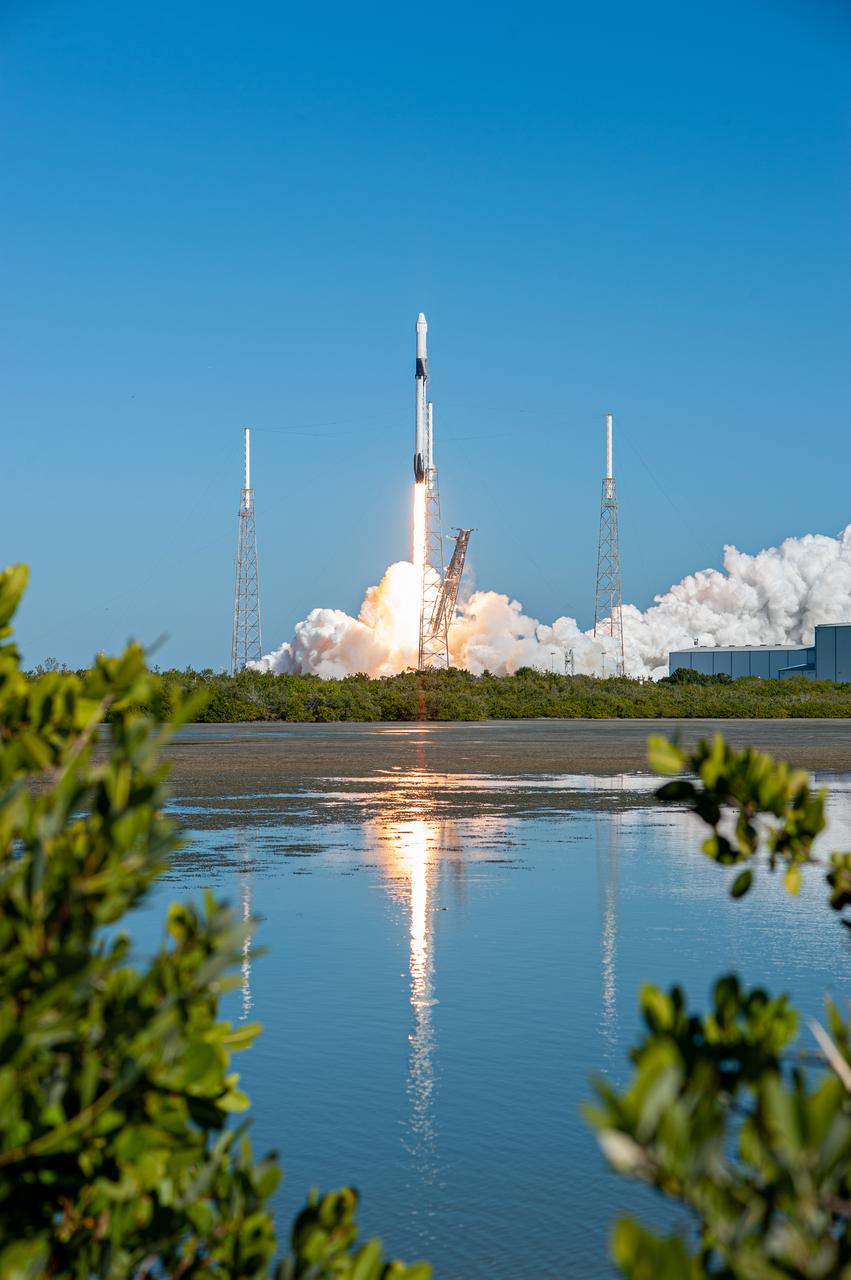
The SpaceX Falcon 9 rocket with the Dragon cargo module climbs upward after liftoff from Space Launch Complex 40 on Cape Canaveral Air Force Station in Florida in the early afternoon on Dec. 5, 2019. Liftoff was at 12:29 p.m. EST. This is SpaceX’s 19th Commercial Resupply Services (CRS-19) mission for NASA to the International Space Station. The Dragon cargo module will deliver more than 5,700 pounds of science and research, crew supplies and vehicle hardware to the orbital laboratory and its crew.
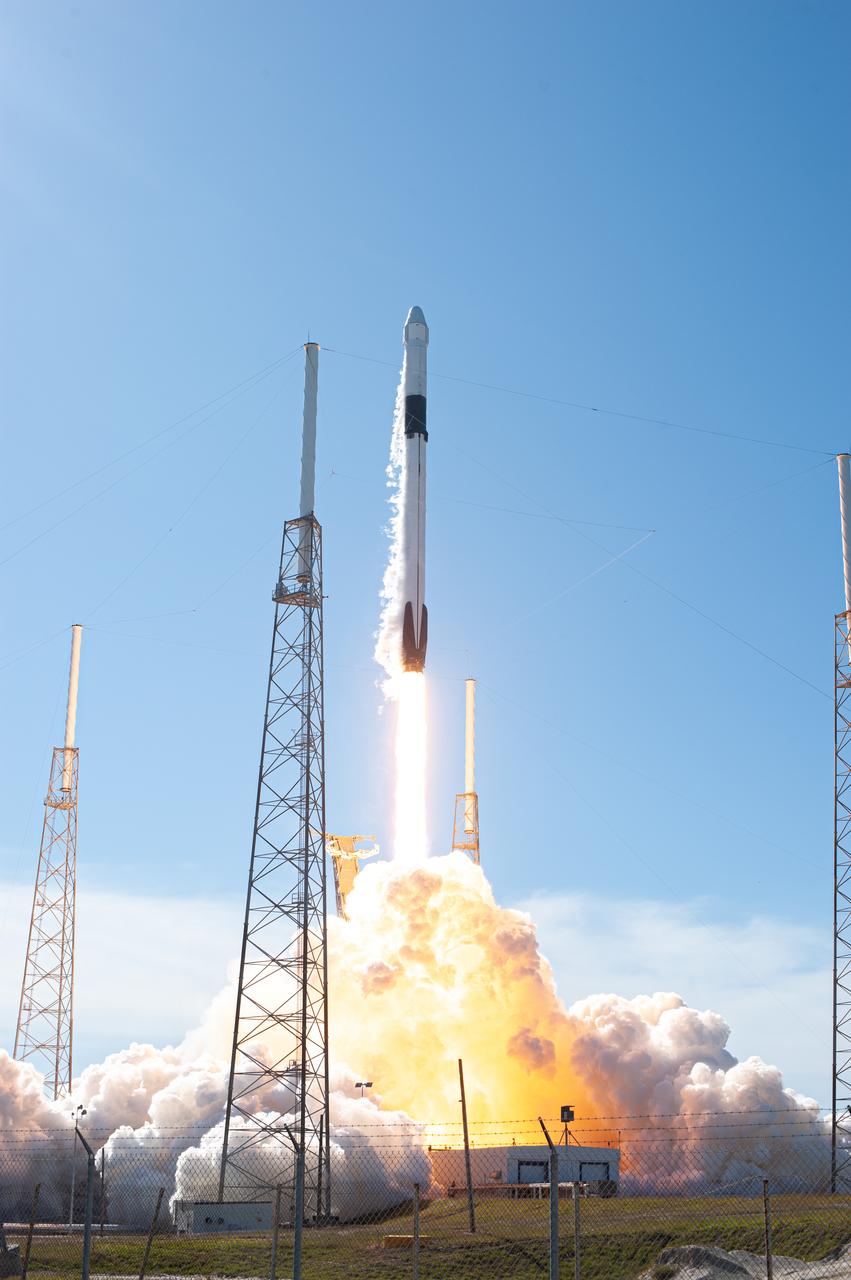
The SpaceX Falcon 9 rocket with the Dragon cargo module lifts off Space Launch Complex 40 on Cape Canaveral Air Force Station in Florida in the early afternoon on Dec. 5, 2019. Liftoff was at 12:29 p.m. EST. This is SpaceX’s 19th Commercial Resupply Services (CRS-19) mission for NASA to the International Space Station. The Dragon cargo module will deliver more than 5,700 pounds of science and research, crew supplies and vehicle hardware to the orbital laboratory and its crew.

The SpaceX Falcon 9 rocket with the Dragon cargo module lifts off Space Launch Complex 40 on Cape Canaveral Air Force Station in Florida in the early afternoon on Dec. 5, 2019. Liftoff was at 12:29 p.m. EST. This is SpaceX’s 19th Commercial Resupply Services (CRS-19) mission for NASA to the International Space Station. The Dragon cargo module will deliver more than 5,700 pounds of science and research, crew supplies and vehicle hardware to the orbital laboratory and its crew.
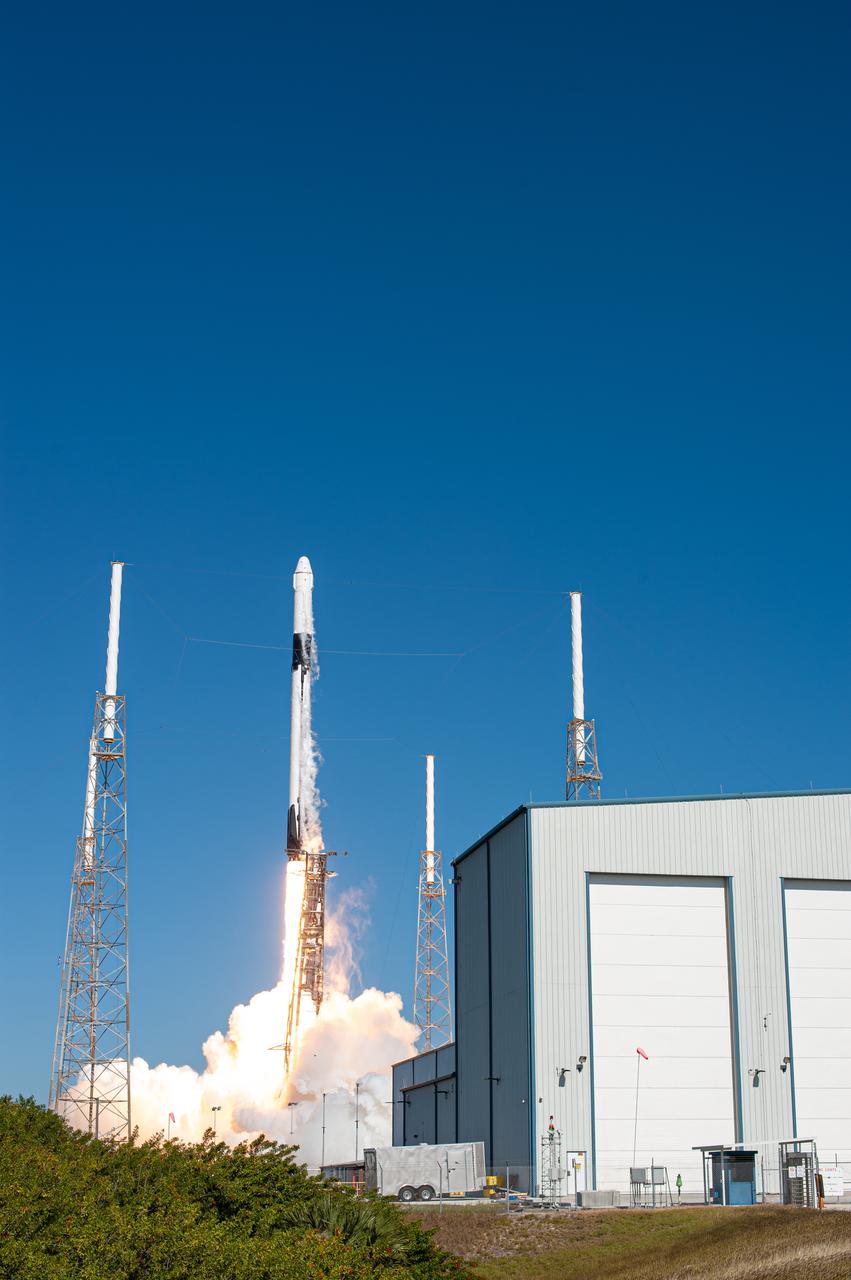
The SpaceX Falcon 9 rocket with the Dragon cargo module climbs upward after liftoff from Space Launch Complex 40 on Cape Canaveral Air Force Station in Florida in the early afternoon on Dec. 5, 2019. Liftoff was at 12:29 p.m. EST. This is SpaceX’s 19th Commercial Resupply Services (CRS-19) mission for NASA to the International Space Station. The Dragon cargo module will deliver more than 5,700 pounds of science and research, crew supplies and vehicle hardware to the orbital laboratory and its crew.

The SpaceX Falcon 9 rocket with the Dragon cargo module climbs upward after liftoff from Space Launch Complex 40 on Cape Canaveral Air Force Station in Florida in the early afternoon on Dec. 5, 2019. Liftoff was at 12:29 p.m. EST. This is SpaceX’s 19th Commercial Resupply Services (CRS-19) mission for NASA to the International Space Station. The Dragon cargo module will deliver more than 5,700 pounds of science and research, crew supplies and vehicle hardware to the orbital laboratory and its crew.
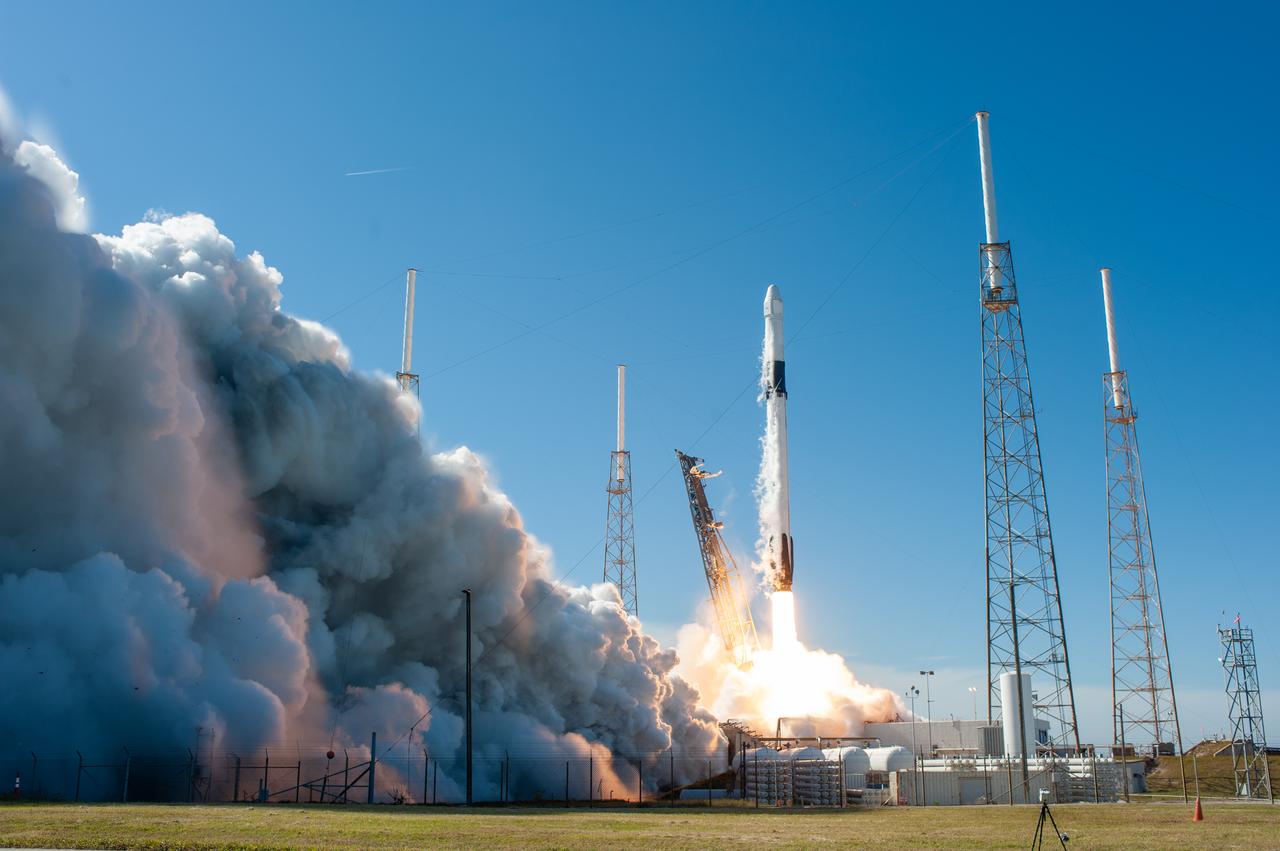
The SpaceX Falcon 9 rocket with the Dragon cargo module lifts off Space Launch Complex 40 on Cape Canaveral Air Force Station in Florida in the early afternoon on Dec. 5, 2019. Liftoff was at 12:29 p.m. EST. This is SpaceX’s 19th Commercial Resupply Services (CRS-19) mission for NASA to the International Space Station. The Dragon cargo module will deliver more than 5,700 pounds of science and research, crew supplies and vehicle hardware to the orbital laboratory and its crew.
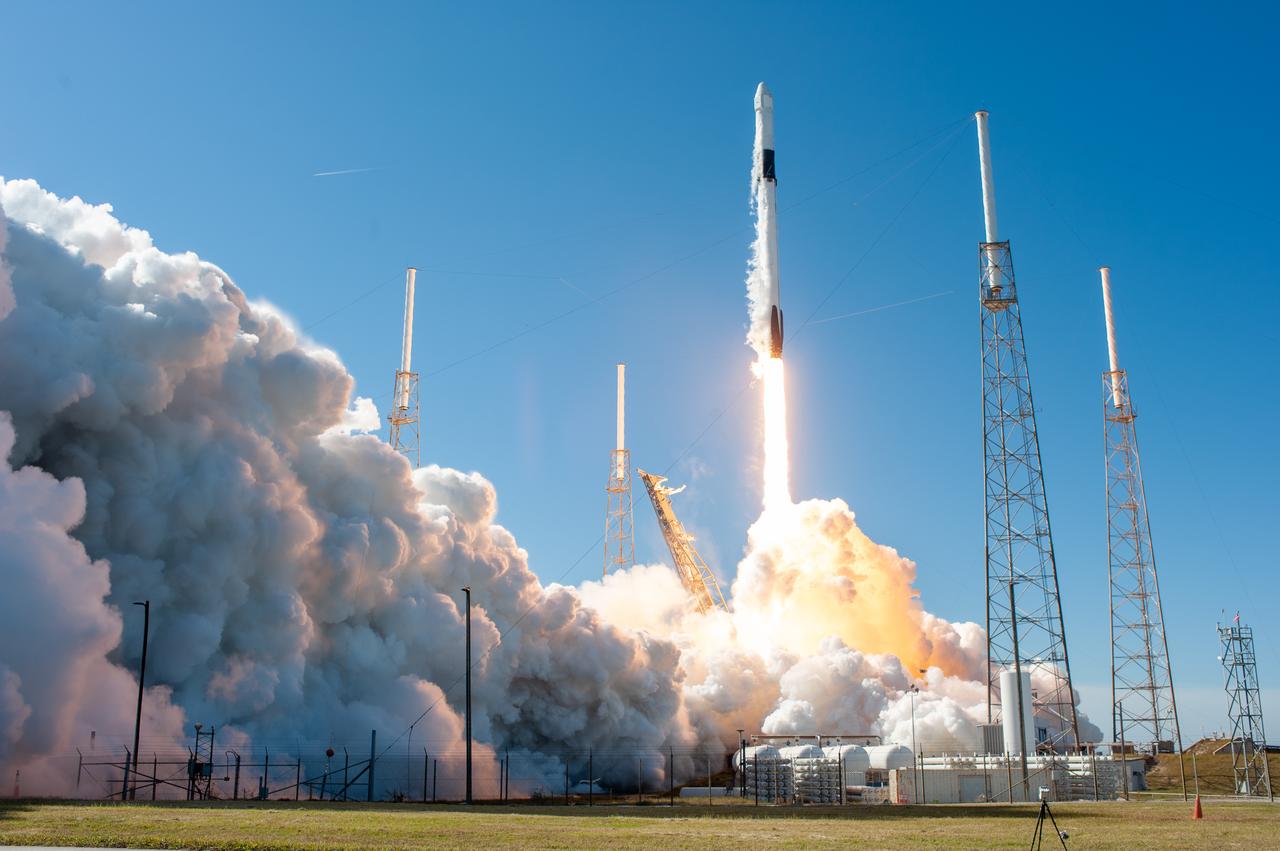
The SpaceX Falcon 9 rocket with the Dragon cargo module lifts off Space Launch Complex 40 on Cape Canaveral Air Force Station in Florida in the early afternoon on Dec. 5, 2019. Liftoff was at 12:29 p.m. EST. This is SpaceX’s 19th Commercial Resupply Services (CRS-19) mission for NASA to the International Space Station. The Dragon cargo module will deliver more than 5,700 pounds of science and research, crew supplies and vehicle hardware to the orbital laboratory and its crew.
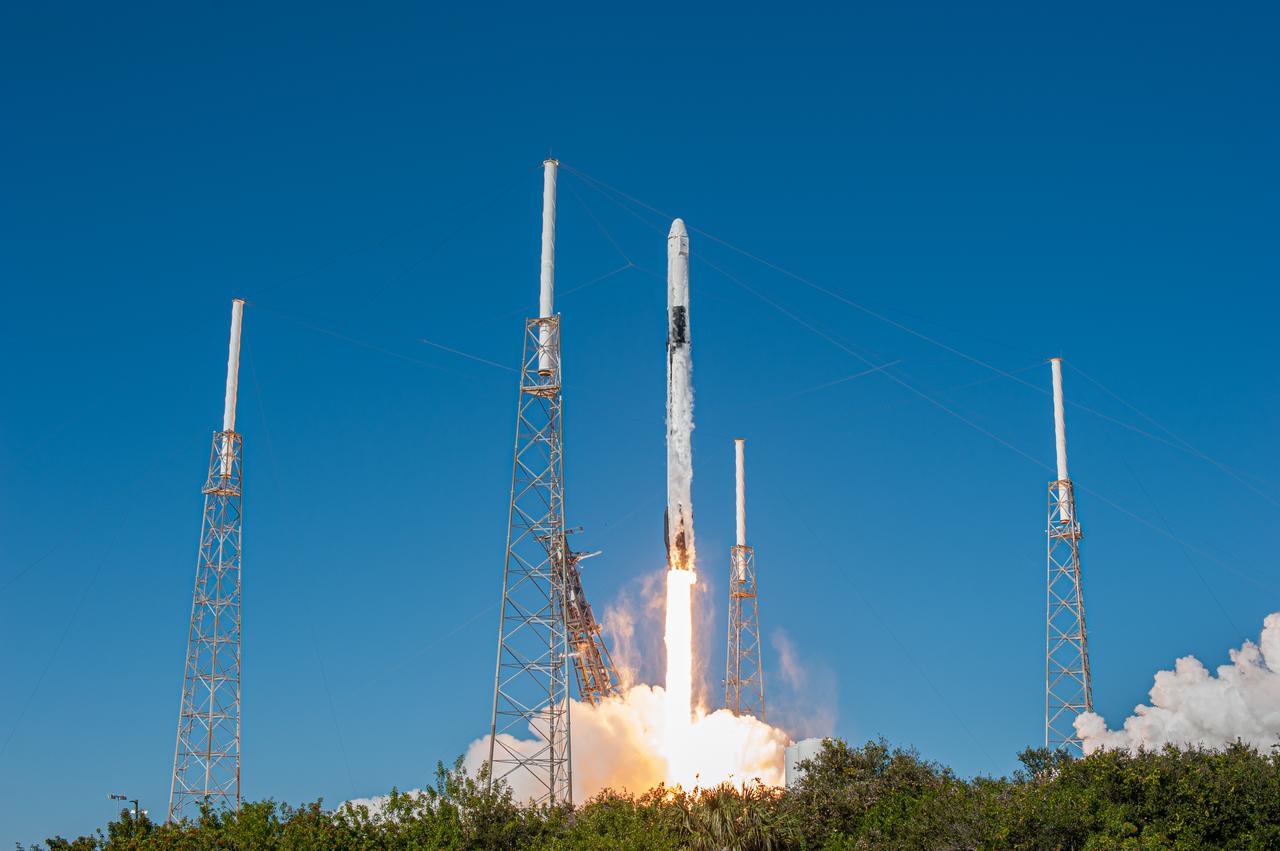
The SpaceX Falcon 9 rocket with the Dragon cargo module lifts off Space Launch Complex 40 on Cape Canaveral Air Force Station in Florida in the early afternoon on Dec. 5, 2019. Liftoff was at 12:29 p.m. EST. This is SpaceX’s 19th Commercial Resupply Services (CRS-19) mission for NASA to the International Space Station. The Dragon cargo module will deliver more than 5,700 pounds of science and research, crew supplies and vehicle hardware to the orbital laboratory and its crew.
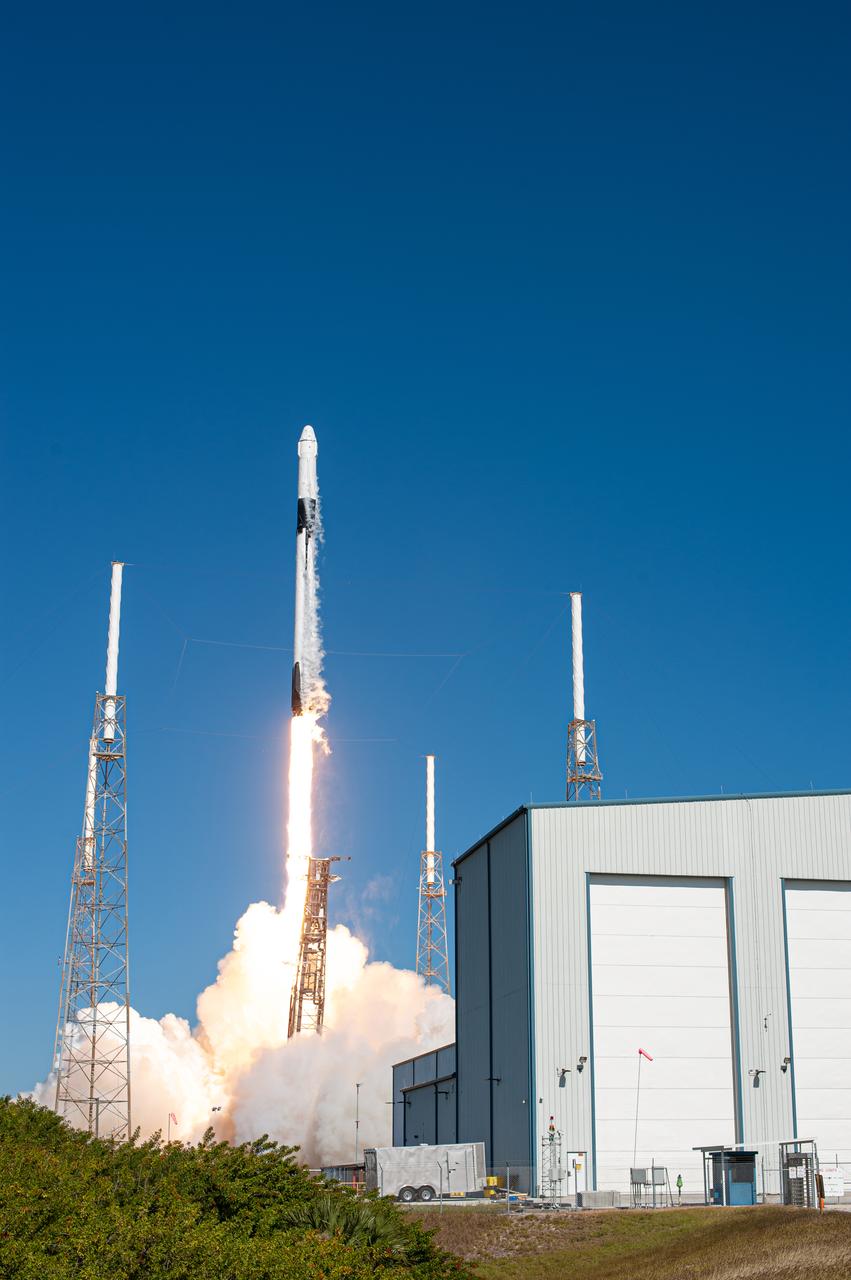
The SpaceX Falcon 9 rocket with the Dragon cargo module climbs upward after liftoff from Space Launch Complex 40 on Cape Canaveral Air Force Station in Florida in the early afternoon on Dec. 5, 2019. Liftoff was at 12:29 p.m. EST. This is SpaceX’s 19th Commercial Resupply Services (CRS-19) mission for NASA to the International Space Station. The Dragon cargo module will deliver more than 5,700 pounds of science and research, crew supplies and vehicle hardware to the orbital laboratory and its crew.
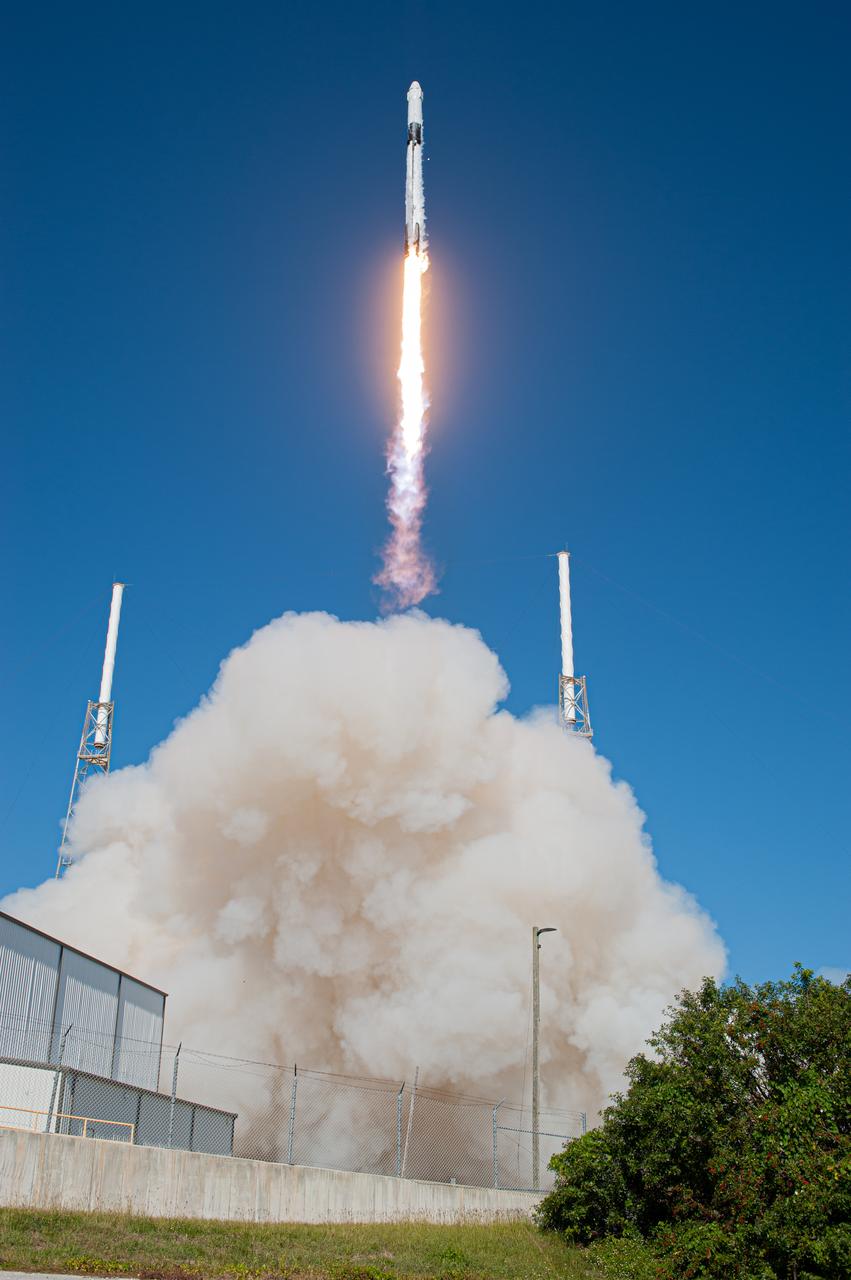
The SpaceX Falcon 9 rocket with the Dragon cargo module climbs upward after liftoff from Space Launch Complex 40 on Cape Canaveral Air Force Station in Florida in the early afternoon on Dec. 5, 2019. Liftoff was at 12:29 p.m. EST. This is SpaceX’s 19th Commercial Resupply Services (CRS-19) mission for NASA to the International Space Station. The Dragon cargo module will deliver more than 5,700 pounds of science and research, crew supplies and vehicle hardware to the orbital laboratory and its crew.
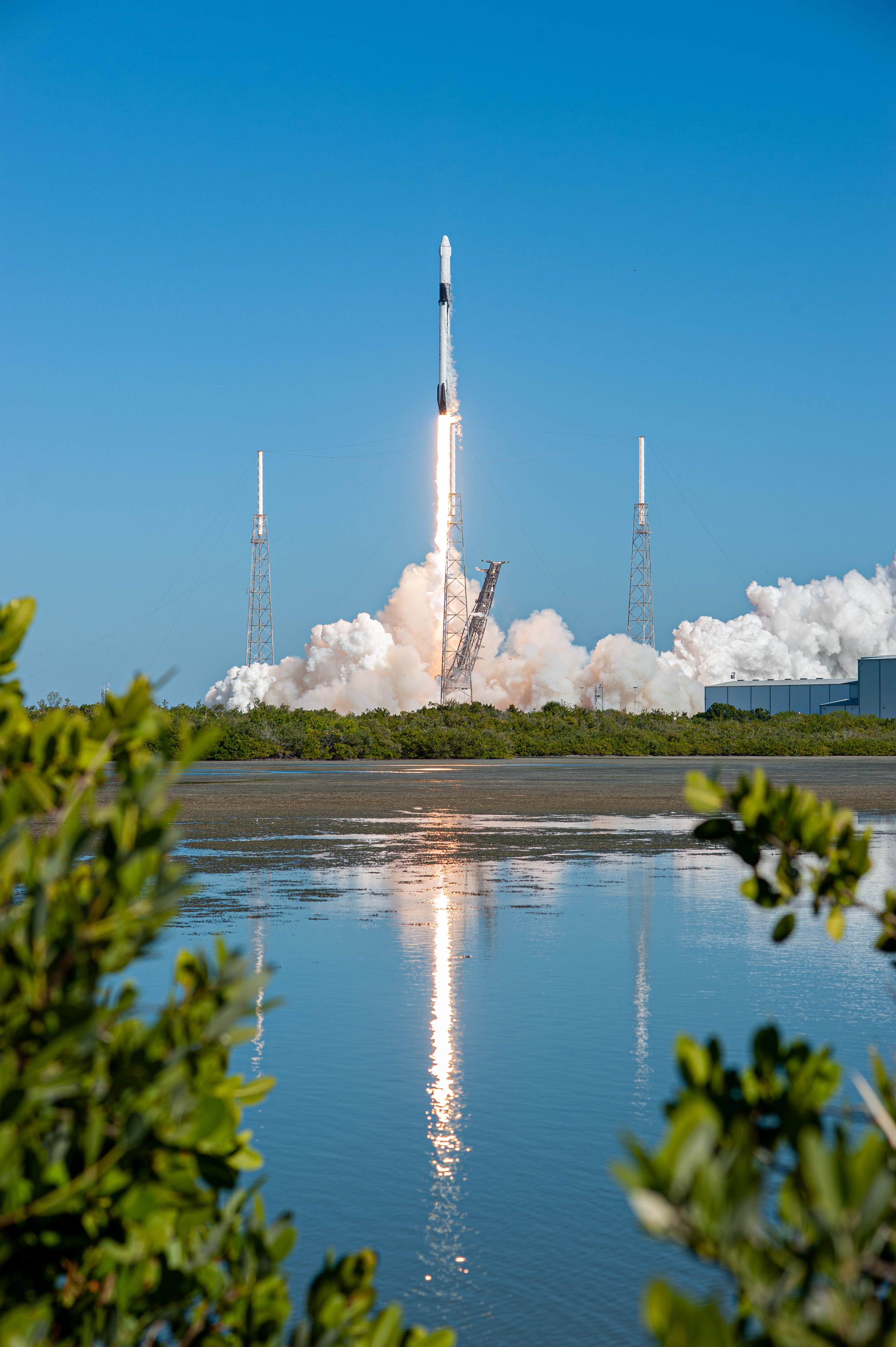
The SpaceX Falcon 9 rocket with the Dragon cargo module climbs upward after liftoff from Space Launch Complex 40 on Cape Canaveral Air Force Station in Florida in the early afternoon on Dec. 5, 2019. Liftoff was at 12:29 p.m. EST. This is SpaceX’s 19th Commercial Resupply Services (CRS-19) mission for NASA to the International Space Station. The Dragon cargo module will deliver more than 5,700 pounds of science and research, crew supplies and vehicle hardware to the orbital laboratory and its crew.
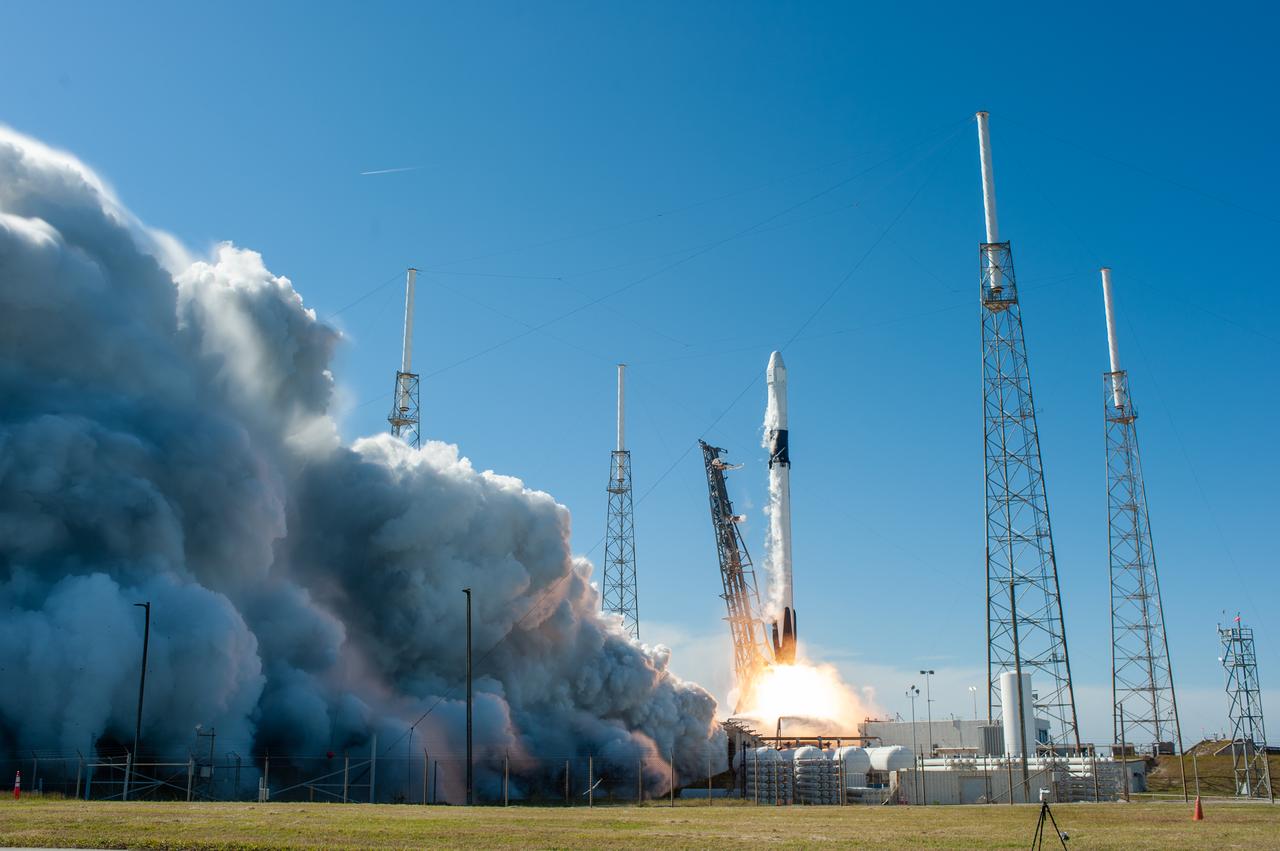
The SpaceX Falcon 9 rocket with the Dragon cargo module lifts off Space Launch Complex 40 on Cape Canaveral Air Force Station in Florida in the early afternoon on Dec. 5, 2019. Liftoff was at 12:29 p.m. EST. This is SpaceX’s 19th Commercial Resupply Services (CRS-19) mission for NASA to the International Space Station. The Dragon cargo module will deliver more than 5,700 pounds of science and research, crew supplies and vehicle hardware to the orbital laboratory and its crew.
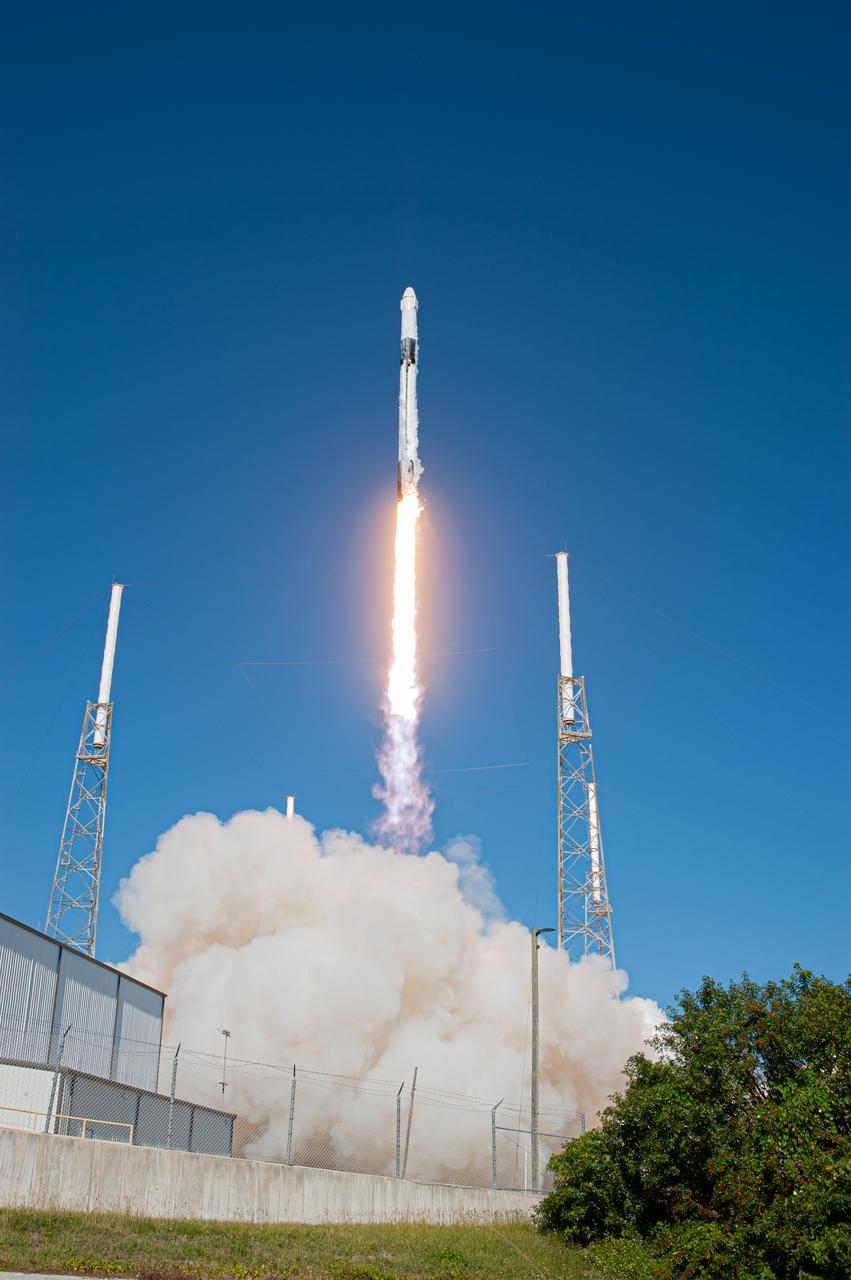
The SpaceX Falcon 9 rocket with the Dragon cargo module climbs upward after liftoff from Space Launch Complex 40 on Cape Canaveral Air Force Station in Florida in the early afternoon on Dec. 5, 2019. Liftoff was at 12:29 p.m. EST. This is SpaceX’s 19th Commercial Resupply Services (CRS-19) mission for NASA to the International Space Station. The Dragon cargo module will deliver more than 5,700 pounds of science and research, crew supplies and vehicle hardware to the orbital laboratory and its crew.
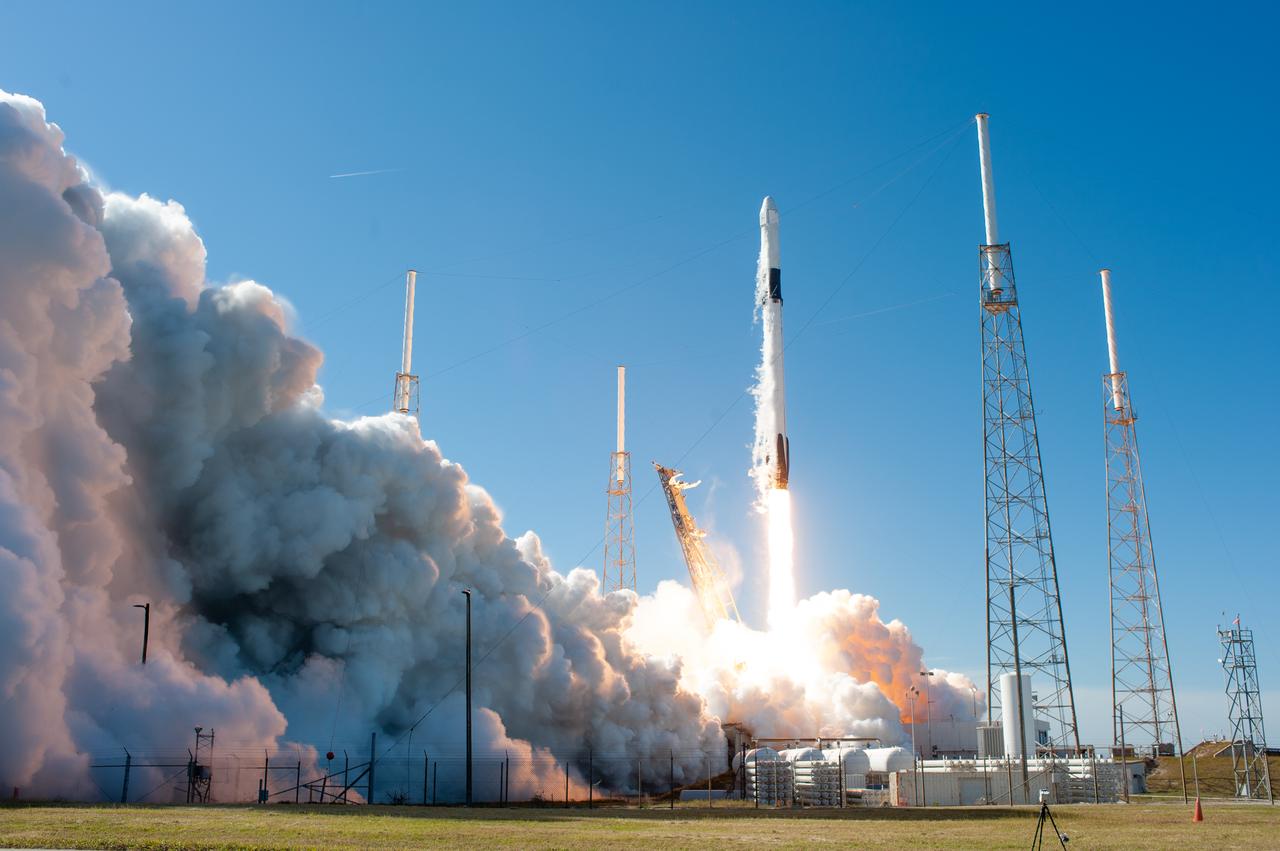
The SpaceX Falcon 9 rocket with the Dragon cargo module lifts off Space Launch Complex 40 on Cape Canaveral Air Force Station in Florida in the early afternoon on Dec. 5, 2019. Liftoff was at 12:29 p.m. EST. This is SpaceX’s 19th Commercial Resupply Services (CRS-19) mission for NASA to the International Space Station. The Dragon cargo module will deliver more than 5,700 pounds of science and research, crew supplies and vehicle hardware to the orbital laboratory and its crew.
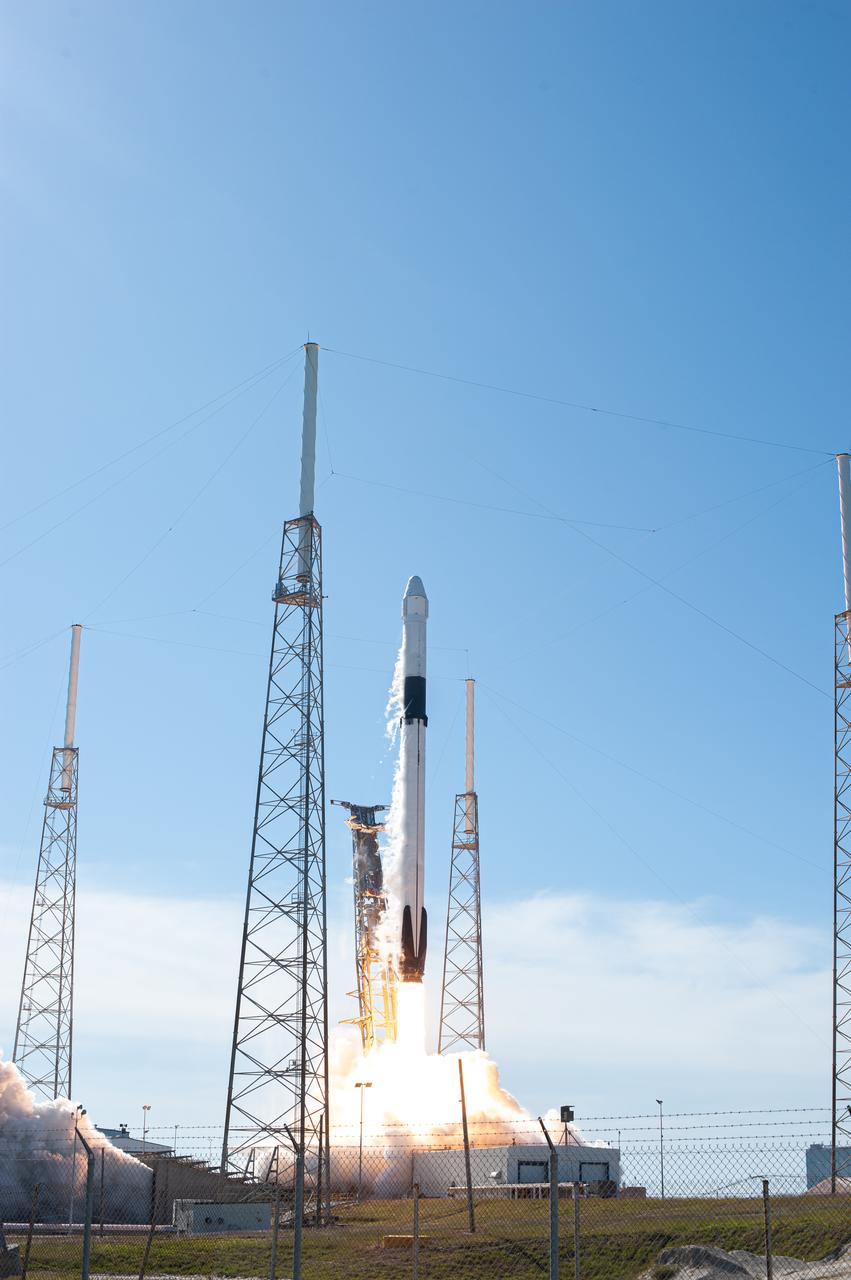
The SpaceX Falcon 9 rocket with the Dragon cargo module lifts off Space Launch Complex 40 on Cape Canaveral Air Force Station in Florida in the early afternoon on Dec. 5, 2019. Liftoff was at 12:29 p.m. EST. This is SpaceX’s 19th Commercial Resupply Services (CRS-19) mission for NASA to the International Space Station. The Dragon cargo module will deliver more than 5,700 pounds of science and research, crew supplies and vehicle hardware to the orbital laboratory and its crew.
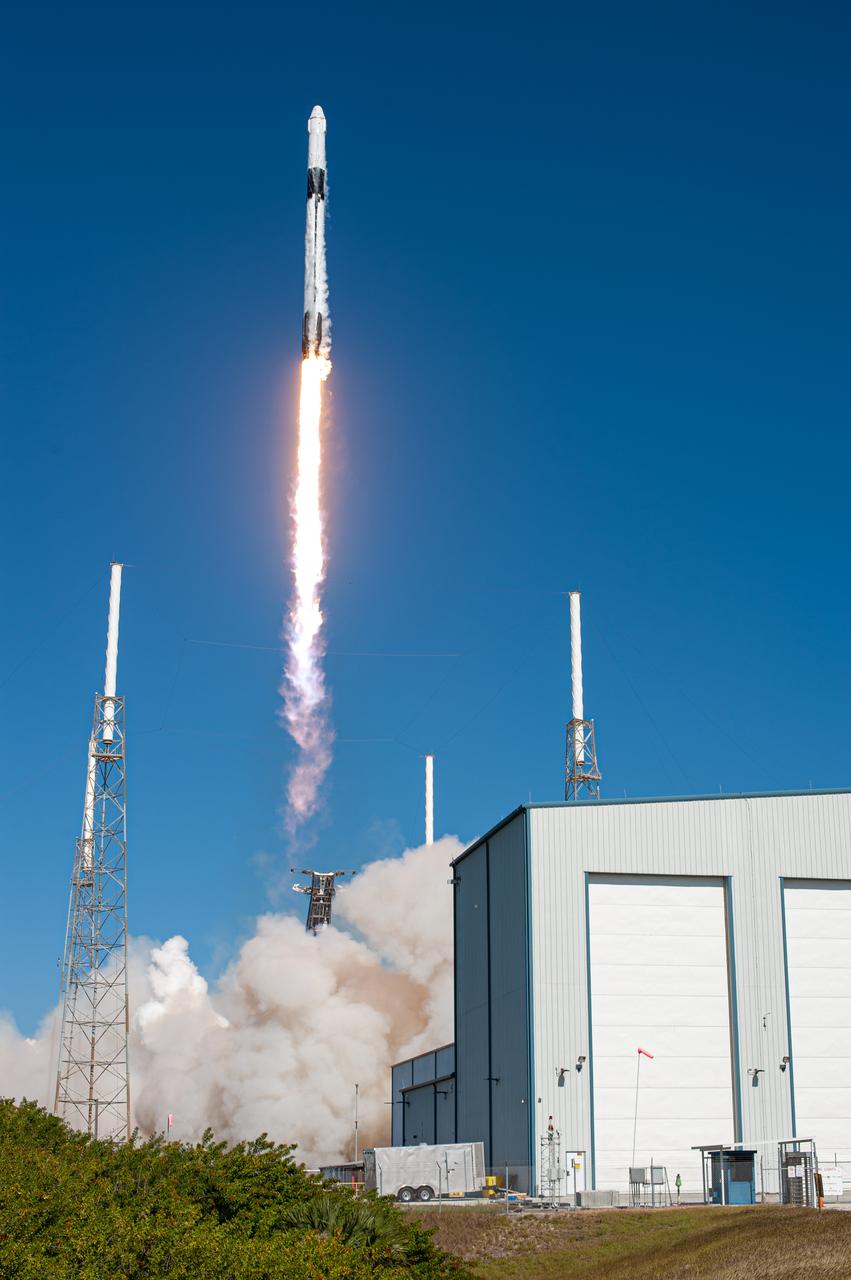
The SpaceX Falcon 9 rocket with the Dragon cargo module climbs upward after liftoff from Space Launch Complex 40 on Cape Canaveral Air Force Station in Florida in the early afternoon on Dec. 5, 2019. Liftoff was at 12:29 p.m. EST. This is SpaceX’s 19th Commercial Resupply Services (CRS-19) mission for NASA to the International Space Station. The Dragon cargo module will deliver more than 5,700 pounds of science and research, crew supplies and vehicle hardware to the orbital laboratory and its crew.
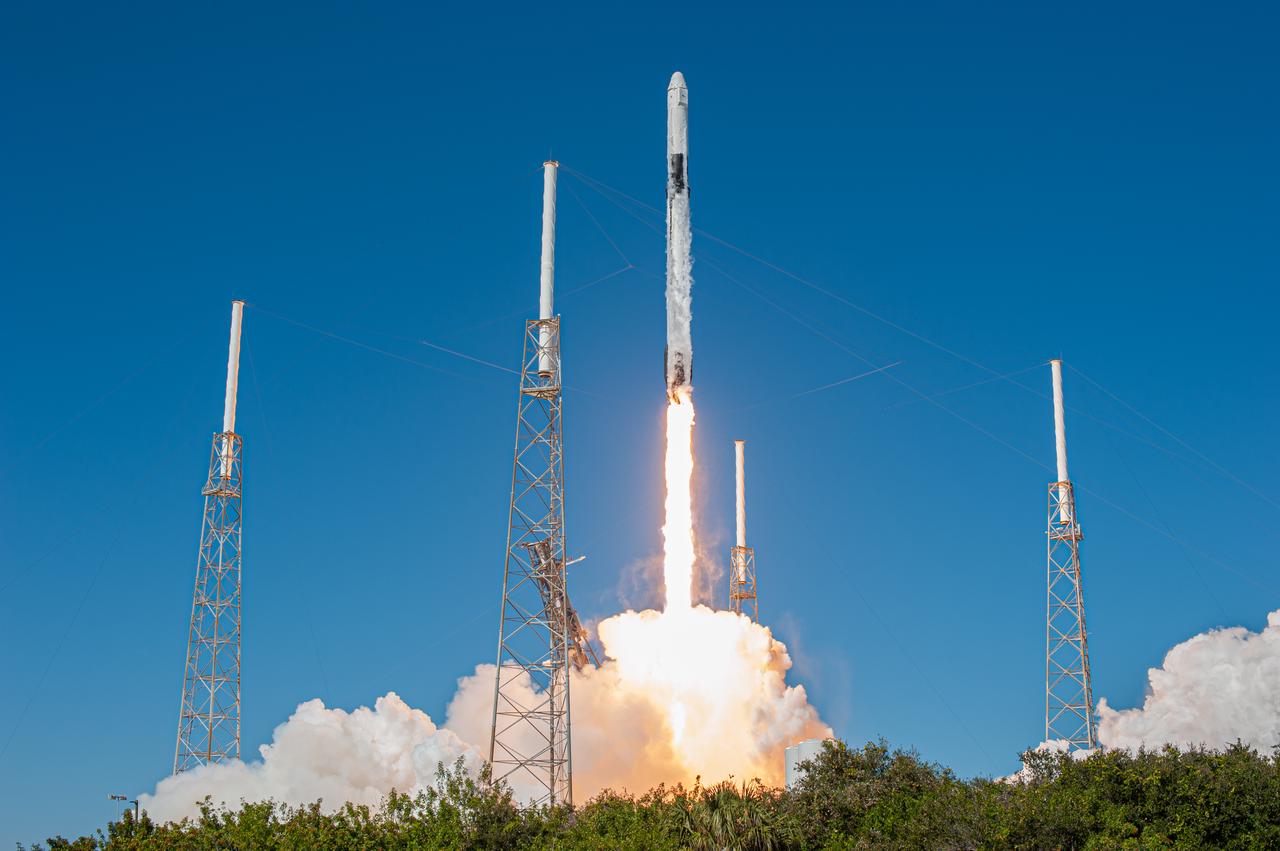
The SpaceX Falcon 9 rocket with the Dragon cargo module lifts off Space Launch Complex 40 on Cape Canaveral Air Force Station in Florida in the early afternoon on Dec. 5, 2019. Liftoff was at 12:29 p.m. EST. This is SpaceX’s 19th Commercial Resupply Services (CRS-19) mission for NASA to the International Space Station. The Dragon cargo module will deliver more than 5,700 pounds of science and research, crew supplies and vehicle hardware to the orbital laboratory and its crew.
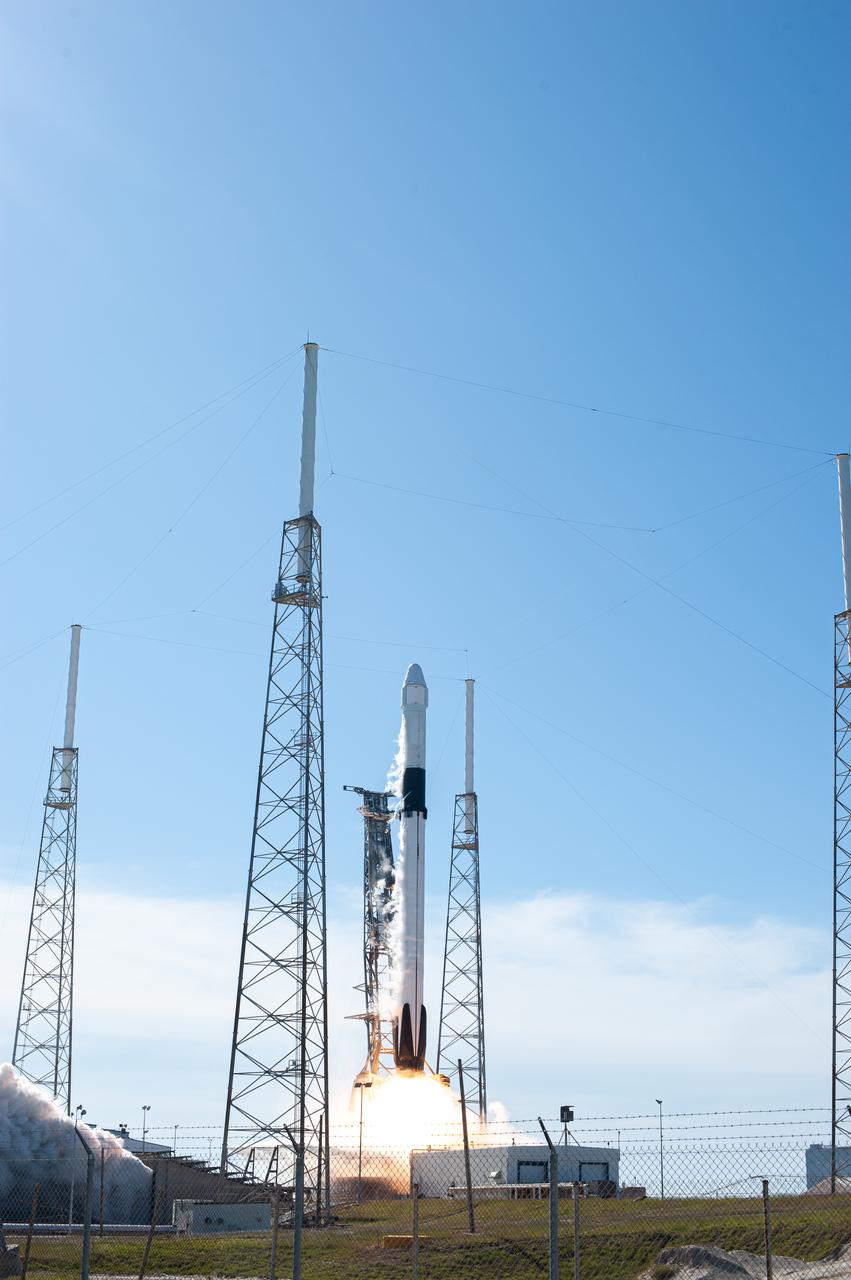
The SpaceX Falcon 9 rocket with the Dragon cargo module lifts off Space Launch Complex 40 on Cape Canaveral Air Force Station in Florida in the early afternoon on Dec. 5, 2019. Liftoff was at 12:29 p.m. EST. This is SpaceX’s 19th Commercial Resupply Services (CRS-19) mission for NASA to the International Space Station. The Dragon cargo module will deliver more than 5,700 pounds of science and research, crew supplies and vehicle hardware to the orbital laboratory and its crew.
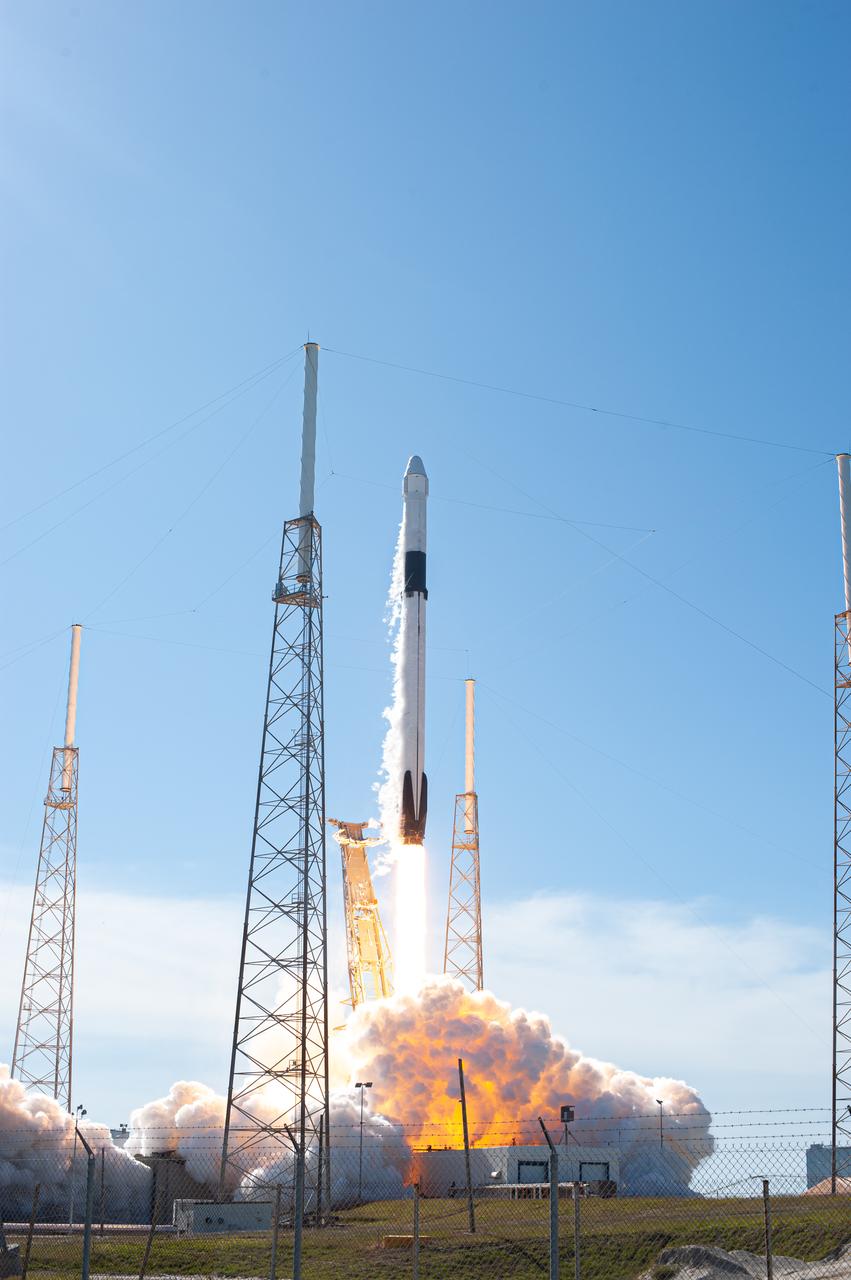
The SpaceX Falcon 9 rocket with the Dragon cargo module lifts off Space Launch Complex 40 on Cape Canaveral Air Force Station in Florida in the early afternoon on Dec. 5, 2019. Liftoff was at 12:29 p.m. EST. This is SpaceX’s 19th Commercial Resupply Services (CRS-19) mission for NASA to the International Space Station. The Dragon cargo module will deliver more than 5,700 pounds of science and research, crew supplies and vehicle hardware to the orbital laboratory and its crew.
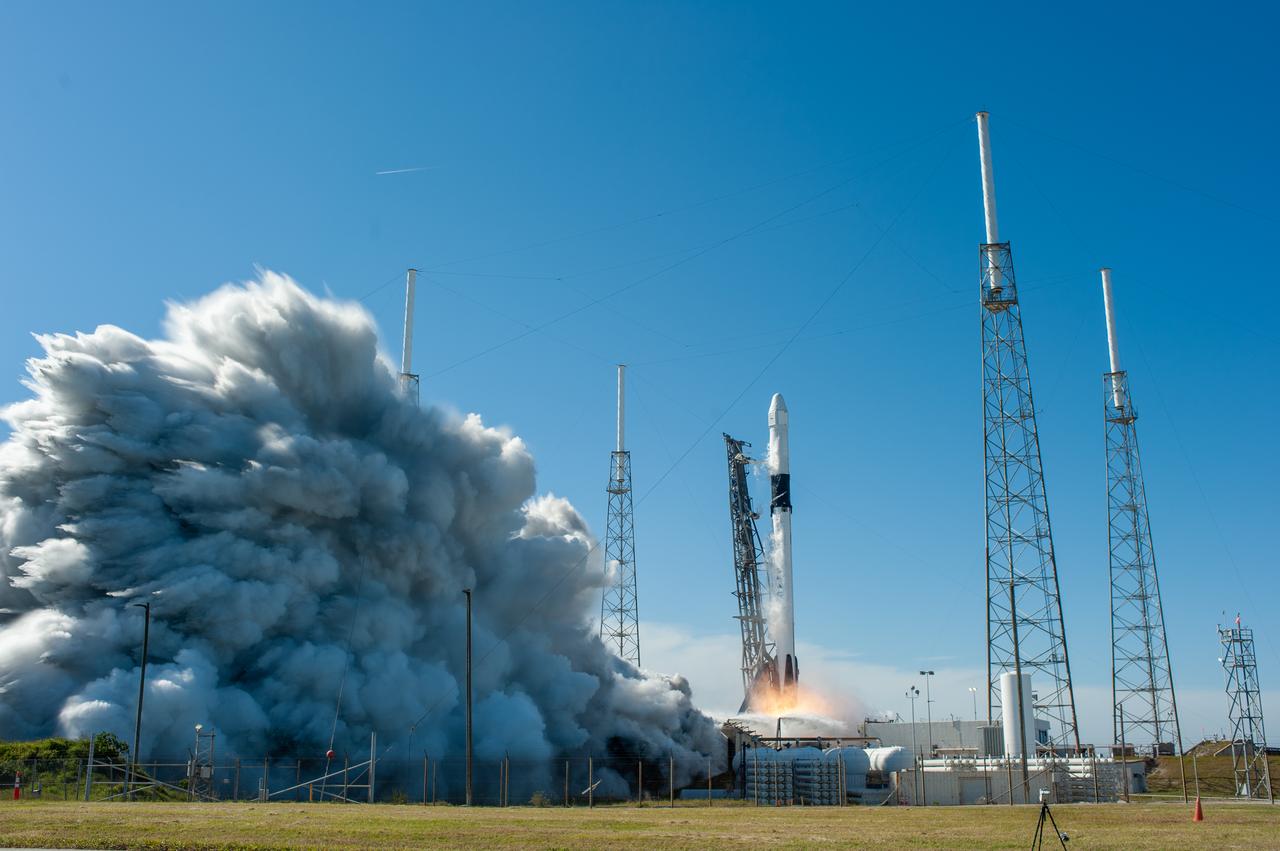
The SpaceX Falcon 9 rocket with the Dragon cargo module lifts off Space Launch Complex 40 on Cape Canaveral Air Force Station in Florida in the early afternoon on Dec. 5, 2019. Liftoff was at 12:29 p.m. EST. This is SpaceX’s 19th Commercial Resupply Services (CRS-19) mission for NASA to the International Space Station. The Dragon cargo module will deliver more than 5,700 pounds of science and research, crew supplies and vehicle hardware to the orbital laboratory and its crew.
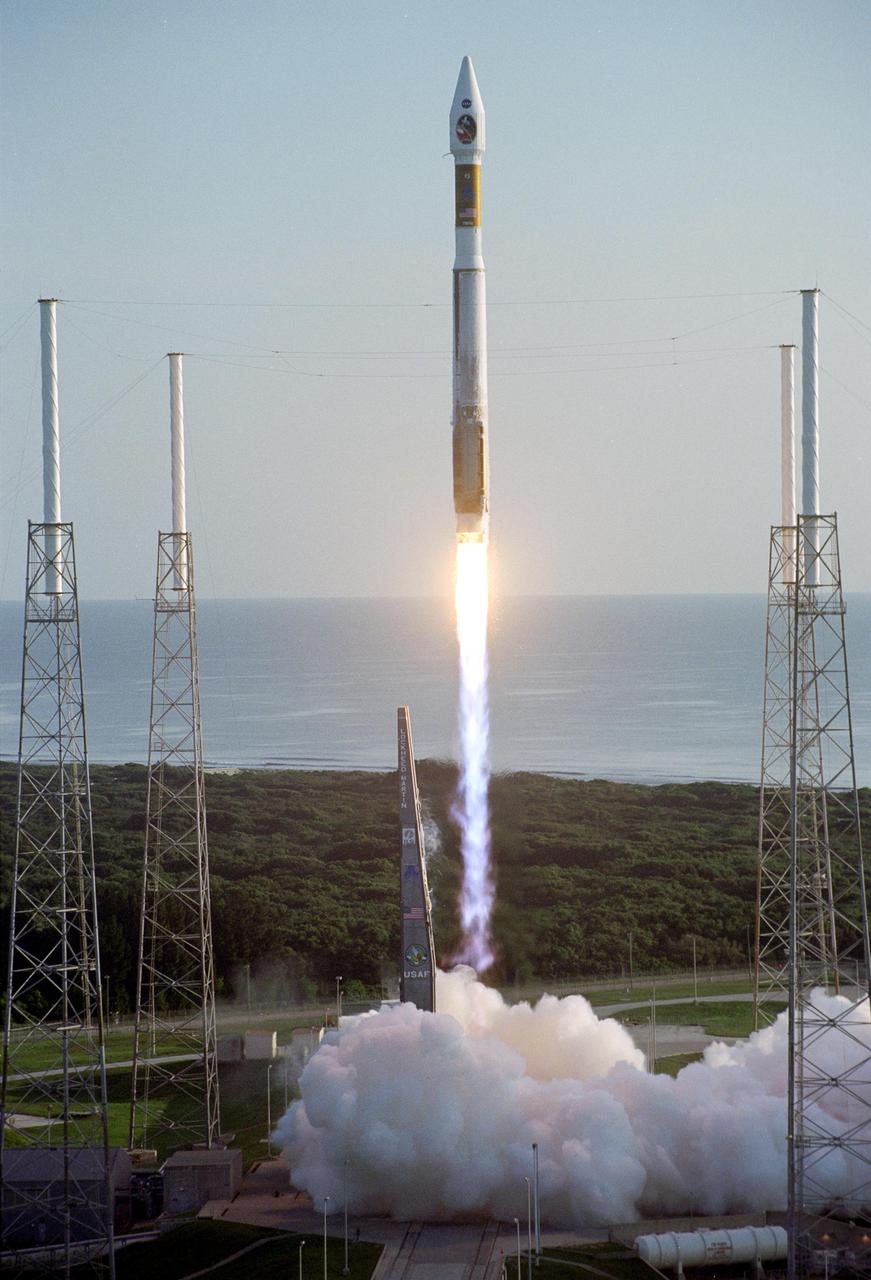
With the Atlantic Ocean as a backdrop, an Atlas V launch vehicle, 19 stories tall, with a two-ton NASA Mars Reconnaissance Orbiter MRO on top, roars away from Launch Complex 41 at Cape Canaveral Air Force Station.
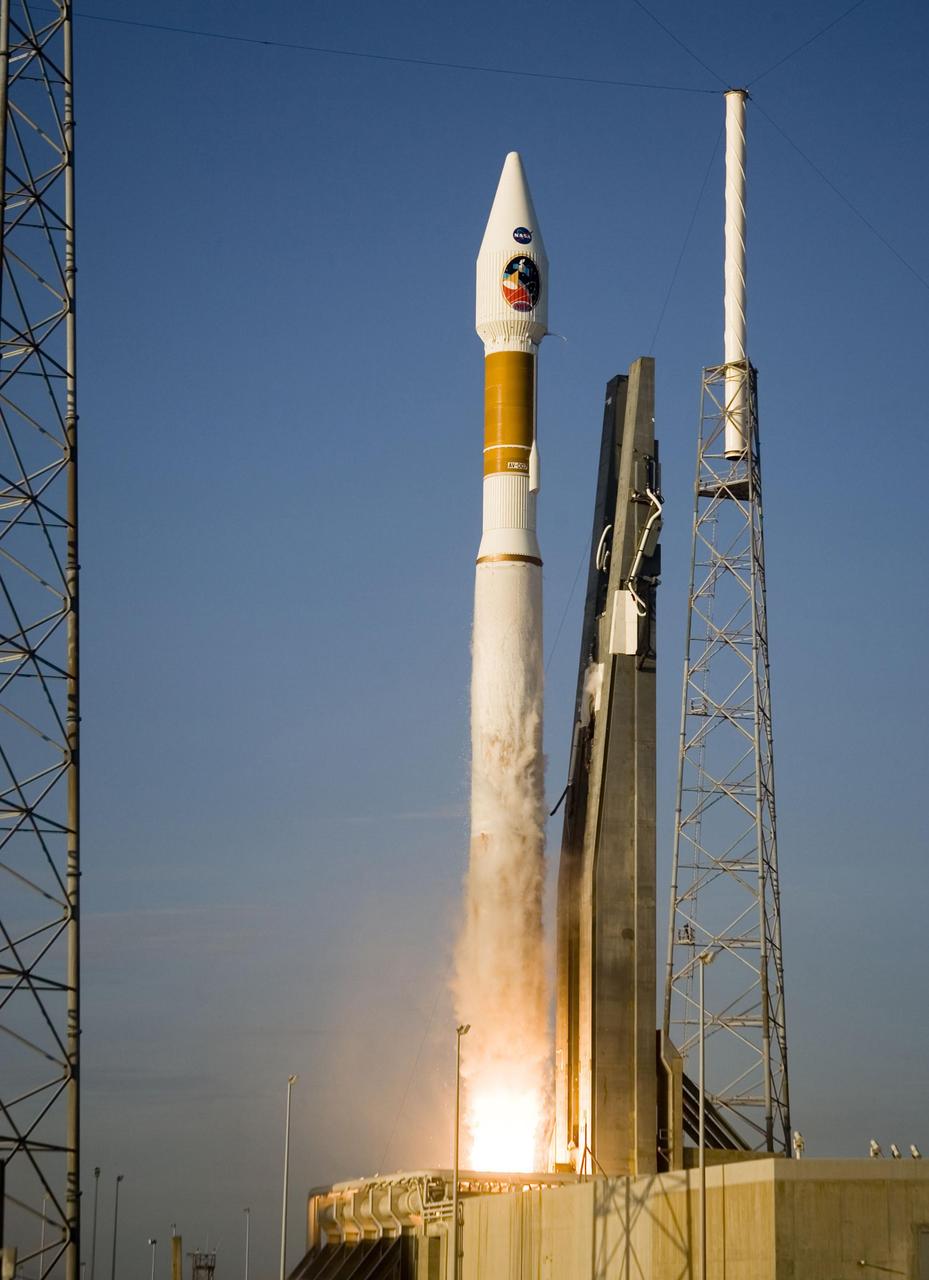
Atlas V launch vehicle, 19 stories tall, with a two-ton NASA Mars Reconnaissance Orbiter MRO on top, lifts off the pad on Launch Complex 41 at Cape Canaveral Air Force Station in Florida on Aug. 12, 2005.
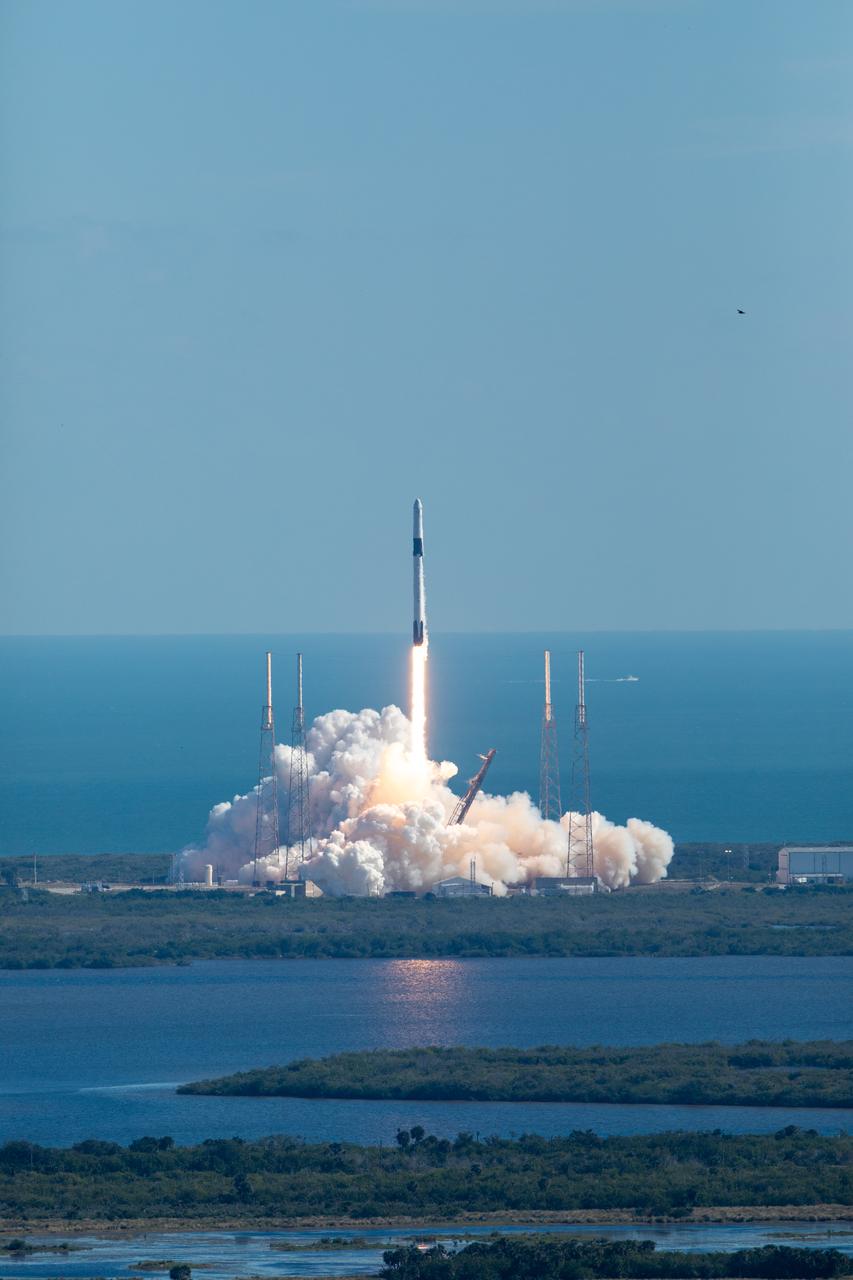
The SpaceX Falcon 9 rocket with the Dragon cargo module lifts off Space Launch Complex 40 on Cape Canaveral Air Force Station in Florida in the early afternoon on Dec. 5, 2019. Liftoff was at 12:29 p.m. EST. This is SpaceX’s 19th Commercial Resupply Services (CRS-19) mission for NASA to the International Space Station. The Dragon cargo module will deliver more than 5,700 pounds of science and research, crew supplies and vehicle hardware to the orbital laboratory and its crew.
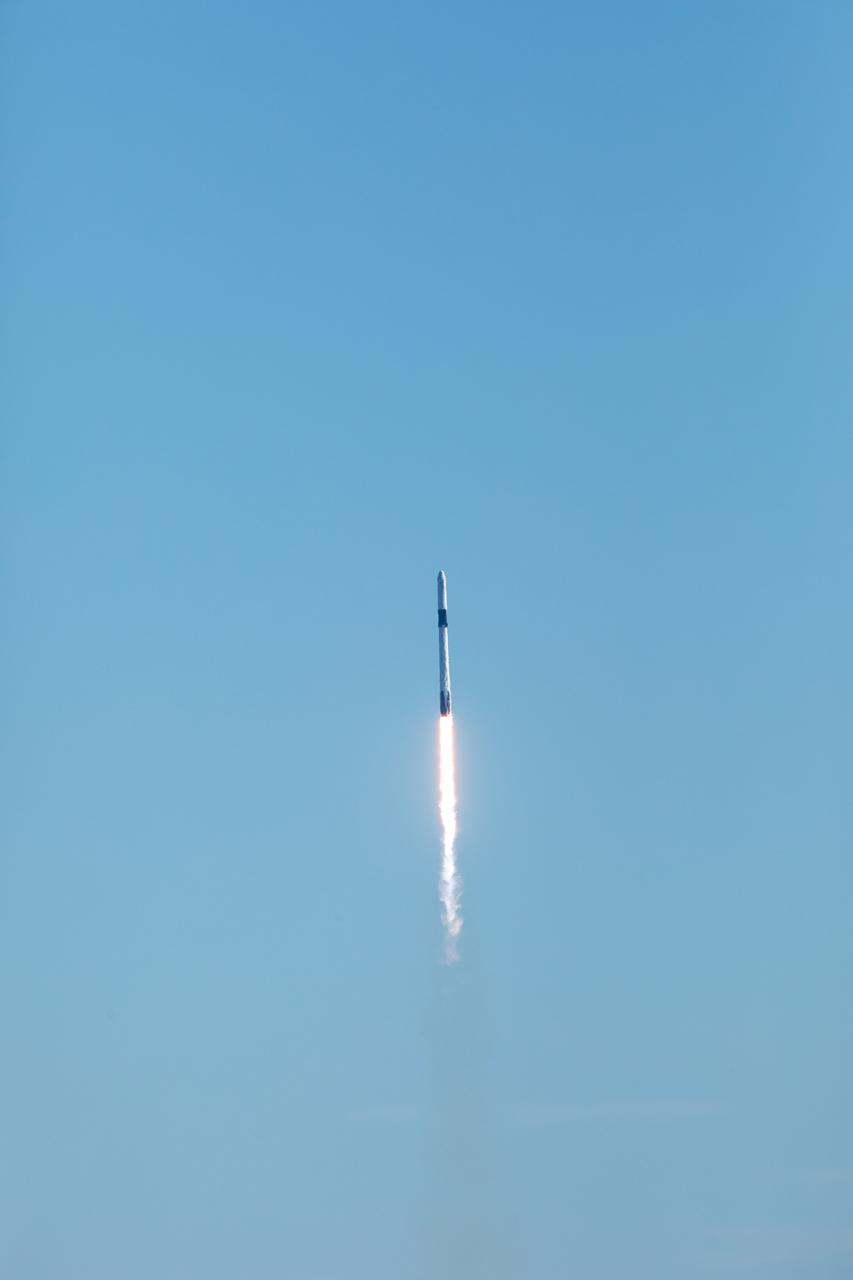
The SpaceX Falcon 9 rocket with the Dragon cargo module climbs upward after liftoff from Space Launch Complex 40 on Cape Canaveral Air Force Station in Florida in the early afternoon on Dec. 5, 2019. Liftoff was at 12:29 p.m. EST. This is SpaceX’s 19th Commercial Resupply Services (CRS-19) mission for NASA to the International Space Station. The Dragon cargo module will deliver more than 5,700 pounds of science and research, crew supplies and vehicle hardware to the orbital laboratory and its crew.
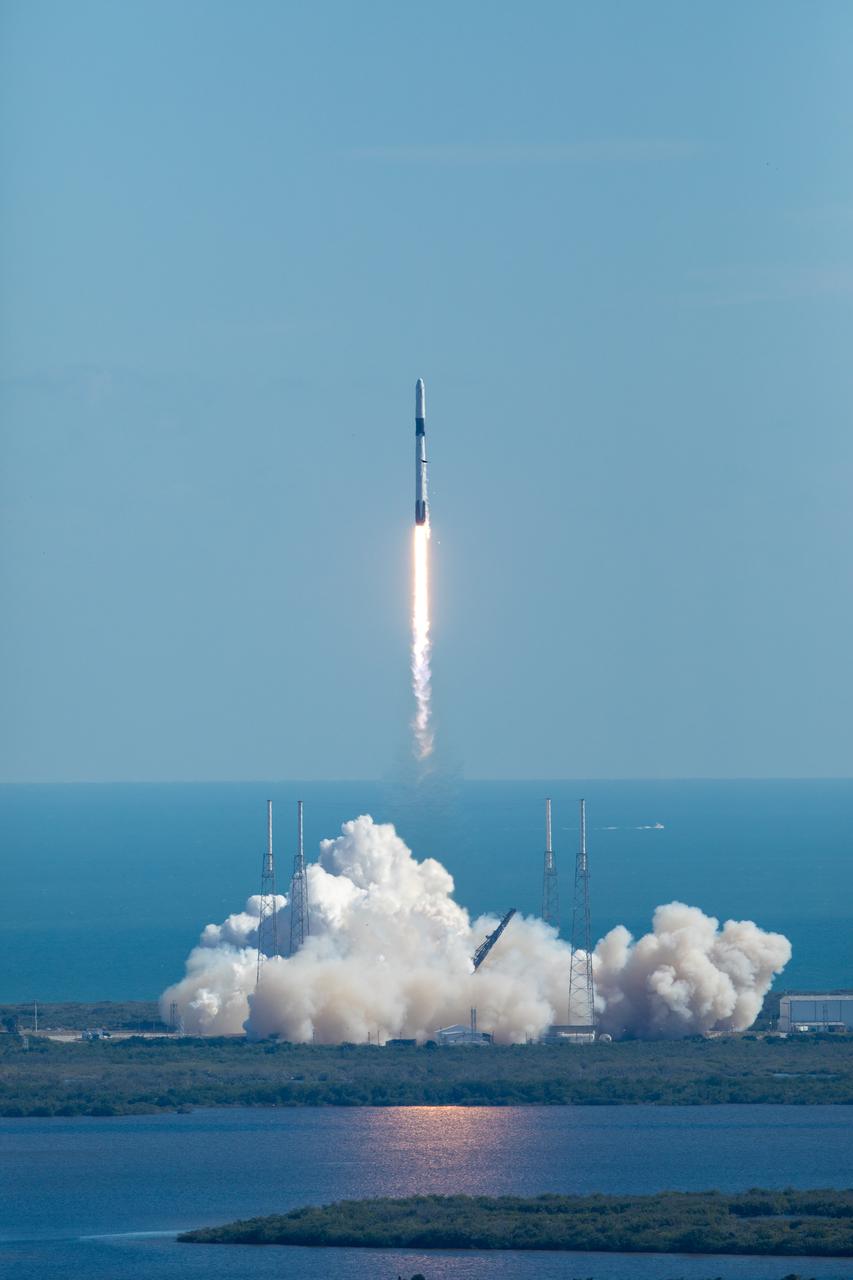
The SpaceX Falcon 9 rocket with the Dragon cargo module lifts off Space Launch Complex 40 on Cape Canaveral Air Force Station in Florida in the early afternoon on Dec. 5, 2019. Liftoff was at 12:29 p.m. EST. This is SpaceX’s 19th Commercial Resupply Services (CRS-19) mission for NASA to the International Space Station. The Dragon cargo module will deliver more than 5,700 pounds of science and research, crew supplies and vehicle hardware to the orbital laboratory and its crew.
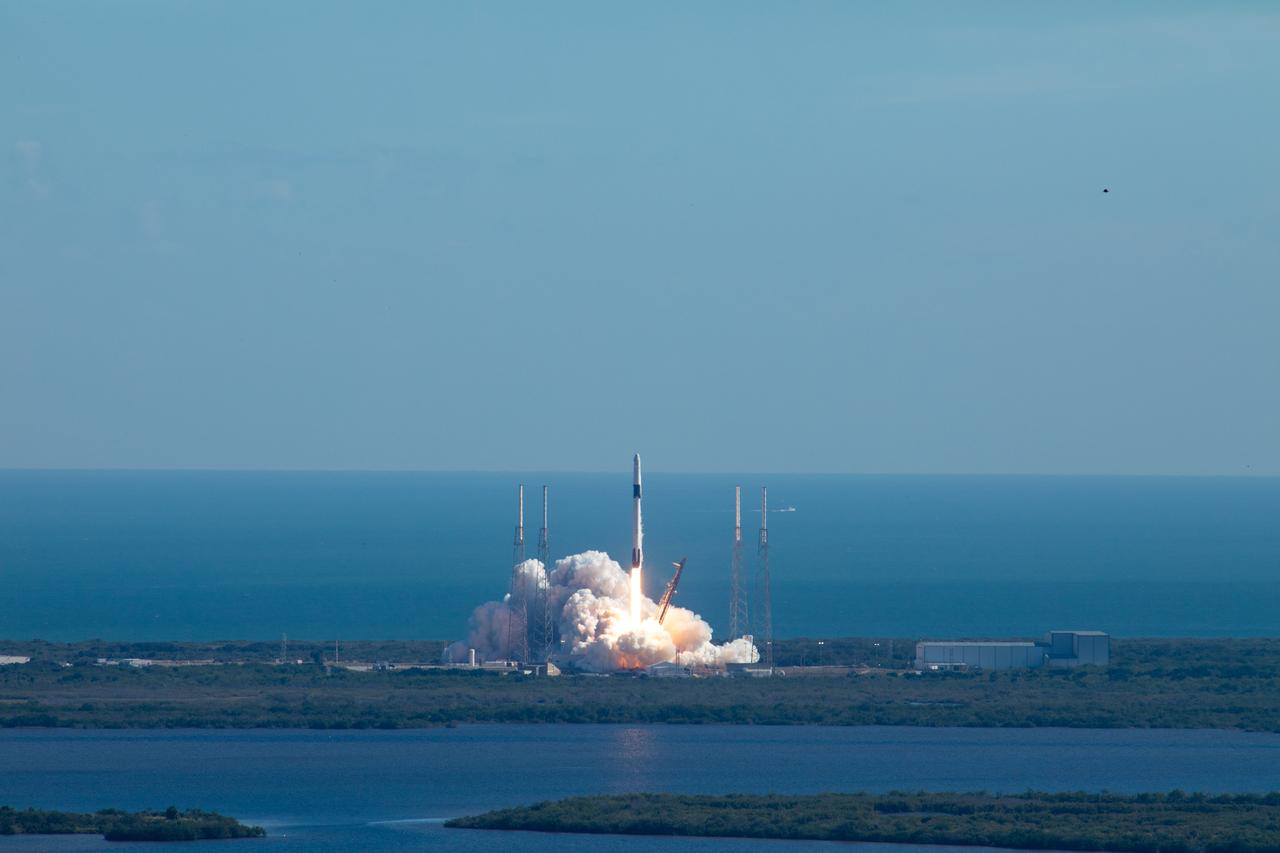
The SpaceX Falcon 9 rocket with the Dragon cargo module lifts off Space Launch Complex 40 on Cape Canaveral Air Force Station in Florida in the early afternoon on Dec. 5, 2019. Liftoff was at 12:29 p.m. EST. This is SpaceX’s 19th Commercial Resupply Services (CRS-19) mission for NASA to the International Space Station. The Dragon cargo module will deliver more than 5,700 pounds of science and research, crew supplies and vehicle hardware to the orbital laboratory and its crew.
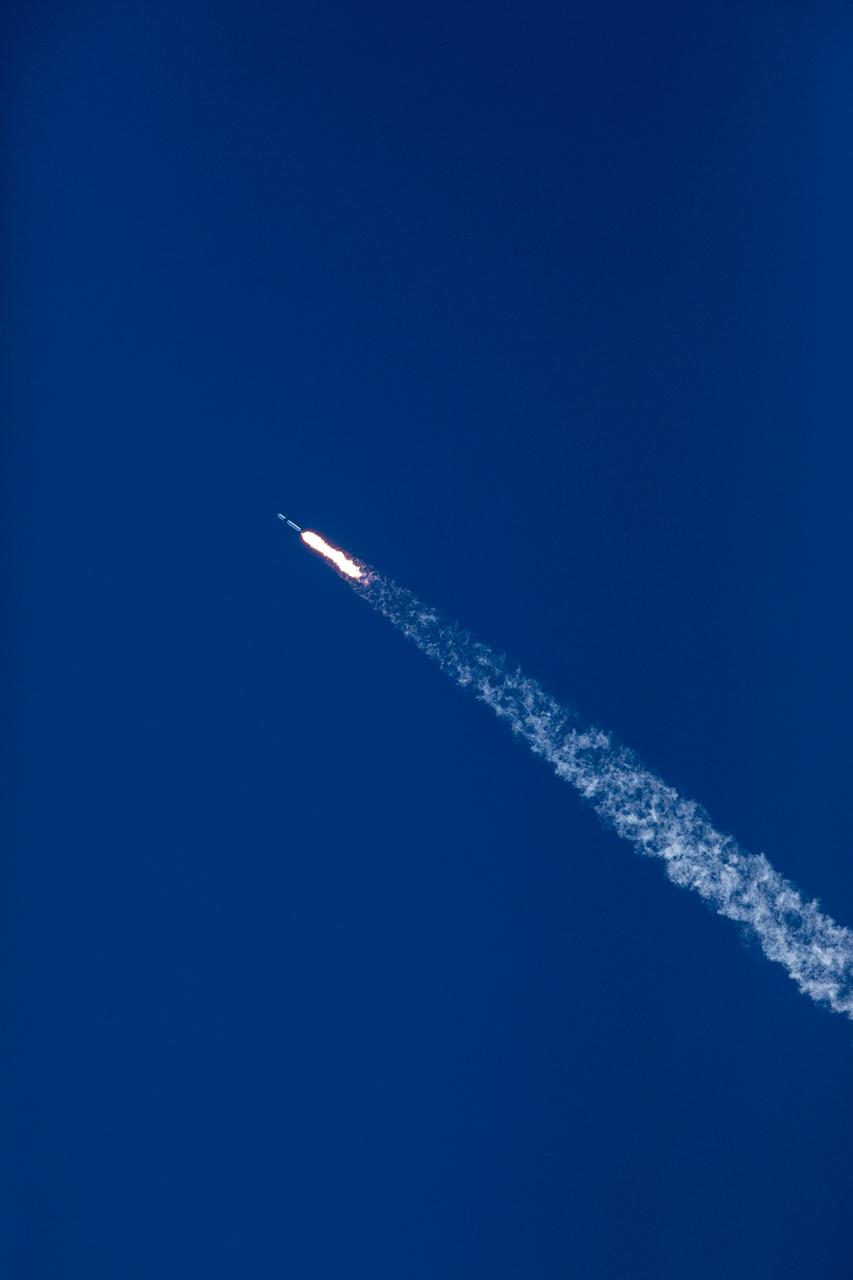
The SpaceX Falcon 9 rocket with the Dragon cargo module climbs upward after liftoff from Space Launch Complex 40 on Cape Canaveral Air Force Station in Florida in the early afternoon on Dec. 5, 2019. Liftoff was at 12:29 p.m. EST. This is SpaceX’s 19th Commercial Resupply Services (CRS-19) mission for NASA to the International Space Station. The Dragon cargo module will deliver more than 5,700 pounds of science and research, crew supplies and vehicle hardware to the orbital laboratory and its crew.
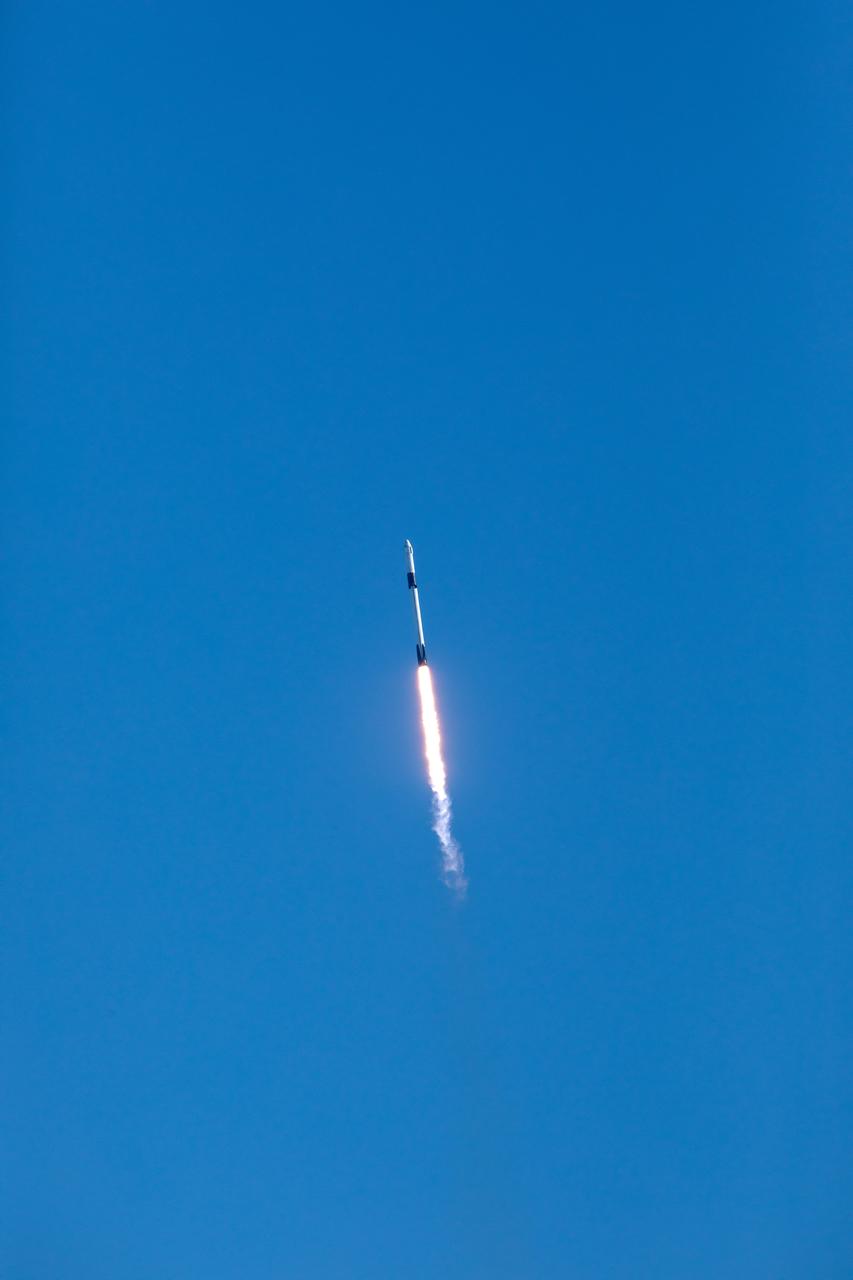
The SpaceX Falcon 9 rocket with the Dragon cargo module climbs upward after liftoff from Space Launch Complex 40 on Cape Canaveral Air Force Station in Florida in the early afternoon on Dec. 5, 2019. Liftoff was at 12:29 p.m. EST. This is SpaceX’s 19th Commercial Resupply Services (CRS-19) mission for NASA to the International Space Station. The Dragon cargo module will deliver more than 5,700 pounds of science and research, crew supplies and vehicle hardware to the orbital laboratory and its crew.
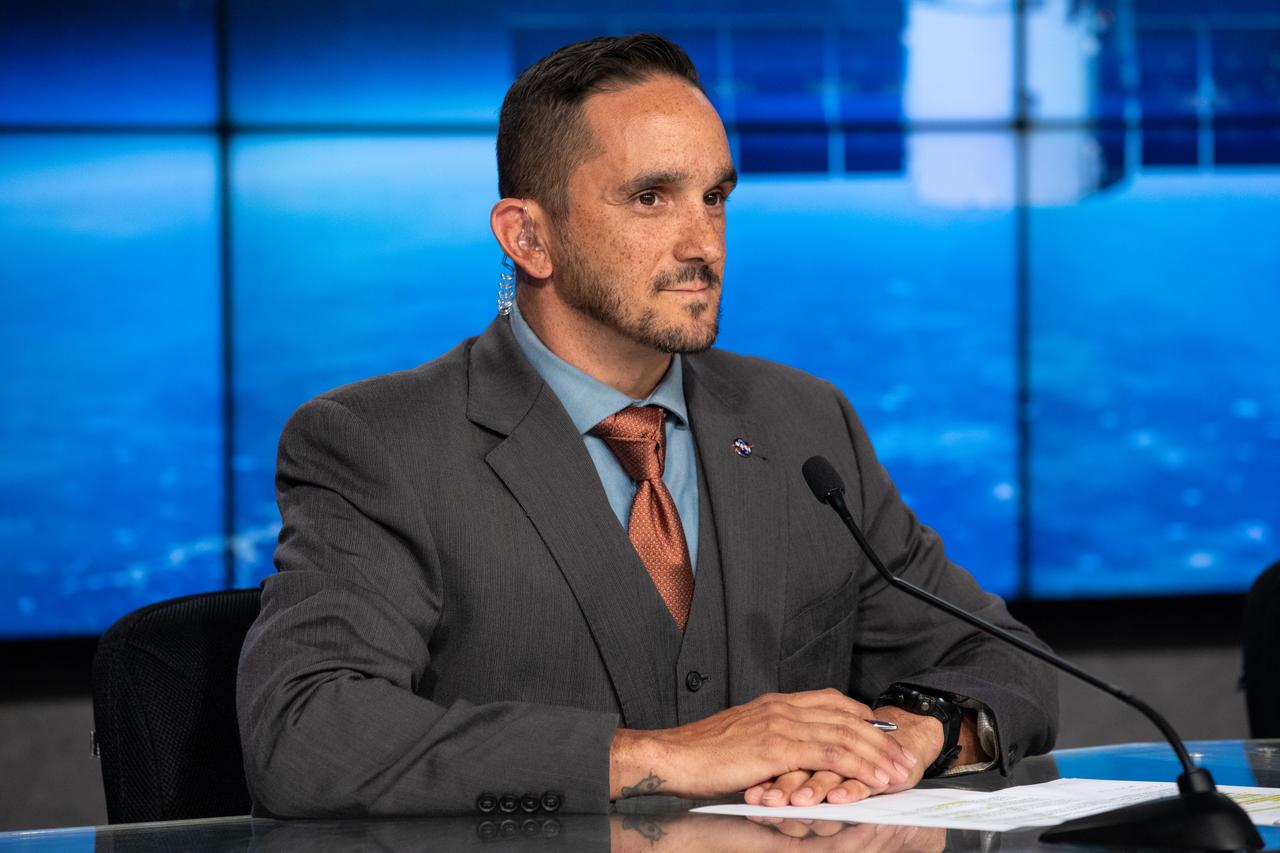
Dustin Cammack, NASA Communications, moderates a prelaunch news conference on Dec. 3, 2019, for SpaceX’s 19th Commercial Resupply Services (CRS-19) mission for NASA to the International Space Station, at the agency’s Kennedy Space Center in Florida. NASA and industry leaders speak to members of the news media during the news conference. The SpaceX Falcon 9 rocket and Dragon cargo module are scheduled to launch on Dec. 4, 2019, from Space Launch Complex 40 on Cape Canaveral Air Force Station in Florida.

The SpaceX Falcon 9 rocket with the Dragon cargo module lifts off Space Launch Complex 40 on Cape Canaveral Air Force Station in Florida in the early afternoon on Dec. 5, 2019. Liftoff was at 12:29 p.m. EST. This is SpaceX’s 19th Commercial Resupply Services (CRS-19) mission for NASA to the International Space Station. The Dragon cargo module will deliver more than 5,700 pounds of science and research, crew supplies and vehicle hardware to the orbital laboratory and its crew.
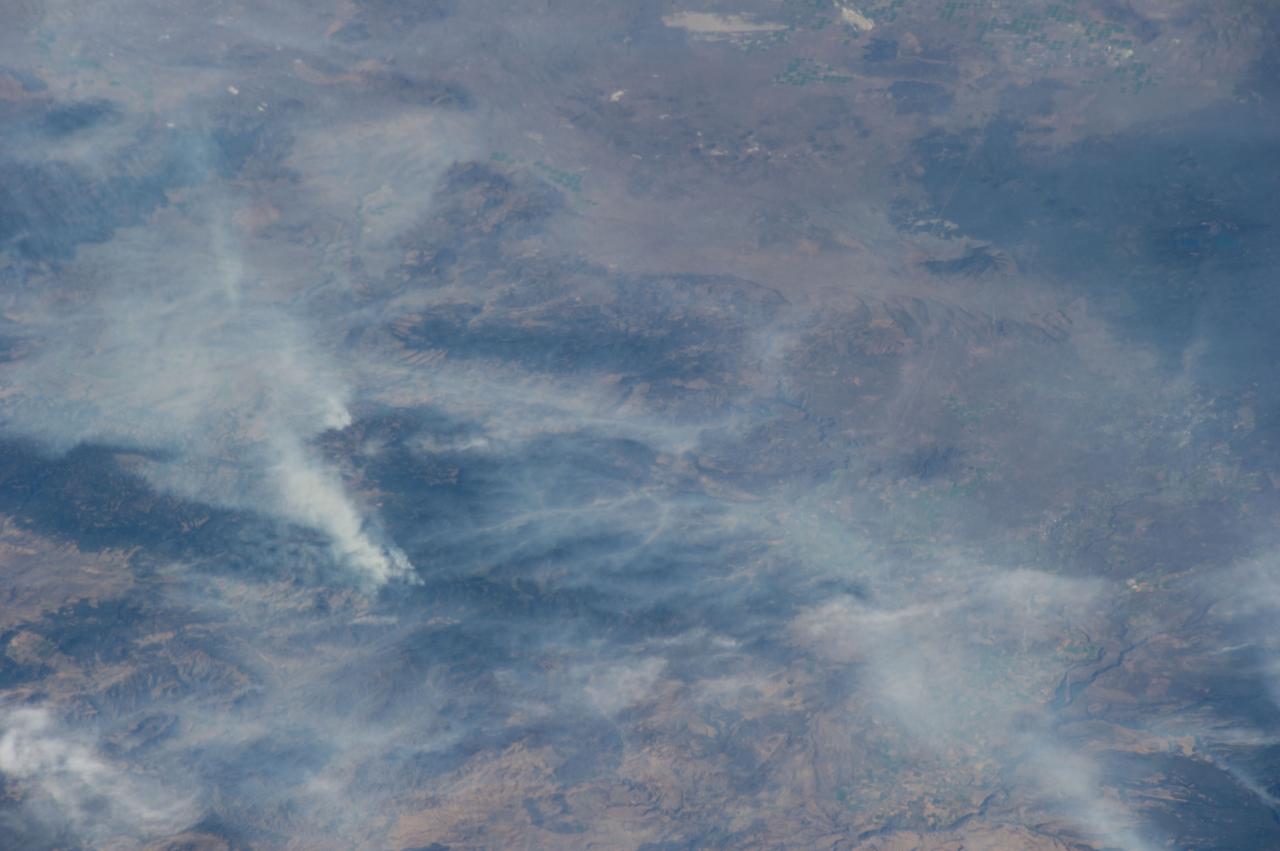
ISS040-E-070424 (19 July 2014) --- One of the Expedition 40 crew members aboard the Earth-orbiting International Space Station recorded this July 19 image of wildfires which are plaguing the Northwest and causing widespread destruction. The orbital outpost was flying 223 nautical miles above Earth at the time of the photo. Lightning has been given as the cause of the Ochoco Complex fires in the Ochoco National Forest in central Oregon. The complex has gotten larger since this photo was taken.

Jessica Jensen, director, Dragon Mission Management at SpaceX, speaks to members of the news media during a prelaunch news conference on Dec. 3, 2019, for SpaceX’s 19th Commercial Resupply Services (CRS-19) mission for NASA to the International Space Station, at the agency’s Kennedy Space Center in Florida. NASA and industry leaders speak to members of the news media during the news conference. The SpaceX Falcon 9 rocket and Dragon cargo module are scheduled to launch on Dec. 4, 2019, from Space Launch Complex 40 on Cape Canaveral Air Force Station in Florida.
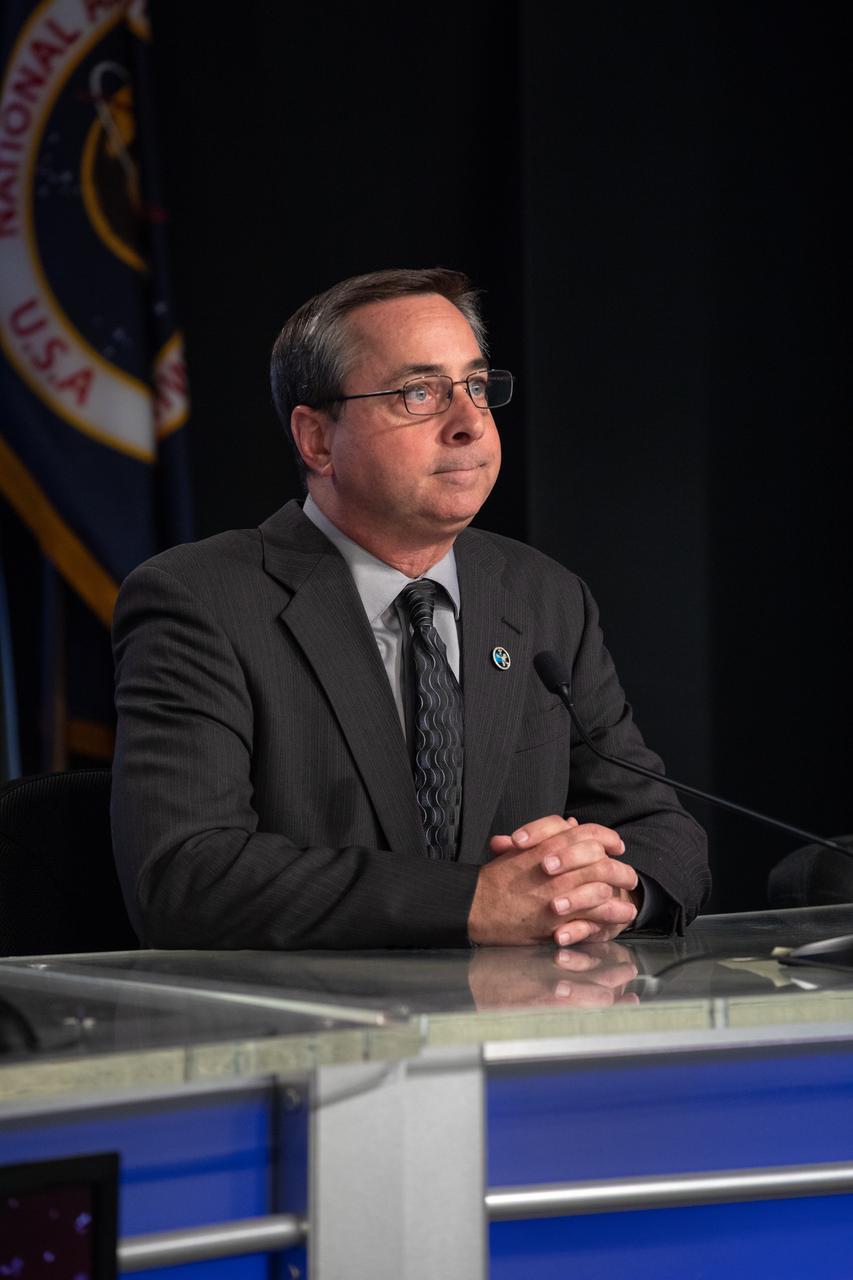
Mike McAleenan, launch weather officer, U.S. Air Force 45th Space Wing, gives a weather update to members of the news media during a prelaunch news conference on Dec. 3, 2019, for SpaceX’s 19th Commercial Resupply Services (CRS-19) mission for NASA to the International Space Station, at the agency’s Kennedy Space Center in Florida. NASA and industry leaders speak to members of the news media during the news conference. The SpaceX Falcon 9 rocket and Dragon cargo module are scheduled to launch on Dec. 4, 2019, from Space Launch Complex 40 on Cape Canaveral Air Force Station in Florida.
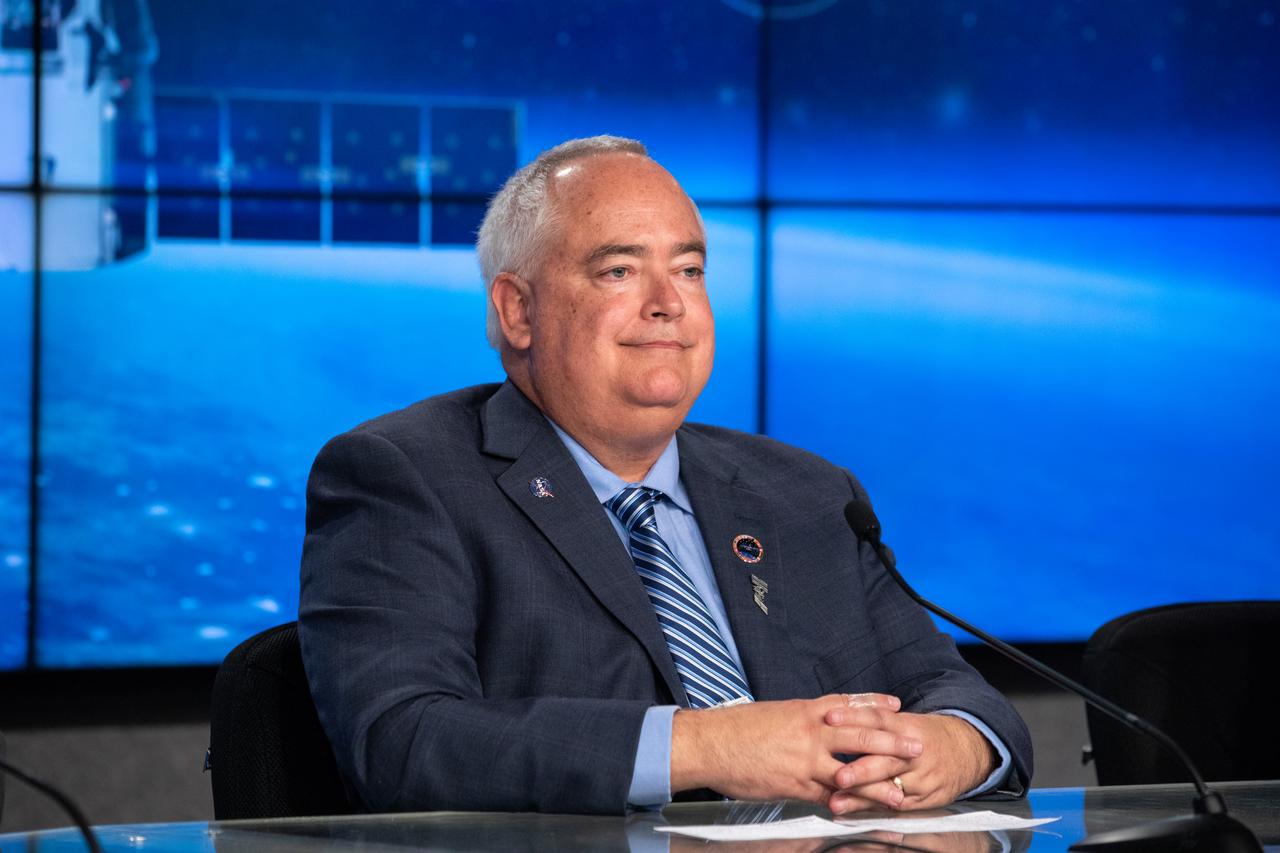
Bryan Dansberry, assistant program scientist, International Space Station Program Science Office at NASA speaks to members of the news media during a prelaunch news conference on Dec. 3, 2019, for SpaceX’s 19th Commercial Resupply Services (CRS-19) mission for NASA to the International Space Station, at the agency’s Kennedy Space Center in Florida. NASA and industry leaders speak to members of the news media during the news conference. The SpaceX Falcon 9 rocket and Dragon cargo module are scheduled to launch on Dec. 4, 2019, from Space Launch Complex 40 on Cape Canaveral Air Force Station in Florida.

iss058e005282 (Jan. 19, 2019) --- A portion of the International Space Station's solar arrays caps this nighttime view of the Earth's limb with an aurora as the orbital complex orbited 258 miles above Ukraine and Russia.
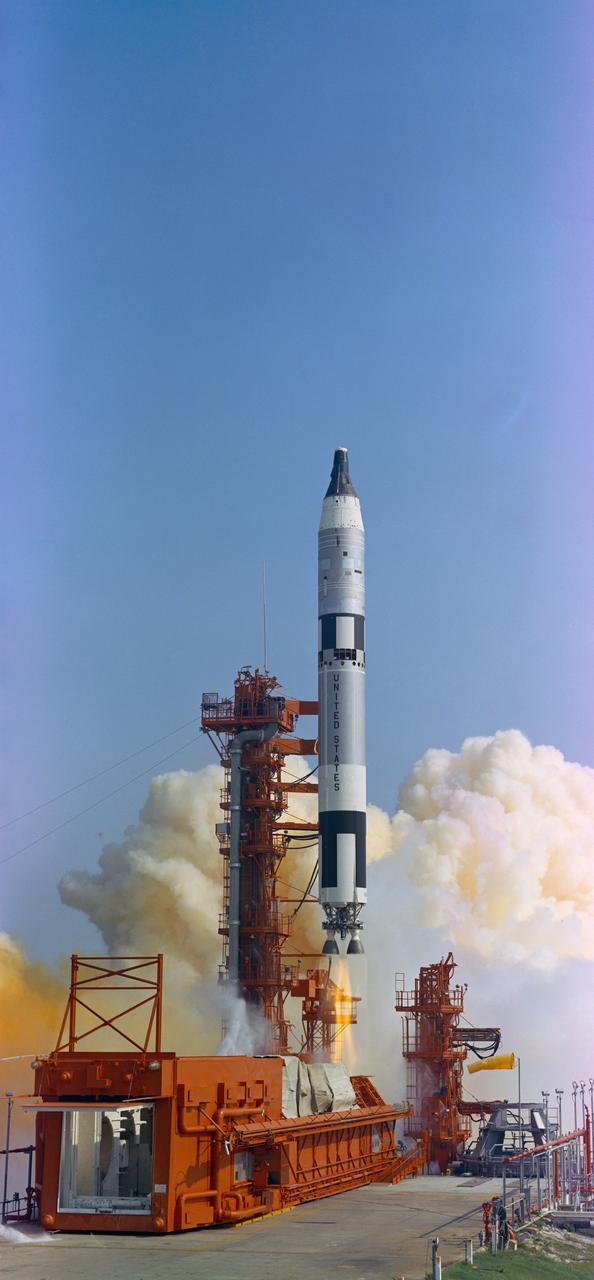
S66-34098 (3 June 1966) --- The Gemini-9 spacecraft was successfully launched from the Kennedy Space Center's Launch Complex 19 at 8:39 a.m. (EST), June 3, 1966. Photo credit: NASA
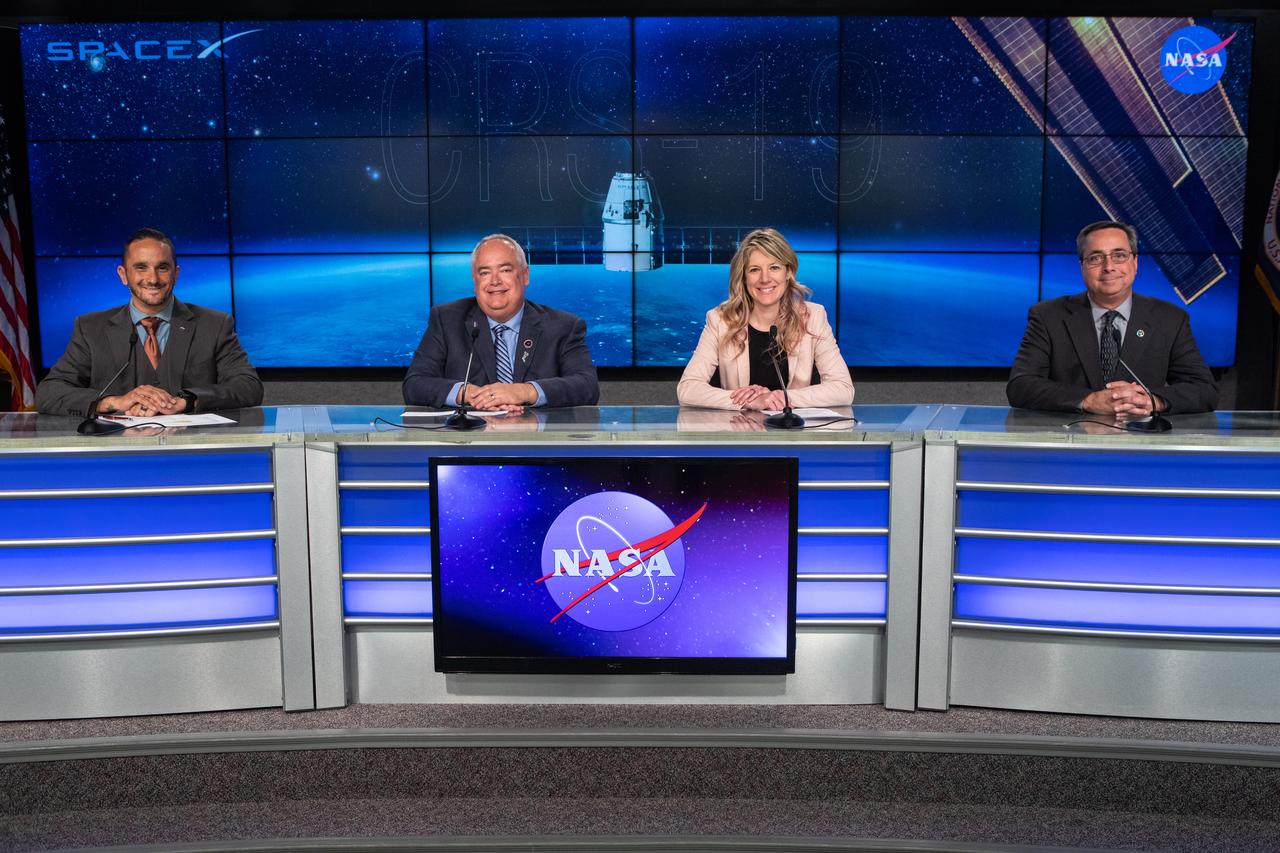
Dustin Cammack, NASA Communications, far left, moderates a prelaunch news conference on Dec. 3, 2019, for SpaceX's 19th Commercial Resupply Services (CRS-19) mission for NASA to the International Space Station, at the agency’s Kennedy Space Center in Florida. From left, are Bryan Dansberry, assistant program scientist, International Space Station Program Science Office at NASA; Jessica Jensen, director, Dragon Mission Management at SpaceX; and Mike McAleenan, launch weather officer, U.S. Air Force 45th Space Wing. The SpaceX Flacon 9 rocket and Dragon cargo module are scheduled to launch on Dec. 4, 2019, from Space Launch Complex 40 on Cape Canaveral Air Force Station in Florida.
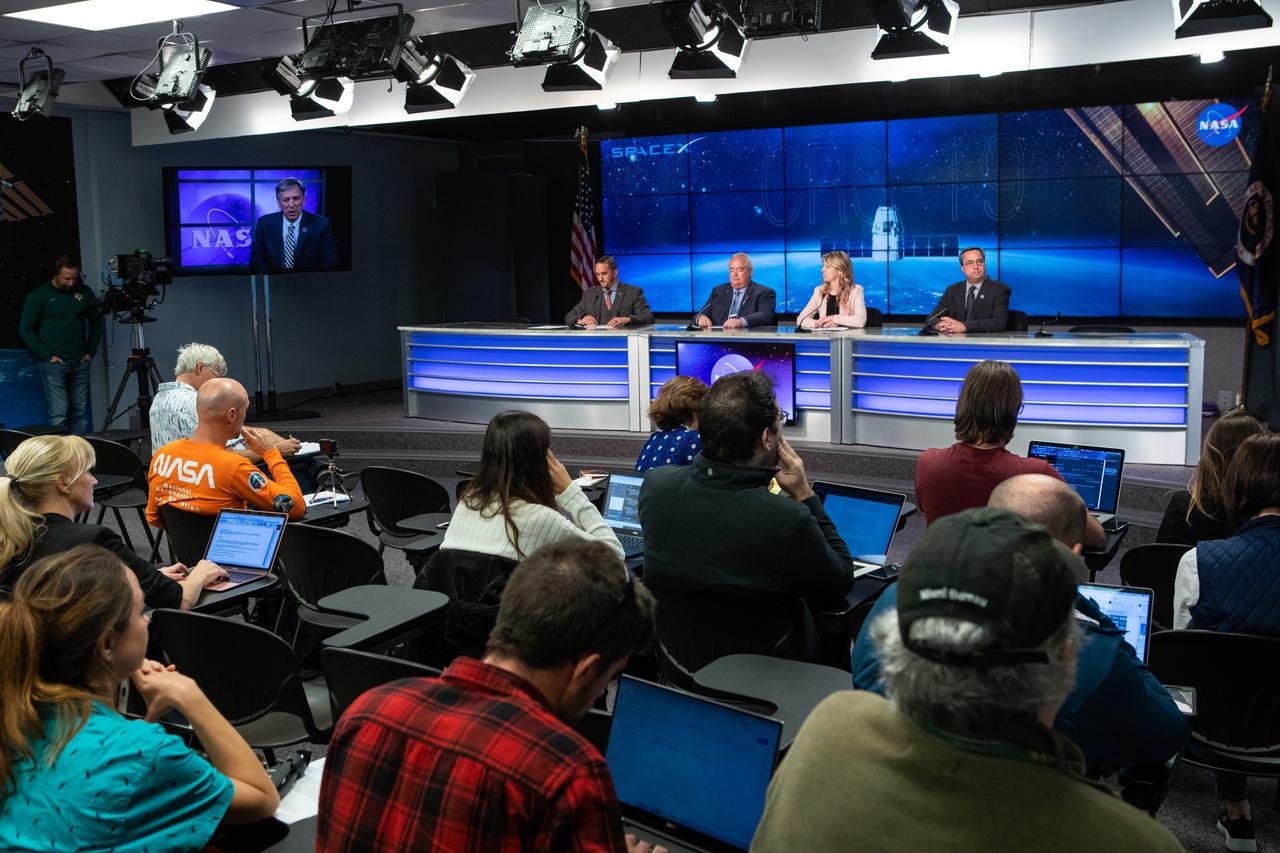
Dustin Cammack, NASA Communications, far left, moderates a prelaunch news conference on Dec. 3, 2019, for SpaceX's 19th Commercial Resupply Services (CRS-19) mission for NASA to the International Space Station, at the agency’s Kennedy Space Center in Florida. Speaking to members of the news media are, from left, Bryan Dansbury, assistant program scientist, International Space Station Program Science Office at NASA; Jessica Jensen, director, Dragon Mission Management at SpaceX; and Mike McAleenan, launch weather officer, U.S. Air Force 45th Space Wing. The SpaceX Flacon 9 rocket and Dragon cargo module are scheduled to launch on Dec. 4, 2019, from Space Launch Complex 40 on Cape Canaveral Air Force Station in Florida.
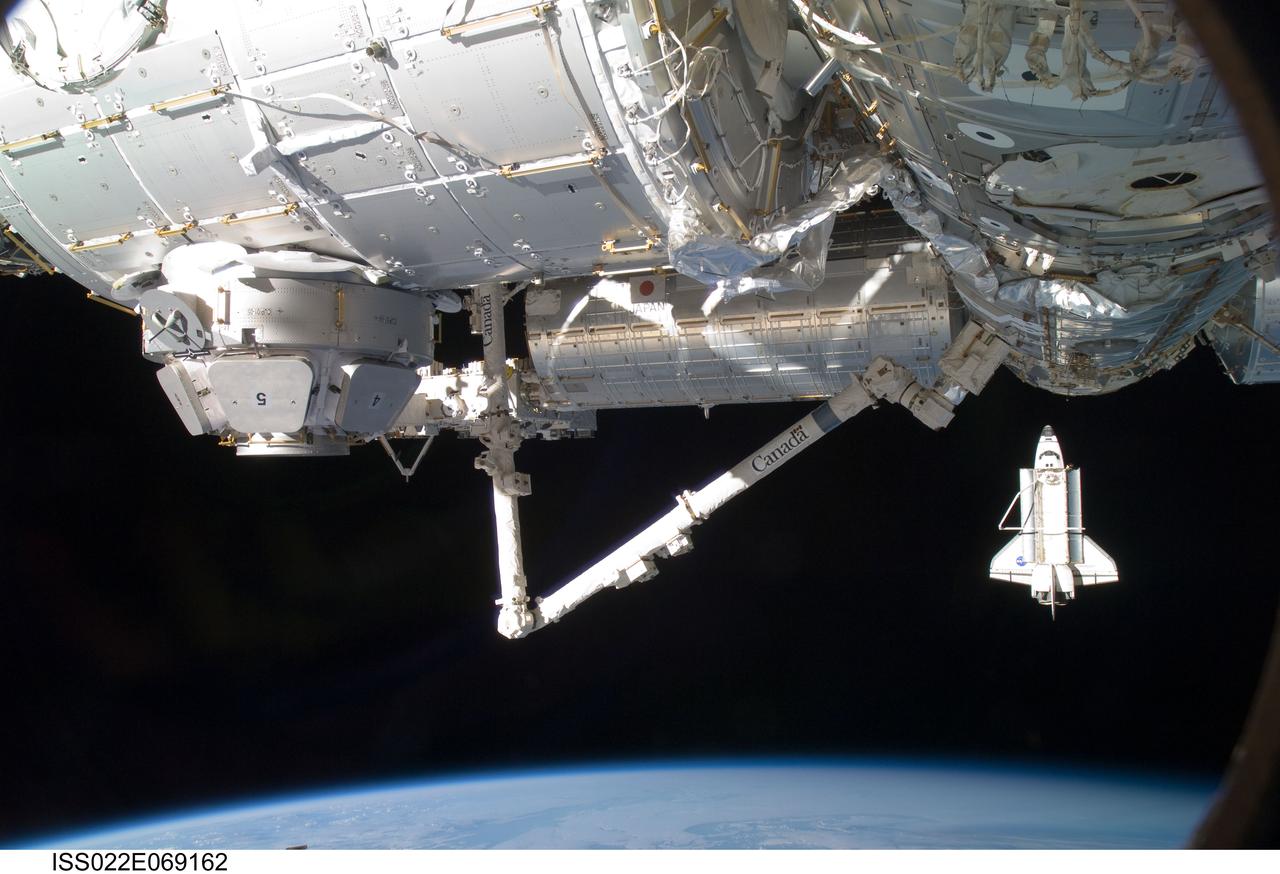
ISS022-E-069162 (19 Feb. 2010) --- The space shuttle Endeavour is featured in this image photographed by an Expedition 22 crew member on the International Space Station soon after the shuttle and station began their post-undocking relative separation. Undocking of the two spacecraft occurred at 7:54 p.m. (EST) on Feb. 19, 2010. Also pictured are the newly-installed Tranquility node and Cupola (top foreground); along with the Canadarm2 and the Japanese Kibo complex. Earth?s horizon and the blackness of space provide the backdrop for the scene.
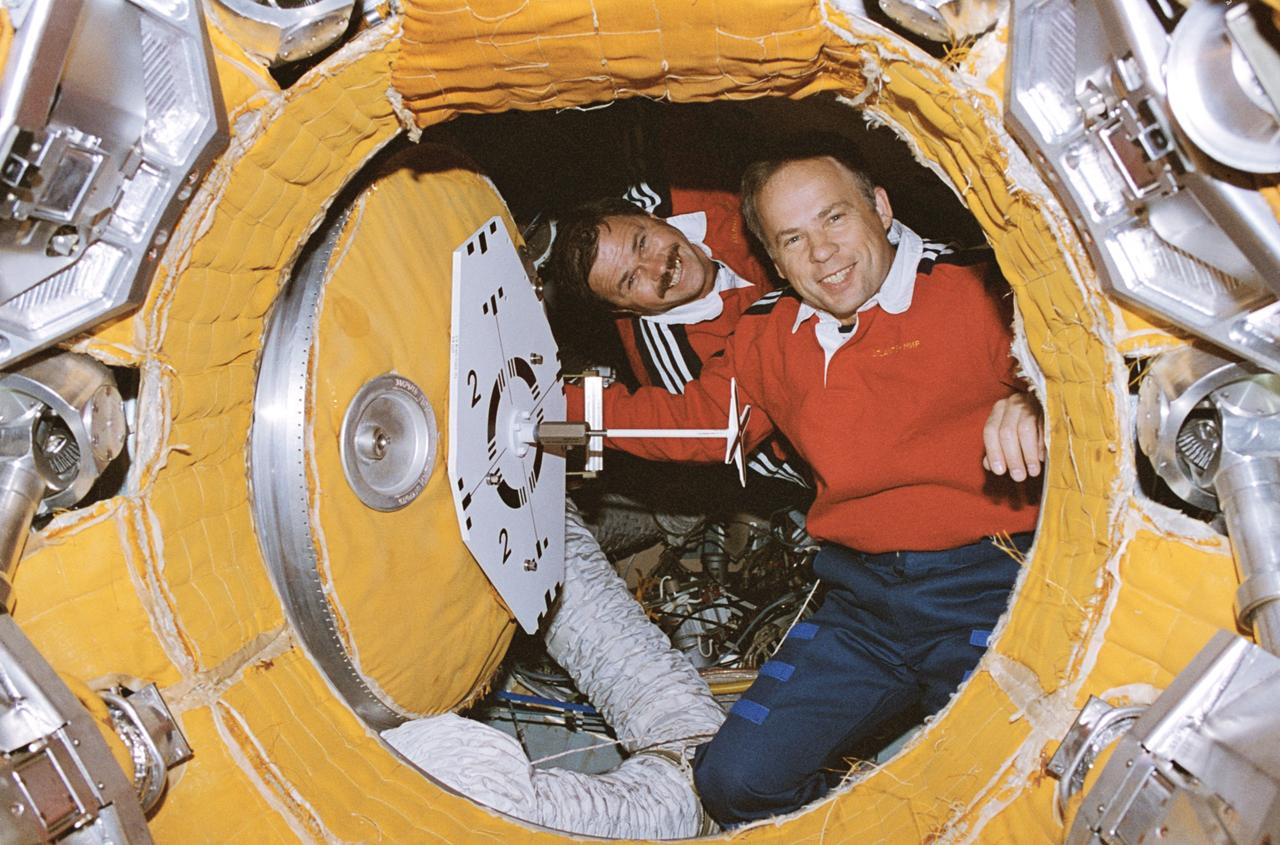
STS071-117-032 (4 July 1995) --- In the docking vestibule of Russia's Mir Space Station, cosmonauts Anatoly Y. Solovyev, Mir-19 commander, and Nikolai M. Budarin, Mir-19 flight engineer, smile at the departing Space Shuttle Atlantis STS-71 crew prior to hatch closing. Later, the two manned the Soyuz vehicle as it was temporarily moved from the Mir complex for Atlantis' undocking.
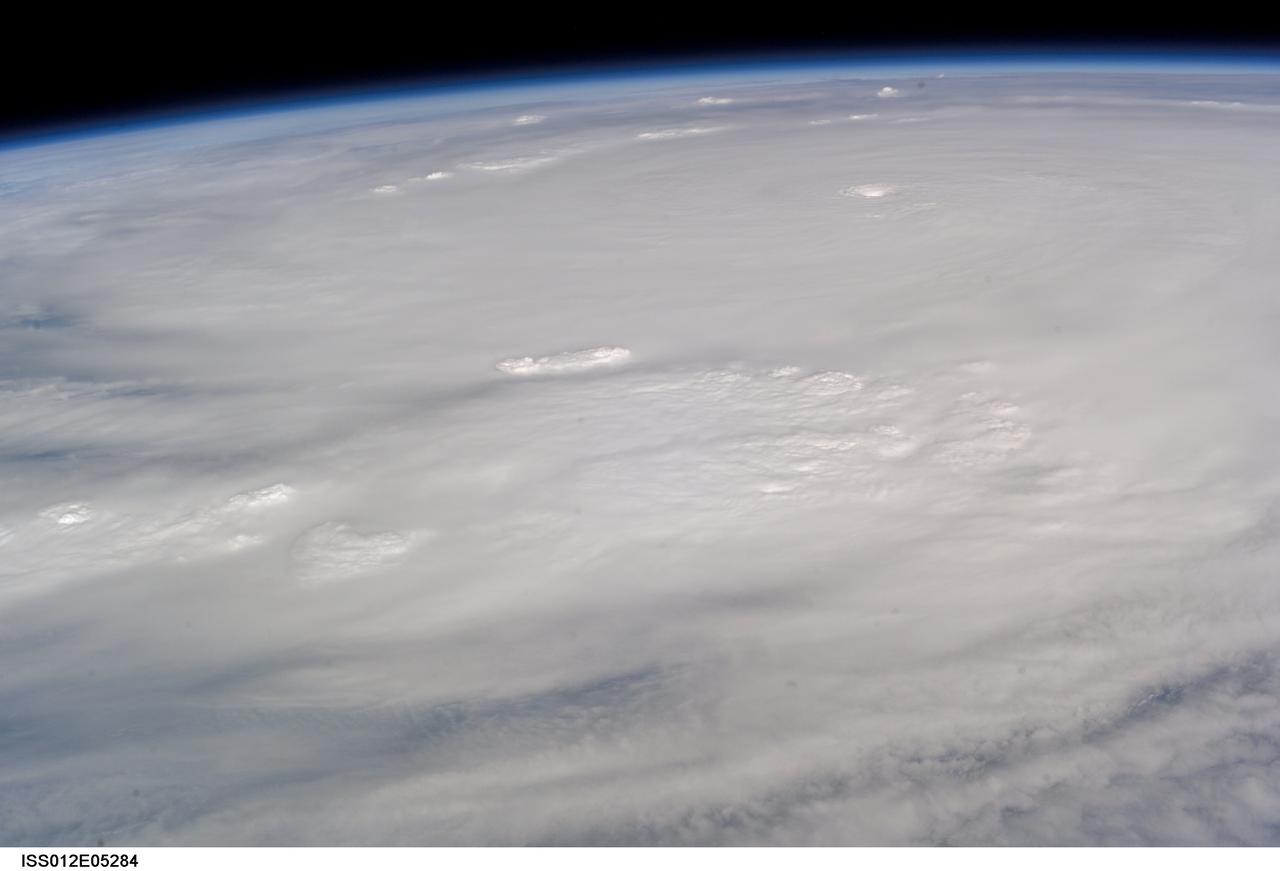
ISS012-E-5284 (19 Oct. 2005) --- This image of Hurricane Wilma was taken at 8:24 a.m. CDT Wednesday, Oct. 19, by the crew aboard NASA's international space station as the complex flew 222 miles above the storm. At the time, Wilma was the strongest Atlantic hurricane in history, with winds near 175 miles per hour. The storm was located in the Caribbean Sea, 340 miles southeast of Cozumel, Mexico.
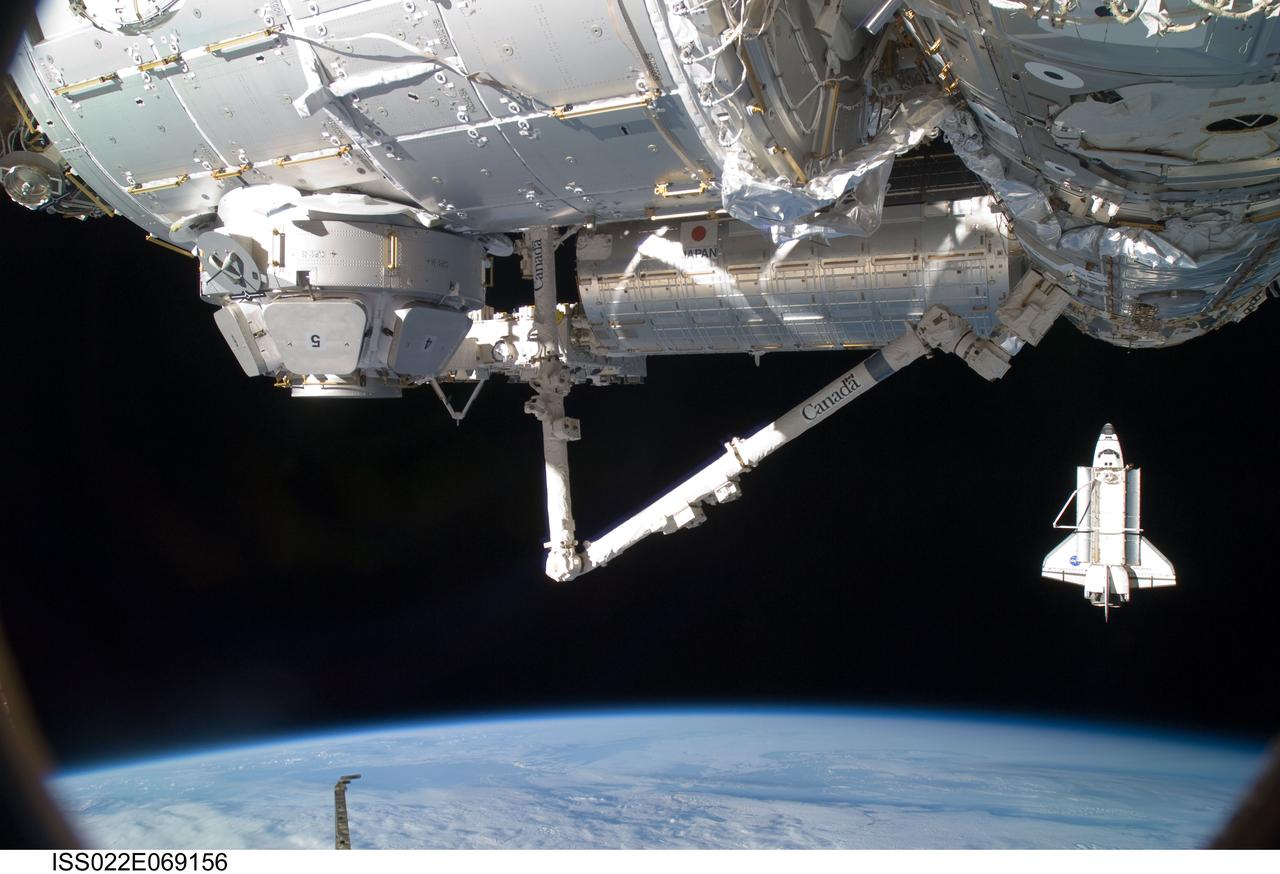
ISS022-E-069156 (19 Feb. 2010) --- The space shuttle Endeavour is featured in this image photographed by an Expedition 22 crew member on the International Space Station soon after the shuttle and station began their post-undocking relative separation. Undocking of the two spacecraft occurred at 7:54 p.m. (EST) on Feb. 19, 2010. Also pictured are the newly-installed Tranquility node and Cupola (top foreground); along with the Canadarm2 and the Japanese Kibo complex. Earth?s horizon and the blackness of space provide the backdrop for the scene.

ISS036-E-009609 (19 June 2013) --- One of the Expedition 36 crew members aboard the Earth- orbiting International Space Station snapped this 400mm picture of the West Fork Complex fire in southern Colorado on June 19, 2013. Editor's note: As of June 24, 2013, one of the largest fires currently active and being very closely monitored, the West Fork fire has destroyed 75,150 acres.
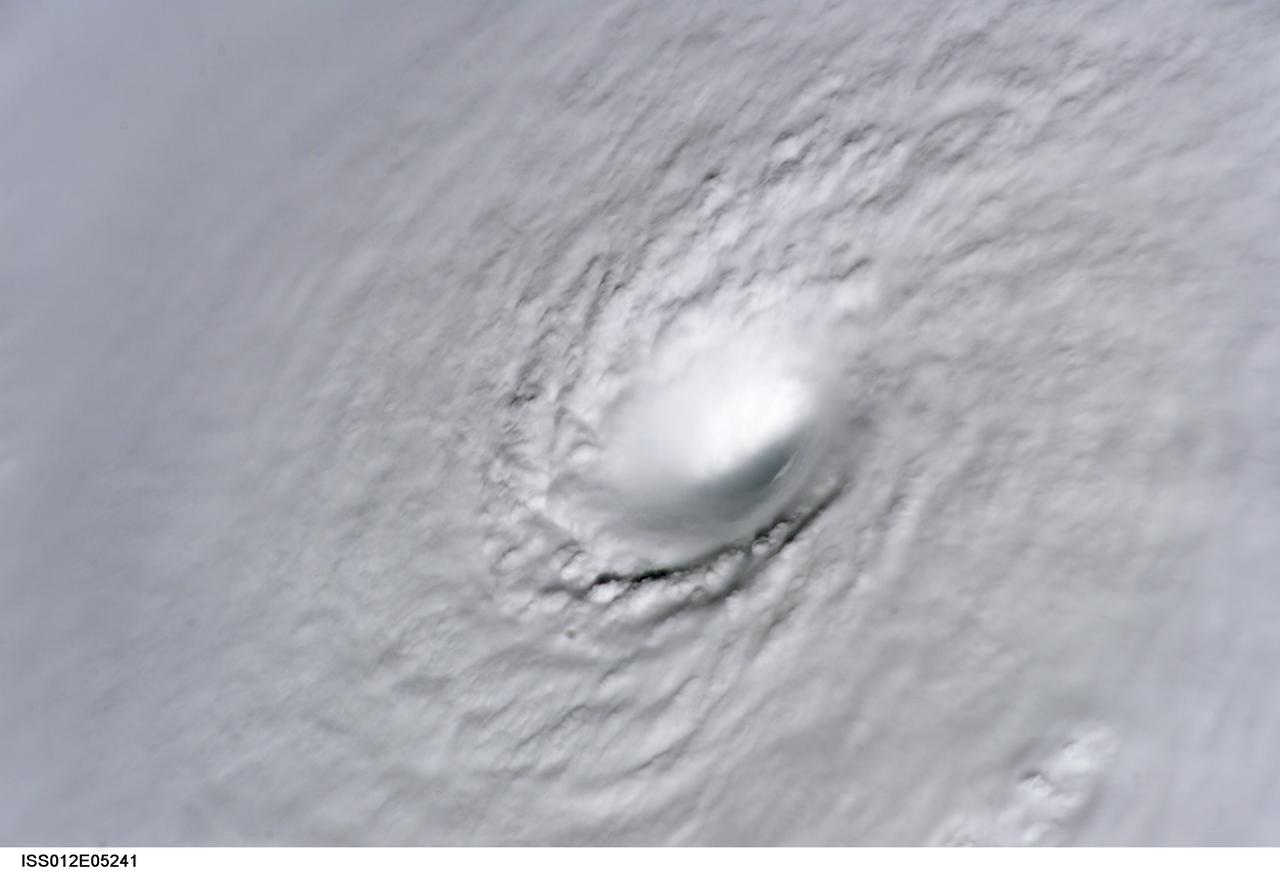
ISS012-E-5241 (19 Oct. 2005) --- This image of Hurricane Wilma was taken at 8:22 a.m. CDT Wednesday, Oct. 19, by the crew aboard NASA's international space station as the complex flew 222 miles above the storm. At the time, Wilma was the strongest Atlantic hurricane in history, with winds near 175 miles per hour. The storm was located in the Caribbean Sea, 340 miles southeast of Cozumel, Mexico.
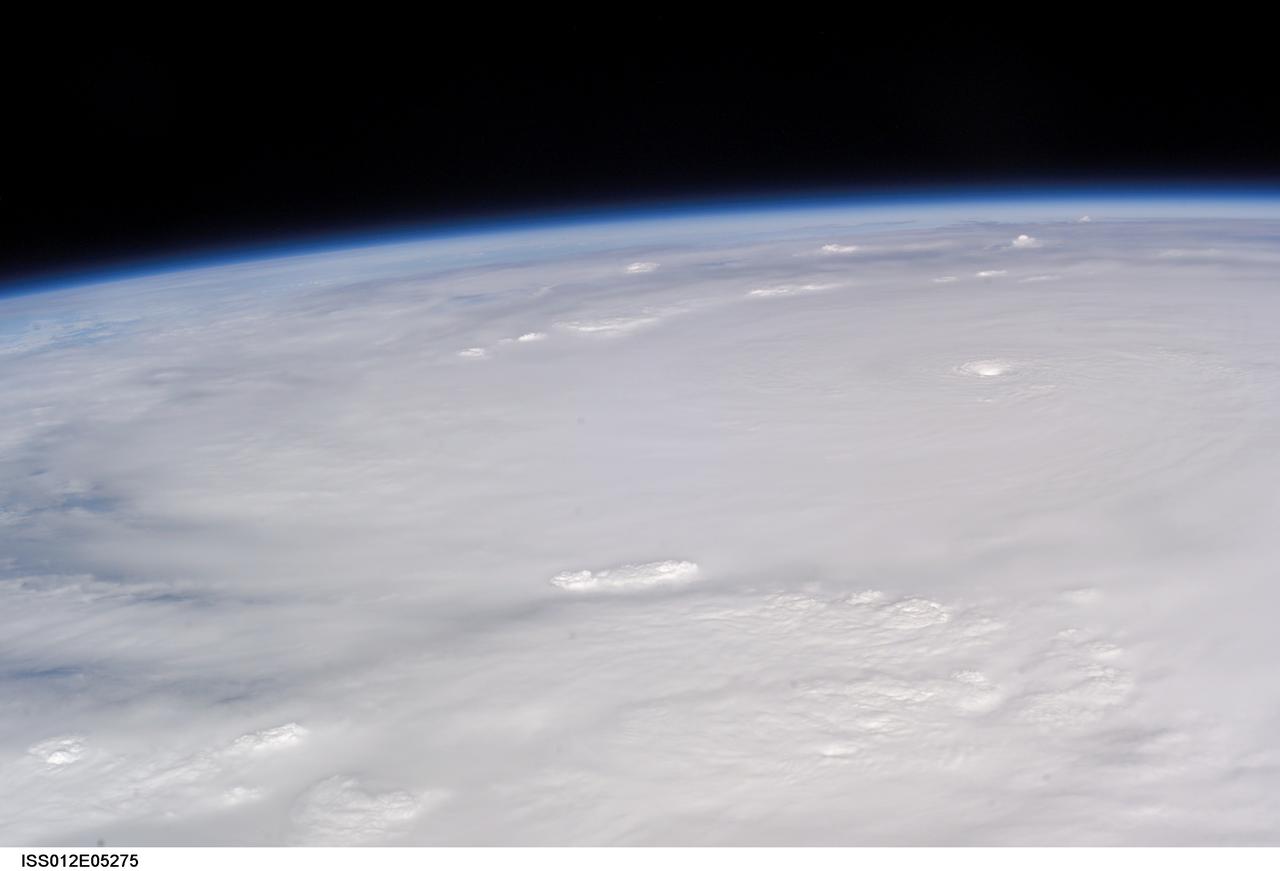
ISS012-E-5275 (19 Oct. 2005) --- This image of Hurricane Wilma was taken at 8:24 a.m. CDT Wednesday, Oct. 19, by the crew aboard NASA's international space station as the complex flew 222 miles above the storm. At the time, Wilma was the strongest Atlantic hurricane in history, with winds near 175 miles per hour. The storm was located in the Caribbean Sea, 340 miles southeast of Cozumel, Mexico.
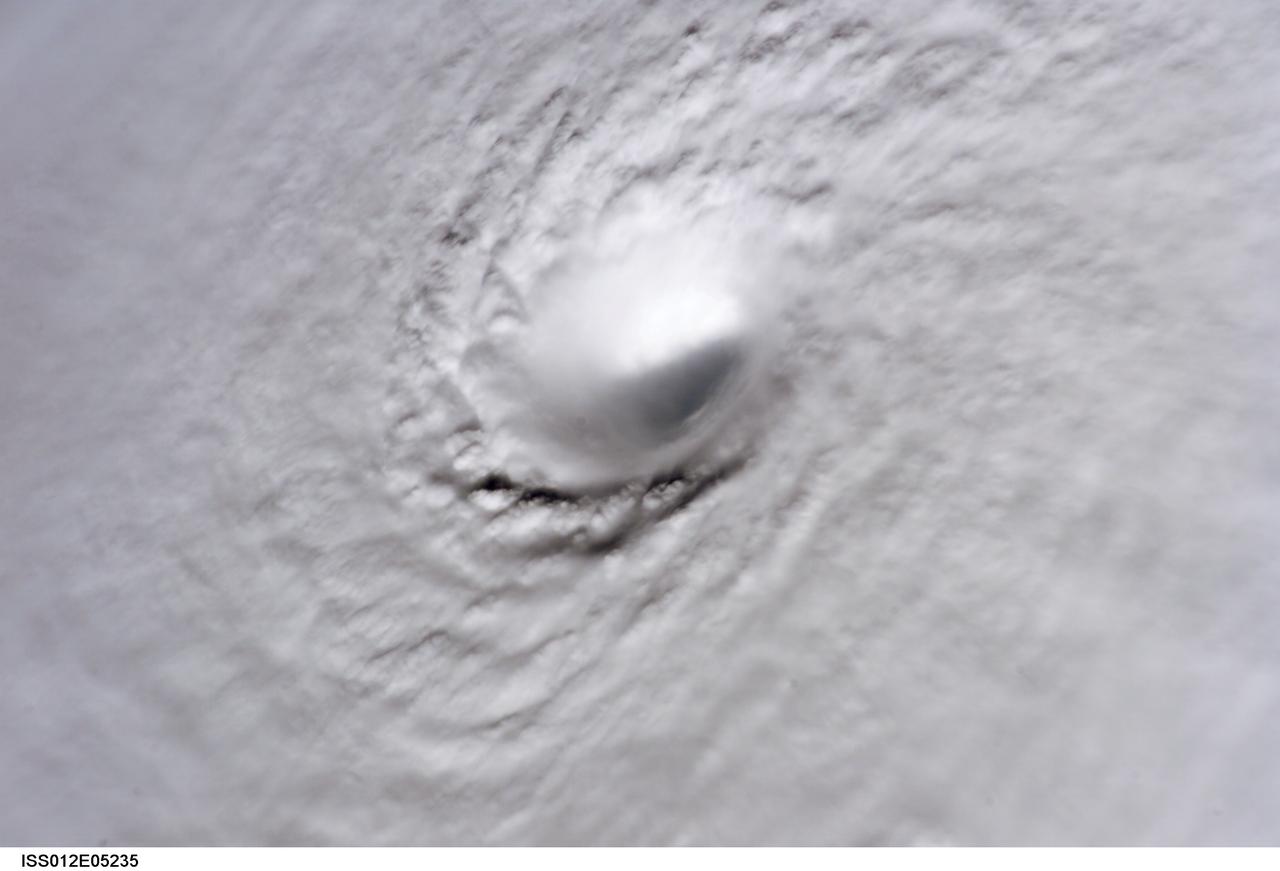
ISS012-E-5235 (19 Oct. 2005) --- This image of Hurricane Wilma was taken at 8:22 a.m. CDT Wednesday, Oct. 19, by the crew aboard NASA's international space station as the complex flew 222 miles above the storm. At the time, Wilma was the strongest Atlantic hurricane in history, with winds near 175 miles per hour. The storm was located in the Caribbean Sea, 340 miles southeast of Cozumel, Mexico.
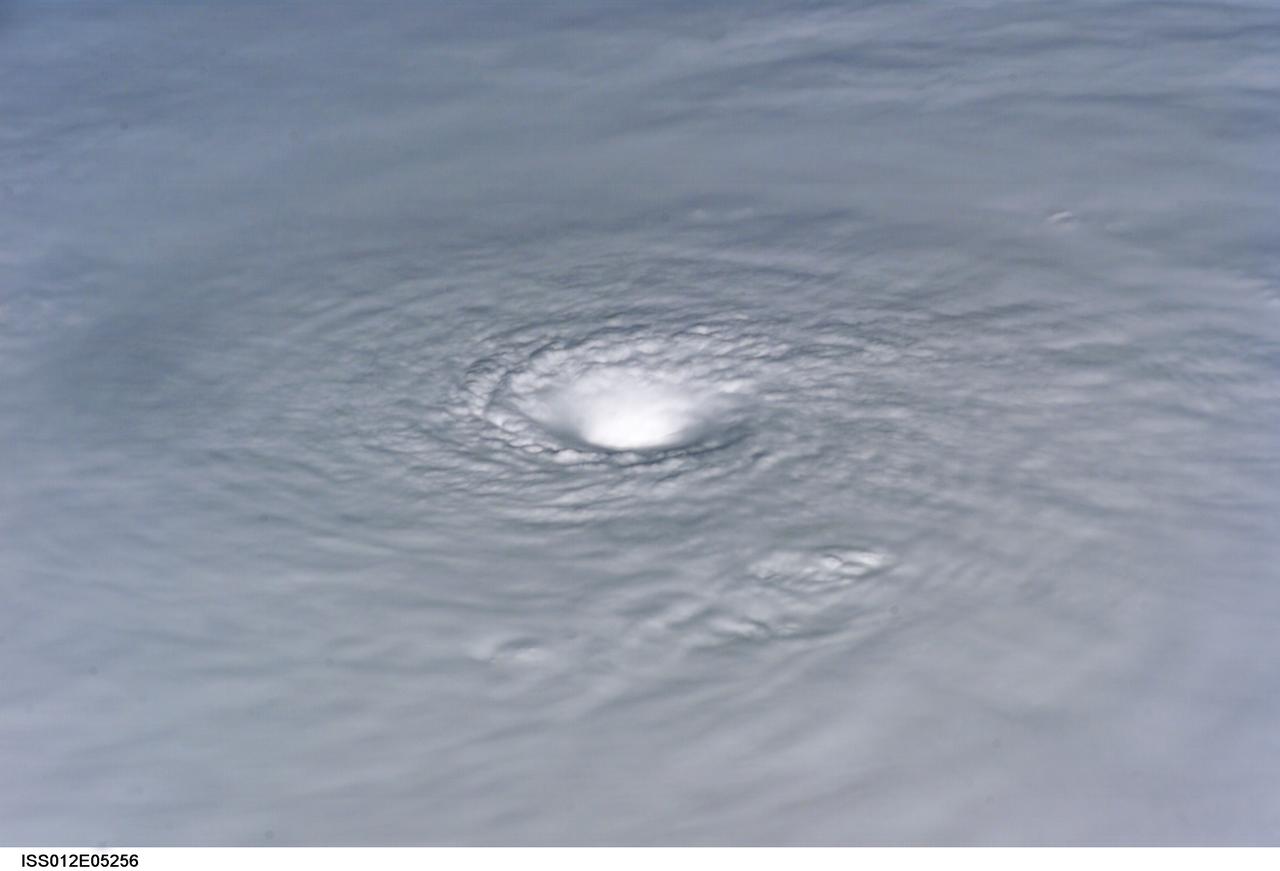
ISS012-E-5256 (19 Oct. 2005) --- This image of Hurricane Wilma was taken at 8:23 a.m. CDT Wednesday, Oct. 19, by the crew aboard NASA's international space station as the complex flew 222 miles above the storm. At the time, Wilma was the strongest Atlantic hurricane in history, with winds near 175 miles per hour. The storm was located in the Caribbean Sea, 340 miles southeast of Cozumel, Mexico.
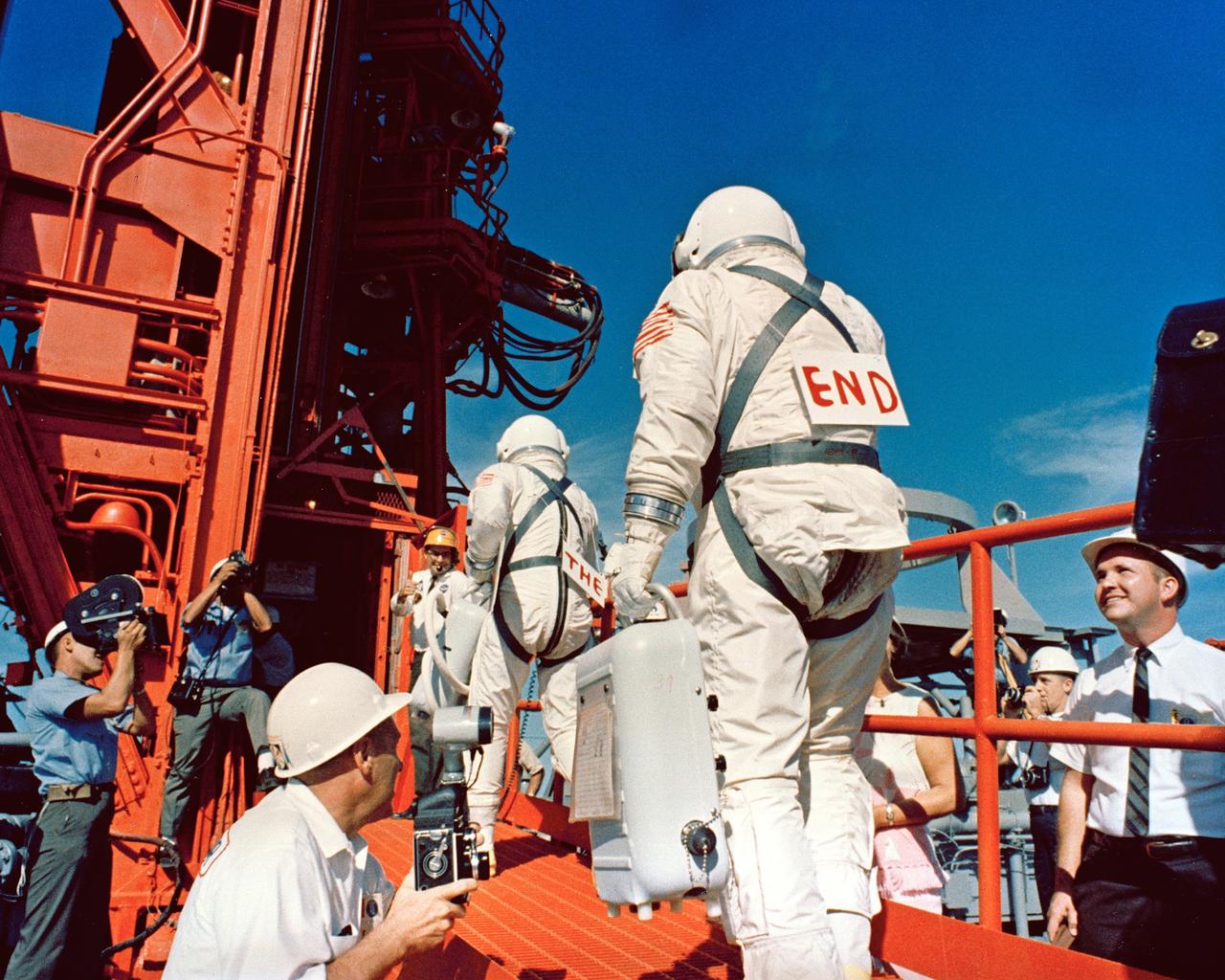
CAPE KENNEDY, Fla. -- At Cape Kennedy Air Force Station in Florida, the crew for Gemini 12 arrives at Launch Complex 19. Command pilot James A. Lovell is followed by pilot Edwin E. Buzz Aldrin Jr. The signs on their backs note that this mission is the final flight of the Gemini Program. Photo Credit: NASA
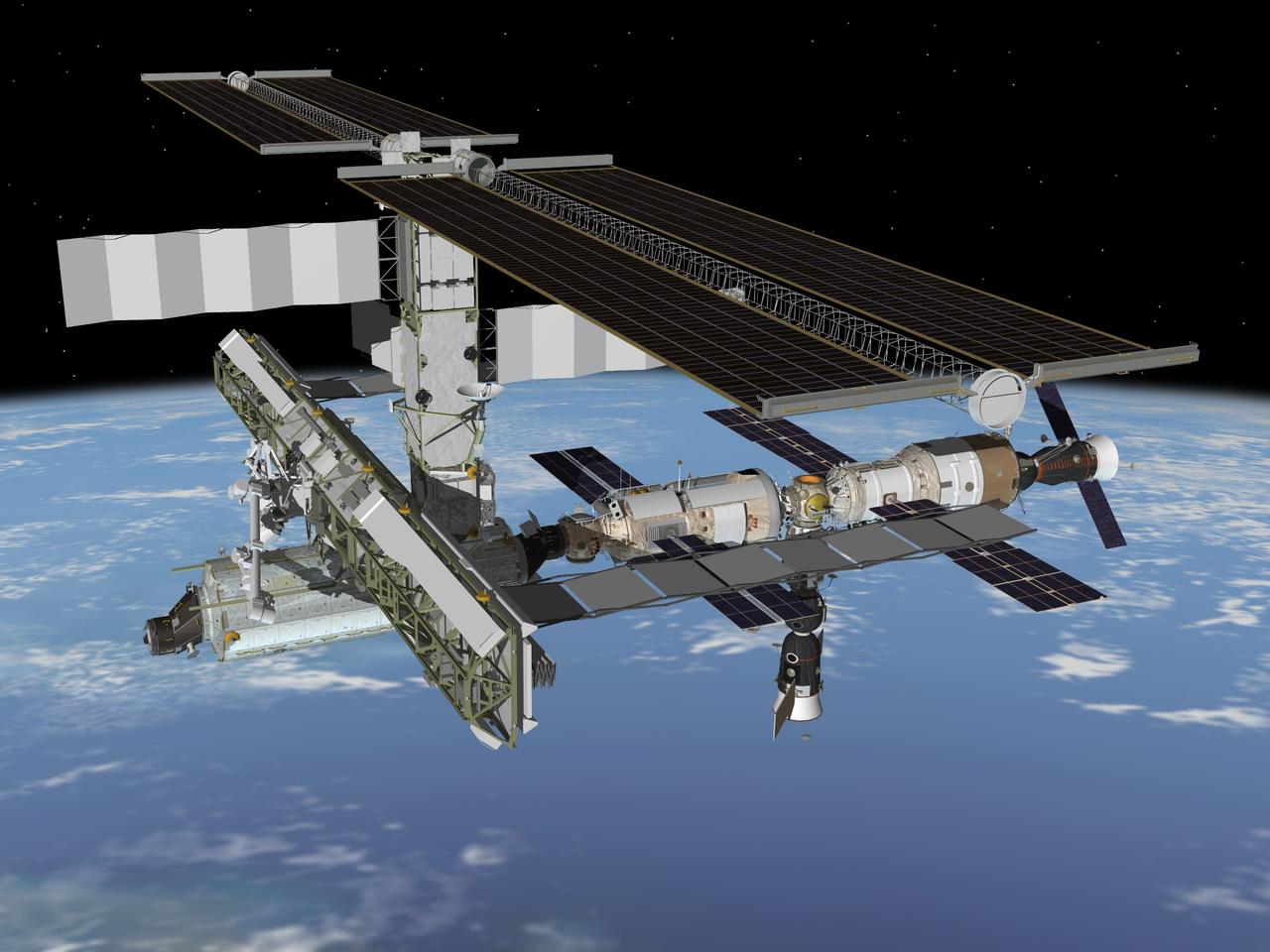
JSC2005-E-21683 (June 2005) --- Computer-generated artist's rendering of the International Space Station following scheduled activities of June 19, 2005. This angle shows the port side of the orbiting complex. Progress 18 resupply vehicle docks to the aft end of the Zvezda Service Module. Soyuz 10 remains docked to Pirs.
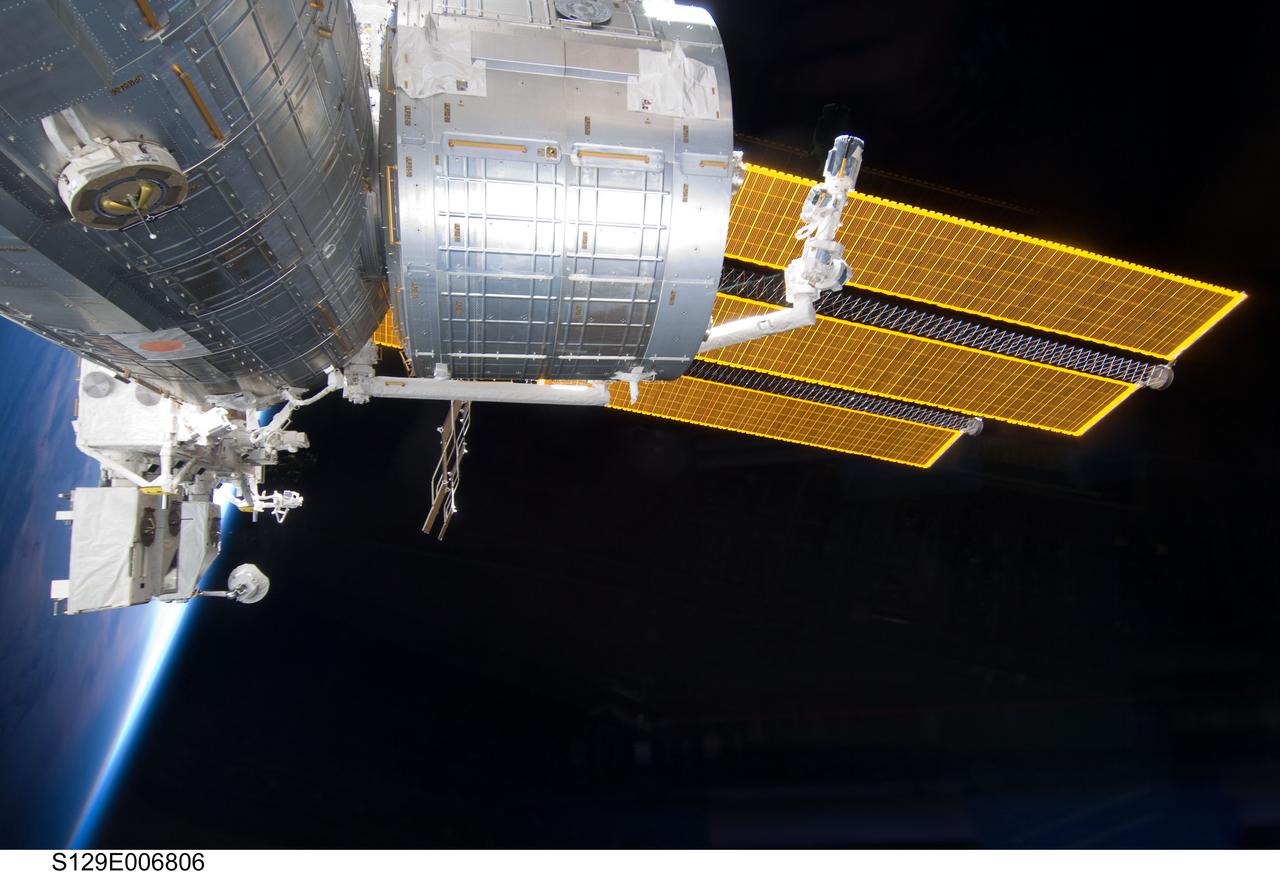
S129-E-006806 (19 Nov. 2009) --- Backdropped by Earth?s horizon and the blackness of space, the Japanese Kibo complex of the International Space Station is featured in this image photographed by an STS-129 crew member while Space Shuttle Atlantis remains docked with the station.
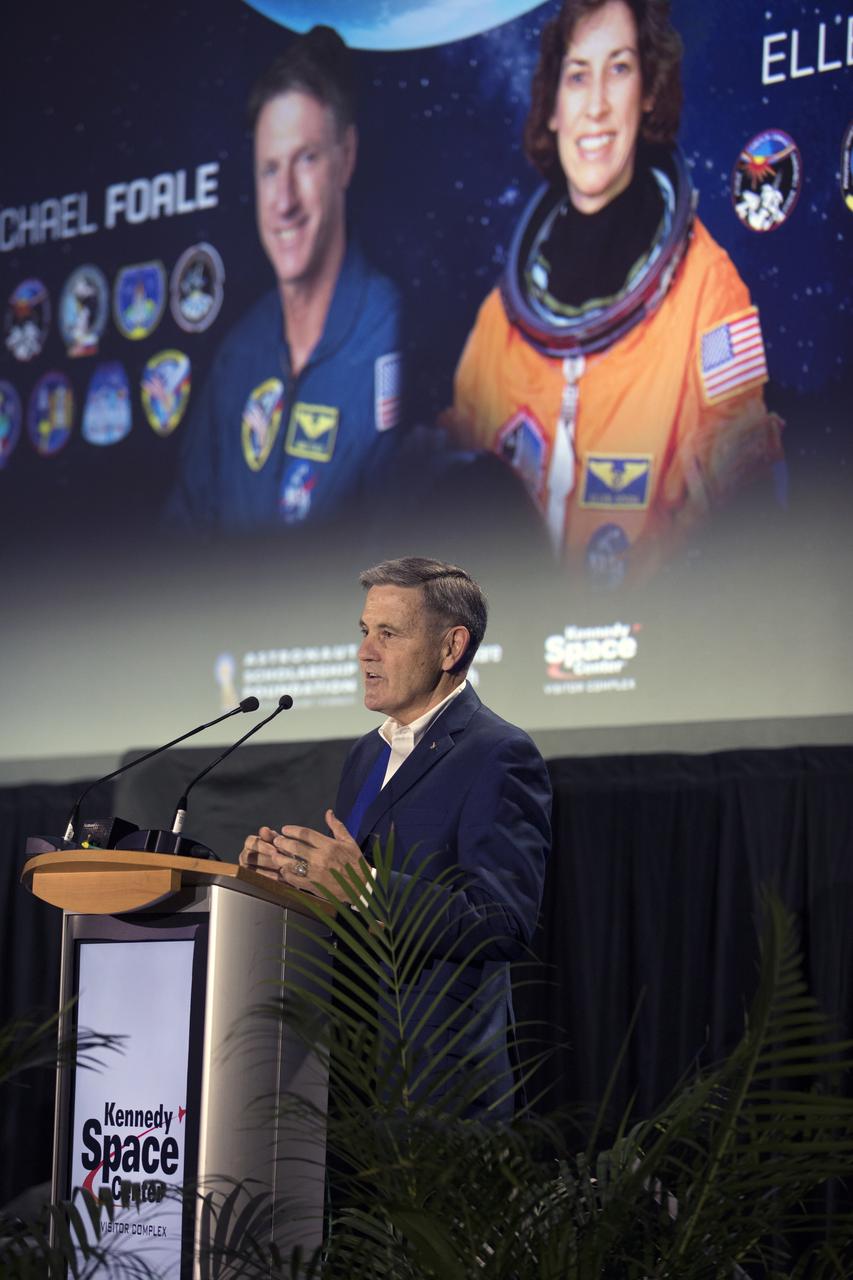
NASA's Kennedy Space Center Director Bob Cabana, also a member of the U.S. Astronaut Hall of Fame, honored Ellen Ochoa and Michael Foale during ceremonies on May 19, 2017. The activity took place in the Space Shuttle Atlantis facility at the Kennedy Space Center Visitor Complex in Florida.
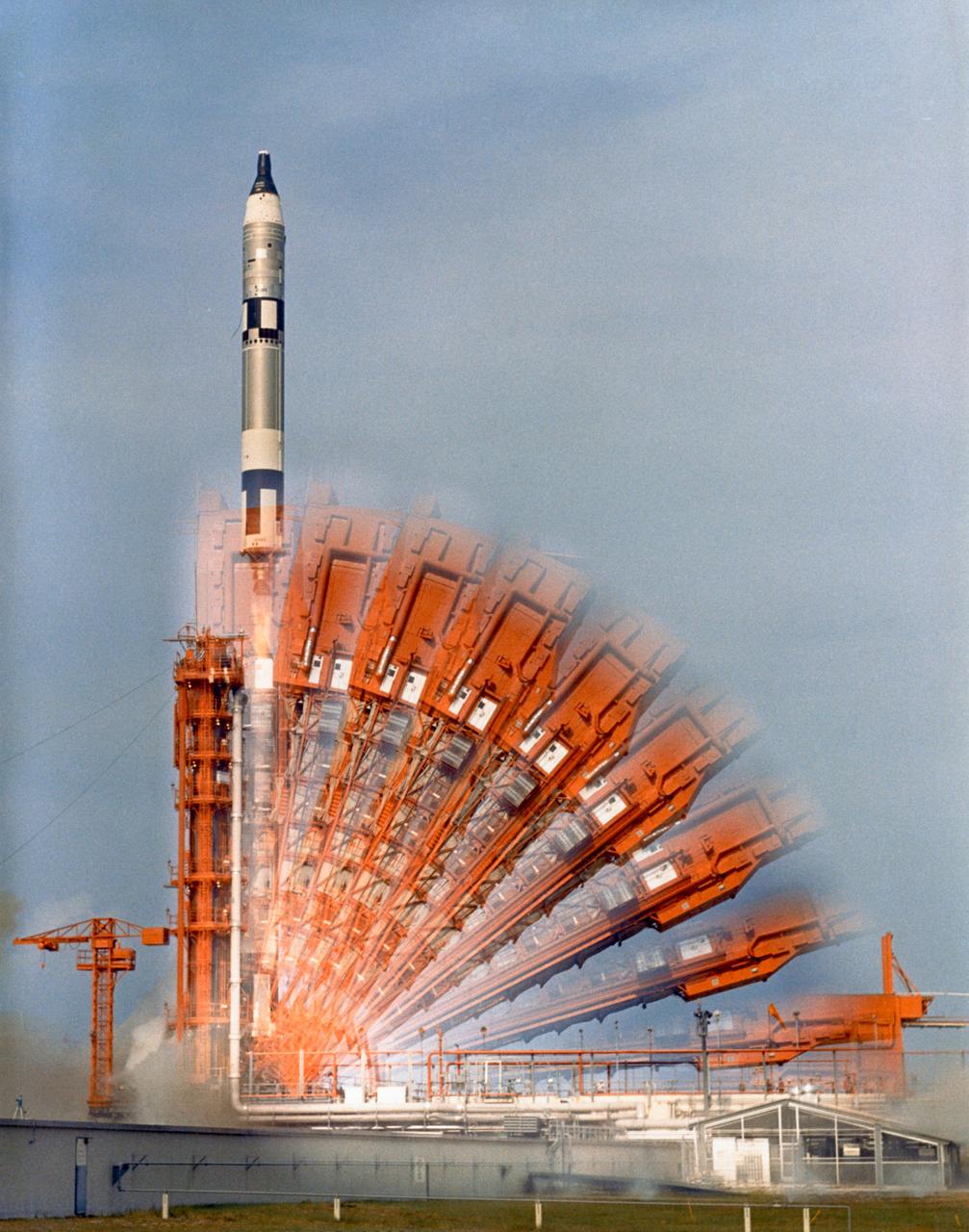
S66-42762 (18 July 1966) --- The Gemini-10 spacecraft is launched from Complex 19 at 5:20 p.m., July 18, 1966. A time exposure creates the illusion of multiple rocker arms. Onboard are astronauts John W. Young, command pilot, and Michael Collins, pilot. Photo credit: NASA

KENNEDY SPACE CENTER, Fla. -- In preparation for Space Shuttle Mission STS-87, Columbia rolls out to Launch Complex 39B atop the crawler-transporter. STS-87 will be the fourth flight of the United States Microgravity Payload and the Spartan-201 deployable satellite. Launch is tentatively scheduled for Nov. 19
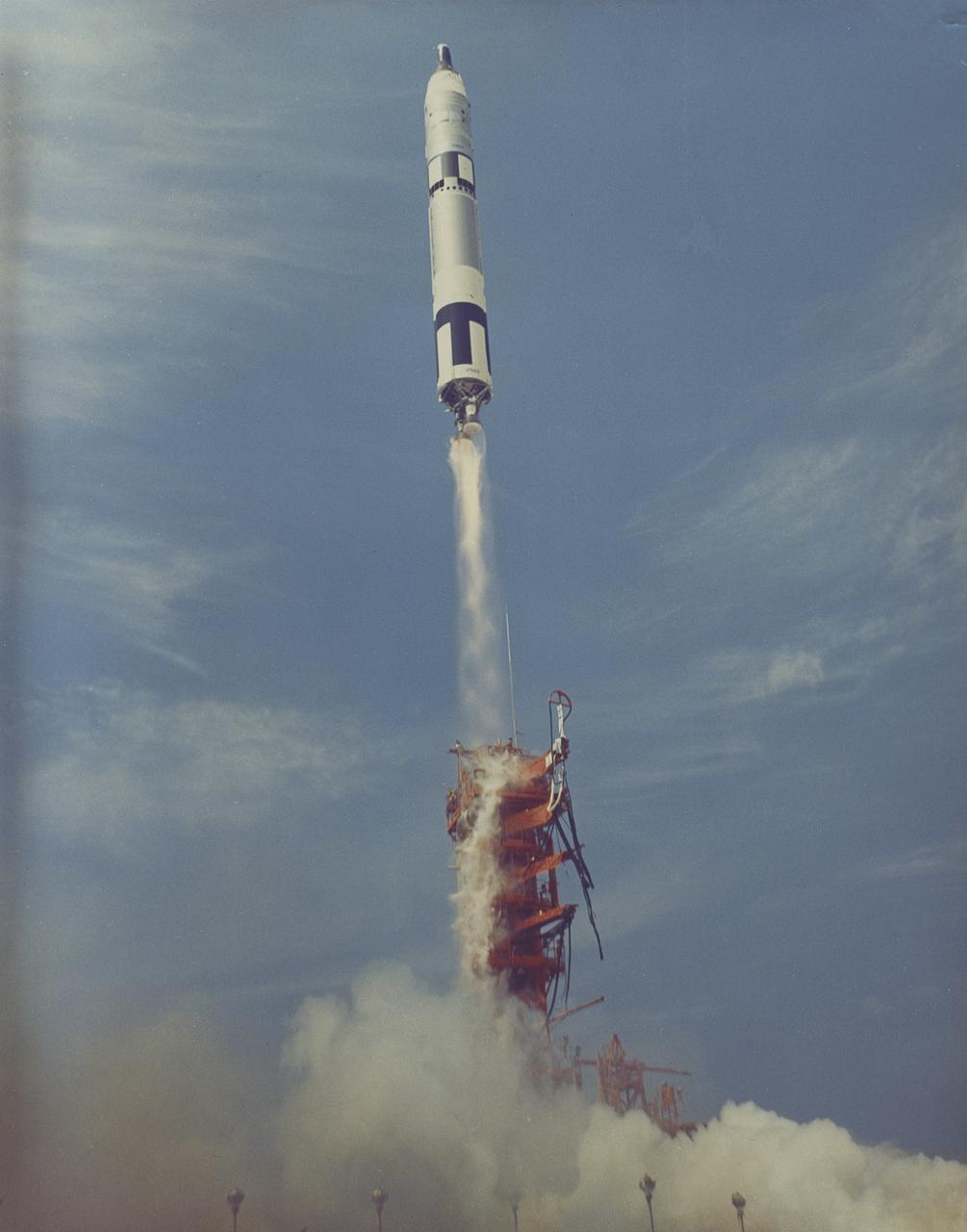
A Titan booster launched the Gemini 8 spacecraft on March 16, 1966 from launch complex 19 Cape Kennedy, Florida. The flight crew for the 3 day mission, astronauts Neil A. Armstrong and David R. Scott, achieved the first rendezvous and docking to Atlas/Agena in Earth orbit.
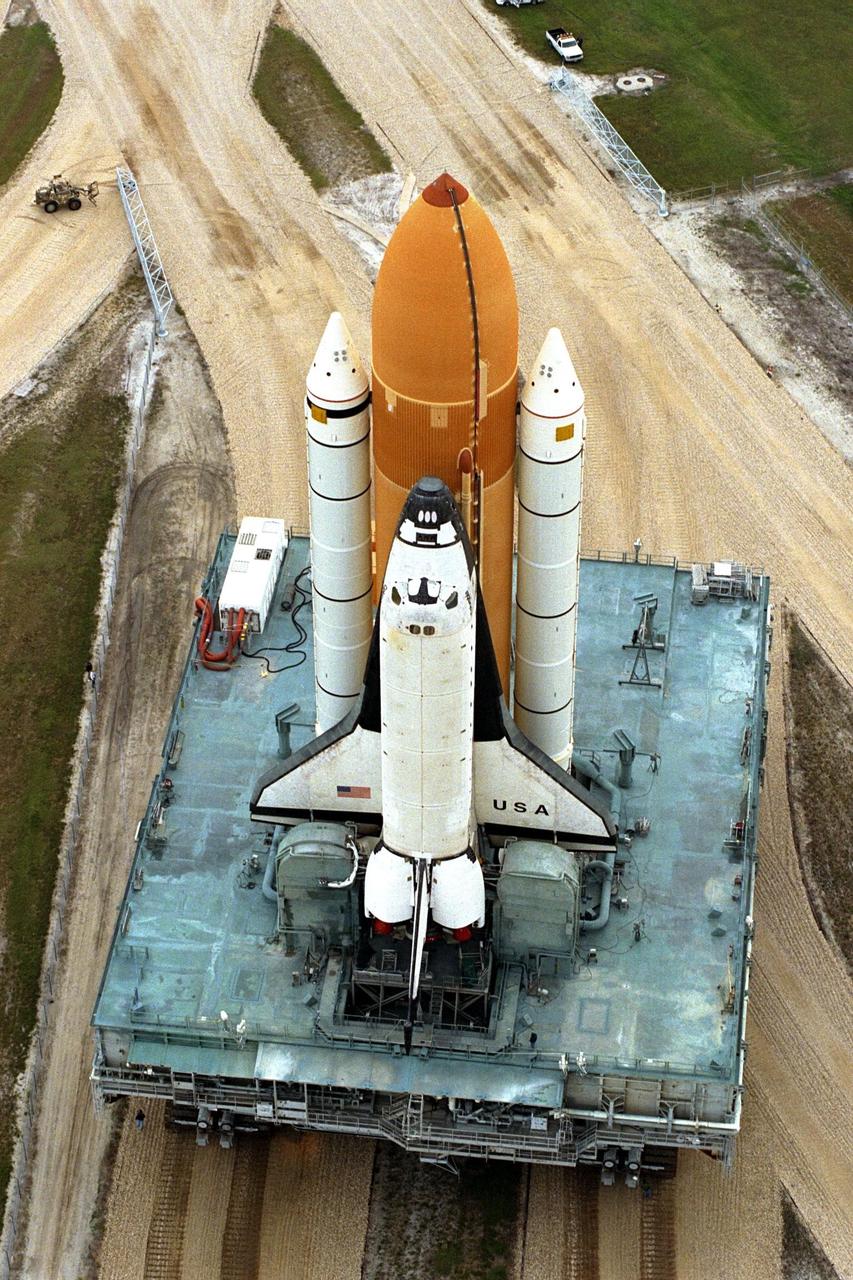
In preparation for Space Shuttle Mission STS-87, Columbia rolls out to Launch Complex 39B atop the crawler-transporter. STS-87 will be the fourth flight of the United States Microgravity Payload and the Spartan-201 deployable satellite. Launch is tentatively scheduled for Nov. 19
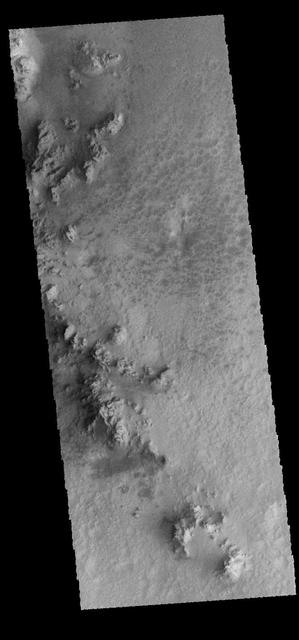
Rather than a central peak, Hale Crater contains a complex ridge of peaks. This image captured by NASA 2001 Mars Odyssey spacecraft shows a portion of the ridge. Orbit Number: 67402 Latitude: -35.7295 Longitude: 323.763 Instrument: VIS Captured: 2017-02-22 19:41 https://photojournal.jpl.nasa.gov/catalog/PIA21656
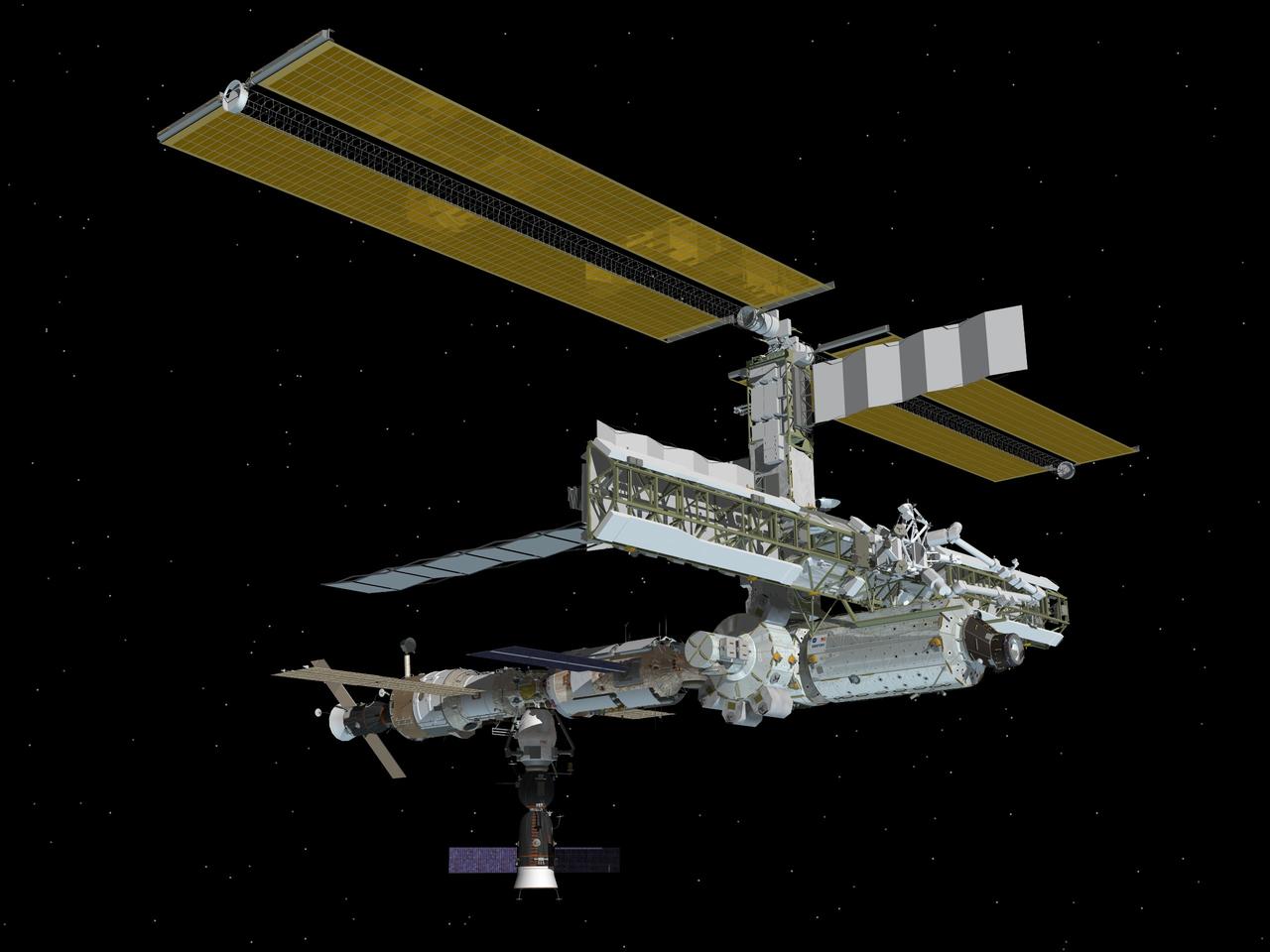
JSC2005-E-21684 (June 2005) --- Computer-generated artist's rendering of the International Space Station following scheduled activities of June 19, 2005. This angle shows the starboard side of the orbiting complex. Progress 18 resupply vehicle docks to the aft end of the Zvezda Service Module. Soyuz 10 remains docked to Pirs.
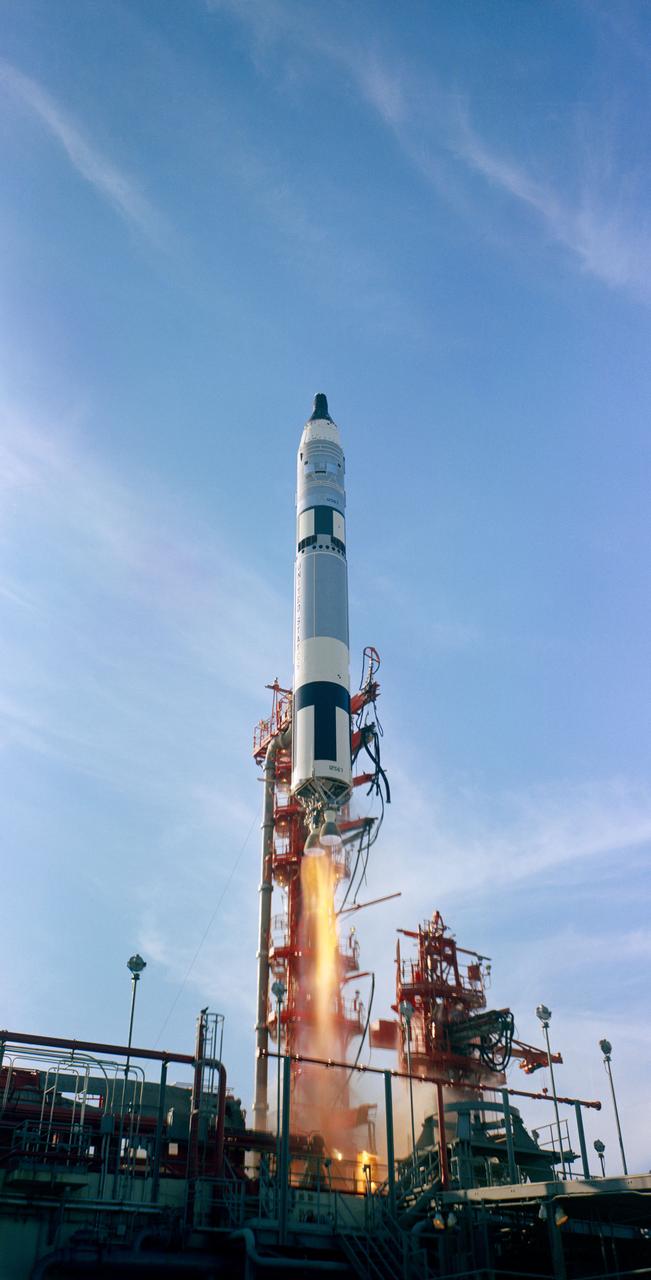
S66-59970 (11 Nov. 1966) --- Gemini-12 spacecraft, carrying astronauts James A. Lovell Jr., command pilot, and Edwin E. Aldrin Jr., pilot, was launched from the Kennedy Space Center's Launch Complex 19 at 3:46 p.m. (EST), Nov. 11, 1966. Photo credit: NASA
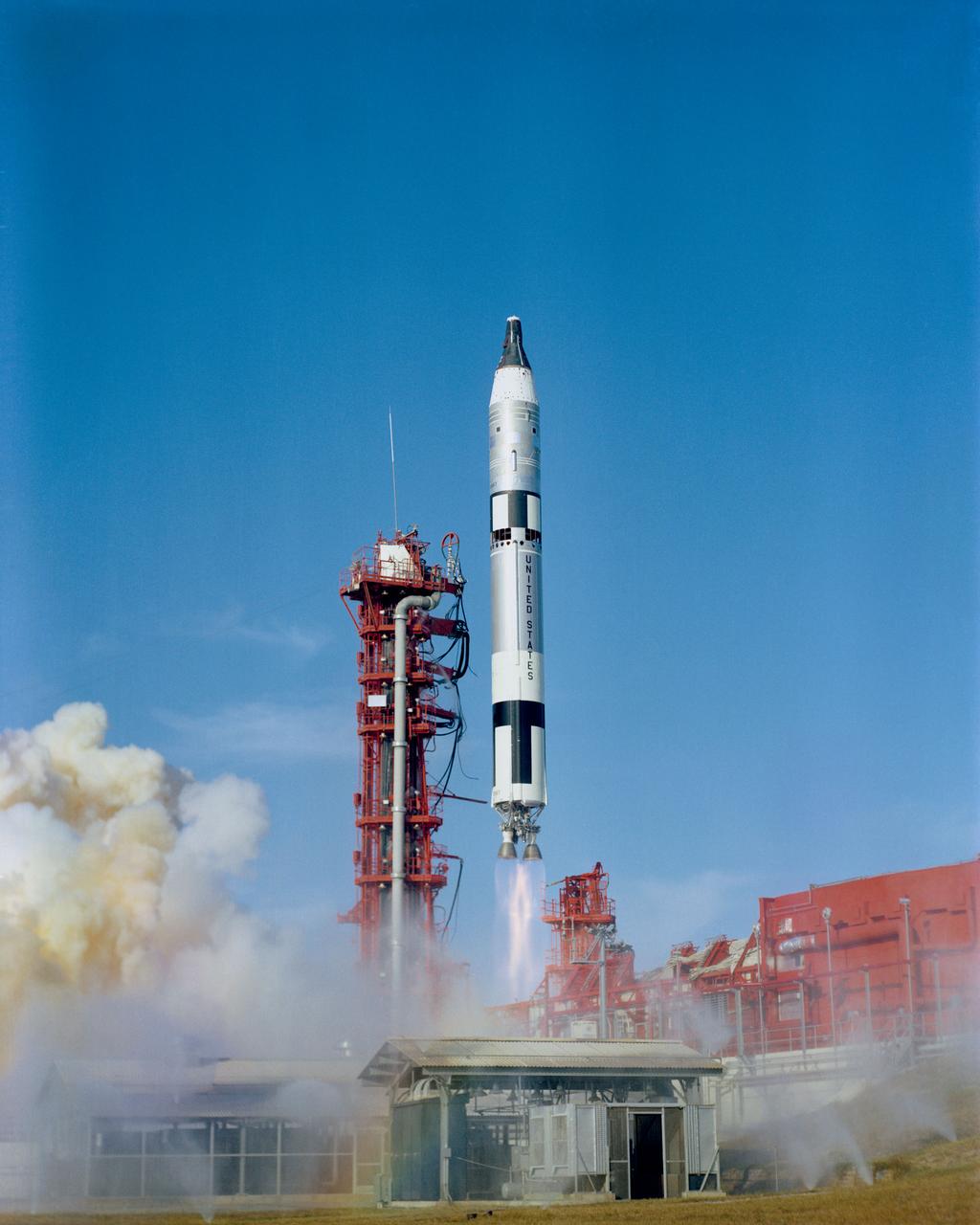
S66-59975 (11 Nov. 1966) --- Gemini-12 spacecraft, carrying astronauts James A. Lovell Jr., command pilot, and Edwin E. Aldrin Jr., pilot, was launched from the Kennedy Space Center's Launch Complex 19 at 3:46 p.m. (EST), Nov. 11, 1966. Photo credit: NASA

In preparation for Space Shuttle Mission STS-87, Columbia rolls out to Launch Complex 39B atop the crawler-transporter. STS-87 will be the fourth flight of the United States Microgravity Payload and the Spartan-201 deployable satellite. Launch is tentatively scheduled for Nov. 19