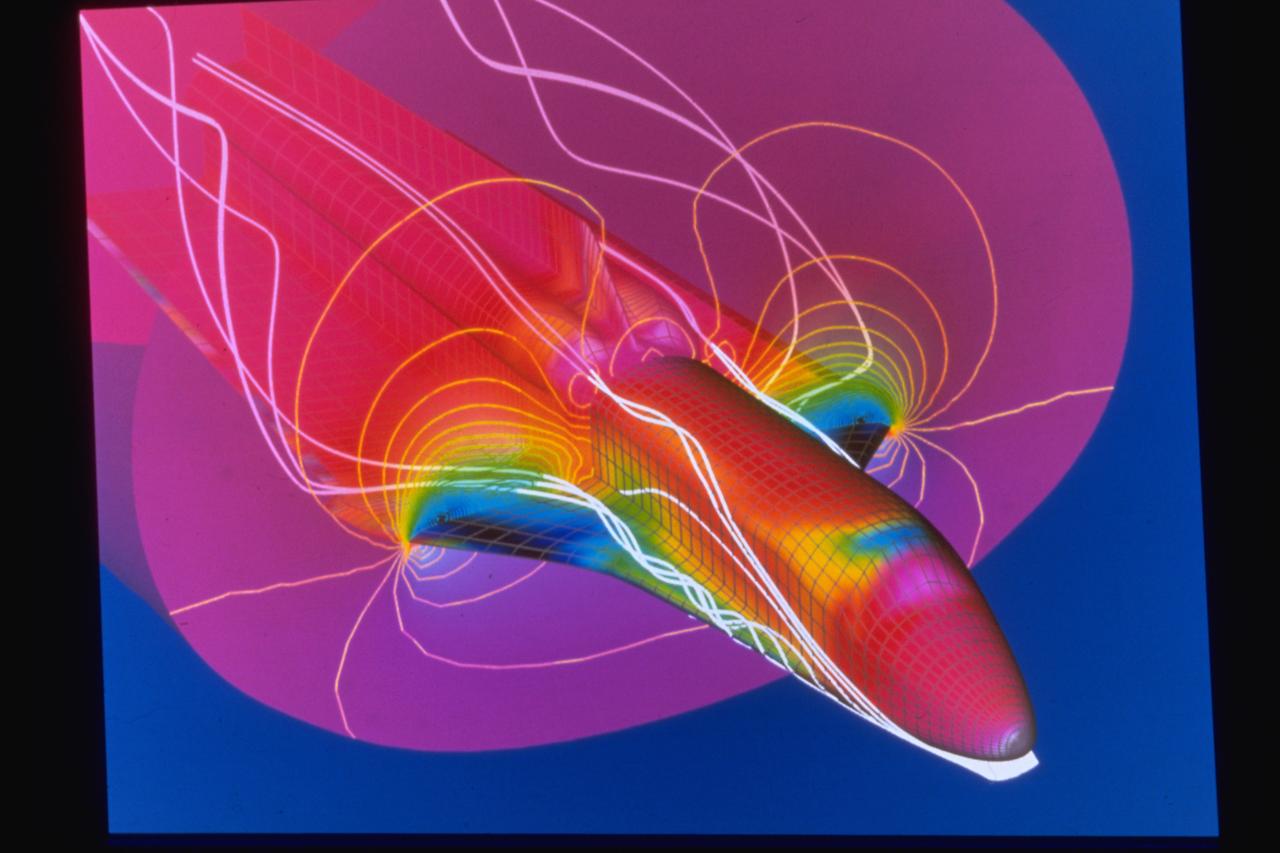
Computational Fluid Dynamics look at Space Shuttle flow
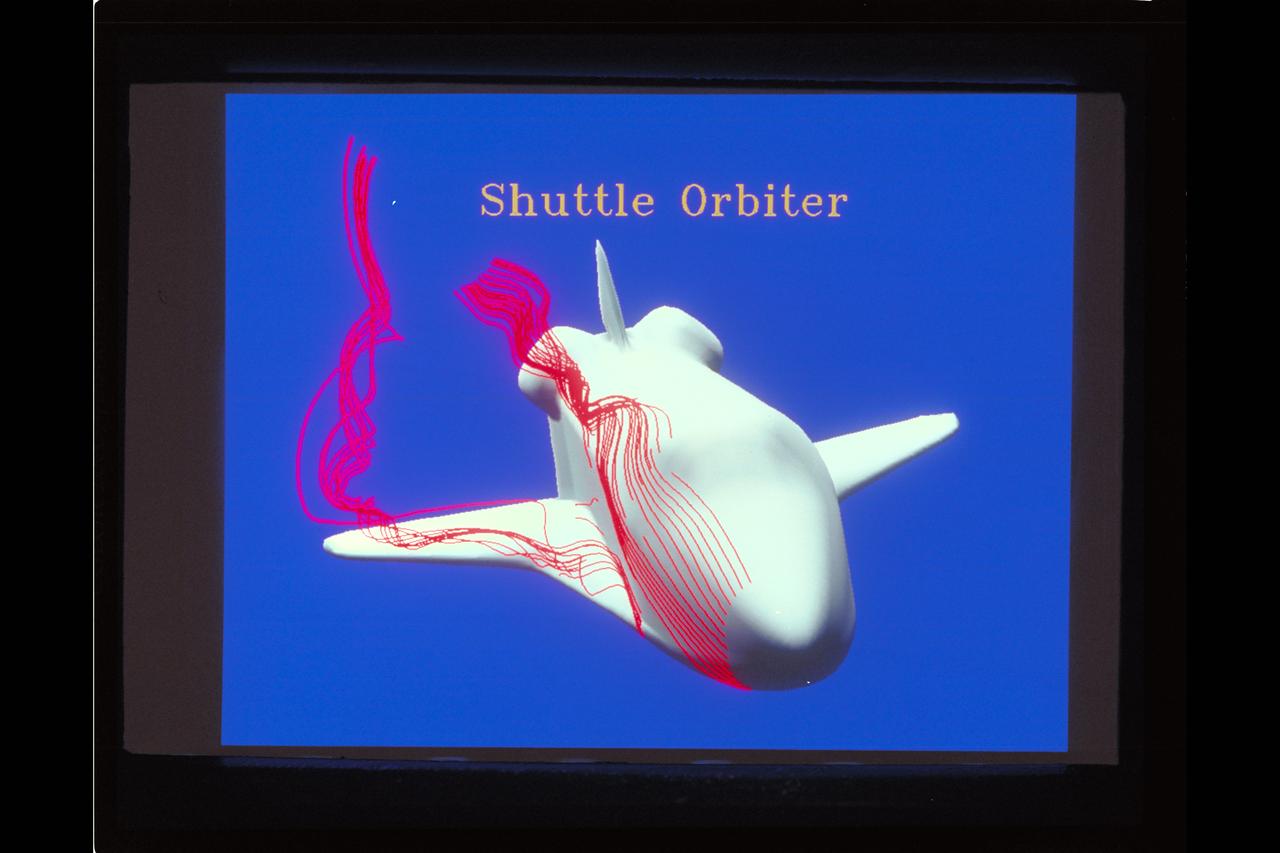
Computational Fluid Dynamics (CFD) Space Shuttle flow field
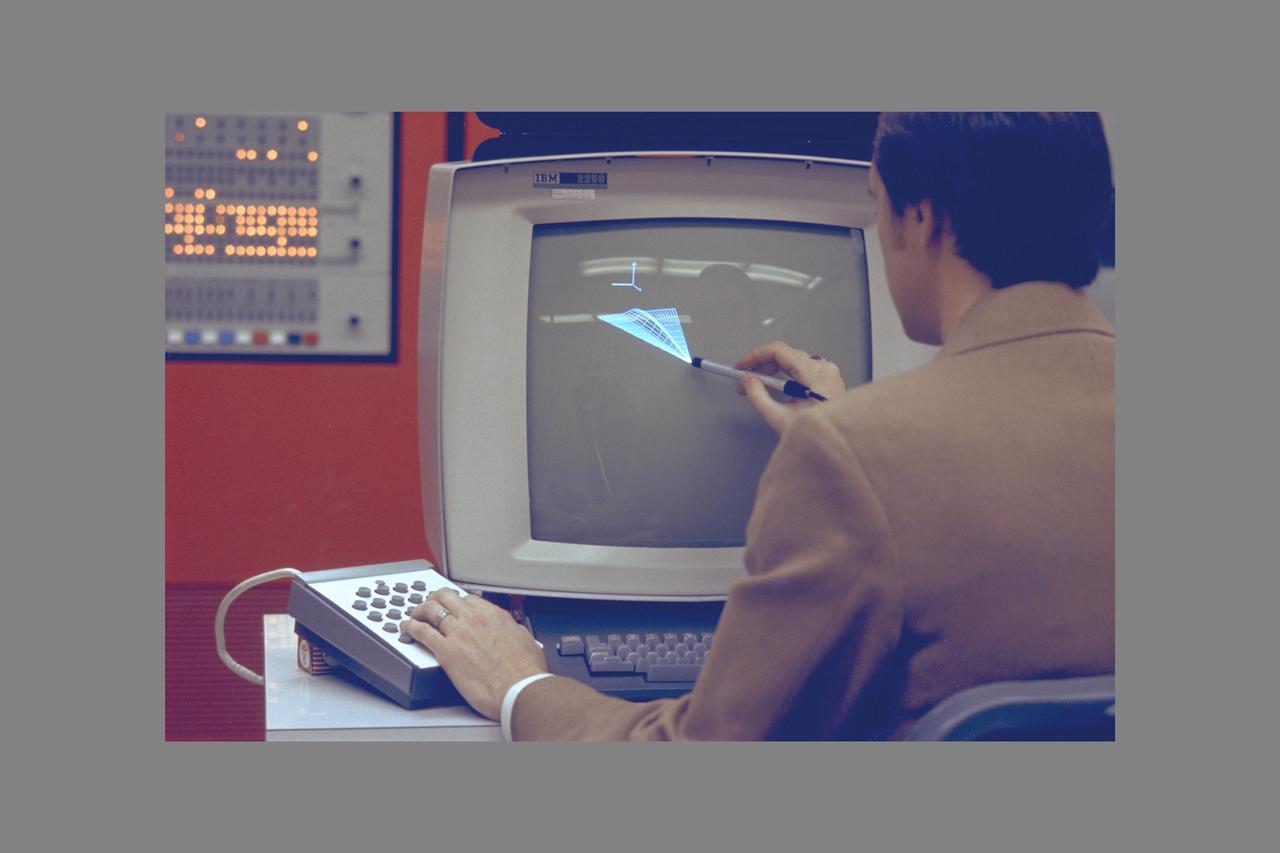
Dr. Paul Kutler, Computational Fluid Dynamics, at IBM terminal - developing ways to better predict the flow of air at high speeds around aerodynamic bodies.
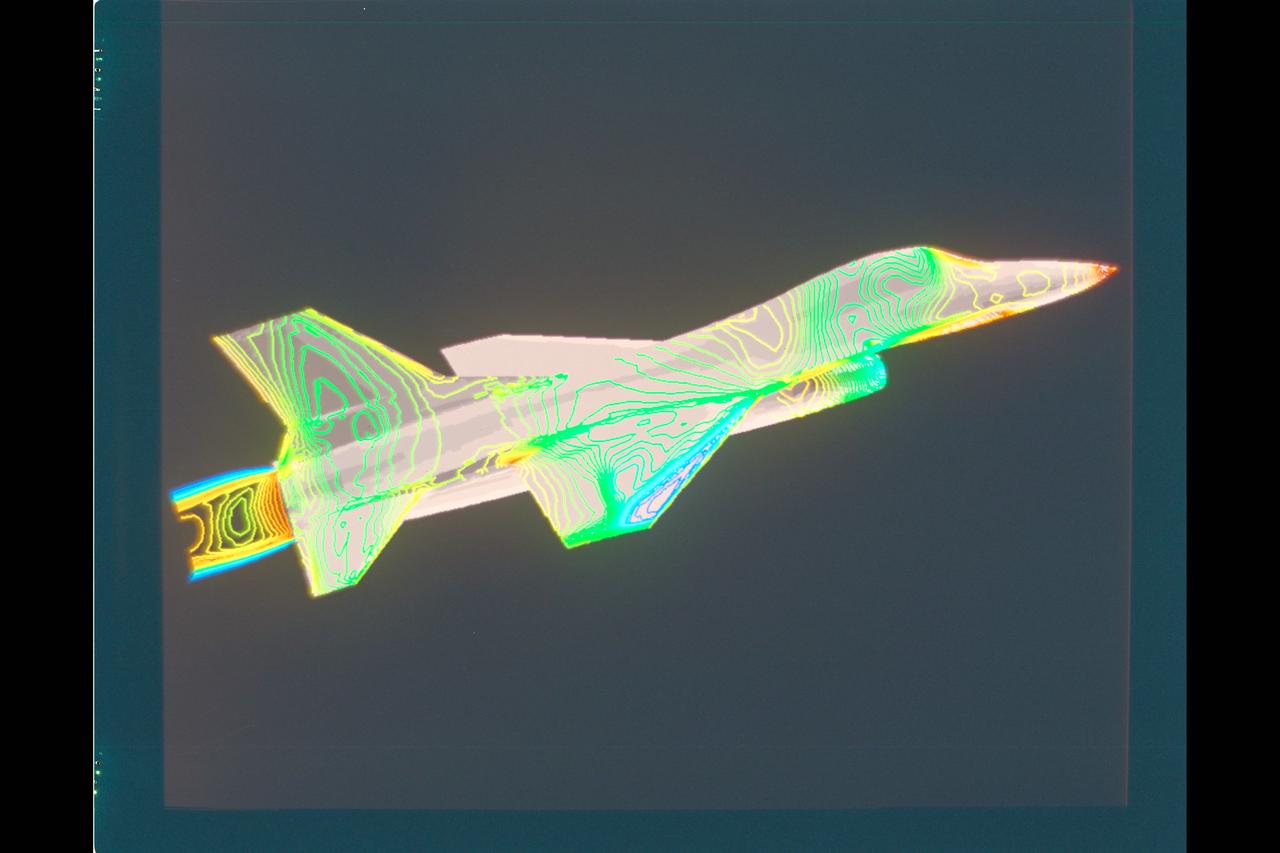
Computational Fluid Dynamics (CFD) F-16A flow field grid
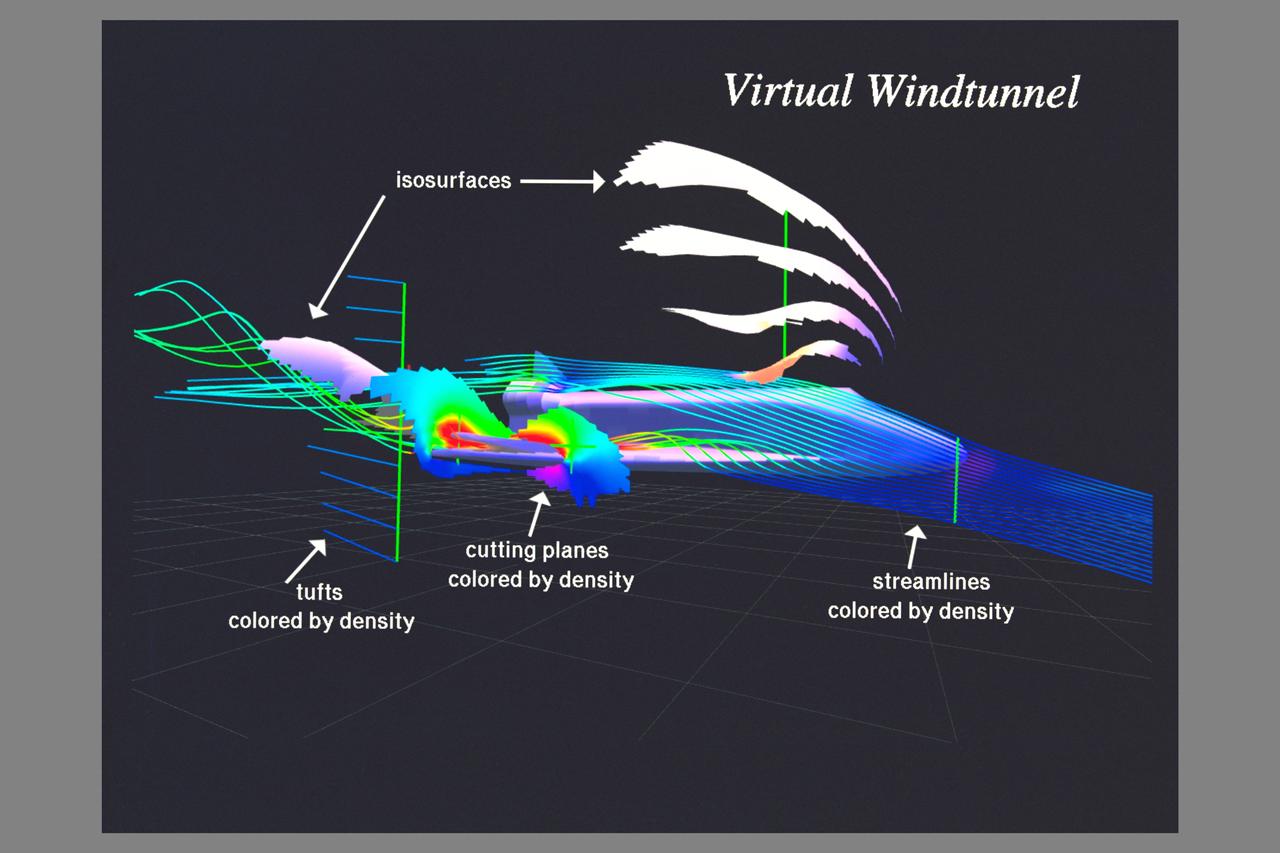
Computational Fluid Dynamics (CFD) image of Space Shuttle Pressure Flow using Virtual Wind Tunnel
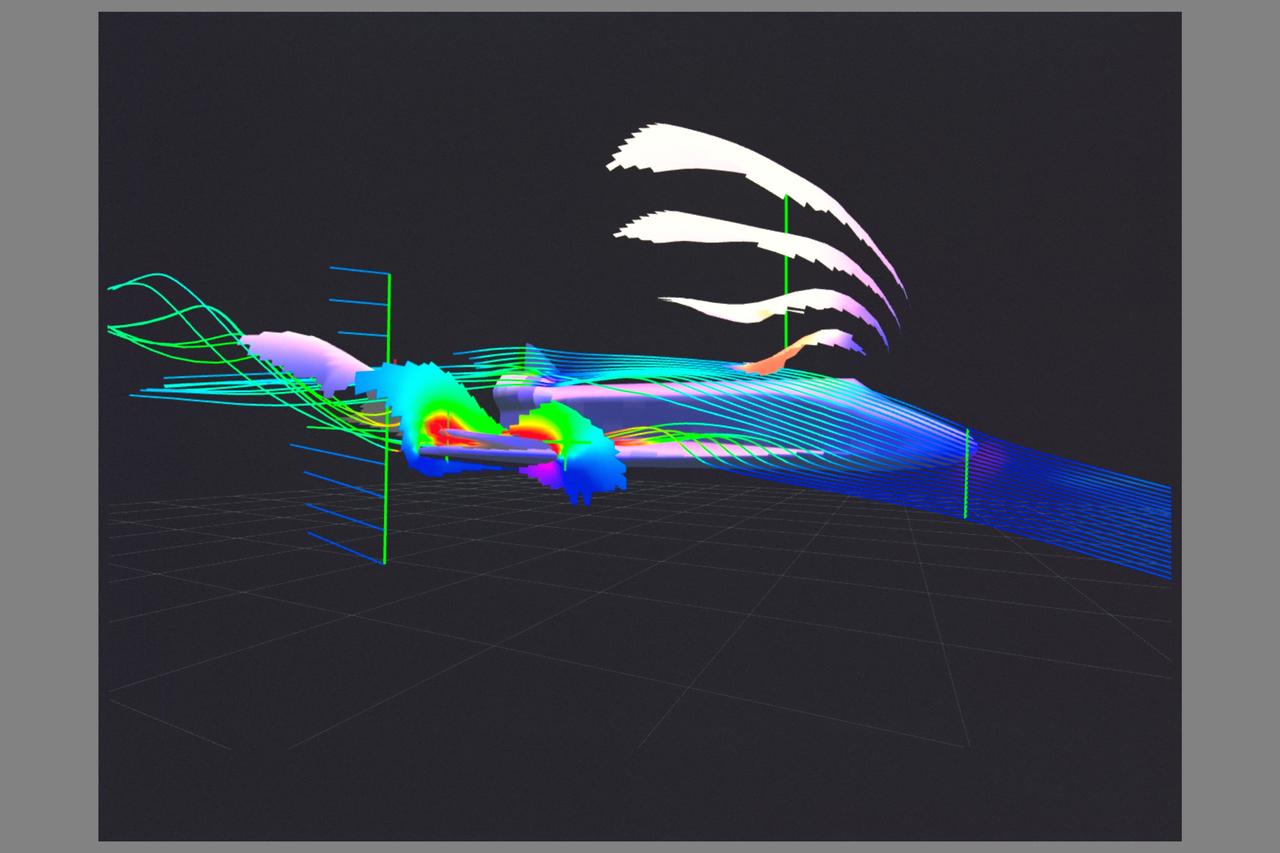
Computational Fluid Dynamics (CFD) image of Space Shuttle Pressure Flow using Virtual Wind Tunnel
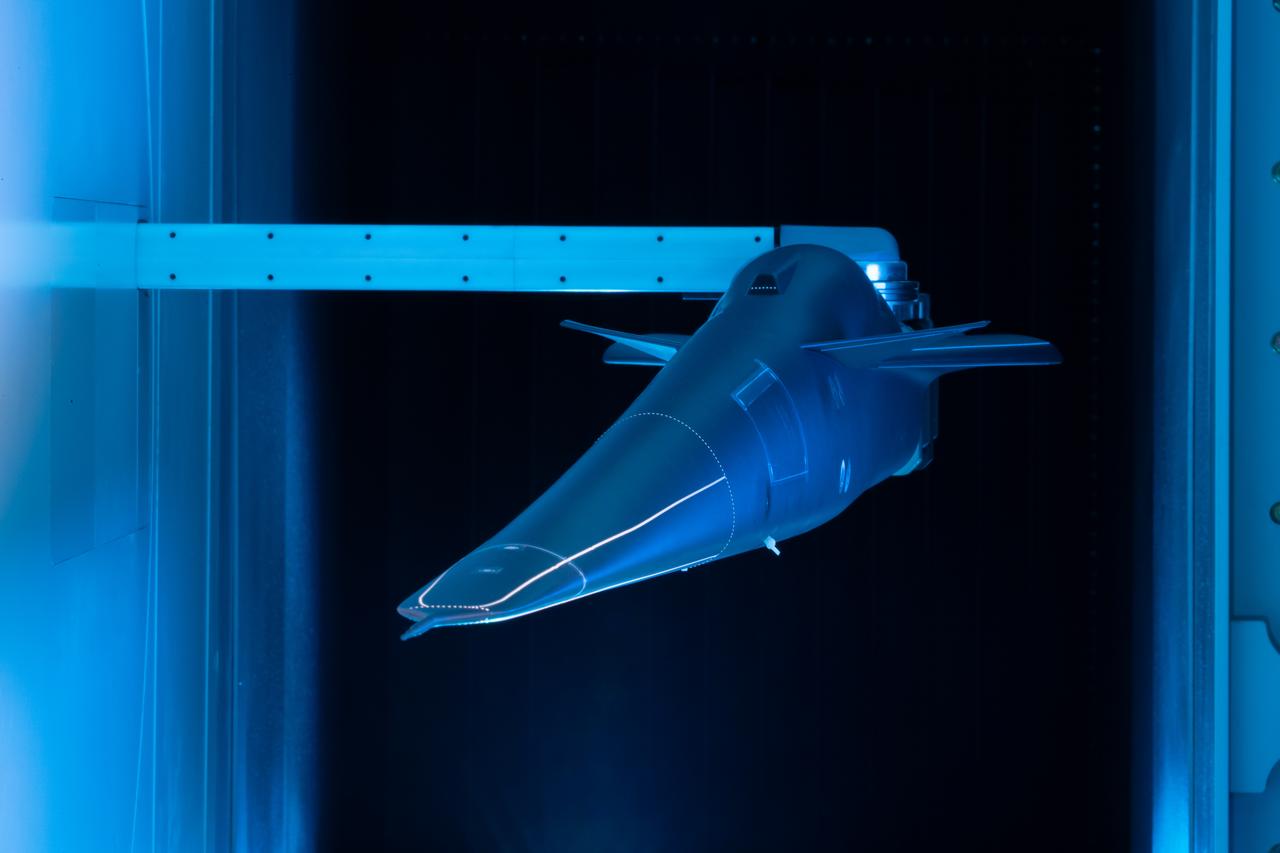
Event: Forebody and Nose - Windtunnel Testing A model of the X-59 forebody is shown in the Lockheed Martin Skunk Works’ wind tunnel in Palmdale, California. These tests gave the team measurements of wind flow angle around the aircraft’s nose and confirmed computer predictions made using computational fluid dynamics (CFD) software tools. The data will be fed into the aircraft flight control system to tell the pilot the aircraft’s altitude, speed and angle. This is part of NASA’s Quesst mission which plans to help enable supersonic air travel over land.
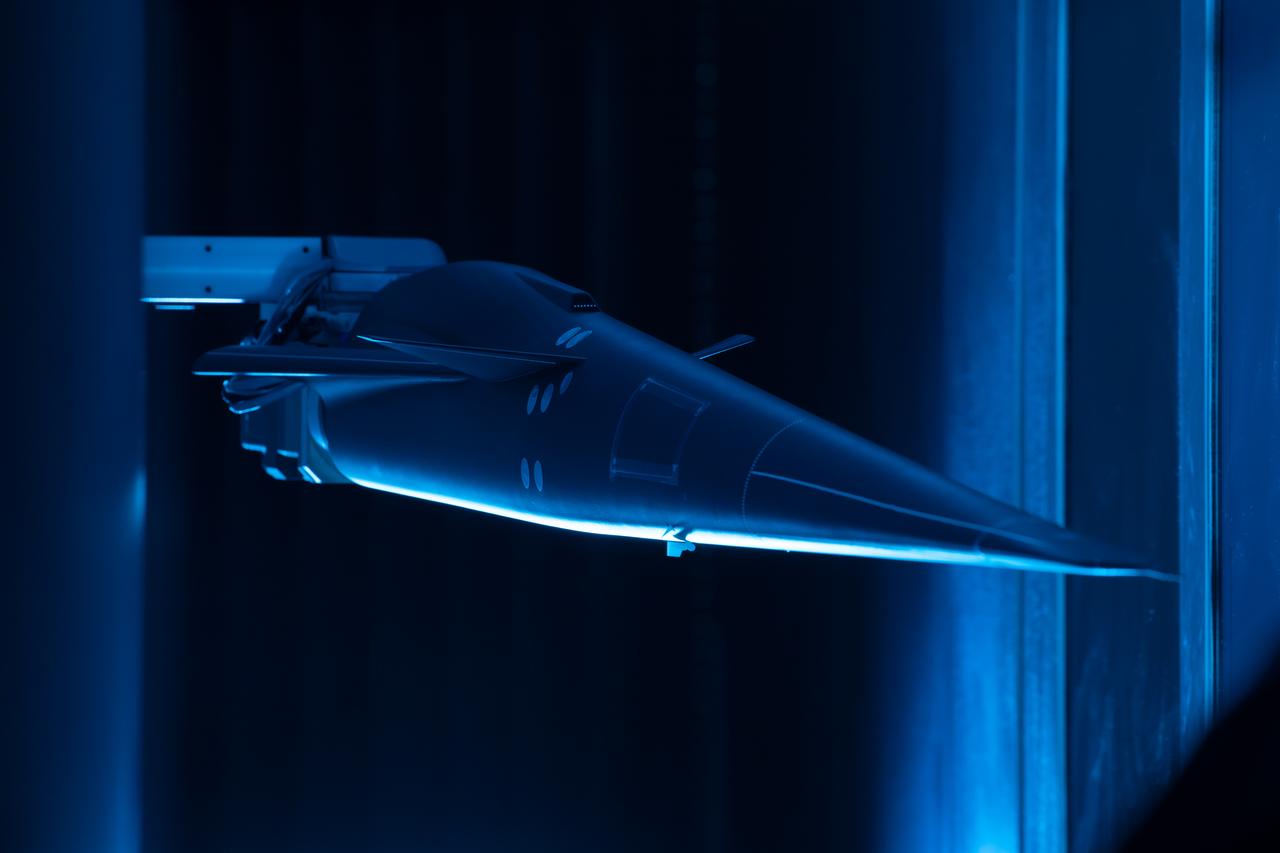
Event: Forebody and Nose - Windtunnel Testing A model of the X-59 forebody is shown in the Lockheed Martin Skunk Works’ wind tunnel in Palmdale, California. These tests gave the team measurements of wind flow angle around the aircraft’s nose and confirmed computer predictions made using computational fluid dynamics (CFD) software tools. The data will be fed into the aircraft flight control system to tell the pilot the aircraft’s altitude, speed and angle. This is part of NASA’s Quesst mission which plans to help enable supersonic air travel over land.
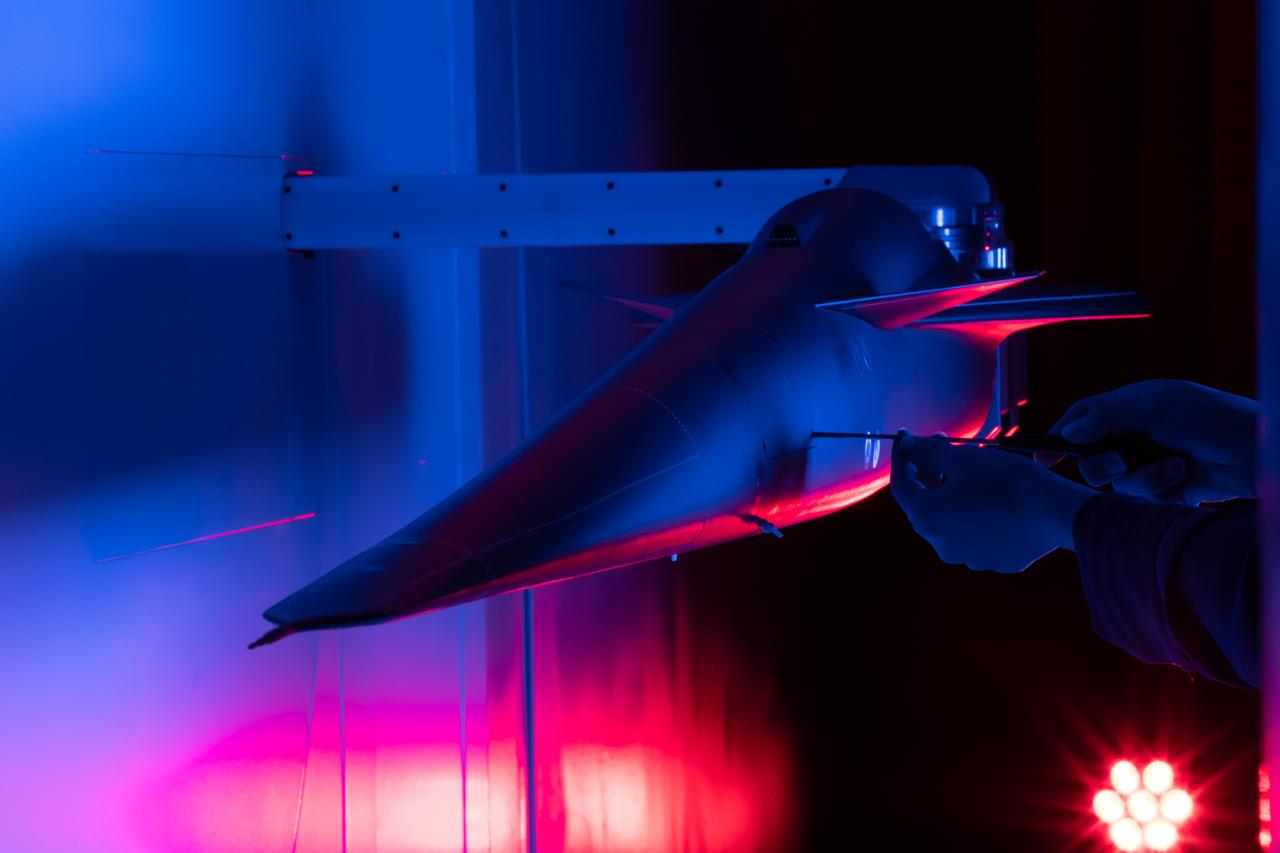
Event: Forebody and Nose - Windtunnel Testing A technician works on the X-59 model during testing in the low-speed wind tunnel at Lockheed Martin Skunk Works in Palmdale, California. These tests gave the team measurements of wind flow angle around the aircraft’s nose and confirmed computer predictions made using computational fluid dynamics (CFD) software tools. The data will be fed into the aircraft flight control system to tell the pilot the aircraft’s altitude, speed, and angle. This is part of NASA’s Quesst mission which plans to help enable supersonic air travel over land.
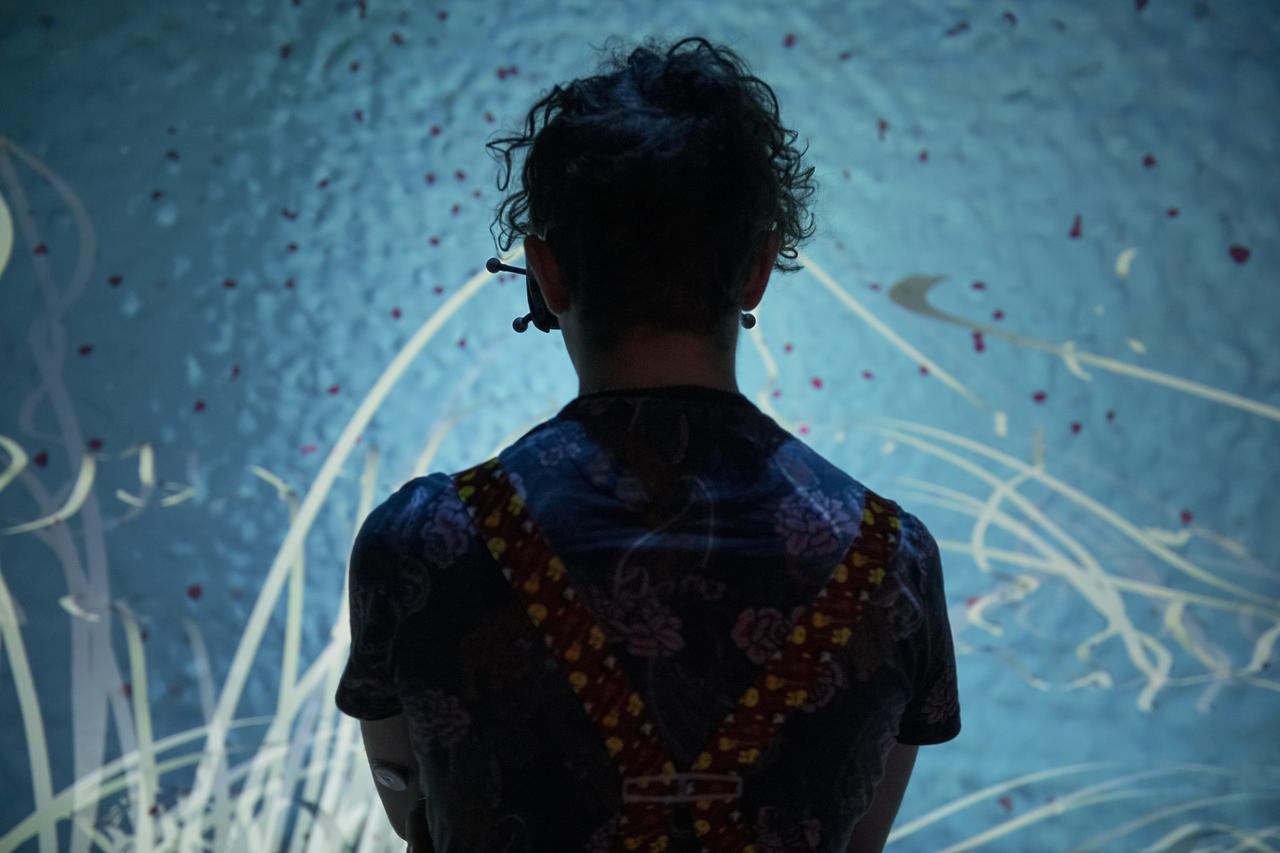
A person observes the computational Fluid Dynamics solution for cryogenic storage tank mixing inside the Glenn Reconfigurable User-interface and Virtual Reality Exploration on October 18, 2023. The GRUVE Lab provides a fully interactive virtual reality space in which to observe and analyze data and environments. Photo Credit: (NASA/Sara Lowthian-Hanna)
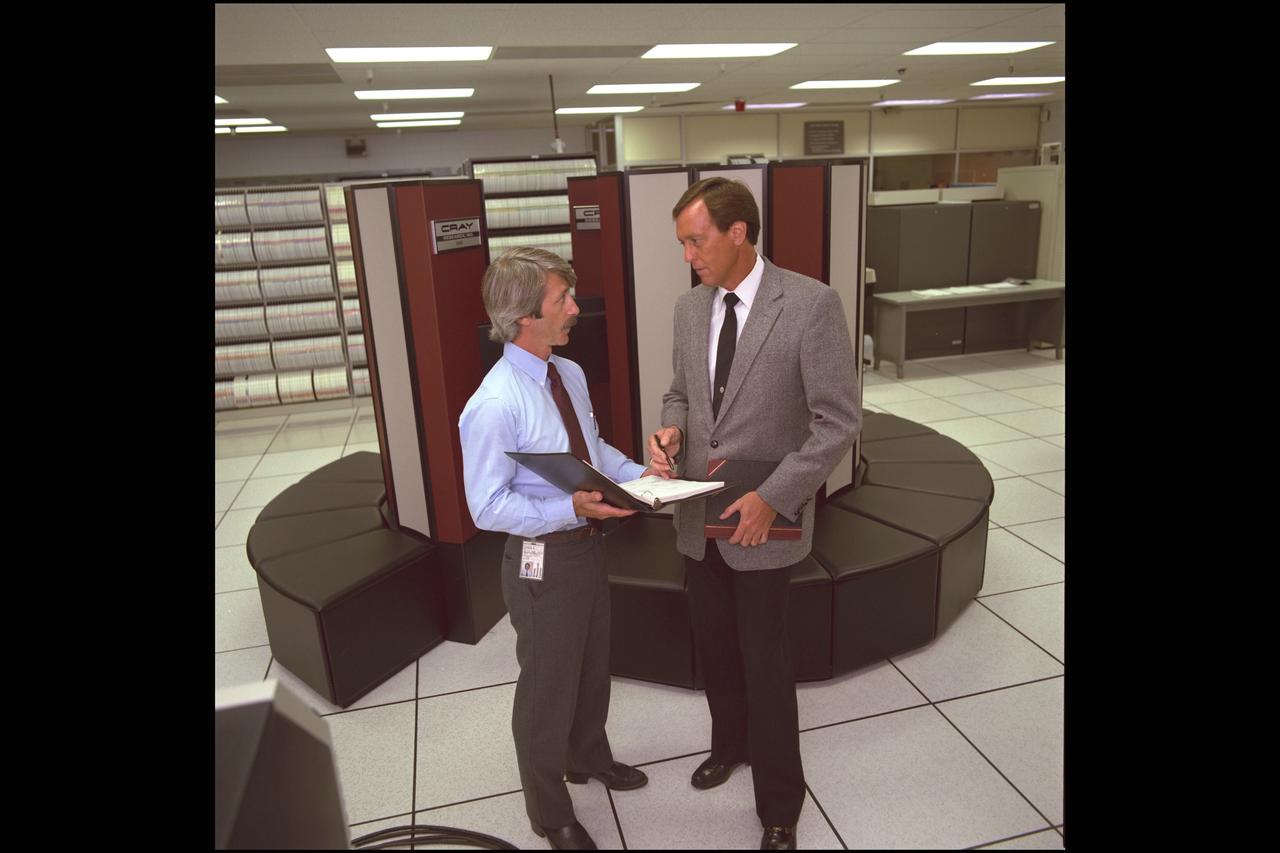
Cray 550 Computer installed in N-233 with B Rosen and Dr. Paul Kutler. Dr. Kutler (right) guided much of Ames' work in computaitonal fluid dynamics used in Ames 60 yr. History NASA SP-2000-4314
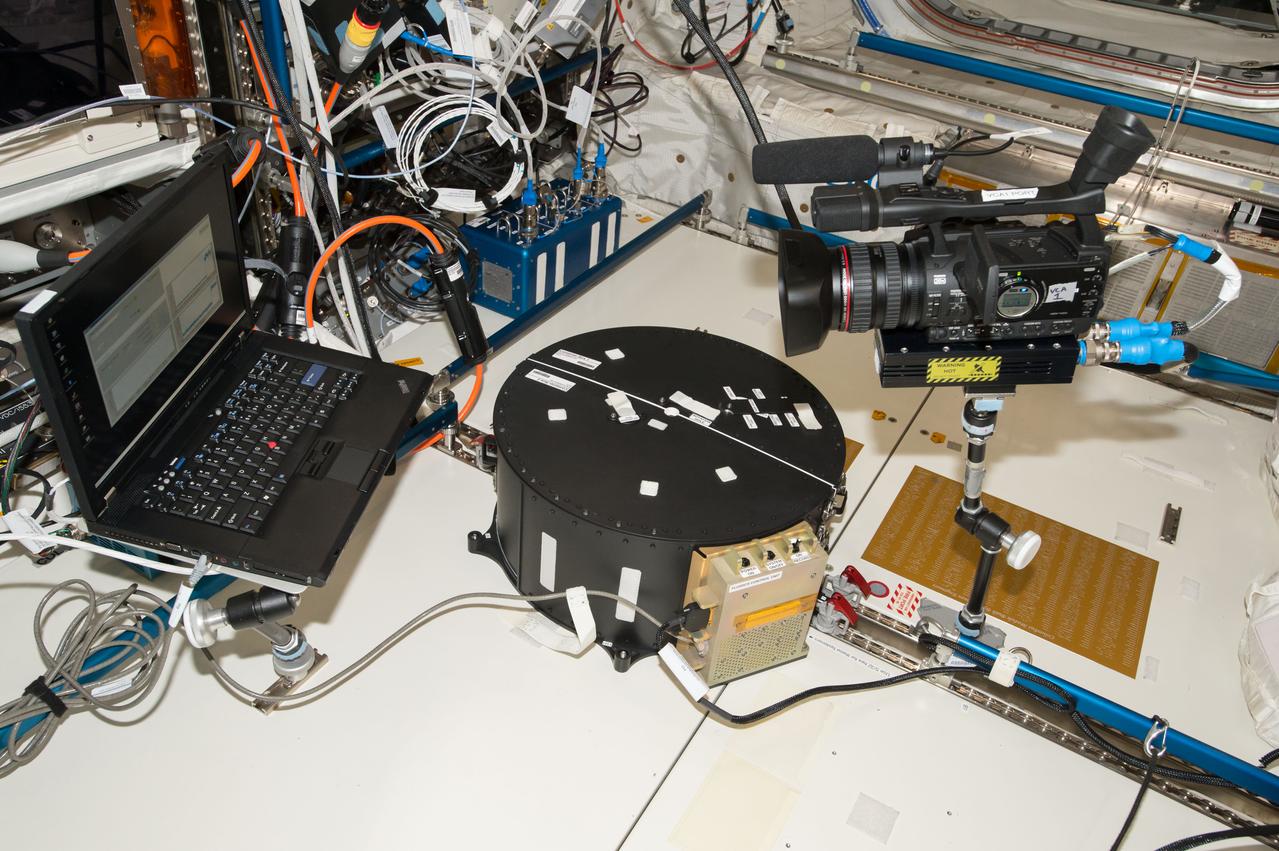
iss051e034000 (5/2/2017) --- A view taken to document hardware setup during the first run of the Fluid Dynamics in Space (FLUIDICS) experiment. The Container Box is attached to the Seat Track at COL1D1-D2, and a video camera records experiment data on the screen of a laptop computer. Image was taken in the Columbus European Laboratory. The FLUIDICS investigation evaluates the Center of Mass (CoM) position regarding a temperature gradient on a representation of a fuel tank. The observation of capillary wave turbulence on the surface of a fluid layer in a low-gravity environment can provide insights into measuring the existing volume in a sphere.
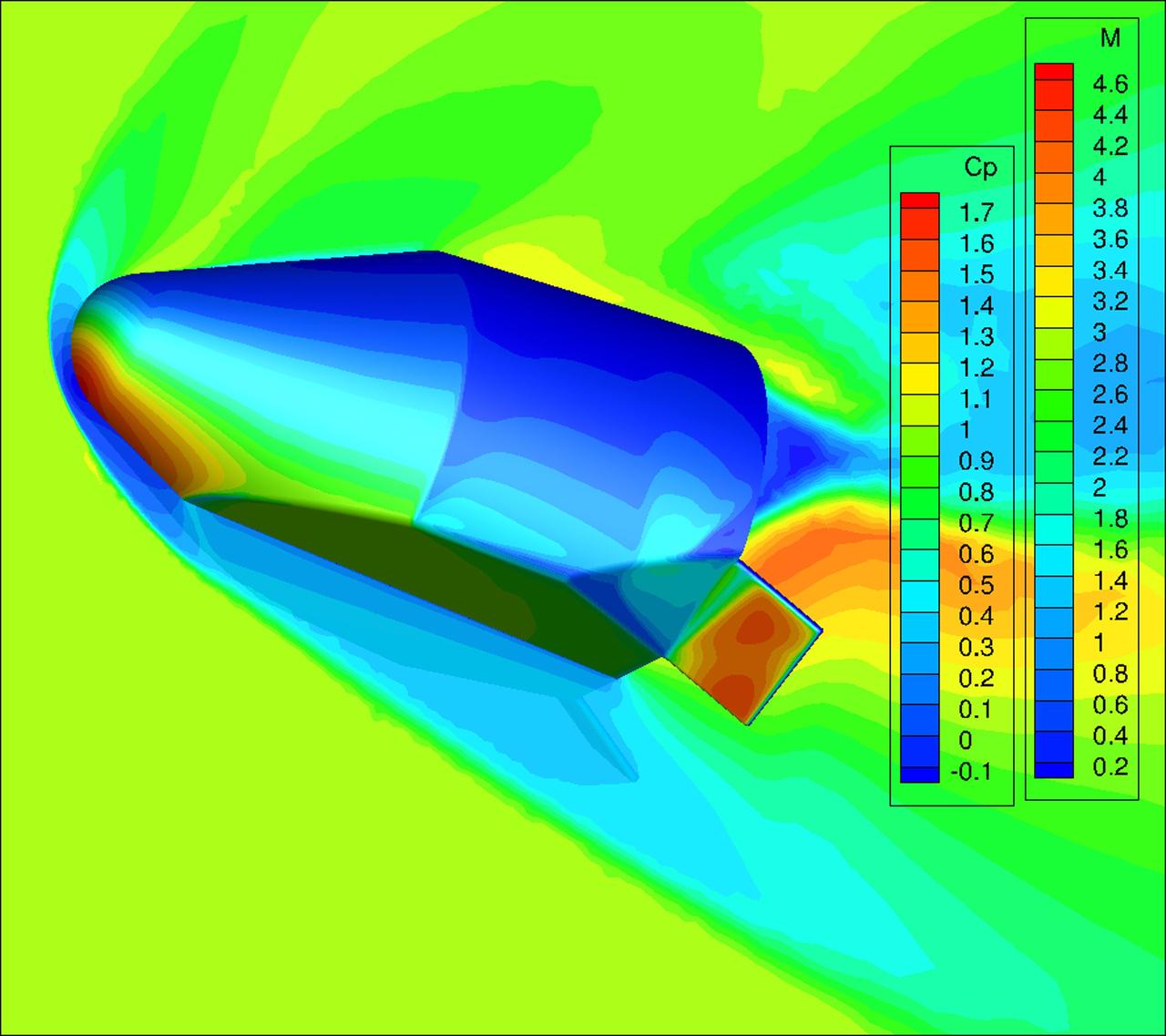
DALLAS – This computational fluid dynamics CFD image was taken during a series of wind tunnel tests for Blue Origin's next-generation Space Vehicle at Lockheed Martin's High Speed Wind Tunnel Facility in Dallas. The Space Vehicle's innovative biconic shape is designed to provide more cross-range and interior volume than a traditional capsule and weigh less than a winged vehicle. More than 180 wind tunnel tests validated the company's analysis of the Space Vehicle's aerodynamics during descent through the atmosphere and the ability to change its flight path, which could increase the number of available landing opportunities and enhance the vehicle's emergency return capability. In 2011, NASA selected Blue Origin during Commercial Crew Development Round 2 CCDev2) activities for NASA’s Commercial Crew Program to mature the design and development of a crew transportation system with the overall goal of accelerating a United States-led capability to the International Space Station. The goal of CCP is to drive down the cost of space travel as well as open up space to more people than ever before by balancing industry’s own innovative capabilities with NASA's 50 years of human spaceflight experience. Six other aerospace companies also are maturing launch vehicle and spacecraft designs under CCDev2, including Alliant Techsystems Inc. ATK, The Boeing Co., Excalibur Almaz Inc., Sierra Nevada Corp., Space Exploration Technologies SpaceX, and United Launch Alliance ULA. For more information, visit www.nasa.gov/commercialcrew. Image credit: Blue Origin