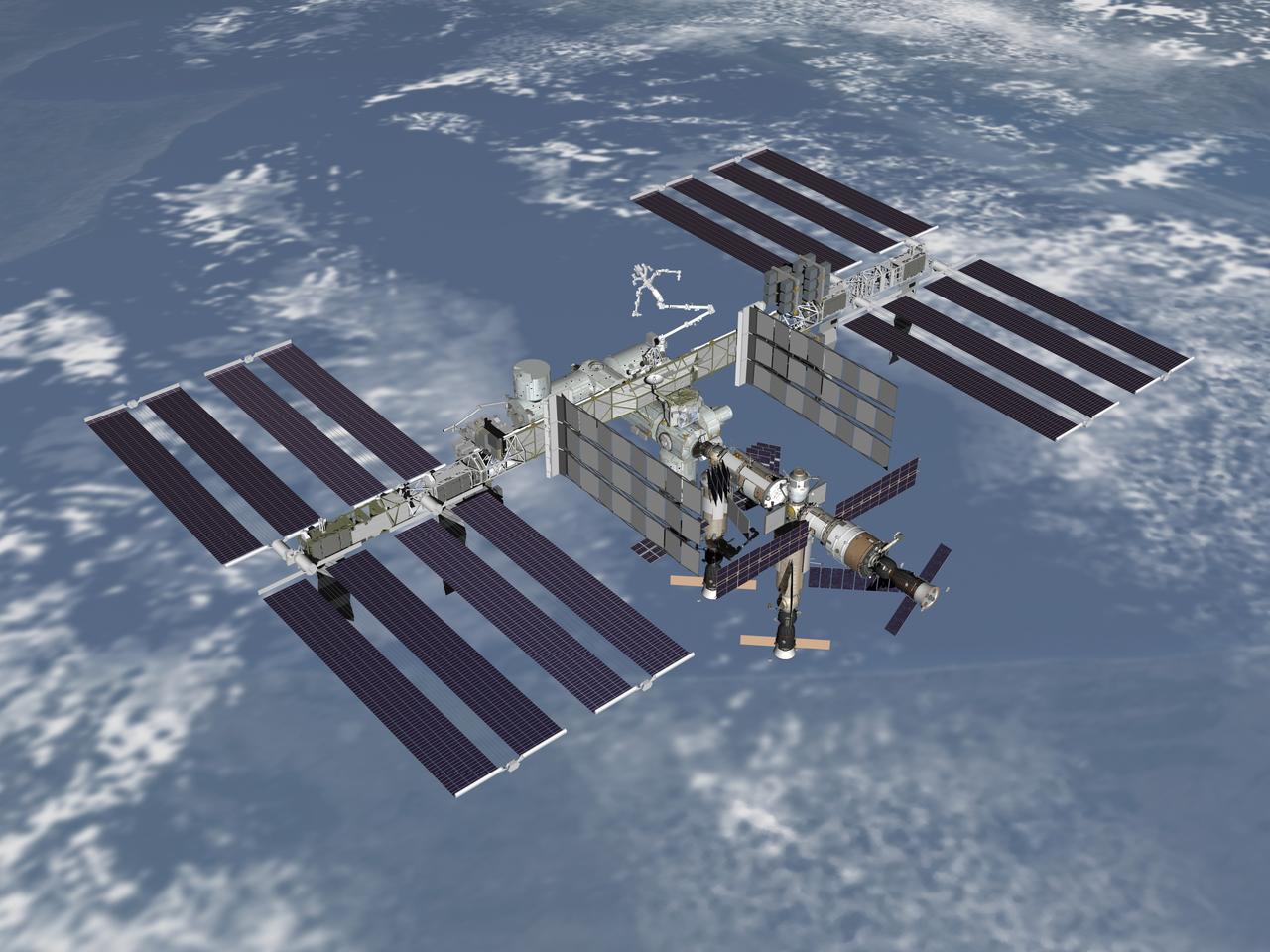
JSC2006-E-25648 (October 2006) --- Computer-generated scene showing a high-angle wide view (port-aft) of the International Space Station, after assembly work is completed.
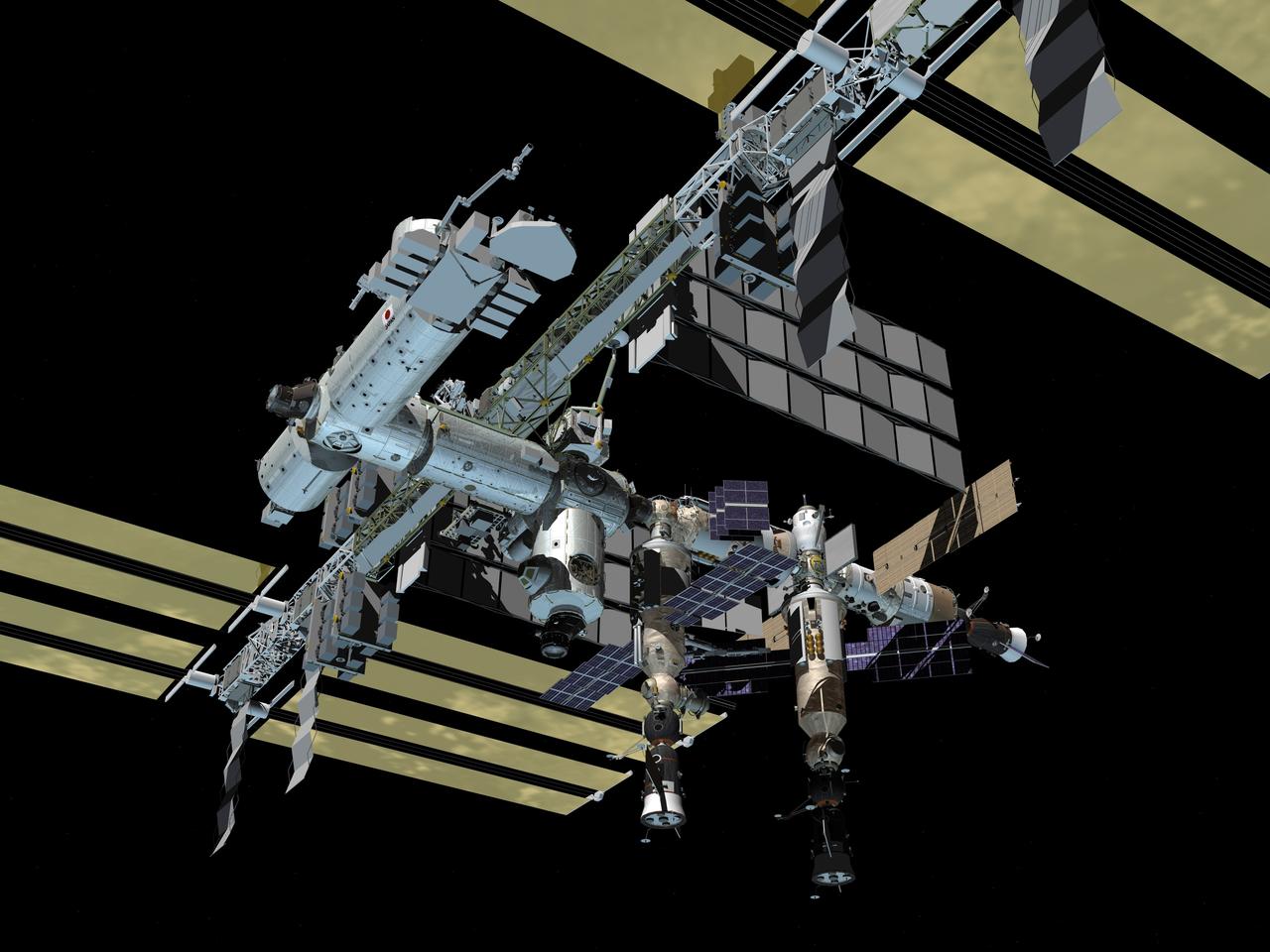
JSC2006-E-25658 (October 2006) --- Computer-generated scene showing a low-angle medium close view (port-forward) of the International Space Station, after assembly work is completed.
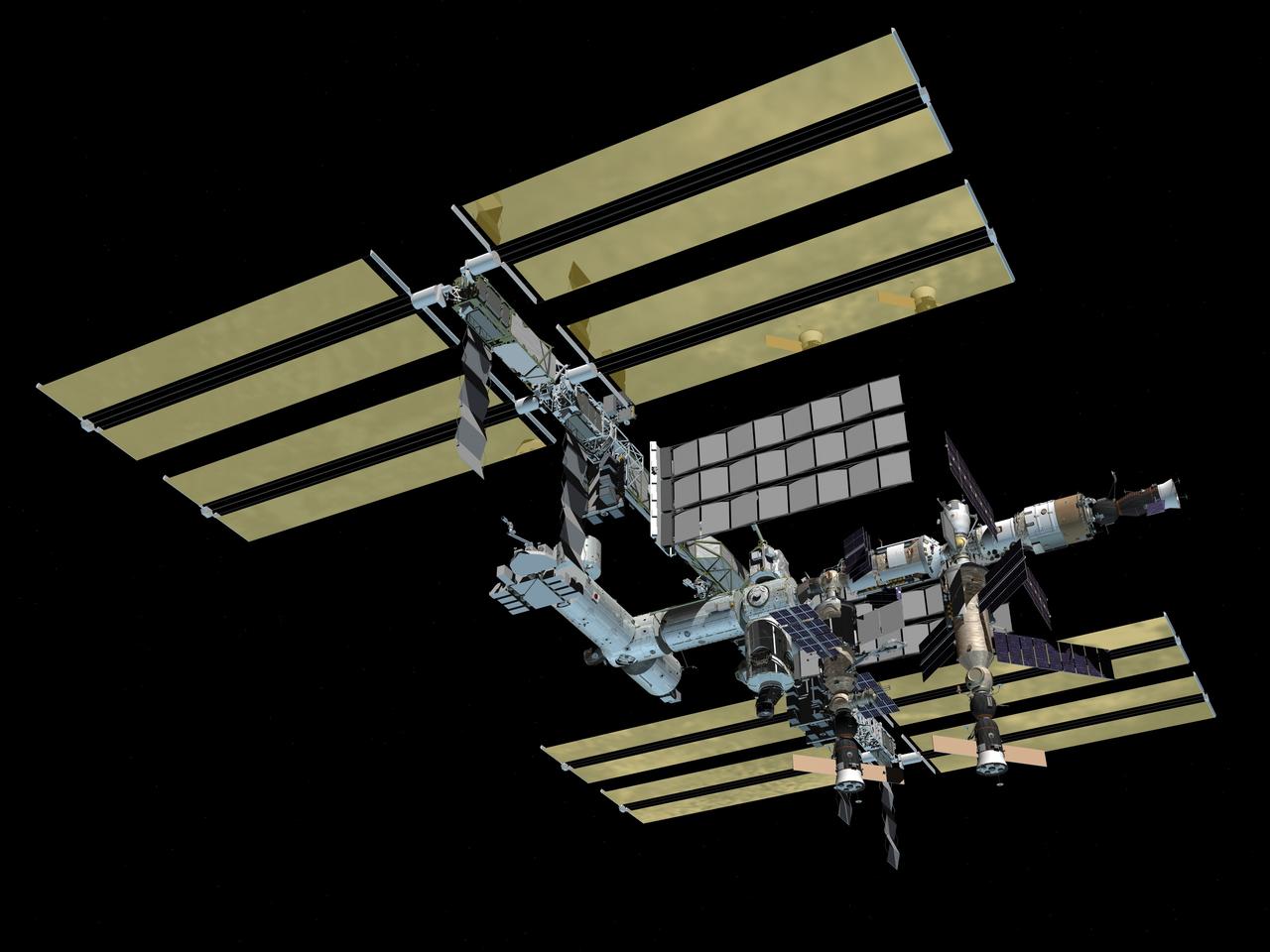
JSC2006-E-25656 (October 2006) --- Computer-generated scene showing a low-angle wide view (port-aft) of the International Space Station, after assembly work is completed.
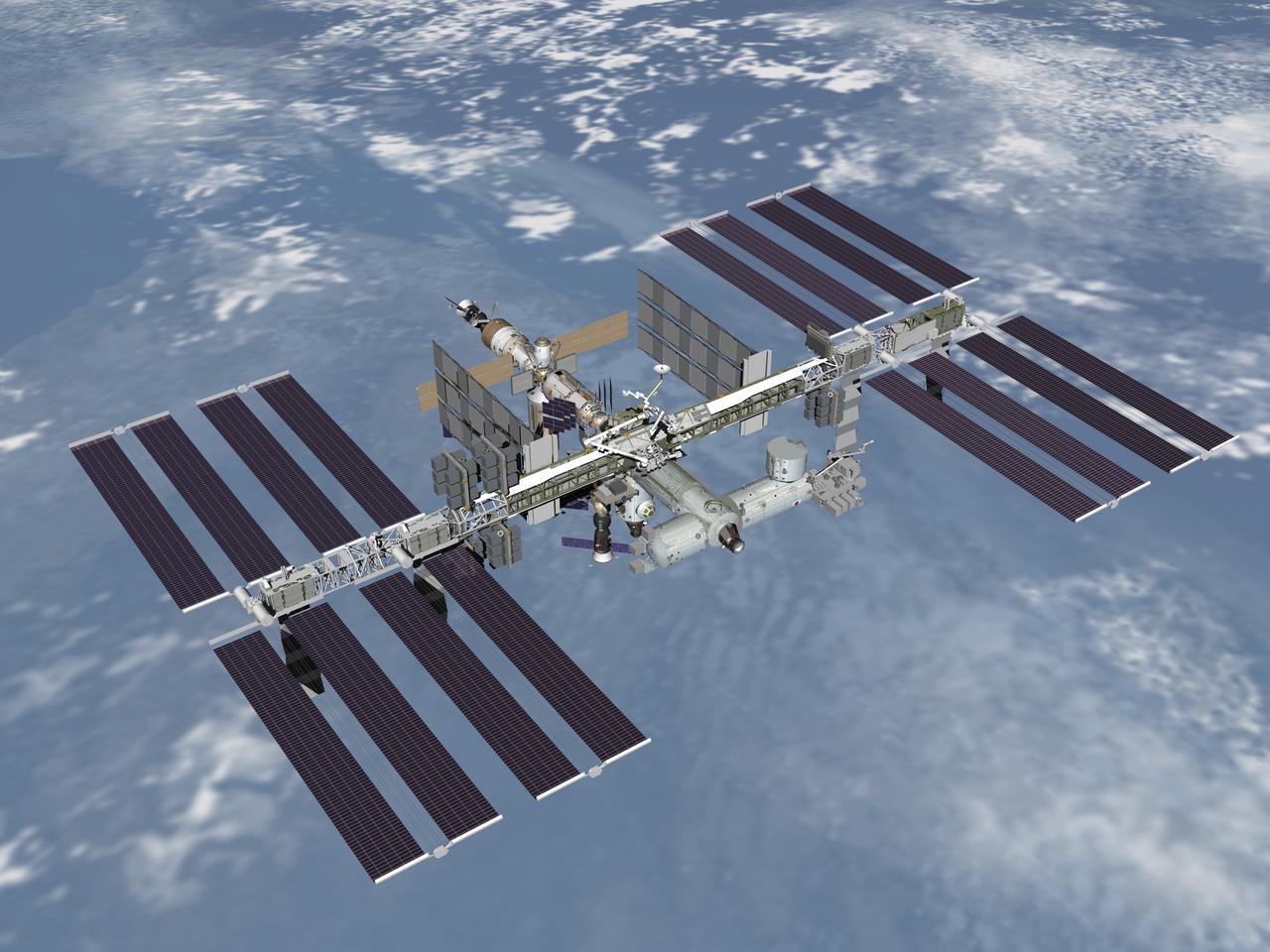
JSC2006-E-25645 (October 2006) --- Computer-generated scene showing a high-angle wide view (starboard-forward) of the International Space Station, after assembly work is completed.

JSC2006-E-25654 (October 2006) --- Computer-generated scene showing a low-angle wide view (port-forward) of the International Space Station, after assembly work is completed.
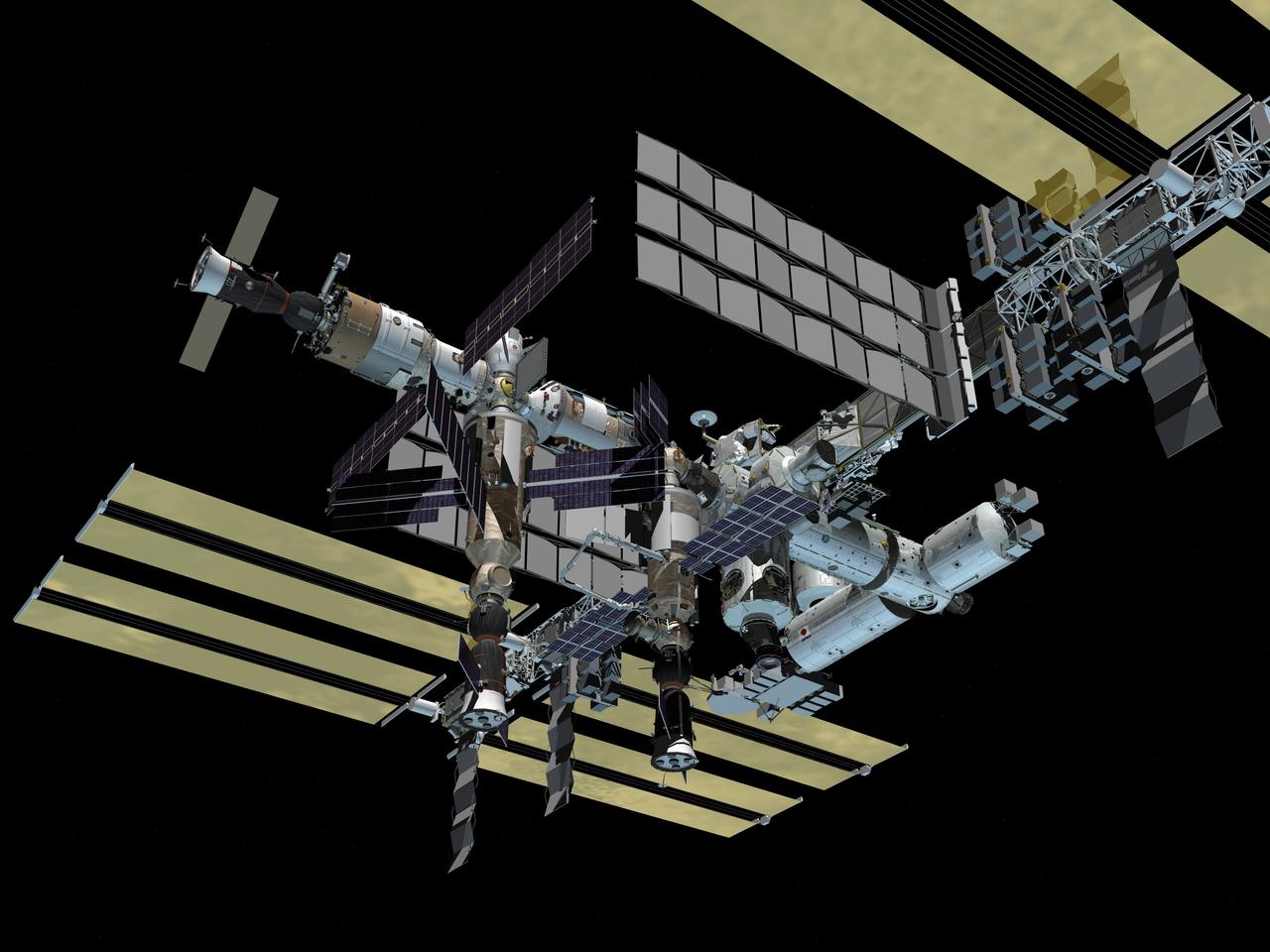
JSC2006-E-25659 (October 2006) --- Computer-generated scene showing a low-angle medium close view (starboard-aft) of the International Space Station, after assembly work is completed.
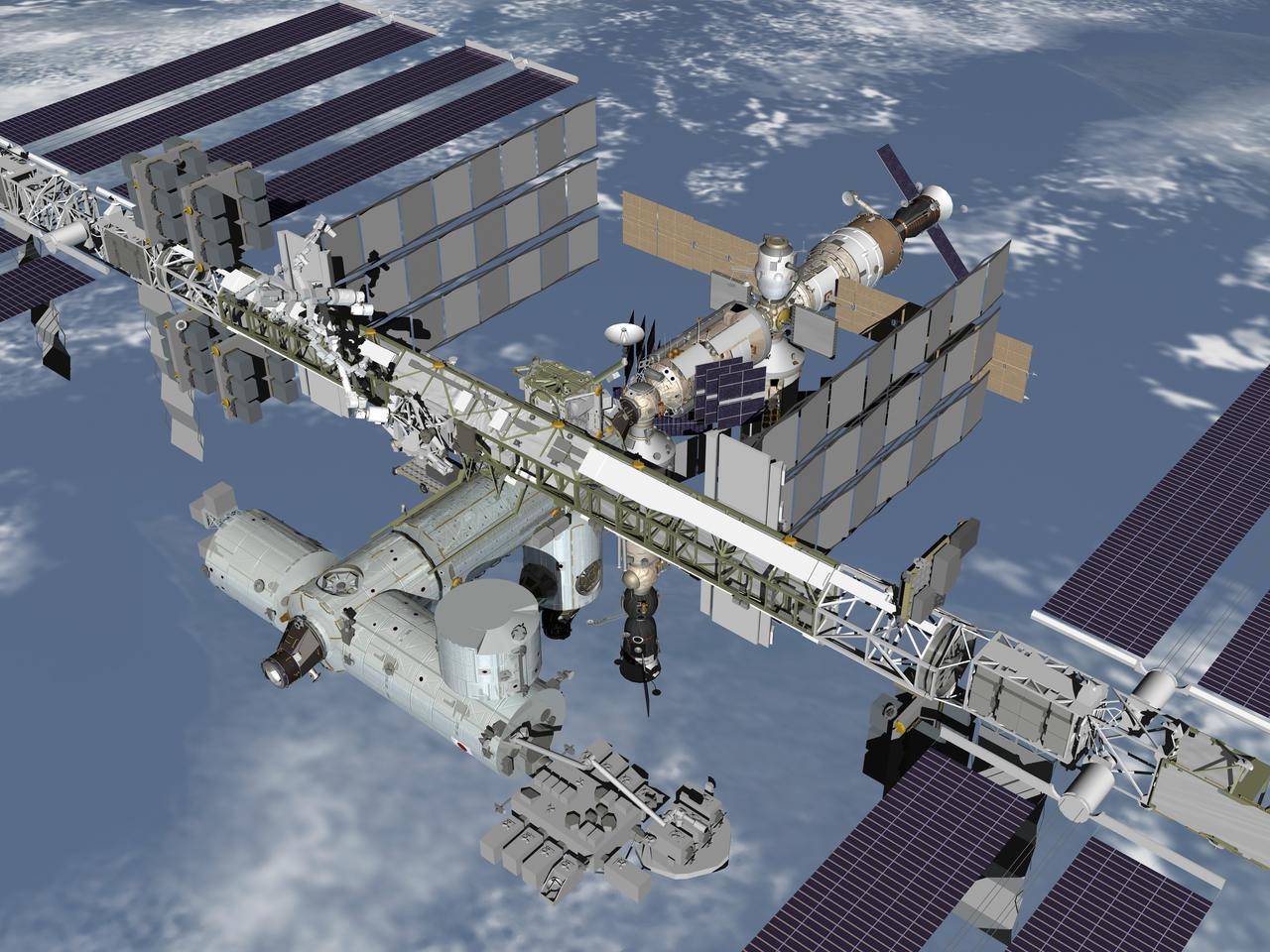
JSC2006-E-25650 (October 2006) --- Computer-generated scene showing a high-angle close view (port-forward) of the International Space Station, after assembly work is completed.
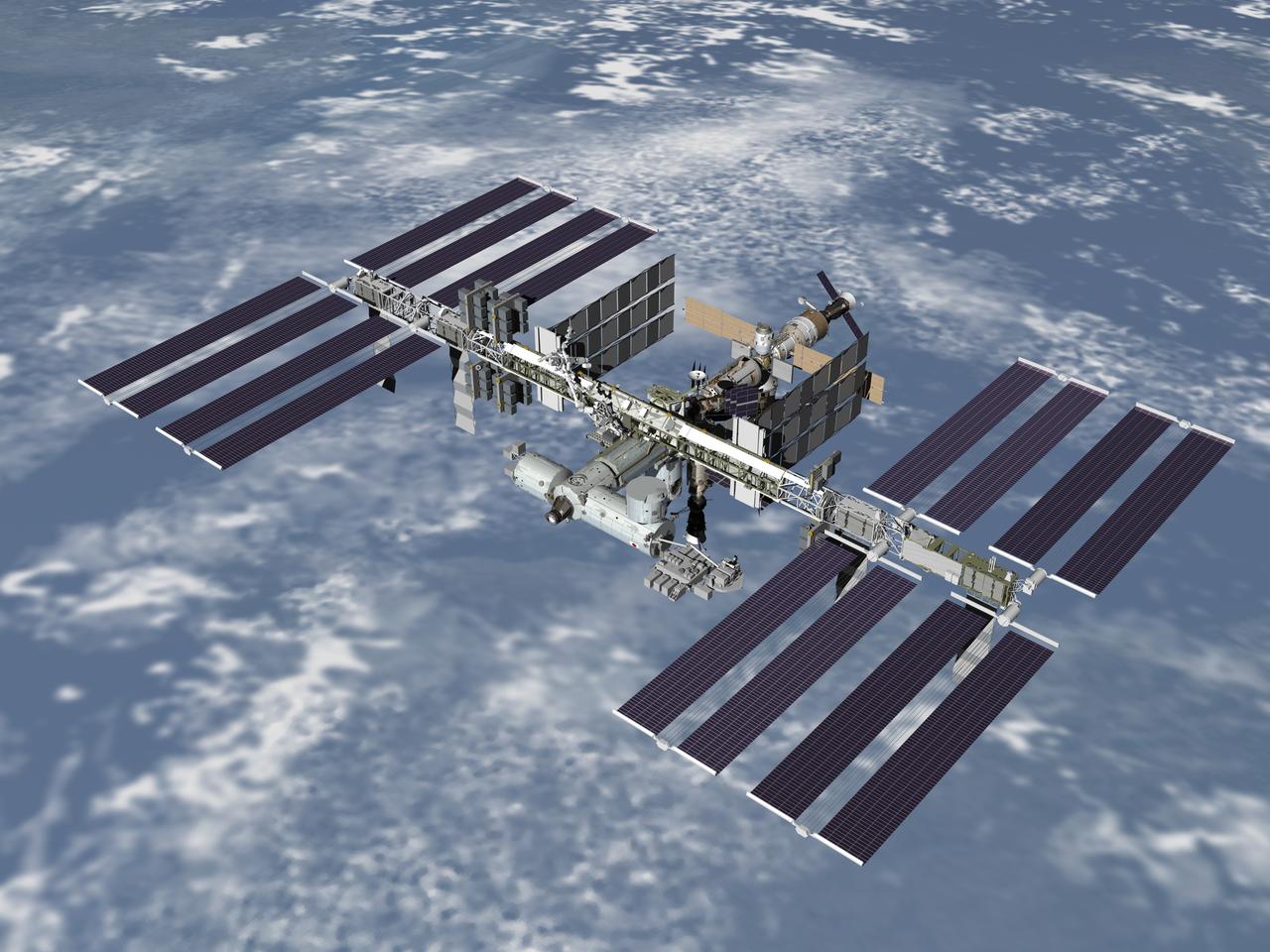
JSC2006-E-25646 (October 2006) --- Computer-generated scene showing a high-angle wide view (port-forward) of the International Space Station, after assembly work is completed.
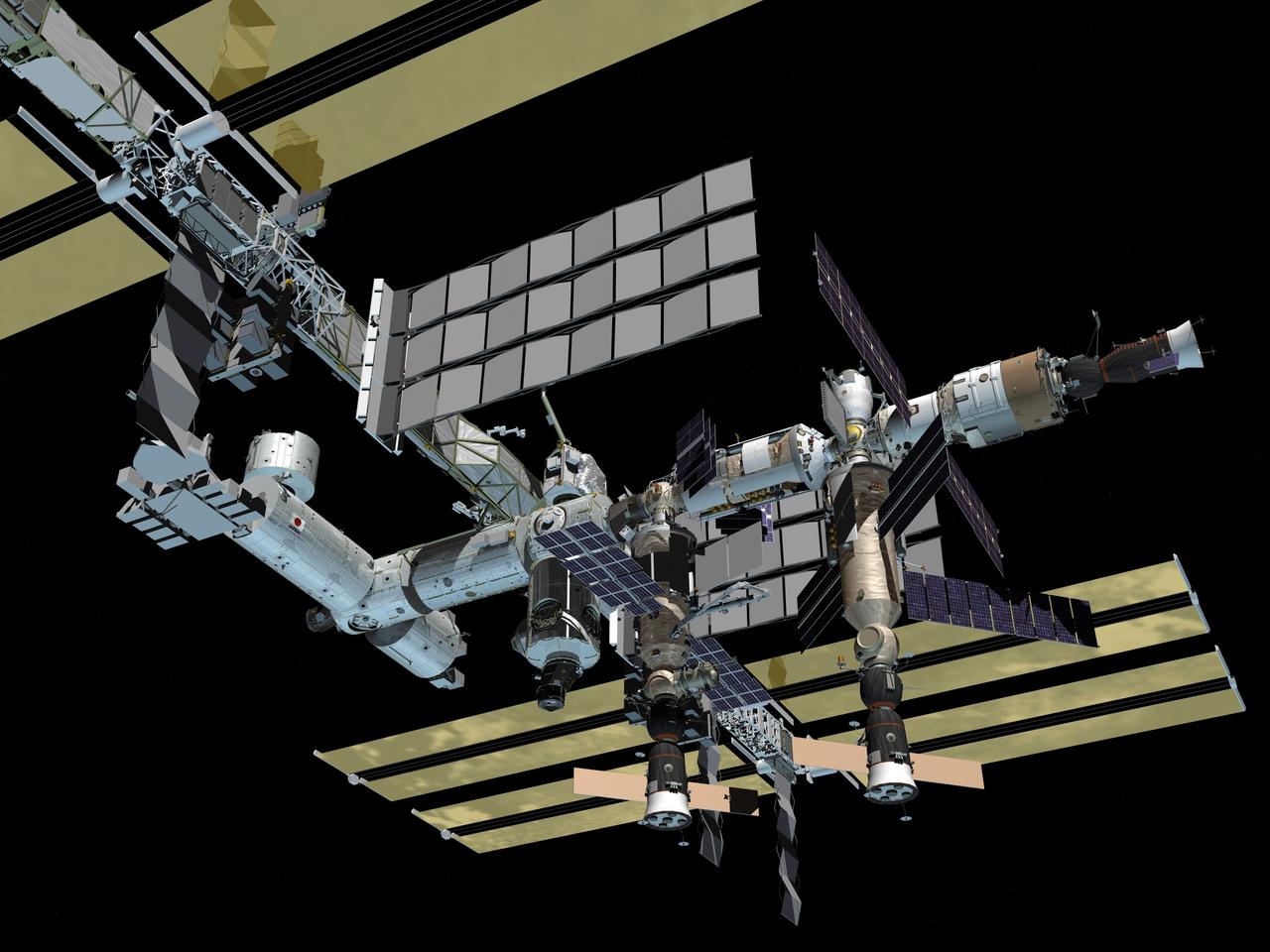
JSC2006-E-25660 (October 2006) --- Computer-generated scene showing a low-angle medium close view (port-aft) of the International Space Station, after assembly work is completed.
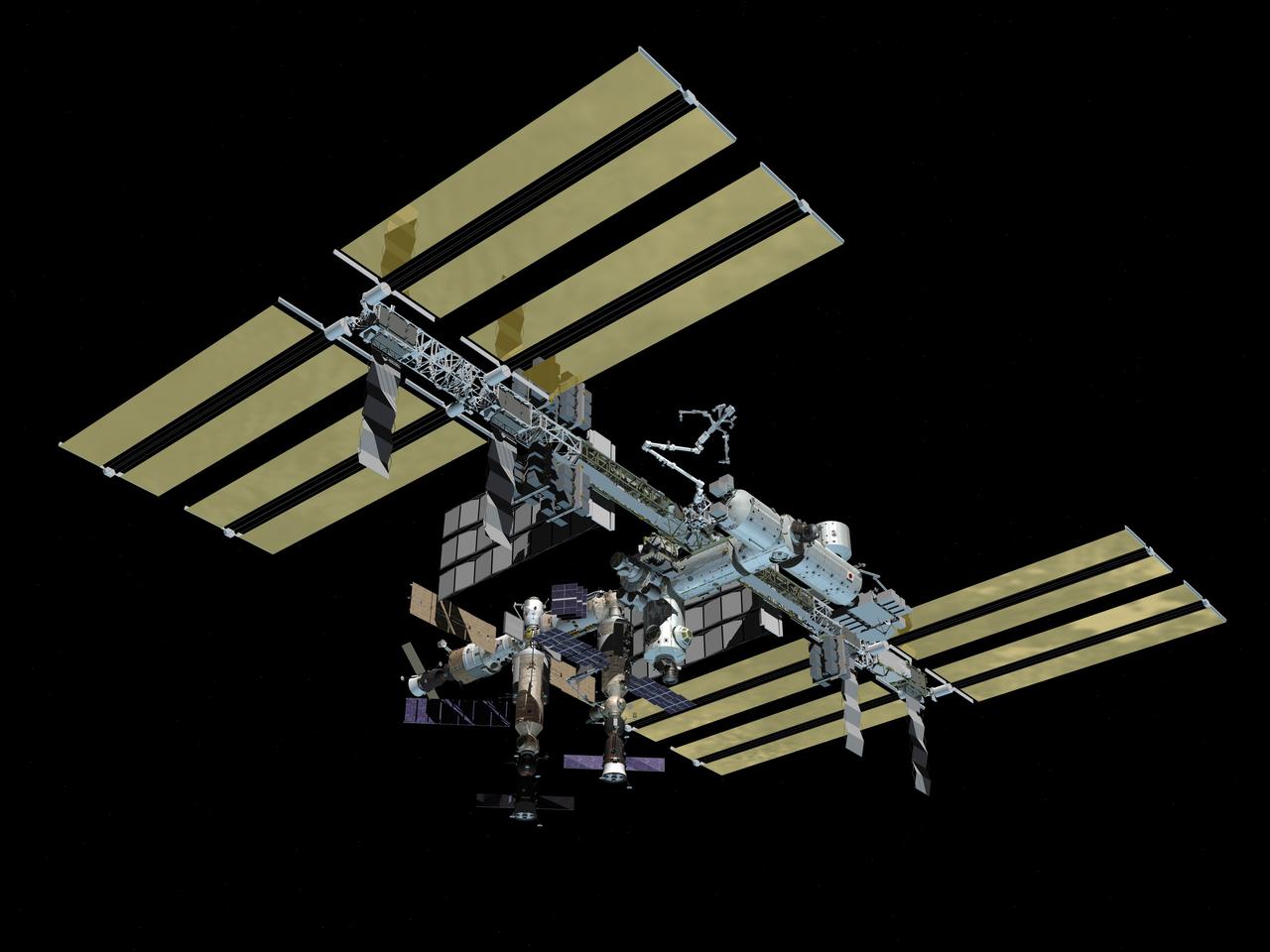
JSC2006-E-25653 (October 2006) --- Computer-generated scene showing a low-angle wide view (starboard-forward) of the International Space Station, after assembly work is completed.

JSC2006-E-25652 (October 2006) --- Computer-generated scene showing a high-angle close view (port-aft) of the International Space Station, after assembly work is completed.
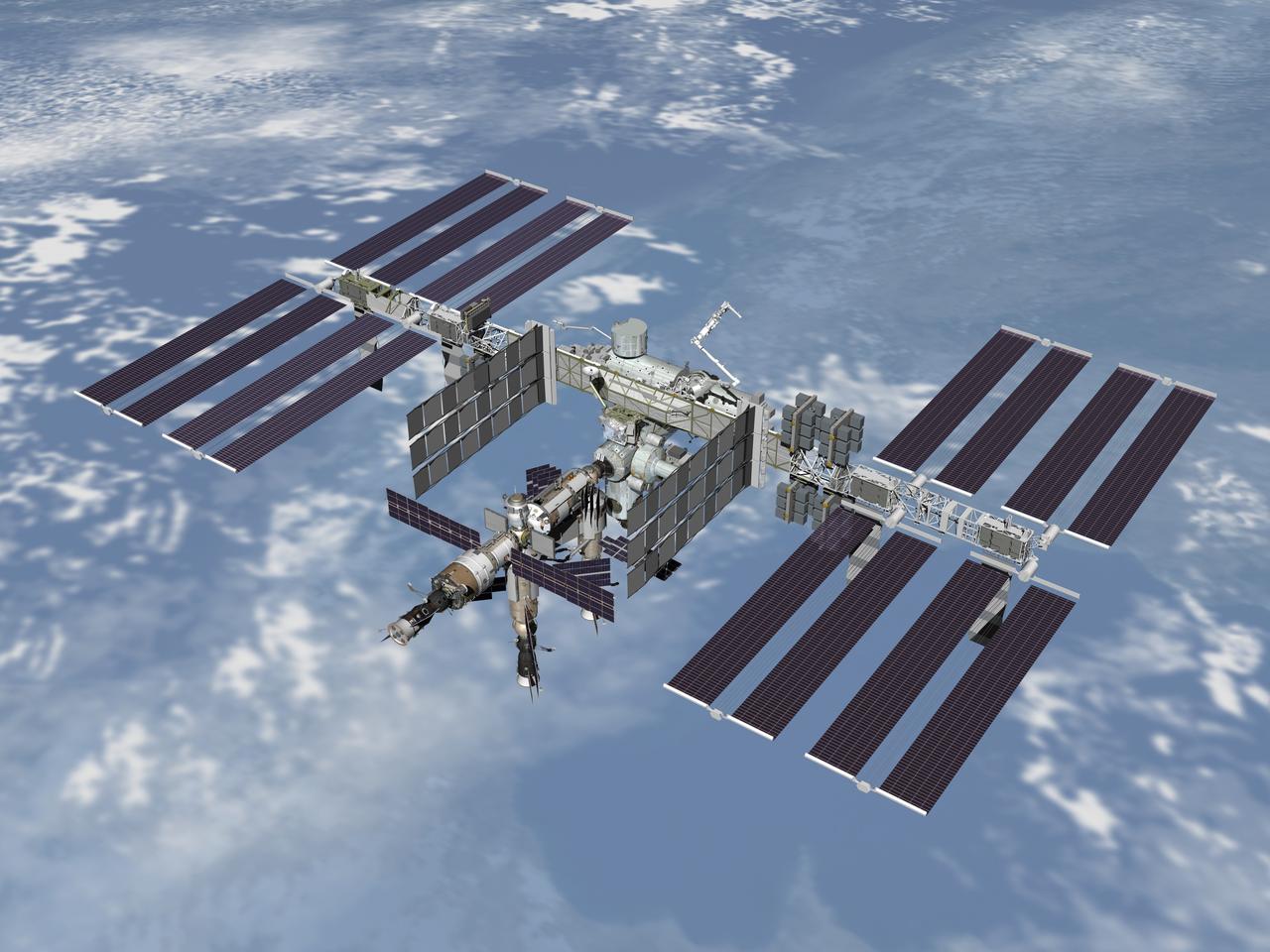
JSC2006-E-25647 (October 2006) --- Computer-generated scene showing a high-angle wide view (starboard-aft) of the International Space Station, after assembly work is completed.
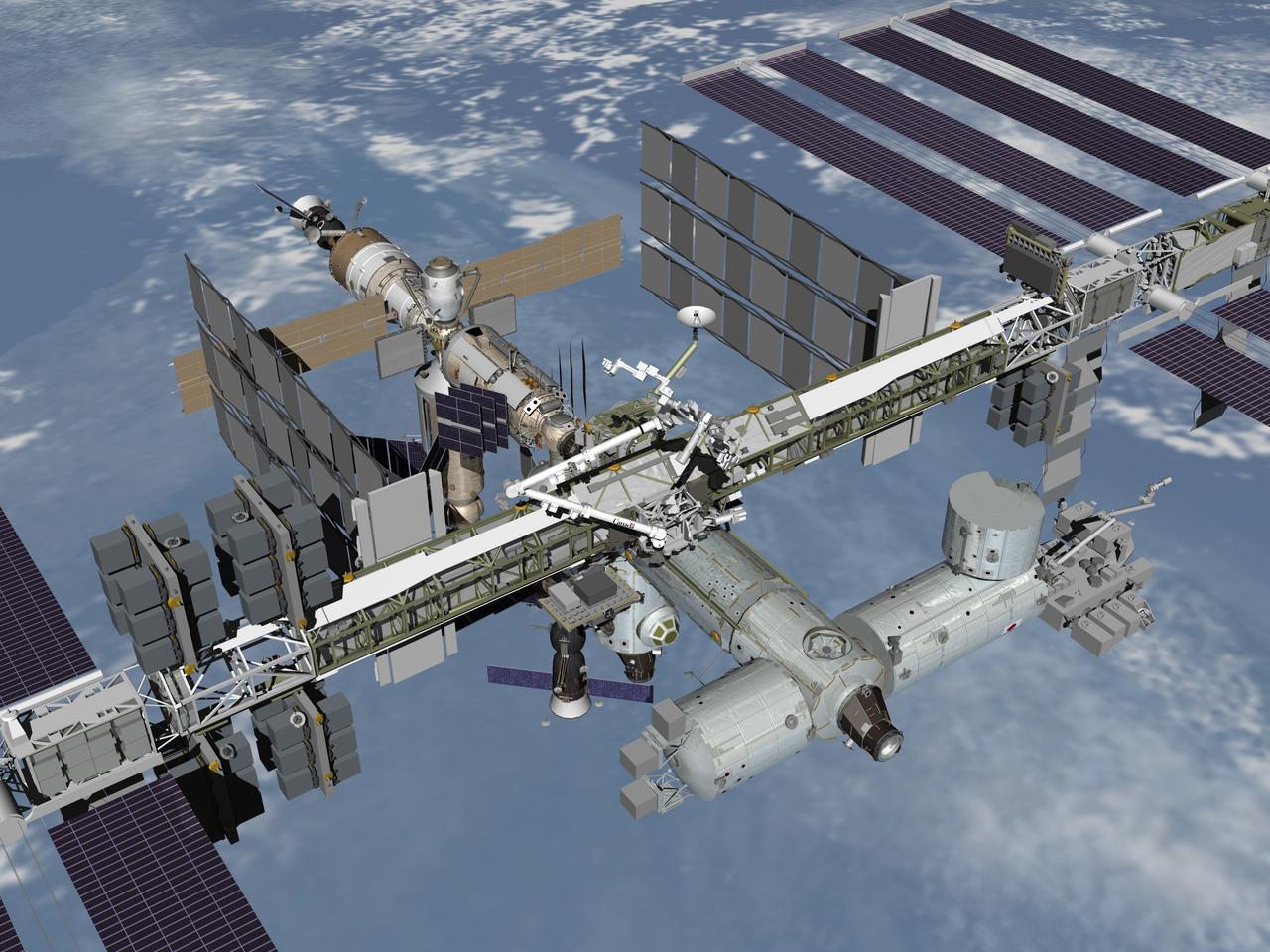
JSC2006-E-25649 (October 2006) --- Computer-generated scene showing a high-angle medium close view (starboard-forward) of the International Space Station, after assembly work is completed.
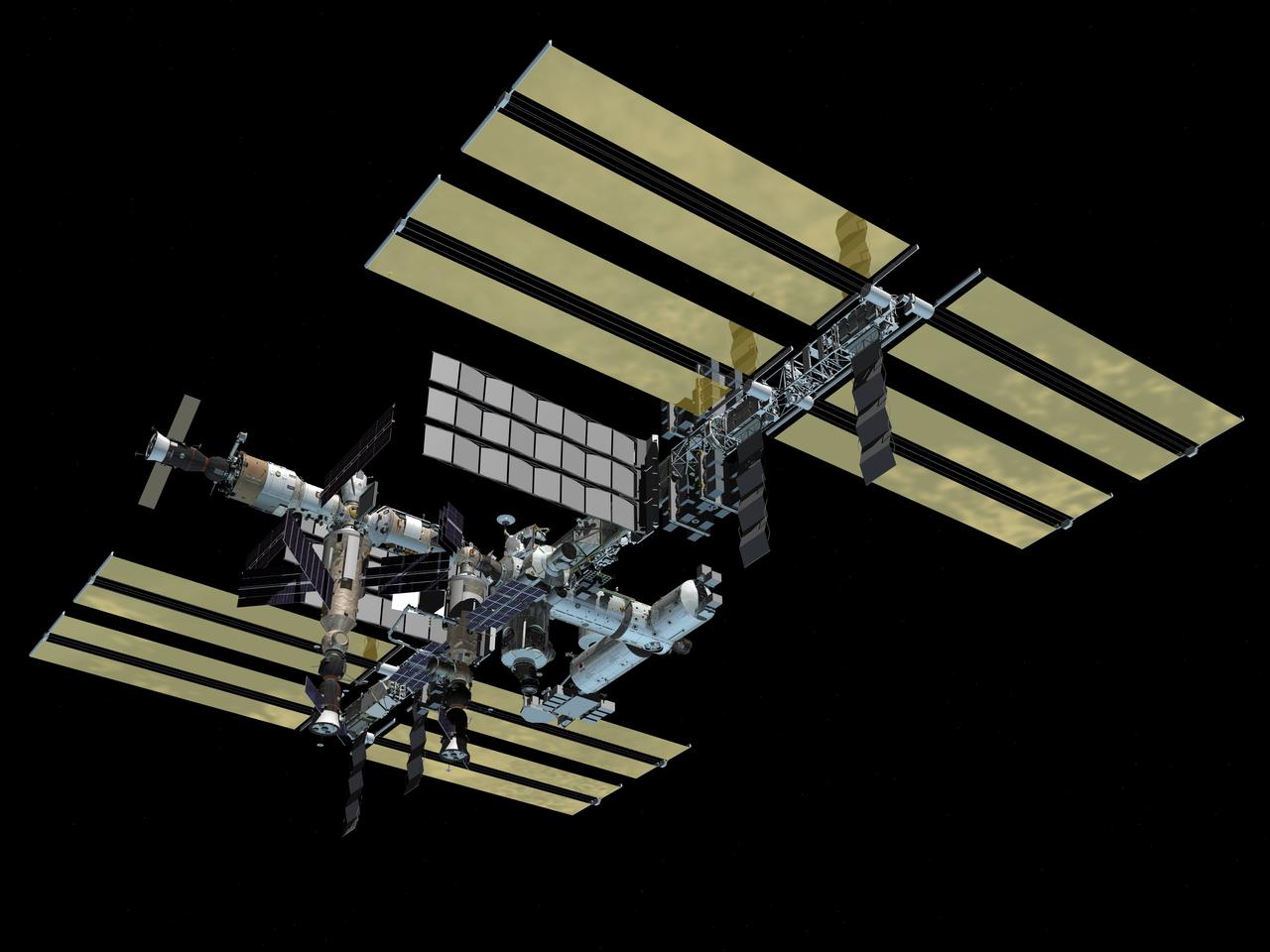
JSC2006-E-25655 (October 2006) --- Computer-generated scene showing a low-angle wide view (starboard-aft) of the International Space Station, after assembly work is completed.
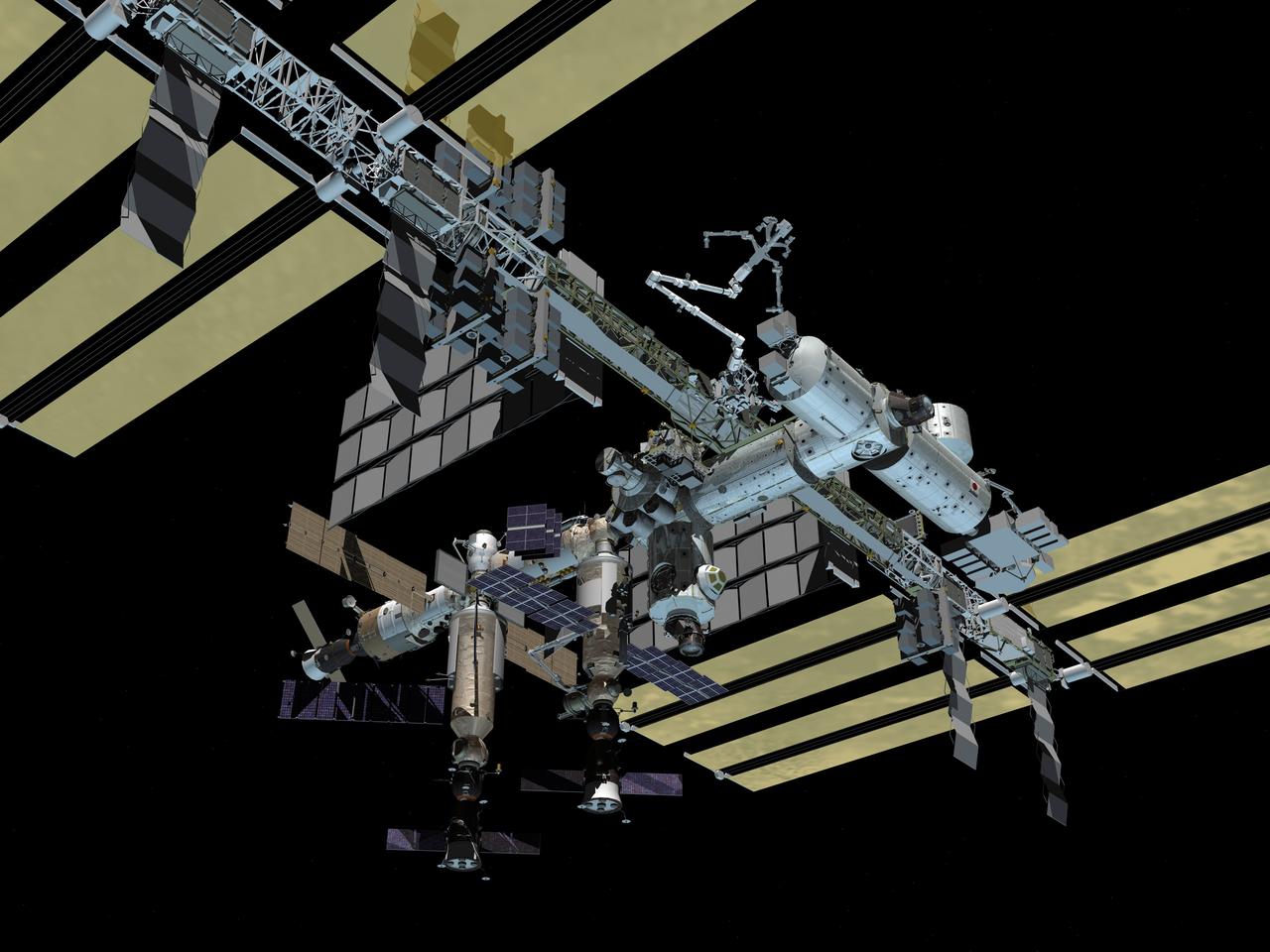
JSC2006-E-25657 (October 2006) --- Computer-generated scene showing a low-angle medium close view (starboard-forward) of the International Space Station, after assembly work is completed.
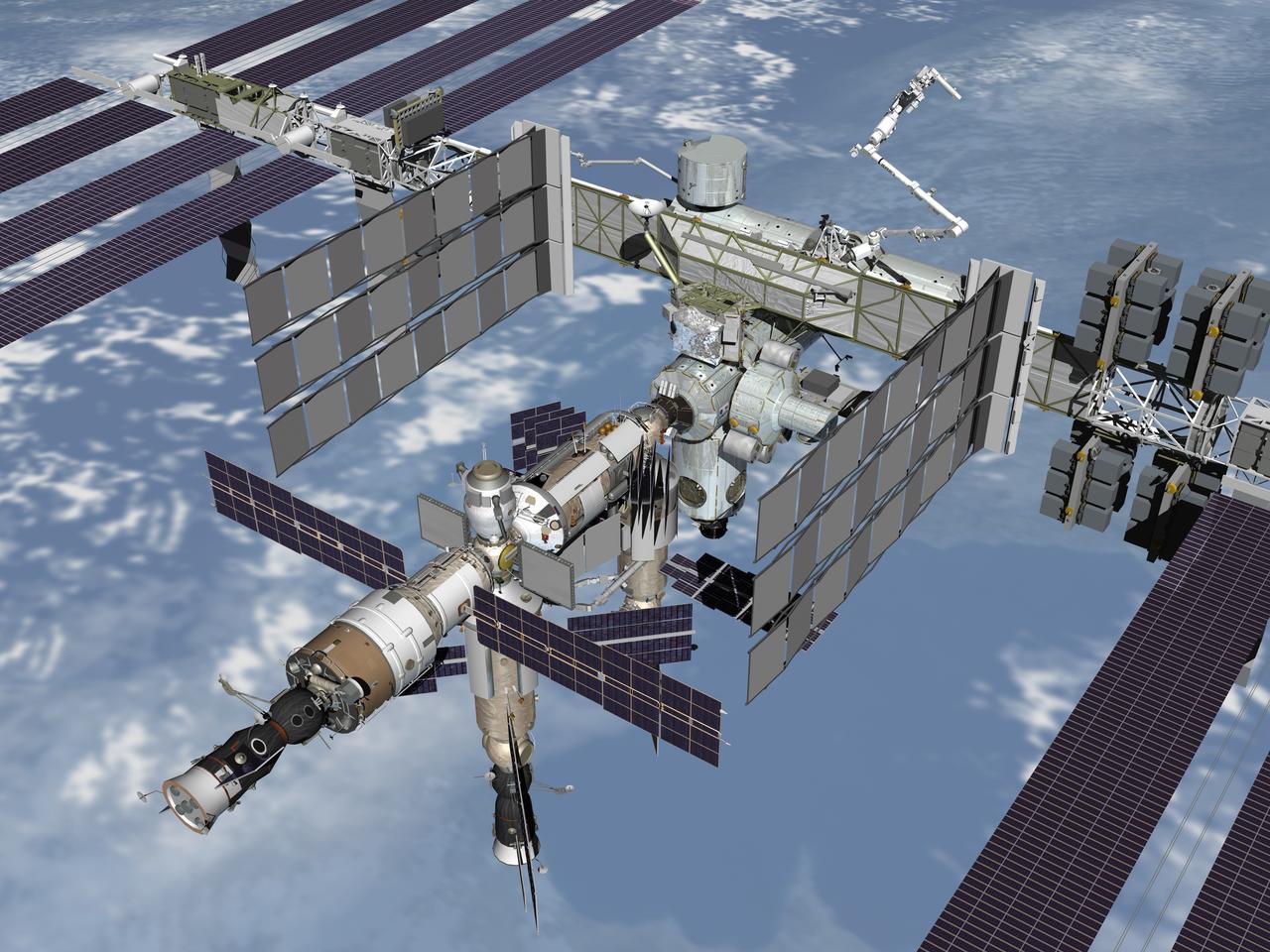
JSC2006-E-25651 (October 2006) --- Computer-generated scene showing a high-angle close view (starboard-aft) of the International Space Station, after assembly work is completed.

These banana-shaped loops are part of a computer-generated snapshot of our sun's magnetic field. The solar magnetic-field lines loop through the sun's corona, break through the sun's surface, and cornect regions of magnetic activity, such as sunspots. This image --part of a magnetic-field study of the sun by NASA's Allen Gary -- shows the outer portion (skins) of interconnecting systems of hot (2 million degrees Kelvin) coronal loops within and between two active magnetic regions on opposite sides of the sun's equator. The diameter of these coronal loops at their foot points is approximately the same size as the Earth's radius (about 6,000 kilometers).
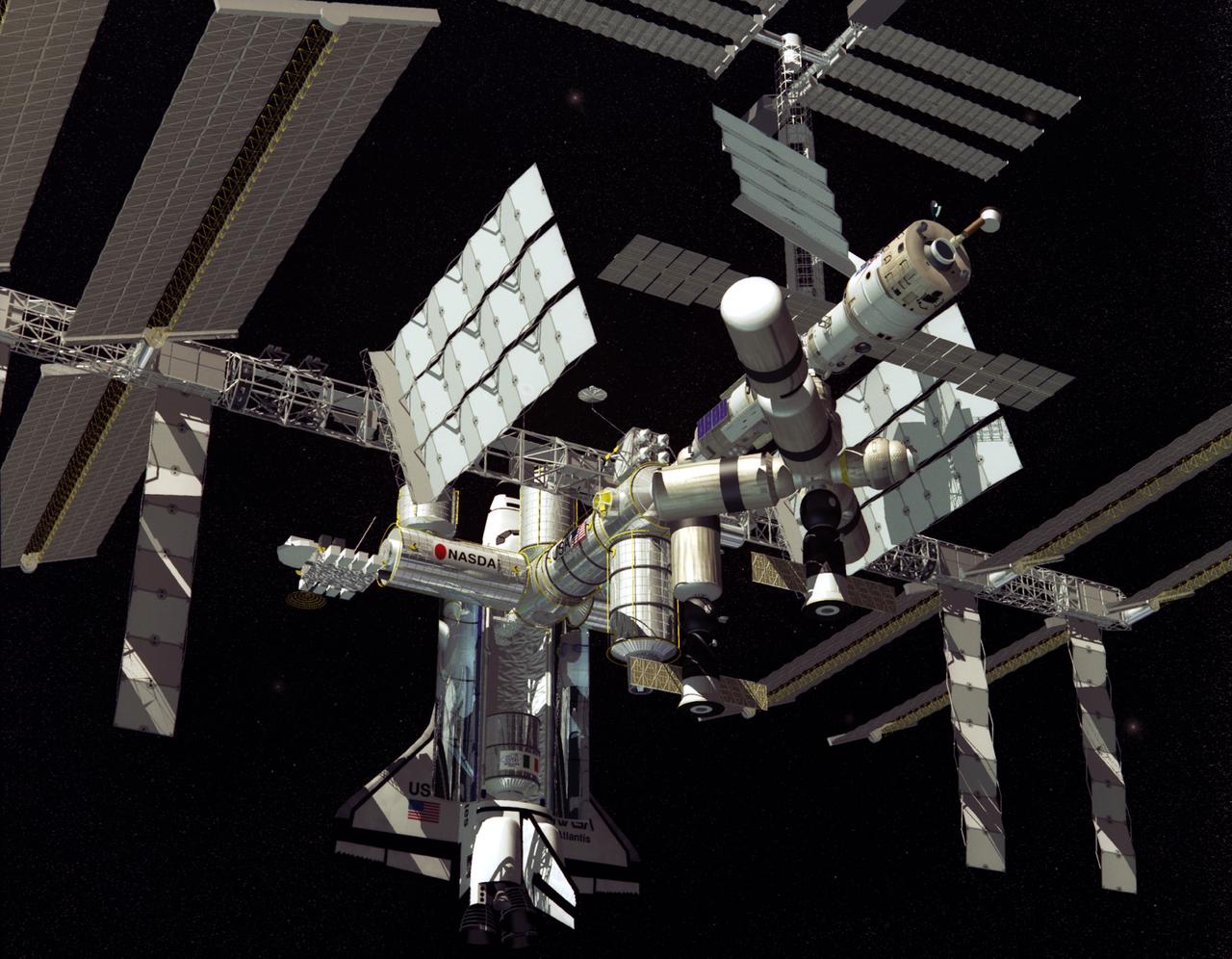
International Cooperation Phase III: A Space Shuttle docked to the International Space Station (ISS) in this computer generated representation of the ISS in its completed and fully operational state with elements from the U.S., Europe, Canada, Japan, and Russia.
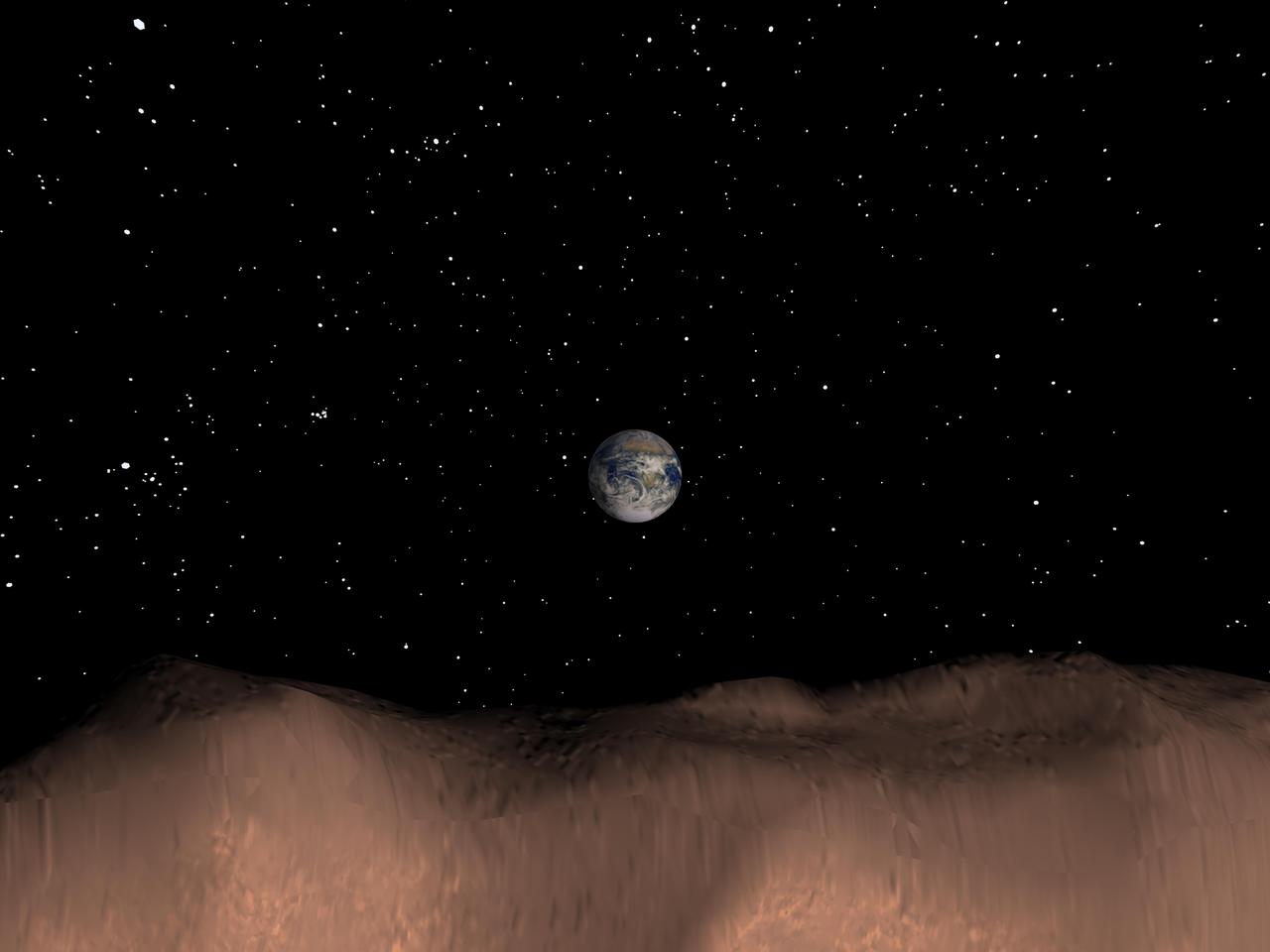
This computer generated image depicts a view of Earth as seen from the surface of the asteroid Toutatis on Nov 29th 1996. A 2.5 degree field-of-view synthetic computer camera was used for this simulation. Toutatis is visible on this date as a twelfth magnitude object in the night sky in the constellation of Virgo and could be viewed with a medium sized telescope. Toutatis currently approaches Earth once every four years and, on Nov. 29th, 1996 will be 5.2 million kilometers away (approx. 3.3 million miles). In approximately 8 years, on Sept. 29th, 2004, it will be less than 1.6 million kilometers from Earth. This is only 4 times the distance to the moon, and is the closest approach predicted for any known asteroid or comet during the next 60 years. http://photojournal.jpl.nasa.gov/catalog/PIA00515
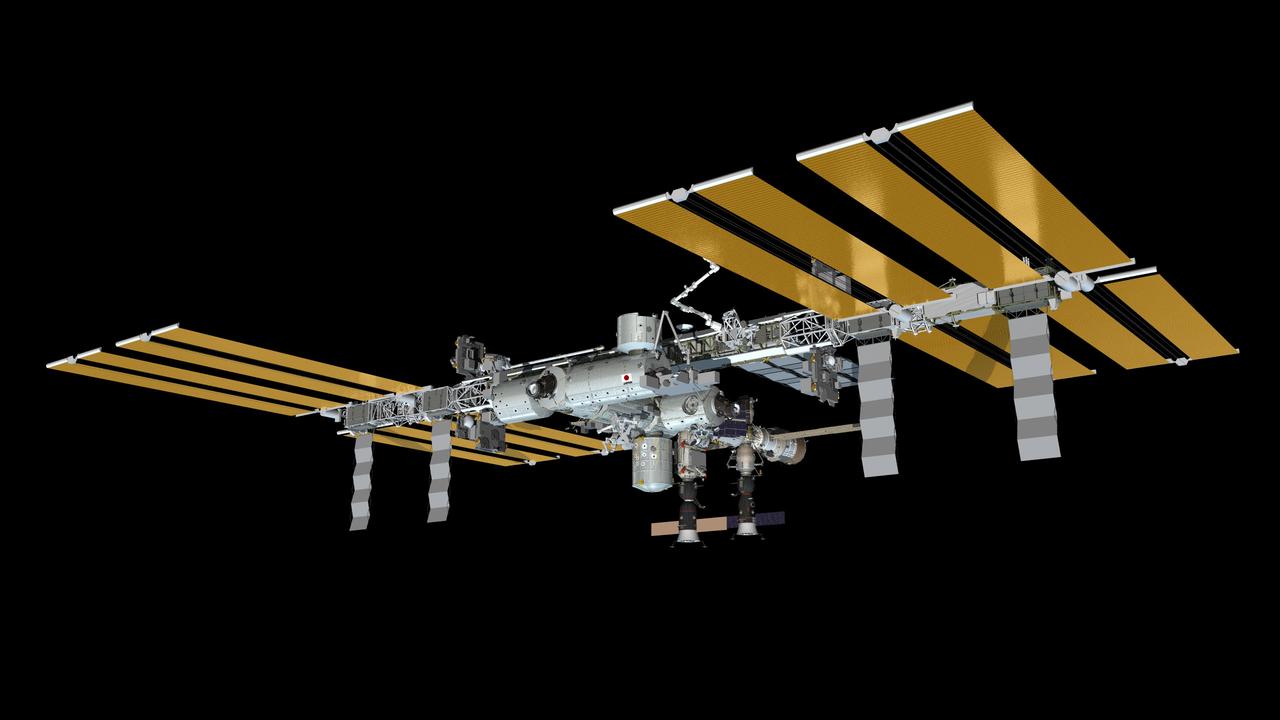
JSC2012-E-216827 (September 2012) --- Computer-generated artist?s rendering of the International Space Station as of Sept. 28, 2012. European Space Agency?s Automated Transfer Vehicle-3 (ATV-3) ?Edoardo Amaldi? undocks from the Zvezda Service Module. Progress 48 is docked to the Pirs Docking Compartment. Soyuz 31 (TMA-05M) is attached to the Rassvet Mini-Research Module 1 (MRM1). Photo credit: NASA
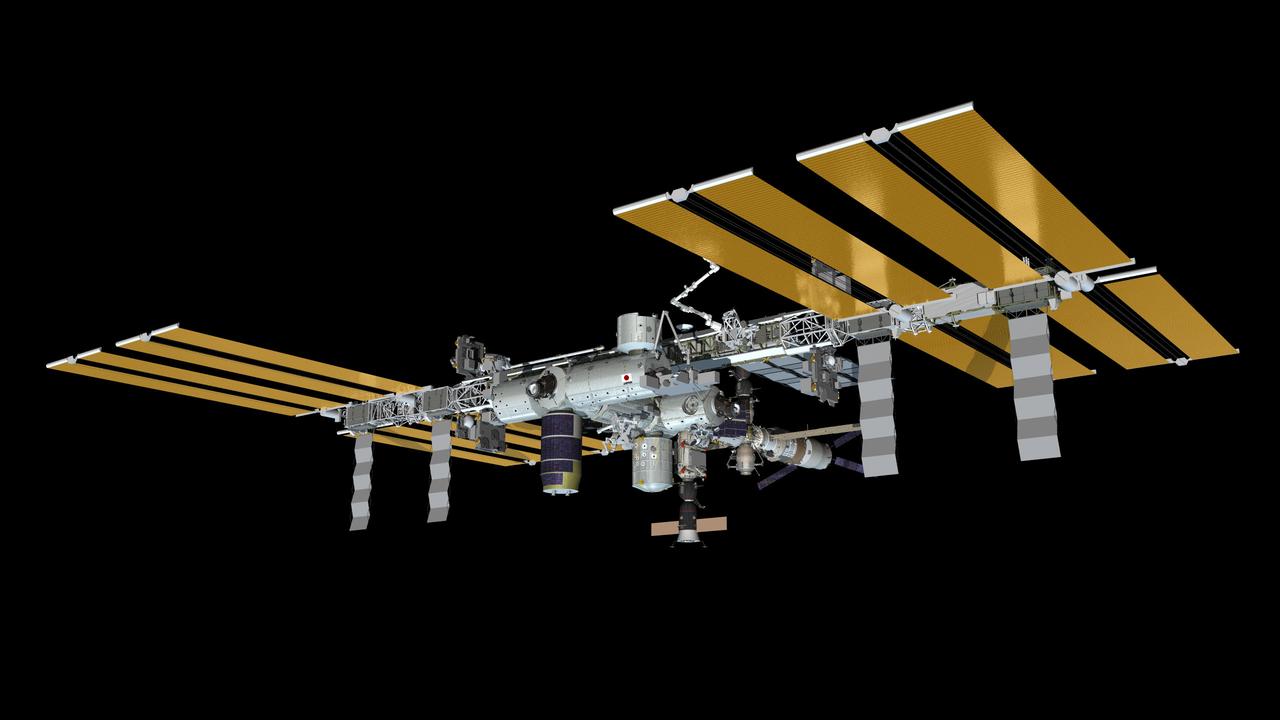
JSC2012-E-107187 (July 2012) --- Computer-generated artist?s rendering of the International Space Station as of July 27, 2012. Japan Aerospace Exploration Agency (JAXA) H-II Transfer Vehicle (HTV-3) is berthed to the Harmony nadir port. Soyuz 31 (TMA-05M) is docked to the Rassvet Mini-Research Module 1 (MRM1). European Space Agency?s Automated Transfer Vehicle-3 (ATV-3) ?Edoardo Amaldi? is attached to the Zvezda Service Module and Soyuz 30 (TMA-04M) is linked to the Poisk Mini-Research Module 2 (MRM2). Photo credit: NASA
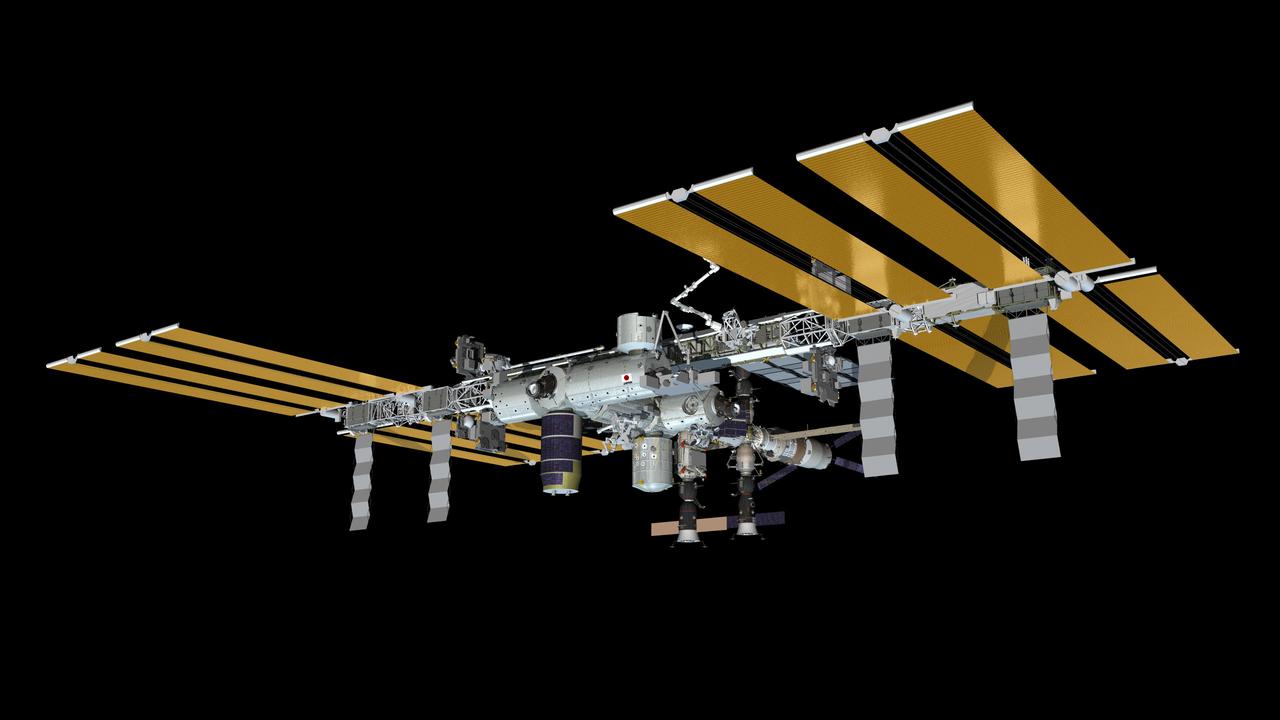
JSC2012-E-107190 (August 2012) --- Computer-generated artist?s rendering of the International Space Station as of August 2, 2012. Progress 48 docks to the Pirs Docking Compartment. Japan Aerospace Exploration Agency (JAXA) H-II Transfer Vehicle (HTV-3) is connected to the Harmony nadir port. Soyuz 31 (TMA-05M) is docked to the Rassvet Mini-Research Module 1 (MRM1). European Space Agency?s Automated Transfer Vehicle-3 (ATV-3) ?Edoardo Amaldi? is attached to the Zvezda Service Module and Soyuz 30 (TMA-04M) is linked to the Poisk Mini-Research Module 2 (MRM2). Photo credit: NASA
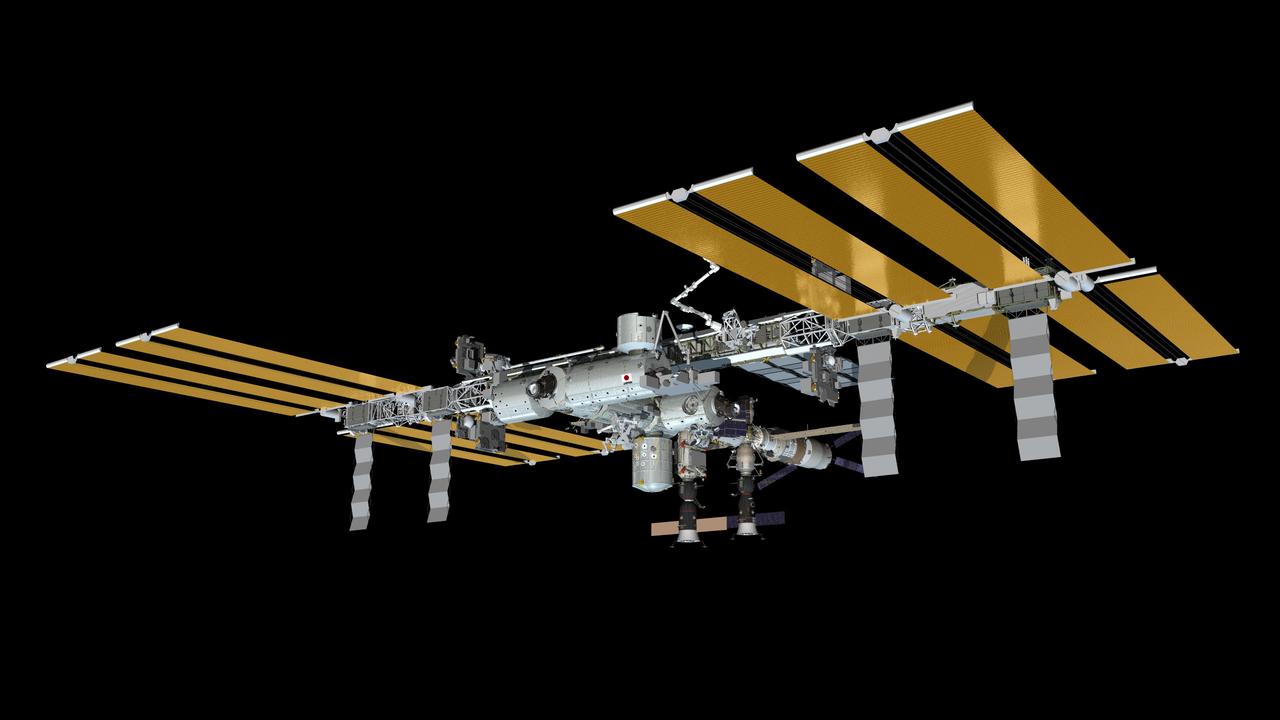
JSC2012-E-214800 (September 2012) --- Computer-generated artist?s rendering of the International Space Station as of Sept. 16, 2012. Soyuz 30 (TMA-04M) undocks from the Poisk Mini-Research Module 2 (MRM2), returning Expedition 32 crew members (Padalka, Acaba, Revin) to Earth. Progress 48 is docked to the Pirs Docking Compartment. Soyuz 31 (TMA-05M) is attached to the Rassvet Mini-Research Module 1 (MRM1). European Space Agency?s Automated Transfer Vehicle-3 (ATV-3) ?Edoardo Amaldi? is linked to the Zvezda Service Module. Photo credit: NASA
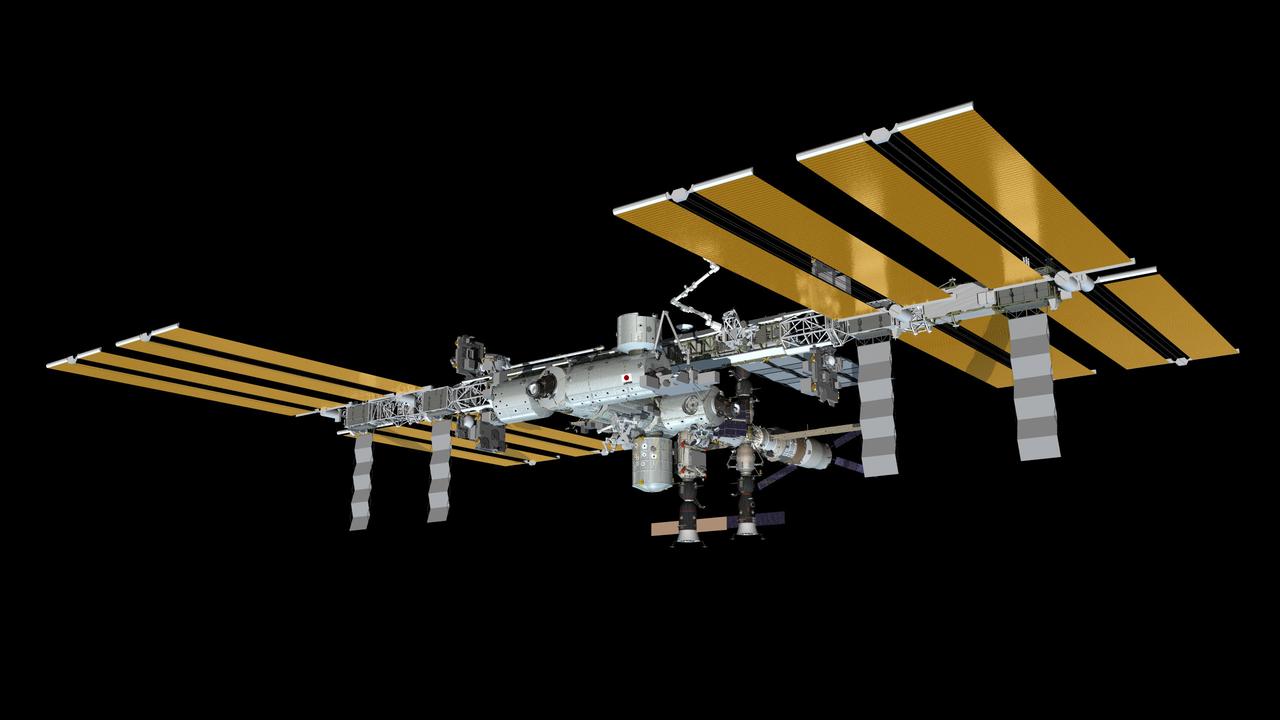
JSC2012-E-214799 (September 2012) --- Computer-generated artist?s rendering of the International Space Station as of Sept. 12, 2012. Japan Aerospace Exploration Agency (JAXA) H-II Transfer Vehicle (HTV-3) is unberthed from the Harmony nadir port. Progress 48 is docked to the Pirs Docking Compartment. Soyuz 31 (TMA-05M) is attached to the Rassvet Mini-Research Module 1 (MRM1). European Space Agency?s Automated Transfer Vehicle-3 (ATV-3) ?Edoardo Amaldi? is docked to the Zvezda Service Module and Soyuz 30 (TMA-04M) is linked to the Poisk Mini-Research Module 2 (MRM2). Photo credit: NASA
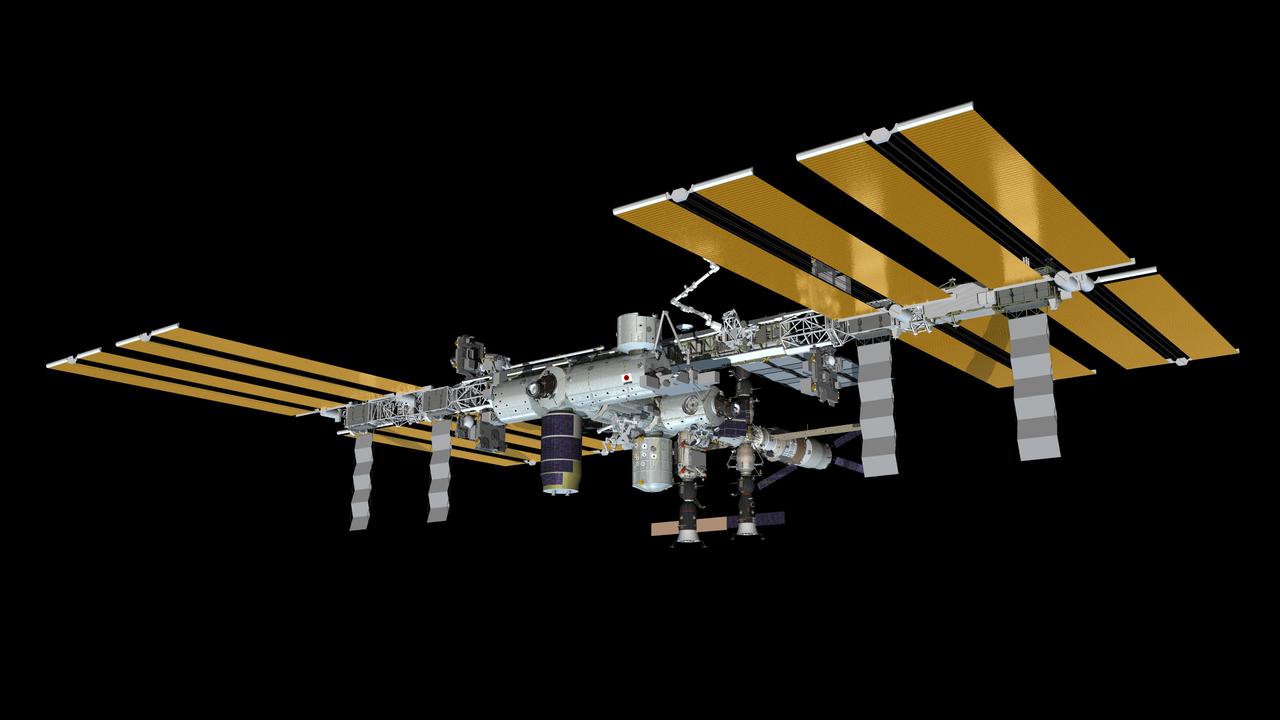
JSC2012-E-107188 (July 2012) --- Computer-generated artist?s rendering of the International Space Station as of July 28, 2012. Progress 47 redocks to the Pirs Docking Compartment. Japan Aerospace Exploration Agency (JAXA) H-II Transfer Vehicle (HTV-3) is connected to the Harmony nadir port. Soyuz 31 (TMA-05M) is docked to the Rassvet Mini-Research Module 1 (MRM1). European Space Agency?s Automated Transfer Vehicle-3 (ATV-3) ?Edoardo Amaldi? is attached to the Zvezda Service Module and Soyuz 30 (TMA-04M) is linked to the Poisk Mini-Research Module 2 (MRM2). Photo credit: NASA
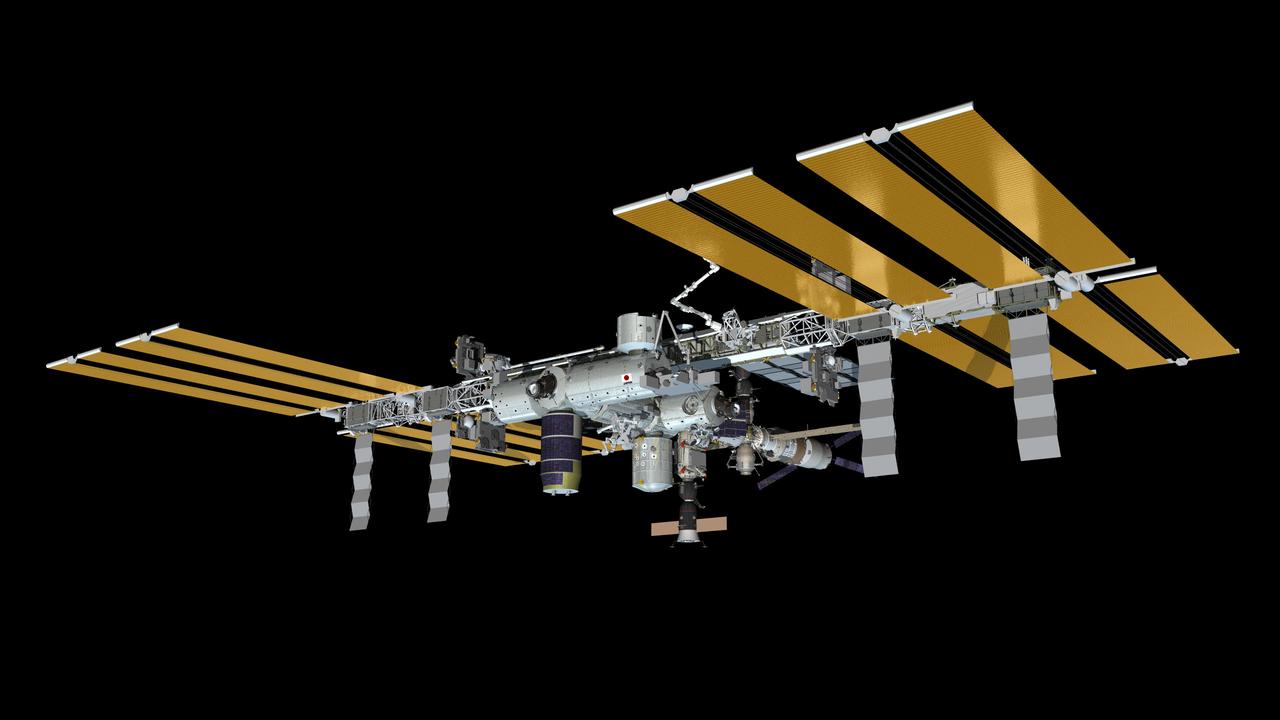
JSC2012-E-107189 (July 2012) --- Computer-generated artist?s rendering of the International Space Station as of July 30, 2012. Progress 47 completes final undocking from the Pirs Docking Compartment. Japan Aerospace Exploration Agency (JAXA) H-II Transfer Vehicle (HTV-3) is connected to the Harmony nadir port. Soyuz 31 (TMA-05M) is docked to the Rassvet Mini-Research Module 1 (MRM1). European Space Agency?s Automated Transfer Vehicle-3 (ATV-3) ?Edoardo Amaldi? is attached to the Zvezda Service Module and Soyuz 30 (TMA-04M) is linked to the Poisk Mini-Research Module 2 (MRM2). Photo credit: NASA
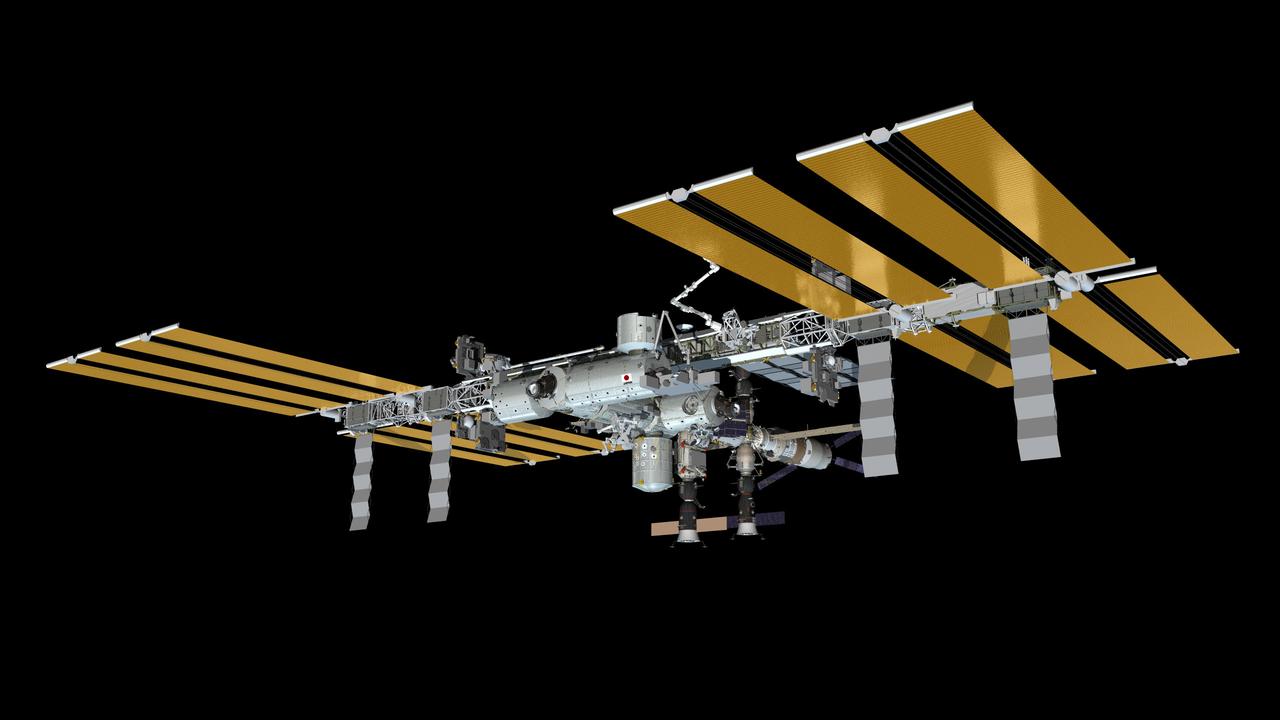
JSC2012-E-103017 (July 2012) --- Computer-generated artist?s rendering of the International Space Station as of July 17, 2012. Soyuz 31 (TMA-05M) docks to the Rassvet Mini-Research Module 1 (MRM1), bringing Expedition 32 crew members (Sunita Williams, Yuri Malenchenko, Aki Hoshide) to the space station. Progress 47 is linked to the Pirs Docking Compartment. European Space Agency?s Automated Transfer Vehicle-3 (ATV-3) ?Edoardo Amaldi? is attached to the Zvezda Service Module and Soyuz 30 (TMA-04M) is docked to the Poisk Mini-Research Module 2 (MRM2). Photo credit: NASA
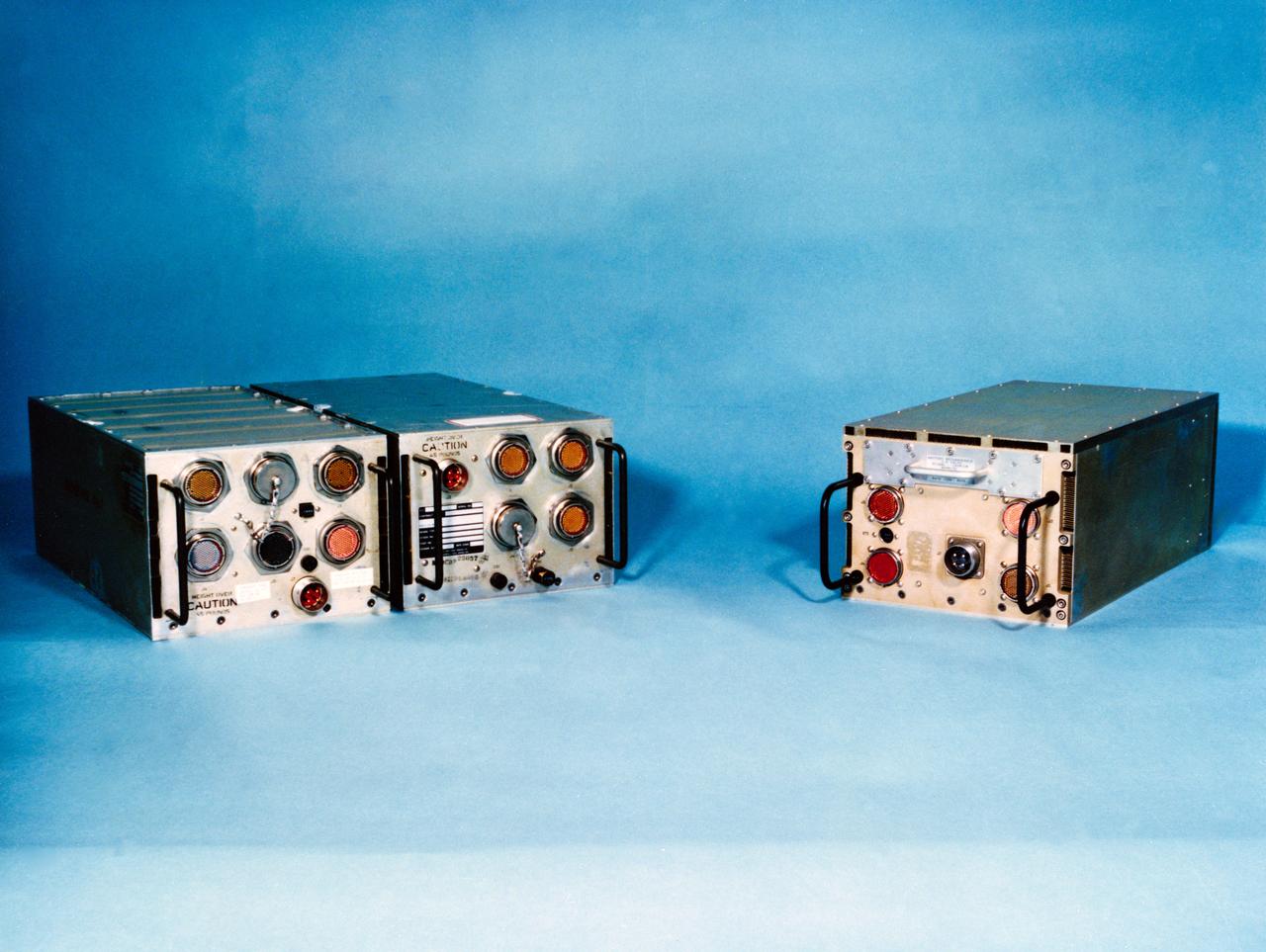
S88-47513 (Aug 1988) --- The current and future versions of general purpose computers for Space Shuttle orbiters are represented in this frame. The two boxes on the left (AP101B) represent the current GPC configuration, with the input-output processor at far left and the central processing unit at its side. The upgraded version combines both elements in a single unit (far right, AP101S).
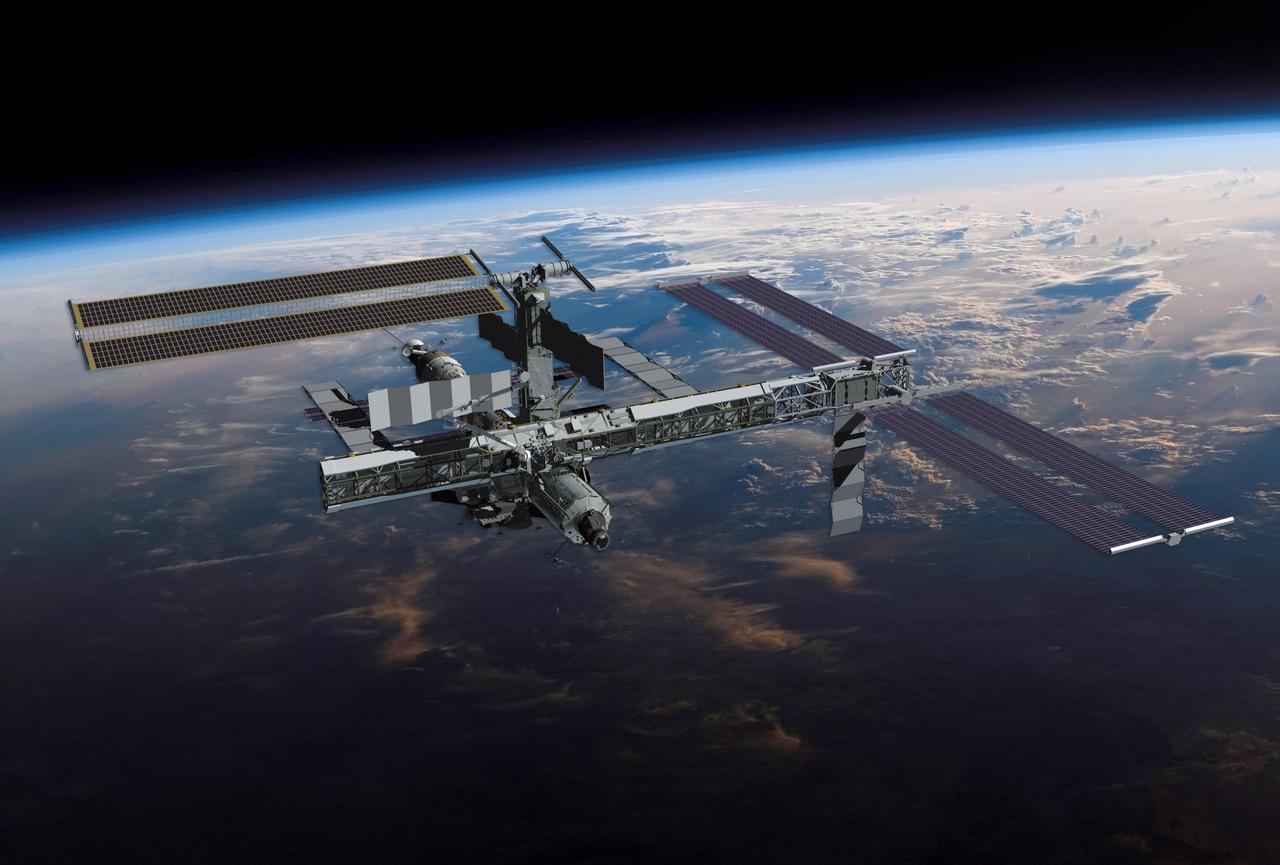
JSC2006-E-47866 (November 2006) --- A computer-generated image of the International Space Station after Discovery's undocking and departure, scheduled for the tenth flight day of STS-116. The image shows the addition of the P5 Integrated Truss Segment and retraction of the P6 solar array.
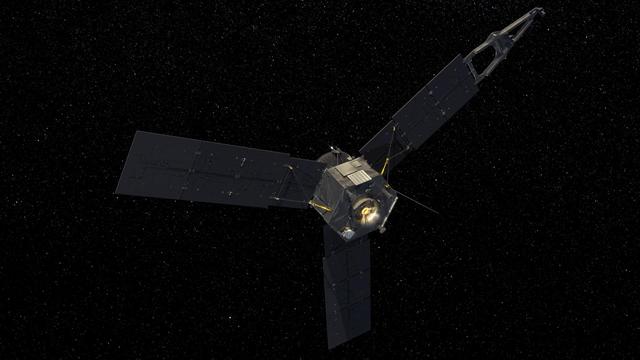
A computer-generated image depicts NASA Juno spacecraft firing its main engine.
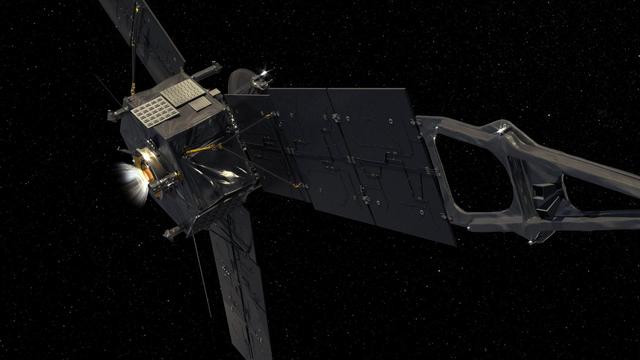
This computer-generated image depicts NASA Juno spacecraft firing its Leros-1b main engine.
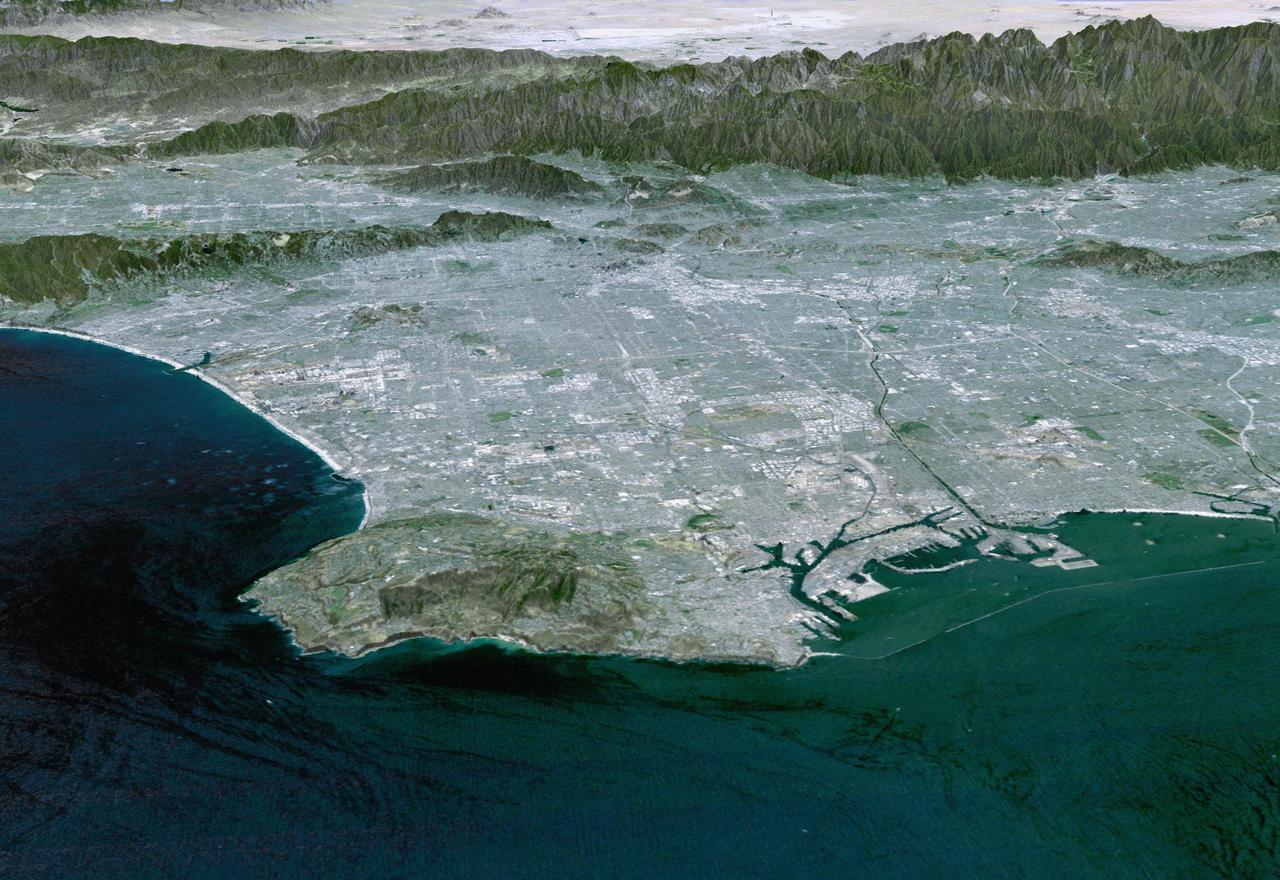
Most of Los Angeles is visible in this computer-generated north-northeast perspective viewed from above the Pacific Ocean.
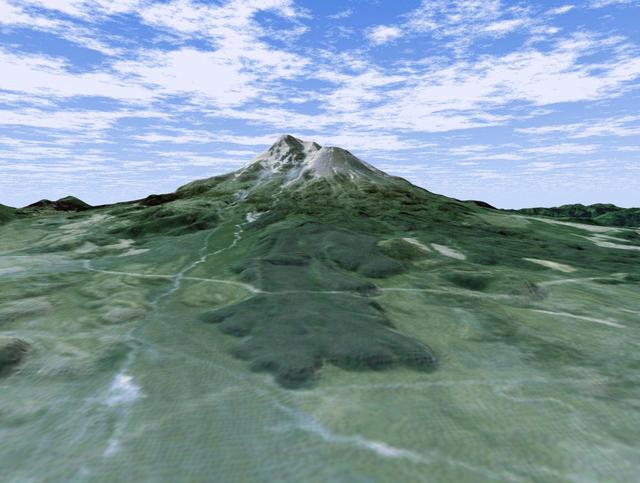
The volcanic nature of Mount Shasta is clearly evident in this computer-generated perspective viewed from the northwest.
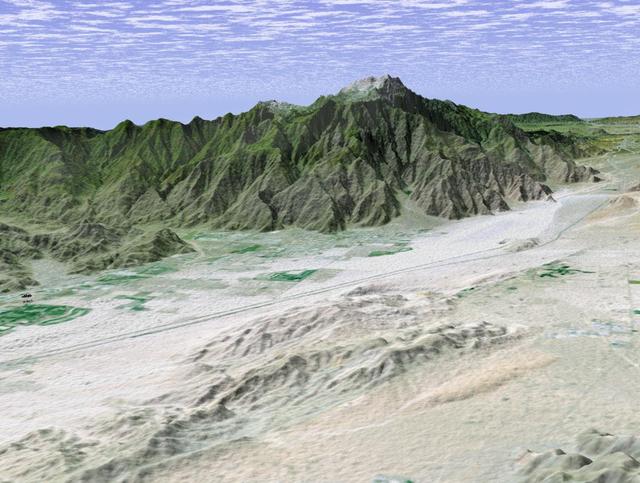
The city of Palm Springs nestles at the base of Mount San Jacinto in this computer-generated perspective viewed from the east.
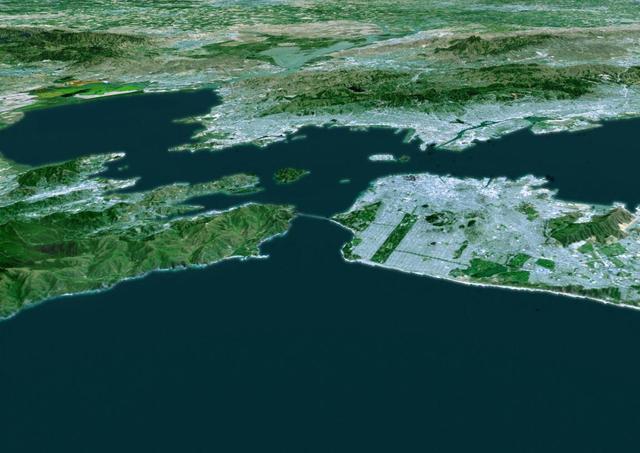
The cities of San Francisco and the East Bay are highlighted in this computer-generated perspective viewed from west of the Golden Gate.
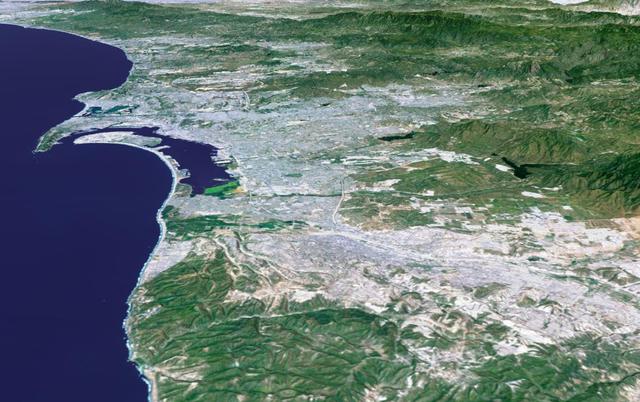
The influence of topography on the growth of the city of San Diego is seen clearly in this computer-generated perspective viewed from the south.
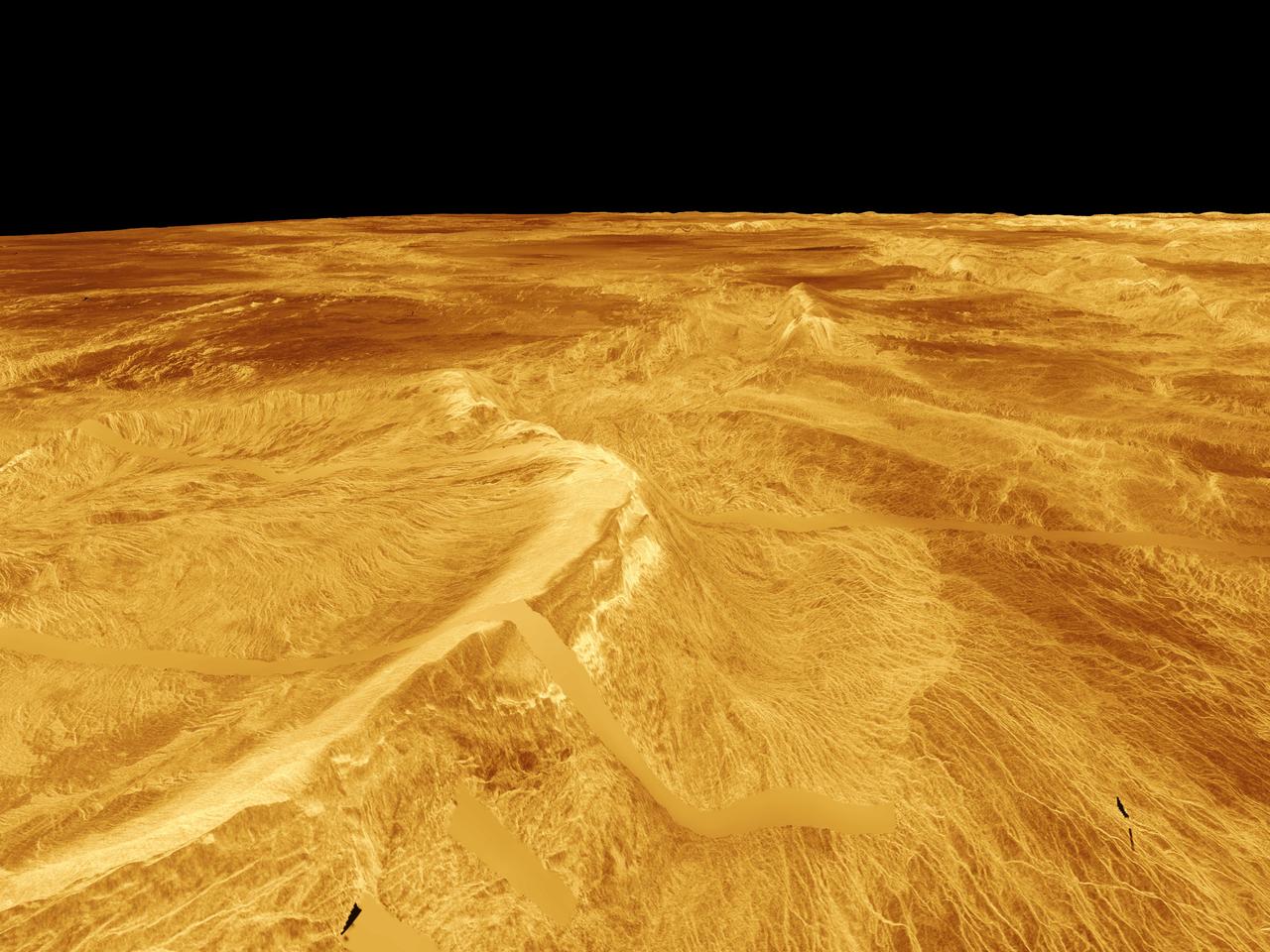
This computer-generated perspective view of Latona Corona and Dali Chasma on Venus shows NASA Magellan radar data superimposed on topography. http://photojournal.jpl.nasa.gov/catalog/PIA00268

Sapas Mons is displayed in the center of this computer-generated three-dimensional perspective view from NASA's Magellan spacecraft of the surface of Venus. http://photojournal.jpl.nasa.gov/catalog/PIA00107
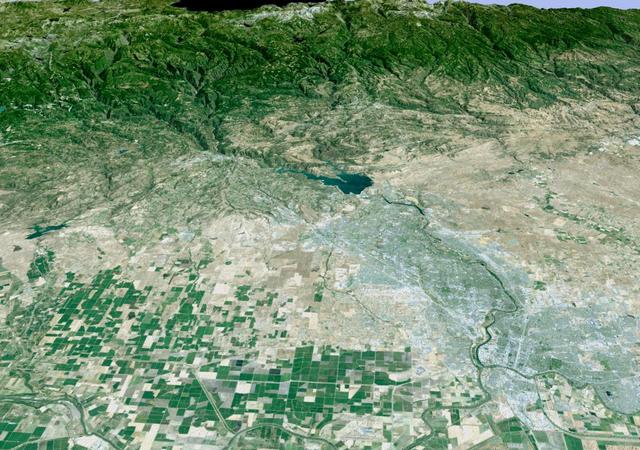
California state capitol, Sacramento, can be seen clustered along the American and Sacramento Rivers in this computer-generated perspective viewed from the west.
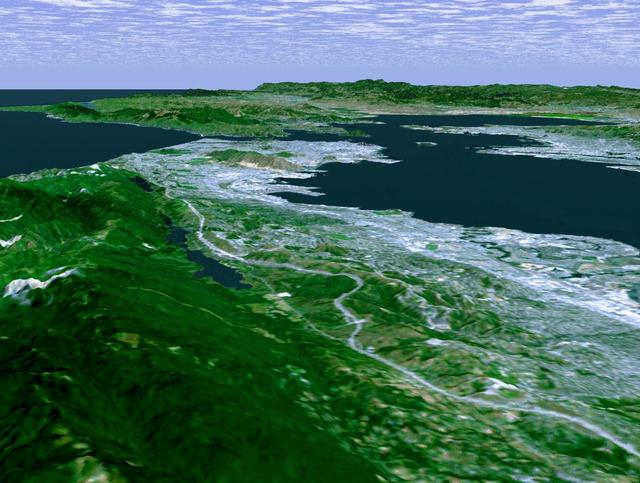
The defining landmarks of San Francisco, its bay and the San Andreas Fault are clearly seen in this computer-generated perspective viewed from the south.
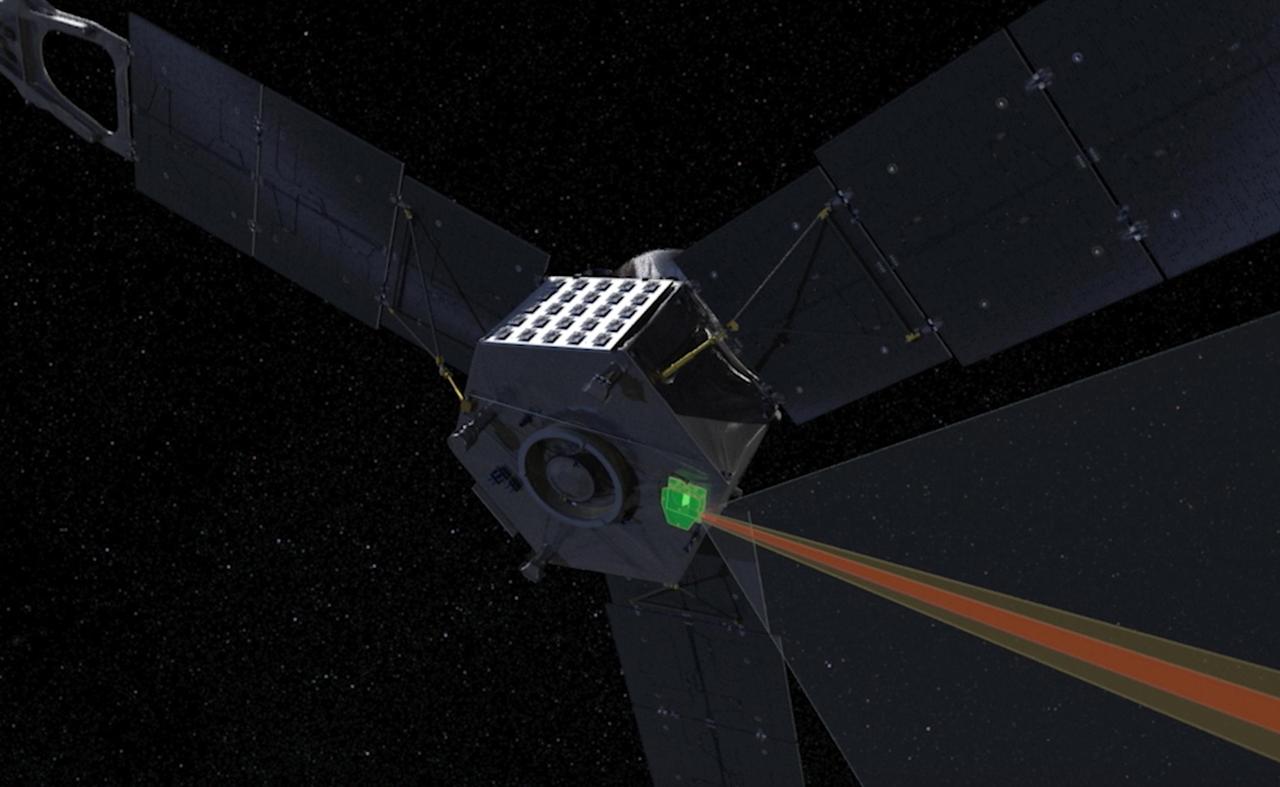
This computer-generated image depicts the Jovian Infrared Auroral Mapper (JIRAM) instrument aboard NASA's Juno spacecraft. The JIRAM instrument measures heat radiated from the planet at an infrared wavelength of around 5 microns. https://photojournal.jpl.nasa.gov/catalog/PIA23594
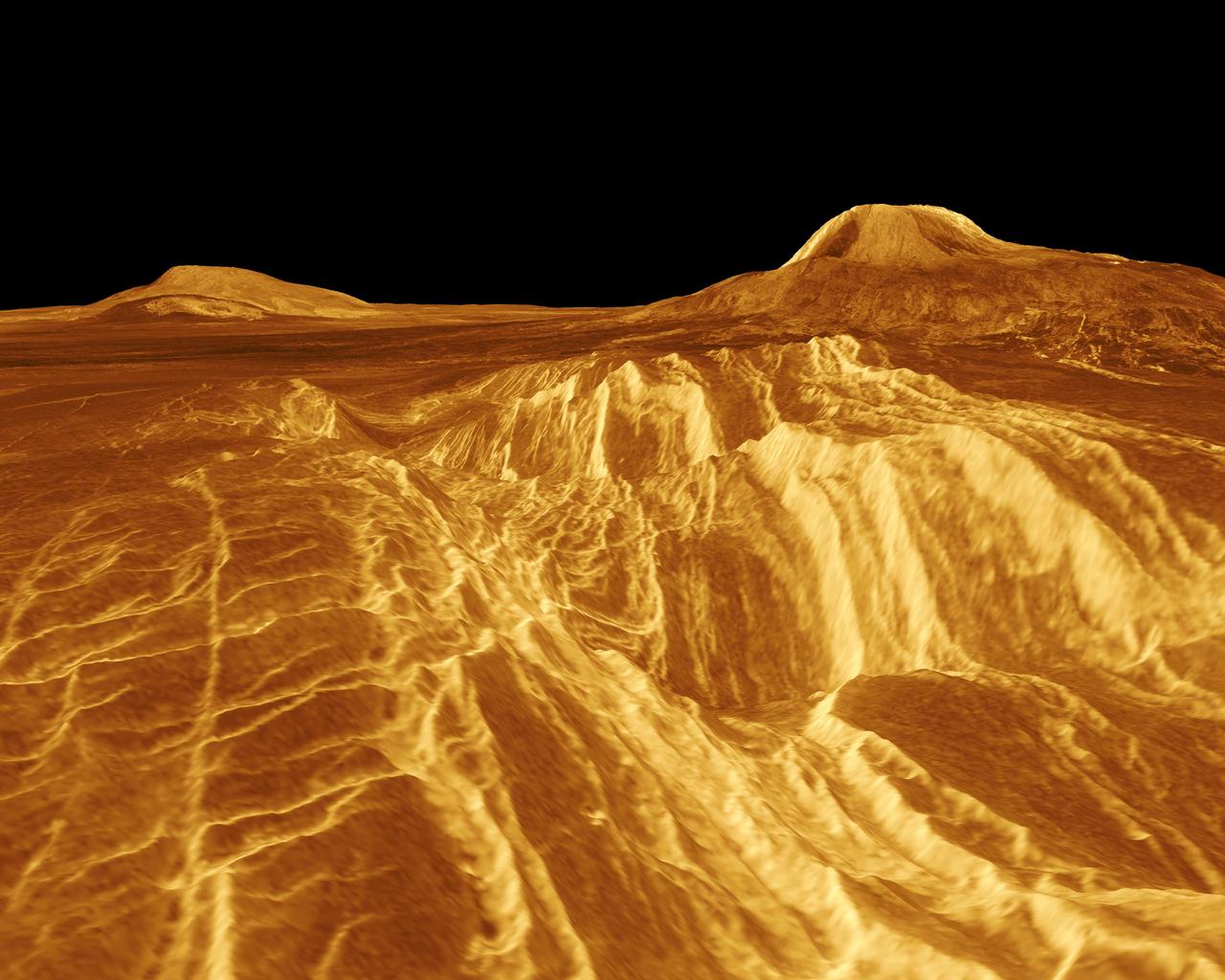
A portion of western Eistla Regio is shown in this three dimensional, computer-generated view of the surface of Venus. This NASA Magellan image was released on April 22, 1992. http://photojournal.jpl.nasa.gov/catalog/PIA00200
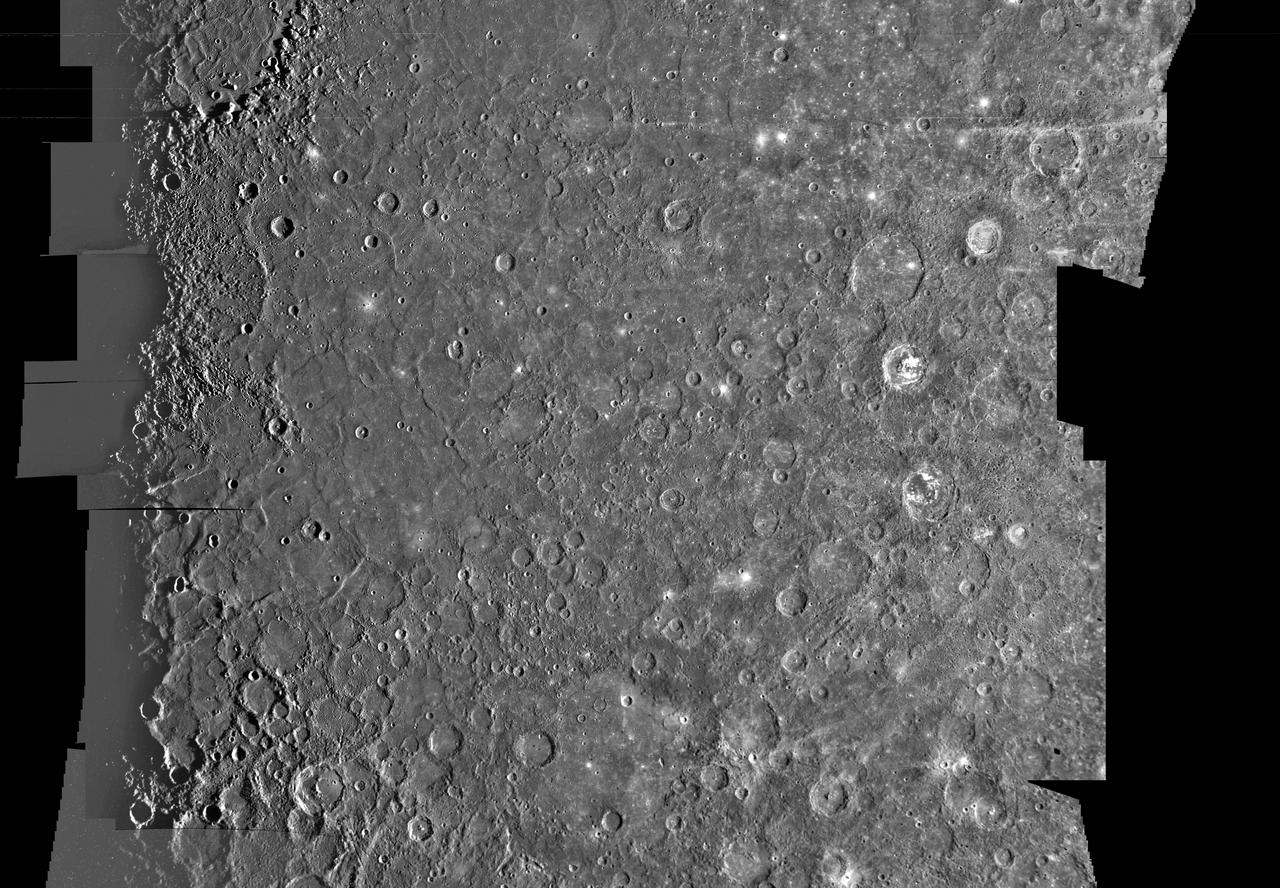
This computer generated mosaic from NASA Mariner 10 is of Mercury Tolstoj Quadrangle, named for the ancient Tolstoj crater located in the lower center of the image. http://photojournal.jpl.nasa.gov/catalog/PIA00068
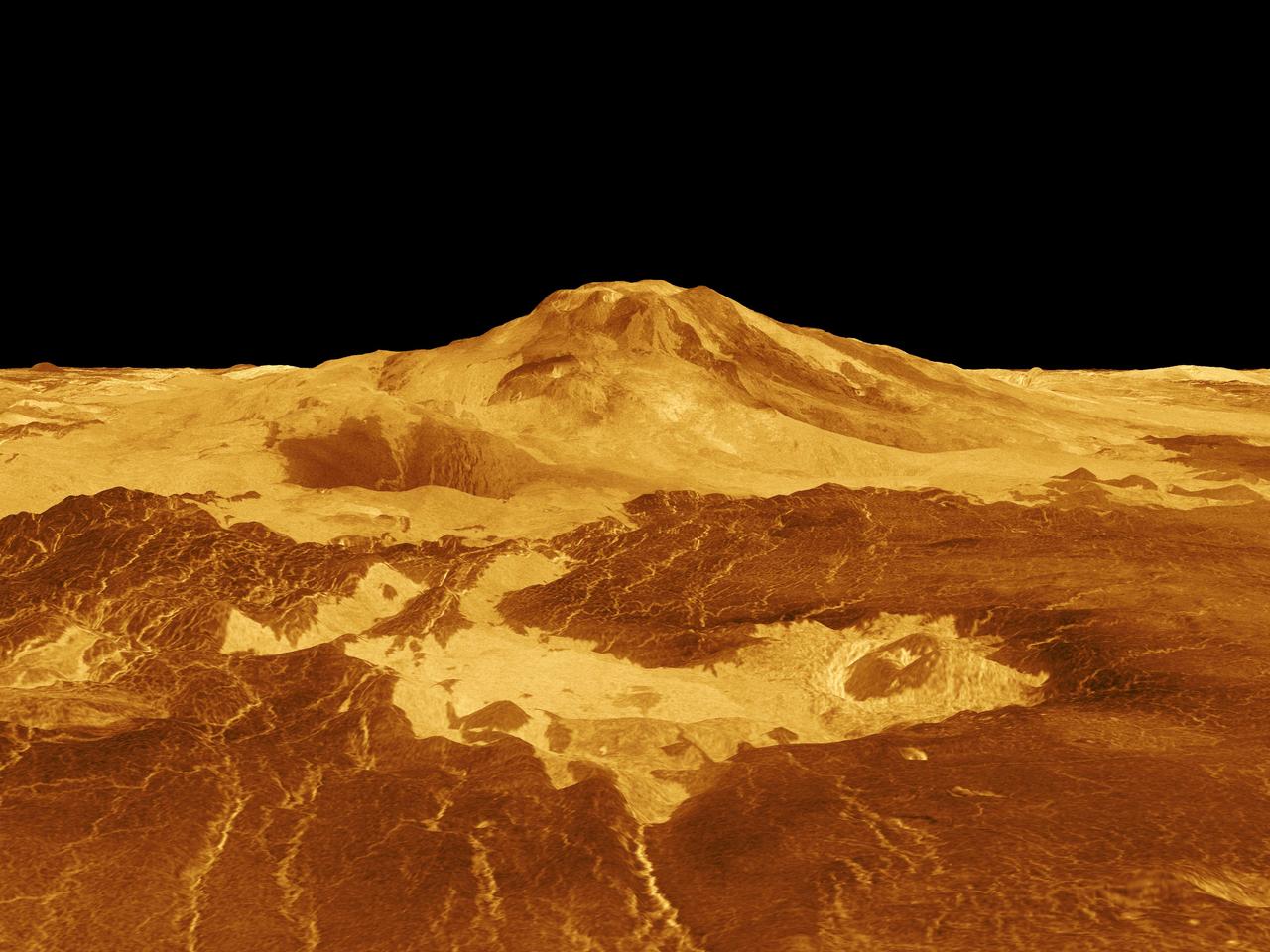
Maat Mons is displayed in this computer generated three-dimensional perspective of the surface of Venus. This NASA's Magellan image was released on April 22, 1992. http://photojournal.jpl.nasa.gov/catalog/PIA00106
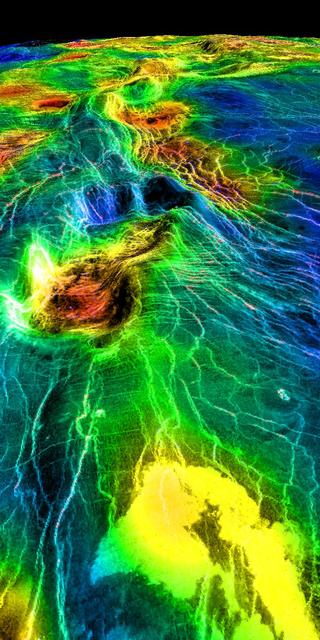
This perspective view of Venus, generated by computer from NASA Magellan data and color-coded with emissivity, shows part of the lowland plains in Sedna Planitia. http://photojournal.jpl.nasa.gov/catalog/PIA00314
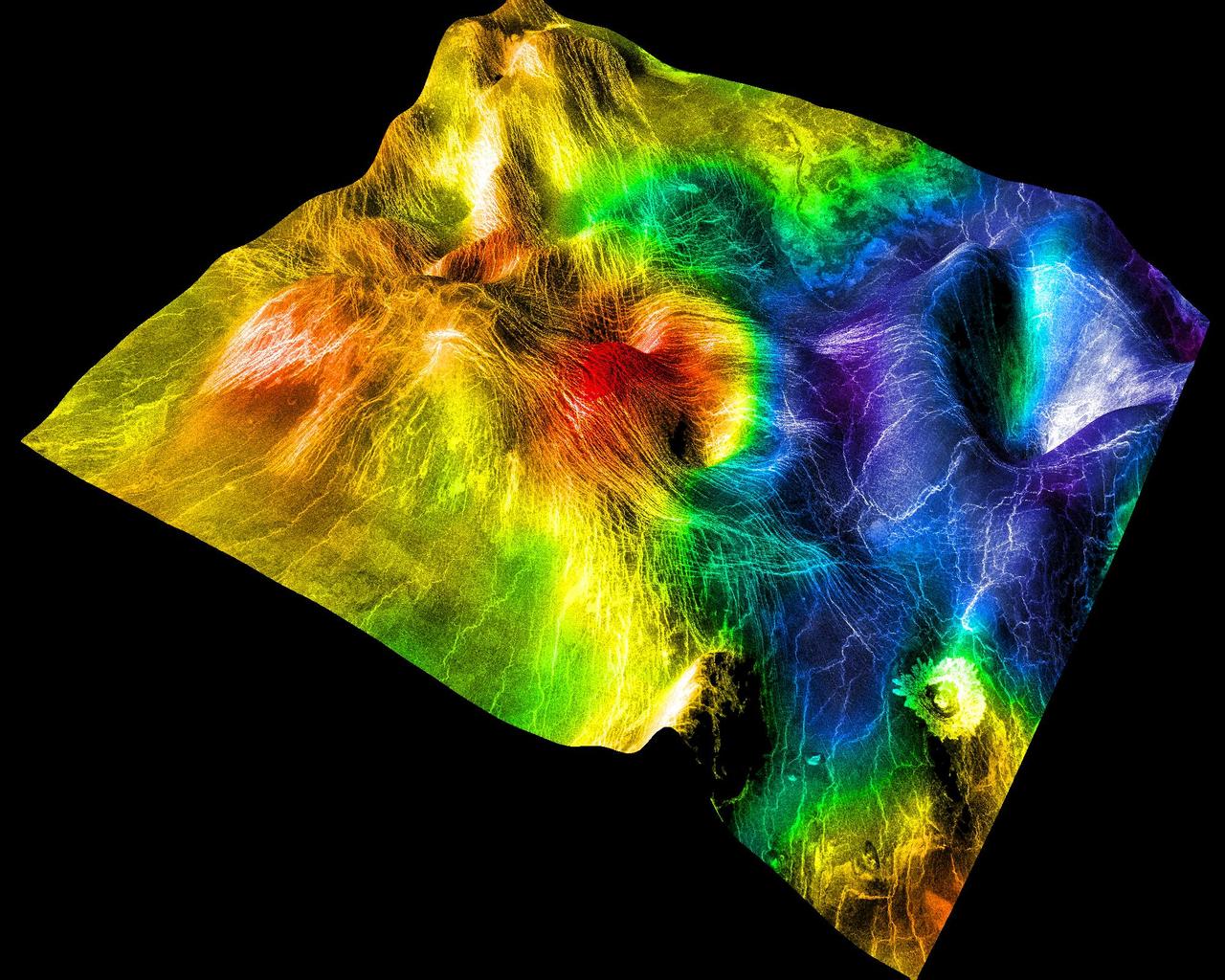
This perspective view of Venus, generated by computer from NASA Magellan data and color-coded with emissivity, shows part of the lowland plains in Sedna Planitia. http://photojournal.jpl.nasa.gov/catalog/PIA00307
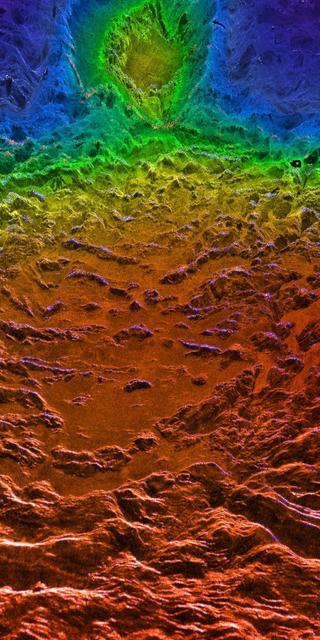
This perspective view of Venus, generated by computer from NASA Magellan data and color-coded with emissivity, is a look westward across the Fortuna Tessera toward the slopes of Maxwell Montes. http://photojournal.jpl.nasa.gov/catalog/PIA00316
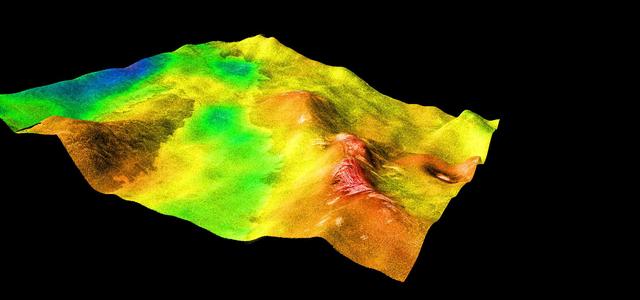
This perspective view of Venus, generated by computer from NASA Magellan data and color-coded with emissivity, shows part of Sedna Planitia and illustrates a common phenomenon of the lowland plains of Venus. http://photojournal.jpl.nasa.gov/catalog/PIA00306
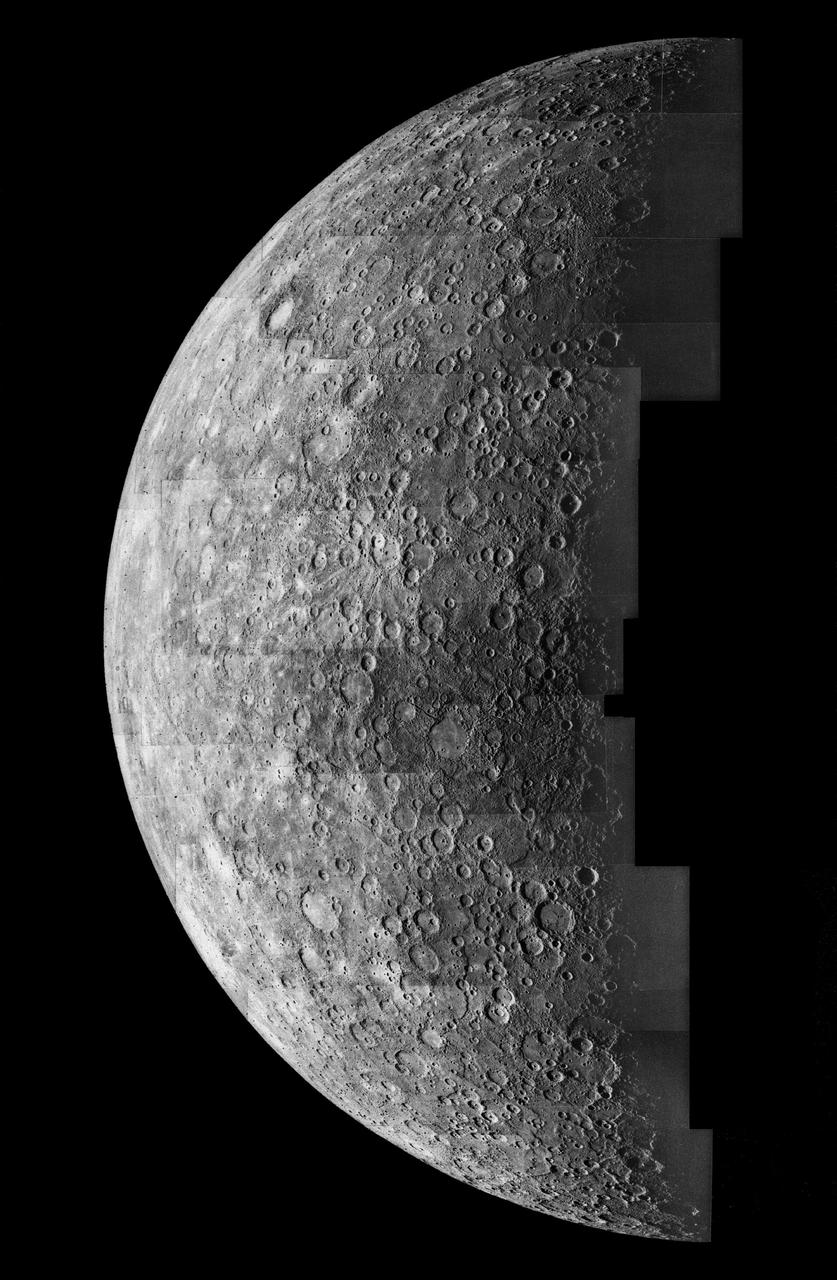
This computer generated photomosaic from NASA Mariner 10 is of the southern half of Mercury Shakespeare Quadrangle, named for the ancient Shakespeare crater located on the upper edge to the left of center.
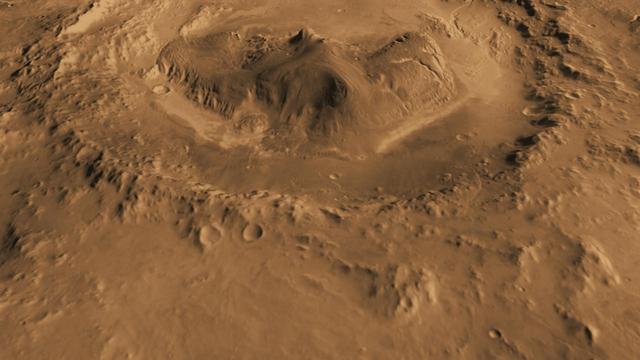
This computer-generated view based on multiple orbital observations shows Mars Gale crater. NASA is considering Gale as a possible landing site for the Mars Science Laboratory mission.
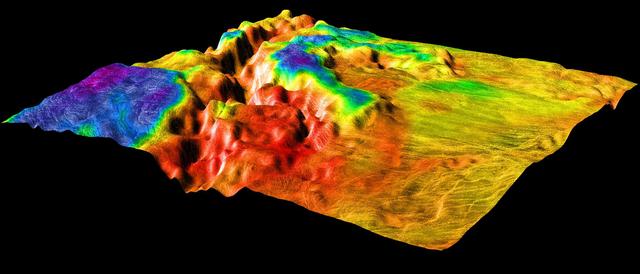
This perspective view of Venus, generated by computer from NASA Magellan data and color-coded with emissivity, shows the boundary between the lowland plains and characteristic Venusian highland terrain in Ovda Region. http://photojournal.jpl.nasa.gov/catalog/PIA00311
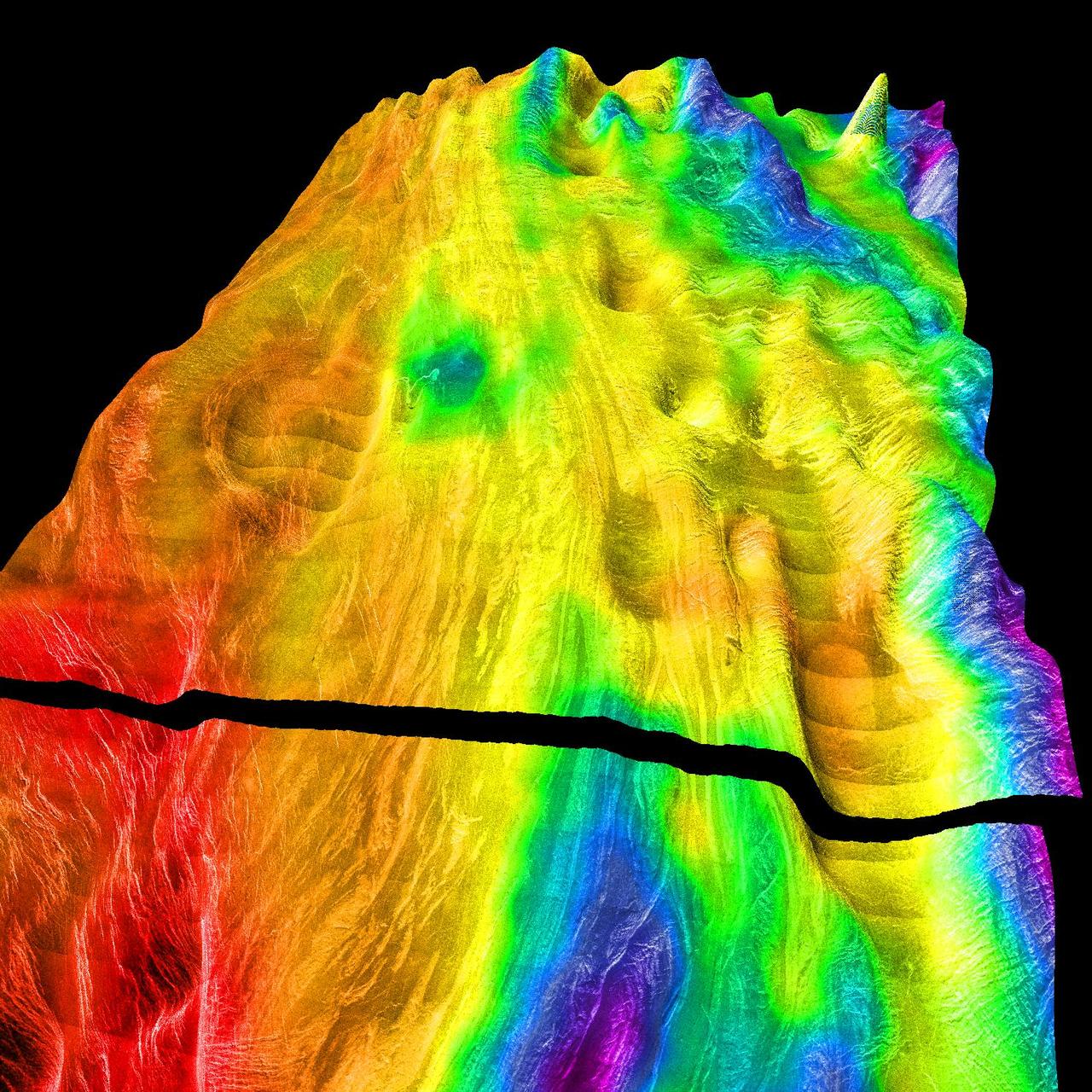
This perspective view of Venus, generated by computer from NASA Magellan data and color-coded with emissivity, shows the boundary between the lowland plains and characteristic Venusian highland terrain in Ovda Regio. http://photojournal.jpl.nasa.gov/catalog/PIA00309
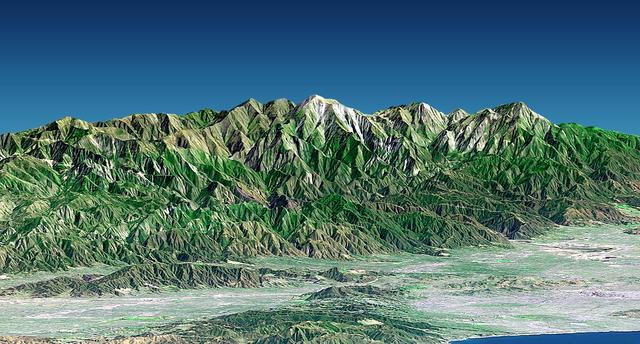
Mount San Antonio more commonly known as Mount Baldy crowns the San Gabriel Mountains northeast of Los Angeles in this computer-generated east-northeast perspective viewed from above the Malibu coastline.
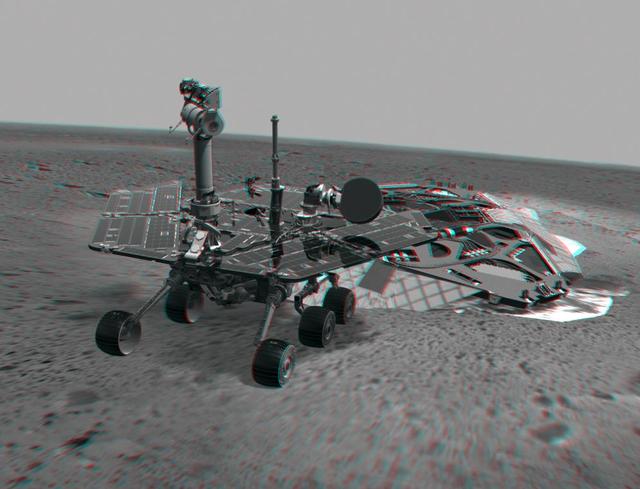
This 3-D image combines computer-generated models of NASA Mars Exploration Rover Spirit and its lander with real surface data from the rover panoramic camera. 3D glasses are necessary to view this image.
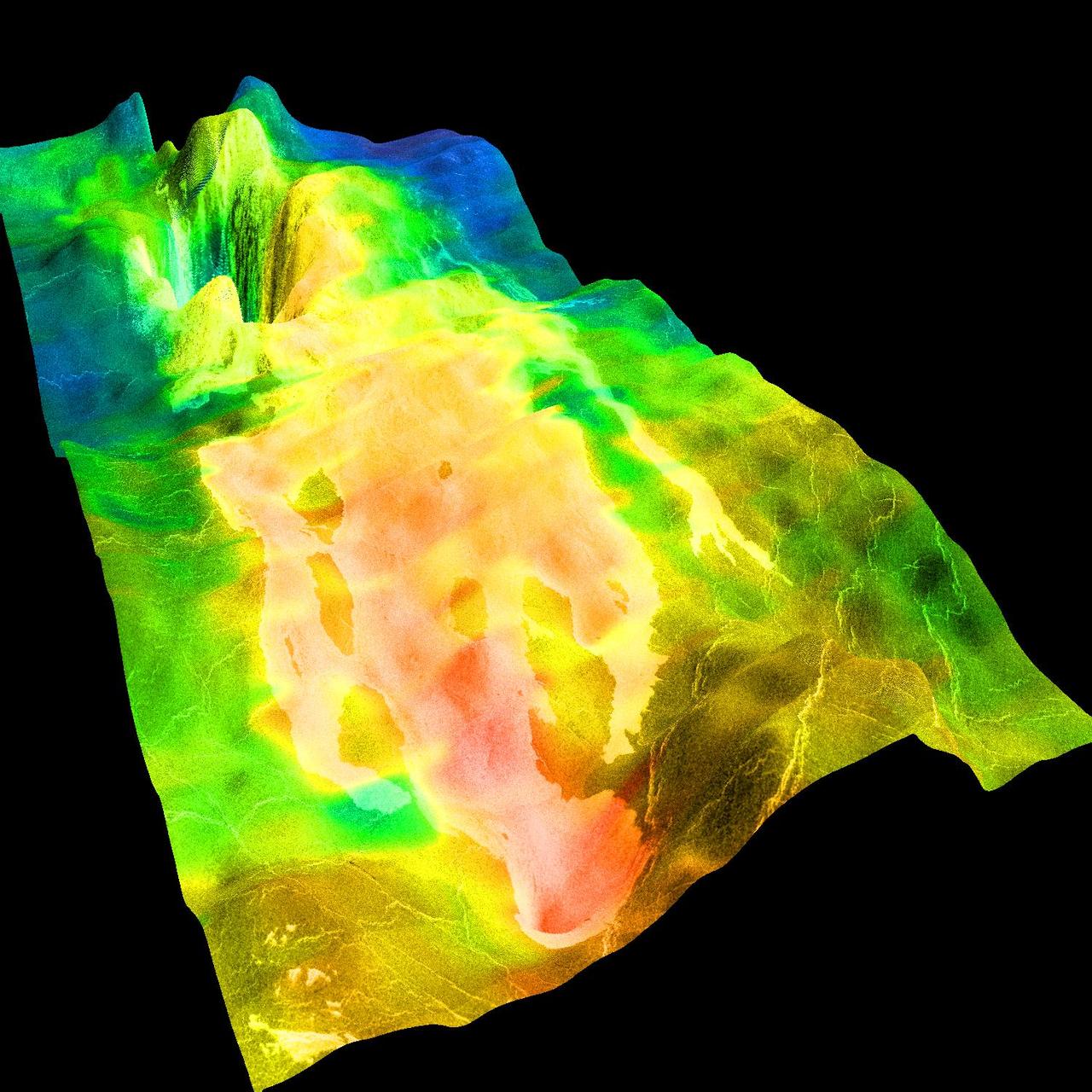
This perspective view of Venus, generated by computer from NASA Magellan data and color-coded with emissivity, shows the impact crater Markham, named after the English aviator Beryl Markham. http://photojournal.jpl.nasa.gov/catalog/PIA00312
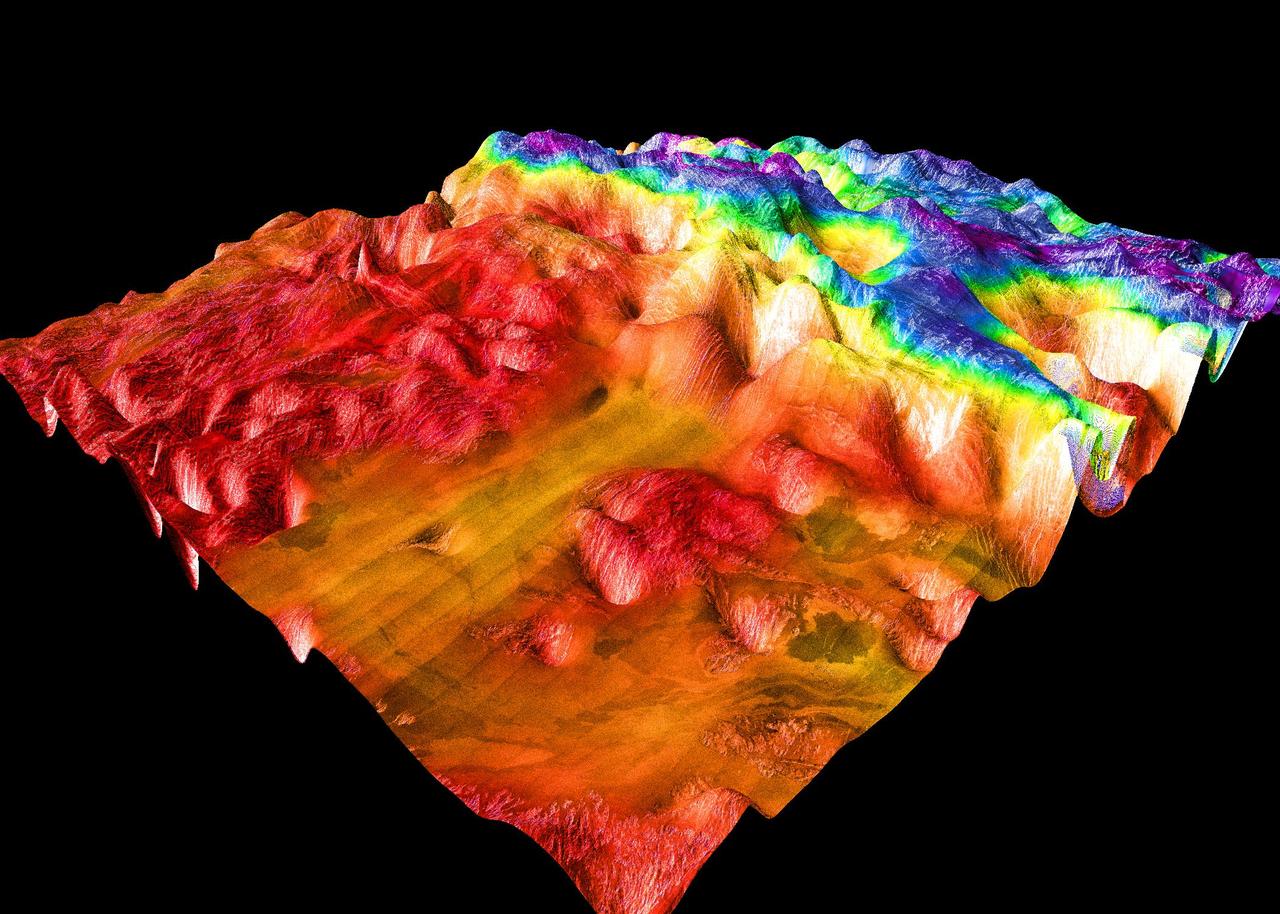
This perspective view of Venus, generated by computer from NASA Magellan data and color-coded with emissivity, shows the boundary between the lowland plains and characteristic Venusian highland terrain in Ovda Regio. http://photojournal.jpl.nasa.gov/catalog/PIA00310
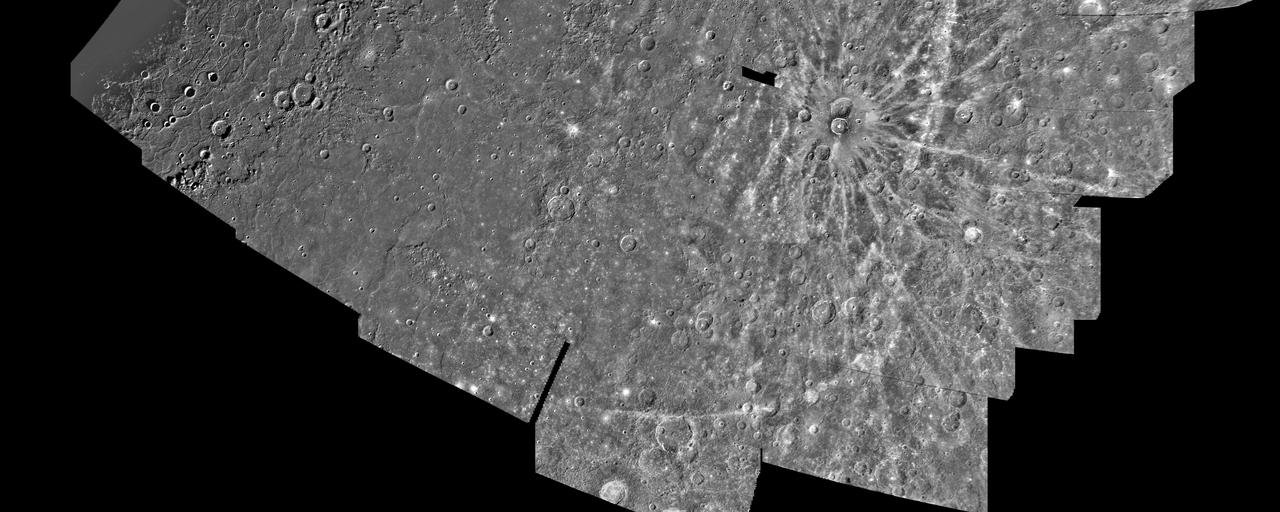
This computer generated photomosaic from NASA Mariner 10 is of the southern half of Mercury Shakespeare Quadrangle, named for the ancient Shakespeare crater located on the upper edge to the left of center. http://photojournal.jpl.nasa.gov/catalog/PIA00067
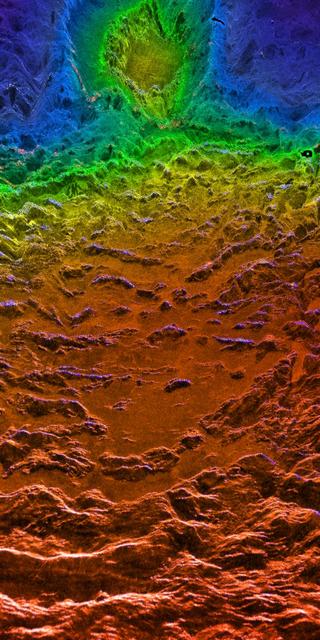
This perspective view of Venus, generated by computer from NASA Magellan data and color-coded with emissivity, is a look westward across the Fortuna Tessera toward the slopes of Maxwell Montes. http://photojournal.jpl.nasa.gov/catalog/PIA00315
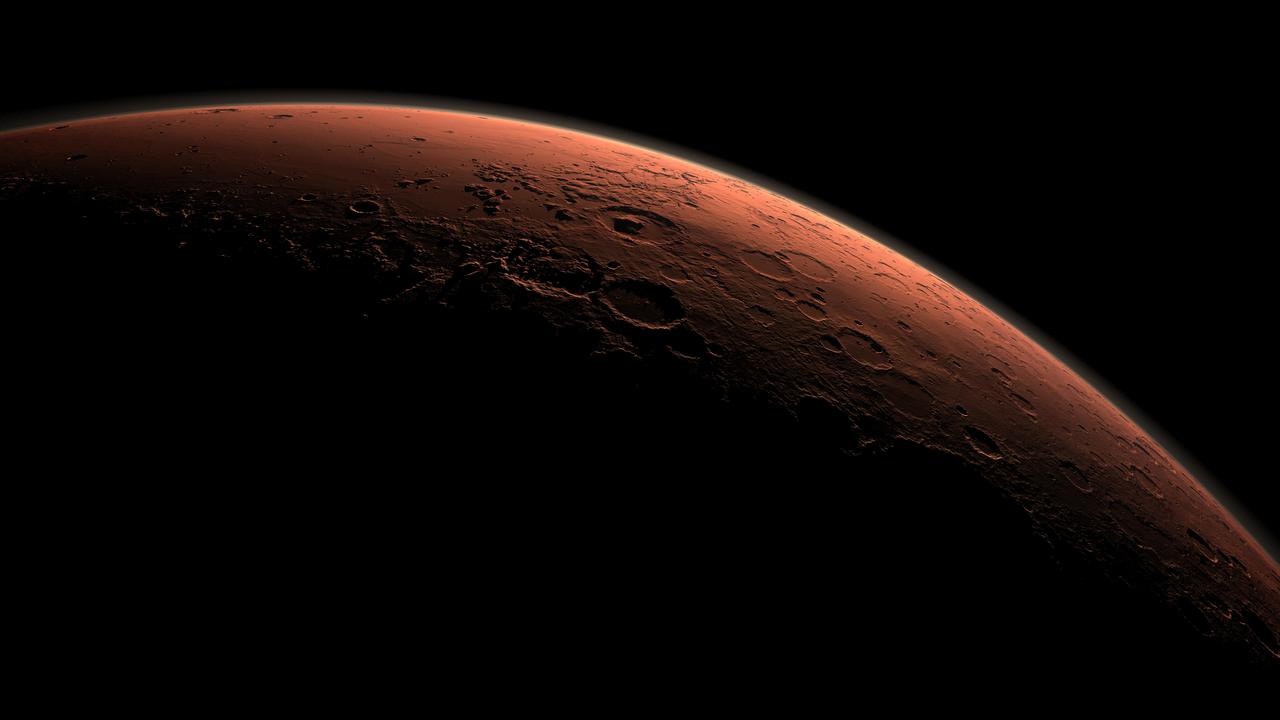
This computer-generated view depicts part of Mars at the boundary between darkness and daylight, with an area including Gale Crater beginning to catch morning light. NASA has selected Gale as the landing site for the Mars Science Laboratory mission.
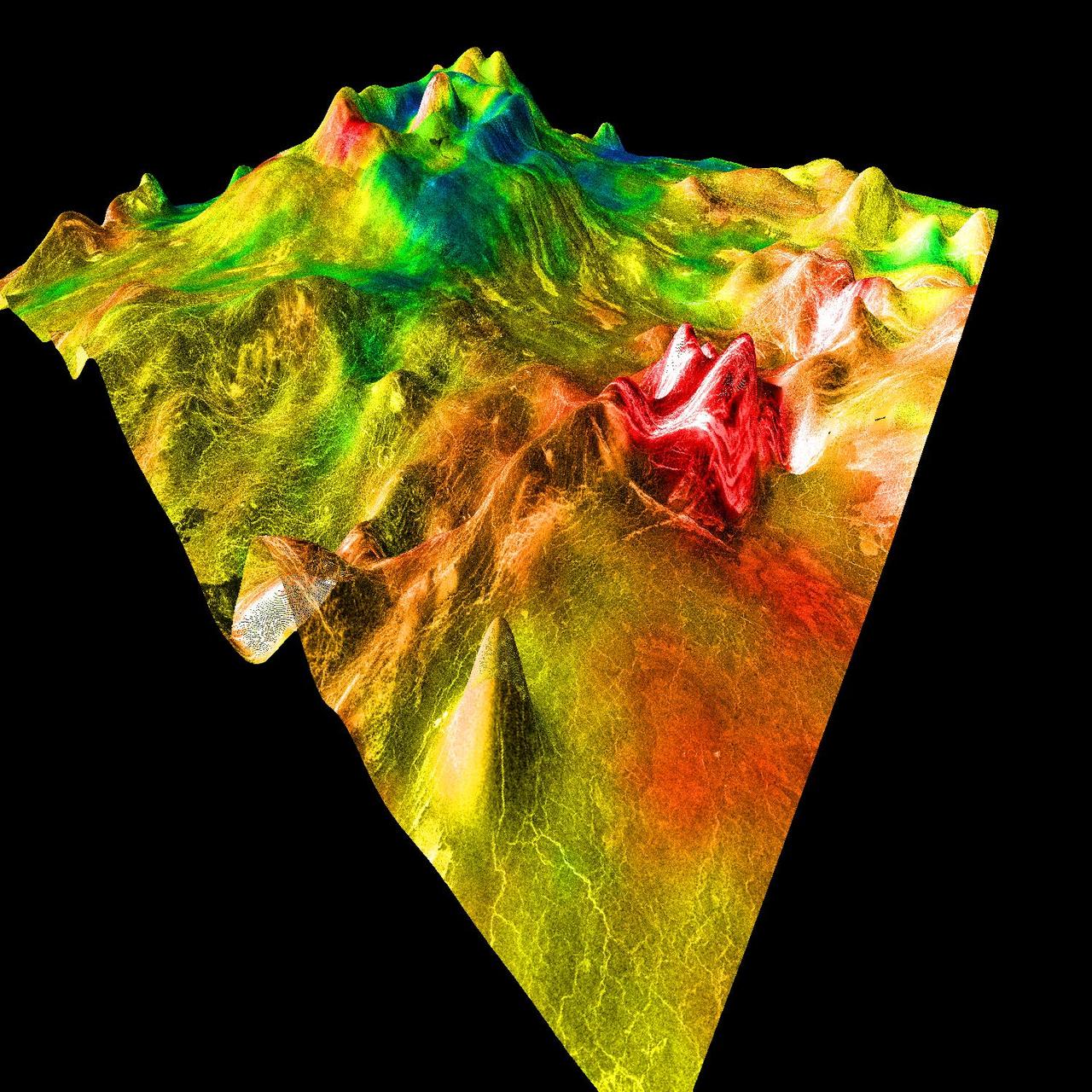
This perspective view of Venus, generated by computer from NASA Magellan data and color-coded with emissivity, shows part of the lowlands to the north of Ovda Regio. The prominent topographic feature is a shield volcano. http://photojournal.jpl.nasa.gov/catalog/PIA00308
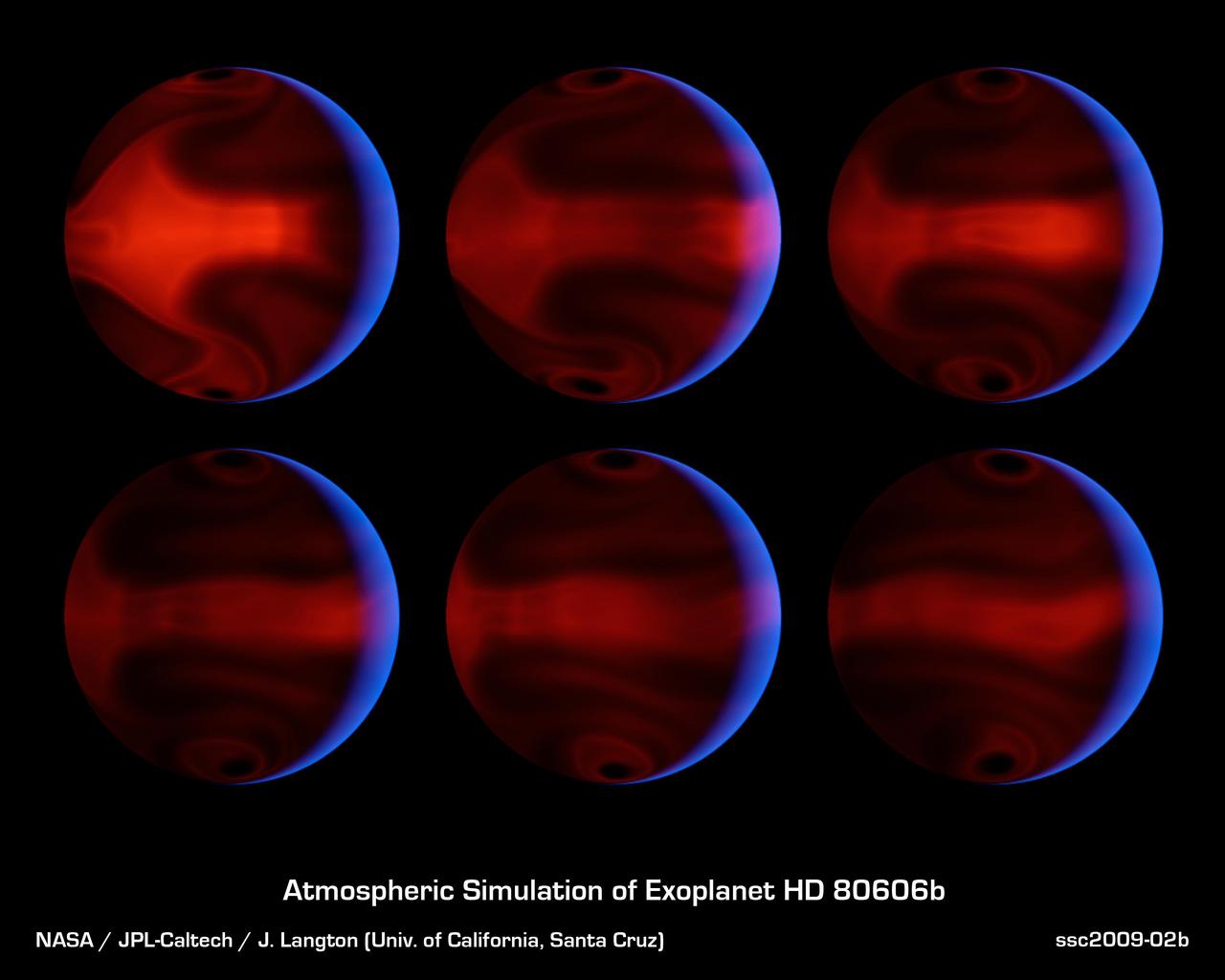
These computer-generated images from NASA Spitzer Space Telescope chart the development of severe weather patterns on the highly eccentric exoplanet HD 80606b during the days after its closest approach to its parent star.
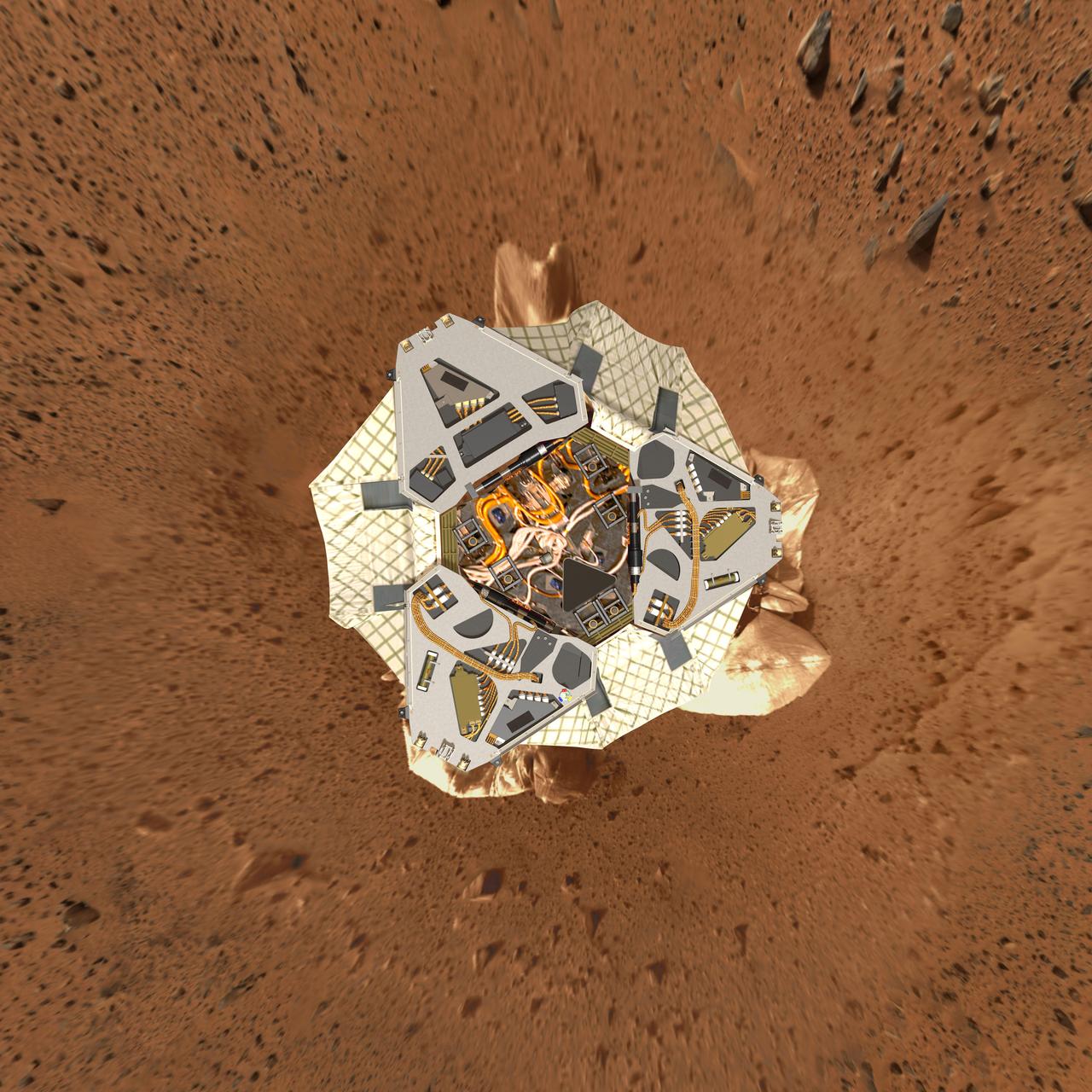
This high-resolution image shows a computer-generated model of Spirit lander at Gusev Crater as engineers and scientists would have expected to see it from a perfect overhead view.

This computer generated map of Jupiter was made from 10 color images of Jupiter taken Feb. 1, 1979, by NASA Voyager 1, during a single, 10 hour rotation of the planet. http://photojournal.jpl.nasa.gov/catalog/PIA00011
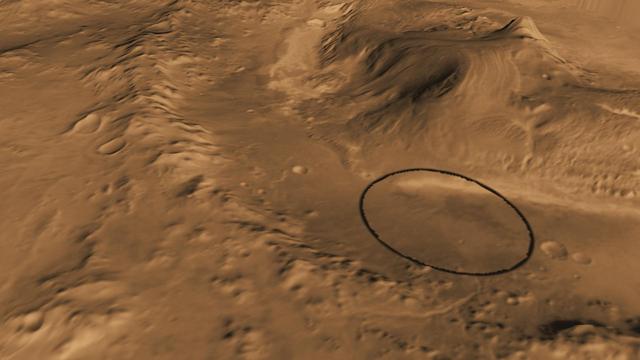
This computer-generated view based on multiple orbital observations shows Mars Gale crater as if seen from an aircraft northwest of the crater. NASA has selected Gale as the landing site for the Mars Science Laboratory mission.
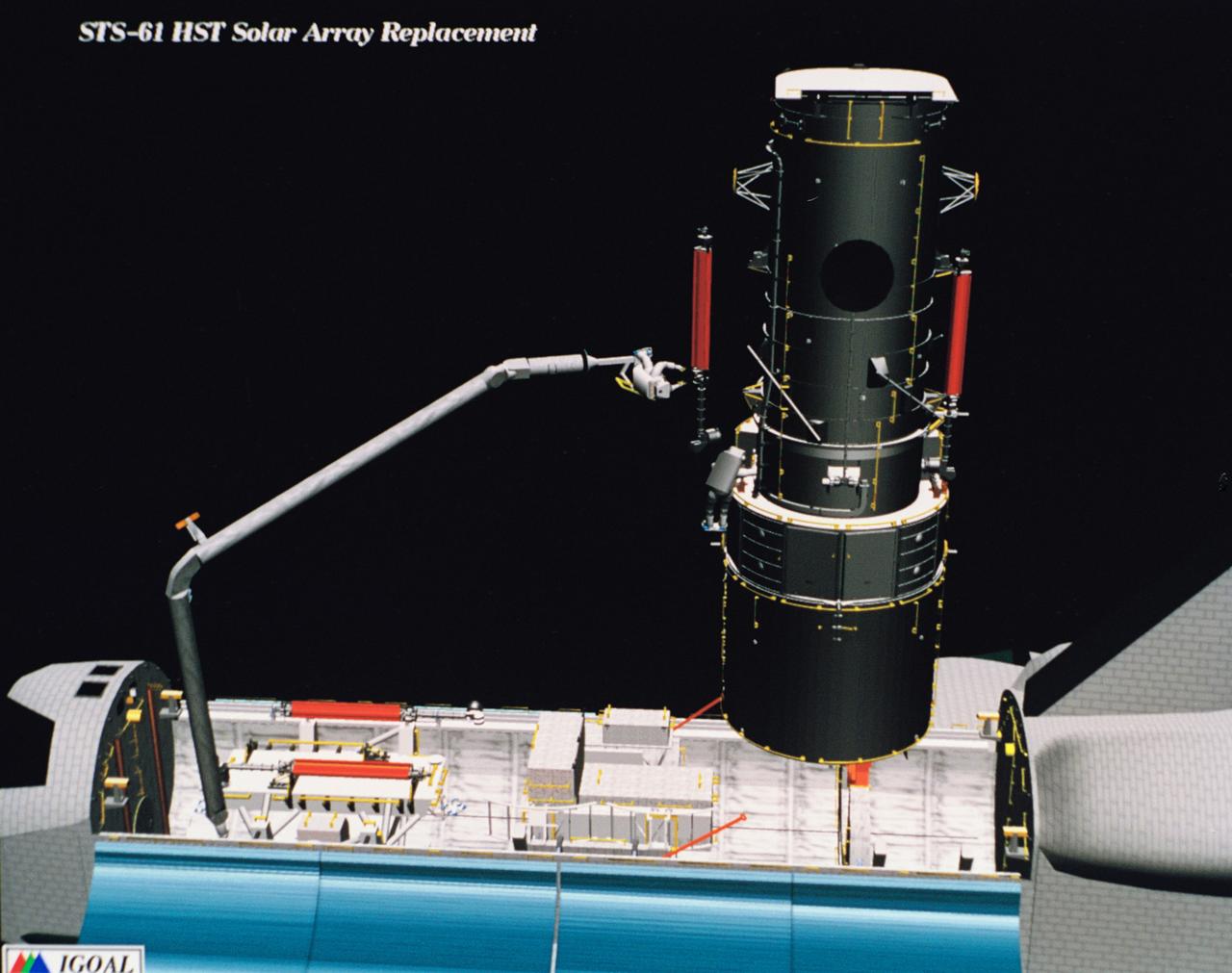
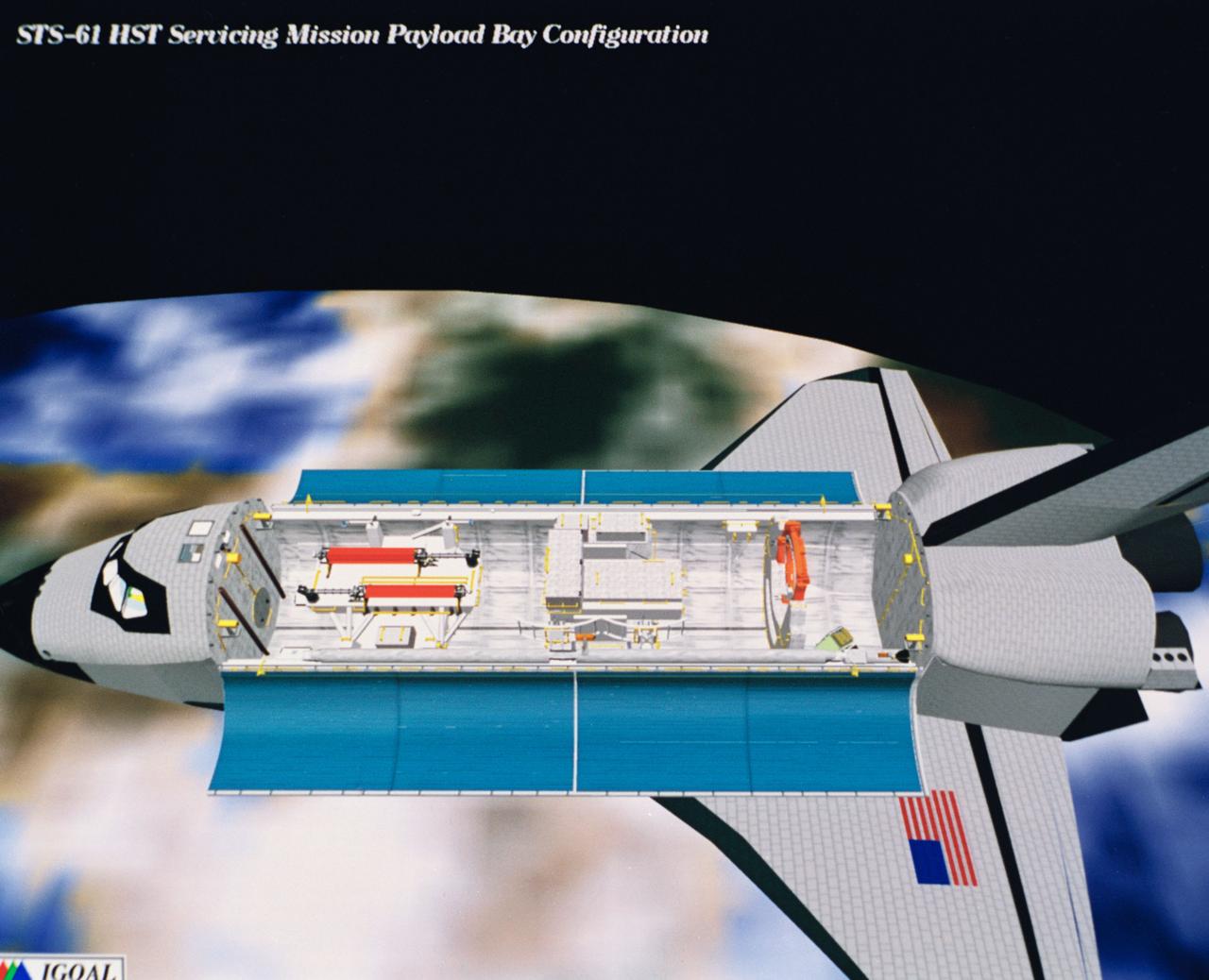
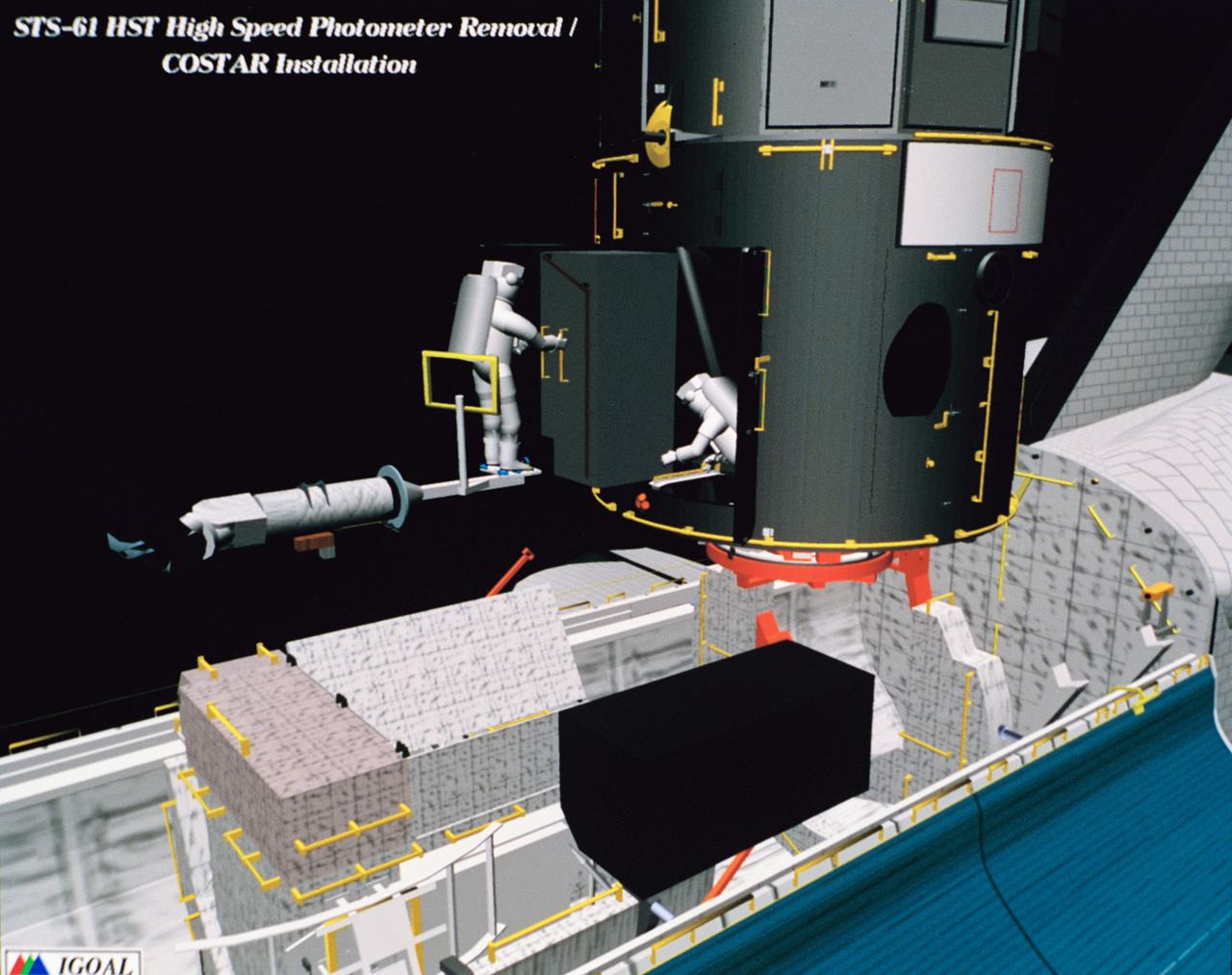
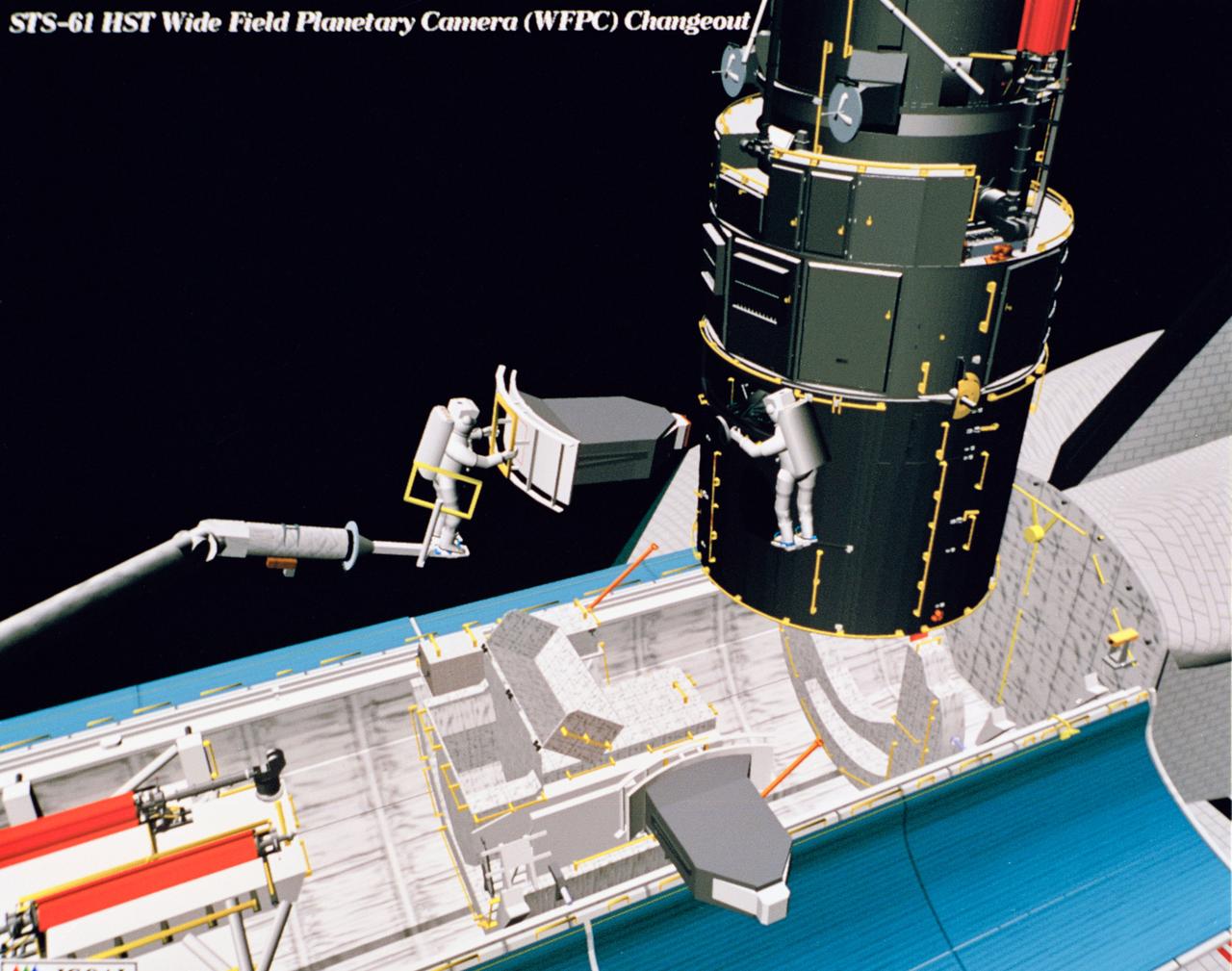
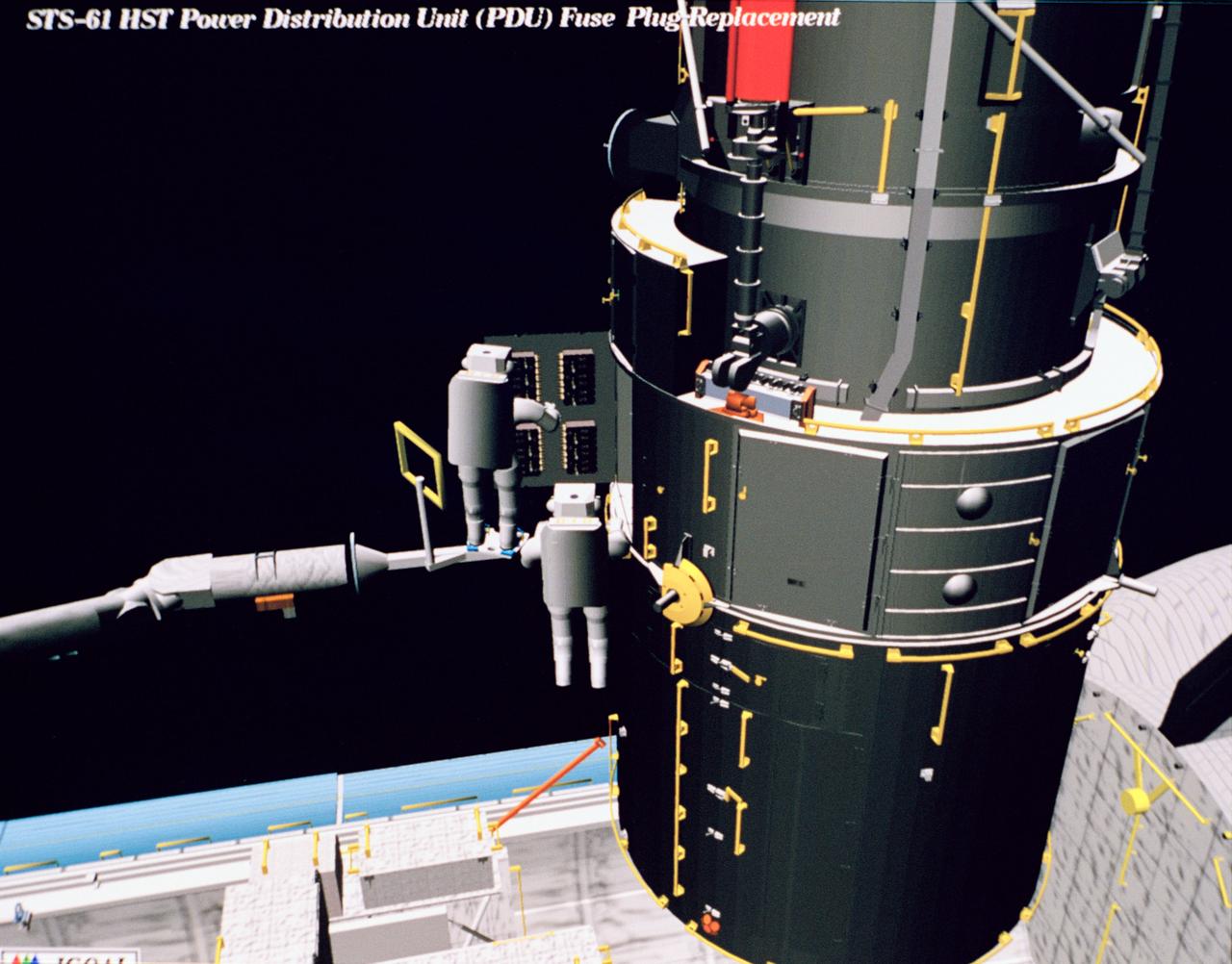
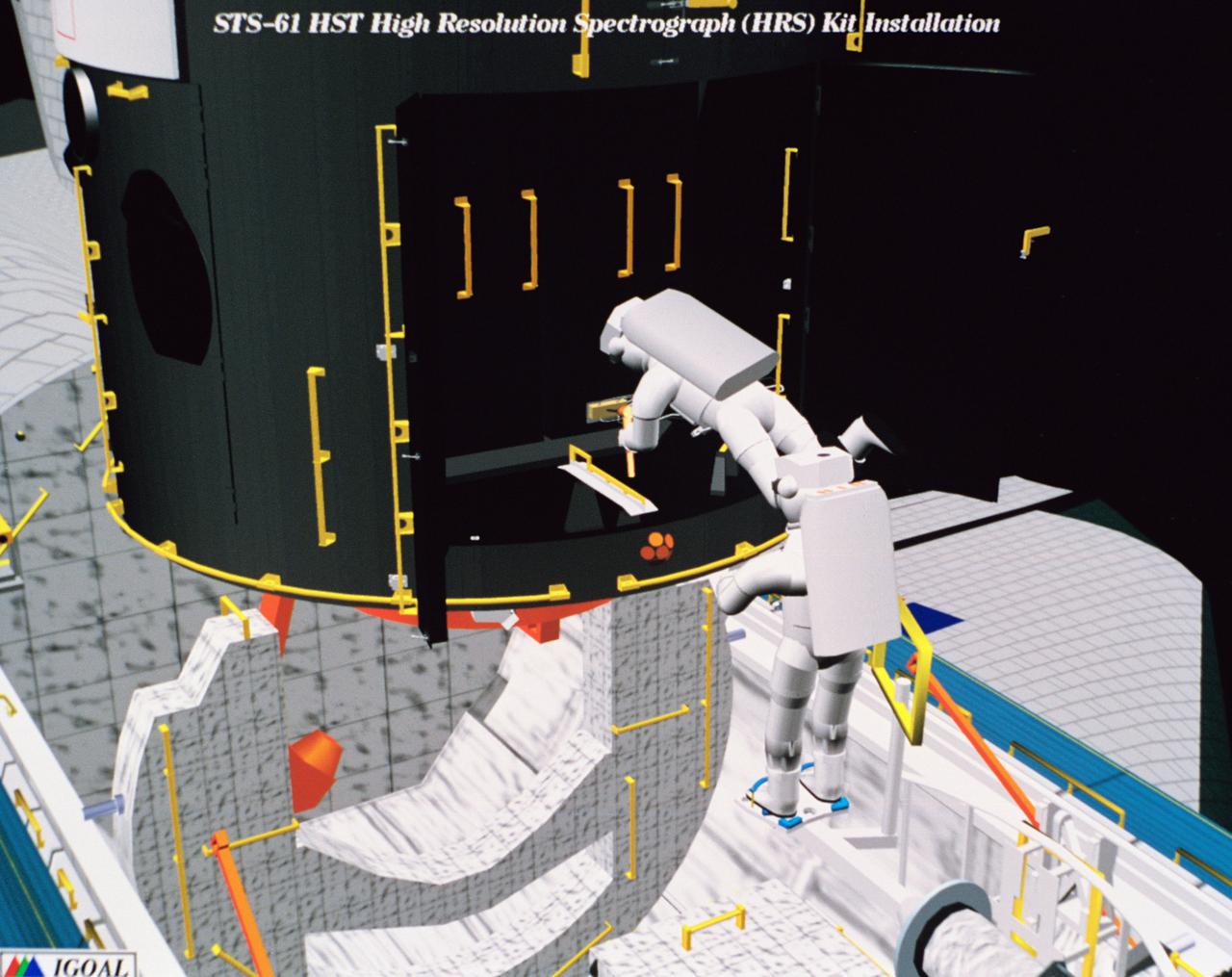
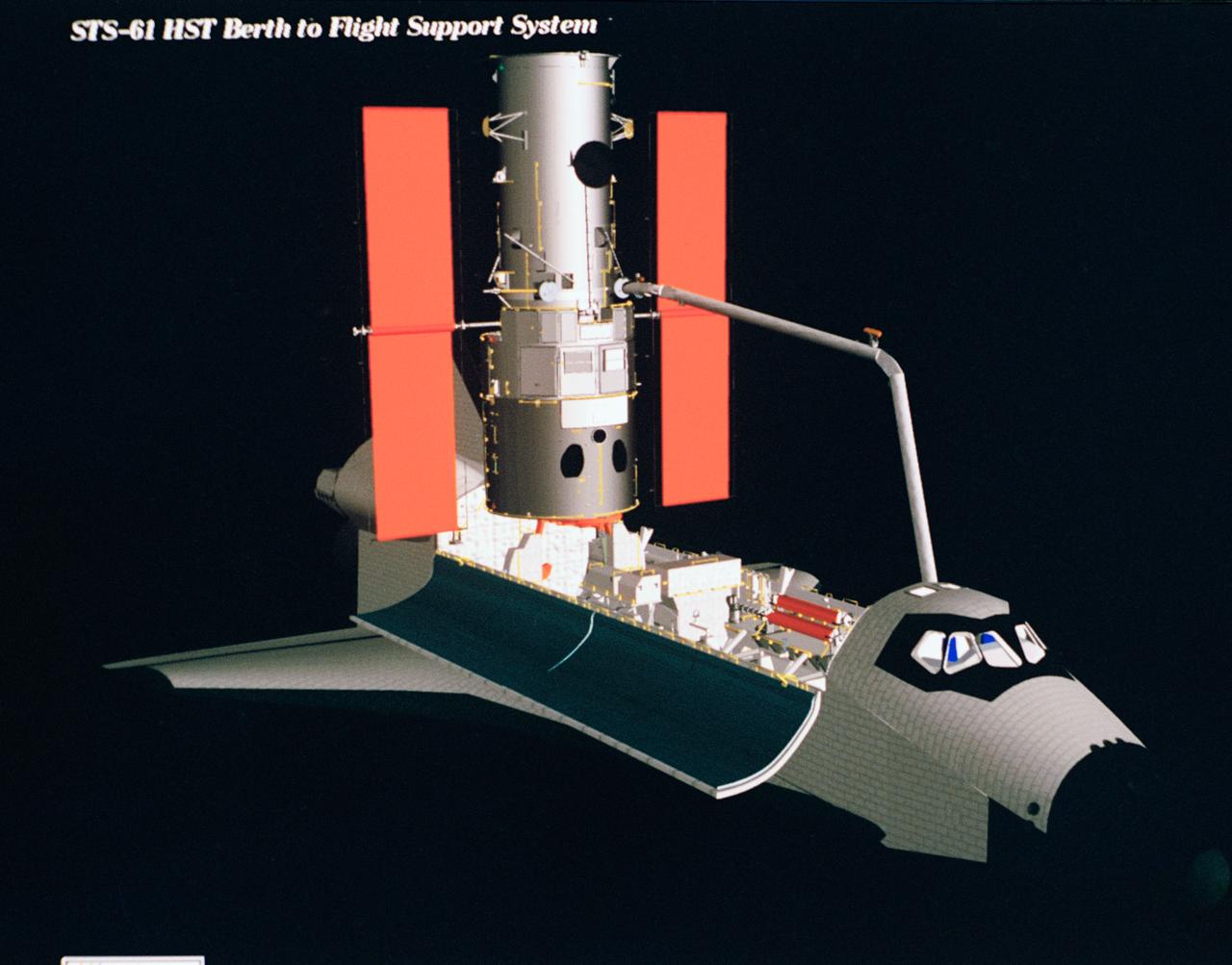
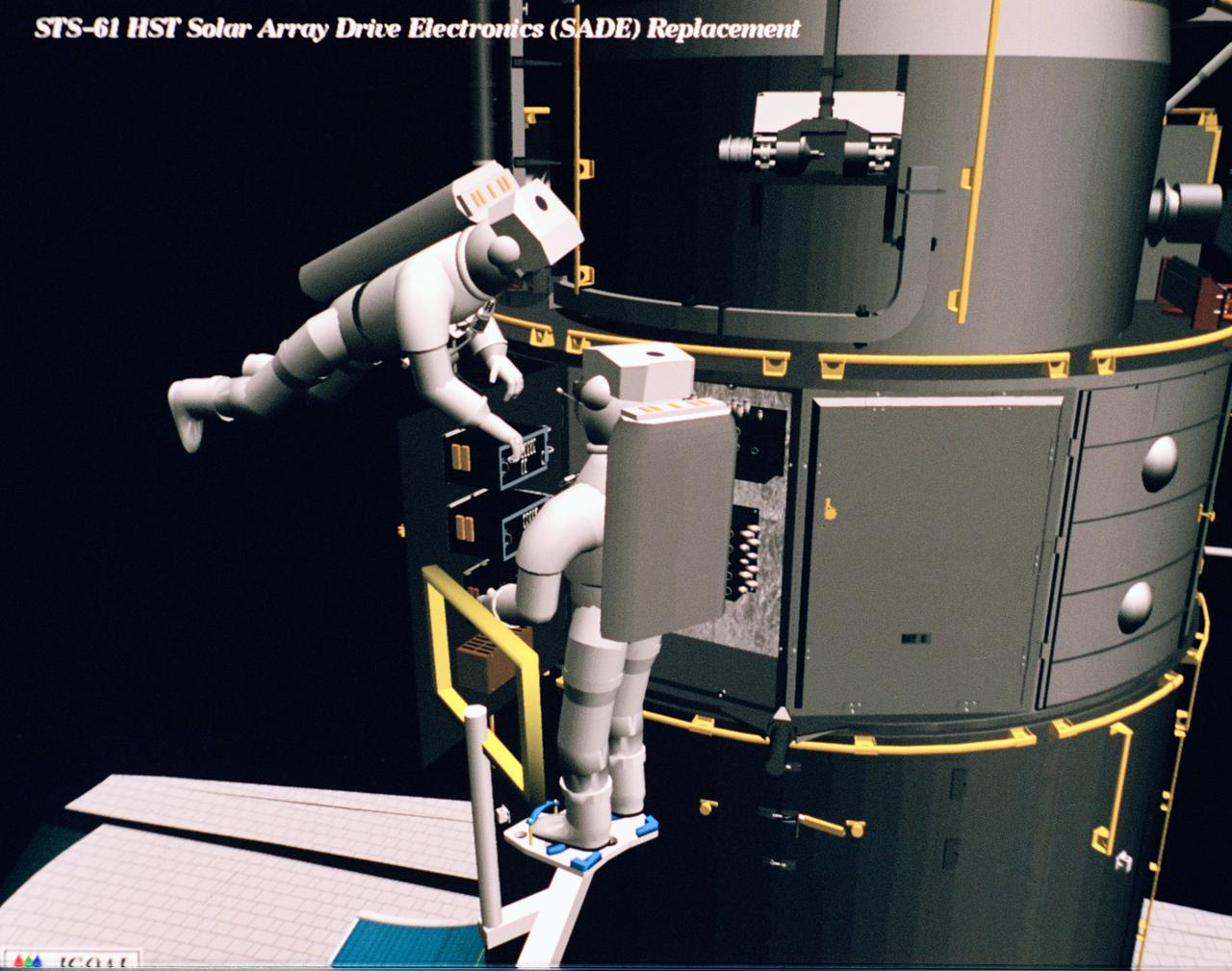
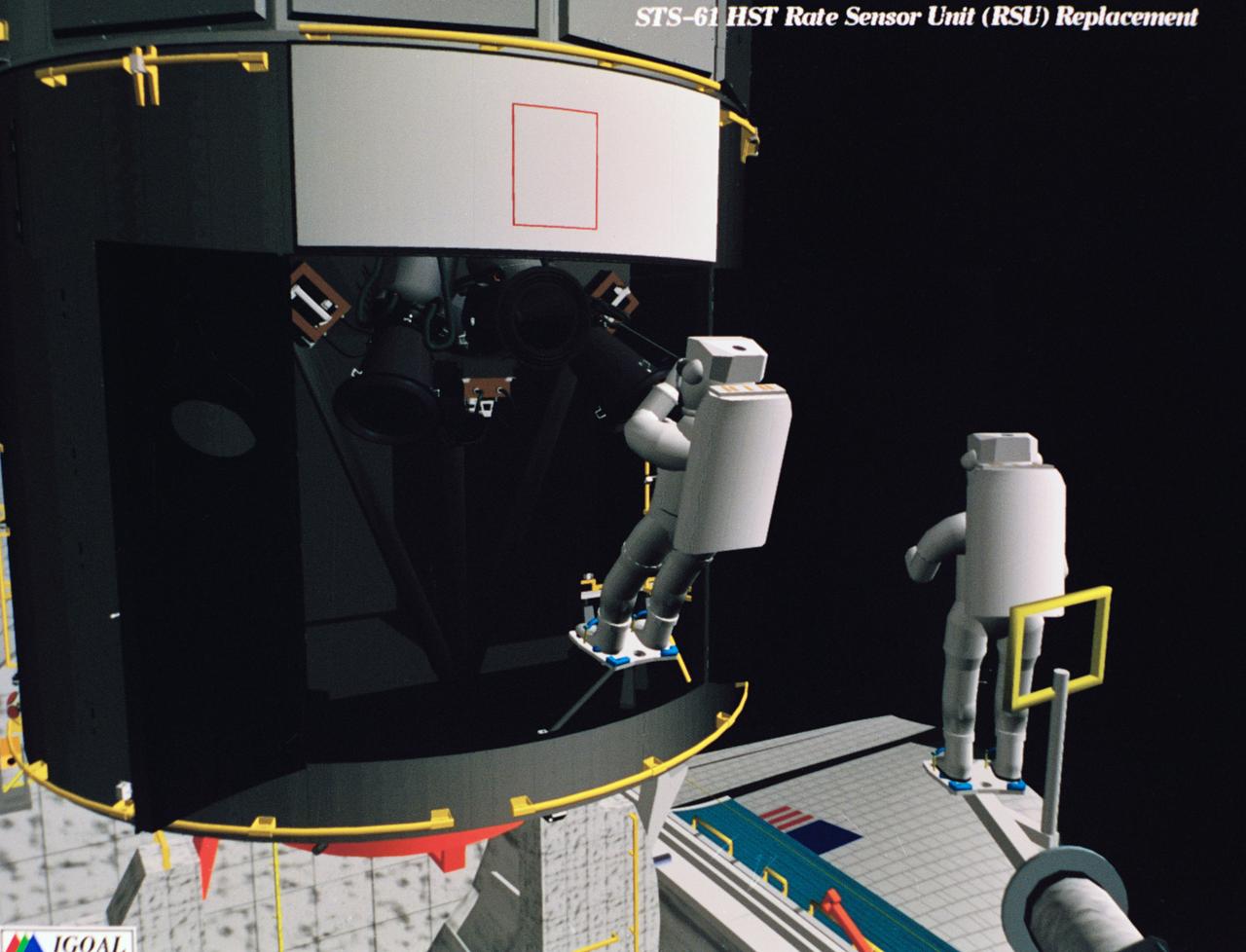
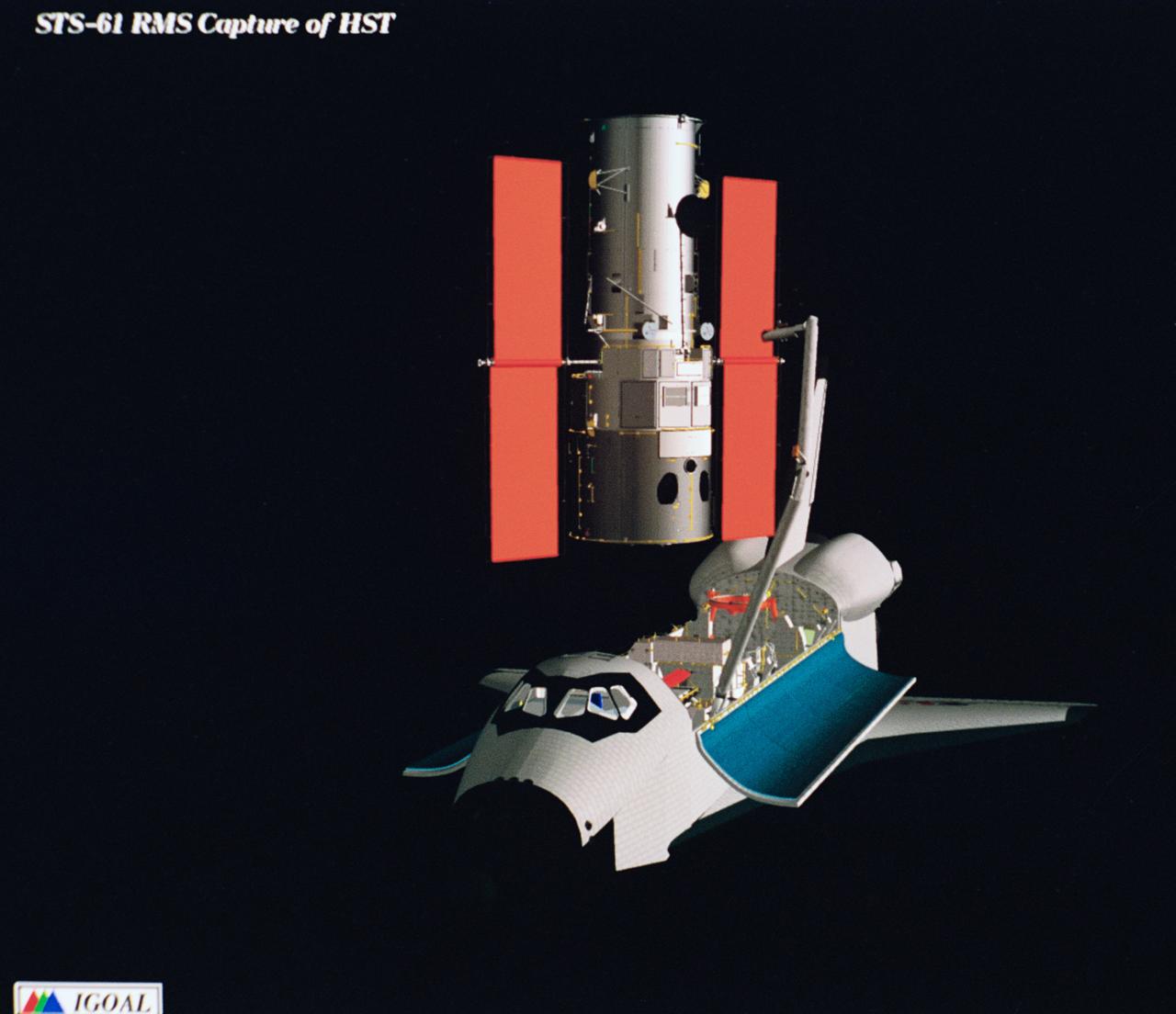
Computer generated scenes depicting the Hubble Space Telescope capture and a sequence of planned events on the planned extravehicular activity (EVA). Scenes include the Remote Manipulator System (RMS) arm assisting two astronauts changing out the Wide Field/Planetary Camera (WF/PC) (48699); RMS arm assisting in the temporary mating of the orbiting telescope to the flight support system in Endeavour's cargo bay (48700); Endeavour's RMS arm assisting in the "capture" of the orbiting telescope (48701); Two astronauts changing out the telescope's coprocessor (48702); RMS arm assistign two astronauts replacing one of the telescope's electronic control units (48703); RMS assisting two astronauts replacing the fuse plugs on the telescope's Power Distribution Unit (PDU) (48704); The telescope's High Resolution Spectrograph (HRS) kit is depicted in this scene (48705); Two astronauts during the removal of the high speed photometer and the installation of the COSTAR instrument (48706); Two astronauts, standing on the RMS, during installation of one of the Magnetic Sensing System (MSS) (48707); High angle view of the orbiting Space Shuttle Endeavour with its cargo bay doors open, revealing the bay's pre-capture configuration. Seen are, from the left, the Solar Array Carrier, the ORU Carrier and the flight support system (48708); Two astronauts performing the replacement of HST's Rate Sensor Units (RSU) (48709); The RMS arm assisting two astronauts with the replacement of the telescope's solar array panels (48710); Two astronauts replacing the telescope's Solar Array Drive Electronics (SADE) (48711).
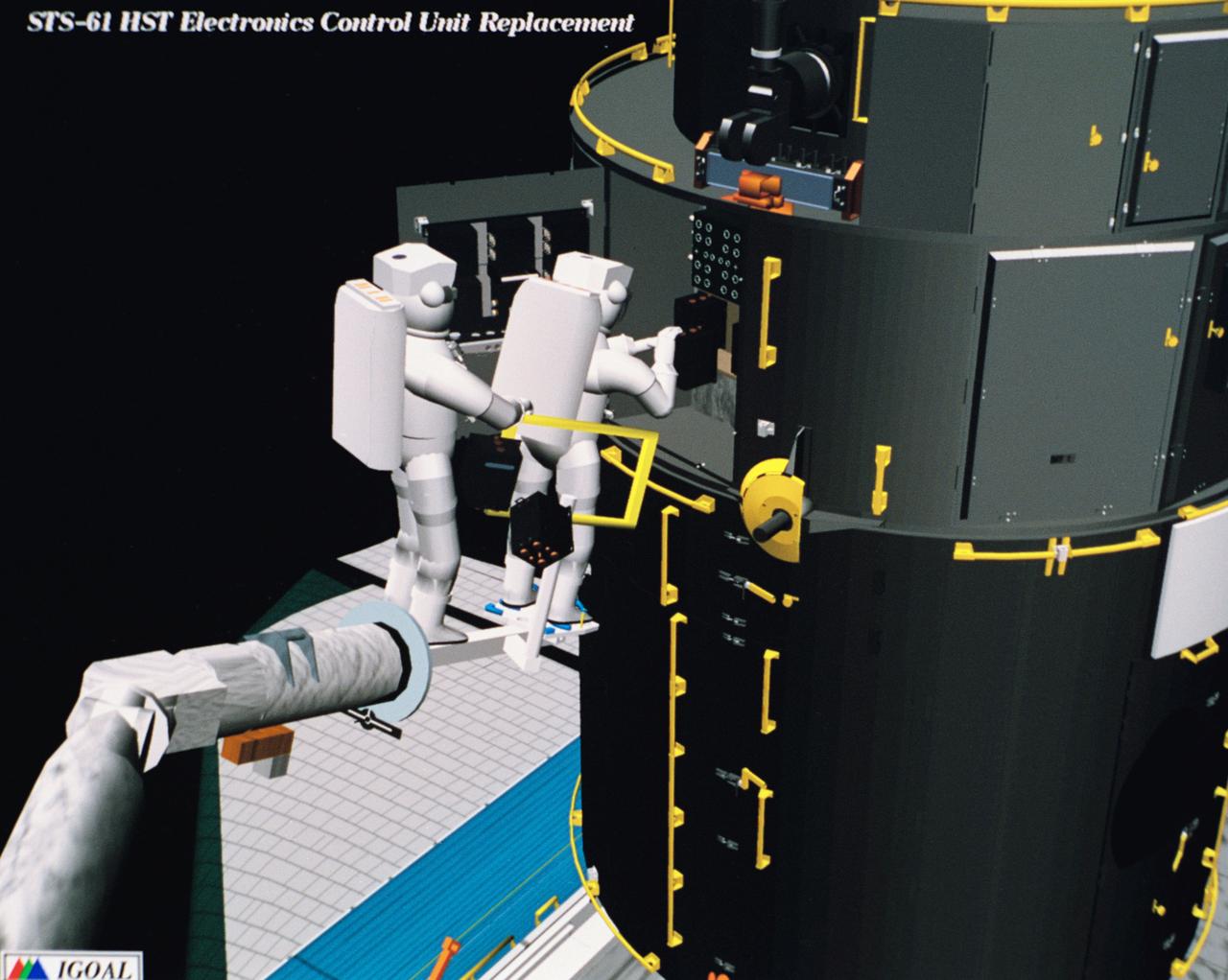
Computer generated scenes depicting the Hubble Space Telescope capture and a sequence of planned events on the planned extravehicular activity (EVA). Scenes include the Remote Manipulator System (RMS) arm assisting two astronauts changing out the Wide Field/Planetary Camera (WF/PC) (48699); RMS arm assisting in the temporary mating of the orbiting telescope to the flight support system in Endeavour's cargo bay (48700); Endeavour's RMS arm assisting in the "capture" of the orbiting telescope (48701); Two astronauts changing out the telescope's coprocessor (48702); RMS arm assistign two astronauts replacing one of the telescope's electronic control units (48703); RMS assisting two astronauts replacing the fuse plugs on the telescope's Power Distribution Unit (PDU) (48704); The telescope's High Resolution Spectrograph (HRS) kit is depicted in this scene (48705); Two astronauts during the removal of the high speed photometer and the installation of the COSTAR instrument (48706); Two astronauts, standing on the RMS, during installation of one of the Magnetic Sensing System (MSS) (48707); High angle view of the orbiting Space Shuttle Endeavour with its cargo bay doors open, revealing the bay's pre-capture configuration. Seen are, from the left, the Solar Array Carrier, the ORU Carrier and the flight support system (48708); Two astronauts performing the replacement of HST's Rate Sensor Units (RSU) (48709); The RMS arm assisting two astronauts with the replacement of the telescope's solar array panels (48710); Two astronauts replacing the telescope's Solar Array Drive Electronics (SADE) (48711).
Computer generated scenes depicting the Hubble Space Telescope capture and a sequence of planned events on the planned extravehicular activity (EVA). Scenes include the Remote Manipulator System (RMS) arm assisting two astronauts changing out the Wide Field/Planetary Camera (WF/PC) (48699); RMS arm assisting in the temporary mating of the orbiting telescope to the flight support system in Endeavour's cargo bay (48700); Endeavour's RMS arm assisting in the "capture" of the orbiting telescope (48701); Two astronauts changing out the telescope's coprocessor (48702); RMS arm assistign two astronauts replacing one of the telescope's electronic control units (48703); RMS assisting two astronauts replacing the fuse plugs on the telescope's Power Distribution Unit (PDU) (48704); The telescope's High Resolution Spectrograph (HRS) kit is depicted in this scene (48705); Two astronauts during the removal of the high speed photometer and the installation of the COSTAR instrument (48706); Two astronauts, standing on the RMS, during installation of one of the Magnetic Sensing System (MSS) (48707); High angle view of the orbiting Space Shuttle Endeavour with its cargo bay doors open, revealing the bay's pre-capture configuration. Seen are, from the left, the Solar Array Carrier, the ORU Carrier and the flight support system (48708); Two astronauts performing the replacement of HST's Rate Sensor Units (RSU) (48709); The RMS arm assisting two astronauts with the replacement of the telescope's solar array panels (48710); Two astronauts replacing the telescope's Solar Array Drive Electronics (SADE) (48711).

Computer generated scenes depicting the Hubble Space Telescope capture and a sequence of planned events on the planned extravehicular activity (EVA). Scenes include the Remote Manipulator System (RMS) arm assisting two astronauts changing out the Wide Field/Planetary Camera (WF/PC) (48699); RMS arm assisting in the temporary mating of the orbiting telescope to the flight support system in Endeavour's cargo bay (48700); Endeavour's RMS arm assisting in the "capture" of the orbiting telescope (48701); Two astronauts changing out the telescope's coprocessor (48702); RMS arm assistign two astronauts replacing one of the telescope's electronic control units (48703); RMS assisting two astronauts replacing the fuse plugs on the telescope's Power Distribution Unit (PDU) (48704); The telescope's High Resolution Spectrograph (HRS) kit is depicted in this scene (48705); Two astronauts during the removal of the high speed photometer and the installation of the COSTAR instrument (48706); Two astronauts, standing on the RMS, during installation of one of the Magnetic Sensing System (MSS) (48707); High angle view of the orbiting Space Shuttle Endeavour with its cargo bay doors open, revealing the bay's pre-capture configuration. Seen are, from the left, the Solar Array Carrier, the ORU Carrier and the flight support system (48708); Two astronauts performing the replacement of HST's Rate Sensor Units (RSU) (48709); The RMS arm assisting two astronauts with the replacement of the telescope's solar array panels (48710); Two astronauts replacing the telescope's Solar Array Drive Electronics (SADE) (48711).
Computer generated scenes depicting the Hubble Space Telescope capture and a sequence of planned events on the planned extravehicular activity (EVA). Scenes include the Remote Manipulator System (RMS) arm assisting two astronauts changing out the Wide Field/Planetary Camera (WF/PC) (48699); RMS arm assisting in the temporary mating of the orbiting telescope to the flight support system in Endeavour's cargo bay (48700); Endeavour's RMS arm assisting in the "capture" of the orbiting telescope (48701); Two astronauts changing out the telescope's coprocessor (48702); RMS arm assistign two astronauts replacing one of the telescope's electronic control units (48703); RMS assisting two astronauts replacing the fuse plugs on the telescope's Power Distribution Unit (PDU) (48704); The telescope's High Resolution Spectrograph (HRS) kit is depicted in this scene (48705); Two astronauts during the removal of the high speed photometer and the installation of the COSTAR instrument (48706); Two astronauts, standing on the RMS, during installation of one of the Magnetic Sensing System (MSS) (48707); High angle view of the orbiting Space Shuttle Endeavour with its cargo bay doors open, revealing the bay's pre-capture configuration. Seen are, from the left, the Solar Array Carrier, the ORU Carrier and the flight support system (48708); Two astronauts performing the replacement of HST's Rate Sensor Units (RSU) (48709); The RMS arm assisting two astronauts with the replacement of the telescope's solar array panels (48710); Two astronauts replacing the telescope's Solar Array Drive Electronics (SADE) (48711).
Computer generated scenes depicting the Hubble Space Telescope capture and a sequence of planned events on the planned extravehicular activity (EVA). Scenes include the Remote Manipulator System (RMS) arm assisting two astronauts changing out the Wide Field/Planetary Camera (WF/PC) (48699); RMS arm assisting in the temporary mating of the orbiting telescope to the flight support system in Endeavour's cargo bay (48700); Endeavour's RMS arm assisting in the "capture" of the orbiting telescope (48701); Two astronauts changing out the telescope's coprocessor (48702); RMS arm assistign two astronauts replacing one of the telescope's electronic control units (48703); RMS assisting two astronauts replacing the fuse plugs on the telescope's Power Distribution Unit (PDU) (48704); The telescope's High Resolution Spectrograph (HRS) kit is depicted in this scene (48705); Two astronauts during the removal of the high speed photometer and the installation of the COSTAR instrument (48706); Two astronauts, standing on the RMS, during installation of one of the Magnetic Sensing System (MSS) (48707); High angle view of the orbiting Space Shuttle Endeavour with its cargo bay doors open, revealing the bay's pre-capture configuration. Seen are, from the left, the Solar Array Carrier, the ORU Carrier and the flight support system (48708); Two astronauts performing the replacement of HST's Rate Sensor Units (RSU) (48709); The RMS arm assisting two astronauts with the replacement of the telescope's solar array panels (48710); Two astronauts replacing the telescope's Solar Array Drive Electronics (SADE) (48711).
Computer generated scenes depicting the Hubble Space Telescope capture and a sequence of planned events on the planned extravehicular activity (EVA). Scenes include the Remote Manipulator System (RMS) arm assisting two astronauts changing out the Wide Field/Planetary Camera (WF/PC) (48699); RMS arm assisting in the temporary mating of the orbiting telescope to the flight support system in Endeavour's cargo bay (48700); Endeavour's RMS arm assisting in the "capture" of the orbiting telescope (48701); Two astronauts changing out the telescope's coprocessor (48702); RMS arm assistign two astronauts replacing one of the telescope's electronic control units (48703); RMS assisting two astronauts replacing the fuse plugs on the telescope's Power Distribution Unit (PDU) (48704); The telescope's High Resolution Spectrograph (HRS) kit is depicted in this scene (48705); Two astronauts during the removal of the high speed photometer and the installation of the COSTAR instrument (48706); Two astronauts, standing on the RMS, during installation of one of the Magnetic Sensing System (MSS) (48707); High angle view of the orbiting Space Shuttle Endeavour with its cargo bay doors open, revealing the bay's pre-capture configuration. Seen are, from the left, the Solar Array Carrier, the ORU Carrier and the flight support system (48708); Two astronauts performing the replacement of HST's Rate Sensor Units (RSU) (48709); The RMS arm assisting two astronauts with the replacement of the telescope's solar array panels (48710); Two astronauts replacing the telescope's Solar Array Drive Electronics (SADE) (48711).
Computer generated scenes depicting the Hubble Space Telescope capture and a sequence of planned events on the planned extravehicular activity (EVA). Scenes include the Remote Manipulator System (RMS) arm assisting two astronauts changing out the Wide Field/Planetary Camera (WF/PC) (48699); RMS arm assisting in the temporary mating of the orbiting telescope to the flight support system in Endeavour's cargo bay (48700); Endeavour's RMS arm assisting in the "capture" of the orbiting telescope (48701); Two astronauts changing out the telescope's coprocessor (48702); RMS arm assistign two astronauts replacing one of the telescope's electronic control units (48703); RMS assisting two astronauts replacing the fuse plugs on the telescope's Power Distribution Unit (PDU) (48704); The telescope's High Resolution Spectrograph (HRS) kit is depicted in this scene (48705); Two astronauts during the removal of the high speed photometer and the installation of the COSTAR instrument (48706); Two astronauts, standing on the RMS, during installation of one of the Magnetic Sensing System (MSS) (48707); High angle view of the orbiting Space Shuttle Endeavour with its cargo bay doors open, revealing the bay's pre-capture configuration. Seen are, from the left, the Solar Array Carrier, the ORU Carrier and the flight support system (48708); Two astronauts performing the replacement of HST's Rate Sensor Units (RSU) (48709); The RMS arm assisting two astronauts with the replacement of the telescope's solar array panels (48710); Two astronauts replacing the telescope's Solar Array Drive Electronics (SADE) (48711).
Computer generated scenes depicting the Hubble Space Telescope capture and a sequence of planned events on the planned extravehicular activity (EVA). Scenes include the Remote Manipulator System (RMS) arm assisting two astronauts changing out the Wide Field/Planetary Camera (WF/PC) (48699); RMS arm assisting in the temporary mating of the orbiting telescope to the flight support system in Endeavour's cargo bay (48700); Endeavour's RMS arm assisting in the "capture" of the orbiting telescope (48701); Two astronauts changing out the telescope's coprocessor (48702); RMS arm assistign two astronauts replacing one of the telescope's electronic control units (48703); RMS assisting two astronauts replacing the fuse plugs on the telescope's Power Distribution Unit (PDU) (48704); The telescope's High Resolution Spectrograph (HRS) kit is depicted in this scene (48705); Two astronauts during the removal of the high speed photometer and the installation of the COSTAR instrument (48706); Two astronauts, standing on the RMS, during installation of one of the Magnetic Sensing System (MSS) (48707); High angle view of the orbiting Space Shuttle Endeavour with its cargo bay doors open, revealing the bay's pre-capture configuration. Seen are, from the left, the Solar Array Carrier, the ORU Carrier and the flight support system (48708); Two astronauts performing the replacement of HST's Rate Sensor Units (RSU) (48709); The RMS arm assisting two astronauts with the replacement of the telescope's solar array panels (48710); Two astronauts replacing the telescope's Solar Array Drive Electronics (SADE) (48711).
Computer generated scenes depicting the Hubble Space Telescope capture and a sequence of planned events on the planned extravehicular activity (EVA). Scenes include the Remote Manipulator System (RMS) arm assisting two astronauts changing out the Wide Field/Planetary Camera (WF/PC) (48699); RMS arm assisting in the temporary mating of the orbiting telescope to the flight support system in Endeavour's cargo bay (48700); Endeavour's RMS arm assisting in the "capture" of the orbiting telescope (48701); Two astronauts changing out the telescope's coprocessor (48702); RMS arm assistign two astronauts replacing one of the telescope's electronic control units (48703); RMS assisting two astronauts replacing the fuse plugs on the telescope's Power Distribution Unit (PDU) (48704); The telescope's High Resolution Spectrograph (HRS) kit is depicted in this scene (48705); Two astronauts during the removal of the high speed photometer and the installation of the COSTAR instrument (48706); Two astronauts, standing on the RMS, during installation of one of the Magnetic Sensing System (MSS) (48707); High angle view of the orbiting Space Shuttle Endeavour with its cargo bay doors open, revealing the bay's pre-capture configuration. Seen are, from the left, the Solar Array Carrier, the ORU Carrier and the flight support system (48708); Two astronauts performing the replacement of HST's Rate Sensor Units (RSU) (48709); The RMS arm assisting two astronauts with the replacement of the telescope's solar array panels (48710); Two astronauts replacing the telescope's Solar Array Drive Electronics (SADE) (48711).
Computer generated scenes depicting the Hubble Space Telescope capture and a sequence of planned events on the planned extravehicular activity (EVA). Scenes include the Remote Manipulator System (RMS) arm assisting two astronauts changing out the Wide Field/Planetary Camera (WF/PC) (48699); RMS arm assisting in the temporary mating of the orbiting telescope to the flight support system in Endeavour's cargo bay (48700); Endeavour's RMS arm assisting in the "capture" of the orbiting telescope (48701); Two astronauts changing out the telescope's coprocessor (48702); RMS arm assistign two astronauts replacing one of the telescope's electronic control units (48703); RMS assisting two astronauts replacing the fuse plugs on the telescope's Power Distribution Unit (PDU) (48704); The telescope's High Resolution Spectrograph (HRS) kit is depicted in this scene (48705); Two astronauts during the removal of the high speed photometer and the installation of the COSTAR instrument (48706); Two astronauts, standing on the RMS, during installation of one of the Magnetic Sensing System (MSS) (48707); High angle view of the orbiting Space Shuttle Endeavour with its cargo bay doors open, revealing the bay's pre-capture configuration. Seen are, from the left, the Solar Array Carrier, the ORU Carrier and the flight support system (48708); Two astronauts performing the replacement of HST's Rate Sensor Units (RSU) (48709); The RMS arm assisting two astronauts with the replacement of the telescope's solar array panels (48710); Two astronauts replacing the telescope's Solar Array Drive Electronics (SADE) (48711).
Computer generated scenes depicting the Hubble Space Telescope capture and a sequence of planned events on the planned extravehicular activity (EVA). Scenes include the Remote Manipulator System (RMS) arm assisting two astronauts changing out the Wide Field/Planetary Camera (WF/PC) (48699); RMS arm assisting in the temporary mating of the orbiting telescope to the flight support system in Endeavour's cargo bay (48700); Endeavour's RMS arm assisting in the "capture" of the orbiting telescope (48701); Two astronauts changing out the telescope's coprocessor (48702); RMS arm assistign two astronauts replacing one of the telescope's electronic control units (48703); RMS assisting two astronauts replacing the fuse plugs on the telescope's Power Distribution Unit (PDU) (48704); The telescope's High Resolution Spectrograph (HRS) kit is depicted in this scene (48705); Two astronauts during the removal of the high speed photometer and the installation of the COSTAR instrument (48706); Two astronauts, standing on the RMS, during installation of one of the Magnetic Sensing System (MSS) (48707); High angle view of the orbiting Space Shuttle Endeavour with its cargo bay doors open, revealing the bay's pre-capture configuration. Seen are, from the left, the Solar Array Carrier, the ORU Carrier and the flight support system (48708); Two astronauts performing the replacement of HST's Rate Sensor Units (RSU) (48709); The RMS arm assisting two astronauts with the replacement of the telescope's solar array panels (48710); Two astronauts replacing the telescope's Solar Array Drive Electronics (SADE) (48711).

This computer generated montage created from images obtained by NASA Voyager 2 shows Neptune as it would appear from a spacecraft approaching Triton, Neptune largest moon at 2706 km 1683 mi in diameter. http://photojournal.jpl.nasa.gov/catalog/PIA00340
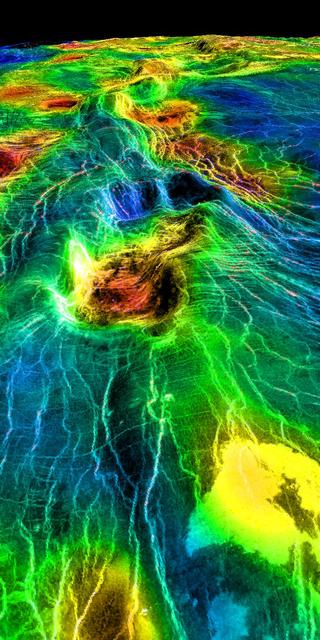
This perspective view of Venus, generated by computer from NASA Magellan data and color-coded with emissivity, shows part of the lowland plains in Sedna Planitia. Circular depressions with associated fracture patterns, called coronae. http://photojournal.jpl.nasa.gov/catalog/PIA00313

This composite view from NASA Voyager 2 shows Neptune on Triton horizon. The foreground in this computer generated view of Triton maria as they would appear from a point approximately 45 km above the surface. http://photojournal.jpl.nasa.gov/catalog/PIA00344
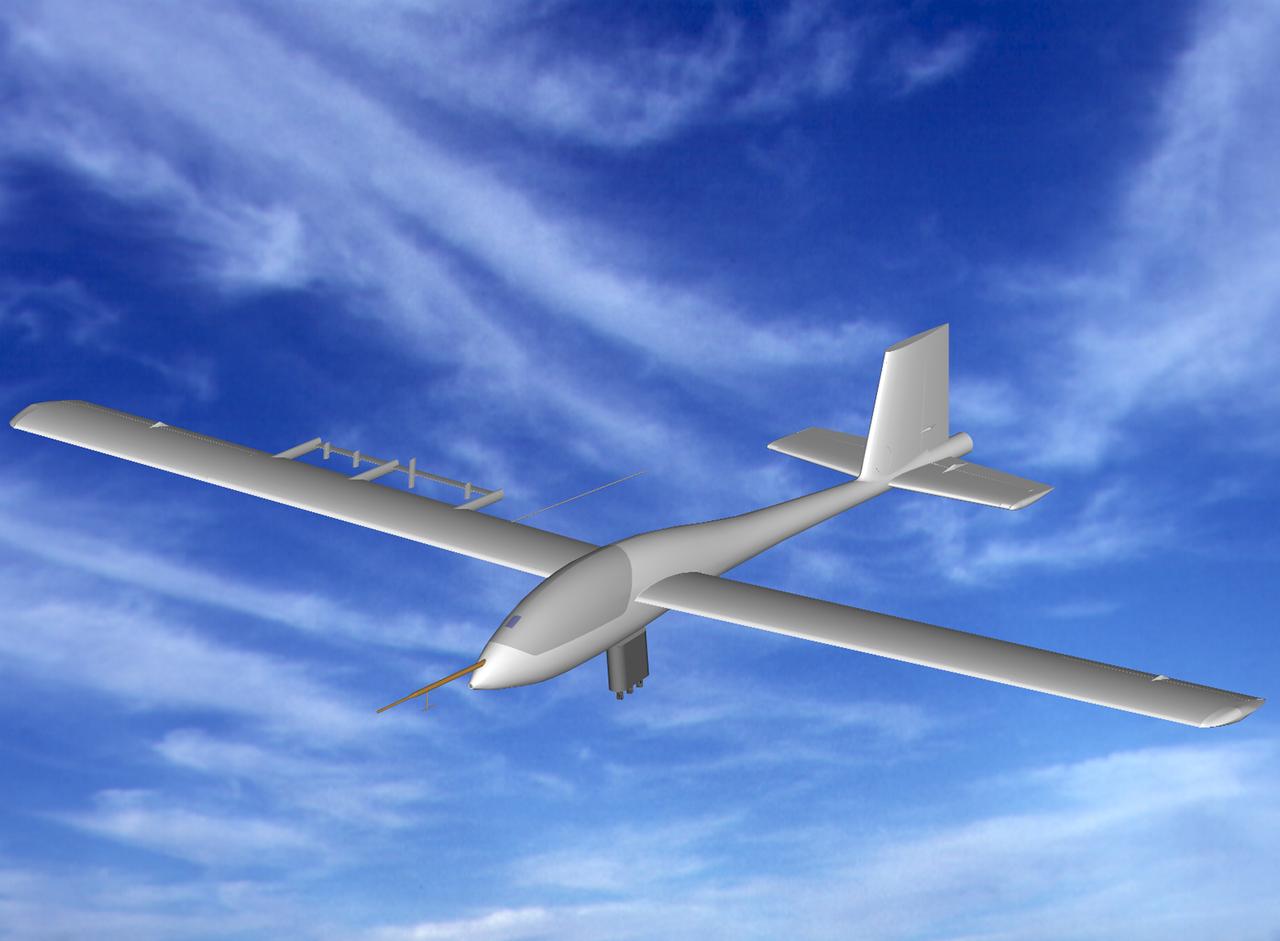
Computer generated image of Apex high-altitude research sailplane in flight
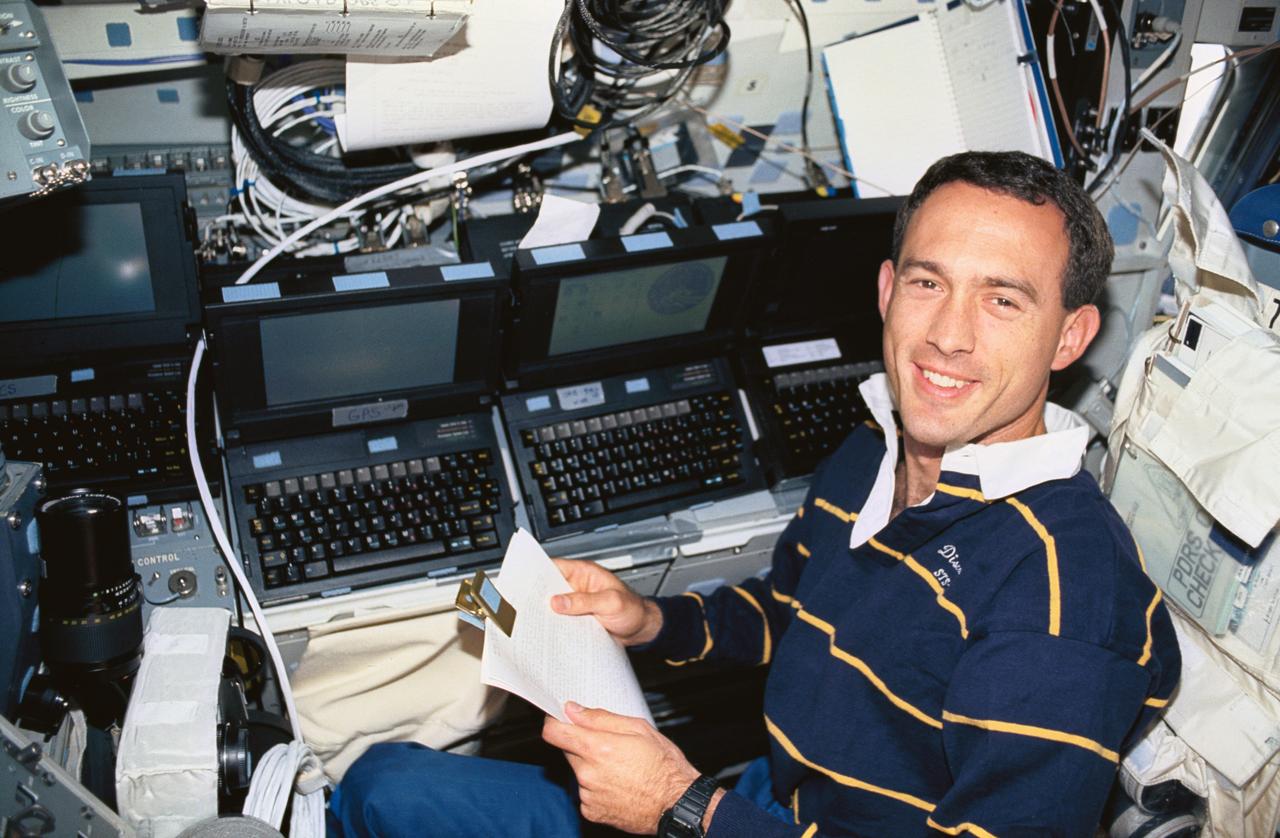
STS051-16-028 (12-22 Sept 1993) --- On Discovery's middeck, astronaut James H. Newman, mission specialist, works with an array of computers, including one devoted to Global Positioning System (GPS) operations, a general portable onboard computer displaying a tracking map, a portable audio data modem and another payload and general support computer. Newman was joined by four other NASA astronauts for almost ten full days in space.
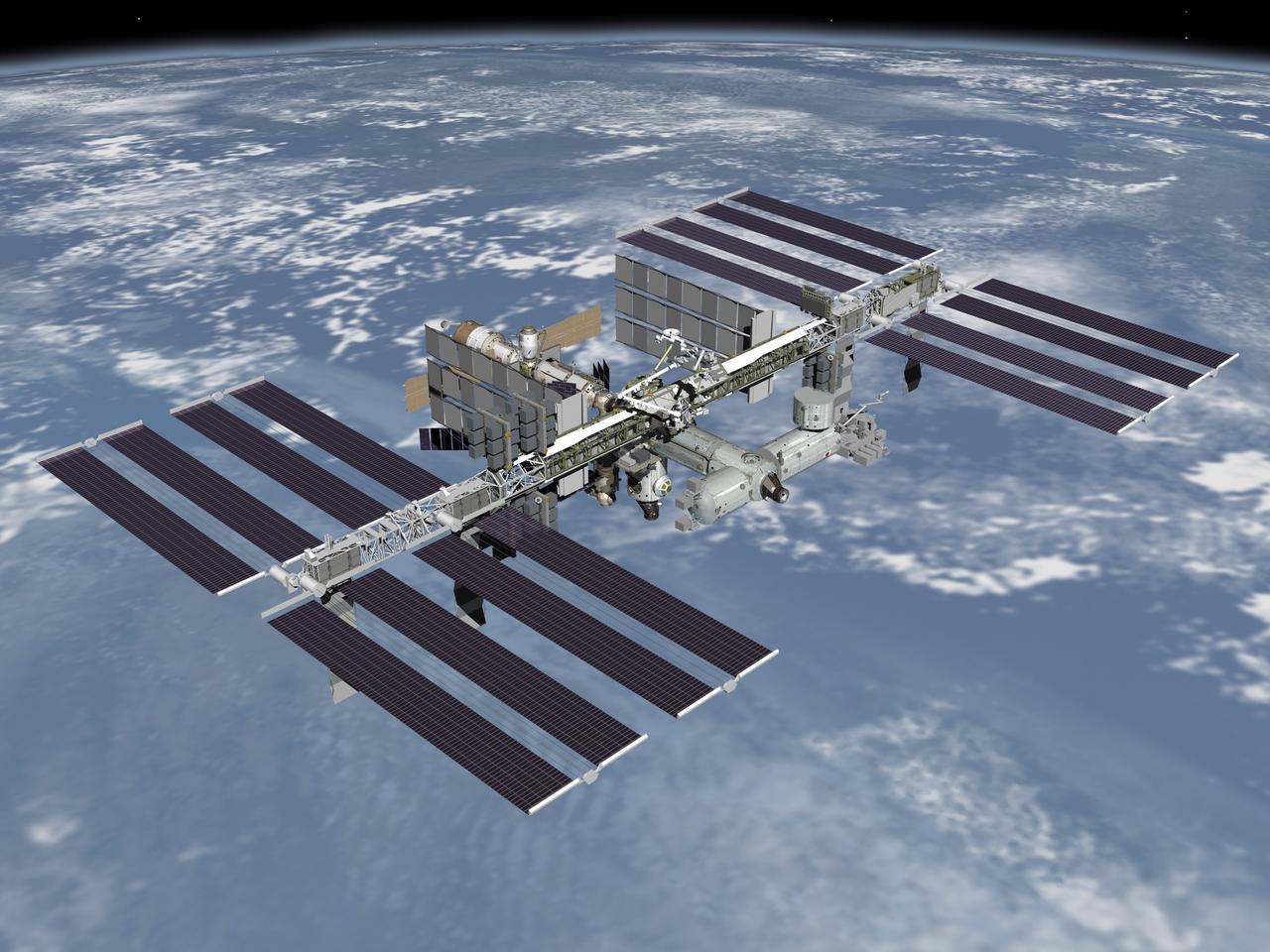
JSC2006-E-43519 (October 2006) --- Computer-generated artist's rendering of the completed International Space Station.
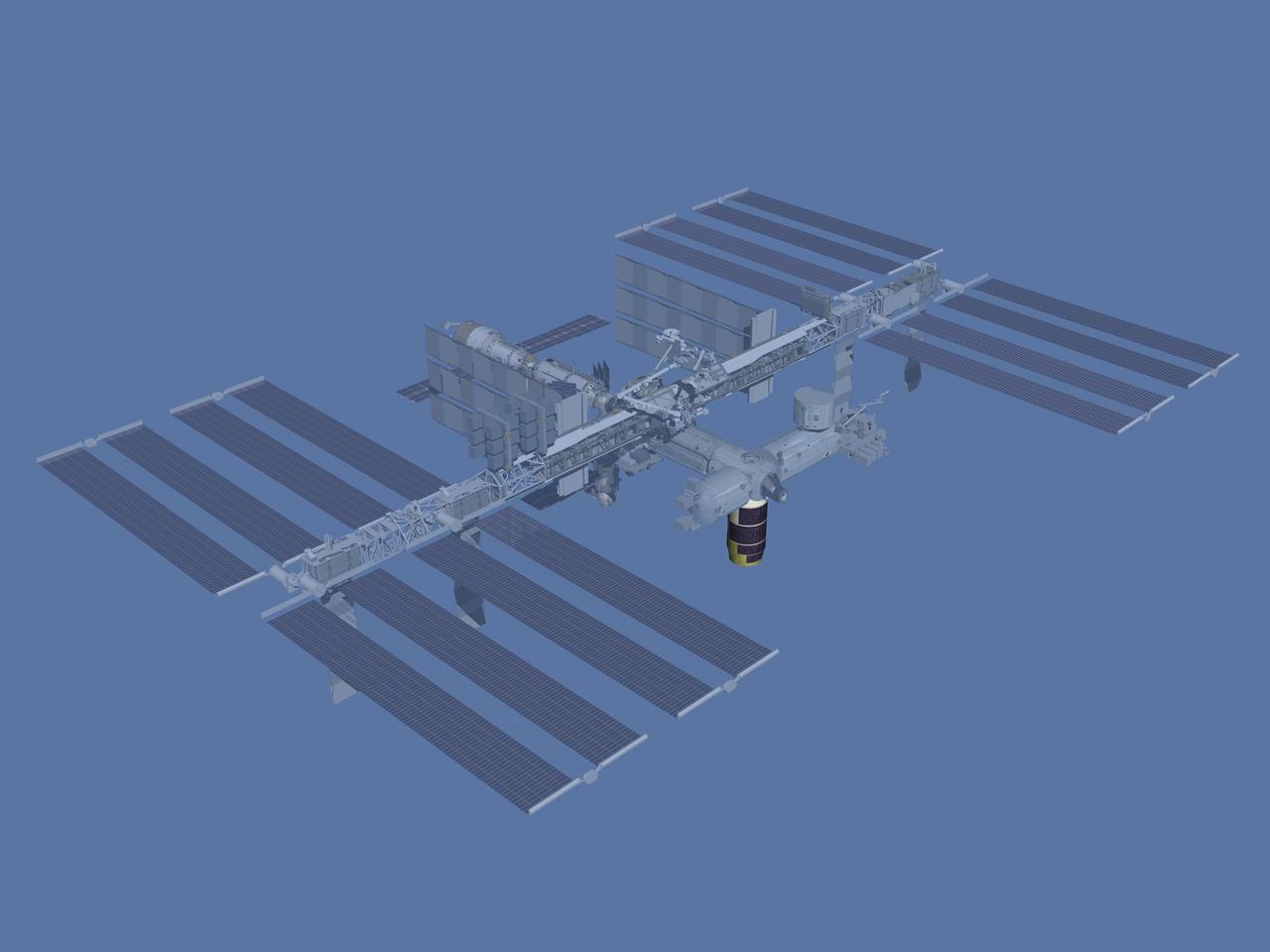
JSC2006-E-43513 (October 2006) --- Computer-generated artist's rendering of the International Space Station after flight HTV1, Japanese H-II Transfer Vehicle.
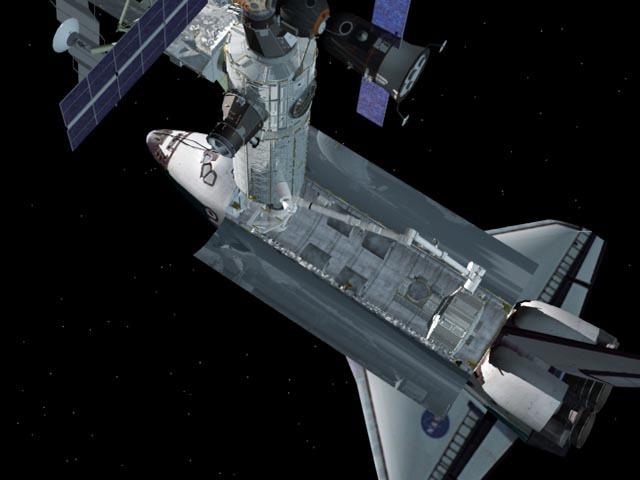
JSC2001-E-19790 (July 2001) --- A computer-generated representation showing the Space Station Remote Manipulator System (SSRMS) lifting the Quest Airlock out of the payload bay of the Space Shuttle Atlantis during the STS-104 mission.
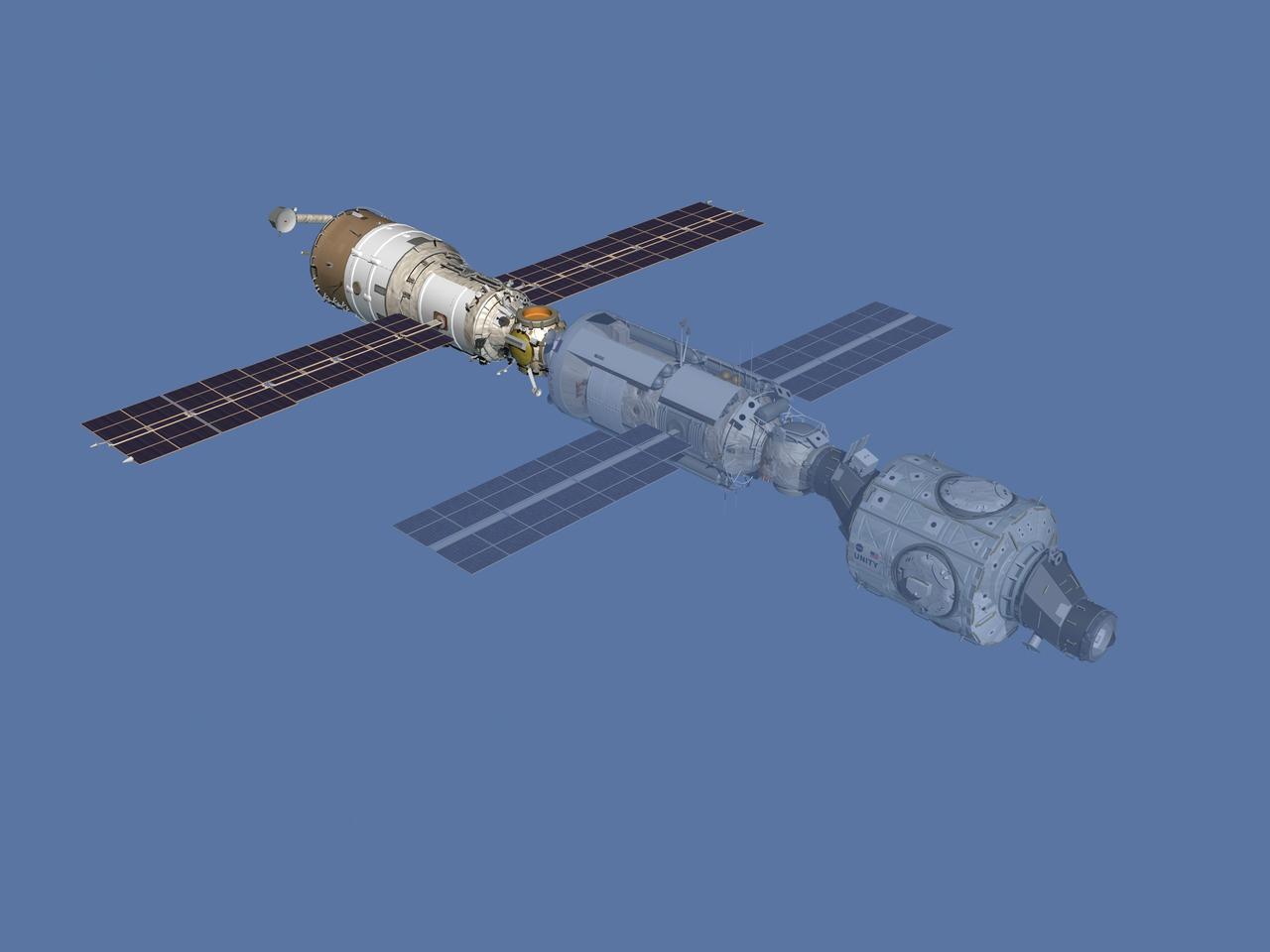
JSC2006-E-43480 (July 2000) --- Computer-generated artist's rendering of the International Space Station after flight 1R. The Zvezda Service Module launched atop a Russian Proton rocket and docked with the station two weeks later.
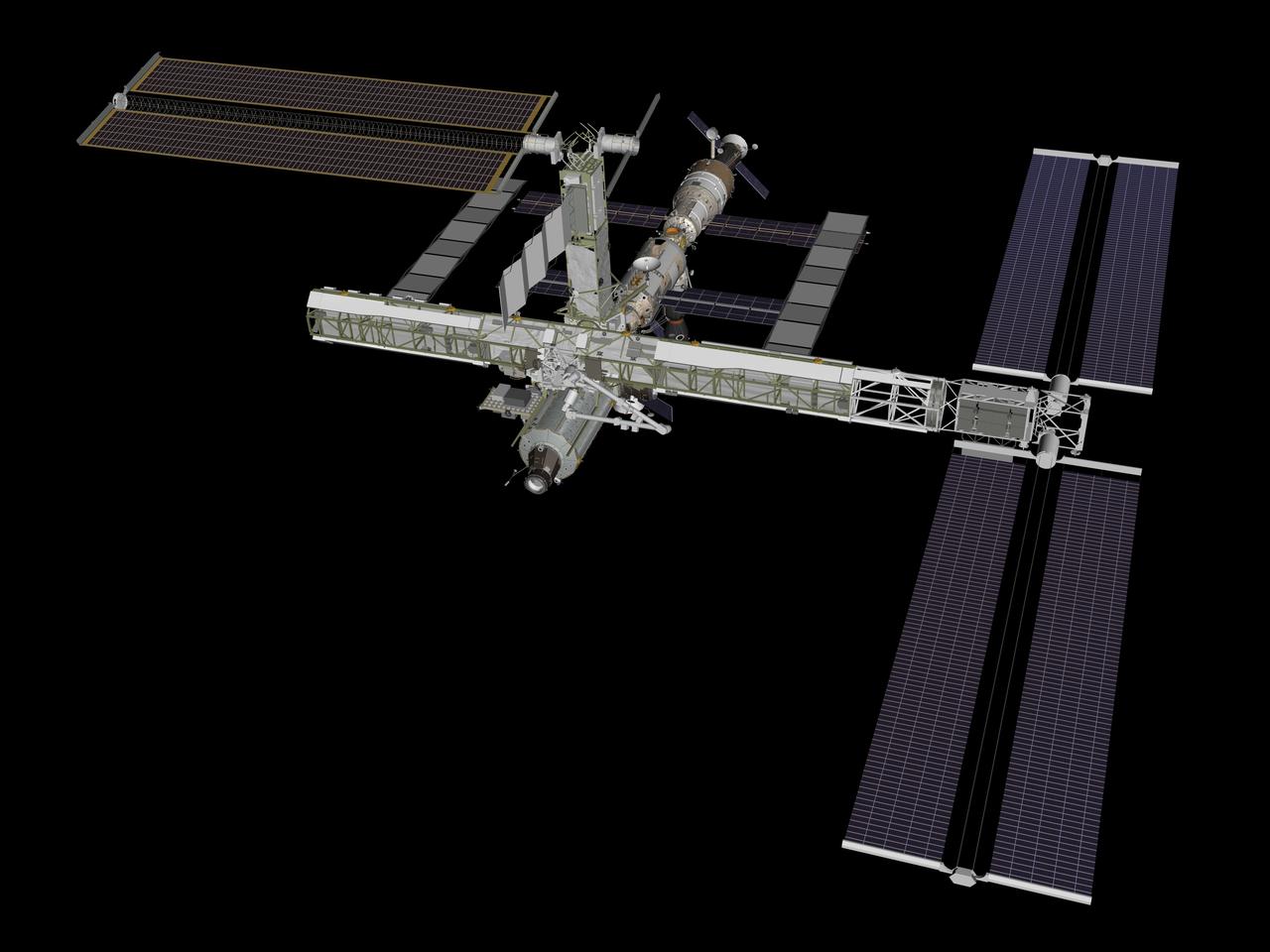
JSC2007-E-099883 (November 2007) --- Computer-generated artist's rendering of the 10A stage configuration of the International Space Station as of Nov. 15, 2007. The port side Thermal Control System radiators are fully deployed.
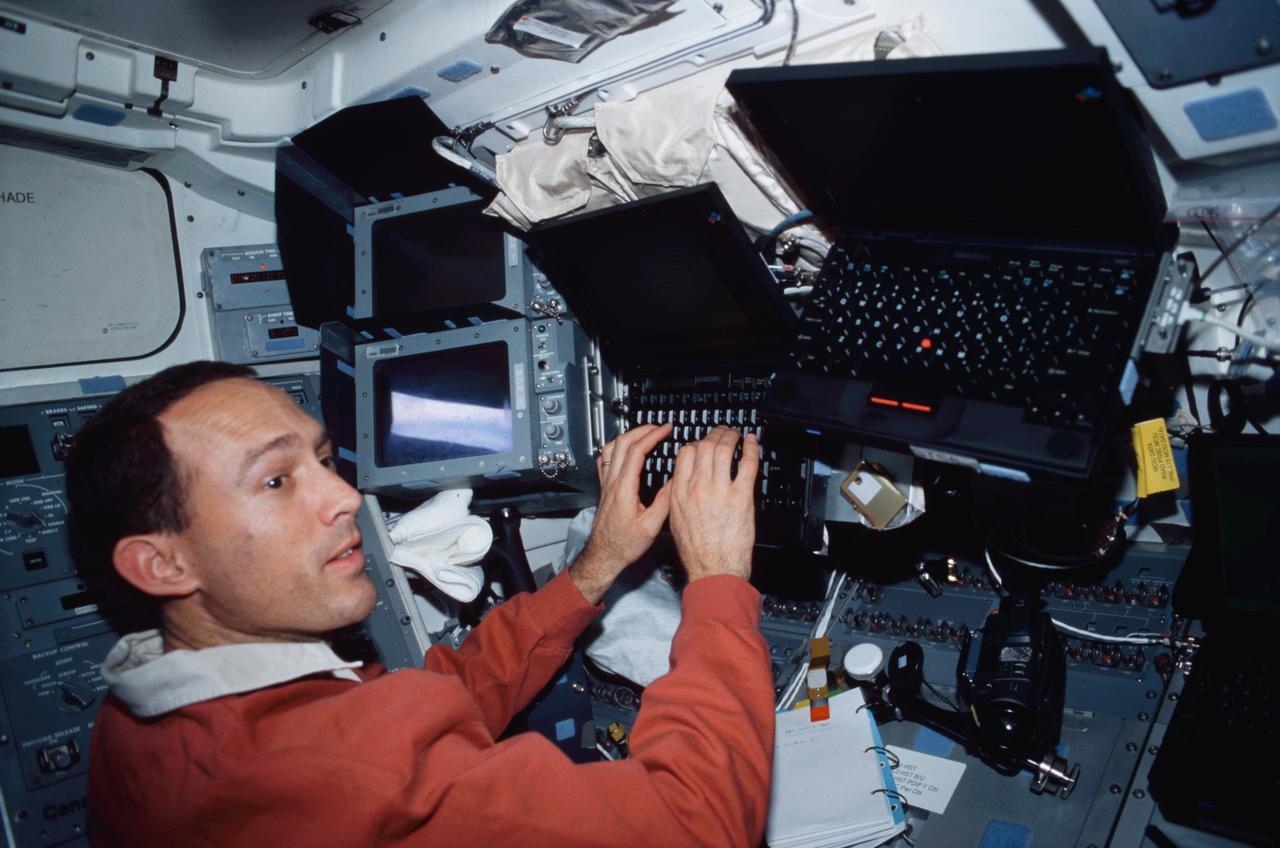
STS109-406-026 (1-12 March 2002) --- Astronaut James H. Newman, STS-109 mission specialist, works with Payload and General Support Computers (PGSC) on the mid deck of the Space Shuttle Columbia.
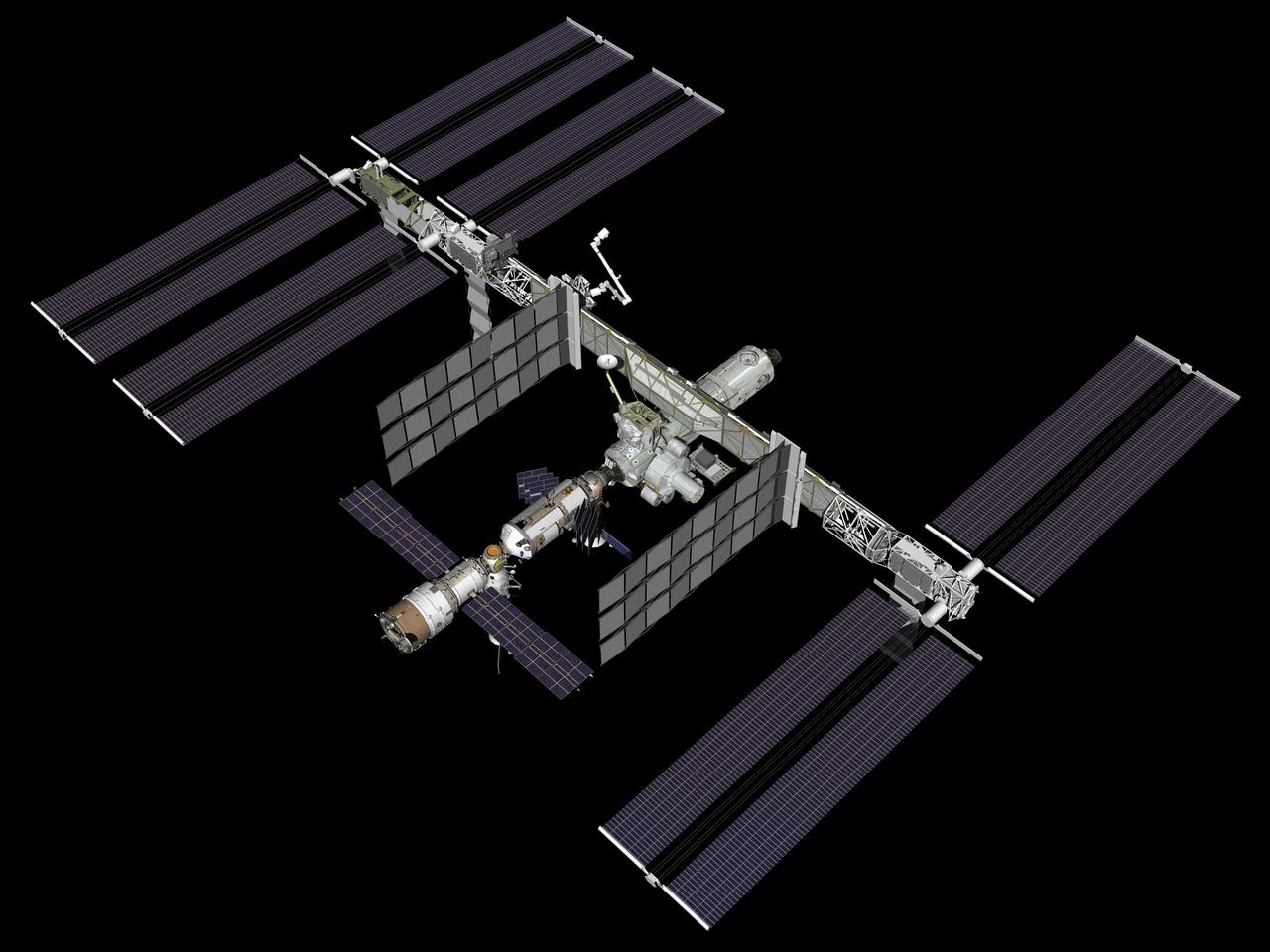
JSC2006-E-38950 (August 2006) --- Computer generated graphic of the International Space Station configuration after STS-116/12A.1 with the addition of the P5 integrated truss segment.
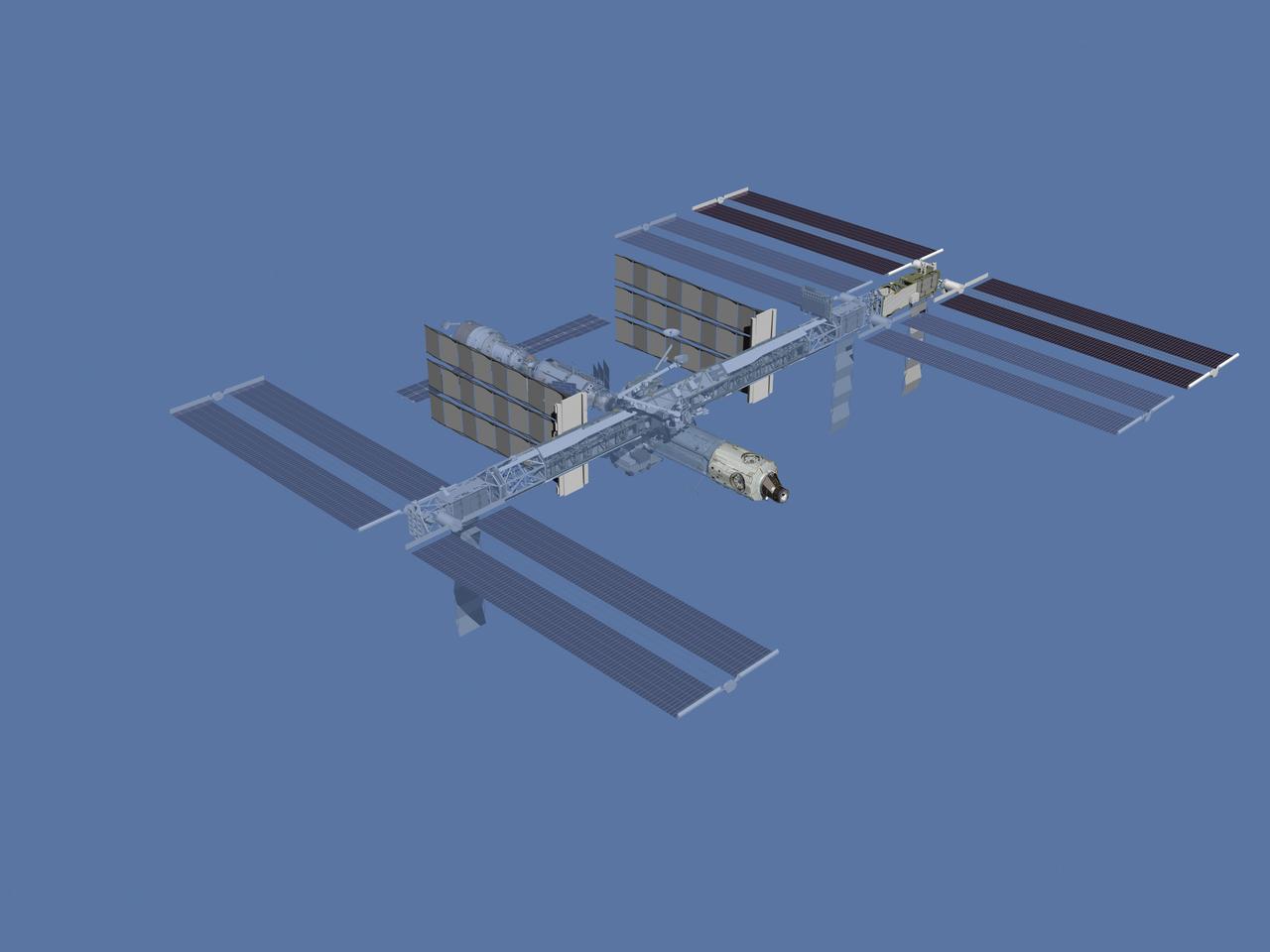
JSC2006-E-43503 (October 2006) ---Computer-generated artist's rendering of the International Space Station after the connecting node (Node 2) is relocated from the Unity node port side to the forward port of the Destiny Laboratory.
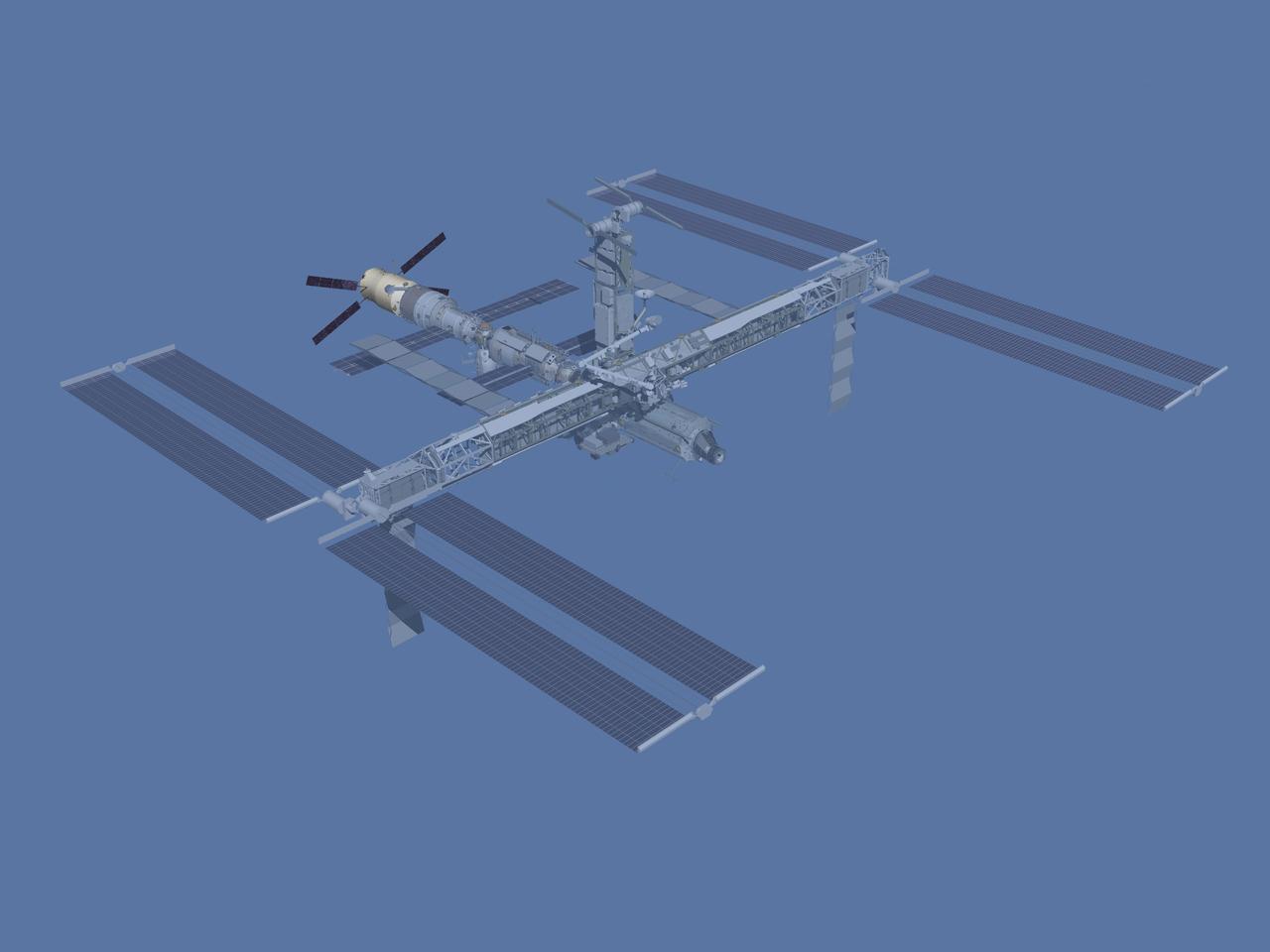
JSC2006-E-43501 (October 2006) --- Computer-generated artist's rendering of the International Space Station after flight ATV1. Ariane 5 Rocket delivers a European Automated Transfer Vehicle, which docks to the Zvezda Service Module.
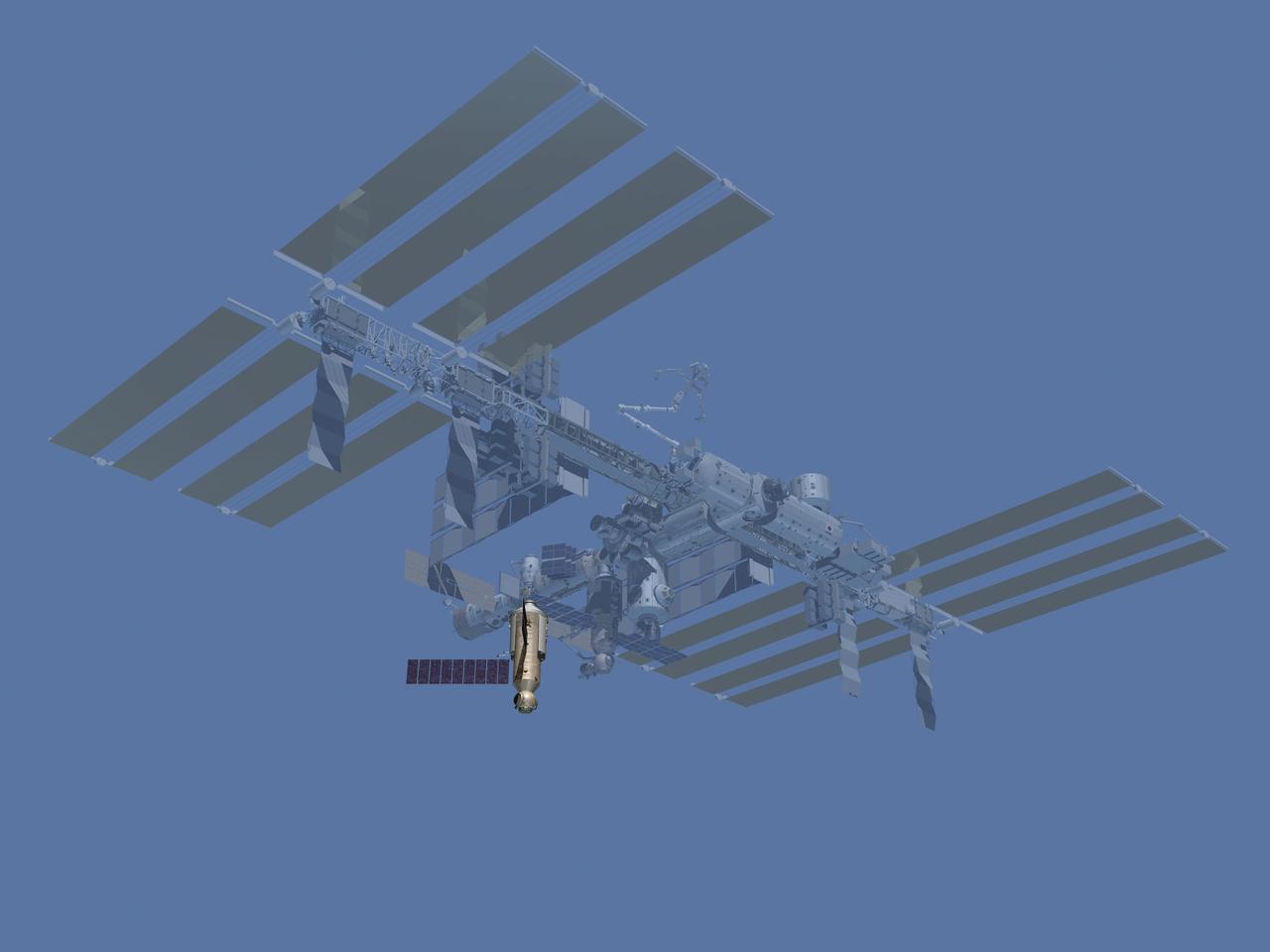
JSC2006-E-43518 (October 2006) --- Computer-generated artist's rendering of the International Space Station after flight 9R. Russian Proton rocket delivers Research Module which docks to Zvezda Service Module nadir port.
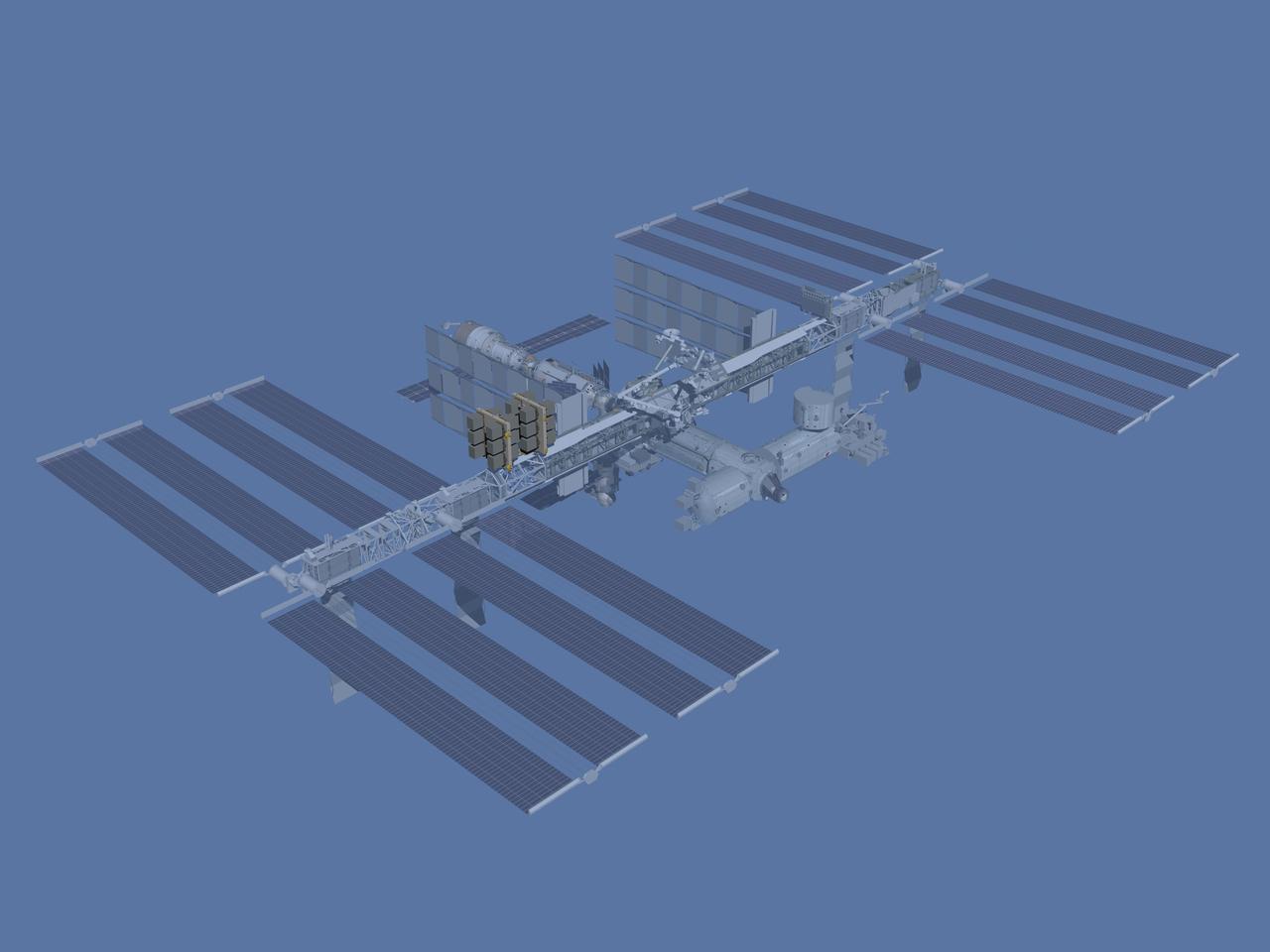
JSC2006-E-43512 (October 2006) --- Computer-generated artist's rendering of the International Space Station after flight ULF3. U.S. Orbiter delivers EXPRESS Logistics Carrier 1 (ELC1) and EXPRESS Logistics Carrier 2 (ELC2).
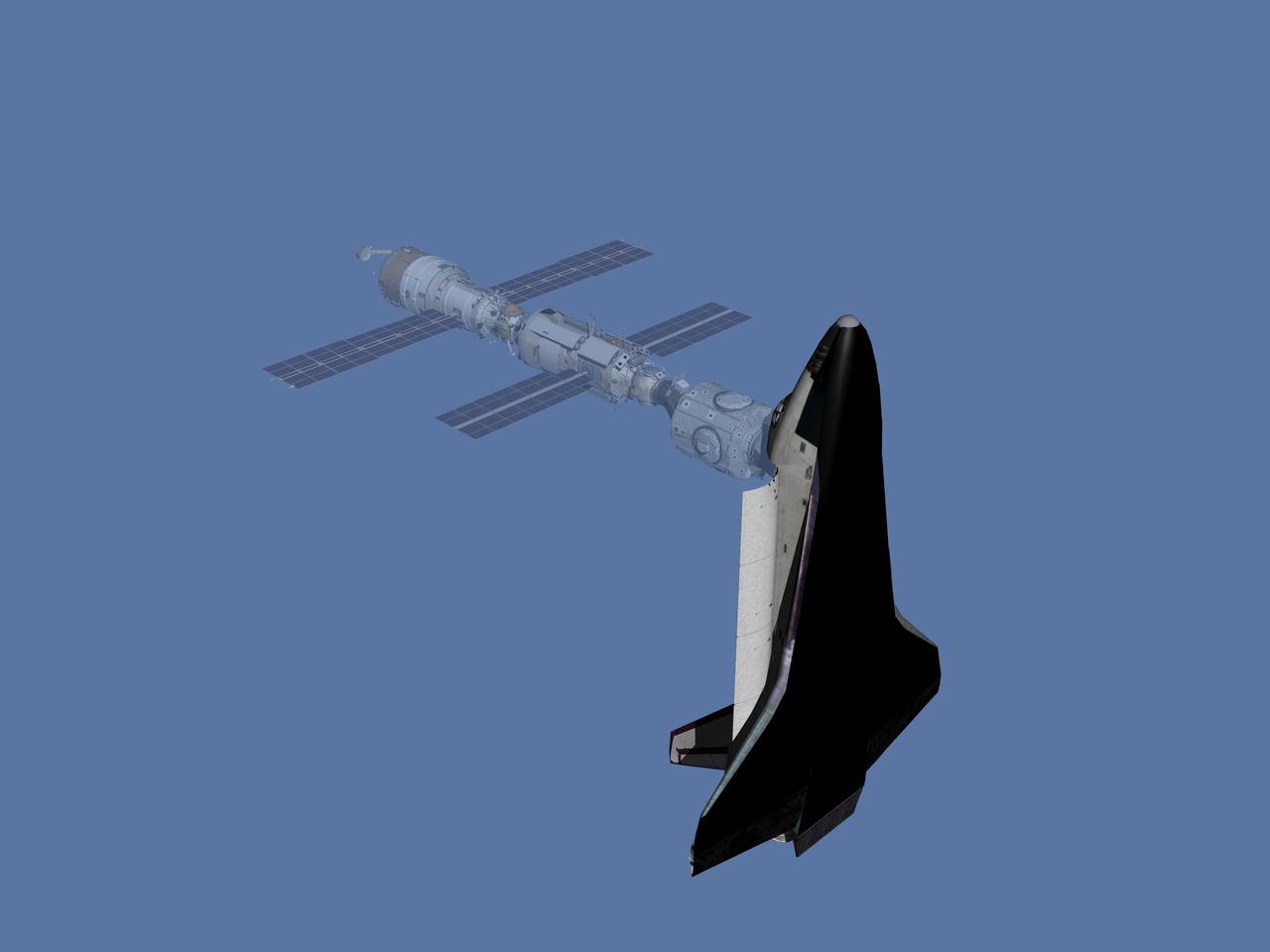
JSC2006-E-43481 (September 2000) --- Computer-generated artist's rendering of the International Space Station after flight STS-106/2A.2b. The STS-106 crew delivered supplies and performed maintenance on the station.
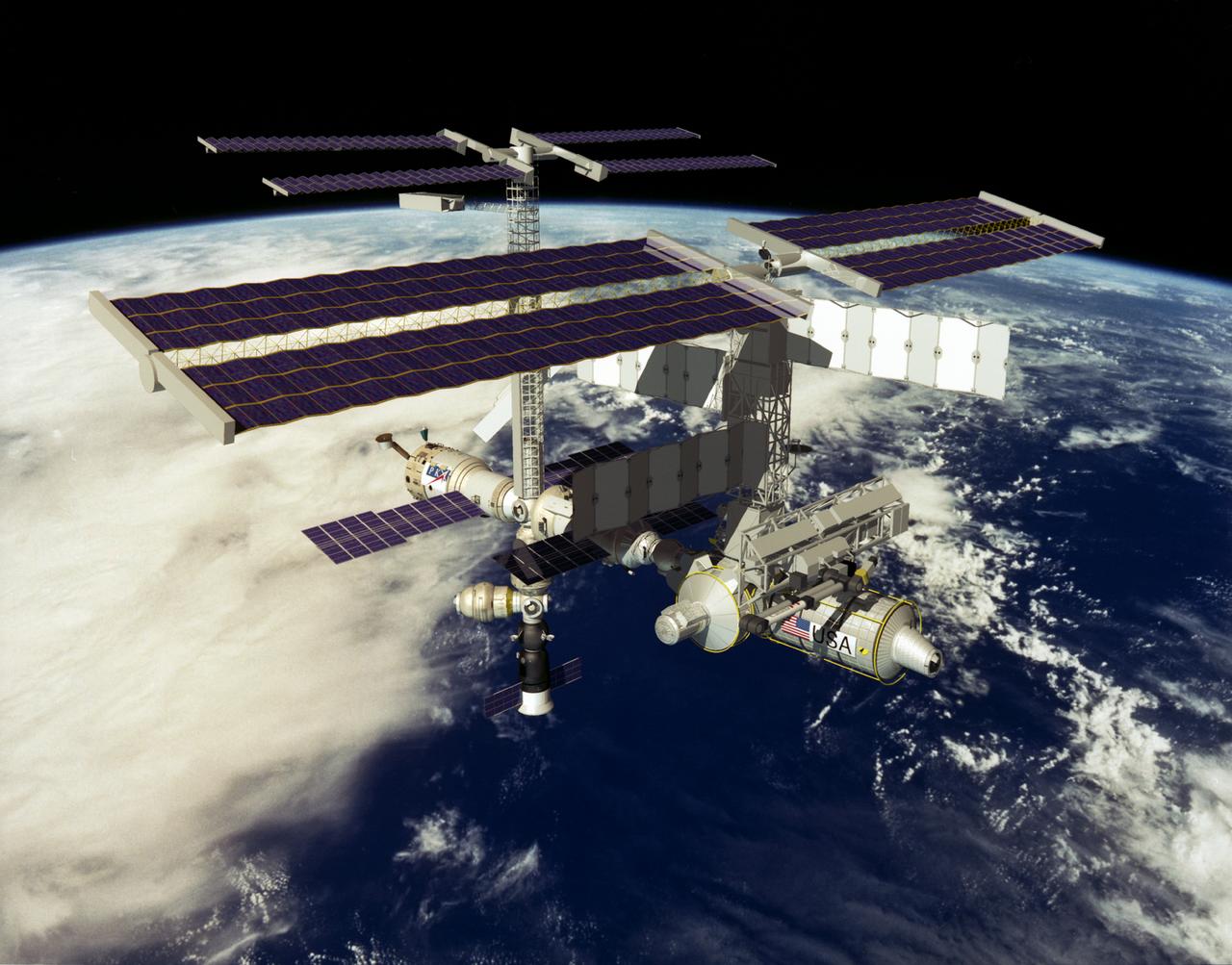
This computer generated scene of the International Space Station (ISS) represents the first addition of hardware following the completion of Phase II. The 8-A Phase shows the addition of the S-9 truss.
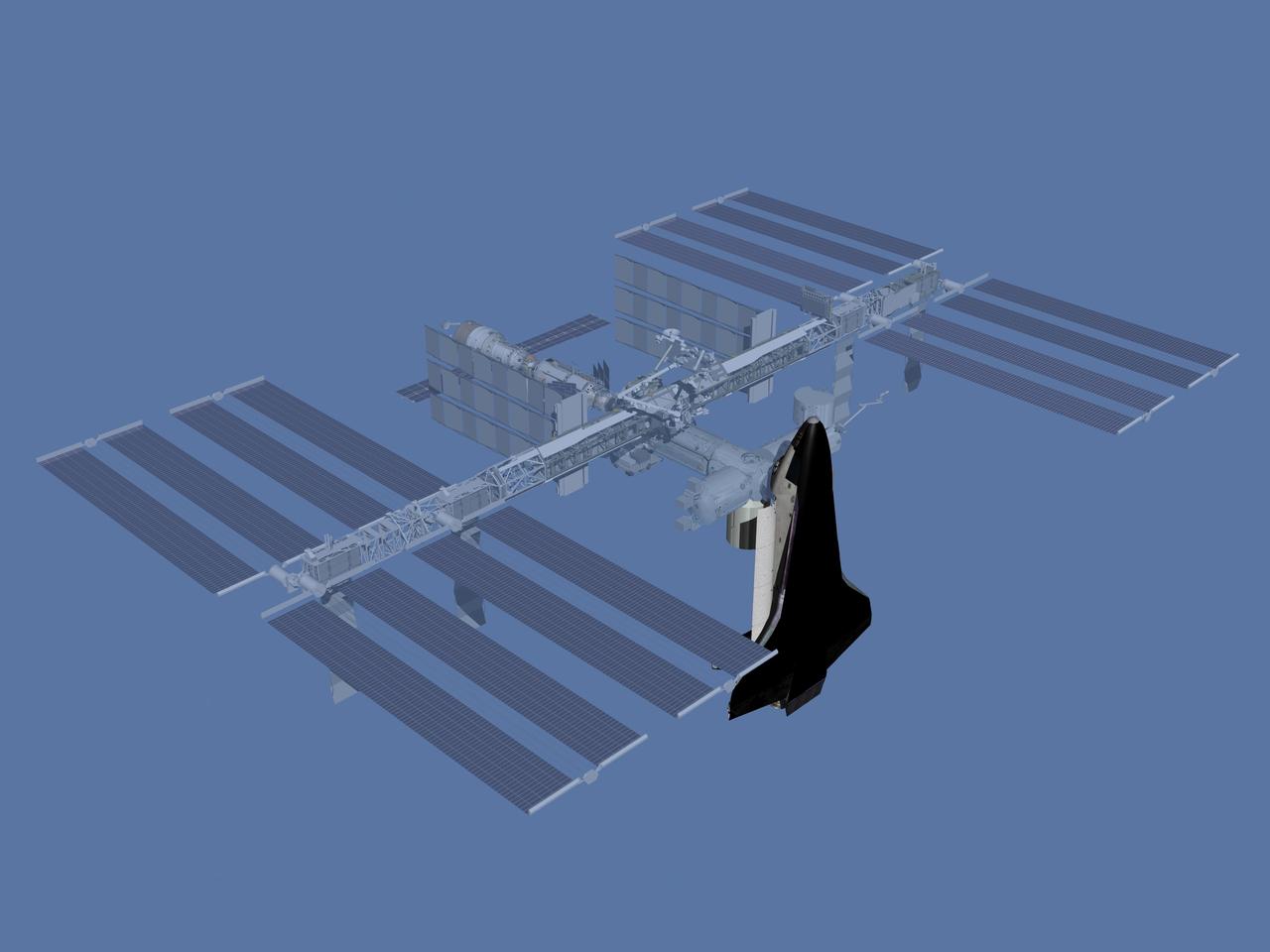
JSC2006-E-43508 (October 2006) --- Computer-generated artist's rendering of the International Space Station after flight ULF2. U.S. Orbiter brings Multi-Purpose Logistics Module (MPLM).
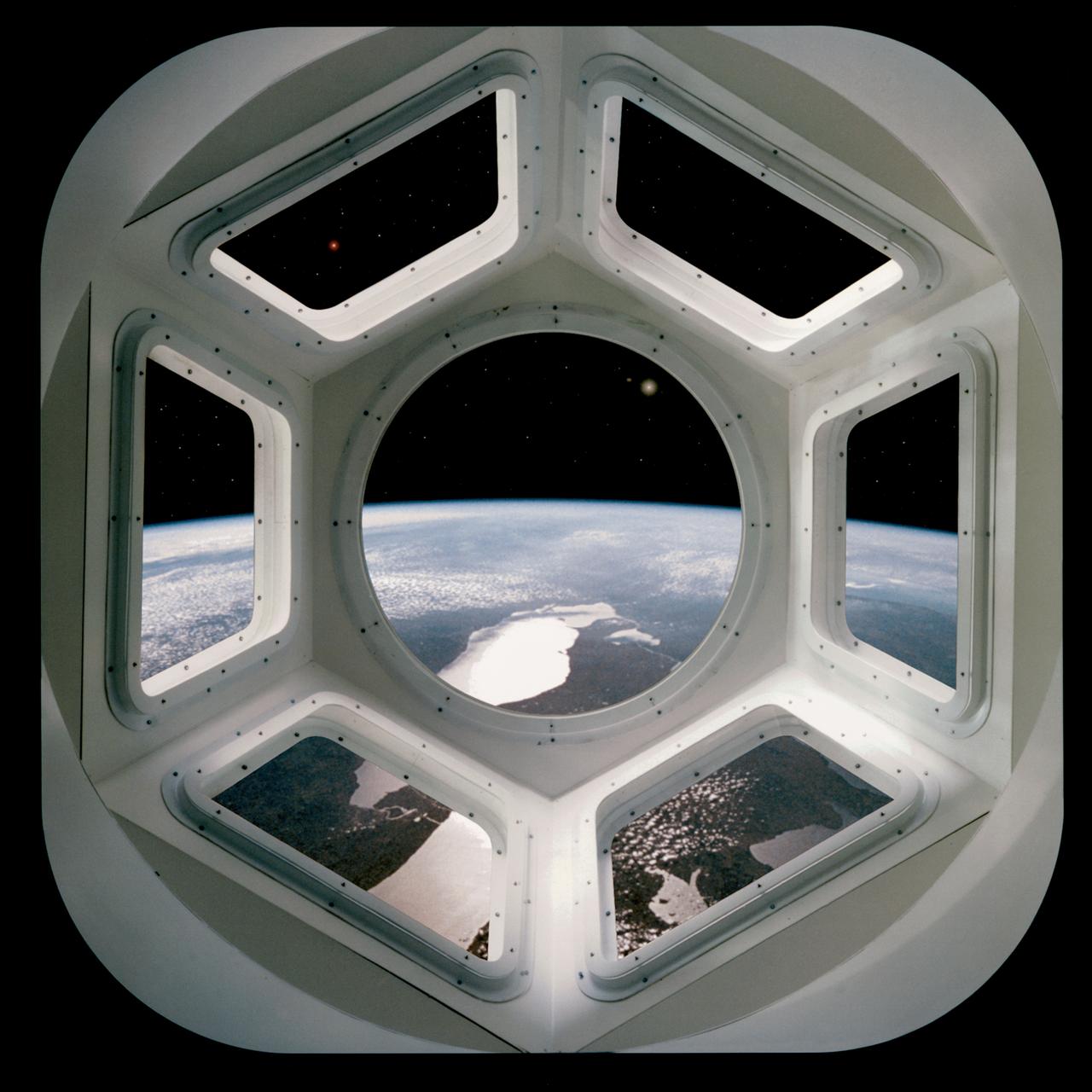
S94-47164 (December 1994) --- A computer generated scene gives the perspective of a crew member looking through the Cupola on the International Space Station (ISS). Several of the Great Lakes help to form the backdrop for the scene.
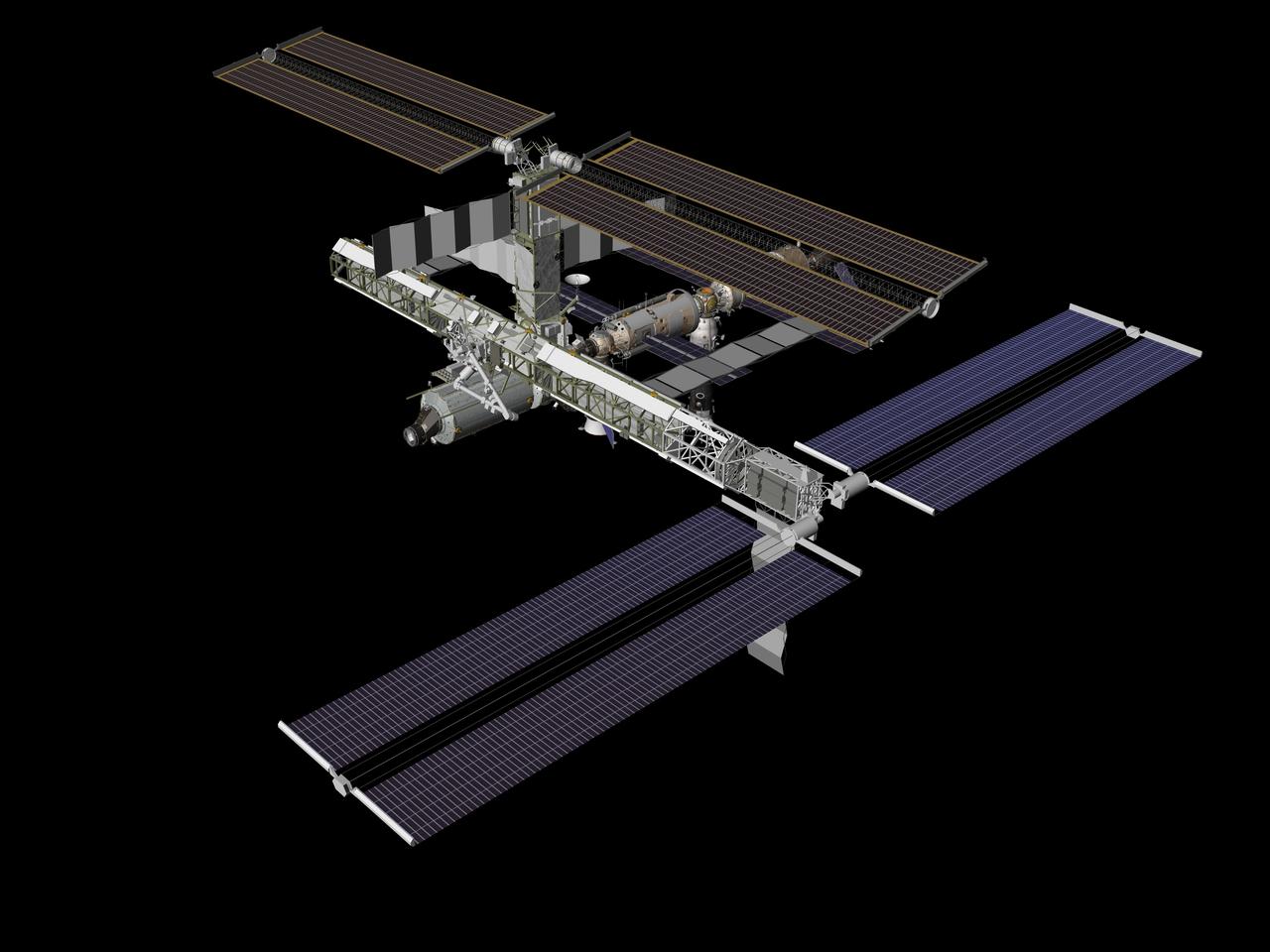
JSC2006-E-38949 (August 2006) --- Computer generated graphic of the International Space Station configuration after STS-115/12A with the addition of the P3/P4 integrated truss segments.
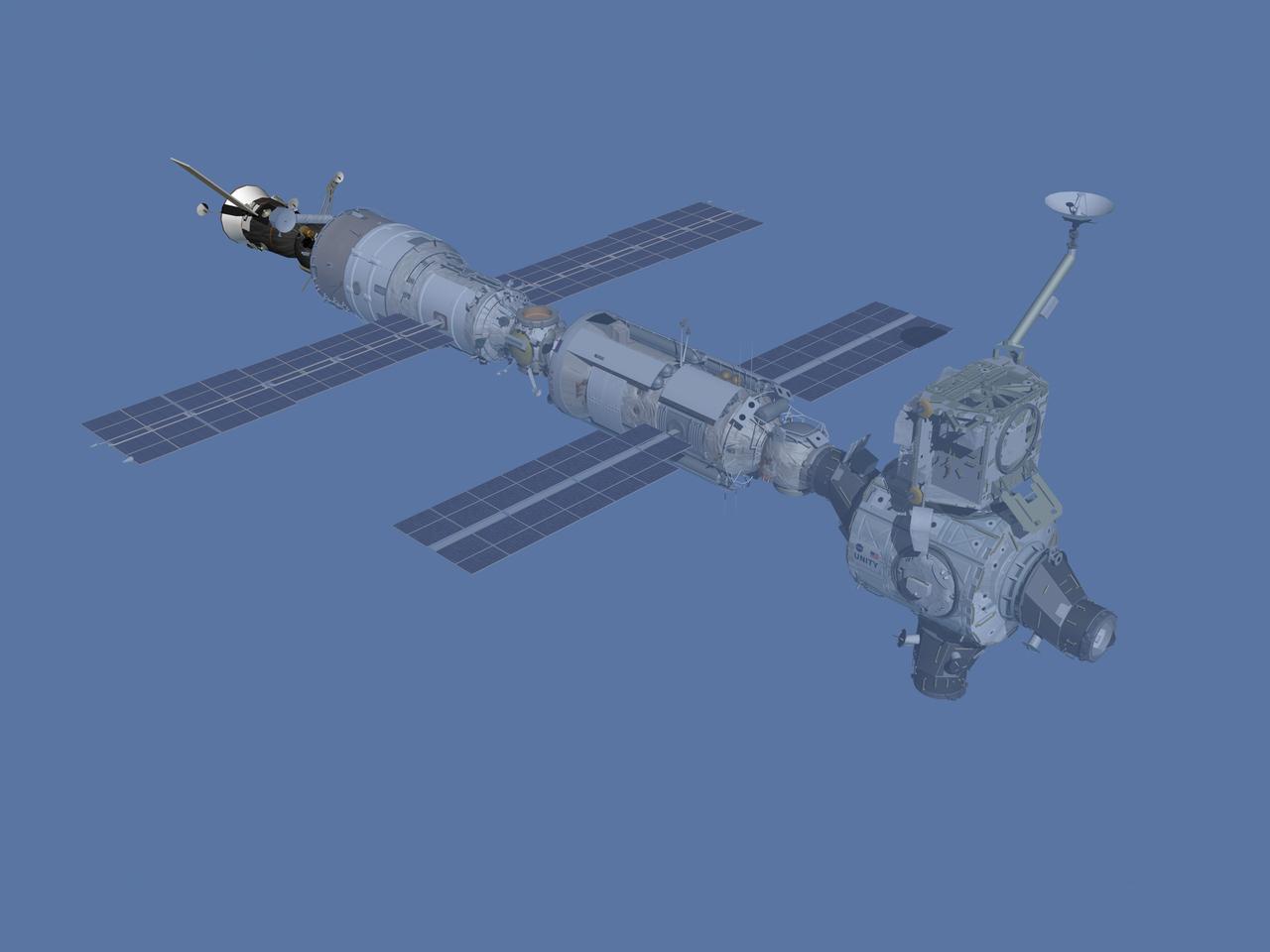
JSC2006-E-43483 (October 2000) --- Computer-generated artist's rendering of the International Space Station after flight 2R/1S. Expedition One, the first crew to live and work aboard the station arrived in a Soyuz spacecraft.

JSC2006-E-43479 (May 2000) --- Computer-generated artist's rendering of the International Space Station after flight STS-101/2A.2a. The STS-101 crew readied the station for the arrival of the Zvezda Service Module.
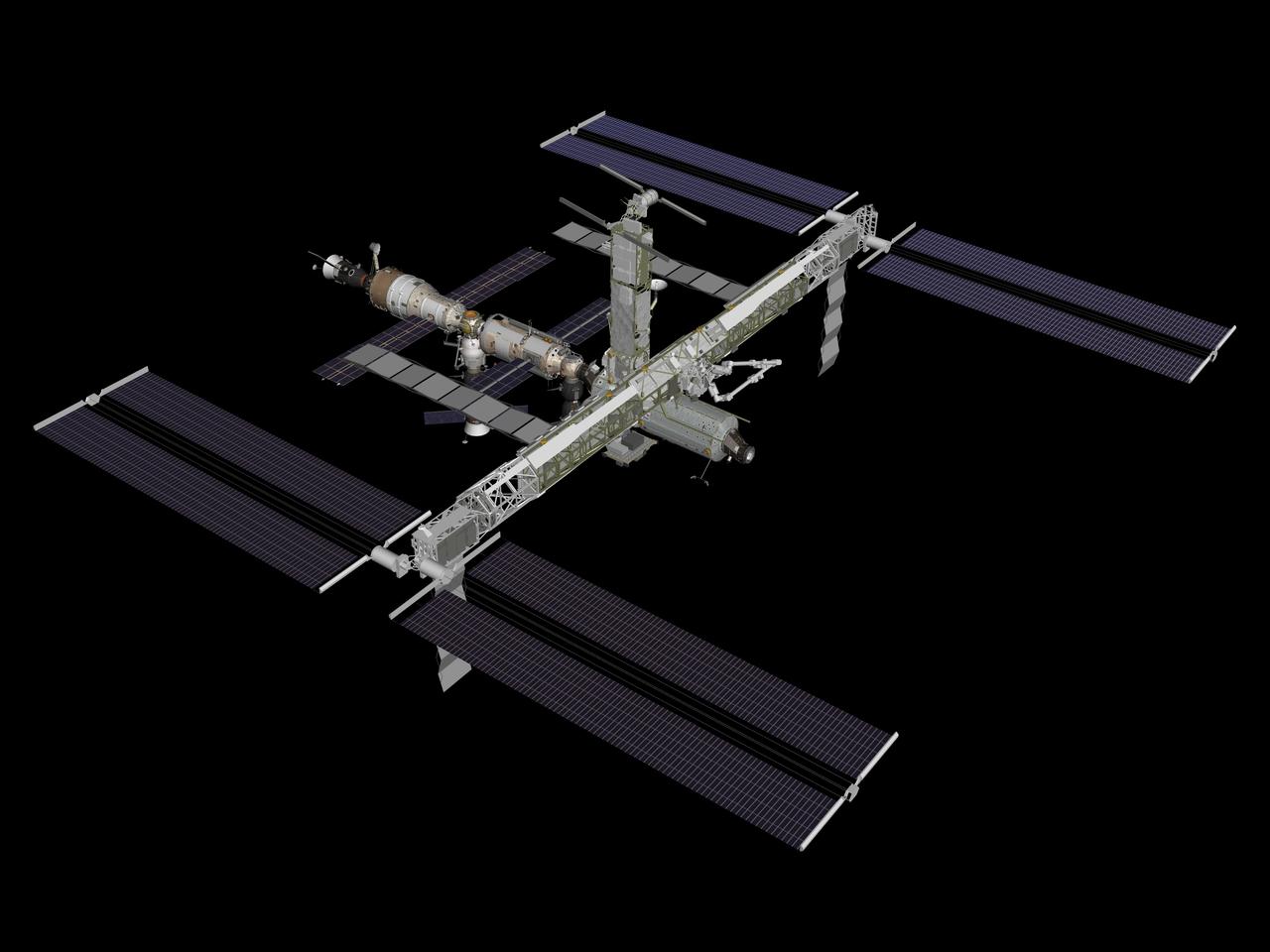
JSC2006-E-38951 (August 2006) --- Computer generated graphic of the International Space Station configuration after STS-117/13A with the addition of S3/S4 integrated truss segments.