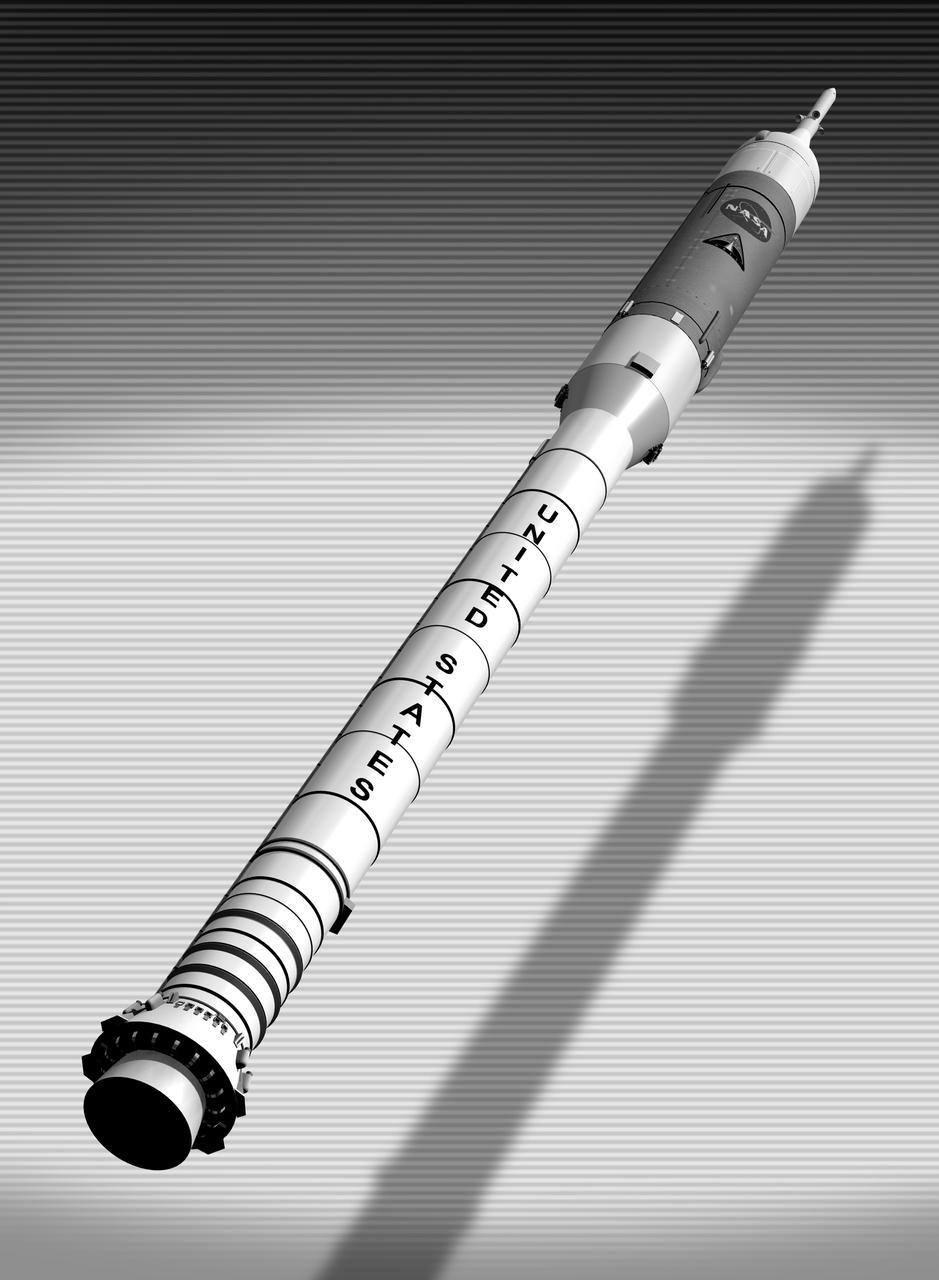
Shown is a concept illustration of Ares I which is an in-line, two-stage rocket that will transport the Orion Crew Exploration Vehicle to low earth orbit. Orion will accommodate as many as six astronauts. The first stage will consist of the five-segment solid rocket booster.
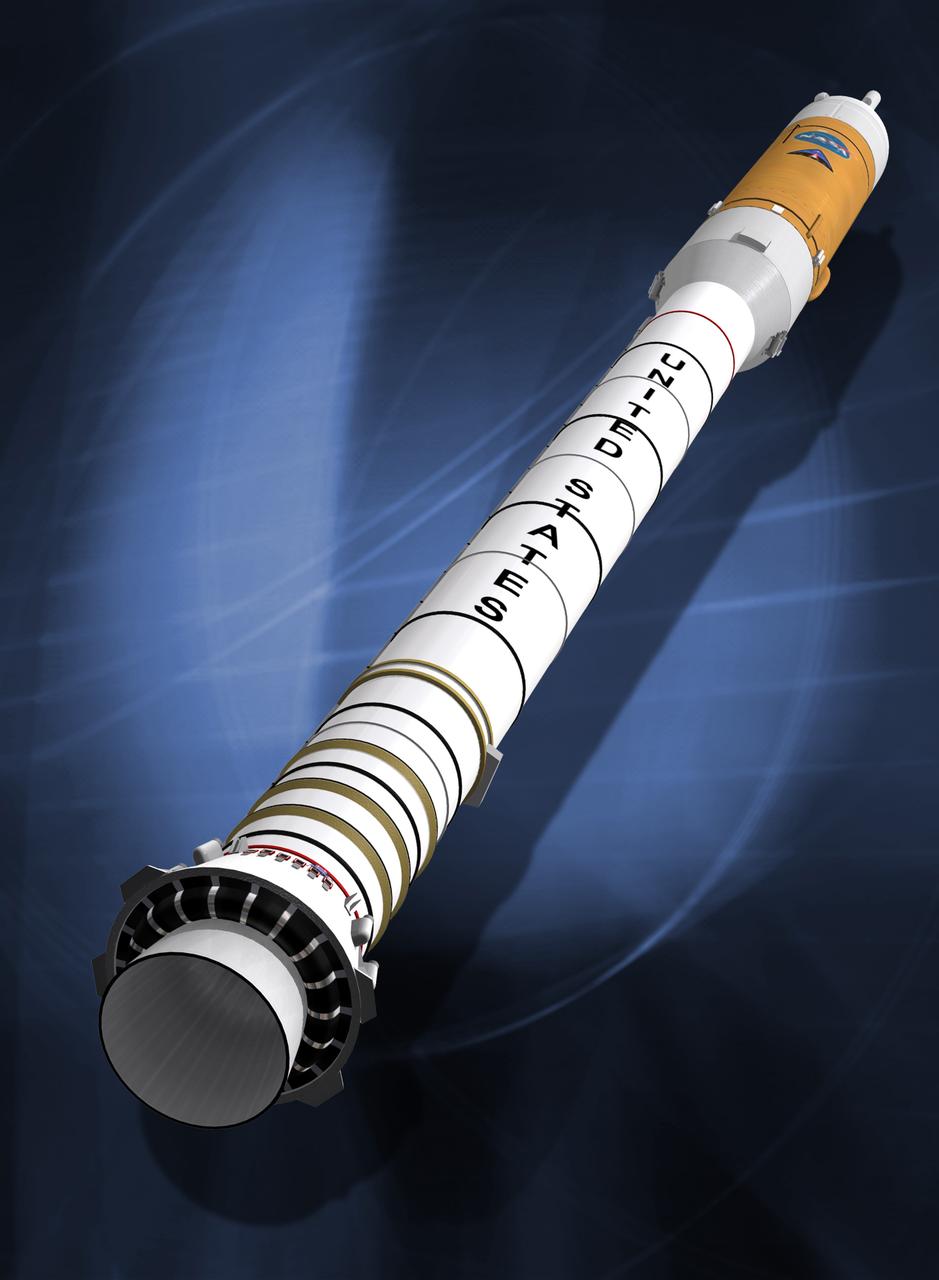
Shown is an illustration of the Ares I concept. The first stage will be a single, five-segment solid rocket booster derived from the space shuttle programs reusable solid rocket motor. The first stage is managed by NASA's Marshall Space Flight Center in Huntsville, Alabama for NASA's Constellation program.
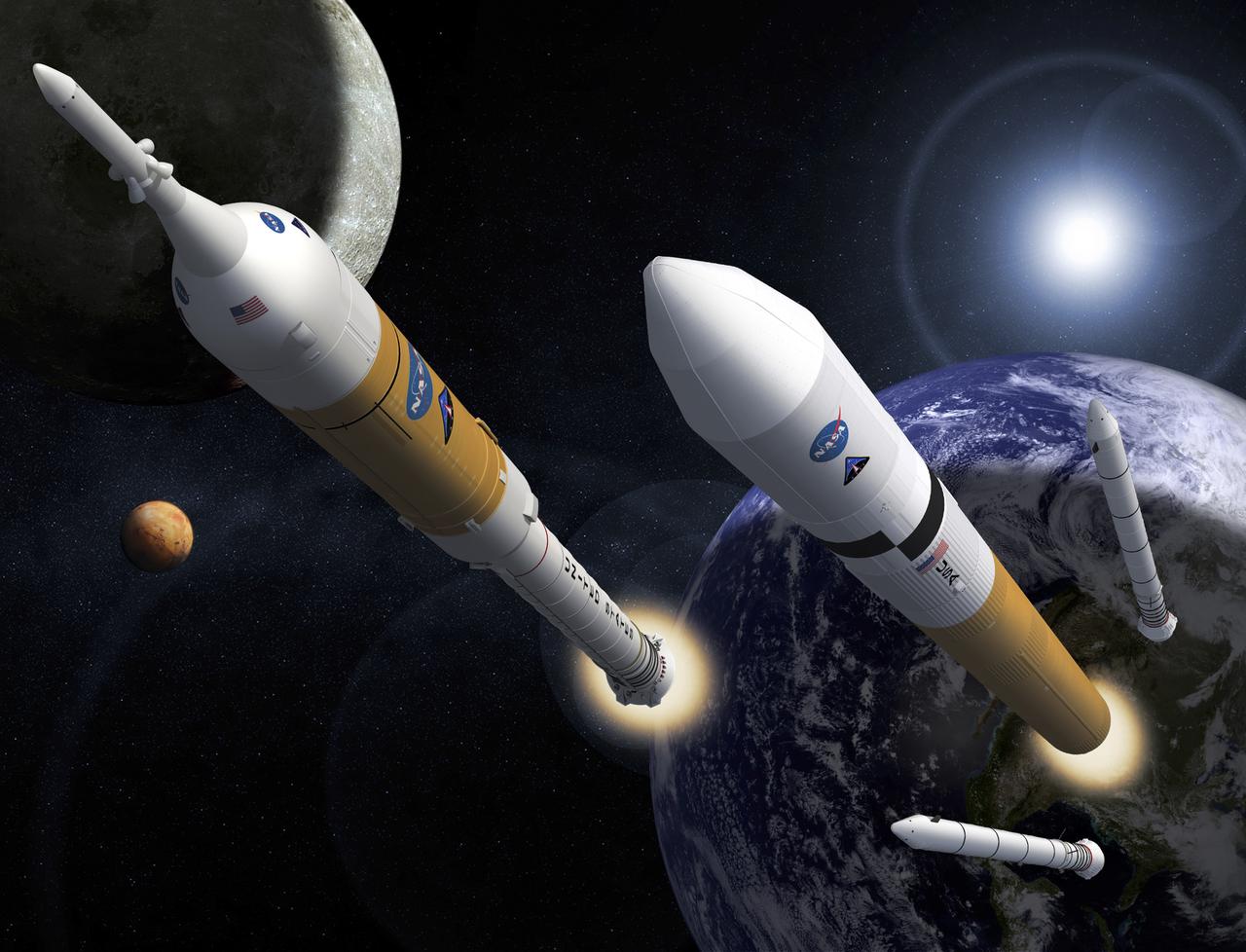
Shown is a concept illustration of the Ares I crew launch vehicle, left, and Ares V cargo launch vehicle. Ares I will carry the Orion Crew Exploration Vehicle to space. Ares V will serve as NASA's primary vehicle for delivery of large-scale hardware to space.
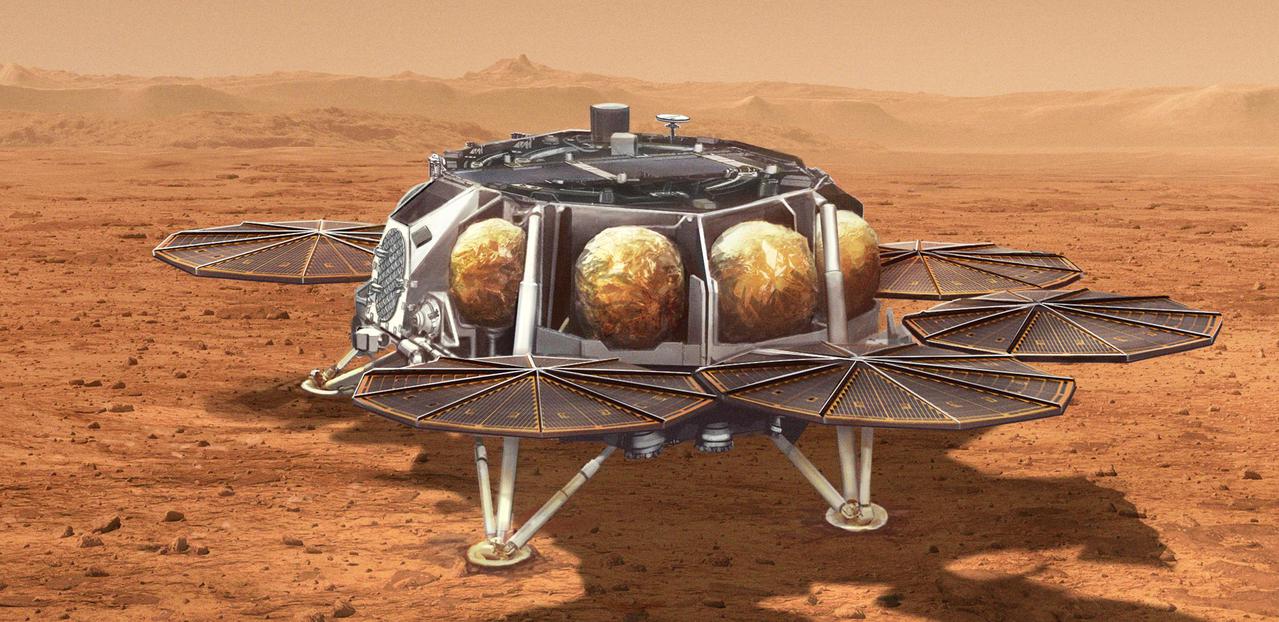
This illustration shows a concept for a proposed NASA Sample Retrieval Lander that would carry a small rocket (about 10 feet, or 3 meters, tall) called the Mars Ascent Vehicle to the Martian surface. After being loaded with sealed tubes containing samples of Martian rocks and soil collected by NASA's Perseverance rover, the rocket would launch into Mars orbit. The samples would then be ferried to Earth for detailed analysis. The lander is part of the multi-mission Mars Sample Return program being planned by NASA and ESA (European Space Agency). https://photojournal.jpl.nasa.gov/catalog/PIA25277
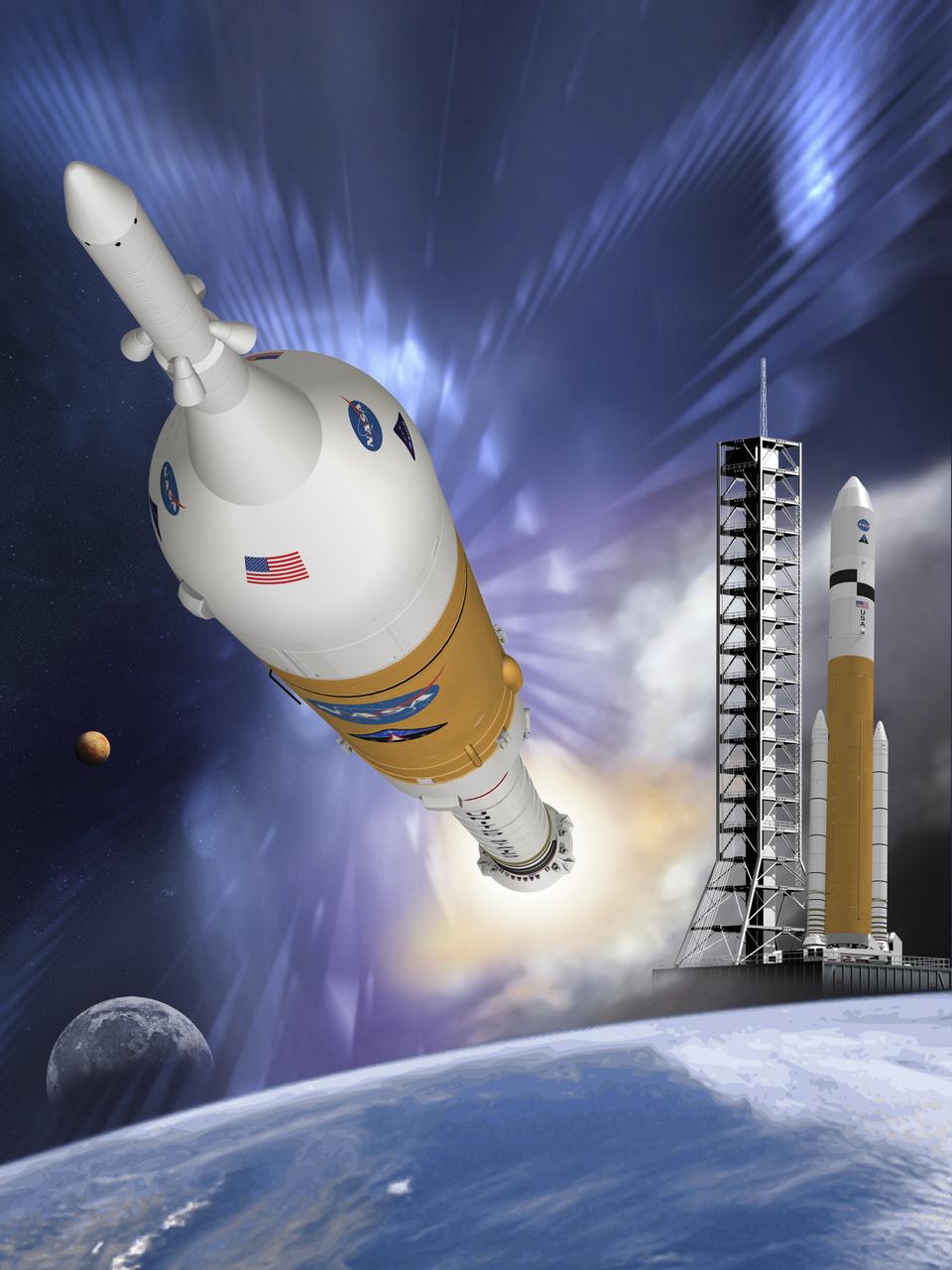
Shown is a concept illustration of the Ares I crew launch vehicle during launch and the Ares V cargo launch vehicle on the launch pad. Ares I will carry the Orion Crew Exploration Vehicle with an astronaut crew to Earth orbit. Ares V will deliver large-scale hardware to space. This includes the Altair Lunar Lander, materials for establishing an outpost on the moon, and the vehicles and hardware needed to extend a human presence beyond Earth orbit.
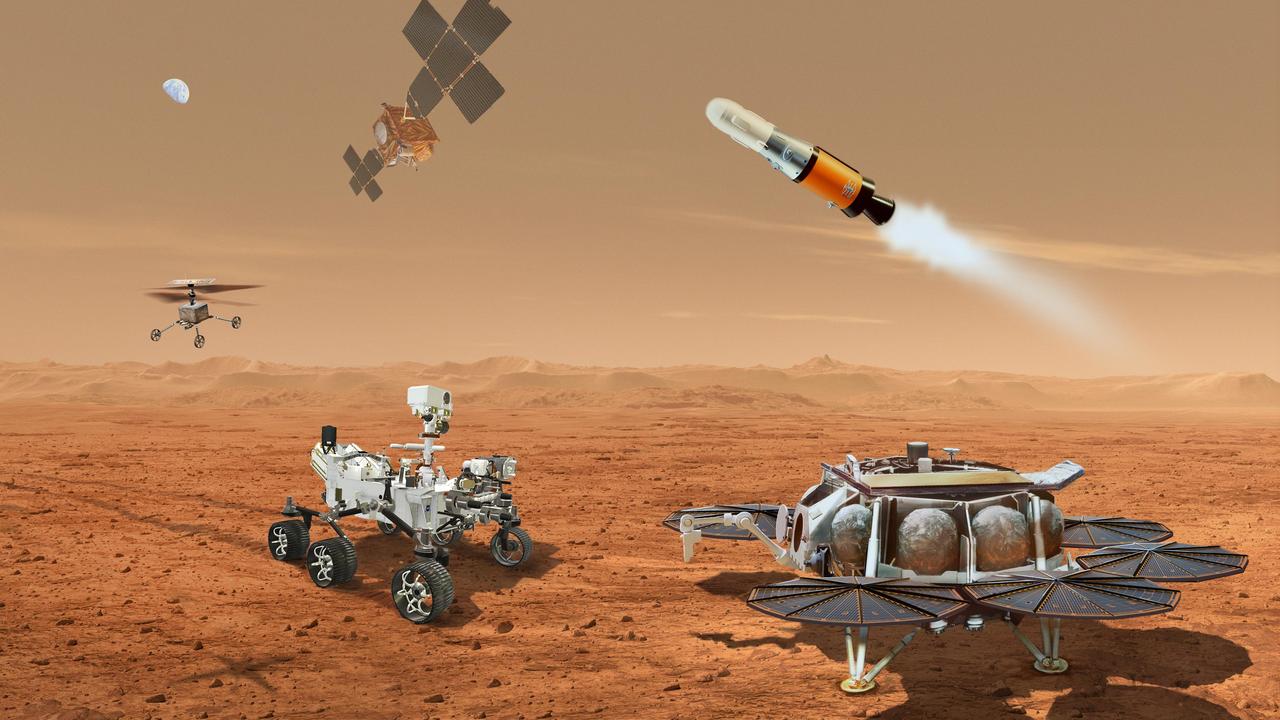
This illustration shows a concept for multiple robots that would team up to ferry to Earth samples of rocks and soil being collected from the Martian surface by NASA's Mars Perseverance rover. NASA and ESA (European Space Agency) are developing concepts for the Mars Sample Return program, designed to retrieve the rock and soil samples Perseverance has collected and stored in sealed tubes. In the future, the samples would be returned to Earth for detailed laboratory analysis. The current concept envisions delivering a Mars lander near Jezero Crater, where Perseverance (far left) collects samples. A NASA-provided Sample Retrieval Lander (far right) would carry a NASA rocket (the Mars Ascent Vehicle). Perseverance would gather sample tubes it has cached on the Mars surface and transport them to the Sample Retrieval Lander, where they would then be transferred by a Sample Transfer Arm provided by ESA onto the Mars Ascent Vehicle. The arm is based on a human arm, with an elbow, shoulder, and wrist. The Mars Ascent Vehicle would launch a container with the sample tubes inside into orbit. Waiting in Mars orbit would be an ESA-provided Earth Return Obiter, which would rendezvous with and capture the Orbiting Sample Container using a NASA-provided Capture, Containment, and Return System. This system would capture and orient the container, then prepare it for return to Earth inside the Earth Entry System. Also depicted is one of two Sample Recovery Helicopters NASA will develop to be transported to Mars on the Sample Retrieval Lander, just as the Ingenuity helicopter was carried on the Perseverance rover. The helicopters would serve as backups to Perseverance in transporting sample tubes to the Lander. https://photojournal.jpl.nasa.gov/catalog/PIA25326
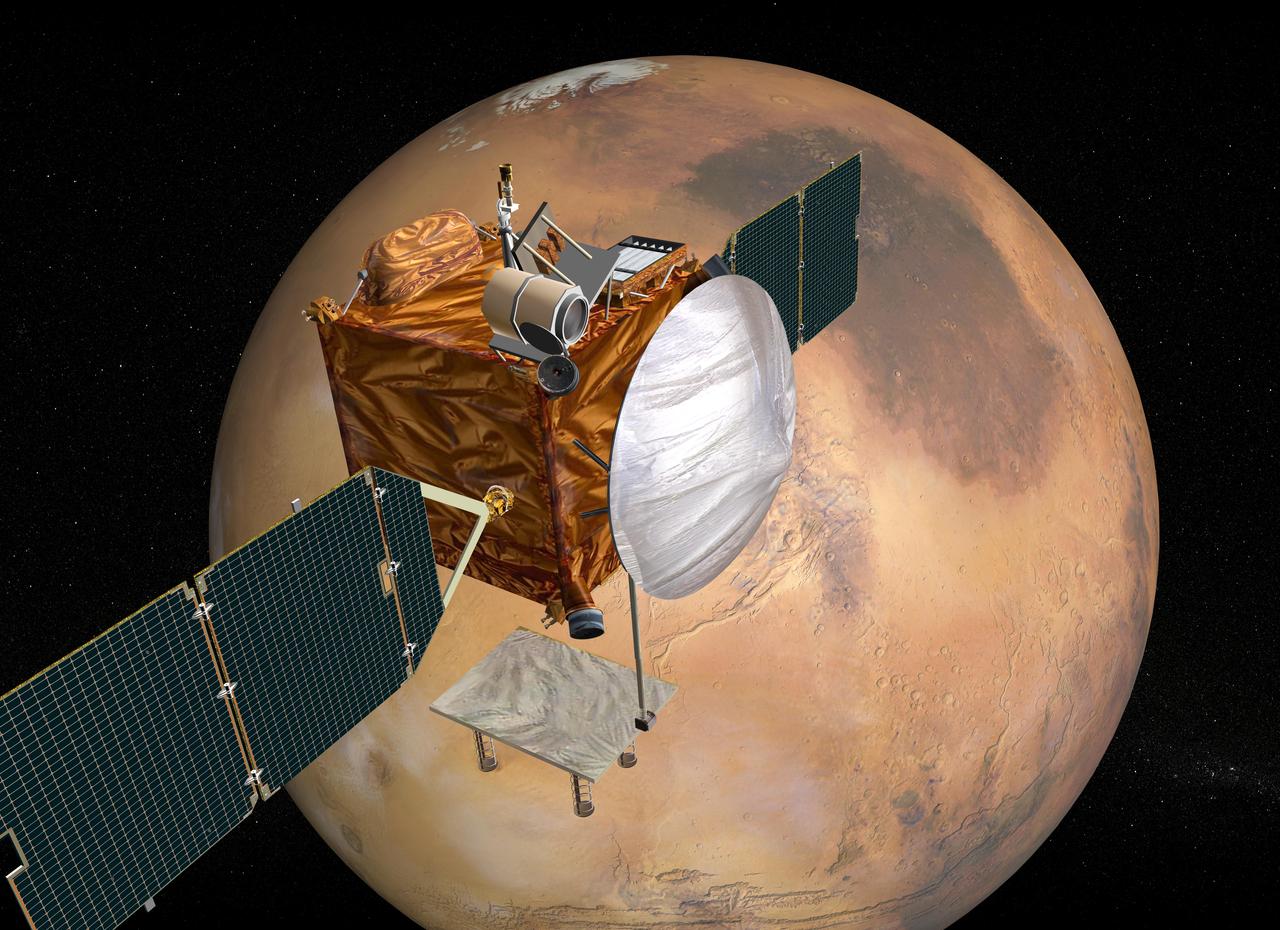
This illustration depicts a concept for NASA Mars Telecommunications Orbiter in flight around Mars.
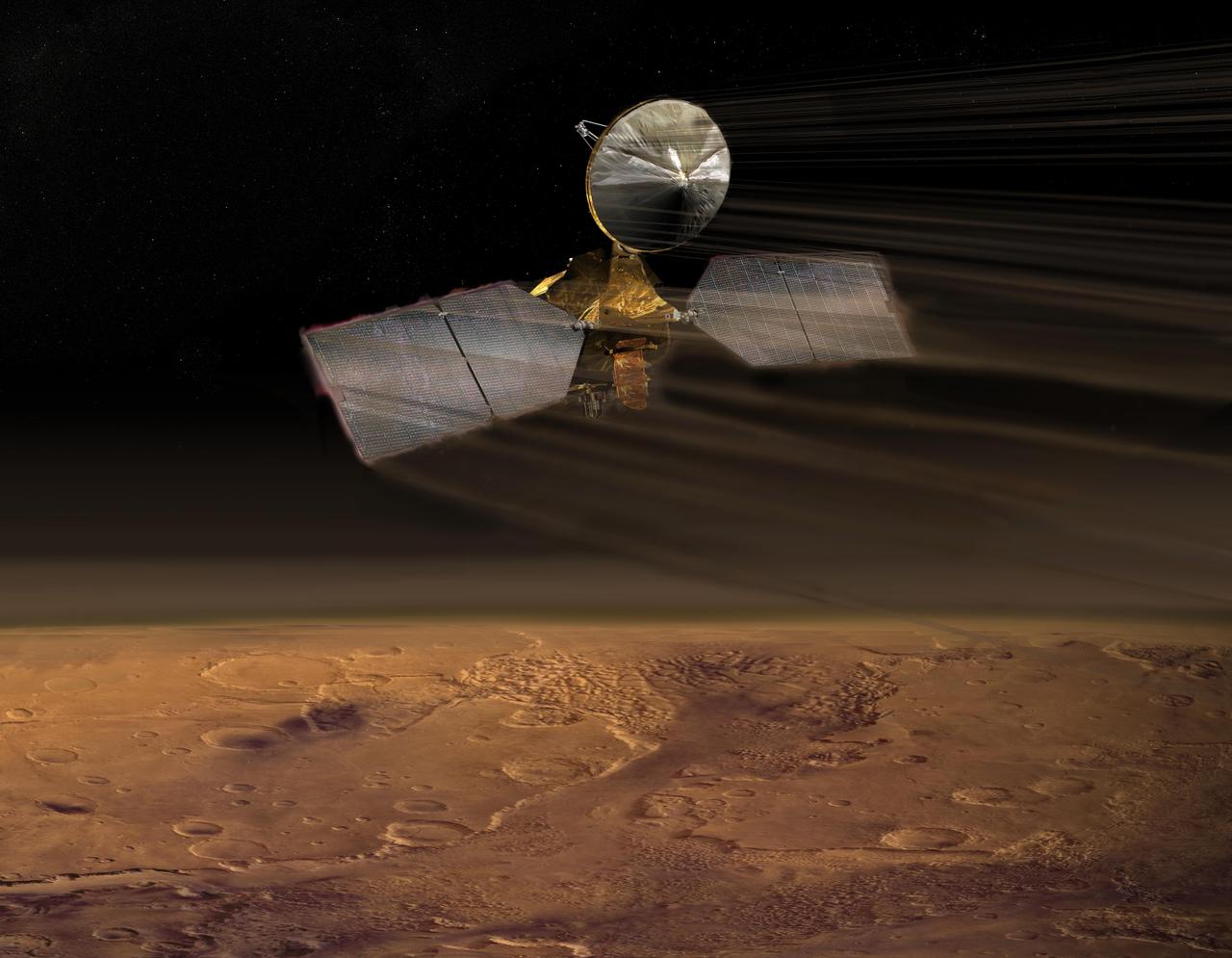
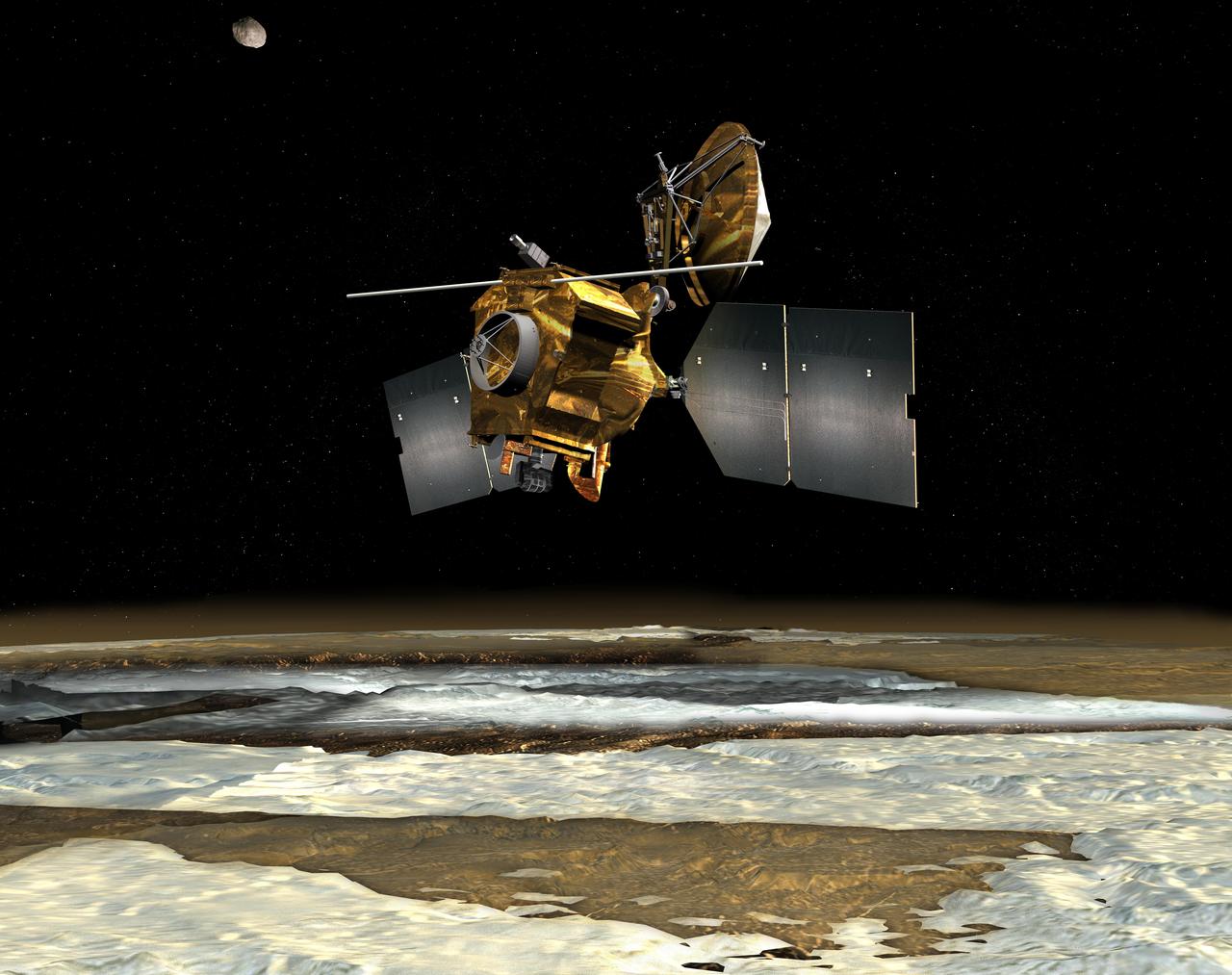
NASA Mars Reconnaissance Orbiter dips into the thin martian atmosphere to adjust its orbit in this artist concept illustration.
NASA Mars Reconnaissance Orbiter passes over the planet south polar region in this artist concept illustration.
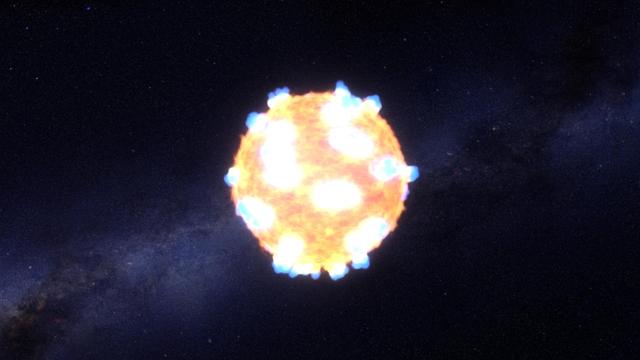
The brilliant flash of an exploding star shockwave -- what astronomers call the hock breakout -- is illustrated in artist concept based on NASA Kepler.

Dwarf planet Ceres is located in the main asteroid belt, between the orbits of Mars and Jupiter, as illustrated in this artist conception.
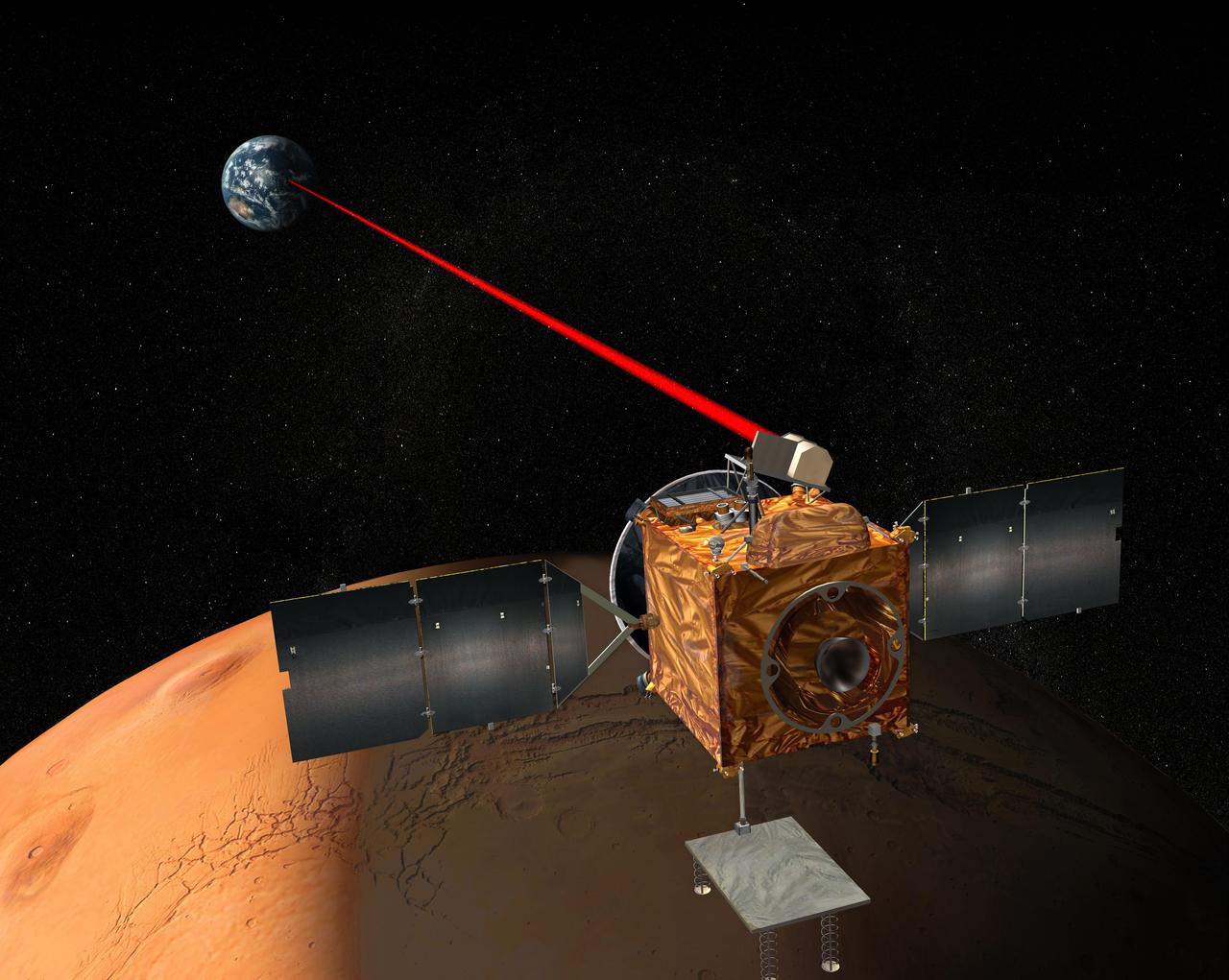
This illustration depicts a concept for operation of an optical communications system on NASA Mars Telecommunications Orbiter.
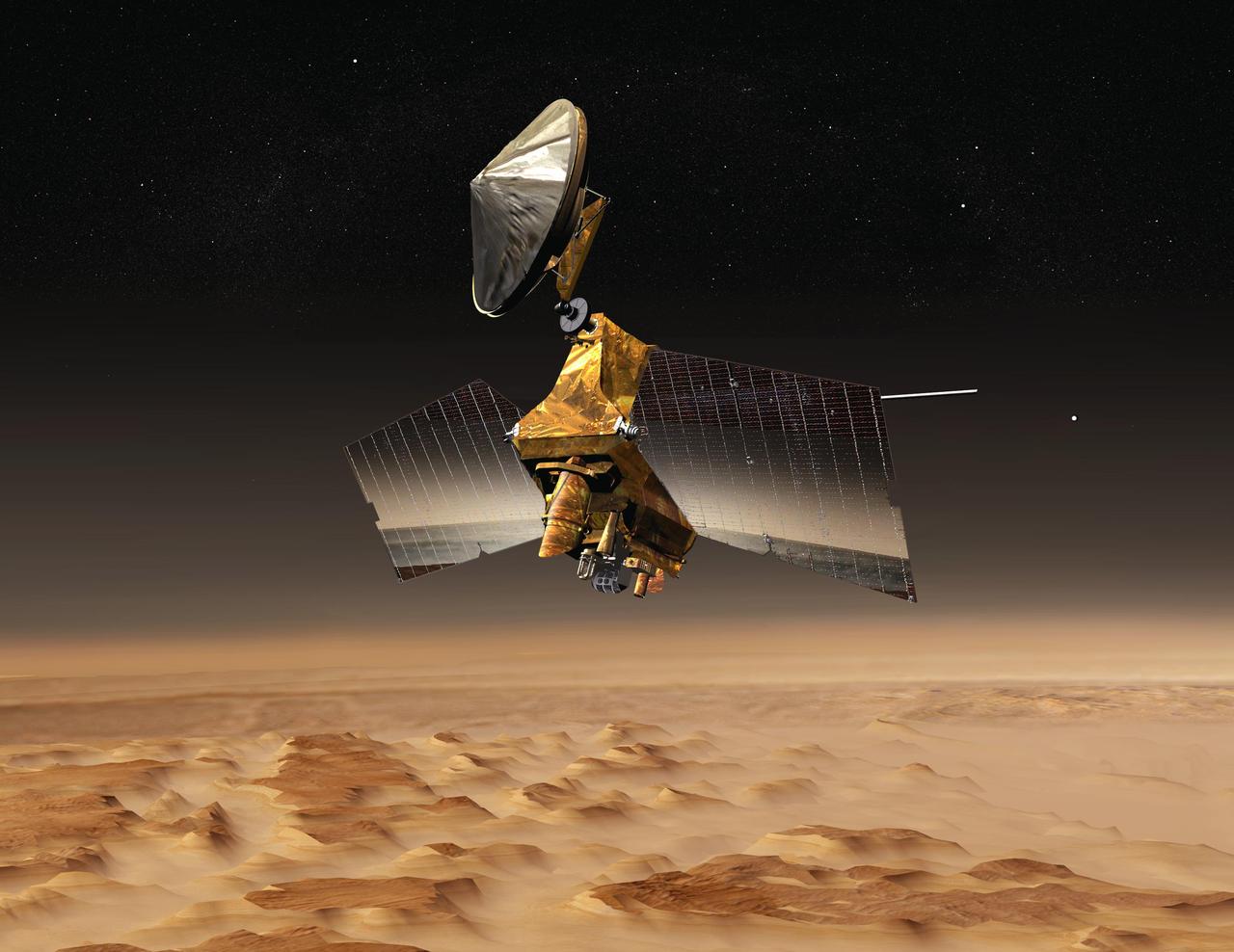
NASA Mars Reconnaissance Orbiter passes above a portion of the planet called Nilosyrtis Mensae in this artist concept illustration.
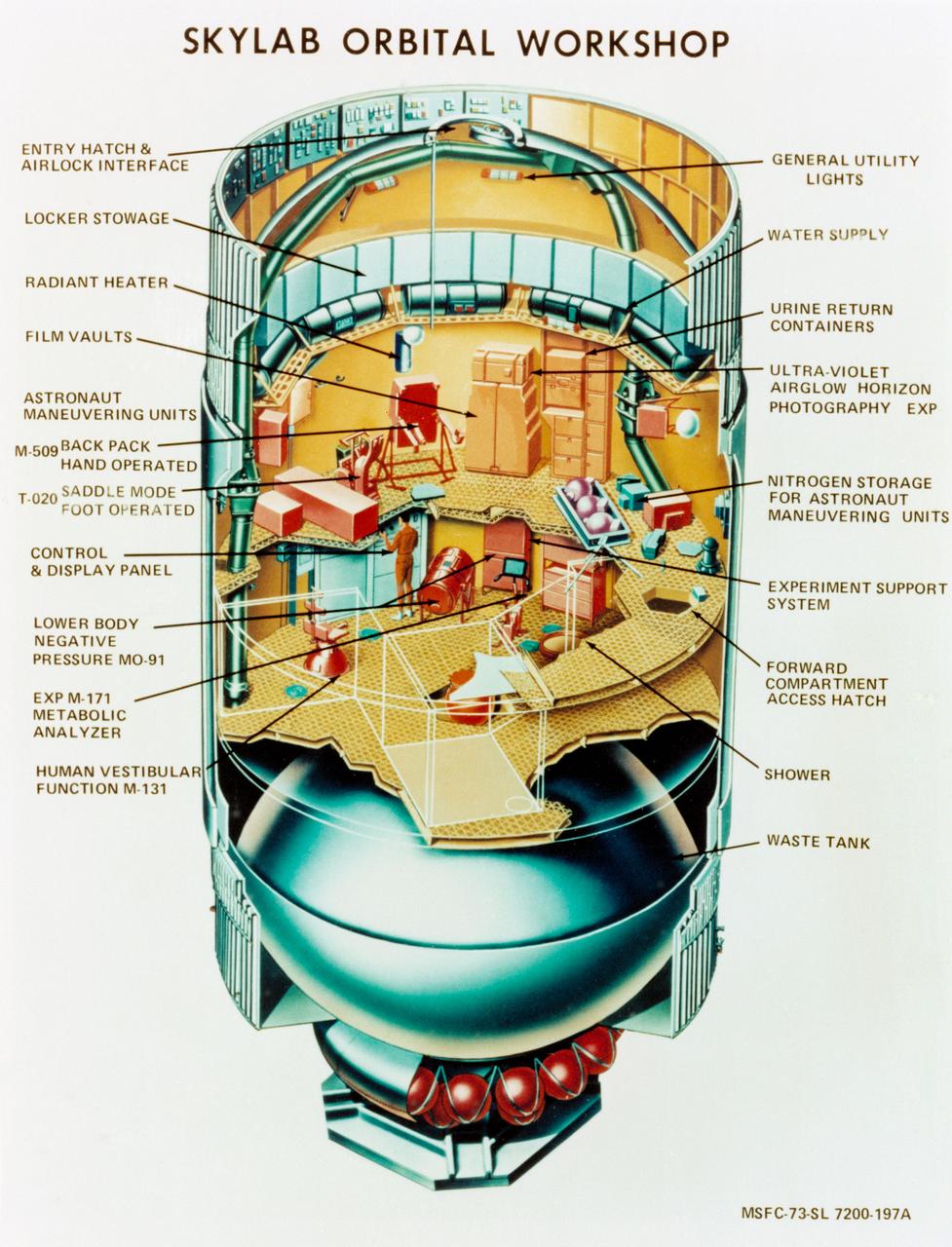
S73-23918 (May 1973) --- An artist's concept illustrating a cutaway view of the Skylab 1 Orbital Workshop (OWS). The OWS is one of the five major components of the Skylab 1 space station cluster which was launched by a Saturn V on May 14, 1973 into Earth orbit. Photo credit: NASA
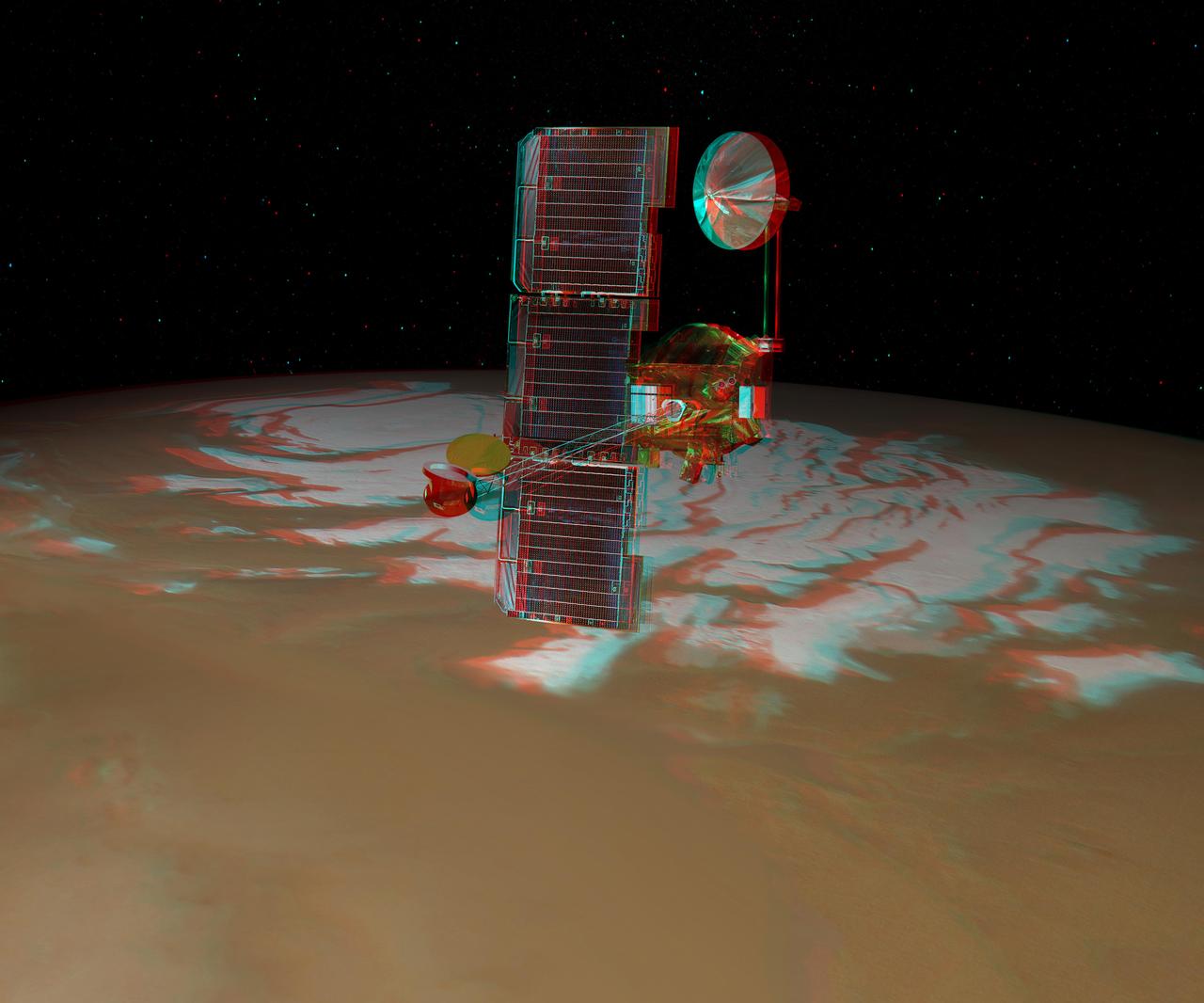
NASA Mars Odyssey spacecraft passes above Mars south pole in this artist concept illustration. 3D glasses are necessary to view this image.
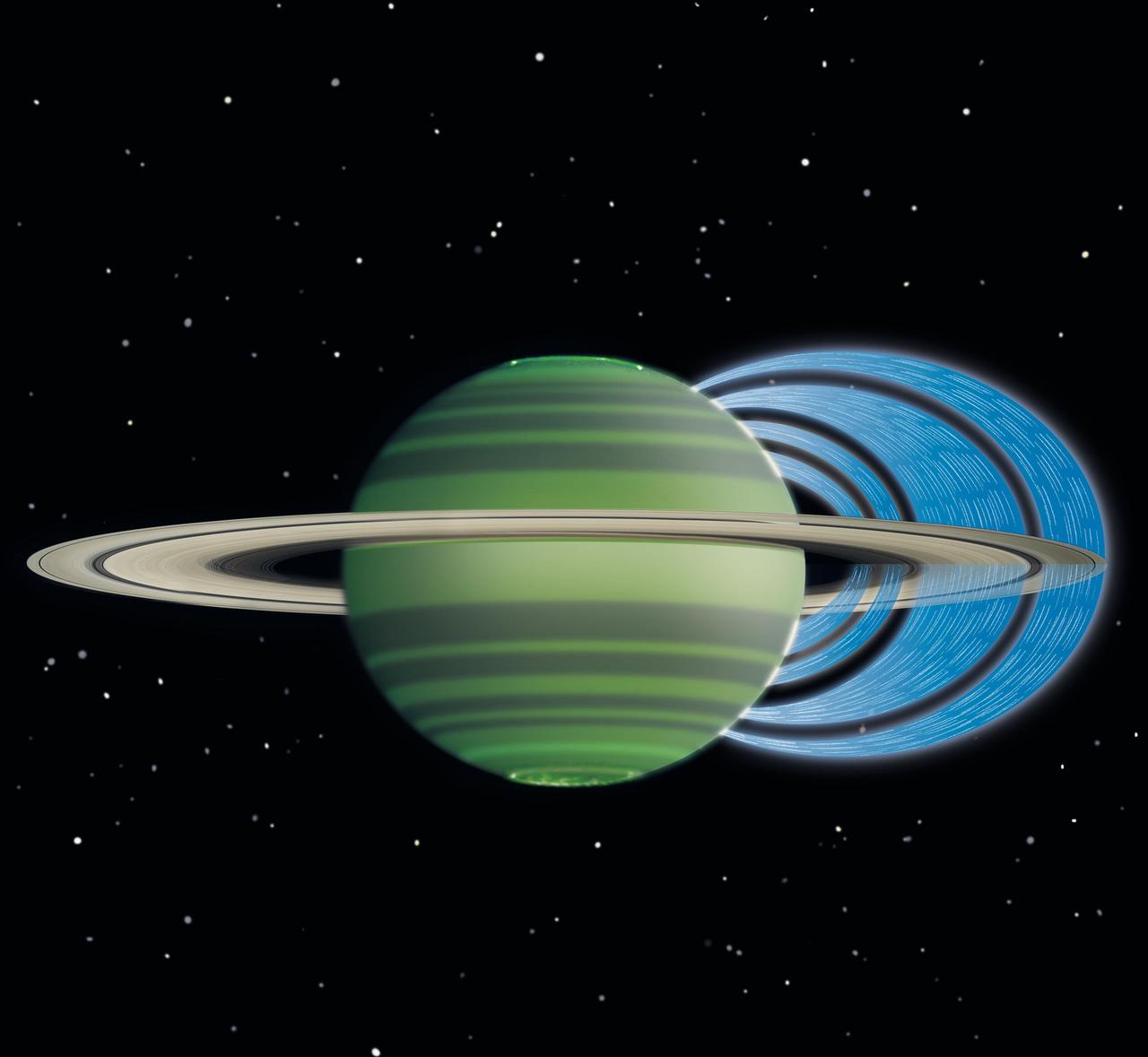
This artist concept illustrates how charged water particles flow into the Saturnian atmosphere from the planet rings, causing a reduction in atmospheric brightness.
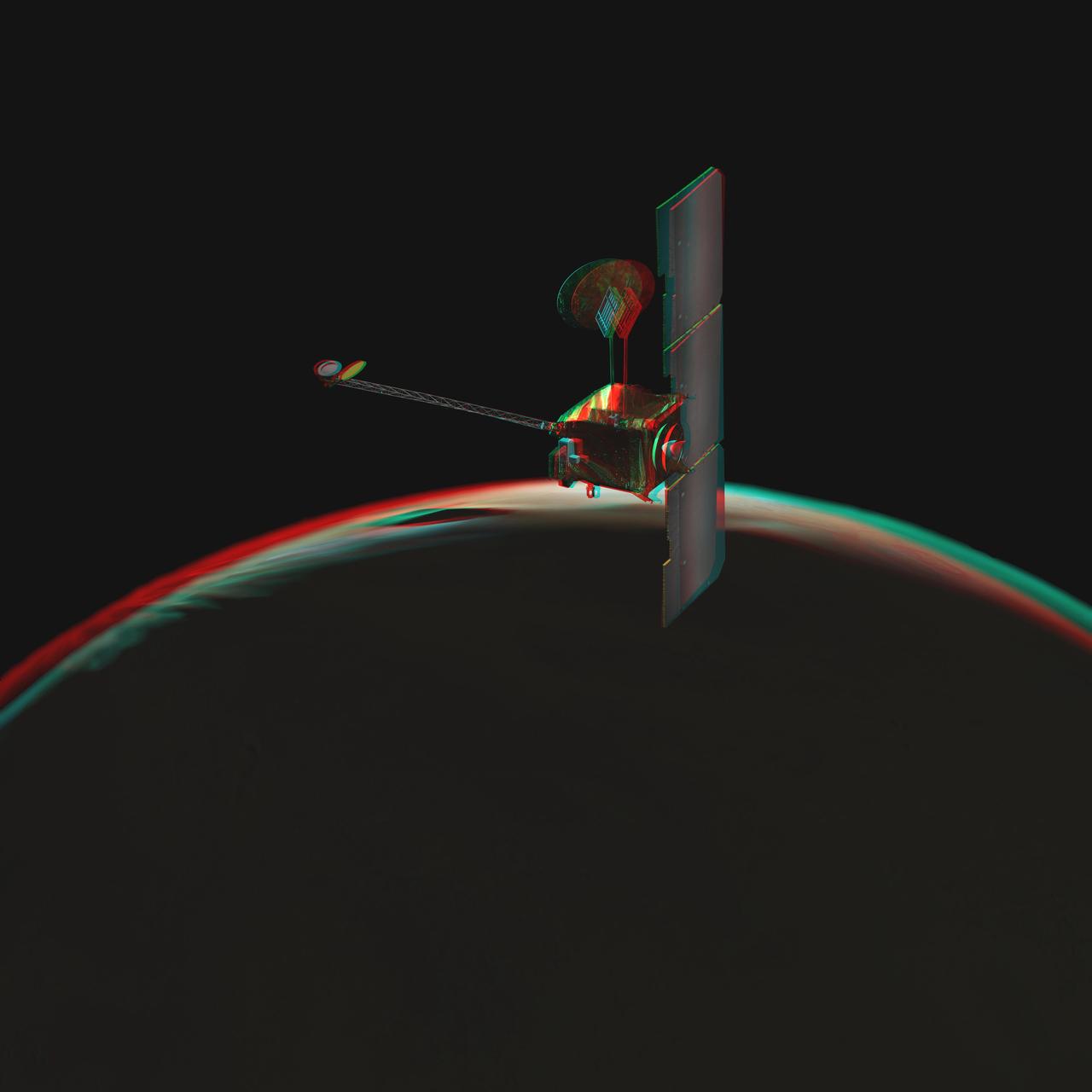
NASA Mars Odyssey spacecraft passes above a portion of the planet that is rotating into the sunlight in this artist concept illustration. 3D glasses are necessary to view this image.

This artist conception illustrates one of the most primitive supermassive black holes known central black dot at the core of a young, star-rich galaxy.
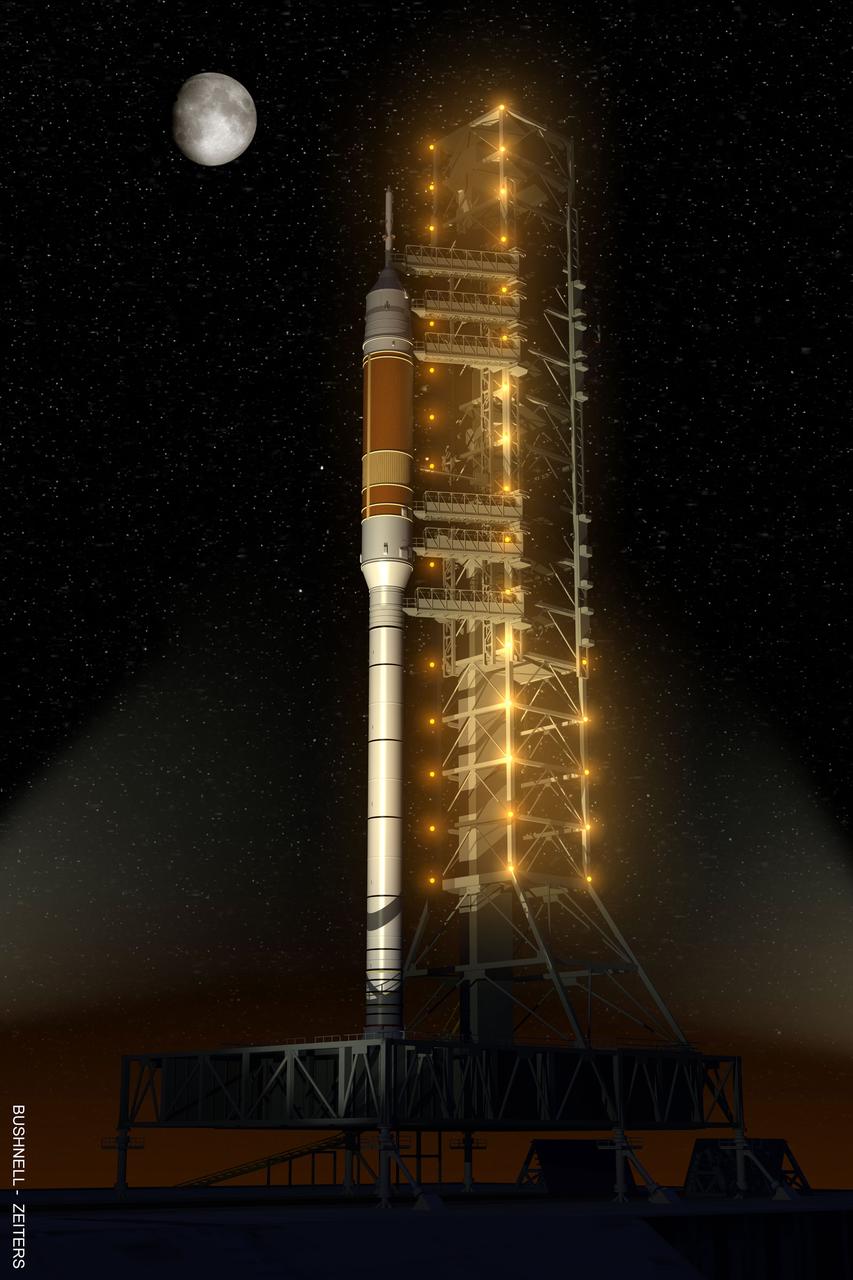
Under the goals of the Vision for Space Exploration, Ares I is a chief component of the cost-effective space transportation infrastructure being developed by NASA's Constellation Program. This transportation system will safely and reliably carry human explorers back to the moon, and then onward to Mars and other destinations in the solar system. Launch Pad 39B of the Kennedy Space Flight Center (KSC), currently used for Space Shuttle launches, will be revised to host the Ares launch vehicles. The fixed and rotating service structures standing at the pad will be dismantled sometime after the Ares I-X test flight. A new launch tower for Ares I will be built onto a new mobile launch platform. The gantry for the shuttle doesn't reach much higher than the top of the four segments of the solid rocket booster. Pad access above the current shuttle launch pad structure will not be required for Ares I-X because the stages above the solid rocket booster are inert. For the test scheduled in 2012 or for the crewed flights, workers and astronauts will need access to the highest levels of the rocket and capsule. When the Ares I rocket rolls out to the launch pad on the back of the same crawler-transporters used now, its launch gantry will be with it. The mobile launchers will nestle under three lightning protection towers to be erected around the pad area. Ares time at the launch pad will be significantly less than the three weeks or more the shuttle requires. This “clean pad” approach minimizes equipment and servicing at the launch pad. It is the same plan NASA used with the Saturn V rockets and industry employs it with more modern launchers. The launch pad will also get a new emergency escape system for astronauts, one that looks very much like a roller coaster. Cars riding on a rail will replace the familiar baskets hanging from steel cables. This artist's concept illustrates the Ares I on launch pad 39B.
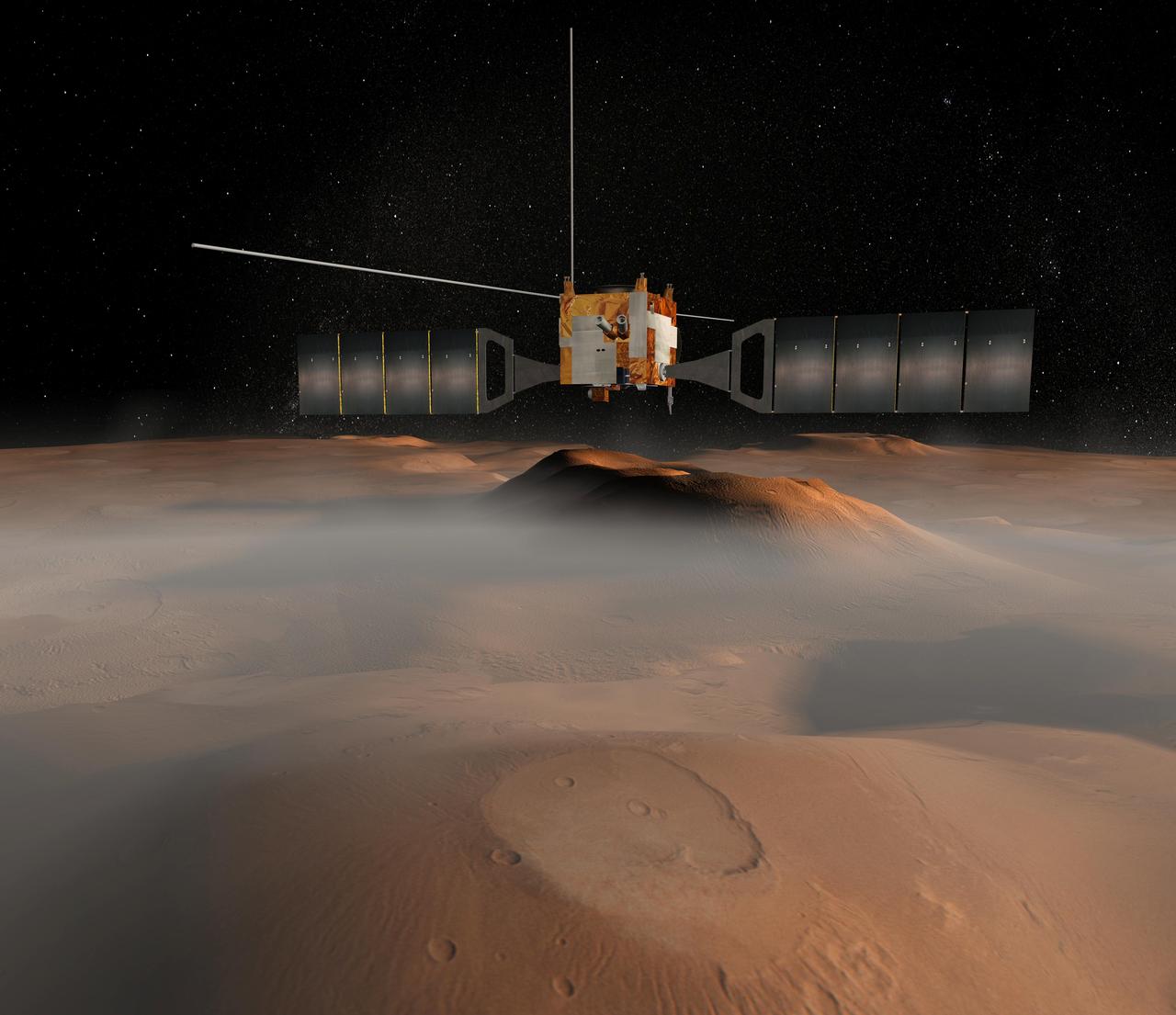
The European Space Agency Mars Express spacecraft is depicted in orbit around Mars in this artist concept illustration. The spacecraft was launched June 2, 2003, from Baikonur, Kazakhstan, on a journey to arrive at Mars in December 2003. http://photojournal.jpl.nasa.gov/catalog/PIA04802
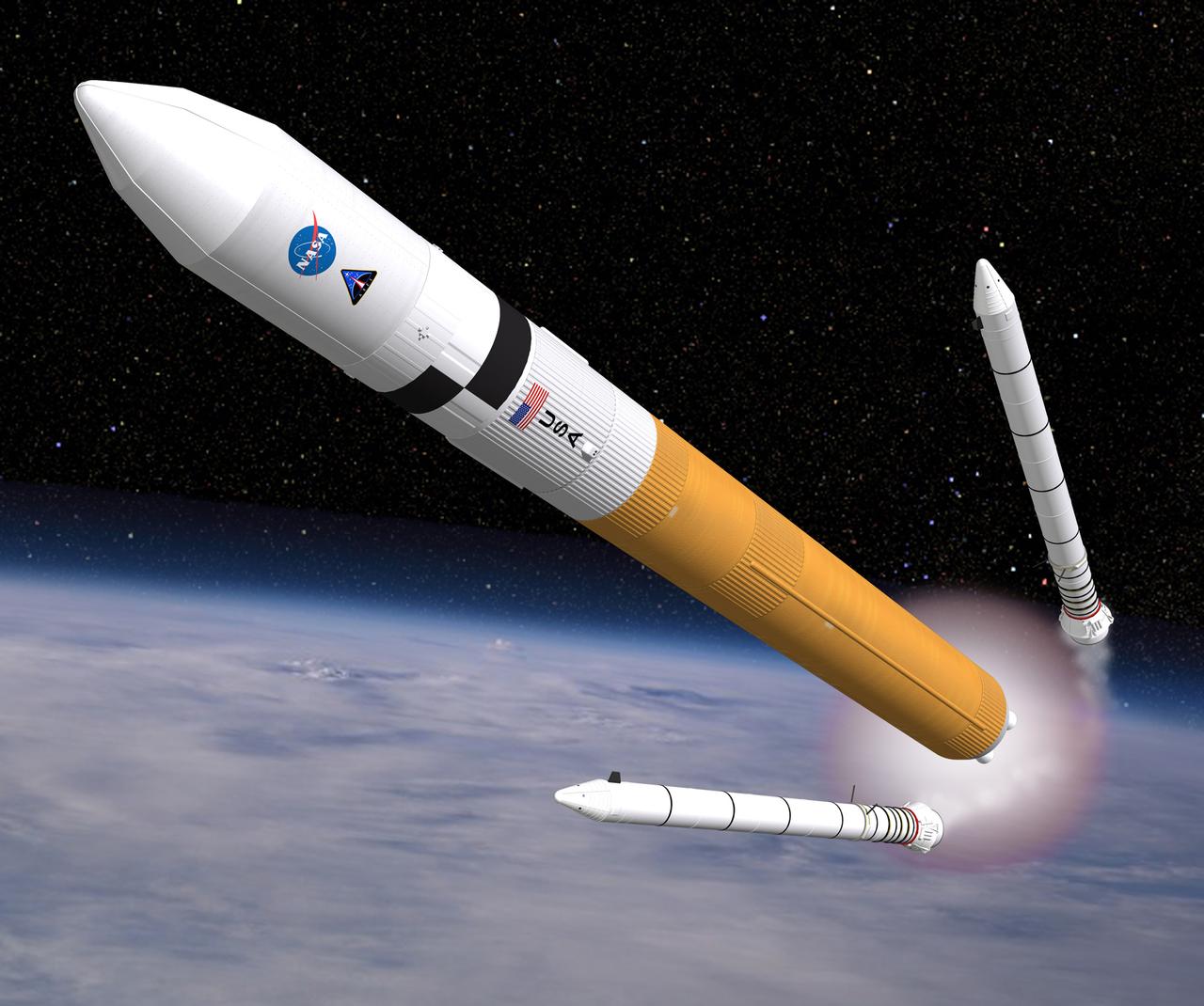
THIS CONCEPT IMAGE SHOWS THE ARES V CARGO LAUNCH VEHICLE. THE HEAVY LIFTING ARES V IS NASA'S PRIMARY VEHICLE FOR SAFE AND RELIABLE DELIVERY OF LARGE SCALE HARDWARE TO SPACE. THIS INCLUDES THE LUNAR LANDER, MATERIALS FOR ESTABLISHING A PERMANENT MOON BASE, AND THE VEHICLES AND HARDWARE NEEDED TO EXTEND A HUMAN PRESENCE BEYOND EARTH ORBIT. ARES V CAN CARRY APPROXIMATELY 290,000 POUNDS TO LOW EARTH ORBIT AND 144,000 POUNDS TO LUNAR ORBIT.
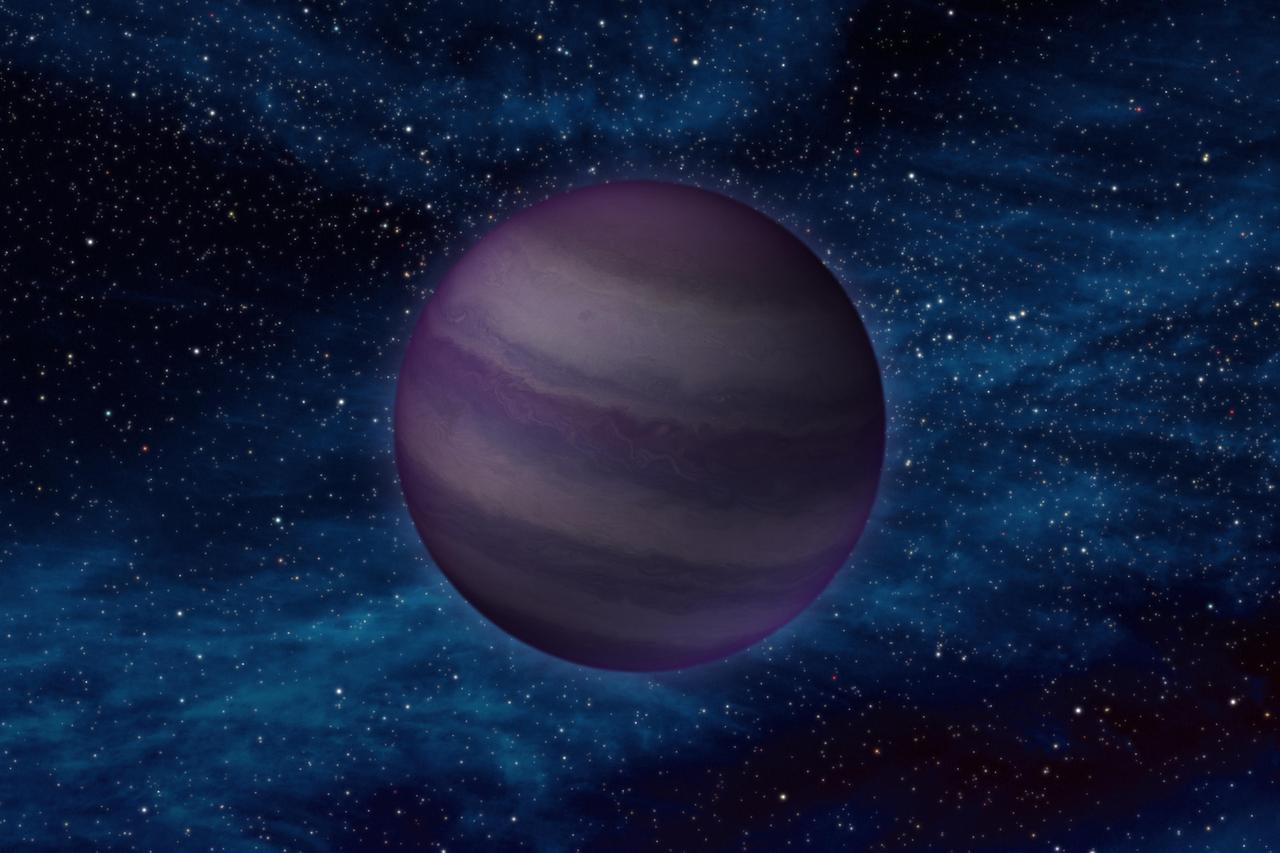
This artist conception illustrates what a Y
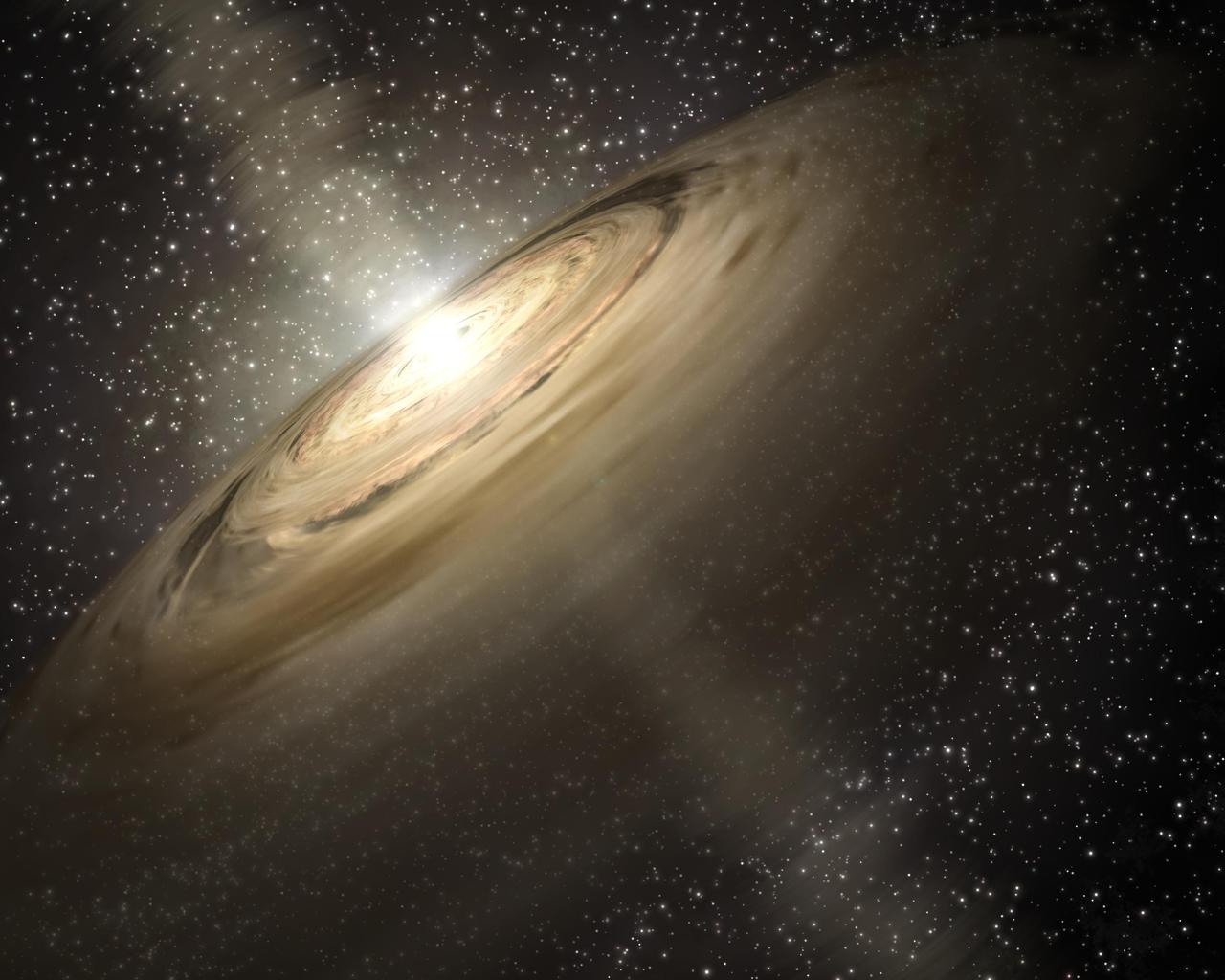
This artist concept illustrates a solar system that is a much younger version of our own. Dusty disks, like the one shown here circling the star, are thought to be the breeding grounds of planets, including rocky ones like Earth.
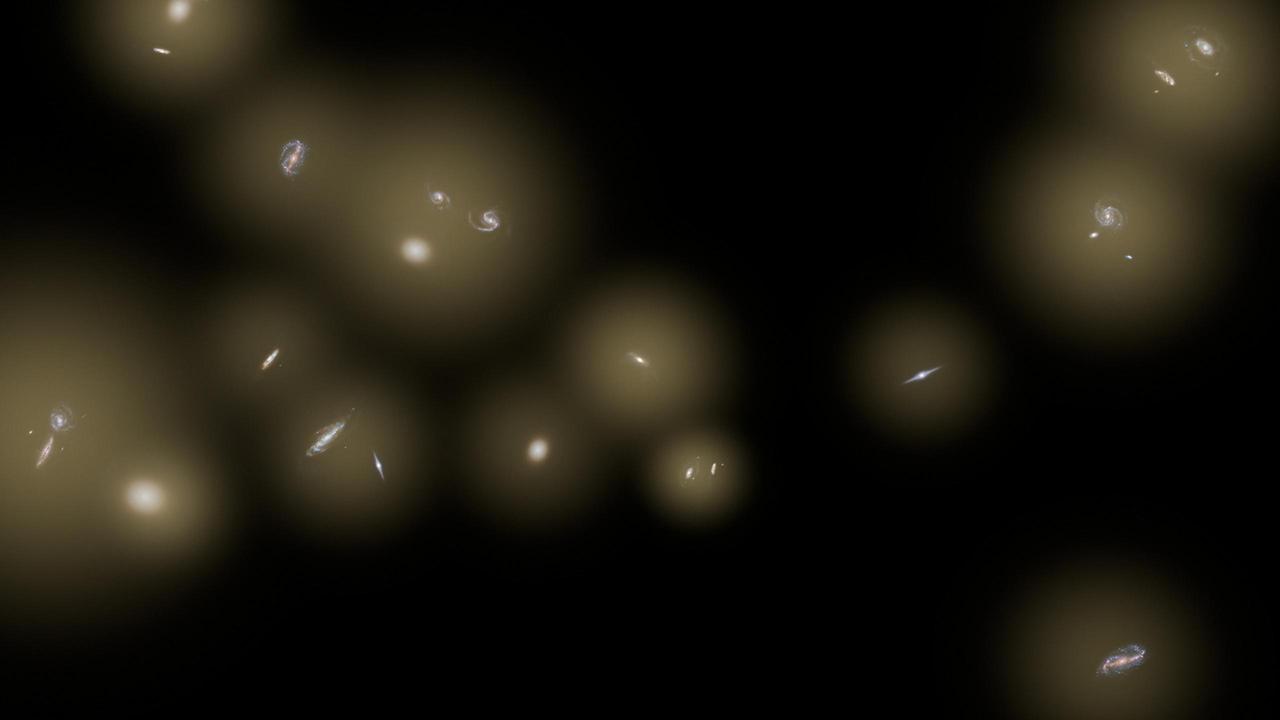
This artist concept shows a view of a number of galaxies sitting in huge halos of stars. The stars are too distant to be seen individually and instead are seen as a diffuse glow, colored yellow in this illustration.
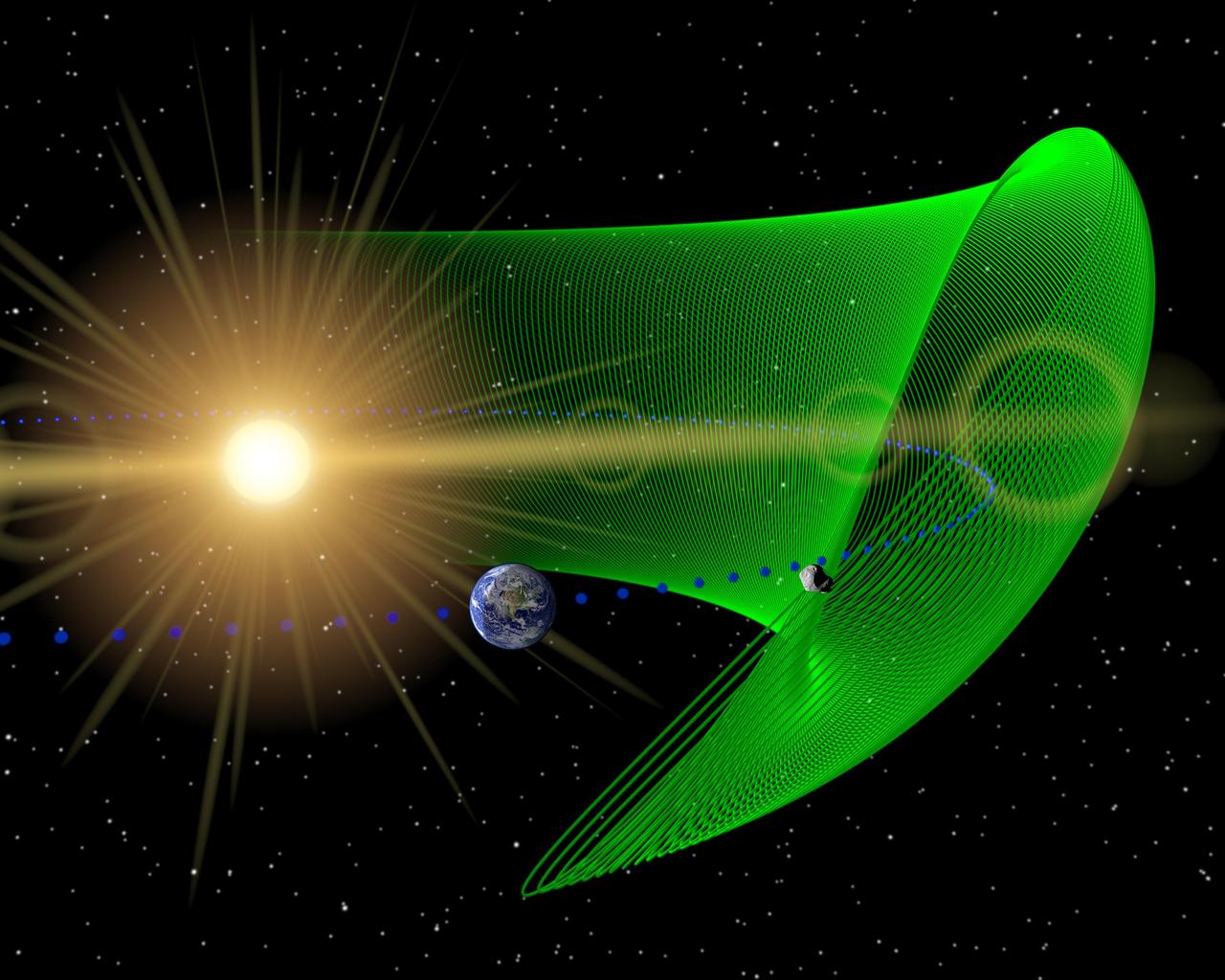
This artist concept illustrates the first known Earth Trojan asteroid, discovered by NEOWISE, the asteroid-hunting portion of NASA WISE mission. The asteroid is shown in gray and its extreme orbit is shown in green. Objects are not drawn to scale.

This artist concept illustrates a supermassive black hole with millions to billions times the mass of our sun. Supermassive black holes are enormously dense objects buried at the hearts of galaxies.
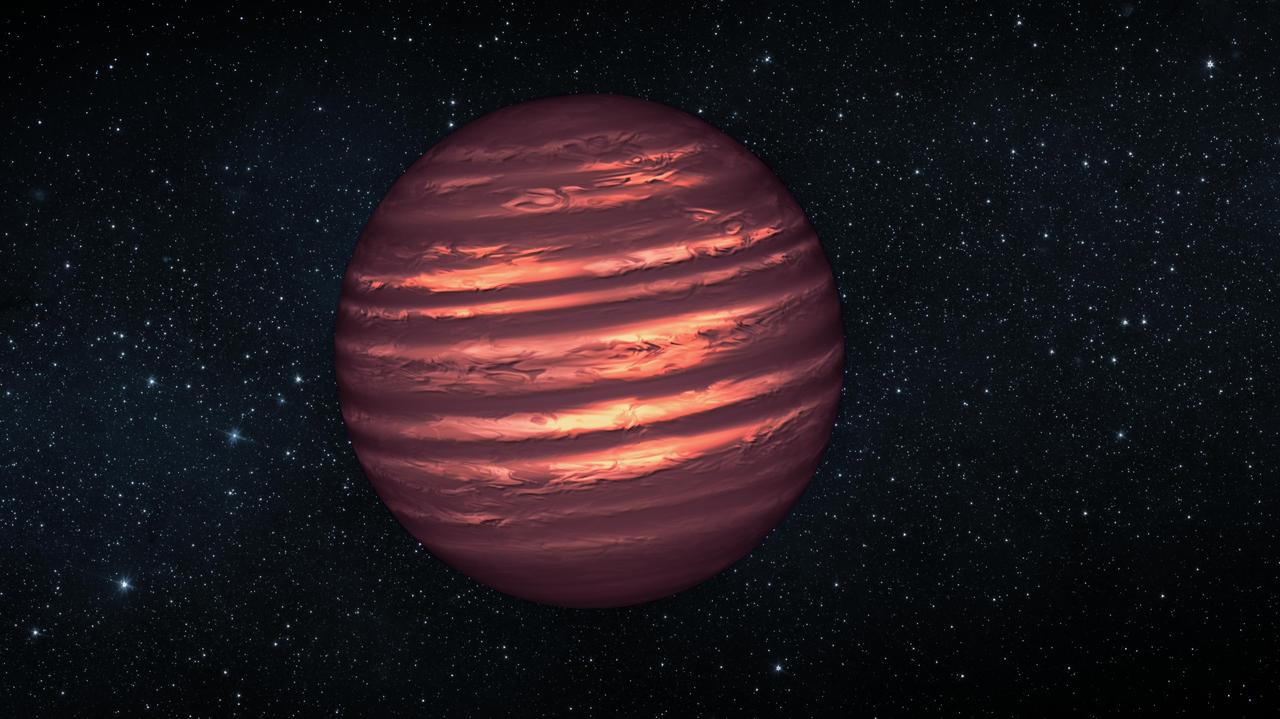
This artist conception illustrates the brown dwarf named 2MASSJ22282889-431026. NASA Hubble and Spitzer space telescopes observed the object to learn more about its turbulent atmosphere.
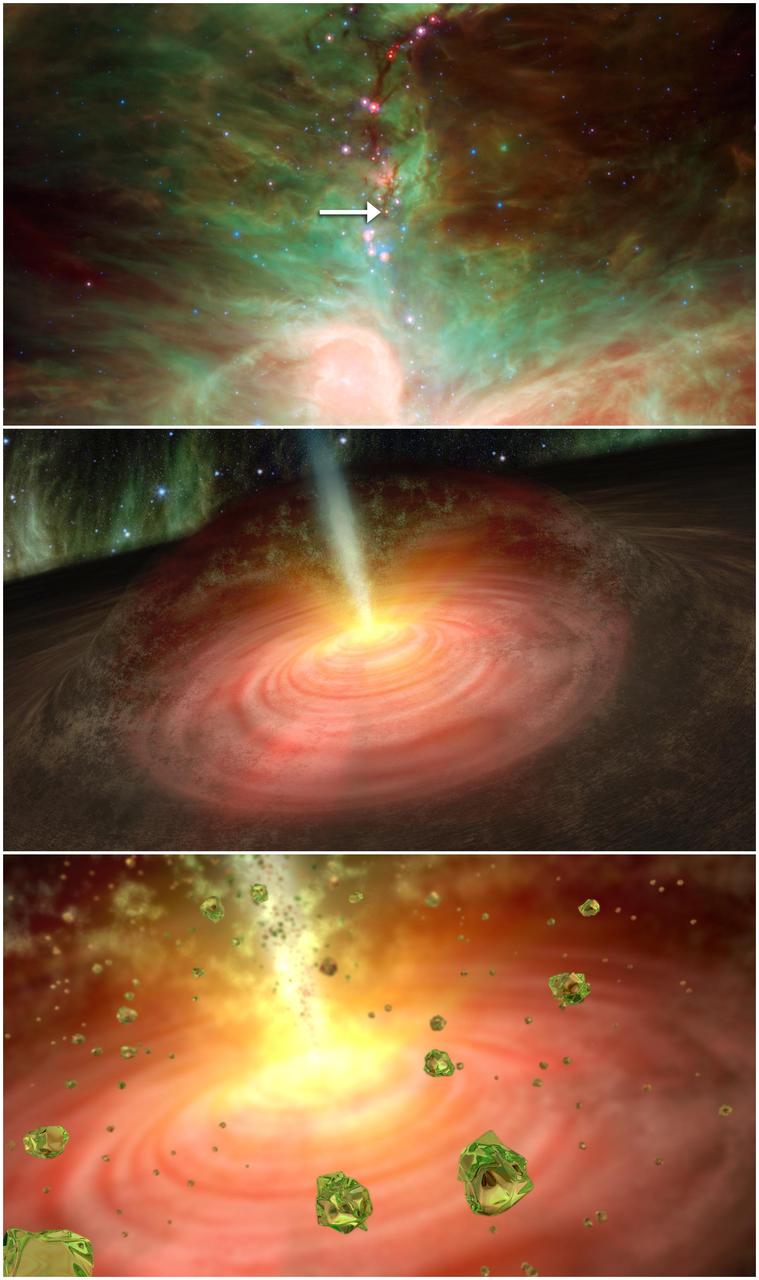
This graphic illustrates a stellar fountain of crystal rain, beginning with a NASA Spitzer picture of the star in question, and ending with an artist concept of what the crystal rain might look like.
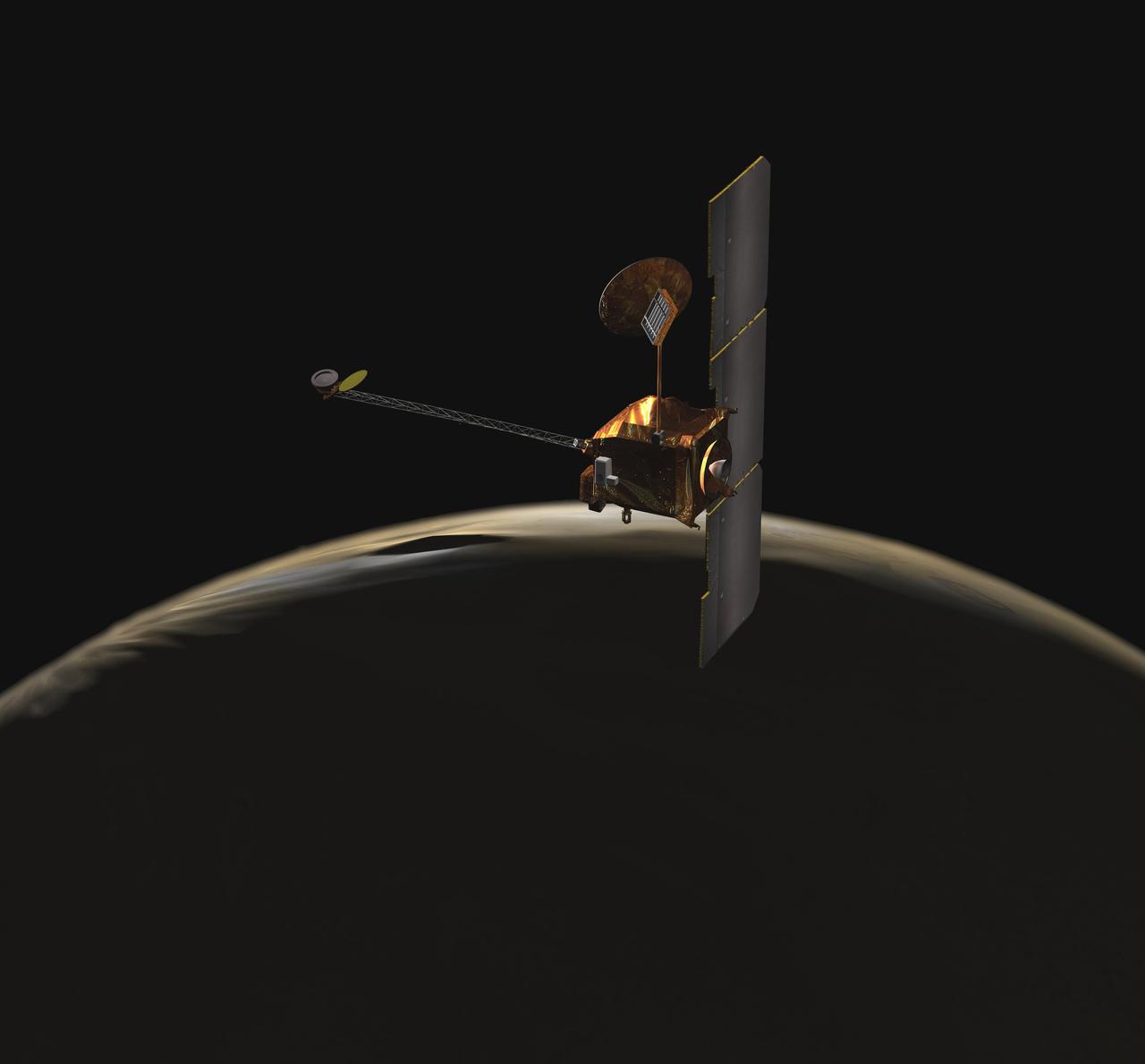
NASA Mars Odyssey spacecraft passes above Mars south pole in this artist concept illustration. The spacecraft has been orbiting Mars since October 24, 2001.
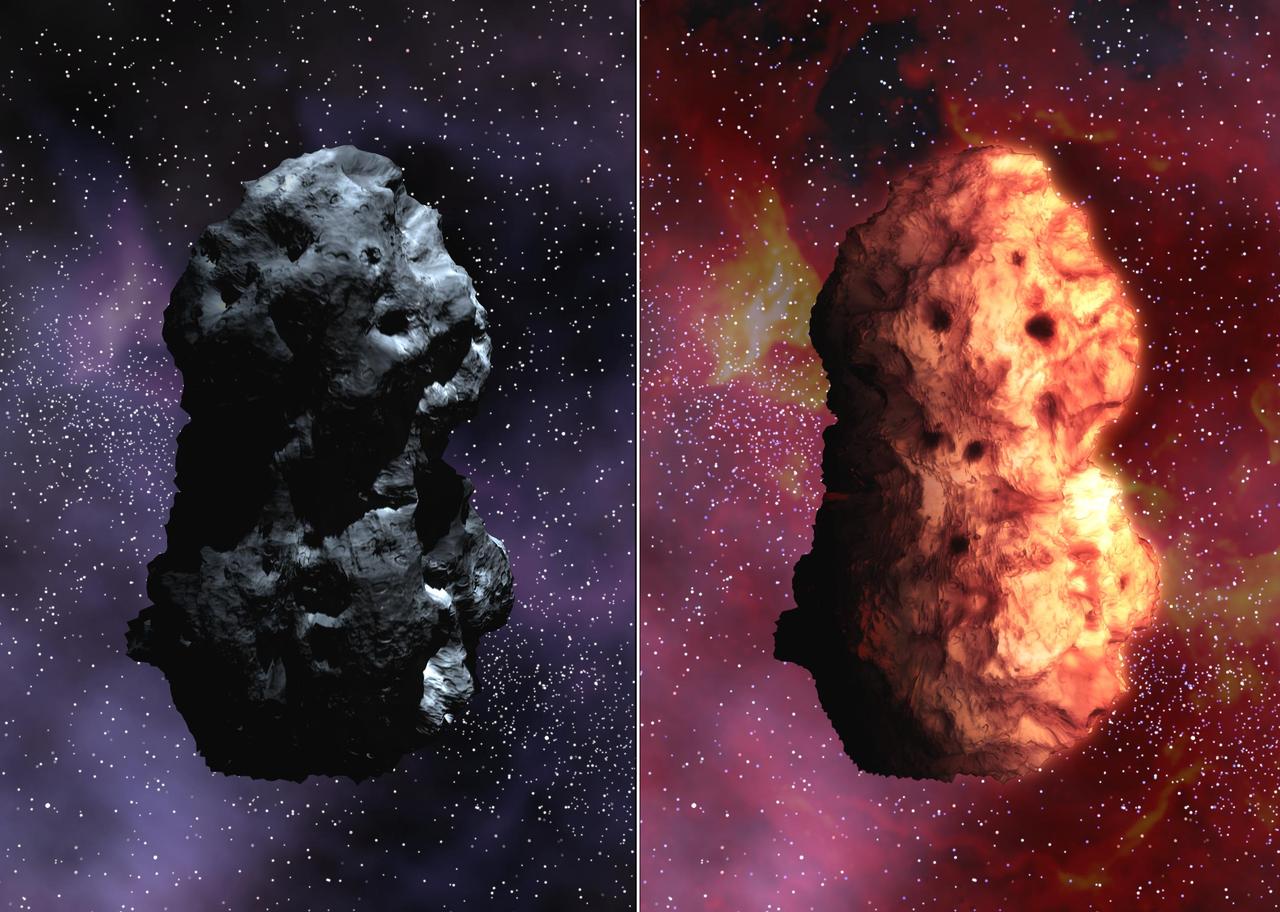
These artist concepts illustrate Tempel 1 shape, reflectivity, rotation rate and surface temperature, based on information from NASA Hubble Space Telescope and Spitzer Space Telescope.

NASA Spitzer Space Telescope has detected the solid form of buckyballs in space for the first time. To form a solid particle, the buckyballs must stack together, as illustrated in this artist concept showing the very beginnings of the process.

This artist concept illustrates a young, red dwarf star surrounded by three planets. NASA Galaxy Evolution Explorer is helping to identify young, red dwarf stars that are close to us by detecting their ultraviolet light.
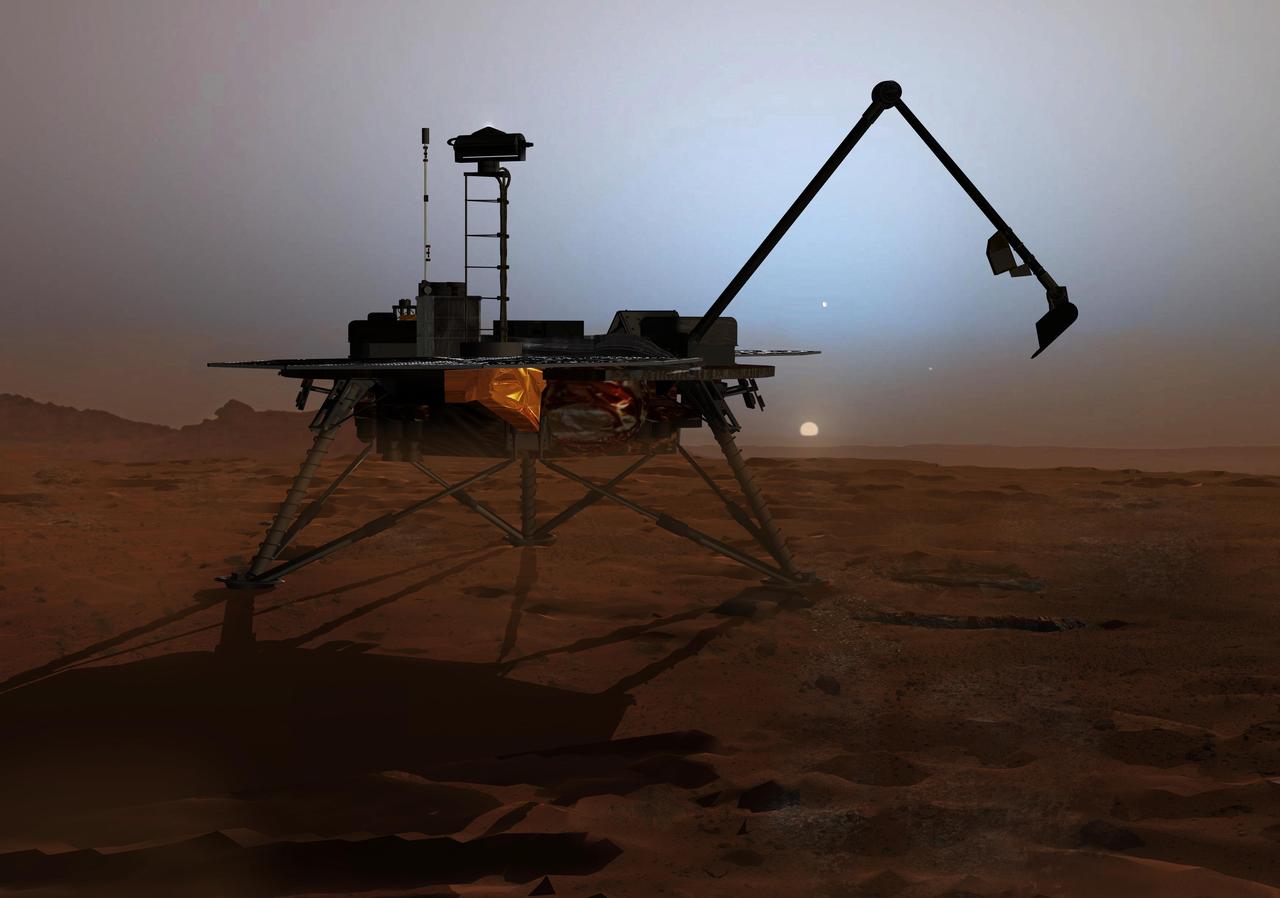
In this artist concept illustration, NASA Phoenix Mars Lander begins to shut down operations as winter sets in. The far-northern latitudes on Mars experience no sunlight during winter.
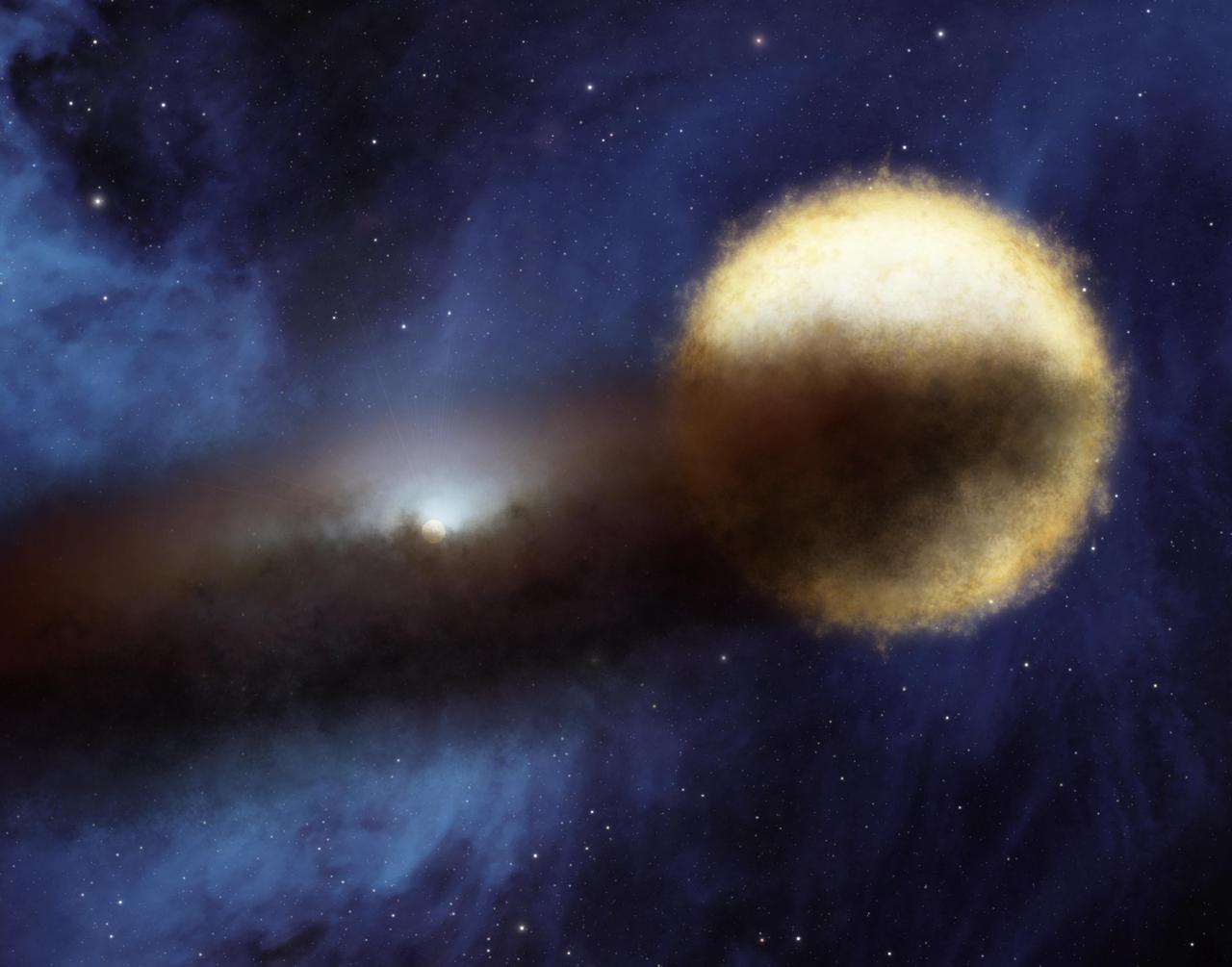
Every 27 years, a bright star called Epsilon Aurigae fades over period of two years, then brightens back up again. A companion is known to be surrounded by a dusty disk, as illustrated in this artist concept.
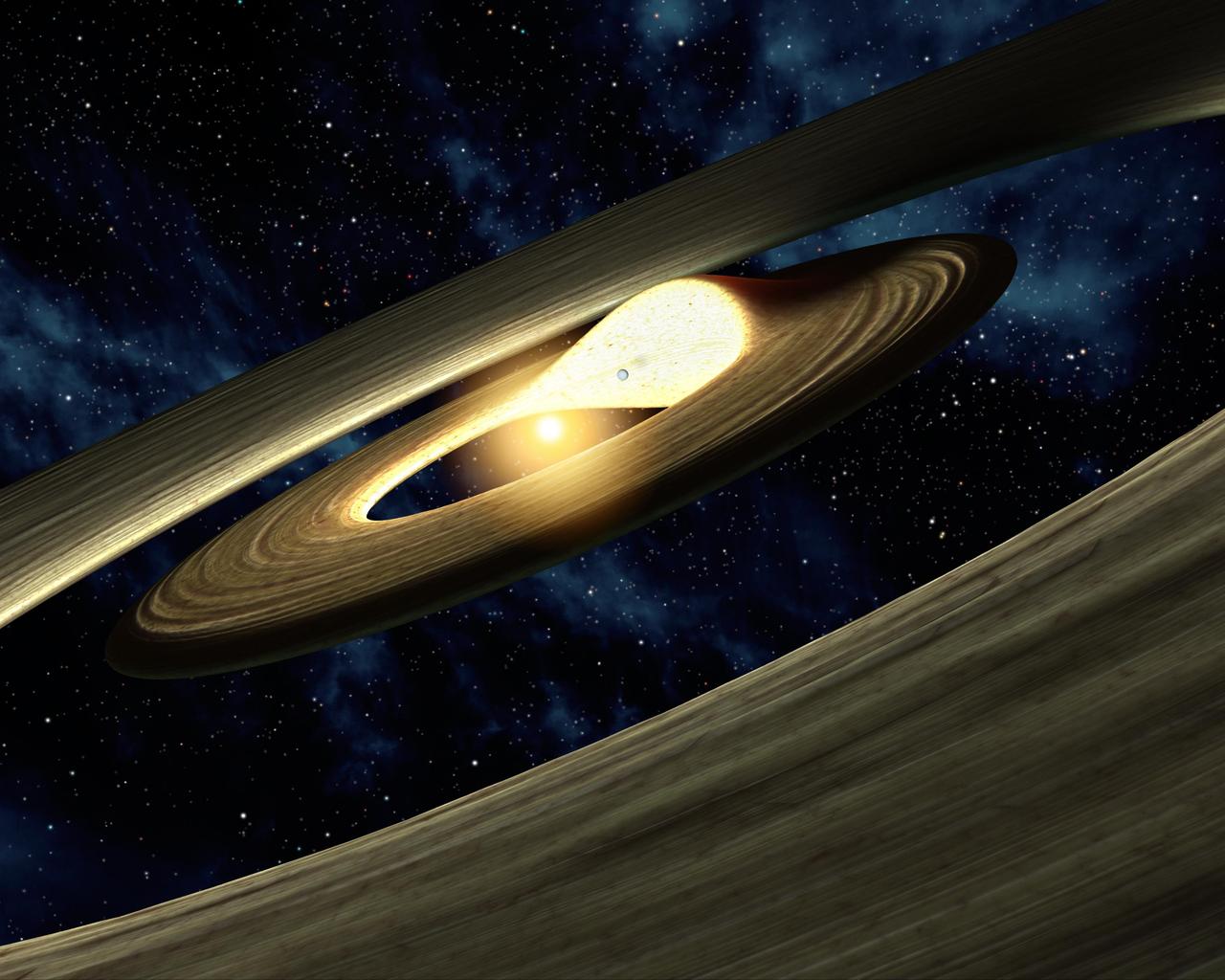
This artist conception shows a lump of material in a swirling, planet- forming disk. Astronomers using NASA Spitzer Space Telescope found evidence that either another star or a planet could be pushing planetary material together, as illustrated here.
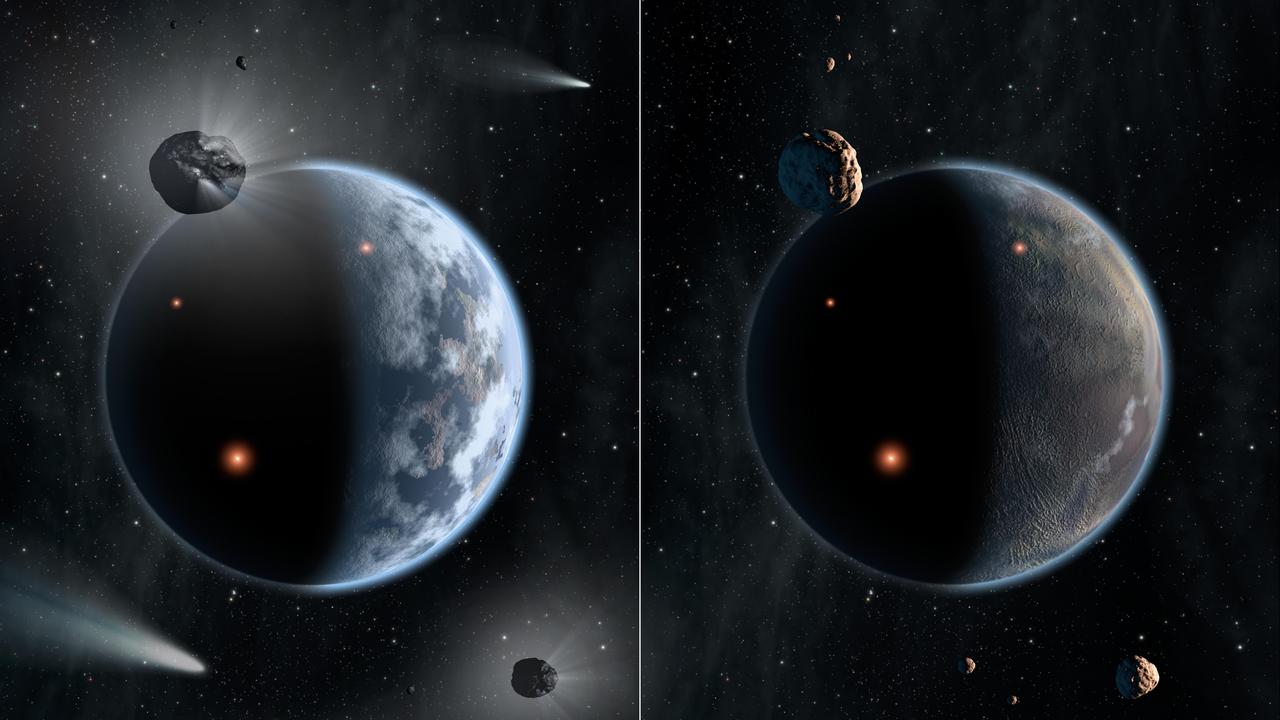
This artist concept illustrates the fate of two different planets: the one on the left is similar to Earth, made up largely of silicate-based rocks with oceans coating its surface.
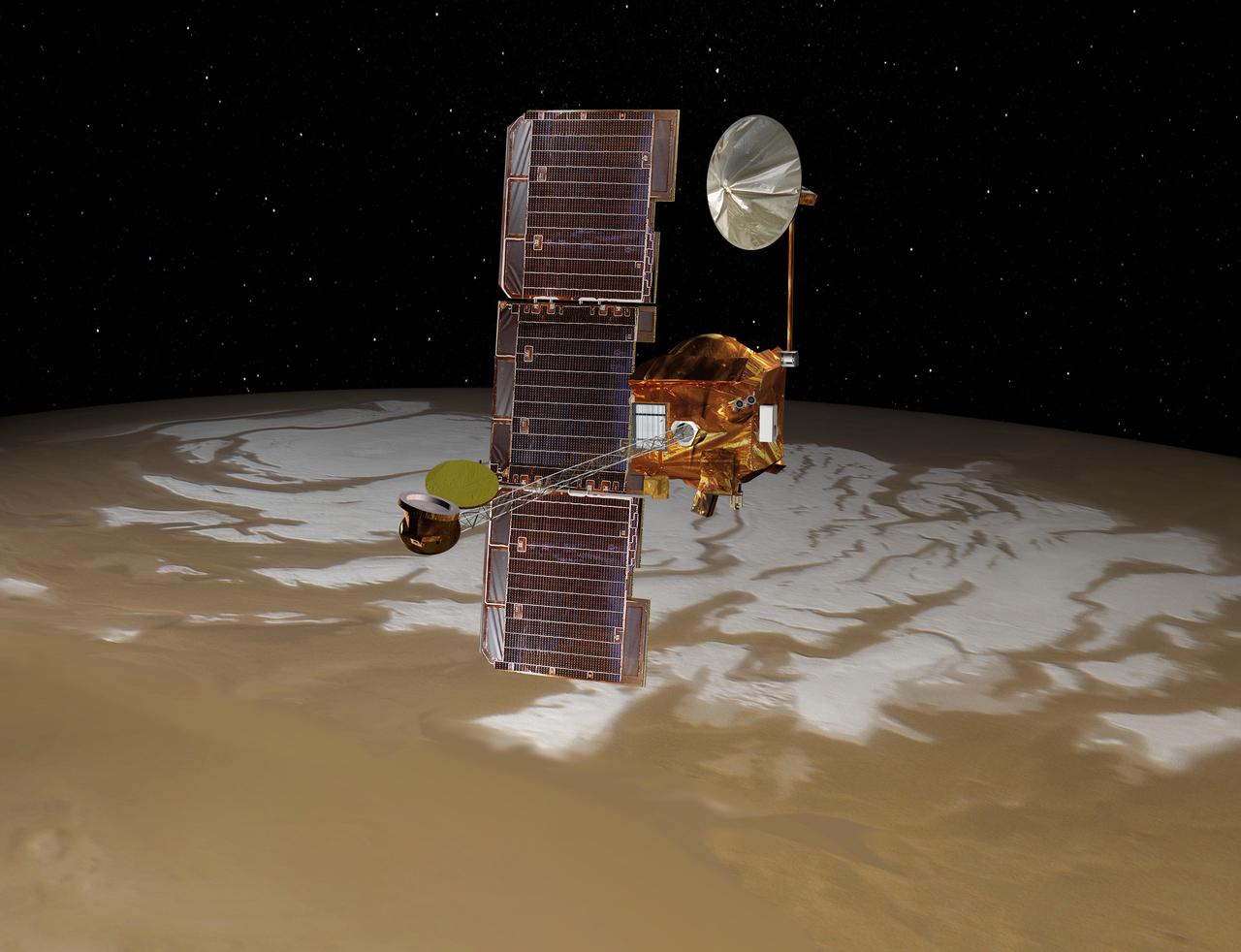
NASA Mars Odyssey spacecraft passes above Mars south pole in this artist concept illustration. The spacecraft has been orbiting Mars since October 24, 2001.

This artist concept illustrates an imminent planetary collision around a pair of double stars. NASA Spitzer Space Telescope found evidence that such collisions could be common around a certain type of tight double, or binary, star system.

NASA Spitzer Space Telescope set its infrared eyes upon the dusty remains of shredded asteroids around several dead stars. This artist concept illustrates a white dwarf, surrounded by the bits and pieces of a disintegrating asteroid.
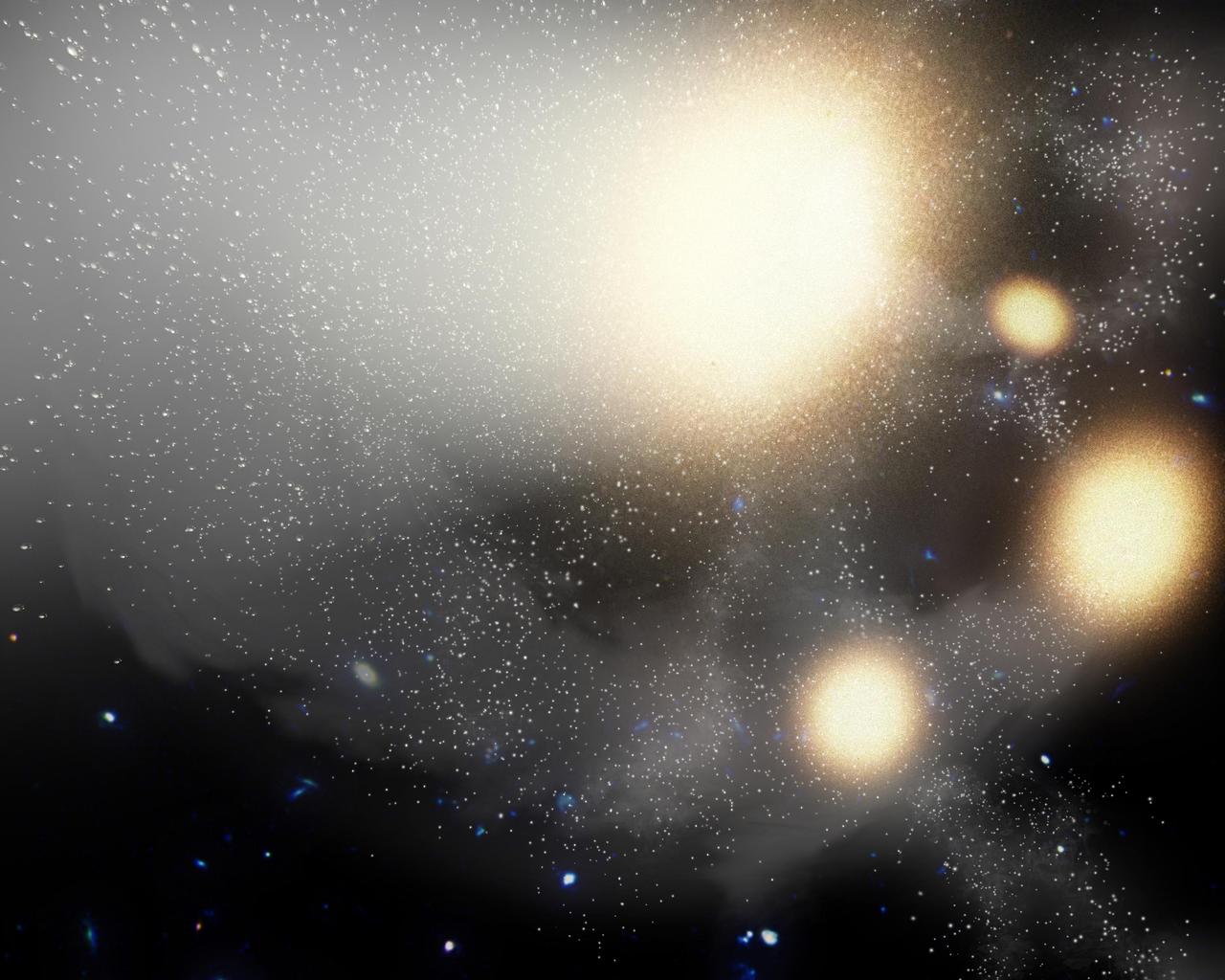
This artist concept illustrates one of the largest smash-ups of galaxies ever observed. NASA Spitzer Space Telescope spotted the four galaxies shown here yellow blobs in the process of tangling and ultimately merging into a single gargantuan galaxy.
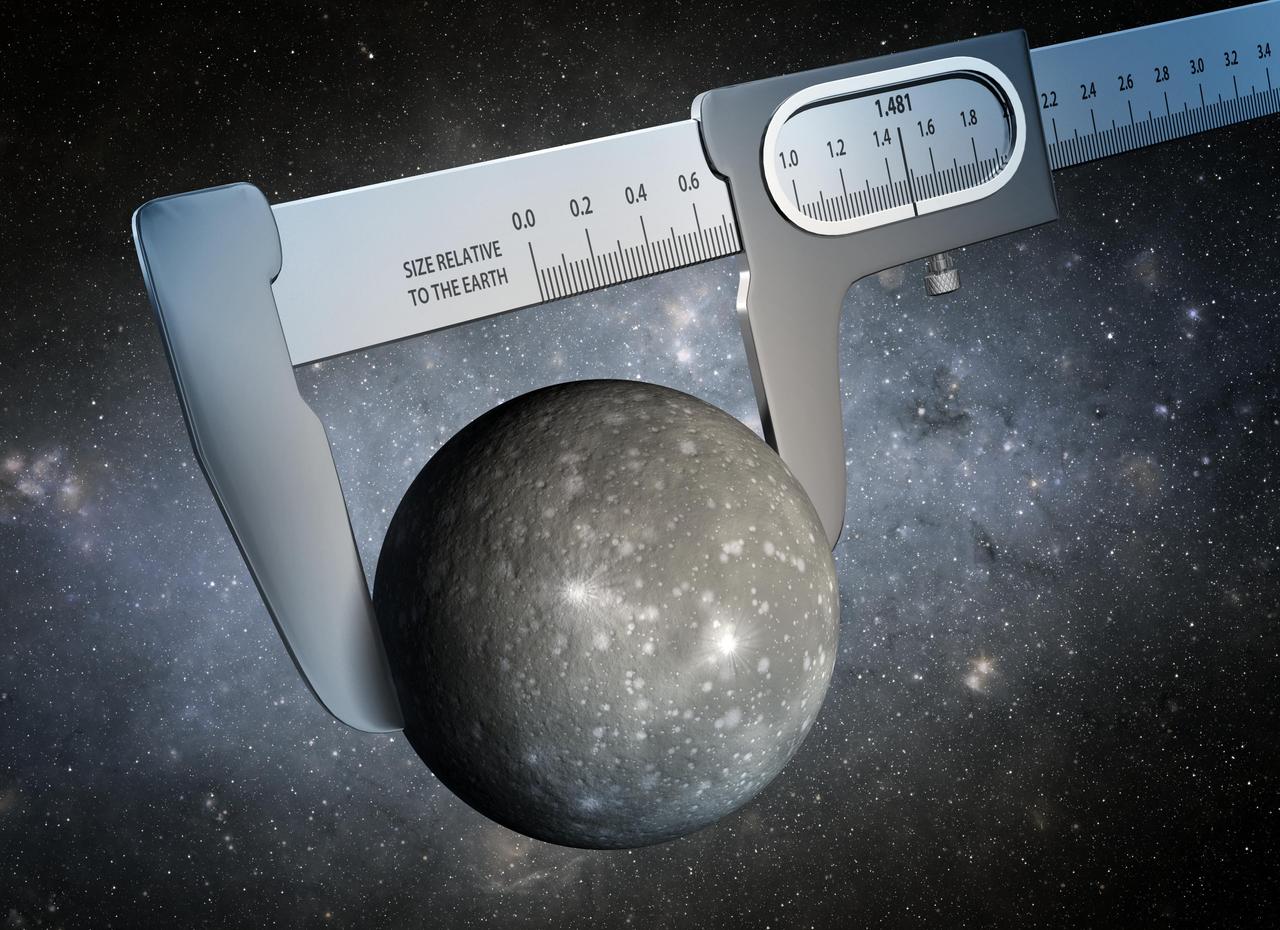
Using data from NASA Kepler and Spitzer Space Telescopes, scientists have made the most precise measurement ever of the size of a world outside our solar system, as illustrated in this artist conception.
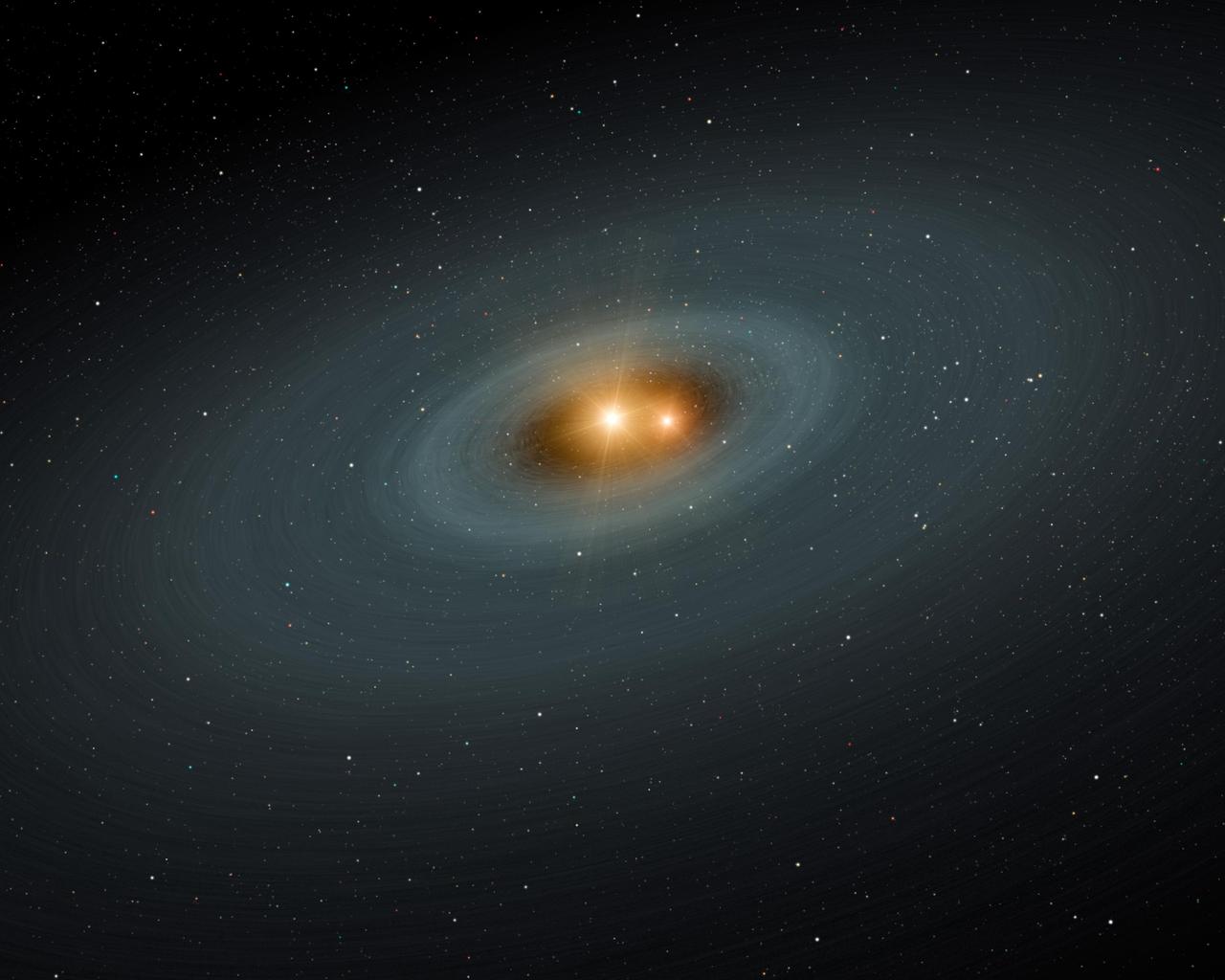
This artist concept illustrates a tight pair of stars and a surrounding disk of dust, most likely the shattered remains of planetary smashups. Using NASA Spitzer Space Telescope, the scientists found dusty evidence for such collisions.

This artist concept illustrates the frenzied activity at the core of our Milky Way galaxy. The galactic center hosts a supermassive black hole in the region known as Sagittarius A*, or Sgr A*, with a mass of about four million times that of our sun.
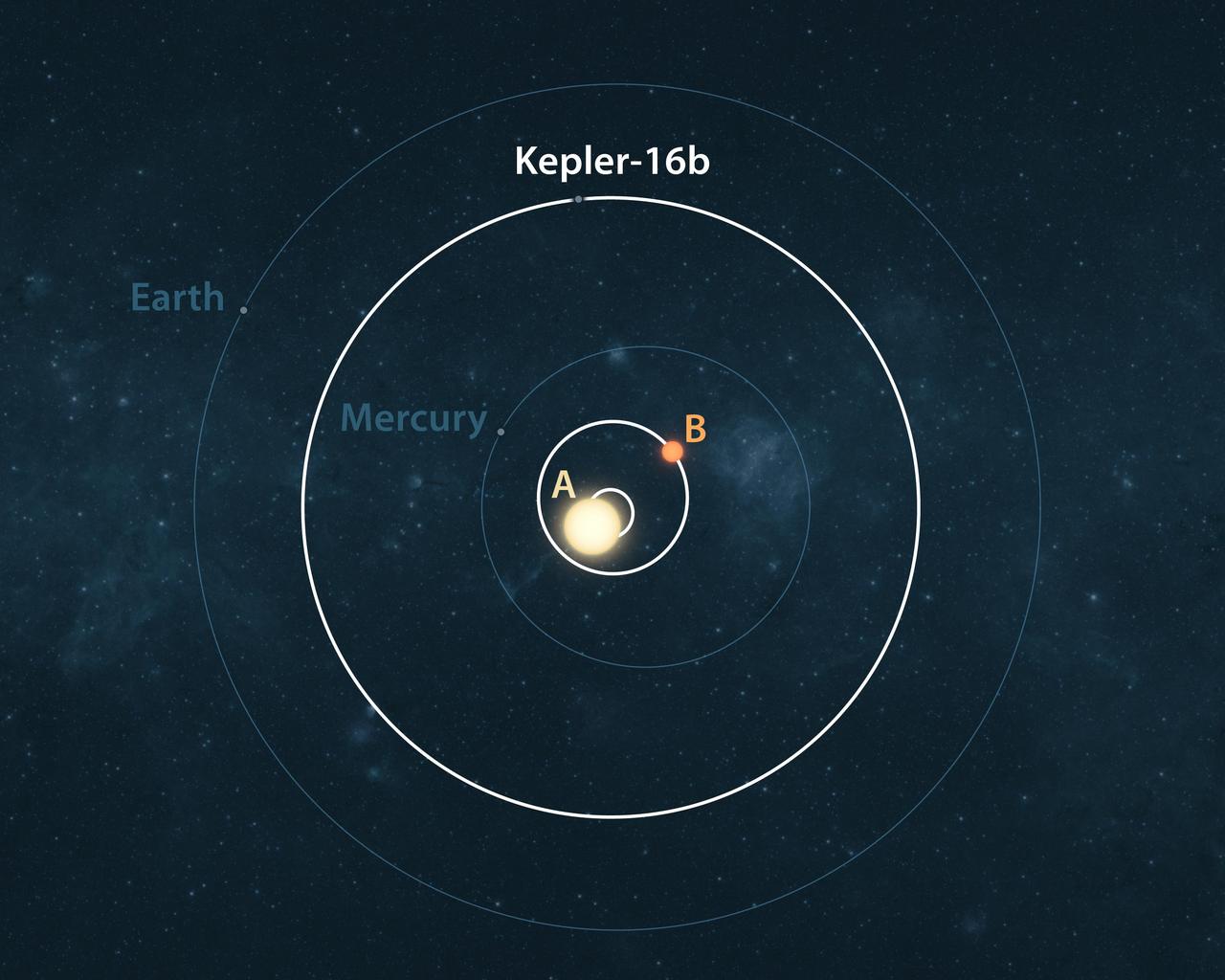
This artist conception illustrates the Kepler-16 system white from an overhead view, showing its planet Kepler-16b and the eccentric orbits of the two stars it circles labeled A and B.
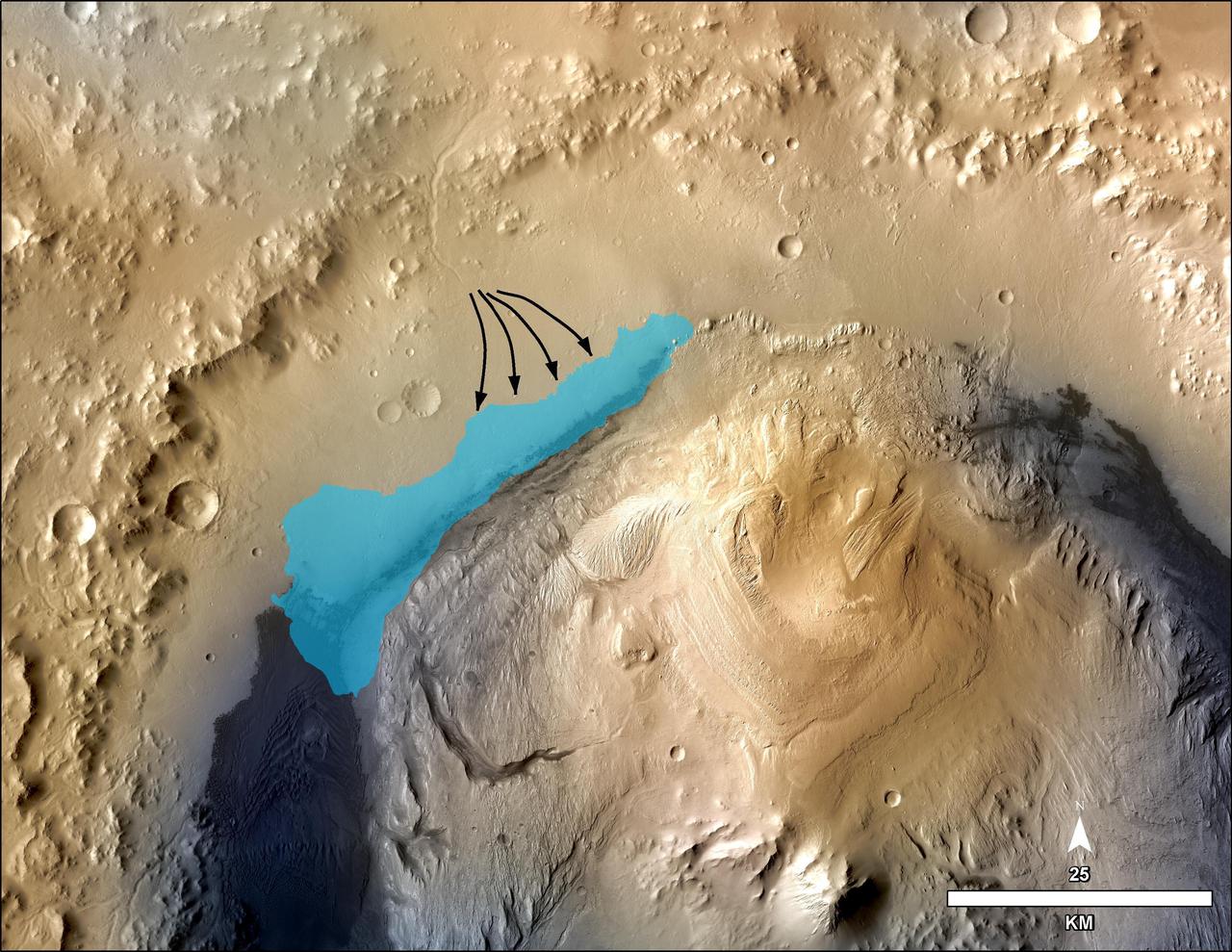
This illustration depicts a concept for the possible extent of an ancient lake inside Gale Crater. The base map combines image data from the Context Camera on NASA Mars Reconnaissance Orbiter and color information from Viking Orbiter imagery.
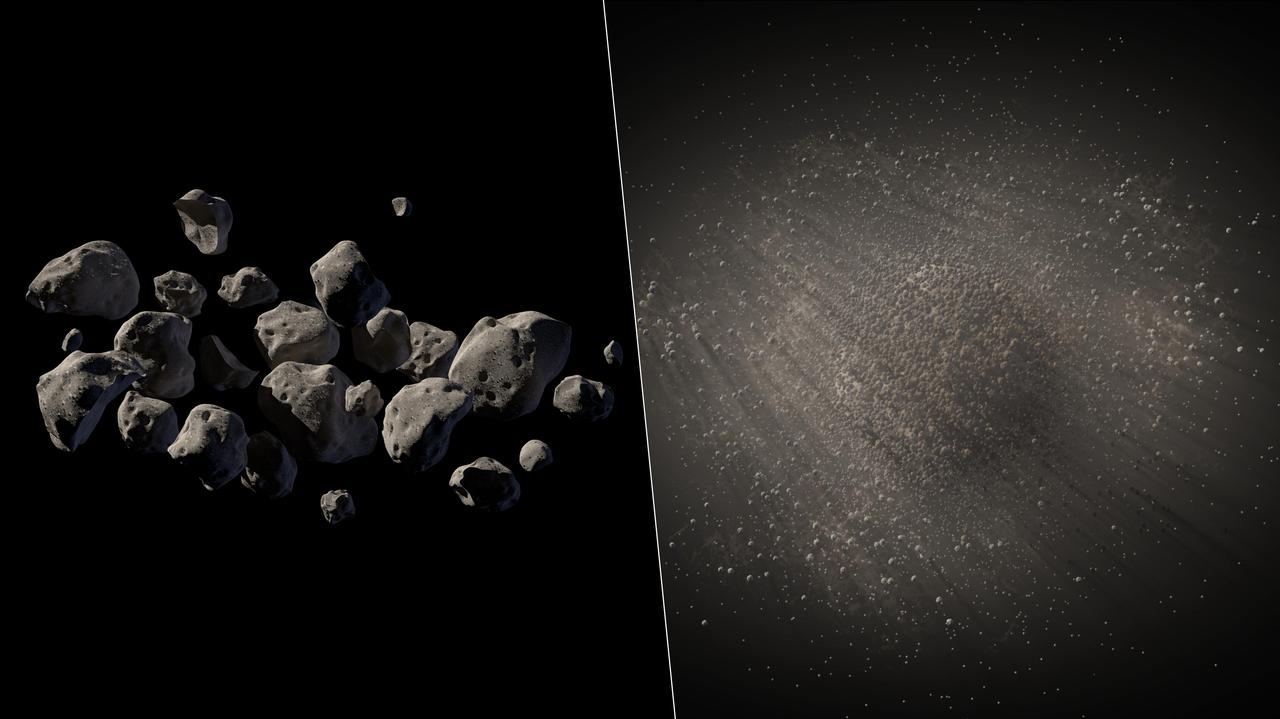
Illustrated in this artist concept are two possible structures for asteroid 2011 MD. NASA Spitzer infrared camera helped reveal that this asteroid consists of about two-thirds empty space.
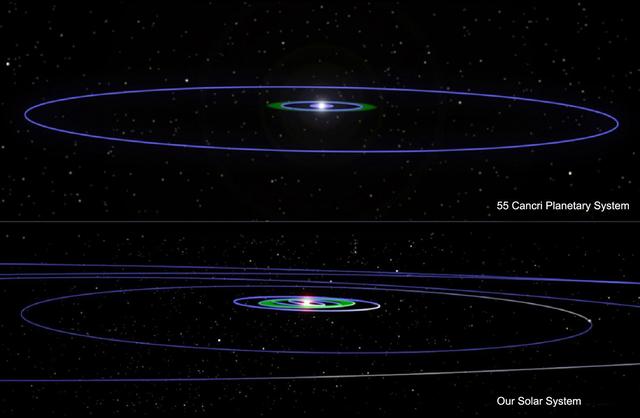
This artist concept illustrates two planetary systems -- 55 Cancri top and our own. Blue lines show the orbits of planets, including the dwarf planet Pluto in our solar system.
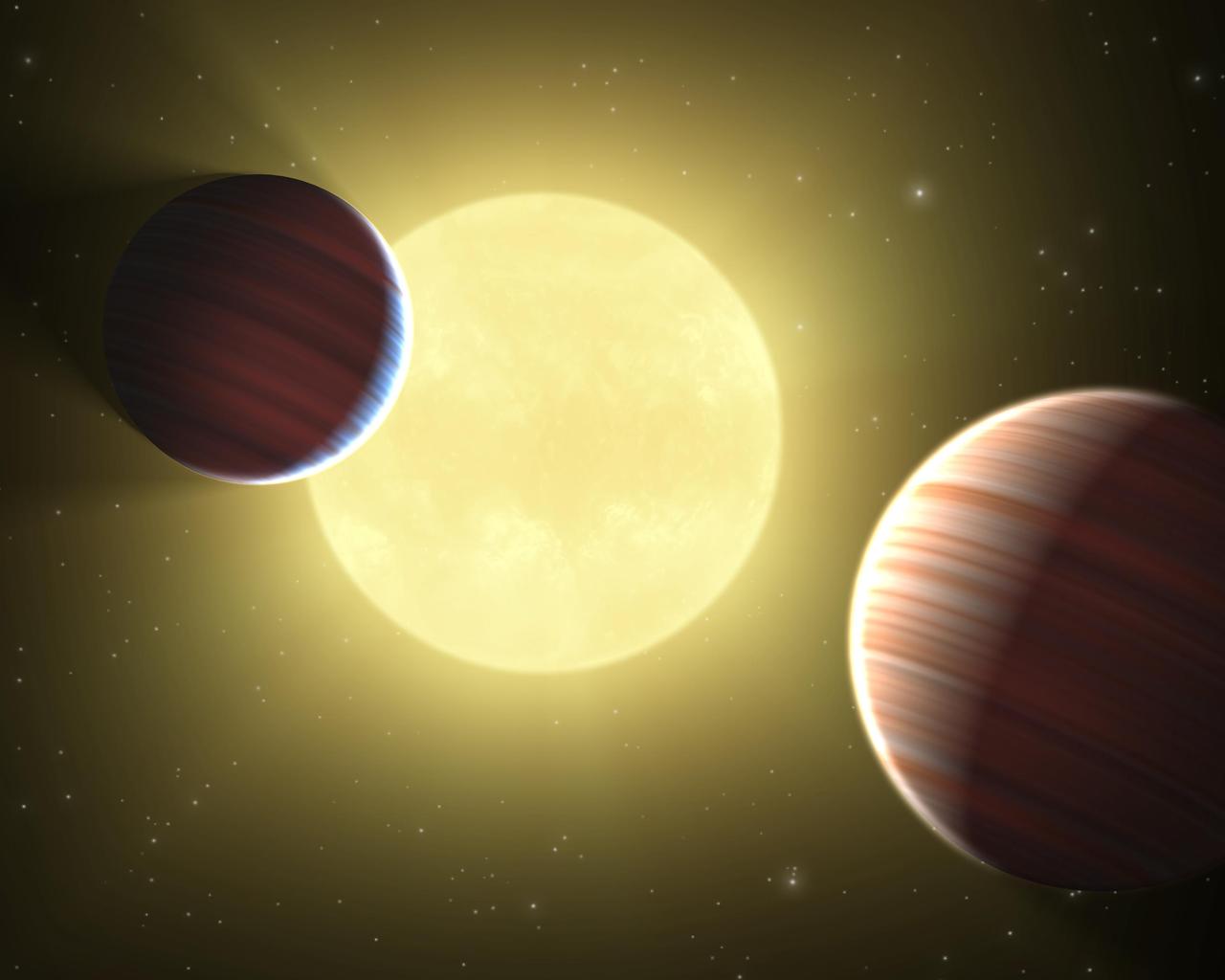
This artist concept illustrates the two Saturn-sized planets discovered by NASA Kepler mission. The star system is oriented edge-on, as seen by Kepler, such that both planets cross in front, or transit, their star, named Kepler-9.
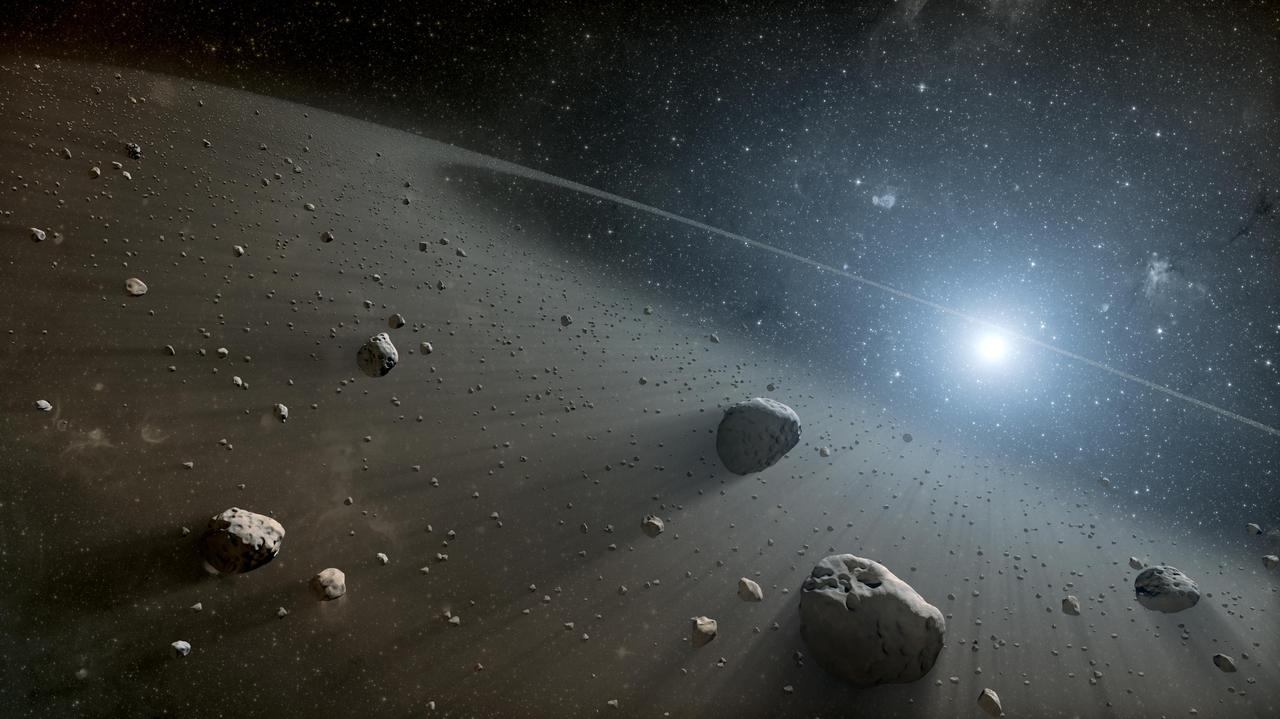
This artist concept illustrates an asteroid belt around the bright star Vega. Evidence for this warm ring of debris was found using NASA Spitzer Space Telescope, and the European Space Agency Herschel Space Observatory.
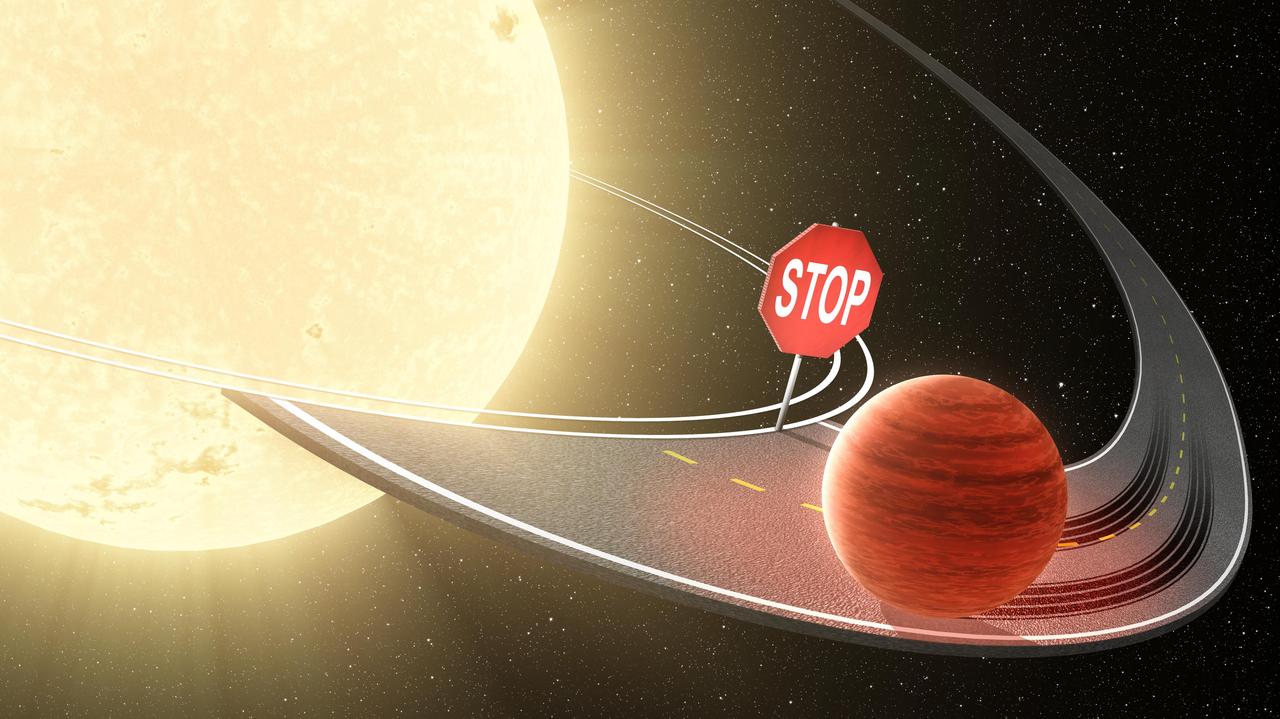
Researchers using data from NASA Kepler space telescope have shown that migrating planets stop their inward journey before reaching their stars, as illustrated in this artist concept.
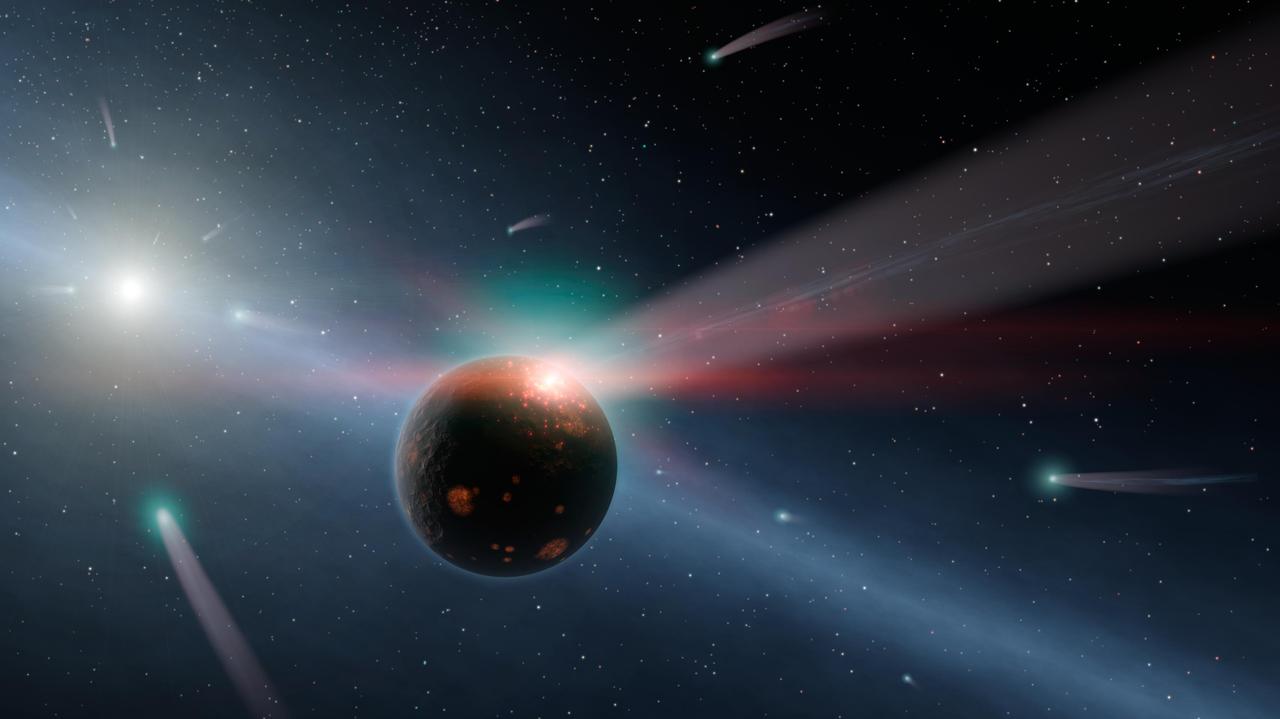
This artist conception illustrates a storm of comets around a star near our own, called Eta Corvi. Evidence for this barrage comes from NASA Spitzer Space Telescope infrared detectors.
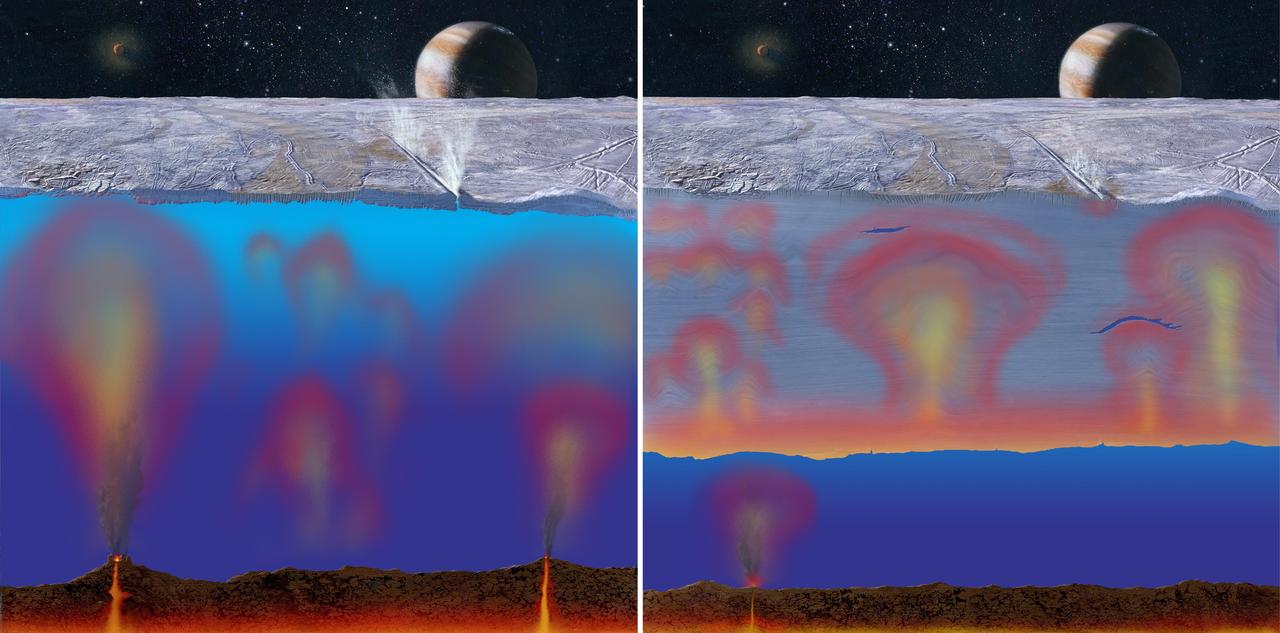
Scientists are all but certain that Europa has an ocean underneath its icy surface, but they do not know how thick this ice might be. This artist concept illustrates two possible cut-away views through Europa ice shell.

Supermassive black holes at the cores of galaxies blast radiation and ultra-fast winds outward, as illustrated in this artist conception based on NASA NuSTAR and ESA XMM-Newton telescopes.
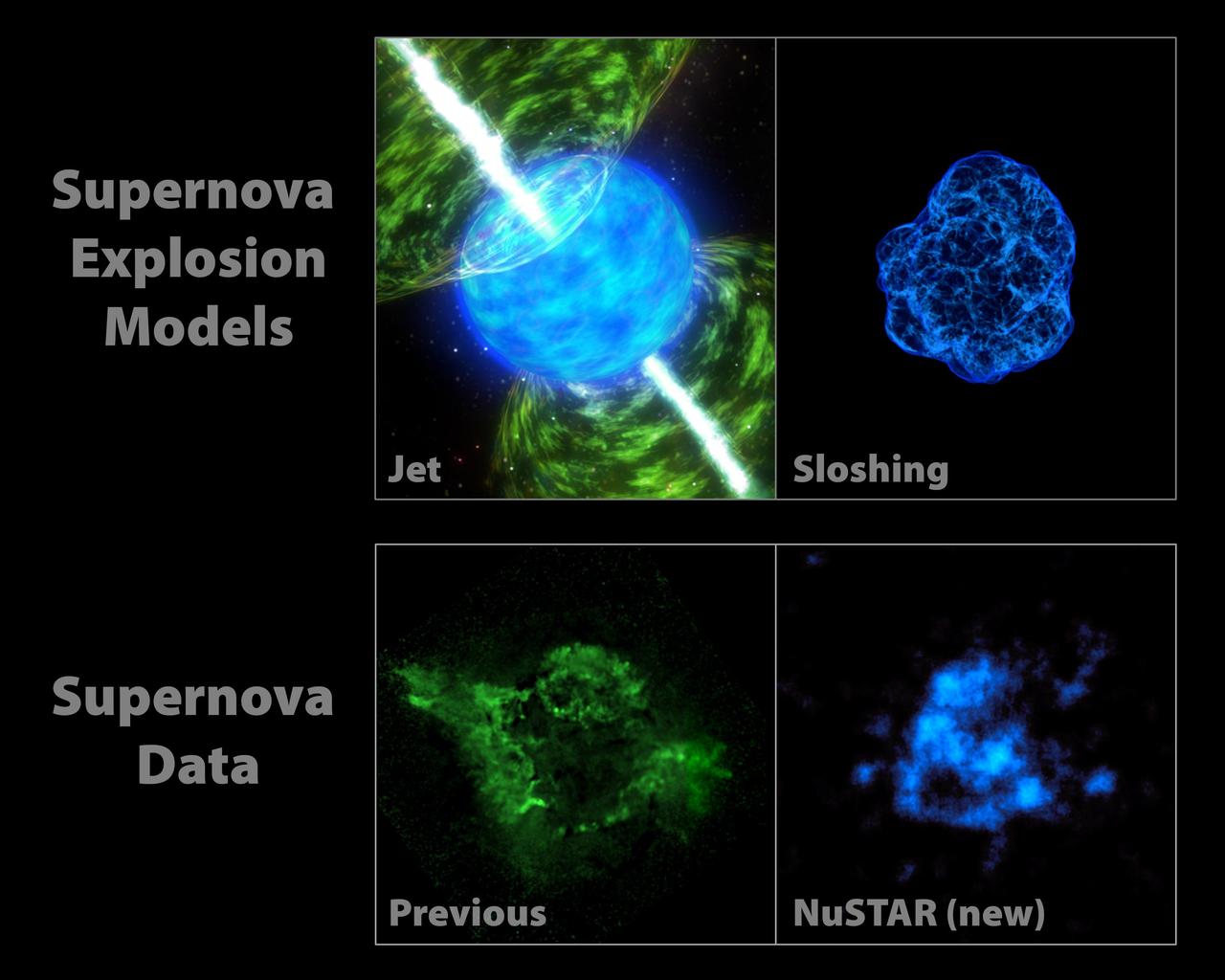
The images at the top of this graphic represent two popular models describing how stars blast apart. The models point to different triggers of the explosion. Jet-driven models are illustrated with an artist concept shown at left.

This artist conception illustrates Kepler-22b, a planet known to comfortably circle in the habitable zone of a sun-like star. It is the first planet that NASA Kepler mission has confirmed to orbit in a star habitable zone.
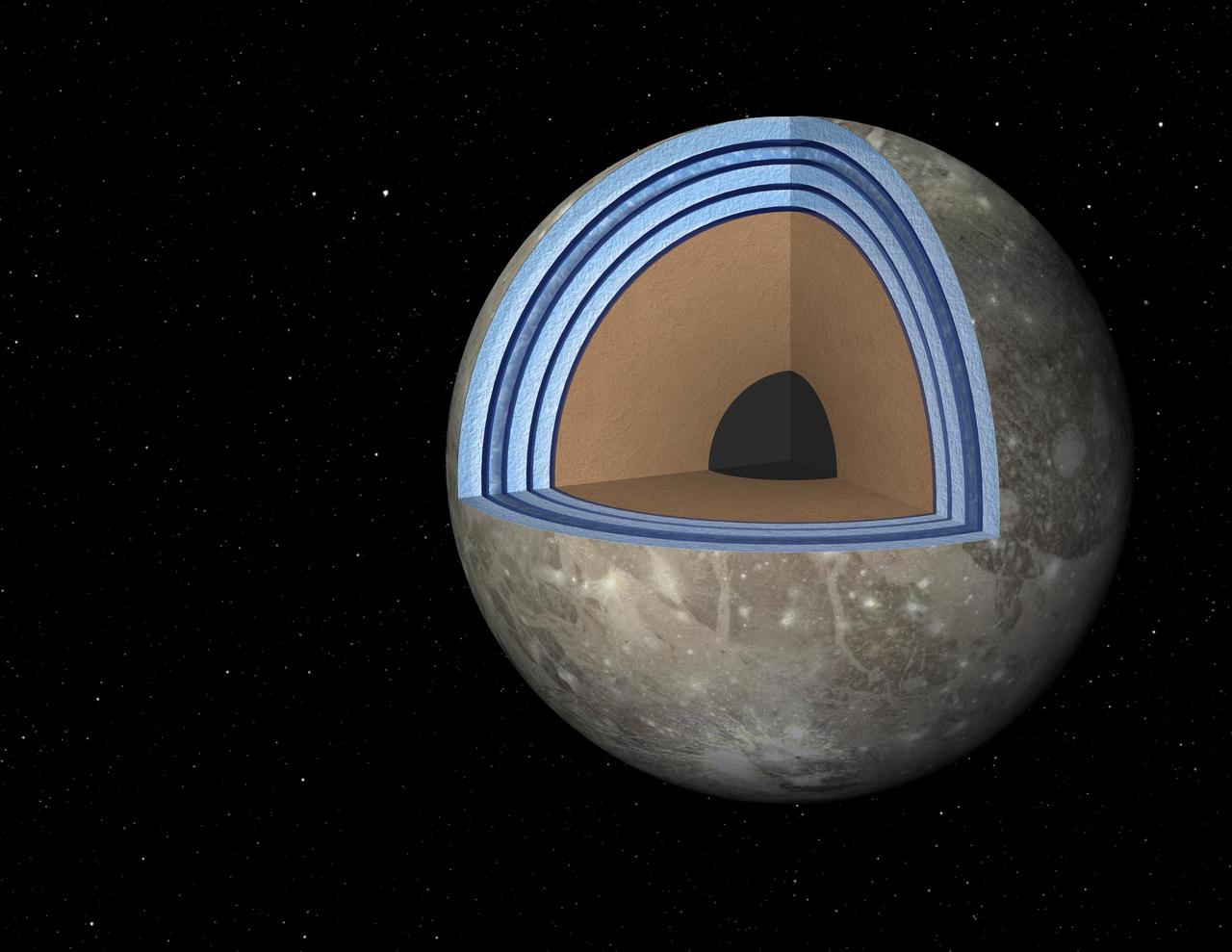
This artist concept of Jupiter moon Ganymede, the largest moon in the solar system, illustrates the club sandwich model of its interior oceans. Scientists suspect Ganymede has a massive ocean under an icy crust.
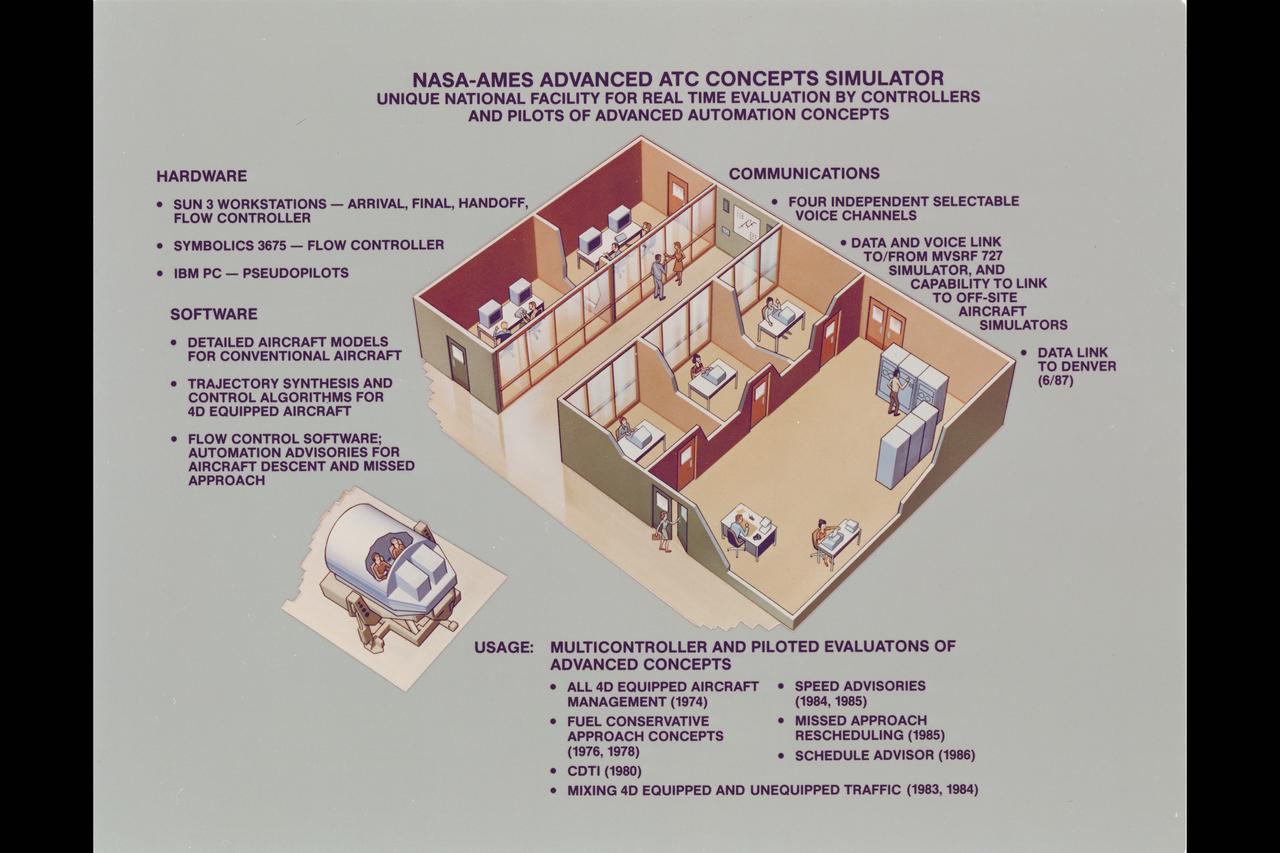
Illustration N-257 Advanced ATC Concepts simulator: unicqu national facility for treal time evalation by controllers and pilots of advanced automation concepts (Cutaway artwork)
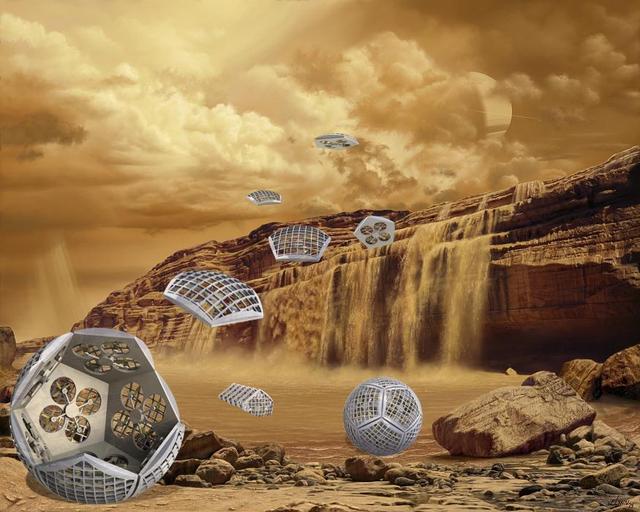
An illustration of an early concept of Shapeshifter imagines the robots on Saturn's moon Titan. In the picture, the Shapeshifter breaks into smaller pieces that can investigate a methane waterfall from the sky. Shapeshifter is a developing concept for a transformational vehicle to explore treacherous, distant worlds. The flying amphibious robot is part of the early-stage research program NASA Innovative Advanced Concepts (NIAC), which offers several phases of funding to visionary concepts, helping turn ideas that sound like science fiction into science fact. JPL Principle Investigator Ali Agha envisions Shapeshifter as a mission to Saturn's moon Titan, the only other world in the solar system known to have liquid in the form of methane lakes, rivers and seas on its surface. https://photojournal.jpl.nasa.gov/catalog/PIA23434
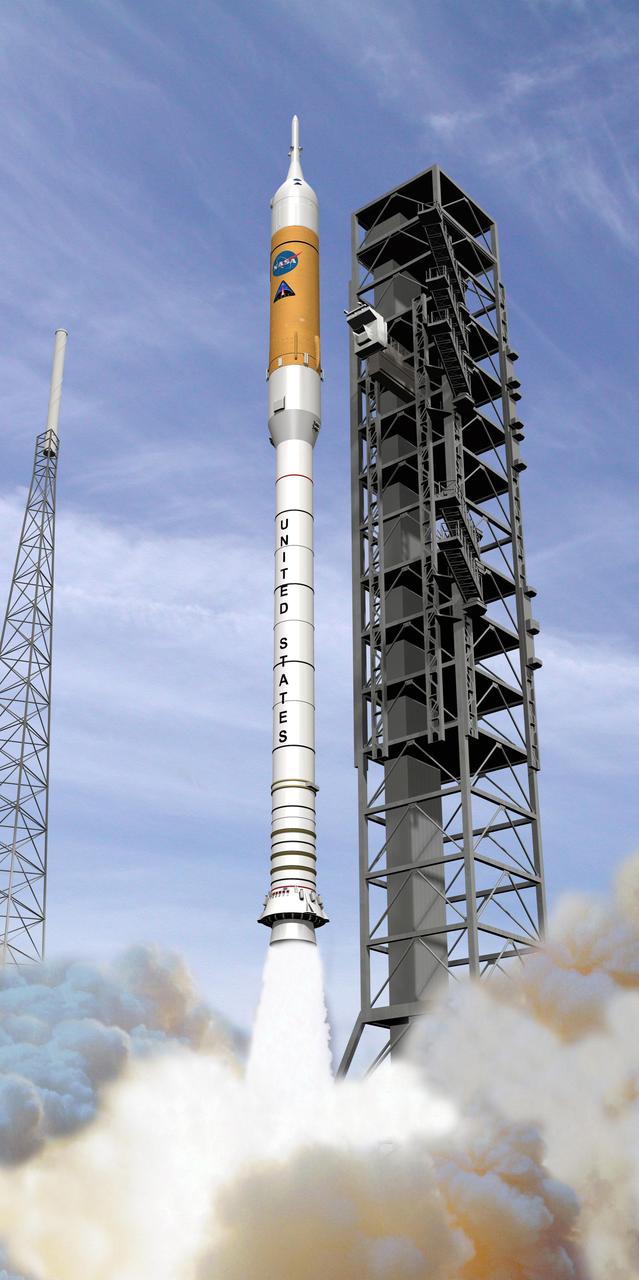
Shown is an illustration of the Ares I crew launch vehicle on the launch pad at NASA's Kennedy Space Center, Florida.
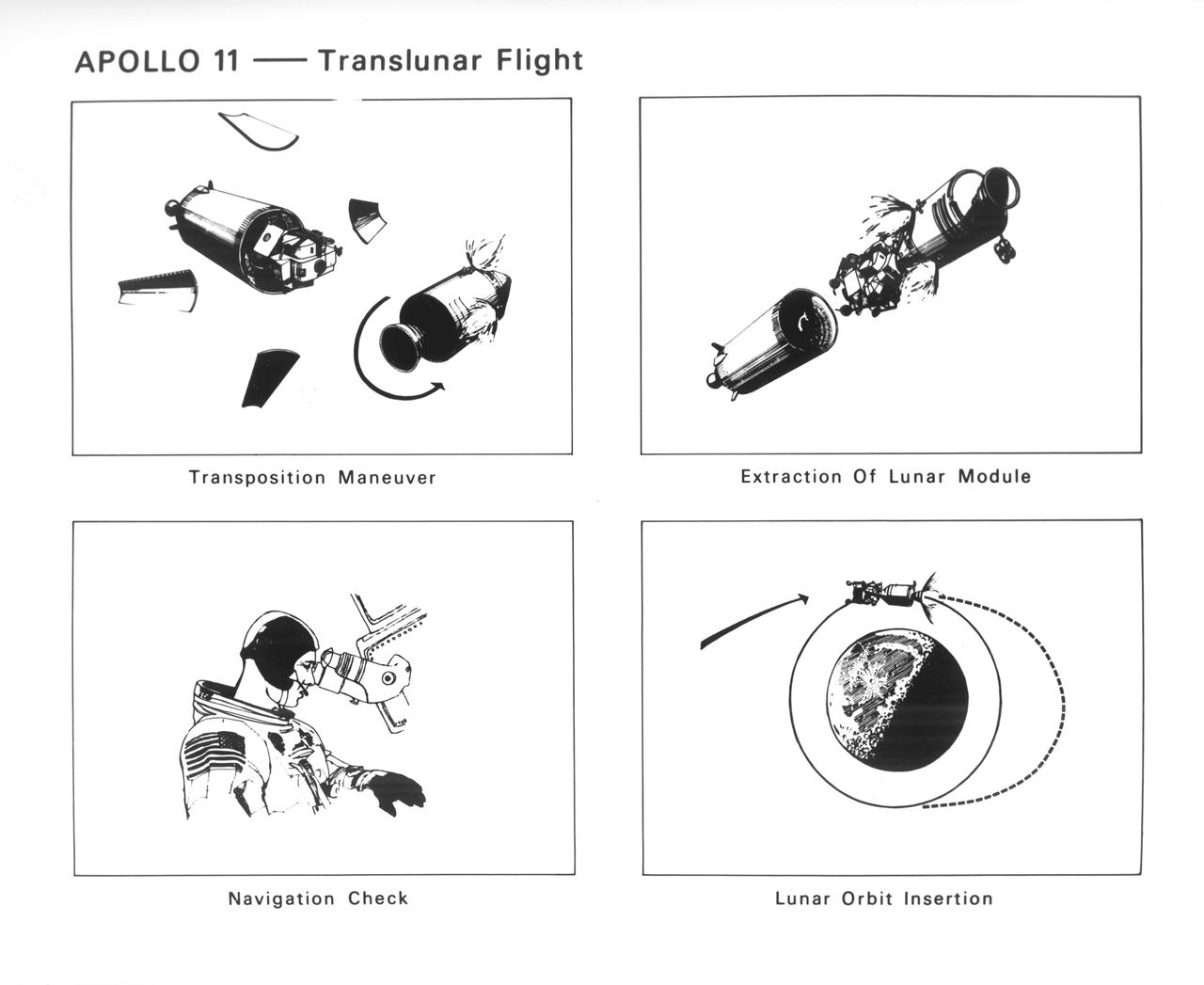
The Apollo 11 mission launched from the Kennedy Space Center (KSC) in Florida via the Marshall Space Flight Center (MSFC) developed Saturn V launch vehicle on July 16, 1969 and safely returned to Earth on July 24, 1969. Aboard the space craft were astronauts Neil A. Armstrong, commander; Michael Collins, Command Module (CM) pilot; and Edwin E. (Buzz) Aldrin Jr., Lunar Module (LM) pilot. With the success of Apollo 11, the national objective to land men on the Moon and return them safely to Earth had been accomplished. These sketches illustrate four events of the Apollo 11 spacecraft and crew enroute to the Moon. Panels housing the LM were jettisoned and the CM turned 180 degrees in the transposition maneuver. The CM docked with the LM and extracted it from the third stage instrument unit of the Saturn V launch vehicle. Astronauts performed navigation checks enroute to the moon. The service propulsion system was fired to slow the spacecraft and permitted it to enter lunar orbit.
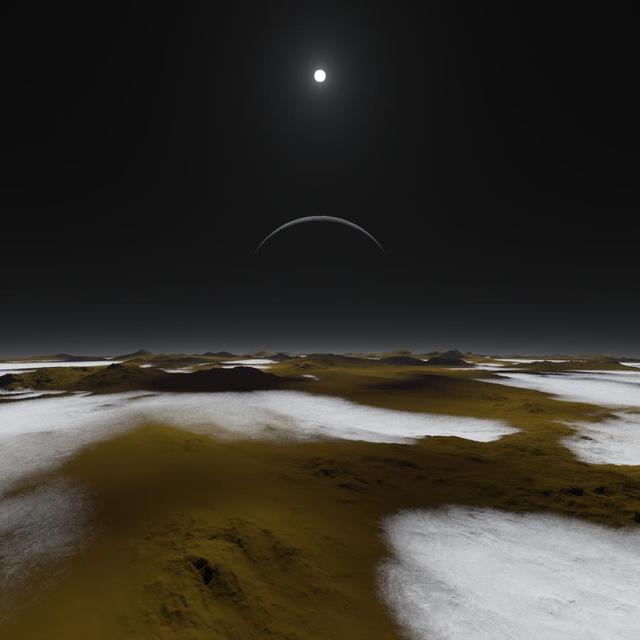
Just how dim is the sunlight on Pluto, some three billion miles away? This artist concept of the frosty surface of Pluto with Charon and our sun as backdrops illustrates that while sunlight is much weaker than it is here on Earth, it isnt as dark as you might expect. http://photojournal.jpl.nasa.gov/catalog/PIA19682
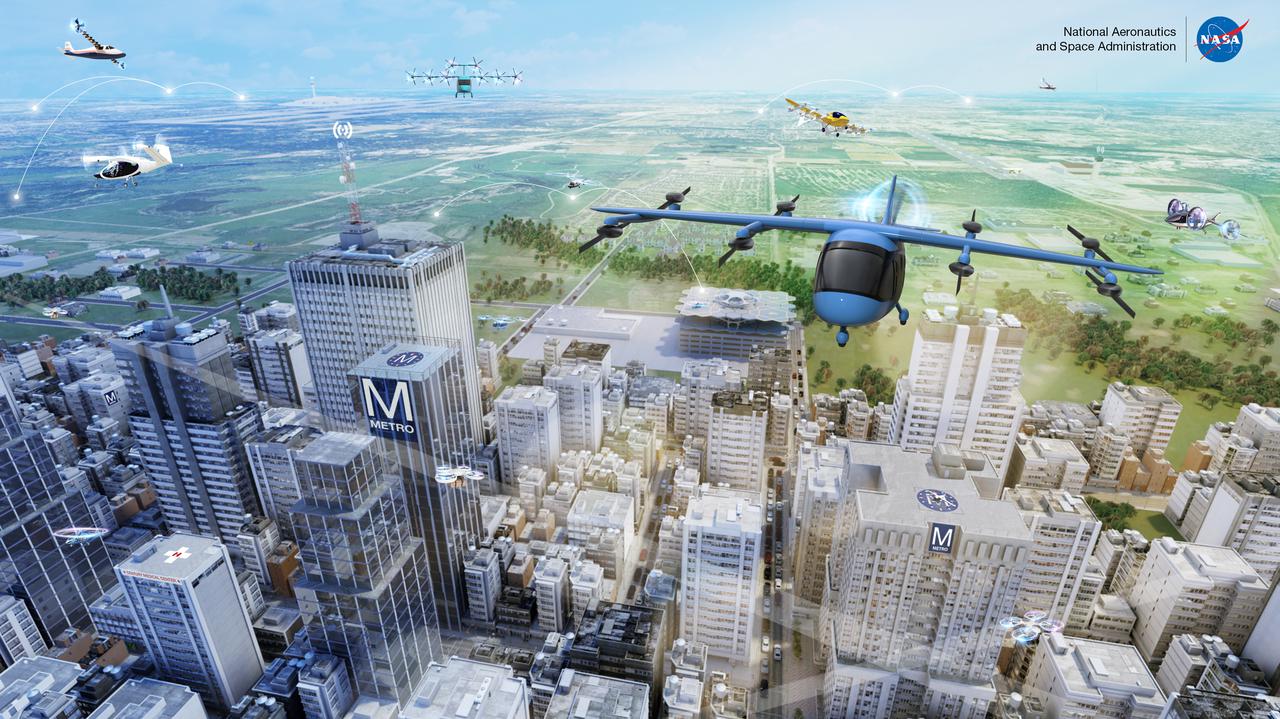
Advanced Air Mobility, with its many vehicle concepts and potential uses in both local and intraregional applications, is shown in this illustration.
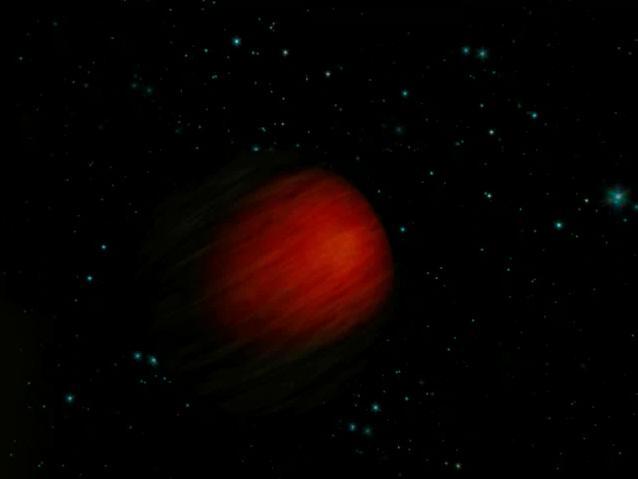
This artist concept illustrates the hottest planet yet observed in the universe. The scorching ball of gas, a hot Jupiter called HD 149026b, is about 3 times hotter than the rocky surface of Venus, the hottest planet in our solar system.

This artist concept illustrates a comet being torn to shreds around a dead star, or white dwarf, called G29-38. NASA Spitzer Space Telescope observed a cloud of dust around this white dwarf that may have been generated from comet disruption.
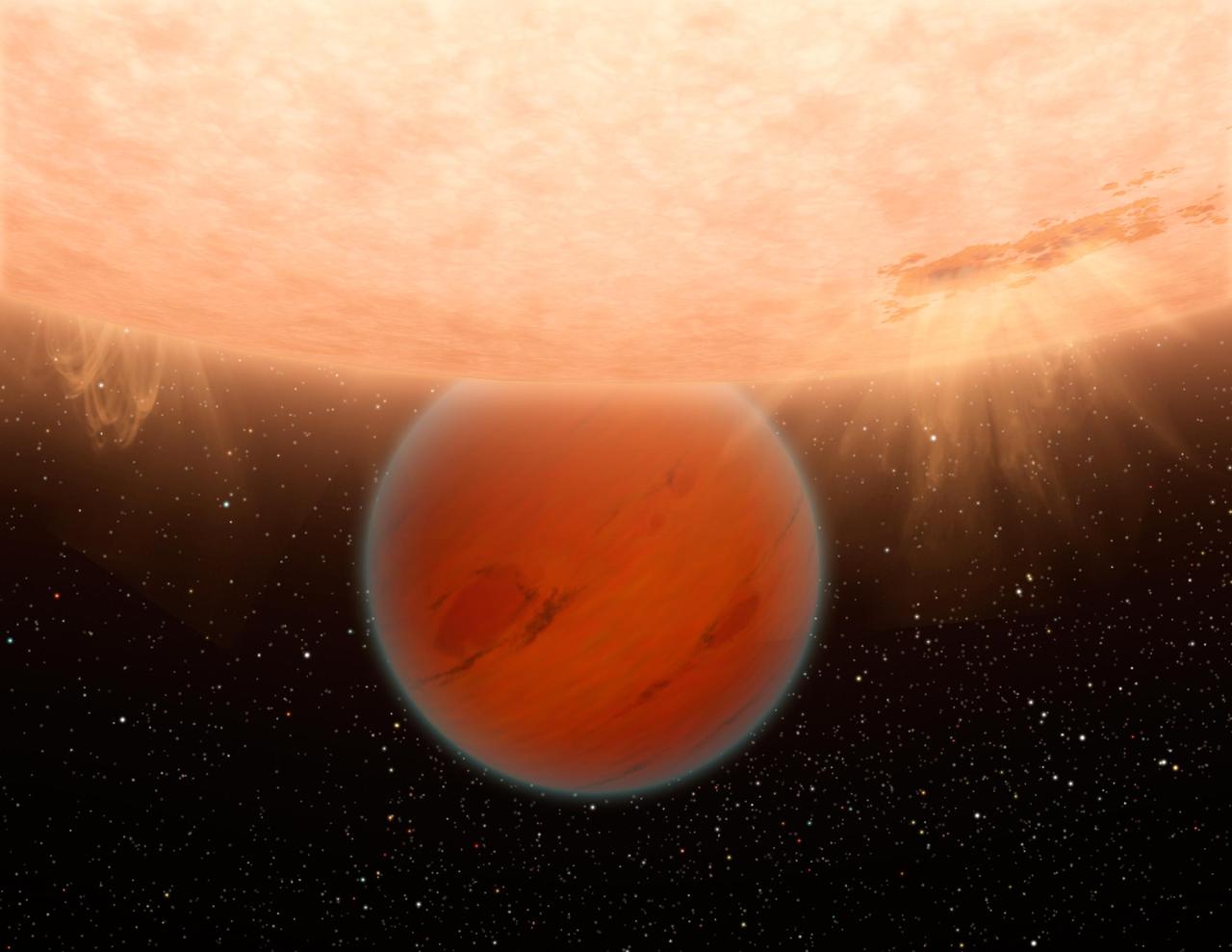
This artist concept illustrates a hot, Neptune-sized planet called GJ 436b. NASA Spitzer Space Telescope has found evidence that GJ 436b, orbiting a star beyond our sun lacks methane -- an ingredient common to many planets in our own solar system.
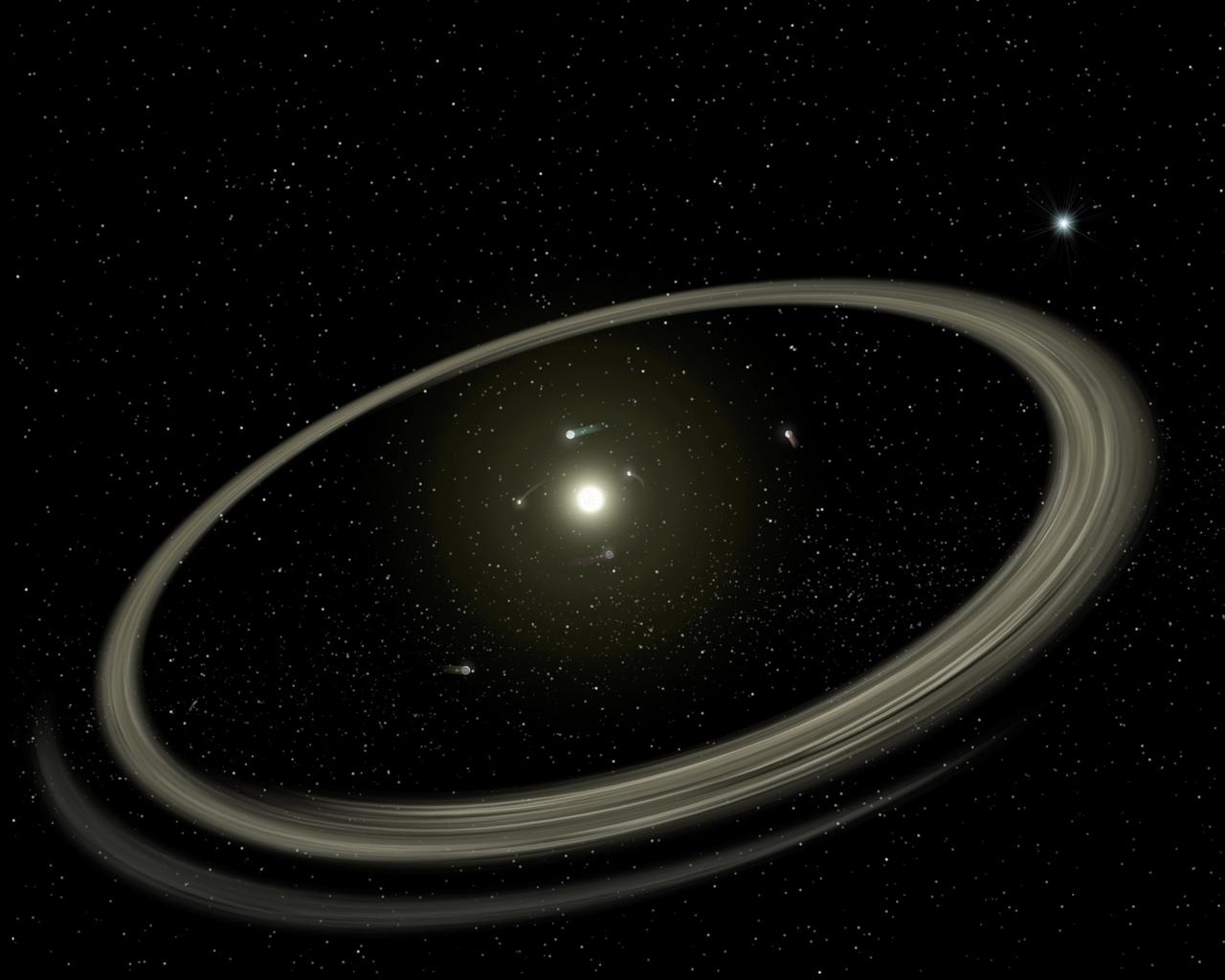
This artist concept illustrates how planetary systems arise out of massive collisions between rocky bodies. NASA Spitzer Space Telescope show that these catastrophes continue to occur around stars even after they have developed full-sized planets.
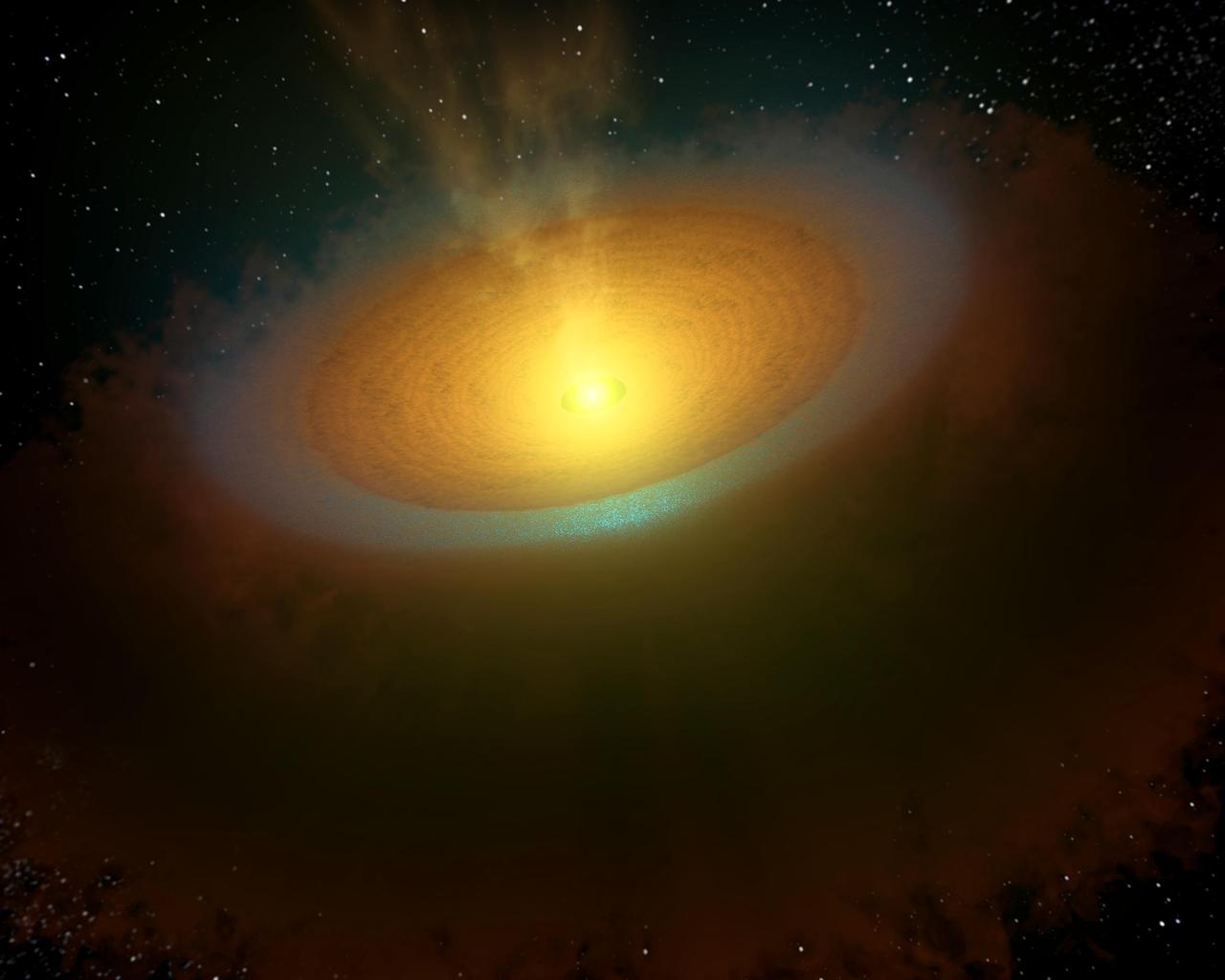
This artist concept, based on data from NASA Herschel telescope, illustrates an icy planet-forming disk around a young star called TW Hydrae, located about 175 light-years away in the Hydra, or Sea Serpent, constellation.
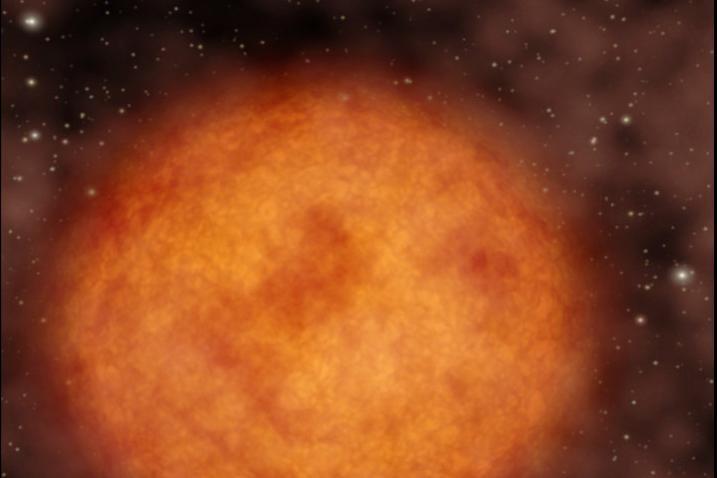
This artist concept illustrates a star flying through our galaxy at supersonic speeds, leaving a 13-light-year-long trail of glowing material in its wake. The star, named Mira pronounced my-rah after the latin word for wonderful.
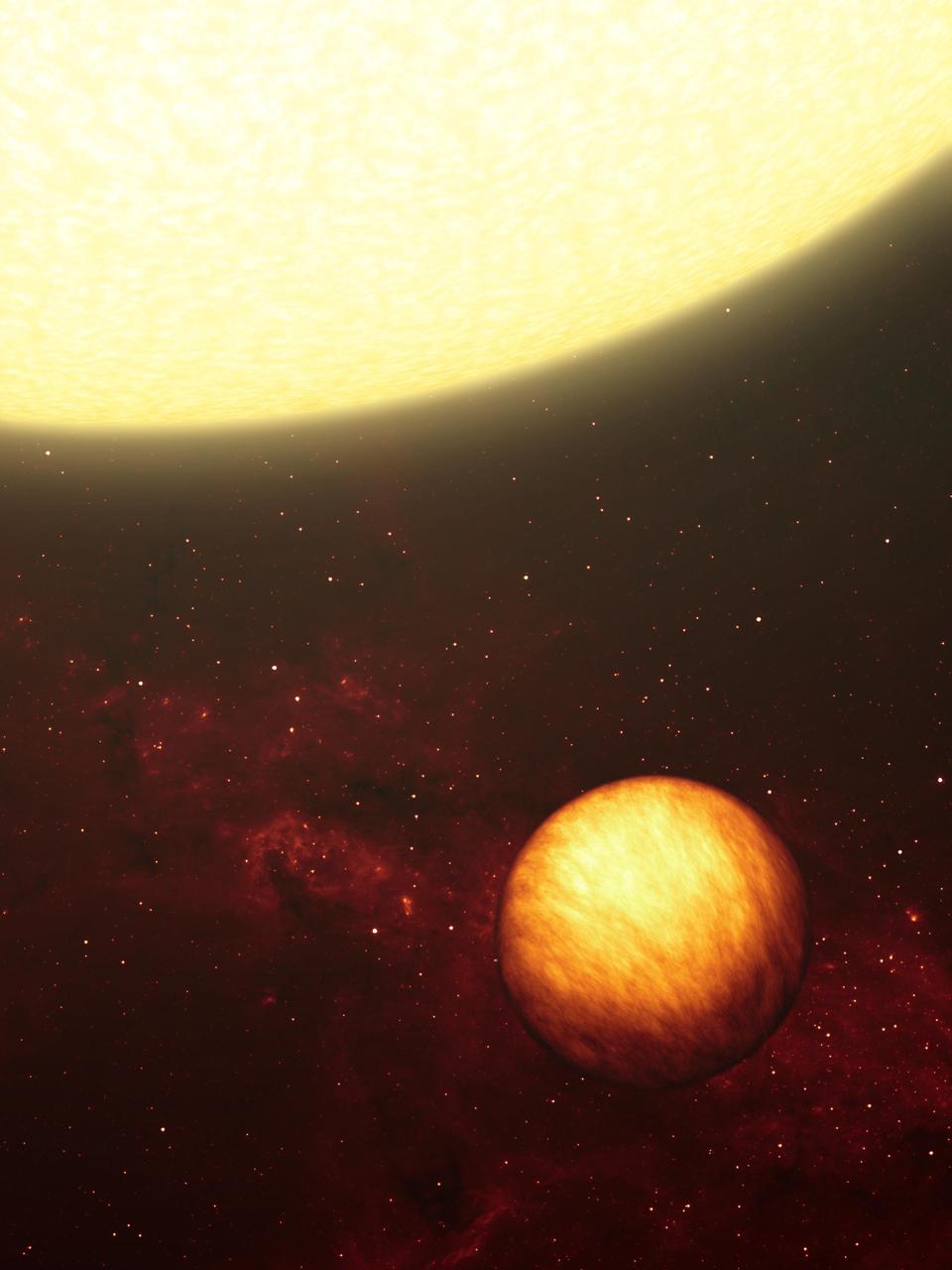
This artist concept shows a Jupiter-like planet soaking up the scorching rays of its nearby un. This NASA Spitzer Space Telescope illustration portrays how the planet would appear to infrared eyes, showing temperature variations across its surface.

This artist conception based on data from NASA Wide-field Infrared Survey Explorer illustrates what brown dwarfs of different types might look like to a hypothetical interstellar traveler who has flown a spaceship to each one.

Artist concept illustrates a quasar, or feeding black hole, similar to APM 08279+5255, where astronomers discovered huge amounts of water vapor. Gas and dust likely form a torus around the central black hole, with clouds of charged gas above and below.

This artist concept illustrates the new view of the Milky Way. The galaxy two major arms can be seen attached to the ends of a thick central bar, while the two now-demoted minor arms are less distinct and located between the major arms.

This artist concept illustrates what the flaring black hole called GX 339-4 might look like. Infrared observations from NASA WISE reveal the best information yet on the chaotic and extreme environments of this black hole jets.
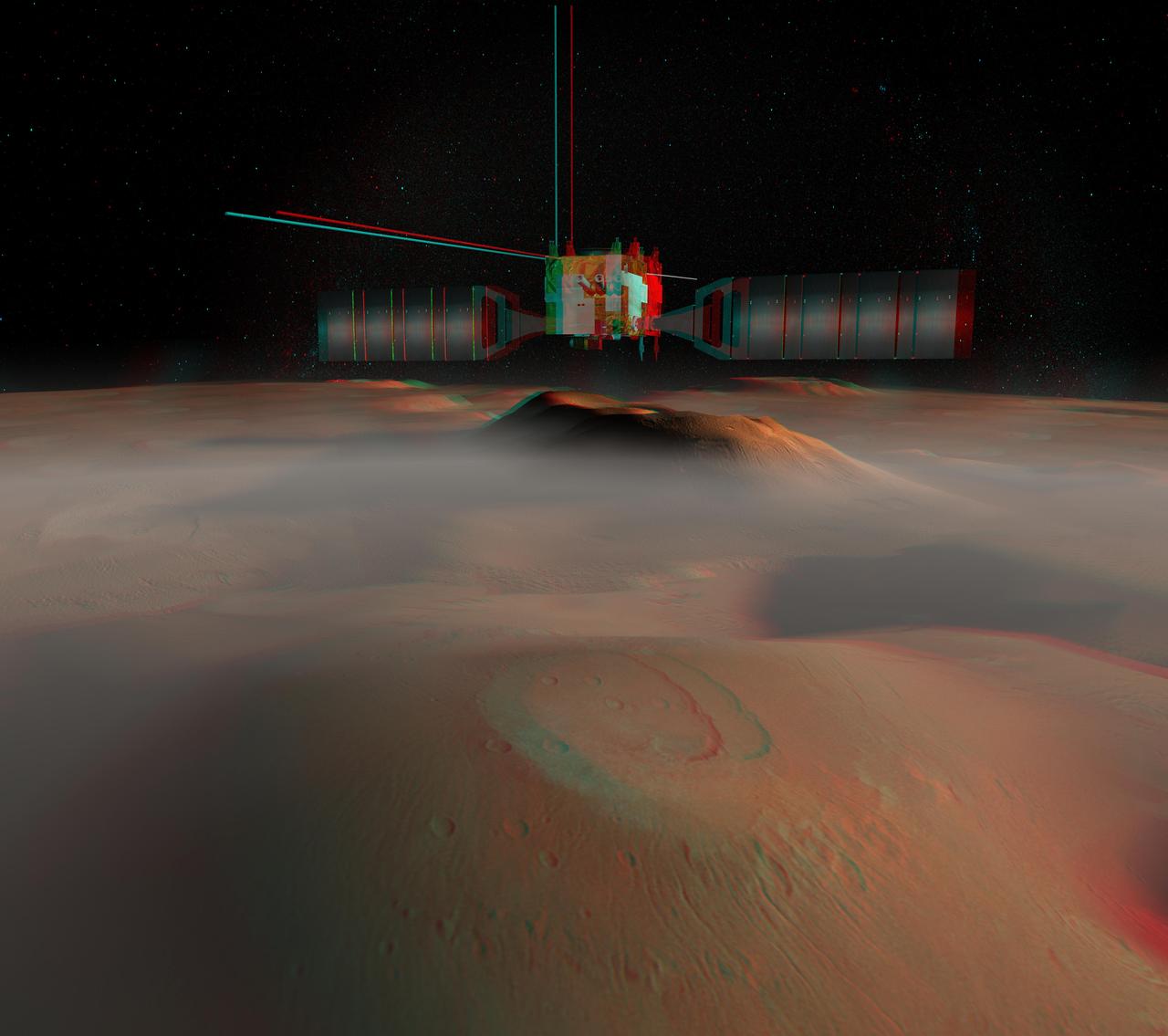
The European Space Agency's Mars Express spacecraft is depicted in orbit around Mars in this artist's concept stereo illustration. The spacecraft was launched June 2, 2003, from Baikonur, Kazakhstan, on a journey to arrive at Mars in December 2003. This red-blue anaglyph artwork can be viewed in 3-D on your computer monitor or in color print form by wearing red-blue (cyan) 3-D glasses. http://photojournal.jpl.nasa.gov/catalog/PIA04803
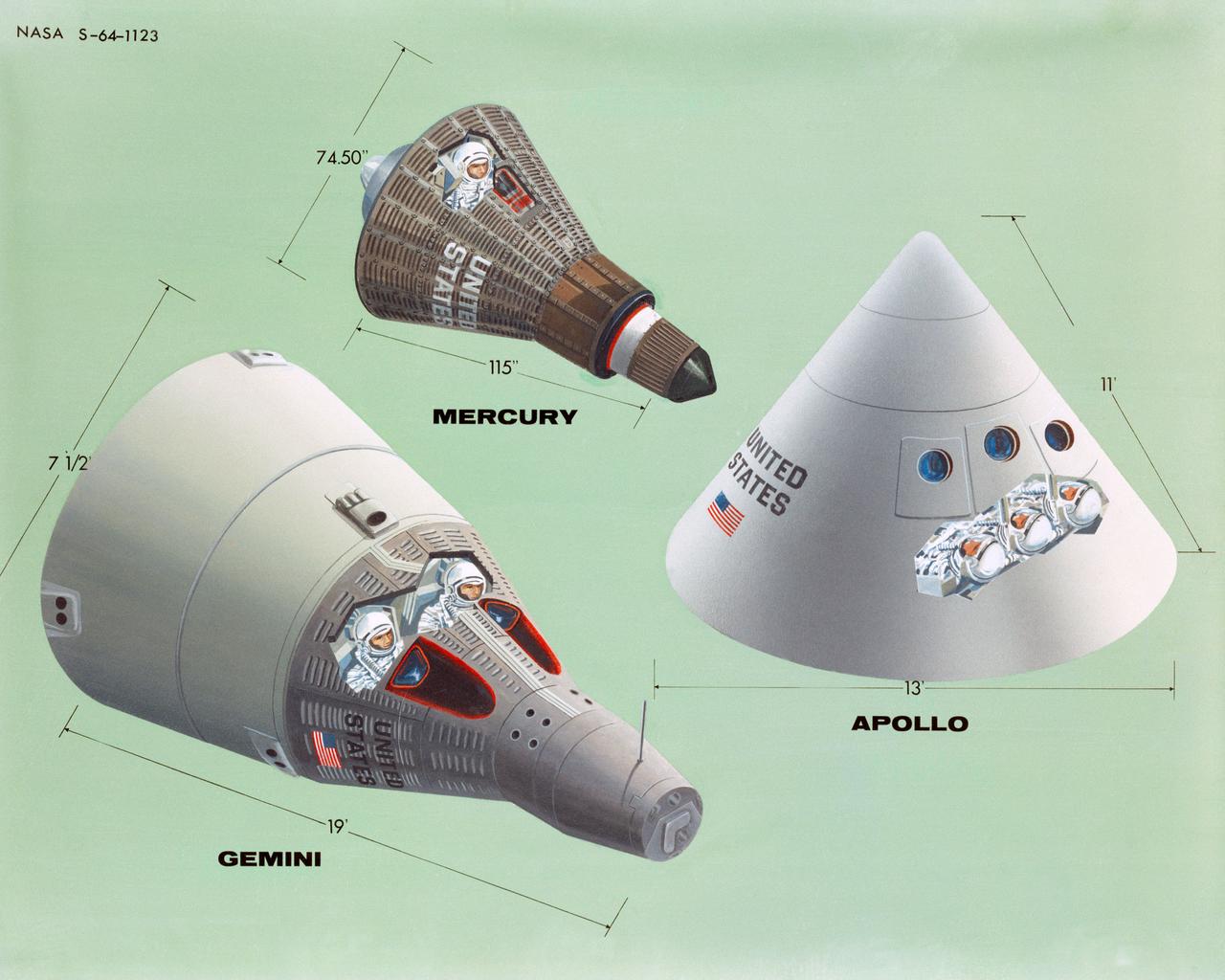
S64-01123 (1964) --- Artist concept illustrating the relative sizes of the one-man Mercury spacecraft, the two-man Gemini spacecraft, and the three-man Apollo spacecraft. Photo credit: NASA
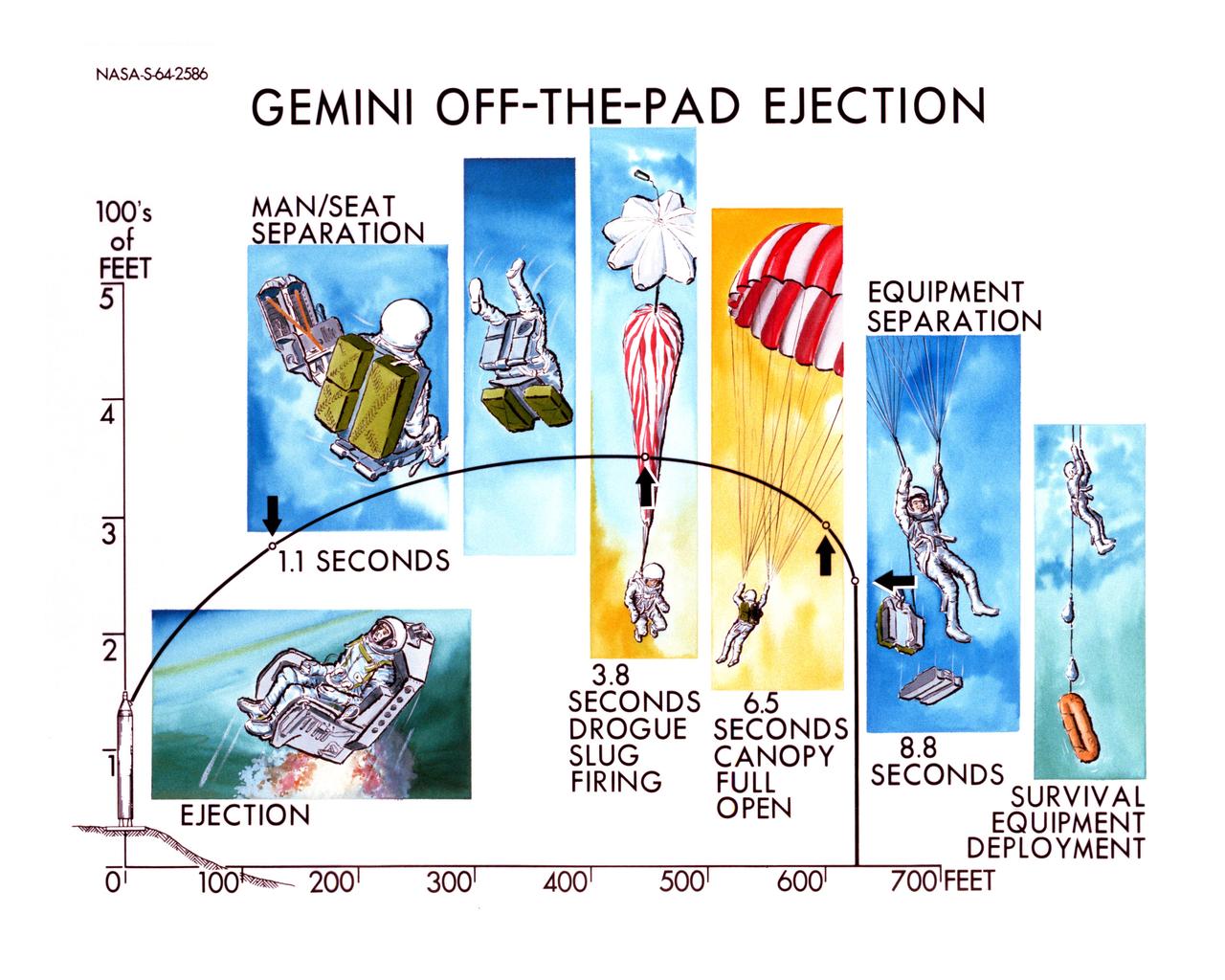
S64-02586 (1964) --- Gemini artist concept illustrating the sequence of events that take place if emergency ejection procedures are necessary before or following liftoff of a Gemini space flight.
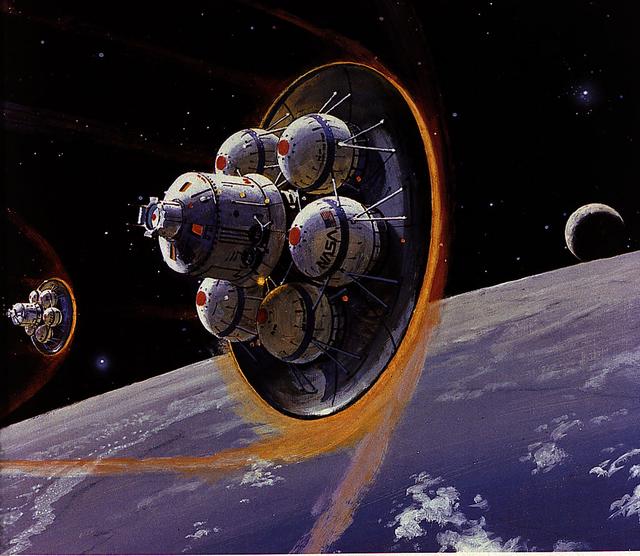
In June 1989 the Marshall Space Flight Center initiated studies of Space Transfer Vehicle (STV) concepts. A successor to the Orbital Transfer Vehicle (OTV) concept, the STV would be a high-performance space vehicle capable of transferring automated payloads from a Space Station to geosynchronous orbits, the Moon, or planets. Illustrated in this artist's concept are two STV's undergoing aerobraking maneuvers as they approach a Space Station.
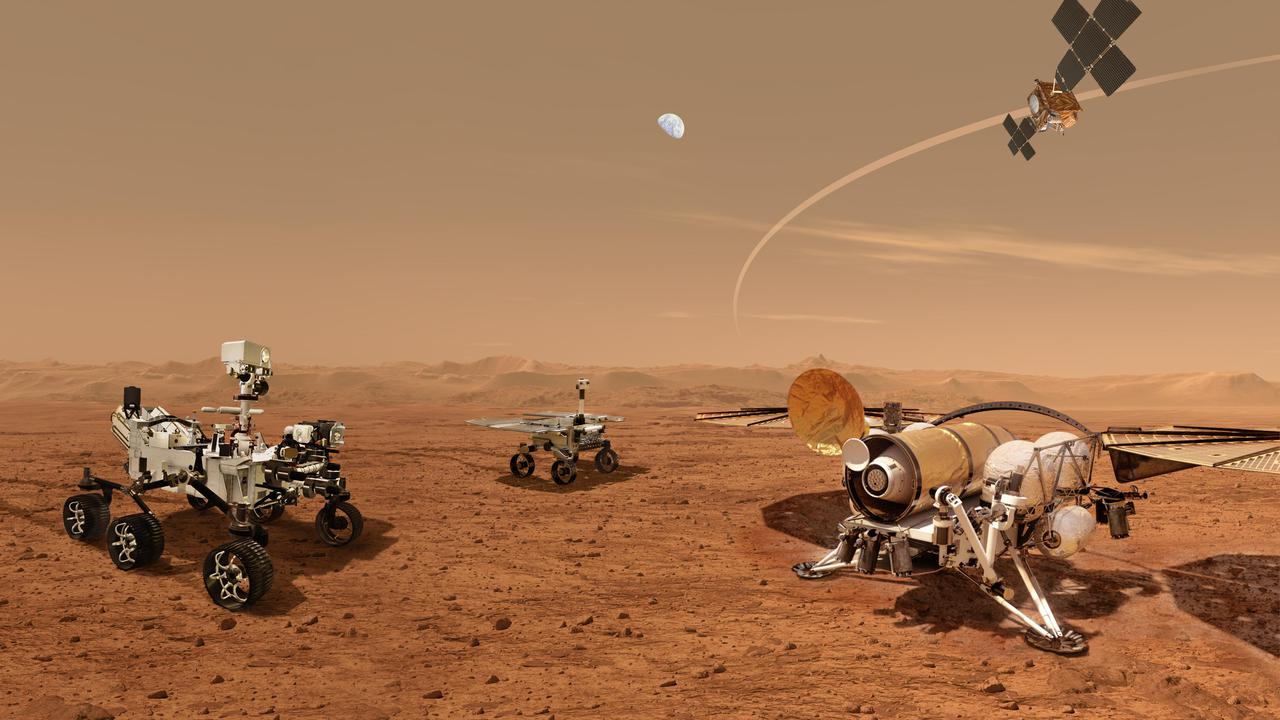
This illustration shows a concept for a set of future robots working together to ferry back samples from the surface of Mars collected by NASA's Mars Perseverance rover. NASA and the European Space Agency (ESA) are solidifying concepts for a Mars sample return mission that would seek to take the samples of Martian rocks and other materials being collected and stored in sealed tubes by NASA's Mars Perseverance rover and return the sealed tubes to Earth. According to the current concept, NASA would deliver a Mars lander in the vicinity of Jezero Crater, where Perseverance (left) will have collected and cached samples. The Sample Retrieval Lander (right) would carry a NASA rocket (the Mars Ascent Vehicle), along with ESA's Sample Fetch Rover (center) that is roughly the size of the Opportunity Mars rover. The fetch rover would gather the cached samples and carry them back to the lander for transfer to the ascent vehicle; additional samples could also be delivered directly by Perseverance. The ascent vehicle would then launch a special container holding the samples into Mars orbit. ESA would put a spacecraft in orbit around Mars before the ascent vehicle launches. This spacecraft would rendezvous with and capture the orbiting samples before returning them to Earth. NASA would provide the capture and containment payload module for the orbiter. https://photojournal.jpl.nasa.gov/catalog/PIA24870
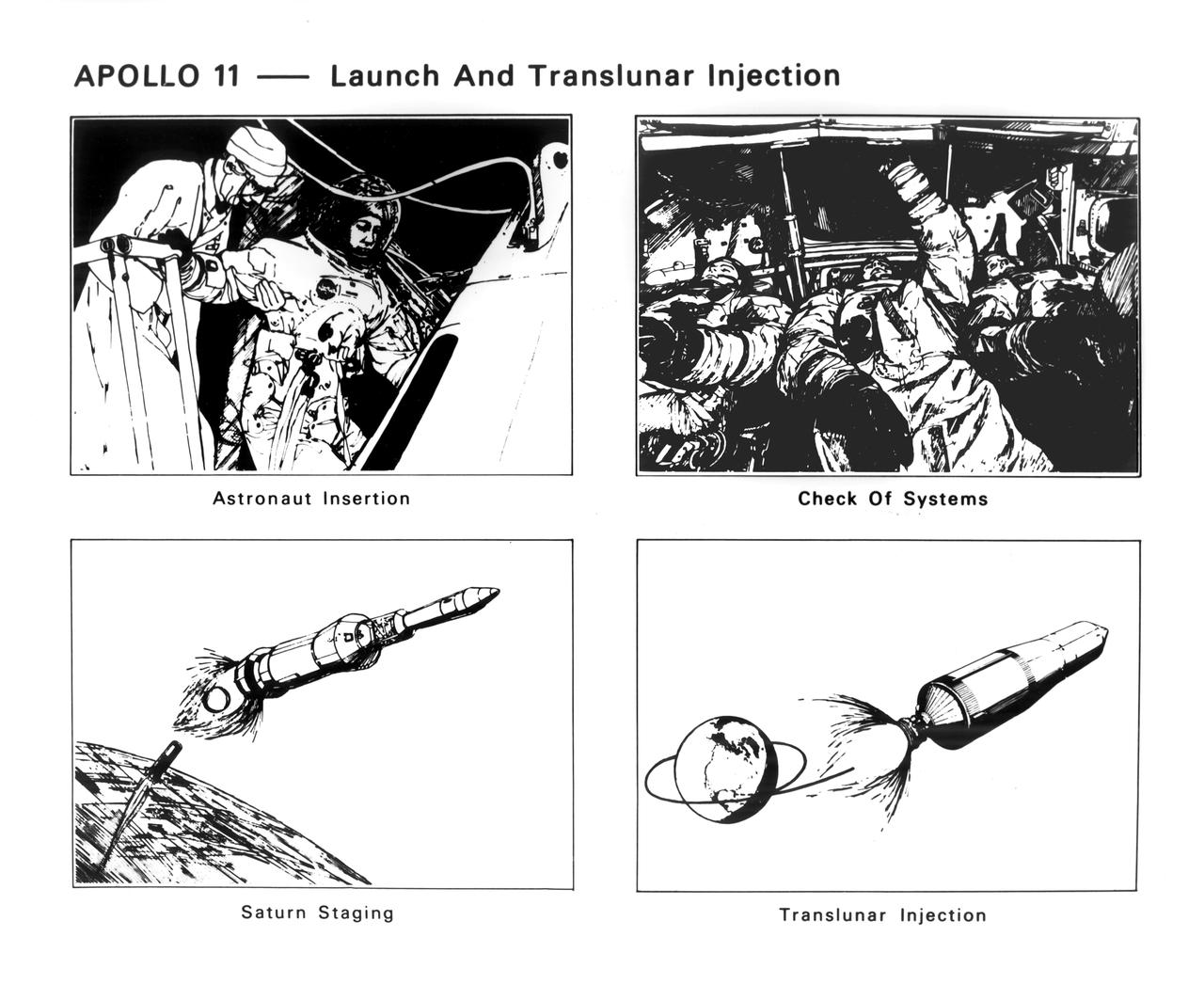
The Apollo 11 mission launched from the Kennedy Space Center (KSC) in Florida via the Marshall Space Flight Center (MSFC) developed Saturn V launch vehicle on July 16, 1969 and safely returned to Earth on July 24, 1969. Aboard the space craft were astronauts Neil A. Armstrong, commander; Michael Collins, Command Module (CM) pilot; and Edwin E. (Buzz) Aldrin Jr., Lunar Module (LM) pilot. With the success of Apollo 11, the national objective to land men on the Moon and return them safely to Earth had been accomplished. These sketches illustrate four of the early steps in the first manned lunar landing mission. The series begins with insertion of astronauts Neil Armstrong, Edwin Aldrin, and Michael Collins in the Apollo Command Module (CM). They checked out spacecraft systems and prepared for the launch. After two revolutions in Earth orbit, the Saturn V third stage reignited to place them into the translunar trajectory.
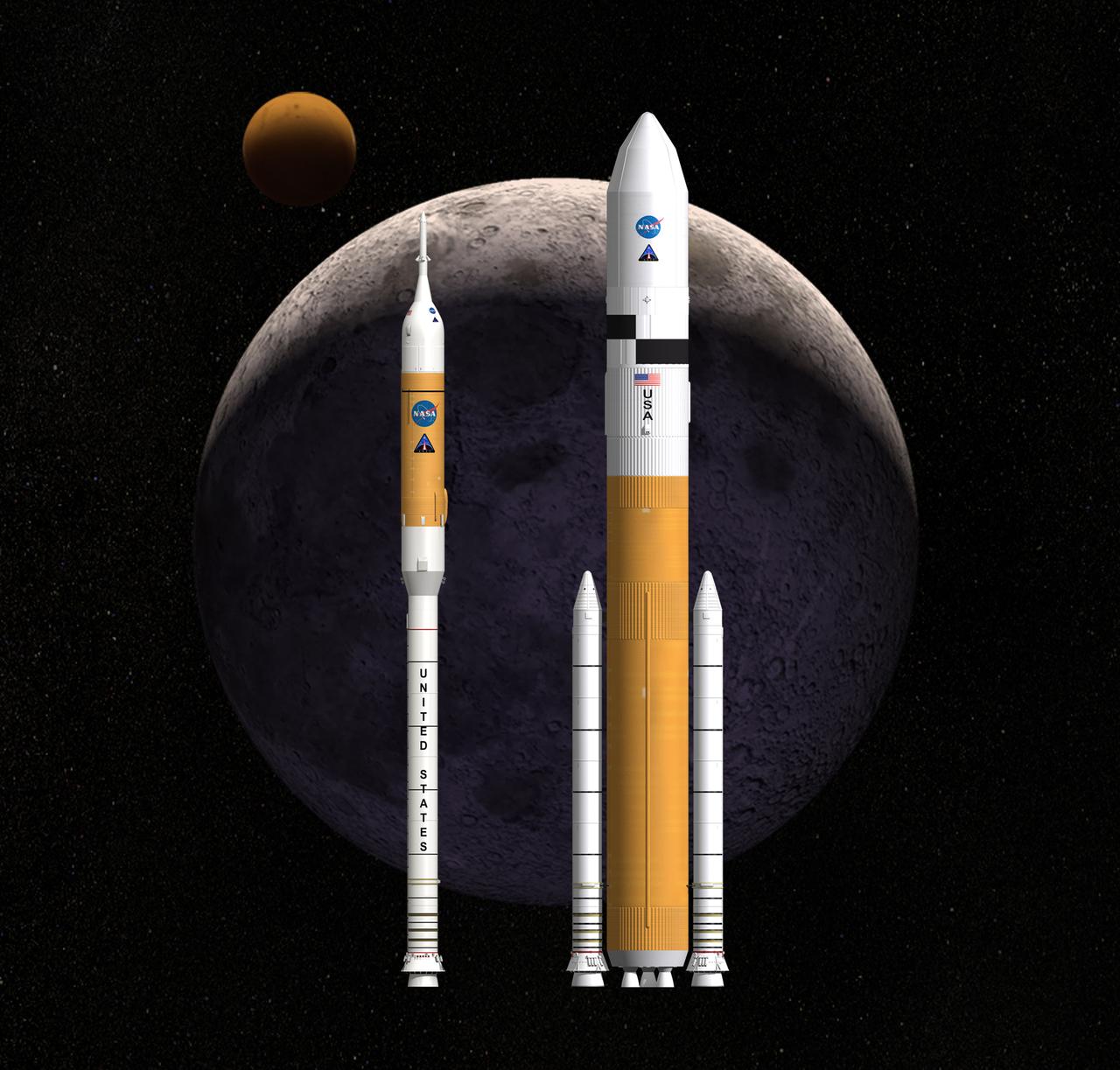
THIS CONCEPT IMAGE SHOWS NASA'S NEXT GENERATION LAUNCH VEHICLE SYSTEMS STANDING SIDE BY SIDE. ARES I, LEFT, IS THE CREW LAUNCH VEHICLE THAT WILL CARRY THE ORION CREW EXPLORATION VEHICLE TO SPACE. ARES V IS THE CARGO LAUNCH VEHICLE THAT WILL DELIVER LARGE SCALE HARDWARE, INCLUDING THE LUNAR LANDER, TO SPACE.
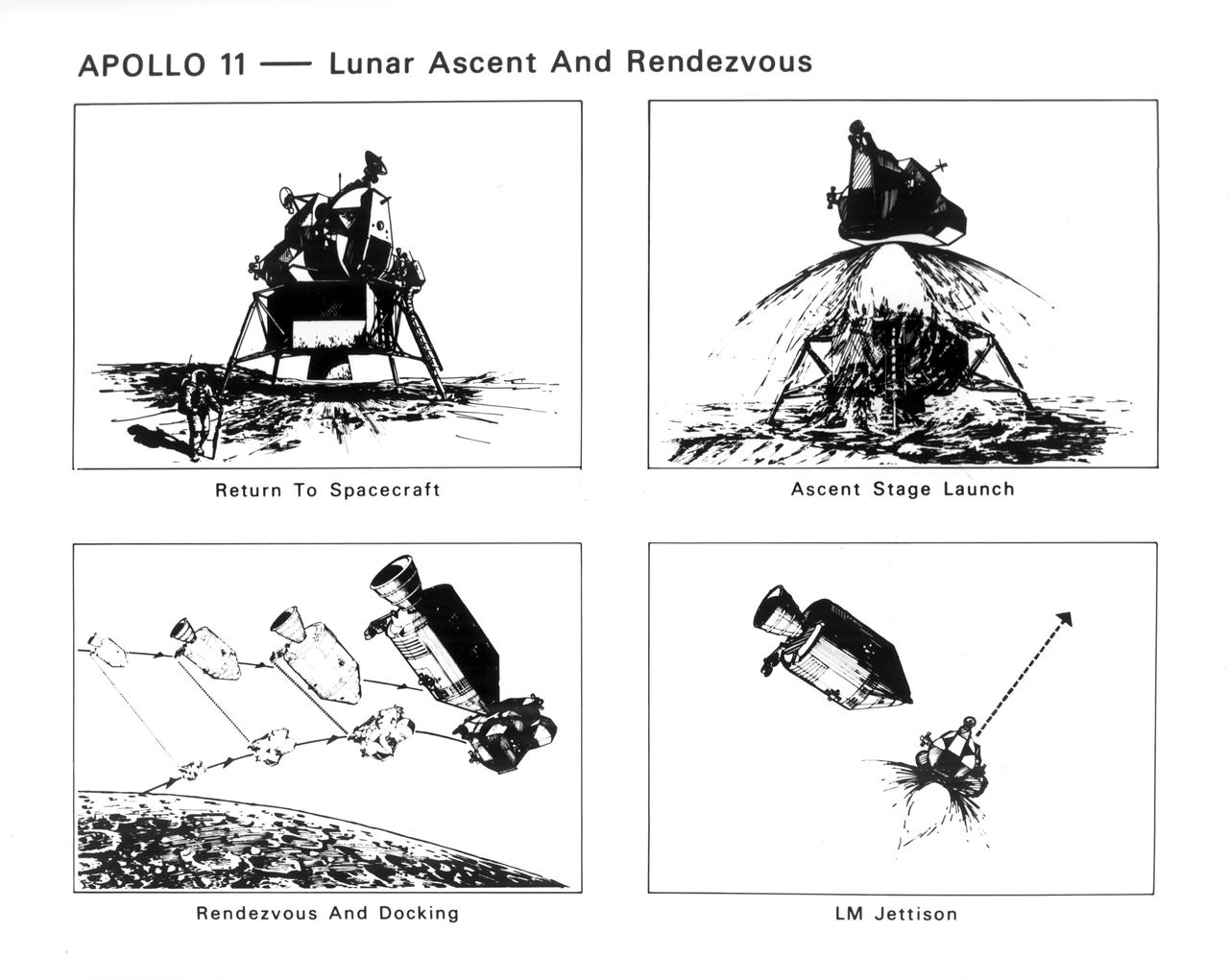
The Apollo 11 mission launched from the Kennedy Space Center (KSC) in Florida via the Marshall Space Flight Center (MSFC) developed Saturn V launch vehicle on July 16, 1969 and safely returned to Earth on July 24, 1969. Aboard the space craft were astronauts Neil A. Armstrong, commander; Michael Collins, Command Module (CM) pilot; and Edwin E. (Buzz) Aldrin Jr., Lunar Module (LM) pilot. With the success of Apollo 11, the national objective to land men on the Moon and return them safely to Earth had been accomplished. These sketches illustrate the steps taken when the astronauts left the Moon. After 2½ hours of surface exploration, astronauts Neil Armstrong and Edwin Aldrin returned to the Lunar Module (LM) “Eagle” for rest, eating, and checkout of the vehicle in preparation for liftoff. The ascent stage lifted off, using the descent stage as a launch pad. The ascent stage went into lunar orbit and moved in to dock with the orbiting CM “Columbia”. After Armstrong and Aldrin joined Collins in the CM, the engine of the LM ascent stage was fired to move it out of the same orbit.
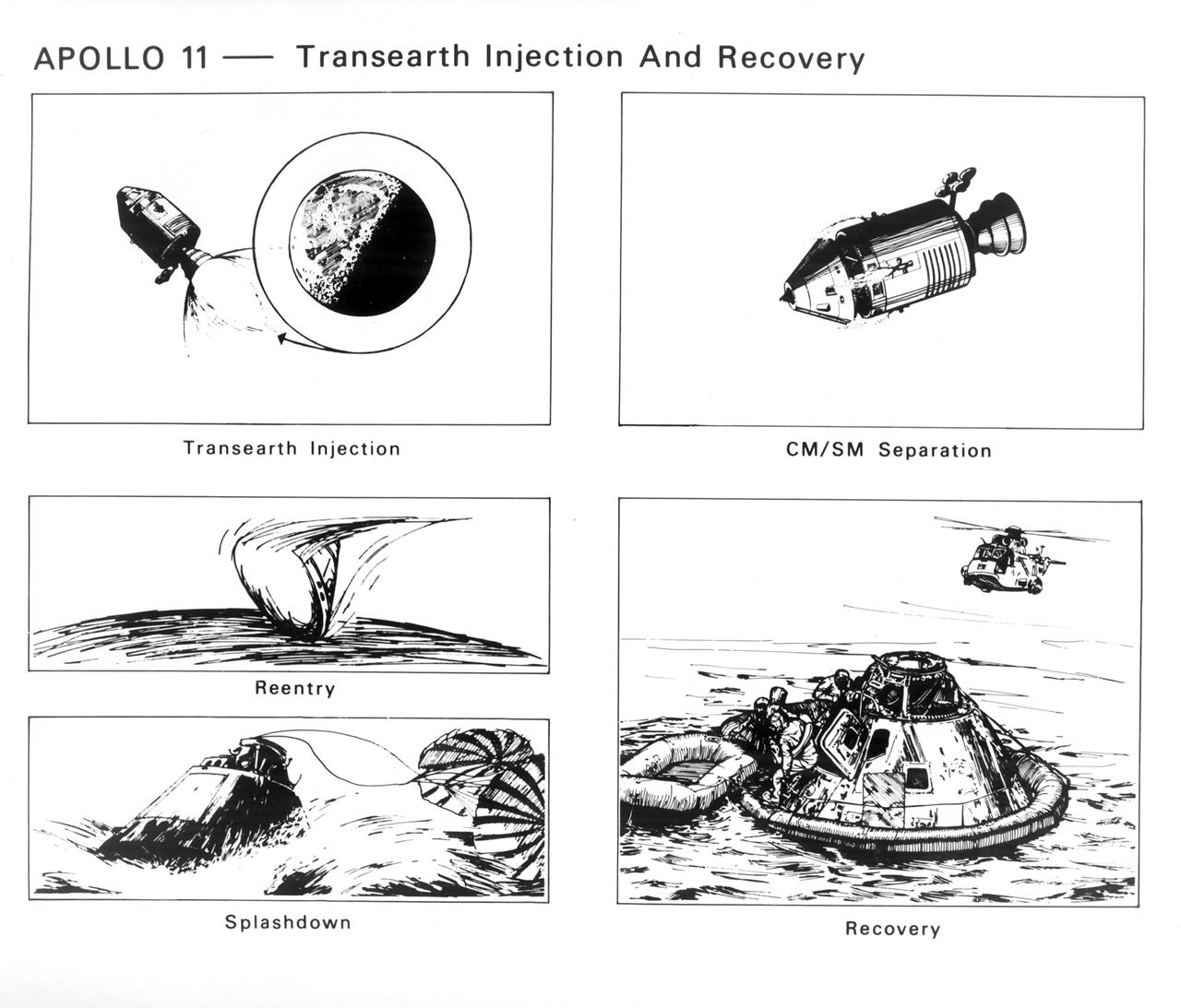
The Apollo 11 mission launched from the Kennedy Space Center (KSC) in Florida via the Marshall Space Flight Center (MSFC) developed Saturn V launch vehicle on July 16, 1969 and safely returned to Earth on July 24, 1969. Aboard the space craft were astronauts Neil A. Armstrong, commander; Michael Collins, Command Module (CM) pilot; and Edwin E. (Buzz) Aldrin Jr., Lunar Module (LM) pilot. With the success of Apollo 11, the national objective to land men on the Moon and return them safely to Earth had been accomplished. These sketches illustrate the steps taken by the astronauts to return to Earth. The service propulsion system engine was fired to increase space craft speed enough to escape Lunar orbit on a trajectory for Earth. Any necessary midcourse corrections were made enroute. Near the point of reentry into Earth’s atmosphere, the CM separated from the service module and turned 180 degrees so the heat shield faced forward on the line of flight. Friction of the atmosphere heated the shield to a white hot temperature, as a meteor, which slowed the craft as it reached lower altitudes. At about three miles altitude, drogue parachutes opened to stabilize the craft. Moments later the main parachutes opened to lower the CM to the waters of the Pacific Ocean. Helicopters and recovery crews from the U.S. S. Hornet aircraft carrier were standing by to pick up the astronauts.
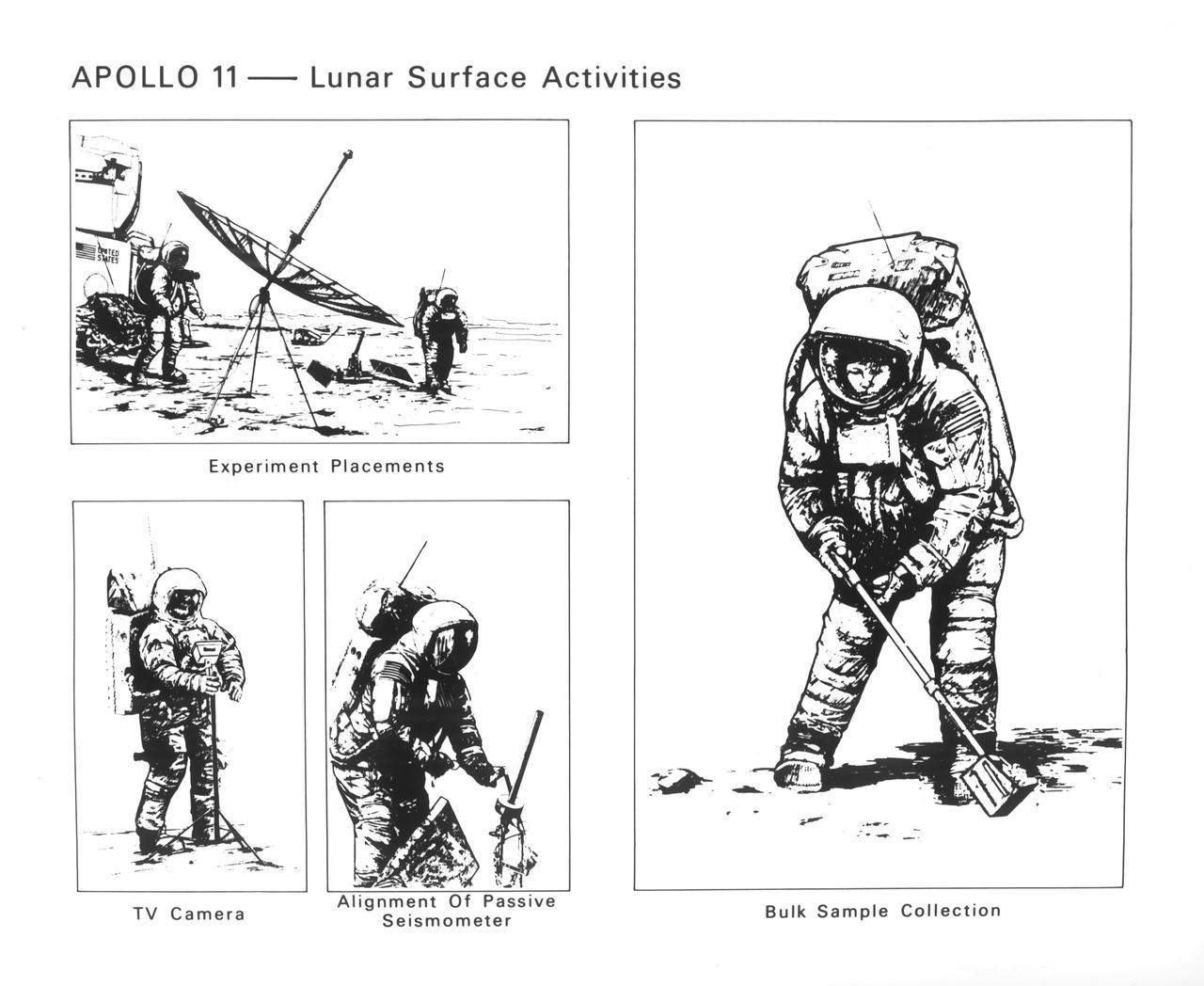
The Apollo 11 mission launched from the Kennedy Space Center (KSC) in Florida via the Marshall Space Flight Center (MSFC) developed Saturn V launch vehicle on July 16, 1969 and safely returned to Earth on July 24, 1969. Aboard the space craft were astronauts Neil A. Armstrong, commander; Michael Collins, Command Module (CM) pilot; and Edwin E. (Buzz) Aldrin Jr., Lunar Module (LM) pilot. With the success of Apollo 11, the national objective to land men on the Moon and return them safely to Earth had been accomplished. These sketches illustrate some of the activities of Neil Armstrong and Edwin Aldrin while on the Moon’s surface. Both men worked in setting up scientific equipment and collecting samples. Armstrong set up the television cameras early so their activities could be watched from Earth.
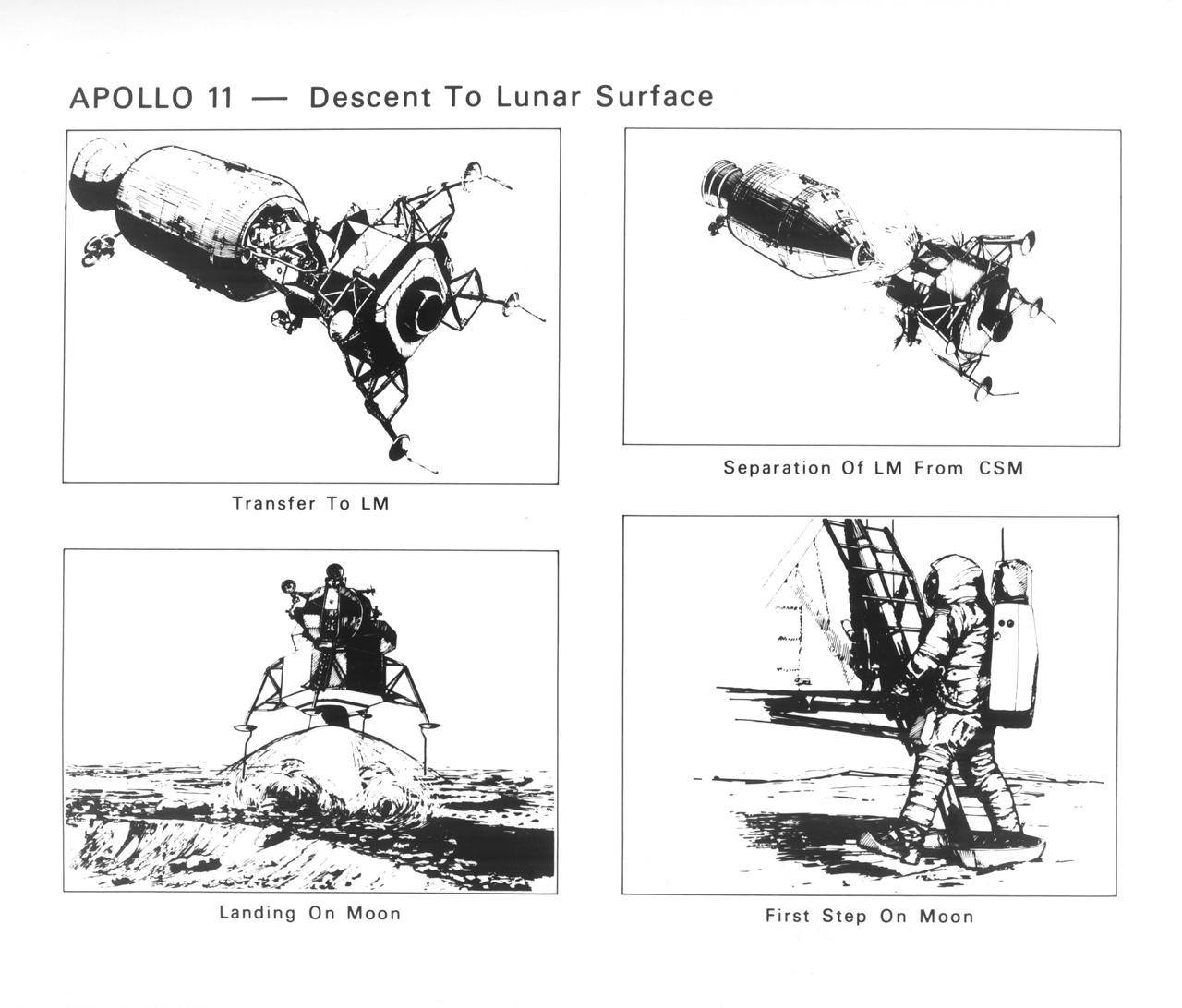
The Apollo 11 mission launched from the Kennedy Space Center (KSC) in Florida via the Marshall Space Flight Center (MSFC) developed Saturn V launch vehicle on July 16, 1969 and safely returned to Earth on July 24, 1969. Aboard the space craft were astronauts Neil A. Armstrong, commander; Michael Collins, Command Module (CM) pilot; and Edwin E. (Buzz) Aldrin Jr., Lunar Module (LM) pilot. With the success of Apollo 11, the national objective to land men on the Moon and return them safely to Earth had been accomplished. These sketches illustrate the steps taken in going from lunar orbit onto the Moon’s surface. Apollo 11 commander, Neil Armstrong and LM pilot Edwin Aldrin transferred from the CM to the LM and the LM separated. Firing the descent stage engine in retrothrust slowed the LM and put it on the let down trajectory. Near the Lunar surface, the engine was used to lower the craft slowly to the surface. After a checkout of systems and depressurization of the LM cabin, the hatch was opened for Armstrong’s climb down the ladder to the Moon’s soil.
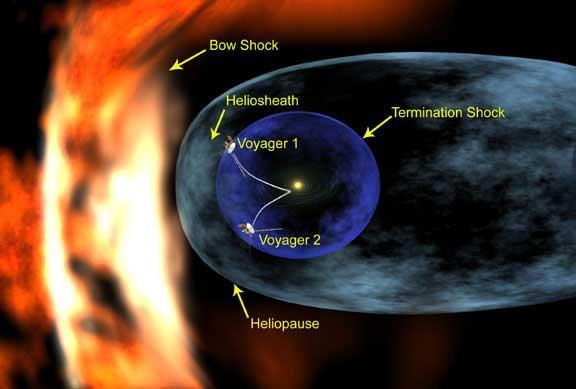
An artist's concept illustrates the positions of the Voyager spacecraft in relation to structures formed around our Sun by the solar wind. Also illustrated is the termination shock, a violent region the spacecraft must pass through before reaching the outer limits of the solar system. At the termination shock, the supersonic solar wind abruptly slows from an average speed of 400 kilometers per second to less than 100 kilometer per second (900,000 to less than 225,000 miles per hour). Beyond the termination shock is the solar system's final frontier, the heliosheath, a vast region where the turbulent and hot solar wind is compressed as it presses outward against the interstellar wind that is beyond the heliopause. A bow shock likely forms as the interstellar wind approaches and is deflected around the heliosphere, forcing it into a teardrop-shaped structure with a long, comet-like tail. The exact location of the termination shock is unknown, and it originally was thought to be closer to the Sun than Voyager 1 currently is. As Voyager 1 cruised ever farther from the Sun, it confirmed that all the planets are inside an immense bubble blown by the solar wind and the termination shock was much more distant. http://photojournal.jpl.nasa.gov/catalog/PIA04927
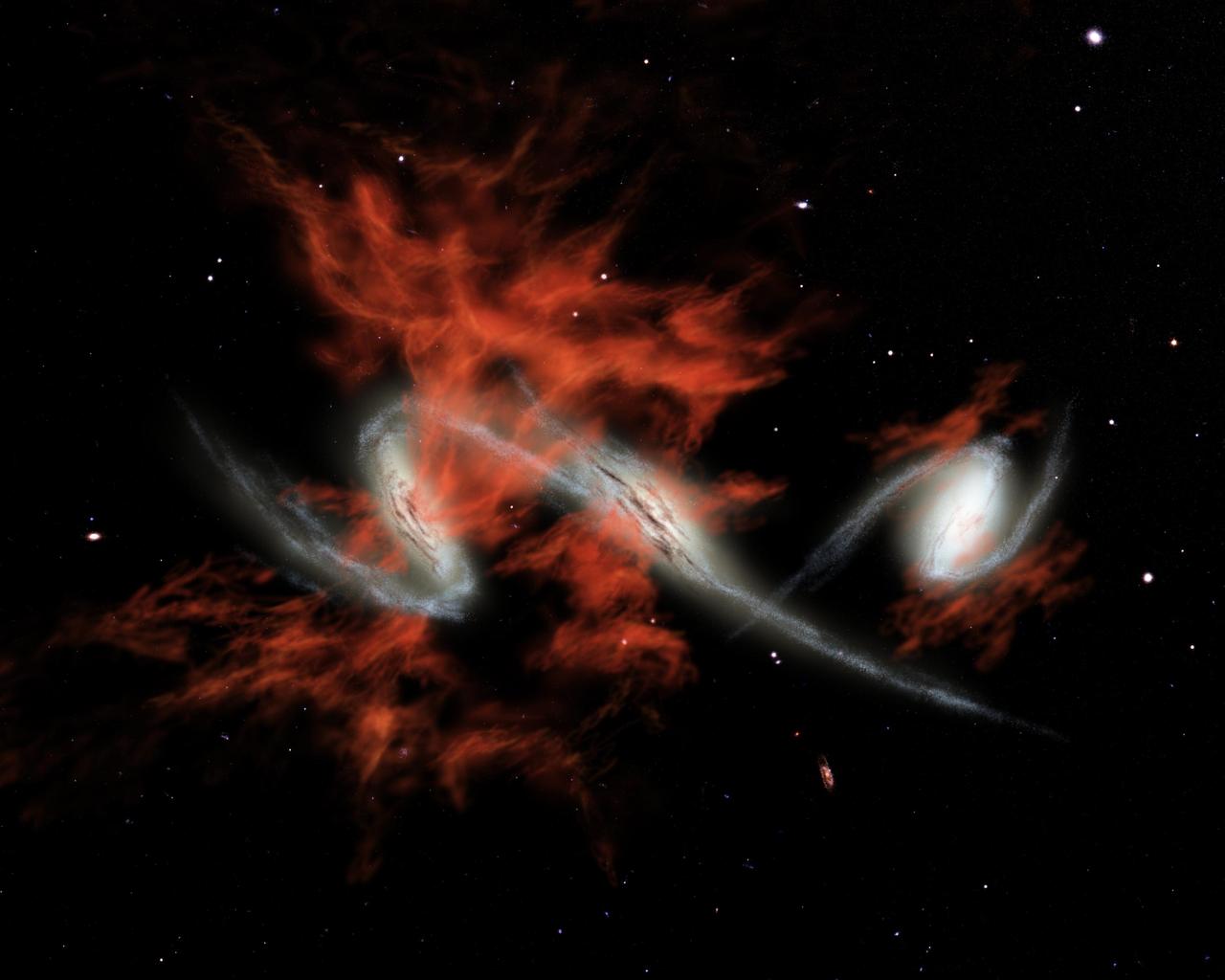
This artist's concept illustrates one possible answer to the puzzle of the "giant galactic blobs." These blobs (red), first identified about five years ago, are mammoth clouds of intensely glowing material that surround distant galaxies (white). Astronomers using visible-light telescopes can see the glow of the blobs, but they didn't know what provides the energy to light them up. NASA's Spitzer Space Telescope set its infrared eyes on one well-known blob located 11 billion light-years away, and discovered three tremendously bright galaxies, each shining with the light of more than one trillion Suns, headed toward each other. Spitzer also observed three other blobs in the same galactic neighborhood and found equally bright galaxies within them. One of these blobs is also known to contain galaxies merging together. The findings suggest that galactic mergers might be the mysterious source of blobs. If so, then one explanation for how mergers produce such large clouds of material is that they trigger intense bursts of star formation. This star formation would lead to exploding massive stars, or supernovae, which would then shoot gases outward in a phenomenon known as superwinds. Blobs produced in this fashion are illustrated in this artist's concept. http://photojournal.jpl.nasa.gov/catalog/PIA07221
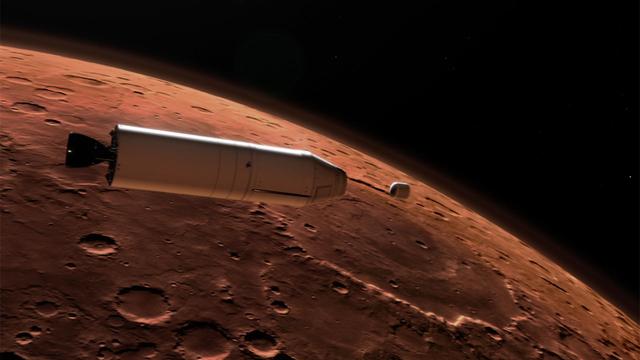
As part of a Mars sample return mission, a rocket will carry a container of sample tubes with Martian rock and soil samples into orbit around Mars and release it for pick up by another spacecraft. This illustration shows a concept for a Mars Ascent Vehicle (left) releasing a sample container (right) high above the Martian surface. NASA and the European Space Agency are solidifying concepts for a Mars sample return mission after NASA's Mars 2020 rover collects rock and soil samples and stores them in sealed tubes on the planet's surface for potential future return to Earth. NASA will deliver a Mars lander in the vicinity of Jezero Crater, where Mars 2020 will have collected and cached samples. The lander will carry a NASA rocket (the Mars Ascent Vehicle) along with an ESA Sample Fetch Rover that is roughly the size of NASA's Opportunity Mars rover. The fetch rover will gather the cached samples and carry them back to the lander for transfer to the ascent vehicle; additional samples could also be delivered directly by Mars 2020. The ascent vehicle will then launch from the surface and deploy a special container holding the samples into Mars orbit. ESA will put a spacecraft in orbit around Mars before the ascent vehicle launches. This spacecraft will rendezvous with and capture the orbiting samples before returning them to Earth. NASA will provide the payload module for the orbiter. https://photojournal.jpl.nasa.gov/catalog/PIA23500
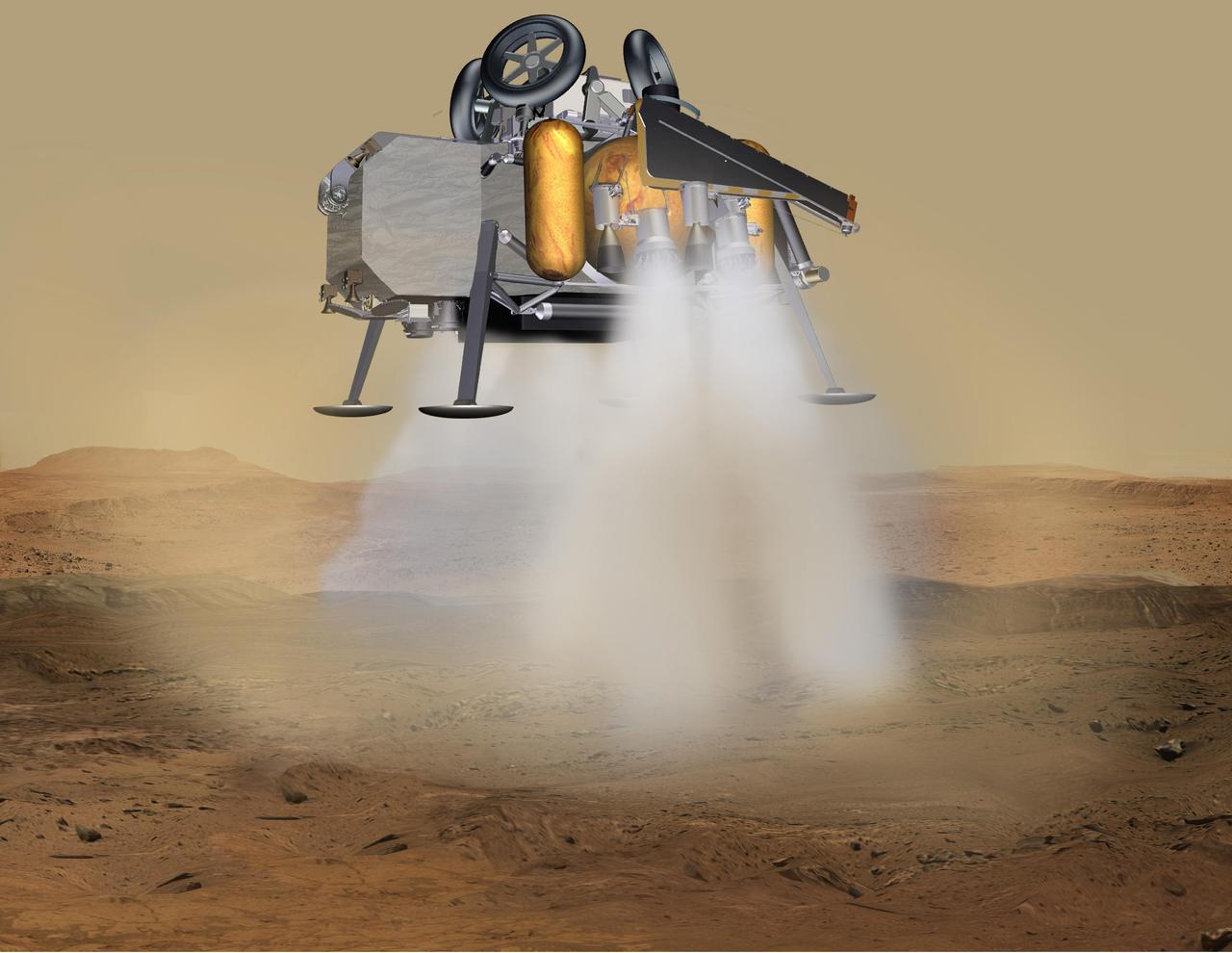
In this illustration of a Mars sample return mission concept, a lander carrying a fetch rover touches down on the surface of Mars. NASA and the European Space Agency (ESA) are solidifying concepts for a Mars sample return mission after NASA's Mars 2020 rover collects rock and soil samples, storing them in sealed tubes on the planet's surface for future return to Earth. NASA will deliver a Mars lander in the vicinity of Jezero Crater, where Mars 2020 will have collected and cached samples. The lander will carry a NASA rocket (the Mars Ascent Vehicle), along with ESA's Sample Fetch Rover that is roughly the size of NASA's Opportunity Mars rover. The fetch rover will gather the cached samples and carry them back to the lander for transfer to the ascent vehicle; additional samples could also be delivered directly by Mars 2020. The ascent vehicle will then launch a special container holding the samples into Mars orbit. ESA will put a spacecraft in orbit around Mars before the ascent vehicle launches. This spacecraft will rendezvous with and capture the orbiting samples before returning them to Earth. NASA will provide the payload module for the orbiter. https://photojournal.jpl.nasa.gov/catalog/PIA23494
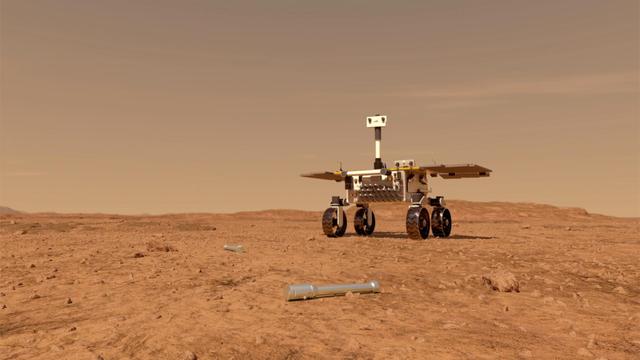
This illustration shows a concept of what a rover fetching rock and soil samples on Mars for return to Earth could look like. The sample tube in this image would have been left on the surface by a previous mission, NASA's Mars 2020 rover. NASA and the European Space Agency (ESA) are solidifying concepts for a Mars sample return mission to return Mars 2020 samples to Earth for scientific investigation. NASA will deliver a Mars lander in the vicinity of Jezero Crater, where the Mars 2020 rover will have collected and cached samples. The lander will carry a NASA rocket (the Mars Ascent Vehicle) along with ESA's Sample Fetch Rover that is roughly the size of NASA's Opportunity Mars rover. The fetch rover will gather the cached samples and carry them back to the lander for transfer to the ascent vehicle; additional samples could also be delivered directly by Mars 2020. The ascent vehicle will then launch a special container holding the samples into Mars orbit. ESA will put a spacecraft in orbit around Mars before the ascent vehicle launches. This spacecraft will rendezvous with and capture the orbiting samples before returning them to Earth. NASA will provide the payload module for the orbiter. https://photojournal.jpl.nasa.gov/catalog/PIA23493
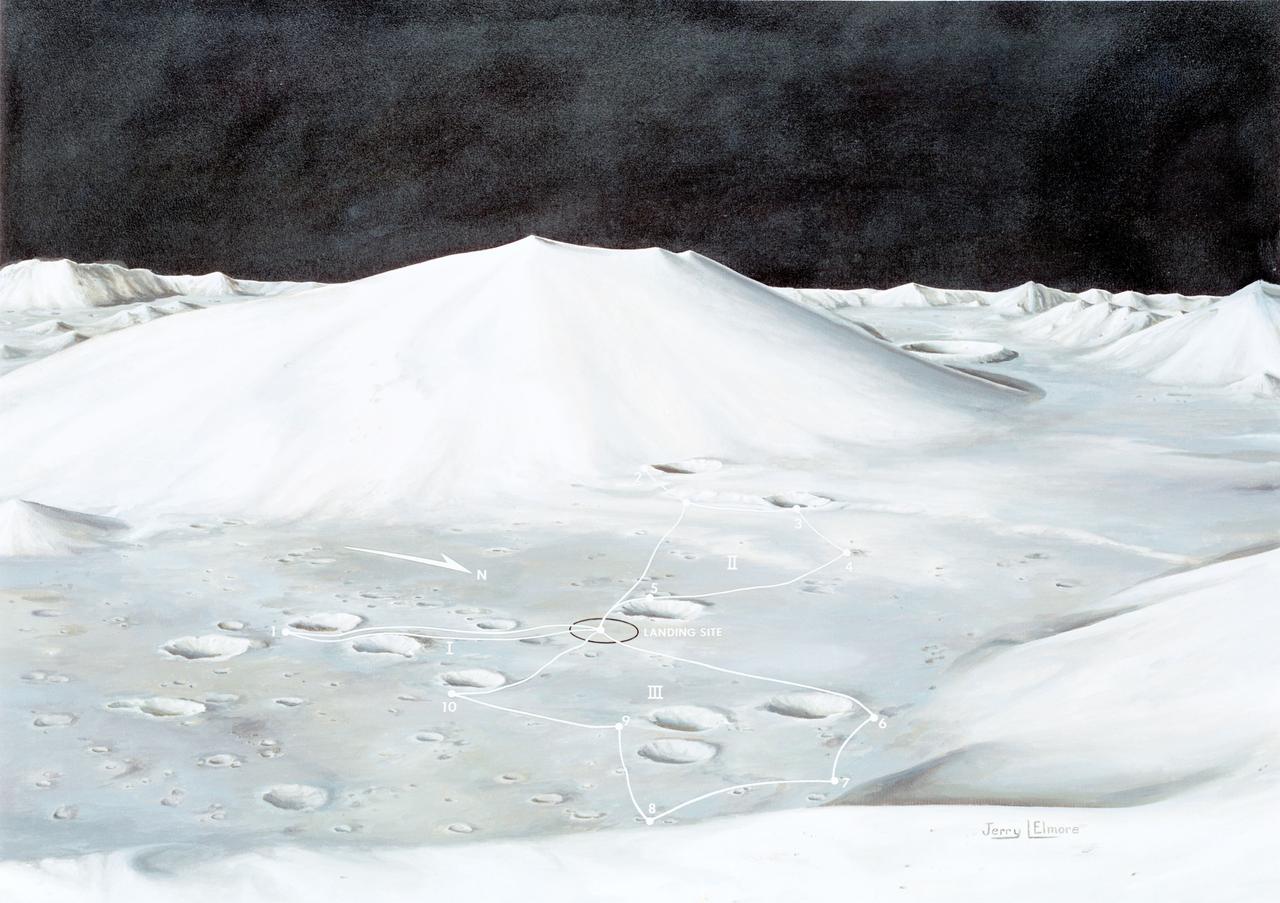
S72-49760 (October 1972) --- An artist's concept illustrating the topographical layout of the Taurus-Littrow landing site of the Apollo 17 lunar landing mission. The Lunar Module touchdown point is in the center of the smooth area in the middle of the picture. The imposing mountain in the center is South Massif. A portion of North Massif is in the lower right corner of the photograph. Note the ridge-like feature extending from South Massif to North Massif. The southern portion of the ridge is called Lee Scarp and the northerly portion Lincoln Scarp. (This concept is by JSC artist Jerry Elmore).
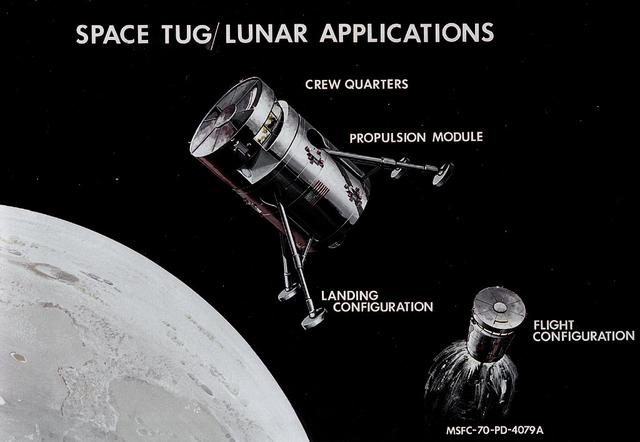
Managed by Marshall Space Flight Center, the Space Tug concept was intended to be a reusable multipurpose space vehicle designed to transport payloads to different orbital inclinations. Utilizing mission-specific combinations of its three primary modules (crew, propulsion, and cargo) and a variety of supplementary kits, the Space Tug was capable of numerous space applications. This 1970 artist's concept illustrates a Space Tug with an attached landing configuration kit as it prepares for a lunar application. The Space Tug program was cancelled and did not become a reality.

This artist's concept show how it is possible for a single collection of particles, which share a common family of orbits around the Sun, to produce the appearance of identical bands on either side of the zodical or ecliptic plane. The bands were discovered in data from the Infrared Astronomical Satellite. Also illustrated is the concept of a comet/asteroid collision which could have created a cloud of debris. The dust cloud, as depicted here, has the orbital parameters needed to produce the band structure observed by IRAS.
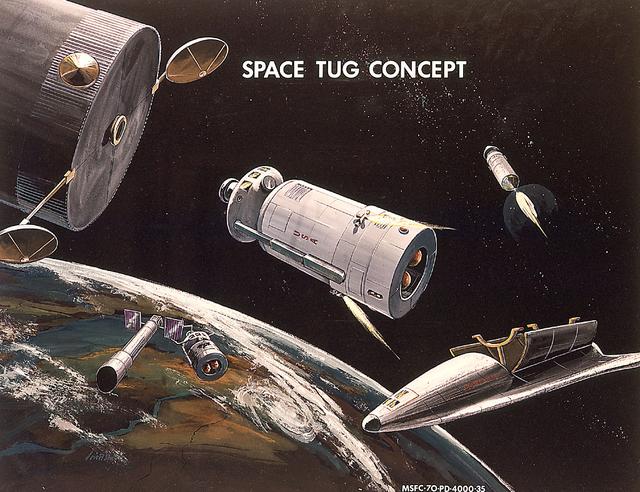
Managed by Marshall Space Flight Center, the Space Tug was intended to be a reusable multipurpose space vehicle designed to transport payloads to different orbital inclinations. Utilizing mission-specific combinations of its three primary modules (crew, propulsion, and cargo) and a variety of supplementary kits, the Space Tug would have been capable of numerous space applications. This 1970 artist's concept illustrates a Space Tug Concept, crew module attached, in conjunction with other space vehicles. The Space Tug program was cancelled and did not become a reality.
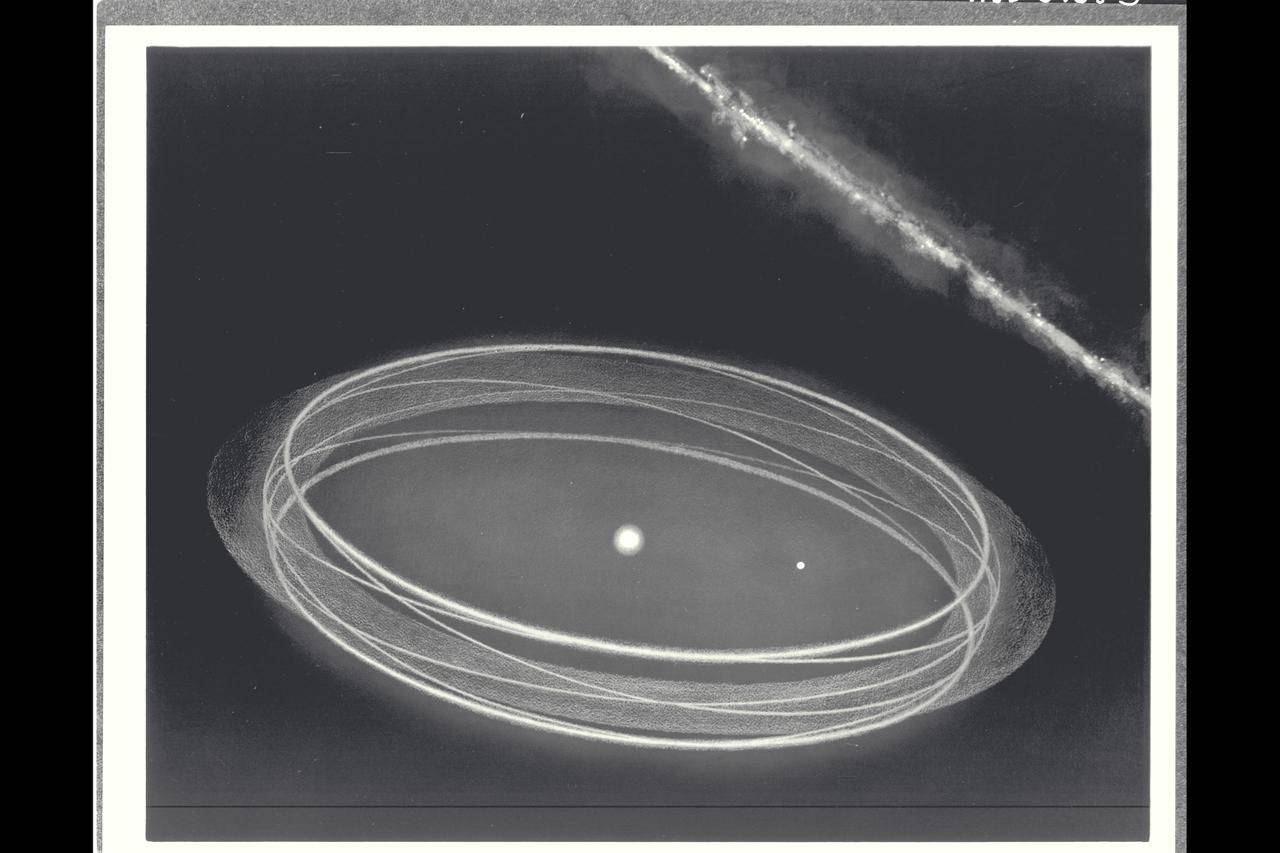
This artist's concept show how it is possible for a single collection of particles, which share a common family of orbits around the Sun, to produce the appearance of identical bands on either side of the zodical or ecliptic plane. The bands were discovered in data from the Infrared Astronomical Satellite. Also illustrated is the concept of a comet/asteroid collision which could have created a cloud of debris. The dust cloud, as depicted here, has the orbital parameters needed to produce the band structure observed by IRAS.
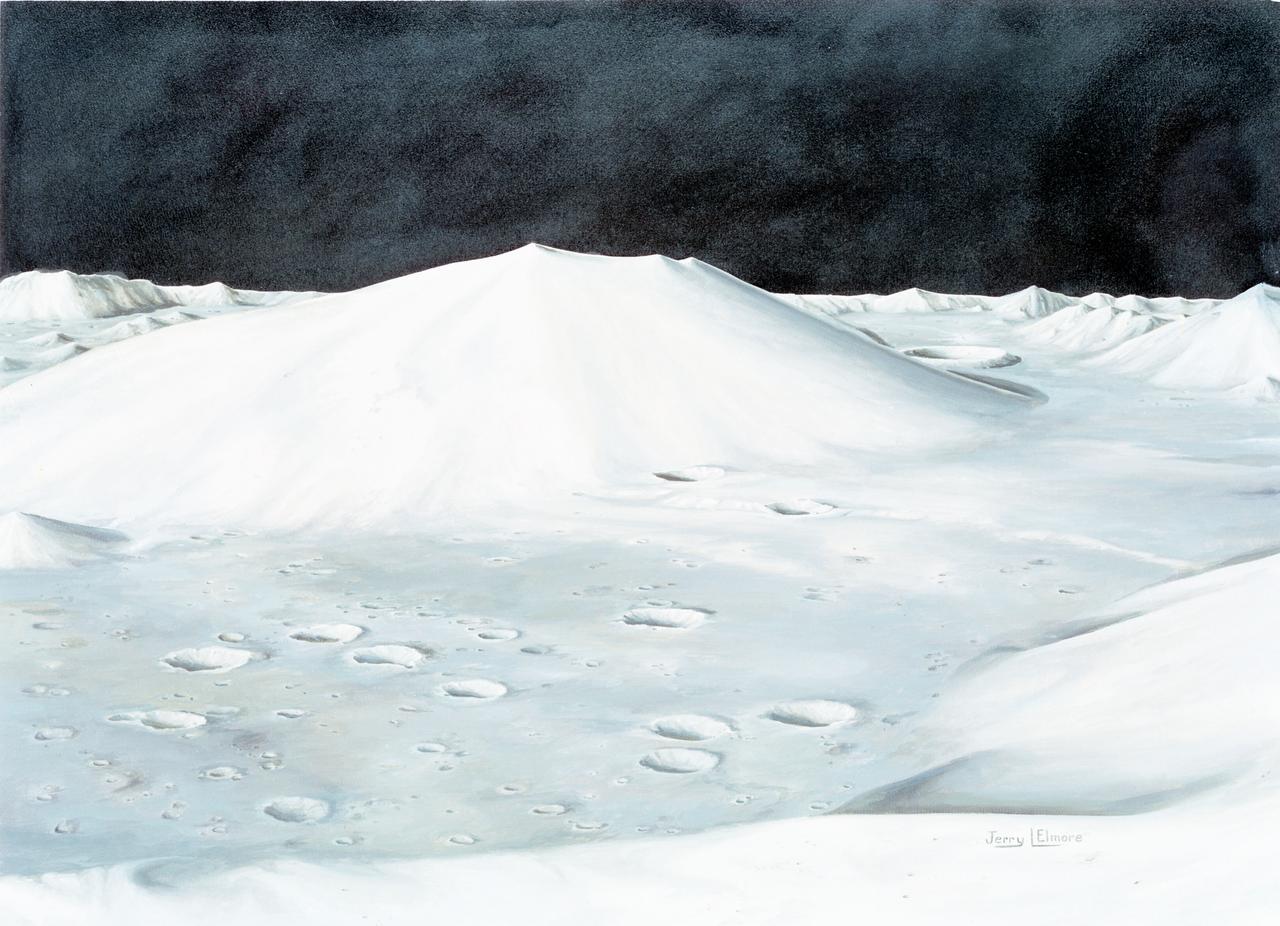
S72-49761 (October 1972) --- An artist's concept illustrating the topographical layout of the Taurus-Littrow landing site of the Apollo 17 lunar landing mission. The Lunar Module touchdown point is in the center of the smooth area in the middle of the picture. The imposing mountain in the center is South Massif. A portion of North Massif is in the lower right corner of the photograph. Note the ridge-like feature extending from South Massif to North Massif. The southern portion of the ridge is called Lee Scarp and the northerly portion Lincoln Scarp. (This concept is by JSC artist Jerry Elmore).
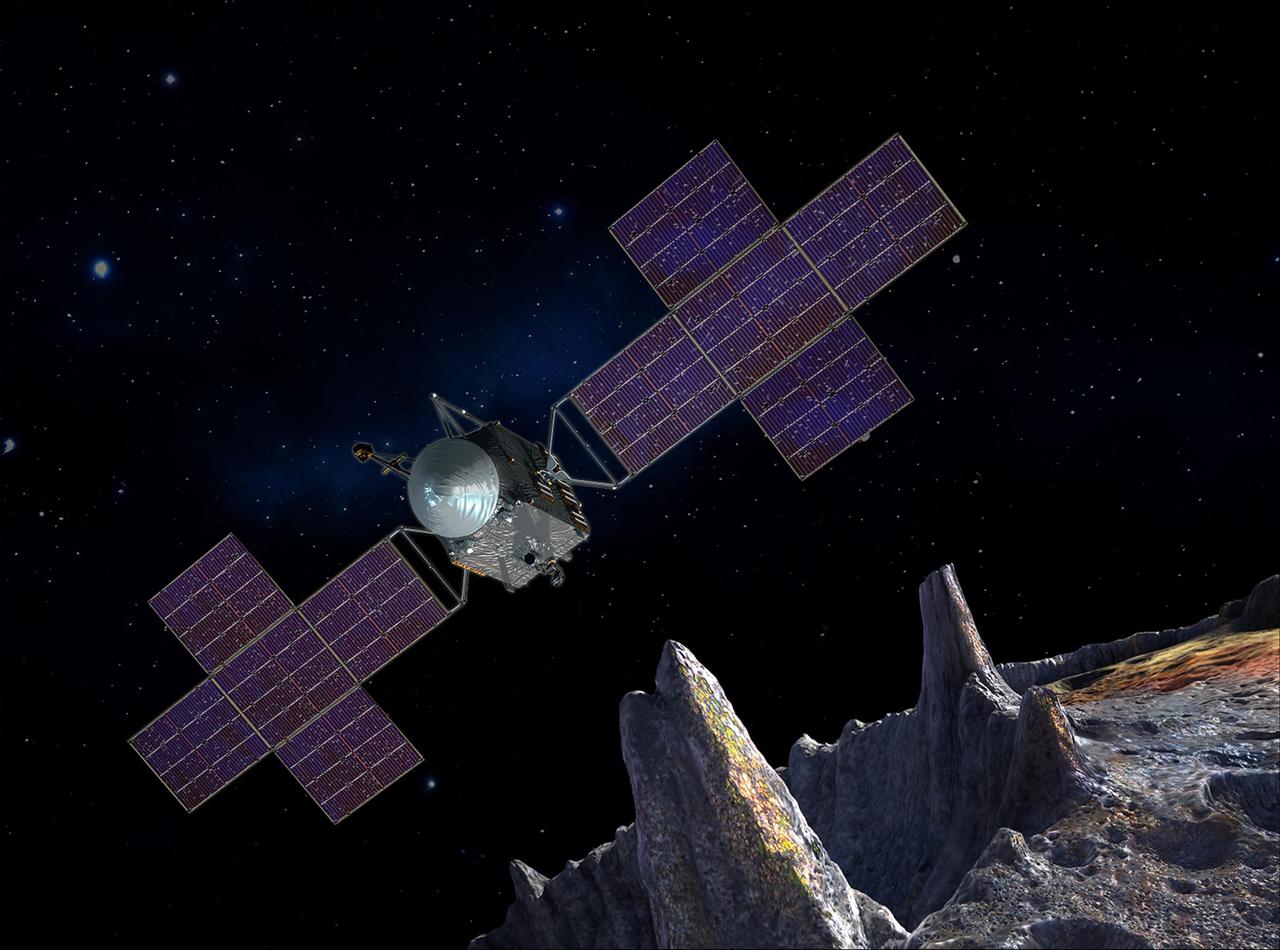
This artist's-concept illustration depicts the spacecraft of NASA's Psyche mission near the mission's target, the metal asteroid Psyche. The artwork was created in May 2017 to show the five-panel solar arrays planned for the spacecraft. The spacecraft's structure will include power and propulsion systems to travel to, and orbit, the asteroid. These systems will combine solar power with electric propulsion to carry the scientific instruments used to study the asteroid through space. The mission plans launch in 2022 and arrival at Psyche, between the orbits of Mars and Jupiter, in 2026. This selected asteroid is made almost entirely of nickel-iron metal. It offers evidence about violent collisions that created Earth and other terrestrial planets. https://photojournal.jpl.nasa.gov/catalog/PIA21499
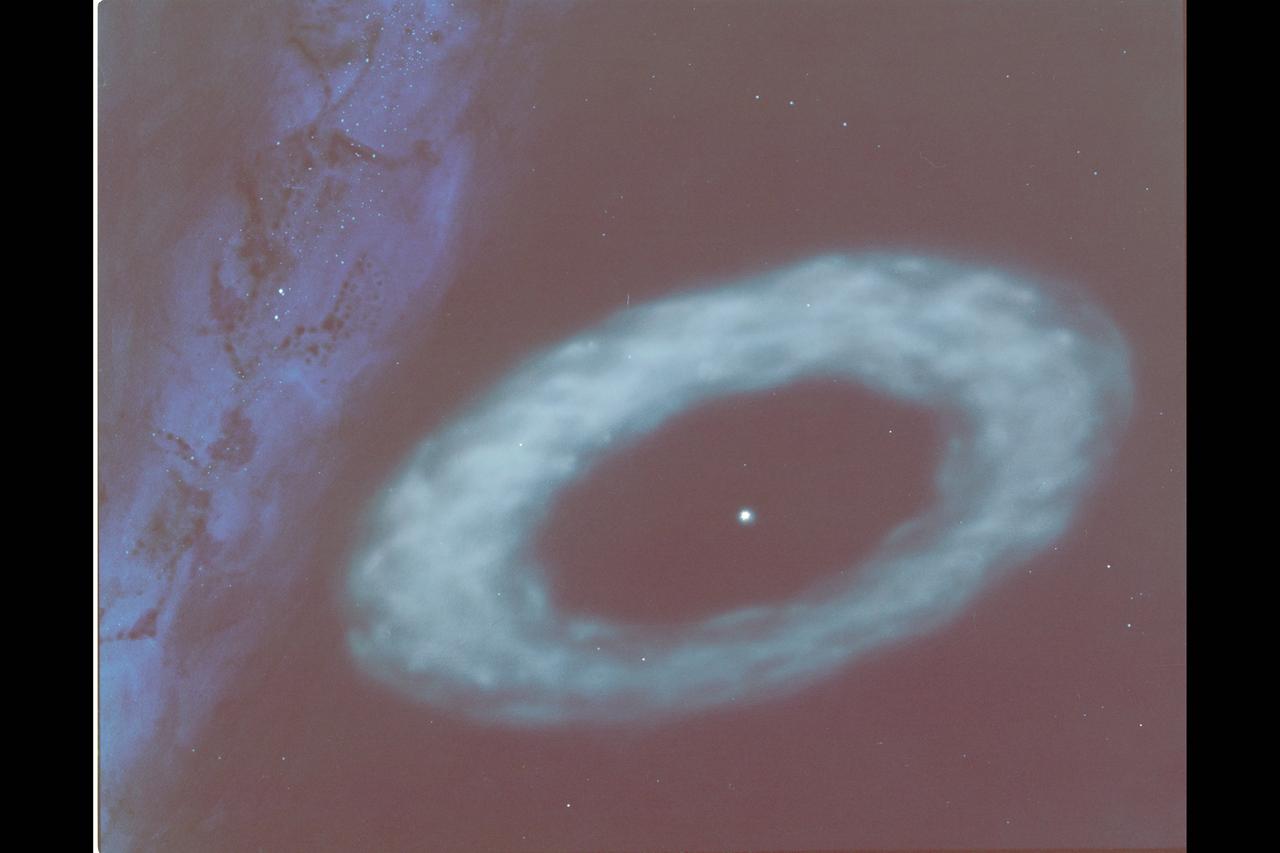
This artist's concept illustrates the ring of material discovered by the Infrared Astronomical Satellite around the star Vega. IRAS scientists believe the material probably consists of dust and small objects resembling meteors. As depicted here, the ring of particles is thin enough toallow light from distant stars to shine through. The plane of the Milky Way is to the right.
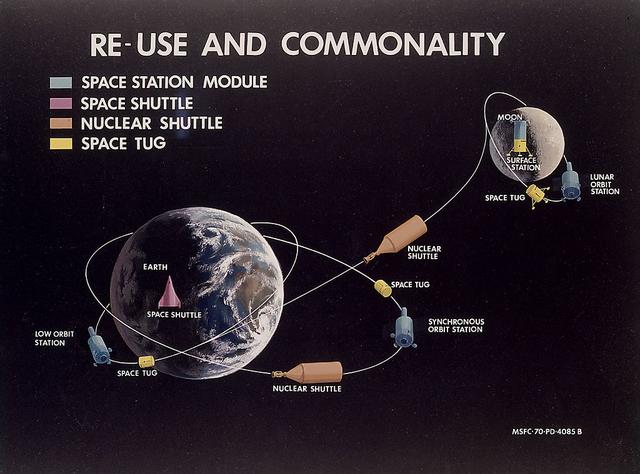
This 1970 artist's concept illustrates the use of the Space Shuttle, Nuclear Shuttle, and Space Tug in NASA's Integrated Program. As a result of the Space Task Group's recommendations for more commonality and integration in the American space program, Marshall Space Flight Center engineers studied many of the spacecraft depicted here.
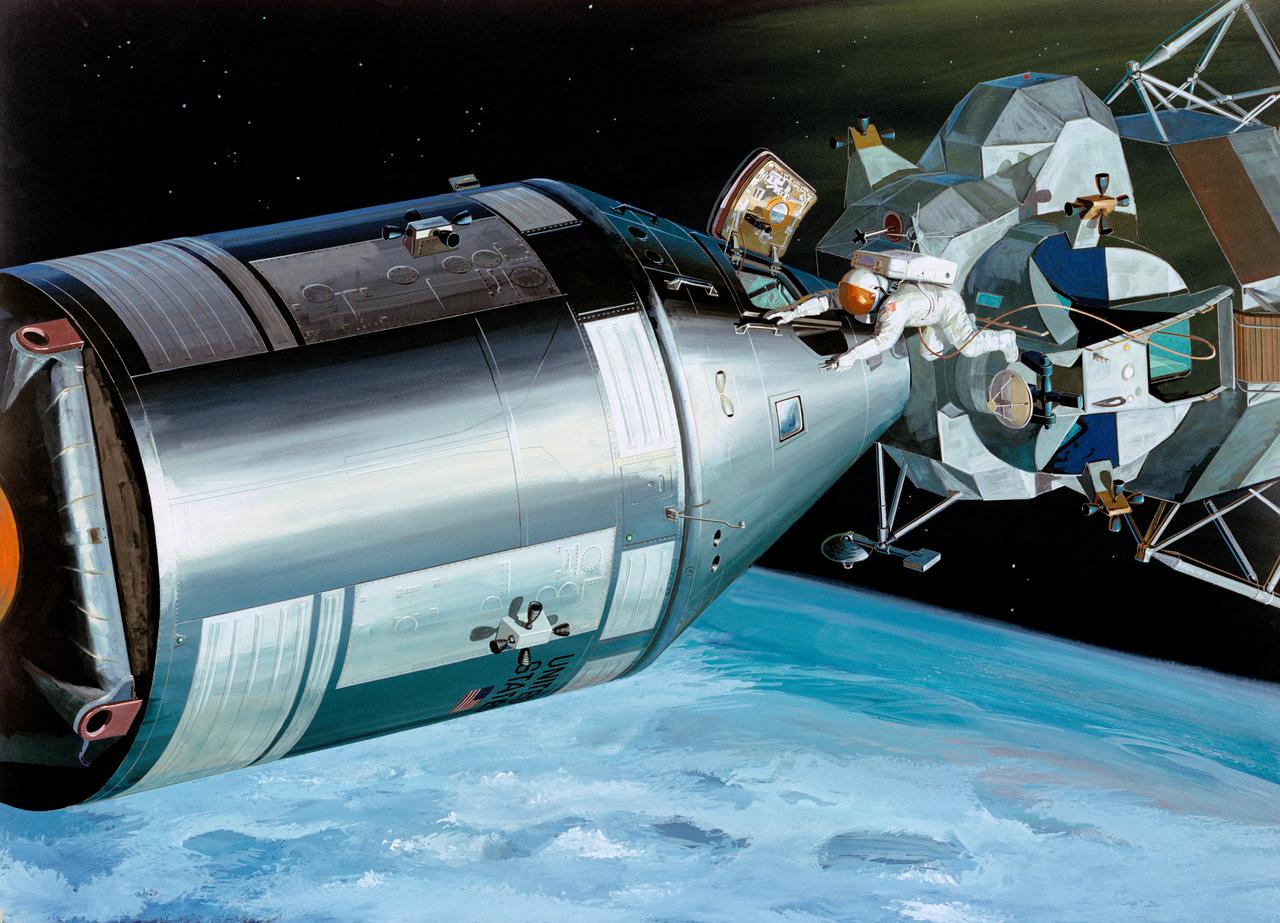
S69-18547 (1969) --- North American Rockwell artist's concept illustrating a part of the planned Apollo 9 extravehicular activity on the fourth day of the mission as the Command and Service Modules are docked to the Lunar Module. The figure performing the EVA represents astronaut Russell L. Schweickart, Apollo 9 lunar module pilot.
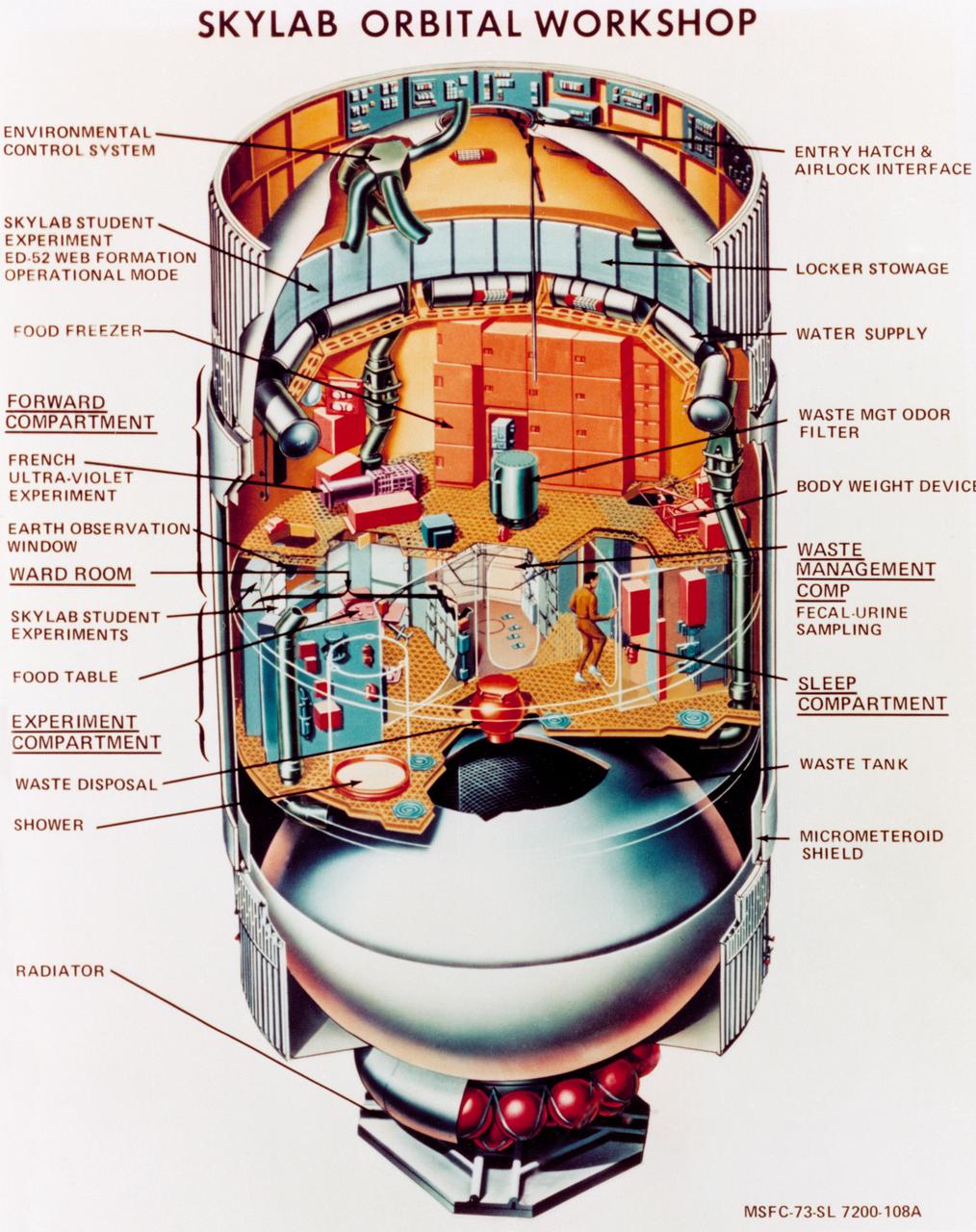
S73-23919 (May 1973) --- An artist's concept illustrating a cutaway view of the Skylab 1 Orbital Workshop (OWS). The OWS is one of the five major components of the Skylab 1 space station cluster which was launched by a Saturn V on May 14, 1973 into Earth orbit. Photo credit: NASA