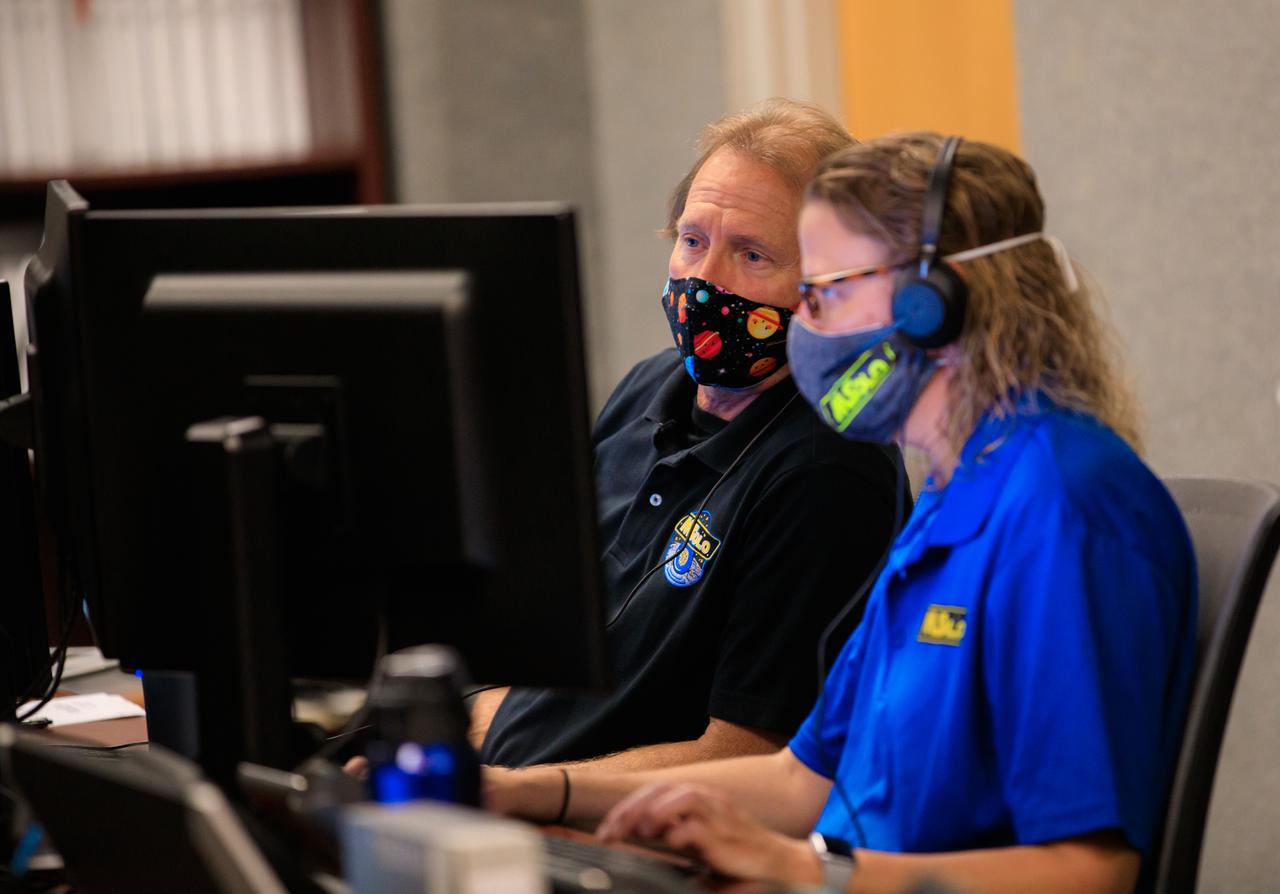
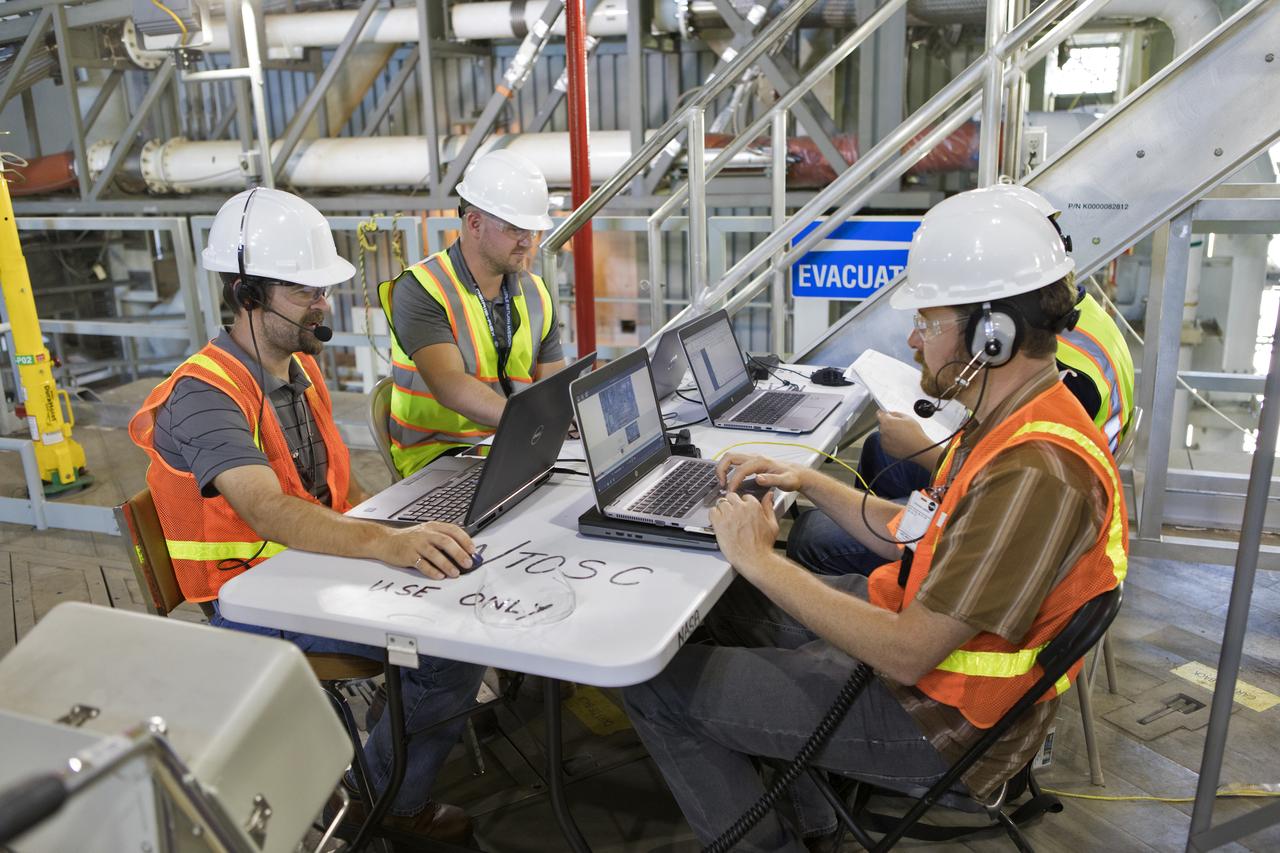
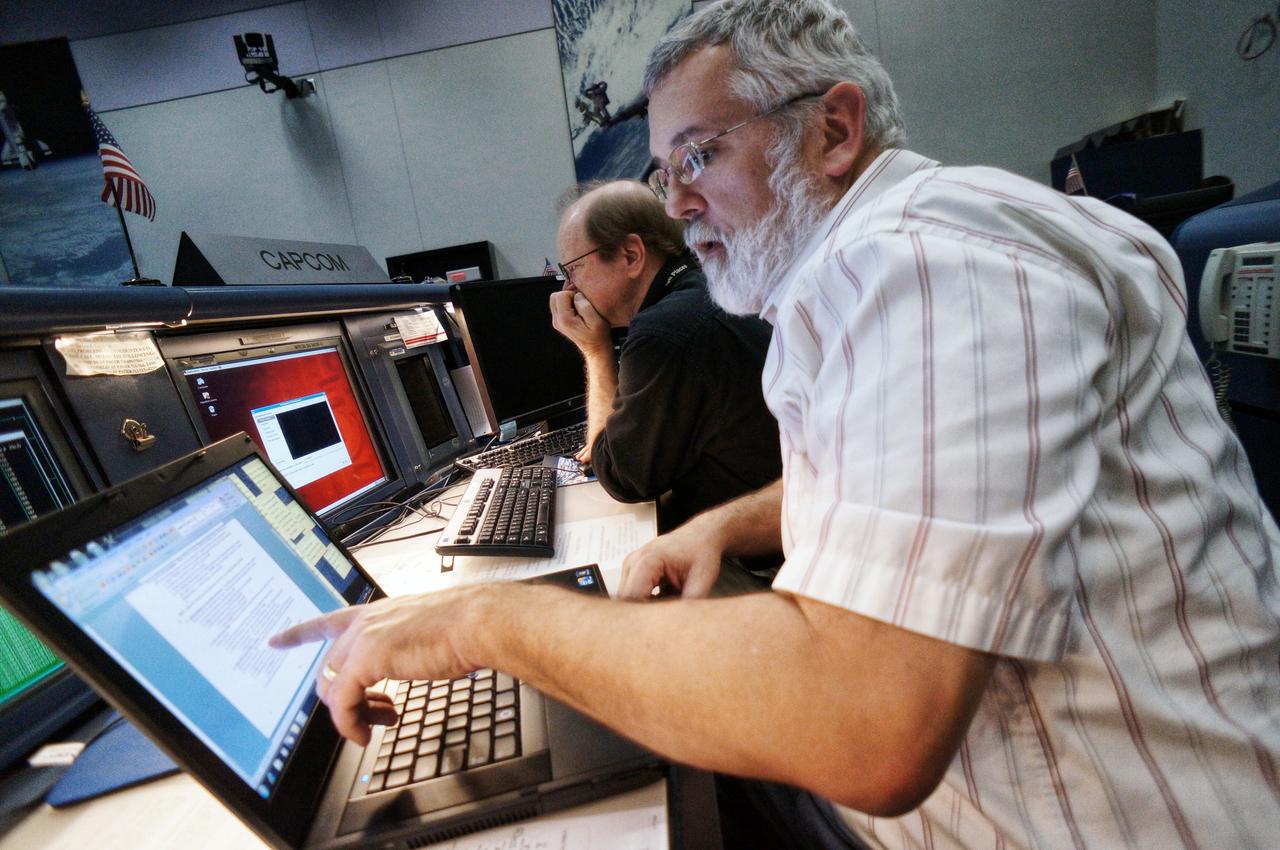
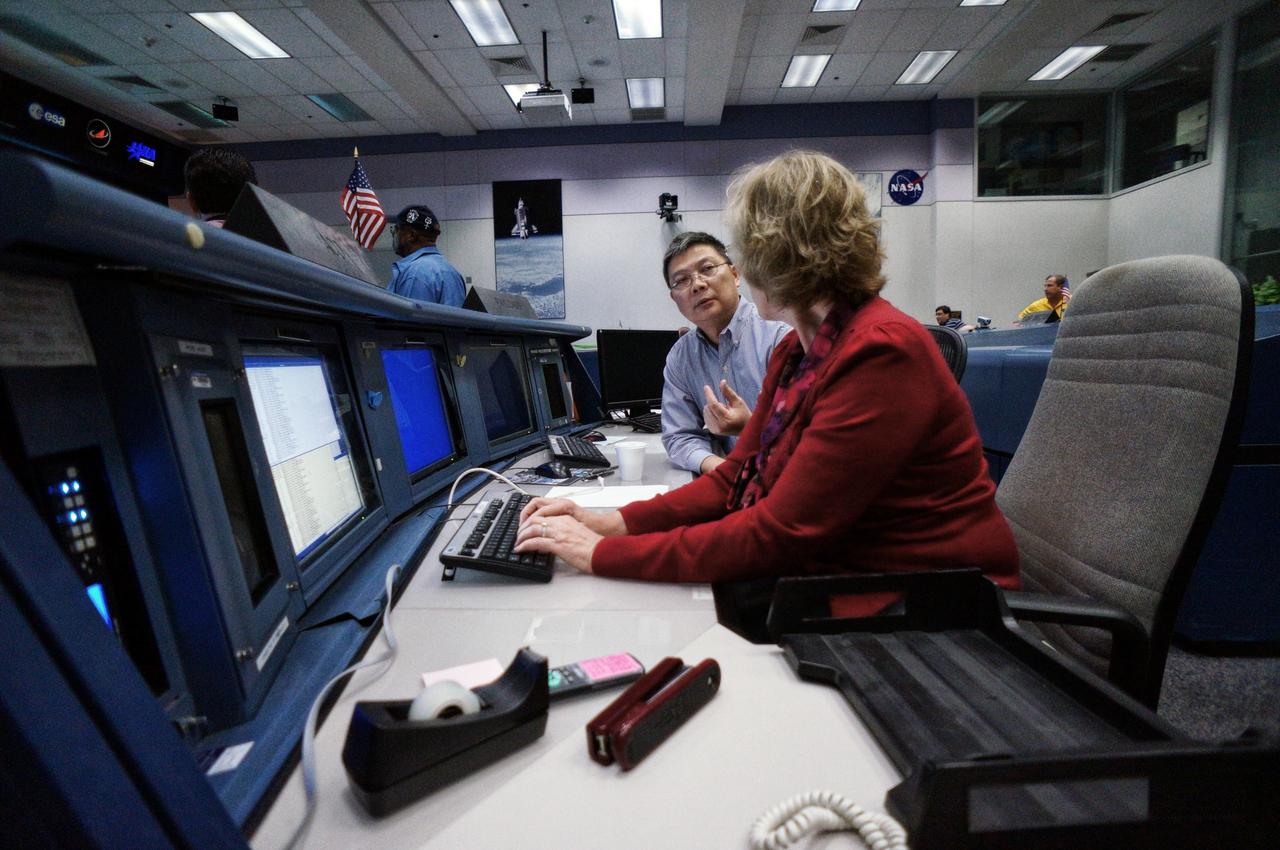
Janine Captain, at right, principal investigator for NASA’s Mass Spectrometer observing lunar operations (MSolo) and Kevin Smith, software team and science team liaison at NASA’s Kennedy Space Center in Florida, confer during a joint simulation of the Peregrine One Mission on March 26, 2021, where MSolo is connected from inside the Neil Armstrong Operations and Checkout Building to Astrobotic’s mission control facility in Pittsburgh, Pennsylvania. MSolo is a commercial off-the-shelf mass spectrometer modified to work in space and it will help analyze the chemical makeup of landing sites on the Moon, as well as study water on the lunar surface. This was the first mission round of simulations for Peregrine Mission One to develop and refine procedures between Astrobotic’s Peregrine Lander and MSolo. Later, there will be other simulations with multiple instruments. Peregrine Mission One will be one of NASA’s first Commercial Lunar Payload Delivery Service (CLPS) missions where under the Artemis program, commercial deliveries beginning in 2021 will perform science experiments, test technologies and demonstrate capabilities to help NASA explore the Moon and prepare for human missions.
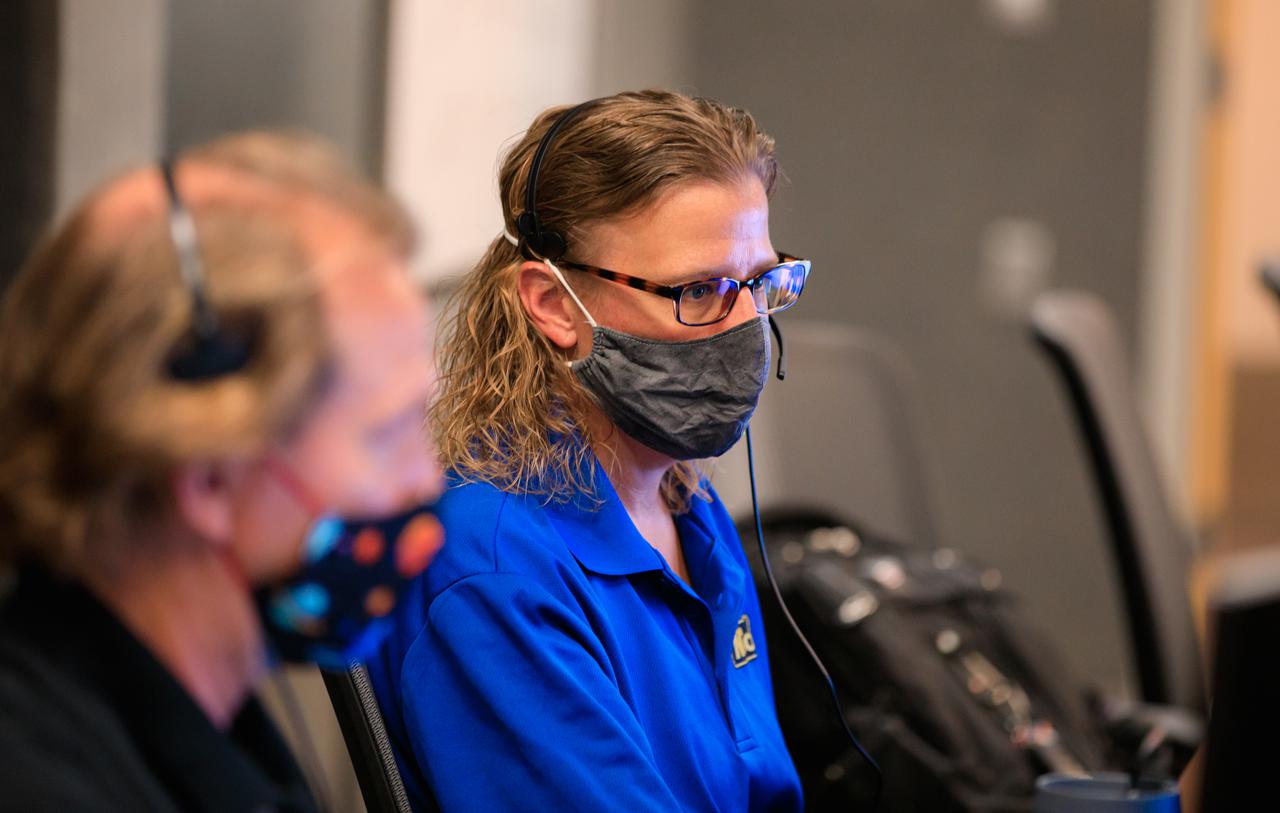
Janine Captain, at right, principal investigator for NASA’s Mass Spectrometer observing lunar operations (MSolo) takes part in a simulation of the Peregrine One Mission on March 26, 2021, where MSolo connected from inside the Neil Armstrong Operations and Checkout Building at NASA’s Kennedy Space Center in Florida to Astrobotic’s mission control facility in Pittsburgh, Pennsylvania. MSolo is a commercial off-the-shelf mass spectrometer modified to work in space and it will help analyze the chemical makeup of landing sites on the Moon, as well as study water on the lunar surface. This was the first mission round of simulations for Peregrine Mission One to develop and refine procedures between Astrobotic’s Peregrine Lander and MSolo. Later, there will be other simulations with multiple instruments. Peregrine Mission One will be one of NASA’s first Commercial Lunar Payload Delivery Service (CLPS) missions where under the Artemis program, commercial deliveries beginning in 2021 will perform science experiments, test technologies and demonstrate capabilities to help NASA explore the Moon and prepare for human missions.
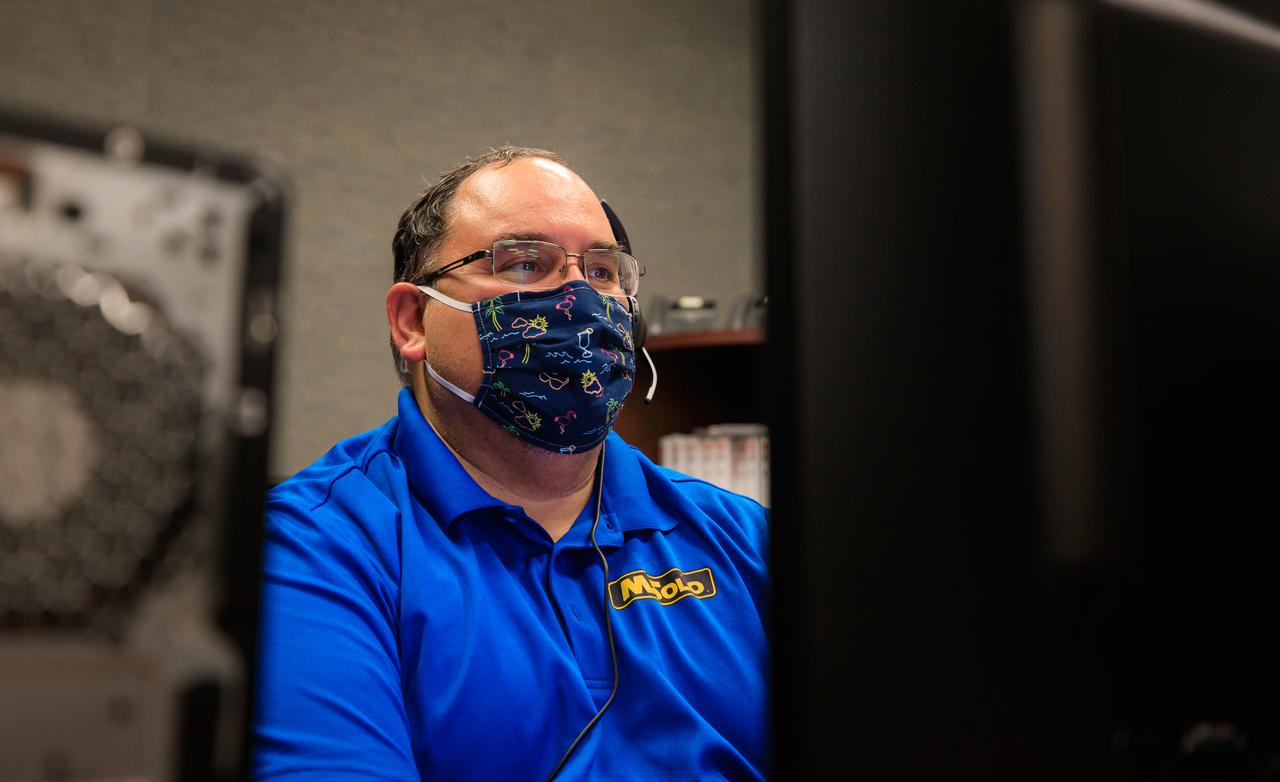
Rolando Nieves, software architect for NASA’s Mass Spectrometer observing lunar operations (MSolo) takes part in a joint simulation of the Peregrine One Mission on March 26, 2021, where MSolo is connected from inside the Neil Armstrong Operations and Checkout Building at NASA’s Kennedy Space Center in Florida to Astrobotic’s mission control facility in Pittsburgh, Pennsylvania. MSolo is a commercial off-the-shelf mass spectrometer modified to work in space and it will help analyze the chemical makeup of landing sites on the Moon, as well as study water on the lunar surface. This was the first mission round of simulations for Peregrine Mission One to develop and refine procedures between Astrobotic’s Peregrine Lander and MSolo. Later, there will be other simulations with multiple instruments. Peregrine Mission One will be one of NASA’s first Commercial Lunar Payload Delivery Service (CLPS) missions where under the Artemis program, commercial deliveries beginning in 2021 will perform science experiments, test technologies and demonstrate capabilities to help NASA explore the Moon and prepare for human missions.
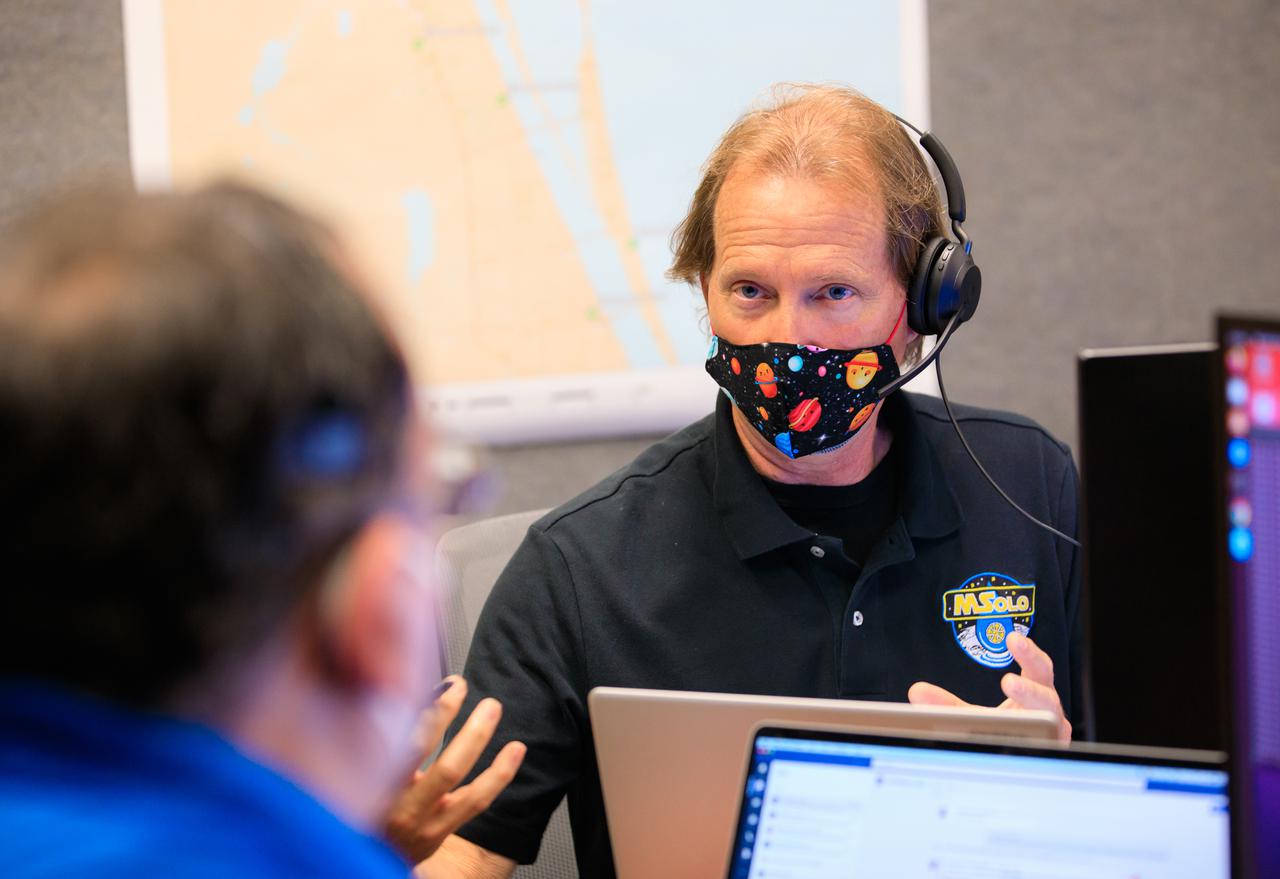
Kevin Smith, software team and science team liaison for NASA’s Mass Spectrometer observing lunar operations (MSolo), takes part in a joint simulation of the Peregrine One Mission on March 26, 2021, at NASA’s Kennedy Space Center in Florida, where MSolo connected from inside the Neil Armstrong Operations and Checkout Building to Astrobotic’s mission control facility in Pittsburgh, Pennsylvania. MSolo is a commercial off-the-shelf mass spectrometer modified to work in space and it will help analyze the chemical makeup of landing sites on the Moon, as well as study water on the lunar surface. This was the first mission round of simulations for Peregrine Mission One to develop and refine procedures between Astrobotic’s Peregrine Lander and MSolo. Later, there will be other simulations with multiple instruments. Peregrine Mission One will be one of NASA’s first Commercial Lunar Payload Delivery Service (CLPS) missions where under the Artemis program, commercial deliveries beginning in 2021 will perform science experiments, test technologies and demonstrate capabilities to help NASA explore the Moon and prepare for human missions.
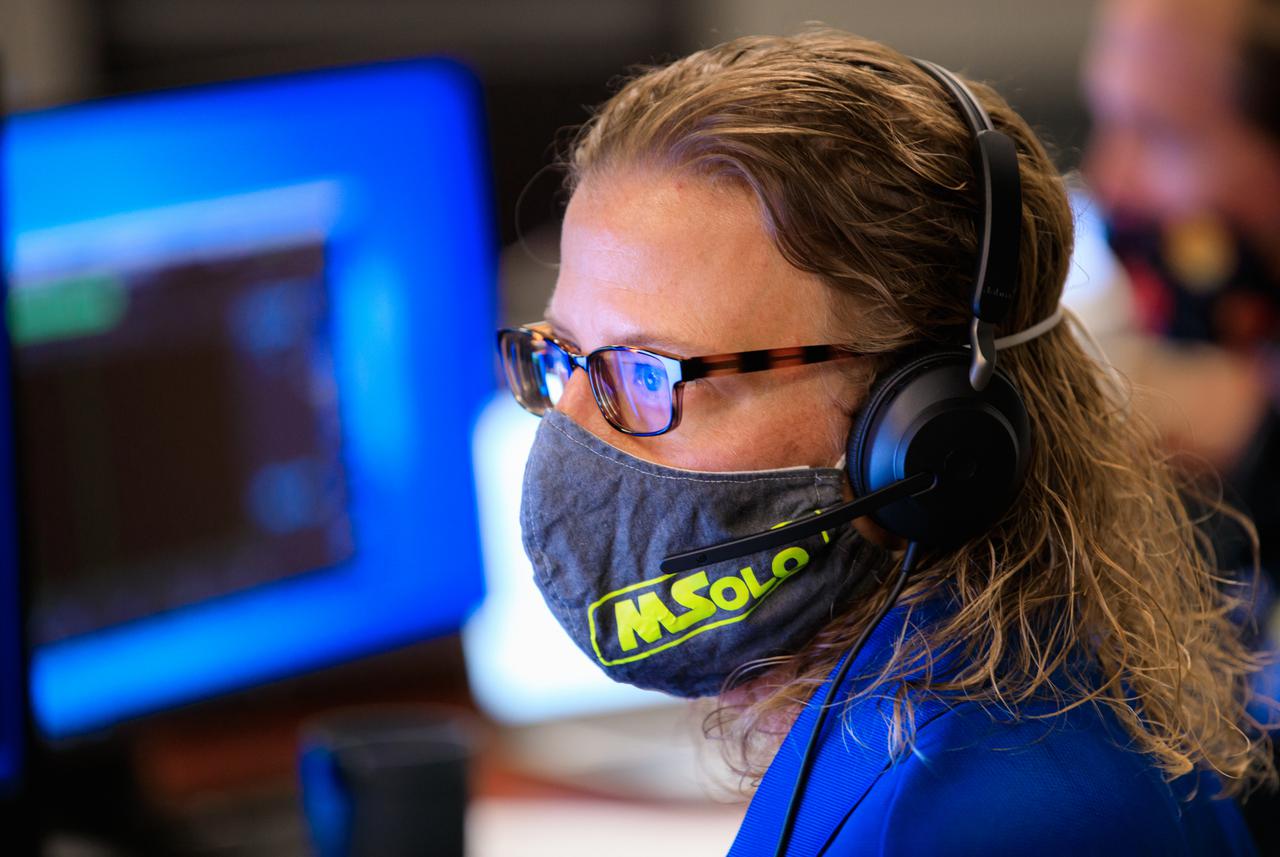
Janine Captain, principal investigator for NASA’s Mass Spectrometer observing lunar operations (MSolo) takes part in a joint simulation of the Peregrine One Mission on March 26, 2021, where MSolo connected from inside the Neil Armstrong Operations and Checkout Building at NASA’s Kennedy Space Center in Florida to Astrobotic’s mission control facility in Pittsburgh, Pennsylvania. MSolo is a commercial off-the-shelf mass spectrometer modified to work in space and it will help analyze the chemical makeup of landing sites on the Moon, as well as study water on the lunar surface. This was the first mission round of simulations for Peregrine Mission One to develop and refine procedures between Astrobotic’s Peregrine Lander and MSolo. Later, there will be other simulations with multiple instruments. Peregrine Mission One will be one of NASA’s first Commercial Lunar Payload Delivery Service (CLPS) missions where under the Artemis program, commercial deliveries beginning in 2021 will perform science experiments, test technologies and demonstrate capabilities to help NASA explore the Moon and prepare for human missions.
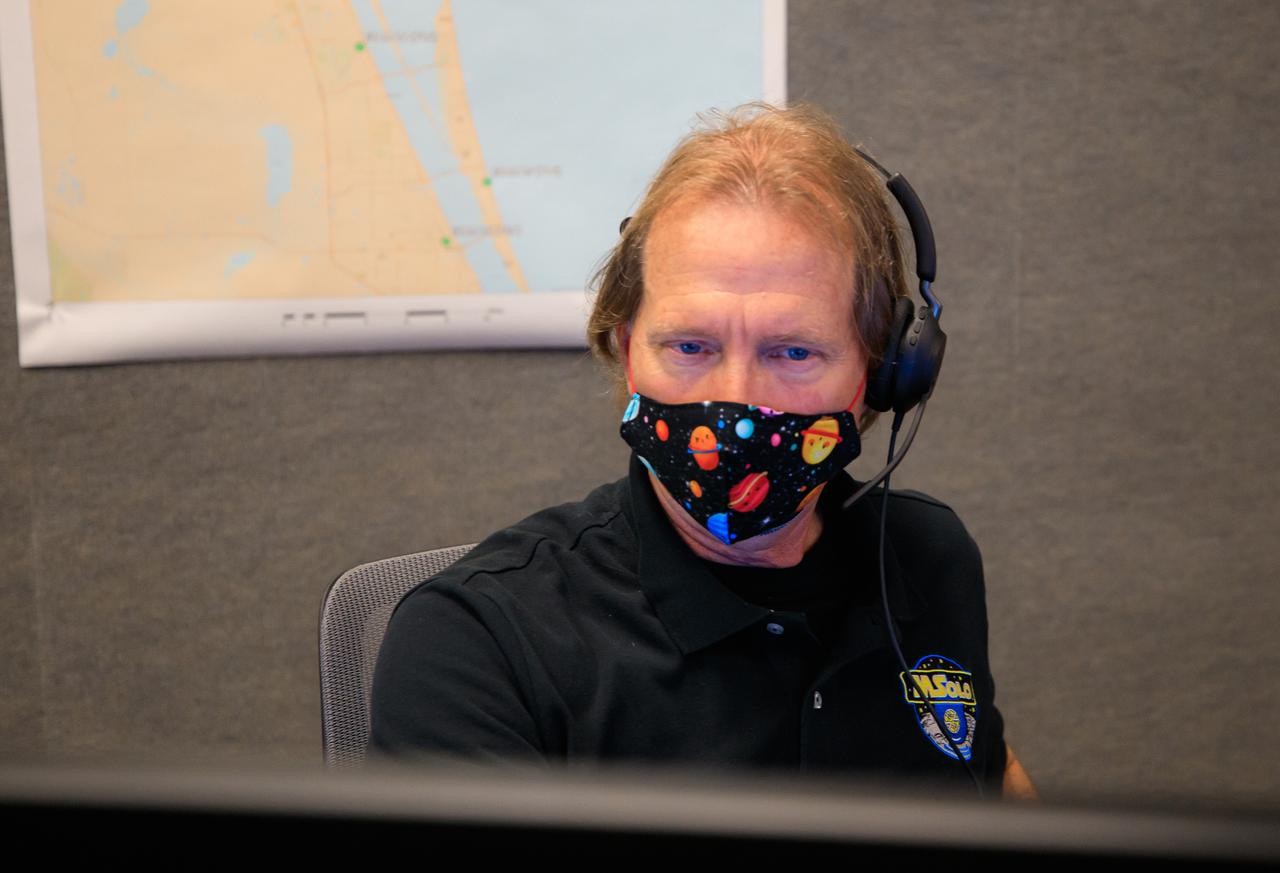
Kevin Smith, software team and science team liaison for NASA’s Mass Spectrometer observing lunar operations (MSolo), takes part in a joint simulation of the Peregrine One Mission on March 26, 2021, at NASA’s Kennedy Space Center in Florida, where MSolo connected from inside the Neil Armstrong Operations and Checkout Building to Astrobotic’s mission control facility in Pittsburgh, Pennsylvania. MSolo is a commercial off-the-shelf mass spectrometer modified to work in space and it will help analyze the chemical makeup of landing sites on the Moon, as well as study water on the lunar surface. This was the first mission round of simulations for Peregrine Mission One to develop and refine procedures between Astrobotic’s Peregrine Lander and MSolo. Later, there will be other simulations with multiple instruments. Peregrine Mission One will be one of NASA’s first Commercial Lunar Payload Delivery Service (CLPS) missions where under the Artemis program, commercial deliveries beginning in 2021 will perform science experiments, test technologies and demonstrate capabilities to help NASA explore the Moon and prepare for human missions.
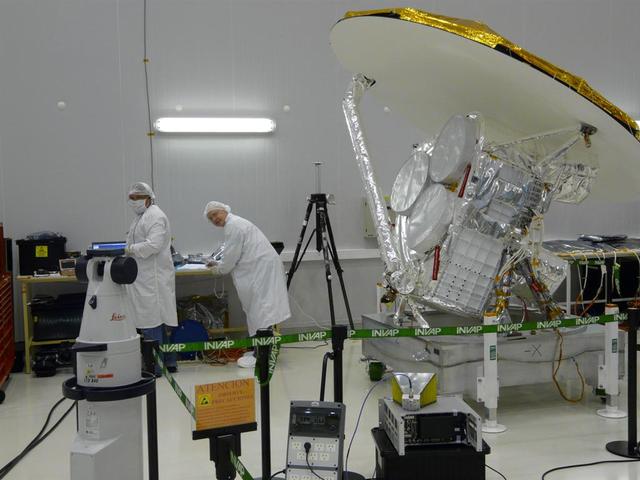
NASA Aquarius instrument power interfaces are tested prior to connection with the SAC-D service platform at the INVAP facility in Bariloche, Argentina.
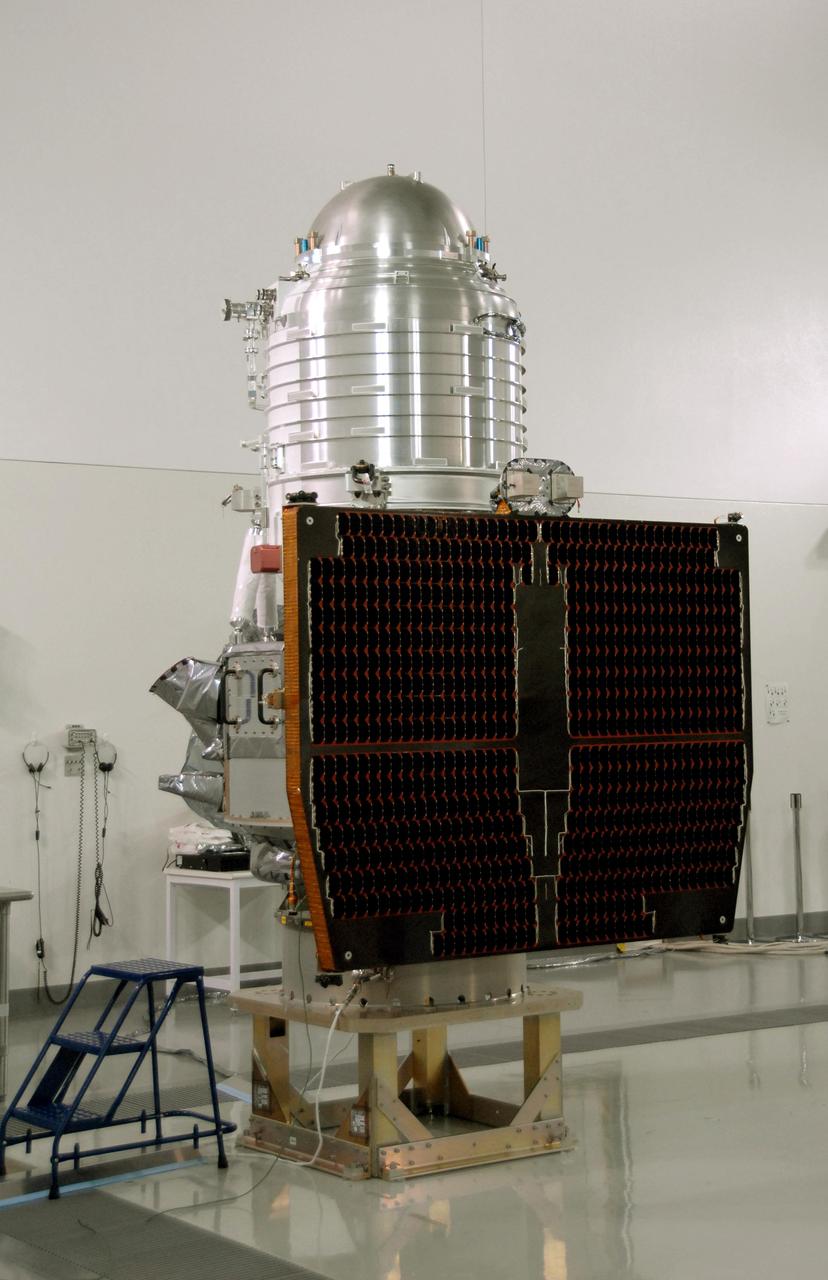
NASA Wide-field Infrared Survey Explorer, or WISE, spacecraft sits on the test stand after connection to the conical adapter.
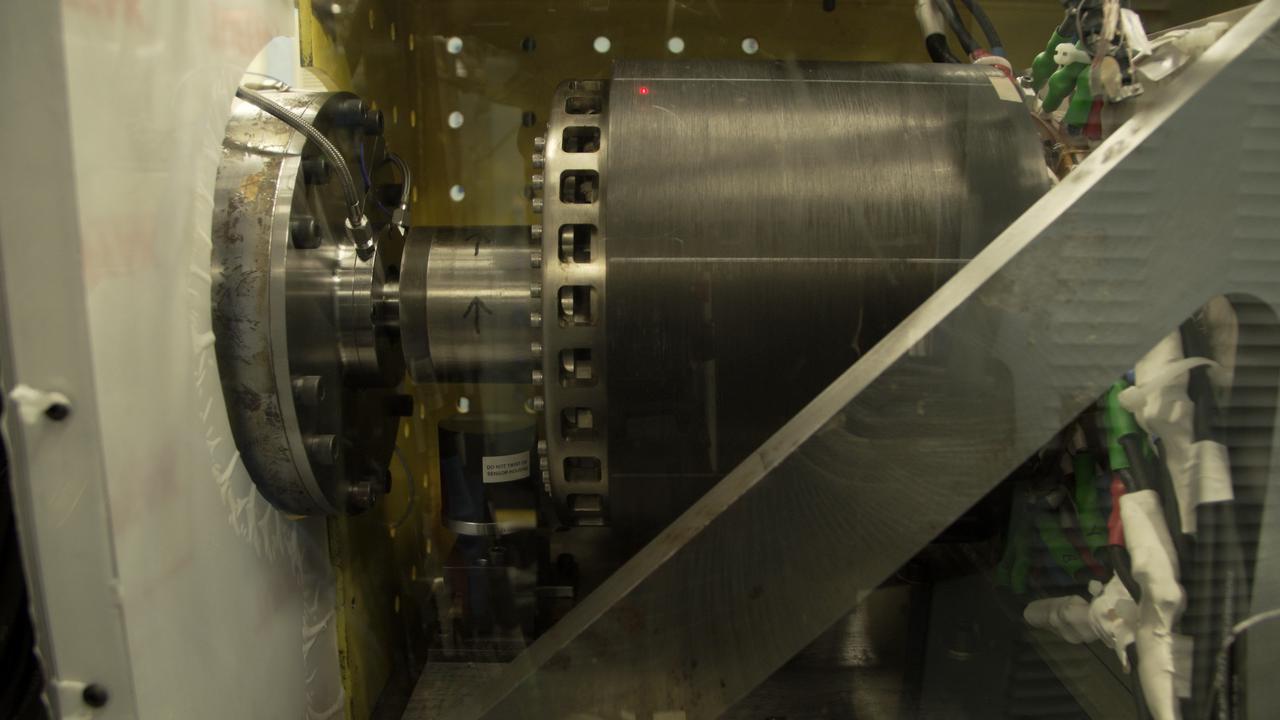
UIUC’s megawatt machine (right) was connected to a dynamometer (left) to test its effectiveness as an electric generator in a safety enclosure at a Collins Aerospace test facility in Rockford, Illinois. This unusual design has its rotating parts on the outside, so that both the cylinder on the right and the cylinder with arrows spin during operation.
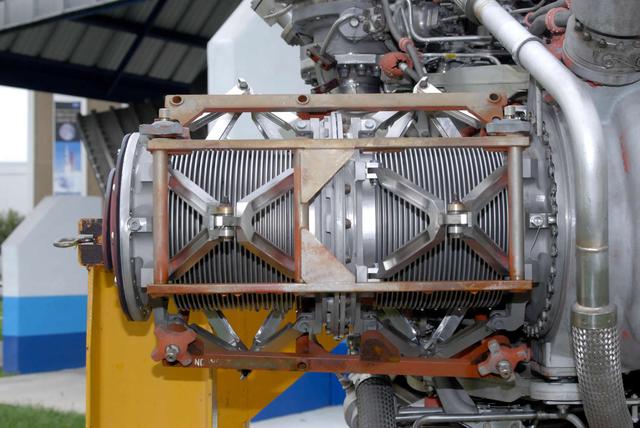
Stennis Space Center engineers are preparing to conduct water tests on an updated version of the scissors duct component of the J-2X engine. Measuring about 2 feet long and about 8 inches in diameter, the duct on the J-2X predecessor, the J-2, connected its fuel turbo pumps to the flight vehicle's upper stage run tanks. According to NASA's J-2X project manager at SSC, Gary Benton, the water tests should establish the limits of the duct's ability to withstand vibration.
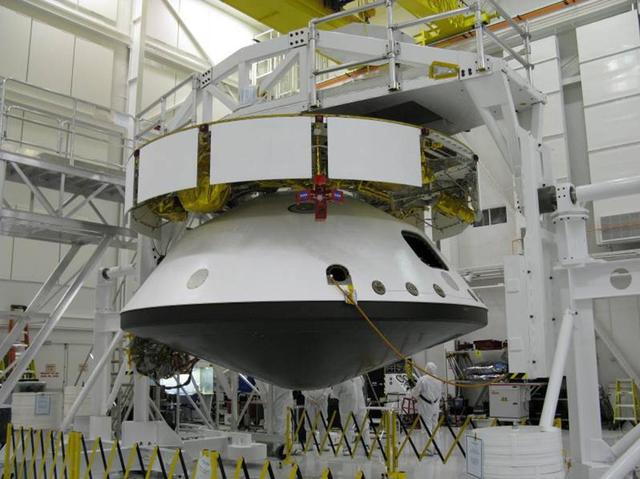
The major components of NASA Mars Science Laboratory spacecraft -- cruise stage atop the aeroshell, which has the descent stage and rover inside -- were connected together in October 2008 for several weeks of system testing.
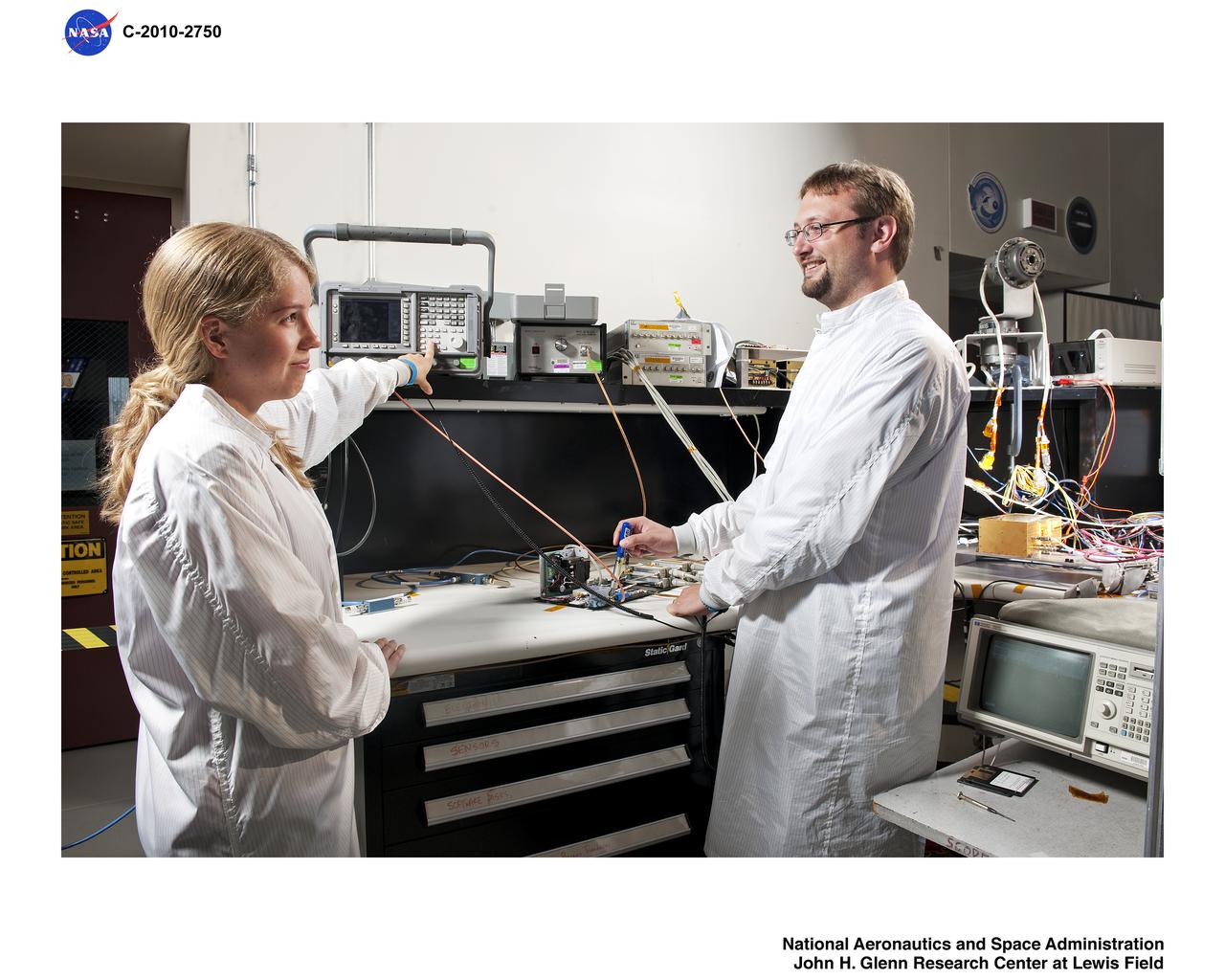
Communications, Navigation, and Networking Reconfigurable Test-bed (CoNNeCT)
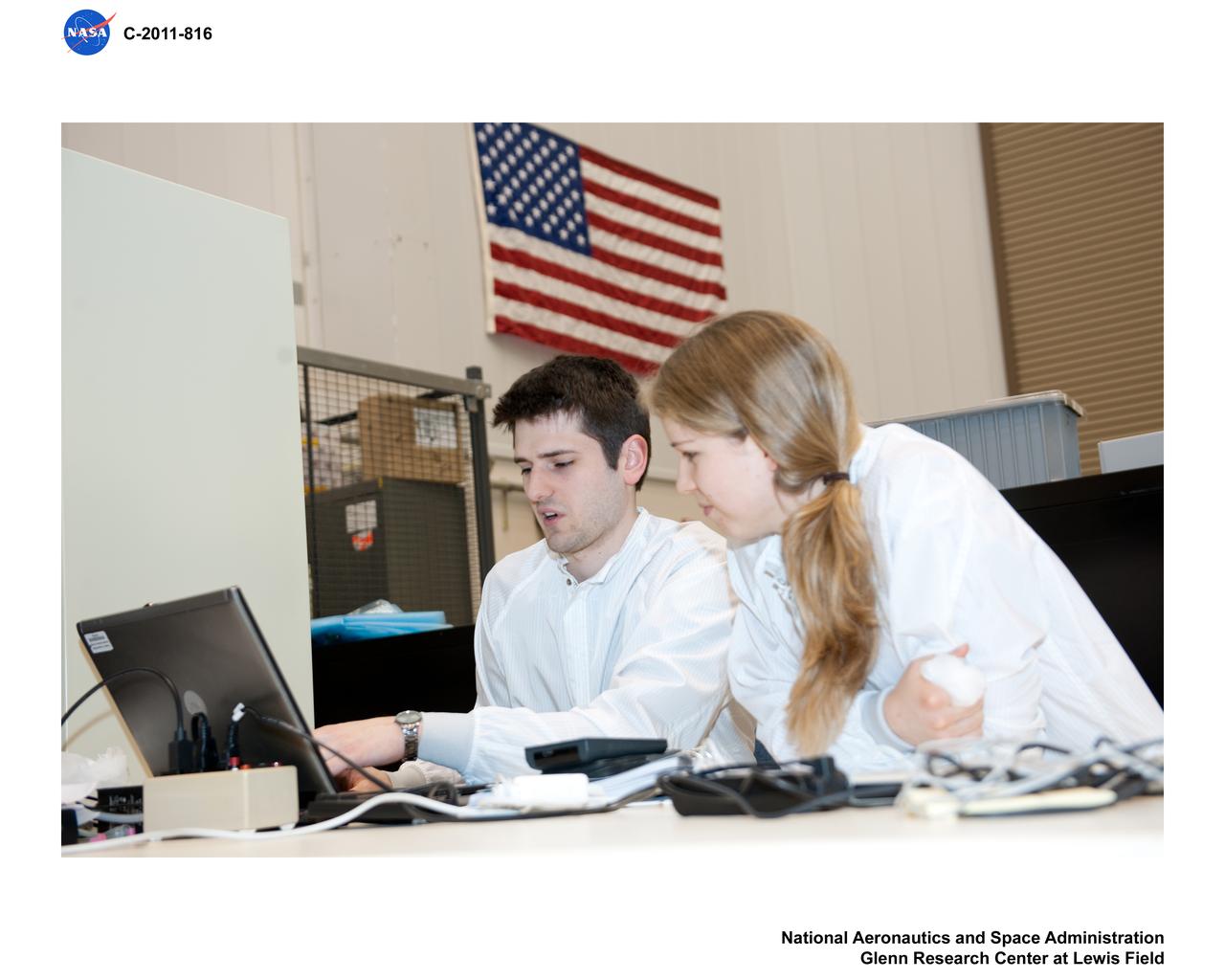
Communications, Navigation, and Network Reconfigurable Test-bed, CoNNeCT
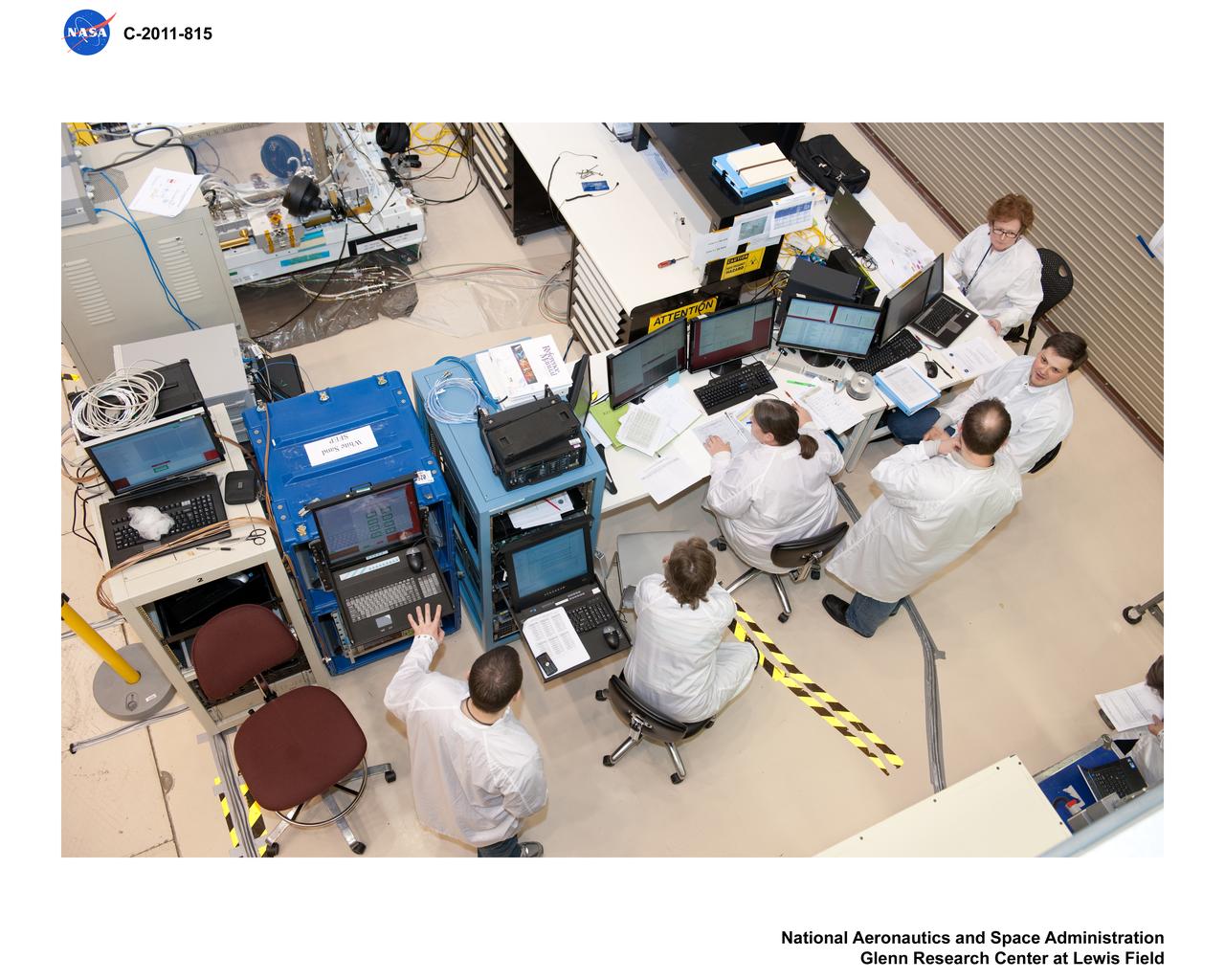
Communications, Navigation, and Network Reconfigurable Test-bed, CoNNeCT
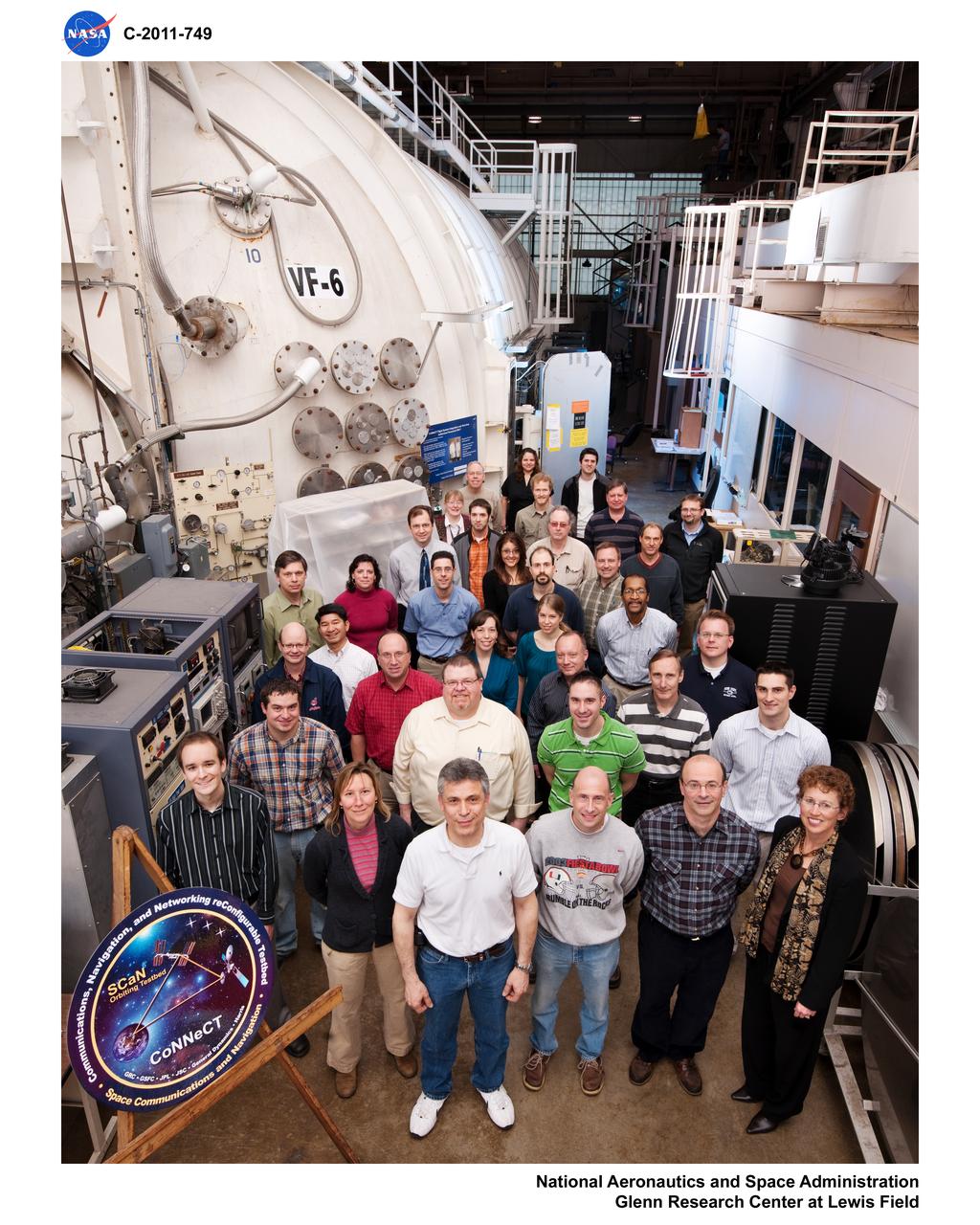
Communications, Navigation, and Network Reconfigurable Test-bed, CoNNeCT Thermal Vacuum, TVAC Testing Team
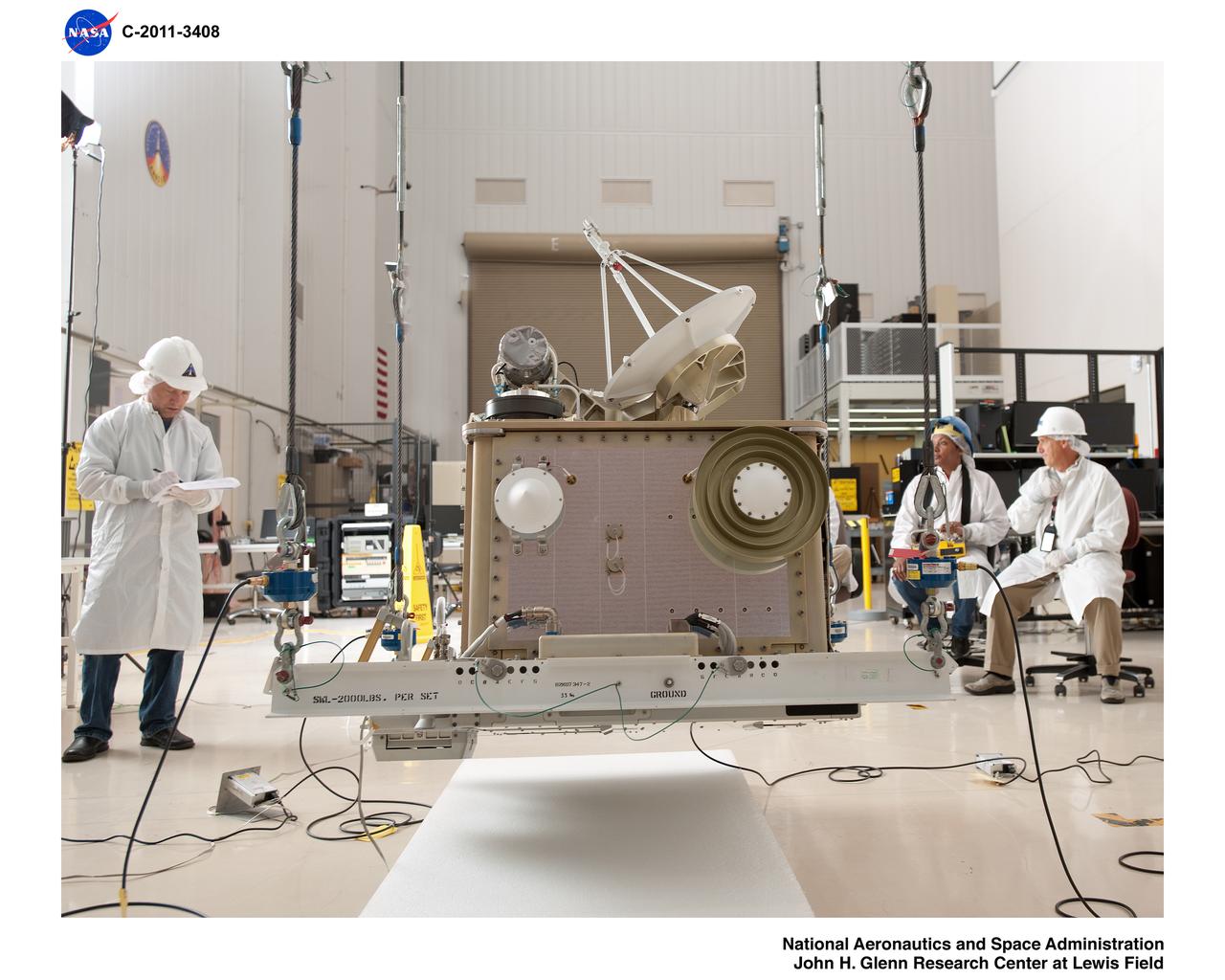
Communications, Navigation, and Network Reconfigurable Test-bed, CoNNeCT, Gravity Test on the Space Communications and Navigation, SCaN, Testbed
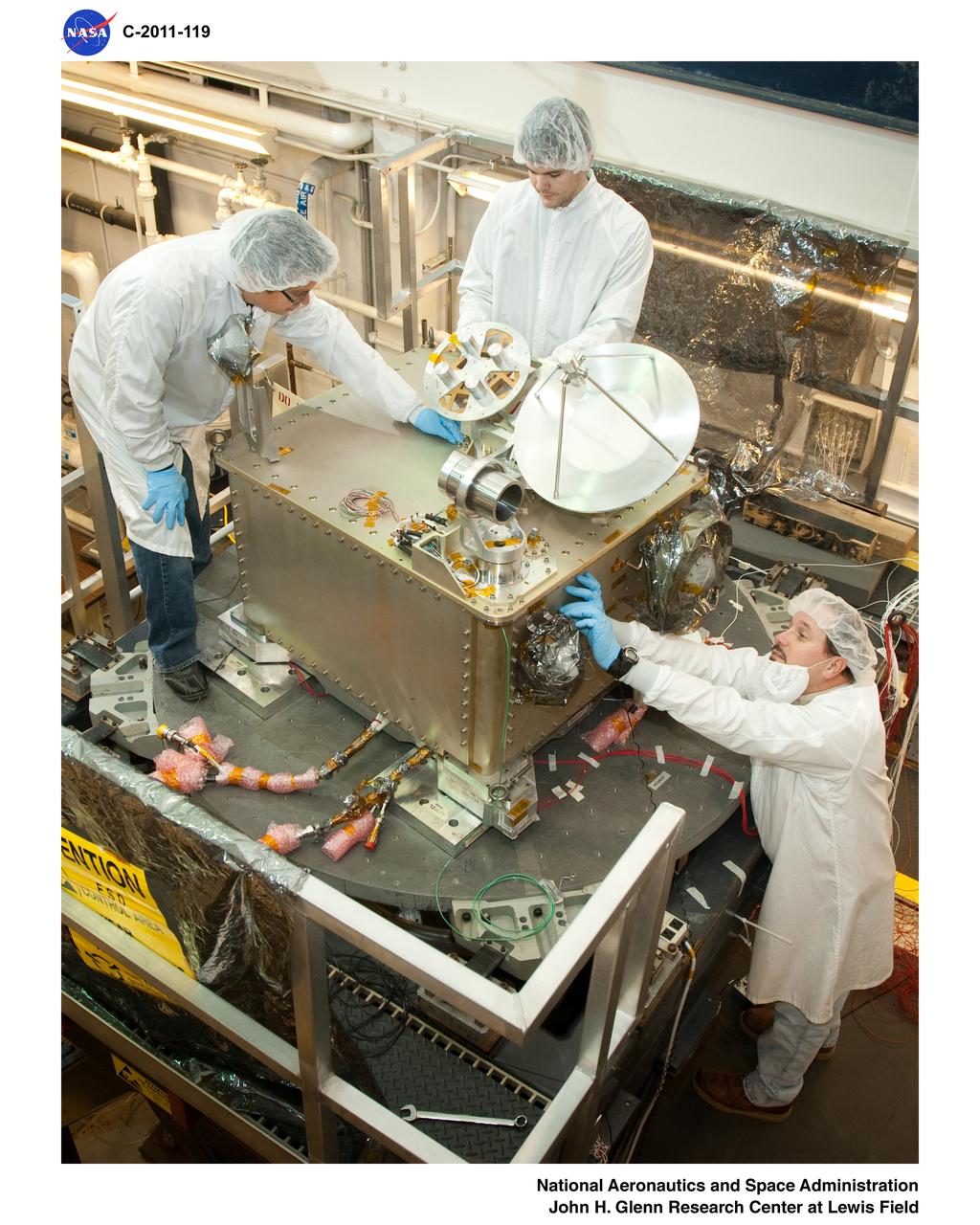
Communications Technology and Development - Communications, Navigation, and Network Reconfigurable Test-bed, CoNNeCT System-level Protoflight Vibration Test in the Structural Dynamics Laboratory, SDL
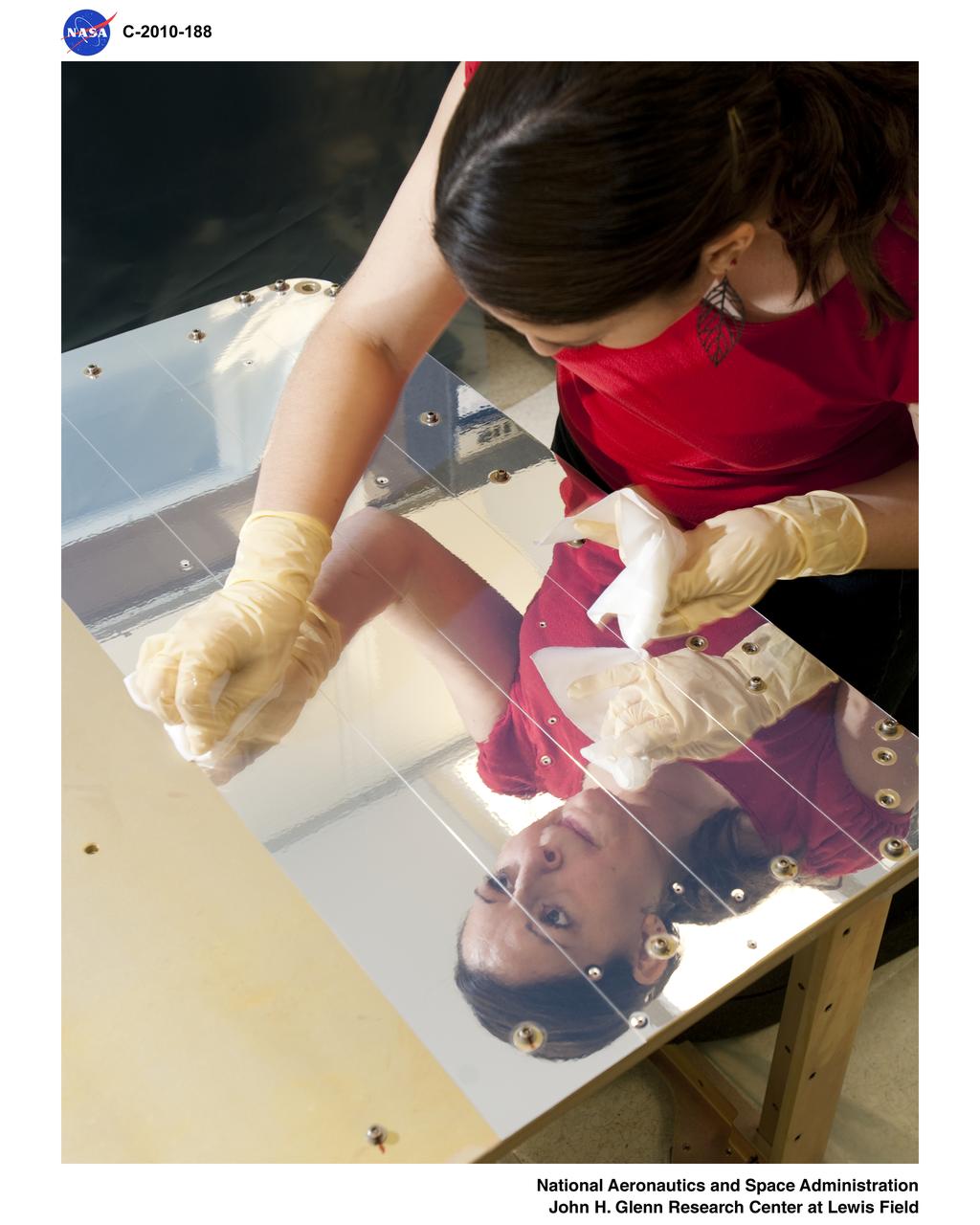
Communications, Navigation, and Networking Reconfigurable Test-bed, CoNNeCT; Silver Teflon Foil Installation
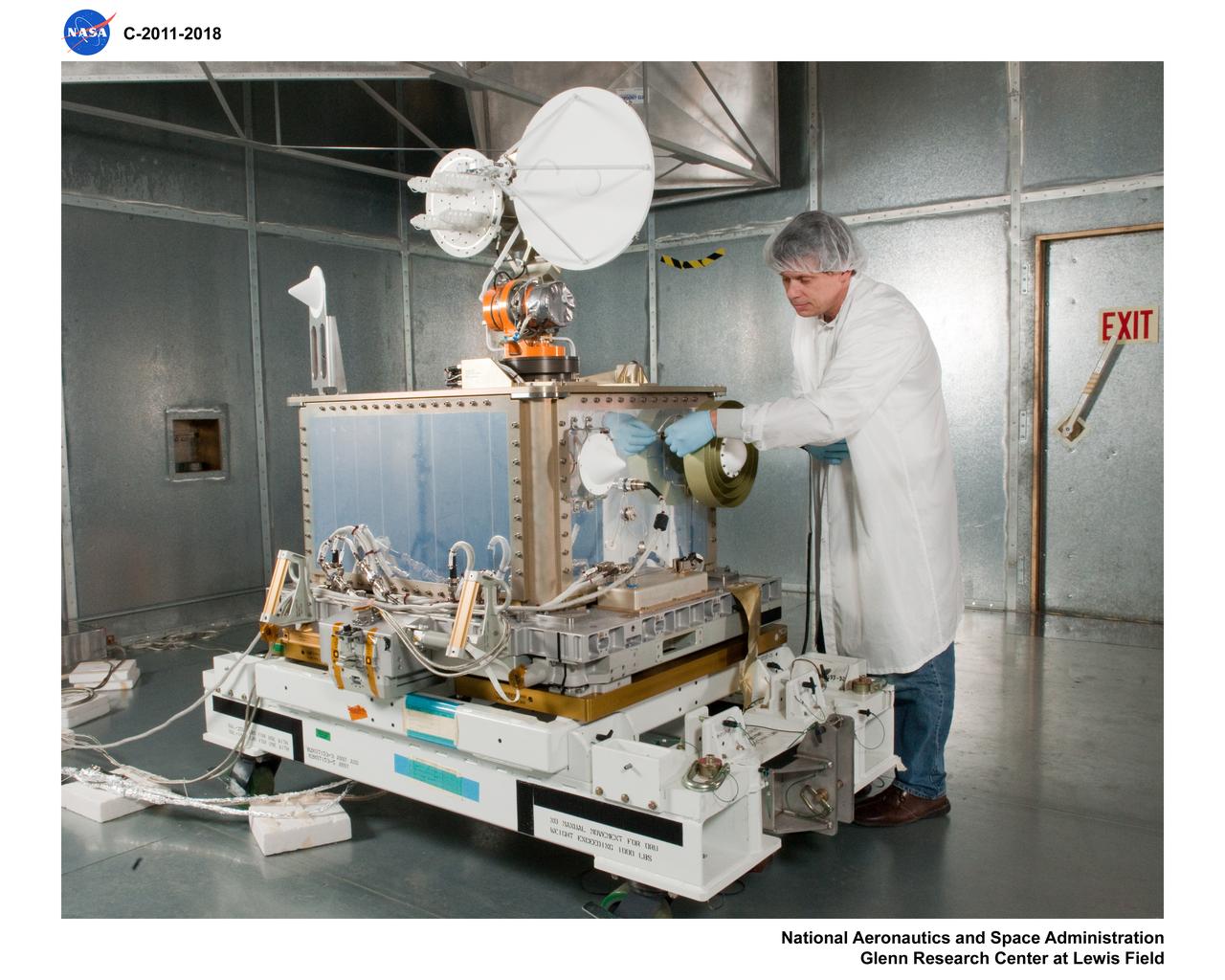
Communications, Navigation, and Network Reconfigurable Test-bed, CoNNeCT hardware in the Electromagnetic Interferance, EMI, Laboratory
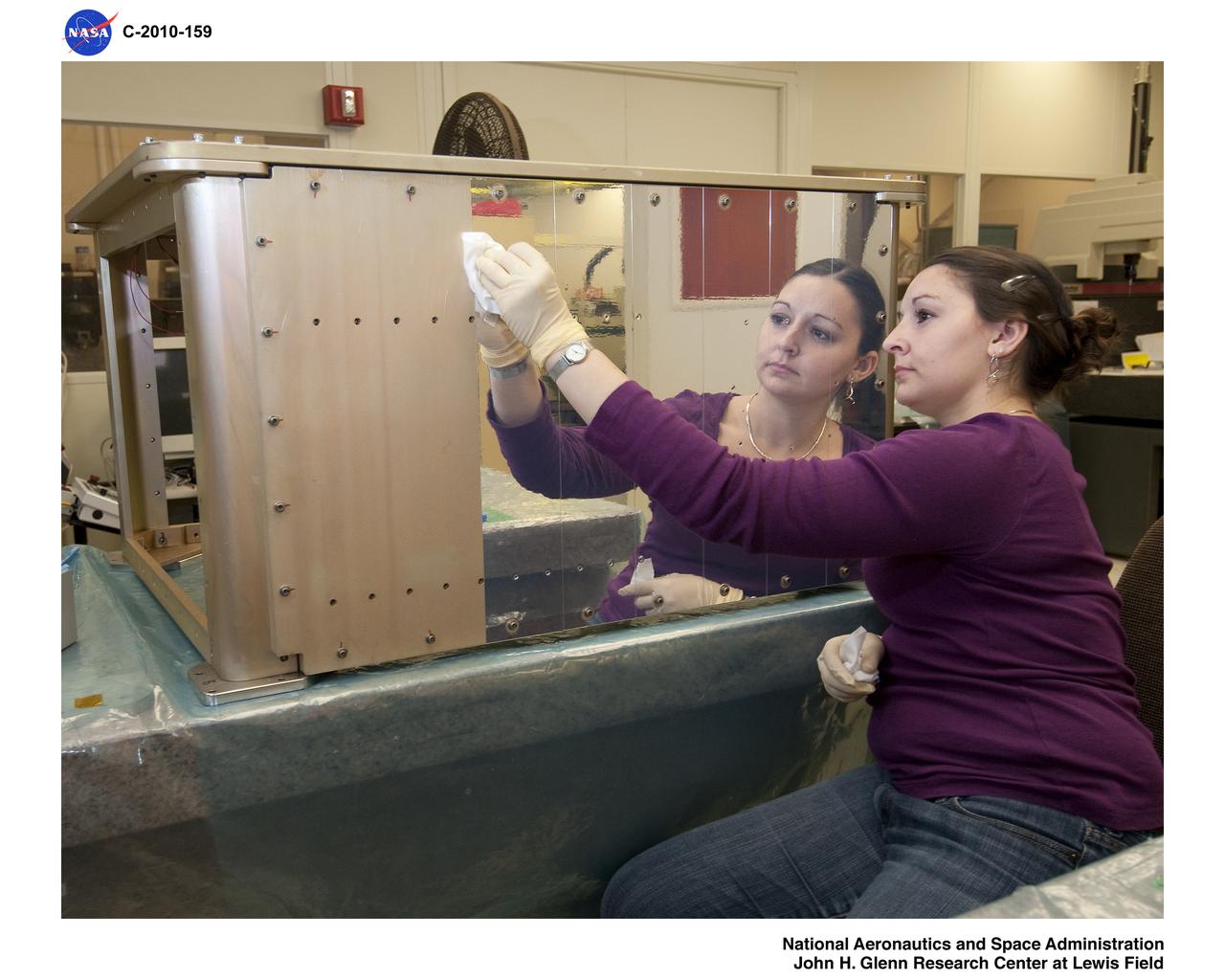
Communications, Navigation, and Networking Reconfigurable Test-bed, CoNNeCT; Silver Teflon Foil Installation
Technicians and engineers with Jacobs on the Test and Operations Support Contract, prepare for a swing test of the Core Stage Inter-tank Umbilical (CSITU) on the mobile launcher in High Bay 3 of the Vehicle Assembly Building on Feb. 22, 2019, at NASA's Kennedy Space Center in Florida. The CSITU is a swing-arm umbilical that will connect to the Space Launch System core stage inter-tank. It will provide conditioned air, pressurized gases and power and data connection to the core stage. Exploration Ground Systems at Kennedy is conducting the swing test.
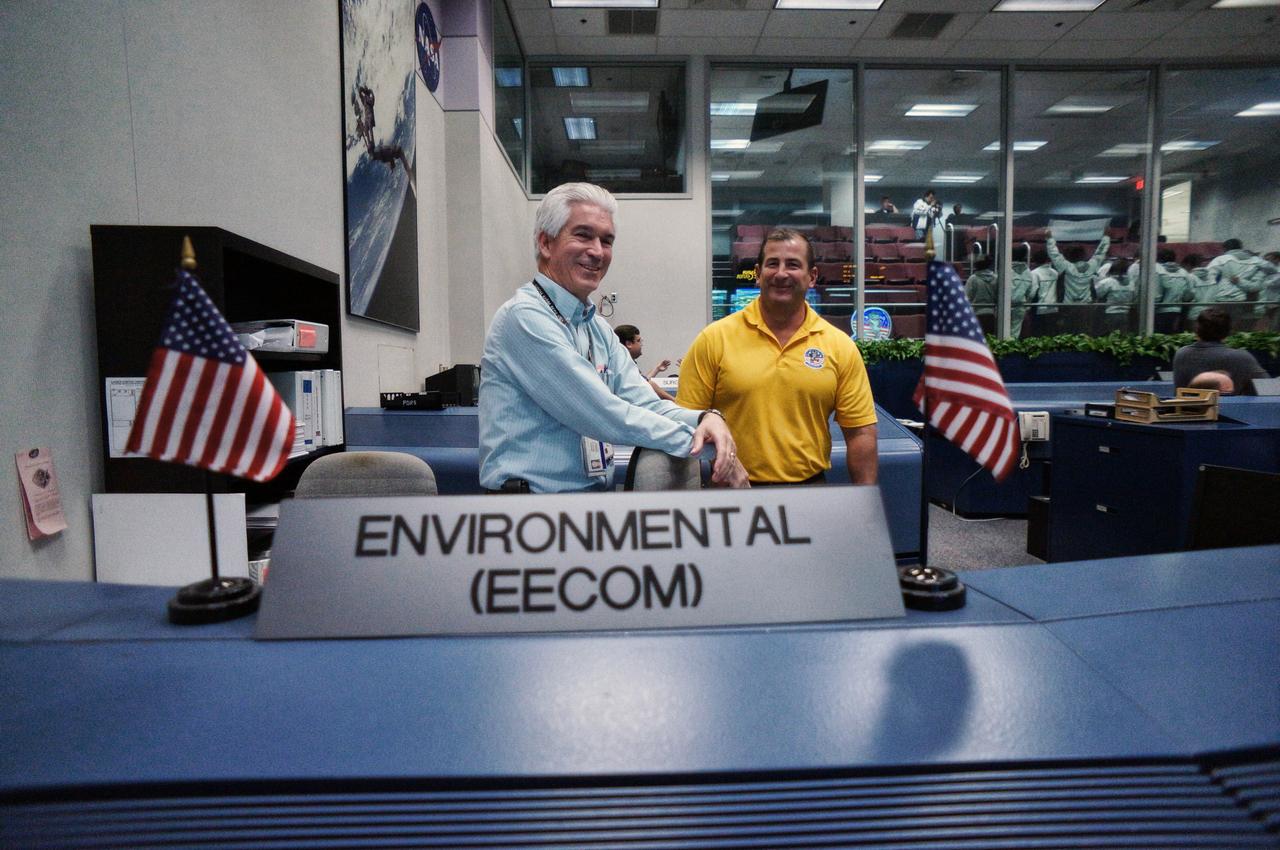
Orion teams complete a connectivity test in preparation for Exploration Flight Test-1 (EFT-1) in the Mission Control Center at Johnson Space Center in Houston on Jan. 30, 2011. Part of Batch image transfer from Flickr.
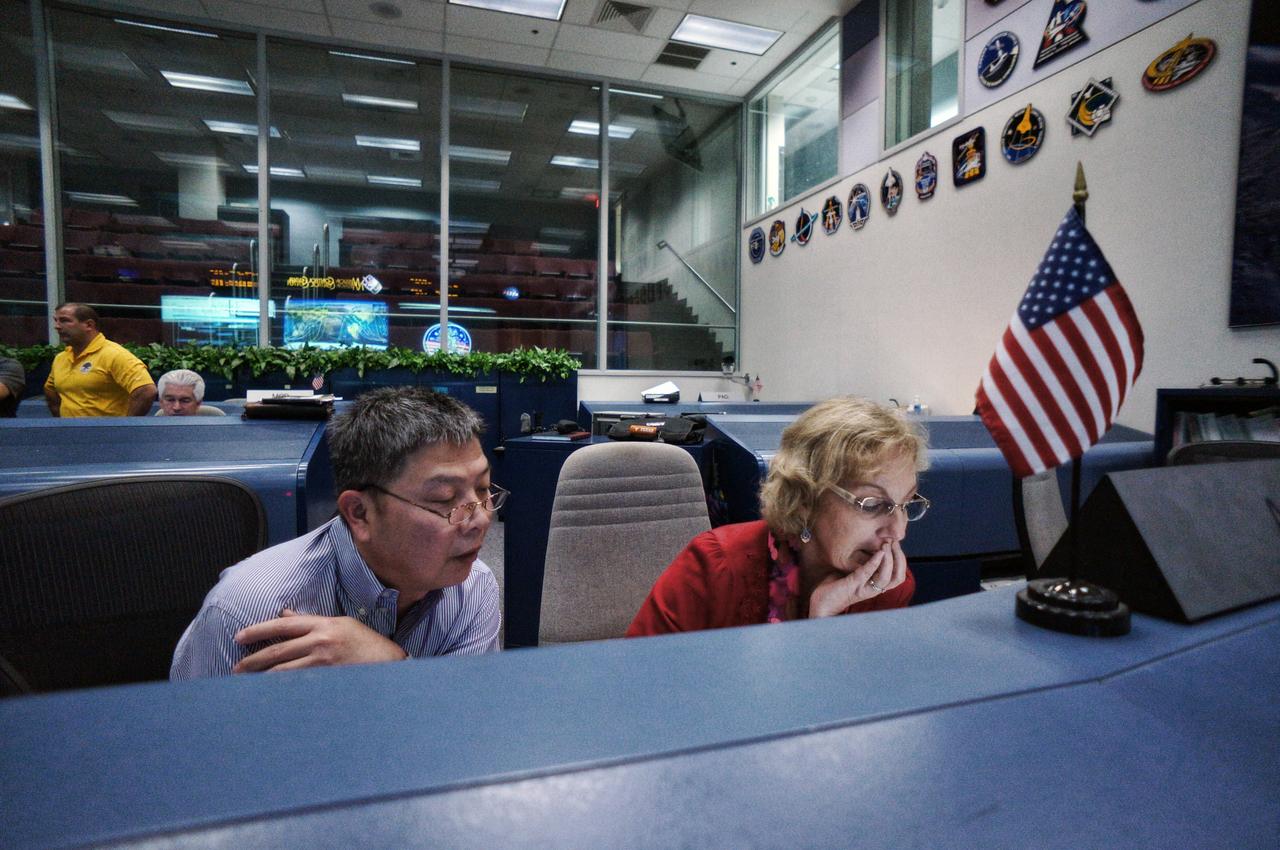
Orion teams complete a connectivity test in preparation for Exploration Flight Test-1 (EFT-1) in the Mission Control Center at Johnson Space Center in Houston on Jan. 30, 2011. Part of Batch image transfer from Flickr.
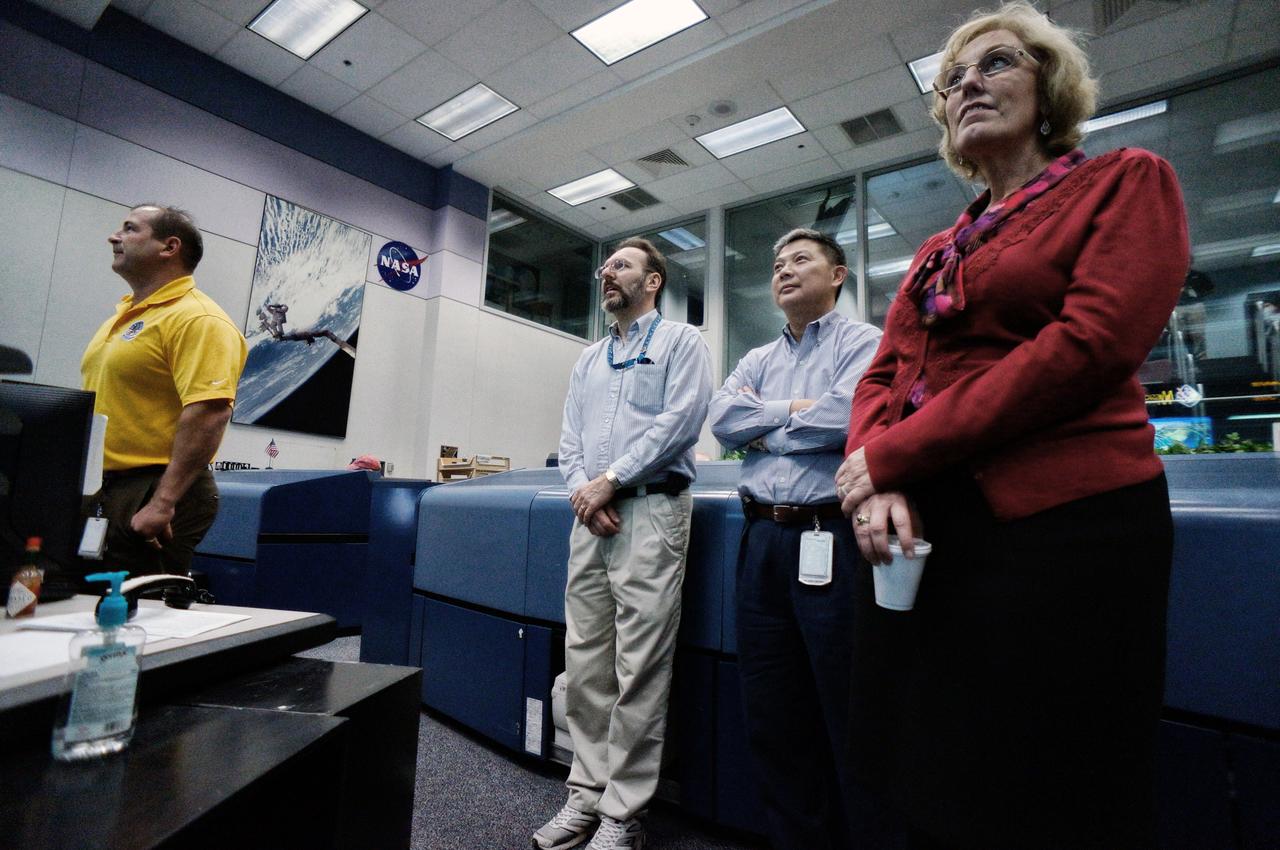
Orion teams complete a connectivity test in preparation for Exploration Flight Test-1 (EFT-1) in the Mission Control Center at Johnson Space Center in Houston on Jan. 30, 2011. Part of Batch image transfer from Flickr.
Orion teams complete a connectivity test in preparation for Exploration Flight Test-1 (EFT-1) in the Mission Control Center at Johnson Space Center in Houston on Jan. 30, 2011. Part of Batch image transfer from Flickr.
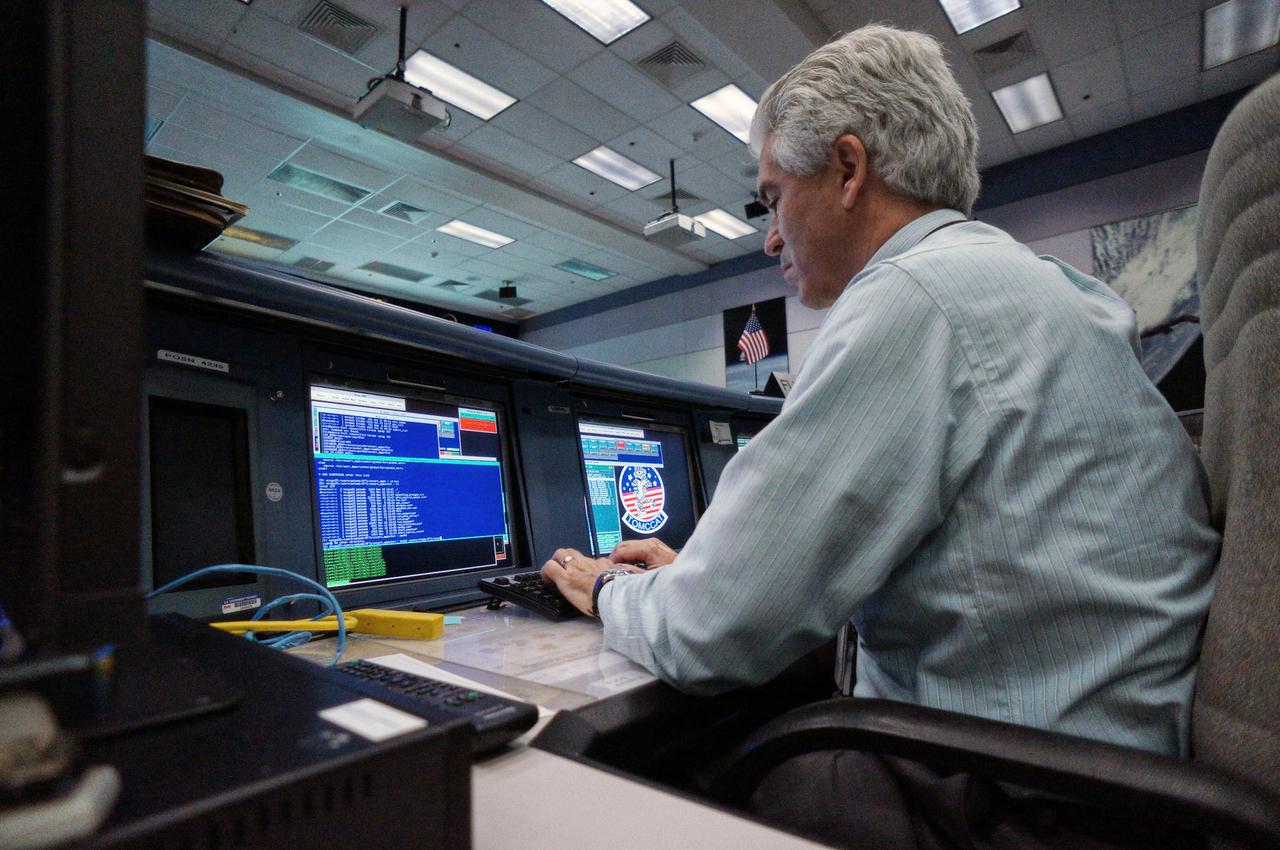
Orion teams complete a connectivity test in preparation for Exploration Flight Test-1 (EFT-1) in the Mission Control Center at Johnson Space Center in Houston on Jan. 30, 2011. Part of Batch image transfer from Flickr.
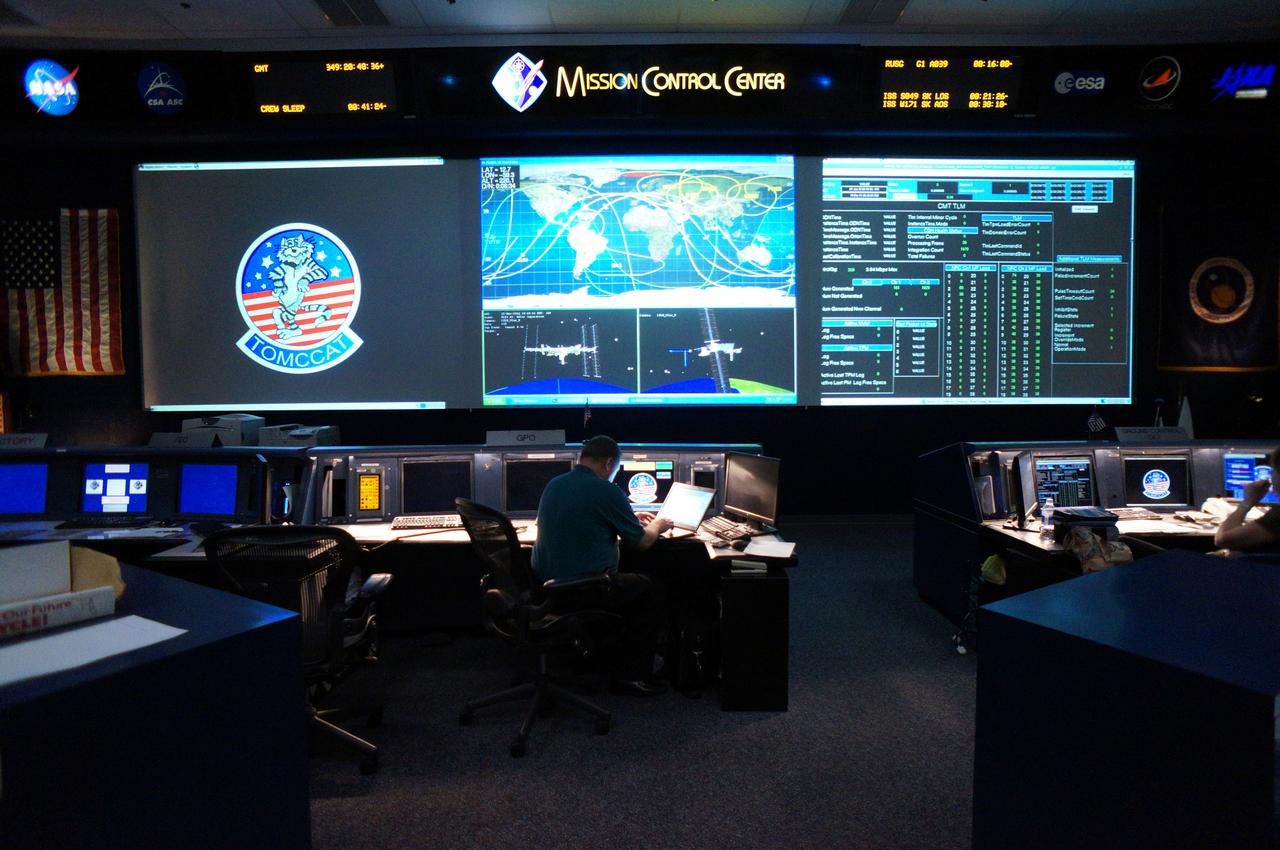
Orion teams complete a connectivity test in preparation for Exploration Flight Test-1 (EFT-1) in the Mission Control Center at Johnson Space Center in Houston on Jan. 30, 2011. Part of Batch image transfer from Flickr.
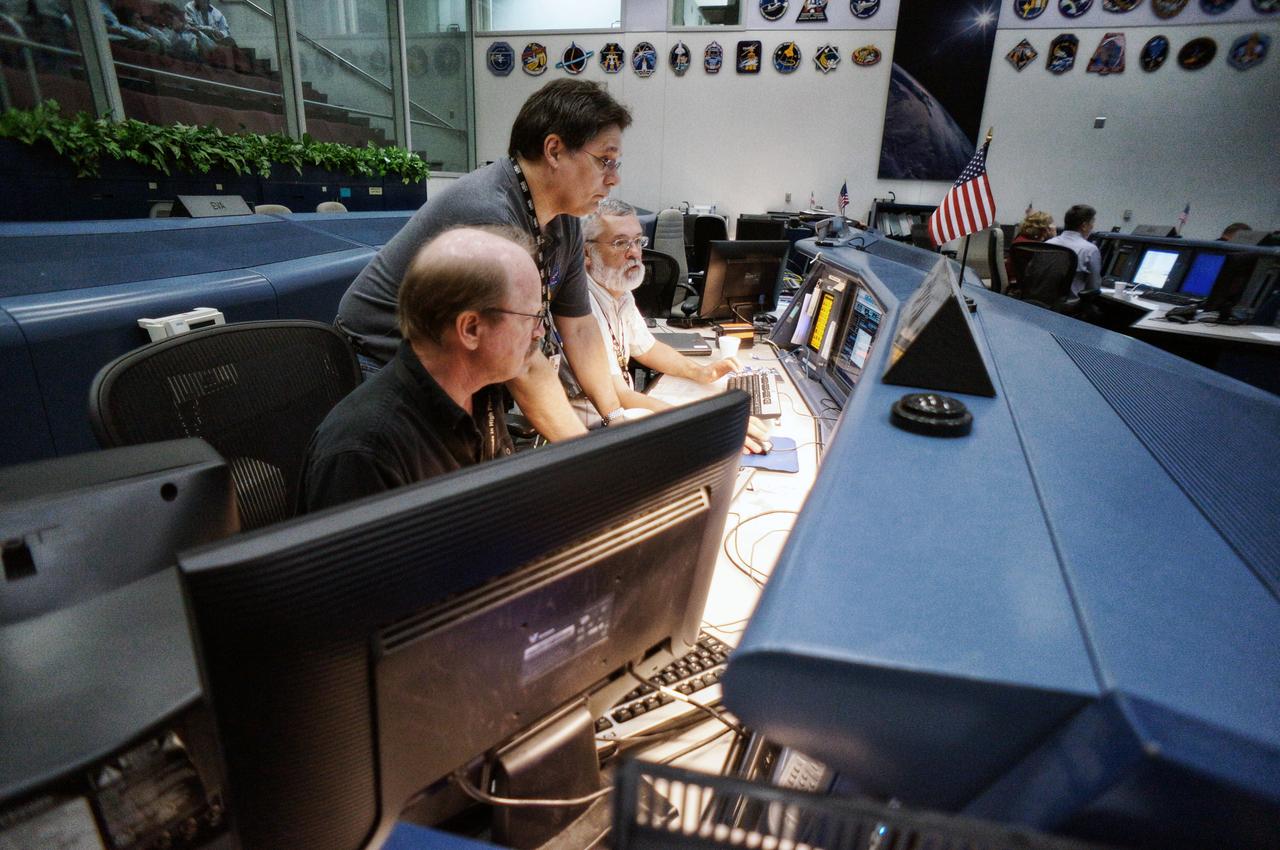
Orion teams complete a connectivity test in preparation for Exploration Flight Test-1 (EFT-1) in the Mission Control Center at Johnson Space Center in Houston on Jan. 30, 2011. Part of Batch image transfer from Flickr.
Orion teams complete a connectivity test in preparation for Exploration Flight Test-1 (EFT-1) in the Mission Control Center at Johnson Space Center in Houston on Jan. 30, 2011. Part of Batch image transfer from Flickr.
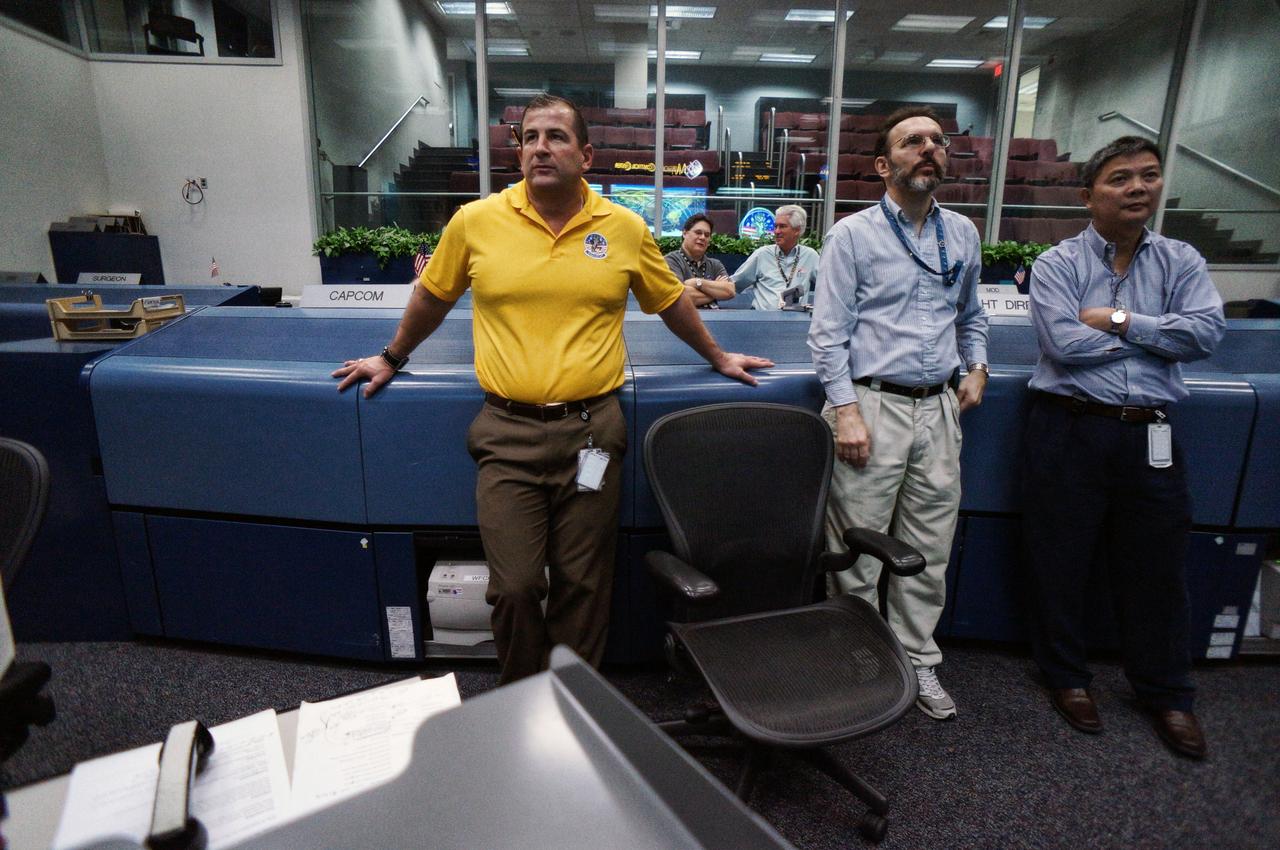
Orion teams complete a connectivity test in preparation for Exploration Flight Test-1 (EFT-1) in the Mission Control Center at Johnson Space Center in Houston on Jan. 30, 2011. Part of Batch image transfer from Flickr.

Photographs of the Low Impact Docking System (LIDS); this hardware is a test for the ORION docking birthing system to connect the Crew Exploration Vehicle (CEV) to the International Space Station (ISS); atomic oxygen 12 inch seals testing
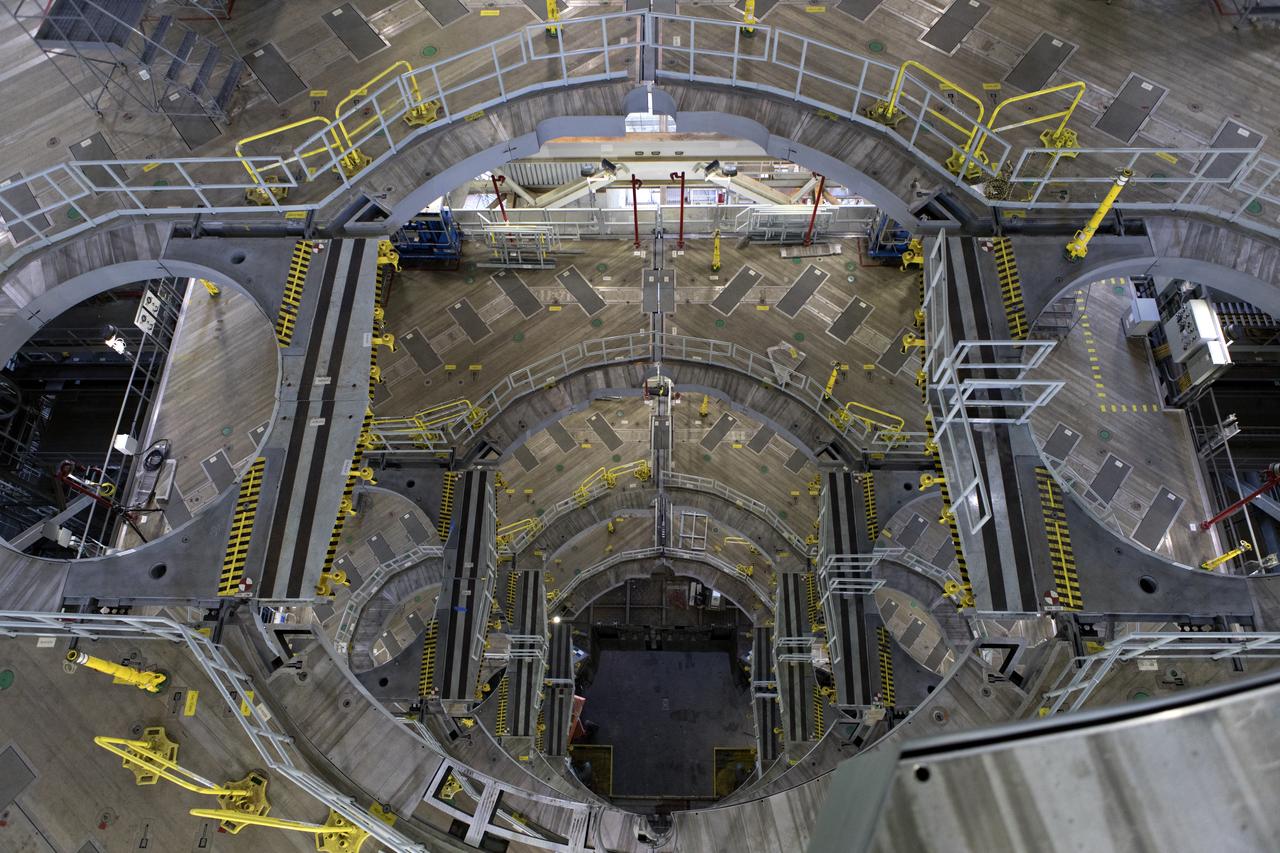
A view of the new work platforms in High Bay 3 of the Vehicle Assembly Building on Feb. 22, 2019, at NASA’s Kennedy Space Center in Florida. Preparations are underway to perform an initial swing test of the Core Stage Inter-tank Umbilical (CSITU) on the mobile launcher. The CSITU is a swing-arm umbilical that will connect to the Space Launch System core stage inter-tank. It will provide conditioned air, pressurized gases and power and data connection to the core stage. Exploration Ground Systems at Kennedy is conducting the swing test.
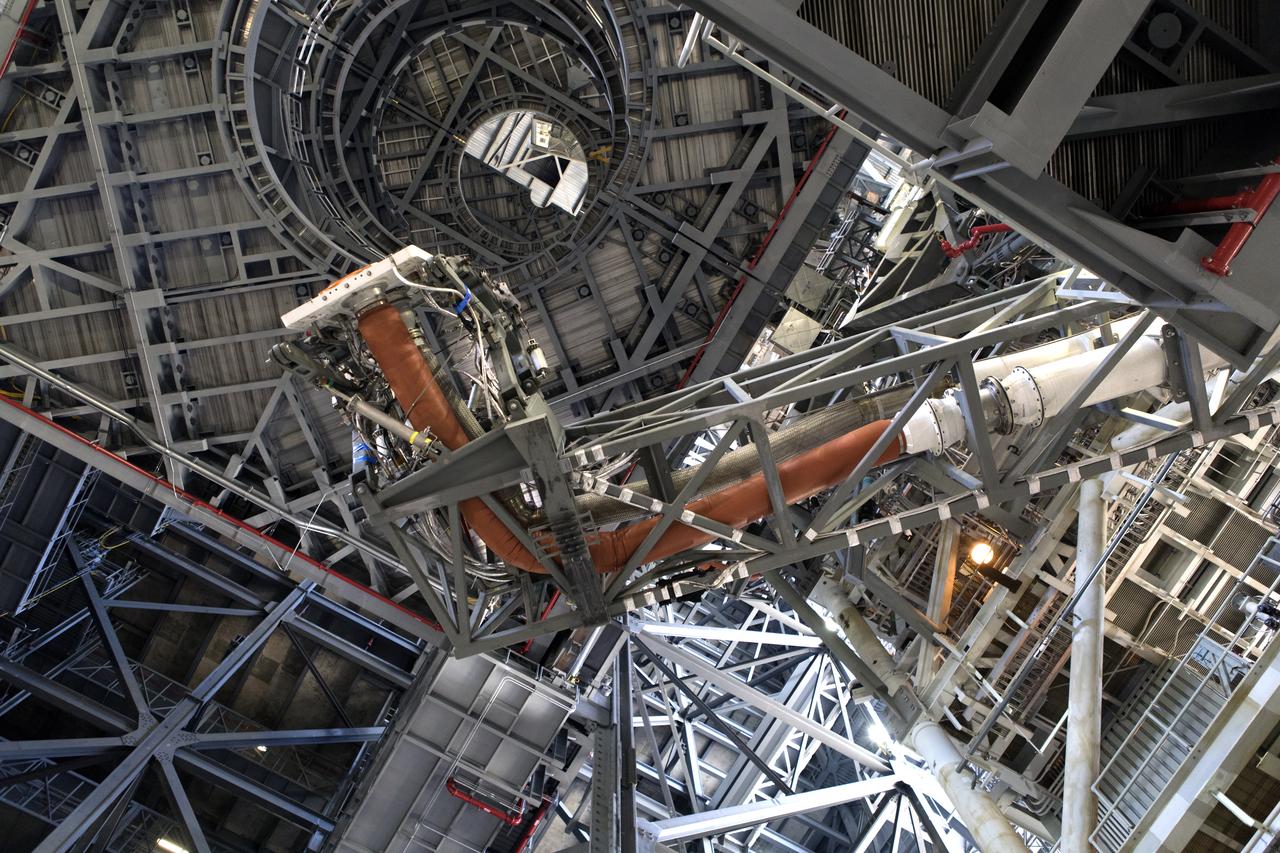
In this view looking up in High Bay 3 of the Vehicle Assembly Building at NASA’s Kennedy Space Center in Florida, a preliminary swing test is being performed on the Core Stage Inter-tank Umbilical (CSITU) on Feb. 22, 2019. The CSITU is a swing-arm umbilical that will connect to the Space Launch System core stage inter-tank. It will provide conditioned air, pressurized gases and power and data connection to the core stage. Exploration Ground Systems at Kennedy is conducting the swing test.
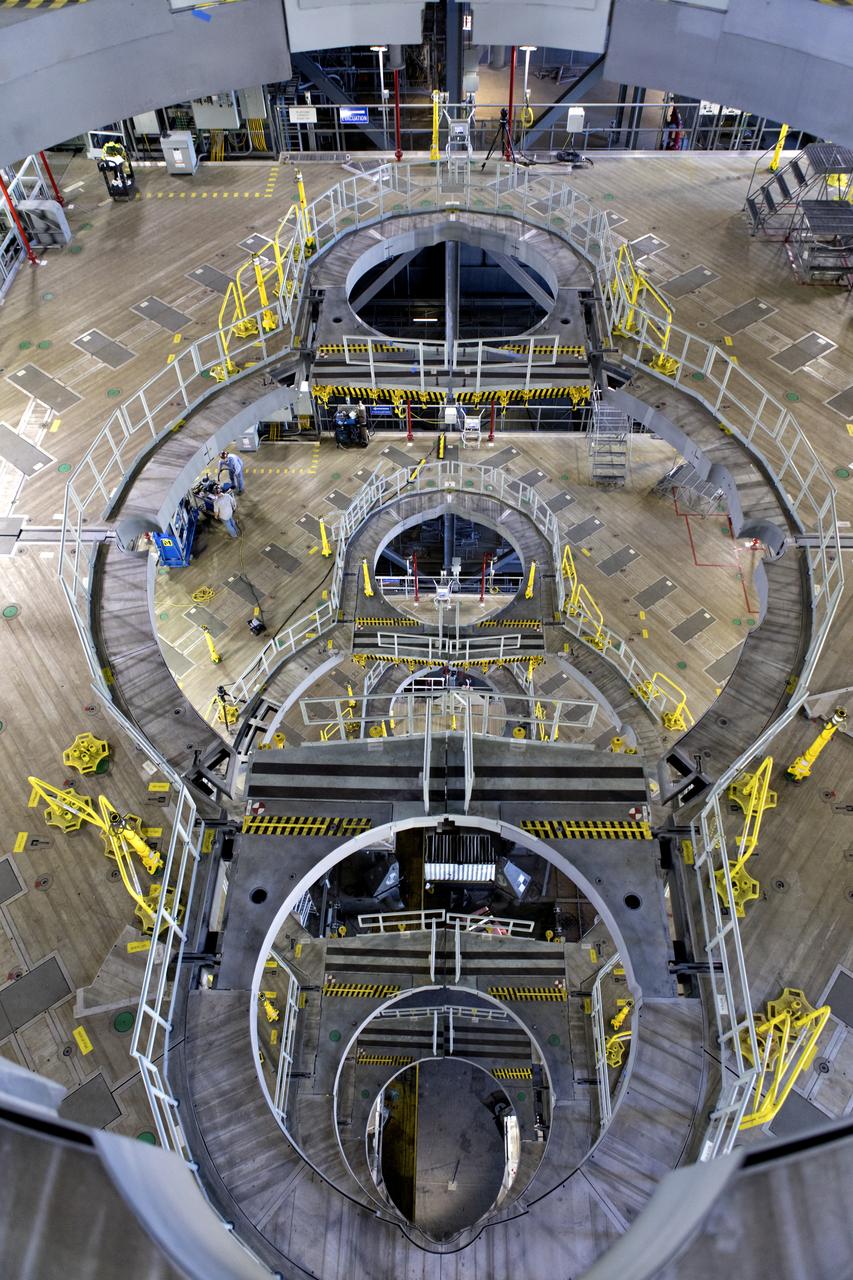
A view from above of new work platforms in High Bay 3 of the Vehicle Assembly Building on Feb. 22, 2019, at NASA’s Kennedy Space Center in Florida. Preparations are underway to perform an initial swing test of the Core Stage Inter-tank Umbilical (CSITU) on the mobile launcher. The CSITU is a swing-arm umbilical that will connect to the Space Launch System core stage inter-tank. It will provide conditioned air, pressurized gases and power and data connection to the core stage. Exploration Ground Systems at Kennedy is conducting the swing test.
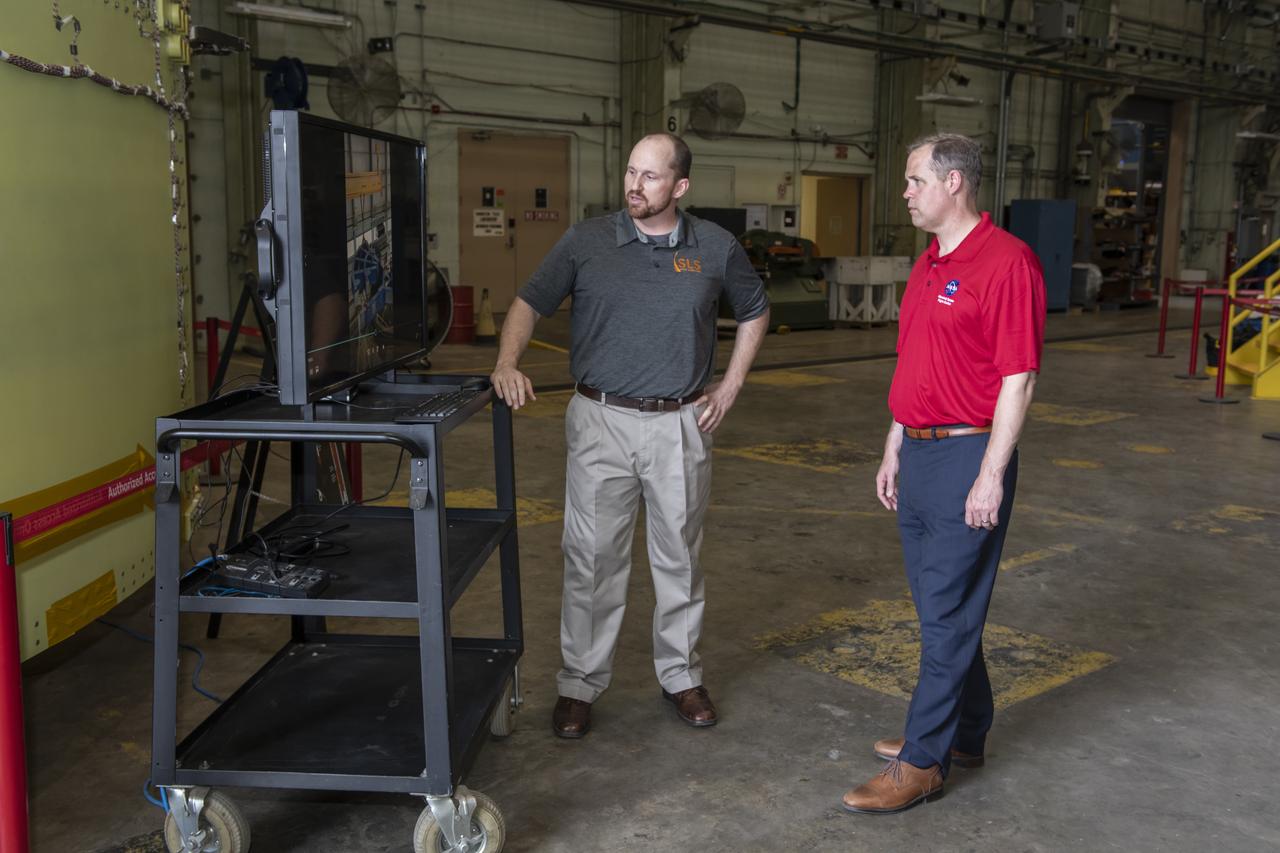
On August 15, 2018 NASA Administrator Jim Bridenstine visited Marshall Space Flight Center. Upon his arrival he was greeted by MSFC Acting Director Jody Singer along with the senior management team. Lead test engineer for the Space Launch System core stage intertank, Matt Cash briefs NASA Administrator Jim Bridenstine on testing progress of the SLS test article in the Structural Strength Lab at Marshall. The test article is structurally identical to the flight version of the intertank that will connect the core stage's two colossal fuel tanks, serve as the upper-connection point for the two solid rocket boosters and house critical avionics and electronics.
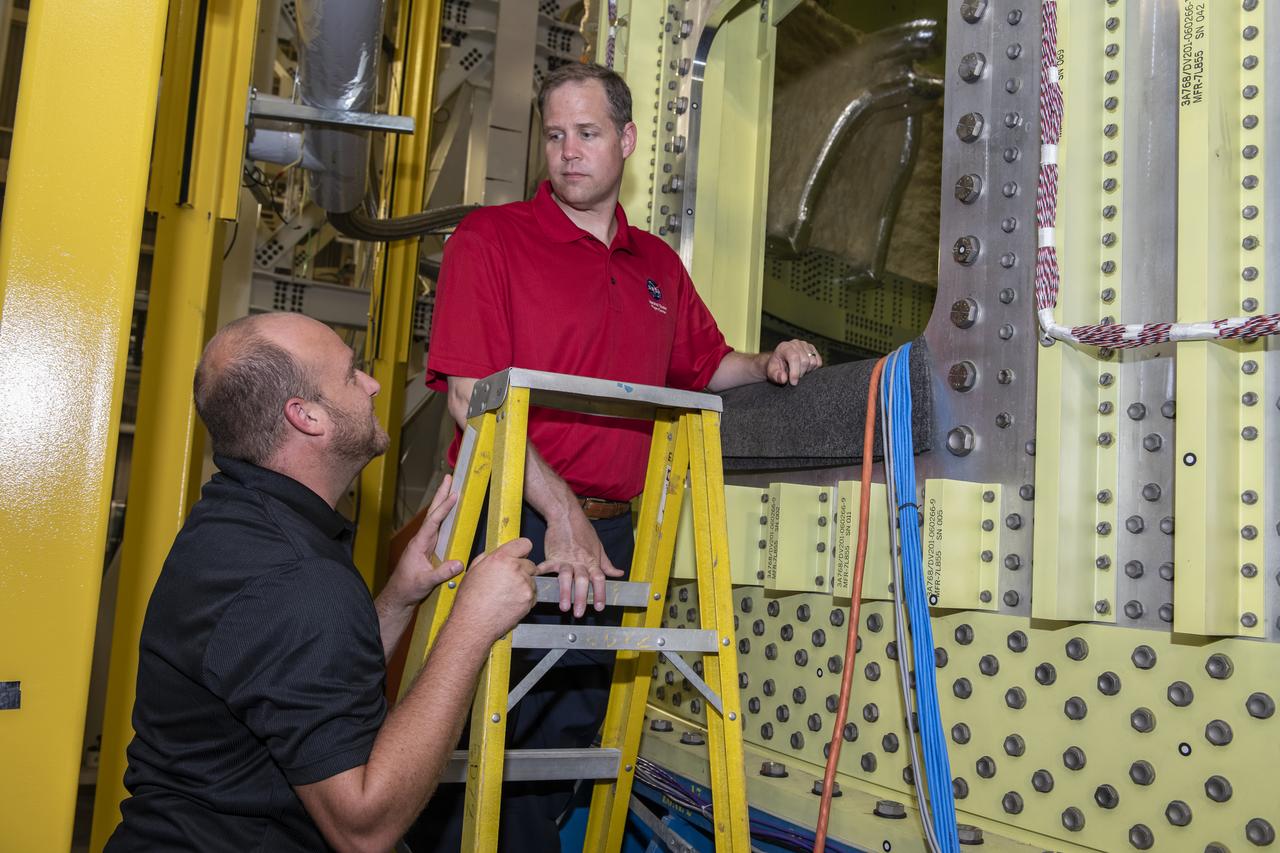
On August 15, 2018 NASA Administrator Jim Bridenstine visited Marshall Space Flight Center. Upon his arrival he was greeted by MSFC Acting Director Jody Singer along with the senior management team. Lead test engineer for the Space Launch System core stage intertank, Matt Cash briefs NASA Administrator Jim Bridenstine on testing progress of the SLS test article in the Structural Strength Lab at Marshall. The test article is structurally identical to the flight version of the intertank that will connect the core stage's two colossal fuel tanks, serve as the upper-connection point for the two solid rocket boosters and house critical avionics and electronics.
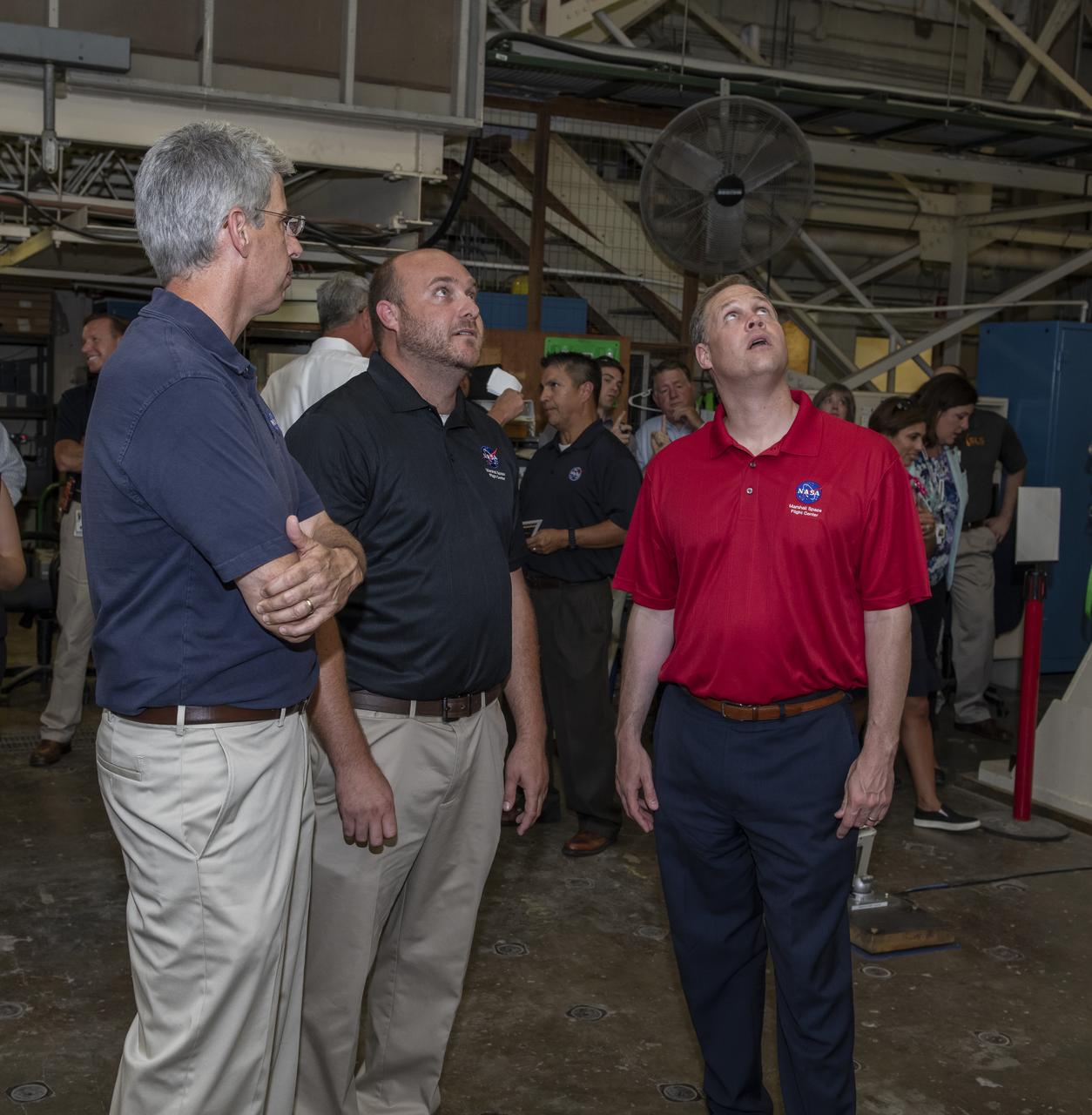
On August 15, 2018 NASA Administrator Jim Bridenstine visited Marshall Space Flight Center. Upon his arrival he was greeted by MSFC Acting Director Jody Singer along with the senior management team. Lead test engineer for the Space Launch System core stage intertank, Matt Cash briefs NASA Administrator Jim Bridenstine on testing progress of the SLS test article in the Structural Strength Lab at Marshall. The test article is structurally identical to the flight version of the intertank that will connect the core stage's two colossal fuel tanks, serve as the upper-connection point for the two solid rocket boosters and house critical avionics and electronics.
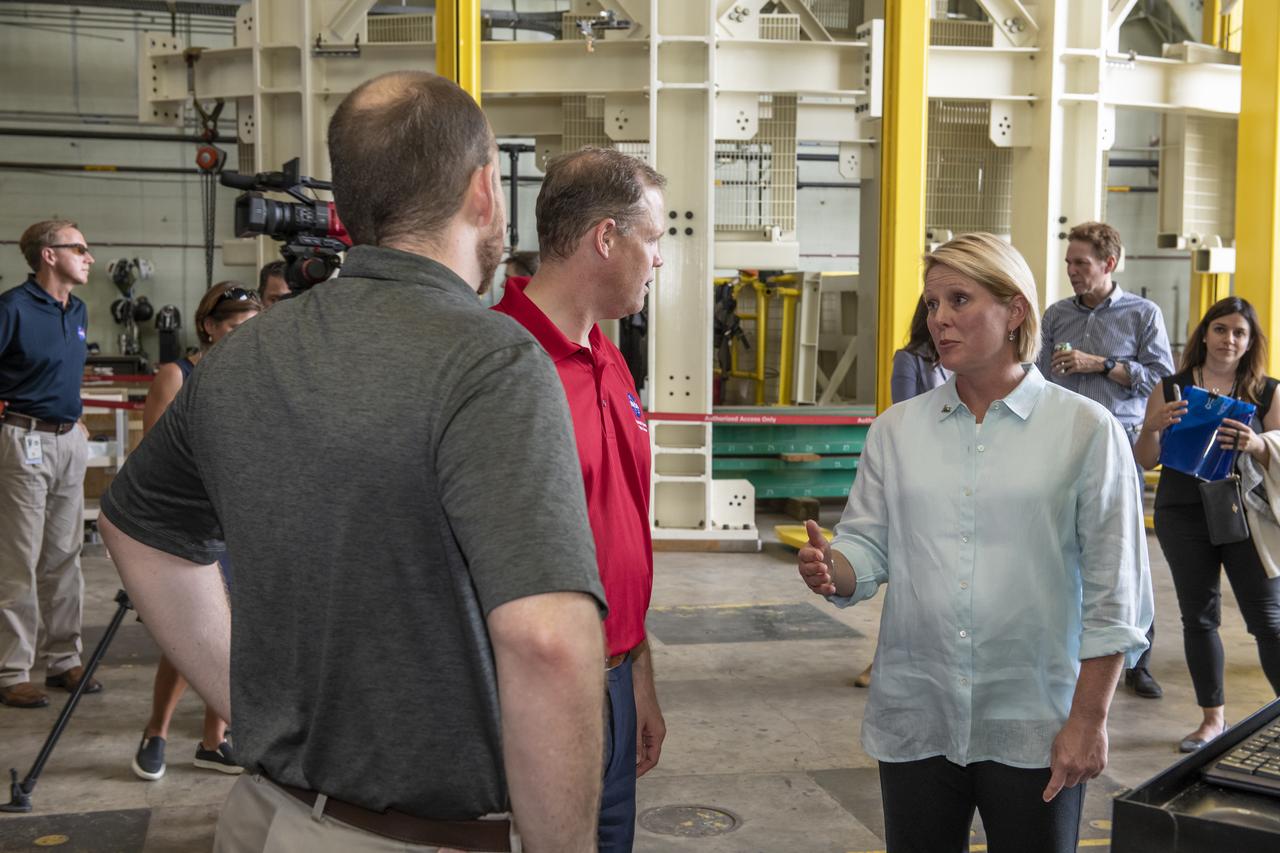
On August 15, 2018 NASA Administrator Jim Bridenstine visited Marshall Space Flight Center. Upon his arrival he was greeted by MSFC Acting Director Jody Singer along with the senior management team. Lead test engineer for the Space Launch System core stage intertank, Matt Cash briefs NASA Administrator Jim Bridenstine on testing progress of the SLS test article in the Structural Strength Lab at Marshall. The test article is structurally identical to the flight version of the intertank that will connect the core stage's two colossal fuel tanks, serve as the upper-connection point for the two solid rocket boosters and house critical avionics and electronics.
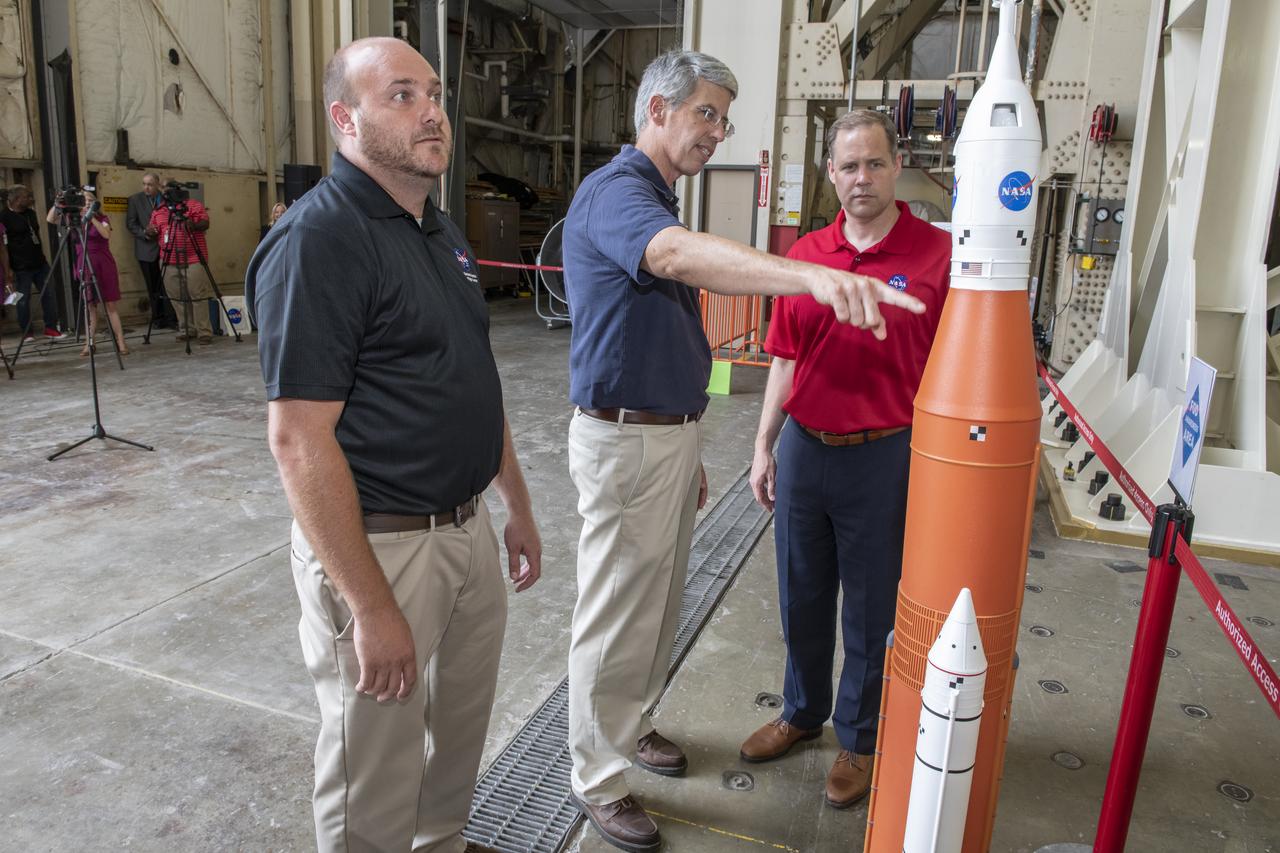
On August 15, 2018 NASA Administrator Jim Bridenstine visited Marshall Space Flight Center. Upon his arrival he was greeted by MSFC Acting Director Jody Singer along with the senior management team. Lead test engineer for the Space Launch System core stage intertank, Matt Cash briefs NASA Administrator Jim Bridenstine on testing progress of the SLS test article in the Structural Strength Lab at Marshall. The test article is structurally identical to the flight version of the intertank that will connect the core stage's two colossal fuel tanks, serve as the upper-connection point for the two solid rocket boosters and house critical avionics and electronics.

On August 15, 2018 NASA Administrator Jim Bridenstine visited Marshall Space Flight Center. Upon his arrival he was greeted by MSFC Acting Director Jody Singer along with the senior management team. Lead test engineer for the Space Launch System core stage intertank, Matt Cash briefs NASA Administrator Jim Bridenstine on testing progress of the SLS test article in the Structural Strength Lab at Marshall. The test article is structurally identical to the flight version of the intertank that will connect the core stage's two colossal fuel tanks, serve as the upper-connection point for the two solid rocket boosters and house critical avionics and electronics.
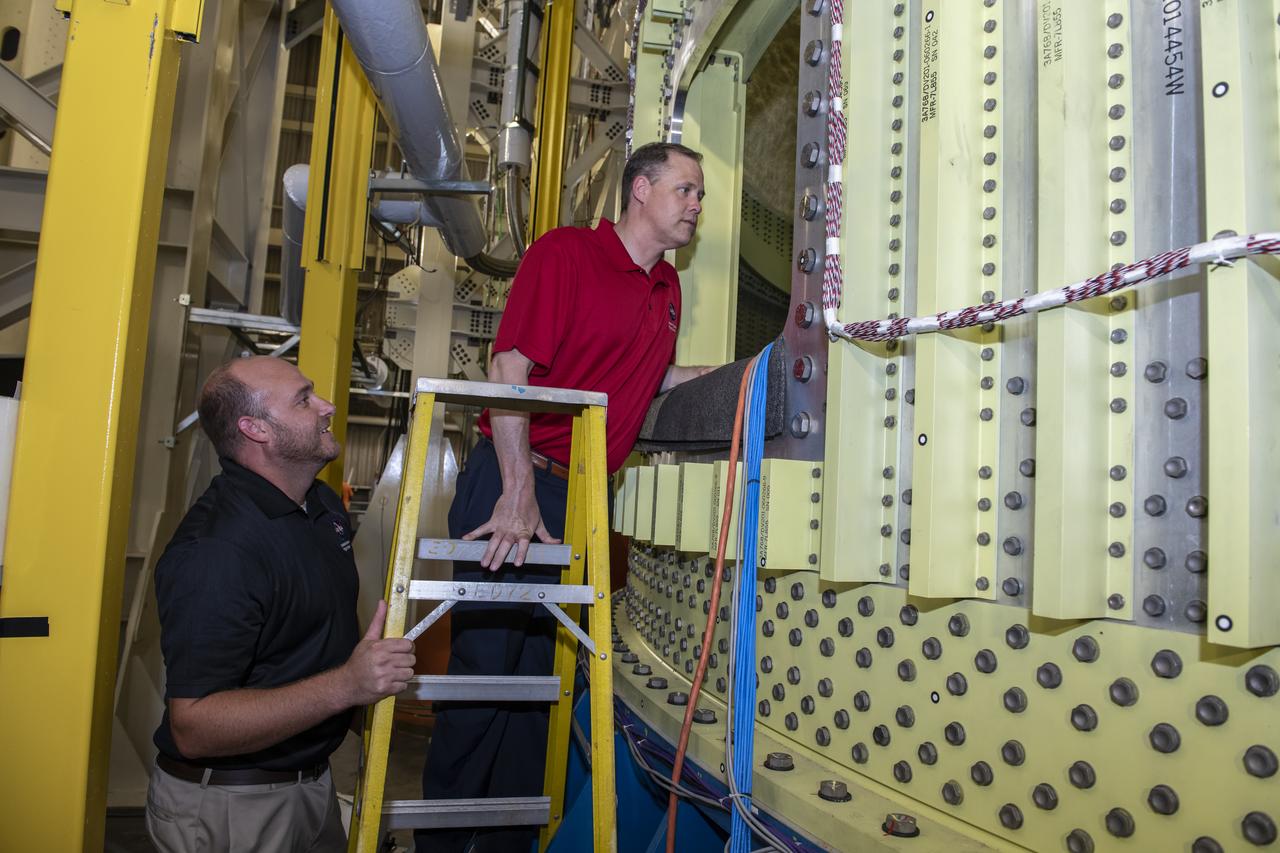
On August 15, 2018 NASA Administrator Jim Bridenstine visited Marshall Space Flight Center. Upon his arrival he was greeted by MSFC Acting Director Jody Singer along with the senior management team. Lead test engineer for the Space Launch System core stage intertank, Matt Cash briefs NASA Administrator Jim Bridenstine on testing progress of the SLS test article in the Structural Strength Lab at Marshall. The test article is structurally identical to the flight version of the intertank that will connect the core stage's two colossal fuel tanks, serve as the upper-connection point for the two solid rocket boosters and house critical avionics and electronics.
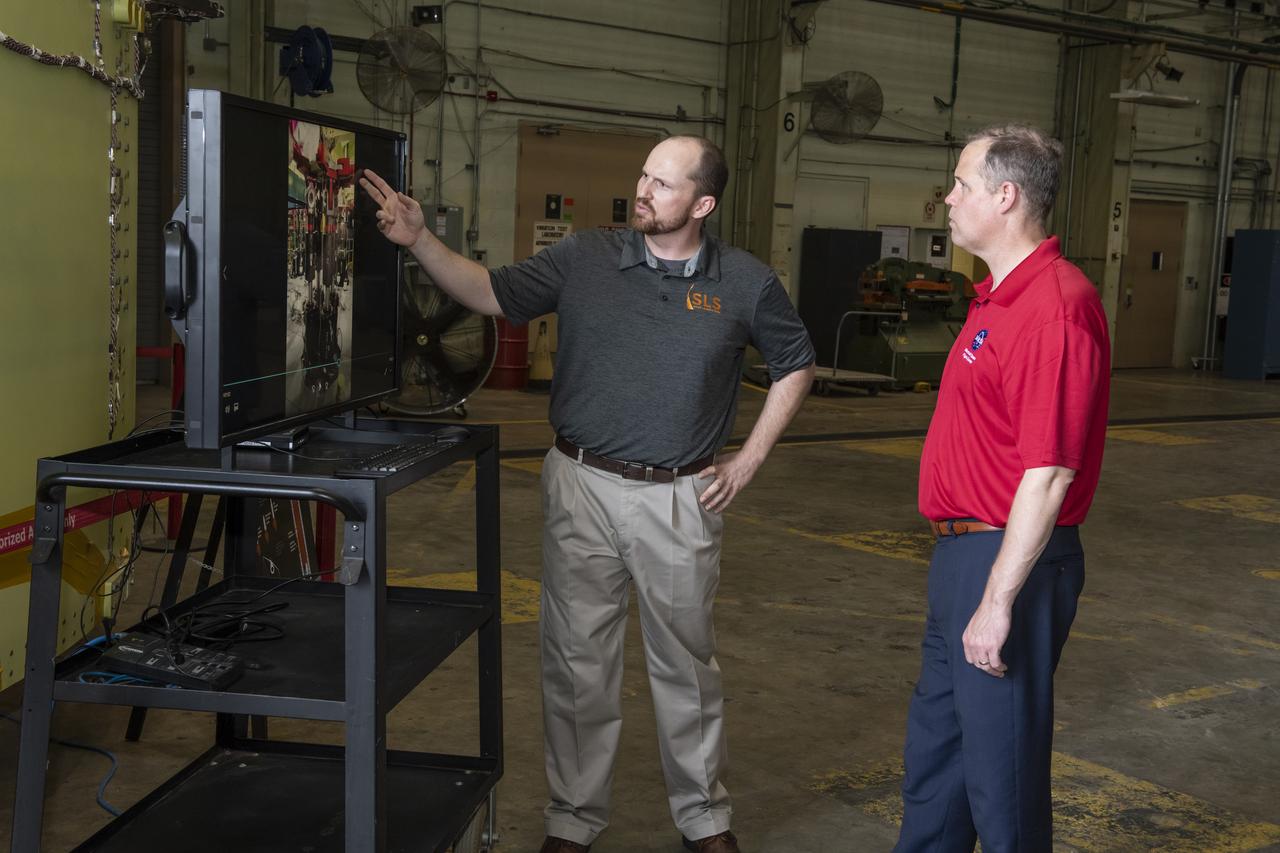
On August 15, 2018 NASA Administrator Jim Bridenstine visited Marshall Space Flight Center. Upon his arrival he was greeted by MSFC Acting Director Jody Singer along with the senior management team. Lead test engineer for the Space Launch System core stage intertank, Matt Cash briefs NASA Administrator Jim Bridenstine on testing progress of the SLS test article in the Structural Strength Lab at Marshall. The test article is structurally identical to the flight version of the intertank that will connect the core stage's two colossal fuel tanks, serve as the upper-connection point for the two solid rocket boosters and house critical avionics and electronics.
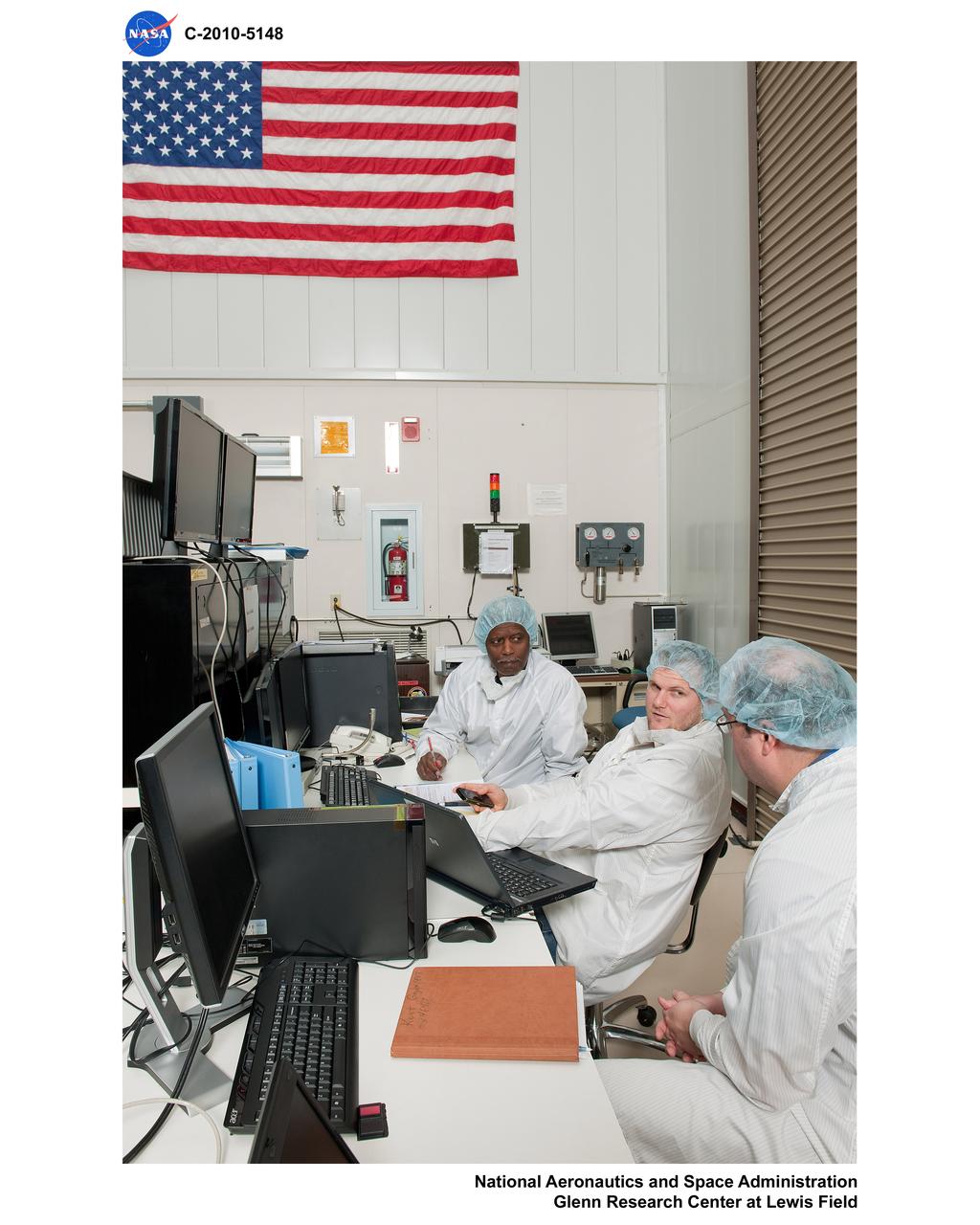
Communications, Navigation, and Network Reconfigurable Test-bed (CoNNeCT) Flight Hardware Compatibility Test Sets - Glenn Research Center and Networks Integration Management Office (NIMO) Testing for the Tracking and Data Relay Satellite System (TDRSS) - Goddard Space Flight Center Testing
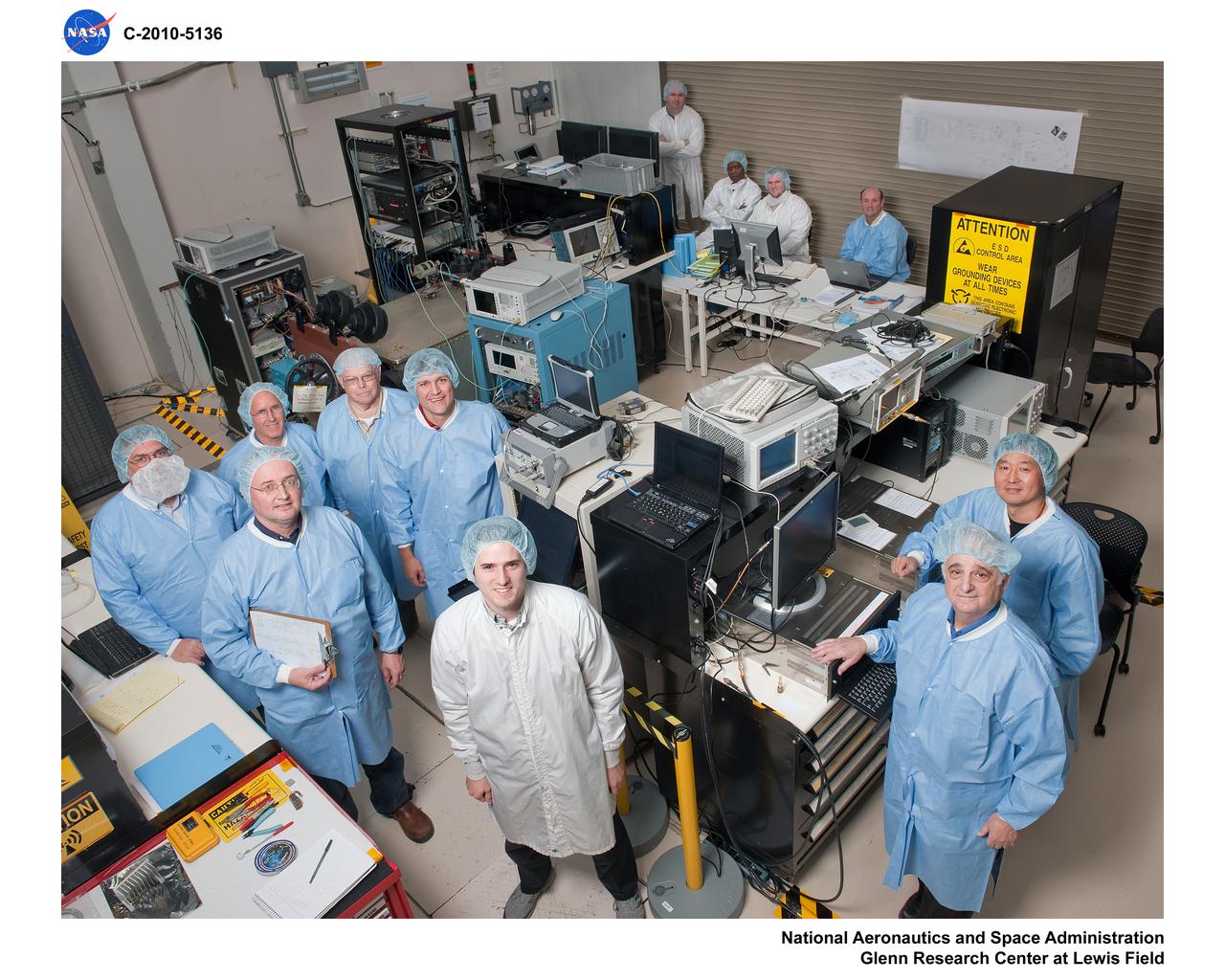
Communications, Navigation, and Network Reconfigurable Test-bed (CoNNeCT) Flight Hardware Compatibility Test Sets - Glenn Research Center and Networks Integration Management Office (NIMO) Testing for the Tracking and Data Relay Satellite System (TDRSS) - Goddard Space Flight Center Testing
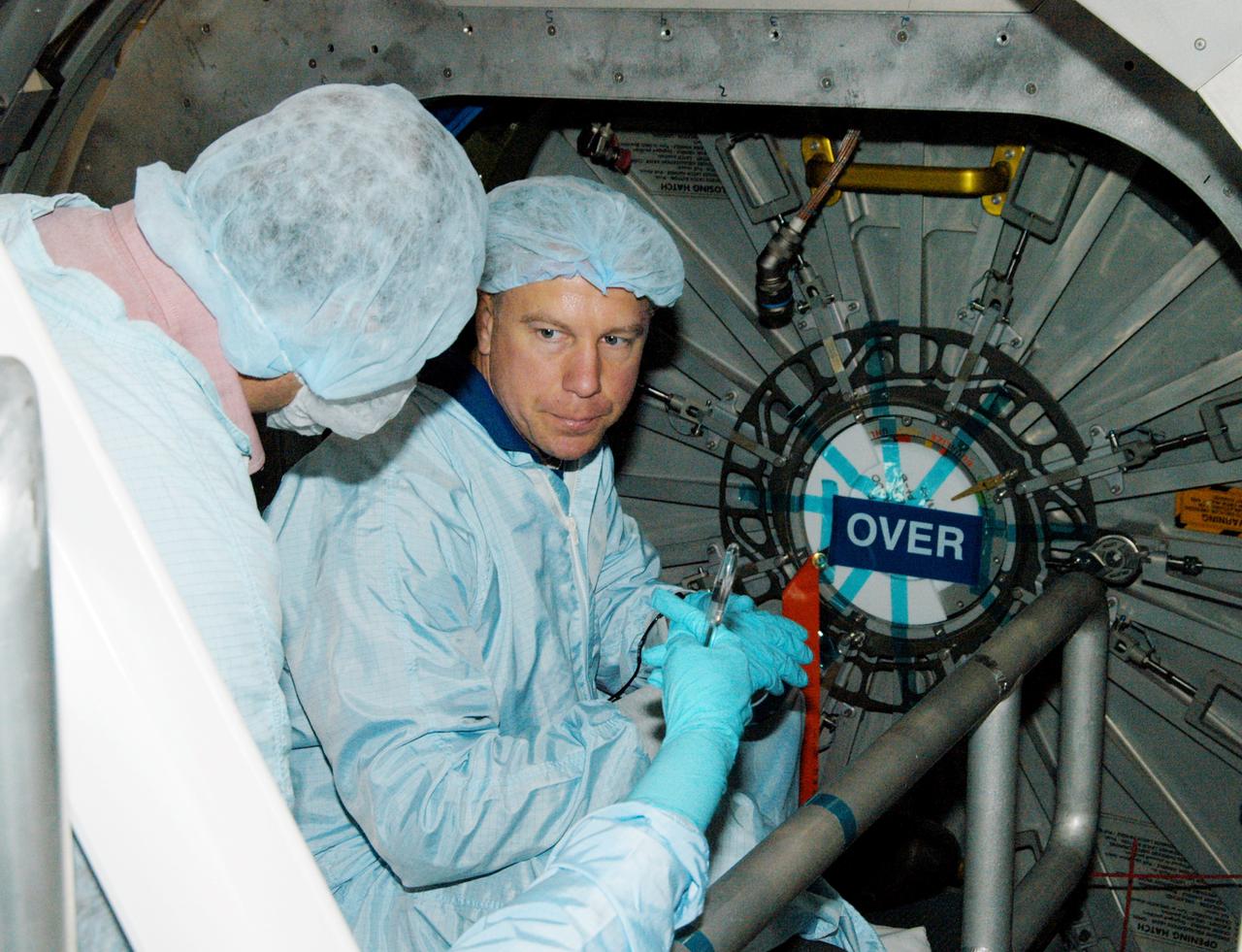
KENNEDY SPACE CENTER, FLA. - Astronaut Tim Kopra (facing camera) aids in Intravehicular Activity (IVA) constraints testing on the Italian-built Node 2, a future element of the International Space Station. The second of three Station connecting modules, the Node 2 attaches to the end of the U.S. Lab and provides attach locations for several other elements. Kopra is currently assigned technical duties in the Space Station Branch of the Astronaut Office, where his primary focus involves the testing of crew interfaces for two future ISS modules as well as the implementation of support computers and operational Local Area Network on ISS. Node 2 is scheduled to launch on mission STS-120, Station assembly flight 10A.
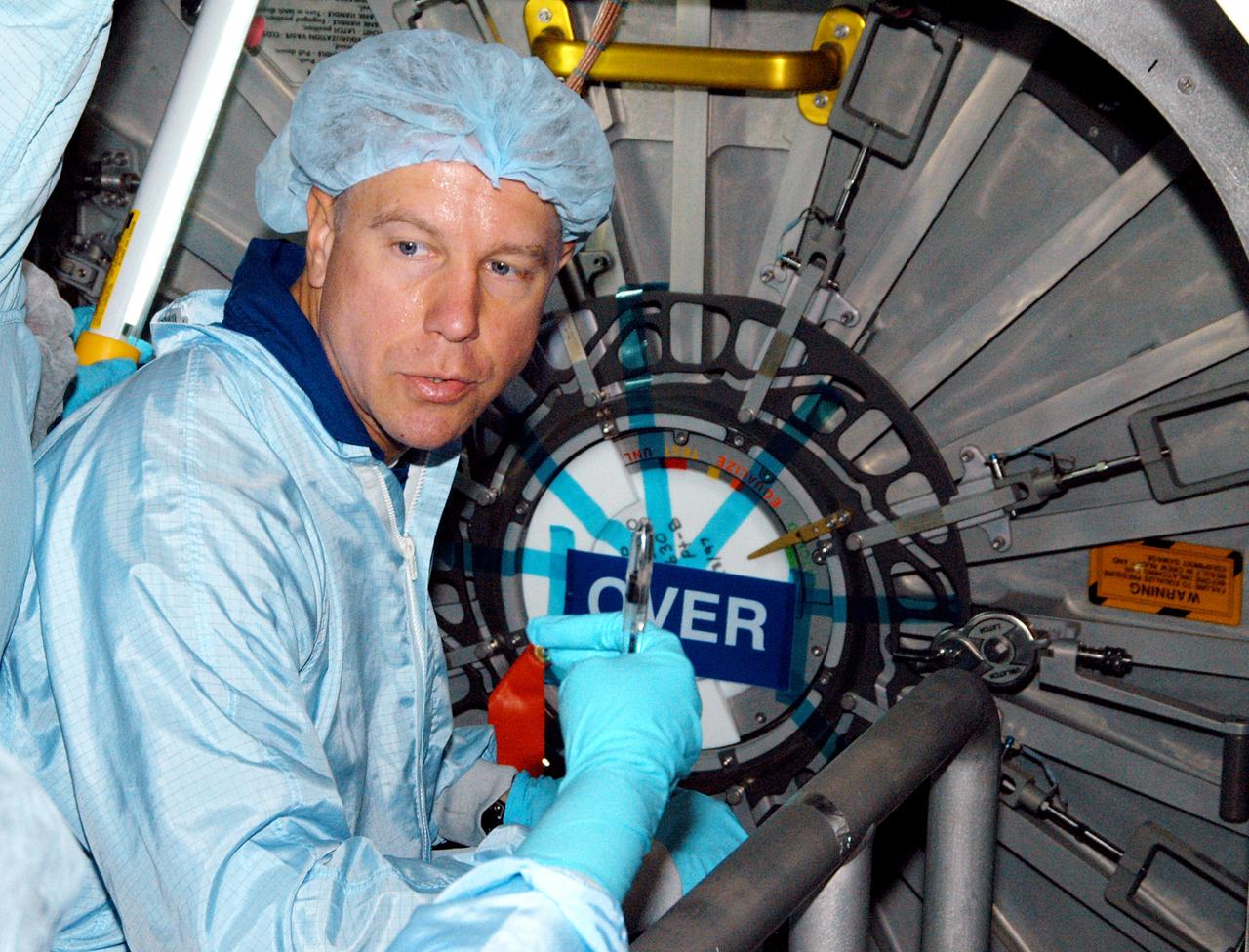
KENNEDY SPACE CENTER, FLA. - Astronaut Tim Kopra aids in Intravehicular Activity (IVA) constraints testing on the Italian-built Node 2, a future element of the International Space Station. The second of three Station connecting modules, the Node 2 attaches to the end of the U.S. Lab and provides attach locations for several other elements. Kopra is currently assigned technical duties in the Space Station Branch of the Astronaut Office, where his primary focus involves the testing of crew interfaces for two future ISS modules as well as the implementation of support computers and operational Local Area Network on ISS. Node 2 is scheduled to launch on mission STS-120, Station assembly flight 10A.
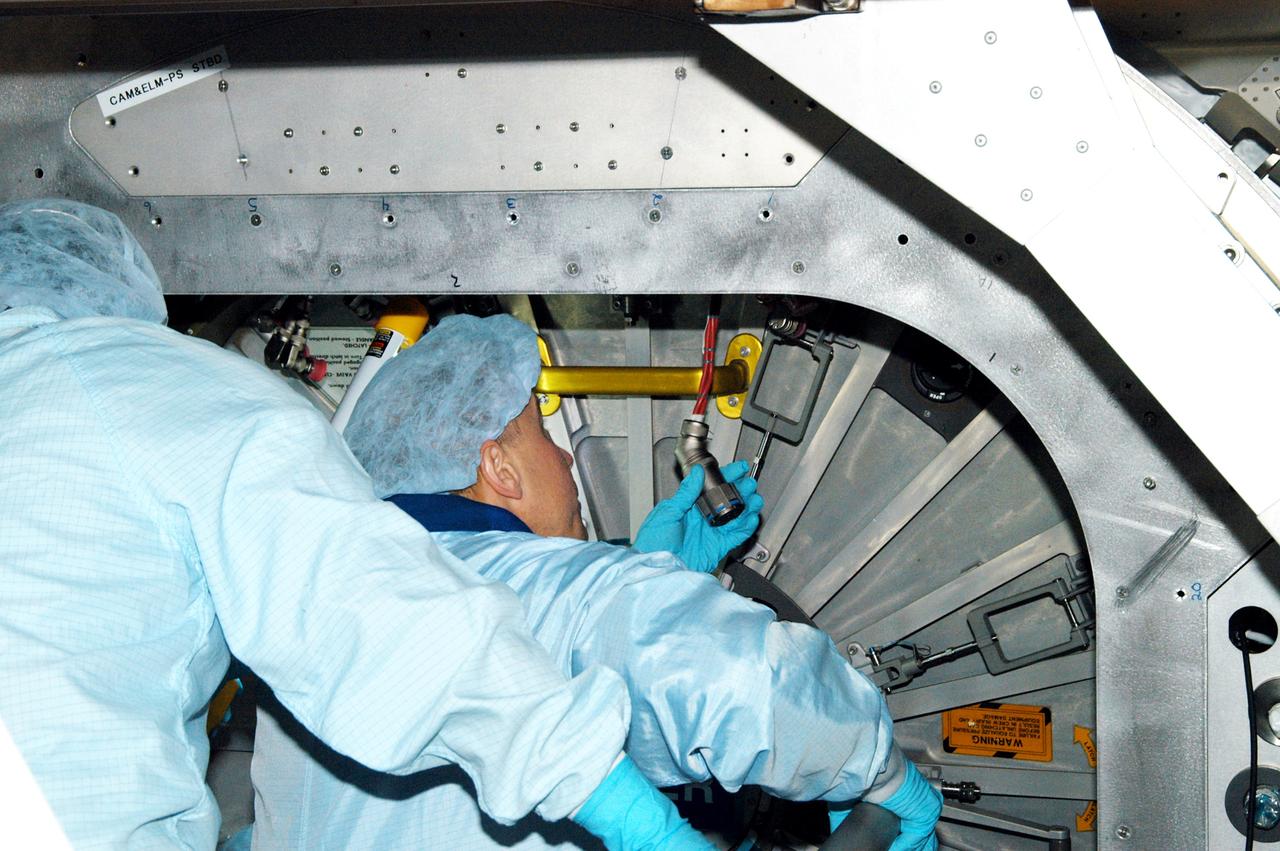
KENNEDY SPACE CENTER, FLA. - Astronaut Tim Kopra aids in Intravehicular Activity (IVA) constraints testing on the Italian-built Node 2, a future element of the International Space Station. The second of three Station connecting modules, the Node 2 attaches to the end of the U.S. Lab and provides attach locations for several other elements. Kopra is currently assigned technical duties in the Space Station Branch of the Astronaut Office, where his primary focus involves the testing of crew interfaces for two future ISS modules as well as the implementation of support computers and operational Local Area Network on ISS. Node 2 is scheduled to launch on mission STS-120, Station assembly flight 10A.
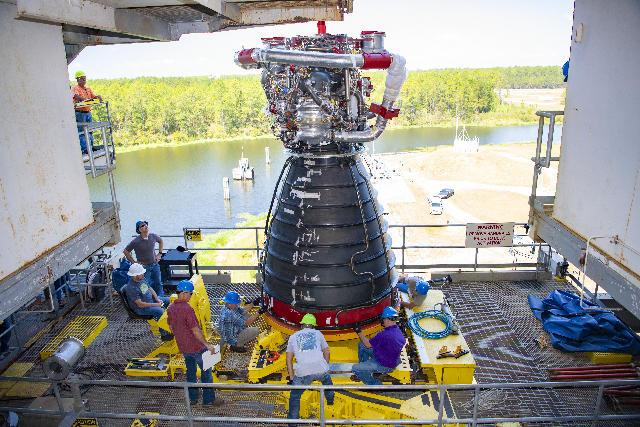
Once crews place the RS-25 engine on the engine vertical installer and it is attached to the Fred Haise Test Stand at NASA’s Stennis Space Center, the installer moves away, and technicians ensure all connections to the test facility are complete for the second certification test series to collect data for the final RS-25 design certification review.
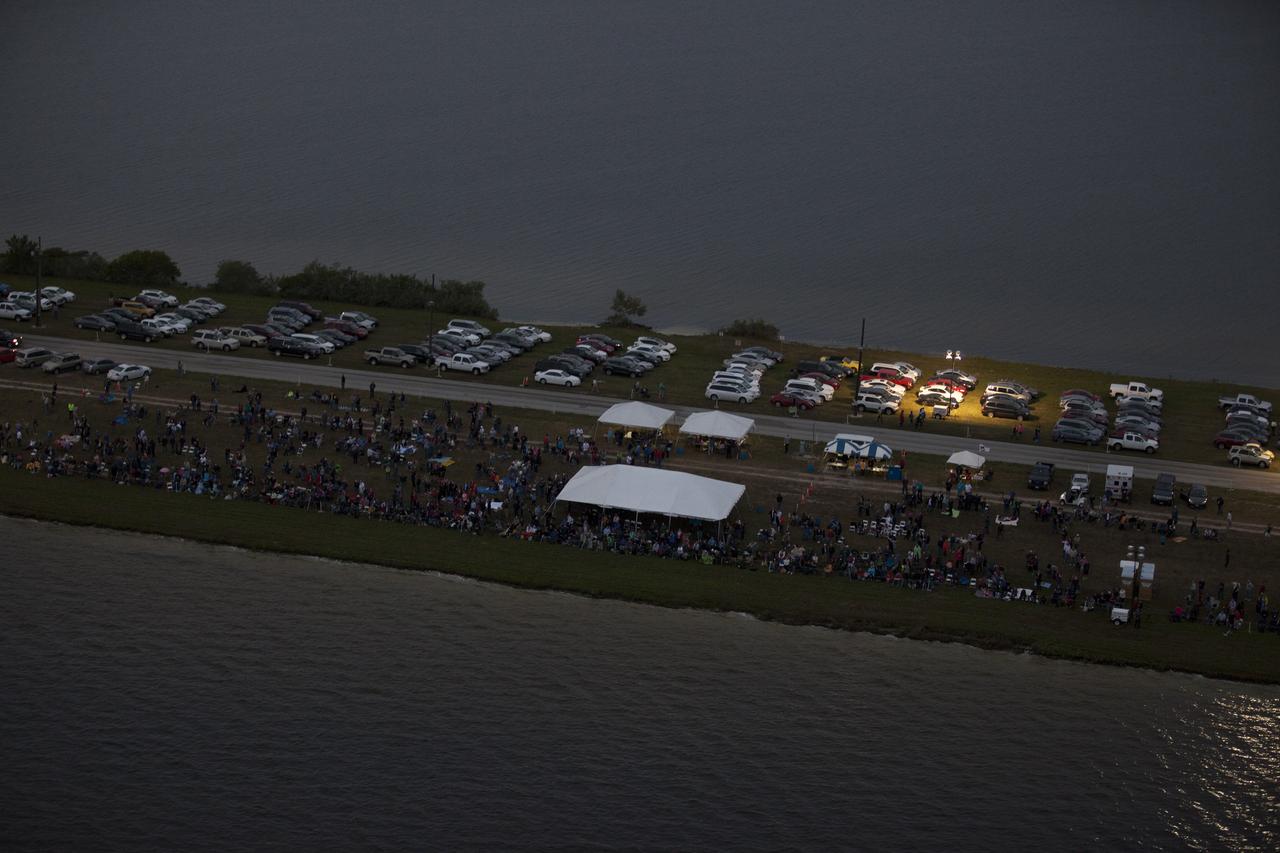
This helicopter view of the NASA Causeway connecting NASA's Kennedy Space Center with Cape Canaveral Air Force Staton shows the thousands of vehicles parked where guests gather to see the launch of the Orion Flight Test.
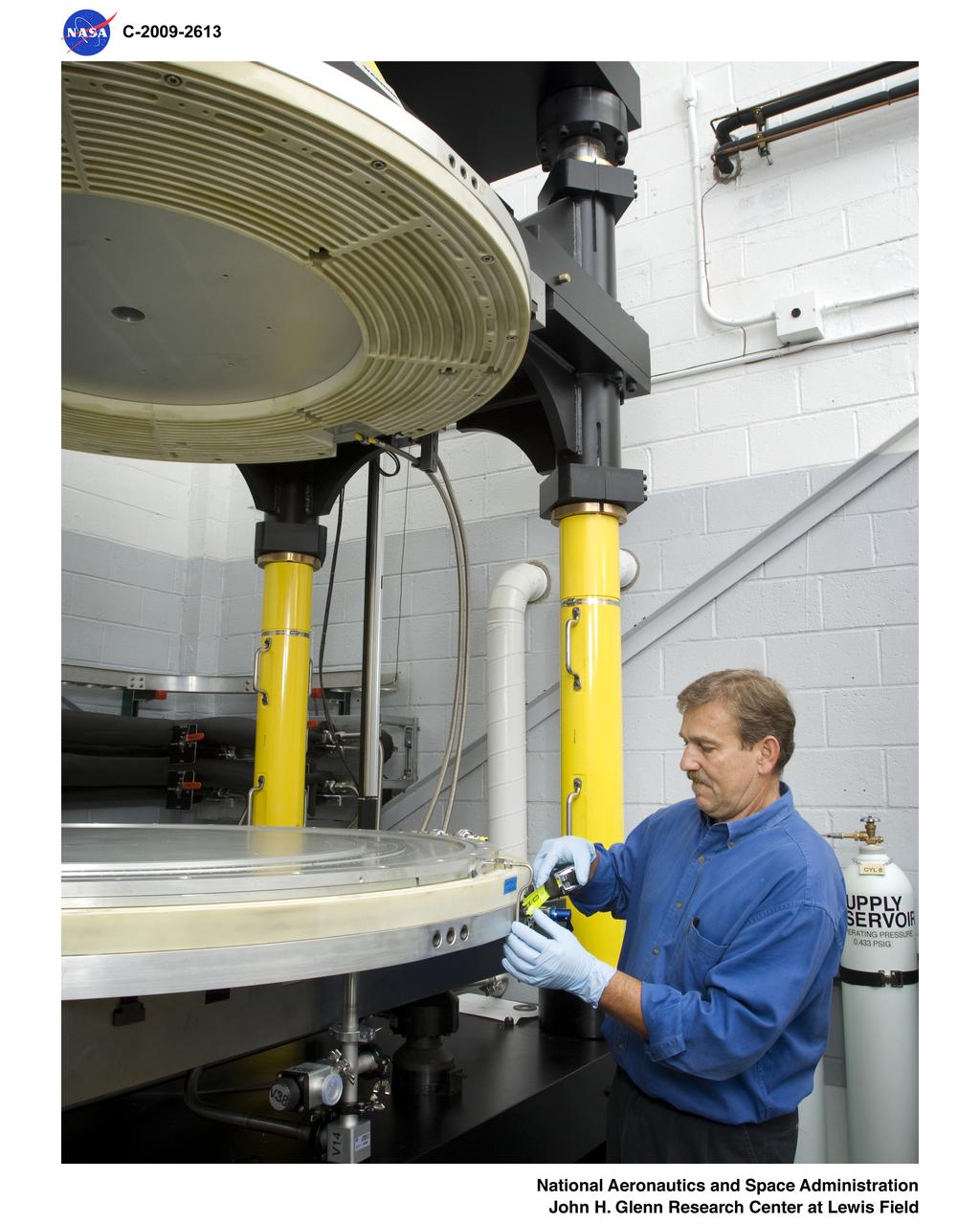
Photographs of the Low Impact Docking System (LIDS); this hardware is a test for the ORION docking birthing system to connect Crew Exploration Vehicle (CEV) to the International Space Station (ISS)
VANDENBERG AIR FORCE BASE, Calif. -- Following the first Interface Verification Test, a technician removes cables providing the electrical connections between the Interface Region Imaging Spectrograph, or IRIS, spacecraft and the Orbital Sciences Corp. Pegasus XL launch vehicle. Completion of the test paves the way for the standalone IRIS mission simulations. IRIS will open a new window of discovery by tracing the flow of energy and plasma through the chromospheres and transition region into the sun’s corona using spectrometry and imaging. IRIS fills a crucial gap in our ability to advance studies of the sun-to-Earth connection by tracing the flow of energy and plasma through the foundation of the corona and the region around the sun known as the heliosphere. Photo credit: VAFB_Randy Beaudoin
VANDENBERG AIR FORCE BASE, Calif. -- Following the first Interface Verification Test, a technician removes cables providing the electrical connections between the Interface Region Imaging Spectrograph, or IRIS, spacecraft and the Orbital Sciences Corp. Pegasus XL launch vehicle. Completion of the test paves the way for the standalone IRIS mission simulations. IRIS will open a new window of discovery by tracing the flow of energy and plasma through the chromospheres and transition region into the sun’s corona using spectrometry and imaging. IRIS fills a crucial gap in our ability to advance studies of the sun-to-Earth connection by tracing the flow of energy and plasma through the foundation of the corona and the region around the sun known as the heliosphere. Photo credit: VAFB_Randy Beaudoin
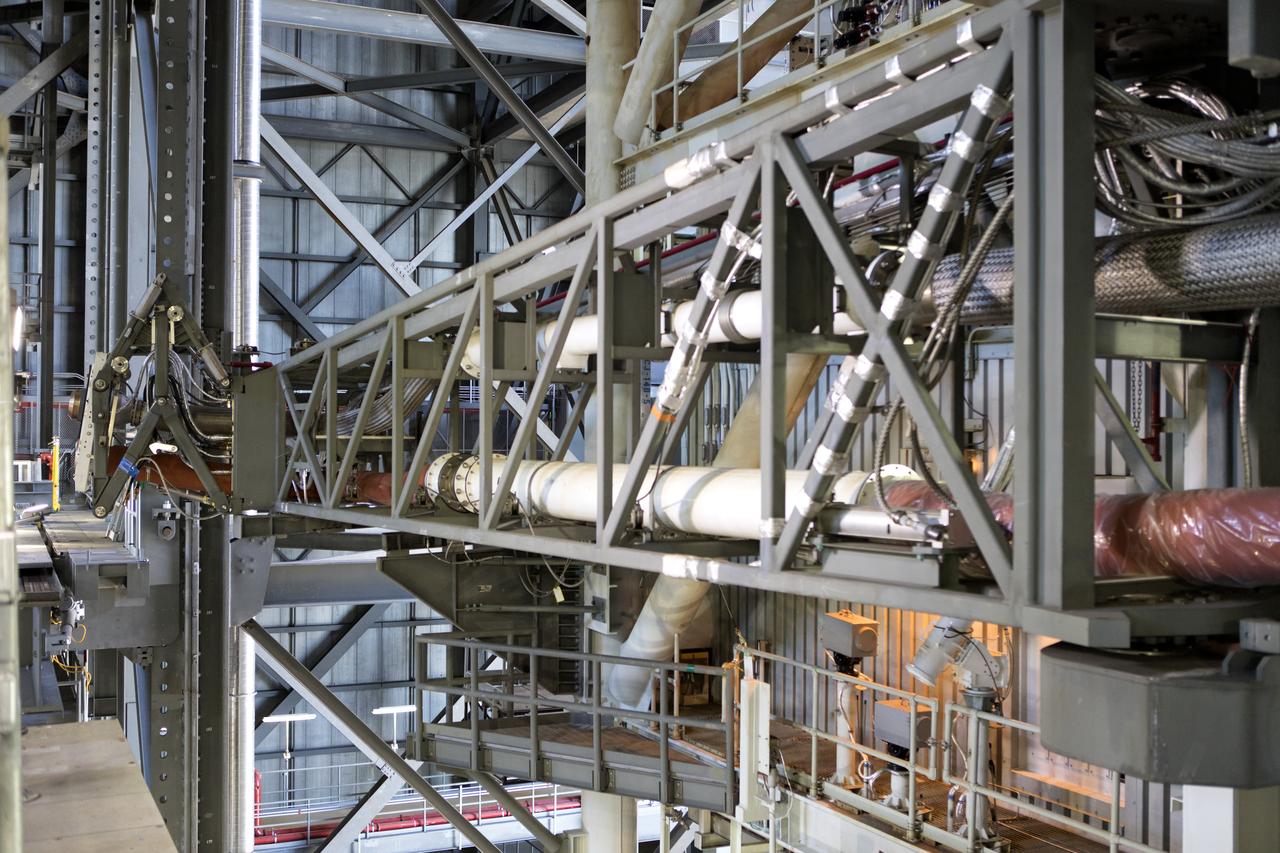
Preparations are underway to perform a preliminary swing test of the Core Stage Inter-tank Umbilical (CSITU) on the mobile launcher in High Bay 3 of the Vehicle Assembly Building on Feb. 22, 2019, at NASA's Kennedy Space Center in Florida. The CSITU is a swing-arm umbilical that will connect to the Space Launch System core stage inter-tank. It will provide conditioned air, pressurized gases and power and data connection to the core stage. The Exploration Ground Systems Program is overseeing installation of the umbilicals.
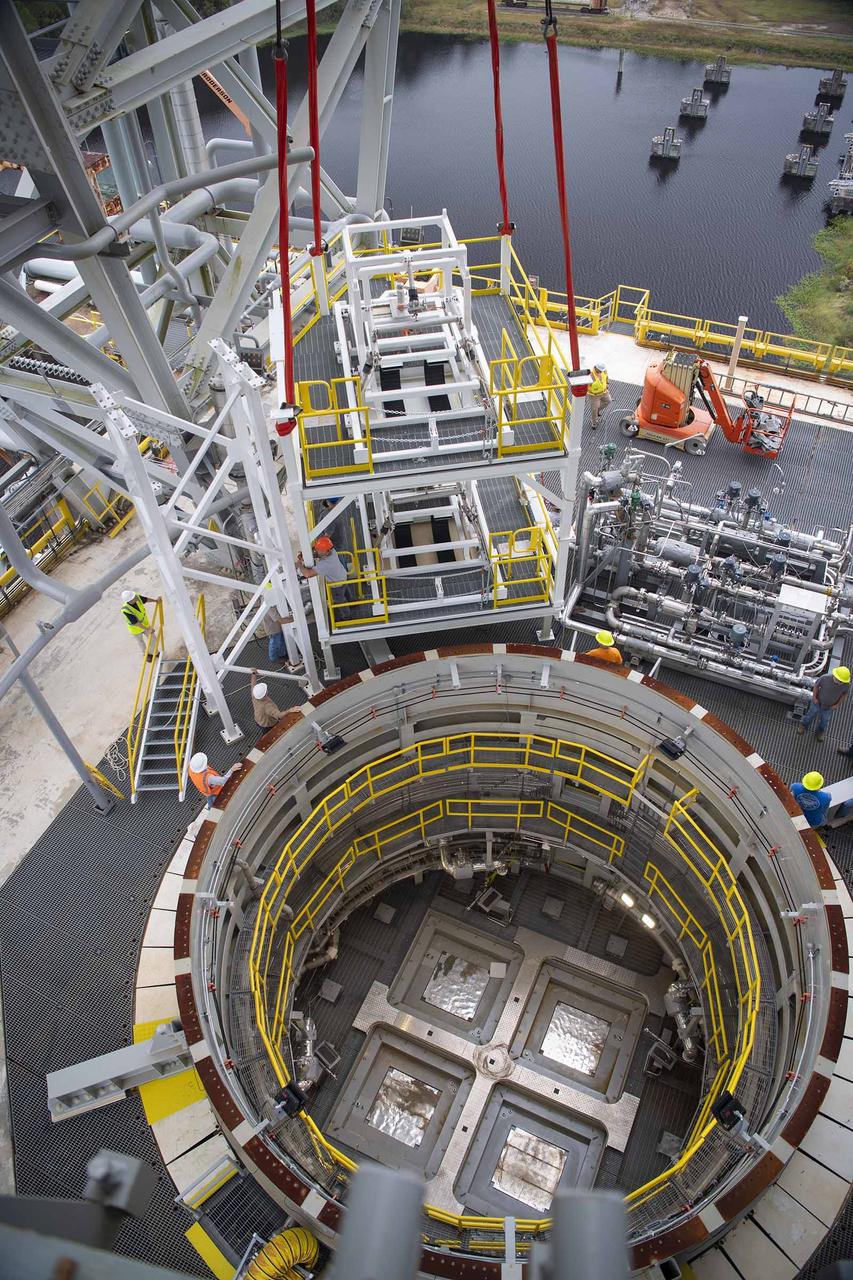
A pair of umbilical support structures needed for future testing of NASA’s exploration upper stage (EUS) were installed in the B-2 position of the Thad Cochran Test Stand on Oct. 30-31 at NASA’s Stennis Space Center. The support structures arrived from NASA’s Michoud Assembly Facility in New Orleans via the unique NASA Stennis seven-and-a-half-mile canal system in 2023. Since then, crews have prepared the structures that will align with the EUS unit for installation. In addition to helping secure the unit in place during hot fire testing, the umbilical support structures are where the command, control, and data electrical connections are mated to connect the ground systems to the vehicle systems, as well as most the commodity connections such as liquid hydrogen, liquid oxygen, hydrogen vent, helium bottle fill pressure, and purges. Prior to its initial flight, the EUS unit will undergo a series of so-called Green Run tests at NASA Stennis to ensure all systems are ready to go. The test series will culminate with a hot fire of the stage’s four RL10 engines, made by Aerojet Rocketdyne, an L3Harris Technologies company and lead SLS engines contractor. The new upper stage will enable NASA to carry larger payloads on Artemis missions to the Moon and beyond.
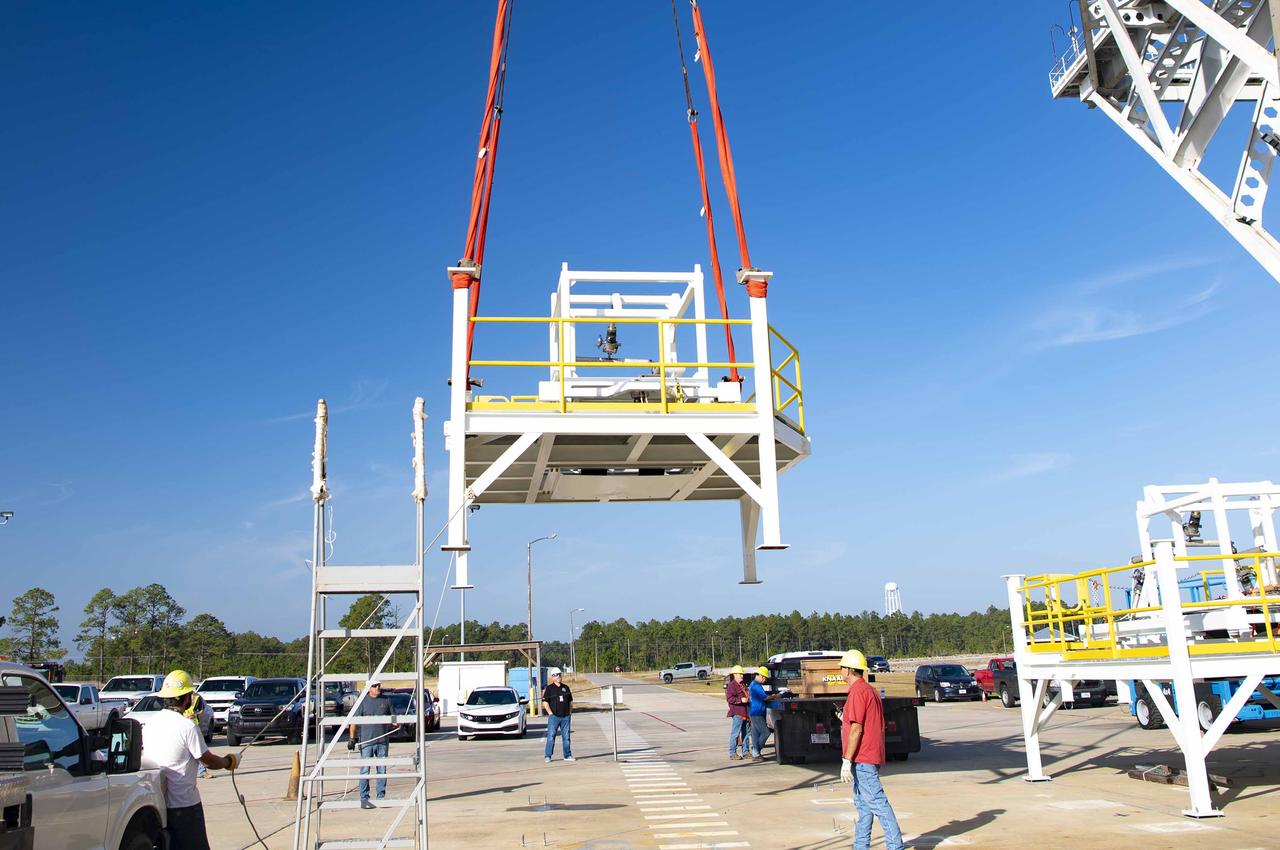
A pair of umbilical support structures needed for future testing of NASA’s exploration upper stage (EUS) were installed in the B-2 position of the Thad Cochran Test Stand on Oct. 30-31 at NASA’s Stennis Space Center. The support structures arrived from NASA’s Michoud Assembly Facility in New Orleans via the unique NASA Stennis seven-and-a-half-mile canal system in 2023. Since then, crews have prepared the structures that will align with the EUS unit for installation. In addition to helping secure the unit in place during hot fire testing, the umbilical support structures are where the command, control, and data electrical connections are mated to connect the ground systems to the vehicle systems, as well as most the commodity connections such as liquid hydrogen, liquid oxygen, hydrogen vent, helium bottle fill pressure, and purges. Prior to its initial flight, the EUS unit will undergo a series of so-called Green Run tests at NASA Stennis to ensure all systems are ready to go. The test series will culminate with a hot fire of the stage’s four RL10 engines, made by Aerojet Rocketdyne, an L3Harris Technologies company and lead SLS engines contractor. The new upper stage will enable NASA to carry larger payloads on Artemis missions to the Moon and beyond.
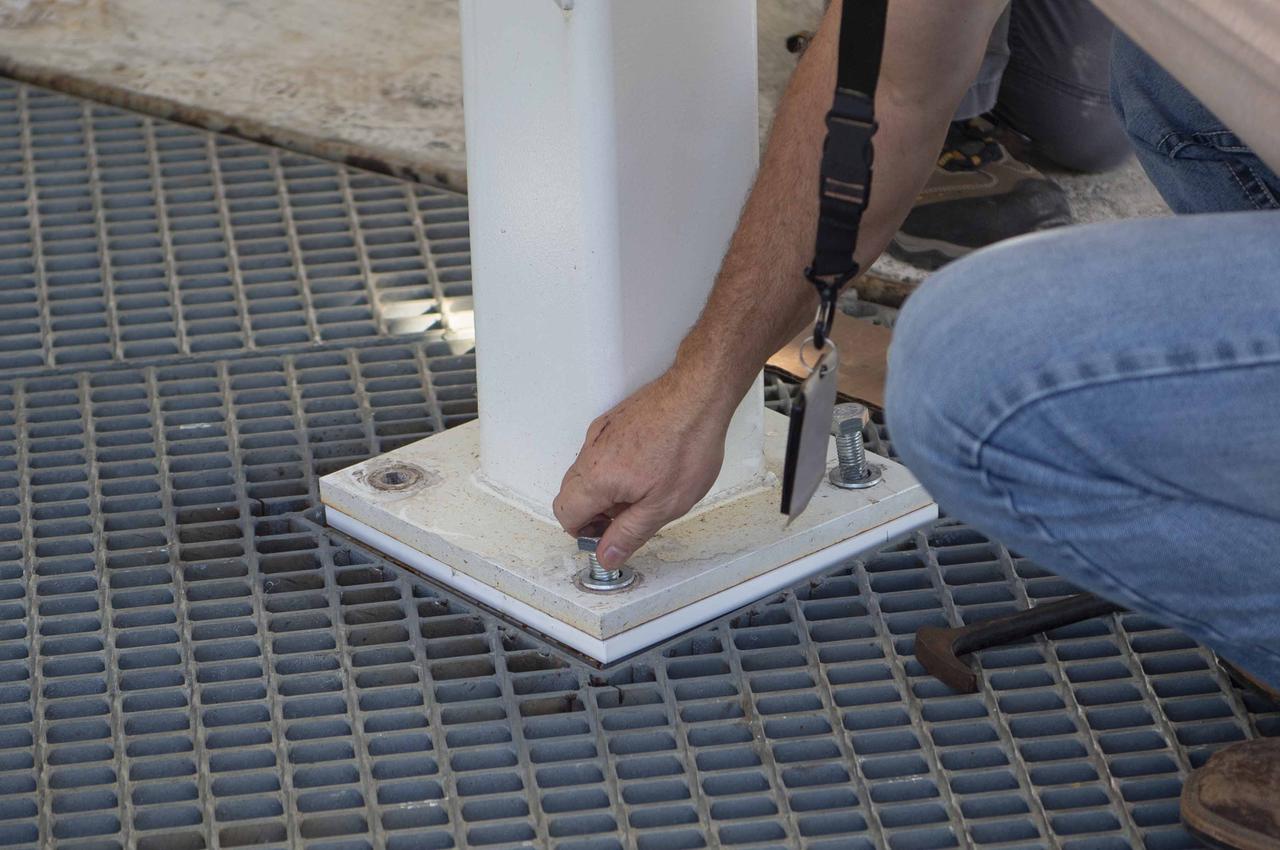
A pair of umbilical support structures needed for future testing of NASA’s exploration upper stage (EUS) were installed in the B-2 position of the Thad Cochran Test Stand on Oct. 30-31 at NASA’s Stennis Space Center. The support structures arrived from NASA’s Michoud Assembly Facility in New Orleans via the unique NASA Stennis seven-and-a-half-mile canal system in 2023. Since then, crews have prepared the structures that will align with the EUS unit for installation. In addition to helping secure the unit in place during hot fire testing, the umbilical support structures are where the command, control, and data electrical connections are mated to connect the ground systems to the vehicle systems, as well as most the commodity connections such as liquid hydrogen, liquid oxygen, hydrogen vent, helium bottle fill pressure, and purges. Prior to its initial flight, the EUS unit will undergo a series of so-called Green Run tests at NASA Stennis to ensure all systems are ready to go. The test series will culminate with a hot fire of the stage’s four RL10 engines, made by Aerojet Rocketdyne, an L3Harris Technologies company and lead SLS engines contractor. The new upper stage will enable NASA to carry larger payloads on Artemis missions to the Moon and beyond.
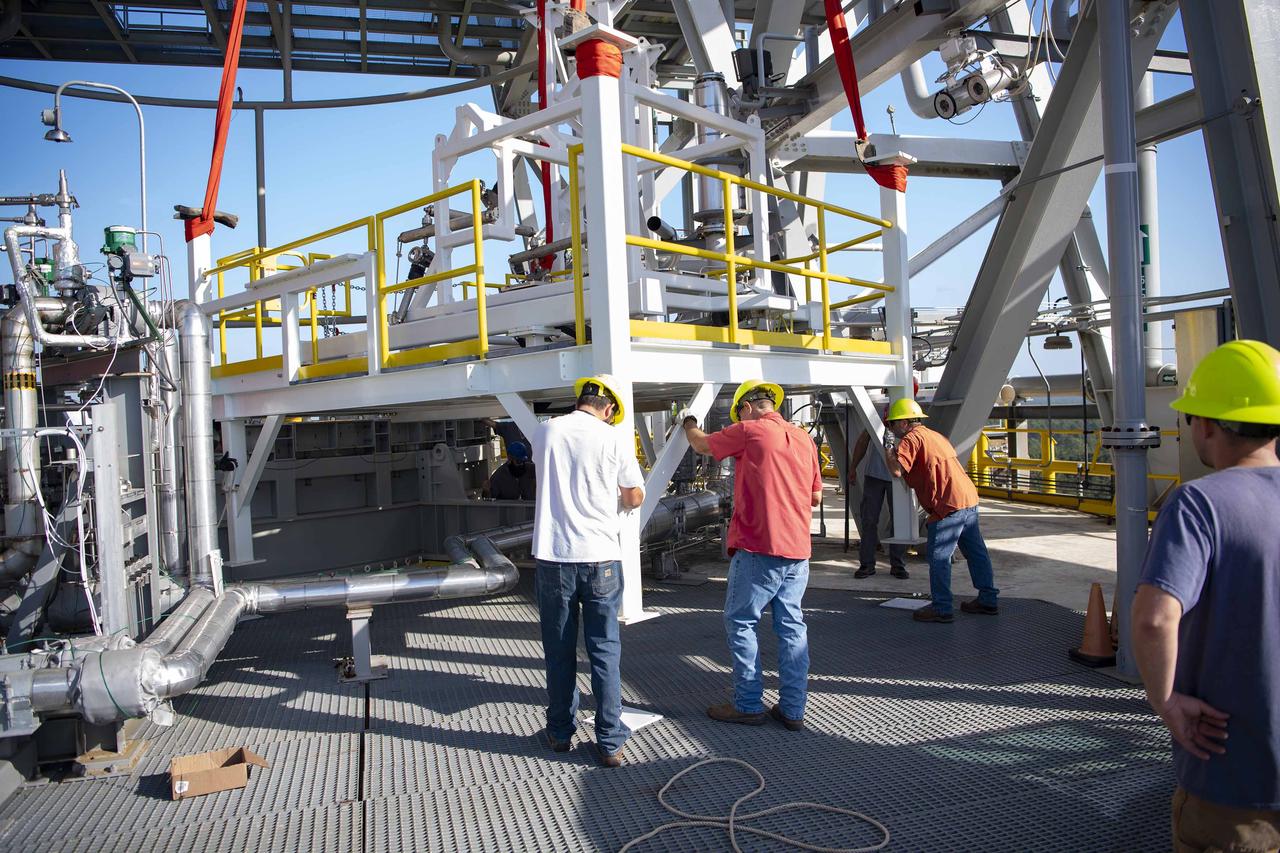
A pair of umbilical support structures needed for future testing of NASA’s exploration upper stage (EUS) were installed in the B-2 position of the Thad Cochran Test Stand on Oct. 30-31 at NASA’s Stennis Space Center. The support structures arrived from NASA’s Michoud Assembly Facility in New Orleans via the unique NASA Stennis seven-and-a-half-mile canal system in 2023. Since then, crews have prepared the structures that will align with the EUS unit for installation. In addition to helping secure the unit in place during hot fire testing, the umbilical support structures are where the command, control, and data electrical connections are mated to connect the ground systems to the vehicle systems, as well as most the commodity connections such as liquid hydrogen, liquid oxygen, hydrogen vent, helium bottle fill pressure, and purges. Prior to its initial flight, the EUS unit will undergo a series of so-called Green Run tests at NASA Stennis to ensure all systems are ready to go. The test series will culminate with a hot fire of the stage’s four RL10 engines, made by Aerojet Rocketdyne, an L3Harris Technologies company and lead SLS engines contractor. The new upper stage will enable NASA to carry larger payloads on Artemis missions to the Moon and beyond.
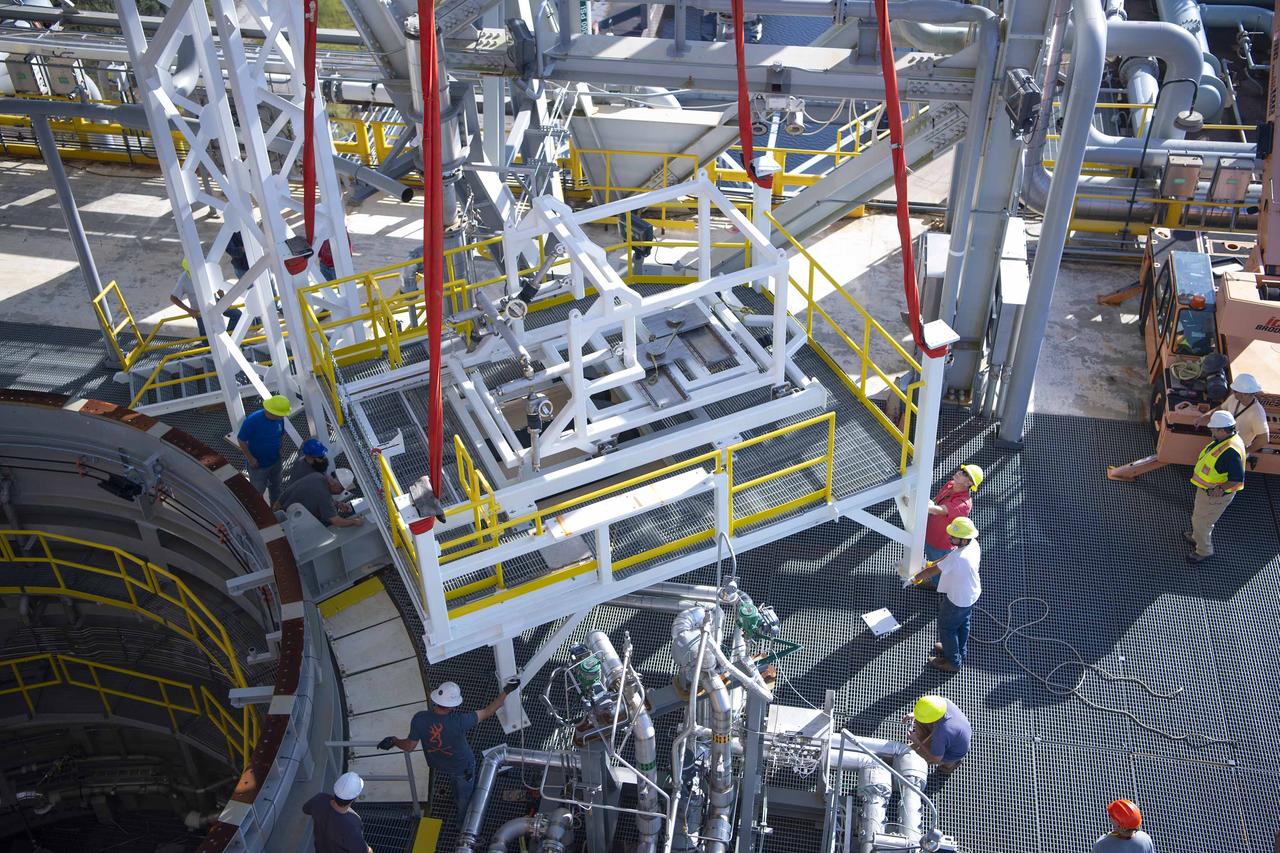
A pair of umbilical support structures needed for future testing of NASA’s exploration upper stage (EUS) were installed in the B-2 position of the Thad Cochran Test Stand on Oct. 30-31 at NASA’s Stennis Space Center. The support structures arrived from NASA’s Michoud Assembly Facility in New Orleans via the unique NASA Stennis seven-and-a-half-mile canal system in 2023. Since then, crews have prepared the structures that will align with the EUS unit for installation. In addition to helping secure the unit in place during hot fire testing, the umbilical support structures are where the command, control, and data electrical connections are mated to connect the ground systems to the vehicle systems, as well as most the commodity connections such as liquid hydrogen, liquid oxygen, hydrogen vent, helium bottle fill pressure, and purges. Prior to its initial flight, the EUS unit will undergo a series of so-called Green Run tests at NASA Stennis to ensure all systems are ready to go. The test series will culminate with a hot fire of the stage’s four RL10 engines, made by Aerojet Rocketdyne, an L3Harris Technologies company and lead SLS engines contractor. The new upper stage will enable NASA to carry larger payloads on Artemis missions to the Moon and beyond.
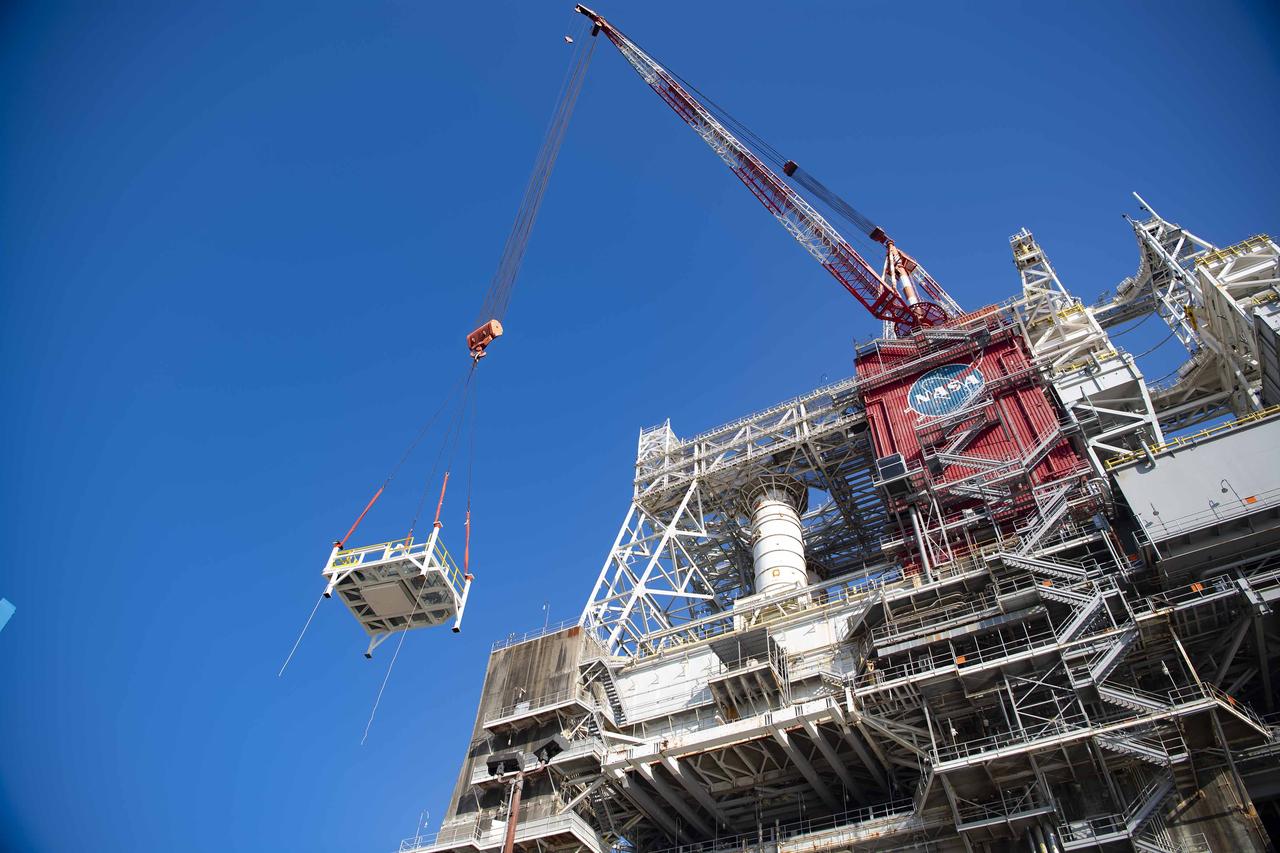
A pair of umbilical support structures needed for future testing of NASA’s exploration upper stage (EUS) were installed in the B-2 position of the Thad Cochran Test Stand on Oct. 30-31 at NASA’s Stennis Space Center. The support structures arrived from NASA’s Michoud Assembly Facility in New Orleans via the unique NASA Stennis seven-and-a-half-mile canal system in 2023. Since then, crews have prepared the structures that will align with the EUS unit for installation. In addition to helping secure the unit in place during hot fire testing, the umbilical support structures are where the command, control, and data electrical connections are mated to connect the ground systems to the vehicle systems, as well as most the commodity connections such as liquid hydrogen, liquid oxygen, hydrogen vent, helium bottle fill pressure, and purges. Prior to its initial flight, the EUS unit will undergo a series of so-called Green Run tests at NASA Stennis to ensure all systems are ready to go. The test series will culminate with a hot fire of the stage’s four RL10 engines, made by Aerojet Rocketdyne, an L3Harris Technologies company and lead SLS engines contractor. The new upper stage will enable NASA to carry larger payloads on Artemis missions to the Moon and beyond.
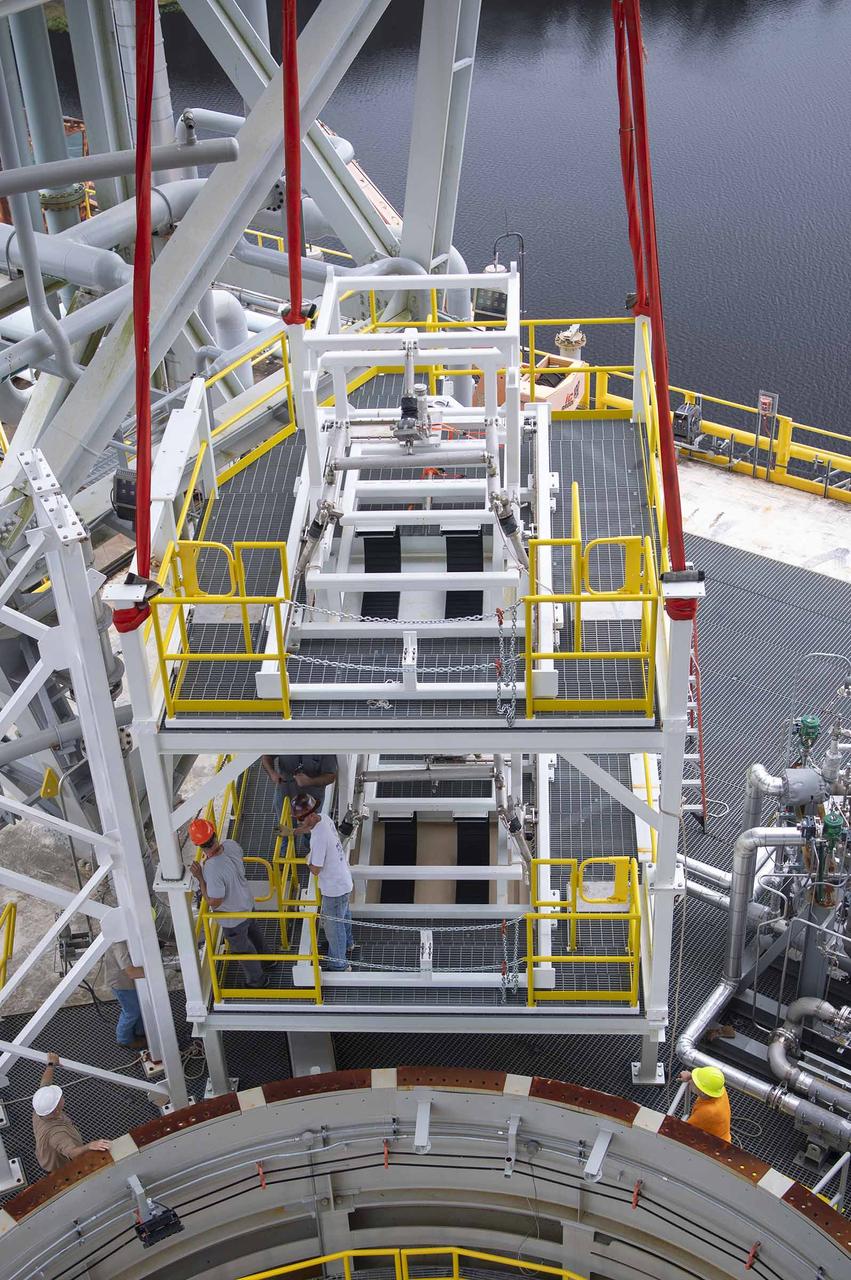
A pair of umbilical support structures needed for future testing of NASA’s exploration upper stage (EUS) were installed in the B-2 position of the Thad Cochran Test Stand on Oct. 30-31 at NASA’s Stennis Space Center. The support structures arrived from NASA’s Michoud Assembly Facility in New Orleans via the unique NASA Stennis seven-and-a-half-mile canal system in 2023. Since then, crews have prepared the structures that will align with the EUS unit for installation. In addition to helping secure the unit in place during hot fire testing, the umbilical support structures are where the command, control, and data electrical connections are mated to connect the ground systems to the vehicle systems, as well as most the commodity connections such as liquid hydrogen, liquid oxygen, hydrogen vent, helium bottle fill pressure, and purges. Prior to its initial flight, the EUS unit will undergo a series of so-called Green Run tests at NASA Stennis to ensure all systems are ready to go. The test series will culminate with a hot fire of the stage’s four RL10 engines, made by Aerojet Rocketdyne, an L3Harris Technologies company and lead SLS engines contractor. The new upper stage will enable NASA to carry larger payloads on Artemis missions to the Moon and beyond.
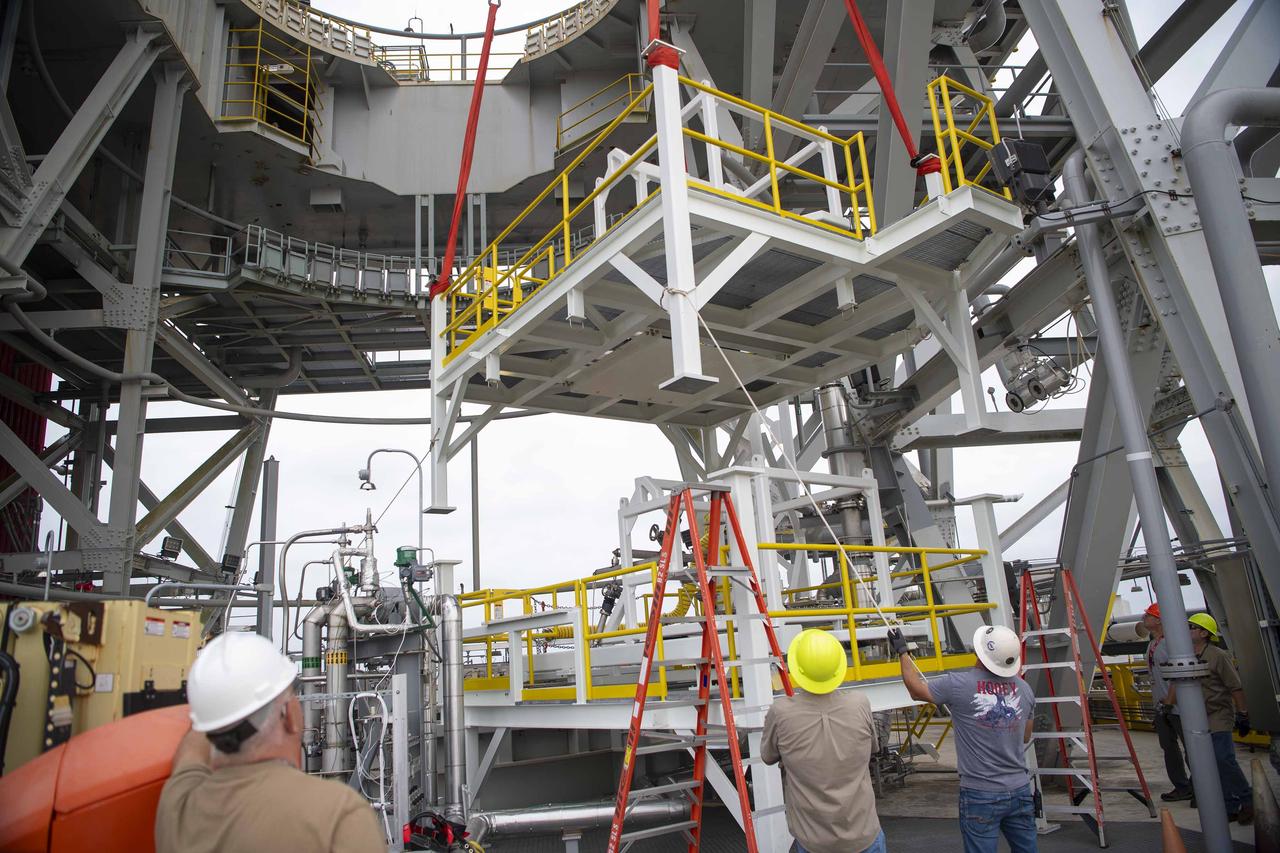
A pair of umbilical support structures needed for future testing of NASA’s exploration upper stage (EUS) were installed in the B-2 position of the Thad Cochran Test Stand on Oct. 30-31 at NASA’s Stennis Space Center. The support structures arrived from NASA’s Michoud Assembly Facility in New Orleans via the unique NASA Stennis seven-and-a-half-mile canal system in 2023. Since then, crews have prepared the structures that will align with the EUS unit for installation. In addition to helping secure the unit in place during hot fire testing, the umbilical support structures are where the command, control, and data electrical connections are mated to connect the ground systems to the vehicle systems, as well as most the commodity connections such as liquid hydrogen, liquid oxygen, hydrogen vent, helium bottle fill pressure, and purges. Prior to its initial flight, the EUS unit will undergo a series of so-called Green Run tests at NASA Stennis to ensure all systems are ready to go. The test series will culminate with a hot fire of the stage’s four RL10 engines, made by Aerojet Rocketdyne, an L3Harris Technologies company and lead SLS engines contractor. The new upper stage will enable NASA to carry larger payloads on Artemis missions to the Moon and beyond.
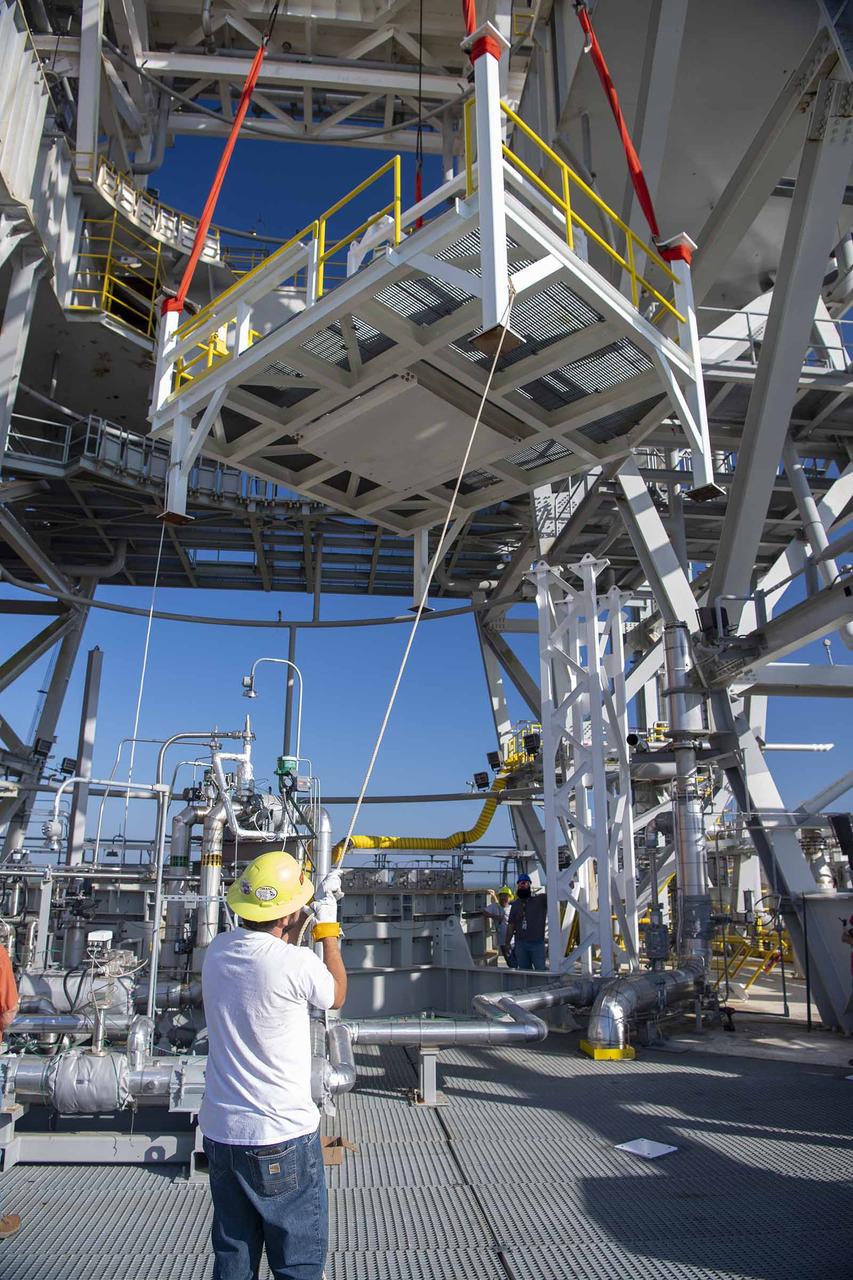
A pair of umbilical support structures needed for future testing of NASA’s exploration upper stage (EUS) were installed in the B-2 position of the Thad Cochran Test Stand on Oct. 30-31 at NASA’s Stennis Space Center. The support structures arrived from NASA’s Michoud Assembly Facility in New Orleans via the unique NASA Stennis seven-and-a-half-mile canal system in 2023. Since then, crews have prepared the structures that will align with the EUS unit for installation. In addition to helping secure the unit in place during hot fire testing, the umbilical support structures are where the command, control, and data electrical connections are mated to connect the ground systems to the vehicle systems, as well as most the commodity connections such as liquid hydrogen, liquid oxygen, hydrogen vent, helium bottle fill pressure, and purges. Prior to its initial flight, the EUS unit will undergo a series of so-called Green Run tests at NASA Stennis to ensure all systems are ready to go. The test series will culminate with a hot fire of the stage’s four RL10 engines, made by Aerojet Rocketdyne, an L3Harris Technologies company and lead SLS engines contractor. The new upper stage will enable NASA to carry larger payloads on Artemis missions to the Moon and beyond.
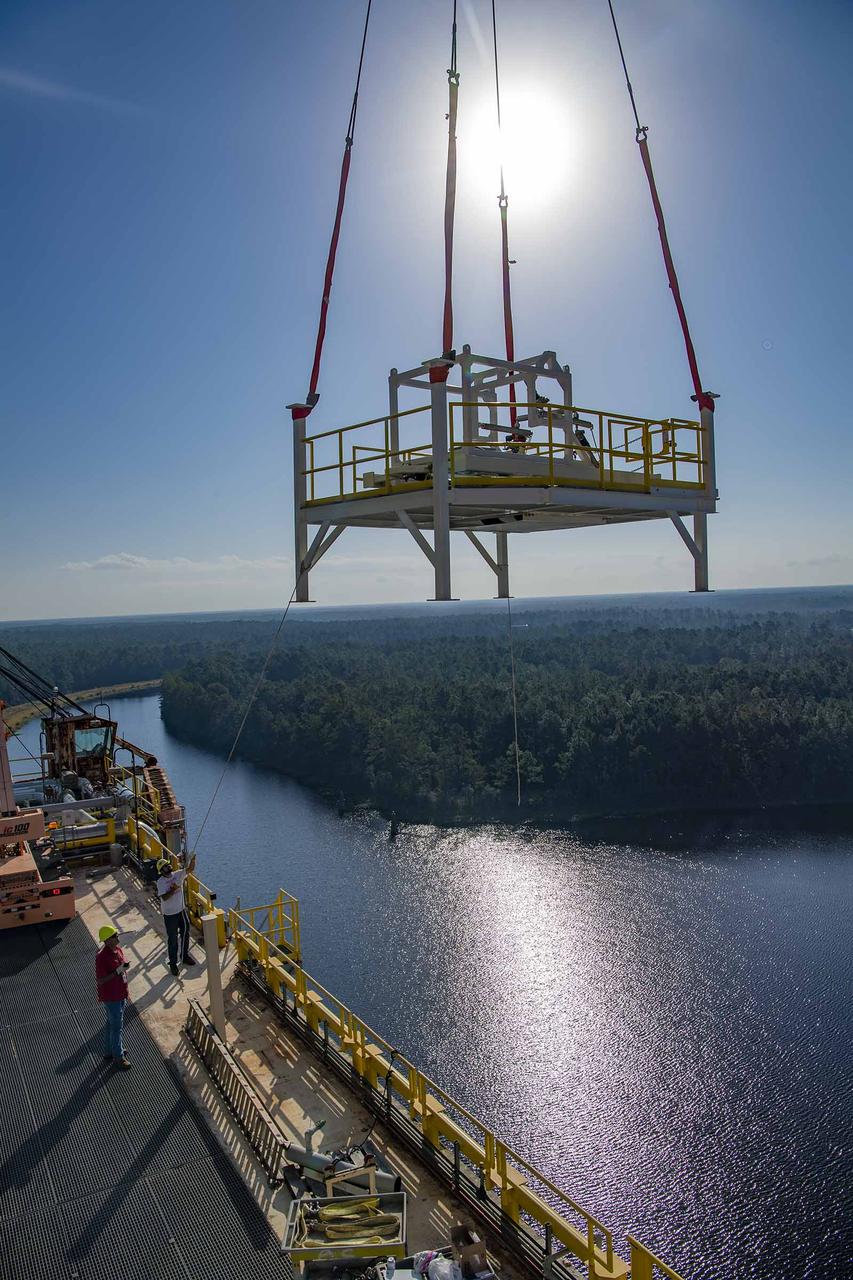
A pair of umbilical support structures needed for future testing of NASA’s exploration upper stage (EUS) were installed in the B-2 position of the Thad Cochran Test Stand on Oct. 30-31 at NASA’s Stennis Space Center. The support structures arrived from NASA’s Michoud Assembly Facility in New Orleans via the unique NASA Stennis seven-and-a-half-mile canal system in 2023. Since then, crews have prepared the structures that will align with the EUS unit for installation. In addition to helping secure the unit in place during hot fire testing, the umbilical support structures are where the command, control, and data electrical connections are mated to connect the ground systems to the vehicle systems, as well as most the commodity connections such as liquid hydrogen, liquid oxygen, hydrogen vent, helium bottle fill pressure, and purges. Prior to its initial flight, the EUS unit will undergo a series of so-called Green Run tests at NASA Stennis to ensure all systems are ready to go. The test series will culminate with a hot fire of the stage’s four RL10 engines, made by Aerojet Rocketdyne, an L3Harris Technologies company and lead SLS engines contractor. The new upper stage will enable NASA to carry larger payloads on Artemis missions to the Moon and beyond.
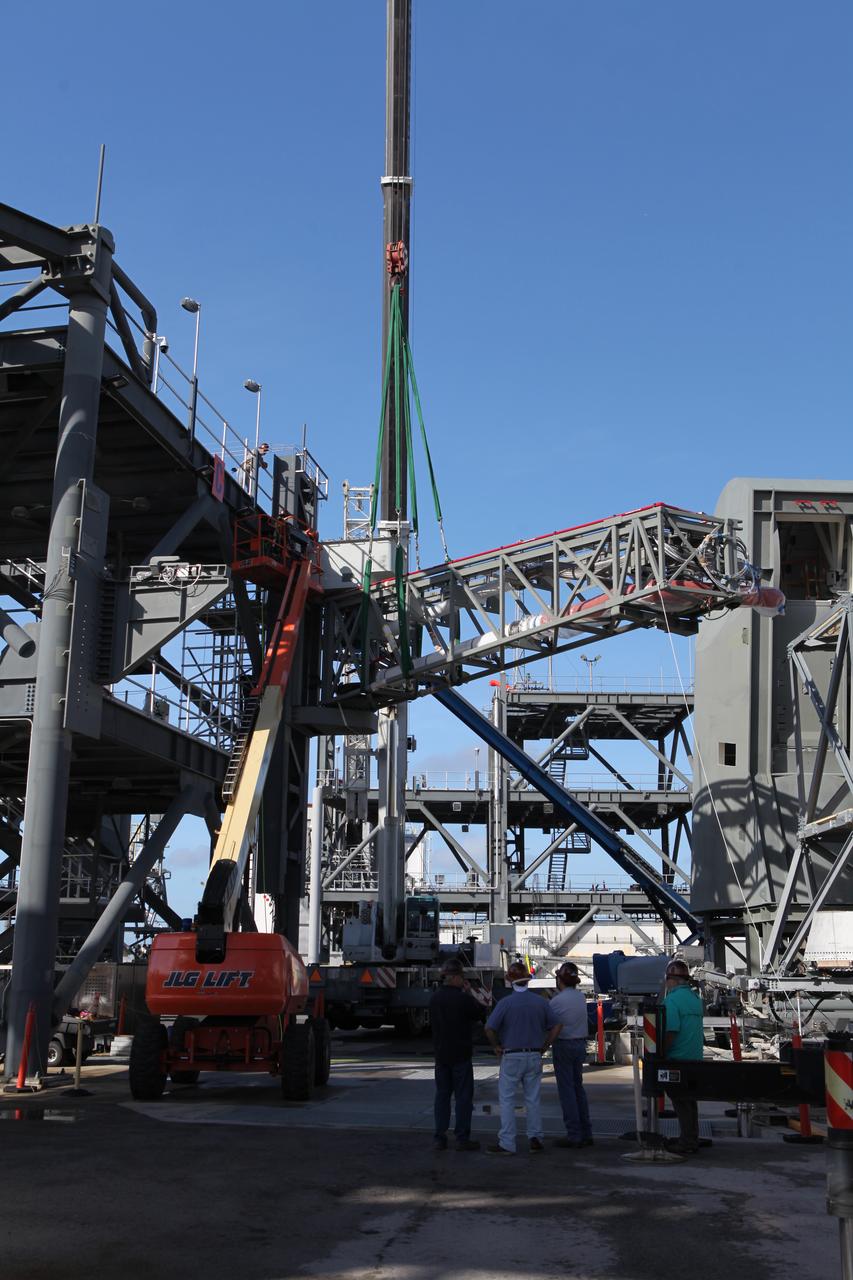
A crane moves the Core State Inter-tank Umbilical (CSITU) for NASA's Space Launch System (SLS) closer for attachment to the "C" tower of the Vehicle Motion Simulator 2 test fixture at the Launch Equipment Test Facility at the agency's Kennedy Space Center in Florida. The umbilical will undergo a series of tests to confirm it is functioning properly and ready to support the SLS rocket for launch. The CSITU is a swing arm umbilical that will connect to the SLS core stage inter-tank. The umbilical's main function is to vent gaseous hydrogen from the core stage. The arm also provides conditioned air, pressurized gases, and power and data connection to the core stage. The center’s Engineering Directorate and the Ground Systems Development and Operations Program are overseeing processing and testing of the umbilicals.
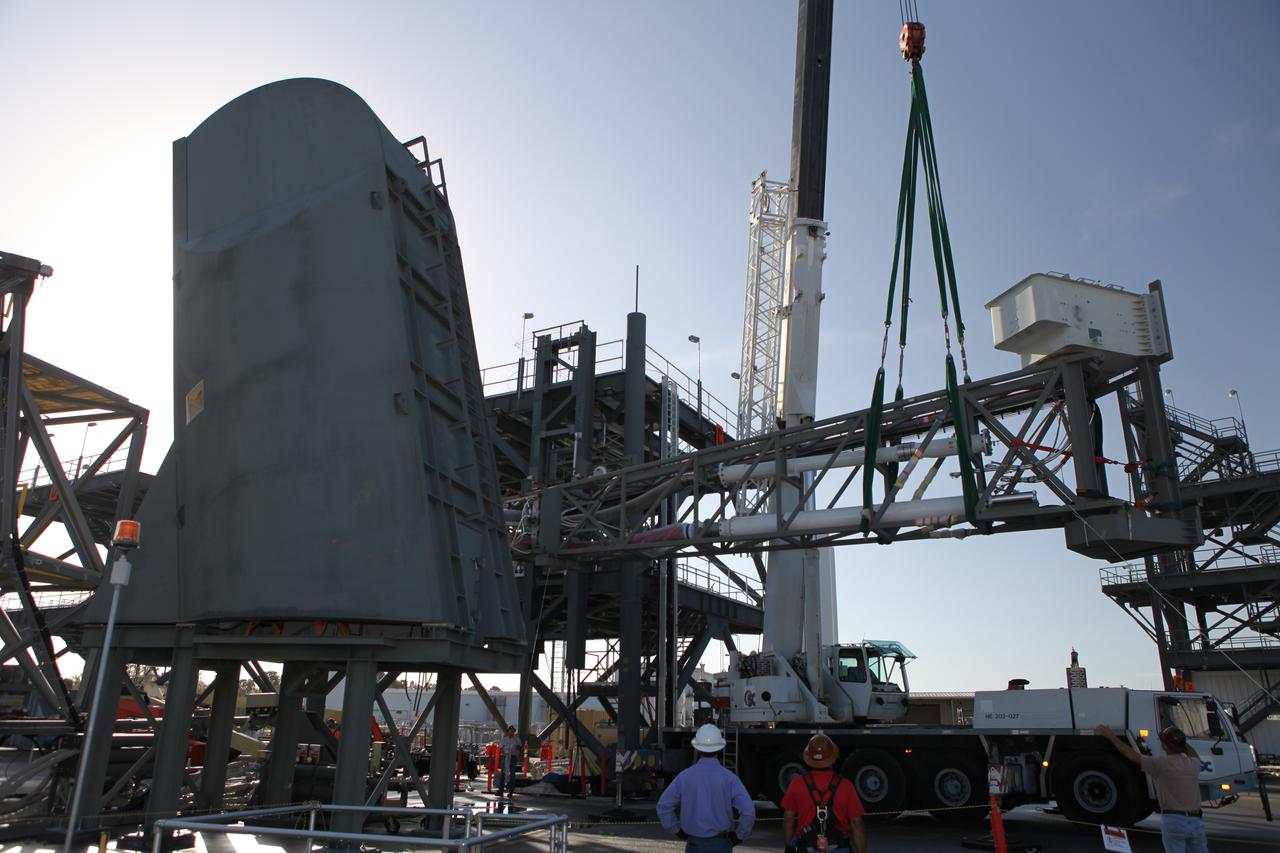
A crane is used to lift the Core State Inter-tank Umbilical (CSITU) for NASA's Space Launch System (SLS) at the Launch Equipment Test Facility at the agency's Kennedy Space Center in Florida. The CSITU will be attached to the "C" tower of the Vehicle Motion Simulator 2 test fixture. The umbilical will undergo a series of tests to confirm it is functioning properly and ready to support the SLS rocket for launch. The CSITU is a swing arm umbilical that will connect to the SLS core stage inter-tank. The umbilical's main function is to vent gaseous hydrogen from the core stage. The arm also provides conditioned air, pressurized gases, and power and data connection to the core stage. The center’s Engineering Directorate and the Ground Systems Development and Operations Program are overseeing processing and testing of the umbilicals.
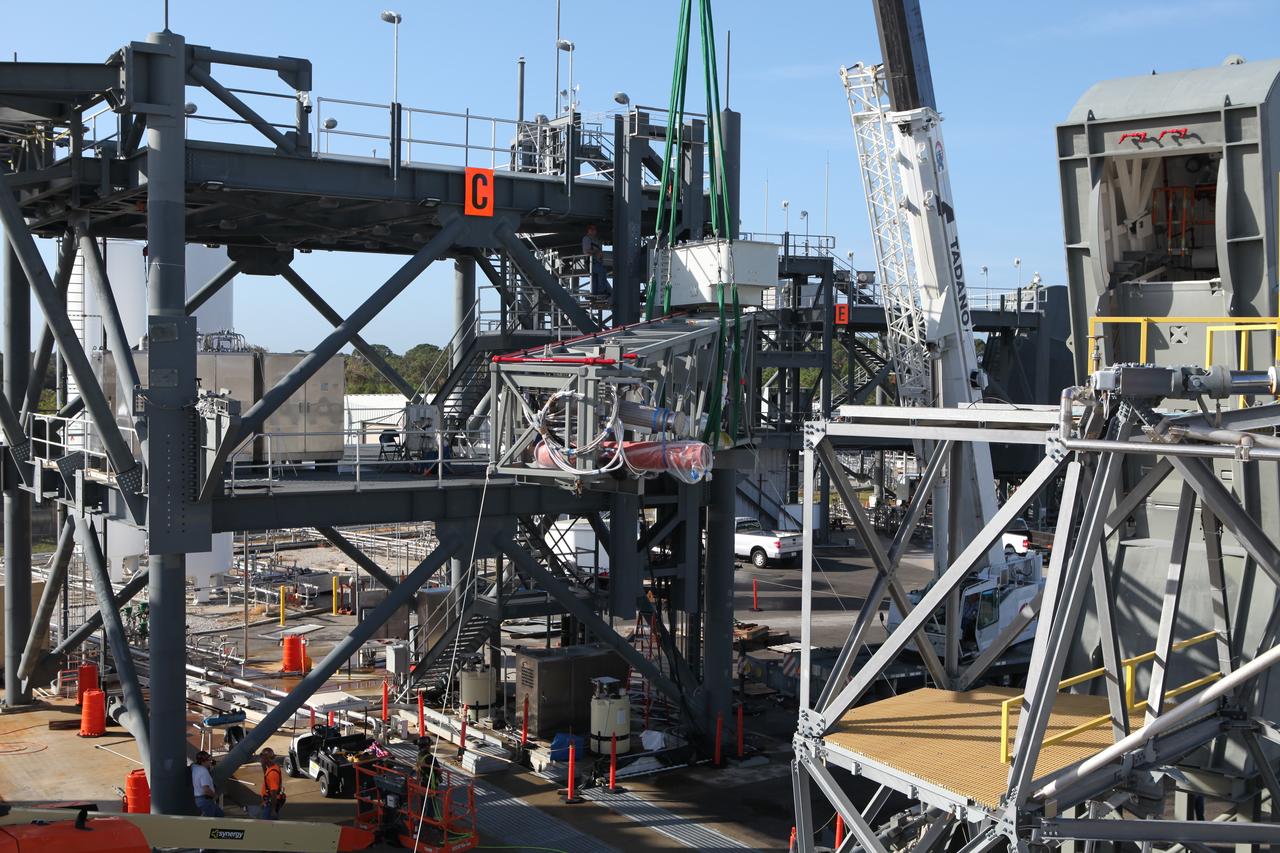
A crane lifts the Core State Inter-tank Umbilical (CSITU) for NASA's Space Launch System (SLS) at the Launch Equipment Test Facility at the agency's Kennedy Space Center in Florida. The CSITU will be attached to the "C" tower of the Vehicle Motion Simulator 2 test fixture. The umbilical will undergo a series of tests to confirm it is functioning properly and ready to support the SLS rocket for launch. The CSITU is a swing arm umbilical that will connect to the SLS core stage inter-tank. The umbilical's main function is to vent gaseous hydrogen from the core stage. The arm also provides conditioned air, pressurized gases, and power and data connection to the core stage. The center’s Engineering Directorate and the Ground Systems Development and Operations Program are overseeing processing and testing of the umbilicals.
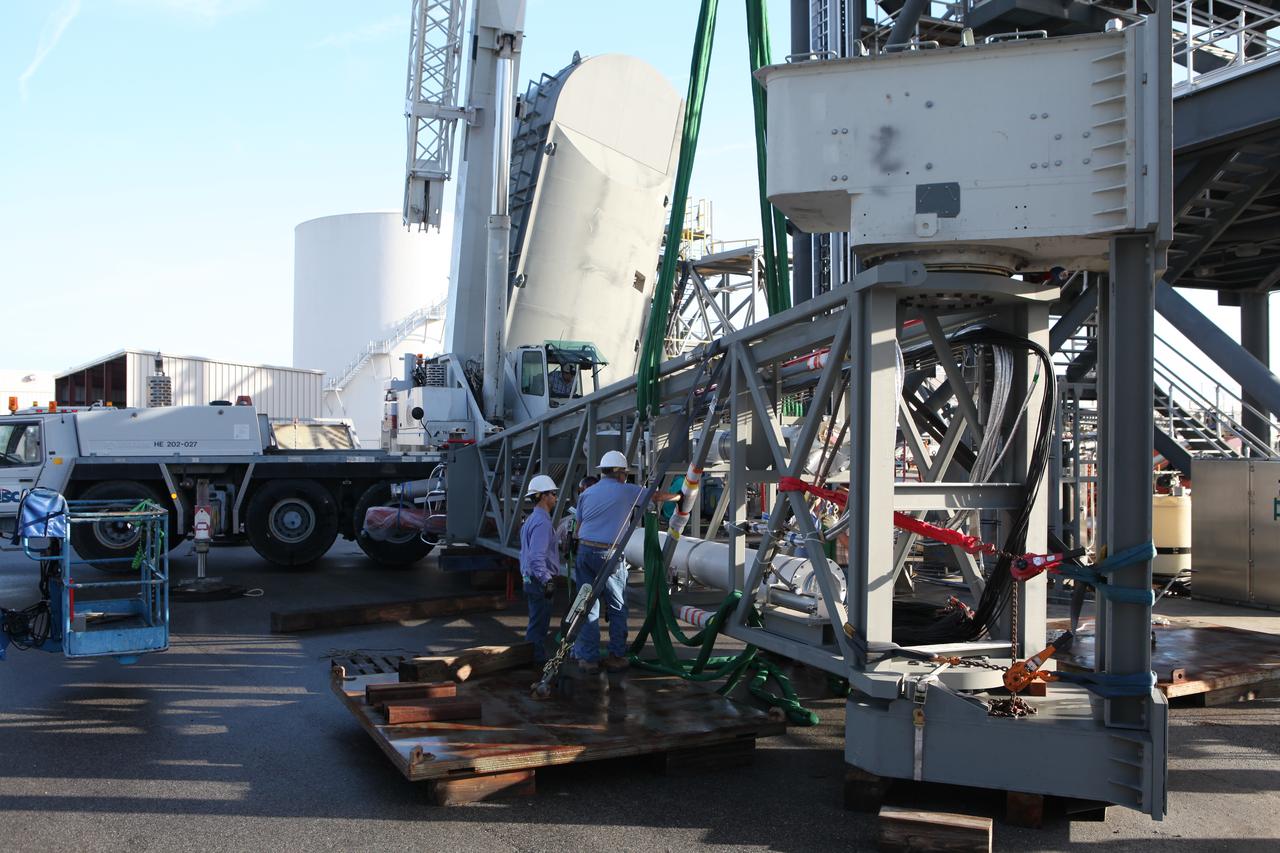
The Core State Inter-tank Umbilical (CSITU) for NASA's Space Launch System (SLS) arrives at the Launch Equipment Test Facility at the agency's Kennedy Space Center in Florida. The CSITU will be attached to the "C" tower of the Vehicle Motion Simulator 2 test fixture. The umbilical will undergo a series of tests to confirm it is functioning properly and ready to support the SLS rocket for launch. The CSITU is a swing arm umbilical that will connect to the SLS core stage inter-tank. The umbilical's main function is to vent gaseous hydrogen from the core stage. The arm also provides conditioned air, pressurized gases, and power and data connection to the core stage. The center’s Engineering Directorate and the Ground Systems Development and Operations Program are overseeing processing and testing of the umbilicals.
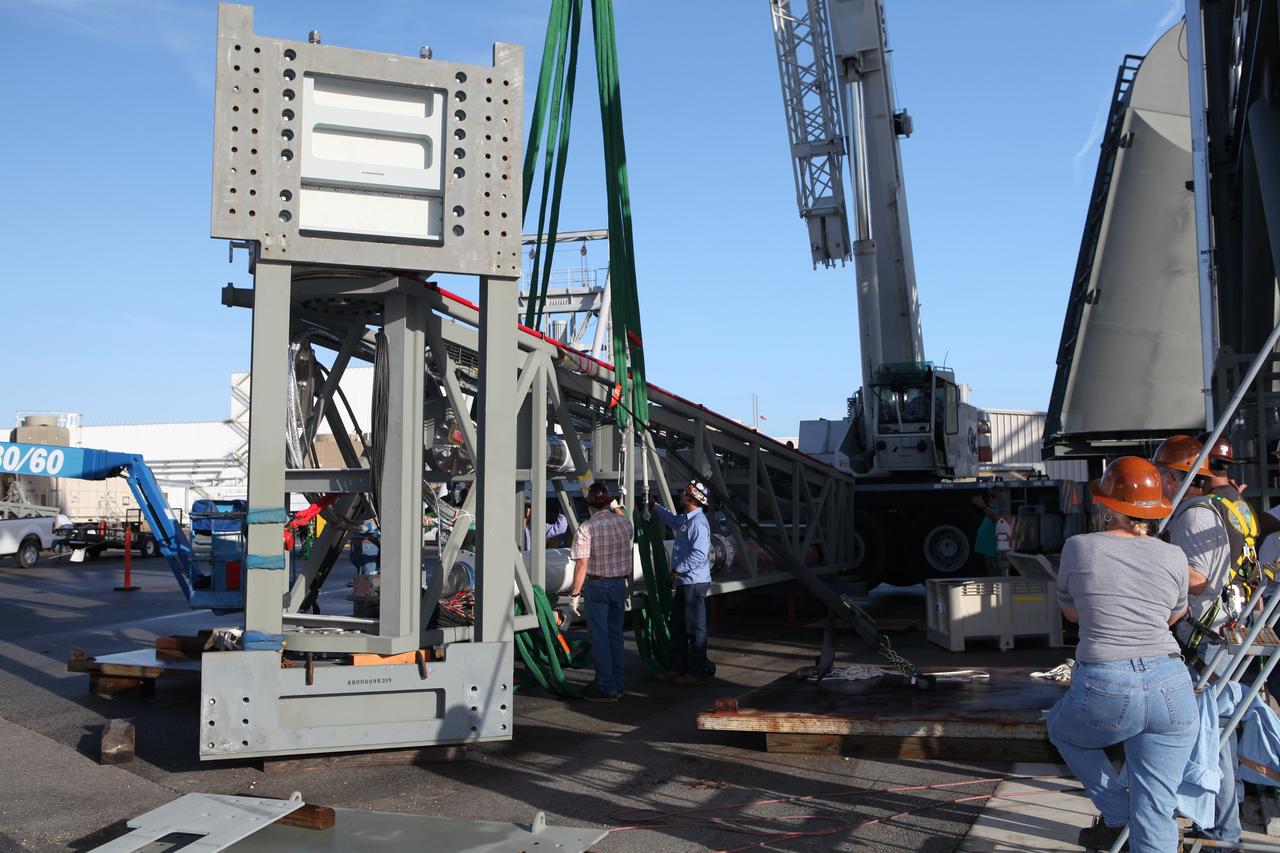
Efforts are underway to lift the Core State Inter-tank Umbilical (CSITU) for NASA's Space Launch System (SLS) at the Launch Equipment Test Facility at the agency's Kennedy Space Center in Florida. The CSITU will be attached to the "C" tower of the Vehicle Motion Simulator 2 test fixture. The umbilical will undergo a series of tests to confirm it is functioning properly and ready to support the SLS rocket for launch. The CSITU is a swing arm umbilical that will connect to the SLS core stage inter-tank. The umbilical's main function is to vent gaseous hydrogen from the core stage. The arm also provides conditioned air, pressurized gases, and power and data connection to the core stage. The center’s Engineering Directorate and the Ground Systems Development and Operations Program are overseeing processing and testing of the umbilicals.
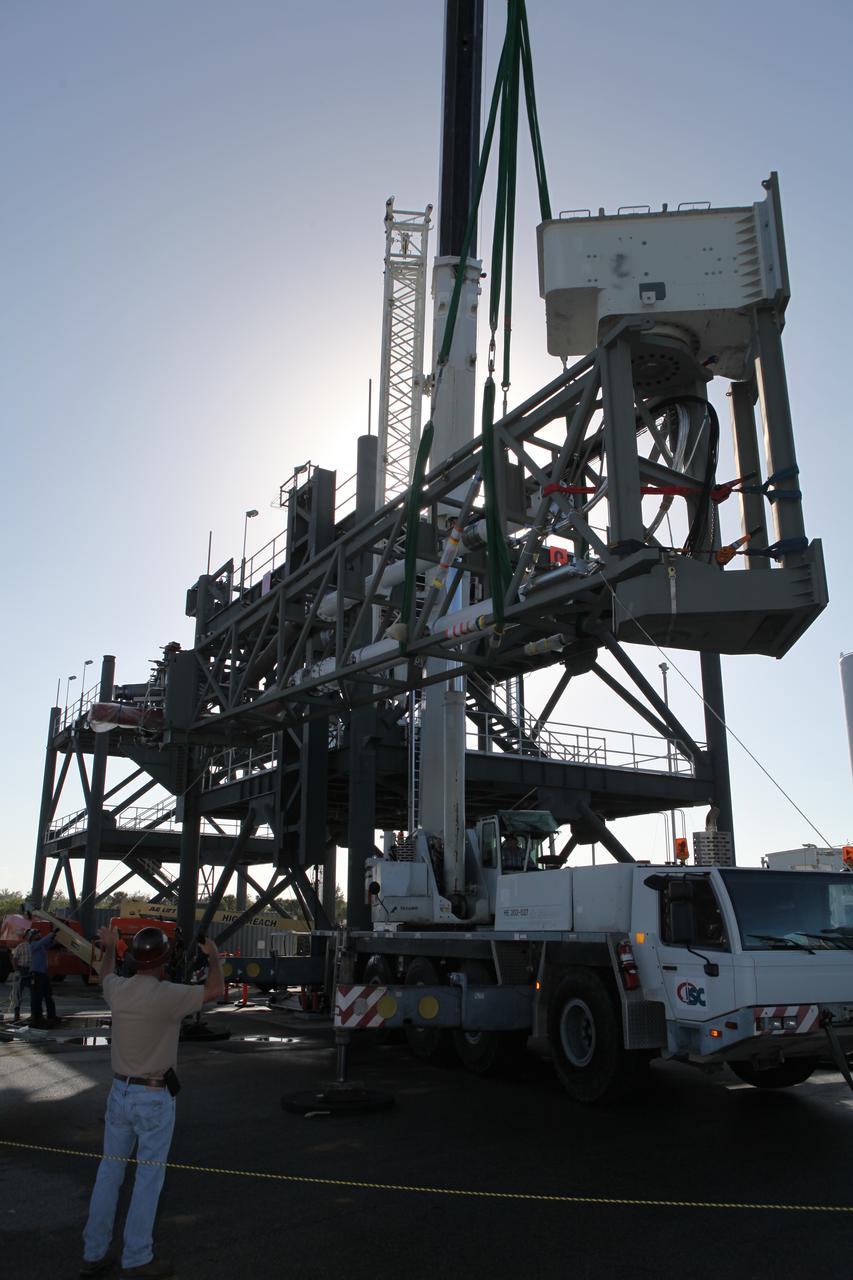
A crane is used to lift the Core State Inter-tank Umbilical (CSITU) for NASA's Space Launch System (SLS) at the Launch Equipment Test Facility at the agency's Kennedy Space Center in Florida. The CSITU will be attached to the "C" tower of the Vehicle Motion Simulator 2 test fixture. The umbilical will undergo a series of tests to confirm it is functioning properly and ready to support the SLS rocket for launch. The CSITU is a swing arm umbilical that will connect to the SLS core stage inter-tank. The umbilical's main function is to vent gaseous hydrogen from the core stage. The arm also provides conditioned air, pressurized gases, and power and data connection to the core stage. The center’s Engineering Directorate and the Ground Systems Development and Operations Program are overseeing processing and testing of the umbilicals.
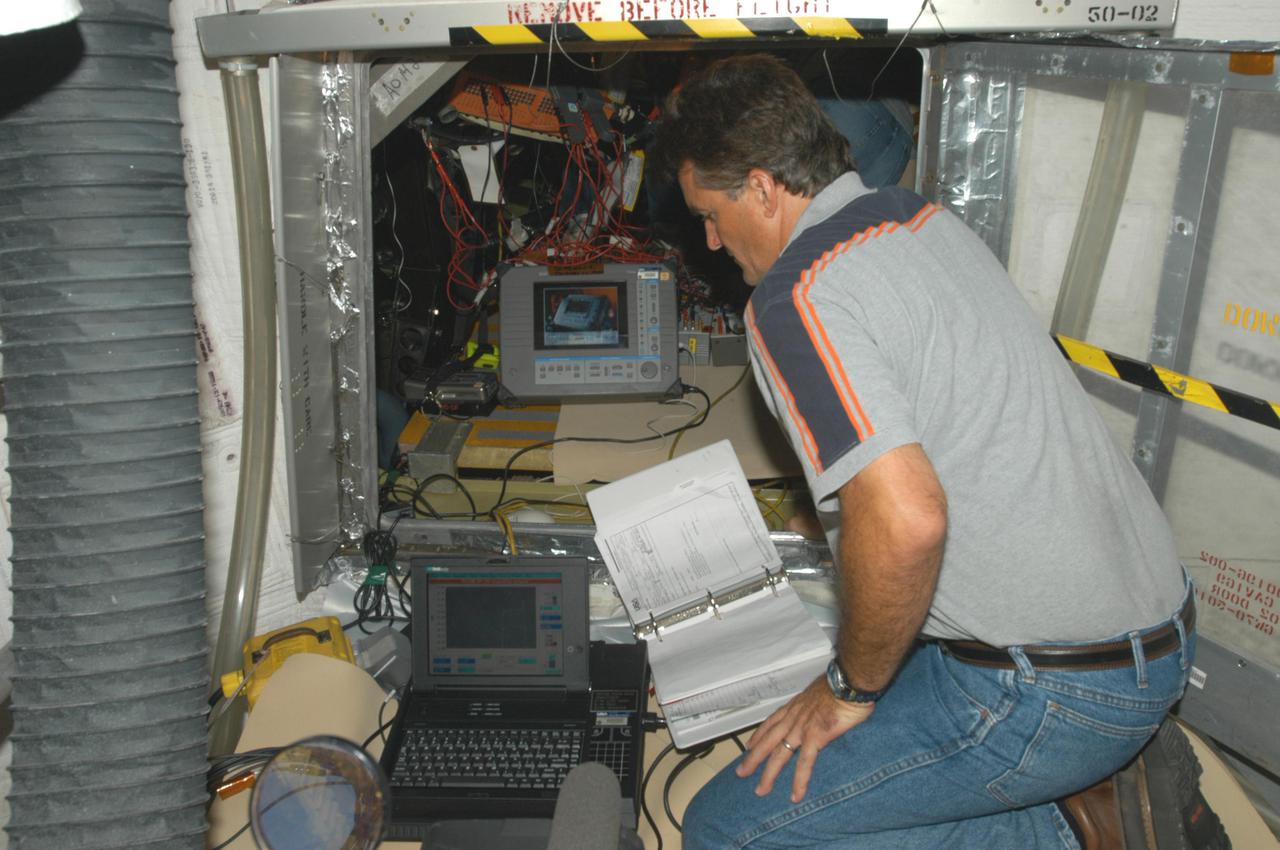
KENNEDY SPACE CENTER, FLA. - Bill Drier, NASA, is conducting electromagnetic interference and ground resistance testing on wiring in the aft engine compartment on Space Shuttle Discovery using various test equipment, such as current probes, amp meters, digital volt meters, breakout boxes, Nicollet recorders, oscilloscopes and time domain reflectometers. Other testing will evaluate wiring runs and connections for any reactions under semi-cryogenic conditions.Other testing will evaluate wiring runs and connections in the aft engine of Space Shuttle Discovery for any reactions under semi-cryogenic conditions, using a Nicolet data recorder. Engineering teams have been working through a troubleshooting plan to address an issue with a liquid hydrogen low-level fuel sensor circuit. The sensor circuit failed a routine prelaunch check during the countdown July 13, delaying Discovery’s first launch attempt on Return to Flight mission STS-114.
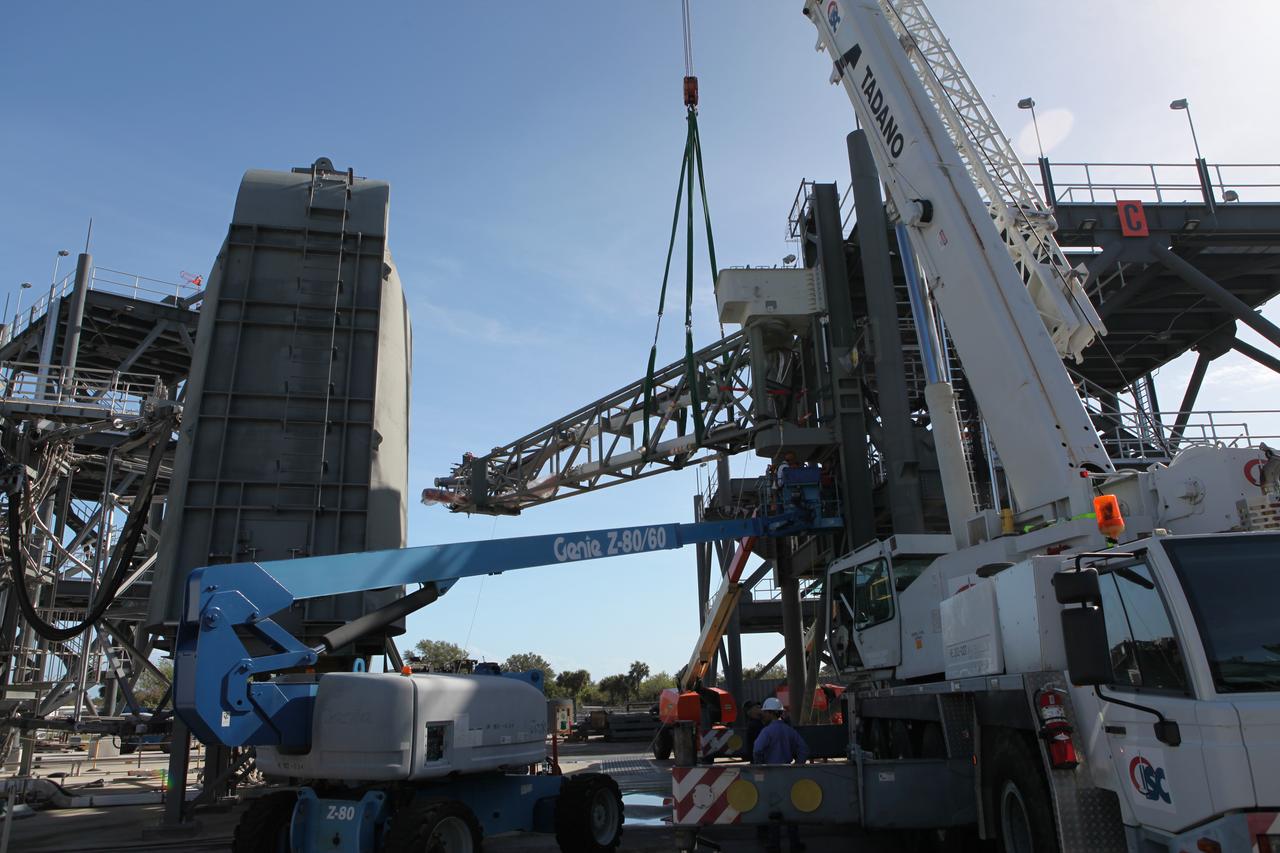
The Core State Inter-tank Umbilical (CSITU) for NASA's Space Launch System (SLS) is attached to the "C" tower of the Vehicle Motion Simulator 2 test fixture at the Launch Equipment Test Facility at the agency's Kennedy Space Center in Florida. The umbilical will undergo a series of tests to confirm it is functioning properly and ready to support the SLS rocket for launch. The CSITU is a swing arm umbilical that will connect to the SLS core stage inter-tank. The umbilical's main function is to vent gaseous hydrogen from the core stage. The arm also provides conditioned air, pressurized gases, and power and data connection to the core stage. The center’s Engineering Directorate and the Ground Systems Development and Operations Program are overseeing processing and testing of the umbilicals.

A crane is used to lift the Core State Inter-tank Umbilical (CSITU) for NASA's Space Launch System (SLS) at the Launch Equipment Test Facility at the agency's Kennedy Space Center in Florida. The CSITU will be attached to the "C" tower of the Vehicle Motion Simulator 2 test fixture. The umbilical will undergo a series of tests to confirm it is functioning properly and ready to support the SLS rocket for launch. The CSITU is a swing arm umbilical that will connect to the SLS core stage inter-tank. The umbilical's main function is to vent gaseous hydrogen from the core stage. The arm also provides conditioned air, pressurized gases, and power and data connection to the core stage. The center’s Engineering Directorate and the Ground Systems Development and Operations Program are overseeing processing and testing of the umbilicals.
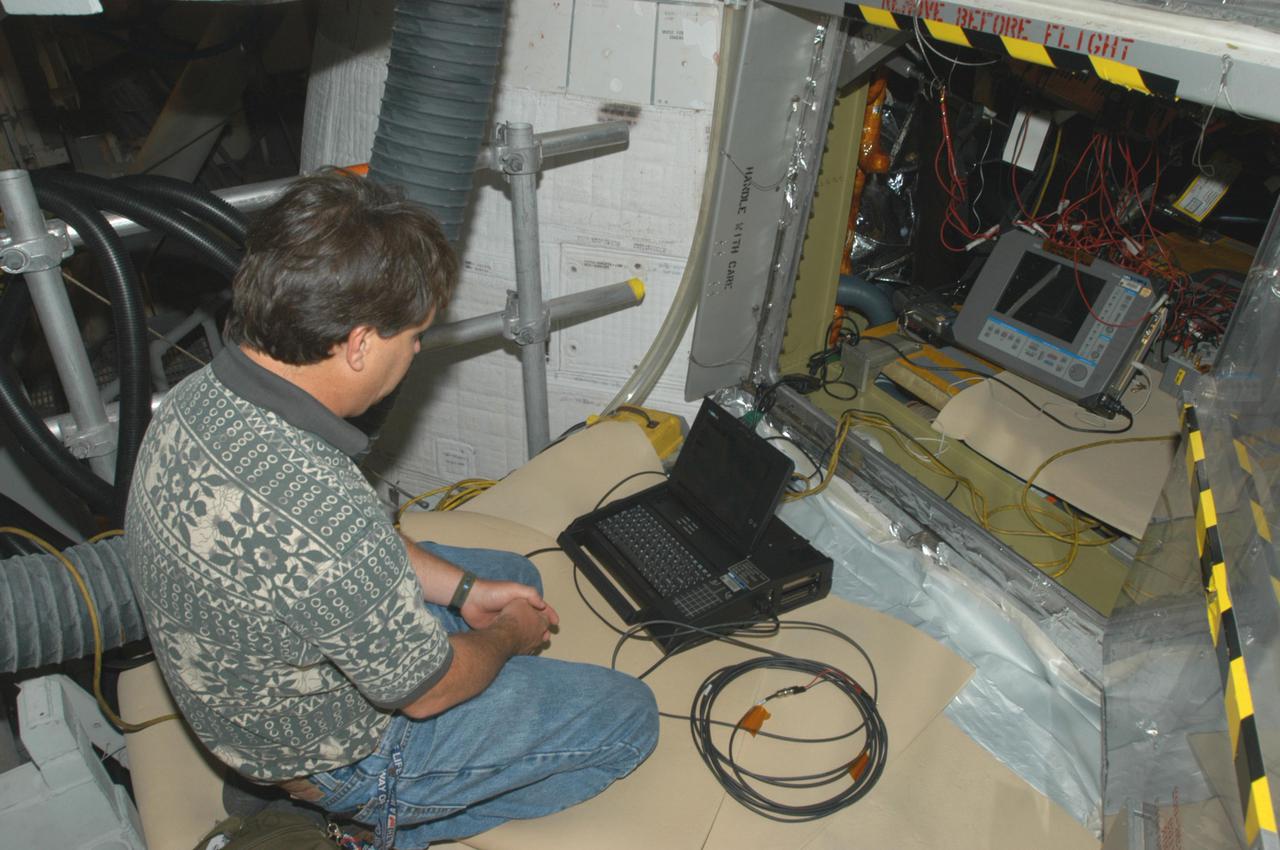
KENNEDY SPACE CENTER, FLA. - Jeff Huet, with United Space Alliance, is conducting electromagnetic interference and ground resistance testing on wiring in the aft engine compartment on Space Shuttle Discovery using various test equipment, such as current probes, amp meters, digital volt meters, breakout boxes, Nicollet recorders, oscilloscopes and time domain reflectometers. Other testing will evaluate wiring runs and connections for any reactions under semi-cryogenic conditions. Other testing will evaluate wiring runs and connections for any reactions under semi-cryogenic conditions, using a Nicolet data recorder. Engineering teams have been working through a troubleshooting plan to address an issue with a liquid hydrogen low-level fuel sensor circuit. The sensor circuit failed a routine prelaunch check during the countdown July 13, delaying Discovery’s first launch attempt on Return to Flight mission STS-114.
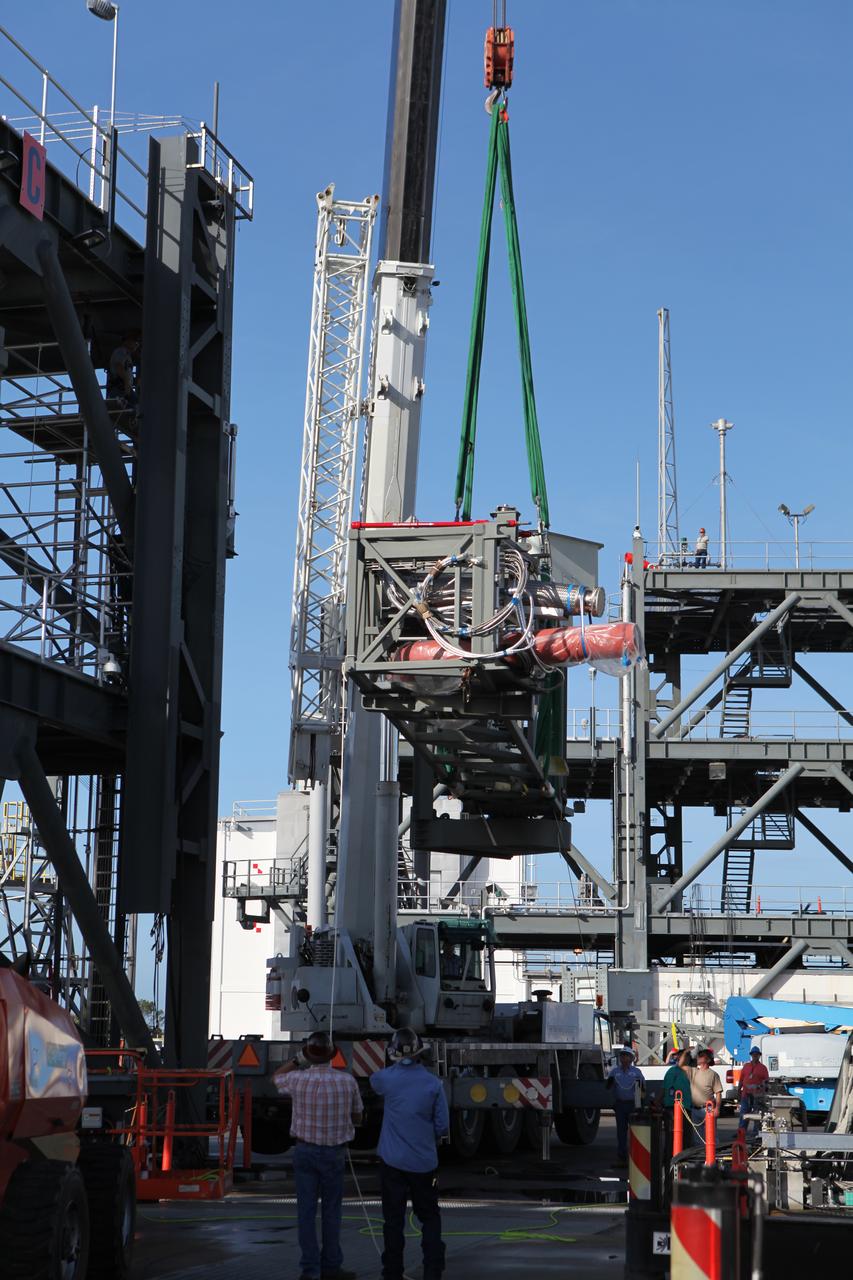
A crane is used to lift the Core State Inter-tank Umbilical (CSITU) for NASA's Space Launch System (SLS) at the Launch Equipment Test Facility at the agency's Kennedy Space Center in Florida. The CSITU will be attached to the "C" tower of the Vehicle Motion Simulator 2 test fixture. The umbilical will undergo a series of tests to confirm it is functioning properly and ready to support the SLS rocket for launch. The CSITU is a swing arm umbilical that will connect to the SLS core stage inter-tank. The umbilical's main function is to vent gaseous hydrogen from the core stage. The arm also provides conditioned air, pressurized gases, and power and data connection to the core stage. The center’s Engineering Directorate and the Ground Systems Development and Operations Program are overseeing processing and testing of the umbilicals.
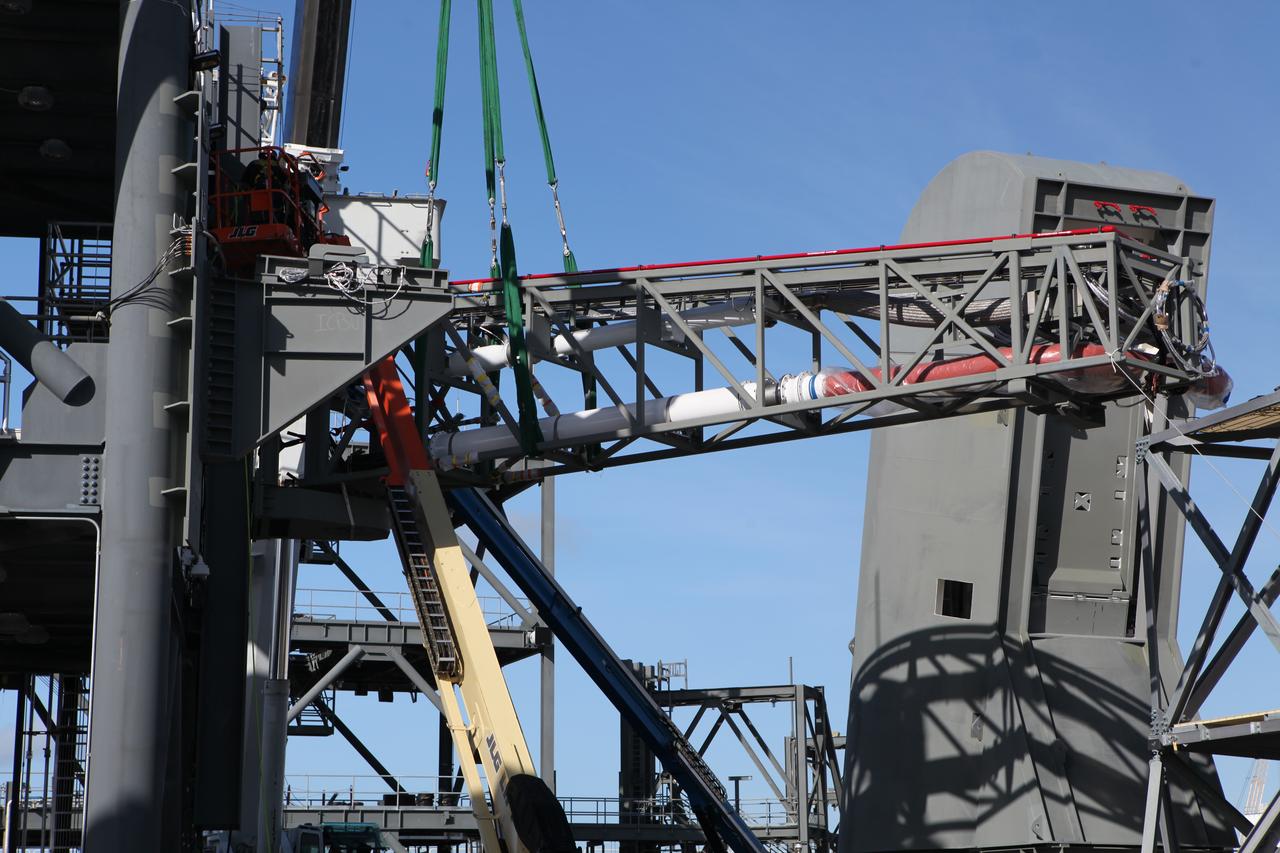
A crane moves the Core State Inter-tank Umbilical (CSITU) for NASA's Space Launch System (SLS) closer for attachment to the "C" tower of the Vehicle Motion Simulator 2 test fixture at the Launch Equipment Test Facility at the agency's Kennedy Space Center in Florida. The umbilical will undergo a series of tests to confirm it is functioning properly and ready to support the SLS rocket for launch. The CSITU is a swing arm umbilical that will connect to the SLS core stage inter-tank. The umbilical's main function is to vent gaseous hydrogen from the core stage. The arm also provides conditioned air, pressurized gases, and power and data connection to the core stage. The center’s Engineering Directorate and the Ground Systems Development and Operations Program are overseeing processing and testing of the umbilicals.
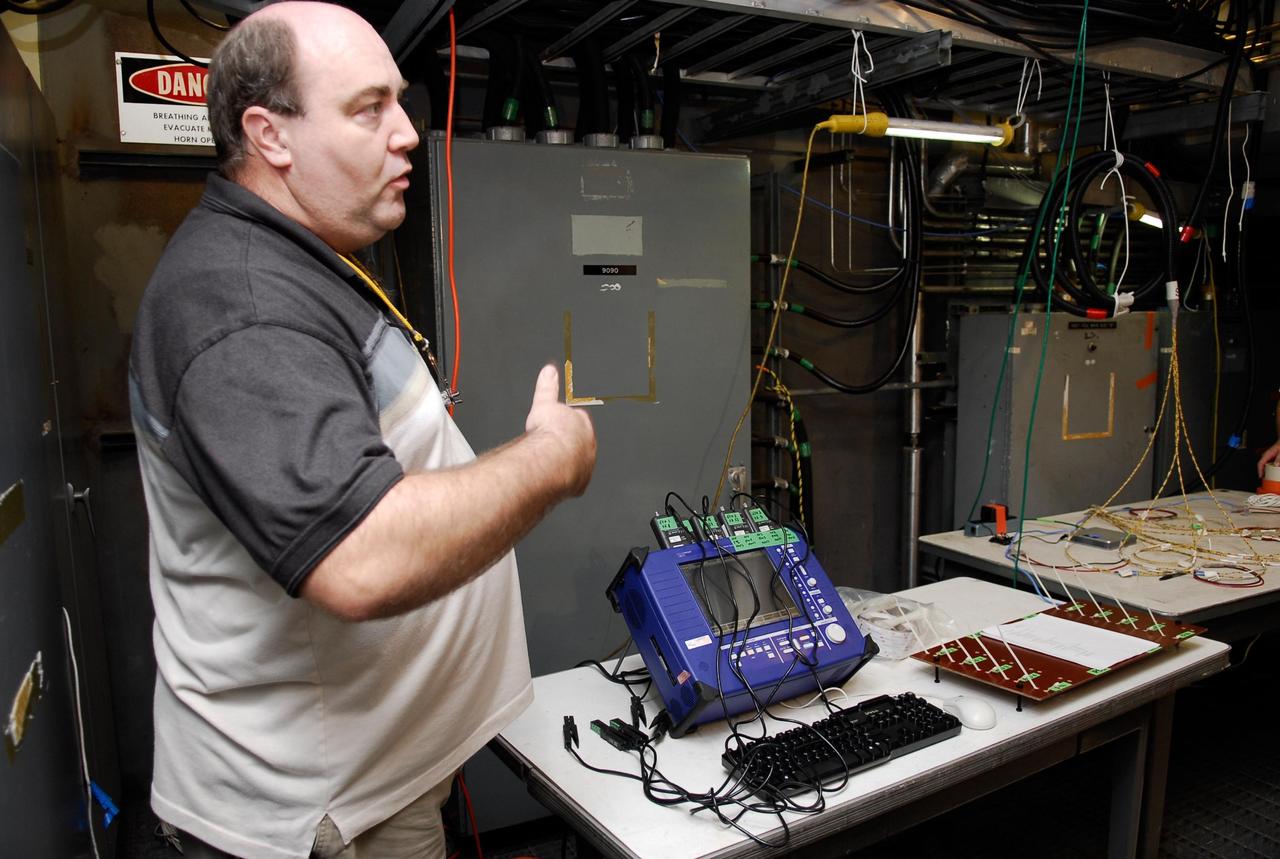
KENNEDY SPACE CENTER, FLA. -- On Launch Pad 39A, a technician explains how test equipment -- the blue monitor -- will be used to validate the circuit on test wiring from the electrical harness in space shuttle Atlantis' aft main engine compartment connected with the engine cut-off system. The test wiring leads from the tail mast on the mobile launcher platform to the interior where the Time Domain Reflectometry, or TDR, test equipment will be located to test the sensor system. Photo credit: NASA/Kim Shiflett
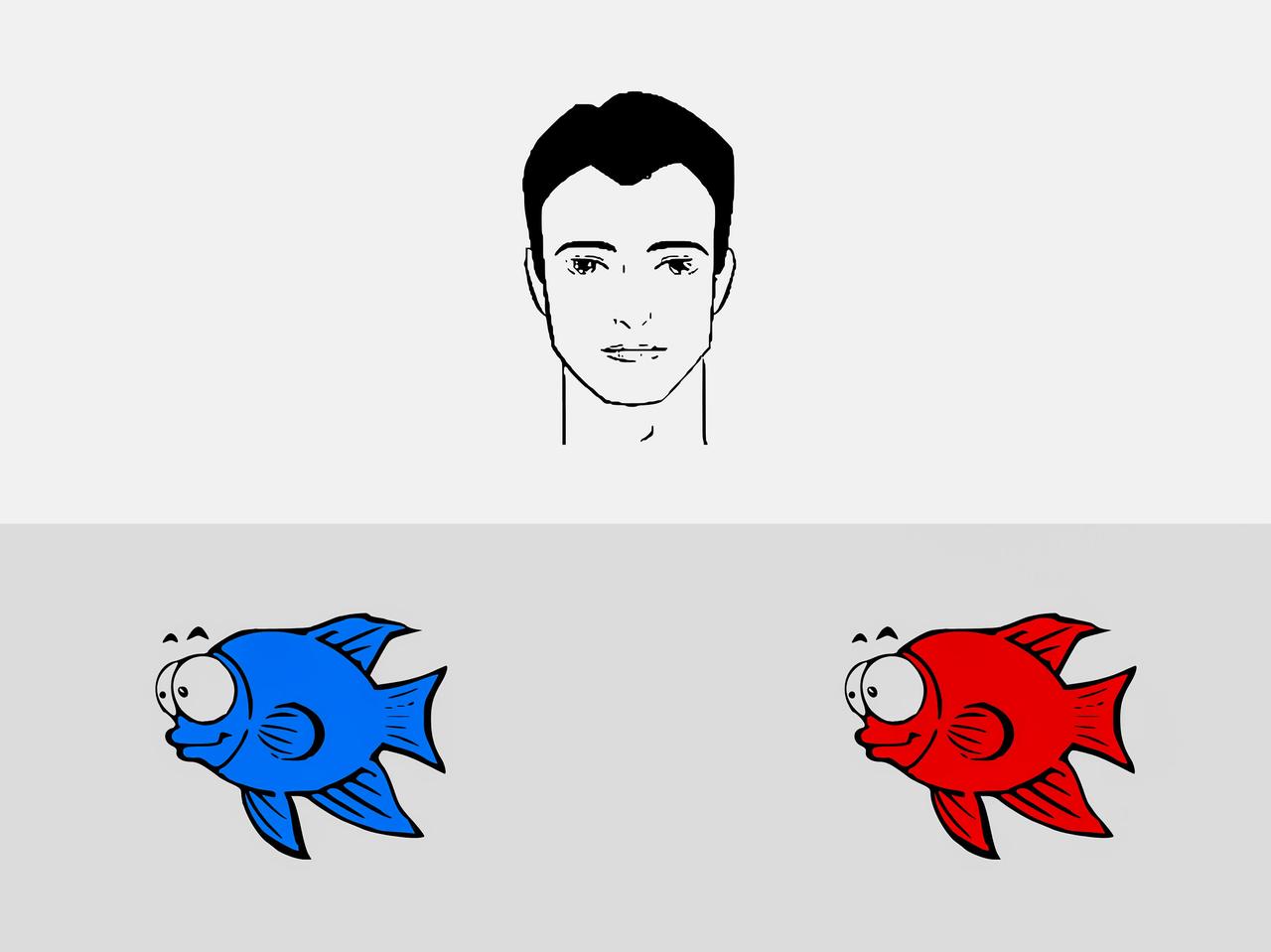
jsc2025e043583 (5/1/2025) --- This is an example of the test screen for the Space Acquired Equivalence Test (SAET). The test subject chooses which fish is related to the shown face and is part of The Association Learning and Connected Memory Processes in Microgravity (Acquired Equivalence Test). This study seeks to determine whether the orientation and the complexity of stimuli similarly influences performance in both normal and microgravity conditions. Image courtesy of the Acquired Equivalence Test team: Attila Nagy, Ádám Kiss, Balázs Bodosi and András Keleman.
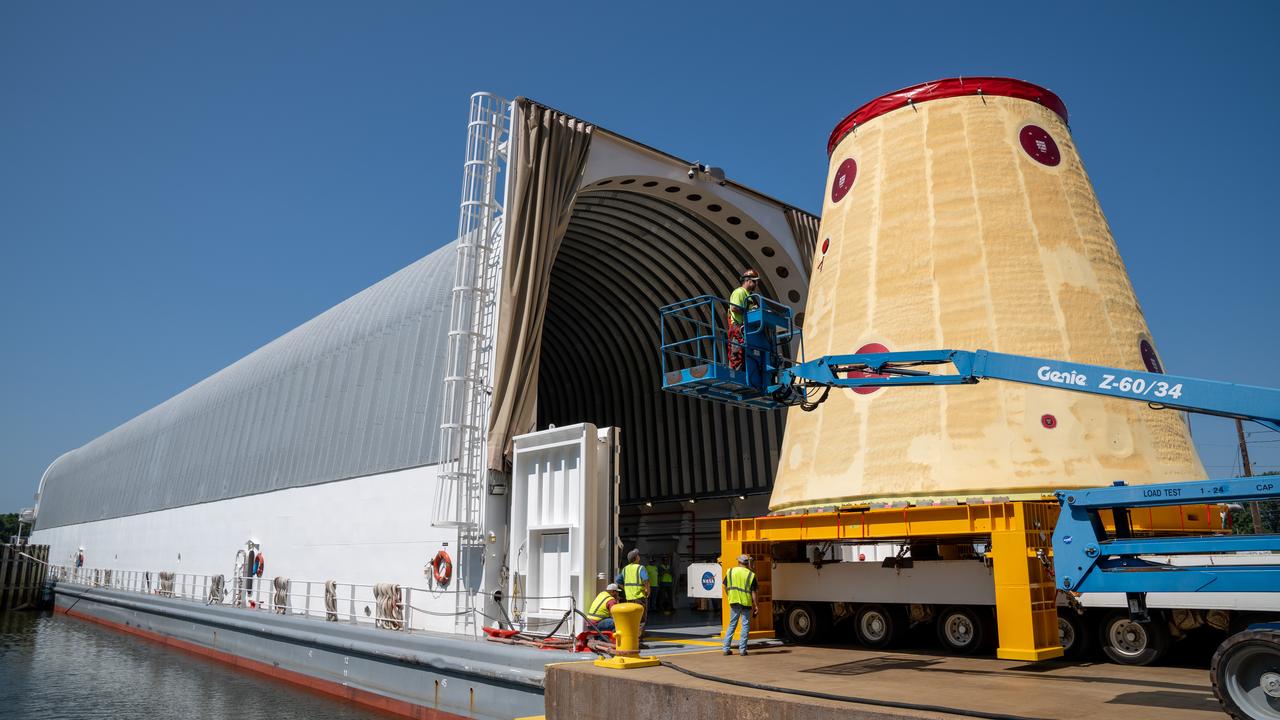
NASA rolled out a key piece of space flight hardware for the SLS (Space Launch System) rocket for the first crewed mission of NASA’s Artemis campaign from Marshall Space Flight Center in Huntsville, Alabama, on Wednesday, Aug. 21 to board the Pegasus barge for shipment to the agency’s spaceport in Florida. The cone-shaped launch vehicle stage adapter connects the rocket’s core stage to the upper stage and helps protect the upper stage’s engine that will help propel the Artemis II test flight around the Moon, slated for 2026.
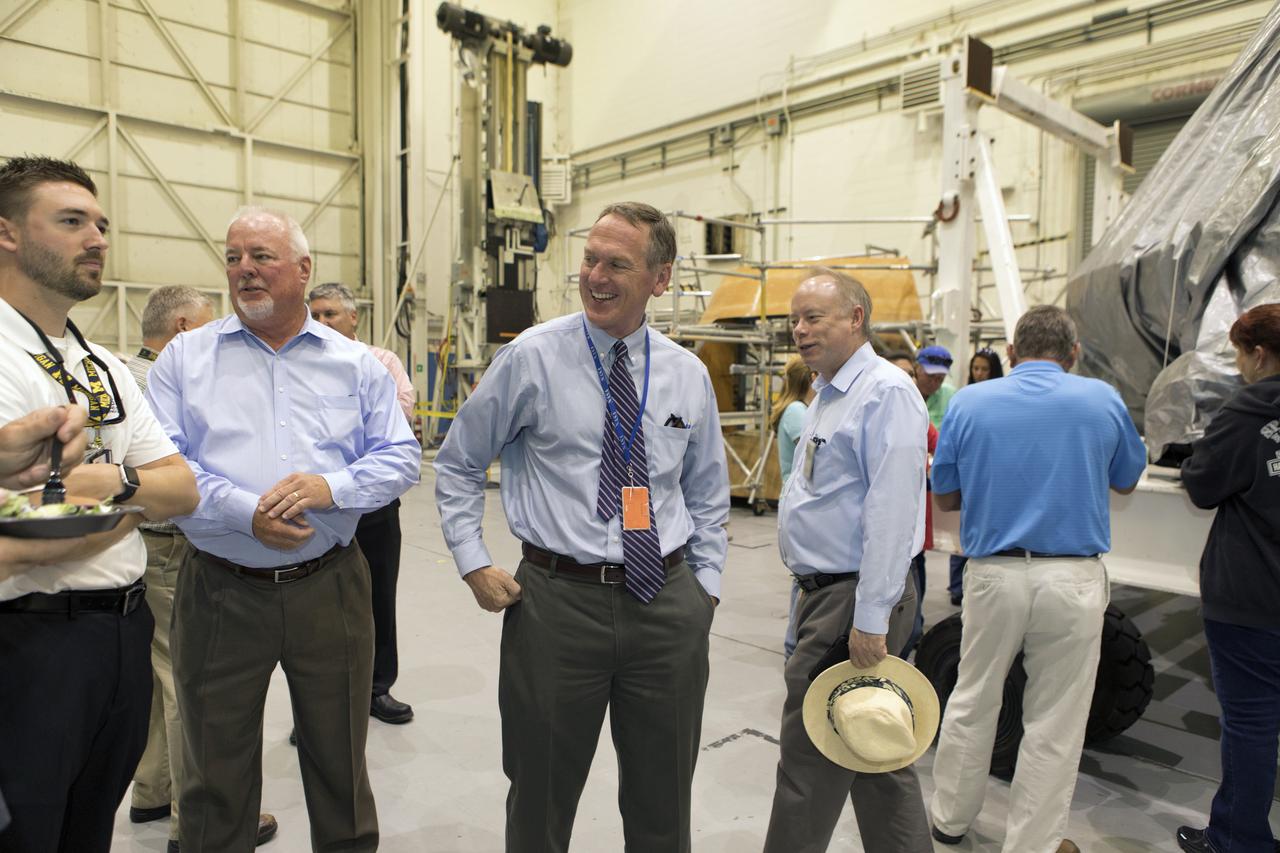
The team that tested the umbilical lines and accessories that will connect from the mobile launcher to NASA's Space Launch System rocket and Orion spacecraft for Exploration Mission-1 hold a banner signing event July 24, 2018, to mark completion of testing at the Launch Equipment Test Facility (LETF) at NASA's Kennedy Space Center in Florida. Attending the event is Mike Bolger, center, Exploration Ground Systems manager. A total of 21 umbilicals and launch accessories were tested on various simulators at the LETF before they were transferred to the mobile launcher for installation.
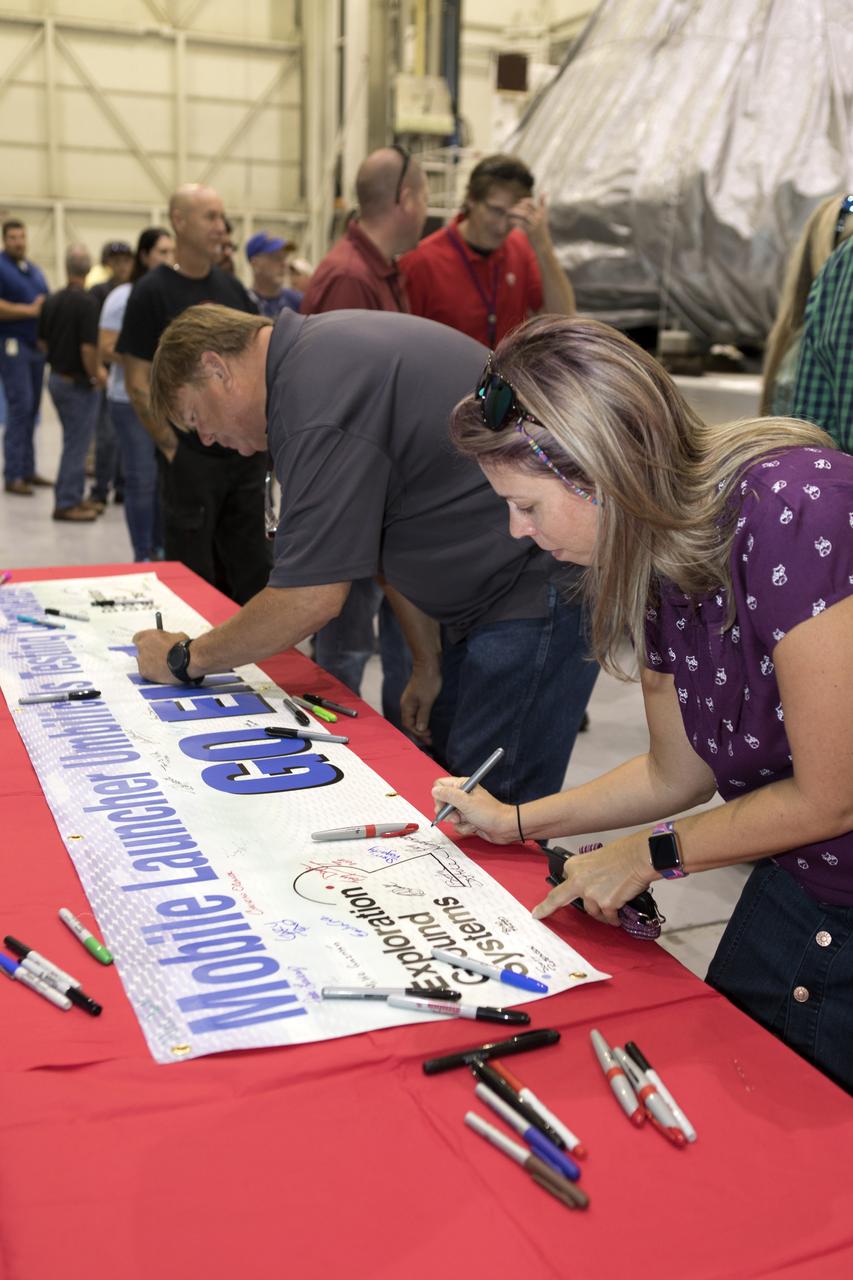
The team that tested the umbilical lines and accessories that will connect from the mobile launcher to NASA's Space Launch System rocket and Orion spacecraft for Exploration Mission-1 hold a banner signing event July 24, 2018, to mark completion of testing at the Launch Equipment Test Facility (LETF) at NASA's Kennedy Space Center in Florida. A total of 21 umbilicals and launch accessories were tested on various simulators at the LETF before they were transferred to the mobile launcher for installation.
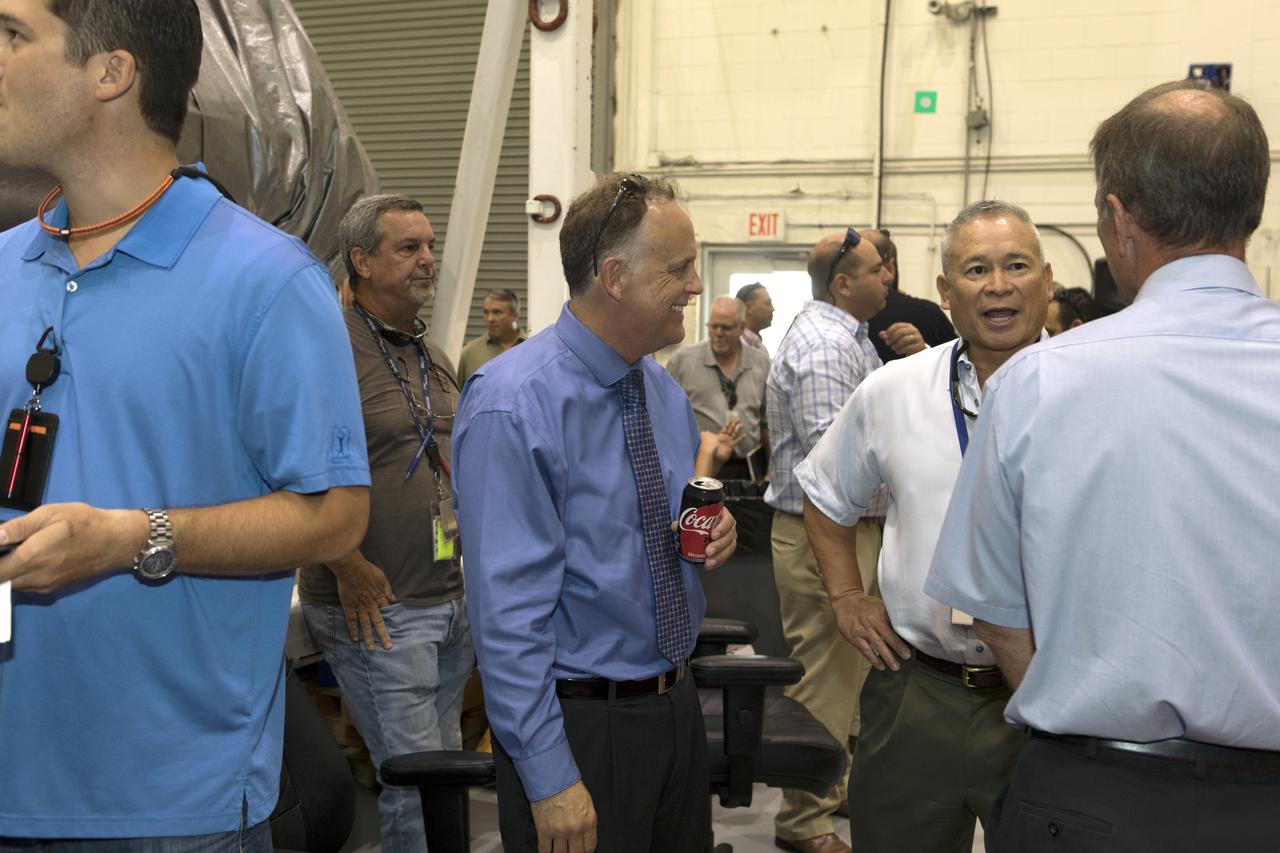
The team that tested the umbilical lines and accessories that will connect from the mobile launcher to NASA's Space Launch System rocket and Orion spacecraft for Exploration Mission-1 hold a banner signing event July 24, 2018, to mark completion of testing at the Launch Equipment Test Facility (LETF) at NASA's Kennedy Space Center in Florida. Attending the event is Shawn Quinn, center, director of Engineering. A total of 21 umbilicals and launch accessories were tested on various simulators at the LETF before they were transferred to the mobile launcher for installation.
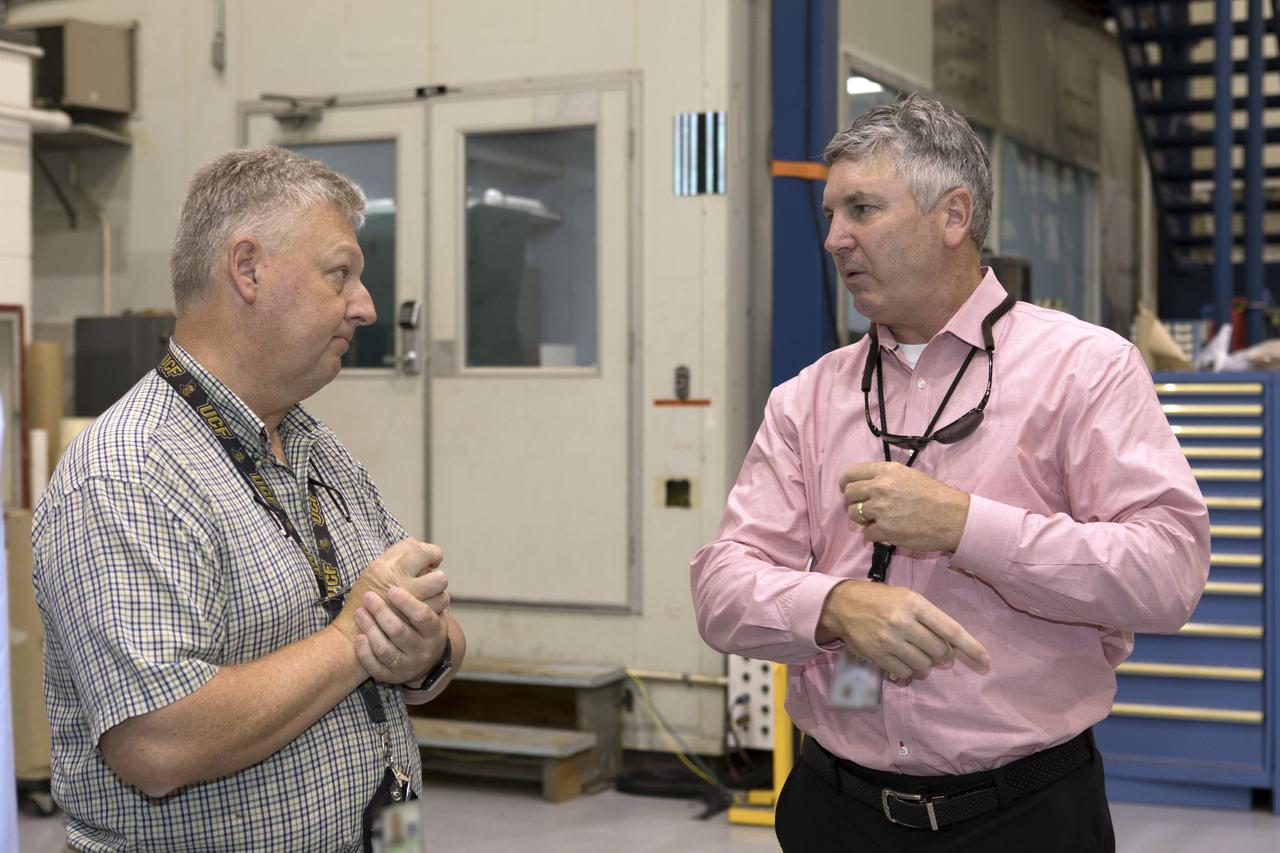
The team that tested the umbilical lines and accessories that will connect from the mobile launcher to NASA's Space Launch System rocket and Orion spacecraft for Exploration Mission-1 hold a banner signing event July 24, 2018, to mark completion of testing at the Launch Equipment Test Facility (LETF) at NASA's Kennedy Space Center in Florida. Attending the event is Scott Colloredo, at right, deputy director of Engineering. A total of 21 umbilicals and launch accessories were tested on various simulators at the LETF before they were transferred to the mobile launcher for installation.
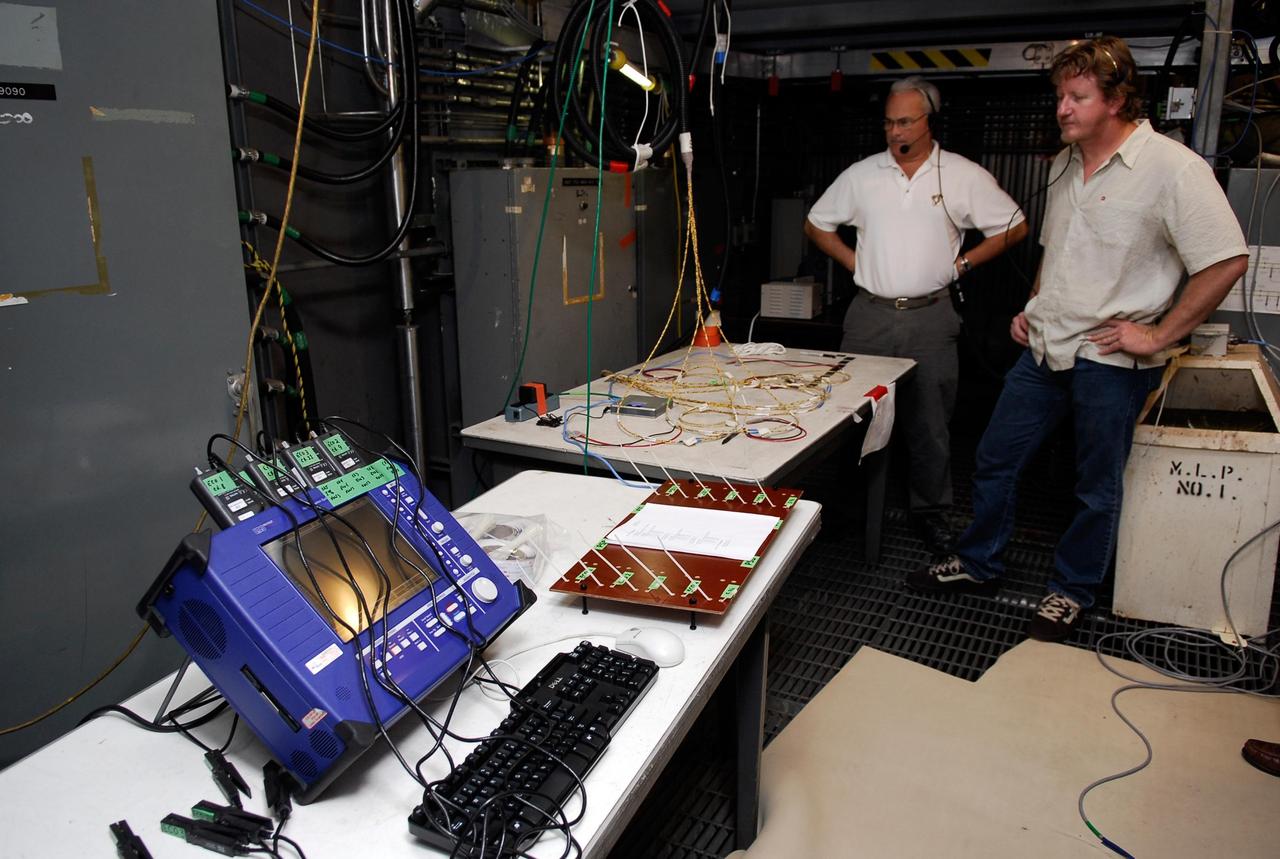
KENNEDY SPACE CENTER, FLA. -- On Launch Pad 39A, technicians overlook wires and monitoring equipment that will be used to validate the circuit on the test wiring from the electrical harness in space shuttle Atlantis' aft main engine compartment connected with the engine cut-off system. The test wiring leads from the tail mast on the mobile launcher platform to the interior where the Time Domain Reflectometry, or TDR, test equipment will be located to test the sensor system. Photo credit: NASA/Kim Shiflett
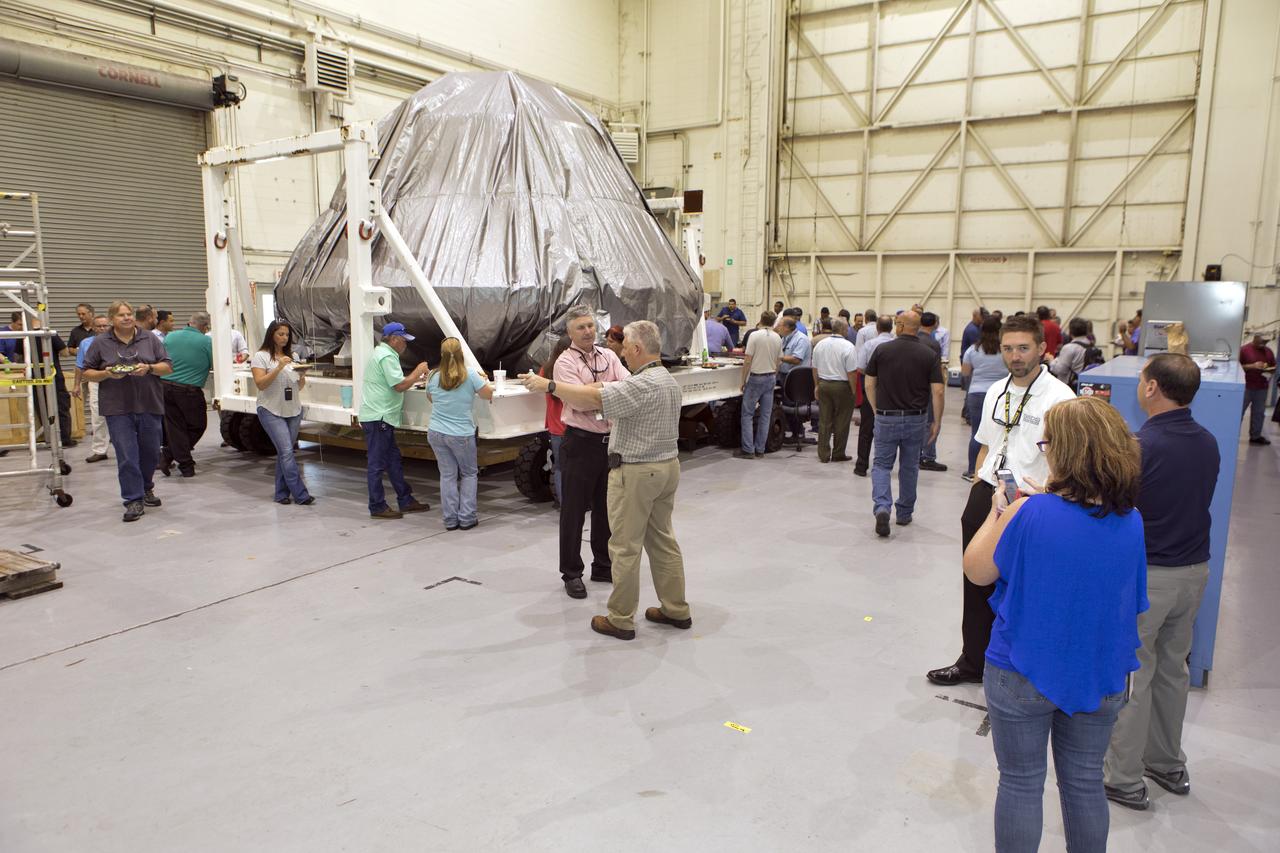
The team that tested the umbilical lines and accessories that will connect from the mobile launcher to NASA's Space Launch System rocket and Orion spacecraft for Exploration Mission-1 hold a banner signing event July 24, 2018, to mark completion of testing at the Launch Equipment Test Facility (LETF) at NASA's Kennedy Space Center in Florida. A total of 21 umbilicals and launch accessories were tested on various simulators at the LETF before they were transferred to the mobile launcher for installation.
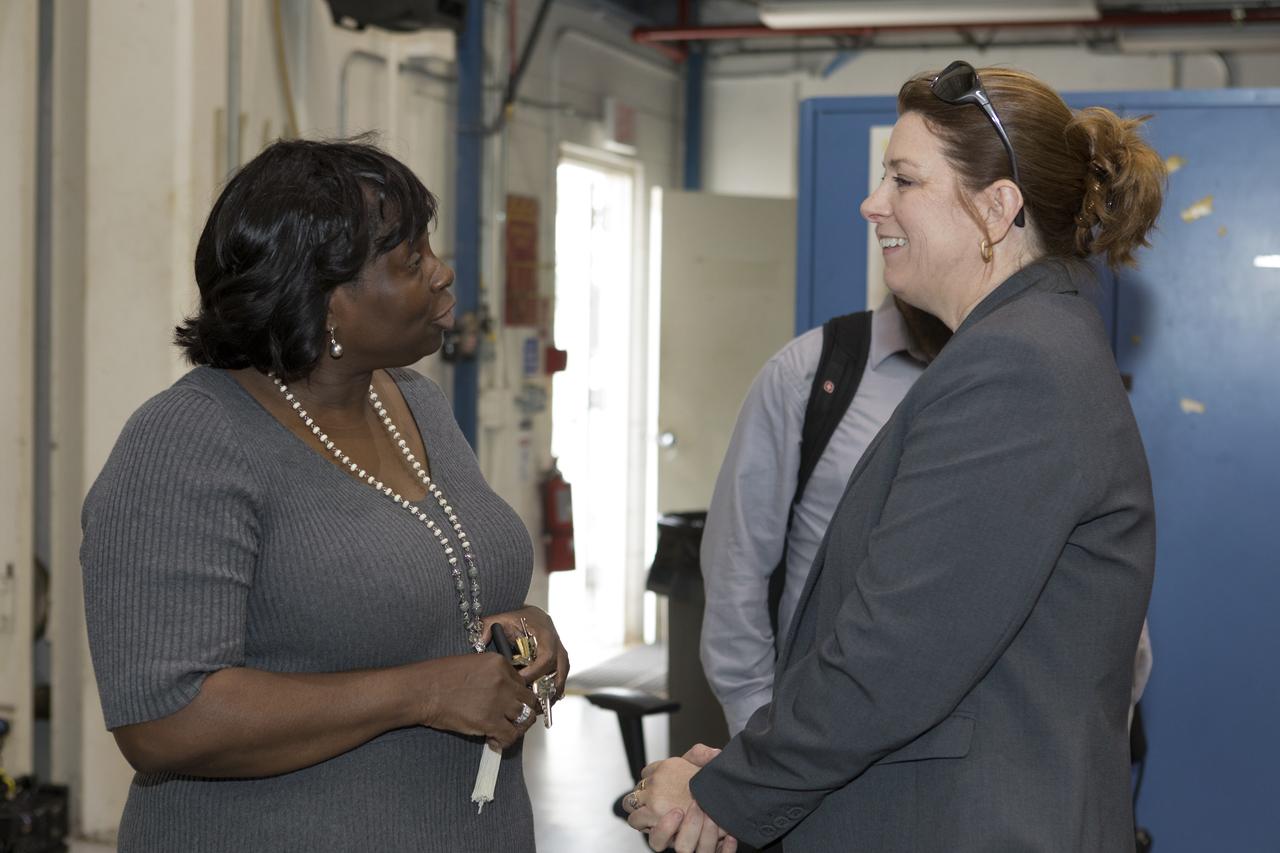
The team that tested the umbilical lines and accessories that will connect from the mobile launcher to NASA's Space Launch System rocket and Orion spacecraft for Exploration Mission-1 hold a banner signing event July 24, 2018, to mark completion of testing at the Launch Equipment Test Facility (LETF) at NASA's Kennedy Space Center in Florida. Attendees visit during the event. A total of 21 umbilicals and launch accessories were tested on various simulators at the LETF before they were transferred to the mobile launcher for installation.
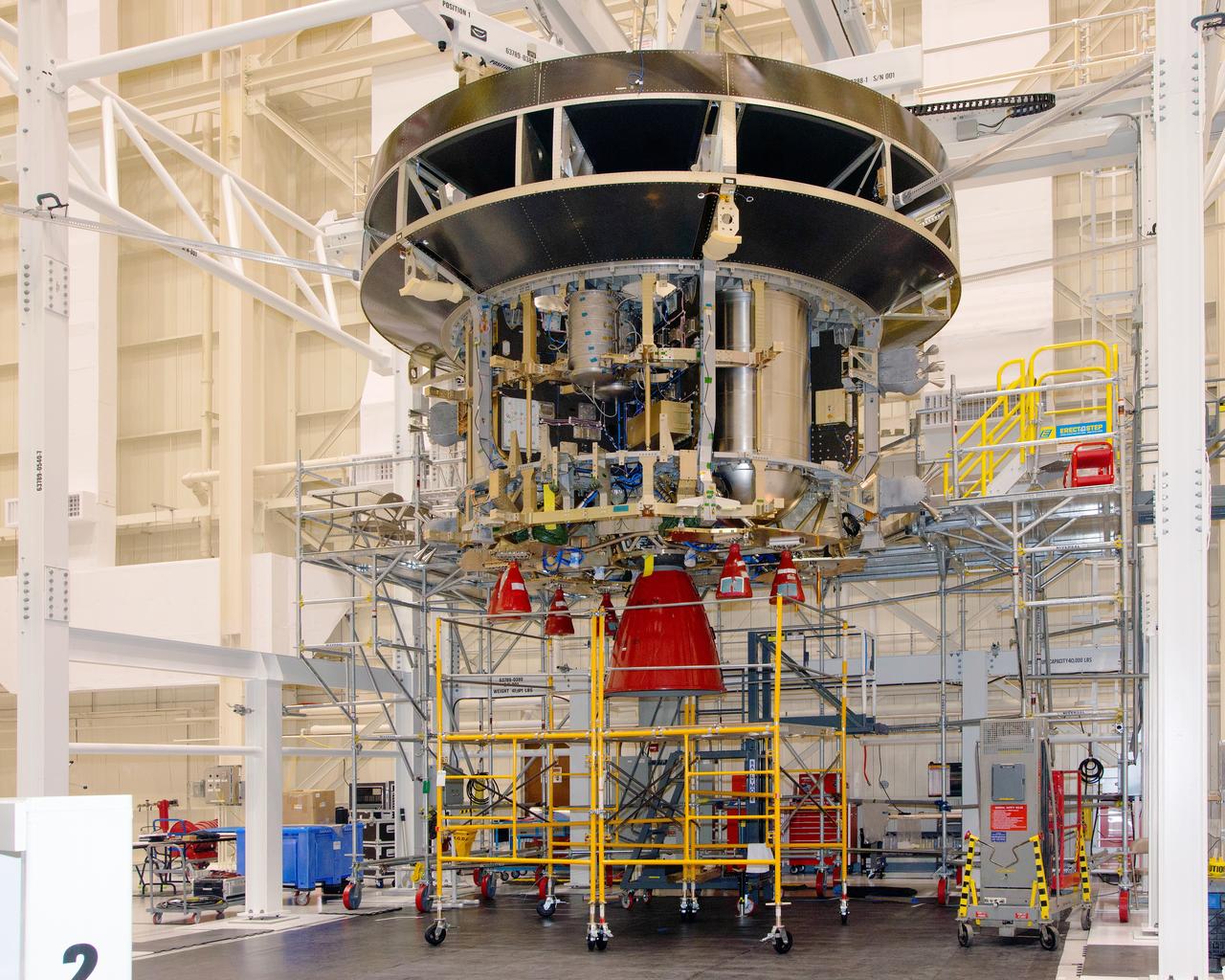
The first European hardware to arrive at NASA for Orion is the European Service Module structural test article on Jan. 12, 2016. This test version of the service module has the same weight and configuration as the real thing and will undergo advanced testing at NASA’s Plum Brook Station in Ohio, USA...In this photo the test article is in scaffolding being ‘mated’ to the Crew Module Adapter, which connects the service module to the Orion Crew Module. Part of Batch image transfer from Flickr.
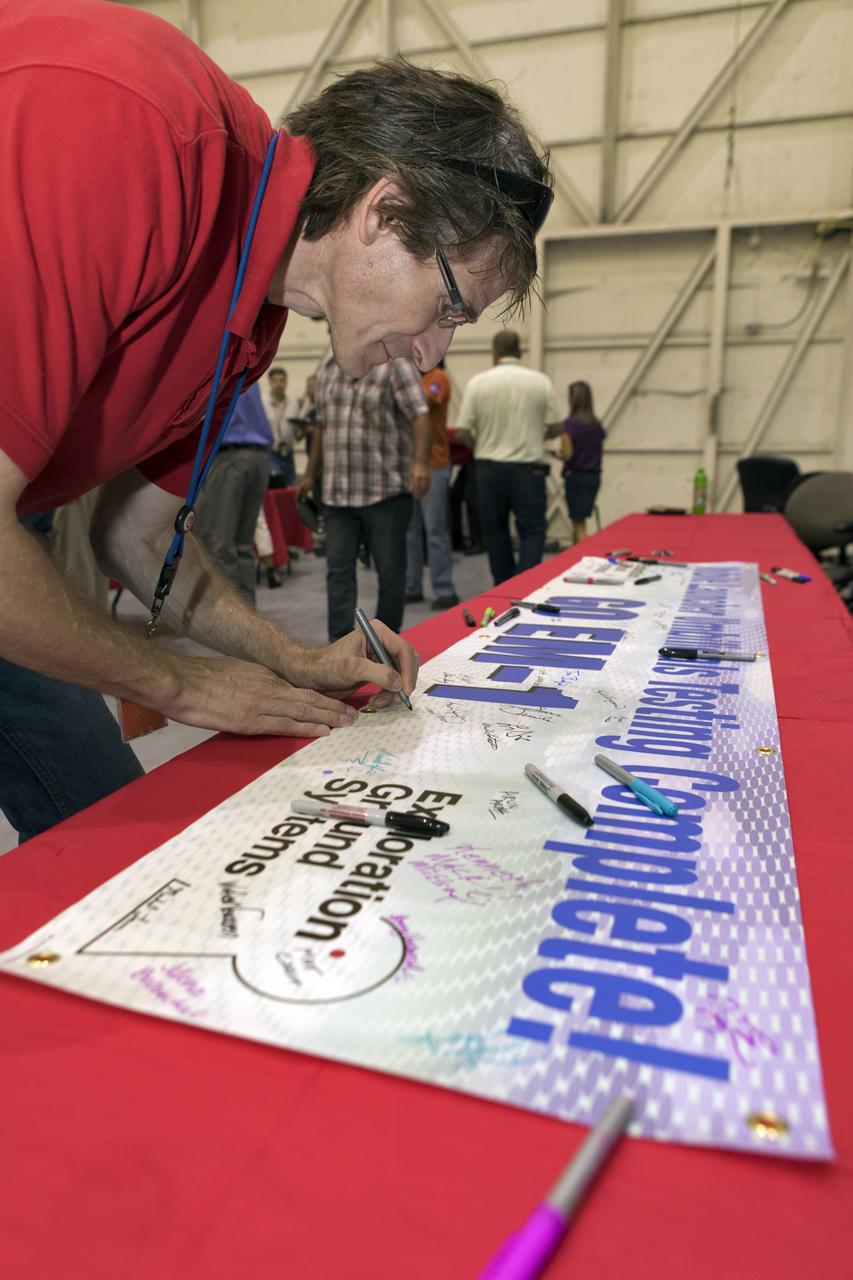
The team that tested the umbilical lines and accessories that will connect from the mobile launcher to NASA's Space Launch System rocket and Orion spacecraft for Exploration Mission-1 hold a banner signing event July 24, 2018, to mark completion of testing at the Launch Equipment Test Facility (LETF) at NASA's Kennedy Space Center in Florida. A total of 21 umbilicals and launch accessories were tested on various simulators at the LETF before they were transferred to the mobile launcher for installation.
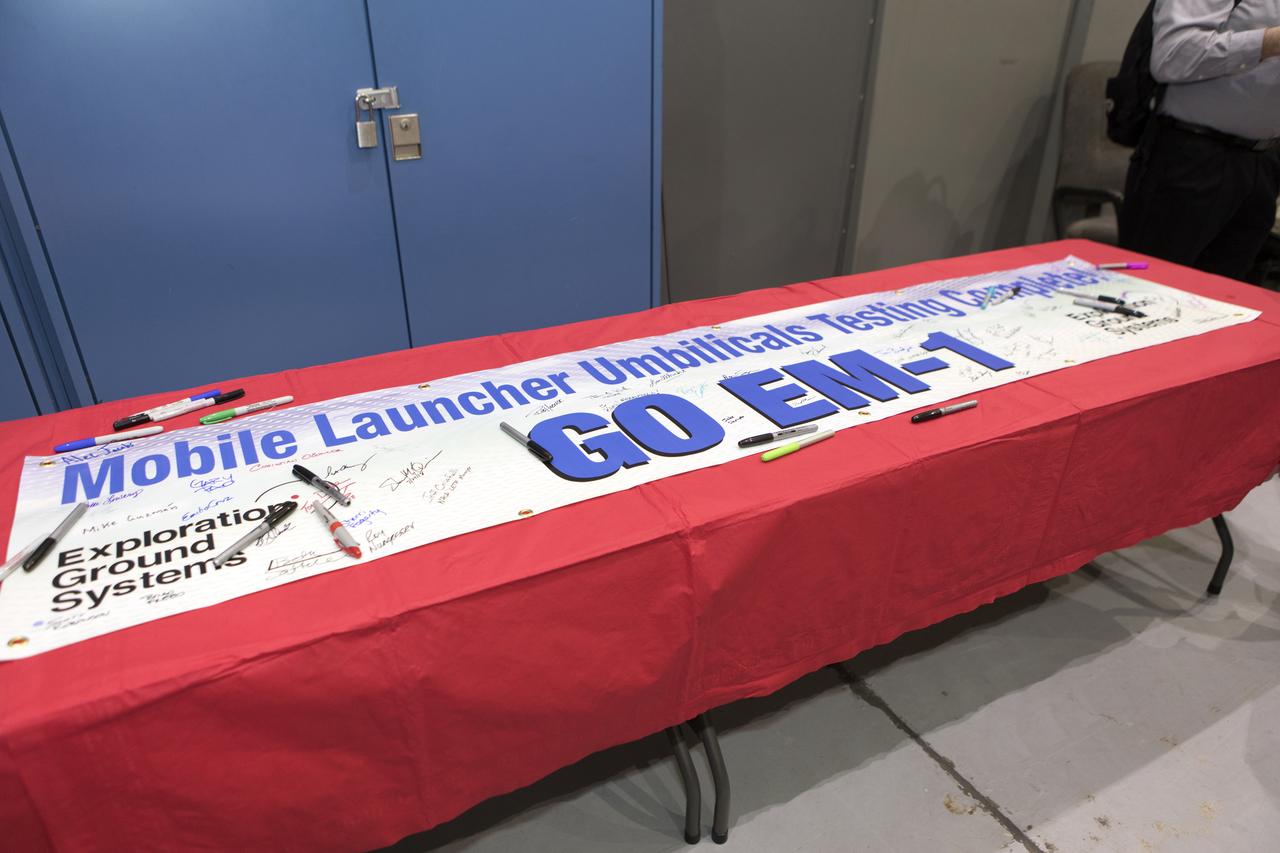
The team that tested the umbilical lines and accessories that will connect from the mobile launcher to NASA's Space Launch System rocket and Orion spacecraft for Exploration Mission-1 hold a banner signing event July 24, 2018, to mark completion of testing at the Launch Equipment Test Facility (LETF) at NASA's Kennedy Space Center in Florida. A total of 21 umbilicals and launch accessories were tested on various simulators at the LETF before they were transferred to the mobile launcher for installation.
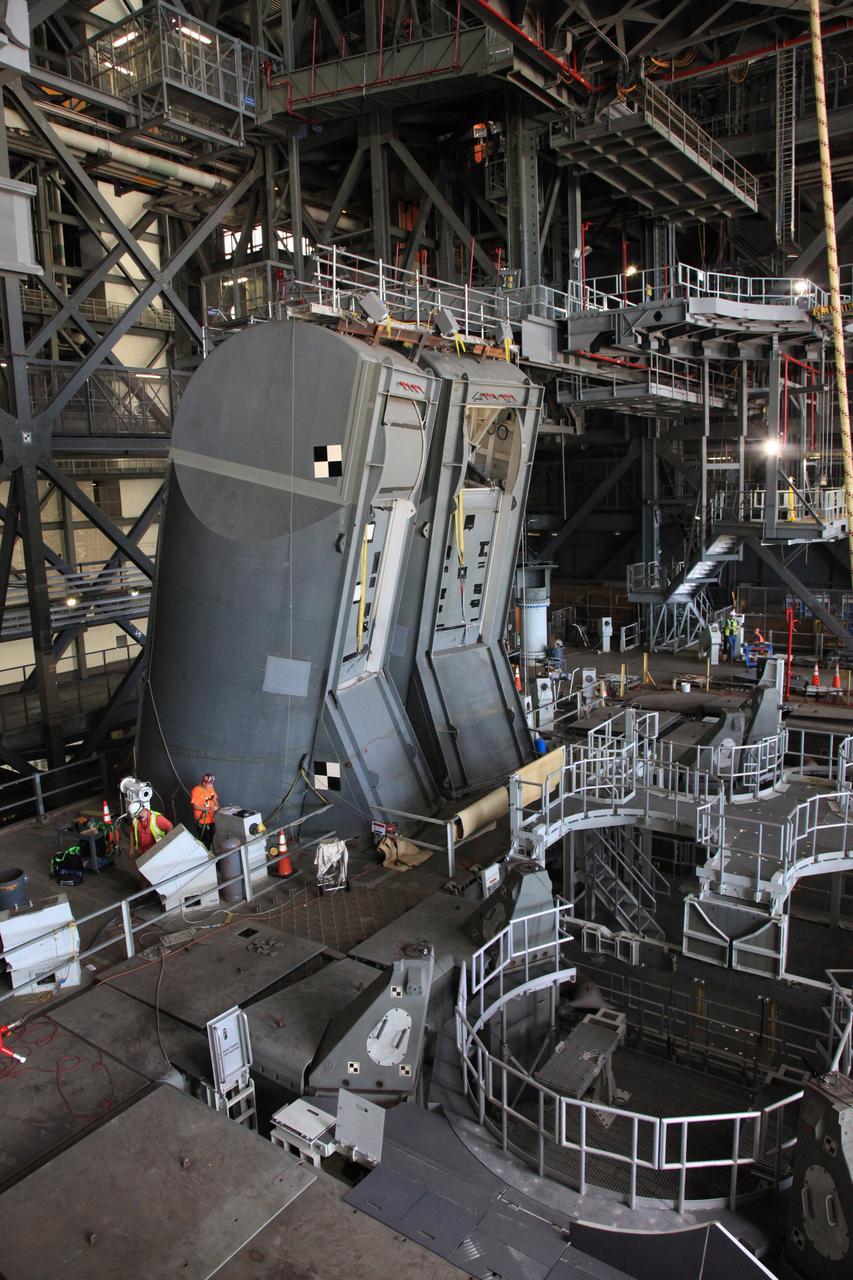
Preparations are underway to conduct a drop test of the Tail Service Mast Umbilicals (TSMU) for NASA’s Space Launch System (SLS) rocket on the mobile launcher in High Bay 3 of the Vehicle Assembly Building at NASA’s Kennedy Space Center in Florida on June 19, 2019. The 35-foot-tall TSMUs will connect to the SLS core stage aft section and provide liquid oxygen and liquid hydrogen fluid lines and electrical cable connections to the core stage engine section to support propellant handling during prelaunch operations. The drop test is being performed to ensure that the umbilicals will disconnect before launch of the SLS carrying Orion on its first uncrewed mission, Artemis 1, from Launch Complex 39B. Exploration Ground Systems and Engineering are completing the tests.
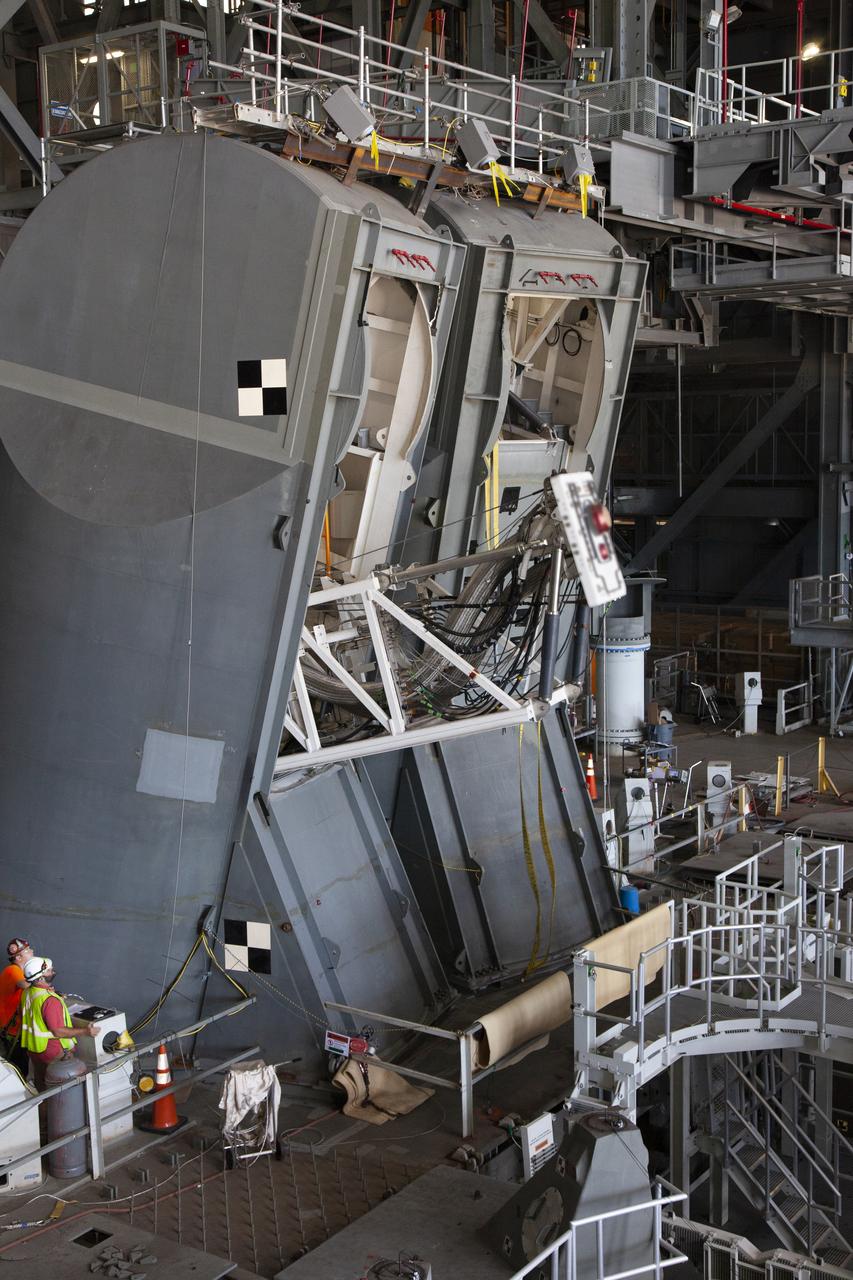
A drop test of the Tail Service Mast Umbilicals (TSMU) for NASA’s Space Launch System (SLS) rocket is underway on the mobile launcher in High Bay 3 of the Vehicle Assembly Building at NASA’s Kennedy Space Center in Florida on June 19, 2019. The 35-foot-tall TSMUs will connect to the SLS core stage aft section and provide liquid oxygen and liquid hydrogen fluid lines and electrical cable connections to the core stage engine section to support propellant handling during prelaunch operations. The drop test is being performed to ensure that the umbilicals will disconnect before launch of the SLS carrying Orion on its first uncrewed mission, Artemis 1, from Launch Complex 39B. Exploration Ground Systems and Engineering are completing the tests.
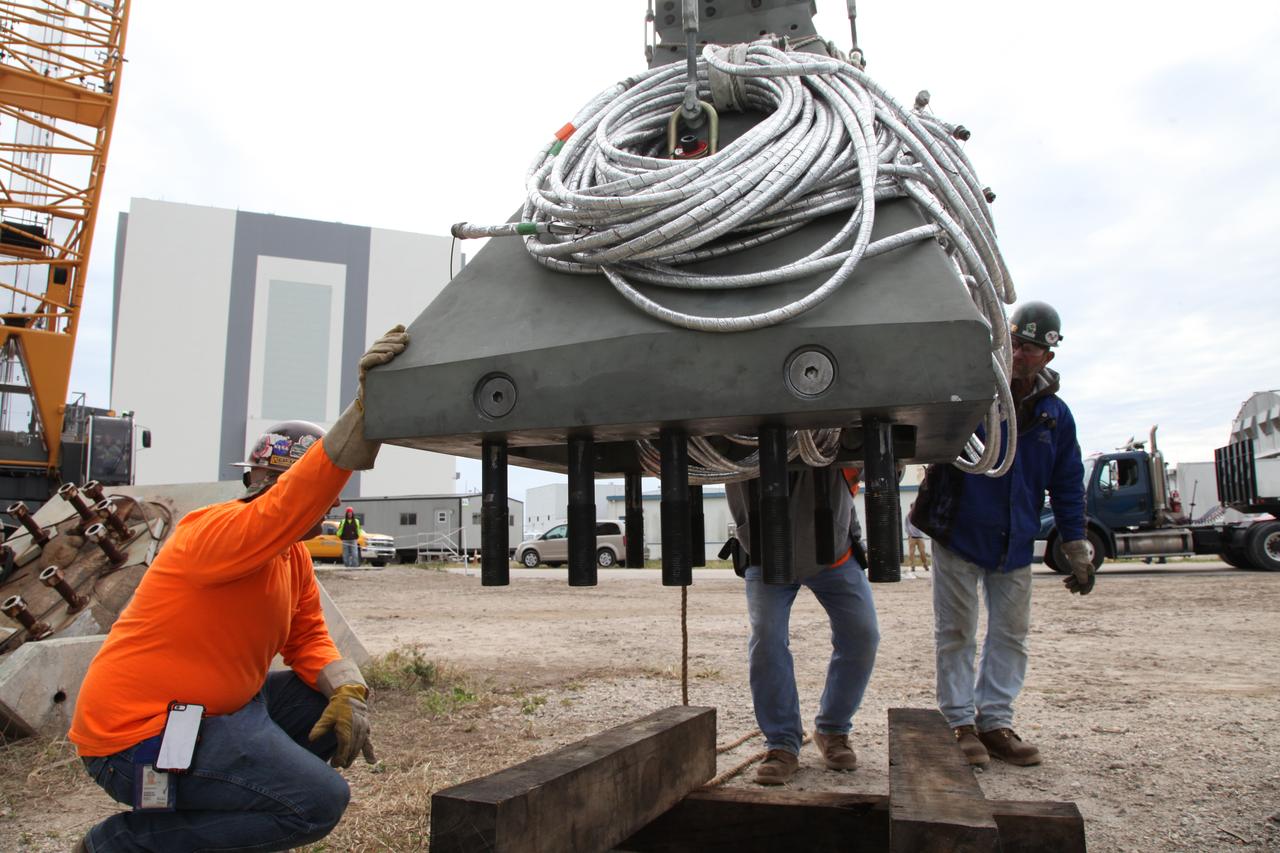
Construction workers assist as a crane is used to lower a vertical support post for NASA's Space Launch System (SLS) onto a platform at the Mobile Launcher Yard at NASA's Kennedy Space Center in Florida. Two ASEUs and the first of the vertical support posts underwent a series of tests at the Launch Equipment Test Facility to confirm they are functioning properly and ready to support the SLS for launch. The ASEUs will connect to the SLS rocket at the bottom outer edge of each booster and provide electrical power and data connections to the rocket until it lifts off from the launch pad. The eight VSPs will support the load of the solid rocket boosters, with four posts for each of the boosters. The center’s Engineering Directorate and the Ground Systems Development and Operations Program are overseeing processing and testing of the umbilicals.
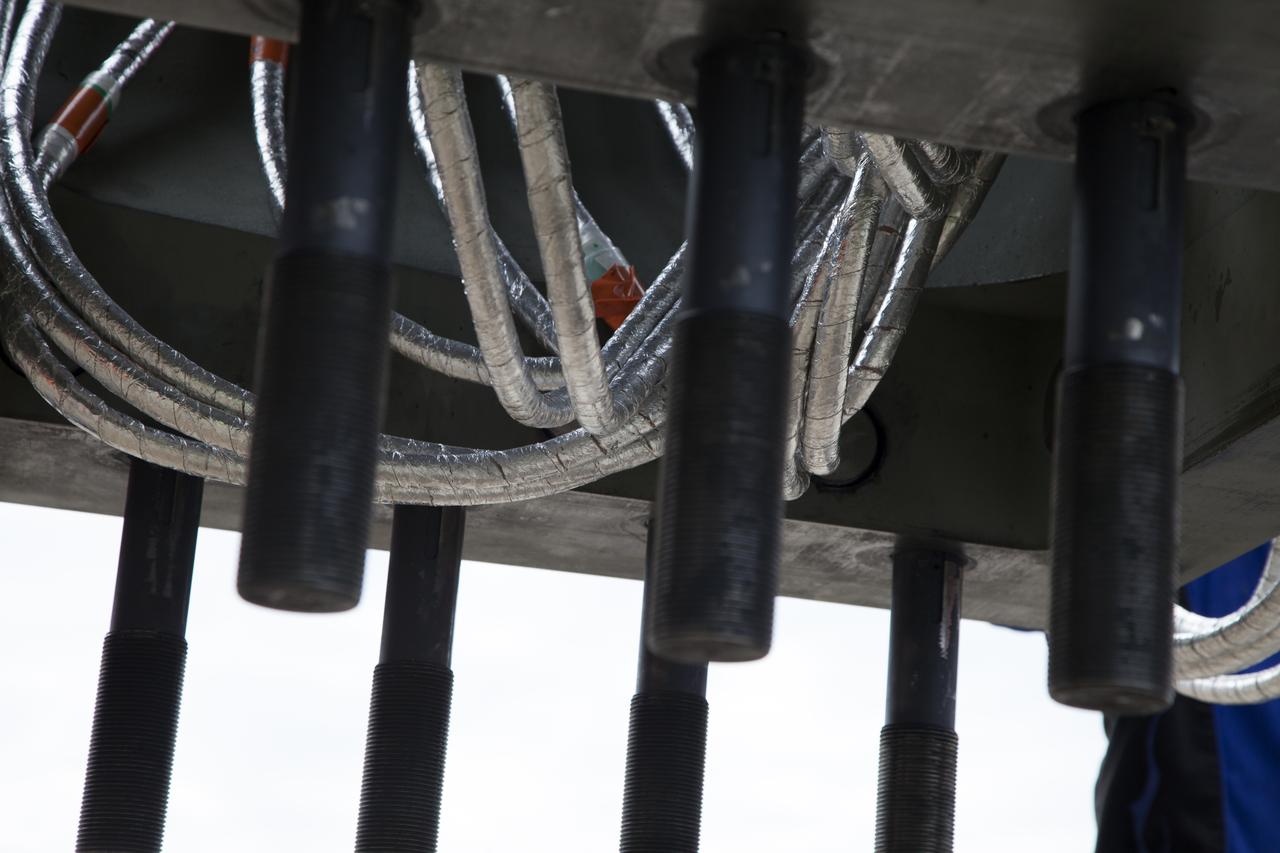
A view from underneath one of the vertical support posts for NASA's Space Launch System rocket. Two after skirt electrical umbilicals (ASEUs) and the first of the vertical support post were transported by flatbed truck from the Launch Equipment Test Facility to the Mobile Launcher Yard as NASA's Kennedy Space Center in Florida. The ASEUs and the VSP underwent a series of tests to confirm they are functioning properly and ready to support the SLS for launch. The ASEUs will connect to the SLS rocket at the bottom outer edge of each booster and provide electrical power and data connections to the rocket until it lifts off from the launch pad. The eight VSPs will support the load of the solid rocket boosters, with four posts for each of the boosters. The center’s Engineering Directorate and the Ground Systems Development and Operations Program are overseeing processing and testing of the umbilicals.
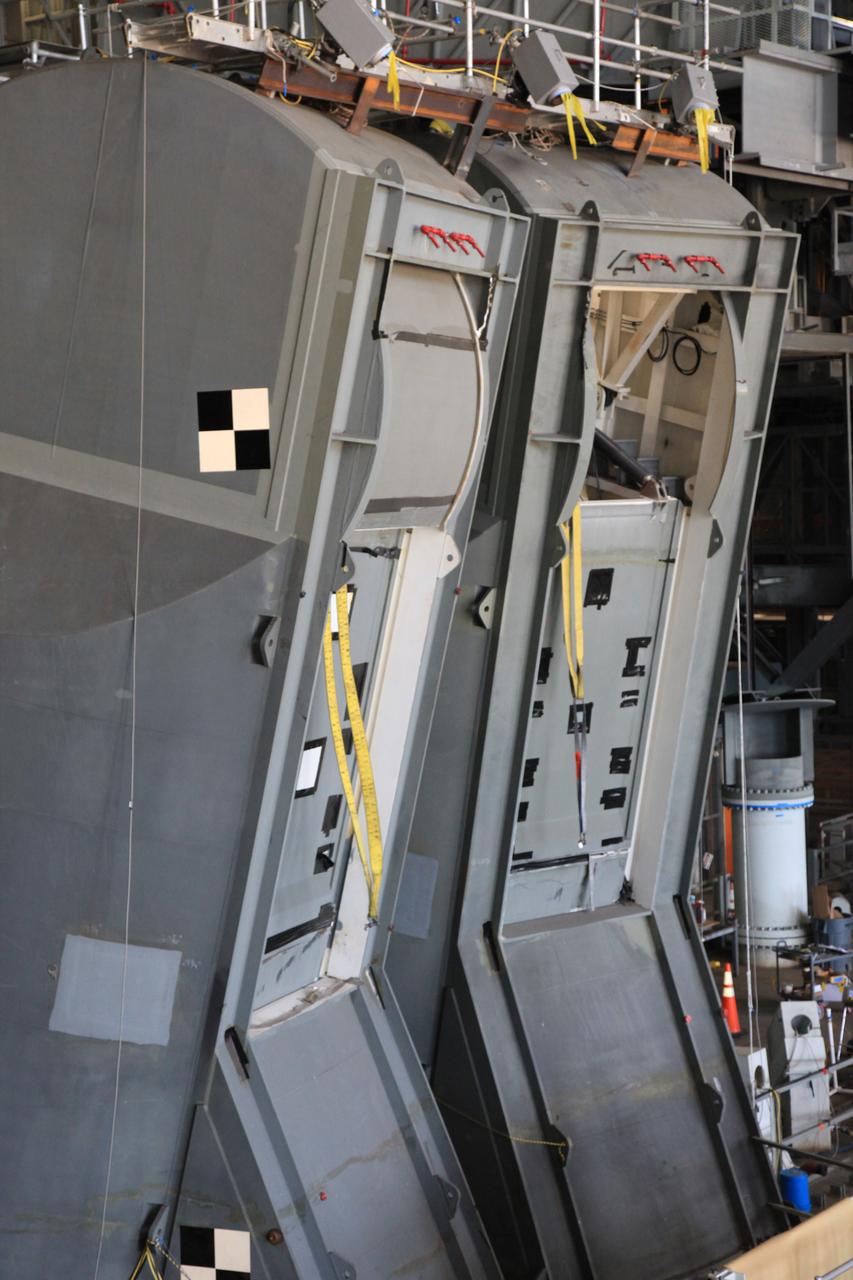
Preparations are underway to conduct a drop test of the Tail Service Mast Umbilicals (TSMU) for NASA’s Space Launch System (SLS) rocket on the mobile launcher in High Bay 3 of the Vehicle Assembly Building at NASA’s Kennedy Space Center in Florida on June 19, 2019. The 35-foot-tall TSMUs will connect to the SLS core stage aft section and provide liquid oxygen and liquid hydrogen fluid lines and electrical cable connections to the core stage engine section to support propellant handling during prelaunch operations. The drop test is being performed to ensure that the umbilicals will disconnect before launch of the SLS carrying Orion on its first uncrewed mission, Artemis 1, from Launch Complex 39B. Exploration Ground Systems and Engineering are completing the tests.
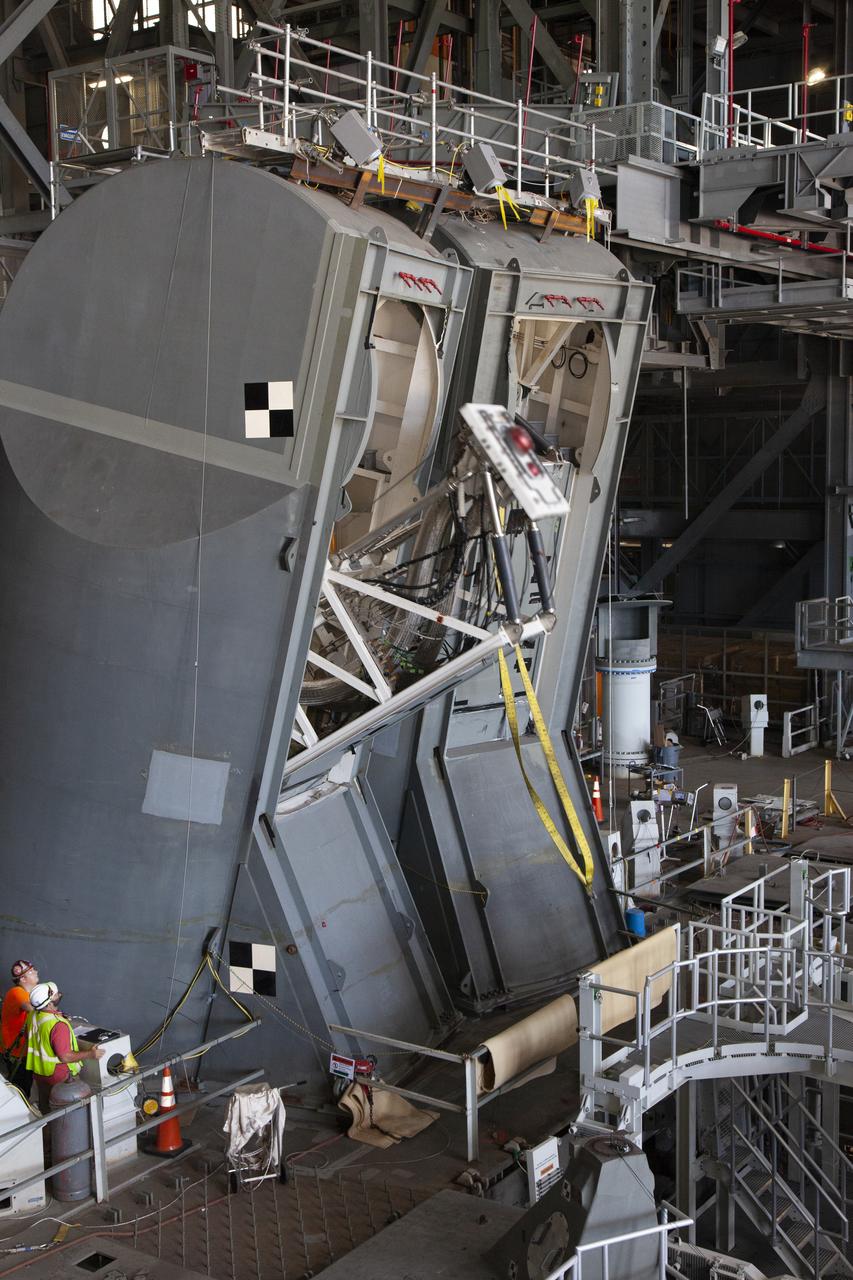
A drop test of the Tail Service Mast Umbilicals (TSMU) for NASA’s Space Launch System (SLS) rocket is underway on the mobile launcher in High Bay 3 of the Vehicle Assembly Building at NASA’s Kennedy Space Center in Florida on June 19, 2019. The 35-foot-tall TSMUs will connect to the SLS core stage aft section and provide liquid oxygen and liquid hydrogen fluid lines and electrical cable connections to the core stage engine section to support propellant handling during prelaunch operations. The drop test is being performed to ensure that the umbilicals will disconnect before launch of the SLS carrying Orion on its first uncrewed mission, Artemis 1, from Launch Complex 39B. Exploration Ground Systems and Engineering are completing the tests.
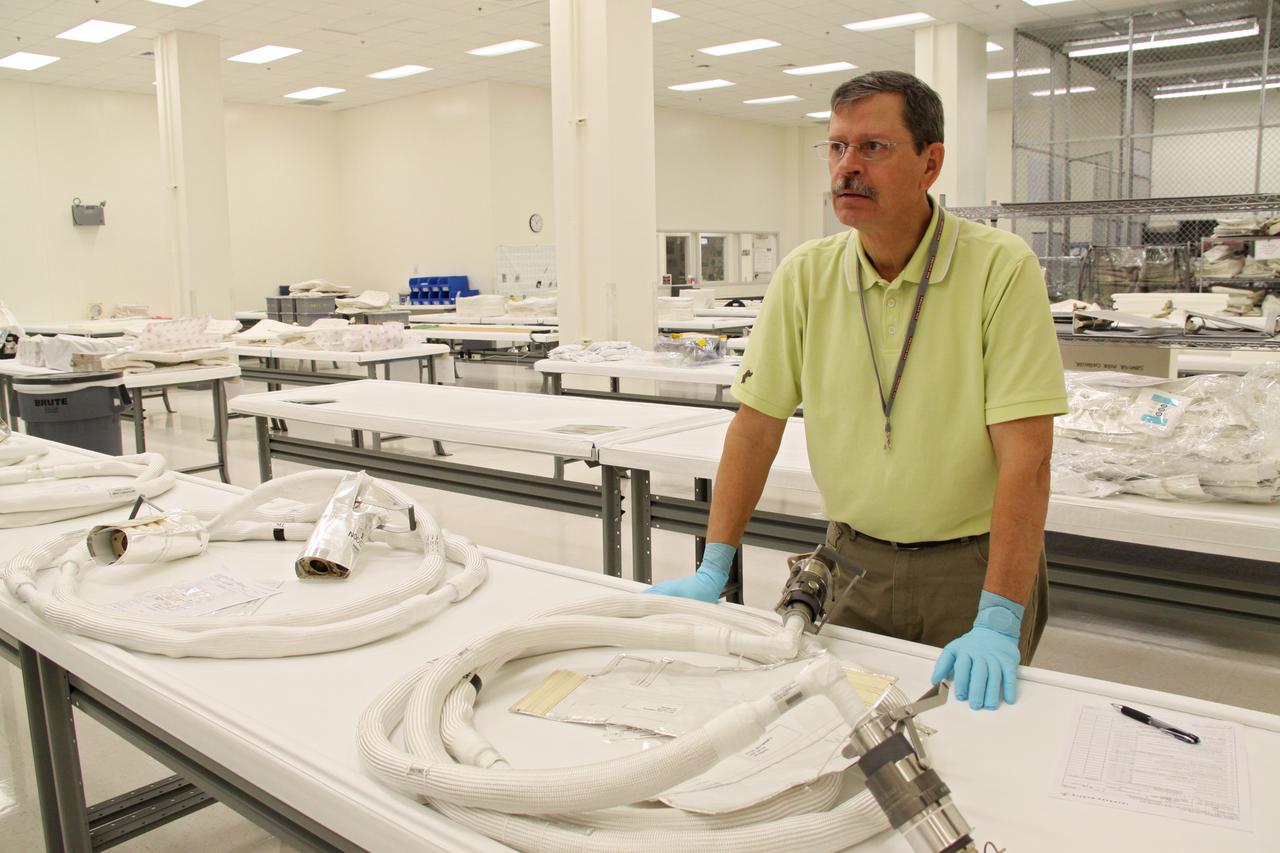
CAPE CANAVERAL, Fla. – In the Space Station Processing Facility at NASA's Kennedy Space Center in Florida, the newly arrived replacement high-pressure ammonia jumper hoses to support space shuttle Endeavour's STS-130 mission are positioned along work tables and ready for testing. A problem arose during a prelaunch test Jan. 7 with one of four hoses that are needed to connect the ammonia loops of the International Space Station's Tranquility node to those of the Destiny laboratory. A decision was made to use an alternate hose design for use as the primary jumper. The new hoses are assembled from shorter hoses that were previously certified and tested. Connection of the modules requires two ammonia loops, with two lines apiece, each of which must be connected to both Tranquility and Destiny to route cooling to and from the Tranquility module. The primary payload for the STS-130 mission, Tranquility is a pressurized module that will provide additional room for crew members and many of the station's life support and environmental control systems. The node was built in Turin, Italy, by Thales Alenia Space for the European Space Agency. Endeavour's launch is set for Feb. 7. For information on the STS-130 mission and crew, visit http:__www.nasa.gov_mission_pages_shuttle_shuttlemissions_sts130_index.html. Photo credit: NASA_Jack Pfaller
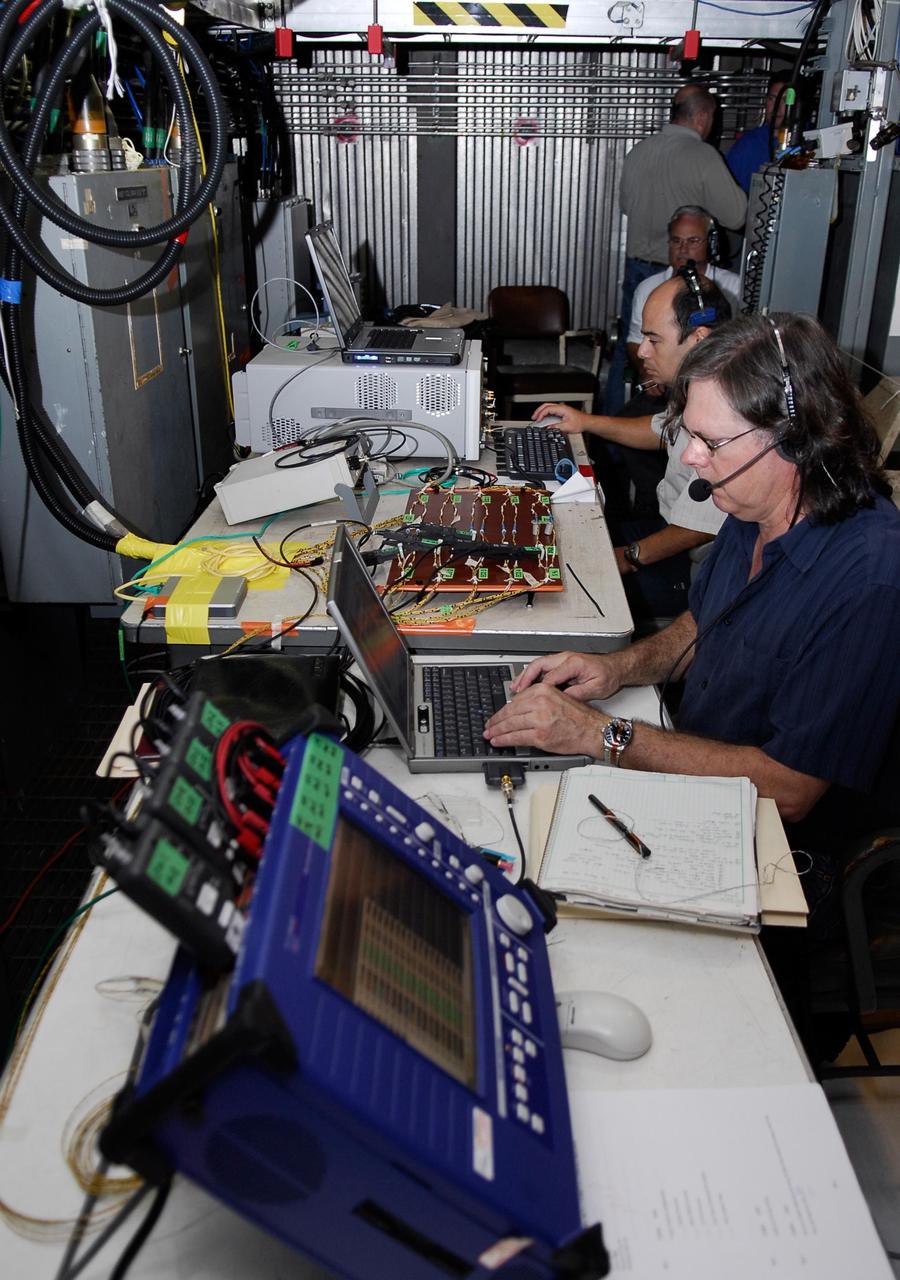
KENNEDY SPACE CENTER, FLA. -- On Launch Pad 39A at NASA's Kennedy Space Center, the wiring is checked and validated before the tanking test on space shuttle Atlantis' external tank set for Dec. 18. The test wiring has been spliced into an electrical harness in the aft main engine compartment connected with the engine cut-off, or ECO, sensor system. The attached wiring leads to the interior of the mobile launcher platform where the time domain reflectometry, or TDR, test equipment is located. Photo credit: NASA/Kim Shiflett
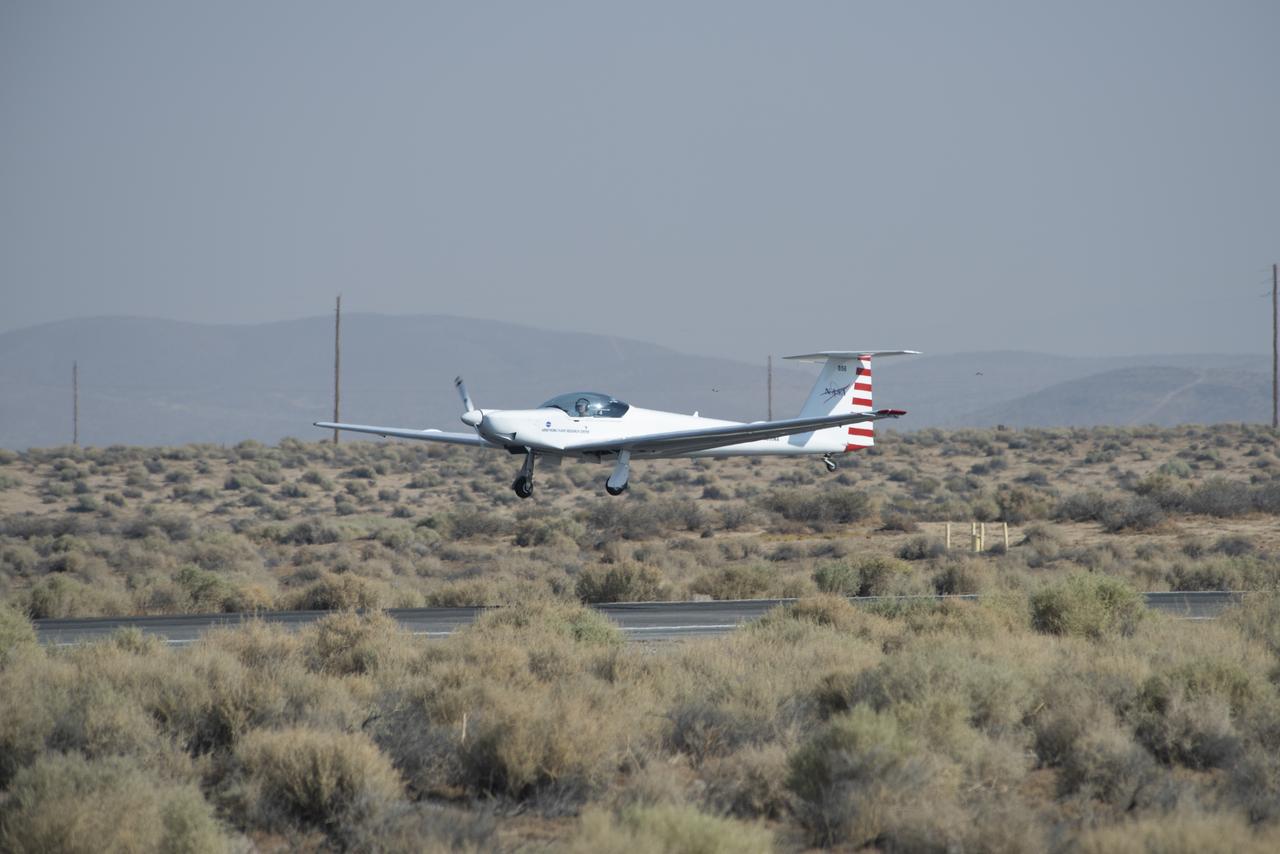
The Advanced Air Mobility National Campaign project conducted connectivity and infrastructure flight tests with a NASA TG-14 glider aircraft at NASA's Armstrong Flight Research Center Sept. 30-Oct. 1, 2020. The flights were preparation for the NC Integrated Dry Run Test in December and allowed pilots to view the routes they will fly during the helicopter test.
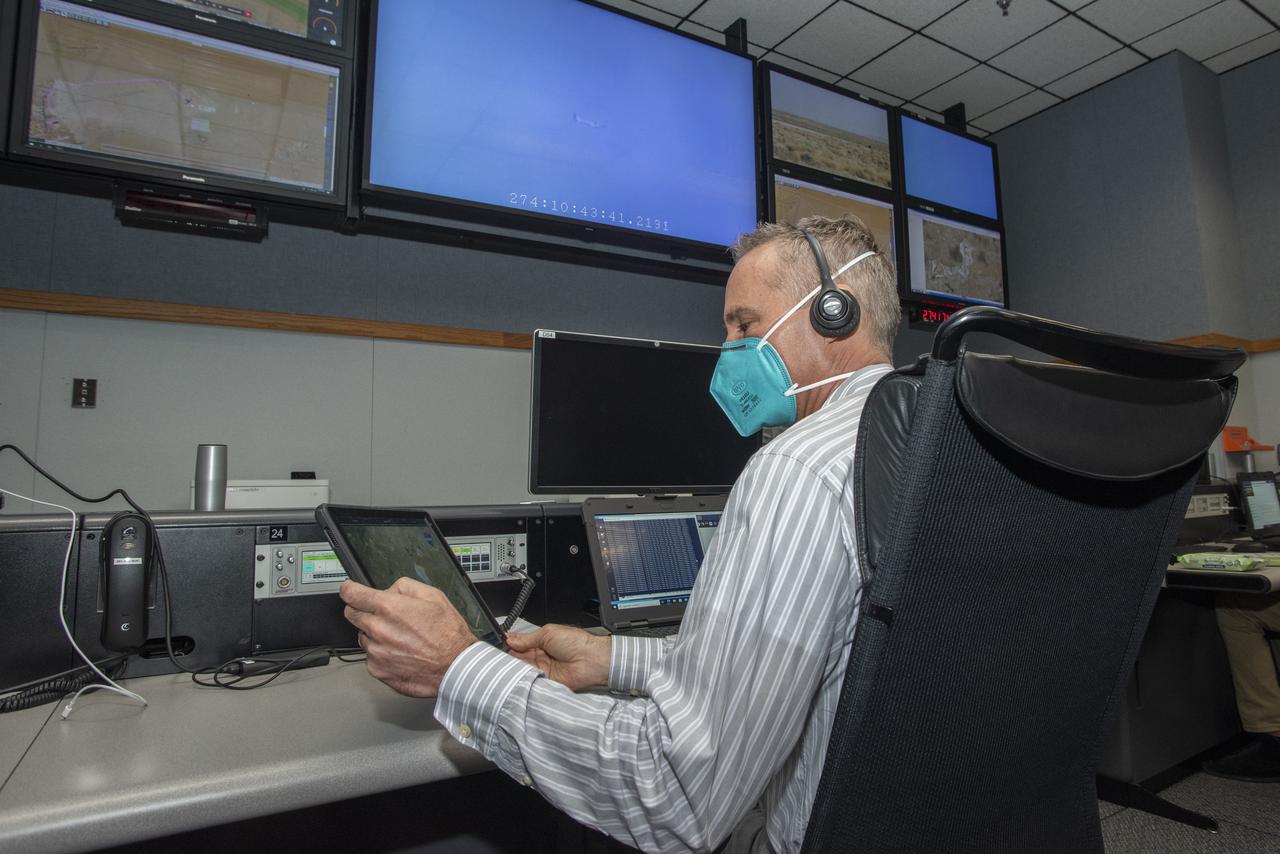
Mark Snycerski, senior research associate at NASA's Ames Research Center in California, monitored inbound telemetry data through collection servers during the Advanced Air Mobility National Campaign's connectivity and infrastructure flight tests. The test used a NASA TG-14 glider aircraft based at NASA's Armstrong Flight Research Center in California Sept. 30-Oct. 1, 2020. The exercise was in preparation for the NC Integrated Dry Run Test in December.
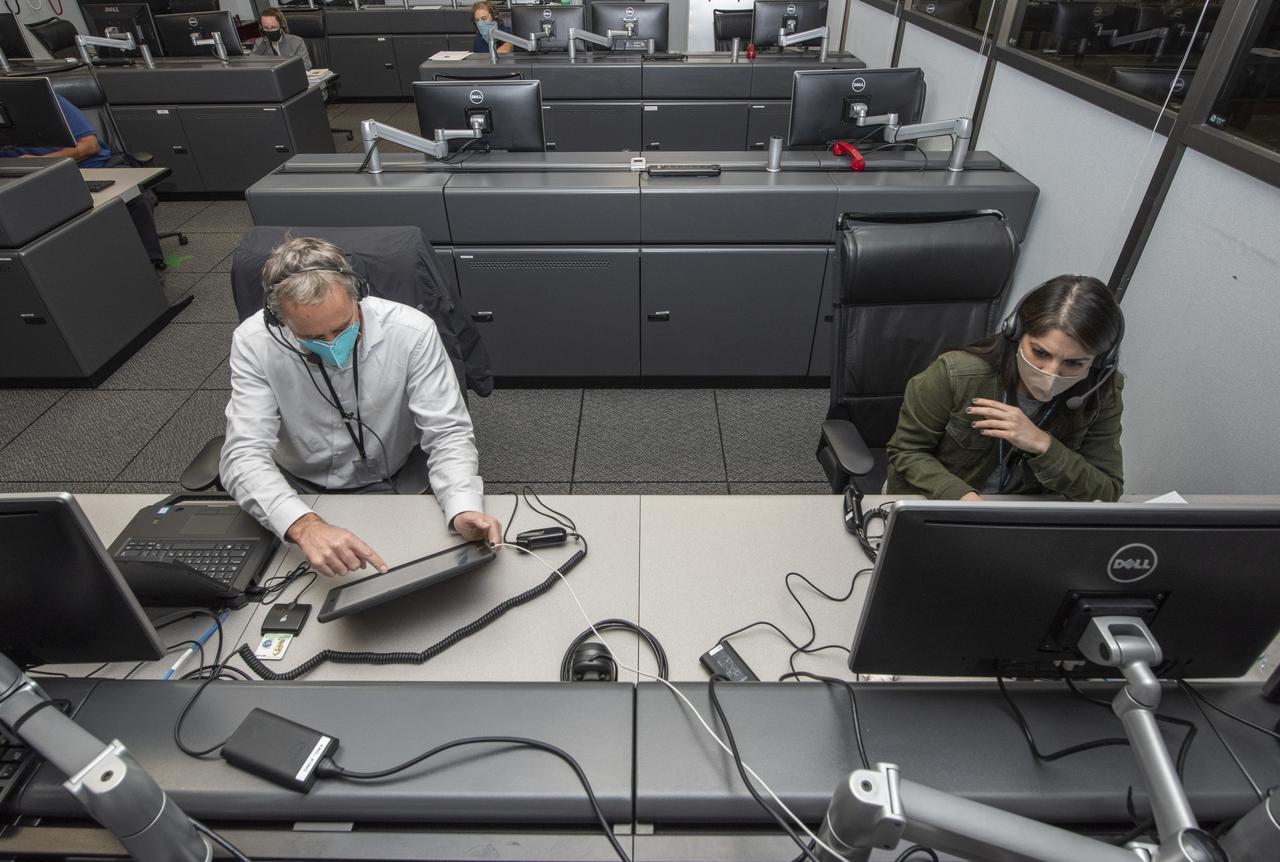
Ames Research Center researchers Yasmin Arbab and Mark Snycerski on the Advanced Air Mobility National Campaign project's Airspace Test Infrastructure (ATI) team monitor surveillance data and connectivity of the flight test infrastructure to a cloud based system in real time during the NC Integrated Dry Run Test team the first week of December 2020 at NASA's Armstrong Flight Research Center in California.
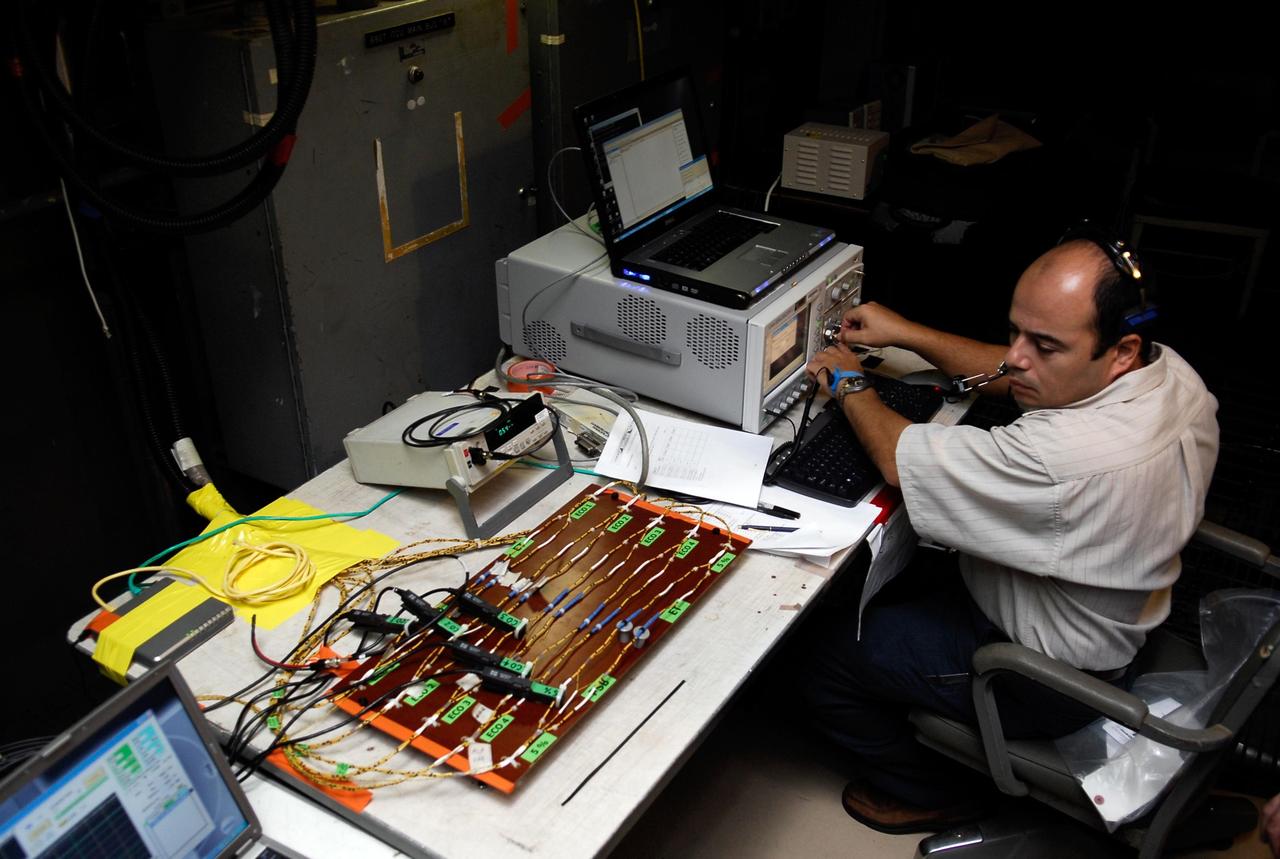
KENNEDY SPACE CENTER, FLA. -- On Launch Pad 39A at NASA's Kennedy Space Center, the wiring is checked and validated before the tanking test on space shuttle Atlantis' external tank set for Dec. 18. The test wiring has been spliced into an electrical harness in the aft main engine compartment connected with the engine cut-off, or ECO, sensor system. The attached wiring leads to the interior of the mobile launcher platform where the time domain reflectometry, or TDR, test equipment is located. Photo credit: NASA/Kim Shiflett