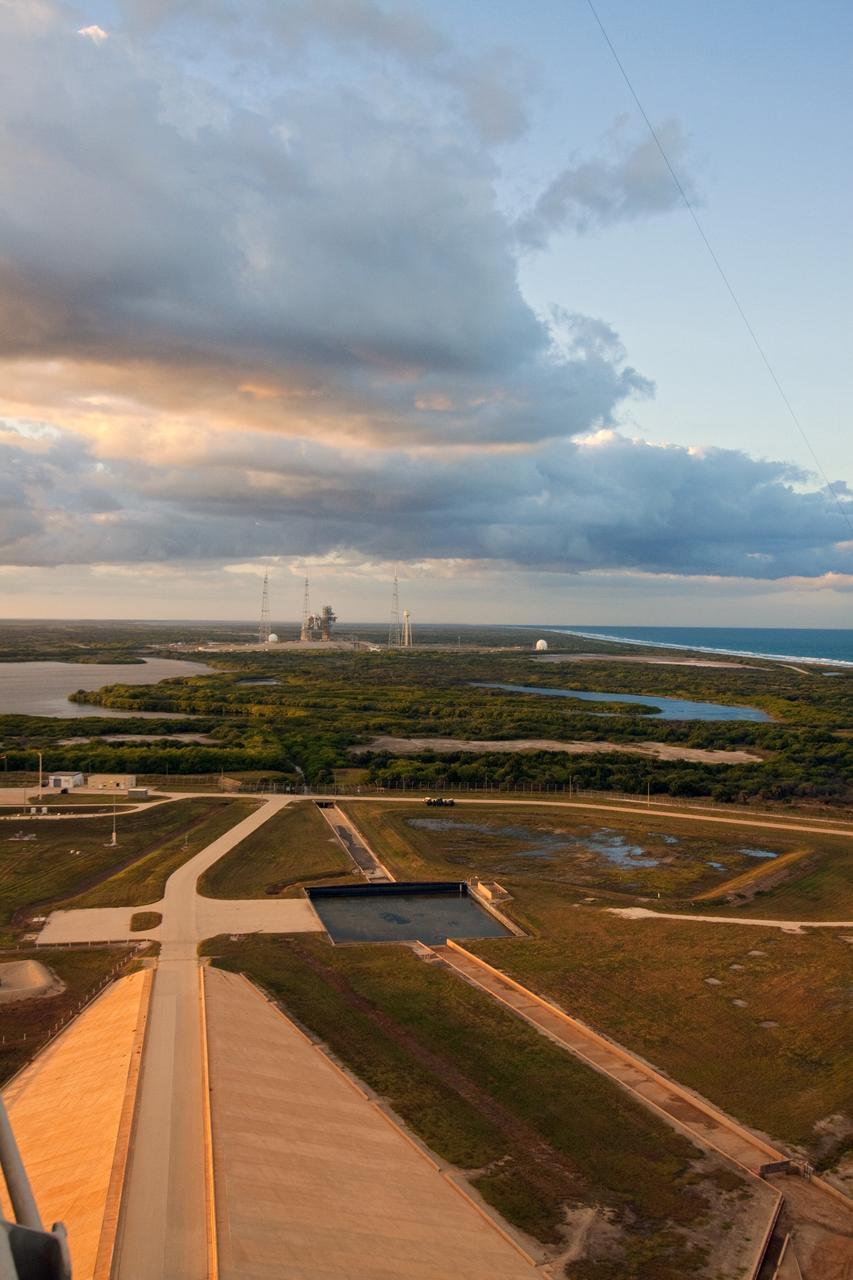
CAPE CANAVERAL, Fla. -- At NASA's Kennedy Space Center in Florida, Launch Pad 39B is seen from Launch Pad 39A. Pad B is morphing to support a commercial space program with multiple customers, multiple providers and multiple systems that will take Americans to the International Space Station and other low Earth orbit destinations. For information on NASA's future plans, visit www.nasa.gov. Photo credit: NASA/Jack Pfaller
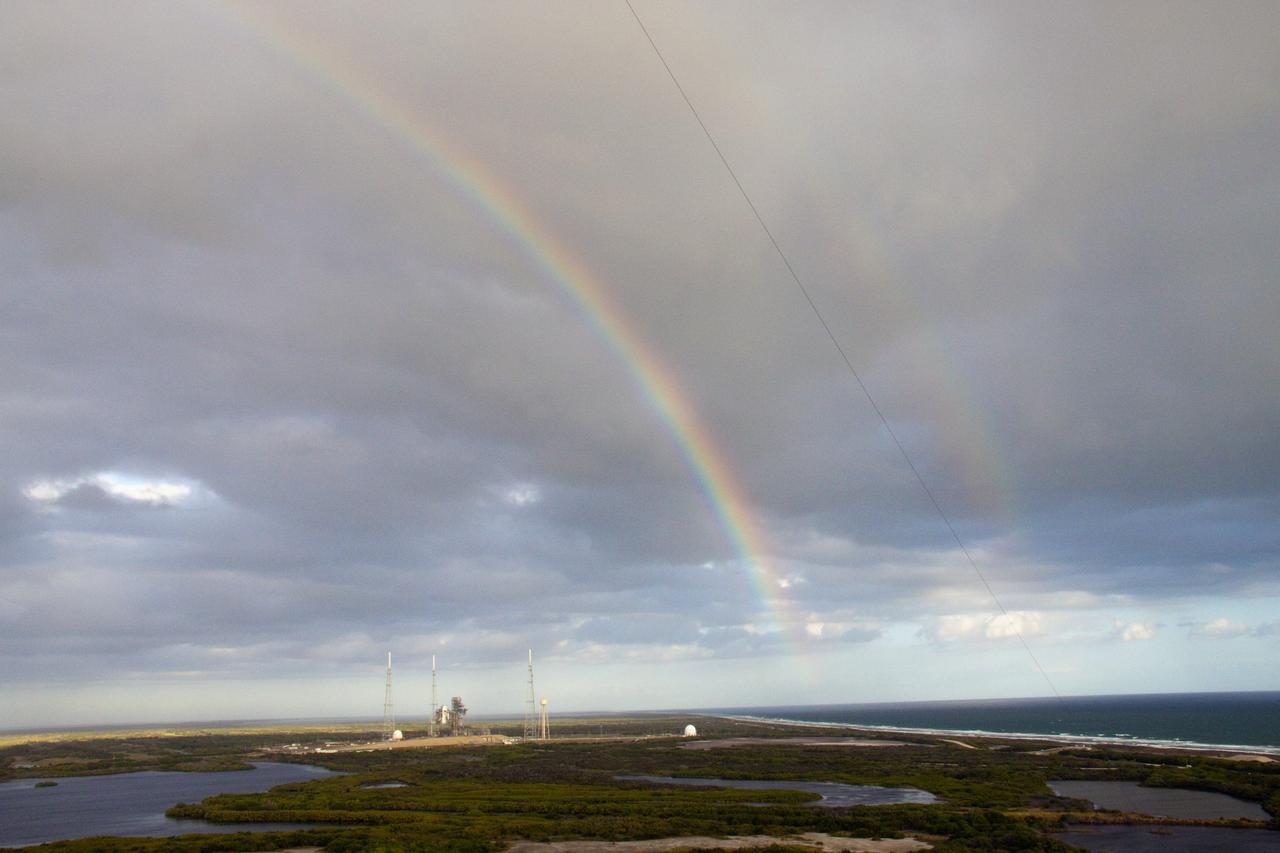
CAPE CANAVERAL, Fla. -- At NASA's Kennedy Space Center in Florida, two rainbows appear between Launch Pad 39B and Launch Pad 39A. Pad B, seen here, is morphing to support a commercial space program with multiple customers, multiple providers and multiple systems that will take Americans to the International Space Station and other low Earth orbit destinations. For information on NASA's future plans, visit www.nasa.gov. Photo credit: NASA/Troy Cryder
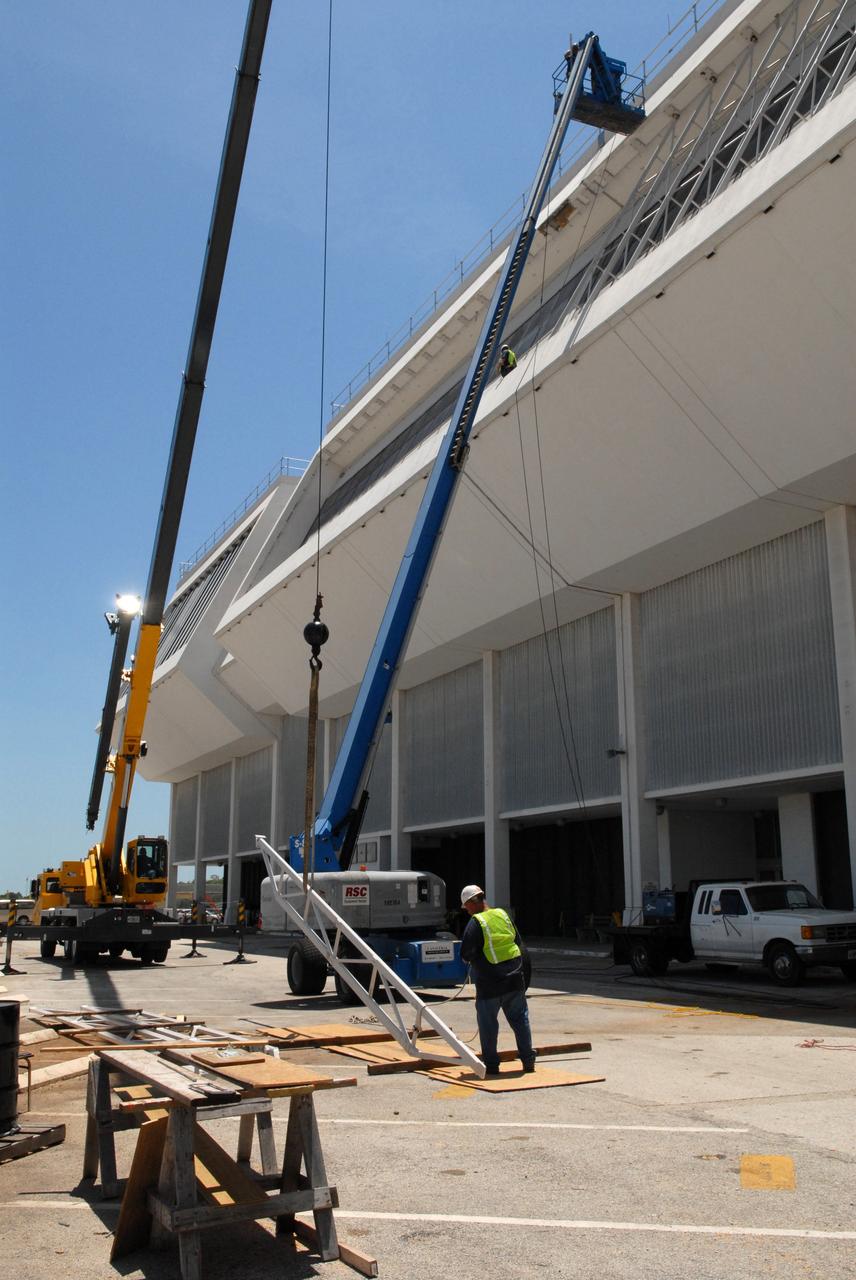
CAPE CANAVERAL, Fla. – New windows are installed in the Launch Control Center's Firing Room 1 at NASA's Kennedy Space Center in Florida. The firing room will support the future Ares rocket launches as part of NASA's Constellation Program. Future astronauts will ride to orbit on Ares I, launched from Kennedy's Launch Pad 39B. The Launch Control Center firing rooms face the launch pads. Photo credit: NASA/Jack Pfaller
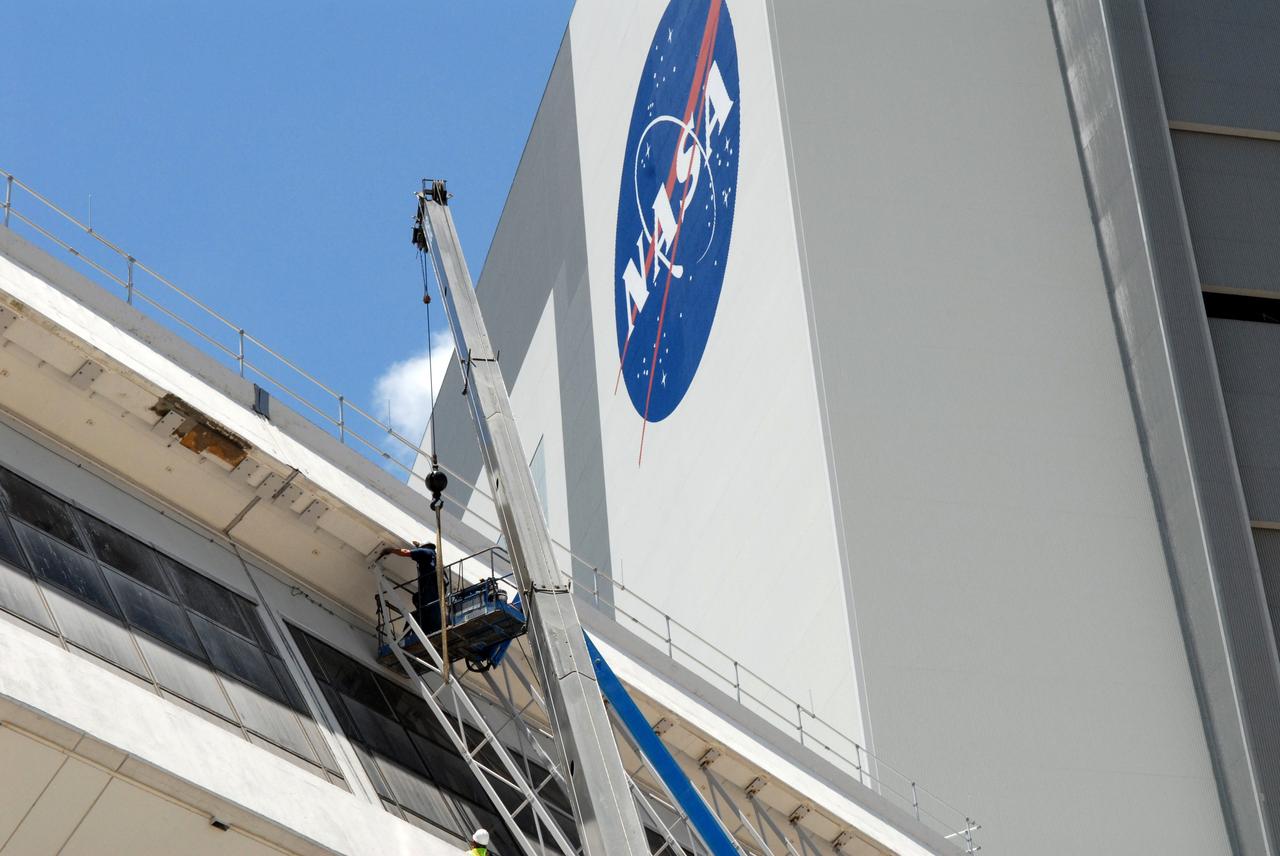
CAPE CANAVERAL, Fla. – A technician works at installing a new window in the Launch Control Center's Firing Room 1 at NASA's Kennedy Space Center in Florida. The firing room will support the future Ares rocket launches as part of NASA's Constellation Program. Future astronauts will ride to orbit on Ares I, launched from Kennedy's Launch Pad 39B. The Launch Control Center firing rooms face the launch pads. Photo credit: NASA/Jack Pfaller
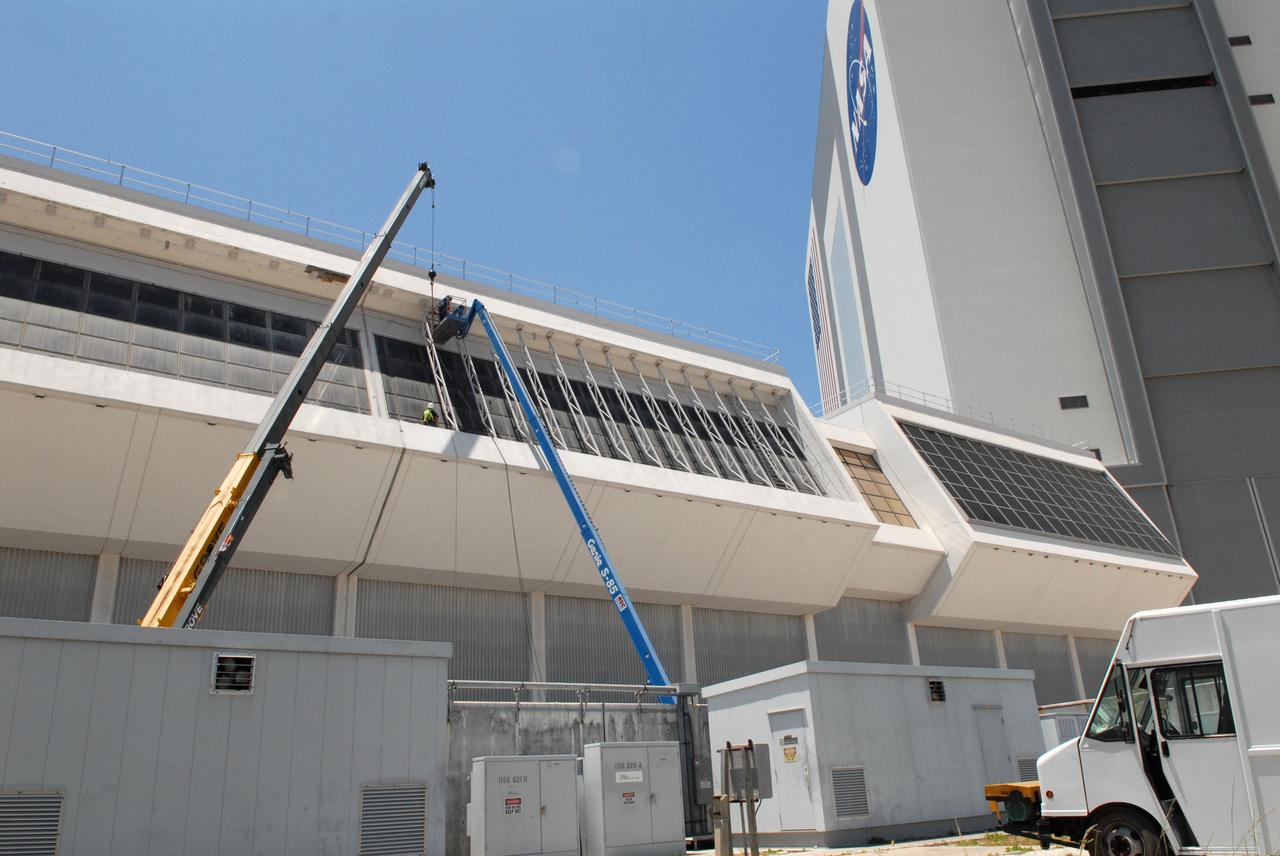
CAPE CANAVERAL, Fla. – New windows are installed in the Launch Control Center's Firing Room 1 at NASA's Kennedy Space Center in Florida. The firing room will support the future Ares rocket launches as part of NASA's Constellation Program. Future astronauts will ride to orbit on Ares I, launched from Kennedy's Launch Pad 39B. The Launch Control Center firing rooms face the launch pads. Photo credit: NASA/Jack Pfaller
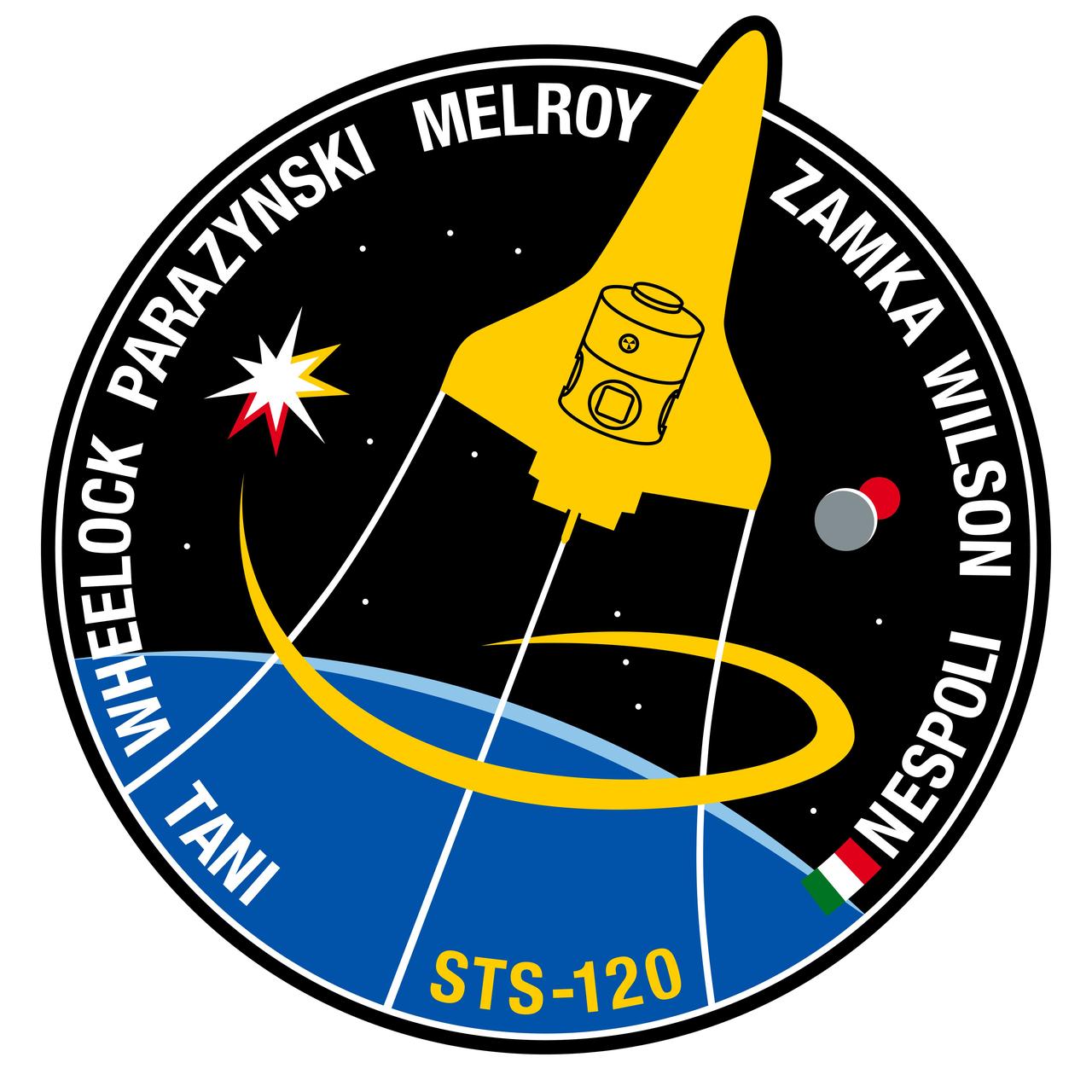
The STS-120 patch reflects the role of the mission in the future of the space program. The shuttle payload bay carries Node 2, Harmony, the doorway to the future international laboratory elements on the International Space Station (ISS). The star on the left represents the ISS; the red colored points represent the current location of the P6 solar array, furled and awaiting relocation when the crew arrives. During the mission, the crew will move P6 to its final home at the end of the port truss. The gold points represent the P6 solar array in its new location, unfurled and producing power for science and life support. On the right, the moon and Mars can be seen representing the future of NASA. The constellation Orion rises in the background, symbolizing NASA's new exploration vehicle. Through all, the shuttle rises up and away, leading the way to the future.
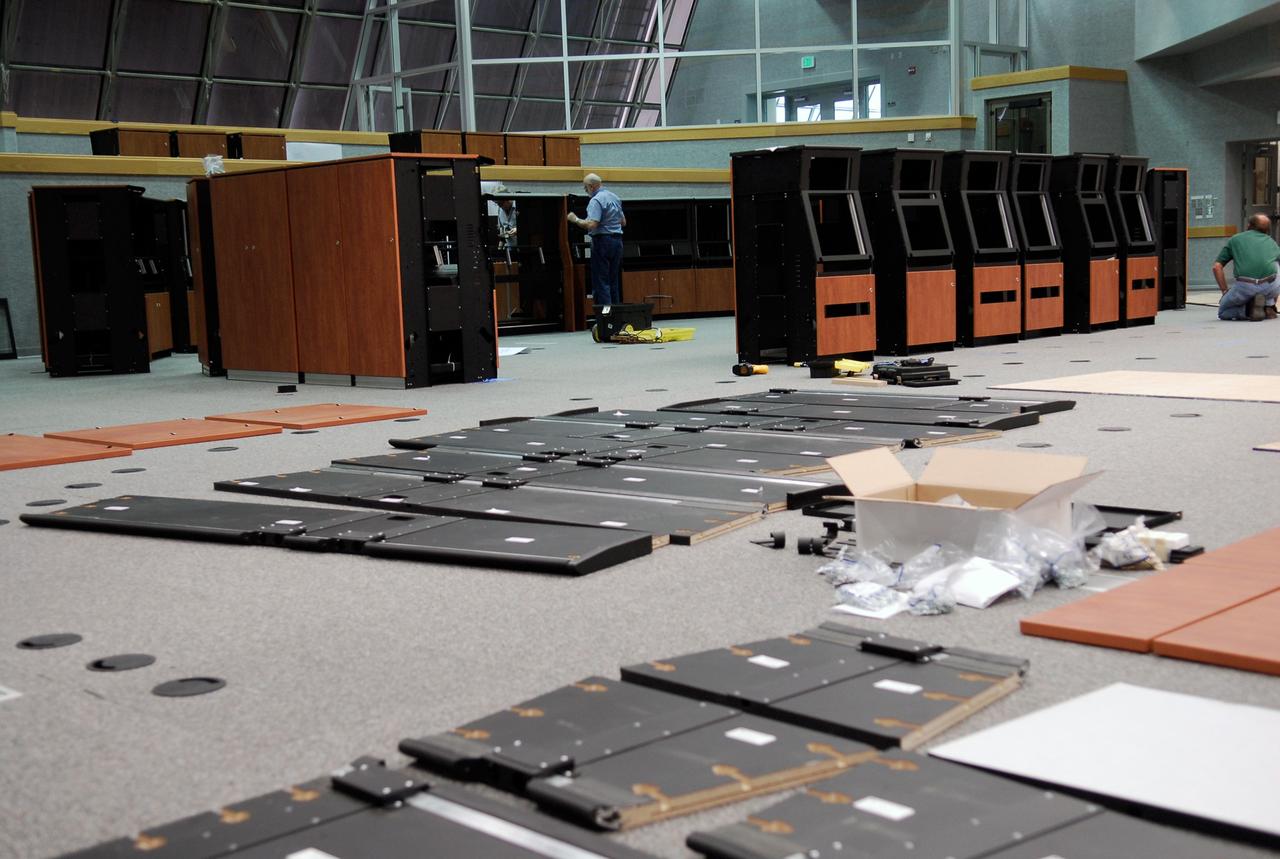
CAPE CANAVERAL, Fla. -- In Firing Room No. 1 in the Launch Control Center at NASA's Kennedy Space Center, the number of new equipment cabinets increases as workers put the elements together. The firing room will support the future Ares rocket launches as part of the Constellation Program. Future astronauts will ride to orbit on Ares I, which uses a single five-segment solid rocket booster, a derivative of the space shuttle's solid rocket booster, for the first stage. Ares will be launched from Pad 39B, which is being reconfigured from supporting space shuttle launches. The Launch Control Center firing rooms face the launch pads. Photo credit: NASA/Kim Shiflett
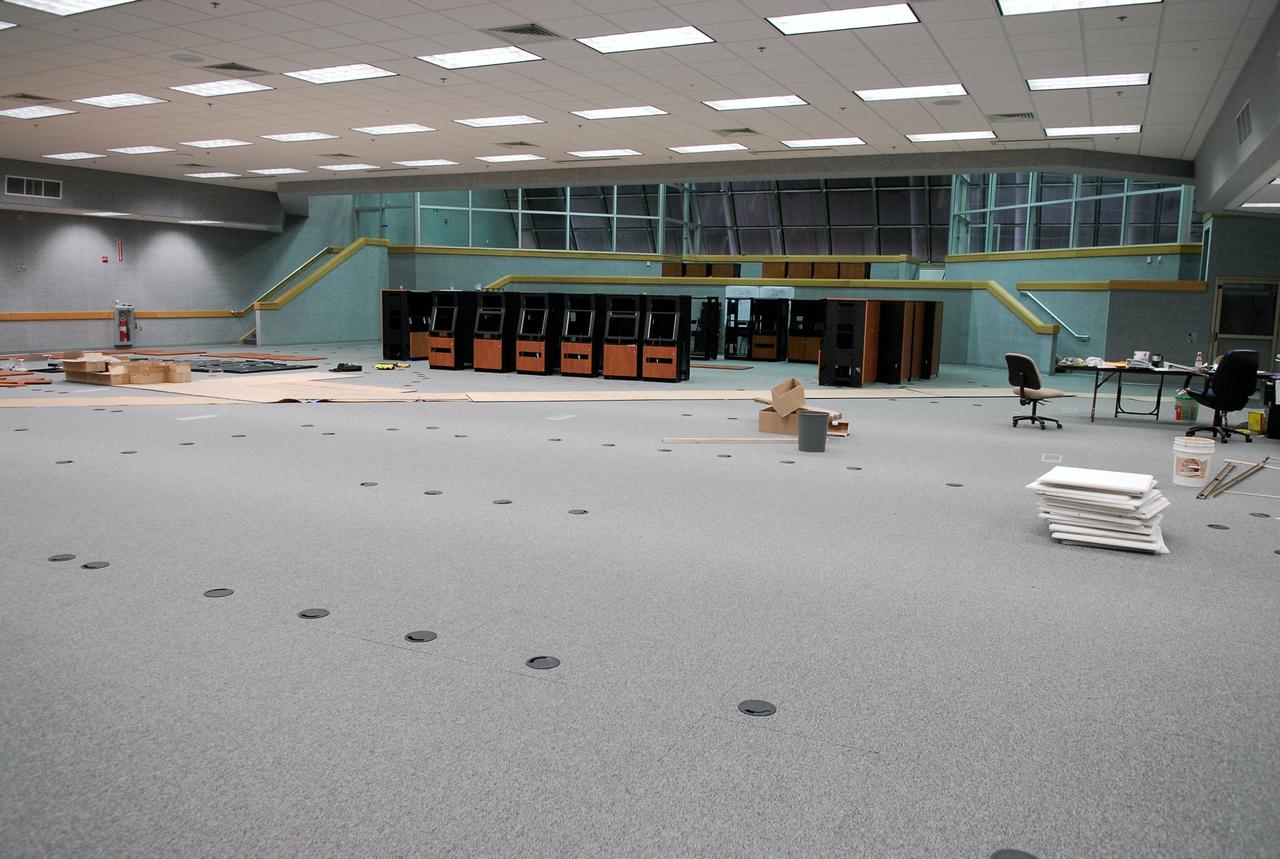
CAPE CANAVERAL, Fla. -- A near-empty Firing Room No. 1 in the Launch Control Center at NASA's Kennedy Space Center is ready for the installation of racks of equipment. The firing room will support the future Ares rocket launches as part of the Constellation Program. Future astronauts will ride to orbit on Ares I, which uses a single five-segment solid rocket booster, a derivative of the space shuttle's solid rocket booster, for the first stage. Ares will be launched from Pad 39B, which is being reconfigured from supporting space shuttle launches. The Launch Control Center firing rooms face the launch pads. Photo credit: NASA/Kim Shiflett
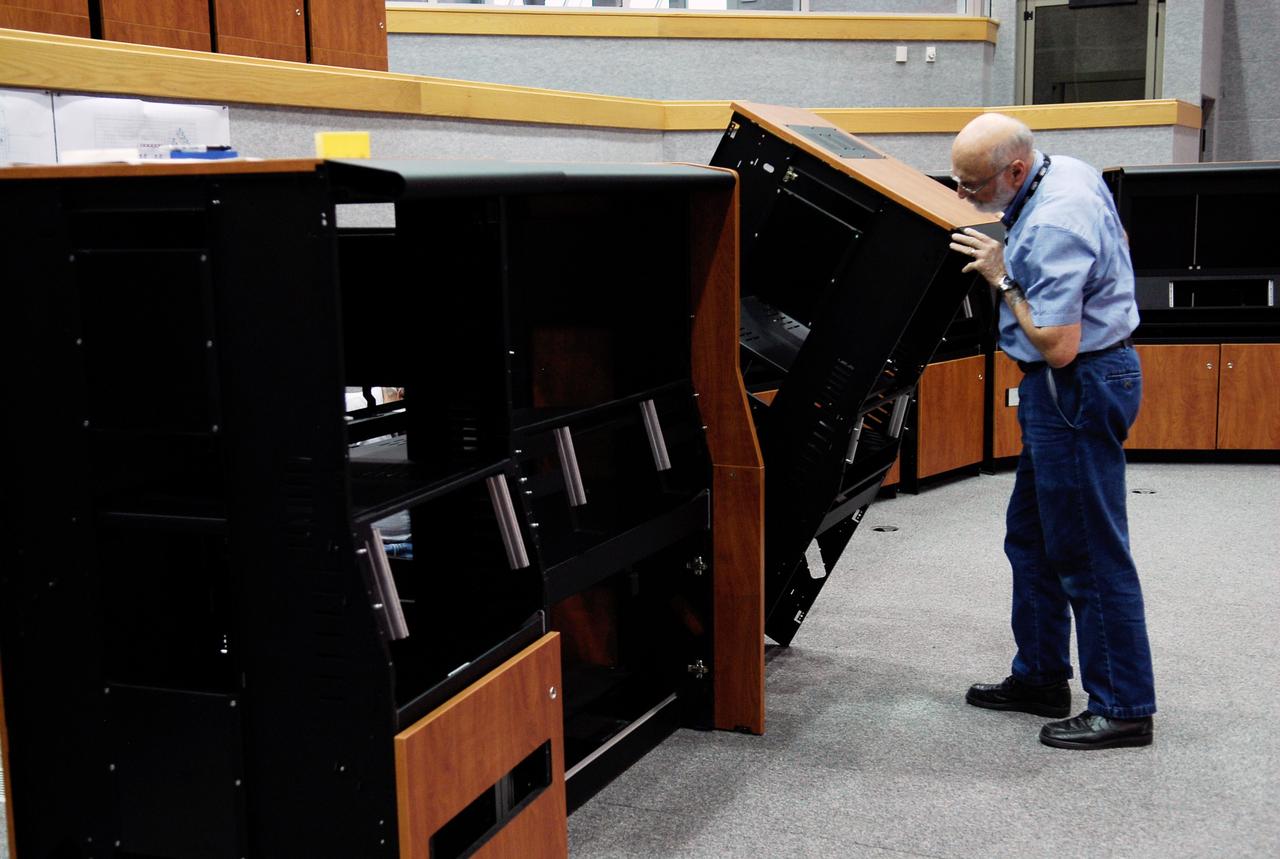
CAPE CANAVERAL, Fla. -- In Firing Room No. 1 in the Launch Control Center at NASA's Kennedy Space Center, a worker holds on to a cabinet being put together to hold equipment that will support the future Ares rocket launches as part of the Constellation Program. Future astronauts will ride to orbit on Ares I, which uses a single five-segment solid rocket booster, a derivative of the space shuttle's solid rocket booster, for the first stage. Ares will be launched from Pad 39B, which is being reconfigured from supporting space shuttle launches. The Launch Control Center firing rooms face the launch pads. Photo credit: NASA/Kim Shiflett
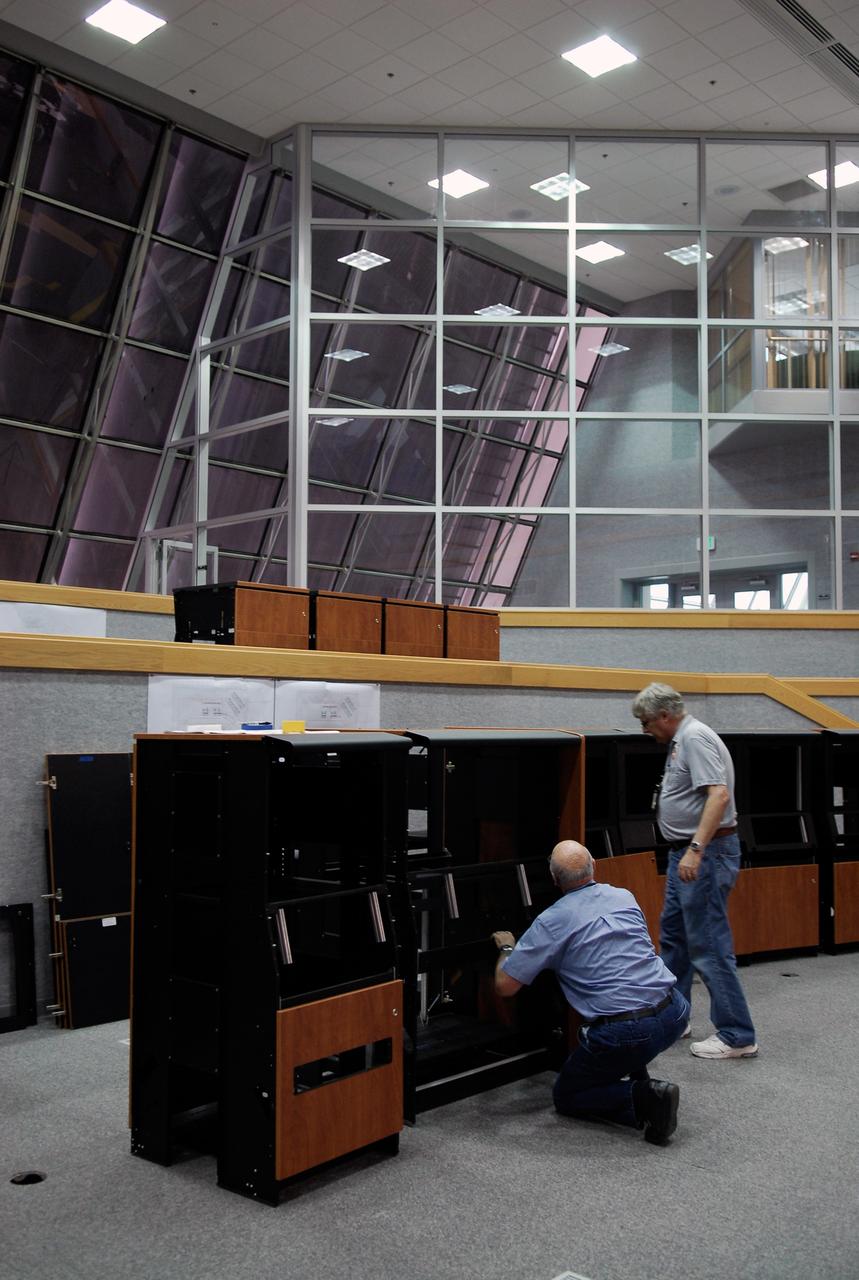
CAPE CANAVERAL, Fla. -- In Firing Room No. 1 in the Launch Control Center at NASA's Kennedy Space Center, workers put together another cabinet to hold equipment that will support the future Ares rocket launches as part of the Constellation Program. Future astronauts will ride to orbit on Ares I, which uses a single five-segment solid rocket booster, a derivative of the space shuttle's solid rocket booster, for the first stage. Ares will be launched from Pad 39B, which is being reconfigured from supporting space shuttle launches. The Launch Control Center firing rooms face the launch pads. Photo credit: NASA/Kim Shiflett
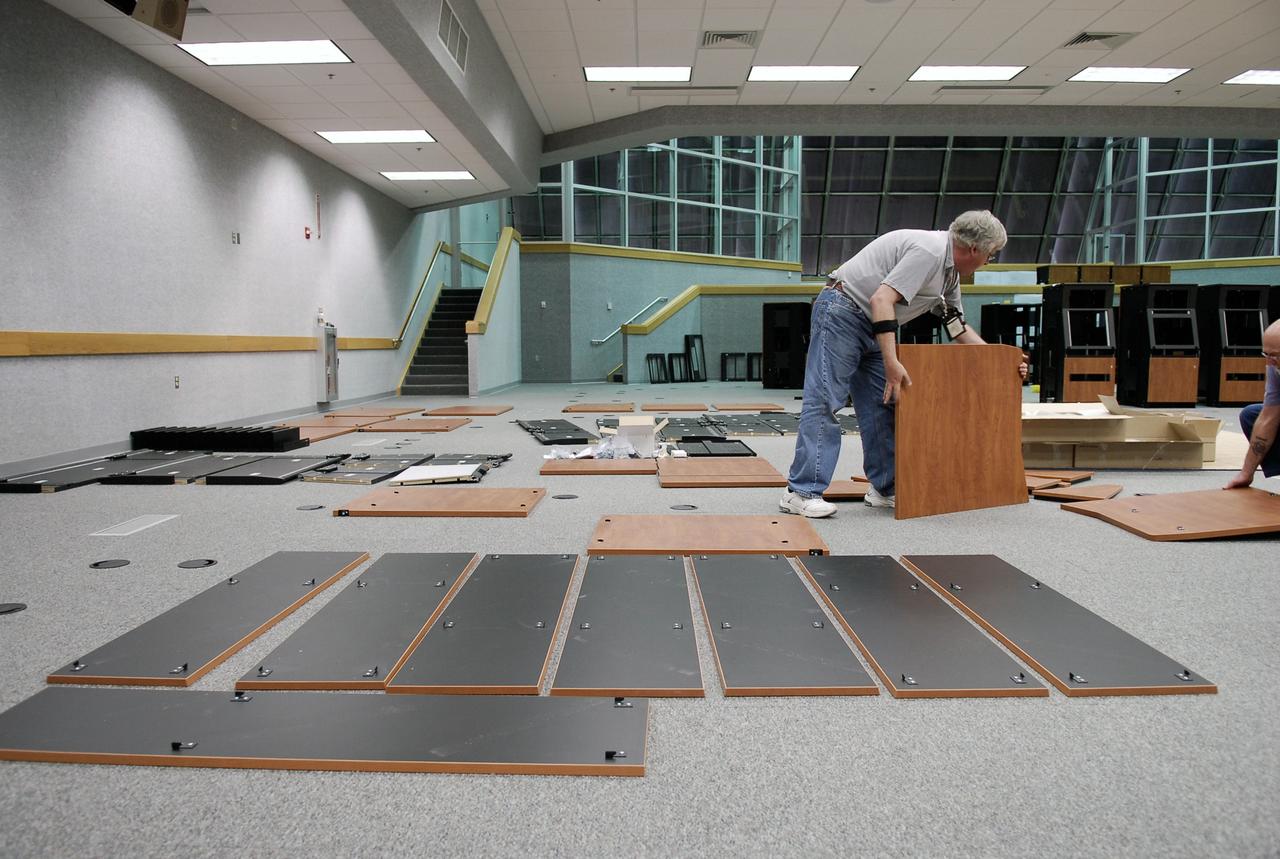
CAPE CANAVERAL, Fla. -- In Firing Room No. 1 in the Launch Control Center at NASA's Kennedy Space Center, a worker maneuvers a panel to build another cabinet to hold equipment that will support the future Ares rocket launches as part of the Constellation Program. Future astronauts will ride to orbit on Ares I, which uses a single five-segment solid rocket booster, a derivative of the space shuttle's solid rocket booster, for the first stage. Ares will be launched from Pad 39B, which is being reconfigured from supporting space shuttle launches. The Launch Control Center firing rooms face the launch pads. Photo credit: NASA/Kim Shiflett
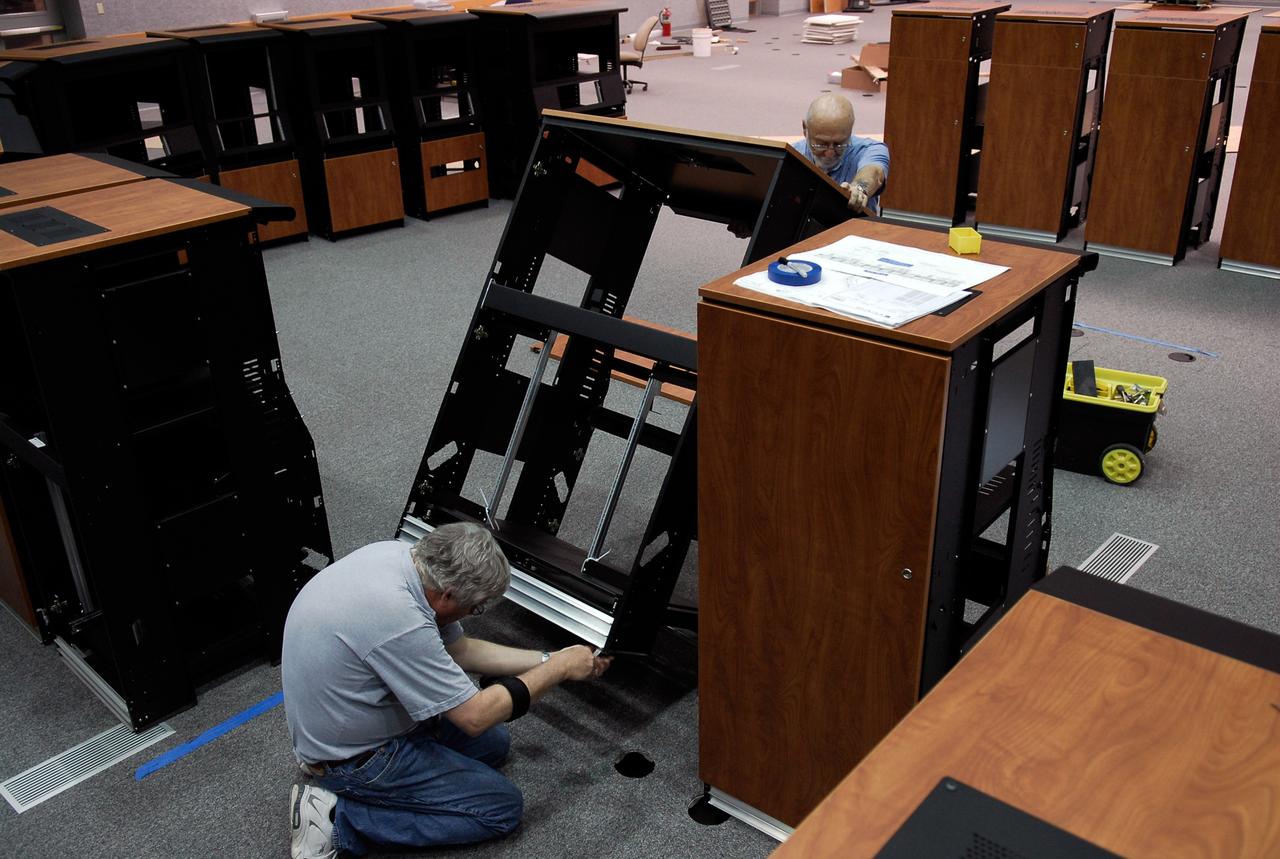
CAPE CANAVERAL, Fla. -- In Firing Room No. 1 in the Launch Control Center at NASA's Kennedy Space Center, workers put together another cabinet to hold equipment that will support the future Ares rocket launches as part of the Constellation Program. Future astronauts will ride to orbit on Ares I, which uses a single five-segment solid rocket booster, a derivative of the space shuttle's solid rocket booster, for the first stage. Ares will be launched from Pad 39B, which is being reconfigured from supporting space shuttle launches. The Launch Control Center firing rooms face the launch pads. Photo credit: NASA/Kim Shiflett
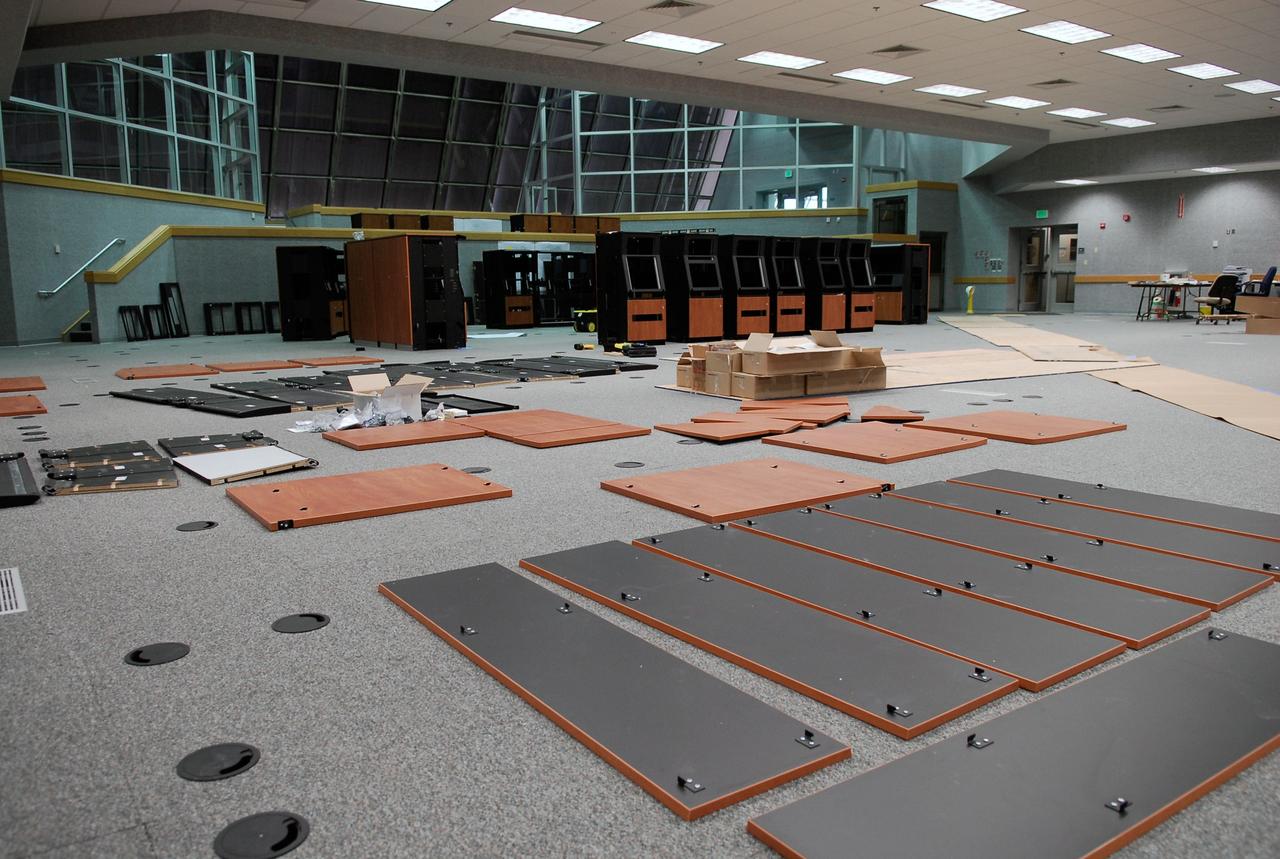
CAPE CANAVERAL, Fla. -- In Firing Room No. 1 in the Launch Control Center at NASA's Kennedy Space Center, panels stretch across the floor in preparation for erecting equipment racks. The firing room will support the future Ares rocket launches as part of the Constellation Program. Future astronauts will ride to orbit on Ares I, which uses a single five-segment solid rocket booster, a derivative of the space shuttle's solid rocket booster, for the first stage. Ares will be launched from Pad 39B, which is being reconfigured from supporting space shuttle launches. The Launch Control Center firing rooms face the launch pads. Photo credit: NASA/Kim Shiflett
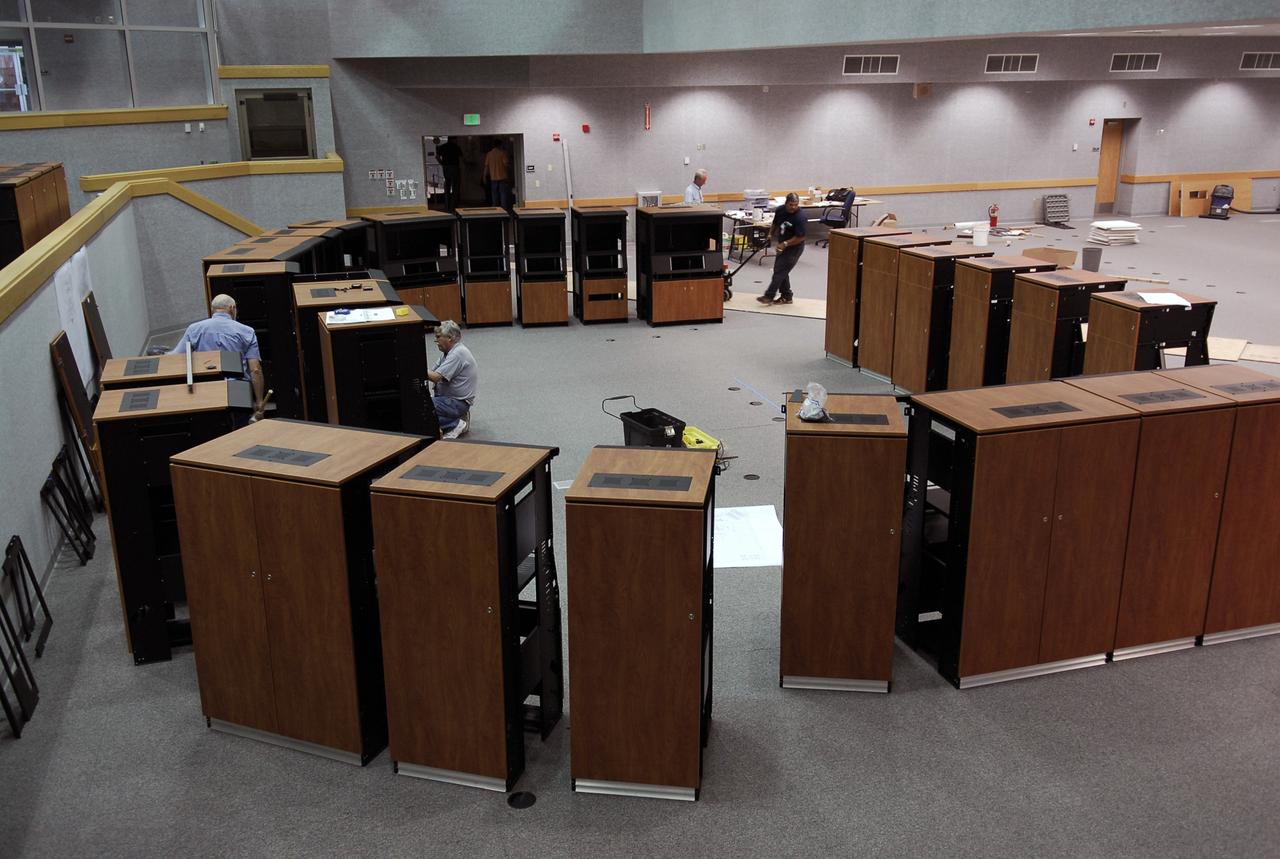
CAPE CANAVERAL, Fla. -- In Firing Room No. 1 in the Launch Control Center at NASA's Kennedy Space Center, workers line up the new equipment cabinets. The firing room will support the future Ares rocket launches as part of the Constellation Program. Future astronauts will ride to orbit on Ares I, which uses a single five-segment solid rocket booster, a derivative of the space shuttle's solid rocket booster, for the first stage. Ares will be launched from Pad 39B, which is being reconfigured from supporting space shuttle launches. The Launch Control Center firing rooms face the launch pads. Photo credit: NASA/Kim Shiflett
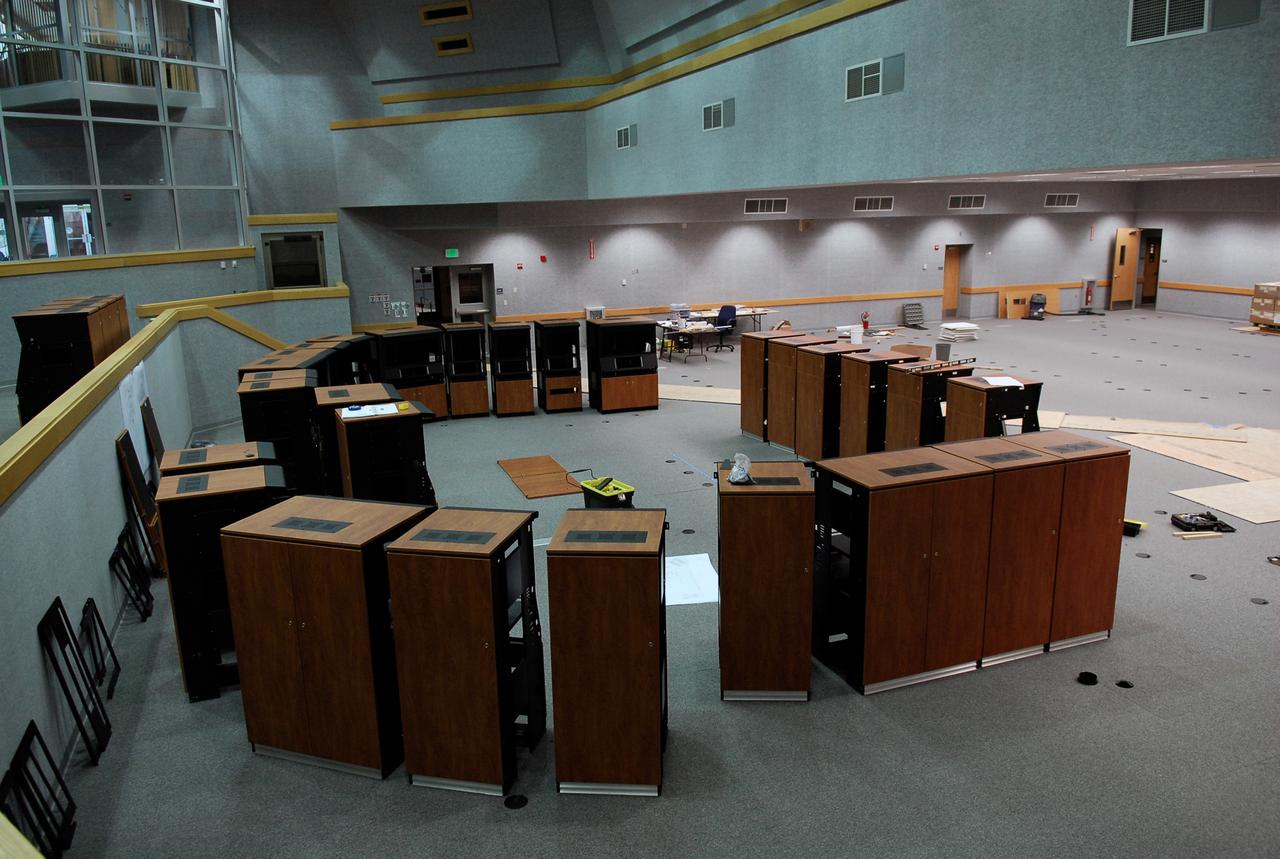
CAPE CANAVERAL, Fla. -- In Firing Room No. 1 in the Launch Control Center at NASA's Kennedy Space Center, cabinets are being erected to hold equipment that will support the future Ares rocket launches as part of the Constellation Program. Future astronauts will ride to orbit on Ares I, which uses a single five-segment solid rocket booster, a derivative of the space shuttle's solid rocket booster, for the first stage. Ares will be launched from Pad 39B, which is being reconfigured from supporting space shuttle launches. The Launch Control Center firing rooms face the launch pads. Photo credit: NASA/Kim Shiflett
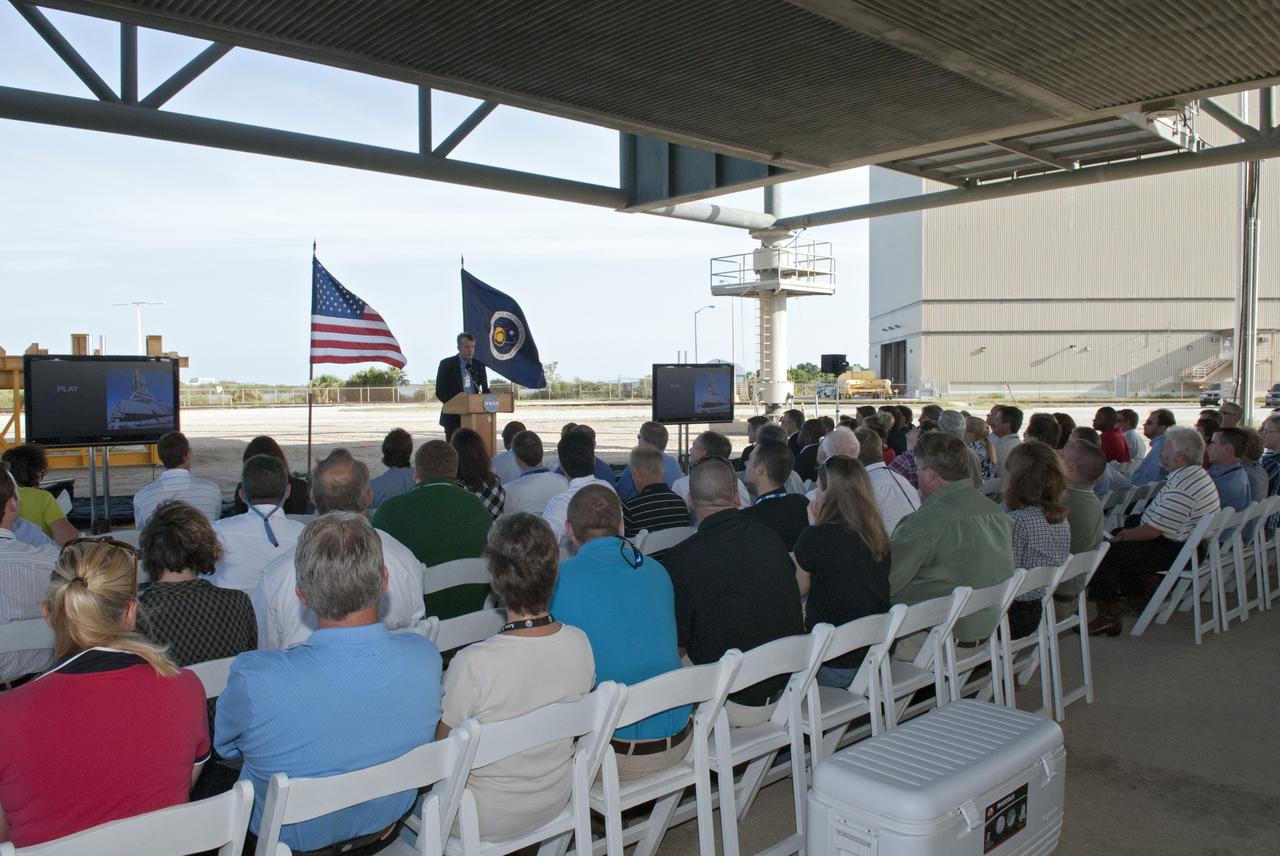
CAPE CANAVERAL, Fla. -- At NASA's Kennedy Space Center in Florida, Constellation Senior Project Manager Larry Schultz talks to employees at a completion ceremony for NASA's new mobile launcher, or ML, support structure. The ceremony was held underneath the structure's launch mount opening. It took about two years to construct the launcher in the Mobile Launcher Park site, north of the Vehicle Assembly Building, or VAB. The 355-foot-tall structure will support NASA's future human spaceflight program. The base of the launcher is lighter than space shuttle mobile launcher platforms so the crawler-transporter can pick up the heavier load of the tower and a taller rocket. The next step will be to add ground support equipment, such as umbilicals and access arms, for future rocket launches. For information on NASA's future plans, visit www.nasa.gov. Photo credit: NASA/Jim Grossmann
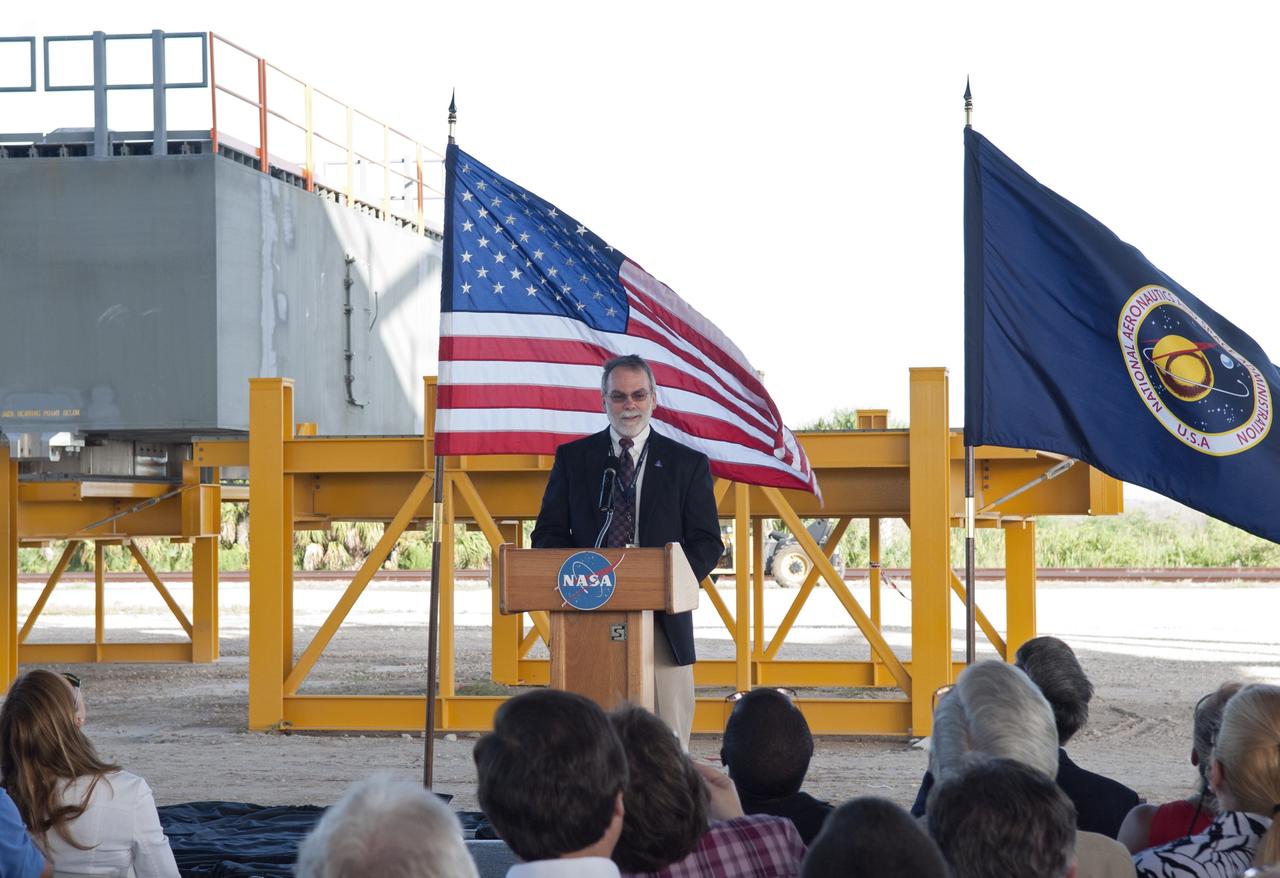
CAPE CANAVERAL, Fla. -- At NASA's Kennedy Space Center in Florida, Constellation Program Manager Dale Thomas talks to employees at a completion ceremony for NASA's new mobile launcher, or ML, support structure. The ceremony was held underneath the structure's launch mount opening. It took about two years to construct the launcher in the Mobile Launcher Park site, north of the Vehicle Assembly Building, or VAB. The 355-foot-tall structure will support NASA's future human spaceflight program. The base of the launcher is lighter than space shuttle mobile launcher platforms so the crawler-transporter can pick up the heavier load of the tower and a taller rocket. The next step will be to add ground support equipment, such as umbilicals and access arms, for future rocket launches. For information on NASA's future plans, visit www.nasa.gov. Photo credit: NASA/Jim Grossmann

CAPE CANAVERAL, Fla. – In the Operations and Checkout Building's high bay, a large poster displays an image of the completed Orion crew module. Part of NASA's Constellation Program, the Orion spacecraft will return humans to the moon and prepare for future voyages to Mars and other destinations in our solar system. Orion is targeted to begin carrying humans to the International Space Station in 2015 and to the moon by 2020. Photo credit: NASA/Kim Shiflett

CAPE CANAVERAL, Fla. – In the Operations and Checkout Building's high bay, technicians pick up one of the "skins" to apply to the outer mold of the simulator Orion crew module. Part of NASA's Constellation Program, the Orion spacecraft will return humans to the moon and prepare for future voyages to Mars and other destinations in our solar system. Orion is targeted to begin carrying humans to the International Space Station in 2015 and to the moon by 2020. Photo credit: NASA/Kim Shiflett

CAPE CANAVERAL, Fla. – In the Operations and Checkout Building's high bay, "skins" are being applied to the outer mold of the simulator Orion crew module. Part of NASA's Constellation Program, the Orion spacecraft will return humans to the moon and prepare for future voyages to Mars and other destinations in our solar system. Orion is targeted to begin carrying humans to the International Space Station in 2015 and to the moon by 2020. Photo credit: NASA/Kim Shiflett

CAPE CANAVERAL, Fla. – In the Operations and Checkout Building's high bay, technicians are preparing to start testing how to put the "skins" on the outer mold of the simulator Orion crew module. Part of NASA's Constellation Program, the Orion spacecraft will return humans to the moon and prepare for future voyages to Mars and other destinations in our solar system. Orion is targeted to begin carrying humans to the International Space Station in 2015 and to the moon by 2020. Photo credit: NASA/Kim Shiflett
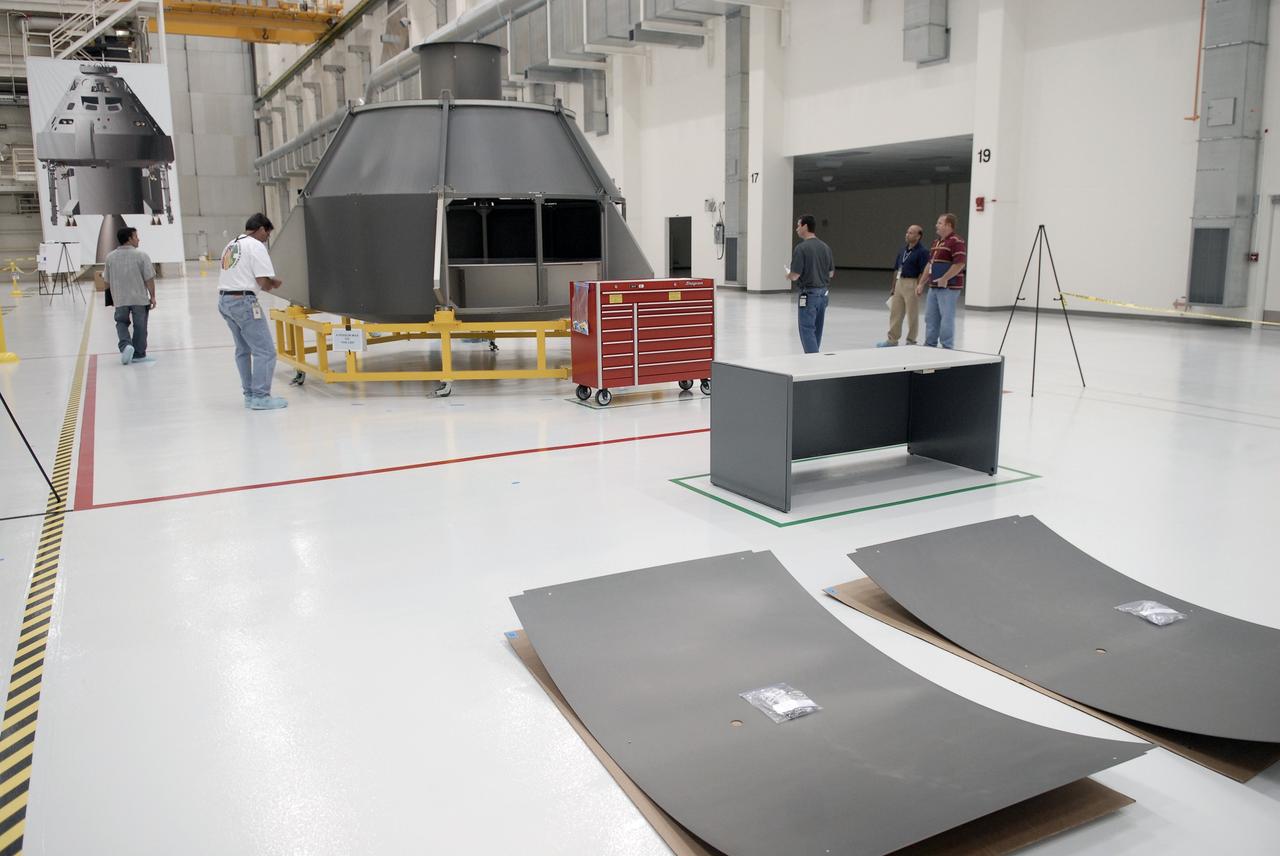
CAPE CANAVERAL, Fla. – In the Operations and Checkout Building's high bay, technicians begin testing how to put the "skins" on the outer mold of the simulator Orion crew module.Part of NASA's Constellation Program, the Orion spacecraft will return humans to the moon and prepare for future voyages to Mars and other destinations in our solar system. Orion is targeted to begin carrying humans to the International Space Station in 2015 and to the moon by 2020. Photo credit: NASA/Kim Shiflett
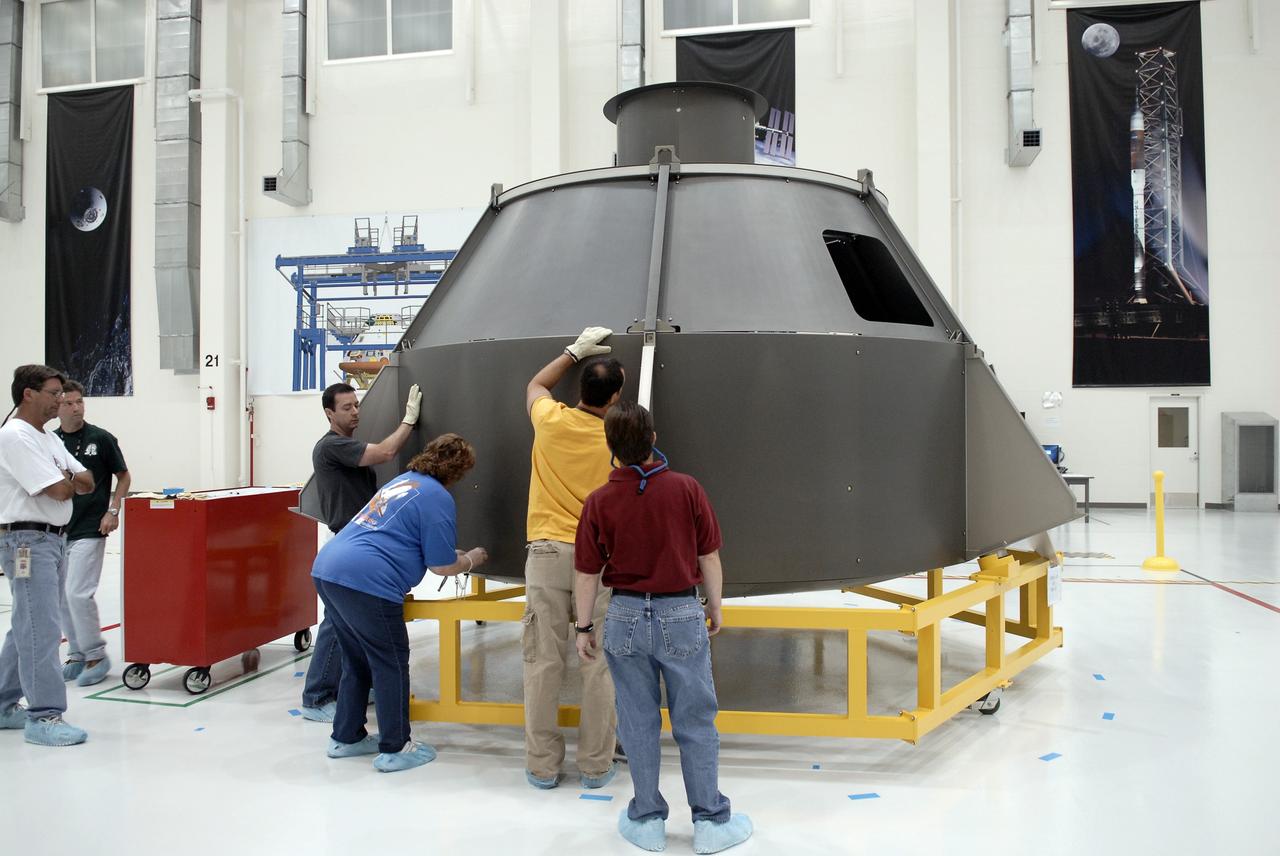
CAPE CANAVERAL, Fla. – In the Operations and Checkout Building's high bay, technicians test how to put the "skins" on the outer mold of the simulator Orion crew module. Part of NASA's Constellation Program, the Orion spacecraft will return humans to the moon and prepare for future voyages to Mars and other destinations in our solar system. Orion is targeted to begin carrying humans to the International Space Station in 2015 and to the moon by 2020. Photo credit: NASA/Kim Shiflett
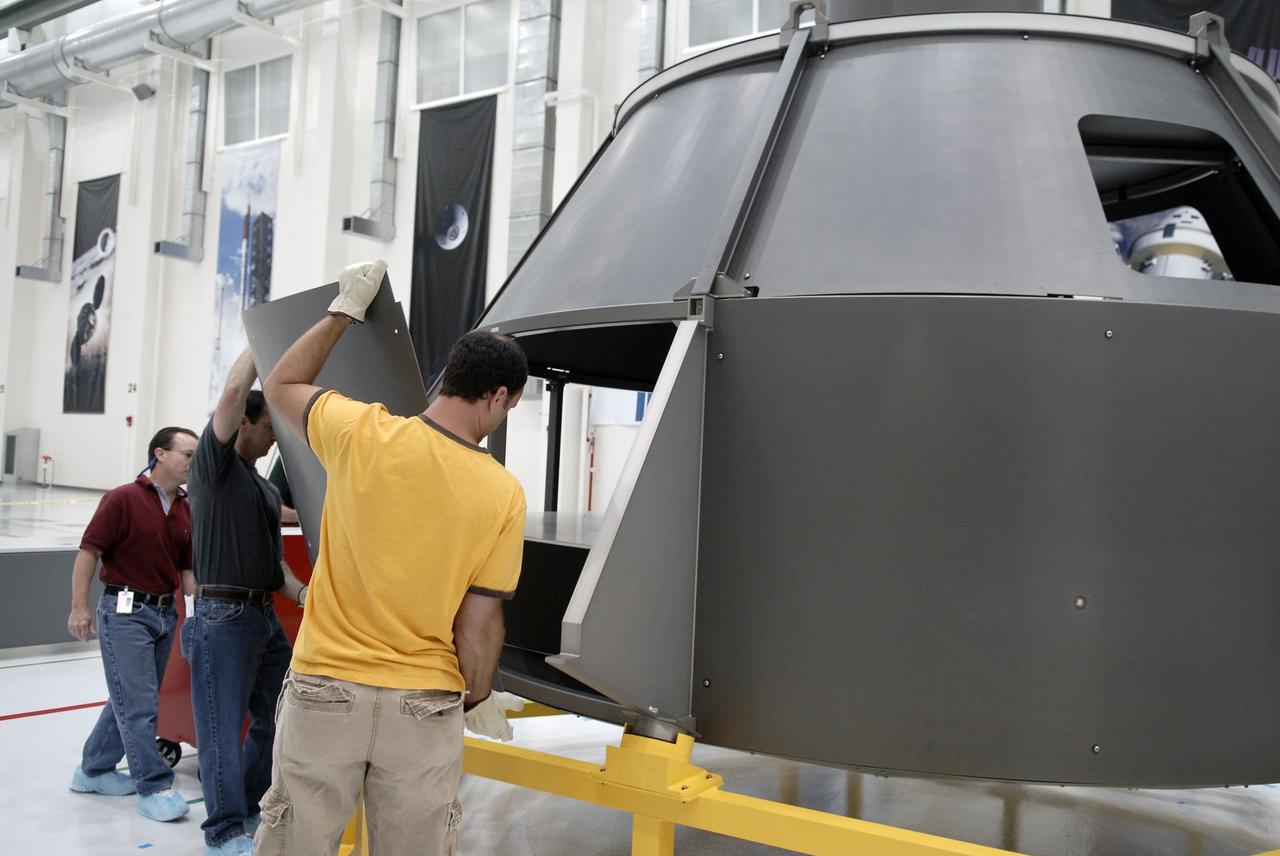
CAPE CANAVERAL, Fla. – In the Operations and Checkout Building's high bay, technicians test how to put the "skins" on the outer mold of the simulator Orion crew module. Part of NASA's Constellation Program, the Orion spacecraft will return humans to the moon and prepare for future voyages to Mars and other destinations in our solar system. Orion is targeted to begin carrying humans to the International Space Station in 2015 and to the moon by 2020. Photo credit: NASA/Kim Shiflett

STS120-S-001 (February 2007) --- The STS-120 patch reflects the role of the mission in the future of the space program. The shuttle payload bay carries Node 2, the doorway to the future international laboratory elements on the International Space Station. On the left the star represents the International Space Station; the red colored points represent the current location of the P6 solar array, furled and awaiting relocation when the crew arrives. During the mission, the crew will move P6 to its final home at the end of the port truss. The gold points represent the P6 solar array in its new location, unfurled and producing power for science and life support. On the right, the moon and Mars can be seen representing the future of NASA. The constellation Orion rises in the background, symbolizing NASA's new exploration vehicle. Through all, the shuttle rises up and away, leading the way to the future. The NASA insignia design for space shuttle flights is reserved for use by the astronauts and for other official use as the NASA Administrator may authorize. Public availability has been approved only in the forms of illustrations by the various news media. When and if there is any change in this policy, which is not anticipated, the change will be publicly announced. Photo credit: NASA
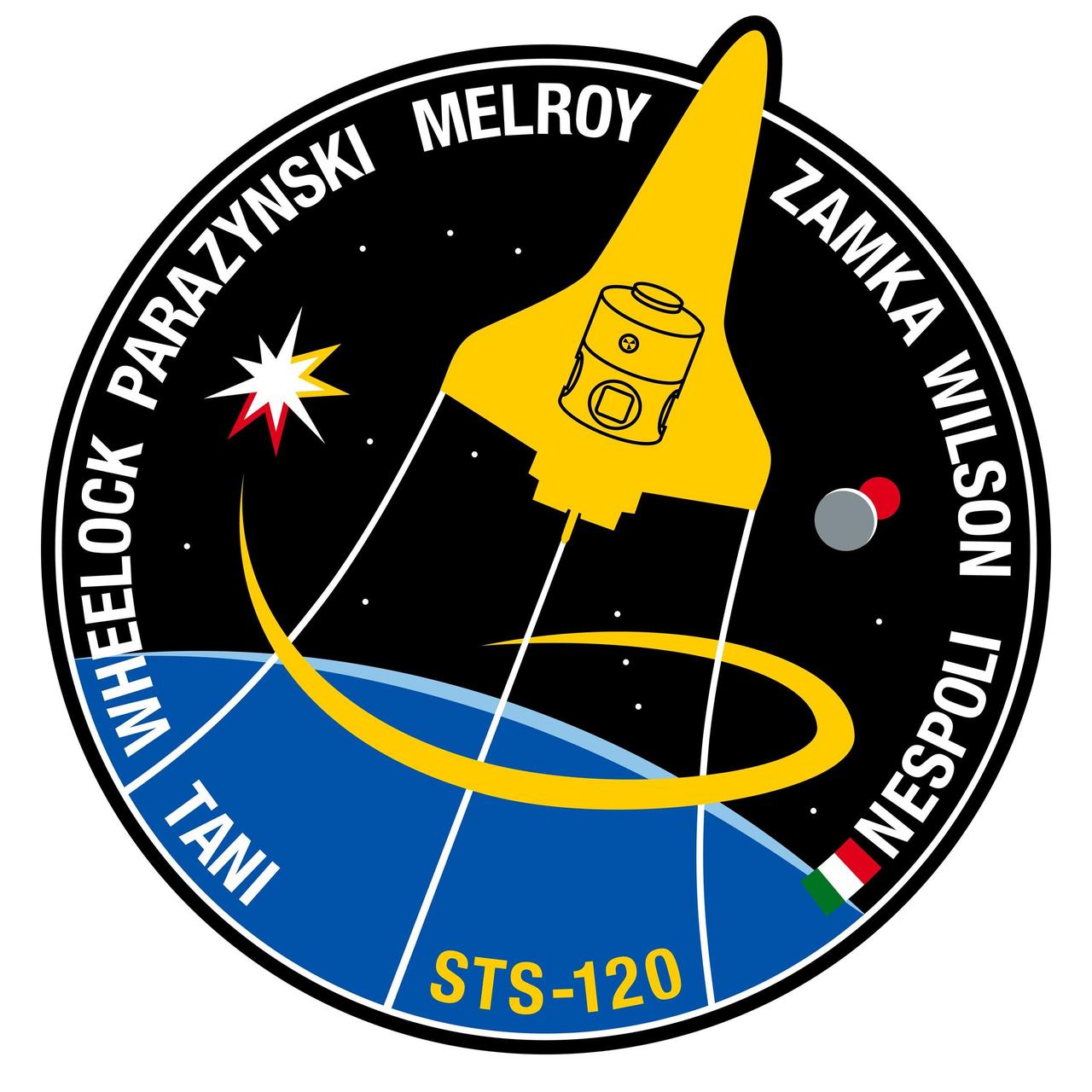
JOHNSON SPACE CENTER, Houston, Texas -- STS120-S-001 -- The STS-120 patch reflects the role of the mission in the future of the space program. The shuttle payload bay carries Node 2, the doorway to the future international laboratory elements on the International Space Station. On the left, the star represents the International Space Station; the red-colored points represent the current location of the P6 solar array, furled and awaiting relocation when the crew arrives. During the mission, the crew will move P6 to its final home at the end of the port truss. The gold points represent the P6 solar array in its new location, unfurled and producing power for science and life support. On the right, the moon and Mars can be seen representing the future of NASA. The constellation Orion rises in the background, symbolizing NASA's new exploration vehicle. Through all, the shuttle rises up and away, leading the way to the future. The NASA insignia design for shuttle flights is reserved for use by the astronauts and for other official use as the NASA Administrator may authorize. Public availability has been approved only in the form of illustrations by the various news media. When and if there is any change in this policy, which is not anticipated, it will be publicly announced.
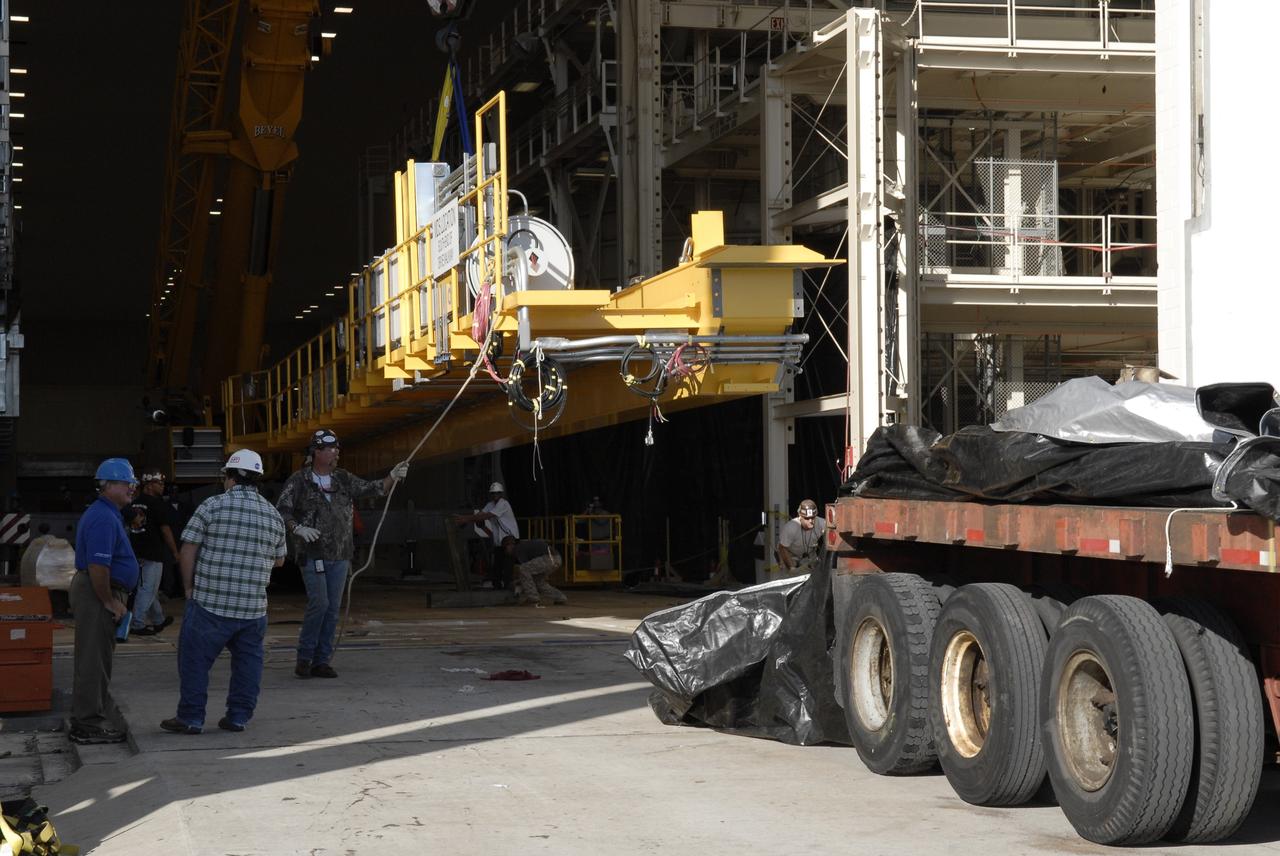
CAPE CANAVERAL, Fla. – Segments of a crane are being offloaded at the Operations and Checkout Building at NASA's Kennedy Space Center in Florida. The new O&C low-bay crane is a 25-ton overhead bridge crane built for Lockheed Martin and Space Florida by American Crane and Equipment Corporation in Douglasville, Pa. The crane has a bridge span of 78’-2” and a hook height of 48’-10”. The crane will be used for lifting and moving flight hardware, fixtures and equipment in support of the Orion spacecraft manufacturing. Part of NASA's Constellation Program, the Orion spacecraft will return humans to the moon and prepare for future voyages to Mars and other destinations in our solar system. Photo credit: NASA/Kim Shiflett

KENNEDY SPACE CENTER, FLA. - At a press conference at NASA's Kennedy Space Center, NASA officials announced the names of the next-generation of rockets for future space exploration. Seated (left to right) are Dolores Beasley, with NASA Public Affairs; Scott Horowitz, NASA associate administrator of the Exploration Systems Mission Directorate; Jeff Hanley, manager of the Constellation Program at Johnson Space Center; and Steve Cook, manager of the Exploration Launch Office at Marshall Space Flight Center. The crew launch vehicle will be called Ares I, and the cargo launch vehicle will be known as Ares V. The name Ares is a pseudonym for Mars and appropriate for NASA's exploration mission. Photo credit: NASA/George Shelton
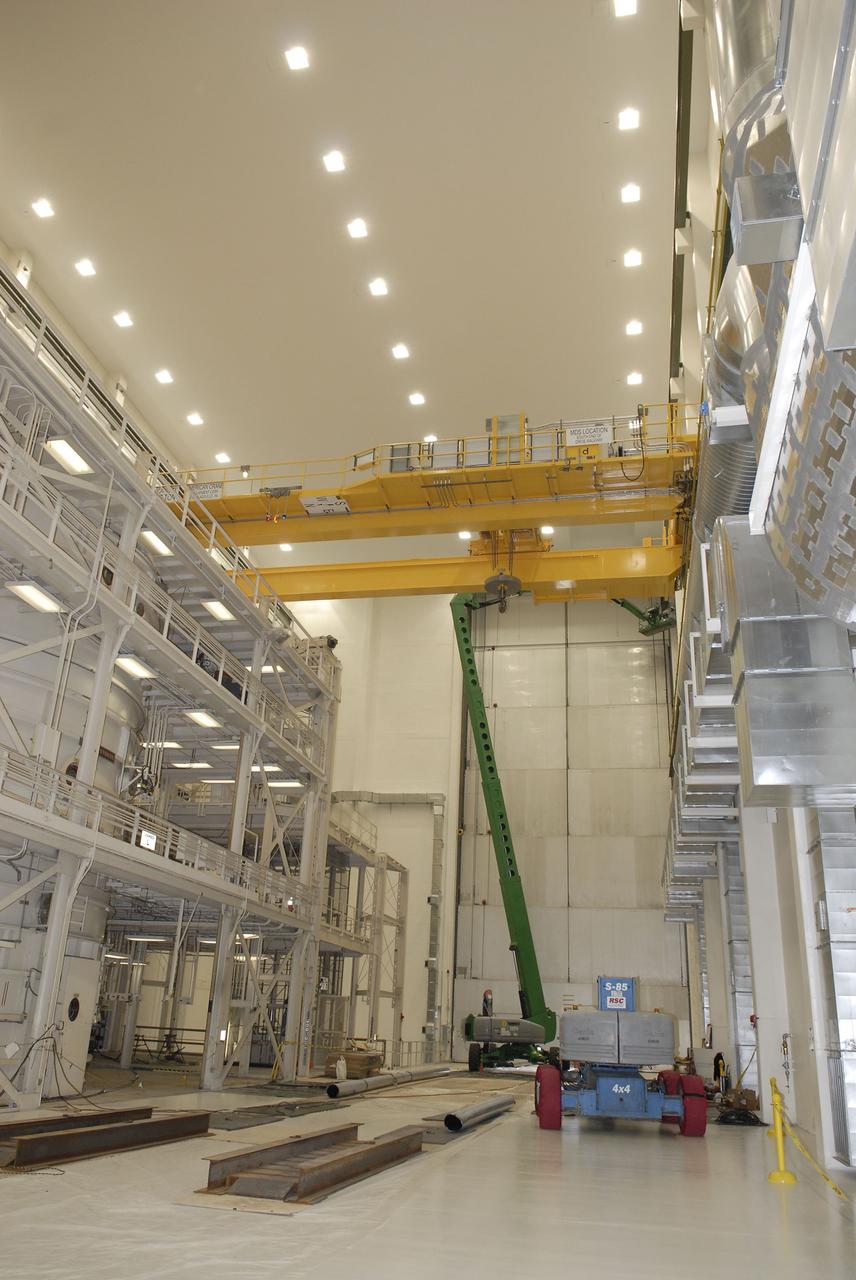
CAPE CANAVERAL, Fla. – Segments of a new crane are tested inside the Operations and Checkout Building at NASA's Kennedy Space Center in Florida. The new O&C low-bay crane is a 25-ton overhead bridge crane built for Lockheed Martin and Space Florida by American Crane and Equipment Corporation in Douglasville, Pa. The crane has a bridge span of 78’-2” and a hook height of 48’-10”. The crane will be used for lifting and moving flight hardware, fixtures and equipment in support of the Orion spacecraft manufacturing. Part of NASA's Constellation Program, the Orion spacecraft will return humans to the moon and prepare for future voyages to Mars and other destinations in our solar system. Photo credit: NASA/Kim Shiflett
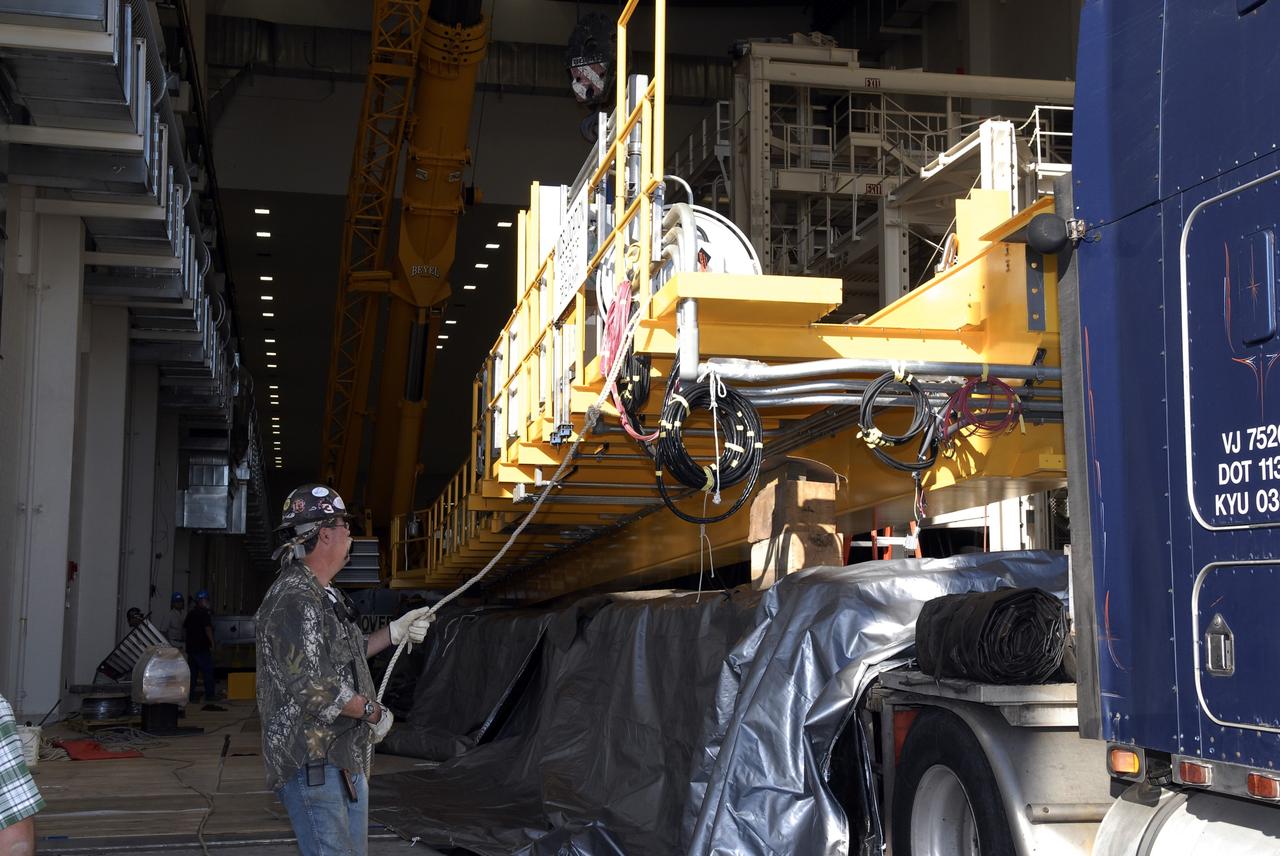
CAPE CANAVERAL, Fla. – Segments of a crane arrive at the Operations and Checkout Building at NASA's Kennedy Space Center in Florida. The new O&C low-bay crane is a 25-ton overhead bridge crane built for Lockheed Martin and Space Florida by American Crane and Equipment Corporation in Douglasville, Pa. The crane has a bridge span of 78’-2” and a hook height of 48’-10”. The crane will be used for lifting and moving flight hardware, fixtures and equipment in support of the Orion spacecraft manufacturing. Part of NASA's Constellation Program, the Orion spacecraft will return humans to the moon and prepare for future voyages to Mars and other destinations in our solar system. Photo credit: NASA/Kim Shiflett
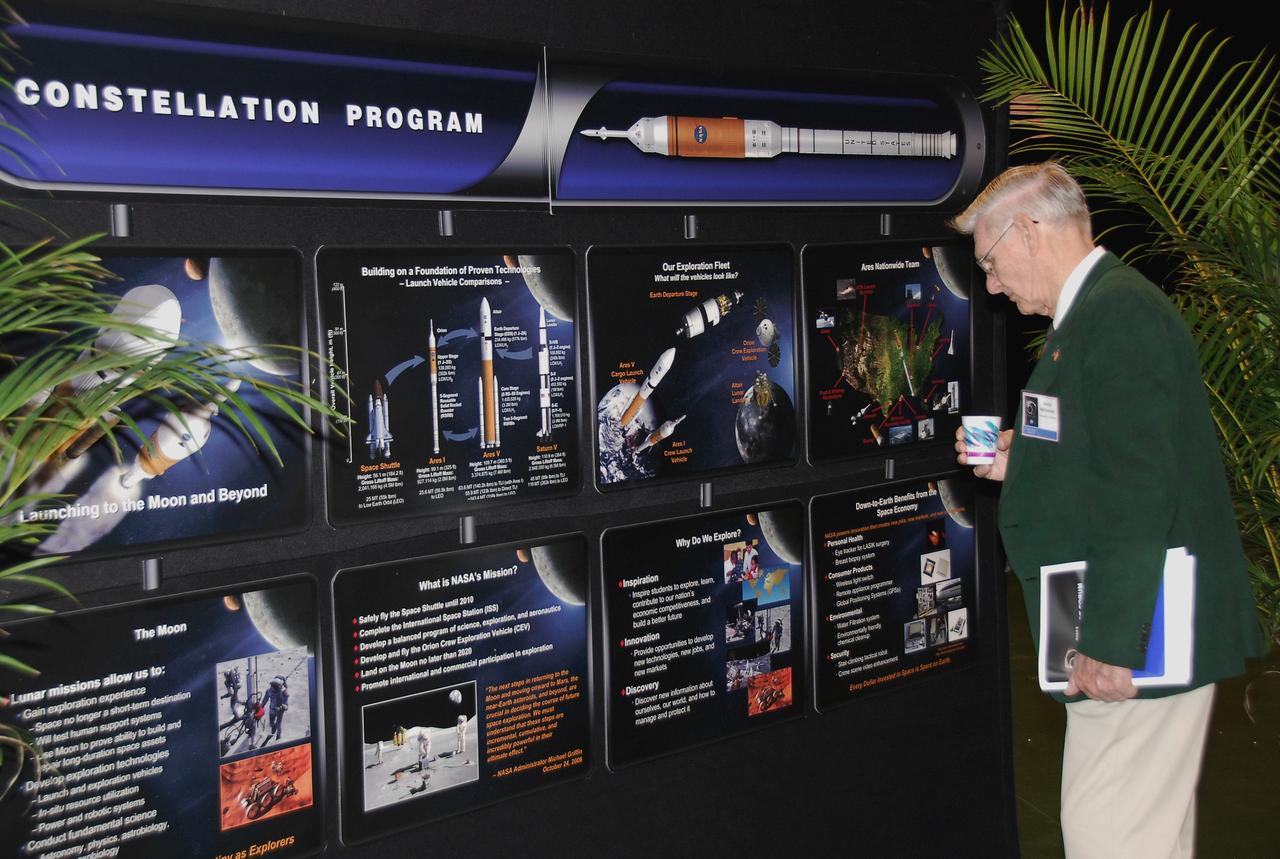
CAPE CANAVERAL, Fla. -- This display of NASA’s Constellation Program was part of a daylong event commemorating the agency’s 50th anniversary during a Future Forum in Miami that focused on how space exploration benefits Florida's economy. The event, which included presentations and panels, was held at the University of Miami's BankUnited Center. Among those participating were NASA Deputy Administrator Shana Dale, astronaut Carl Walz, director of the Advanced Capabilities Division in NASA's Exploration Systems Mission Directorate, and Russell Romanella, director, International Space Station and Spacecraft Processing. Photo credit: NASA/Kim Shiflett
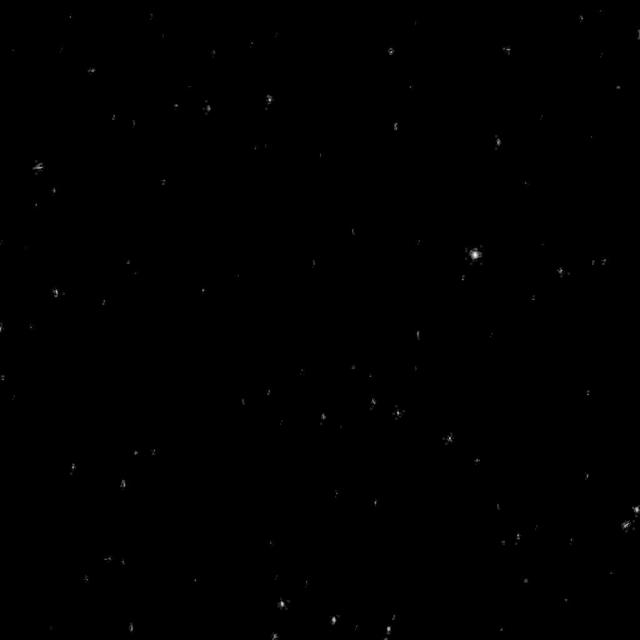
Stars in the upper portion of the constellation Orion the Hunter, including the bright shoulder star Betelgeuse and Orion three-star belt, appear in this image taken from the surface of Mars by the panoramic camera on NASA rover Spirit. Spirit imaged stars on March 11, 2004, after it awoke during the martian night for a communication session with NASA's Mars Global Surveyor orbiter. This image is an eight-second exposure. Longer exposures were also taken. The images tested the capabilities of the rover for night-sky observations. Scientists will use the results to aid planning for possible future astronomical observations from Mars. http://photojournal.jpl.nasa.gov/catalog/PIA05546
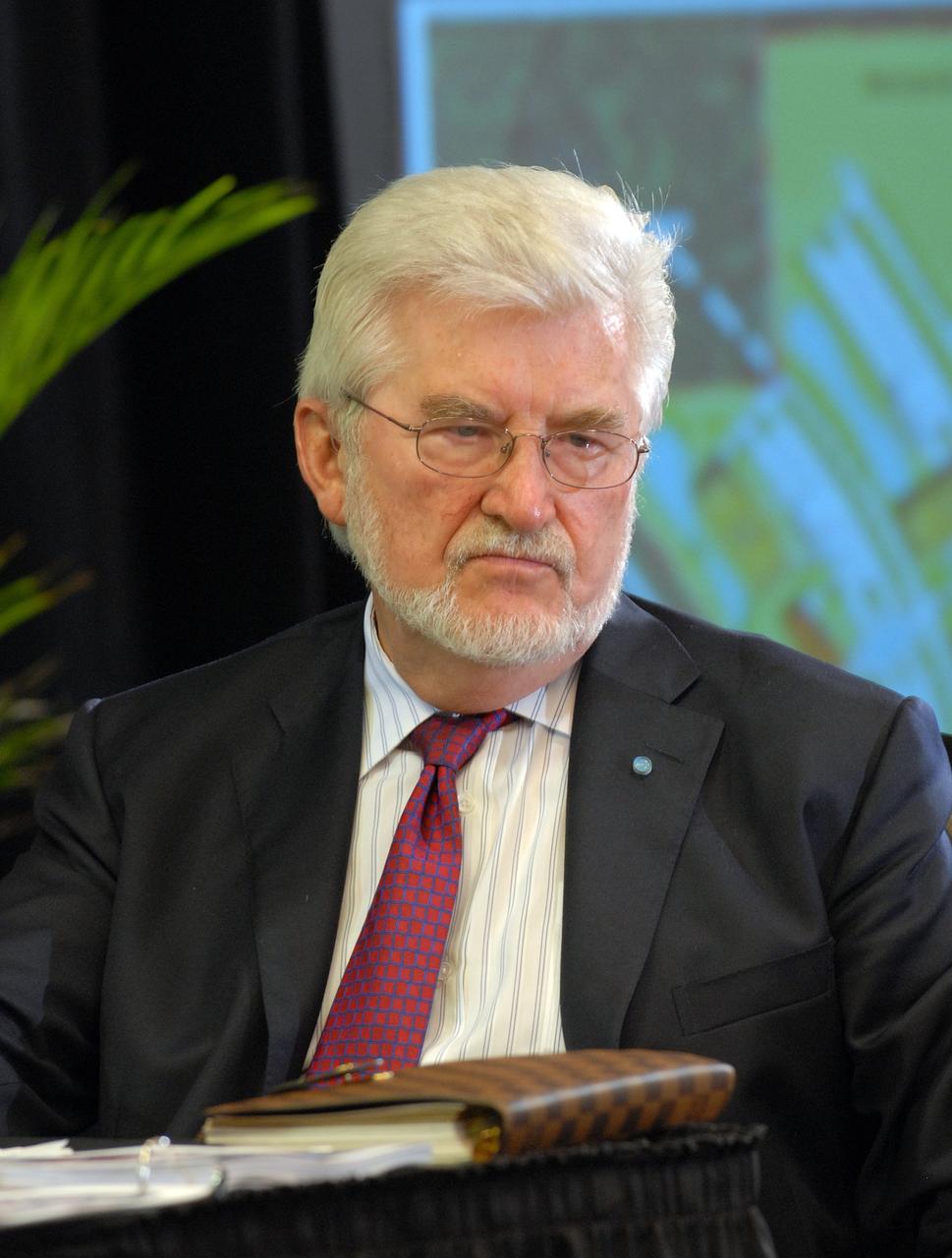
CAPE CANAVERAL, Fla. – Bohdan Bejmuk, chair of Constellation Program Standing Review Board, is seated at the conference table for the introduces the Augustine Commission, meeting in Cocoa Beach, Fla. At the request of the Office of Science and Technology Policy, NASA established the Review of U.S. Human Space Flight Plans Committee, known as the Augustine Commission. Chaired by Norman R. Augustine, retired chairman and CEO of Lockheed Martin Corp., the committee is conducting an independent review of ongoing U.S. human spaceflight plans and programs, as well as alternatives, to ensure the nation is pursuing the best trajectory for the future of human space flight - one that is safe, innovative, affordable, and sustainable. Photo credit: NASA/Jim Grossmann
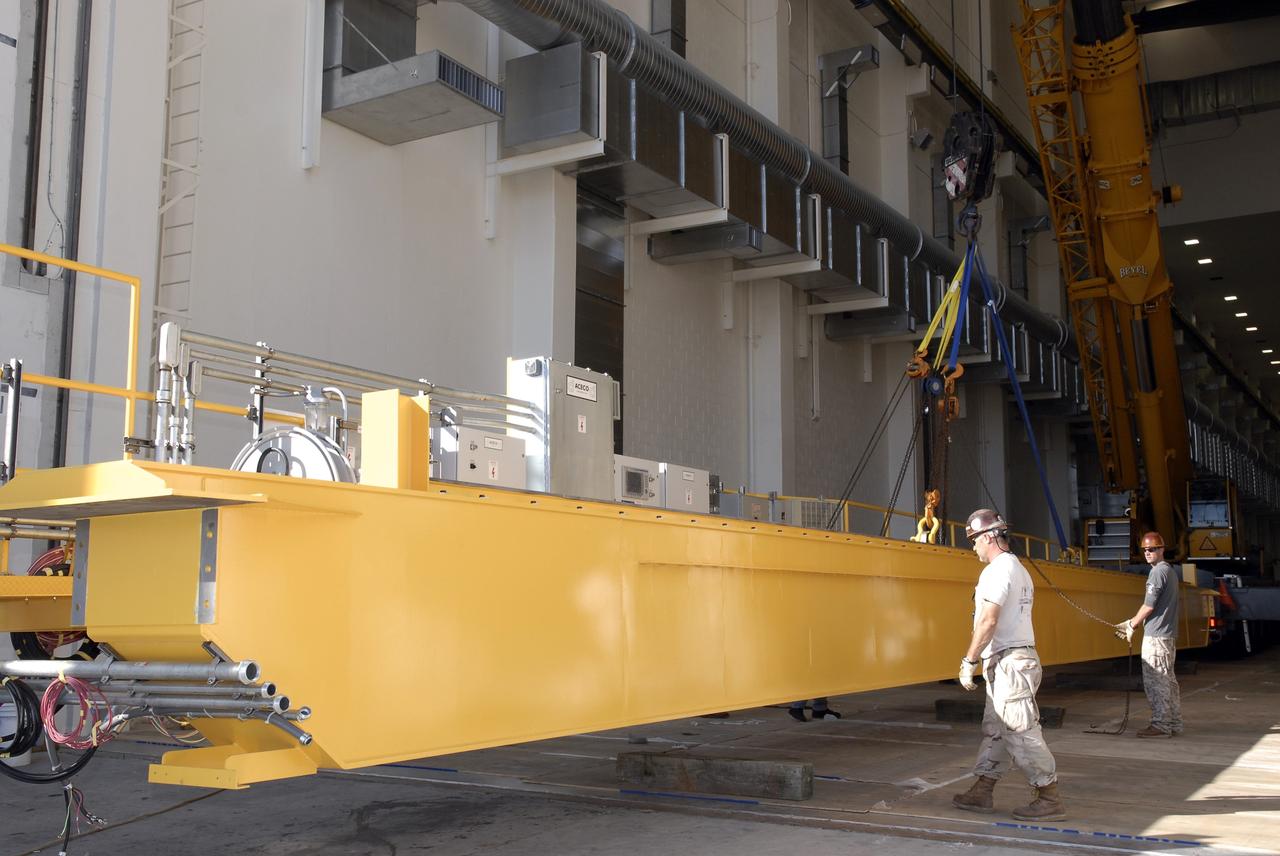
CAPE CANAVERAL, Fla. – Segments of a crane are lowered onto the floor of the Operations and Checkout Building at NASA's Kennedy Space Center in Florida. The new O&C low-bay crane is a 25-ton overhead bridge crane built for Lockheed Martin and Space Florida by American Crane and Equipment Corporation in Douglasville, Pa. The crane has a bridge span of 78’-2” and a hook height of 48’-10”. The crane will be used for lifting and moving flight hardware, fixtures and equipment in support of the Orion spacecraft manufacturing. Part of NASA's Constellation Program, the Orion spacecraft will return humans to the moon and prepare for future voyages to Mars and other destinations in our solar system. Photo credit: NASA/Kim Shiflett
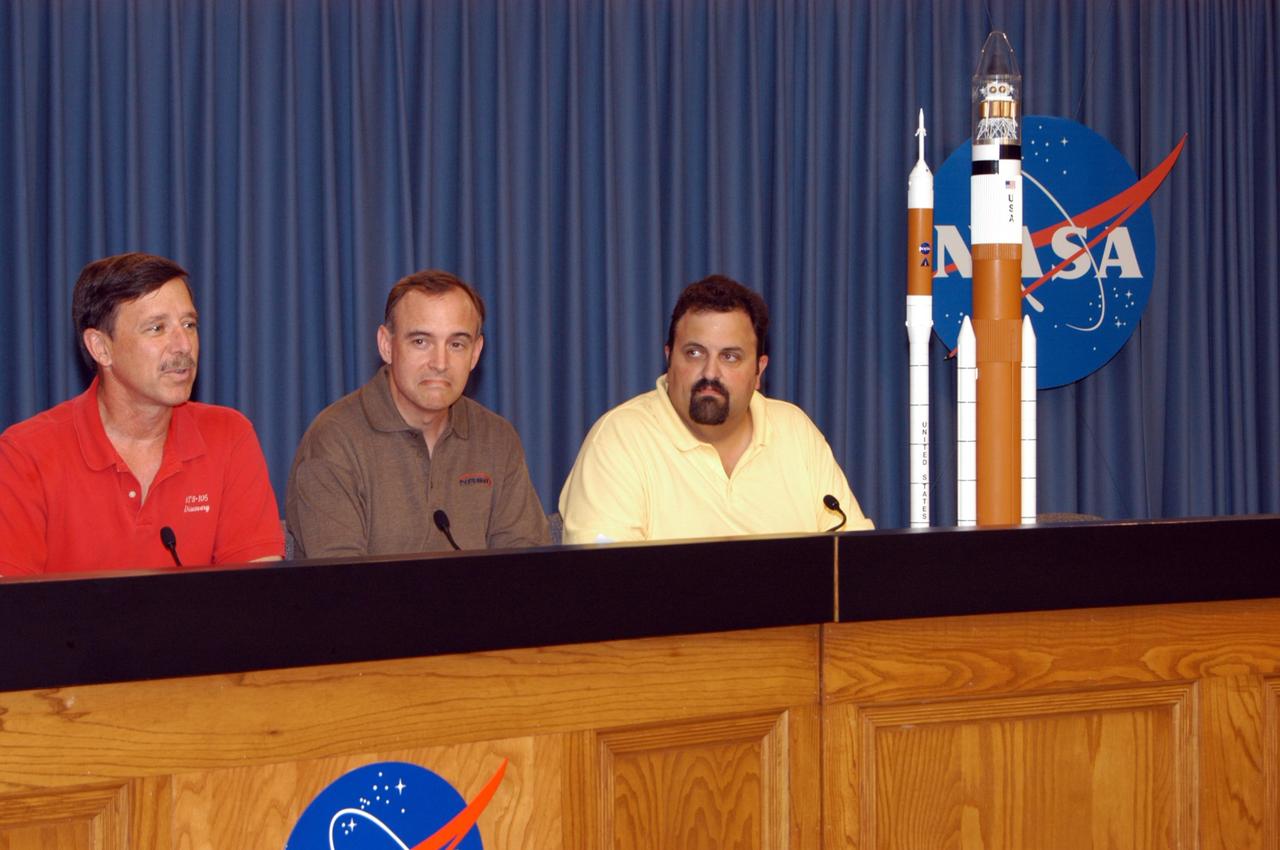
KENNEDY SPACE CENTER, FLA. - At a press conference in at NASA's Kennedy Space Center, NASA officials announced the names of the next-generation of rockets for future space exploration. Seated at the dais are (left to right) Scott Horowitz, NASA associate administrator of the Exploration Systems Mission Directorate; Jeff Hanley, manager of the Constellation Program at Johnson Space Center; and Steve Cook, manager of the Exploration Launch Office at Marshall Space Flight Center. The crew launch vehicle will be called Ares I, and the cargo launch vehicle will be known as Ares V. The name Ares is a pseudonym for Mars and appropriate for NASA's exploration mission. Photo credit: NASA/George Shelton
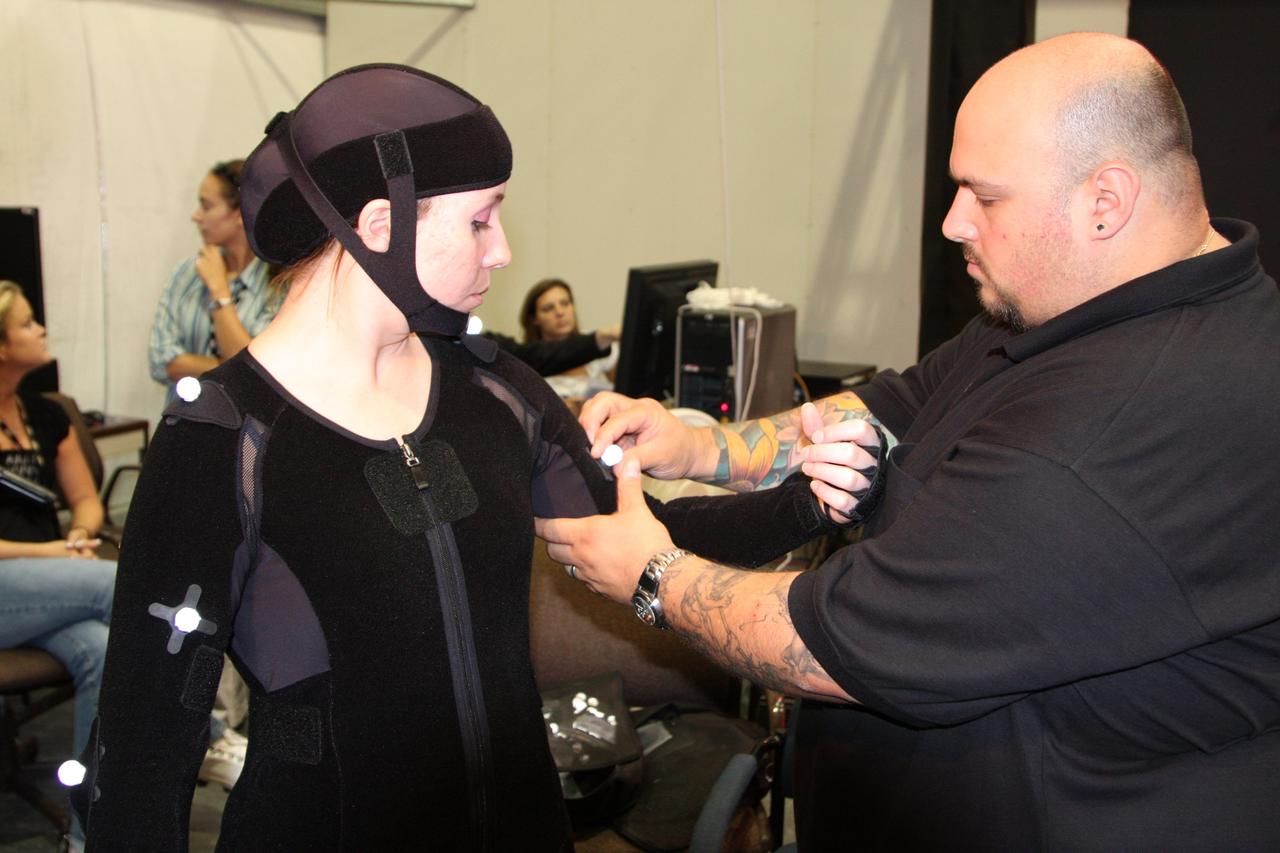
CAPE CANAVERAL, Fla. – NYIT MOCAP (Motion Capture) team Project Manager Jon Squitieri attaches a retro reflective marker to a motion capture suit worn by a technician who will be assembling the Orion Crew Module mockup. The motion tracking aims to improve efficiency of assembly processes and identify potential ergonomic risks for technicians assembling the mockup. The work is being performed in United Space Alliance's Human Engineering Modeling and Performance Lab in the RLV Hangar at NASA's Kennedy Space Center. Part of NASA's Constellation Program, the Orion spacecraft will return humans to the moon and prepare for future voyages to Mars and other destinations in our solar system.
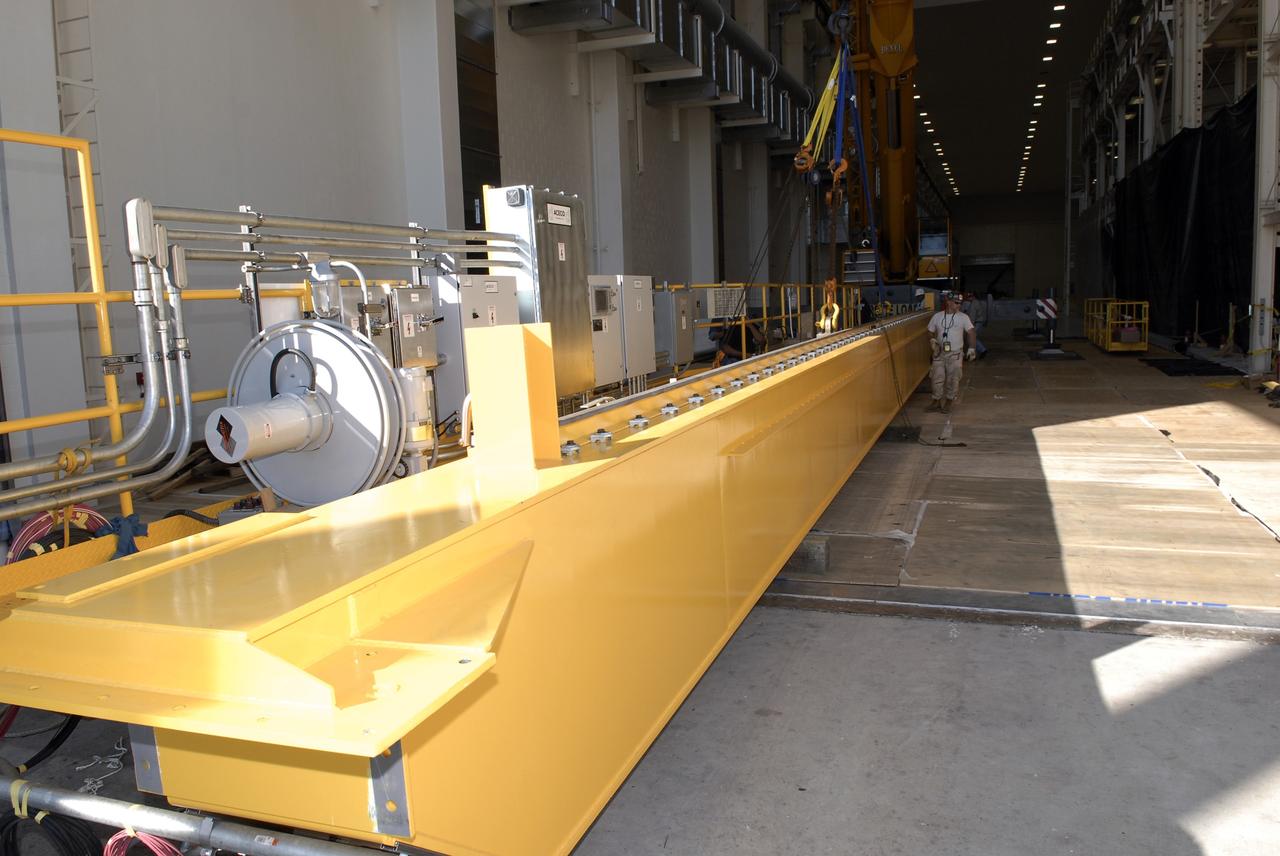
CAPE CANAVERAL, Fla. – Segments of a crane are moved into the Operations and Checkout Building at NASA's Kennedy Space Center in Florida. The new O&C low-bay crane is a 25-ton overhead bridge crane built for Lockheed Martin and Space Florida by American Crane and Equipment Corporation in Douglasville, Pa. The crane has a bridge span of 78’-2” and a hook height of 48’-10”. The crane will be used for lifting and moving flight hardware, fixtures and equipment in support of the Orion spacecraft manufacturing. Part of NASA's Constellation Program, the Orion spacecraft will return humans to the moon and prepare for future voyages to Mars and other destinations in our solar system. Photo credit: NASA/Kim Shiflett
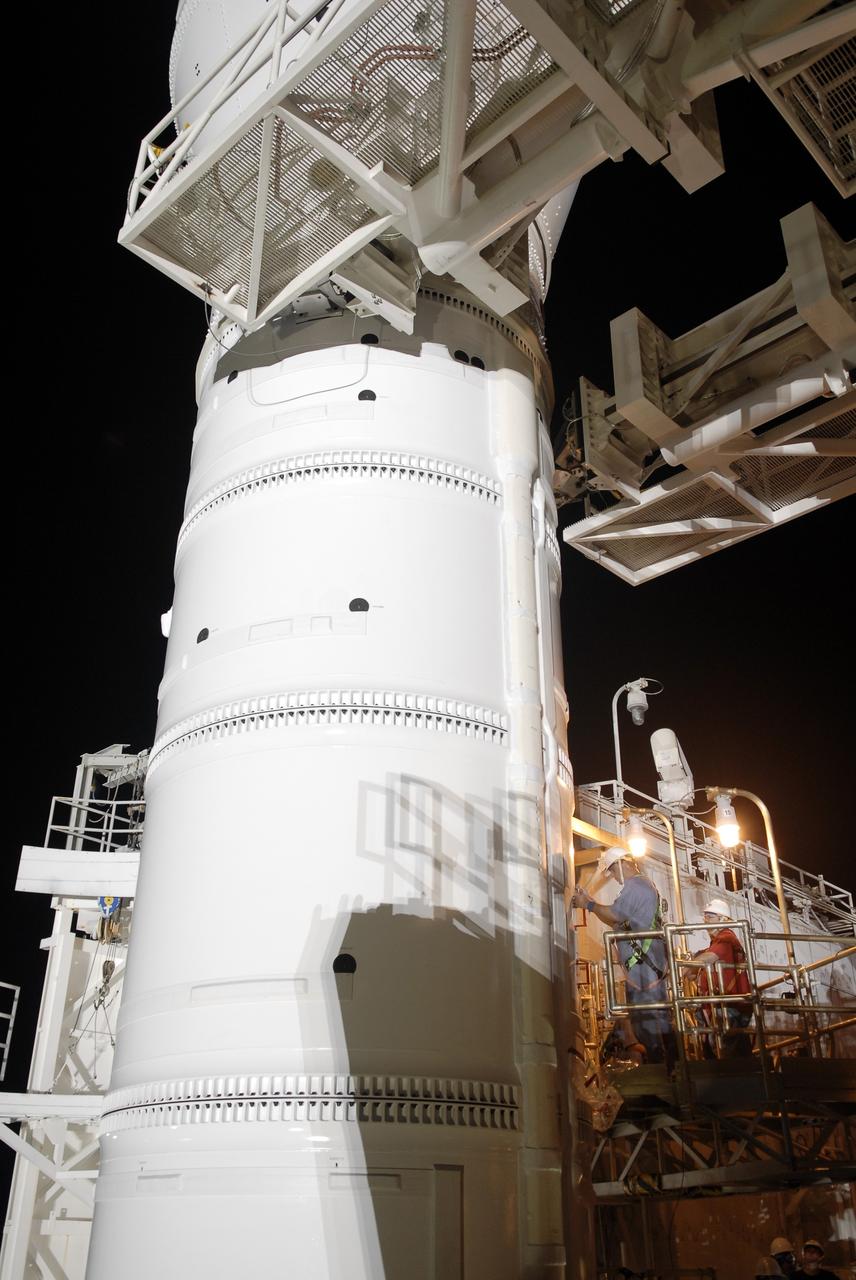
CAPE CANAVERAL, Fla. – Workers on Launch Pad 39B at NASA's Kennedy Space Center in Florida prepare the Constellation Program's 327-foot-tall Ares I-X rocket for launch. The rotating service structure and the arms of the vehicle stabilization system will be moved from around the rocket for liftoff. The transfer of the pad from the Space Shuttle Program to the Constellation Program took place May 31. Modifications made to the pad include the removal of shuttle unique subsystems, such as the orbiter access arm and a section of the gaseous oxygen vent arm, and the installation of three 600-foot lightning towers, access platforms, environmental control systems and a vehicle stabilization system. The data returned from more than 700 sensors throughout the rocket will be used to refine the design of future launch vehicles and bring NASA one step closer to reaching its exploration goals. The Ares I-X flight test is targeted for Oct. 27. For information on the Ares I-X vehicle and flight test, visit http://www.nasa.gov/aresIX. Photo credit: NASA/Kim Shiflett
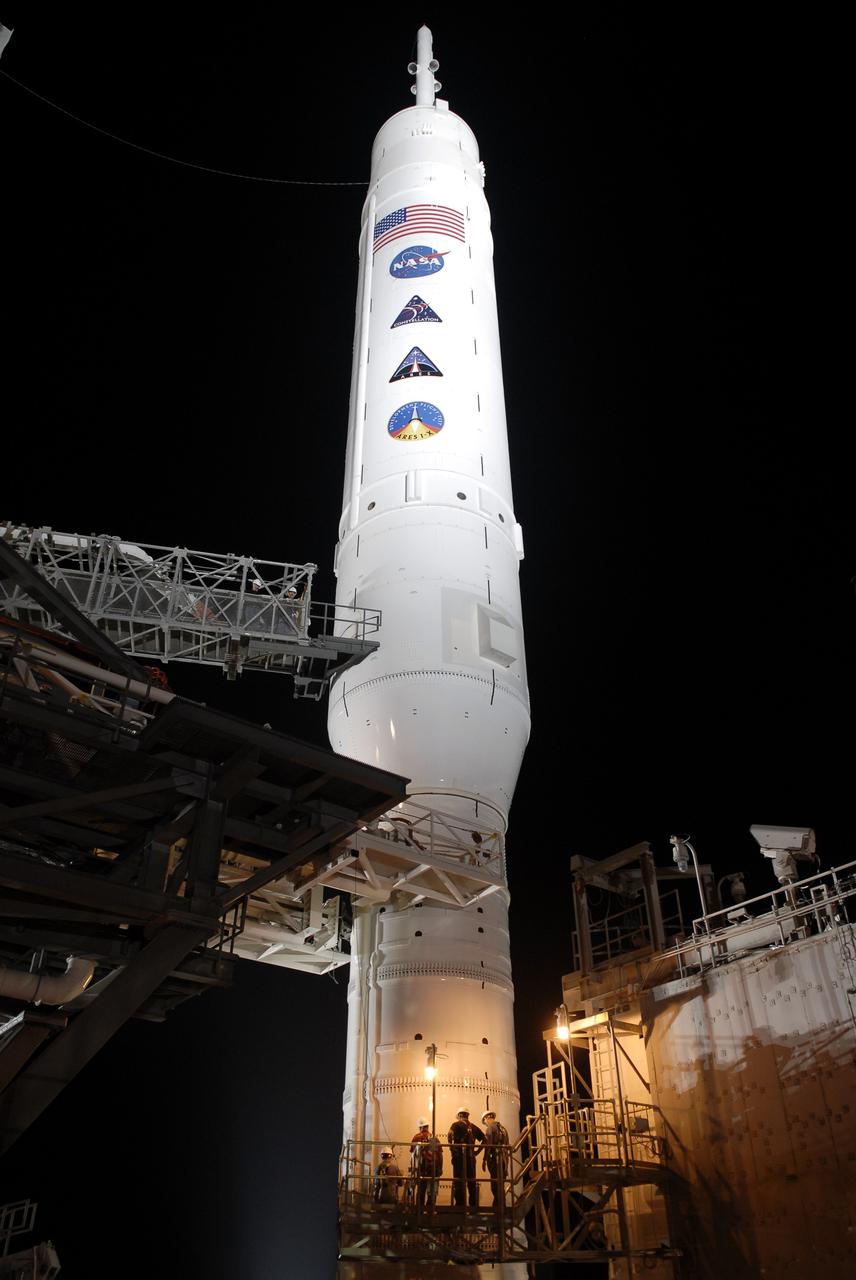
CAPE CANAVERAL, Fla. - Workers on Launch Pad 39B at NASA's Kennedy Space Center in Florida make final preparations for launch of the Constellation Program's 327-foot-tall Ares I-X rocket. The rotating service structure and the arms of the vehicle stabilization system will be moved from around the rocket for liftoff. The transfer of the pad from the Space Shuttle Program to the Constellation Program took place May 31. Modifications made to the pad include the removal of shuttle unique subsystems, such as the orbiter access arm and a section of the gaseous oxygen vent arm, and the installation of three 600-foot lightning towers, access platforms, environmental control systems and a vehicle stabilization system. The data returned from more than 700 sensors throughout the rocket will be used to refine the design of future launch vehicles and bring NASA one step closer to reaching its exploration goals. The Ares I-X flight test is targeted for Oct. 27. For information on the Ares I-X vehicle and flight test, visit http://www.nasa.gov/aresIX. Photo credit: NASA/Kim Shiflett
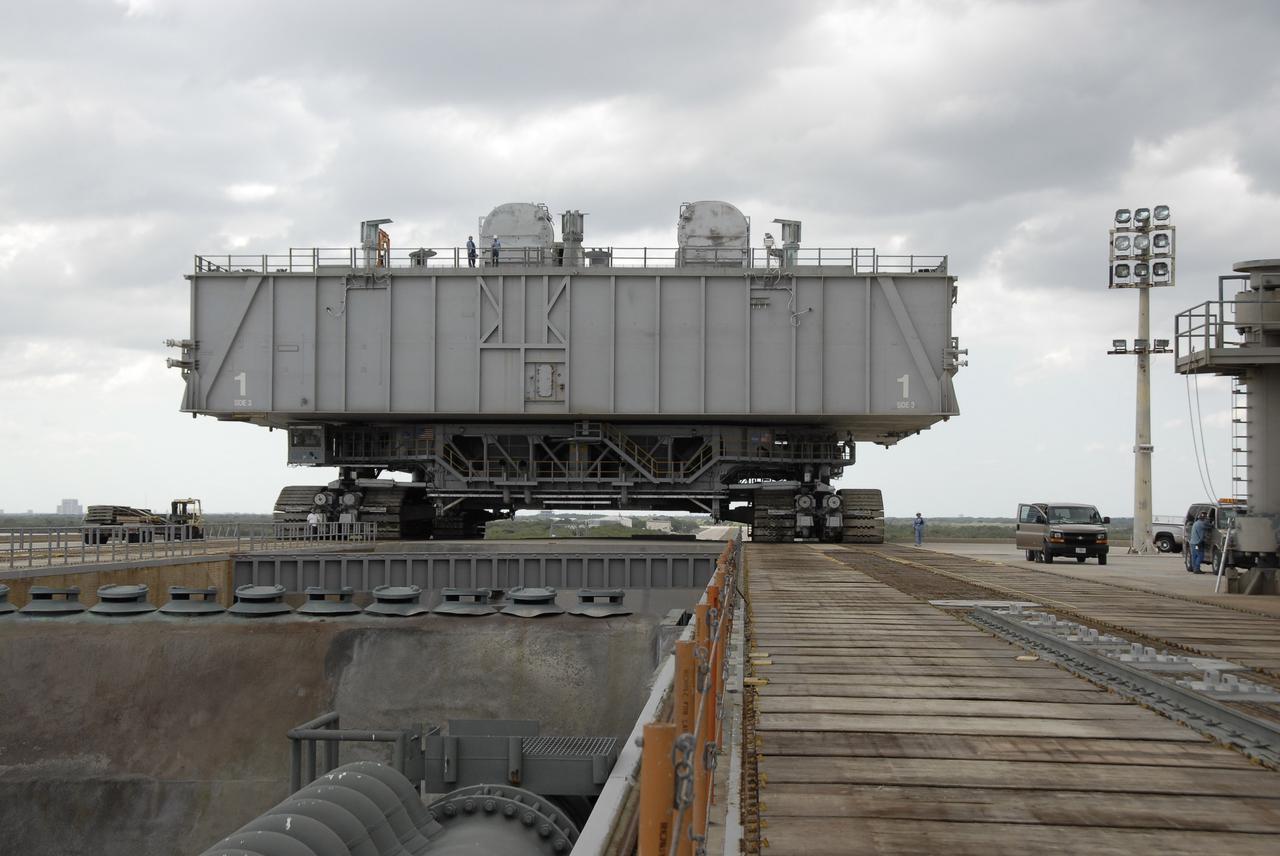
CAPE CANAVERAL, Fla. – Mobile Launcher Platform-1, on top of the crawler-transporter, nears the flame trench (lower left) on the top of Launch Pad 39B at NASA's Kennedy Space Center in Florida. The MLP has been handed over to the Constellation Program for its future use for the Ares I-X flight test in the summer of 2009. Ares I-X is the test vehicle for the Ares I, which is part of the Constellation Program to return men to the moon and beyond. Ground Control System hardware was installed in MLP-1 in December 2008. The MLP is being moved to the launch pad to check out the installed hardware with the Launch Control Center Firing Room 1 equipment, using the actual circuits that will be used when the fully stacked Ares I-X vehicle is rolled out later this year for launch. Following this testing, MLP-1 will be moved to the Vehicle Assembly Building's High Bay 3 to begin stacking, or assembling, Ares I-X. Photo credit: NASA/Kim Shiflett
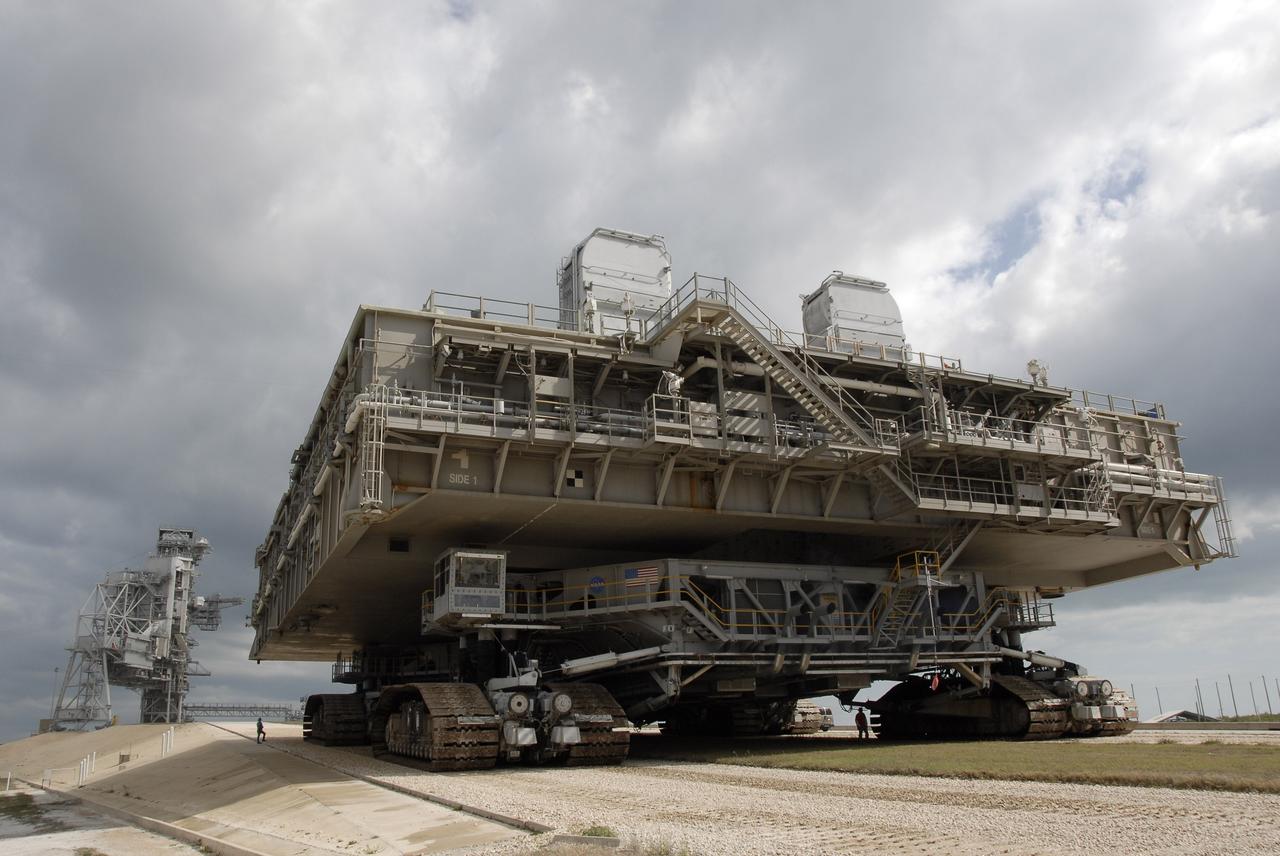
CAPE CANAVERAL, Fla. – Mobile Launcher Platform-1 is moving to Launch Pad 39B at NASA's Kennedy Space Center in Florida via the crawler-transporter underneath. The MLP has been handed over to the Constellation Program for its future use for the Ares I-X flight test in the summer of 2009. Ares I-X is the test vehicle for the Ares I, which is part of the Constellation Program to return men to the moon and beyond. Ground Control System hardware was installed in MLP-1 in December 2008. The MLP is being moved to the launch pad to check out the installed hardware with the Launch Control Center Firing Room 1 equipment, using the actual circuits that will be used when the fully stacked Ares I-X vehicle is rolled out later this year for launch. Following this testing, MLP-1 will be moved to the Vehicle Assembly Building's High Bay 3 to begin stacking, or assembling, Ares I-X. Photo credit: NASA/Kim Shiflett
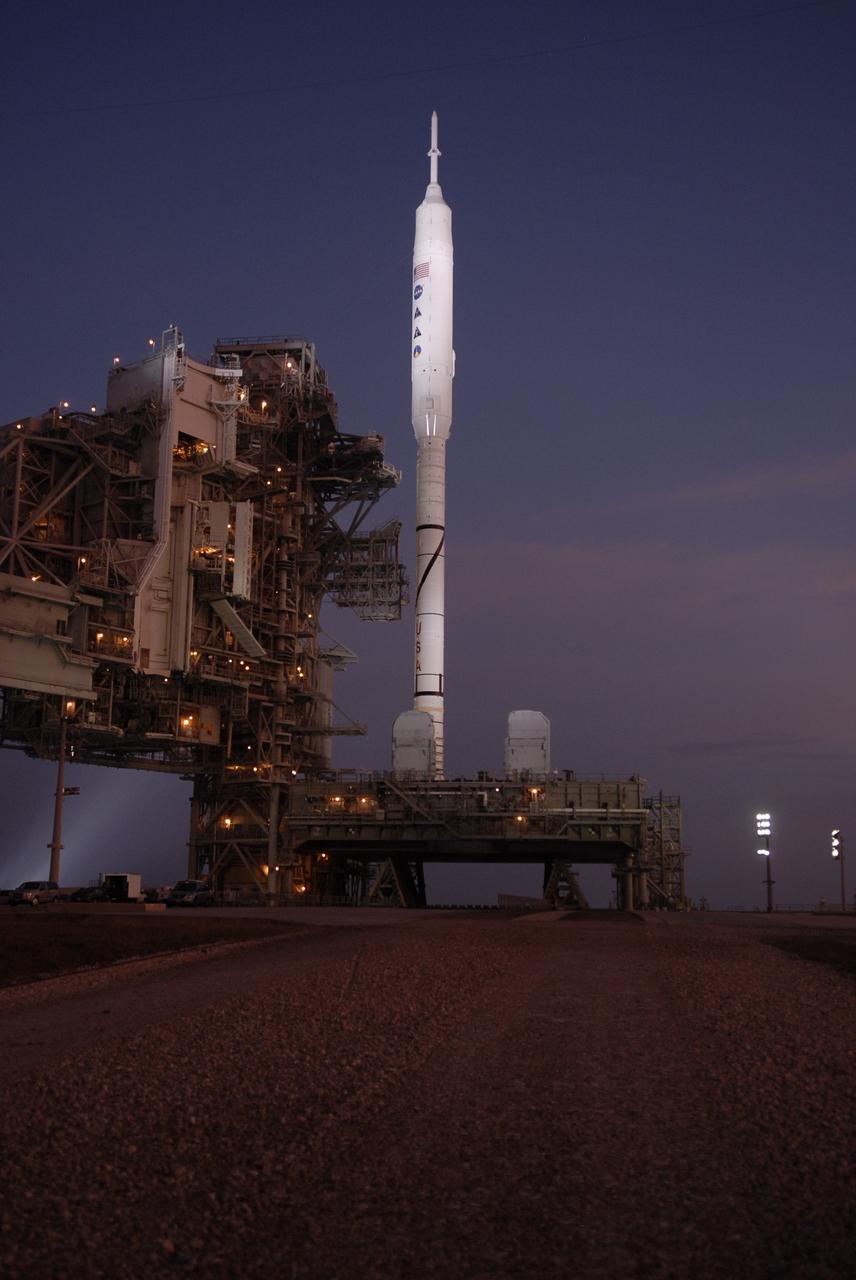
CAPE CANAVERAL, Fla. – Sunrise at Launch Pad 39B at NASA's Kennedy Space Center in Florida reveals the rotating service structure and the arms of the vehicle stabilization system have been retracted from around the Constellation Program's 327-foot-tall Ares I-X rocket for launch. The transfer of the pad from the Space Shuttle Program to the Constellation Program took place May 31. Modifications made to the pad include the removal of shuttle unique subsystems, such as the orbiter access arm and a section of the gaseous oxygen vent arm, and the installation of three 600-foot lightning towers, access platforms, environmental control systems and a vehicle stabilization system. The data returned from more than 700 sensors throughout the rocket will be used to refine the design of future launch vehicles and bring NASA one step closer to reaching its exploration goals. The Ares I-X flight test is targeted for Oct. 27. For information on the Ares I-X vehicle and flight test, visit http://www.nasa.gov/aresIX. Photo credit: NASA/Kim Shiflett
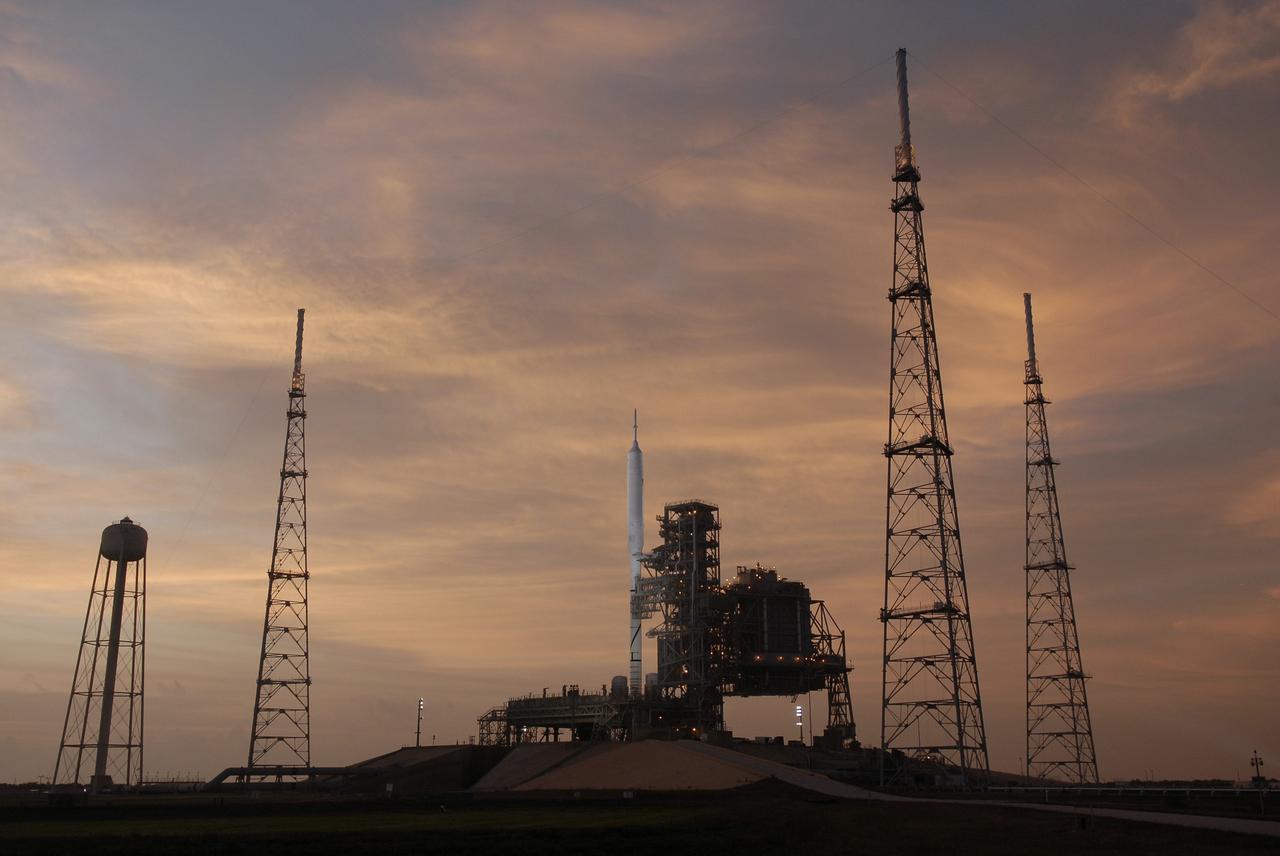
CAPE CANAVERAL, Fla. – Daybreak at Launch Pad 39B at NASA's Kennedy Space Center in Florida reveals the rotating service structure rolled back from around the Constellation Program's 327-foot-tall Ares I-X rocket for launch. The transfer of the pad from the Space Shuttle Program to the Constellation Program took place May 31. Modifications made to the pad include the removal of shuttle unique subsystems, such as the orbiter access arm and a section of the gaseous oxygen vent arm, and the installation of three 600-foot lightning towers, access platforms, environmental control systems and a vehicle stabilization system. The data returned from more than 700 sensors throughout the rocket will be used to refine the design of future launch vehicles and bring NASA one step closer to reaching its exploration goals. The Ares I-X flight test is targeted for Oct. 27. For information on the Ares I-X vehicle and flight test, visit http://www.nasa.gov/aresIX. Photo credit: NASA/Kim Shiflett
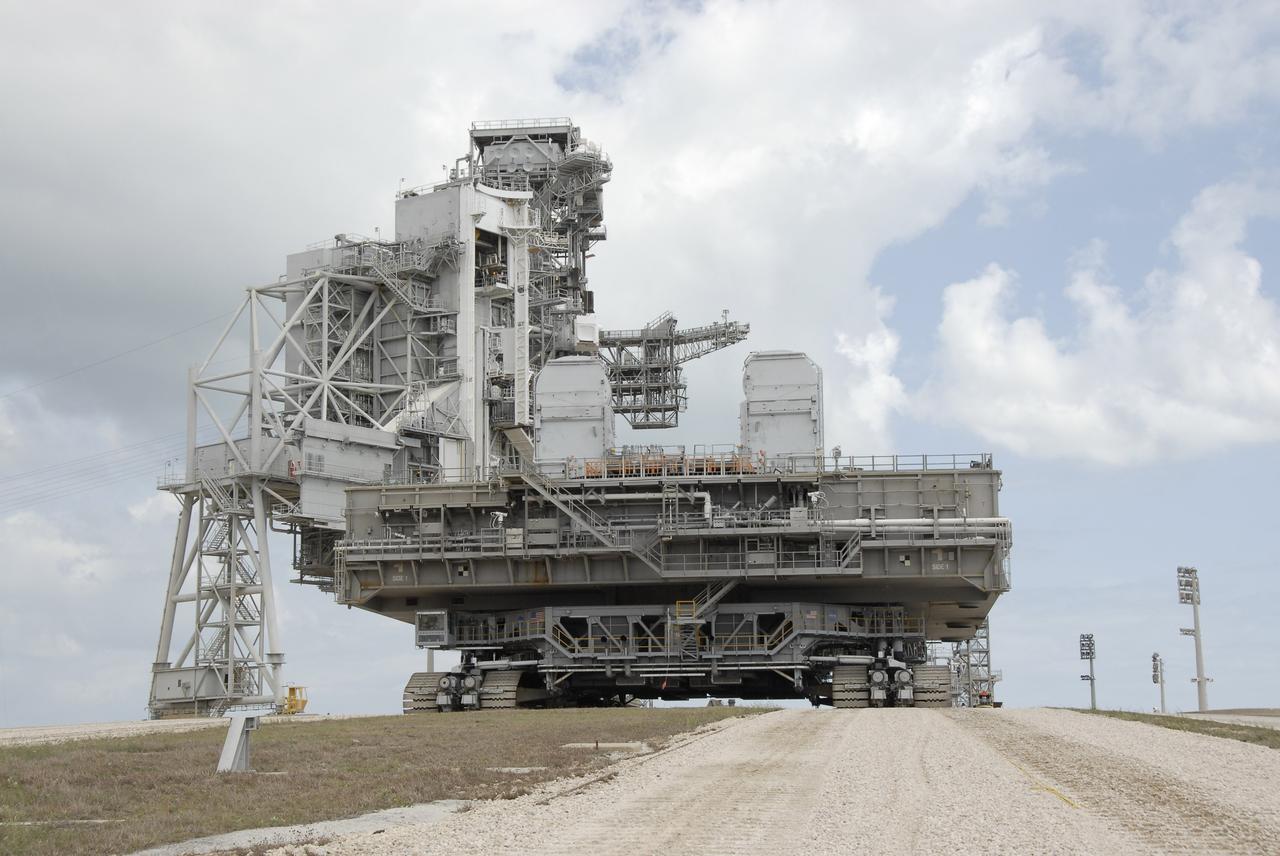
CAPE CANAVERAL, Fla. – Mobile Launcher Platform-1, on top of the crawler-transporter, reaches the top of Launch Pad 39B at NASA's Kennedy Space Center in Florida. The MLP has been handed over to the Constellation Program for its future use for the Ares I-X flight test in the summer of 2009. Ares I-X is the test vehicle for the Ares I, which is part of the Constellation Program to return men to the moon and beyond. Ground Control System hardware was installed in MLP-1 in December 2008. The MLP is being moved to the launch pad to check out the installed hardware with the Launch Control Center Firing Room 1 equipment, using the actual circuits that will be used when the fully stacked Ares I-X vehicle is rolled out later this year for launch. Following this testing, MLP-1 will be moved to the Vehicle Assembly Building's High Bay 3 to begin stacking, or assembling, Ares I-X. Photo credit: NASA/Kim Shiflett
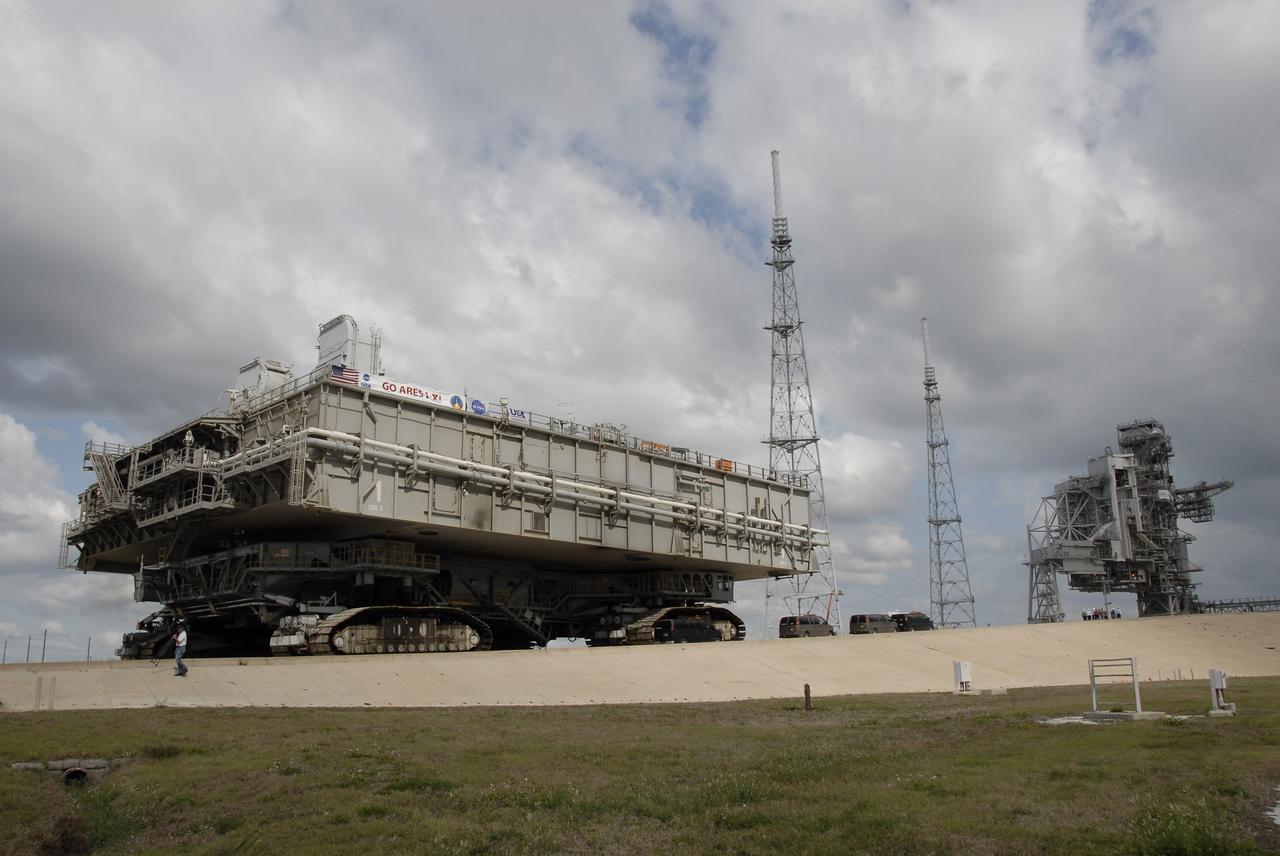
CAPE CANAVERAL, Fla. – Mobile Launcher Platform-1 is moving to Launch Pad 39B at NASA's Kennedy Space Center in Florida via the crawler-transporter underneath. The MLP has been handed over to the Constellation Program for its future use for the Ares I-X flight test in the summer of 2009. Seen around the service structures on the pad are the new 600-foot lightning towers and masts erected for the Ares launches. Ares I-X is the test vehicle for the Ares I, which is part of the Constellation Program to return men to the moon and beyond. Ground Control System hardware was installed in MLP-1 in December 2008. The MLP is being moved to the launch pad to check out the installed hardware with the Launch Control Center Firing Room 1 equipment, using the actual circuits that will be used when the fully stacked Ares I-X vehicle is rolled out later this year for launch. Following this testing, MLP-1 will be moved to the Vehicle Assembly Building's High Bay 3 to begin stacking, or assembling, Ares I-X. Photo credit: NASA/Kim Shiflett
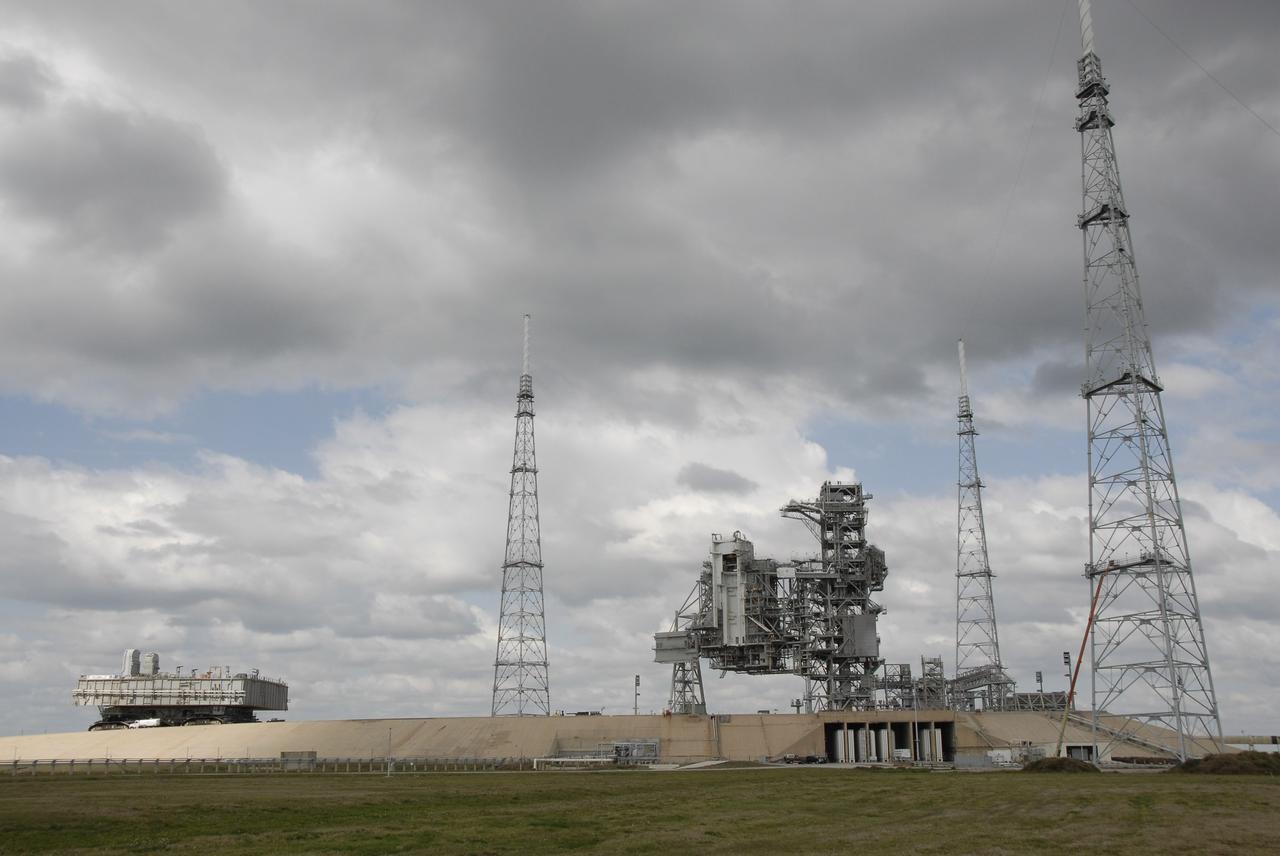
CAPE CANAVERAL, Fla. – Mobile Launcher Platform-1 nears the top of Launch Pad 39B at NASA's Kennedy Space Center in Florida via the crawler-transporter underneath. The MLP has been handed over to the Constellation Program for its future use for the Ares I-X flight test in the summer of 2009. Seen around the service structures on the pad are the new 600-foot lightning towers and masts erected for the Ares launches. Ares I-X is the test vehicle for the Ares I, which is part of the Constellation Program to return men to the moon and beyond. Ground Control System hardware was installed in MLP-1 in December 2008. The MLP is being moved to the launch pad to check out the installed hardware with the Launch Control Center Firing Room 1 equipment, using the actual circuits that will be used when the fully stacked Ares I-X vehicle is rolled out later this year for launch. Following this testing, MLP-1 will be moved to the Vehicle Assembly Building's High Bay 3 to begin stacking, or assembling, Ares I-X. Photo credit: NASA/Kim Shiflett

CAPE CANAVERAL, Fla. – Mobile Launcher Platform-1 is moving to Launch Pad 39B at NASA's Kennedy Space Center in Florida via the crawler-transporter underneath. The MLP has been handed over to the Constellation Program for its future use for the Ares I-X flight test in the summer of 2009. Ares I-X is the test vehicle for the Ares I, which is part of the Constellation Program to return men to the moon and beyond. Ground Control System hardware was installed in MLP-1 in December 2008. The MLP is being moved to the launch pad to check out the installed hardware with the Launch Control Center Firing Room 1 equipment, using the actual circuits that will be used when the fully stacked Ares I-X vehicle is rolled out later this year for launch. Following this testing, MLP-1 will be moved to the Vehicle Assembly Building's High Bay 3 to begin stacking, or assembling, Ares I-X. Photo credit: NASA/Kim Shiflett
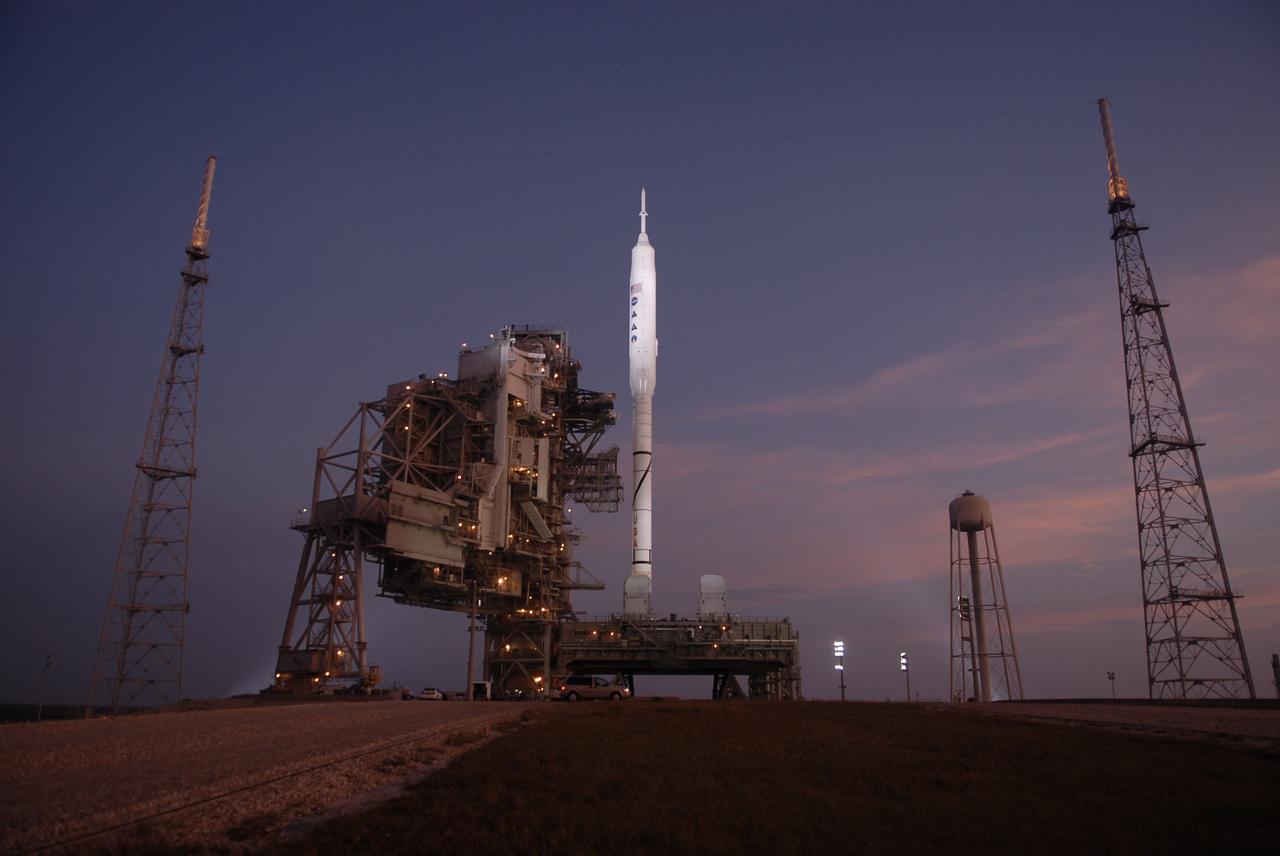
CAPE CANAVERAL, Fla. – At Launch Pad 39B at NASA's Kennedy Space Center in Florida, the rotating service structure has been rolled back from the Constellation Program's 327-foot-tall Ares I-X rocket, sitting atop its mobile launcher platform, during preparations for launch. The transfer of the pad from the Space Shuttle Program to the Constellation Program took place May 31. Modifications made to the pad include the removal of shuttle unique subsystems, such as the orbiter access arm and a section of the gaseous oxygen vent arm, and the installation of three 600-foot lightning towers, access platforms, environmental control systems and a vehicle stabilization system. The data returned from more than 700 sensors throughout the rocket will be used to refine the design of future launch vehicles and bring NASA one step closer to reaching its exploration goals. The Ares I-X flight test is targeted for Oct. 27. For information on the Ares I-X vehicle and flight test, visit http://www.nasa.gov/aresIX. Photo credit: NASA/Kim Shiflett
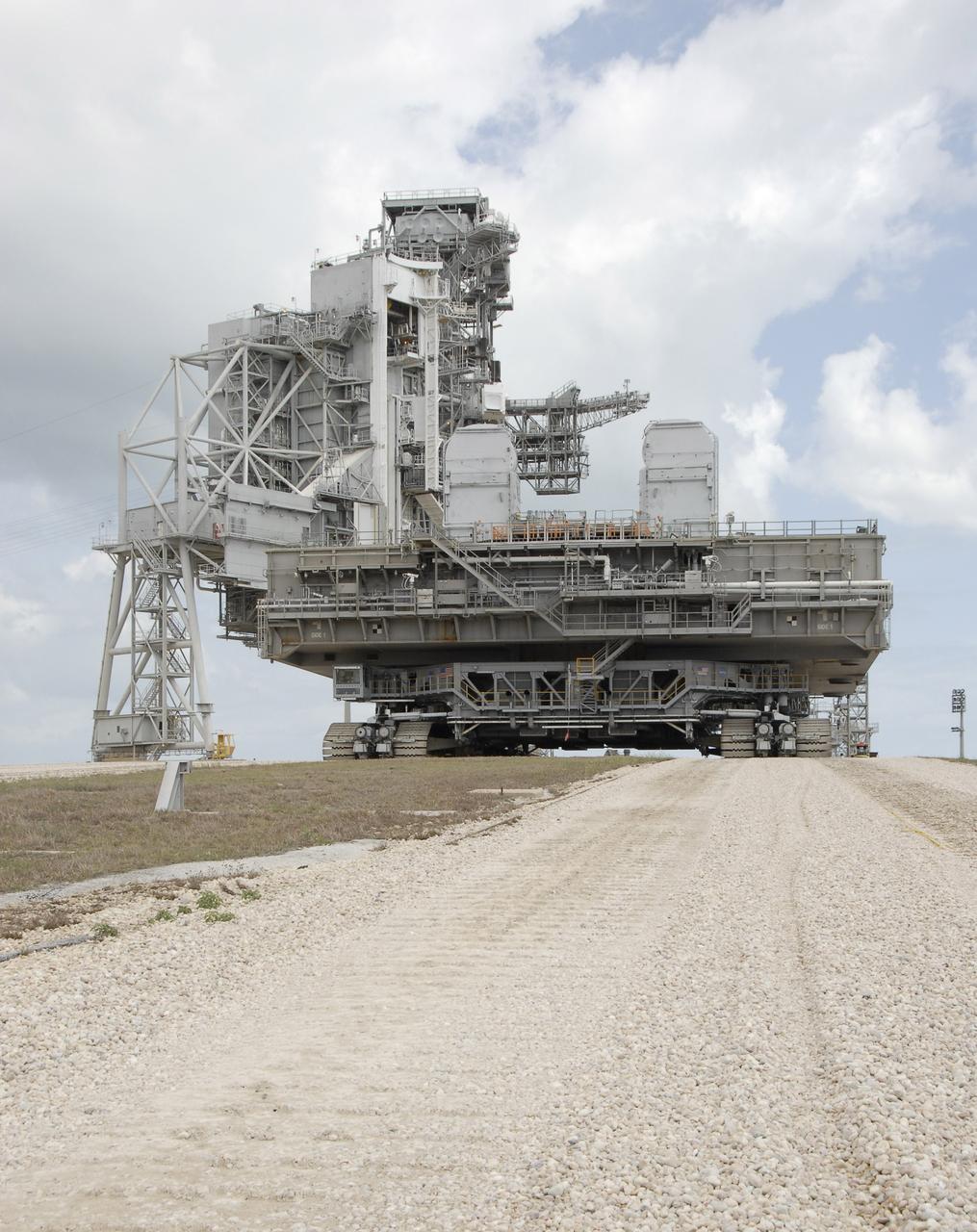
CAPE CANAVERAL, Fla. – Mobile Launcher Platform-1, on top of the crawler-transporter, reaches the top of Launch Pad 39B at NASA's Kennedy Space Center in Florida. The MLP has been handed over to the Constellation Program for its future use for the Ares I-X flight test in the summer of 2009. Ares I-X is the test vehicle for the Ares I, which is part of the Constellation Program to return men to the moon and beyond. Ground Control System hardware was installed in MLP-1 in December 2008. The MLP is being moved to the launch pad to check out the installed hardware with the Launch Control Center Firing Room 1 equipment, using the actual circuits that will be used when the fully stacked Ares I-X vehicle is rolled out later this year for launch. Following this testing, MLP-1 will be moved to the Vehicle Assembly Building's High Bay 3 to begin stacking, or assembling, Ares I-X. Photo credit: NASA/Kim Shiflett
CAPE CANAVERAL, Fla. – As the sun rises over Launch Pad 39B at NASA's Kennedy Space Center in Florida, the rotating service structure and the arms of the vehicle stabilization system have been retracted from around the Constellation Program's 327-foot-tall Ares I-X rocket, resting atop its mobile launcher platform, for launch. The transfer of the pad from the Space Shuttle Program to the Constellation Program took place May 31. Modifications made to the pad include the removal of shuttle unique subsystems, such as the orbiter access arm and a section of the gaseous oxygen vent arm, and the installation of three 600-foot lightning towers, access platforms, environmental control systems and a vehicle stabilization system. The data returned from more than 700 sensors throughout the rocket will be used to refine the design of future launch vehicles and bring NASA one step closer to reaching its exploration goals. The Ares I-X flight test is targeted for Oct. 27. For information on the Ares I-X vehicle and flight test, visit http://www.nasa.gov/aresIX. Photo credit: NASA/Kim Shiflett
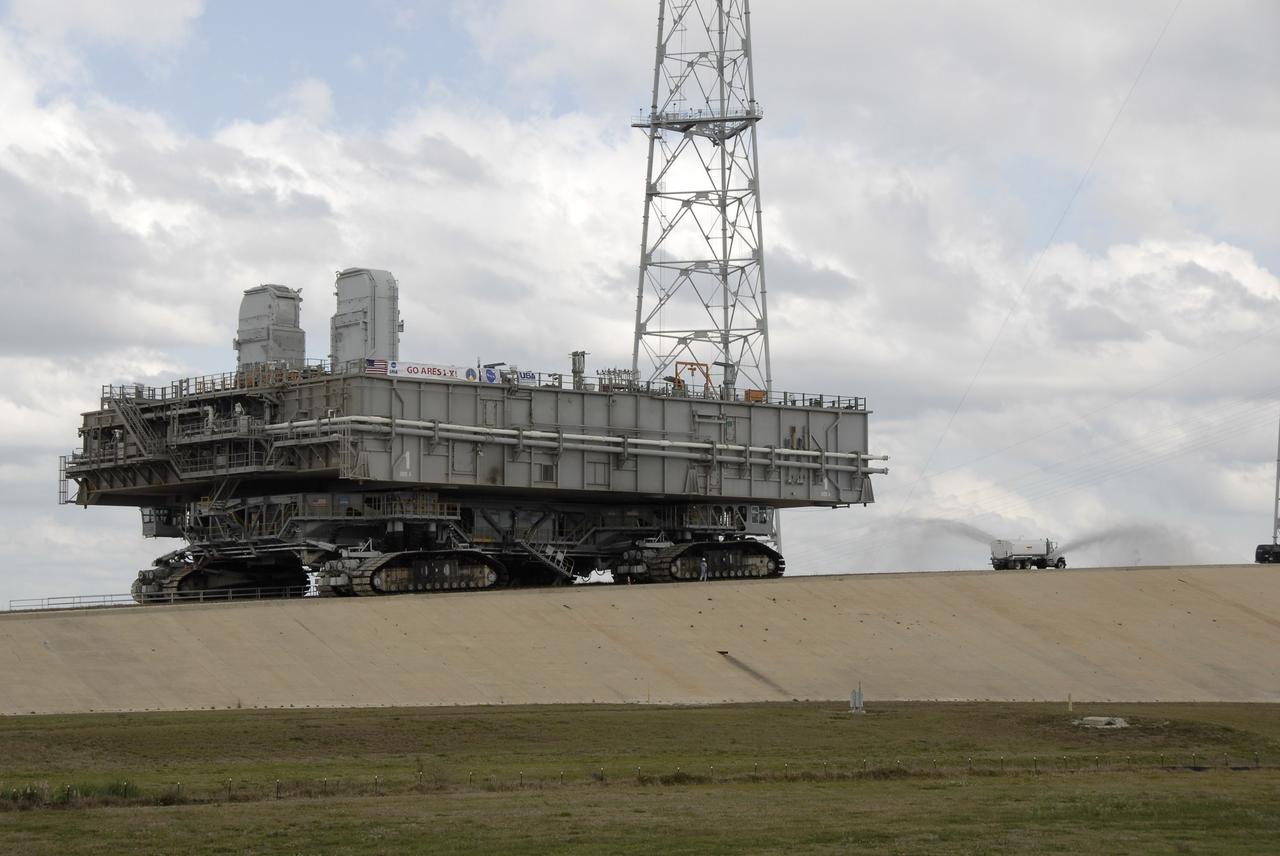
CAPE CANAVERAL, Fla. – Mobile Launcher Platform-1 nears the top of Launch Pad 39B at NASA's Kennedy Space Center in Florida via the crawler-transporter underneath. The MLP has been handed over to the Constellation Program for its future use for the Ares I-X flight test in the summer of 2009. Ares I-X is the test vehicle for the Ares I, which is part of the Constellation Program to return men to the moon and beyond. Ground Control System hardware was installed in MLP-1 in December 2008. The MLP is being moved to the launch pad to check out the installed hardware with the Launch Control Center Firing Room 1 equipment, using the actual circuits that will be used when the fully stacked Ares I-X vehicle is rolled out later this year for launch. Following this testing, MLP-1 will be moved to the Vehicle Assembly Building's High Bay 3 to begin stacking, or assembling, Ares I-X. Photo credit: NASA/Kim Shiflett
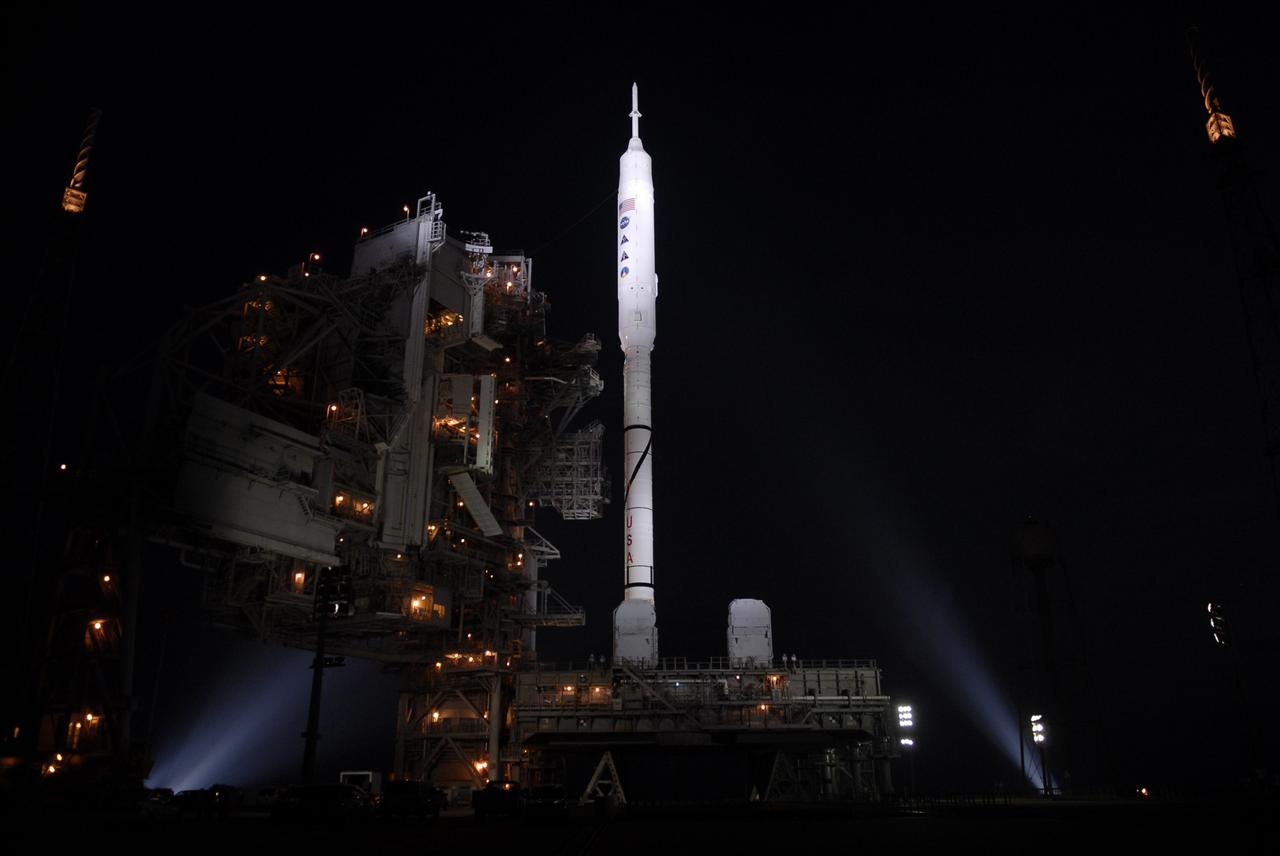
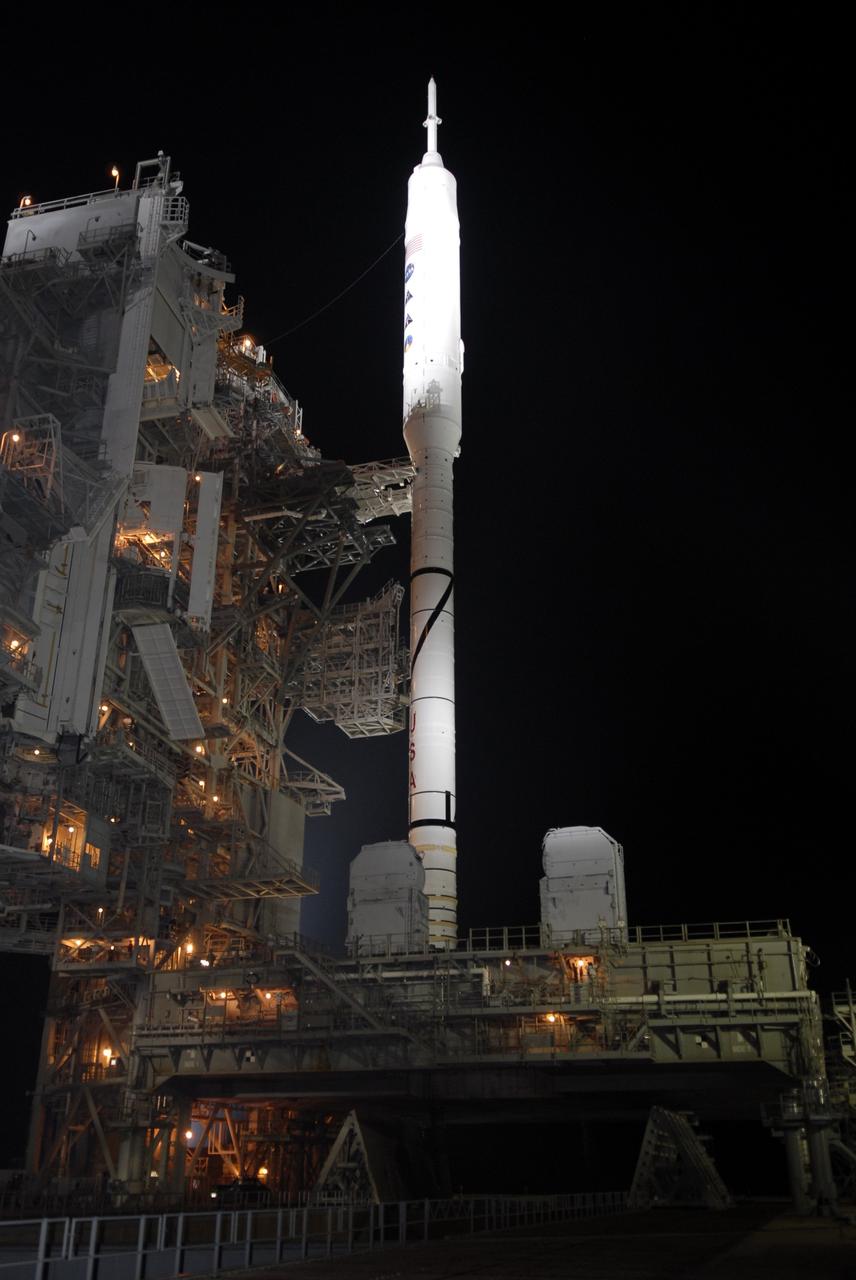
CAPE CANAVERAL, Fla. – At Launch Pad 39B at NASA's Kennedy Space Center in Florida, xenon lights illuminate the Constellation Program's 327-foot-tall Ares I-X rocket after the rotating service structure, has been retracted from around it for launch. The transfer of the pad from the Space Shuttle Program to the Constellation Program took place May 31. Modifications made to the pad include the removal of shuttle unique subsystems, such as the orbiter access arm and a section of the gaseous oxygen vent arm, and the installation of three 600-foot lightning towers, access platforms, environmental control systems and a vehicle stabilization system. The data returned from more than 700 sensors throughout the rocket will be used to refine the design of future launch vehicles and bring NASA one step closer to reaching its exploration goals. The Ares I-X flight test is targeted for Oct. 27. For information on the Ares I-X vehicle and flight test, visit http://www.nasa.gov/aresIX. Photo credit: NASA/Kim Shiflett
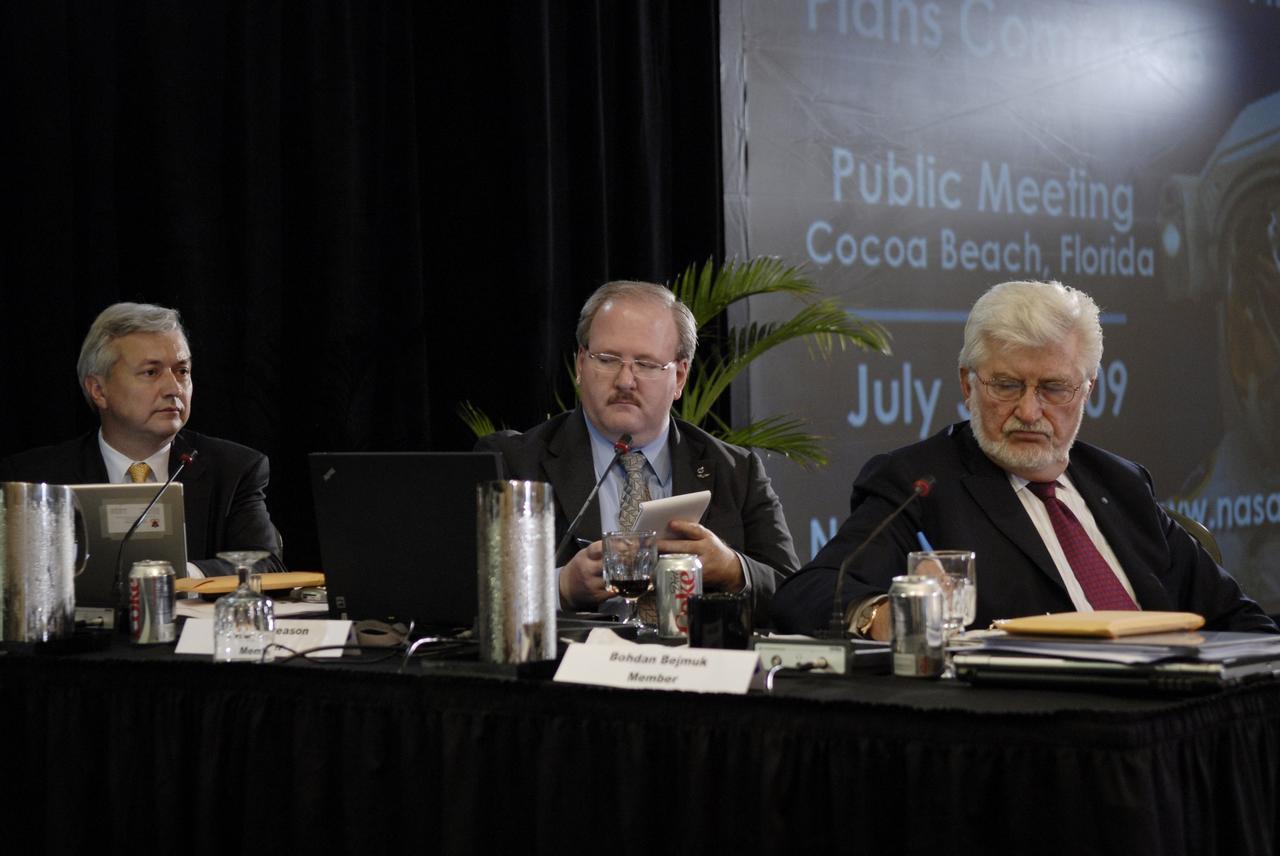
CAPE CANAVERAL, Fla. – Members of the Augustine Commission are meeting in Cocoa Beach, Fla. From left are Dr. Christopher Chyba, Professor of Astrophysical Sciences and international Affairs at Princeton University; Jeff Greason, co-founder and CEO of XCOR Aerospace; and Bohdan Bejmuk, chair of Constellation Program Standing Review Board. At the request of the Office of Science and Technology Policy, NASA established the Review of U.S. Human Space Flight Plans Committee, known as the Augustine Commission. Chaired by Norman R. Augustine, retired chairman and CEO of Lockheed Martin Corp., the committee is conducting an independent review of ongoing U.S. human spaceflight plans and programs, as well as alternatives, to ensure the nation is pursuing the best trajectory for the future of human space flight - one that is safe, innovative, affordable, and sustainable. Photo credit: NASA/Kim Shiflett
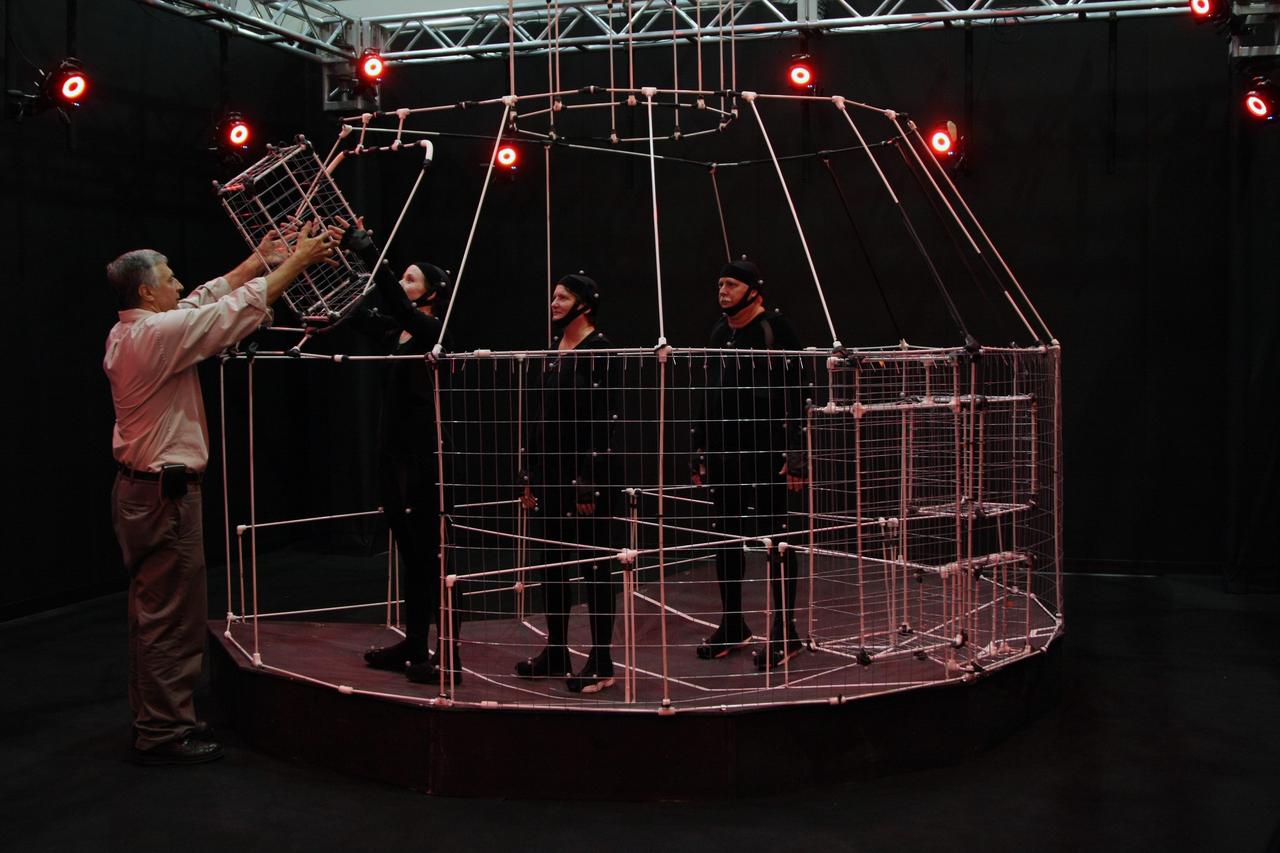
CAPE CANAVERAL, Fla. – Professor Peter Voci, NYIT MOCAP (Motion Capture) team director, (left) hands a component of the Orion Crew Module mockup to one of three technicians inside the mockup. The technicians wear motion capture suits. The motion tracking aims to improve efficiency of assembly processes and identify potential ergonomic risks for technicians assembling the mockup. The work is being performed in United Space Alliance's Human Engineering Modeling and Performance Lab in the RLV Hangar at NASA's Kennedy Space Center. The motion tracking aims to improve efficiency of assembly processes and identify potential ergonomic risks for technicians assembling the mockup. The work is being performed in United Space Alliance's Human Engineering Modeling and Performance Lab in the RLV Hangar at NASA's Kennedy Space Center. Part of NASA's Constellation Program, the Orion spacecraft will return humans to the moon and prepare for future voyages to Mars and other destinations in our solar system.
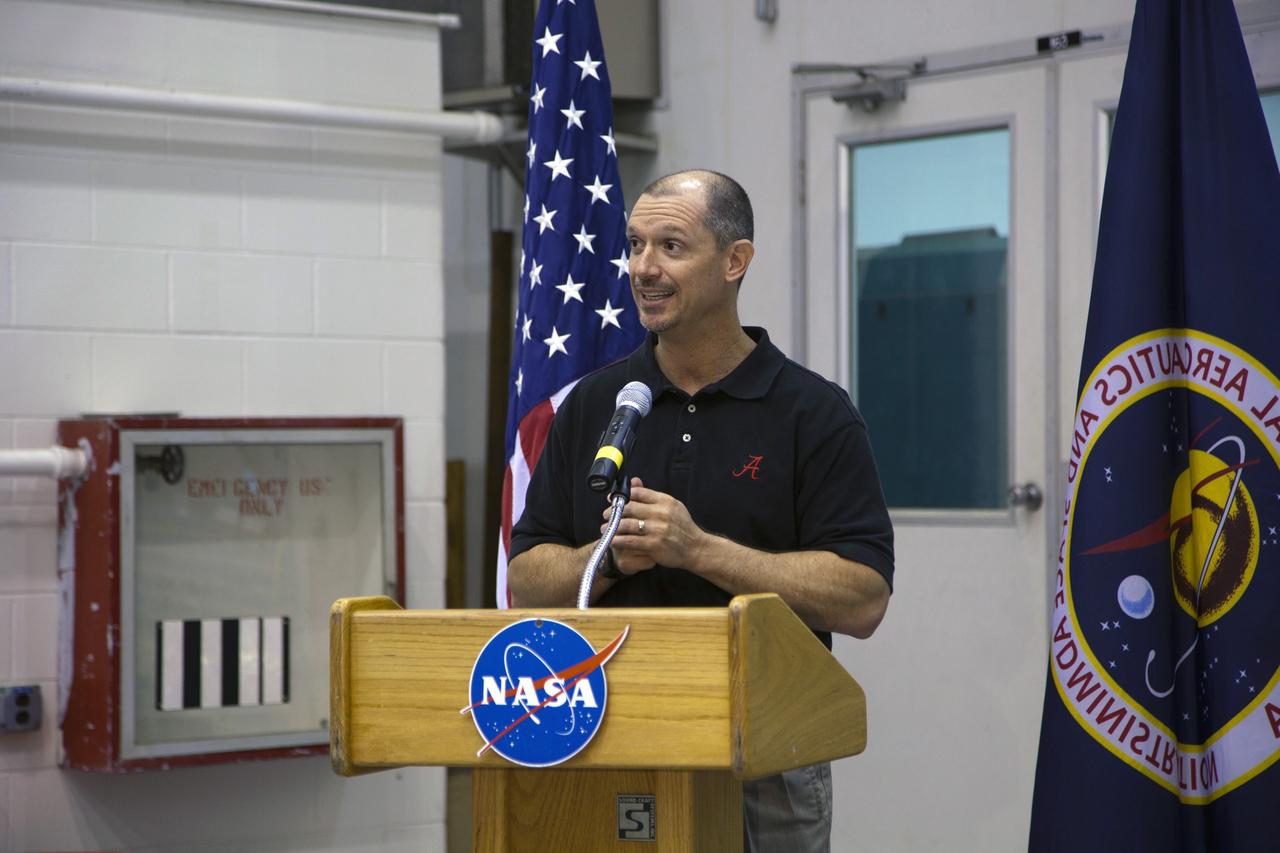
CAPE CANAVERAL, Fla. -- At NASA's Kennedy Space Center in Florida, Director of the center's Constellation Project Office Pepper Phillips talks to workers at the Launch Equipment Test Facility (LETF), which recently underwent a $35 million comprehensive upgrade that lasted four years. The LETF was established in the 1970s to support the qualification of the Space Shuttle Program’s umbilical and T-0 mechanisms. Throughout the years, it has supported the development of systems for shuttle and the International Space Station, Delta and Atlas rockets, and various research and development programs. The LETF has unique capabilities to evolve into a versatile test and development area that supports a wide spectrum of programs. For information on NASA's future plans, visit www.nasa.gov. Photo credit: NASA/Dimitri Gerondidakis
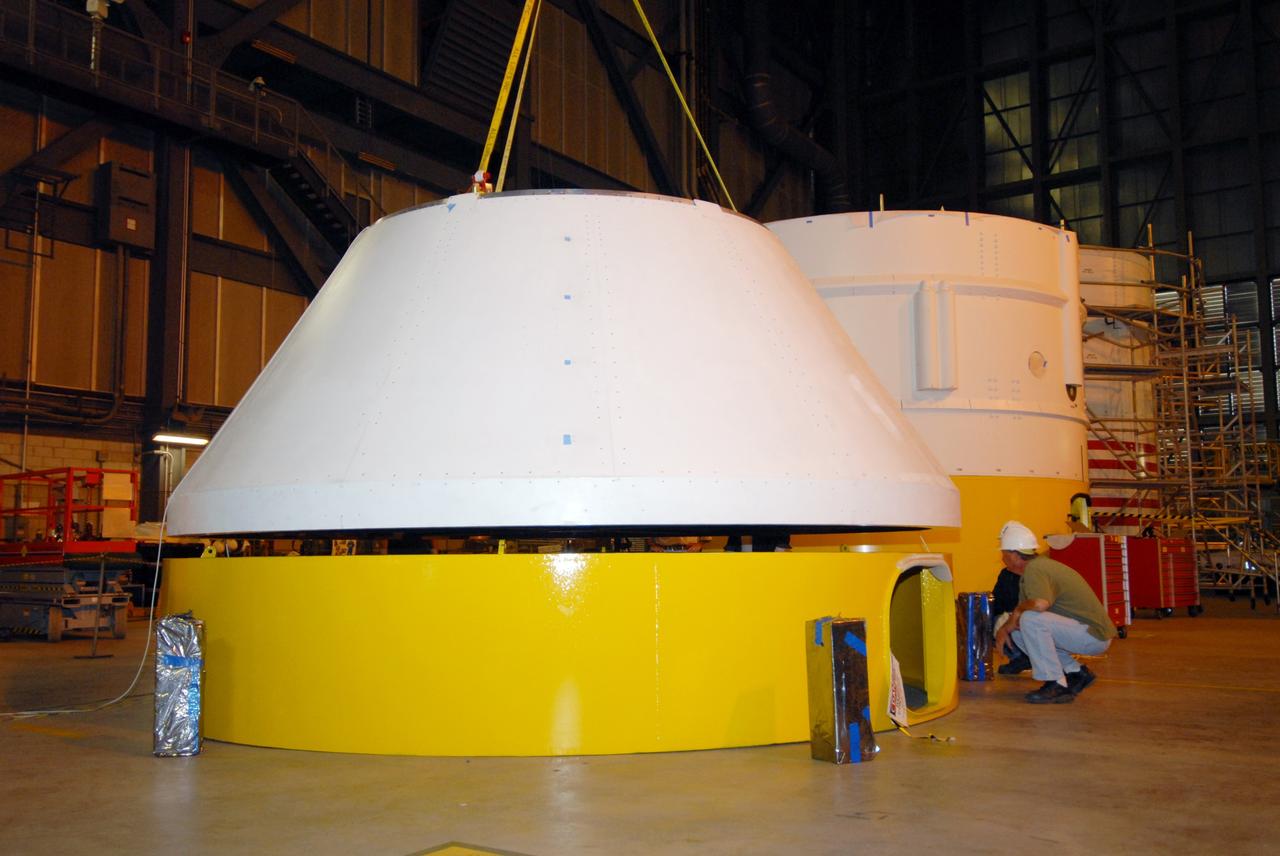
CAPE CANAVERAL, Fla. – In high bay 4 of the Vehicle Assembly Building at NASA's Kennedy Space Center, workers lift the Ares I-X crew module mock-up from a work stand for a fit check with a mock-up of the service module. When fully developed, the 16-foot diameter crew module will furnish living space and reentry protection for future astronauts, and the service module’s main engine will be used to break out of lunar orbit for the return trip to Earth. Ares I-X is the test flight for the Ares I, which is part of the Constellation Program to return men to the moon and beyond. The I-X flight will provide NASA an early opportunity to test and prove hardware, facilities and ground operations associated with Ares I launches. Targeted for the summer of 2009, the launch of the full-scale Ares I-X will be the first in a series of unpiloted rocket launches from Kennedy. Photo credit: NASA/Jack Pfaller
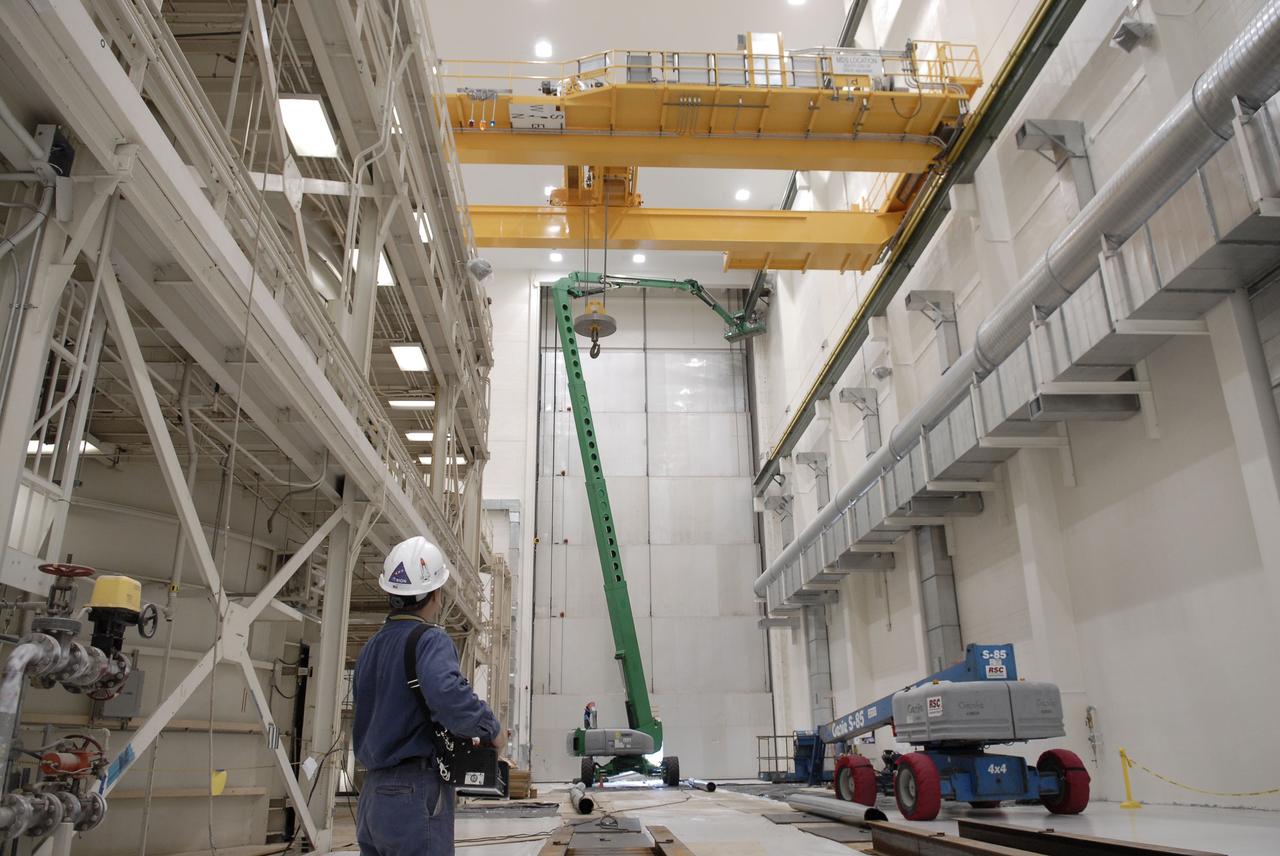
CAPE CANAVERAL, Fla. – Motion of the segments of a new crane is tested inside the Operations and Checkout Building at NASA's Kennedy Space Center in Florida. The new O&C low-bay crane is a 25-ton overhead bridge crane built for Lockheed Martin and Space Florida by American Crane and Equipment Corporation in Douglasville, Pa. The crane has a bridge span of 78’-2” and a hook height of 48’-10”. The crane will be used for lifting and moving flight hardware, fixtures and equipment in support of the Orion spacecraft manufacturing. Part of NASA's Constellation Program, the Orion spacecraft will return humans to the moon and prepare for future voyages to Mars and other destinations in our solar system. Photo credit: NASA/Kim Shiflett
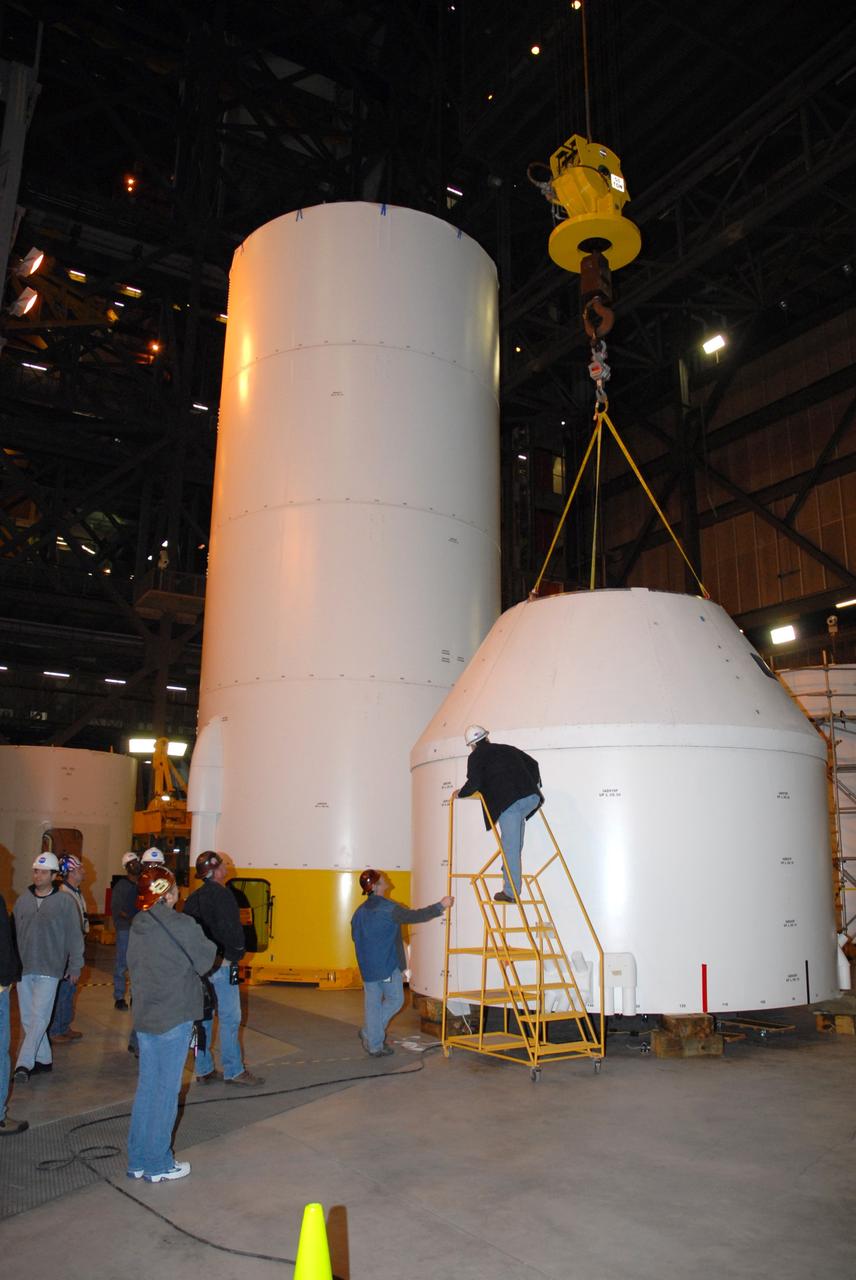
CAPE CANAVERAL, Fla. – In high bay 4 of the Vehicle Assembly Building at NASA's Kennedy Space Center, the Ares I-X crew module mock-up is positioned onto a mock-up of the service module to determine that the pieces of hardware are a perfect fit. When fully developed, the 16-foot diameter crew module will furnish living space and reentry protection for future astronauts, and the service module’s main engine will be used to break out of lunar orbit for the return trip to Earth. Ares I-X is the test flight for the Ares I, which is part of the Constellation Program to return men to the moon and beyond. The I-X flight will provide NASA an early opportunity to test and prove hardware, facilities and ground operations associated with Ares I launches. Targeted for the summer of 2009, the launch of the full-scale Ares I-X will be the first in a series of unpiloted rocket launches from Kennedy. Photo credit: NASA/Jack Pfaller
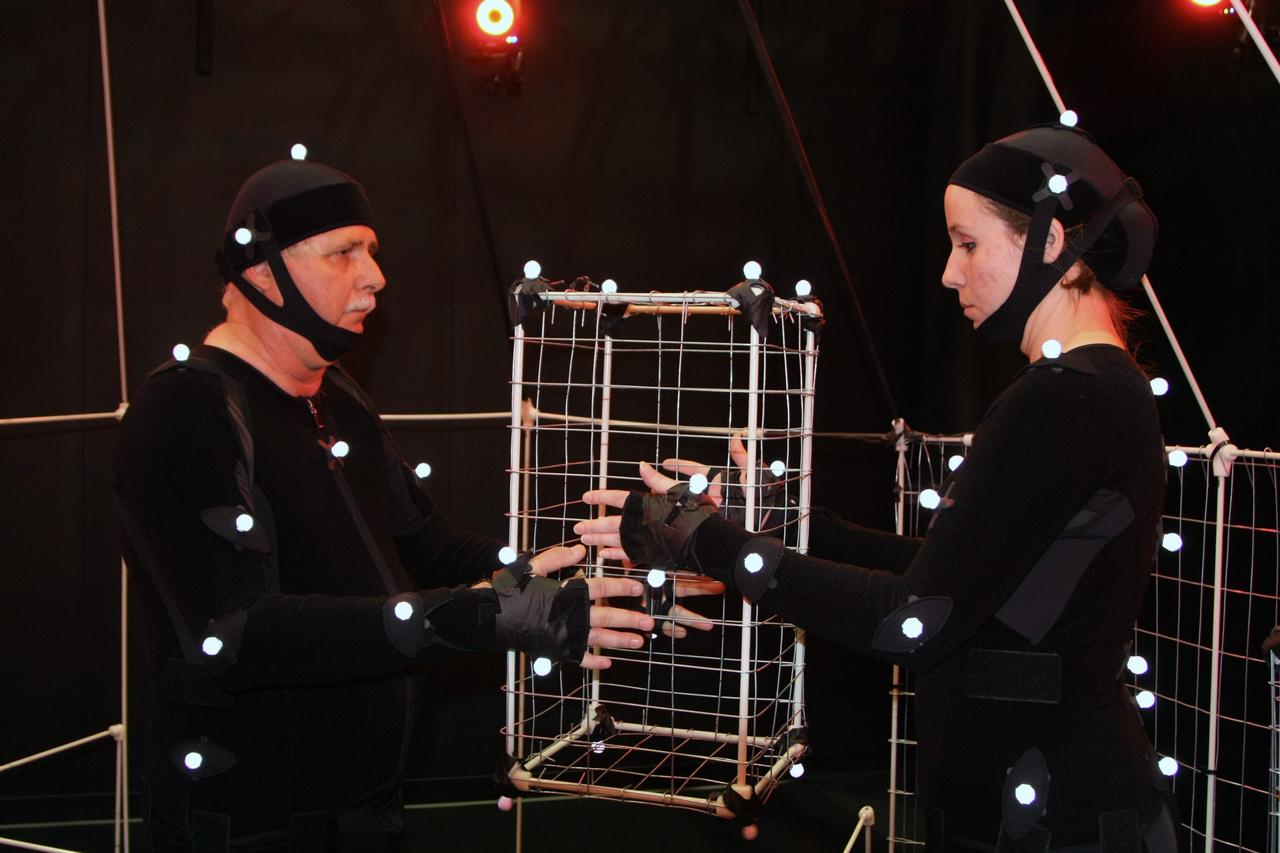
CAPE CANAVERAL, Fla. – A United Space Alliance technician (right) hands off a component of the Orion Crew Module mockup to one of the other technicians inside the mockup. The technicians wear motion capture suits. The motion tracking aims to improve efficiency of assembly processes and identify potential ergonomic risks for technicians assembling the mockup, which was created and built at the New York Institute of Technology by a team led by Prof. Peter Voci, MFA Director at the College of Arts and Sciences. The motion tracking aims to improve efficiency of assembly processes and identify potential ergonomic risks for technicians assembling the mockup. The work is being performed in United Space Alliance's Human Engineering Modeling and Performance Lab in the RLV Hangar at NASA's Kennedy Space Center. Part of NASA's Constellation Program, the Orion spacecraft will return humans to the moon and prepare for future voyages to Mars and other destinations in our solar system.
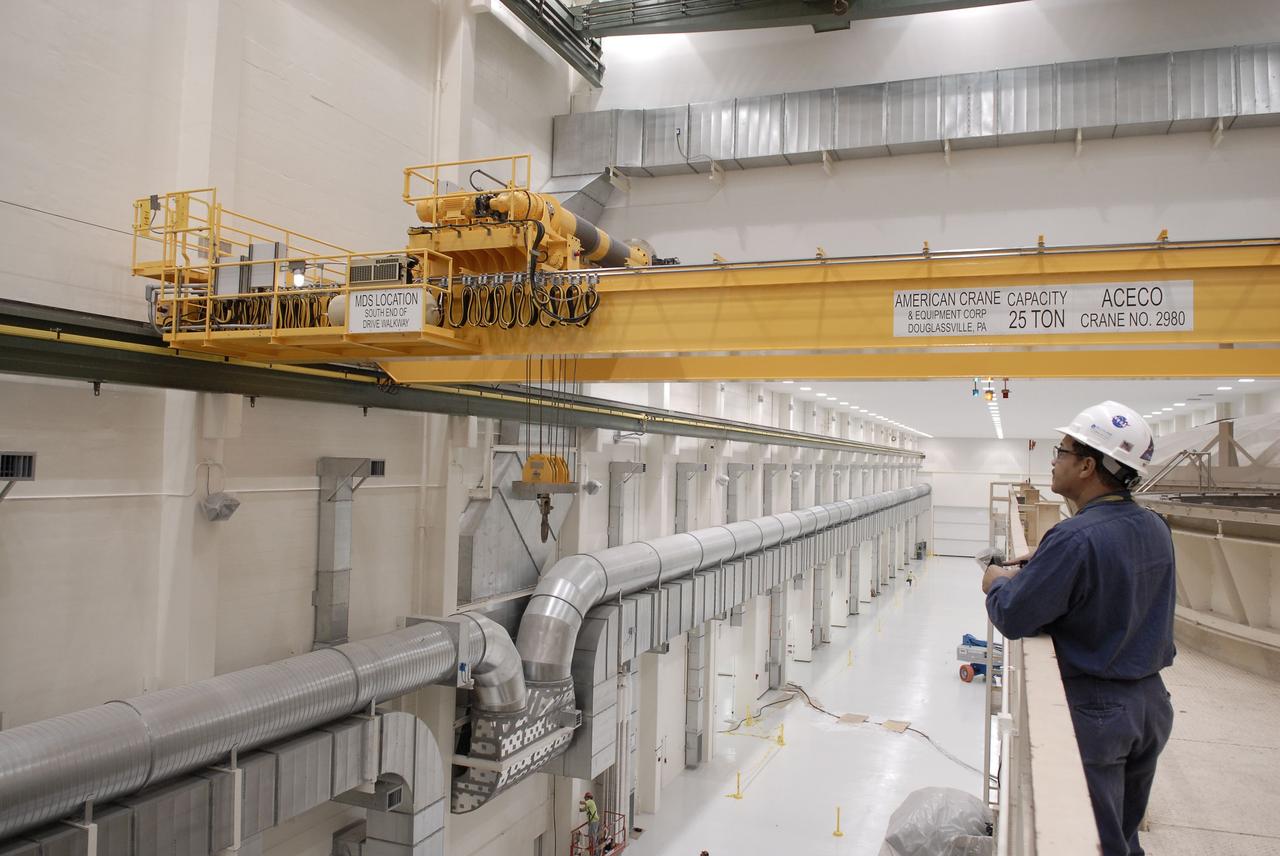
CAPE CANAVERAL, Fla. – Motion of the segments of a new crane is tested inside the Operations and Checkout Building at NASA's Kennedy Space Center in Florida. The new O&C low-bay crane is a 25-ton overhead bridge crane built for Lockheed Martin and Space Florida by American Crane and Equipment Corporation in Douglasville, Pa. The crane has a bridge span of 78’-2” and a hook height of 48’-10”. The crane will be used for lifting and moving flight hardware, fixtures and equipment in support of the Orion spacecraft manufacturing. Part of NASA's Constellation Program, the Orion spacecraft will return humans to the moon and prepare for future voyages to Mars and other destinations in our solar system. Photo credit: NASA/Kim Shiflett
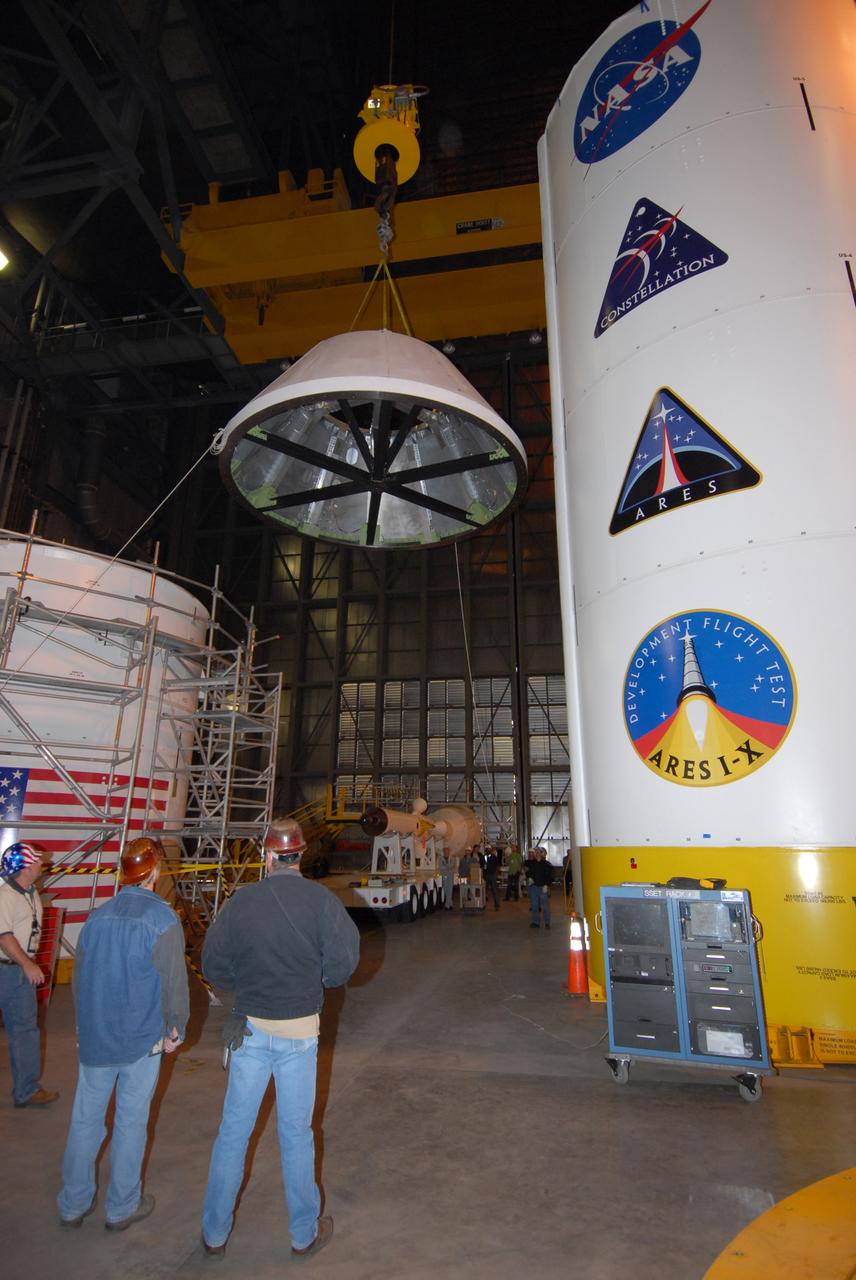
CAPE CANAVERAL, Fla. – In high bay 4 of the Vehicle Assembly Building at NASA's Kennedy Space Center, the Ares I-X crew module mock-up hangs suspended from a crane as it is moved for a fit check with a mock-up of the service module. When fully developed, the 16-foot diameter crew module will furnish living space and reentry protection for future astronauts, and the service module’s main engine will be used to break out of lunar orbit for the return trip to Earth. Ares I-X is the test flight for the Ares I, which is part of the Constellation Program to return men to the moon and beyond. The I-X flight will provide NASA an early opportunity to test and prove hardware, facilities and ground operations associated with Ares I launches. Targeted for the summer of 2009, the launch of the full-scale Ares I-X will be the first in a series of unpiloted rocket launches from Kennedy. Photo credit: NASA/Jack Pfaller
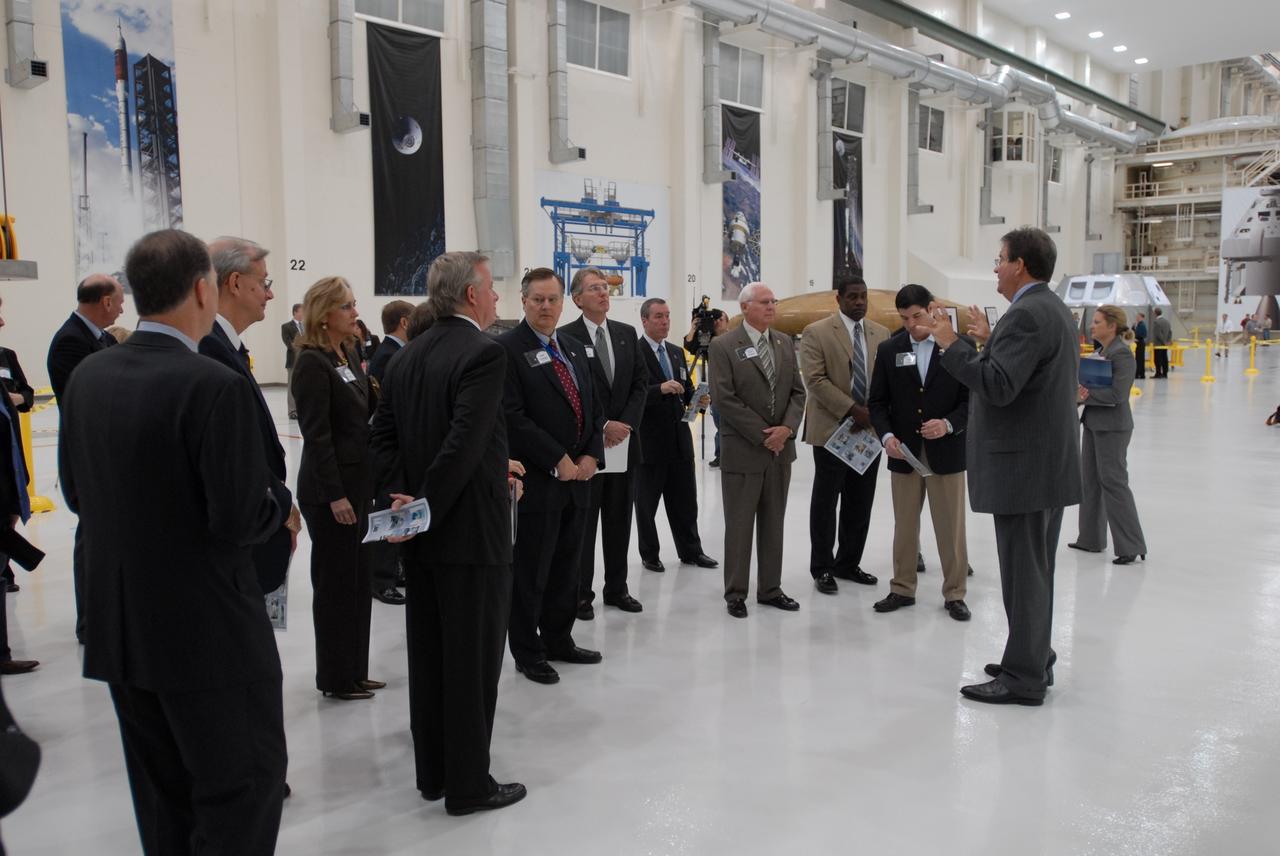
CAPE CANAVERAL, Fla. – Representatives from NASA, Lockheed Martin, Space Florida and the state of Florida participate in a ceremony at NASA's Kennedy Space Center in Florida to mark the completion of renovations on the historic Operations and Checkout Building high bay for use by the Constellation Program. At right, Richard Harris, with Lockheed Martin, describes activities that will take place in the building. Originally built to process space vehicles in the Apollo era, the building will serve as the final assembly facility for the Orion crew exploration vehicle. Orion, America's future human spaceflight vehicle, will be capable of transporting four crew members to the moon and later will support crew transfers to Mars. The Orion spacecraft also will be used to transport crew members to the International Space Station after space shuttles are retired in 2010. The first operational launch of Orion atop an Ares I rocket is planned for 2015. Photo credit: NASA/Dimitri Gerondidakis
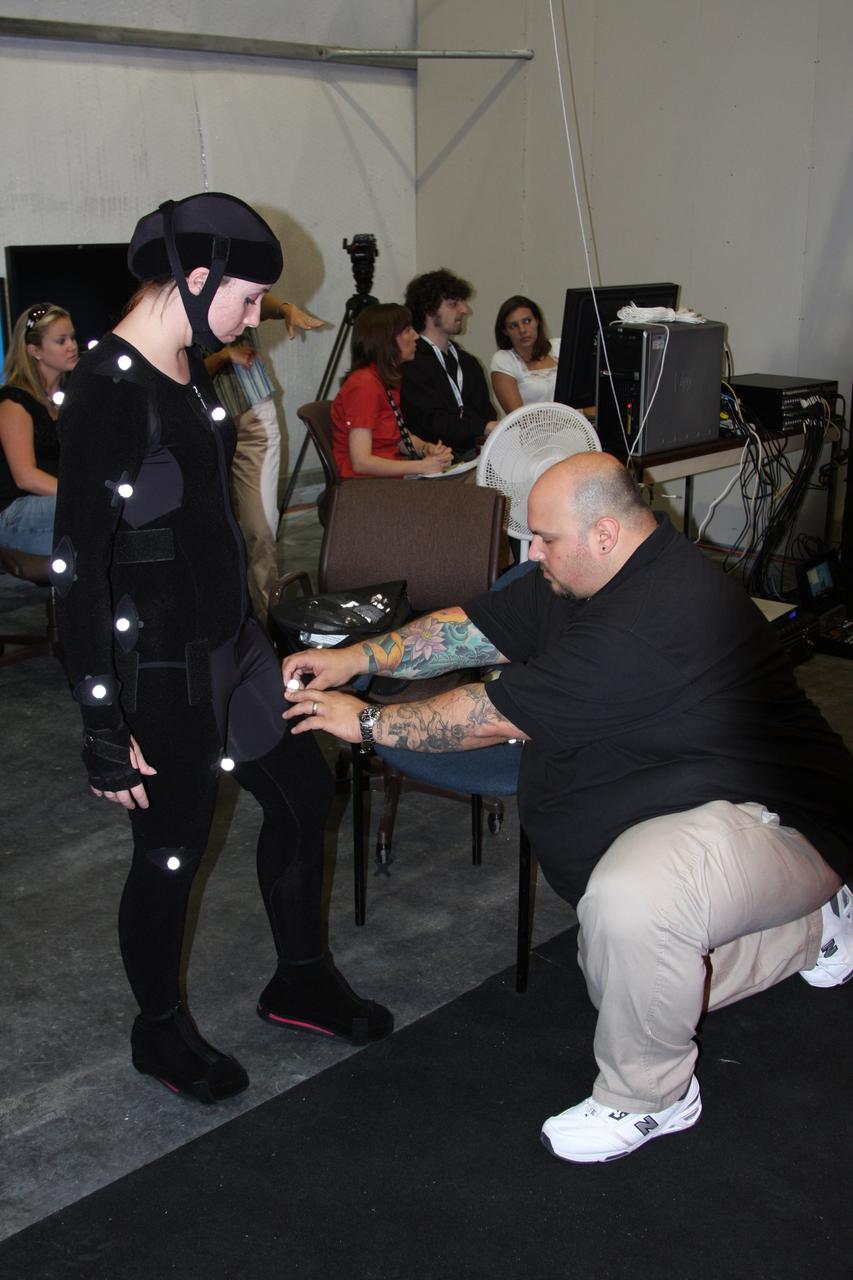
CAPE CANAVERAL, Fla. –David Voci, NYIT MOCAP (Motion Capture) team co-director (seated at the workstation in the background) prepares to direct a motion capture session assisted by Kennedy Advanced Visualizations Environment staff led by Brad Lawrence (not pictured) and by Lora Ridgwell from United Space Alliance Human Factors (foreground, left). Ridgwell will help assemble the Orion Crew Module mockup. The motion tracking aims to improve efficiency of assembly processes and identify potential ergonomic risks for technicians assembling the mockup. The work is being performed in United Space Alliance's Human Engineering Modeling and Performance Lab in the RLV Hangar at NASA's Kennedy Space Center. Part of NASA's Constellation Program, the Orion spacecraft will return humans to the moon and prepare for future voyages to Mars and other destinations in our solar system.
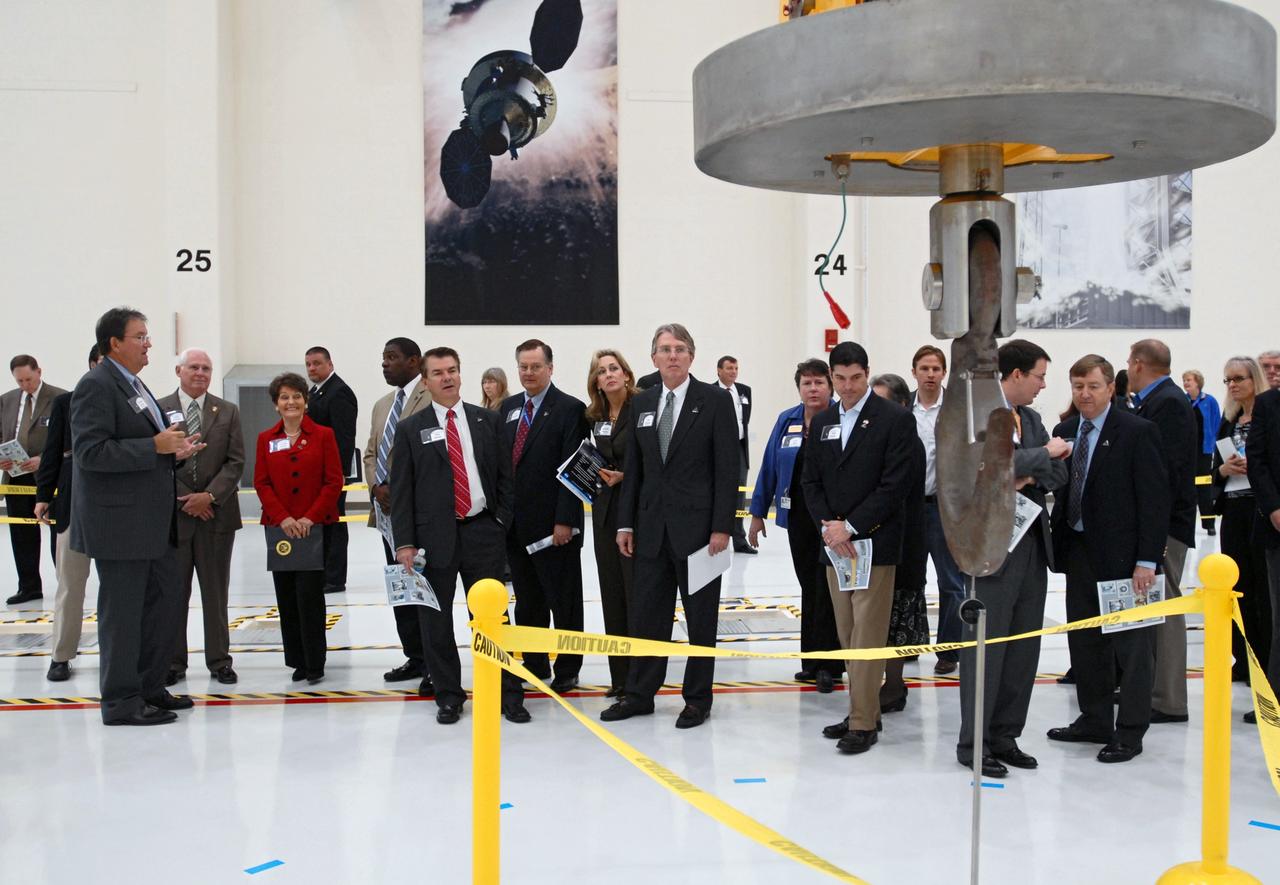
CAPE CANAVERAL, Fla. – Representatives from NASA, Lockheed Martin, Space Florida and the state of Florida participate in a ceremony at NASA's Kennedy Space Center in Florida to mark the completion of renovations on the historic Operations and Checkout Building high bay for use by the Constellation Program. At left, Richard Harris, with Lockheed Martin, describes activities that will take place in the building. Originally built to process space vehicles in the Apollo era, the building will serve as the final assembly facility for the Orion crew exploration vehicle. Orion, America's future human spaceflight vehicle, will be capable of transporting four crew members to the moon and later will support crew transfers to Mars. The Orion spacecraft also will be used to transport crew members to the International Space Station after space shuttles are retired in 2010. The first operational launch of Orion atop an Ares I rocket is planned for 2015. Photo credit: NASA/Dimitri Gerondidakis
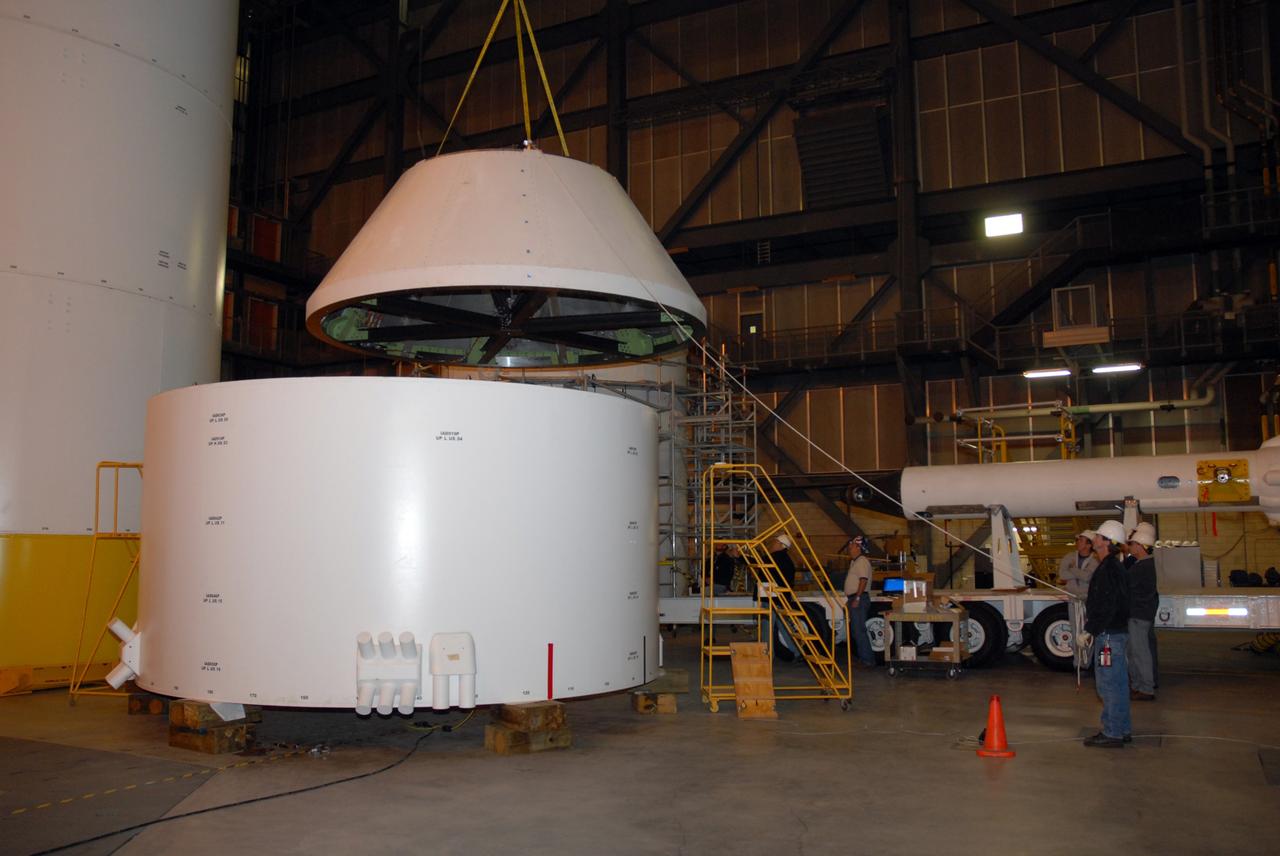
CAPE CANAVERAL, Fla. – In high bay 4 of the Vehicle Assembly Building at NASA's Kennedy Space Center, workers lower the Ares I-X crew module mock-up onto a mock-up of the service module during a fit check of the hardware. When fully developed, the 16-foot diameter crew module will furnish living space and reentry protection for future astronauts, and the service module’s main engine will be used to break out of lunar orbit for the return trip to Earth. Ares I-X is the test flight for the Ares I, which is part of the Constellation Program to return men to the moon and beyond. The I-X flight will provide NASA an early opportunity to test and prove hardware, facilities and ground operations associated with Ares I launches. Targeted for the summer of 2009, the launch of the full-scale Ares I-X will be the first in a series of unpiloted rocket launches from Kennedy. Photo credit: NASA/Jack Pfaller
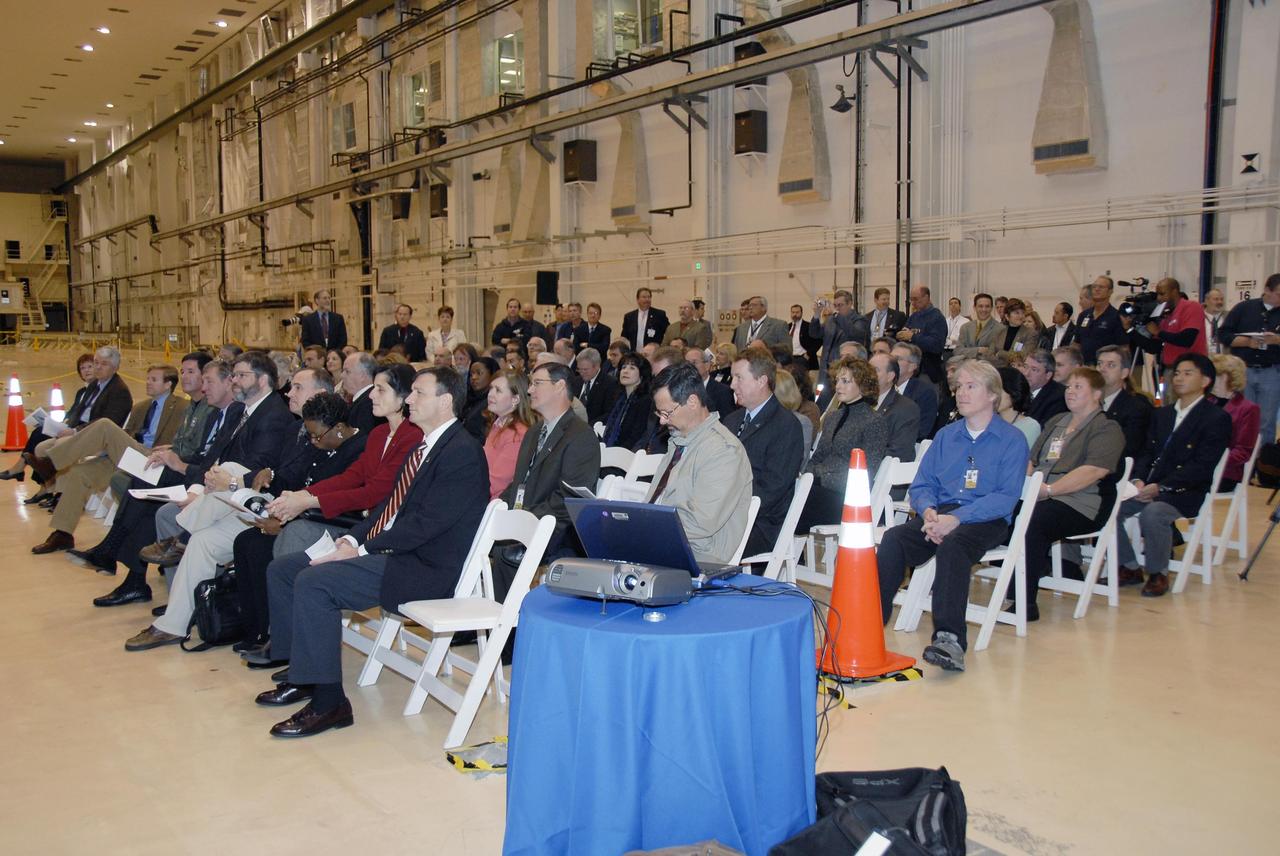
KENNEDY SPACE CENTER, FLA. -- Employees and guests are seated in the Operations and Checkout (O&C) Building high bay for the ceremony commemorating the bay's transition for use by the Constellation Program. Originally built to process space vehicles in the Apollo era, the O&C Building will serve as the final assembly facility for the Orion crew exploration vehicle. Orion, America's human spaceflight vehicle of the future, will be capable of transporting four crewmembers for lunar missions and later will support crew transfers for Mars missions. Each Orion spacecraft also may be used to support up to six crewmembers to the International Space Station after the space shuttle is retired in 2010. Design, development and construction of Orion's components will be performed by Lockheed Martin for NASA at facilities throughout the country. Photo credit: NASA/Kim Shiflett
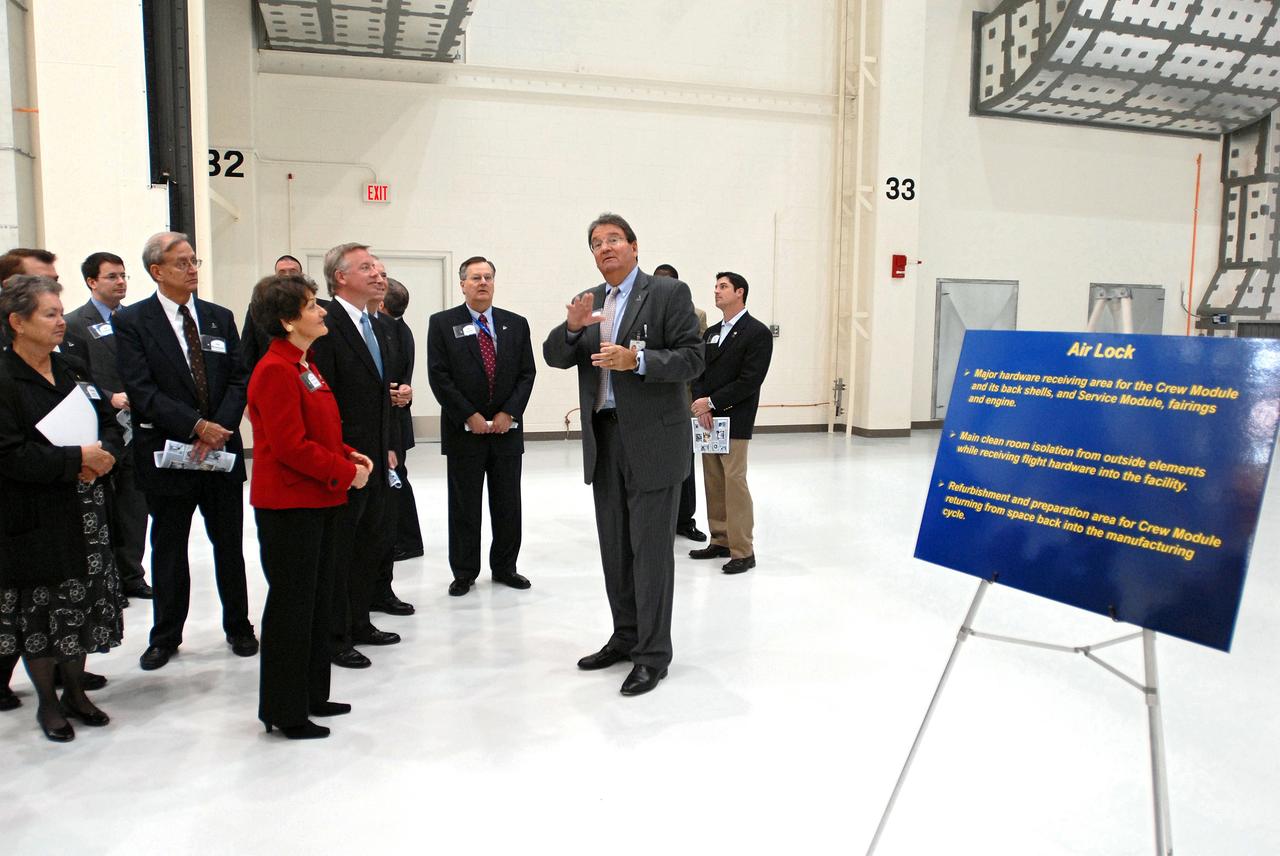
CAPE CANAVERAL, Fla. – Representatives from NASA, Lockheed Martin, Space Florida and the state of Florida participate in a ceremony at NASA's Kennedy Space Center in Florida to mark the completion of renovations on the historic Operations and Checkout Building high bay for use by the Constellation Program. At center, U.S. Rep. Suzanne Kosmas and Lt. Governor Jeff Kottcamp listen to Richard Harris, with Lockheed Martin, describe some of the hardware that will be used in the building. Originally built to process space vehicles in the Apollo era, the building will serve as the final assembly facility for the Orion crew exploration vehicle. Orion, America's future human spaceflight vehicle, will be capable of transporting four crew members to the moon and later will support crew transfers to Mars. The Orion spacecraft also will be used to transport crew members to the International Space Station after space shuttles are retired in 2010. The first operational launch of Orion atop an Ares I rocket is planned for 2015. Photo credit: NASA/Dimitri Gerondidakis
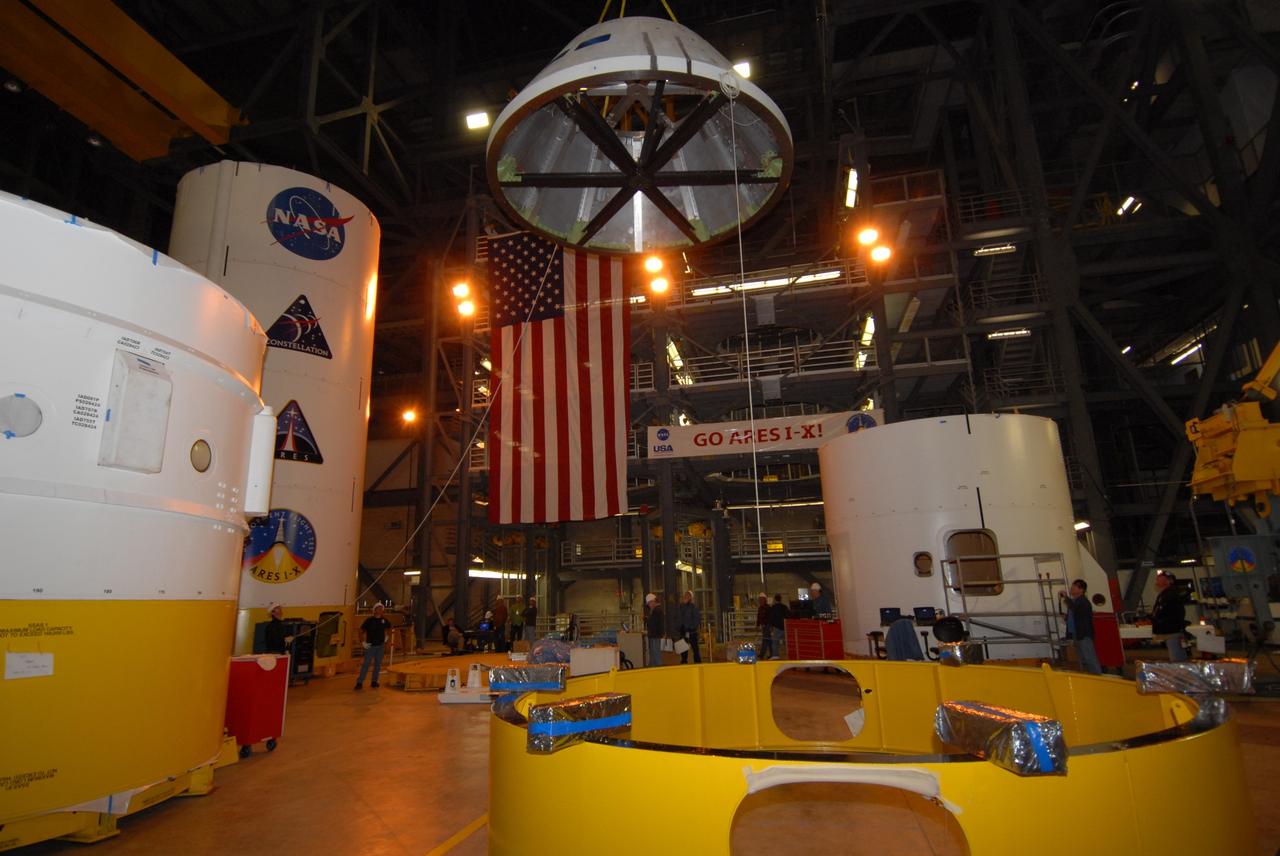
CAPE CANAVERAL, Fla. – In high bay 4 of the Vehicle Assembly Building at NASA's Kennedy Space Center, workers lift the Ares I-X crew module mock-up during a fit check with a mock-up of the service module. When fully developed, the 16-foot diameter crew module will furnish living space and reentry protection for future astronauts, and the service module’s main engine will be used to break out of lunar orbit for the return trip to Earth. Ares I-X is the test flight for the Ares I, which is part of the Constellation Program to return men to the moon and beyond. The I-X flight will provide NASA an early opportunity to test and prove hardware, facilities and ground operations associated with Ares I launches. Targeted for the summer of 2009, the launch of the full-scale Ares I-X will be the first in a series of unpiloted rocket launches from Kennedy. Photo credit: NASA/Jack Pfaller
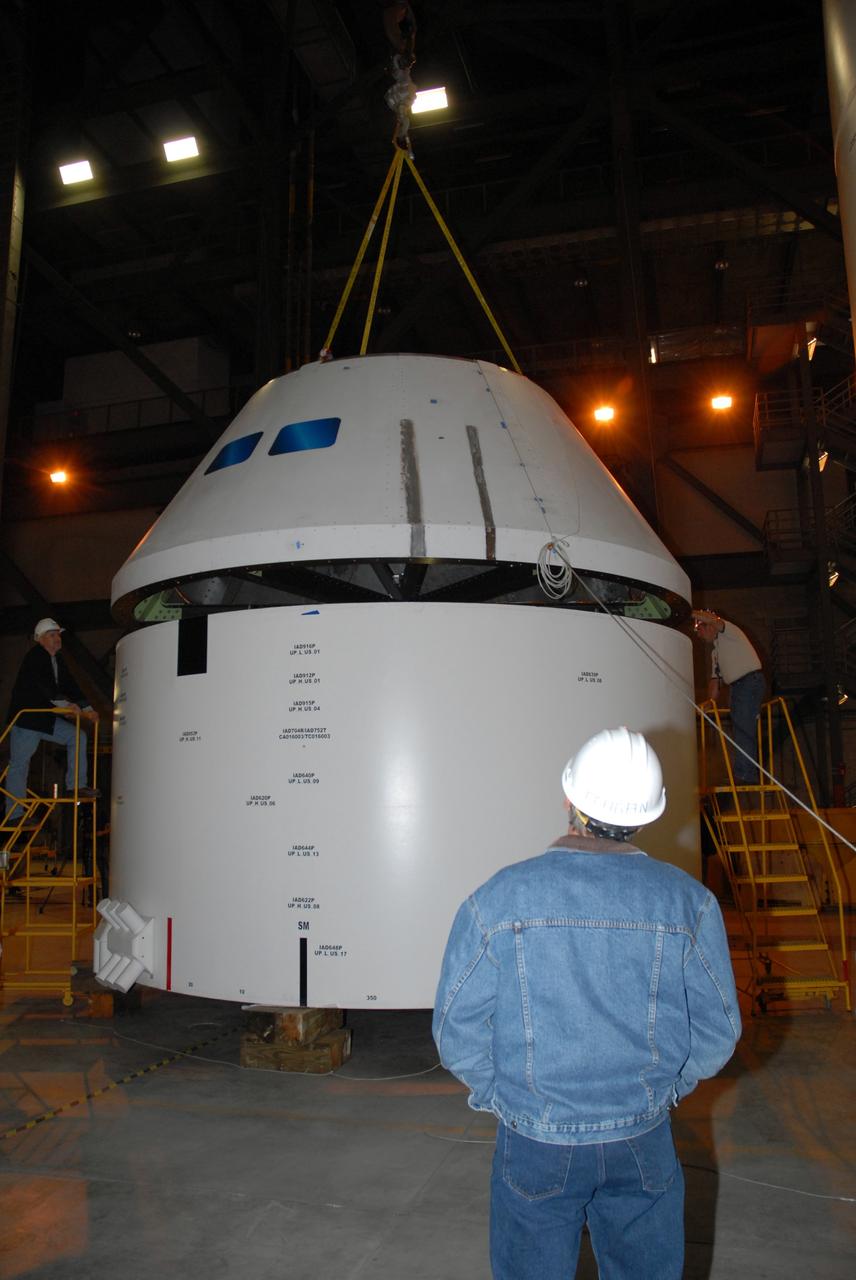
CAPE CANAVERAL, Fla. – In high bay 4 of the Vehicle Assembly Building at NASA's Kennedy Space Center, workers position the Ares I-X crew module mock-up onto a mock-up of the service module during a fit check of the hardware. When fully developed, the 16-foot diameter crew module will furnish living space and reentry protection for future astronauts, and the service module’s main engine will be used to break out of lunar orbit for the return trip to Earth. Ares I-X is the test flight for the Ares I, which is part of the Constellation Program to return men to the moon and beyond. The I-X flight will provide NASA an early opportunity to test and prove hardware, facilities and ground operations associated with Ares I launches. Targeted for the summer of 2009, the launch of the full-scale Ares I-X will be the first in a series of unpiloted rocket launches from Kennedy. Photo credit: NASA/Jack Pfaller
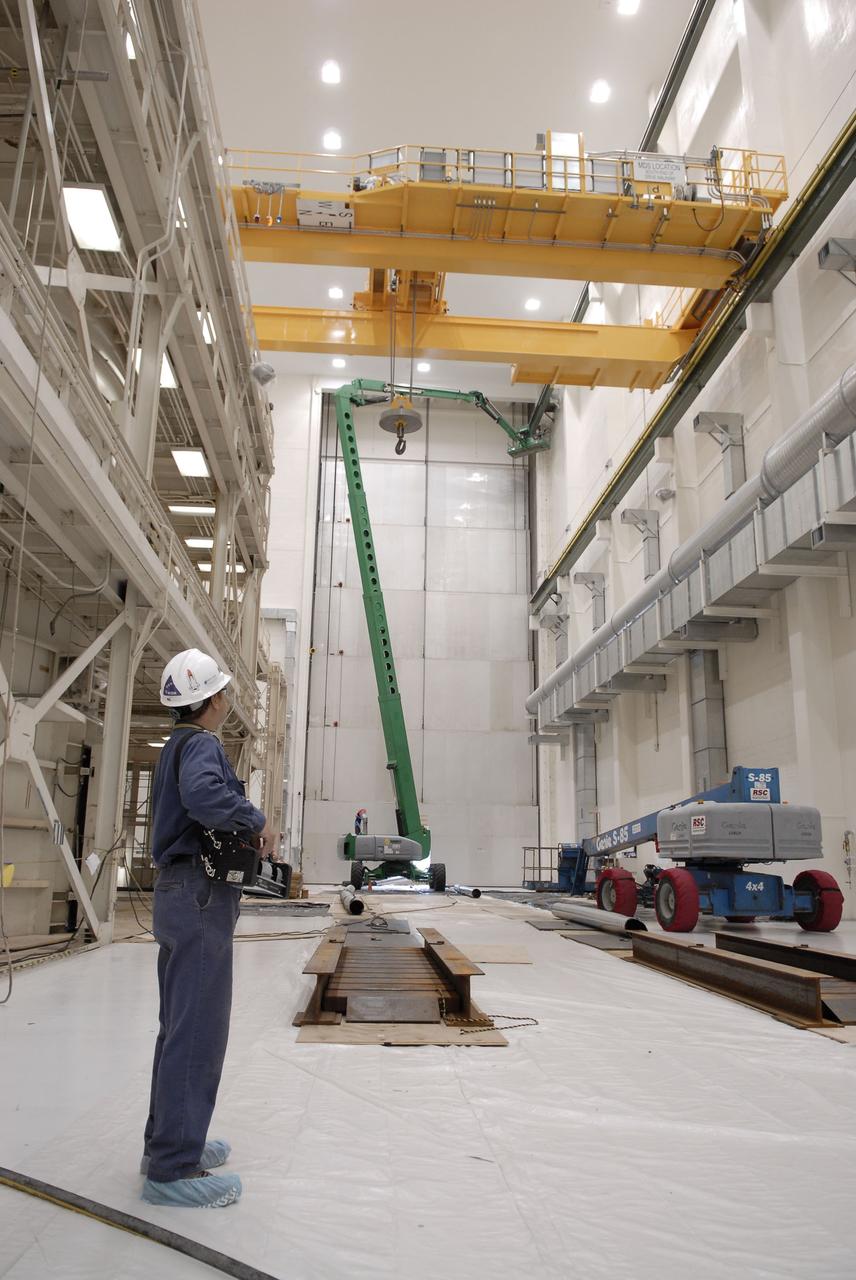
CAPE CANAVERAL, Fla. – Movement of the hook from a new crane are is tested inside the Operations and Checkout Building at NASA's Kennedy Space Center in Florida. The new O&C low-bay crane is a 25-ton overhead bridge crane built for Lockheed Martin and Space Florida by American Crane and Equipment Corporation in Douglasville, Pa. The crane has a bridge span of 78’-2” and a hook height of 48’-10”. The crane will be used for lifting and moving flight hardware, fixtures and equipment in support of the Orion spacecraft manufacturing. Part of NASA's Constellation Program, the Orion spacecraft will return humans to the moon and prepare for future voyages to Mars and other destinations in our solar system. Photo credit: NASA/Kim Shiflett
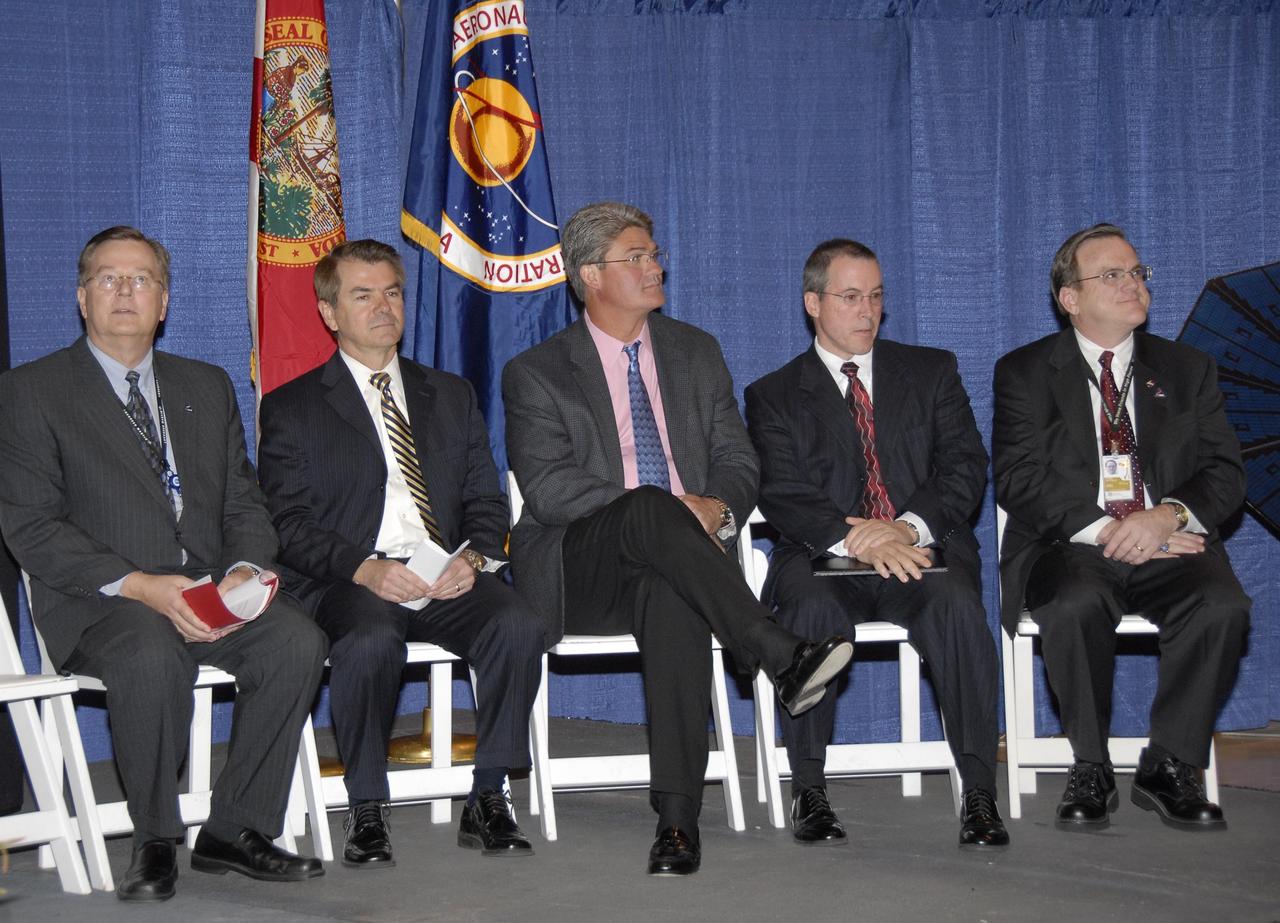
KENNEDY SPACE CENTER, FLA. -- Representatives from NASA, Lockheed Martin, Space Florida and the state of Florida are seated on stage at a ceremony to commemorate the transition of the historic Operations and Checkout (O&C) Building high bay for use by the Constellation Program. From left are Cleon Lacefield, Lockheed Martin program manager; Thad Altman, representative of the State of Florida; Bill Parsons, Kennedy Space Center director; Steve Koller, executive director of Space Florida; and Skip Hatfield, Orion Project manager. Representatives from NASA, Lockheed Martin, Space Florida and the state of Florida are seated on stage at a ceremony to commemorate the transition of the historic Operations and Checkout (O&C) Building high bay for use by the Constellation Program. From left are Cleon Lacefield, Lockheed Martin program manager; Thad Altman, representative of the State of Florida; Bill Parsons, Kennedy Space Center director; Steve Koller, executive director of Space Florida; and Skip Hatfield, Orion Project manager. Originally built to process space vehicles in the Apollo era, the O&C Building will serve as the final assembly facility for the Orion crew exploration vehicle. Orion, America's human spaceflight vehicle of the future, will be capable of transporting four crewmembers for lunar missions and later will support crew transfers for Mars missions. Each Orion spacecraft also may be used to support up to six crewmembers to the International Space Station after the space shuttle is retired in 2010. Design, development and construction of Orion's components will be performed by Lockheed Martin for NASA at facilities throughout the country. Photo credit: NASA/Kim Shiflett
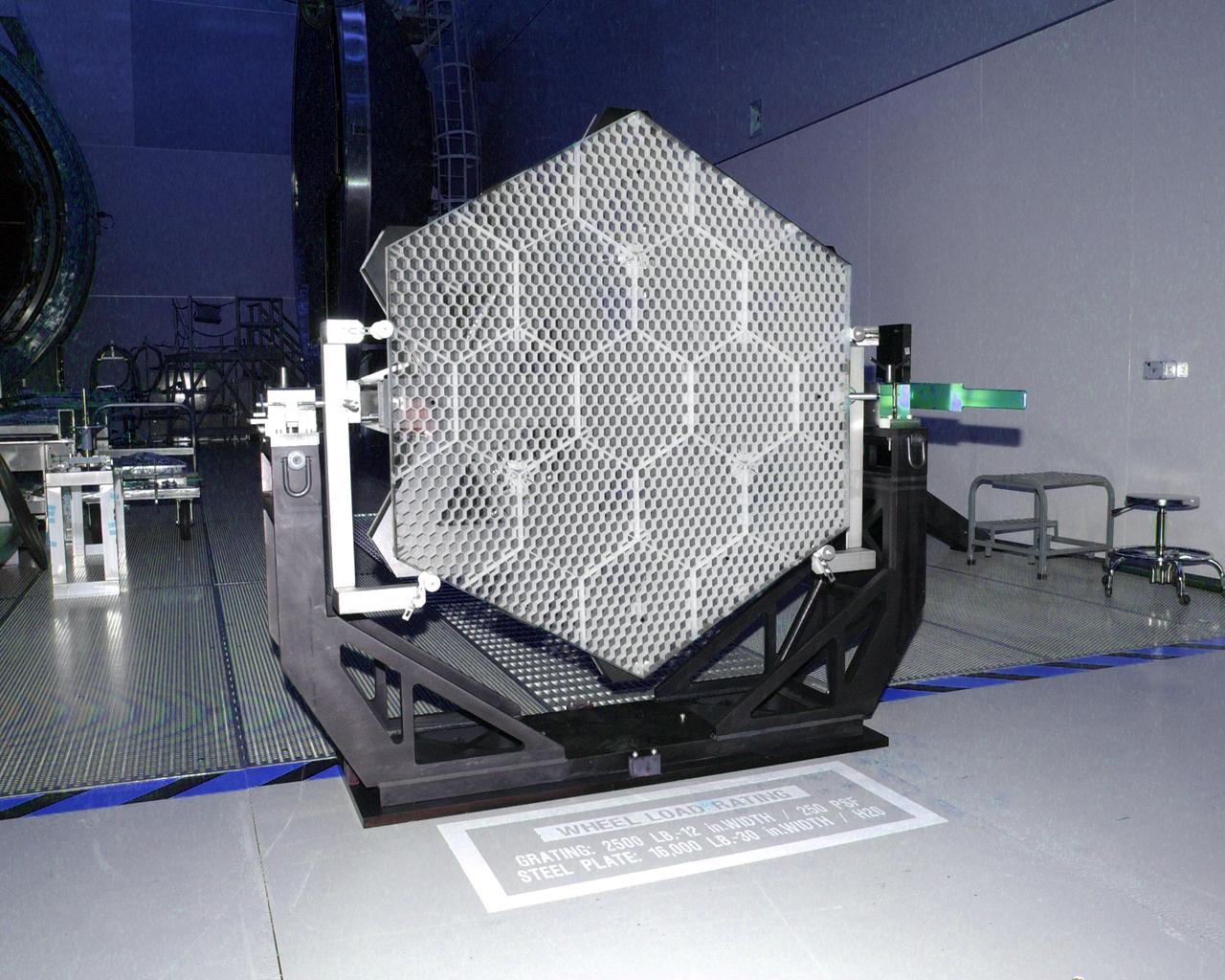
This photo (a frontal view) is of one of many segments of the Eastman-Kodak mirror assembly being tested for the James Webb Space Telescope (JWST) project at the X-Ray Calibration Facility at Marshall Space Flight Center (MSFC). MSFC is supporting Goddard Space Flight Center (GSFC) in developing the JWST by taking numerous measurements to predict its future performance. The tests are conducted in a vacuum chamber cooled to approximate the super cold temperatures found in space. During its 27 years of operation, the facility has performed testing in support of a wide array of projects, including the Hubble Space Telescope (HST), Solar A, Chandra technology development, Chandra High Resolution Mirror Assembly and science instruments, Constellation X-Ray Mission, and Solar X-Ray Imager, currently operating on a Geostationary Operational Environment Satellite. The JWST is NASA's next generation space telescope, a successor to the Hubble Space Telescope, named in honor of NASA's second administrator, James E. Webb. It is scheduled for launch in 2010 aboard an expendable launch vehicle. It will take about 3 months for the spacecraft to reach its destination, an orbit of 940,000 miles in space.
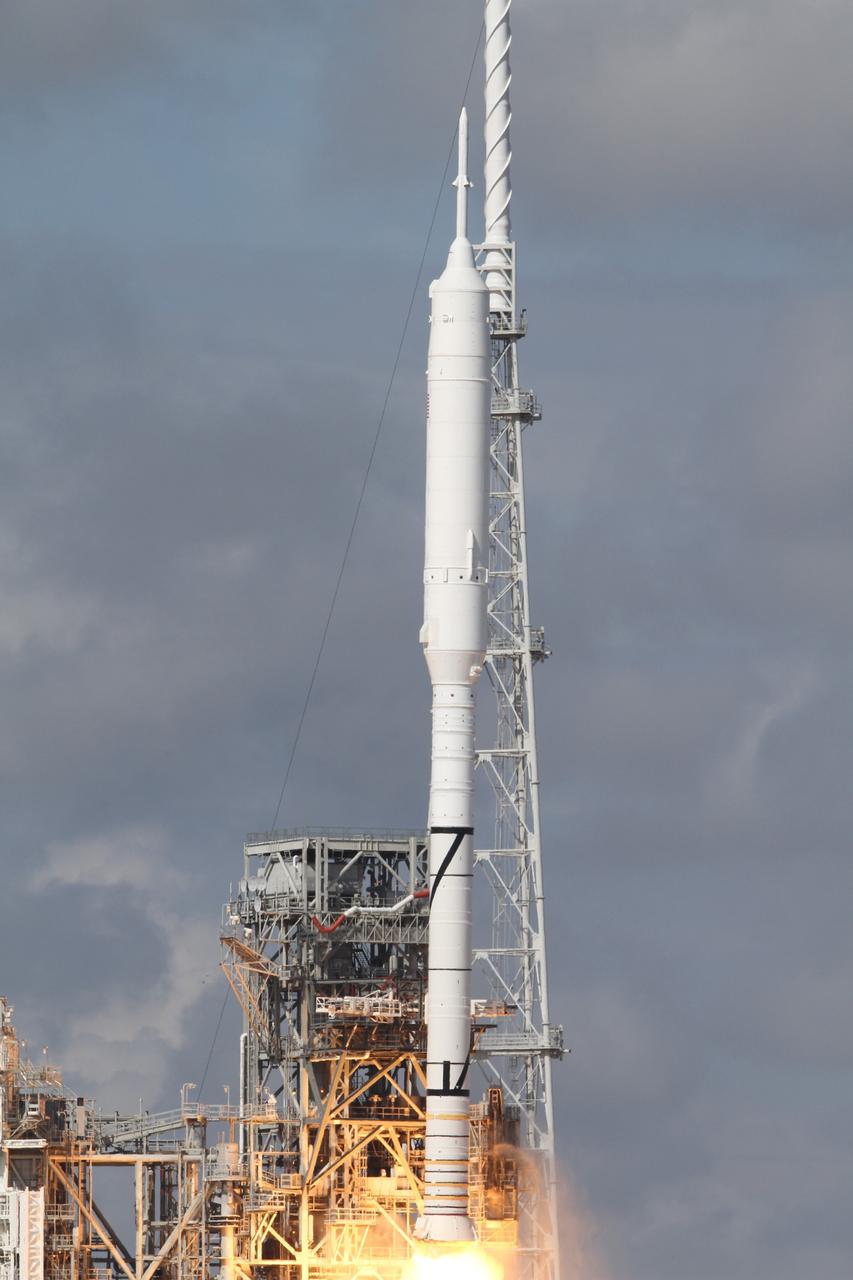
CAPE CANAVERAL, Fla. - NASA’s Constellation Program's 327-foot-tall Ares I-X test rocket takes off from Launch Pad 39B at NASA's Kennedy Space Center in Florida at 11:30 a.m. EDT Oct. 28. The rocket produces 2.96 million pounds of thrust at liftoff and reaches a speed of 100 mph in eight seconds. This was the first launch from Kennedy's pads of a vehicle other than the space shuttle since the Apollo Program's Saturn rockets were retired. The parts used to make the Ares I-X booster flew on 30 different shuttle missions ranging from STS-29 in 1989 to STS-106 in 2000. The data returned from more than 700 sensors throughout the rocket will be used to refine the design of future launch vehicles and bring NASA one step closer to reaching its exploration goals. For information on the Ares I-X vehicle and flight test, visit http://www.nasa.gov/aresIX. Photo credit: NASA/Kenny Allen
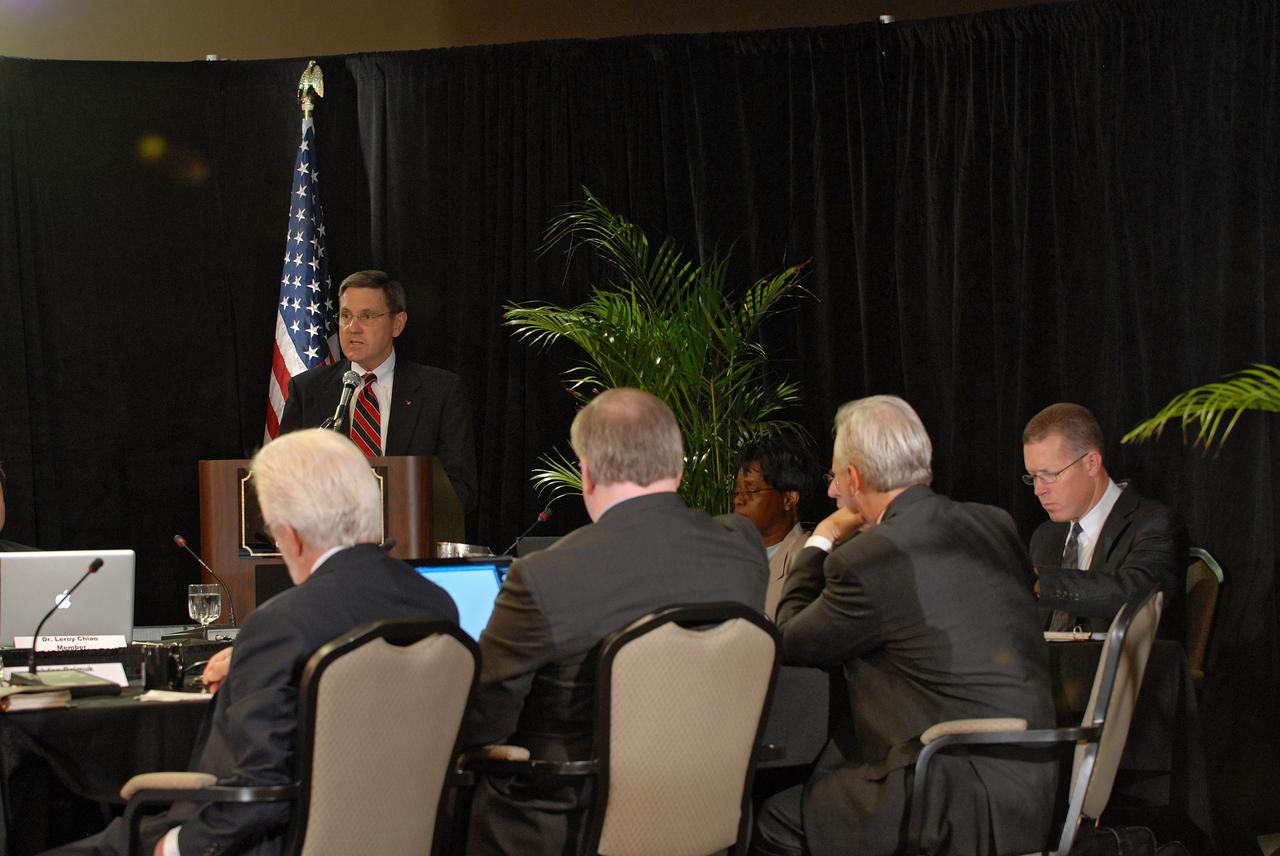
CAPE CANAVERAL, Fla. – NASA Kennedy Space Center's Center Director Bob Cabana (right) speaks during the meeting of the Augustine Commission in Cocoa Beach, Fla. At the conference table in the foreground are members of the commission: (from left) Bohdan Bejmuk, chair of Constellation Program Standing Review Board; Jeff Greason, co-founder and CEO of XCOR Aerospace; Dr. Christopher Chyba, professor of Astrophysical Sciences and international Affairs at Princeton University; and Phil McAlister, special assistant for Program Analysis in NASA's Office of Program Analysis and Evaluation. At the request of the Office of Science and Technology Policy, NASA established the Review of U.S. Human Space Flight Plans Committee, known as the Augustine Commission. Chaired by Norman R. Augustine, retired chairman and CEO of Lockheed Martin Corp., the committee is conducting an independent review of ongoing U.S. human spaceflight plans and programs, as well as alternatives, to ensure the nation is pursuing the best trajectory for the future of human space flight - one that is safe, innovative, affordable, and sustainable. Photo credit: NASA/Jim Grossmann
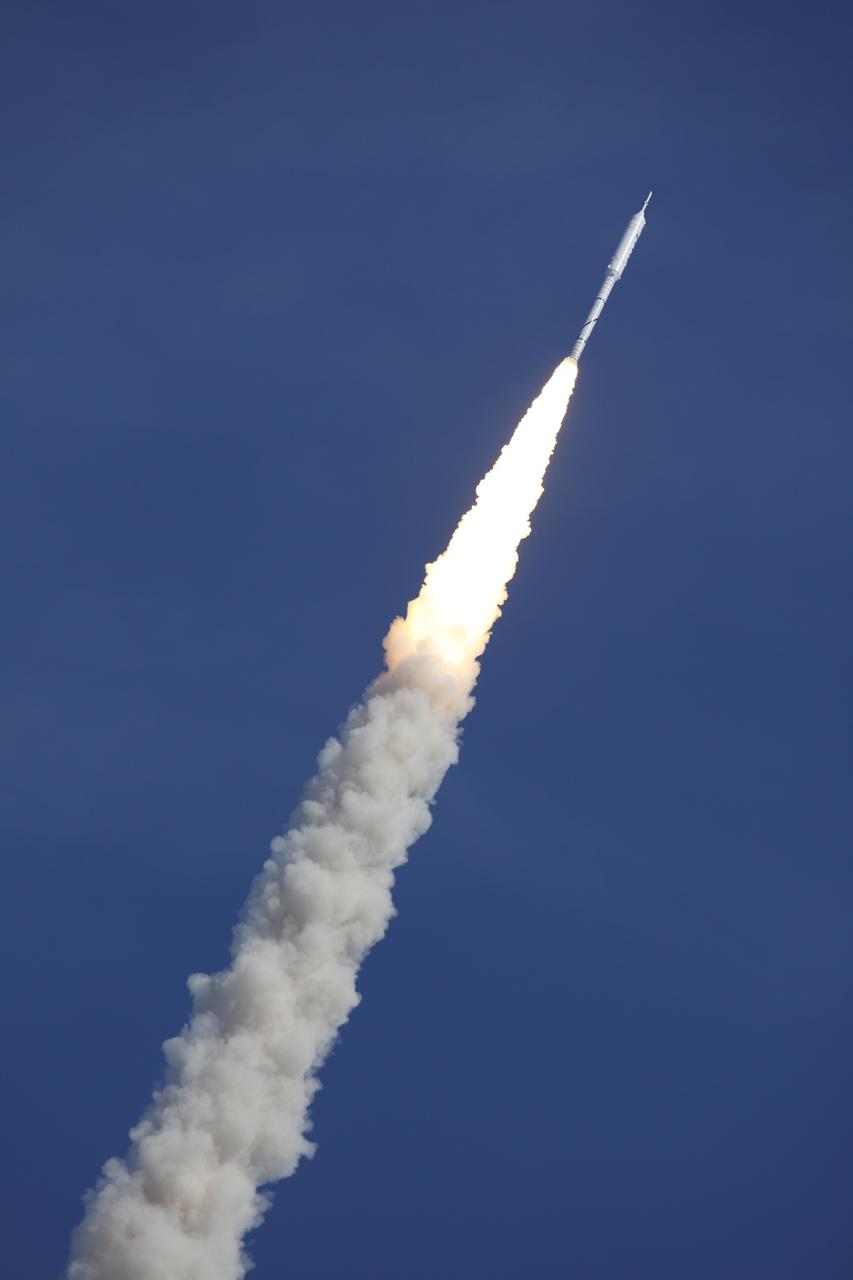
CAPE CANAVERAL, Fla. - Nearly twice as tall as the space shuttle, the Constellation Program's 327-foot-tall Ares I-X test rocket races off Launch Complex 39B at NASA's Kennedy Space Center in Florida. The rocket produces 2.96 million pounds of thrust at liftoff and reaches a speed of 100 mph in eight seconds. Liftoff of the 6-minute flight test was at 11:30 a.m. EDT Oct. 28. This was the first launch from Kennedy's pads of a vehicle other than the space shuttle since the Apollo Program's Saturn rockets were retired. The parts used to make the Ares I-X booster flew on 30 different shuttle missions ranging from STS-29 in 1989 to STS-106 in 2000. The data returned from more than 700 sensors throughout the rocket will be used to refine the design of future launch vehicles and bring NASA one step closer to reaching its exploration goals. For information on the Ares I-X vehicle and flight test, visit http://www.nasa.gov/aresIX. Photo courtesy of Scott Andrews
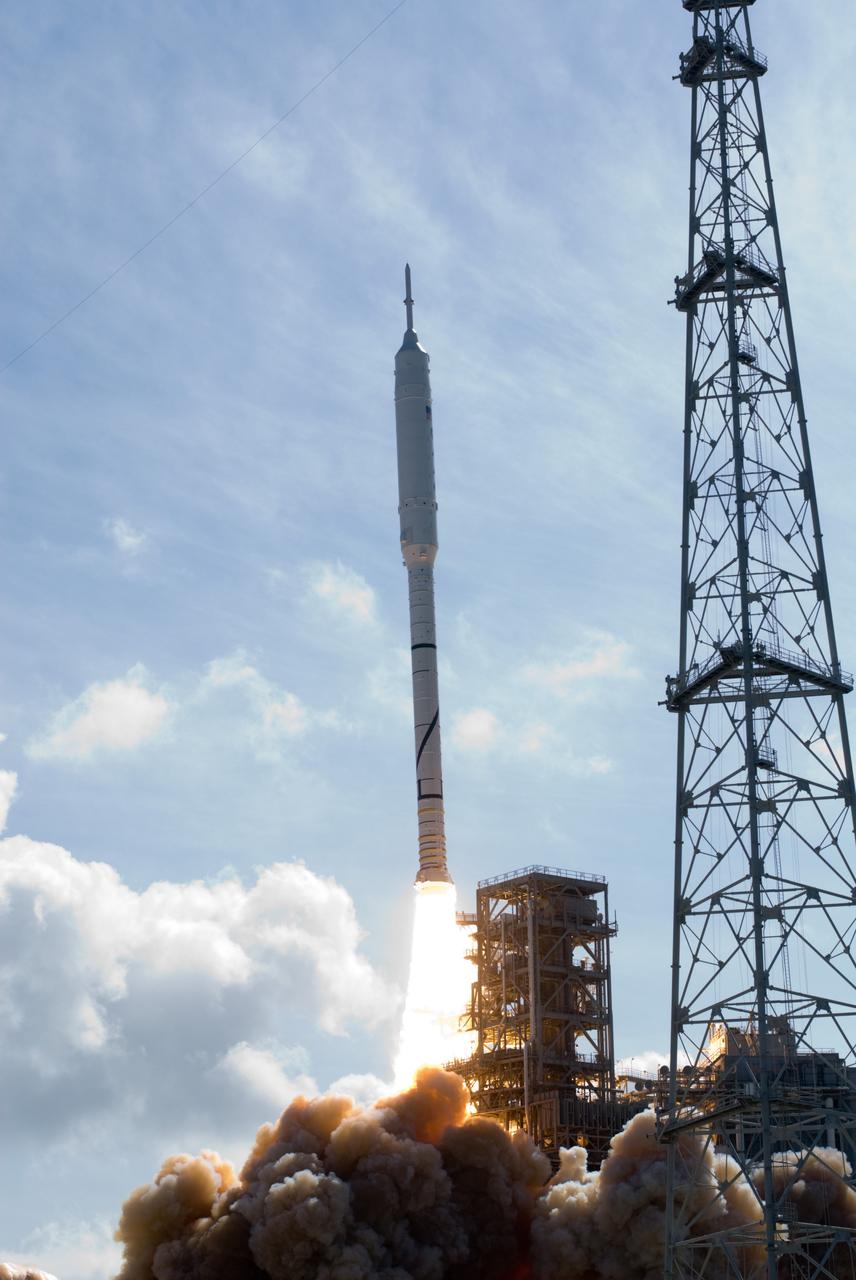
CAPE CANAVERAL, Fla. – NASA's Ares I-X rocket climbs above Launch Pad 39B at NASA's Kennedy Space Center in Florida at 11:30 a.m. EDT on Oct. 28. The rocket, part of NASA's Constellation Program, produces 2.96 million pounds of thrust at liftoff and reaches a speed of 100 mph in eight seconds. This was the first launch from Kennedy's pads of a vehicle other than the space shuttle since the Apollo Program's Saturn rockets were retired. The parts used to make the Ares I-X booster flew on 30 different shuttle missions ranging from STS-29 in 1989 to STS-106 in 2000. The data returned from more than 700 sensors throughout the rocket will be used to refine the design of future launch vehicles and bring NASA one step closer to reaching its exploration goals. For information on the Ares I-X vehicle and flight test, visit http://www.nasa.gov/aresIX. Photo credit: NASA/ George Roberts and Tony Gray
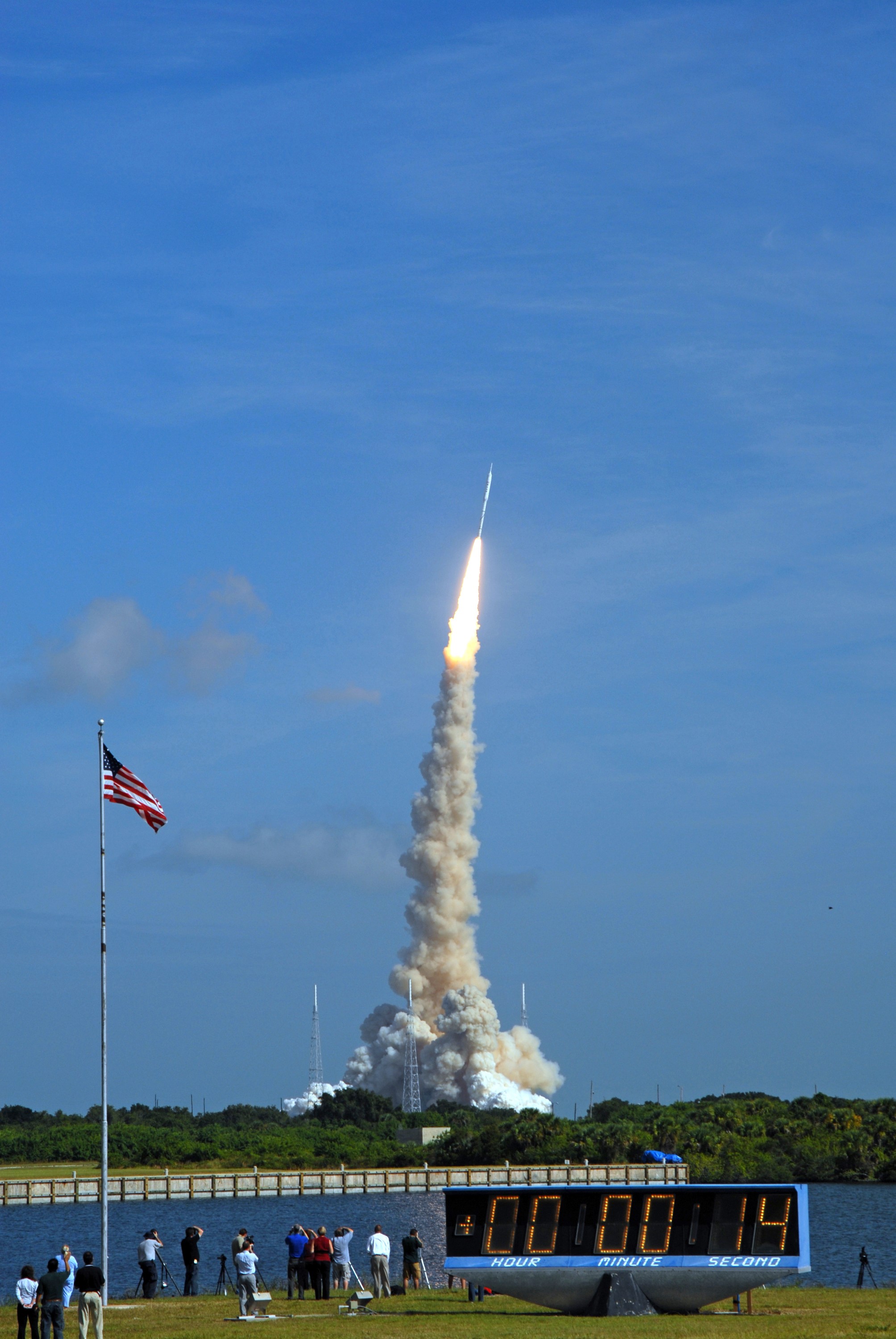
CAPE CANAVERAL, Fla. - At NASA's Kennedy Space Center in Florida, the Press Site countdown clock, so long a familiar a backdrop for space shuttle launches, counts off the seconds since liftoff from Launch Complex 39B of a new vehicle, the Constellation Program's Ares I-X test rocket. The rocket produces 2.96 million pounds of thrust at liftoff and reaches a speed of 100 mph in eight seconds. Liftoff of the 6-minute flight test was at 11:30 a.m. EDT Oct. 28. This was the first launch from Kennedy's pads of a vehicle other than the space shuttle since the Apollo Program's Saturn rockets were retired. The parts used to make the Ares I-X booster flew on 30 different shuttle missions ranging from STS-29 in 1989 to STS-106 in 2000. The data returned from more than 700 sensors throughout the rocket will be used to refine the design of future launch vehicles and bring NASA one step closer to reaching its exploration goals. For information on the Ares I-X vehicle and flight test, visit http://www.nasa.gov/aresIX. Photo credit: NASA/Jim Grossmann
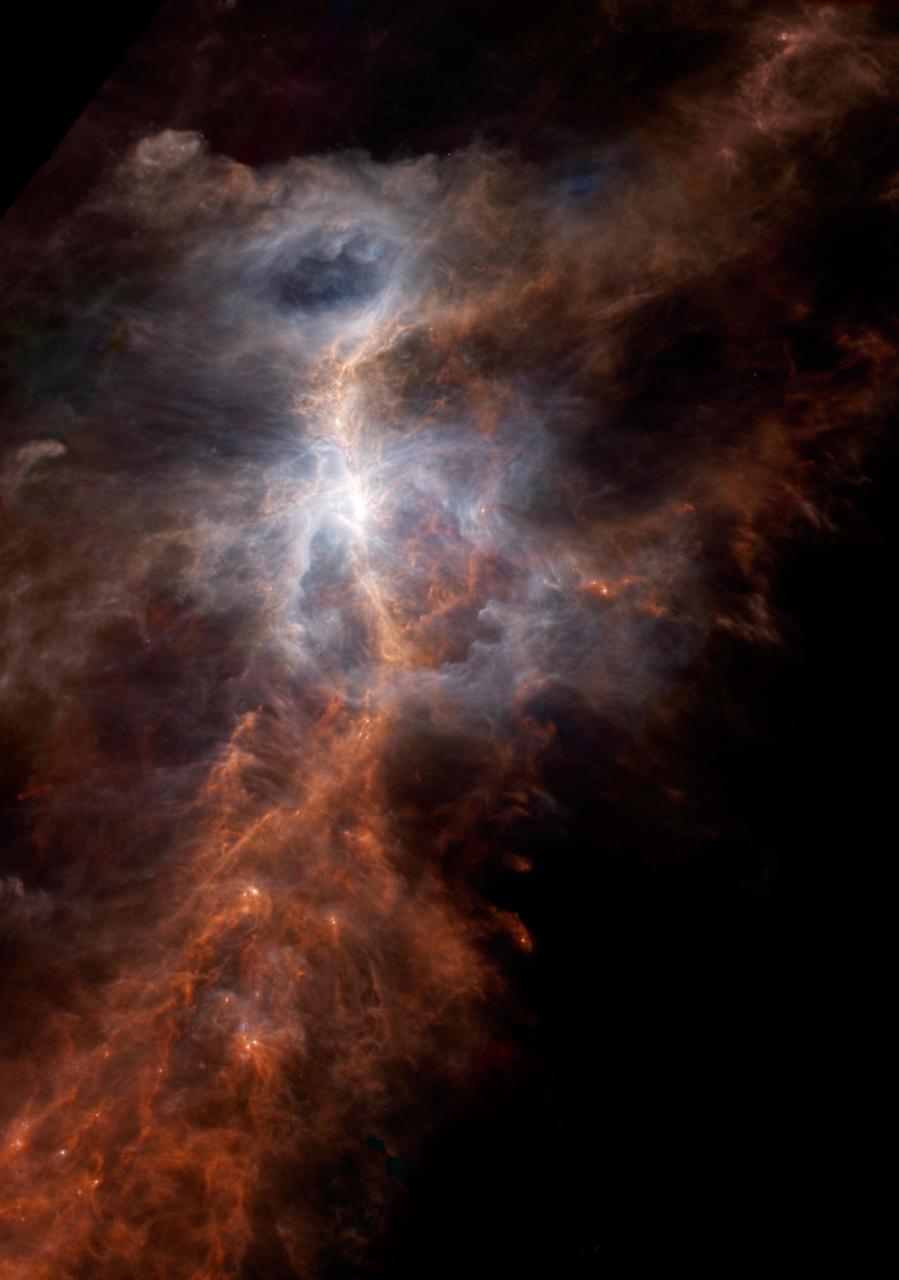
The dusty side of the Sword of Orion is illuminated in this striking infrared image from the European Space Agency's Hershel Space Observatory. This immense nebula is the closest large region of star formation, situated about 1,500 light years away in the constellation of Orion. The parts that are easily observed in visible light, known alternatively as the Orion Nebula or Messier 42, correspond to the light blue regions. This is the glow from the warmest dust, illuminated by clusters of hot stars that have only recently been born in this chaotic region. The red spine of material running from corner to corner reveals colder, denser filaments of dust and gas that are scattered throughout the Orion nebula. In visible light this would be a dark, opaque feature, hiding the reservoir of material from which stars have recently formed and will continue to form in the future. Herschel data from the PACS instrument observations, at wavelengths of 100 and 160 microns, is displayed in blue and green, respectively, while SPIRE 250-micron data is shown in red. Within the inset image, the emission from ionized carbon atoms (C+), overlaid in yellow, was isolated and mapped out from spectrographic data obtained by the HIFI instrument. http://photojournal.jpl.nasa.gov/catalog/PIA21073
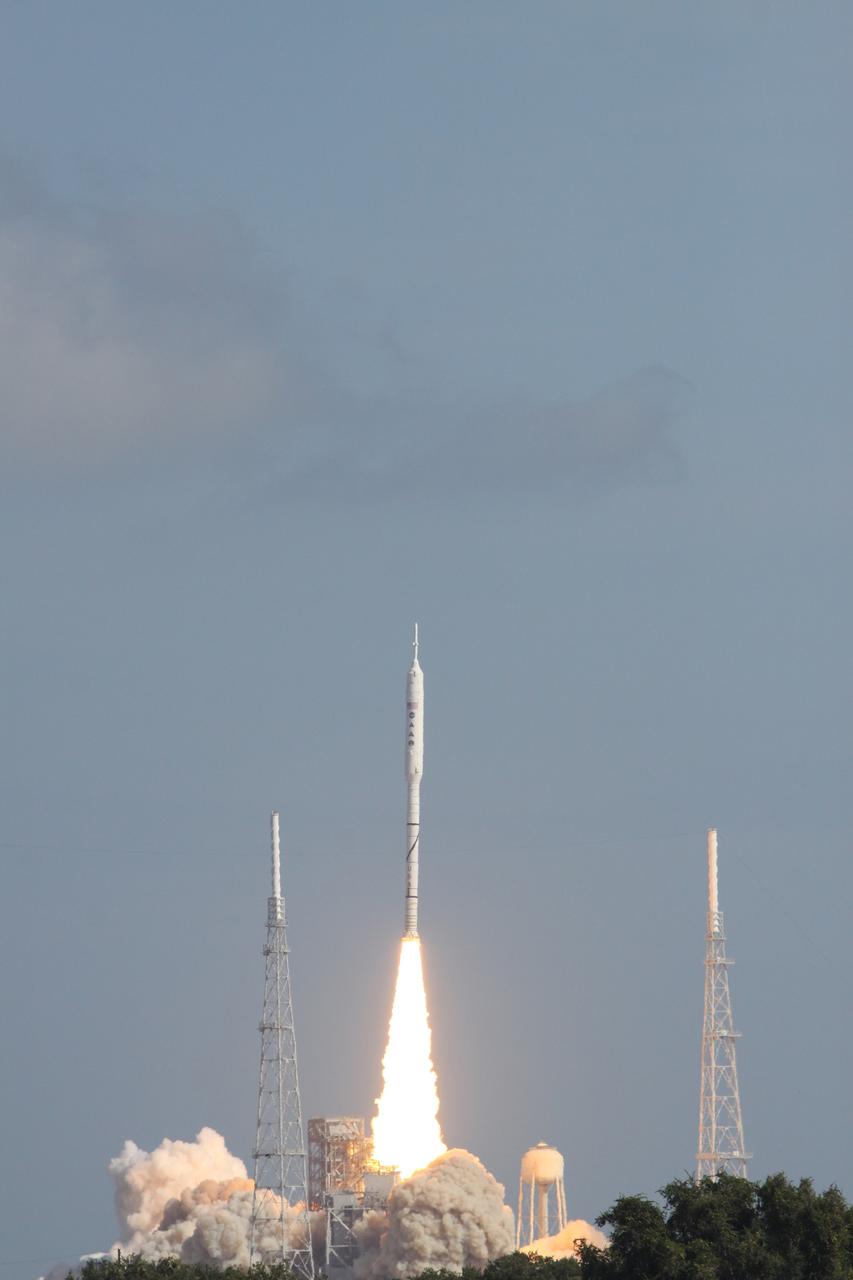
CAPE CANAVERAL, Fla. - With more than 23 times the power output of the Hoover Dam, the Constellation Program's Ares I-X test rocket zooms off Launch Complex 39B at NASA's Kennedy Space Center in Florida. The rocket produces 2.96 million pounds of thrust at liftoff and reaches a speed of 100 mph in eight seconds. Liftoff of the 6-minute flight test was at 11:30 a.m. EDT Oct. 28. This was the first launch from Kennedy's pads of a vehicle other than the space shuttle since the Apollo Program's Saturn rockets were retired. The parts used to make the Ares I-X booster flew on 30 different shuttle missions ranging from STS-29 in 1989 to STS-106 in 2000. The data returned from more than 700 sensors throughout the rocket will be used to refine the design of future launch vehicles and bring NASA one step closer to reaching its exploration goals. For information on the Ares I-X vehicle and flight test, visit http://www.nasa.gov/aresIX. Photo credit: NASA/Jack Pfaller
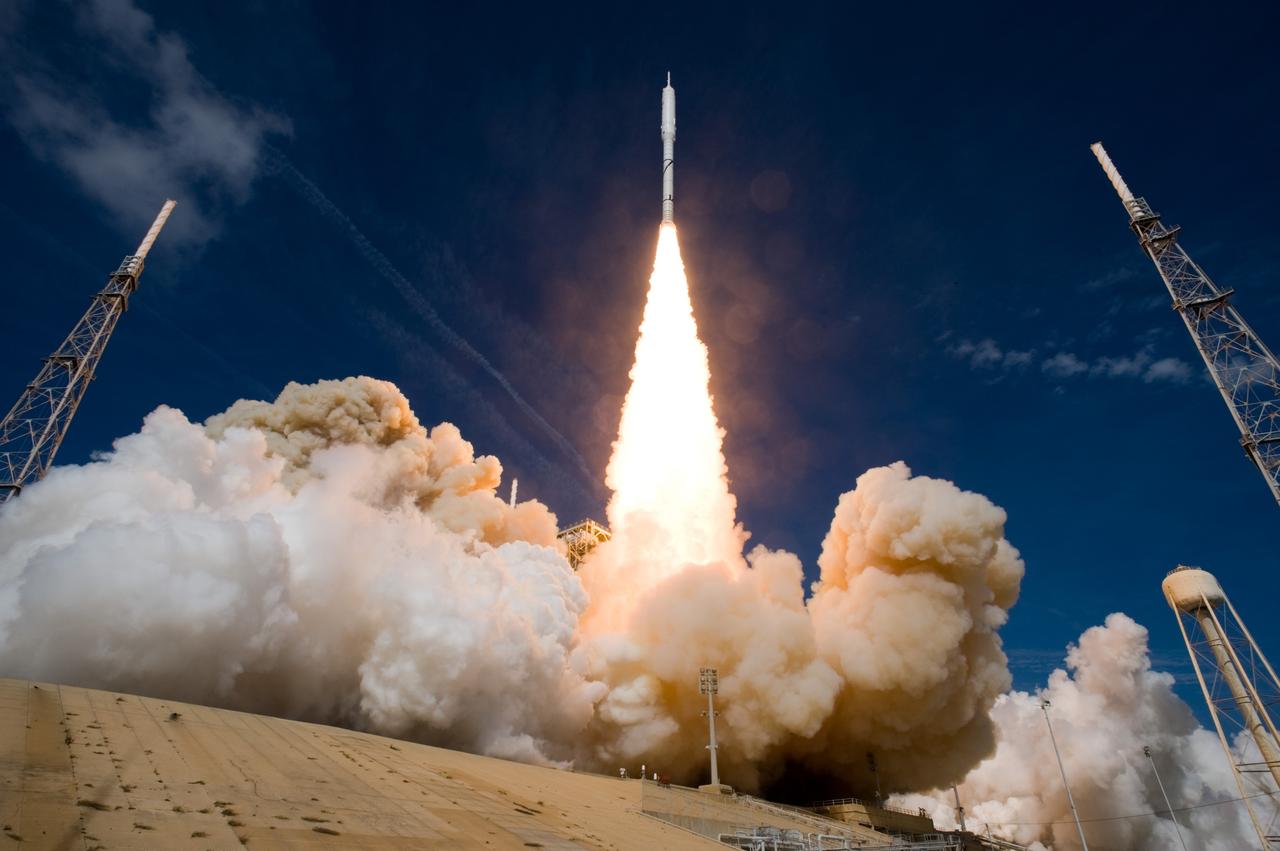
CAPE CANAVERAL, Fla. – Smoke engulfs Launch Pad 39B as the Ares I-X test rocket as it takes off from NASA's Kennedy Space Center in Florida at 11:30 a.m. EDT Oct. 28. NASA’s Constellation Program's 327-foot-tall rocket produces 2.96 million pounds of thrust at liftoff and reaches a speed of 100 mph in eight seconds. This was the first launch from Kennedy's pads of a vehicle other than the space shuttle since the Apollo Program's Saturn rockets were retired. The parts used to make the Ares I-X booster flew on 30 different shuttle missions ranging from STS-29 in 1989 to STS-106 in 2000. The data returned from more than 700 sensors throughout the rocket will be used to refine the design of future launch vehicles and bring NASA one step closer to reaching its exploration goals. For information on the Ares I-X vehicle and flight test, visit http://www.nasa.gov/aresIX.Photo credit: NASA/ Sandra Joseph and Kevin O'Connell
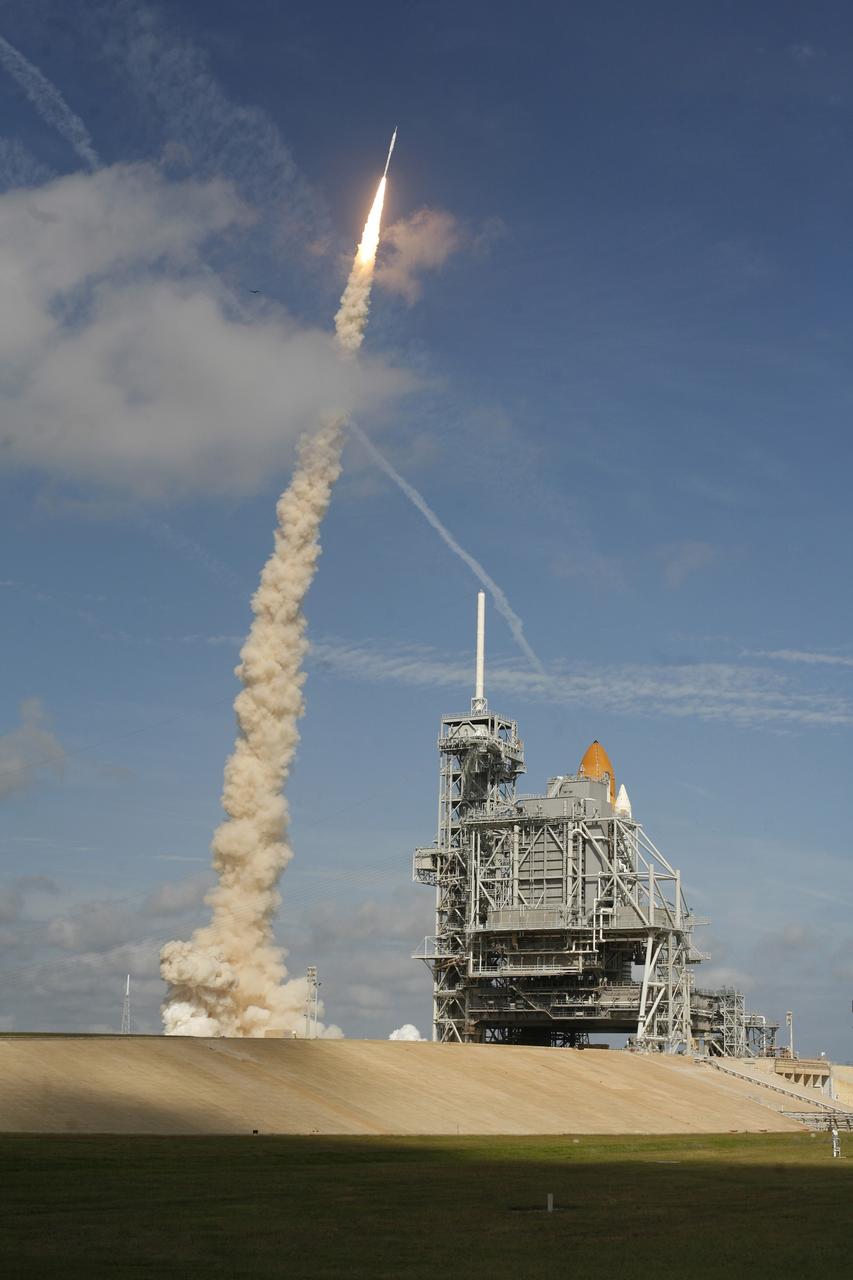
CAPE CANAVERAL, Fla. - With more than 23 times the power output of the Hoover Dam, the Constellation Program's Ares I-X test rocket zooms off Launch Complex 39B at NASA's Kennedy Space Center in Florida. The rocket produces 2.96 million pounds of thrust at liftoff and reaches a speed of 100 mph in eight seconds. At right is space shuttle Atlantis, poised on Launch Pad 39A for liftoff, targeted for Nov. 16. Liftoff of the 6-minute flight test was at 11:30 a.m. EDT Oct. 28. This was the first launch from Kennedy's pads of a vehicle other than the space shuttle since the Apollo Program's Saturn rockets were retired. The parts used to make the Ares I-X booster flew on 30 different shuttle missions ranging from STS-29 in 1989 to STS-106 in 2000. The data returned from more than 700 sensors throughout the rocket will be used to refine the design of future launch vehicles and bring NASA one step closer to reaching its exploration goals. For information on the Ares I-X vehicle and flight test, visit http://www.nasa.gov/aresIX. Photo courtesy of Scott Andrews
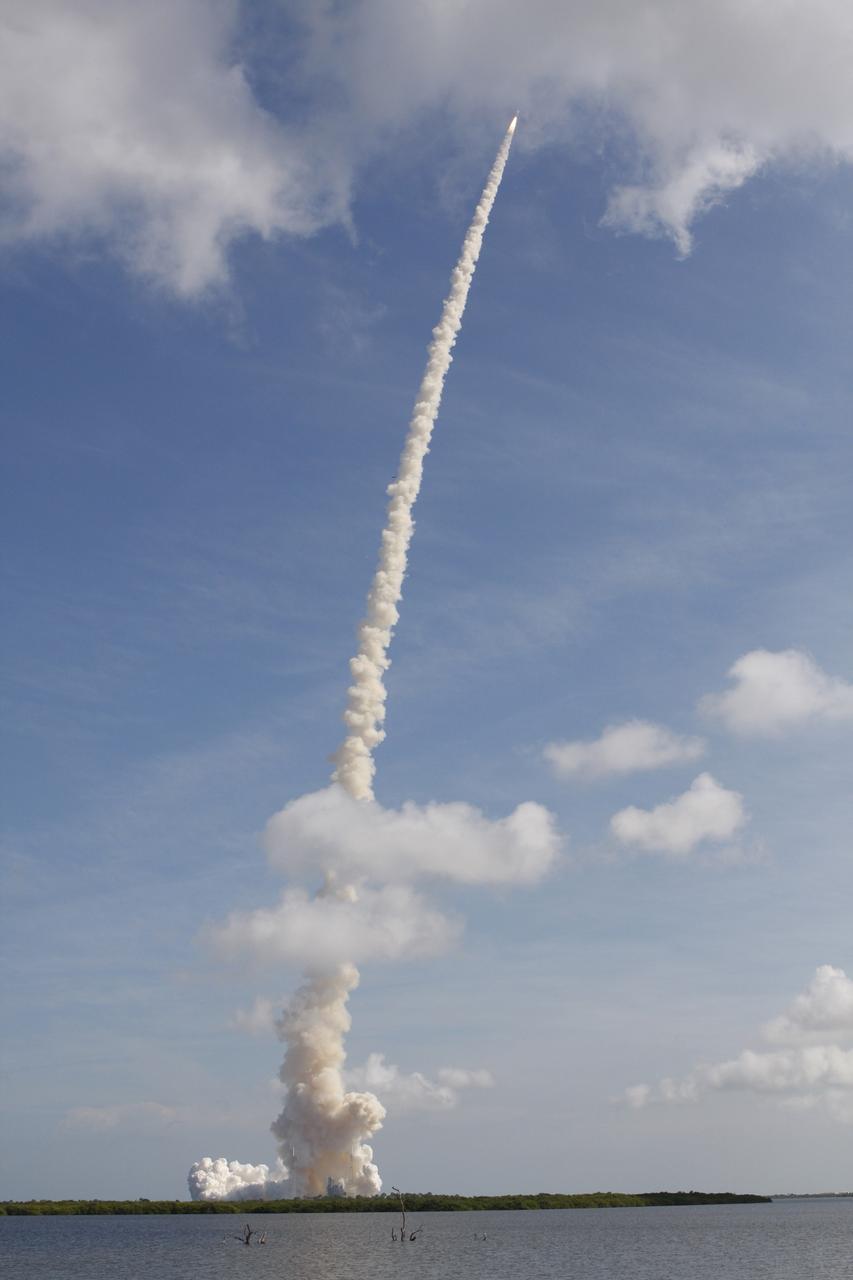
CAPE CANAVERAL, Fla. - With more than 12 times the thrust produced by a Boeing 747 jet aircraft, the Constellation Program's Ares I-X test rocket roars off Launch Complex 39B at NASA's Kennedy Space Center in Florida. The rocket produces 2.96 million pounds of thrust at liftoff and goes supersonic in 39 seconds. Liftoff of the 6-minute flight test was at 11:30 a.m. EDT Oct. 28. This was the first launch from Kennedy's pads of a vehicle other than the space shuttle since the Apollo Program's Saturn rockets were retired. The parts used to make the Ares I-X booster flew on 30 different shuttle missions ranging from STS-29 in 1989 to STS-106 in 2000. The data returned from more than 700 sensors throughout the rocket will be used to refine the design of future launch vehicles and bring NASA one step closer to reaching its exploration goals. For information on the Ares I-X vehicle and flight test, visit http://www.nasa.gov/aresIX. Photo credit: NASA/Kim Shiflett
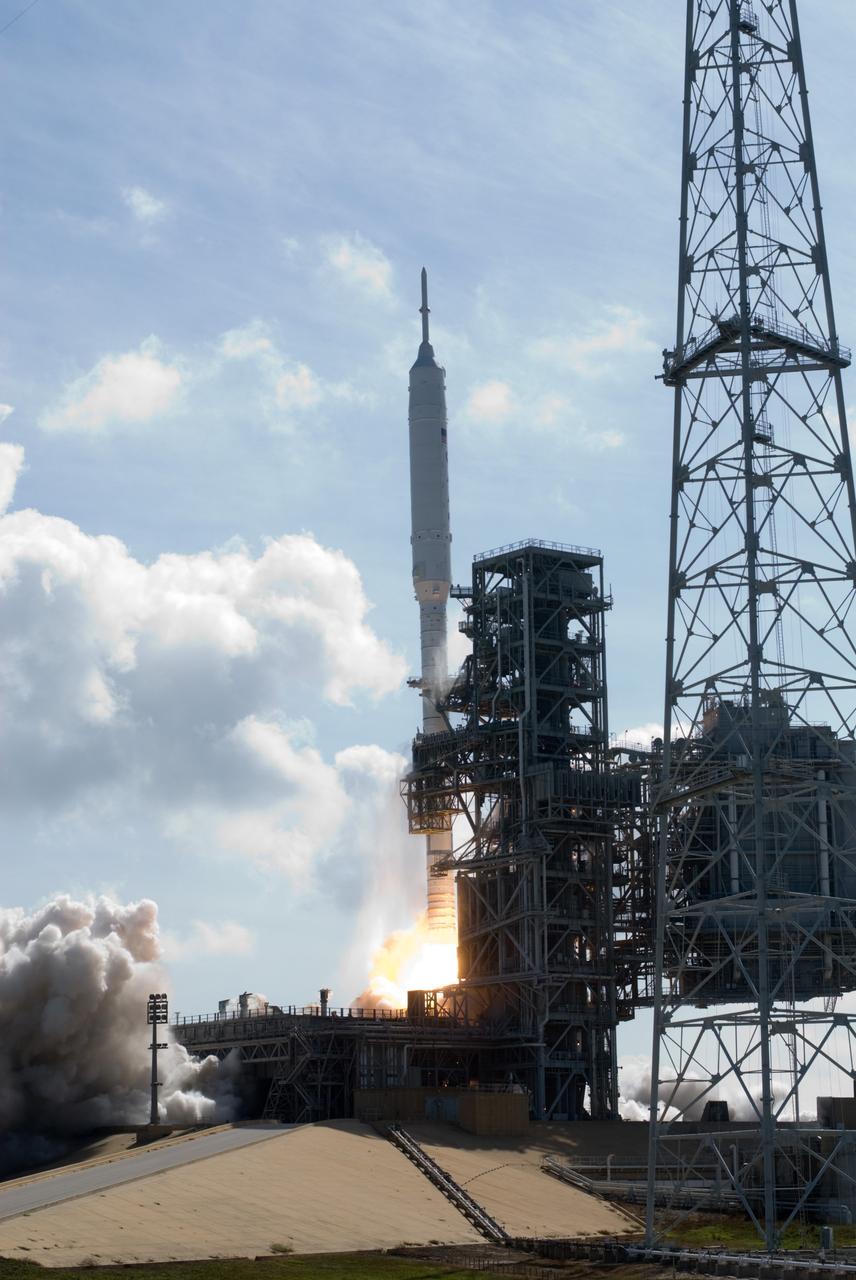
CAPE CANAVERAL, Fla. – NASA's Ares I-X test rocket ignites its first stage at Launch Pad 39B at NASA's Kennedy Space Center in Florida at 11:30 a.m. EDT on Oct. 28. The Constellation Program's 327-foot-tall rocket produces 2.96 million pounds of thrust at liftoff and reaches a speed of 100 mph in eight seconds. This was the first launch from Kennedy's pads of a vehicle other than the space shuttle since the Apollo Program's Saturn rockets were retired. The parts used to make the Ares I-X booster flew on 30 different shuttle missions ranging from STS-29 in 1989 to STS-106 in 2000. The data returned from more than 700 sensors throughout the rocket will be used to refine the design of future launch vehicles and bring NASA one step closer to reaching its exploration goals. For information on the Ares I-X vehicle and flight test, visit http://www.nasa.gov/aresIX. Photo credit: NASA/ George Roberts and Tony Gray
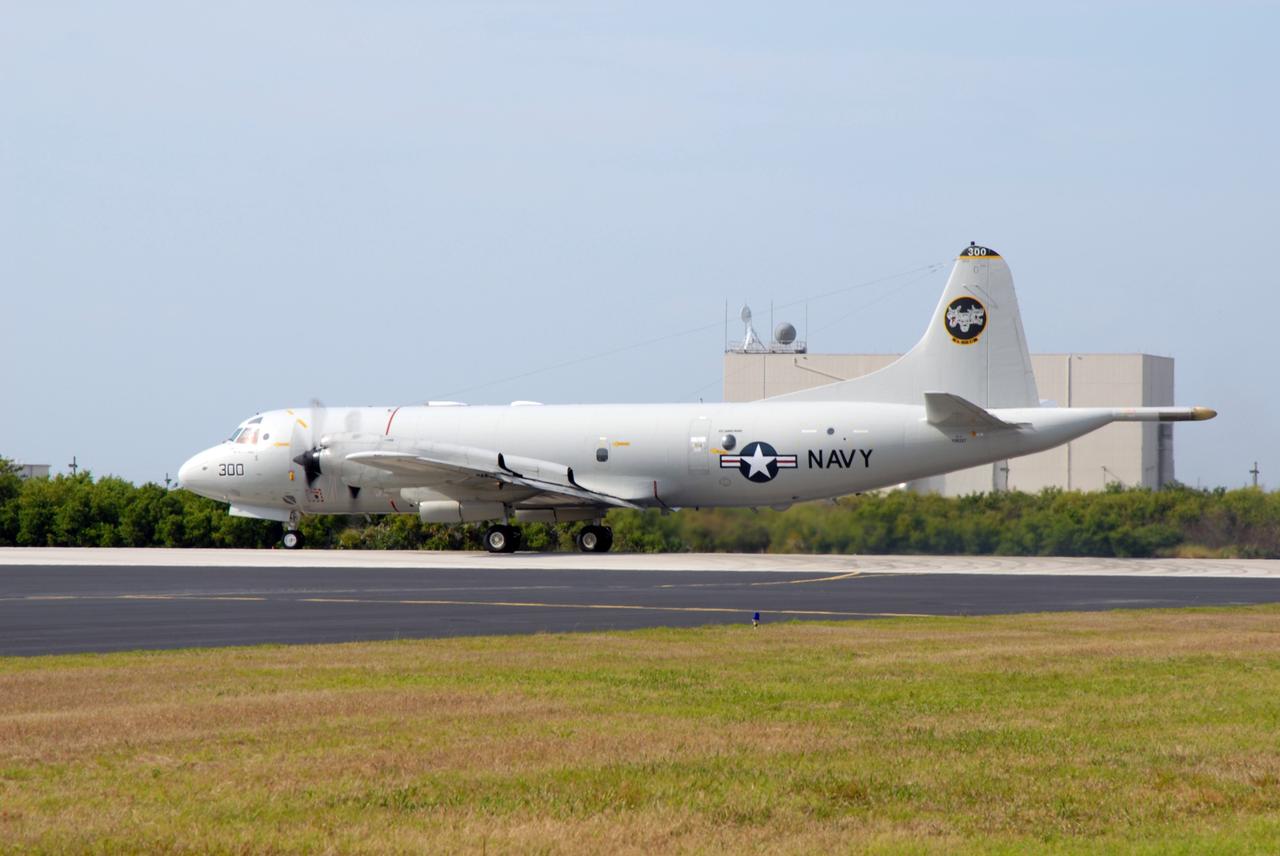
CAPE CANAVERAL, Fla. – A U.S. Navy NP-3D Orion aircraft takes off from the Skid Strip at Cape Canaveral Air Force Station. The plane will fly below space shuttle Discovery as it approaches Kennedy Space Center for landing following the STS-119 mission. Onboard instruments will check the orbiter’s exterior temperatures and a long-range infrared camera will remotely monitor heating to the shuttle’s lower surface, part of the boundary layer transition flight experiment. For the experiment, a heat shield tile with a “speed bump” on it was installed under Discovery’s left wing to intentionally disturb the airflow in a controlled manner and make the airflow turbulent. The tile, a BRI-18, was originally developed as a potential heat shield upgrade on the orbiters and is being considered for use on the Constellation Program’s Orion crew exploration vehicles. The data will determine if a protuberance on a BRI-18 tile is safe to fly and will be used to verify and improve design efforts for future spacecraft. Photo credit: NASA/Jim Grossmann
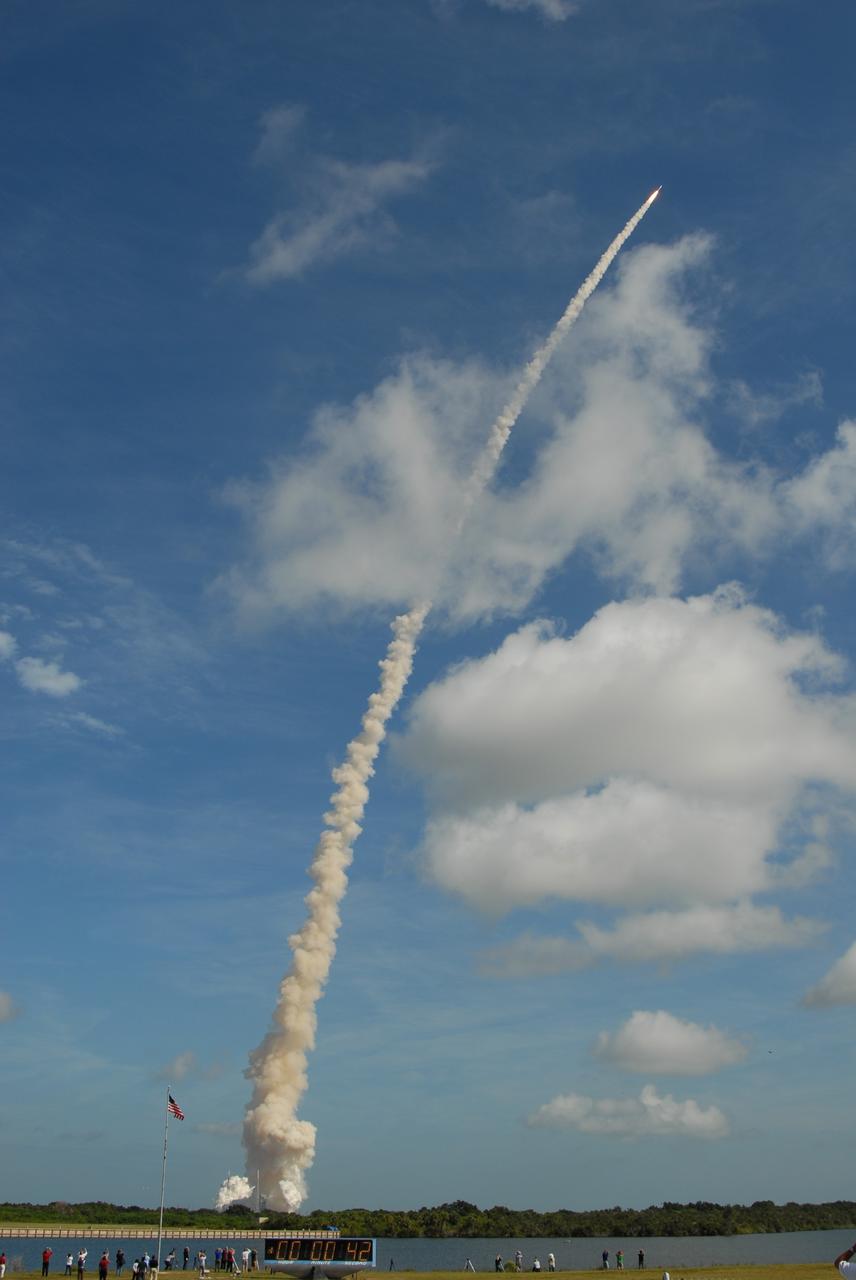
CAPE CANAVERAL, Fla. - With more than 12 times the thrust produced by a Boeing 747 jet aircraft, the Constellation Program's Ares I-X test rocket roars off Launch Complex 39B at NASA's Kennedy Space Center in Florida. The rocket produces 2.96 million pounds of thrust at liftoff and goes supersonic in 39 seconds. Liftoff of the 6-minute flight test was at 11:30 a.m. EDT Oct. 28. This was the first launch from Kennedy's pads of a vehicle other than the space shuttle since the Apollo Program's Saturn rockets were retired. The parts used to make the Ares I-X booster flew on 30 different shuttle missions ranging from STS-29 in 1989 to STS-106 in 2000. The data returned from more than 700 sensors throughout the rocket will be used to refine the design of future launch vehicles and bring NASA one step closer to reaching its exploration goals. For information on the Ares I-X vehicle and flight test, visit http://www.nasa.gov/aresIX. Photo credit: NASA/Jim Grossmann

CAPE CANAVERAL, Fla. - About the length of eight school buses stacked end to end, the Constellation Program's 327-foot-tall Ares I-X test rocket races off Launch Complex 39B at NASA's Kennedy Space Center in Florida. The rocket produces 2.96 million pounds of thrust at liftoff and reaches a speed of 100 mph in eight seconds. Liftoff of the 6-minute flight test was at 11:30 a.m. EDT Oct. 28. This was the first launch from Kennedy's pads of a vehicle other than the space shuttle since the Apollo Program's Saturn rockets were retired. The parts used to make the Ares I-X booster flew on 30 different shuttle missions ranging from STS-29 in 1989 to STS-106 in 2000. The data returned from more than 700 sensors throughout the rocket will be used to refine the design of future launch vehicles and bring NASA one step closer to reaching its exploration goals. For information on the Ares I-X vehicle and flight test, visit http://www.nasa.gov/aresIX. Photo courtesy of Scott Andrews
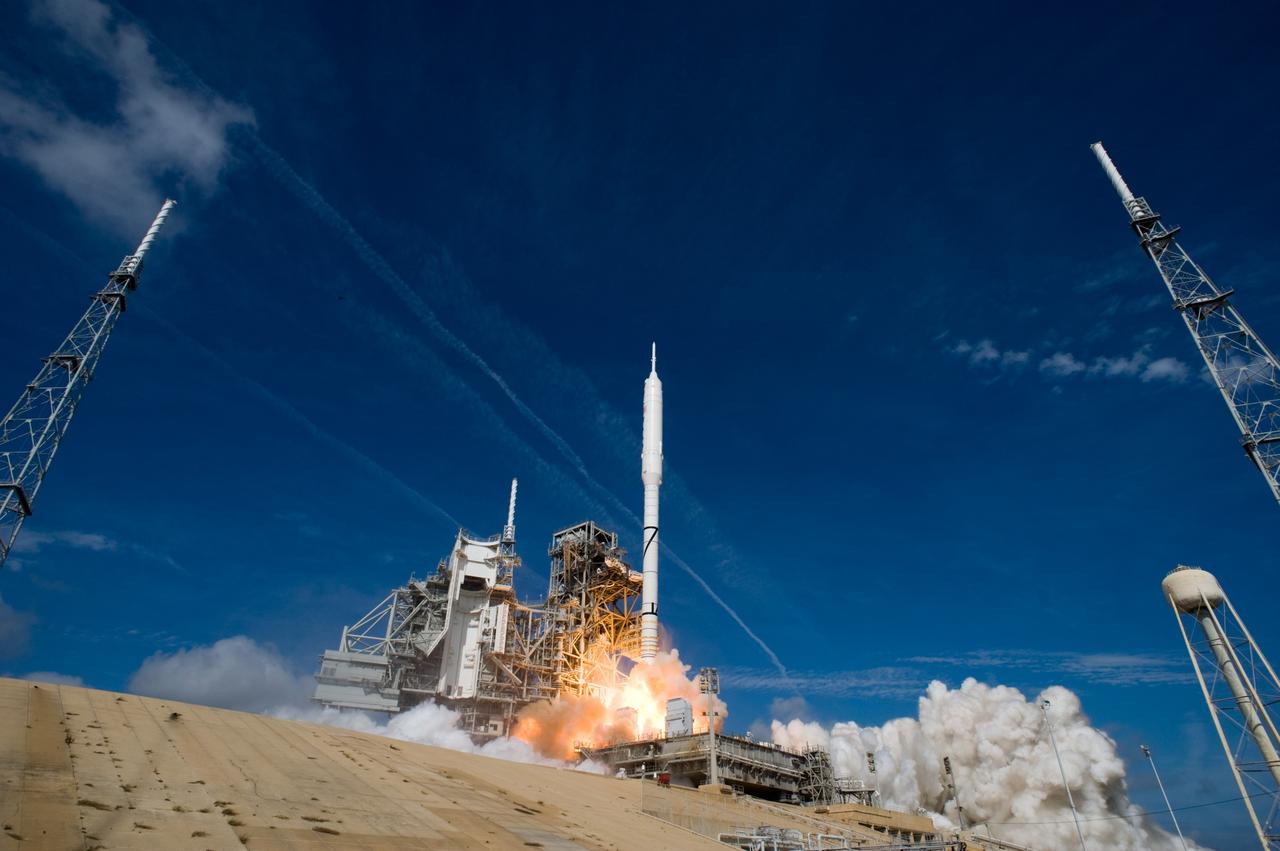
CAPE CANAVERAL, Fla. – Two of the lightning towers frame the Ares I-X test rocket as it takes off from Launch Pad 39B at NASA's Kennedy Space Center in Florida at 11:30 a.m. EDT Oct. 28. NASA’s Constellation Program's 327-foot-tall rocket produces 2.96 million pounds of thrust at liftoff and reaches a speed of 100 mph in eight seconds. This was the first launch from Kennedy's pads of a vehicle other than the space shuttle since the Apollo Program's Saturn rockets were retired. The parts used to make the Ares I-X booster flew on 30 different shuttle missions ranging from STS-29 in 1989 to STS-106 in 2000. The data returned from more than 700 sensors throughout the rocket will be used to refine the design of future launch vehicles and bring NASA one step closer to reaching its exploration goals. For information on the Ares I-X vehicle and flight test, visit http://www.nasa.gov/aresIX. Photo credit: NASA/ Sandra Joseph and Kevin O'Connell
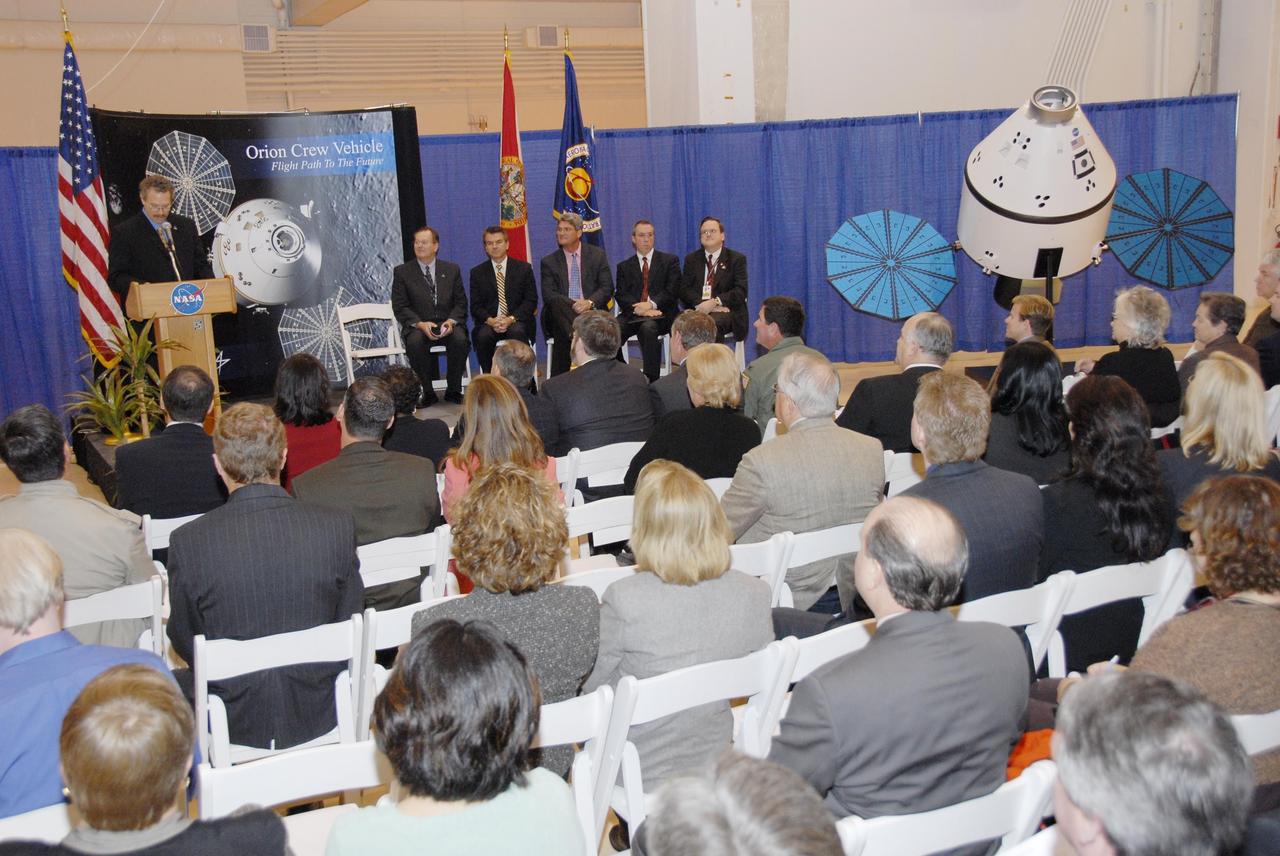
KENNEDY SPACE CENTER, FLA. -- Russell Romanella, director of the International Space Station/Payload Processing Directorate at Kennedy Space Center, addresses guests and attendees in the Operations and Checkout (O&C) Building high bay in the ceremony commemorating the bay's transition for use by the Constellation Program. Seated on the dais at right are Cleon Lacefield, Lockheed Martin program manager; Thad Altman, representative of the State of Florida; Bill Parsons, Kennedy Space Center director; Steve Koller, executive director of Space Florida; and Skip Hatfield, Orion Project manager. Originally built to process space vehicles in the Apollo era, the O&C Building will serve as the final assembly facility for the Orion crew exploration vehicle. Orion, America's human spaceflight vehicle of the future, will be capable of transporting four crewmembers for lunar missions and later will support crew transfers for Mars missions. Each Orion spacecraft also may be used to support up to six crewmembers to the International Space Station after the space shuttle is retired in 2010. Design, development and construction of Orion's components will be performed by Lockheed Martin for NASA at facilities throughout the country. Photo credit: NASA/Kim Shiflett
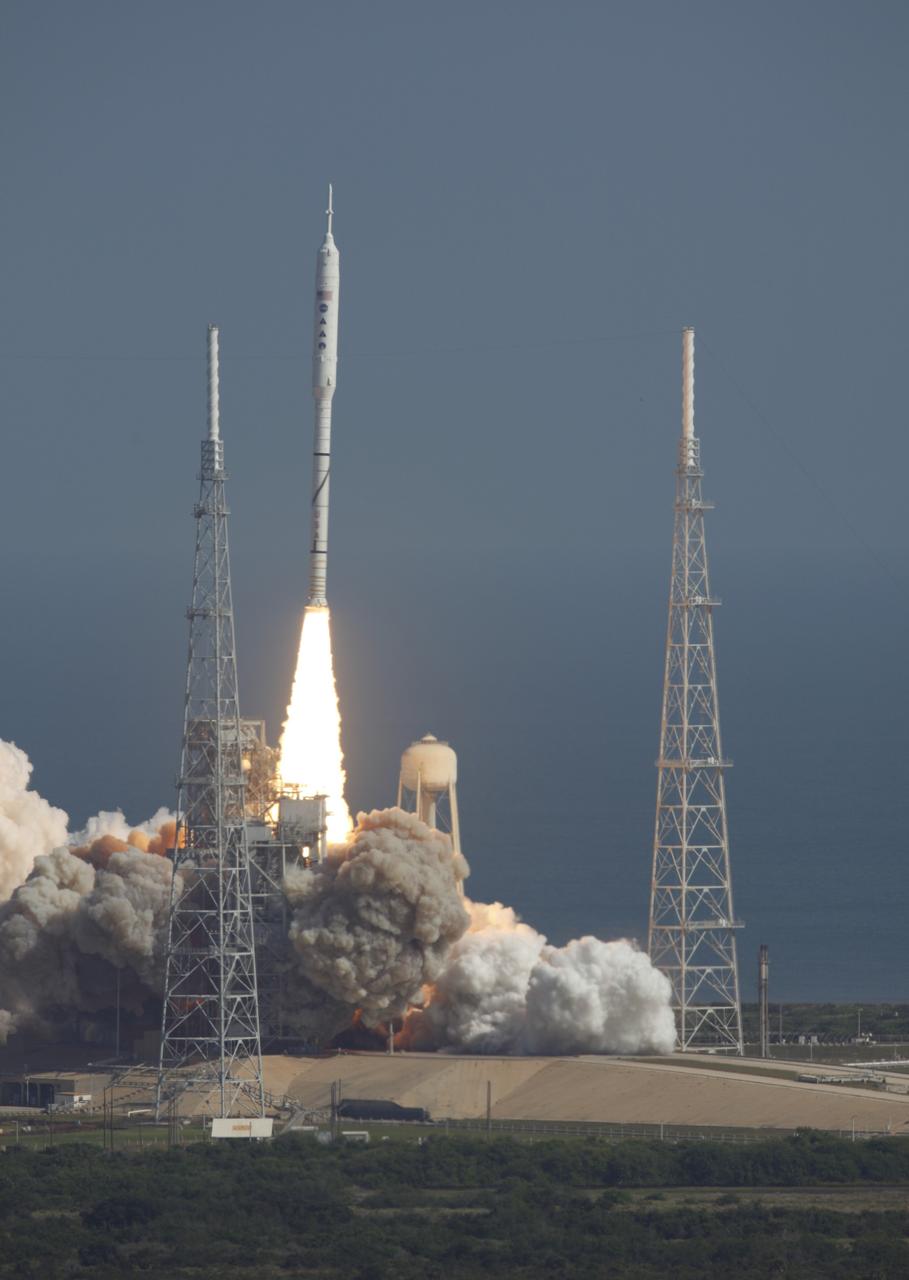
CAPE CANAVERAL, Fla. - Almost twice as tall as Disney's Cinderella Castle, the Constellation Program's 327-foot-tall Ares I-X test rocket races off Launch Complex 39B at NASA's Kennedy Space Center in Florida. The rocket produces 2.96 million pounds of thrust at liftoff and reaches a speed of 100 mph in eight seconds. Liftoff of the 6-minute flight test was at 11:30 a.m. EDT Oct. 28. This was the first launch from Kennedy's pads of a vehicle other than the space shuttle since the Apollo Program's Saturn rockets were retired. The parts used to make the Ares I-X booster flew on 30 different shuttle missions ranging from STS-29 in 1989 to STS-106 in 2000. The data returned from more than 700 sensors throughout the rocket will be used to refine the design of future launch vehicles and bring NASA one step closer to reaching its exploration goals. For information on the Ares I-X vehicle and flight test, visit http://www.nasa.gov/aresIX. Photo courtesy of Scott Andrews
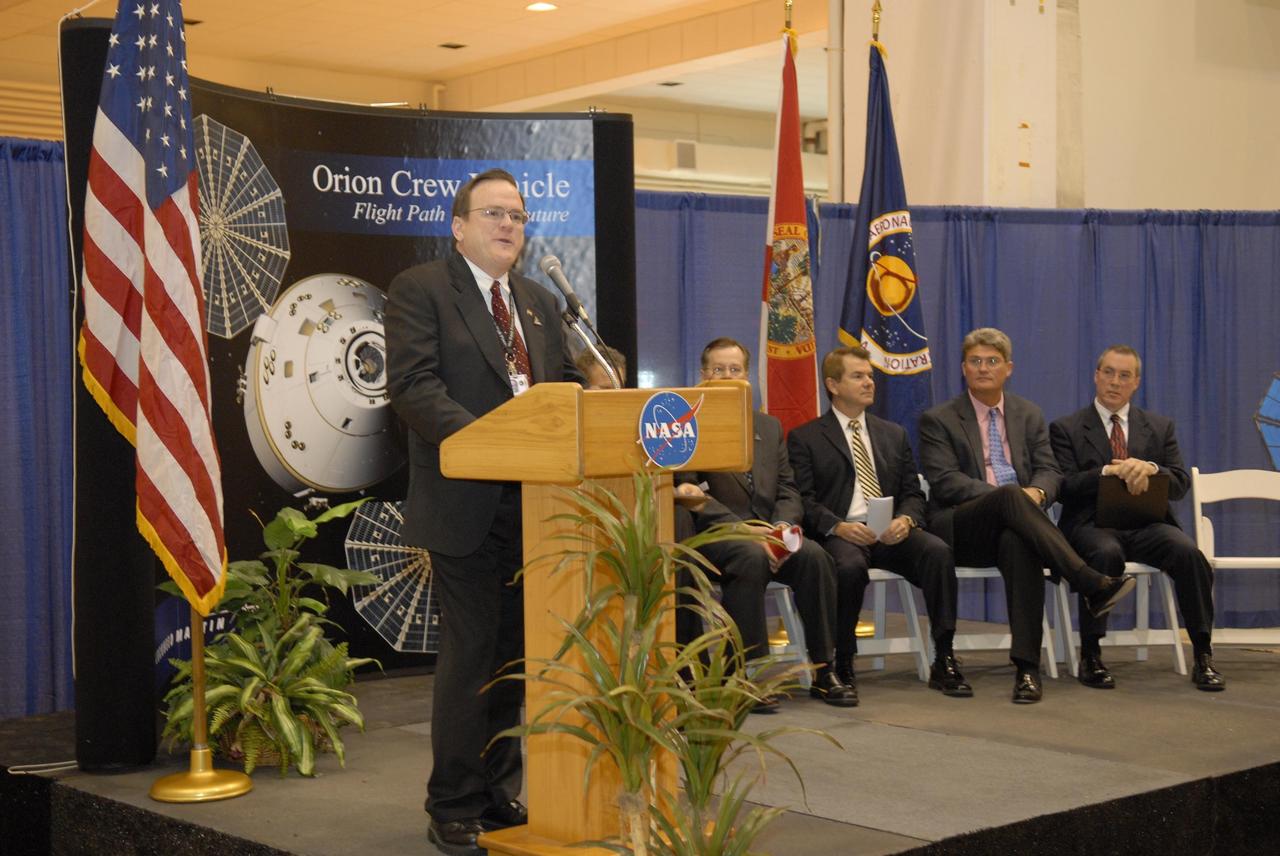
KENNEDY SPACE CENTER, FLA. -- Skip Hatfield, Orion Project manager, addresses guests and attendees in the Operations and Checkout (O&C) Building high bay in the ceremony commemorating the bay's transition for use by the Constellation Program. Seated on the dais at right are representatives from NASA, Lockheed Martin, Space Florida and the state of Florida: Russell Romanella, director of the International Space Station/Payload Processing Directorate at Kennedy Space Center, Cleon Lacefield, Lockheed Martin program manager; Thad Altman, representative of the State of Florida; Bill Parsons, director of Kennedy Space Center; and Steve Koller, executive director of Space Florida. Originally built to process space vehicles in the Apollo era, the O&C Building will serve as the final assembly facility for the Orion crew exploration vehicle. Orion, America's human spaceflight vehicle of the future, will be capable of transporting four crewmembers for lunar missions and later will support crew transfers for Mars missions. Each Orion spacecraft also may be used to support up to six crewmembers to the International Space Station after the space shuttle is retired in 2010. Design, development and construction of Orion's components will be performed by Lockheed Martin for NASA at facilities throughout the country. Photo credit: NASA/Kim Shiflett
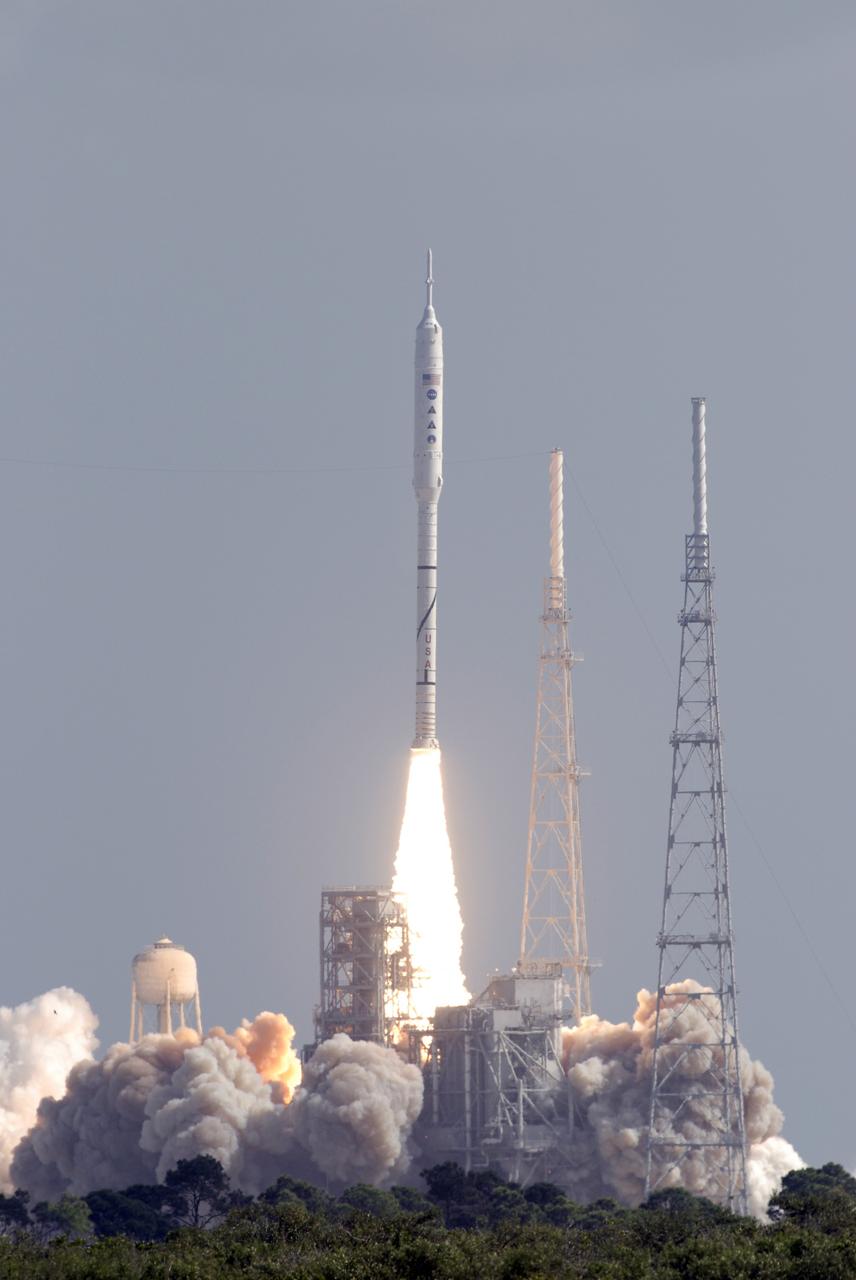
CAPE CANAVERAL, Fla. - Almost twice as tall as Disney's Cinderella Castle, the Constellation Program's 327-foot-tall Ares I-X test rocket races off Launch Complex 39B at NASA's Kennedy Space Center in Florida. The rocket produces 2.96 million pounds of thrust at liftoff and reaches a speed of 100 mph in eight seconds. Liftoff of the 6-minute flight test was at 11:30 a.m. EDT Oct. 28. This was the first launch from Kennedy's pads of a vehicle other than the space shuttle since the Apollo Program's Saturn rockets were retired. The parts used to make the Ares I-X booster flew on 30 different shuttle missions ranging from STS-29 in 1989 to STS-106 in 2000. The data returned from more than 700 sensors throughout the rocket will be used to refine the design of future launch vehicles and bring NASA one step closer to reaching its exploration goals. For information on the Ares I-X vehicle and flight test, visit http://www.nasa.gov/aresIX. Photo credit: NASA/Kim Shiflett
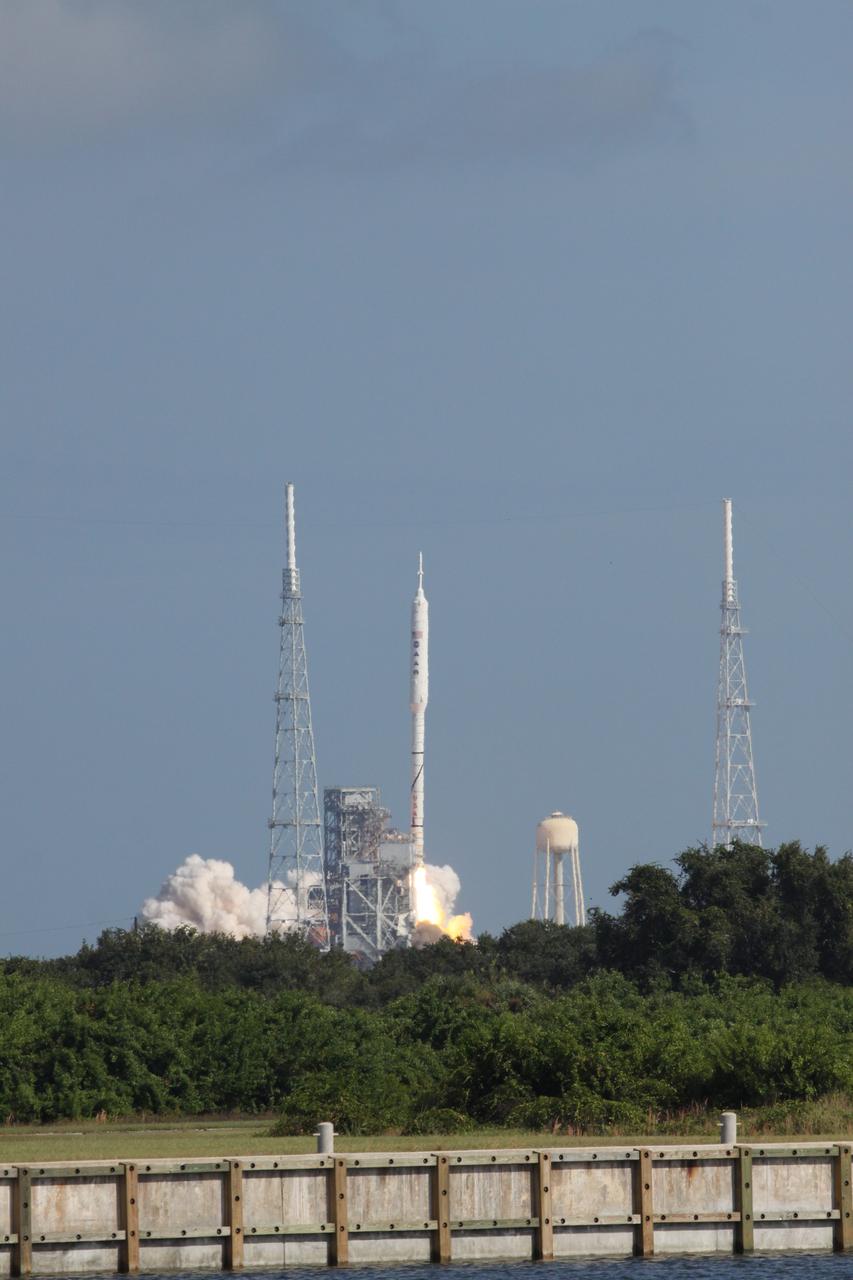
CAPE CANAVERAL, Fla. - Almost twice as tall as Disney's Cinderella Castle, the Constellation Program's 327-foot-tall Ares I-X test rocket lifts off from Launch Complex 39B at NASA's Kennedy Space Center in Florida. The rocket produces 2.96 million pounds of thrust at liftoff and reaches a speed of 100 mph in eight seconds. Liftoff of the 6-minute flight test was at 11:30 a.m. EDT Oct. 28. This was the first launch from Kennedy's pads of a vehicle other than the space shuttle since the Apollo Program's Saturn rockets were retired. The parts used to make the Ares I-X booster flew on 30 different shuttle missions ranging from STS-29 in 1989 to STS-106 in 2000. The data returned from more than 700 sensors throughout the rocket will be used to refine the design of future launch vehicles and bring NASA one step closer to reaching its exploration goals. For information on the Ares I-X vehicle and flight test, visit http://www.nasa.gov/aresIX. Photo credit: NASA/Jack Pfaller
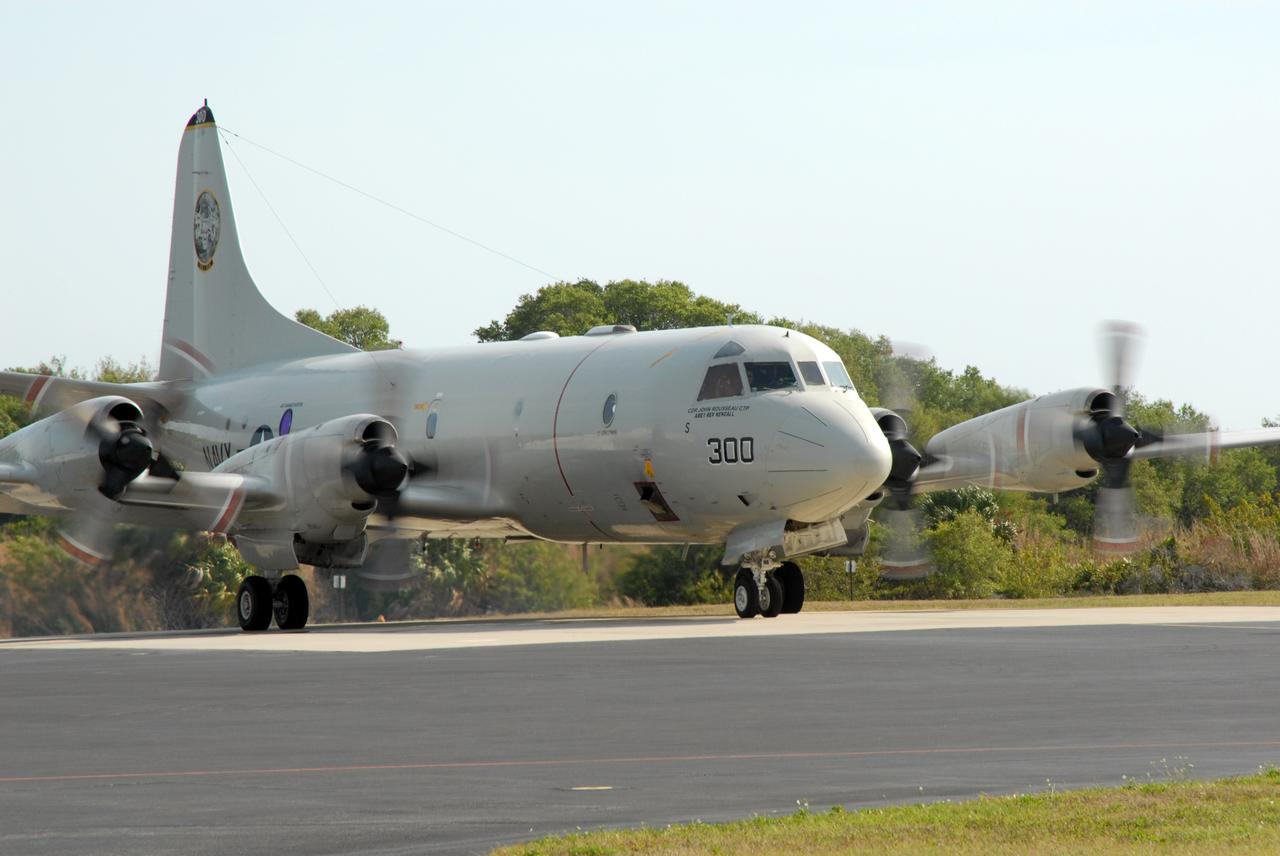
CAPE CANAVERAL, Fla. – The engines of U.S. Navy NP-3D Orion aircraft are started in preparation for takeoff from the Skid Strip at Cape Canaveral Air Force Station. The plane will fly below space shuttle Discovery as it approaches Kennedy Space Center for landing following the STS-119 mission. Onboard instruments will check the orbiter’s exterior temperatures and a long-range infrared camera will remotely monitor heating to the shuttle’s lower surface, part of the boundary layer transition flight experiment. For the experiment, a heat shield tile with a “speed bump” on it was installed under Discovery’s left wing to intentionally disturb the airflow in a controlled manner and make the airflow turbulent. The tile, a BRI-18, was originally developed as a potential heat shield upgrade on the orbiters and is being considered for use on the Constellation Program’s Orion crew exploration vehicles. The data will determine if a protuberance on a BRI-18 tile is safe to fly and will be used to verify and improve design efforts for future spacecraft. Photo credit: NASA/Jim Grossmann
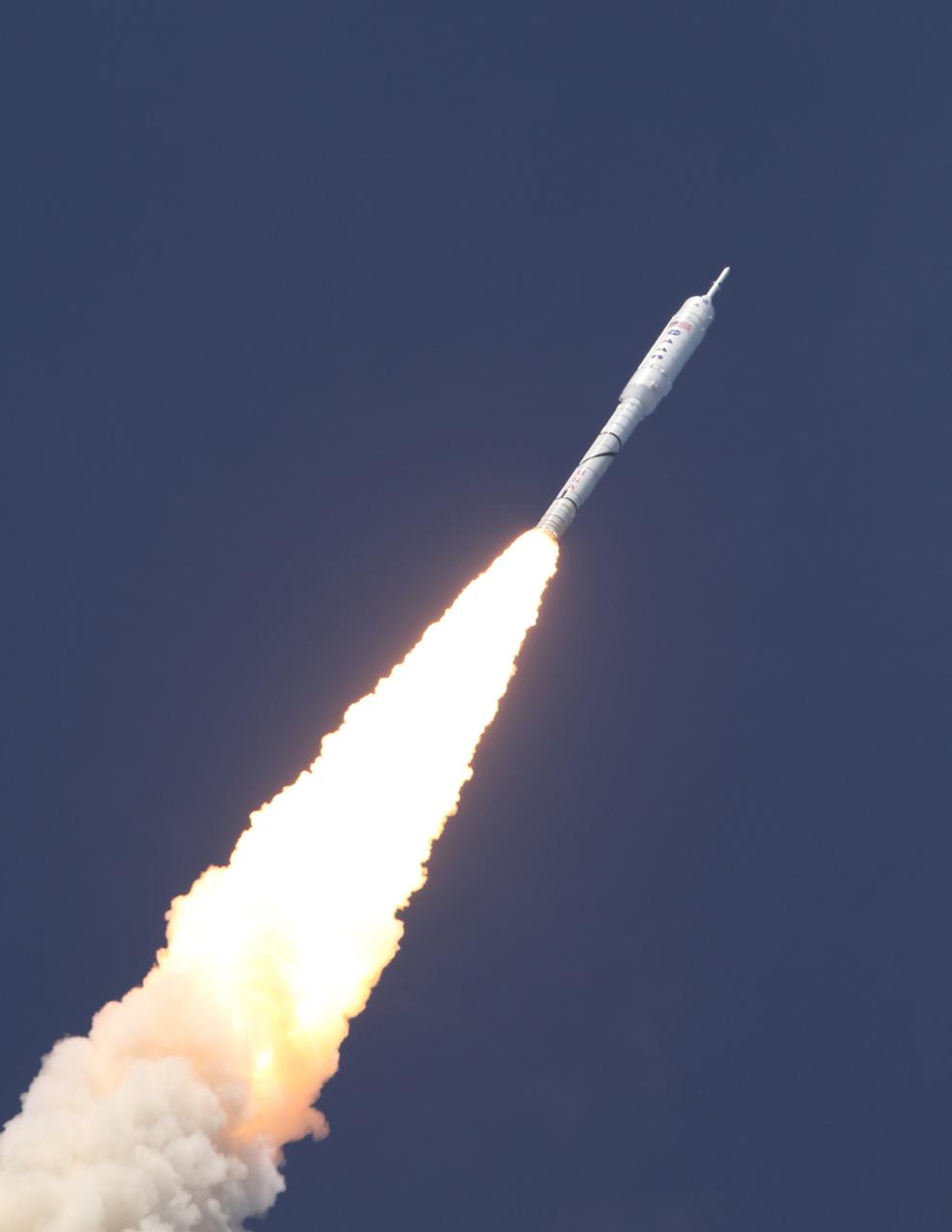
CAPE CANAVERAL, Fla. – A fiery blaze trails the Ares I-X test rocket as it takes off from Launch Pad 39B at NASA's Kennedy Space Center in Florida at 11:30 a.m. EDT Oct. 28. Constellation Program's 327-foot-tall rocket produces 2.96 million pounds of thrust at liftoff and reaches a speed of 100 mph in eight seconds. This was the first launch from Kennedy's pads of a vehicle other than the space shuttle since the Apollo Program's Saturn rockets were retired. The parts used to make the Ares I-X booster flew on 30 different shuttle missions ranging from STS-29 in 1989 to STS-106 in 2000. The data returned from more than 700 sensors throughout the rocket will be used to refine the design of future launch vehicles and bring NASA one step closer to reaching its exploration goals. For information on the Ares I-X vehicle and flight test, visit http://www.nasa.gov/aresIX. Photo credit: NASA/ Kenny Allen
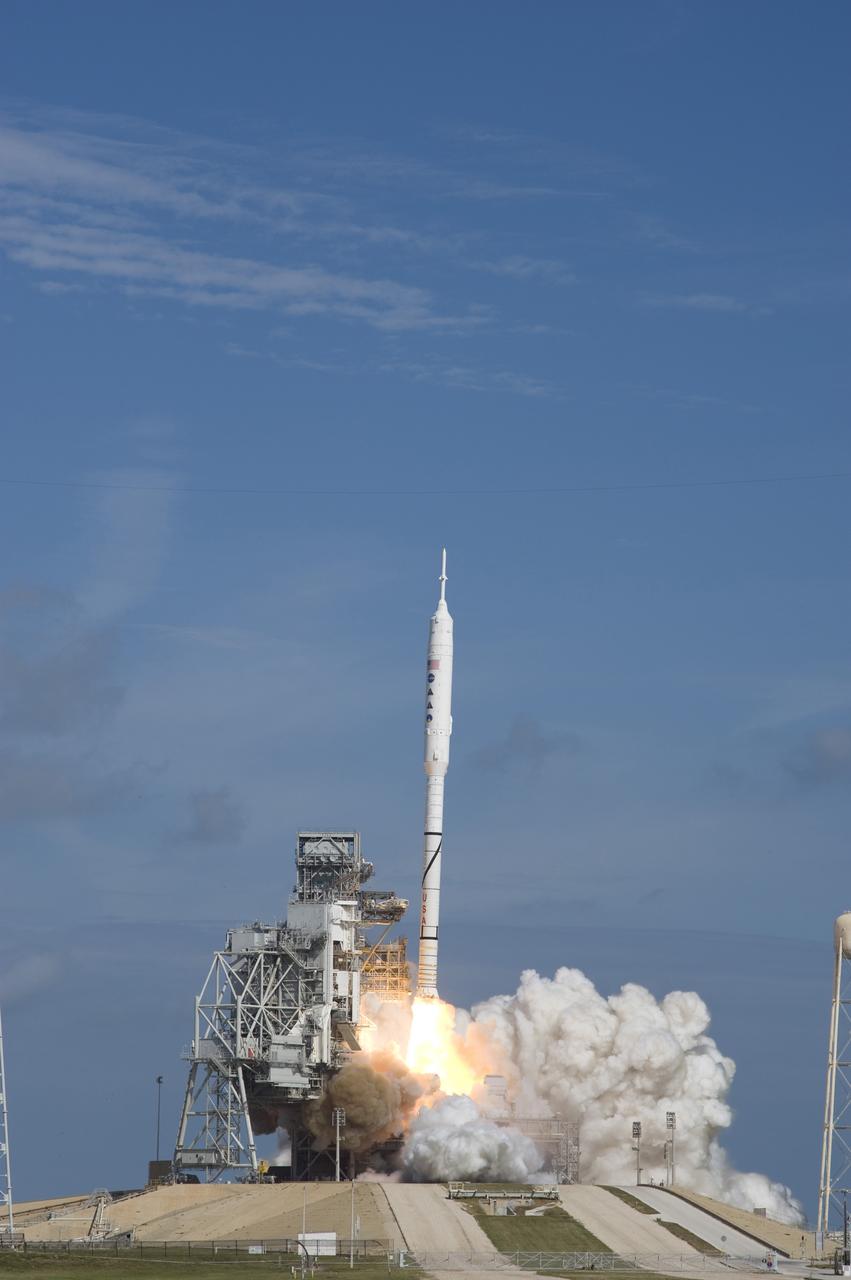
CAPE CANAVERAL, Fla. - Almost twice as tall as Disney's Cinderella Castle, the Constellation Program's 327-foot-tall Ares I-X test rocket races off Launch Complex 39B at NASA's Kennedy Space Center in Florida. The rocket produces 2.96 million pounds of thrust at liftoff and reaches a speed of 100 mph in eight seconds. Liftoff of the 6-minute flight test was at 11:30 a.m. EDT Oct. 28. This was the first launch from Kennedy's pads of a vehicle other than the space shuttle since the Apollo Program's Saturn rockets were retired. The parts used to make the Ares I-X booster flew on 30 different shuttle missions ranging from STS-29 in 1989 to STS-106 in 2000. The data returned from more than 700 sensors throughout the rocket will be used to refine the design of future launch vehicles and bring NASA one step closer to reaching its exploration goals. For information on the Ares I-X vehicle and flight test, visit http://www.nasa.gov/aresIX. Photo credit: NASA/Sandra Joseph and Kevin O'Connell

Designed by the STS-88 crew members, this patch commemorates the first assembly flight to carry United States-built hardware for constructing the International Space Station (ISS). This flight's primary task was to assemble the cornerstone of the Space Station: the Node with the Functional Cargo Block (FGB). The rising sun symbolizes the dawning of a new era of international cooperation in space and the beginning of a new program: the International Space Station. The Earth scene outlines the countries of the Station Partners: the United States, Russia, those of the European Space Agency (ESA), Japan, and Canada. Along with the Pressurized Mating Adapters (PMA) and the Functional Cargo Block, the Node is shown in the final mated configuration while berthed to the Space Shuttle during the STS-88/2A mission. The Big Dipper Constellation points the way to the North Star, a guiding light for pioneers and explorers for generations. In the words of the crew, These stars symbolize the efforts of everyone, including all the countries involved in the design and construction of the International Space Station, guiding us into the future.
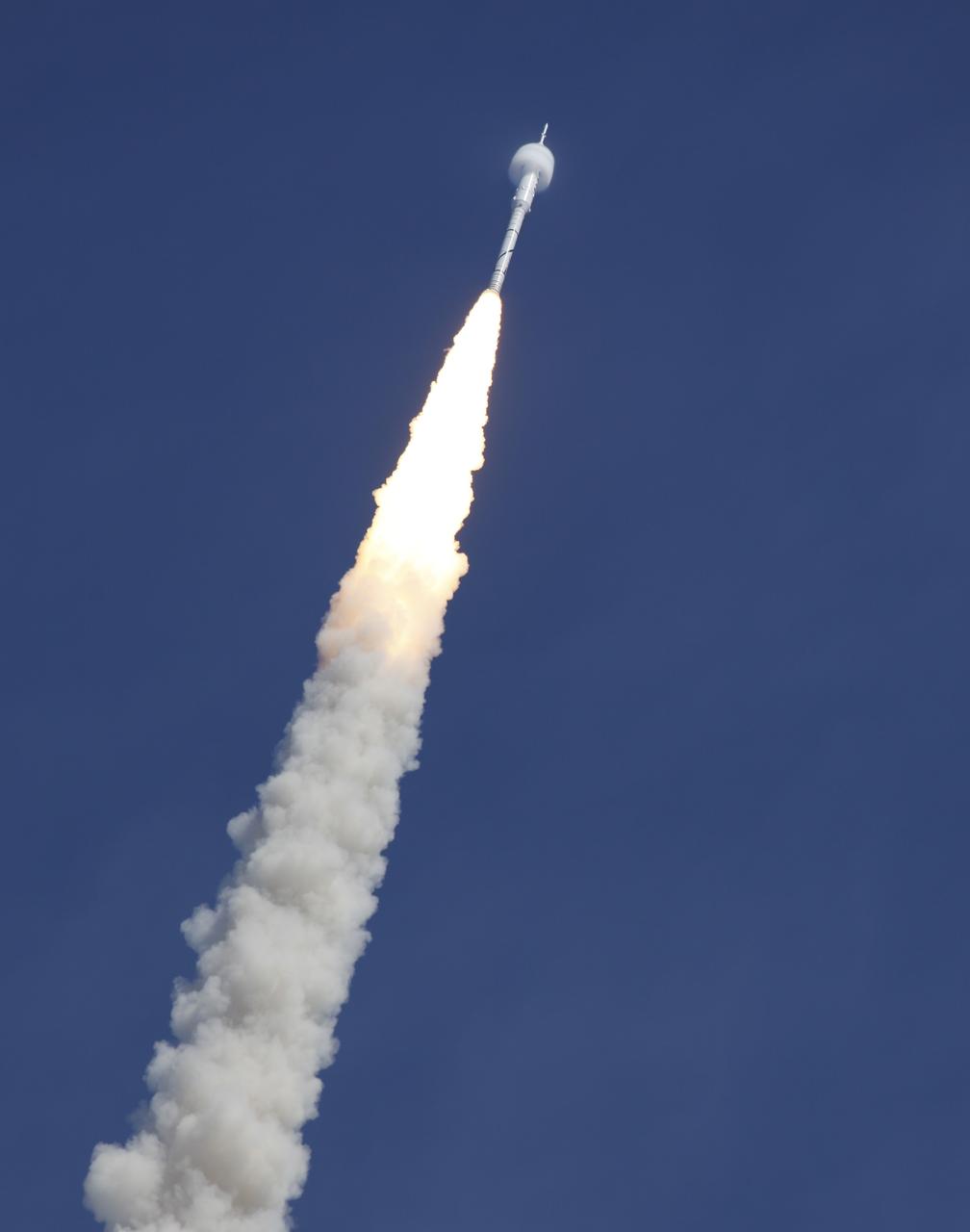
CAPE CANAVERAL, Fla. - A bow shock forms around the Constellation Program's 327-foot-tall Ares I-X test rocket traveling at supersonic speed. The rocket produces 2.96 million pounds of thrust at liftoff and goes supersonic in 39 seconds. Liftoff of the 6-minute flight test from Launch Pad 39B at NASA's Kennedy Space Center in Florida was at 11:30 a.m. EDT Oct. 28. This was the first launch from Kennedy's pads of a vehicle other than the space shuttle since the Apollo Program's Saturn rockets were retired. The parts used to make the Ares I-X booster flew on 30 different shuttle missions ranging from STS-29 in 1989 to STS-106 in 2000. The data returned from more than 700 sensors throughout the rocket will be used to refine the design of future launch vehicles and bring NASA one step closer to reaching its exploration goals. For information on the Ares I-X vehicle and flight test, visit http://www.nasa.gov/aresIX. Photo courtesy of Scott Andrews
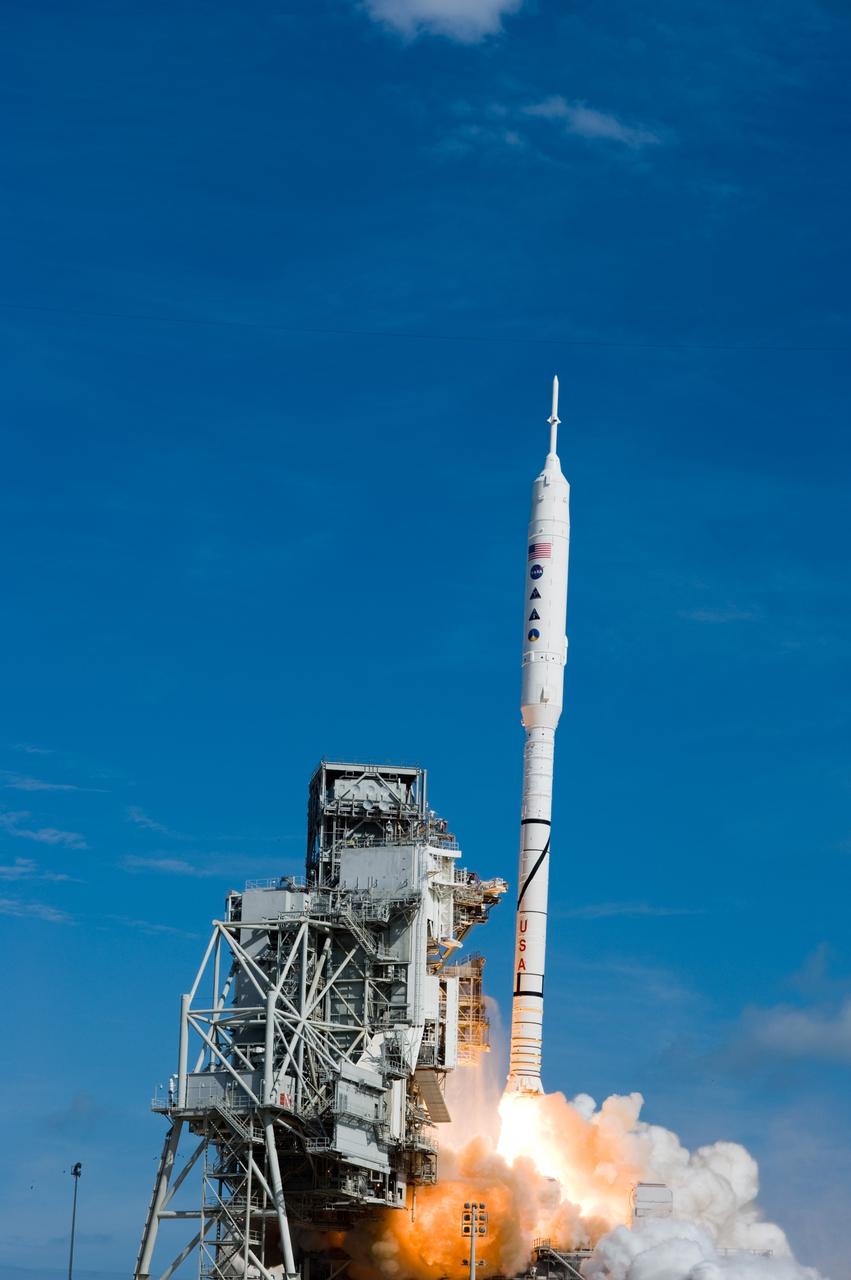
CAPE CANAVERAL, Fla. – NASA’s Constellation Program's 327-foot-tall Ares I-X test rocket takes off from Launch Pad 39B at NASA's Kennedy Space Center in Florida at 11:30 a.m. EDT Oct. 28. The rocket produces 2.96 million pounds of thrust at liftoff and reaches a speed of 100 mph in eight seconds. This was the first launch from Kennedy's pads of a vehicle other than the space shuttle since the Apollo Program's Saturn rockets were retired. The parts used to make the Ares I-X booster flew on 30 different shuttle missions ranging from STS-29 in 1989 to STS-106 in 2000. The data returned from more than 700 sensors throughout the rocket will be used to refine the design of future launch vehicles and bring NASA one step closer to reaching its exploration goals. For information on the Ares I-X vehicle and flight test, visit http://www.nasa.gov/aresIX. Photo credit: NASA/ Sandra Joseph and Kevin O'Connell
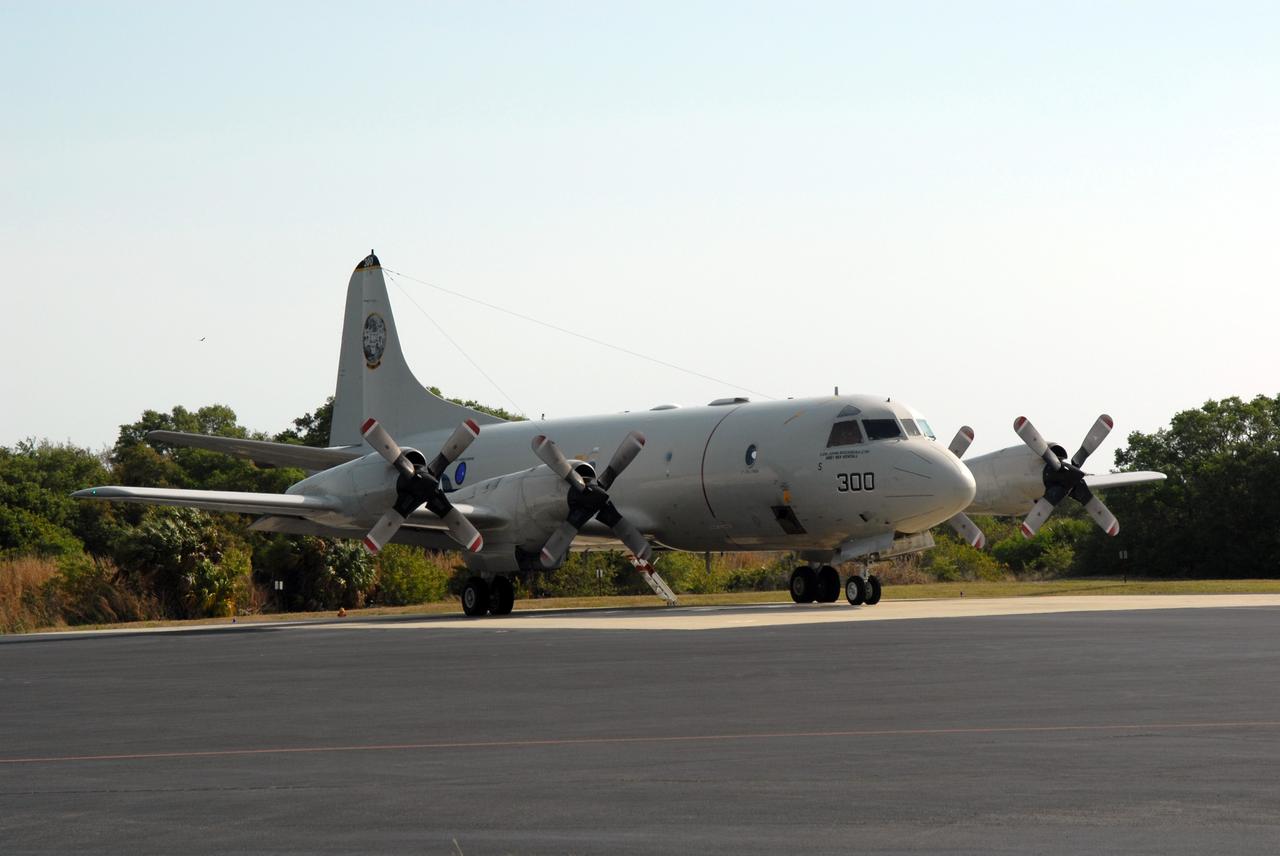
CAPE CANAVERAL, Fla. -- A U.S. Navy NP-3D Orion aircraft prepares for takeoff from the Skid Strip at Cape Canaveral Air Force Station. The plane will fly below space shuttle Discovery as it approaches Kennedy Space Center for landing following the STS-119 mission. Onboard instruments will check the orbiter’s exterior temperatures and a long-range infrared camera will remotely monitor heating to the shuttle’s lower surface, part of the boundary layer transition flight experiment. For the experiment, a heat shield tile with a “speed bump” on it was installed under Discovery’s left wing to intentionally disturb the airflow in a controlled manner and make the airflow turbulent. The tile, a BRI-18, was originally developed as a potential heat shield upgrade on the orbiters and is being considered for use on the Constellation Program’s Orion crew exploration vehicles. The data will determine if a protuberance on a BRI-18 tile is safe to fly and will be used to verify and improve design efforts for future spacecraft. Photo credit: NASA/Jim Grossmann

CAPE CANAVERAL, Fla. - With more than 23 times the power output of the Hoover Dam, the Constellation Program's Ares I-X test rocket zooms off Launch Complex 39B at NASA's Kennedy Space Center in Florida. The rocket produces 2.96 million pounds of thrust at liftoff and reaches a speed of 100 mph in eight seconds. Liftoff of the 6-minute flight test was at 11:30 a.m. EDT Oct. 28. This was the first launch from Kennedy's pads of a vehicle other than the space shuttle since the Apollo Program's Saturn rockets were retired. The parts used to make the Ares I-X booster flew on 30 different shuttle missions ranging from STS-29 in 1989 to STS-106 in 2000. The data returned from more than 700 sensors throughout the rocket will be used to refine the design of future launch vehicles and bring NASA one step closer to reaching its exploration goals. For information on the Ares I-X vehicle and flight test, visit http://www.nasa.gov/aresIX. Photo courtesy of Scott Andrews, Canon