
NASA's Kennedy Space Center in Florida observes U.S. Constitution Day, the official birthday of our U.S. government, with the theme "Freedom Needs Space." A remembrance poster made appearances in various locations around the multi-user spaceport, including at the new Headquarters Campus Building. Constitution Day is an American federal observance. It recognizes the adoption of the U.S. Constitution and those who have become U.S. citizens. Constitution Day is observed on Sept. 17, the day in 1787 that delegates to the Constitutional Convention signed the document in Philadelphia.

NASA's Kennedy Space Center in Florida observes U.S. Constitution Day, the official birthday of our U.S. government, with the theme "Freedom Needs Space." A remembrance poster made appearances in various locations around the multi-user spaceport, including near the iconic Vehicle Assembly Building. Constitution Day is an American federal observance. It recognizes the adoption of the U.S. Constitution and those who have become U.S. citizens. Constitution Day is observed on Sept. 17, the day in 1787 that delegates to the Constitutional Convention signed the document in Philadelphia.
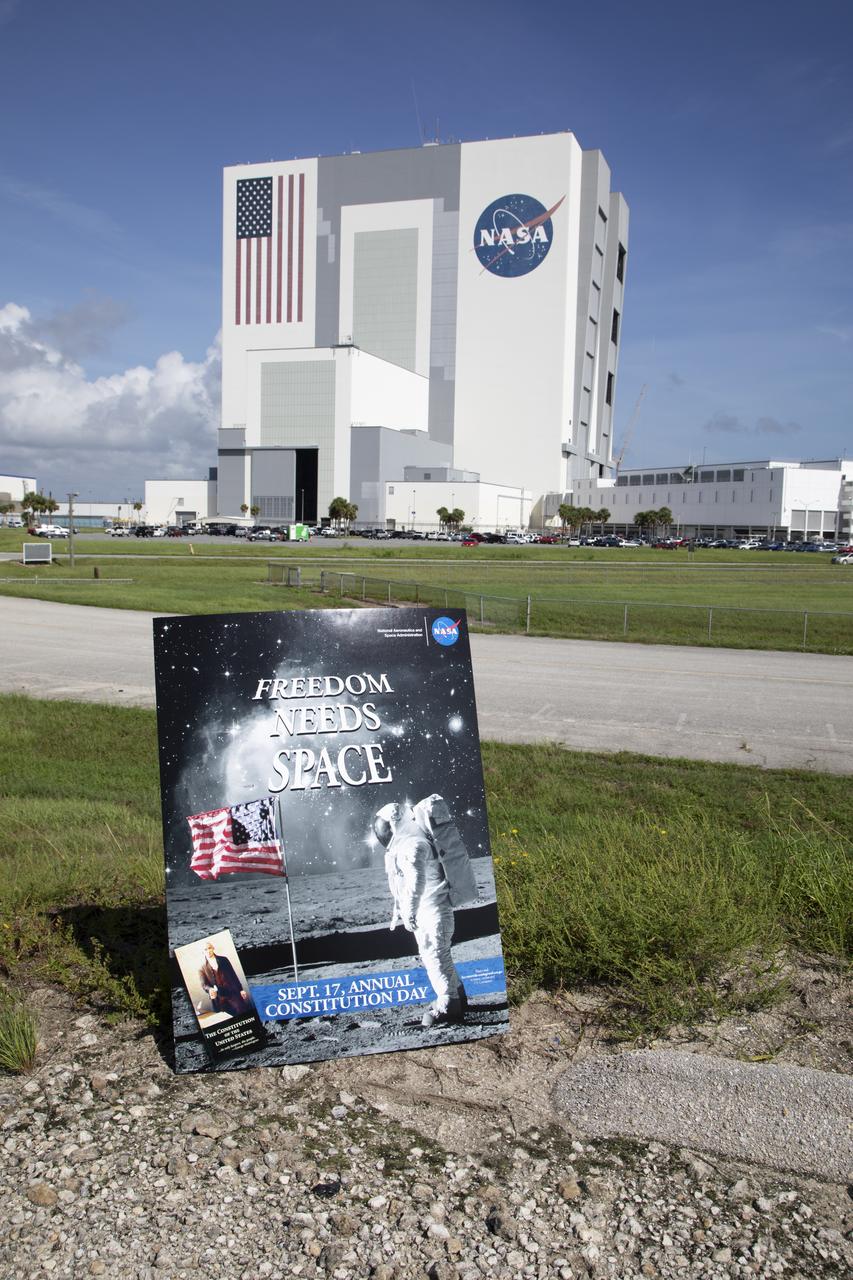
NASA's Kennedy Space Center in Florida observes U.S. Constitution Day, the official birthday of our U.S. government, with the theme "Freedom Needs Space." A remembrance poster made appearances in various locations around the multi-user spaceport, including near the iconic Vehicle Assembly Building. Constitution Day is an American federal observance. It recognizes the adoption of the U.S. Constitution and those who have become U.S. citizens. Constitution Day is observed on Sept. 17, the day in 1787 that delegates to the Constitutional Convention signed the document in Philadelphia.
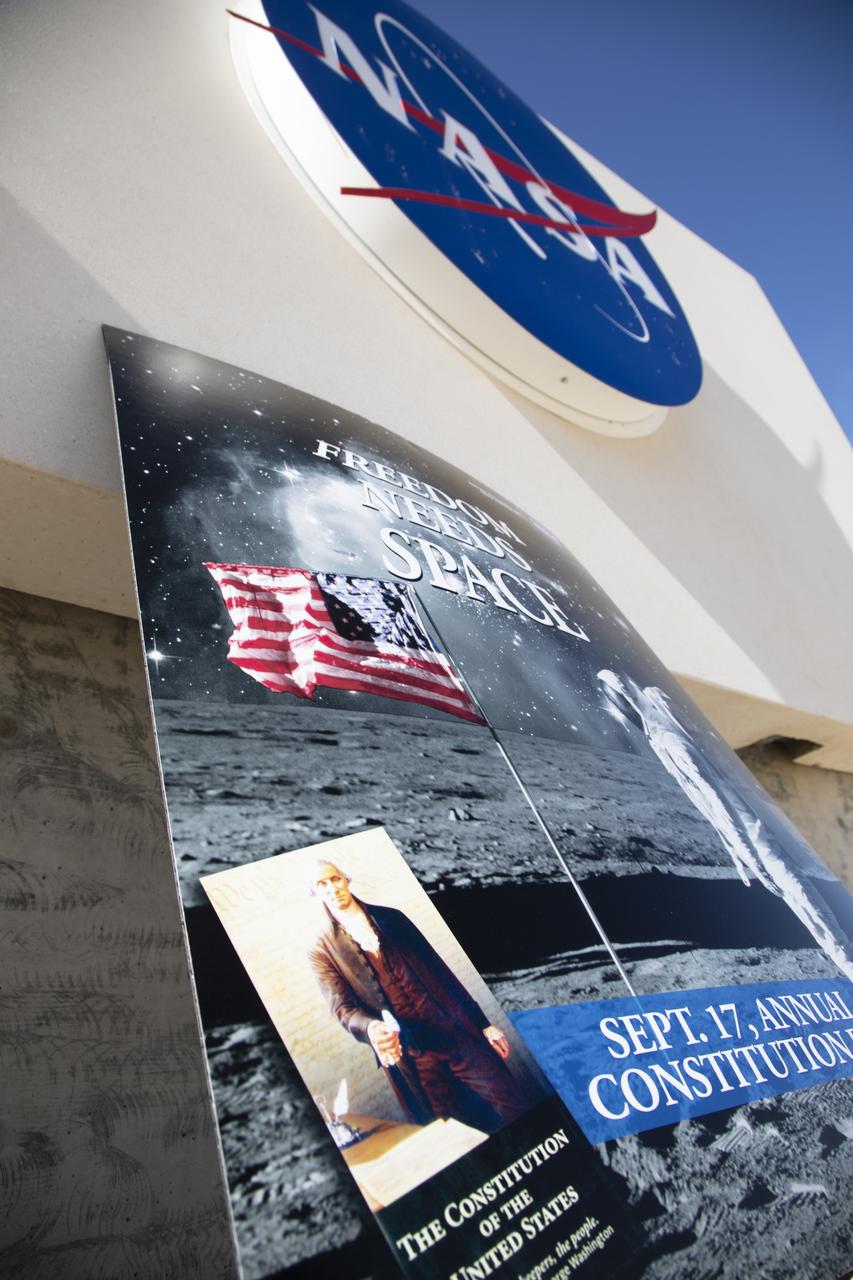
NASA's Kennedy Space Center in Florida observes U.S. Constitution Day, the official birthday of our U.S. government, with the theme "Freedom Needs Space." A remembrance poster made appearances in various locations around the multi-user spaceport, including at the new Headquarters Campus building. Constitution Day is an American federal observance. It recognizes the adoption of the U.S. Constitution and those who have become U.S. citizens. Constitution Day is observed on Sept. 17, the day in 1787 that delegates to the Constitutional Convention signed the document in Philadelphia.

NASA's Kennedy Space Center in Florida observes U.S. Constitution Day, the official birthday of our U.S. government, with the theme "Freedom Needs Space." A remembrance poster made appearances in various locations around the multi-user spaceport, including on the crawlerway, as the mobile launcher, atop crawler-transporter 2, in the background, slowly moves off of Launch Pad 39B for its trip to the Vehicle Assembly Building. Constitution Day is an American federal observance. It recognizes the adoption of the U.S. Constitution and those who have become U.S. citizens. Constitution Day is observed on Sept. 17, the day in 1787 that delegates to the Constitutional Convention signed the document in Philadelphia.
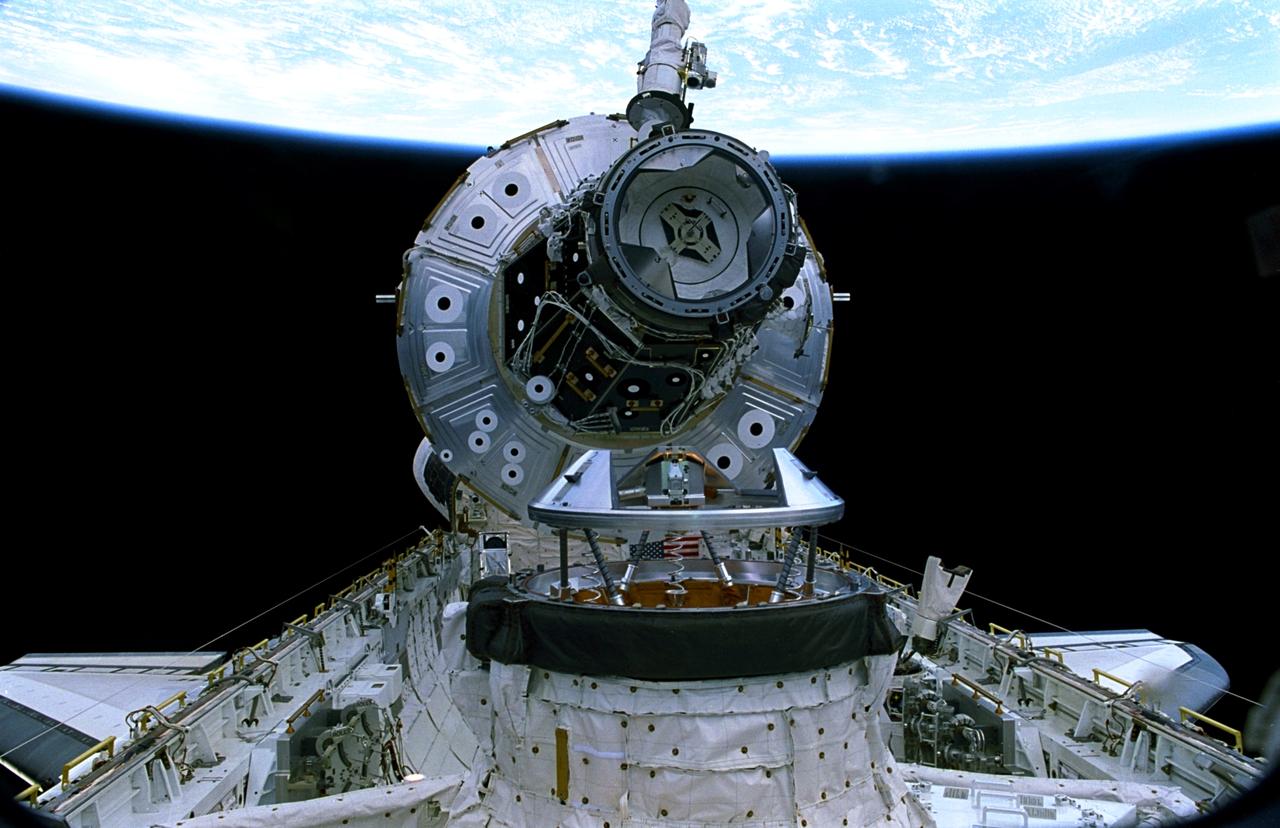
STS088-335-017 (5 Dec. 1998) --- One of the STS-88 astronauts aimed a 35mm camera through Endeavour's aft flight deck windows to record this Dec. 5 image of the Unity connecting module as it was being unberthed in the cargo bay. The berthing and mating process constituted the first link in a long chain of events that led up to the eventual deployment in Earth orbit of the connected Unity and Zarya modules later in the 11-day mission. Photo credit: NASA

ISS019-E-005501 (9 April 2009) --- Split Region in Croatia is featured in this image photographed by an Expedition 19 crewmember on the International Space Station. One the world?s most rugged coastlines are located in Croatia along the Adriatic Sea. This view features the Dalmatian coastline of Croatia around the city of Split. Much of the region can be characterized by northwest-southeast oriented linear islands and embayments of the Adriatic Sea. This distinctive coastal geomorphology is the result of faulting caused by tectonic activity in the region and sea level rise. Split has a long history - the Roman Emperor Diocletian retired to Spalatum (the present-day Split) in 305, and his palace constitutes the core of the city today. The city is a popular resort destination for its historic sites, Mediterranean climate, and ready access to the Adriatic islands (such as Brac to the south). Other large cities in the region include Kastela and Trogir; together with Split, these form an almost continuous urban area bordering the coast (visible as pink regions). A thin zone marking a water boundary is visible in this image between Split and the island of Brac. It may represent a local plankton bloom, or a line of convergence between water masses creating rougher water. A unique combination of geography -- including dramatic topography that channels local winds, the complicated coastline, input of fresh water from rivers, and ample nutrients and surface oils -- makes for interesting mesoscale surface dynamics throughout the Adriatic Sea. Over the years, astronauts have taken images of the Split region using sunglint and changes in water color to highlight features like eddies, water boundaries and mixing zones between fresh waters flowing into the saltier (denser) waters of the Adriatic, and wind-driven surface currents. Split is an important transit center connecting islands in the Adriatic Sea to the Italian peninsula, and an important regional manufacturing center of goods such as solar cells, plastics, and paper products. The city was heavily industrialized during the post World War II period as a member state of Yugoslavia. By the 1980s, the marine environment bordered by Split, Kastela, and Trogir (known as Kastela Bay) had been identified as one of the most polluted areas of the Adriatic from both sewage and industrial wastes. Concerted efforts by the Croatian government and international partners to improve waste handling and treatment infrastructure over the past 10 years seem to have been successful ? both marine species and water polo players have returned to the area.