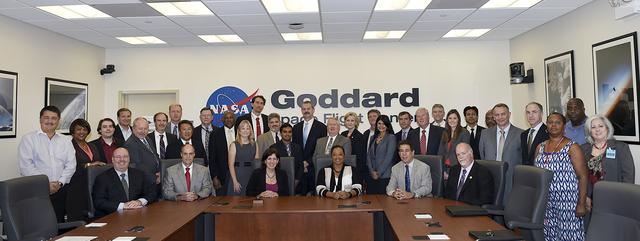
Goddard Contractor Association Meeting was held at Goddard on September 8, 2016.
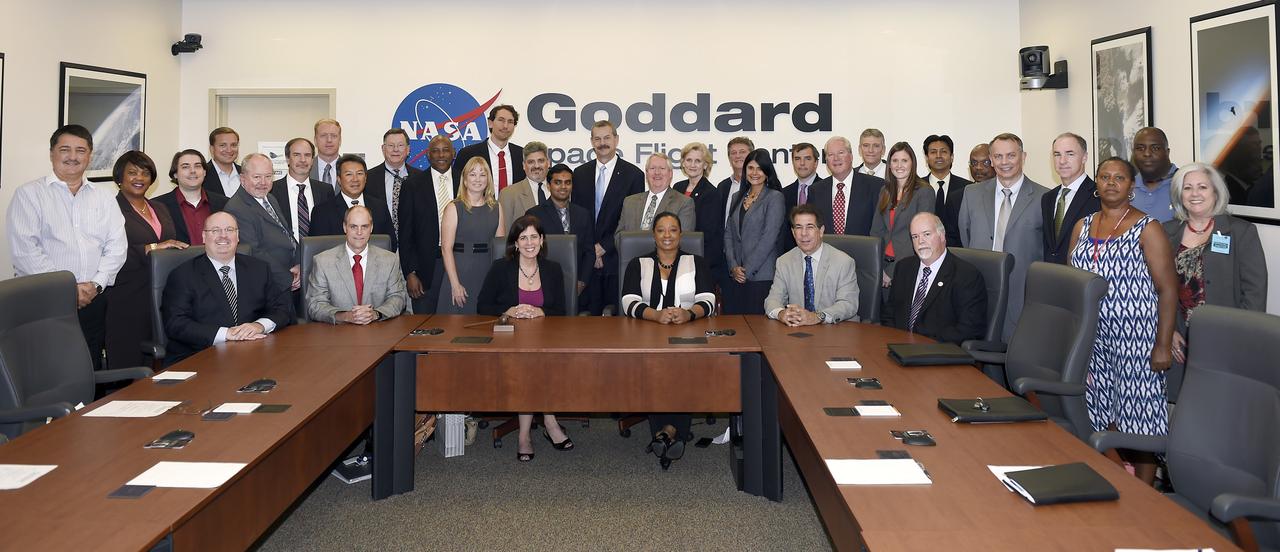
Goddard Contractor Association meeting was held at Goddard on September 8, 2016 in Bldg 8 MCC.
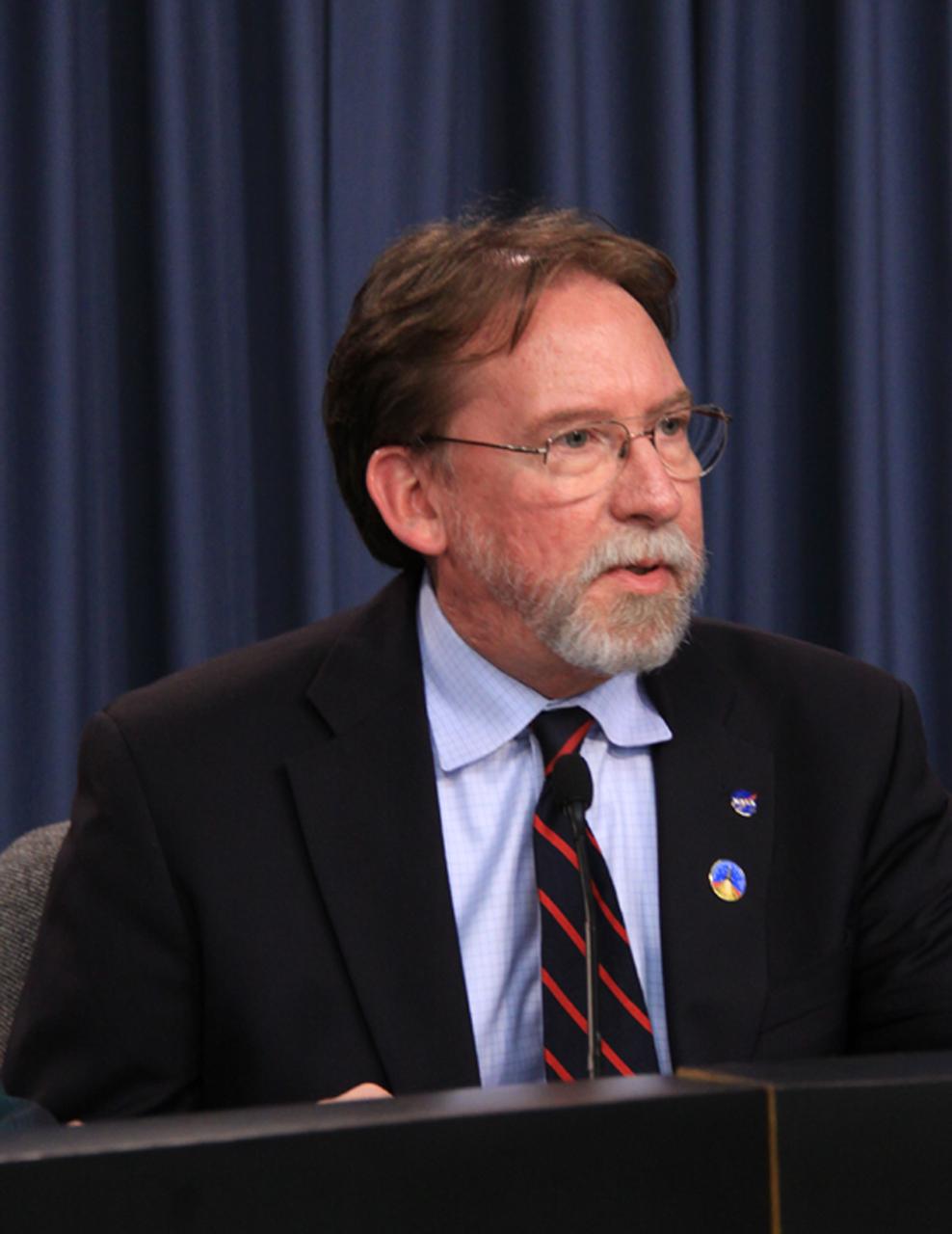
CAPE CANAVERAL, Fla. – In the Press Site auditorium at NASA's Kennedy Space Center in Florida, Doug Cooke, associate administrator for NASA's Exploration Systems Mission Directorate, participates in a news conference following the conclusion of the flight test readiness review, or FTRR, for the Ares I-X test rocket. During the meeting, senior NASA and contractor managers assessed the risks associated with the test and determined the rocket, support systems and procedures are ready for launch. The Ares I-X launch date was announced after the FTRR and is officially set for Oct. 27. For information on the Ares I-X vehicle and flight test, visit http://www.nasa.gov/aresIX. Photo credit: NASA/Jack Pfaller
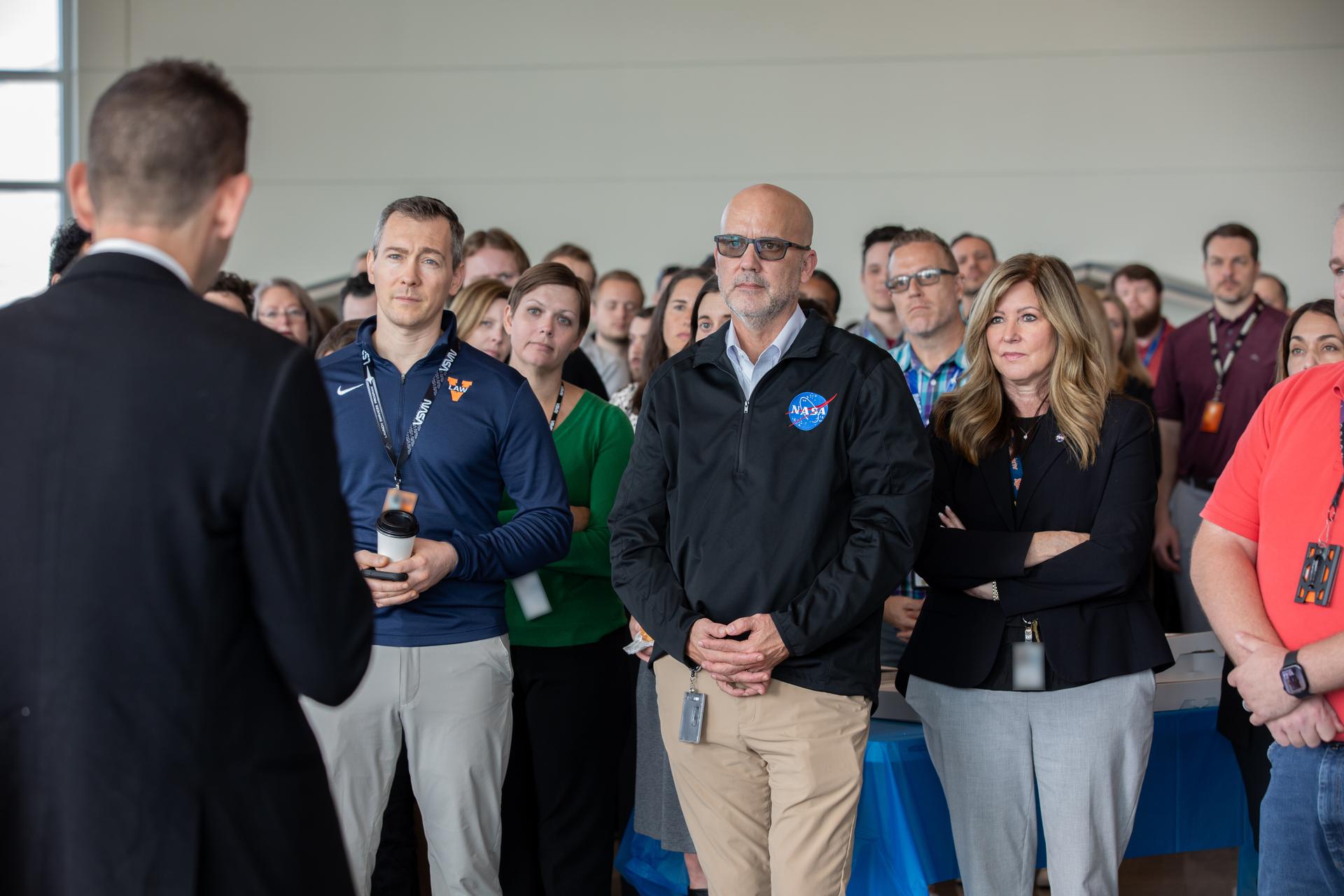
NASA Administrator Jared Isaacman (far left) speaks with NASA employees during his visit to the agency’s Kennedy Space Center in Florida, on Tuesday, Jan. 13, 2026, including, from right, Jennifer Kunz, associate director, technical, NASA Kennedy; Michael Beaupre, director, human resources, NASA Kennedy; and Louis Shernisky, NASA Launch Services Program counsel. Isaacman, NASA’s 15th administrator, began visiting the agency’s centers after his appointment on Dec. 17, 2025, to meet with employees, contractors, and partners.
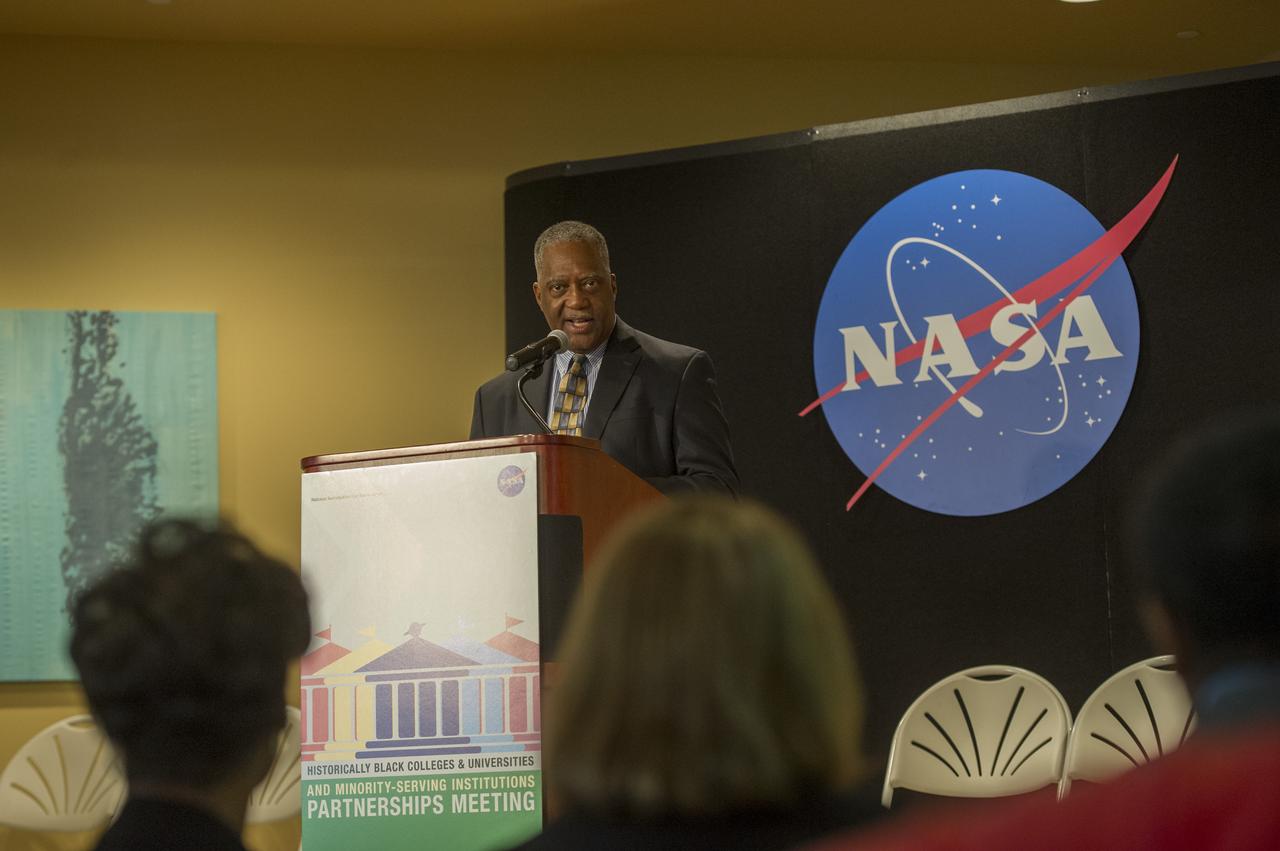
RONALD BLAKELY, ASSOCIATE DIRECTOR FOR THE WHITE HOUSE INITIATIVE ON HISTORICALLY BLACK COLLEGES AND UNIVERSITIES, SPEAKS DURING NASA’S FIRST PARTNERSHIPS MEETING FOR HISTORICALLY BLACK COLLEGES AND UNIVERSITIES AND MINORITY SERVING INSTITUTIONS. NASA’S OFFICE OF SMALL BUSINESS PROGRAMS HOSTED THE EVENT, WHICH ALLOWED REPRESENTATIVES FROM 30 NATIONWIDE UNIVERSITIES AND NASA PRIME CONTRACTORS TO DISCUSS POTENTIAL SUBCONTRACTING OPPORTUNITIES
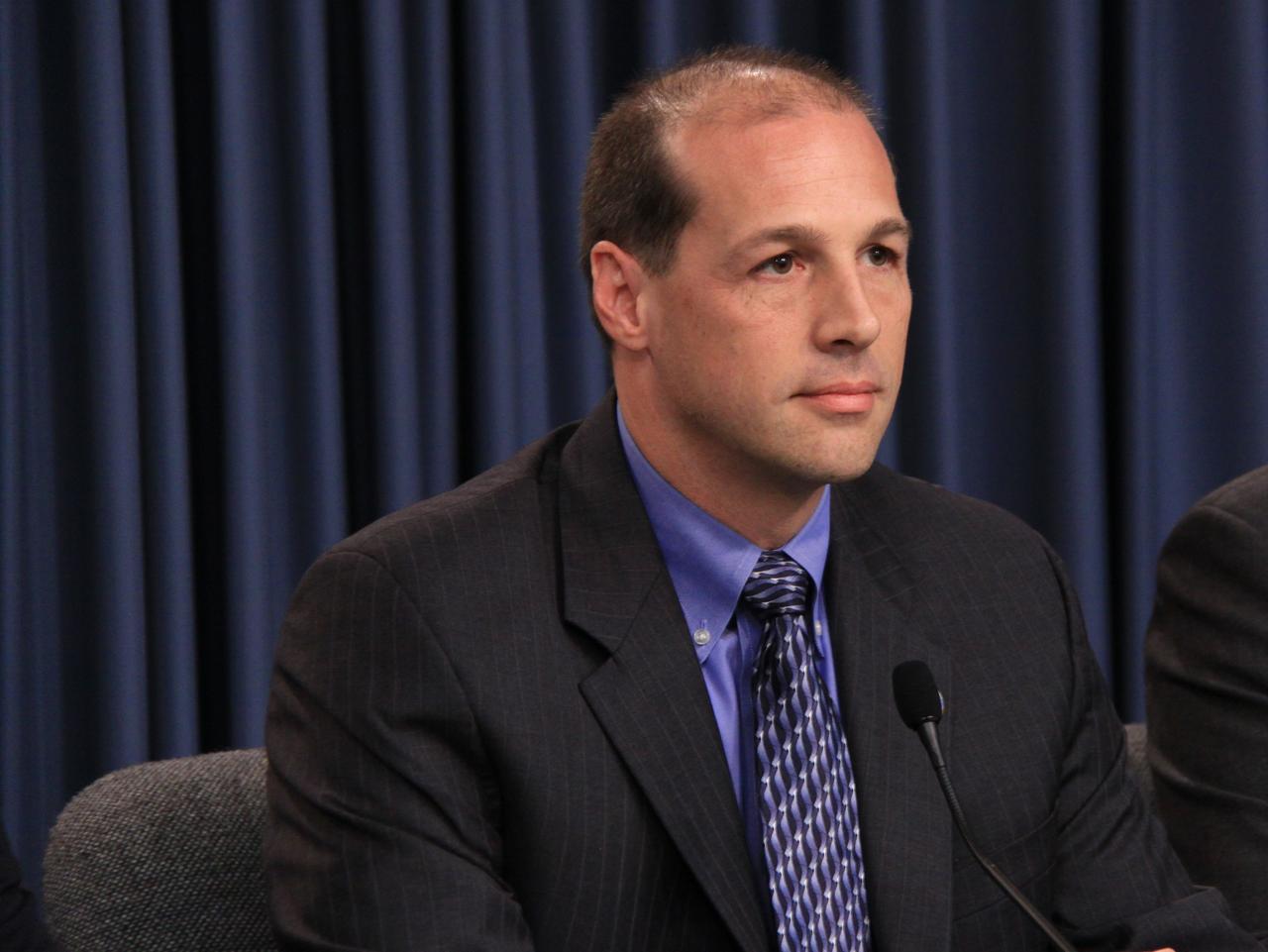
CAPE CANAVERAL, Fla. – In the Press Site auditorium at NASA's Kennedy Space Center in Florida, Bob Ess, NASA's mission manager for the Ares I-X flight test, participates in a news conference following the conclusion of the flight test readiness review, or FTRR, for the Ares I-X test rocket. During the meeting, senior NASA and contractor managers assessed the risks associated with the test and determined the rocket, support systems and procedures are ready for launch. The Ares I-X launch date was announced after the FTRR and is officially set for Oct. 27. For information on the Ares I-X vehicle and flight test, visit http://www.nasa.gov/aresIX. Photo credit: NASA/Jack Pfaller
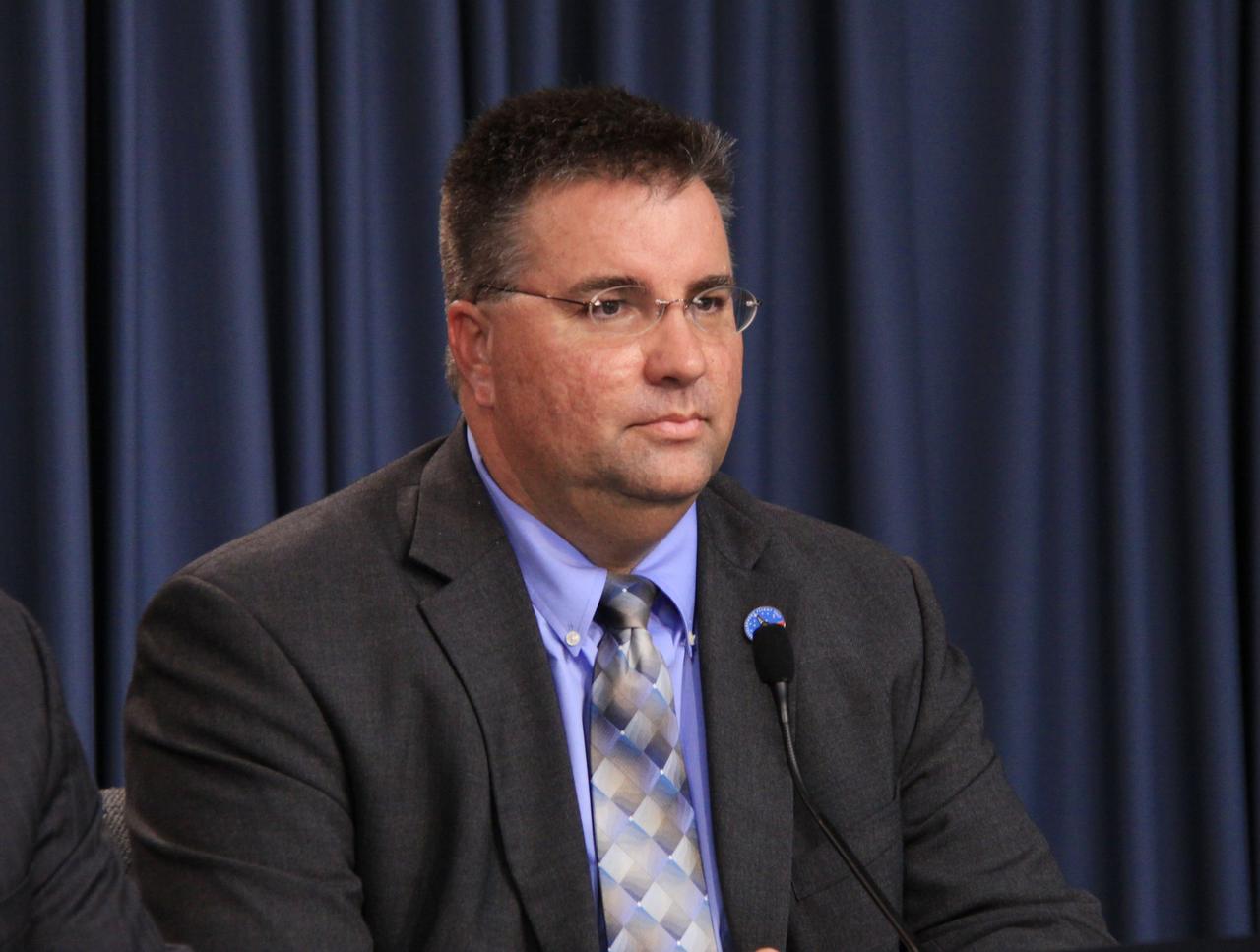
CAPE CANAVERAL, Fla. – In the Press Site auditorium at NASA's Kennedy Space Center in Florida, Edward Mango, launch director for the Ares I-X flight test, participates in a news conference following the conclusion of the flight test readiness review, or FTRR, for the Ares I-X test rocket. During the meeting, senior NASA and contractor managers assessed the risks associated with the test and determined the rocket, support systems and procedures are ready for launch. The Ares I-X launch date was announced after the FTRR and is officially set for Oct. 27. For information on the Ares I-X vehicle and flight test, visit http://www.nasa.gov/aresIX. Photo credit: NASA/Jack Pfaller
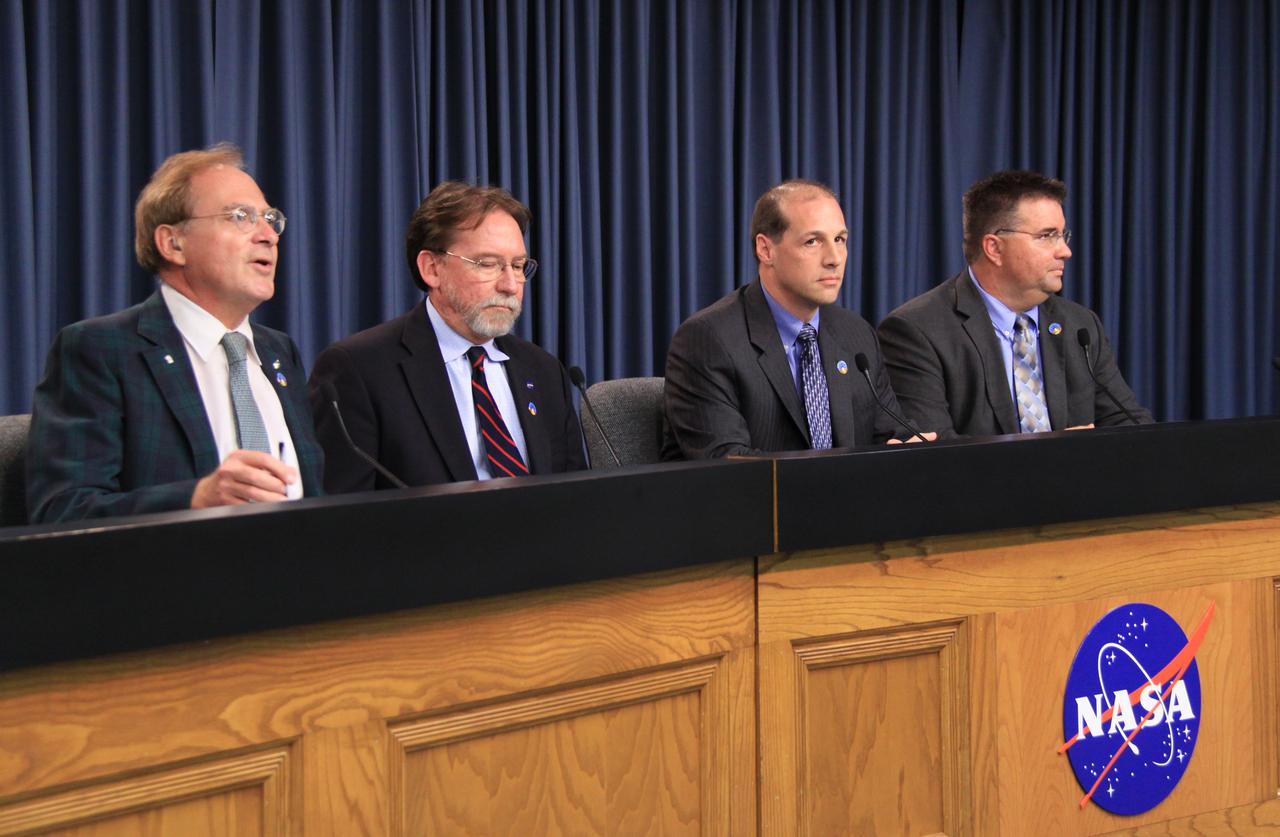
CAPE CANAVERAL, Fla. - At NASA's Kennedy Space Center in Florida, a news conference is held in the Press Site auditorium following the conclusion of the flight test readiness review, or FTRR, for the Ares I-X test rocket. From left are moderator George Diller, NASA Public Affairs officer; Doug Cooke, associate administrator for NASA's Exploration Systems Mission Directorate; Bob Ess, mission manager for the Ares I-X flight test; and Edward Mango, launch director for the Ares I-X flight test. During the meeting, senior NASA and contractor managers assessed the risks associated with the test and determined the rocket, support systems and procedures are ready for launch. The Ares I-X launch date was announced after the FTRR and is officially set for Oct. 27. For information on the Ares I-X vehicle and flight test, visit http://www.nasa.gov/aresIX. Photo credit: NASA/Jack Pfaller
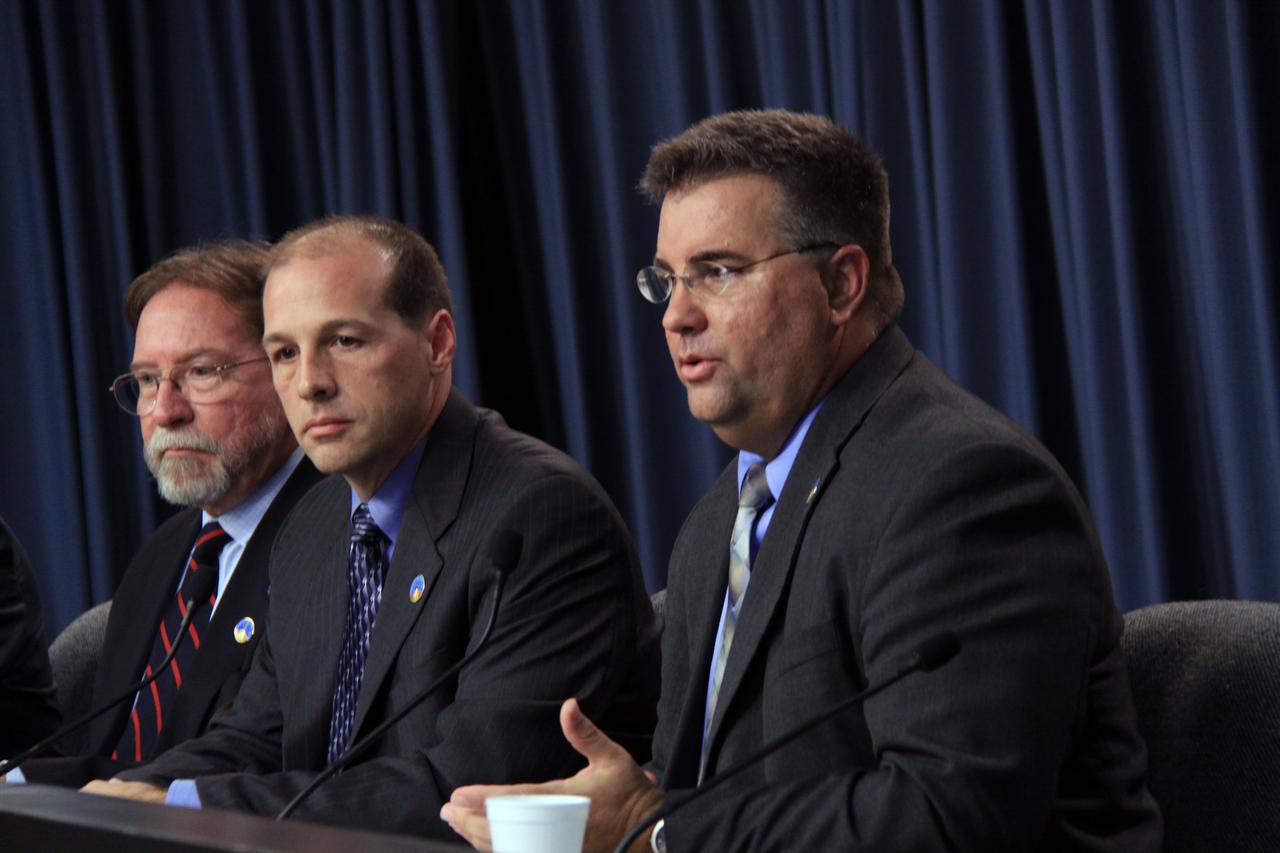
CAPE CANAVERAL, Fla. – At NASA's Kennedy Space Center in Florida, a news conference is held in the Press Site auditorium following the conclusion of the flight test readiness review, or FTRR, for the Ares I-X test rocket. From left are Doug Cooke, associate administrator for NASA's Exploration Systems Mission Directorate; Bob Ess, mission manager for the Ares I-X flight test; and Edward Mango, launch director for the Ares I-X flight test. During the meeting, senior NASA and contractor managers assessed the risks associated with the test and determined the rocket, support systems and procedures are ready for launch. The Ares I-X launch date was announced after the FTRR and is officially set for Oct. 27. For information on the Ares I-X vehicle and flight test, visit http://www.nasa.gov/aresIX. Photo credit: NASA/Jack Pfaller
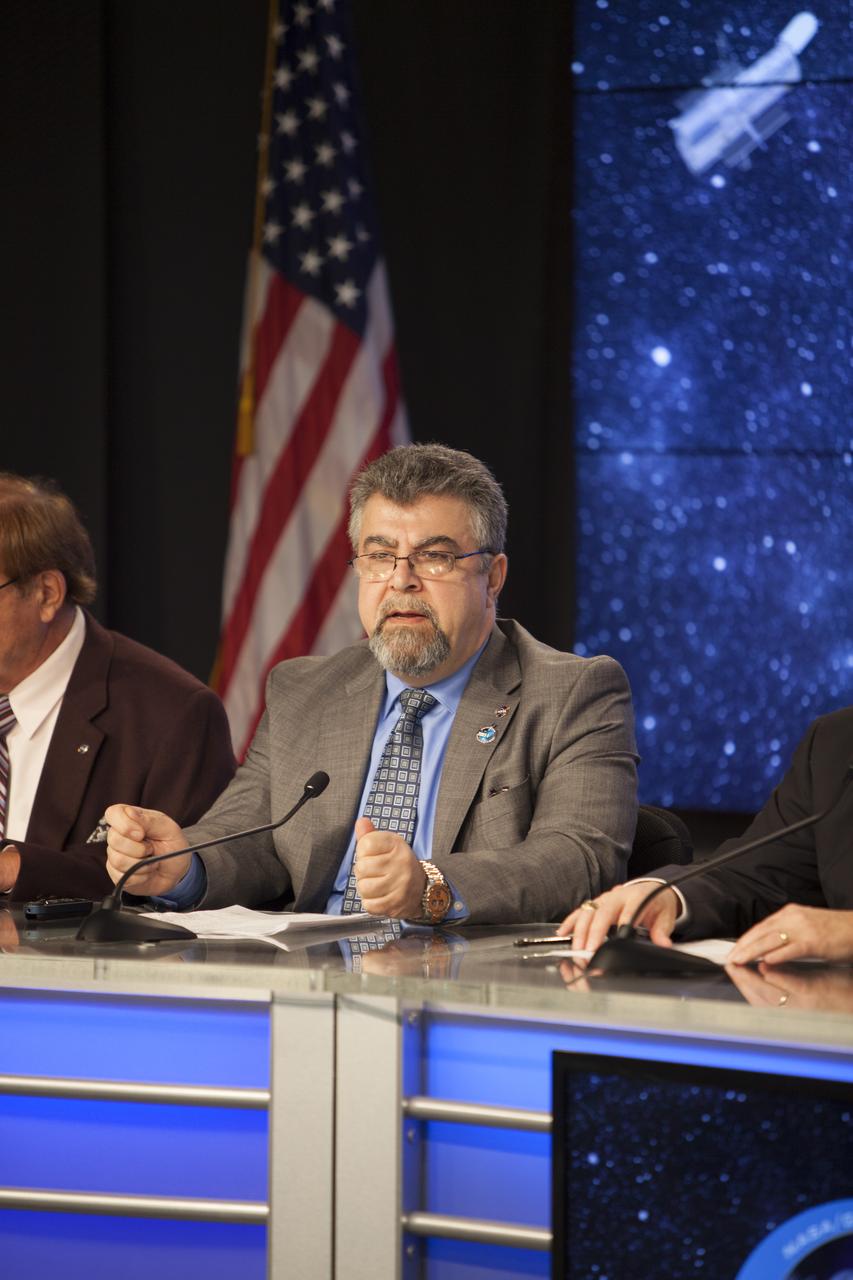
CAPE CANAVERAL, Fla. – During a news conference at NASA's Kennedy Space Center in Florida, agency and contractor officials discussed preparations for the launch of NASA's Tracking and Data Relay Satellite, or TDRS-L, spacecraft. Participants included Badri Younes, deputy associate administrator, Space Communications and Navigation SCaN NASA Human Exploration and Operations Mission Directorate at NASA Headquarters in Washington D.C. The TDRS-L spacecraft is the second of three new satellites designed to ensure vital operational continuity for NASA by expanding the lifespan of the Tracking and Data Relay Satellite System TDRSS fleet, which consists of eight satellites in geosynchronous orbit. The spacecraft provide tracking, telemetry, command and high bandwidth data return services for numerous science and human exploration missions orbiting Earth. These include NASA's Hubble Space Telescope and the International Space Station. TDRS-L has a high-performance solar panel designed for more spacecraft power to meet the growing S-band communications requirements. TDRSS is one of NASA Space Communication and Navigation’s SCaN three networks providing space communications to NASA’s missions. For more information more about TDRS-L, visit: http://www.nasa.gov/tdrs To learn more about SCaN, visit: www.nasa.gov/scan Photo credit: NASA/Frankie Martin
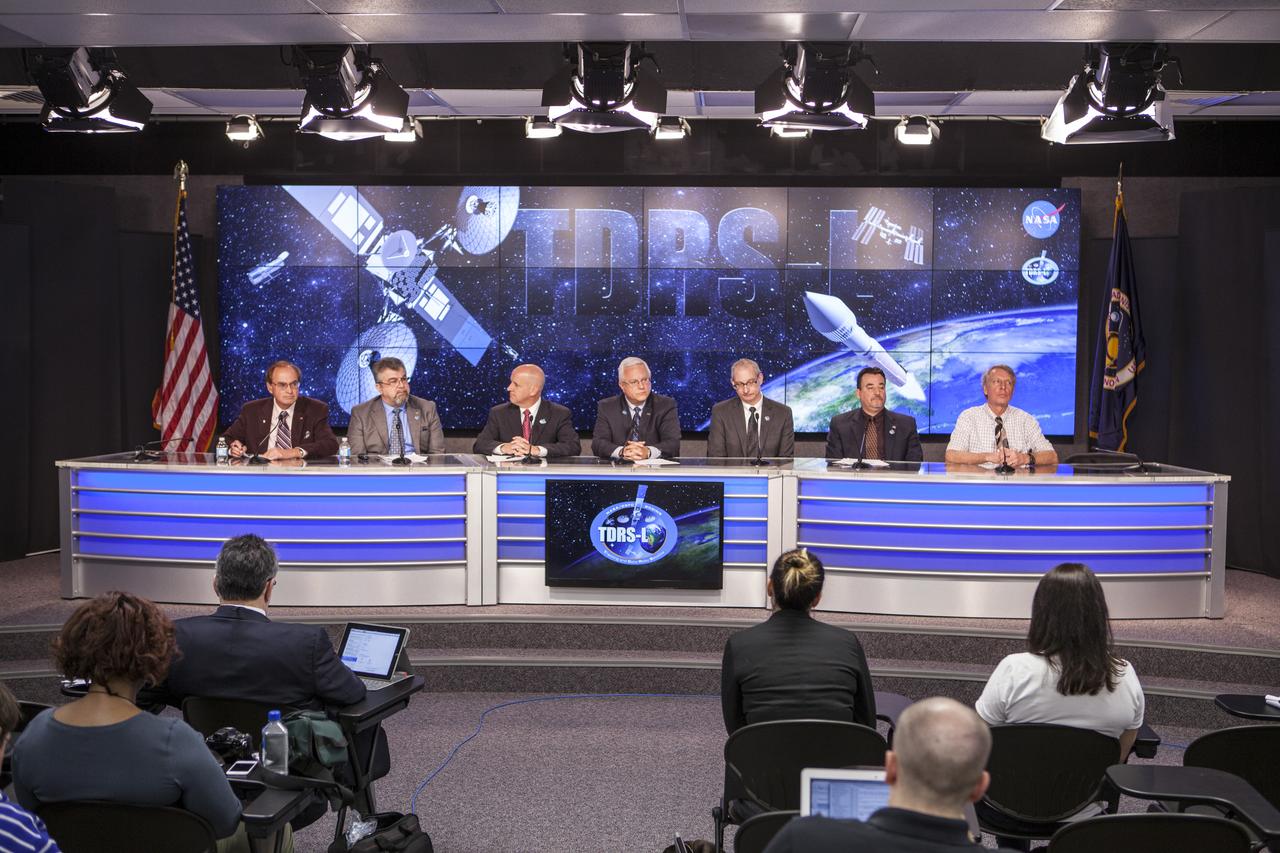
CAPE CANAVERAL, Fla. –During a news conference at NASA's Kennedy Space Center in Florida, agency and contractor officials discussed preparations for the launch of NASA's Tracking and Data Relay Satellite, or TDRS-L, spacecraft. Participating in the briefing, from the left, are George Diller of NASA Public Affairs, Badri Younes, deputy associate administrator, Space Communications and Navigation SCaN NASA Human Exploration and Operations Mission Directorate at NASA Headquarters in Washington D.C., Tim Dunn, NASA launch director at Kennedy, Vernon Thorp, program manager for NASA Missions with United Launch Alliance in Denver, Colo., Jeffrey Gramling, NASA's TDRS-L project manager at the Goddard Space Flight Center in Greenbelt, Md., Andy Kopito, Civil Space Programs director for Boeing Space & Intelligence Systems in El Segundo, Calif., and Clay Flinn, launch weather officer for the 45th Weather Squadron at Cape Canaveral Air Force Station, Fla. The TDRS-L spacecraft is the second of three new satellites designed to ensure vital operational continuity for NASA by expanding the lifespan of the Tracking and Data Relay Satellite System TDRSS fleet, which consists of eight satellites in geosynchronous orbit. The spacecraft provide tracking, telemetry, command and high bandwidth data return services for numerous science and human exploration missions orbiting Earth. These include NASA's Hubble Space Telescope and the International Space Station. TDRS-L has a high-performance solar panel designed for more spacecraft power to meet the growing S-band communications requirements. TDRSS is one of NASA Space Communication and Navigation’s SCaN three networks providing space communications to NASA’s missions. For more information more about TDRS-L, visit: http://www.nasa.gov/tdrs To learn more about SCaN, visit: www.nasa.gov/scan Photo credit: NASA/Frankie Martin
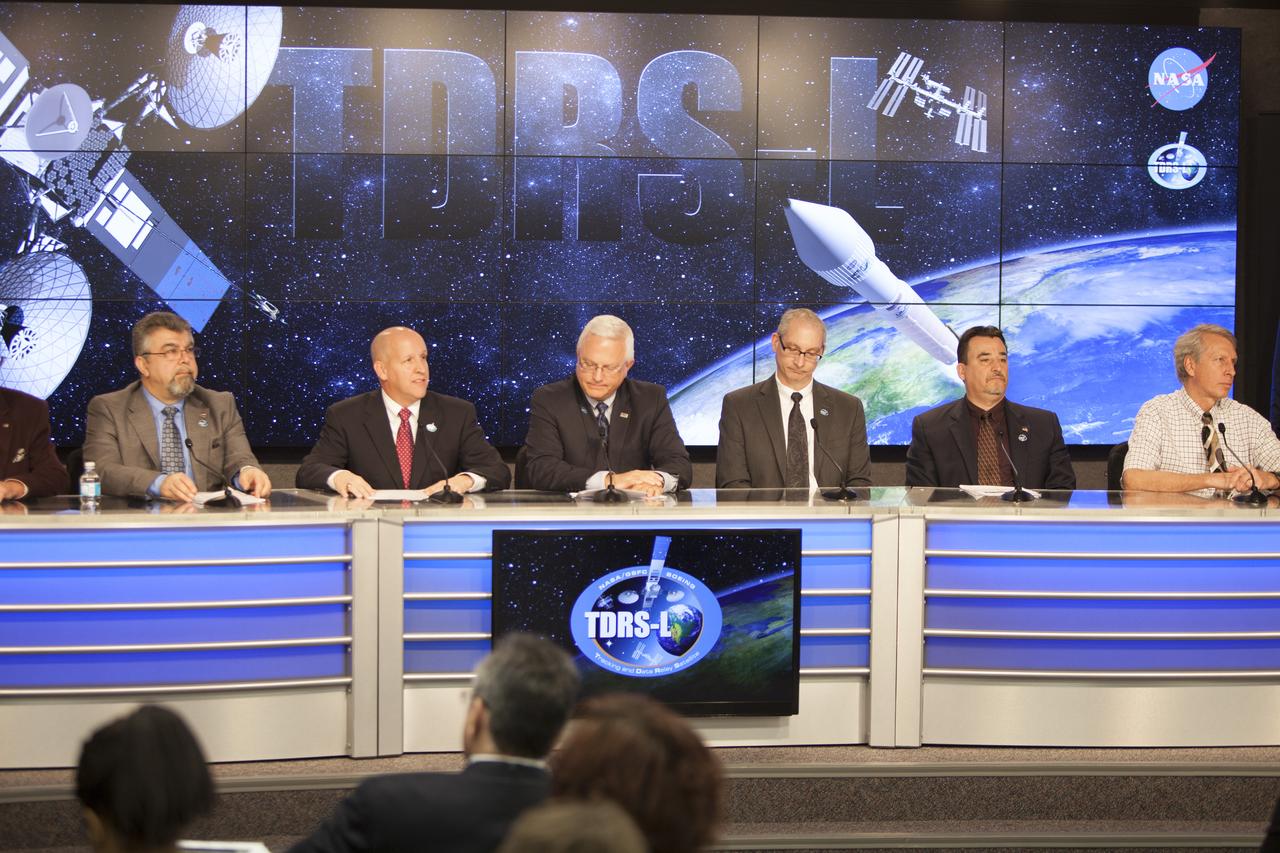
CAPE CANAVERAL, Fla. –During a news conference at NASA's Kennedy Space Center in Florida, agency and contractor officials discussed preparations for the launch of NASA's Tracking and Data Relay Satellite, or TDRS-L, spacecraft. Participating in the briefing, from the left, are Badri Younes, deputy associate administrator, Space Communications and Navigation SCaN NASA Human Exploration and Operations Mission Directorate at NASA Headquarters in Washington D.C., Tim Dunn, NASA launch director at Kennedy, Vernon Thorp, program manager for NASA Missions with United Launch Alliance in Denver, Colo., Jeffrey Gramling, NASA's TDRS-L project manager at the Goddard Space Flight Center in Greenbelt, Md., Andy Kopito, Civil Space Programs director for Boeing Space & Intelligence Systems in El Segundo, Calif., and Clay Flinn, launch weather officer for the 45th Weather Squadron at Cape Canaveral Air Force Station, Fla. The TDRS-L spacecraft is the second of three new satellites designed to ensure vital operational continuity for NASA by expanding the lifespan of the Tracking and Data Relay Satellite System TDRSS fleet, which consists of eight satellites in geosynchronous orbit. The spacecraft provide tracking, telemetry, command and high bandwidth data return services for numerous science and human exploration missions orbiting Earth. These include NASA's Hubble Space Telescope and the International Space Station. TDRS-L has a high-performance solar panel designed for more spacecraft power to meet the growing S-band communications requirements. TDRSS is one of NASA Space Communication and Navigation’s SCaN three networks providing space communications to NASA’s missions. For more information more about TDRS-L, visit: http://www.nasa.gov/tdrs To learn more about SCaN, visit: www.nasa.gov/scan Photo credit: NASA/Frankie Martin