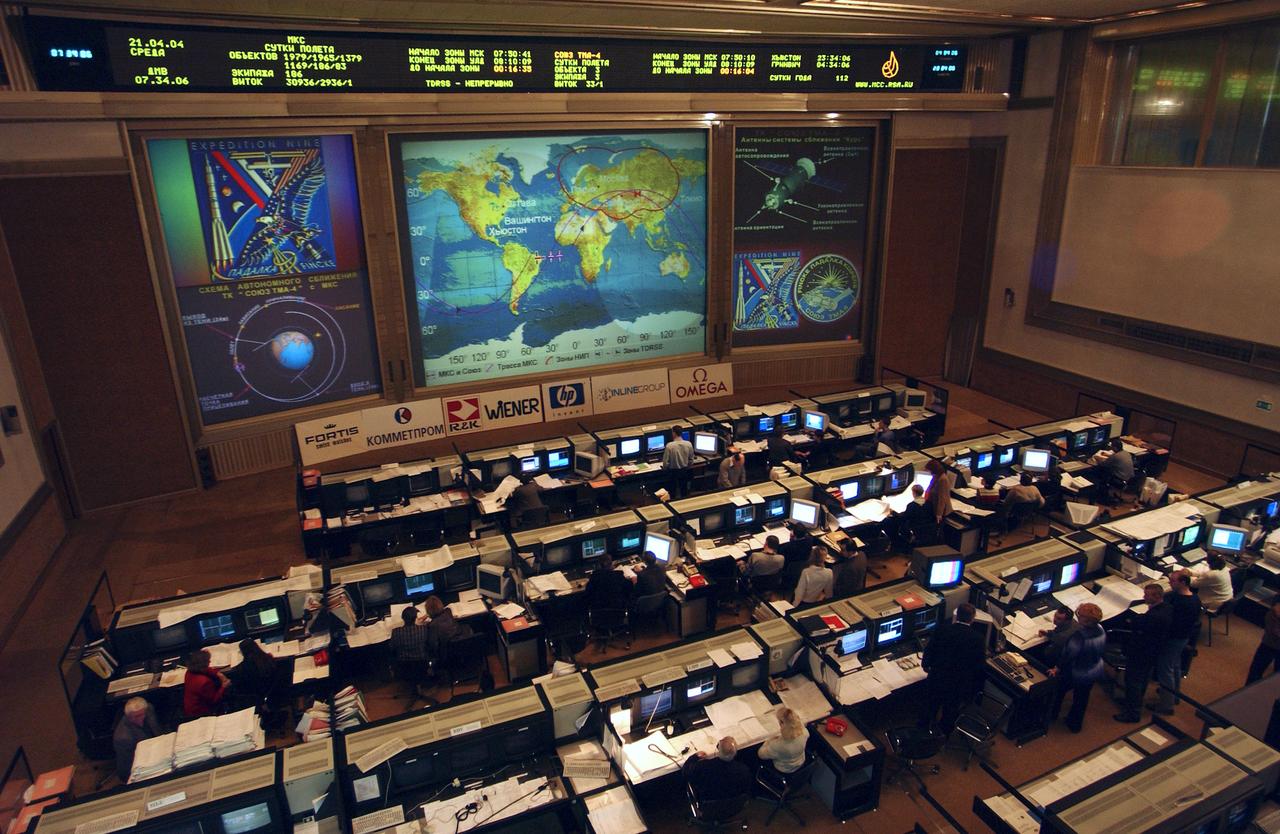
View of the Flight Control Room at the Russian Mission Control Center in Korolev, Russia, located on the outskirts of Moscow, Wednesday, April 21, 2004. Photo Credit: (NASA/Bill Ingalls)
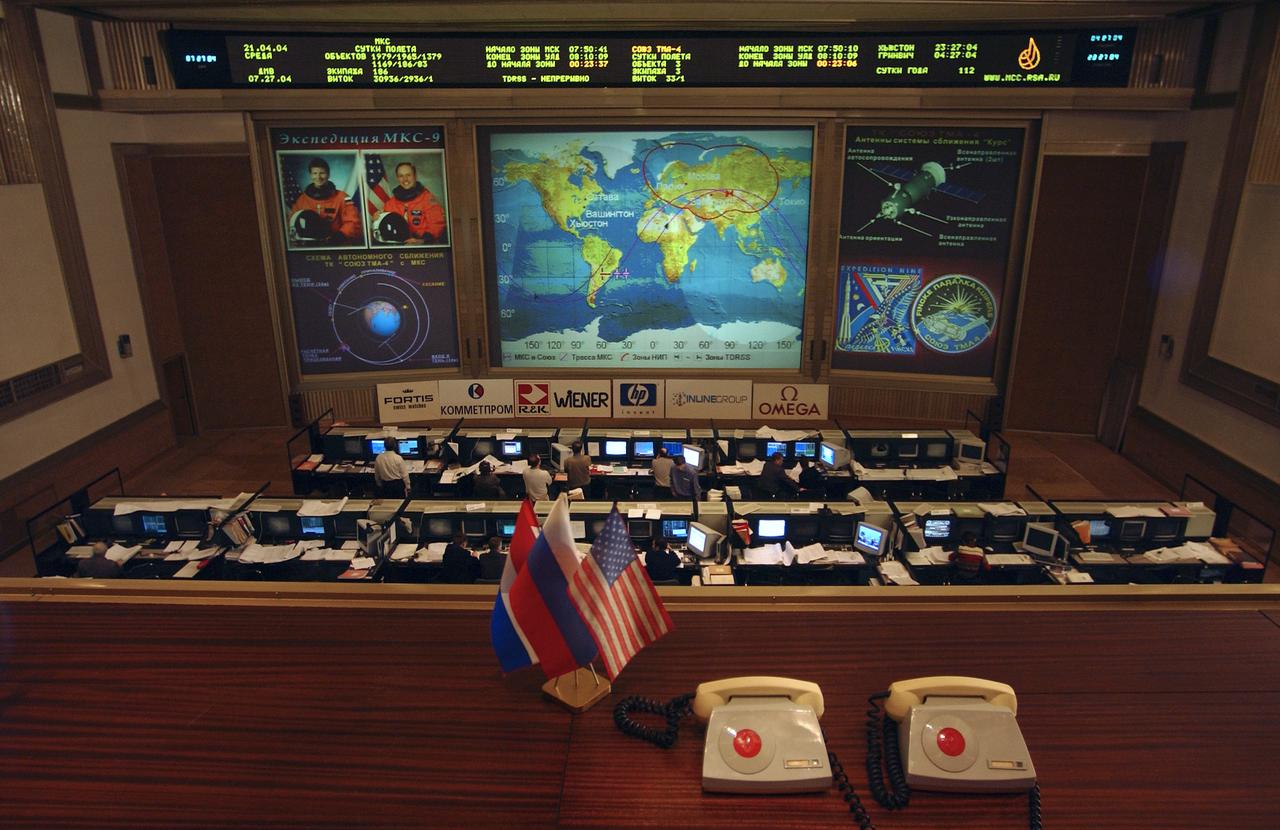
View of the Flight Control Room at the Russian Mission Control Center in Korolev, Russia, located on the outskirts of Moscow, Wednesday, April 21, 2004. Photo Credit: (NASA/Bill Ingalls)
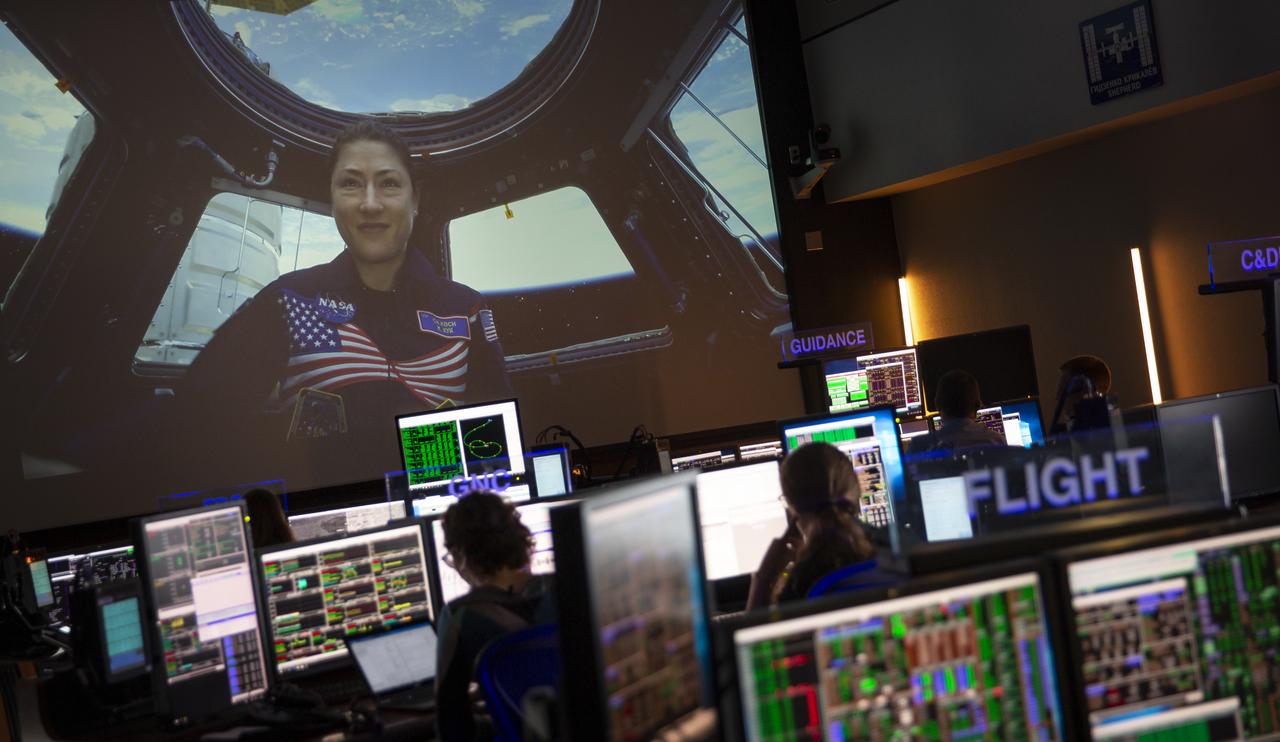
NASA astronaut Christina Koch is seen onboard the International Space Station from the Blue Flight Control Room, Tuesday, July 9, 2019 at NASA's Johnson Space Center in Houston, Texas. Photo Credit: (NASA/Bill Ingalls)
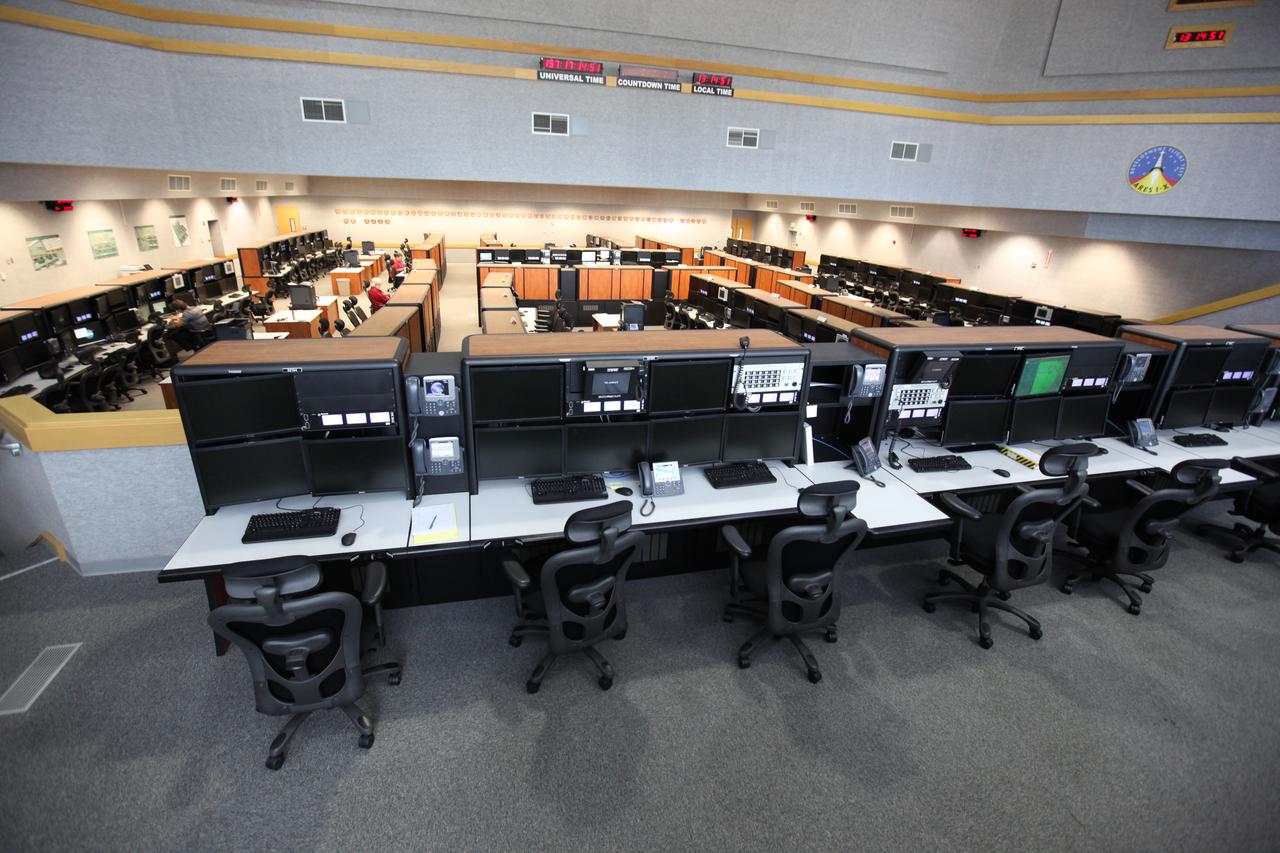
Photos of Firing Room 1 inside the Launch Control Center (LCC) at Kennedy Space Center.
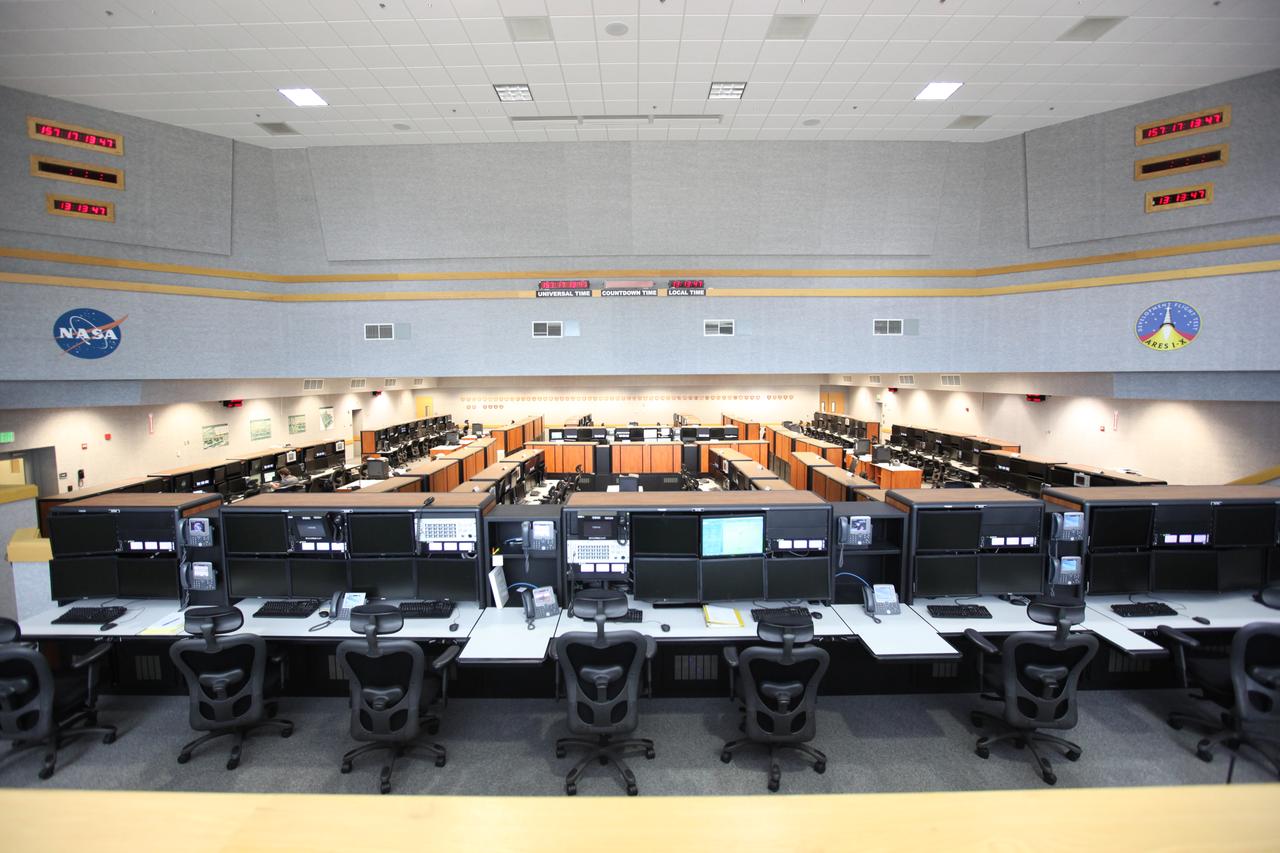
Photos of Firing Room 1 inside the Launch Control Center (LCC) at Kennedy Space Center.
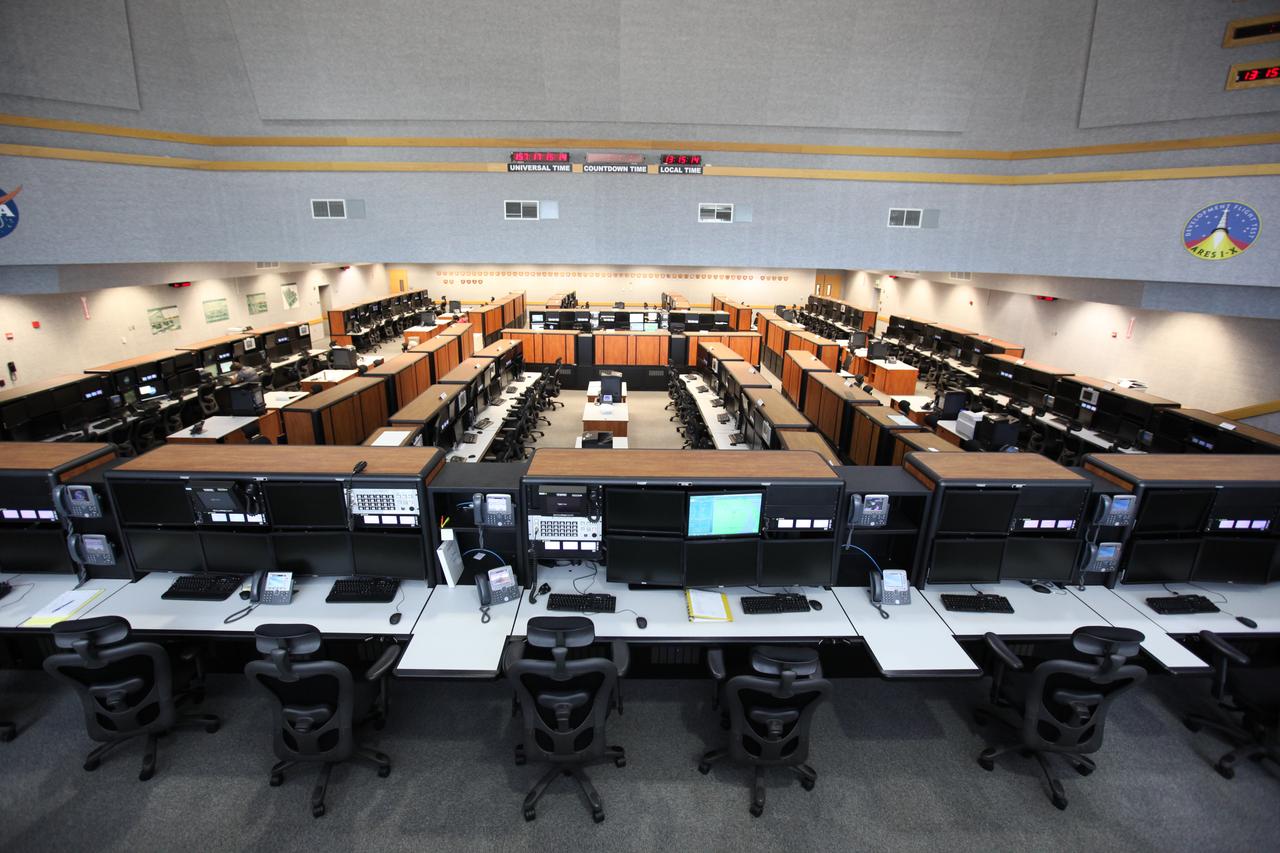
Photos of Firing Room 1 inside the Launch Control Center (LCC) at Kennedy Space Center.
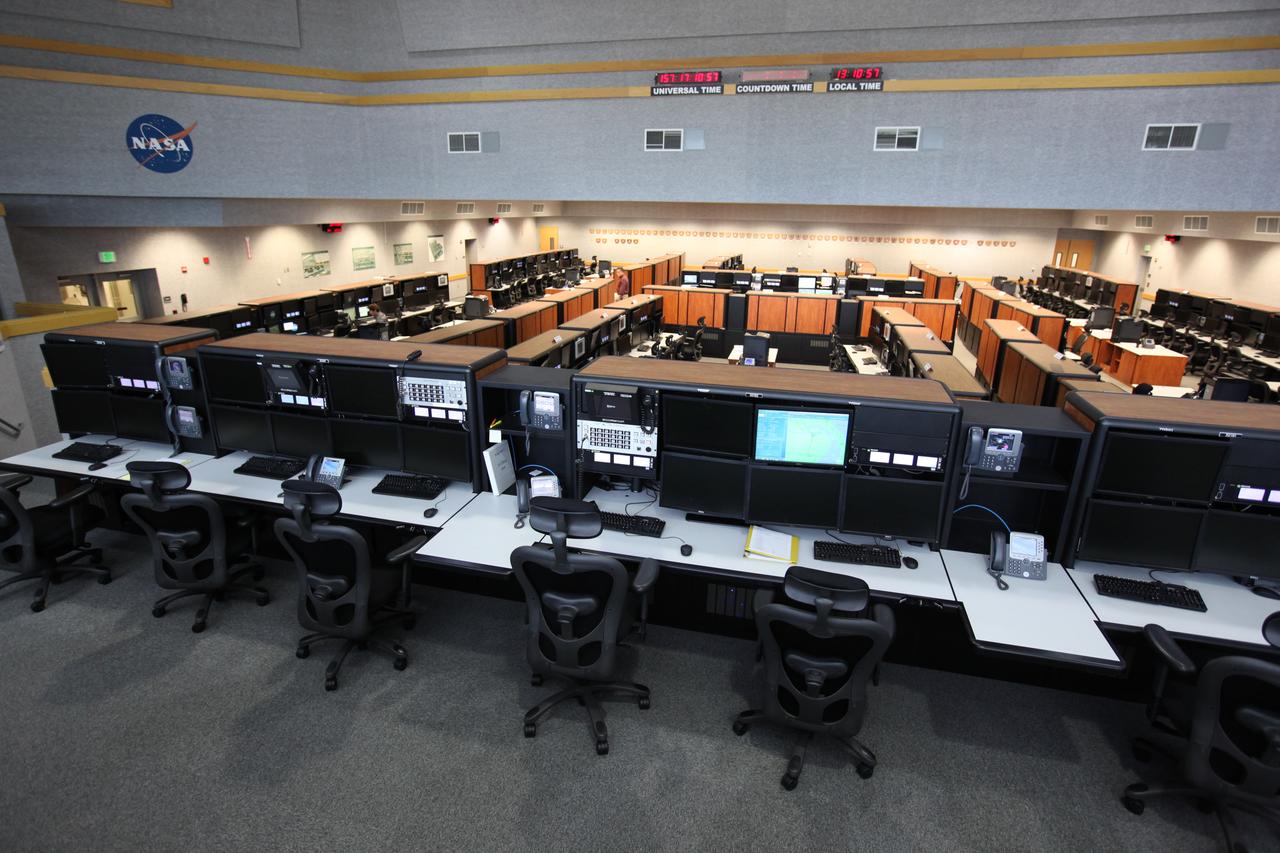
Photos of Firing Room 1 inside the Launch Control Center (LCC) at Kennedy Space Center.
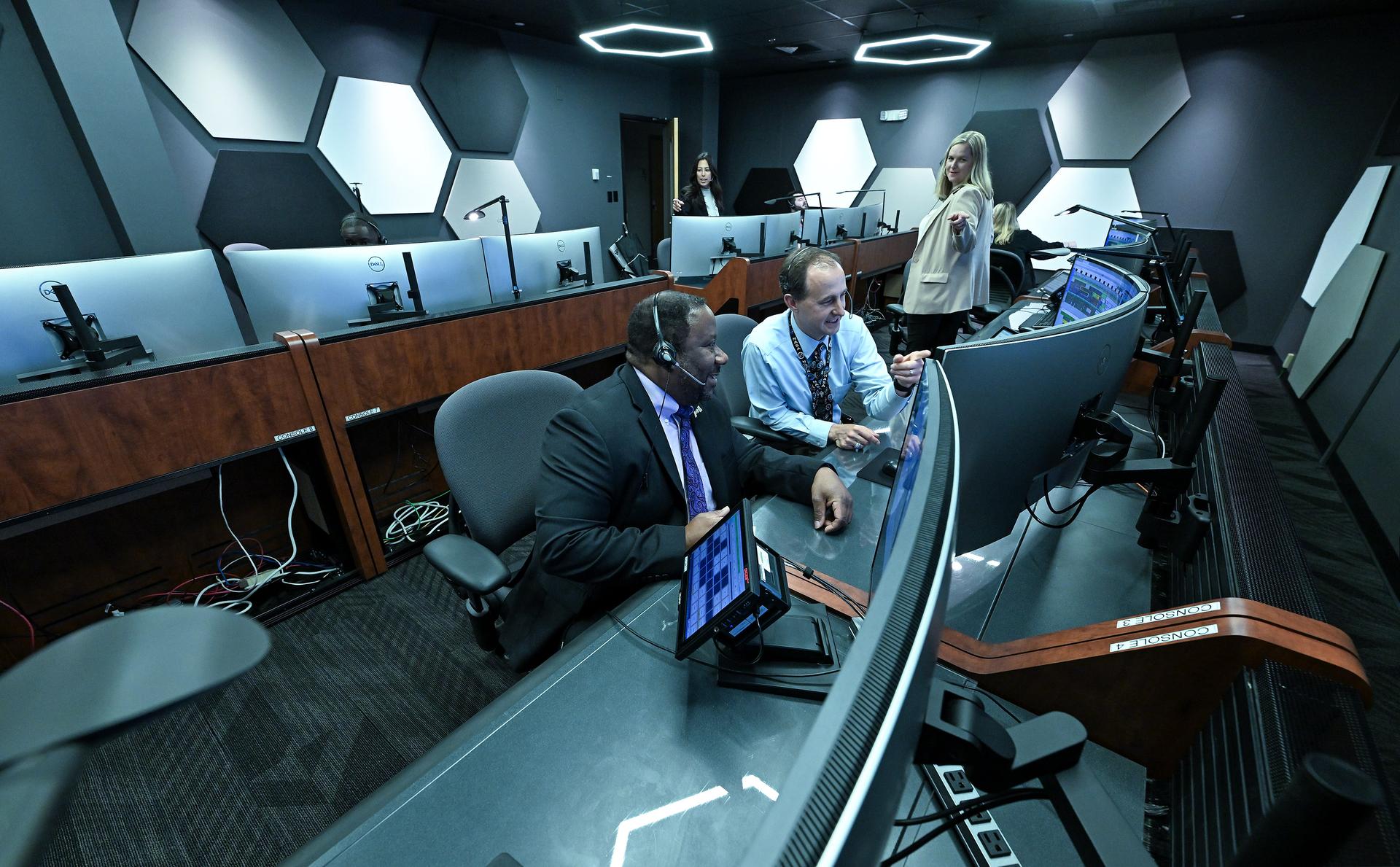
These photos offer a look inside the twin control rooms at NASA’s Marshall Space Flight Center in Huntsville, Alabama, where engineers will monitor Artemis science and future landing operations for Artemis. The LUCA (Lunar Utilization Control Area) and LESA (Lander Engineering Support Area) rooms are part of the Huntsville Operations Support Center at NASA Marshall. The LUCA is specially designed to support a wide variety of science operations on and around the Moon – and beyond. Engineers in the LUCA monitored operations for the Lunar Node-1 experiment, an autonomous navigation payload that was part of the first NASA Commercial Lunar Payload Services (CLPS) launch on Intuitive Machines’ Nova-C lunar lander in 2024. NASA Marshall flight controllers will use the LUCA again for Artemis II to monitor science operations. Beginning with Artemis III, members of the NASA Human Landing System Mission Insight Support Team – a group of engineers, safety leads, flight operations experts, and technical authorities – will work in the LESA. There, they will monitor lander systems in real-time and be involved in key decision-making processes throughout the mission. For more information, contact NASA Marshall’s Office of Communications at 256-544-0034.
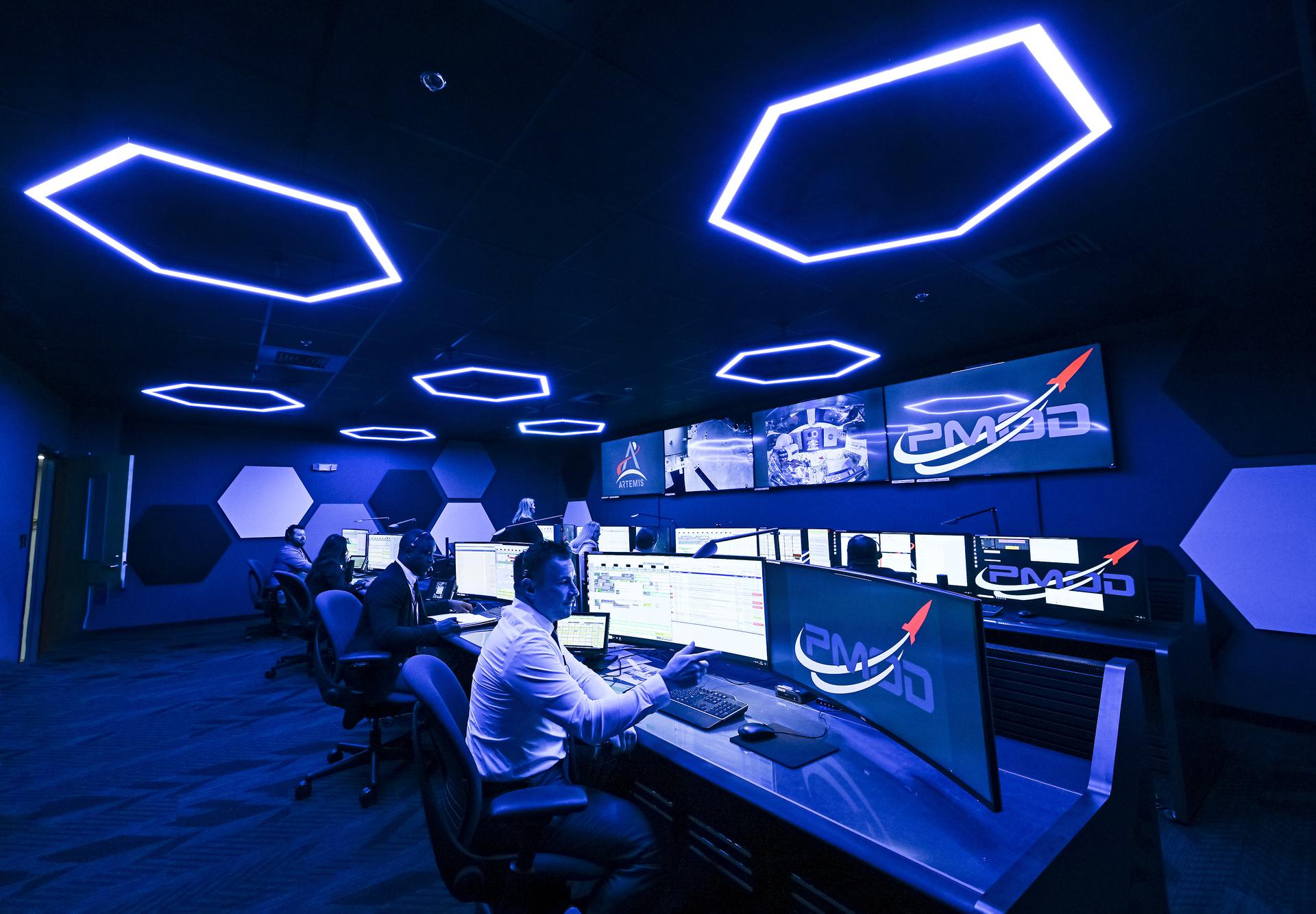
These photos offer a look inside the twin control rooms at NASA’s Marshall Space Flight Center in Huntsville, Alabama, where engineers will monitor Artemis science and future landing operations for Artemis. The LUCA (Lunar Utilization Control Area) and LESA (Lander Engineering Support Area) rooms are part of the Huntsville Operations Support Center at NASA Marshall. The LUCA is specially designed to support a wide variety of science operations on and around the Moon – and beyond. Engineers in the LUCA monitored operations for the Lunar Node-1 experiment, an autonomous navigation payload that was part of the first NASA Commercial Lunar Payload Services (CLPS) launch on Intuitive Machines’ Nova-C lunar lander in 2024. NASA Marshall flight controllers will use the LUCA again for Artemis II to monitor science operations. Beginning with Artemis III, members of the NASA Human Landing System Mission Insight Support Team – a group of engineers, safety leads, flight operations experts, and technical authorities – will work in the LESA. There, they will monitor lander systems in real-time and be involved in key decision-making processes throughout the mission. For more information, contact NASA Marshall’s Office of Communications at 256-544-0034.
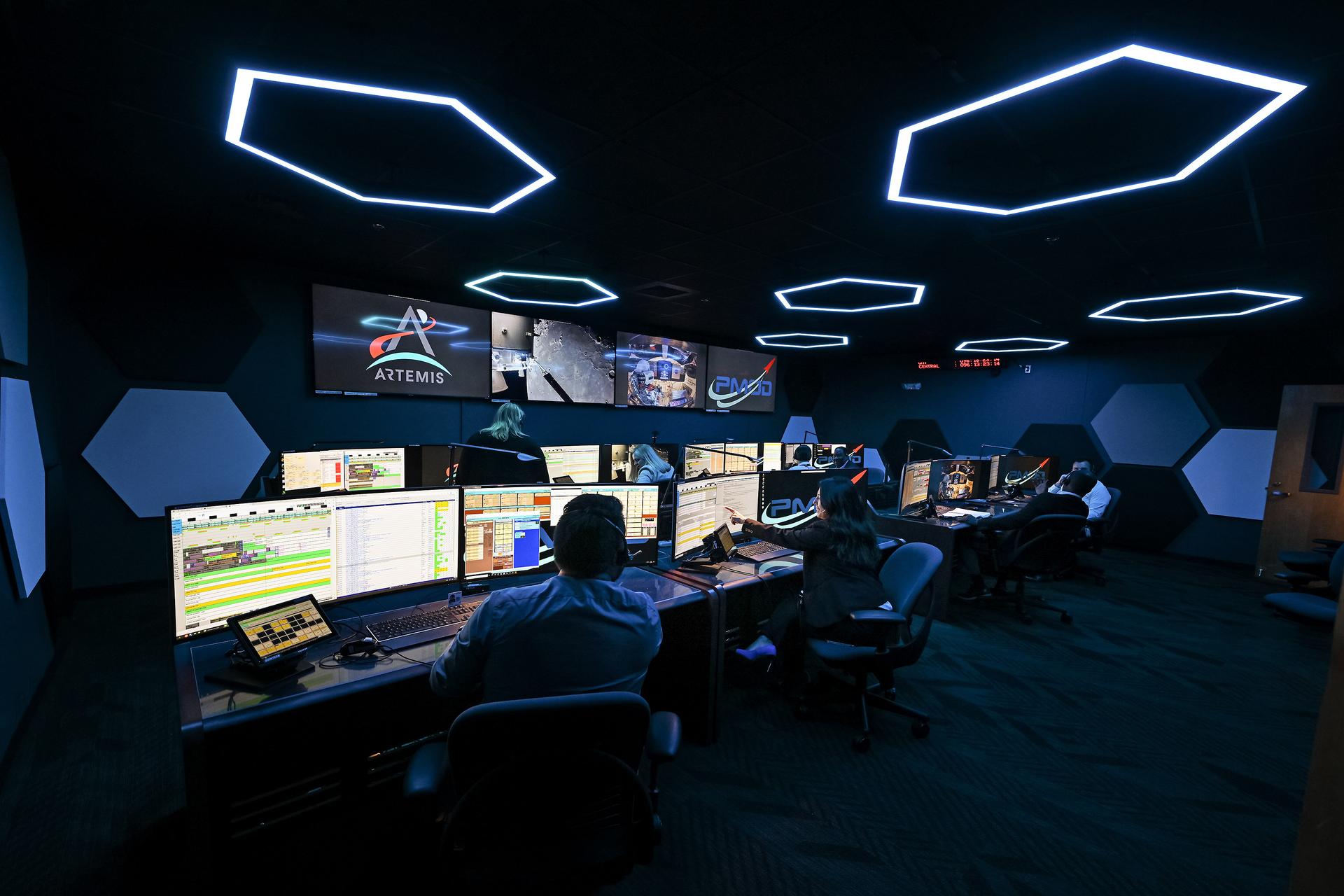
These photos offer a look inside the twin control rooms at NASA’s Marshall Space Flight Center in Huntsville, Alabama, where engineers will monitor Artemis science and future landing operations for Artemis. The LUCA (Lunar Utilization Control Area) and LESA (Lander Engineering Support Area) rooms are part of the Huntsville Operations Support Center at NASA Marshall. The LUCA is specially designed to support a wide variety of science operations on and around the Moon – and beyond. Engineers in the LUCA monitored operations for the Lunar Node-1 experiment, an autonomous navigation payload that was part of the first NASA Commercial Lunar Payload Services (CLPS) launch on Intuitive Machines’ Nova-C lunar lander in 2024. NASA Marshall flight controllers will use the LUCA again for Artemis II to monitor science operations. Beginning with Artemis III, members of the NASA Human Landing System Mission Insight Support Team – a group of engineers, safety leads, flight operations experts, and technical authorities – will work in the LESA. There, they will monitor lander systems in real-time and be involved in key decision-making processes throughout the mission. For more information, contact NASA Marshall’s Office of Communications at 256-544-0034.
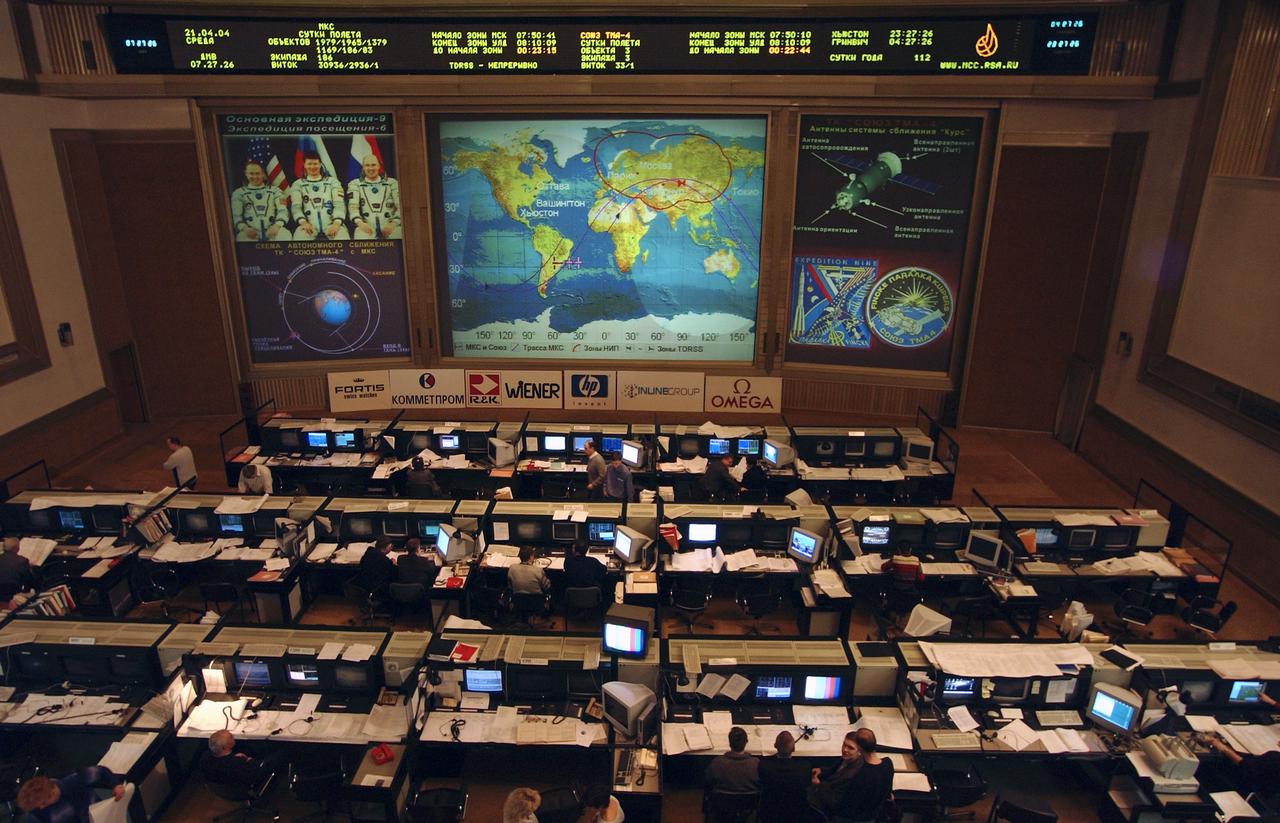
View of the Flight Control Room at the Russian Mission Control Center in Korolev, Russia, located on the outskirts of Moscow, Wednesday, April 21, 2004. Photo Credit: (NASA/Bill Ingalls)
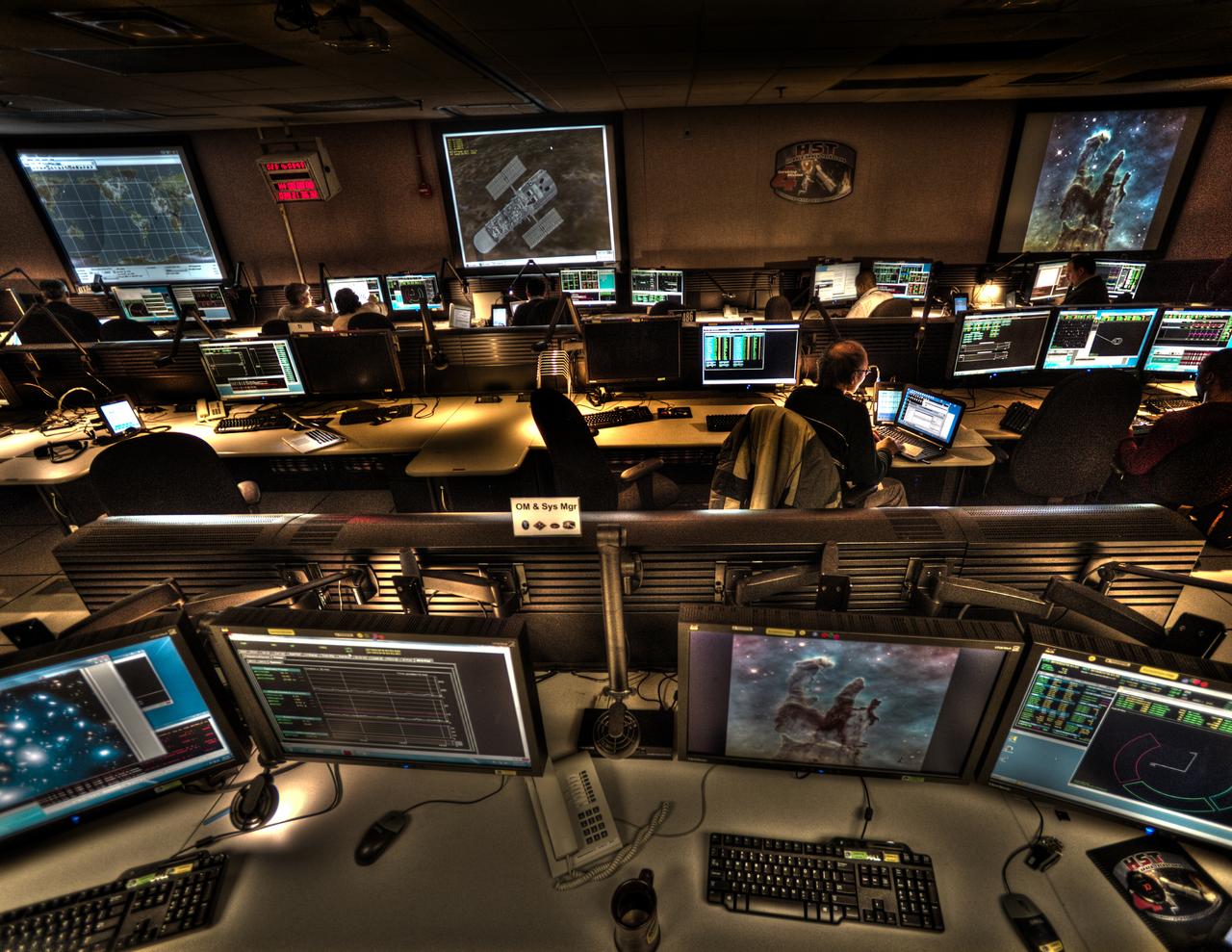
Hubble Space Telescope Control Room Goddard Space Flight Center
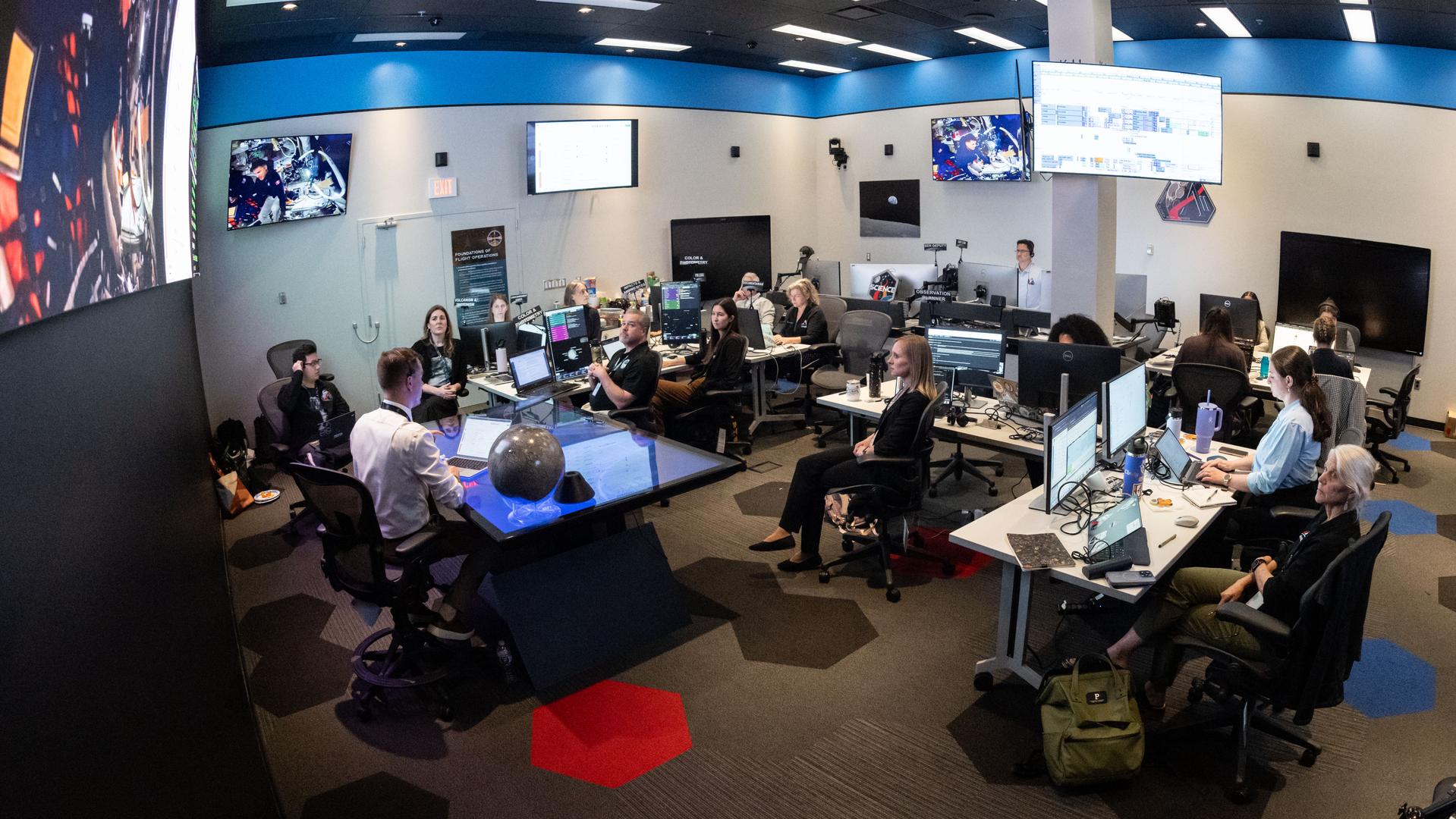
A view inside the Science Evaluation Room (SER) in Mission Control at NASA’s Johnson Space Center in Houston. The SER supports lunar science and planetary observations for the Artemis science officer in the mission’s main flight control room. Built specifically for Artemis missions with these science priorities in mind, the SER is equipped to support rapid data interpretation, collaborative analysis, real-time decision making, and seamless coordination between the science and operations teams. Credits: NASA/Bill Stafford
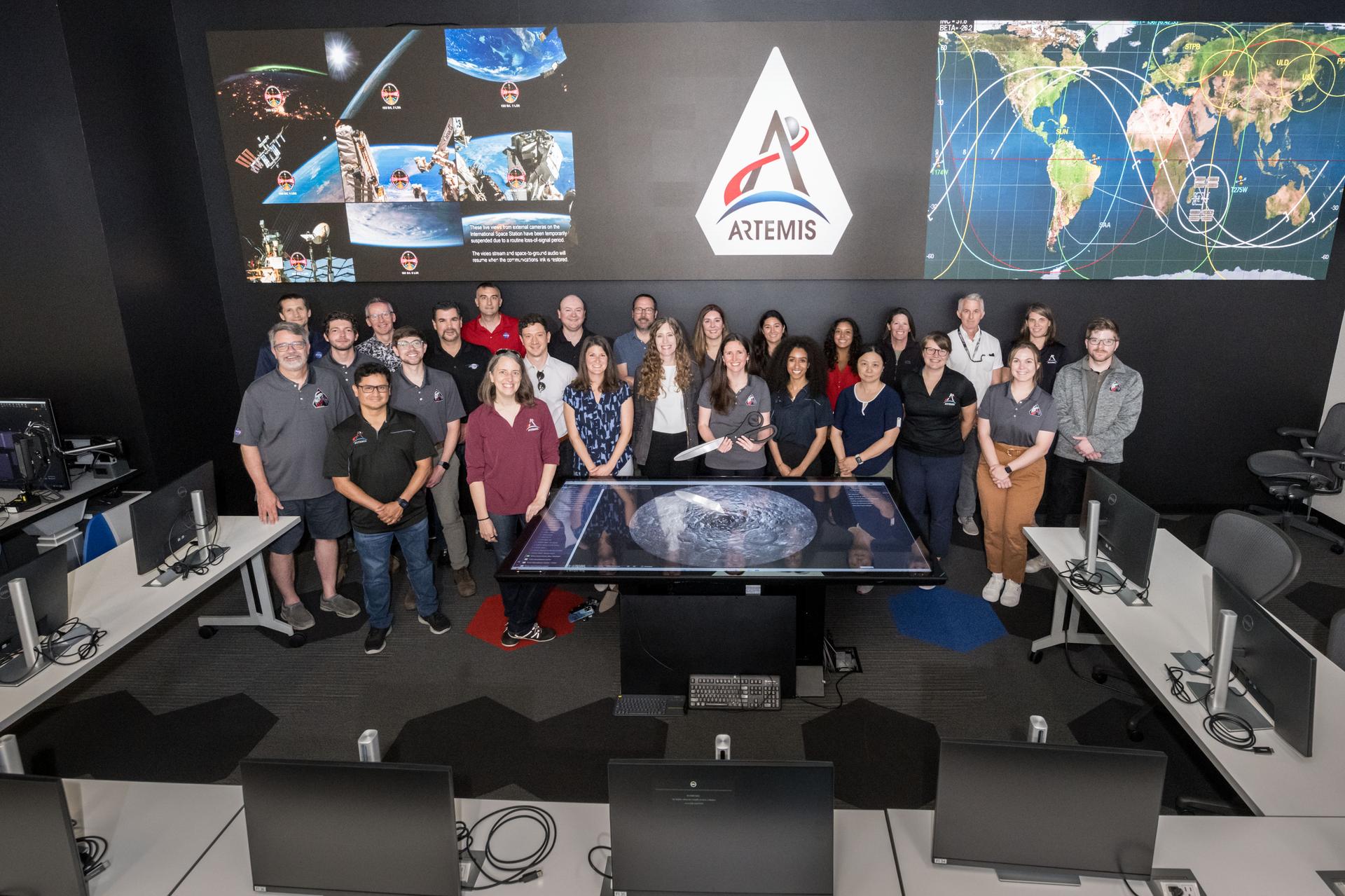
jsc2025e057255 --- NASA’s Artemis III lunar science team is pictured in the Science Evaluation Room (SER) at the agency’s Johnson Space Center in Houston. Located in the Christopher C. Kraft Jr. Mission Control Center, the SER supports the mission’s main flight control room for lunar science and planetary observations. Built specifically for Artemis missions with these science priorities in mind, the SER is equipped to support rapid data interpretation, collaborative analysis, real-time decision making, and seamless coordination between the science and operations teams.
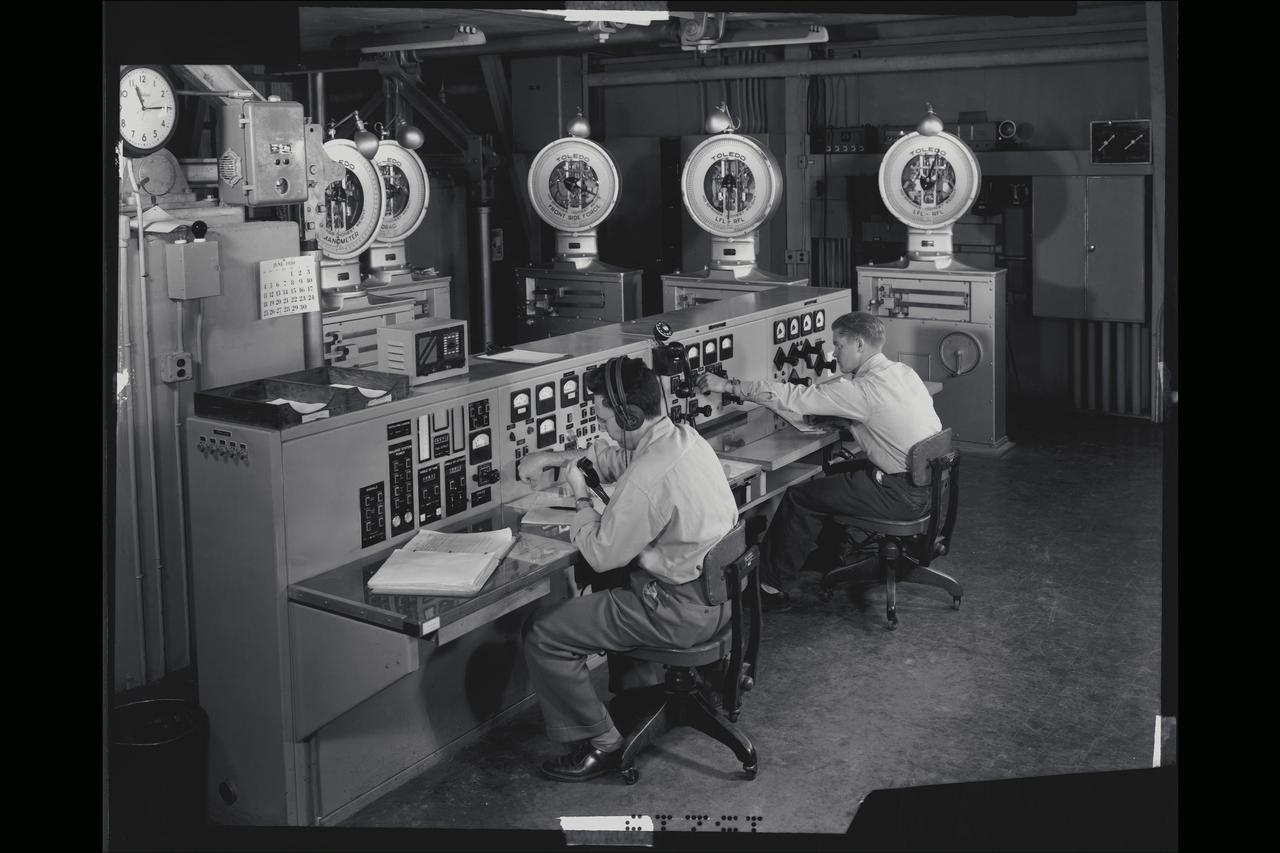
40x80 wind tunnel manometers control room at NACA's Ames Research Center. Control panel (called the bench board) showing five of the seven scale heads which measured the forces on the model (ie. Lift, drag, side force etc.)
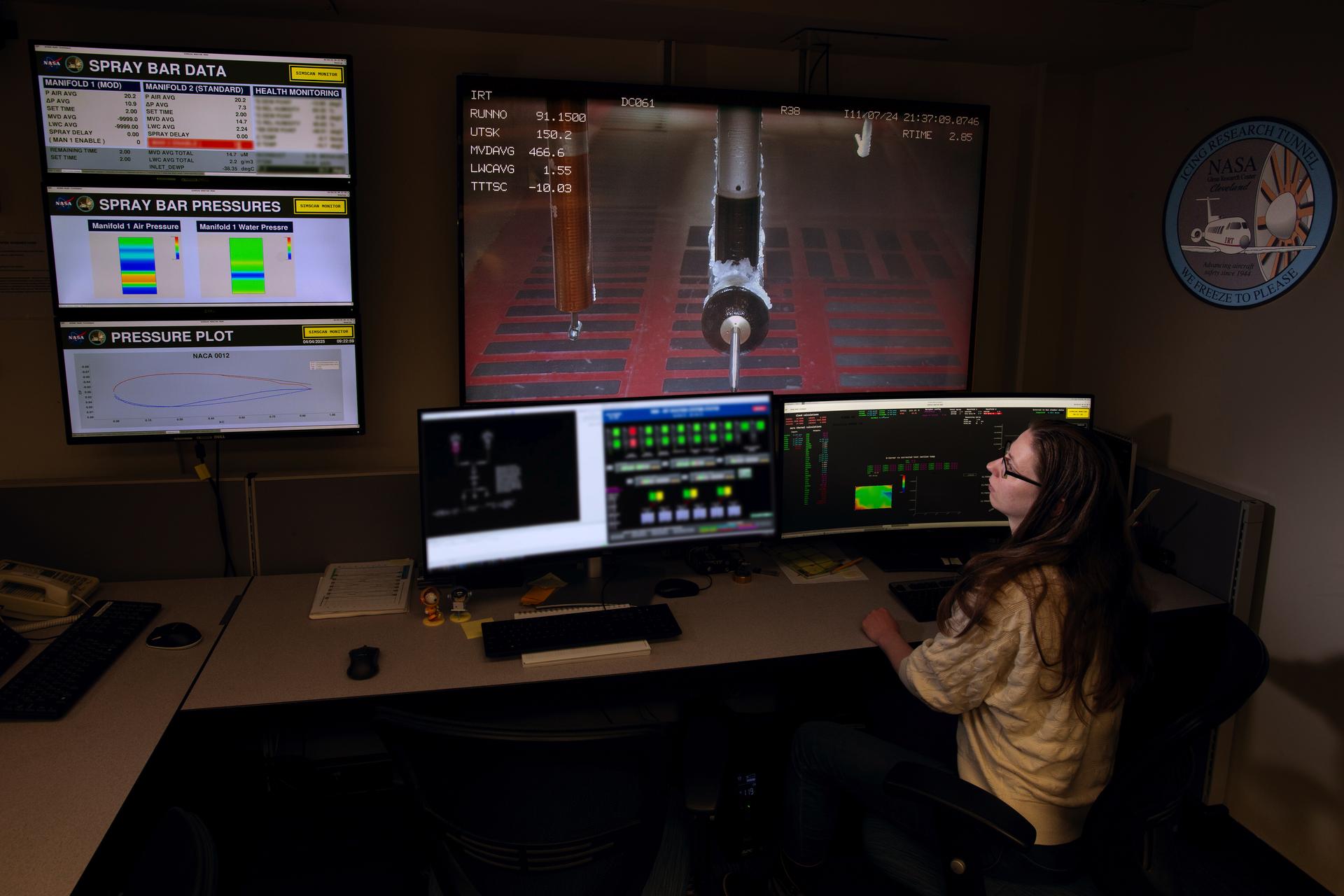
Carolyn Thiemann works on the Cobra data system in the IRT control room
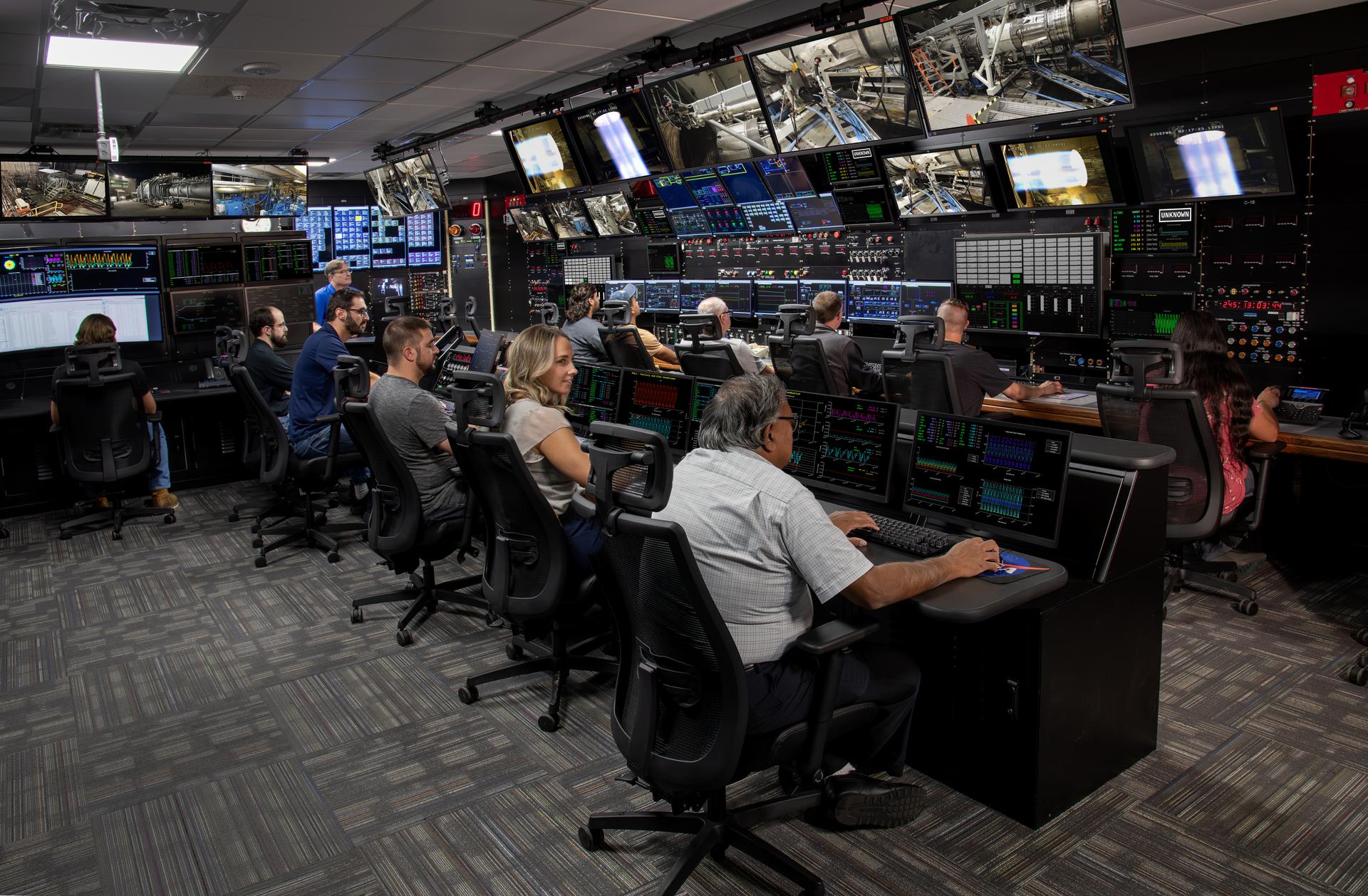
NASA GRC PSL, Propulsion System Lab, control room with operations personnel
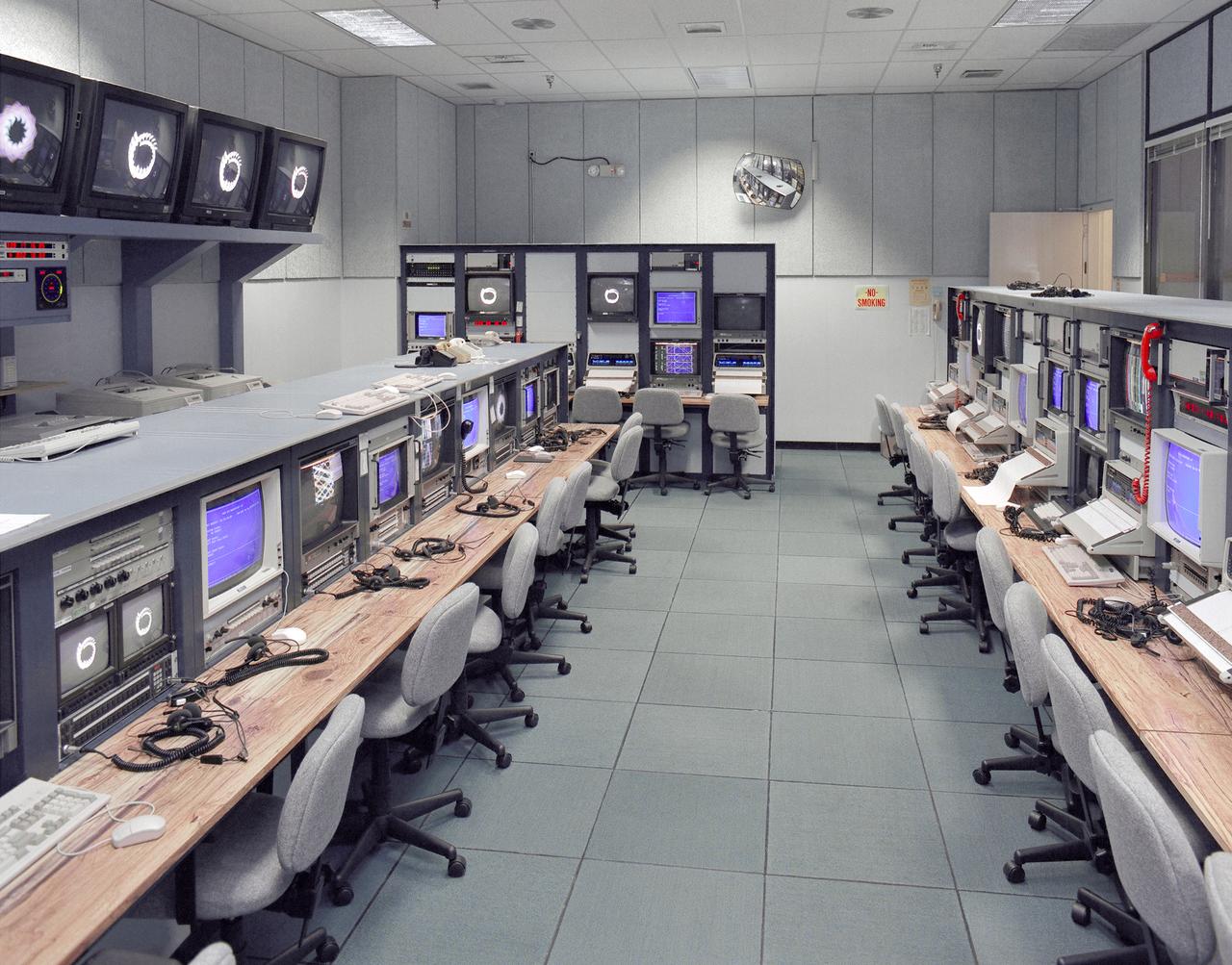
Mission control Blue Room, seen here, in building 4800 at NASA's Dryden Flight Research Center, is part of the Western Aeronautical Test Range (WATR). All aspects of a research mission are monitored from one of two of these control rooms at Dryden. The WATR consists of a highly automated complex of computer controlled tracking, telemetry, and communications systems and control room complexes that are capable of supporting any type of mission ranging from system and component testing, to sub-scale and full-scale flight tests of new aircraft and reentry systems. Designated areas are assigned for spin/dive tests, corridors are provided for low, medium, and high-altitude supersonic flight, and special STOL/VSTOL facilities are available at Ames Moffett and Crows Landing. Special use airspace, available at Edwards, covers approximately twelve thousand square miles of mostly desert area. The southern boundary lies to the south of Rogers Dry Lake, the western boundary lies midway between Mojave and Bakersfield, the northern boundary passes just south of Bishop, and the eastern boundary follows about 25 miles west of the Nevada border except in the northern areas where it crosses into Nevada.
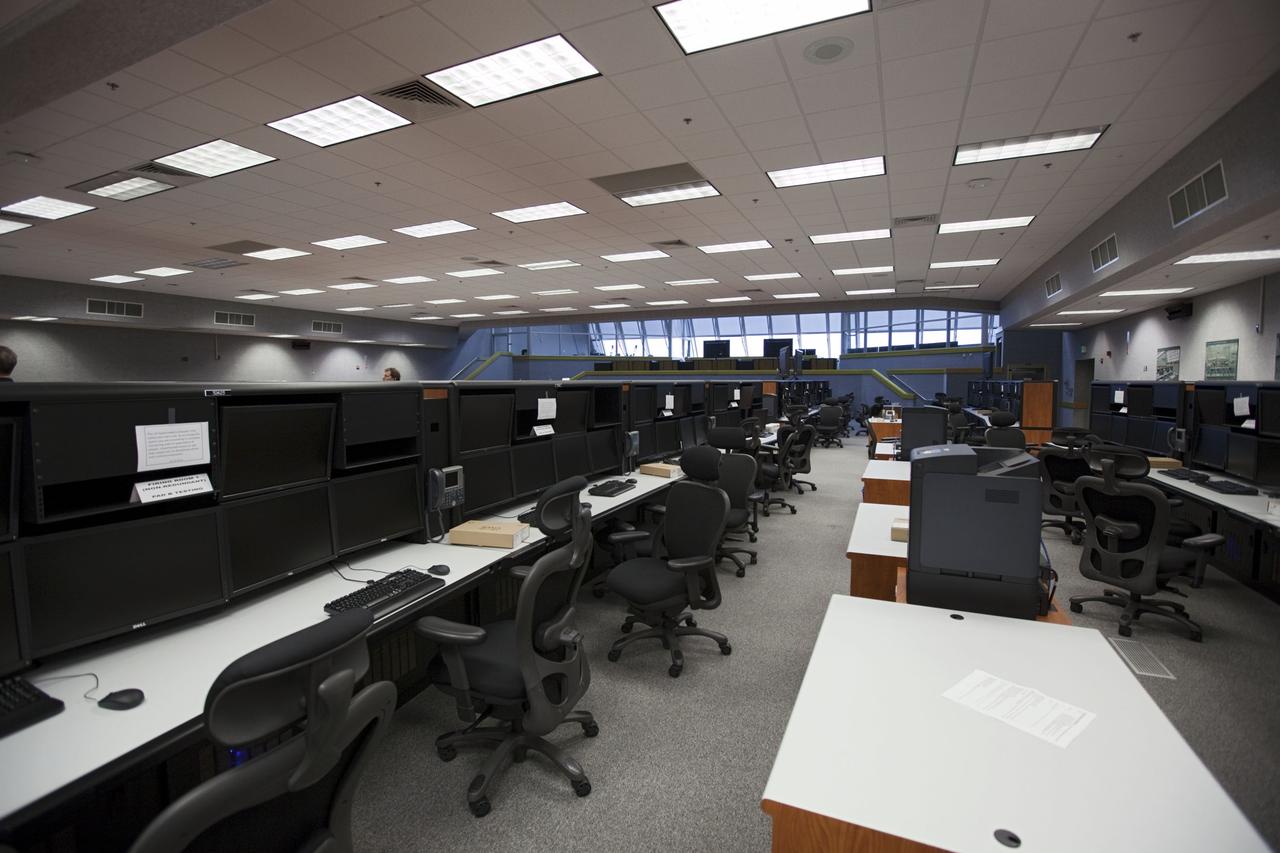
CAPE CANAVERAL, Fla. – Firing Room 1, also known as the Young-Crippen Firing Room, has been outfitted with computer, communications and networking systems to host rockets and spacecraft that are currently under development. The firing room is where the launch of rockets and spacecraft are controlled at NASA's Kennedy Space Center in Florida. Flight controllers also monitor processing and preparations of launch vehicles from the firing room. There are four firing rooms inside the Launch Control Center at Kennedy. Photo credit: NASA/Dmitri Gerondidakis
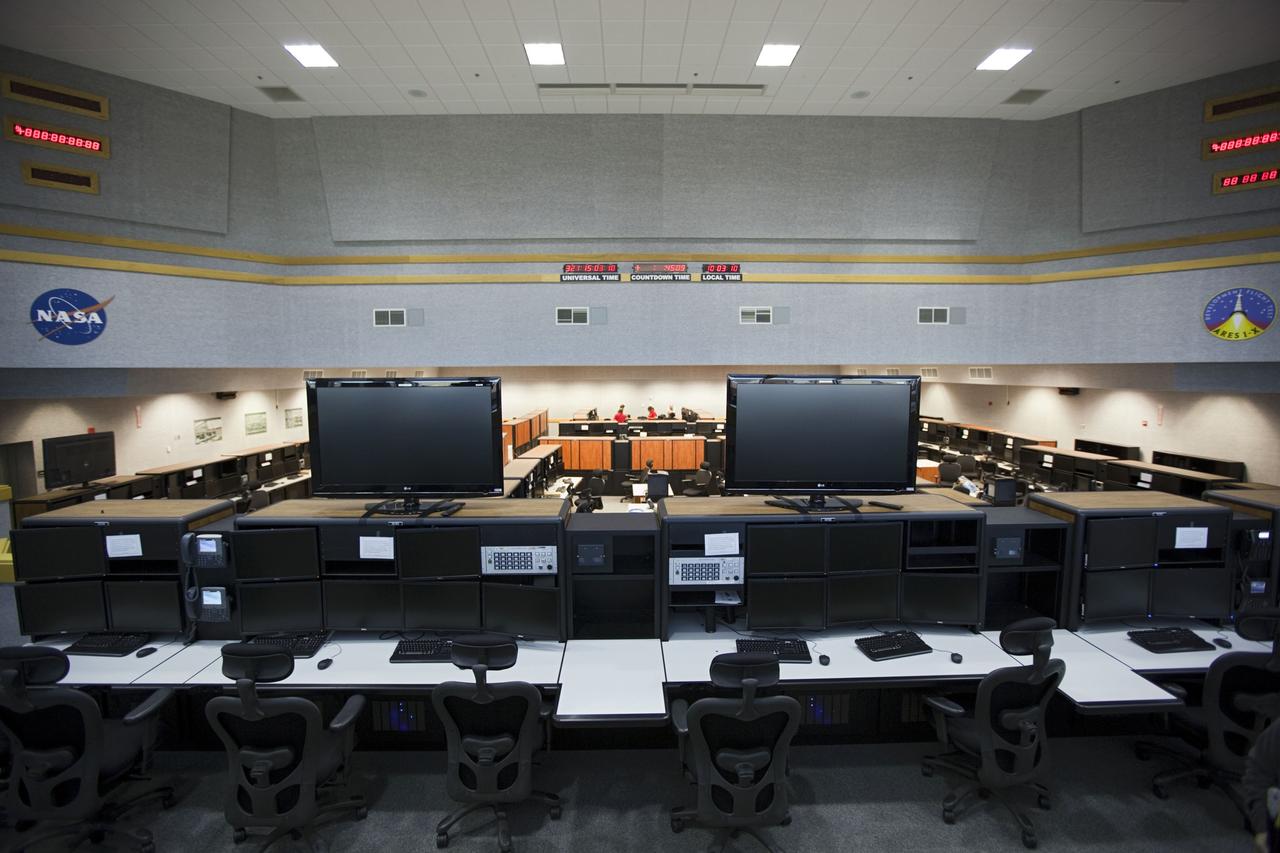
CAPE CANAVERAL, Fla. – Firing Room 1, also known as the Young-Crippen Firing Room, has been outfitted with computer, communications and networking systems to host rockets and spacecraft that are currently under development. The firing room is where the launch of rockets and spacecraft are controlled at NASA's Kennedy Space Center in Florida. Flight controllers also monitor processing and preparations of launch vehicles from the firing room. There are four firing rooms inside the Launch Control Center at Kennedy. Photo credit: NASA/Dmitri Gerondidakis
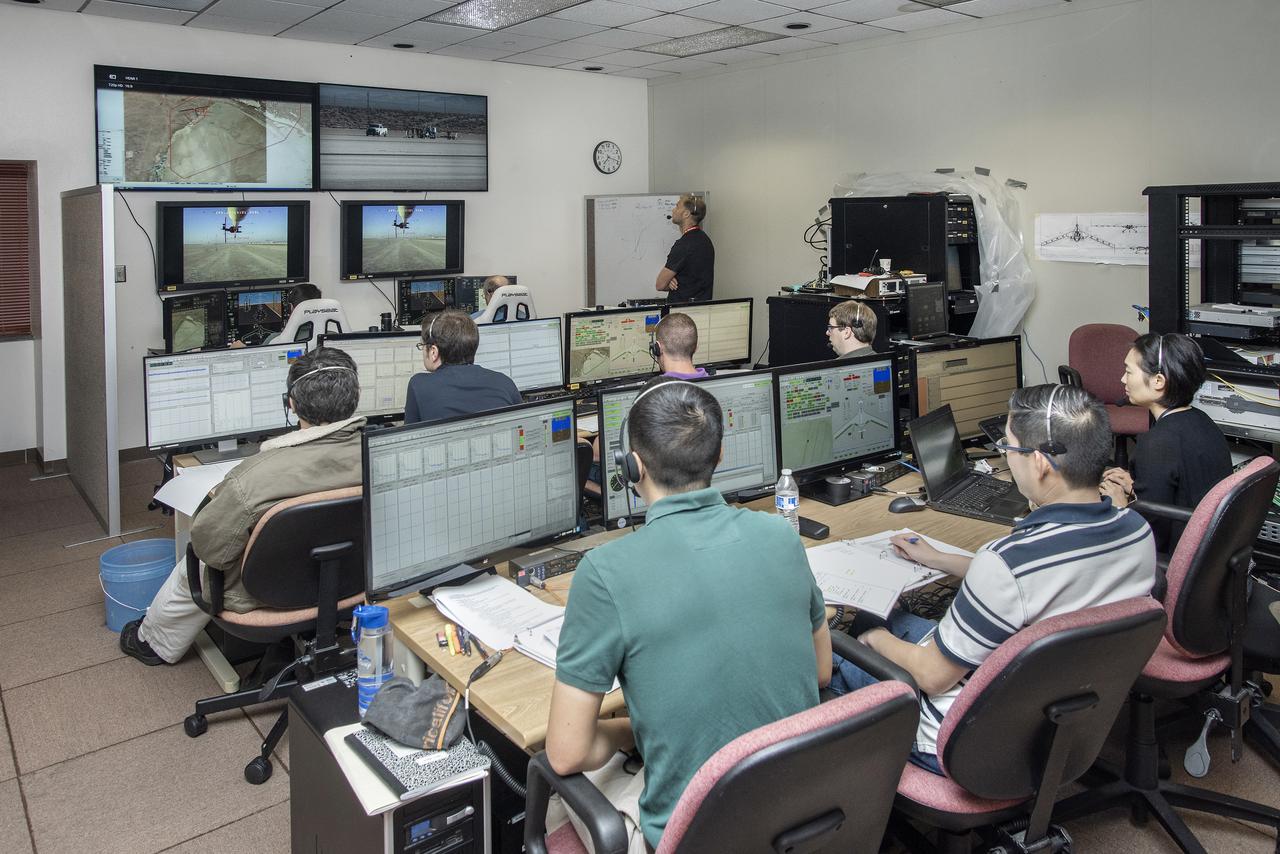
The control room for the remotely piloted X-56A has a feature that most do not – the pilot and co-pilot are in the front of the room, seen at left. The X-56A team has successfully suppressed flutter, which is a potentially destructive oscillation, with a classical and a modern controller. The controllers are essentially mathematical ways of directing the aircraft.
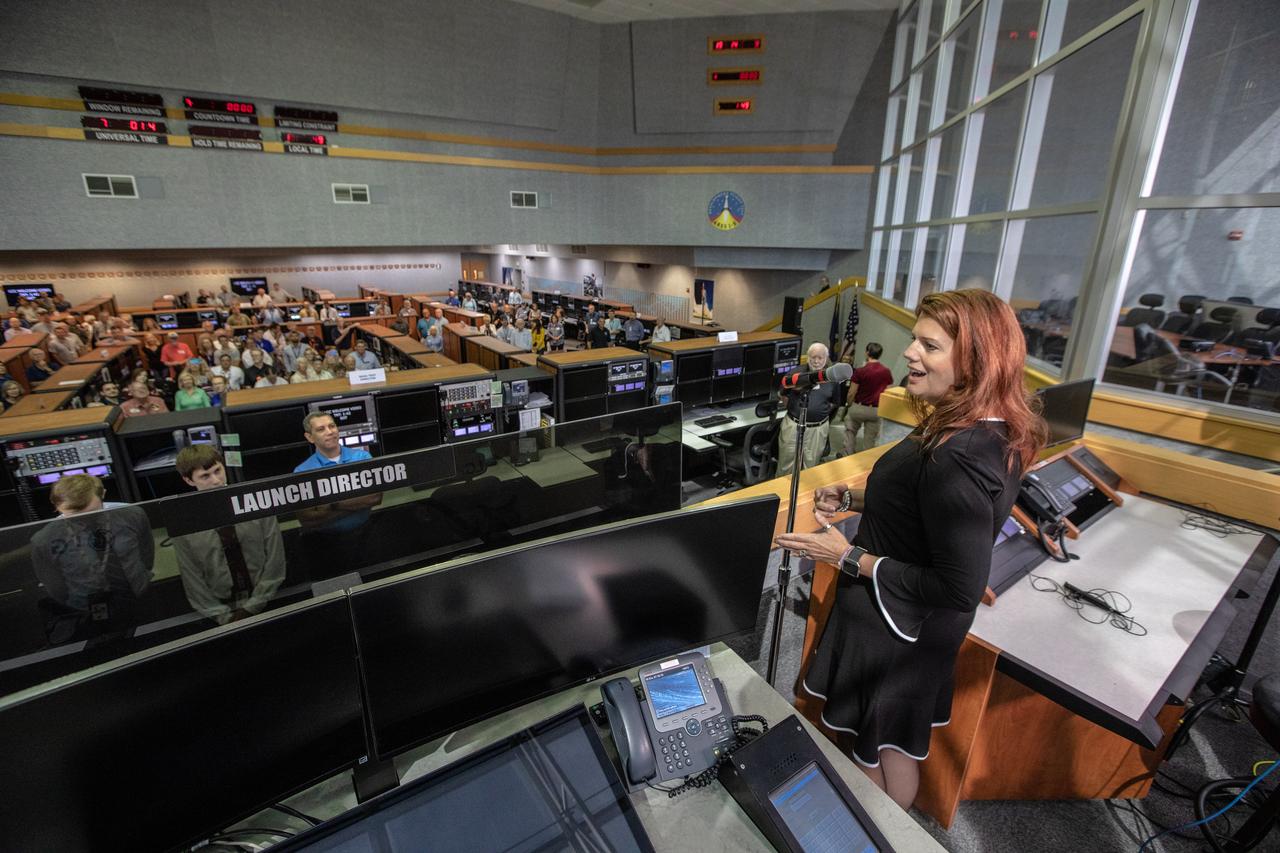
On July 16, 2019, the 50th anniversary of the Apollo 11 launch to the Moon, Artemis 1 Launch Director Charlie Blackwell-Thompson stands in Firing Room 1 in the Launch Control Center at NASA's Kennedy Space Center in Floirda. Apollo 11 and Artemis 1 launch team members mingle in the firing room.
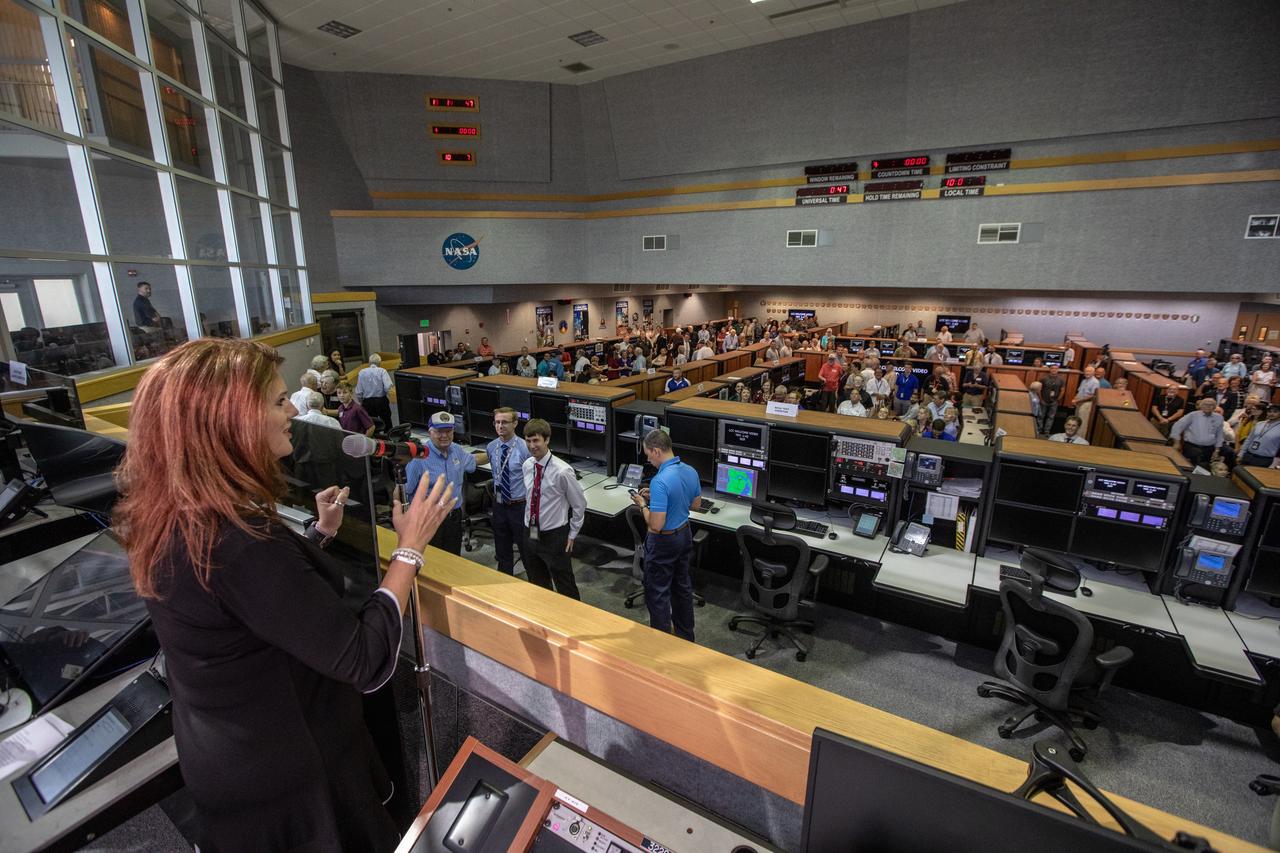
On July 16, 2019, the 50th anniversary of the Apollo 11 launch to the Moon, Artemis 1 Launch Director Charlie Blackwell-Thompson stands in Firing Room 1 in the Launch Control Center at NASA's Kennedy Space Center in Floirda. Apollo 11 and Artemis 1 launch team members mingle in the firing room.
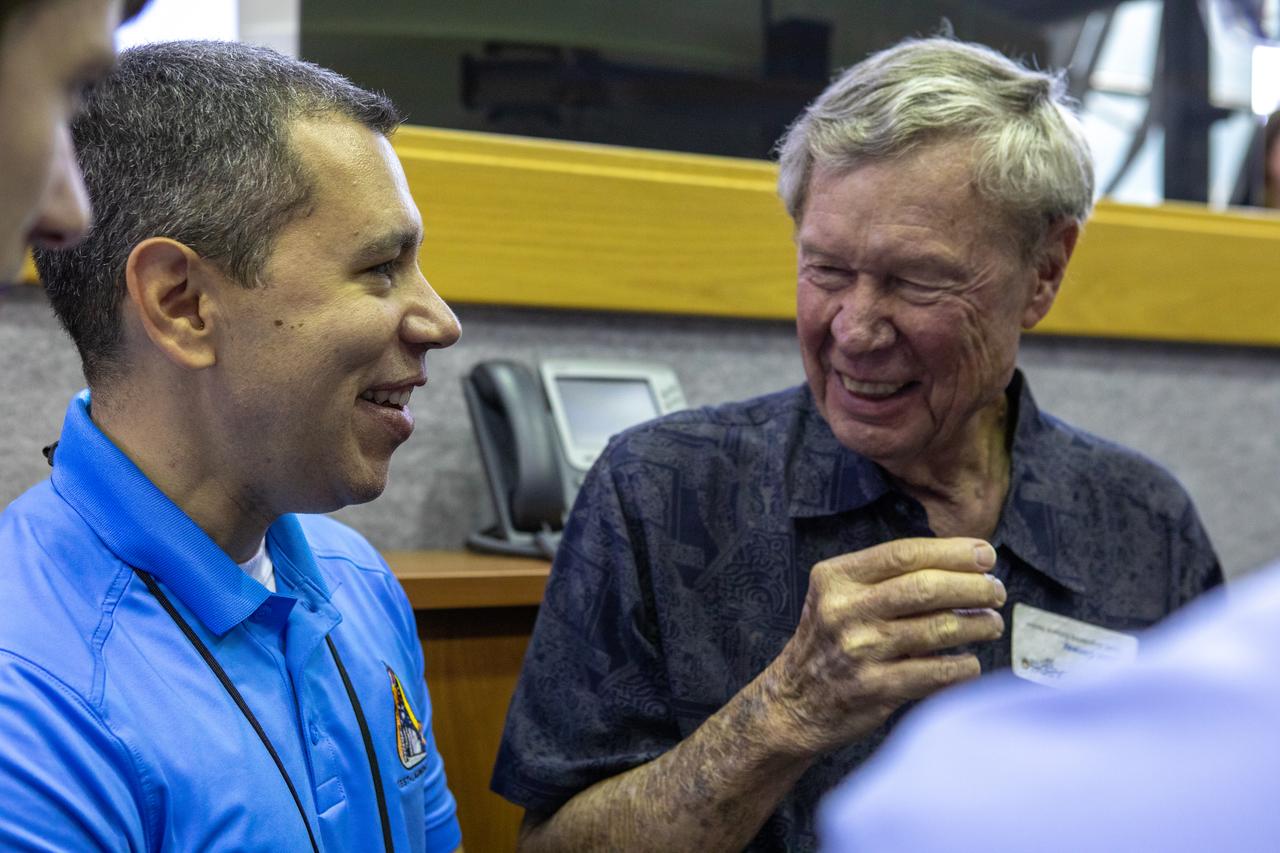
On July 16, 2019, the 50th anniversary of the Apollo 11 launch to the Moon, Apollo-era and Artemis 1 launch team members mingle in Launch Control Center Firing Room 1 at NASA's Kennedy Space Center in Florida.
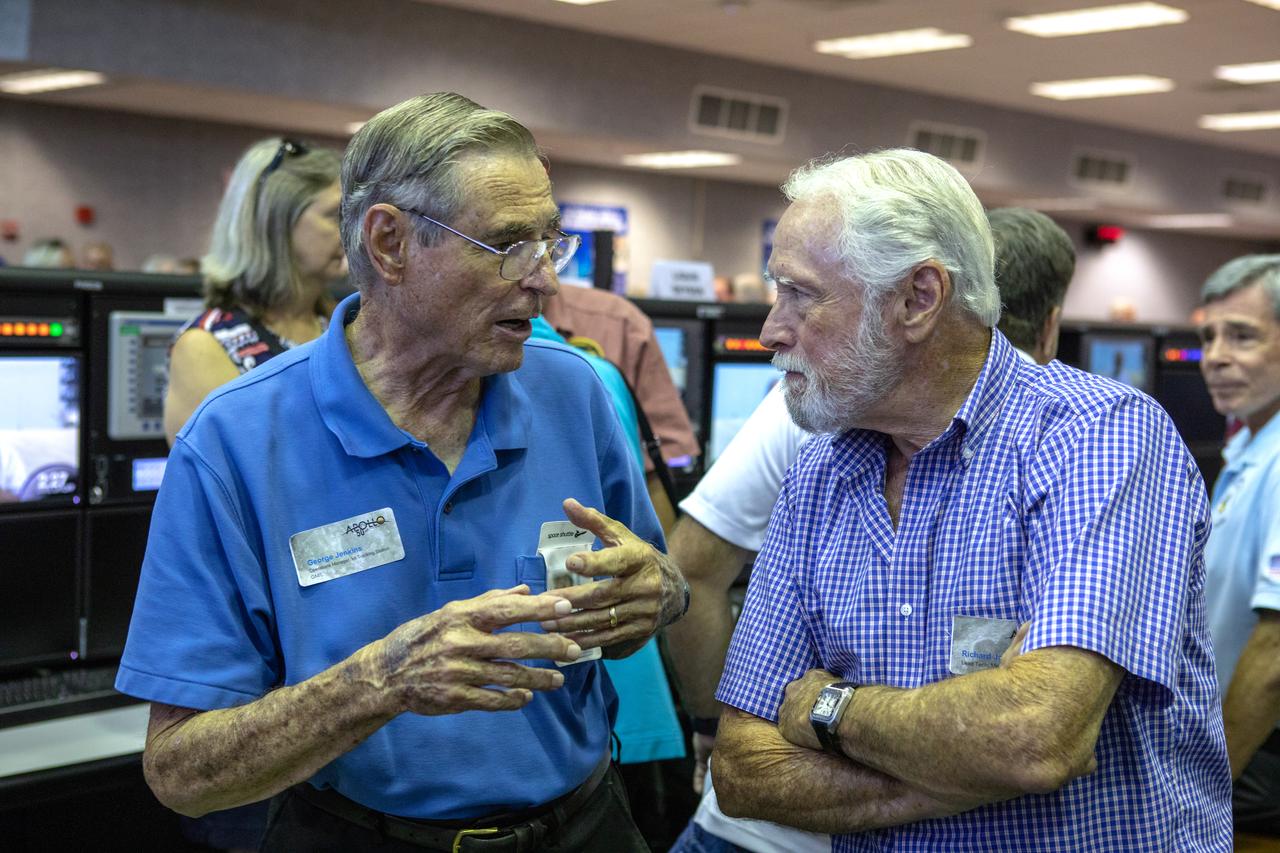
On July 16, 2019, the 50th anniversary of the Apollo 11 launch, Apollo-era launch team members mingle in Launch Control Center Firing Room 1 at NASA's Kennedy Space Center in Florida.
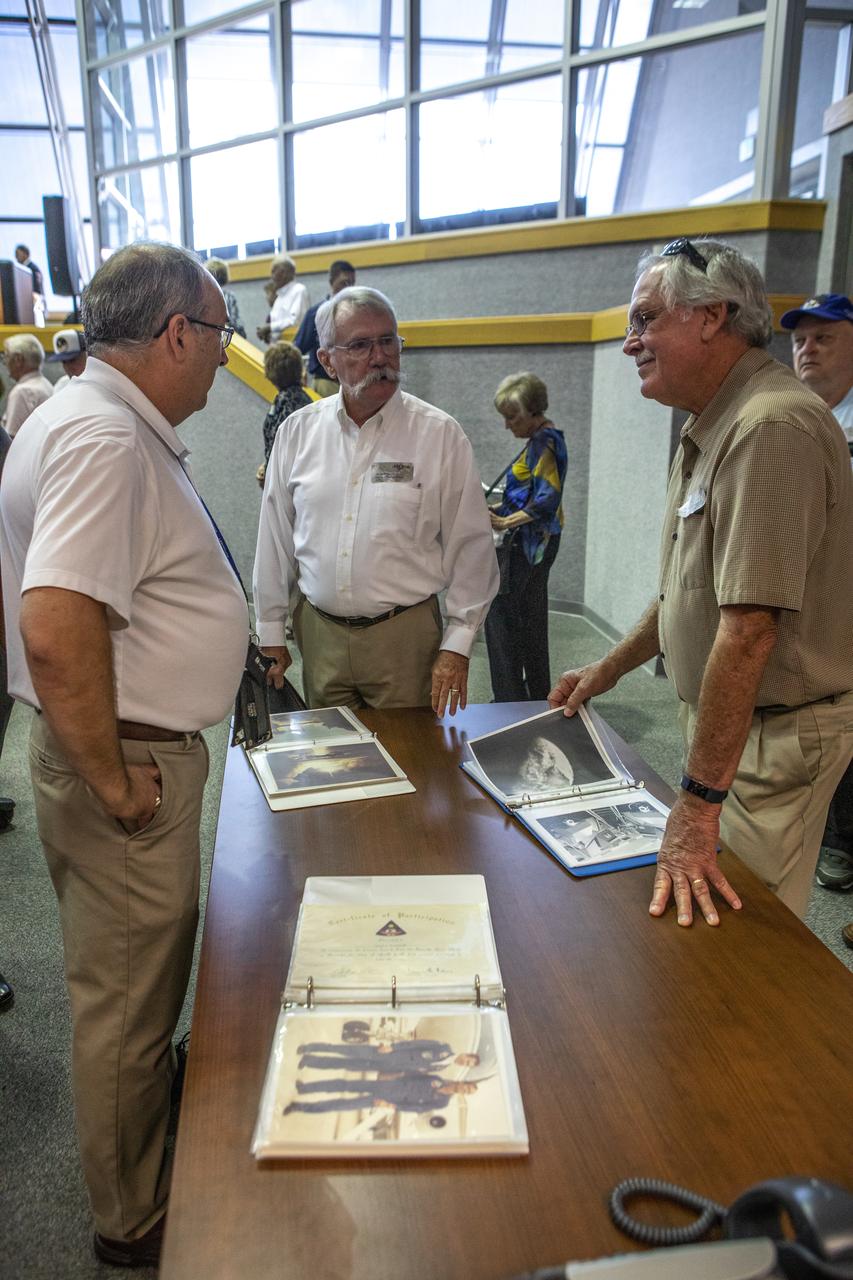
On July 16, 2019, the 50th anniversary of the Apollo 11 launch, Apollo-era and Artemis-1 launch team members mingle in Launch Control Center Firing Room 1 at NASA's Kennedy Space Center in Florida.
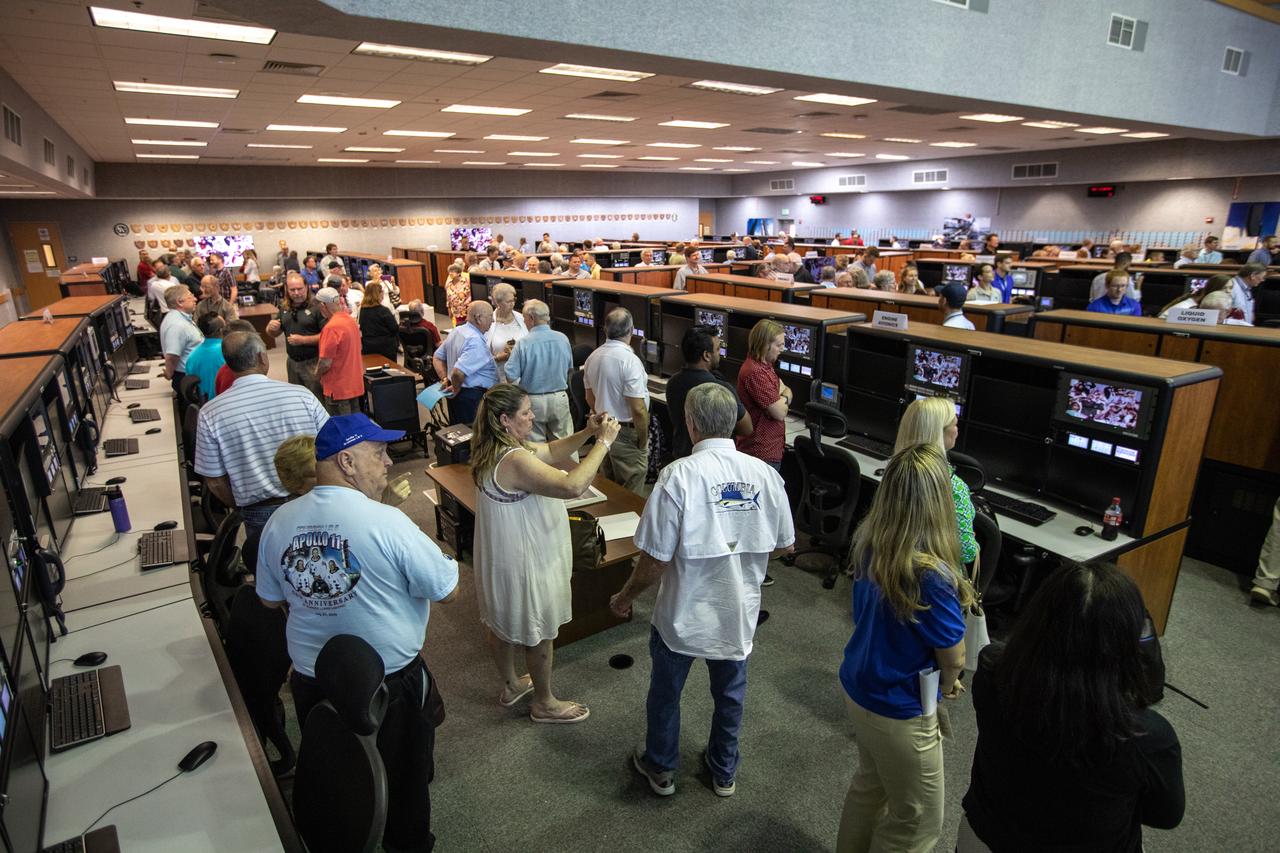
On July 16, 2019, the 50th anniversary of the Apollo 11 launch, Apollo-era and Artemis-1 launch team members mingle in Launch Control Center Firing Room 1 at NASA's Kennedy Space Center in Florida.
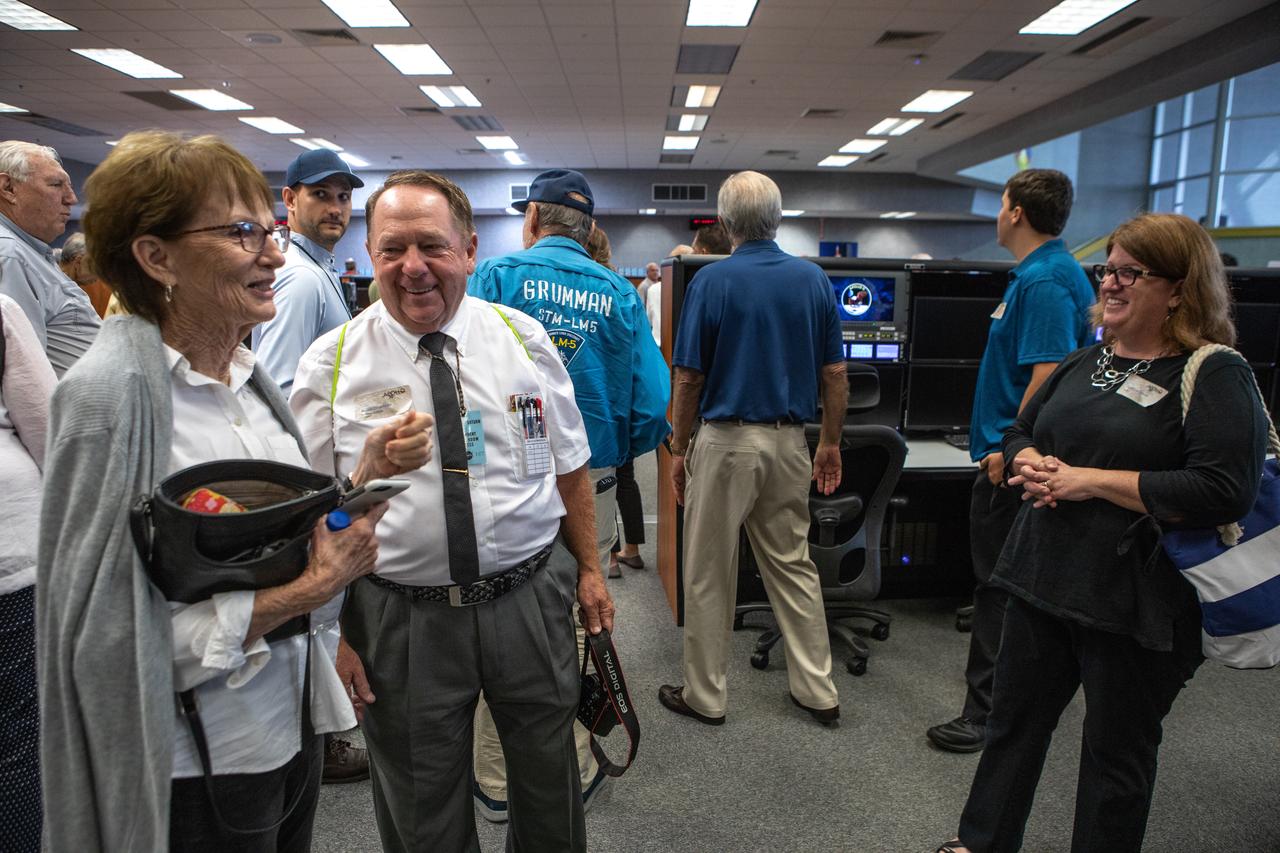
On July 16, 2019, the 50th anniversary of the Apollo 11 launch, Apollo-era and Artemis 1 launch team members mingle in Launch Control Center Firing Room 1 at NASA's Kennedy Space Center in Florida.
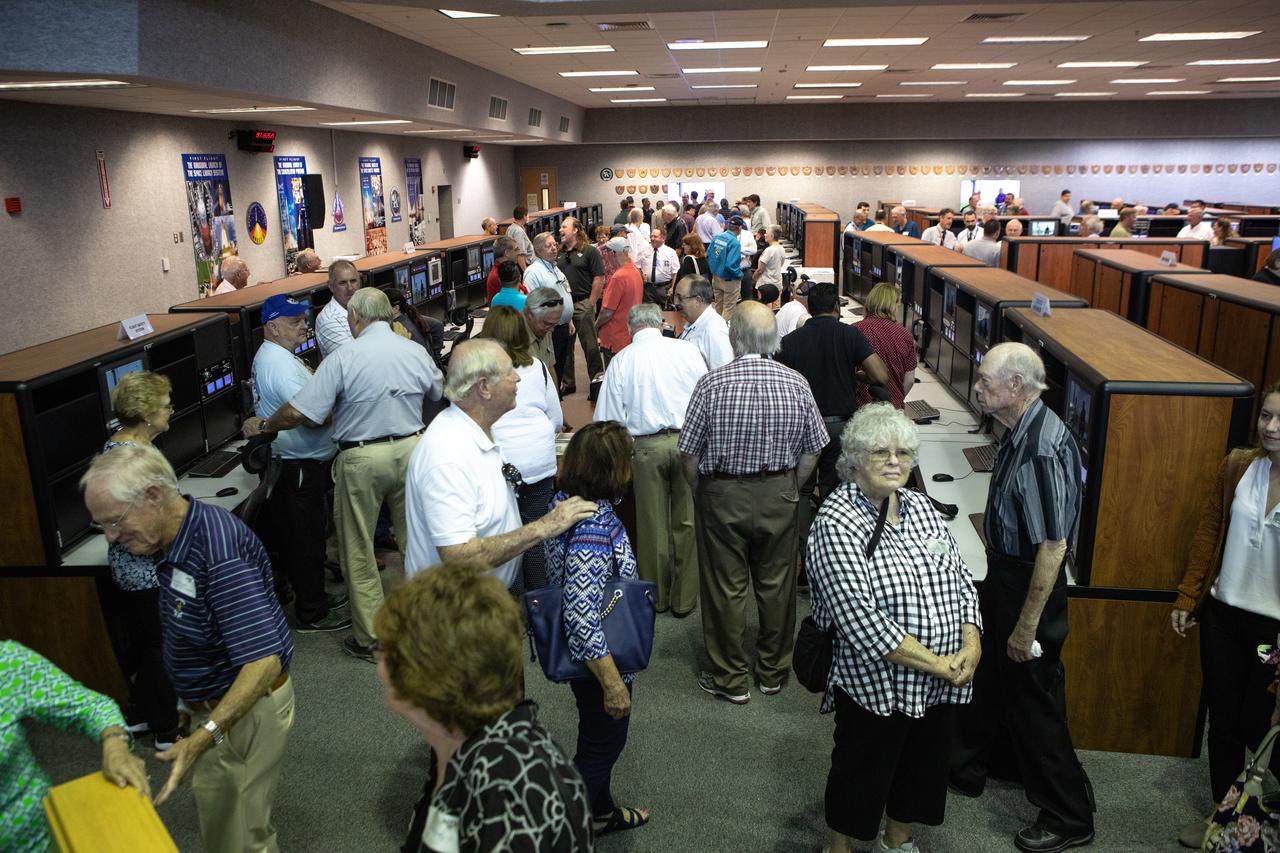
On July 16, 2019, the 50th anniversary of the Apollo 11 launch, Apollo-era and Artemis-1 launch team members mingle in Launch Control Center Firing Room 1 at NASA's Kennedy Space Center in Florida.
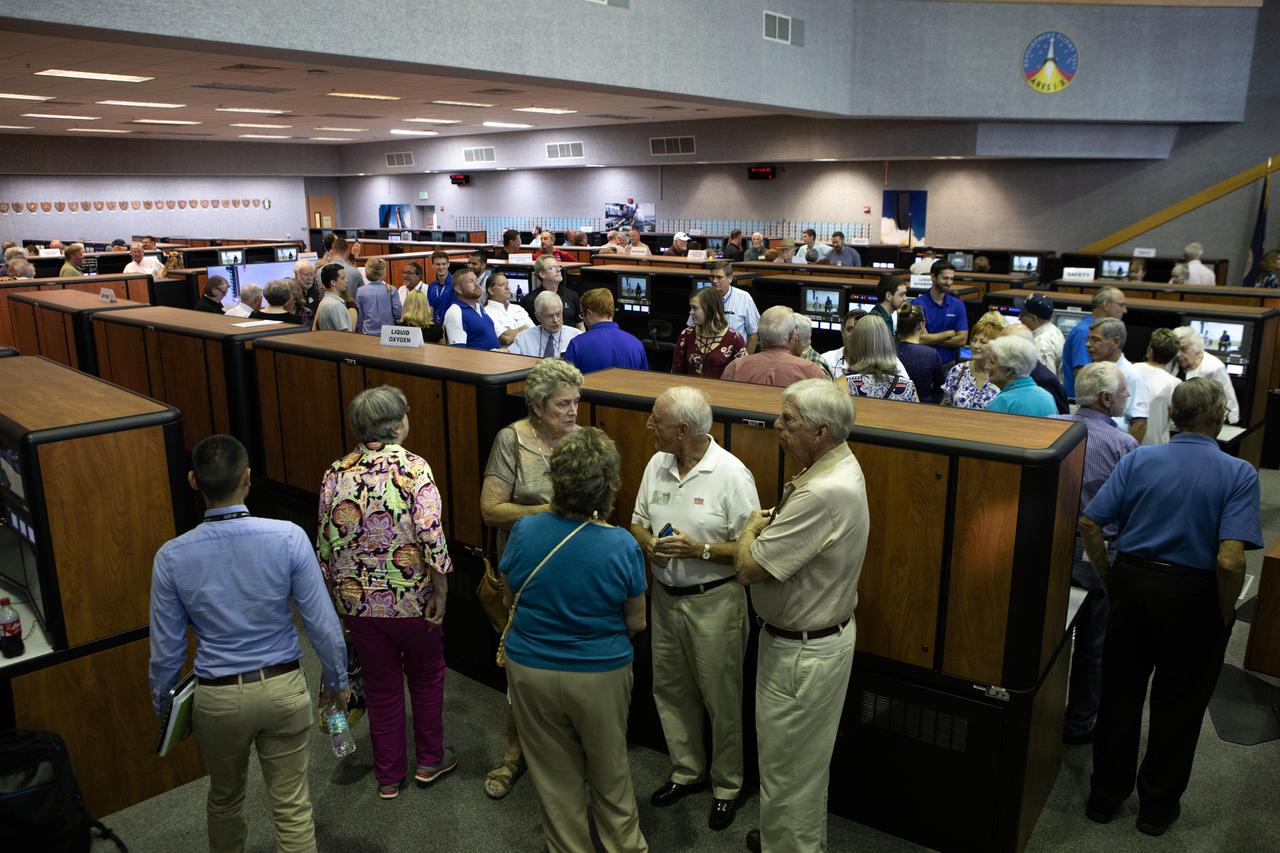
On July 16, 2019, the 50th anniversary of the Apollo 11 launch, Apollo-era and Artemis-1 launch team members mingle in Launch Control Center Firing Room 1 at NASA's Kennedy Space Center in Florida.
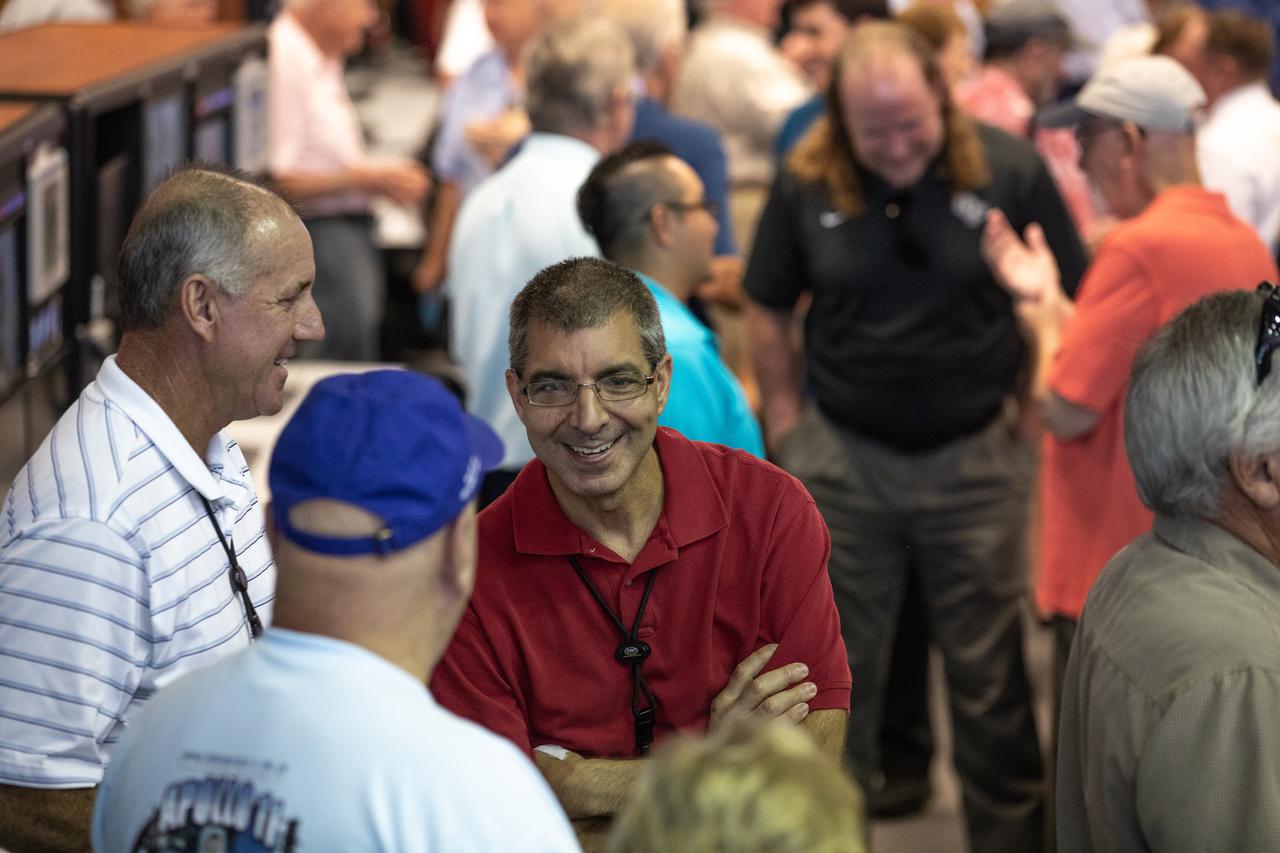
On July 16, 2019, the 50th anniversary of the Apollo 11 launch, Apollo-era and Artemis-1 launch team members mingle in Launch Control Center Firing Room 1 at NASA's Kennedy Space Center in Florida.
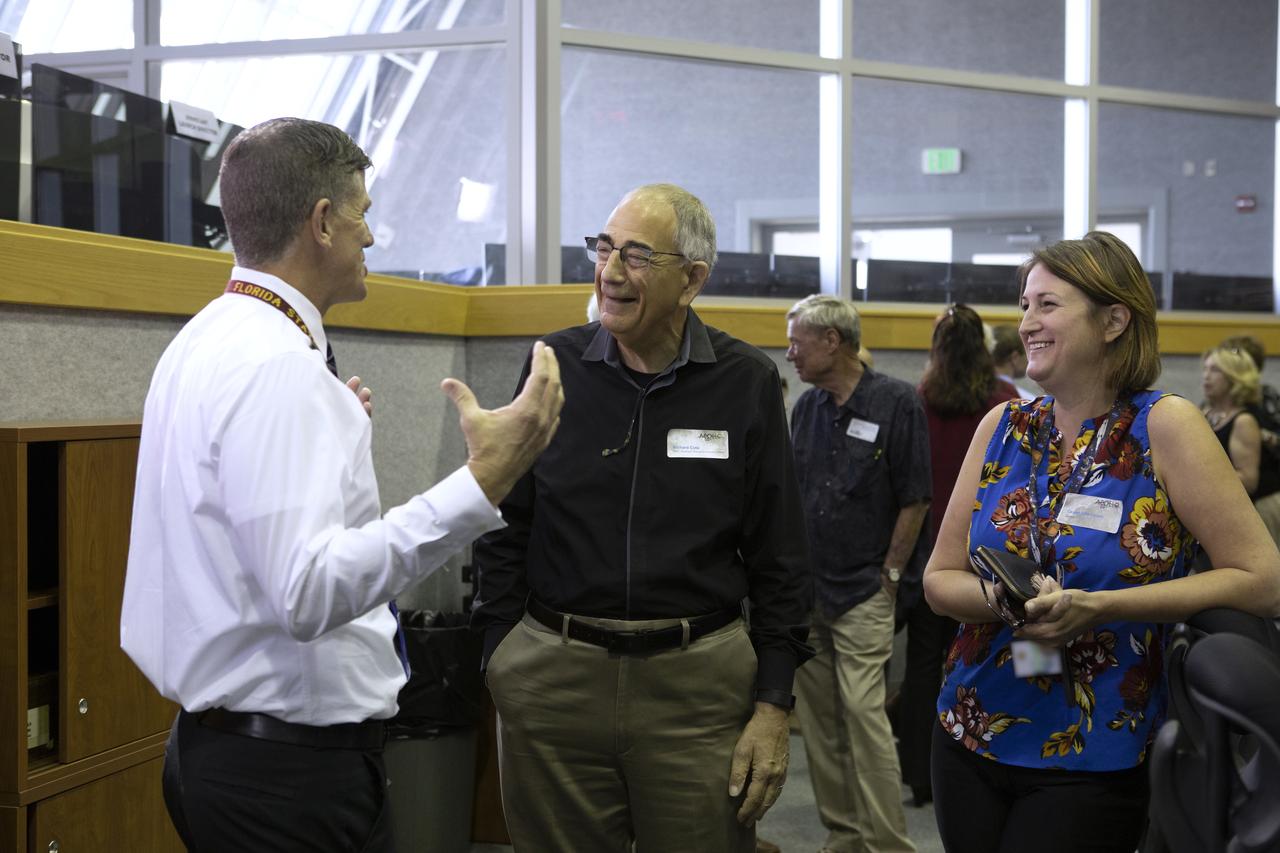
On July 16, 2019, the 50th anniversary of the Apollo 11 launch, Apollo-era and Artemis 1 launch team members mingle in Launch Control Center Firing Room 1 at NASA's Kennedy Space Center in Florida.
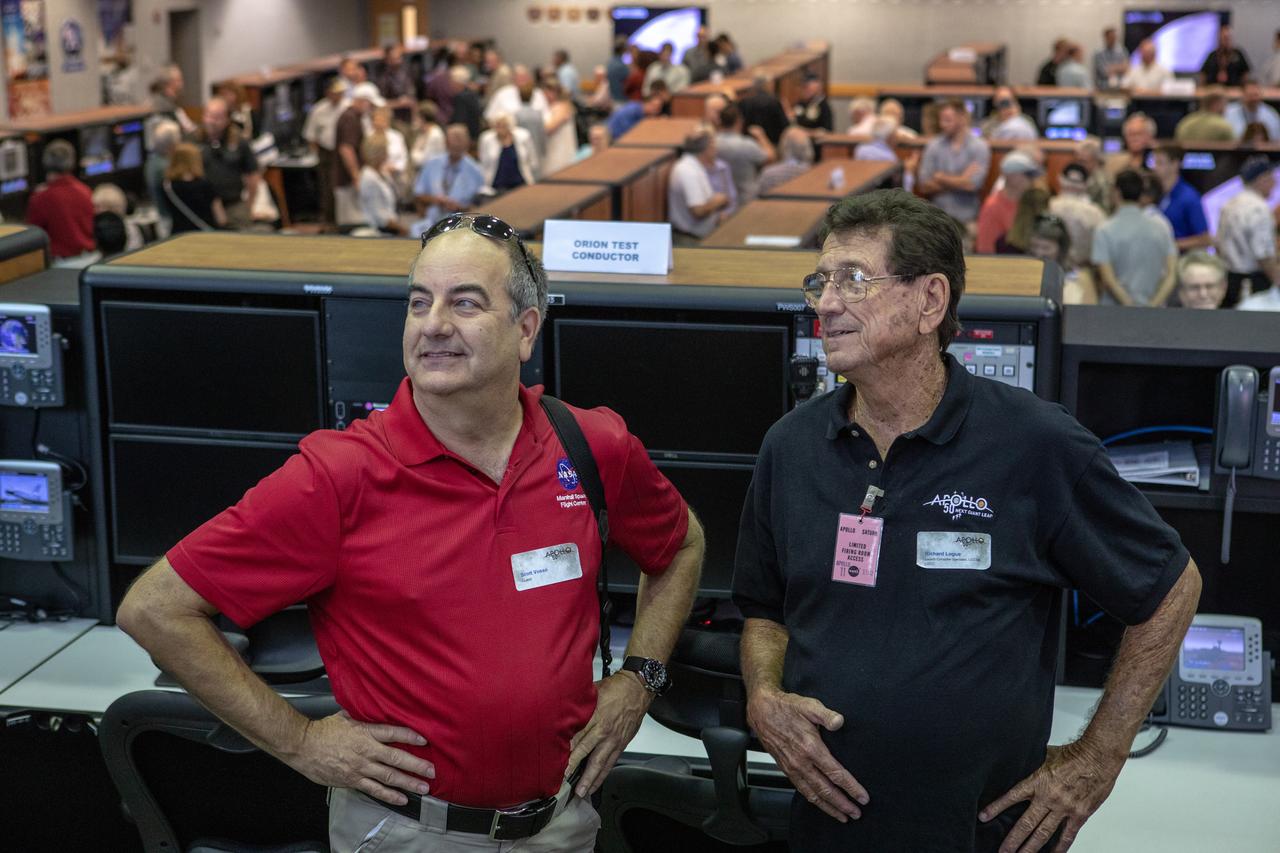
On July 16, 2019, the 50th anniversary of the Apollo 11 launch to the Moon; Apollo-era and Artemis 1 launch team members mingle in Launch Control Center Firing Room 1 at NASA's Kennedy Space Center in Florida.
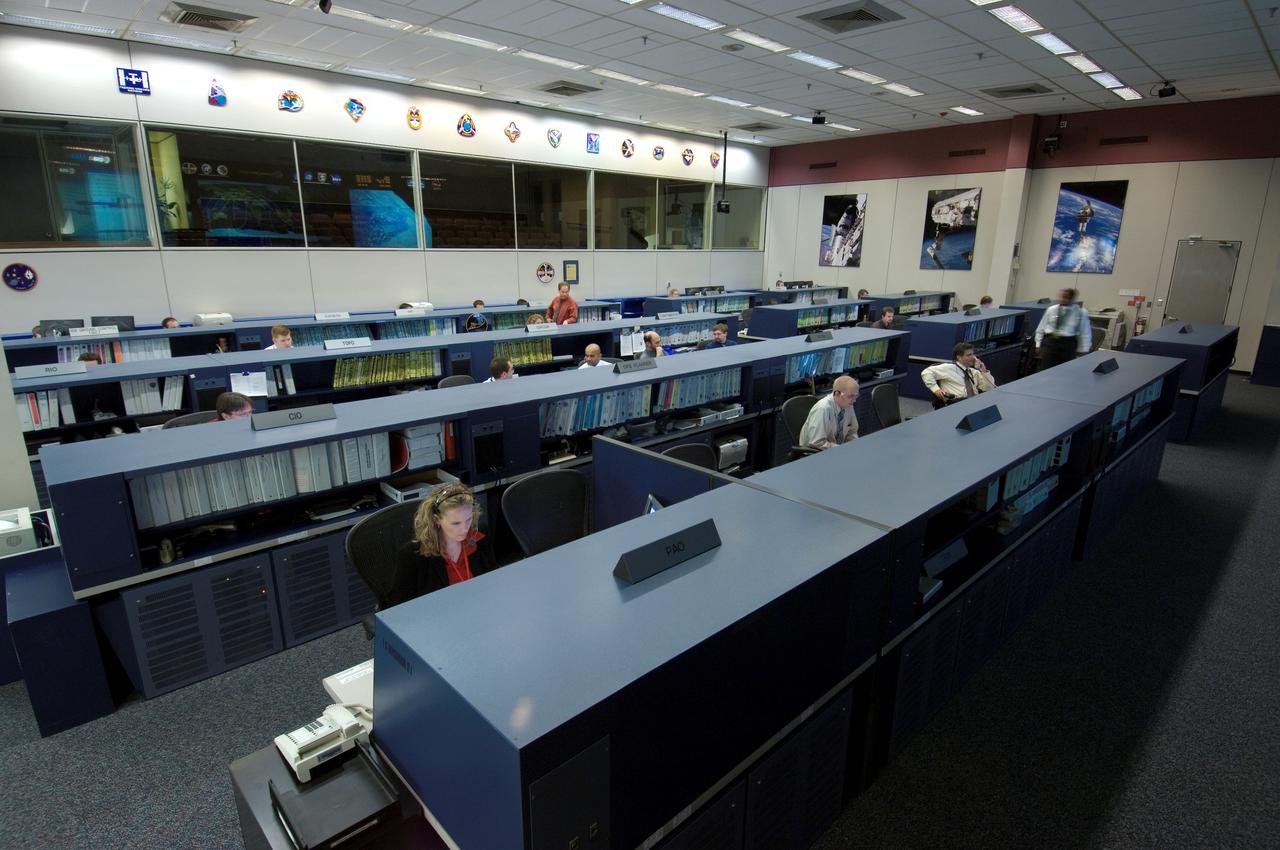
JSC2006-E-43863 (6 Oct. 2006)--- International Space Station flight controllers have this area as their new home with increased technical capabilities, more workspace and a long, distinguished history. The newly updated facility is just down the hall from its predecessor at NASA's Johnson Space Center, Houston. This view is toward the rear of the "new" room. Known as Flight Control Room 1, it was first used to control a space flight 38 years ago, the mission of Apollo 7 launched Oct. 11, 1968. It was one of two control rooms for NASA's manned missions. The room it replaces in its new ISS role, designated the Blue Flight Control Room, had been in operation since the first station component was launched in 1998.
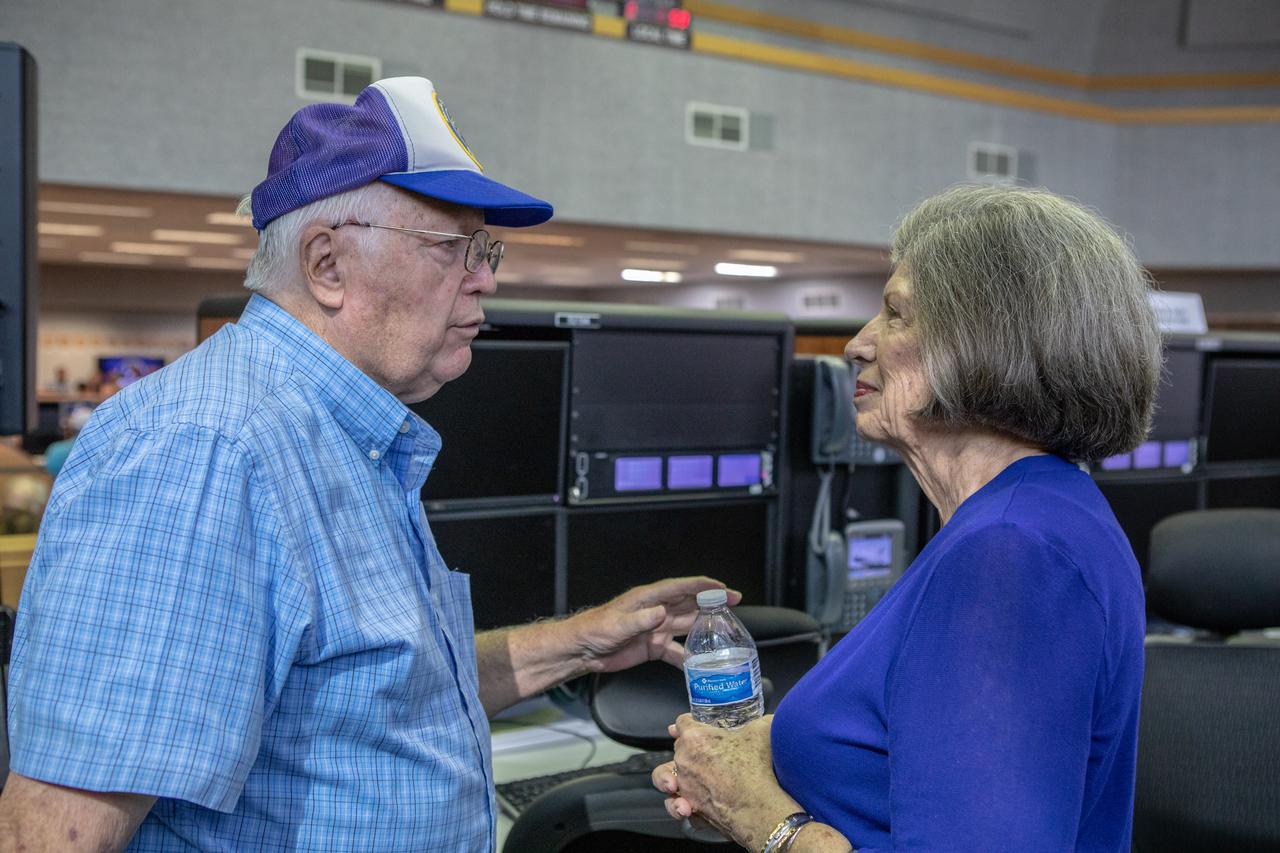
On July 16, 2019, the 50th anniversary of the Apollo 11 launch to the Moon; Apollo launch team member JoAnn Morgan, right, talks with a fellow team member in Launch Control Center Firing Room 1 at NASA's Kennedy Space Center in Florida. Morgan was the only female in the firing room during Apollo 11 launch countdown activities.
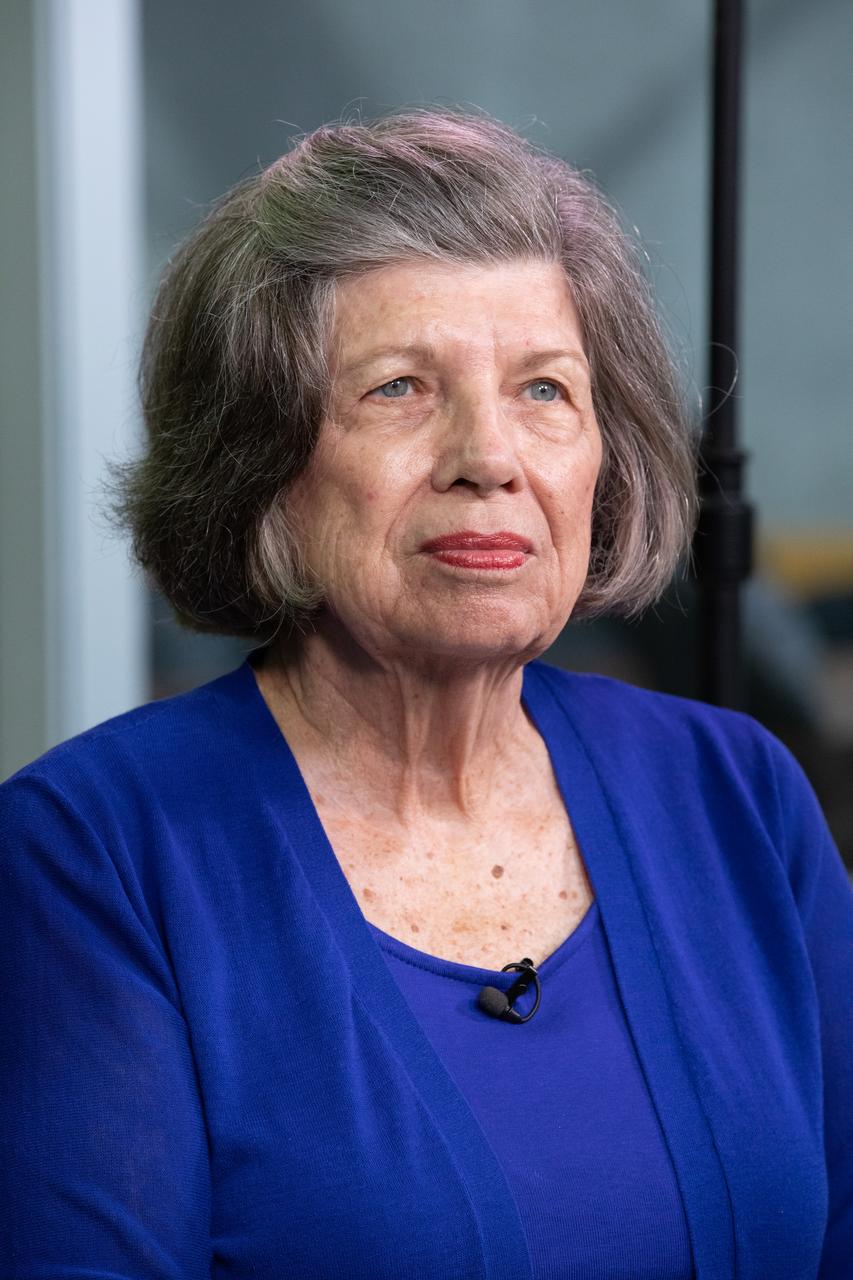
On July 16, 2019, the 50th anniversary of the Apollo 11 launch, Apollo-era launch team member JoAnn Morgan visits Launch Control Center Firing Room 1 at NASA's Kennedy Space Center in Florida. Morgan was the only female in the firing room during Apollo 11 launch countdown activites. Apollo 11 launched on a Saturn V rocket at 9:32 a.m. on July 16, 1969.
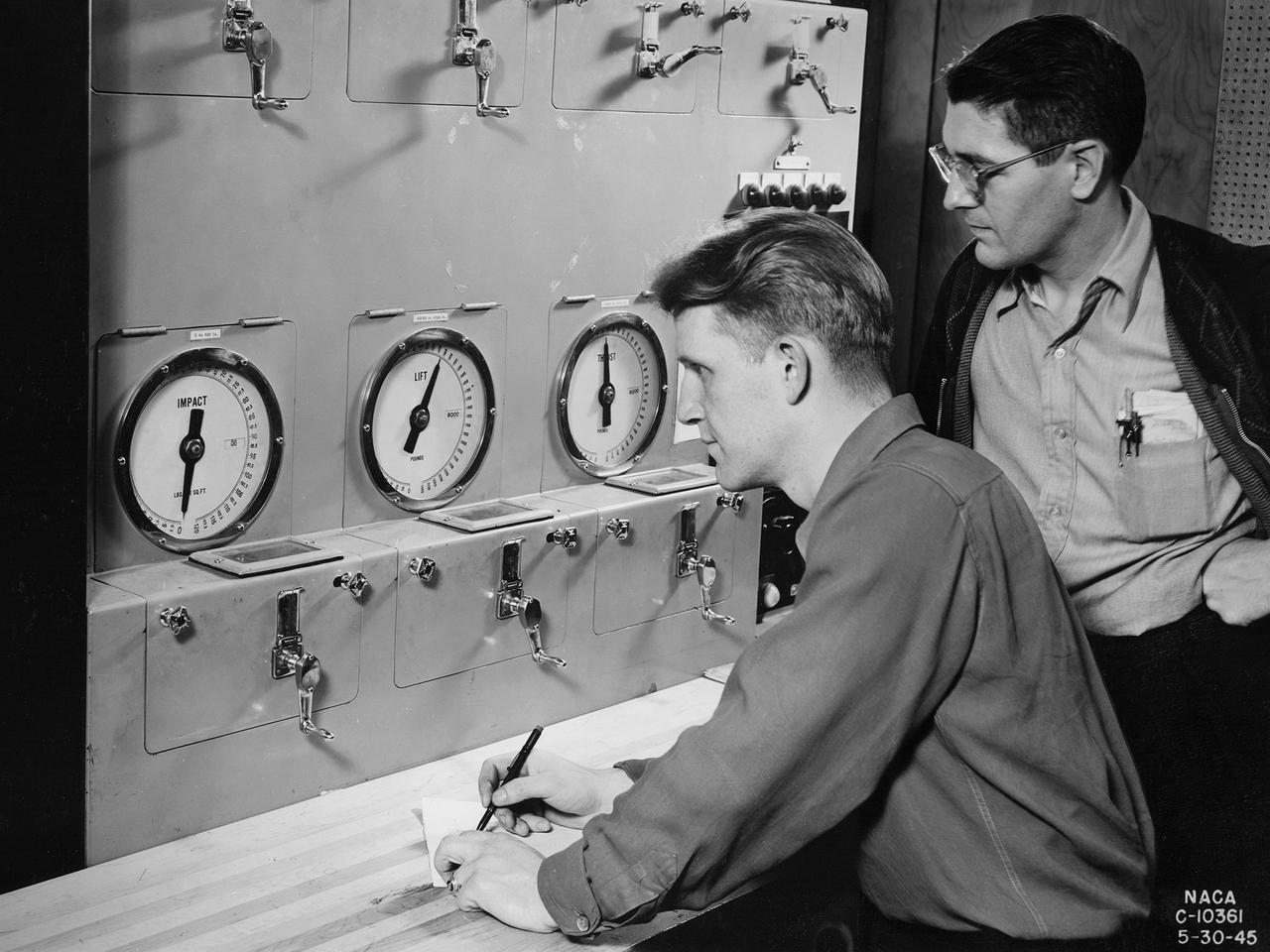
Researchers at the National Advisory Committee for Aeronautics (NACA) Aircraft Engine Research Laboratory monitor a ramjet's performance in the Altitude Wind Tunnel from the control room. The soundproof control room was just a few feet from the tunnel’s 20-foot-diameter test section. In the control room, the operators could control all aspects of the tunnel’s operation, including the air density, temperature, and speed. They also operated the engine or test article in the test section by controlling the angle-of-attack, speed, power, and other parameters. The men in this photograph are monitoring the engine’s thrust and lift. A NACA-designed 20-inch-diameter ramjet was installed in the tunnel in May 1945. Thrust figures from these runs were compared with drag data from tests of scale models in small supersonic tunnels to verify the ramjet’s feasibility. The tunnel was used to analyze the ramjet’s overall performance up to altitudes of 47,000 feet and speeds to Mach 1.84. The researchers found that an increase in altitude caused a reduction in the engine’s horsepower and identified optimal flameholder configurations.
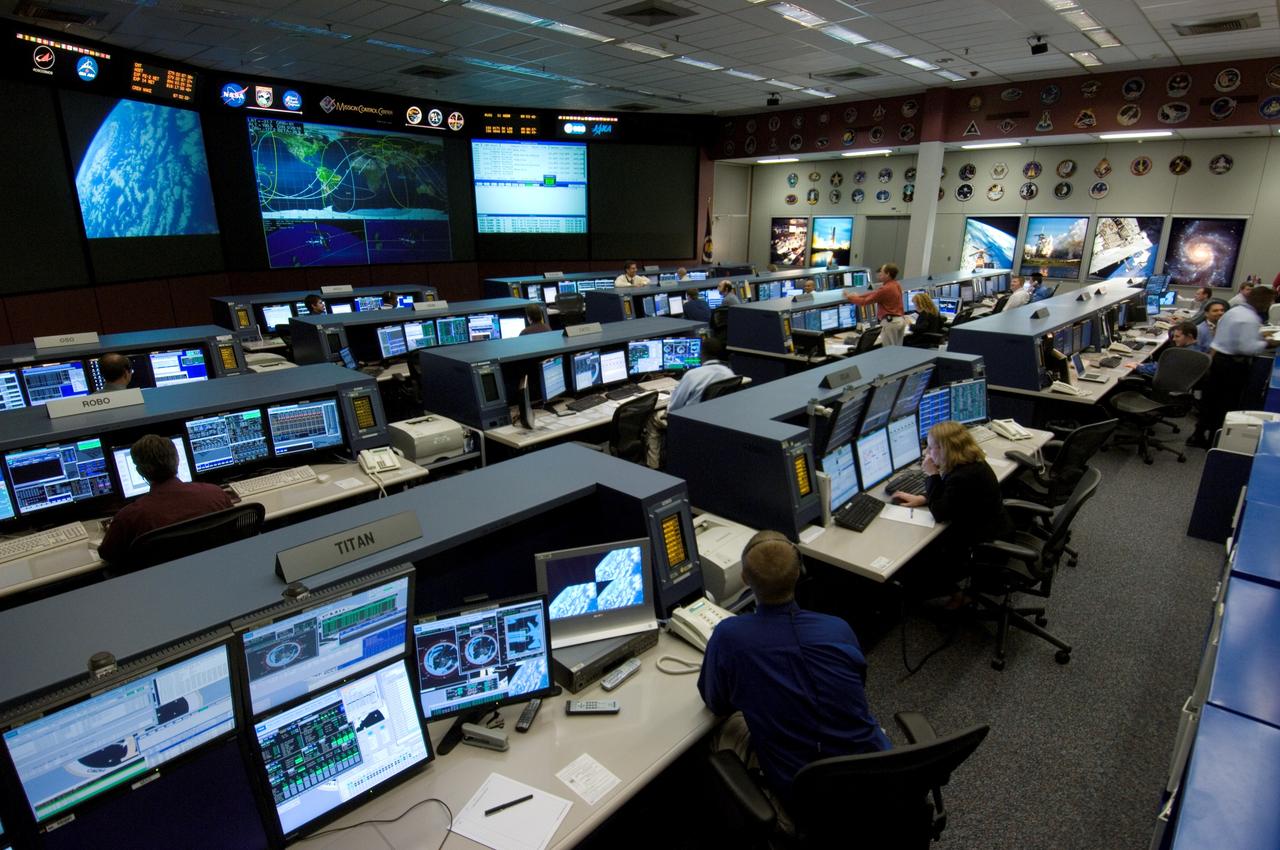
JSC2006-E-43860 (6 Oct. 2006)--- International Space Station flight controllers have this area as their new home with increased technical capabilities, more workspace and a long, distinguished history. The newly updated facility is just down the hall from its predecessor at NASA's Johnson Space Center, Houston. Known as Flight Control Room 1, it was first used to control a space flight 38 years ago, the mission of Apollo 7 launched Oct. 11, 1968. It was one of two control rooms for NASA's manned missions. The room it replaces in its new ISS role, designated the Blue Flight Control Room, had been in operation since the first station component was launched in 1998.

On July 16, 2019, the 50th anniversary of the Apollo 11 launch, Apollo launch team members mingle in Launch Control Center Firing Room 1 at NASA's Kennedy Space Center in Florida. At right is Bob Sieck, Apollo launch team member and former space shuttle launch director.
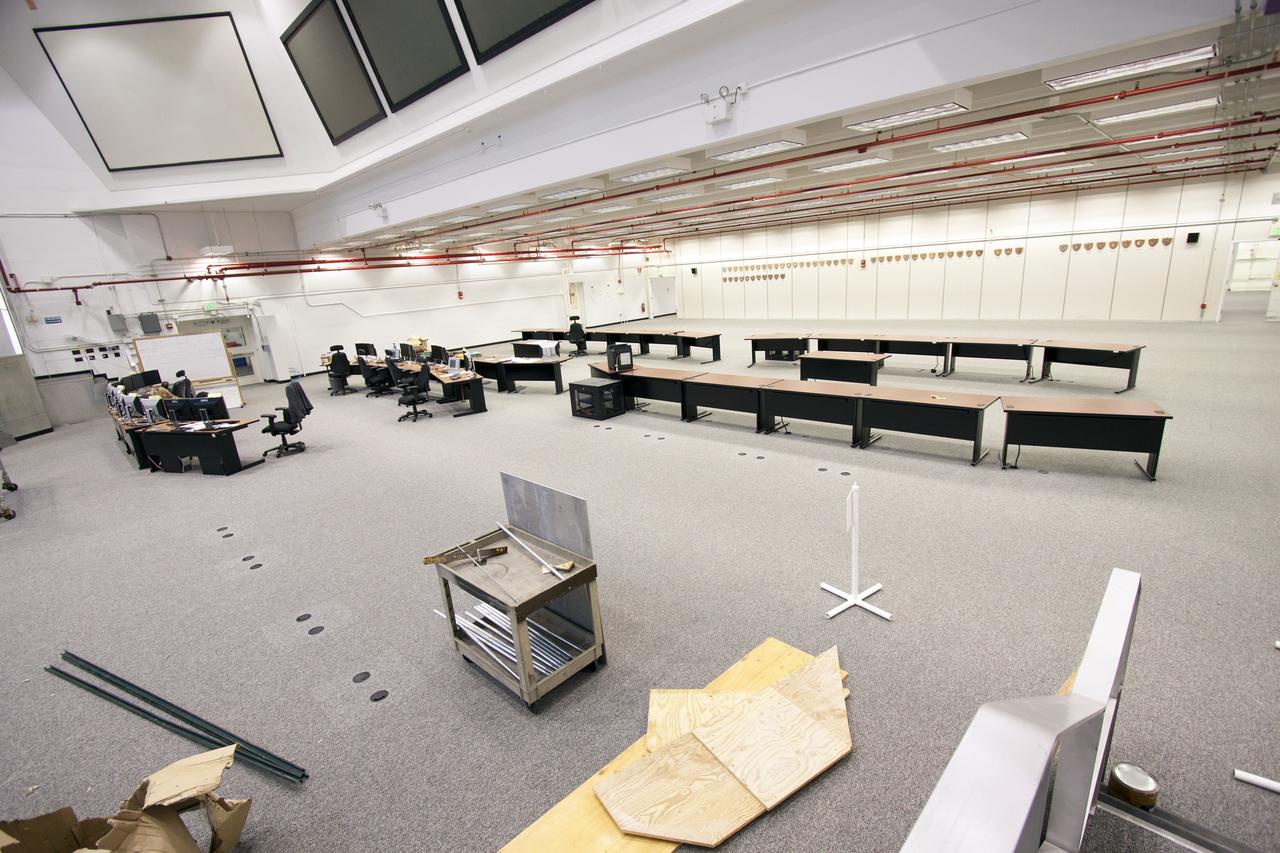
CAPE CANAVERAL, Fla. – At NASA’s Kennedy Space Center in Florida, modifications to Firing Room 3 in the Launch Control Center, or LCC, continue. Wiring and conduits below the floor have been upgraded. The legacy flooring was removed and new flooring has been installed. Some of the new launch control work stations are being positioned for installation in the room. Firing Rooms inside the LCC are being upgraded by the Ground System Development and Operations Program at Kennedy to support the processing and launch of multiple types of rockets and spacecraft, whether they are government or commercial models. Kennedy’s Launch Complex 39 is transitioning to support multiple users with the Firing Rooms being modified to be more generic in nature for upcoming programs. Photo credit: NASA/Jim Grossmann
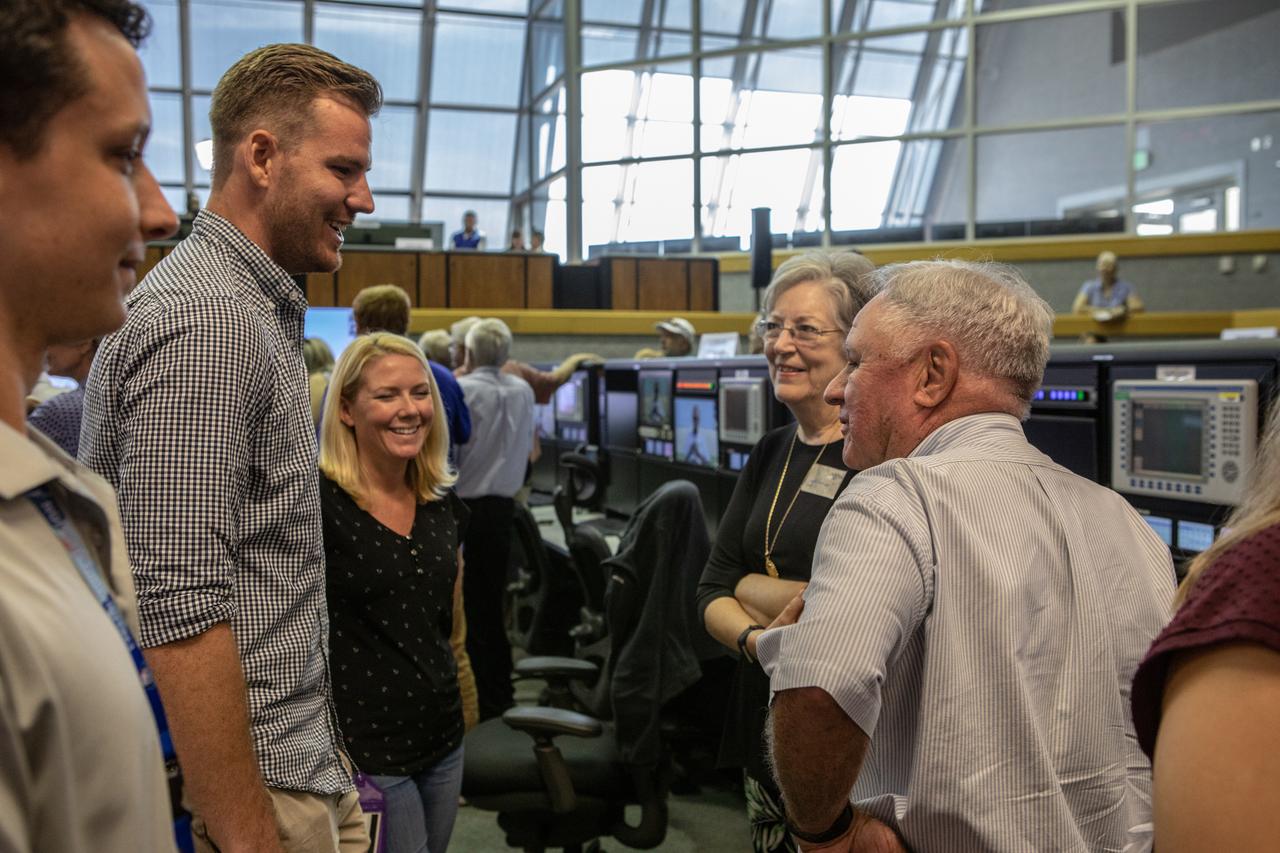
On July 16, 2019, the 50th anniversary of the Apollo 11 launch to the Moon, Apollo-era and Artemis 1 launch team members mingle in Launch Control Center Firing Room 1 at NASA's Kennedy Space Center in Florida.
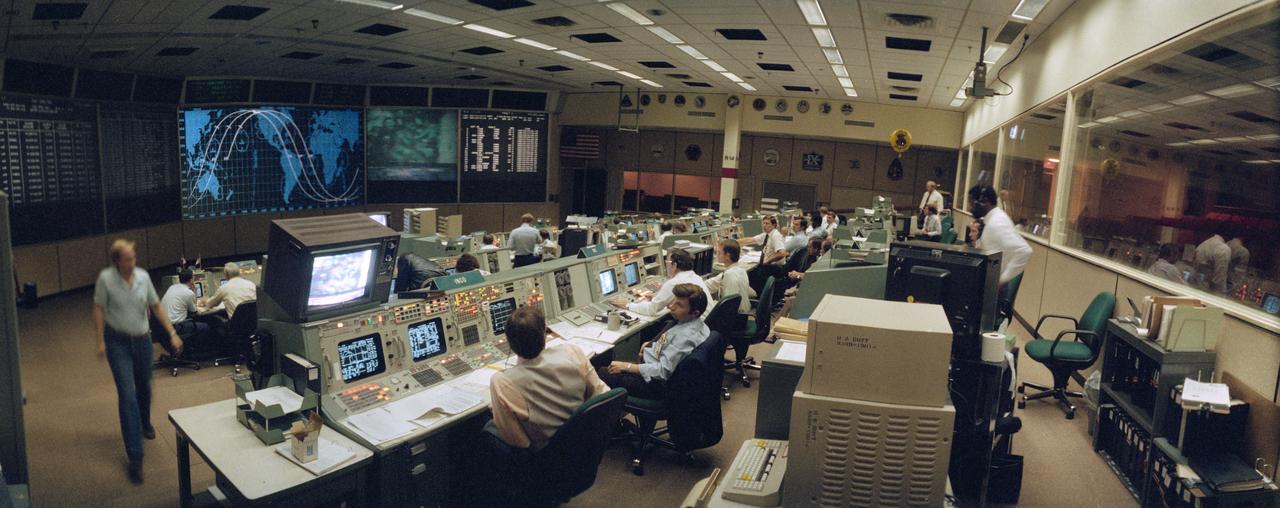
Wide angle view of the flight control room (FCR) of the Mission Control Center (MCC). Some of the STS 41-G crew can be seen on a large screen at the front of the MCC along with a map tracking the progress of the orbiter.
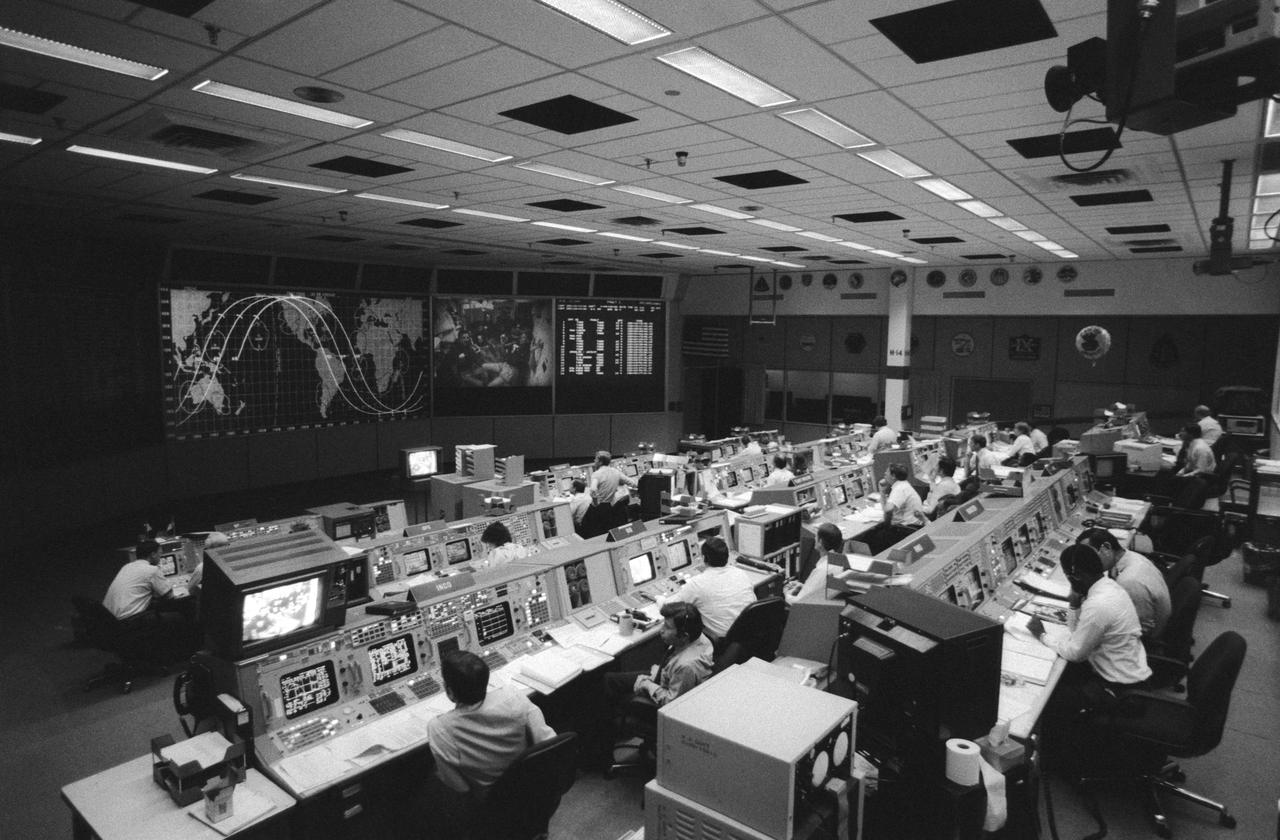
Wide angle view of the flight control room (FCR) of the Mission Control Center (MCC). Some of the STS 41-G crew can be seen on a large screen at the front of the MCC along with a map tracking the progress of the orbiter.
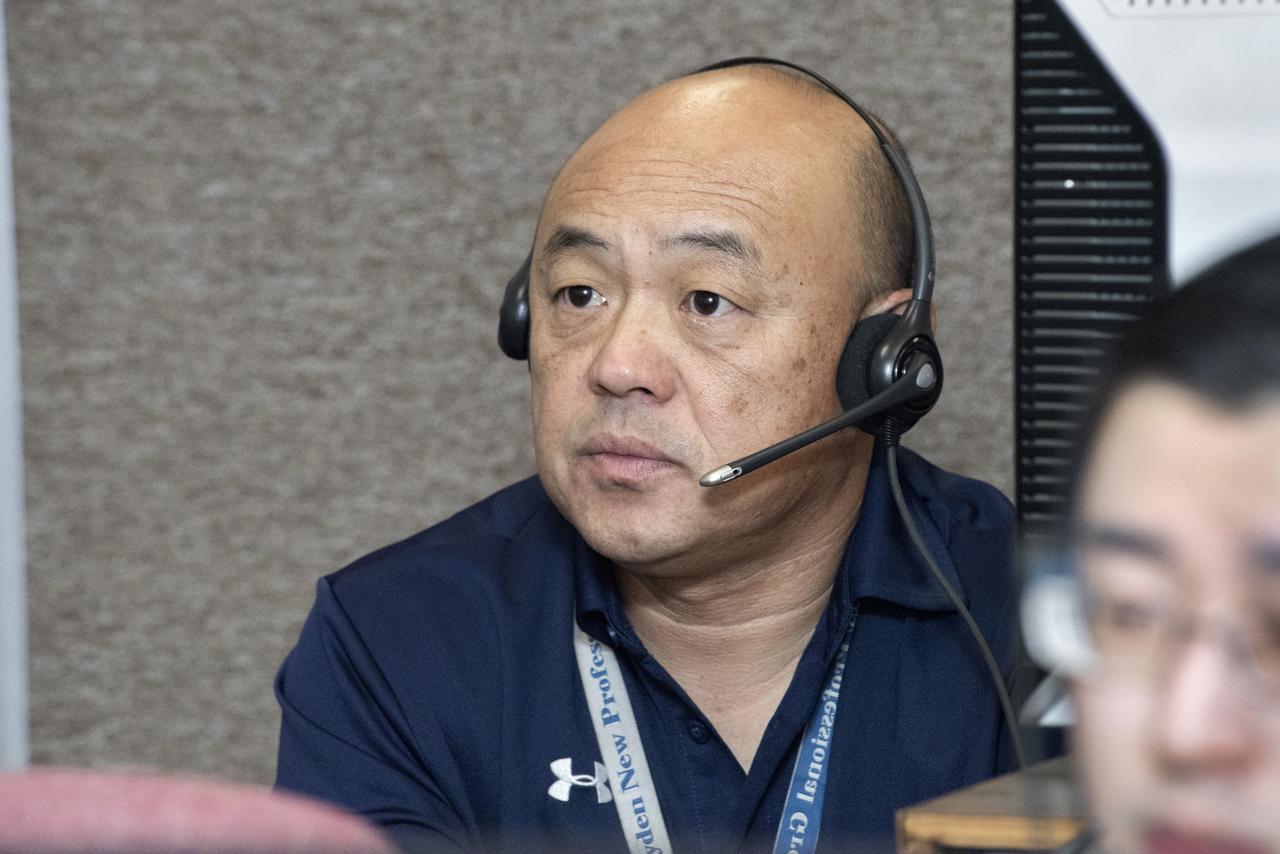
Cheng Moua, X-56A project manager, prepares for an X-56A mission in the control room.
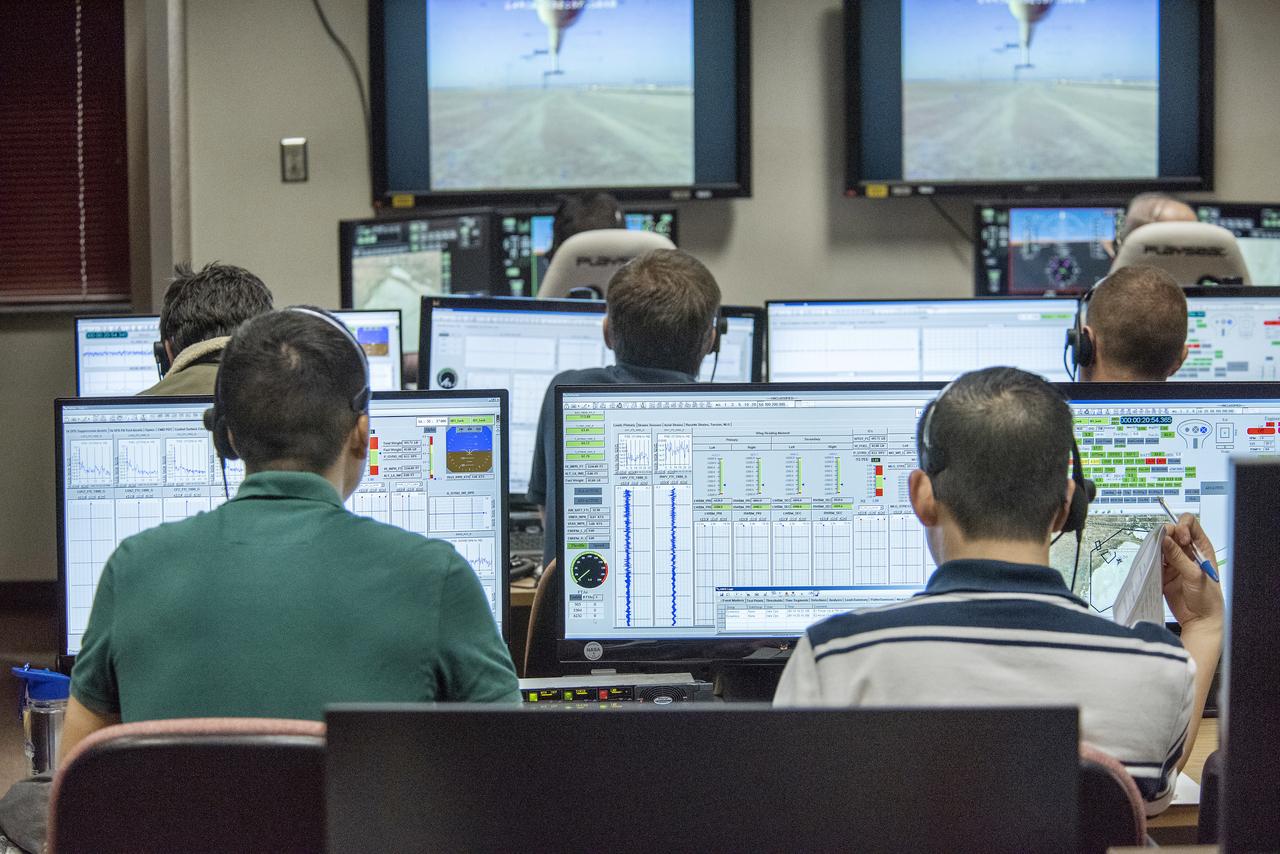
The X-56A has a busy control room with about a dozen people contributing to a mission.
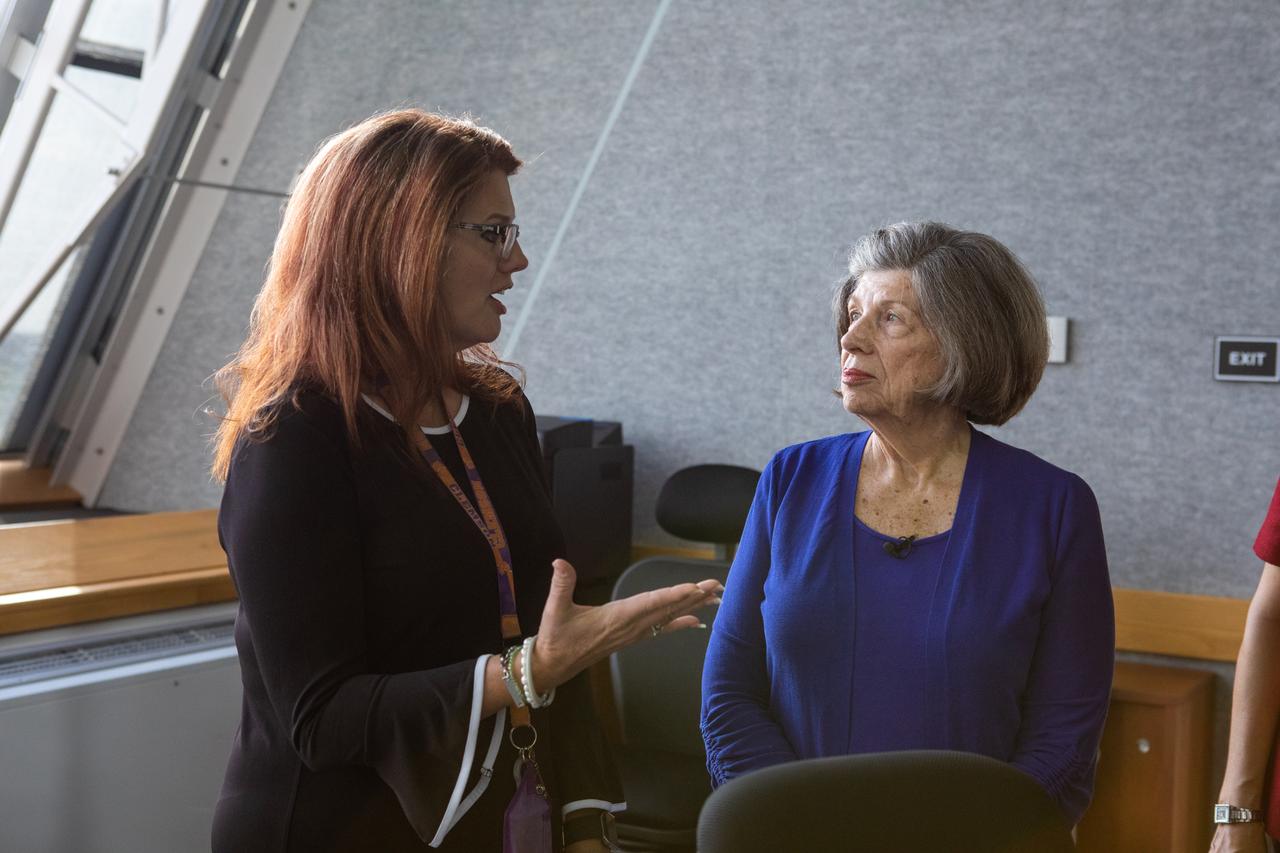
On July 16, 2019, the 50th anniversary of the Apollo 11 launch to the Moon, Artemis 1 Launch Director Charlie Blackwell-Thompson, left, talks with Apollo-era launch team member JoAnn Morgan in Launch Control Center Firing Room 1 at NASA's Kennedy Space Center in Florida. Morgan was the only woman in the firing room during Apollo 11 countdown activities. Blackwell-Thompson is the first female launch director. Apollo 11 launched atop the Saturn V rocket at 9:32 a.m. on July 16, 1969.
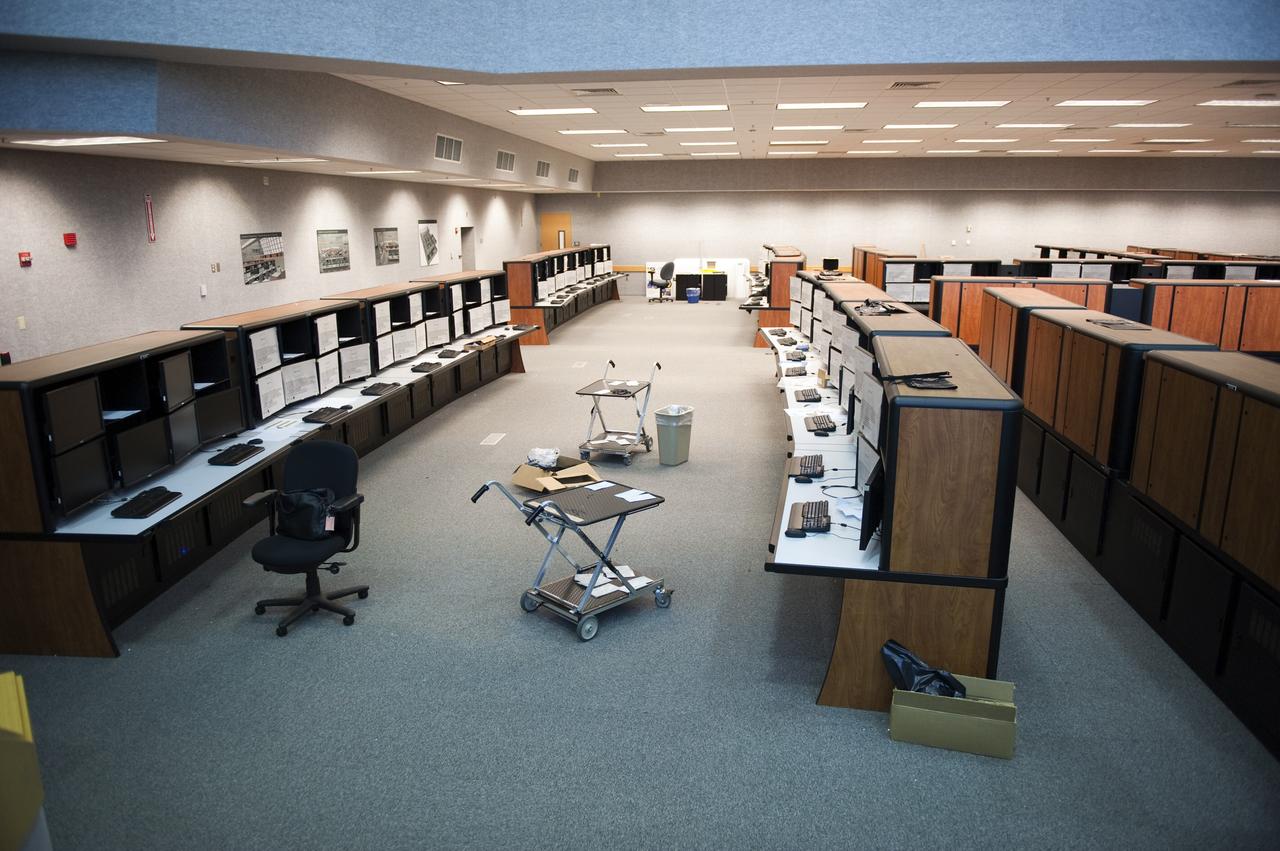
CAPE CANAVERAL, Fla. -- At NASA's Kennedy Space Center in Florida, remodeling for launches of future human spaceflight vehicles continues in the Launch Control Center's Young-Crippen Firing Room. Consoles already have been rewired for the comprehensive upgrade and are now being outfitted with new computers and monitors. Known as Firing Room 1 in the Apollo era, it was re-named as a tribute to the Space Shuttle Program's first crewed mission, STS-1, which was flown by Commander John Young and Pilot Robert Crippen in April 1981. The firing room most recently was set up to support the Ares I-X flight test in Oct. 2009. Photo credit: NASA/Kim Shiflett
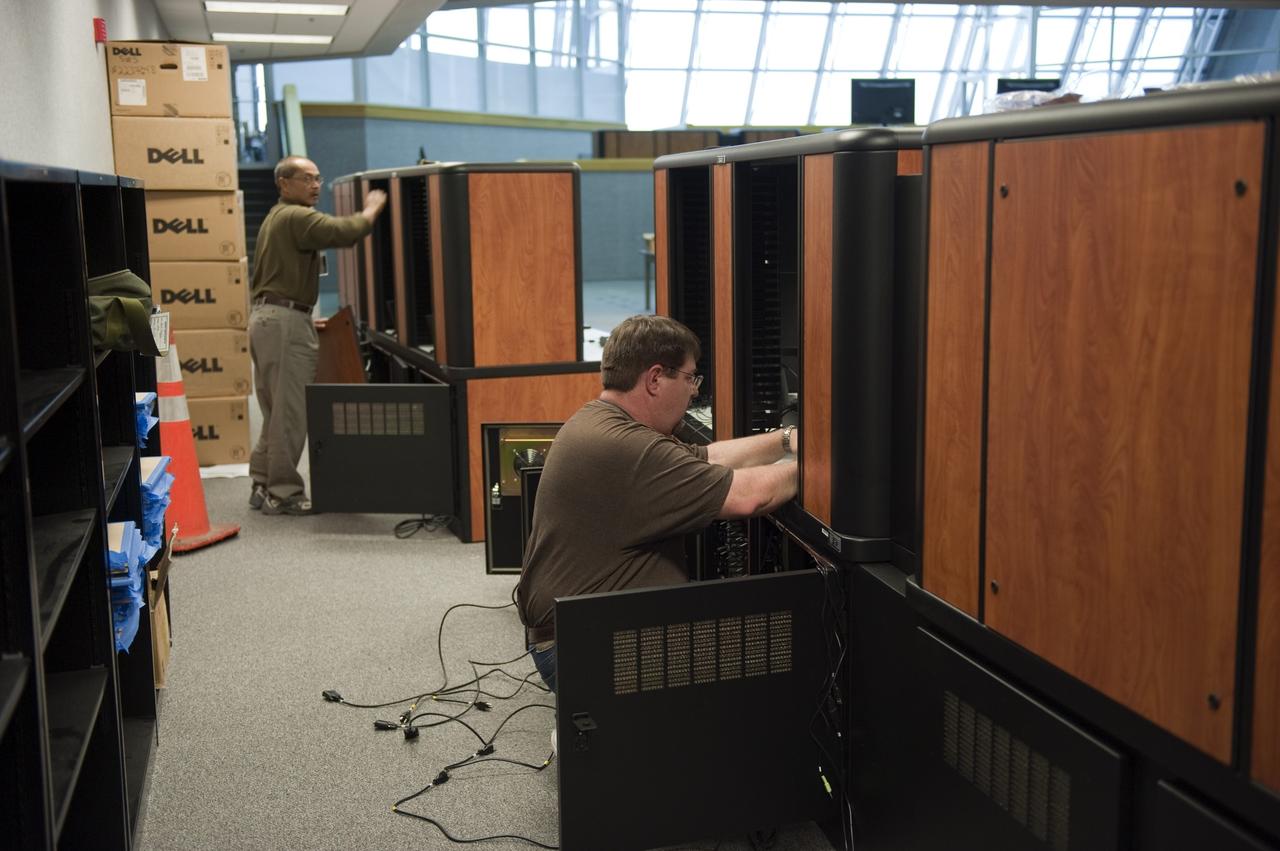
CAPE CANAVERAL, Fla. -- At NASA's Kennedy Space Center in Florida, remodeling for launches of future human spaceflight vehicles continues in the Launch Control Center's Young-Crippen Firing Room. Consoles already have been rewired for the comprehensive upgrade and are now being outfitted with new computers and monitors. Known as Firing Room 1 in the Apollo era, it was re-named as a tribute to the Space Shuttle Program's first crewed mission, STS-1, which was flown by Commander John Young and Pilot Robert Crippen in April 1981. The firing room most recently was set up to support the Ares I-X flight test in Oct. 2009. Photo credit: NASA/Kim Shiflett
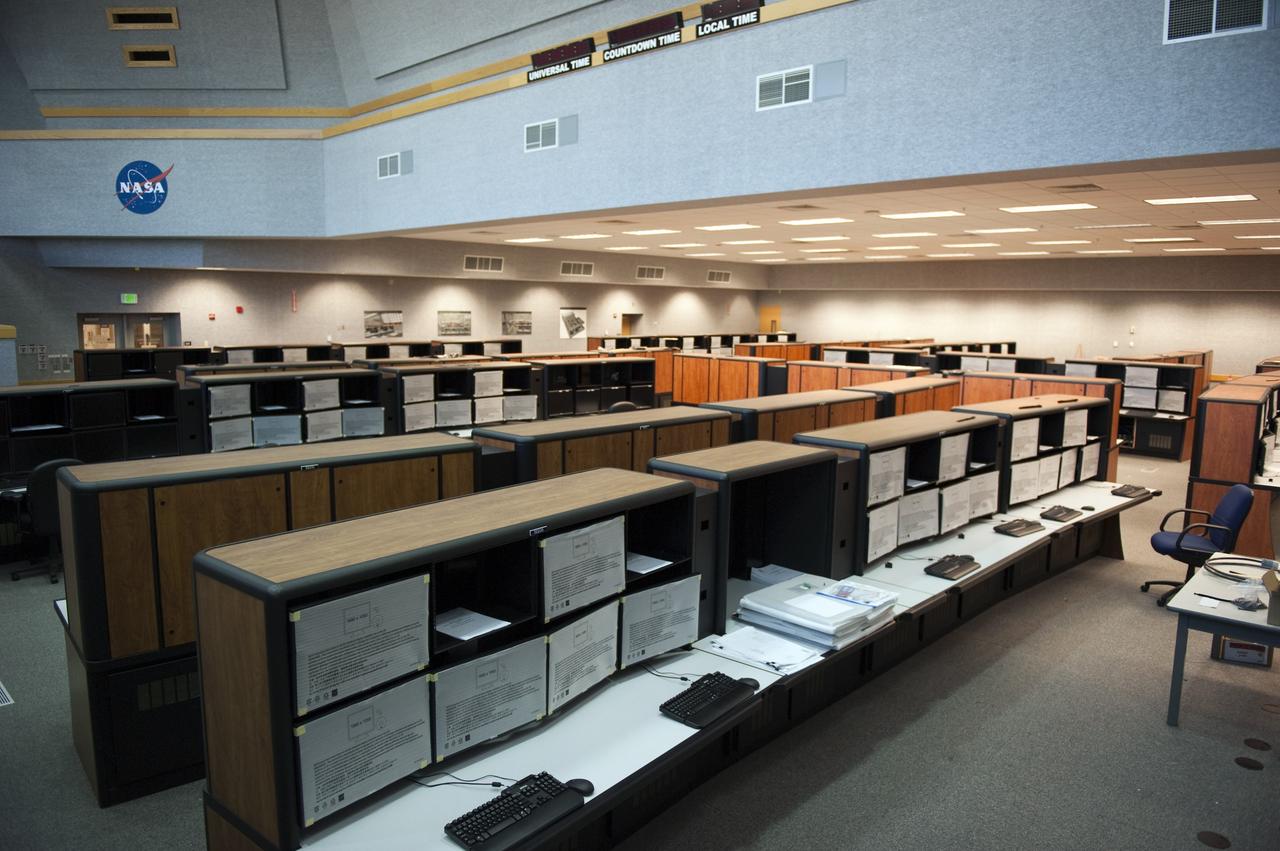
CAPE CANAVERAL, Fla. -- At NASA's Kennedy Space Center in Florida, remodeling for launches of future human spaceflight vehicles continues in the Launch Control Center's Young-Crippen Firing Room. Consoles already have been rewired for the comprehensive upgrade and are now being outfitted with new computers and monitors. Known as Firing Room 1 in the Apollo era, it was re-named as a tribute to the Space Shuttle Program's first crewed mission, STS-1, which was flown by Commander John Young and Pilot Robert Crippen in April 1981. The firing room most recently was set up to support the Ares I-X flight test in Oct. 2009. Photo credit: NASA/Kim Shiflett
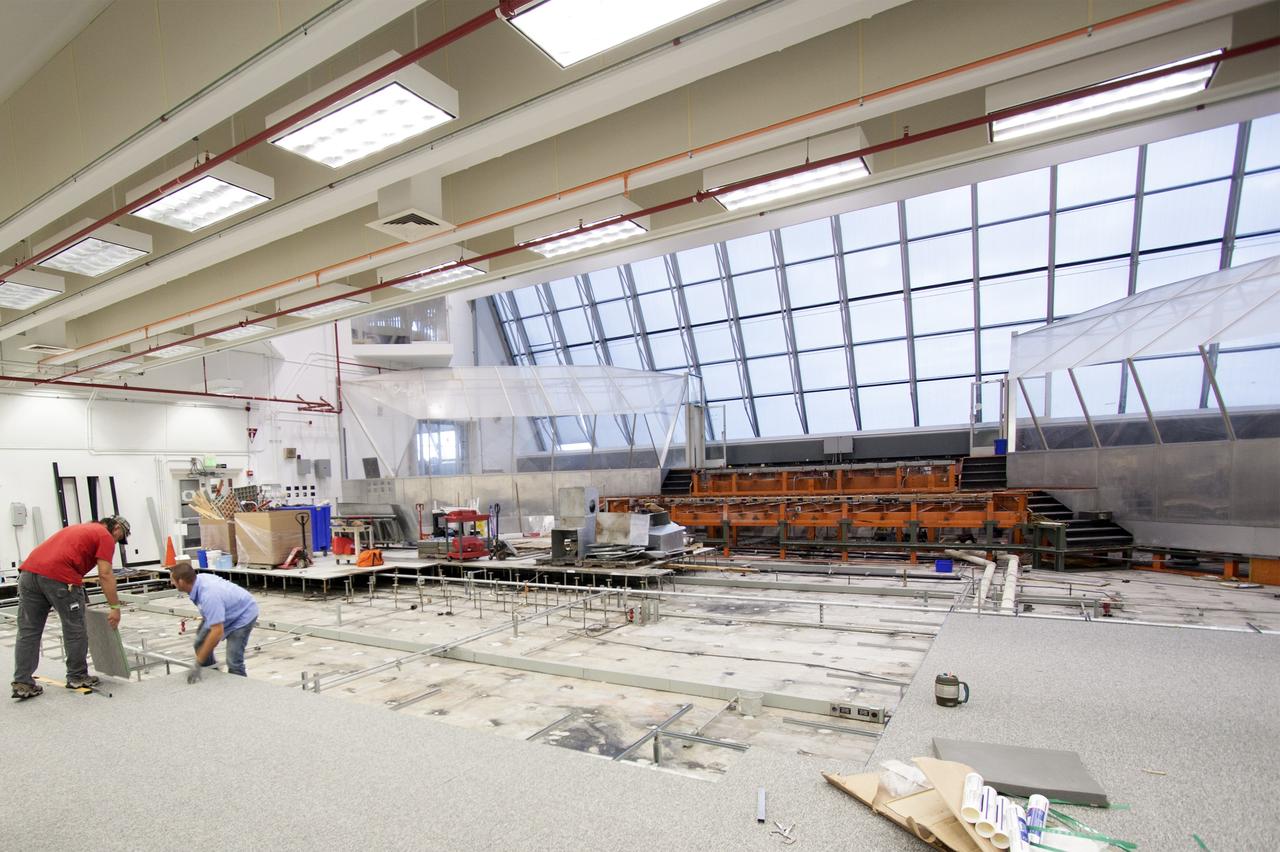
CAPE CANAVERAL, Fla. – At NASA’s Kennedy Space Center in Florida, modifications to Firing Room 2 in the Launch Control Center, or LCC, continue. Wiring and conduits below the floor have been upgraded. The legacy flooring was removed and new flooring is being installed. Firing Rooms inside the LCC are being upgraded by the Ground System Development and Operations Program at Kennedy to support the processing and launch of multiple types of rockets and spacecraft, whether they are government or commercial models. Kennedy’s Launch Complex 39 is transitioning to support multiple users with the Firing Rooms being modified to be more generic in nature for upcoming programs. Photo credit: NASA/Jim Grossmann
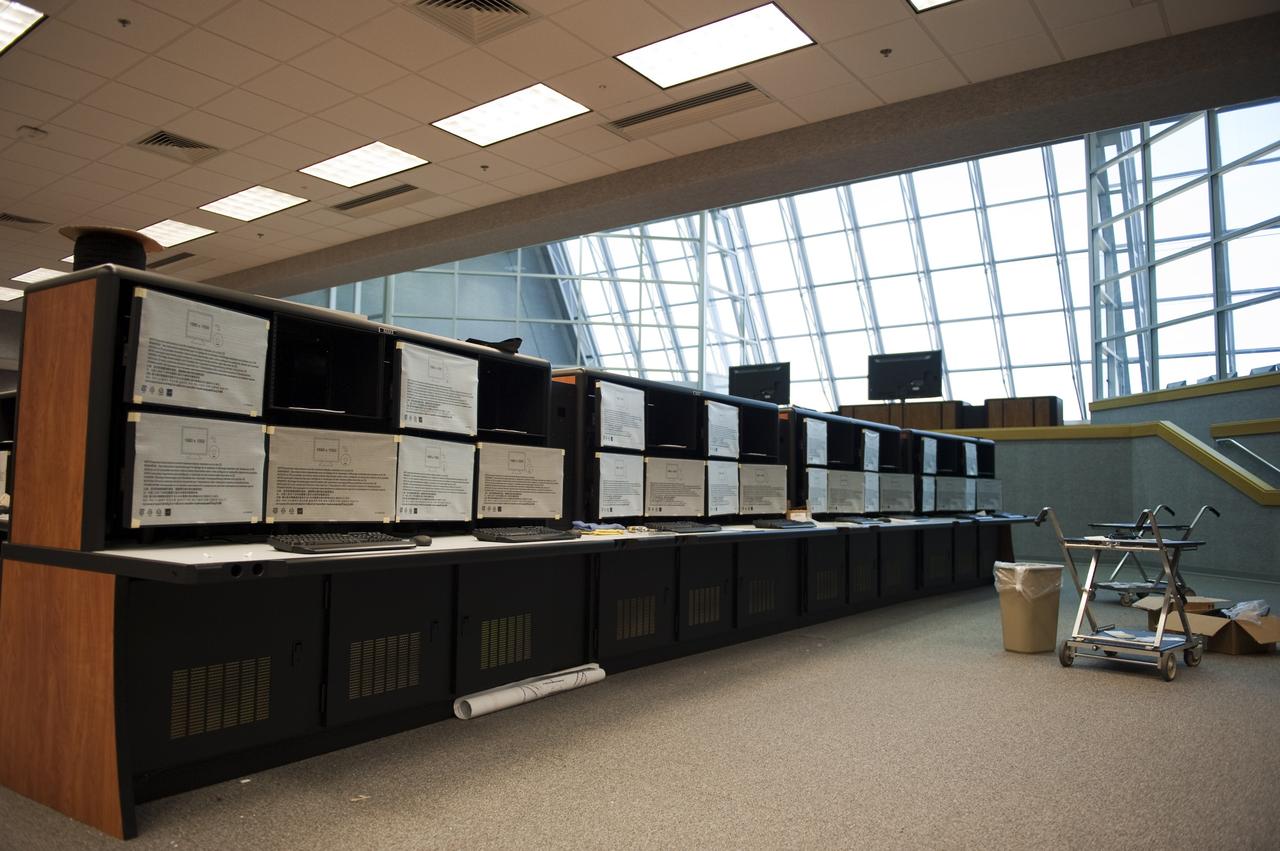
CAPE CANAVERAL, Fla. -- At NASA's Kennedy Space Center in Florida, remodeling for launches of future human spaceflight vehicles continues in the Launch Control Center's Young-Crippen Firing Room. Consoles already have been rewired for the comprehensive upgrade and are now being outfitted with new computers and monitors. Known as Firing Room 1 in the Apollo era, it was re-named as a tribute to the Space Shuttle Program's first crewed mission, STS-1, which was flown by Commander John Young and Pilot Robert Crippen in April 1981. The firing room most recently was set up to support the Ares I-X flight test in Oct. 2009. Photo credit: NASA/Kim Shiflett
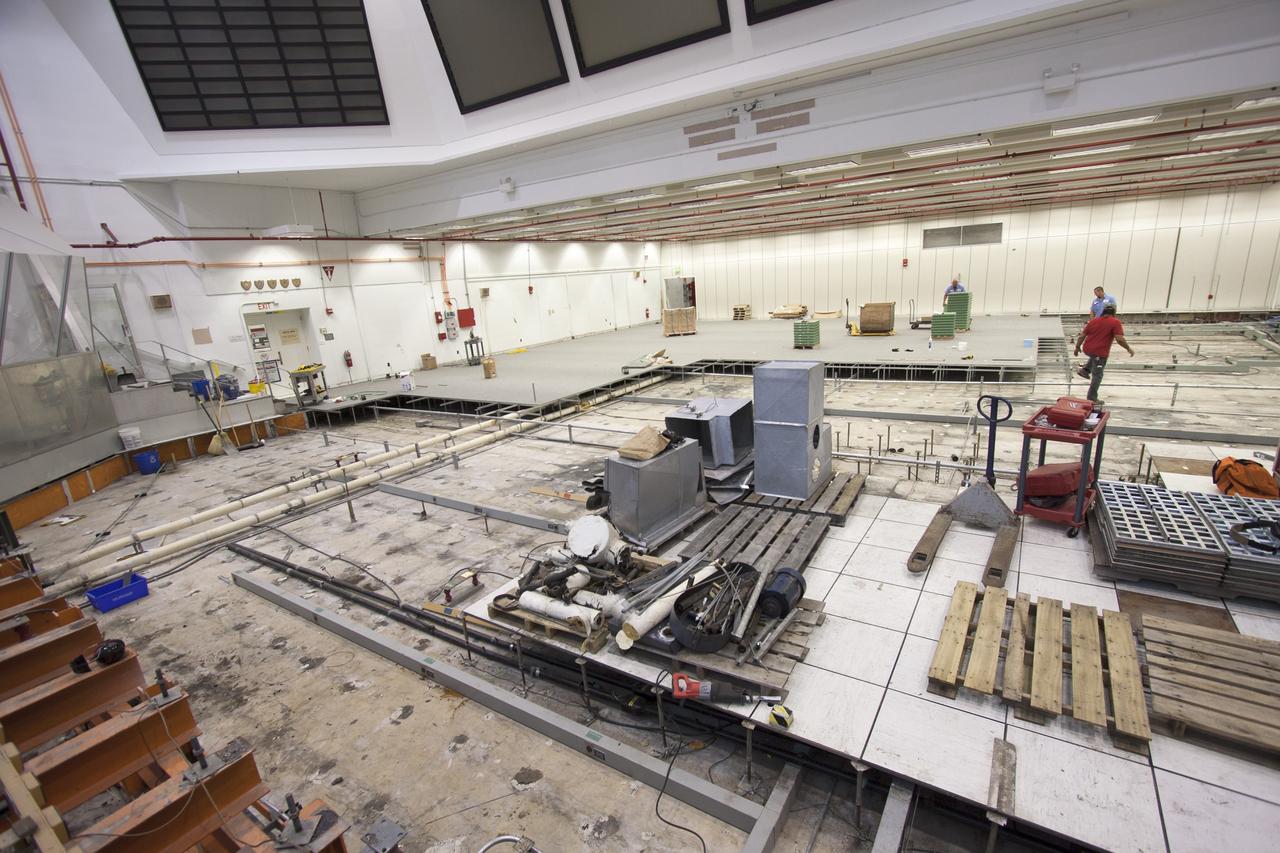
CAPE CANAVERAL, Fla. – At NASA’s Kennedy Space Center in Florida, modifications to Firing Room 2 in the Launch Control Center, or LCC, continue. Old flooring has been removed and wiring and conduits below the floor are being upgraded. New flooring will be installed. Firing Rooms inside the LCC are being upgraded by the Ground System Development and Operations Program at Kennedy to support the processing and launch of multiple types of rockets and spacecraft, whether they are government or commercial models. Kennedy’s Launch Complex 39 is transitioning to support multiple users with the Firing Rooms being modified to be more generic in nature for upcoming programs. Photo credit: NASA/Jim Grossmann

NASA Deputy Administrator Fred Gregory, left, joins Russian Federal Space Agency Deputy General-Director Nikolai Moiseev, Wednesday, April 21, 2004, at the Russian Mission Control Center outside Moscow to view the docking of the Expedition 9 crew to the International Space Station in a Russian Soyuz spacecraft. Photo Credit: (NASA/Bill Ingalls)
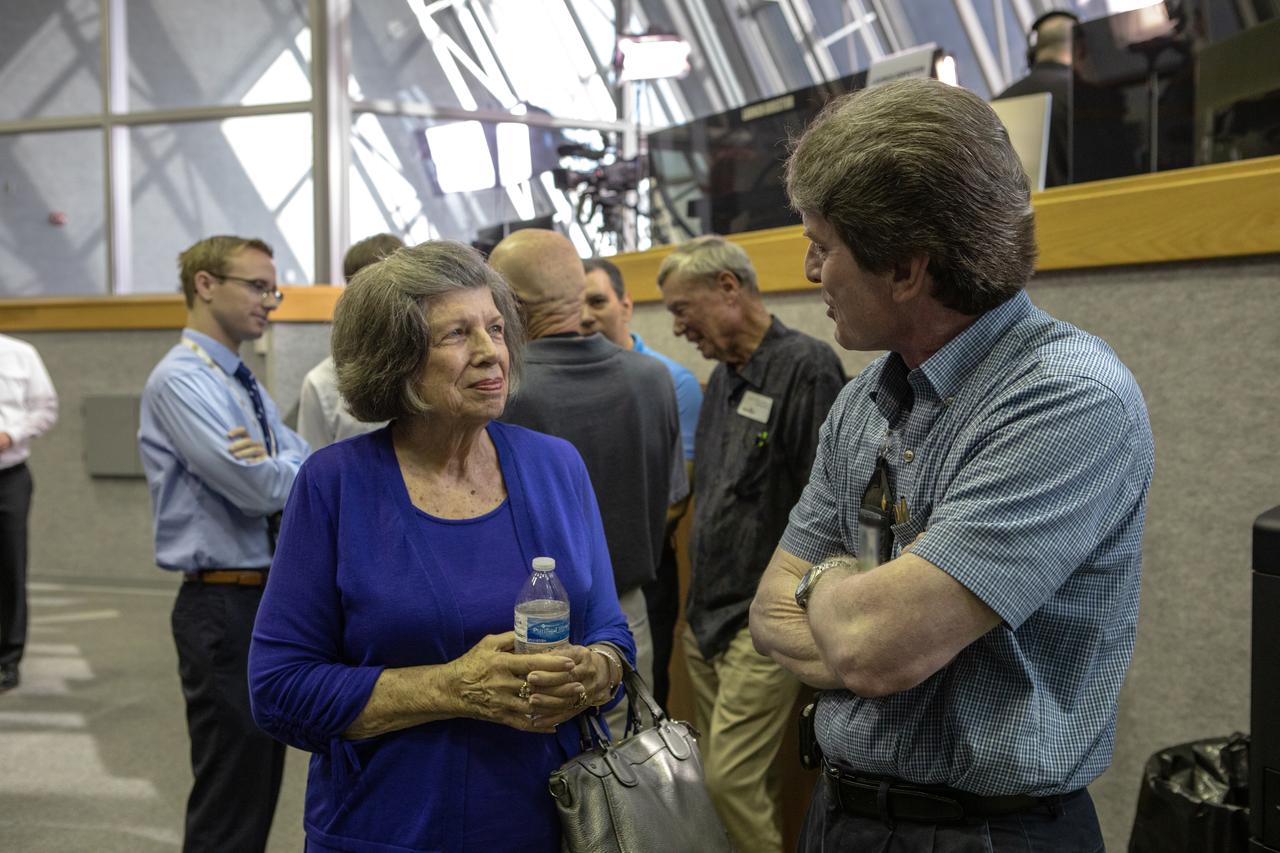
On July 16, 2019, the 50th anniversary of the Apollo 11 launch to the Moon, Apollo-era launch team member JoAnn Morgan, left, talks with an Artemis 1 launch team member in Launch Control Center Firing Room 1 at NASA's Kennedy Space Center in Florida. Morgan was the only female launch team member in the firing room during Apollo 11 launch countdown activities.
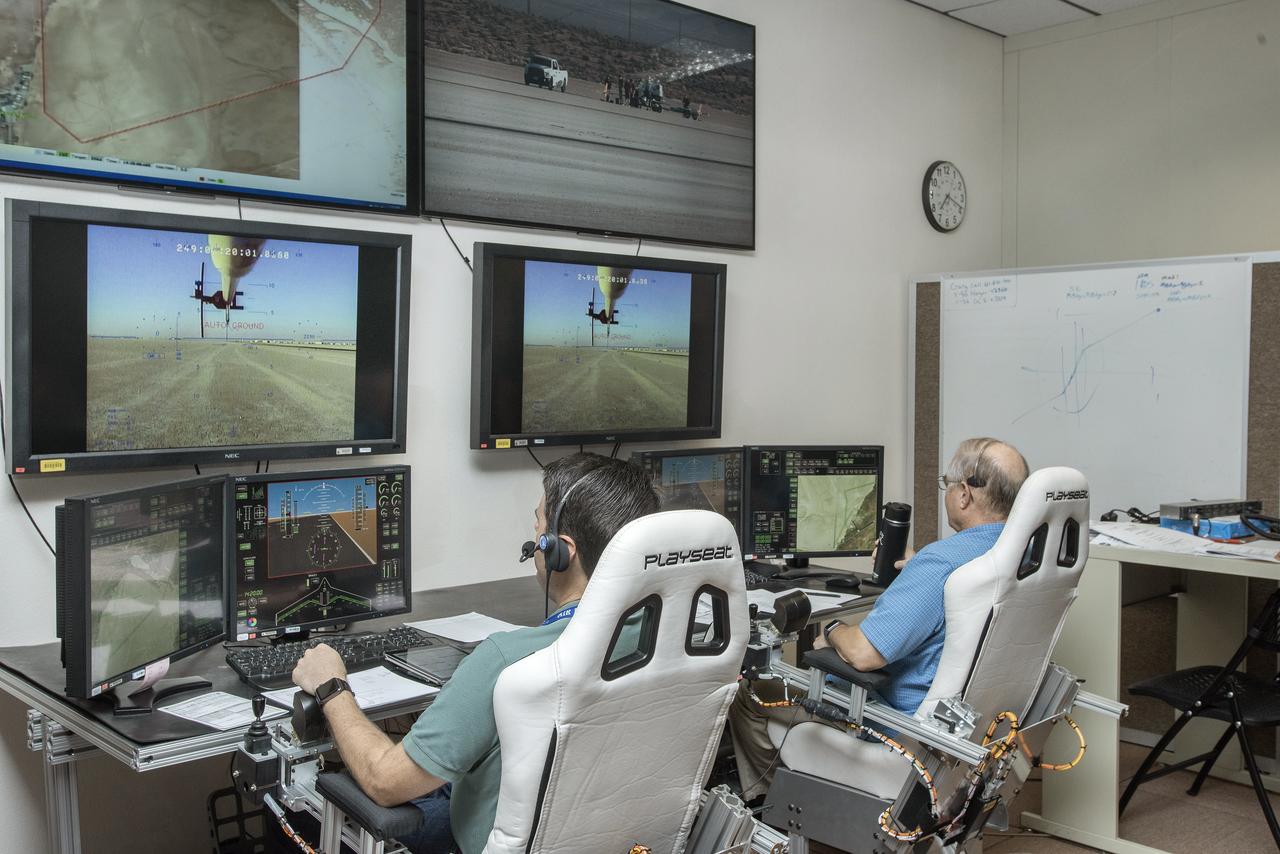
Scott Howe, X-56A chief pilot, and Dana Purifoy, co-pilot, complete preflight checks from a ground cockpit in the control room.
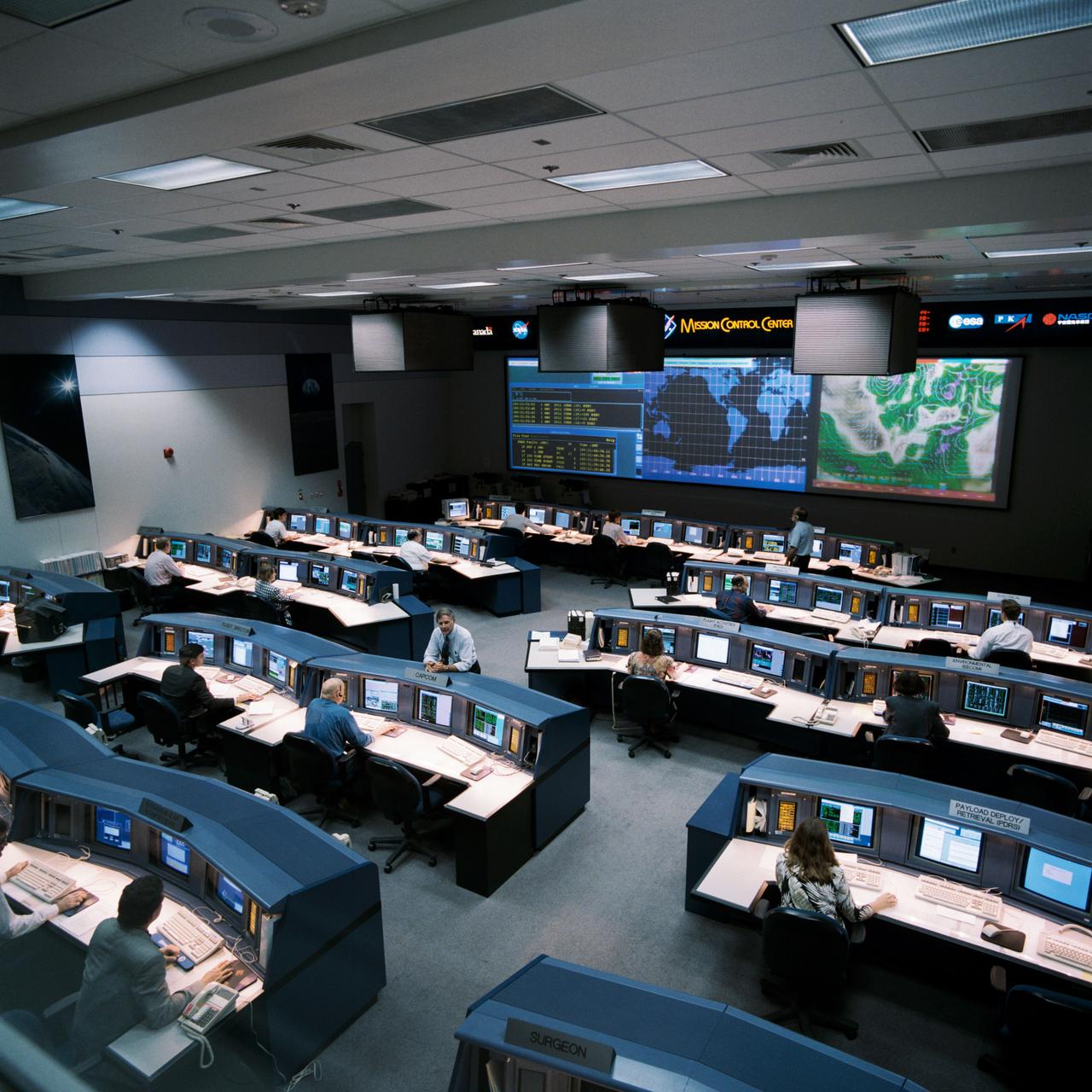
Documentation of the new mission control center White Flight Control Room (FLCR). Excellent overall view of White FLCR with personnel manning console workstations (11221). Fisheye lens perspective from Flight Director station with Brian Austin (11222). Environmental (EECOM) workstation and personnel (11223).

On July 16, 2019, the 50th anniversary of the Apollo 11 launch to the Moon, astronaut Michael Collins speaks to launch team members from Apollo 11 and the current launch team for Artemis 1 in Firing Room 1 in the Launch Control Center at NASA’s Kennedy Space Center in Florida.
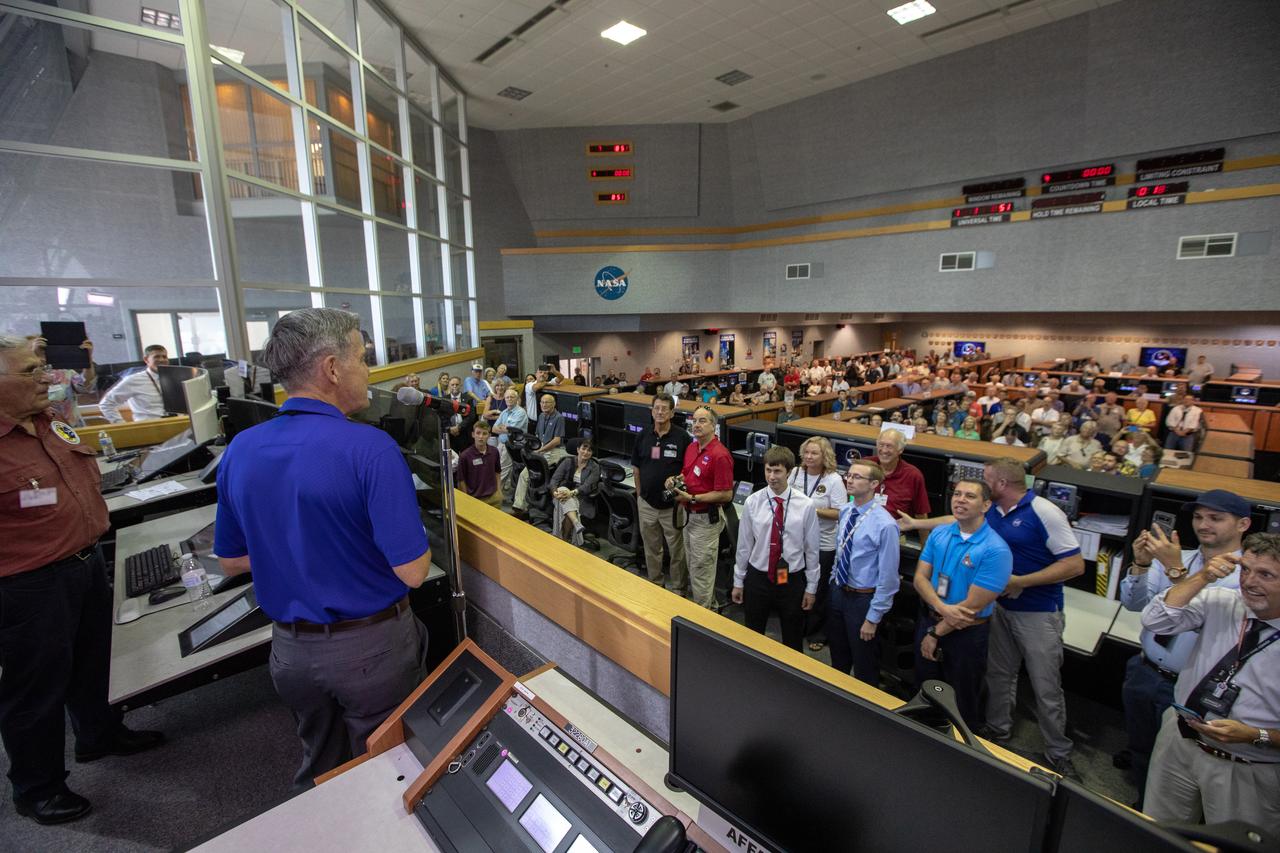
On July 16, 2019, the 50th anniversary of the Apollo 11 launch to the Moon, Kennedy Space Center Director Bob Cabana speaks to launch team members from Apollo 11 and the current launch team for Artemis 1 in Firing Room 1 in the Launch Control Center at NASA’s Kennedy Space Center in Florida.
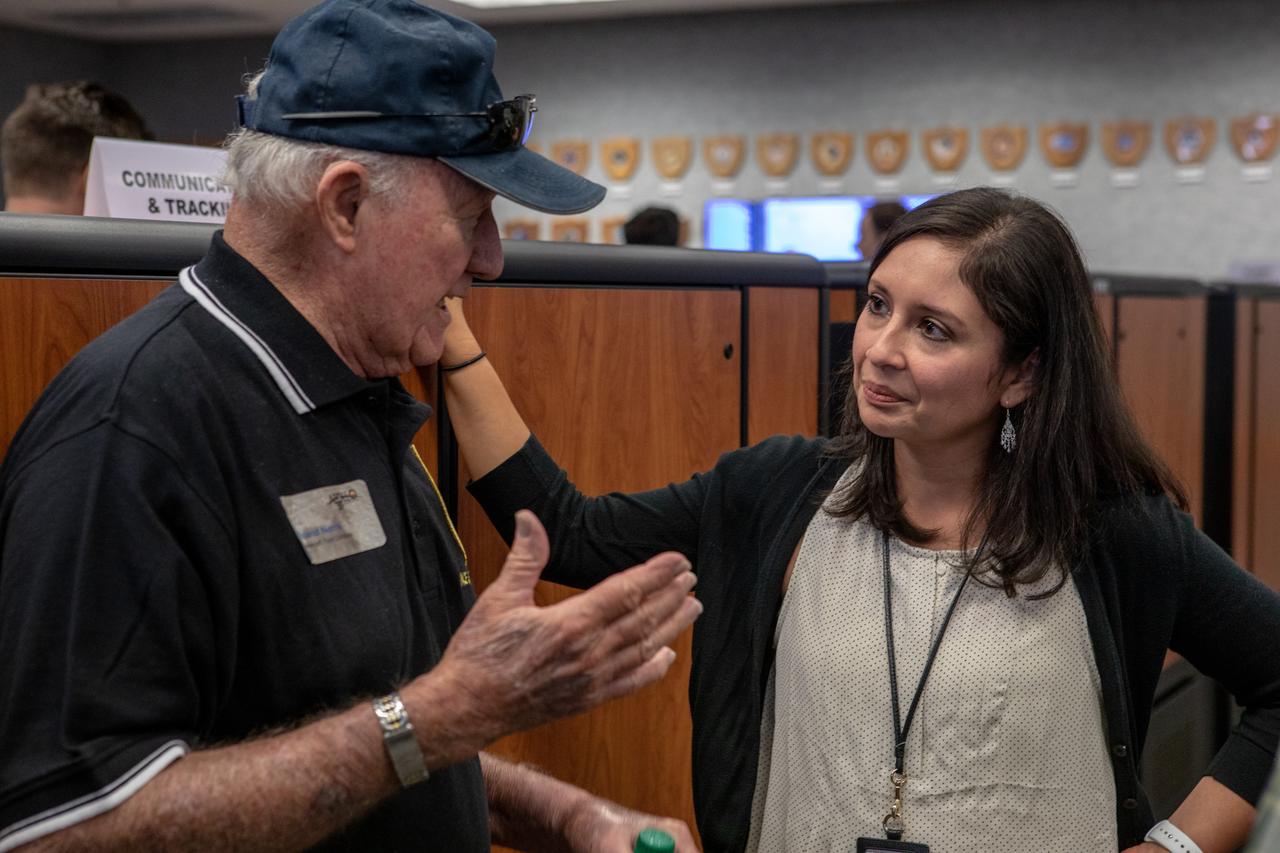
On July 16, 2019, the 50th anniversary of the Apollo 11 launch to the Moon, Jessica Parsons, right, technical assistant to the Artemis 1 launch director, talks with a member of the Apollo 11 launch team in Launch Control Center Firing Room 1 at NASA's Kennedy Space Center in Florida.
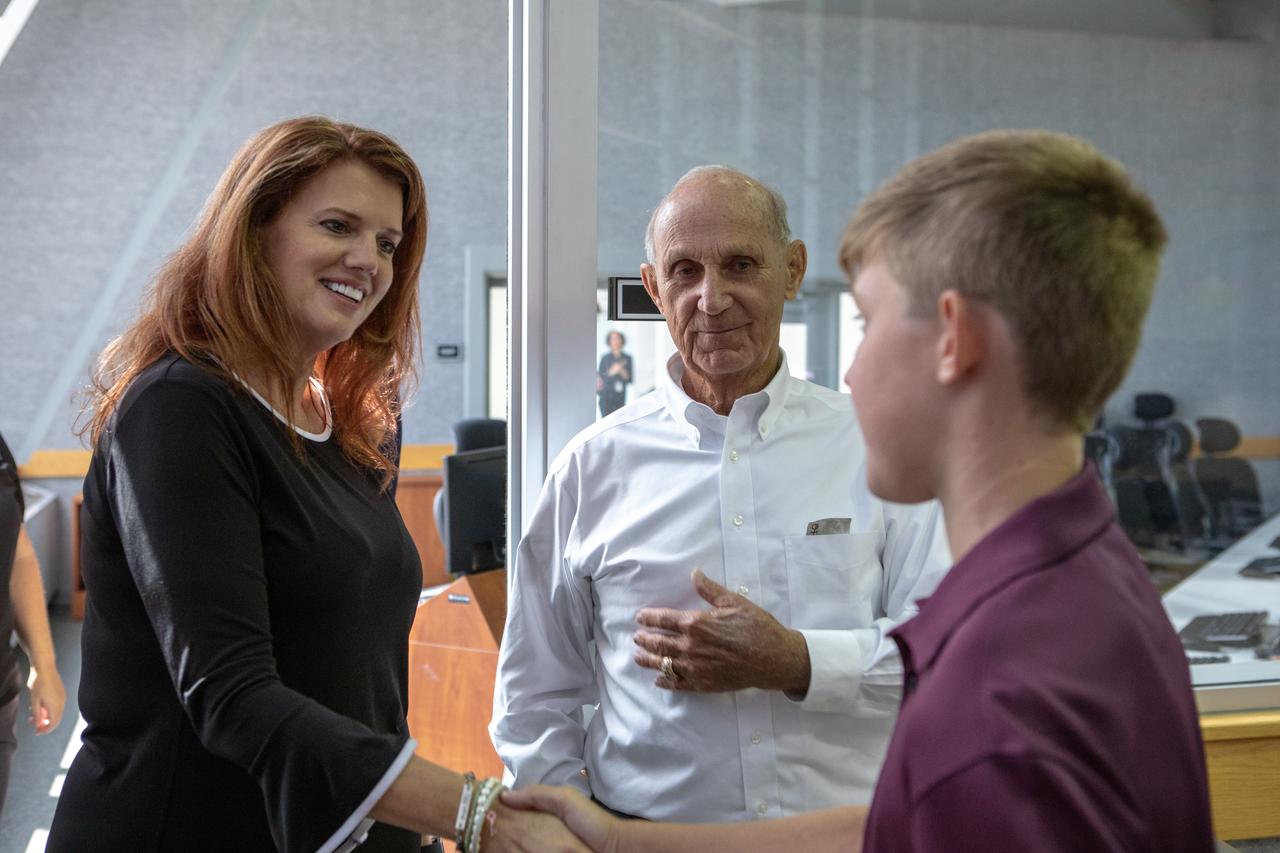
On July 16, 2019, the 50th anniversary of the Apollo 11 launch to the Moon, Artemis 1 Launch Director Charlie Blackwell-Thompson, left, talks with an Apollo 11 launch team member and family in Launch Control Center Firing Room 1 at NASA's Kennedy Space Center in Florida.
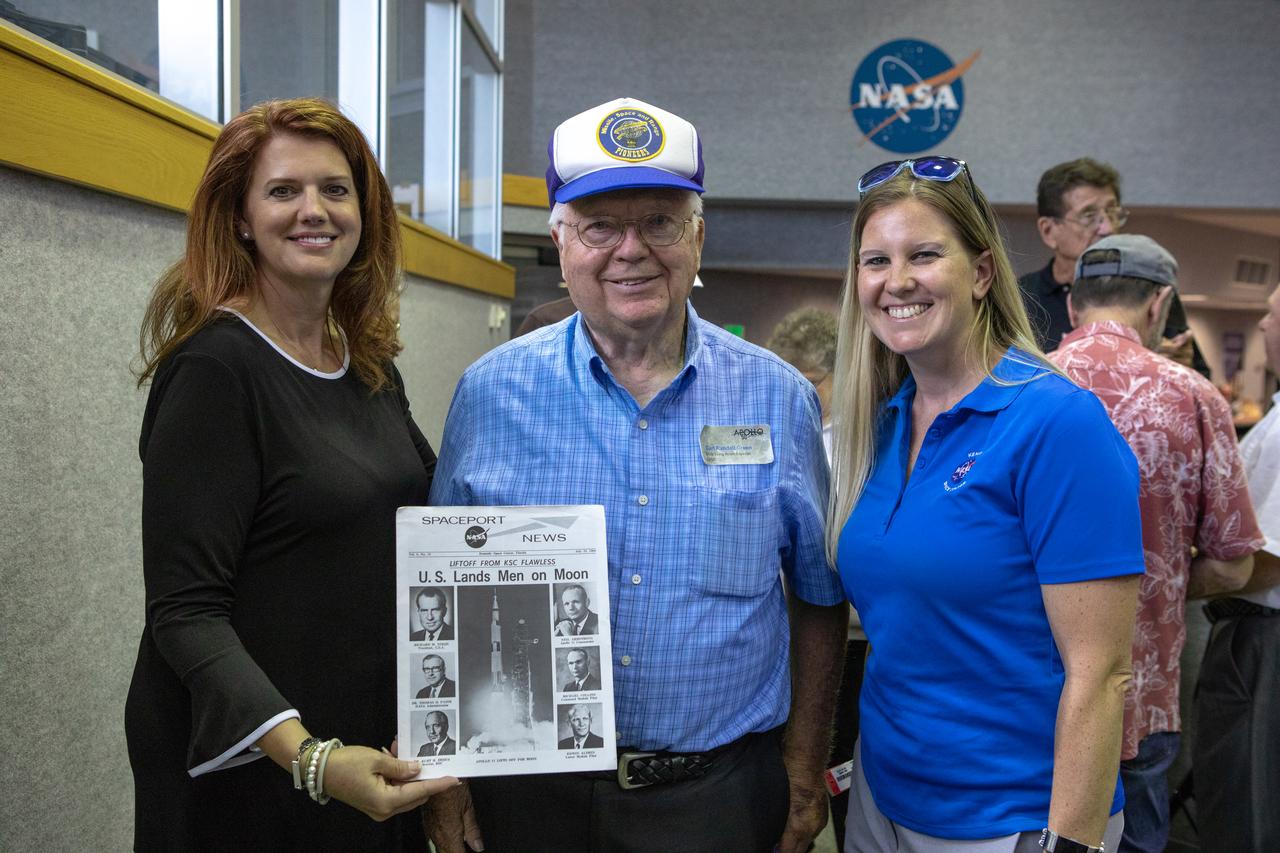
On July 16, 2019, the 50th anniversary of the Apollo 11 launch, Apollo-era and Artemis 1 workers gathered together in Launch Control Center Firing Room 1 at NASA's Kennedy Space Center in Florida. From left, are Artemis 1 Launch Director Charlie Blackwell-Thompson, Apollo-era launch team member Carl Green, and Tiffany Lindsley Wardlow, strategic communications specialist in Exploration Ground Systems.
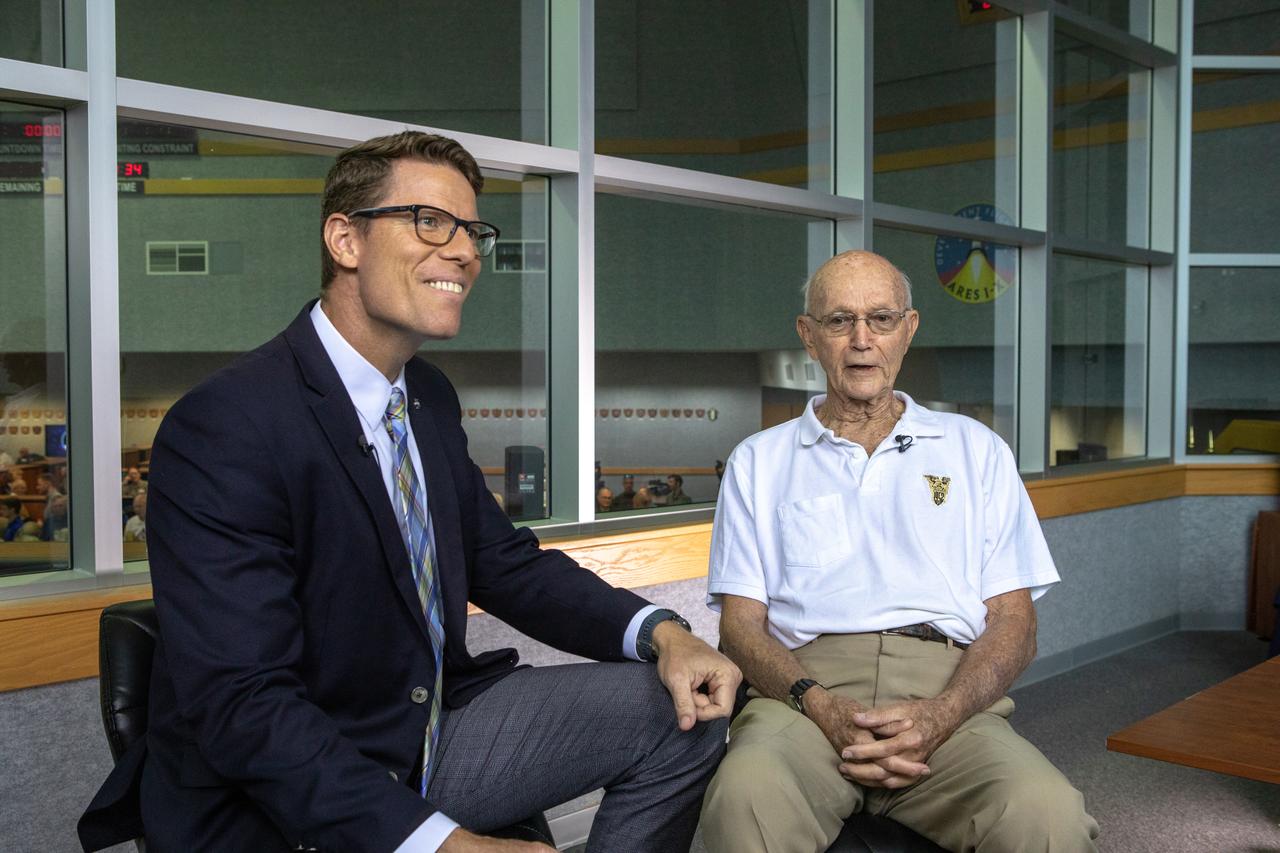
On July 16, 2019, the 50th anniversary of the Apollo 11 launch, Apollo 11 astronaut Michael Collins talks to NASA’s Derrol Nail at Launch Control Center Firing Room 1 at NASA's Kennedy Space Center in Florida. Collins talked about the moments leading up to the Apollo 11 launch at 9:32 a.m. on July 16, 1969.
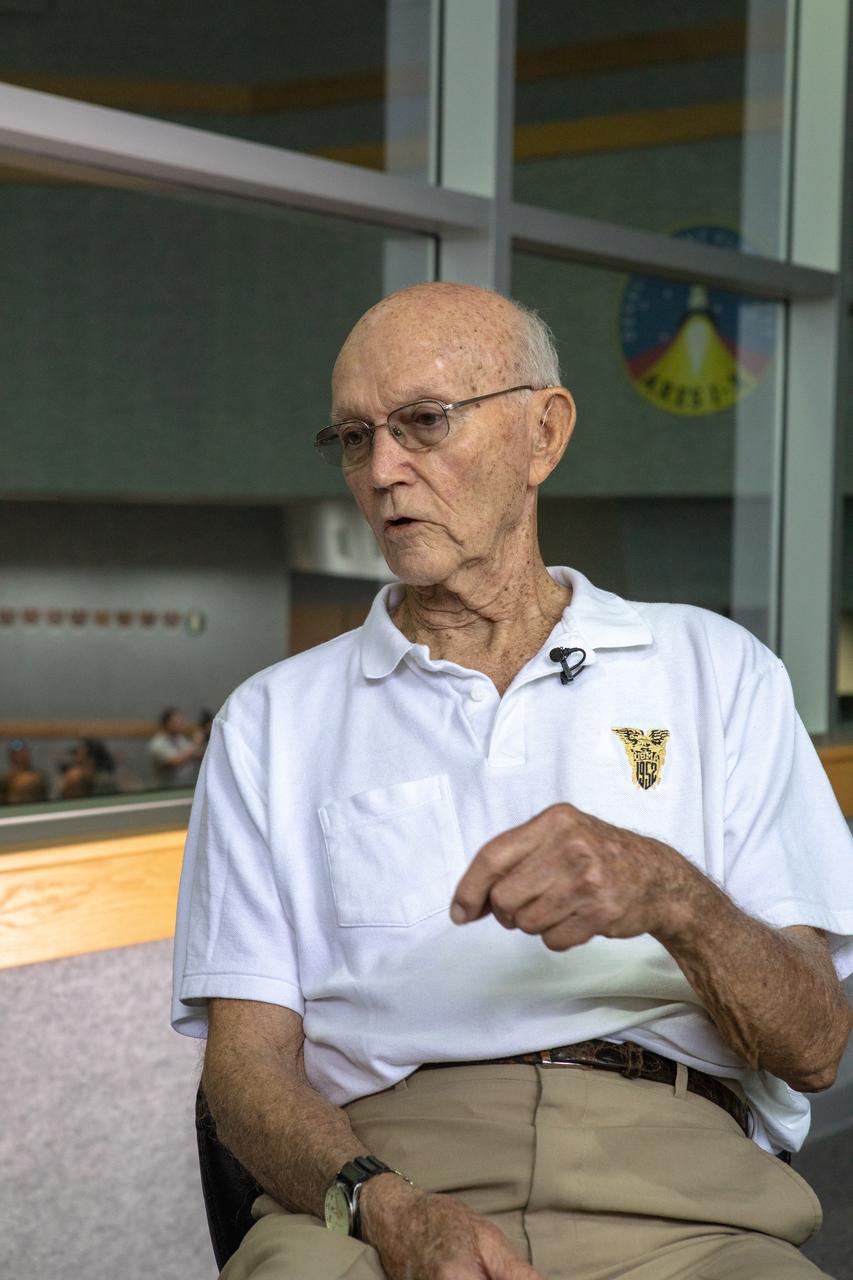
On July 16, 2019, the 50th anniversary of the Apollo 11 launch, Apollo 11 astronaut Michael Collins talks to NASA’s Derrol Nail at Launch Control Center Firing Room 1 at NASA's Kennedy Space Center in Florida. Collins talked about the moments leading up to the Apollo 11 launch at 9:32 a.m. on July 16, 1969.
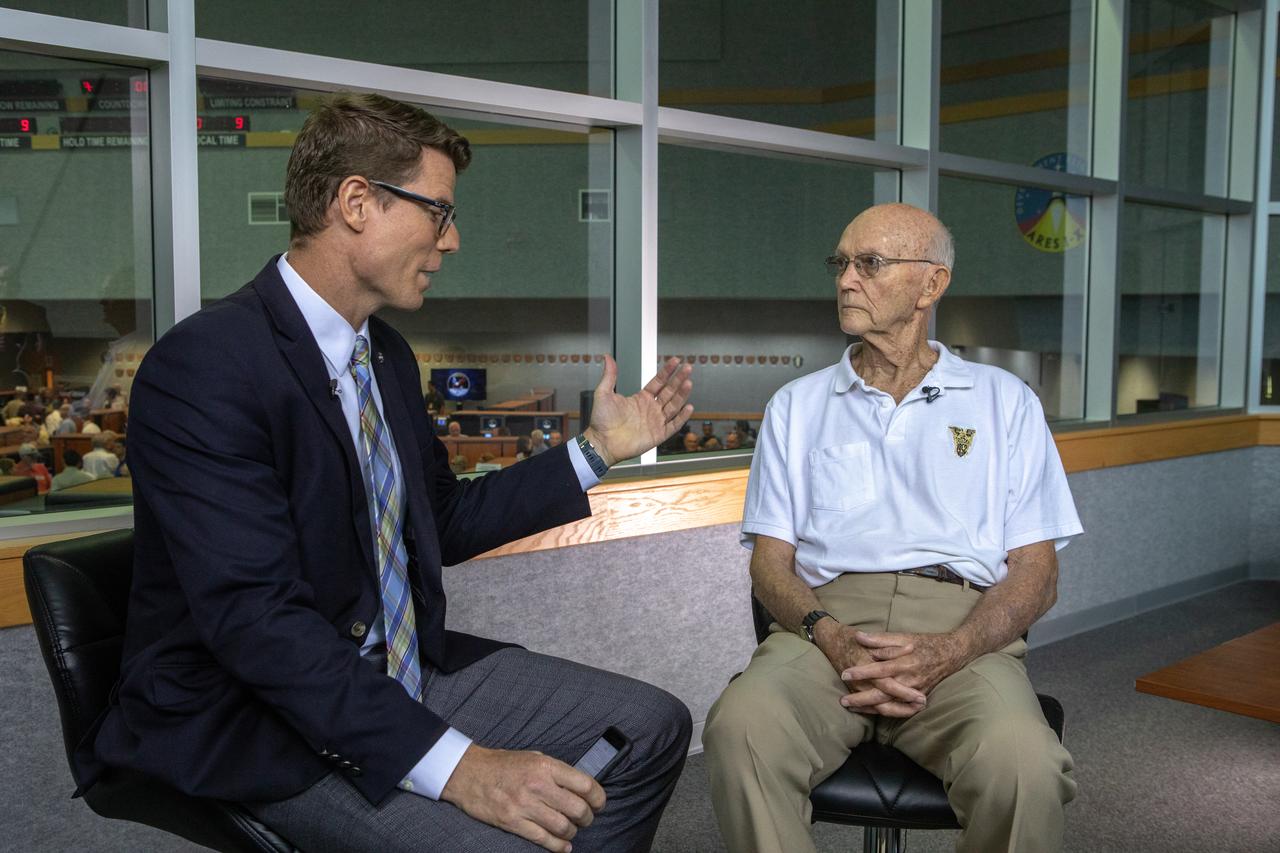
On July 16, 2019, the 50th anniversary of the Apollo 11 launch, Apollo 11 astronaut Michael Collins talks to NASA’s Derrol Nail at Launch Control Center Firing Room 1 at NASA's Kennedy Space Center in Florida. Collins talked about the moments leading up to the Apollo 11 launch at 9:32 a.m. on July 16, 1969.
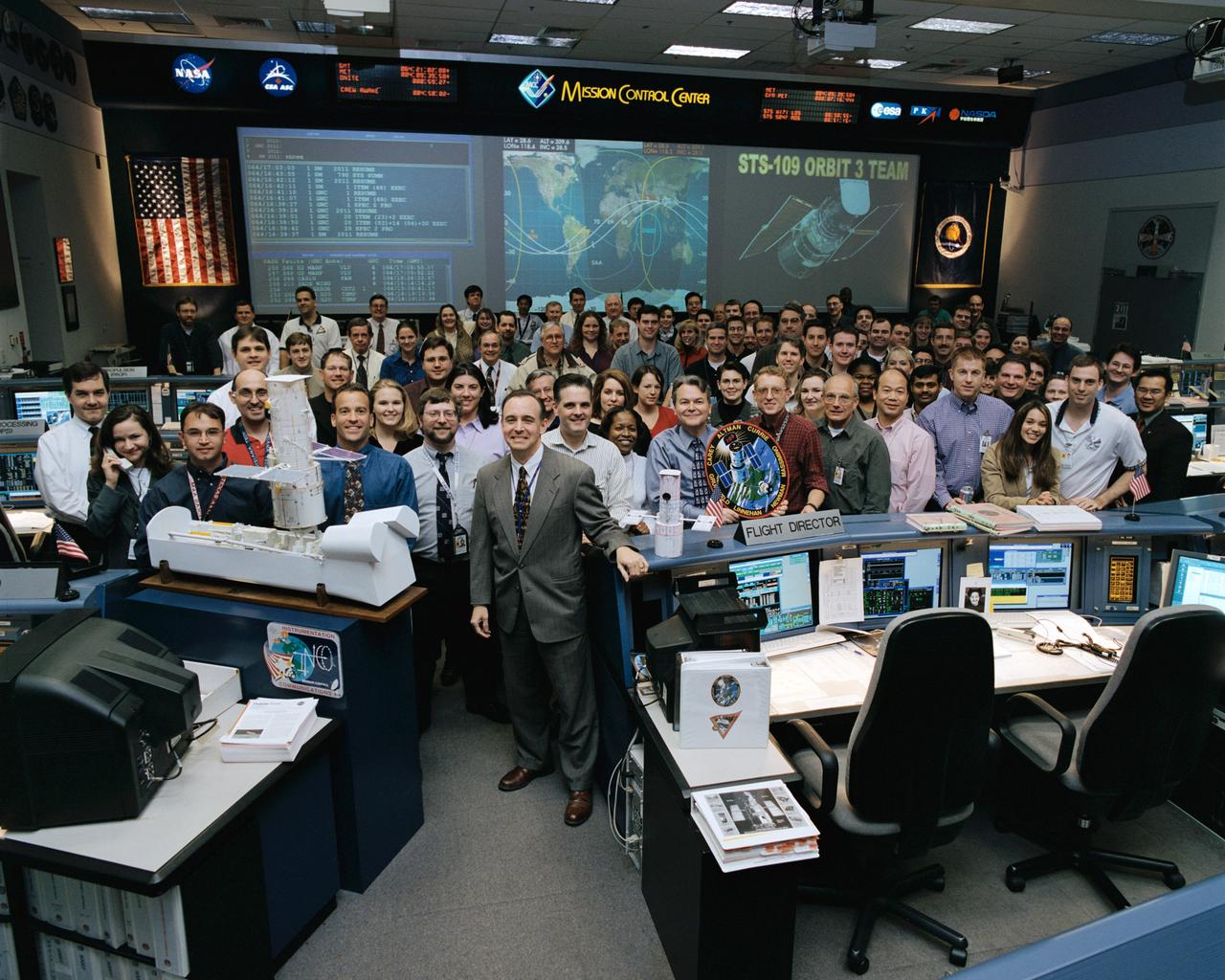
JSC2002-00576 (5 March 2002) --- The members of the STS-109 Orbit 3 Team pose for a group portrait in the shuttle flight control room (WFCR) in Houston’s Mission Control Center (MCC). Flight director Jeff Hanley is visible in the center foreground.
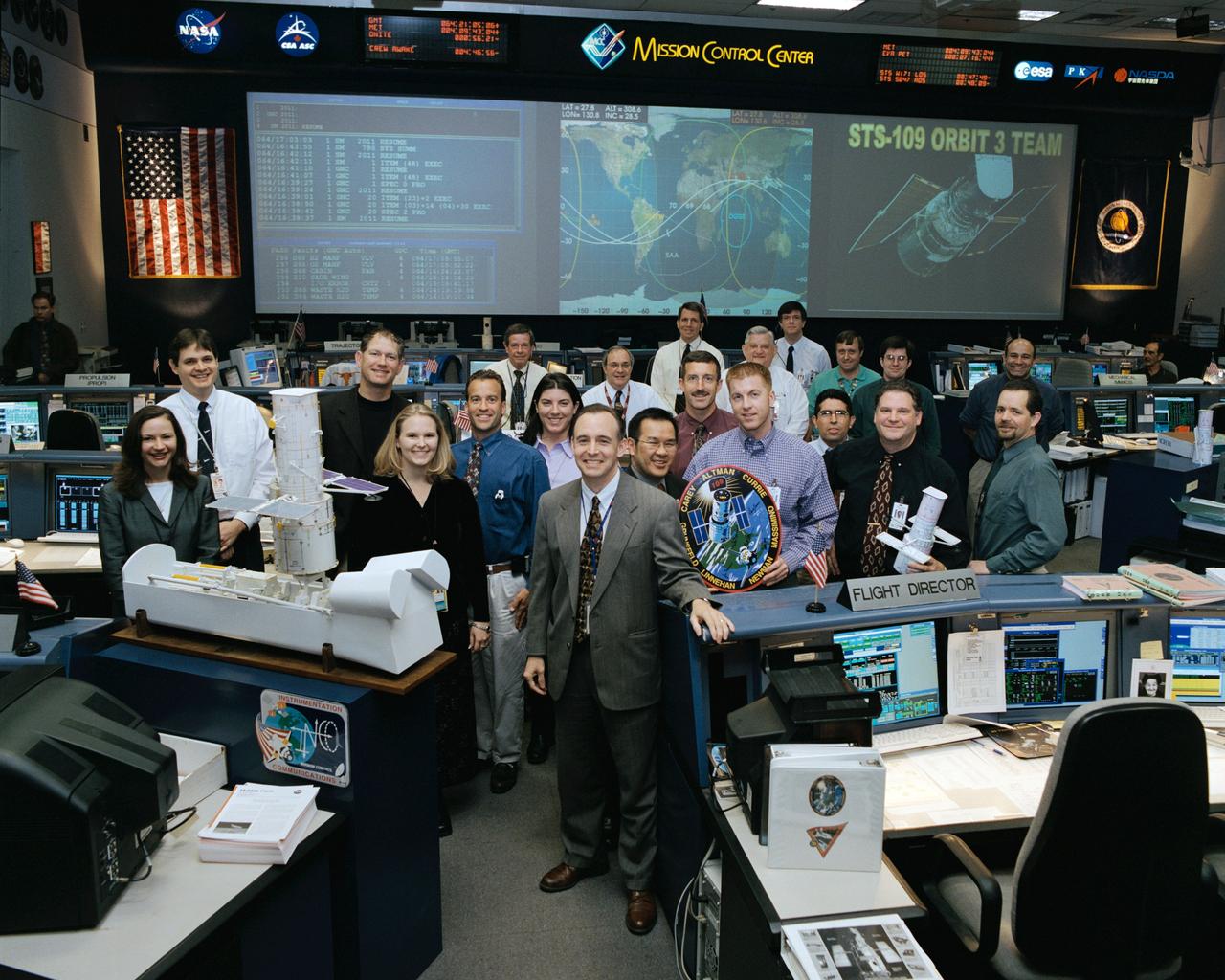
JSC2002-00575 (5 March 2002) --- The members of the STS-109 Orbit 3 Team pose for a group portrait in the shuttle flight control room (WFCR) in Houston’s Mission Control Center (MCC). Flight director Jeff Hanley is visible in the center foreground.
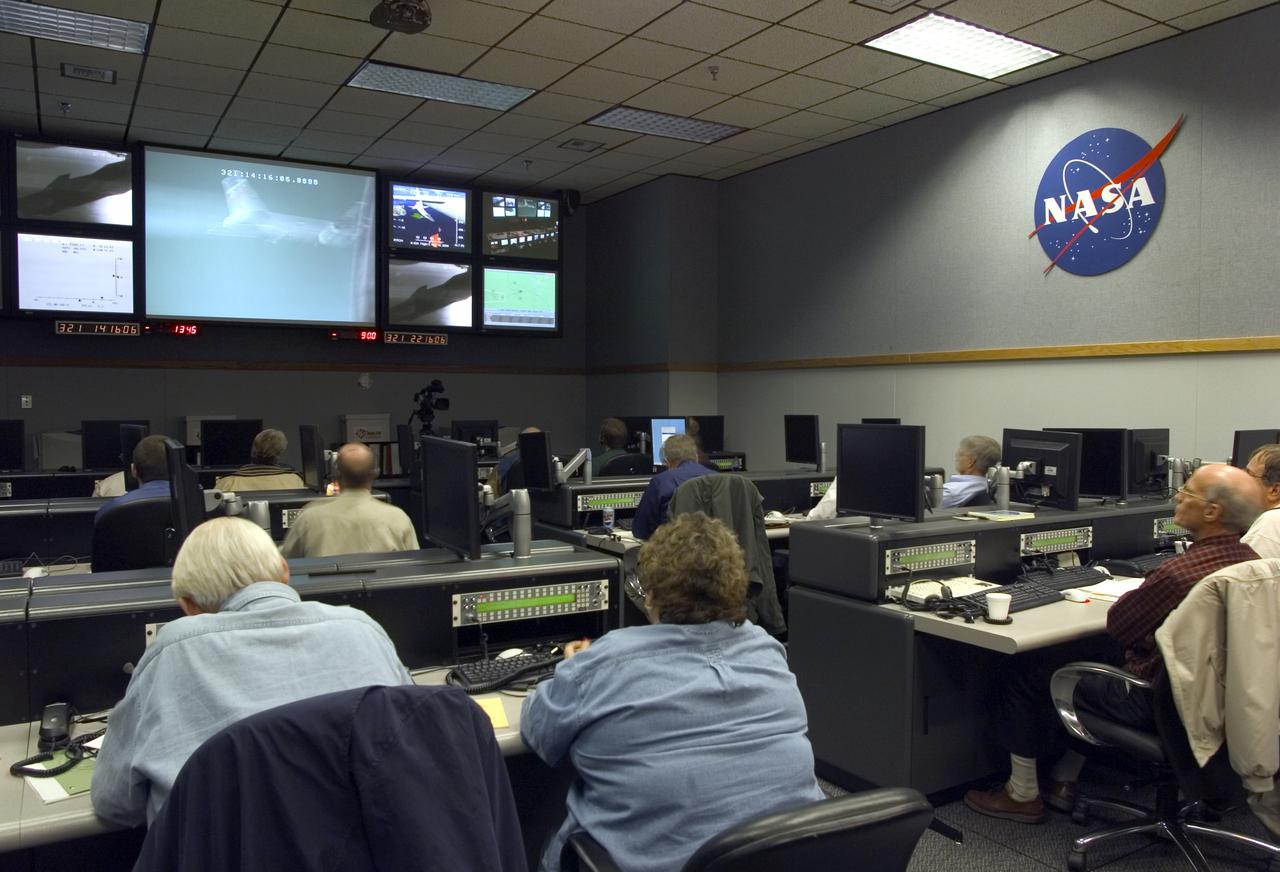
NASA engineers monitor mission progress from a Dryden control room prior to launch of the X-43A scramjet and its booster from NASA's B-52B mothership.
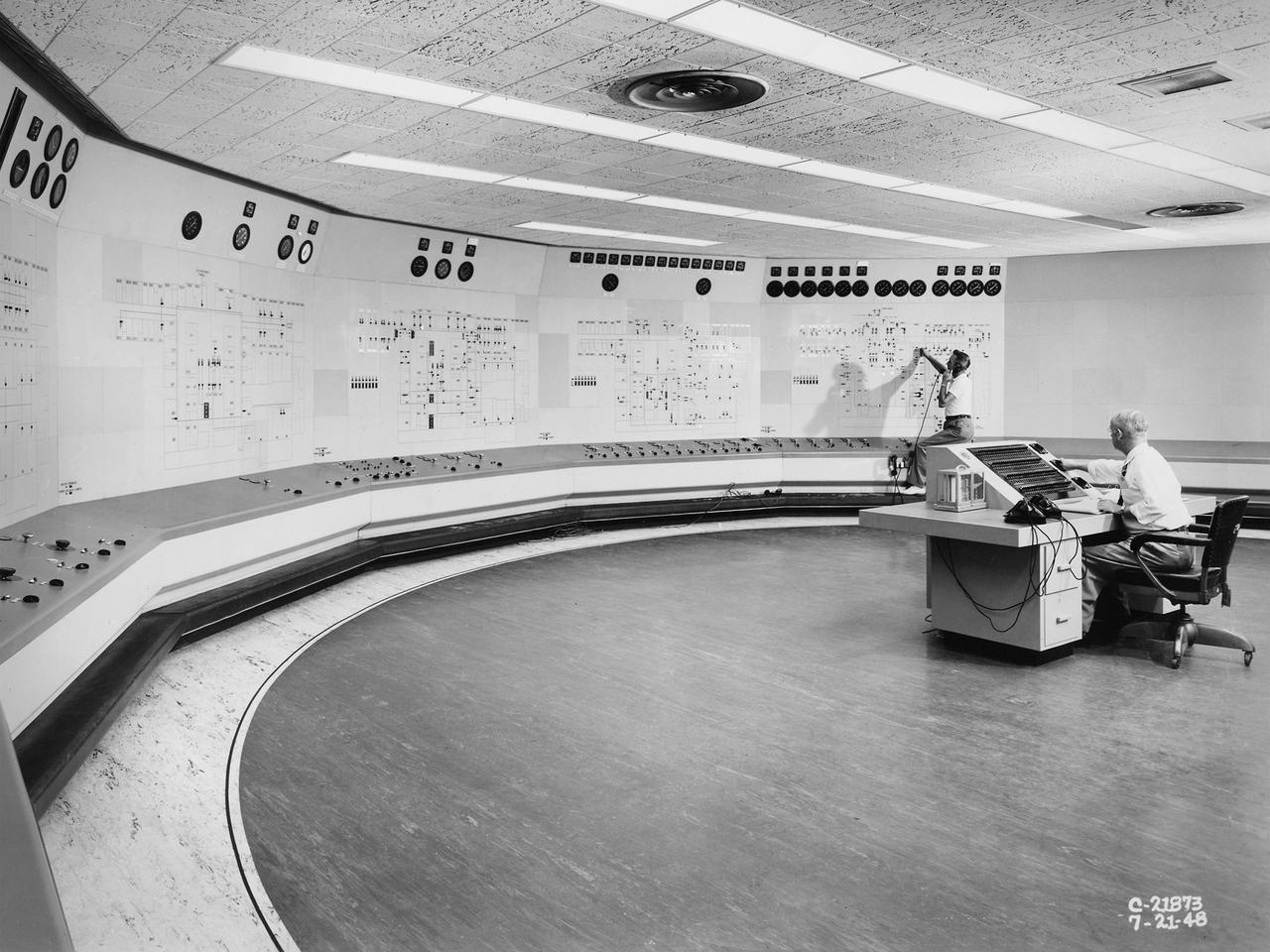
Operators in the Engine Research Building’s Central Control Room at the National Advisory Committee for Aeronautics (NACA) Lewis Flight Propulsion Laboratory. The massive 4.25-acre Engine Research Building contains dozens of test cells, test stands, and altitude chambers. A powerful collection of compressors and exhausters located in the central portion of the basement provided process air and exhaust for these test areas. This system is connected to similar process air systems in the laboratory’s other large test facilities. The Central Control Room coordinates this activity and communicates with the local utilities. This photograph was taken just after a major upgrade to the control room in 1948. The panels on the wall contain rudimentary floor plans of the different Engine Research Building sections with indicator lights and instrumentation for each test cell. The process air equipment included 12 exhausters, four compressors, a refrigeration system, cooling water, and an exhaust system. The operators in the control room kept in contact with engineers running the process air system and those conducting the tests in the test cells. The operators also coordinated with the local power companies to make sure enough electricity was available to operate the powerful compressors and exhausters.
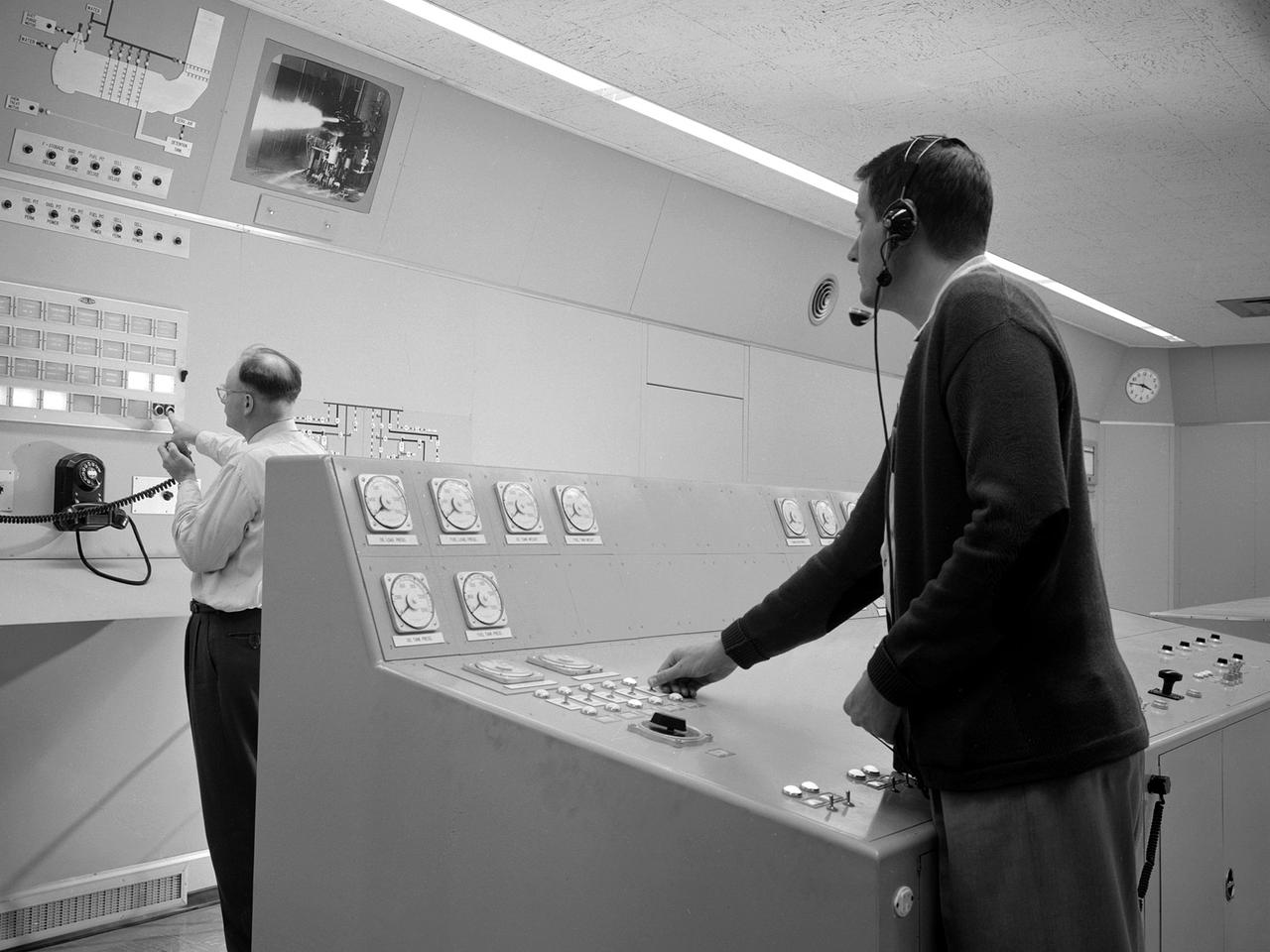
Test engineers monitor an engine firing from the control room of the Rocket Engine Test Facility at the National Advisory Committee for Aeronautics (NACA) Lewis Flight Propulsion Laboratory. The Rocket Engine Test Facility, built in the early 1950s, had a rocket stand designed to evaluate high-energy propellants and rocket engine designs. The facility was used to study numerous different types of rocket engines including the Pratt and Whitney RL-10 engine for the Centaur rocket and Rocketdyne’s F-1 and J-2 engines for the Saturn rockets. The Rocket Engine Test Facility was built in a ravine at the far end of the laboratory because of its use of the dangerous propellants such as liquid hydrogen and liquid fluorine. The control room was located in a building 1,600 feet north of the test stand to protect the engineers running the tests. The main control and instrument consoles were centrally located in the control room and surrounded by boards controlling and monitoring the major valves, pumps, motors, and actuators. A camera system at the test stand allowed the operators to view the tests, but the researchers were reliant on data recording equipment, sensors, and other devices to provide test data. The facility’s control room was upgraded several times over the years. Programmable logic controllers replaced the electro-mechanical control devices. The new controllers were programed to operate the valves and actuators controlling the fuel, oxidant, and ignition sequence according to a predetermined time schedule.
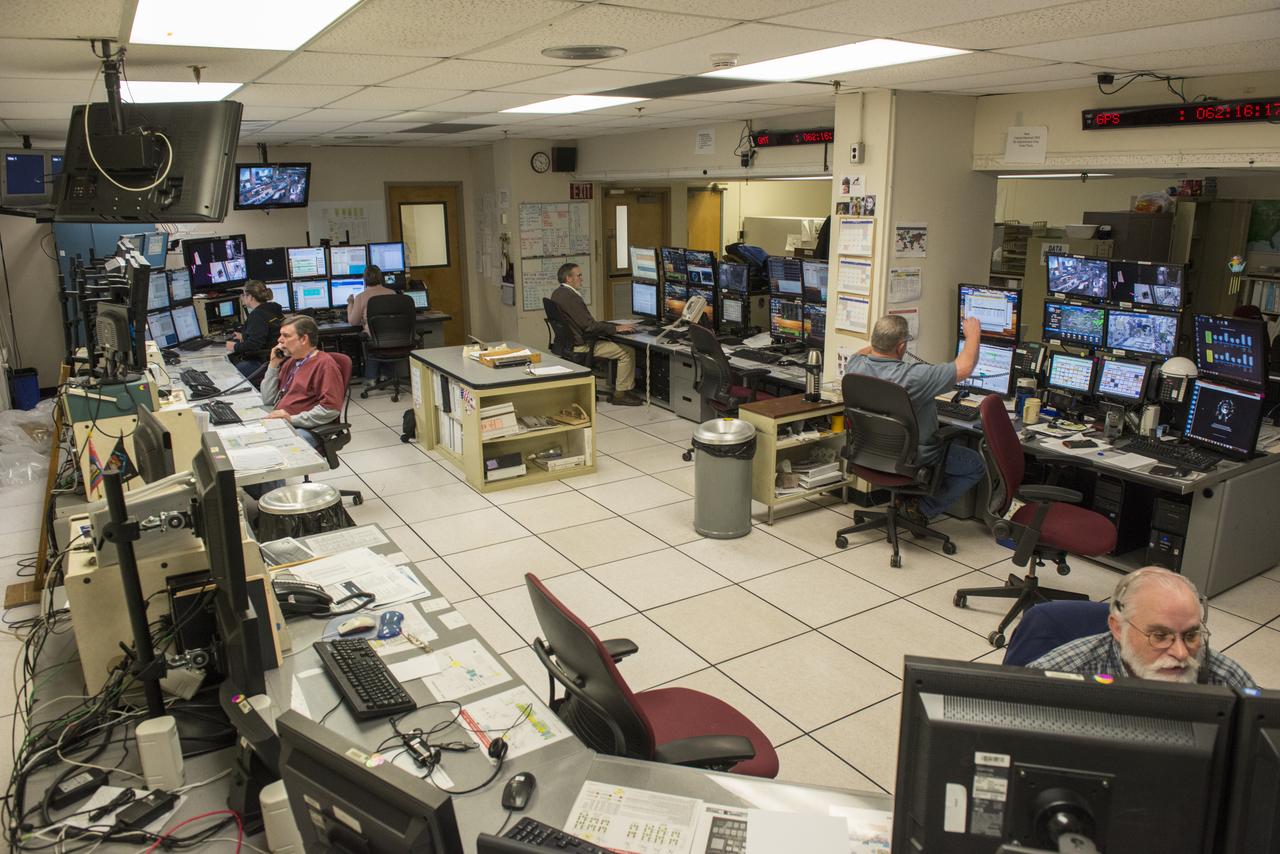
DATA OPERATIONS CONTROL ROOM TEAM MEMBERS TAKE ALL SCIENCE DATA FROM THE INTERNATIONAL SPACE STATION, AND DISTRIBUTE IT TO THE PAYLOAD OPERATIONS INTEGRATION CENTER AND SCIENTISTS ALL OVER THE WORLD WHO HAVE EXPERIMENTS ON THE ORBITING LABORATORY.
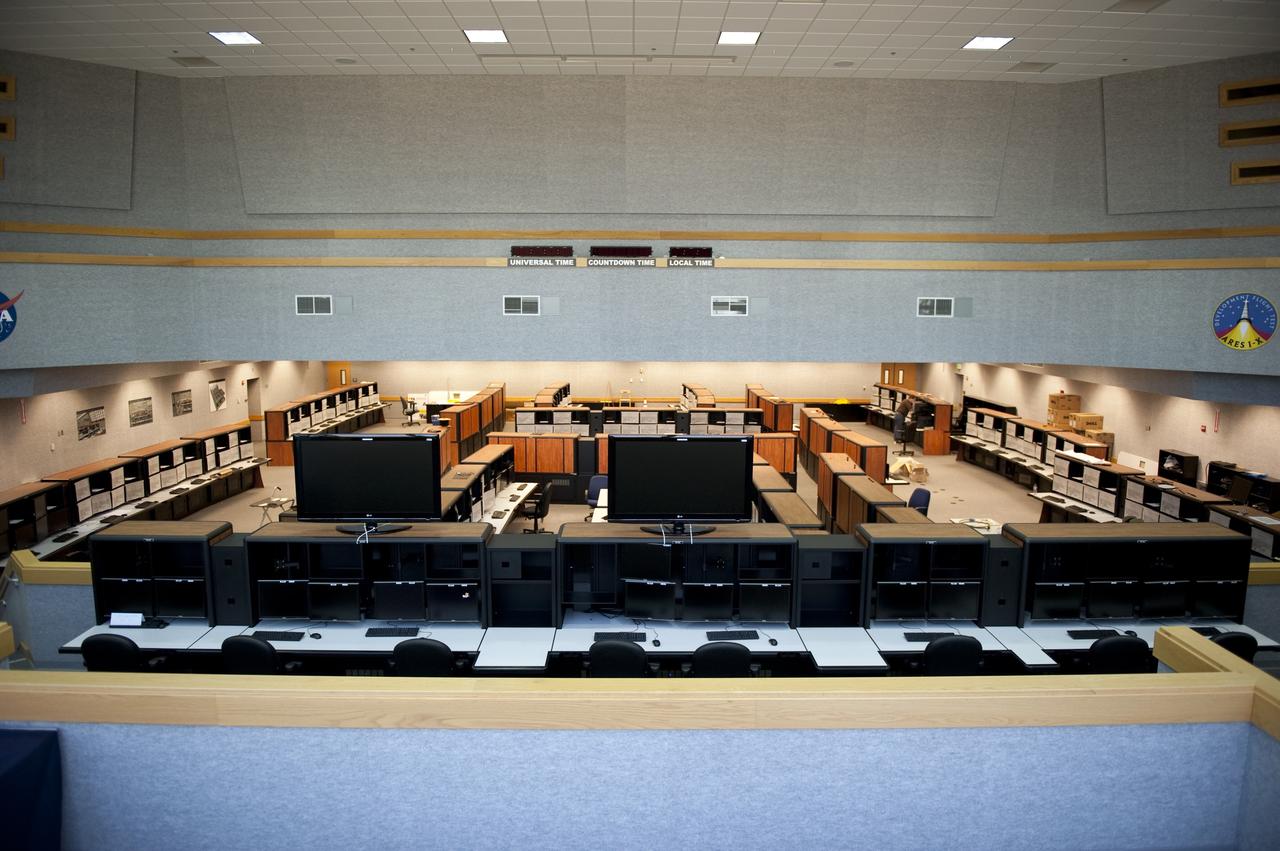
CAPE CANAVERAL, Fla. -- At NASA's Kennedy Space Center in Florida, remodeling for launches of future human spaceflight vehicles takes place in the Launch Control Center's Young-Crippen Firing Room. Consoles already have been rewired for the comprehensive upgrade and are now being outfitted with new computers and monitors. From here, the launch team members who give a final "go/no-go" to launch, can see the rest of the team. Known as Firing Room 1 in the Apollo era, it was re-named as a tribute to the Space Shuttle Program's first crewed mission, STS-1, which was flown by Commander John Young and Pilot Robert Crippen in April 1981. The firing room most recently was set up to support the Ares I-X flight test in Oct. 2009. Photo credit: NASA/Kim Shiflett
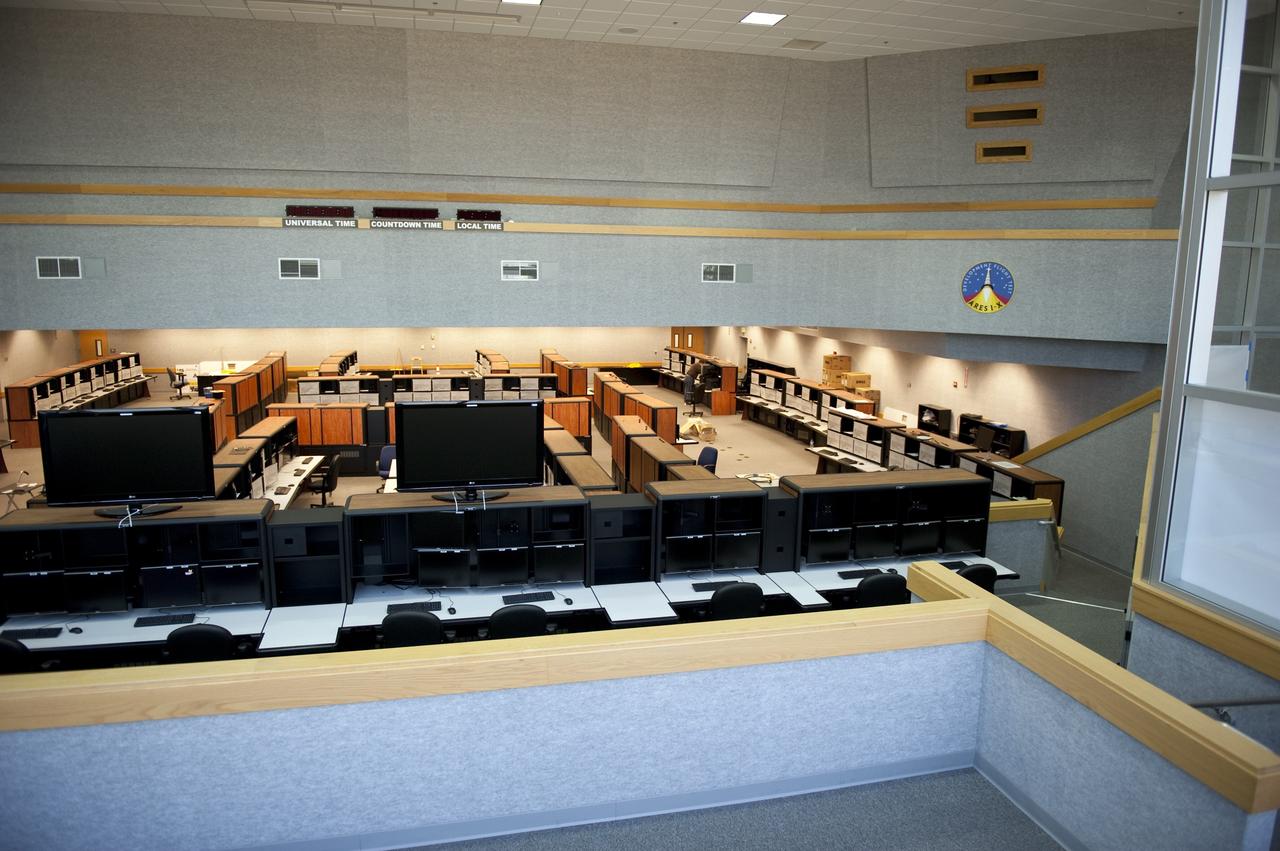
CAPE CANAVERAL, Fla. -- At NASA's Kennedy Space Center in Florida, remodeling for launches of future human spaceflight vehicles takes place in the Launch Control Center's Young-Crippen Firing Room. Consoles already have been rewired for the comprehensive upgrade and are now being outfitted with new computers and monitors. From here, the launch team members who give a final "go/no-go" to launch, can see the rest of the team. Known as Firing Room 1 in the Apollo era, it was re-named as a tribute to the Space Shuttle Program's first crewed mission, STS-1, which was flown by Commander John Young and Pilot Robert Crippen in April 1981. The firing room most recently was set up to support the Ares I-X flight test in Oct. 2009. Photo credit: NASA/Kim Shiflett
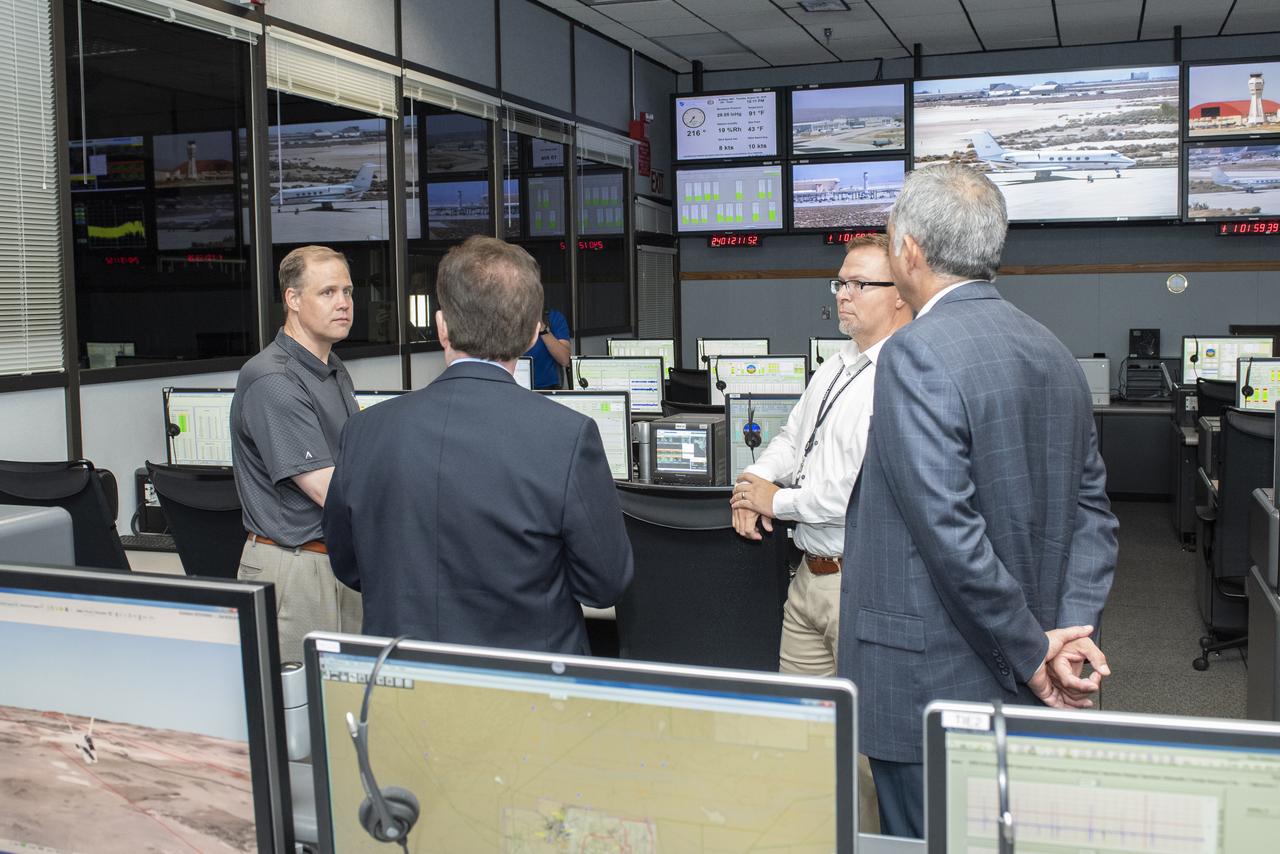
NASA Administrator Bridenstine learns about the many uses for mission control rooms for flight research projects such as monitoring the flights for safety, gathering data and talking to the pilot and project researcher.
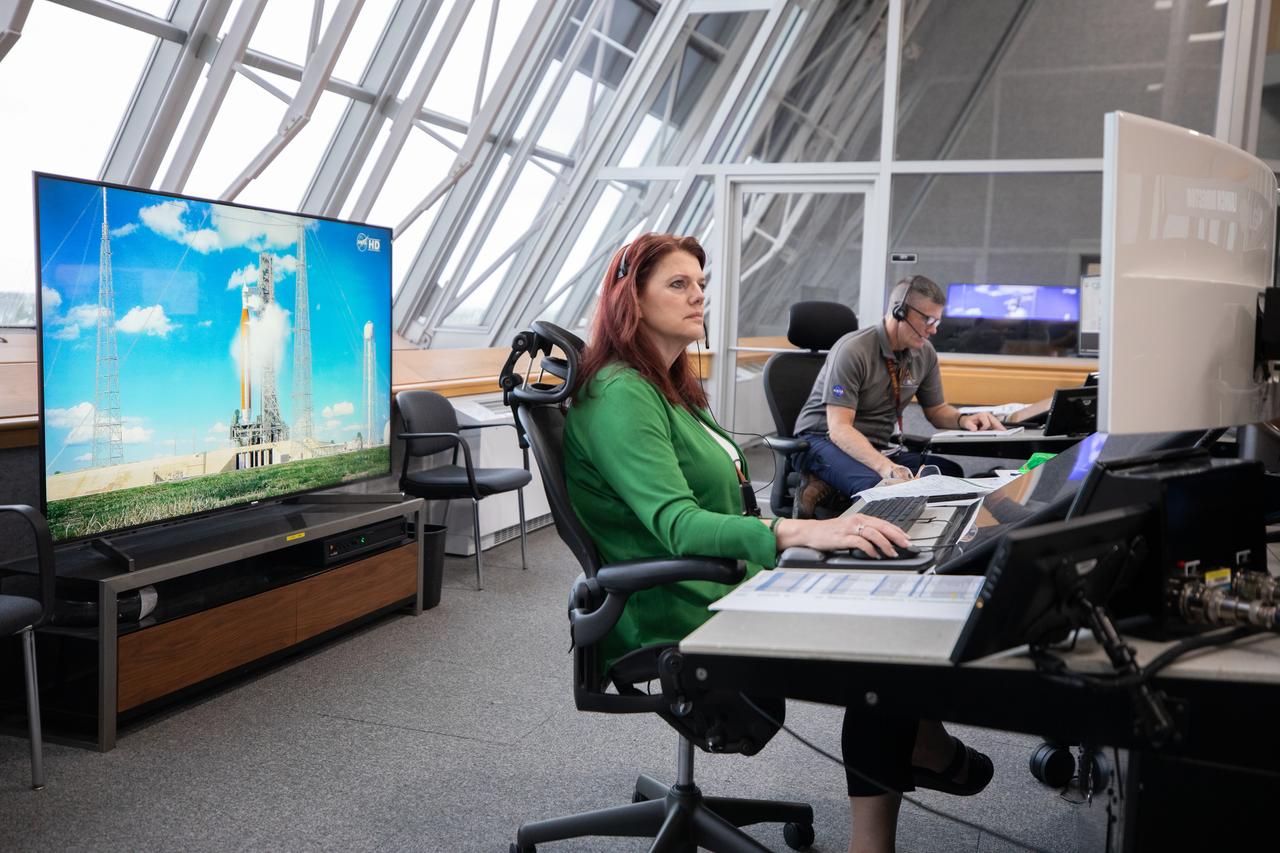
Charlie Blackwell-Thompson, Artemis launch director, Exploration Ground Systems at NASA’s Kennedy Space Center in Florida, participates in the Artemis II Terminal Count Simulation #11 inside Firing Room 1 in the Launch Control Center at NASA’s Kennedy on Thursday, Nov. 7, 2024. The simulations go through launch day scenarios to help launch team members test software and make adjustments if needed during countdown operations. Four astronauts will venture around the Moon on Artemis II, the first crewed mission on NASA’s path to establishing a long-term presence for science and exploration through Artemis.
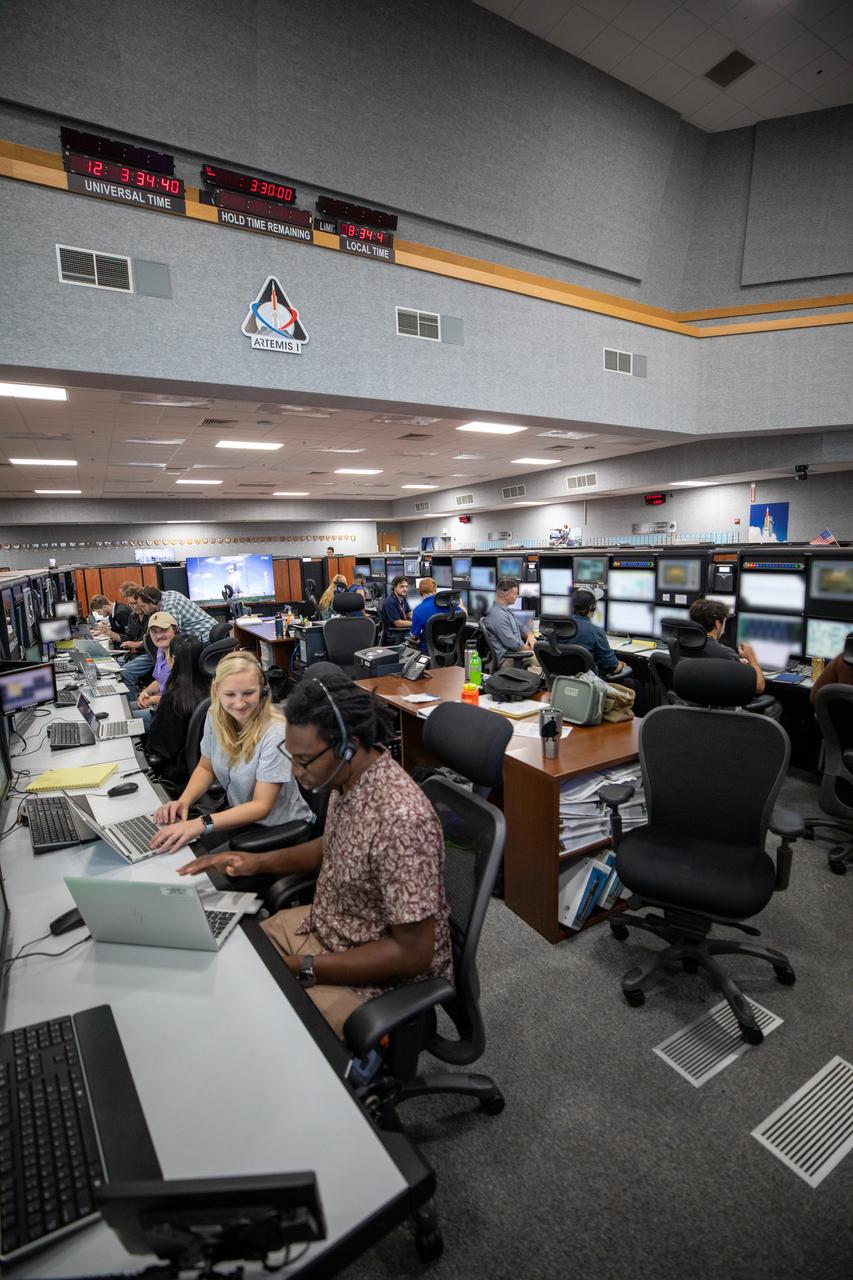
Members of the Artemis launch team participate in the Artemis II Terminal Count Simulation #11 inside Firing Room 1 in the Launch Control Center at NASA’s Kennedy Space Center in Florida on Thursday, Nov. 7, 2024. The simulations go through launch day scenarios to help launch team members test software and make adjustments if needed during countdown operations. Four astronauts will venture around the Moon on Artemis II, the first crewed mission on NASA’s path to establishing a long-term presence for science and exploration through Artemis.
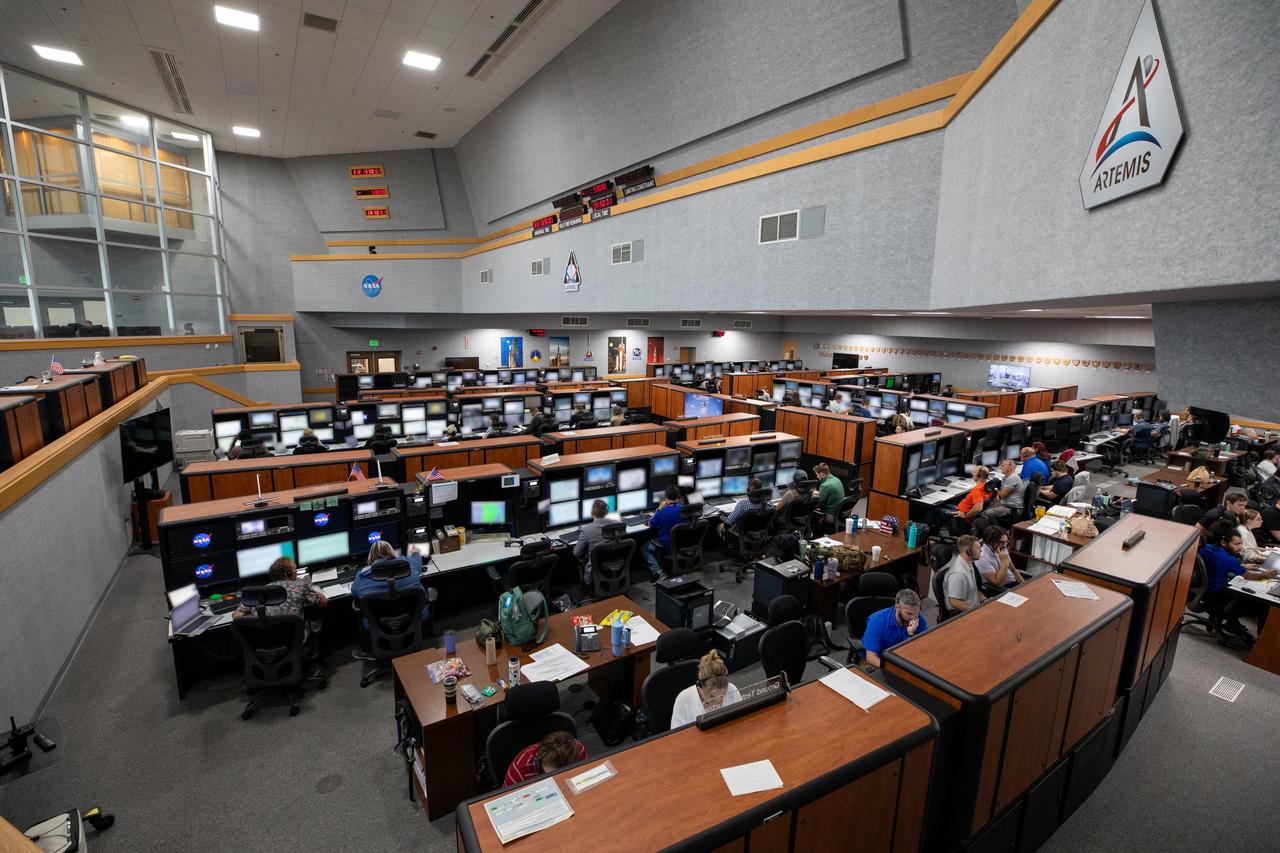
Members of the Artemis launch team participate in the Artemis II Terminal Count Simulation #11 inside Firing Room 1 in the Launch Control Center at NASA’s Kennedy Space Center in Florida on Thursday, Nov. 7, 2024. The simulations go through launch day scenarios to help launch team members test software and make adjustments if needed during countdown operations. Four astronauts will venture around the Moon on Artemis II, the first crewed mission on NASA’s path to establishing a long-term presence for science and exploration through Artemis.
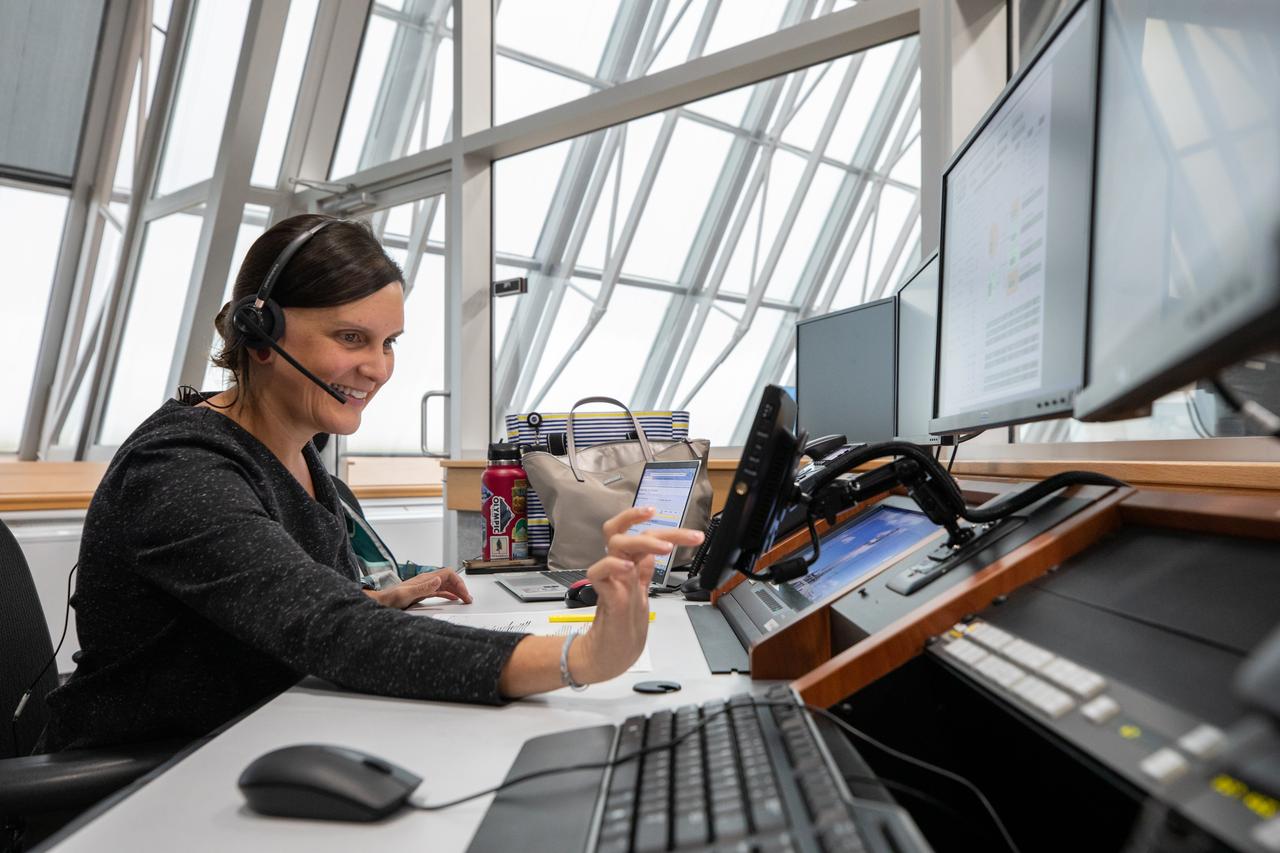
Mari Forrestel, Artemis launch director technical assistant, Exploration Ground Systems at NASA’s Kennedy Space Center in Florida, participates in the Artemis II Terminal Count Simulation #11 inside Firing Room 1 in the Launch Control Center at NASA’s Kennedy on Thursday, Nov. 7, 2024. The simulations go through launch day scenarios to help launch team members test software and make adjustments if needed during countdown operations. Four astronauts will venture around the Moon on Artemis II, the first crewed mission on NASA’s path to establishing a long-term presence for science and exploration through Artemis.
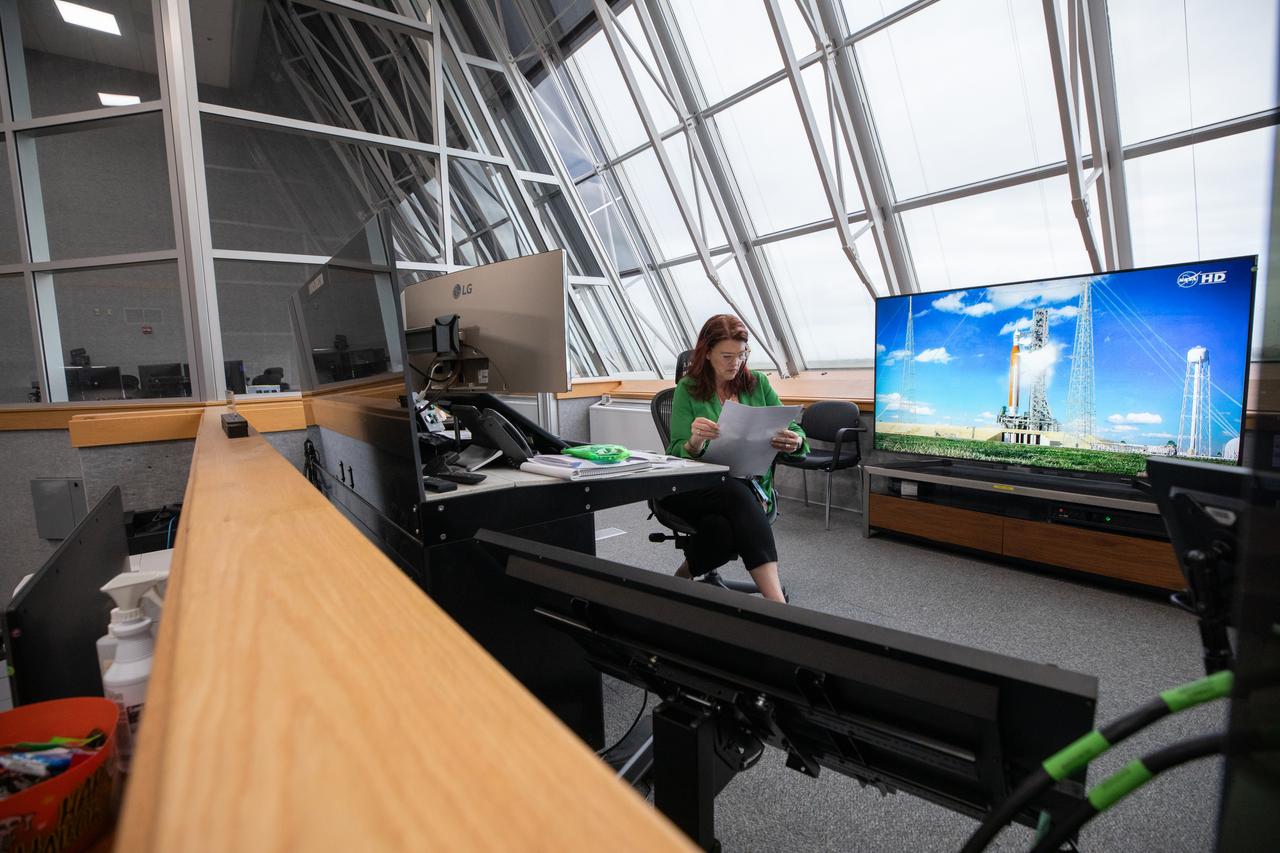
Charlie Blackwell-Thompson, Artemis launch director, Exploration Ground Systems at NASA’s Kennedy Space Center in Florida, participates in the Artemis II Terminal Count Simulation #11 inside Firing Room 1 in the Launch Control Center at NASA’s Kennedy on Thursday, Nov. 7, 2024. The simulations go through launch day scenarios to help launch team members test software and make adjustments if needed during countdown operations. Four astronauts will venture around the Moon on Artemis II, the first crewed mission on NASA’s path to establishing a long-term presence for science and exploration through Artemis.
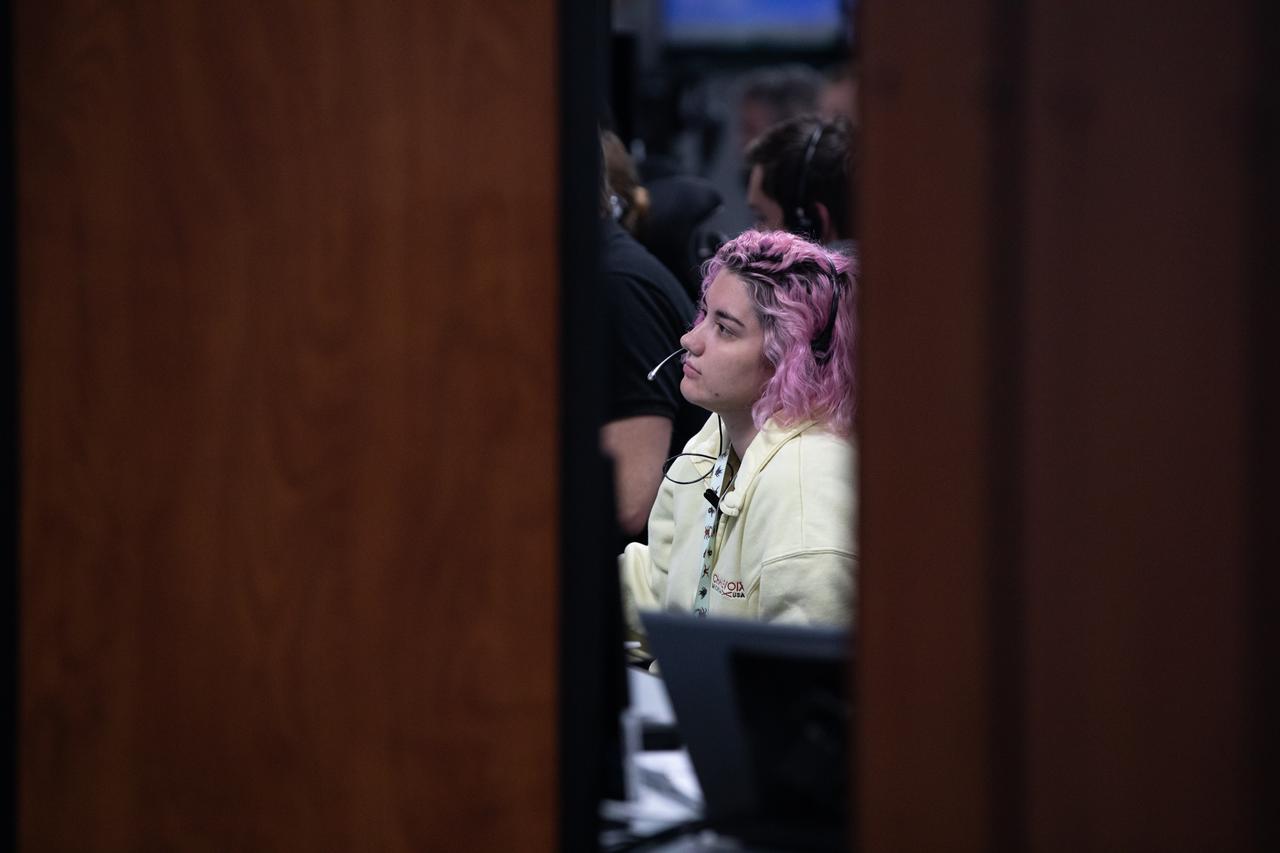
Members of the Artemis launch team participate in the Artemis II Terminal Count Simulation #11 inside Firing Room 1 in the Launch Control Center at NASA’s Kennedy Space Center in Florida on Thursday, Nov. 7, 2024. The simulations go through launch day scenarios to help launch team members test software and make adjustments if needed during countdown operations. Four astronauts will venture around the Moon on Artemis II, the first crewed mission on NASA’s path to establishing a long-term presence for science and exploration through Artemis.
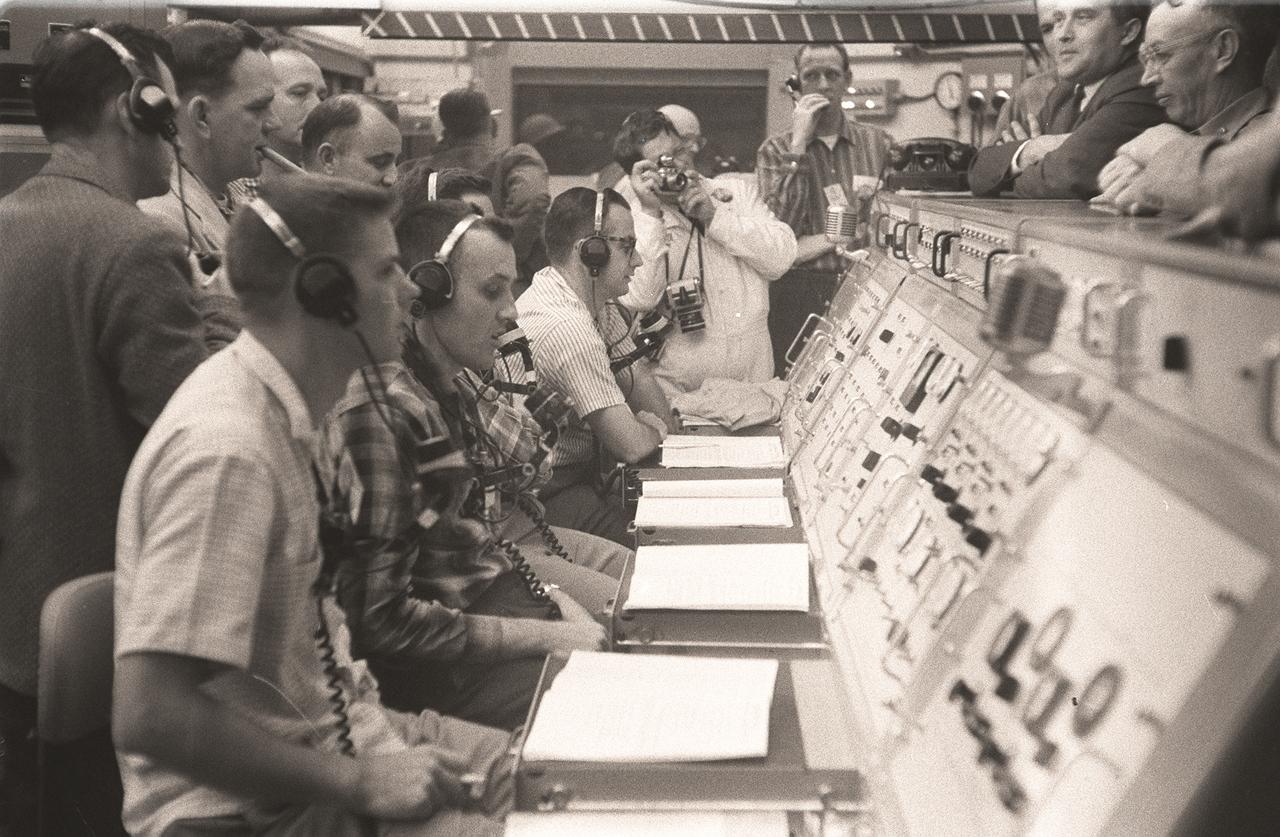
Dr. von Braun at the launch control room during the Pioneer IV launch, March 3, 1959.
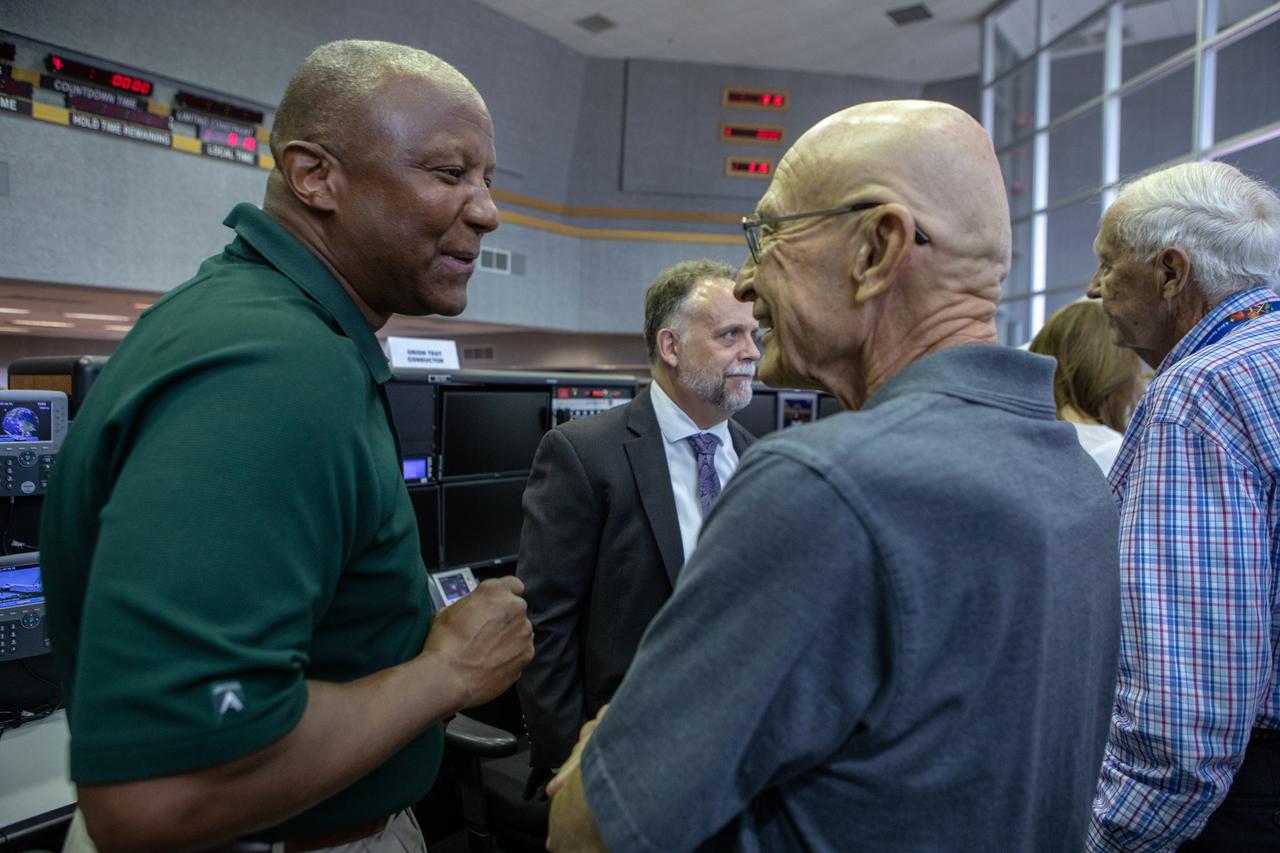
On July 16, 2019, the 50th anniversary of the Apollo 11 launch to the Moon, Kelvin Manning, left, Kennedy Space Center associate director, technical, talks to Bob Sieck, former Apollo 11 launch team member and space shuttle launch director, in Firing Room 1 in the Launch Control Center at NASA’s Kennedy Space Center in Florida. In the background is Sean Quinn, director of Engineering.
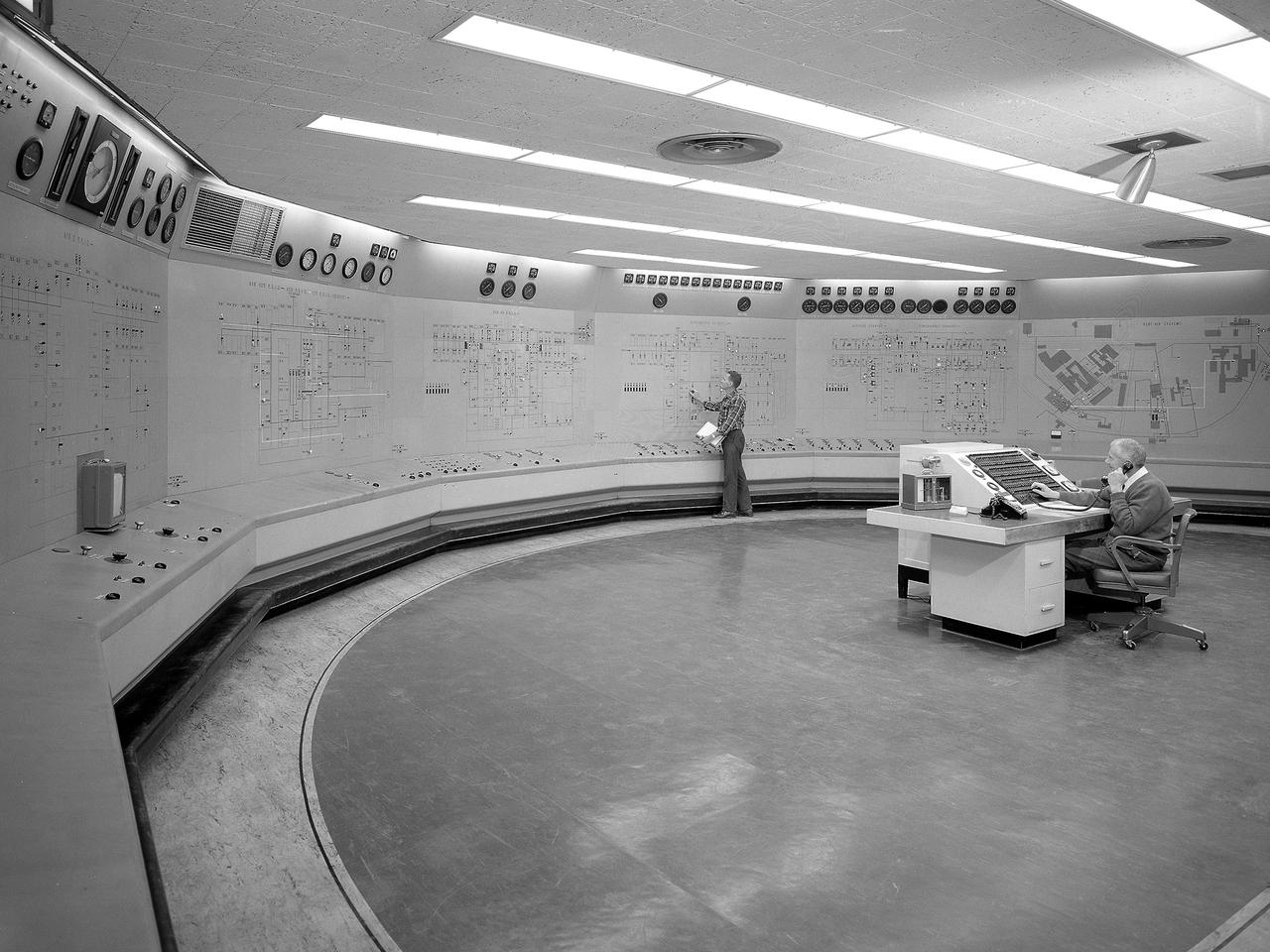
Operators in the Engine Research Building’s Central Control Room at the National Aeronautics and Space Administration (NASA) Lewis Research Center. The massive 4.25-acre Engine Research Building contains dozens of test cells, test stands, and altitude chambers. A powerful a collection of compressors and exhausters located in the central portion of the basement provides process air and exhaust for these test areas. This system is connected to similar process air systems in the laboratory’s other large test facilities. The Central Control Room coordinates this activity and communicates with the local utilities. The panels on the wall contain schematics with indicator lights and instrumentation for the atmospheric exhaust, altitude exhaust, refrigerated air, and process air systems. The process air equipment included twelve exhausters, four compressors, refrigeration system, cooling water, and an exhaust system. The operators in the control room kept in contact with engineers running the process air system and those conducting the tests in the test cells. The operators also coordinated with the local power companies to make sure enough electricity was available to operate the powerful compressors and exhausters.
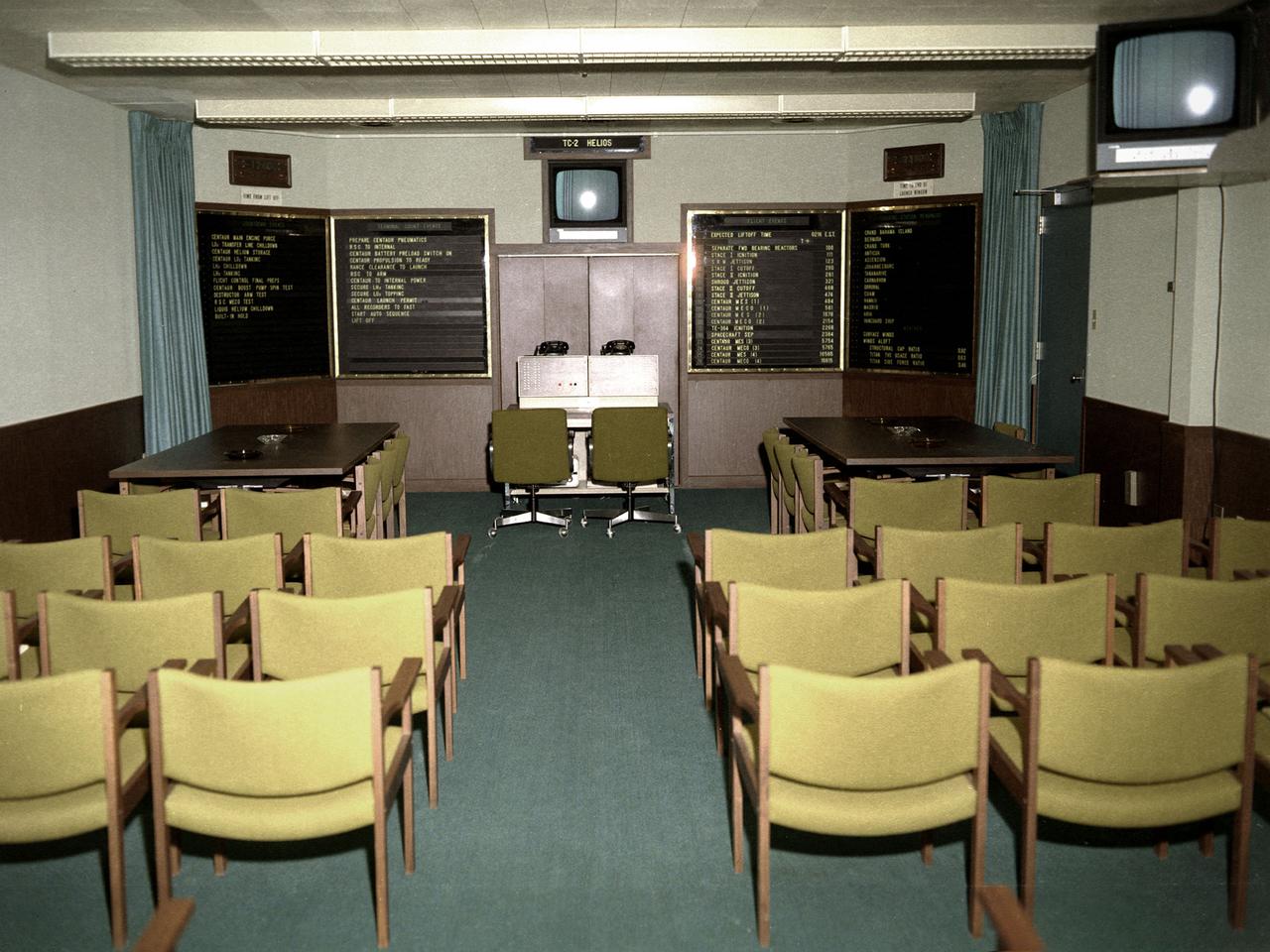
A Centaur rocket control room in the Development Engineering Building (DEB) at the National Aeronautics and Space Administration (NASA) Lewis Research Center in Cleveland, Ohio. The DEB, completed in the mid-1960s, provided office space for several hundred development engineers outside the center’s main gate. The location of the DEB emphasized the development staff’s separation from the research side of the laboratory. This control room at Lewis was directly linked to Cape Kennedy. The Lewis staff in Cleveland could monitor and back up the Lewis launch team in the actual control room at the Cape. This photograph was taken during the preparations for the Titan-Centaur-Helios launch on December 10, 1974. The panels to the left listed the countdown events for the Centaur rocket. The launch countdown clock can be seen above these panels. The two panels on the right listed events predicted to occur during the flight and the availability of the tracking stations. The clock above the panels indicated the time remaining before the launch window expired. The Launch Vehicles Division was created in 1969 to manage the launches of all Centaur and Agena rockets. The Launch Vehicles Division worked with the engineers to design the payload in a manner that ensured that its size and weight were within Centaur’s parameters. They also developed the proper trajectory analysis for the launch. These trajectories often had to be adjusted if the launch did not occur on the planned date.
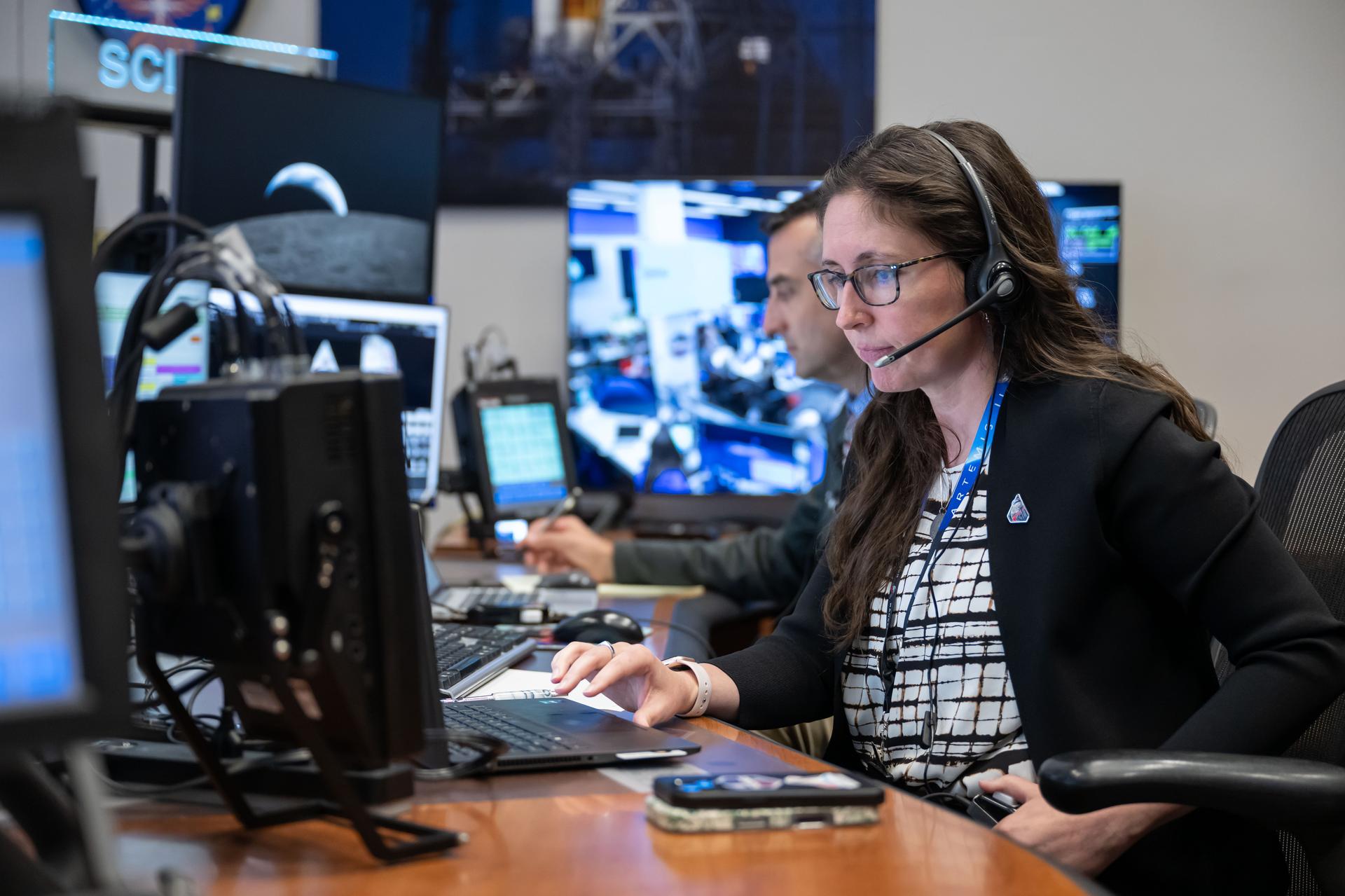
Artemis II science officers, Trevor Graff, background, and Kelsey Young are seen monitoring mission data in real-time from the Science console in the White Flight Control Room in Mission Control at NASA's Johnson Space Center in Houston. Science officers are the senior flight controllers responsible for lunar science and geology objectives during Artemis missions. Credits: NASA/Robert Markowitz
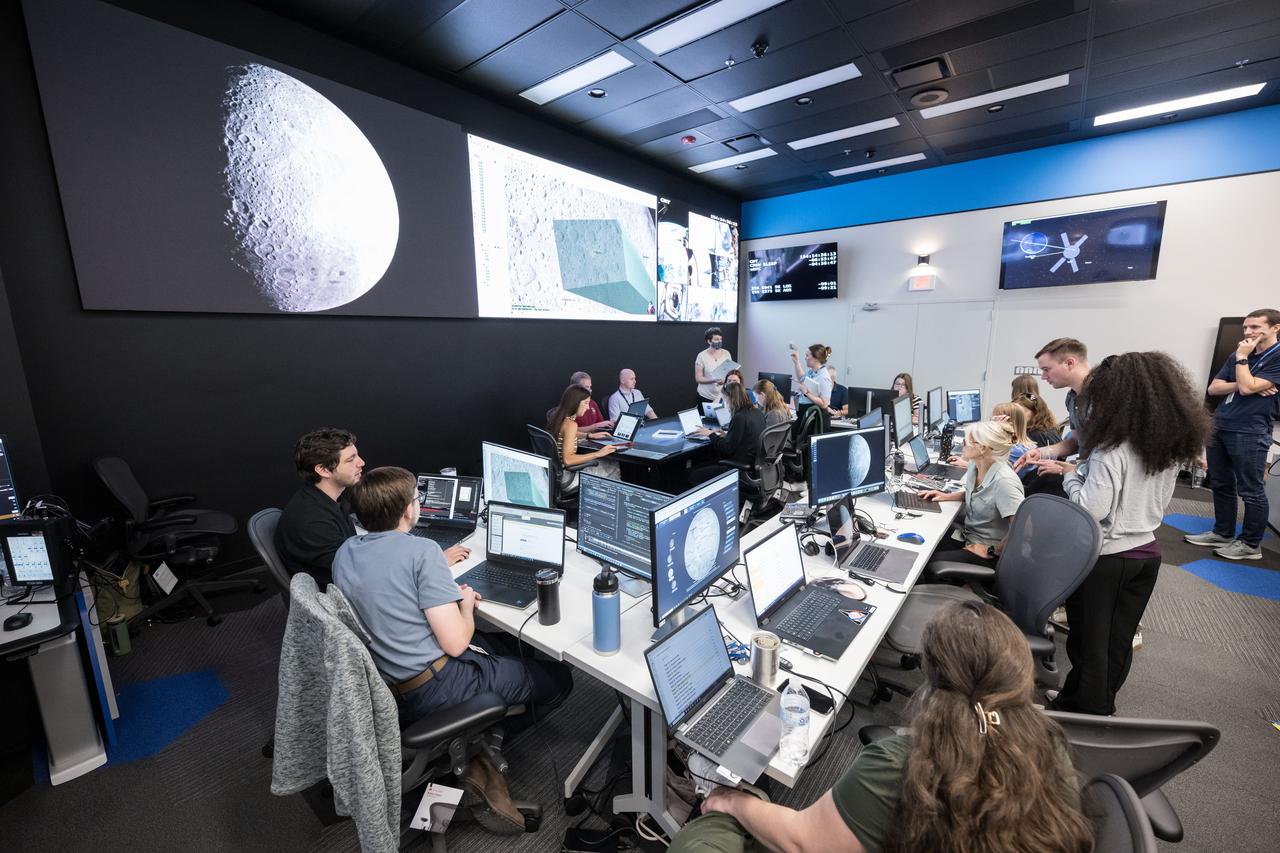
jsc2025e056603 --- The Artemis II Lunar Science Team runs a simulation of lunar observation operations in the new Science Evaluation Room (SER) that serves as a backroom to Mission Control.
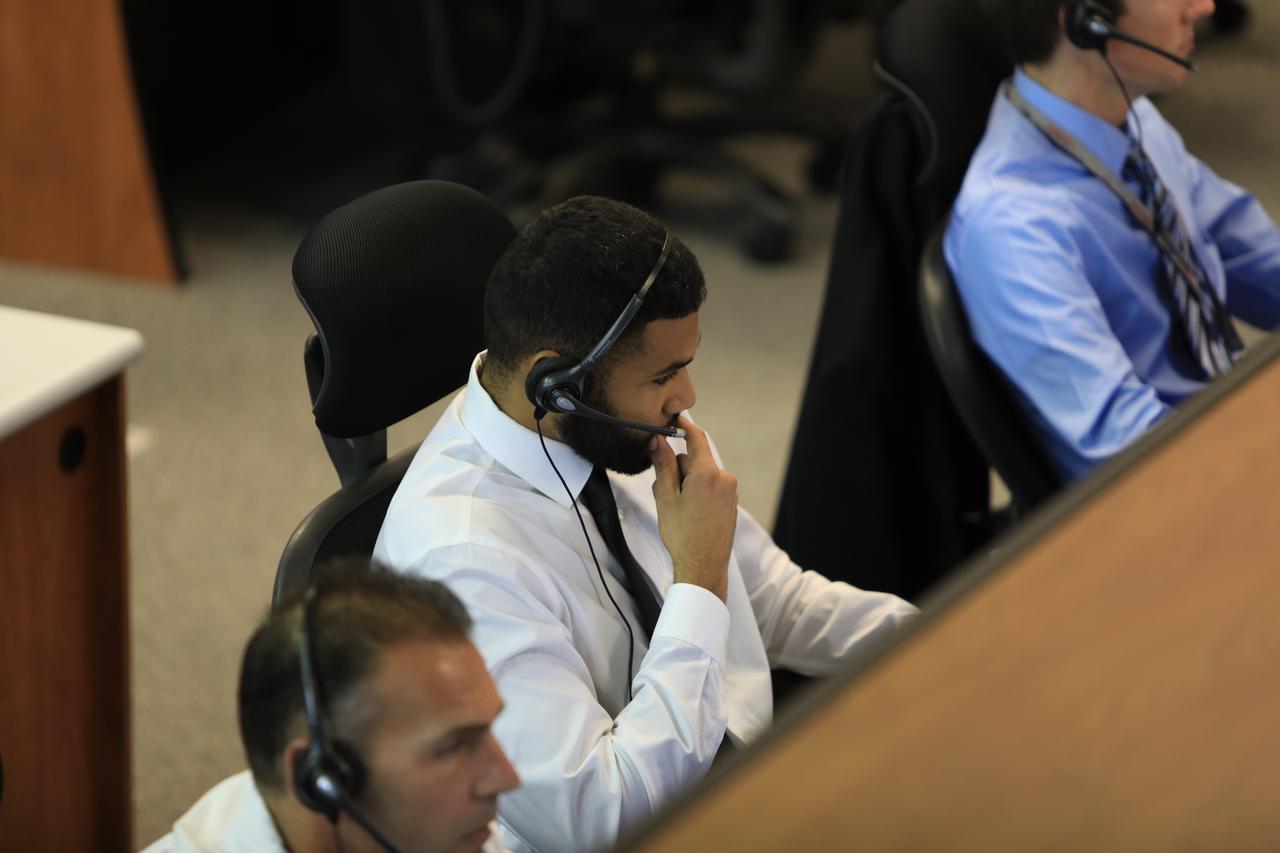
Michael Guzman, an umbilical engineer, monitors his console in Firing Room 1 in the Launch Control Center at NASA’s Kennedy Space Center in Florida, during a terminal countdown demonstration for Exploration Mission 1, or EM-1, on Dec. 14, 2018. The launch will be the first integrated test of the Space Launch System rocket and Orion spacecraft that will eventually take astronauts beyond low-Earth orbit to destinations such as the Moon and Mars. The countdown demonstration was intended to validate the launch team's capability to perform an EM-1 countdown and respond to challenges put into the system for practice.
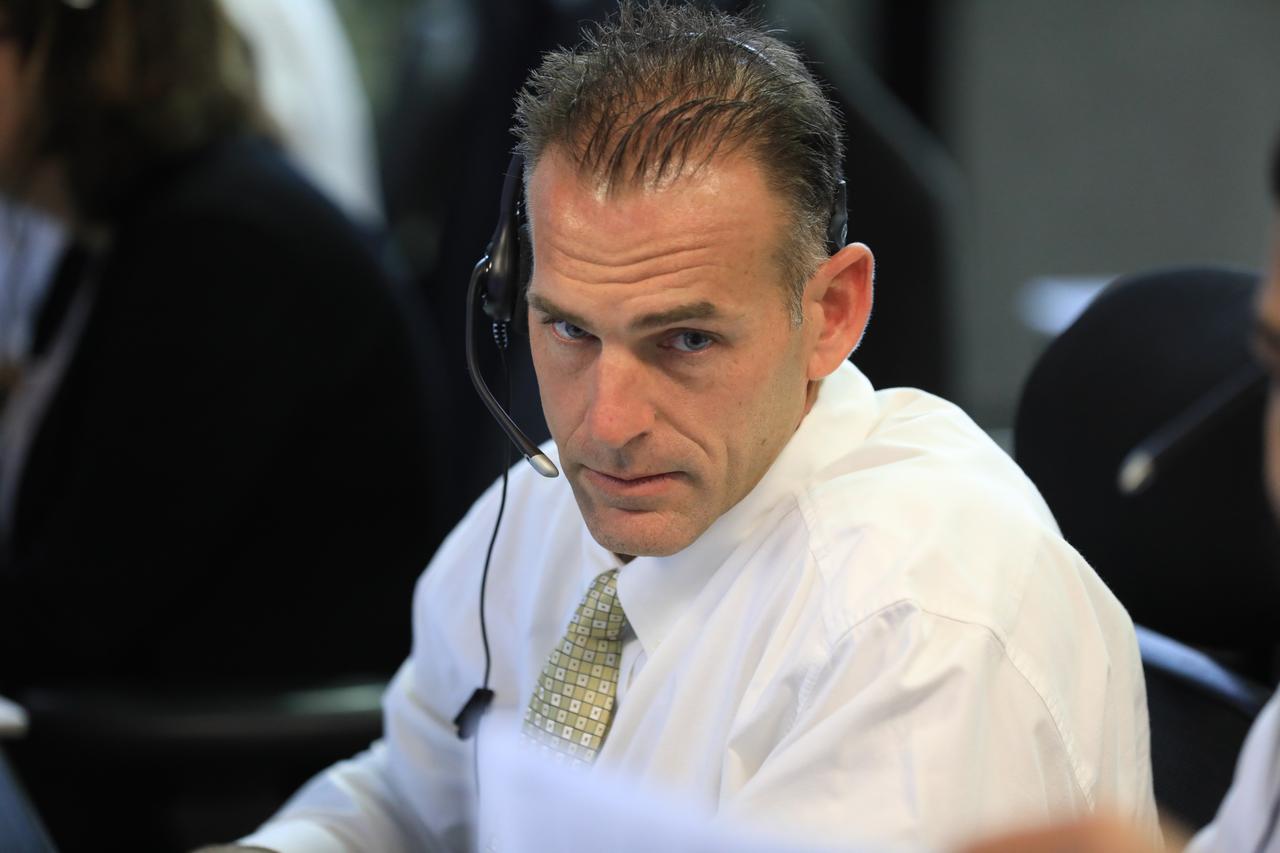
Mark Tripp, center, monitors his console in Firing Room 1 in the Launch Control Center at NASA’s Kennedy Space Center in Florida, during a terminal countdown demonstration for Exploration Mission 1, or EM-1, on Dec. 14, 2018. The launch will be the first integrated test of the Space Launch System rocket and Orion spacecraft that will eventually take astronauts beyond low-Earth orbit to destinations such as the Moon and Mars. The countdown demonstration was intended to validate the launch team's capability to perform an EM-1 countdown and respond to challenges put into the system for practice.
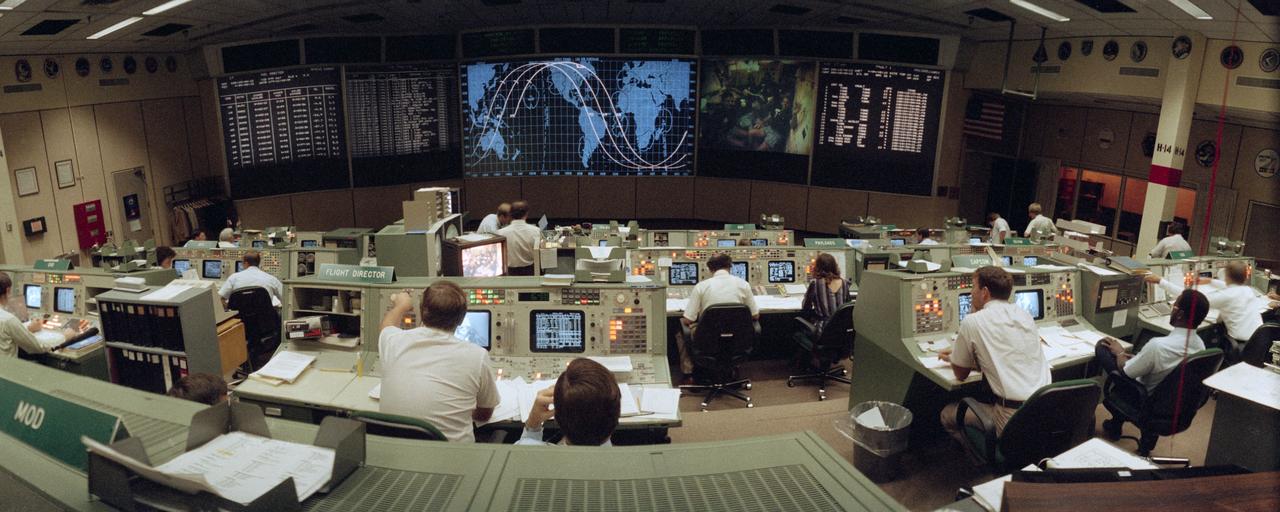
Fisheye view from the back of the Flight Control Room (FCR) of the Mission Control Center (MCC). Visible are the Flight Directors console (left front), the CAPCOM console (right front) and the Payloads console. Some of the STS 41-G crew can be seen on a large screen at the front of the MCC along with a map tracking the progress of the orbiter.
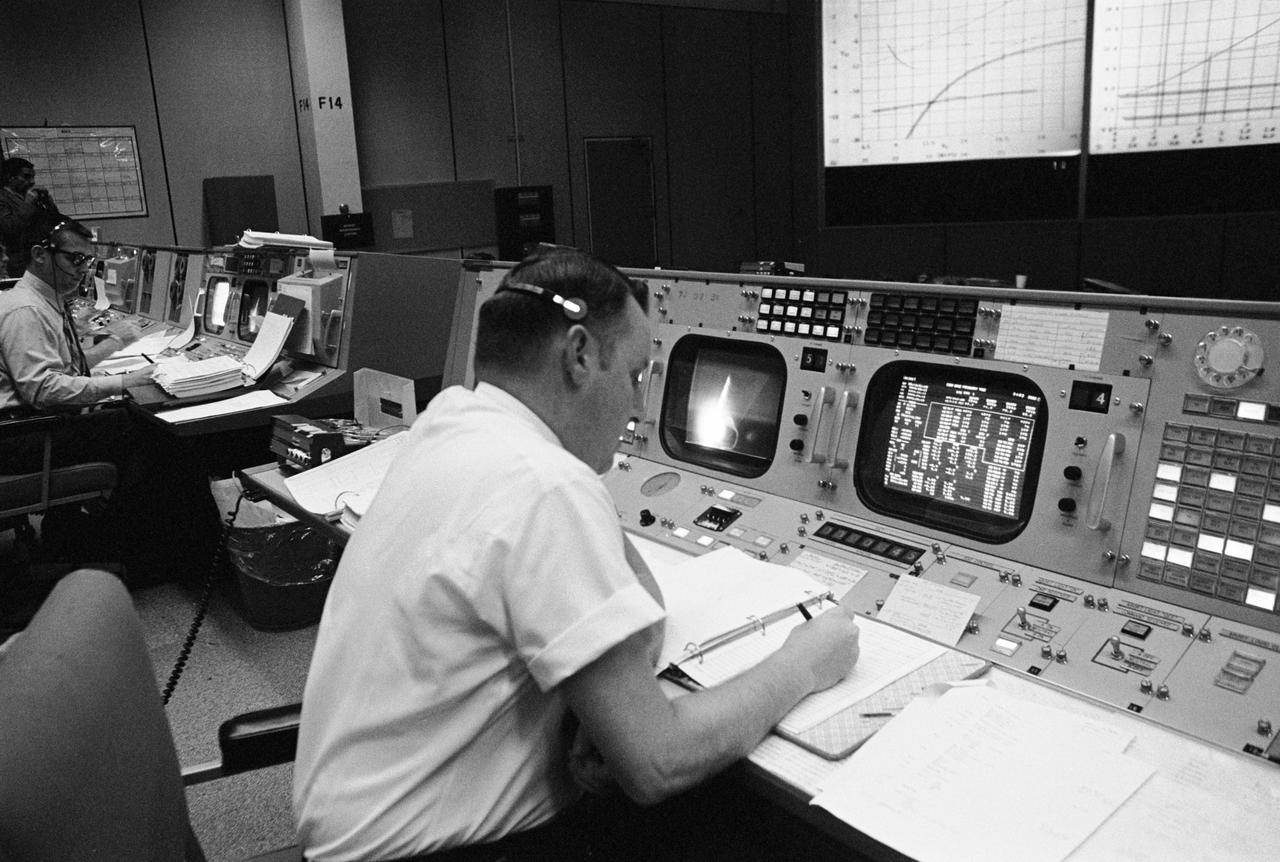
S68-55742 (21 Dec. 1968) --- Clifford E. Charlesworth, Apollo 8 "Green Team" flight director, is seated at his console in the Mission Operations Control Room in the Mission Control Center, Building 30, during the launch of the Apollo 8 (Spacecraft 103/Saturn 503) manned lunar orbit space mission.

Charlie Blackwell-Thompson, launch director, Exploration Ground Systems Program, participates in the Artemis III terminal countdown simulation on Thursday, May 7, 2026, inside Firing Room 1 of the Rocco A. Petrone Launch Control Center at NASA’s Kennedy Space Center in Florida. This marked the first simulation the launch team performed ahead of Artemis III.
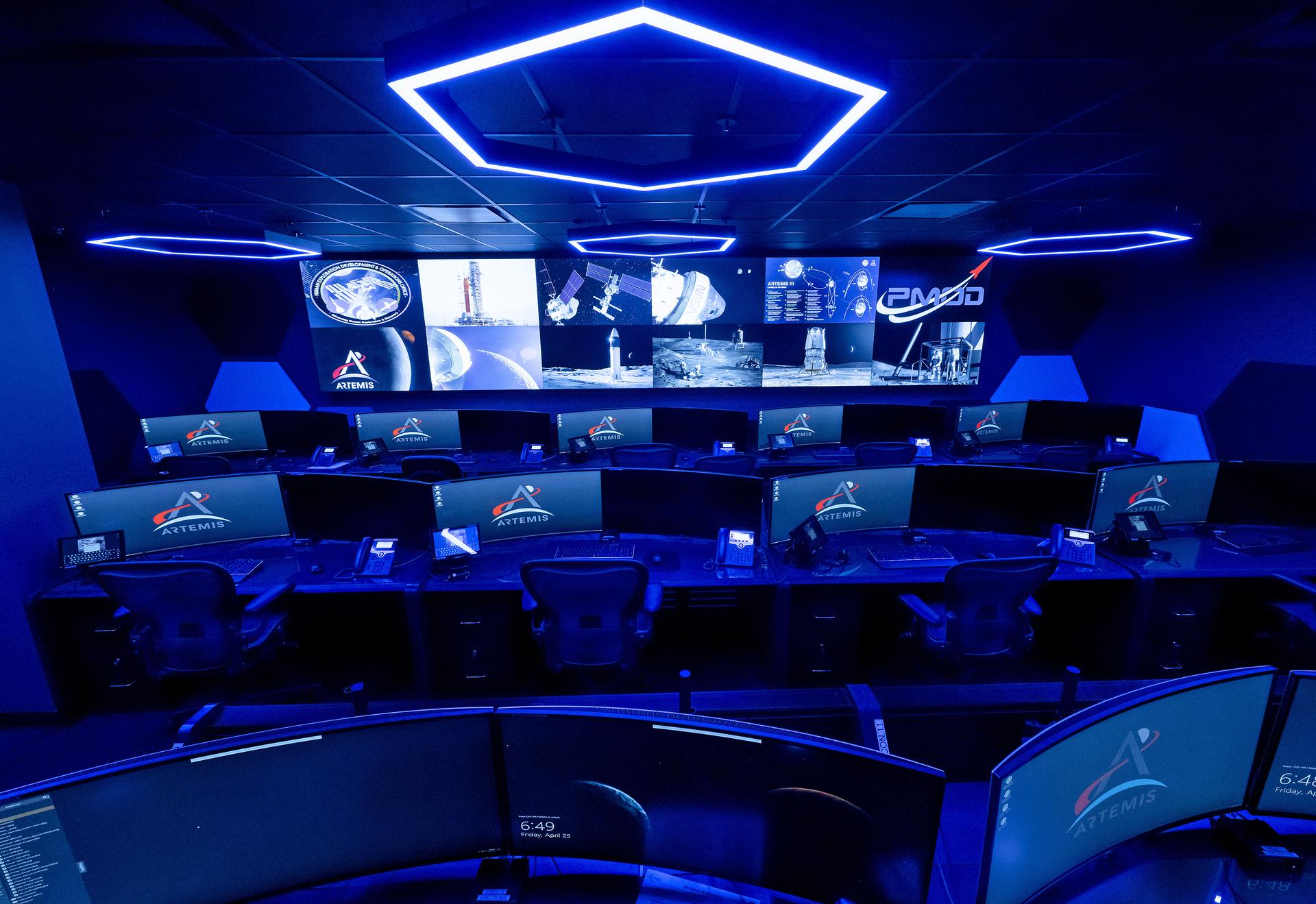
These photos offer a look inside the twin control rooms at NASA’s Marshall Space Flight Center in Huntsville, Alabama, where engineers will monitor Artemis science and future landing operations for Artemis. The LUCA (Lunar Utilization Control Area) and LESA (Lander Engineering Support Area) rooms are part of the Huntsville Operations Support Center at NASA Marshall. The LUCA is specially designed to support a wide variety of science operations on and around the Moon – and beyond. Engineers in the LUCA monitored operations for the Lunar Node-1 experiment, an autonomous navigation payload that was part of the first NASA Commercial Lunar Payload Services (CLPS) launch on Intuitive Machines’ Nova-C lunar lander in 2024. NASA Marshall flight controllers will use the LUCA again for Artemis II to monitor science operations. Beginning with Artemis III, members of the NASA Human Landing System Mission Insight Support Team – a group of engineers, safety leads, flight operations experts, and technical authorities – will work in the LESA. There, they will monitor lander systems in real-time and be involved in key decision-making processes throughout the mission. For more information, contact NASA Marshall’s Office of Communications at 256-544-0034.
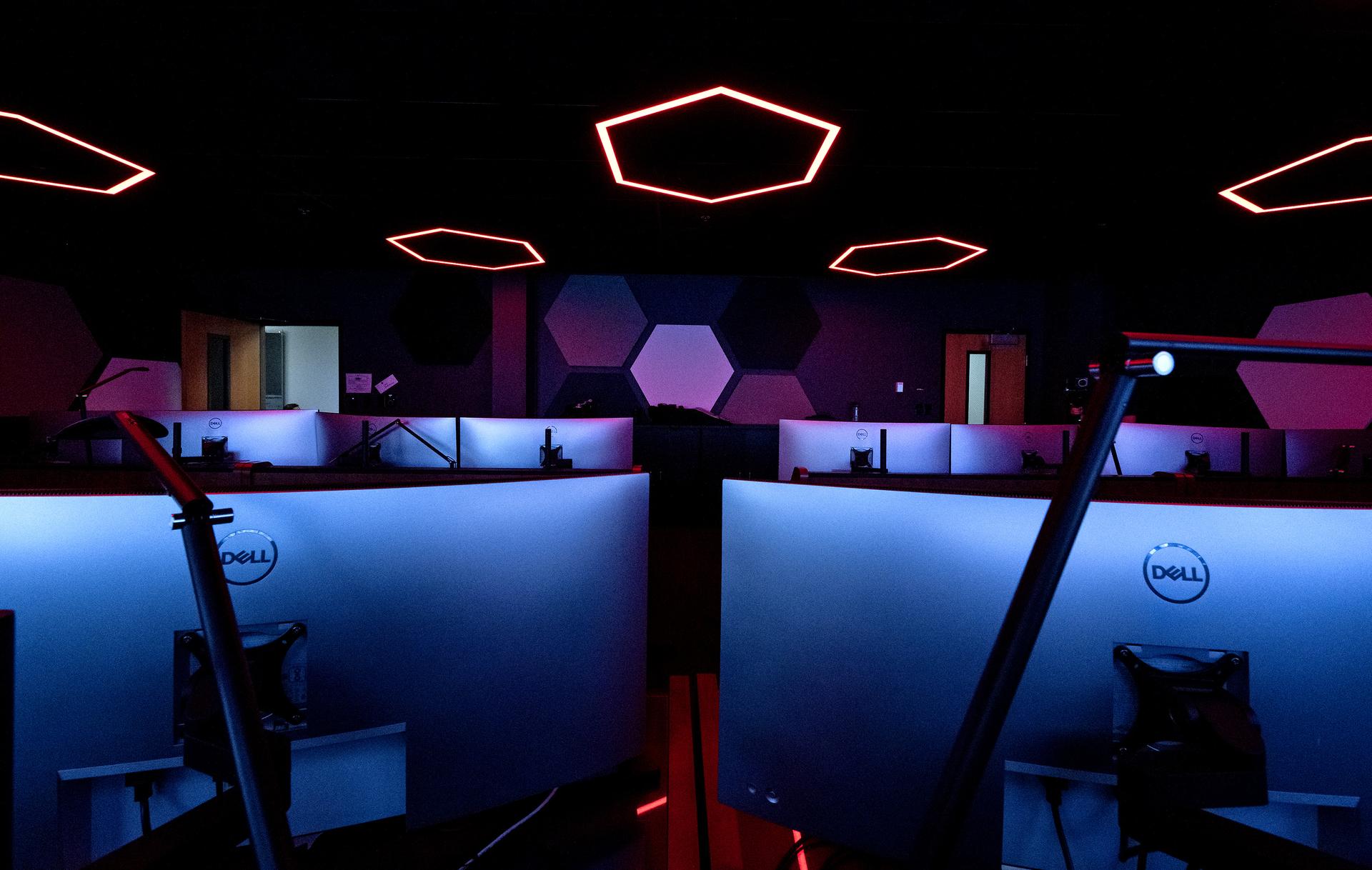
These photos offer a look inside the twin control rooms at NASA’s Marshall Space Flight Center in Huntsville, Alabama, where engineers will monitor Artemis science and future landing operations for Artemis. The LUCA (Lunar Utilization Control Area) and LESA (Lander Engineering Support Area) rooms are part of the Huntsville Operations Support Center at NASA Marshall. The LUCA is specially designed to support a wide variety of science operations on and around the Moon – and beyond. Engineers in the LUCA monitored operations for the Lunar Node-1 experiment, an autonomous navigation payload that was part of the first NASA Commercial Lunar Payload Services (CLPS) launch on Intuitive Machines’ Nova-C lunar lander in 2024. NASA Marshall flight controllers will use the LUCA again for Artemis II to monitor science operations. Beginning with Artemis III, members of the NASA Human Landing System Mission Insight Support Team – a group of engineers, safety leads, flight operations experts, and technical authorities – will work in the LESA. There, they will monitor lander systems in real-time and be involved in key decision-making processes throughout the mission. For more information, contact NASA Marshall’s Office of Communications at 256-544-0034.
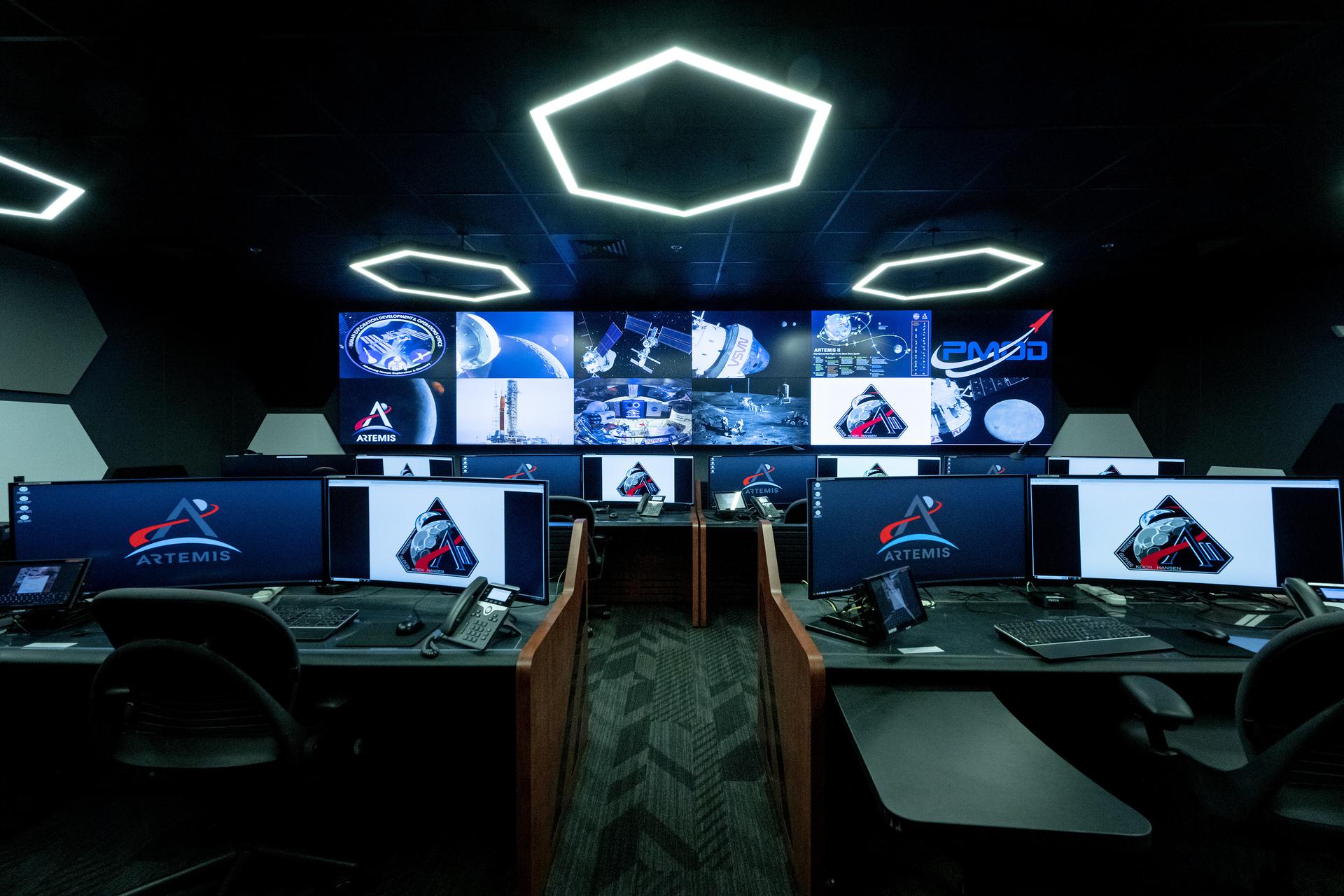
These photos offer a look inside the twin control rooms at NASA’s Marshall Space Flight Center in Huntsville, Alabama, where engineers will monitor Artemis science and future landing operations for Artemis. The LUCA (Lunar Utilization Control Area) and LESA (Lander Engineering Support Area) rooms are part of the Huntsville Operations Support Center at NASA Marshall. The LUCA is specially designed to support a wide variety of science operations on and around the Moon – and beyond. Engineers in the LUCA monitored operations for the Lunar Node-1 experiment, an autonomous navigation payload that was part of the first NASA Commercial Lunar Payload Services (CLPS) launch on Intuitive Machines’ Nova-C lunar lander in 2024. NASA Marshall flight controllers will use the LUCA again for Artemis II to monitor science operations. Beginning with Artemis III, members of the NASA Human Landing System Mission Insight Support Team – a group of engineers, safety leads, flight operations experts, and technical authorities – will work in the LESA. There, they will monitor lander systems in real-time and be involved in key decision-making processes throughout the mission. For more information, contact NASA Marshall’s Office of Communications at 256-544-0034.
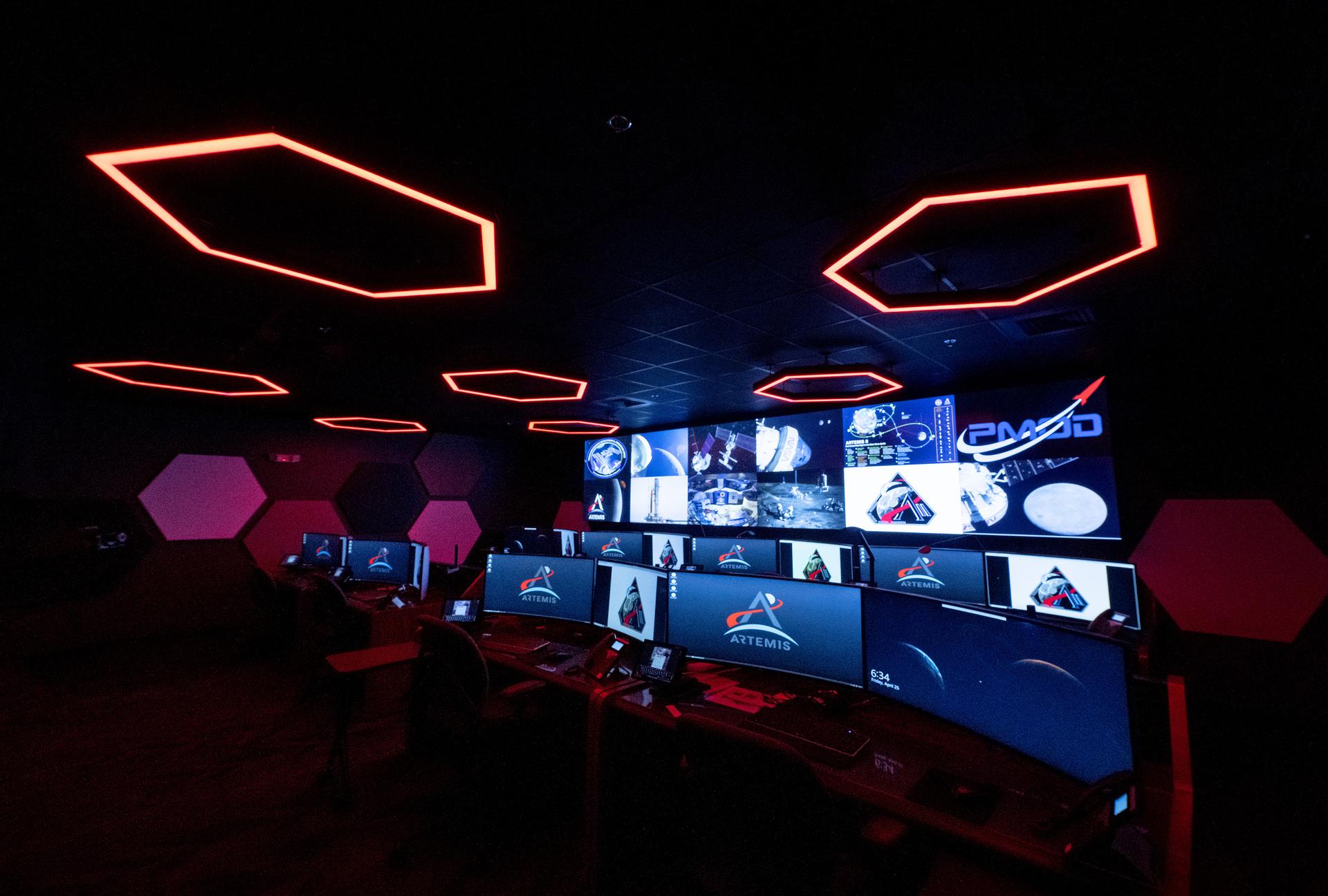
These photos offer a look inside the twin control rooms at NASA’s Marshall Space Flight Center in Huntsville, Alabama, where engineers will monitor Artemis science and future landing operations for Artemis. The LUCA (Lunar Utilization Control Area) and LESA (Lander Engineering Support Area) rooms are part of the Huntsville Operations Support Center at NASA Marshall. The LUCA is specially designed to support a wide variety of science operations on and around the Moon – and beyond. Engineers in the LUCA monitored operations for the Lunar Node-1 experiment, an autonomous navigation payload that was part of the first NASA Commercial Lunar Payload Services (CLPS) launch on Intuitive Machines’ Nova-C lunar lander in 2024. NASA Marshall flight controllers will use the LUCA again for Artemis II to monitor science operations. Beginning with Artemis III, members of the NASA Human Landing System Mission Insight Support Team – a group of engineers, safety leads, flight operations experts, and technical authorities – will work in the LESA. There, they will monitor lander systems in real-time and be involved in key decision-making processes throughout the mission. For more information, contact NASA Marshall’s Office of Communications at 256-544-0034.
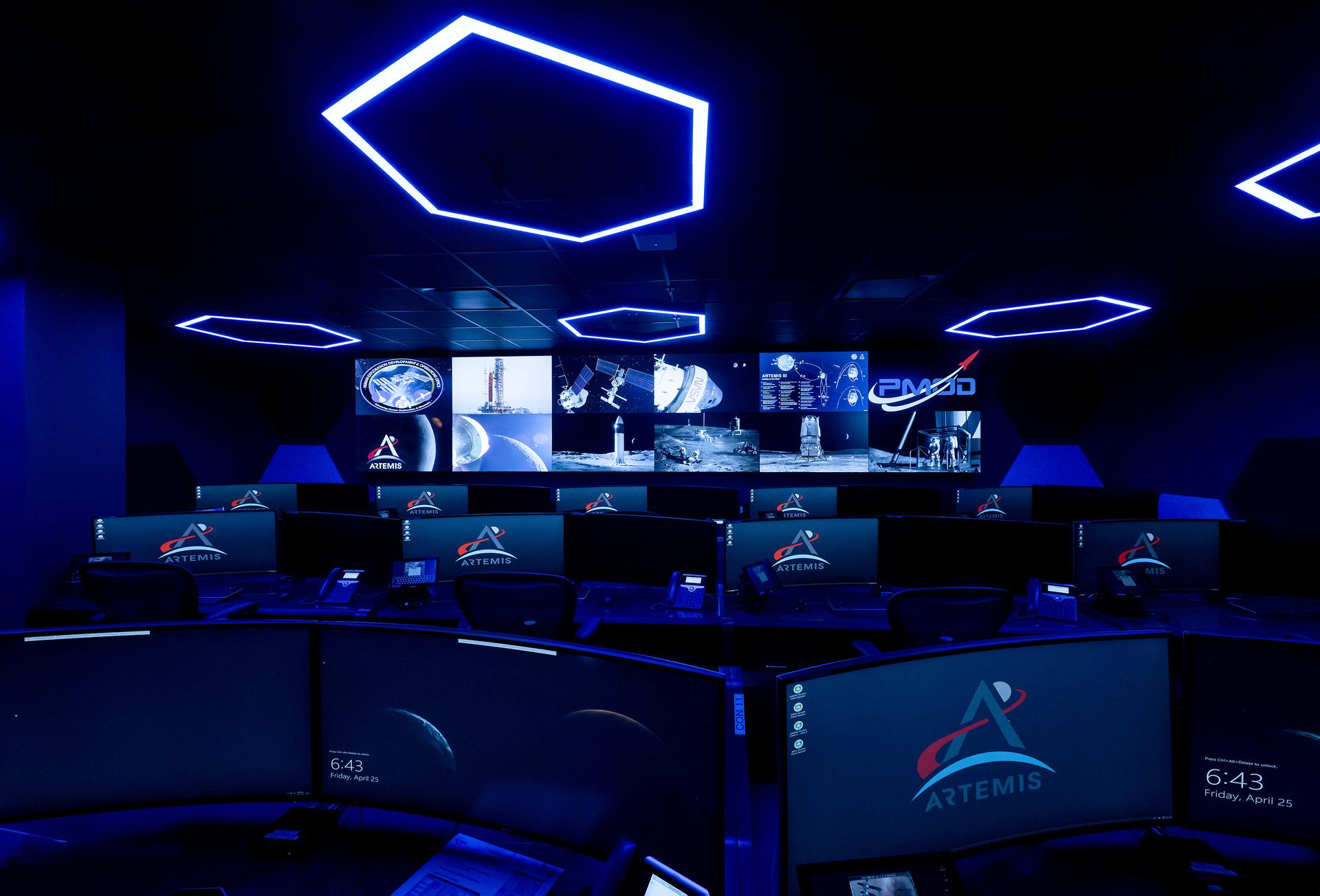
These photos offer a look inside the twin control rooms at NASA’s Marshall Space Flight Center in Huntsville, Alabama, where engineers will monitor Artemis science and future landing operations for Artemis. The LUCA (Lunar Utilization Control Area) and LESA (Lander Engineering Support Area) rooms are part of the Huntsville Operations Support Center at NASA Marshall. The LUCA is specially designed to support a wide variety of science operations on and around the Moon – and beyond. Engineers in the LUCA monitored operations for the Lunar Node-1 experiment, an autonomous navigation payload that was part of the first NASA Commercial Lunar Payload Services (CLPS) launch on Intuitive Machines’ Nova-C lunar lander in 2024. NASA Marshall flight controllers will use the LUCA again for Artemis II to monitor science operations. Beginning with Artemis III, members of the NASA Human Landing System Mission Insight Support Team – a group of engineers, safety leads, flight operations experts, and technical authorities – will work in the LESA. There, they will monitor lander systems in real-time and be involved in key decision-making processes throughout the mission. For more information, contact NASA Marshall’s Office of Communications at 256-544-0034.
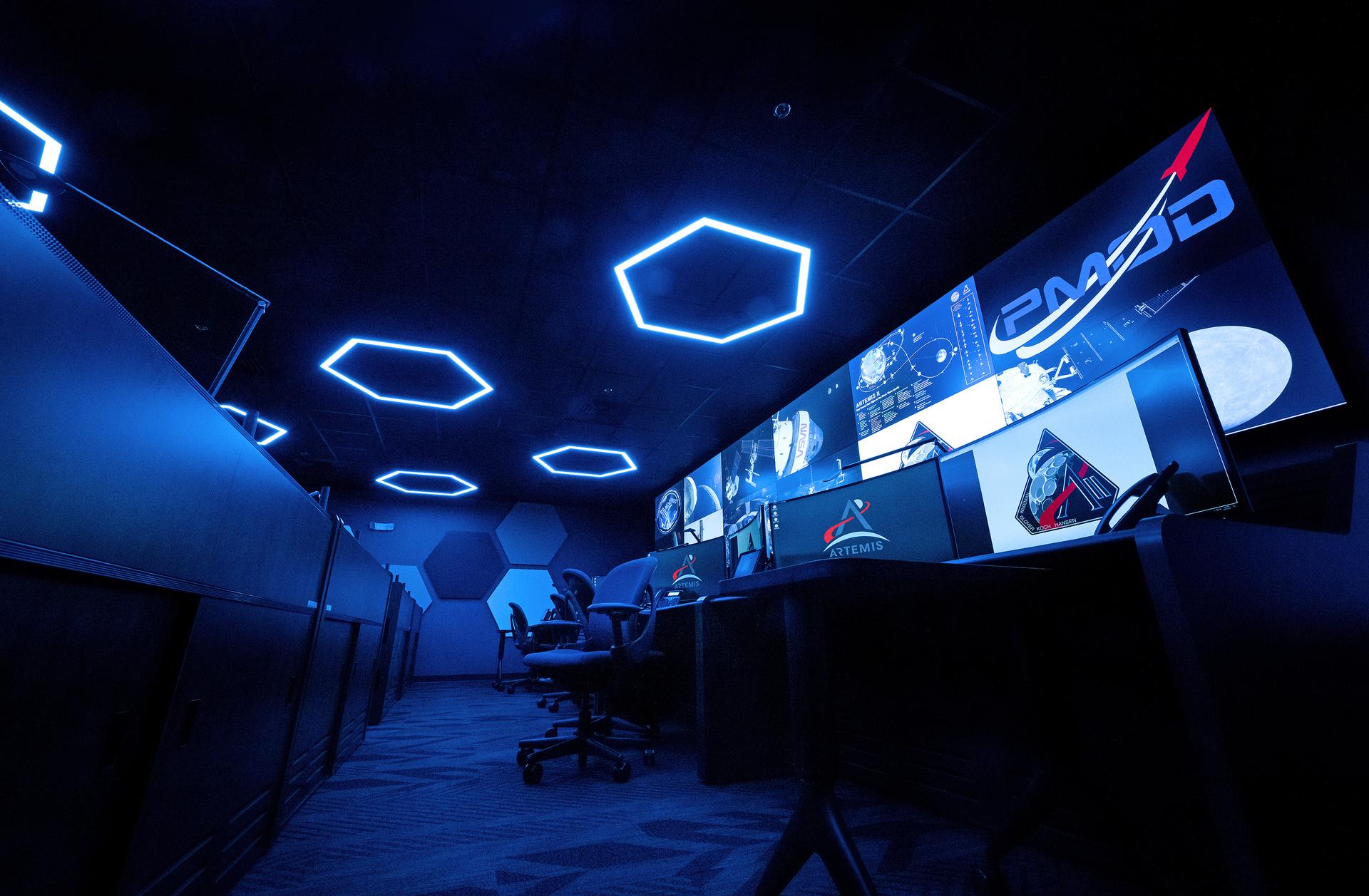
These photos offer a look inside the twin control rooms at NASA’s Marshall Space Flight Center in Huntsville, Alabama, where engineers will monitor Artemis science and future landing operations for Artemis. The LUCA (Lunar Utilization Control Area) and LESA (Lander Engineering Support Area) rooms are part of the Huntsville Operations Support Center at NASA Marshall. The LUCA is specially designed to support a wide variety of science operations on and around the Moon – and beyond. Engineers in the LUCA monitored operations for the Lunar Node-1 experiment, an autonomous navigation payload that was part of the first NASA Commercial Lunar Payload Services (CLPS) launch on Intuitive Machines’ Nova-C lunar lander in 2024. NASA Marshall flight controllers will use the LUCA again for Artemis II to monitor science operations. Beginning with Artemis III, members of the NASA Human Landing System Mission Insight Support Team – a group of engineers, safety leads, flight operations experts, and technical authorities – will work in the LESA. There, they will monitor lander systems in real-time and be involved in key decision-making processes throughout the mission. For more information, contact NASA Marshall’s Office of Communications at 256-544-0034.
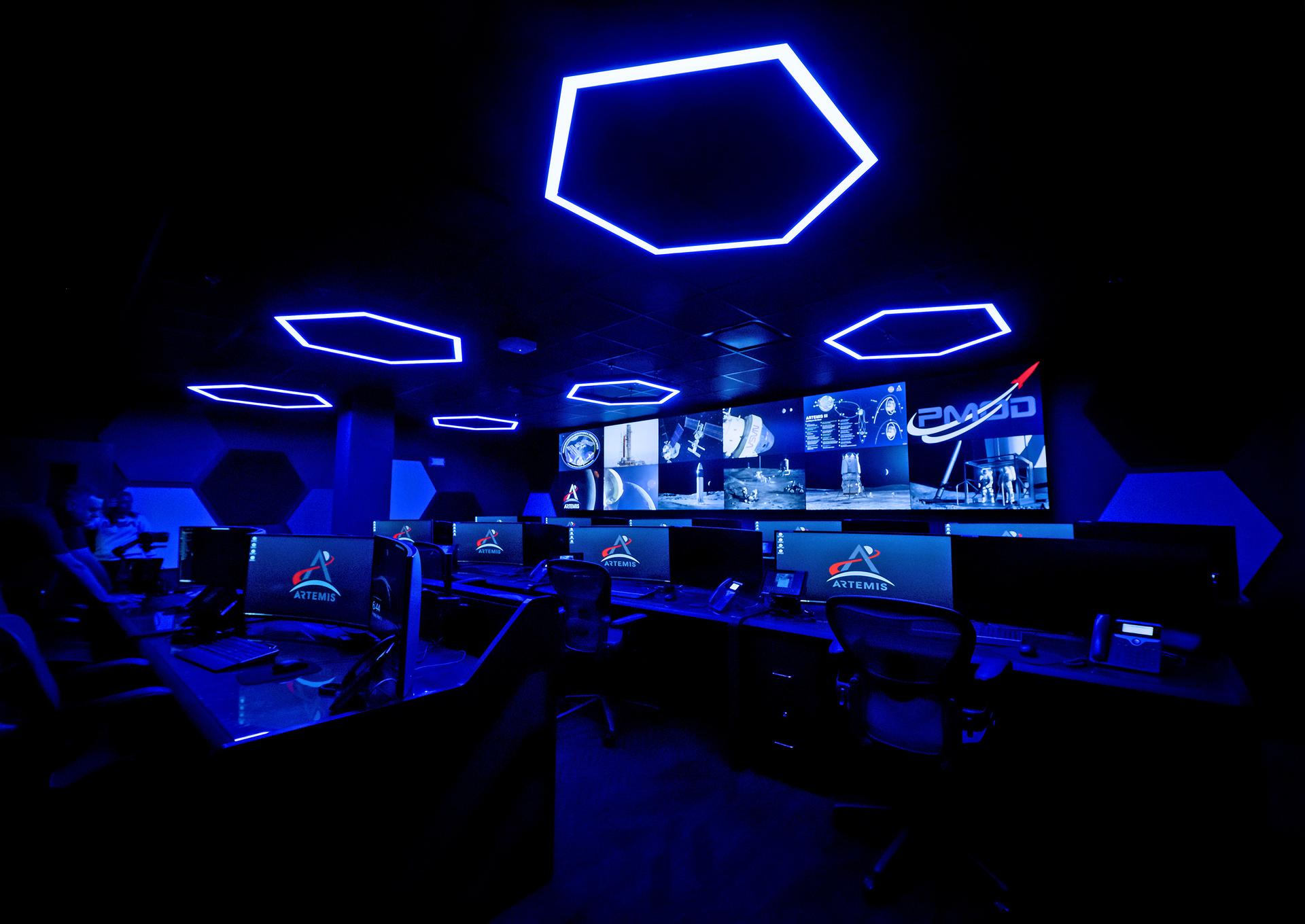
These photos offer a look inside the twin control rooms at NASA’s Marshall Space Flight Center in Huntsville, Alabama, where engineers will monitor Artemis science and future landing operations for Artemis. The LUCA (Lunar Utilization Control Area) and LESA (Lander Engineering Support Area) rooms are part of the Huntsville Operations Support Center at NASA Marshall. The LUCA is specially designed to support a wide variety of science operations on and around the Moon – and beyond. Engineers in the LUCA monitored operations for the Lunar Node-1 experiment, an autonomous navigation payload that was part of the first NASA Commercial Lunar Payload Services (CLPS) launch on Intuitive Machines’ Nova-C lunar lander in 2024. NASA Marshall flight controllers will use the LUCA again for Artemis II to monitor science operations. Beginning with Artemis III, members of the NASA Human Landing System Mission Insight Support Team – a group of engineers, safety leads, flight operations experts, and technical authorities – will work in the LESA. There, they will monitor lander systems in real-time and be involved in key decision-making processes throughout the mission. For more information, contact NASA Marshall’s Office of Communications at 256-544-0034.
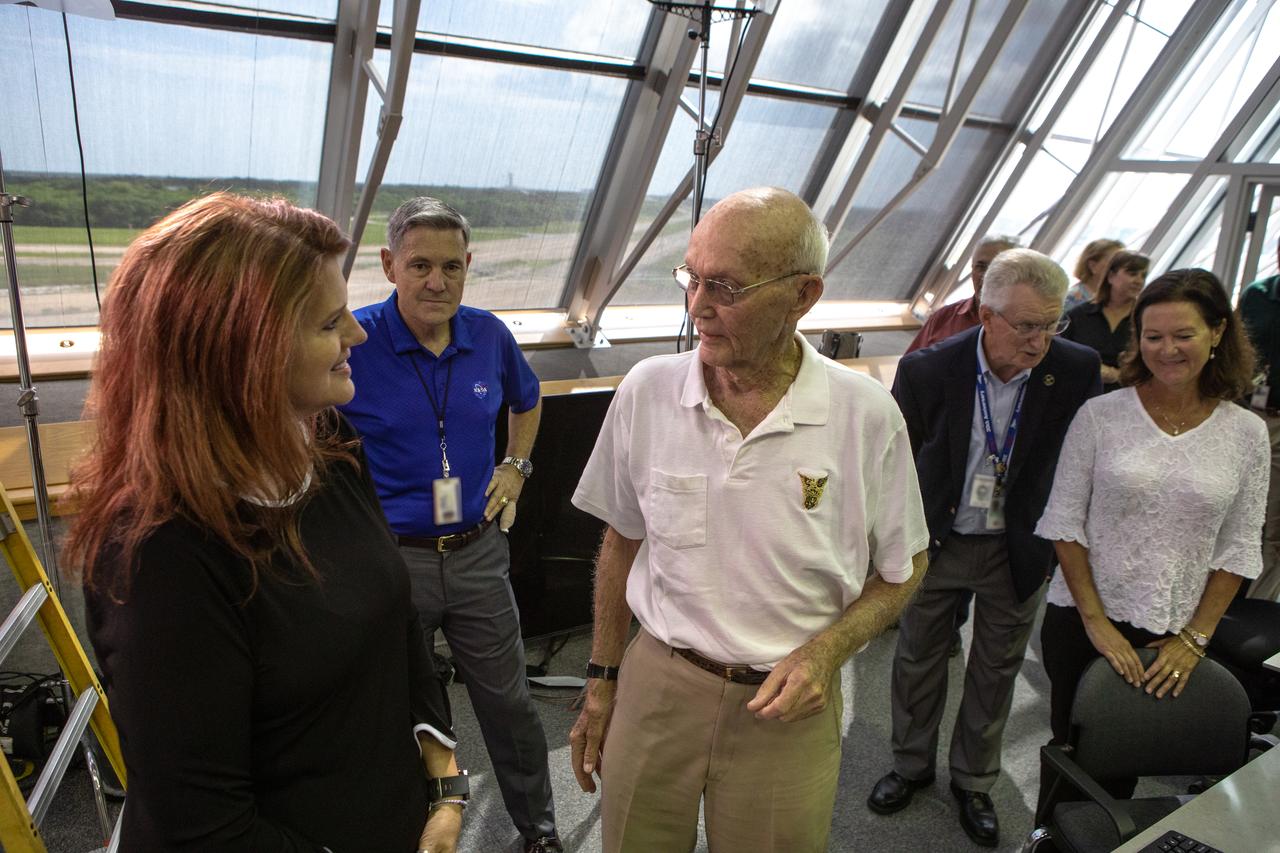
On July 16, 2019, the 50th anniversary of the Apollo 11 launch to the Moon, Apollo 11 and Artemis 1 launch team members mingle in Launch Control Center Firing Room 1 at NASA's Kennedy Space Center in Florida. Artemis 1 Launch Director Charlie Blackwell-Thompson, left, talks to Apollo 11 astronaut Michael Collins. In the background is Kennedy Director Bob Cabana.
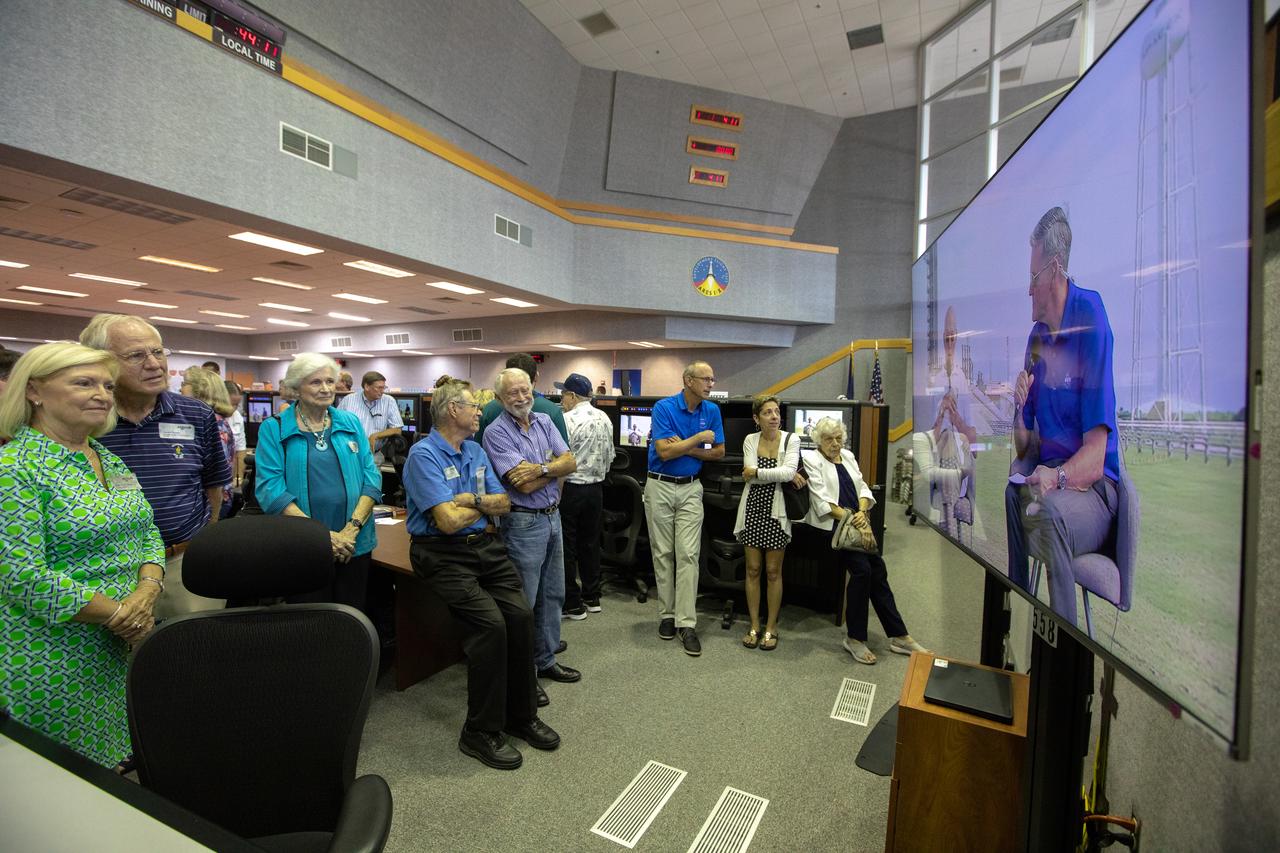
On July 16, 2019, the 50th anniversary of the Apollo 11 launch to the Moon, Apollo-era and Artemis 1 launch team members watch a live broadcast on monitors in Launch Control Center Firing Room 1 at NASA's Kennedy Space Center in Florida. On screen, Kennedy Center Director Bob Cabana is talking with Apollo 11 astronaut Michael Collins at Launch Complex 39A, the site of the Apollo 11 launch.

On July 16, 2019, the 50th anniversary of the Apollo 11 launch to the Moon, Apollo 11 and Artemis 1 launch team members mingle in Launch Control Center Firing Room 1 at NASA's Kennedy Space Center in Florida. Artemis 1 Launch Director Charlie Blackwell-Thompson, left, talks to Apollo 11 astronaut Michael Collins. In the background is Kennedy Director Bob Cabana.