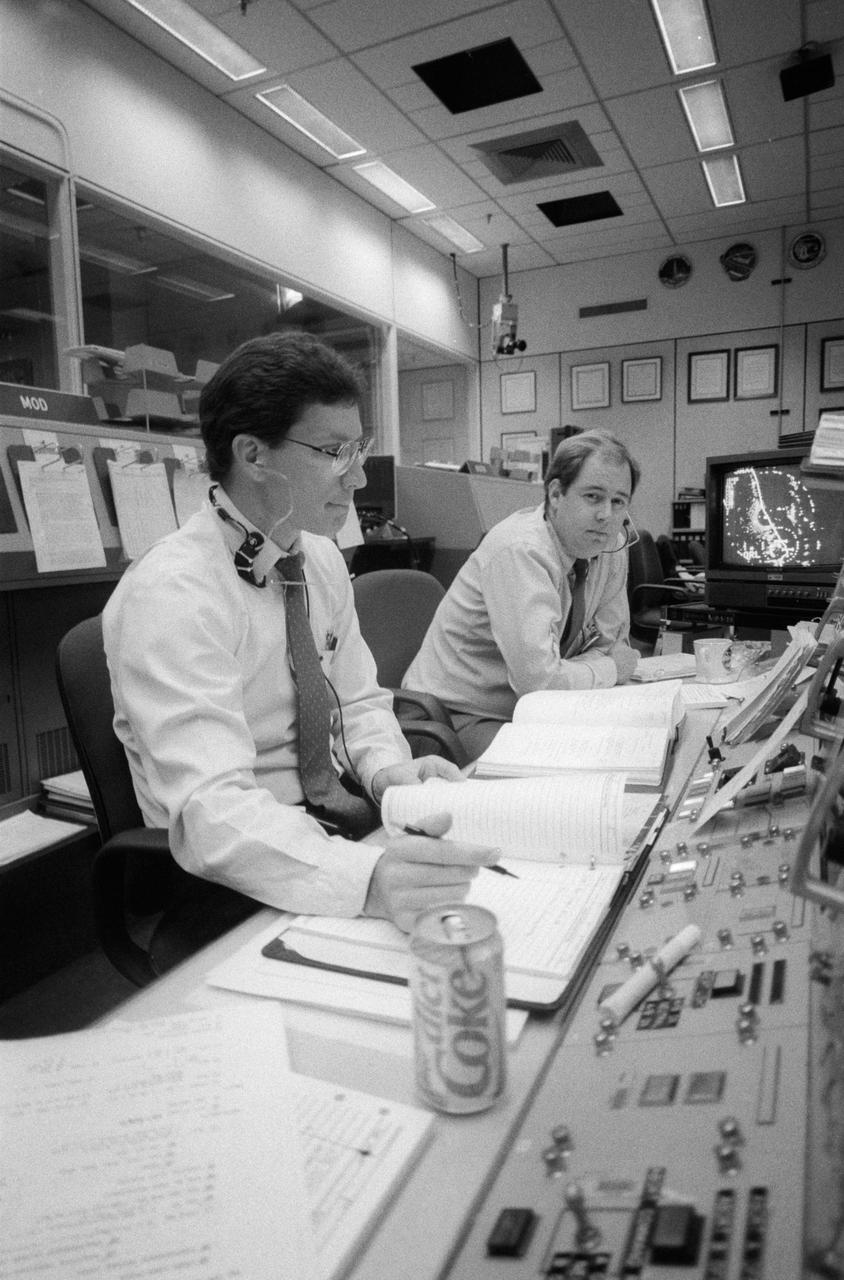
During STS-34, flight directors Robert E. Castle, Jr (left) and Ronald D. Dittemore review checklists and monitor displays at their console in JSC's Mission Control Center (MCC) Bldg 30 flight control room (FCR).
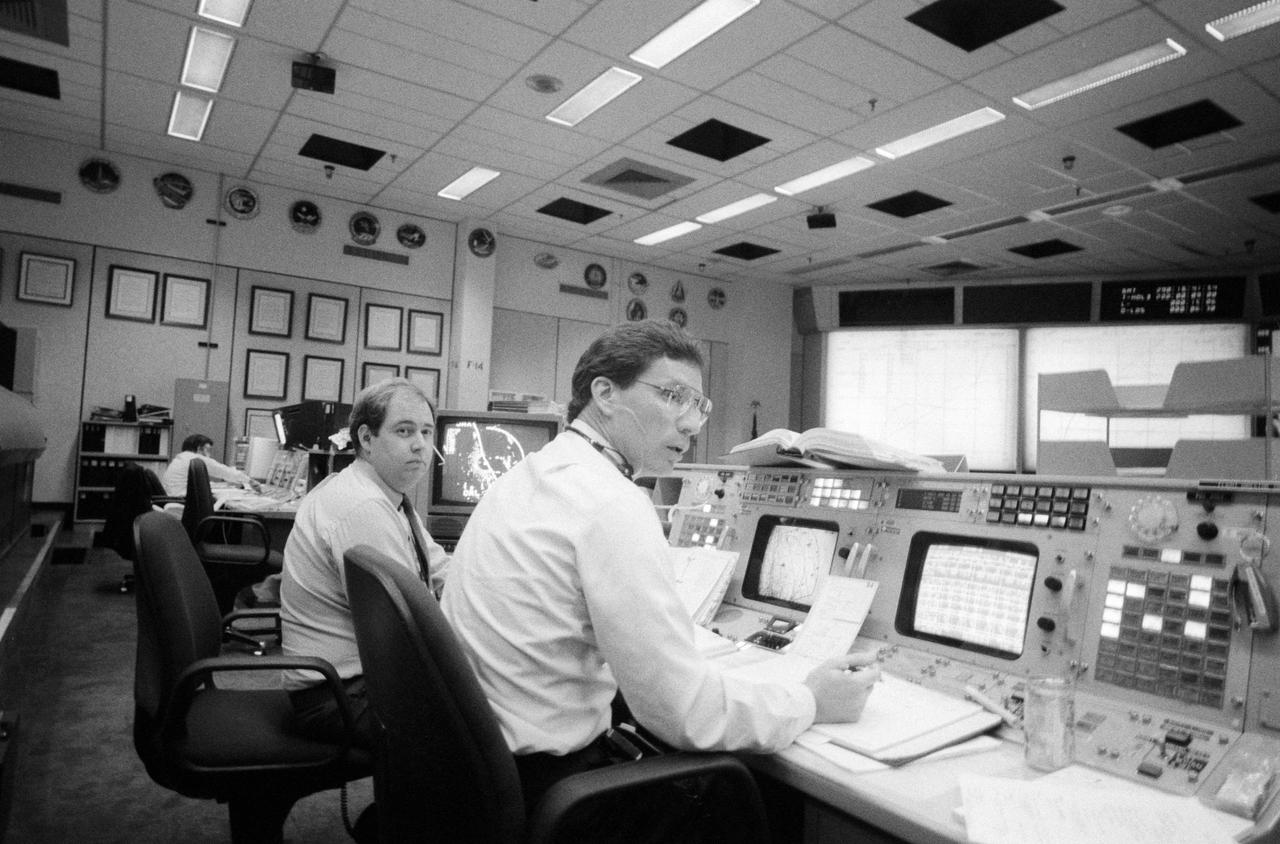
Flight directors Robert E. Castle, Jr (left) and Ronald D. Dittemore monitor console displays during STS-34 mission. Castle and Dittemore will oversee flight activities from their stations in JSC's Mission Control Center (MCC) Bldg 30 flight control room (FCR). In the background are the FCR large screens which display flight data.
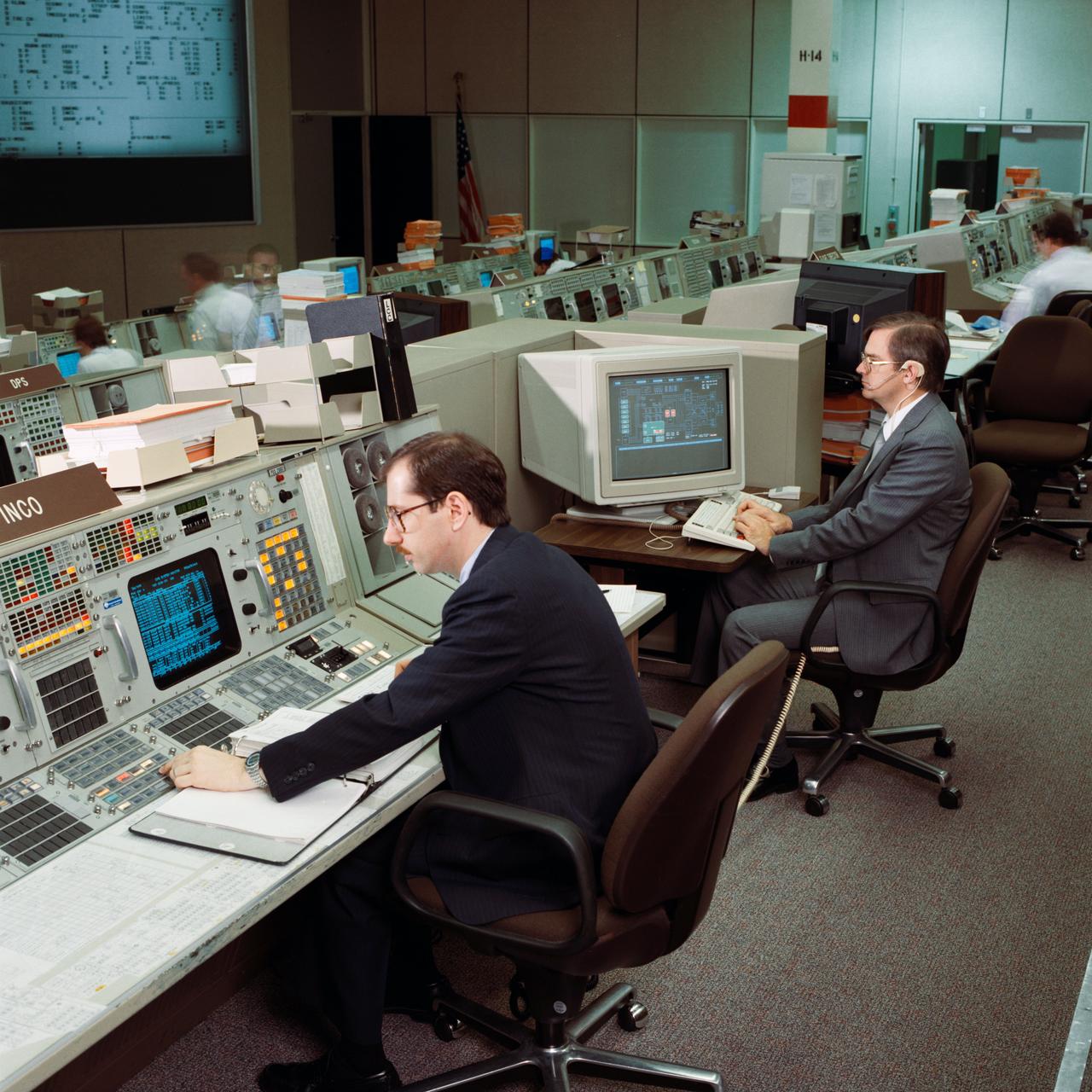
Instrumentation and Communications Officer (INCO) John F. Muratore monitors conventional workstation displays during an STS-26 simulation in JSC Mission Control Center (MCC) Bldg 30 Flight Control Room (FCR). Next to Muratore an operator views the real time data system (RTDS), an expert system. During the STS-29 mission two conventional monochrome console display units will be removed and replaced with RTDS displays. View is for the STS-29 press kit from Office of Aeronautics and Space Technology (OAST) RTDS.
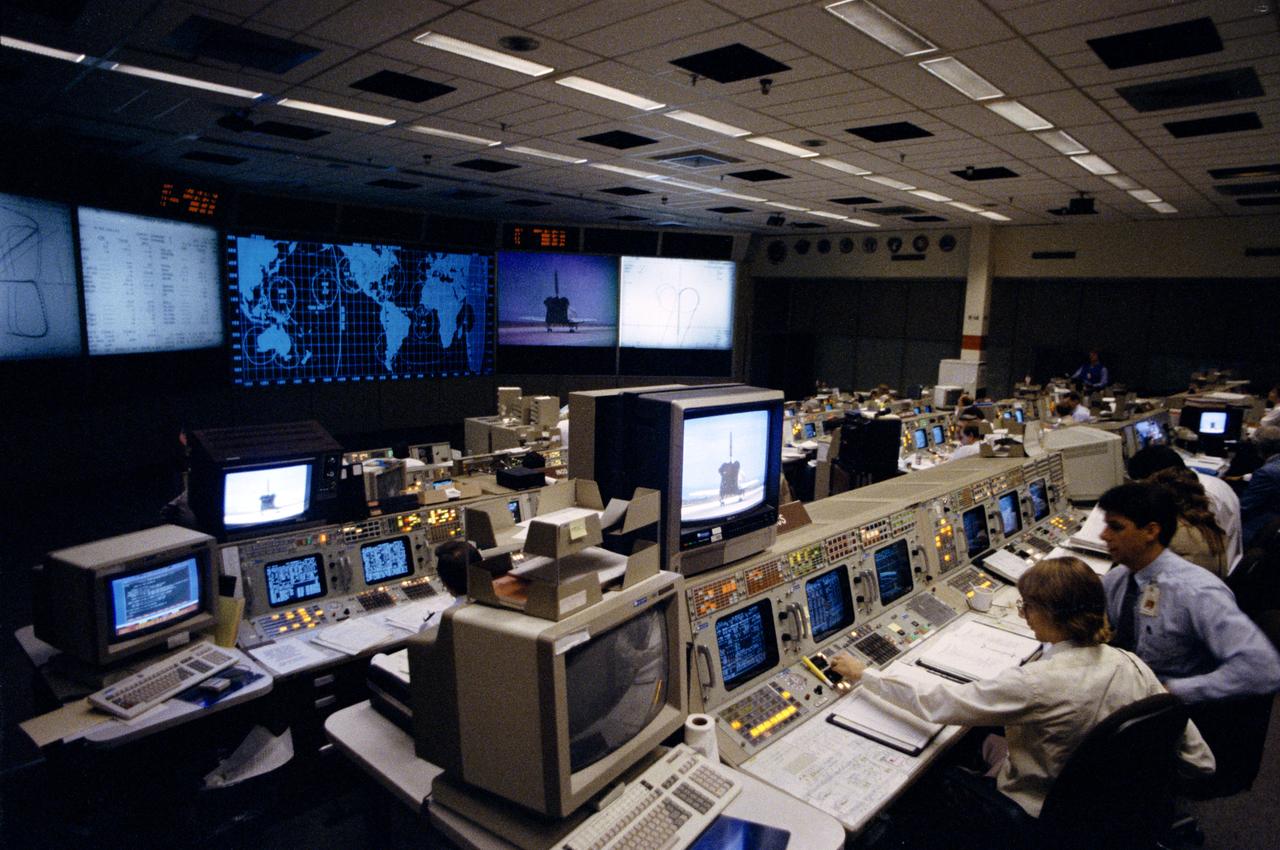
As STS-30 ends its mission with the landing of Atlantis, Orbiter Vehicle (OV) 104, at Edwards Air Force Base (EAFB), California, flight controllers monitor screens at their consoles in JSC Mission Control Center (MCC) Bldg 30. In the foreground is the Maintenance, Mechanical Arm, and Crew Systems Engineer (MMACS) console with R. Kevin McCluney studying data readouts. On the front visual displays are the tracking map and a tail view of OV-104 as it comes to a stop on EAFB concrete runway 22.
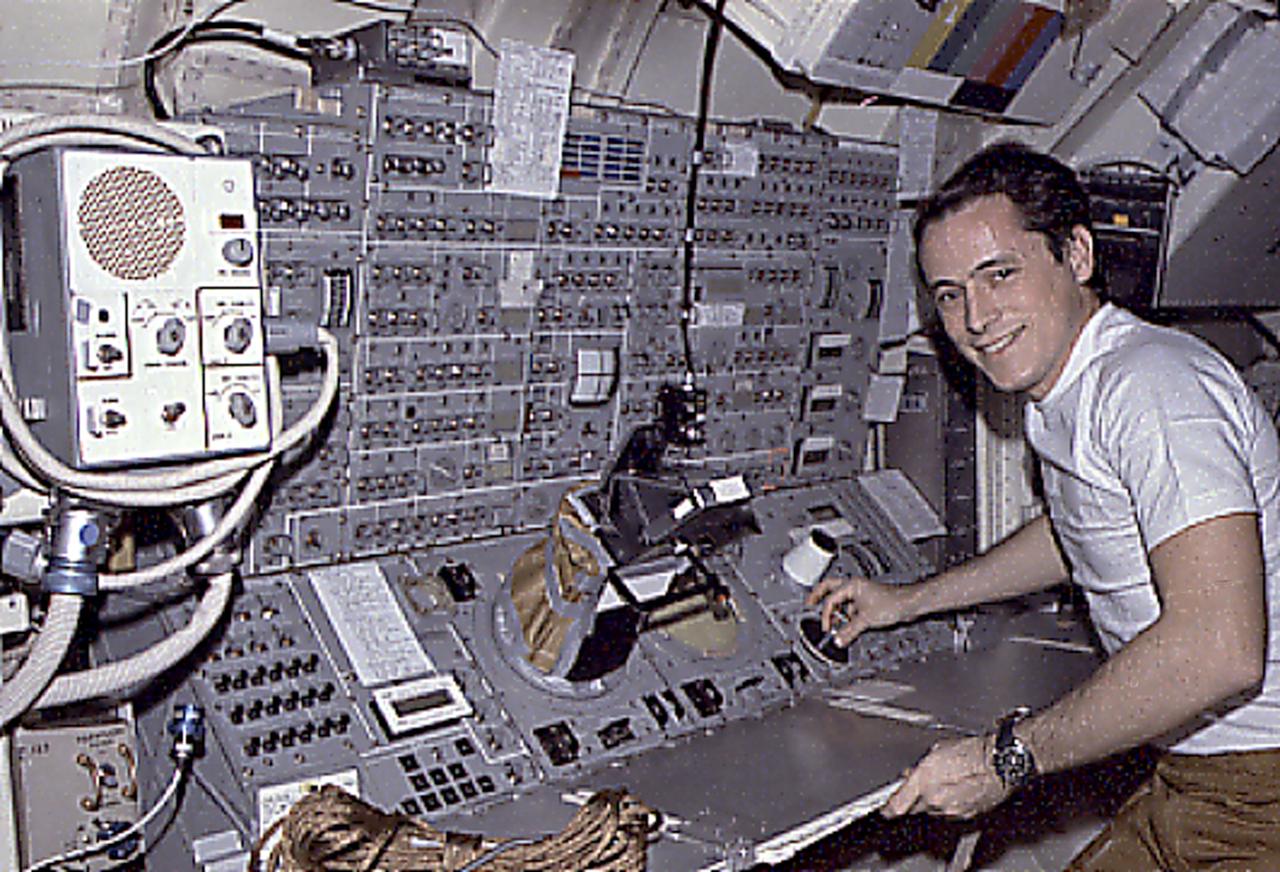
This Skylab-4 mission onboard photograph shows Astronaut Ed Gibson at the complex control and display console for the Apollo Telescope Mount solar telescopes located in the Skylab Multiple Docking Adapter. Astronauts watched the Sun, and photographed and recorded the solar activities, such as the birth of a solar flare.
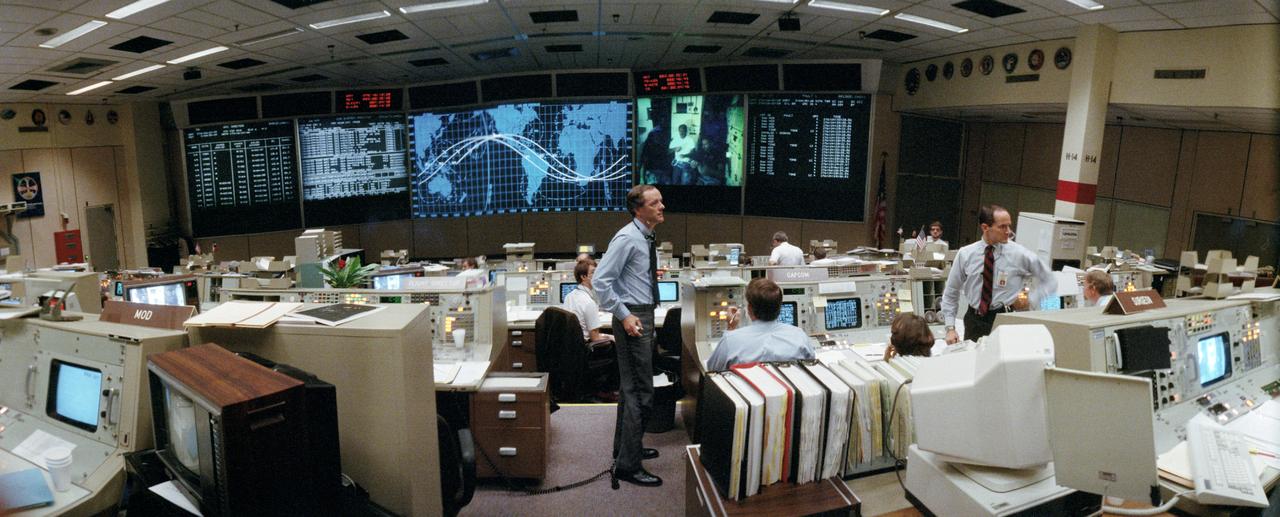
STS26-S-103 (2 October 1988) --- A wide-angle view of flight controllers in the Johnson Space Center's mission control center as they listen to a presentation by the five members of the STS-26 crew on the fourth day of Discovery's orbital mission. Flight Director James M. (Milt) Heflin (standing at center), astronaut G. David Low (standing at right), a spacecraft communicator, and other controllers view a television image of the crew on a screen in the front of the flight control room as each member relates some inner feelings while paying tribute to the Challenger crew.
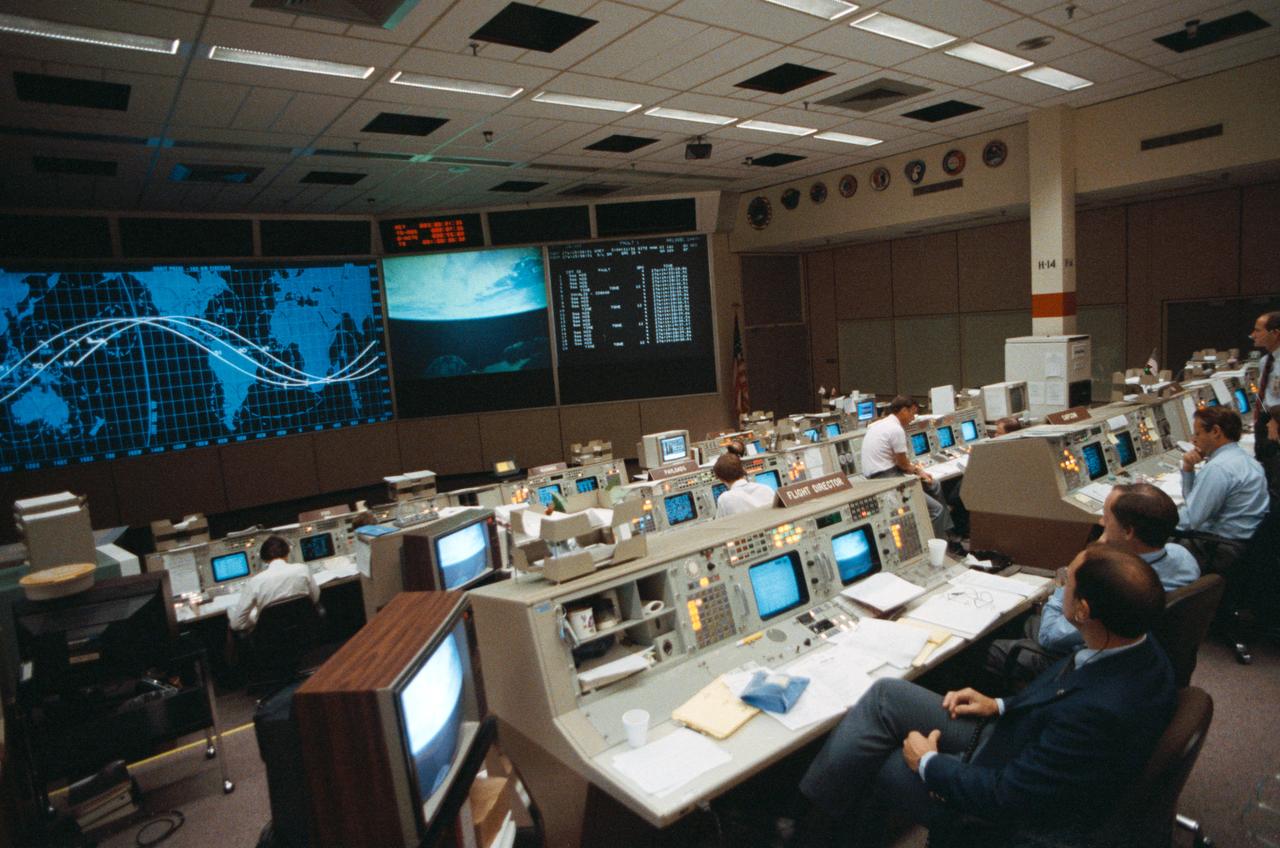
STS026-S-101 (2 Oct 1988) --- Flight controllers in the Johnson Space Center?s mission control center listen to a presentation by the five members of the STS 26 crew on the fourth day of Discovery?s orbital mission. Flight Directors Charles W. Shaw and James M. (Milt) Heflin (in the foreground) and other controllers view a television image of Earth on a screen in the front of the flight control room while each member relates some inner feelings while paying tribute to the Challenger crew.
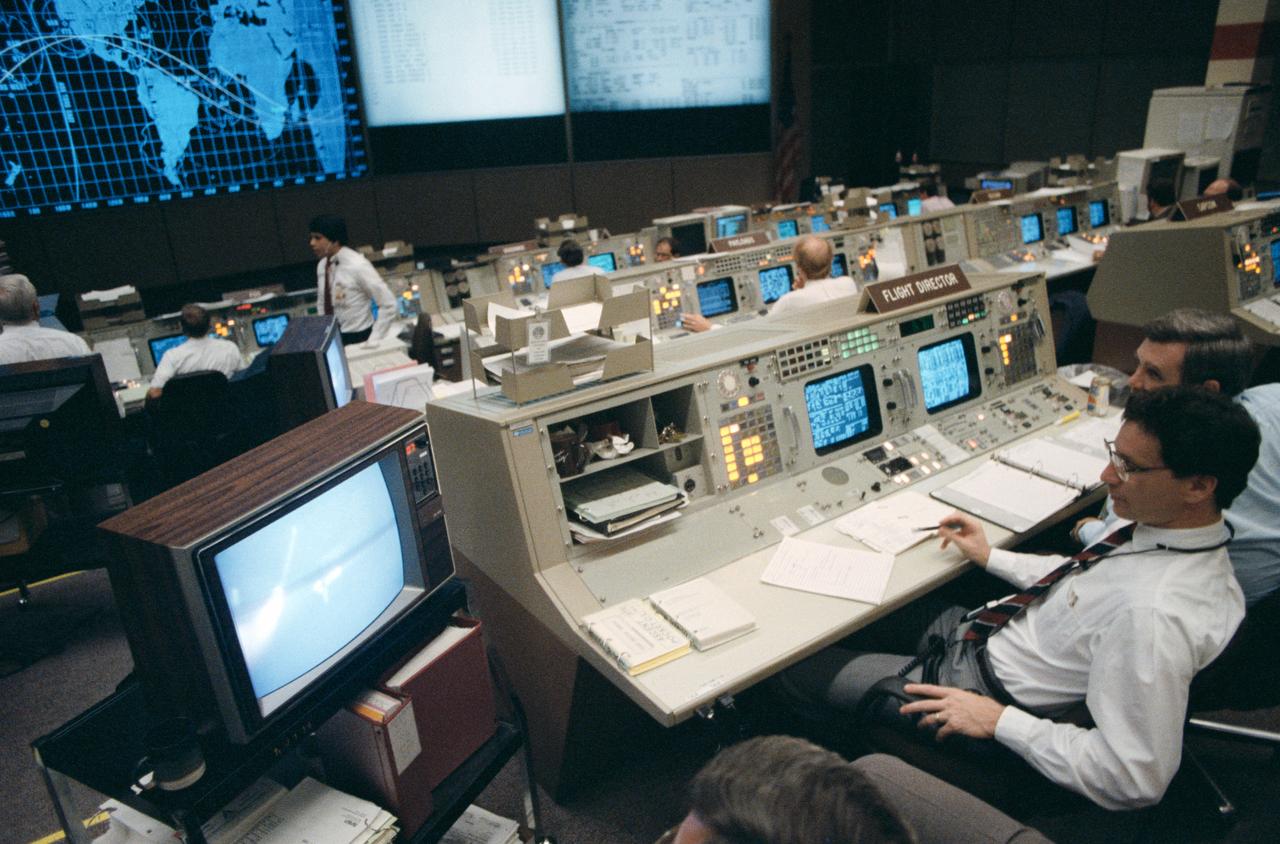
STS029-S-042 (13 March 1989) --- Flight Directors Ronald D. Dittemore, left and Lee Briscoe monitor solid rocket booster separation activity on monitors at their consoles in the flight control room of the Johnson Space Center's mission control center.
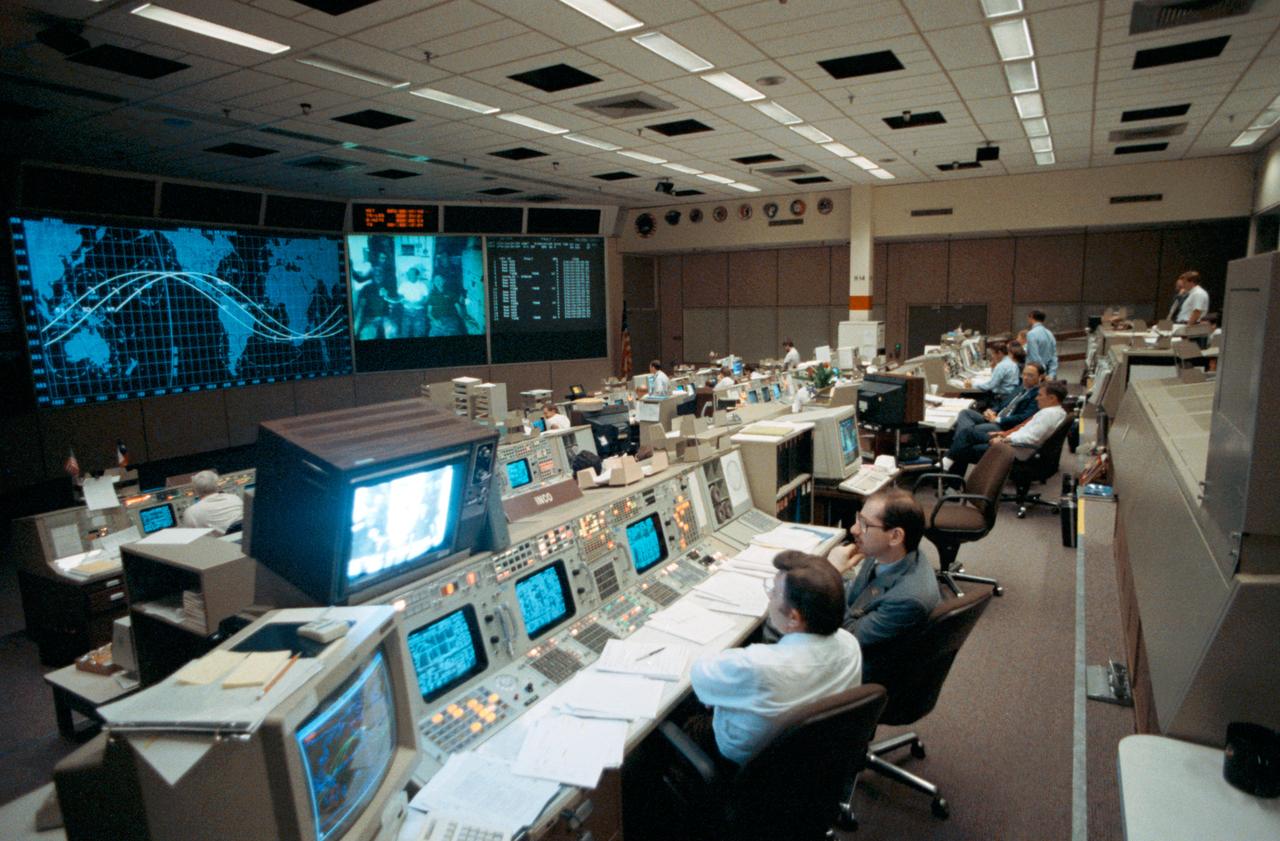
Flight controllers in JSC's Mission Control Center (MCC) Bldg 30 flight control room (FCR) listen to a presentation by STS-26 crewmembers on the fourth day of Discovery's, Orbiter Vehicle (OV) 103's, orbital mission. Instrumentation and Communications Officers (INCOs) Harold Black (left foreground) and John F. Muratore and other controllers view a television (TV) transmission of the crew on a screen in front of the FCR as each member relates some inner feelings while paying tribute to the 51L Challenger crew.
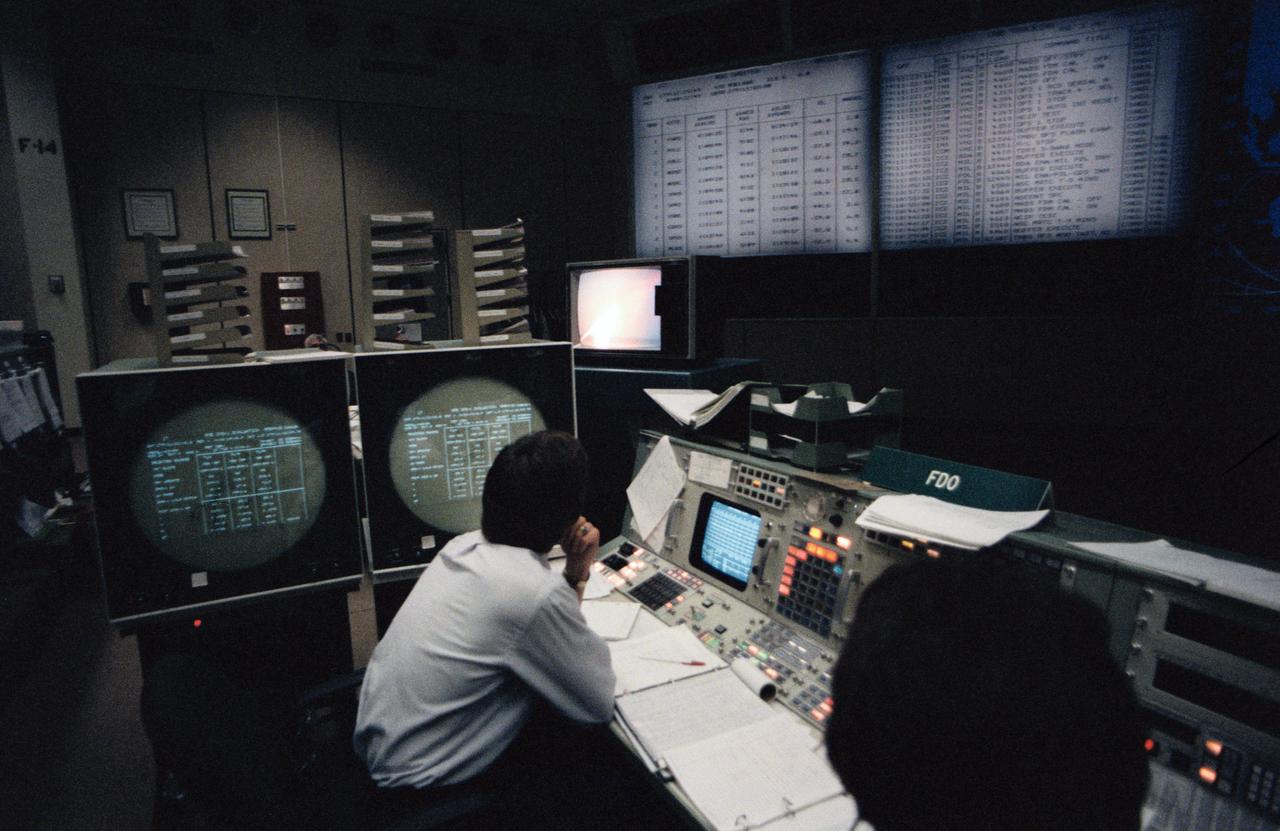
View of the Flight Dynamics Officer (FDO) console in the Mission Control Center (MCC) during the flight of STS41-G. The officer at the FDO console appears to be examining the large screens in front of him which are displaying lists of data.
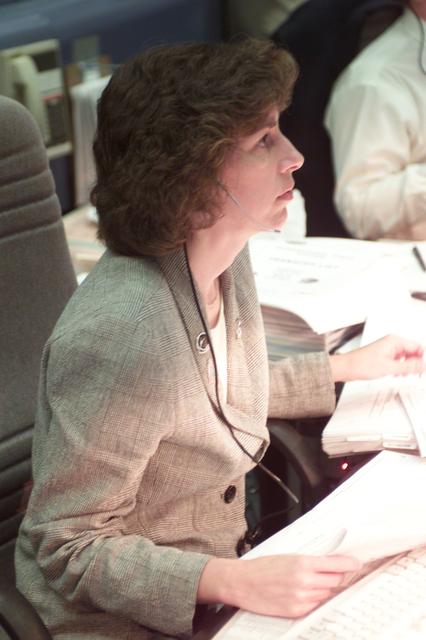
JSC2001-E-12474 (April 2001) --- Astronaut Ellen Ochoa, at the Spacecraft Communicator (CAPCOM) console in the flight control room of Houston's Mission Control Center, watches monitors and displays while communicating with the Space Shuttle Endeavour crew in space.
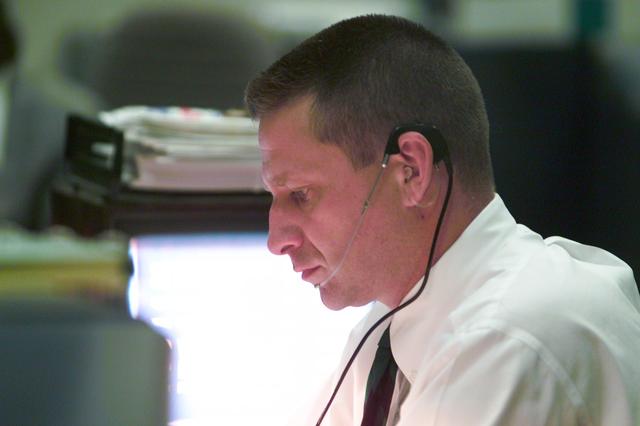
JSC2001-E-12117 (19 April 2001) --- Astronaut Christopher J. (Gus) Loria, at the Spacecraft Communicator (CAPCOM) console, peruses information on monitors and displays at his console in the flight control room in the Johnson Space Center's Mission Control Center (MCC) as countdown for the Space Shuttle Endeavour launch of STS-100 continues several hundred miles away in Florida. Loria deals with weather issues in the respective areas for both ascent and entry phases of the STS-100 mission.
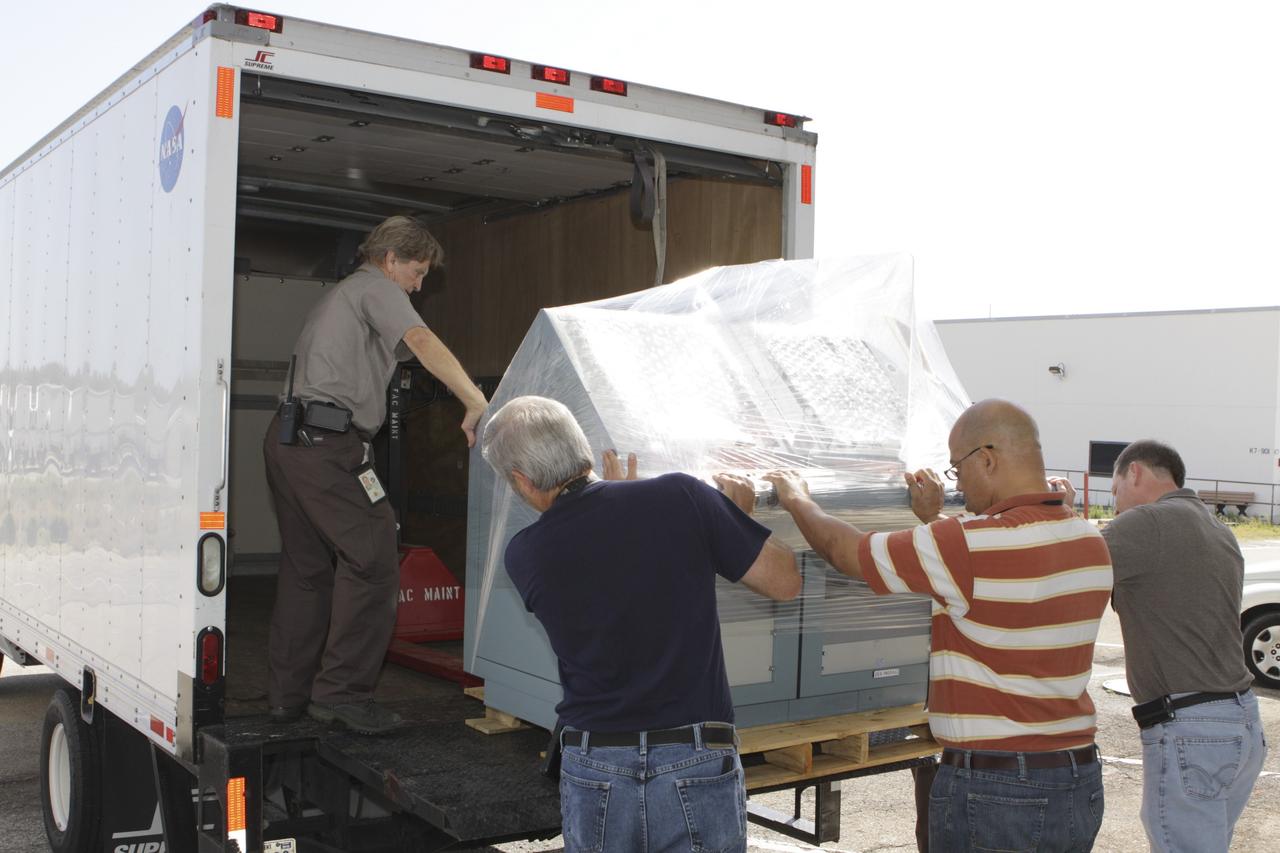
CAPE CANAVERAL, Fla. –At NASA’s Kennedy Space Center in Florida, workers help load the Public Affairs Office console and chairs from Launch Control Center Firing Room 3 onto a truck. The console will be moved to the Kennedy Space Center Visitor Complex in Florida and will be preserved for use in the space shuttle Atlantis display. During the 30-year history of NASA’s space shuttle launches, Public Affairs Officers sat at the console to provide commentary during shuttle tanking and launches. Photo credit: NASA/Glenn Benson
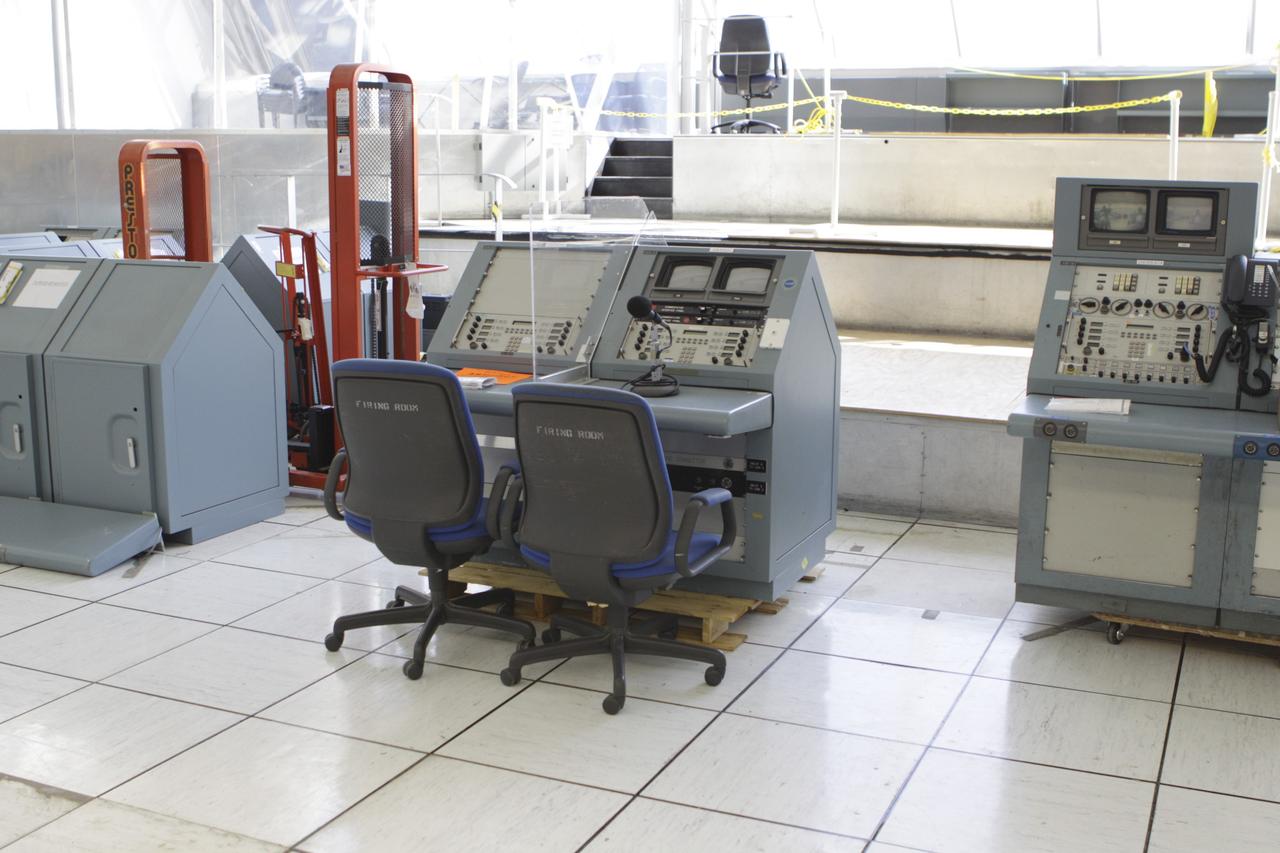
CAPE CANAVERAL, Fla. – Inside the Launch Control Center at NASA’s Kennedy Space Center in Florida, the Public Affairs Office console is being removed from Firing Room 3. The console will be moved to the Kennedy Space Center Visitor Complex in Florida and will be preserved for use in the space shuttle Atlantis display. During the 30-year history of NASA’s space shuttle launches, Public Affairs Officers sat at the console to provide commentary during shuttle tanking and launches. Photo credit: NASA/Glenn Benson
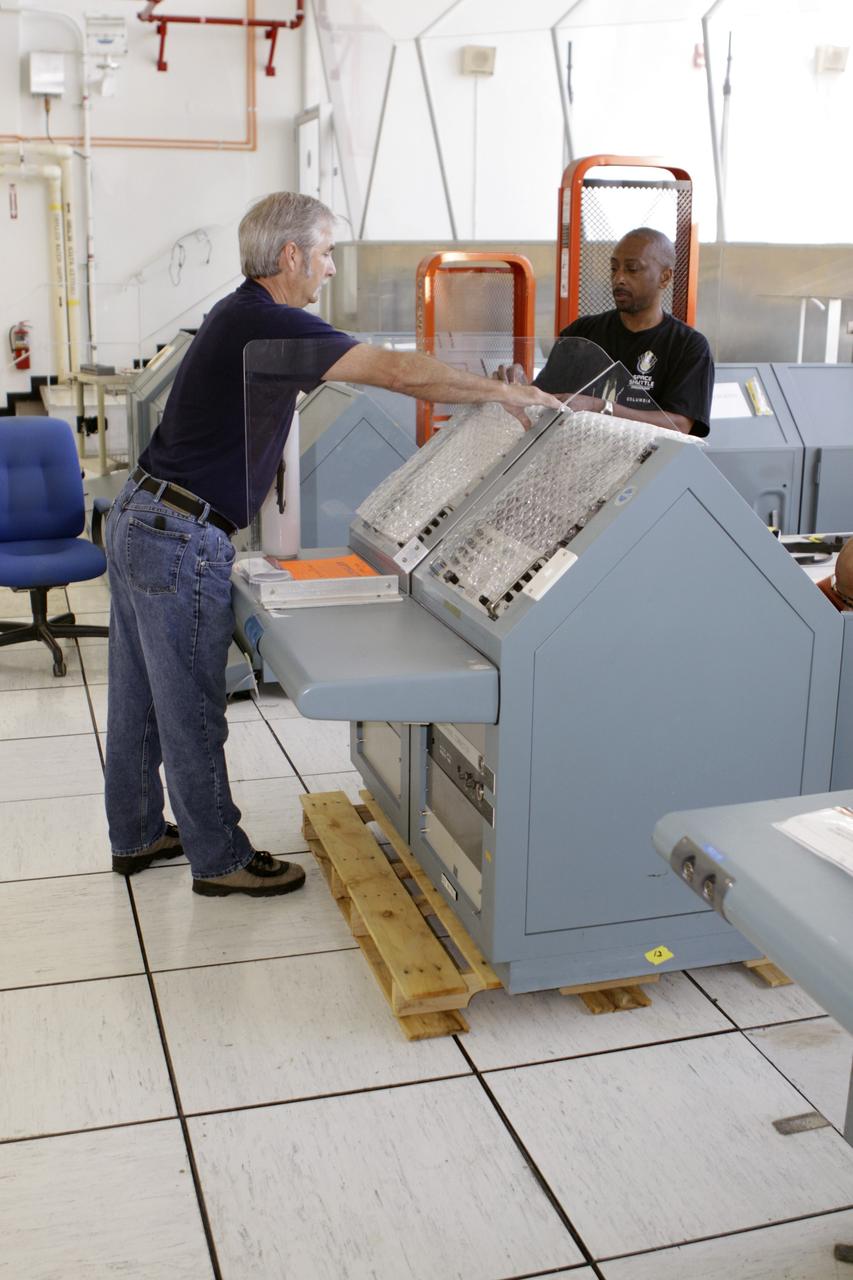
CAPE CANAVERAL, Fla. – Inside the Launch Control Center at NASA’s Kennedy Space Center in Florida, workers prepare to remove the Public Affairs Office console from Firing Room 3. The console will be moved to the Kennedy Space Center Visitor Complex in Florida and will be preserved for use in the space shuttle Atlantis display. During the 30-year history of NASA’s space shuttle launches, Public Affairs Officers sat at the console to provide commentary during shuttle tanking and launches. Photo credit: NASA/Glenn Benson
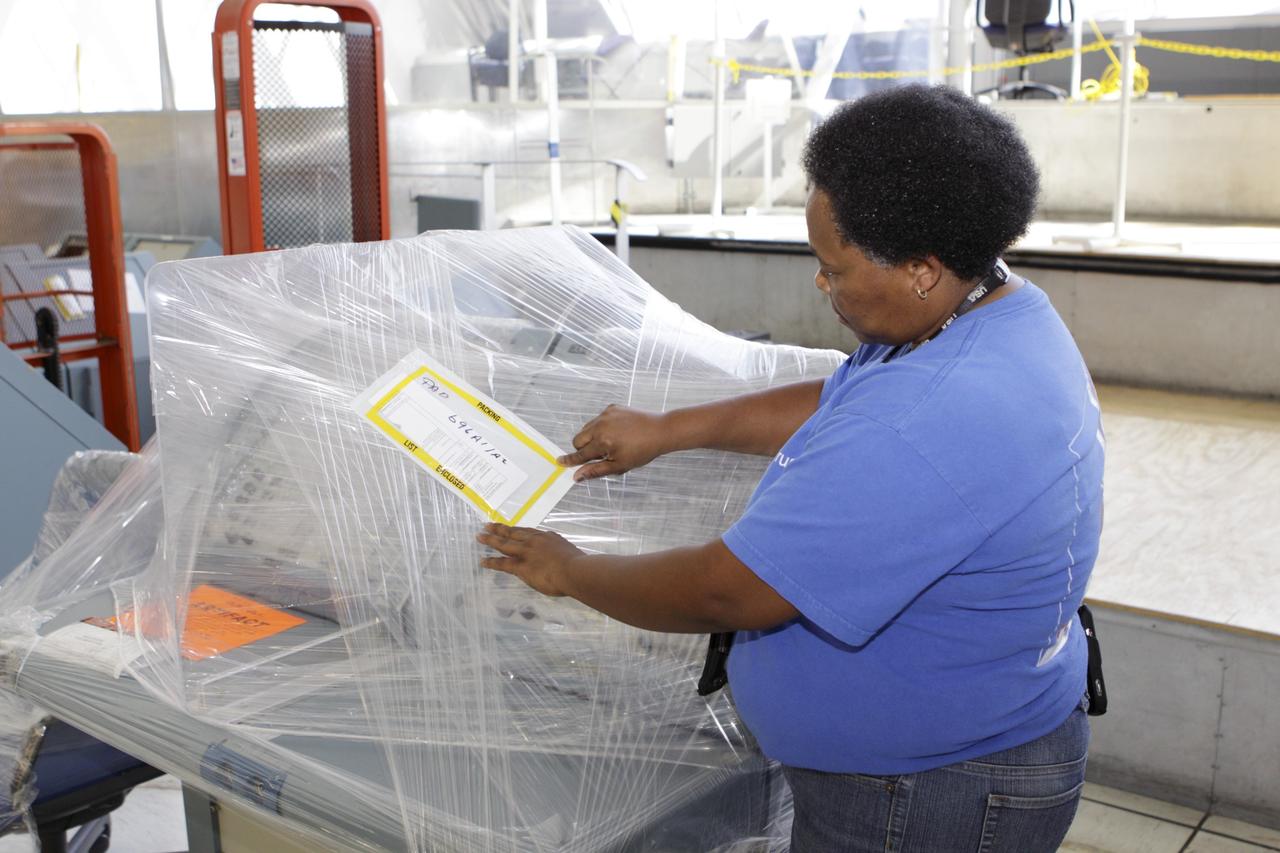
CAPE CANAVERAL, Fla. – Inside the Launch Control Center at NASA’s Kennedy Space Center in Florida, a worker prepares the Public Affairs Office console to be removed from Firing Room 3. The console will be moved to the Kennedy Space Center Visitor Complex in Florida and will be preserved for use in the space shuttle Atlantis display. During the 30-year history of NASA’s space shuttle launches, Public Affairs Officers sat at the console to provide commentary during shuttle tanking and launches. Photo credit: NASA/Glenn Benson

CAPE CANAVERAL, Fla. – Inside the Launch Control Center at NASA’s Kennedy Space Center in Florida, the Public Affairs Office console is being removed from Firing Room 3. The console will be moved to the Kennedy Space Center Visitor Complex in Florida and will be preserved for use in the space shuttle Atlantis display. During the 30-year history of NASA’s space shuttle launches, Public Affairs Officers sat at the console to provide commentary during shuttle tanking and launches. Photo credit: NASA/Glenn Benson
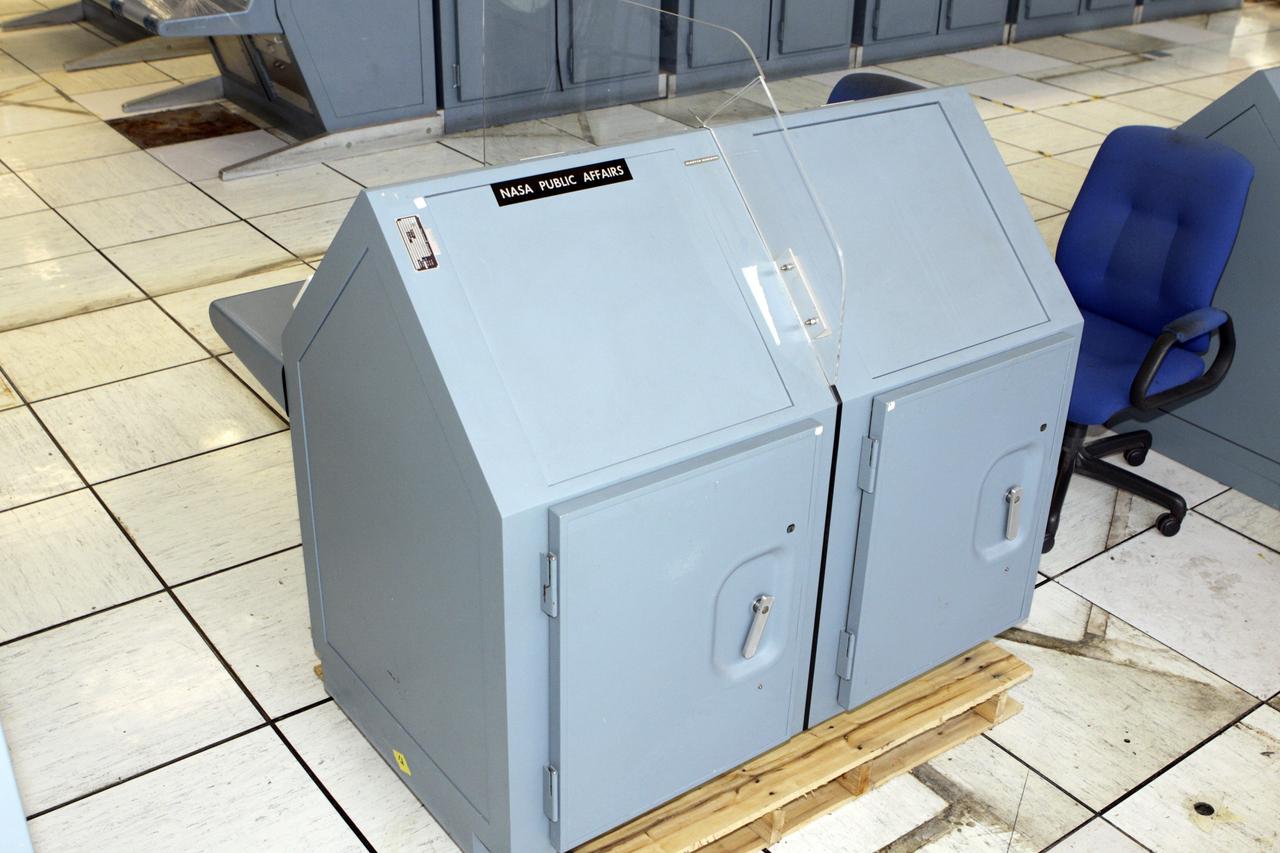
CAPE CANAVERAL, Fla. – Inside the Launch Control Center at NASA’s Kennedy Space Center in Florida, the Public Affairs Office console is being removed from Firing Room 3. The console will be moved to the Kennedy Space Center Visitor Complex in Florida and will be preserved for use in the space shuttle Atlantis display. During the 30-year history of NASA’s space shuttle launches, Public Affairs Officers sat at the console to provide commentary during shuttle tanking and launches. Photo credit: NASA/Glenn Benson

CAPE CANAVERAL, Fla. – Inside the Launch Control Center at NASA’s Kennedy Space Center in Florida, workers prepare the Public Affairs Office console to be removed from Firing Room 3. The console will be moved to the Kennedy Space Center Visitor Complex in Florida and will be preserved for use in the space shuttle Atlantis display. During the 30-year history of NASA’s space shuttle launches, Public Affairs Officers sat at the console to provide commentary during shuttle tanking and launches. Photo credit: NASA/Glenn Benson
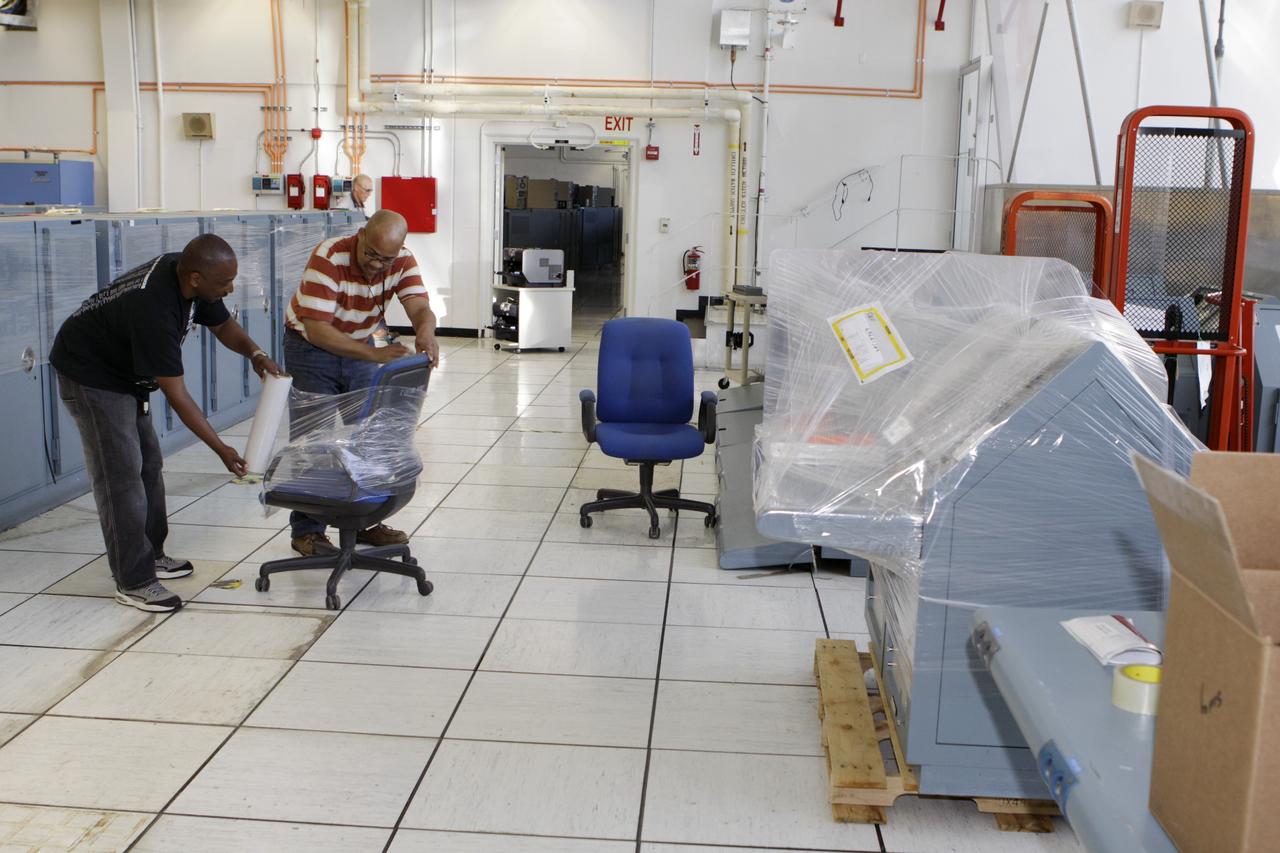
CAPE CANAVERAL, Fla. – Inside the Launch Control Center at NASA’s Kennedy Space Center in Florida, workers prepare the Public Affairs Office console and chairs to be removed from Firing Room 3. The console will be moved to the Kennedy Space Center Visitor Complex in Florida and will be preserved for use in the space shuttle Atlantis display. During the 30-year history of NASA’s space shuttle launches, Public Affairs Officers sat at the console to provide commentary during shuttle tanking and launches. Photo credit: NASA/Glenn Benson

CAPE CANAVERAL, Fla. – Inside the Launch Control Center at NASA’s Kennedy Space Center in Florida, workers remove the Public Affairs Office console and chairs from Firing Room 3. The console will be moved to the Kennedy Space Center Visitor Complex in Florida and will be preserved for use in the space shuttle Atlantis display. During the 30-year history of NASA’s space shuttle launches, Public Affairs Officers sat at the console to provide commentary during shuttle tanking and launches. Photo credit: NASA/Glenn Benson
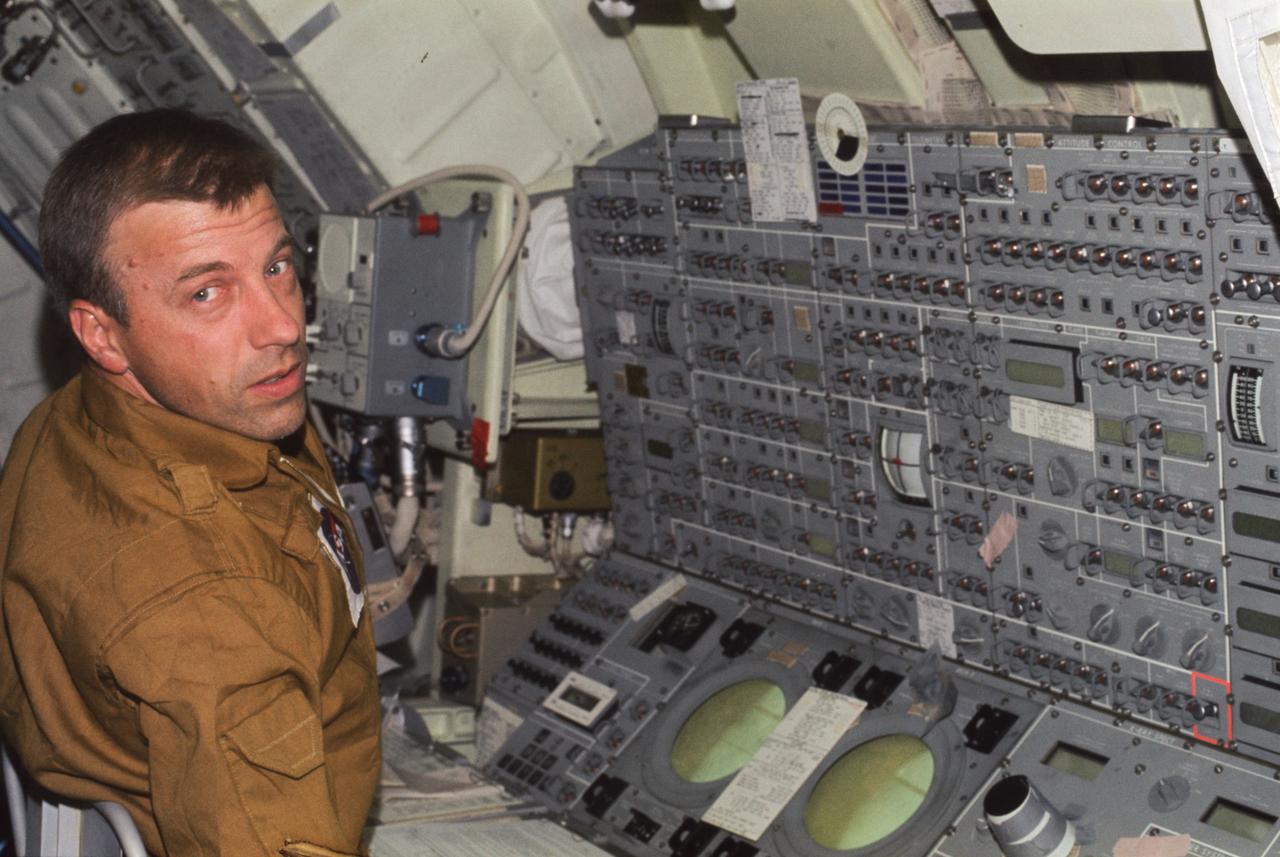
SL2-X9-747 (June 1973) --- Astronaut Paul J. Weitz, Skylab 2 pilot, mans the control and display console of the Apollo Telescope Mount (ATM) in this onboard view photographed in Earth orbit. The ATM C&D console is located in the Multiple Docking Adapter (MDA) of the Skylab 1/2 space station. Weitz, along with astronaut Charles Conrad Jr., commander, and scientist-astronaut Joseph P. Kerwin, science pilot, went on to successfully complete a 28-day mission in Earth orbit. Photo credit: NASA
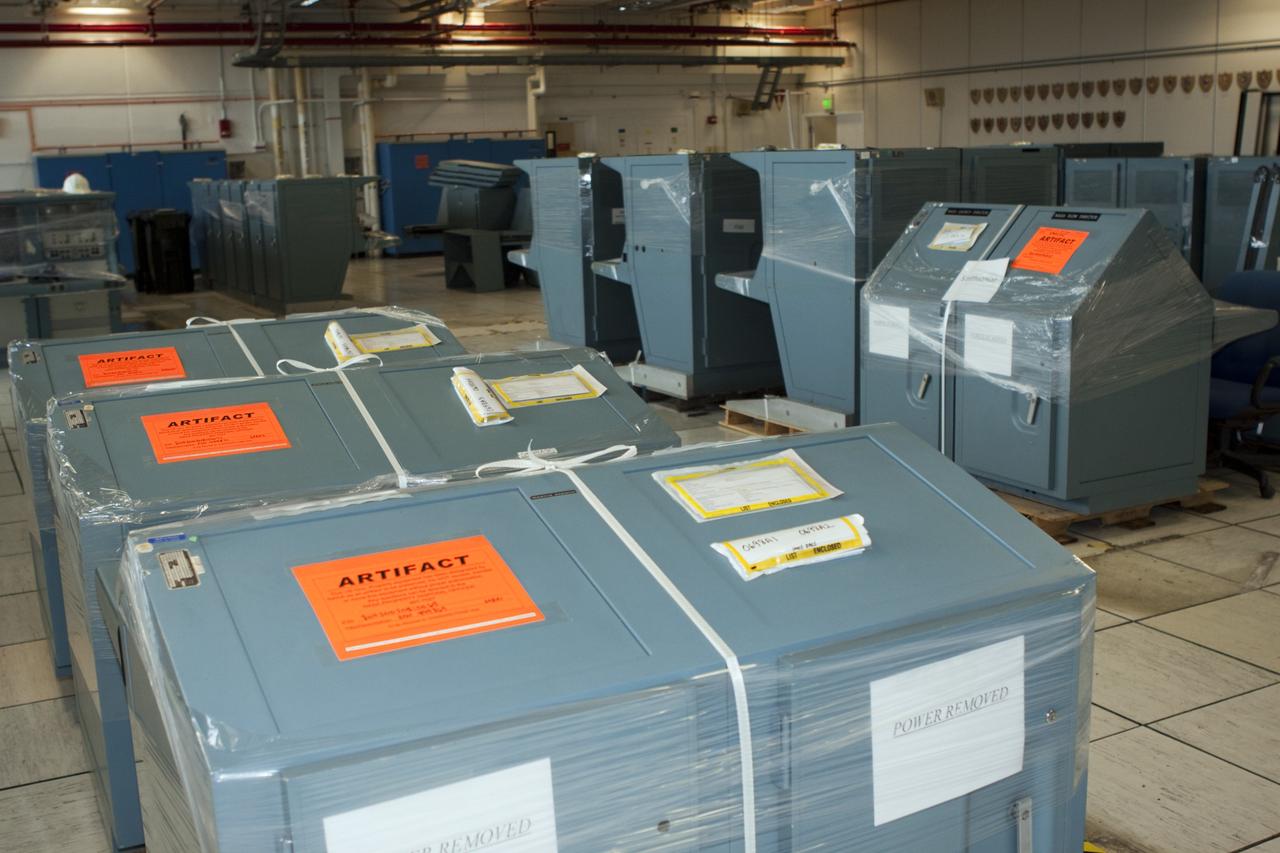
CAPE CANAVERAL, Fla. - In Firing Room 3 of the Launch Control Center at NASA’s Kennedy Space Center in Florida, legacy consoles and monitors are being removed to make way for new systems designed to be flexible so controllers can process and launch multiple types of rockets and spacecraft, whether they are government or commercial models. The historical nature of the consoles is marked with an “artifact” label as some will be displayed in museums and other educational institutions. KSC’s Launch Complex 39 is transitioning to support multiple users with the Firing Rooms being modified to be more generic in nature for upcoming programs. Photo credit: NASA/Jim Grossmann
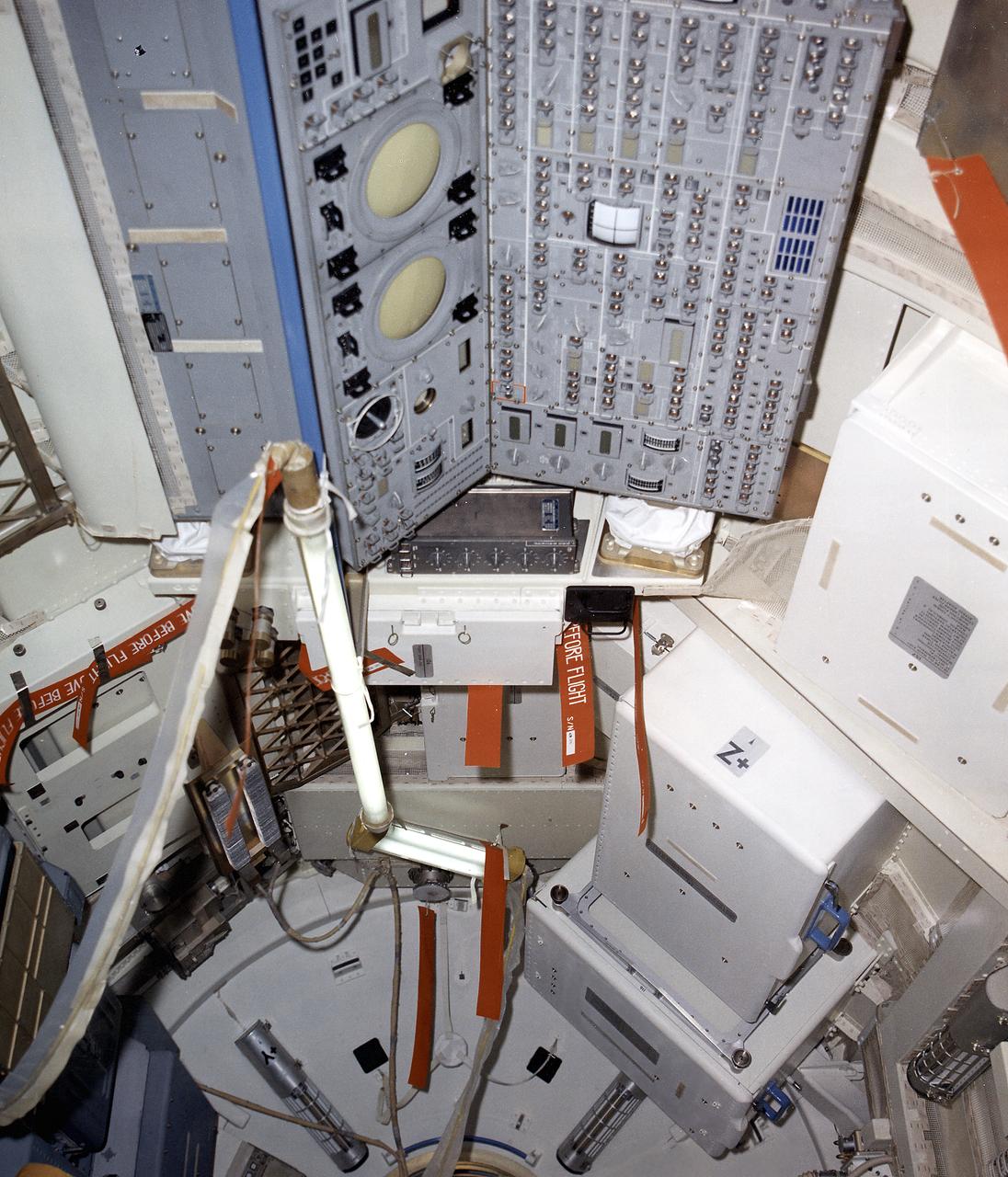
This December 1971 photograph shows the internal configuration of Skylab's Multiple Docking Adapter (MDA) as it appeared during the Crew Compartment and Function Review at the Martin-Marietta Corporation's Space Center facility in Denver, Colorado. At left is the control and display console for the Apollo Telescope Mount. Designed and manufactured by the Marshall Space Flight Center, the MDA housed a number of experiment control and stowage units and provided a docking port for the Apollo Command Module.
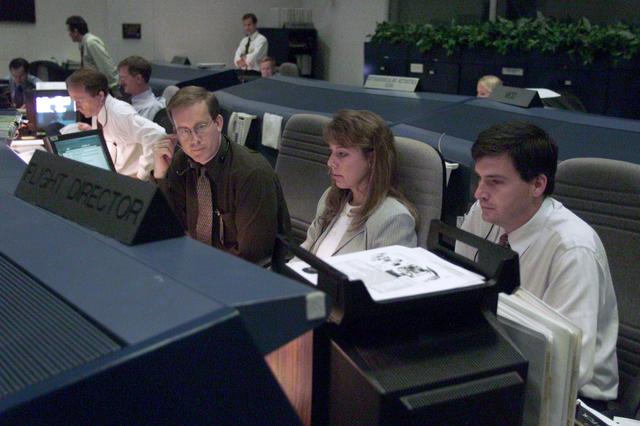
JSC2001-E-25111 (16 August 2001) --- Flight directors John Shannon (left foreground), Kelly Beck, and Steve Stich monitor the data displayed at their consoles in the shuttle flight control room (WFCR) in Houston’s Mission Control Center (MCC). At the time this photo was taken, STS-105 mission specialists Daniel T. Barry and Patrick G. Forrester were performing the first of the two scheduled space walks to perform work on the International Space Station (ISS).
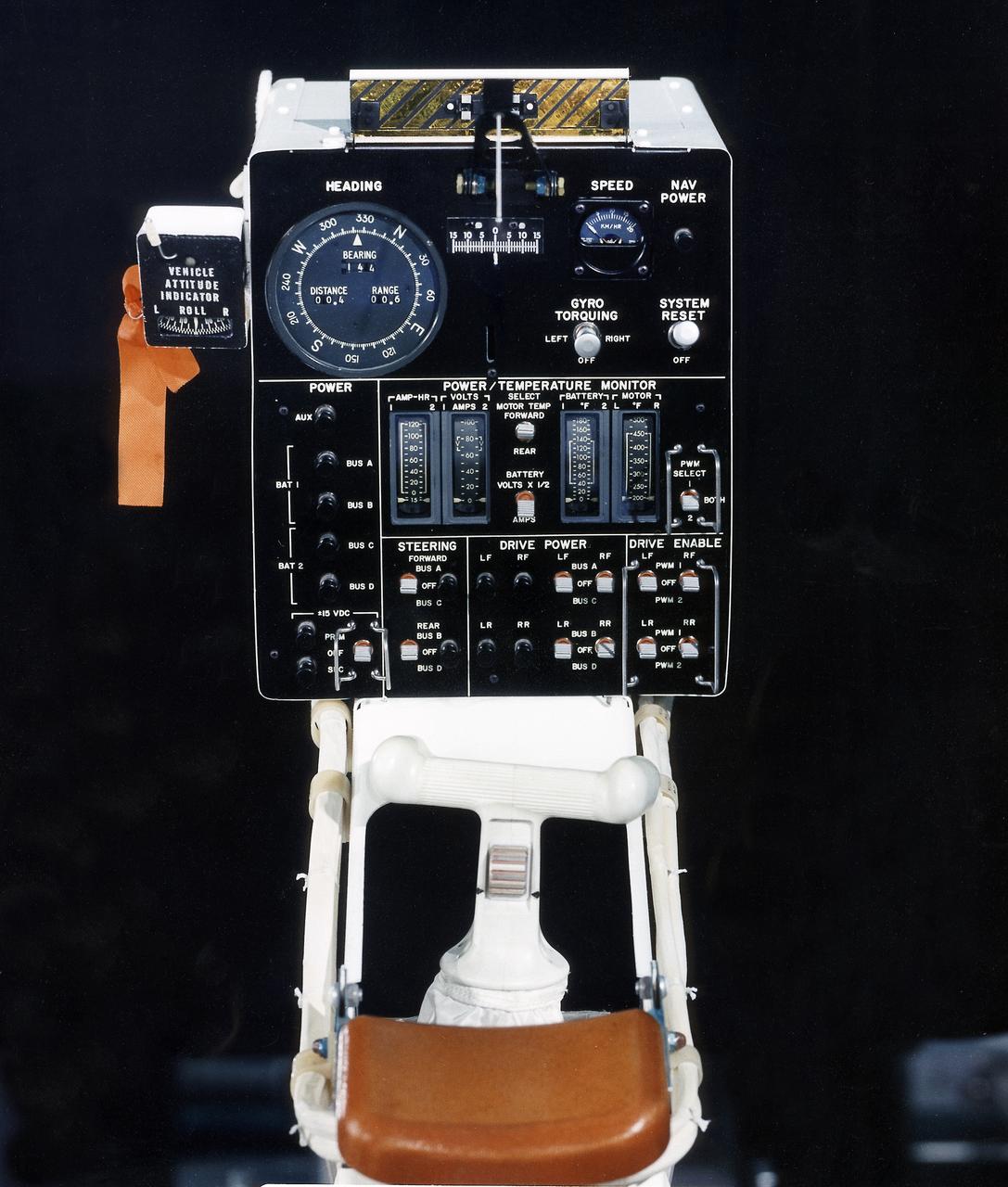
This photograph is a view of a display, control console, and hand controller for the Lunar Roving Vehicle (LRV) No. 2. The LRV was built to give Apollo astronauts a greater range of mobility during lunar exploration. It was an open-space and collapsible vehicle about 10 feet long with large mesh wheels, anterna, appendages, tool caddies, and camera. An LRV was used on each of the last three Apollo missions; Apollo 15, Apollo 16, and Apollo 17. It was built by the Boeing Company under the direction of the Marshall Space Flight Center.
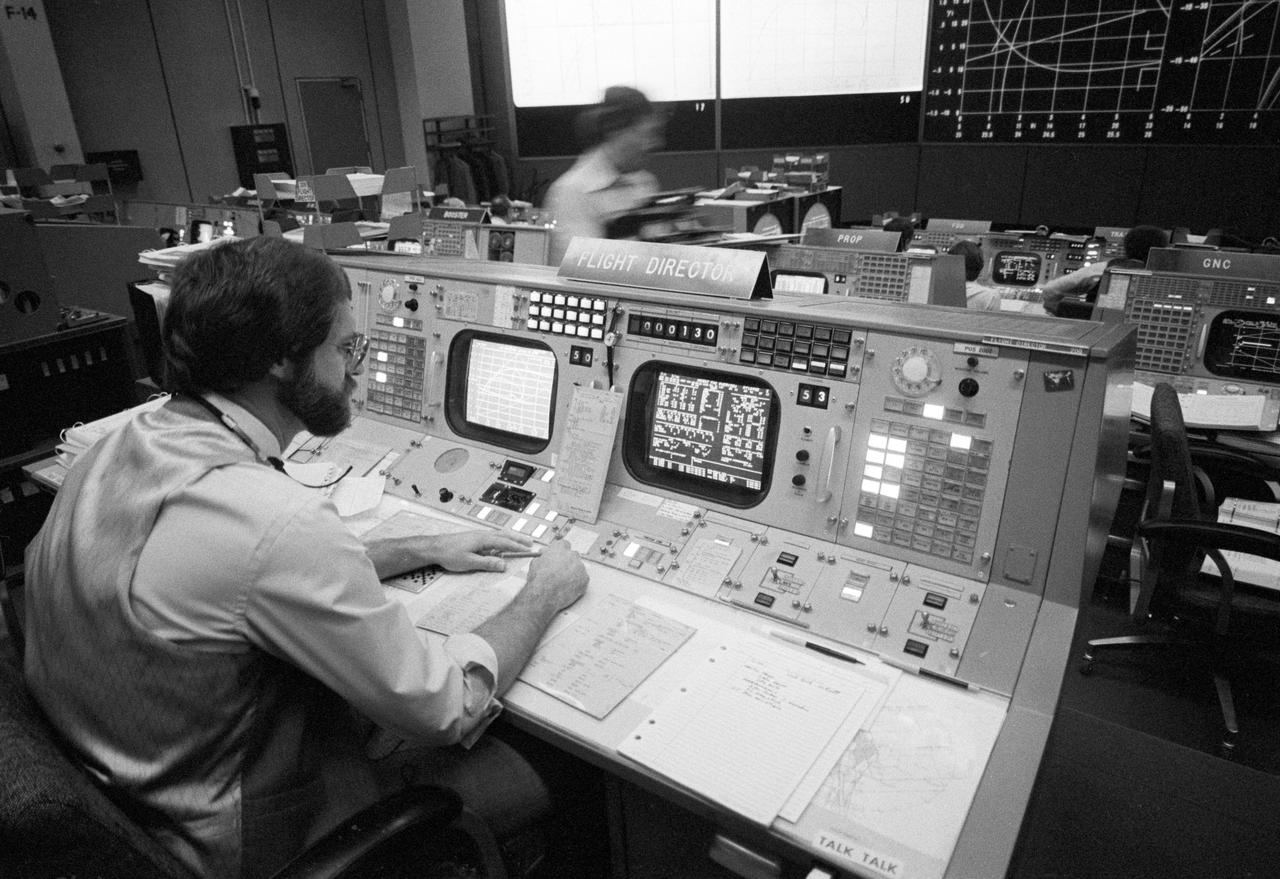
S81-39433 (12 Nov. 1981) --- Flight director Neil B. Hutchinson monitors data displayed on a cathode ray tube (CRT) at his console in the mission operations control room (MOCR) in the Johnson Space Center?s Mission Control Center (MCC) during the launch phase of STS-2. Launch of the Columbia occurred at 9:10 a.m. CST today with astronauts Joe H. Engle and Richard H. Truly aboard the Columbia. Photo credit: NASA
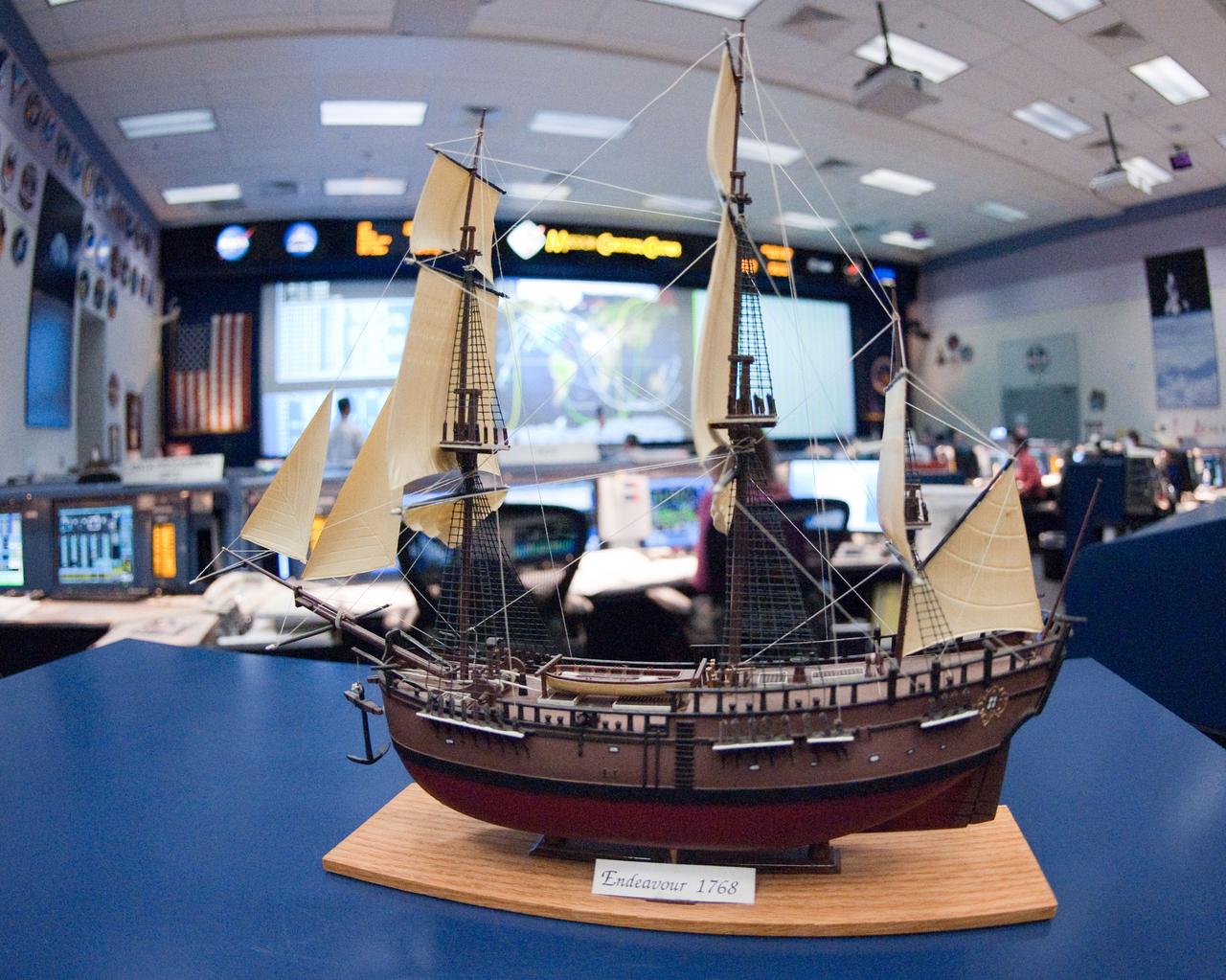
JSC2011-E-045472 (17 May 2011) --- A scale model of HM Bark Endeavour, namesake for the space shuttle currently making its final flight, adorns a console in the space shuttle flight control room in Mission Control in Houston. This model was first displayed in 1992 in the old shuttle control room during STS-49, the inaugural flight of the shuttle Endeavour. It was built by Dan Willett of JSC's Information Resources Directorate. The original sailing ship Endeavour was commanded by Lt. James Cook on a scientific voyage to the South Pacific, Australia and New Zealand from 1768 to 1771. Photo credit: NASA
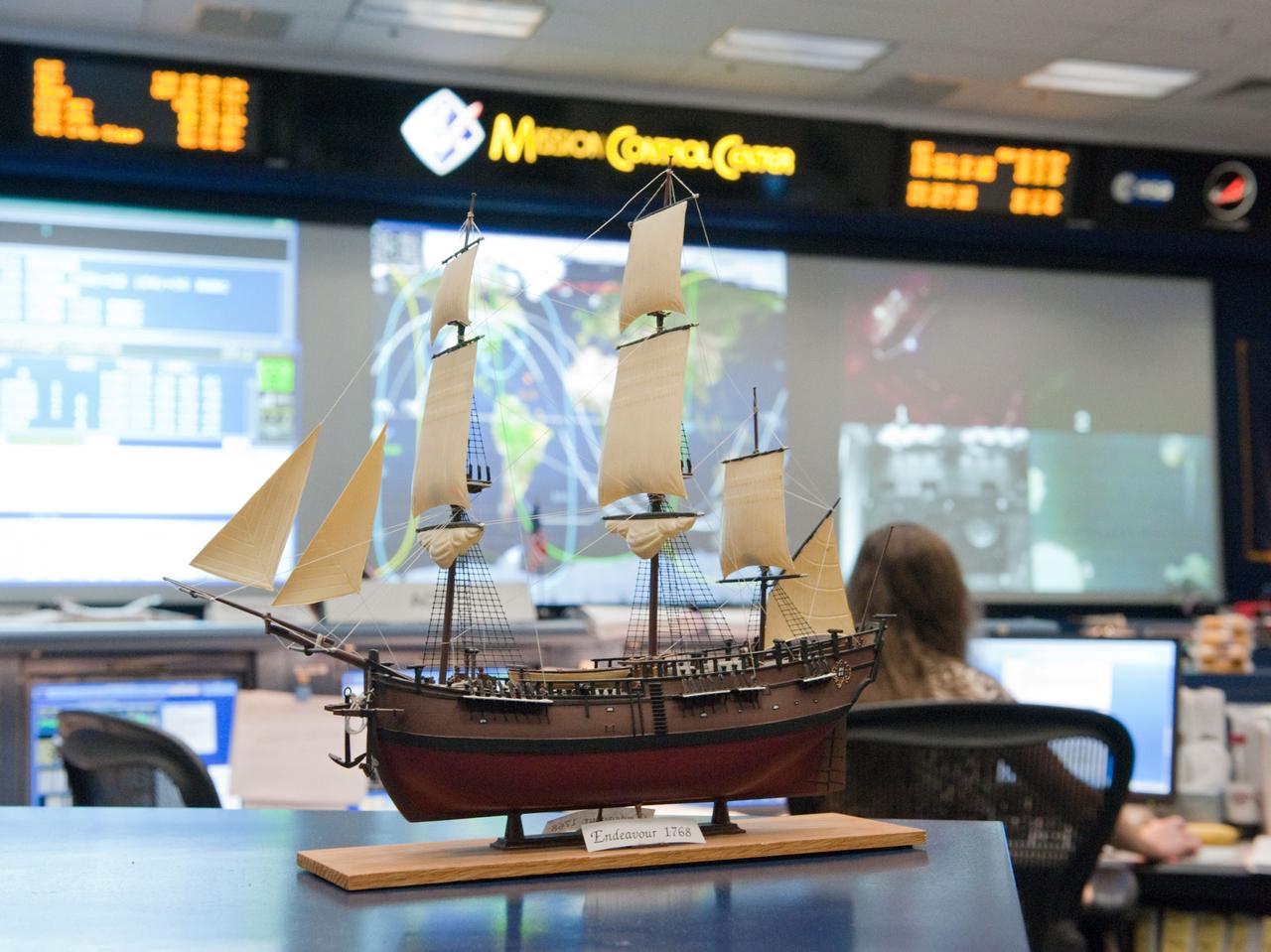
JSC2011-E-046588 (20 May 2011) --- A scale model of HM Bark Endeavour, namesake for the space shuttle currently making its final flight, adorns a console in the space shuttle flight control room in Mission Control in Houston. This model was first displayed in 1992 in the old shuttle control room during STS-49, the inaugural flight of the shuttle Endeavour. It was built by Dan Willett of JSC's Information Resources Directorate. The original sailing ship Endeavour was commanded by Lt. James Cook on a scientific voyage to the South Pacific, Australia and New Zealand from 1768 to 1771. Photo credit: NASA
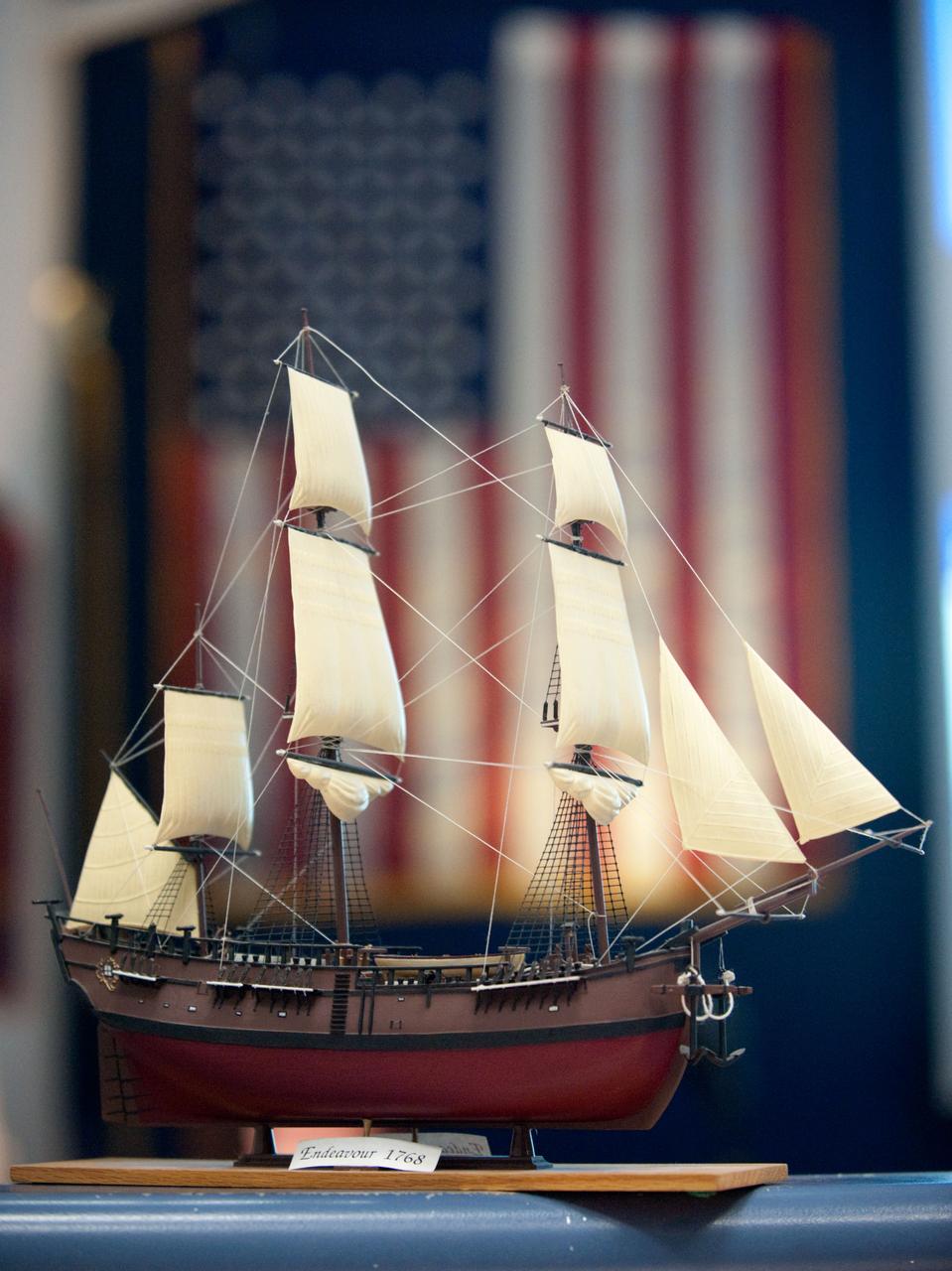
JSC2011-E-046587 (20 May 2011) --- A scale model of HM Bark Endeavour, namesake for the space shuttle currently making its final flight, adorns a console in the space shuttle flight control room in Mission Control in Houston. This model was first displayed in 1992 in the old shuttle control room during STS-49, the inaugural flight of the shuttle Endeavour. It was built by Dan Willett of JSC's Information Resources Directorate. The original sailing ship Endeavour was commanded by Lt. James Cook on a scientific voyage to the South Pacific, Australia and New Zealand from 1768 to 1771. Photo credit: NASA
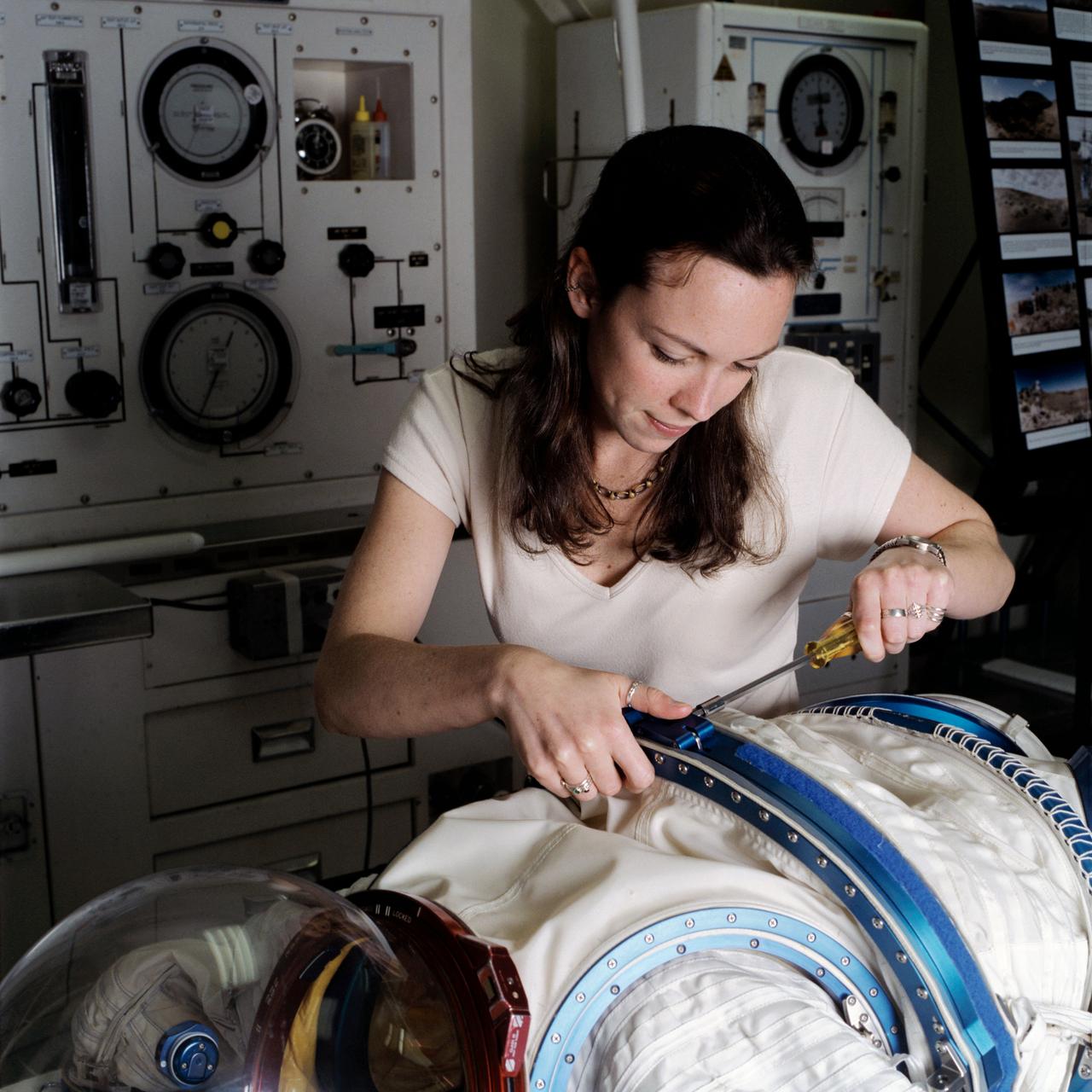
Photographic documentation showing co-operative students performing their various tasks around Johnson Space Center. These images will be used for displays and brochures for the co-operative program. Images include: a student tightening a bolt on the upper torso of the experimental soft space suit (04726-7); three students working at the Guidance/Navigation (GNC) console in the Mission Control Center (MCC) in Building 30S - the front large screens are visible in the background (04728); two students working at the Guidance/Navigation (GNC) console in the Mission Control Center (MCC) in Building 30S - the front large screens are visible in the background (04729); two students working with an experimental soft space suit (04730); three students working with an experimental soft space suit (04731); and a student tests her manual dexterity using a glove box while another student looks on (04732-3).
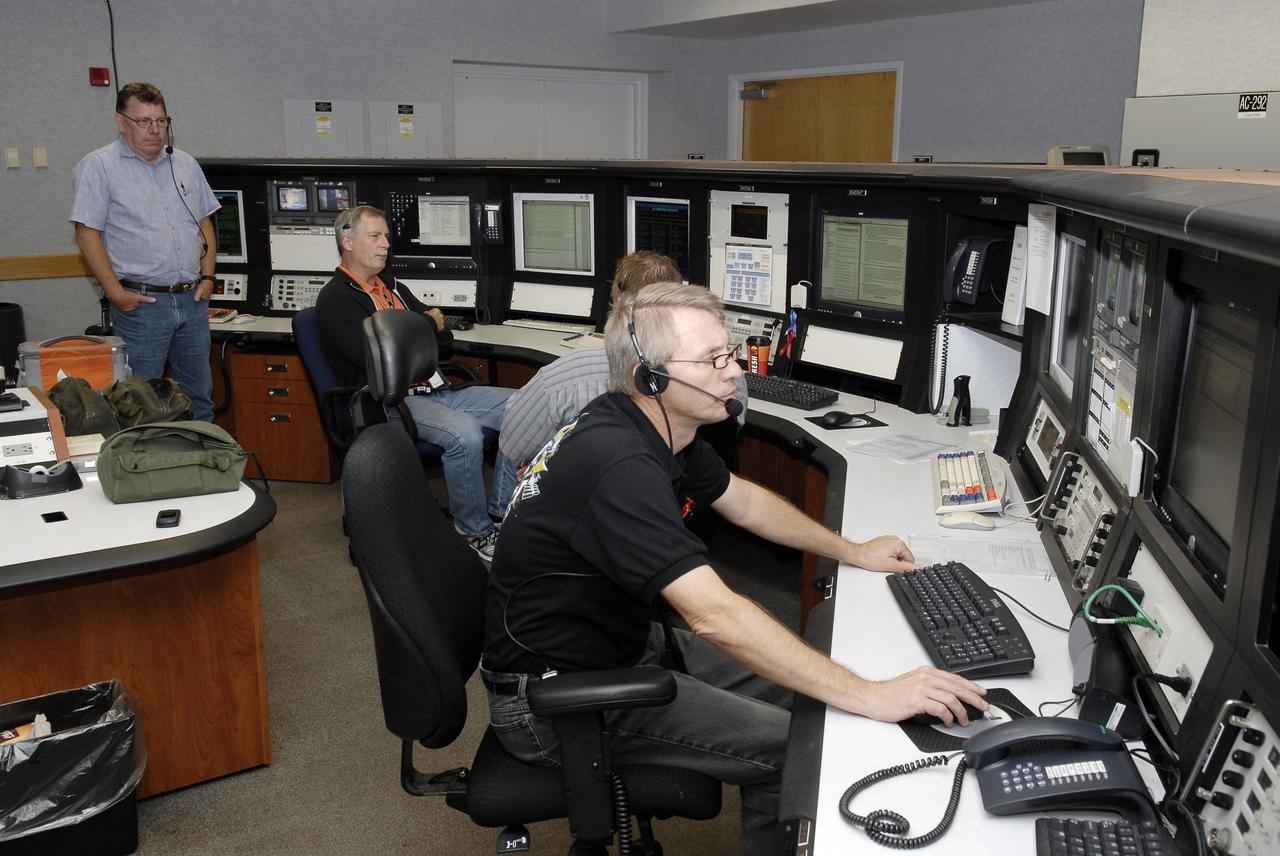
CAPE CANAVERAL, Fla. – United Space Alliance test conductors monitor the Firing Room 4 Master Console in the Launch Control Center as operations to power down space shuttle Endeavour for the final time are under way in Orbiter Processing Facility-2 at NASA’s Kennedy Space Center in Florida. From left are Dave Martin, Gary Lewis, Ethan Waldron, and John Robb. The overall health and status of the shuttle’s Launch Processing System is overseen and controlled from the Master Console. Endeavour is being prepared for public display at the California Science Center in Los Angeles. Its ferry flight to California is targeted for mid-September. Endeavour was the last space shuttle added to NASA’s orbiter fleet. Over the course of its 19-year career, Endeavour spent 299 days in space during 25 missions. For more information, visit http://www.nasa.gov/transition. Photo credit: NASA/Tim Jacobs
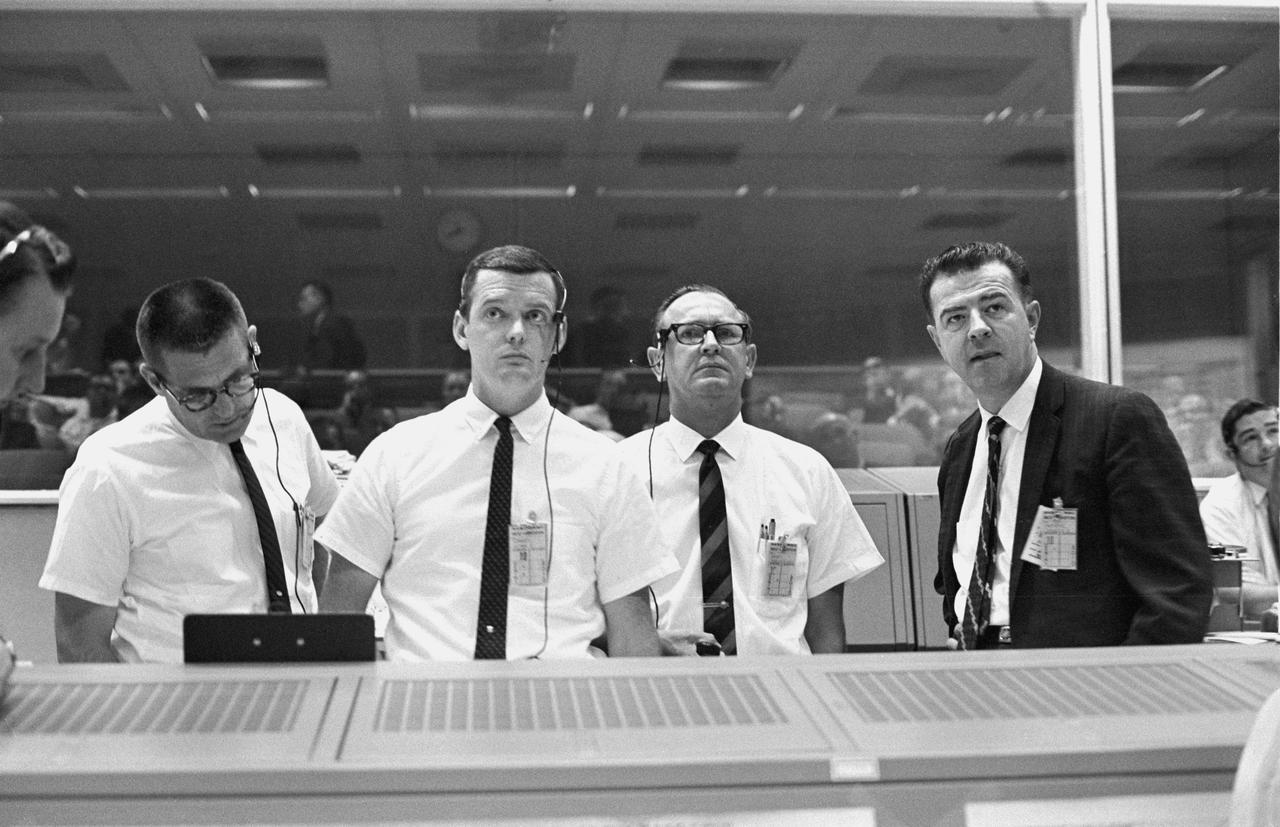
S66-43377 (18 July 1966) --- Standing at the flight director's console, viewing the Gemini-10 flight display in the Mission Control Center, are (left to right) William C. Schneider, Mission Director; Glynn Lunney, Prime Flight Director; Christopher C. Kraft Jr., MSC Director of Flight Operations; and Charles W. Mathews, Manager, Gemini Program Office. Photo credit: NASA
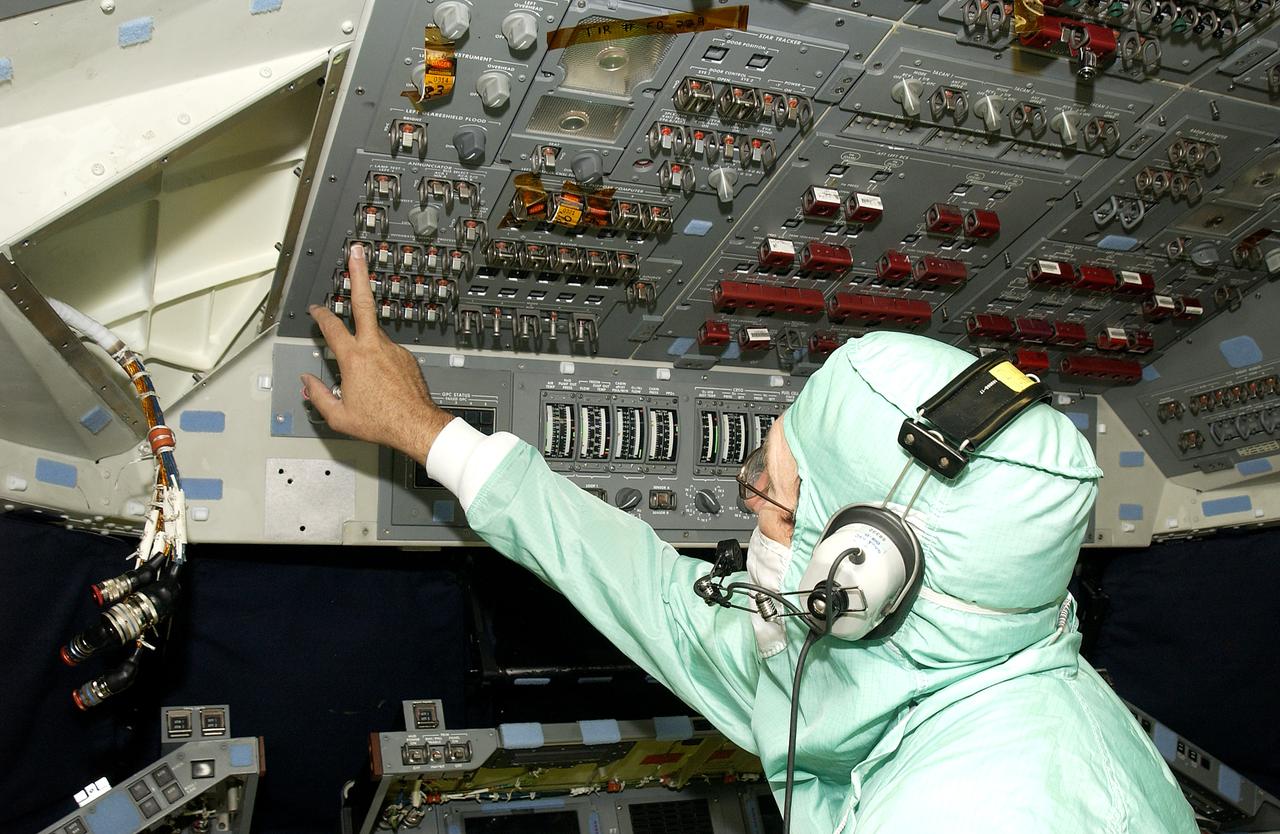
During power-up of the orbiter Discovery in the Orbiter Processing Facility, a technician moves a circuit reset on the cockpit console. Discovery has been undergoing Orbiter Major Modifications in the past year, ranging from wiring, control panels and black boxes to gaseous and fluid systems tubing and components. These systems were deserviced, disassembled, inspected, modified, reassembled, checked out and reserviced, as were most other systems onboard. The work includes the installation of the Multifunction Electronic Display Subsystem (MEDS) - a state-of-the-art “glass cockpit.”
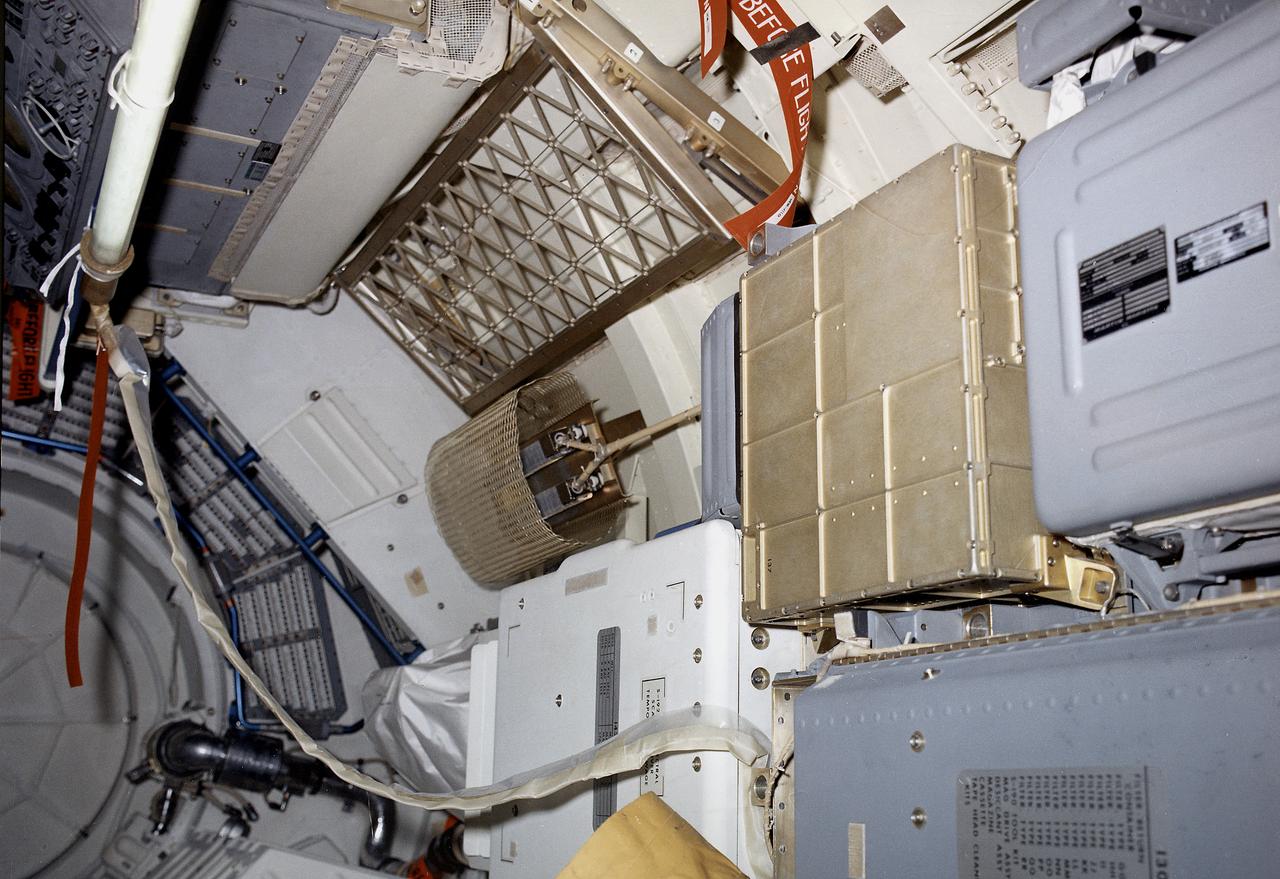
The Multiple Docking Adapter (MDA), designed and constructed under the direction of the Marshall Space Flight Center, was one of four principal sections comprising Skylab. The MDA provided the means by which the Command and Service Modules attached to the Skylab, enabling the crews to enter and work in it. Also included in the MDA was a control and display console for the Apollo Telescope Mount. This image shows an interior view of the MDA.
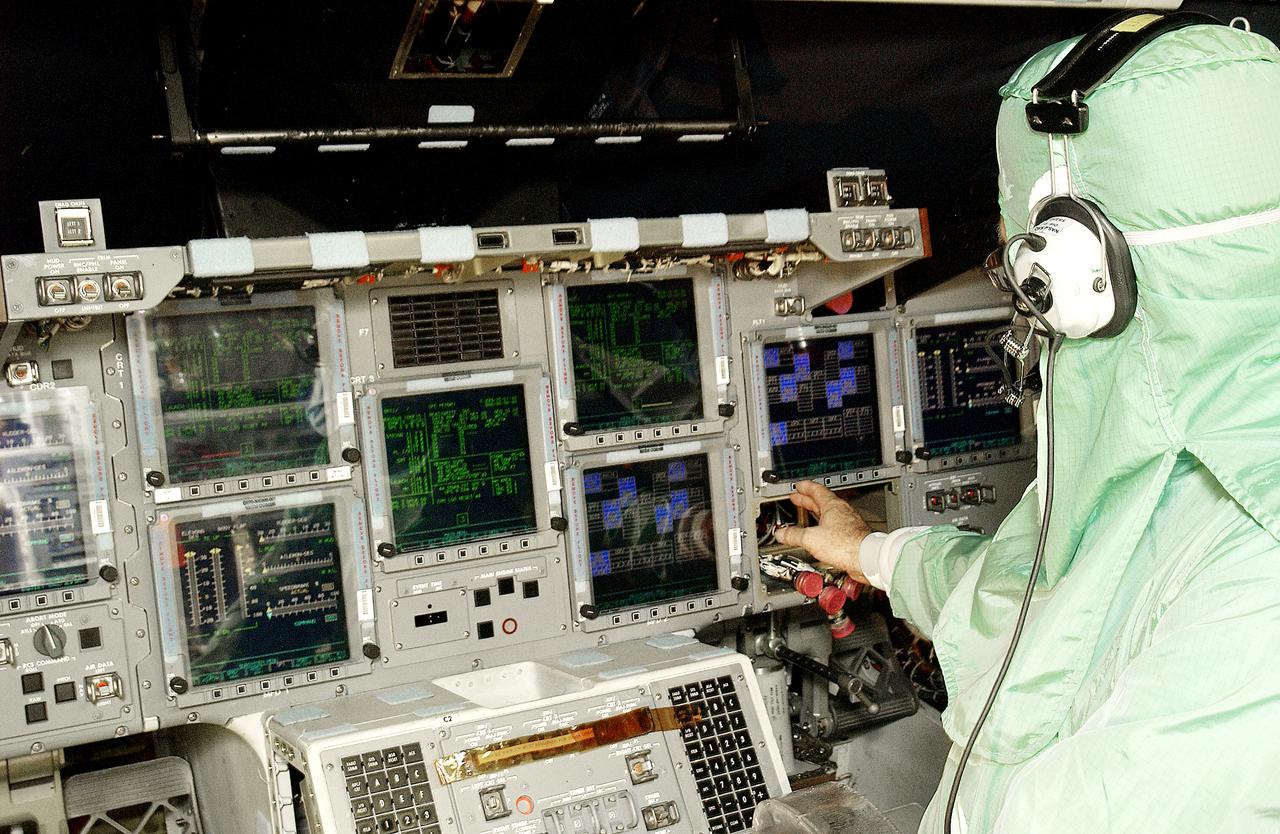
During power-up of the orbiter Discovery in the Orbiter Processing Facility, a technician adjusts a monitor on the console. Discovery has been undergoing Orbiter Major Modifications in the past year, ranging from wiring, control panels and black boxes to gaseous and fluid systems tubing and components. These systems were deserviced, disassembled, inspected, modified, reassembled, checked out and reserviced, as were most other systems onboard. The work includes the installation of the Multifunction Electronic Display Subsystem (MEDS) - a state-of-the-art “glass cockpit.”
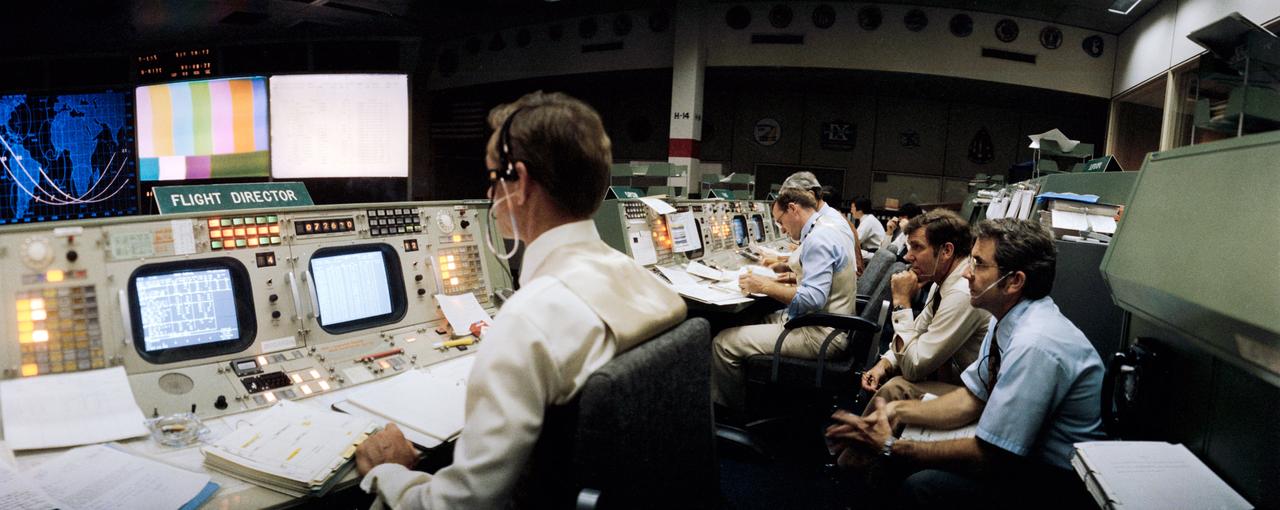
S81-30386 (14 April 1981) --- Flight director Charles R. Lewis, left, studies a chart display on his console?s monitor in the mission operations control room (MOCR) in the Johnson Space Center?s Mission Control Center. The photograph was taken just prior to a TV transmission on day two of STS-1, with a special wide-angle lens. Astronauts Joe H. Engle (second from right) and Richard H. Truly, right, are backup commander and pilot, respectively, for NASA?s first space shuttle orbital test mission. Astronaut James F. Buchli, spacecraft communicator, is at right center. Photo credit: NASA
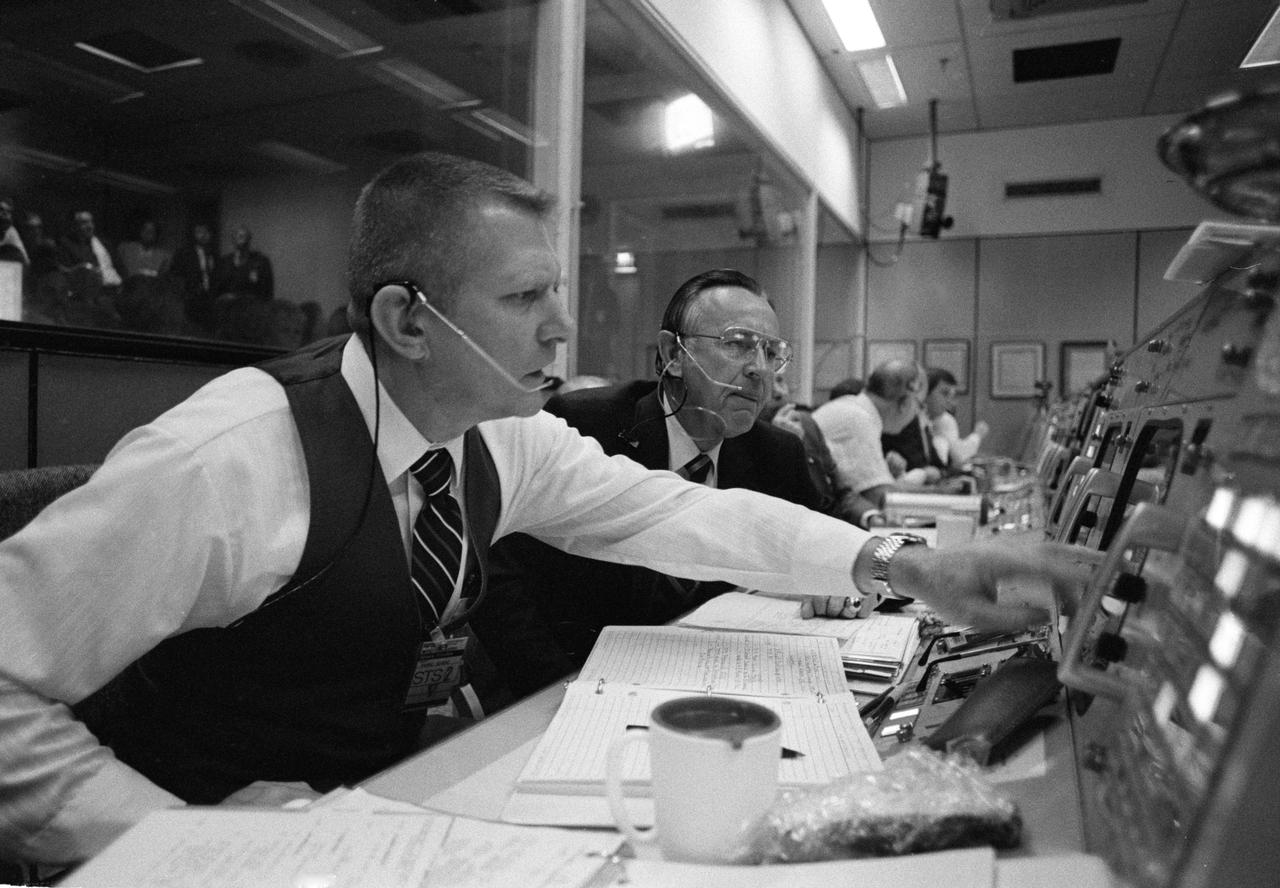
S81-39431 (12 Nov. 1981) --- Eugene F. Kranz, left, and Dr. Christopher C. Kraft Jr. monitor data displayed on the FOD console in the mission operations control room (MOCR) in the Johnson Space Center?s mission control center following the successful launch of the Columbia, and the beginning of NASA?s second space shuttle mission. Dr. Kraft is director of the Johnson Space Center and Kranz is deputy director of the flight operations directorate (FOD) at JSC. Houston time for the launch was approximately 9:10 a.m., Nov 12, 1981. Photo credit: NASA
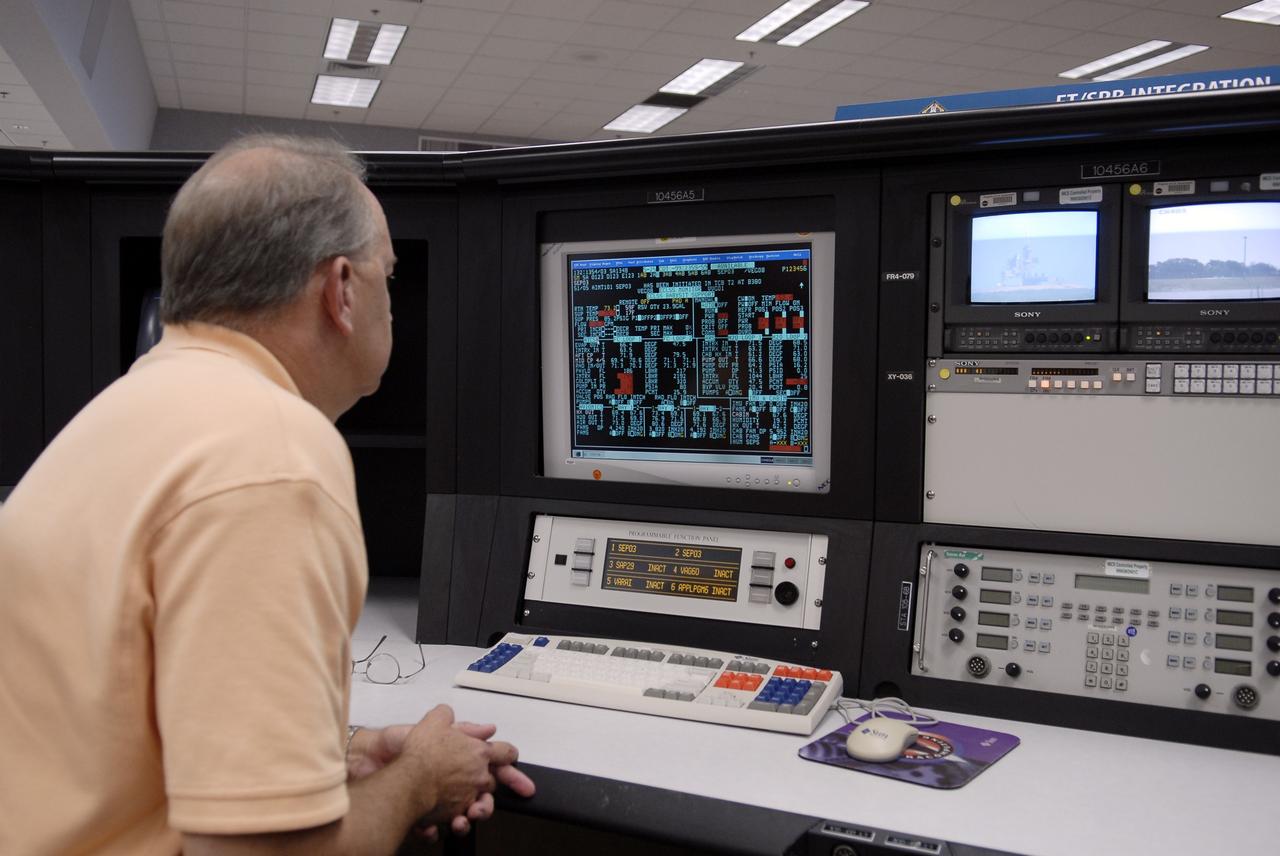
CAPE CANAVERAL, Fla. – Pat Simpkins, director of Engineering for NASA at Kennedy Space Center in Florida, monitors the final power down of space shuttle Endeavour from the Firing Room 4 Integration Console in the Launch Control Center. The Integration Console manages all orbiter systems including those needed for shuttle power up and launch. Endeavour’s power down is under way in in Orbiter Processing Facility-2. Endeavour is being prepared for public display at the California Science Center in Los Angeles. Its ferry flight to California is targeted for mid-September. Endeavour was the last space shuttle added to NASA’s orbiter fleet. Over the course of its 19-year career, Endeavour spent 299 days in space during 25 missions. For more information, visit http://www.nasa.gov/transition. Photo credit: NASA/Tim Jacobs
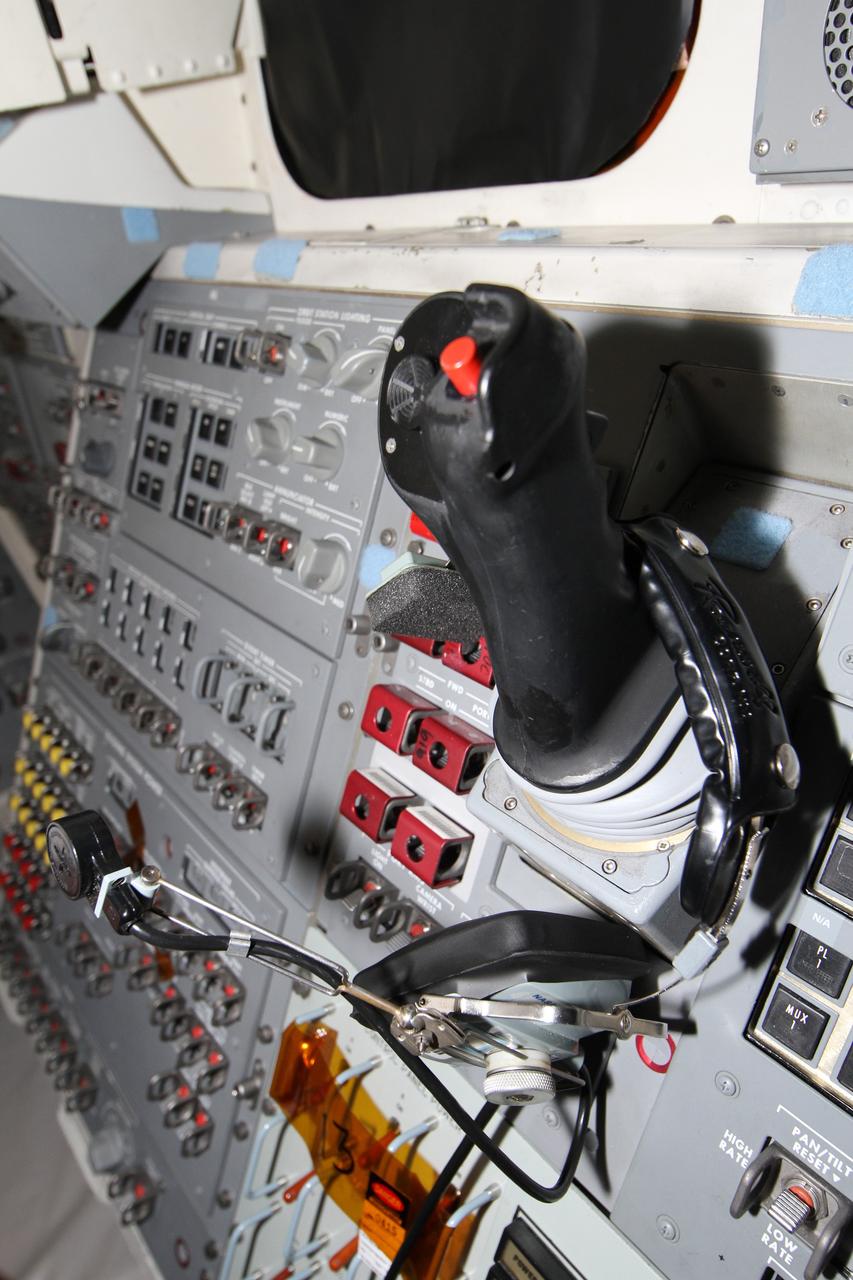
CAPE CANAVERAL, Fla. – Communication no longer required between Orbiter Processing Facility-2 and the Launch Control Center at NASA’s Kennedy Space Center in Florida, a headset is left on a console on space shuttle Endeavour’s flight deck after the shuttle is powered down for the final time. Endeavour is being prepared for public display at the California Science Center in Los Angeles. Its ferry flight to California is targeted for mid-September. Endeavour was the last space shuttle added to NASA’s orbiter fleet. Over the course of its 19-year career, Endeavour spent 299 days in space during 25 missions. For more information, visit http://www.nasa.gov/transition. Photo credit: NASA/Ben Smegelsky
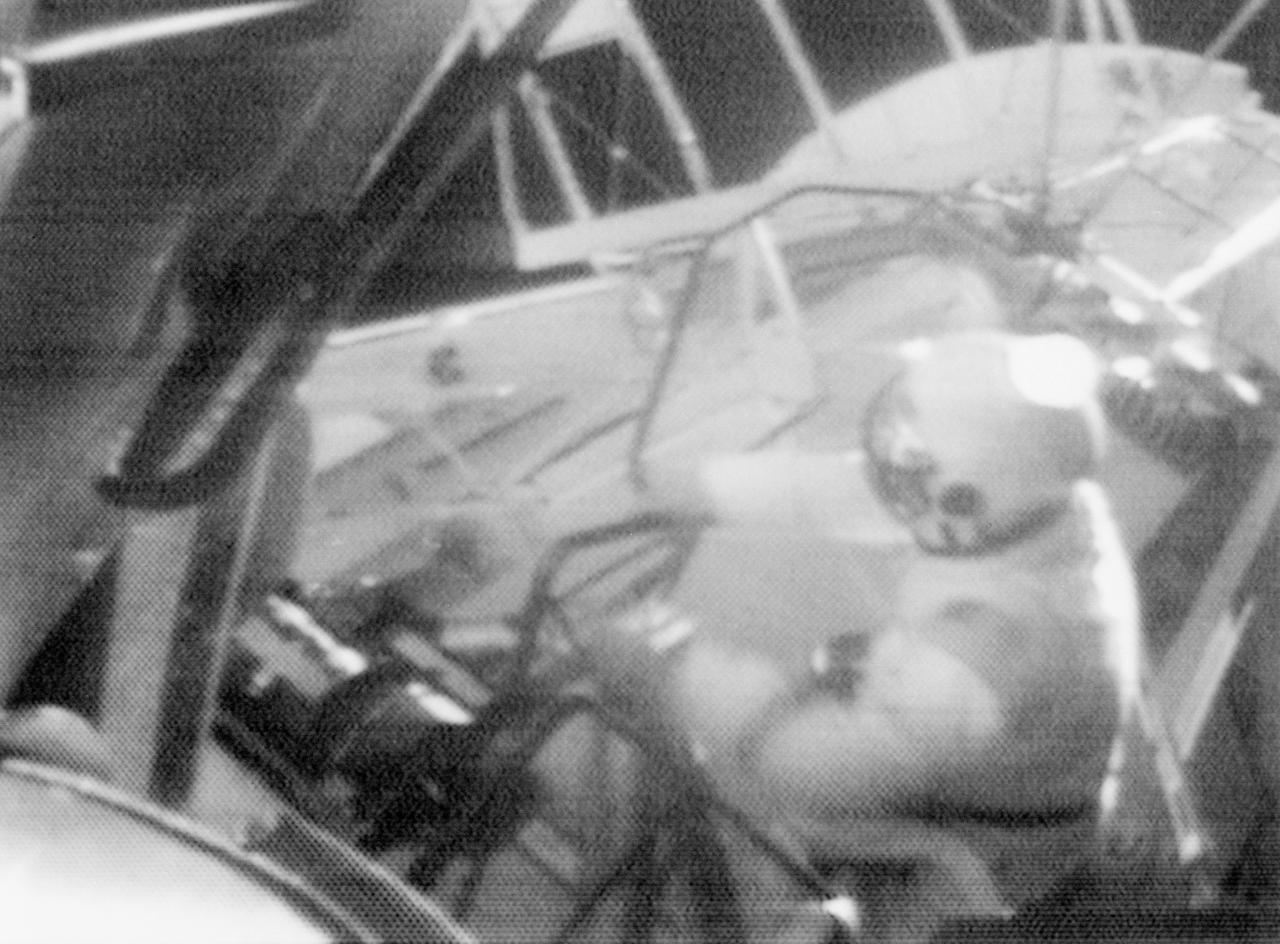
S73-33161 (24 Aug. 1973) --- Astronaut Jack R. Lousma, Skylab 3 pilot, hooks up a 23-foot, two-inch connecting cable for the rate gyro six pack during extravehicular activity (EVA) on Aug. 24, 1973, as seen in this photographic reproduction taken from a color television transmission made by a TV camera aboard the Skylab space station in Earth orbit. The rate gyros were mounted inside the Multiple Docking Adapter opposite the Apollo Telescope Mount control and display console. Photo credit: NASA
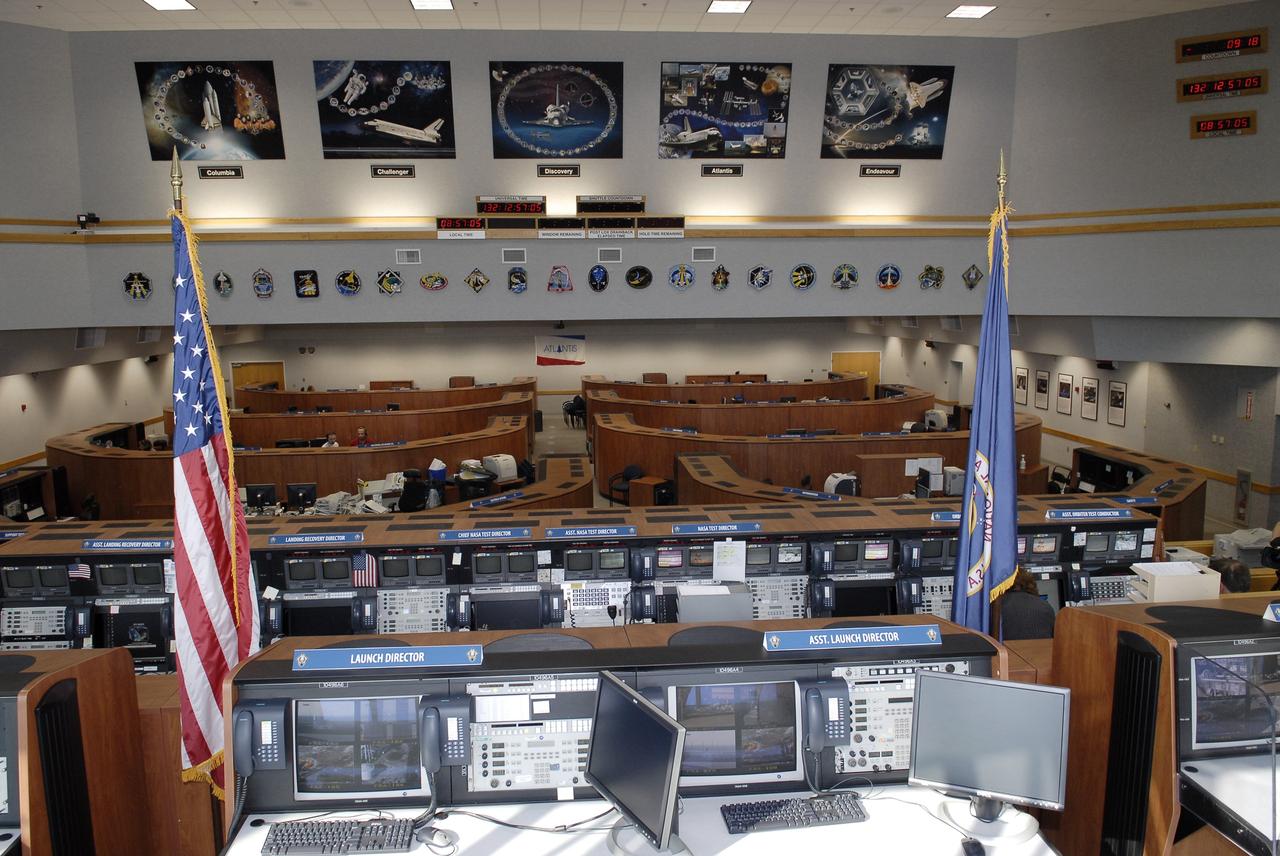
CAPE CANAVERAL, Fla. – NASA and contractor test conductors take their places at the Firing Room 4 consoles in the Launch Control Center as operations to power down space shuttle Endeavour for the final time get under way in Orbiter Processing Facility-2 at NASA’s Kennedy Space Center in Florida. Endeavour is being prepared for public display at the California Science Center in Los Angeles. Its ferry flight to California is targeted for mid-September. Endeavour was the last space shuttle added to NASA’s orbiter fleet. Over the course of its 19-year career, Endeavour spent 299 days in space during 25 missions. For more information, visit http://www.nasa.gov/transition. Photo credit: NASA/Tim Jacobs
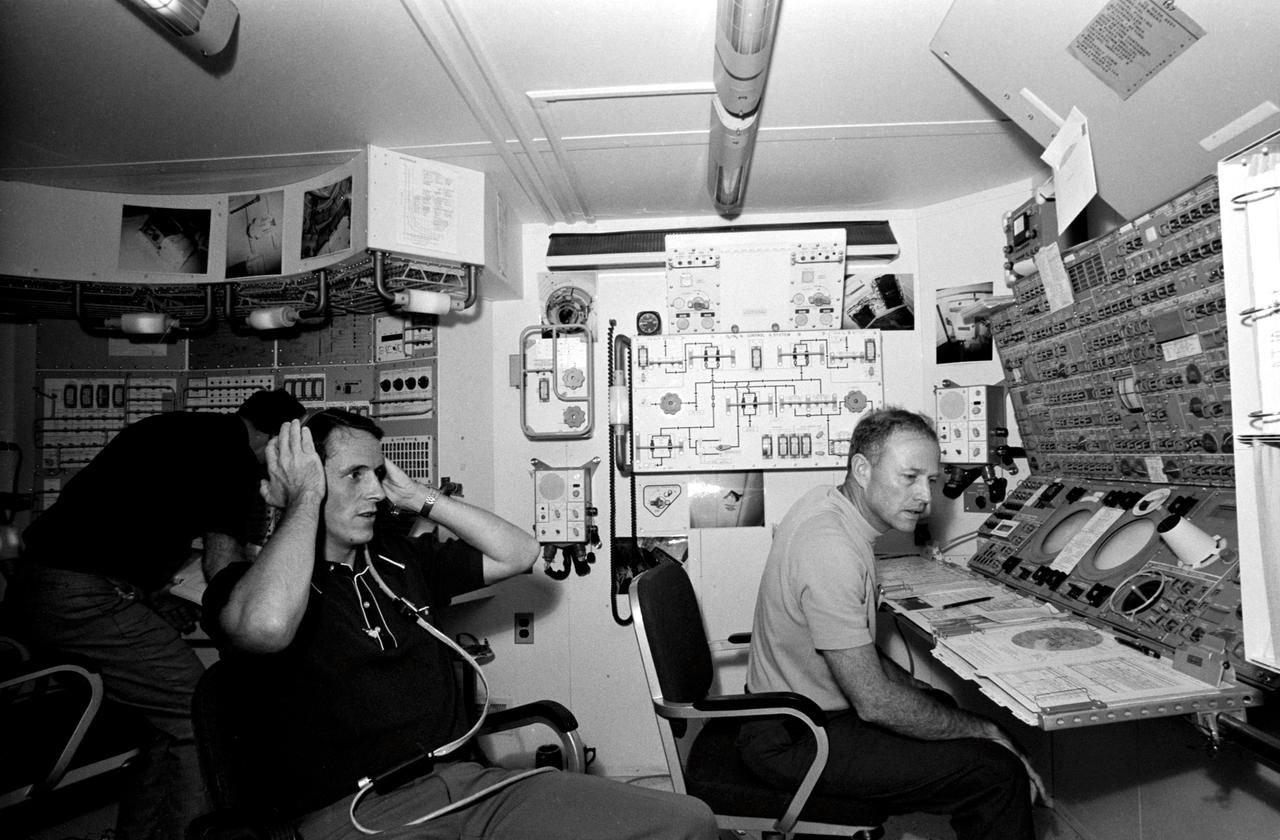
S73-28411 (February 1973) --- The three members of the prime crew of the third of three scheduled manned Skylab missions (Skylab 4) go through Skylab preflight training in the Mission Training and Simulation Facility at the Johnson Space Center. Astronaut Gerald P. Carr (on right), Skylab 4 commander, is seated at a simulator which represents the control and display console of the Apollo Telescope Mount which is located in the space station's Multiple Docking Adapter. Seated on the left is scientist-astronaut Edward G. Gibson, Skylab 4 science pilot. In the left background is astronaut William R. Pogue, Skylab 4 pilot. (Unmanned Skylab 1 will carry the Skylab space station payload into Earth orbit). Photo credit: NASA
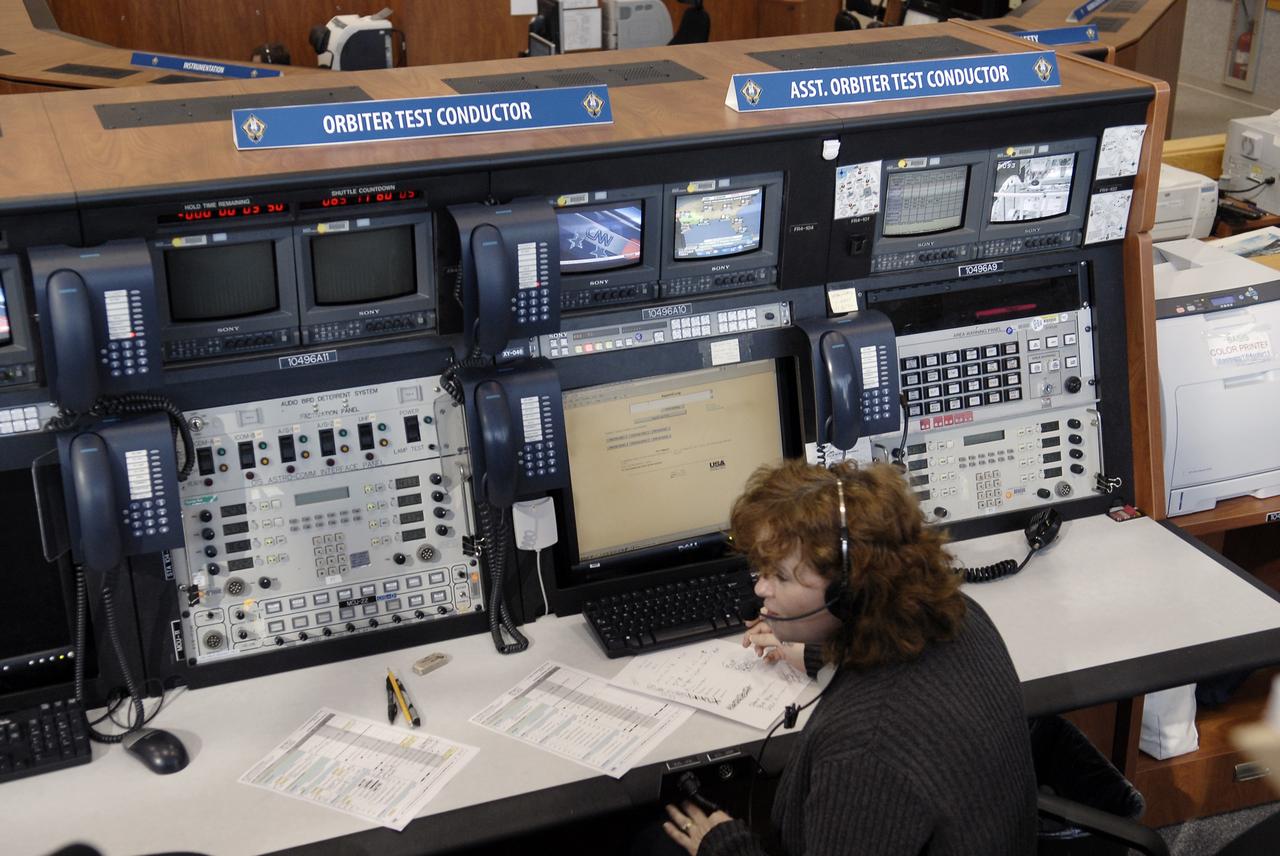
CAPE CANAVERAL, Fla. – United Space Alliance orbiter test conductor Lauren Sally is on station at her Firing Room 4 console in the Launch Control Center as operations to power down space shuttle Endeavour for the final time are under way in Orbiter Processing Facility-2 at NASA’s Kennedy Space Center in Florida. Endeavour is being prepared for public display at the California Science Center in Los Angeles. Its ferry flight to California is targeted for mid-September. Endeavour was the last space shuttle added to NASA’s orbiter fleet. Over the course of its 19-year career, Endeavour spent 299 days in space during 25 missions. For more information, visit http://www.nasa.gov/transition. Photo credit: NASA/Tim Jacobs
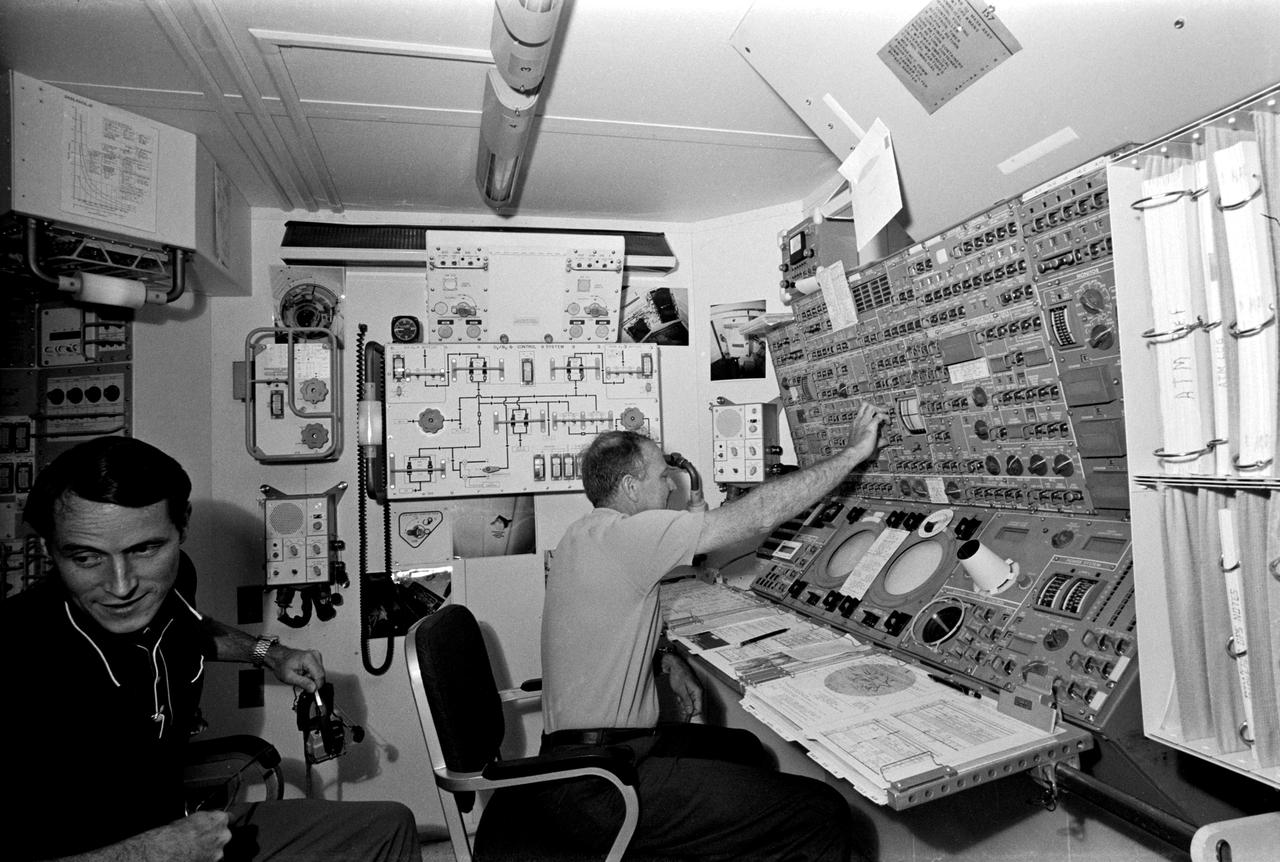
S73-28412 (February 1973) --- The three members of the prime crew of the third of three scheduled manned Skylab missions (Skylab 4) go through Skylab preflight training in the Mission Training and Simulation Facility at the Johnson Space Center. Astronaut Gerald P. Carr (on right), Skylab 4 commander, is seated at a simulator which represents the control and display console of the Apollo Telescope Mount which is located in the space station's Multiple Docking Adapter. Seated on the left is scientist-astronaut Edward G. Gibson, Skylab 4 science pilot. In the left background is astronaut William R. Pogue, Skylab 4 pilot. (Unmanned Skylab 1 will carry the Skylab space station payload into Earth orbit). Photo credit: NASA
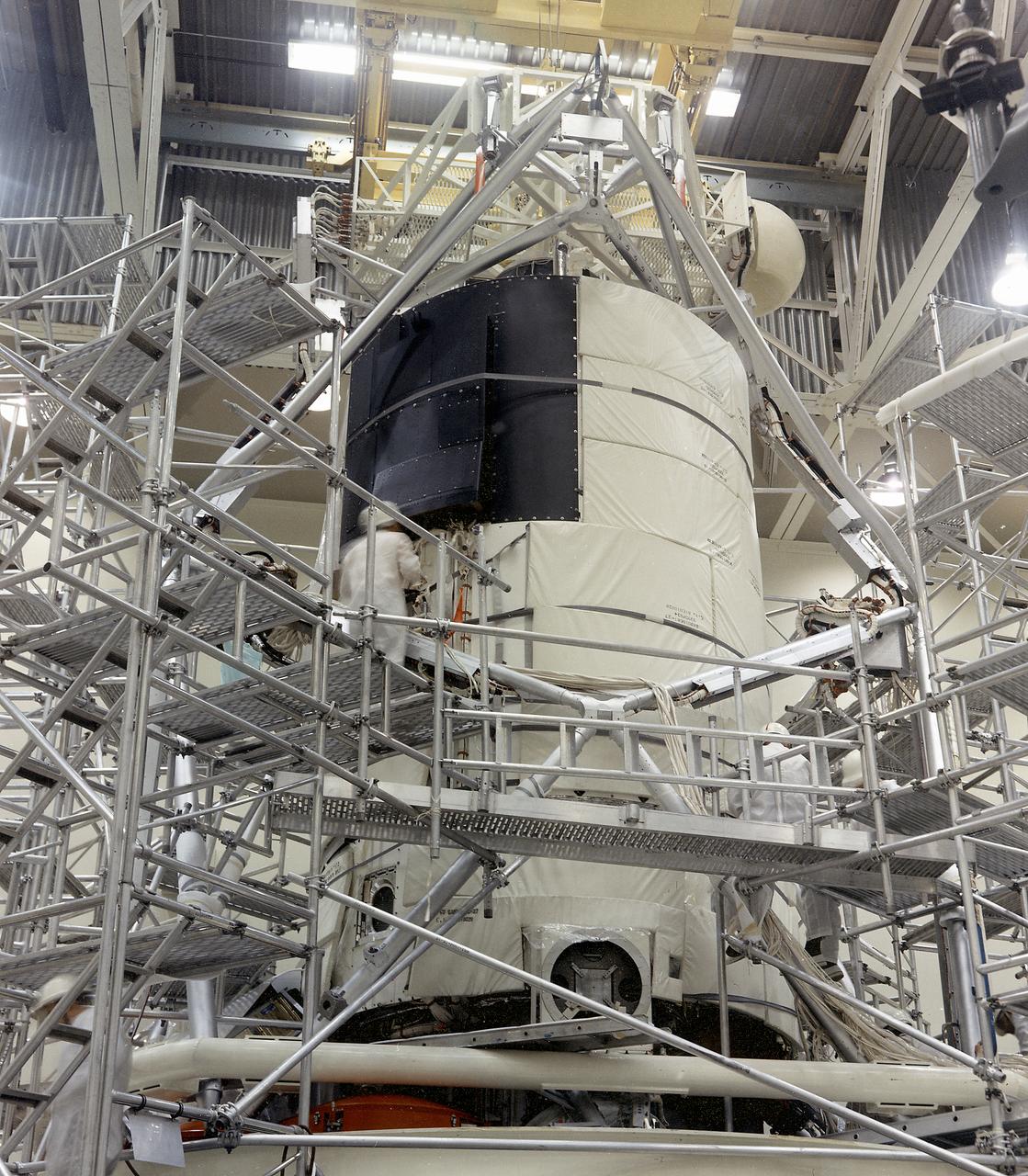
This photograph shows the flight article of the Airlock Module (AM)/Multiple Docking Adapter (MDA) assembly being readied for testing in a clean room at the McDornell Douglas Plant in St. Louis, Missouri. Although the AM and the MDA were separate entities, they were in many respects simply two components of a single module. The AM enabled crew members to conduct extravehicular activities outside Skylab as required for experiment support. Oxygen and nitrogen storage tanks needed for Skylab's life support system were mounted on the external truss work of the AM. Major components in the AM included Skylab's electric power control and distribution station, environmental control system, communication system, and data handling and recording systems. The MDA, forward of the AM, provided docking facilities for the Command and Service Module. It also accommodated several experiment systems, among them the Earth Resource Experiment Package, the materials processing facility, and the control and display console needed for the Apollo Telescope Mount solar astronomy studies. The AM was built by McDonnell Douglas and the MDA was built by Martin Marietta. The Marshall Space Flight Center was responsible for the design and development of the Skylab hardware and experiment management.
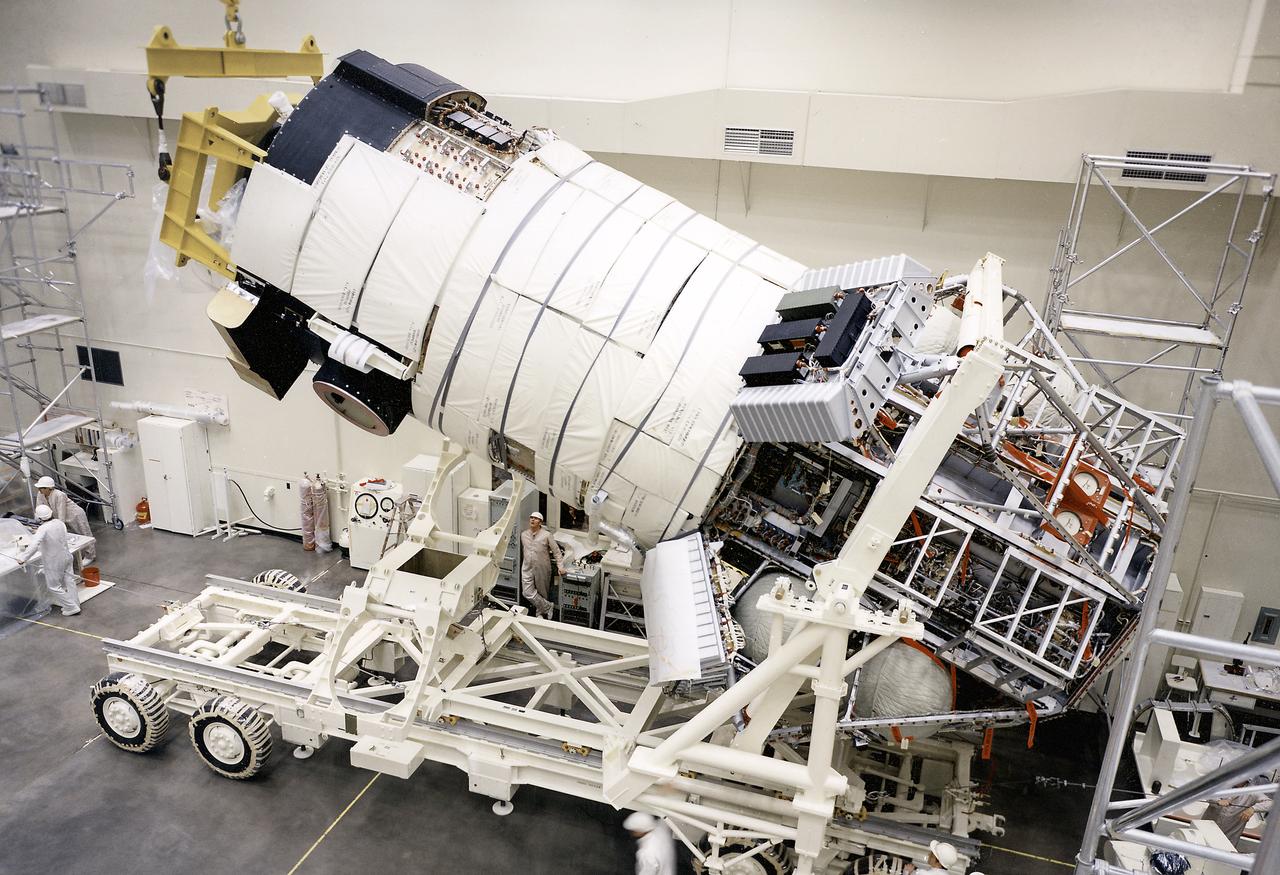
This photograph shows the flight article of the mated Airlock Module (AM) and Multiple Docking Adapter (MDA) being lowering into horizontal position on a transporter. Although the AM and the MDA were separate entities, they were in many respects simply two components of a single module. The AM enabled crew members to conduct extravehicular activities outside Skylab as required for experiment support. Oxygen and nitrogen storage tanks needed for Skylab's life support system were mounted on the external truss work of the AM. Major components in the AM included Skylab's electric power control and distribution station, environmental control system, communication system, and data handling and recording systems. The MDA, forward of the AM, provided docking facilities for the Command and Service Module. It also accommodated several experiment systems, among them the Earth Resource Experiment Package, the materials processing facility, and the control and display console needed for the Apollo Telescope Mount solar astronomy studies. The AM was built by McDornell Douglas and the MDA was built by Martin Marietta. The Marshall Space Flight Center was responsible for the design and development of the Skylab hardware and experiment management.
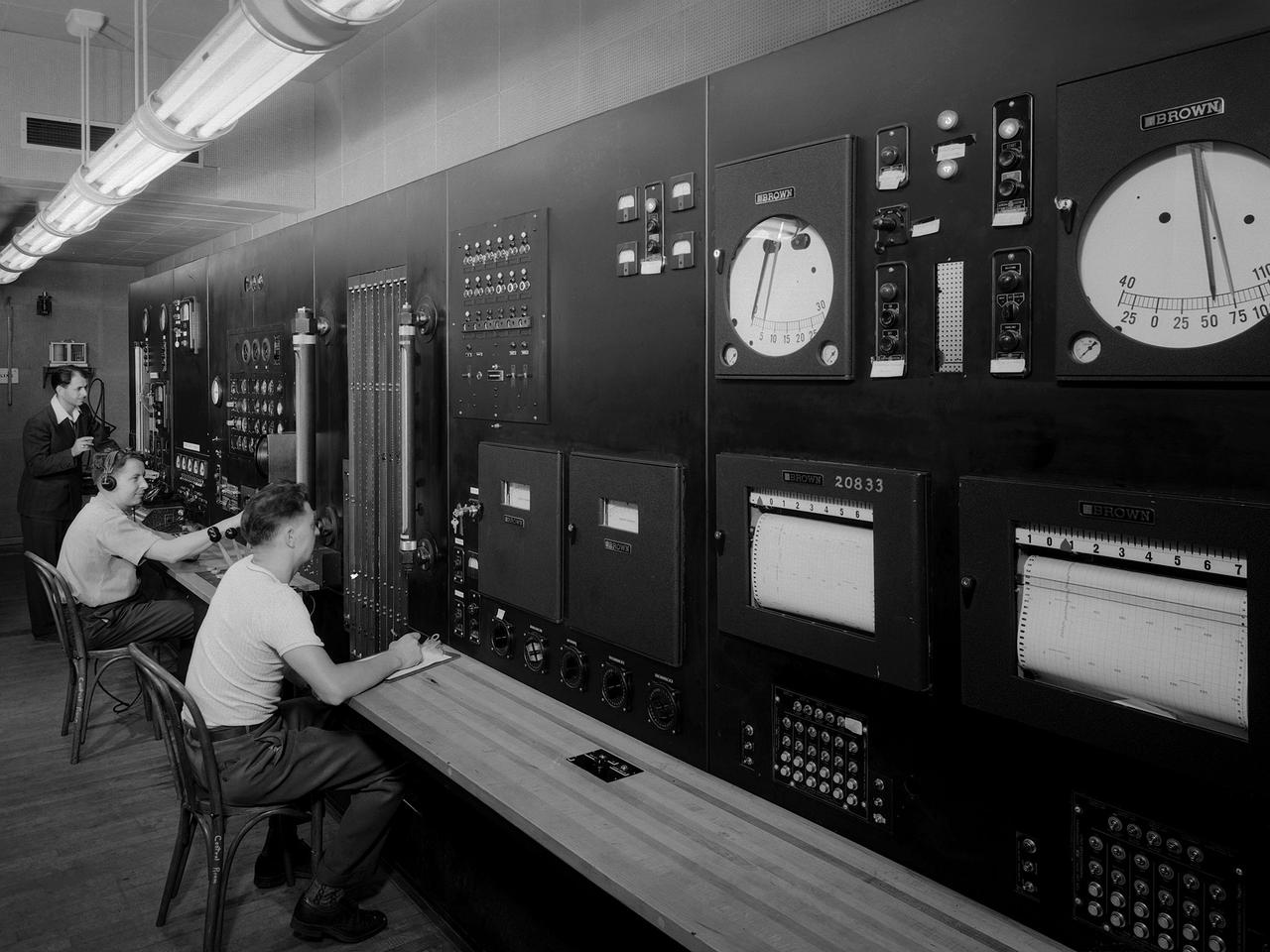
Operators in the control room for the Altitude Wind Tunnel at the National Advisory Committee for Aeronautics (NACA) Aircraft Engine Research Laboratory remotely operate a Wright R–3350 engine in the tunnel’s test section. Four of the engines were used to power the B–29 Superfortress, a critical weapon in the Pacific theater during World War II. The wind tunnel, which had been in operation for approximately six months, was the nation’s only wind tunnel capable of testing full-scale engines in simulated altitude conditions. The soundproof control room was used to operate the wind tunnel and control the engine being run in the test section. The operators worked with assistants in the adjacent Exhauster Building and Refrigeration Building to manage the large altitude simulation systems. The operator at the center console controlled the tunnel’s drive fan and operated the engine in the test section. Two sets of pneumatic levers near his right forearm controlled engine fuel flow, speed, and cooling. Panels on the opposite wall, out of view to the left, were used to manage the combustion air, refrigeration, and exhauster systems. The control panel also displayed the master air speed, altitude, and temperature gauges, as well as a plethora of pressure, temperature, and airflow readings from different locations on the engine. The operator to the right monitored the manometer tubes to determine the pressure levels. Despite just being a few feet away from the roaring engine, the control room remained quiet during the tests.