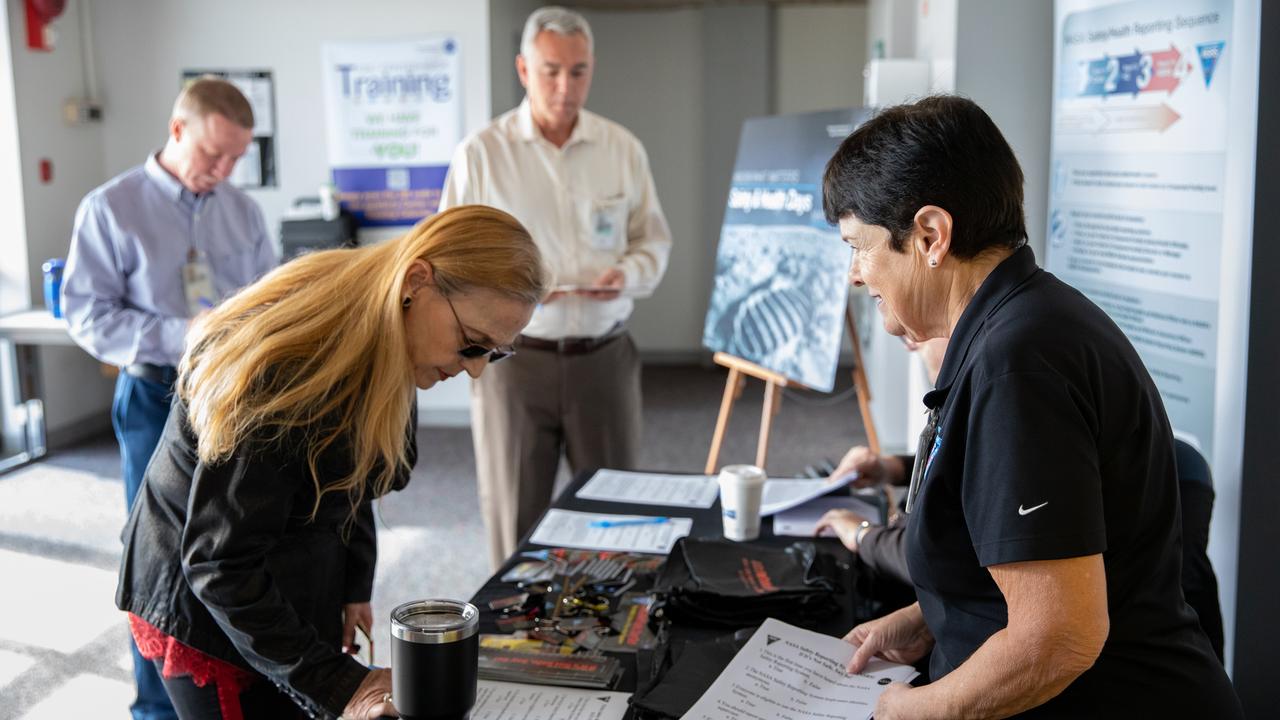
NASA Kennedy Space Center employees learn more about safety from an informational table set up inside the Florida spaceport’s Training Auditorium on March 4, 2020, during the center’s annual Safety and Health Days. Taking place March 2 through March 6, Safety and Health Days provides Kennedy employees with a variety of presentations to attend – all of which focus on how to maintain a safe and healthy workforce.
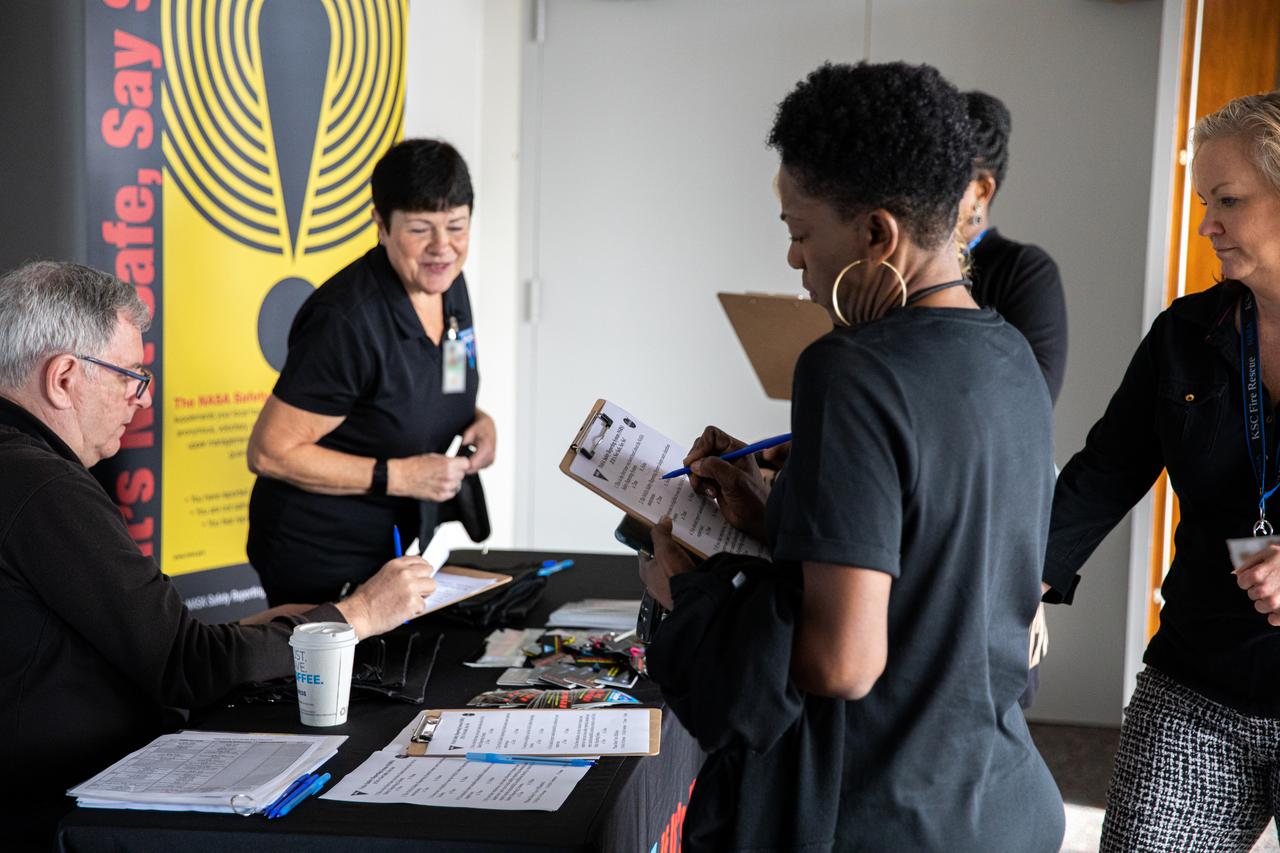
NASA Kennedy Space Center employees learn more about safety from an informational table set up inside the Florida spaceport’s Training Auditorium on March 4, 2020, during the center’s annual Safety and Health Days. Taking place March 2 through March 6, Safety and Health Days provides Kennedy employees with a variety of presentations to attend – all of which focus on how to maintain a safe and healthy workforce.
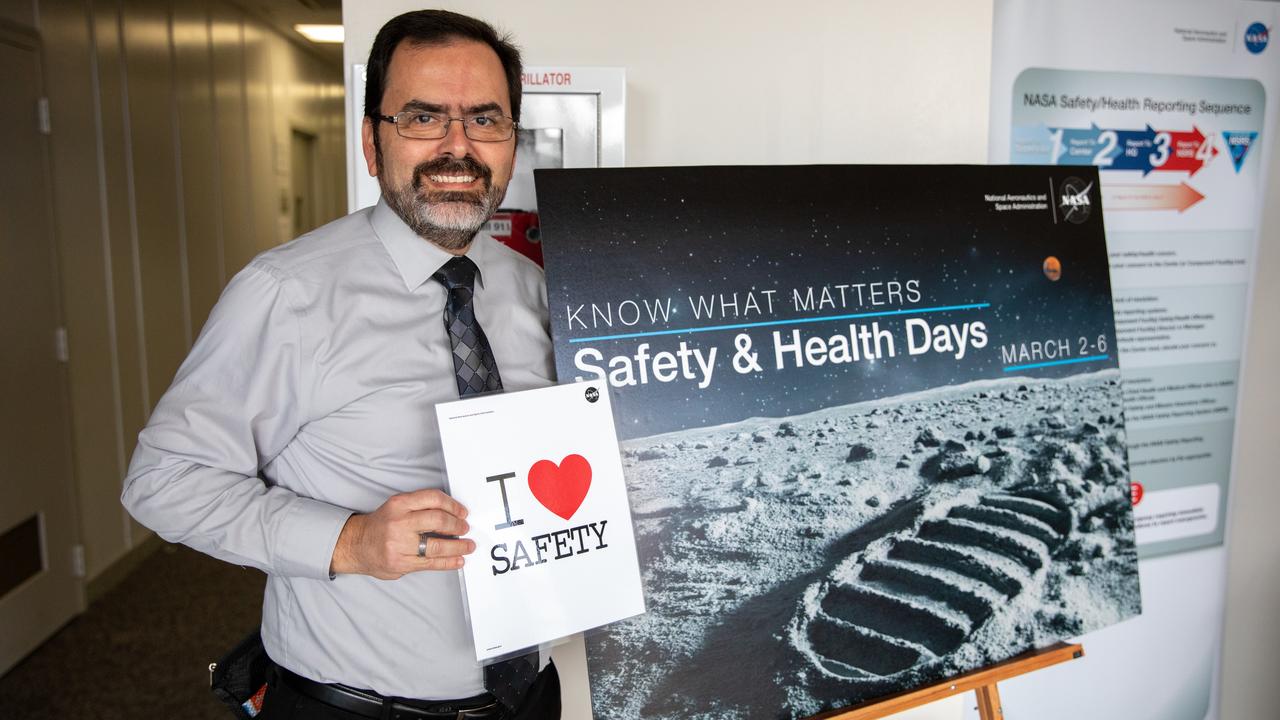
Ronnie Rodriguez, deputy director of Safety and Mission Assurance (SMA) at NASA’s Kennedy Space Center in Florida, poses with the SMA “I Love Safety” poster during the Florida spaceport’s annual Safety and Health Days on March 4, 2020. Taking place March 2 through March 6, Safety and Health Days provides Kennedy employees with a variety of presentations to attend – all of which focus on how to maintain a safe and healthy workforce.
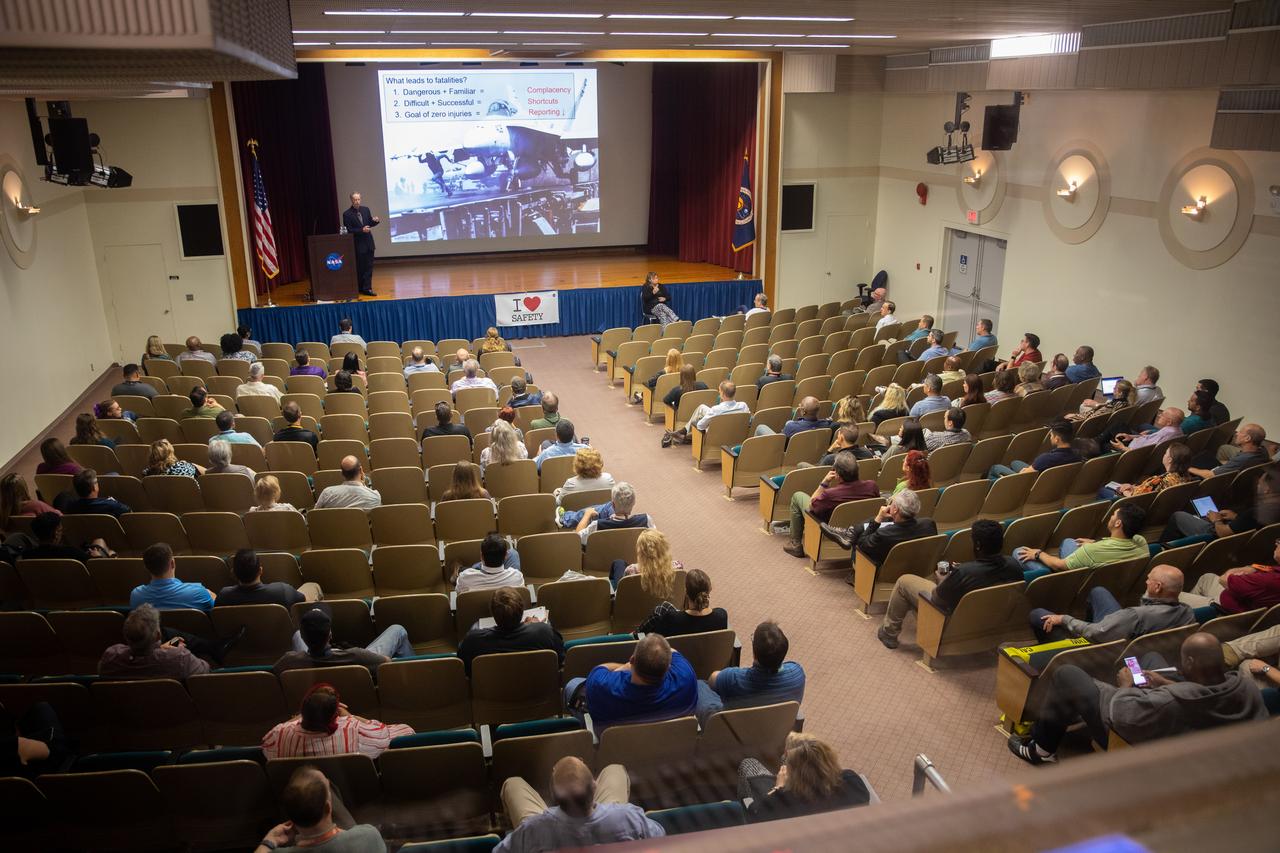
NASA Kennedy Space Center employees attend a presentation on techniques and principles that can help optimize performance in high-risk businesses inside the Florida spaceport’s Training Auditorium on March 4, 2020. The presentation, led by guest speaker and former NASA astronaut Jim Wetherbee, was offered during the center’s annual Safety and Health Days, which took place March 2 through March 6. Throughout the week, Kennedy employees had the opportunity to attend a variety of presentations – all of which focused on how to maintain a safe and healthy workforce.
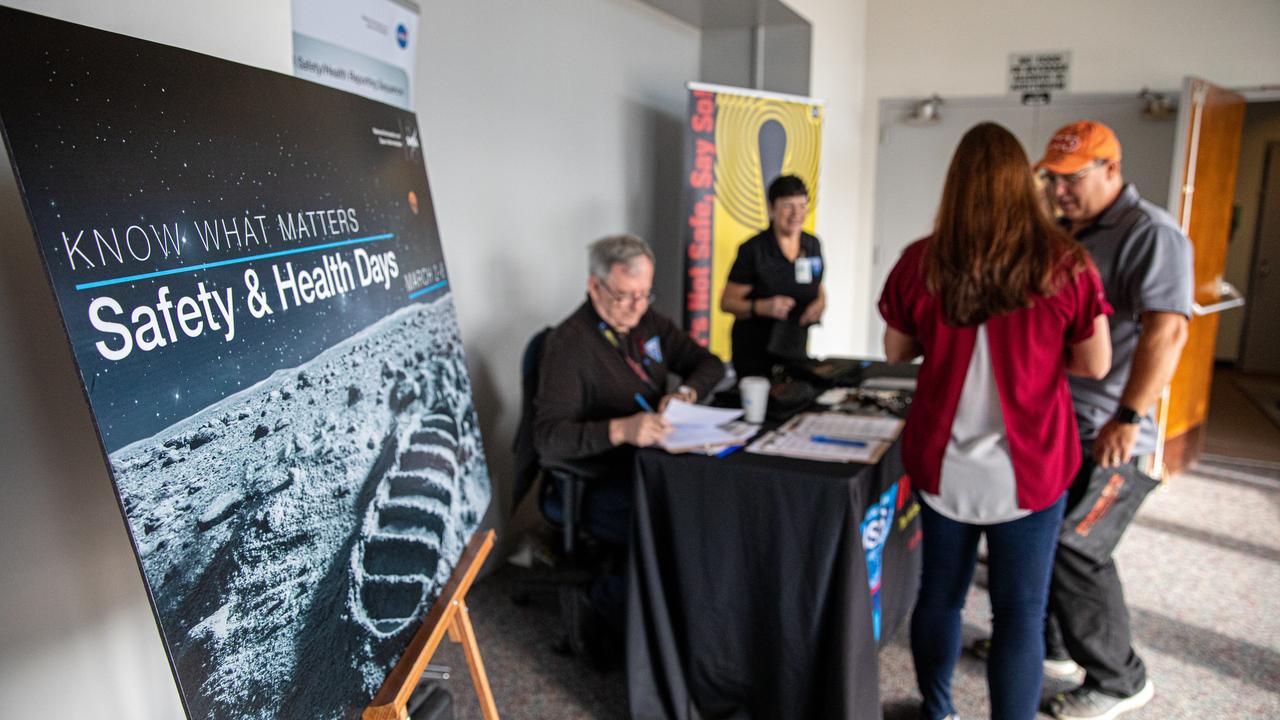
NASA Kennedy Space Center employees learn more about safety from an informational table set up inside the Florida spaceport’s Training Auditorium on March 4, 2020, during the center’s annual Safety and Health Days. Taking place March 2 through March 6, Safety and Health Days provides Kennedy employees with a variety of presentations to attend – all of which focus on how to maintain a safe and healthy workforce.
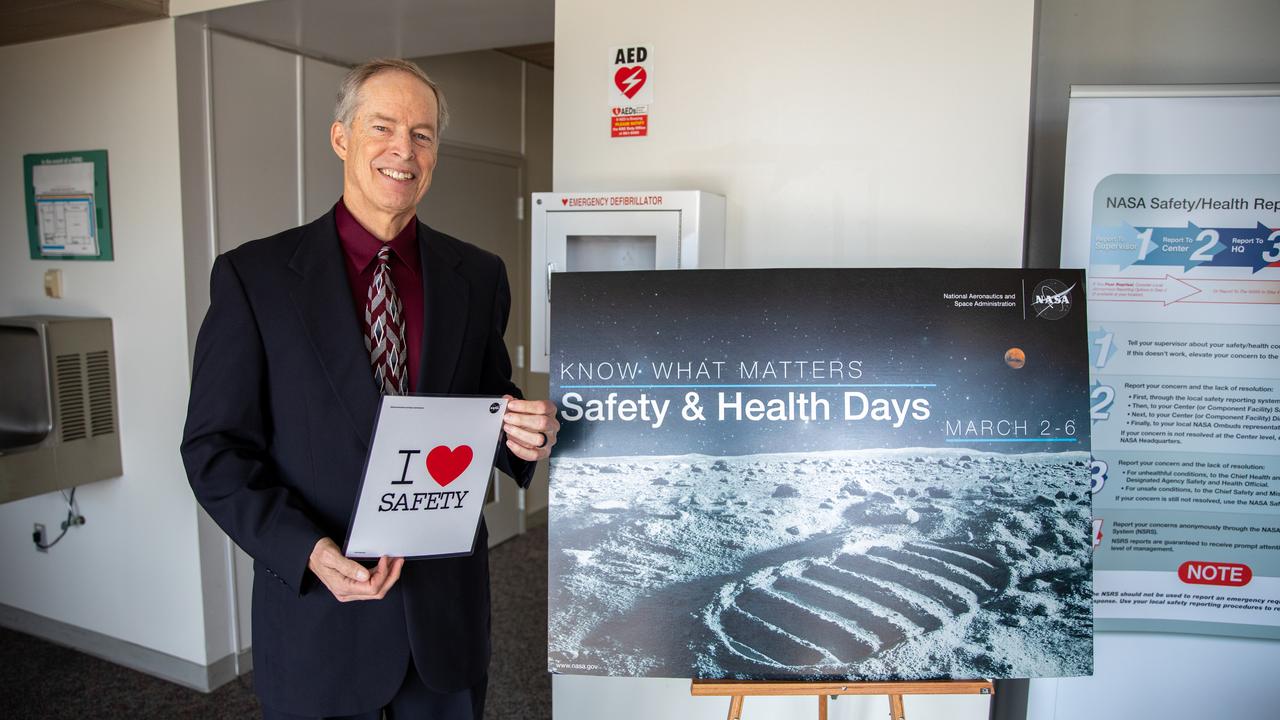
Jim Wetherbee, a former NASA astronaut and one of the guest speakers during NASA Kennedy Space Center’s annual Safety and Health Days, poses with the Safety and Mission Assurance “I Love Safety” poster inside the Florida spaceport’s Training Auditorium on March 4, 2020. Taking place March 2 through March 6, Safety and Health Days provides Kennedy employees with a variety of presentations to attend – all of which focus on how to maintain a safe and healthy workforce. Wetherbee’s presentation included information on techniques and principles that can help optimize performance in high-risk businesses.
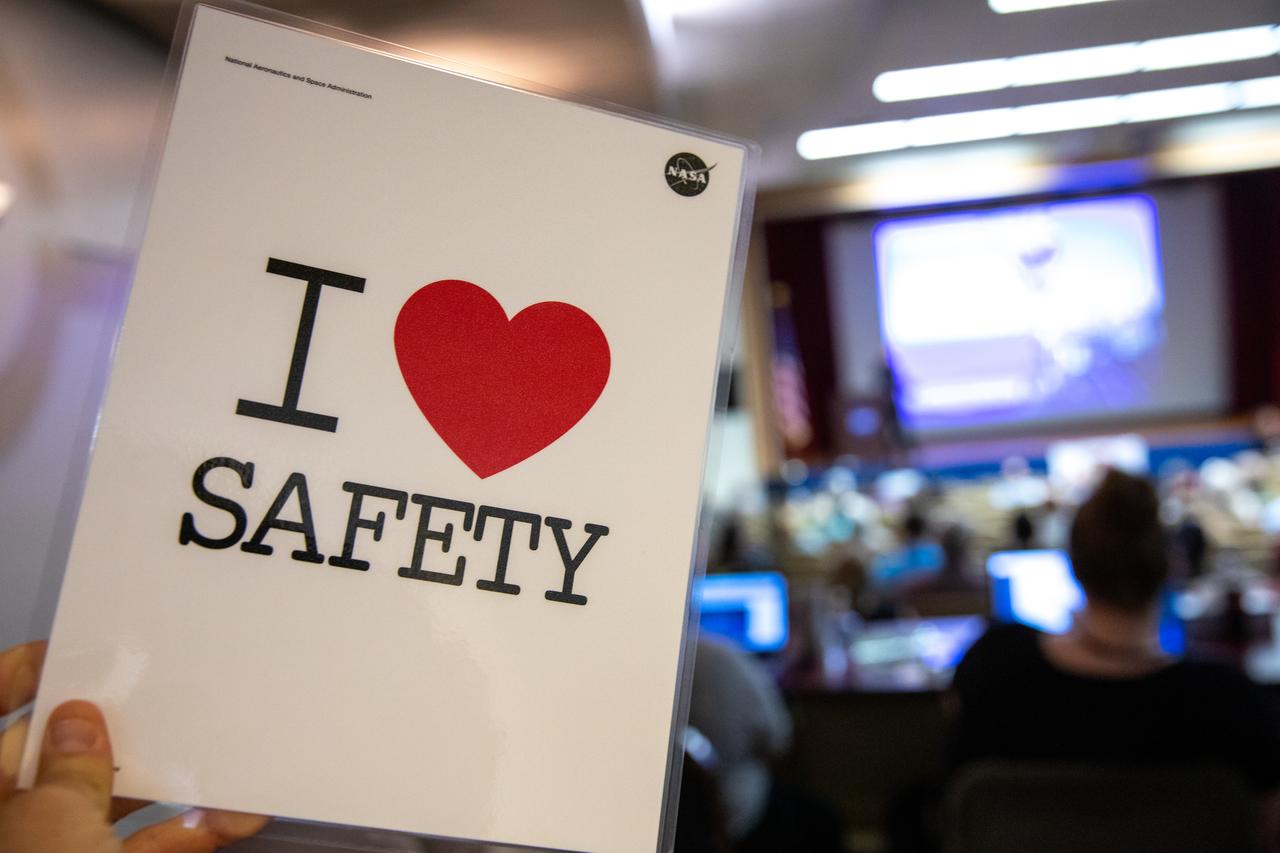
NASA Kennedy Space Center’s Safety and Mission Assurance “I Love Safety” poster is photographed inside the Training Auditorium on March 4, 2020, at a presentation offered during the center’s annual Safety and Health Days. Taking place March 2 through March 6, Safety and Health Days provides Kennedy employees with a variety of presentations to attend – all of which focus on how to maintain a safe and healthy workforce.
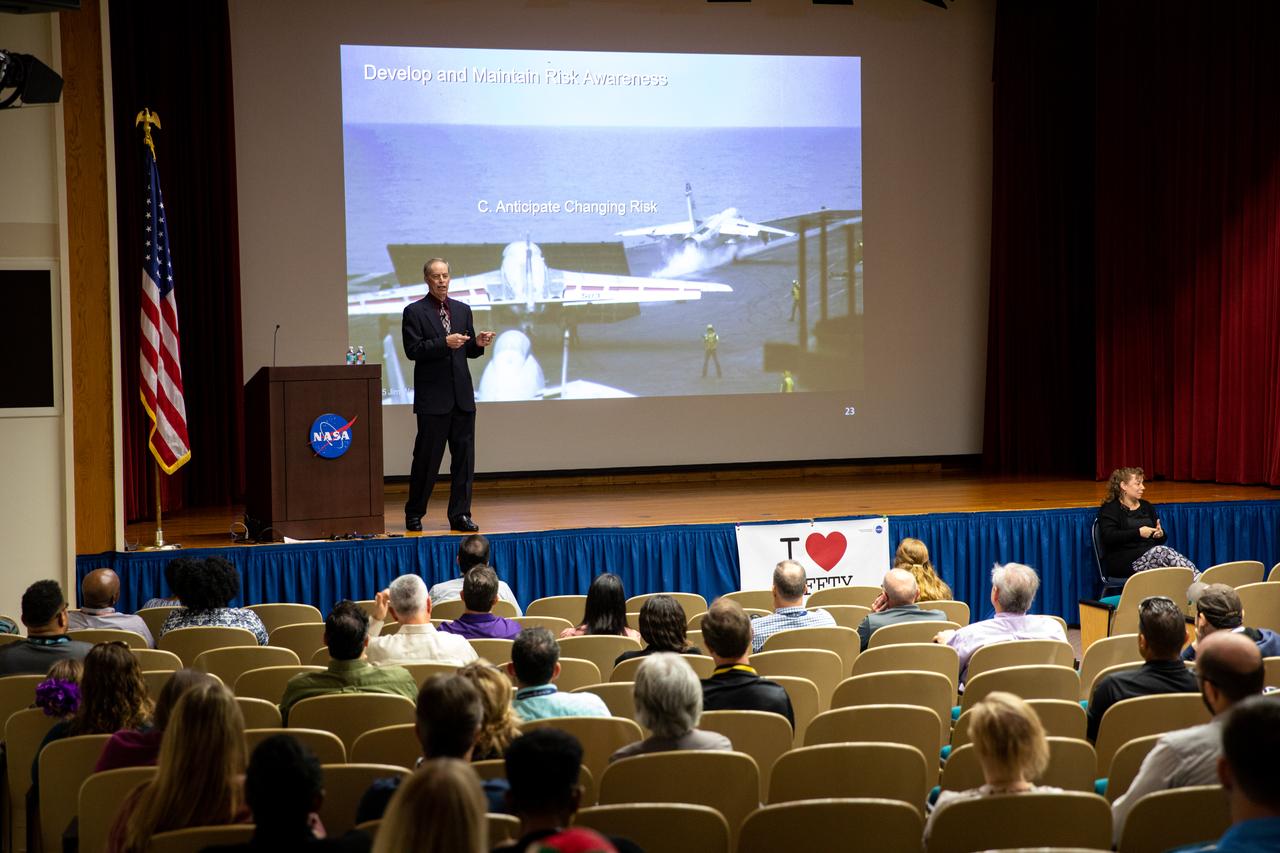
Jim Wetherbee, a retired U.S. Navy captain and former NASA astronaut, speaks to Kennedy Space Center employees inside the Florida spaceport’s Training Auditorium on March 4, 2020, during the center’s annual Safety and Health Days. Taking place March 2 through March 6, Safety and Health Days provides Kennedy employees with a variety of presentations to attend – all of which focus on how to maintain a safe and healthy workforce. Wetherbee’s presentation included information on techniques and principles that can help optimize performance in high-risk businesses.
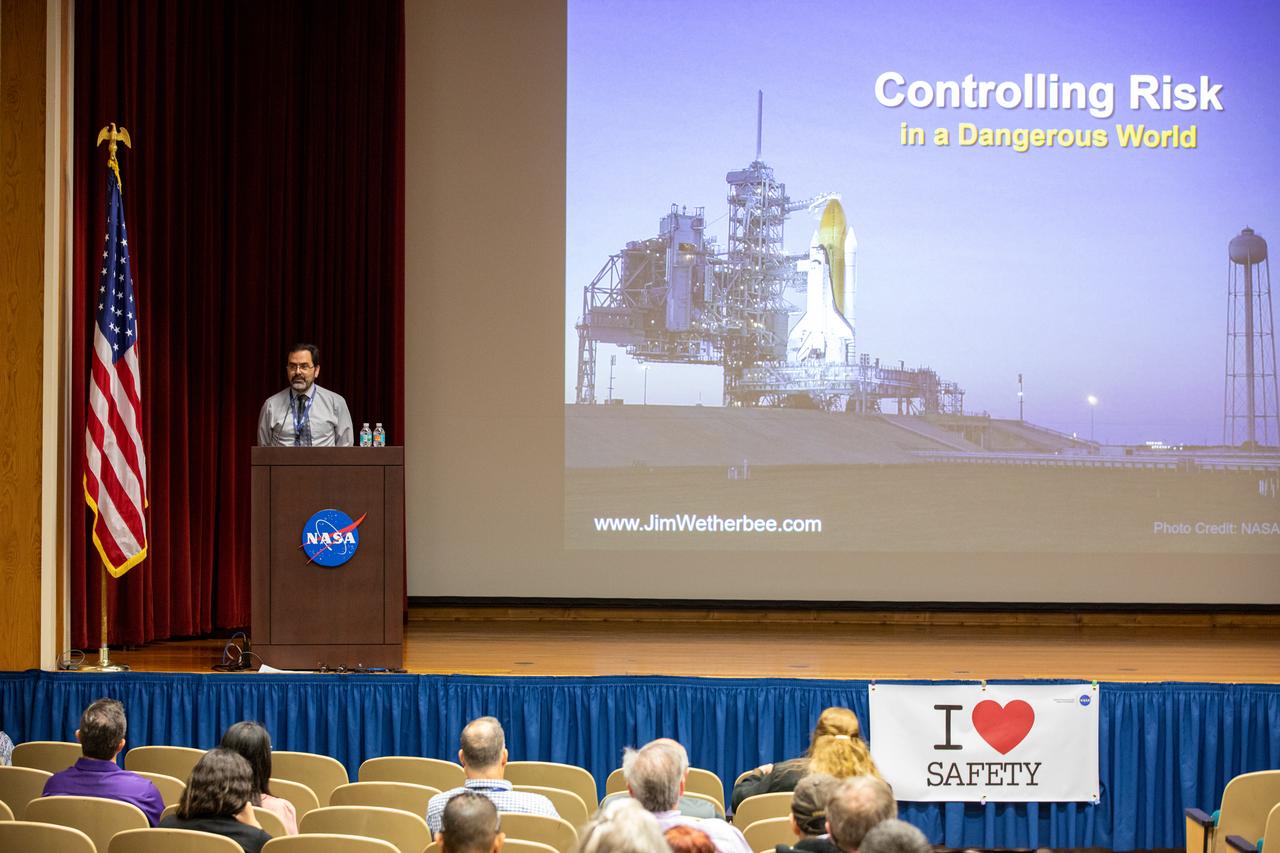
Ronnie Rodriguez, deputy director of Safety and Mission Assurance at NASA’s Kennedy Space Center in Florida, introduces guest speaker Jim Wetherbee inside the Training Auditorium on March 4, 2020, during the center’s annual Safety and Health Days. Taking place March 2 through March 6, Safety and Health Days provides Kennedy employees with a variety of presentations to attend – all of which focus on how to maintain a safe and healthy workforce. Wetherbee’s presentation included information on techniques and principles that can help optimize performance in high-risk businesses.
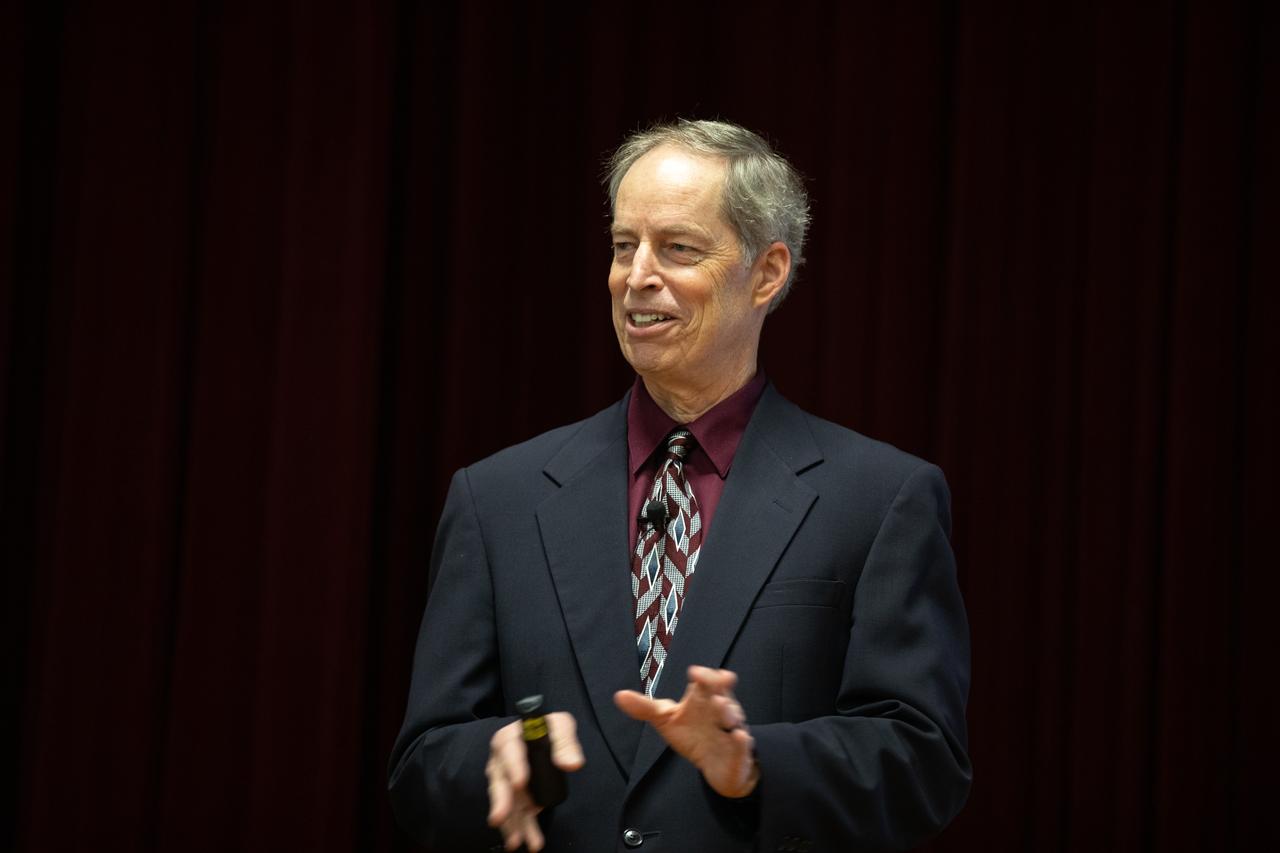
Jim Wetherbee, a retired U.S. Navy captain and former NASA astronaut, speaks to Kennedy Space Center employees inside the Florida spaceport’s Training Auditorium on March 4, 2020, during the center’s annual Safety and Health Days. Taking place March 2 through March 6, Safety and Health Days provides Kennedy employees with a variety of presentations to attend – all of which focus on how to maintain a safe and healthy workforce. Wetherbee’s presentation included information on techniques and principles that can help optimize performance in high-risk businesses.
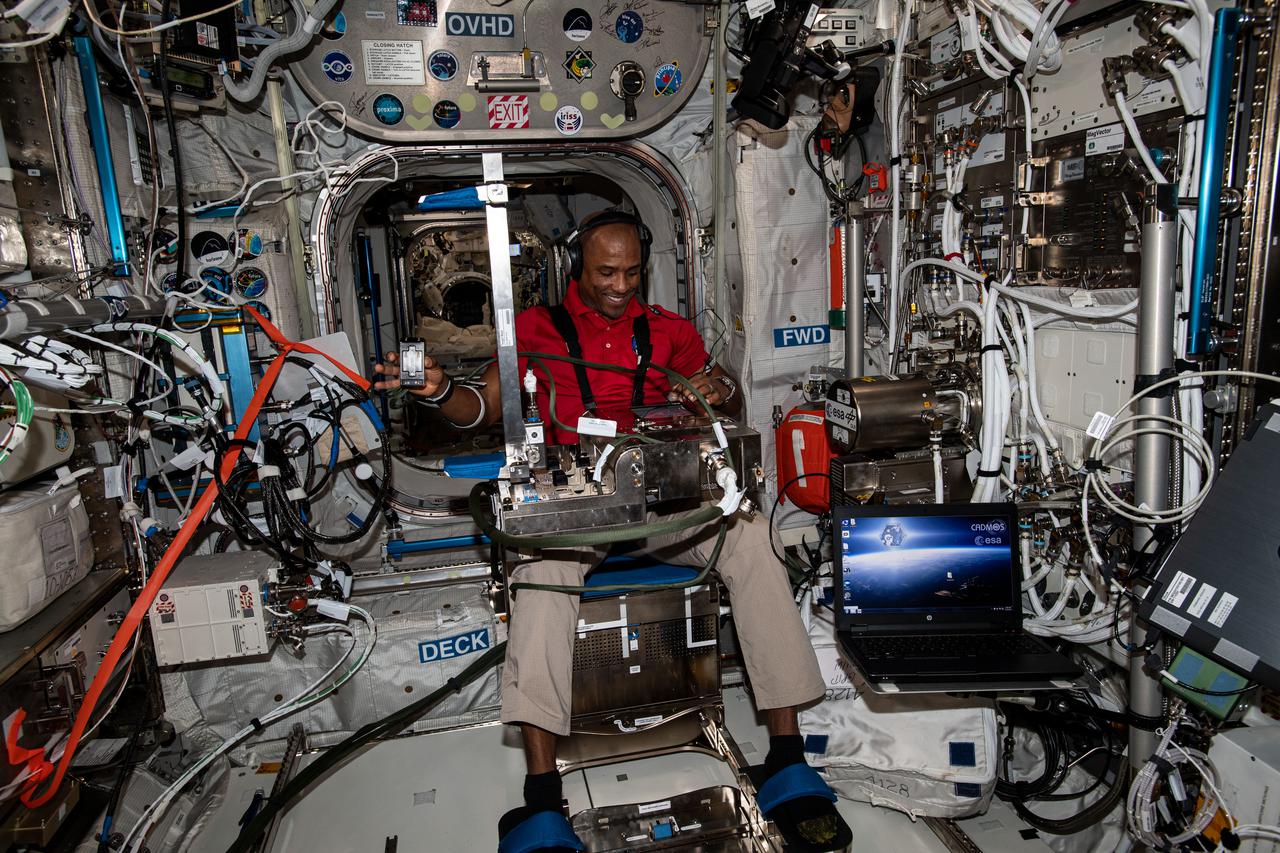
Moving between different gravitational environments can disrupt human performance. To identify potential risks for hand control and dexterity, Glover participates in the human research GRIP investigation. This work is helping to inform new touch-based interface designs for future exploration vehicles.
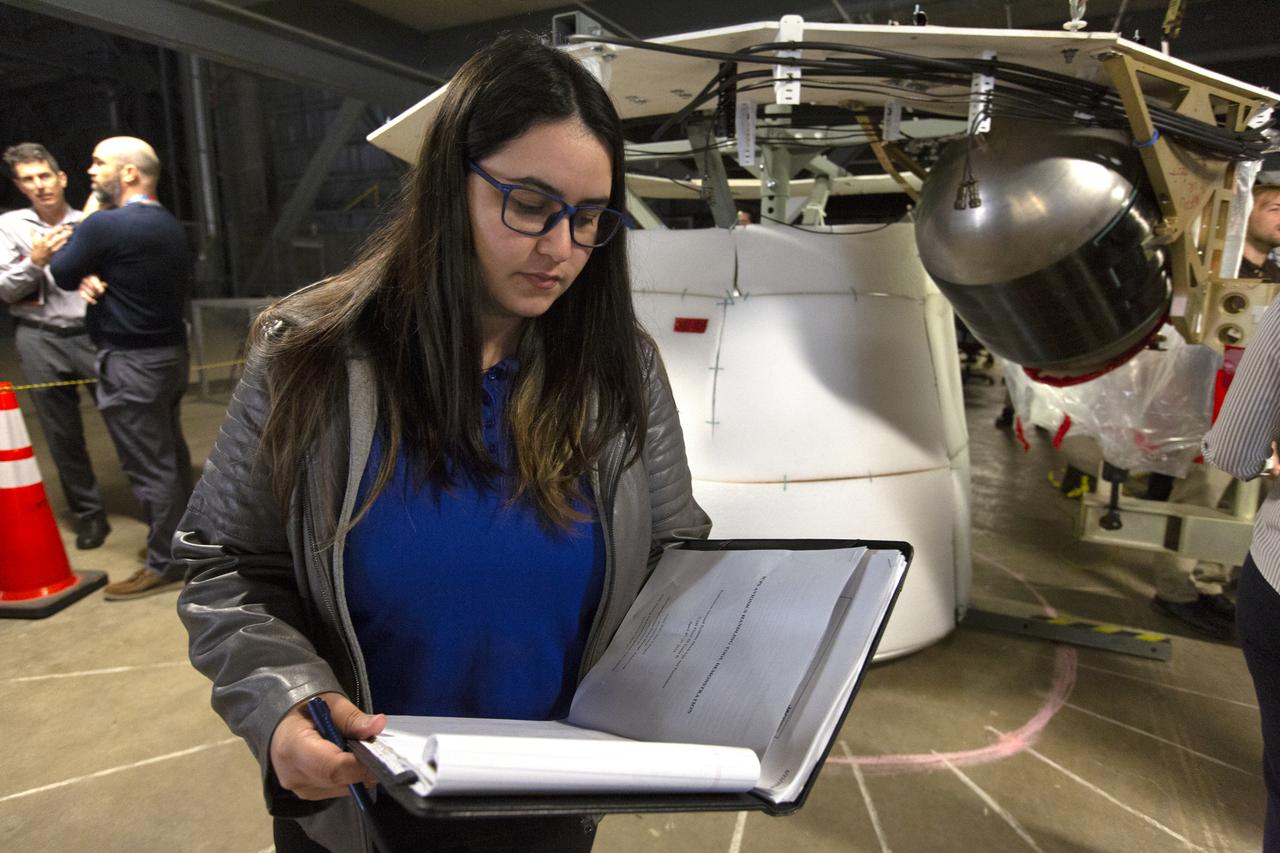
NASA Flight Systems Engineer Sherild Rivera Melendez takes notes during the Space Launch System avionics handling tool demonstration inside Kennedy Space Center’s Vehicle Assembly Building on April 4, 2019. The demonstration showed that avionics boxes could be successfully and safely mounted into the SLS rocket’s upper stage — called the Interim Cryogenic Propulsion Stage, or ICPS — with low risk of damaging a closely located hydrazine tank. Avionics boxes include the Inertial Navigation and Control Assembly and flight batteries. Rivera Melendez coordinated multiple human factors teams, focusing on life cycle reviews and impact risks during installation of the avionics.
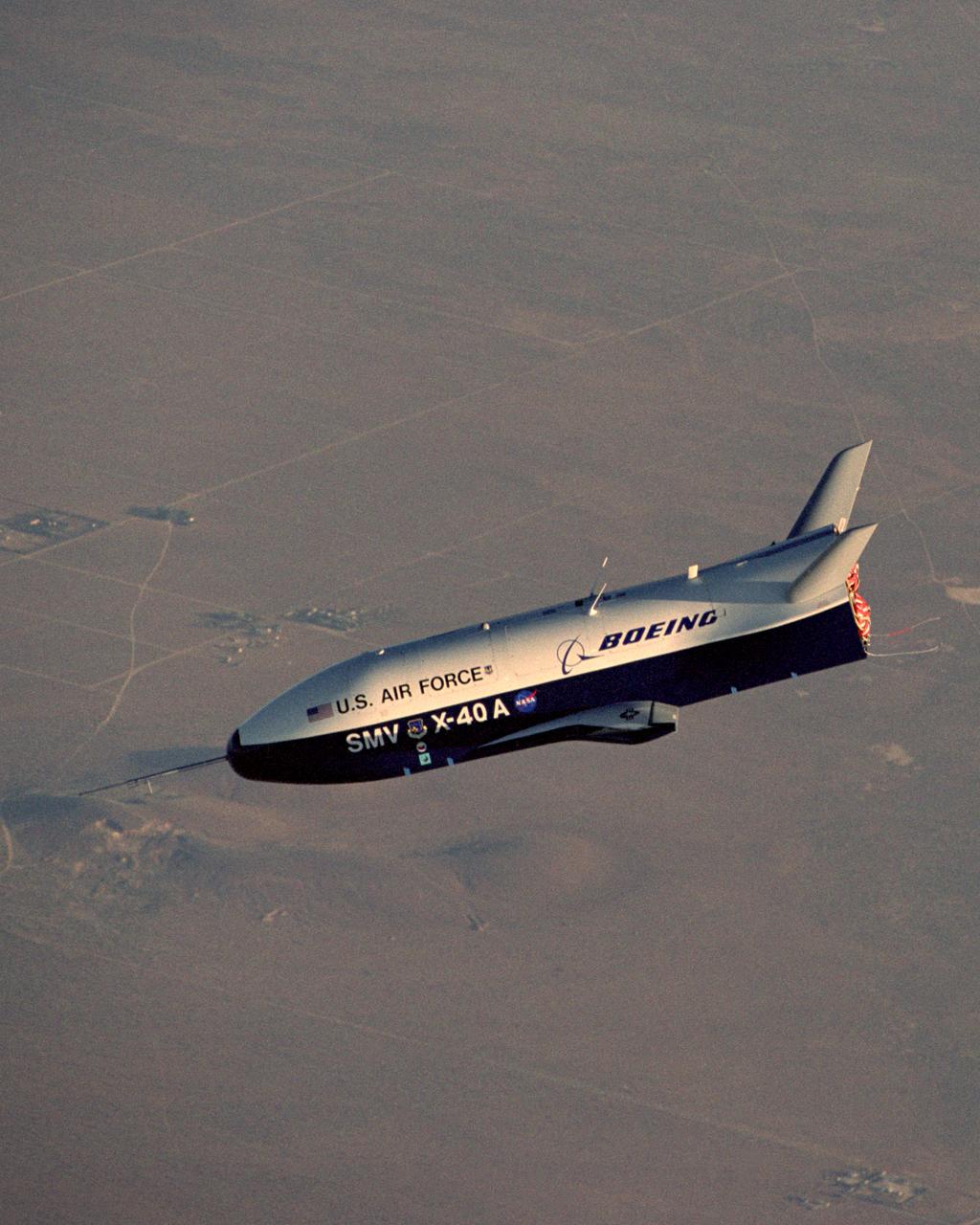
X-40A Free Flight #5. The unpowered X-40A, an 85 percent scale risk reduction version of the proposed X-37, proved the capability of an autonomous flight control and landing system in a series of glide flights at NASA's Dryden Flight Research Center in California. NASA's Marshall Space Flight Center in Huntsville, Alabama, manages the X-37 project. At Dryden, the X-40A underwent a series of ground and air tests to reduce possible risks to the larger X-37, including drop tests from a helicopter to check guidance and navigation systems planned for use in the X-37. The X-37 is designed to demonstrate technologies in the orbital and reentry environments for next-generation reusable launch vehicles that will increase both safety and reliability, while reducing launch costs from $10,000 per pound to $1,000 per pound.
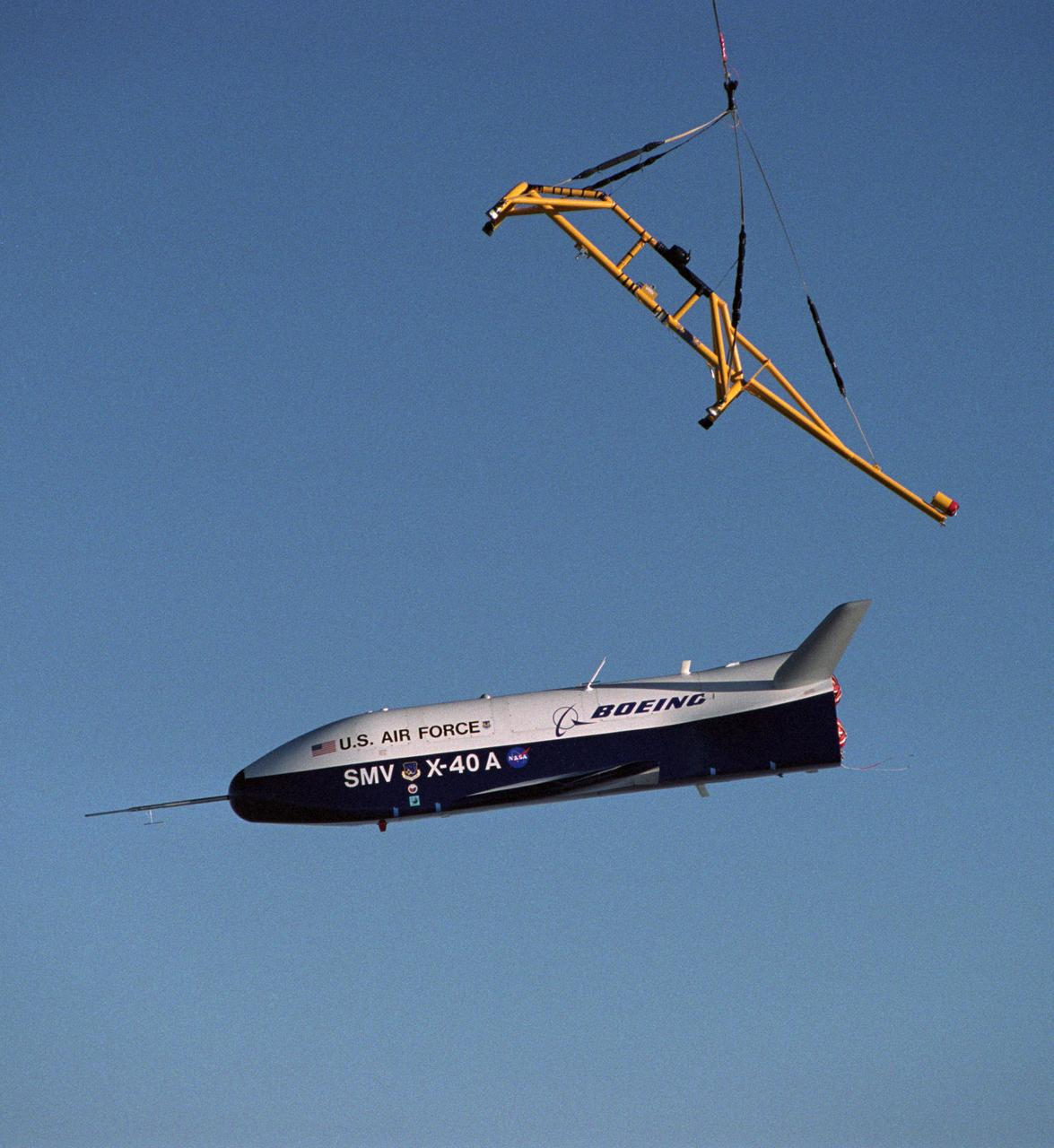
X-40A Free Flight #5. The unpowered X-40A, an 85 percent scale risk reduction version of the proposed X-37, proved the capability of an autonomous flight control and landing system in a series of glide flights at NASA's Dryden Flight Research Center in California. NASA's Marshall Space Flight Center in Huntsville, Alabama, manages the X-37 project. At Dryden, the X-40A underwent a series of ground and air tests to reduce possible risks to the larger X-37, including drop tests from a helicopter to check guidance and navigation systems planned for use in the X-37. The X-37 is designed to demonstrate technologies in the orbital and reentry environments for next-generation reusable launch vehicles that will increase both safety and reliability, while reducing launch costs from $10,000 per pound to $1,000 per pound.
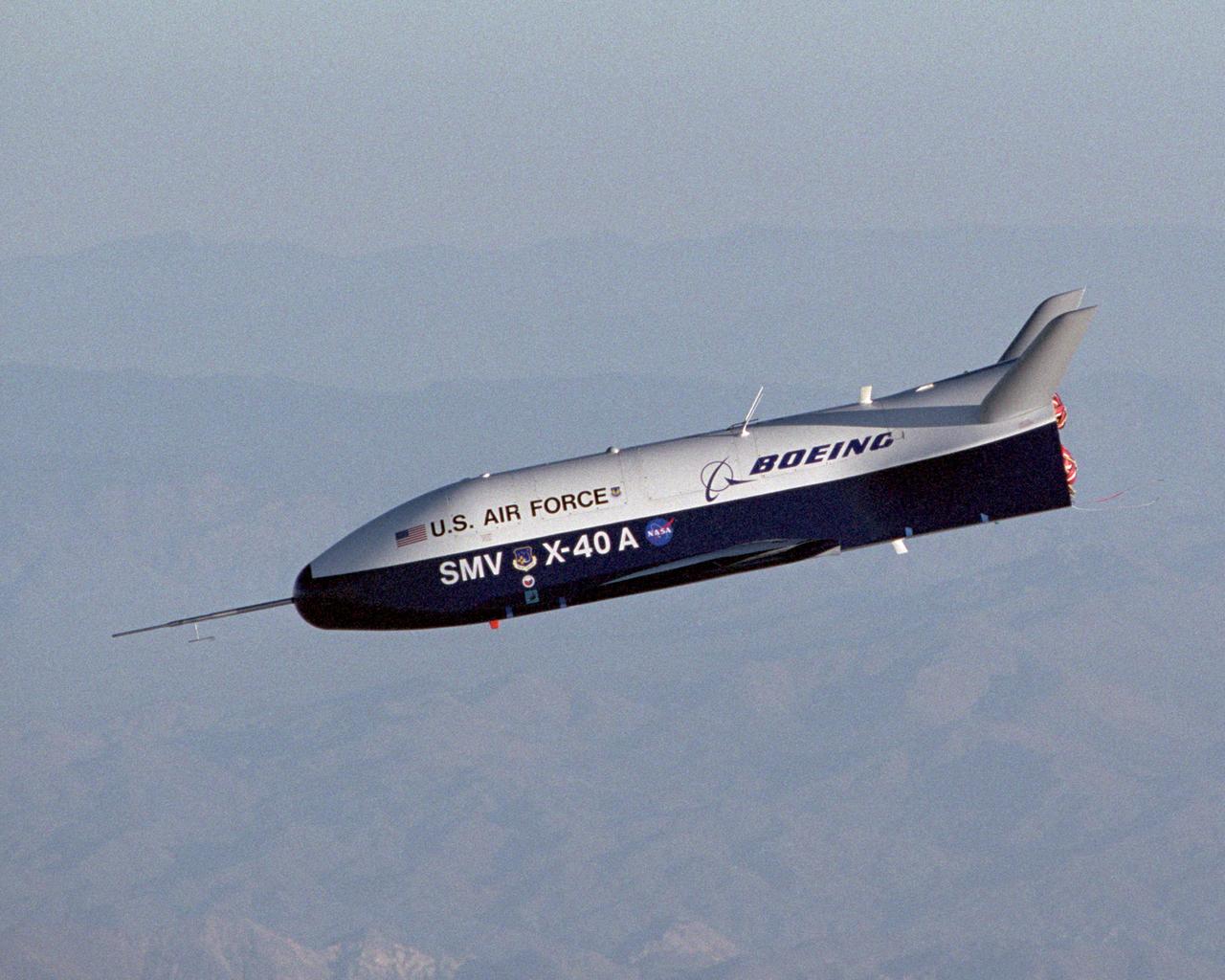
X-40A Free Flight #5. The unpowered X-40A, an 85 percent scale risk reduction version of the proposed X-37, proved the capability of an autonomous flight control and landing system in a series of glide flights at NASA's Dryden Flight Research Center in California. NASA's Marshall Space Flight Center in Huntsville, Alabama, manages the X-37 project. At Dryden, the X-40A underwent a series of ground and air tests to reduce possible risks to the larger X-37, including drop tests from a helicopter to check guidance and navigation systems planned for use in the X-37. The X-37 is designed to demonstrate technologies in the orbital and reentry environments for next-generation reusable launch vehicles that will increase both safety and reliability, while reducing launch costs from $10,000 per pound to $1,000 per pound.

Teams conduct powerup and docking operations for the Sensor Test for Orion Relative Navigation Risk Mitigation (STORRM) in a payload support room at Johnson Space Center’s Mission Control Center in Houston on May 18, 2011. STORMM was successfully demonstrated on Space Shuttle Endeavour’s STS-134 mission to the International Space Station..The goal of STORRM was to validate a new relative navigation sensor based on advanced laser and detector technology that will make docking and undocking spacecraft easier and safer. It also tested the hardware in the same environment that the sensors would experience on the first Orion rendezvous to another vehicle. Part of Batch image transfer from Flickr.
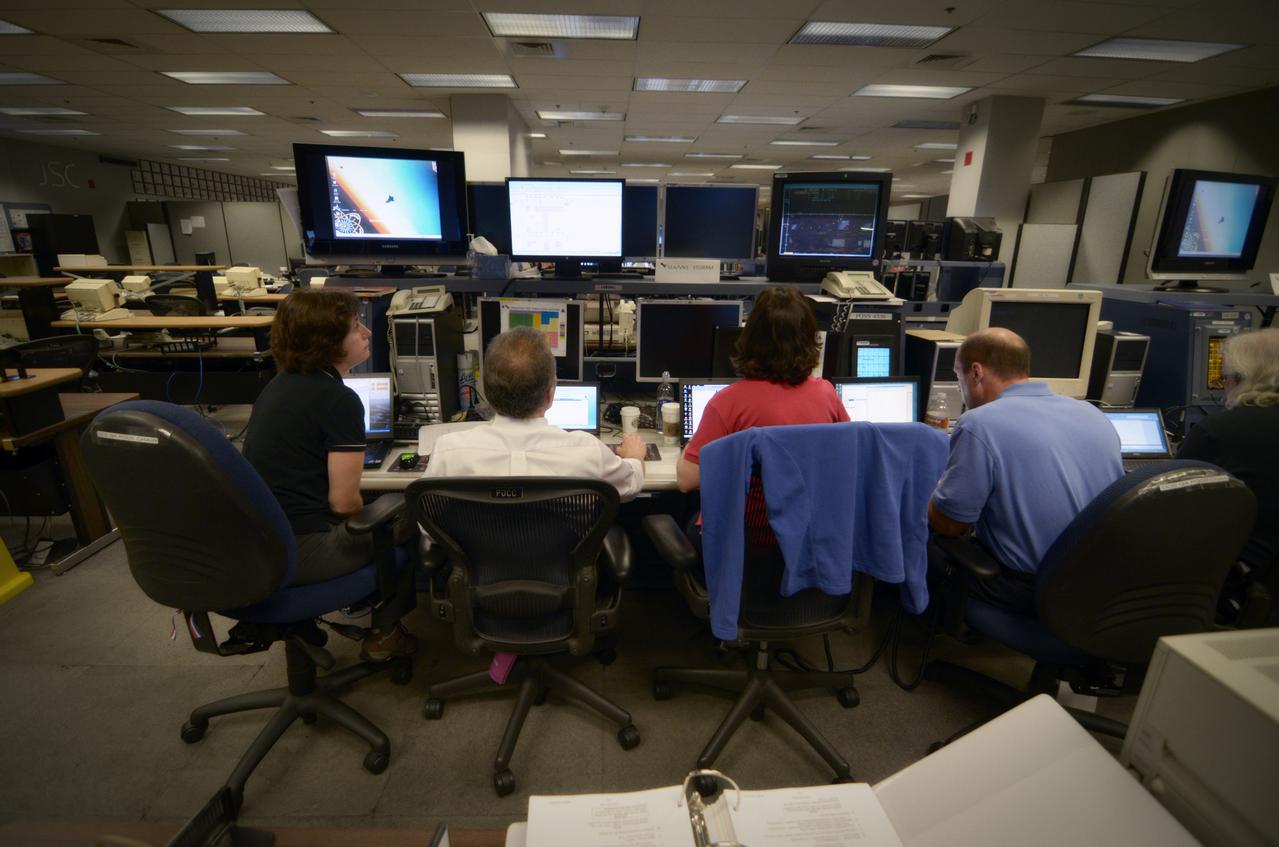
Teams conduct powerup and docking operations for the Sensor Test for Orion Relative Navigation Risk Mitigation (STORRM) in a payload support room at Johnson Space Center’s Mission Control Center in Houston on May 18, 2011. STORMM was successfully demonstrated on Space Shuttle Endeavour’s STS-134 mission to the International Space Station..The goal of STORRM was to validate a new relative navigation sensor based on advanced laser and detector technology that will make docking and undocking spacecraft easier and safer. It also tested the hardware in the same environment that the sensors would experience on the first Orion rendezvous to another vehicle. Part of Batch image transfer from Flickr.
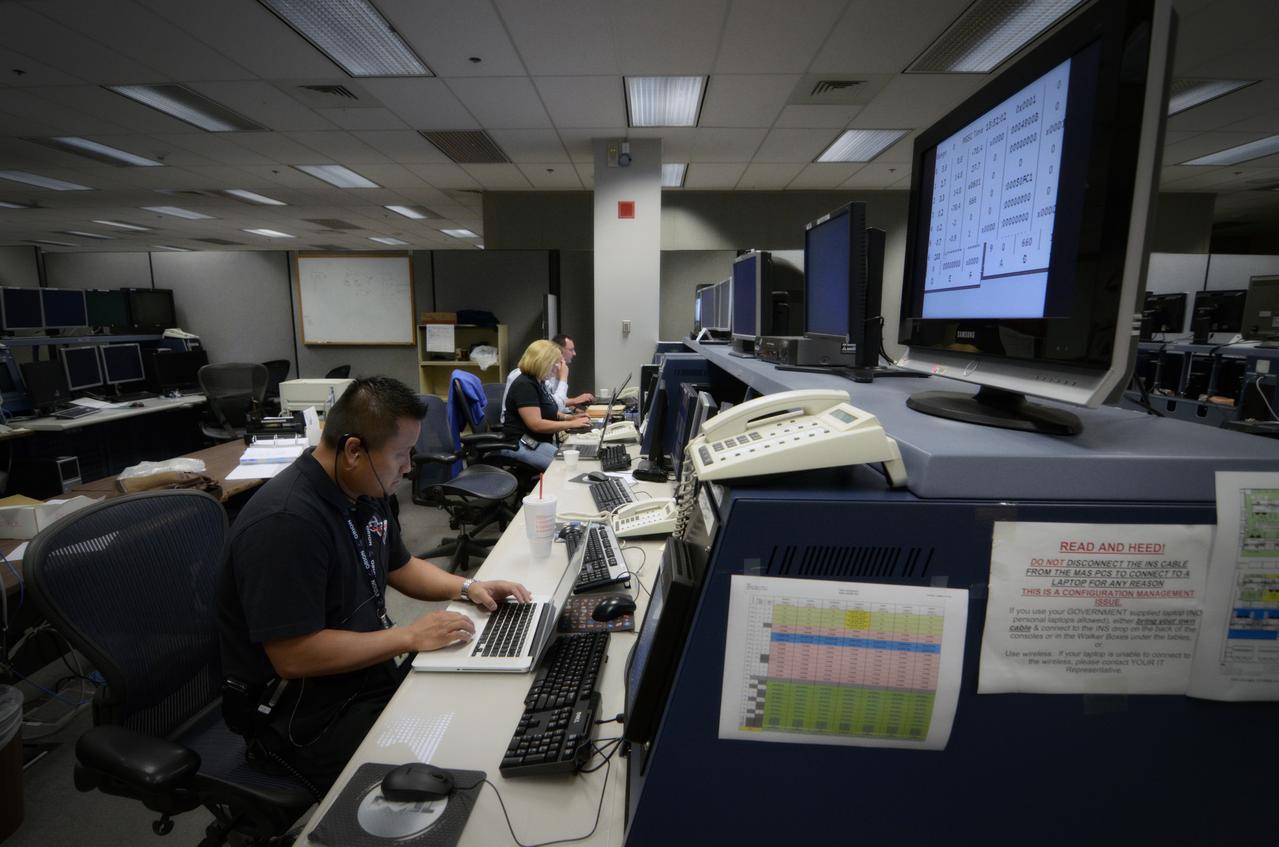
Teams conduct powerup and docking operations for the Sensor Test for Orion Relative Navigation Risk Mitigation (STORRM) in a payload support room at Johnson Space Center’s Mission Control Center in Houston on May 18, 2011. STORMM was successfully demonstrated on Space Shuttle Endeavour’s STS-134 mission to the International Space Station..The goal of STORRM was to validate a new relative navigation sensor based on advanced laser and detector technology that will make docking and undocking spacecraft easier and safer. It also tested the hardware in the same environment that the sensors would experience on the first Orion rendezvous to another vehicle. Part of Batch image transfer from Flickr.
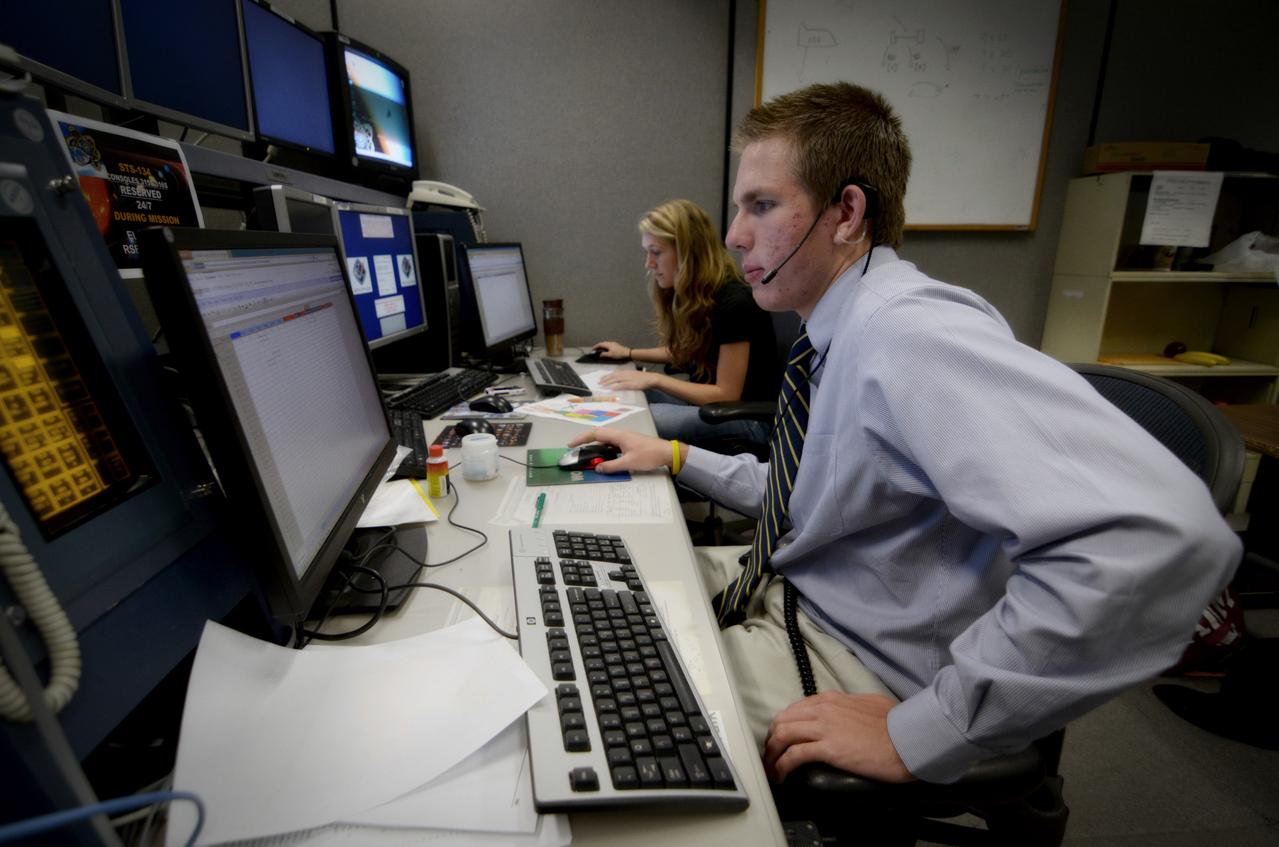
Teams conduct powerup and docking operations for the Sensor Test for Orion Relative Navigation Risk Mitigation (STORRM) in a payload support room at Johnson Space Center’s Mission Control Center in Houston on May 18, 2011. STORMM was successfully demonstrated on Space Shuttle Endeavour’s STS-134 mission to the International Space Station..The goal of STORRM was to validate a new relative navigation sensor based on advanced laser and detector technology that will make docking and undocking spacecraft easier and safer. It also tested the hardware in the same environment that the sensors would experience on the first Orion rendezvous to another vehicle. Part of Batch image transfer from Flickr.
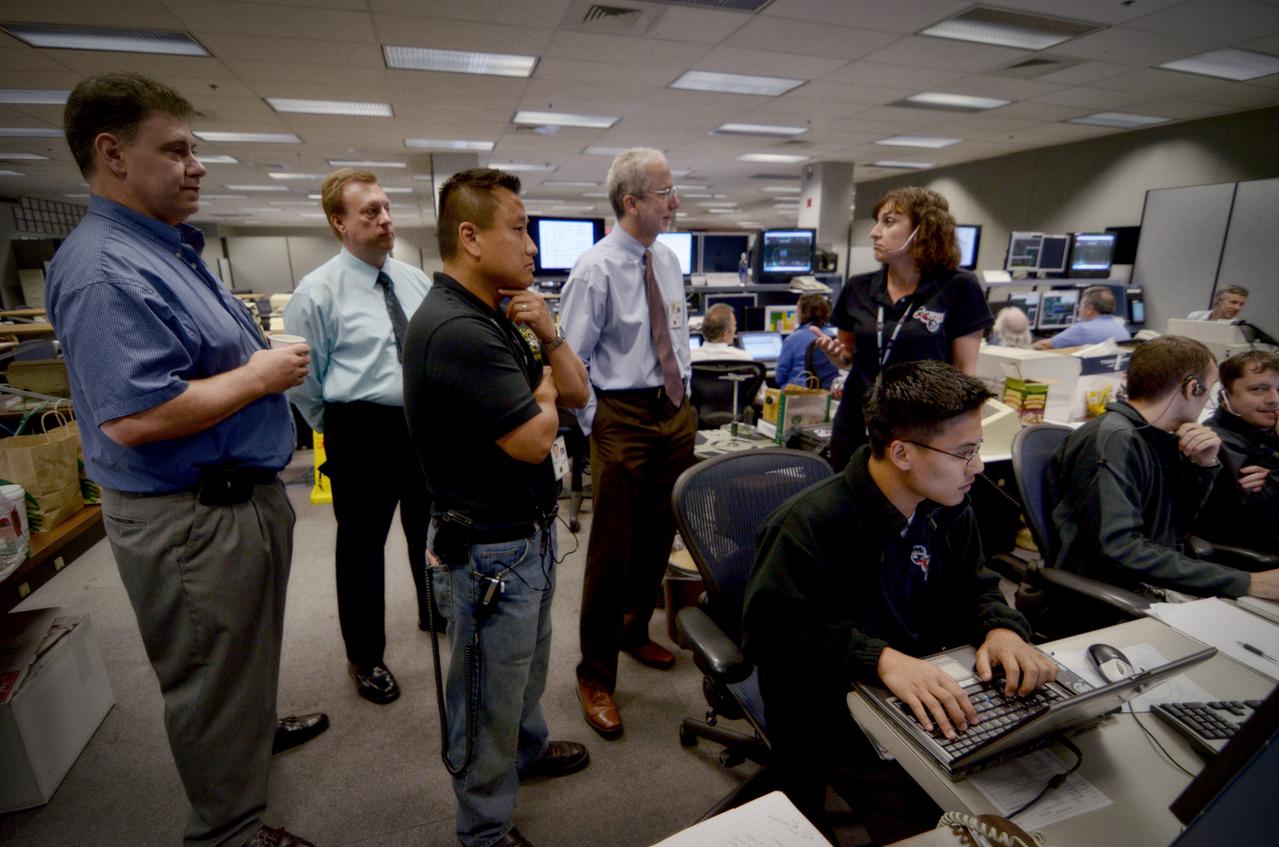
Teams conduct powerup and docking operations for the Sensor Test for Orion Relative Navigation Risk Mitigation (STORRM) in a payload support room at Johnson Space Center’s Mission Control Center in Houston on May 18, 2011. STORRM was successfully demonstrated on Space Shuttle Endeavour’s STS-134 mission to the International Space Station. The goal of STORRM was to validate a new relative navigation sensor based on advanced laser and detector technology that will make docking and undocking spacecraft easier and safer. It also tested the hardware in the same environment that the sensors would experience on the first Orion rendezvous to another vehicle.

Teams conduct powerup and docking operations for the Sensor Test for Orion Relative Navigation Risk Mitigation (STORRM) in a payload support room at Johnson Space Center’s Mission Control Center in Houston on May 18, 2011. STORRM was successfully demonstrated on Space Shuttle Endeavour’s STS-134 mission to the International Space Station. The goal of STORRM was to validate a new relative navigation sensor based on advanced laser and detector technology that will make docking and undocking spacecraft easier and safer. It also tested the hardware in the same environment that the sensors would experience on the first Orion rendezvous to another vehicle.
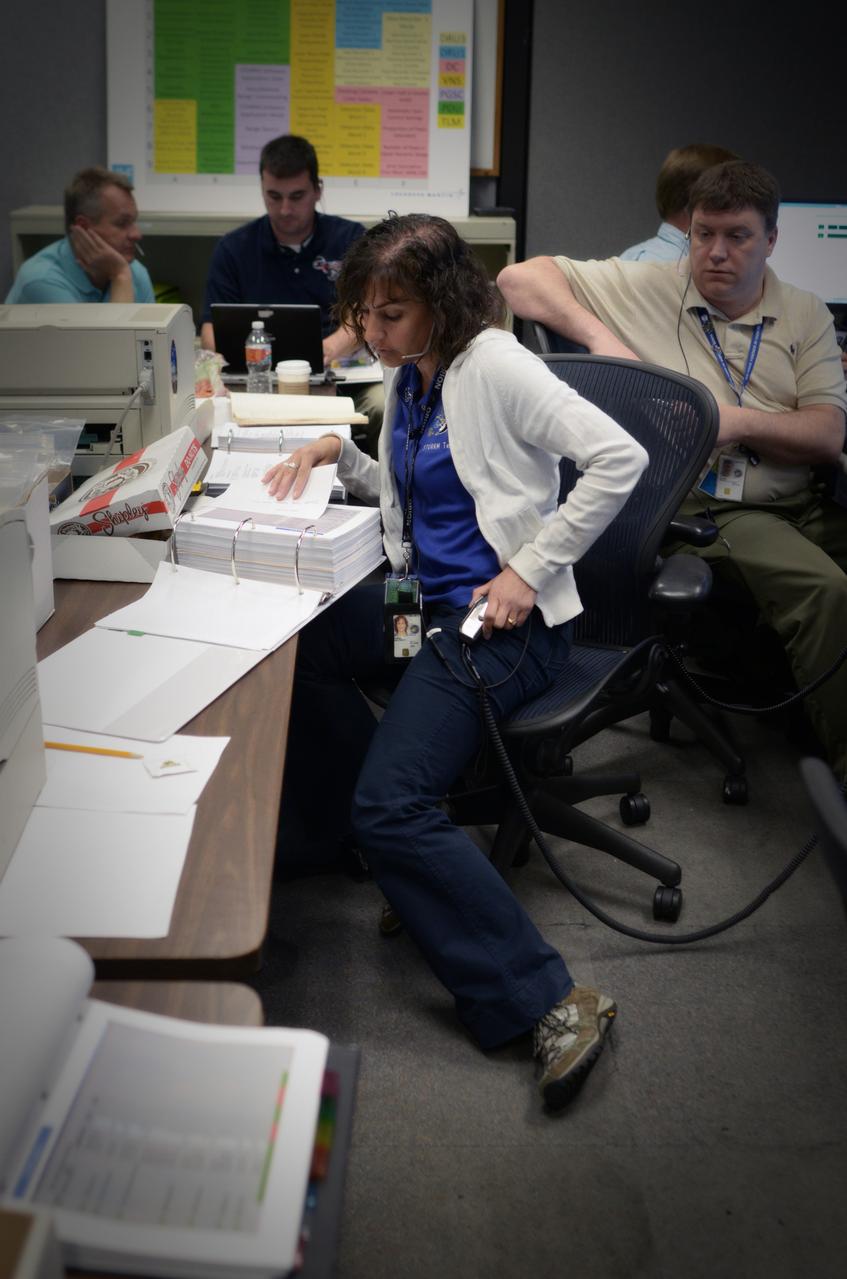
Teams conduct powerup and docking operations for the Sensor Test for Orion Relative Navigation Risk Mitigation (STORRM) in a payload support room at Johnson Space Center’s Mission Control Center in Houston on May 18, 2011. STORMM was successfully demonstrated on Space Shuttle Endeavour’s STS-134 mission to the International Space Station..The goal of STORRM was to validate a new relative navigation sensor based on advanced laser and detector technology that will make docking and undocking spacecraft easier and safer. It also tested the hardware in the same environment that the sensors would experience on the first Orion rendezvous to another vehicle. Part of Batch image transfer from Flickr.
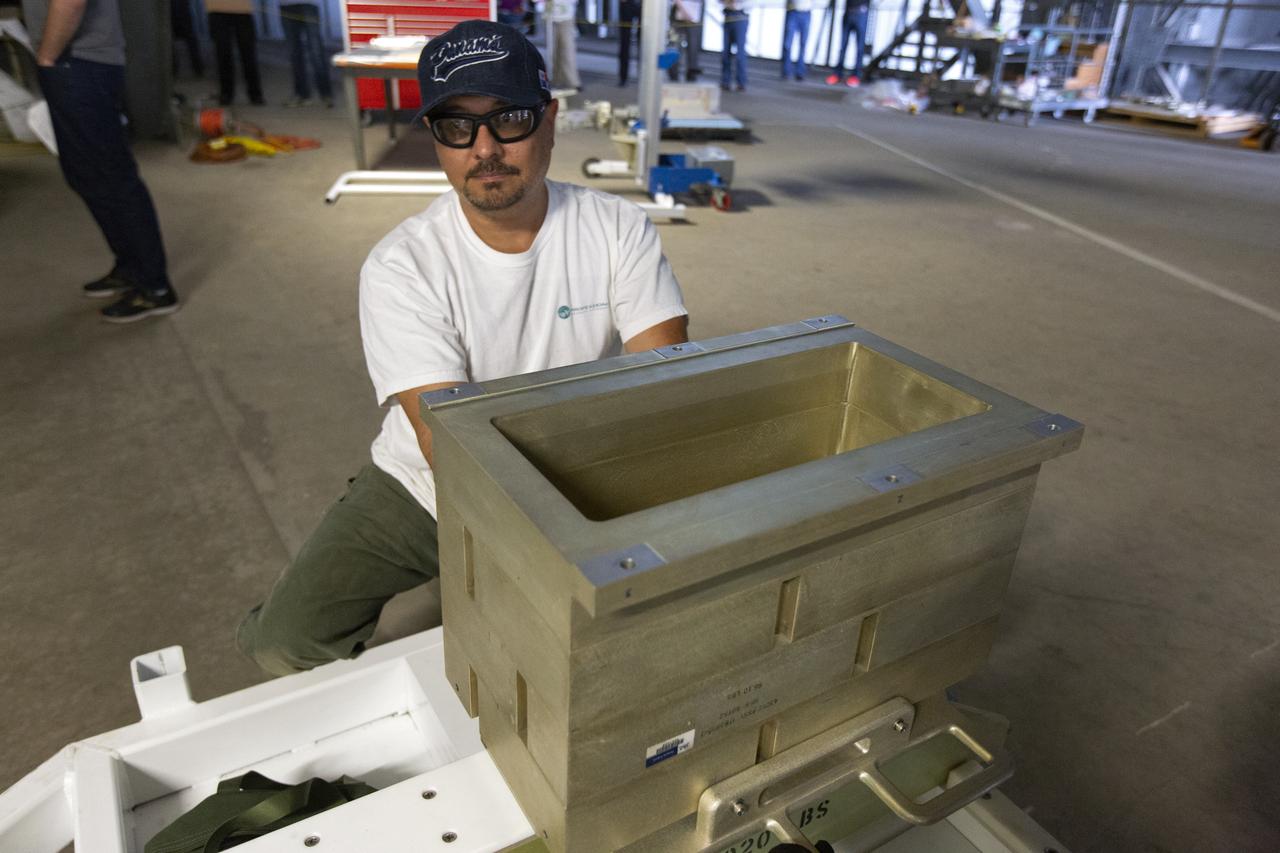
A Space Launch System (SLS) avionics handling tool demonstration takes place inside Kennedy Space Center’s Vehicle Assembly Building on April 4, 2019. The demonstration showed that avionics boxes could be successfully and safely mounted into the SLS rocket’s upper stage — called the Interim Cryogenic Propulsion Stage, or ICPS — with low risk of damaging a closely located hydrazine tank. Avionics boxes include the Inertial Navigation and Control Assembly and flight batteries. The actual installation will take place just weeks before NASA’s SLS rocket and uncrewed Orion spacecraft lift off on Exploration Mission-1 from Launch Pad 39B at Kennedy.

Teams conduct powerup and docking operations for the Sensor Test for Orion Relative Navigation Risk Mitigation (STORRM) in a payload support room at Johnson Space Center’s Mission Control Center in Houston on May 18, 2011. STORRM was successfully demonstrated on Space Shuttle Endeavour’s STS-134 mission to the International Space Station. The goal of STORRM was to validate a new relative navigation sensor based on advanced laser and detector technology that will make docking and undocking spacecraft easier and safer. It also tested the hardware in the same environment that the sensors would experience on the first Orion rendezvous to another vehicle.
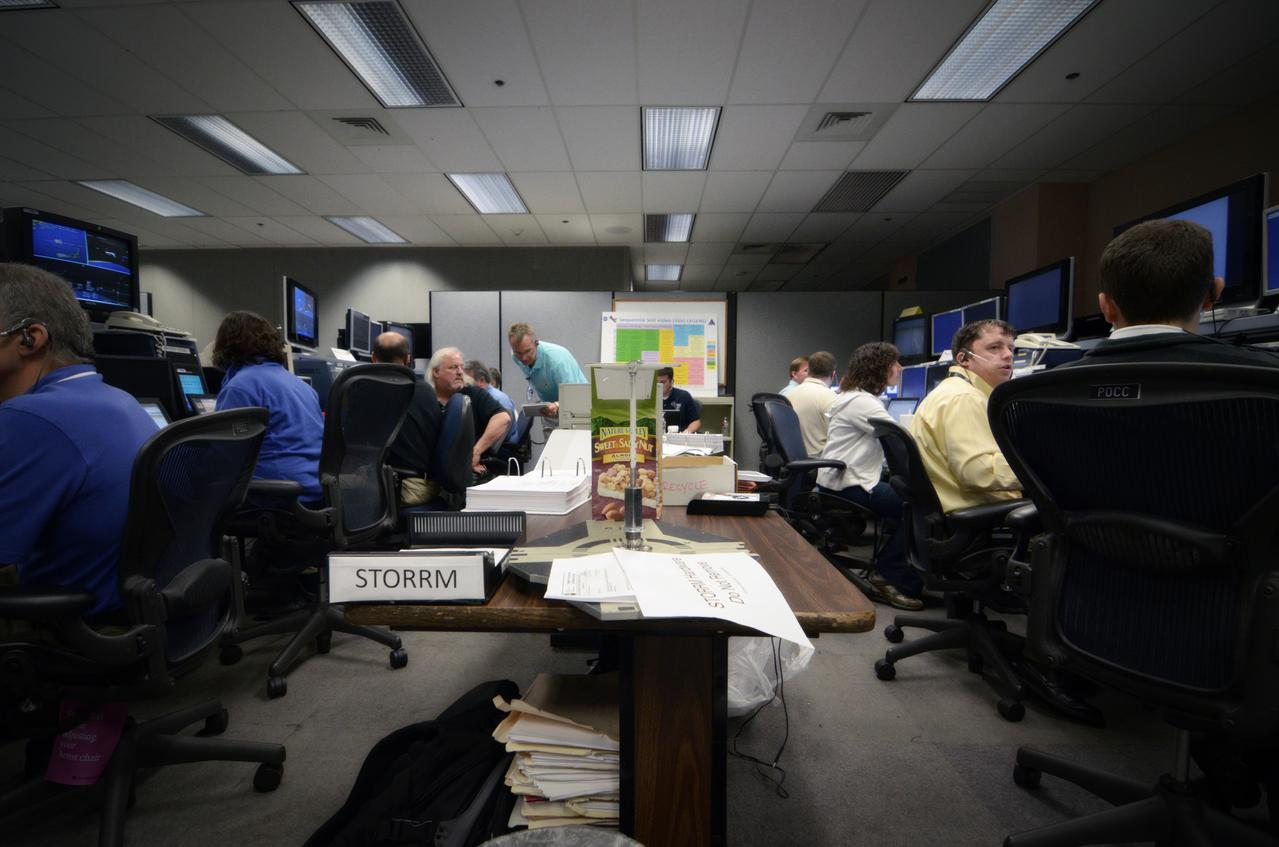
Teams conduct powerup and docking operations for the Sensor Test for Orion Relative Navigation Risk Mitigation (STORRM) in a payload support room at Johnson Space Center’s Mission Control Center in Houston on May 17, 2011. STORRM was successfully demonstrated on Space Shuttle Endeavour’s STS-134 mission to the International Space Station. The goal of STORRM was to validate a new relative navigation sensor based on advanced laser and detector technology that will make docking and undocking spacecraft easier and safer. It also tested the hardware in the same environment that the sensors would experience on the first Orion rendezvous to another vehicle.
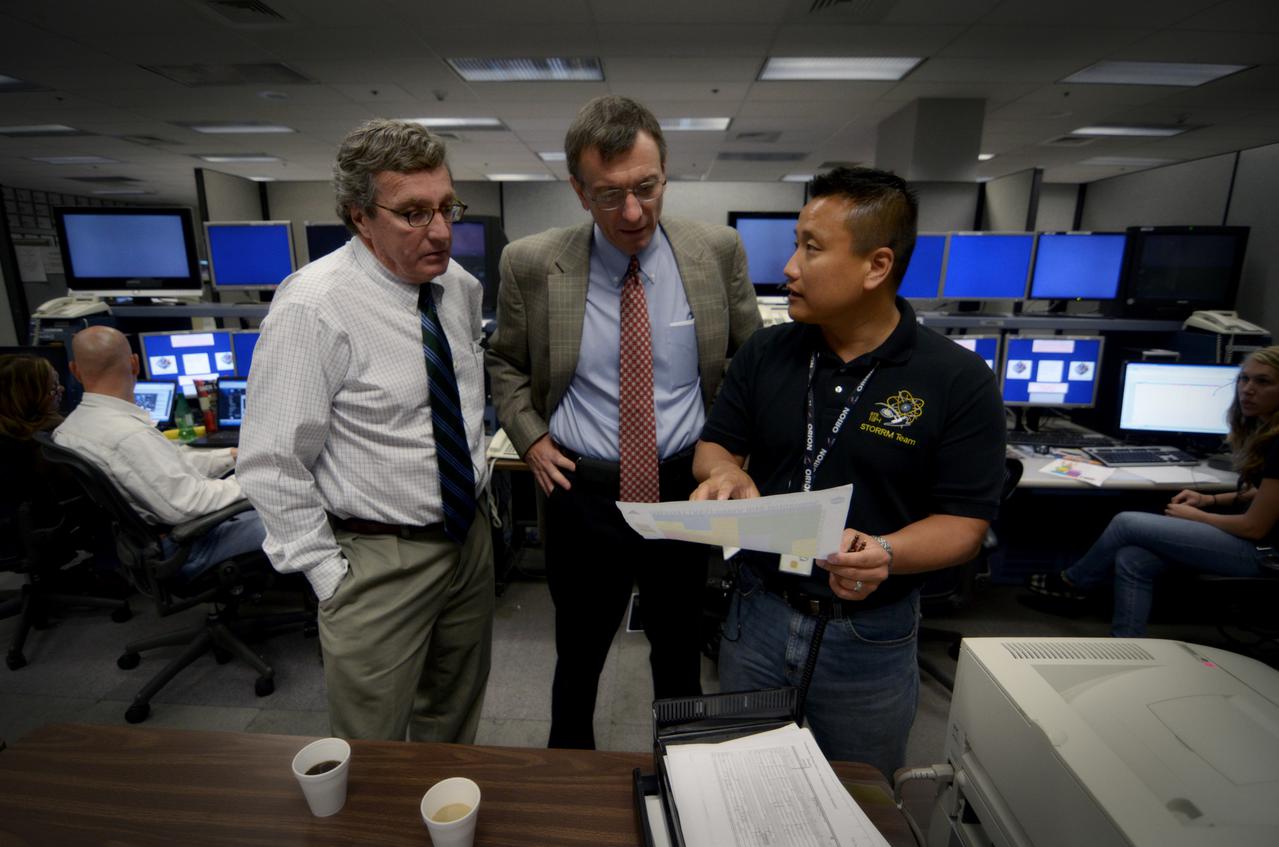
Teams conduct powerup and docking operations for the Sensor Test for Orion Relative Navigation Risk Mitigation (STORRM) in a payload support room at Johnson Space Center’s Mission Control Center in Houston on May 18, 2011. STORRM was successfully demonstrated on Space Shuttle Endeavour’s STS-134 mission to the International Space Station. The goal of STORRM was to validate a new relative navigation sensor based on advanced laser and detector technology that will make docking and undocking spacecraft easier and safer. It also tested the hardware in the same environment that the sensors would experience on the first Orion rendezvous to another vehicle.
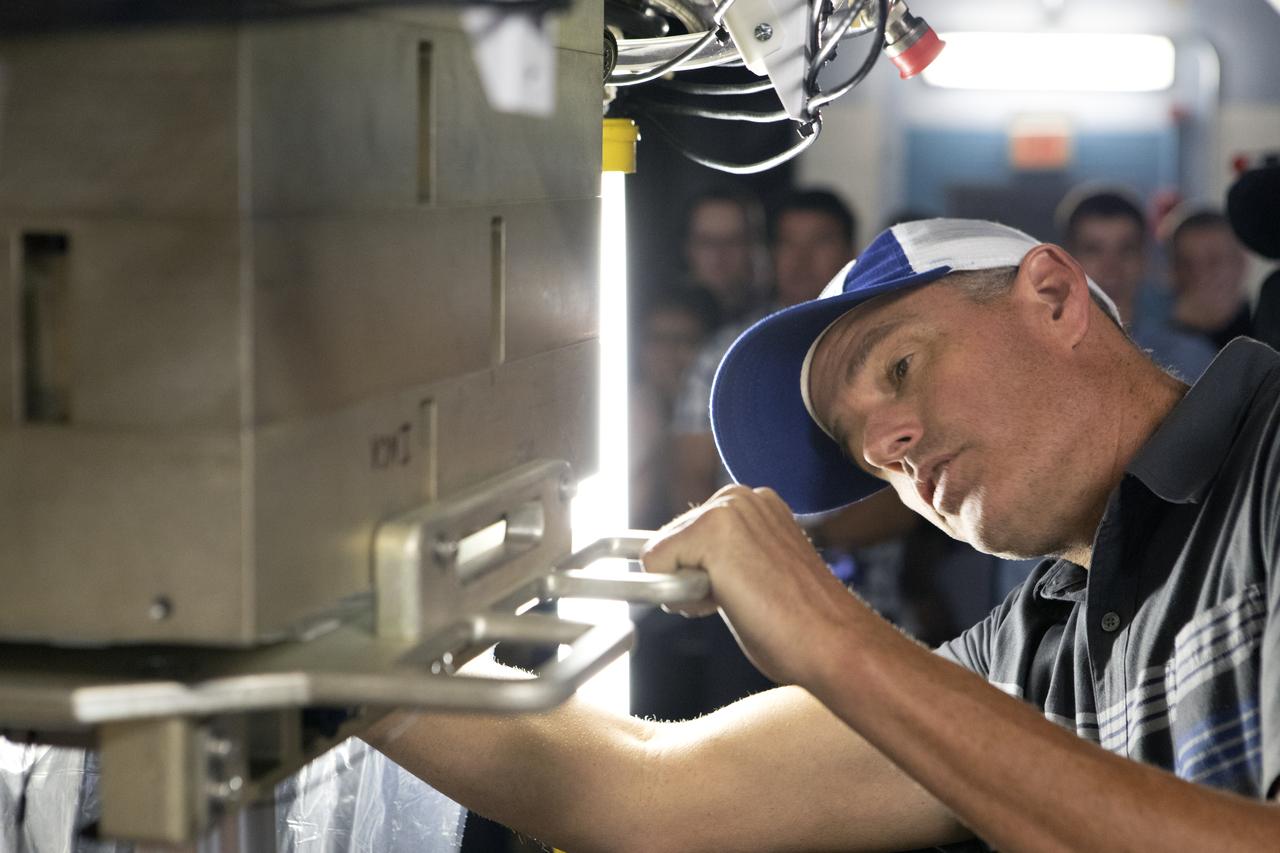
A Space Launch System (SLS) avionics handling tool demonstration takes place inside Kennedy Space Center’s Vehicle Assembly Building on April 4, 2019. The demonstration showed that avionics boxes could be successfully and safely mounted into the SLS rocket’s upper stage — called the Interim Cryogenic Propulsion Stage, or ICPS — with low risk of damaging a closely located hydrazine tank. Avionics boxes include the Inertial Navigation and Control Assembly and flight batteries. The actual installation will take place just weeks before NASA’s SLS rocket and uncrewed Orion spacecraft lift off on Exploration Mission-1 from Launch Pad 39B at Kennedy.
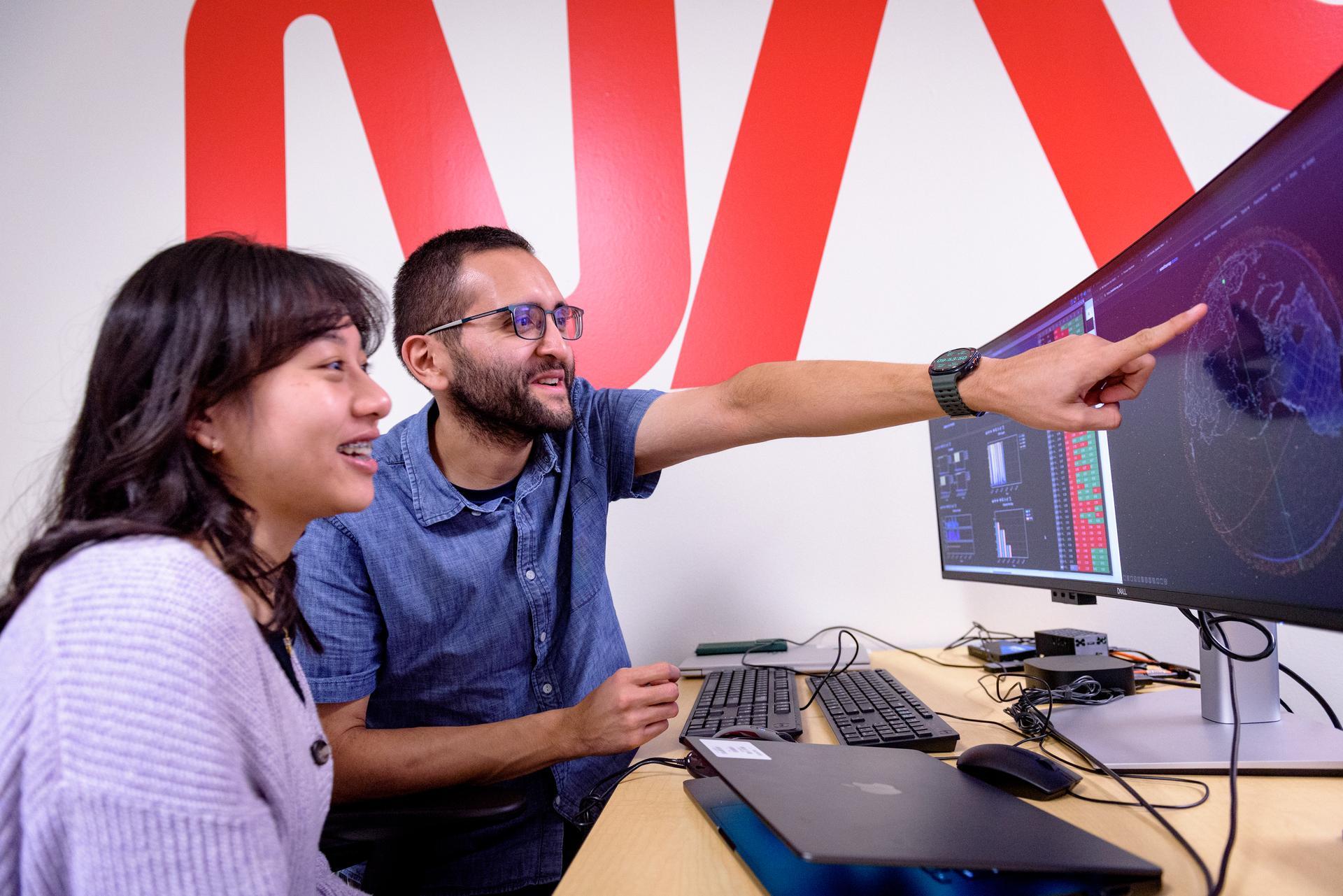
TechEdSat-11 operators Daphne Dao, left, and Alejandro Salas, in the Ames Multi-Mission Operations Center (MMOC), N240 Annex, Eros control room 162. The team monitors the spacecraft's status during the Exo-Brake “parachute” deployment. The ExoBrake is a drag device that increases the total surface area of the spacecraft to assist with a quicker deorbit. This maneuver is deployed at the end of mission to satisfy NASA's deorbit requirement and prevent space debris. TechEdSat has spent the last several months coordinating with NASA’s Conjunction Assessment Risk Analysis (CARA) team to ensure the spacecraft can safely deploy the ExoBrake without colliding into any other objects.
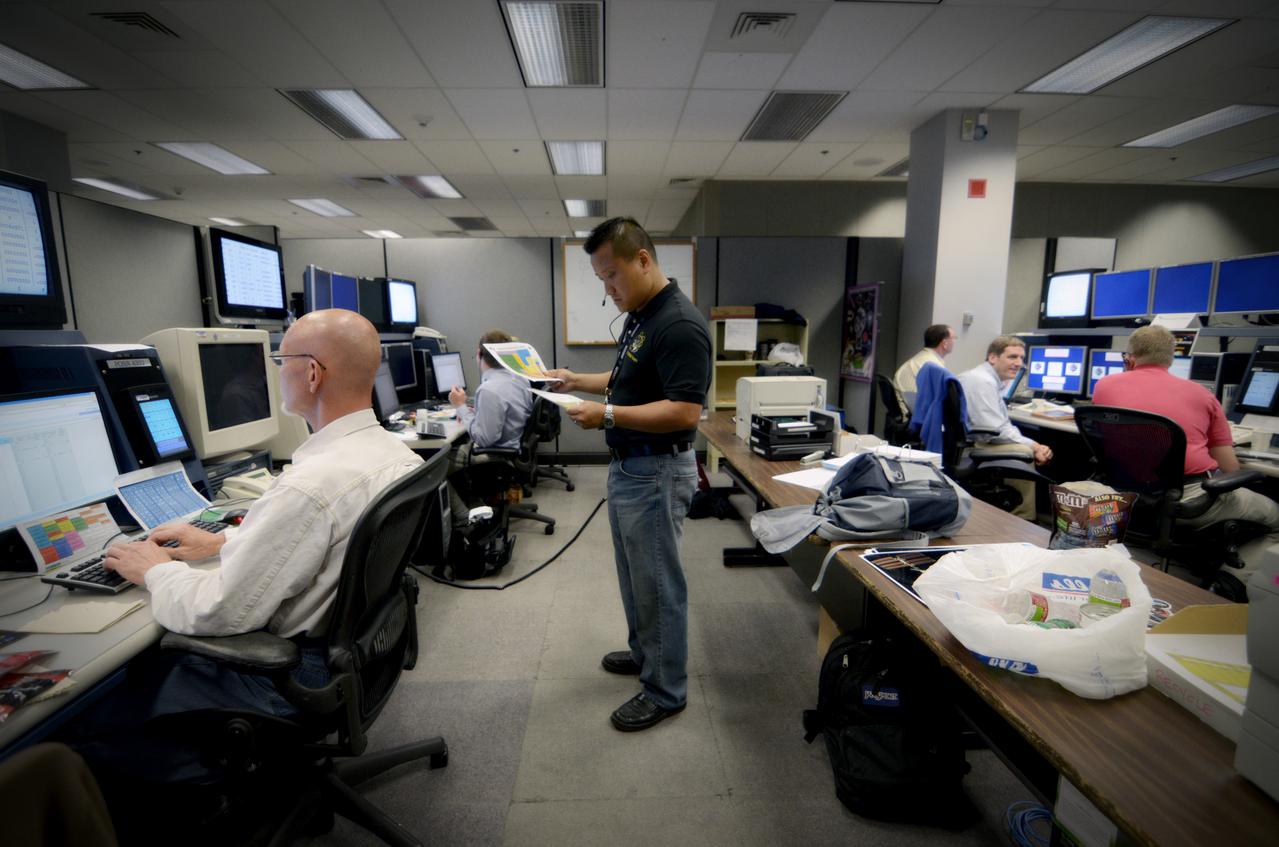
Teams conduct powerup and docking operations for the Sensor Test for Orion Relative Navigation Risk Mitigation (STORRM) in a payload support room at Johnson Space Center’s Mission Control Center in Houston on May 18, 2011. STORRM was successfully demonstrated on Space Shuttle Endeavour’s STS-134 mission to the International Space Station. The goal of STORRM was to validate a new relative navigation sensor based on advanced laser and detector technology that will make docking and undocking spacecraft easier and safer. It also tested the hardware in the same environment that the sensors would experience on the first Orion rendezvous to another vehicle.
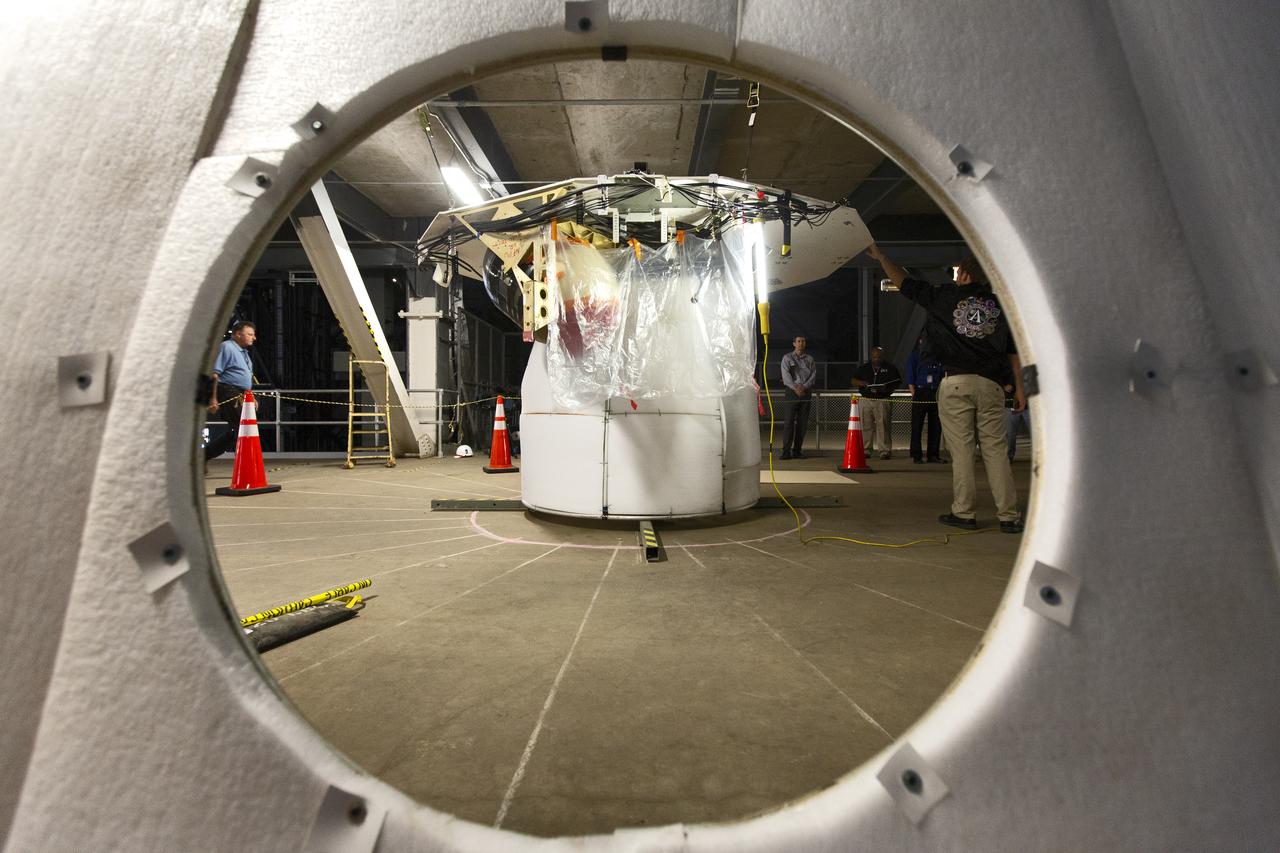
Robert Cook, a launch vehicle engineer with Millennium Engineering and Integration, talks during the Space Launch System (SLS) avionics handling tool demonstration inside Kennedy Space Center’s Vehicle Assembly Building on April 4, 2019. The demonstration showed that avionics boxes could be successfully and safely mounted into the SLS rocket’s upper stage — called the Interim Cryogenic Propulsion Stage, or ICPS — with low risk of damaging a closely located hydrazine tank. Avionics boxes include the Inertial Navigation and Control Assembly and flight batteries. Cook designed the ICPS section mockup used in the exercise.

Teams conduct powerup and docking operations for the Sensor Test for Orion Relative Navigation Risk Mitigation (STORRM) in a payload support room at Johnson Space Center’s Mission Control Center in Houston on May 18, 2011. STORMM was successfully demonstrated on Space Shuttle Endeavour’s STS-134 mission to the International Space Station..The goal of STORRM was to validate a new relative navigation sensor based on advanced laser and detector technology that will make docking and undocking spacecraft easier and safer. It also tested the hardware in the same environment that the sensors would experience on the first Orion rendezvous to another vehicle. Part of Batch image transfer from Flickr.
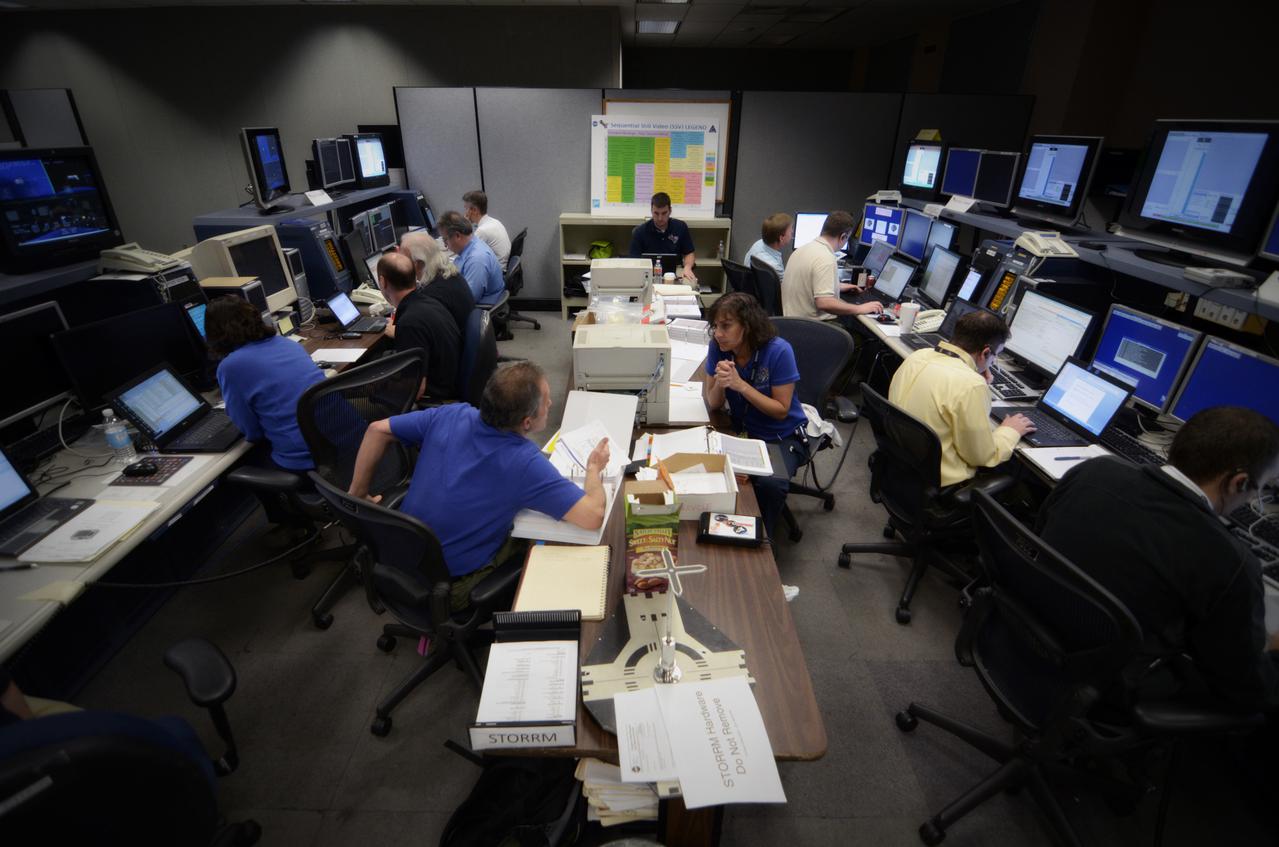
Teams conduct powerup and docking operations for the Sensor Test for Orion Relative Navigation Risk Mitigation (STORRM) in a payload support room at Johnson Space Center’s Mission Control Center in Houston on May 17, 2011. STORRM was successfully demonstrated on Space Shuttle Endeavour’s STS-134 mission to the International Space Station. The goal of STORRM was to validate a new relative navigation sensor based on advanced laser and detector technology that will make docking and undocking spacecraft easier and safer. It also tested the hardware in the same environment that the sensors would experience on the first Orion rendezvous to another vehicle.
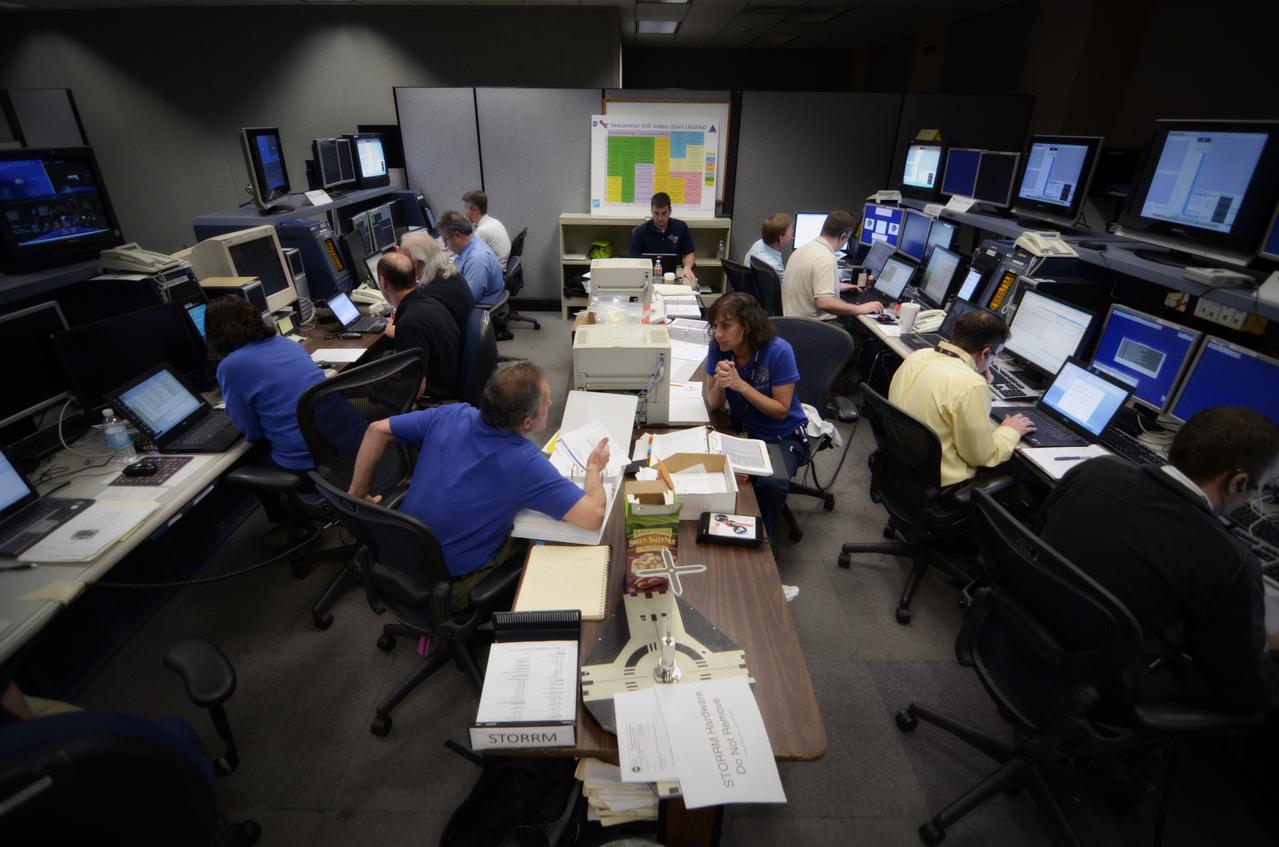
Teams conduct powerup and docking operations for the Sensor Test for Orion Relative Navigation Risk Mitigation (STORRM) in a payload support room at Johnson Space Center’s Mission Control Center in Houston on May 18, 2011. STORMM was successfully demonstrated on Space Shuttle Endeavour’s STS-134 mission to the International Space Station..The goal of STORRM was to validate a new relative navigation sensor based on advanced laser and detector technology that will make docking and undocking spacecraft easier and safer. It also tested the hardware in the same environment that the sensors would experience on the first Orion rendezvous to another vehicle. Part of Batch image transfer from Flickr.
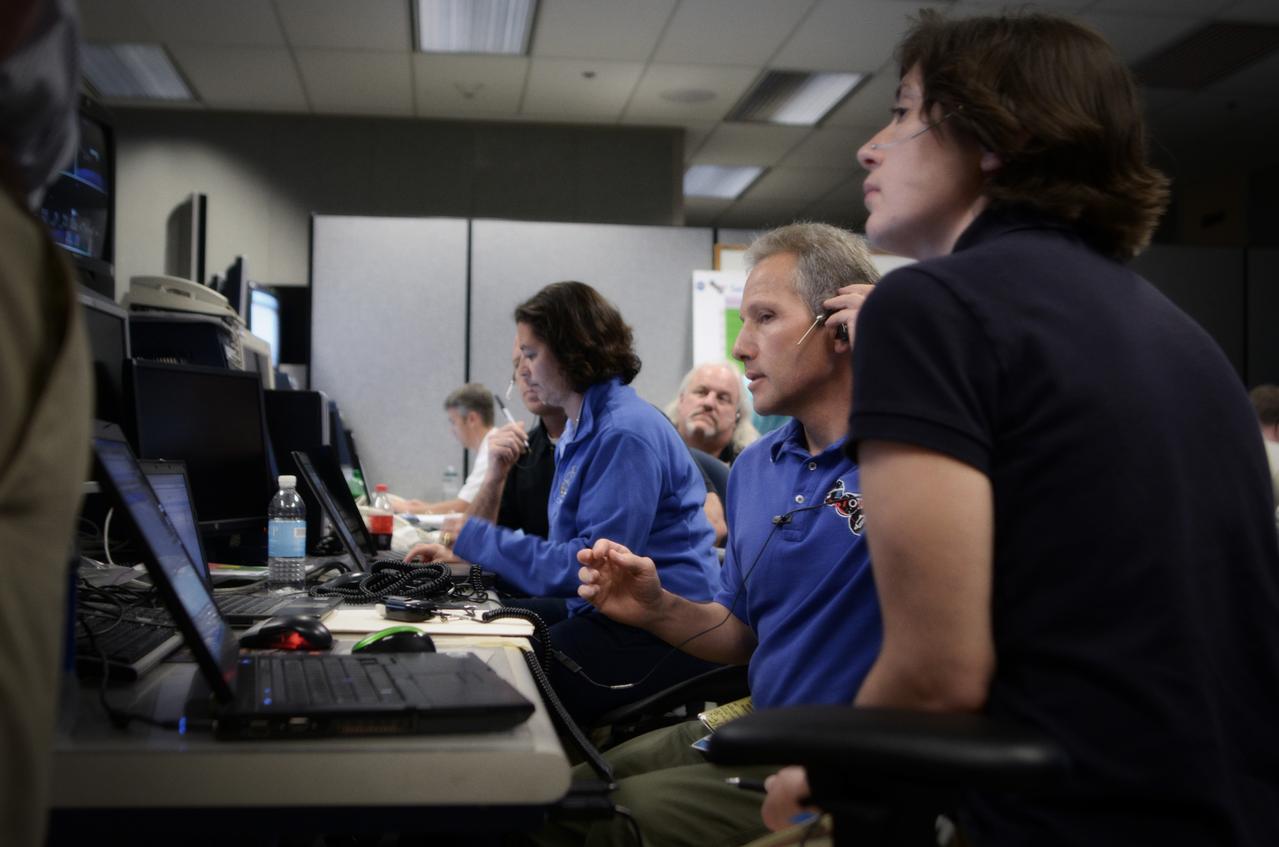
Teams conduct powerup and docking operations for the Sensor Test for Orion Relative Navigation Risk Mitigation (STORRM) in a payload support room at Johnson Space Center’s Mission Control Center in Houston on May 18, 2011. STORMM was successfully demonstrated on Space Shuttle Endeavour’s STS-134 mission to the International Space Station..The goal of STORRM was to validate a new relative navigation sensor based on advanced laser and detector technology that will make docking and undocking spacecraft easier and safer. It also tested the hardware in the same environment that the sensors would experience on the first Orion rendezvous to another vehicle. Part of Batch image transfer from Flickr.
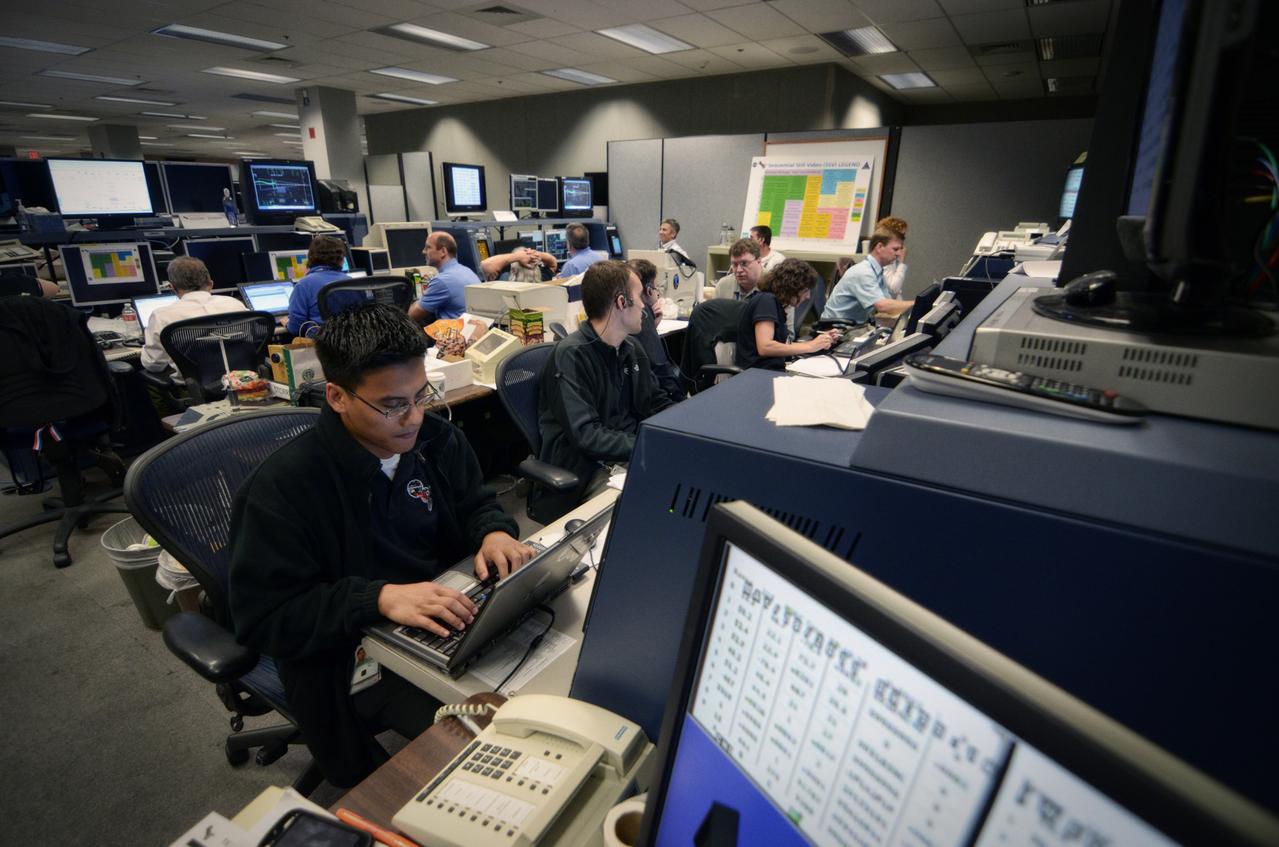
Teams conduct powerup and docking operations for the Sensor Test for Orion Relative Navigation Risk Mitigation (STORRM) in a payload support room at Johnson Space Center’s Mission Control Center in Houston on May 18, 2011. STORMM was successfully demonstrated on Space Shuttle Endeavour’s STS-134 mission to the International Space Station..The goal of STORRM was to validate a new relative navigation sensor based on advanced laser and detector technology that will make docking and undocking spacecraft easier and safer. It also tested the hardware in the same environment that the sensors would experience on the first Orion rendezvous to another vehicle. Part of Batch image transfer from Flickr.
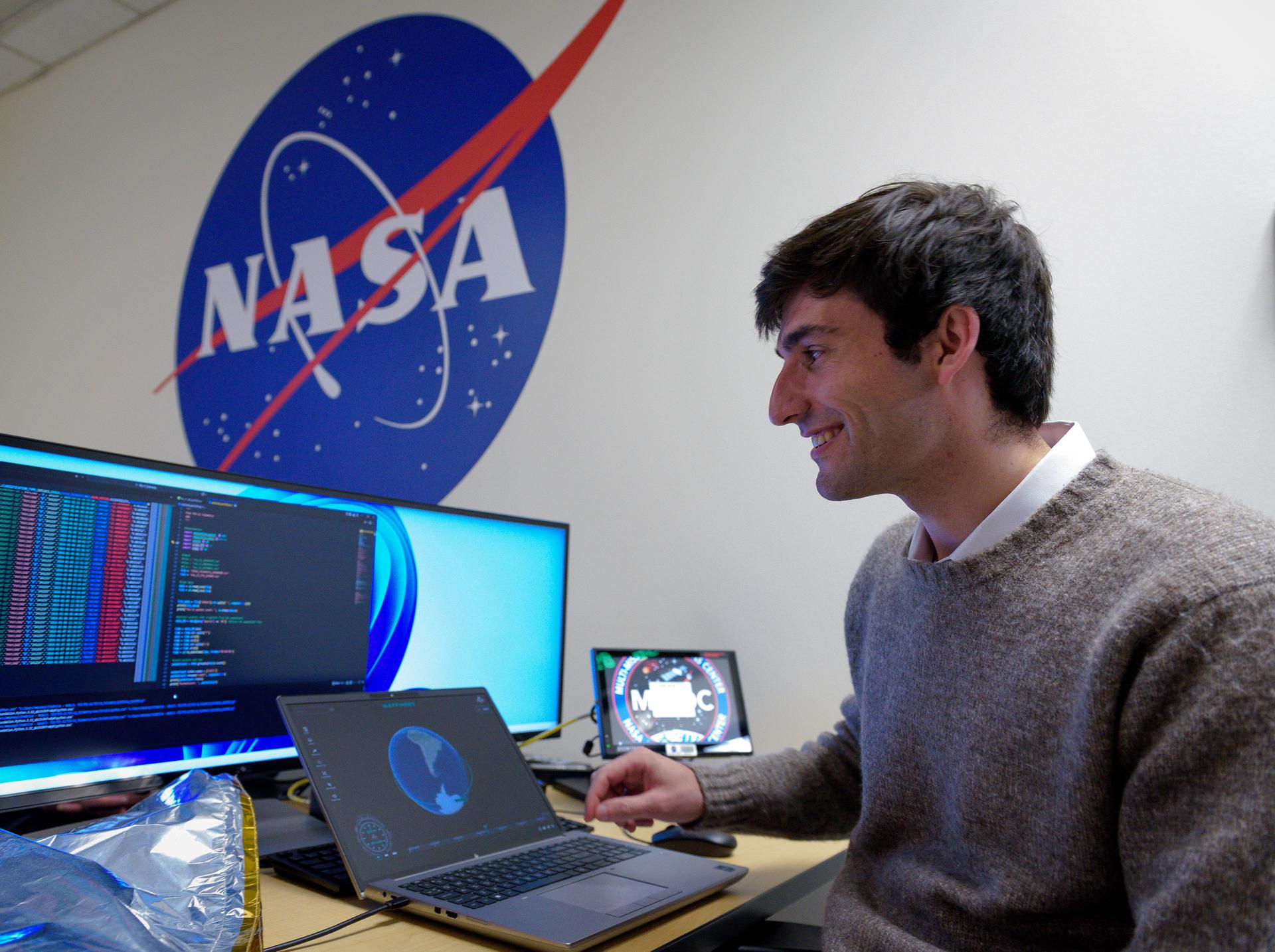
TechEdSat-11 operator Malachi Mooney-Rivkin, in the Ames Multi-Mission Operations Center (MMOC), N240 Annex, Eros control room 162. Malachi monitors the spacecraft's status during the Exo-Brake “parachute” deployment. The ExoBrake is a drag device that increases the total surface area of the spacecraft to assist with a quicker deorbit. This maneuver is deployed at the end of mission to satisfy NASA's deorbit requirement and prevent space debris. TechEdSat has spent the last several months coordinating with NASA’s Conjunction Assessment Risk Analysis (CARA) team to ensure the spacecraft can safely deploy the ExoBrake without colliding into any other objects.
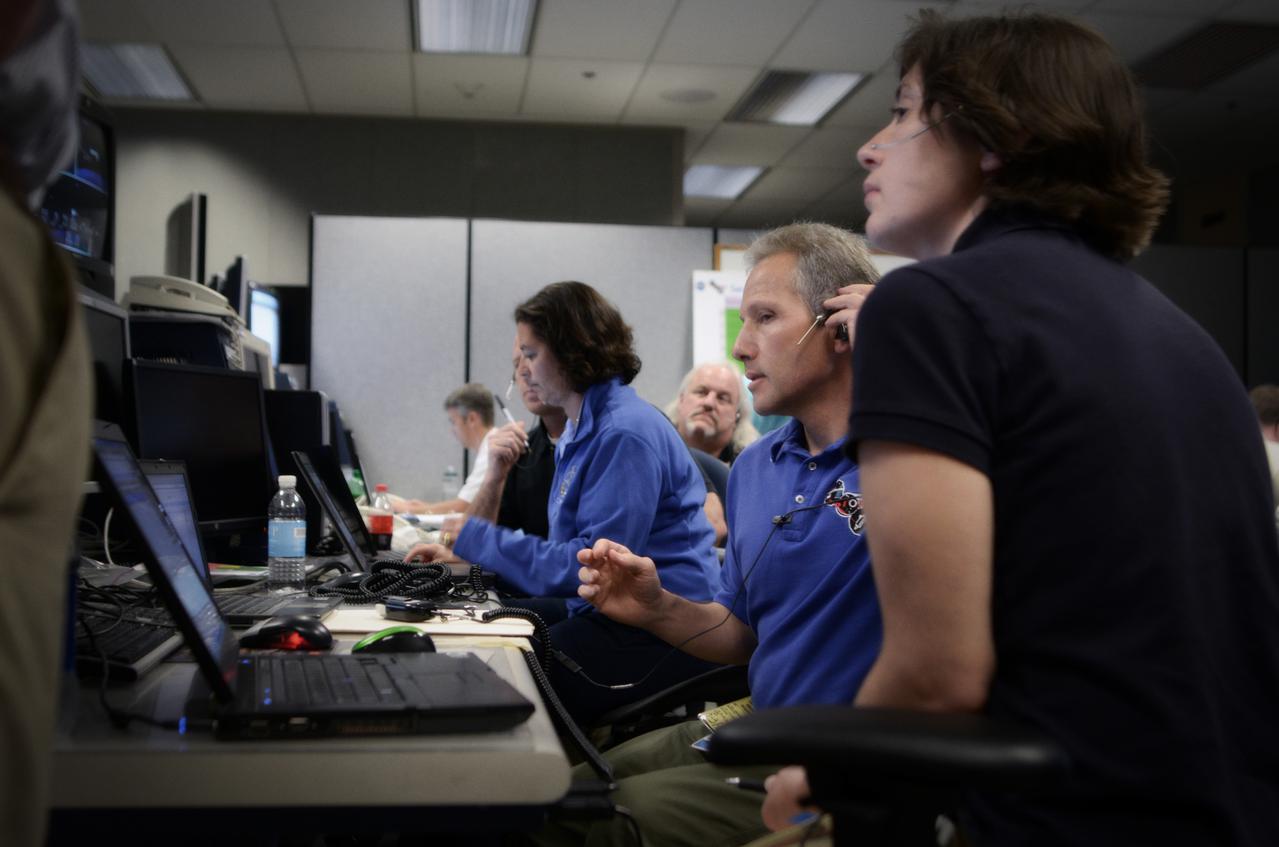
Teams conduct powerup and docking operations for the Sensor Test for Orion Relative Navigation Risk Mitigation (STORRM) in a payload support room at Johnson Space Center’s Mission Control Center in Houston on May 17, 2011. STORRM was successfully demonstrated on Space Shuttle Endeavour’s STS-134 mission to the International Space Station. The goal of STORRM was to validate a new relative navigation sensor based on advanced laser and detector technology that will make docking and undocking spacecraft easier and safer. It also tested the hardware in the same environment that the sensors would experience on the first Orion rendezvous to another vehicle.
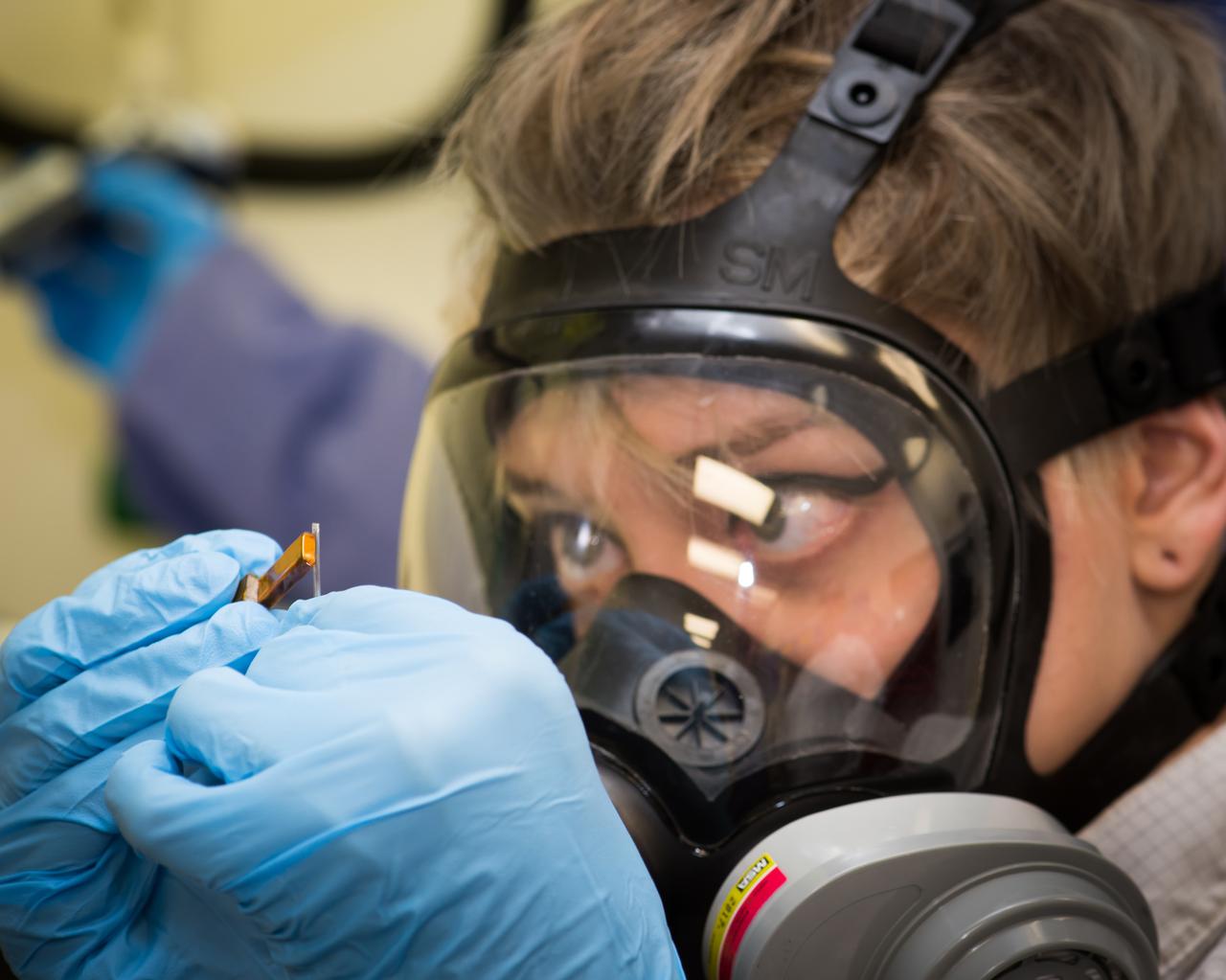
Light Microscopy Modle, LMM, Ground Unit Testing, GU. Control Systems Engineer using a small magnet to maneuver a 1mm metal stir-bar into a colloid sample fluid-filled capillary. The capillary tubes of sample fluid will be filled and sealed. The sample fluid supplied by a Principal Investigator typically contains some hazardous/toxic chemicals that she must ensure will not leak and put the astronauts at risk. On-orbit on the LMM, ‘insitu mixing’ is used, which uses electromagnetic inductors to stimulate the metal stir-bar to mix the fluid within the sealed capillary.
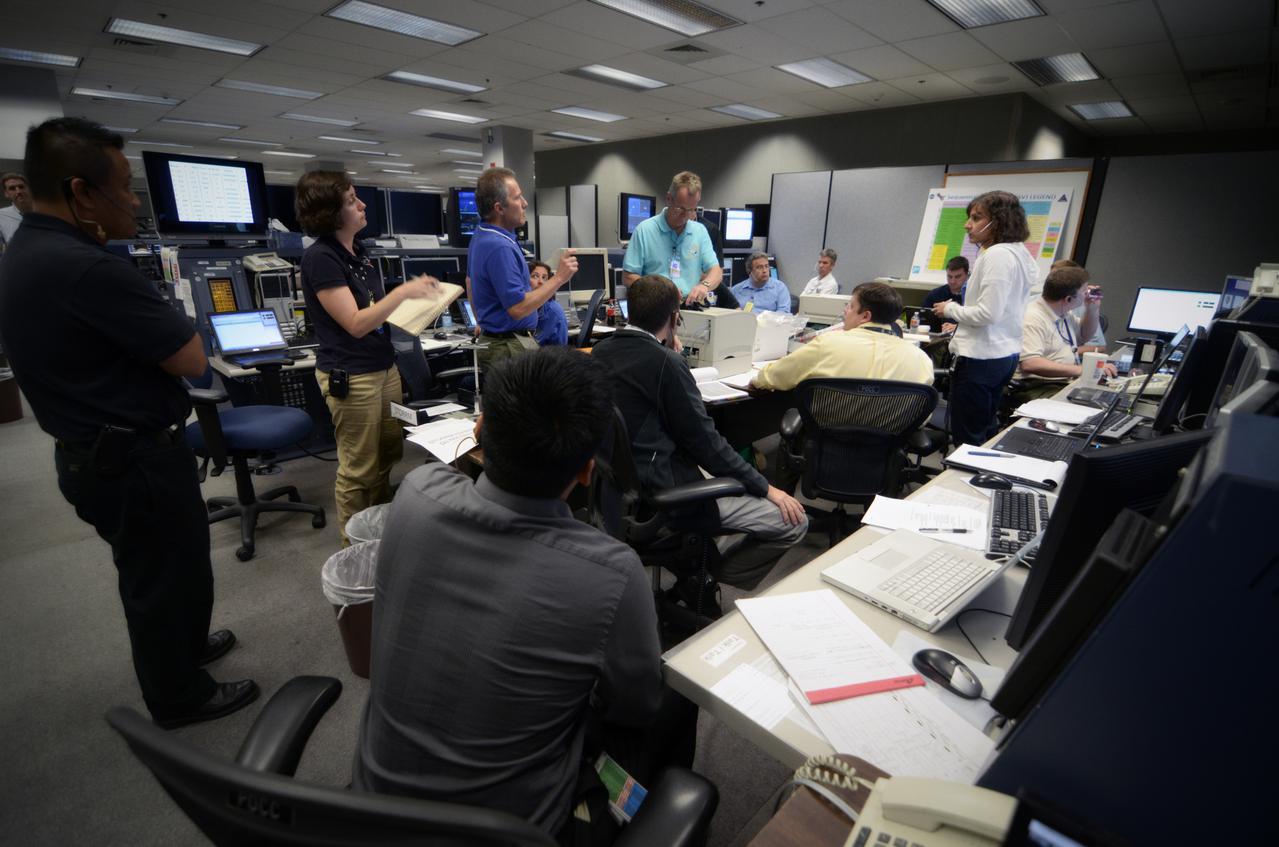
Teams conduct powerup and docking operations for the Sensor Test for Orion Relative Navigation Risk Mitigation (STORRM) in a payload support room at Johnson Space Center’s Mission Control Center in Houston on May 17, 2011. STORRM was successfully demonstrated on Space Shuttle Endeavour’s STS-134 mission to the International Space Station. The goal of STORRM was to validate a new relative navigation sensor based on advanced laser and detector technology that will make docking and undocking spacecraft easier and safer. It also tested the hardware in the same environment that the sensors would experience on the first Orion rendezvous to another vehicle.
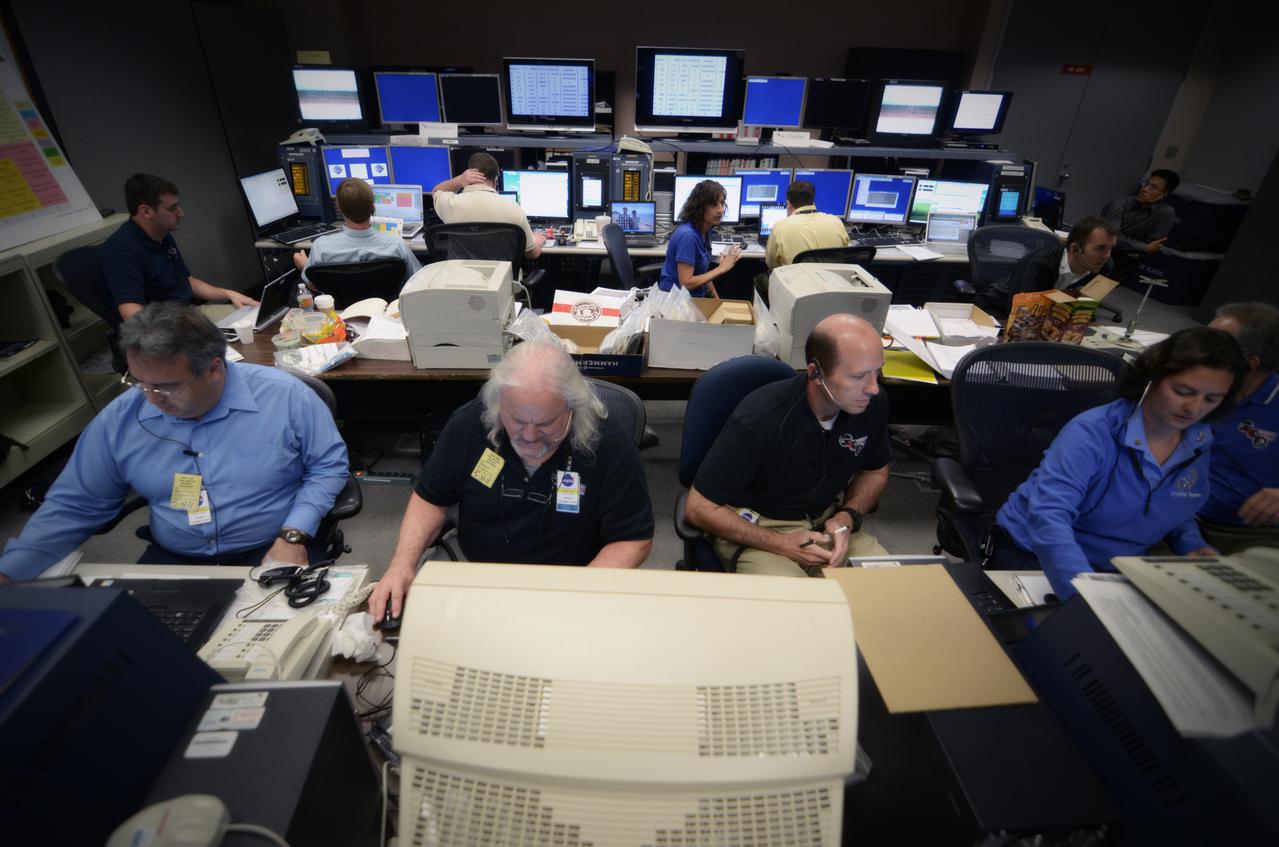
Teams conduct powerup and docking operations for the Sensor Test for Orion Relative Navigation Risk Mitigation (STORRM) in a payload support room at Johnson Space Center’s Mission Control Center in Houston on May 17, 2011. STORRM was successfully demonstrated on Space Shuttle Endeavour’s STS-134 mission to the International Space Station. The goal of STORRM was to validate a new relative navigation sensor based on advanced laser and detector technology that will make docking and undocking spacecraft easier and safer. It also tested the hardware in the same environment that the sensors would experience on the first Orion rendezvous to another vehicle.
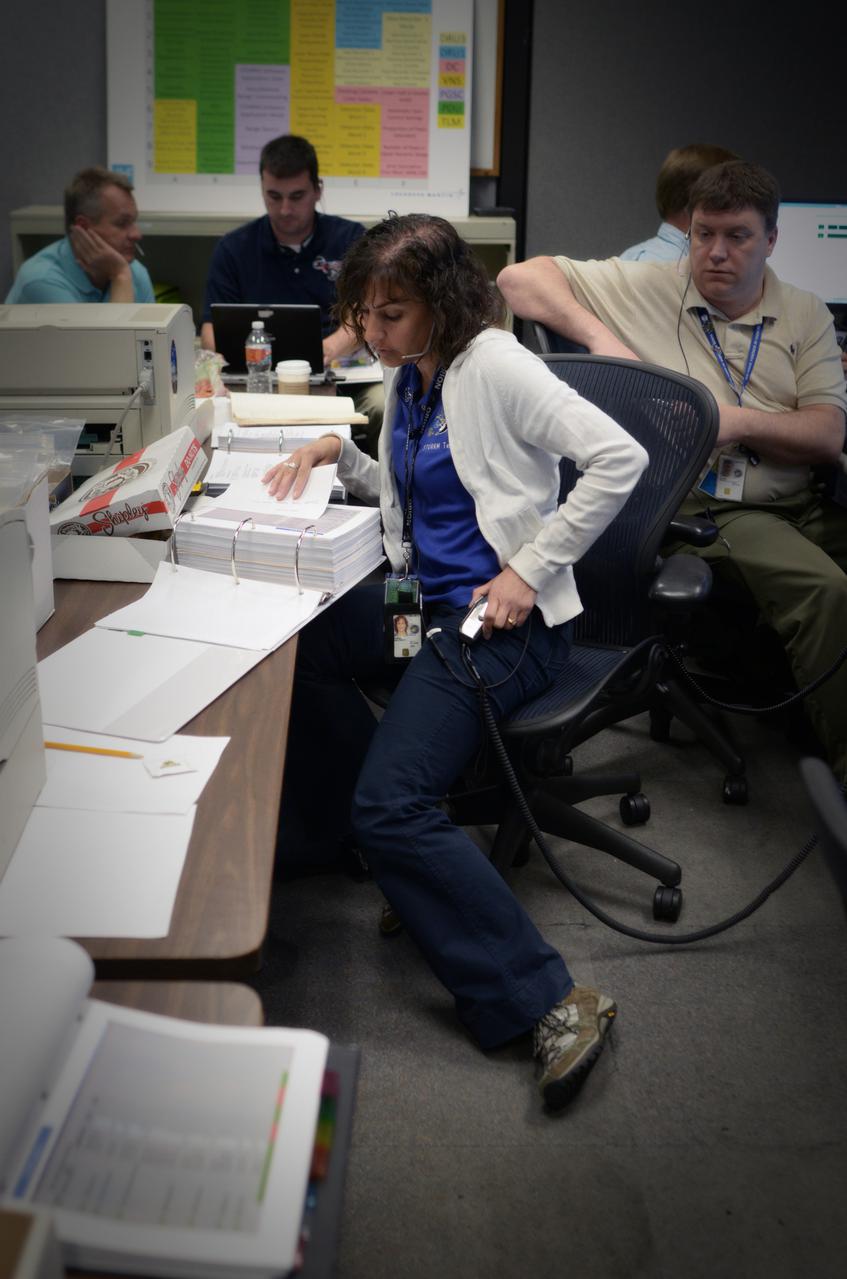
Teams conduct powerup and docking operations for the Sensor Test for Orion Relative Navigation Risk Mitigation (STORRM) in a payload support room at Johnson Space Center’s Mission Control Center in Houston on May 17, 2011. STORRM was successfully demonstrated on Space Shuttle Endeavour’s STS-134 mission to the International Space Station. The goal of STORRM was to validate a new relative navigation sensor based on advanced laser and detector technology that will make docking and undocking spacecraft easier and safer. It also tested the hardware in the same environment that the sensors would experience on the first Orion rendezvous to another vehicle.
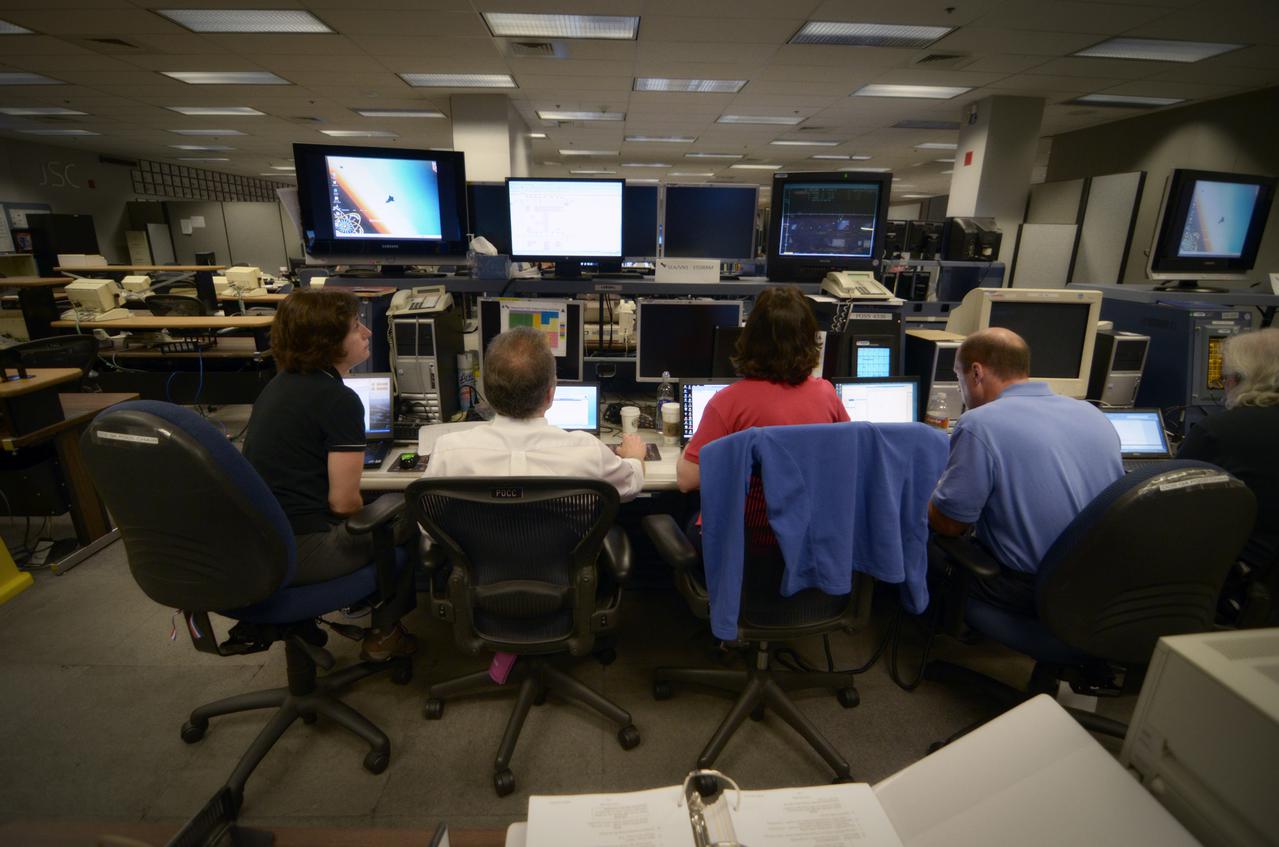
Teams conduct powerup and docking operations for the Sensor Test for Orion Relative Navigation Risk Mitigation (STORRM) in a payload support room at Johnson Space Center’s Mission Control Center in Houston on May 18, 2011. STORRM was successfully demonstrated on Space Shuttle Endeavour’s STS-134 mission to the International Space Station. The goal of STORRM was to validate a new relative navigation sensor based on advanced laser and detector technology that will make docking and undocking spacecraft easier and safer. It also tested the hardware in the same environment that the sensors would experience on the first Orion rendezvous to another vehicle.
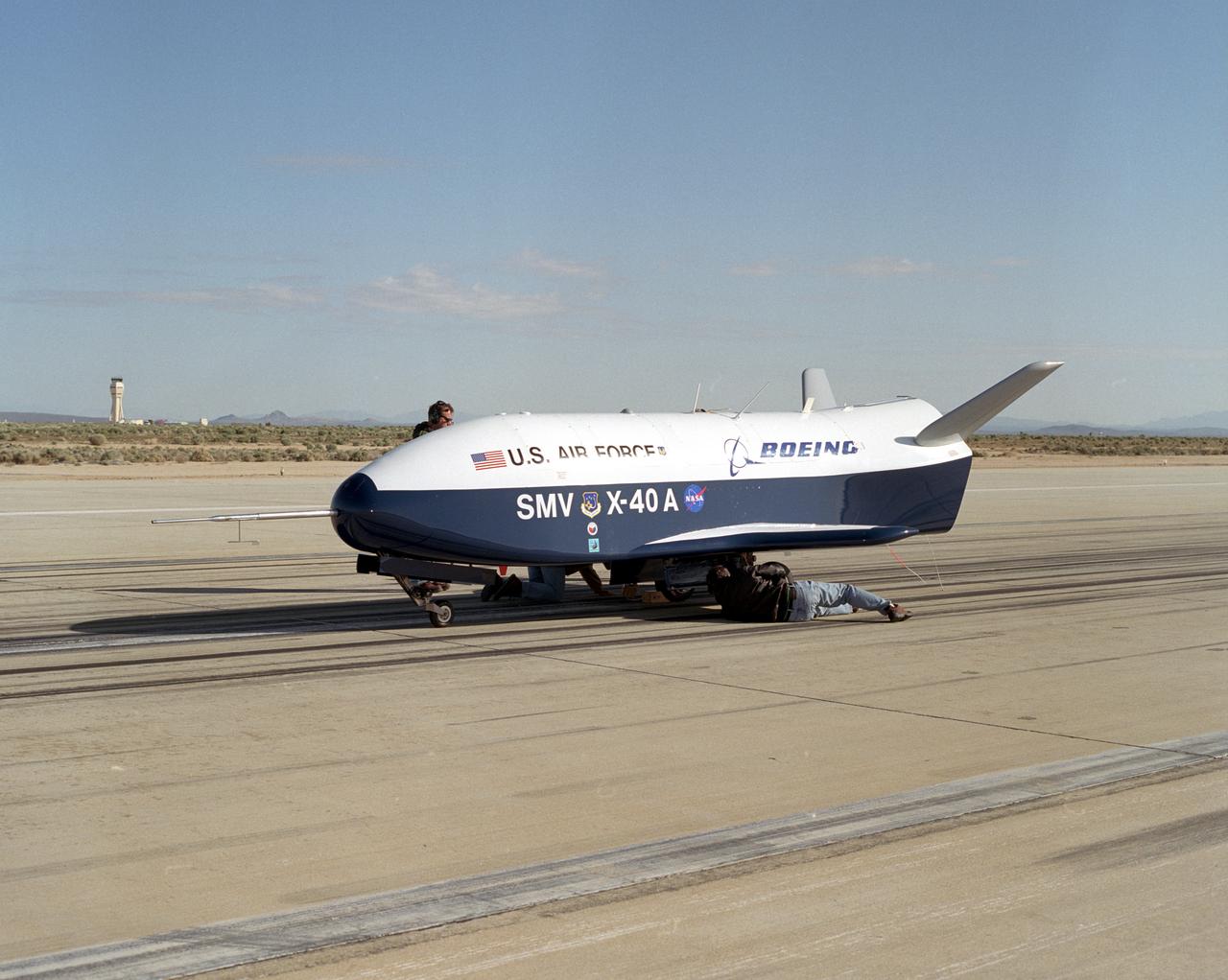
Second free-flight of the X-40A at the NASA Dryden Flight Research Center, on Edwards AFB, Calif., was made on Apr. 12, 2001. The unpowered X-40A, an 85 percent scale risk reduction version of the proposed X-37, is proving the capability of an autonomous flight control and landing system in a series of glide flights at Edwards. The April 12 flight introduced complex vehicle maneuvers during the landing sequence. The X-40A was released from an Army Chinook helicopter flying 15,050 feet overhead. Ultimately, the unpiloted X-37 is intended as an orbital testbed and technology demonstrator, capable of landing like an airplane and being quickly serviced for a follow-up mission.
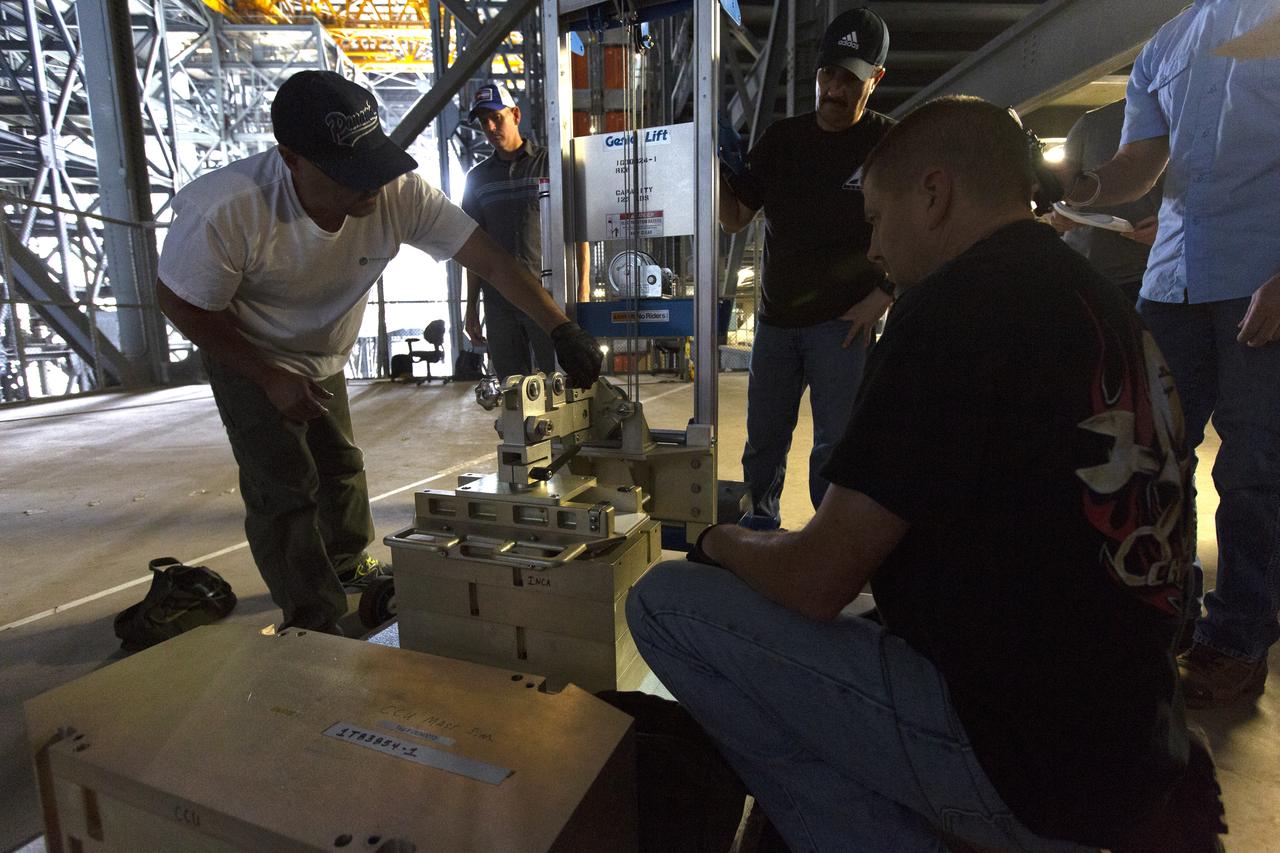
A Space Launch System (SLS) avionics handling tool demonstration takes place inside Kennedy Space Center’s Vehicle Assembly Building on April 4, 2019. The demonstration showed that avionics boxes could be successfully and safely mounted into the SLS rocket’s upper stage — called the Interim Cryogenic Propulsion Stage, or ICPS — with low risk of damaging a closely located hydrazine tank. Avionics boxes include the Inertial Navigation and Control Assembly and flight batteries. The actual installation will take place just weeks before NASA’s SLS rocket and uncrewed Orion spacecraft lift off on Exploration Mission-1 from Launch Pad 39B at Kennedy.
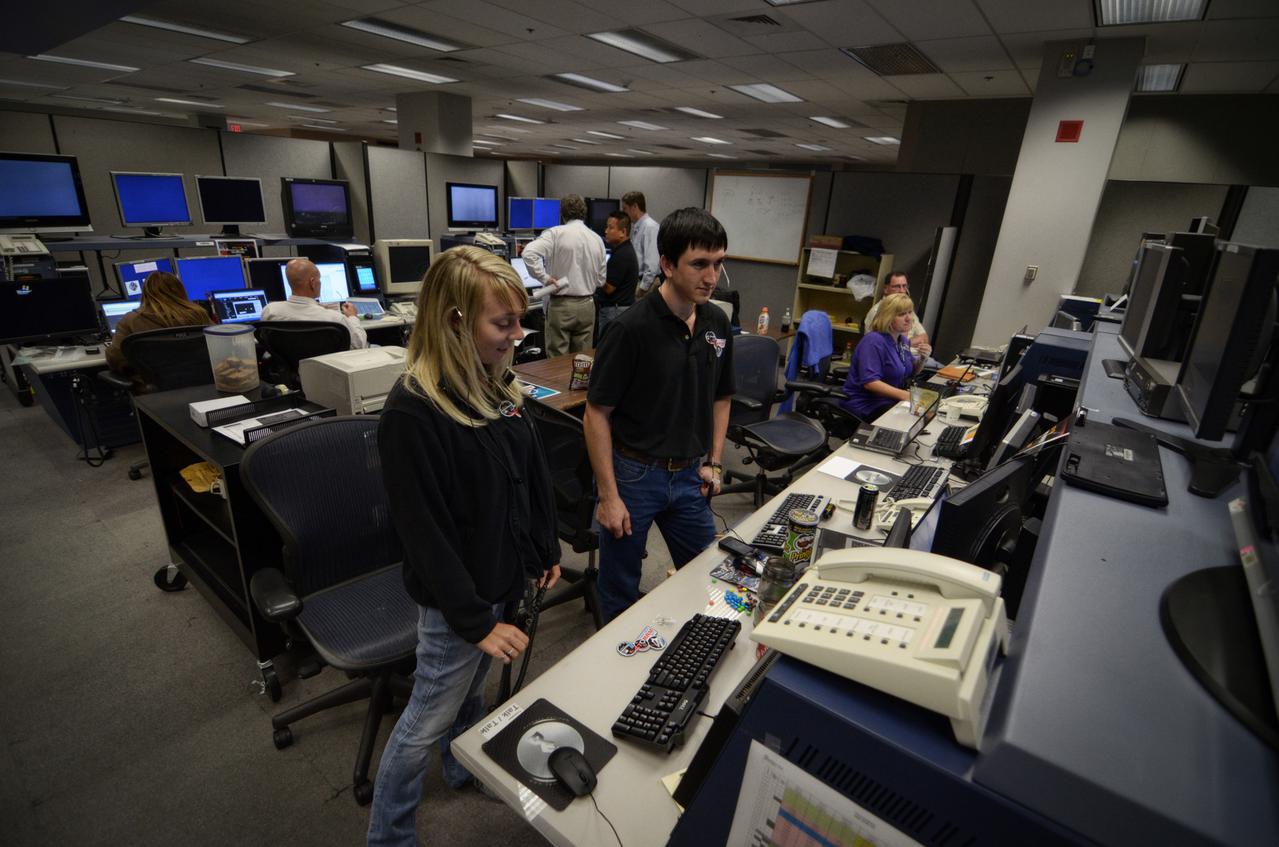
Teams conduct powerup and docking operations for the Sensor Test for Orion Relative Navigation Risk Mitigation (STORRM) in a payload support room at Johnson Space Center’s Mission Control Center in Houston on May 18, 2011. STORRM was successfully demonstrated on Space Shuttle Endeavour’s STS-134 mission to the International Space Station. The goal of STORRM was to validate a new relative navigation sensor based on advanced laser and detector technology that will make docking and undocking spacecraft easier and safer. It also tested the hardware in the same environment that the sensors would experience on the first Orion rendezvous to another vehicle.
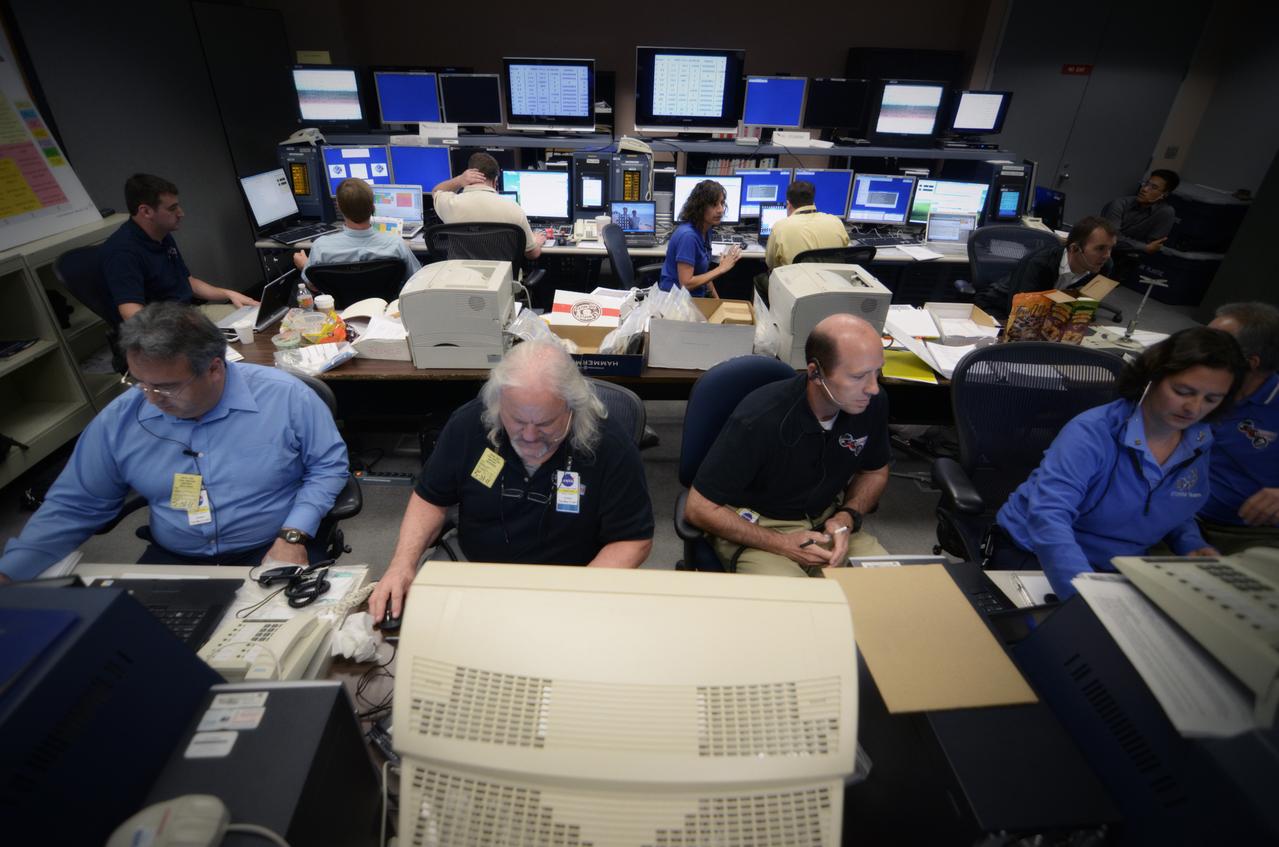
Teams conduct powerup and docking operations for the Sensor Test for Orion Relative Navigation Risk Mitigation (STORRM) in a payload support room at Johnson Space Center’s Mission Control Center in Houston on May 18, 2011. STORMM was successfully demonstrated on Space Shuttle Endeavour’s STS-134 mission to the International Space Station..The goal of STORRM was to validate a new relative navigation sensor based on advanced laser and detector technology that will make docking and undocking spacecraft easier and safer. It also tested the hardware in the same environment that the sensors would experience on the first Orion rendezvous to another vehicle. Part of Batch image transfer from Flickr.
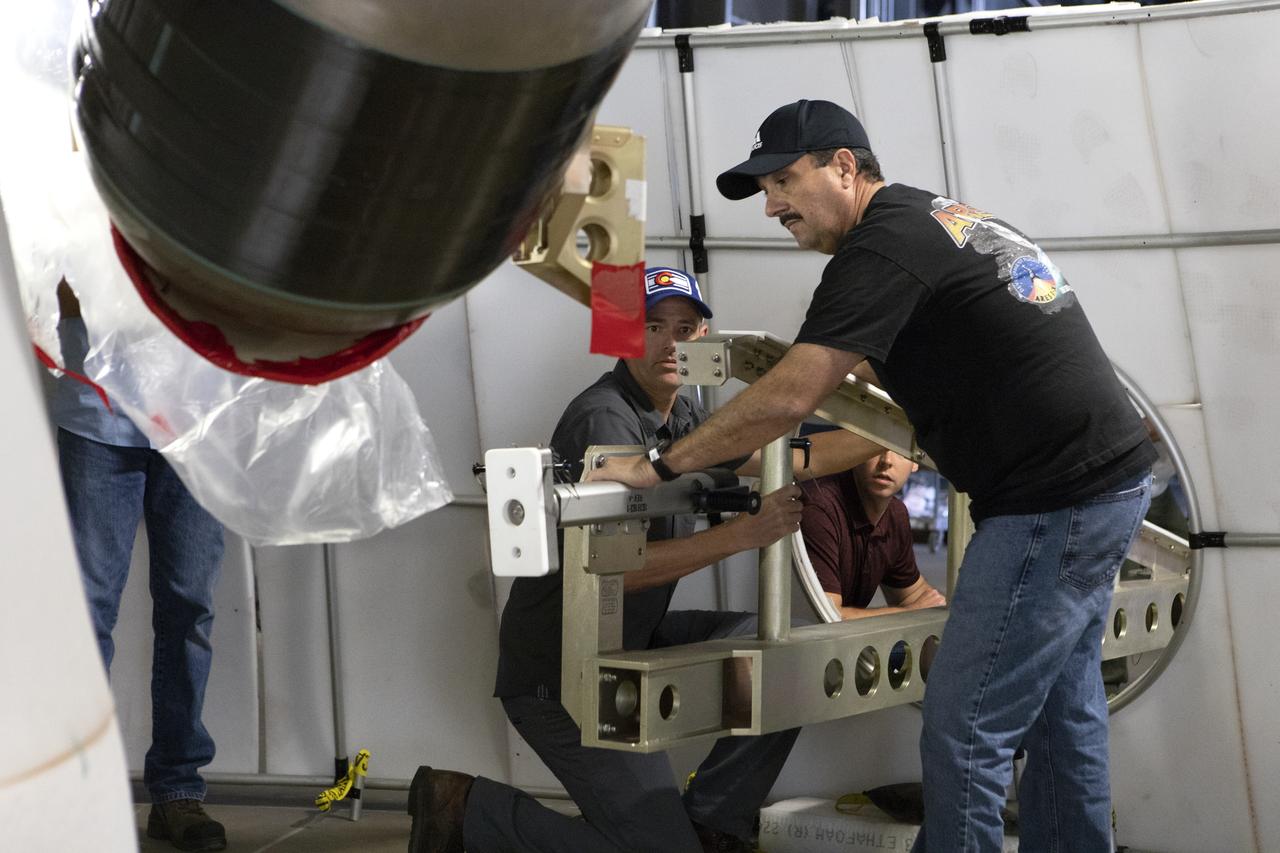
A Space Launch System (SLS) avionics handling tool demonstration takes place inside Kennedy Space Center’s Vehicle Assembly Building on April 4, 2019. The demonstration showed that avionics boxes could be successfully and safely mounted into the SLS rocket’s upper stage — called the Interim Cryogenic Propulsion Stage, or ICPS — with low risk of damaging a closely located hydrazine tank. Avionics boxes include the Inertial Navigation and Control Assembly and flight batteries. The actual installation will take place just weeks before NASA’s SLS rocket and uncrewed Orion spacecraft lift off on Exploration Mission-1 from Launch Pad 39B at Kennedy.
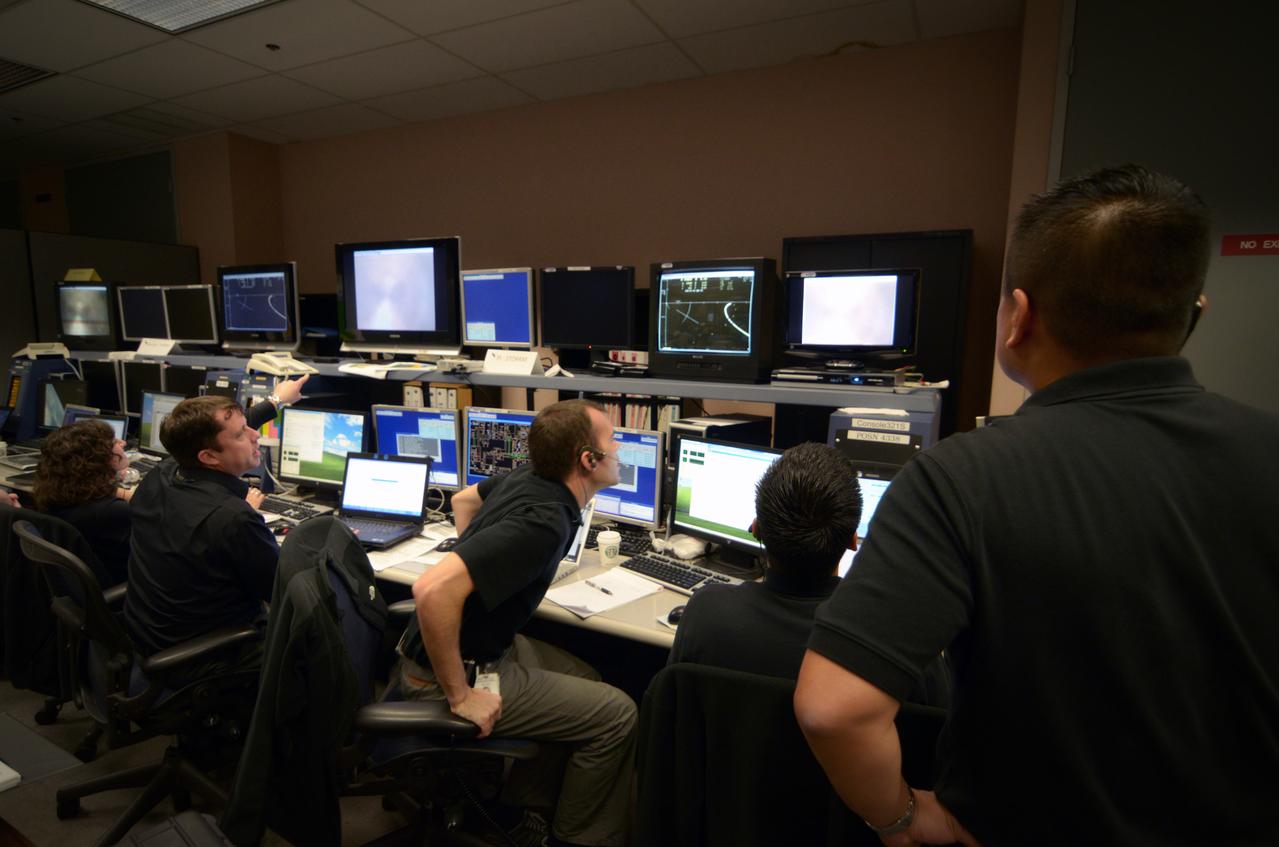
Teams conduct powerup and docking operations for the Sensor Test for Orion Relative Navigation Risk Mitigation (STORRM) in a payload support room at Johnson Space Center’s Mission Control Center in Houston on May 18, 2011. STORMM was successfully demonstrated on Space Shuttle Endeavour’s STS-134 mission to the International Space Station..The goal of STORRM was to validate a new relative navigation sensor based on advanced laser and detector technology that will make docking and undocking spacecraft easier and safer. It also tested the hardware in the same environment that the sensors would experience on the first Orion rendezvous to another vehicle. Part of Batch image transfer from Flickr.
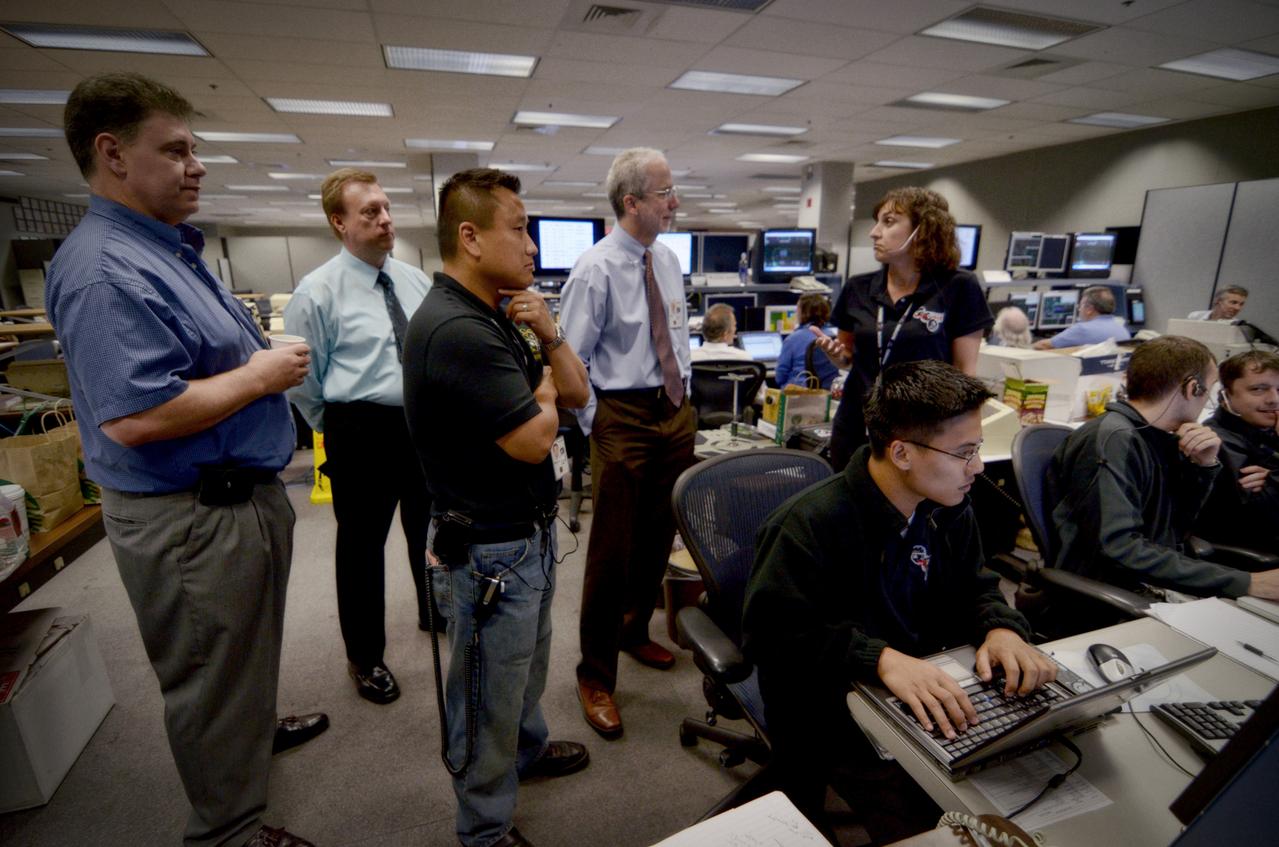
Teams conduct powerup and docking operations for the Sensor Test for Orion Relative Navigation Risk Mitigation (STORRM) in a payload support room at Johnson Space Center’s Mission Control Center in Houston on May 18, 2011. STORMM was successfully demonstrated on Space Shuttle Endeavour’s STS-134 mission to the International Space Station..The goal of STORRM was to validate a new relative navigation sensor based on advanced laser and detector technology that will make docking and undocking spacecraft easier and safer. It also tested the hardware in the same environment that the sensors would experience on the first Orion rendezvous to another vehicle. Part of Batch image transfer from Flickr.
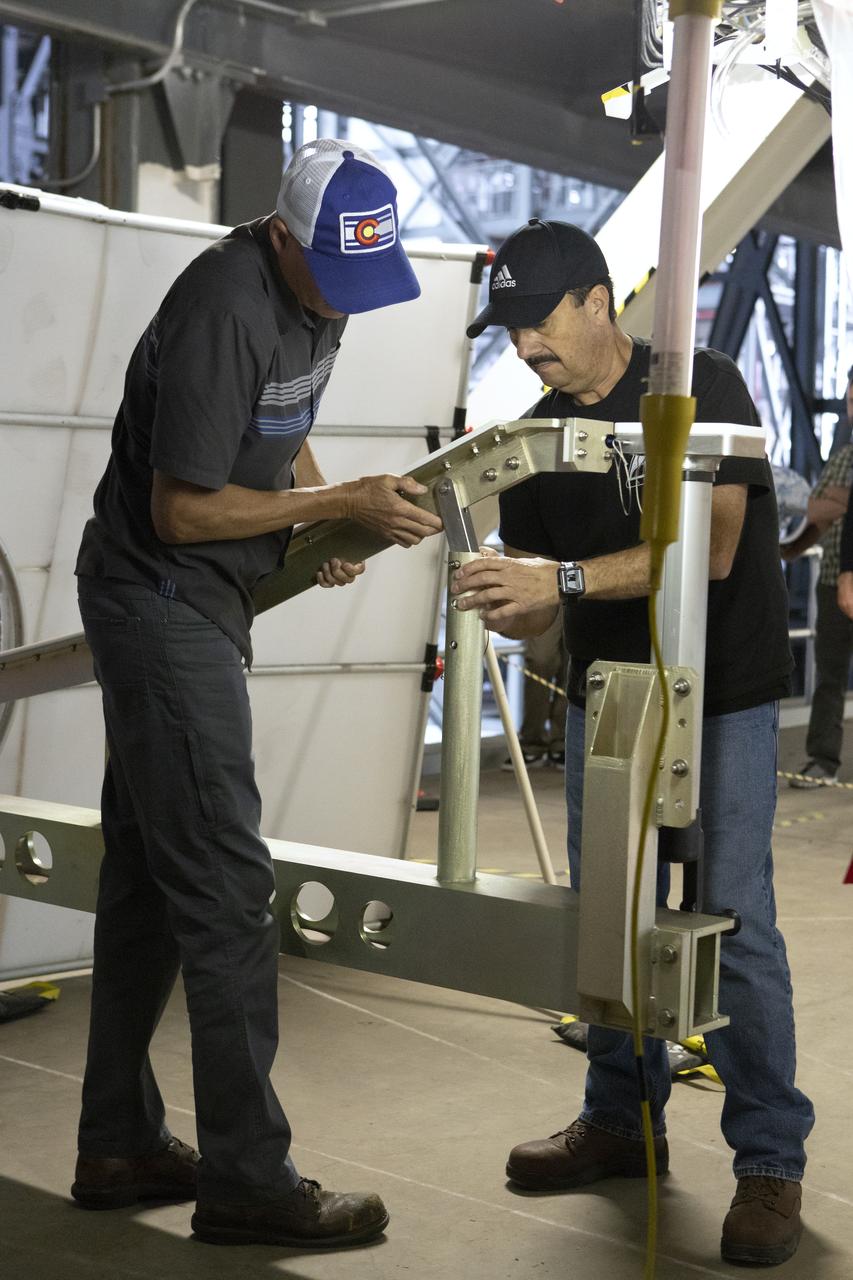
A Space Launch System (SLS) avionics handling tool demonstration takes place inside Kennedy Space Center’s Vehicle Assembly Building on April 4, 2019. The demonstration showed that avionics boxes could be successfully and safely mounted into the SLS rocket’s upper stage — called the Interim Cryogenic Propulsion Stage, or ICPS — with low risk of damaging a closely located hydrazine tank. Avionics boxes include the Inertial Navigation and Control Assembly and flight batteries. The actual installation will take place just weeks before NASA’s SLS rocket and uncrewed Orion spacecraft lift off on Exploration Mission-1 from Launch Pad 39B at Kennedy.
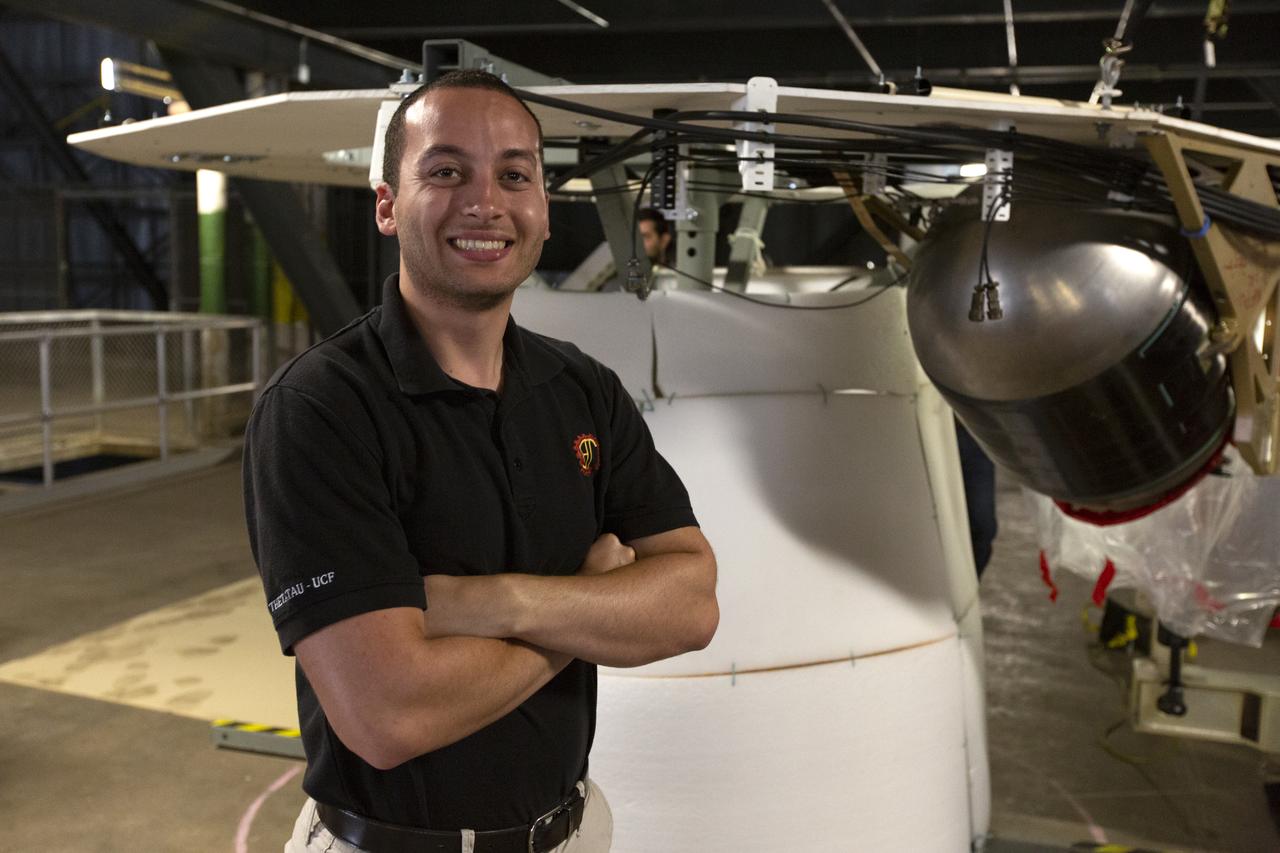
Christopher Di Taranto, a member of the mechanical structures engineering team on the Jacobs Test and Operations Contract, stands in front of an Interim Cryogenic Propulsion Stage (ICPS) mockup during the Space Launch System avionics handling tool demonstration inside Kennedy Space Center’s Vehicle Assembly Building on April 4, 2019. The demonstration showed that avionics boxes could be successfully mounted into the SLS rocket’s upper stage safely, and with low risk of damaging a closely located hydrazine tank. Avionics boxes include the Inertial Navigation and Control Assembly and flight batteries. Di Taranto led a team to quickly resolve a non-conformance issue with the tool.
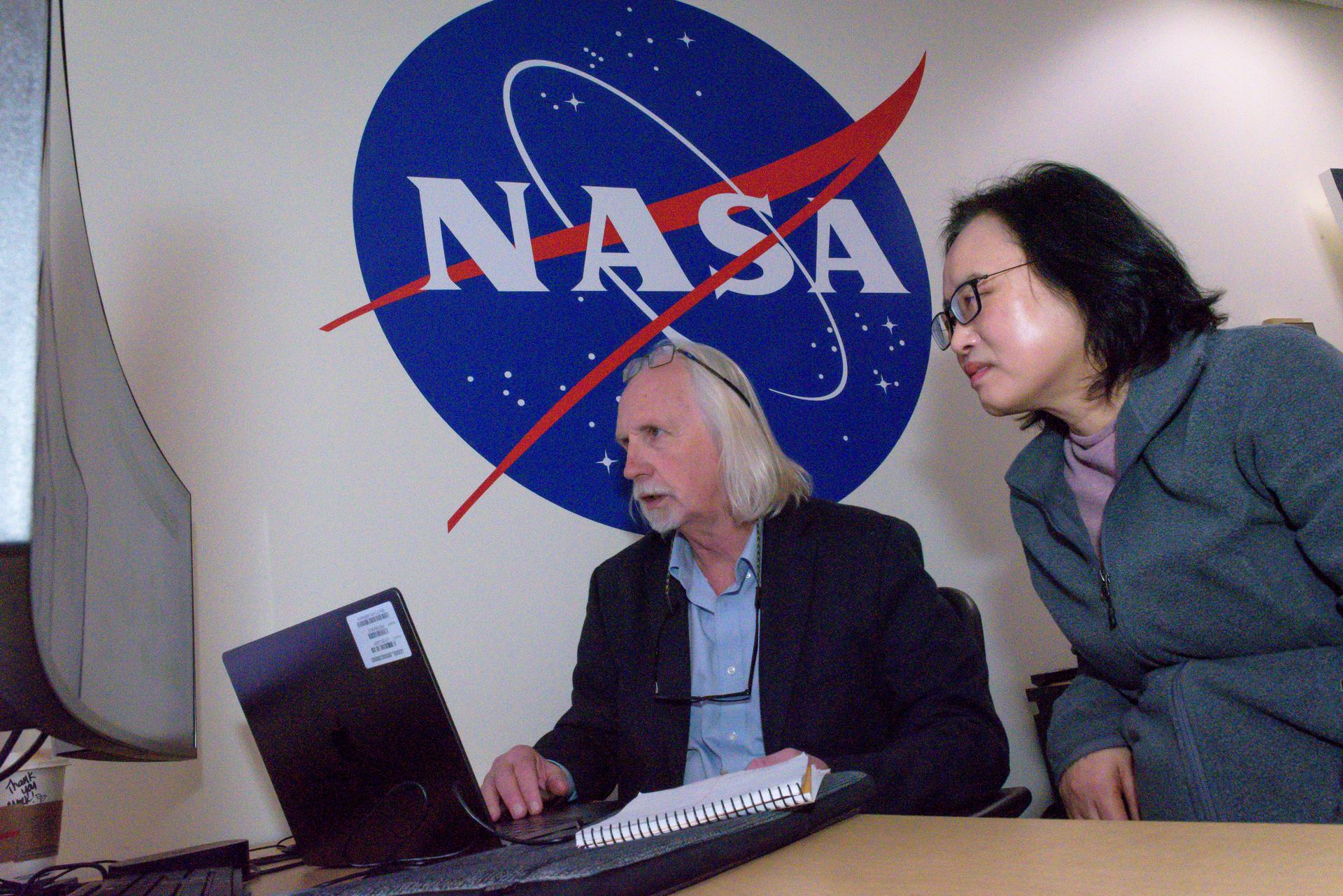
TechEdSat-11 operators Marcus Murbach, left, and Kyeong Ja Kim, in the Ames Multi-Mission Operations Center (MMOC), N240 Annex, Eros control room 162. The team monitors the spacecraft's status during the Exo-Brake “parachute” deployment. The ExoBrake is a drag device that increases the total surface area of the spacecraft to assist with a quicker deorbit. This maneuver is deployed at the end of mission to satisfy NASA's deorbit requirement and prevent space debris. TechEdSat has spent the last several months coordinating with NASA’s Conjunction Assessment Risk Analysis (CARA) team to ensure the spacecraft can safely deploy the ExoBrake without colliding into any other objects.
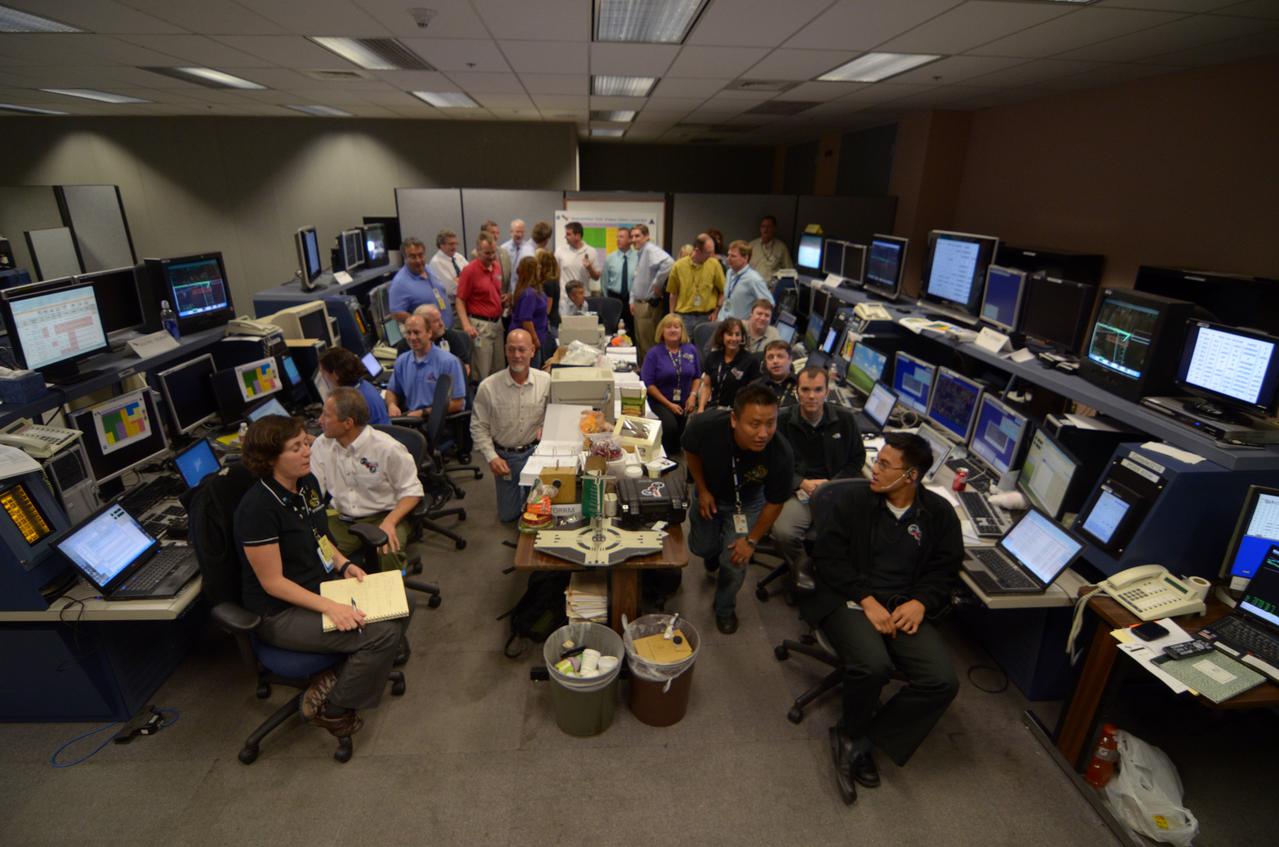
Teams conduct powerup and docking operations for the Sensor Test for Orion Relative Navigation Risk Mitigation (STORRM) in a payload support room at Johnson Space Center’s Mission Control Center in Houston on May 18, 2011. STORRM was successfully demonstrated on Space Shuttle Endeavour’s STS-134 mission to the International Space Station. The goal of STORRM was to validate a new relative navigation sensor based on advanced laser and detector technology that will make docking and undocking spacecraft easier and safer. It also tested the hardware in the same environment that the sensors would experience on the first Orion rendezvous to another vehicle.
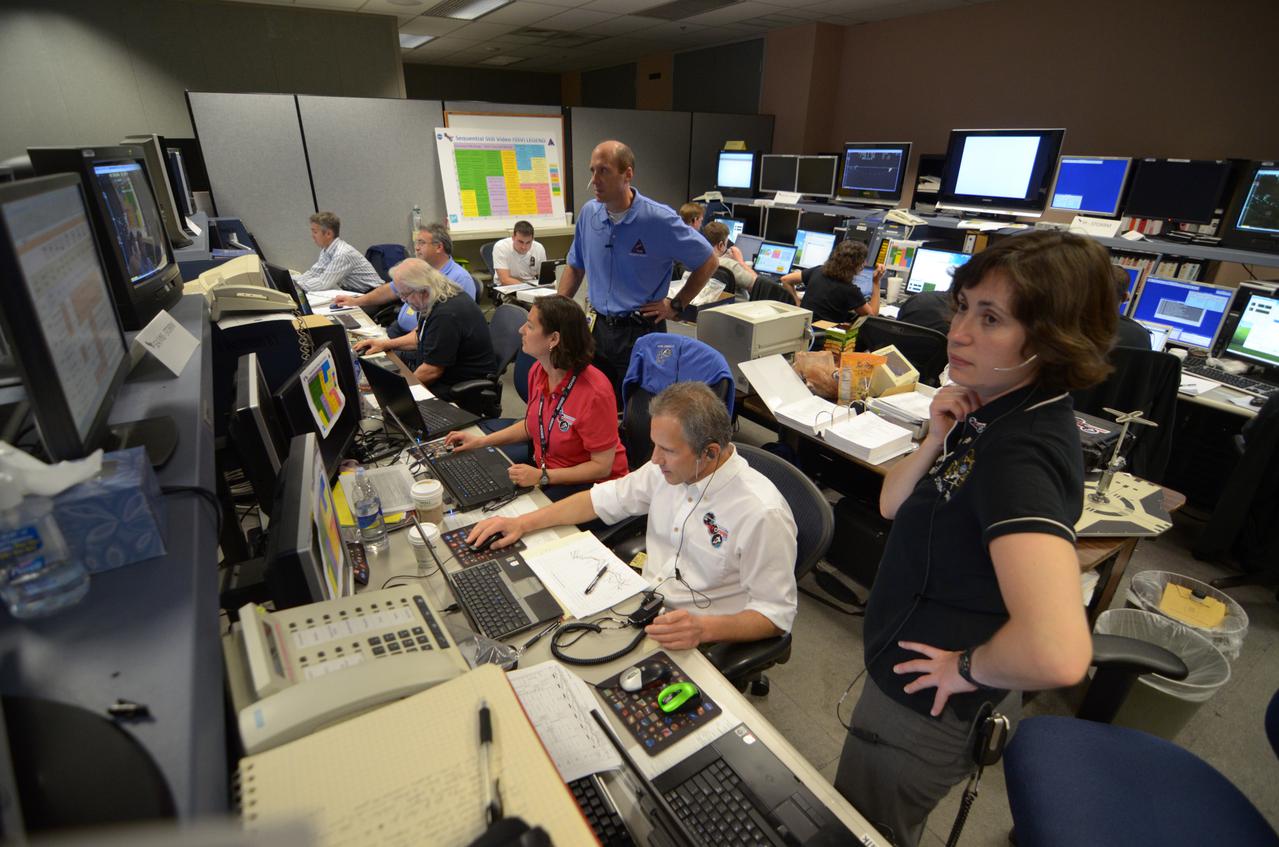
Teams conduct powerup and docking operations for the Sensor Test for Orion Relative Navigation Risk Mitigation (STORRM) in a payload support room at Johnson Space Center’s Mission Control Center in Houston on May 18, 2011. STORRM was successfully demonstrated on Space Shuttle Endeavour’s STS-134 mission to the International Space Station. The goal of STORRM was to validate a new relative navigation sensor based on advanced laser and detector technology that will make docking and undocking spacecraft easier and safer. It also tested the hardware in the same environment that the sensors would experience on the first Orion rendezvous to another vehicle.
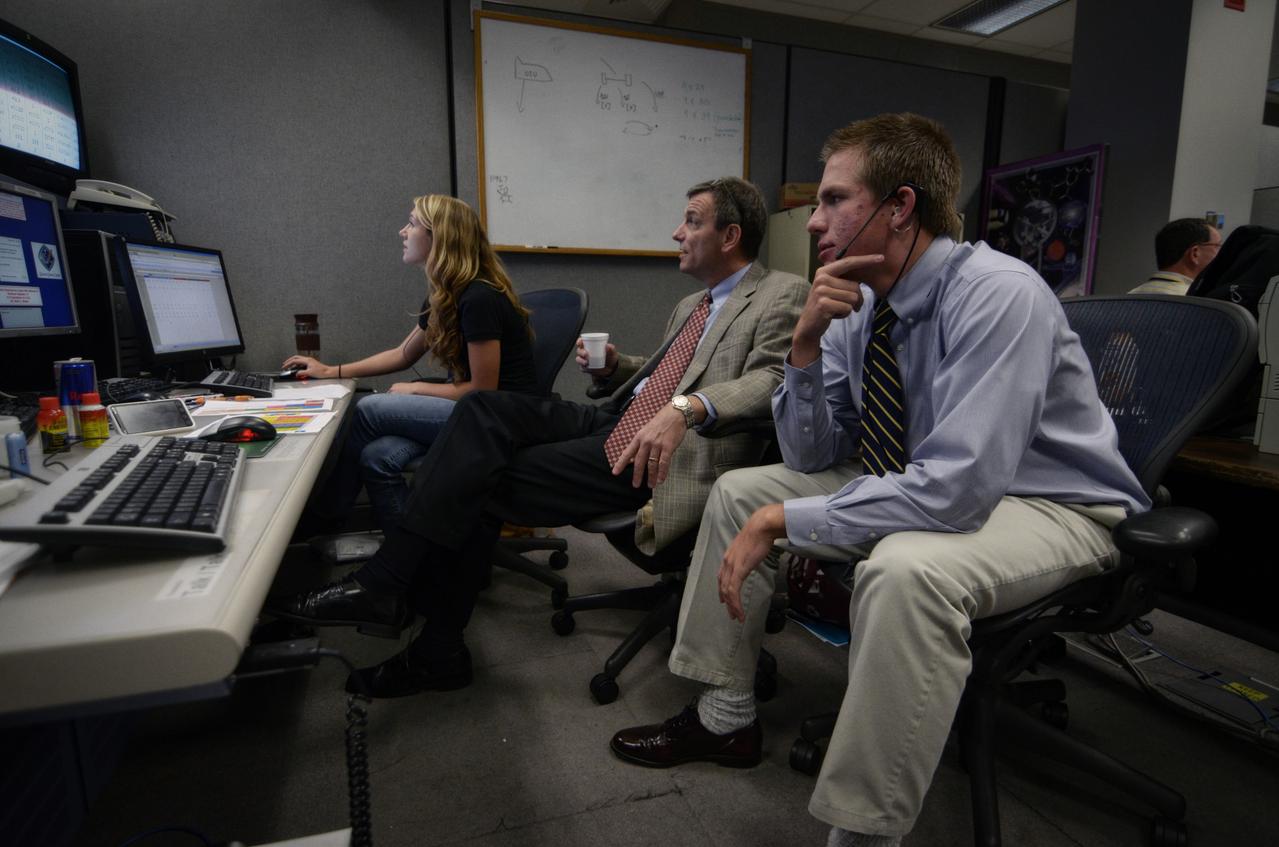
Teams conduct powerup and docking operations for the Sensor Test for Orion Relative Navigation Risk Mitigation (STORRM) in a payload support room at Johnson Space Center’s Mission Control Center in Houston on May 18, 2011. STORMM was successfully demonstrated on Space Shuttle Endeavour’s STS-134 mission to the International Space Station..The goal of STORRM was to validate a new relative navigation sensor based on advanced laser and detector technology that will make docking and undocking spacecraft easier and safer. It also tested the hardware in the same environment that the sensors would experience on the first Orion rendezvous to another vehicle. Part of Batch image transfer from Flickr.
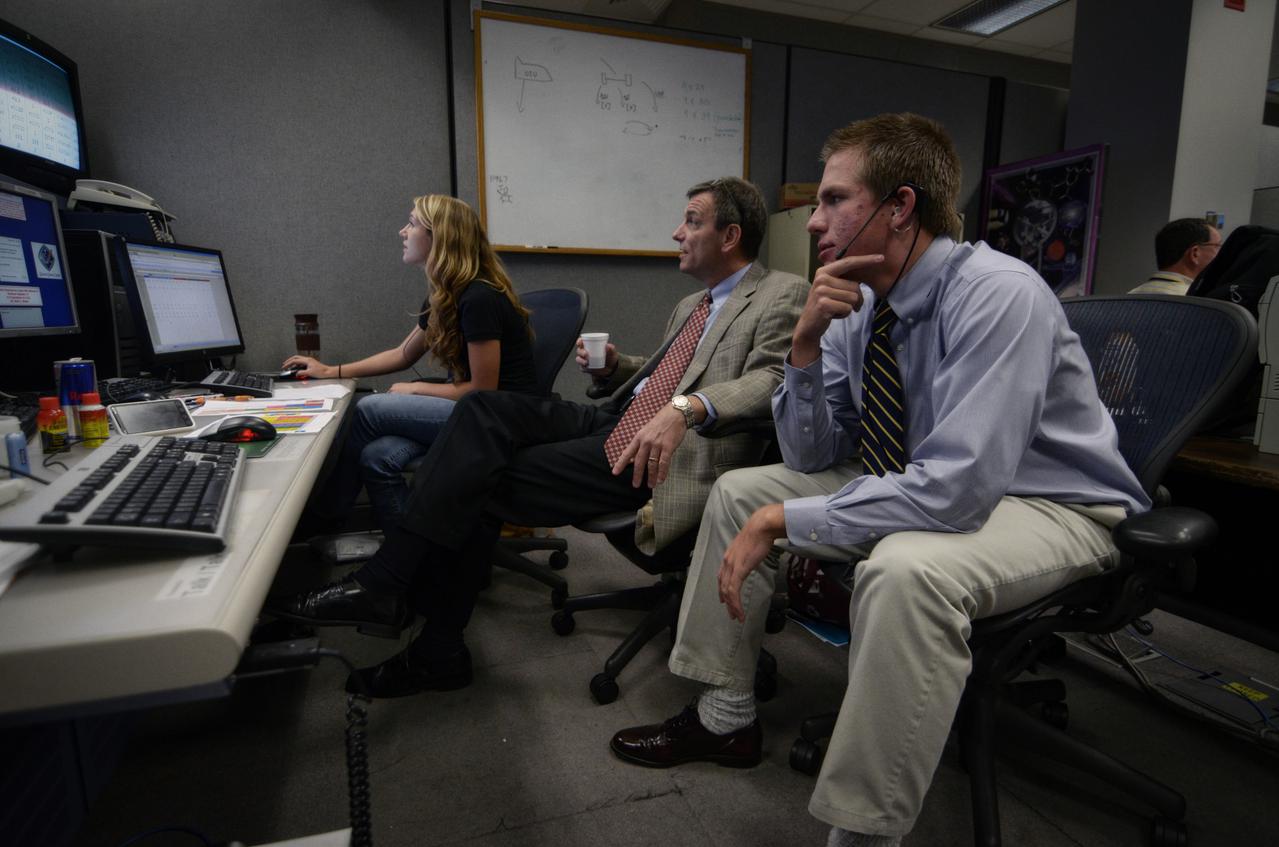
Teams conduct powerup and docking operations for the Sensor Test for Orion Relative Navigation Risk Mitigation (STORRM) in a payload support room at Johnson Space Center’s Mission Control Center in Houston on May 18, 2011. STORRM was successfully demonstrated on Space Shuttle Endeavour’s STS-134 mission to the International Space Station. The goal of STORRM was to validate a new relative navigation sensor based on advanced laser and detector technology that will make docking and undocking spacecraft easier and safer. It also tested the hardware in the same environment that the sensors would experience on the first Orion rendezvous to another vehicle.
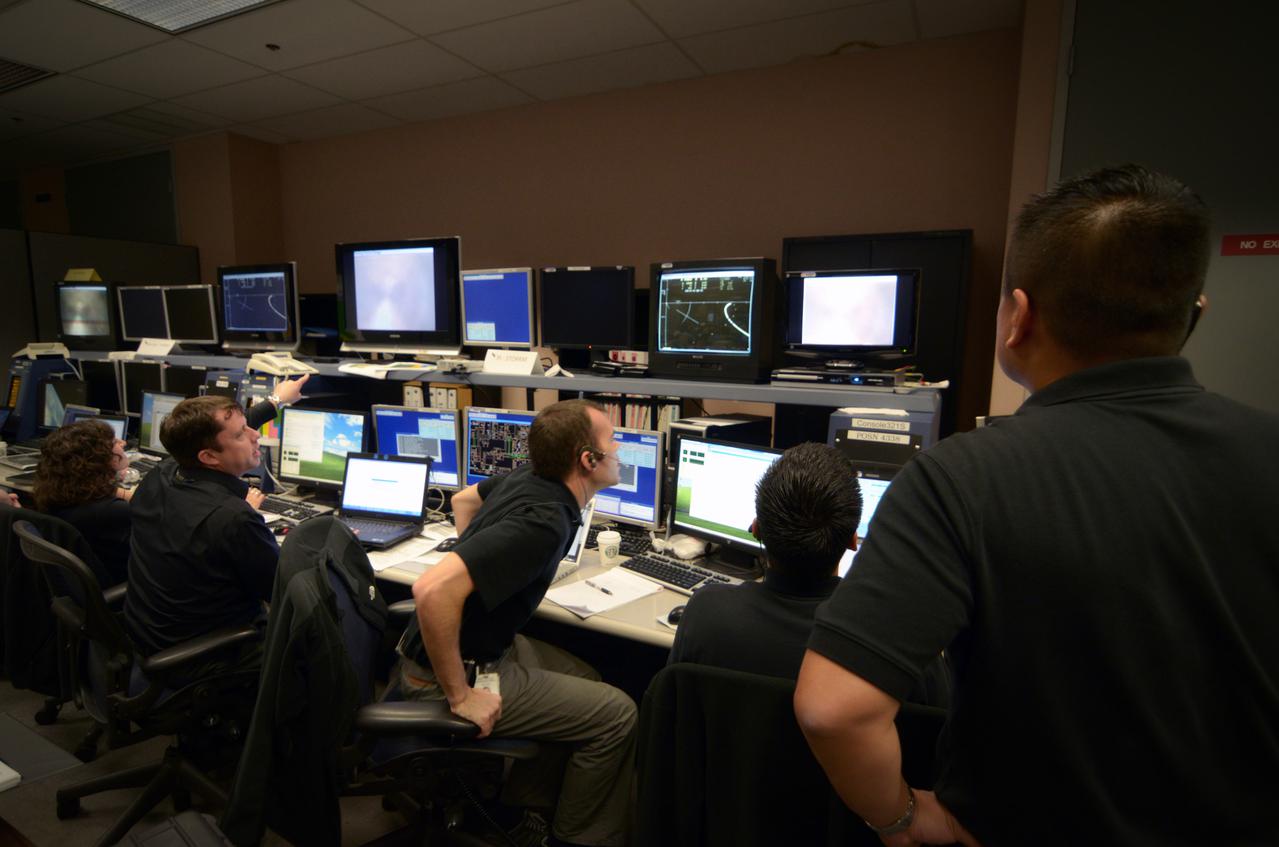
Teams conduct powerup and docking operations for the Sensor Test for Orion Relative Navigation Risk Mitigation (STORRM) in a payload support room at Johnson Space Center’s Mission Control Center in Houston on May 18, 2011. STORMM was successfully demonstrated on Space Shuttle Endeavour’s STS-134 mission to the International Space Station. The goal of STORRM was to validate a new relative navigation sensor based on advanced laser and detector technology that will make docking and undocking spacecraft easier and safer. It also tested the hardware in the same environment that the sensors would experience on the first Orion rendezvous to another vehicle.
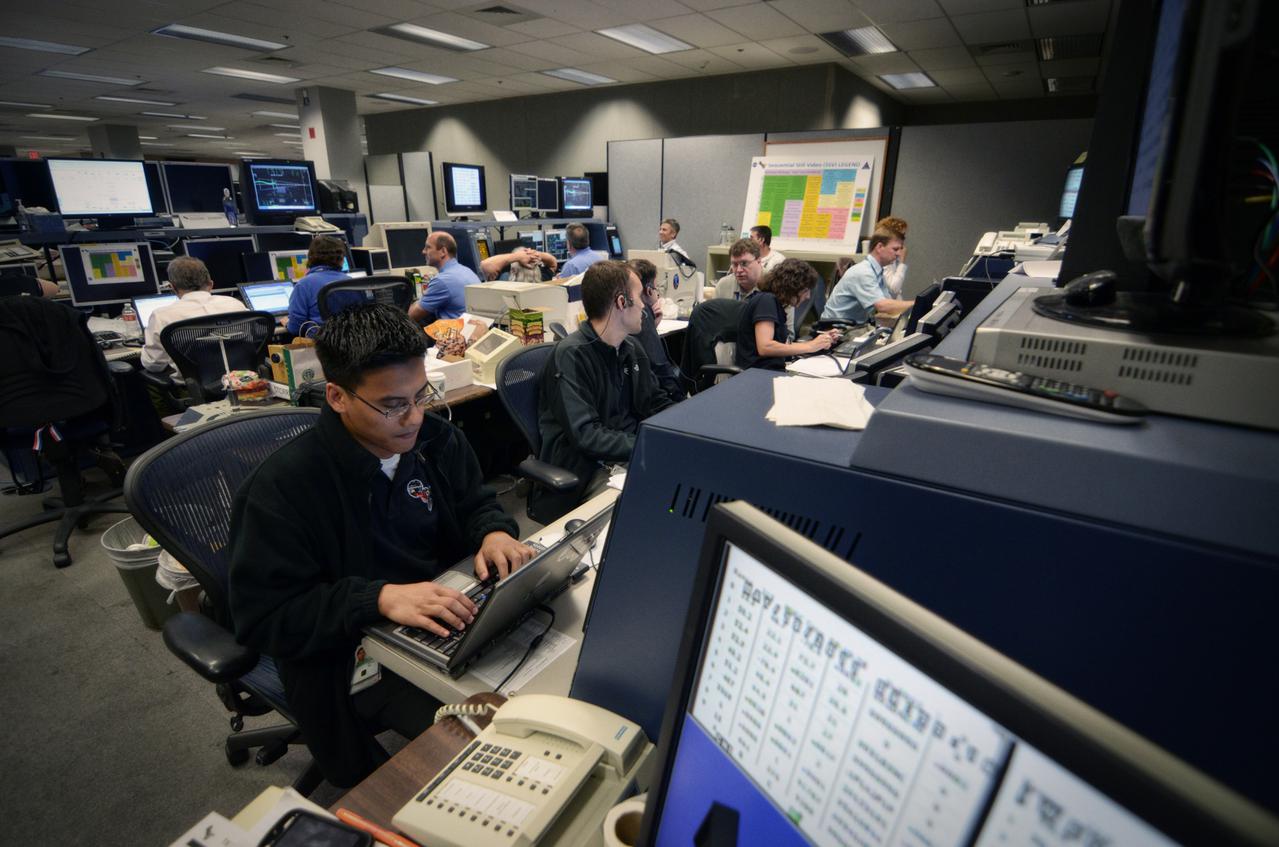
Teams conduct powerup and docking operations for the Sensor Test for Orion Relative Navigation Risk Mitigation (STORRM) in a payload support room at Johnson Space Center’s Mission Control Center in Houston on May 18, 2011. STORRM was successfully demonstrated on Space Shuttle Endeavour’s STS-134 mission to the International Space Station. The goal of STORRM was to validate a new relative navigation sensor based on advanced laser and detector technology that will make docking and undocking spacecraft easier and safer. It also tested the hardware in the same environment that the sensors would experience on the first Orion rendezvous to another vehicle.

Teams conduct powerup and docking operations for the Sensor Test for Orion Relative Navigation Risk Mitigation (STORRM) in a payload support room at Johnson Space Center’s Mission Control Center in Houston on May 18, 2011. STORMM was successfully demonstrated on Space Shuttle Endeavour’s STS-134 mission to the International Space Station..The goal of STORRM was to validate a new relative navigation sensor based on advanced laser and detector technology that will make docking and undocking spacecraft easier and safer. It also tested the hardware in the same environment that the sensors would experience on the first Orion rendezvous to another vehicle. Part of Batch image transfer from Flickr.
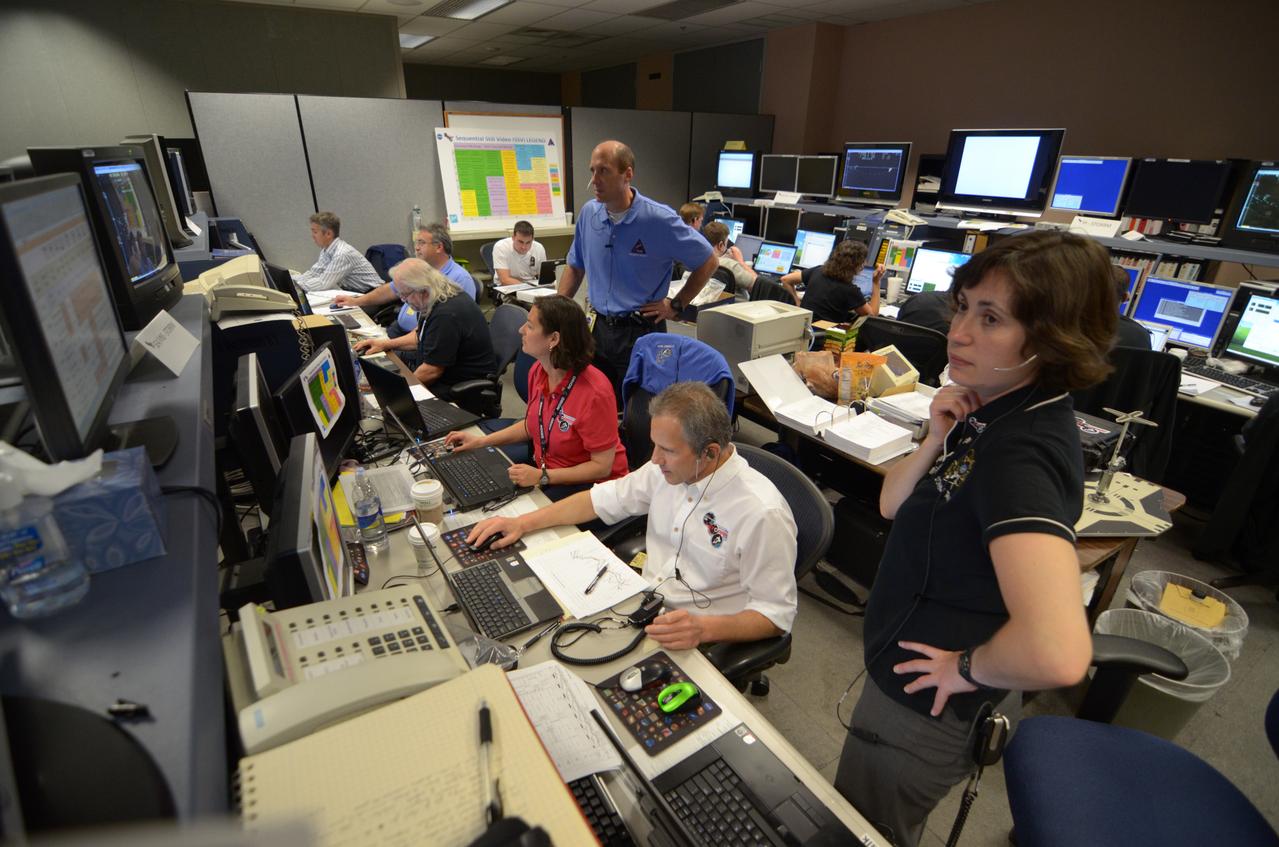
Teams conduct powerup and docking operations for the Sensor Test for Orion Relative Navigation Risk Mitigation (STORRM) in a payload support room at Johnson Space Center’s Mission Control Center in Houston on May 18, 2011. STORMM was successfully demonstrated on Space Shuttle Endeavour’s STS-134 mission to the International Space Station..The goal of STORRM was to validate a new relative navigation sensor based on advanced laser and detector technology that will make docking and undocking spacecraft easier and safer. It also tested the hardware in the same environment that the sensors would experience on the first Orion rendezvous to another vehicle. Part of Batch image transfer from Flickr.

TechEdSat-11 operators Daphne Dao, left, and Alejandro Salas, in the Ames Multi-Mission Operations Center (MMOC), N240 Annex, Eros control room 162. The team monitors the spacecraft's status during the Exo-Brake “parachute” deployment. The ExoBrake is a drag device that increases the total surface area of the spacecraft to assist with a quicker deorbit. This maneuver is deployed at the end of mission to satisfy NASA's deorbit requirement and prevent space debris. TechEdSat has spent the last several months coordinating with NASA’s Conjunction Assessment Risk Analysis (CARA) team to ensure the spacecraft can safely deploy the ExoBrake without colliding into any other objects.
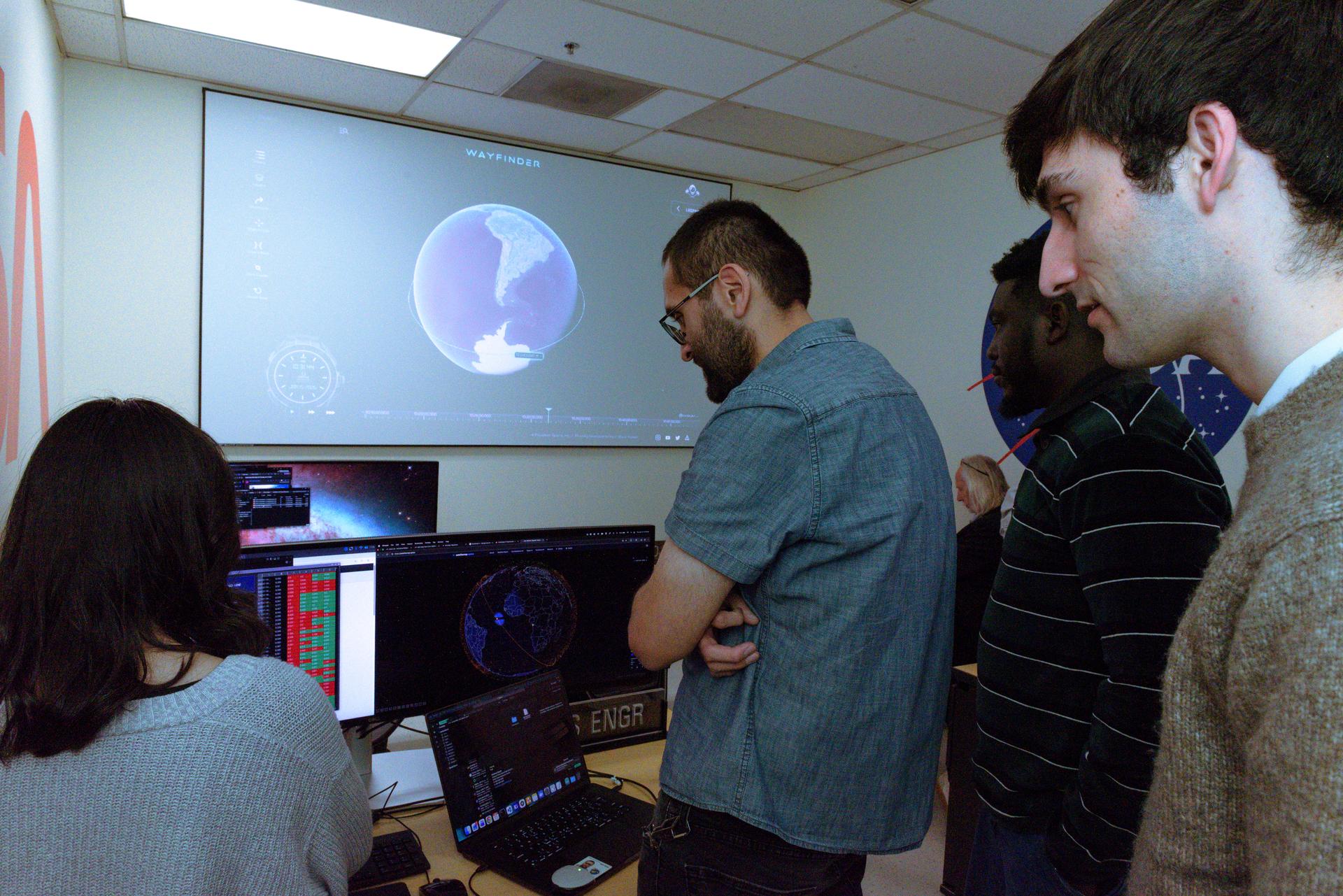
TechEdSat-11 operators Daphne Dao, left, Alejandro Salas, Kwabena Boateng, and Malachi Mooney-Rivkin, right, in the Ames Multi-Mission Operations Center (MMOC), N240 Annex, Eros control room 162. The team monitors the spacecraft's status during the Exo-Brake “parachute” deployment. The ExoBrake is a drag device that increases the total surface area of the spacecraft to assist with a quicker deorbit. This maneuver is deployed at the end of mission to satisfy NASA's deorbit requirement and prevent space debris. TechEdSat has spent the last several months coordinating with NASA’s Conjunction Assessment Risk Analysis (CARA) team to ensure the spacecraft can safely deploy the ExoBrake without colliding into any other objects.

Teams conduct powerup and docking operations for the Sensor Test for Orion Relative Navigation Risk Mitigation (STORRM) in a payload support room at Johnson Space Center’s Mission Control Center in Houston on May 18, 2011. STORMM was successfully demonstrated on Space Shuttle Endeavour’s STS-134 mission to the International Space Station..The goal of STORRM was to validate a new relative navigation sensor based on advanced laser and detector technology that will make docking and undocking spacecraft easier and safer. It also tested the hardware in the same environment that the sensors would experience on the first Orion rendezvous to another vehicle. Part of Batch image transfer from Flickr.
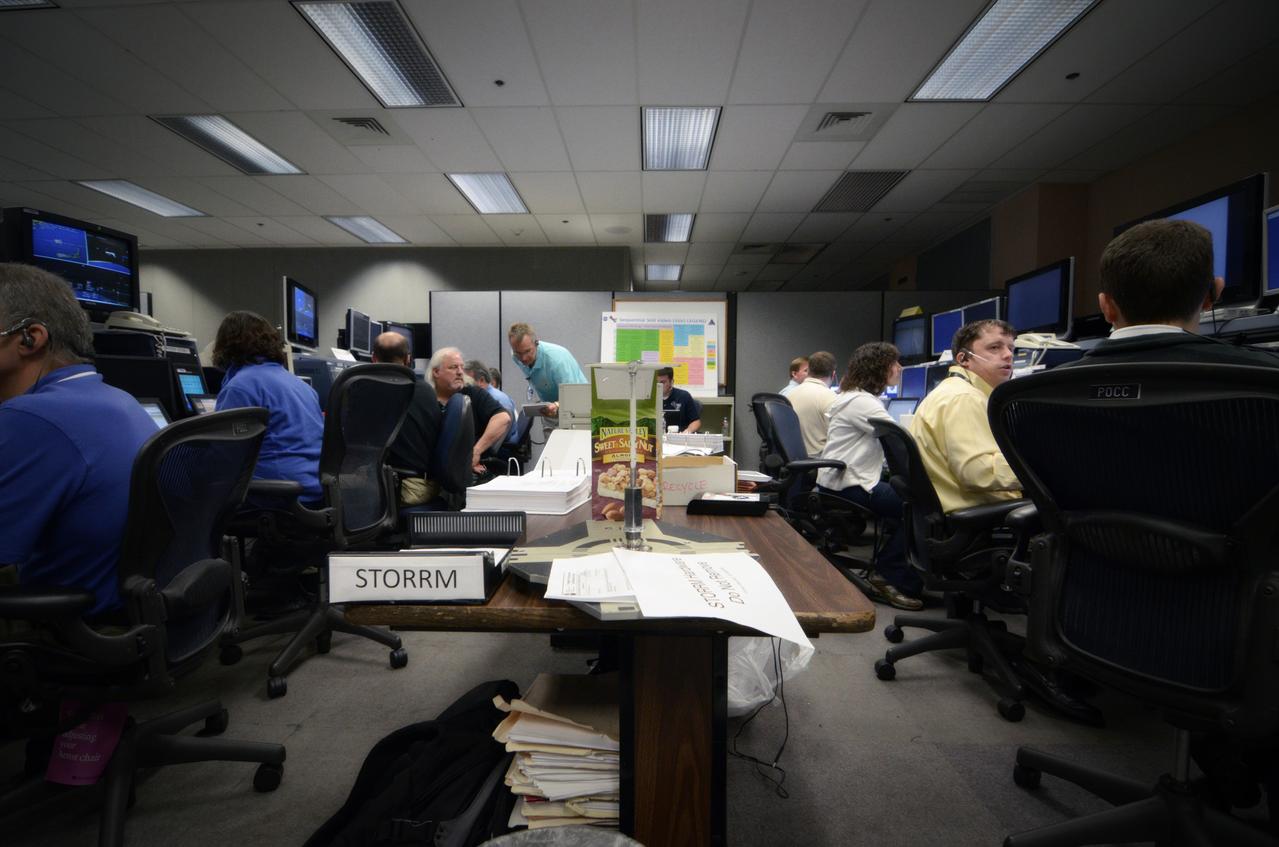
Teams conduct powerup and docking operations for the Sensor Test for Orion Relative Navigation Risk Mitigation (STORRM) in a payload support room at Johnson Space Center’s Mission Control Center in Houston on May 18, 2011. STORMM was successfully demonstrated on Space Shuttle Endeavour’s STS-134 mission to the International Space Station..The goal of STORRM was to validate a new relative navigation sensor based on advanced laser and detector technology that will make docking and undocking spacecraft easier and safer. It also tested the hardware in the same environment that the sensors would experience on the first Orion rendezvous to another vehicle. Part of Batch image transfer from Flickr.
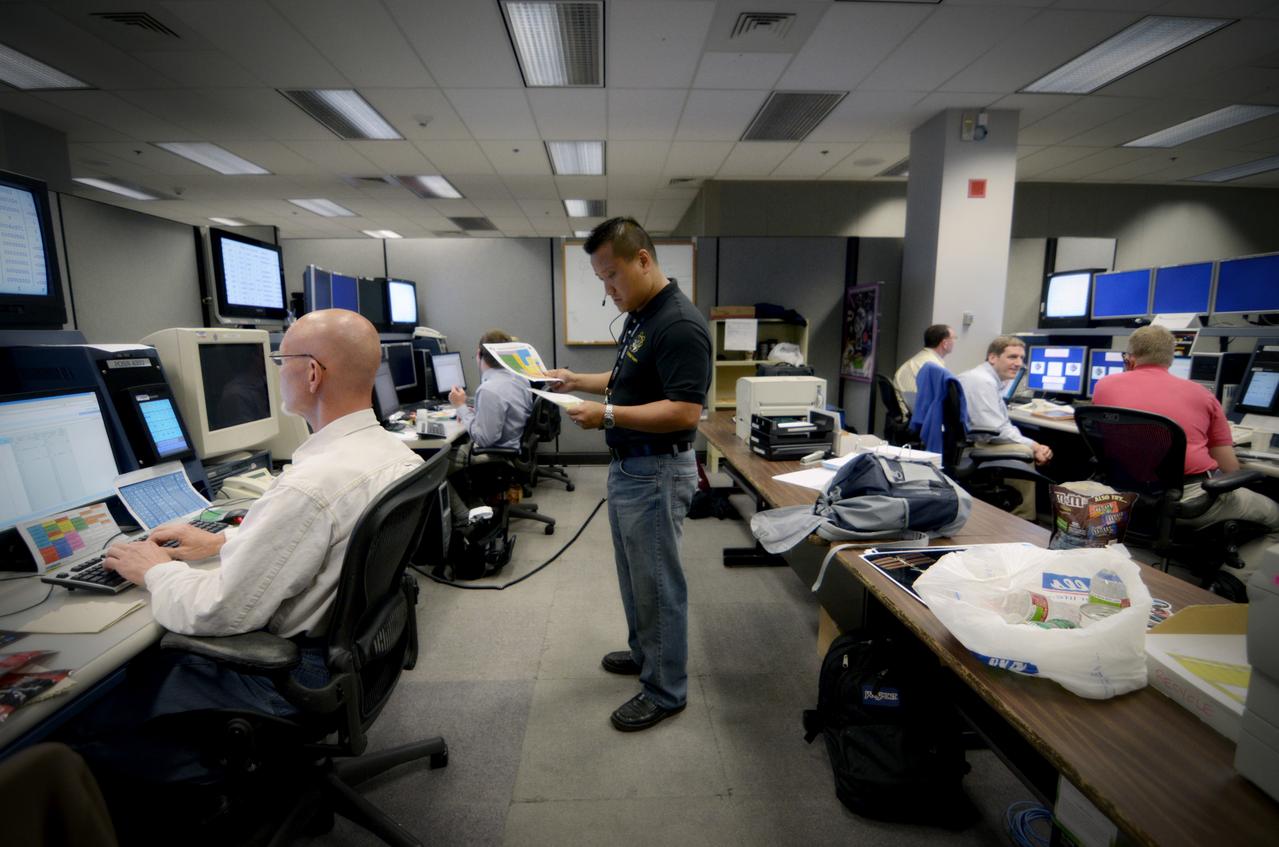
Teams conduct powerup and docking operations for the Sensor Test for Orion Relative Navigation Risk Mitigation (STORRM) in a payload support room at Johnson Space Center’s Mission Control Center in Houston on May 18, 2011. STORMM was successfully demonstrated on Space Shuttle Endeavour’s STS-134 mission to the International Space Station..The goal of STORRM was to validate a new relative navigation sensor based on advanced laser and detector technology that will make docking and undocking spacecraft easier and safer. It also tested the hardware in the same environment that the sensors would experience on the first Orion rendezvous to another vehicle. Part of Batch image transfer from Flickr.
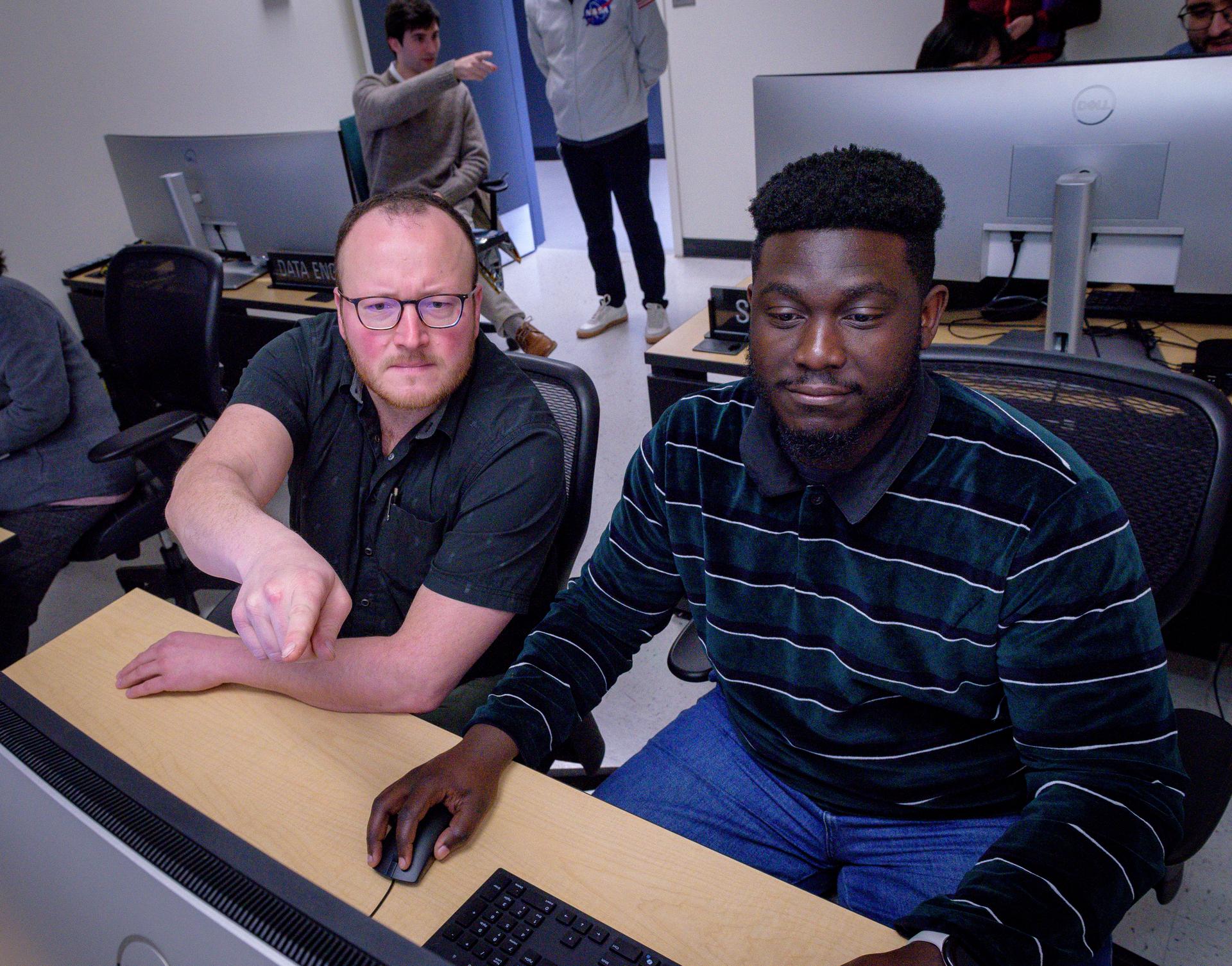
TechEdSat-11 operators Luke Idziak, left, and Kwabena Boateng, in the Ames Multi-Mission Operations Center (MMOC), N240 Annex, Eros control room 162. The operators monitor the spacecraft's status during the Exo-Brake “parachute” deployment. The ExoBrake is a drag device that increases the total surface area of the spacecraft to assist with a quicker deorbit. This maneuver is deployed at the end of mission to satisfy NASA's deorbit requirement and prevent space debris. TechEdSat has spent the last several months coordinating with NASA’s Conjunction Assessment Risk Analysis (CARA) team to ensure the spacecraft can safely deploy the ExoBrake without colliding into any other objects.
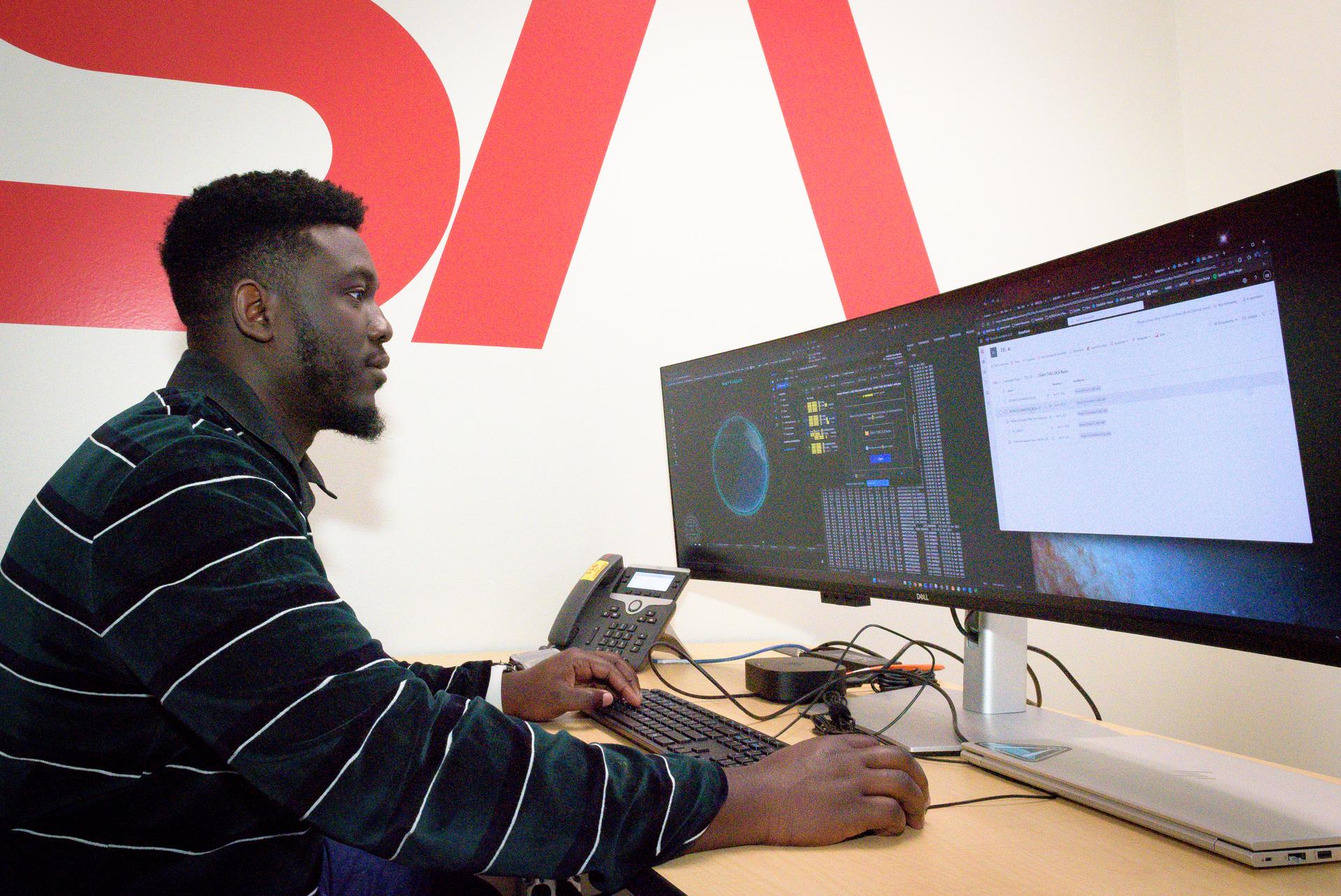
TechEdSat-11 operator Kwabena Boateng, in the Ames Multi-Mission Operations Center (MMOC), N240 Annex, Eros control room 162. Kwabena monitors the spacecraft's status during the Exo-Brake “parachute” deployment. The ExoBrake is a drag device that increases the total surface area of the spacecraft to assist with a quicker deorbit. This maneuver is deployed at the end of mission to satisfy NASA's deorbit requirement and prevent space debris. TechEdSat has spent the last several months coordinating with NASA’s Conjunction Assessment Risk Analysis (CARA) team to ensure the spacecraft can safely deploy the ExoBrake without colliding into any other objects.
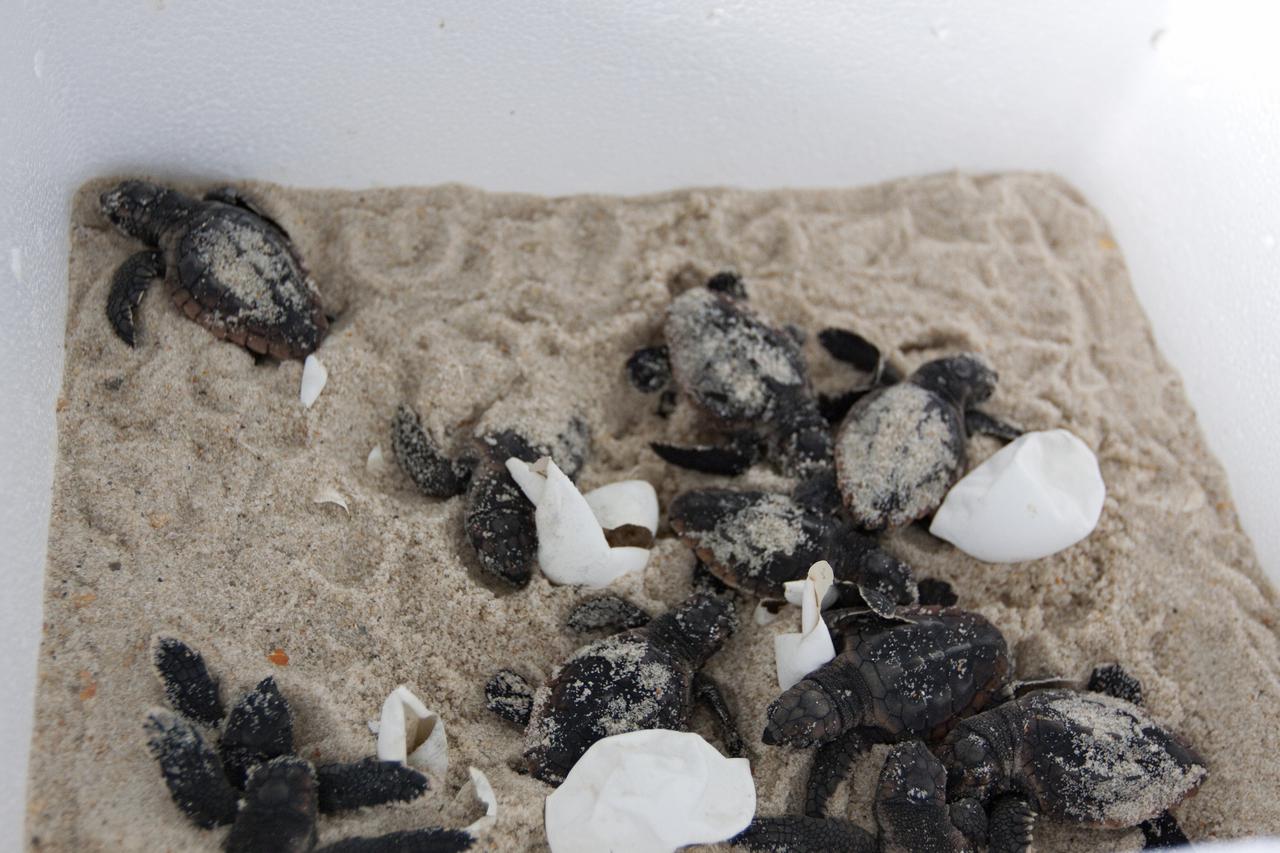
CAPE CANAVERAL, Fla. -- In a climate-controlled facility at NASA's Kennedy Space Center in Florida, newly-hatched Loggerhead turtles emerge from their eggs brought from beaches along the northern U.S. Gulf Coast. The eggs will be monitored by biologists and hatchery workers until incubation is complete. The hatchlings will be released at different points along a 100-mile stretch of the Atlantic Ocean shoreline. That includes beaches adjacent to the Merritt Island National Wildlife Refuge, which is located inside Kennedy. The release and relocation work is part of an effort by the U.S. Fish and Wildlife Service, the Florida Fish and Wildlife Conservation Commission, the National Park Service, NOAA, FedEx and conservationists to help minimize the risk to this year's sea turtle hatchlings from impacts of the BP Deepwater Horizon oil spill in the Gulf of Mexico. This plan involves carefully moving an anticipated 700 nests during the next several months. Photo credit: NASA_Troy Cryder
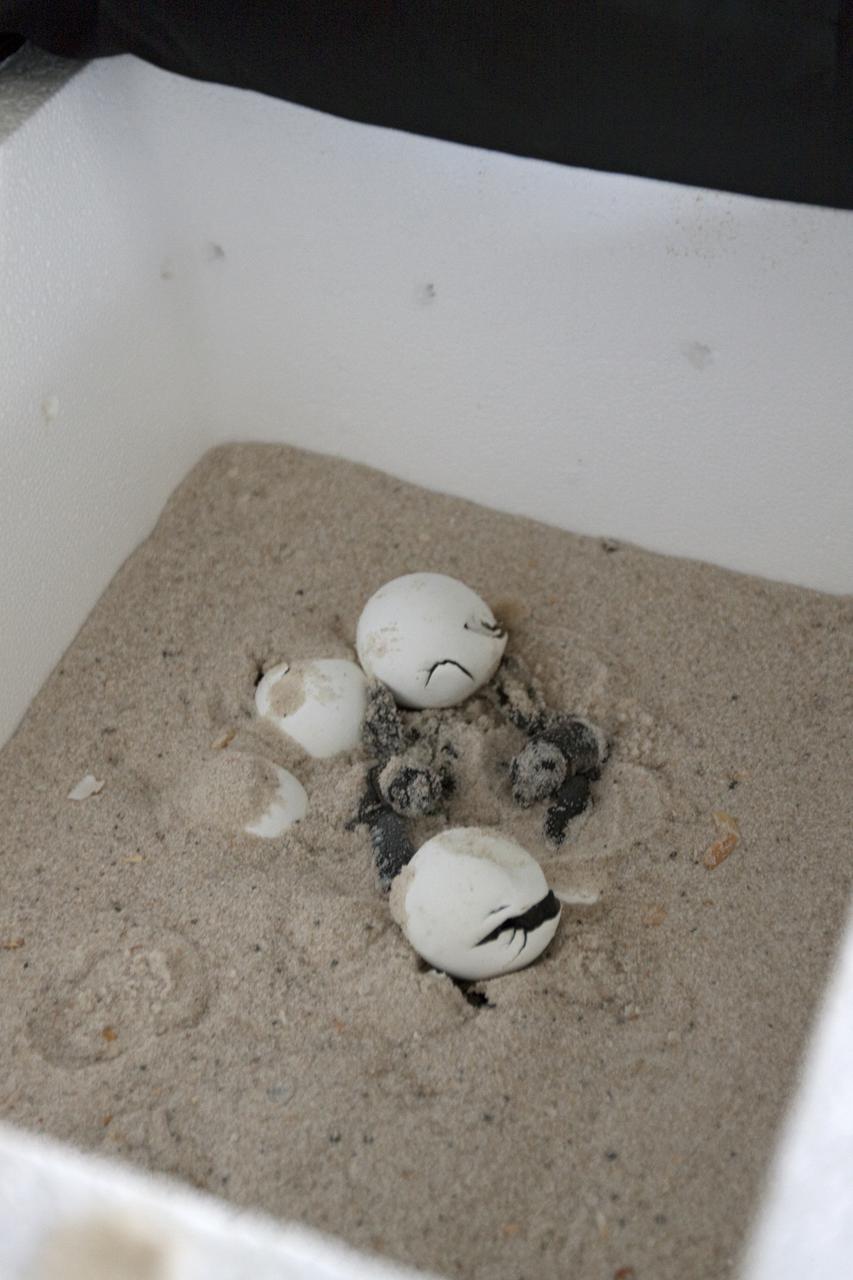
CAPE CANAVERAL, Fla. -- In a secure, climate-controlled facility at NASA's Kennedy Space Center in Florida, newly-hatched Loggerhead turtles emerge from their eggs brought from beaches along the northern U.S. Gulf Coast. The eggs will be monitored by biologists and hatchery workers until incubation is complete. The hatchlings will be released at different points along a 100-mile stretch of the Atlantic Ocean shoreline. That includes beaches adjacent to the Merritt Island National Wildlife Refuge, which is located inside Kennedy. The release and relocation work is part of an effort by the U.S. Fish and Wildlife Service, the Florida Fish and Wildlife Conservation Commission, the National Park Service, NOAA, FedEx and conservationists to help minimize the risk to this year's sea turtle hatchlings from impacts of the BP Deepwater Horizon oil spill in the Gulf of Mexico. This plan involves carefully moving an anticipated 700 nests during the next several months. Photo credit: NASA_Troy Cryder
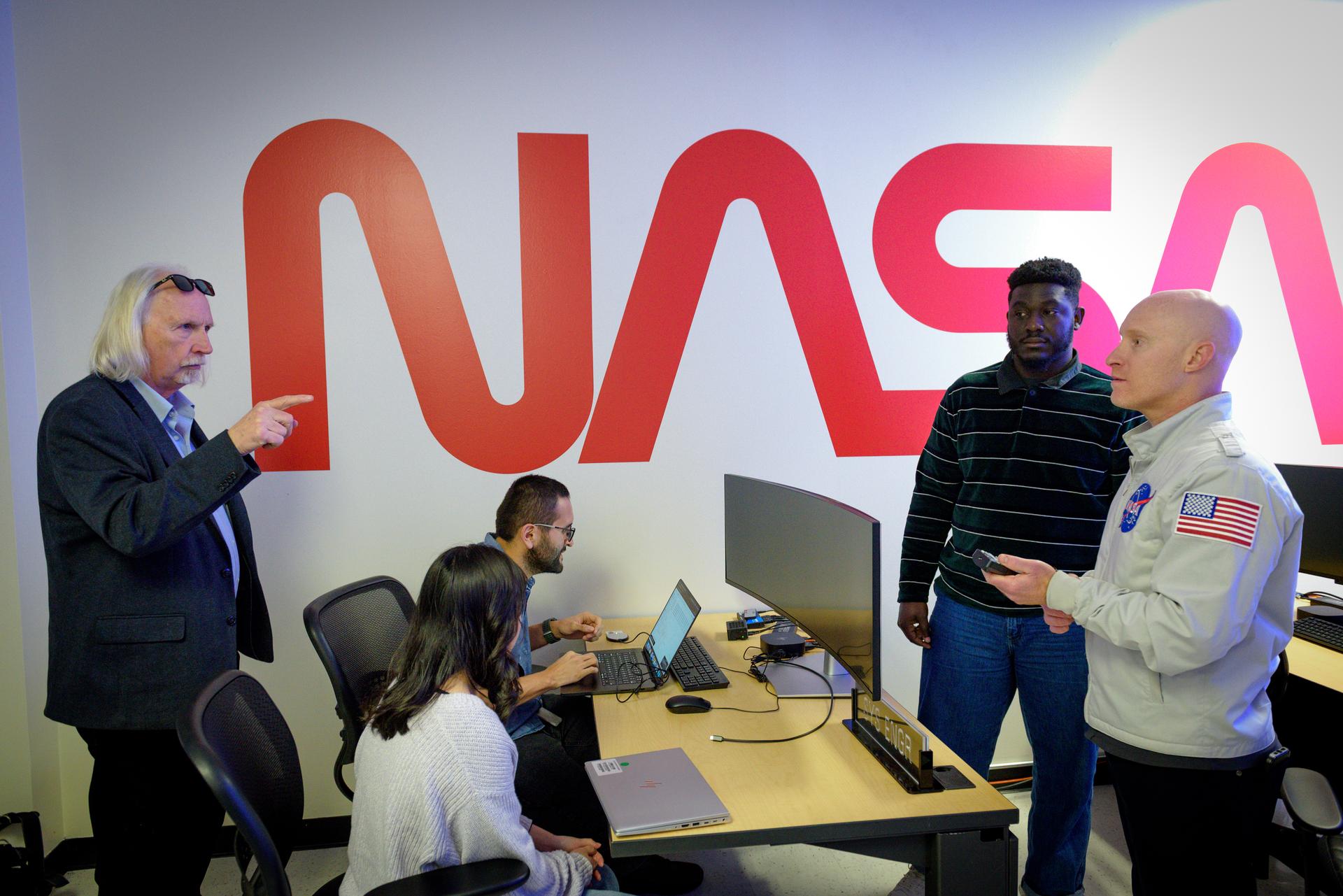
TechEdSat-11 operators Marcus Murbach, left, Daphne Dao and Alejandro Salas, seated, Kwabena Boateng, and Justin Pane, right, in the Ames Multi-Mission Operations Center (MMOC), N240 Annex, Eros control room 162. The team monitors the spacecraft's status during the Exo-Brake “parachute” deployment. The ExoBrake is a drag device that increases the total surface area of the spacecraft to assist with a quicker deorbit. This maneuver is deployed at the end of mission to satisfy NASA's deorbit requirement and prevent space debris. TechEdSat has spent the last several months coordinating with NASA’s Conjunction Assessment Risk Analysis (CARA) team to ensure the spacecraft can safely deploy the ExoBrake without colliding into any other objects.
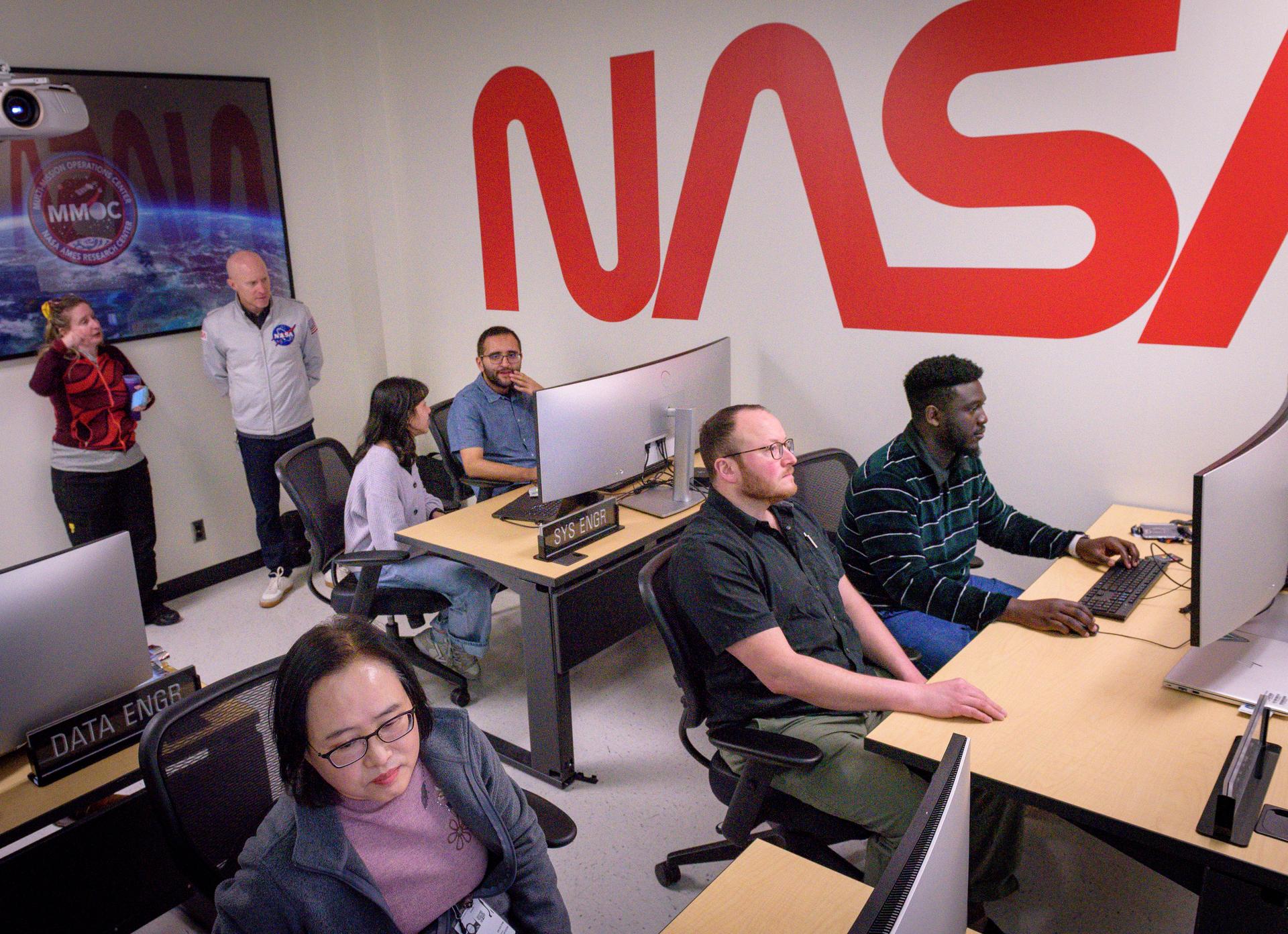
TechEdSat-11 operators Heather Smith, left, Justin Pane, Daphne Dao and Alejandro Salas, seated, Kyeong Ja Kim, Luke Idziak, and Kwabena Boateng right, in the Ames Multi-Mission Operations Center (MMOC), N240 Annex, Eros control room 162. The team monitors the spacecraft's status during the Exo-Brake “parachute” deployment. The ExoBrake is a drag device that increases the total surface area of the spacecraft to assist with a quicker deorbit. This maneuver is deployed at the end of mission to satisfy NASA's deorbit requirement and prevent space debris. TechEdSat has spent the last several months coordinating with NASA’s Conjunction Assessment Risk Analysis (CARA) team to ensure the spacecraft can safely deploy the ExoBrake without colliding into any other objects.
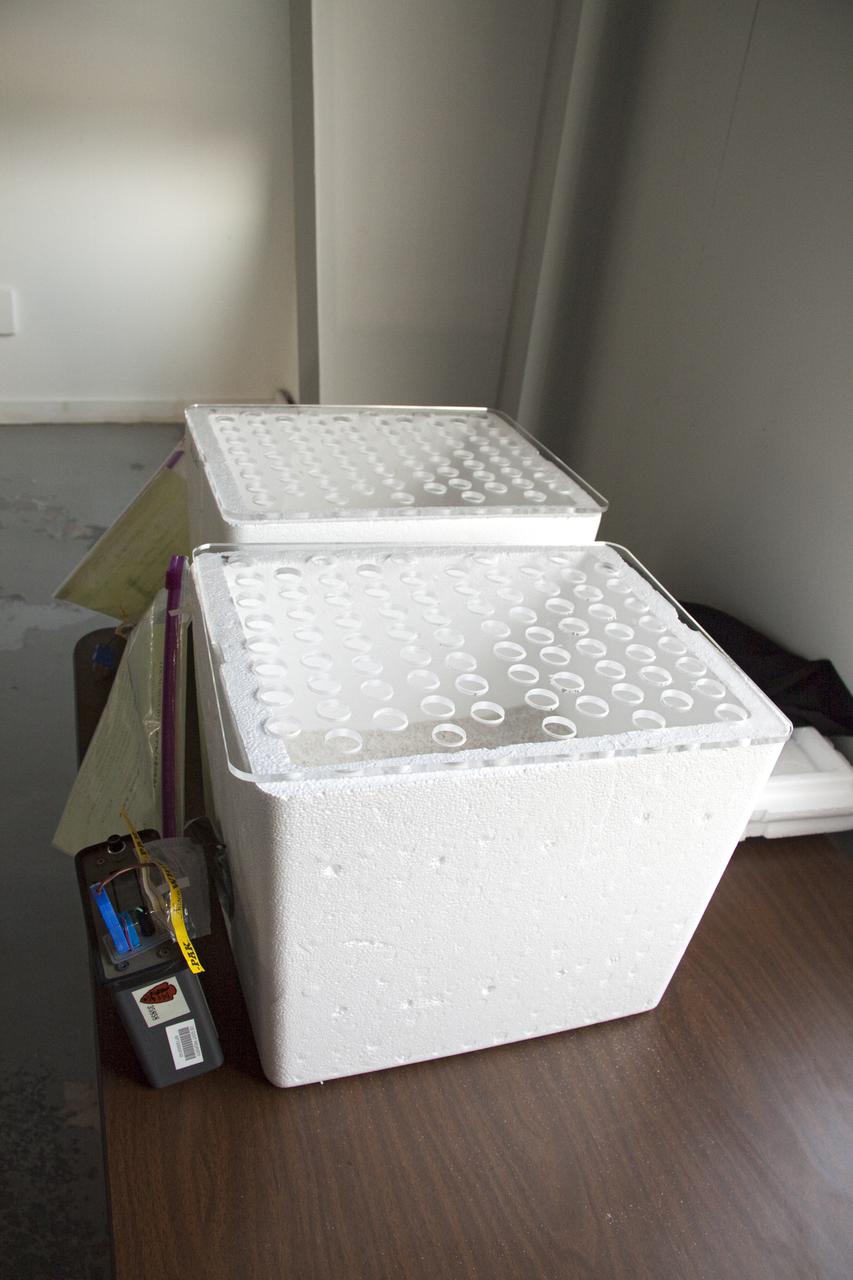
CAPE CANAVERAL, Fla. In a secure facility located at NASA's Kennedy Space Center in Florida, two Styrofoam boxes containing endangered sea turtle eggs brought from beaches along the northern U.S. Gulf Coast are being monitored in a climate-controlled room until incubation is complete. Jane Provancha, lead biologist at the hatchery is heading-up the project at Kennedy. After hatching, the turtles will be set free on a Kennedy Space Center_Canaveral National Seashore beach. The Northern Gulf Rescue Operations relocation and release work effort is supported by the U.S. Fish and Wildlife Service, the Florida Fish and Wildlife Conservation Commission, the National Park Service, NOAA, FedEx and conservationists to help minimize the risk to this year's sea turtle hatchlings from impacts of the BP Deepwater Horizon oil spill in the Gulf of Mexico. Photo credit: NASA_Troy Cryder
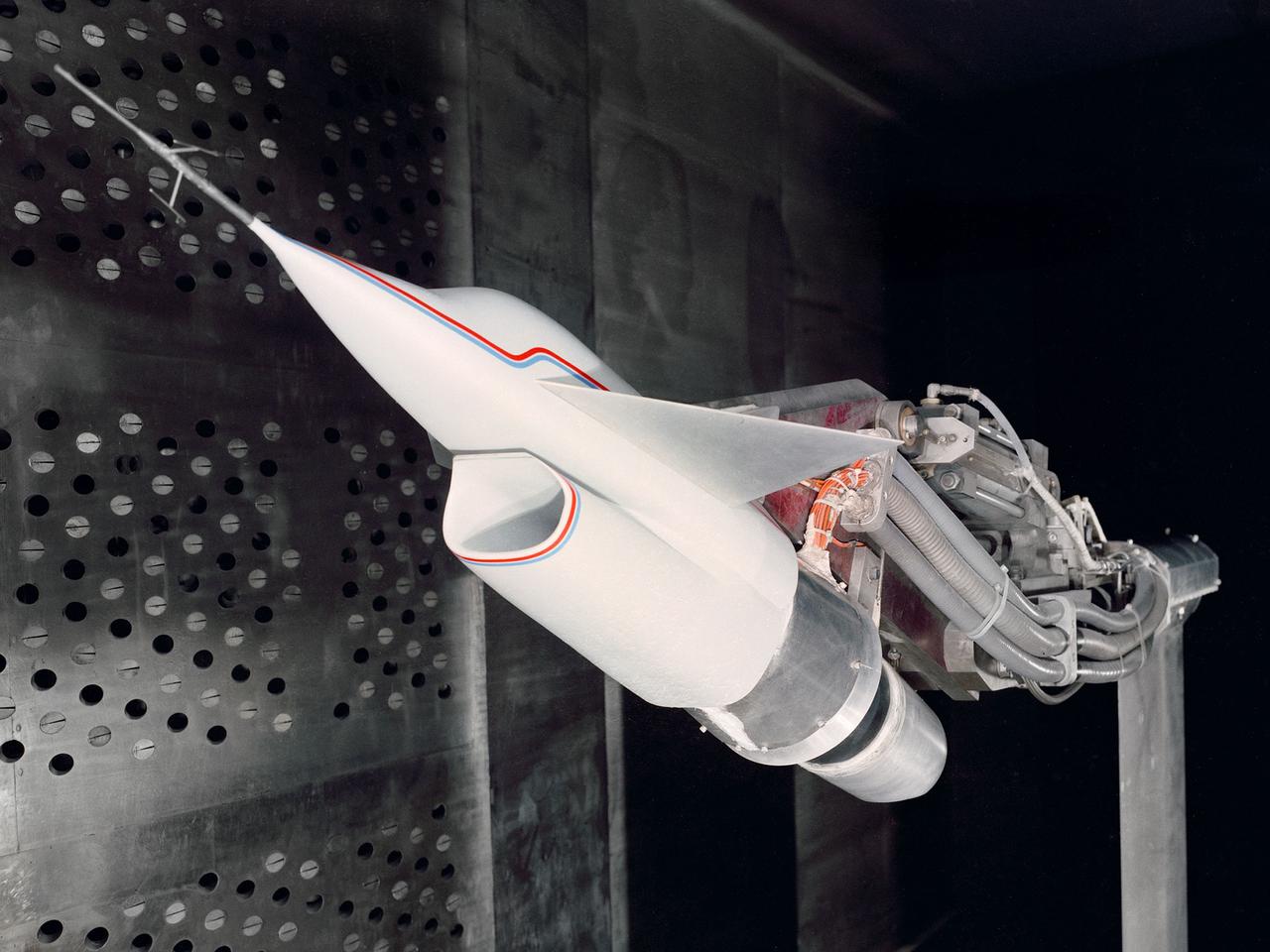
A Highly Maneuverable Aircraft Technology (HiMAT) inlet model installed in the test section of the 8- by 6-Foot Supersonic Wind Tunnel at the National Aeronautics and Space Administration (NASA) Lewis Research Center. Engineers at the Ames Research Center, Dryden Flight Research Center, and Rockwell International designed two pilotless subscale HiMAT vehicles in the mid-1970s to study new design concepts for fighter aircraft in the transonic realm without risking the lives of test pilots. The aircraft used sophisticated technologies such as advanced aerodynamics, composite materials, digital integrated propulsion control, and digital fly-by-wire control systems. In late 1977 NASA Lewis studied the HiMAT’s General Electric J85-21 jet engine in the Propulsion Systems Laboratory. The researchers charted the inlet quality with various combinations anti-distortion screens. HiMAT employed a relatively short and curved inlet compared to actual fighter jets. In the spring of 1979, Larry Smith led an in-depth analysis of the HiMAT inlet in the 8- by 6 tunnel. The researchers installed vortex generators to battle flow separation in the diffuser. The two HiMAT aircraft performed 11 hours of flying over the course of 26 missions from mid-1979 to January 1983 at Dryden and Ames. Although the HiMAT vehicles were considered to be overly complex and expensive, the program yielded a wealth of data that would validate computer-based design tools.
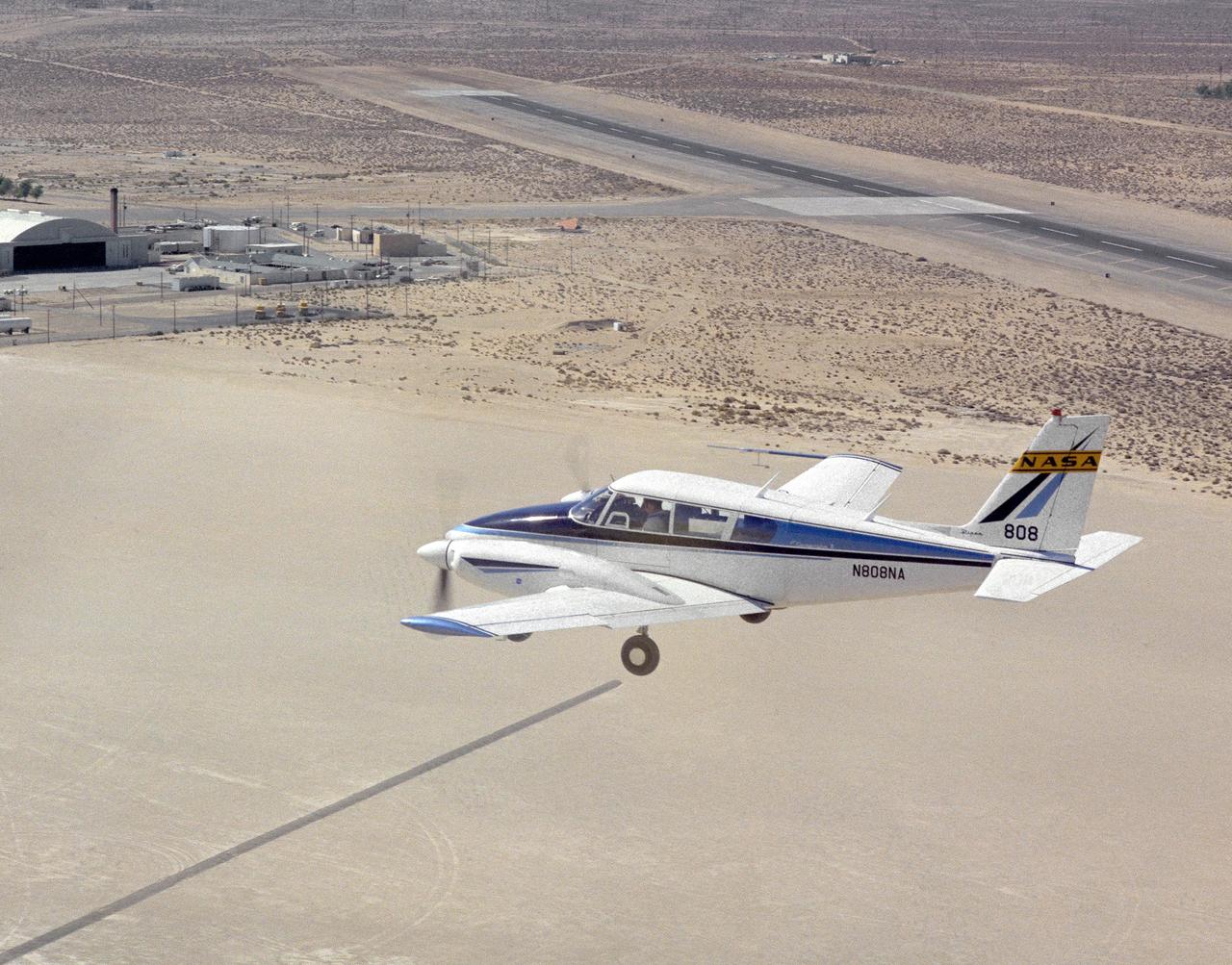
Dryden Flight Research Center's Piper PA-30 Twin Commanche, which helped validate the RPRV concept, descends to a remotely controlled landing on Rogers Dry Lake, unassisted by the onboard pilot. A Piper PA-30 Twin Commanche, known as NASA 808, was used at the NASA Dryden Flight Research Center as a rugged workhorse in a variety of research projects associated with both general aviation and military projects. In the early 1970s, the PA-30, serial number 301498, was used to test a flight technique used to fly Remotely Piloted Research Vehicles (RPRV's). The technique was first tested with the cockpit windows of the light aircraft blacked out while the pilot flew the aircraft utilizing a television monitor which gave him a "pilot's eye" view ahead of the aircraft. Later pilots flew the aircraft from a ground cockpit, a procedure used with all RPRV's. TV and two-way telemetry allow the pilot to be in constant control of the aircraft. The apparatus mounted over the cockpit is a special fish eye lens camera, used to obtain images that are transmitted to the ground based cockpit. This project paved the way for sophisticated, highly successful research programs involving high risk spin, stall, and flight control conditions, such as the HiMAT and the subscale F-15 remotely piloted vehicles. Over the years, NASA 808 has also been used for spin and stall research related to general aviation aircraft and also research to alleviate wake vortices behind large jetliners.

When NASA started plarning for manned space travel in 1959, the myriad challenges of sustaining life in space included a seemingly mundane but vitally important problem: How and what do you feed an astronaut? There were two main concerns: preventing food crumbs from contaminating the spacecraft's atmosphere or floating into sensitive instruments, and ensuring complete freedom from potentially catastrophic disease-producing bacteria, viruses, and toxins. To solve these concerns, NASA enlisted the help of the Pillsbury Company. Pillsbury quickly solved the first problem by coating bite-size foods to prevent crumbling. They developed the hazard analysis and critical control point (HACCP) concept to ensure against bacterial contamination. Hazard analysis is a systematic study of product, its ingredients, processing conditions, handling, storage, packing, distribution, and directions for consumer use to identify sensitive areas that might prove hazardous. Hazard analysis provides a basis for blueprinting the Critical Control Points (CCPs) to be monitored. CCPs are points in the chain from raw materials to the finished product where loss of control could result in unacceptable food safety risks. In early 1970, Pillsbury plants were following HACCP in production of food for Earthbound consumers. Pillsbury's subsequent training courses for Food and Drug Administration (FDA) personnel led to the incorporation of HACCP in the FDA's Low Acid Canned Foods Regulations, set down in the mid-1970s to ensure the safety of all canned food products in the U.S.
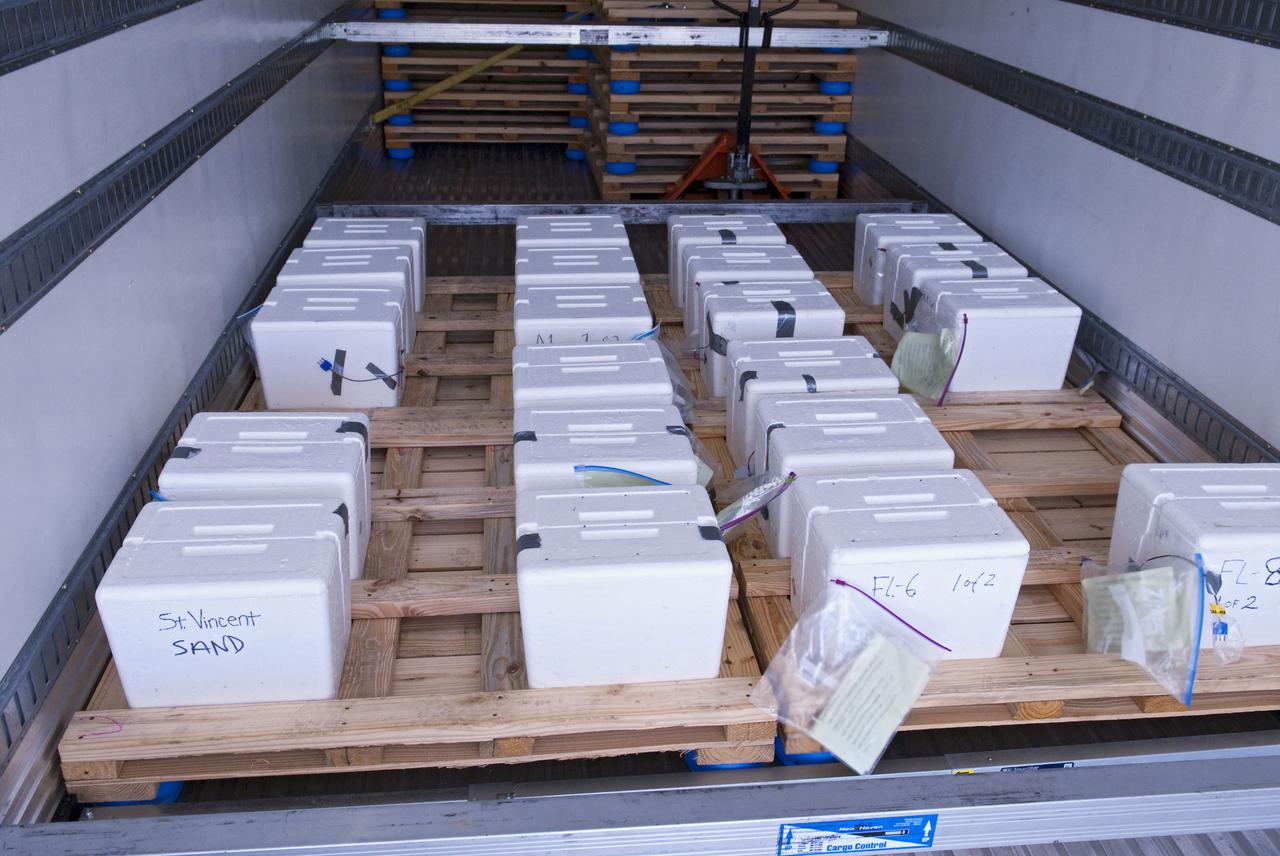
CAPE CANAVERAL, Fla. -- A new batch of endangered sea turtle eggs brought from beaches along the northern U.S. Gulf Coast arrive at NASA's Kennedy Space Center in Florida. Nests of Kemp’s ridley and Loggerhead turtle eggs from Gulf Shores, Ala., and various Florida Gulf Coast beaches are being transported by a specially equipped FedEx truck to a secure, climate-controlled facility at Kennedy. They will be monitored by biologists and hatchery workers until incubation is complete. The hatchlings will be released at different points along a 100-mile stretch of the Atlantic Ocean shoreline. That includes beaches adjacent to the Merritt Island National Wildlife Refuge, which is located inside Kennedy. The release and relocation work is part of an effort by the U.S. Fish and Wildlife Service, the Florida Fish and Wildlife Conservation Commission, the National Park Service, NOAA, FedEx and conservationists to help minimize the risk to this year’s sea turtle hatchlings from impacts of the BP Deepwater Horizon oil spill in the Gulf of Mexico. This plan involves carefully moving an anticipated 700 nests during the next several months. Photo credit: NASA_Ben Smegelsky
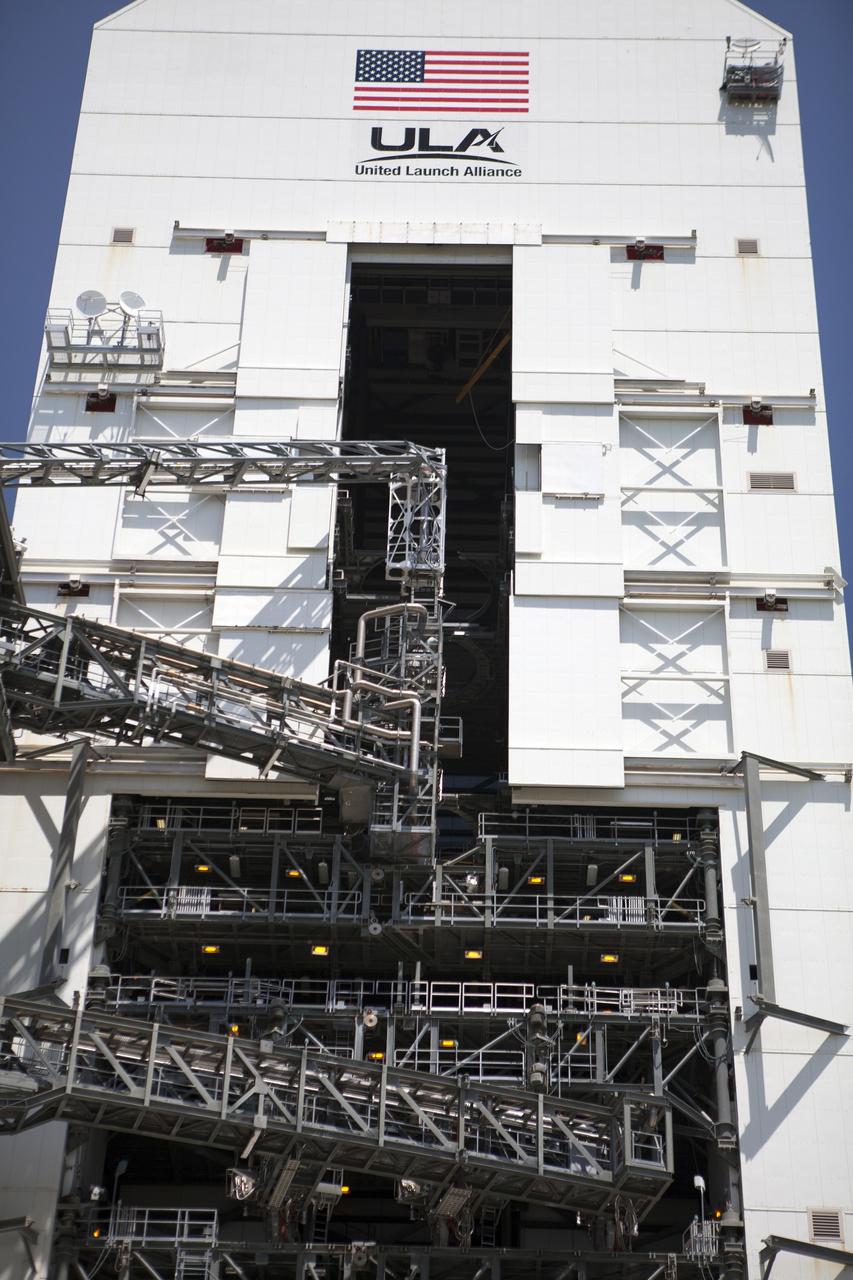
CAPE CANAVERAL, Fla. – The umbilical swing arm for Orion's Exploration Flight Test 1, or EFT-1, has been attached to the uppermost location on the fixed umbilical tower at Space Launch Complex 37 at Cape Canaveral Air Force Station in Florida. All three swing arms on the tower are undergoing tests to confirm that they are operating correctly. They are being swung out and closer to the Vertical Integration Facility at the pad. The uppermost swing arm will carry umbilicals that will be mated to Orion's launch abort system and environmental control system. During launch, all three umbilicals will pull away from Orion and the United Launch Alliance Delta IV Heavy rocket at T-0. During the EFT-1 mission, Orion will travel farther into space than any human spacecraft has gone in more than 40 years. The data gathered during the flight will influence design decisions, validate existing computer models and innovative new approaches to space systems development, as well as reduce overall mission risks and costs for later Orion flights. Liftoff of Orion on its first flight test is planned for fall 2014. Photo credit: NASA/Daniel Casper
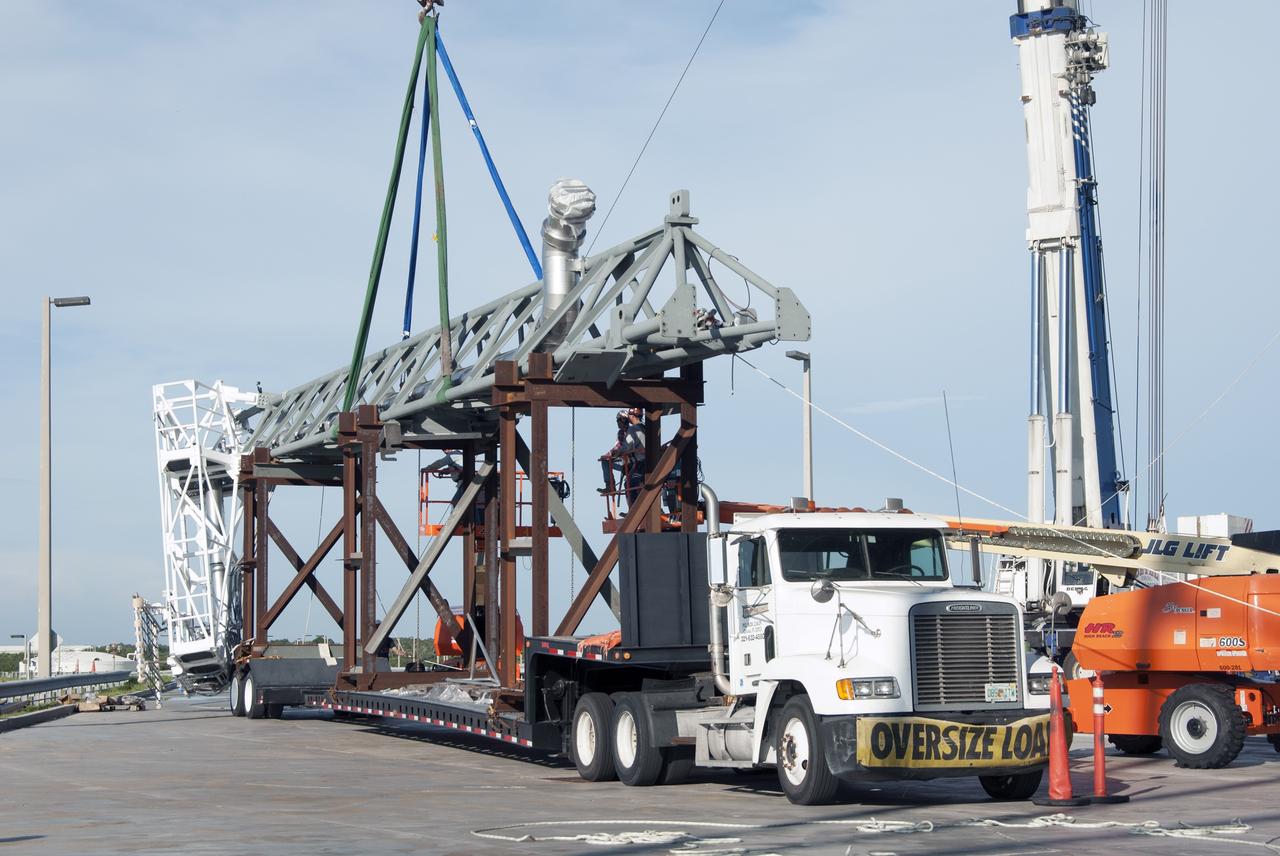
CAPE CANAVERAL, Fla. – The umbilical swing arm for Exploration Flight Test 1, or EFT-1, is being prepared to be lifted by crane and attached to the fixed umbilical tower at Space Launch Complex 37 at Cape Canaveral Air Force Station in Florida. The swing arm is the uppermost of three swing arms that will be attached to the fixed umbilical tower. The swing arm will carry umbilicals that will be mated to Orion's launch abort system and environmental control system. During launch, the umbilicals will pull away from Orion and the United Launch Alliance Delta IV Heavy rocket at T-0. During the EFT-1 mission, Orion will travel farther into space than any human spacecraft has gone in more than 40 years. The data gathered during the flight will influence design decisions, validate existing computer models and innovative new approaches to space systems development, as well as reduce overall mission risks and costs for later Orion flights. Liftoff of Orion on its first flight test is planned for fall 2014. Photo credit: NASA/Jim Grossmann
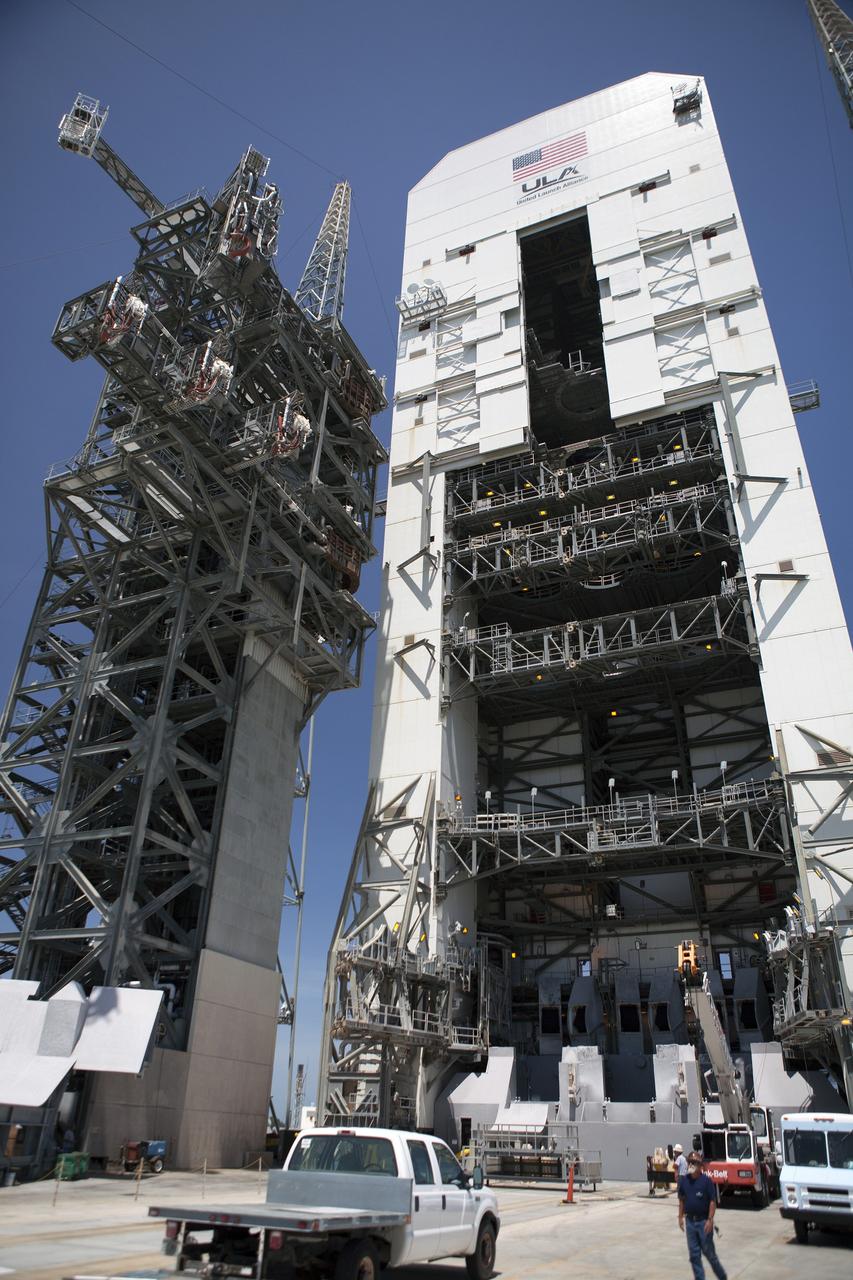
CAPE CANAVERAL, Fla. – The umbilical swing arm for Orion's Exploration Flight Test 1, or EFT-1, has been attached to the uppermost location on the fixed umbilical tower at Space Launch Complex 37 at Cape Canaveral Air Force Station in Florida. All three swing arms on the tower will undergo tests to confirm that they are operating correctly. The uppermost swing arm will carry umbilicals that will be mated to Orion's launch abort system and environmental control system. During launch, all three umbilicals will pull away from Orion and the United Launch Alliance Delta IV Heavy rocket at T-0. During the EFT-1 mission, Orion will travel farther into space than any human spacecraft has gone in more than 40 years. The data gathered during the flight will influence design decisions, validate existing computer models and innovative new approaches to space systems development, as well as reduce overall mission risks and costs for later Orion flights. Liftoff of Orion on its first flight test is planned for fall 2014. Photo credit: NASA/Daniel Casper
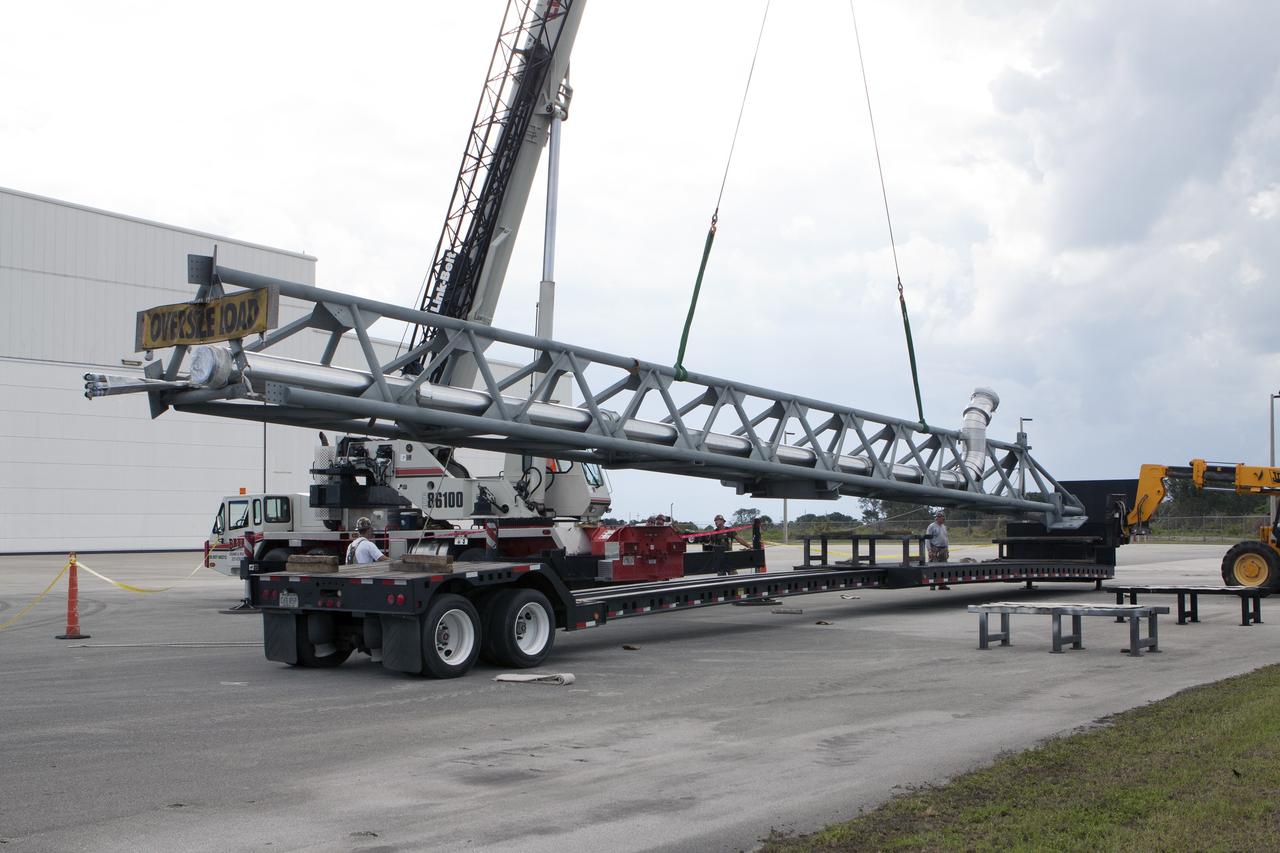
CAPE CANAVERAL, Fla. – The umbilical swing arm for Exploration Flight Test 1, or EFT-1, arrives at the Horizontal Integration Facility near Space Launch Complex 37 at Cape Canaveral Air Force Station in Florida and is being lifted by crane from its transporter. The swing arm is the uppermost of three swing arms that will be attached to the fixed umbilical tower on the launch pad. The swing arm will carry umbilicals that will be mated to Orion's launch abort system and environmental control system. During launch, the umbilicals will pull away from Orion and the United Launch Alliance Delta IV Heavy rocket at T-0. During the EFT-1 mission, Orion will travel farther into space than any human spacecraft has gone in more than 40 years. The data gathered during the flight will influence design decisions, validate existing computer models and innovative new approaches to space systems development, as well as reduce overall mission risks and costs for later Orion flights. Liftoff of Orion on its first flight test is planned for fall 2014. Photo credit: NASA/Kim Shiflett
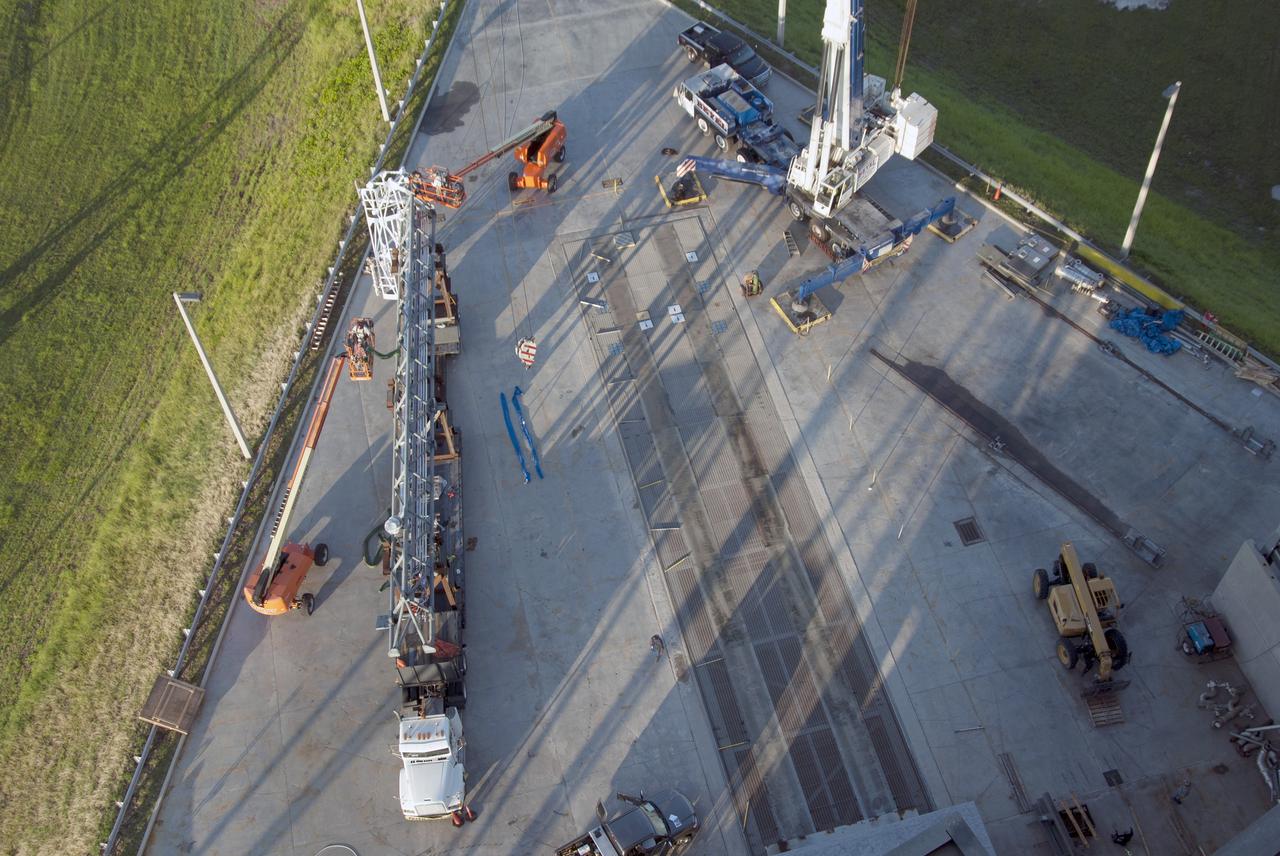
CAPE CANAVERAL, Fla. – In this view from above at Space Launch Complex 37 at Cape Canaveral Air Force Station in Florida, the umbilical swing arm for Exploration Flight Test 1, or EFT-1, is being prepared to be lifted by crane and attached to the fixed umbilical tower on the launch pad. The swing arm is the uppermost of three swing arms that will be attached to the fixed umbilical tower. The swing arm will carry umbilicals that will be mated to Orion's launch abort system and environmental control system. During launch, the umbilicals will pull away from Orion and the United Launch Alliance Delta IV Heavy rocket at T-0. During the EFT-1 mission, Orion will travel farther into space than any human spacecraft has gone in more than 40 years. The data gathered during the flight will influence design decisions, validate existing computer models and innovative new approaches to space systems development, as well as reduce overall mission risks and costs for later Orion flights. Liftoff of Orion on its first flight test is planned for fall 2014. Photo credit: NASA/Jim Grossmann
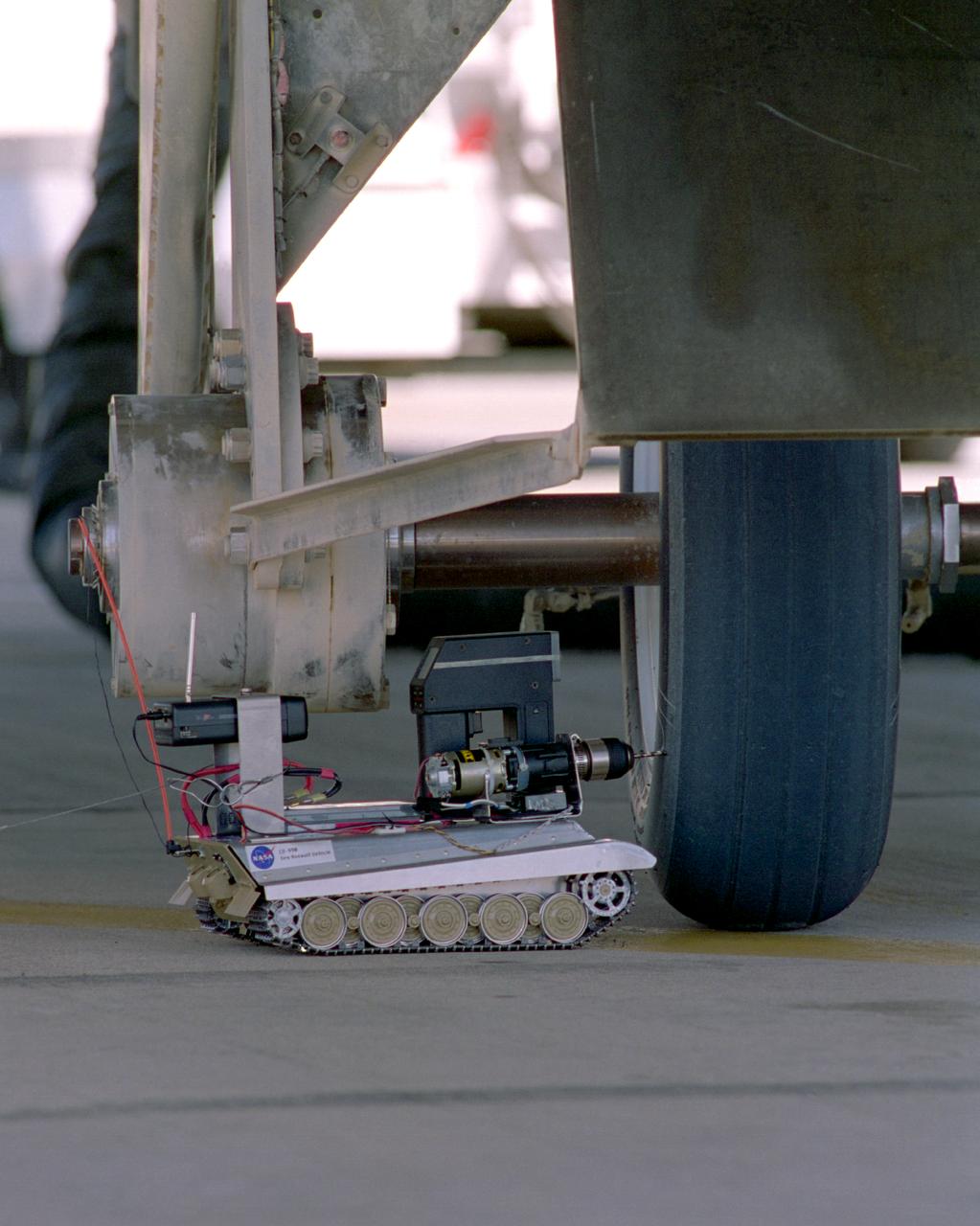
Created from a 1/16th model of a German World War II tank, the TAV (Tire Assault Vehicle) was an important safety feature for the Convair 990 Landing System Research Aircraft, which tested space shuttle tires. It was imperative to know the extreme conditions the shuttle tires could tolerate at landing without putting the shuttle and its crew at risk. In addition, the CV990 was able to land repeatedly to test the tires. The TAV was built from a kit and modified into a radio controlled, video-equipped machine to drill holes in aircraft test tires that were in imminent danger of exploding because of one or more conditions: high air pressure, high temperatures, and cord wear. An exploding test tire releases energy equivalent to two and one-half sticks of dynamite and can cause severe injuries to anyone within 50 ft. of the explosion, as well as ear injury - possibly permanent hearing loss - to anyone within 100 ft. The degree of danger is also determined by the temperature pressure and cord wear of a test tire. The TAV was developed by David Carrott, a PRC employee under contract to NASA.
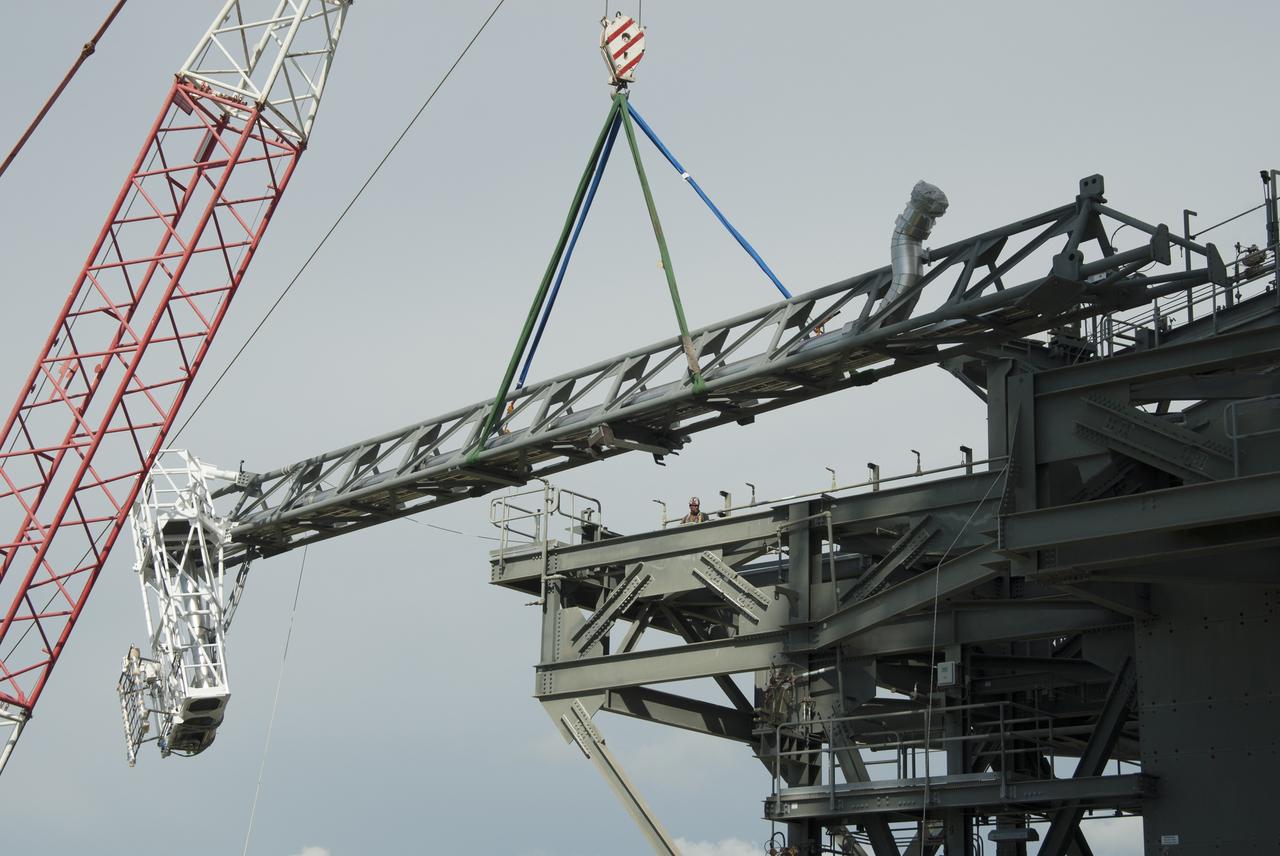
CAPE CANAVERAL, Fla. – A crane brings the umbilical swing arm for Exploration Flight Test 1, or EFT-1, closer for installation on the fixed umbilical tower at Space Launch Complex 37 at Cape Canaveral Air Force Station in Florida. The swing arm is the uppermost of three swing arms that will be attached to the fixed umbilical tower. The swing arm will carry umbilicals that will be mated to Orion's launch abort system and environmental control system. During launch, the umbilicals will pull away from Orion and the United Launch Alliance Delta IV Heavy rocket at T-0. During the EFT-1 mission, Orion will travel farther into space than any human spacecraft has gone in more than 40 years. The data gathered during the flight will influence design decisions, validate existing computer models and innovative new approaches to space systems development, as well as reduce overall mission risks and costs for later Orion flights. Liftoff of Orion on its first flight test is planned for fall 2014. Photo credit: NASA/Jim Grossmann
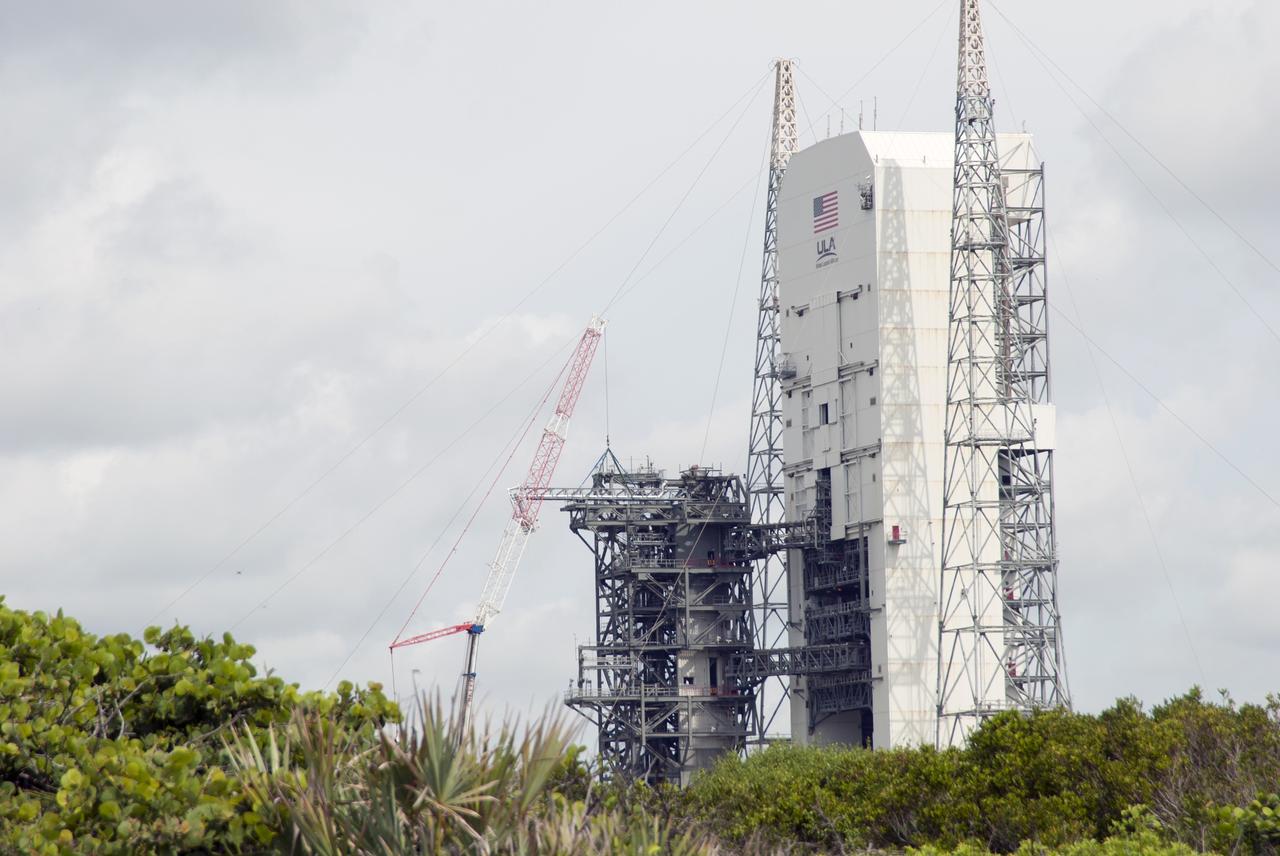
CAPE CANAVERAL, Fla. – A crane brings the umbilical swing arm for Exploration Flight Test 1, or EFT-1, closer for installation on the fixed umbilical tower at Space Launch Complex 37 at Cape Canaveral Air Force Station in Florida. The swing arm is the uppermost of three swing arms that will be attached to the fixed umbilical tower. The swing arm will carry umbilicals that will be mated to Orion's launch abort system and environmental control system. During launch, the umbilicals will pull away from Orion and the United Launch Alliance Delta IV Heavy rocket at T-0. During the EFT-1 mission, Orion will travel farther into space than any human spacecraft has gone in more than 40 years. The data gathered during the flight will influence design decisions, validate existing computer models and innovative new approaches to space systems development, as well as reduce overall mission risks and costs for later Orion flights. Liftoff of Orion on its first flight test is planned for fall 2014. Photo credit: NASA/Jim Grossmann
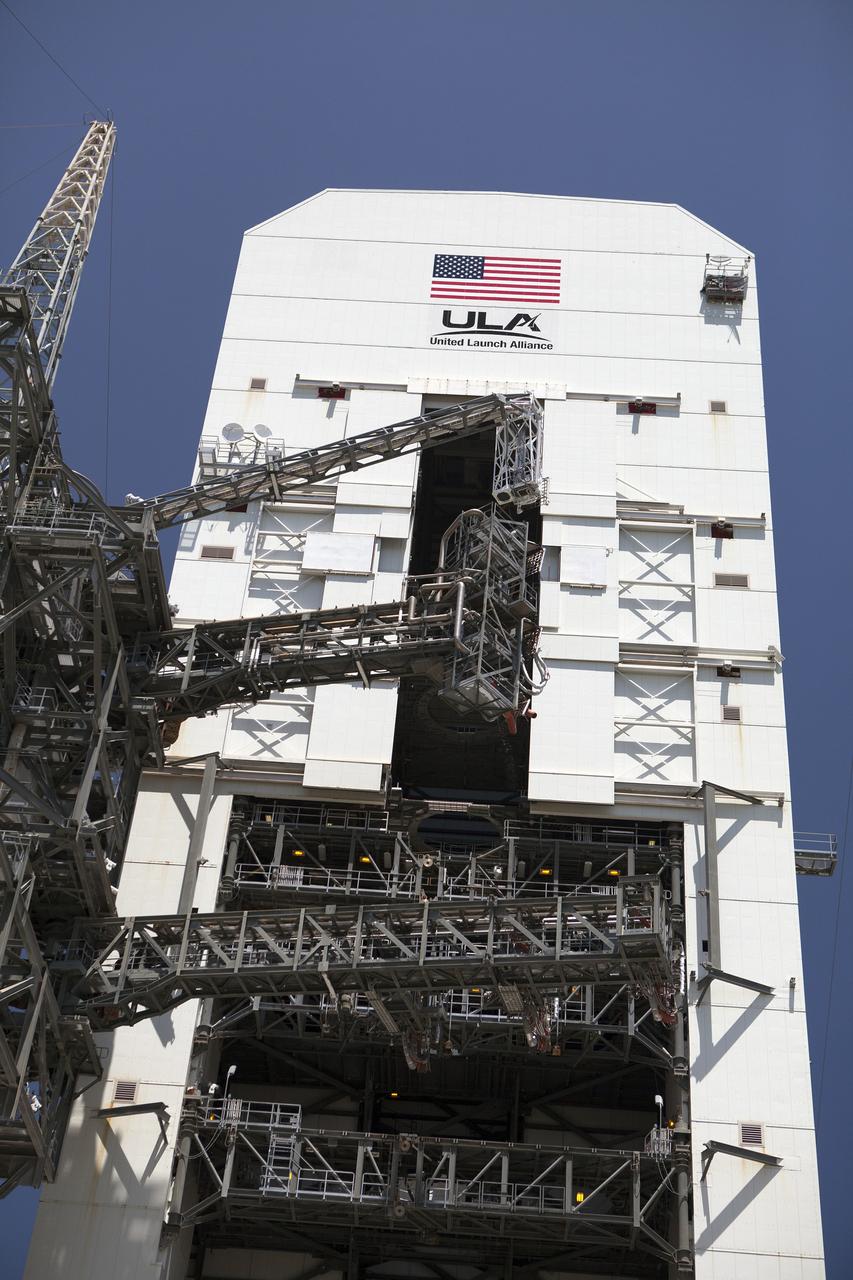
CAPE CANAVERAL, Fla. – The umbilical swing arm for Orion's Exploration Flight Test 1, or EFT-1, has been attached to the uppermost location on the fixed umbilical tower at Space Launch Complex 37 at Cape Canaveral Air Force Station in Florida. All three swing arms on the tower are undergoing tests to confirm that they are operating correctly. They are being swung out and closer to the Vertical Integration Facility at the pad. The uppermost swing arm will carry umbilicals that will be mated to Orion's launch abort system and environmental control system. During launch, all three umbilicals will pull away from Orion and the United Launch Alliance Delta IV Heavy rocket at T-0. During the EFT-1 mission, Orion will travel farther into space than any human spacecraft has gone in more than 40 years. The data gathered during the flight will influence design decisions, validate existing computer models and innovative new approaches to space systems development, as well as reduce overall mission risks and costs for later Orion flights. Liftoff of Orion on its first flight test is planned for fall 2014. Photo credit: NASA/Daniel Casper
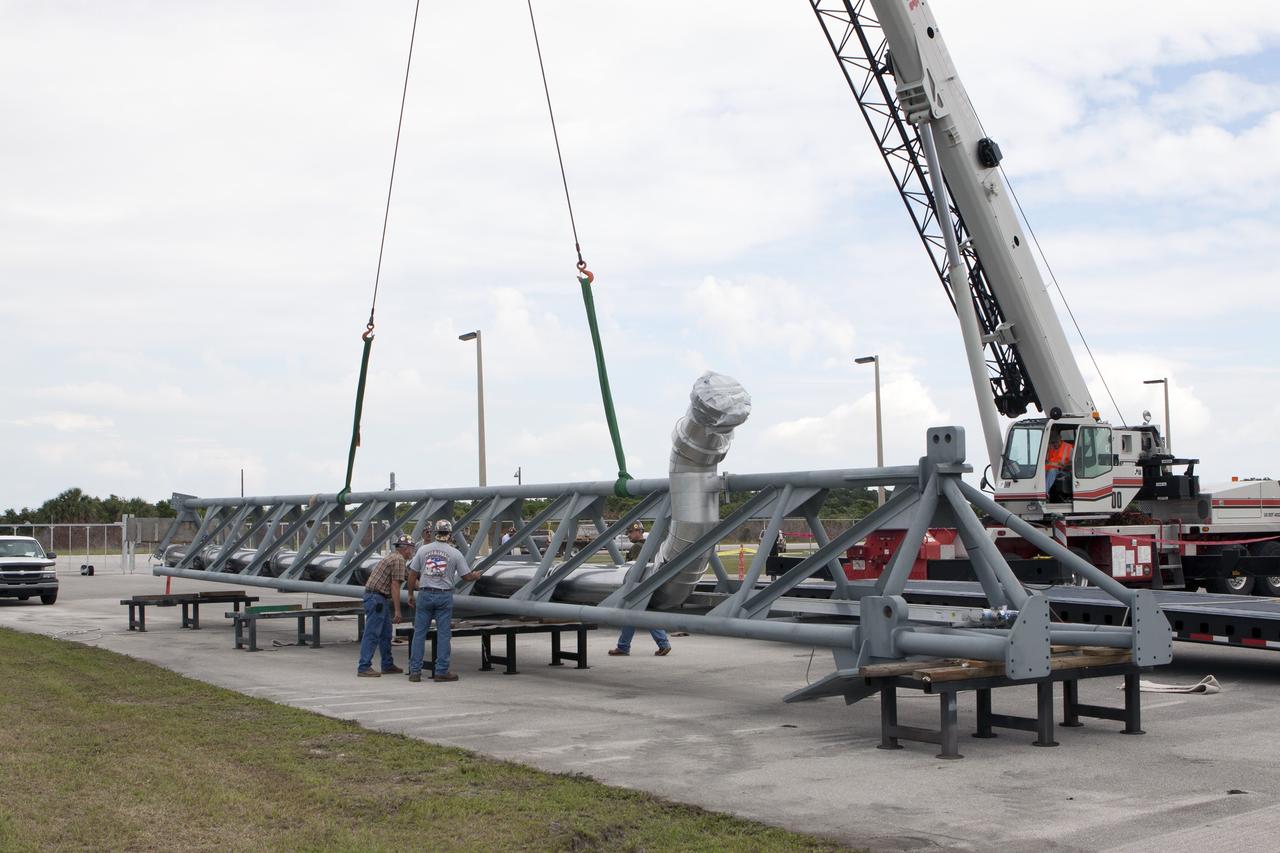
CAPE CANAVERAL, Fla. – The umbilical swing arm for Exploration Flight Test 1, or EFT-1, arrives at the Horizontal Integration Facility near Space Launch Complex 37 at Cape Canaveral Air Force Station in Florida and has been lifted by crane from its transporter. The swing arm is the uppermost of three swing arms that will be attached to the fixed umbilical tower on the launch pad. The swing arm will carry umbilicals that will be mated to Orion's launch abort system and environmental control system. During launch, the umbilicals will pull away from Orion and the United Launch Alliance Delta IV Heavy rocket at T-0. During the EFT-1 mission, Orion will travel farther into space than any human spacecraft has gone in more than 40 years. The data gathered during the flight will influence design decisions, validate existing computer models and innovative new approaches to space systems development, as well as reduce overall mission risks and costs for later Orion flights. Liftoff of Orion on its first flight test is planned for fall 2014. Photo credit: NASA/Kim Shiflett
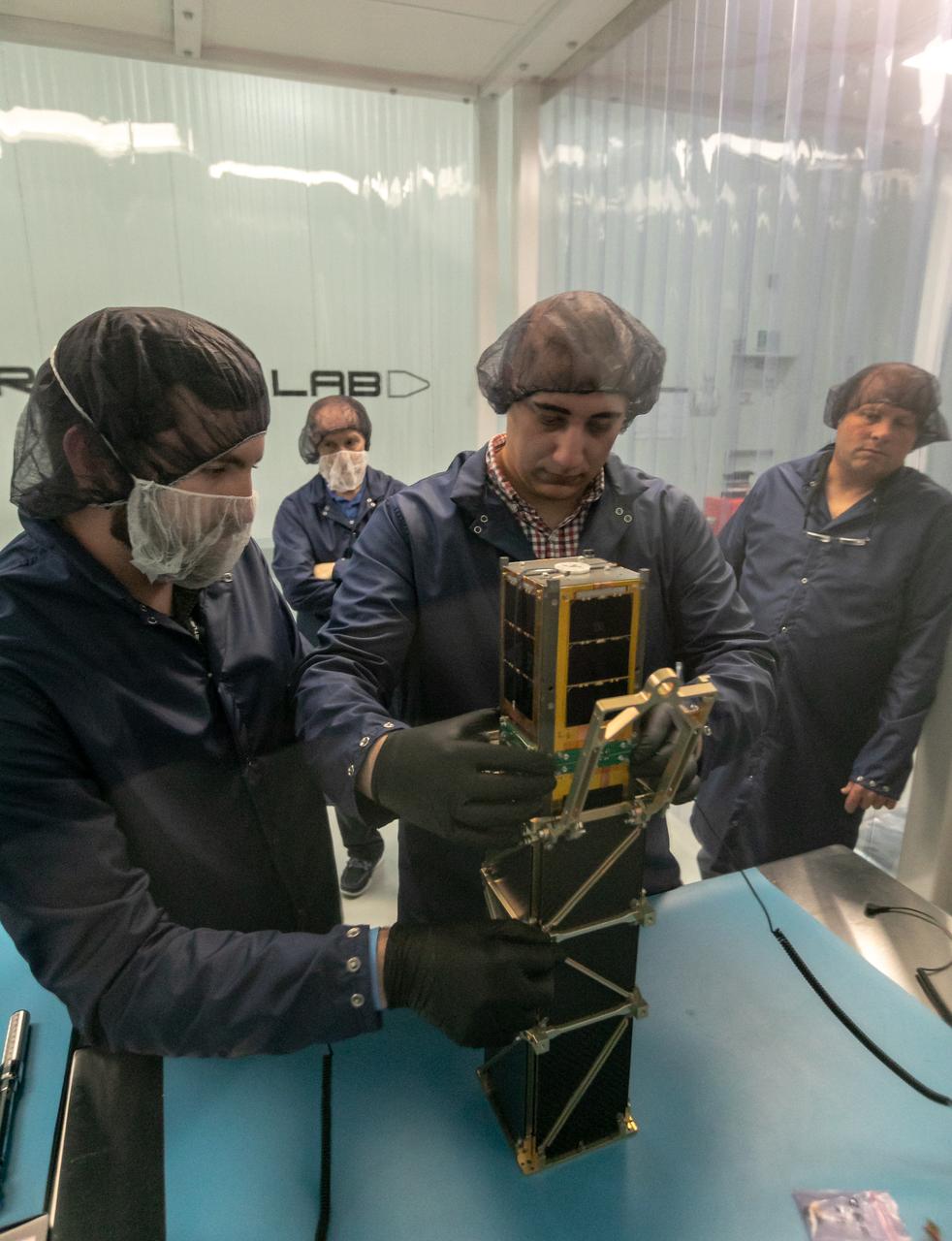
CubeSail is a nano-scale flight experiment to demonstrate deployment and control of a single 250-meter (20 m2) solar sail blade as a low-cost risk reduction precursor of the exciting advanced interplanetary UltraSail concept having four 5-kilometer blades (with approximately 100,000 m2 of sail area). CubeSail was built by the University of Illinois at Urbana-Champaign and CU Aerospace, the same team that designed the I-Sail and UltraSail concepts funded by NASA’s SBIR program. CubeSail represents an affordable stepping-stone towards the future development of the UltraSail solar sail concept that would enable very high-energy inner heliosphere and interstellar scientific missions. In addition, near-earth missions such as Heliostorm for early warning of solar storms will provide more warning margin as the solar sail performance is increased with UltraSail technology. Spacecraft design studies show that for sail areal densities below 5 gm/m2, as proposed with UltraSail, that spacecraft payloads can be significantly increased to 50-60% because of the elimination of the propellant, without sacrificing flight time. Furthermore, higher payload fractions will result in dramatically lower total spacecraft mass and consequently much lower launch cost, enabling more missions for the research dollar.
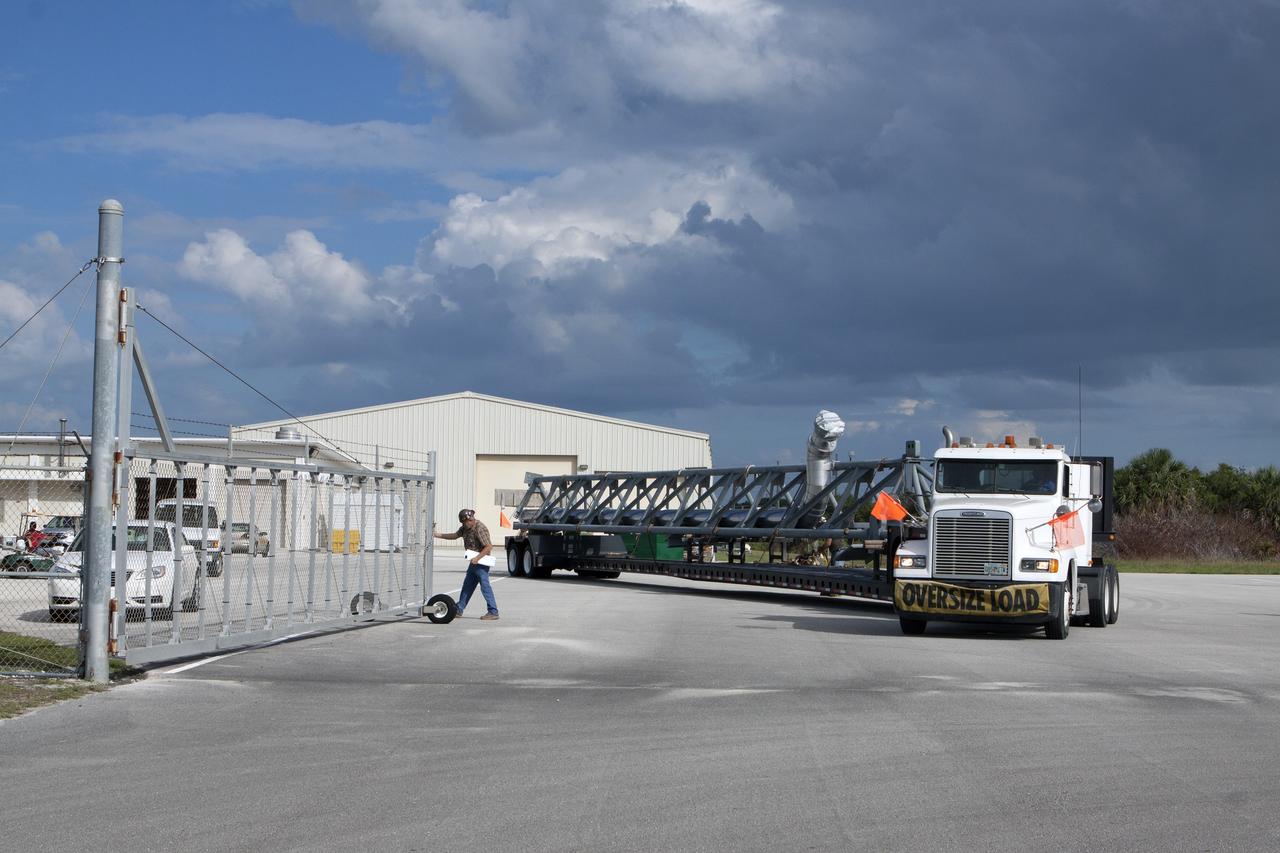
CAPE CANAVERAL, Fla. – The umbilical swing arm for Exploration Flight Test 1, or EFT-1, arrives at the Horizontal Integration Facility near Space Launch Complex 37 at Cape Canaveral Air Force Station in Florida. The swing arm is the uppermost of three swing arms that will be attached to the fixed umbilical tower on the launch pad. The swing arm will carry umbilicals that will be mated to Orion's launch abort system and environmental control system. During launch, the umbilicals will pull away from Orion and the United Launch Alliance Delta IV Heavy rocket at T-0. During the EFT-1 mission, Orion will travel farther into space than any human spacecraft has gone in more than 40 years. The data gathered during the flight will influence design decisions, validate existing computer models and innovative new approaches to space systems development, as well as reduce overall mission risks and costs for later Orion flights. Liftoff of Orion on its first flight test is planned for fall 2014. Photo credit: NASA/Kim Shiflett
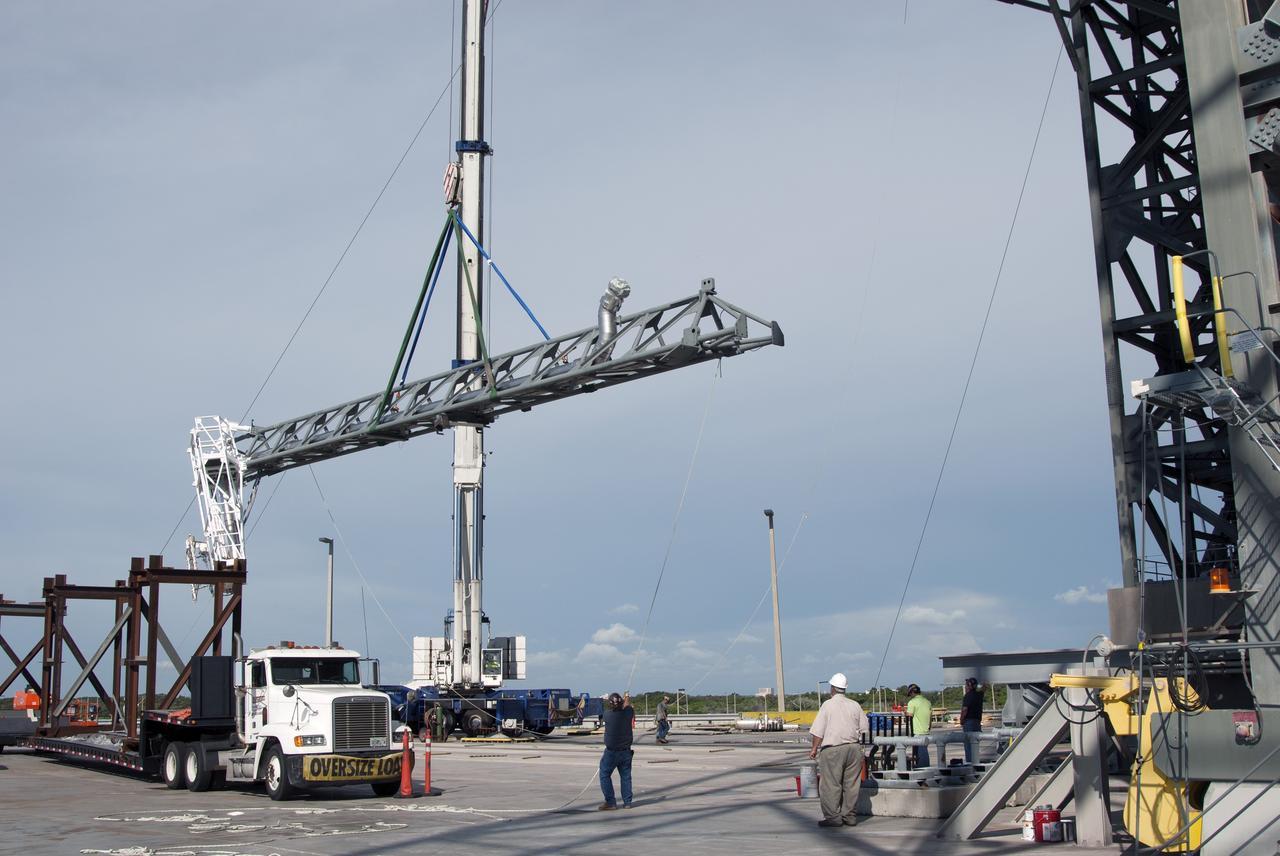
CAPE CANAVERAL, Fla. – The umbilical swing arm for Exploration Flight Test 1, or EFT-1, is lifted by crane for installation on the fixed umbilical tower at Space Launch Complex 37 at Cape Canaveral Air Force Station in Florida. The swing arm is the uppermost of three swing arms that will be attached to the fixed umbilical tower. The swing arm will carry umbilicals that will be mated to Orion's launch abort system and environmental control system. During launch, the umbilicals will pull away from Orion and the United Launch Alliance Delta IV Heavy rocket at T-0. During the EFT-1 mission, Orion will travel farther into space than any human spacecraft has gone in more than 40 years. The data gathered during the flight will influence design decisions, validate existing computer models and innovative new approaches to space systems development, as well as reduce overall mission risks and costs for later Orion flights. Liftoff of Orion on its first flight test is planned for fall 2014. Photo credit: NASA/Jim Grossmann
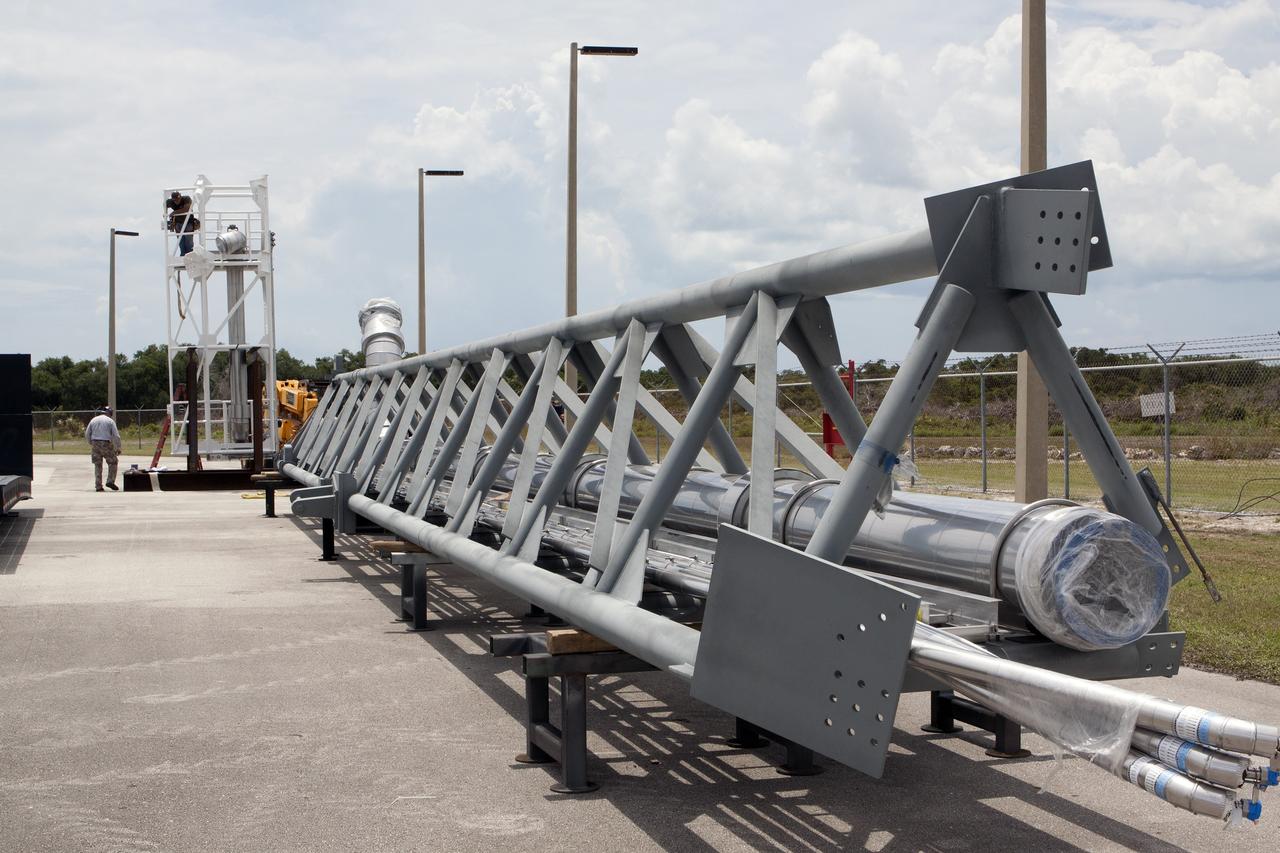
CAPE CANAVERAL, Fla. – Both parts of the umbilical swing arm for Exploration Flight Test 1, or EFT-1, have arrived at the Horizontal Integration Facility near Space Launch Complex 37 at Cape Canaveral Air Force Station in Florida. They have been removed from the transporter and placed on stands. The swing arm is the uppermost of three swing arms that will be attached to the fixed umbilical tower on the launch pad. The swing arm will carry umbilicals that will be mated to Orion's launch abort system and environmental control system. During launch, the umbilicals will pull away from Orion and the United Launch Alliance Delta IV Heavy rocket at T-0. During the EFT-1 mission, Orion will travel farther into space than any human spacecraft has gone in more than 40 years. The data gathered during the flight will influence design decisions, validate existing computer models and innovative new approaches to space systems development, as well as reduce overall mission risks and costs for later Orion flights. Liftoff of Orion on its first flight test is planned for fall 2014. Photo credit: NASA/Kim Shiflett
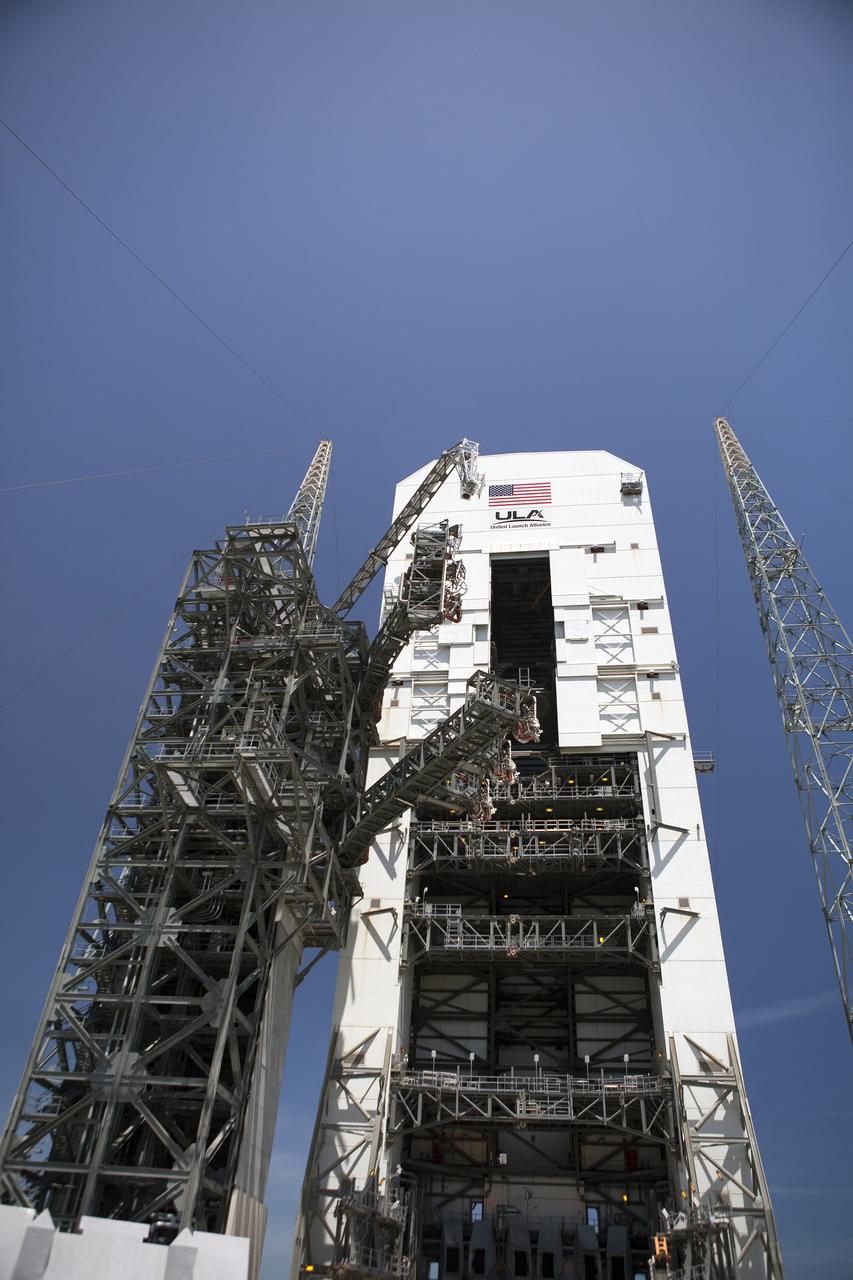
CAPE CANAVERAL, Fla. – The umbilical swing arm for Orion's Exploration Flight Test 1, or EFT-1, has been attached to the uppermost location on the fixed umbilical tower at Space Launch Complex 37 at Cape Canaveral Air Force Station in Florida. All three swing arms on the tower are undergoing tests to confirm that they are operating correctly. The uppermost swing arm will carry umbilicals that will be mated to Orion's launch abort system and environmental control system. During launch, all three umbilicals will pull away from Orion and the United Launch Alliance Delta IV Heavy rocket at T-0. During the EFT-1 mission, Orion will travel farther into space than any human spacecraft has gone in more than 40 years. The data gathered during the flight will influence design decisions, validate existing computer models and innovative new approaches to space systems development, as well as reduce overall mission risks and costs for later Orion flights. Liftoff of Orion on its first flight test is planned for fall 2014. Photo credit: NASA/Daniel Casper
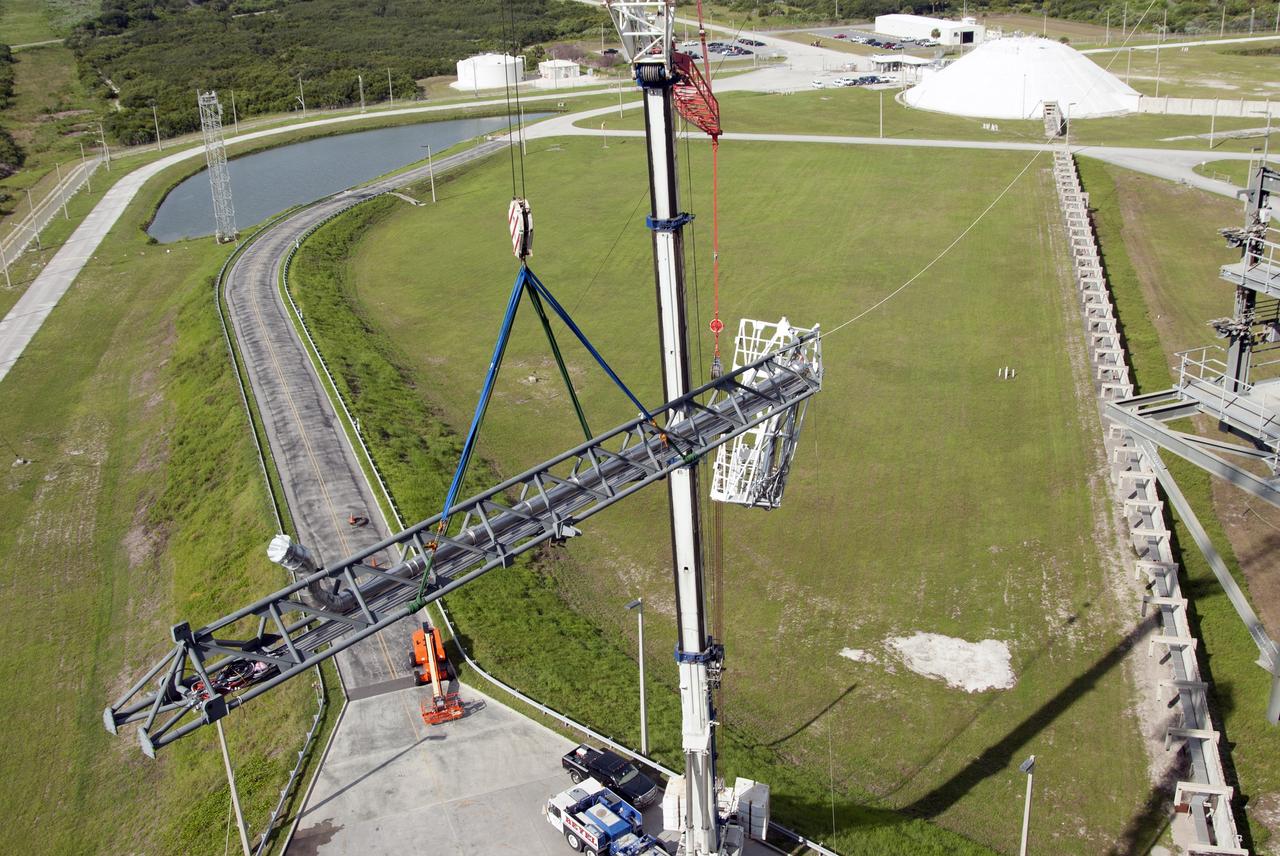
CAPE CANAVERAL, Fla. – The umbilical swing arm for Exploration Flight Test 1, or EFT-1, is lifted by crane for installation on the fixed umbilical tower at Space Launch Complex 37 at Cape Canaveral Air Force Station in Florida. The swing arm is the uppermost of three swing arms that will be attached to the fixed umbilical tower. The swing arm will carry umbilicals that will be mated to Orion's launch abort system and environmental control system. During launch, the umbilicals will pull away from Orion and the United Launch Alliance Delta IV Heavy rocket at T-0. During the EFT-1 mission, Orion will travel farther into space than any human spacecraft has gone in more than 40 years. The data gathered during the flight will influence design decisions, validate existing computer models and innovative new approaches to space systems development, as well as reduce overall mission risks and costs for later Orion flights. Liftoff of Orion on its first flight test is planned for fall 2014. Photo credit: NASA/Jim Grossmann
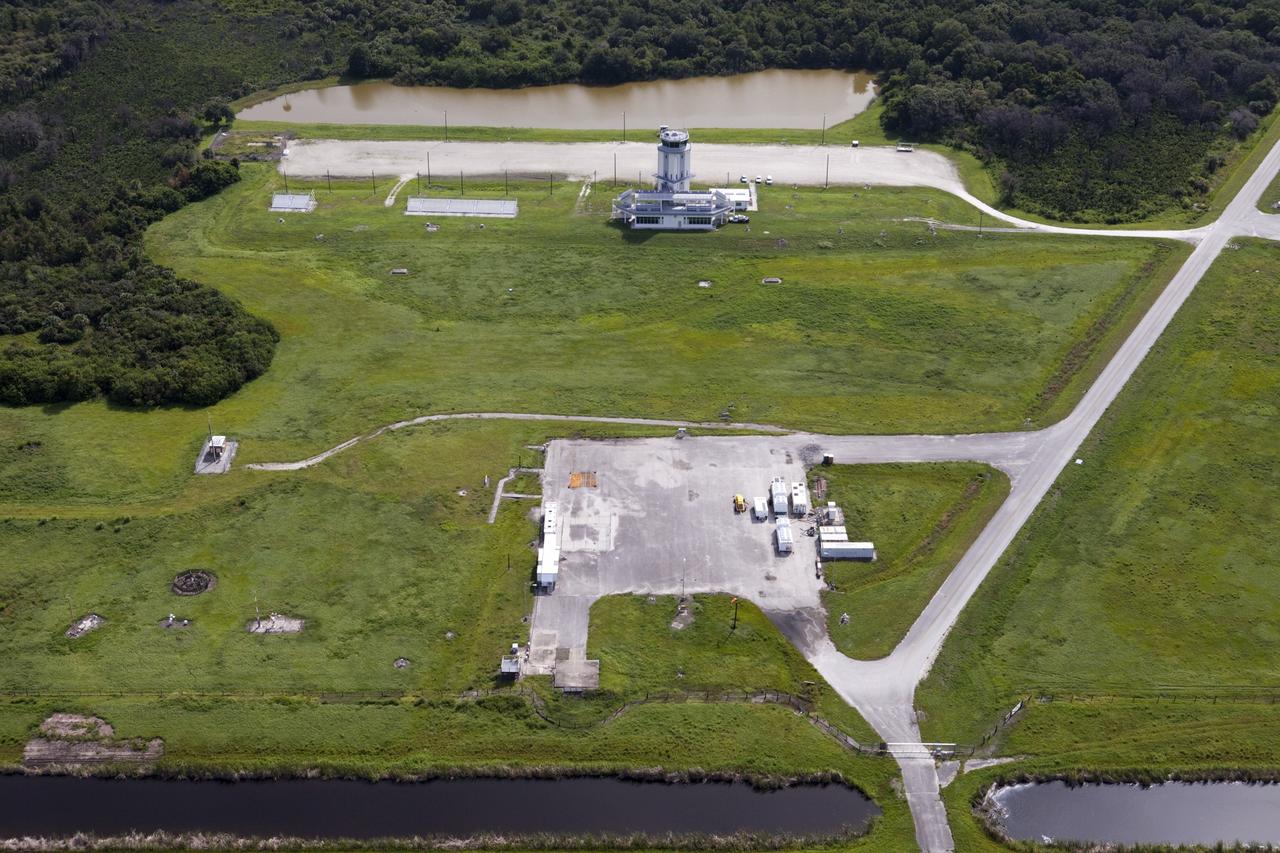
CAPE CANAVERAL, Fla. – This aerial view shows the Shuttle Landing Facility’s air traffic control tower at the Kennedy Space Center in Florida. Just below the tower is the mid-field park site used for runway support vehicles. At the north end of the runway, a rock and crater-filled planetary scape has been built so engineers can test the Autonomous Landing and Hazard Avoidance Technology, or ALHAT system on the Project Morpheus lander. Testing will demonstrate ALHAT’s ability to provide required navigation data negotiating the Morpheus lander away from risks during descent. Checkout of the prototype lander has been ongoing at NASA’s Johnson Space Center in Houston in preparation for its first free flight. The SLF site will provide the lander with the kind of field necessary for realistic testing. Project Morpheus is one of 20 small projects comprising the Advanced Exploration Systems, or AES, program in NASA’s Human Exploration and Operations Mission Directorate. AES projects pioneer new approaches for rapidly developing prototype systems, demonstrating key capabilities and validating operational concepts for future human missions beyond Earth orbit. For more information on Project Morpheus, visit http://www.nasa.gov/centers/johnson/exploration/morpheus/index.html Photo credit: NASA/Kim Shiflett
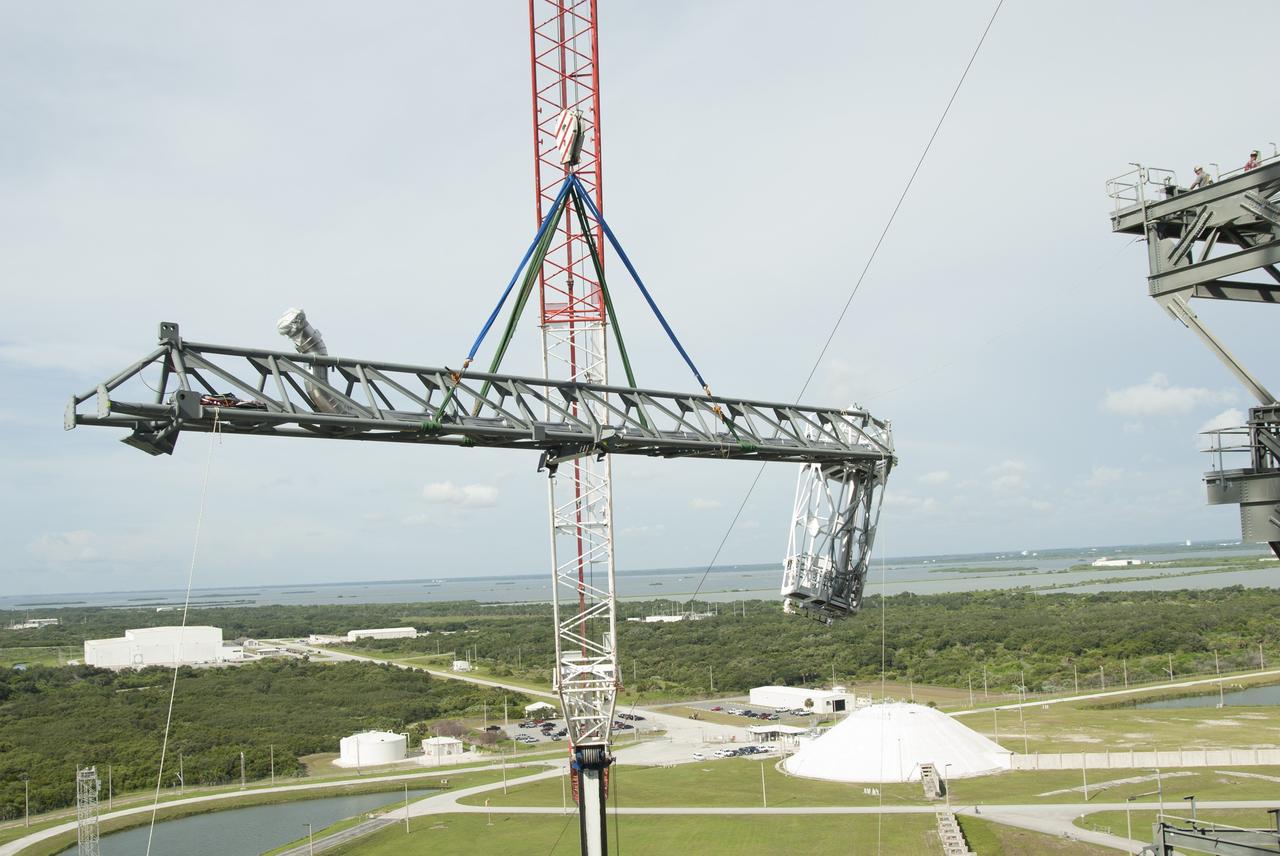
CAPE CANAVERAL, Fla. – The umbilical swing arm for Exploration Flight Test 1, or EFT-1, is lifted high by crane for installation on the fixed umbilical tower at Space Launch Complex 37 at Cape Canaveral Air Force Station in Florida. The swing arm is the uppermost of three swing arms that will be attached to the fixed umbilical tower. The swing arm will carry umbilicals that will be mated to Orion's launch abort system and environmental control system. During launch, the umbilicals will pull away from Orion and the United Launch Alliance Delta IV Heavy rocket at T-0. During the EFT-1 mission, Orion will travel farther into space than any human spacecraft has gone in more than 40 years. The data gathered during the flight will influence design decisions, validate existing computer models and innovative new approaches to space systems development, as well as reduce overall mission risks and costs for later Orion flights. Liftoff of Orion on its first flight test is planned for fall 2014. Photo credit: NASA/Jim Grossmann
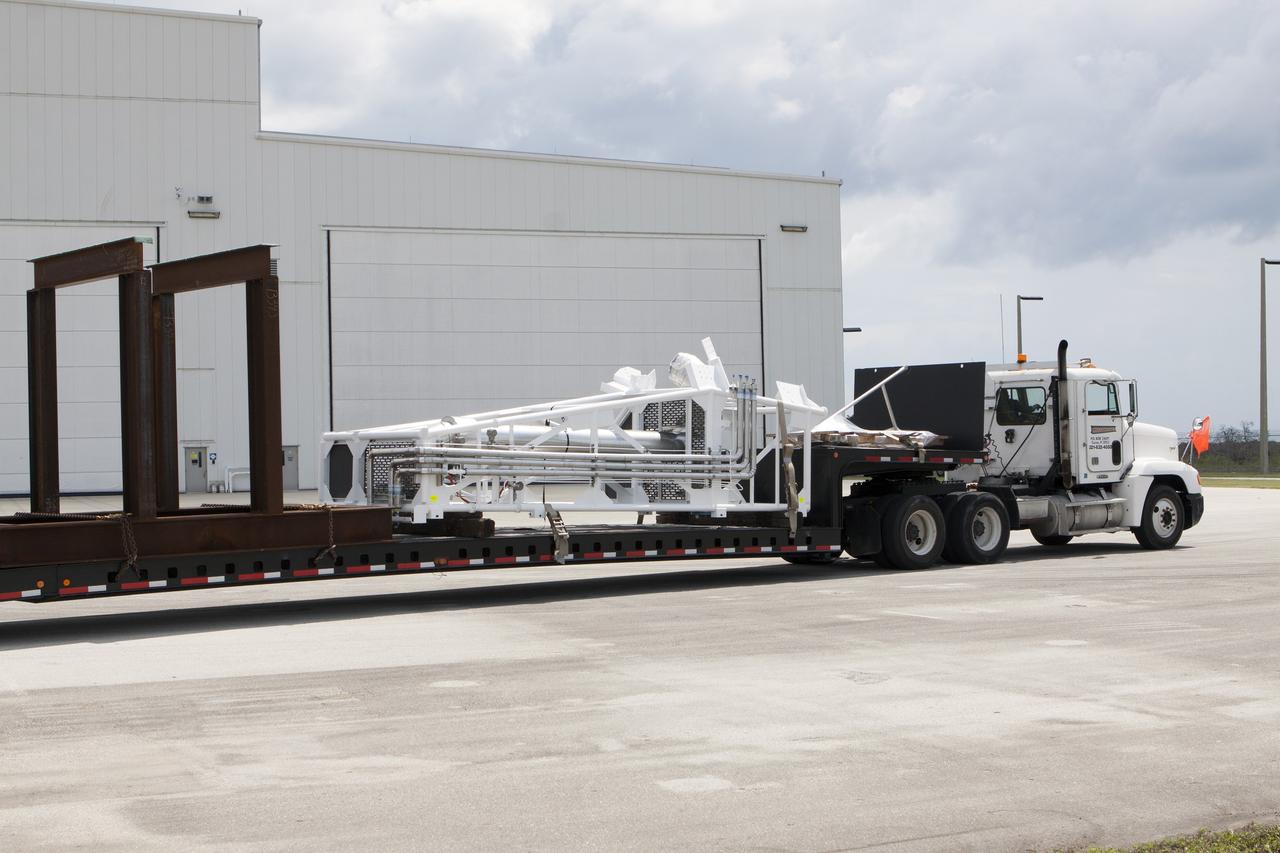
CAPE CANAVERAL, Fla. – Part of the umbilical swing arm for Exploration Flight Test 1, or EFT-1, arrives at the Horizontal Integration Facility near Space Launch Complex 37 at Cape Canaveral Air Force Station in Florida. The swing arm is the uppermost of three swing arms that will be attached to the fixed umbilical tower on the launch pad. The swing arm will carry umbilicals that will be mated to Orion's launch abort system and environmental control system. During launch, the umbilicals will pull away from Orion and the United Launch Alliance Delta IV Heavy rocket at T-0. During the EFT-1 mission, Orion will travel farther into space than any human spacecraft has gone in more than 40 years. The data gathered during the flight will influence design decisions, validate existing computer models and innovative new approaches to space systems development, as well as reduce overall mission risks and costs for later Orion flights. Liftoff of Orion on its first flight test is planned for fall 2014. Photo credit: NASA/Kim Shiflett
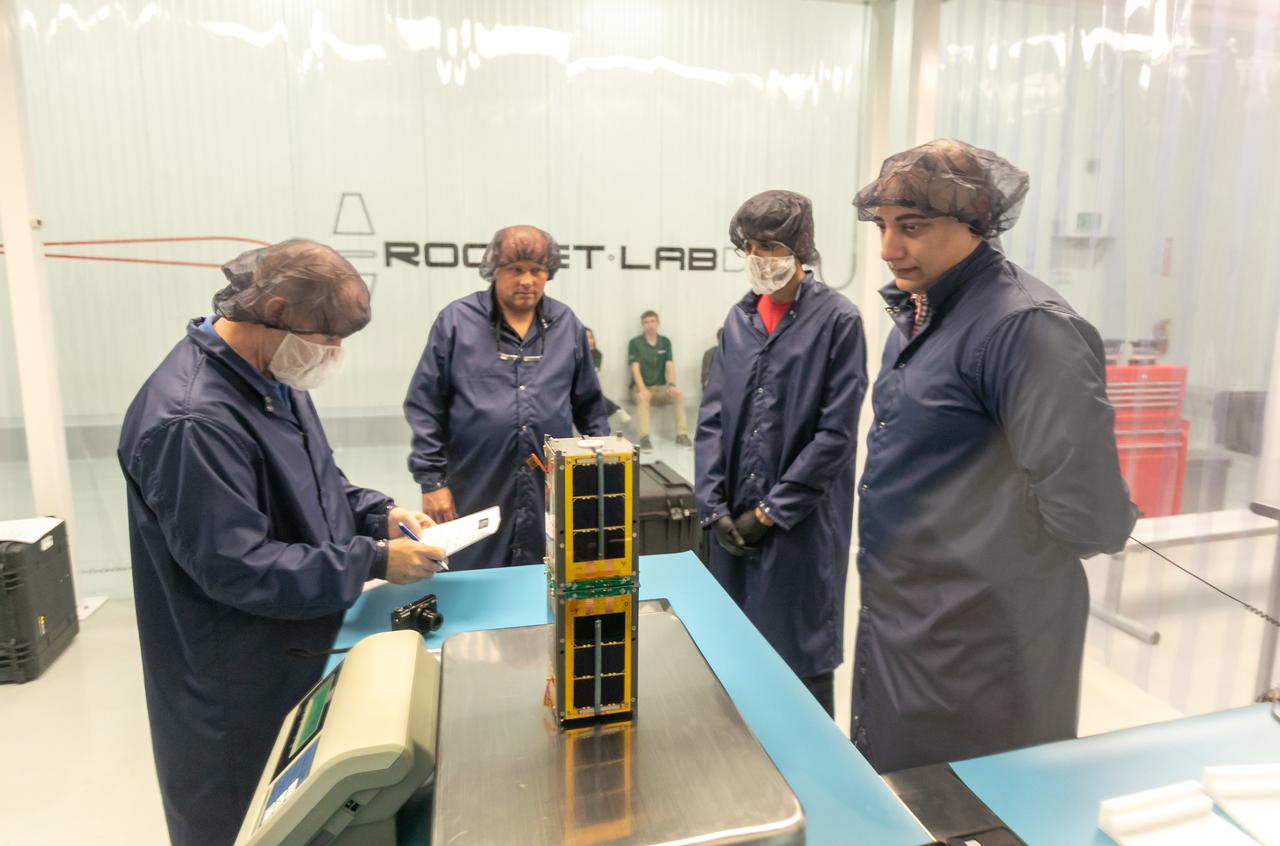
CubeSail is a nano-scale flight experiment to demonstrate deployment and control of a single 250-meter (20 m2) solar sail blade as a low-cost risk reduction precursor of the exciting advanced interplanetary UltraSail concept having four 5-kilometer blades (with approximately 100,000 m2 of sail area). CubeSail was built by the University of Illinois at Urbana-Champaign and CU Aerospace, the same team that designed the I-Sail and UltraSail concepts funded by NASA’s SBIR program. CubeSail represents an affordable stepping-stone towards the future development of the UltraSail solar sail concept that would enable very high-energy inner heliosphere and interstellar scientific missions. In addition, near-earth missions such as Heliostorm for early warning of solar storms will provide more warning margin as the solar sail performance is increased with UltraSail technology. Spacecraft design studies show that for sail areal densities below 5 gm/m2, as proposed with UltraSail, that spacecraft payloads can be significantly increased to 50-60% because of the elimination of the propellant, without sacrificing flight time. Furthermore, higher payload fractions will result in dramatically lower total spacecraft mass and consequently much lower launch cost, enabling more missions for the research dollar.
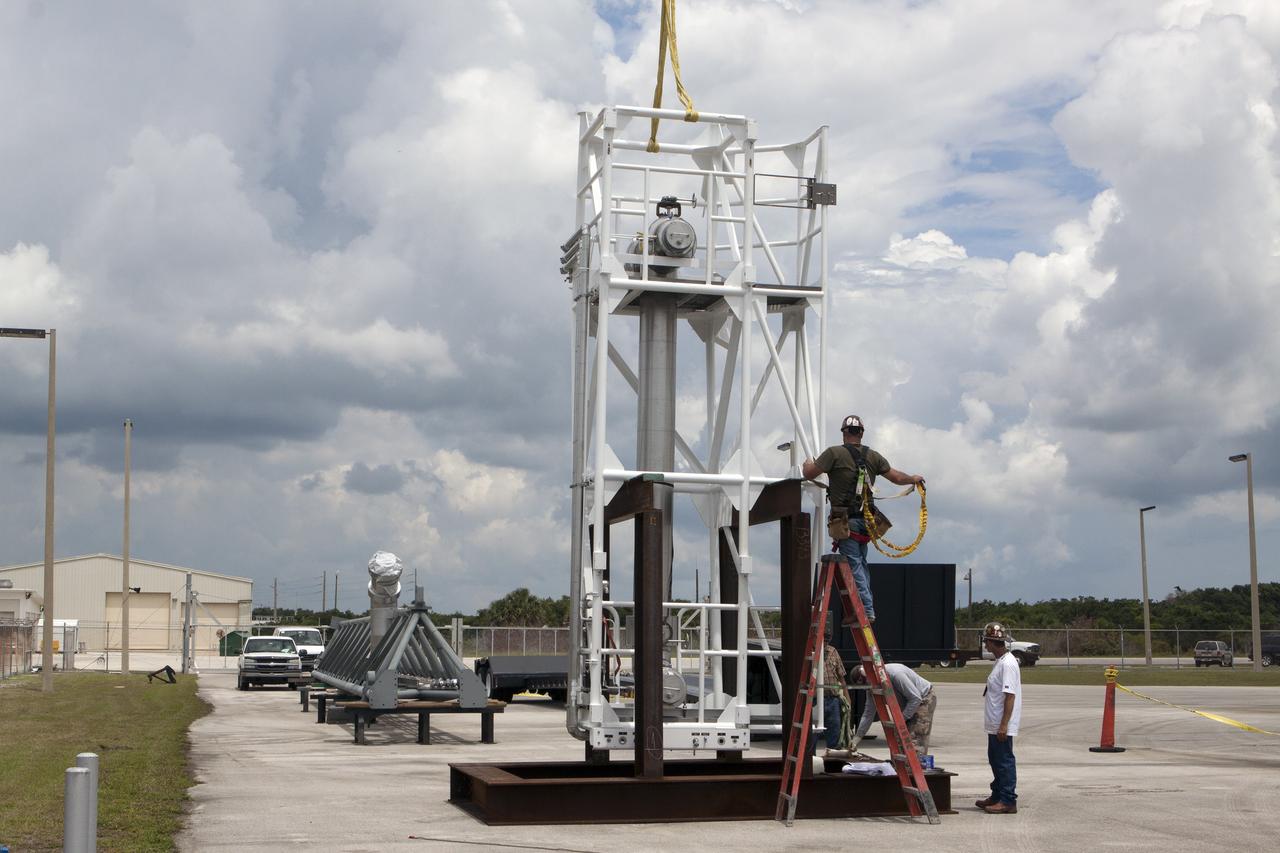
CAPE CANAVERAL, Fla. – Both parts of the umbilical swing arm for Exploration Flight Test 1, or EFT-1, have arrived at the Horizontal Integration Facility near Space Launch Complex 37 at Cape Canaveral Air Force Station in Florida. They have been removed from the transporter and placed on stands. The swing arm is the uppermost of three swing arms that will be attached to the fixed umbilical tower on the launch pad. The swing arm will carry umbilicals that will be mated to Orion's launch abort system and environmental control system. During launch, the umbilicals will pull away from Orion and the United Launch Alliance Delta IV Heavy rocket at T-0. During the EFT-1 mission, Orion will travel farther into space than any human spacecraft has gone in more than 40 years. The data gathered during the flight will influence design decisions, validate existing computer models and innovative new approaches to space systems development, as well as reduce overall mission risks and costs for later Orion flights. Liftoff of Orion on its first flight test is planned for fall 2014. Photo credit: NASA/Kim Shiflett
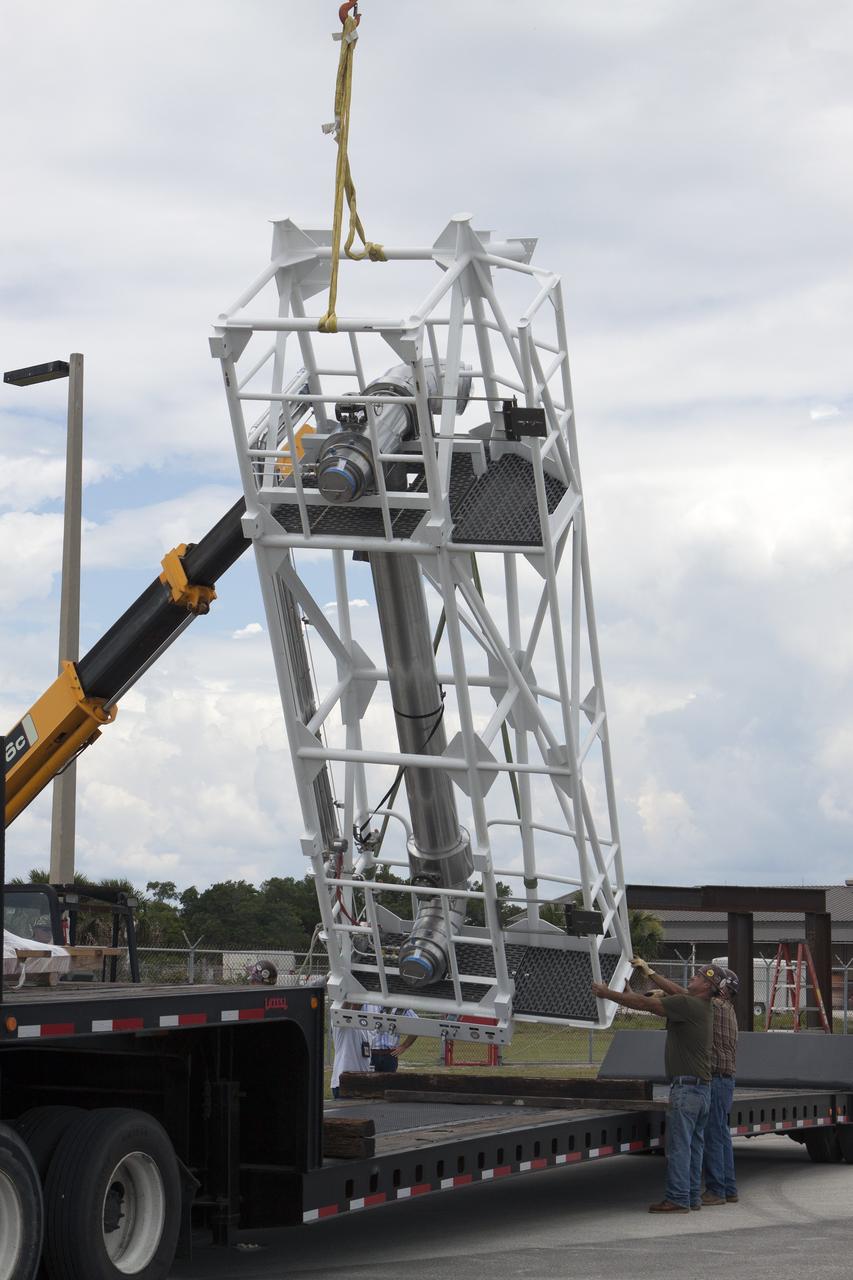
CAPE CANAVERAL, Fla. – Part of the umbilical swing arm for Exploration Flight Test 1, or EFT-1, arrives at the Horizontal Integration Facility near Space Launch Complex 37 at Cape Canaveral Air Force Station in Florida and is being lifted by crane from its transporter. The swing arm is the uppermost of three swing arms that will be attached to the fixed umbilical tower on the launch pad. The swing arm will carry umbilicals that will be mated to Orion's launch abort system and environmental control system. During launch, the umbilicals will pull away from Orion and the United Launch Alliance Delta IV Heavy rocket at T-0. During the EFT-1 mission, Orion will travel farther into space than any human spacecraft has gone in more than 40 years. The data gathered during the flight will influence design decisions, validate existing computer models and innovative new approaches to space systems development, as well as reduce overall mission risks and costs for later Orion flights. Liftoff of Orion on its first flight test is planned for fall 2014. Photo credit: NASA/Kim Shiflett
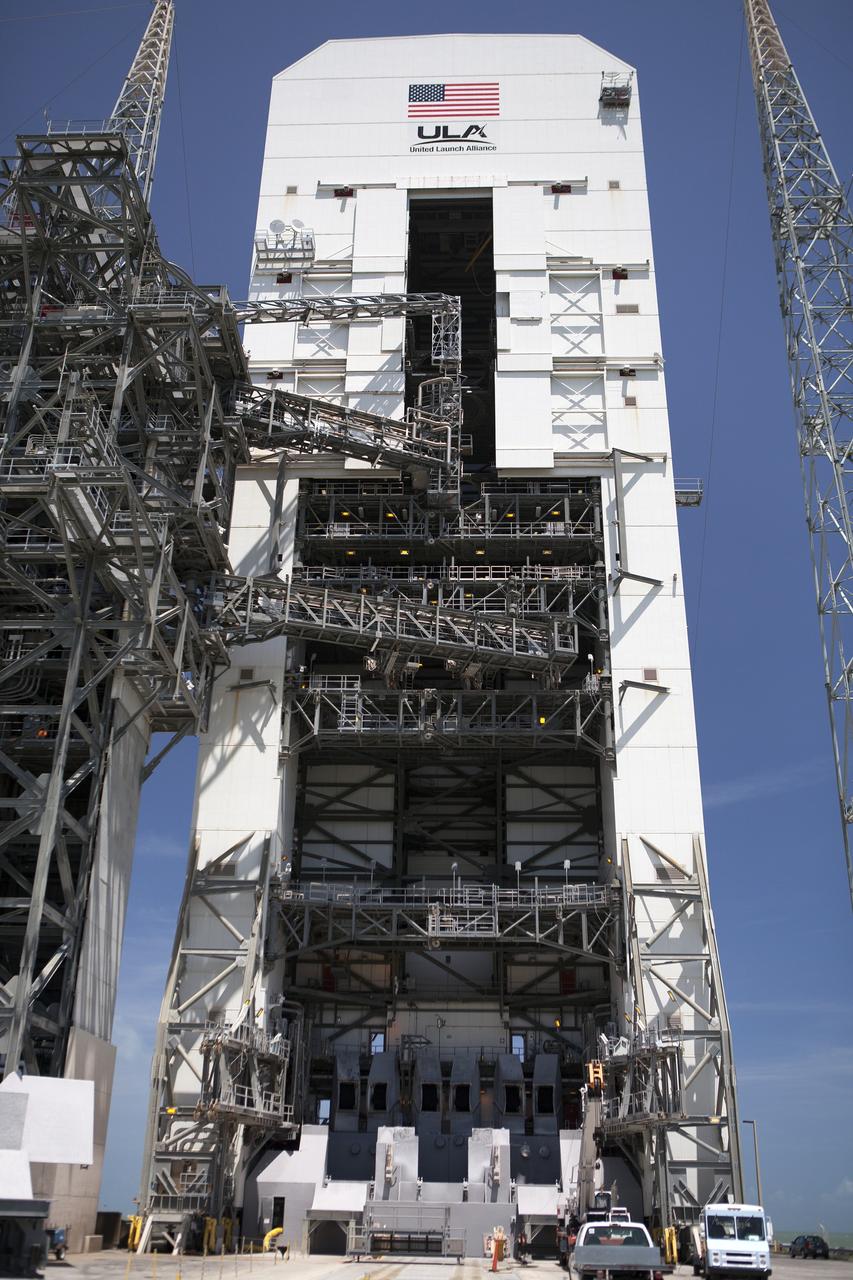
CAPE CANAVERAL, Fla. – The umbilical swing arm for Orion's Exploration Flight Test 1, or EFT-1, has been attached to the uppermost location on the fixed umbilical tower at Space Launch Complex 37 at Cape Canaveral Air Force Station in Florida. All three swing arms on the tower are undergoing tests to confirm that they are operating correctly. They are being swung out and closer to the Vertical Integration Facility at the pad. The uppermost swing arm will carry umbilicals that will be mated to Orion's launch abort system and environmental control system. During launch, all three umbilicals will pull away from Orion and the United Launch Alliance Delta IV Heavy rocket at T-0. During the EFT-1 mission, Orion will travel farther into space than any human spacecraft has gone in more than 40 years. The data gathered during the flight will influence design decisions, validate existing computer models and innovative new approaches to space systems development, as well as reduce overall mission risks and costs for later Orion flights. Liftoff of Orion on its first flight test is planned for fall 2014. Photo credit: NASA/Daniel Casper
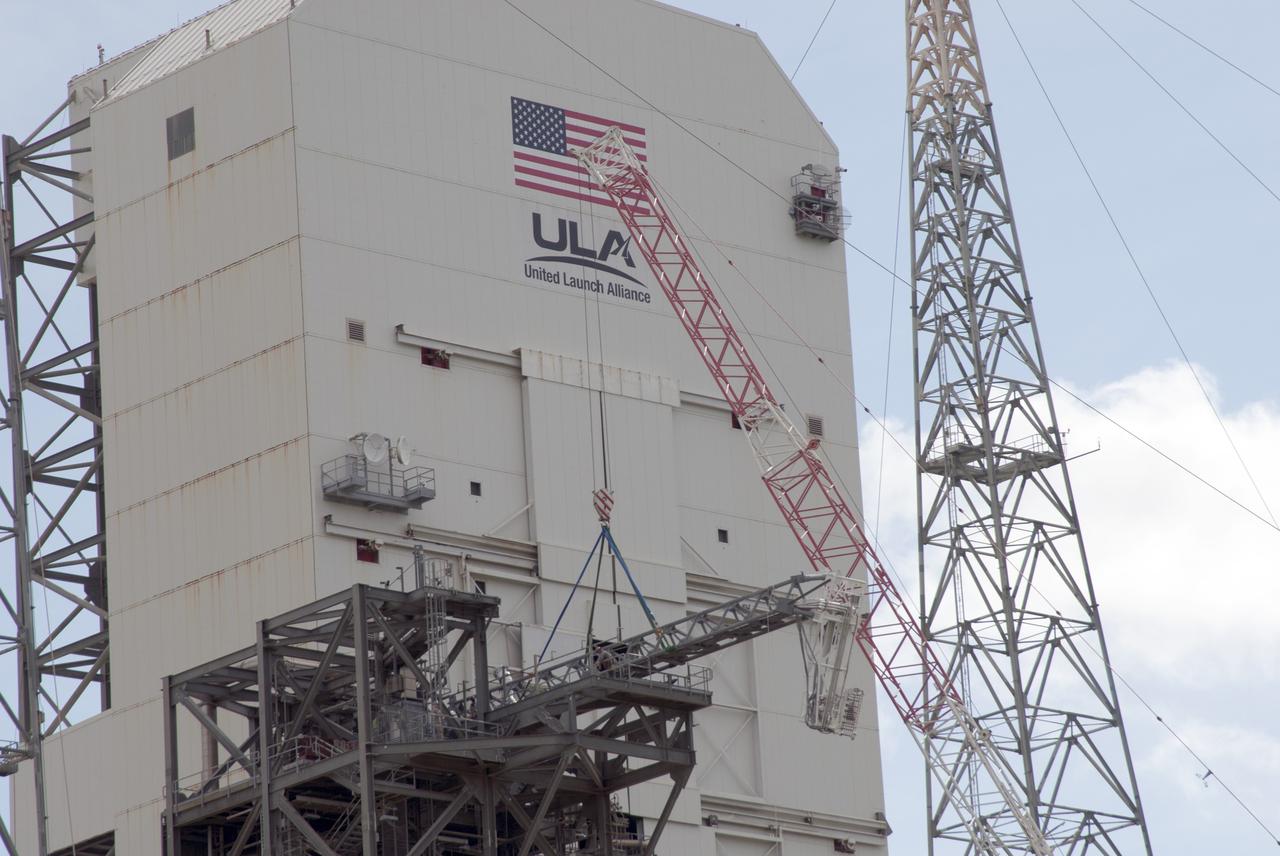
CAPE CANAVERAL, Fla. – A crane brings the umbilical swing arm for Exploration Flight Test 1, or EFT-1, closer for installation on the fixed umbilical tower at Space Launch Complex 37 at Cape Canaveral Air Force Station in Florida. The swing arm is the uppermost of three swing arms that will be attached to the fixed umbilical tower. The swing arm will carry umbilicals that will be mated to Orion's launch abort system and environmental control system. During launch, the umbilicals will pull away from Orion and the United Launch Alliance Delta IV Heavy rocket at T-0. During the EFT-1 mission, Orion will travel farther into space than any human spacecraft has gone in more than 40 years. The data gathered during the flight will influence design decisions, validate existing computer models and innovative new approaches to space systems development, as well as reduce overall mission risks and costs for later Orion flights. Liftoff of Orion on its first flight test is planned for fall 2014. Photo credit: NASA/Jim Grossmann