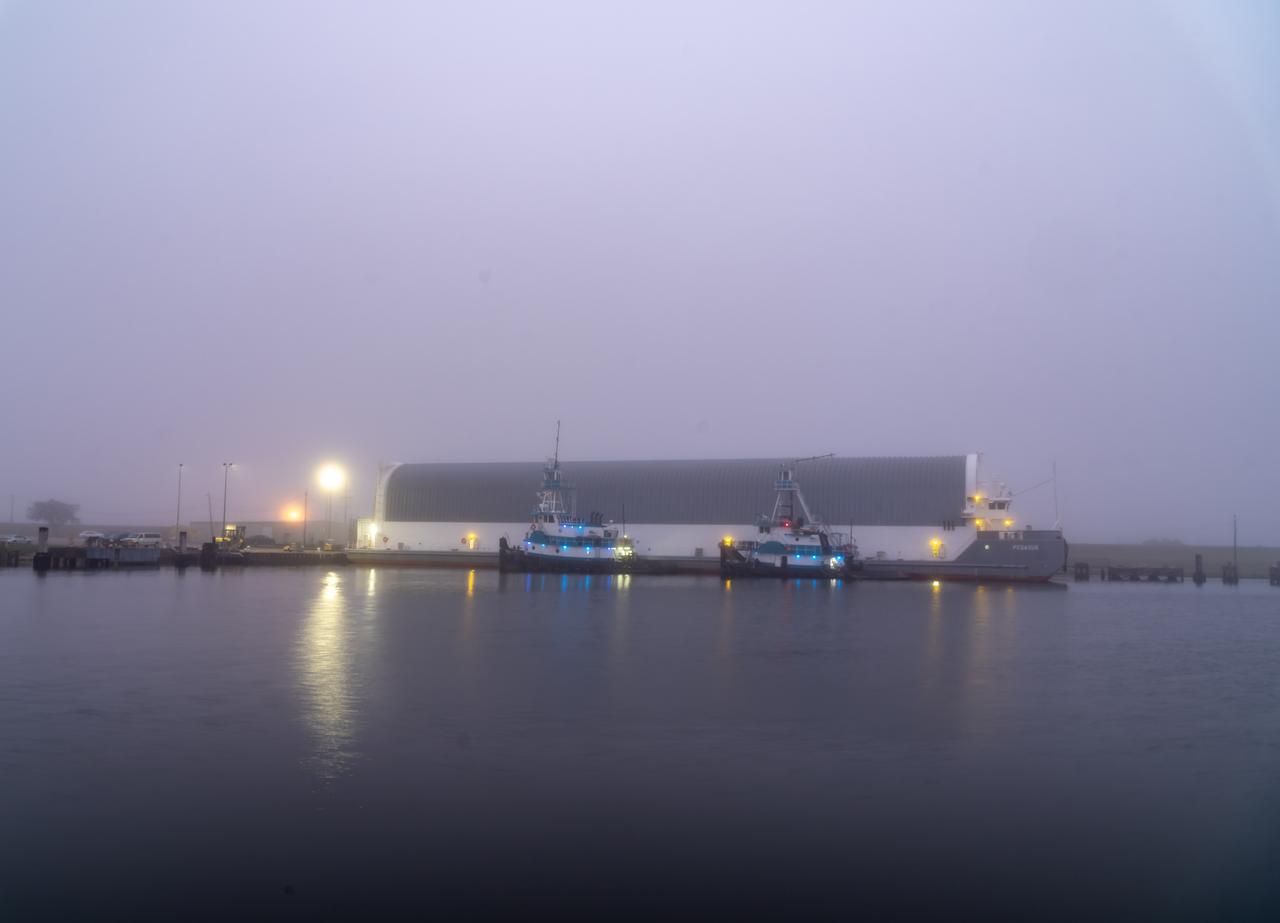
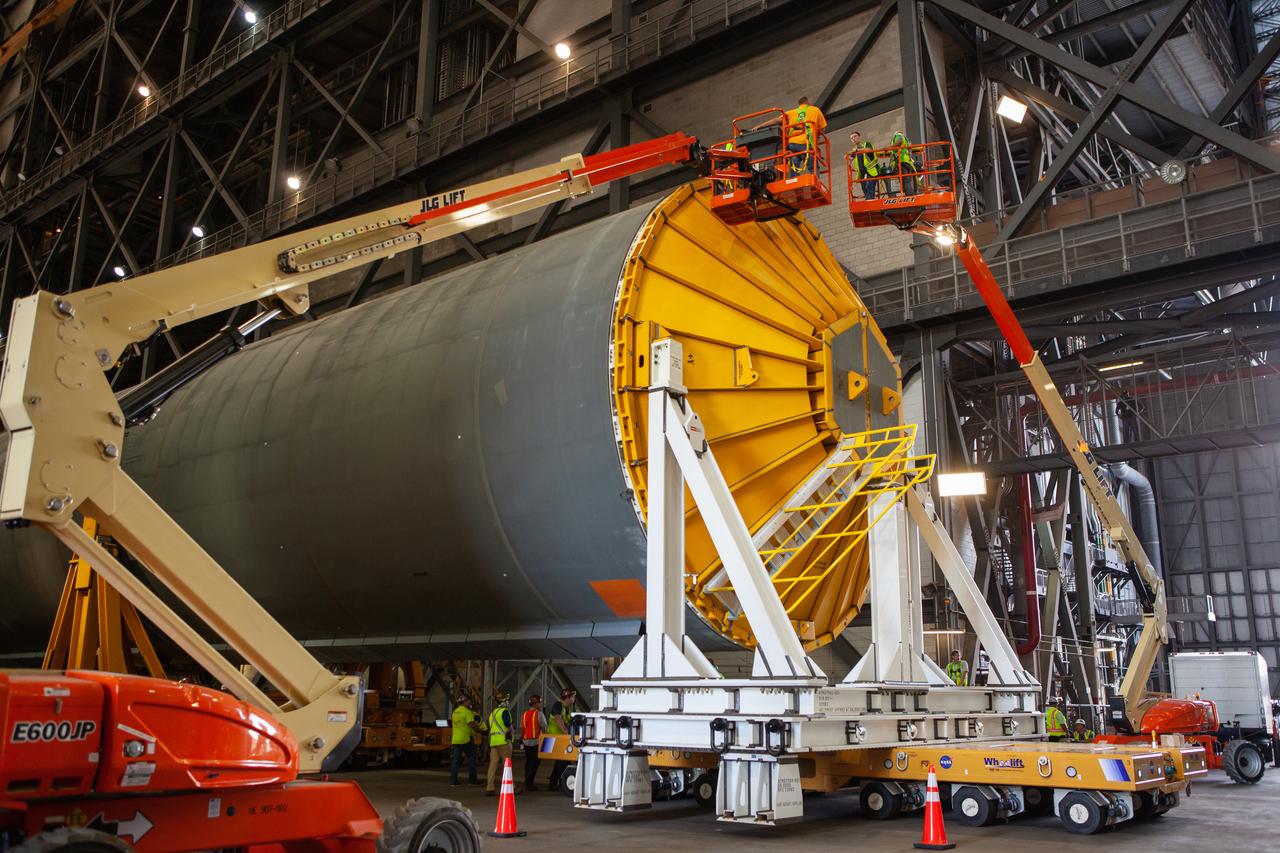
Teams at NASA’s Michoud Assembly Facility in New Orleans move the engine section flight hardware to the agency’s Pegasus barge Sunday, Dec. 4. The barge will ferry the engine section of NASA’s Space Launch System (SLS) rocket for Artemis III to the agency’s Kennedy Space Center in Florida. Once there, teams at Kennedy will finish outfitting the engine section, which comprises the tail-end of the rocket’s 212-foot-tall core stage, before integrating it to the rest of the stage. Beginning with production for Artemis III, NASA and core stage lead contractor Boeing will use Michoud, where the SLS core stages are currently manufactured, to produce and outfit the core stage’s five elements, and available space at Kennedy for final assembly and integration.
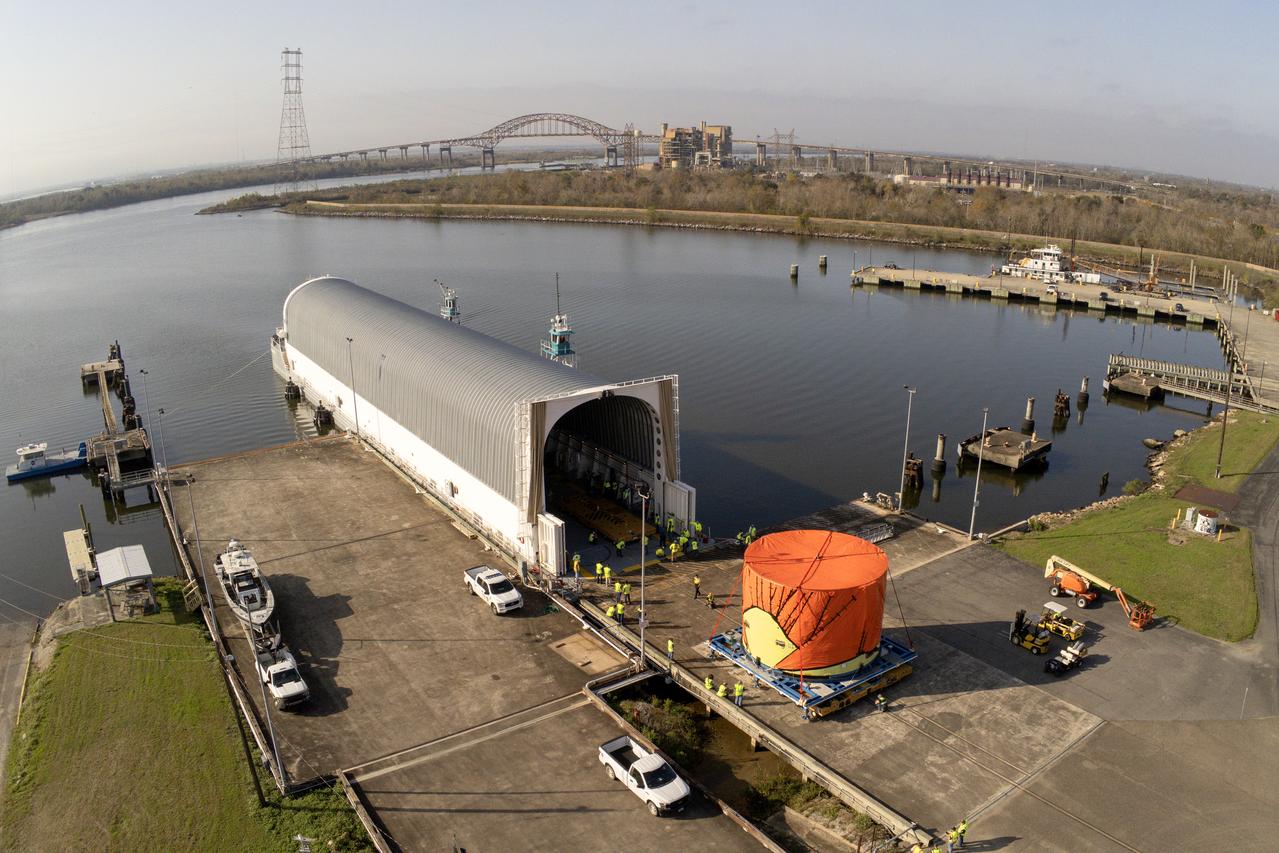
Teams at NASA’s Michoud Assembly Facility in New Orleans move the engine section flight hardware to the agency’s Pegasus barge on Sunday, December 4, 2022. The barge will ferry the engine section of NASA’s Space Launch System (SLS) rocket for Artemis III to the agency’s Kennedy Space Center in Florida. Once there, teams at Kennedy will finish outfitting the engine section, which comprises the tail-end of the rocket’s 212-foot-tall core stage, before integrating it to the rest of the stage. Beginning with production for Artemis III, NASA and core stage lead contractor Boeing will use Michoud, where the SLS core stages are currently manufactured, to produce and outfit the core stage’s five elements, and available space at Kennedy for final assembly and integration. Image credit: NASA/Michael DeMocker
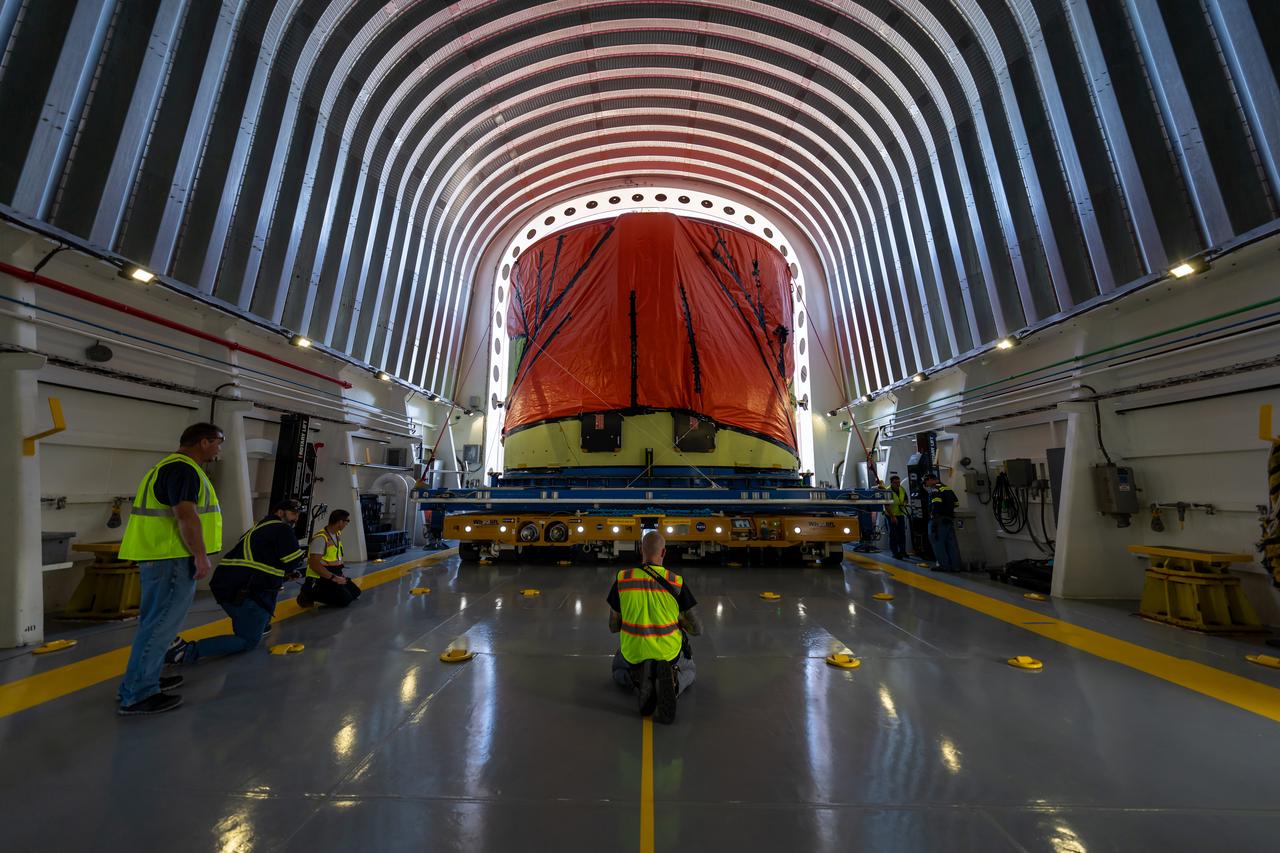
Teams at NASA’s Michoud Assembly Facility in New Orleans move the engine section flight hardware to the agency’s Pegasus barge Sunday, Dec. 4. The barge will ferry the engine section of NASA’s Space Launch System (SLS) rocket for Artemis III to the agency’s Kennedy Space Center in Florida. Once there, teams at Kennedy will finish outfitting the engine section, which comprises the tail-end of the rocket’s 212-foot-tall core stage, before integrating it to the rest of the stage. Beginning with production for Artemis III, NASA and core stage lead contractor Boeing will use Michoud, where the SLS core stages are currently manufactured, to produce and outfit the core stage’s five elements, and available space at Kennedy for final assembly and integration.
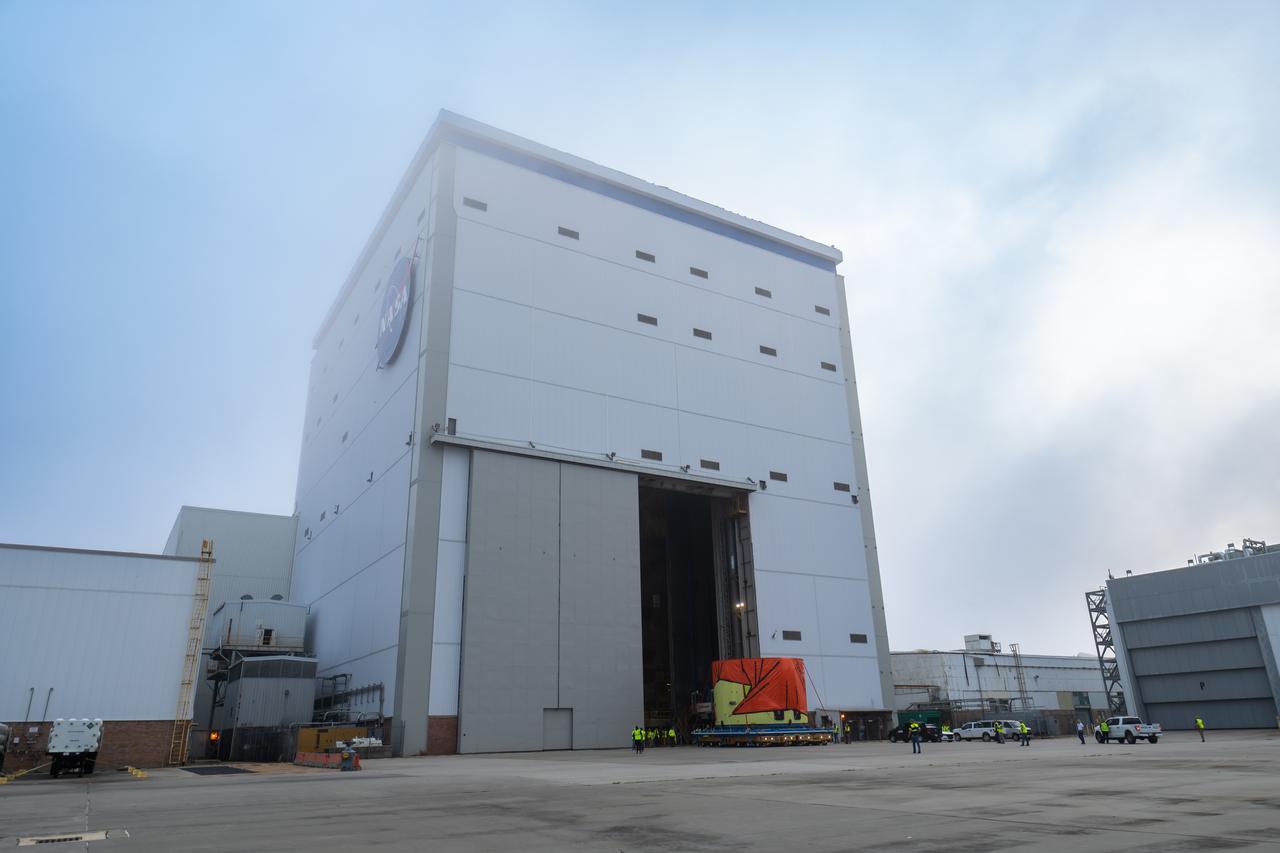
Teams at NASA’s Michoud Assembly Facility in New Orleans move the engine section flight hardware to the agency’s Pegasus barge Sunday, Dec. 4. The barge will ferry the engine section of NASA’s Space Launch System (SLS) rocket for Artemis III to the agency’s Kennedy Space Center in Florida. Once there, teams at Kennedy will finish outfitting the engine section, which comprises the tail-end of the rocket’s 212-foot-tall core stage, before integrating it to the rest of the stage. Beginning with production for Artemis III, NASA and core stage lead contractor Boeing will use Michoud, where the SLS core stages are currently manufactured, to produce and outfit the core stage’s five elements, and available space at Kennedy for final assembly and integration.
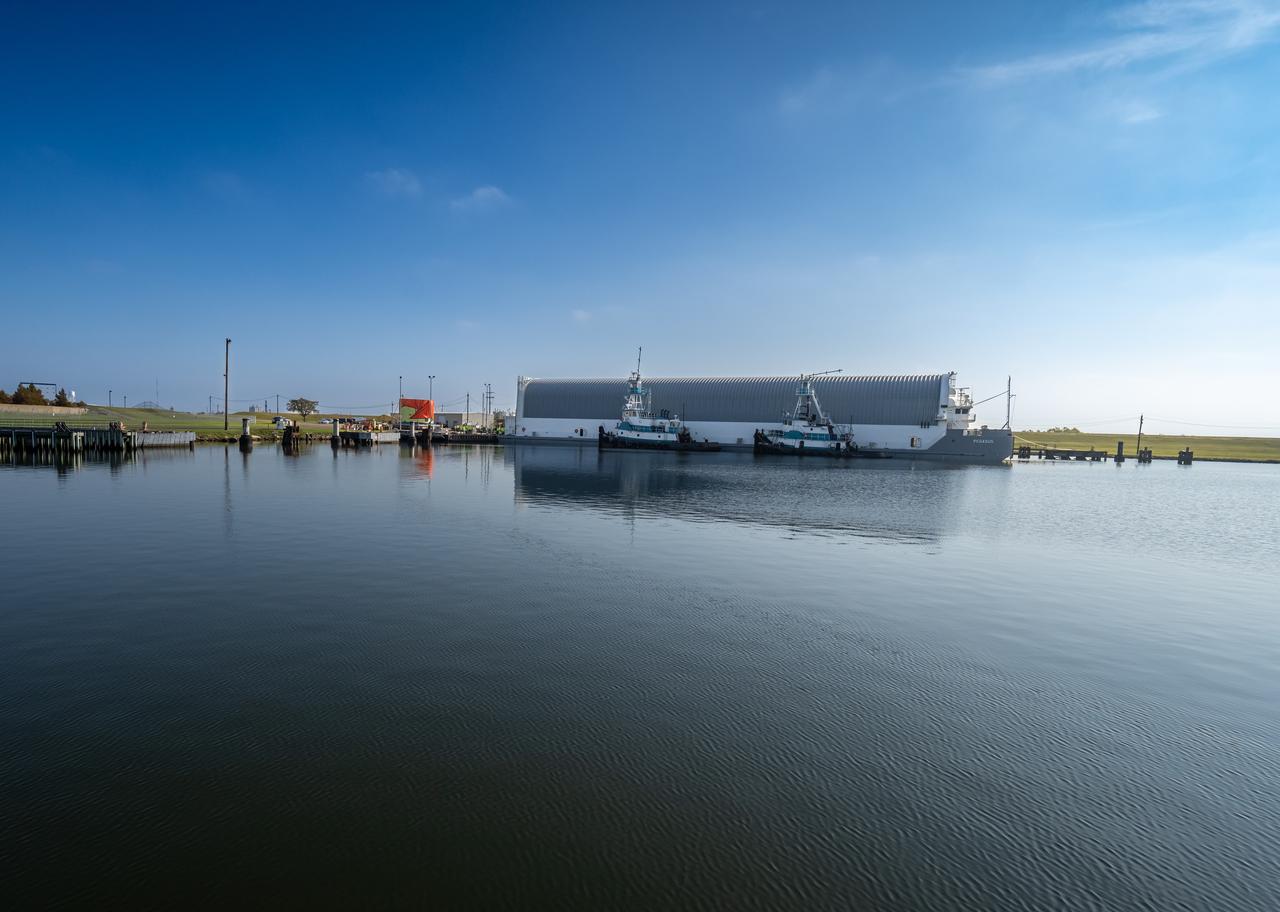
Teams at NASA’s Michoud Assembly Facility in New Orleans move the engine section flight hardware to the agency’s Pegasus barge Sunday, Dec. 4. The barge will ferry the engine section of NASA’s Space Launch System (SLS) rocket for Artemis III to the agency’s Kennedy Space Center in Florida. Once there, teams at Kennedy will finish outfitting the engine section, which comprises the tail-end of the rocket’s 212-foot-tall core stage, before integrating it to the rest of the stage. Beginning with production for Artemis III, NASA and core stage lead contractor Boeing will use Michoud, where the SLS core stages are currently manufactured, to produce and outfit the core stage’s five elements, and available space at Kennedy for final assembly and integration.
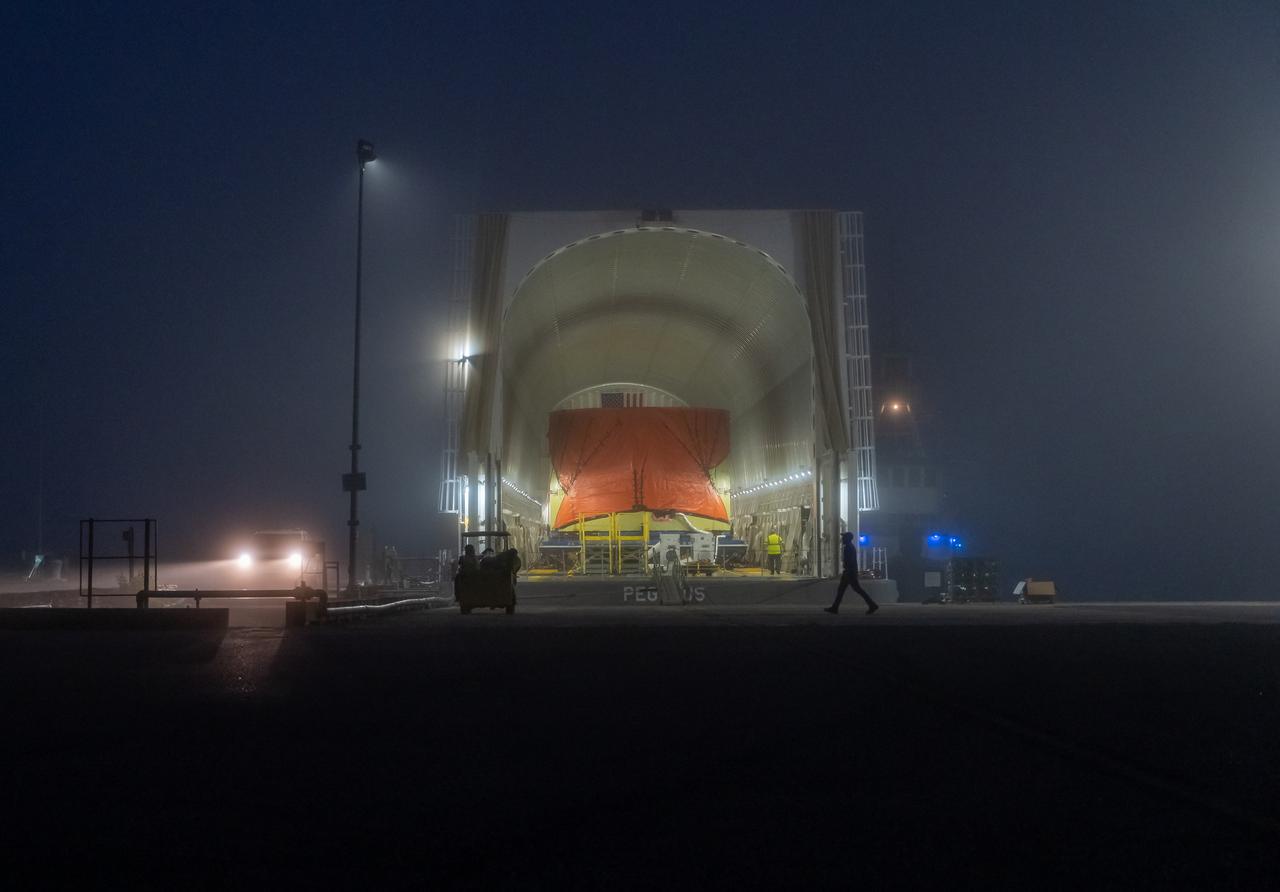
Teams at NASA’s Michoud Assembly Facility in New Orleans move the engine section flight hardware to the agency’s Pegasus barge Sunday, Dec. 4. The barge will ferry the engine section of NASA’s Space Launch System (SLS) rocket for Artemis III to the agency’s Kennedy Space Center in Florida. Once there, teams at Kennedy will finish outfitting the engine section, which comprises the tail-end of the rocket’s 212-foot-tall core stage, before integrating it to the rest of the stage. Beginning with production for Artemis III, NASA and core stage lead contractor Boeing will use Michoud, where the SLS core stages are currently manufactured, to produce and outfit the core stage’s five elements, and available space at Kennedy for final assembly and integration.
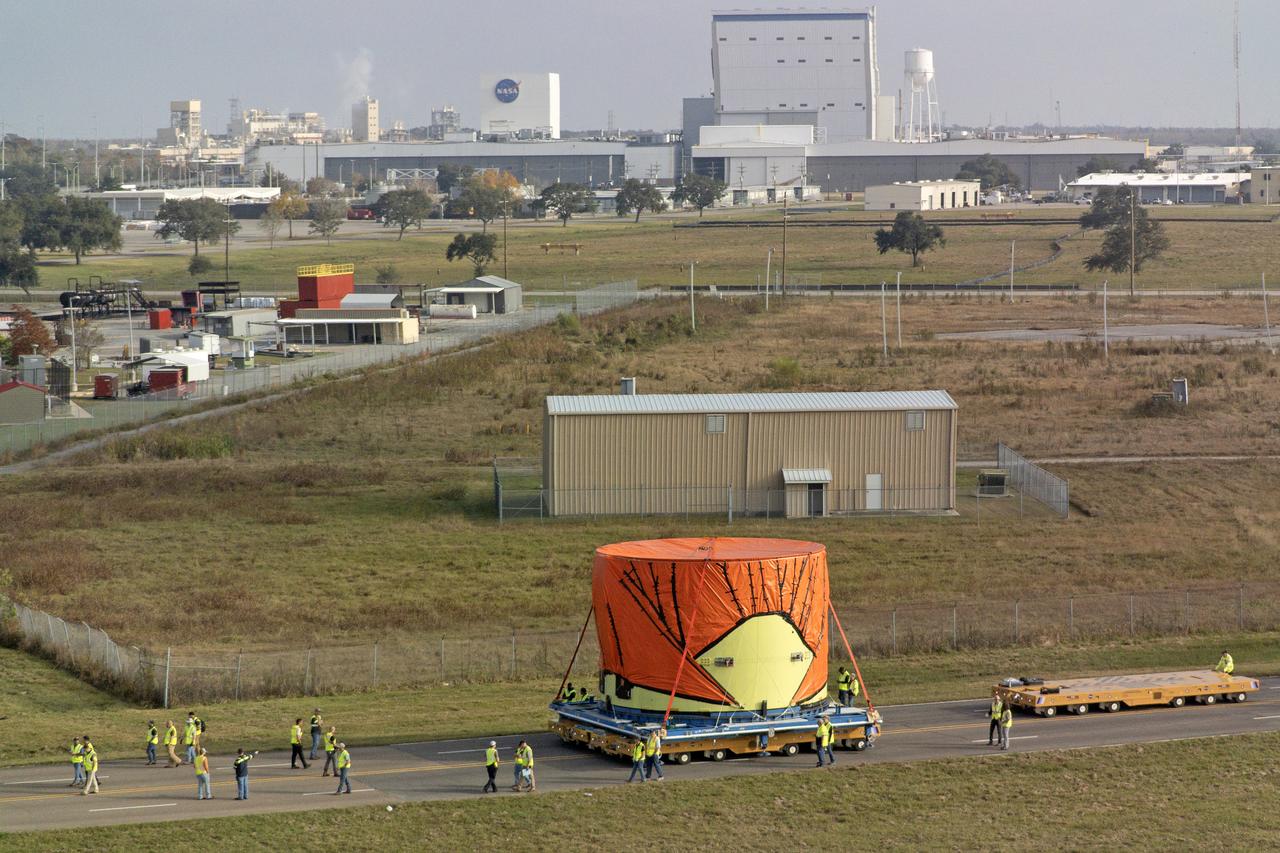
Teams at NASA’s Michoud Assembly Facility in New Orleans move the engine section flight hardware to the agency’s Pegasus barge on Sunday, December 4, 2022. The barge will ferry the engine section of NASA’s Space Launch System (SLS) rocket for Artemis III to the agency’s Kennedy Space Center in Florida. Once there, teams at Kennedy will finish outfitting the engine section, which comprises the tail-end of the rocket’s 212-foot-tall core stage, before integrating it to the rest of the stage. Beginning with production for Artemis III, NASA and core stage lead contractor Boeing will use Michoud, where the SLS core stages are currently manufactured, to produce and outfit the core stage’s five elements, and available space at Kennedy for final assembly and integration. Image credit: NASA/Michael DeMocker
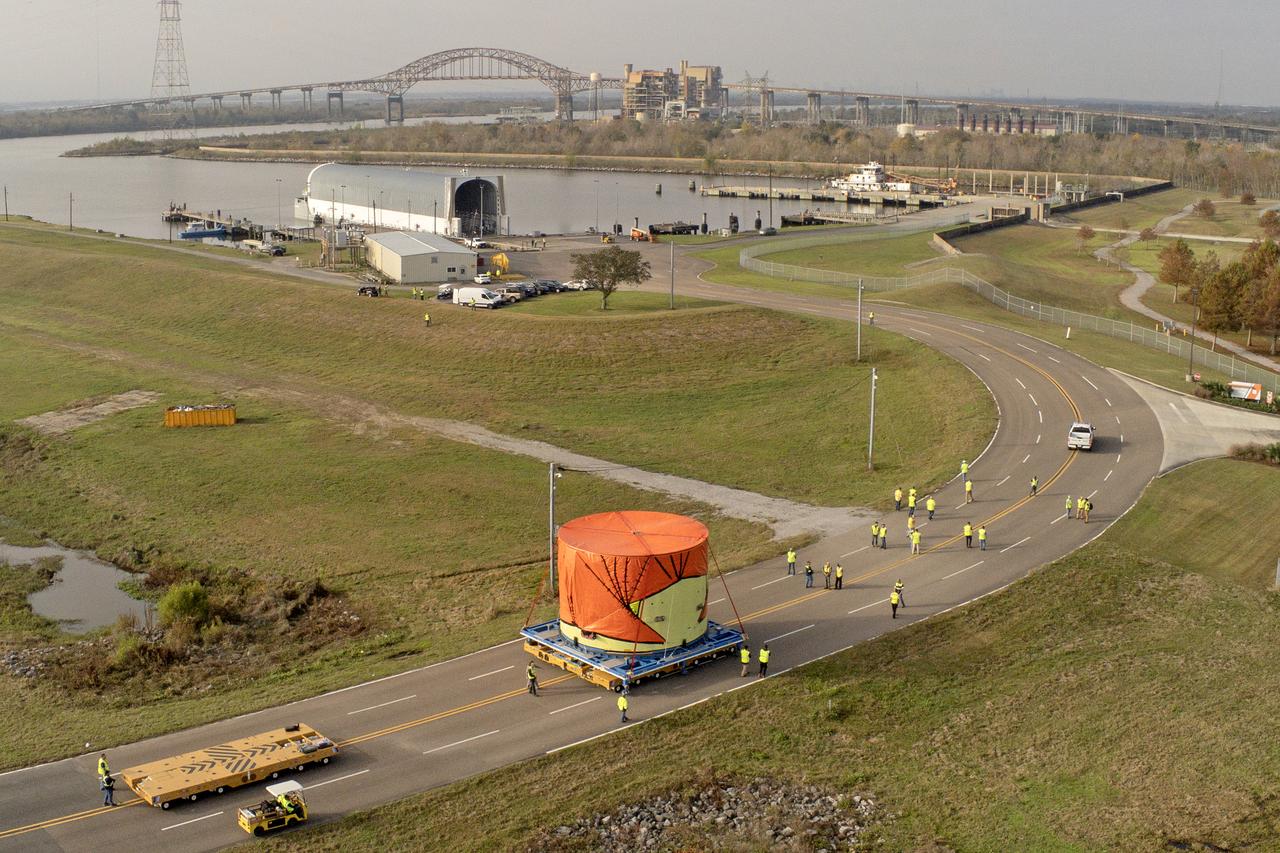
Teams at NASA’s Michoud Assembly Facility in New Orleans move the engine section flight hardware to the agency’s Pegasus barge on Sunday, December 4, 2022. The barge will ferry the engine section of NASA’s Space Launch System (SLS) rocket for Artemis III to the agency’s Kennedy Space Center in Florida. Once there, teams at Kennedy will finish outfitting the engine section, which comprises the tail-end of the rocket’s 212-foot-tall core stage, before integrating it to the rest of the stage. Beginning with production for Artemis III, NASA and core stage lead contractor Boeing will use Michoud, where the SLS core stages are currently manufactured, to produce and outfit the core stage’s five elements, and available space at Kennedy for final assembly and integration. Image credit: NASA/Michael DeMocker

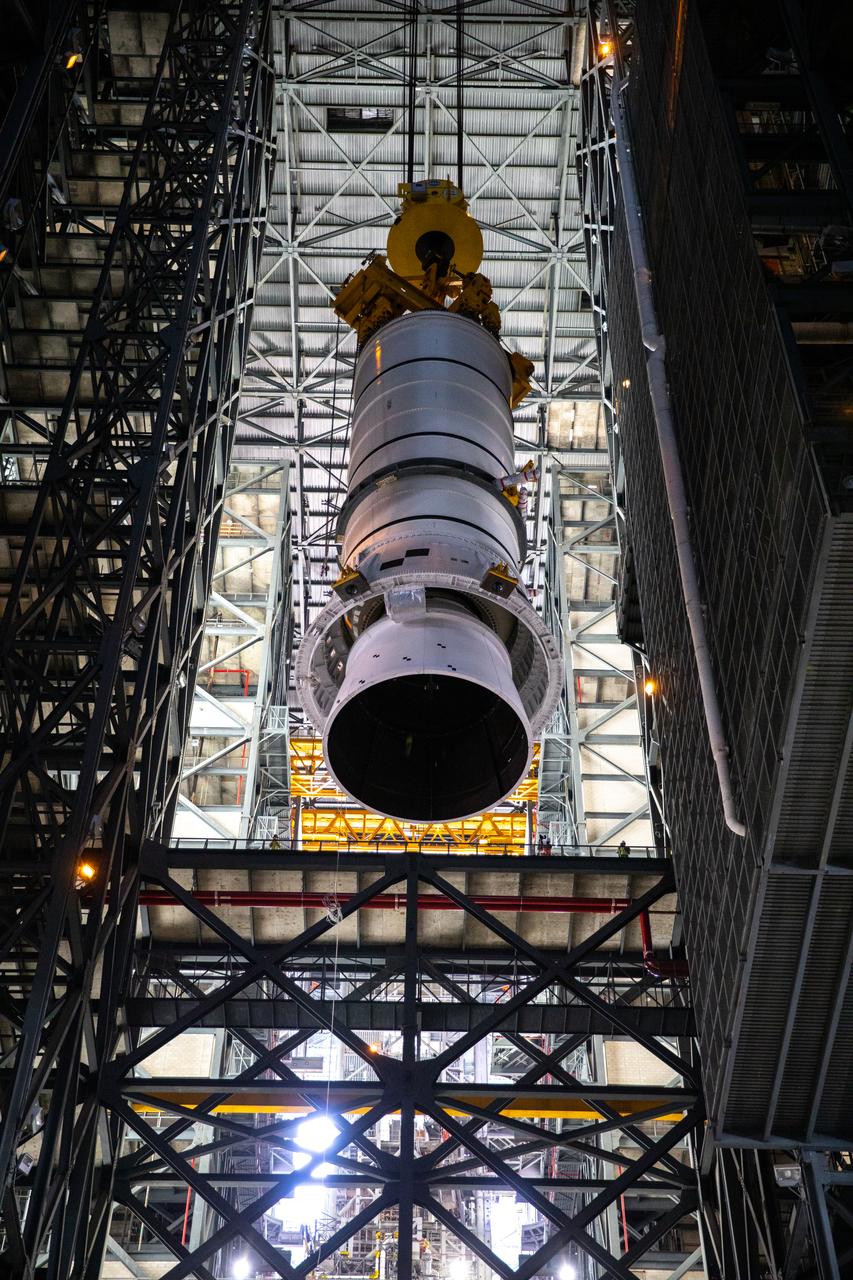
Technicians at NASA’s Kennedy Space Center in Florida complete operations of lifting and lowering the agency’s Artemis III SLS (Space Launch System) core stage into High Bay 2 in the Vehicle Assembly Building at NASA Kennedy on Monday, May 4, 2026. Using a one-of-a kind lifting beam designed to lift the core stage from the transfer aisle to High Bay 2 for additional assembly, teams will connect the core stage to the engine section. This marks the first time core stage assembly operations being conducted at the spaceport for future Artemis missions.
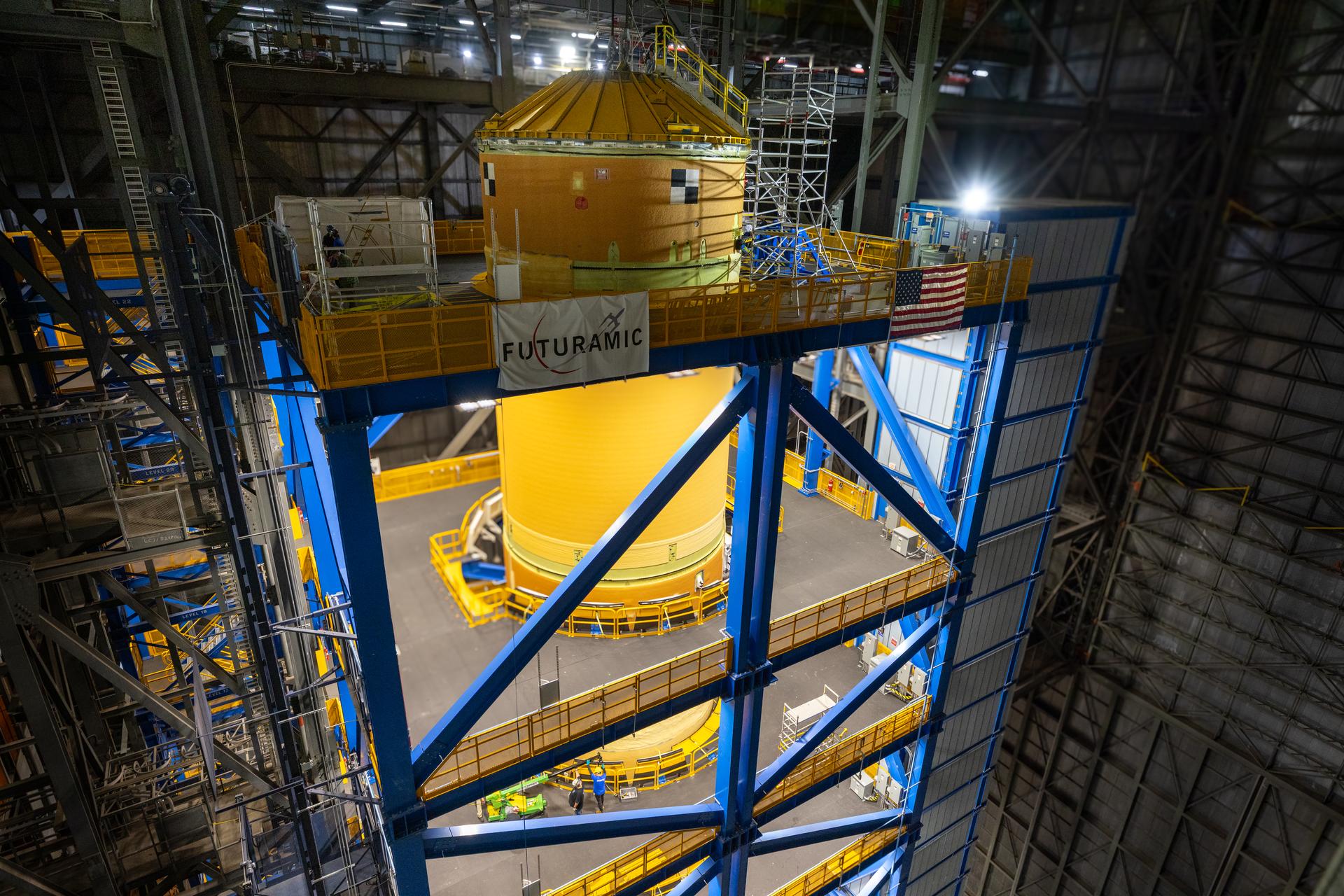
Technicians at NASA’s Kennedy Space Center in Florida complete operations of lifting and lowering the agency’s Artemis III SLS (Space Launch System) core stage into High Bay 2 in the Vehicle Assembly Building at NASA Kennedy on Monday, May 4, 2026. Using a one-of-a kind lifting beam designed to lift the core stage from the transfer aisle to High Bay 2 for additional assembly, teams will connect the core stage to the engine section. This marks the first time core stage assembly operations being conducted at the spaceport for future Artemis missions.

Technicians at NASA’s Kennedy Space Center in Florida complete operations of lifting and lowering the agency’s Artemis III SLS (Space Launch System) core stage into High Bay 2 in the Vehicle Assembly Building at NASA Kennedy on Monday, May 4, 2026. Using a one-of-a kind lifting beam designed to lift the core stage from the transfer aisle to High Bay 2 for additional assembly, teams will connect the core stage to the engine section. This marks the first time core stage assembly operations being conducted at the spaceport for future Artemis missions.
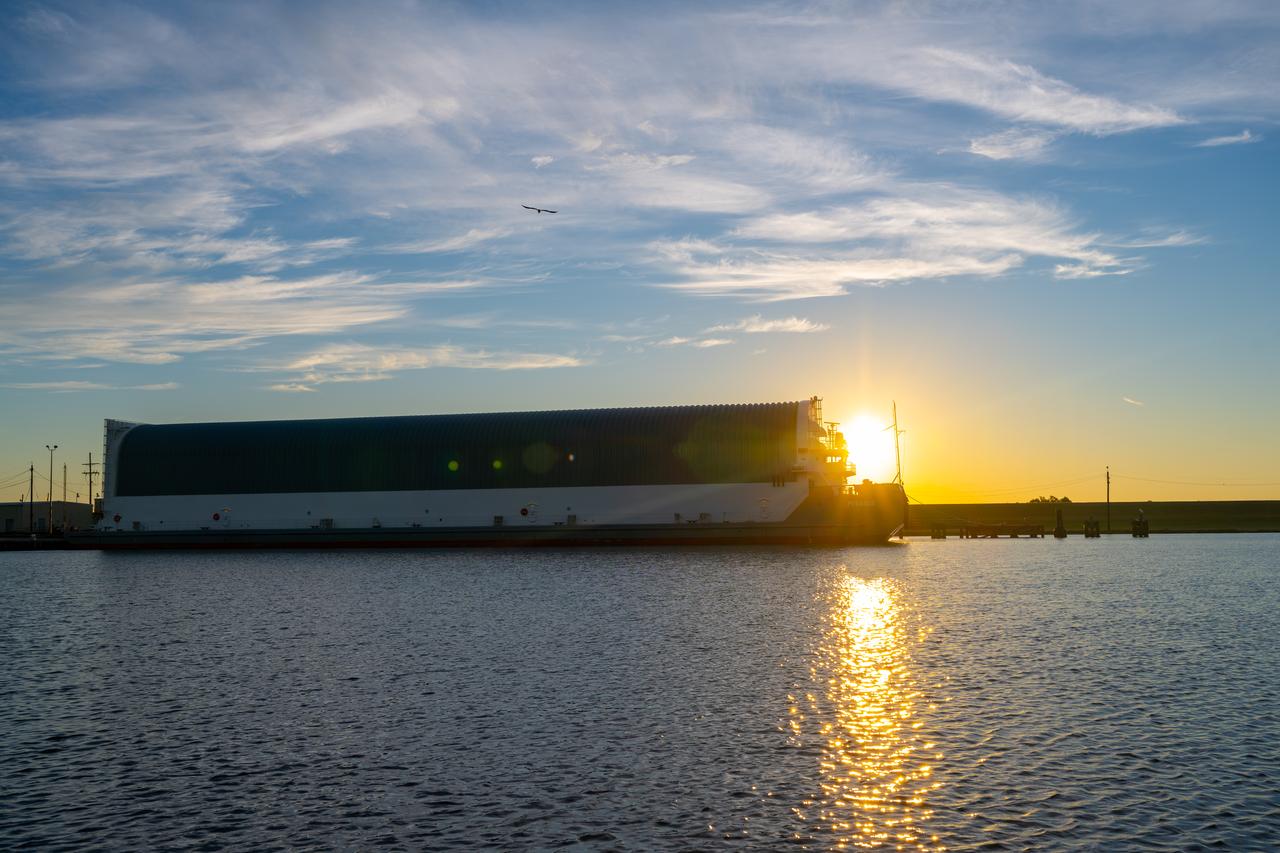
Teams at NASA’s Michoud Assembly Facility in New Orleans move the engine section flight hardware to the agency’s Pegasus barge Sunday, Dec. 4. The barge will ferry the engine section of NASA’s Space Launch System (SLS) rocket for Artemis III to the agency’s Kennedy Space Center in Florida. Once there, teams at Kennedy will finish outfitting the engine section, which comprises the tail-end of the rocket’s 212-foot-tall core stage, before integrating it to the rest of the stage. Beginning with production for Artemis III, NASA and core stage lead contractor Boeing will use Michoud, where the SLS core stages are currently manufactured, to produce and outfit the core stage’s five elements, and available space at Kennedy for final assembly and integration. Photo Credit: (NASA/Jared Lyons)
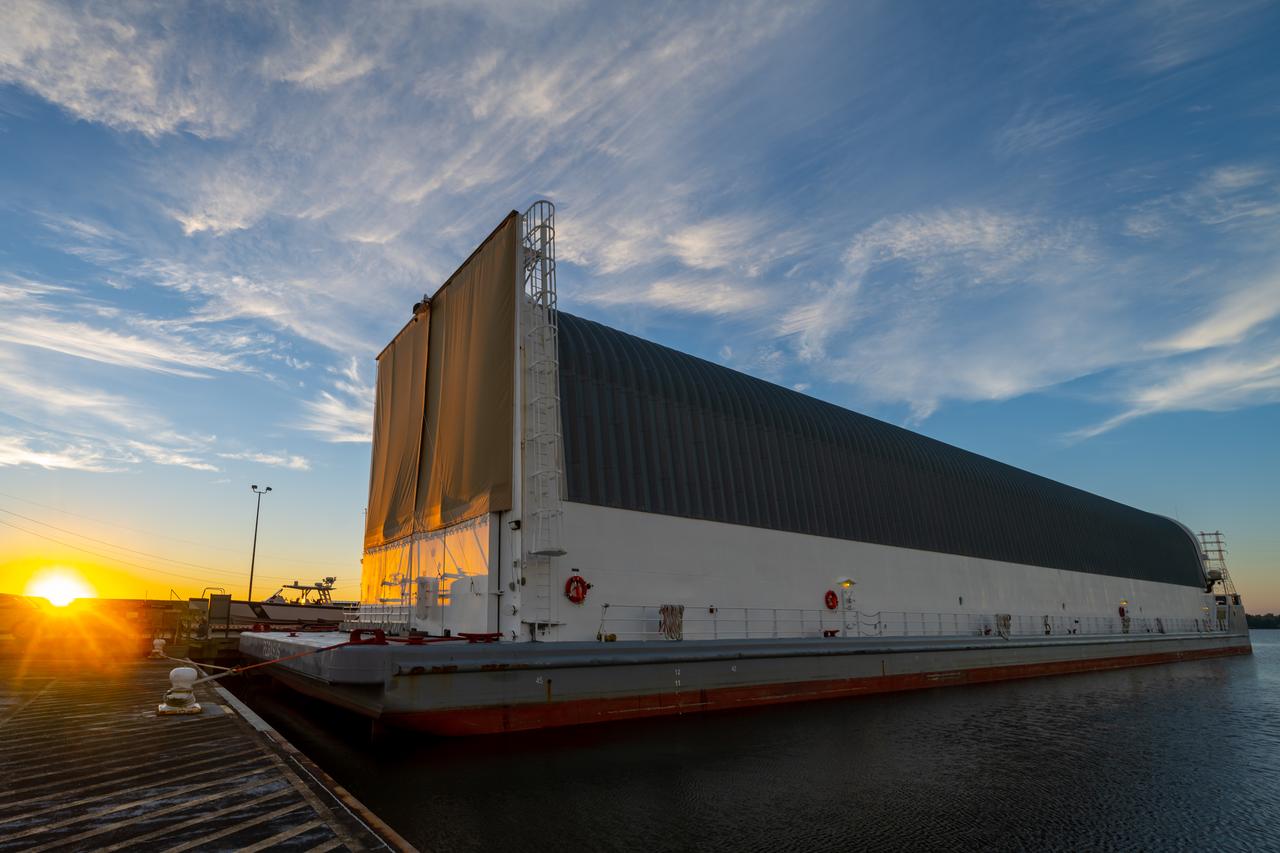
Teams at NASA’s Michoud Assembly Facility in New Orleans move the engine section flight hardware to the agency’s Pegasus barge Sunday, Dec. 4. The barge will ferry the engine section of NASA’s Space Launch System (SLS) rocket for Artemis III to the agency’s Kennedy Space Center in Florida. Once there, teams at Kennedy will finish outfitting the engine section, which comprises the tail-end of the rocket’s 212-foot-tall core stage, before integrating it to the rest of the stage. Beginning with production for Artemis III, NASA and core stage lead contractor Boeing will use Michoud, where the SLS core stages are currently manufactured, to produce and outfit the core stage’s five elements, and available space at Kennedy for final assembly and integration. Photo Credit: (NASA/Jared Lyons)
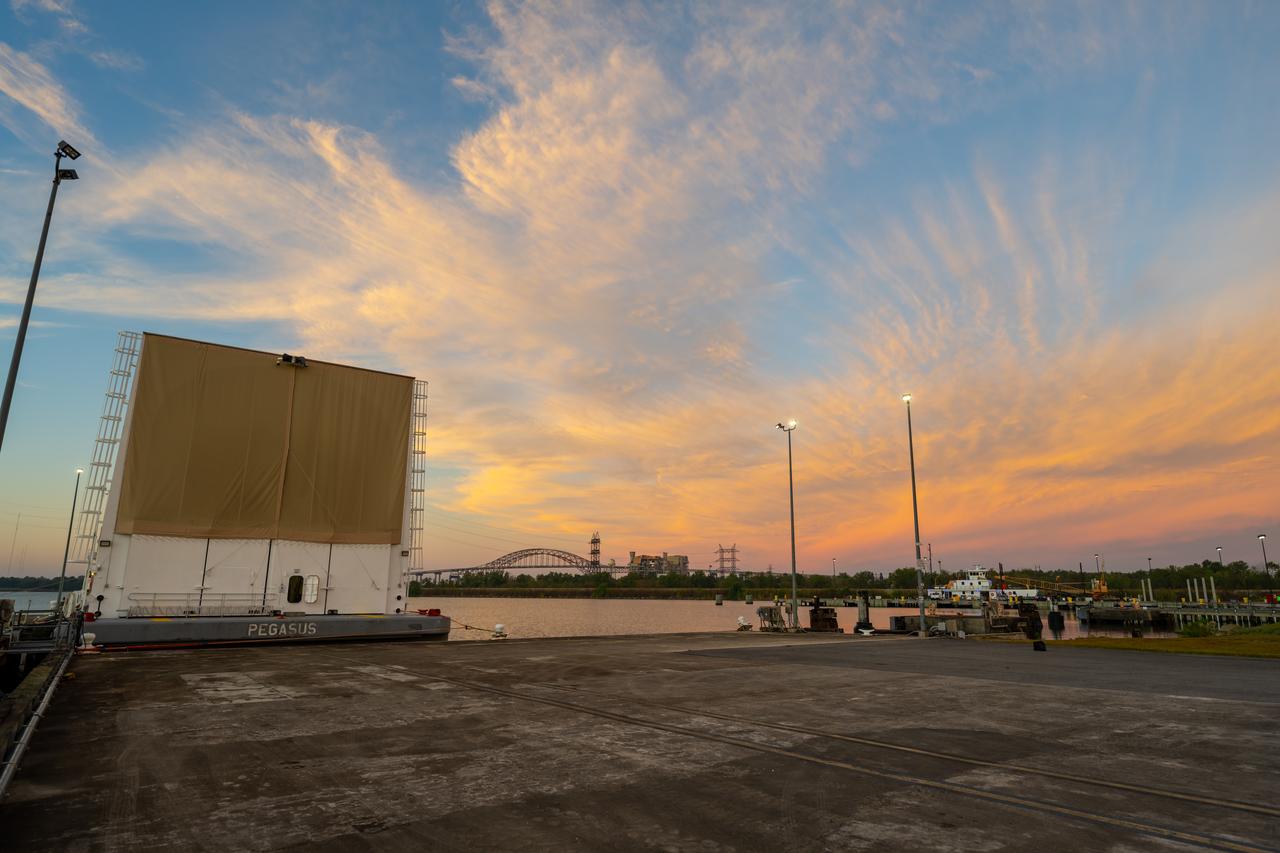
Teams at NASA’s Michoud Assembly Facility in New Orleans move the engine section flight hardware to the agency’s Pegasus barge Sunday, Dec. 4. The barge will ferry the engine section of NASA’s Space Launch System (SLS) rocket for Artemis III to the agency’s Kennedy Space Center in Florida. Once there, teams at Kennedy will finish outfitting the engine section, which comprises the tail-end of the rocket’s 212-foot-tall core stage, before integrating it to the rest of the stage. Beginning with production for Artemis III, NASA and core stage lead contractor Boeing will use Michoud, where the SLS core stages are currently manufactured, to produce and outfit the core stage’s five elements, and available space at Kennedy for final assembly and integration. Photo Credit: (NASA/Jared Lyons)
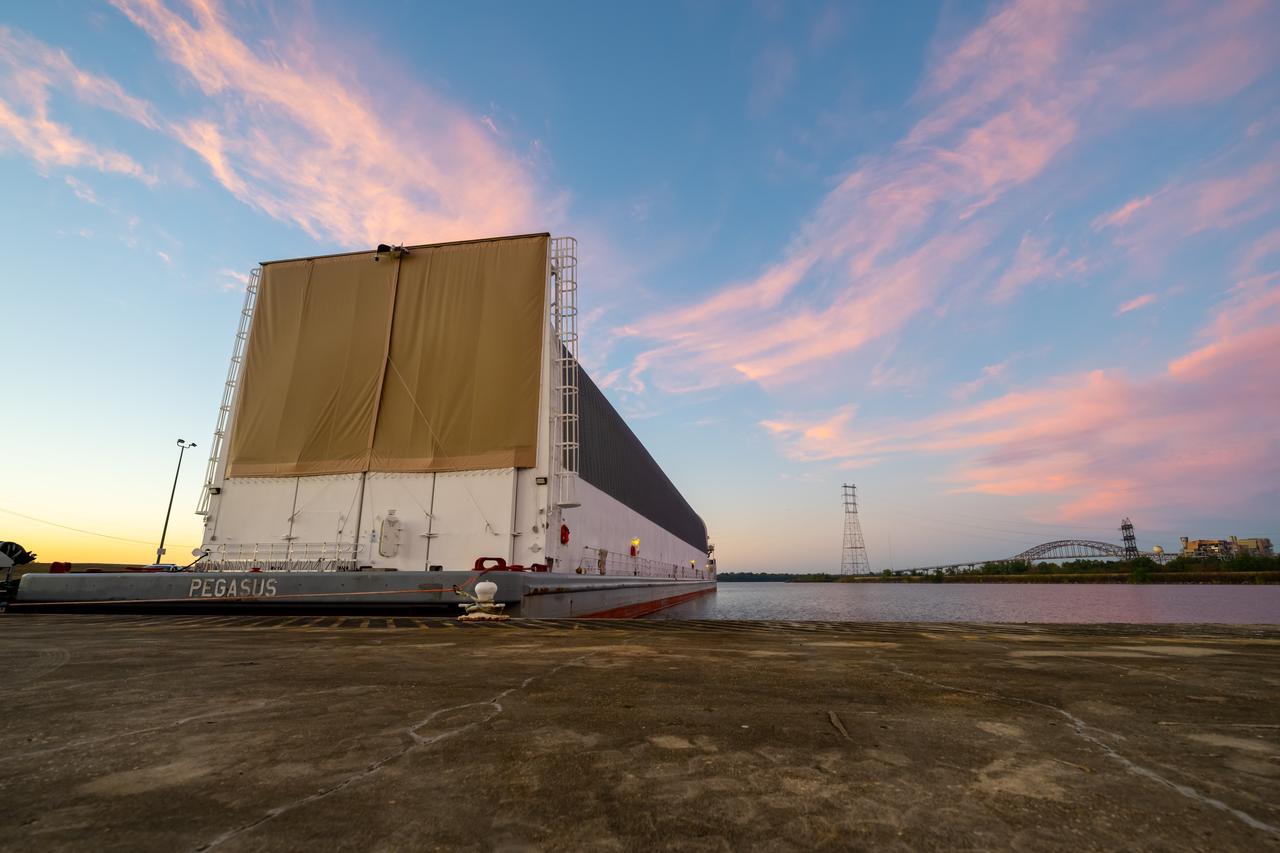
Teams at NASA’s Michoud Assembly Facility in New Orleans move the engine section flight hardware to the agency’s Pegasus barge Sunday, Dec. 4. The barge will ferry the engine section of NASA’s Space Launch System (SLS) rocket for Artemis III to the agency’s Kennedy Space Center in Florida. Once there, teams at Kennedy will finish outfitting the engine section, which comprises the tail-end of the rocket’s 212-foot-tall core stage, before integrating it to the rest of the stage. Beginning with production for Artemis III, NASA and core stage lead contractor Boeing will use Michoud, where the SLS core stages are currently manufactured, to produce and outfit the core stage’s five elements, and available space at Kennedy for final assembly and integration. Photo Credit: (NASA/Jared Lyons)
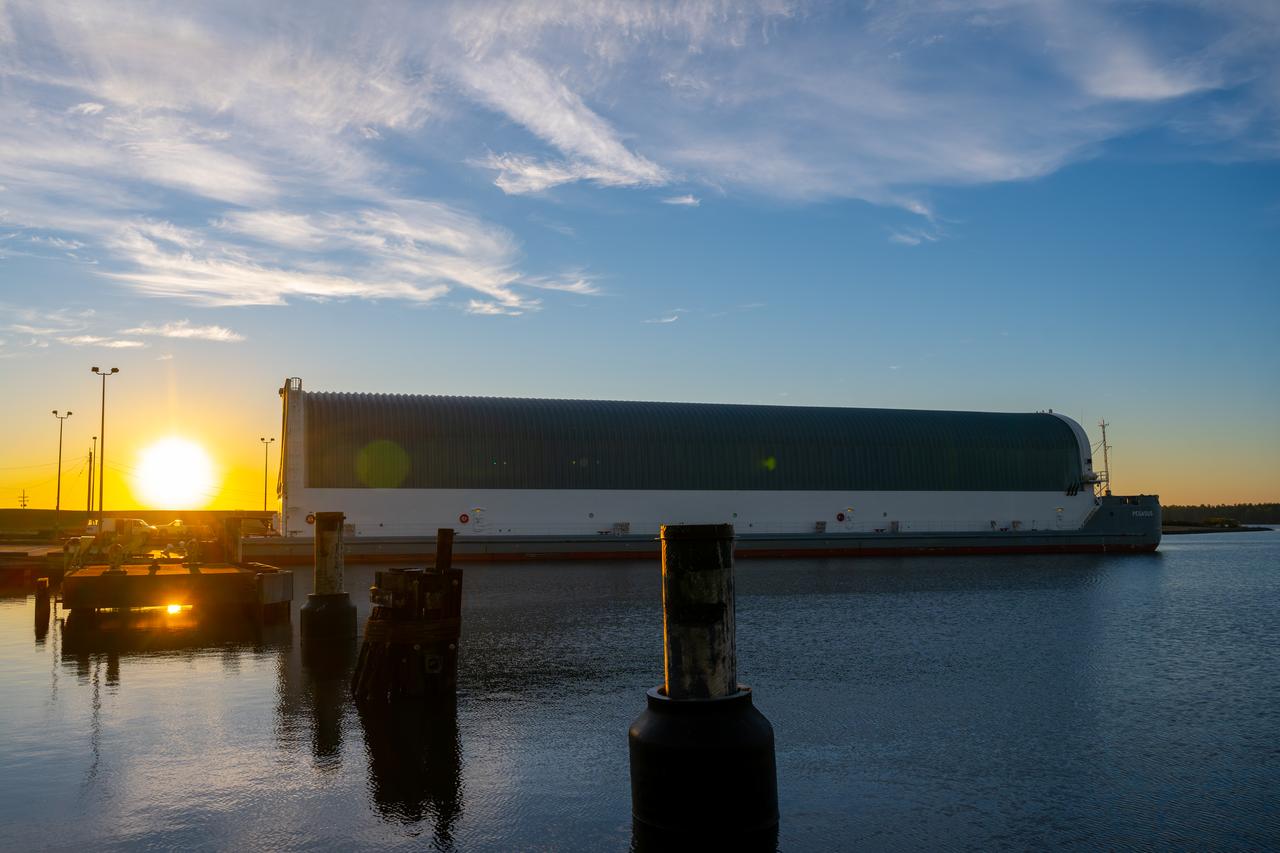
Teams at NASA’s Michoud Assembly Facility in New Orleans move the engine section flight hardware to the agency’s Pegasus barge Sunday, Dec. 4. The barge will ferry the engine section of NASA’s Space Launch System (SLS) rocket for Artemis III to the agency’s Kennedy Space Center in Florida. Once there, teams at Kennedy will finish outfitting the engine section, which comprises the tail-end of the rocket’s 212-foot-tall core stage, before integrating it to the rest of the stage. Beginning with production for Artemis III, NASA and core stage lead contractor Boeing will use Michoud, where the SLS core stages are currently manufactured, to produce and outfit the core stage’s five elements, and available space at Kennedy for final assembly and integration. Photo Credit: (NASA/Jared Lyons)
The Space Launch System (SLS) core stage is seen in the transfer aisle of the Vehicle Assembly Building (VAB) at NASA’s Kennedy Space Center in Florida on June 4, 2021. Teams with the agency’s Exploration Ground Systems and contractor Jacobs are preparing to lift the 188,000-pound core stage and place it on the mobile launcher in between the two solid rocket boosters in High Bay 3 of the VAB. The core stage alone will provide more than 2 million pounds of thrust at launch, and coupled with the boosters, will provide more than 8.8 million pounds of thrust to launch the Artemis I mission. The first in an increasingly complex series of missions, Artemis I will test SLS and the Orion spacecraft as an integrated system ahead of crewed flights to the Moon.
The Space Launch System (SLS) core stage is seen in the transfer aisle of the Vehicle Assembly Building (VAB) at NASA’s Kennedy Space Center in Florida on June 4, 2021. Teams with the agency’s Exploration Ground Systems and contractor Jacobs are preparing to lift the 188,000-pound core stage and place it on the mobile launcher in between the two solid rocket boosters in High Bay 3 of the VAB. The core stage alone will provide more than 2 million pounds of thrust at launch, and coupled with the boosters, will provide more than 8.8 million pounds of thrust to launch the Artemis I mission. The first in an increasingly complex series of missions, Artemis I will test SLS and the Orion spacecraft as an integrated system ahead of crewed flights to the Moon.
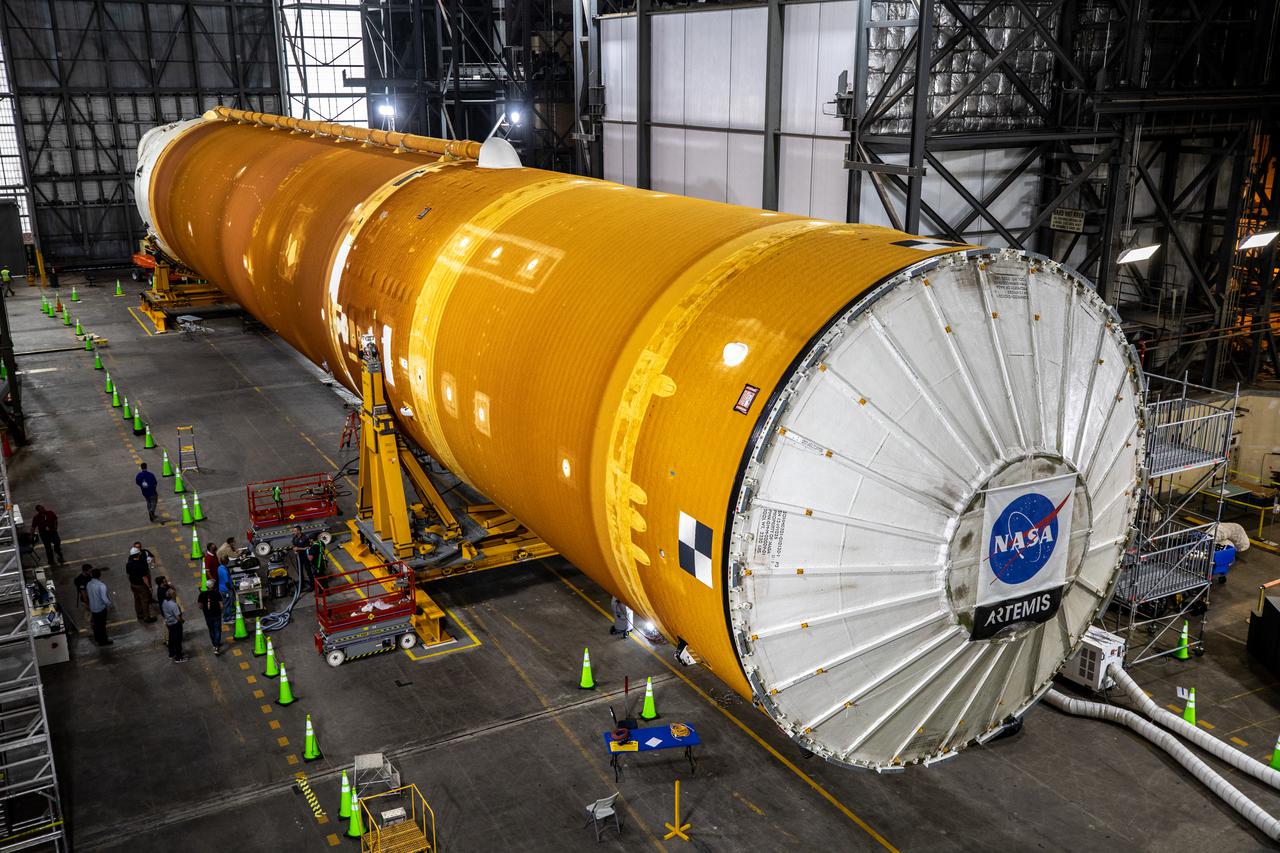
The Space Launch System (SLS) core stage is seen in the transfer aisle of the Vehicle Assembly Building (VAB) at NASA’s Kennedy Space Center in Florida on June 4, 2021. Teams with the agency’s Exploration Ground Systems and contractor Jacobs are preparing to lift the 188,000-pound core stage and place it on the mobile launcher in between the two solid rocket boosters in High Bay 3 of the VAB. The core stage alone will provide more than 2 million pounds of thrust at launch, and coupled with the boosters, will provide more than 8.8 million pounds of thrust to launch the Artemis I mission. The first in an increasingly complex series of missions, Artemis I will test SLS and the Orion spacecraft as an integrated system ahead of crewed flights to the Moon.
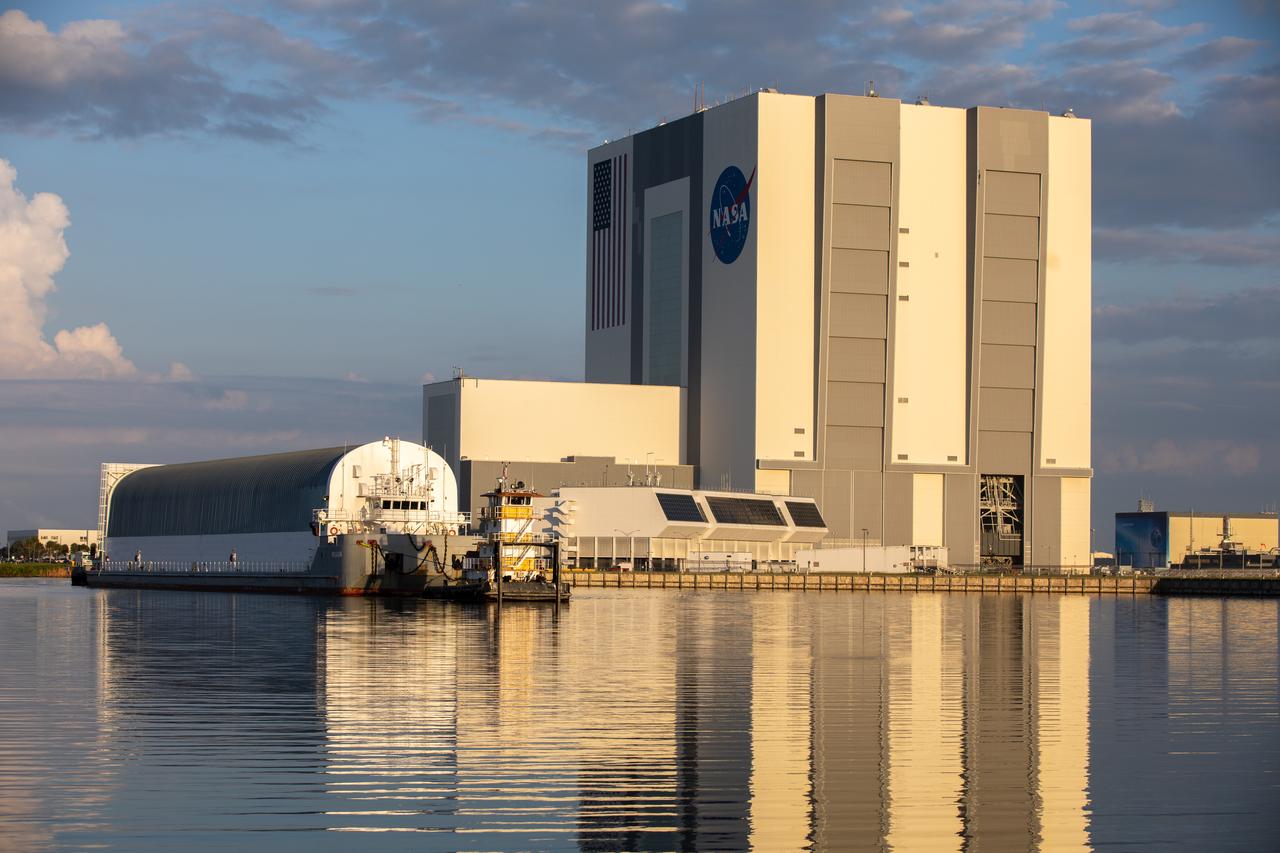
NASA’s Pegasus barge departs from the agency’s Kennedy Space Center in Florida on Aug. 4, 2020, for its trip to NASA’s Michoud Assembly Facility in Louisiana. The Pegasus barge arrived at Kennedy on July 29, delivering the launch vehicle stage adapter (LVSA) for the agency’s Space Launch System (SLS) rocket – the most powerful rocket NASA has ever built, providing the muscle necessary to get to the Moon and eventually to Mars. In the background is the Vehicle Assembly Building, where the LVSA – hardware that will connect the core stage of the rocket to the upper stage – is now undergoing processing. The next time the Pegasus barge returns to Kennedy, it will be carrying the SLS core stage – the final piece of the rocket that needs to be delivered ahead of the Artemis I launch.
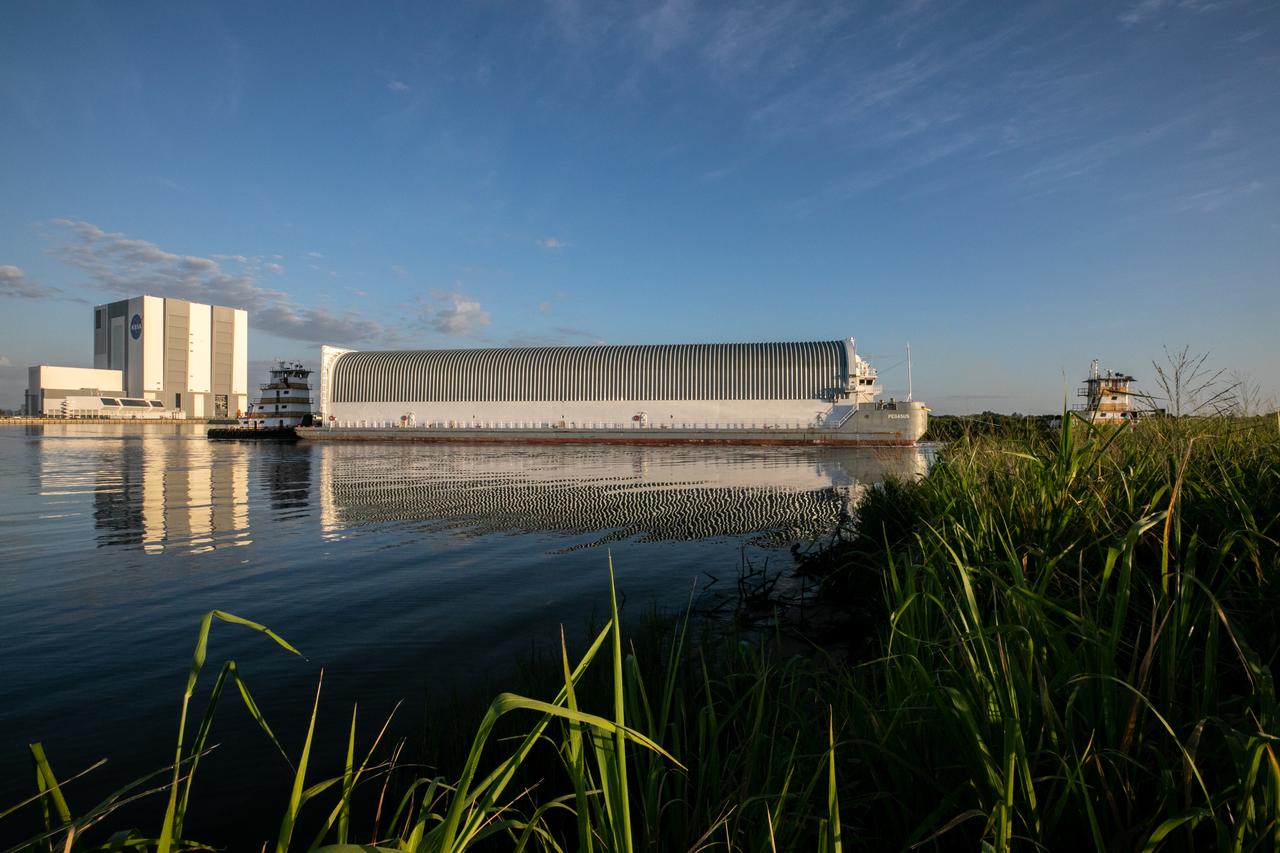
NASA’s Pegasus barge departs from the agency’s Kennedy Space Center in Florida on Aug. 4, 2020, for its trip to NASA’s Michoud Assembly Facility in Louisiana. The Pegasus barge arrived at Kennedy on July 29, delivering the launch vehicle stage adapter (LVSA) for the agency’s Space Launch System (SLS) rocket – the most powerful rocket NASA has ever built, providing the muscle necessary to get to the Moon and eventually to Mars. In the background is the Vehicle Assembly Building, where the LVSA – hardware that will connect the core stage of the rocket to the upper stage – is now undergoing processing. The next time the Pegasus barge returns to Kennedy, it will be carrying the SLS core stage – the final piece of the rocket that needs to be delivered ahead of the Artemis I launch.
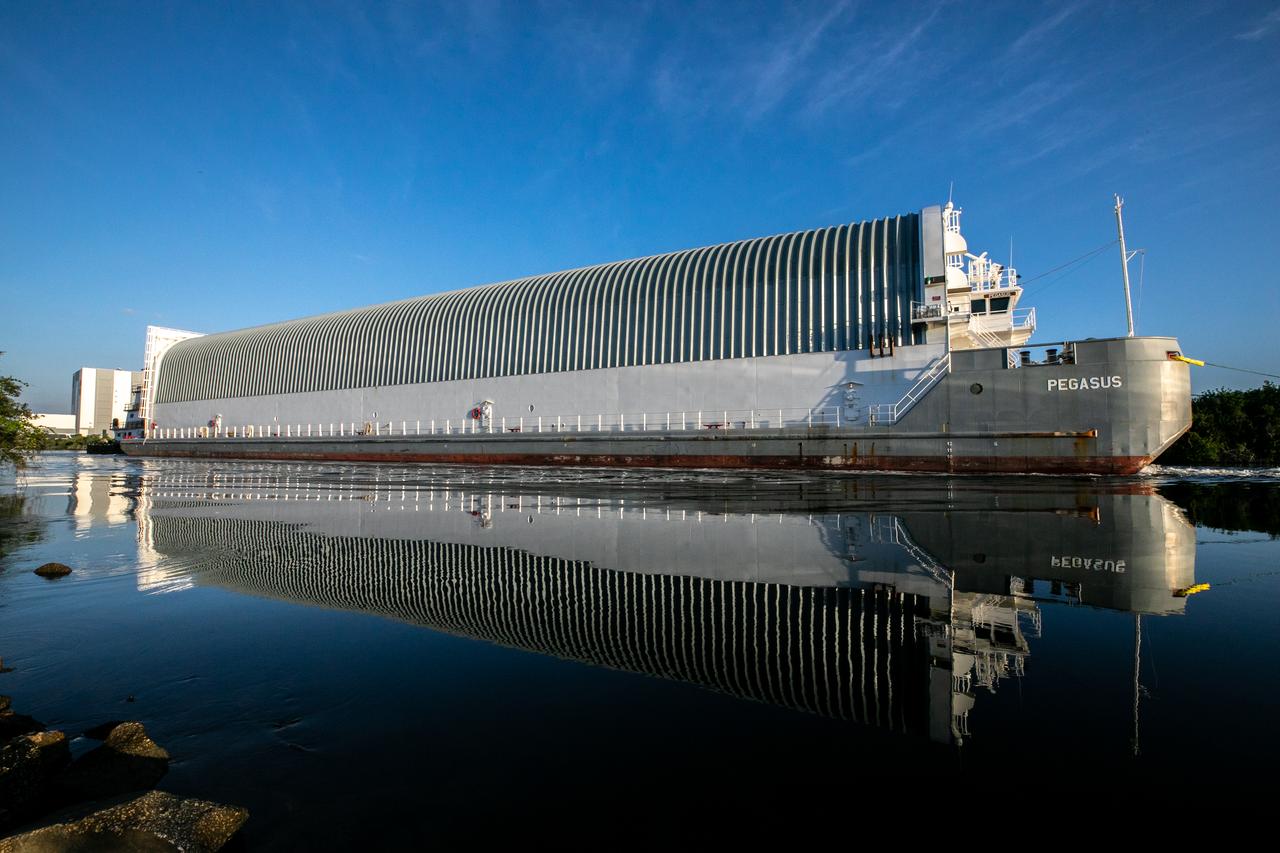
NASA’s Pegasus barge departs from the agency’s Kennedy Space Center in Florida on Aug. 4, 2020, for its trip to NASA’s Michoud Assembly Facility in Louisiana. The Pegasus barge arrived at Kennedy on July 29, delivering the launch vehicle stage adapter (LVSA) for the agency’s Space Launch System (SLS) rocket – the most powerful rocket NASA has ever built, providing the muscle necessary to get to the Moon and eventually to Mars. In the background is the Vehicle Assembly Building, where the LVSA – hardware that will connect the core stage of the rocket to the upper stage – is now undergoing processing. The next time the Pegasus barge returns to Kennedy, it will be carrying the SLS core stage – the final piece of the rocket that needs to be delivered ahead of the Artemis I launch.
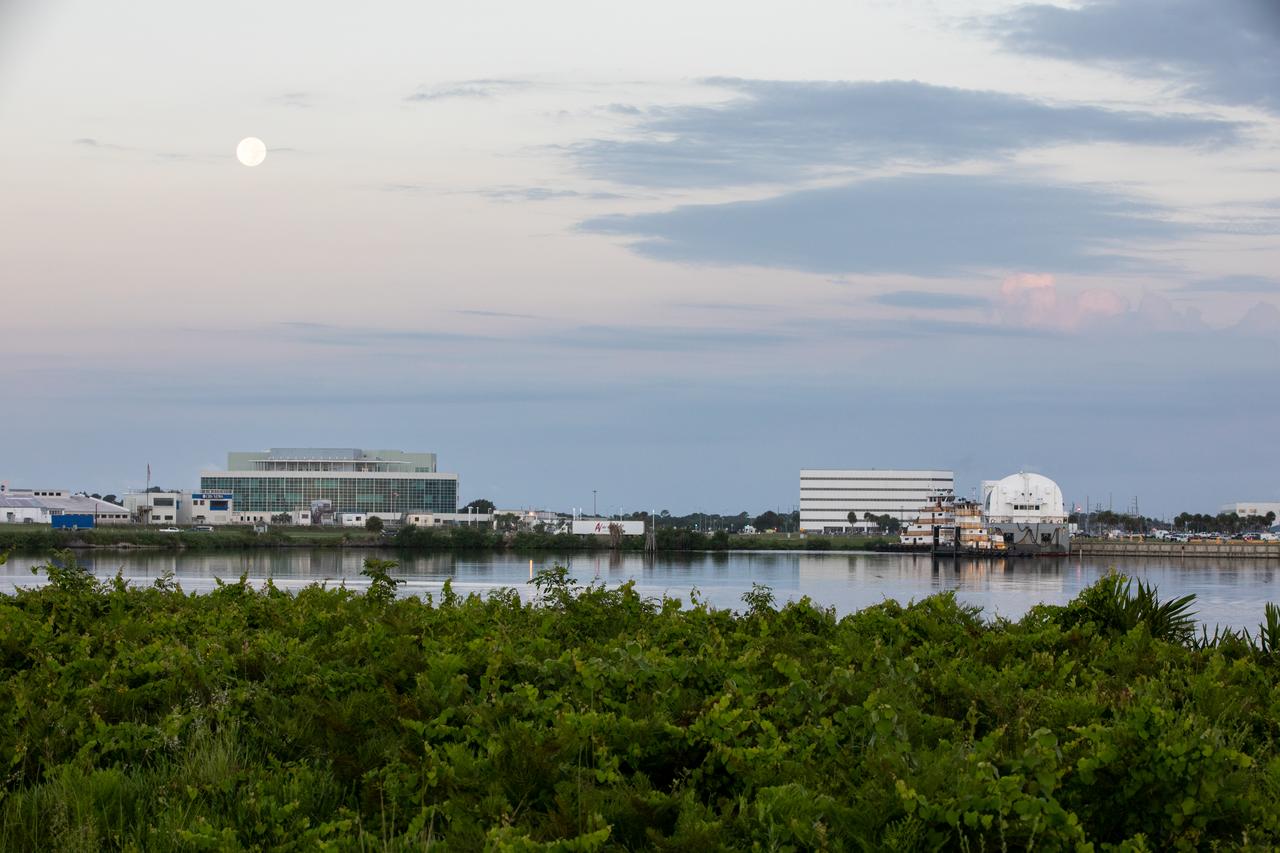
NASA’s Pegasus barge, seen off toward the right, prepares to depart from the agency’s Kennedy Space Center in Florida on Aug. 4, 2020, for its trip to NASA’s Michoud Assembly Facility in Louisiana. The Pegasus barge arrived at Kennedy on July 29, delivering the launch vehicle stage adapter (LVSA) for the agency’s Space Launch System (SLS) rocket – the most powerful rocket NASA has ever built, providing the muscle necessary to get to the Moon and eventually to Mars. The LVSA – now undergoing processing inside the Vehicle Assembly Building – will connect the core stage of the rocket to the upper stage. The next time the Pegasus barge returns to Kennedy, it will be carrying the SLS core stage – the final piece of the rocket that needs to be delivered ahead of the Artemis I launch.
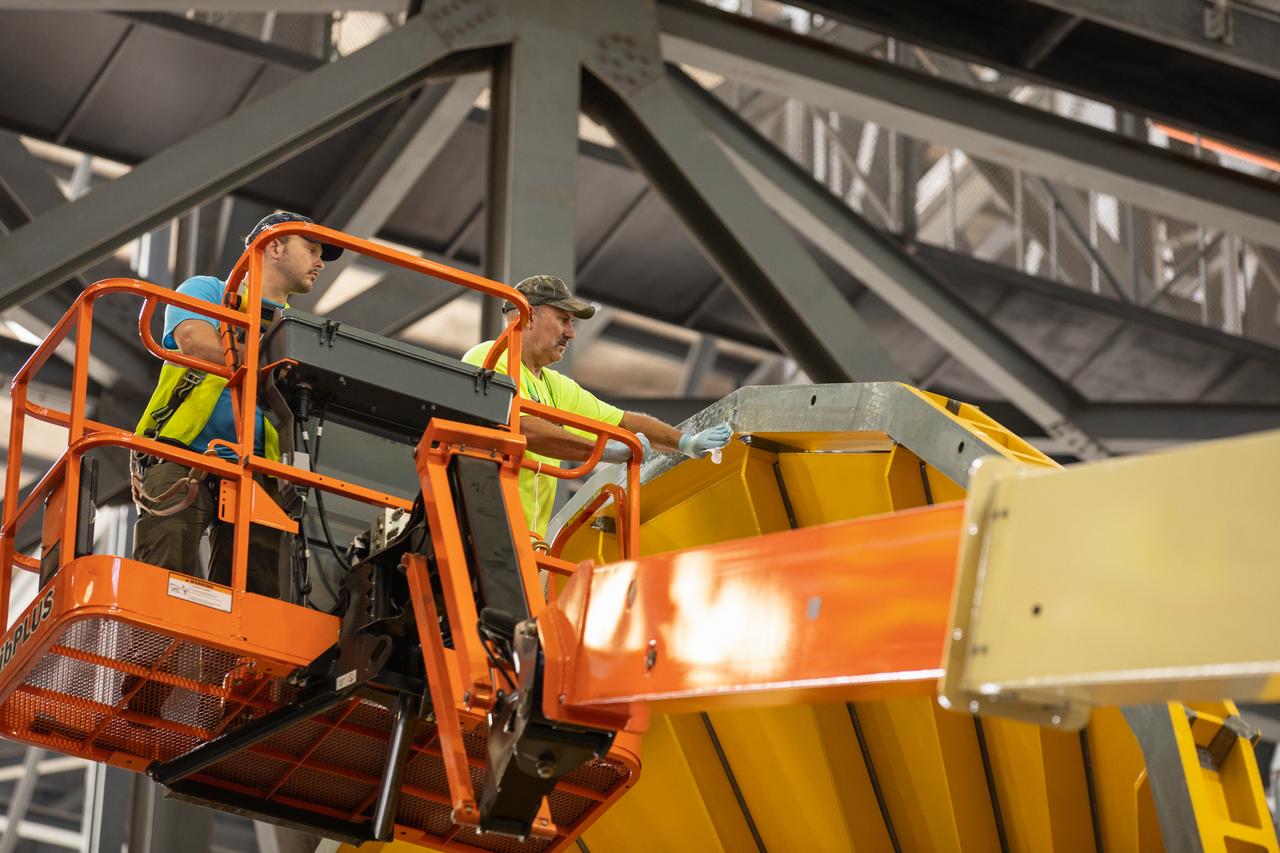
Inside the Vehicle Assembly Building at NASA’s Kennedy Space Center in Florida, Jacobs TOSC workers assist as a cover, called the spider, is moved closer to be attached to the top of the Space Launch System (SLS) Core Stage pathfinder on Oct. 4, 2019. With the spider secured in place, a crane will be attached to it to lift the pathfinder into the vertical position. The 212-foot-long core stage pathfinder arrived on NASA's Pegasus Barge at Kennedy’s Launch Complex 39 turn basin wharf on Sept. 27, 2019. The Pegasus Barge made its first delivery to Kennedy in support of the agency's Artemis missions. The upgraded 310-foot-long barge arrived, ferrying the SLS core stage pathfinder, a full-scale mock-up of the rocket's core stage. It will be used by Exploration Ground Systems and its contractor, Jacobs, to practice offloading, moving and stacking maneuvers, using important ground support equipment to train employees and certify all the equipment works properly. The pathfinder will stay at Kennedy for approximately one month before trekking back to NASA's Michoud Assembly Facility in Louisiana.
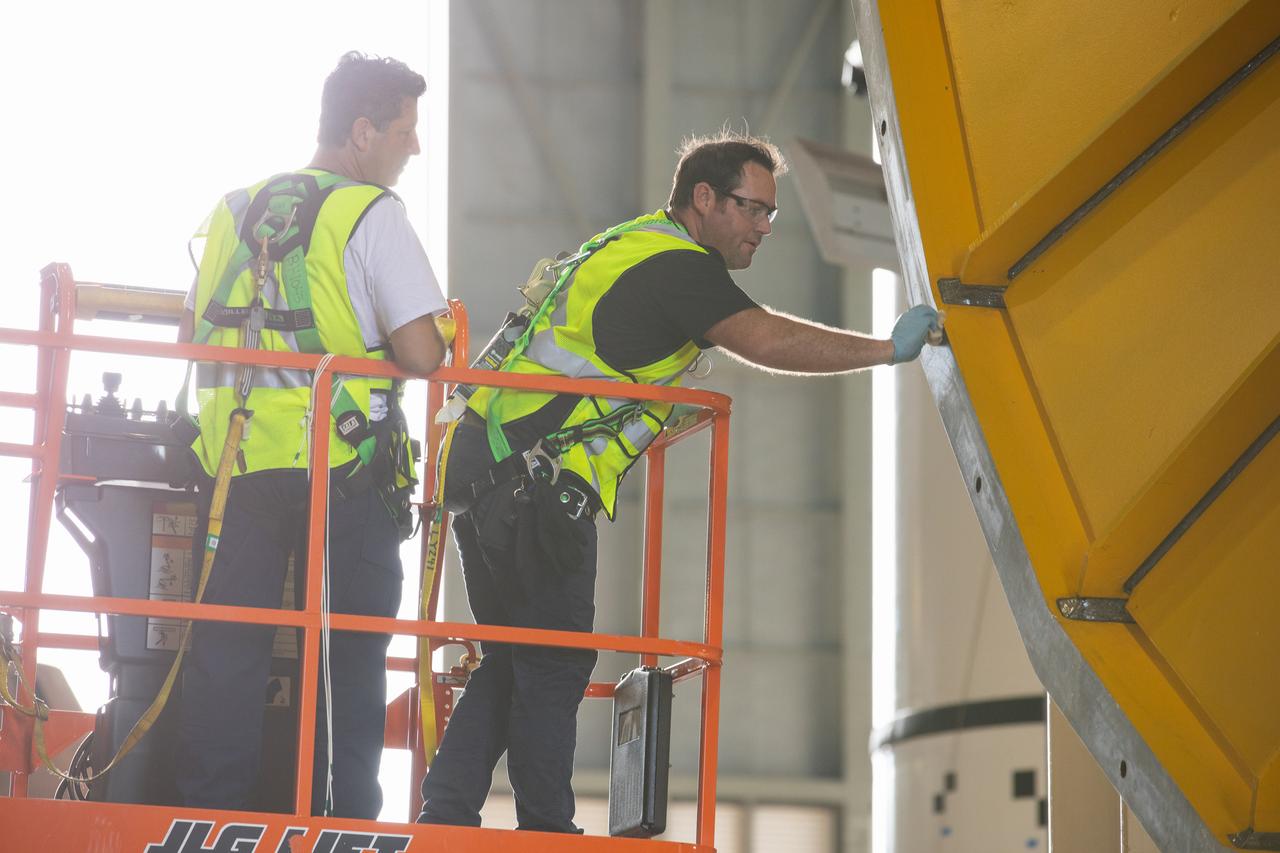
Inside the Vehicle Assembly Building at NASA’s Kennedy Space Center in Florida, NASA and Jacobs TOSC workers monitor the progress as a cover, called the spider, will be attached to the top of the Space Launch System (SLS) Core Stage pathfinder on Oct. 4, 2019. With the spider secured in place, a crane will be attached to it to lift the pathfinder into the vertical position. The 212-foot-long core stage pathfinder arrived on NASA's Pegasus Barge at Kennedy’s Launch Complex 39 turn basin wharf on Sept. 27, 2019. The Pegasus Barge made its first delivery to Kennedy in support of the agency's Artemis missions. The upgraded 310-foot-long barge arrived, ferrying the SLS core stage pathfinder, a full-scale mock-up of the rocket's core stage. It will be used by Exploration Ground Systems and its contractor, Jacobs, to practice offloading, moving and stacking maneuvers, using important ground support equipment to train employees and certify all the equipment works properly. The pathfinder will stay at Kennedy for approximately one month before trekking back to NASA's Michoud Assembly Facility in Louisiana.
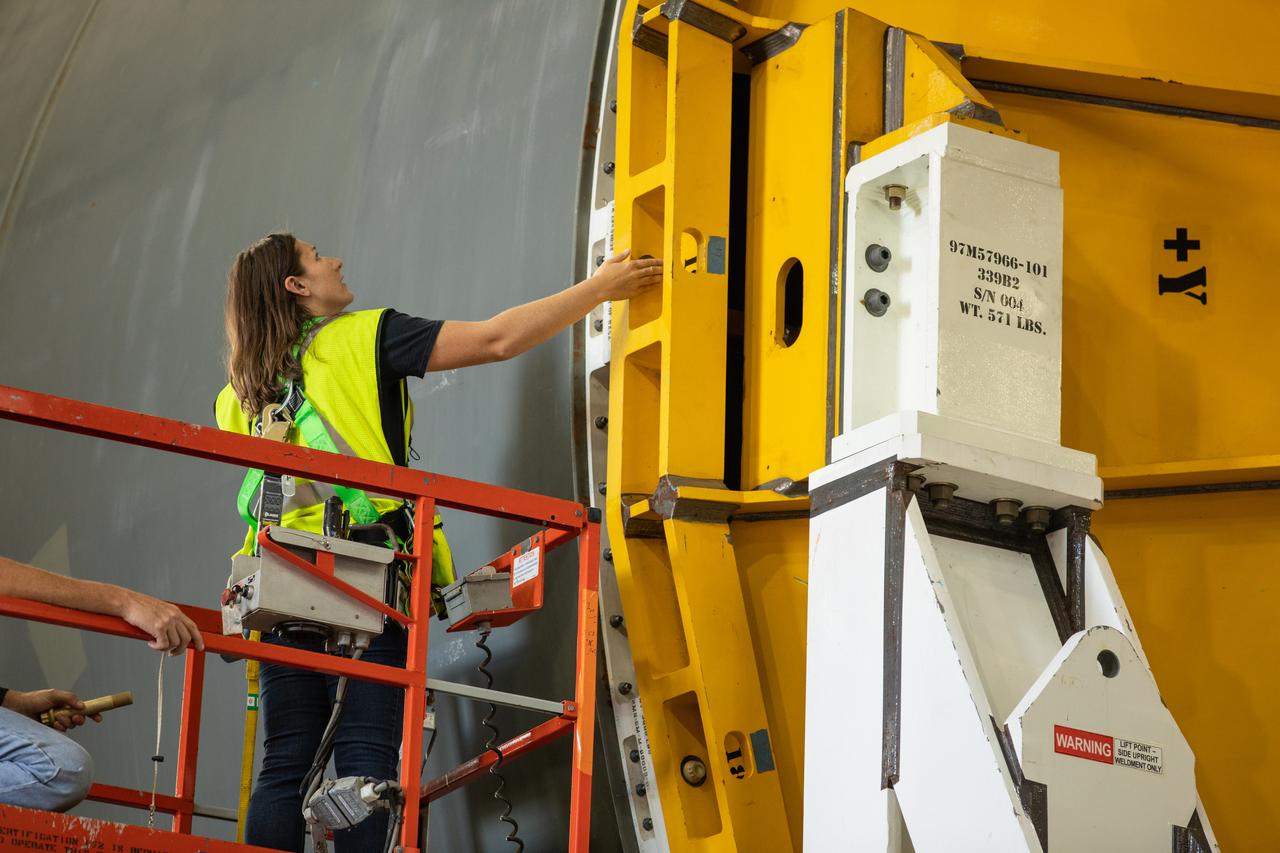
Inside the Vehicle Assembly Building at NASA’s Kennedy Space Center in Florida, a Jacobs TOSC worker assists as a cover, called a spider, is attached to the top of the Space Launch System (SLS) Core Stage pathfinder on Oct. 4, 2019. With the spider secured in place, a crane will be attached to it to lift the pathfinder into the vertical position. The 212-foot-long core stage pathfinder arrived on NASA's Pegasus Barge at Kennedy’s Launch Complex 39 turn basin wharf on Sept. 27, 2019. The Pegasus Barge made its first delivery to Kennedy in support of the agency's Artemis missions. The upgraded 310-foot-long barge arrived, ferrying the SLS core stage pathfinder, a full-scale mock-up of the rocket's core stage. It will be used by Exploration Ground Systems and its contractor, Jacobs, to practice offloading, moving and stacking maneuvers, using important ground support equipment to train employees and certify all the equipment works properly. The pathfinder will stay at Kennedy for approximately one month before trekking back to NASA's Michoud Assembly Facility in Louisiana.
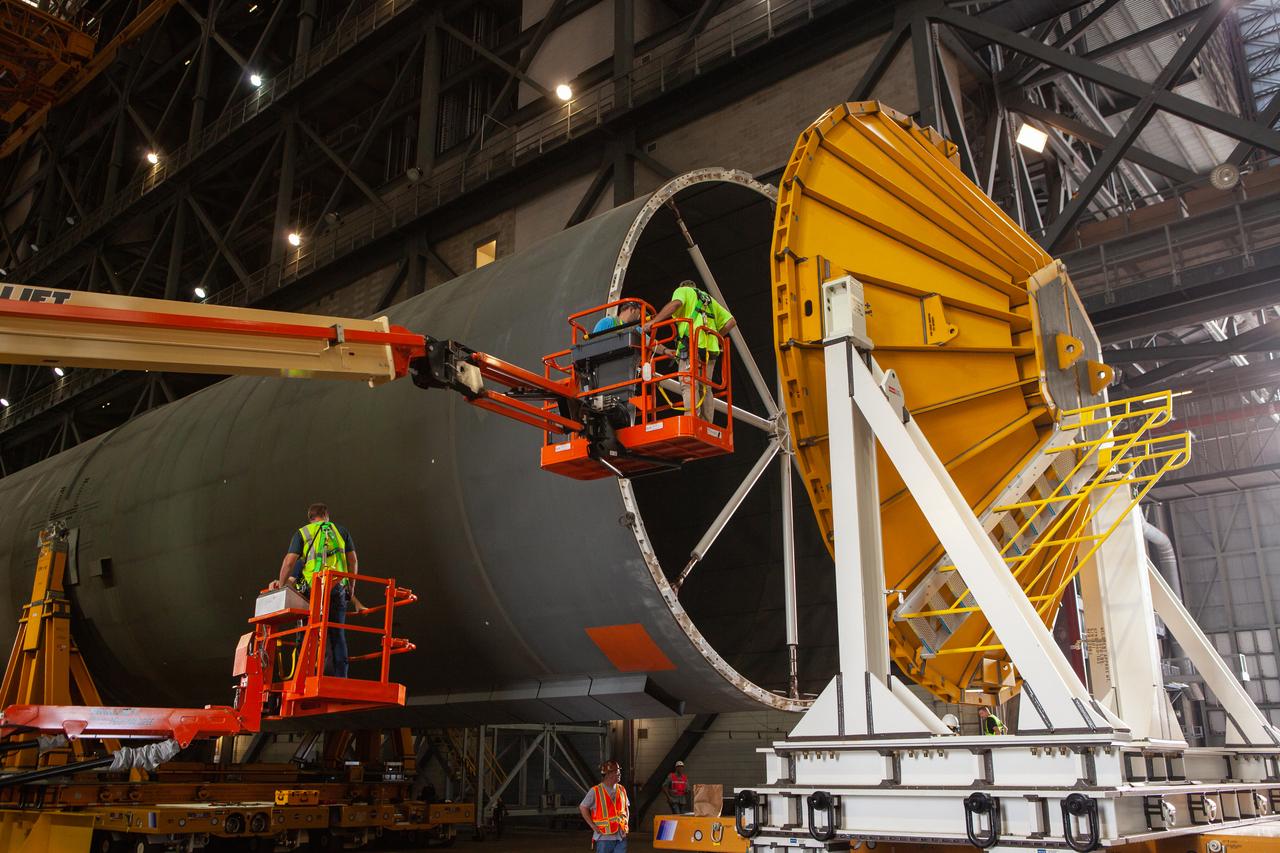
Inside the Vehicle Assembly Building at NASA’s Kennedy Space Center in Florida, NASA and Jacobs TOSC workers monitor the progress as a cover, called the spider, is attached to the top of the Space Launch System (SLS) Core Stage pathfinder on Oct. 4, 2019. With the spider secured in place, a crane will be attached to it to lift the pathfinder into the vertical position. The 212-foot-long core stage pathfinder arrived on NASA's Pegasus Barge at Kennedy’s Launch Complex 39 turn basin wharf on Sept. 27, 2019. The Pegasus Barge made its first delivery to Kennedy in support of the agency's Artemis missions. The upgraded 310-foot-long barge arrived, ferrying the SLS core stage pathfinder, a full-scale mock-up of the rocket's core stage. It will be used by Exploration Ground Systems and its contractor, Jacobs, to practice offloading, moving and stacking maneuvers, using important ground support equipment to train employees and certify all the equipment works properly. The pathfinder will stay at Kennedy for approximately one month before trekking back to NASA's Michoud Assembly Facility in Louisiana.
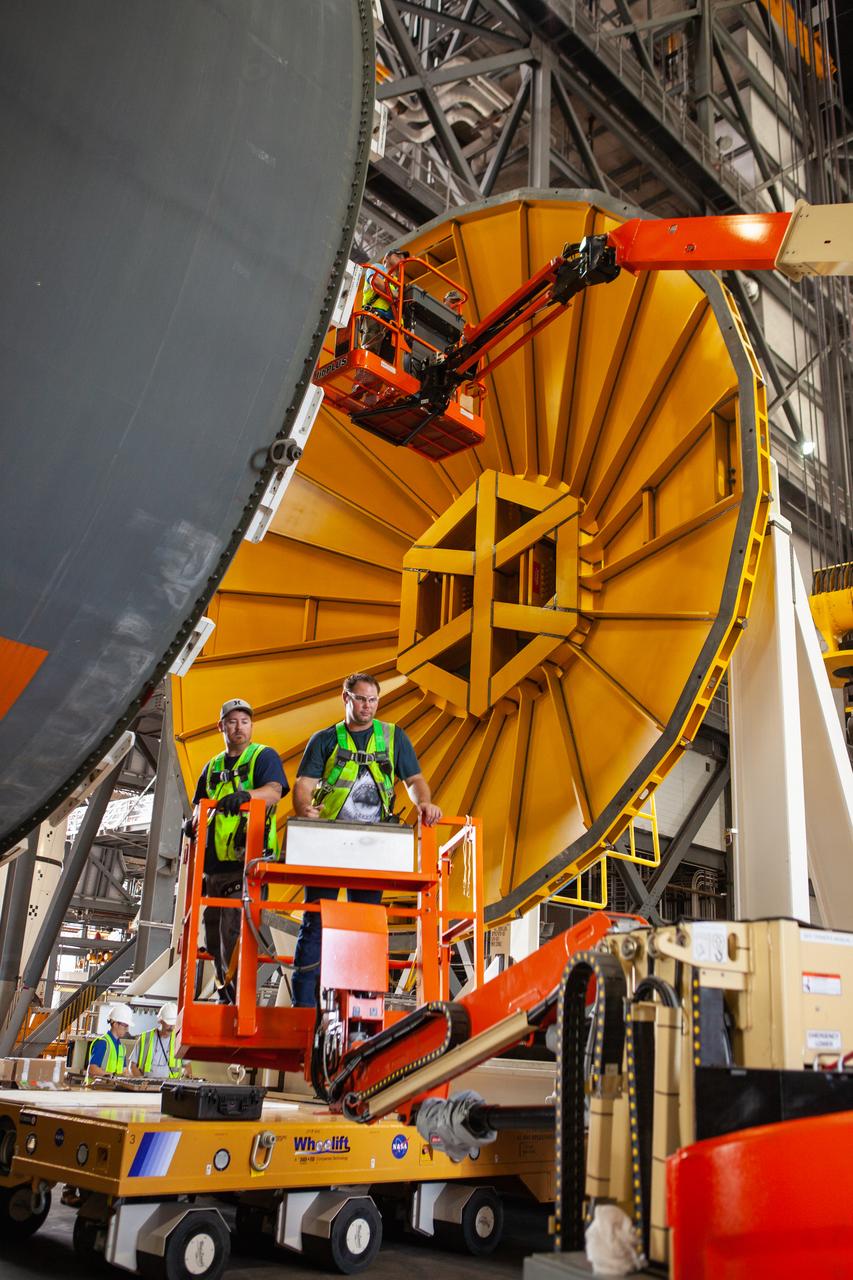
Inside the Vehicle Assembly Building at NASA’s Kennedy Space Center in Florida, Jacobs TOSC workers assist as a cover, called the spider, is moved closer to be attached to the top of the Space Launch System (SLS) Core Stage pathfinder on Oct. 4, 2019. With the spider secured in place, a crane will be attached to it to lift the pathfinder into the vertical position. The 212-foot-long core stage pathfinder arrived on NASA's Pegasus Barge at Kennedy’s Launch Complex 39 turn basin wharf on Sept. 27, 2019. The Pegasus Barge made its first delivery to Kennedy in support of the agency's Artemis missions. The upgraded 310-foot-long barge arrived, ferrying the SLS core stage pathfinder, a full-scale mock-up of the rocket's core stage. It will be used by Exploration Ground Systems and its contractor, Jacobs, to practice offloading, moving and stacking maneuvers, using important ground support equipment to train employees and certify all the equipment works properly. The pathfinder will stay at Kennedy for approximately one month before trekking back to NASA's Michoud Assembly Facility in Louisiana.
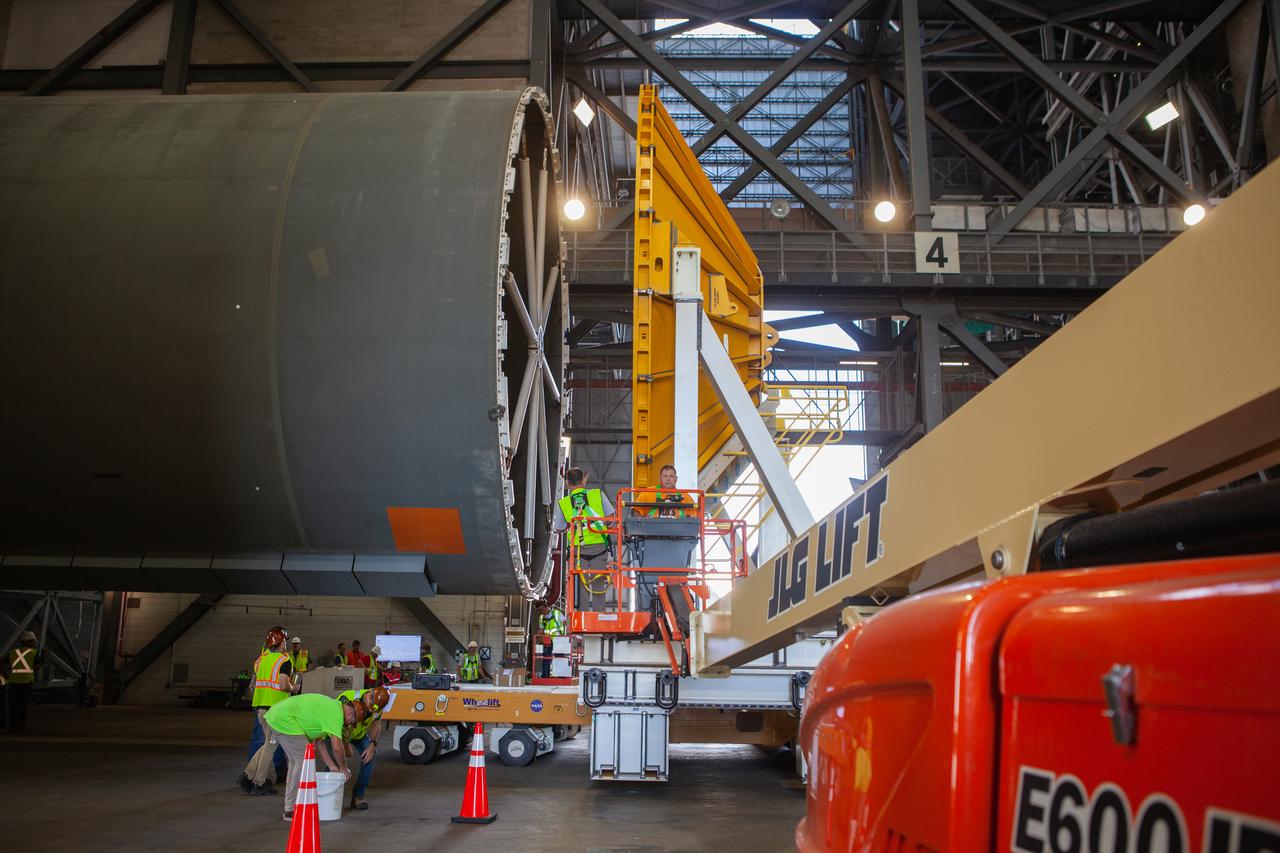
Inside the Vehicle Assembly Building at NASA’s Kennedy Space Center in Florida, operations are underway to attach a cover, called a spider, to the top of the Space Launch System (SLS) Core Stage pathfinder on Oct. 4, 2019. With the spider secured in place, a crane will be attached to it to lift the pathfinder into the vertical position. The 212-foot-long core stage pathfinder arrived on NASA's Pegasus Barge at Kennedy’s Launch Complex 39 turn basin wharf on Sept. 27, 2019. The Pegasus Barge made its first delivery to Kennedy in support of the agency's Artemis missions. The upgraded 310-foot-long barge arrived, ferrying the SLS core stage pathfinder, a full-scale mock-up of the rocket's core stage. It will be used by Exploration Ground Systems and its contractor, Jacobs, to practice offloading, moving and stacking maneuvers, using important ground support equipment to train employees and certify all the equipment works properly. The pathfinder will stay at Kennedy for approximately one month before trekking back to NASA's Michoud Assembly Facility in Louisiana.
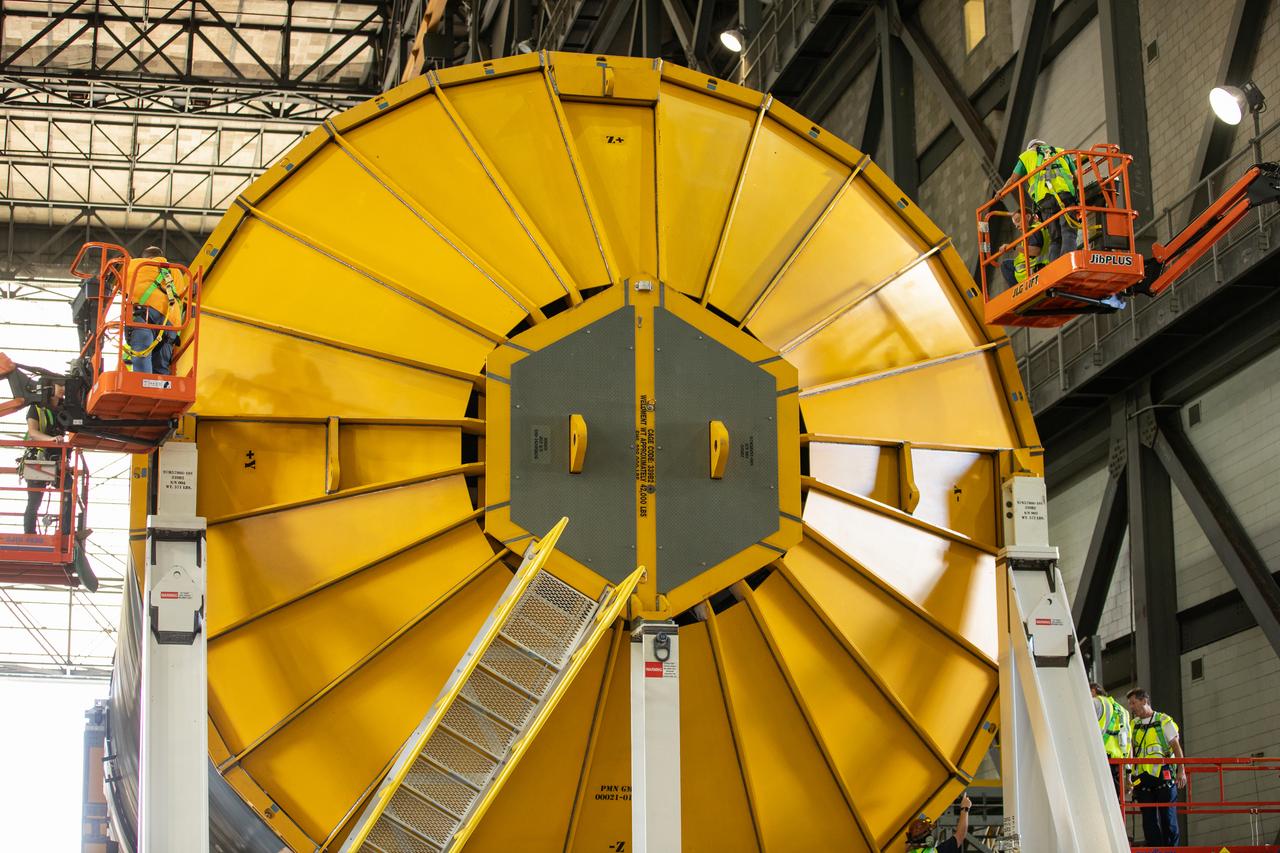
Inside the Vehicle Assembly Building at NASA’s Kennedy Space Center in Florida, a cover, called a spider, is attached to the top of the Space Launch System (SLS) Core Stage pathfinder on Oct. 4, 2019. With the spider secured in place, a crane will be attached to it to lift the pathfinder into the vertical position. The 212-foot-long core stage pathfinder arrived on NASA's Pegasus Barge at Kennedy’s Launch Complex 39 turn basin wharf on Sept. 27, 2019. The Pegasus Barge made its first delivery to Kennedy in support of the agency's Artemis missions. The upgraded 310-foot-long barge arrived, ferrying the SLS core stage pathfinder, a full-scale mock-up of the rocket's core stage. It will be used by Exploration Ground Systems and its contractor, Jacobs, to practice offloading, moving and stacking maneuvers, using important ground support equipment to train employees and certify all the equipment works properly. The pathfinder will stay at Kennedy for approximately one month before trekking back to NASA's Michoud Assembly Facility in Louisiana.
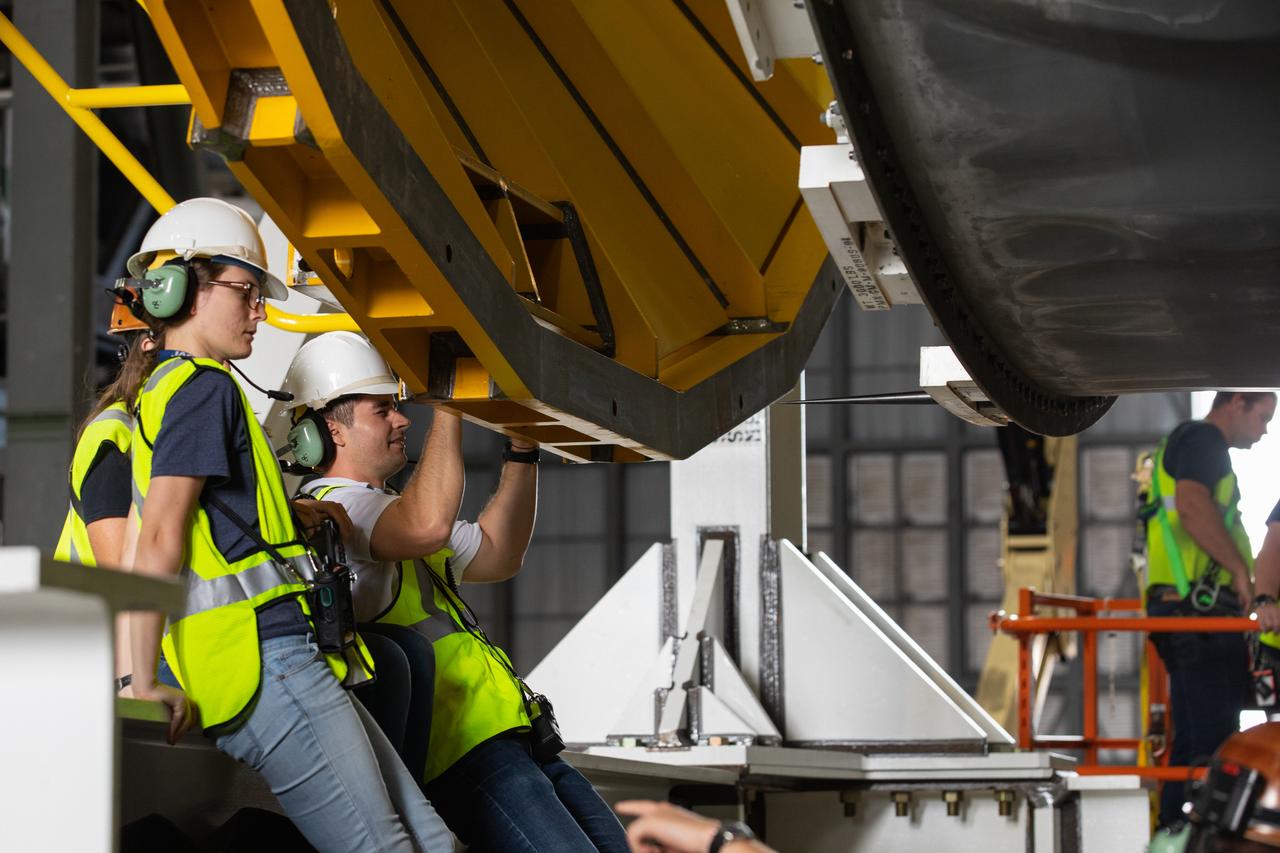
Inside the Vehicle Assembly Building at NASA’s Kennedy Space Center in Florida, operations are underway to attach a cover, called a spider, to the top of the Space Launch System (SLS) Core Stage pathfinder on Oct. 4, 2019. With the spider secured in place, a crane will be attached to it to lift the pathfinder into the vertical position. The 212-foot-long core stage pathfinder arrived on NASA's Pegasus Barge at Kennedy’s Launch Complex 39 turn basin wharf on Sept. 27, 2019. The Pegasus Barge made its first delivery to Kennedy in support of the agency's Artemis missions. The upgraded 310-foot-long barge arrived, ferrying the SLS core stage pathfinder, a full-scale mock-up of the rocket's core stage. It is being used by Exploration Ground Systems and its contractor, Jacobs, to practice offloading, moving and stacking maneuvers, using important ground support equipment to train employees and certify all the equipment works properly. The pathfinder will stay at Kennedy for approximately one month before trekking back to NASA's Michoud Assembly Facility in Louisiana.
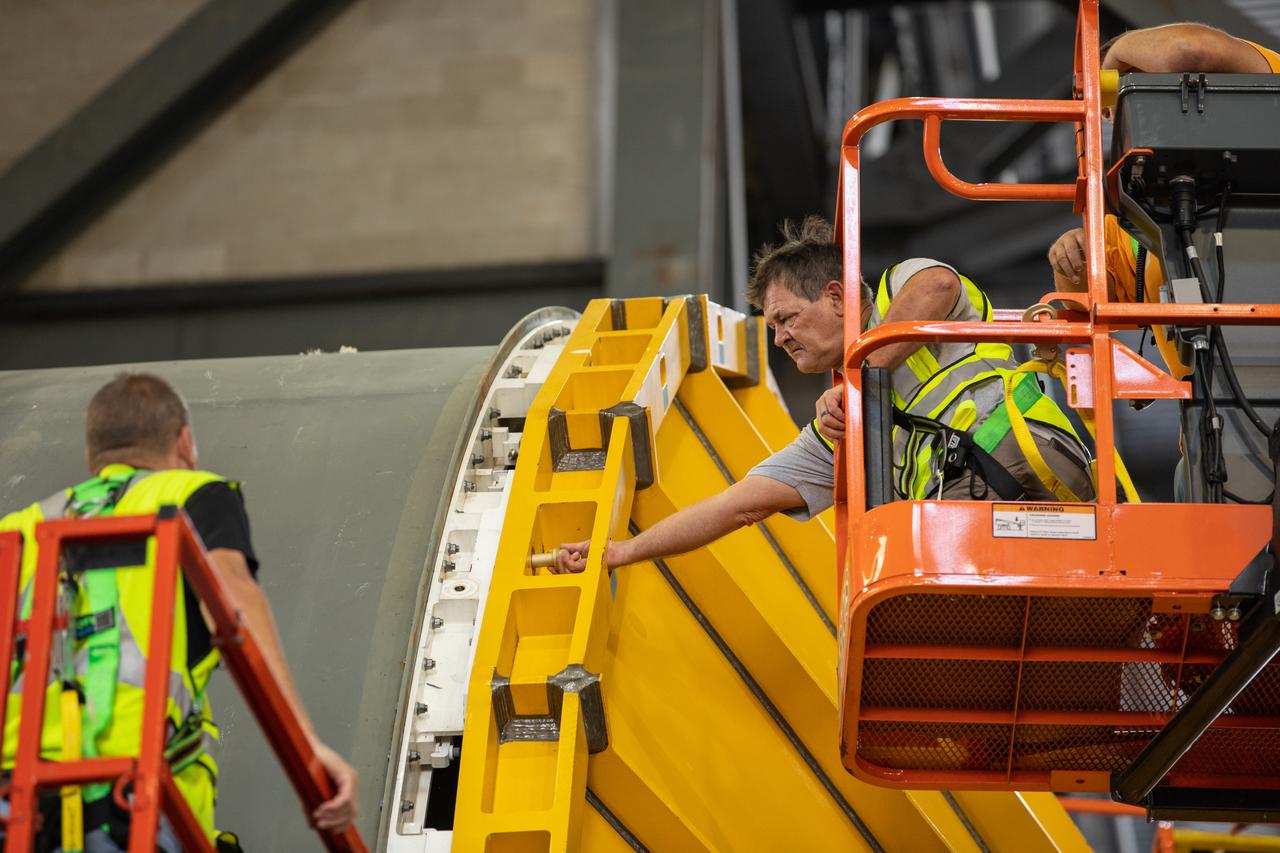
Inside the Vehicle Assembly Building at NASA’s Kennedy Space Center in Florida, Jacobs TOSC workers help attach a cover, called a spider, to the top of the Space Launch System (SLS) Core Stage pathfinder on Oct. 4, 2019. With the spider secured in place, a crane will be attached to it to lift the pathfinder into the vertical position. The 212-foot-long core stage pathfinder arrived on NASA's Pegasus Barge at Kennedy’s Launch Complex 39 turn basin wharf on Sept. 27, 2019. The Pegasus Barge made its first delivery to Kennedy in support of the agency's Artemis missions. The upgraded 310-foot-long barge arrived, ferrying the SLS core stage pathfinder, a full-scale mock-up of the rocket's core stage. It will be used by Exploration Ground Systems and its contractor, Jacobs, to practice offloading, moving and stacking maneuvers, using important ground support equipment to train employees and certify all the equipment works properly. The pathfinder will stay at Kennedy for approximately one month before trekking back to NASA's Michoud Assembly Facility in Louisiana.
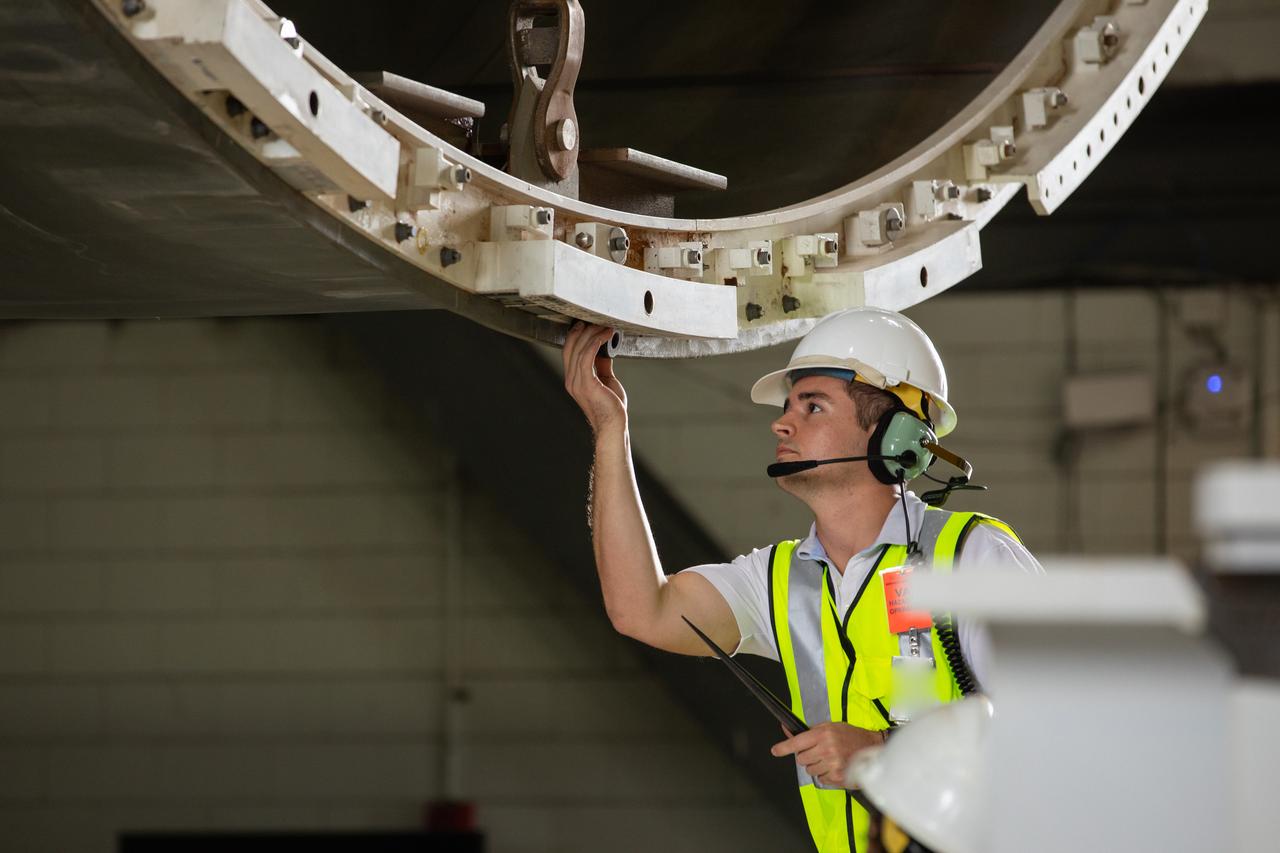
Inside the Vehicle Assembly Building at NASA’s Kennedy Space Center in Florida, a Jacobs TOSC worker monitors the progress as a cover, called the spider, will be attached to the top of the Space Launch System (SLS) Core Stage pathfinder on Oct. 4, 2019. With the spider secured in place, a crane will be attached to it to lift the pathfinder into the vertical position. The 212-foot-long core stage pathfinder arrived on NASA's Pegasus Barge at Kennedy’s Launch Complex 39 turn basin wharf on Sept. 27, 2019. The Pegasus Barge made its first delivery to Kennedy in support of the agency's Artemis missions. The upgraded 310-foot-long barge arrived, ferrying the SLS core stage pathfinder, a full-scale mock-up of the rocket's core stage. It will be used by Exploration Ground Systems and its contractor, Jacobs, to practice offloading, moving and stacking maneuvers, using important ground support equipment to train employees and certify all the equipment works properly. The pathfinder will stay at Kennedy for approximately one month before trekking back to NASA's Michoud Assembly Facility in Louisiana.
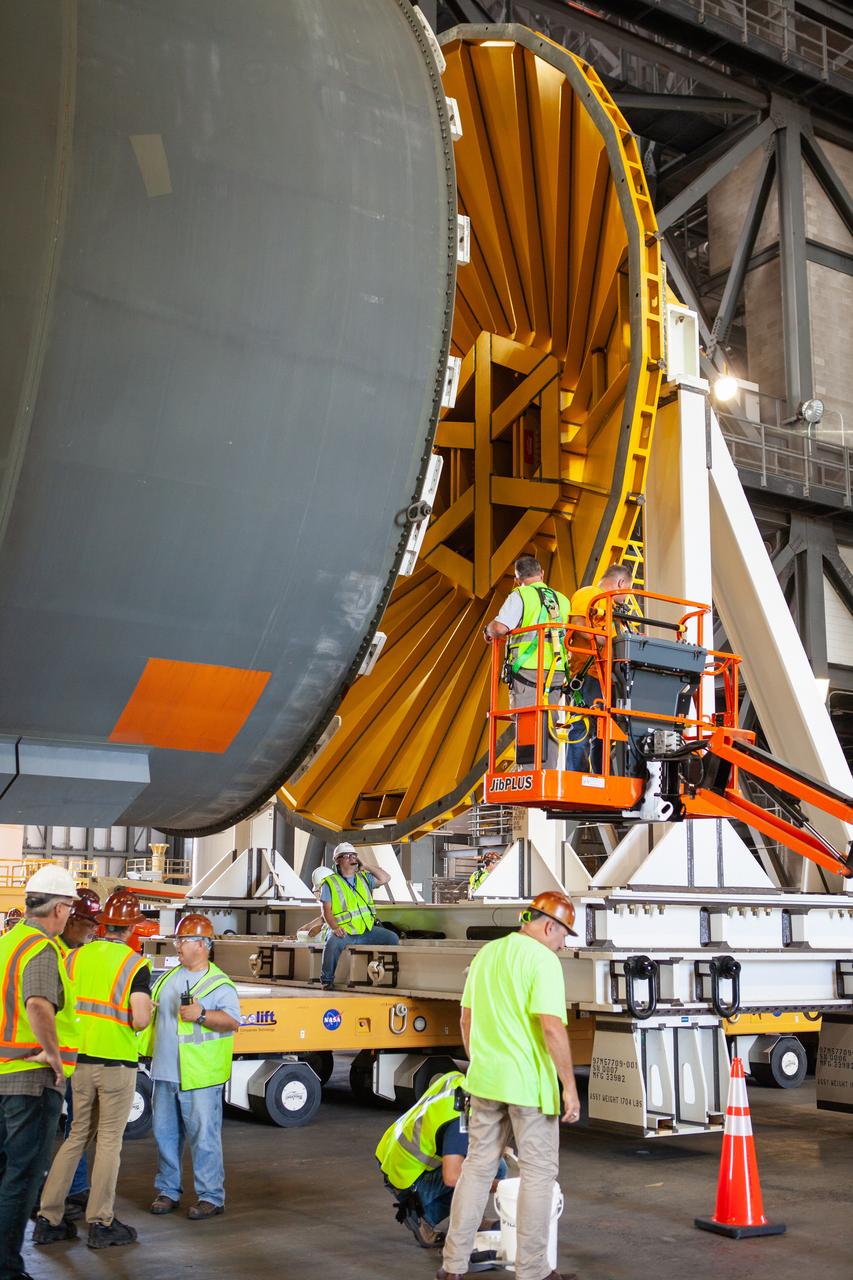
Inside the Vehicle Assembly Building at NASA’s Kennedy Space Center in Florida, operations are underway to attach a cover, called a spider, to the top of the Space Launch System (SLS) Core Stage pathfinder on Oct. 4, 2019. With the spider secured in place, a crane will be attached to it to lift the pathfinder into the vertical position. The 212-foot-long core stage pathfinder arrived on NASA's Pegasus Barge at Kennedy’s Launch Complex 39 turn basin wharf on Sept. 27, 2019. The Pegasus Barge made its first delivery to Kennedy in support of the agency's Artemis missions. The upgraded 310-foot-long barge arrived, ferrying the SLS core stage pathfinder, a full-scale mock-up of the rocket's core stage. It will be used by Exploration Ground Systems and its contractor, Jacobs, to practice offloading, moving and stacking maneuvers, using important ground support equipment to train employees and certify all the equipment works properly. The pathfinder will stay at Kennedy for approximately one month before trekking back to NASA's Michoud Assembly Facility in Louisiana.
Inside the Vehicle Assembly Building at NASA’s Kennedy Space Center in Florida, a cover, called a spider, is attached to the top of the Space Launch System (SLS) Core Stage pathfinder on Oct. 4, 2019. With the spider secured in place, a crane will be attached to it to lift the pathfinder into the vertical position. The 212-foot-long core stage pathfinder arrived on NASA's Pegasus Barge at Kennedy’s Launch Complex 39 turn basin wharf on Sept. 27, 2019. The Pegasus Barge made its first delivery to Kennedy in support of the agency's Artemis missions. The upgraded 310-foot-long barge arrived, ferrying the SLS core stage pathfinder, a full-scale mock-up of the rocket's core stage. It will be used by Exploration Ground Systems and its contractor, Jacobs, to practice offloading, moving and stacking maneuvers, using important ground support equipment to train employees and certify all the equipment works properly. The pathfinder will stay at Kennedy for approximately one month before trekking back to NASA's Michoud Assembly Facility in Louisiana.
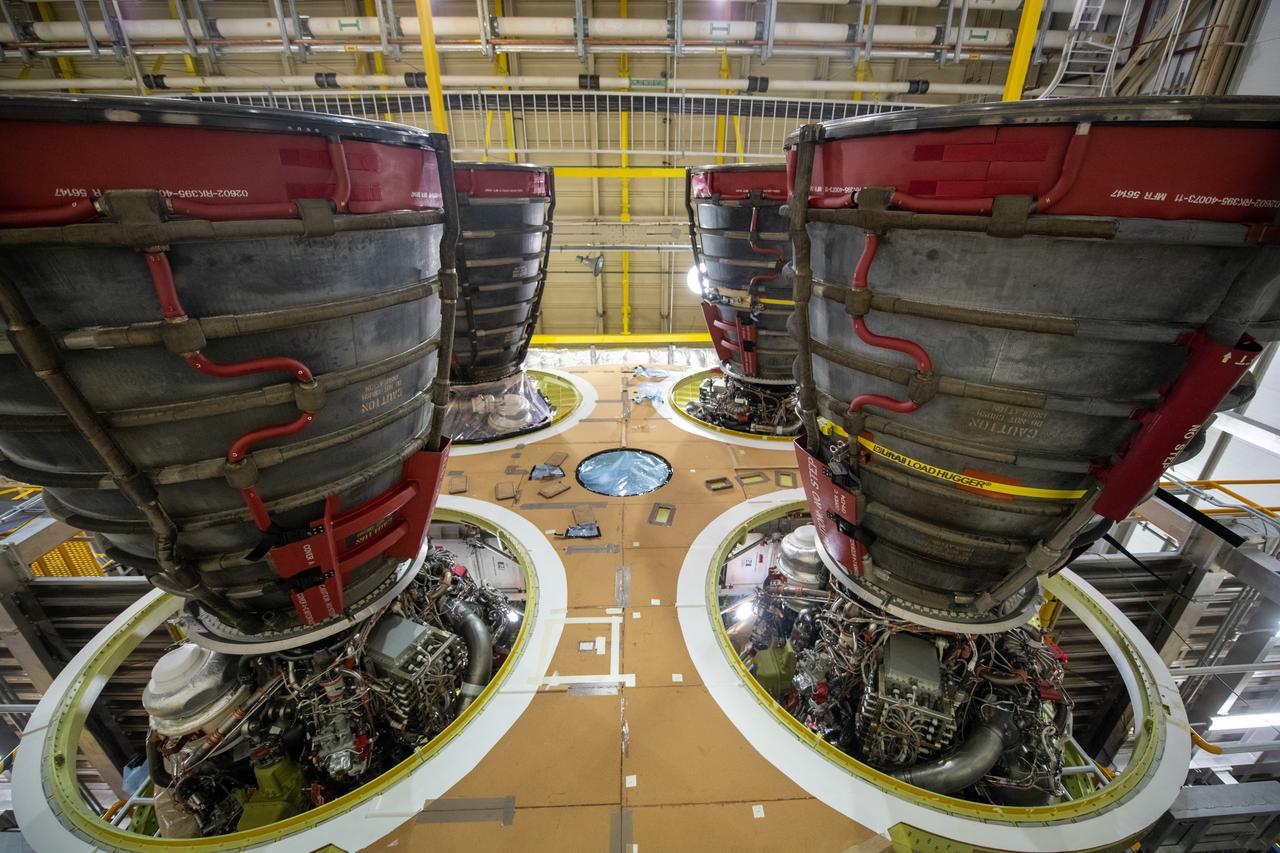
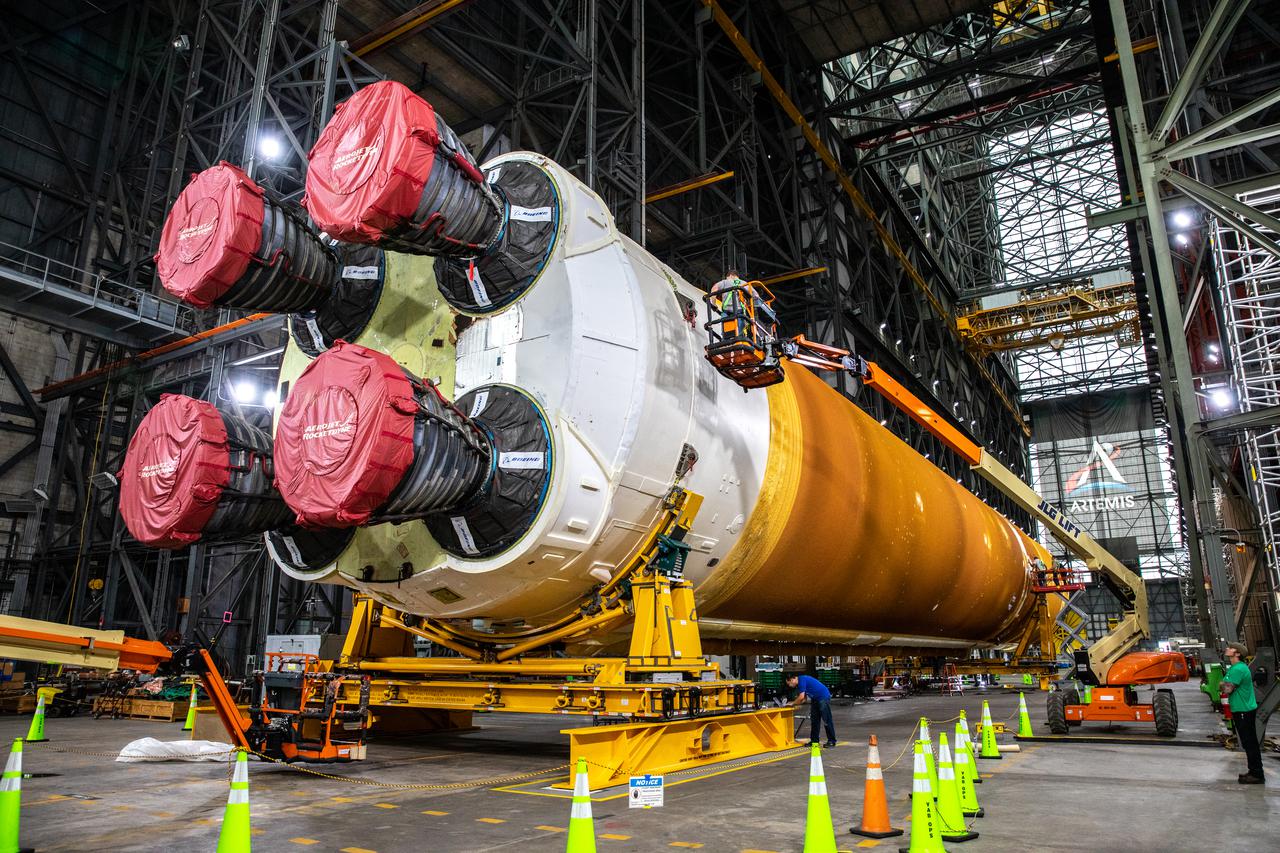
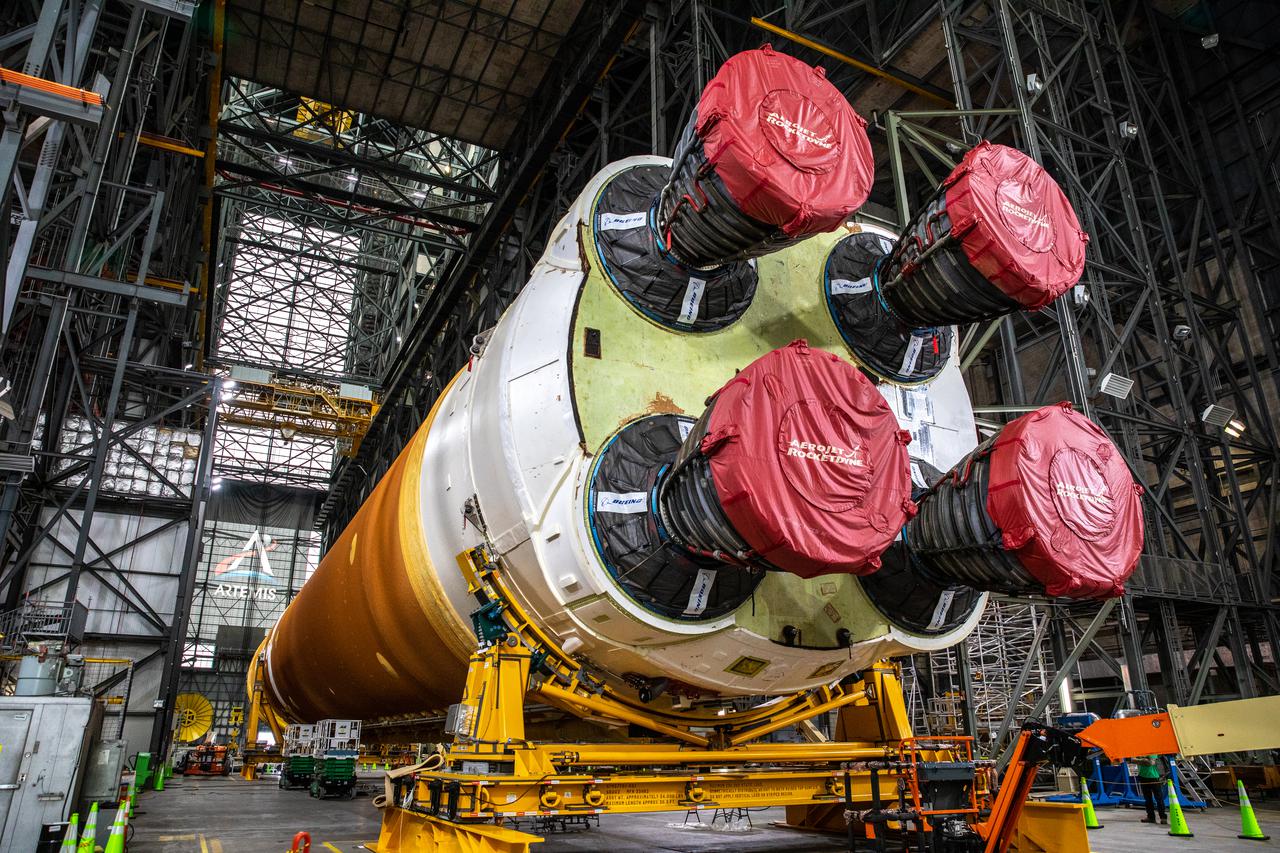
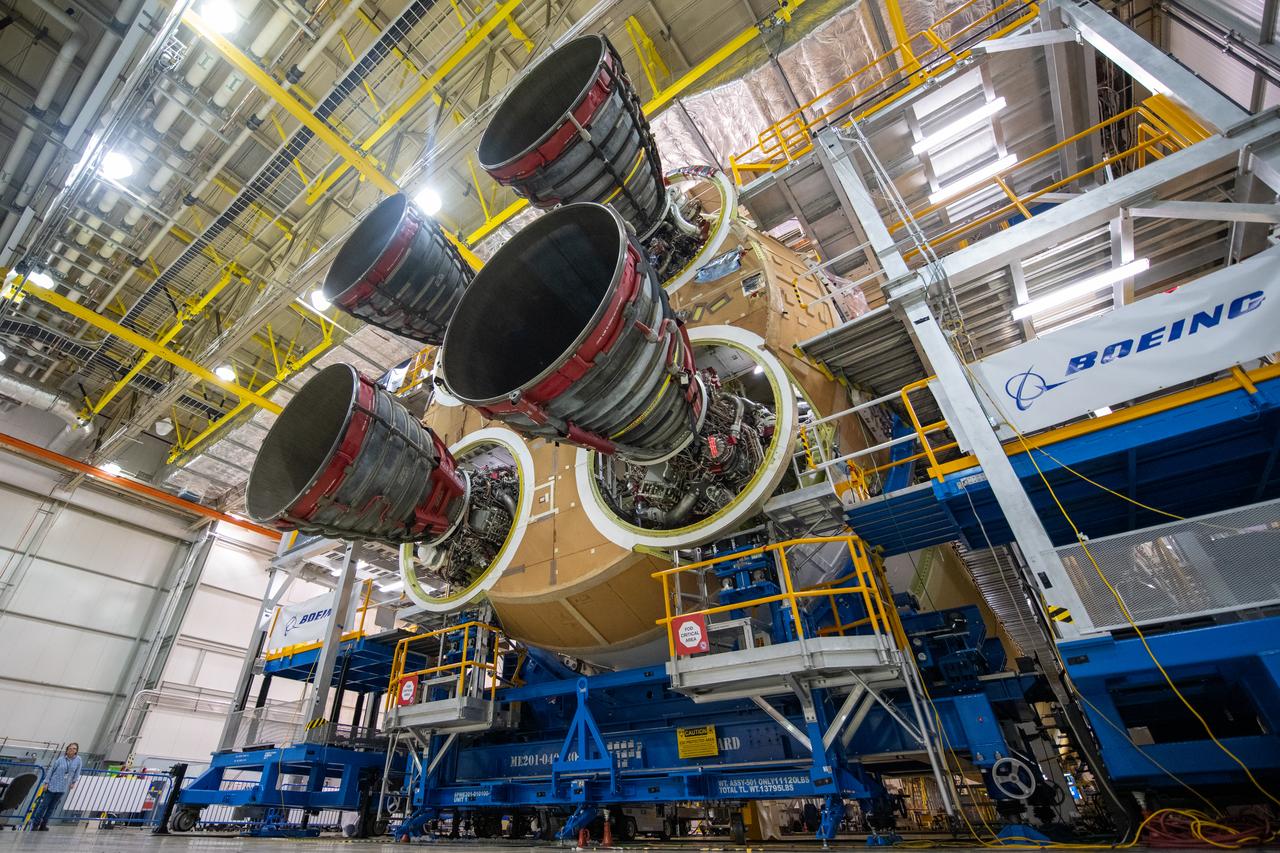
This photo shows all four RS-25 engines attached to the core stage for NASA’s Space Launch System rocket for the agency’s Artemis I mission to the Moon. To complete assembly of the rocket stage, engineers and technicians at NASA’s Michoud Assembly Facility in New Orleans are now integrating the propulsion and electrical systems within the structure. The completed core stage with all four RS-25 engines attached is the largest rocket stage NASA has built since the Saturn V stages for the Apollo Program that first sent Americans to the Moon. The stage, which includes two propellant tanks, provides more than 2 million pounds of thrust to send Artemis I to the Moon. Engineers and technicians attached the fourth RS-25 engine to the rocket stage Nov. 6 just one day after structurally mating the third engine. The first two RS-25 engines were structurally mated to the stage in October. After assembly is complete, crews will conduct an integrated functional test of flight computers, avionics and electrical systems that run throughout the 212-foot-tall core stage in preparation for its completion later this year. This testing is the first time all the flight avionics systems will be tested together to ensure the systems communicate with each other and will perform properly to control the rocket’s flight. Integration of the RS-25 engines to the recently completed core stage structure is a collaborative, multistep process for NASA and its partners Boeing, the core stage lead contractor, and Aerojet Rocketdyne, the RS-25 engines lead contractor. Offering more payload mass, volume capability and energy to speed missions through space, the SLS rocket, along with NASA’s Gateway in lunar orbit and Orion, is part of NASA’s backbone for deep space exploration and the Artemis lunar program. No other rocket is capable of carrying astronauts in Orion around the Moon in a single mission.
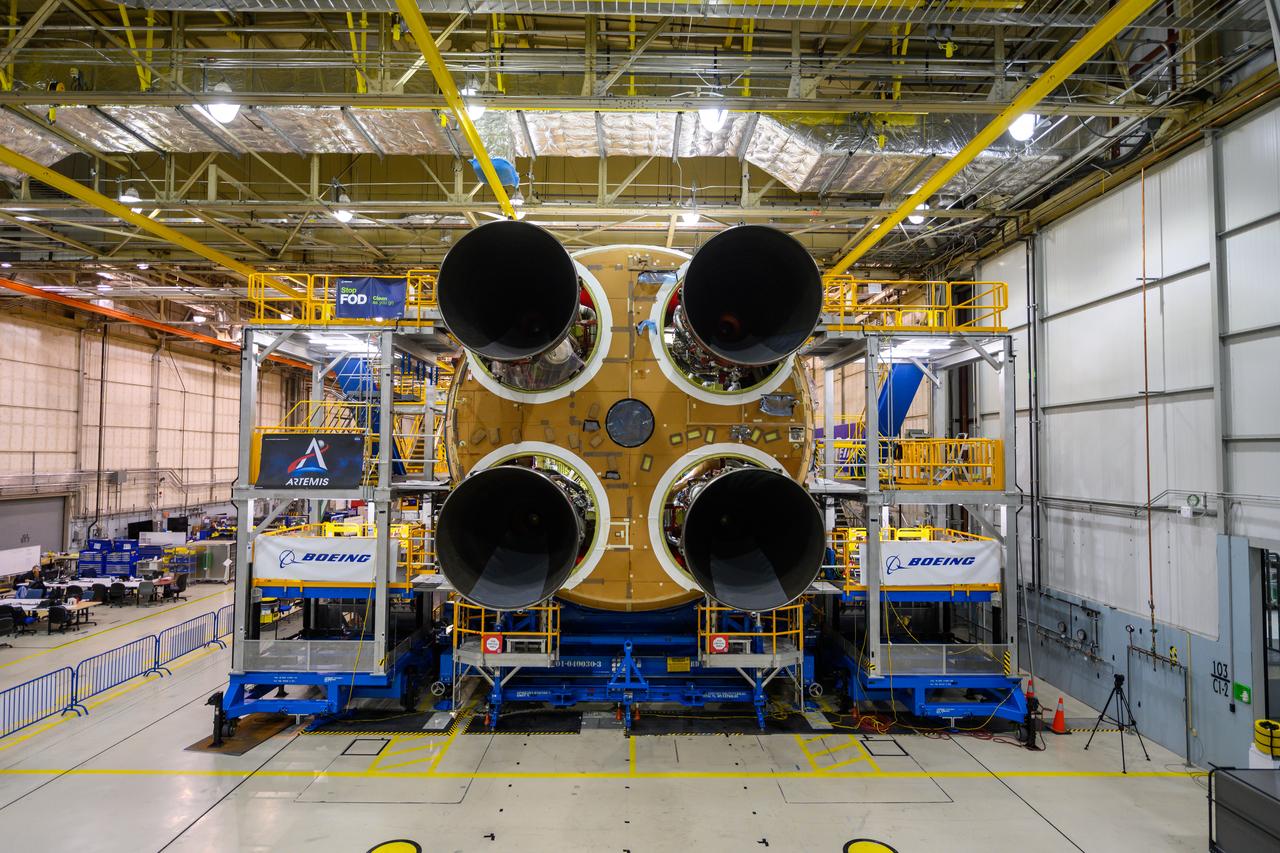
This photo shows all four RS-25 engines attached to the core stage for NASA’s Space Launch System rocket for the agency’s Artemis I mission to the Moon. To complete assembly of the rocket stage, engineers and technicians at NASA’s Michoud Assembly Facility in New Orleans are now integrating the propulsion and electrical systems within the structure. The completed core stage with all four RS-25 engines attached is the largest rocket stage NASA has built since the Saturn V stages for the Apollo Program that first sent Americans to the Moon. The stage, which includes two propellant tanks, provides more than 2 million pounds of thrust to send Artemis I to the Moon. Engineers and technicians attached the fourth RS-25 engine to the rocket stage Nov. 6 just one day after structurally mating the third engine. The first two RS-25 engines were structurally mated to the stage in October. After assembly is complete, crews will conduct an integrated functional test of flight computers, avionics and electrical systems that run throughout the 212-foot-tall core stage in preparation for its completion later this year. This testing is the first time all the flight avionics systems will be tested together to ensure the systems communicate with each other and will perform properly to control the rocket’s flight. Integration of the RS-25 engines to the recently completed core stage structure is a collaborative, multistep process for NASA and its partners Boeing, the core stage lead contractor, and Aerojet Rocketdyne, the RS-25 engines lead contractor. Offering more payload mass, volume capability and energy to speed missions through space, the SLS rocket, along with NASA’s Gateway in lunar orbit and Orion, is part of NASA’s backbone for deep space exploration and the Artemis lunar program. No other rocket is capable of carrying astronauts in Orion around the Moon in a single mission.
This photo shows all four RS-25 engines attached to the core stage for NASA’s Space Launch System rocket for the agency’s Artemis I mission to the Moon. To complete assembly of the rocket stage, engineers and technicians at NASA’s Michoud Assembly Facility in New Orleans are now integrating the propulsion and electrical systems within the structure. The completed core stage with all four RS-25 engines attached is the largest rocket stage NASA has built since the Saturn V stages for the Apollo Program that first sent Americans to the Moon. The stage, which includes two propellant tanks, provides more than 2 million pounds of thrust to send Artemis I to the Moon. Engineers and technicians attached the fourth RS-25 engine to the rocket stage Nov. 6 just one day after structurally mating the third engine. The first two RS-25 engines were structurally mated to the stage in October. After assembly is complete, crews will conduct an integrated functional test of flight computers, avionics and electrical systems that run throughout the 212-foot-tall core stage in preparation for its completion later this year. This testing is the first time all the flight avionics systems will be tested together to ensure the systems communicate with each other and will perform properly to control the rocket’s flight. Integration of the RS-25 engines to the recently completed core stage structure is a collaborative, multistep process for NASA and its partners Boeing, the core stage lead contractor, and Aerojet Rocketdyne, the RS-25 engines lead contractor. Offering more payload mass, volume capability and energy to speed missions through space, the SLS rocket, along with NASA’s Gateway in lunar orbit and Orion, is part of NASA’s backbone for deep space exploration and the Artemis lunar program. No other rocket is capable of carrying astronauts in Orion around the Moon in a single mission.
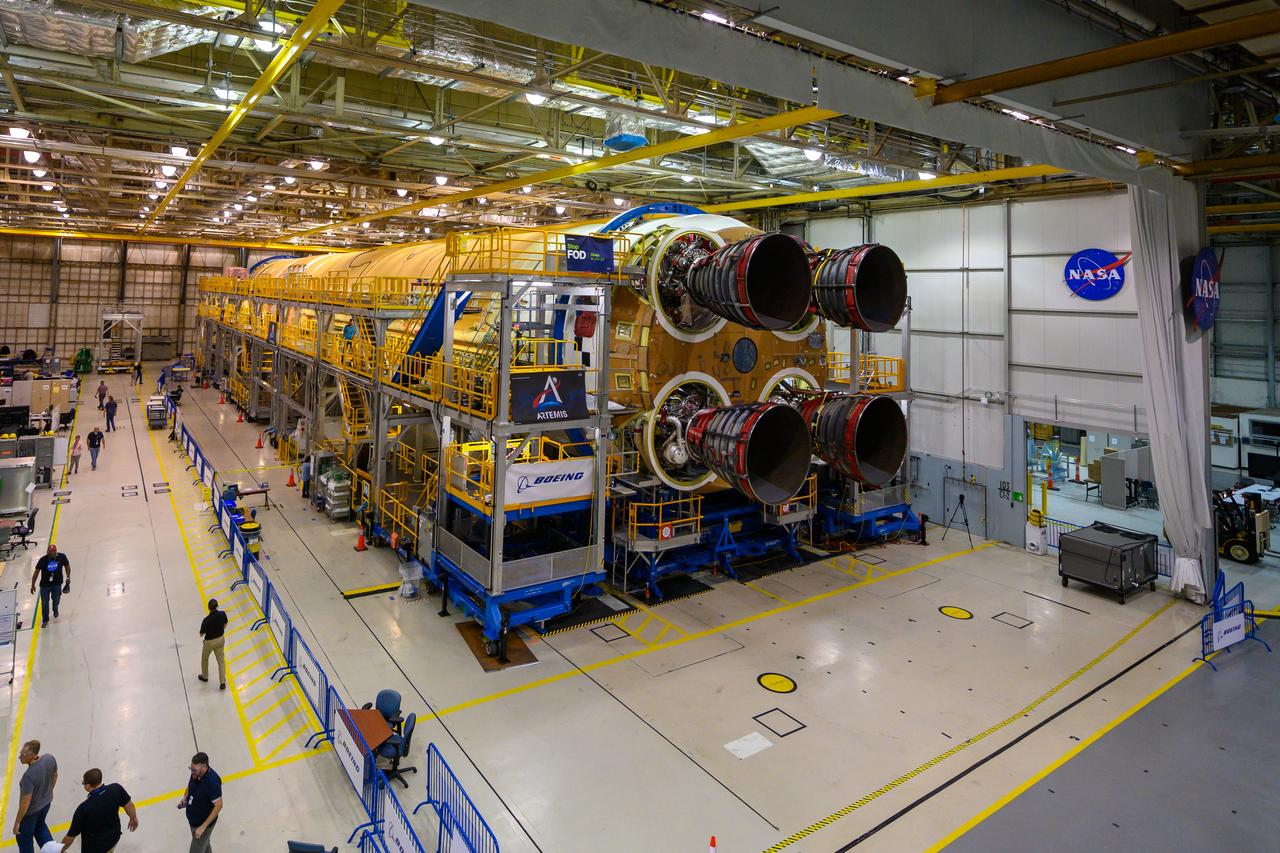
This photo shows all four RS-25 engines attached to the core stage for NASA’s Space Launch System rocket for the agency’s Artemis I mission to the Moon. To complete assembly of the rocket stage, engineers and technicians at NASA’s Michoud Assembly Facility in New Orleans are now integrating the propulsion and electrical systems within the structure. The completed core stage with all four RS-25 engines attached is the largest rocket stage NASA has built since the Saturn V stages for the Apollo Program that first sent Americans to the Moon. The stage, which includes two propellant tanks, provides more than 2 million pounds of thrust to send Artemis I to the Moon. Engineers and technicians attached the fourth RS-25 engine to the rocket stage Nov. 6 just one day after structurally mating the third engine. The first two RS-25 engines were structurally mated to the stage in October. After assembly is complete, crews will conduct an integrated functional test of flight computers, avionics and electrical systems that run throughout the 212-foot-tall core stage in preparation for its completion later this year. This testing is the first time all the flight avionics systems will be tested together to ensure the systems communicate with each other and will perform properly to control the rocket’s flight. Integration of the RS-25 engines to the recently completed core stage structure is a collaborative, multistep process for NASA and its partners Boeing, the core stage lead contractor, and Aerojet Rocketdyne, the RS-25 engines lead contractor. Offering more payload mass, volume capability and energy to speed missions through space, the SLS rocket, along with NASA’s Gateway in lunar orbit and Orion, is part of NASA’s backbone for deep space exploration and the Artemis lunar program. No other rocket is capable of carrying astronauts in Orion around the Moon in a single mission.
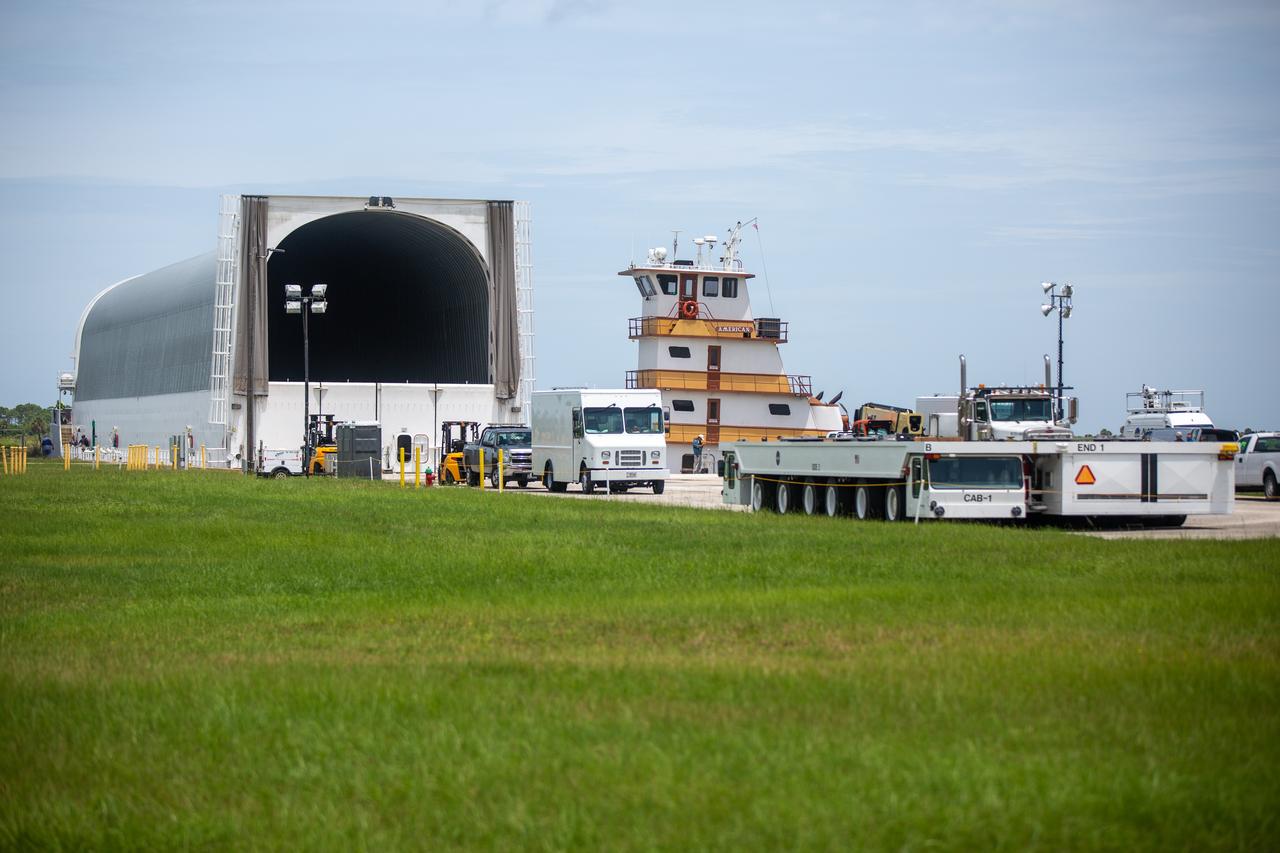
NASA’s Pegasus barge, carrying the launch vehicle stage adapter (LVSA) for the agency’s Space Launch System (SLS) rocket, arrives at the Kennedy Space Center Launch Complex 39 turn basin wharf on July 29, 2020. Traveling to Florida from NASA’s Marshall Space Flight Center in Huntsville, Alabama, the LVSA will connect the SLS core stage to the rocket’s upper stage for the Artemis I launch. Once the LVSA is offloaded, it will be moved to High Bay 4 in the Vehicle Assembly Building for processing ahead of launch. The first launch under the agency’s Artemis program, Artemis I will test SLS and the Orion spacecraft as an integrated system prior to crewed flights to the Moon.
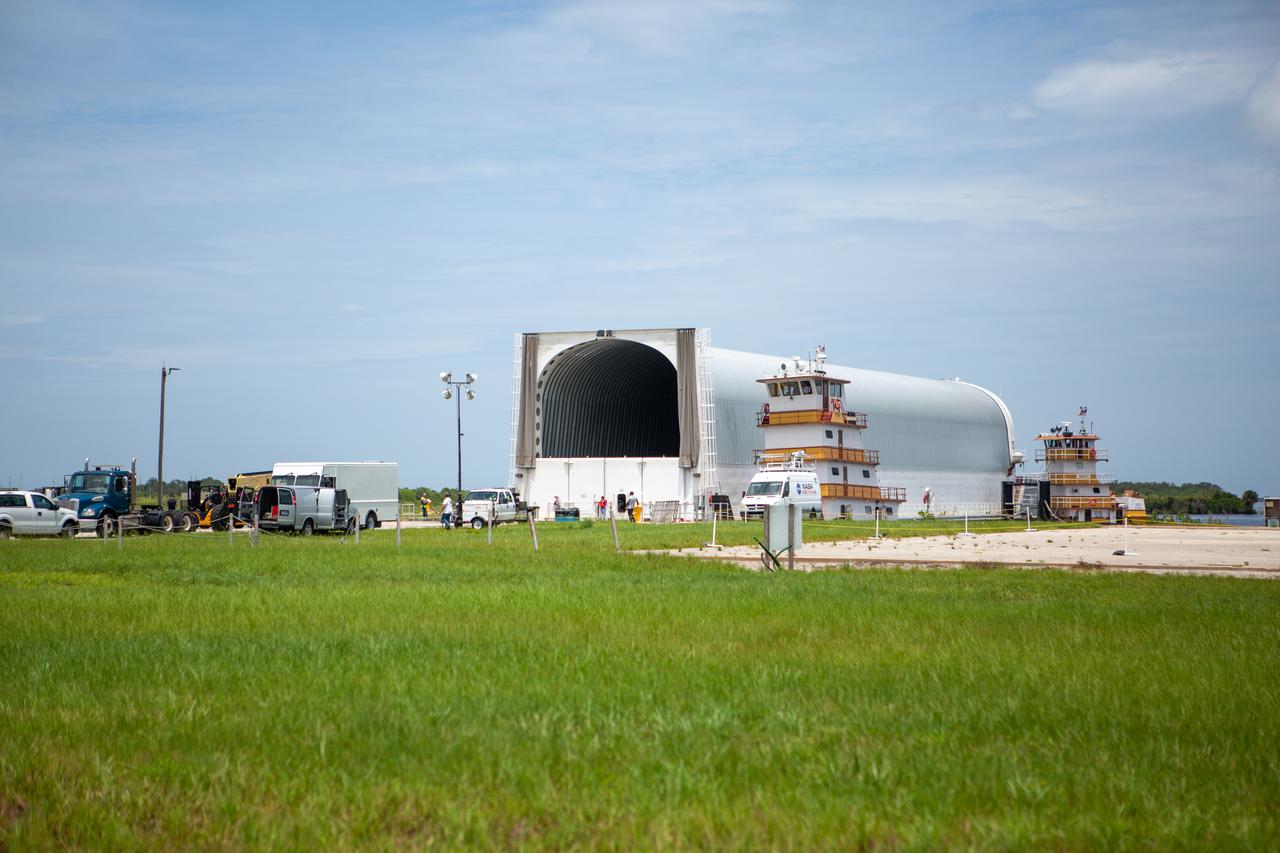
NASA’s Pegasus barge, carrying the launch vehicle stage adapter (LVSA) for the agency’s Space Launch System (SLS) rocket, arrives at the Kennedy Space Center Launch Complex 39 turn basin wharf on July 29, 2020. Traveling to Florida from NASA’s Marshall Space Flight Center in Huntsville, Alabama, the LVSA will connect the SLS core stage to the rocket’s upper stage for the Artemis I launch. Once the LVSA is offloaded, it will be moved to High Bay 4 in the Vehicle Assembly Building for processing ahead of launch. The first launch under the agency’s Artemis program, Artemis I will test SLS and the Orion spacecraft as an integrated system prior to crewed flights to the Moon.
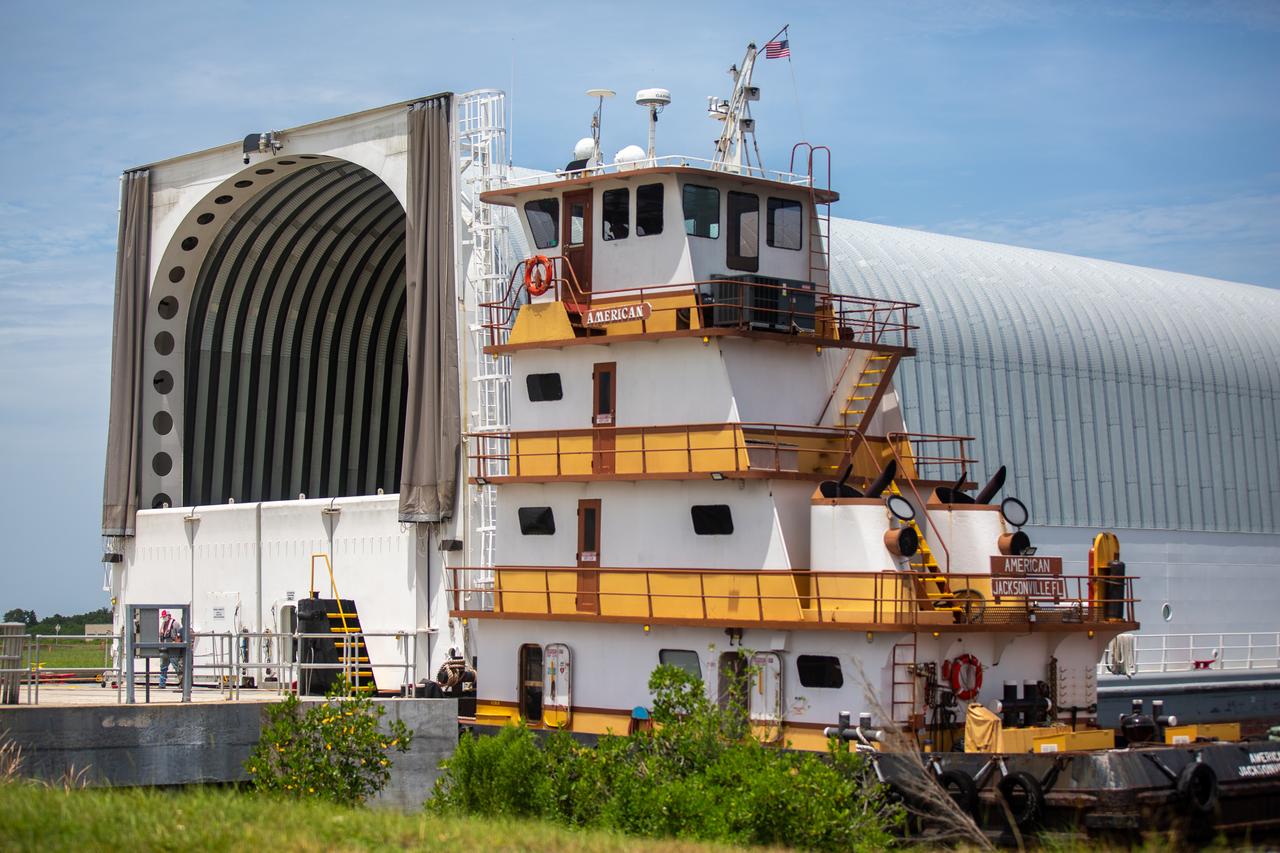
NASA’s Pegasus barge, carrying the launch vehicle stage adapter (LVSA) for the agency’s Space Launch System (SLS) rocket, arrives at the Kennedy Space Center Launch Complex 39 turn basin wharf on July 29, 2020. Traveling to Florida from NASA’s Marshall Space Flight Center in Huntsville, Alabama, the LVSA will connect the SLS core stage to the rocket’s upper stage for the Artemis I launch. Once the LVSA is offloaded, it will be moved to High Bay 4 in the Vehicle Assembly Building for processing ahead of launch. The first launch under the agency’s Artemis program, Artemis I will test SLS and the Orion spacecraft as an integrated system prior to crewed flights to the Moon.
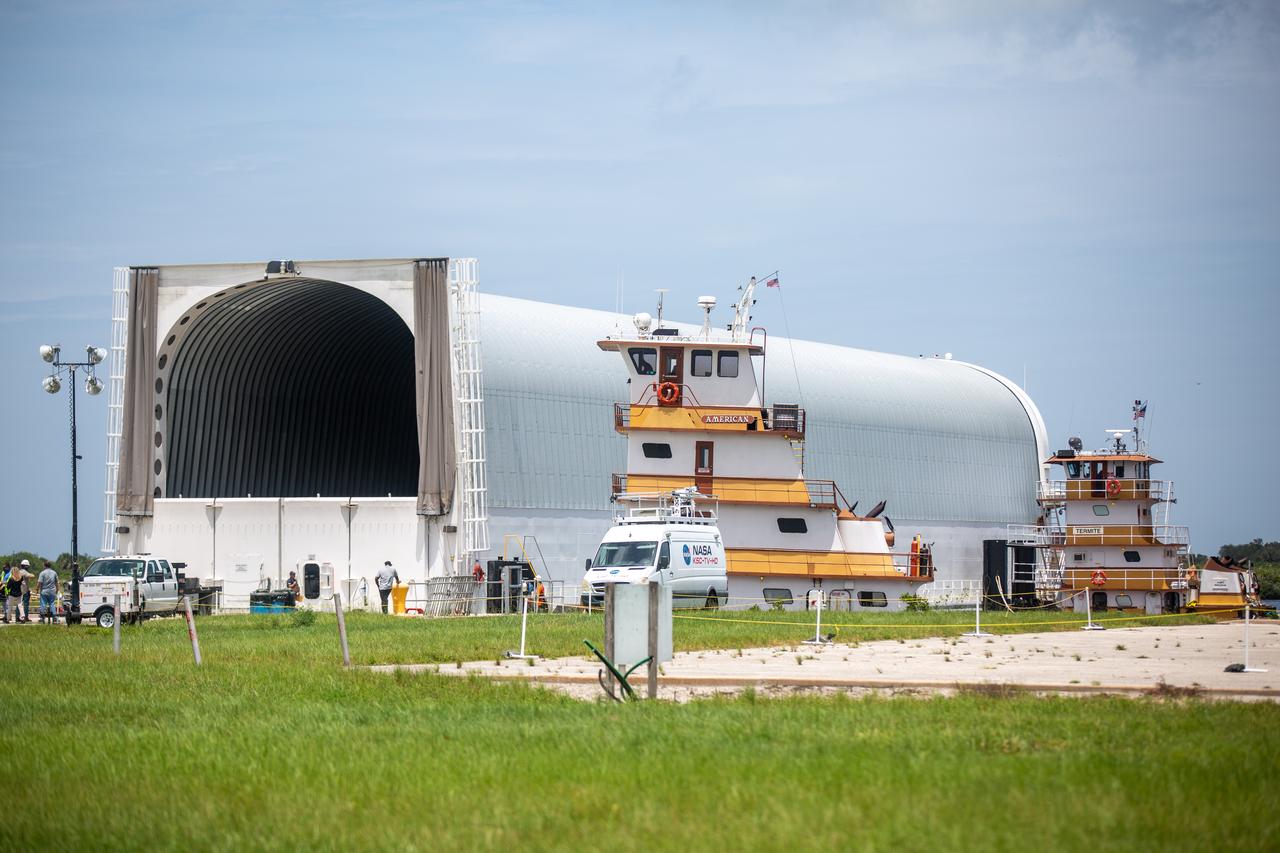
NASA’s Pegasus barge, carrying the launch vehicle stage adapter (LVSA) for the agency’s Space Launch System (SLS) rocket, arrives at the Kennedy Space Center Launch Complex 39 turn basin wharf on July 29, 2020. Traveling to Florida from NASA’s Marshall Space Flight Center in Huntsville, Alabama, the LVSA will connect the SLS core stage to the rocket’s upper stage for the Artemis I launch. Once the LVSA is offloaded, it will be moved to High Bay 4 in the Vehicle Assembly Building for processing ahead of launch. The first launch under the agency’s Artemis program, Artemis I will test SLS and the Orion spacecraft as an integrated system prior to crewed flights to the Moon.
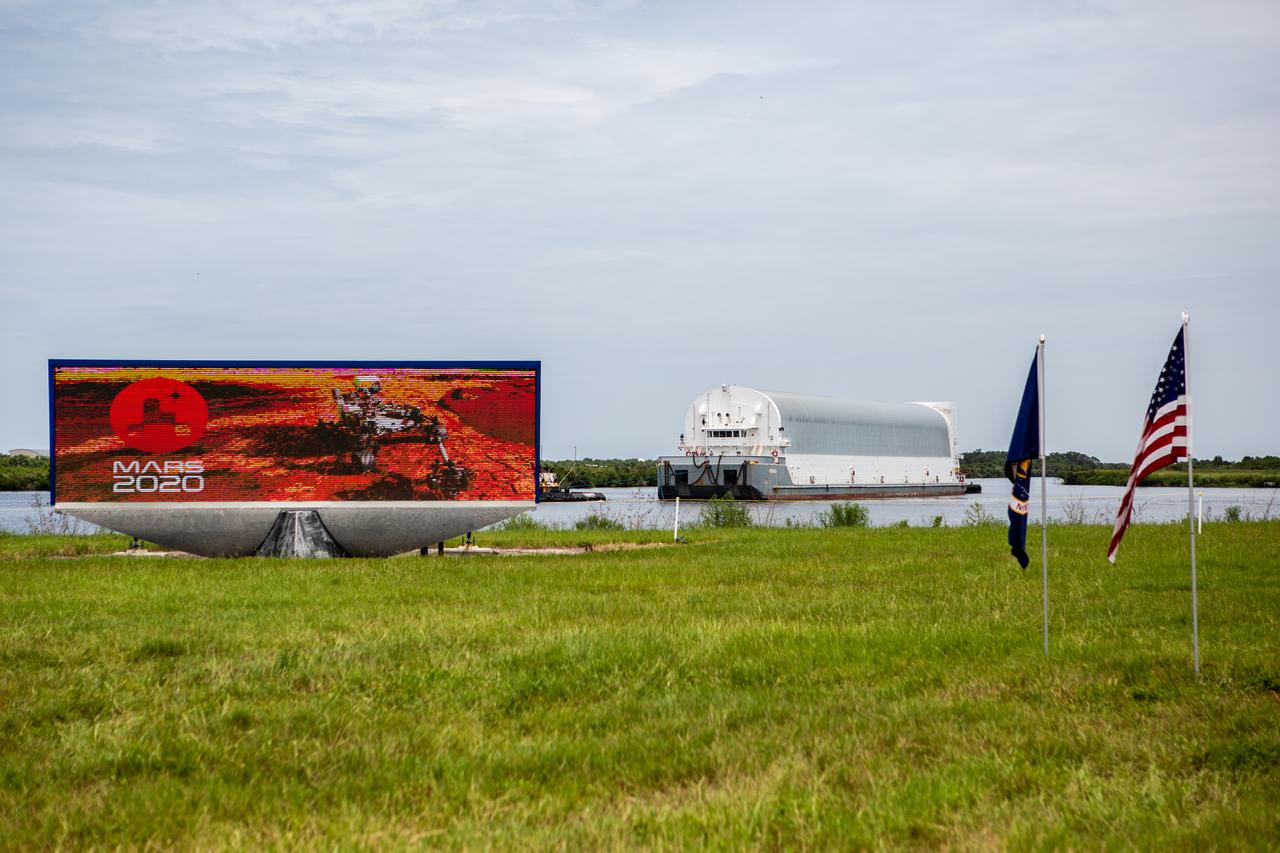
NASA’s Pegasus barge, carrying the launch vehicle stage adapter (LVSA) for the agency’s Space Launch System (SLS) rocket, approaches the Kennedy Space Center Launch Complex 39 turn basin wharf on July 29, 2020. Traveling to Florida from NASA’s Marshall Space Flight Center in Huntsville, Alabama, the LVSA will connect the SLS core stage to the rocket’s upper stage for the Artemis I launch. Once the LVSA is offloaded, it will be moved to High Bay 4 in the Vehicle Assembly Building for processing ahead of launch. The first launch under the agency’s Artemis program, Artemis I will test SLS and the Orion spacecraft as an integrated system prior to crewed flights to the Moon.
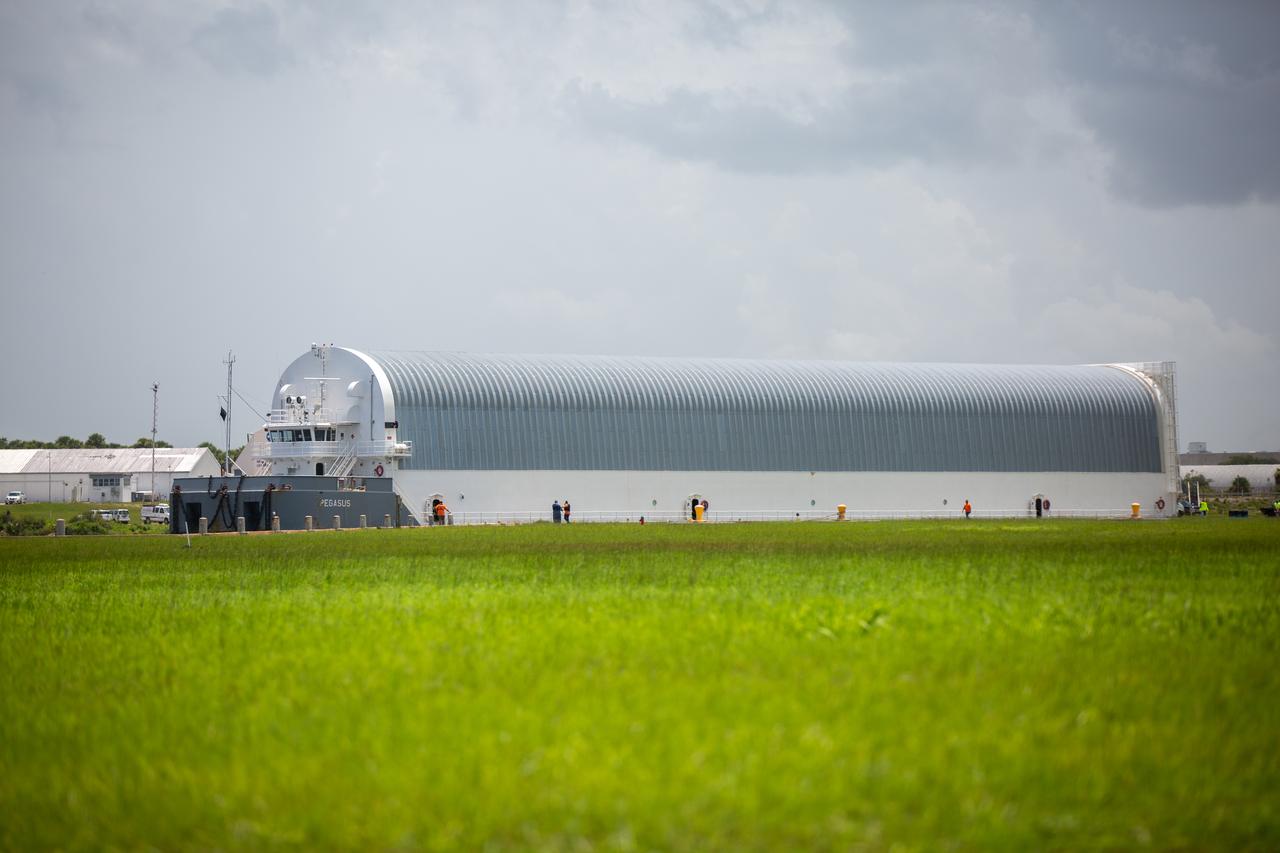
NASA’s Pegasus barge, carrying the launch vehicle stage adapter (LVSA) for the agency’s Space Launch System (SLS) rocket, arrives at the Kennedy Space Center Launch Complex 39 turn basin wharf on July 29, 2020. Traveling to Florida from NASA’s Marshall Space Flight Center in Huntsville, Alabama, the LVSA will connect the SLS core stage to the rocket’s upper stage for the Artemis I launch. Once the LVSA is offloaded, it will be moved to High Bay 4 in the Vehicle Assembly Building for processing ahead of launch. The first launch under the agency’s Artemis program, Artemis I will test SLS and the Orion spacecraft as an integrated system prior to crewed flights to the Moon.

NASA’s Pegasus barge, carrying the launch vehicle stage adapter (LVSA) for the agency’s Space Launch System (SLS) rocket, arrives at the Kennedy Space Center Launch Complex 39 turn basin wharf on July 29, 2020. Traveling to Florida from NASA’s Marshall Space Flight Center in Huntsville, Alabama, the LVSA will connect the SLS core stage to the rocket’s upper stage for the Artemis I launch. Once the LVSA is offloaded, it will be moved to High Bay 4 in the Vehicle Assembly Building for processing ahead of launch. The first launch under the agency’s Artemis program, Artemis I will test SLS and the Orion spacecraft as an integrated system prior to crewed flights to the Moon.
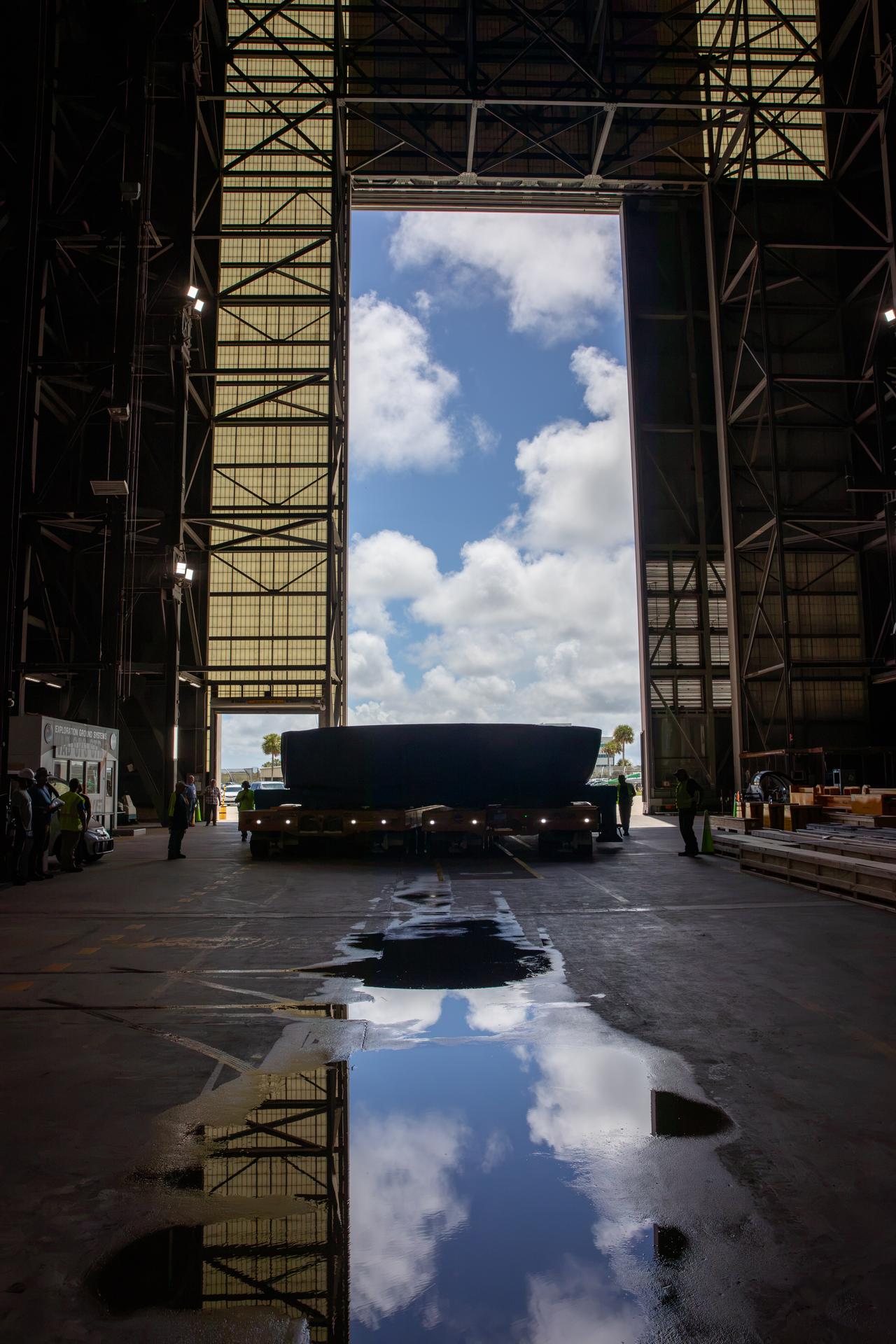
NASA’s Artemis IV SLS (Space Launch System) core stage boat-tail, covered in a protective blue tarp, arrives inside the NASA’s Vehicle Assembly Building at Kennedy Space Center in Florida on Monday, Aug. 31, 2026. Manufactured at NASA’s Michoud Assembly Facility in New Orleans, Louisiana, the boat-tail is a fairing-like structure that protects the bottom end of the SLS (Space Launch System) rocket core stage and RS-25 engines.
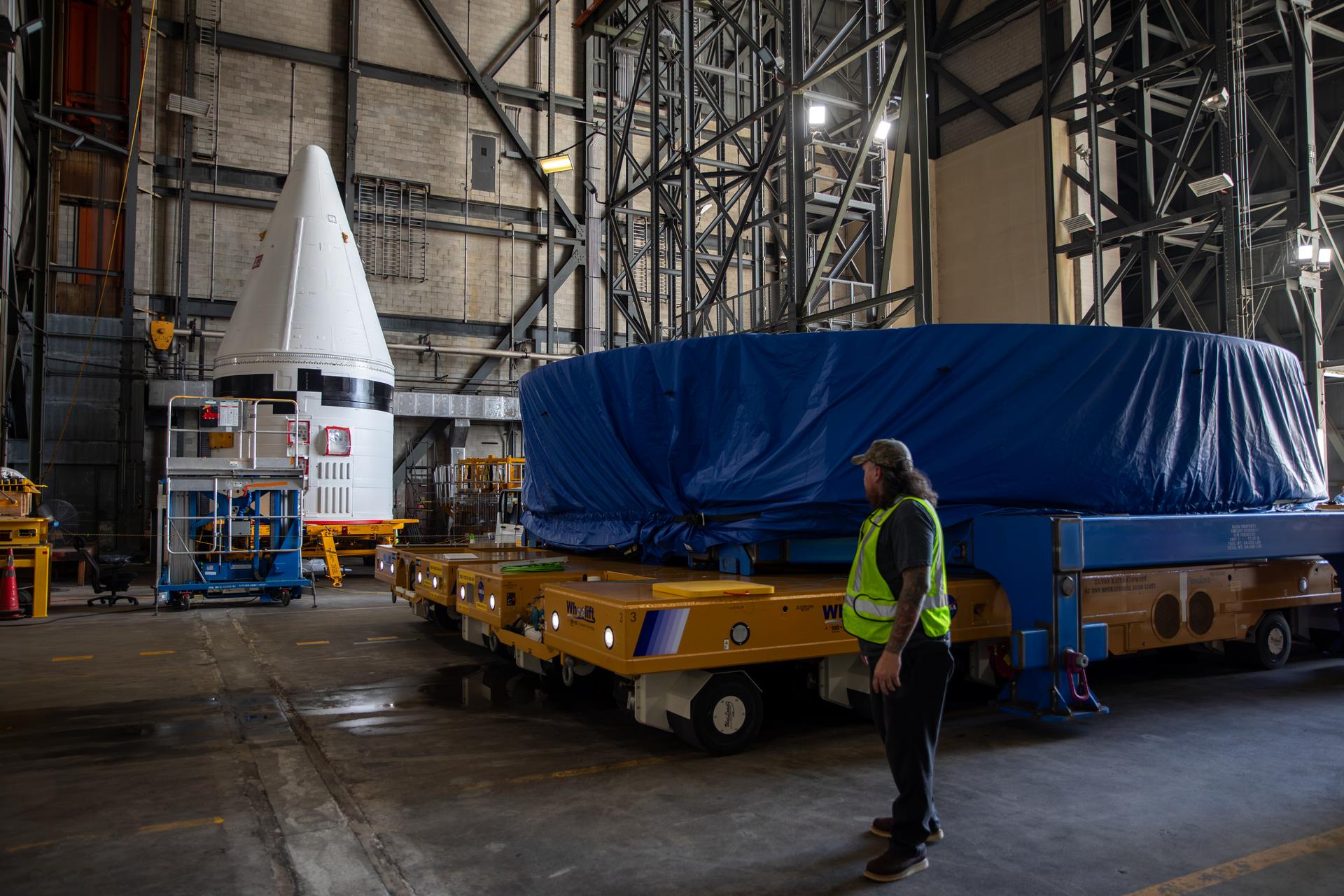
NASA’s Artemis IV SLS (Space Launch System) core stage boat-tail, covered in a protective blue tarp, arrives inside the NASA’s Vehicle Assembly Building at Kennedy Space Center in Florida on Monday, Aug. 31, 2026. Manufactured at NASA’s Michoud Assembly Facility in New Orleans, Louisiana, the boat-tail is a fairing-like structure that protects the bottom end of the SLS (Space Launch System) rocket core stage and RS-25 engines.
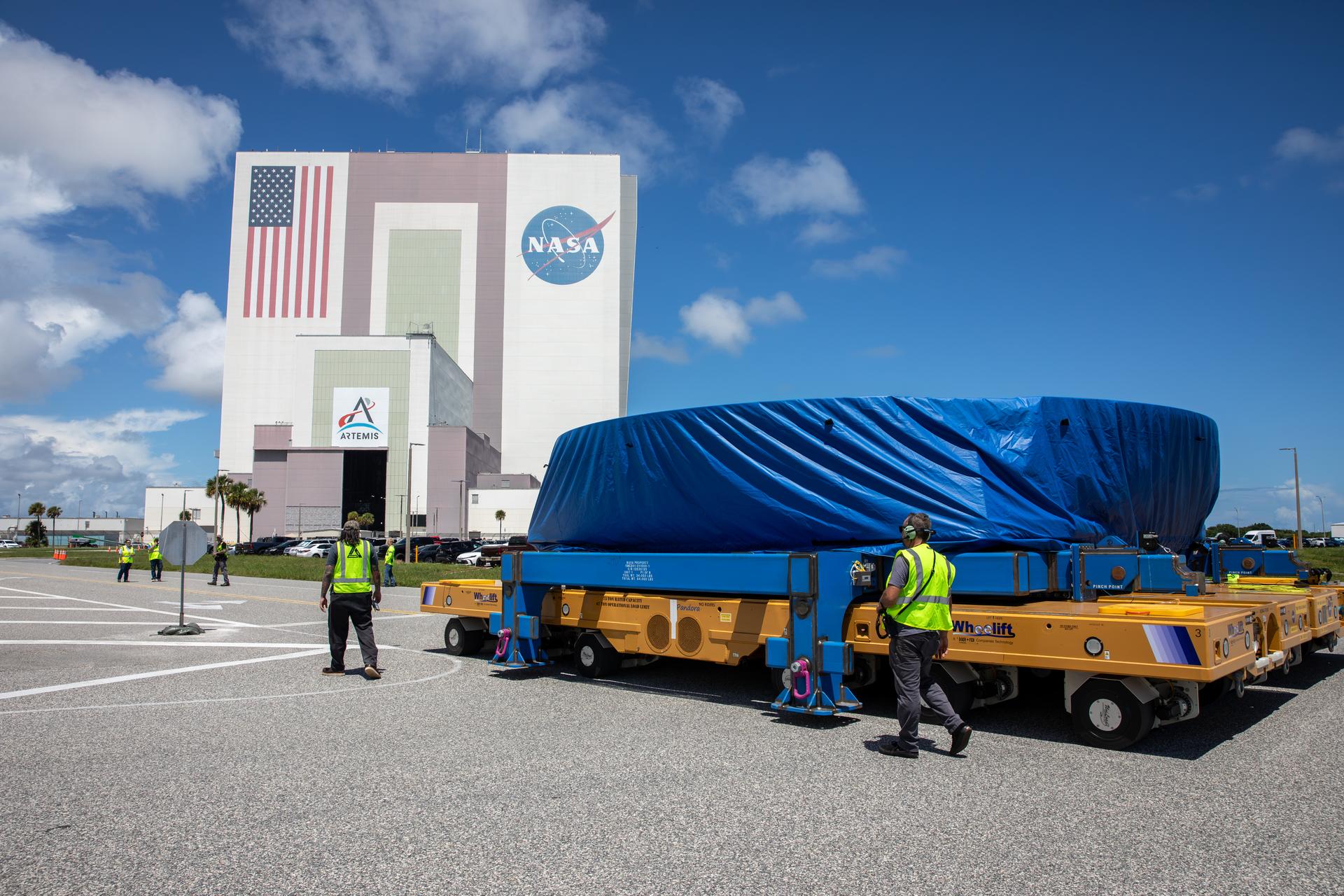
Teams from NASA’s Kennedy Space Center in Florida transport the agency’s Artemis IV SLS (Space Launch System) core stage boat-tail from NASA’s Pegasus barge to inside the NASA’s Vehicle Assembly Building at Kennedy Space Center in Florida on Monday, Aug. 31, 2026. Manufactured at NASA’s Michoud Assembly Facility in New Orleans, Louisiana, the boat-tail is a fairing-like structure that protects the bottom end of the SLS (Space Launch System) rocket core stage and RS-25 engines.
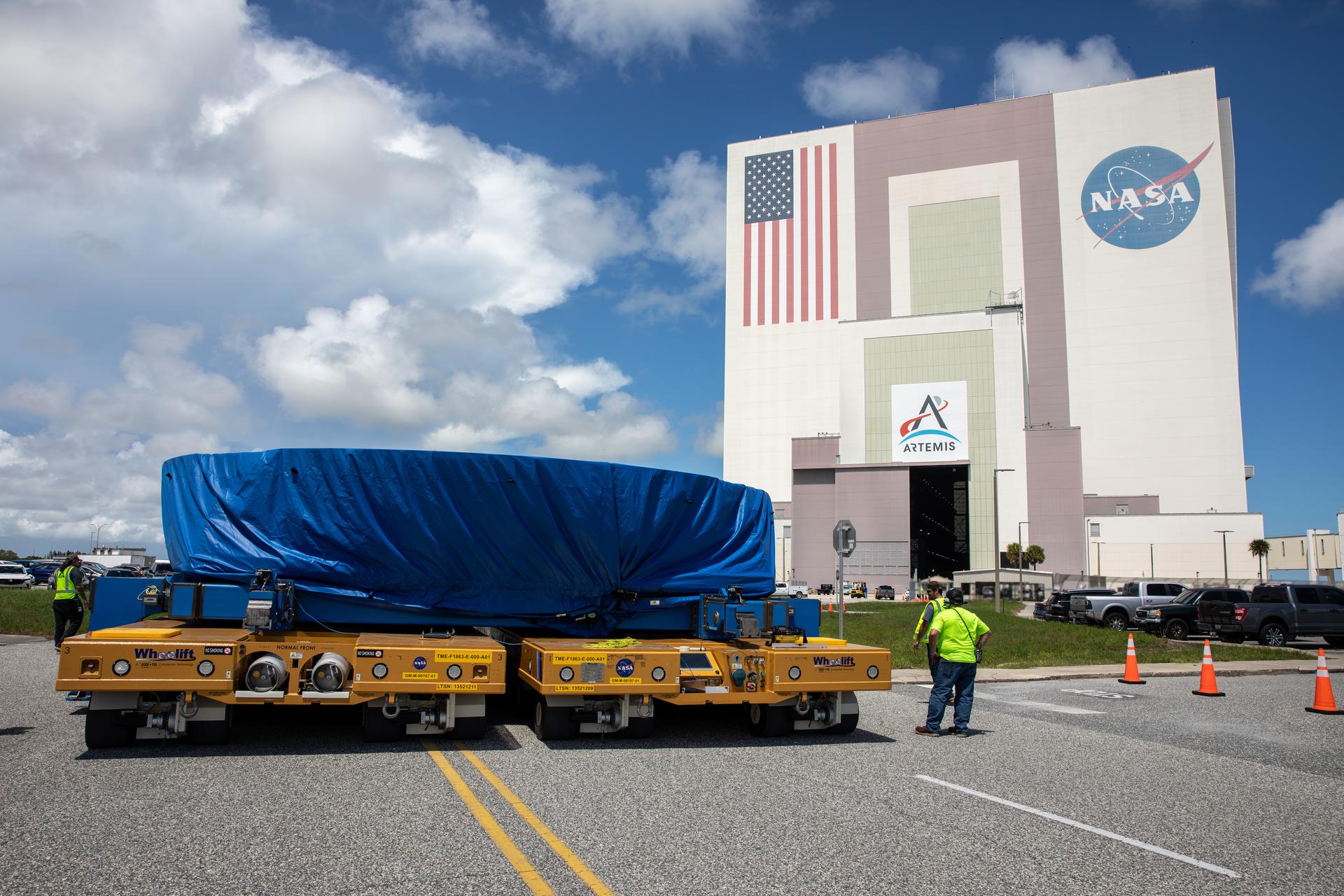
Teams from NASA’s Kennedy Space Center in Florida transport the agency’s Artemis IV SLS (Space Launch System) core stage boat-tail from NASA’s Pegasus barge to inside the NASA’s Vehicle Assembly Building at Kennedy Space Center in Florida on Monday, Aug. 31, 2026. Manufactured at NASA’s Michoud Assembly Facility in New Orleans, Louisiana, the boat-tail is a fairing-like structure that protects the bottom end of the SLS (Space Launch System) rocket core stage and RS-25 engines.
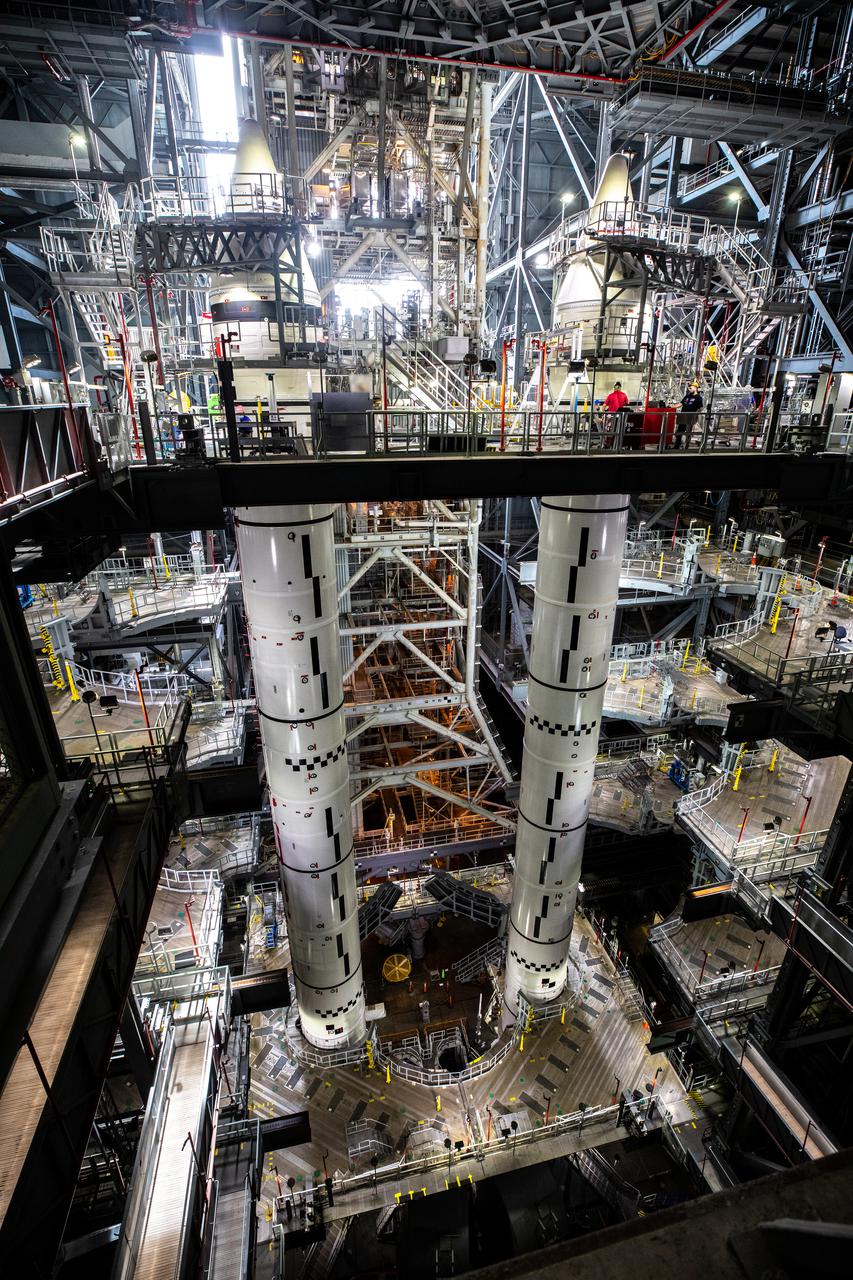
The fully stacked twin solid rocket boosters for NASA’s Space Launch System (SLS) rocket are seen on top of the mobile launcher inside High Bay 3 of the Vehicle Assembly Building (VAB) at the agency’s Kennedy Space Center in Florida on June 4, 2021. Now that booster stacking is complete, teams with NASA’s Exploration Ground Systems and contractor Jacobs are preparing to integrate the massive core stage, which arrived at Kennedy in April 2020, with the boosters inside the VAB. The 188,000-pound core stage alone will provide more than 2 million pounds of thrust at launch, and coupled with the boosters, will provide more than 8.8 million pounds of thrust to launch the Artemis I mission. The first in an increasingly complex series of missions, Artemis I will test SLS and the Orion spacecraft as an integrated system ahead of crewed flights to the Moon.
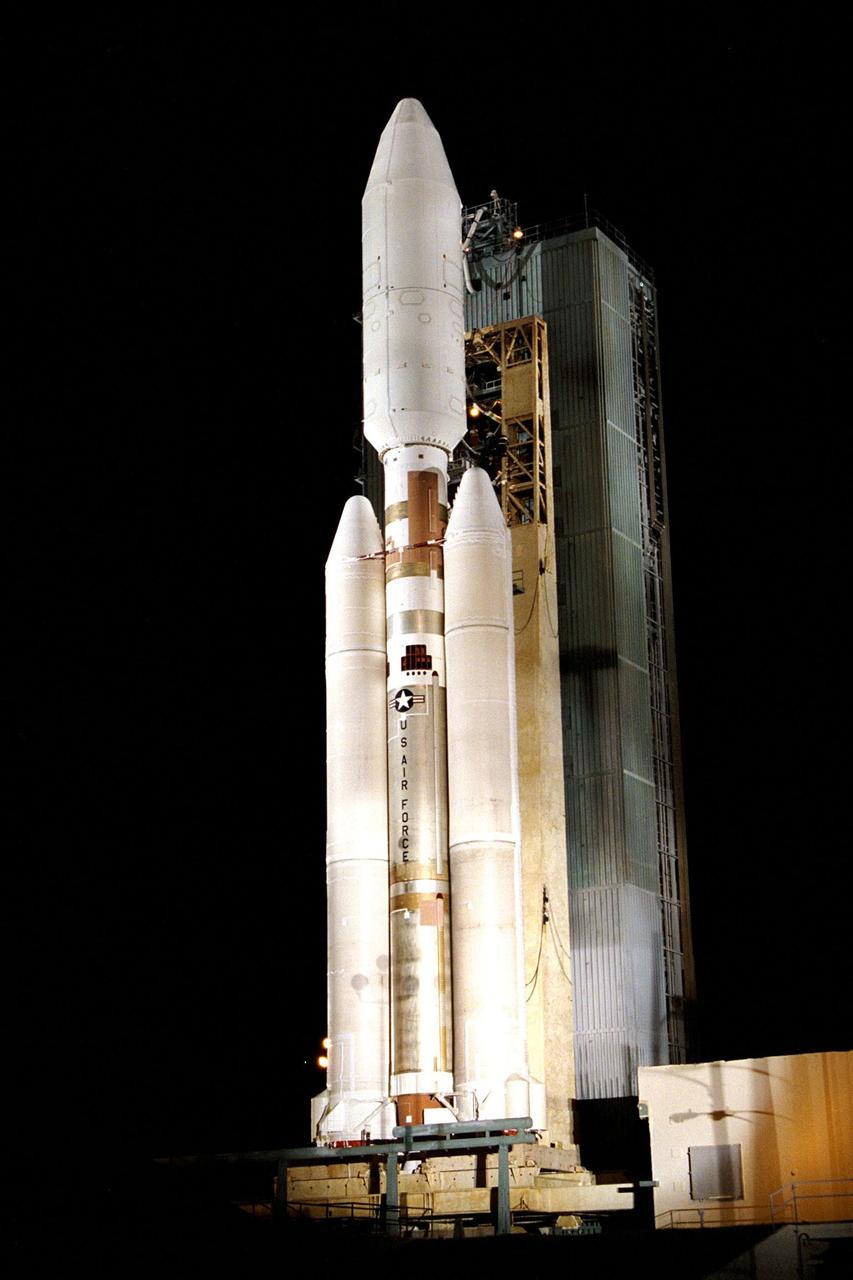
At Launch Complex 40 on Cape Canaveral Air Station, the Mobile Service Tower has been retracted away from the Titan IVB/Centaur carrying the Cassini spacecraft and its attached Huygens probe. This is the second launch attempt for the Saturn-bound mission; a first try Oct. 13 was scrubbed primarily due to concerns about upper level wind conditions. Liftoff Oct. 15 is set to occur during a launch window opening at 4:43 a.m. EDT and extending until 7:03 a.m. Clearly visible in this view are the 66-foot-tall, 17-foot-wide payload fairing atop the vehicle, in which Cassini and the attached Centaur stage are encased, the two-stage liquid propellant core vehicle, and the twin 112-foot long solid rocket motor upgrades (SRMUs) straddling the core vehicle. It is the SRMUs which ignite first to begin the launch sequence
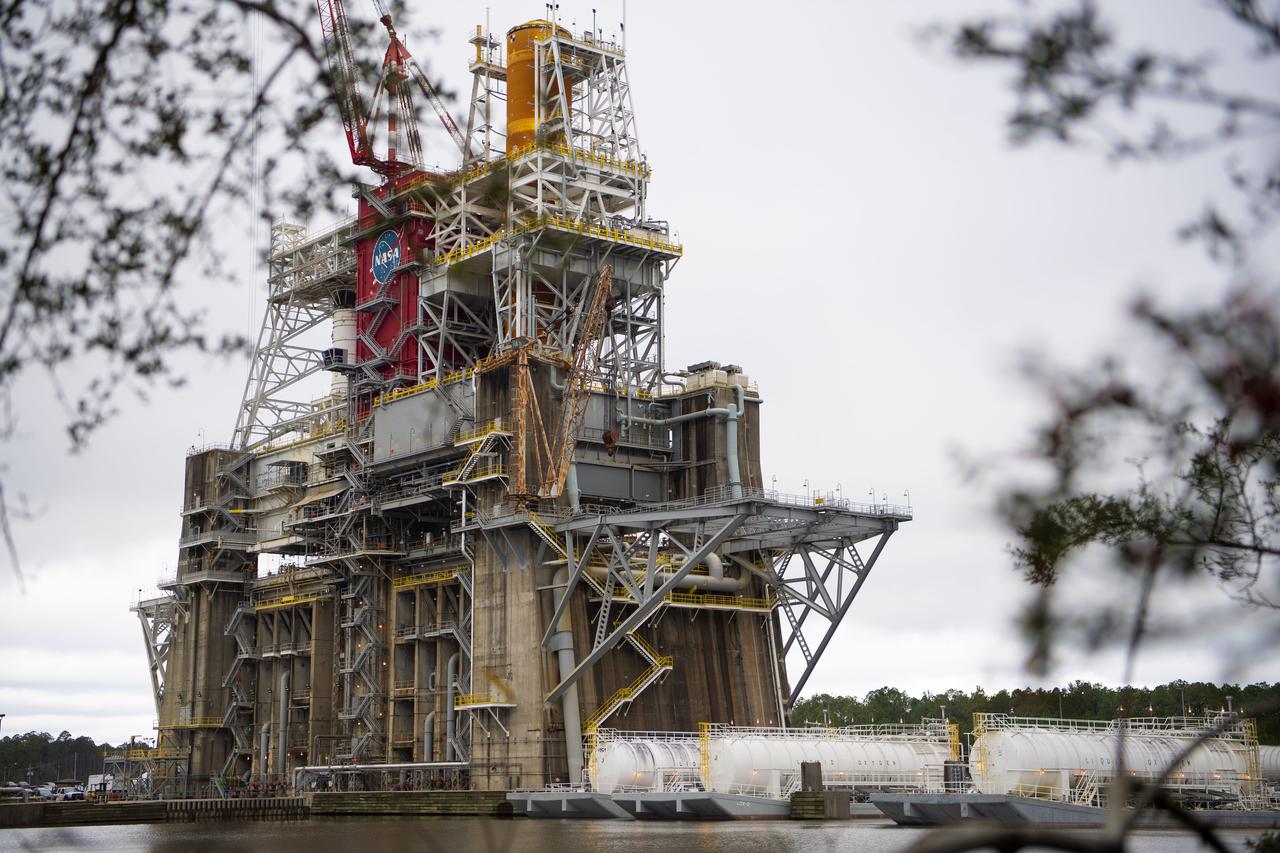
Barges are docked at the B-2 Test Stand at Stennis Space Center on Dec. 4, 2020, in preparation for upcoming Green Run test activities. Teams at the center have been performing Green Run tests of NASA’s Space Launch System core stage and its integrated systems throughout 2020. In mid-December, teams performed the seventh test of the Green Run series – a wet dress rehearsal of a countdown to hot fire. It marked the first time the stage tanks had been loaded with liquid oxygen and liquid hydrogen propellants supplied by the docked barges.

The first RS-25 flight engine, engine No. 2059, is lifted onto the A-1 Test Stand at Stennis Space Center on Nov. 4, 2015. The engine was tested in early 2016 to certify it for use on NASA’s new Space Launch System (SLS). The SLS core stage will be powered by four RS-25 engines, all tested at Stennis Space Center. NASA is developing the SLS to carry humans deeper into space than ever before, including on a journey to Mars.
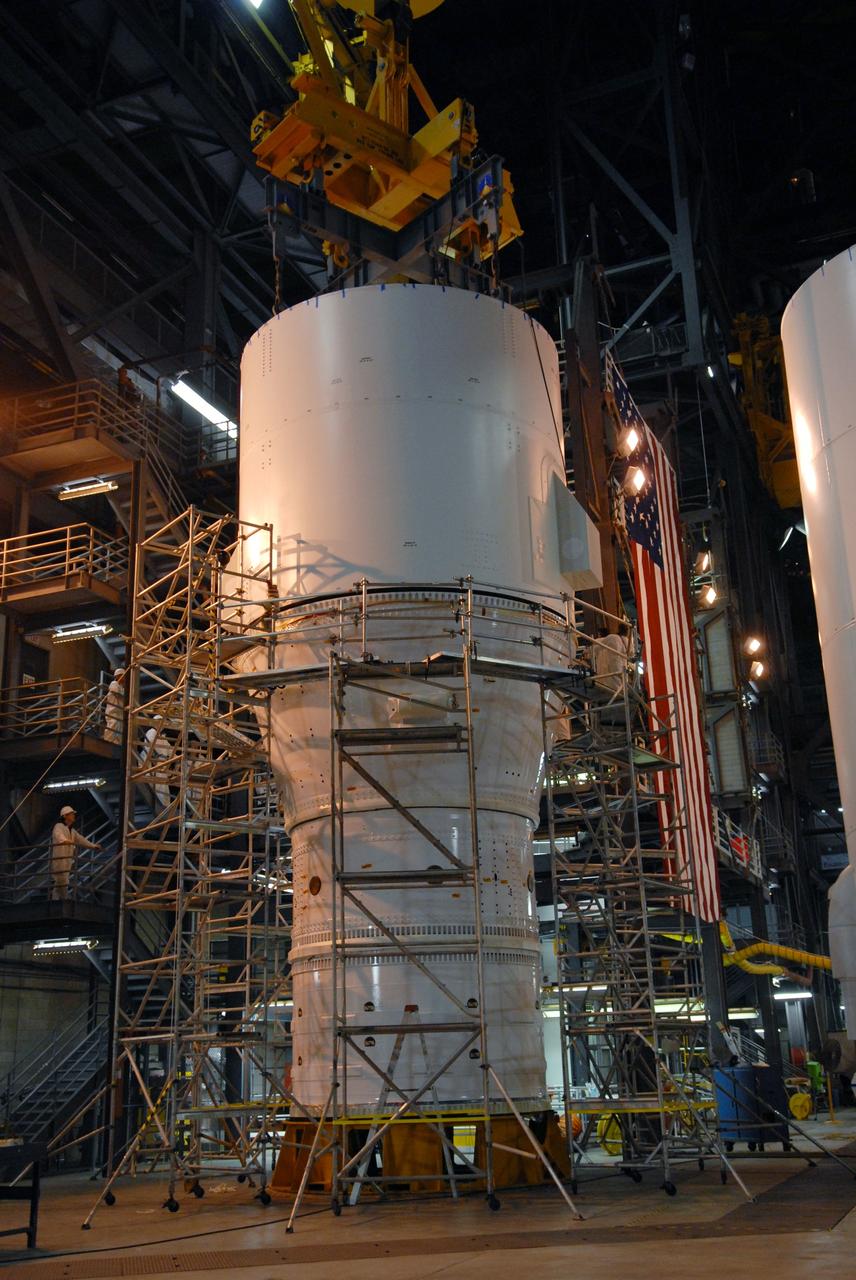
CAPE CANAVERAL, Fla. – In the Vehicle Assembly Building's High Bay 4 at NASA's Kennedy Space Center in Florida, the Ares I-X interstage 1 for the upper stage simulator is lowered onto the forward assembly. It will be mated with the frustum on top of the forward assembly. Ares I-X is the flight test vehicle for the Ares I, a component of the Constellation Program. Ares I is the essential core of a safe, reliable, cost-effective space transportation system that eventually will carry crewed missions back to the moon, on to Mars and out into the solar system. Ares I-X is targeted for launch in August 2009. Photo credit: NASA/Tim Jacobs
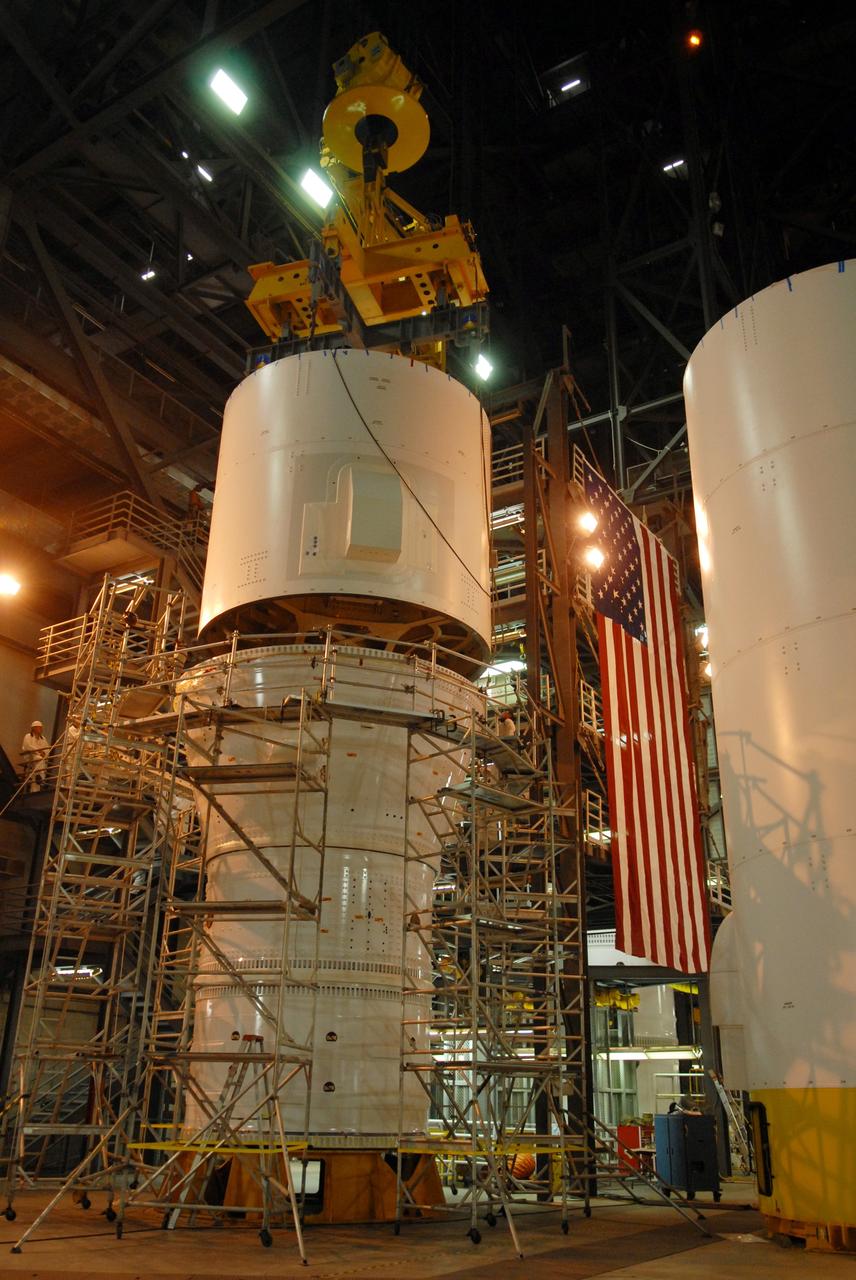
CAPE CANAVERAL, Fla. – In the Vehicle Assembly Building's High Bay 4 at NASA's Kennedy Space Center in Florida, the Ares I-X interstage 1 for the upper stage simulator is lowered onto the forward assembly. It will be mated with the frustum on top of the forward assembly. Ares I-X is the flight test vehicle for the Ares I, a component of the Constellation Program. Ares I is the essential core of a safe, reliable, cost-effective space transportation system that eventually will carry crewed missions back to the moon, on to Mars and out into the solar system. Ares I-X is targeted for launch in August 2009. Photo credit: NASA/Tim Jacobs
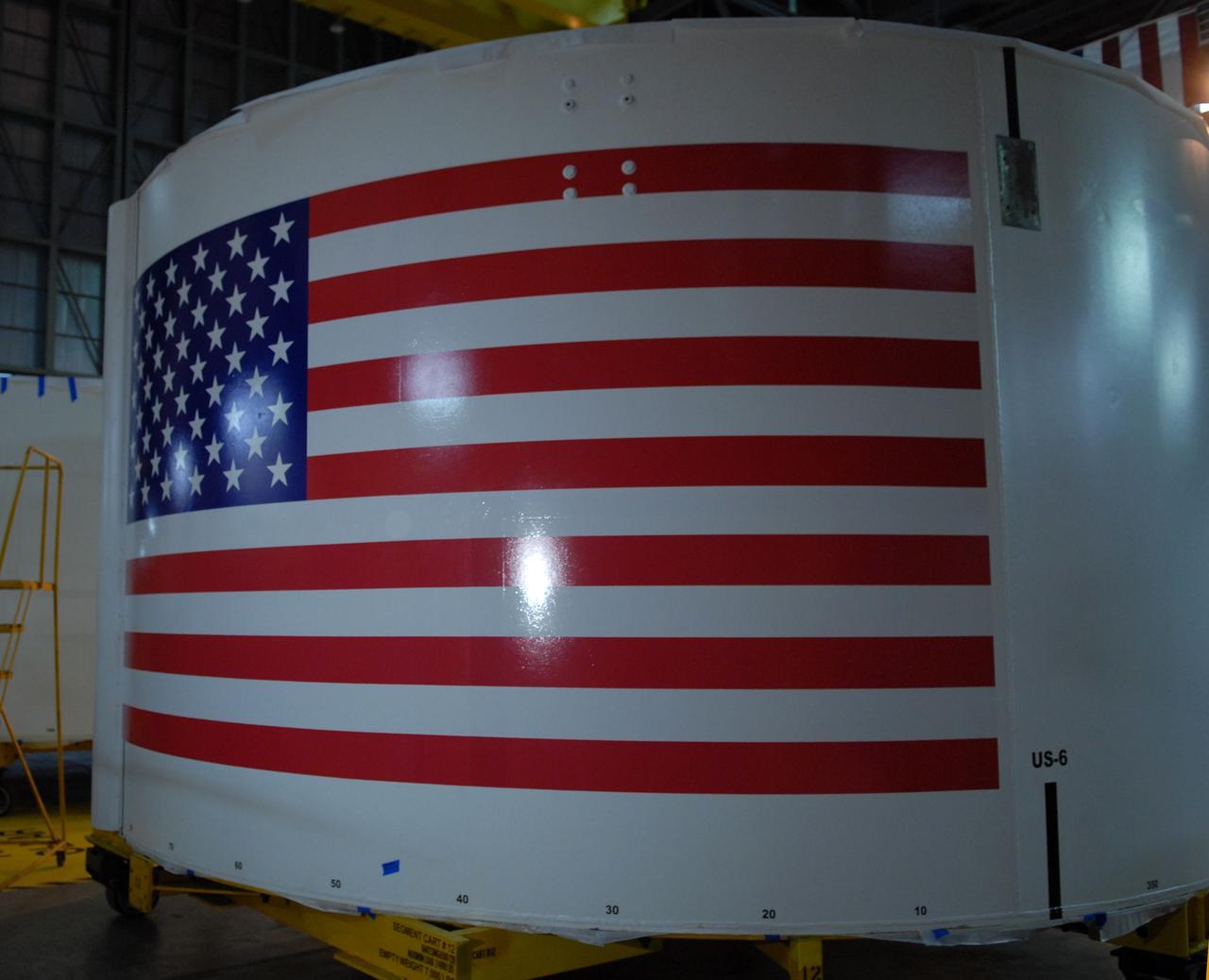
CAPE CANAVERAL, Fla. – In the Vehicle Assembly Building high bay 4 at NASA's Kennedy Space Center in Florida, one of the Ares I-X upper stage simulator segments bears the decal of the U.S. flag. The upper stage simulator will be used in the test flight identified as Ares I-X in 2009. Ares I-X is the test vehicle for the Ares I, which is part of the Constellation Program to return men to the moon and beyond. Ares I is the essential core of a safe, reliable, cost-effective space transportation system that eventually will carry crewed missions back to the moon, on to Mars and out into the solar system. Ares I may also use its 25-ton payload capacity to deliver resources and supplies to the International Space Station, or to "park" payloads in orbit for retrieval by other spacecraft bound for the moon or other destinations. Photo credit: NASA/Jack Pfaller
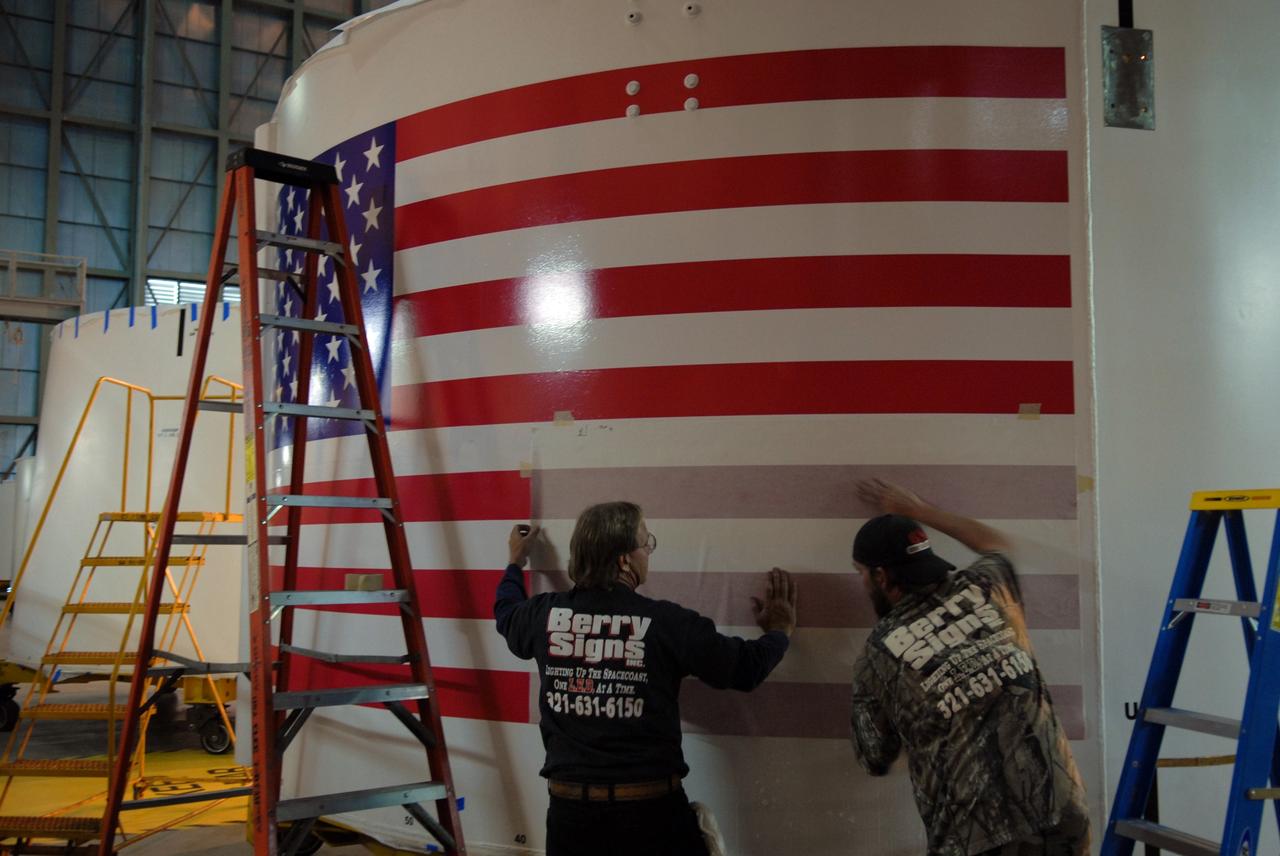
CAPE CANAVERAL, Fla. – In the Vehicle Assembly Building high bay 4 at NASA's Kennedy Space Center in Florida, workers remove the final cover from the U.S. flag decal affixed to one of the Ares I-X upper stage simulator segments. The upper stage simulator will be used in the test flight identified as Ares I-X in 2009. Ares I-X is the test vehicle for the Ares I, which is part of the Constellation Program to return men to the moon and beyond. Ares I is the essential core of a safe, reliable, cost-effective space transportation system that eventually will carry crewed missions back to the moon, on to Mars and out into the solar system. Ares I may also use its 25-ton payload capacity to deliver resources and supplies to the International Space Station, or to "park" payloads in orbit for retrieval by other spacecraft bound for the moon or other destinations. Photo credit: NASA/Jack Pfaller
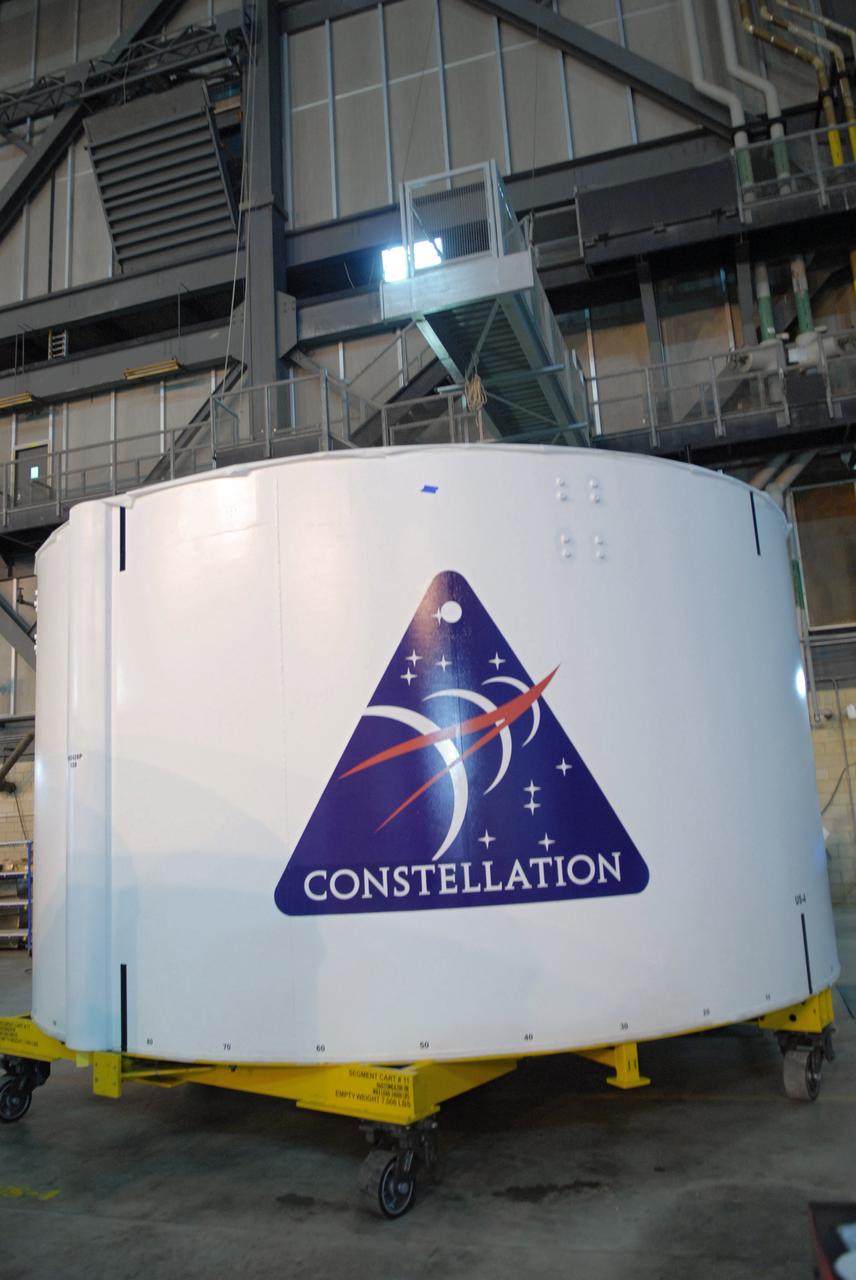
CAPE CANAVERAL, Fla. – In the Vehicle Assembly Building high bay 4 at NASA's Kennedy Space Center in Florida, one of the Ares I-X upper stage simulator segments bears the Constellation patch. The upper stage simulator will be used in the test flight identified as Ares I-X in 2009. Ares I-X is the test vehicle for the Ares I, which is part of the Constellation Program to return men to the moon and beyond. Ares I is the essential core of a safe, reliable, cost-effective space transportation system that eventually will carry crewed missions back to the moon, on to Mars and out into the solar system. Ares I may also use its 25-ton payload capacity to deliver resources and supplies to the International Space Station, or to "park" payloads in orbit for retrieval by other spacecraft bound for the moon or other destinations. Photo credit: NASA/Jack Pfaller
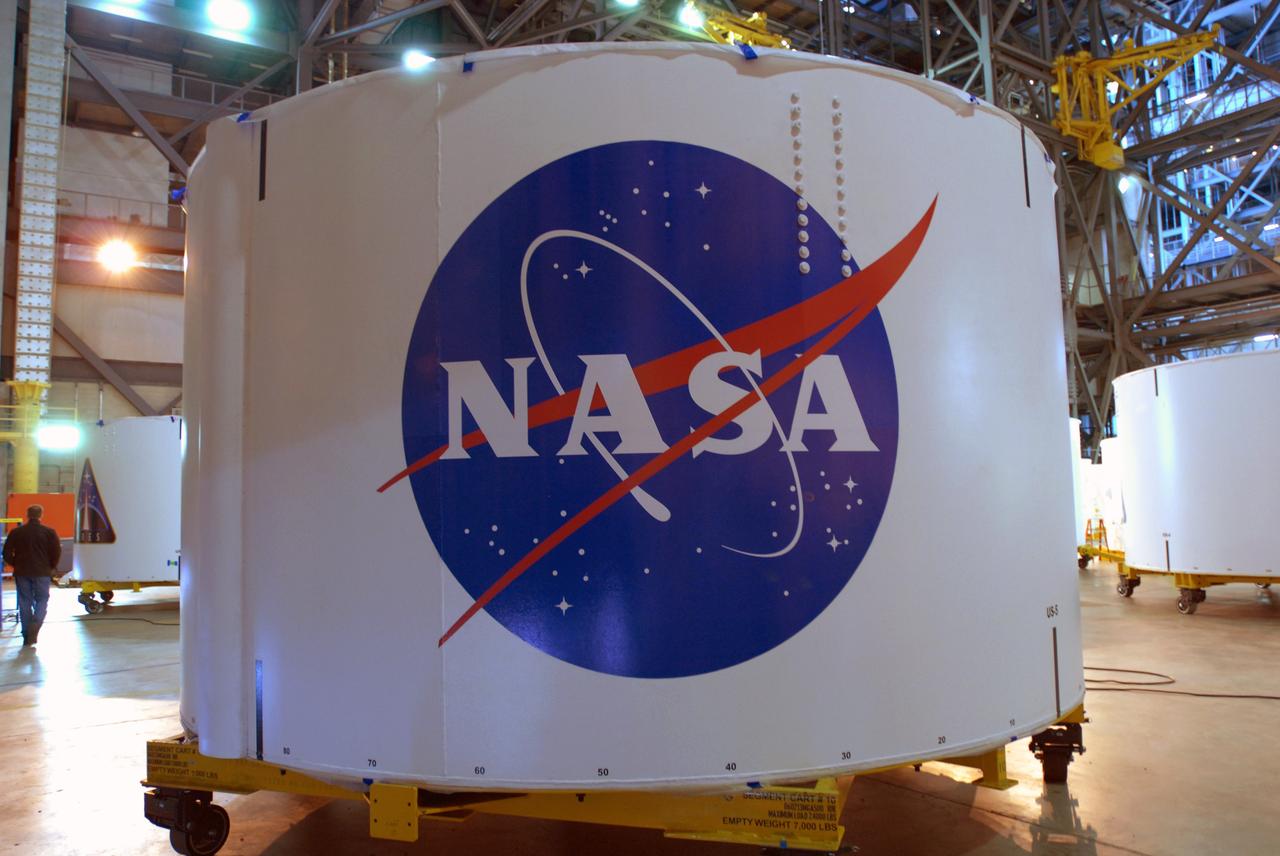
CAPE CANAVERAL, Fla. – In the Vehicle Assembly Building high bay 4 at NASA's Kennedy Space Center in Florida, one of the Ares I-X upper stage simulator segments bears the decal of the NASA insignia. The upper stage simulator will be used in the test flight identified as Ares I-X in 2009. Ares I is the essential core of a safe, reliable, cost-effective space transportation system that eventually will carry crewed missions back to the moon, on to Mars and out into the solar system. Ares I may also use its 25-ton payload capacity to deliver resources and supplies to the International Space Station, or to "park" payloads in orbit for retrieval by other spacecraft bound for the moon or other destinations. Photo credit: NASA/Jim Grossmann
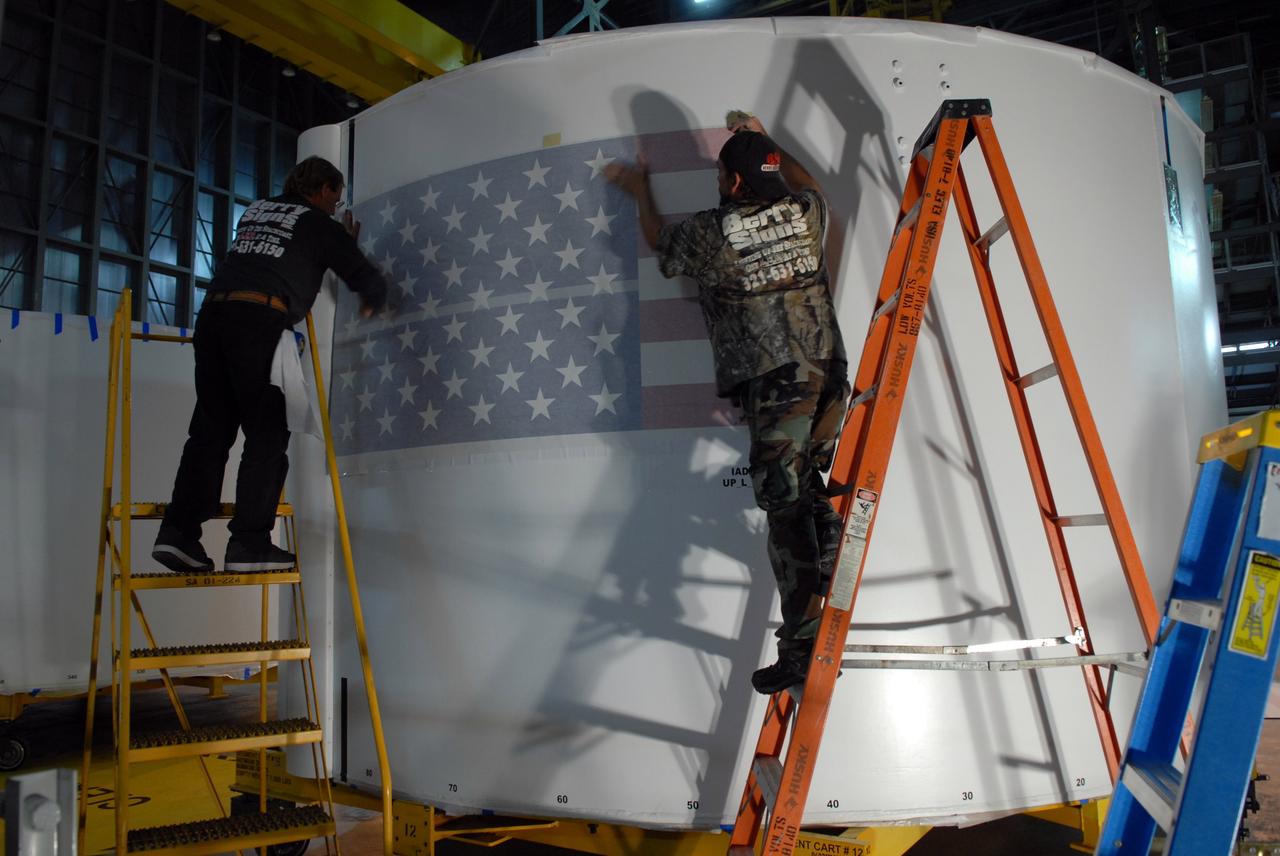
CAPE CANAVERAL, Fla. – In the Vehicle Assembly Building high bay 4 at NASA's Kennedy Space Center in Florida, workers adhere a decal of the U.S. flag on one of the Ares I-X upper stage simulator segments. The upper stage simulator will be used in the test flight identified as Ares I-X in 2009. Ares I-X is the test vehicle for the Ares I, which is part of the Constellation Program to return men to the moon and beyond. Ares I is the essential core of a safe, reliable, cost-effective space transportation system that eventually will carry crewed missions back to the moon, on to Mars and out into the solar system. Ares I may also use its 25-ton payload capacity to deliver resources and supplies to the International Space Station, or to "park" payloads in orbit for retrieval by other spacecraft bound for the moon or other destinations. Photo credit: NASA/Jack Pfaller
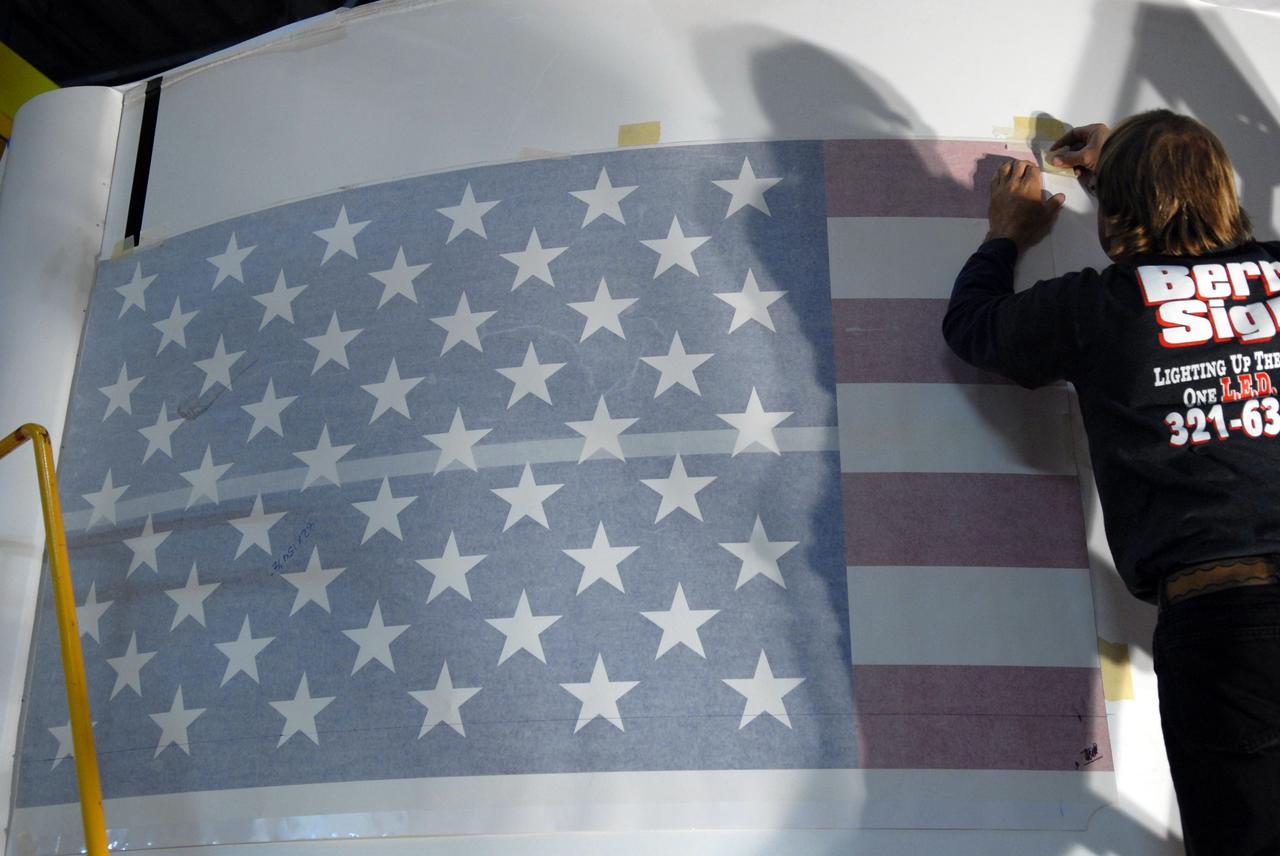
CAPE CANAVERAL, Fla. – In the Vehicle Assembly Building high bay 4 at NASA's Kennedy Space Center in Florida, workers begin adhering a decal of the U.S. flag on one of the Ares I-X upper stage simulator segments. The upper stage simulator will be used in the test flight identified as Ares I-X in 2009. Ares I-X is the test vehicle for the Ares I, which is part of the Constellation Program to return men to the moon and beyond. Ares I is the essential core of a safe, reliable, cost-effective space transportation system that eventually will carry crewed missions back to the moon, on to Mars and out into the solar system. Ares I may also use its 25-ton payload capacity to deliver resources and supplies to the International Space Station, or to "park" payloads in orbit for retrieval by other spacecraft bound for the moon or other destinations. Photo credit: NASA/Jack Pfaller
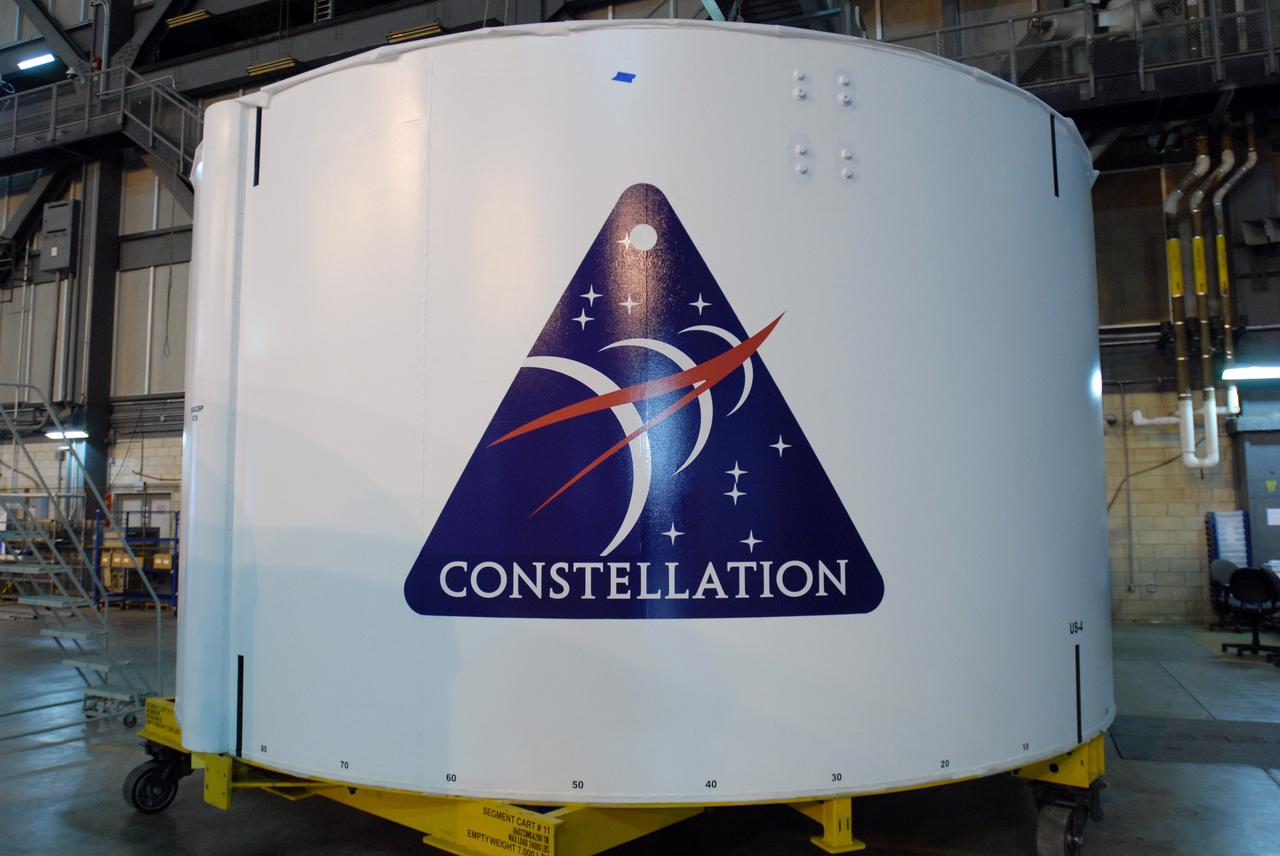
CAPE CANAVERAL, Fla. – In the Vehicle Assembly Building high bay 4 at NASA's Kennedy Space Center in Florida, one of the Ares I-X upper stage simulator segments bears the decal with the logo of the Constellation Program. The upper stage simulator will be used in the test flight identified as Ares I-X in 2009. Ares I is the essential core of a safe, reliable, cost-effective space transportation system that eventually will carry crewed missions back to the moon, on to Mars and out into the solar system. Ares I may also use its 25-ton payload capacity to deliver resources and supplies to the International Space Station, or to "park" payloads in orbit for retrieval by other spacecraft bound for the moon or other destinations. Photo credit: NASA/Jim Grossmann
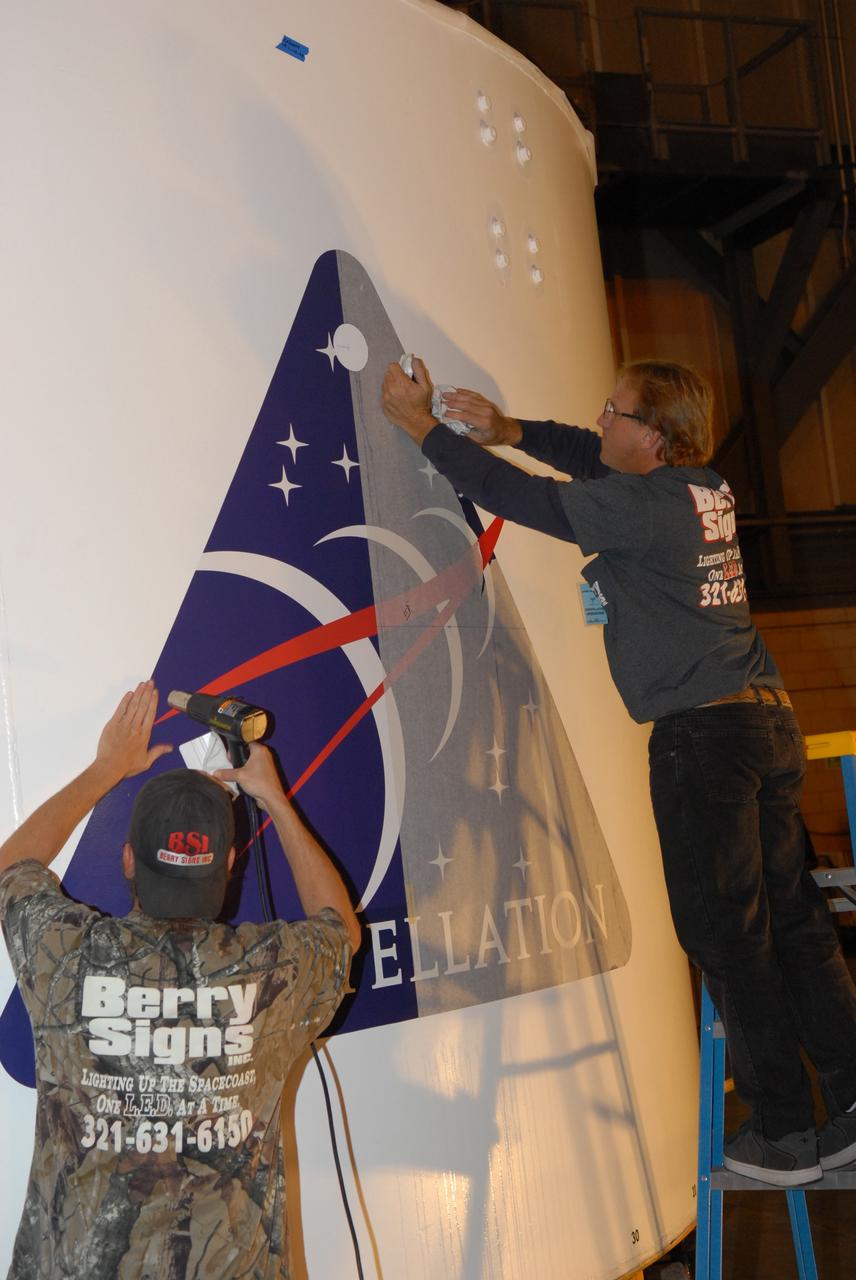
CAPE CANAVERAL, Fla. – In the Vehicle Assembly Building high bay 4 at NASA's Kennedy Space Center in Florida, workers begin adhering the Constellation patch on one of the Ares I-X upper stage simulator segments. The upper stage simulator will be used in the test flight identified as Ares I-X in 2009. Ares I-X is the test vehicle for the Ares I, which is part of the Constellation Program to return men to the moon and beyond. Ares I is the essential core of a safe, reliable, cost-effective space transportation system that eventually will carry crewed missions back to the moon, on to Mars and out into the solar system. Ares I may also use its 25-ton payload capacity to deliver resources and supplies to the International Space Station, or to "park" payloads in orbit for retrieval by other spacecraft bound for the moon or other destinations. Photo credit: NASA/Jack Pfaller
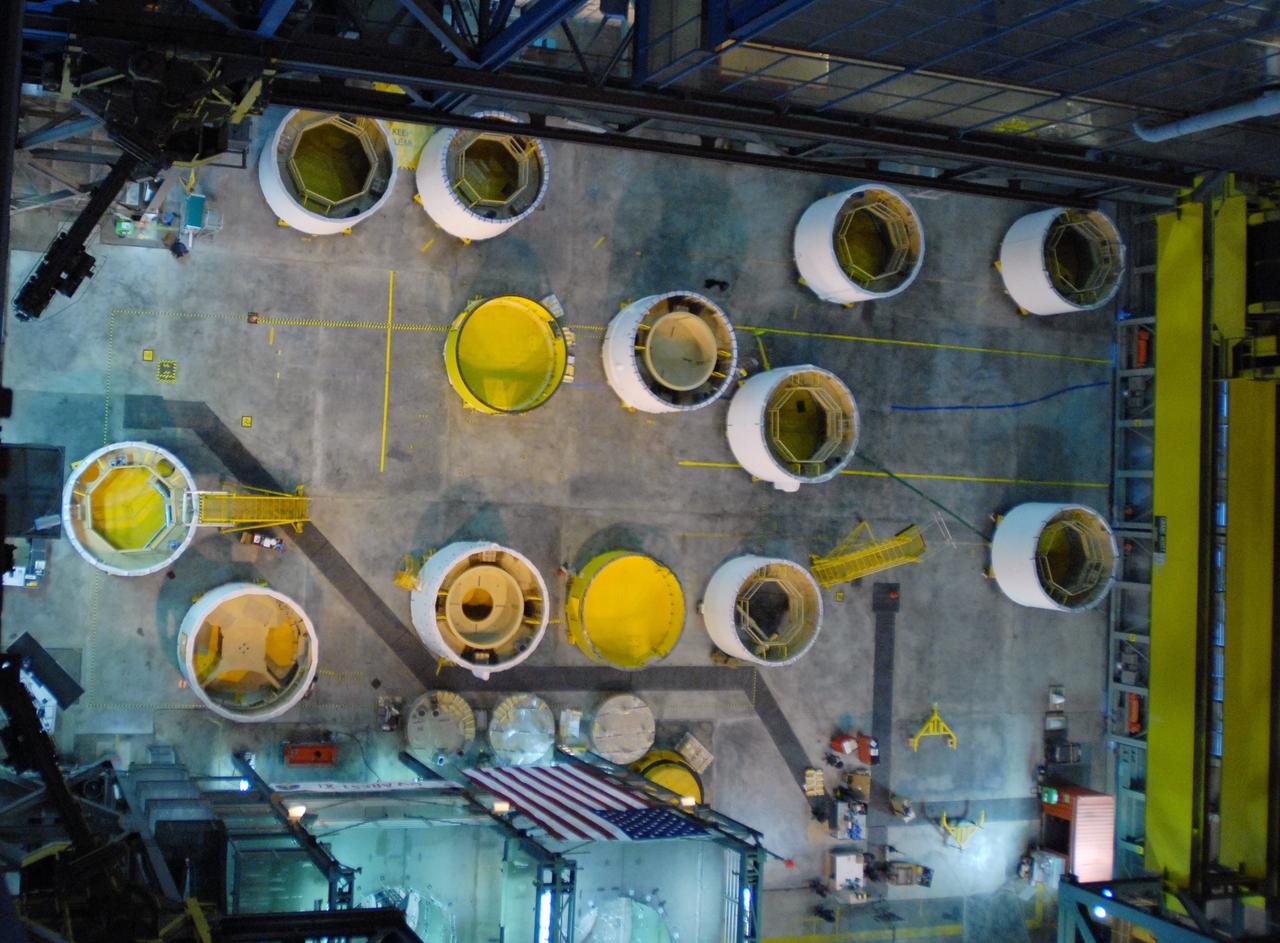
CAPE CANAVERAL, Fla. – In the Vehicle Assembly Building high bay 4 at NASA's Kennedy Space Center in Florida, an overhead view shows the Ares I-X upper stage simulator segments. The upper stage simulator will be used in the test flight identified as Ares I-X in 2009. Ares I is the essential core of a safe, reliable, cost-effective space transportation system that eventually will carry crewed missions back to the moon, on to Mars and out into the solar system. Ares I may also use its 25-ton payload capacity to deliver resources and supplies to the International Space Station, or to "park" payloads in orbit for retrieval by other spacecraft bound for the moon or other destinations. Photo credit: NASA/Jim Grossmann
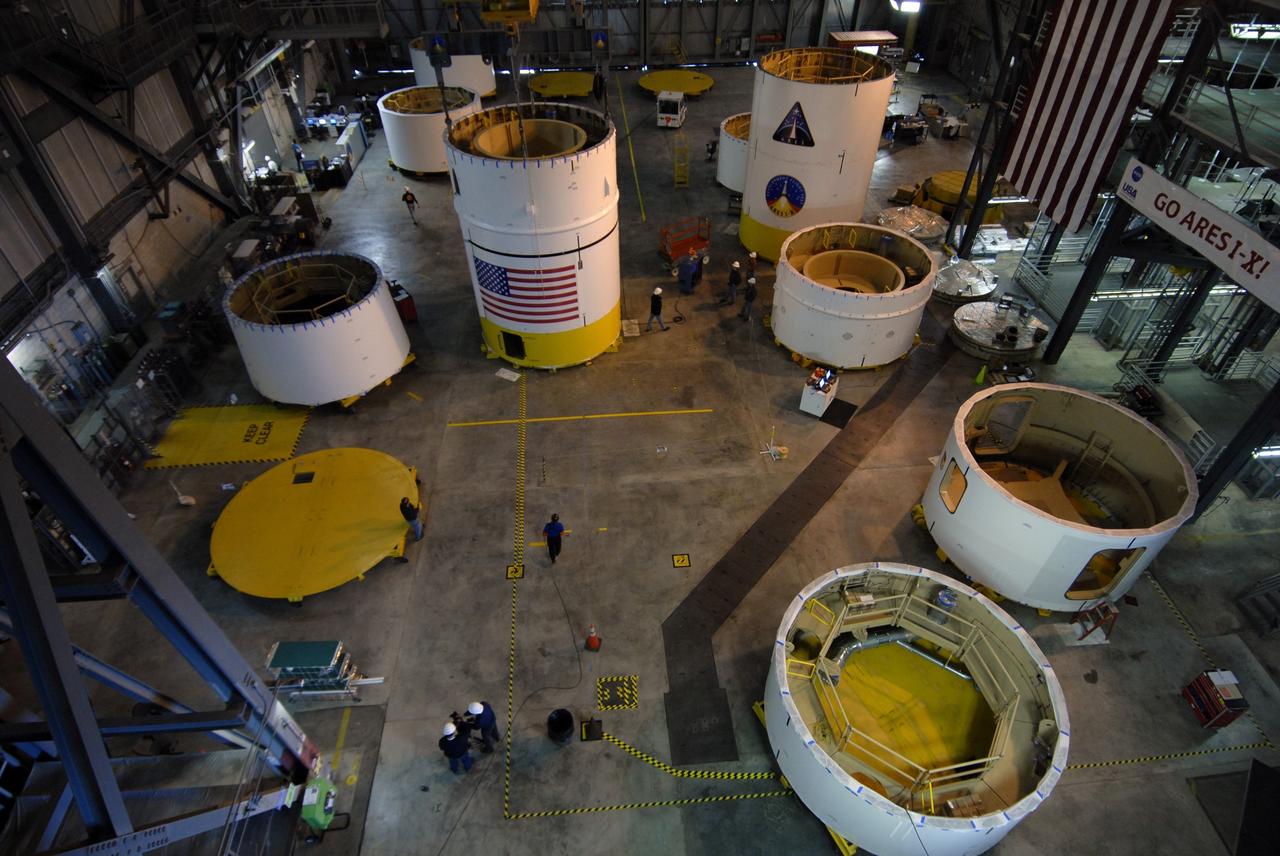
CAPE CANAVERAL, Fla. -- The upper stage simulator segments are positioned across the floor of the Vehicle Assembly Building's high bay 4 at NASA's Kennedy Space Center in Florida. Four of the segments are already stacked. The upper stage simulator will be used in the test flight identified as Ares I-X in 2009. Ares I-X is the test vehicle for the Ares I, which is part of the Constellation Program to return men to the moon and beyond. Ares I is the essential core of a safe, reliable, cost-effective space transportation system that eventually will carry crewed missions back to the moon, on to Mars and out into the solar system. Ares I may also use its 25-ton payload capacity to deliver resources and supplies to the International Space Station, or to "park" payloads in orbit for retrieval by other spacecraft bound for the moon or other destinations. The upper stage simulator comprises 11 segments, each approximately 18 feet in diameter. The simulator segments will simulate the mass and the outer mold line and will be more than 100 feet of the total vehicle height of 327 feet. Photo credit: NASA/Jack Pfaller
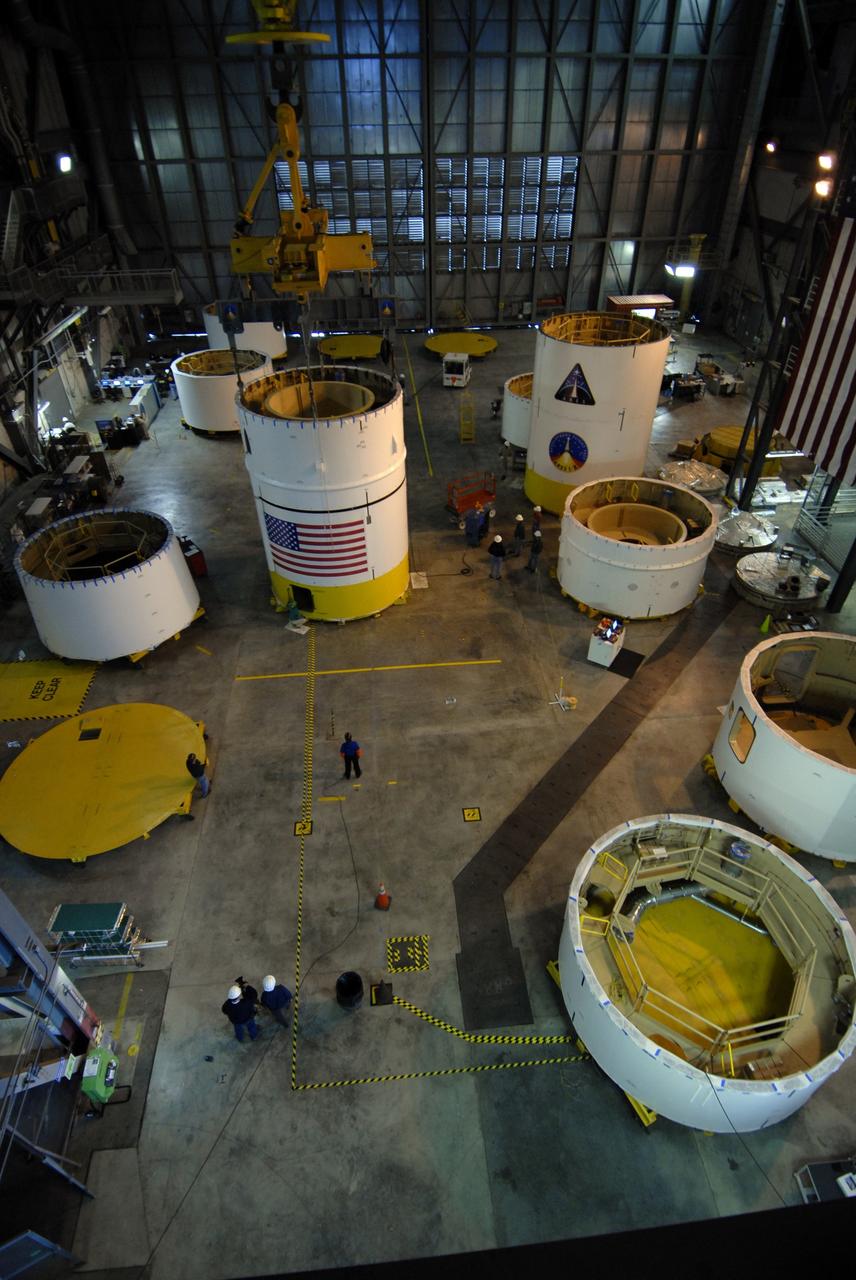
CAPE CANAVERAL, Fla. -- The upper stage simulator segments are positioned across the floor of the Vehicle Assembly Building's high bay 4 at NASA's Kennedy Space Center in Florida. Four of the segments are already stacked. The upper stage simulator will be used in the test flight identified as Ares I-X in 2009. Ares I-X is the test vehicle for the Ares I, which is part of the Constellation Program to return men to the moon and beyond. Ares I is the essential core of a safe, reliable, cost-effective space transportation system that eventually will carry crewed missions back to the moon, on to Mars and out into the solar system. Ares I may also use its 25-ton payload capacity to deliver resources and supplies to the International Space Station, or to "park" payloads in orbit for retrieval by other spacecraft bound for the moon or other destinations. The upper stage simulator comprises 11 segments, each approximately 18 feet in diameter. The simulator segments will simulate the mass and the outer mold line and will be more than 100 feet of the total vehicle height of 327 feet. Photo credit: NASA/Jack Pfaller
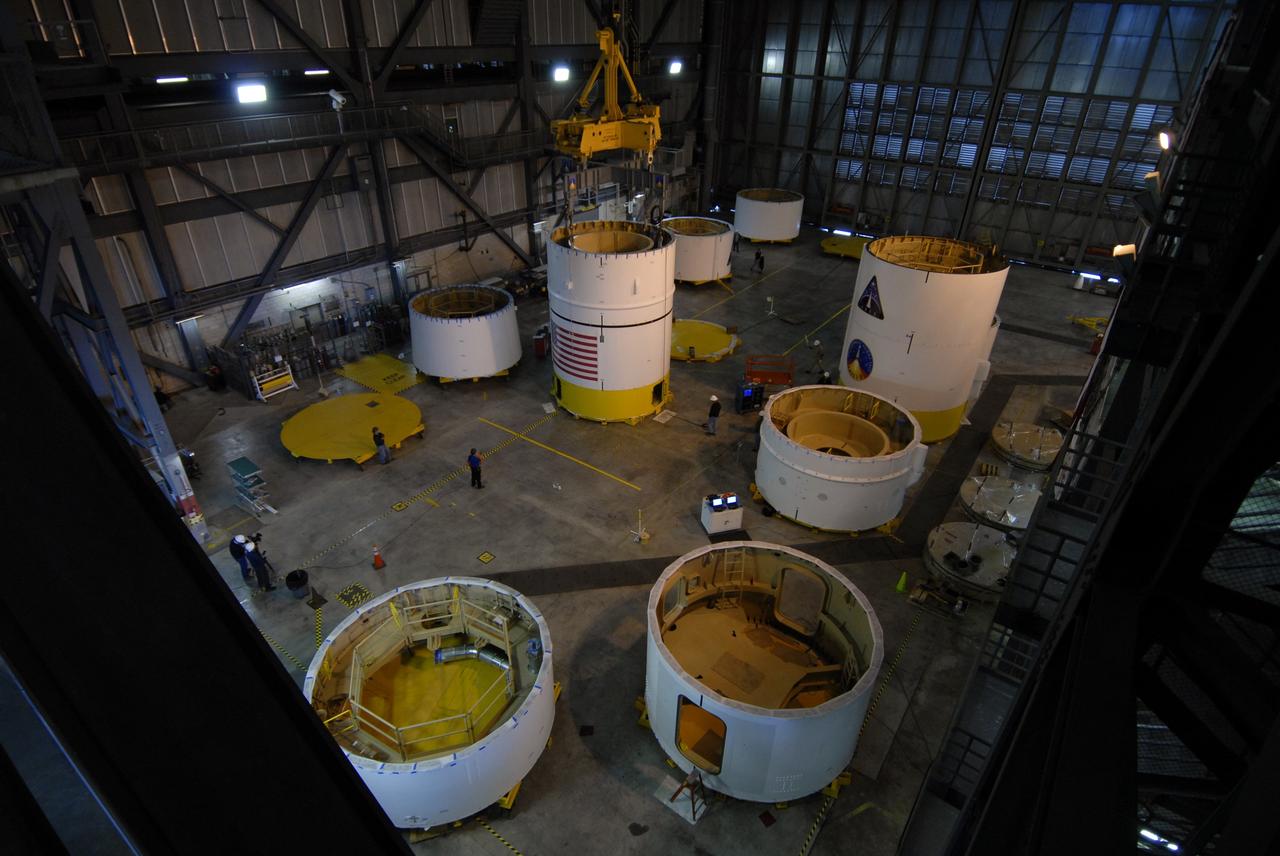
CAPE CANAVERAL, Fla. -- The upper stage simulator segments are positioned across the floor of the Vehicle Assembly Building's high bay 4 at NASA's Kennedy Space Center in Florida. Four of the segments are already stacked. The upper stage simulator will be used in the test flight identified as Ares I-X in 2009. Ares I-X is the test vehicle for the Ares I, which is part of the Constellation Program to return men to the moon and beyond. Ares I is the essential core of a safe, reliable, cost-effective space transportation system that eventually will carry crewed missions back to the moon, on to Mars and out into the solar system. Ares I may also use its 25-ton payload capacity to deliver resources and supplies to the International Space Station, or to "park" payloads in orbit for retrieval by other spacecraft bound for the moon or other destinations. The upper stage simulator comprises 11 segments, each approximately 18 feet in diameter. The simulator segments will simulate the mass and the outer mold line and will be more than 100 feet of the total vehicle height of 327 feet. Photo credit: NASA/Jack Pfaller
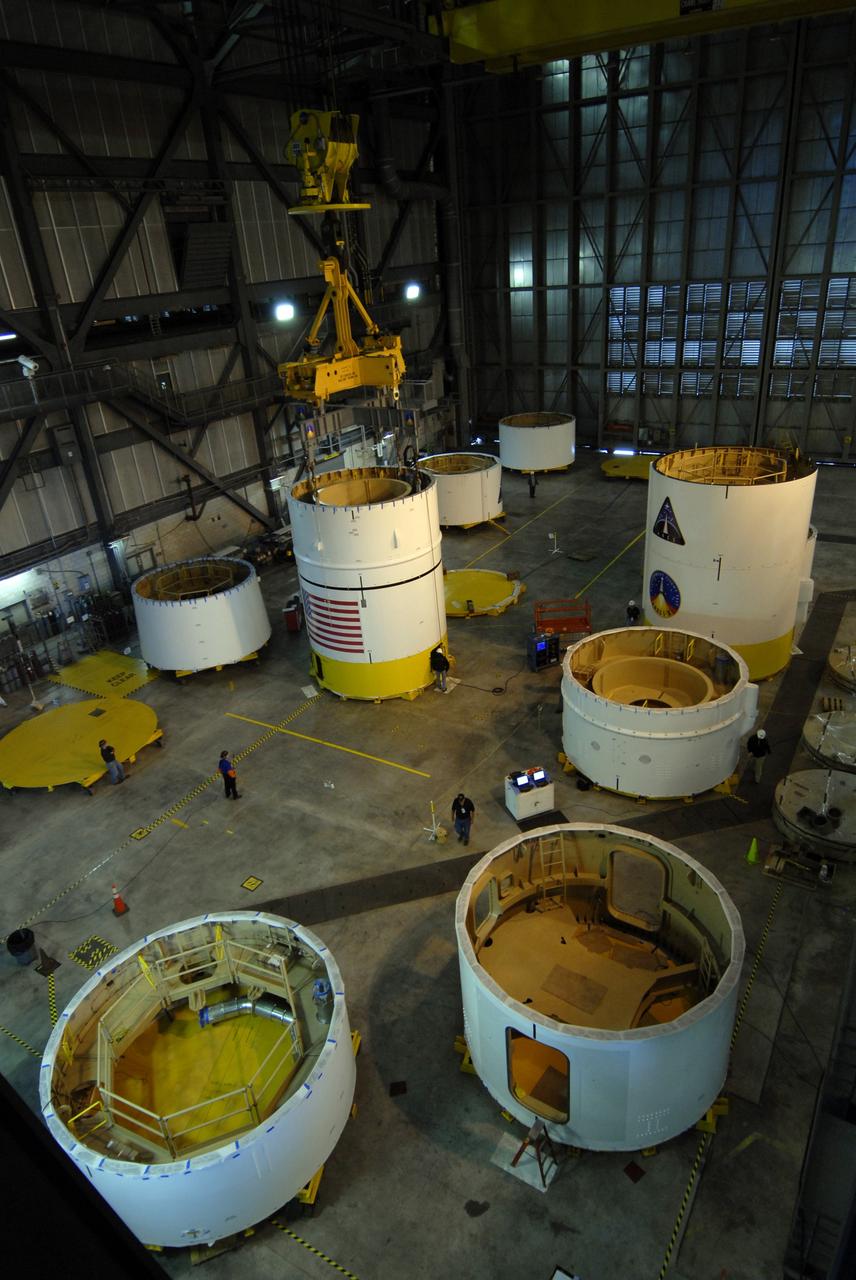
CAPE CANAVERAL, Fla. -- The upper stage simulator segments are positioned across the floor of the Vehicle Assembly Building's high bay 4 at NASA's Kennedy Space Center in Florida. Four of the segments are already stacked. The upper stage simulator will be used in the test flight identified as Ares I-X in 2009. Ares I-X is the test vehicle for the Ares I, which is part of the Constellation Program to return men to the moon and beyond. Ares I is the essential core of a safe, reliable, cost-effective space transportation system that eventually will carry crewed missions back to the moon, on to Mars and out into the solar system. Ares I may also use its 25-ton payload capacity to deliver resources and supplies to the International Space Station, or to "park" payloads in orbit for retrieval by other spacecraft bound for the moon or other destinations. The upper stage simulator comprises 11 segments, each approximately 18 feet in diameter. The simulator segments will simulate the mass and the outer mold line and will be more than 100 feet of the total vehicle height of 327 feet. Photo credit: NASA/Jack Pfaller

During a training exercise, technicians with NASA’s Exploration Ground Systems lower a mock-up of the Space Launch System (SLS) aft booster segment, referred to as a pathfinder, onto the mobile launcher in Kennedy Space Center’s Vehicle Assembly Building (VAB) on Sept. 11, 2020. The rehearsal involved teams preparing the aft pathfinder segment in High Bay 4 of the VAB, lifting and moving it over to High Bay 3, and placing it on the mobile launcher in preparation for Artemis I. Stacking of the actual booster segments will occur later this year, before the SLS core stage arrives at the Florida spaceport. Artemis I is the first in a series of increasingly complex missions that will test SLS and the Orion spacecraft as an integrated system prior to crewed flights to the Moon.

CAPE CANAVERAL, Fla. – In Vehicle Assembly Building high bay 4, cables from an overhead crane lower ballast into segment 7 for the Ares I-X rocket. These ballast assemblies are being installed in the upper stage segments 1 and 7 and will mimic the mass of the fuel. Their total weight is approximately 160,000 pounds. Ares I-X is the test vehicle for the Ares I, which is part of the Constellation Program to return men to the moon and beyond. Ares I is the essential core of a safe, reliable, cost-effective space transportation system that eventually will carry crewed missions back to the moon, on to Mars and out into the solar system. The Ares I-X is targeted for launch in July 2009. Photo credit: NASA/Jack Pfaller
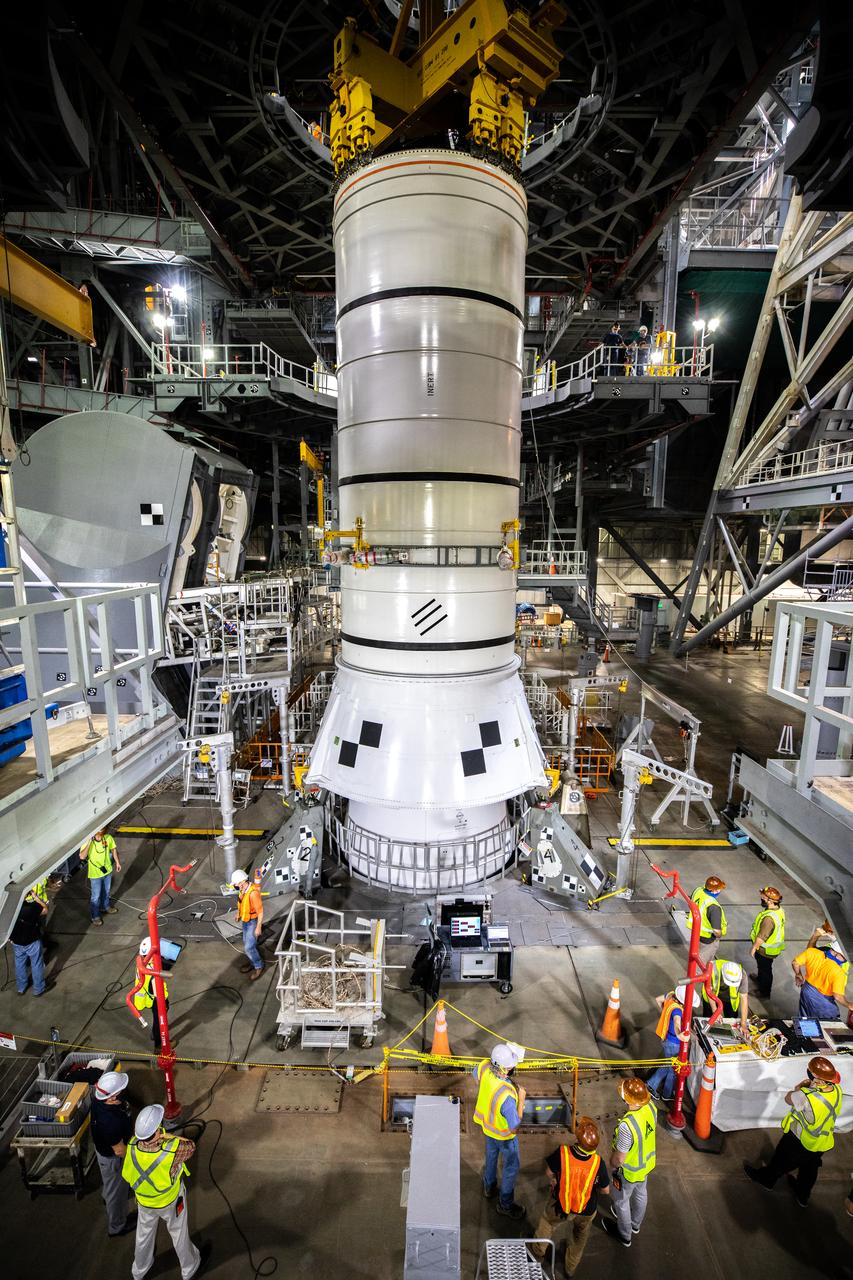
During a training exercise, technicians with NASA’s Exploration Ground Systems lower a mock-up of the Space Launch System (SLS) aft booster segment, referred to as a pathfinder, onto the mobile launcher in Kennedy Space Center’s Vehicle Assembly Building (VAB) on Sept. 11, 2020. The rehearsal involved teams preparing the aft pathfinder segment in High Bay 4 of the VAB, lifting and moving it over to High Bay 3, and placing it on the mobile launcher in preparation for Artemis I. Stacking of the actual booster segments will occur later this year, before the SLS core stage arrives at the Florida spaceport. Artemis I is the first in a series of increasingly complex missions that will test SLS and the Orion spacecraft as an integrated system prior to crewed flights to the Moon.

CAPE CANAVERAL, Fla. – In high bay 4 of the Vehicle Assembly Building at NASA's Kennedy Space Center in Florida, a ballast assembly is lifted toward the Ares I-X segments for installation. These ballast assemblies will be installed in the upper stage 1 and 7 segments and will mimic the mass of the fuel. Their total weight is approximately 160,000 pounds. Ares I-X is the test vehicle for the Ares I, which is part of the Constellation Program to return men to the moon and beyond. Ares I is the essential core of a safe, reliable, cost-effective space transportation system that eventually will carry crewed missions back to the moon, on to Mars and out into the solar system. Ares I may also use its 25-ton payload capacity to deliver resources and supplies to the International Space Station, or to "park" payloads in orbit for retrieval by other spacecraft bound for the moon or other destinations. The Ares I-X is targeted for launch in July 2009. Photo credit: NASA/Dimitri Gerondidakis
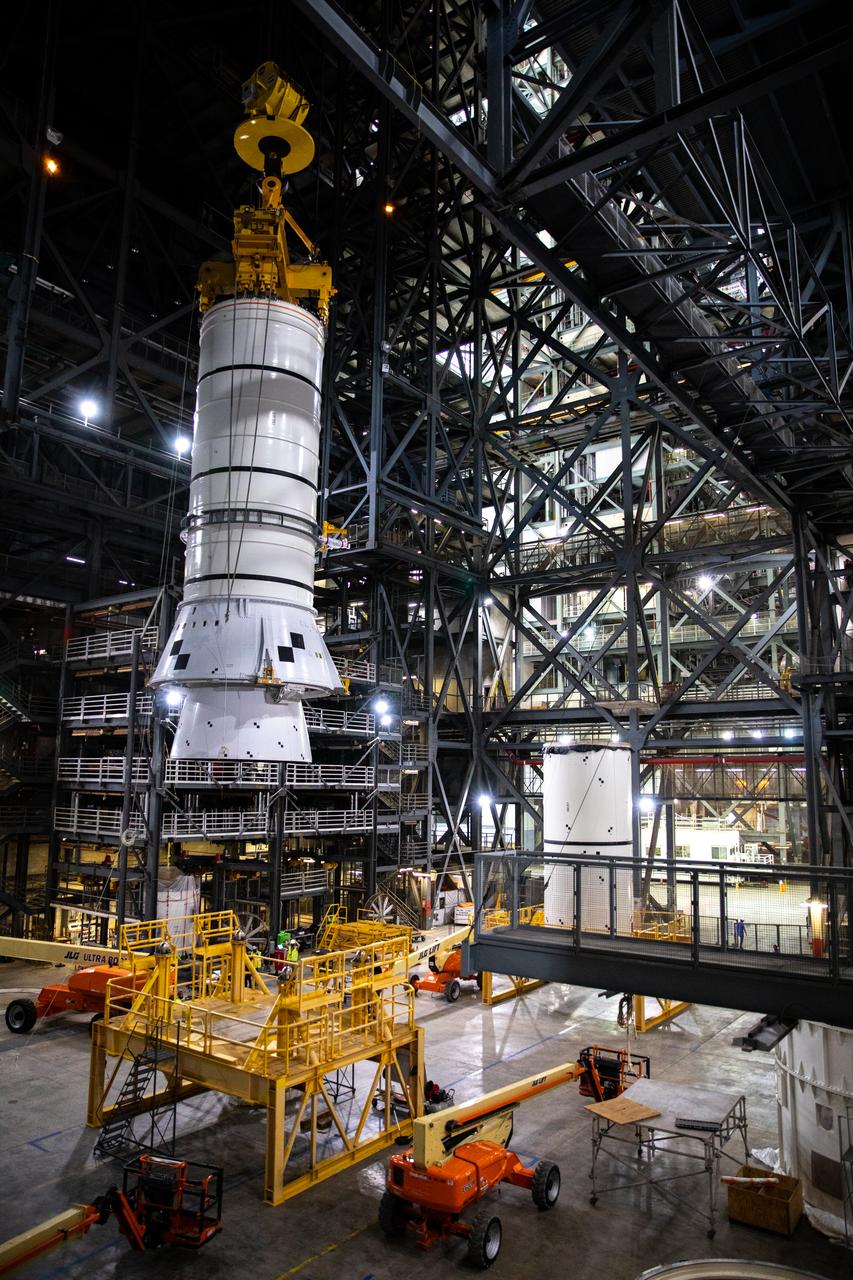
Technicians with NASA’s Exploration Ground Systems rehearse lifting operations using a mock-up of the Space Launch System (SLS) aft booster segment, referred to as a pathfinder, inside the Vehicle Assembly Building (VAB) at the agency’s Kennedy Space Center in Florida on Sept. 11, 2020, in preparation for Artemis I. The exercise involved preparing the aft pathfinder segment in High Bay 4 of the VAB and moving it over to High Bay 3, where it was placed on the mobile launcher. Stacking of the actual booster segments will occur later this year, before the SLS core stage arrives at Kennedy. Artemis I is the first in a series of increasingly complex missions that will test SLS and the Orion spacecraft as an integrated system prior to crewed flights to the Moon.
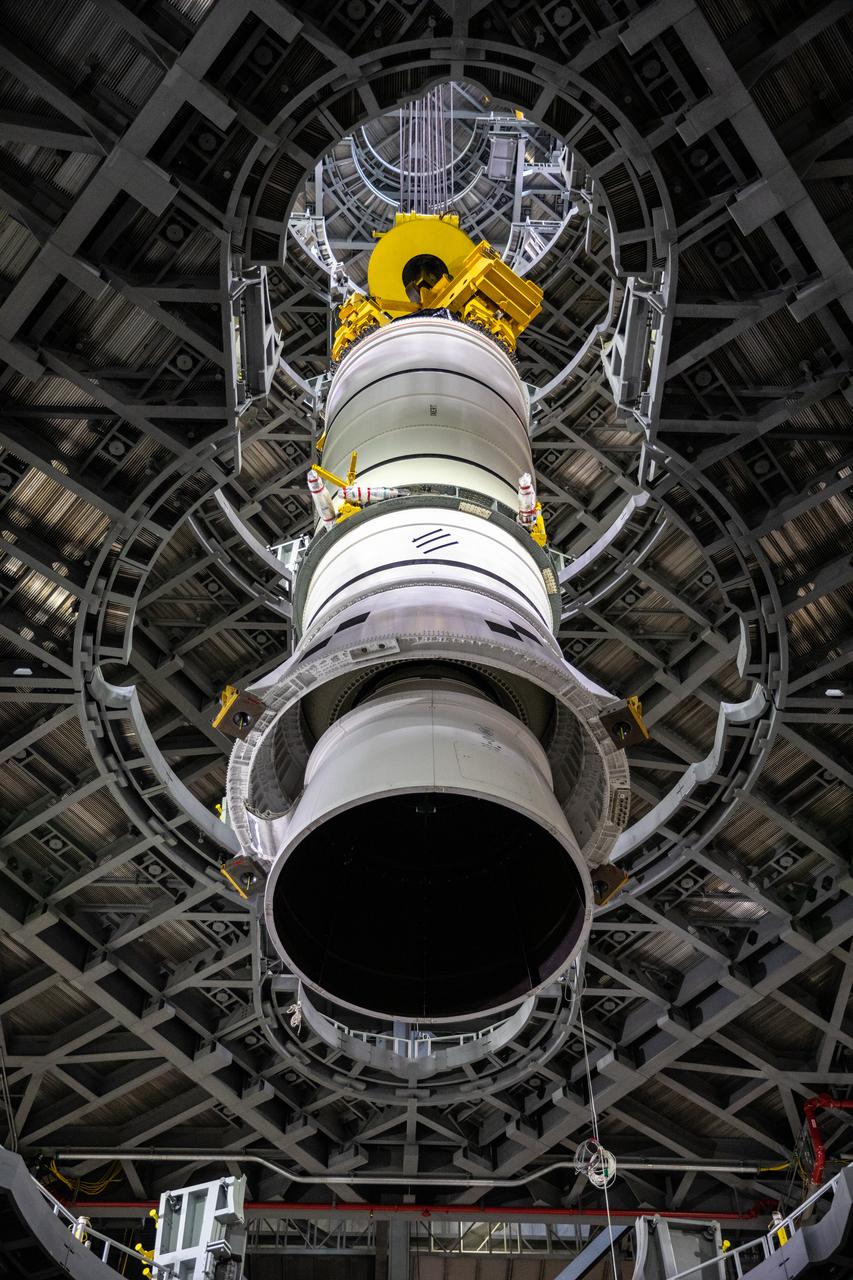
During a training exercise, technicians with NASA’s Exploration Ground Systems lower a mock-up of the Space Launch System (SLS) aft booster segment, referred to as a pathfinder, onto the mobile launcher in Kennedy Space Center’s Vehicle Assembly Building (VAB) on Sept. 11, 2020. The rehearsal involved teams preparing the aft pathfinder segment in High Bay 4 of the VAB, lifting and moving it over to High Bay 3, and placing it on the mobile launcher in preparation for Artemis I. Stacking of the actual booster segments will occur later this year, before the SLS core stage arrives at the Florida spaceport. Artemis I is the first in a series of increasingly complex missions that will test SLS and the Orion spacecraft as an integrated system prior to crewed flights to the Moon.
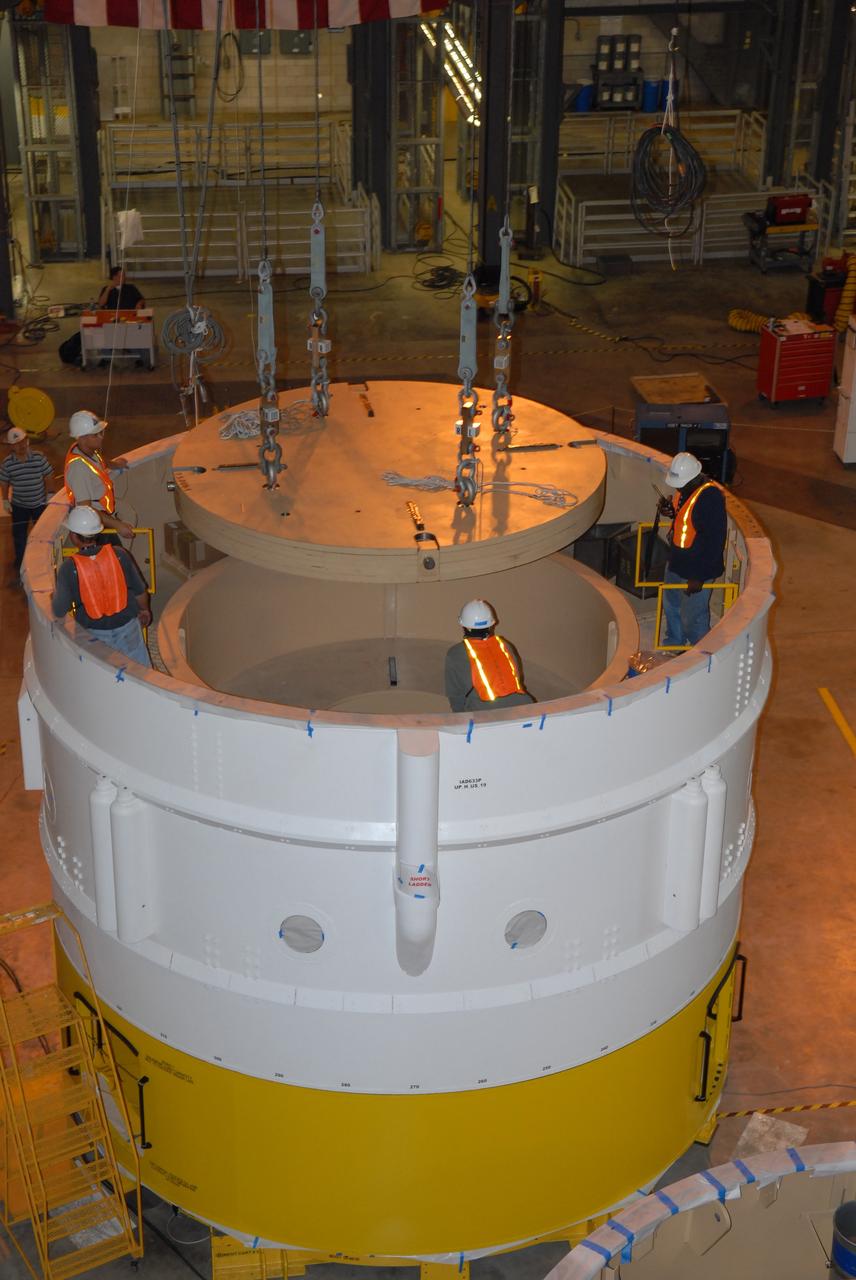
CAPE CANAVERAL, Fla. – In Vehicle Assembly Building high bay 4, cables from an overhead crane lower ballast into segment 7 for the Ares I-X rocket. These ballast assemblies are being installed in the upper stage segments 1 and 7 and will mimic the mass of the fuel. Their total weight is approximately 160,000 pounds. Ares I-X is the test vehicle for the Ares I, which is part of the Constellation Program to return men to the moon and beyond. Ares I is the essential core of a safe, reliable, cost-effective space transportation system that eventually will carry crewed missions back to the moon, on to Mars and out into the solar system. The Ares I-X is targeted for launch in July 2009. Photo credit: NASA/Jack Pfaller
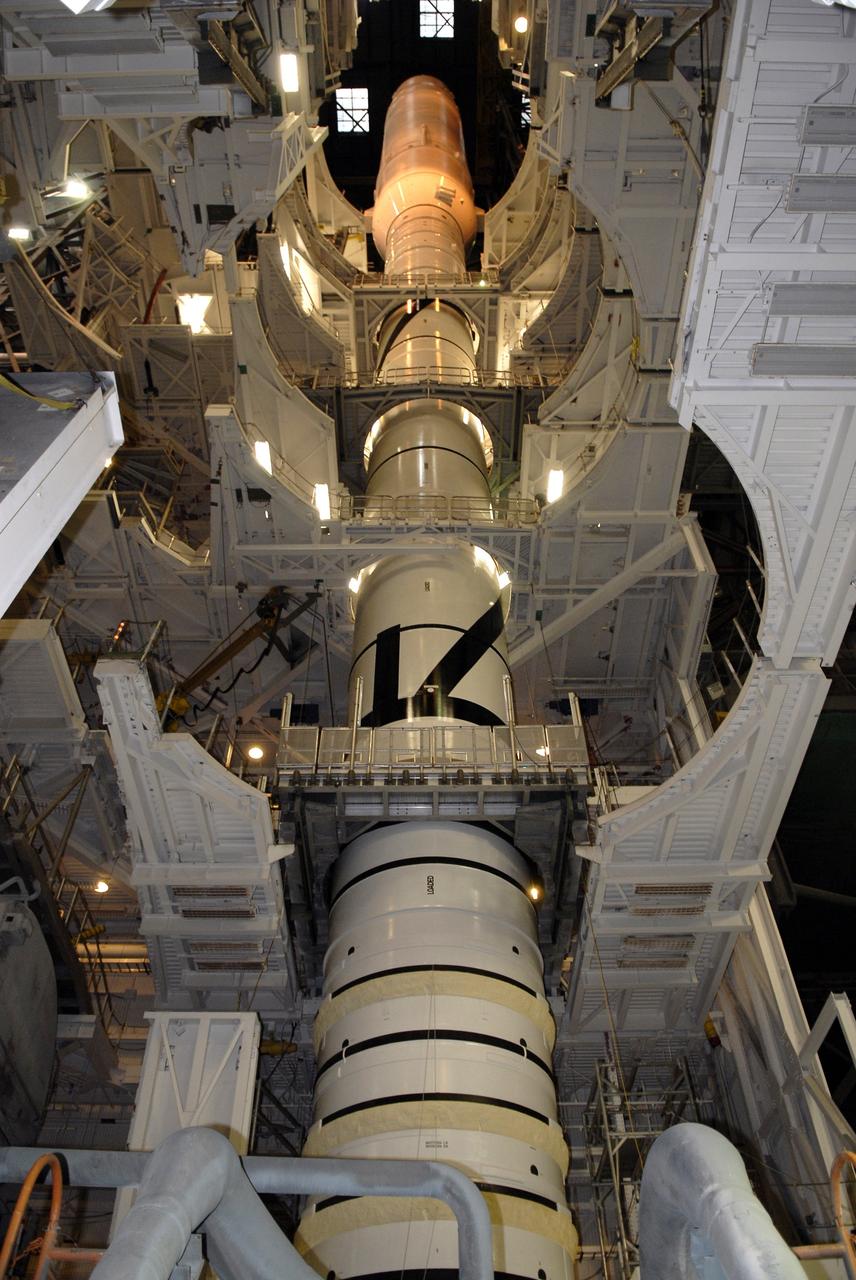
CAPE CANAVERAL, Fla. – Work platforms surround the Ares I-X launch vehicle in the Vehicle Assembly Building's High Bay 4 at NASA's Kennedy Space Center in Florida. The rocket has undergone a sway test that simulated conditions the rocket could experience during rollout to Launch Pad 39B, wind conditions at the pad and first-stage ignition. During the test, vibrations are mechanically induced into the rocket by four hydraulic shakers and a sway is manually introduced for lateral motion to measure the vehicle's response. A total of 44 accelerometers are installed on the flight test vehicle that required more than 27,000 feet of cable. Part of the Constellation Program, the Ares I-X is the test vehicle for the Ares I, which is the essential core of a space transportation system that eventually will carry crewed missions back to the moon, on to Mars and out into the solar system . The Ares I-X flight test is targeted for Oct. 31. Photo credit: NASA/Kim Shiflett
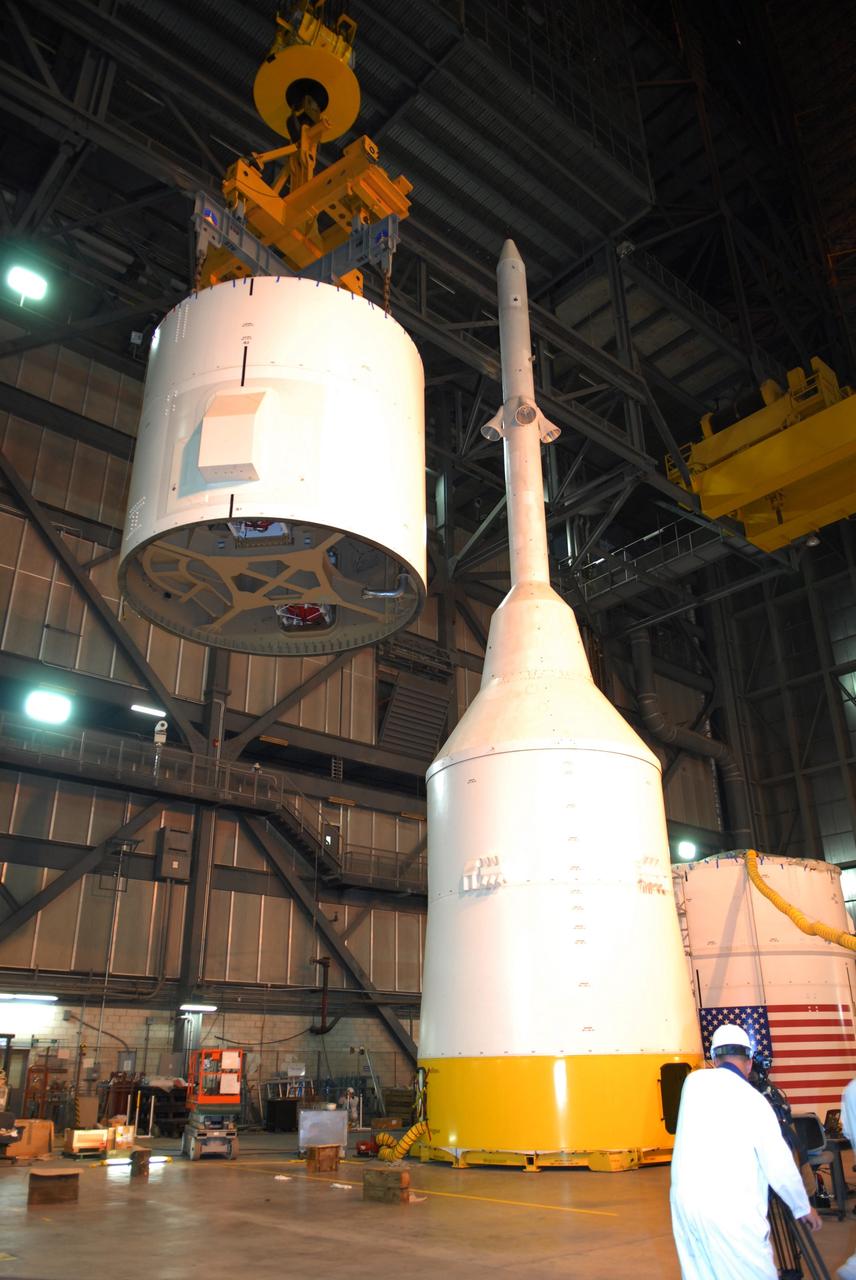
CAPE CANAVERAL, Fla. – In the Vehicle Assembly Building's High Bay 4 at NASA's Kennedy Space Center in Florida, the Ares I-X interstage 1 for the upper stage simulator is being moved to the forward assembly. The interstage will be mated with the frustum on the forward assembly. To the right is the crew module-launch abort system, or CM-LAS, and simulator service module-service adapter stack. Ares I-X is the flight test vehicle for the Ares I, a component of the Constellation Program. Ares I is the essential core of a safe, reliable, cost-effective space transportation system that eventually will carry crewed missions back to the moon, on to Mars and out into the solar system. Ares I-X is targeted for launch in August 2009. Photo credit: NASA/Tim Jacobs
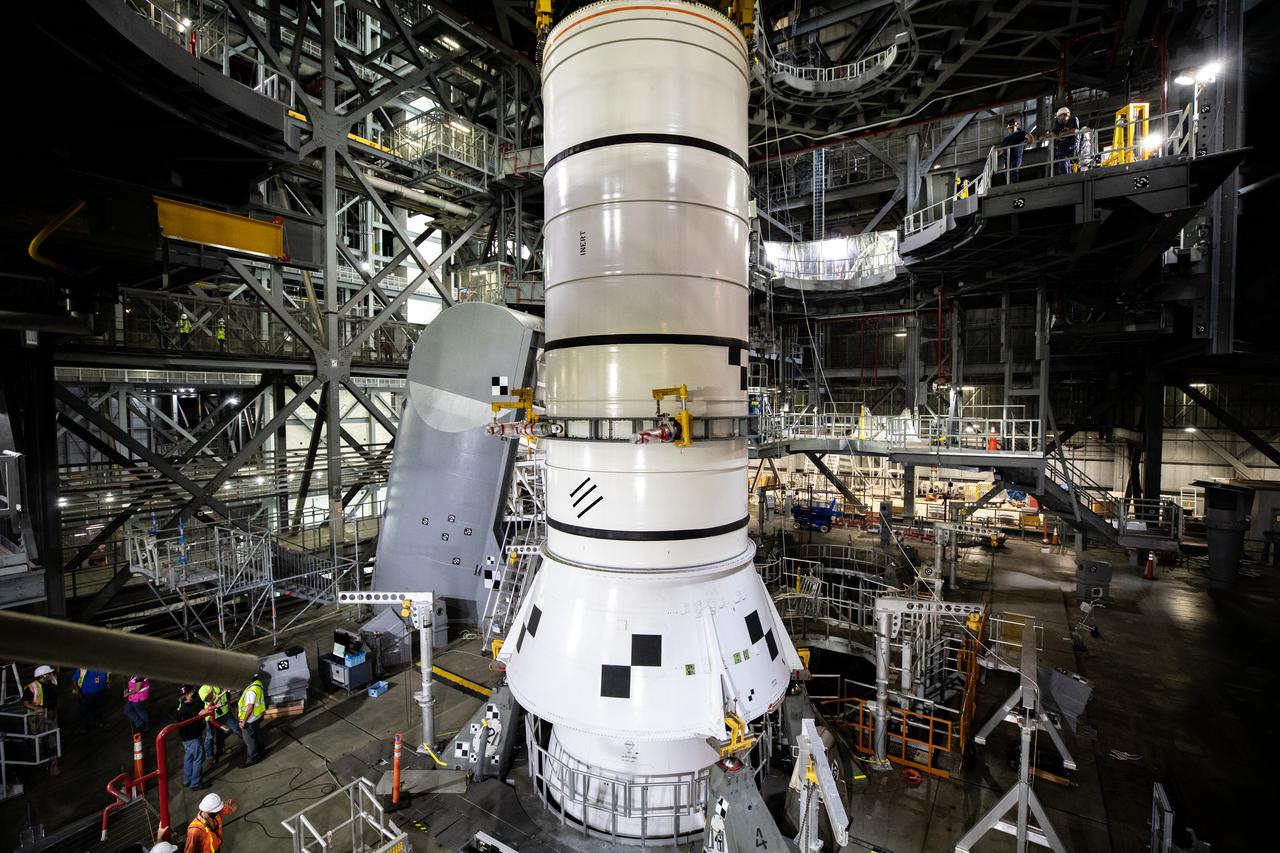
During a training exercise, technicians with NASA’s Exploration Ground Systems lower a mock-up of the Space Launch System (SLS) aft booster segment, referred to as a pathfinder, onto the mobile launcher in Kennedy Space Center’s Vehicle Assembly Building (VAB) on Sept. 11, 2020. The rehearsal involved teams preparing the aft pathfinder segment in High Bay 4 of the VAB, lifting and moving it over to High Bay 3, and placing it on the mobile launcher in preparation for Artemis I. Stacking of the actual booster segments will occur later this year, before the SLS core stage arrives at the Florida spaceport. Artemis I is the first in a series of increasingly complex missions that will test SLS and the Orion spacecraft as an integrated system prior to crewed flights to the Moon.
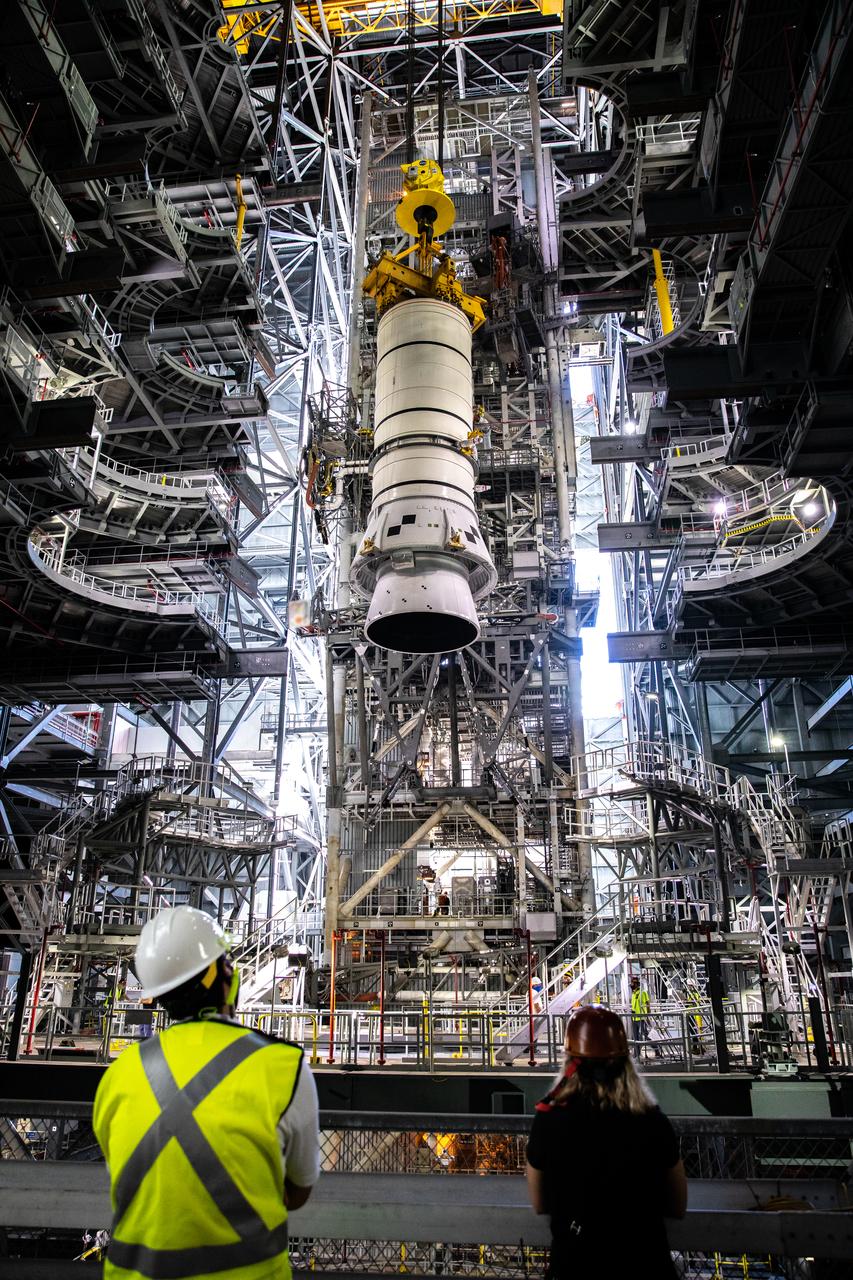
During a training exercise, technicians with NASA’s Exploration Ground Systems lower a mock-up of the Space Launch System (SLS) aft booster segment, referred to as a pathfinder, onto the mobile launcher in Kennedy Space Center’s Vehicle Assembly Building (VAB) on Sept. 11, 2020. The rehearsal involved teams preparing the aft pathfinder segment in High Bay 4 of the VAB, lifting and moving it over to High Bay 3, and placing it on the mobile launcher in preparation for Artemis I. Stacking of the actual booster segments will occur later this year, before the SLS core stage arrives at the Florida spaceport. Artemis I is the first in a series of increasingly complex missions that will test SLS and the Orion spacecraft as an integrated system prior to crewed flights to the Moon.
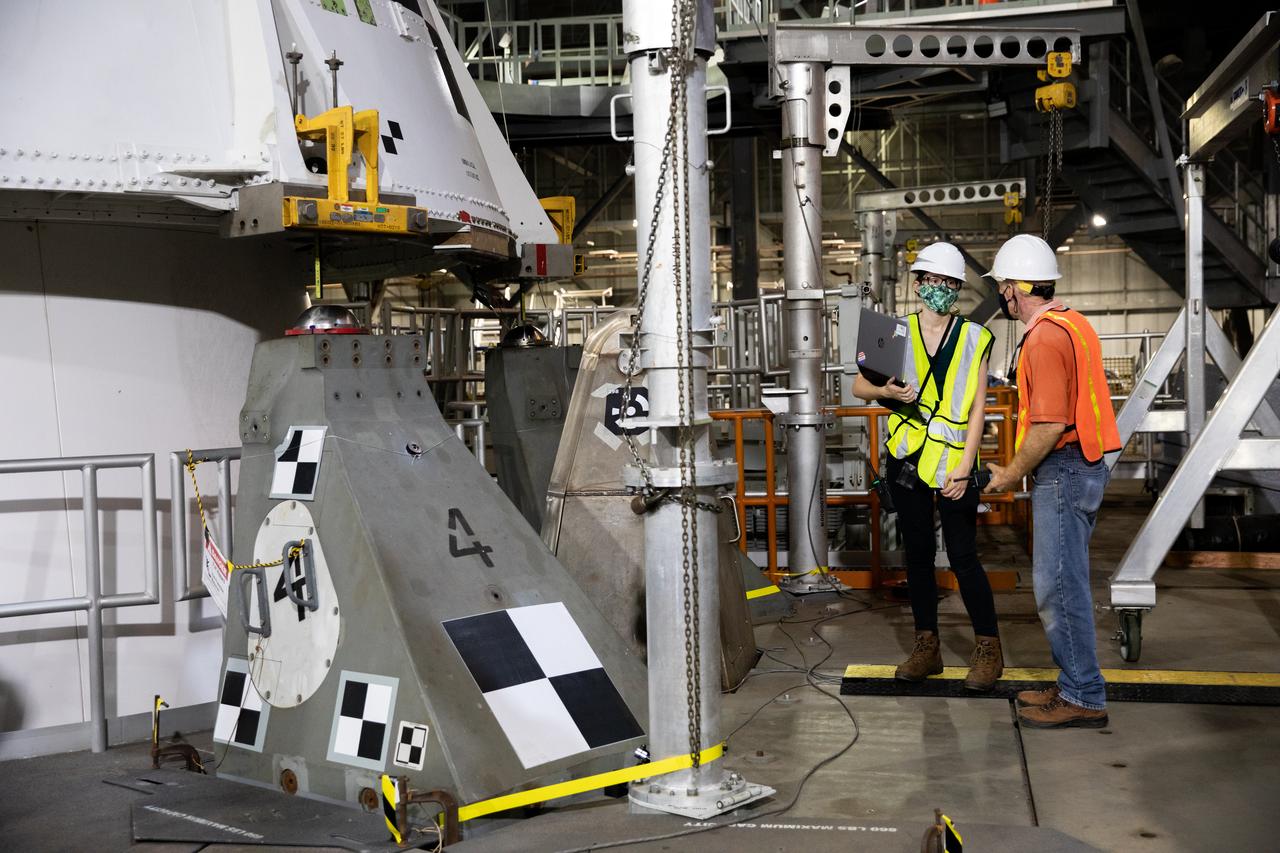
During a training exercise on Sept. 11, 2020, inside the Vehicle Assembly (VAB) at NASA’s Kennedy Space Center in Florida, technicians with the agency’s Exploration Ground Systems verify a mock-up of the Space Launch System (SLS) aft booster segment, referred to as a pathfinder, was placed on the mobile launcher correctly. The rehearsal involved teams preparing the aft pathfinder segment in High Bay 4 of the VAB, lifting and moving it over to High Bay 3, and lowering it onto the mobile launcher in preparation for Artemis I. Stacking of the actual booster segments will occur later this year, before the SLS core stage arrives at the Florida spaceport. Artemis I is the first in a series of increasingly complex missions that will test SLS and the Orion spacecraft as an integrated system prior to crewed flights to the Moon.
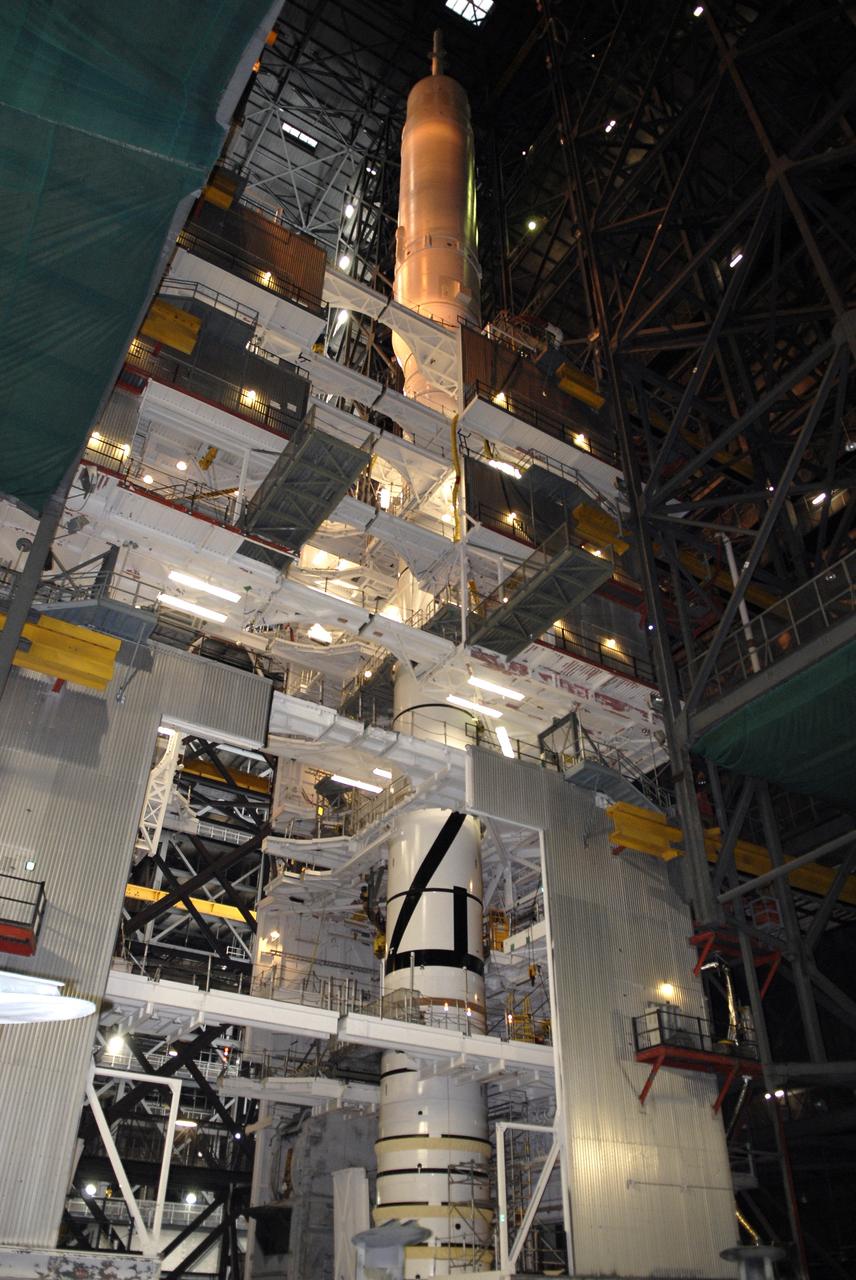
CAPE CANAVERAL, Fla. – Work platforms surround the Ares I-X launch vehicle in the Vehicle Assembly Building's High Bay 4 at NASA's Kennedy Space Center in Florida. The rocket has undergone a sway test that simulated conditions the rocket could experience during rollout to Launch Pad 39B, wind conditions at the pad and first-stage ignition. During the test, vibrations are mechanically induced into the rocket by four hydraulic shakers and a sway is manually introduced for lateral motion to measure the vehicle's response. A total of 44 accelerometers are installed on the flight test vehicle that required more than 27,000 feet of cable. Part of the Constellation Program, the Ares I-X is the test vehicle for the Ares I, which is the essential core of a space transportation system that eventually will carry crewed missions back to the moon, on to Mars and out into the solar system . The Ares I-X flight test is targeted for Oct. 31. Photo credit: NASA/Kim Shiflett
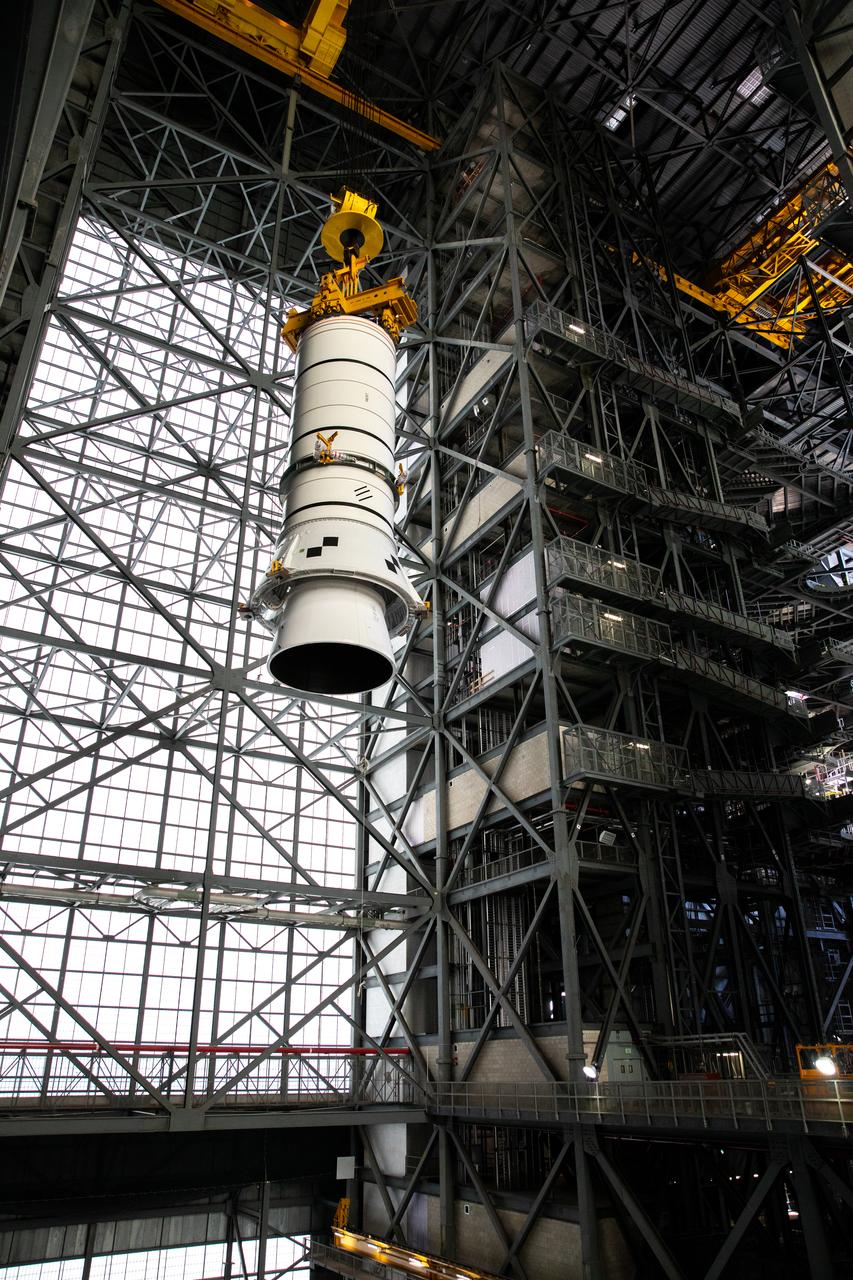
Technicians with NASA’s Exploration Ground Systems rehearse lifting operations using a mock-up of the Space Launch System (SLS) aft booster segment, referred to as a pathfinder, inside the Vehicle Assembly Building (VAB) at the agency’s Kennedy Space Center in Florida on Sept. 11, 2020, in preparation for Artemis I. The exercise involved preparing the aft pathfinder segment in High Bay 4 of the VAB and moving it over to High Bay 3, where it was placed on the mobile launcher. Stacking of the actual booster segments will occur later this year, before the SLS core stage arrives at Kennedy. Artemis I is the first in a series of increasingly complex missions that will test SLS and the Orion spacecraft as an integrated system prior to crewed flights to the Moon.
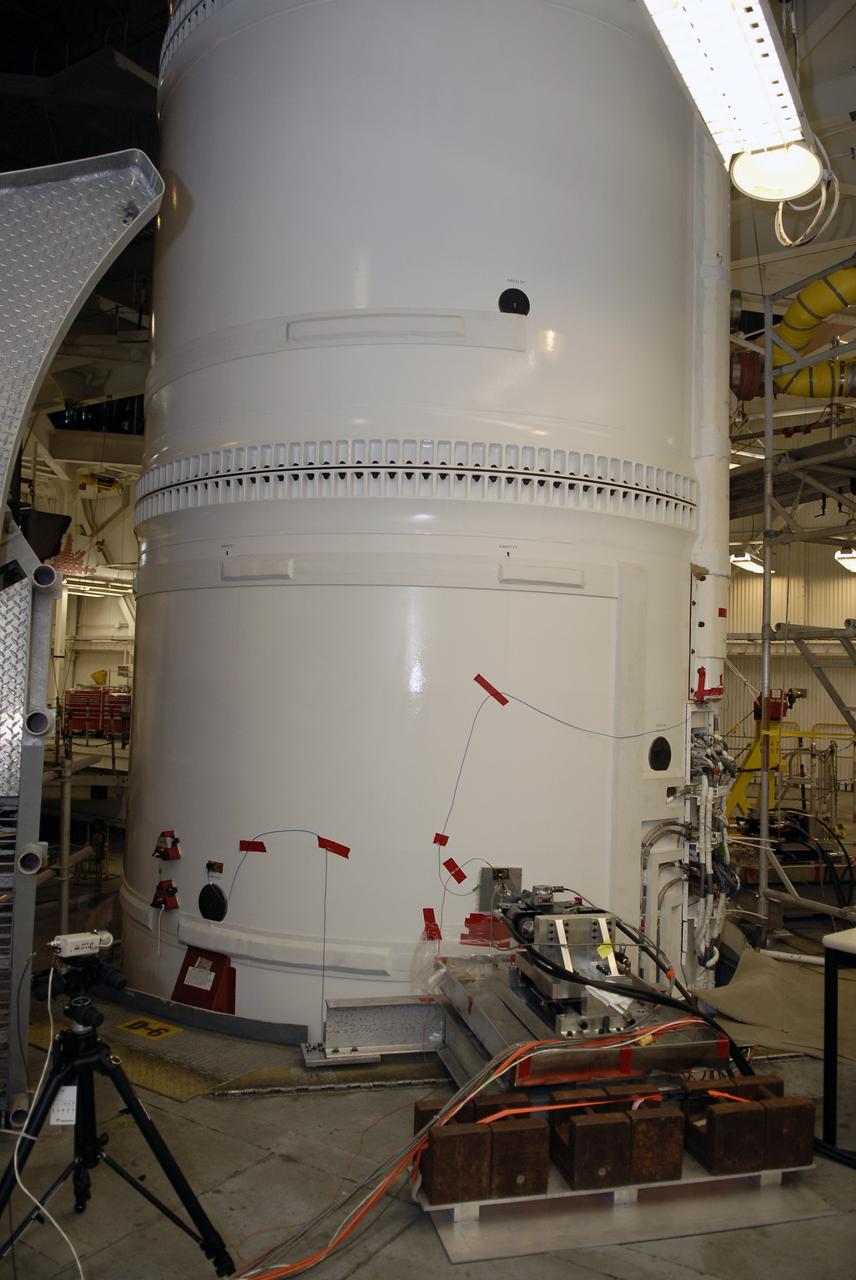
CAPE CANAVERAL, Fla. – In the Vehicle Assembly Building's High Bay 4 at NASA's Kennedy Space Center in Florida, wires are taped to the Ares I-X launch vehicle for the sway test being conducted. The test is simulating conditions the rocket could experience during rollout to Launch Pad 39B, wind conditions at the pad and first-stage ignition. During the test, vibrations are mechanically induced into the rocket by four hydraulic shakers and a sway is manually introduced for lateral motion to measure the vehicle's response. A total of 44 accelerometers are installed on the flight test vehicle that required more than 27,000 feet of cable. Part of the Constellation Program, the Ares I-X is the test vehicle for the Ares I, which is the essential core of a space transportation system that eventually will carry crewed missions back to the moon, on to Mars and out into the solar system . The Ares I-X flight test is targeted for Oct. 31. Photo credit: NASA/Kim Shiflett
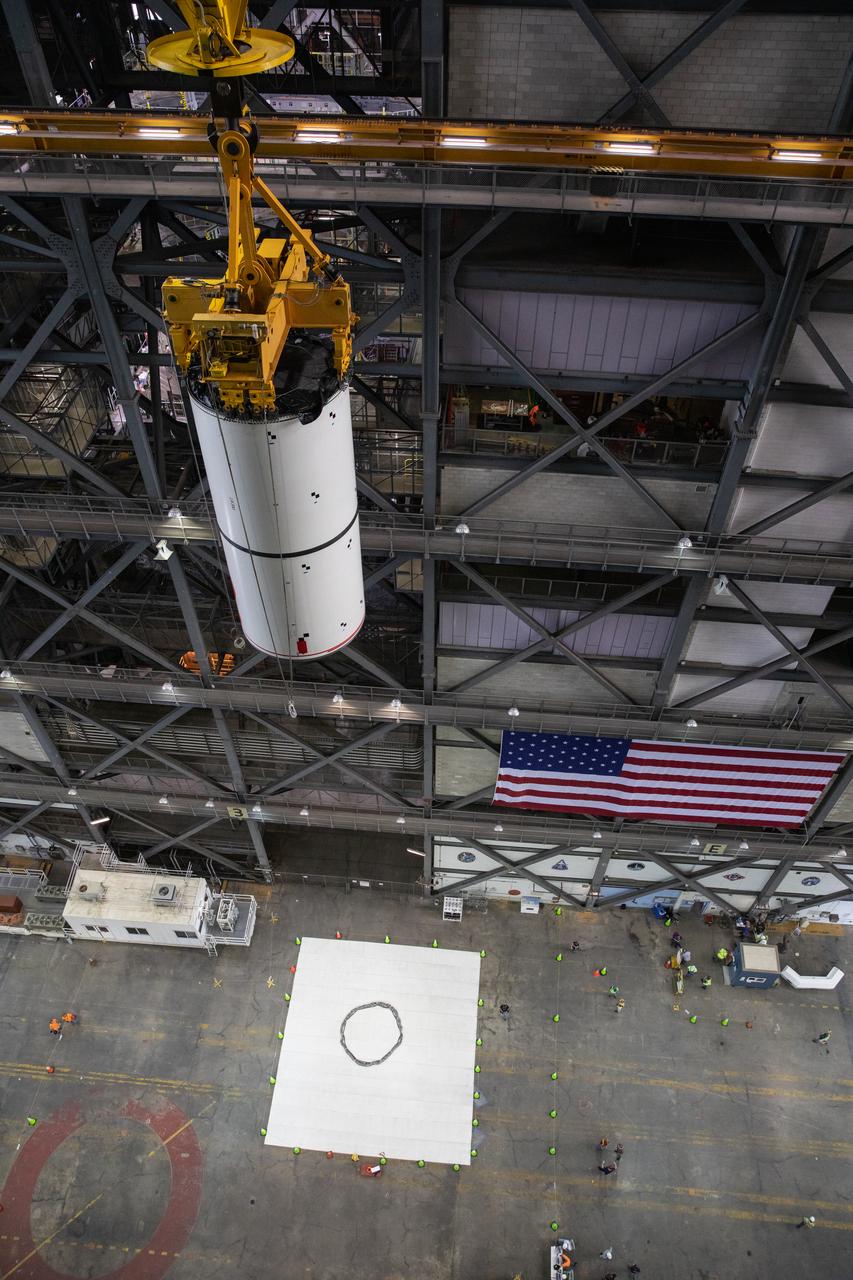
Technicians with NASA’s Exploration Ground Systems rehearse booster stacking operations inside the Vehicle Assembly Building (VAB) at the agency’s Kennedy Space Center in Florida on Sept. 14, 2020, in preparation for Artemis I. The exercise involved using booster segment mock-ups, referred to as pathfinders. During the rehearsal, an aft pathfinder segment was prepared in High Bay 4 of the VAB, after which a team of crane operators moved it over to High Bay 3, where it was placed on the mobile launcher. Careful measurements were then taken before the team added a center pathfinder to the stack. Stacking of the actual Space Launch System (SLS) booster segments will occur later this year, when the rocket’s core stage arrives at Kennedy. Artemis I is the first in a series of increasingly complex missions that will test SLS and the Orion spacecraft as an integrated system prior to crewed flights to the Moon.
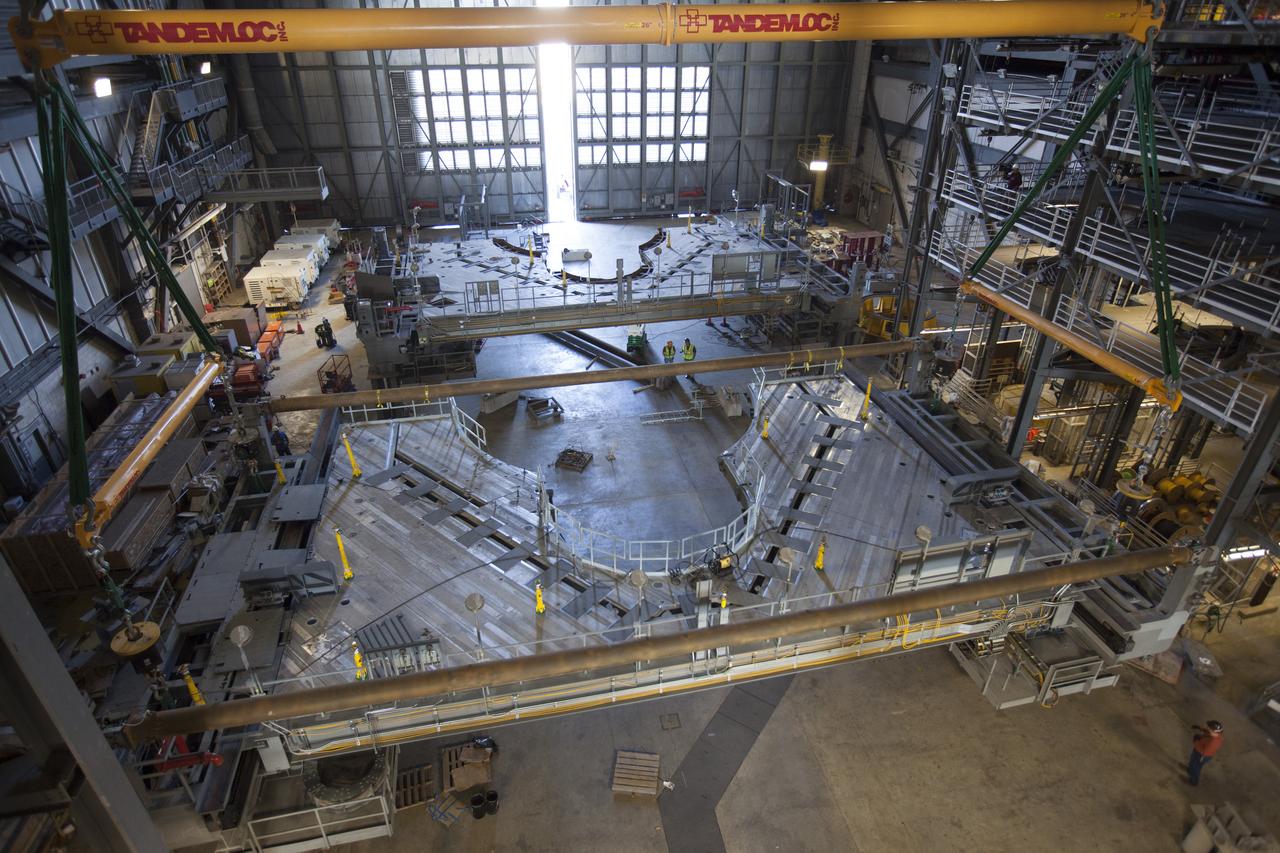
Preparations are underway to lift the second half of the K-level work platforms for NASA’s Space Launch System (SLS) rocket up from High Bay 4 inside the Vehicle Assembly Building at NASA's Kennedy Space Center in Florida. The platform will be lifted up and over the transfer aisle and then lowered into High Bay 3 for installation. It will be secured about 86 feet above the VAB floor, on tower E of the high bay. The K work platforms will provide access to the SLS core stage and solid rocket boosters during processing and stacking operations on the mobile launcher. The Ground Systems Development and Operations Program is overseeing upgrades and modifications to High Bay 3 to support processing of the SLS and Orion spacecraft. A total of 10 levels of new platforms, 20 platform halves altogether, will surround the SLS rocket and Orion spacecraft.
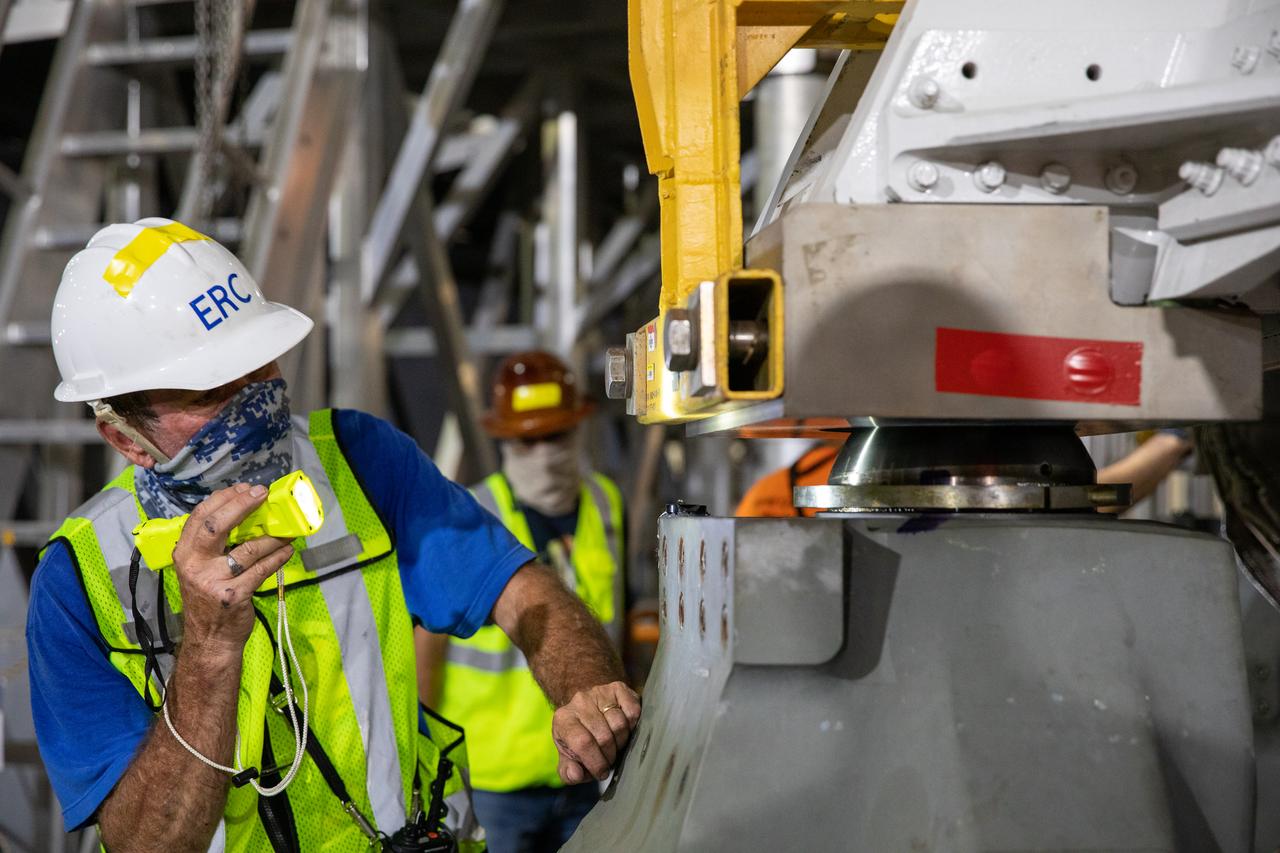
During a training exercise on Sept. 11, 2020, inside the Vehicle Assembly (VAB) at NASA’s Kennedy Space Center in Florida, a technician with the agency’s Exploration Ground Systems verifies a mock-up of the Space Launch System (SLS) aft booster segment, referred to as a pathfinder, was placed on the mobile launcher correctly. The rehearsal involved teams preparing the aft pathfinder segment in High Bay 4 of the VAB, lifting and moving it over to High Bay 3, and lowering it onto the mobile launcher in preparation for Artemis I. Stacking of the actual booster segments will occur later this year, before the SLS core stage arrives at the Florida spaceport. Artemis I is the first in a series of increasingly complex missions that will test SLS and the Orion spacecraft as an integrated system prior to crewed flights to the Moon.
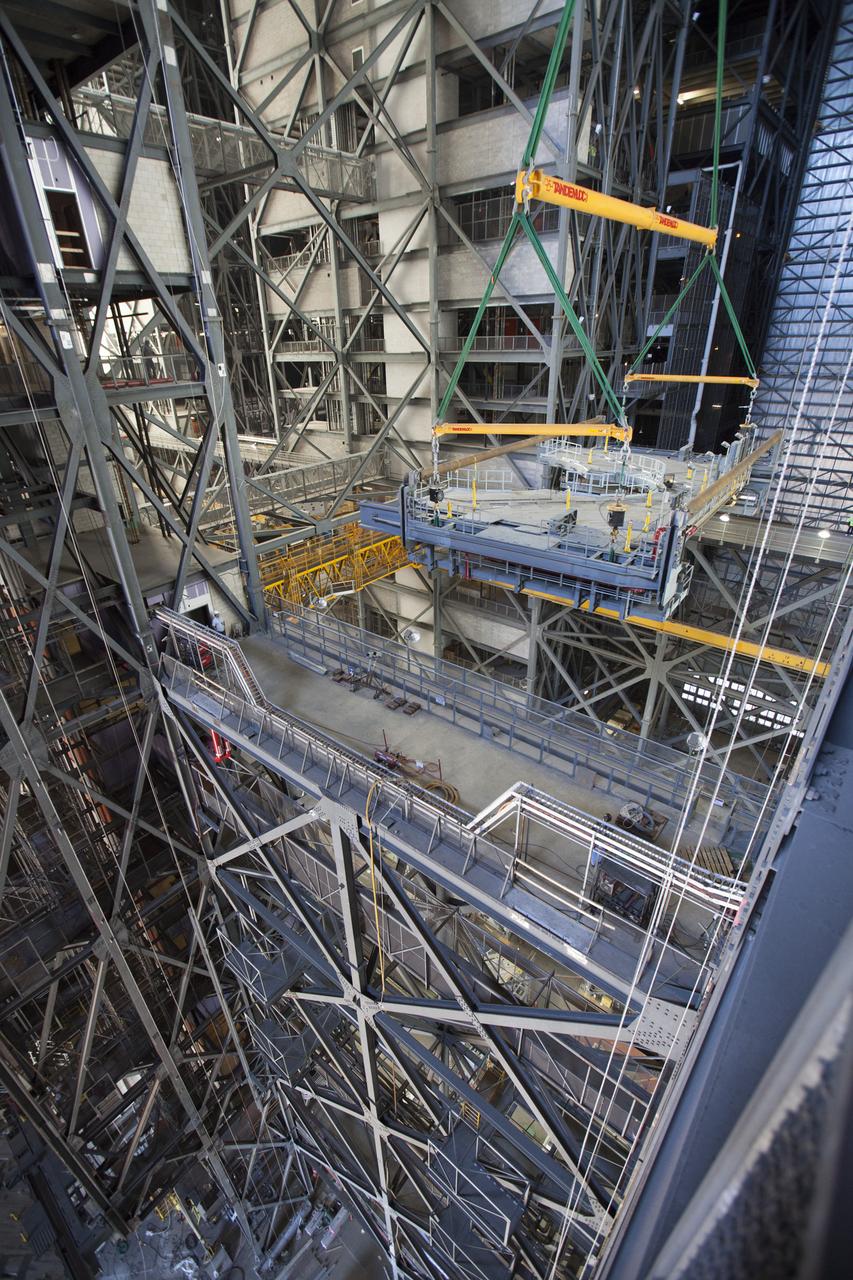
A 250-ton crane is used to lift the second half of the K-level work platforms for NASA’s Space Launch System (SLS) rocket up from High Bay 4 inside the Vehicle Assembly Building at NASA's Kennedy Space Center in Florida. The platform is being lifted up and over the transfer aisle and will be lowered into High Bay 3 for installation. It will be secured about 86 feet above the VAB floor, on tower E of the high bay. The K work platforms will provide access to the SLS core stage and solid rocket boosters during processing and stacking operations on the mobile launcher. The Ground Systems Development and Operations Program is overseeing upgrades and modifications to High Bay 3 to support processing of the SLS and Orion spacecraft. A total of 10 levels of new platforms, 20 platform halves altogether, will surround the SLS rocket and Orion spacecraft.
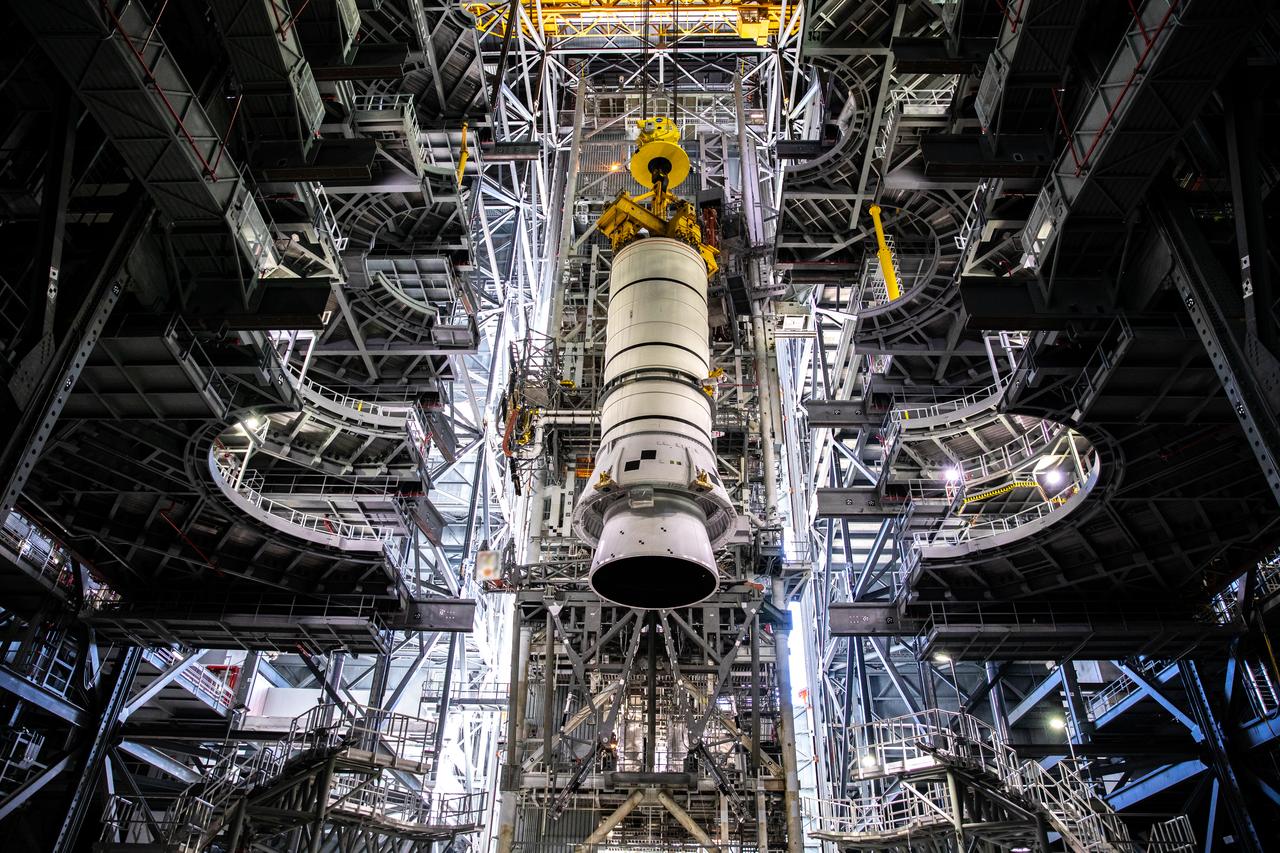
During a training exercise, technicians with NASA’s Exploration Ground Systems lower a mock-up of the Space Launch System (SLS) aft booster segment, referred to as a pathfinder, onto the mobile launcher in Kennedy Space Center’s Vehicle Assembly Building (VAB) on Sept. 11, 2020. The rehearsal involved teams preparing the aft pathfinder segment in High Bay 4 of the VAB, lifting and moving it over to High Bay 3, and placing it on the mobile launcher in preparation for Artemis I. Stacking of the actual booster segments will occur later this year, before the SLS core stage arrives at the Florida spaceport. Artemis I is the first in a series of increasingly complex missions that will test SLS and the Orion spacecraft as an integrated system prior to crewed flights to the Moon.
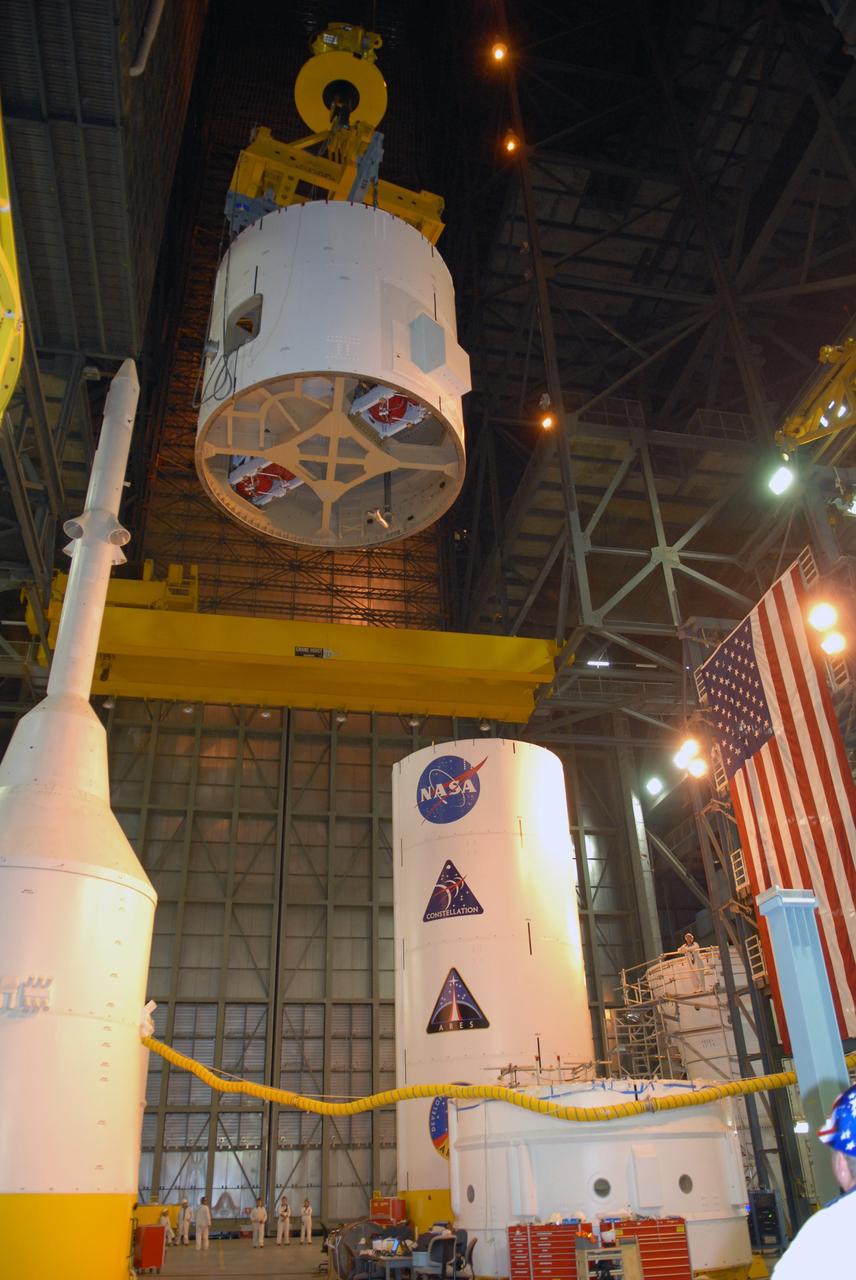
CAPE CANAVERAL, Fla. – In the Vehicle Assembly Building's High Bay 4 at NASA's Kennedy Space Center in Florida, the Ares I-X interstage 1 for the upper stage simulator is being moved to the forward assembly. The interstage will be mated with the frustum on the forward assembly. To the left is the crew module-launch abort system, or CM-LAS, and simulator service module-service adapter stack. Ares I-X is the flight test vehicle for the Ares I, a component of the Constellation Program. Ares I is the essential core of a safe, reliable, cost-effective space transportation system that eventually will carry crewed missions back to the moon, on to Mars and out into the solar system. Ares I-X is targeted for launch in August 2009. Photo credit: NASA/Tim Jacobs
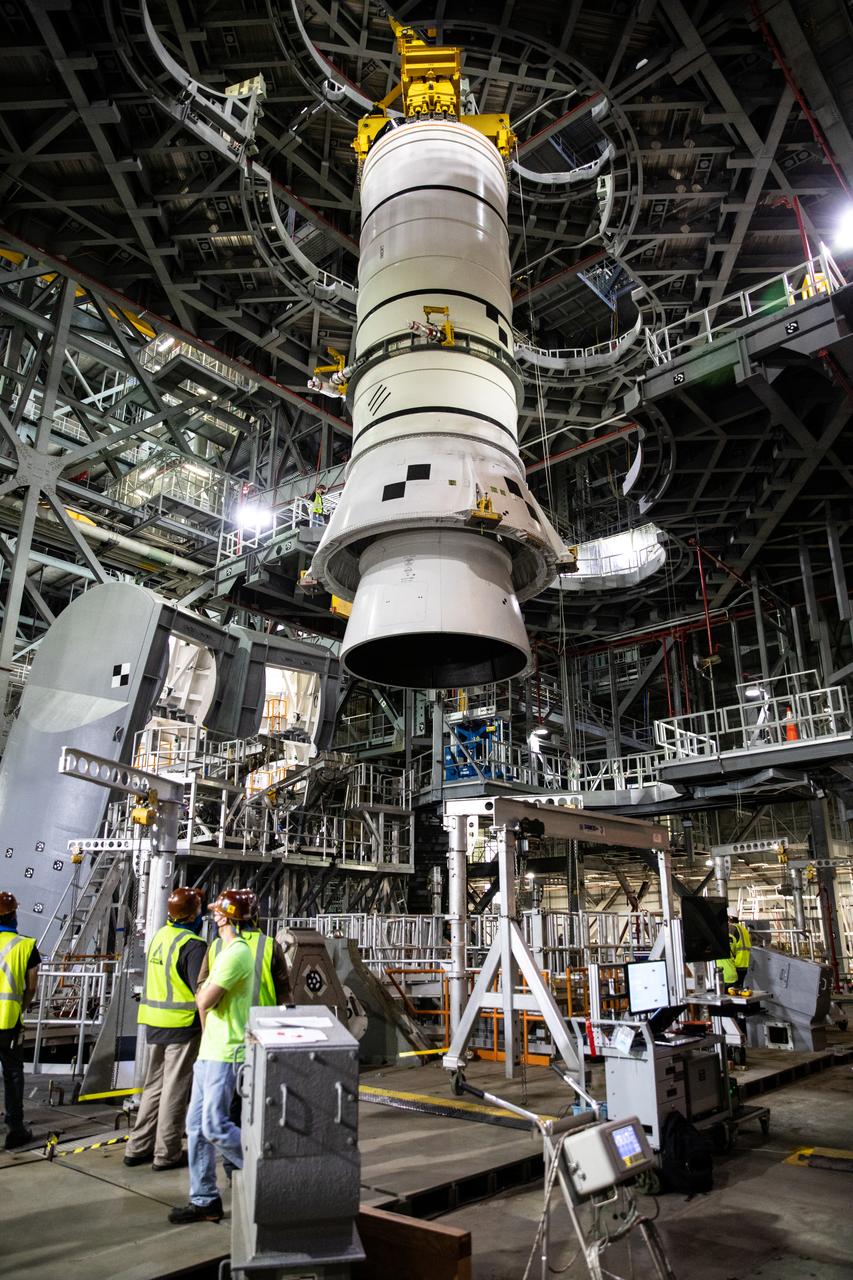
During a training exercise, technicians with NASA’s Exploration Ground Systems lower a mock-up of the Space Launch System (SLS) aft booster segment, referred to as a pathfinder, onto the mobile launcher in Kennedy Space Center’s Vehicle Assembly Building (VAB) on Sept. 11, 2020. The rehearsal involved teams preparing the aft pathfinder segment in High Bay 4 of the VAB, lifting and moving it over to High Bay 3, and placing it on the mobile launcher in preparation for Artemis I. Stacking of the actual booster segments will occur later this year, before the SLS core stage arrives at the Florida spaceport. Artemis I is the first in a series of increasingly complex missions that will test SLS and the Orion spacecraft as an integrated system prior to crewed flights to the Moon.
Technicians with NASA’s Exploration Ground Systems rehearse lifting operations using a mock-up of the Space Launch System (SLS) aft booster segment, referred to as a pathfinder, inside the Vehicle Assembly Building (VAB) at the agency’s Kennedy Space Center in Florida on Sept. 11, 2020, in preparation for Artemis I. The exercise involved preparing the aft pathfinder segment in High Bay 4 of the VAB and moving it over to High Bay 3, where it was placed on the mobile launcher. Stacking of the actual booster segments will occur later this year, before the SLS core stage arrives at Kennedy. Artemis I is the first in a series of increasingly complex missions that will test SLS and the Orion spacecraft as an integrated system prior to crewed flights to the Moon.
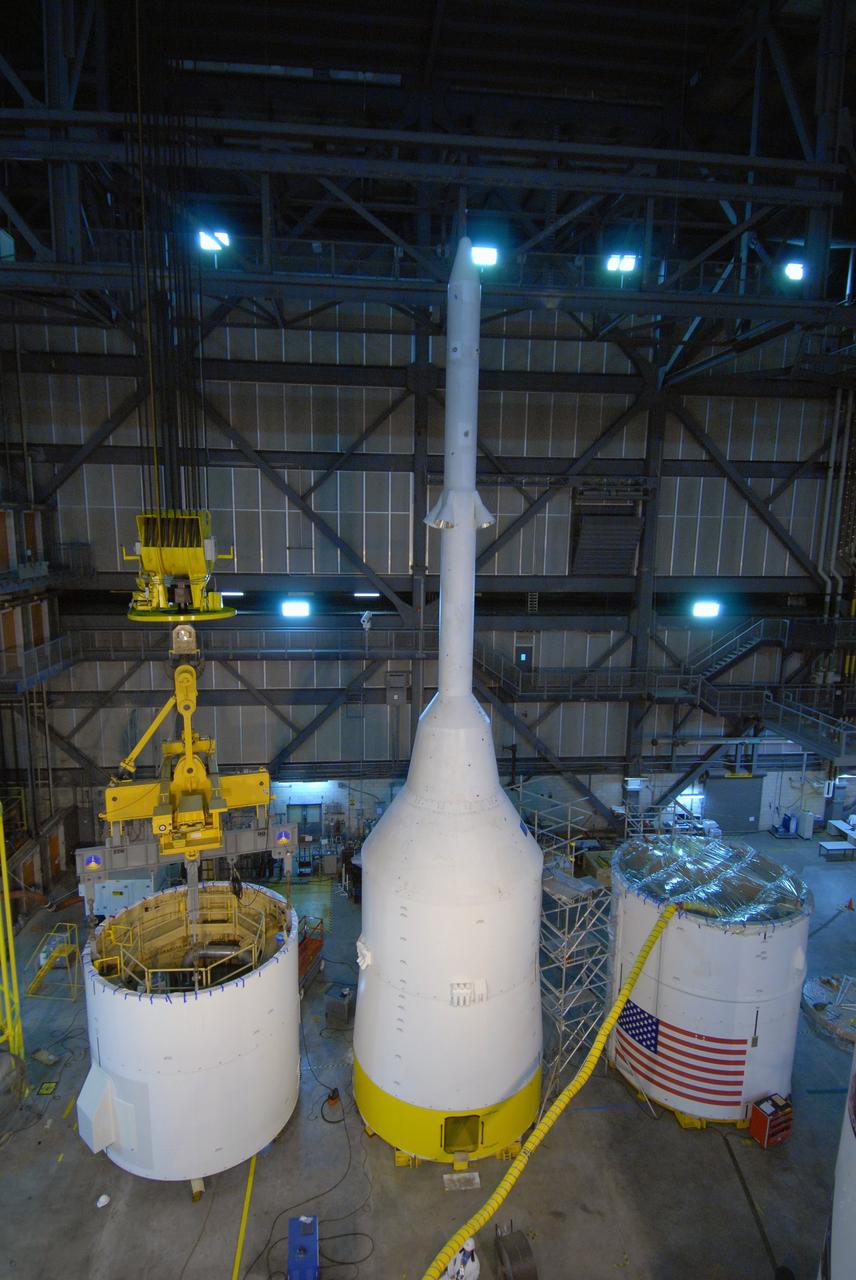
CAPE CANAVERAL, Fla. – In the Vehicle Assembly Building's High Bay 4 at NASA's Kennedy Space Center in Florida, the Ares I-X interstage 1 for the upper stage simulator (left) is being lifted to move it to the forward assembly. The interstage will be mated with the frustum on the forward assembly. At center is the crew module-launch abort system, or CM-LAS, and simulator service module-service adapter stack. Ares I-X is the flight test vehicle for the Ares I, a component of the Constellation Program. Ares I is the essential core of a safe, reliable, cost-effective space transportation system that eventually will carry crewed missions back to the moon, on to Mars and out into the solar system. Ares I-X is targeted for launch in August 2009. Photo credit: NASA/Tim Jacobs
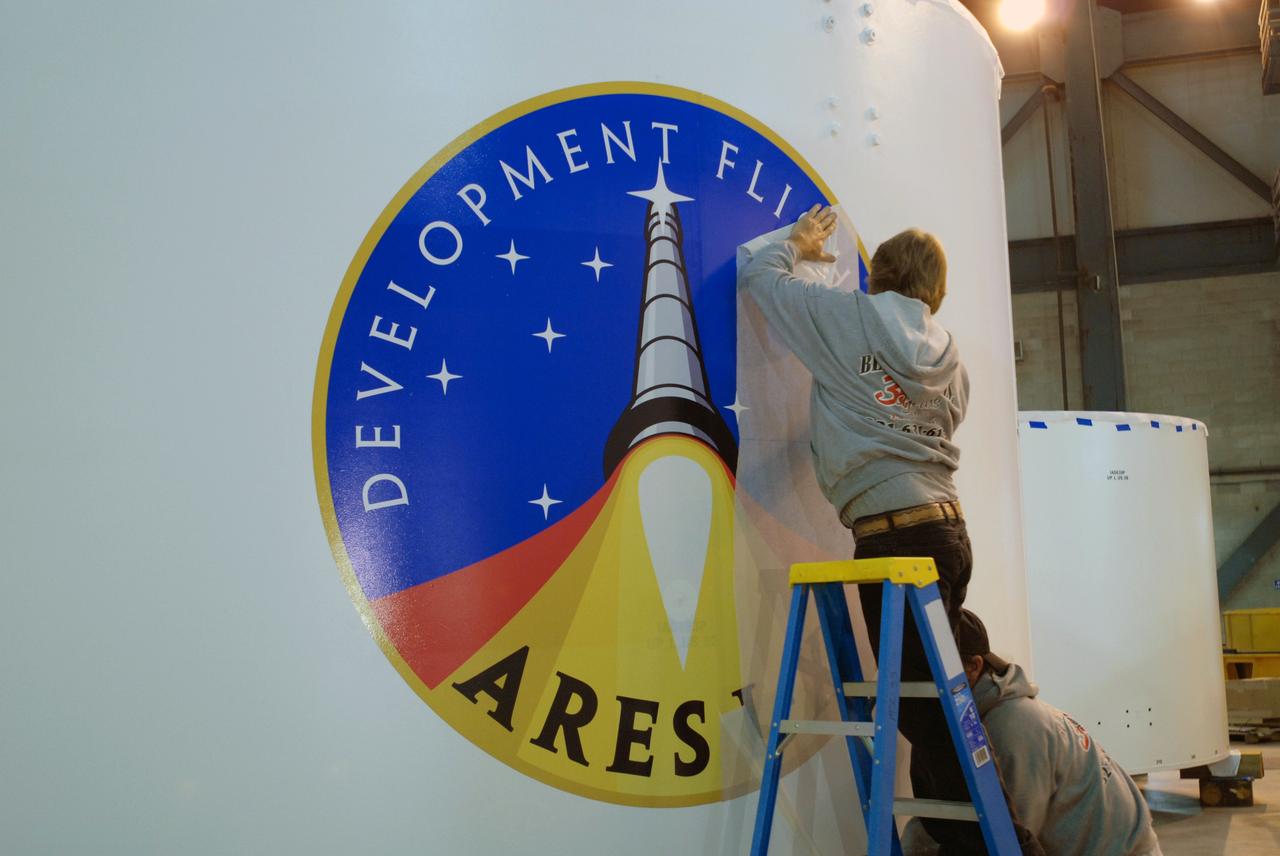
CAPE CANAVERAL, Fla. – In the Vehicle Assembly Building high bay 4 at NASA's Kennedy Space Center in Florida, a worker removes the last piece of cover from the final Ares I-X logo on one of the Ares I-X upper stage simulator segments. The decal identifies the Ares I-X as a development test flight, which is targeted to launch in 2009. Ares I is the essential core of a safe, reliable, cost-effective space transportation system that eventually will carry crewed missions back to the moon, on to Mars and out into the solar system. Ares I may also use its 25-ton payload capacity to deliver resources and supplies to the International Space Station, or to "park" payloads in orbit for retrieval by other spacecraft bound for the moon or other destinations. Photo credit: NASA/Jim Grossmann
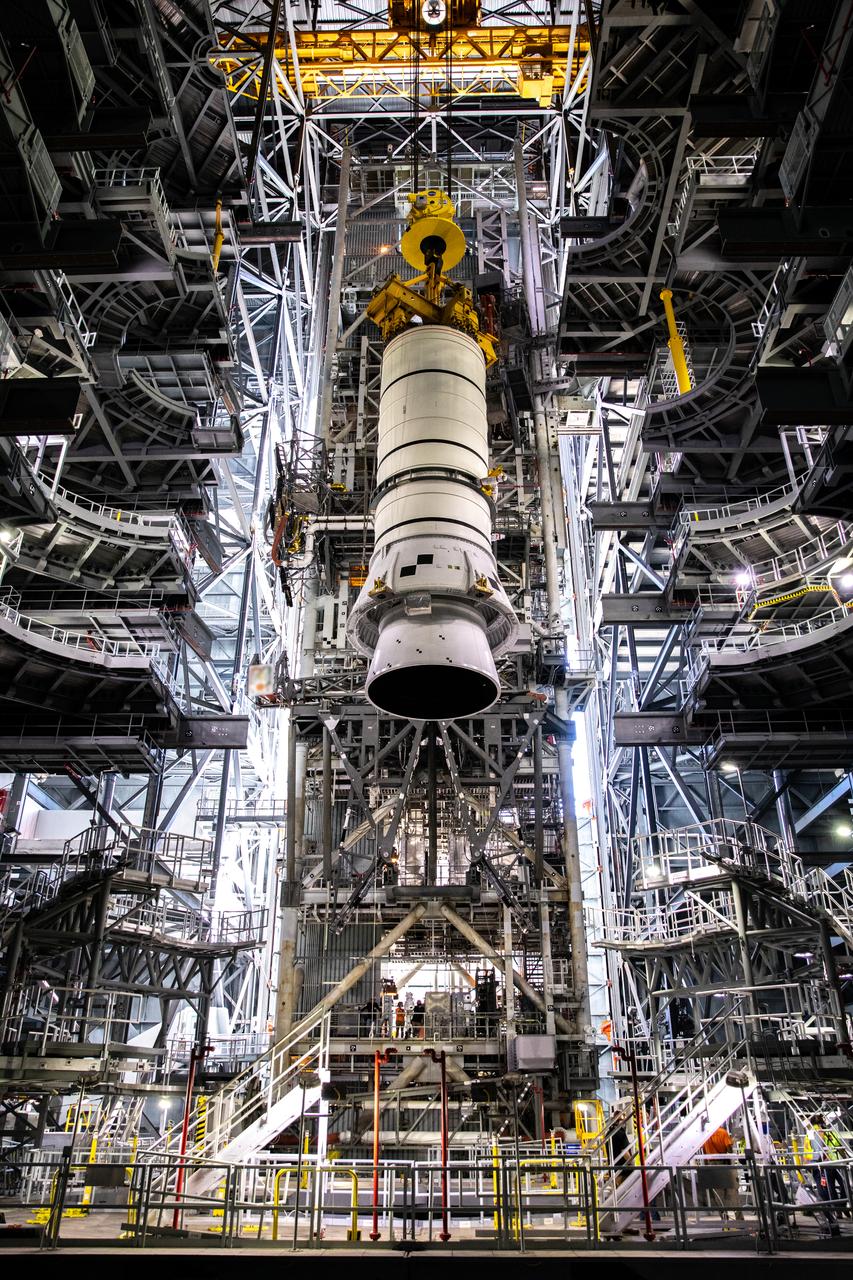
During a training exercise, technicians with NASA’s Exploration Ground Systems prepare to lower a mock-up of the Space Launch System (SLS) aft booster segment, referred to as a pathfinder, onto the mobile launcher in Kennedy Space Center’s Vehicle Assembly Building (VAB) on Sept. 11, 2020. The rehearsal involved teams preparing the aft pathfinder segment in High Bay 4 of the VAB, lifting and moving it over to High Bay 3, and placing it on the mobile launcher in preparation for Artemis I. Stacking of the actual booster segments will occur later this year, beforewhen the SLS core stage arrives at the Florida spaceport. Artemis I is the first in a series of increasingly complex missions that will test SLS and the Orion spacecraft as an integrated system prior to crewed flights to the Moon.
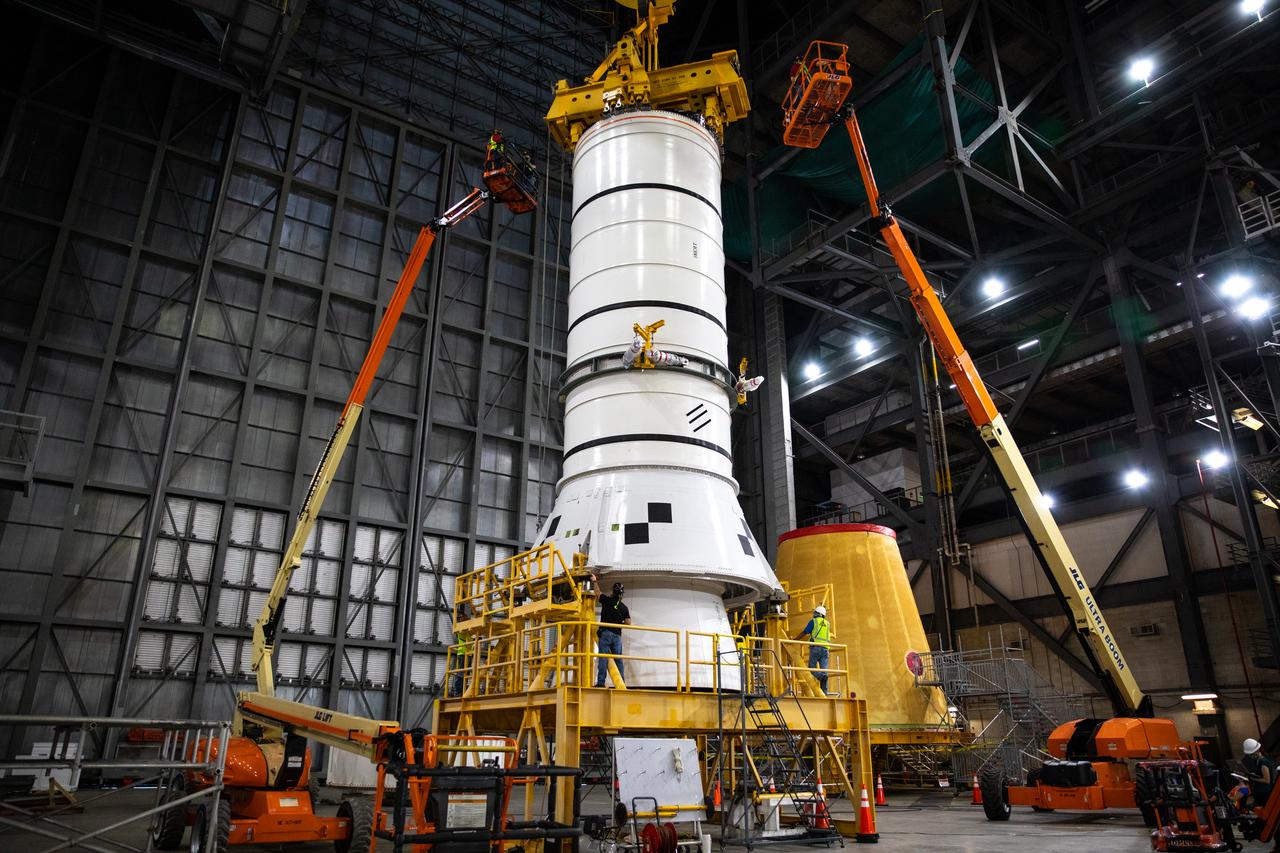
Technicians with NASA’s Exploration Ground Systems rehearse booster stacking operations inside the Vehicle Assembly Building (VAB) at the agency’s Kennedy Space Center in Florida on Sept. 11, 2020, in preparation for Artemis I. The exercise involved using booster segment mock-ups, referred to as pathfinders. During this rehearsal, an aft pathfinder segment was prepared in High Bay 4 of the VAB, after which a team of crane operators moved it over to High Bay 3, where it was placed on the mobile launcher. Stacking of the actual Space Launch System (SLS) booster segments will occur later this year, before the rocket’s core stage arrives at Kennedy. Artemis I is the first in a series of increasingly complex missions that will test SLS and the Orion spacecraft as an integrated system prior to crewed flights to the Moon.
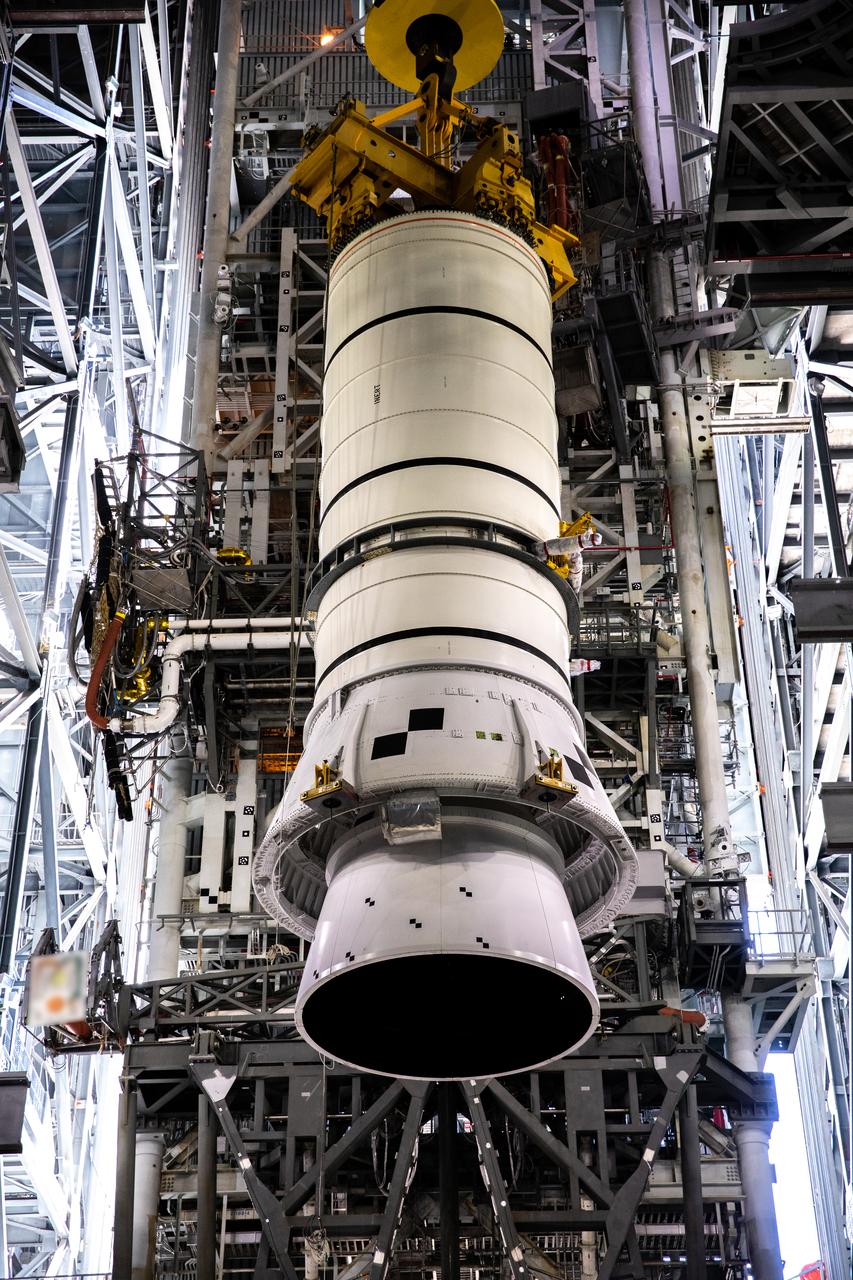
During a training exercise, technicians with NASA’s Exploration Ground Systems prepare to lower a mock-up of the Space Launch System (SLS) aft booster segment, referred to as a pathfinder, onto the mobile launcher in Kennedy Space Center’s Vehicle Assembly Building (VAB) on Sept. 11, 2020. The rehearsal involved teams preparing the aft pathfinder segment in High Bay 4 of the VAB, lifting and moving it over to High Bay 3, and placing it on the mobile launcher in preparation for Artemis I. Stacking of the actual booster segments will occur later this year, before the SLS core stage arrives at the Florida spaceport. Artemis I is the first in a series of increasingly complex missions that will test SLS and the Orion spacecraft as an integrated system prior to crewed flights to the Moon.
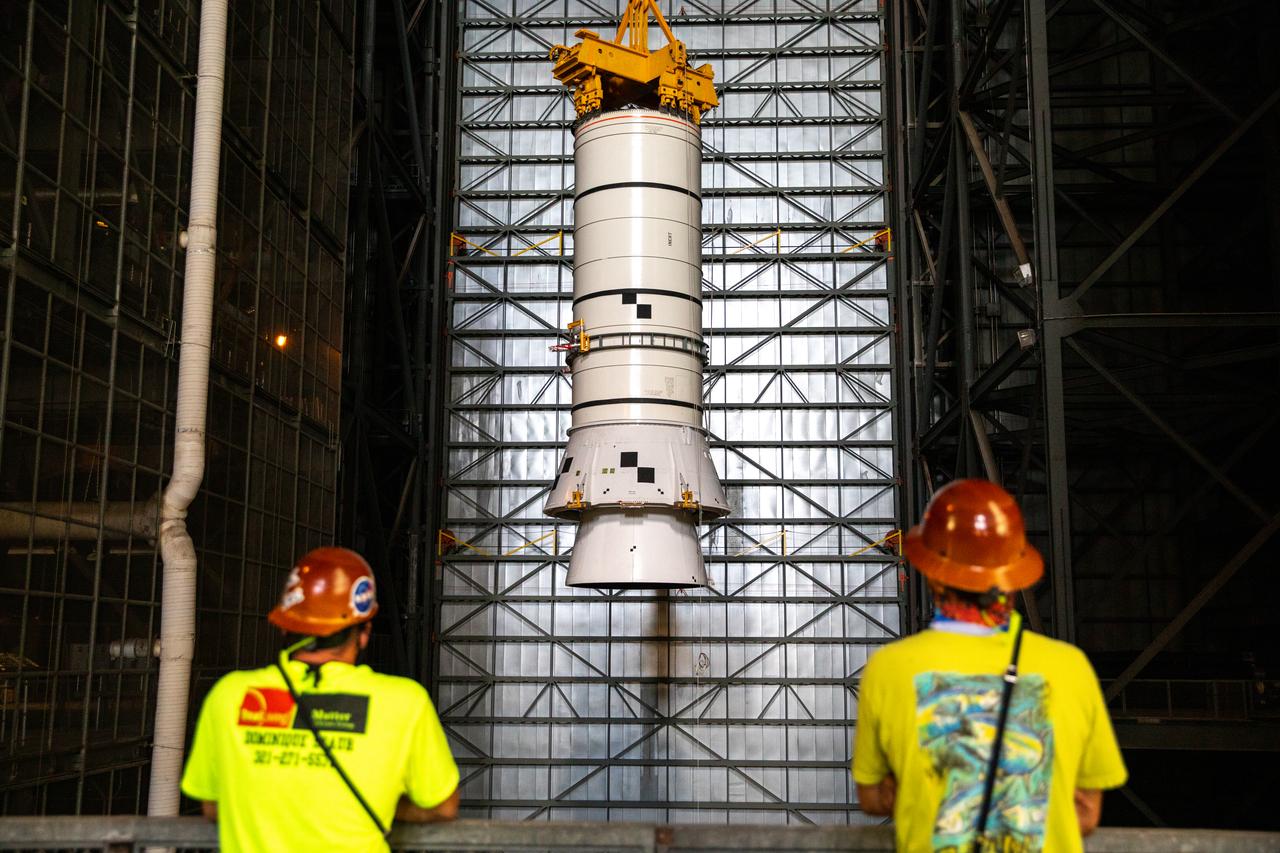
Technicians with NASA’s Exploration Ground Systems rehearse lifting operations using a mock-up of the Space Launch System (SLS) aft booster segment, referred to as a pathfinder, inside the Vehicle Assembly Building (VAB) at the agency’s Kennedy Space Center in Florida on Sept. 11, 2020, in preparation for Artemis I. The exercise involved preparing the aft pathfinder segment in High Bay 4 of the VAB and moving it over to High Bay 3, where it was placed on the mobile launcher. Stacking of the actual booster segments will occur later this year, before the SLS core stage arrives at Kennedy. Artemis I is the first in a series of increasingly complex missions that will test SLS and the Orion spacecraft as an integrated system prior to crewed flights to the Moon.
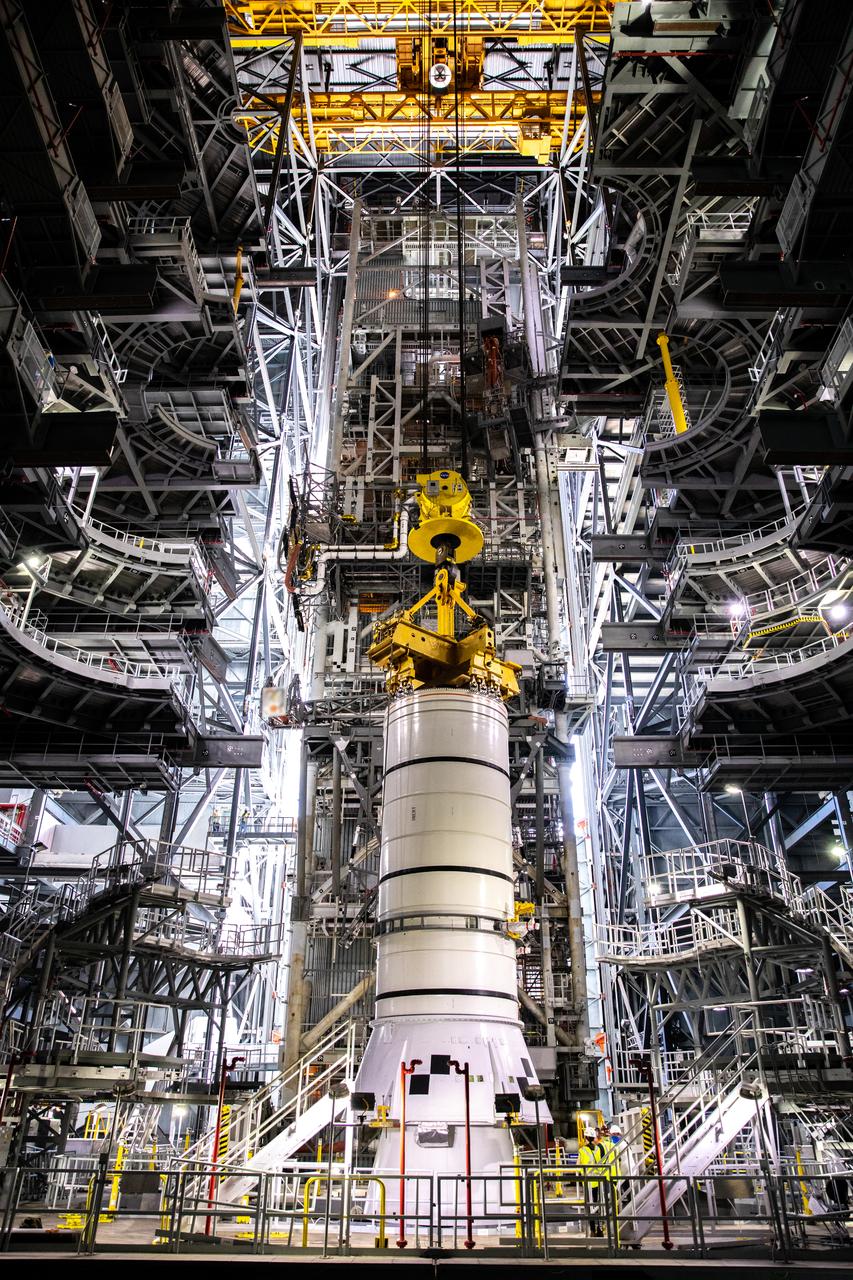
During a training exercise, technicians with NASA’s Exploration Ground Systems lower a mock-up of the Space Launch System (SLS) aft booster segment, referred to as a pathfinder, onto the mobile launcher in Kennedy Space Center’s Vehicle Assembly Building (VAB) on Sept. 11, 2020. The rehearsal involved teams preparing the aft pathfinder segment in High Bay 4 of the VAB, lifting and moving it over to High Bay 3, and placing it on the mobile launcher in preparation for Artemis I. Stacking of the actual booster segments will occur later this year, before the SLS core stage arrives at the Florida spaceport. Artemis I is the first in a series of increasingly complex missions that will test SLS and the Orion spacecraft as an integrated system prior to crewed flights to the Moon.
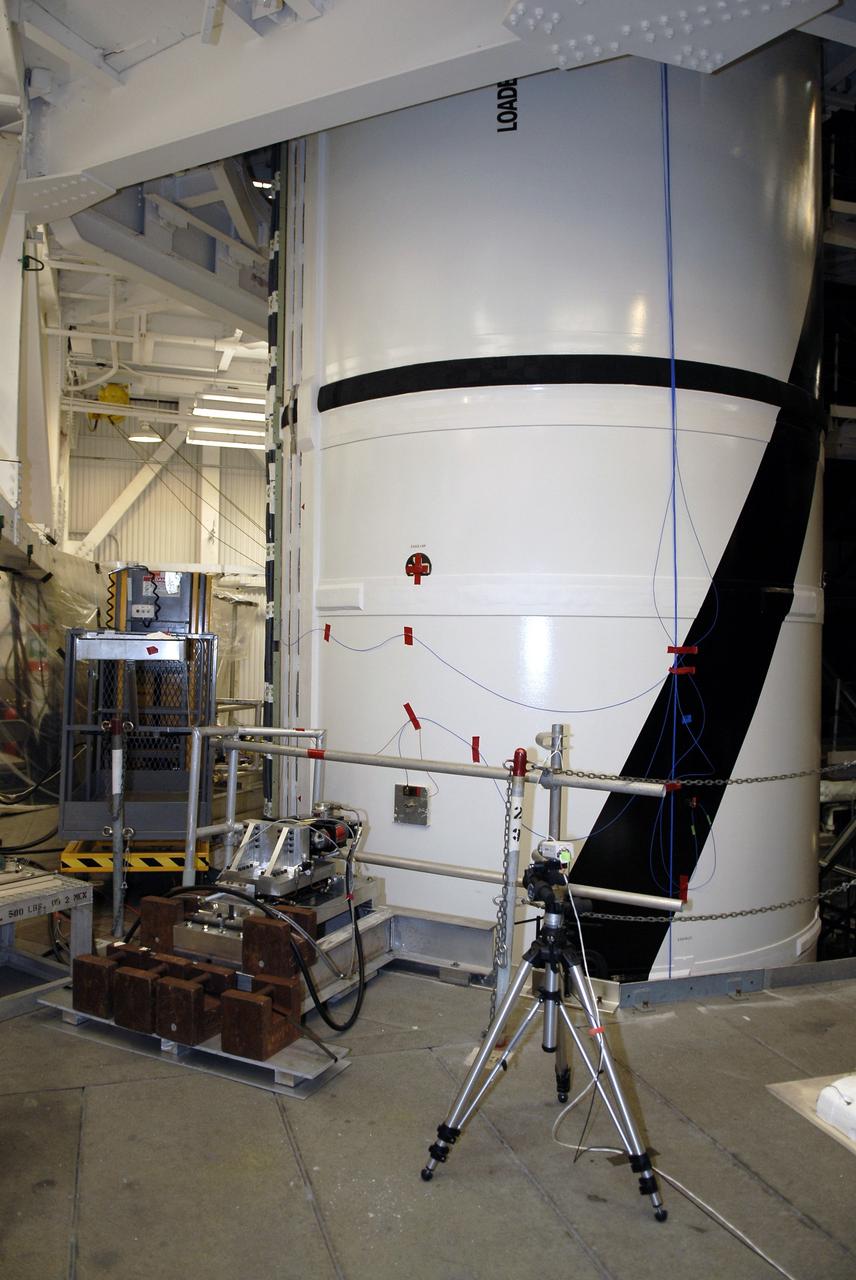
CAPE CANAVERAL, Fla. – In the Vehicle Assembly Building's High Bay 4 at NASA's Kennedy Space Center in Florida, equipment is set up to conduct a sway test on the Ares I-X launch vehicle. The test is simulating conditions the rocket could experience during rollout to Launch Pad 39B, wind conditions at the pad and first-stage ignition. During the test, vibrations are mechanically induced into the rocket by four hydraulic shakers and a sway is manually introduced for lateral motion to measure the vehicle's response. A total of 44 accelerometers are installed on the flight test vehicle that required more than 27,000 feet of cable. Part of the Constellation Program, the Ares I-X is the test vehicle for the Ares I, which is the essential core of a space transportation system that eventually will carry crewed missions back to the moon, on to Mars and out into the solar system . The Ares I-X flight test is targeted for Oct. 31. Photo credit: NASA/Kim Shiflett